


The record waters of Winter 2023 came too late for my great, great grandmother tree. Last year, in this blog, I relayed how she was losing leaves in May, when they should have been growing out and green. Then, in my August 2022 post, I shared that all her leaves turned brown all at once. That must have been the moment of death. Despite the signs, I held out hope that she would recover. When all the oaks began sprouting leaves, and she did not, I deluded myself that she was just late. Eventually, I had to admit she was gone. When he was over in March, I consulted Ron Allen of Mariposa Native Plants (He is also a UC Master Gardener). He looked at the branches, chose one of the smaller ones, and it snapped right off, dry throughout. He said she was gone.
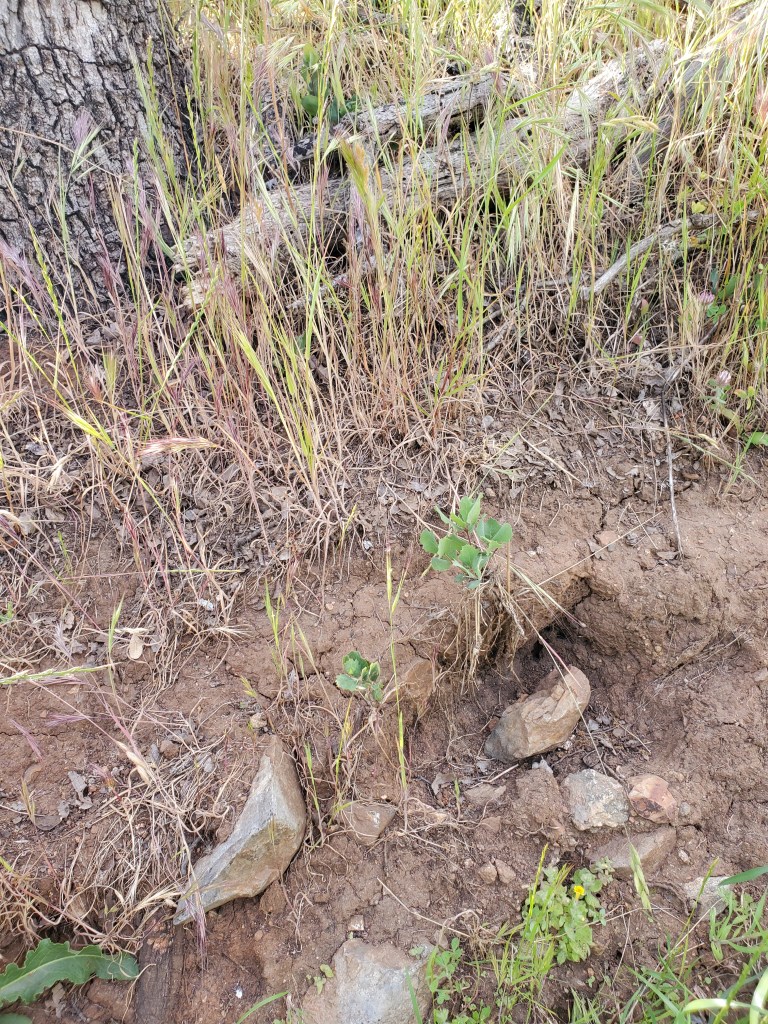
What I determined I needed to do is plant seedlings. After the loss of my favorite oak in December 2022, I resolved to collect acorn and plant them. There are no guarantees with that, and we have certainly not had any seedlings over the years with all the acorn those trees produced. This is why I had to pivot to seedlings. I got two from Ron. We discussed how the roots of the trees, even though dead above, can still be alive for some time below. Ron was telling me about how these dead trees are called nurse trees, and when planting seedlings within the crown, they have a better chance of survival because the roots protect them. There is communication and sharing of resource. There is so much being written now of what is happening below the surface of the soil, and it is magnificent. Of course, Indigenous communities knew about these connections. Many stories contain valuable information and lessons that survived colonization. I will see if I can share a story in a future post.
Bees Have Emerged

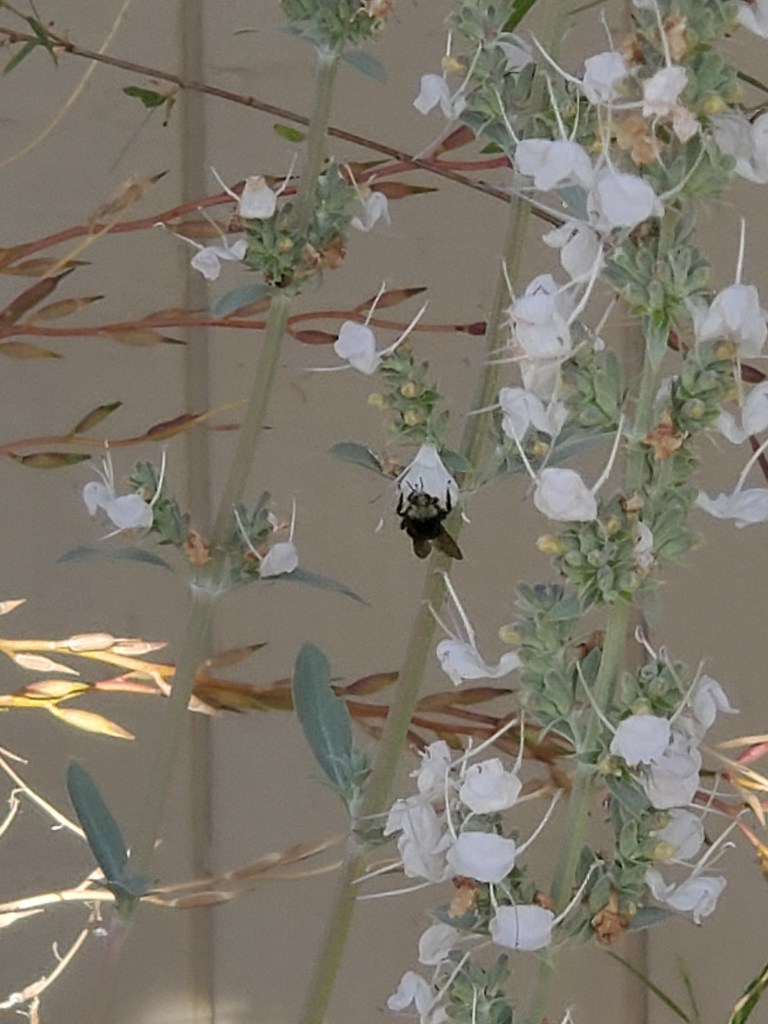
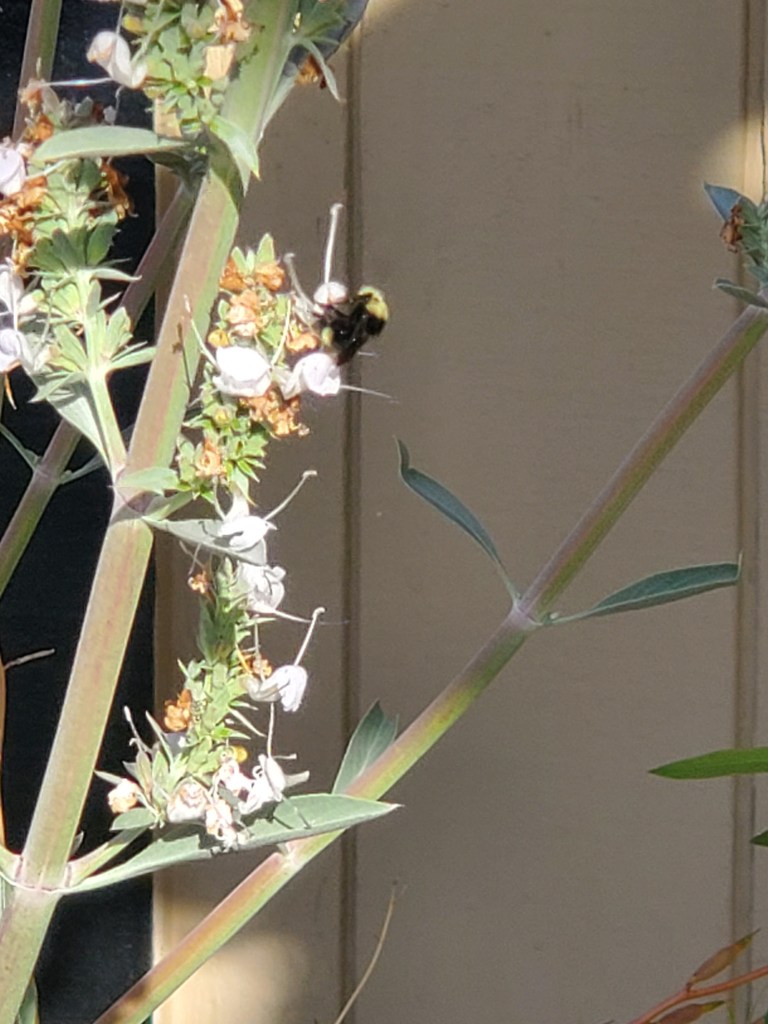
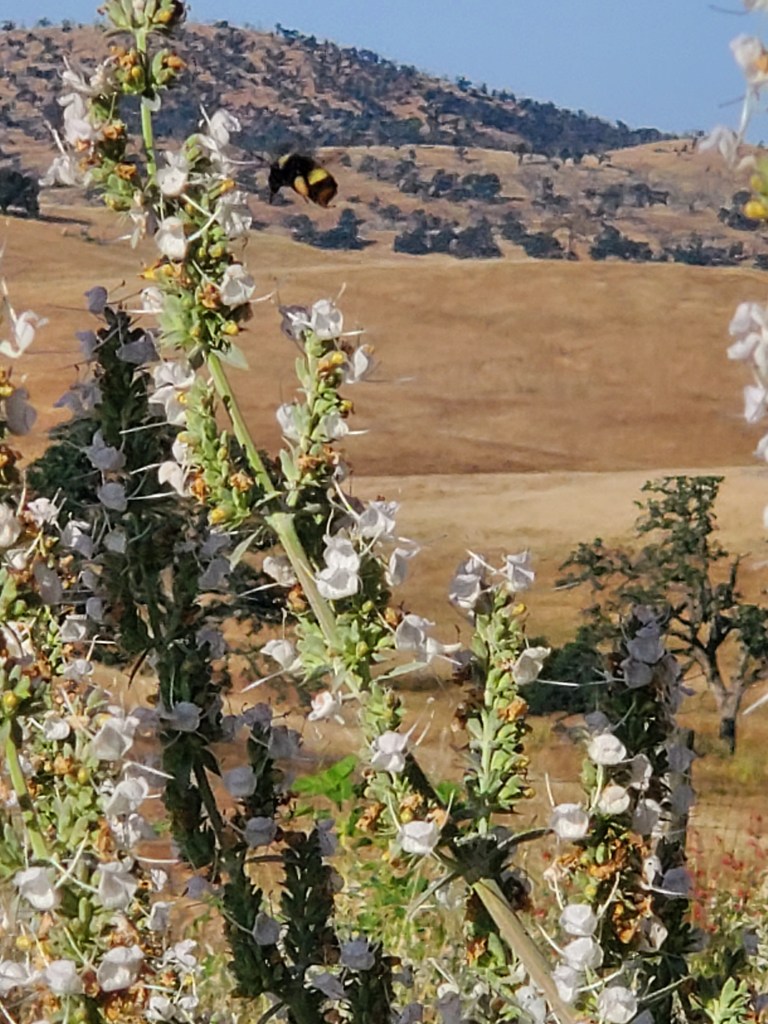
I am happy to report that the native bees have finally emerged. I have seen several semicircle, precision cuts in leaves telling me that the leaf cutter bees are out. Although I saw the female crotch bumble bee in April, I saw the majority of other native bees beginning mid May. We had several groups of smaller bumble bees. This is fantastic since they are a species in decline. In each grouping there was a larger sized bumble and two or more smaller bumbles. I wonder if the larger was the female and the smaller were males. There were many, many more European Honeybees competing with the bumbles for food. Fortunately, I have significant blooms this year and think there is enough to go around. I also saw small gray native bees with the abdomen stripes. They seemed to disappear when I got close with the camera. Although I am nearly finished with my pollinator steward certification program, I am just scratching the surface of available knowledge on native bees. There is so much to learn and so little time to dedicate.



Plenty of Nectar and Milkweed – Few Butterflies
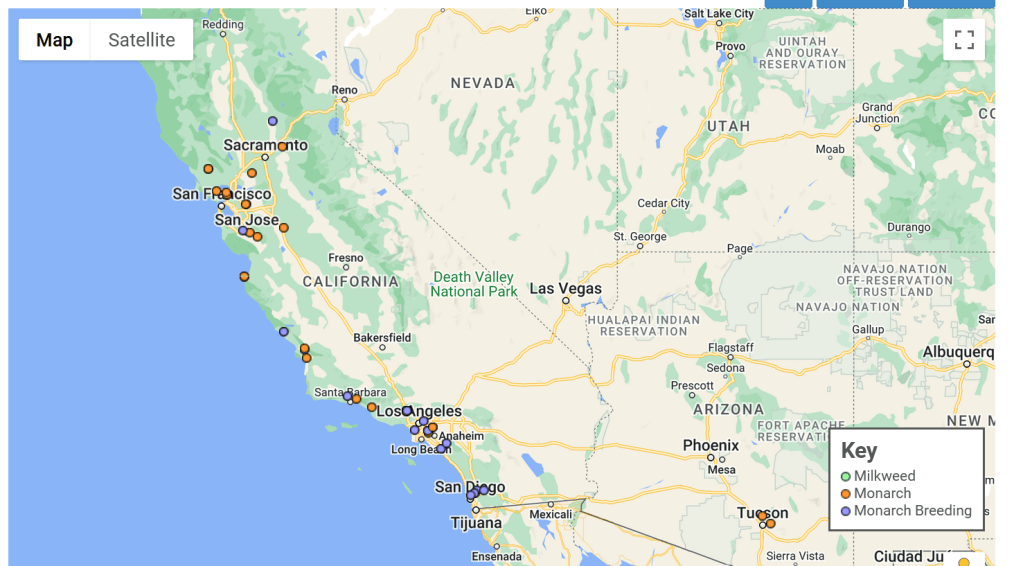
Above is a screen shot of the latest citizen data on the monarch migration. It comes from the Western Monarch Milkweed Mapper site. The cool temperatures have had them leaving the groves later than last year and possibly staying in more temperate areas longer. Far less sightings have been recorded as compared to last year. I am not sure what it all means yet. Reader, would you help? If you are in the west, please use this tool to document sightings of monarchs. I am going to ask my crowd on social media to help track them as well.
As of this writing, my many stands of mature milkweed have gone unused. There is absolutely no sign of chewing (herbivory) on the plants. I have seen only a handful of butterflies. Most were painted ladies, some cabbage and sulphur, and one red admiral.

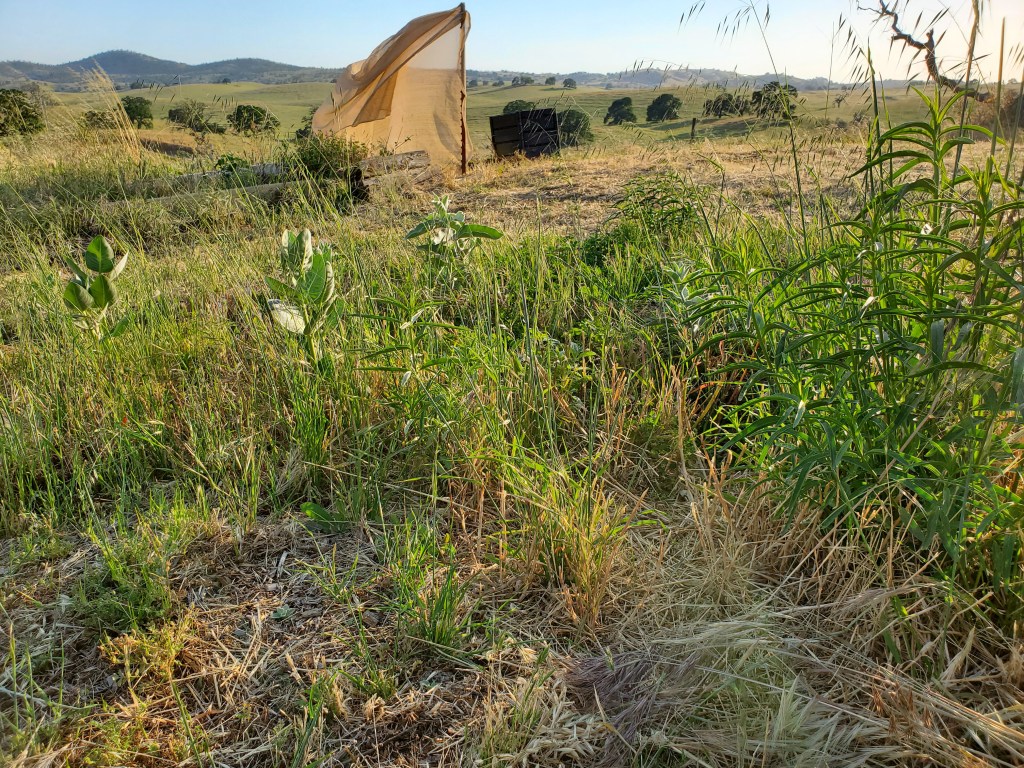
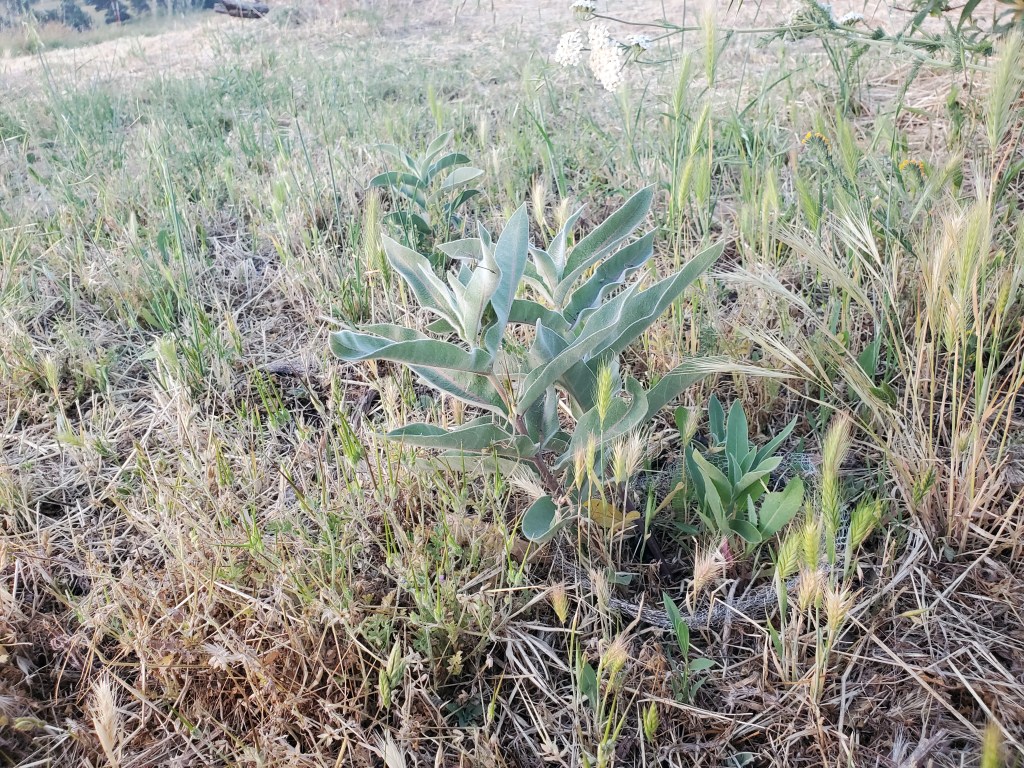
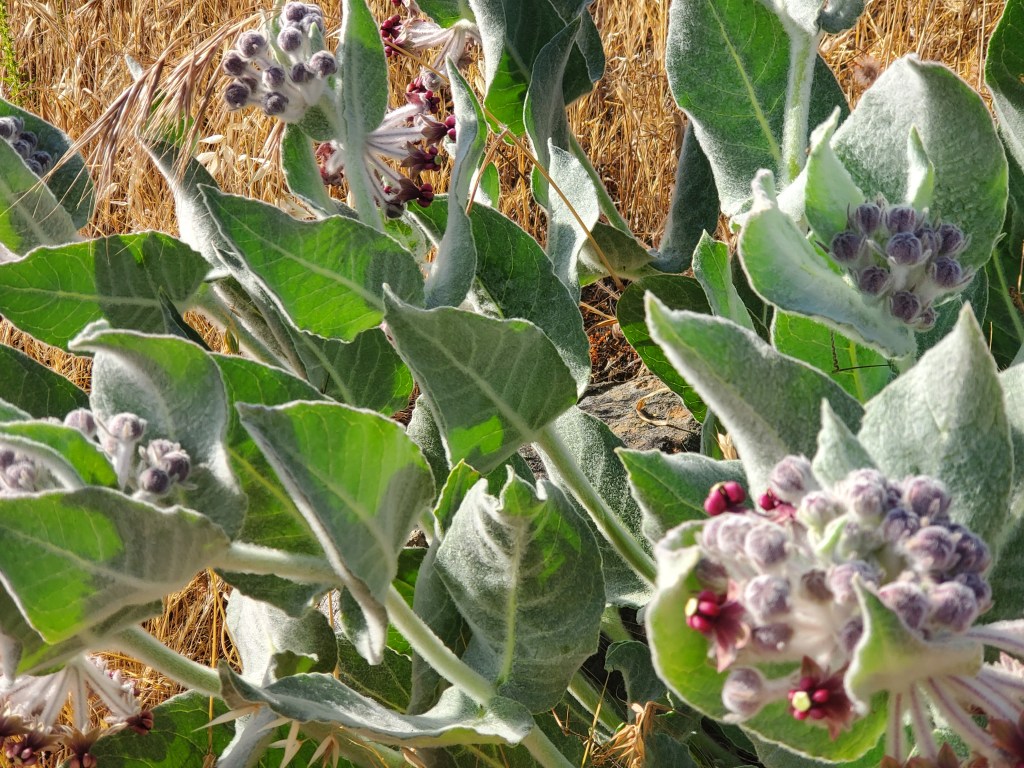
I am still holding out hope for monarchs. Some of the California Milkweed has fresh flowers sending scent into the air. Temperatures have been erratic, which may have contributed to the butterflies being mistimed with the flowering.
From Green to Yellow
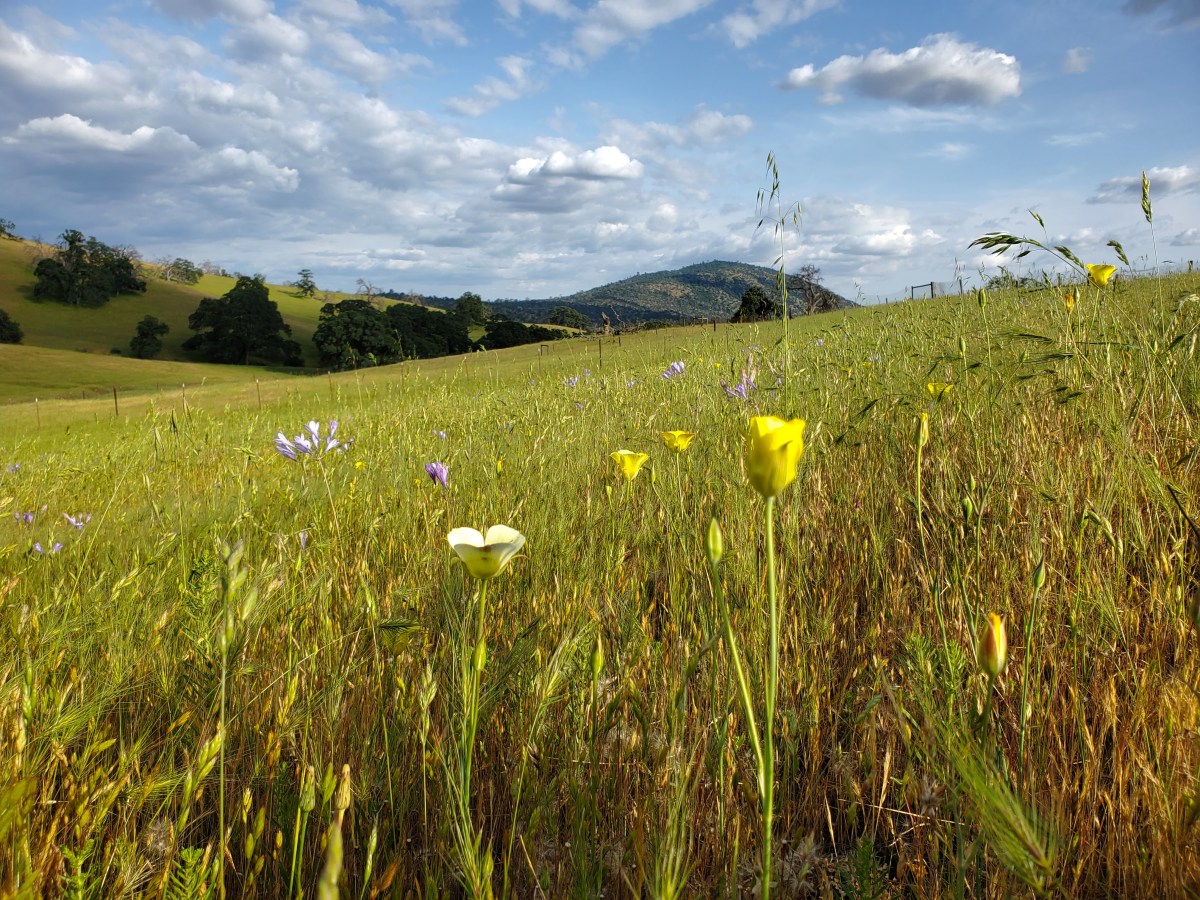
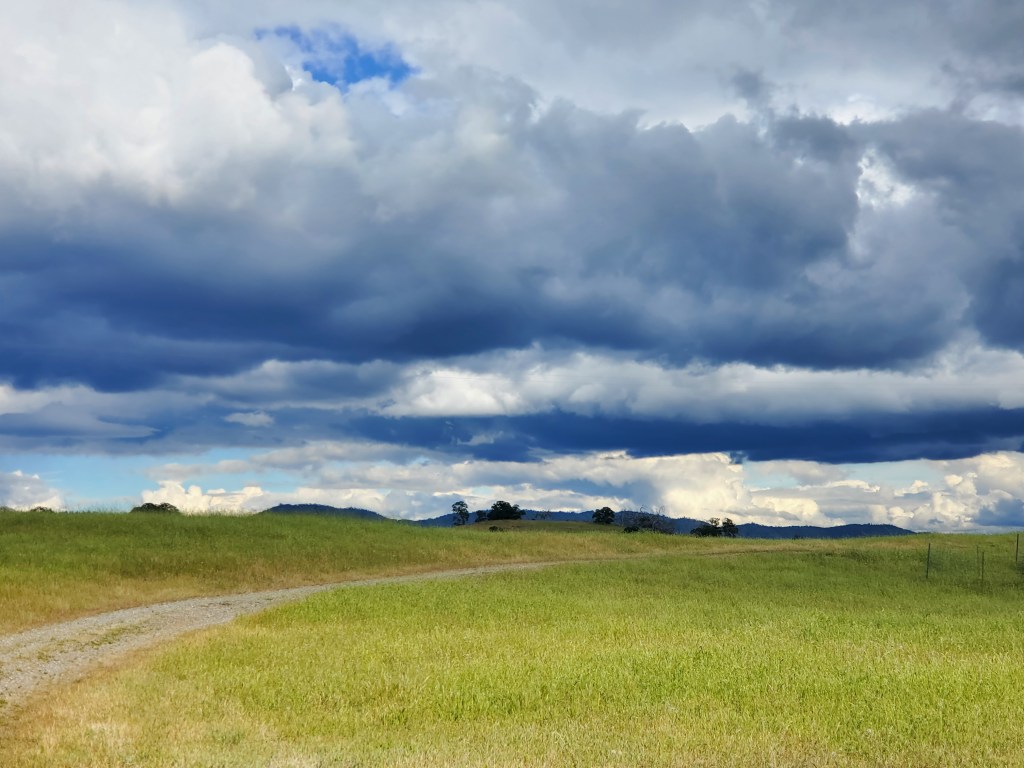
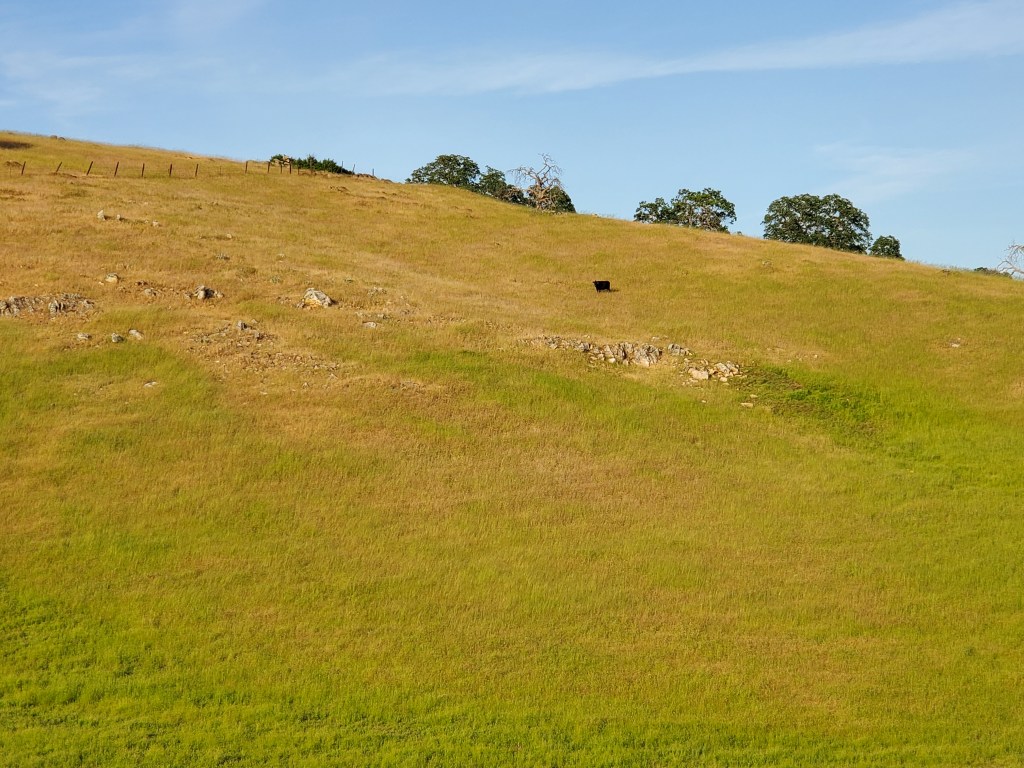
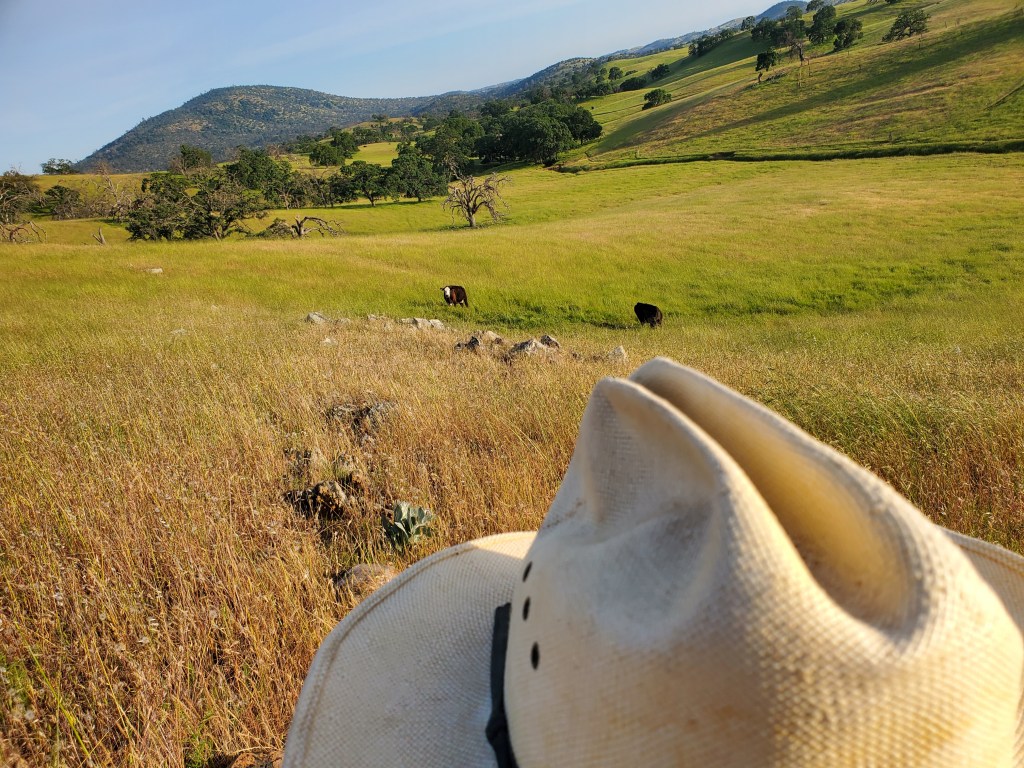
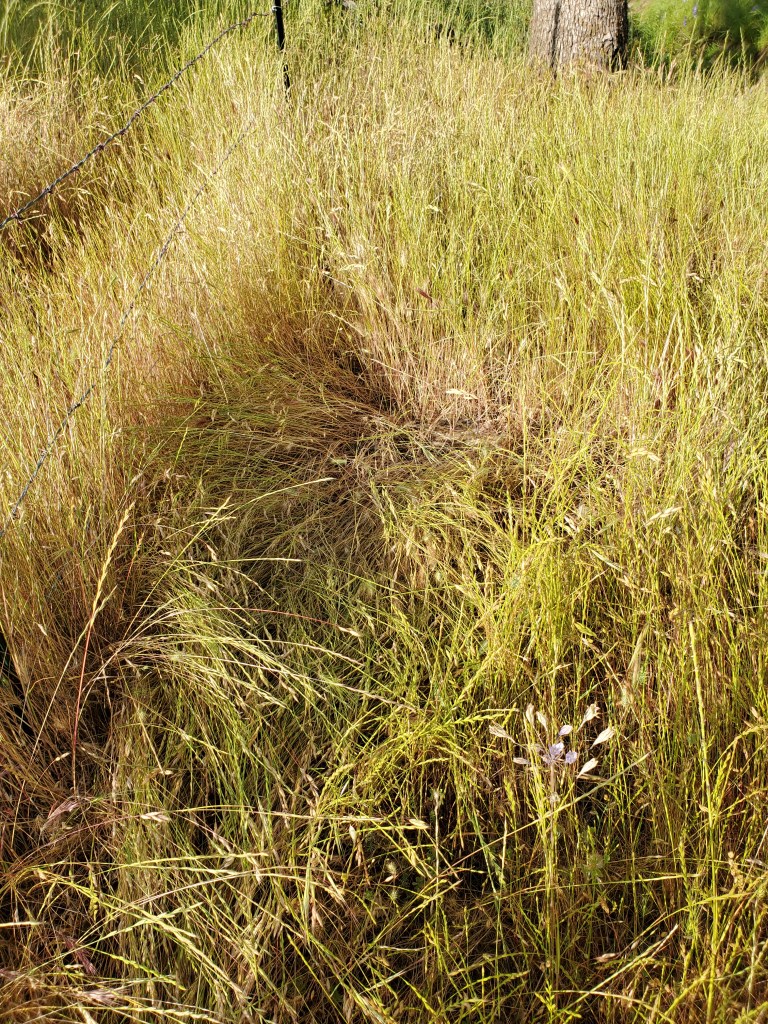
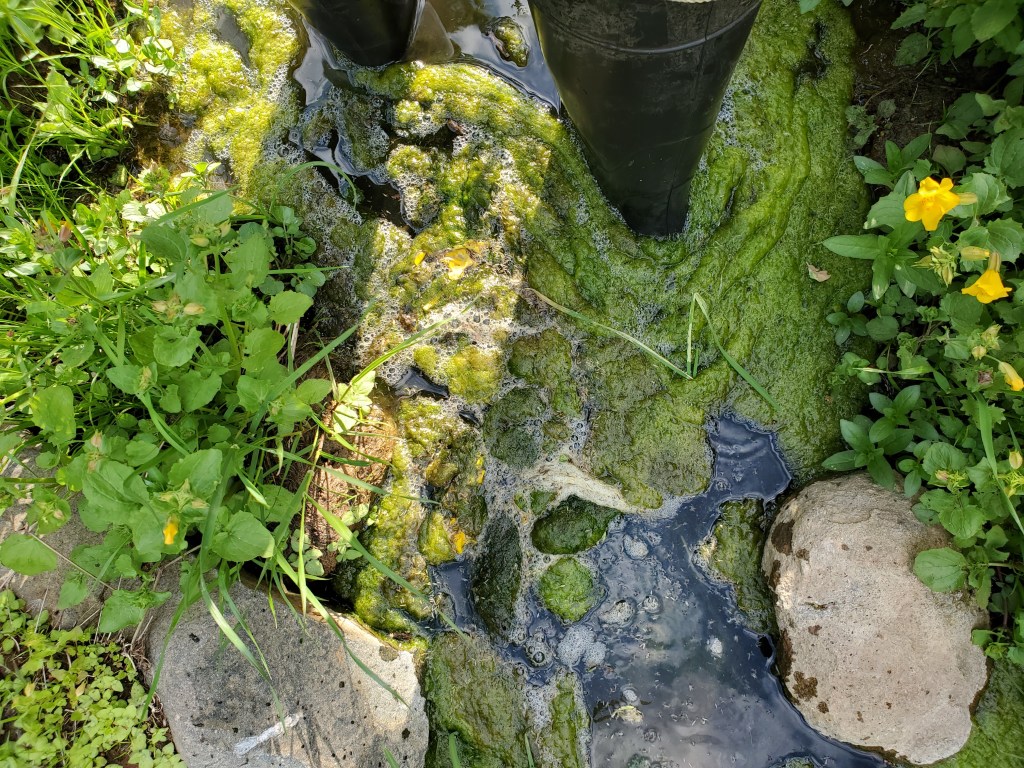
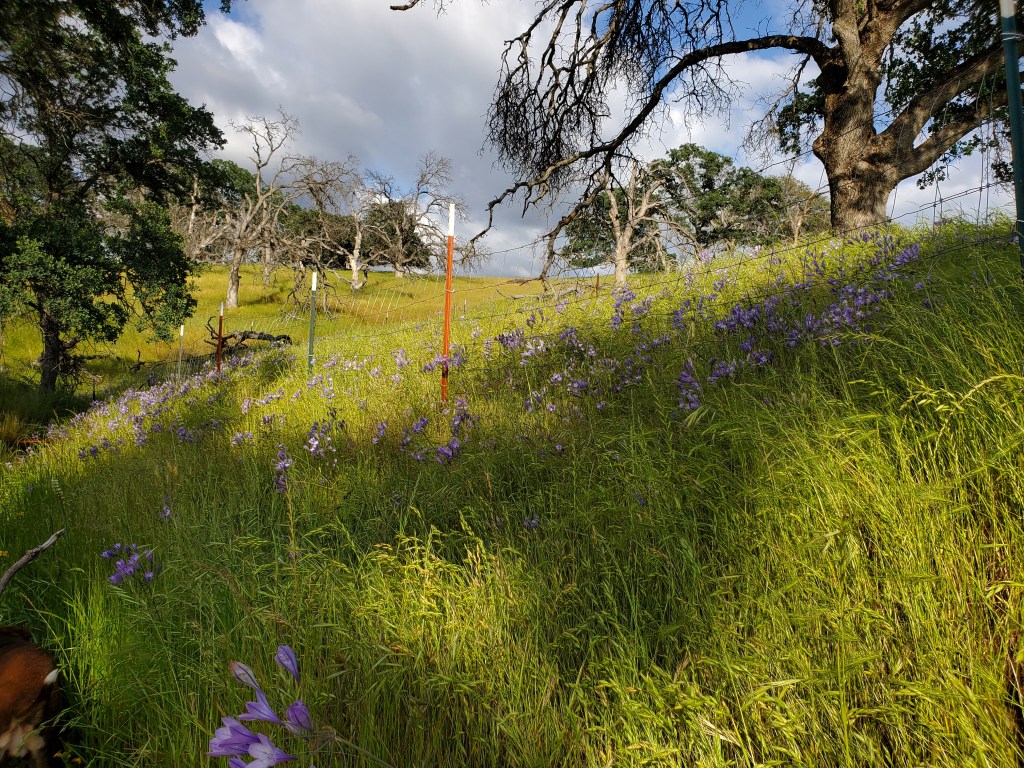
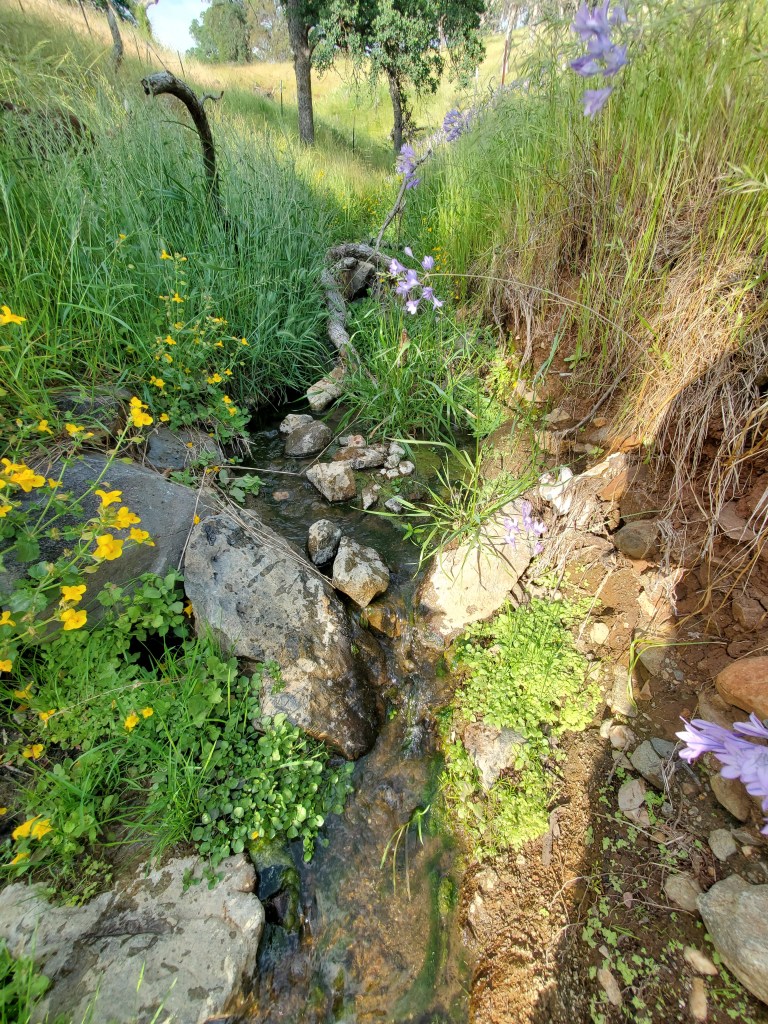
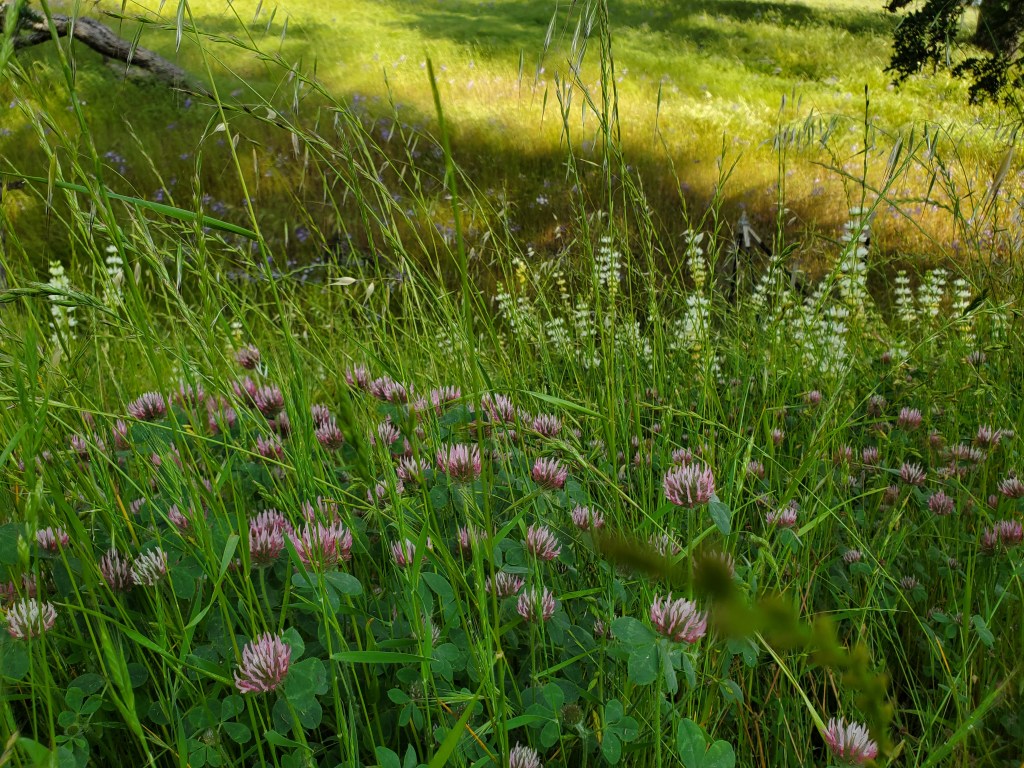
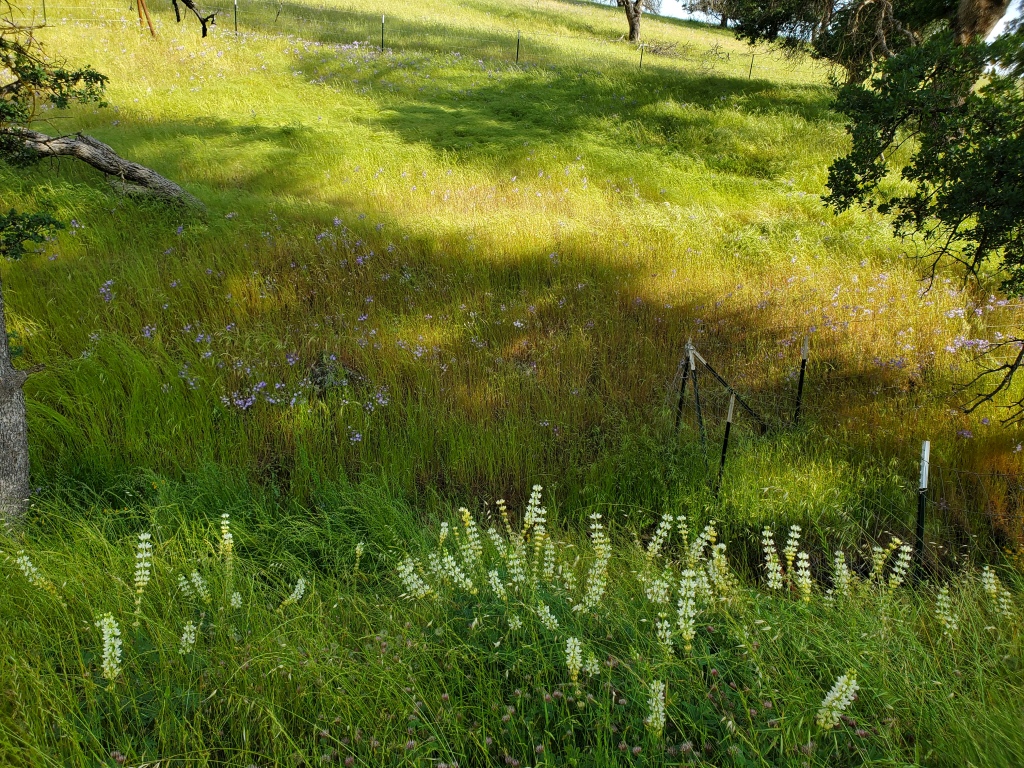
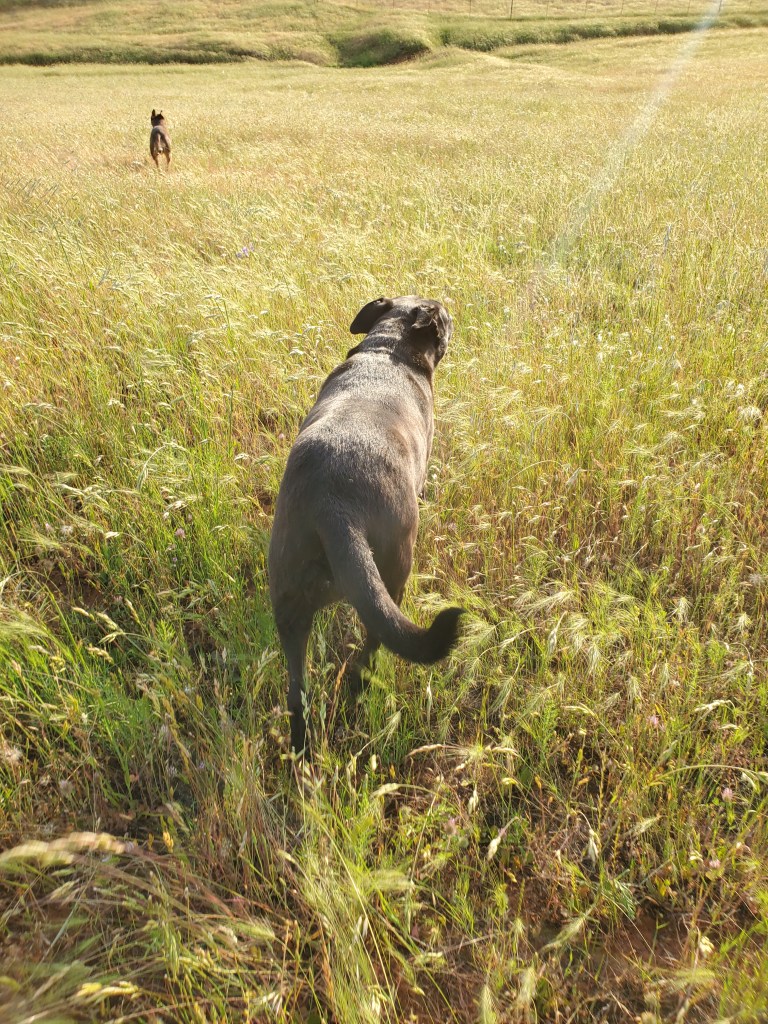
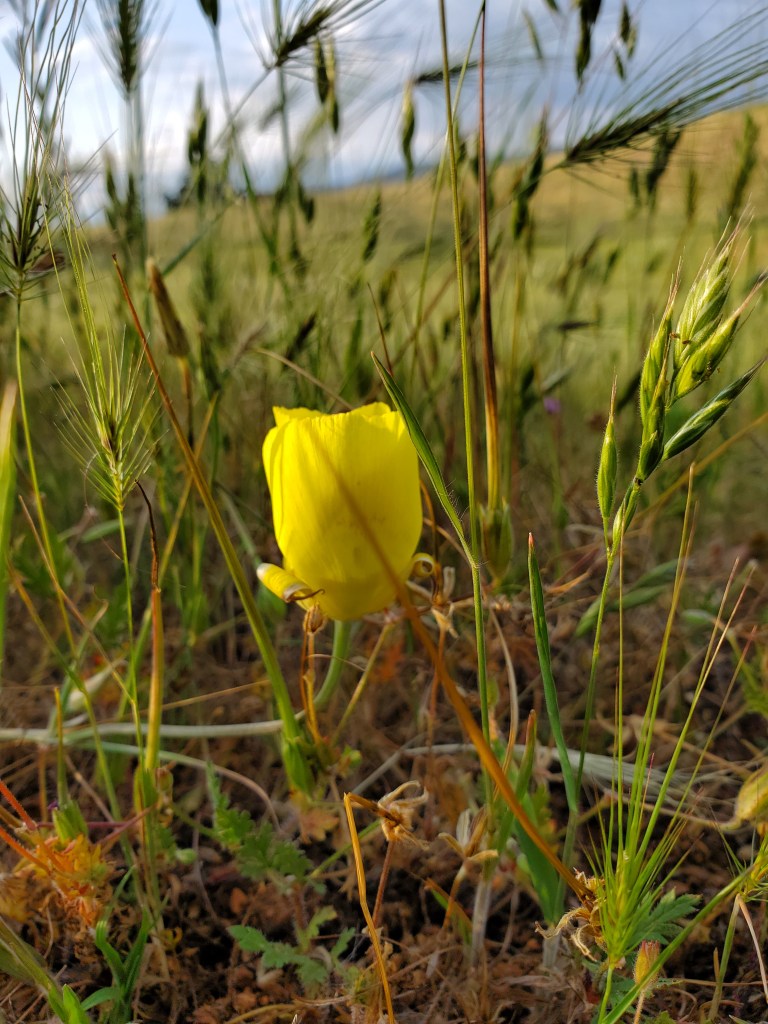
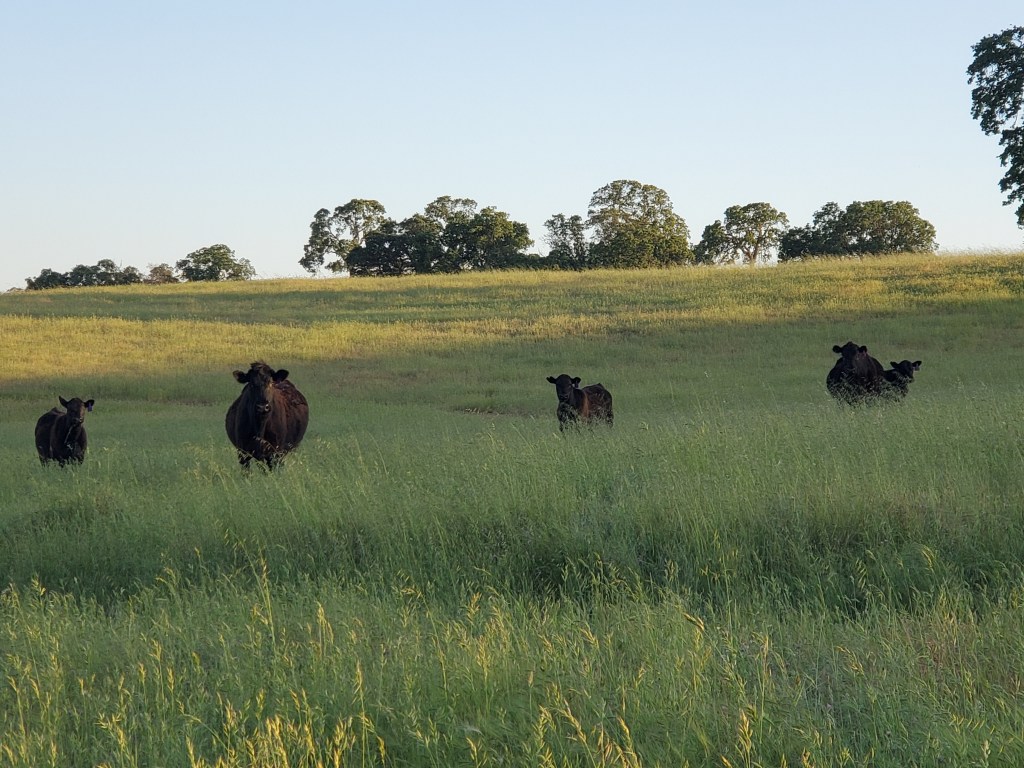
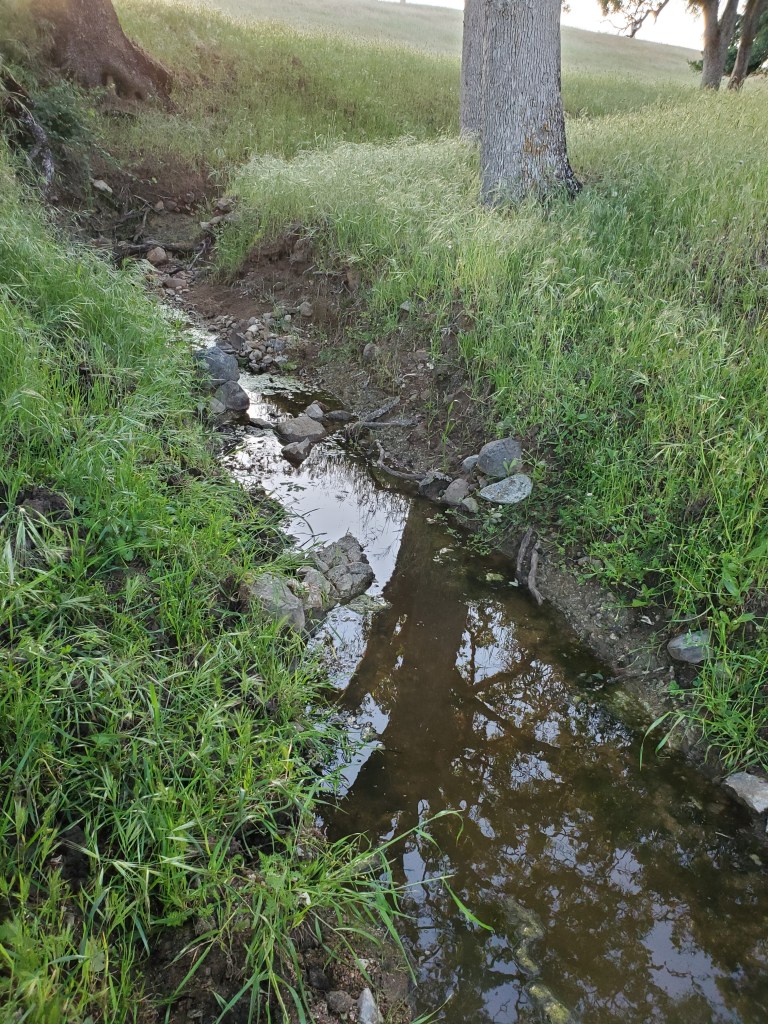
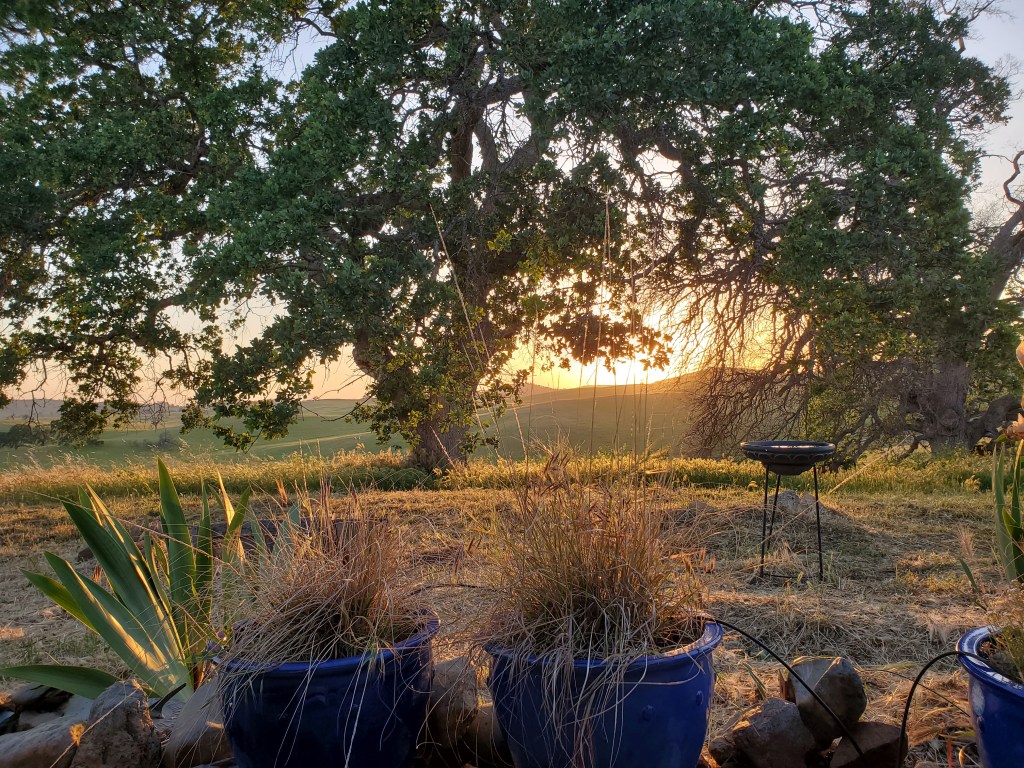
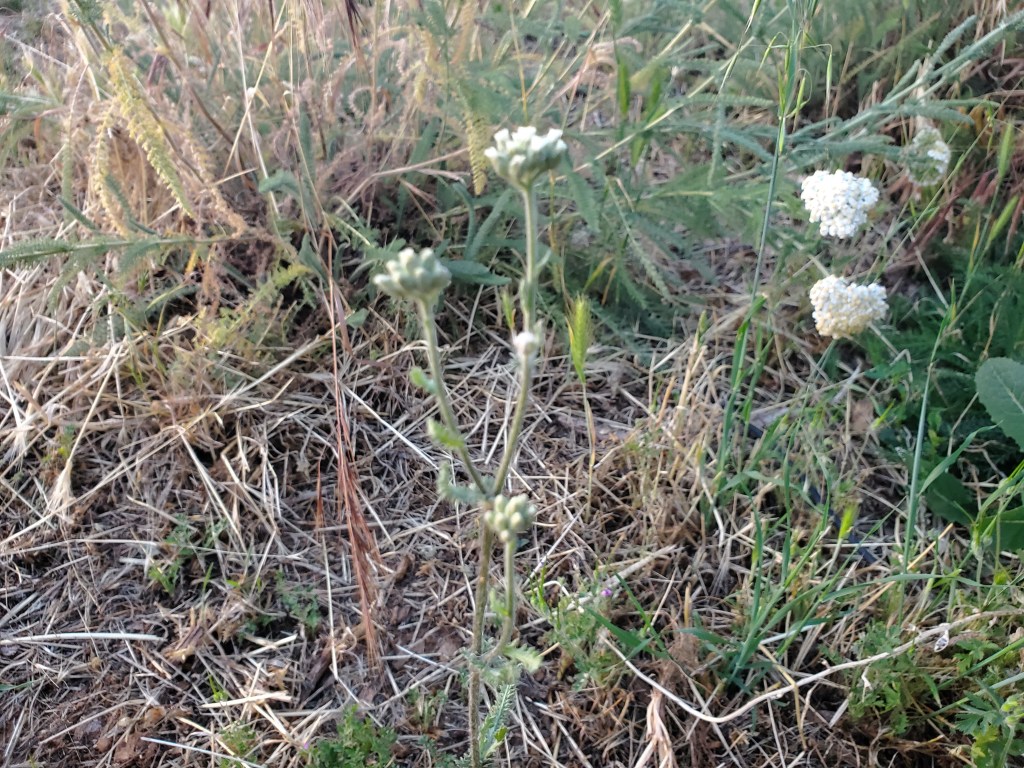
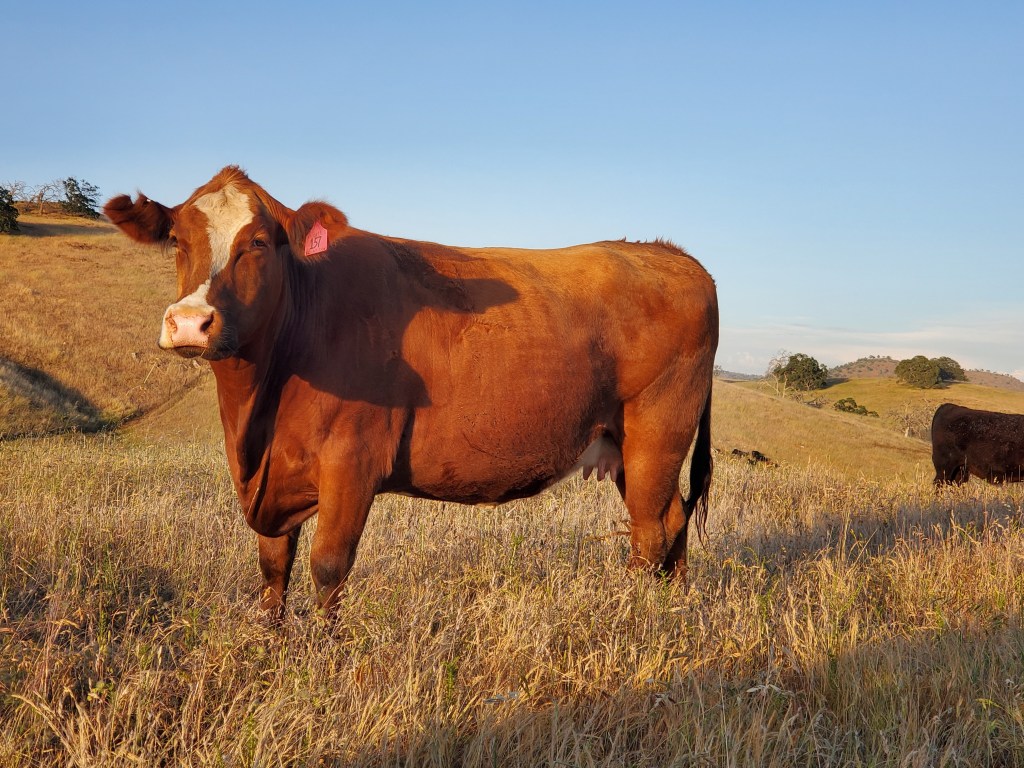
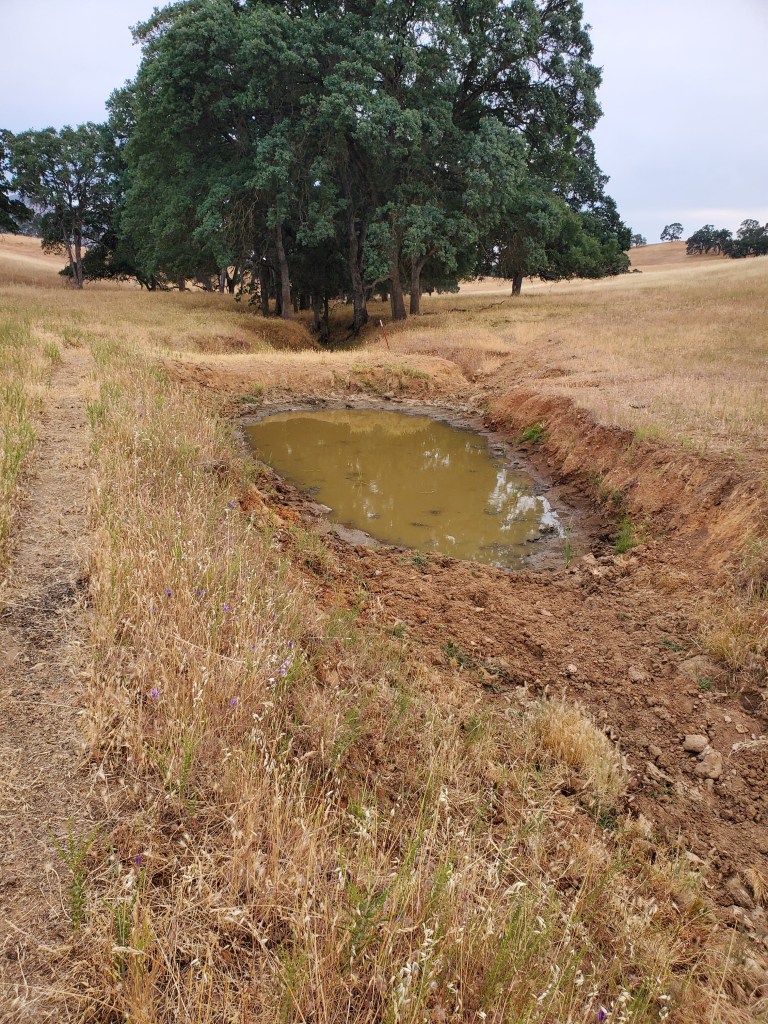
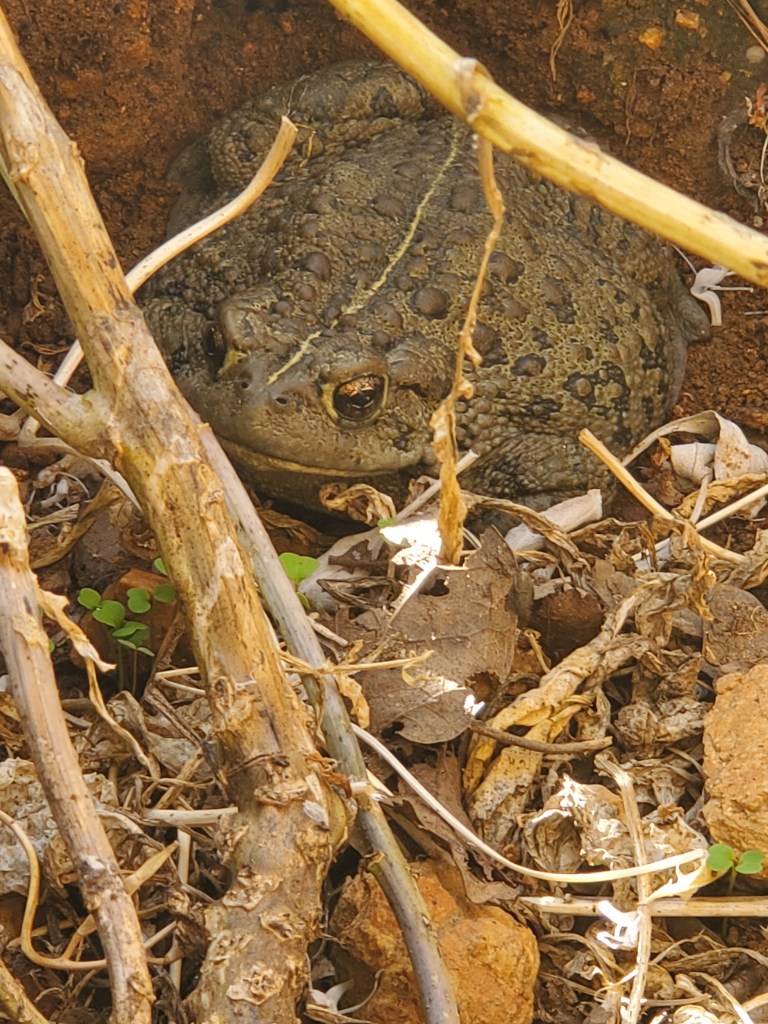
Every year I am stunned by how rapid the shift is from green grass to yellow grass. Many of the photos in this blog post were taken two to three weeks ago, so you will see things as green. By the end of May, most of the landscape turned yellow. There is still water remaining in the arroyos and the swale pond. Typically, by June, they are all dry. The springs are still green as well as the recharge areas in the arroyos. Tarweed is up and some are in a very early bloom. The doveweed has emerged and will be large by August – or possibly earlier like the tarweed. We still have a large number of wildflowers – purples, whites, yellows. A beautiful native toad is living in my patio garden area. The cows are fat and happy. This is a year of abundance of food and water, but not a very large population of insects to use them.







 PolliNative