Hazard Branches. Grasshopper Death March. Washington Post Comes a Calling.

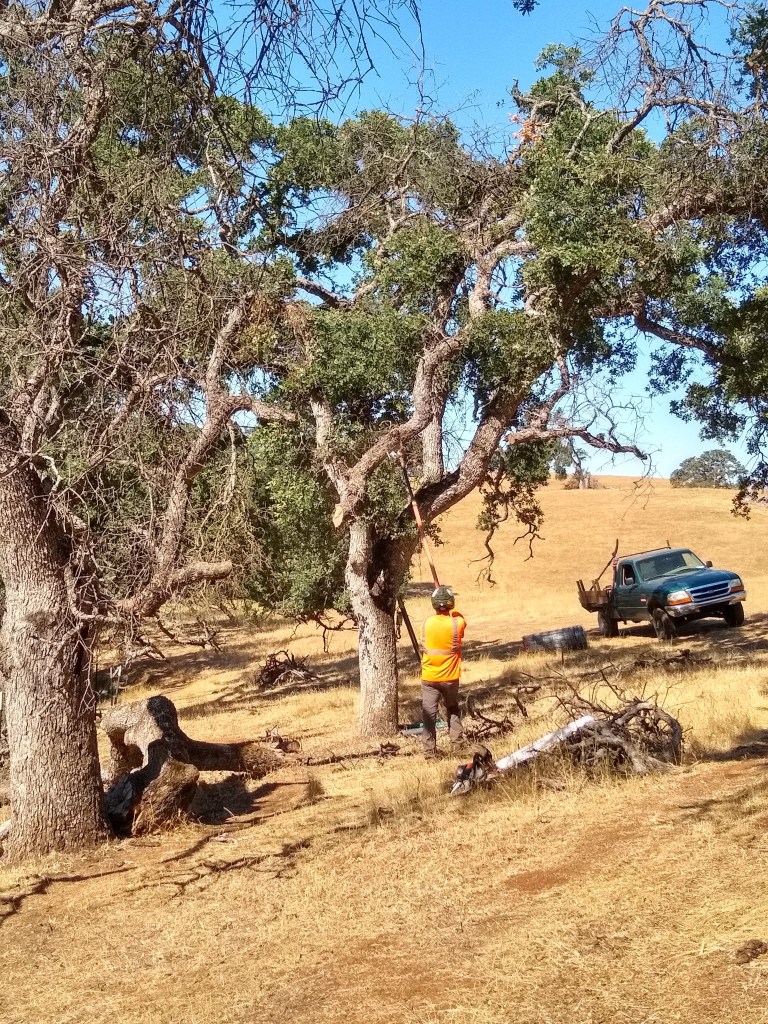
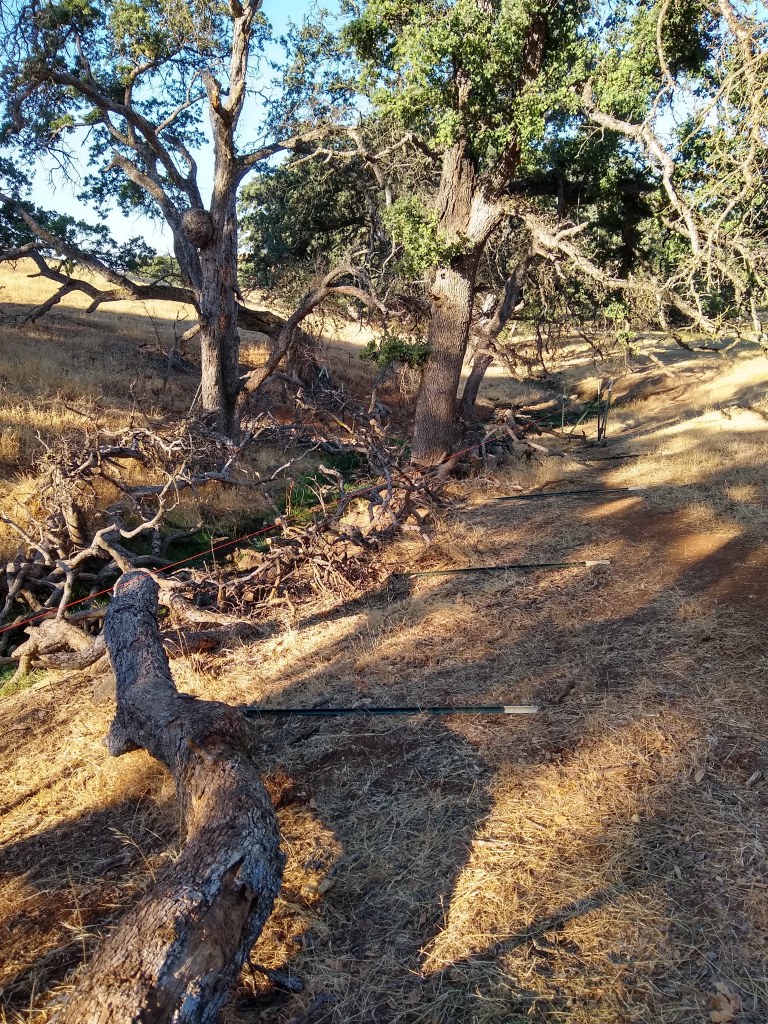
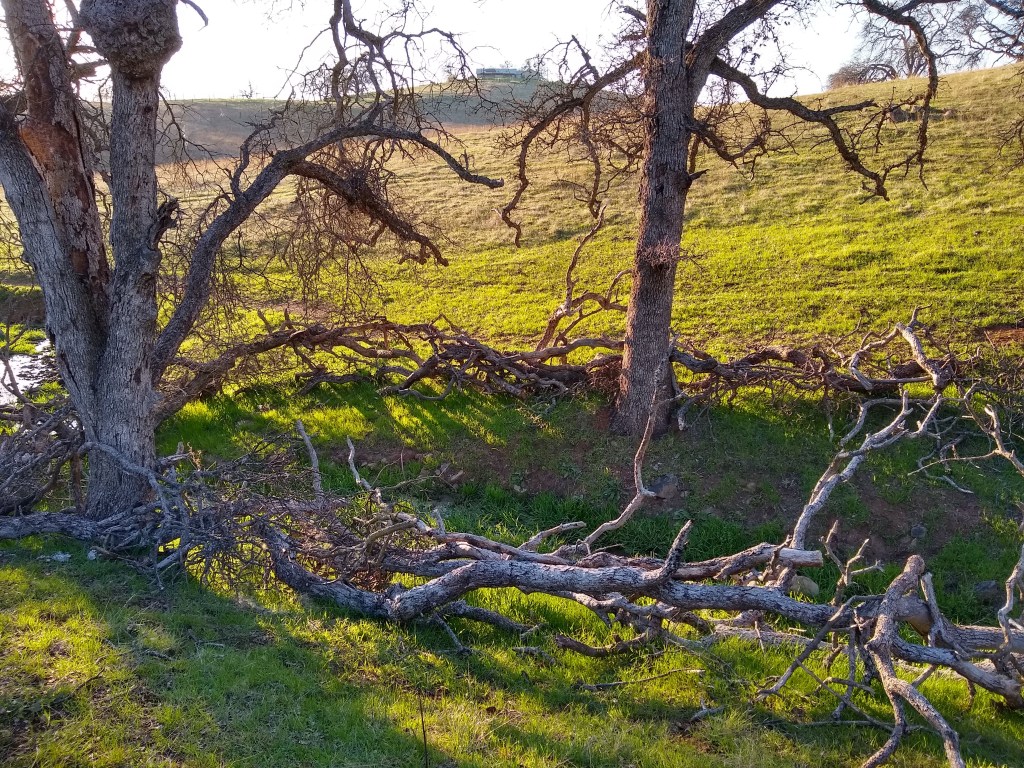
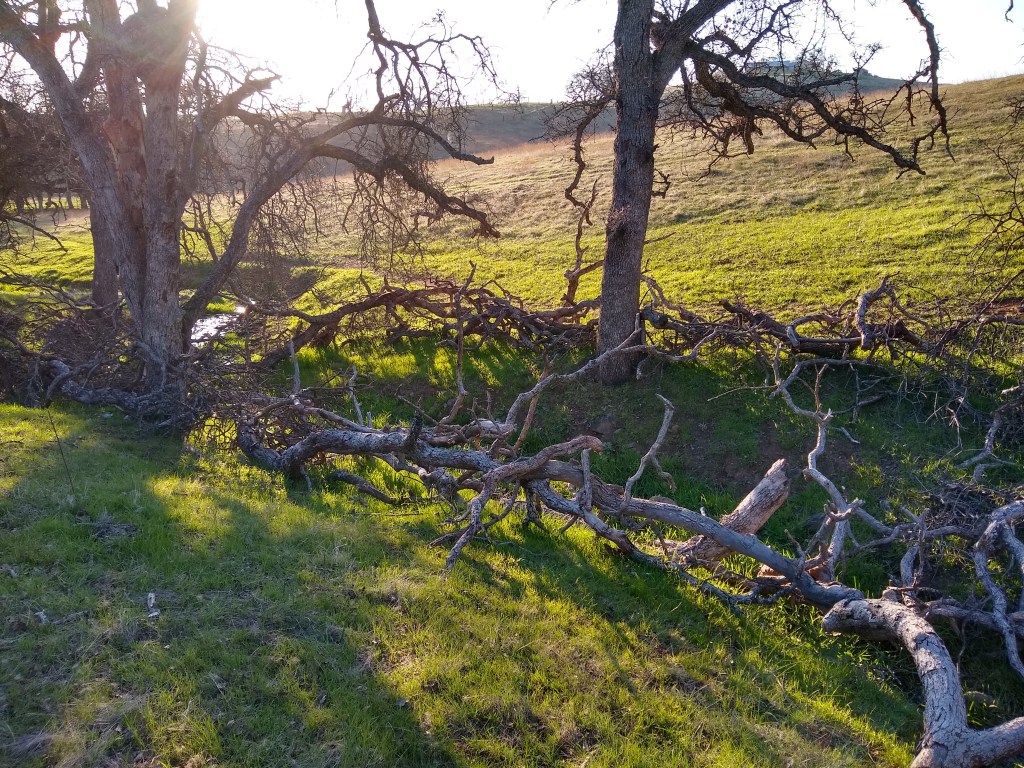
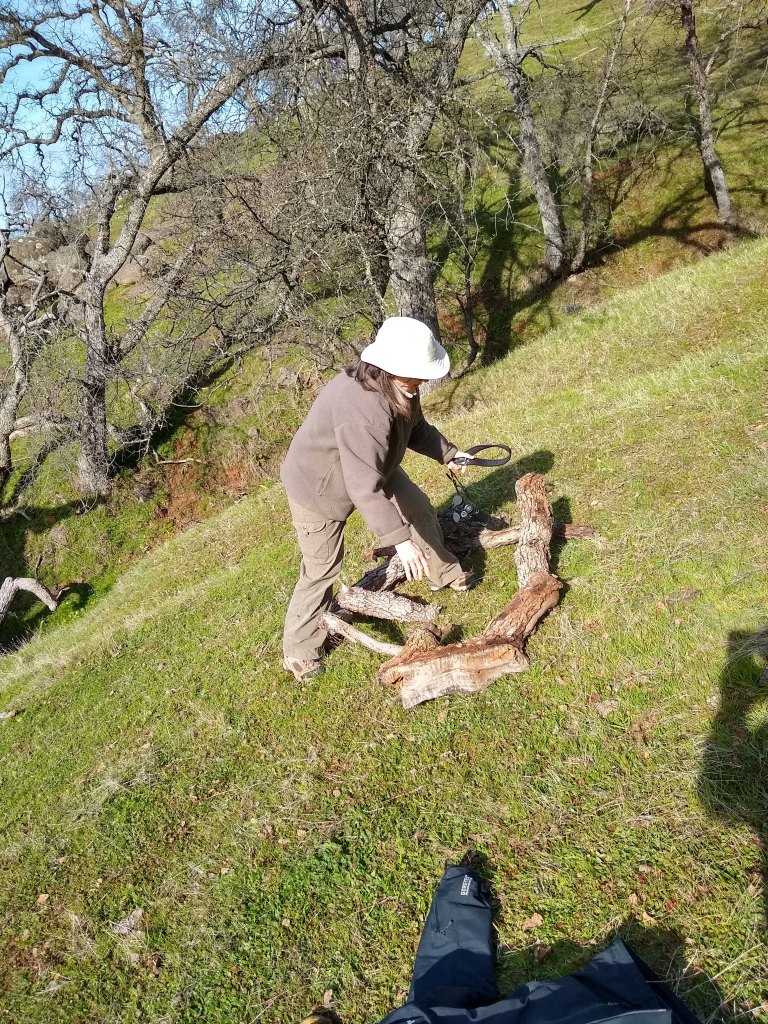
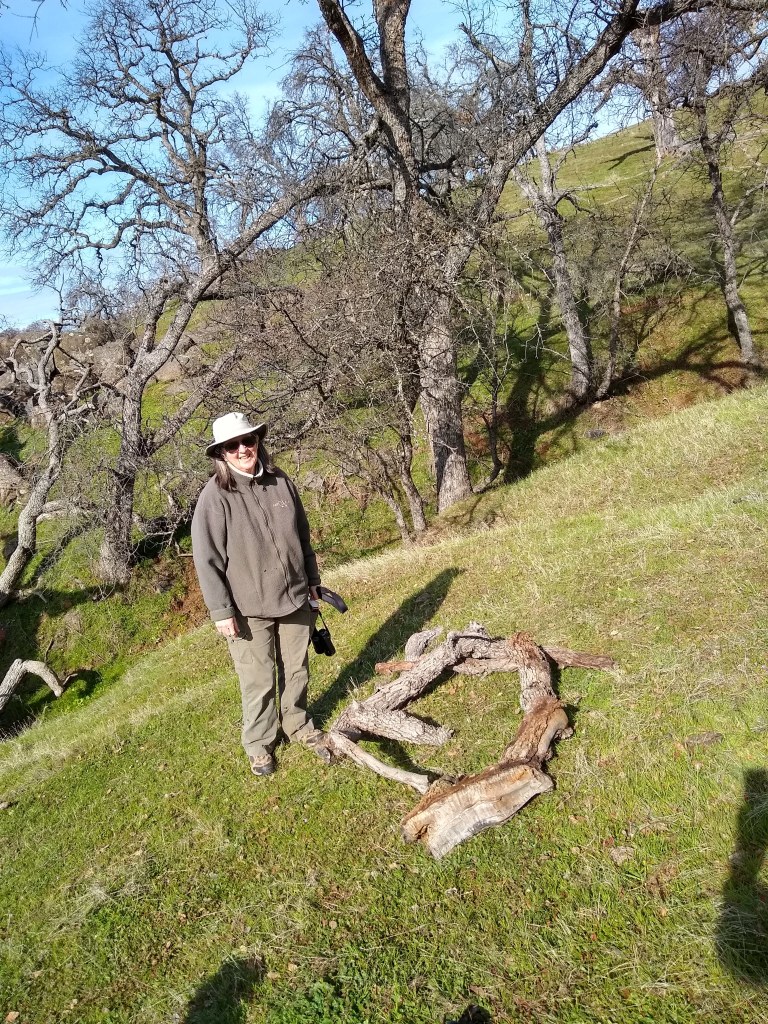
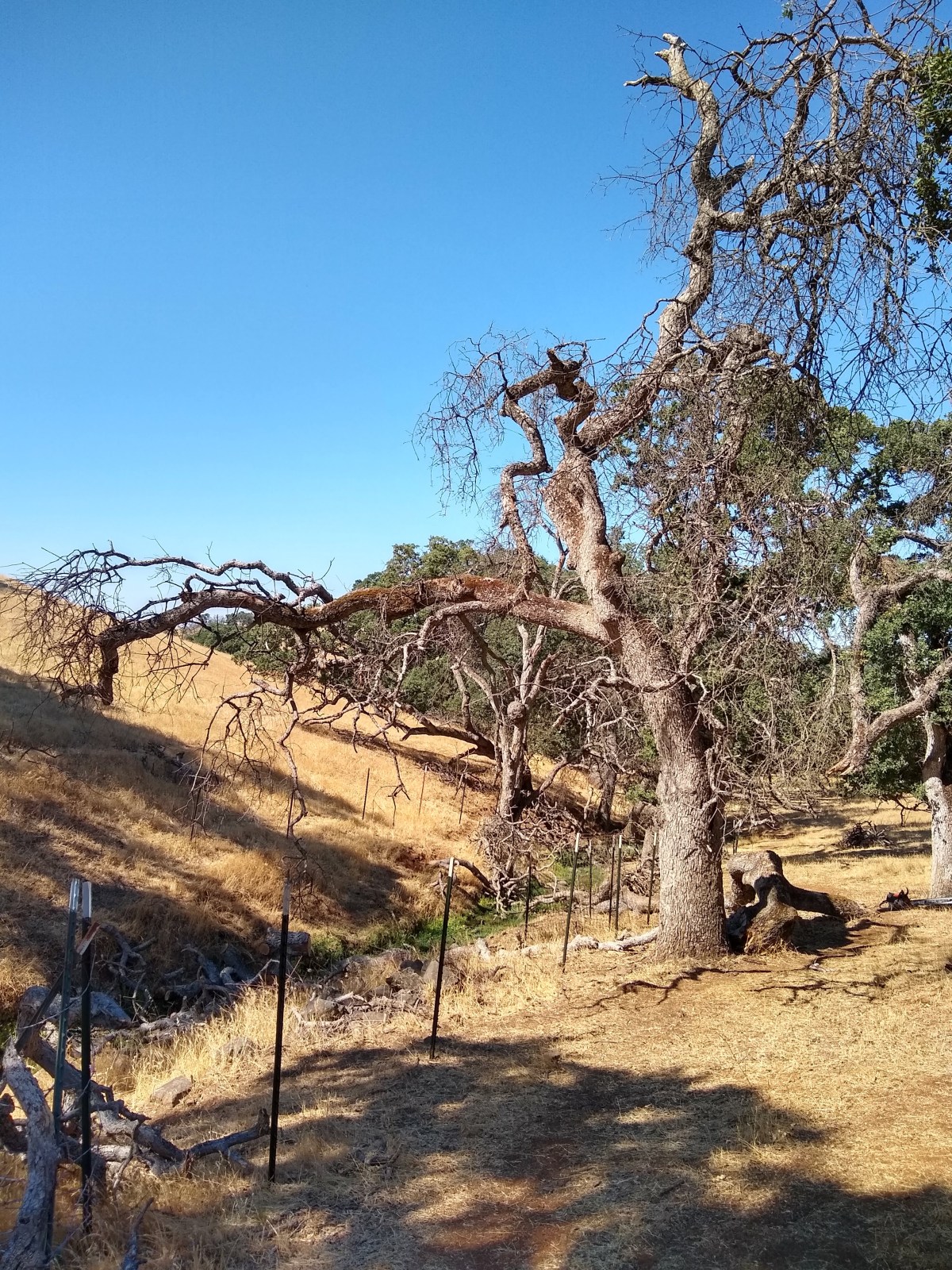
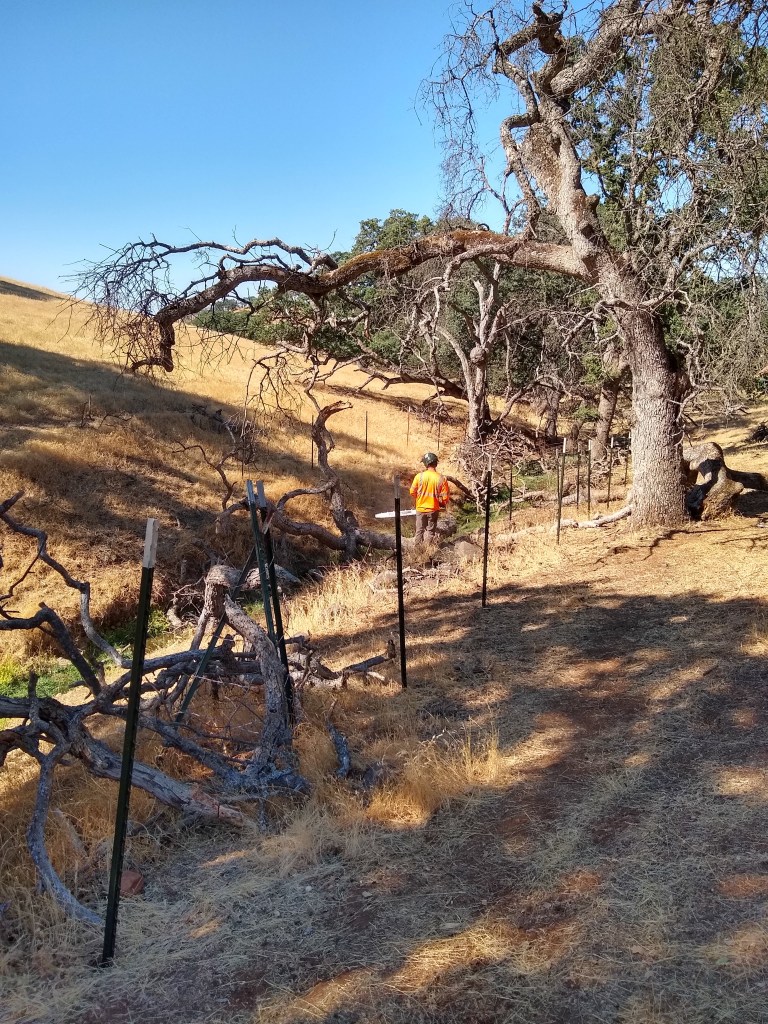
The dangling branch is dropped. Two other dangerous branches to go.

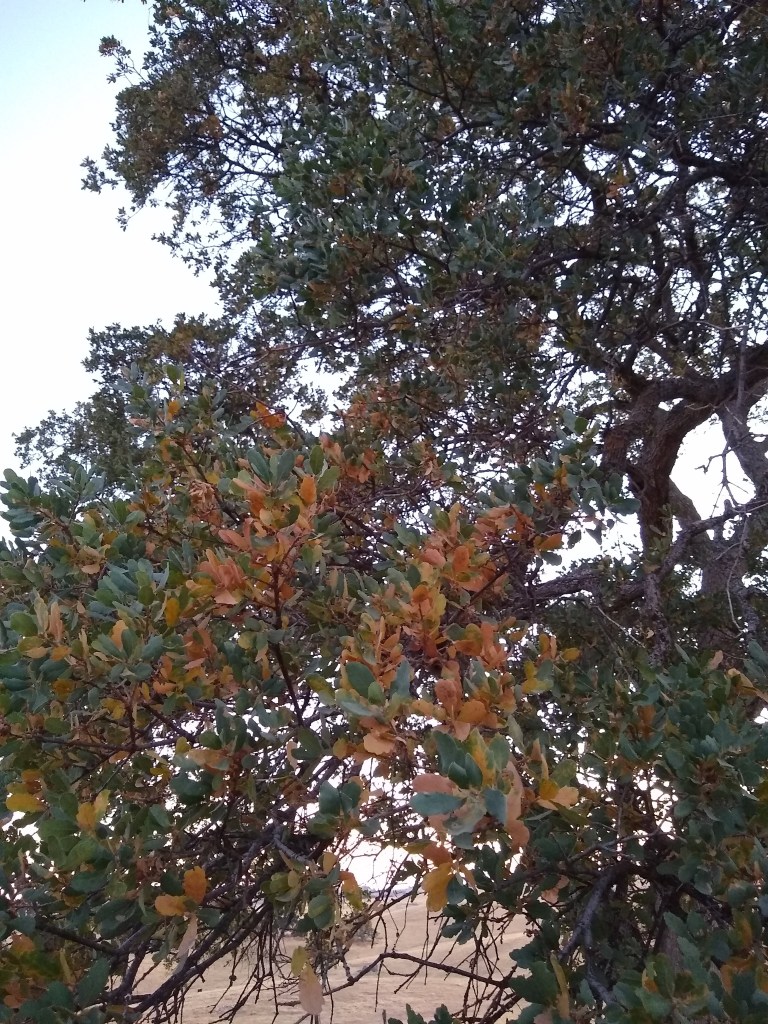
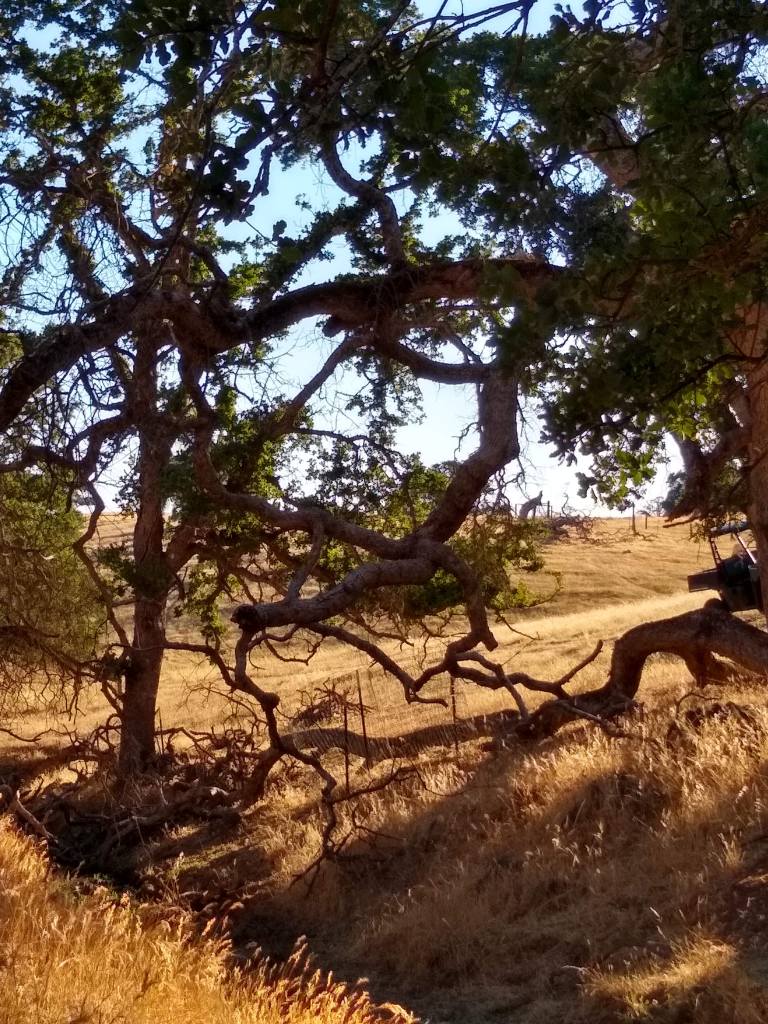
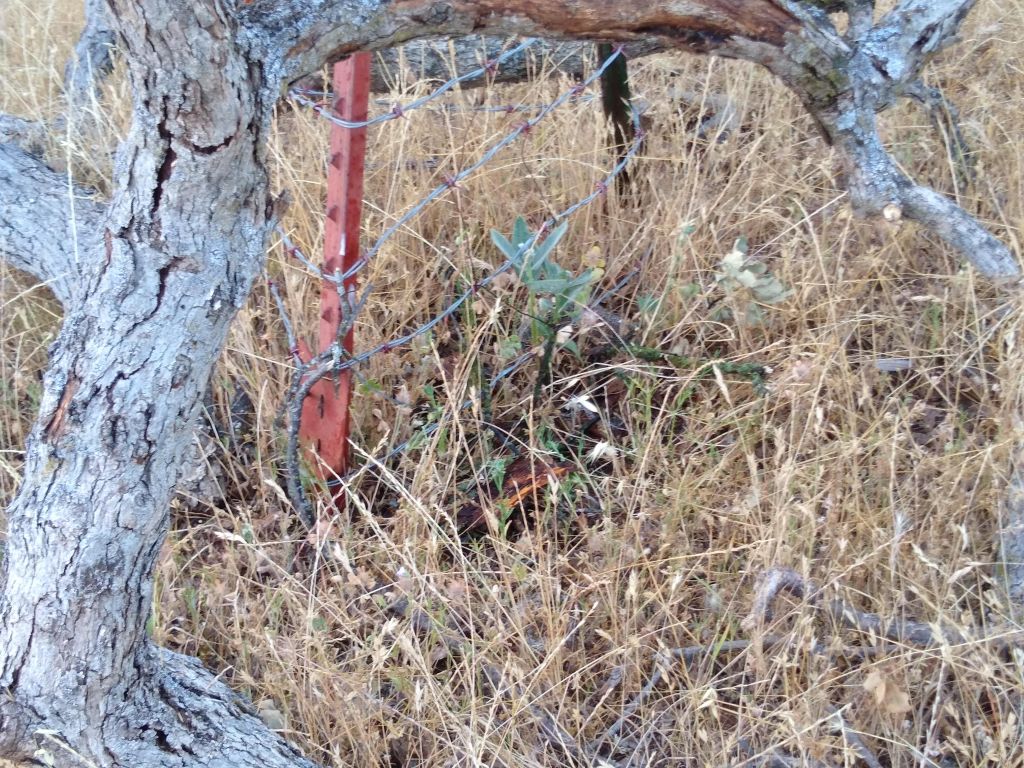
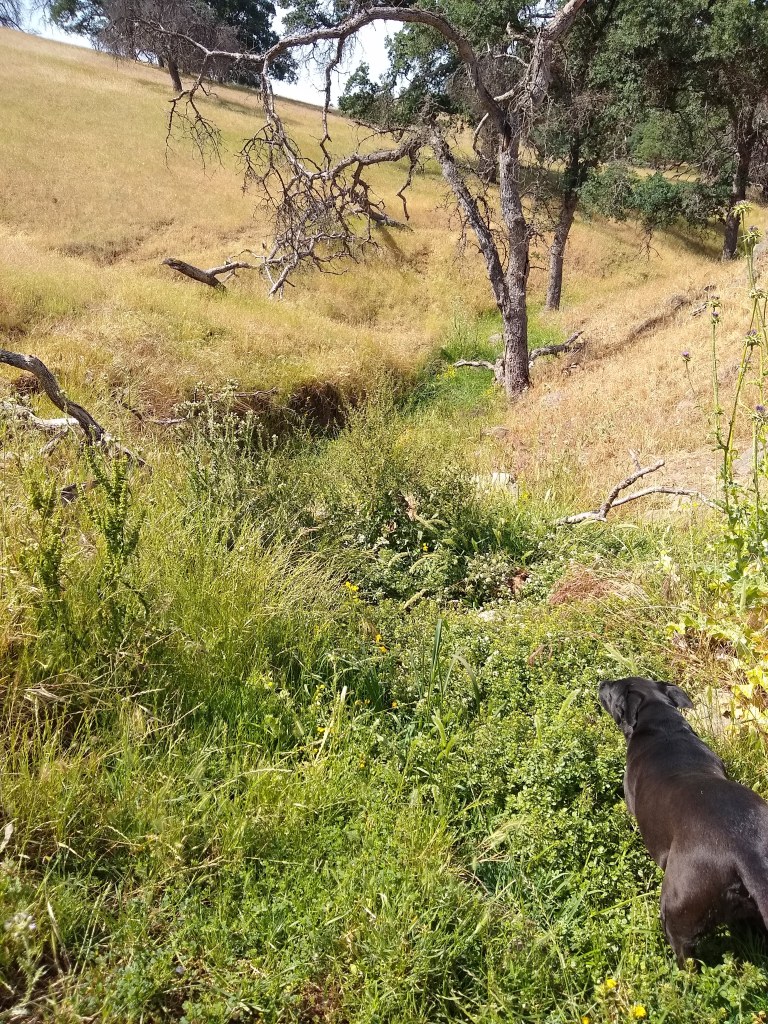
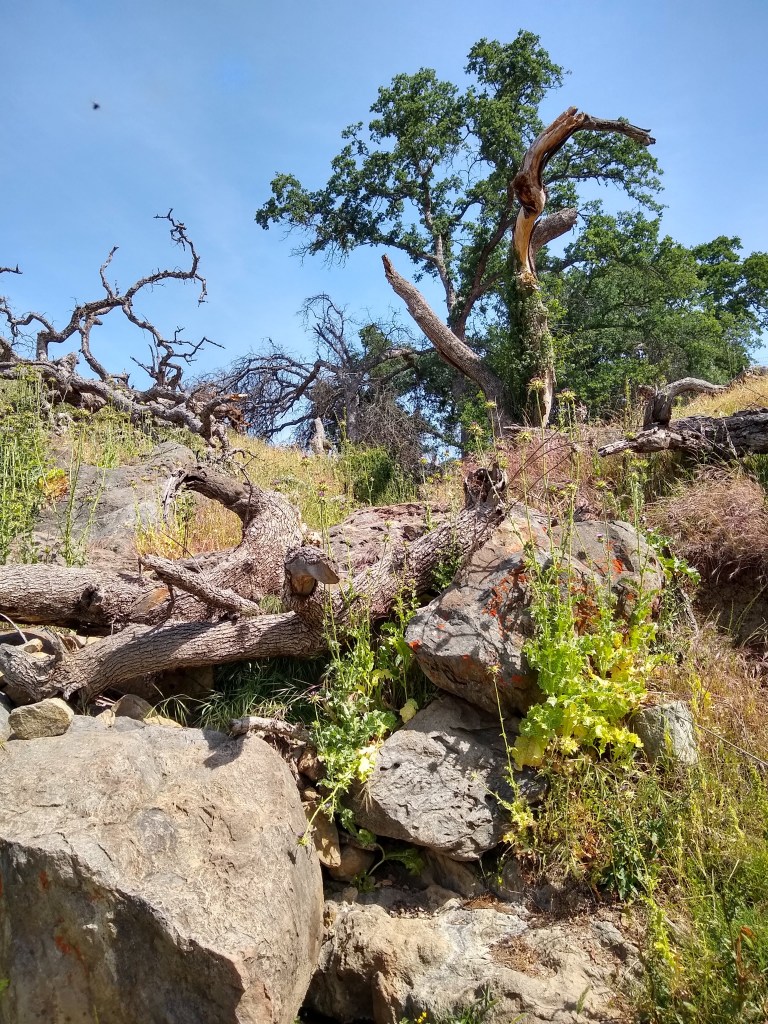
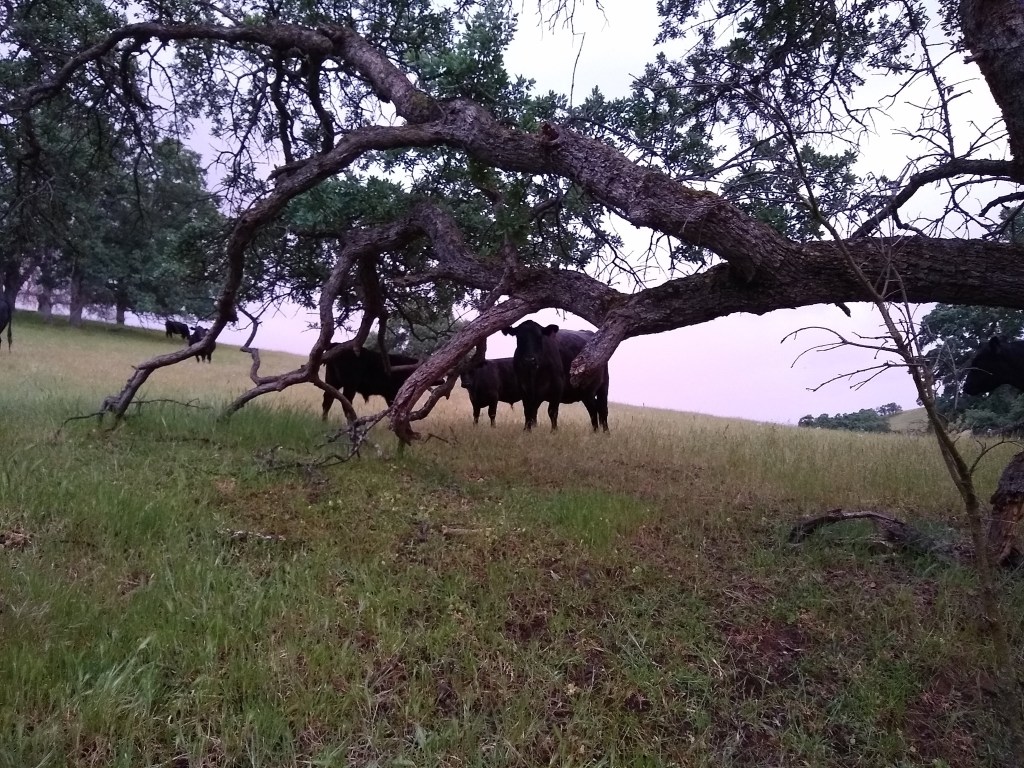
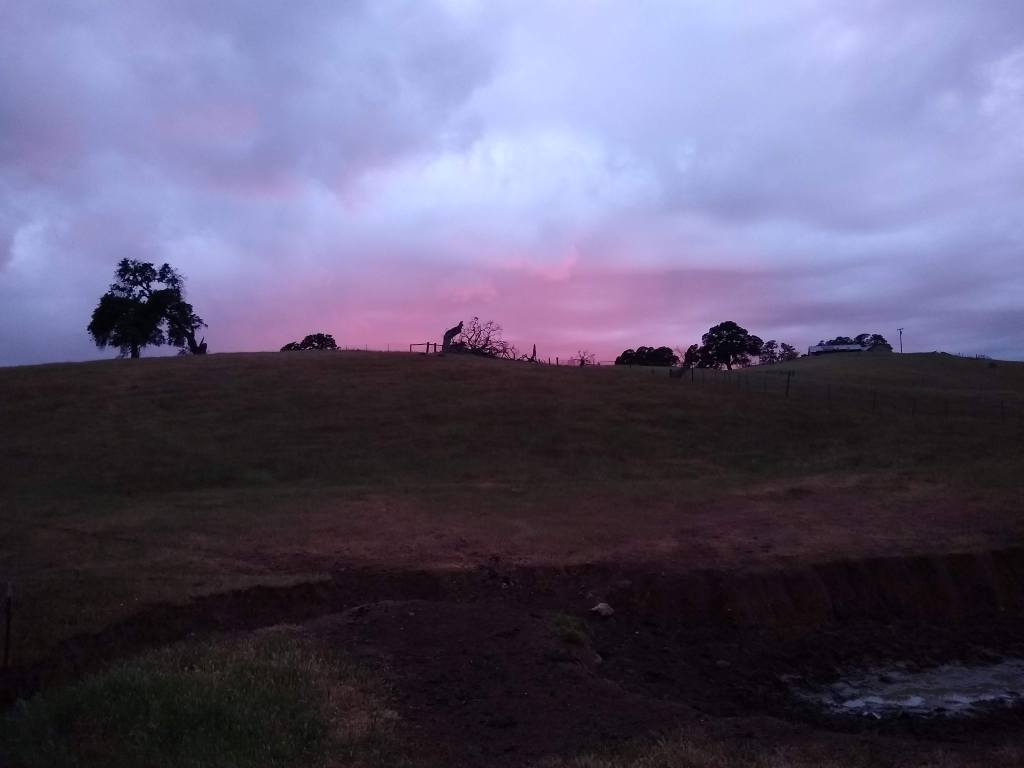
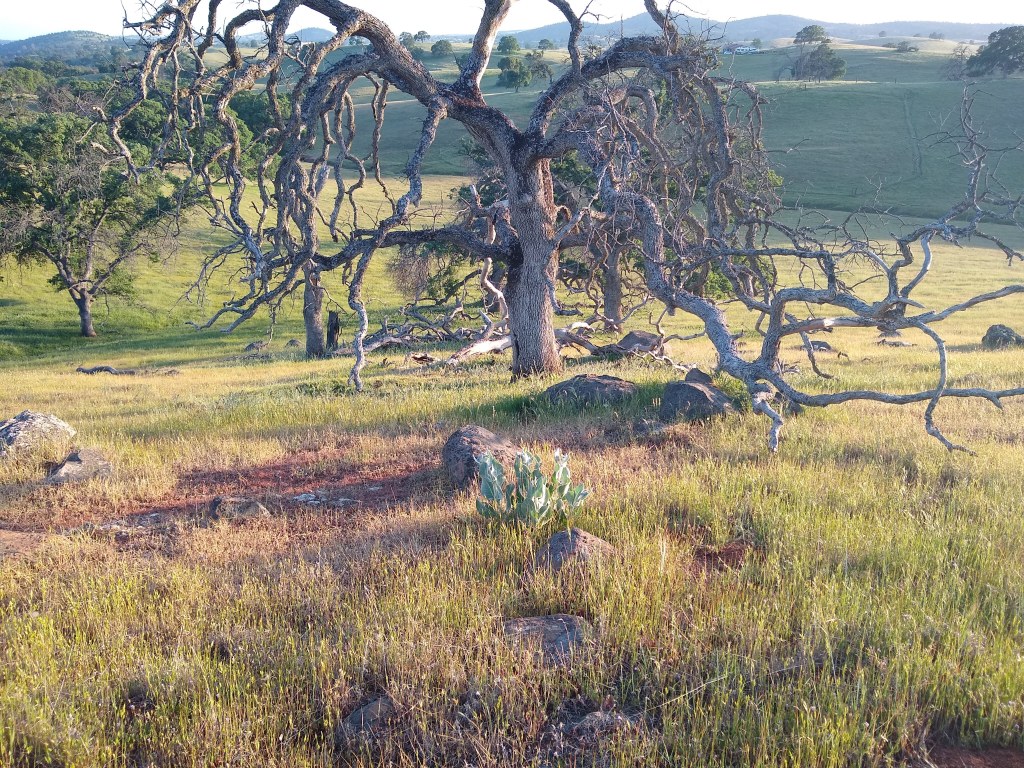
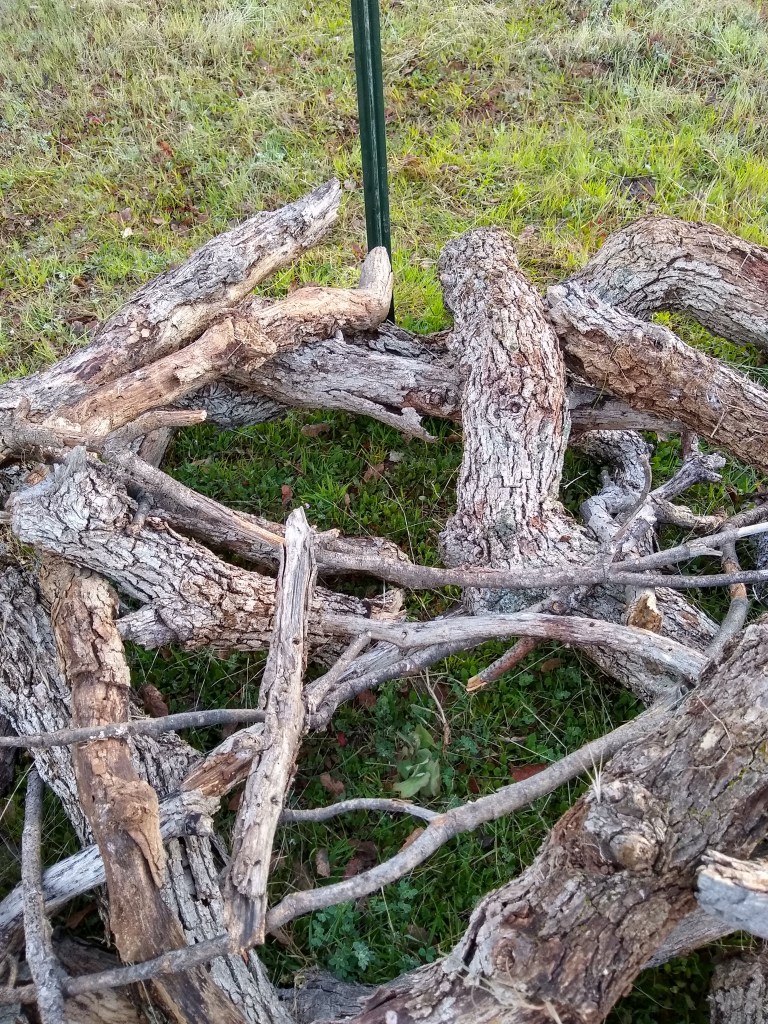
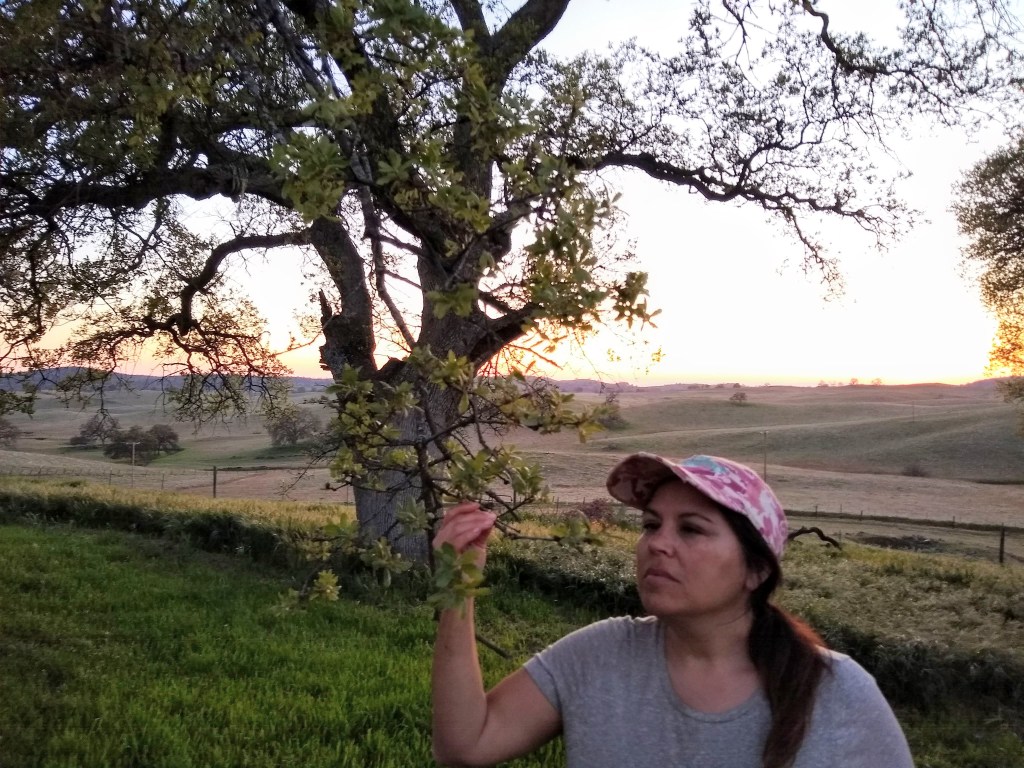
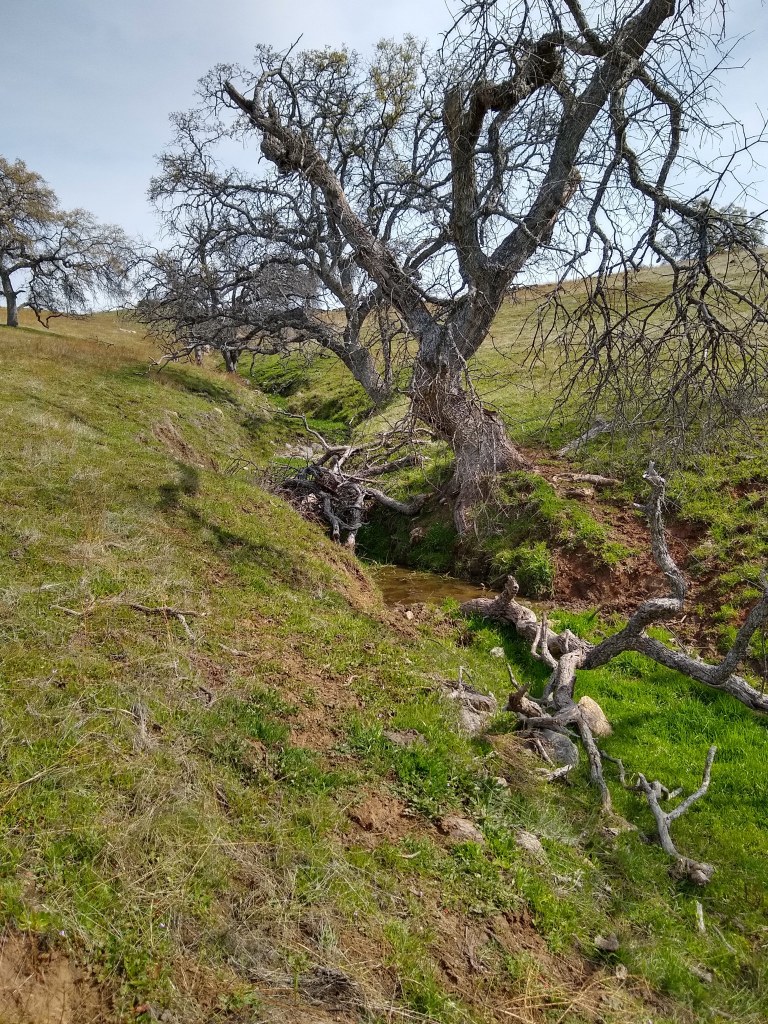
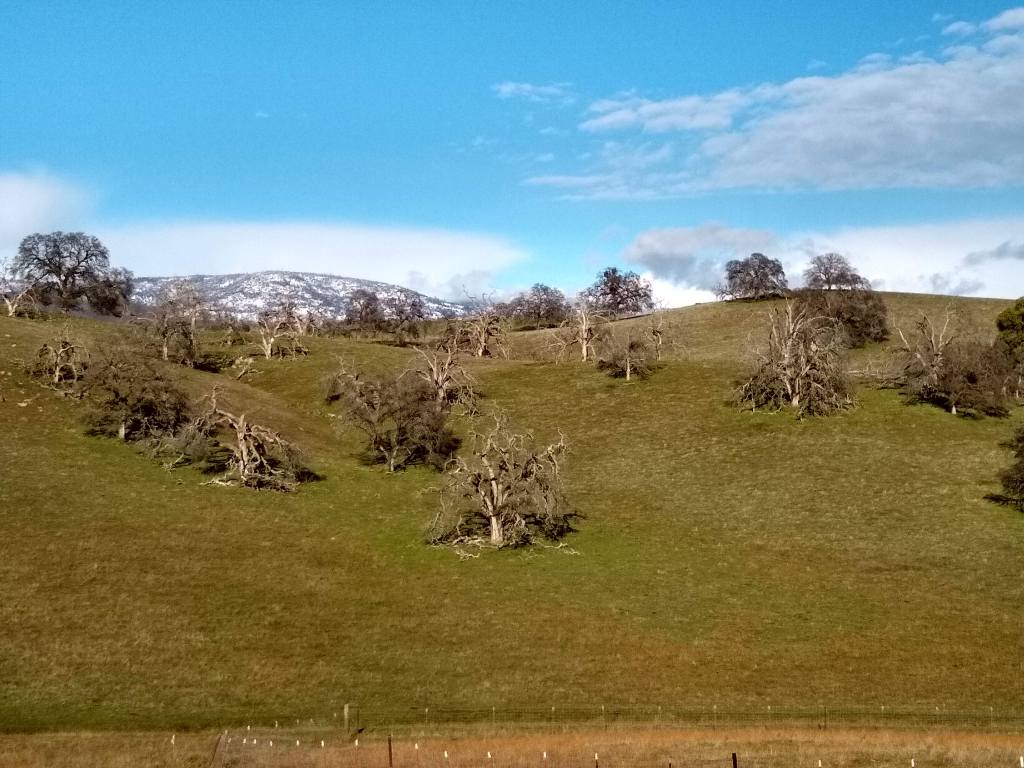
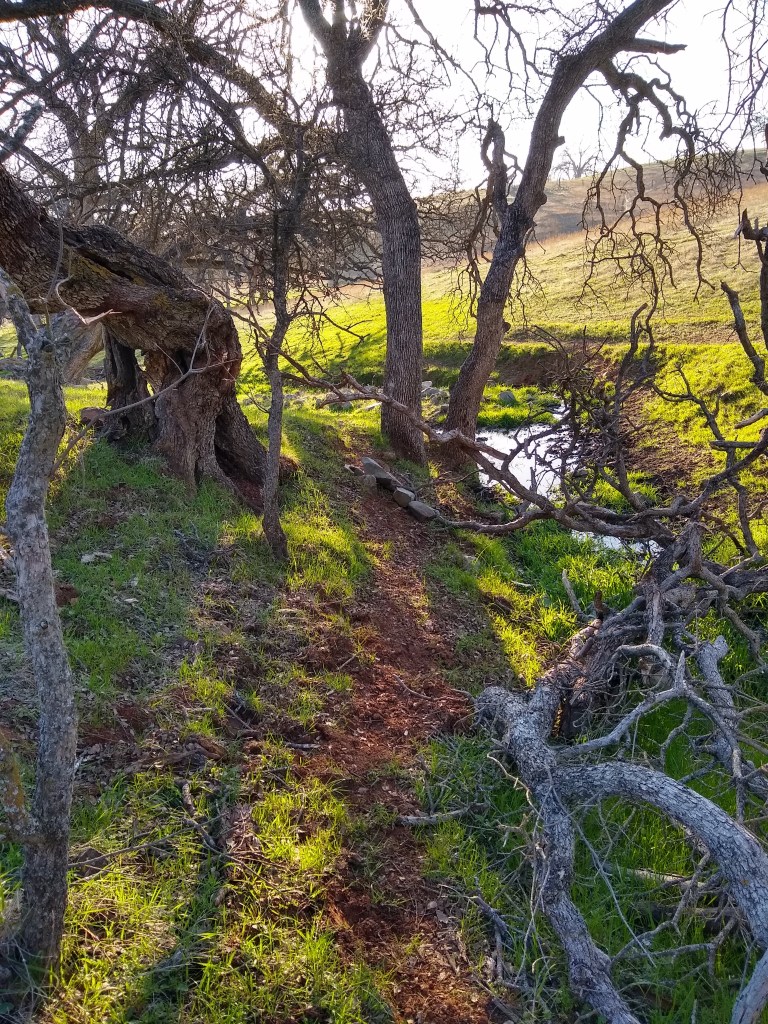
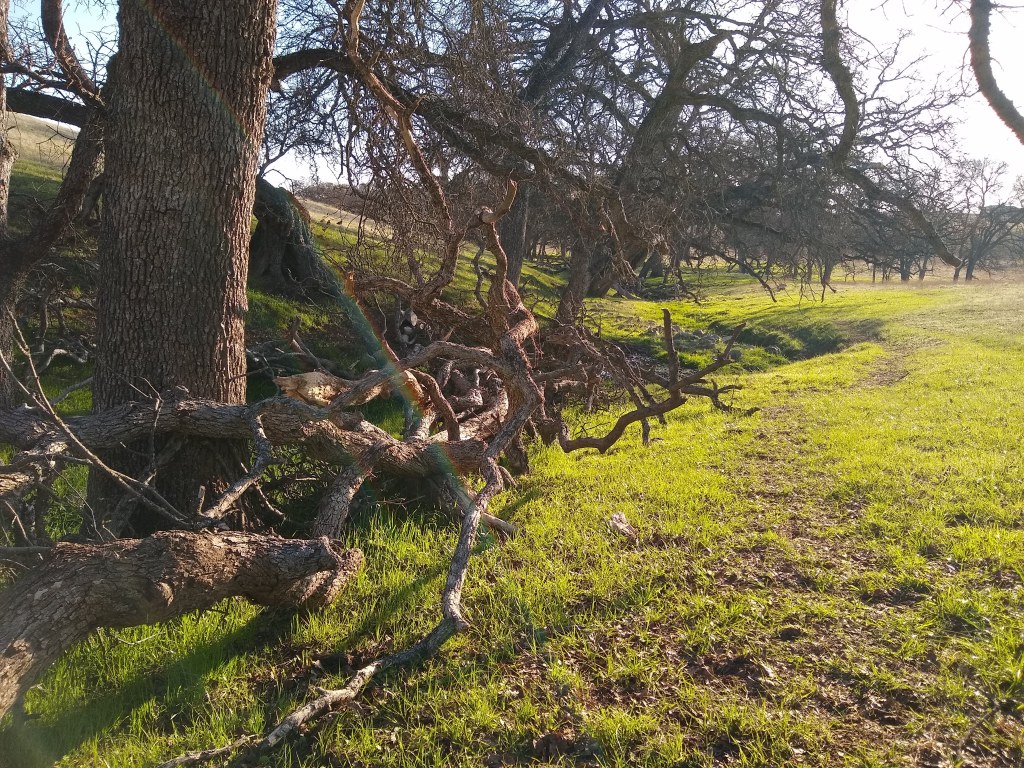
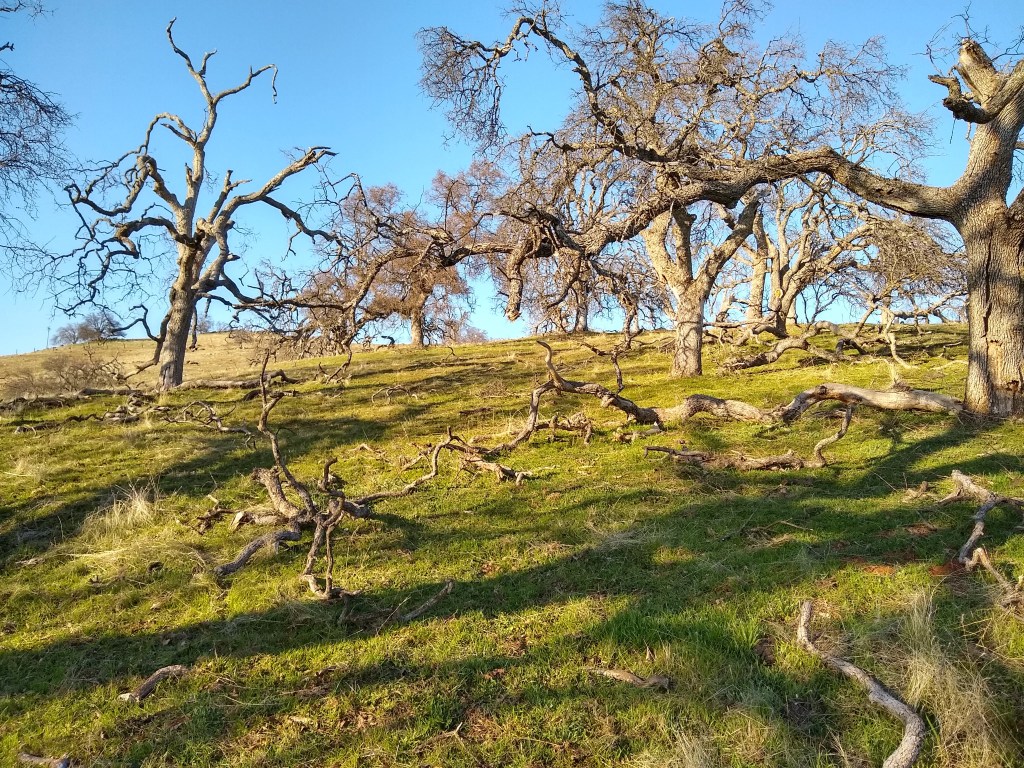
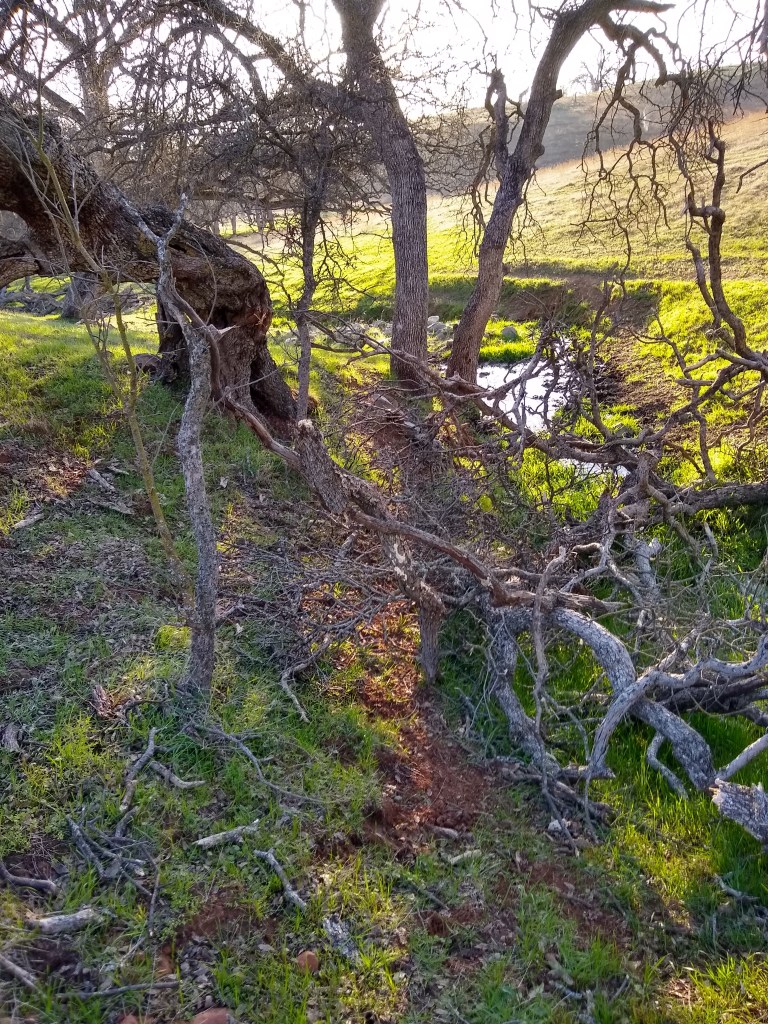
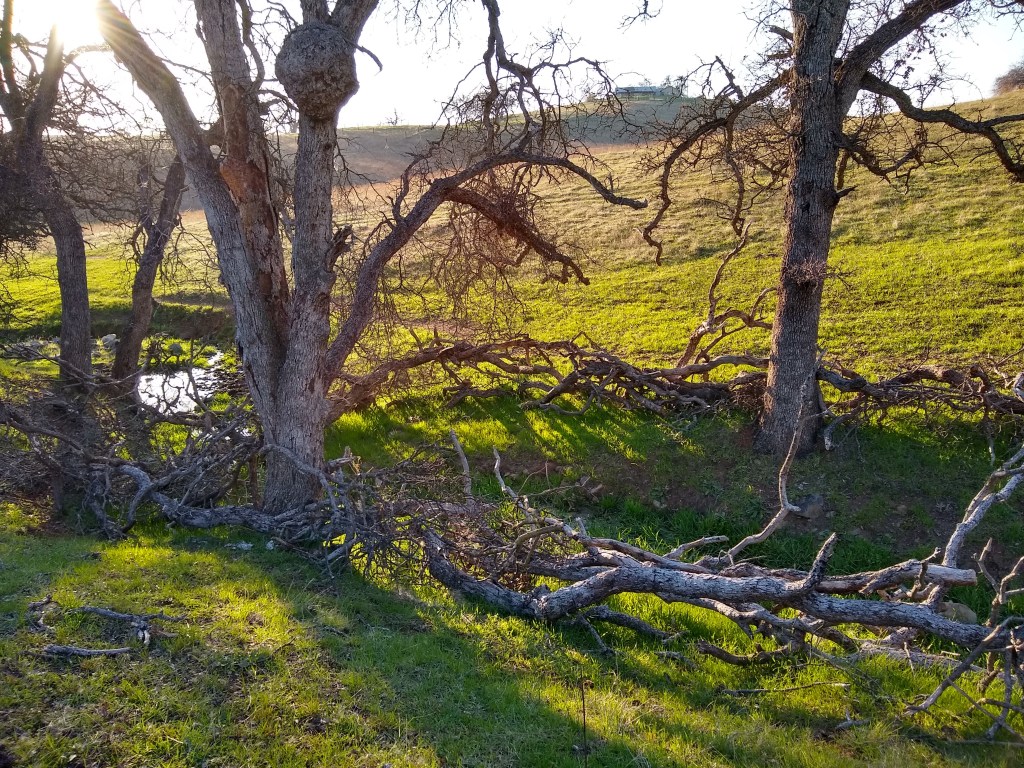
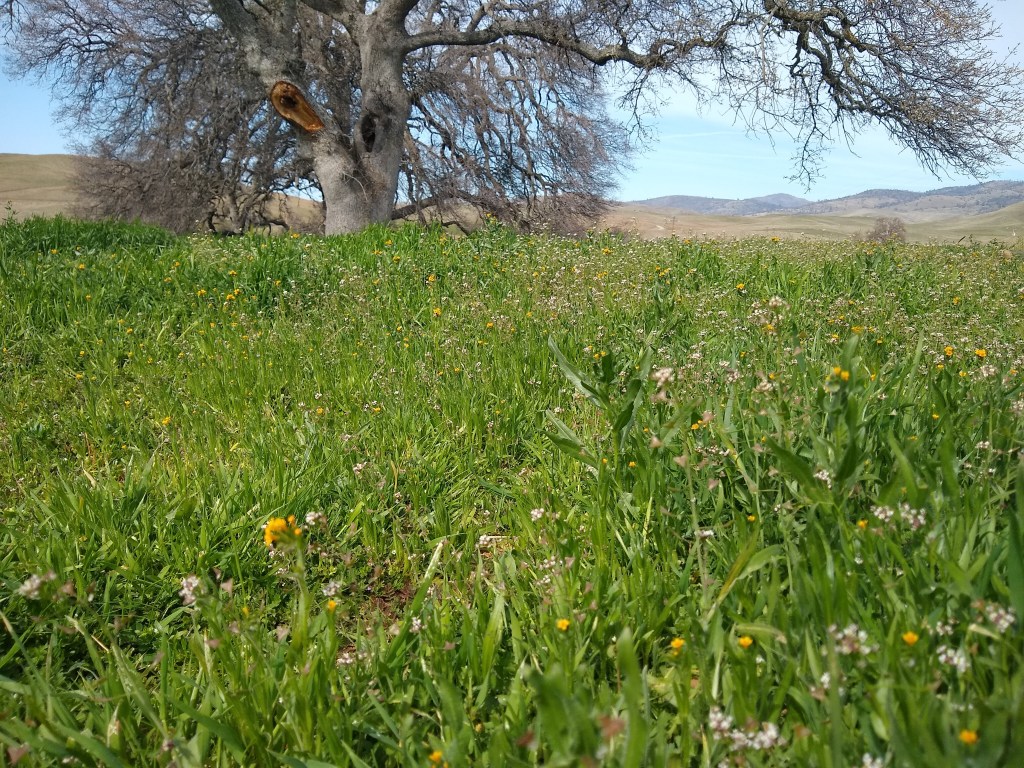
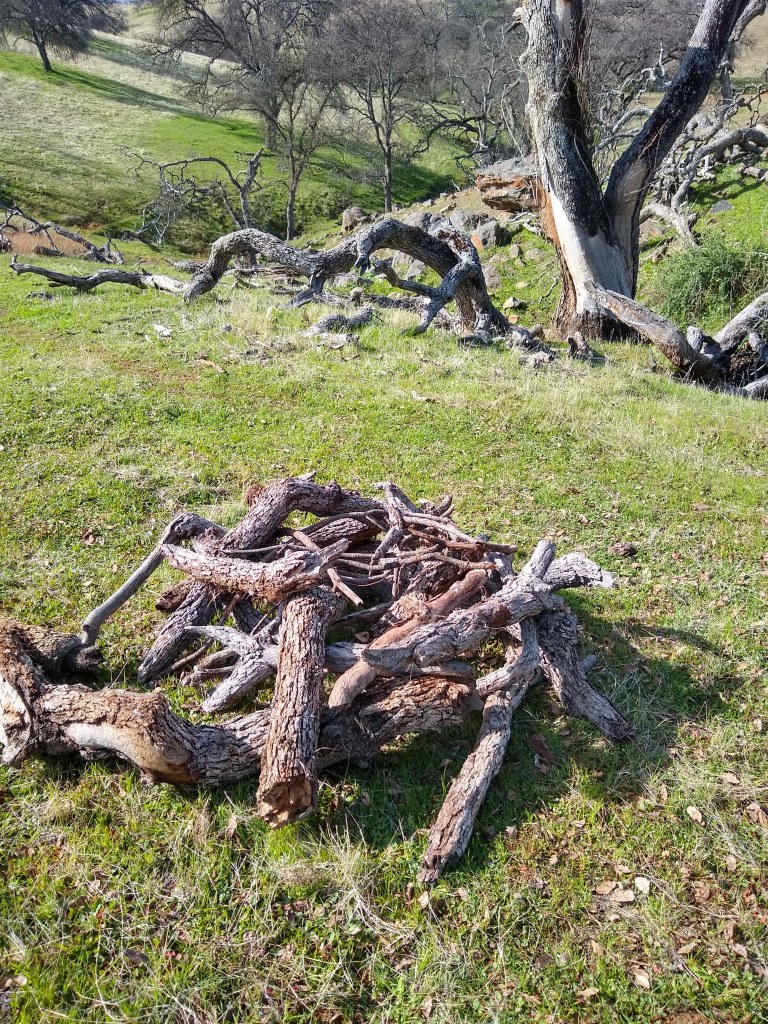
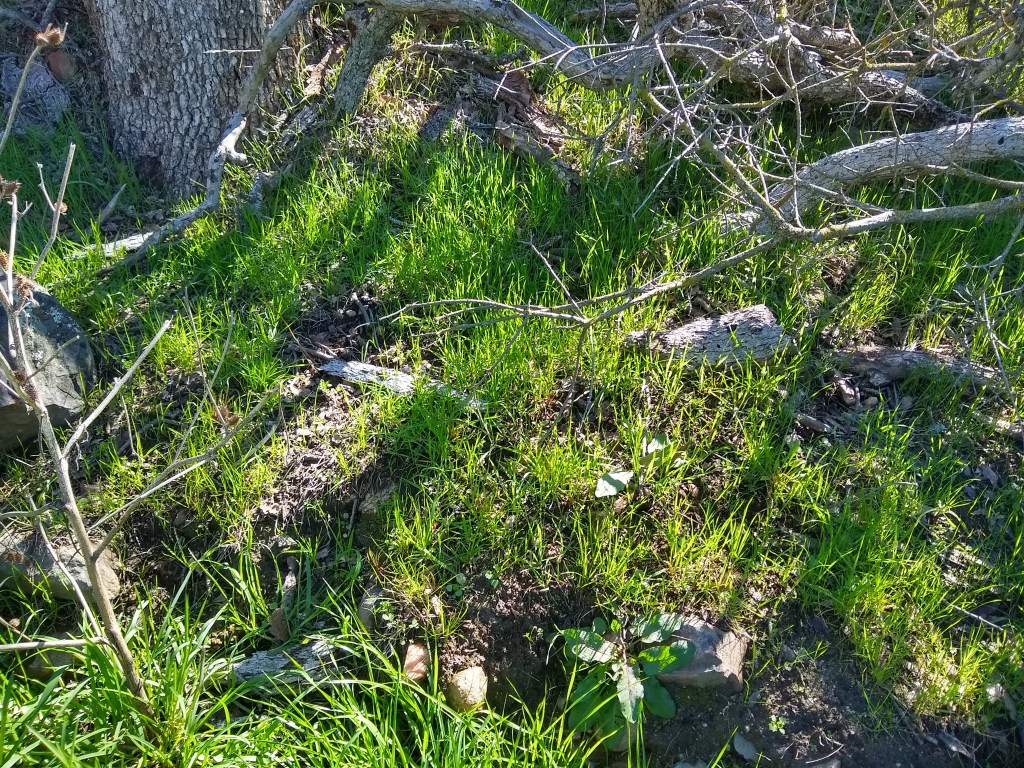
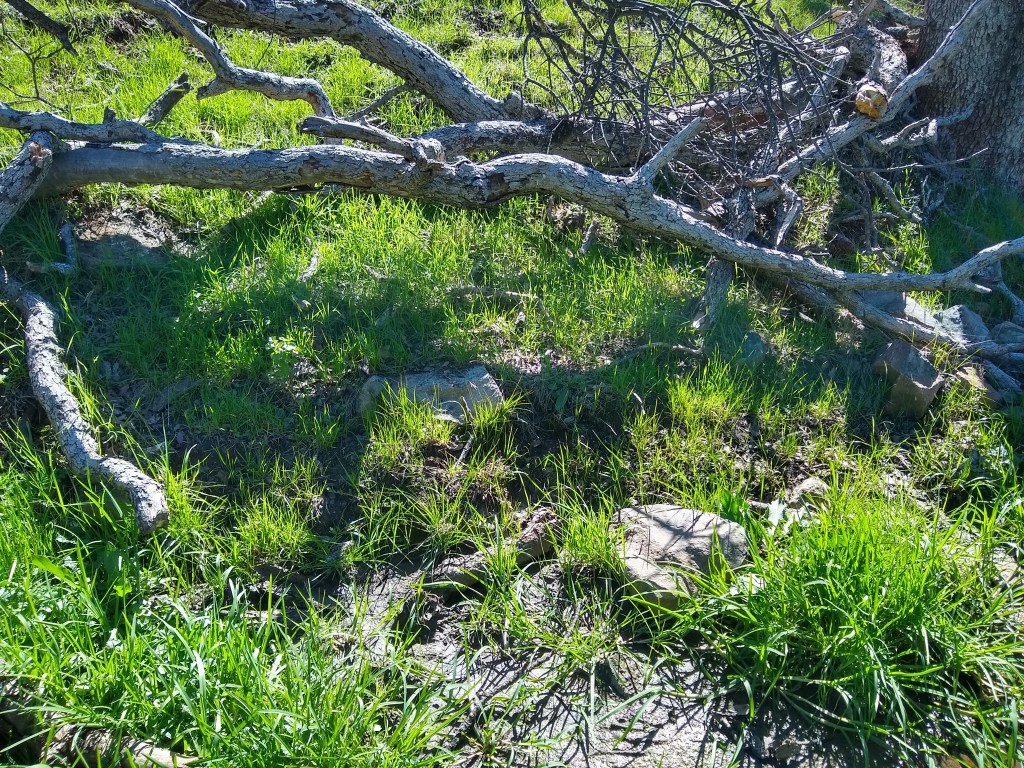
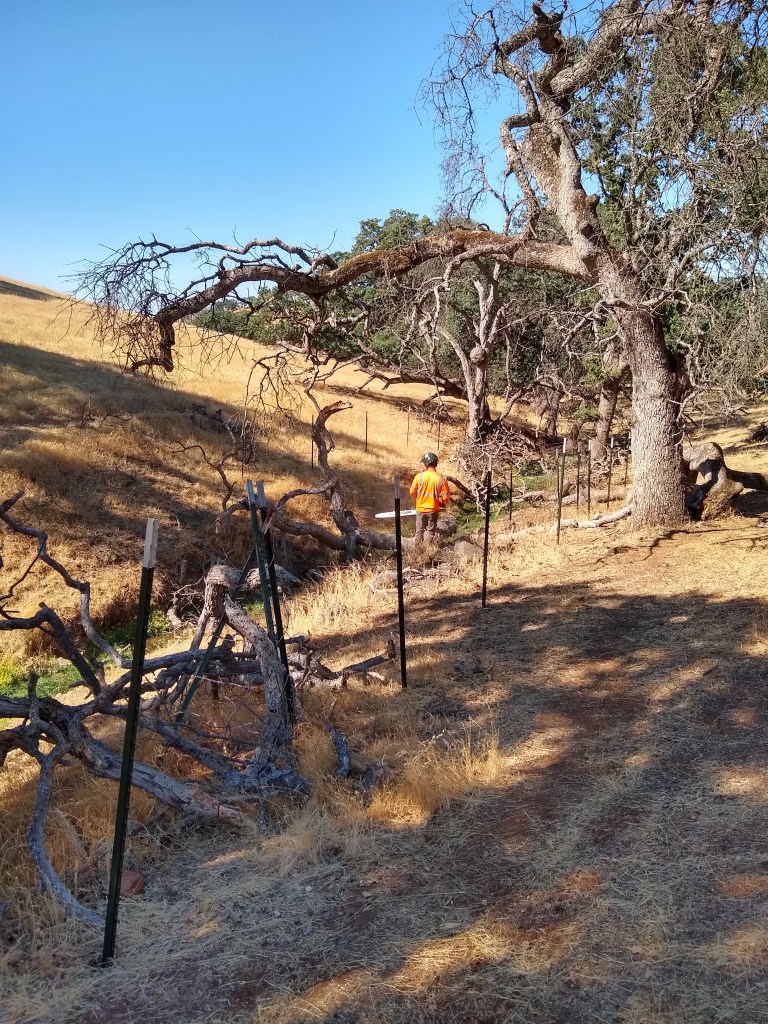
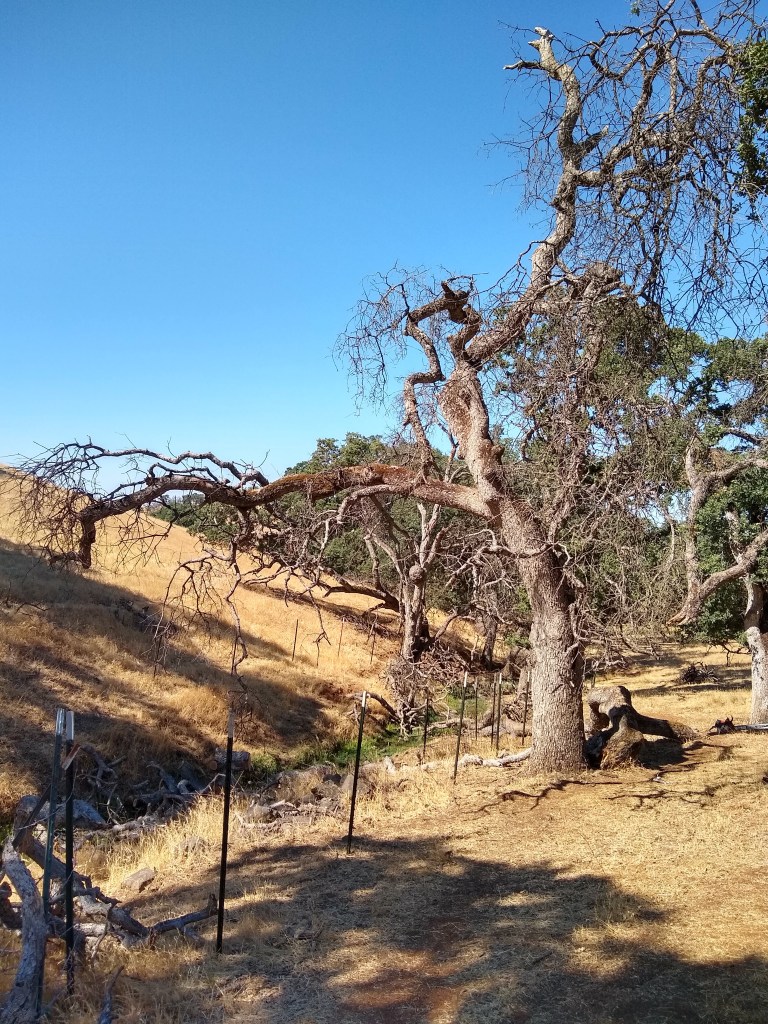
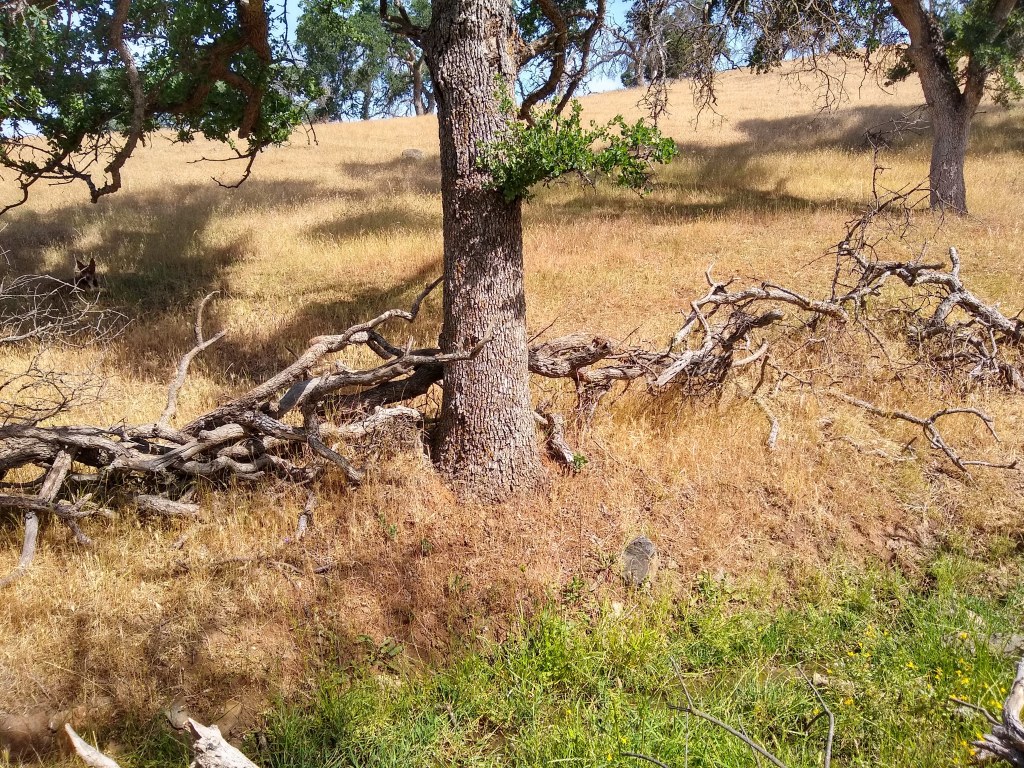
Is anything ever really dead? Despite the leafless, withered nature of this grand blue oak killed in the last drought, it was crushing for me to watch its dismemberment. It was more bitter than I imagined it would be. I have so much respect for even the hulking remains of this once glorious tree. Its body still provides places for acorns to be stored, an ocular perch for birds, living quarters for all types of creatures, and even some shade over the creek. So, is it dead if it provide so much life?

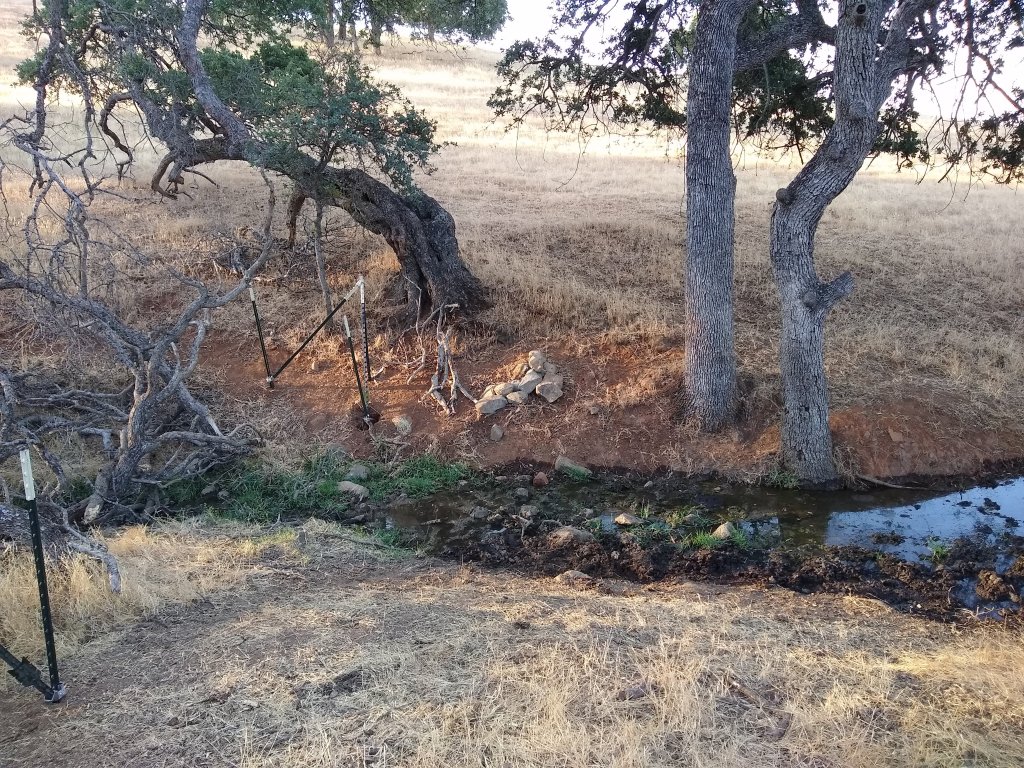
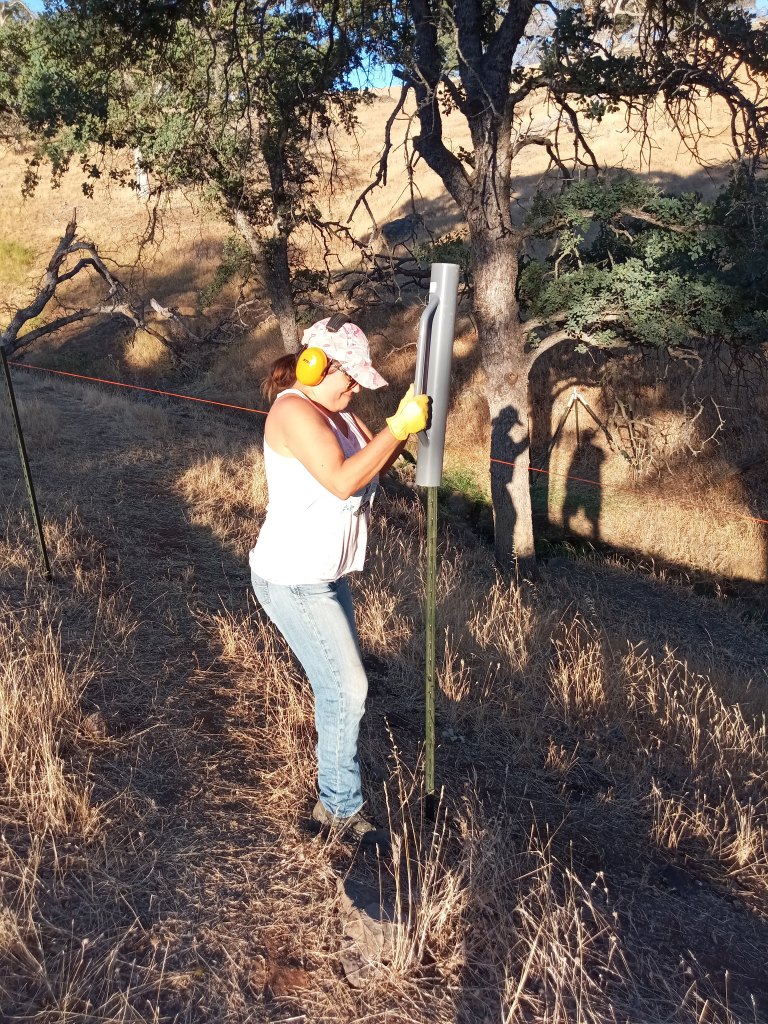
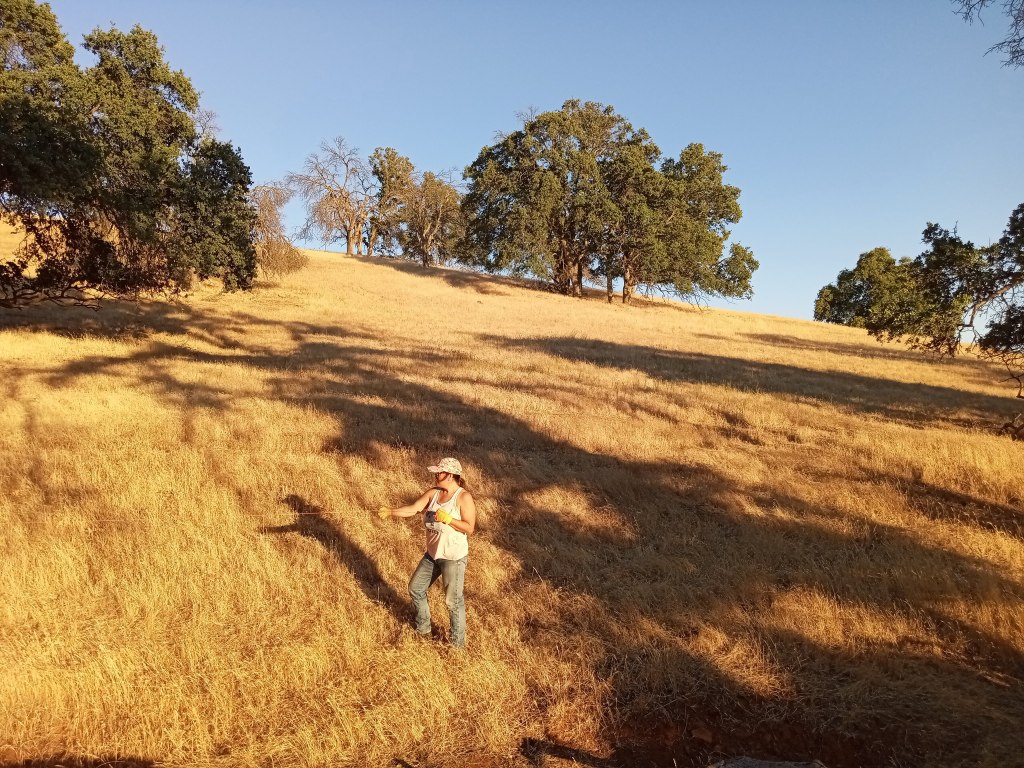
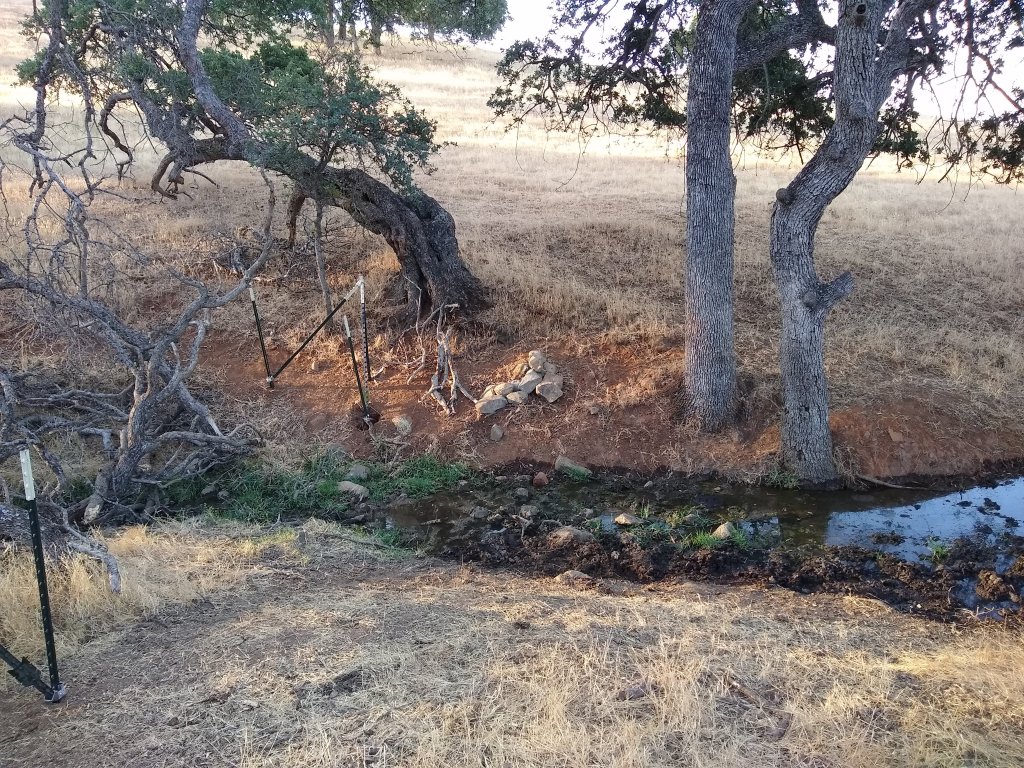
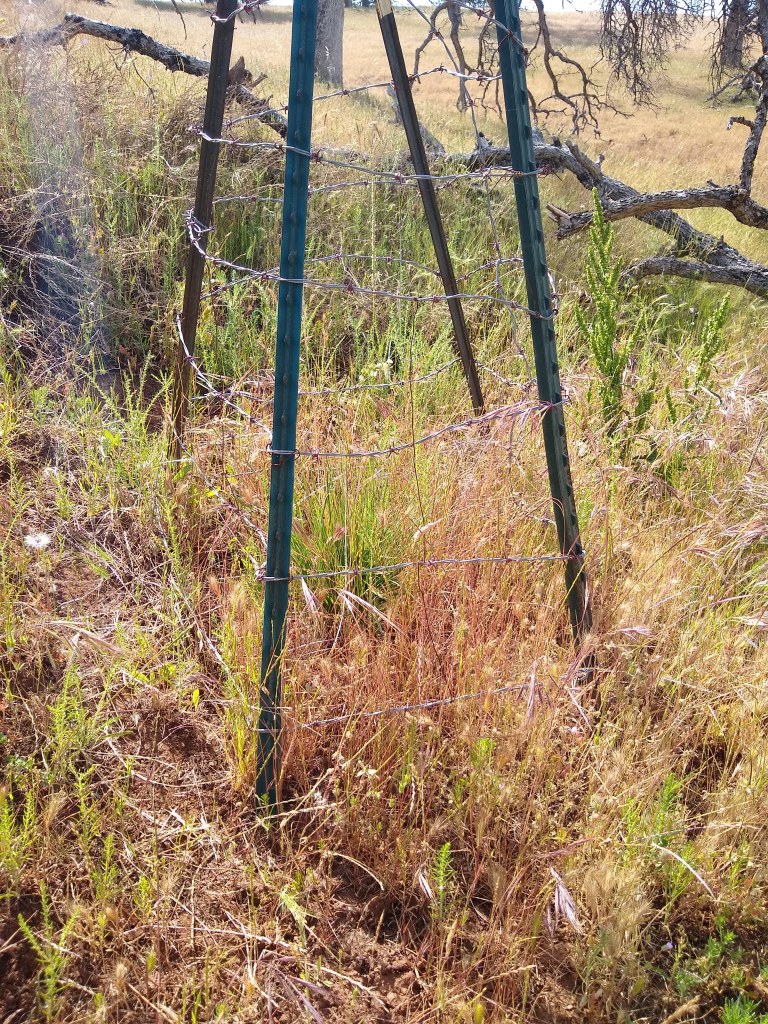
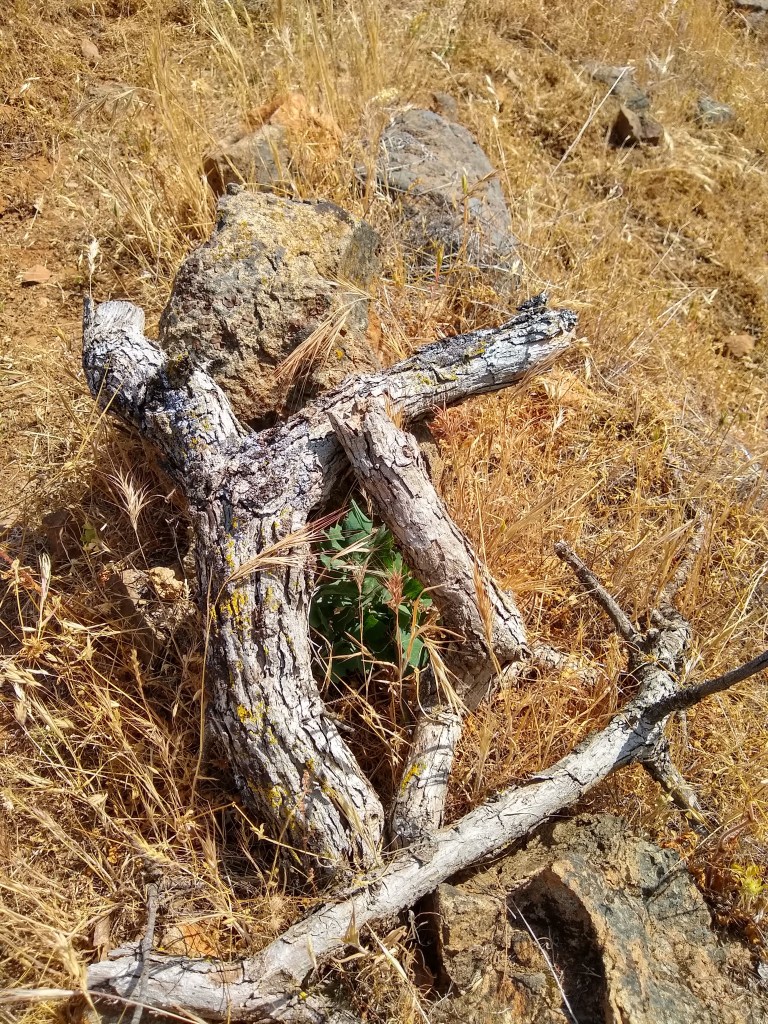
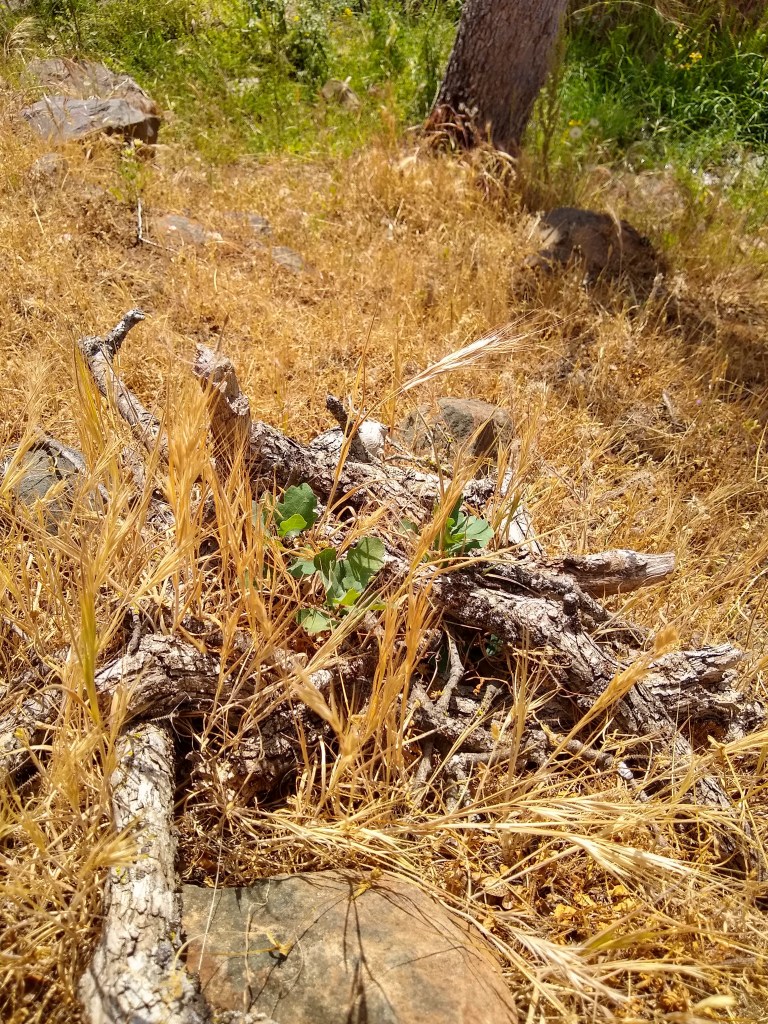
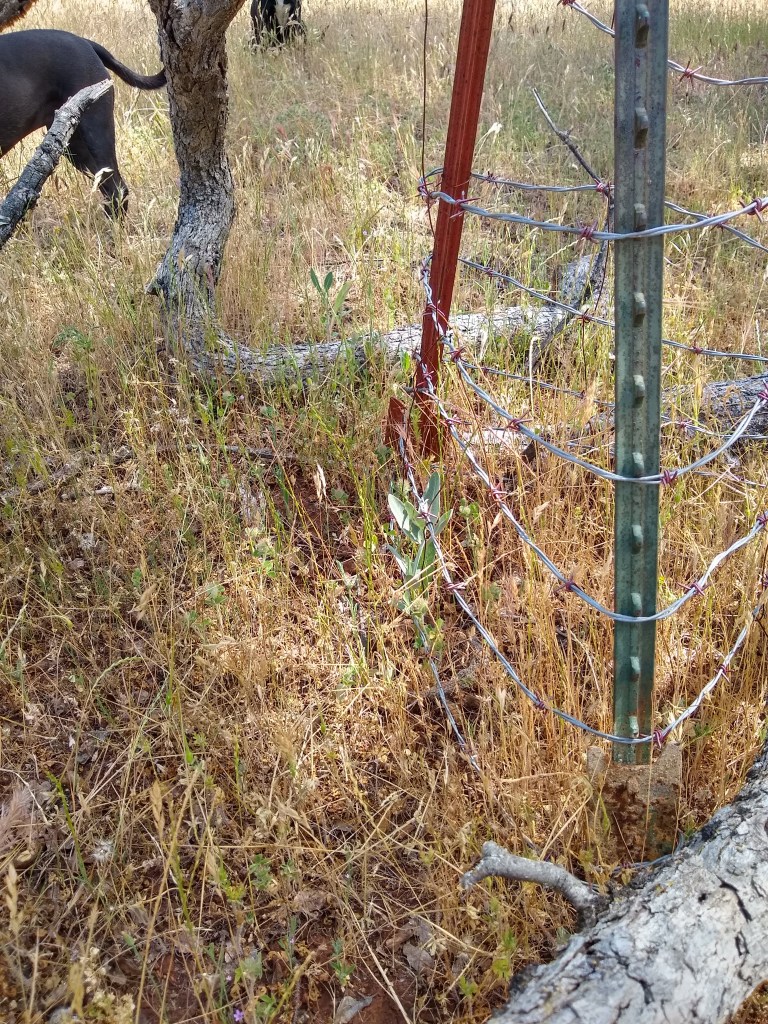
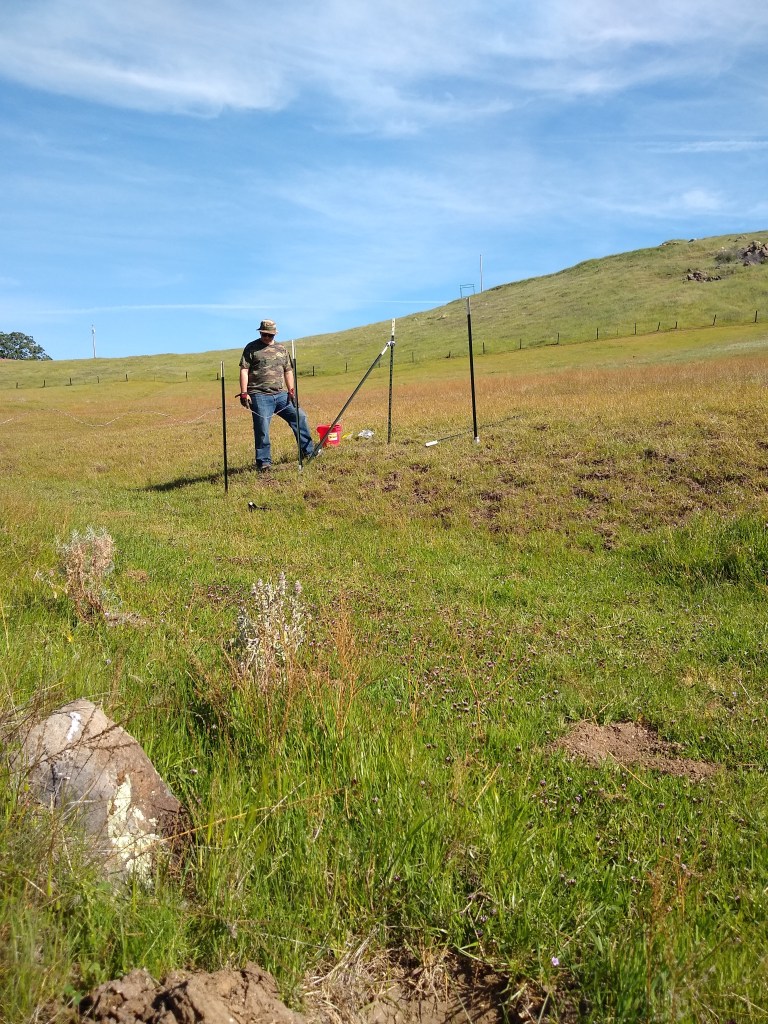
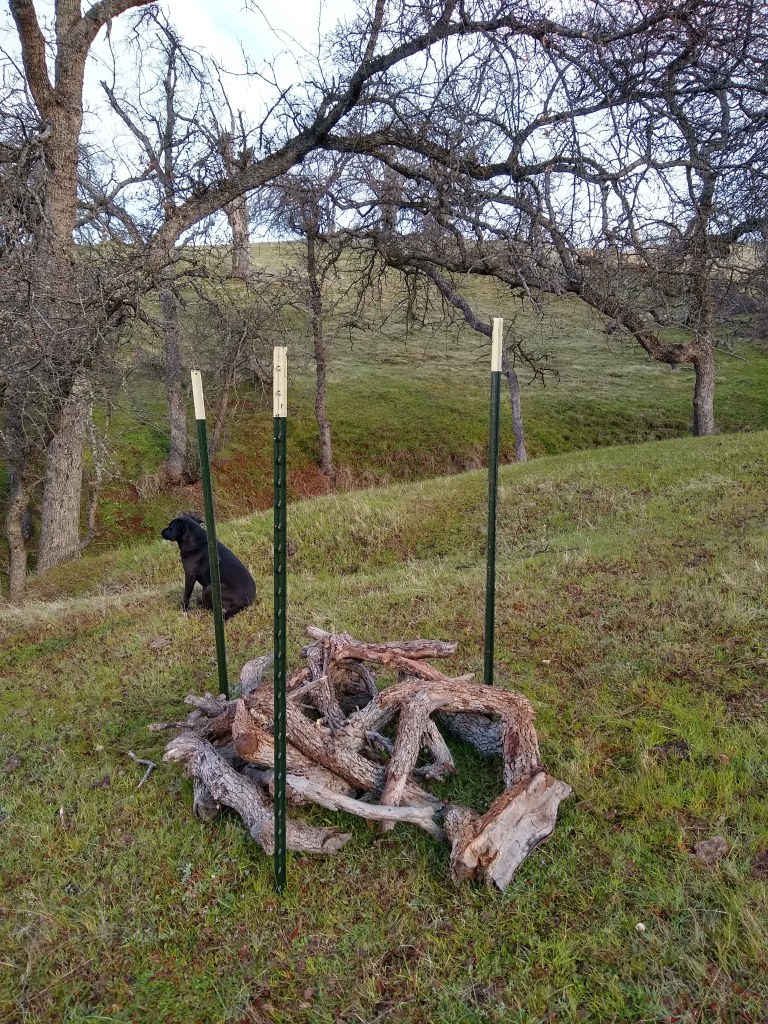
Tim Desandres took a careful and thoughtful approach to ensure his safety and that of the t-posts already in place. It was almost magical how every branch drop avoided crushing any of my infrastructure. I had him leave several logs in the creek where they landed since I have plans to create a beaver dam analog. In the end, the tree still stands and my safety, as well as those who work with me near this beautiful sentinel, are now guarded.
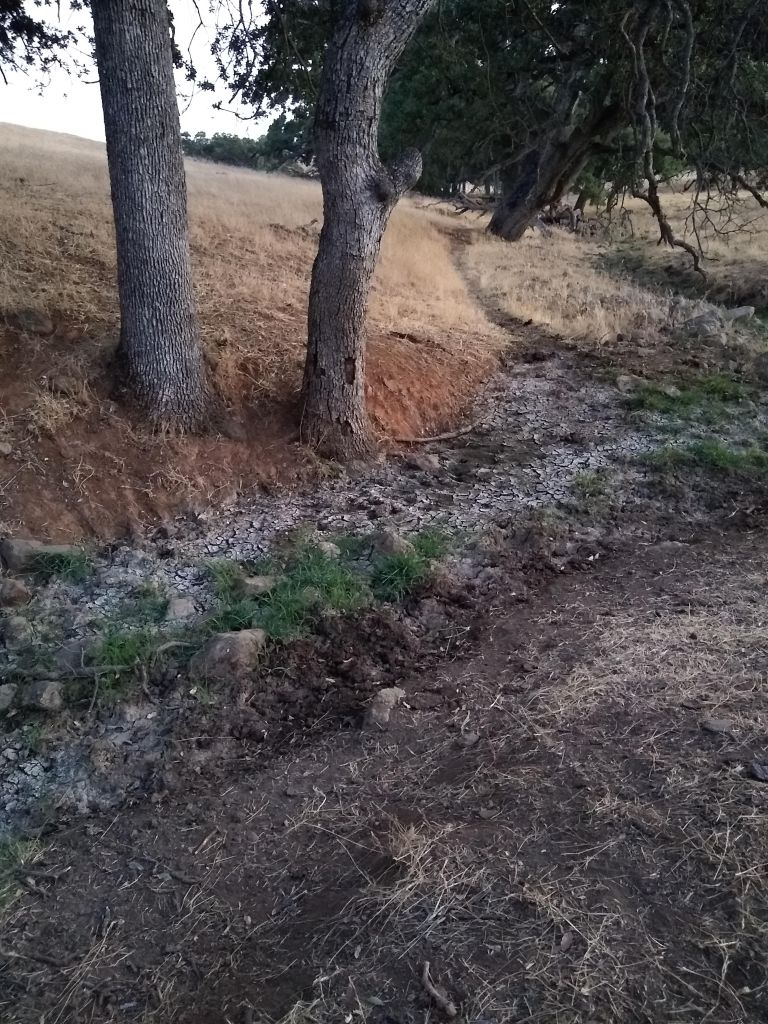
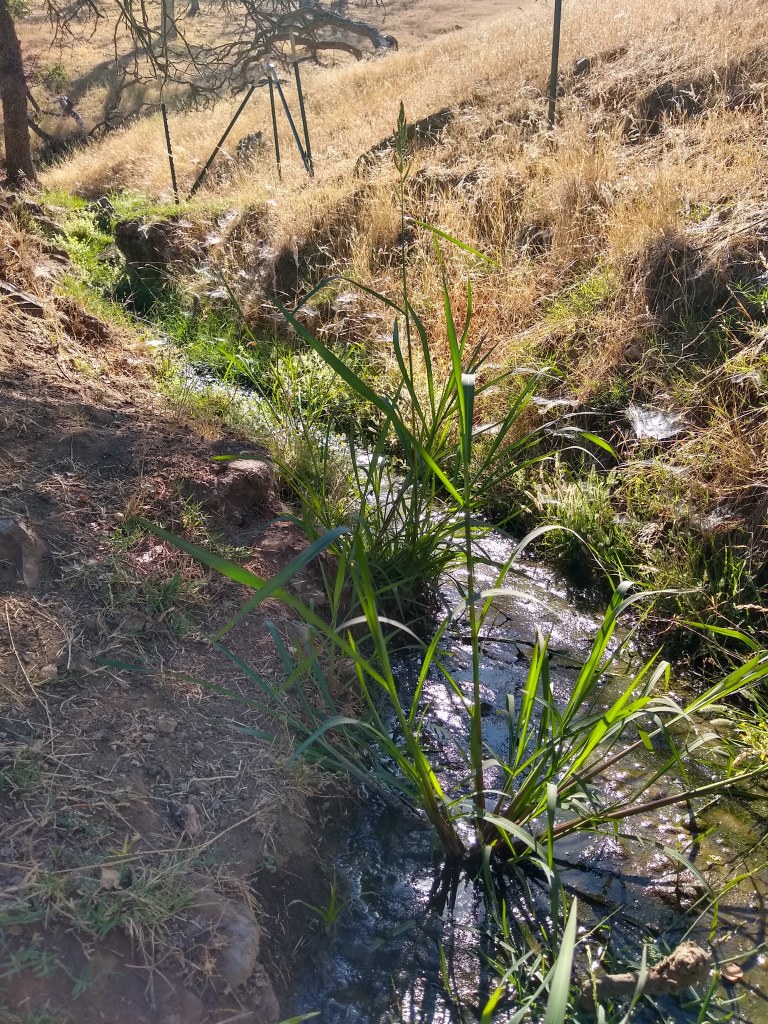
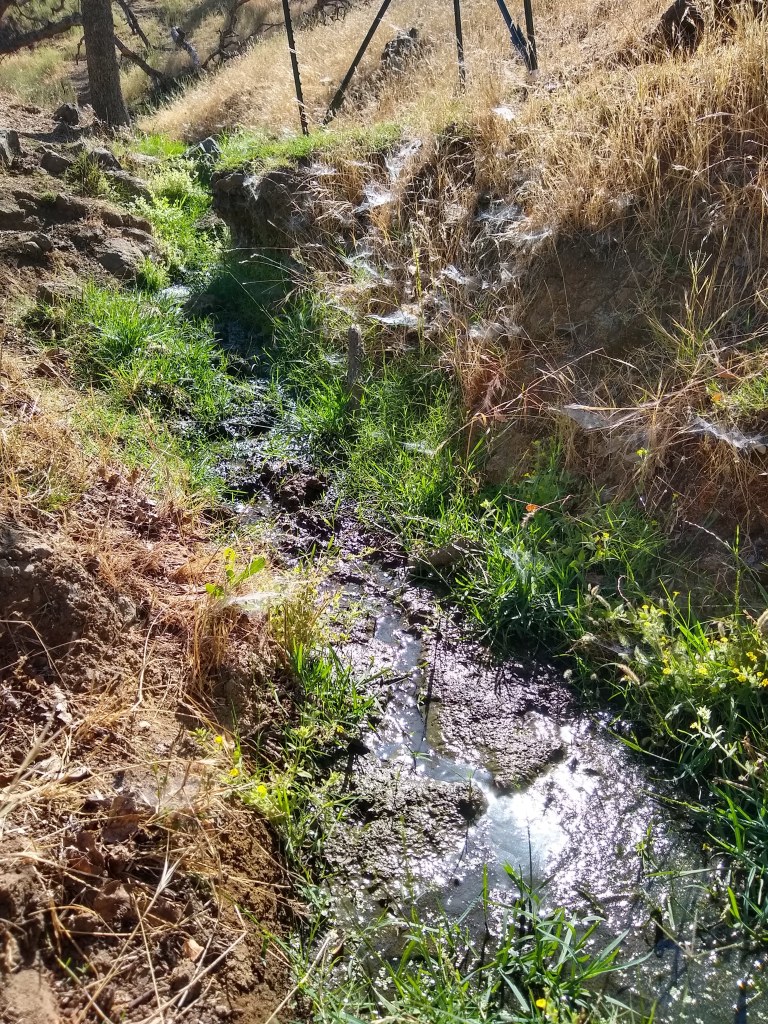
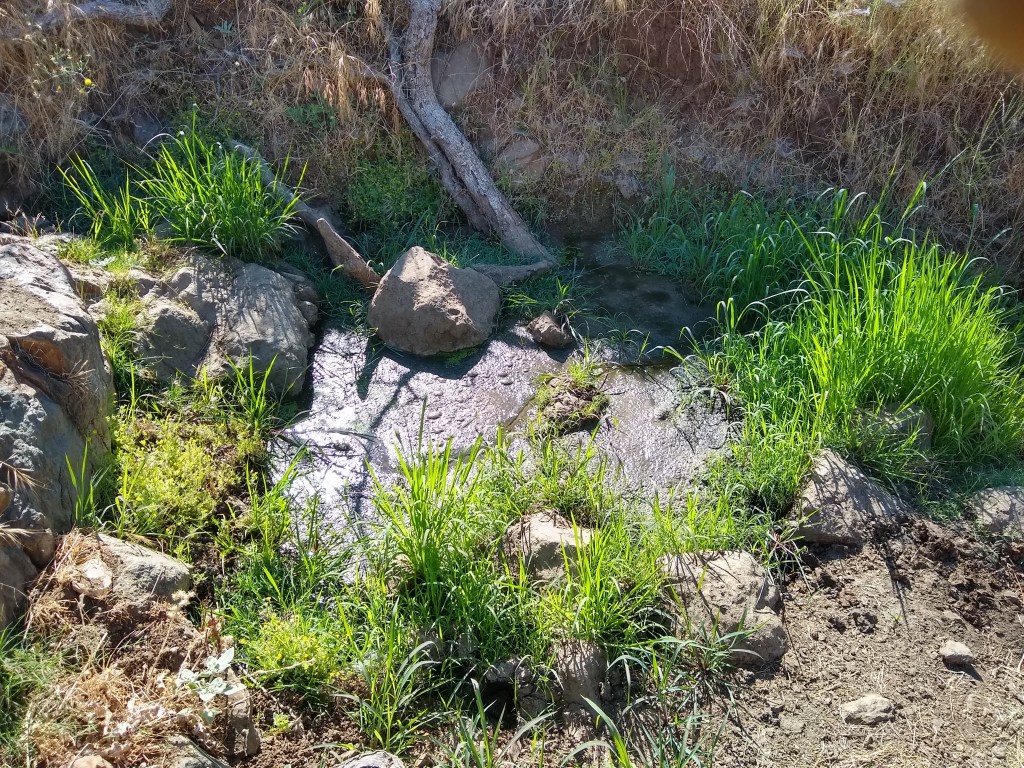
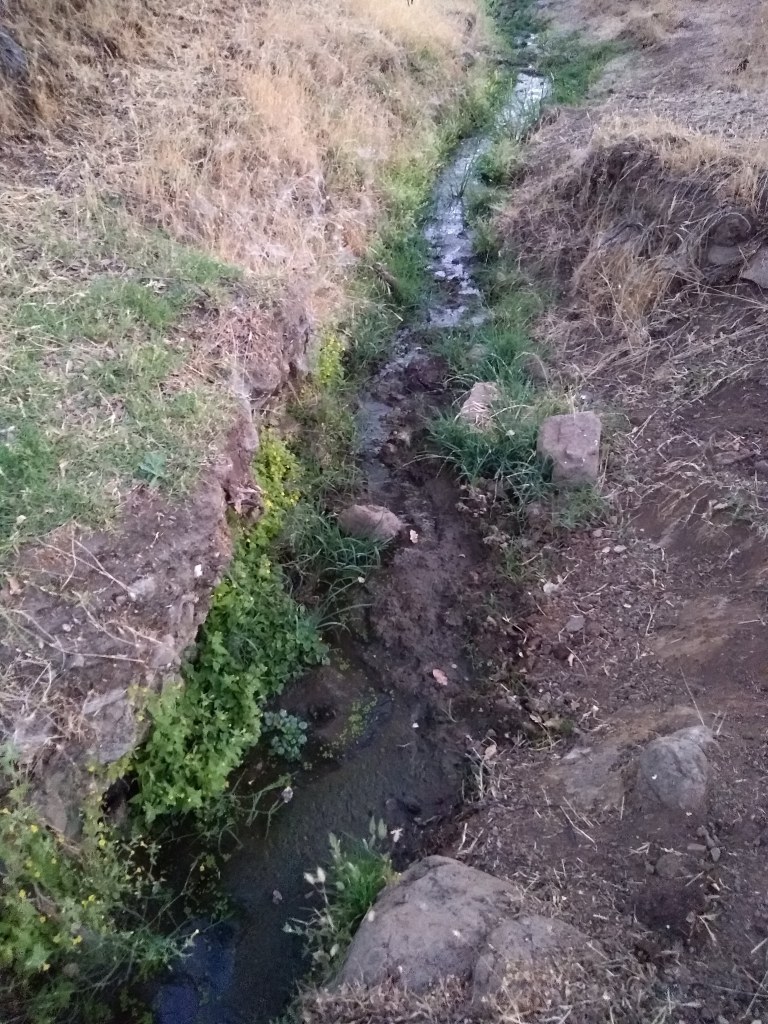
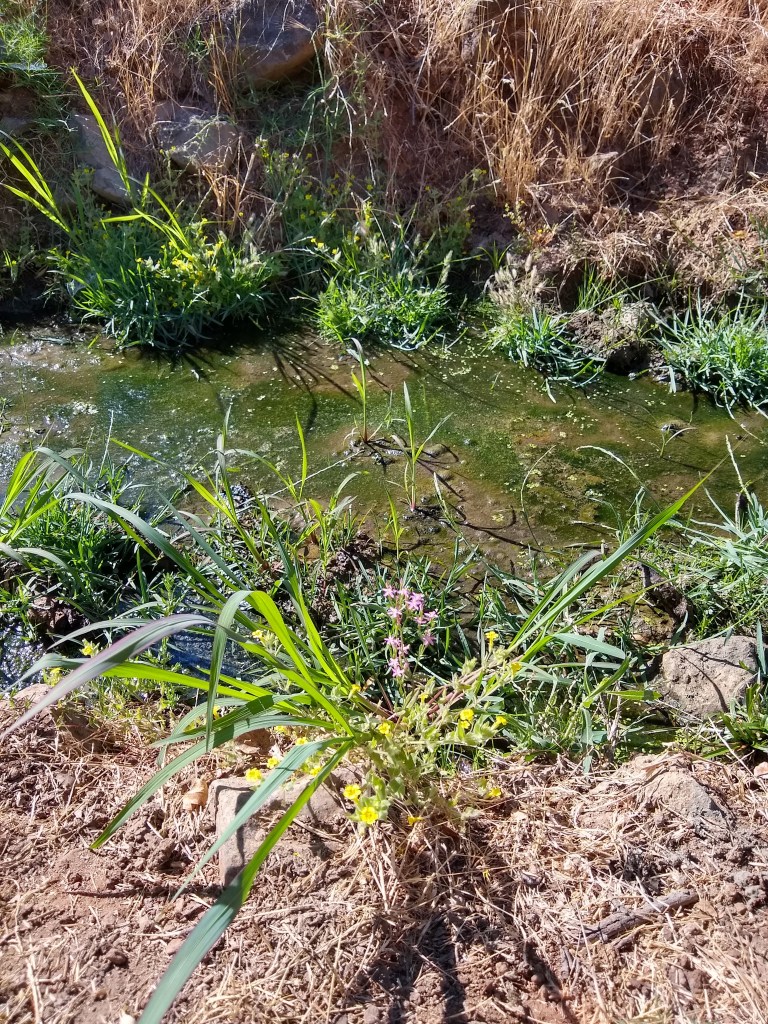
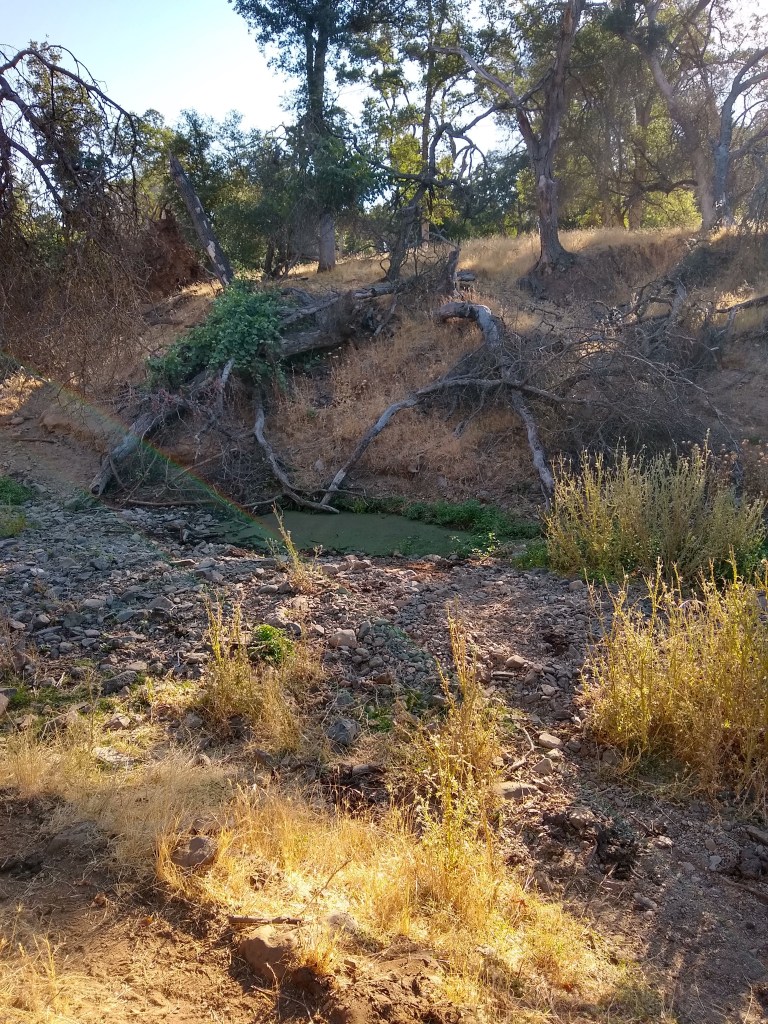
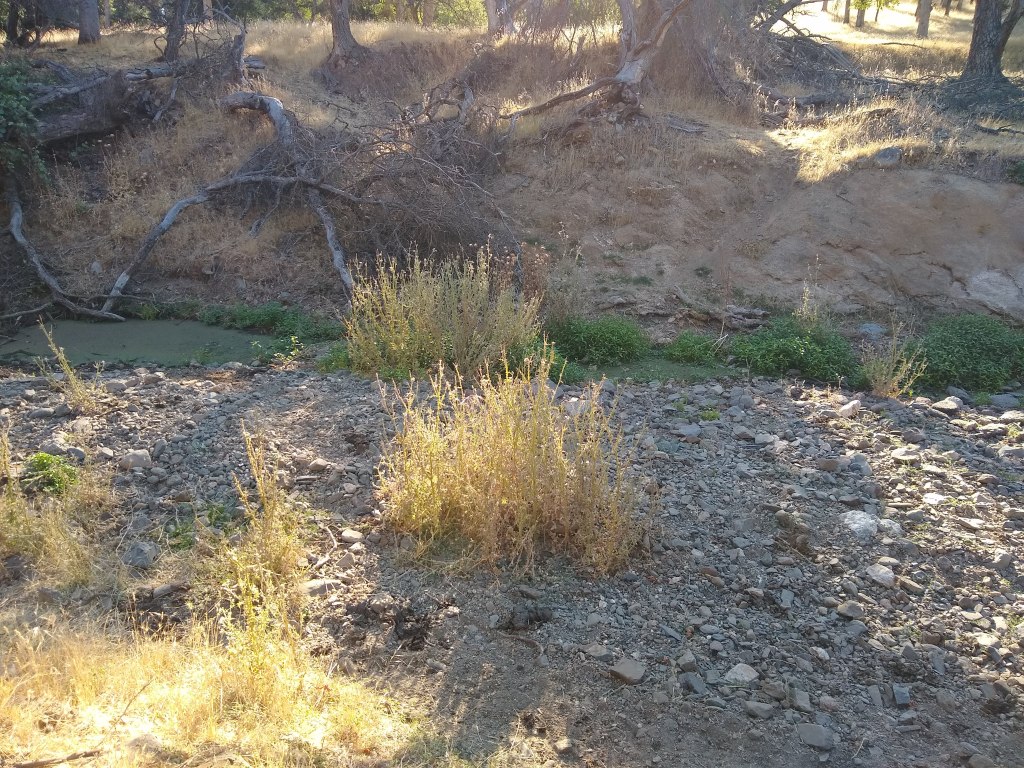
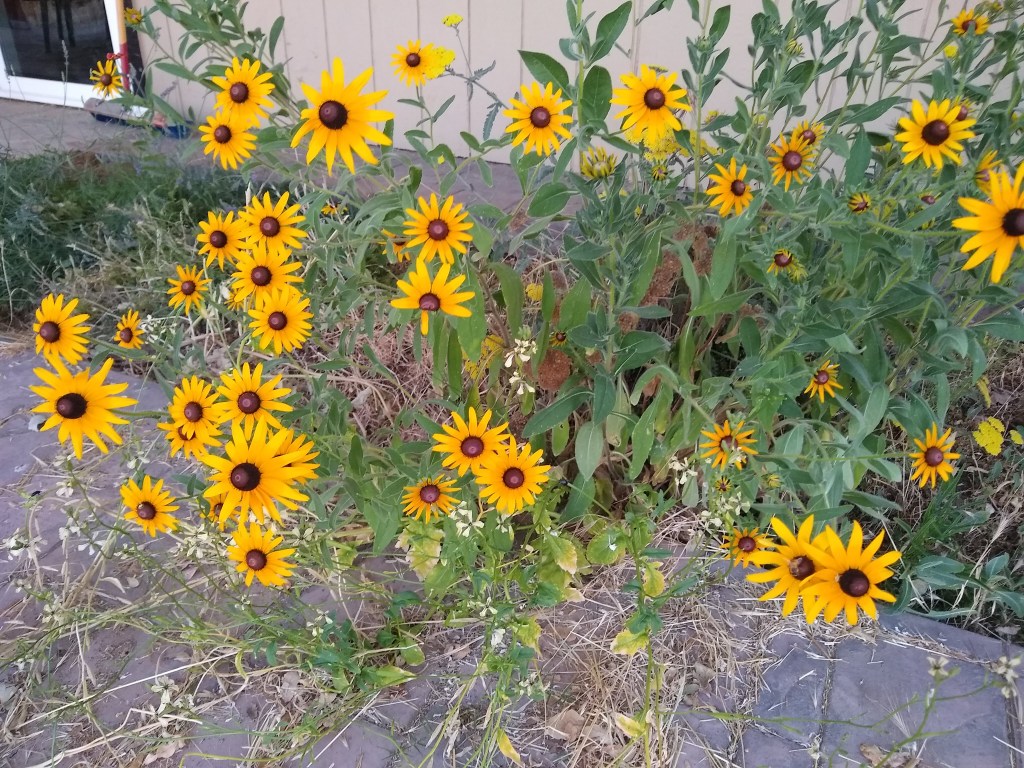
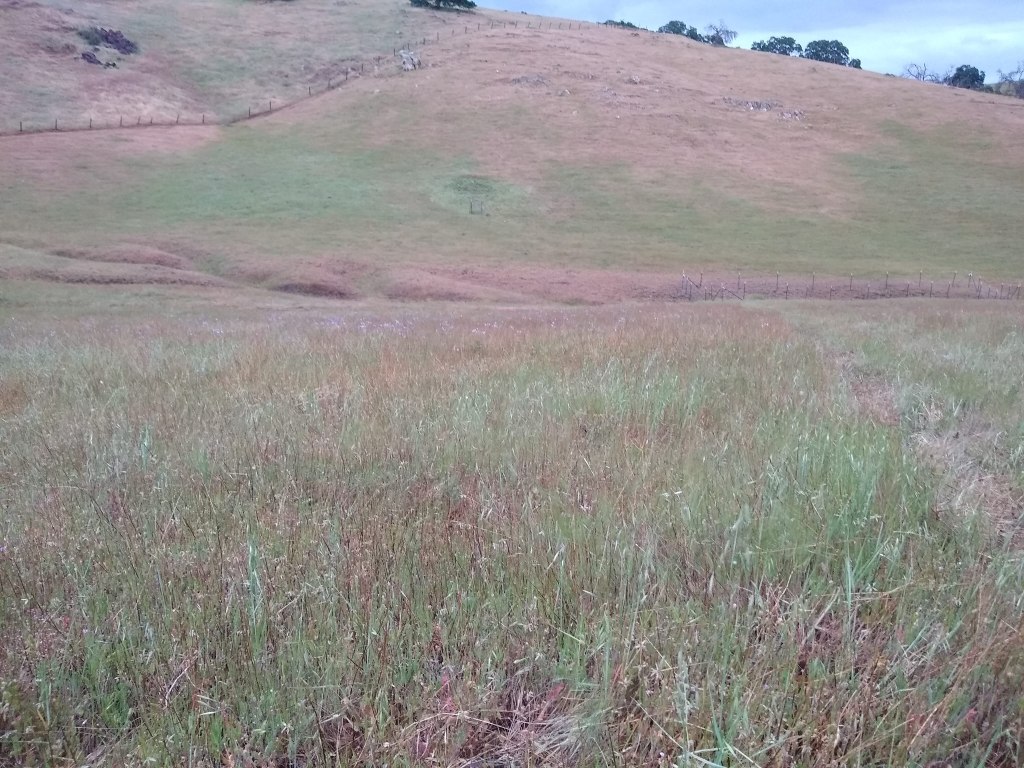
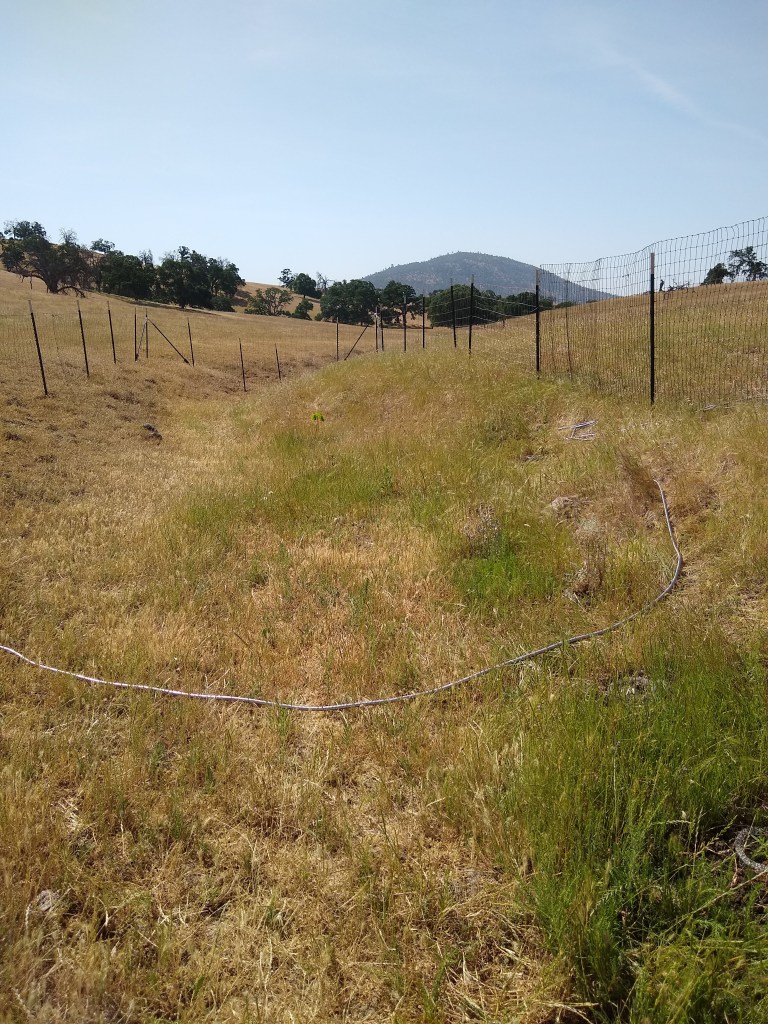
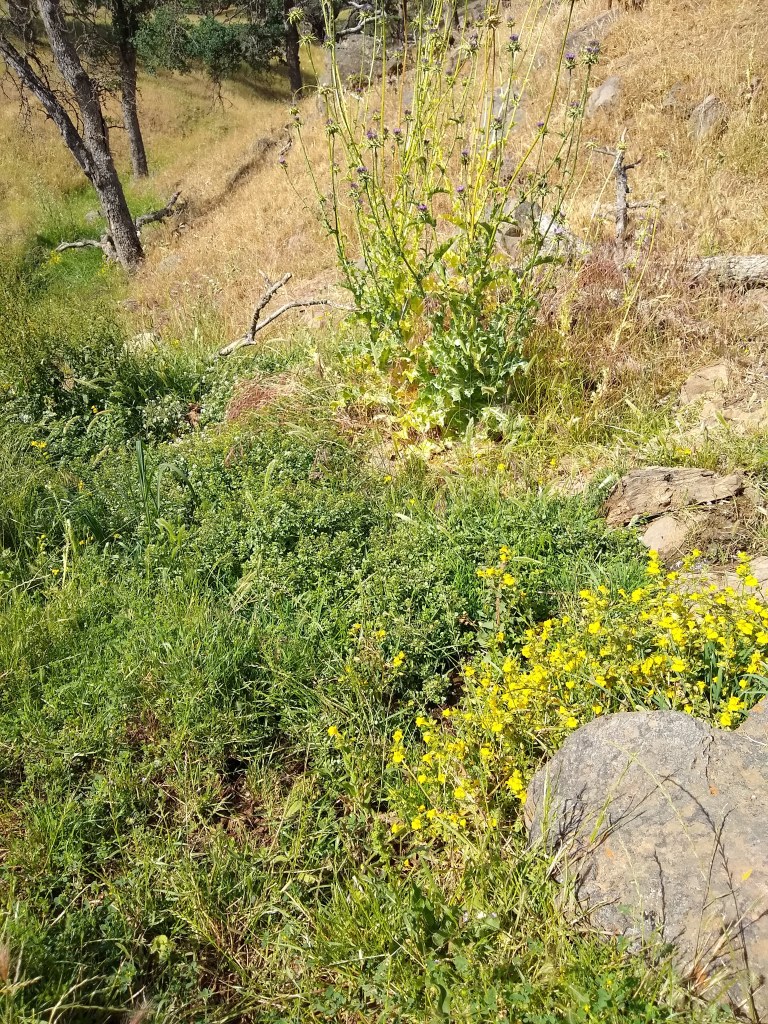
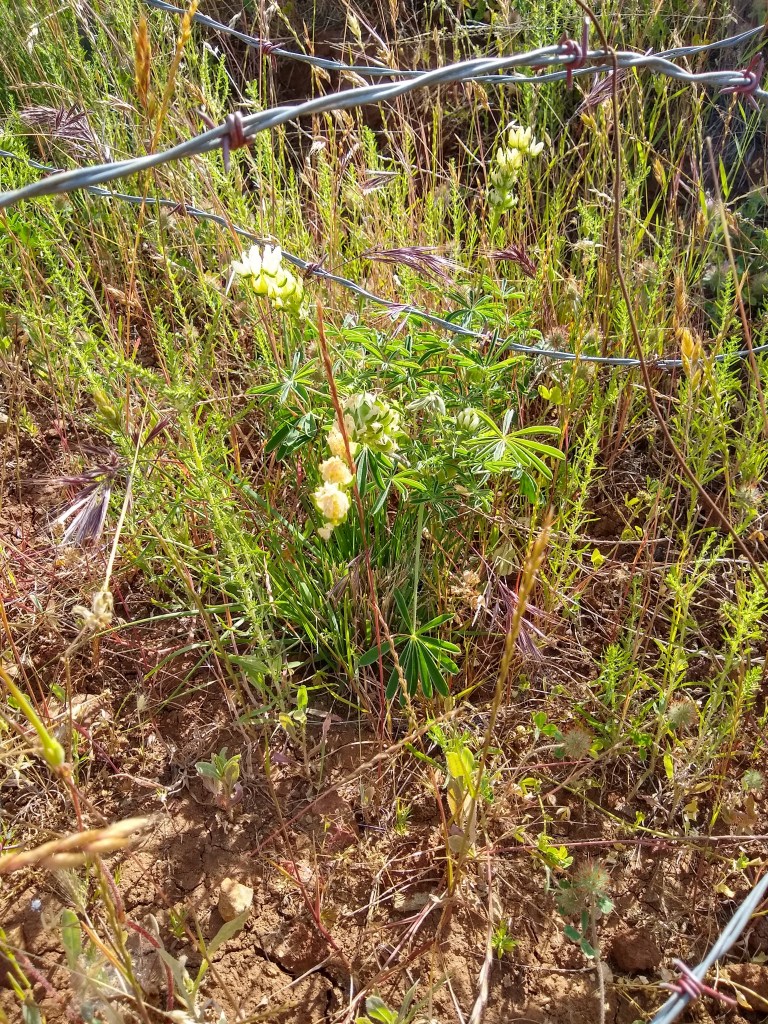
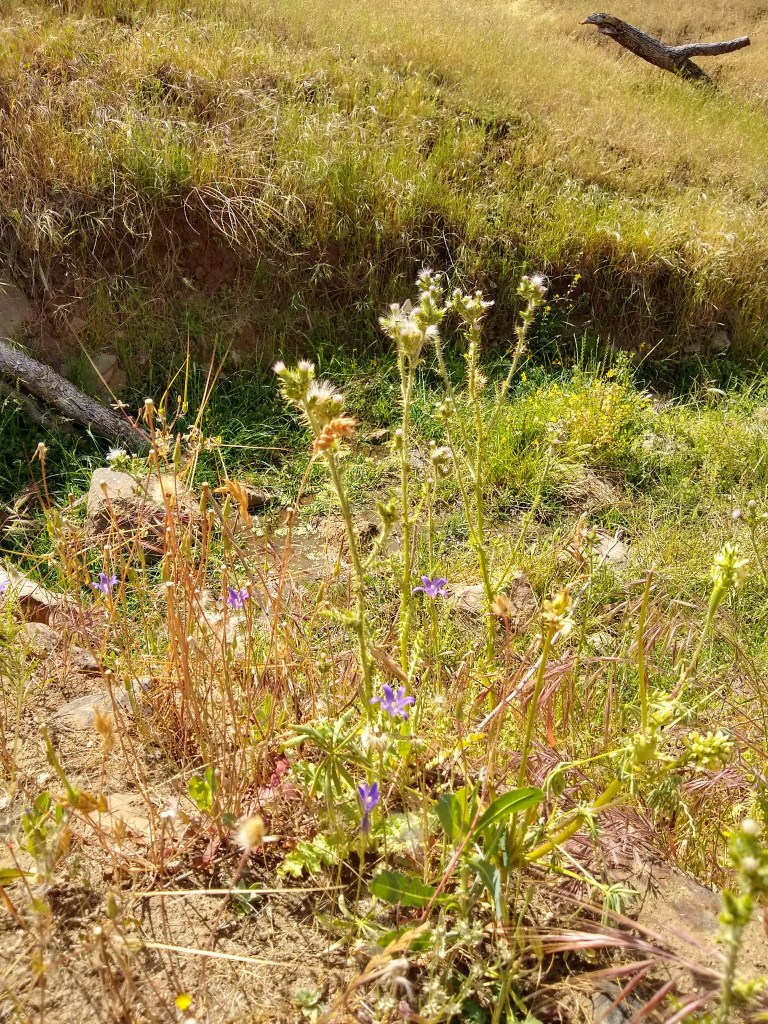
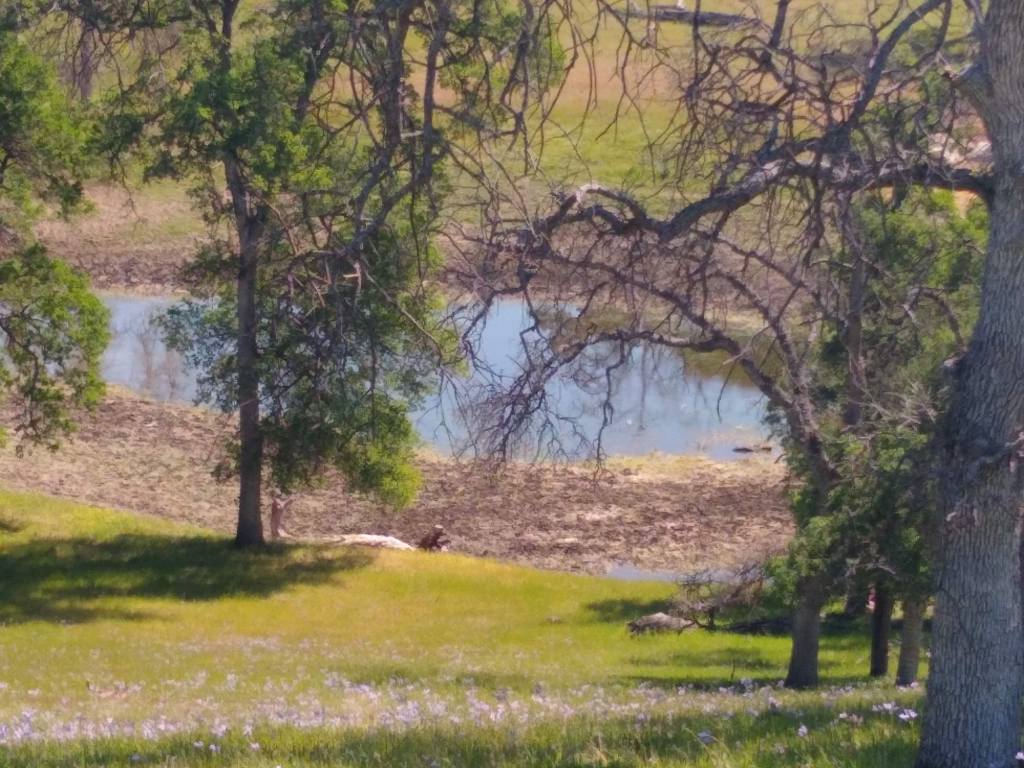
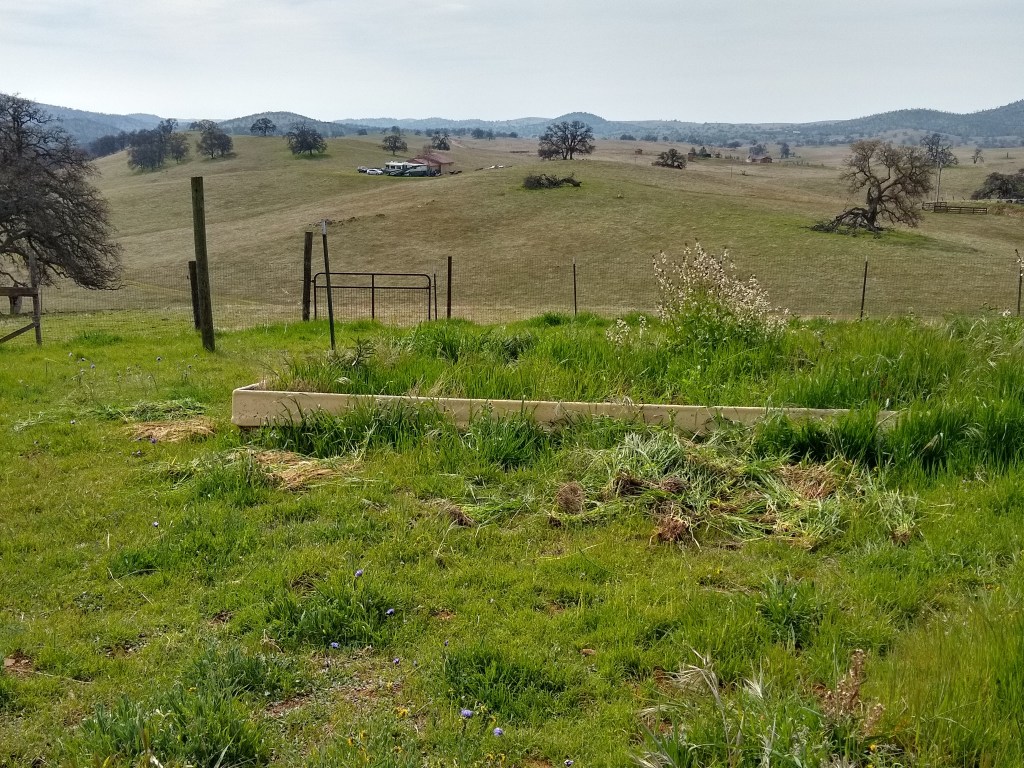
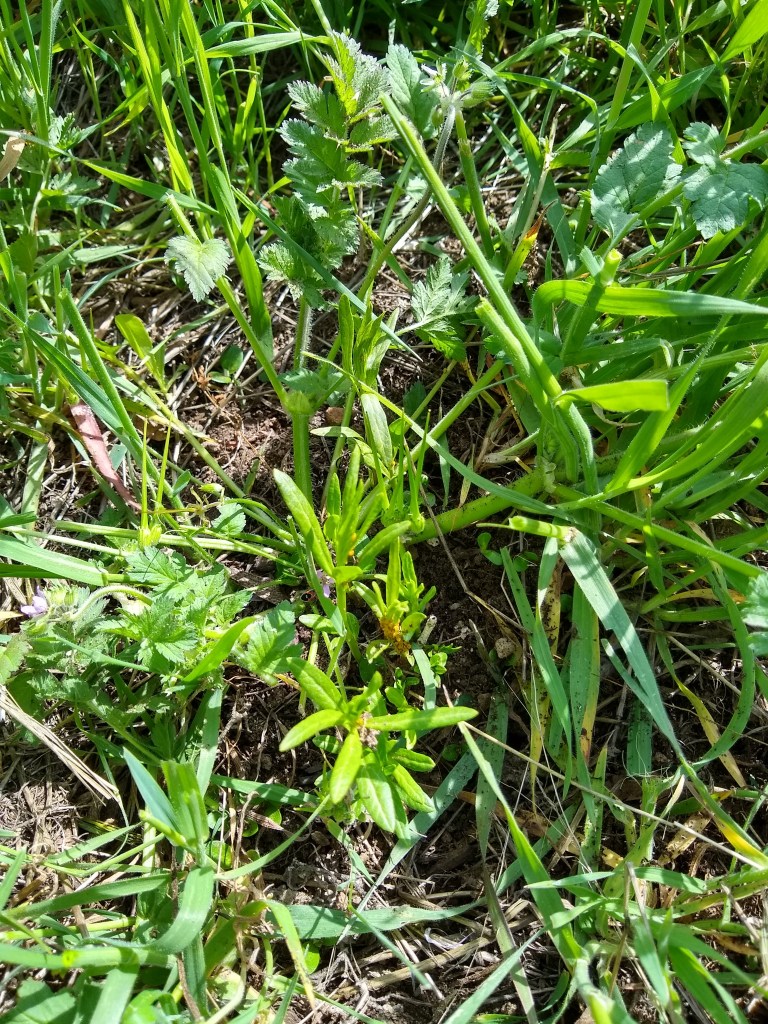
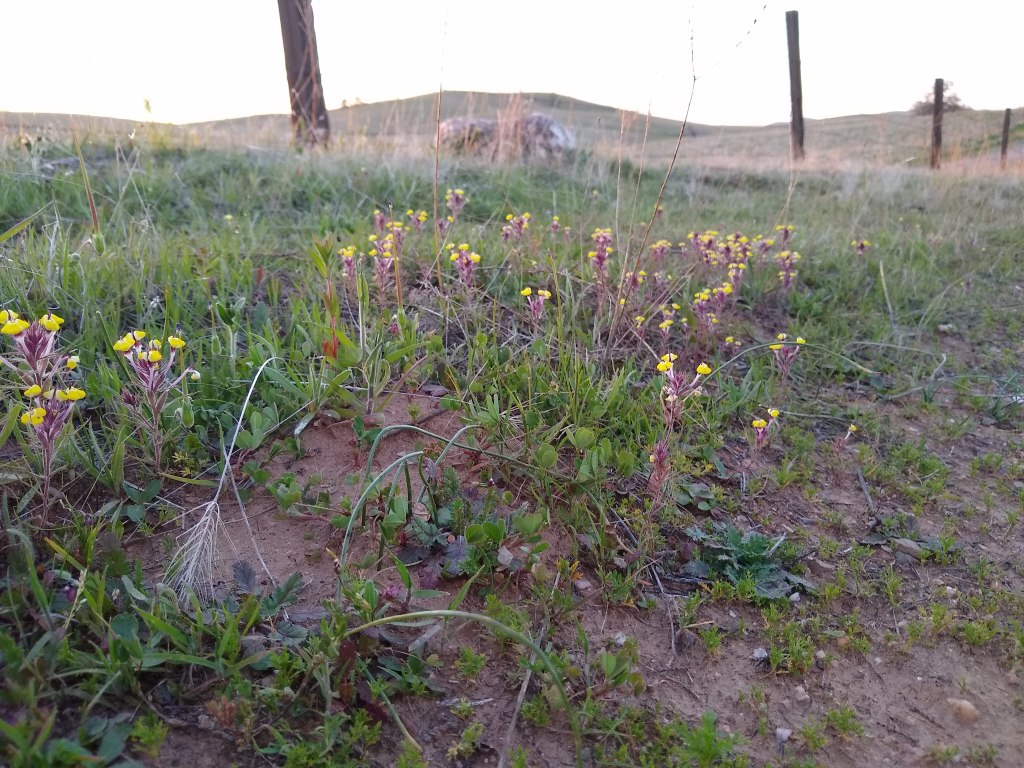
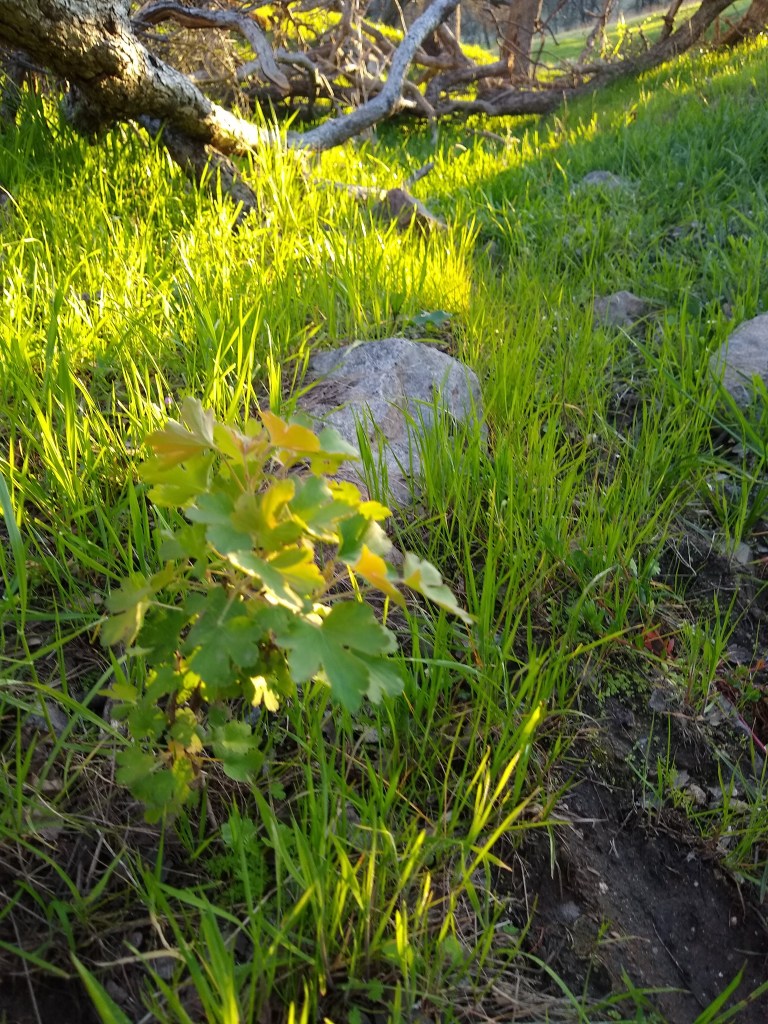
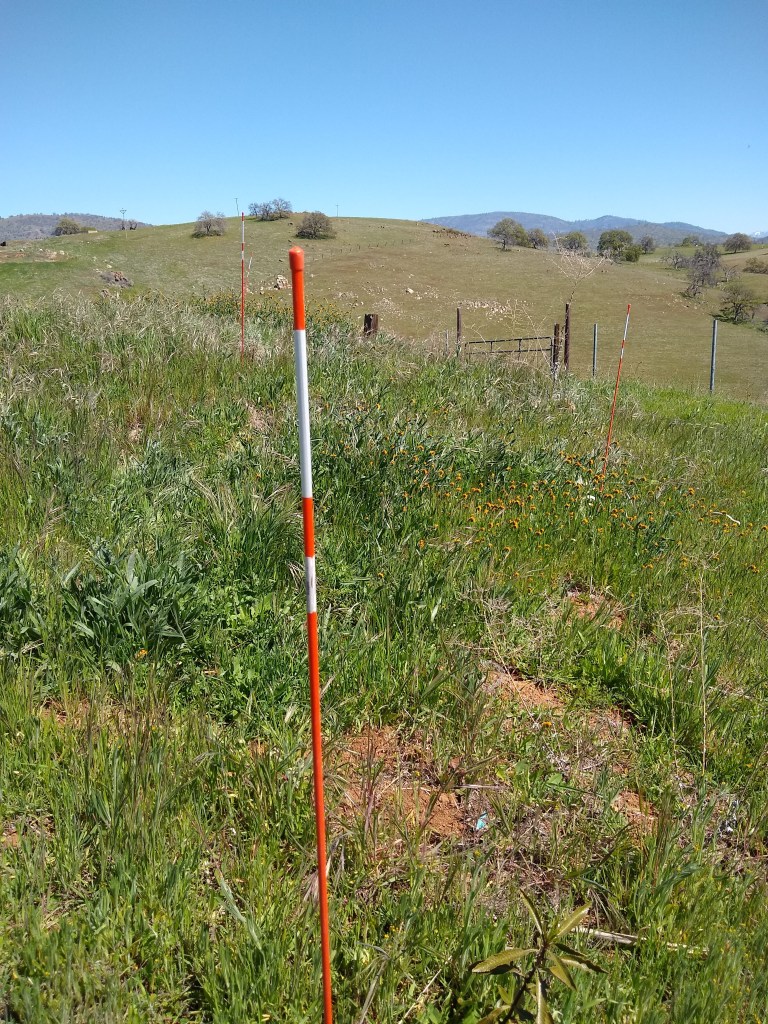
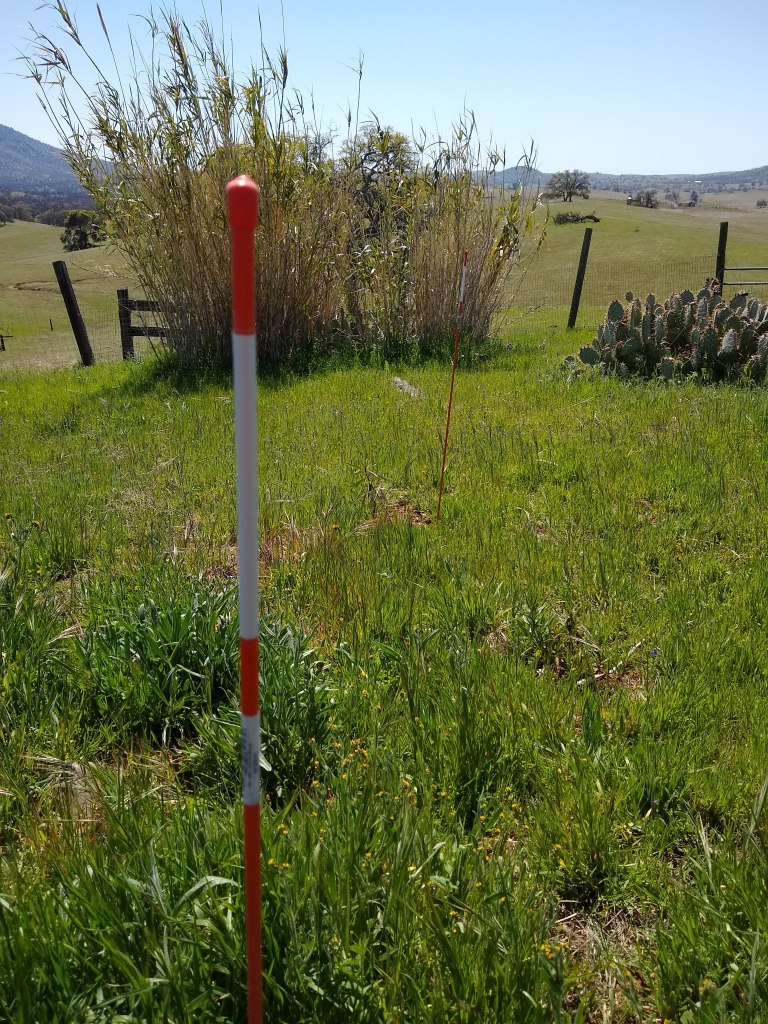
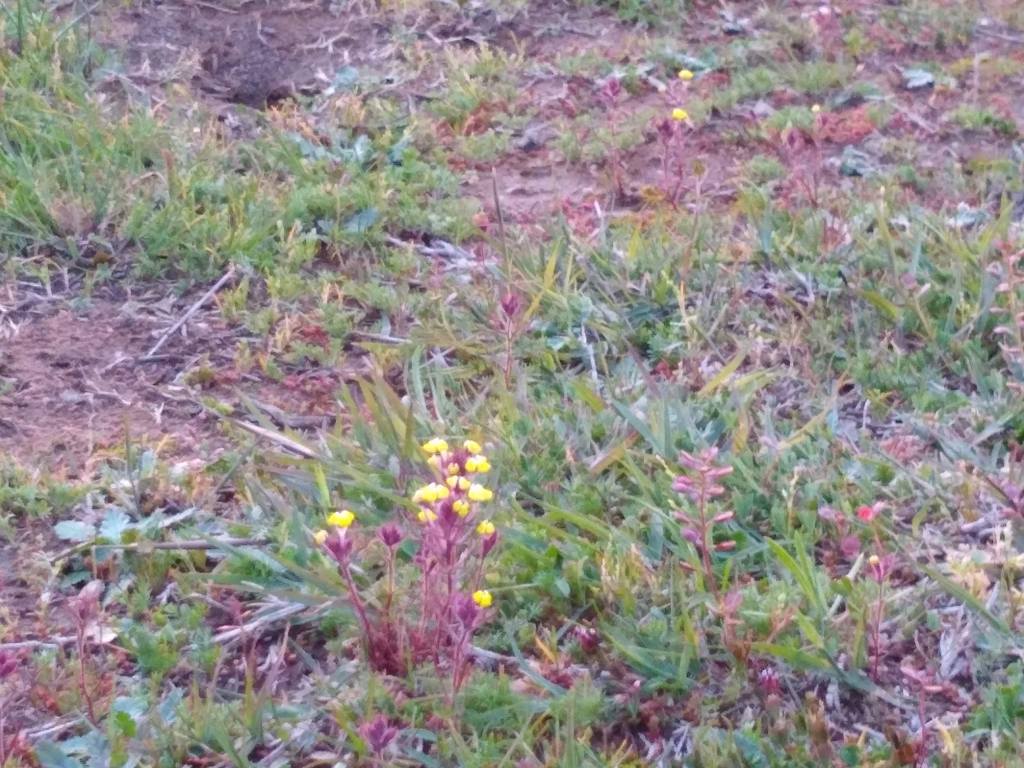
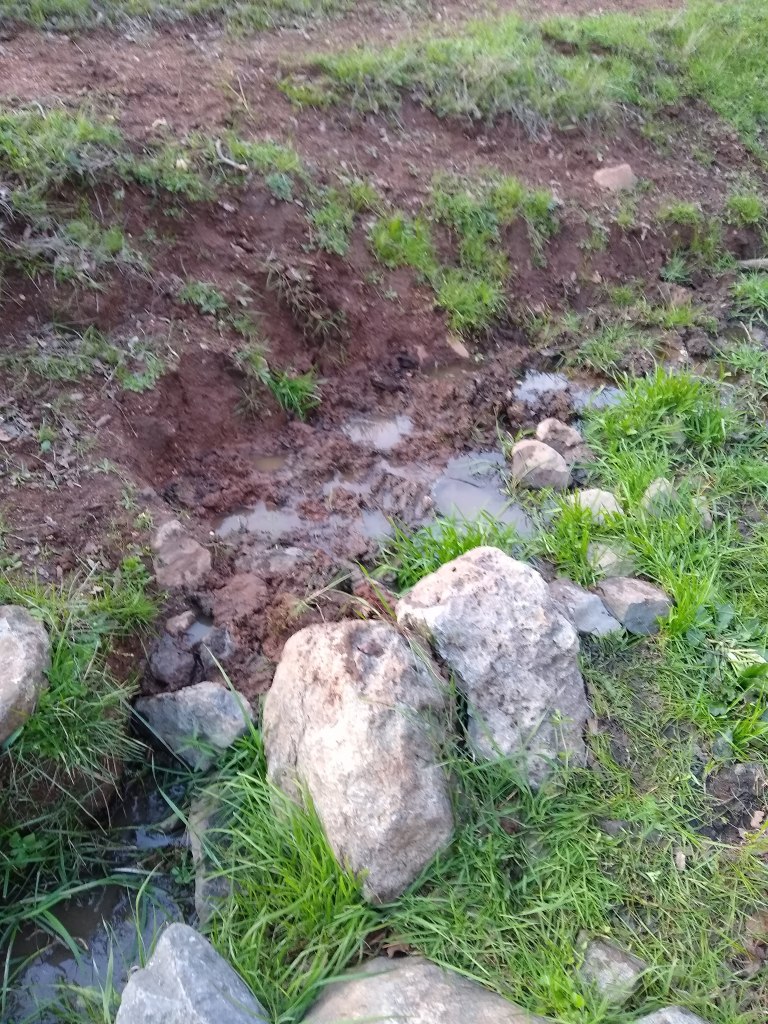
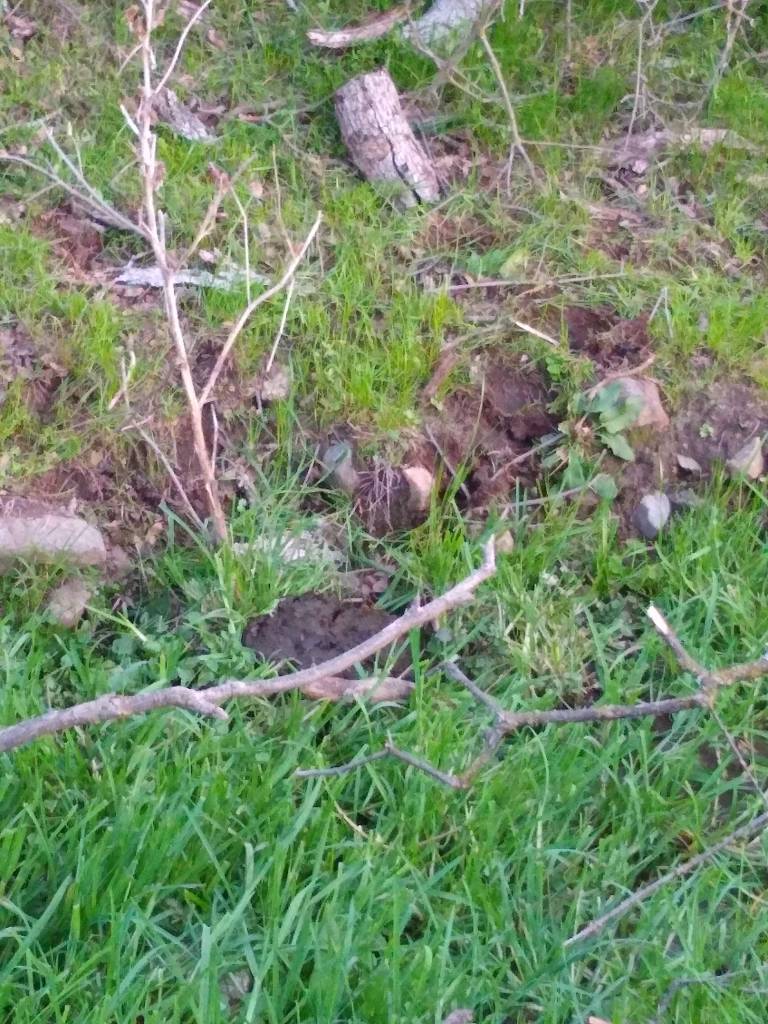
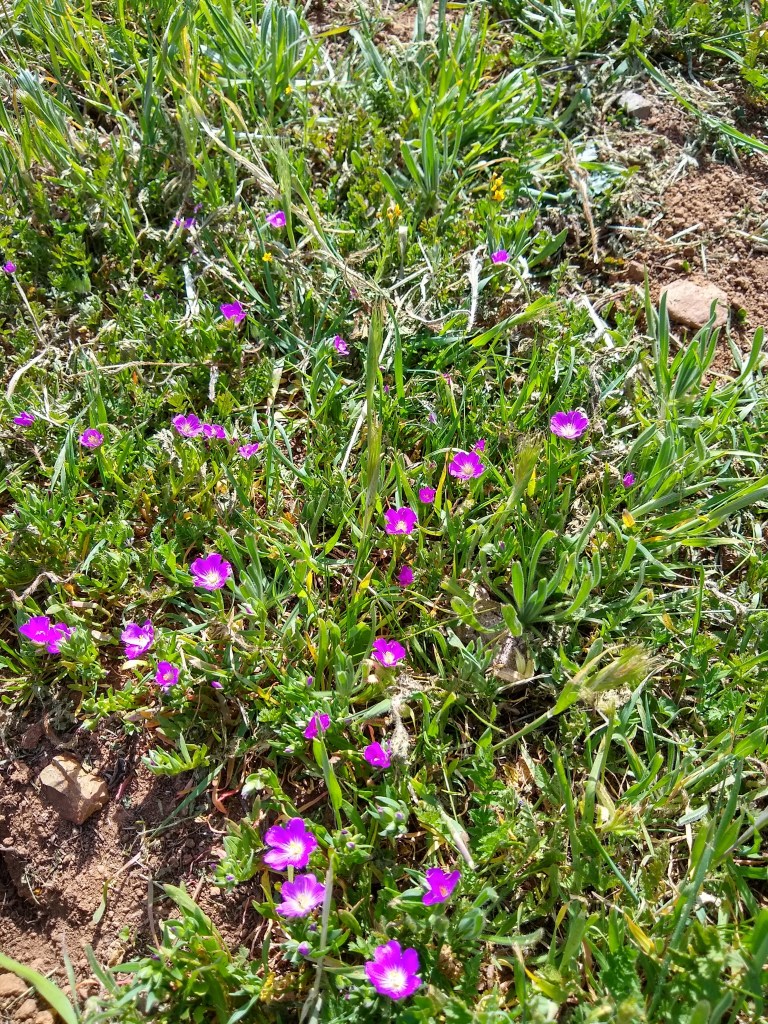
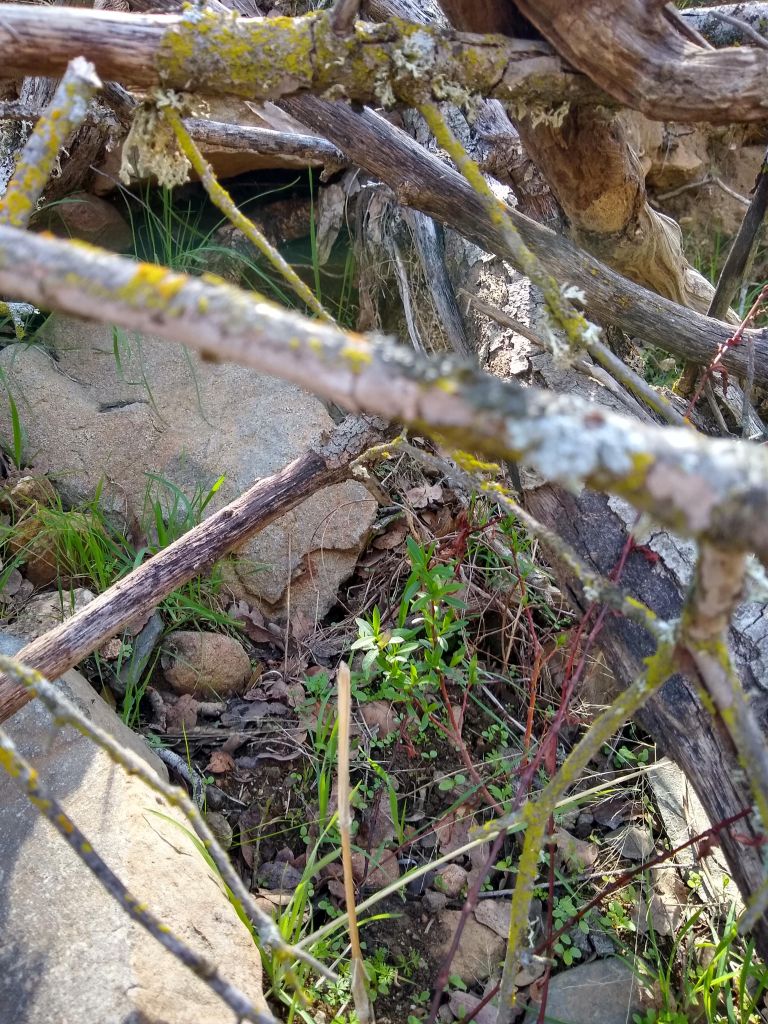
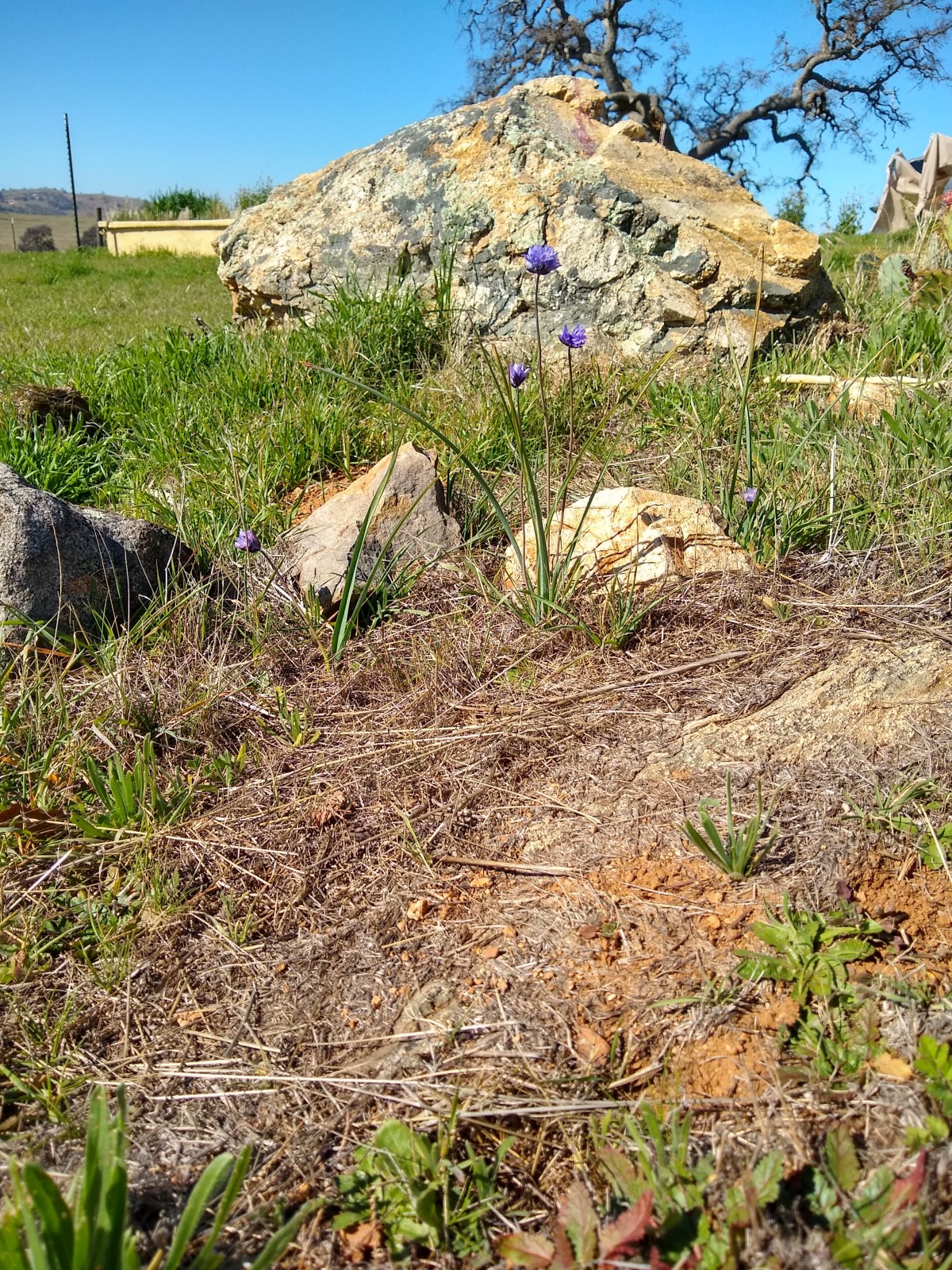
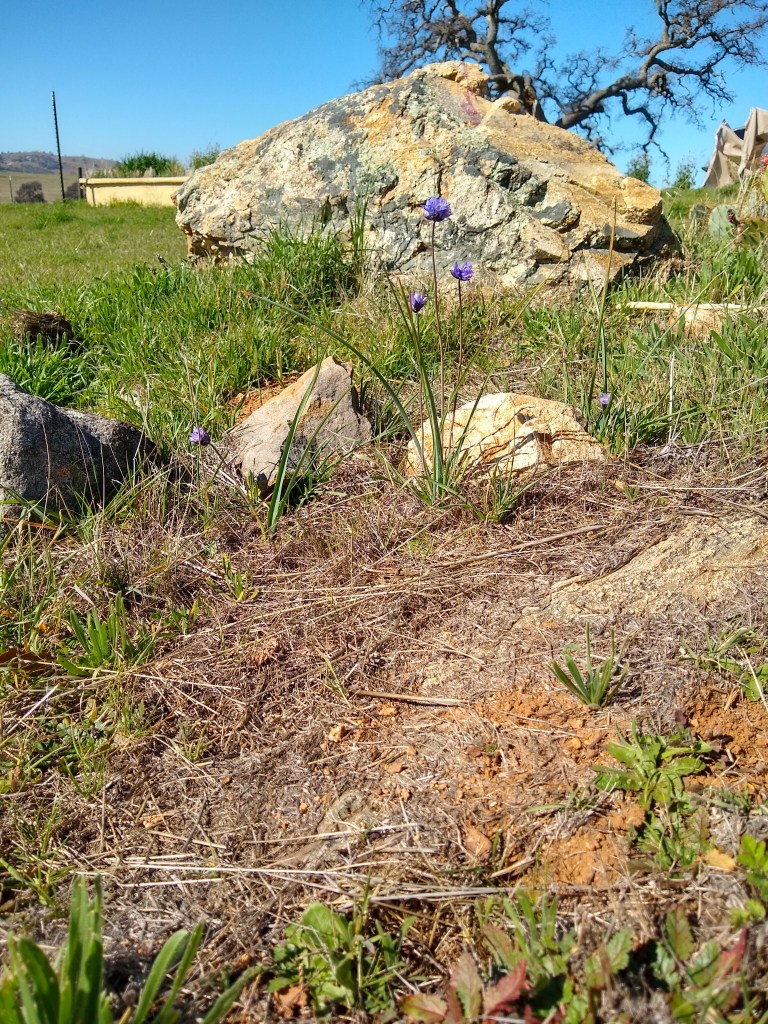
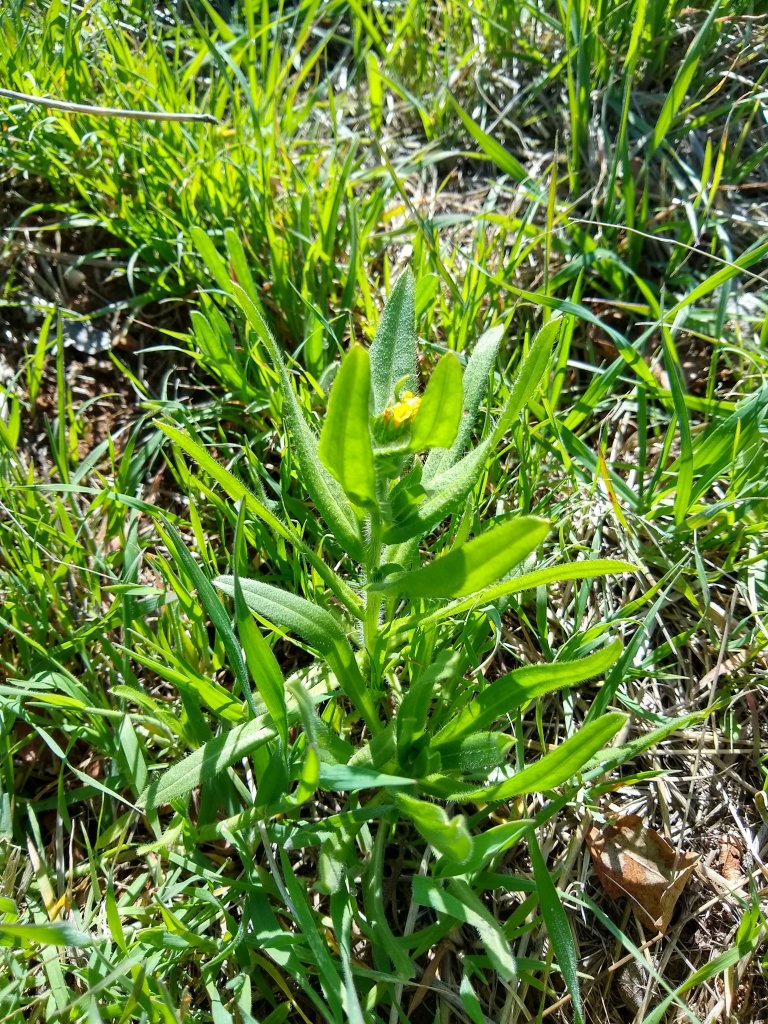
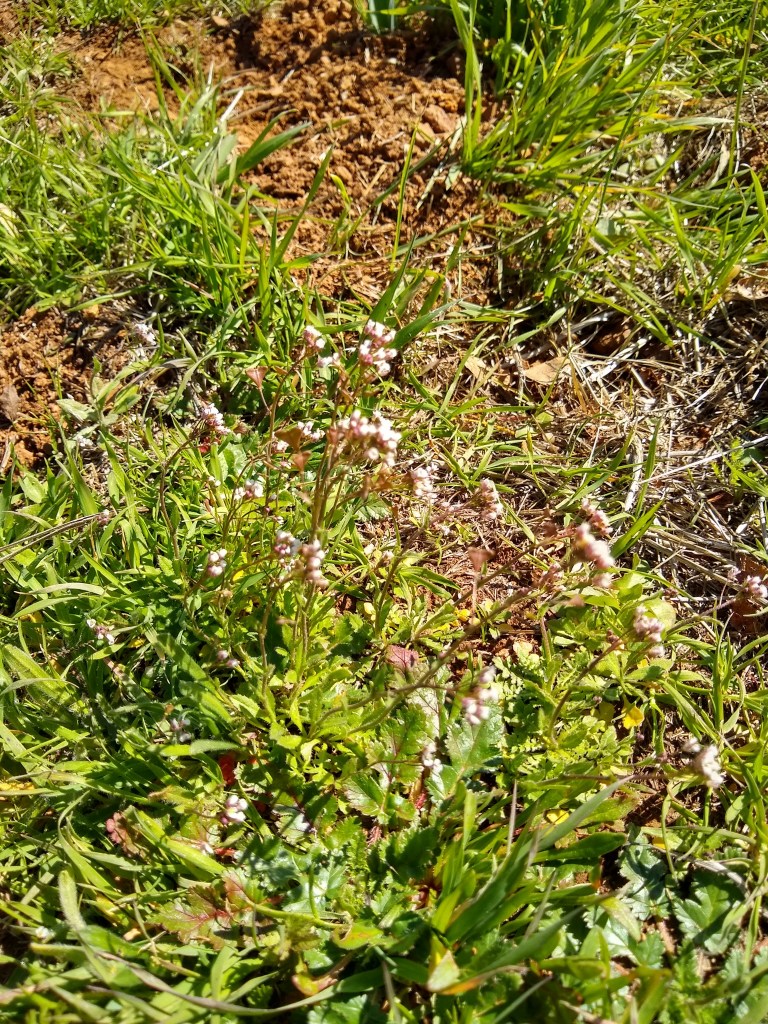
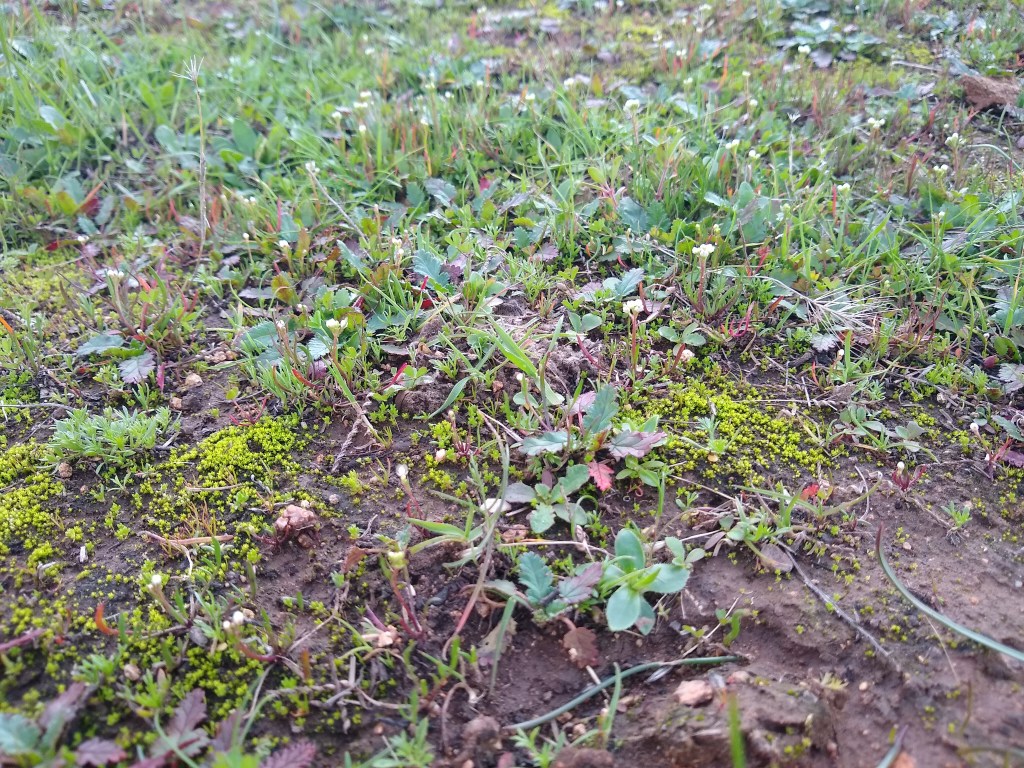
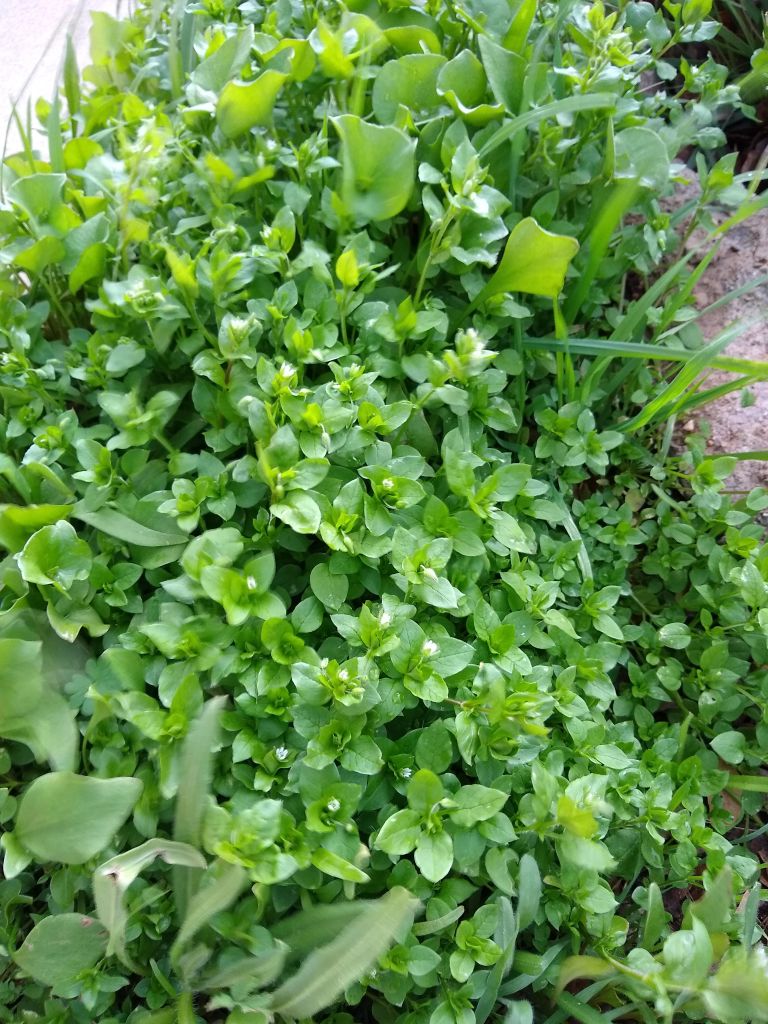
Without the cattle in the creek, so many plants are making a come-back. There are more yellow and purple flowers blooming, interesting grasses and broad leafed plants are popping up everywhere. I am excited about the possibility of what this creek can look like and what pollinators it will support once it is fenced off. One looming shadow is the drought. Overnight, the heatwave dried up the standing lagoon adjacent to the fence. It began to dry up the creek bed nearest the flat lagoon area as well. My heart broke a little since that is where I had planned to plant some of the showy milkweeds. I thought the spring had dried too. After investigating, I found that the spring is still producing, but it is the constant, unmitigated heat battling daily with the spring to dry things up. I am rooting for the spring.

Hoppers Eating Everything and Still Want the Seedpods
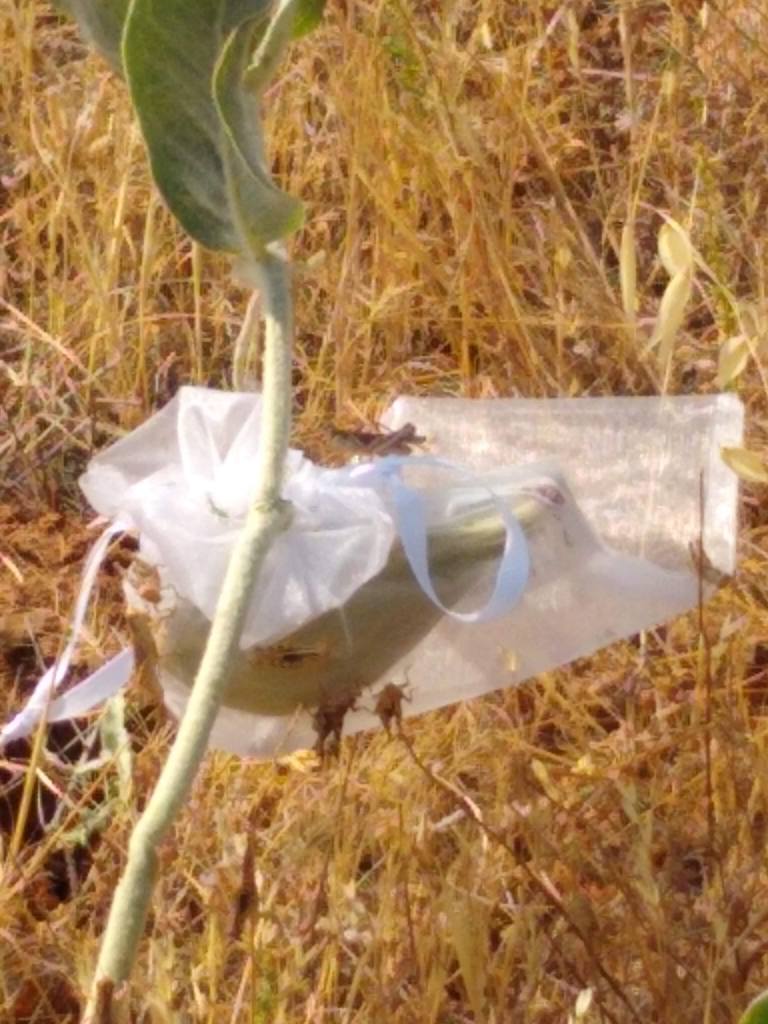
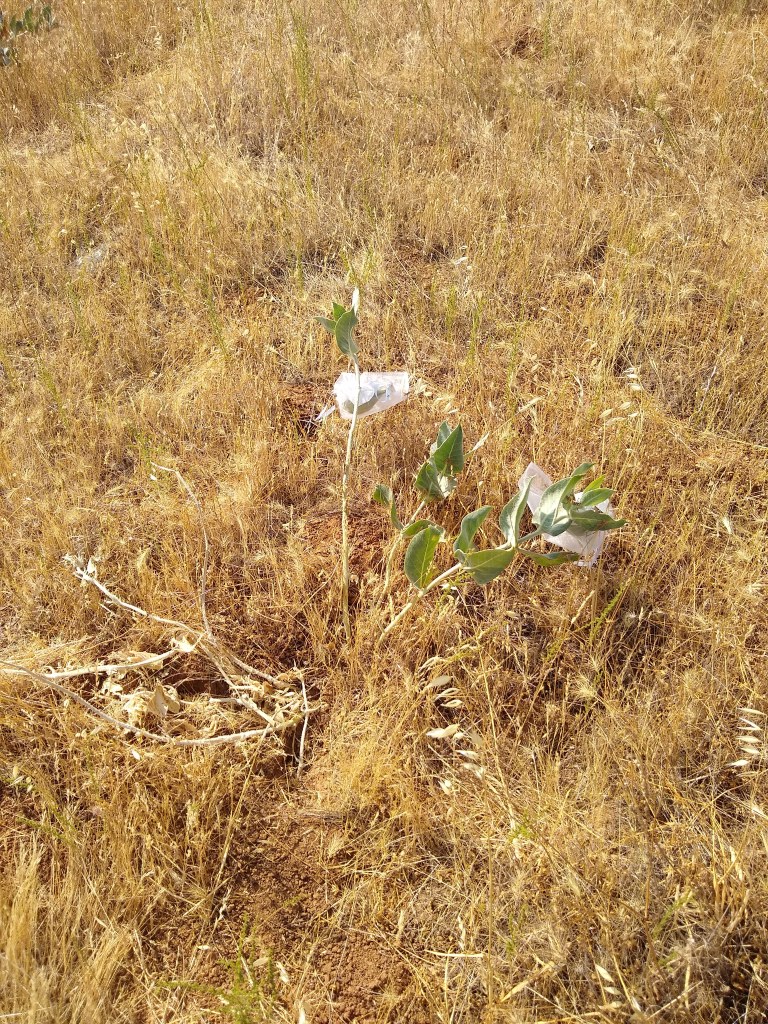
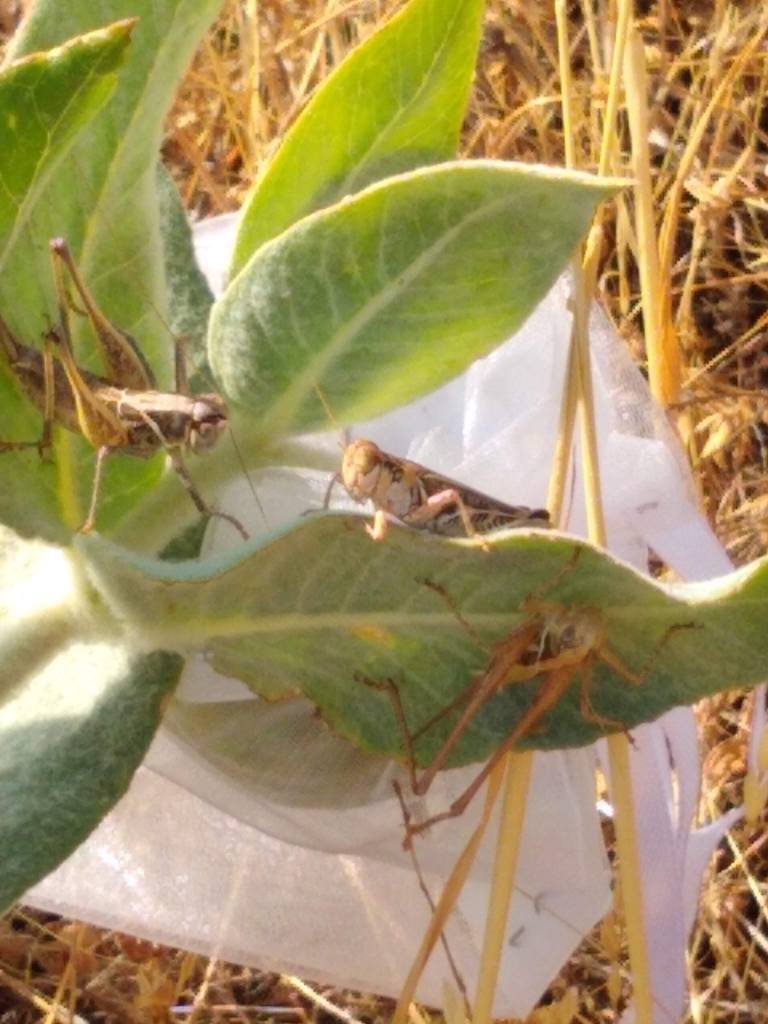
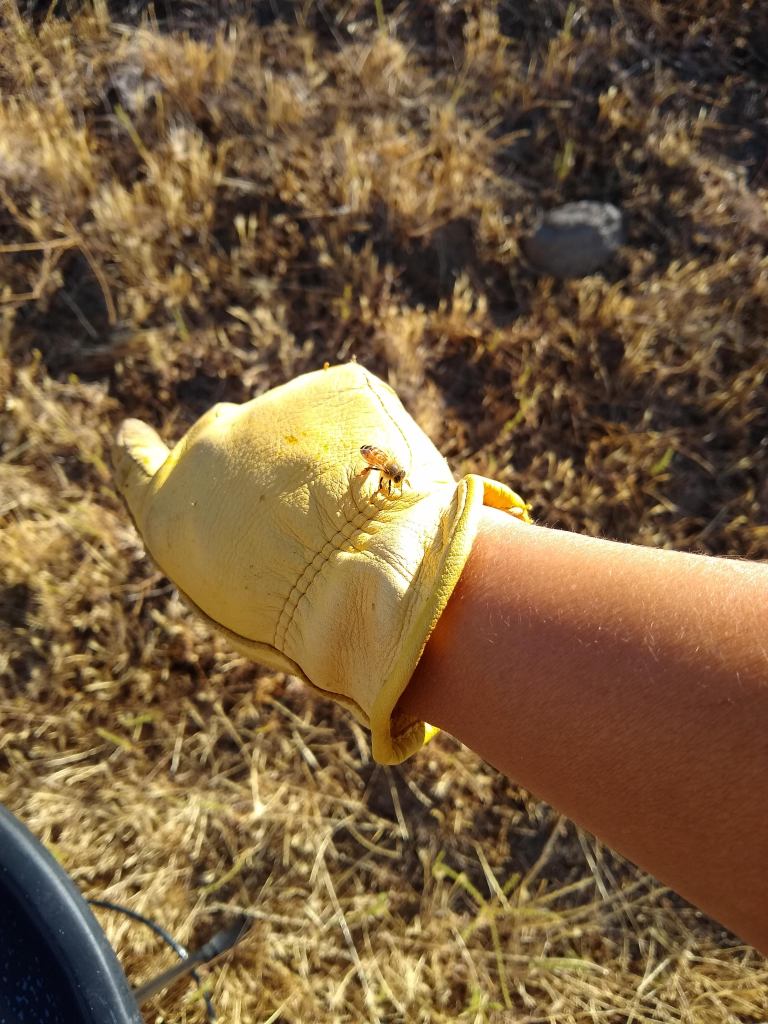
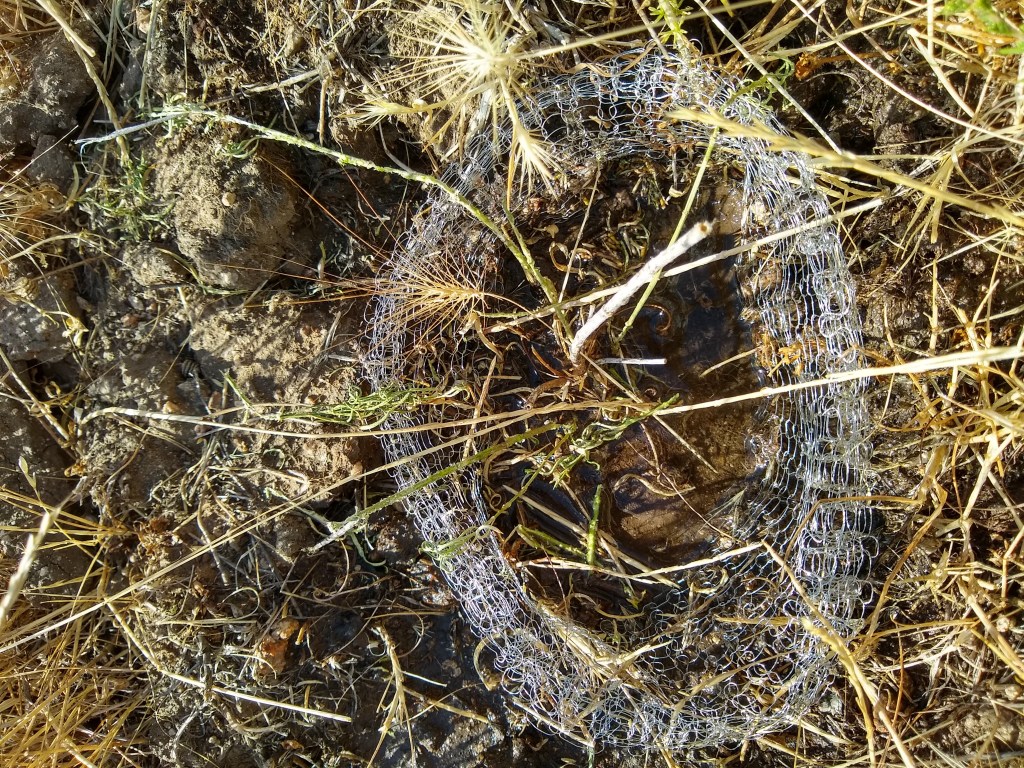
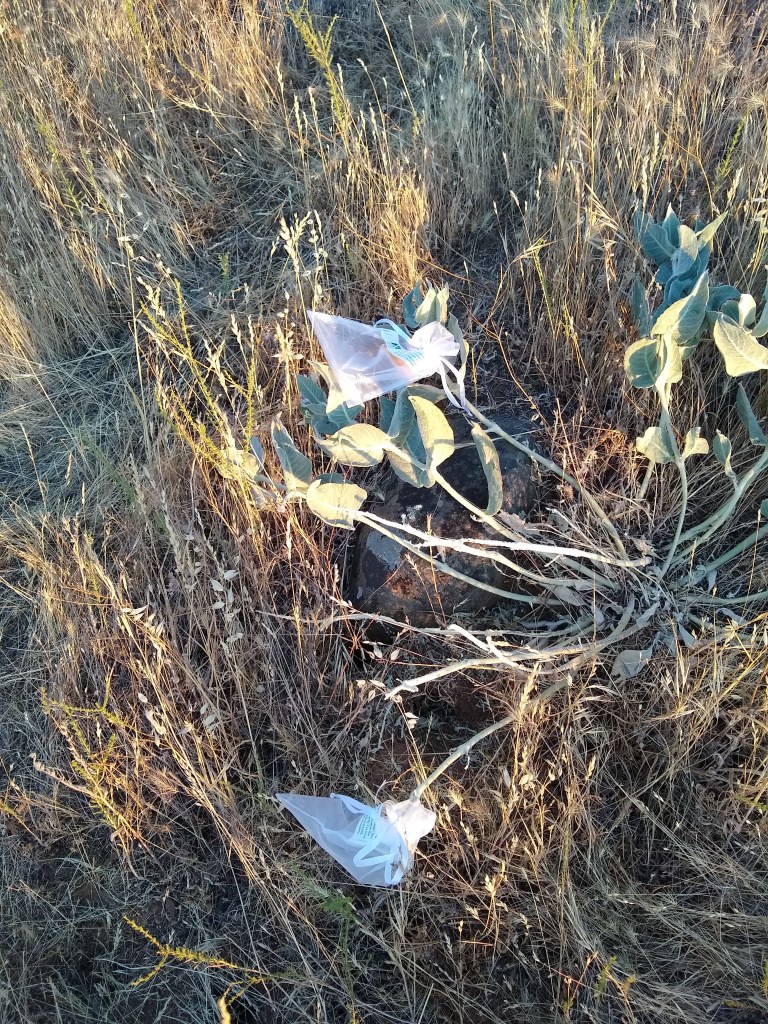
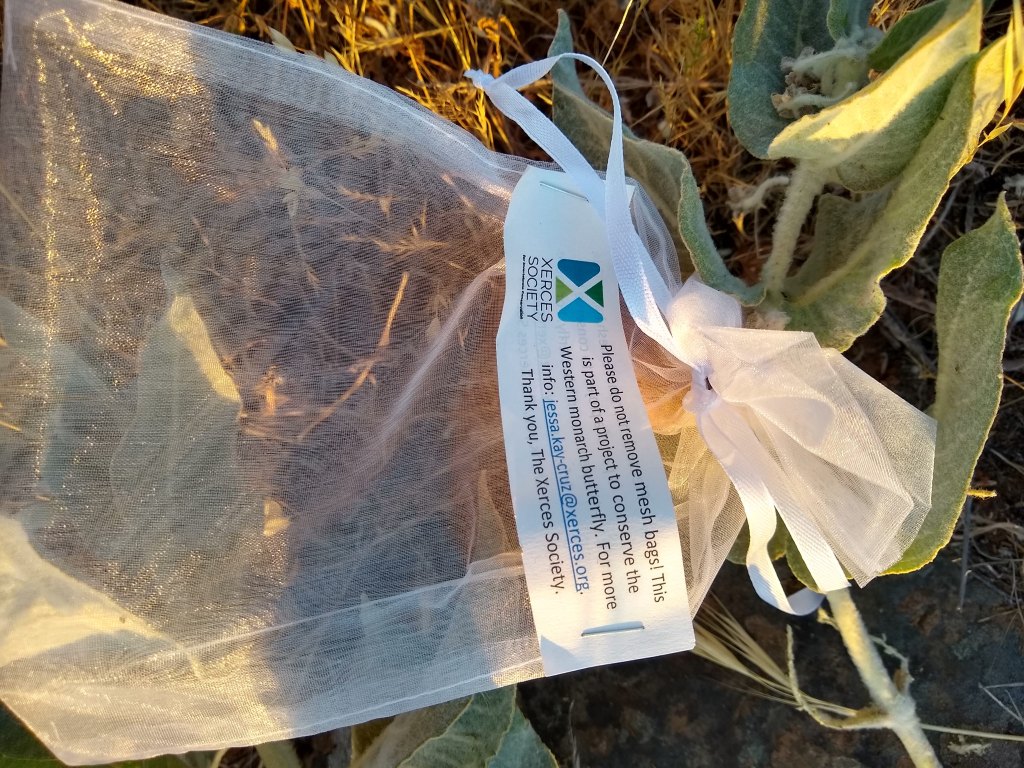
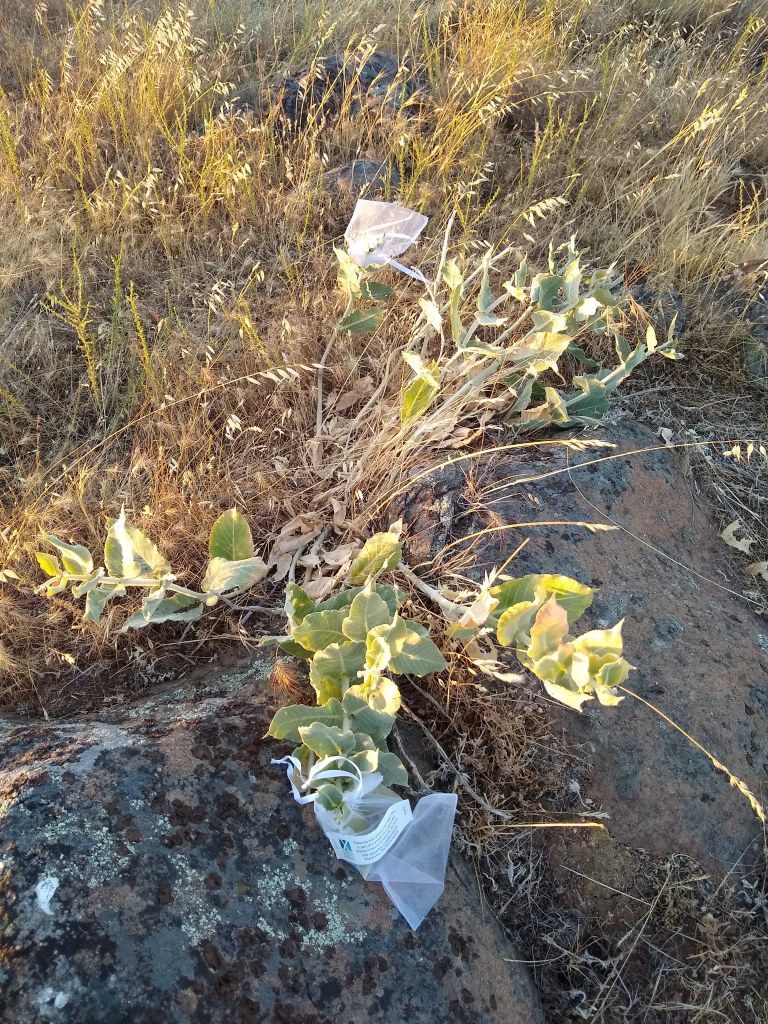
Grasshoppers attempting to breach the Xerces mesh bags

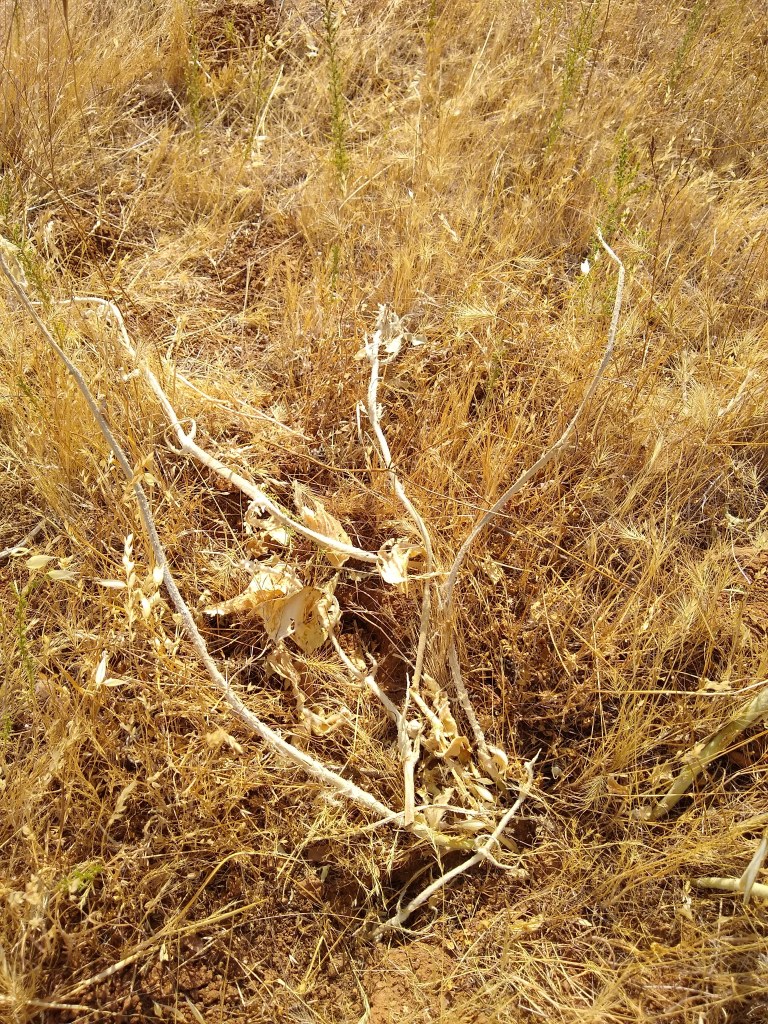
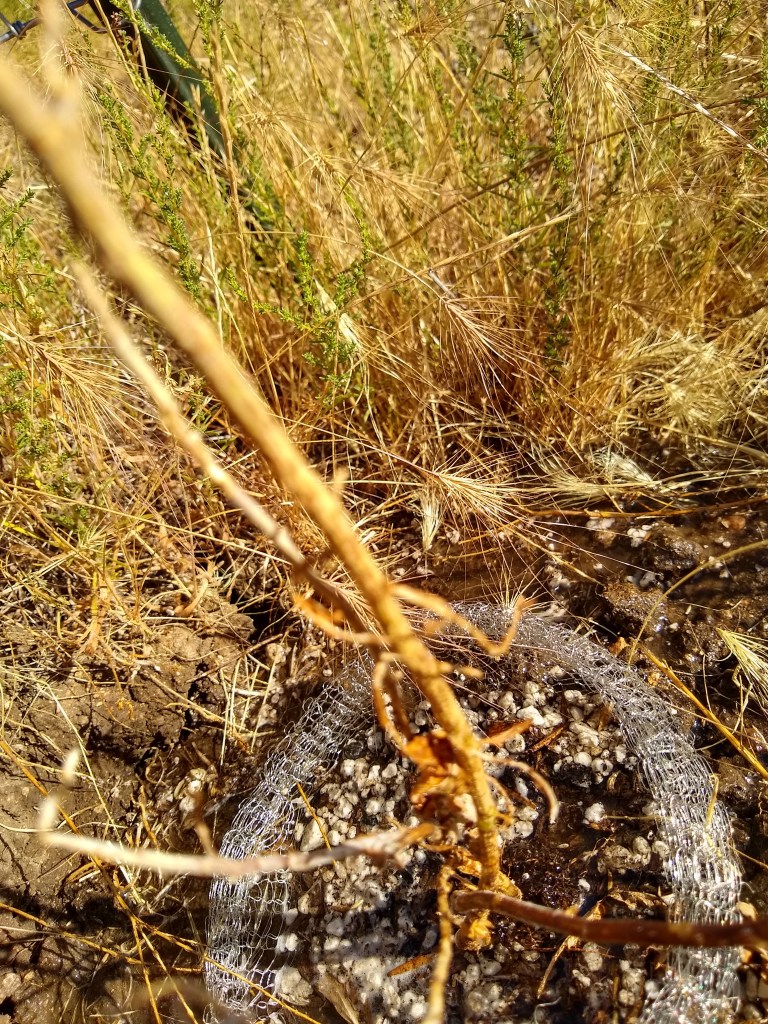
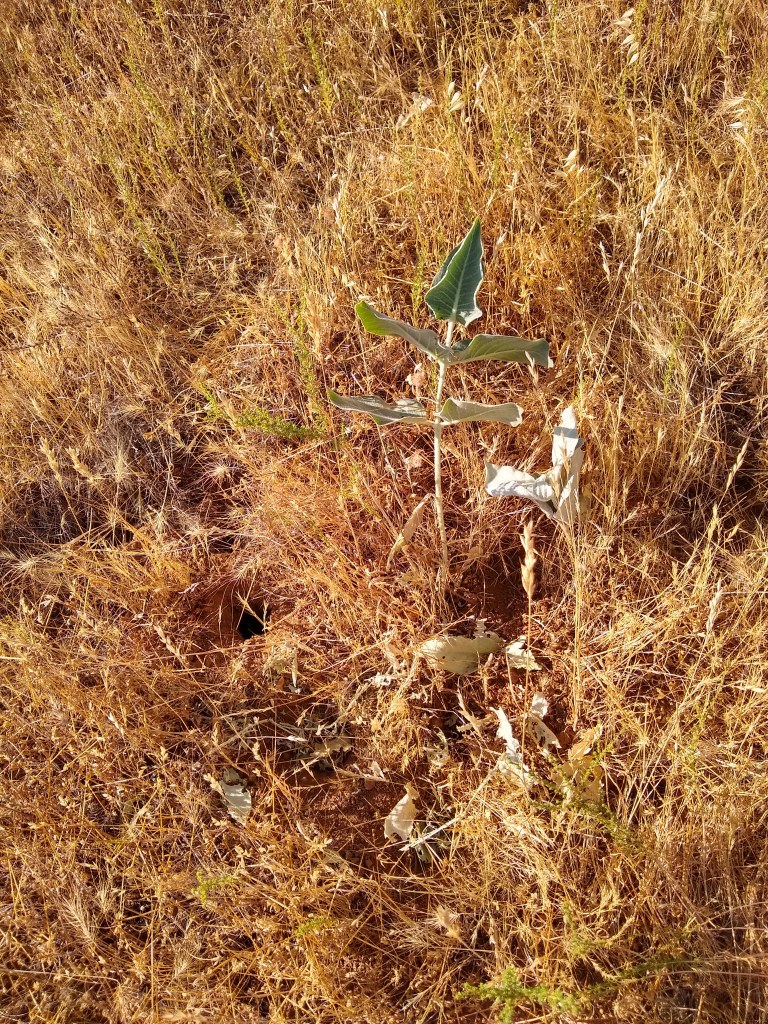
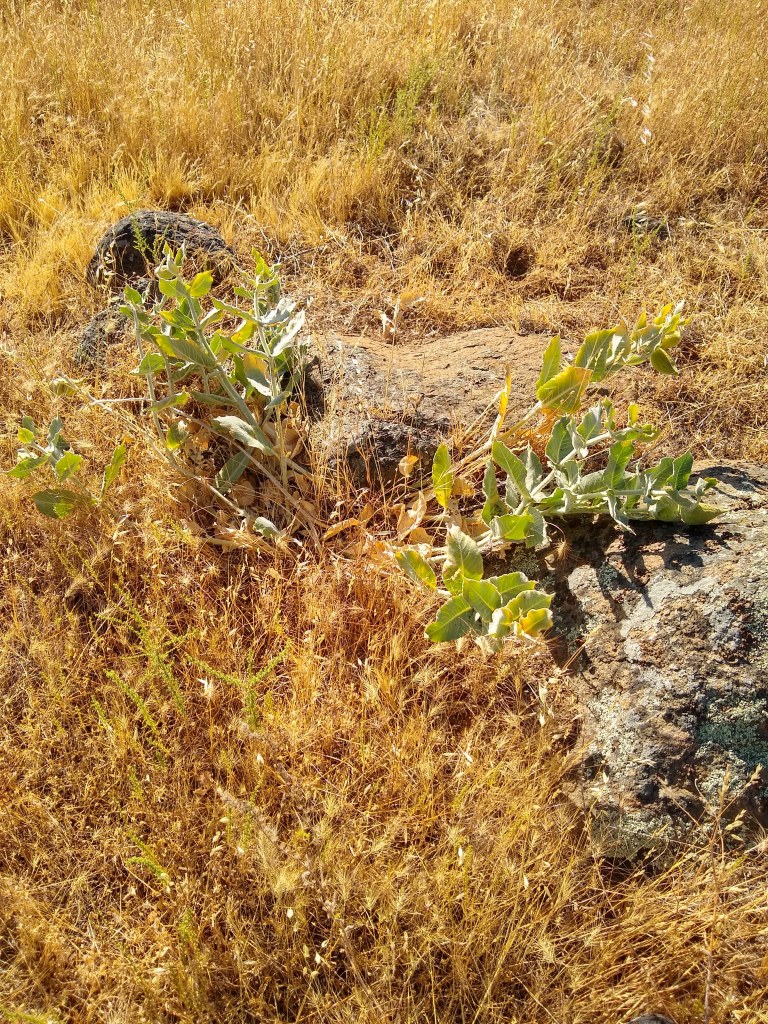
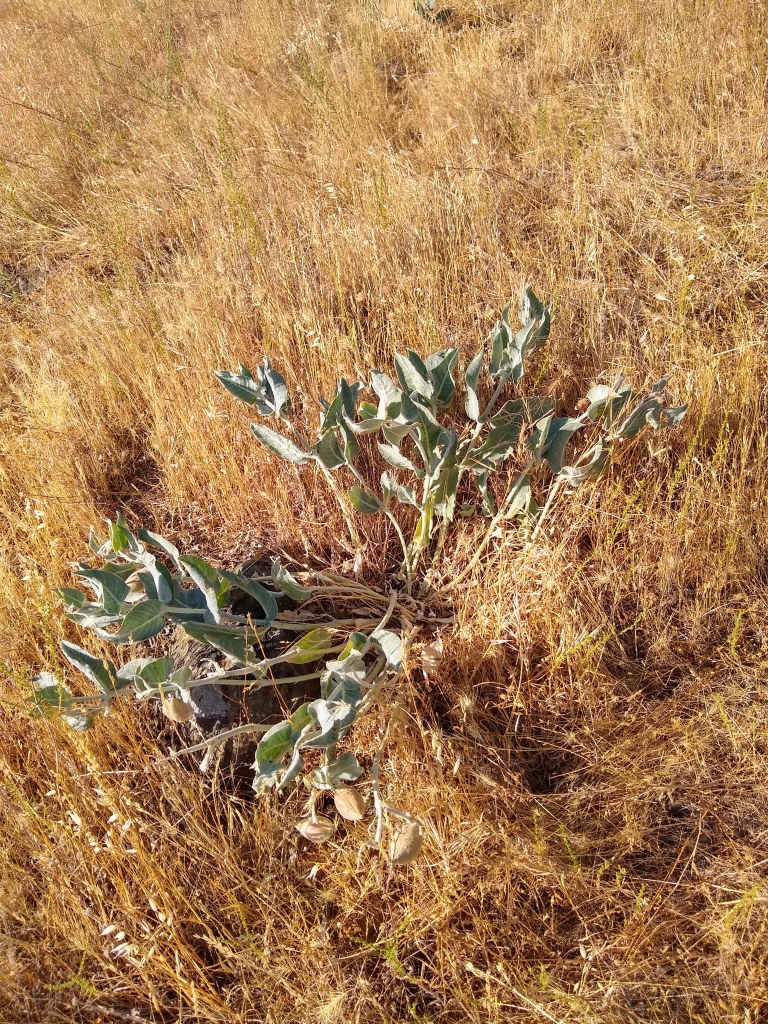
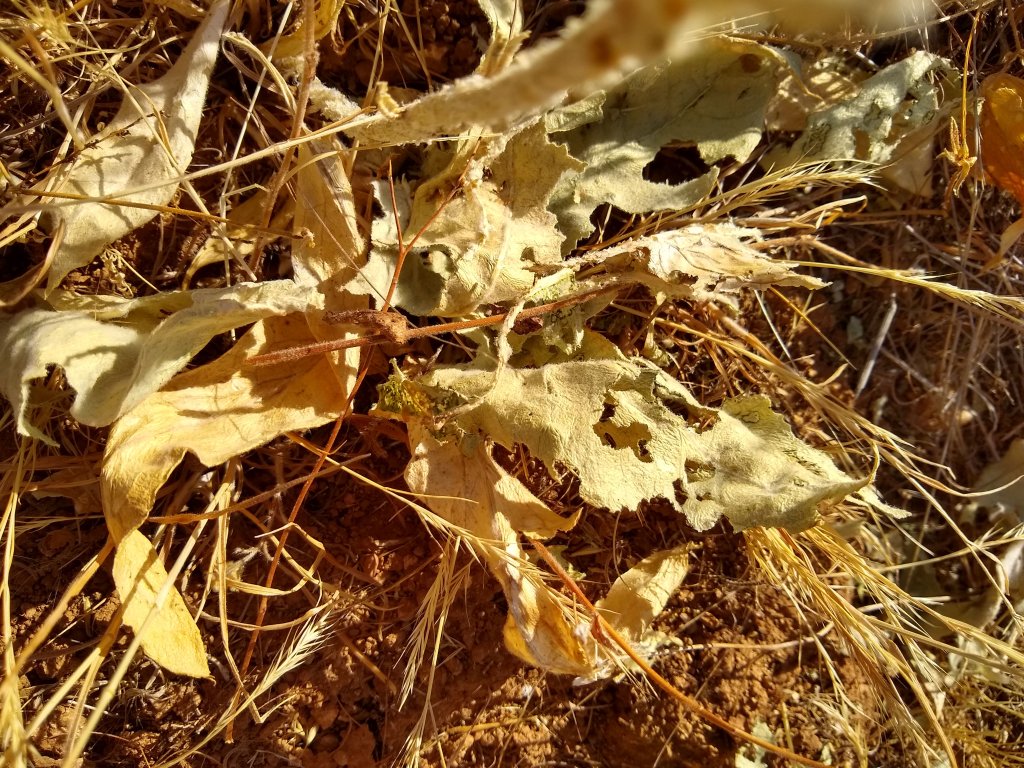
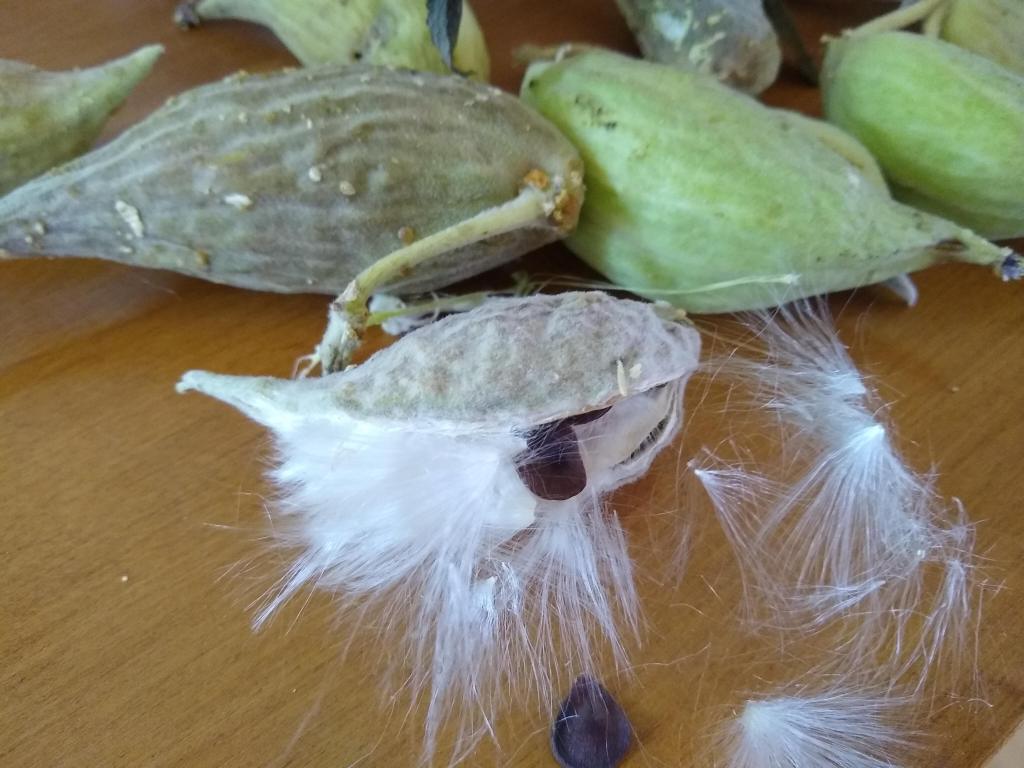
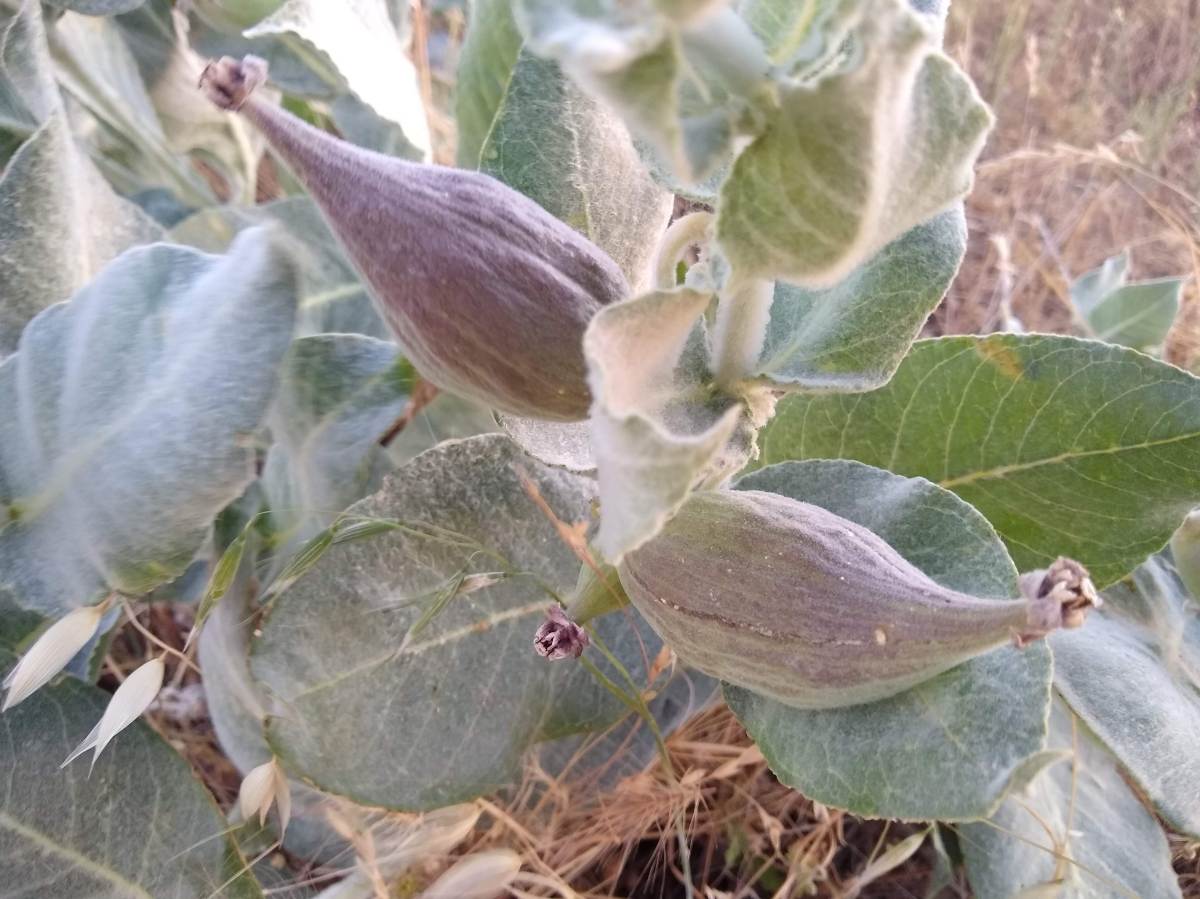
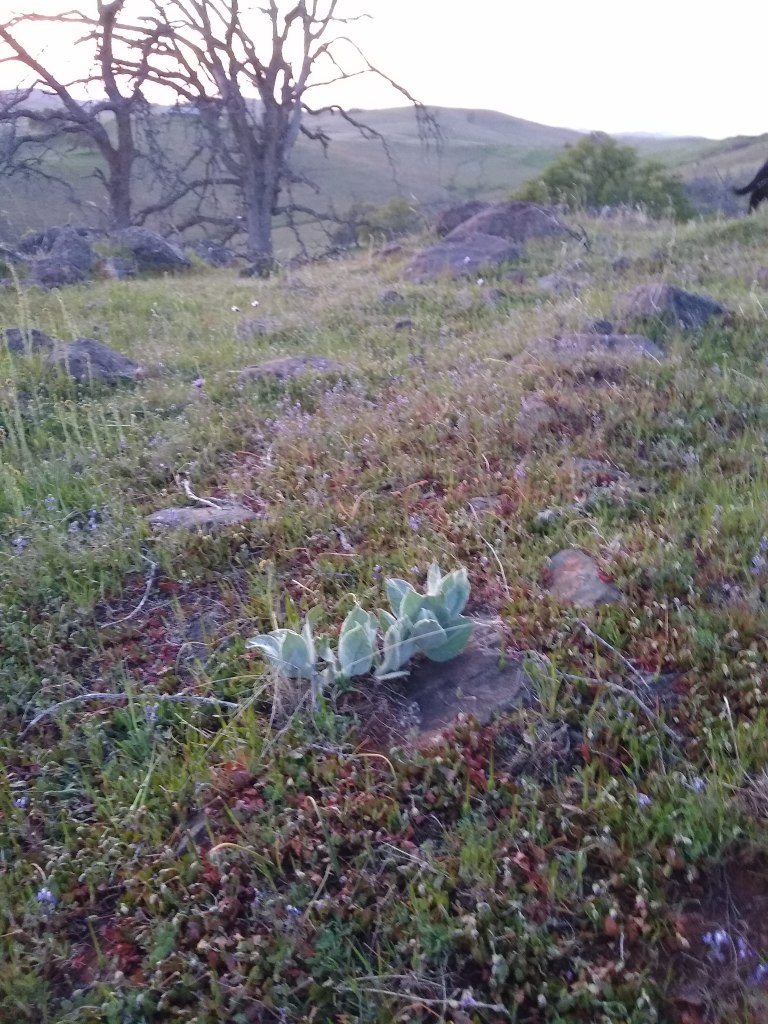
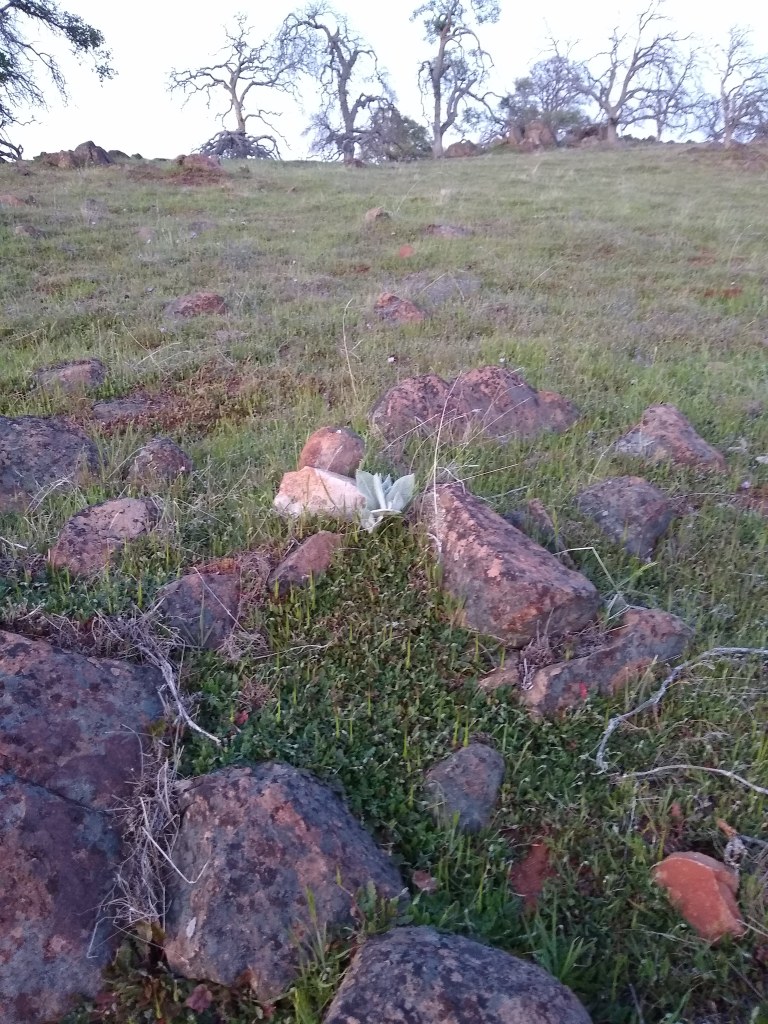
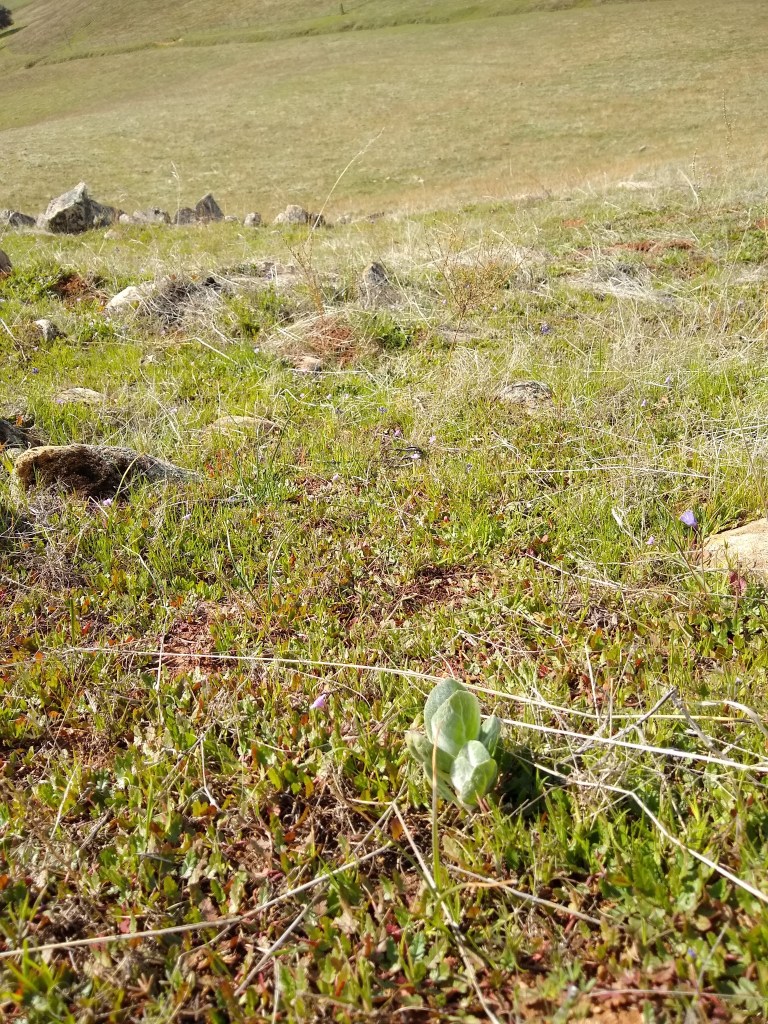
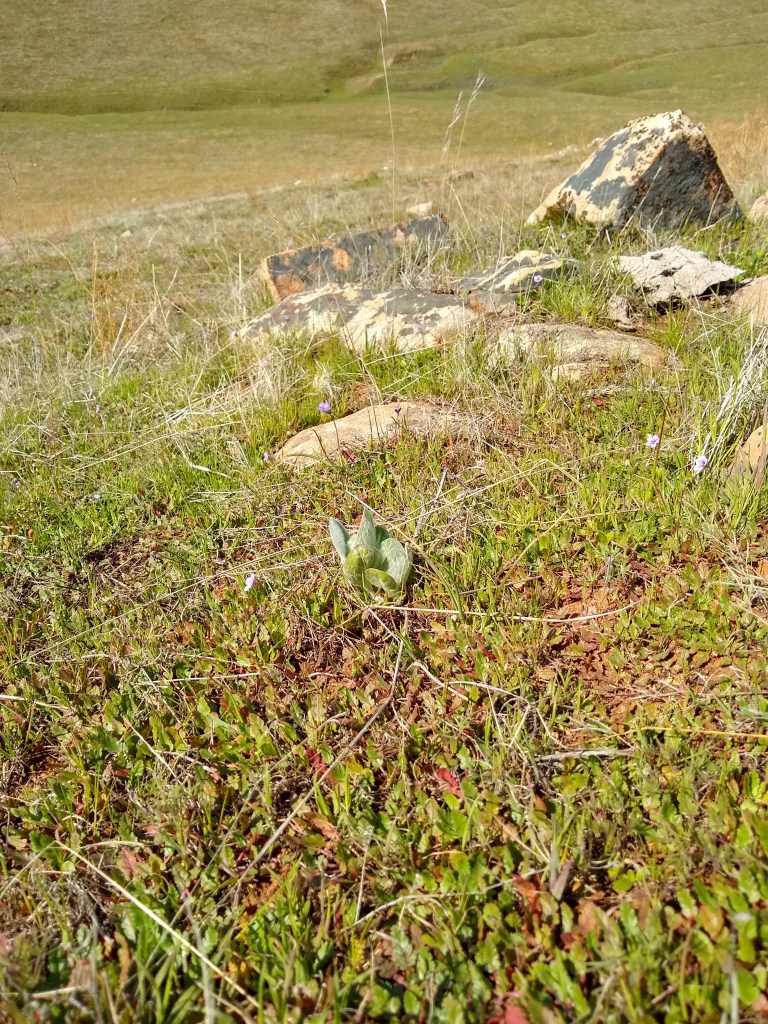
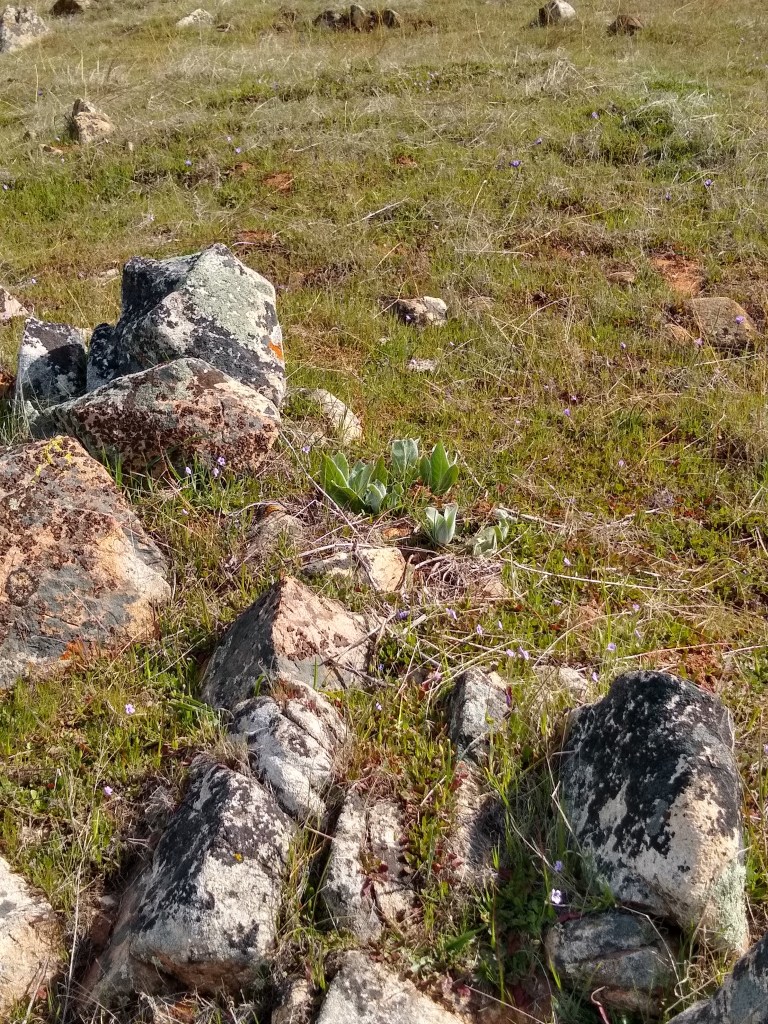
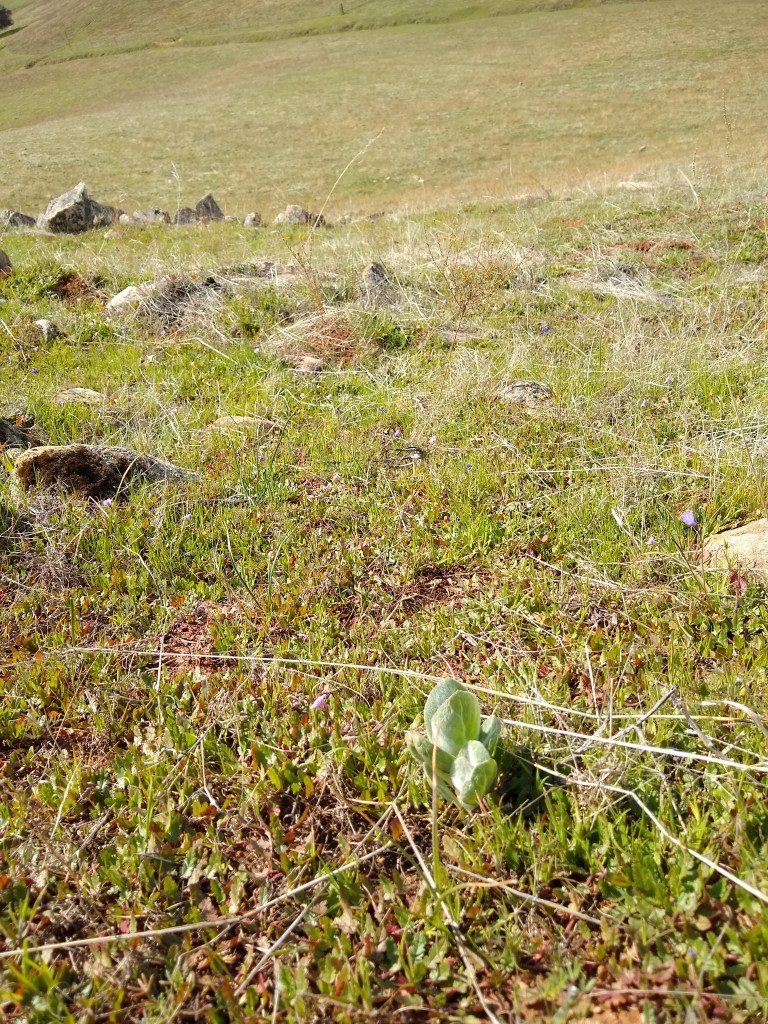
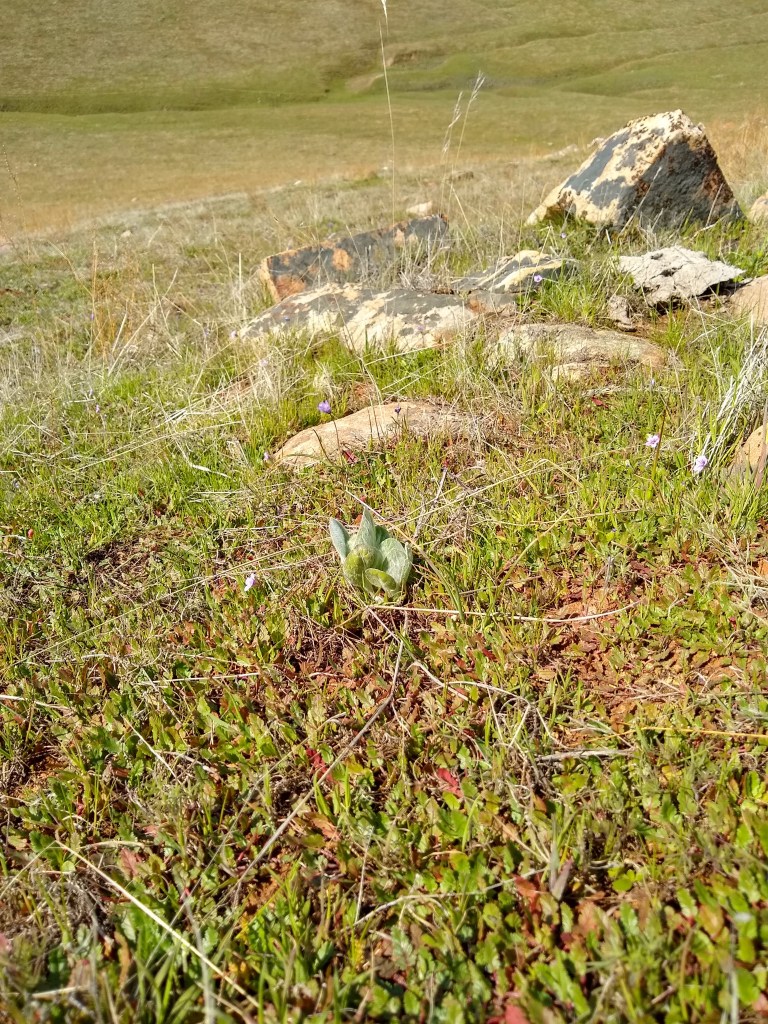
The A. Californica is nearly gone. Most plants are completely removed from the landscape. Some are shriveled stalks laying on the ground. The grasshoppers leave almost nothing behind. Fortunately, the seedpods still remain protected. I check them every morning and evening looking for signs of breach, which would initiate a rapid cutting of all pods to save them for propagation. I am happy to report that the bags are still holding them off. The longer, the better so the pods can get as much nutrients as possible for the seeds to mature. Even though the pods I took early have opened and revealed healthy seeds, it is best to give the pods as much of what nature intended as possible.
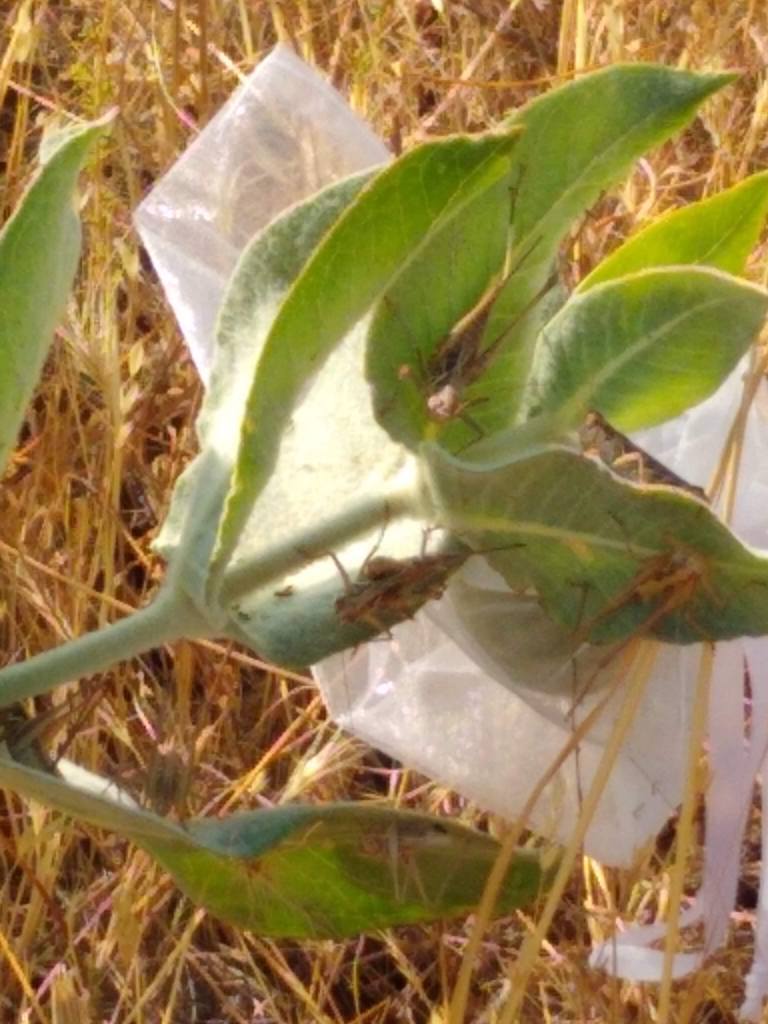
Wowza! The Washington Post Called

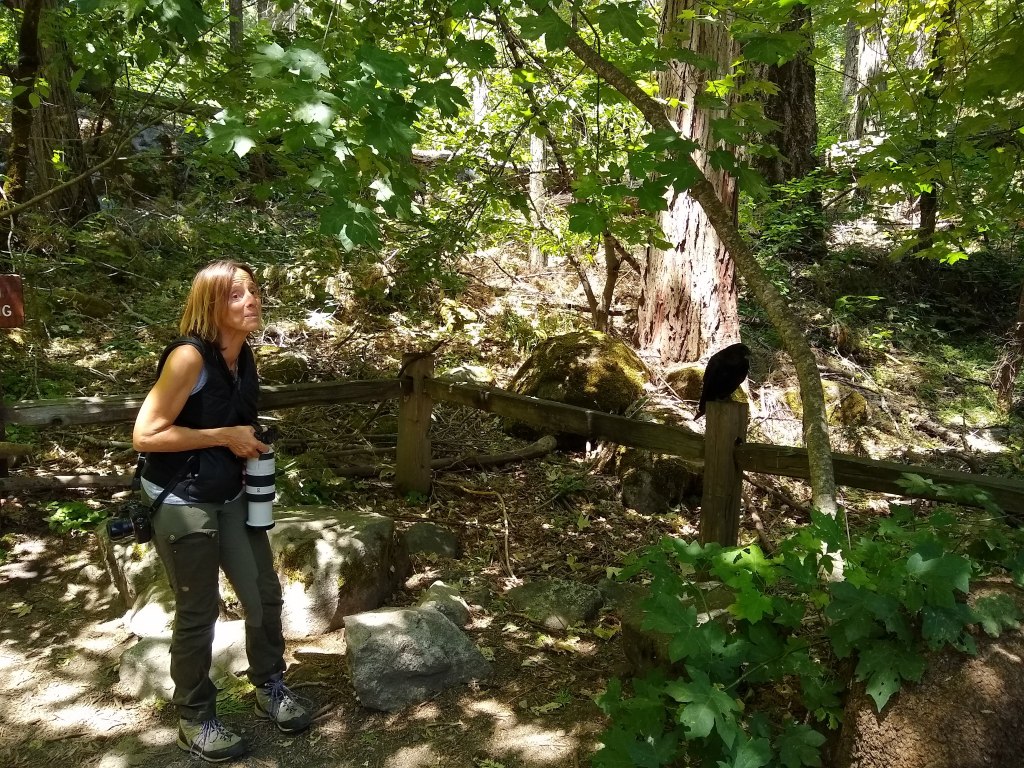
It was shocking when I got the call. This storied newspaper, probably known best for breaking the Nixon Watergate scandal, was going to run a story on the effort to save the monarchs – and wanted to include the work I was doing. They had received my information from the Xerces Society as one of the land stewards doing something to help the monarch migration. Xerces provided a number of other individuals as well – other land stewards, scientists, programs. Melina Mara, an award winning photojournalist, called to learn more about my project. She was calling a number of the contacts to determine how the story would flow and who would be included. That was over a month ago, and so I thought Walappu’ ‘Uuchuthuu was not going to be a part of the story. After all, there are so many other people doing much more than me – and with greater success. If you read this blog more than once, you will know at least that much about this project. So it was a huge surprise when I received another call saying she would be in my area in a few days. I was certainly honored to be included in the story.

Melina showed up in her hybrid jeep with two cameras and five lenses. She definitely looked just as one might imagine – an adventurous, experienced journalist traveler with a mystique of cool (Now I know what I will dress as for Halloween this year!). She has traveled the world and covered extremely important topics. I am grateful she will be helping amplify this critical issue, which is related to an even larger issue – climate change and our unhealthy relationship to this planet.

I had to go into Sacramento for work, and when I showed up, she immediately began taking photos. It was a strange to be followed around by someone taking photos. Not something a country girl from Groveland, formerly population 300, is used to, but Melina was kind and made me feel like she was an old friend as we chatted and drove all over the ranch with me completing my butterfly chores. I thought sarcastically, “How riveting. Who wants to see this?”, but then again – I am not an award winning Washington Post storyteller. She probably knows what she is doing (sarcasm intended)!
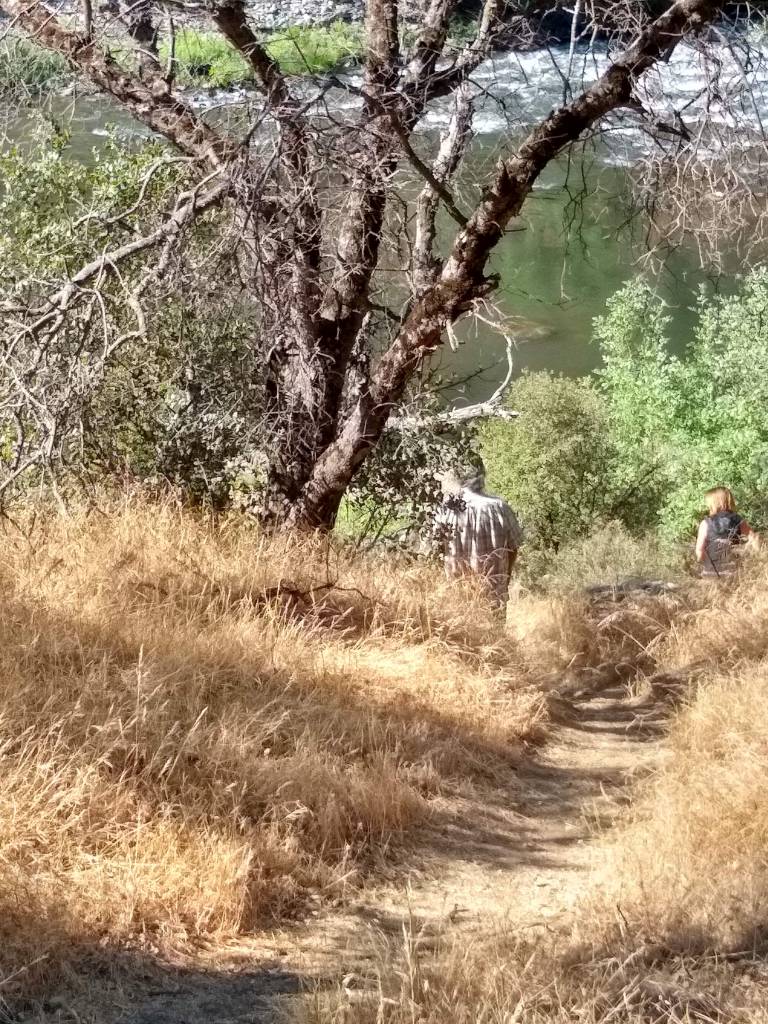
She documented my work for a couple days. A dear young friend, Irene Vasquez (Mi-wuk), messaged me that she saw a monarch in Yosemite Valley. So Melina and I were off to go see if we could find any monarchs. We visited a dear elder friend, Bill Tucker (Paiute/Mi-wuk), who showed us some historic butterfly areas along the Merced River. What an adventure. Bill is like a 25 year old and out-walked me everywhere! In the end, we saw two bald eagles, lots of dragon flies, frogs and five or six species of butterflies, but no monarchs. As Bill said, there used to be thousands of them in these places, but we could not find one.

Odds and Ends

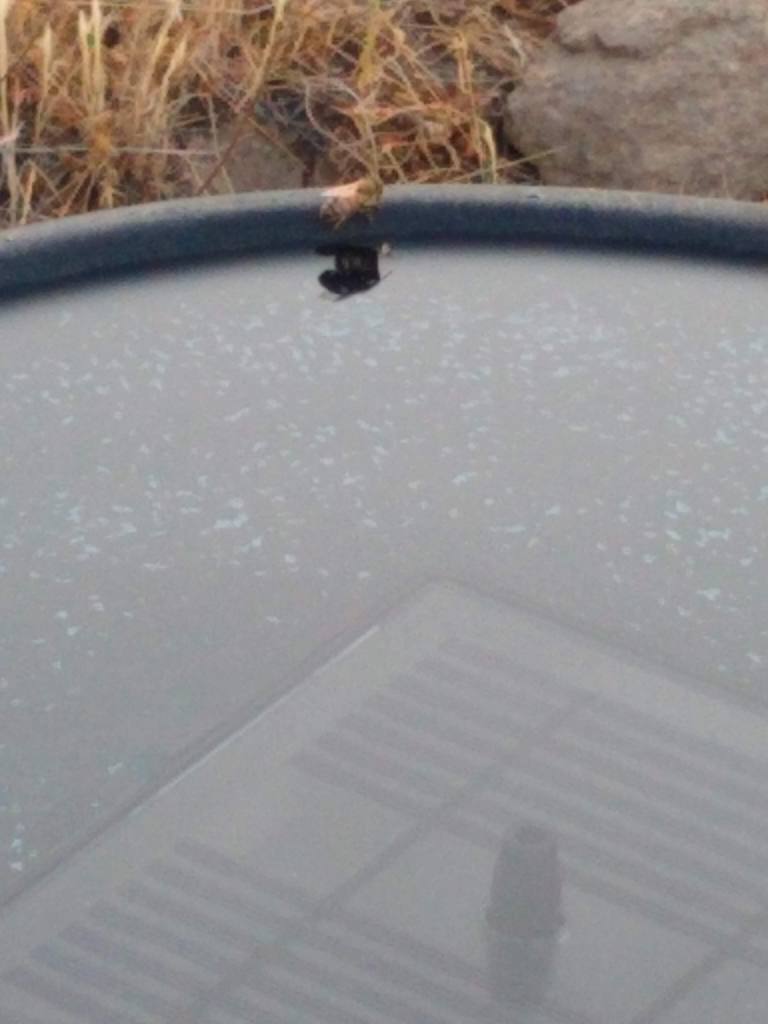
Bee gathering water from the seedling starter tray

Everything is still thirsty and hot. I continue to keep all the water vessels filled each day. The amount of time I can stay outdoors is limited. There are only about 1.5 hours at the beginning and end of each day when it is cool enough for me to work. I am not a hot weather person. It really takes a toll on me. With so many days in a row of 100+ degree temperatures, the cumulative effect is enough to hurt even those that are accustomed and acclimatized to the heat. People are experiencing sudden death all over the world where it is hot. It is worth it to be careful.

Over this past weekend, Mariposa County held its Butterfly Festival. It was exciting to be able to go out to a festival again — and with my friends Roxann Mulvey and Jill Harry. With the heat and overcrowding, my friends and I did not stay long. We saw Melina there documenting the educators working, like Deedee Soto from Xerces, and Ron and Bev from Mariposa Native Plants. They are doing such important work. Many humans disappoint me with their lack of awareness, greed and limited respect for all living things. I was encouraged to see a significant number of people approaching to the education booths to discuss what they could do to help the monarchs and other pollinators. Maybe there is some hope.

Thirst is the Worst and Grasshoppers Eat Their Way Up Hill

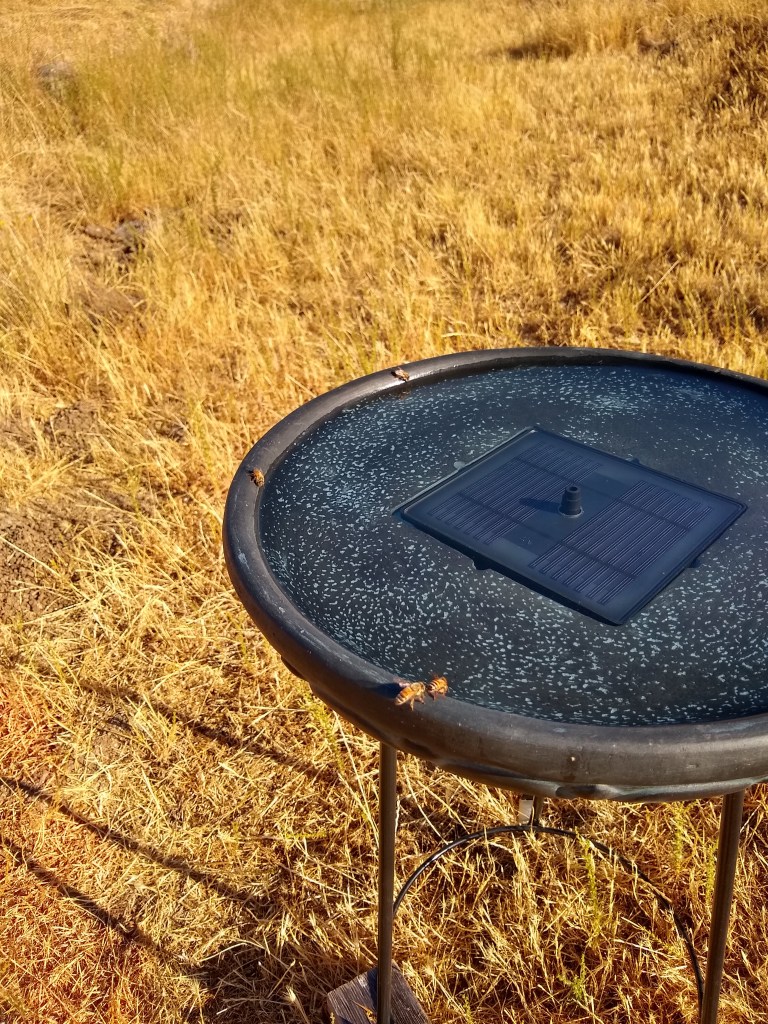
The last of 30 bees leaves the bird bath after drinking.

Thirsty. It is what everything is. Even I need more moisture. All creatures, plants, insects, animals and humans, are all thirsting for water. This year has been filled with so many “never seen before” moments because of the drought.

  • I’ve never seen so much activity at the water troughs and thick rings of bird poop left behind.
  • I’ve never seen birds queue for a dip in the water dish.
  • I’ve never seen 30+ bees converging on a bird bath to drink – anytime and all the time.
  • I’ve never seen oak leaves die in June, in JUNE, and fall off the trees as if it is Autumn.
  • I’ve never seen so many plants bloom earlier than their normal time.

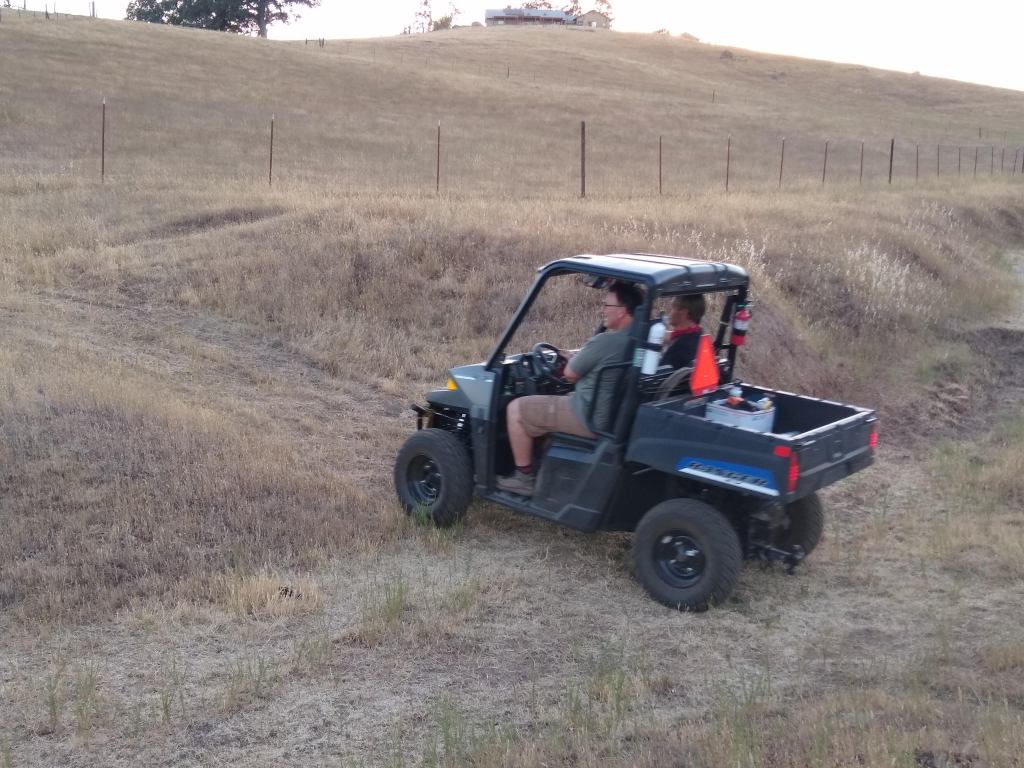
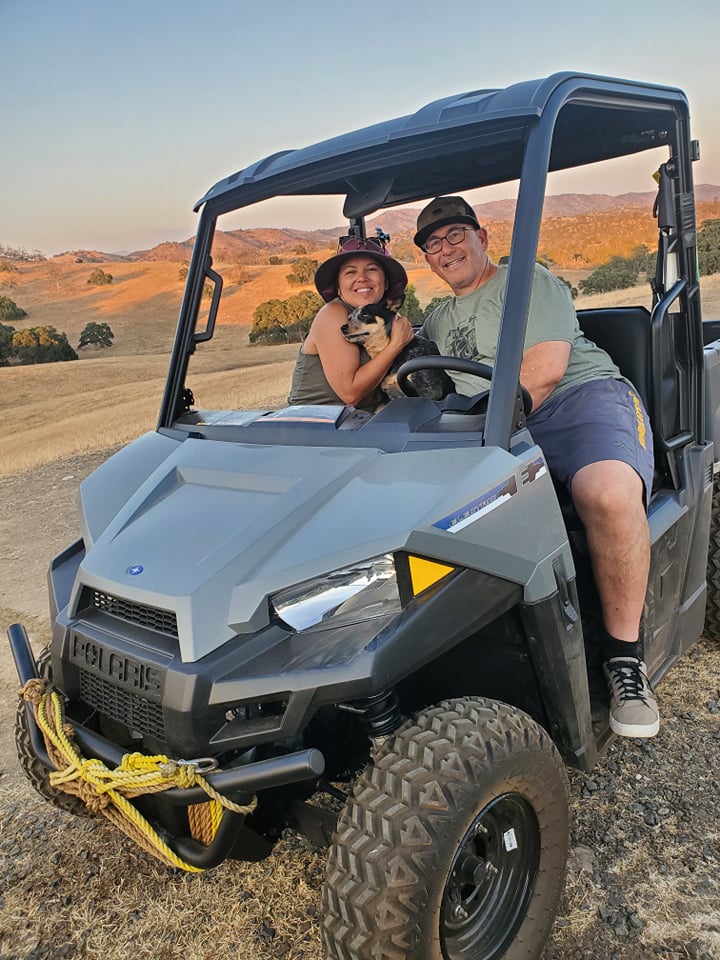
I continue to water some part of the monarch habitat each day. I have a cycle mapped out so that I am not doing too much each day, but each site gets watered at least twice a week. I am still very grateful for the use of the electric Polaris quad that my wonderful neighbors Ric and Kim Wetzel have lent me. We still have not received the part for my electric quad. Without the part, I would only have the ability to haul a small vessel of water – 2.5 gallons vs 25. Definitely much more efficient and less work to be able to take 25.

Grasshoppers Devastate and March Uphill

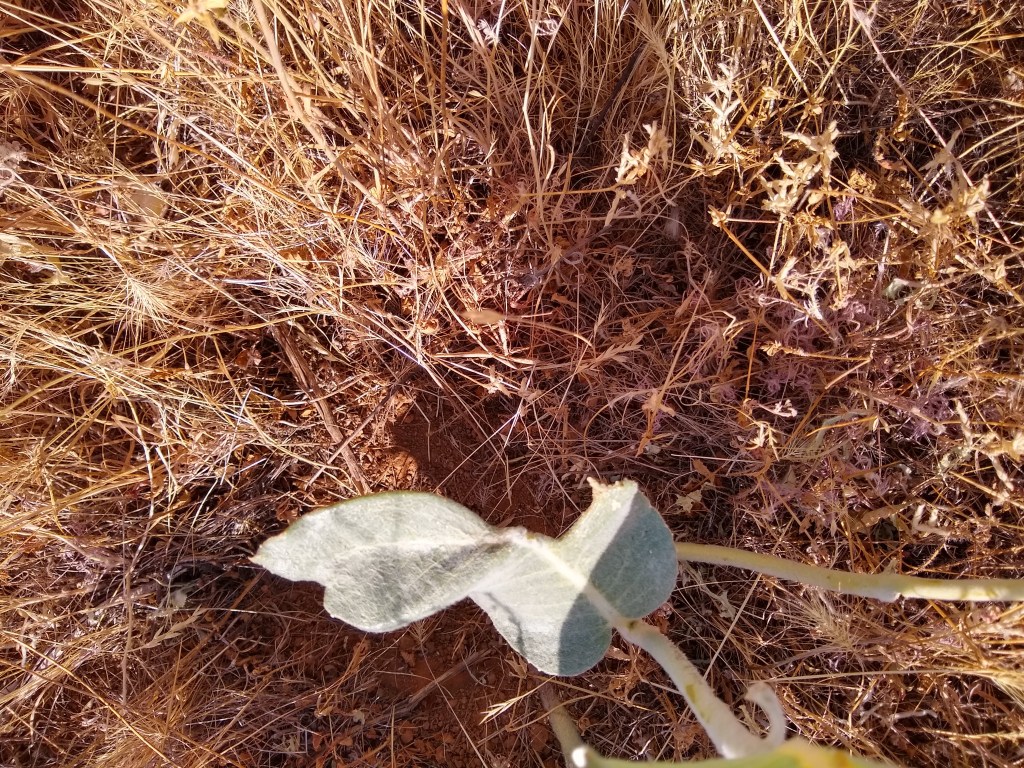
There are only two milkweeds left with leaves in the arroyo at Site 2. One milkweed is trying to make a come-back, but will be met with ravenous grasshoppers soon enough like the mugwort that tried the same. I am so sorry my dear plant friends.

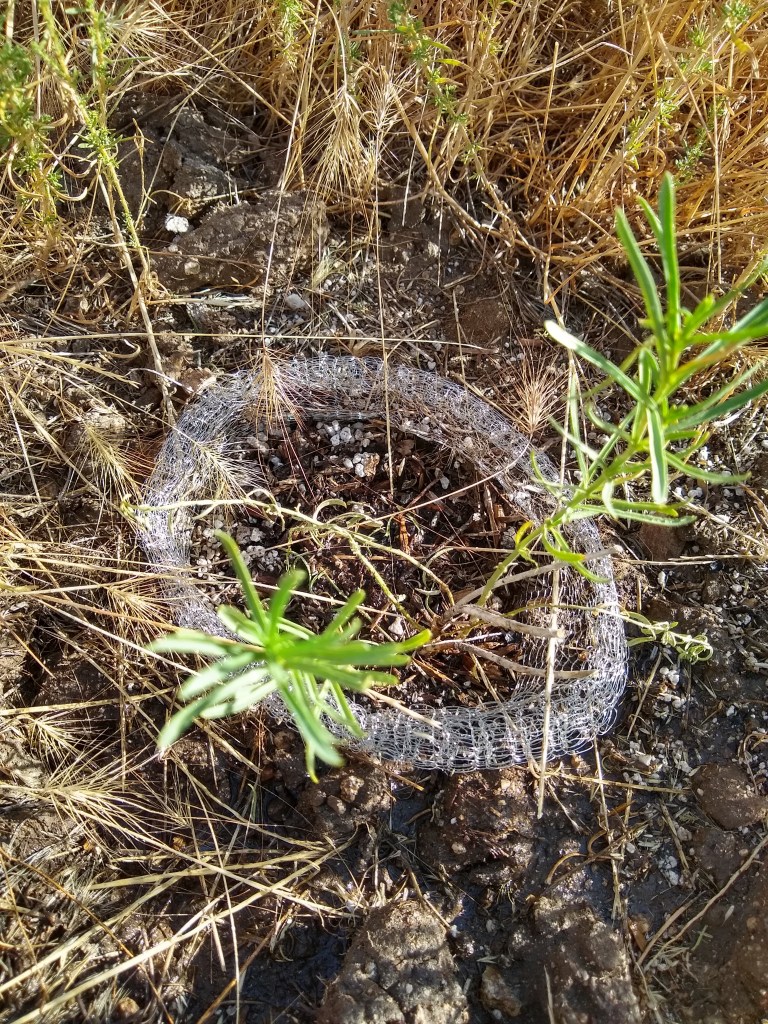
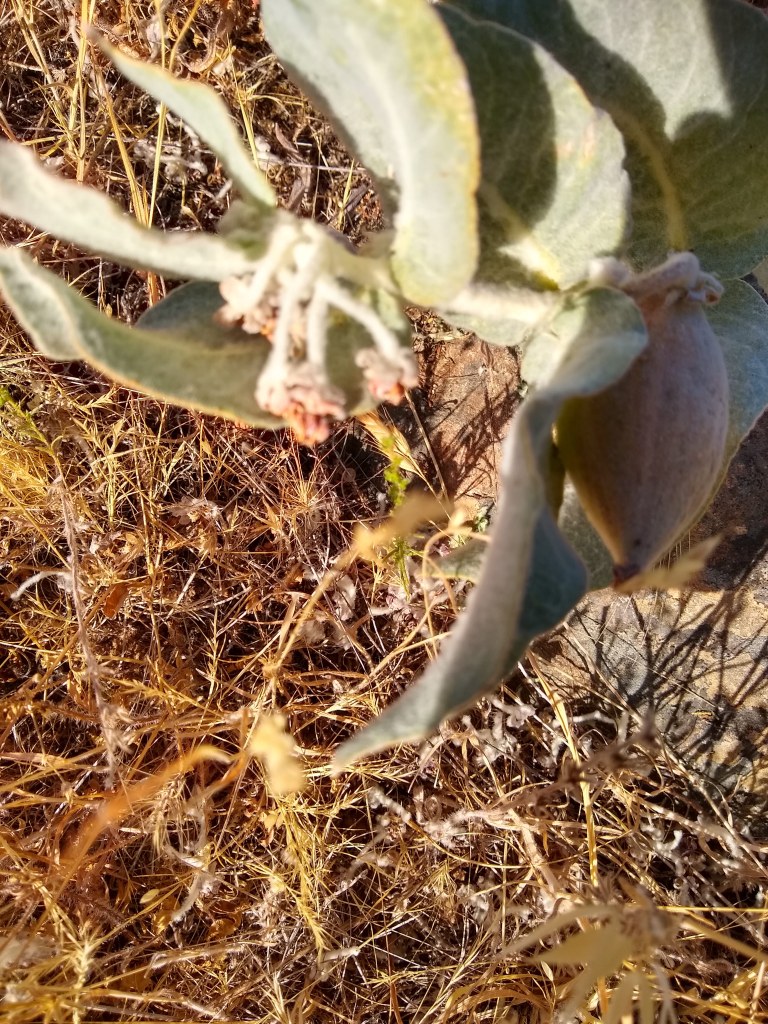
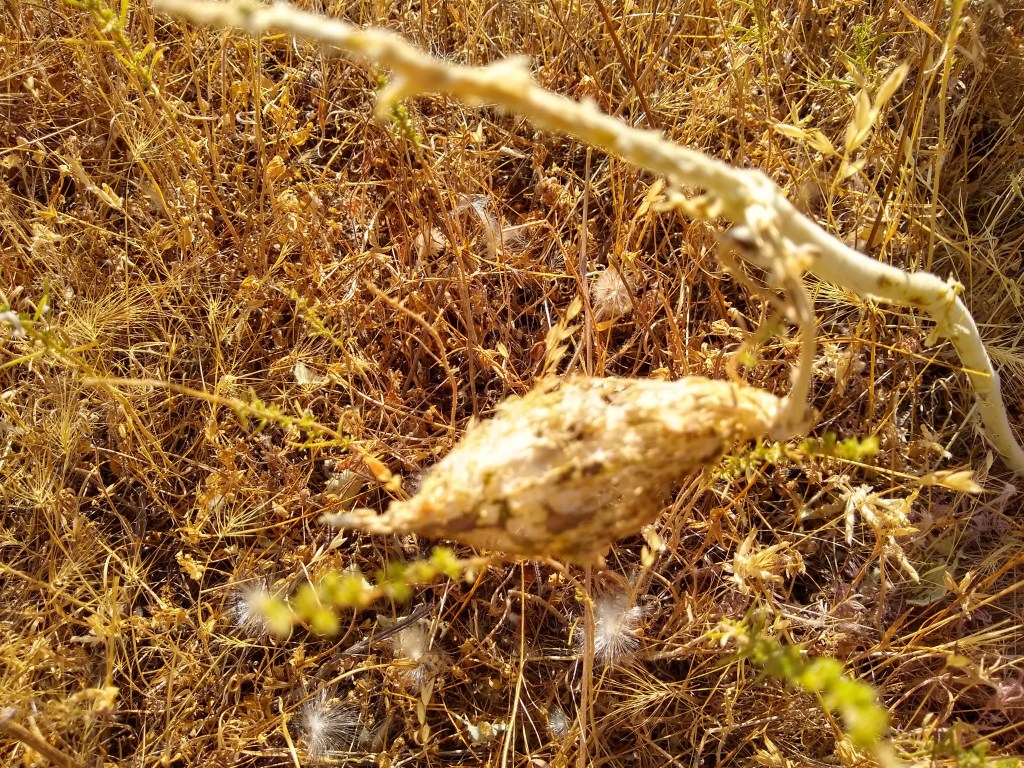
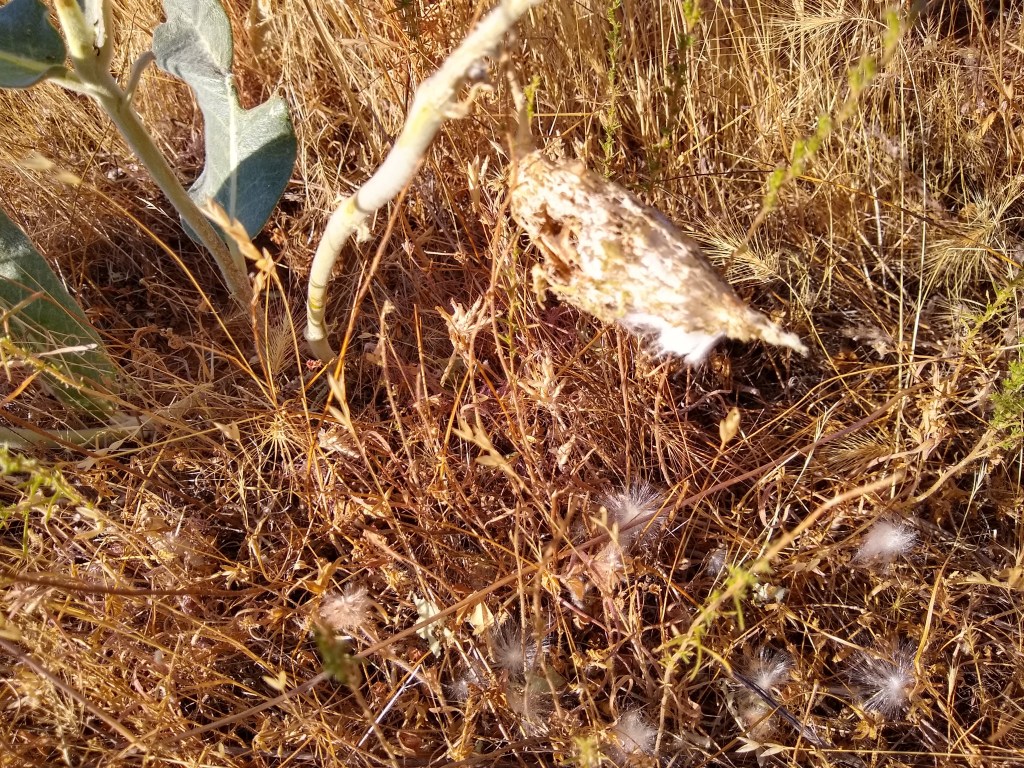
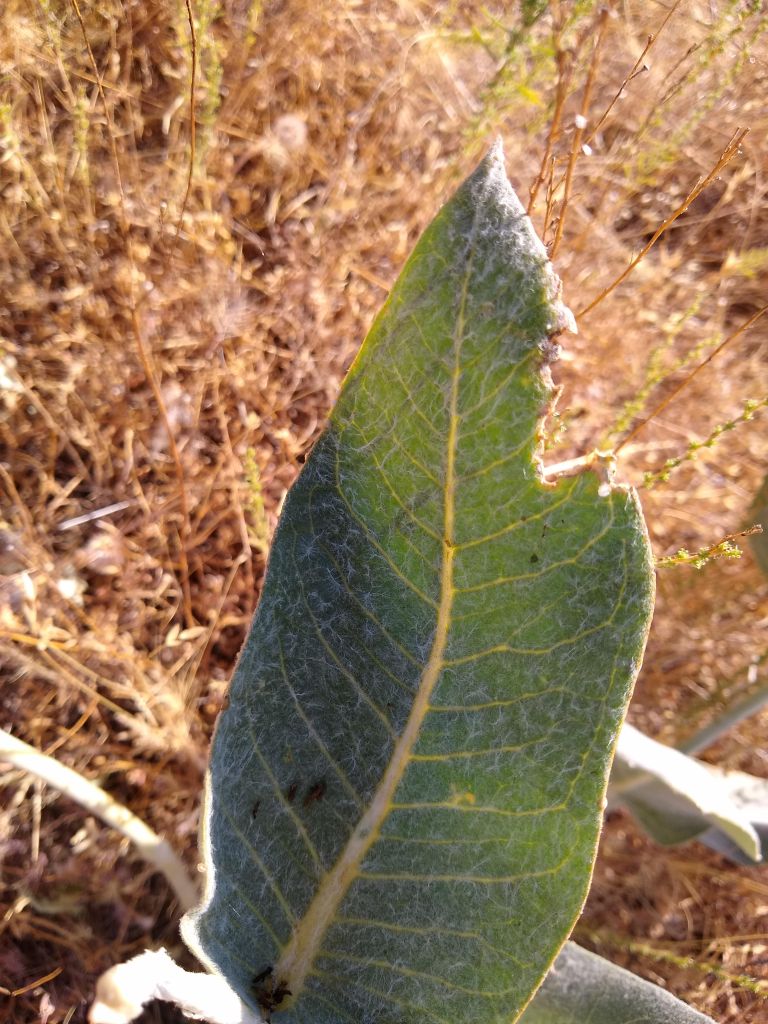
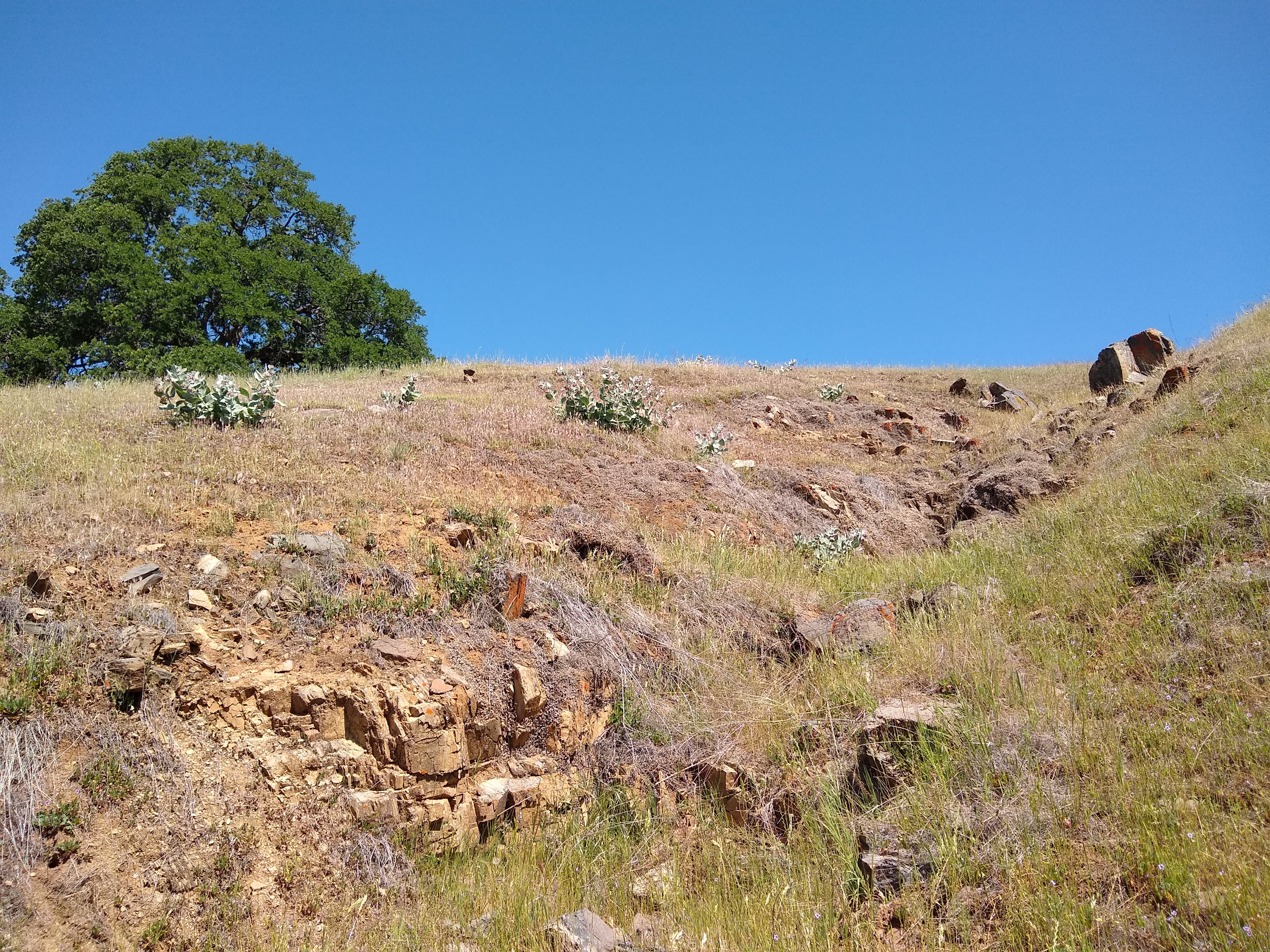
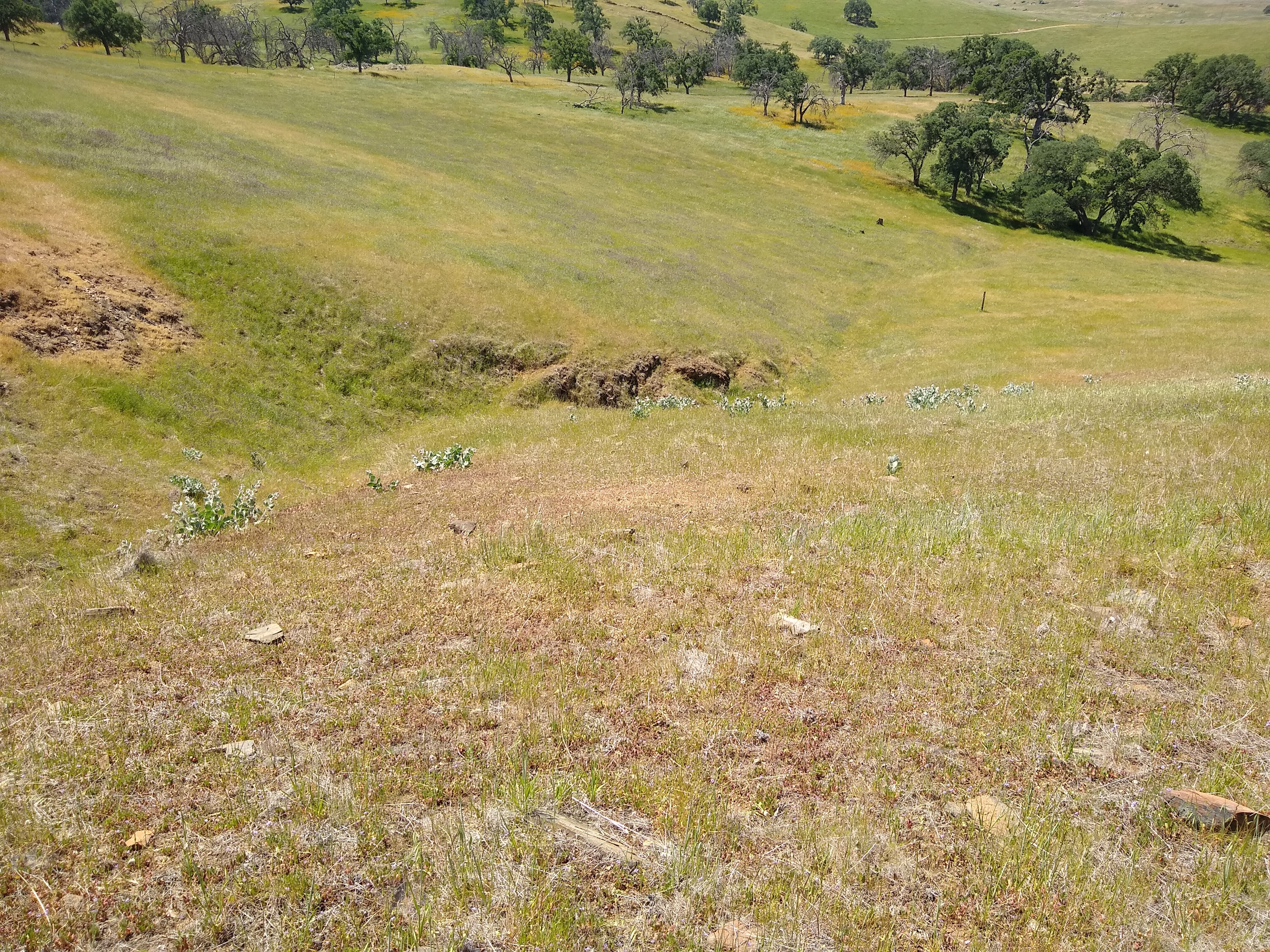
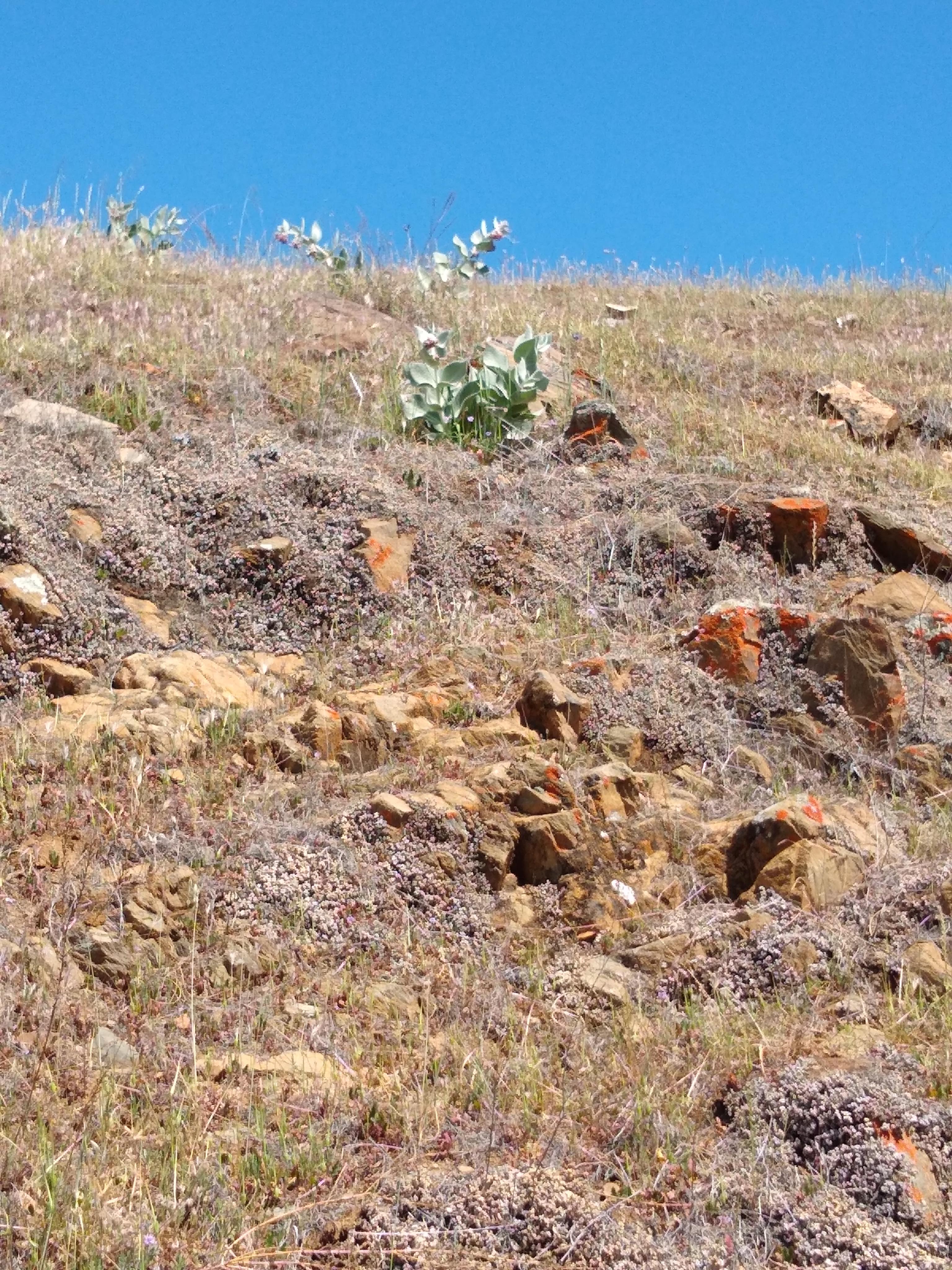
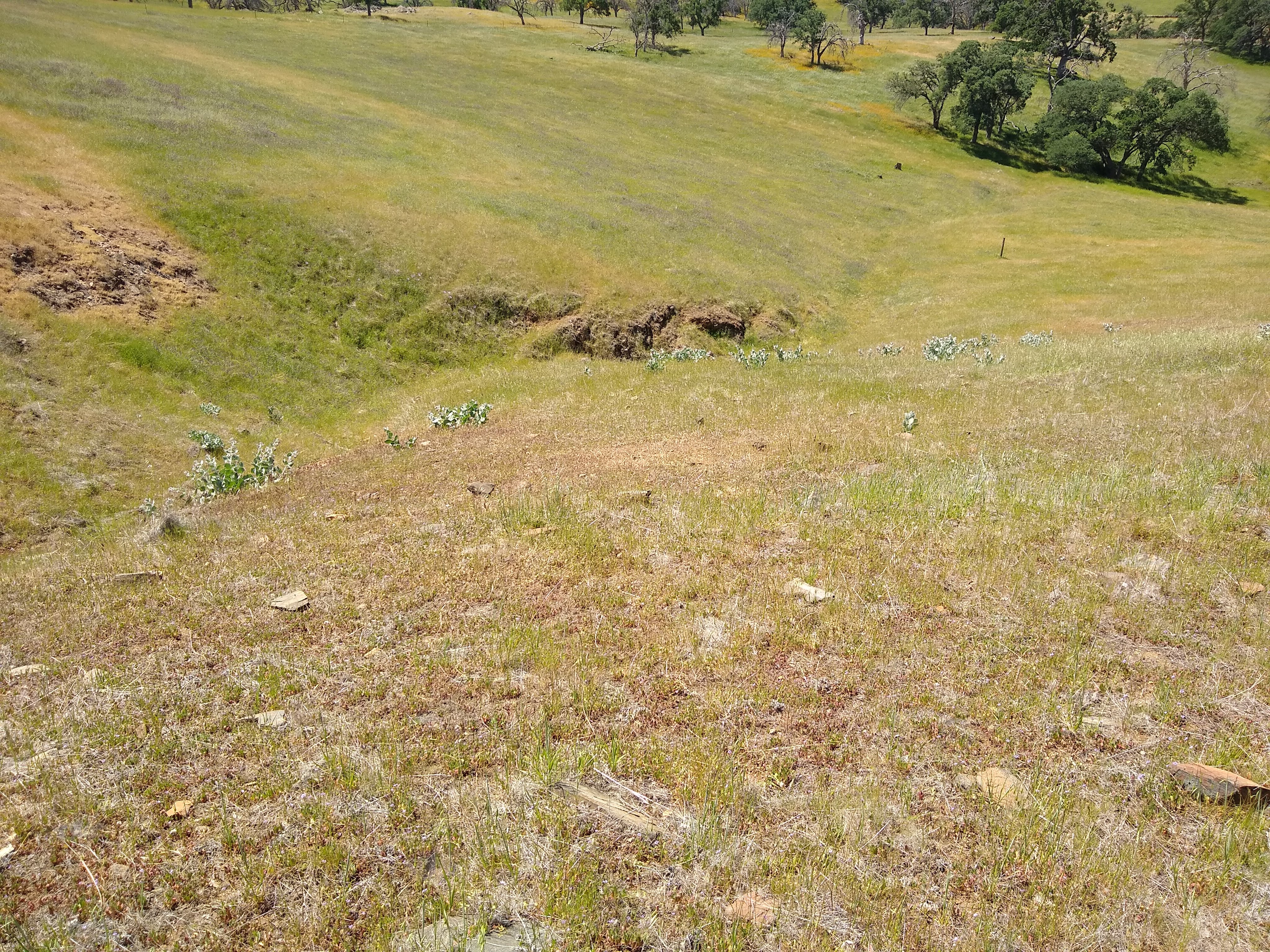
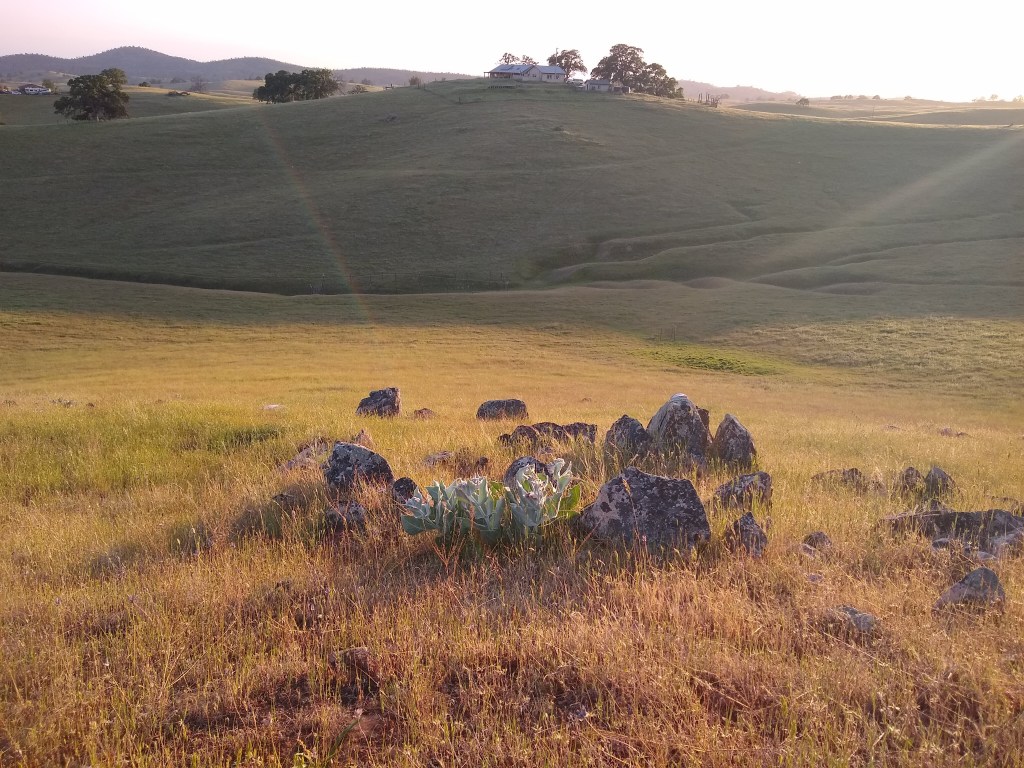
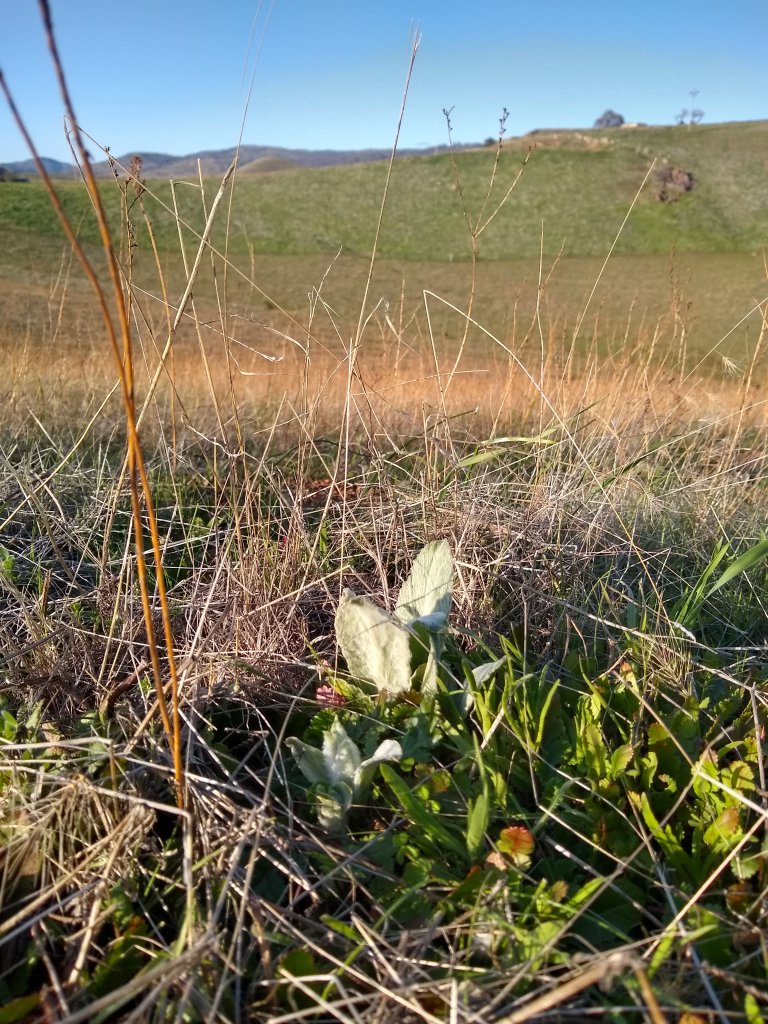
The grasshoppers have been moving from the arroyo up hill. They have ravaged the stand of A. Californica closest to the house and surely all other stands of this glorious and critical plant for the first stage of monarch migration. I have been checking the pods daily. It is still early to pick them. They need the milky nutrients to build healthy, strong seeds for the future. I lightly tug on them each day to see if they are ready to drop. I ended up harvesting several early because their mother plants were in the last stages of death by a million bites.

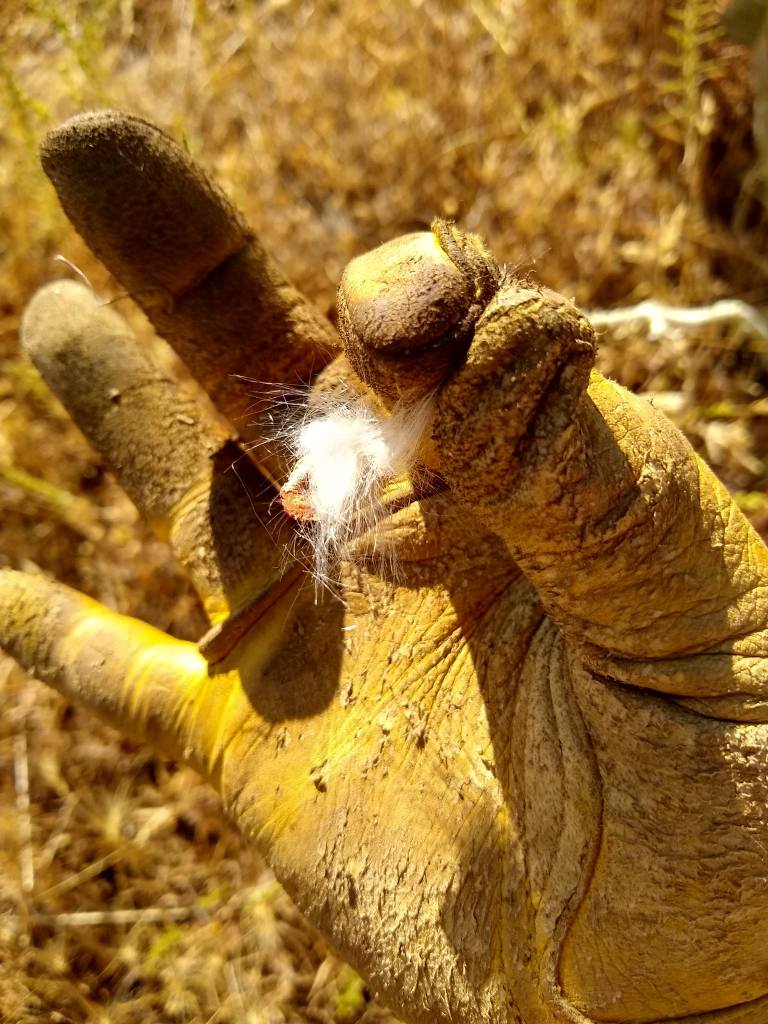
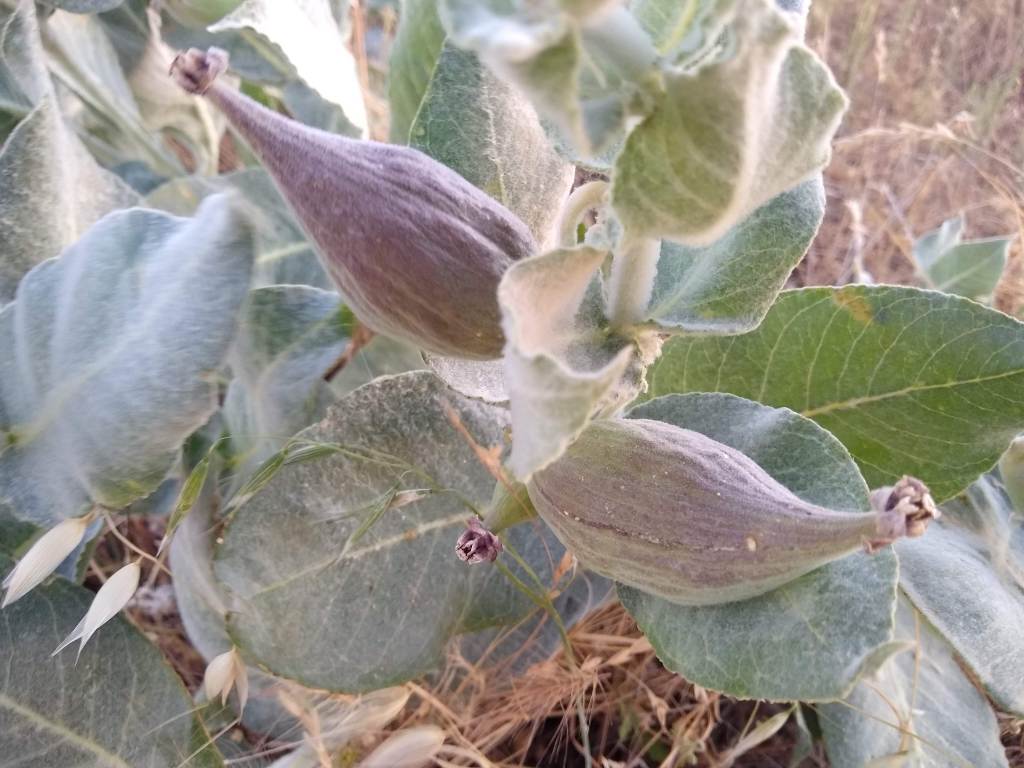
A. Californica seed pods. One is open with insulating duff and healthy seeds emerging!

Although the roots of A. Californica will resprout if the conditions are right, the seeds allow for more rapid increase in the number of plants. If I let the grasshoppers eat the pods, I loose the chance of this generation of seeds spreading. My plan is to spread the seeds after the grasshoppers abate. I will also give some to Ron Allen, my native plant hook up and owner of Mariposa Native Plants, who I affectionately refer to as the “Milkweed Whisperer”, to germinate. He has the amazing ability to bring milkweed seeds to germination – not an easy task.

Deedee Soto, the biologist from Xerces, happened to call me the other day asking about the seed pods. Xerces collects them too to help germinate and spread the plants to needed areas. I told her she could have some if they survived the grasshoppers and my early removal of some of the pods. I told her about the infestation, and we discussed what could be done. She came over on a Saturday and installed mesh bags over the seed pods. We know grasshoppers can eat through fabric mesh, but we are gambling that it may slow them down long enough to get just a bit more nutrients before harvesting. Thank you Deedee for being such a committed protector of butterfly habitat! Thank you Xerces Society for everything you do. Your staff, everyone I have worked with, are truly (and I mean it!), truly outstanding.

More Heroes

Husband David and neighbor Ric have a cold one after fence building

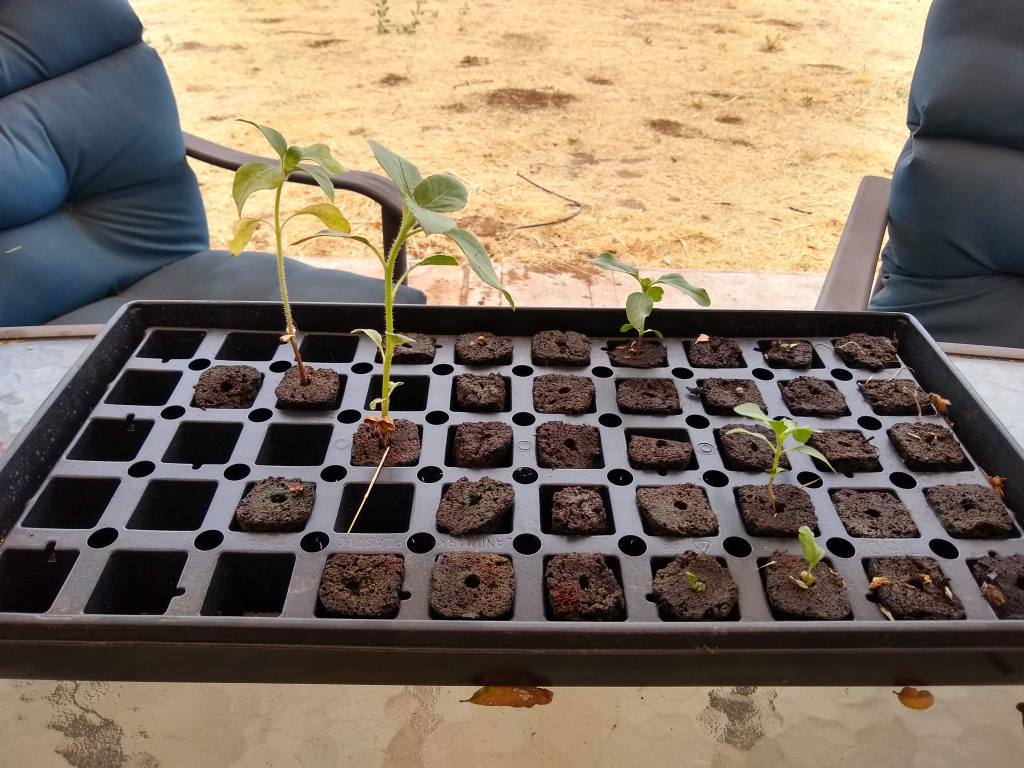
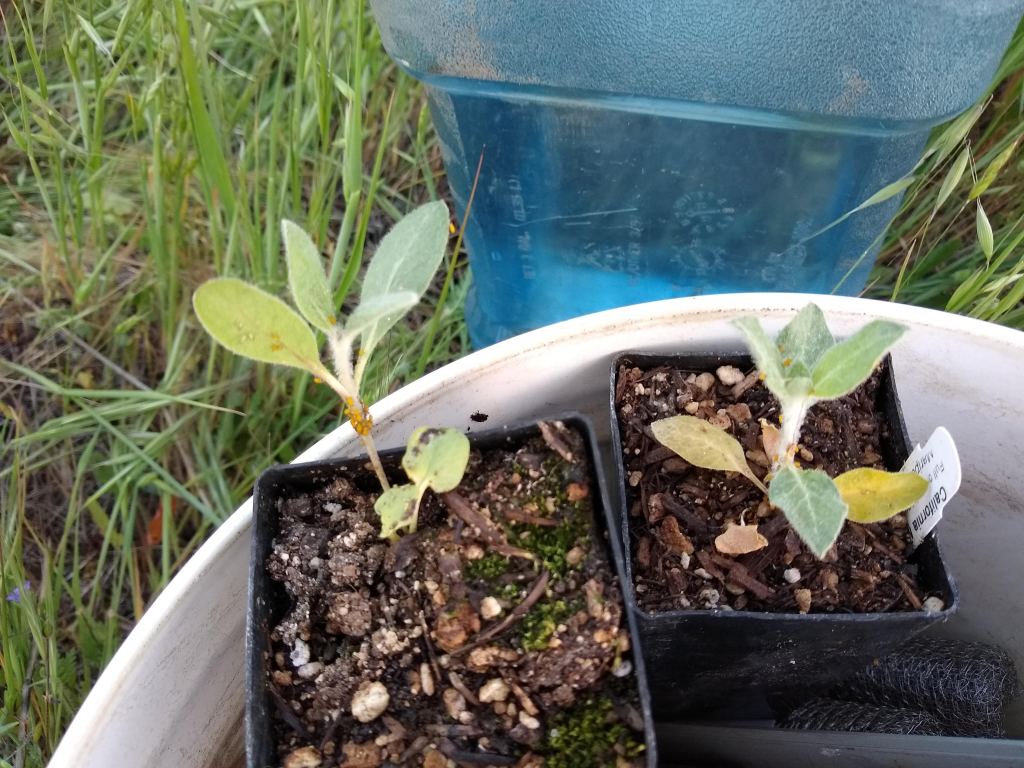
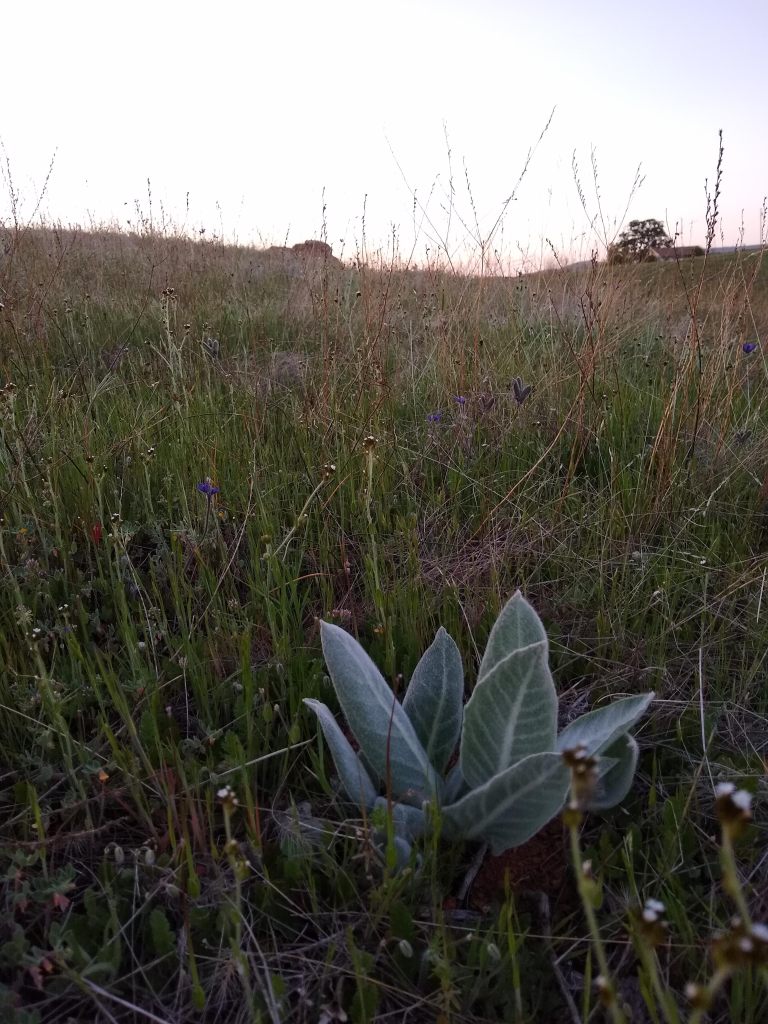
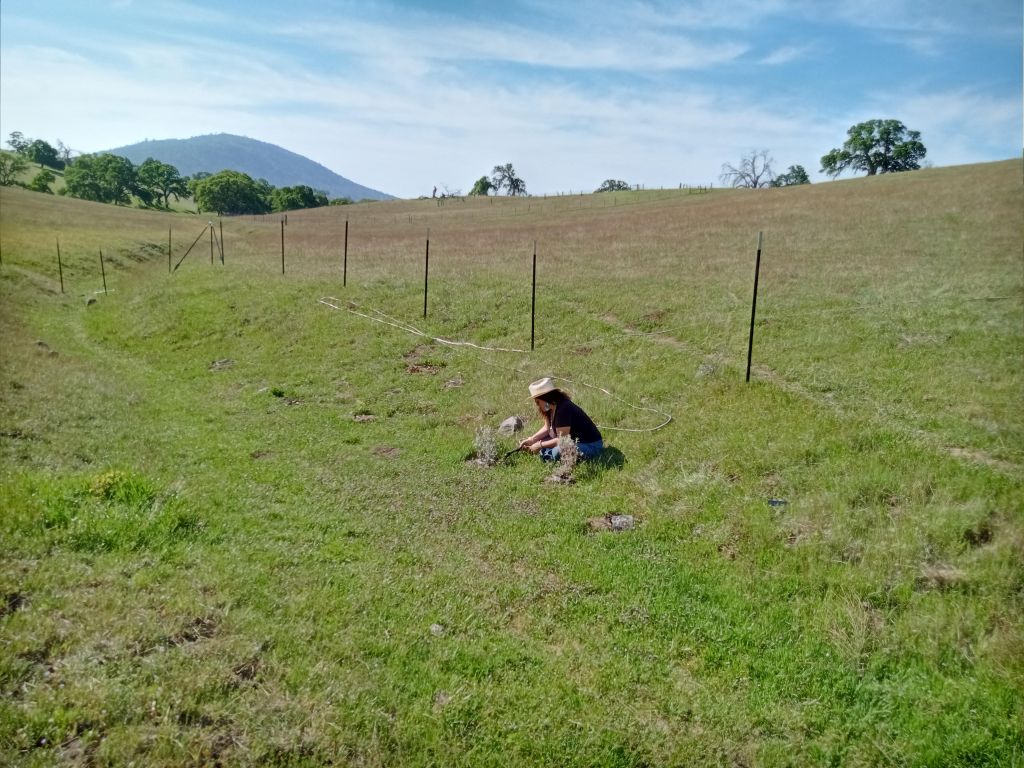
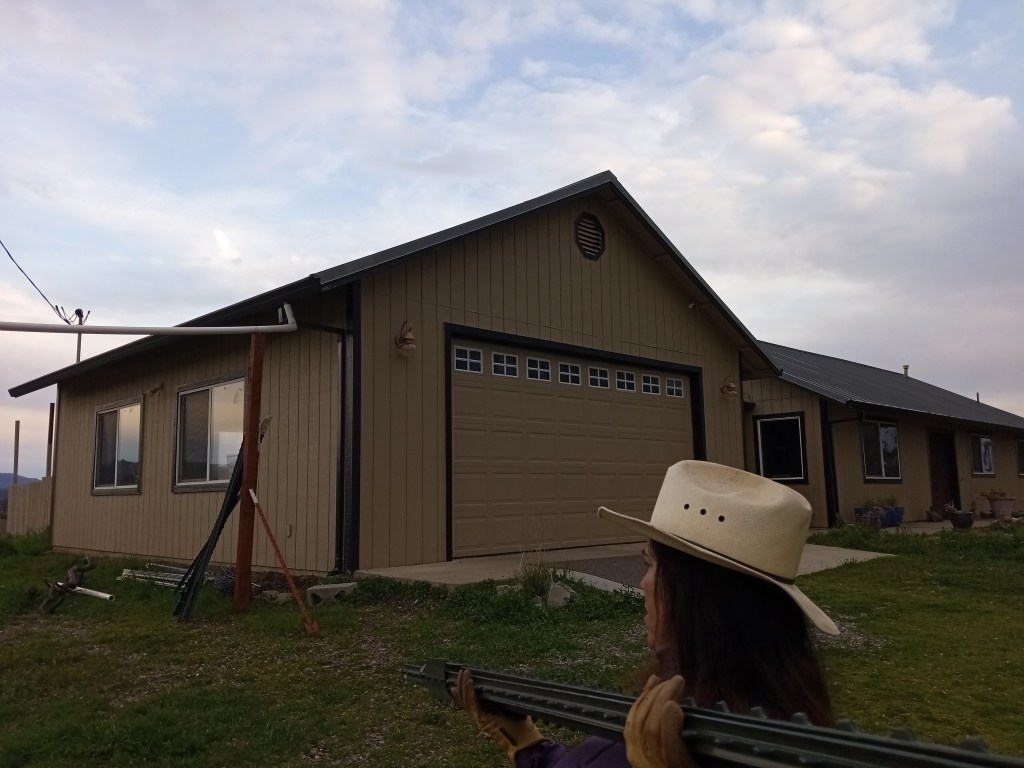
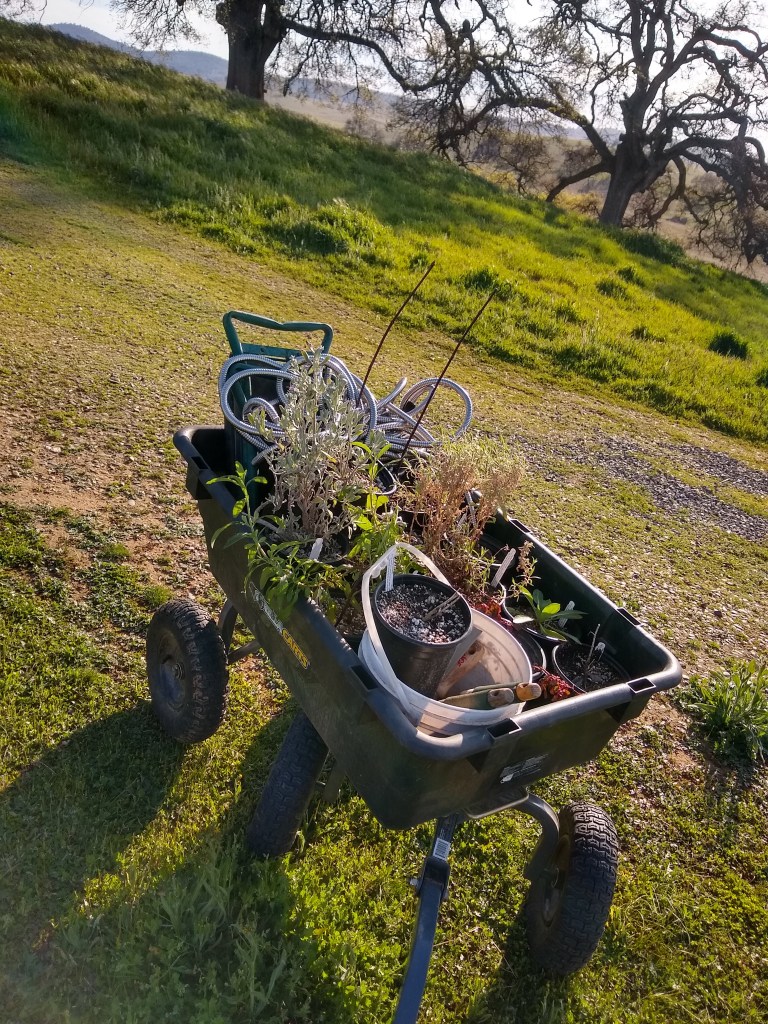
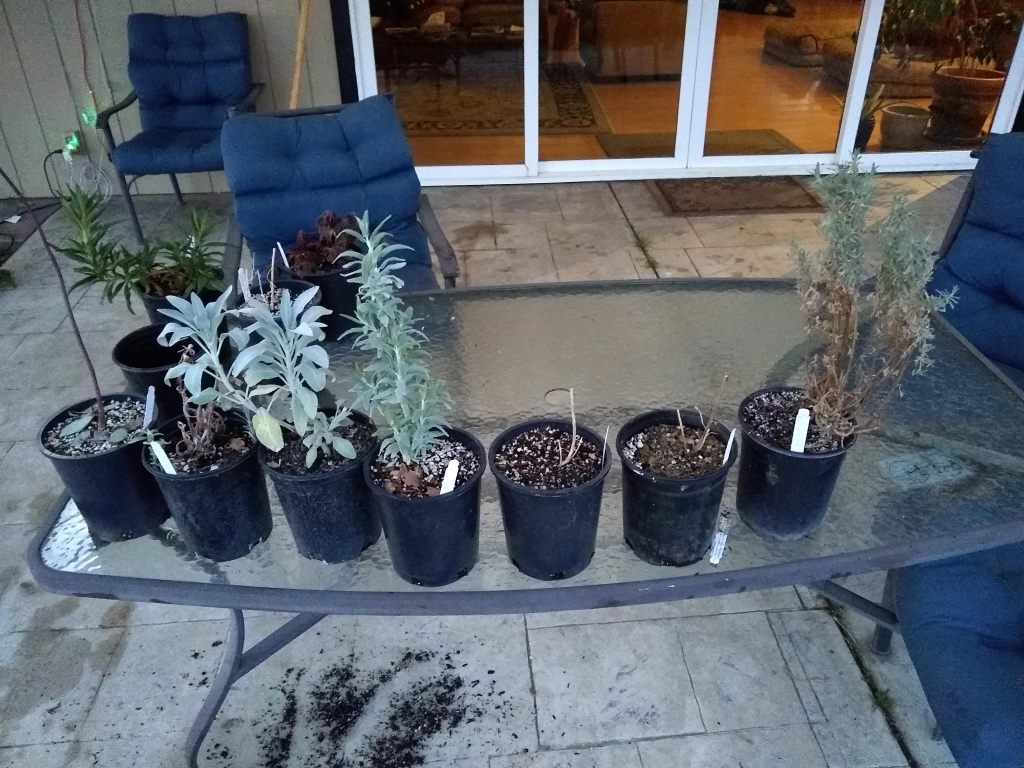
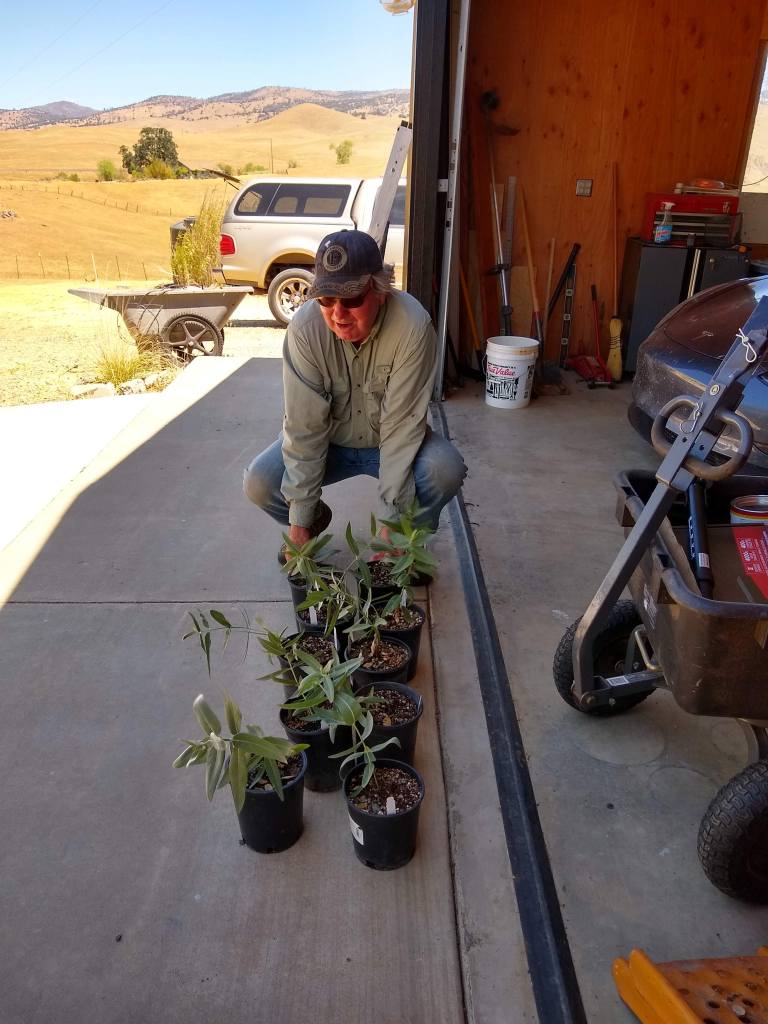
There are so many people that have helped me on this project. My husband David and my neighbor Ric are two. As already mentioned, Ric and Kim have lent us their electric Polaris. What a machine! Ric has also helped me install fence in several locations. We have been working at Site 8 removing the branch fence and installing a temporary t-post fence. There are already a number of butterfly plants planted. Some were eaten by cattle during break-ins. Some did not thrive from the Xerces kits. However, some are still going strong, and there are also oak seedlings I want to protect. I recently purchased more showy milkweeds from Ron Allen. Those I intend to plant in the creek bed where they will have moisture to thrive. For now, I am keeping them close to the house in pots. They will not get planted until the grasshopper infestation has passed. I have not seen many at the creek, but I know it is only a matter of time.

Technical Assistance Continues

Dear friend, remarkable gardener and butterfly lover Caroline Wenger Korn receiving her delivery of showy milkweeds

In a previous post, I discussed the technical assistance part of the California Association of Resource Conservation Districts (CARCD) grant I have through my local Resource Conservation District office. We are continuing to provide technical assistance. Last week, I delivered showy milkweeds to a land steward in Catheys Valley, Caroline Wenger Korn. Caroline is a dear friend of mine. She is from a generational cattle ranching family and lives in the home her grandmother built on their family ranch. Caroline is a remarkable gardener. She feeds herself and many friends with the produce she grows. Fortunately, Caroline also loves butterflies and has existing habitat. She only has narrowleaf milkweed however and wanted to have more plant diversity. We are prioritizing places that are expanding existing habitat and plant diversification is important. Thank you Caroline!

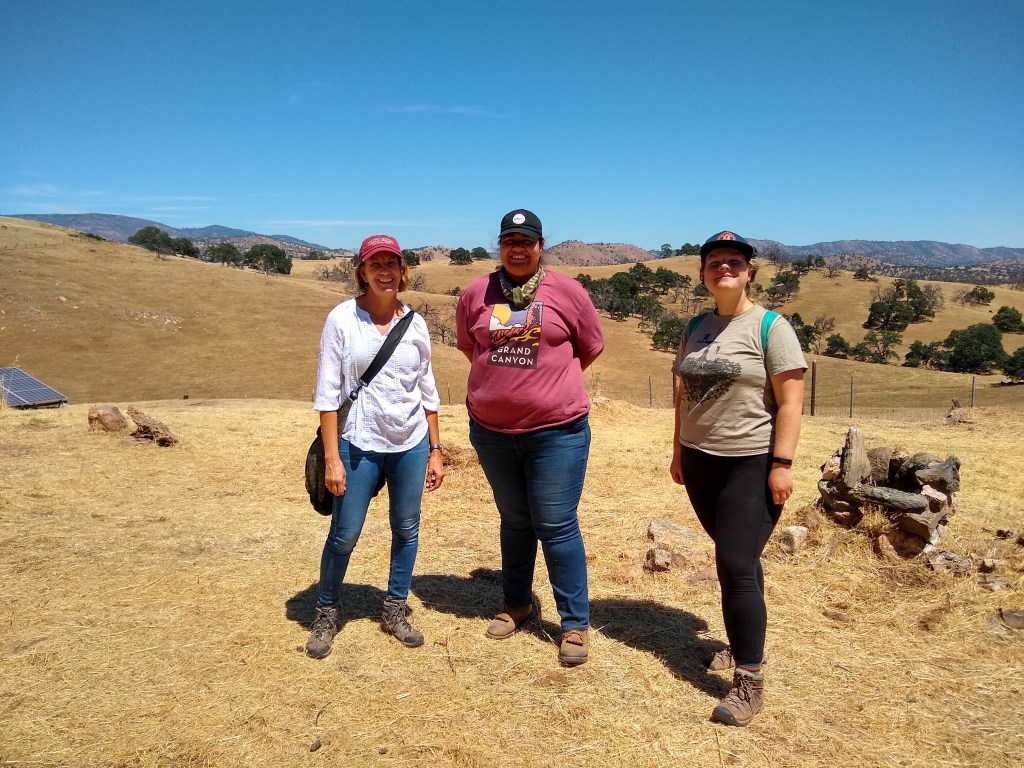
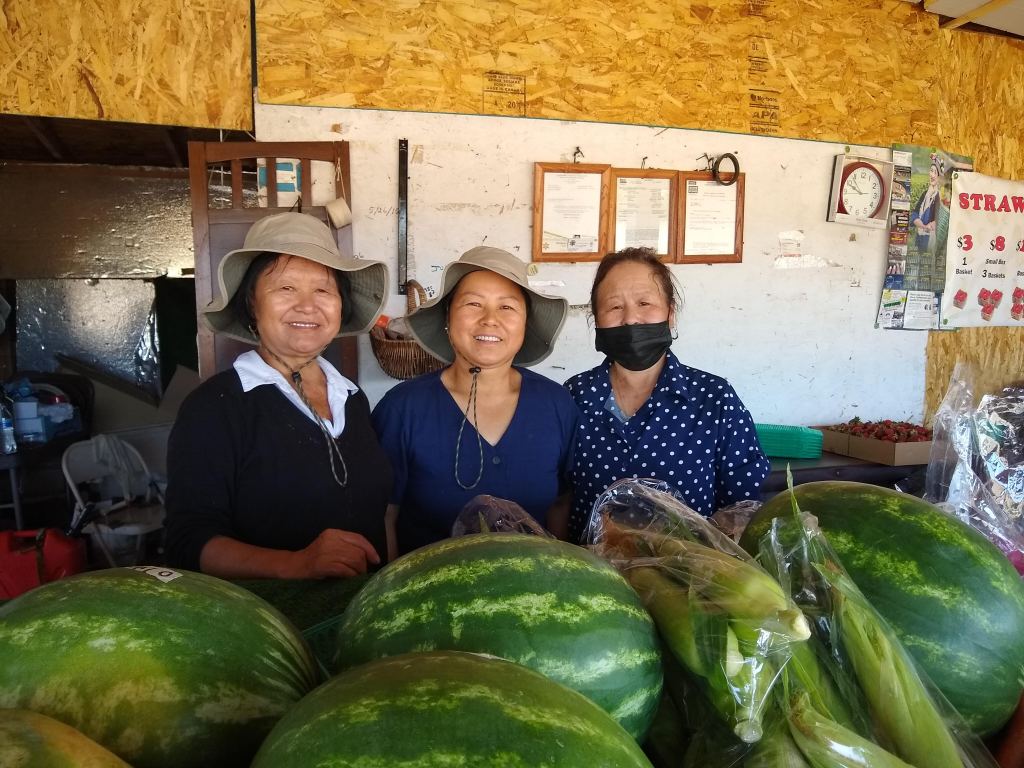
Kae Sateurn (photographed center with her visiting sisters) is a farmer in Merced County. She has agreed to begin with one plant to help the butterflies.

Another friend, Kae Sateurn, loves flowers and produces the absolute best strawberries I have EVER tasted. Her and her husband have a diversified, no-spray farming operation in eastern Merced County. I spoke with her about the situation with the butterflies, and she agreed to begin with one milkweed plant. I will deliver her plant next week. My guess is that she will want more when she sees how beautiful they are and how many pollinators it brings to her farm. Thank you Kae!

Odds and Ends

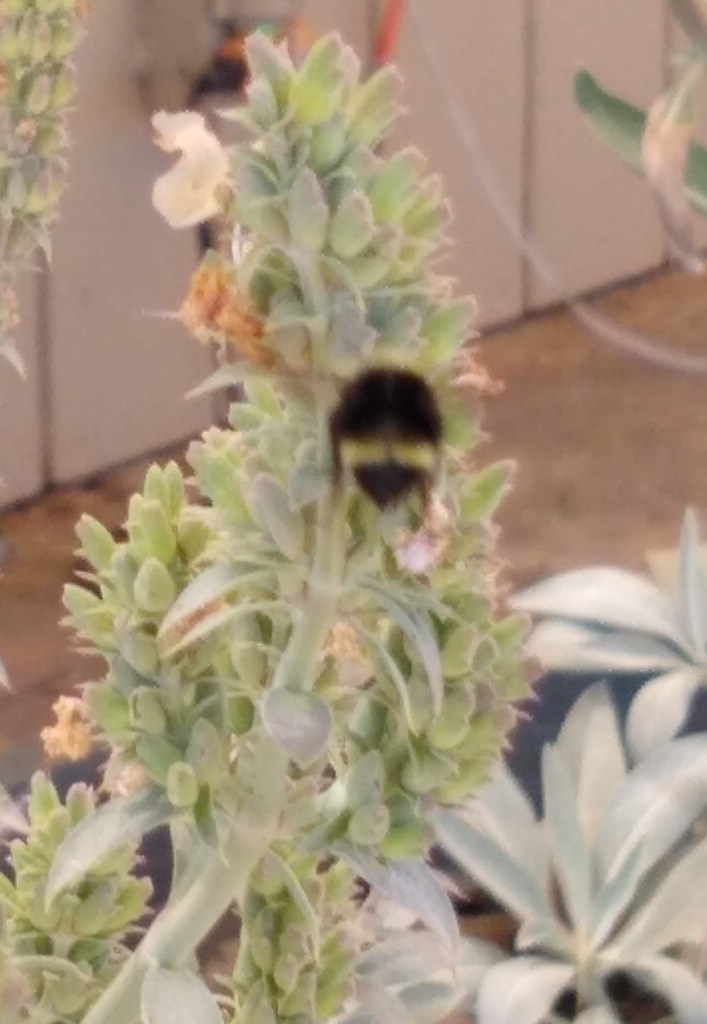
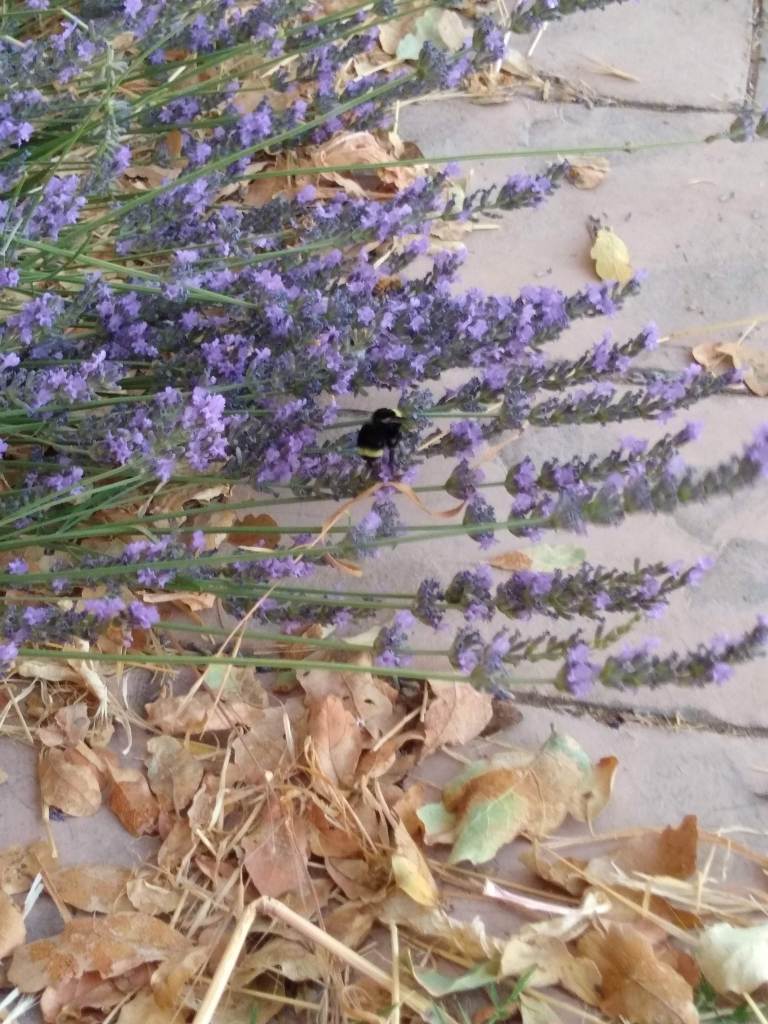
A big healthy bumble bee enjoys the lavender

Not everything is bad news. I have been seeing several types of bees including a variety of bumble bees. They are one of my favorites. Bumble bees are also in decline and 25% of them are facing extinction. It has buoyed me in these dark times of drought, grasshoppers and pandemic to see them on the flowers.

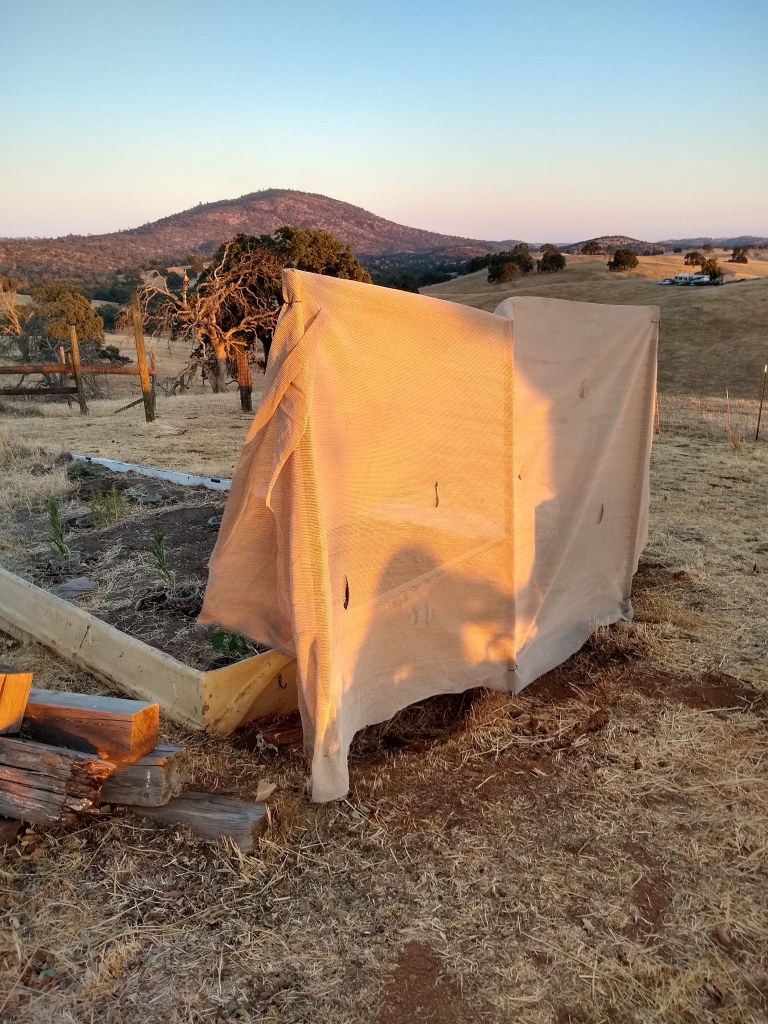
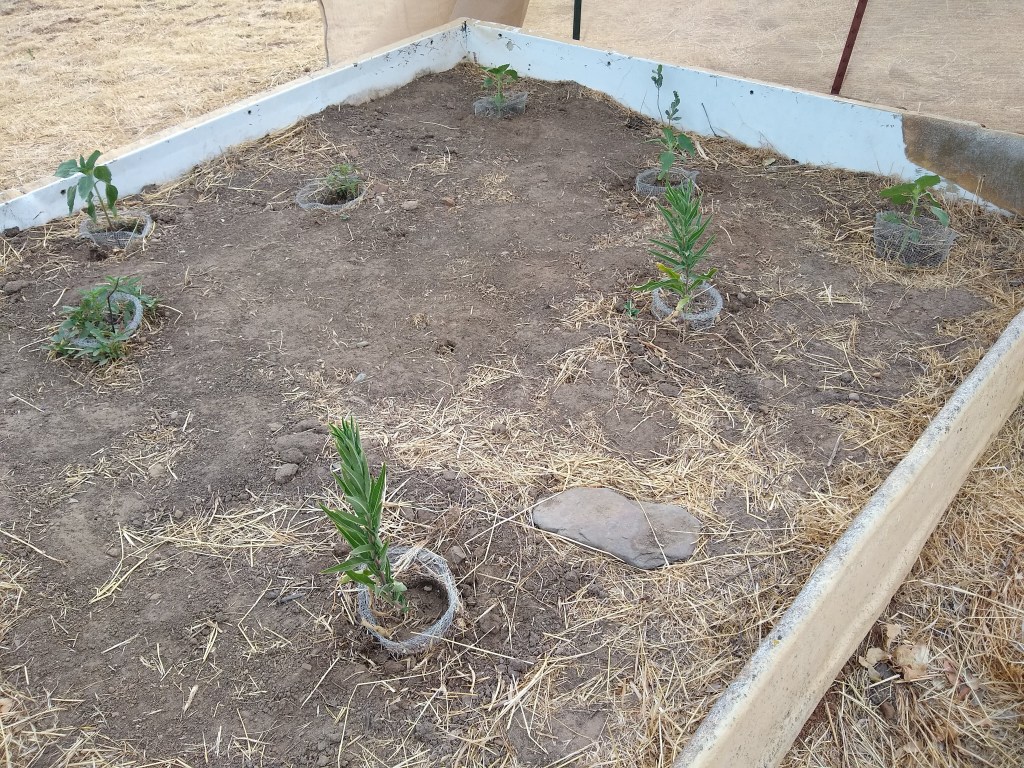
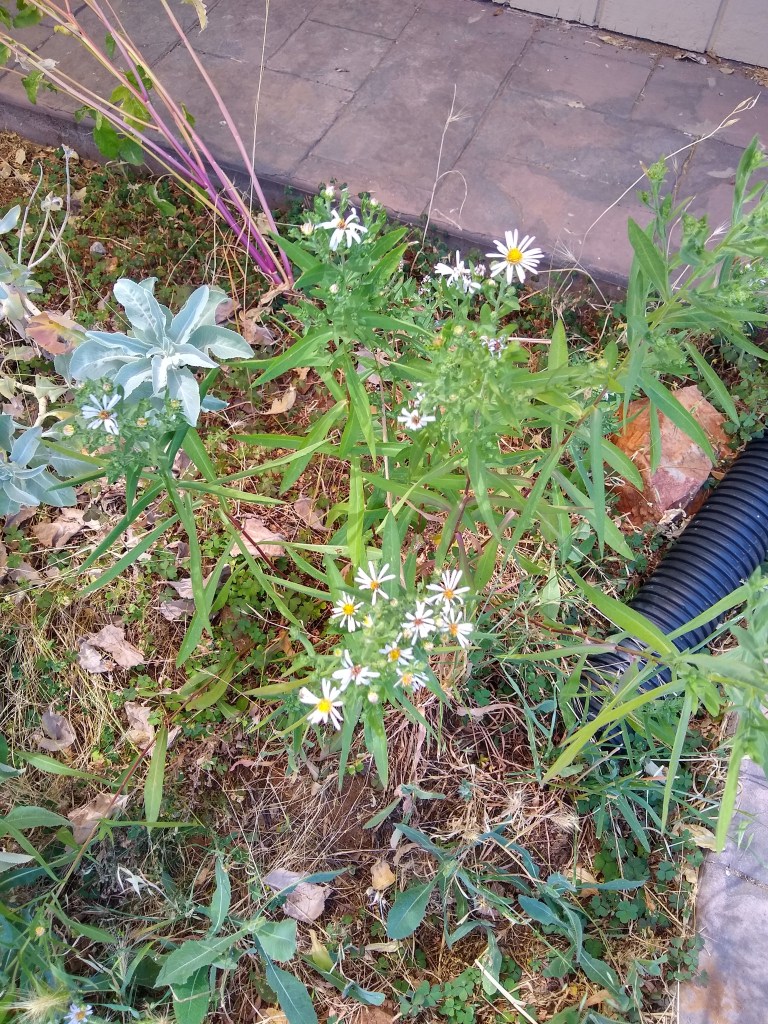
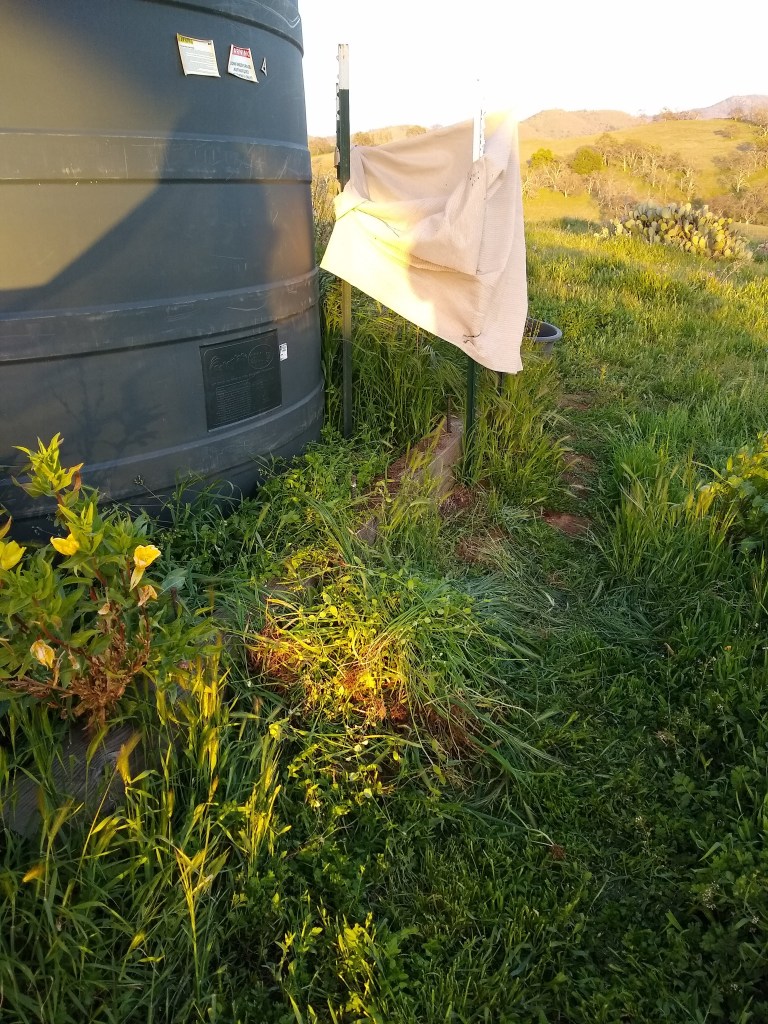
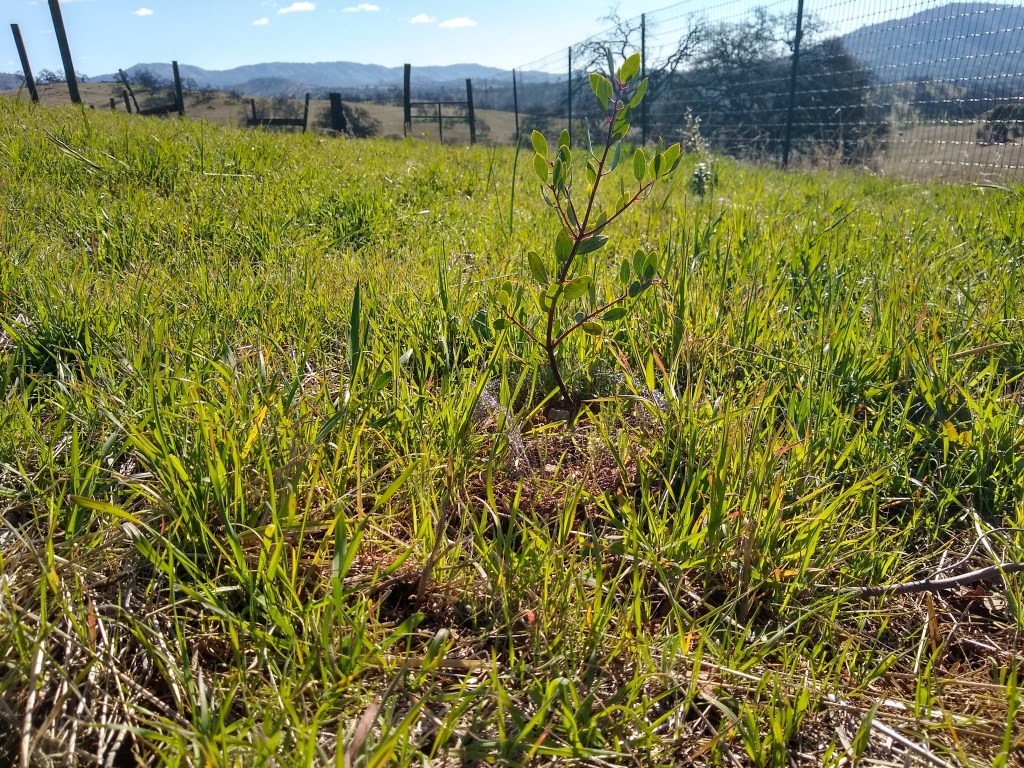
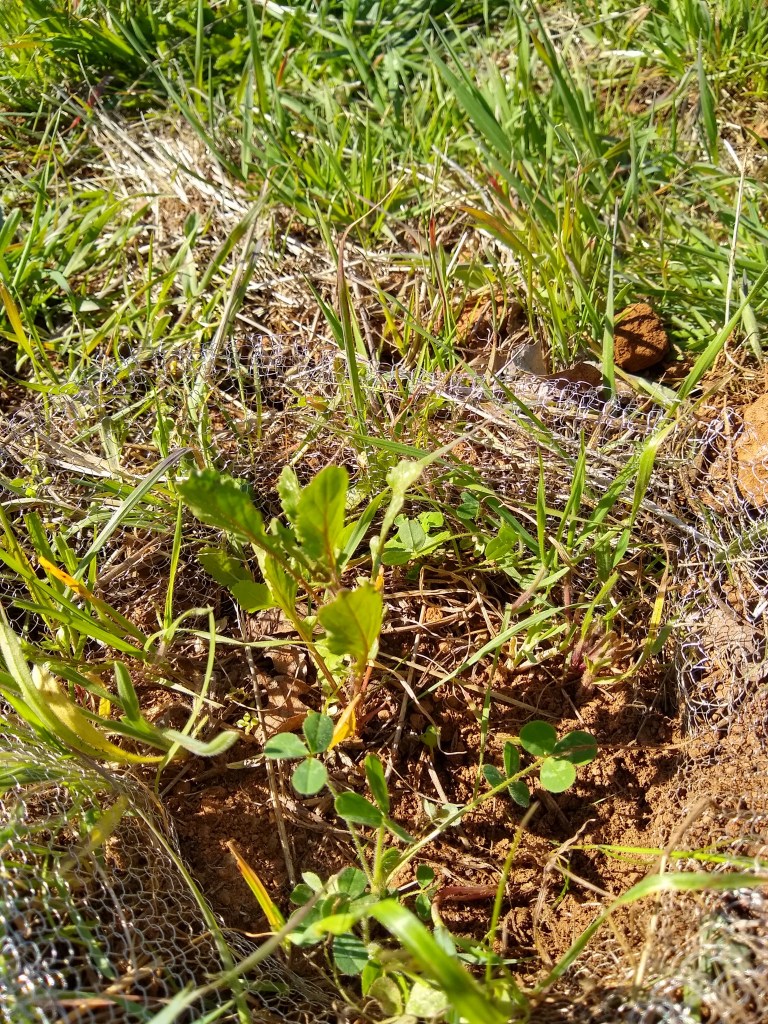
I finally put the shade cloth windbreak up and attached it to the t-posts. It is working well. The last of the lemon sunflowers are growing and ready for replanting. Some of the other transplanted sunflowers were eaten by an as yet unidentified creature. One of the manzanitas was stripped probably by grasshoppers in the Xerces hedgerow. The smaller seedlings are sunflowers that I harvested from the plant I grew last year from the roadside sunflowers. Hurray. It took a while, but five popped up. They will be important late season sources of nectar. We may not get a late season though. It is not just the grasshoppers; everything seems to be in a hurry to grow and bloom earlier than normal. For the last week, I have seen tarweed in full bloom. That is early. I have not seen a butterfly in weeks, and they would typically be all over the primrose and pacific asters. They were last year. The wind seems to blow all the time, even at night. Butterflies do not like the wind or smoke – as we learned last year. I think they all sense the impending desert-like heat that awaits us in July through September. It is a looming worry for me too.

I watered the Site on Odom Creek and was pleased to still see the same amount of water in the spring and the pooled water fed by the spring. The willows that I planted last December have had a hard time. One was eaten by cattle or deer. The other three have struggled with the dryness. Only one has green leaves. The mulefat is doing well however. In this environment, I will take the win.

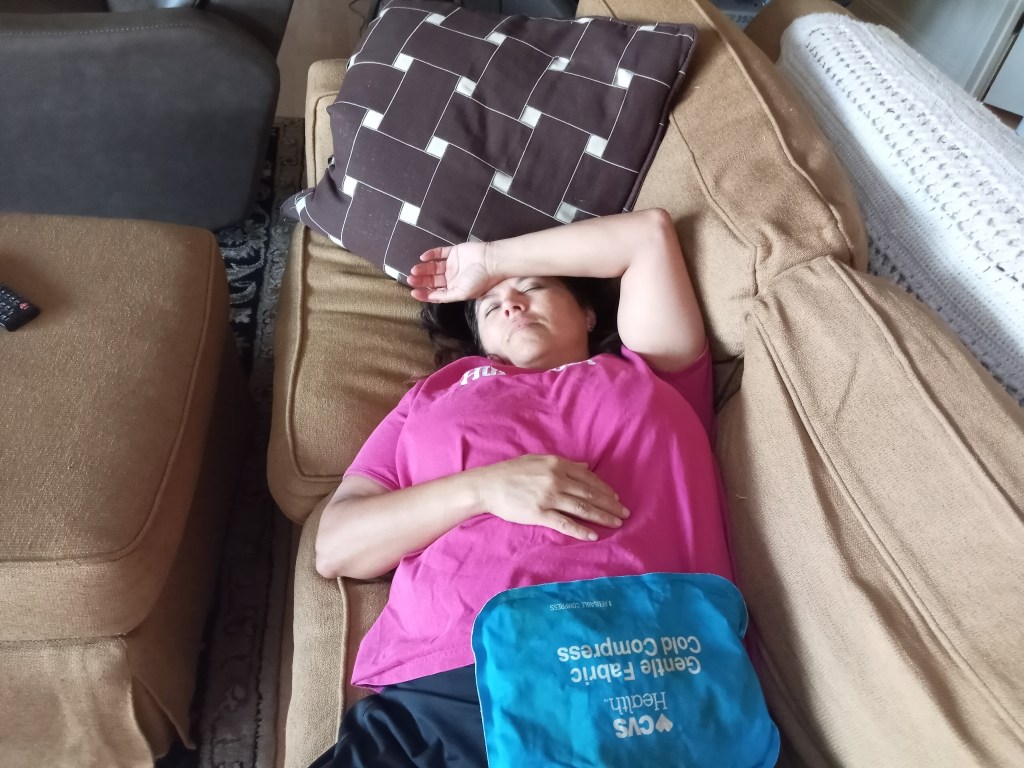
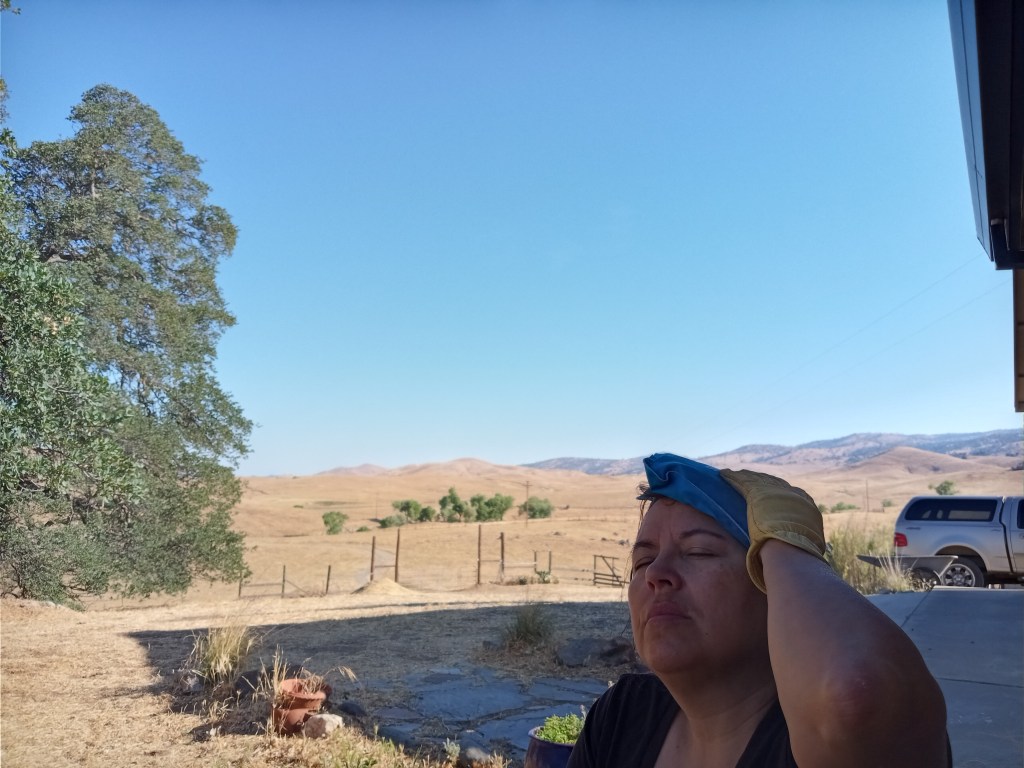
Not a flattering photo, but the truth. This work is tough. Icing my abdominal muscle.

The extra watering, the fence work, (probably) my age and all the concern I have had has made my body tired. Last week, I pulled my abdominal muscles badly. It was bad enough for me to ask David to do my watering for two and a half days. If you know me, you know I don’t ask for much help and I don’t stay still long. I have a plan; I get to work. I take responsibility for what I have committed to and don’t put that on others. Fortunately, it got better after a week and fully resting the muscle for three days. However, it was a wake up call. I cannot continue at the pace I am going and have to work smarter. There will be some changes next year if I can afford them. Most important, however, I have had to switch my mind around to not constantly feel like I am failing in baise’eboli weweriam (my butterfly relations). I have learned to tell myself “What happens happens. There is so much you cannot control. If the butterflies don’t come back, if the grasshopper eat everything, if the heat kills what is left, there is nothing you can do about that. You have tried”. This has become my daily mantra. I care so deeply. I want a healthy ecosystem. Inepo Yo’eme into inepo eteho in hu’u Yo’eme noki, in maala noki. Si enchi nake hu’u huya ania into aapo in hiapsi. (I am Yo’eme and I am speaking in the Yo’eme language, my mother’s language. I care very much for the natural world and it is my heart.)

Of Abigail Adams, Drought and Failure

Grasshopper on the California Milkweed

One of my many favorite classes at Humboldt State was US History. And, one of my favorite explorations was reading and analyzing the letters of Abigail Adams. Until then, I had not heard much about the women who were instrumental in establishing the United States. It was an incredible window into the life of a woman in the 1700s. Of course, Abigail has been defined in terms of her relation to John Adams, the second president of the US, and John Quincy Adams, her son, the sixth president of the US. It was not the men in her life that fascinated me most; it was her intelligence and determination in a time before corner stores, antibiotics and air conditioning. She often wrote to John about conditions on their farm in Braintree, Massachusetts, the children always being sick, lack of money and the farm failing.

Her words, or some semblance of them, enter my mind often these days. Not just because it is near the 4th of July, but because there are so many challenges here at Walappu’ ‘Uuchuthuu. We are beset by grasshoppers, and they are eating everything in their path. Especially in Site 2, the plants, the hours of work planting, weeding and watering, are nearly all eaten. Almost all were healthy and gorgeous just 2 weeks ago. The smell was uplifting, the growth progress a joy to see. We had sulfur butterflies all around. Now, there is chlorophyll carnage – leaves so tattered with holes they seem like defeated flags on ghost ships, empty stems bent from the weight of hundreds of grasshoppers per day gnawing on them, and the intact sagging under the knowledge that their healthy, glorious bodies will be next.

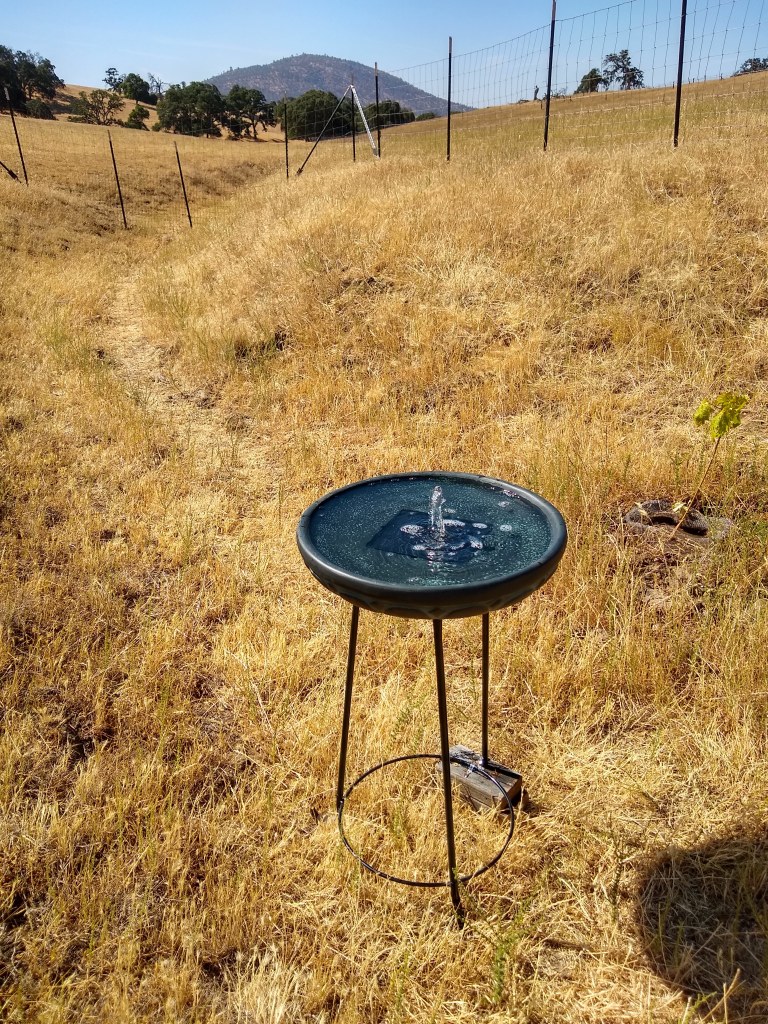
It is too sad to post photos. The ones I took two weeks ago to post with this entry no longer reflect reality, and I cannot look upon those photos without my eyes beginning to cloud. I thought, just maybe, the milkweed might be spared. You hear so much about its toxicity that I thought, “well, maybe…” Not true. The grasshoppers spare no one. They have eaten three of my dear huken (narrowleaf milkweed). In a last ditch effort, I placed a solar powered bird bath theorizing that perhaps it might bring more insect eating birds to the arroyo. I continue to water them in the hope that I can keep their roots alive through this dark time.

Drought

The drought is causing me to water twice per week to keep the native plants alive. I water the plants in pots daily. You know it is dry when there are a line of songbirds waiting for their turn to use the water bowl. I am not kidding. There was actually a line, and there is the most distinctive ring of bird poop making a circle around the dog dish.

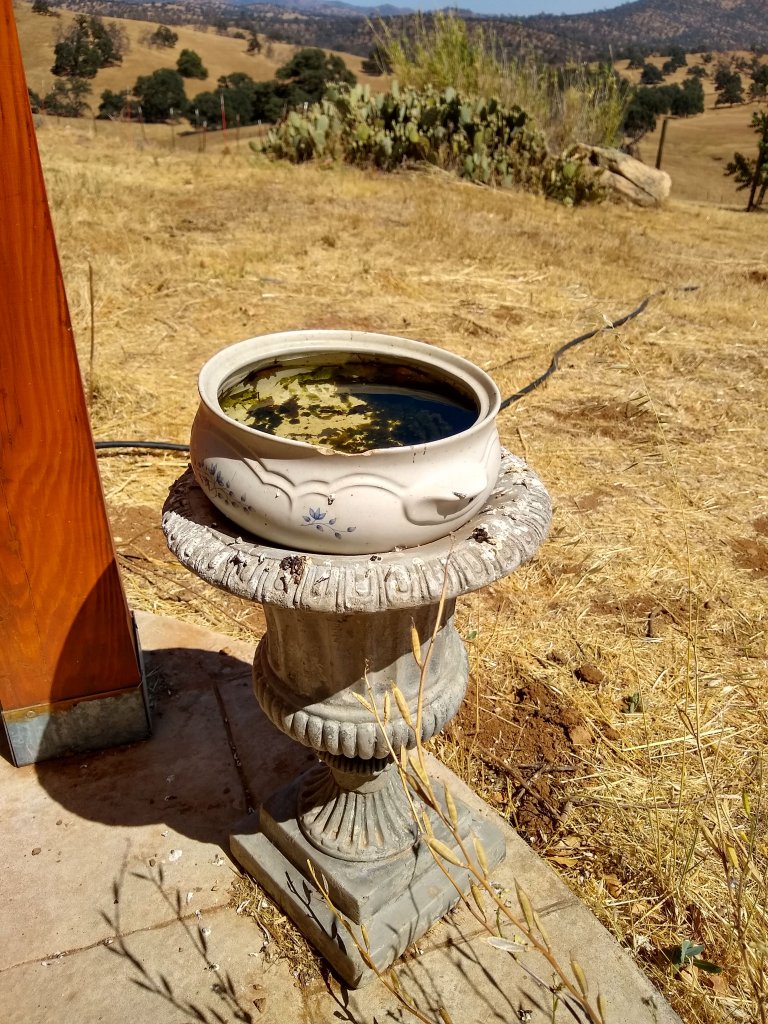
Having water available for the wildlife is critical. Even if you live in an apartment, you should put out some vessel of water to help as many as possible survive. I have a bird bath on the southeast corner of the patio. It is always in use. The fountain bubbles 24/7, and I have a shallow dish on top of the slate to provide a shallow vessel for those that like that depth. Birds use both the deep eddies and the shallow dish. I provided a shallow amount of water in the stock trough on the north side of the enclosure, and the one on the south side near Tank 3. Then, there are the other two aforementioned vessels – the dog dish on the west side of the house and solar bird bath in Site 2.

Given the need to water twice a week and to keep more than the normal amount of water out for wildlife, I am concerned I will not have enough rain water to supply the plants twice a week through the summer. I have already begun backing off of watering the locations that did not sprout from the Xerces Kits. I am also limiting water for the plants I established last year figuring that they do not need as much as those that are newer. I am hoping to get by. Here are the latest tank levels:

Tank 1: 100 gal remaining (This is the tank that had the leak, and we lost half of the stored water). This feeds Site 2. Once it is depleted, I will switch the hose to Tank 2.

Tank 2: 2,213 gal remaining.

Tank 3: 1352

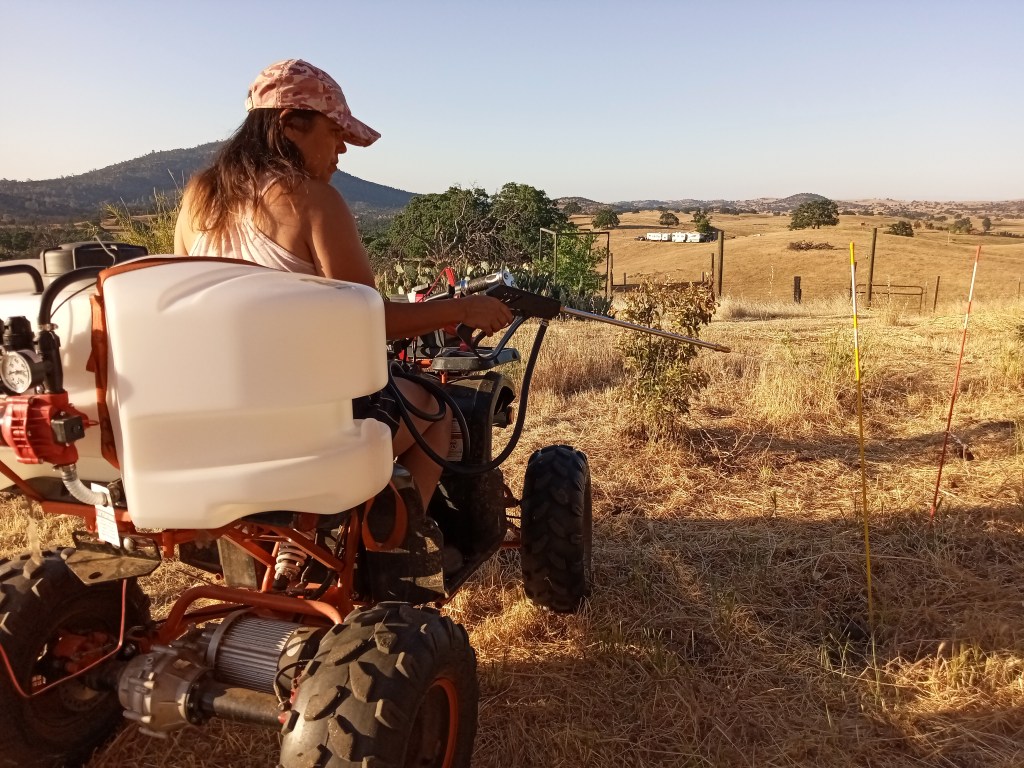
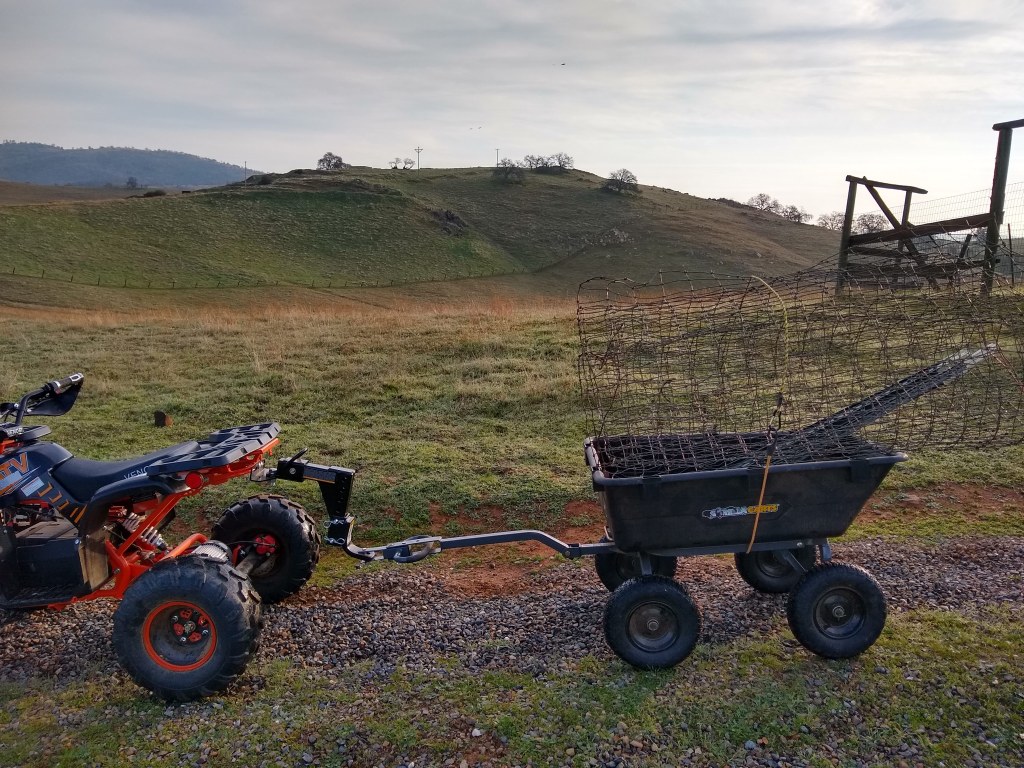
In May, so I could get water more efficiently to all of the sites (vs. hauling water in buckets from troughs), David rigged a watering system using a 25 gal sprayer onto my ATV. I had my doubts, but it has been working well and really has helped me deliver water faster to all of the sites. I do not completely fill the tank due to the weight of water. I generally fill it a little over half. All has been well until the other day. The metal platform arm on the ATV snapped. In truth, the ATV is a cheapo model; the weight limit is 300lbs. With my weight being far less than that, there is room for some water transport. All we can theorize is that the weld on this cheapo was faulty. Now I am back to hauling water by hand. Sigh…

Site Updates

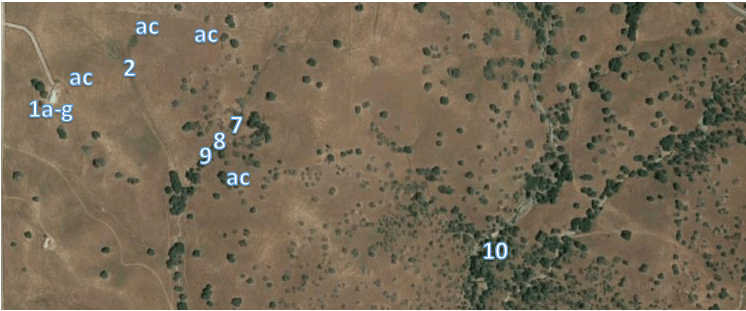
Updated Site numbering, with “ac” meaning “A. Californica” (California Milkweed)

A. Californica sites: It has been a blockbuster year for California milkweed. The two main sites ended up with many more plants. The plant counts in order of closest to the house to furthest: From 7 to 12, From 16 to 21, 1 and 2. They have already set seed pods -except for the youngest ones. They will need to fight the wind, heat and grasshoppers now to complete their cycle. I am grateful for the early bloomers. They have some nice sized pods. Some plants have gopher damage and a few have wind damage. I want as many seeds going into the air and ground as possible.

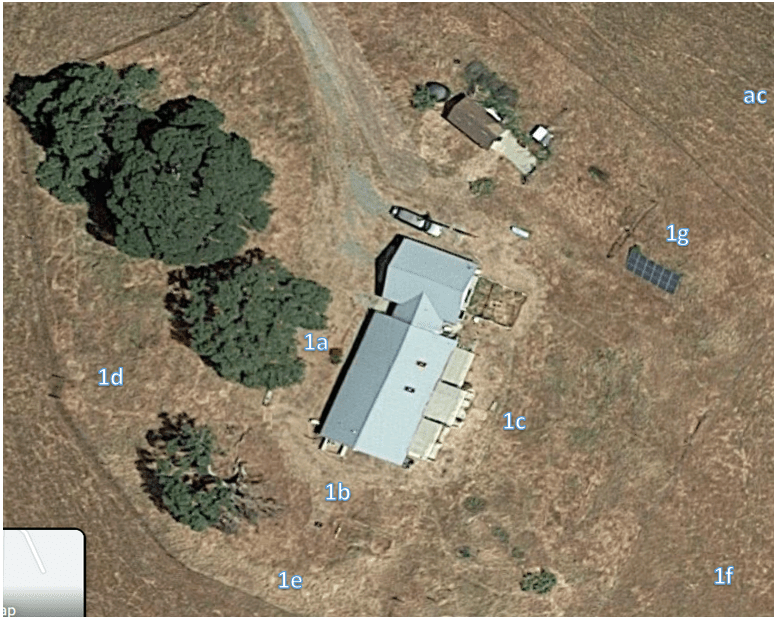
Site 1a through g:

Detail of Site 1 using old satellite photo of homesite

Site 1a: Mostly deer grass. All are doing well. Two rose bushes, which are not being prioritized. New lilac tree transplant doing well. Honeysuckle bush brings bees to area.

Site 1b: Primrose doing very well. Two narrowleaf milkweed reemerged from original South Test Plot. They may end up as gopher food. Crossing my fingers they won’t this year. Pacific aster looks healthy, but no blooms yet. There are still some poppies, which bees and flies love. I am continuing to water them a little.

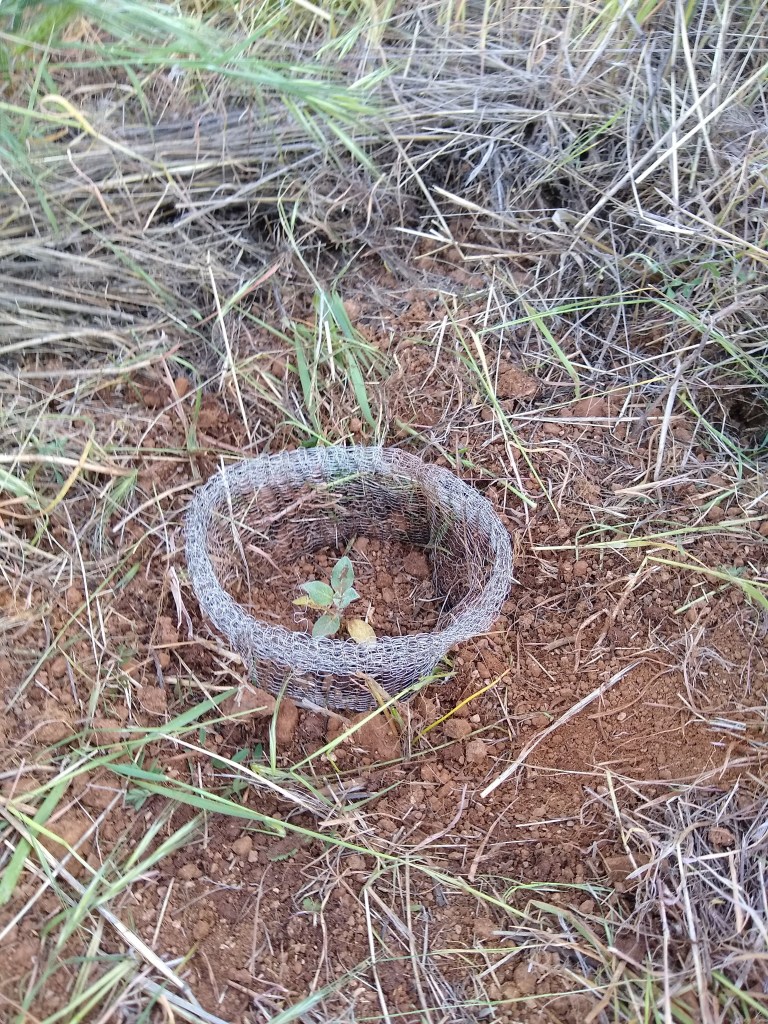
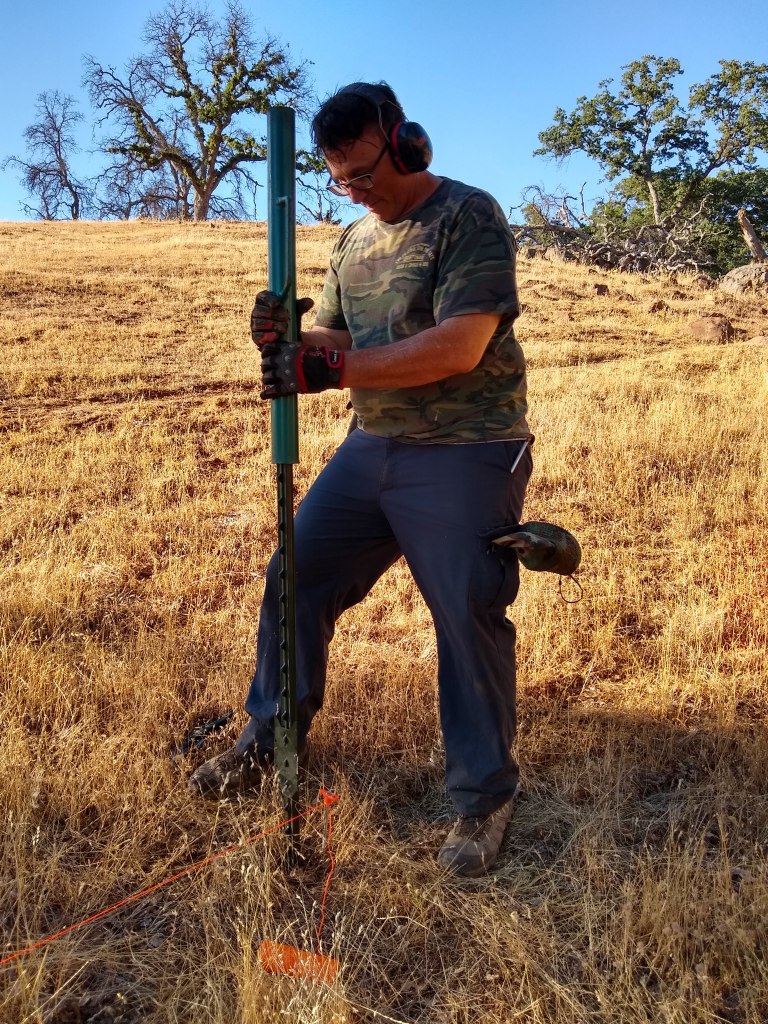
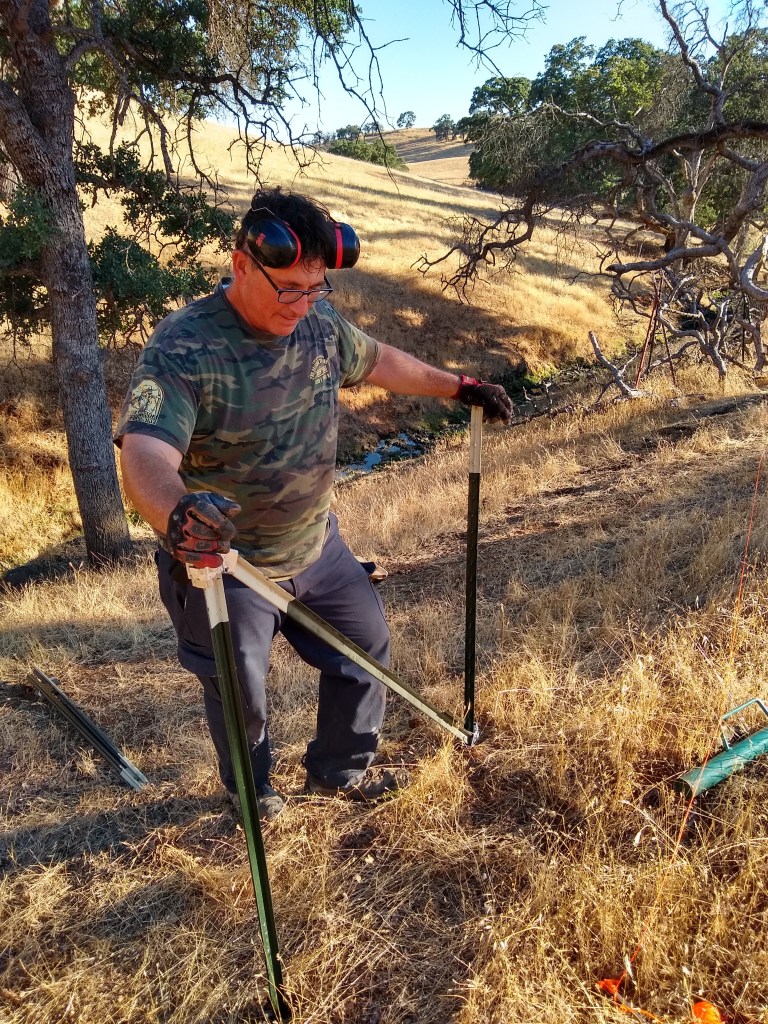
Raised bed is a tough place. Rabbit or gopher still around causing trouble. Three of four milkweeds that were snipped have reemerged. Showy milkweed that was snipped reemerged. All look healthy. Original woolly pod milkweed did not come back. One of two woolly pod transplants is still growing. (Rabbit got the other one). Heartleaf milkweed transplant is still alive but not much growth. Transplanted the two yerba santas and two primrose; all transplants were in gopher shields. Transplanted sunflower starts using gopher shields. Still, rabbit is snipping some of the plants from the top. Sulfur buckwheat and California fuchsia are surviving, but do not look 100%. Installed a t-post windbreak with shade cloth. It is working for now. While installing it, I got hit in the head with the t-post pounder. Fortunately, it was not moving fast. It was all my fault. I walked behind my husband who was pounding in the t-posts. I was cleaning up some broken composter pieces. He turned just at that point, pounder in hand, and my head was at his hand level. Then…well you get the idea. It hurt. 18lbs of steel.

Site 1c: Everything is doing really well. Lots of blooms, including from my own herb plants. We lost one lupine, but the other silver lupine is doing really well.

Site 1d: Three of four coyote bushes survived. The fourth is a stick, but I am still giving it some water in case the roots are alive. The biologist said the location is very exposed, and the wind may have been too much for it.

Site 1e: This is the hedgerow kit from Xerces. Most of the dormant plants did not emerge. Some of the bushes have had a hard time. The manzanita, coyote bush, coyote mint, one toyon, and a few other bushes are surviving. I planted sunflower starts in the mesh bags where other plants did not emerge. Since the sunflower is an annual, if the original Xerces kit root is still alive, it will be fine for next year. Better to repurpose than dig more!

Site 1f: Most of the plants are doing well here. I lost one narrowleaf milkweed. I am still watering it in case it comes back – as a second one did in this location. The sages, California fuchsia, buckwheat, yerba santa, monkey flower and milkweeds are doing well. Deer grass is surviving. The California rose has failed to thrive. I don’t know what happened. It is just a stick now and lost all its leaves.

Site 1 g: The milkweeds are doing very well on this north-facing slope. The sages and yerba santa did not do well at all. The California fuchsia, monkey flower and buckwheat are doing well. One A. Californica transplant is thriving. The other is not doing well.

Site 2: I can’t talk about it.

Site 7: The deer grass bunches are all alive and well.

Site 8: This was the site decimated by wild pigs and where I planted some of the Xerces riparian kit milkweed. None of the Xerces kit milkweeds emerged. The two survivors from the pig attack were doing well. Two weeks ago, I found the narrowleaf milkweed nosed out of its hole. There was no sign of wild pigs, so I surmised that a calf nosed it out. Fortunately, I got to it in time before the root ball dried out. I reburied it. It has stayed green and has continued to grow since then. There is also one showy milkweed, which is going well.

Site 9: This is the area with most of the Xerces riparian kits surrounded by a branch fence. I rebuilt the fence last weekend. The mulefat and two wormwoods are all still alive. The pacific aster was eaten as was the golden current and mulefat during the cow break in. A second golden current looks like it has dried out where I hid it under some brush. There is still water in this area of the creek. There is a chance it will come back. The cottonwood is growing suckers, and most of the oak seedlings are surviving hidden under the brush piles I created months ago.

Site 10: Three of the four willows planted are surviving. I was not able to find the fourth. Perhaps a cow or deer got to it. The one mulefat I planted there is thriving. It has grown significantly and is a beauty. I will need to get some water to those plants. I will need to haul it in buckets from the large spring that is fairly close by.

Administrative Work

Last week, I learned that I was awarded 10 more Xerces Kits. I have two ranch sites, plus mine, and maybe the Southern Sierra Miwuk office building space. We will get those into the ground in November.

I presented to Tribal Council, and they approved moving forward with housing the Technical Assistance work through their Miwumati program. I need to design a project plan and timeline, work with their team to get a young person hired for August to December, and connect them with the RCD and Xerces partners. I am excited to mentor a young person on this work.

Two weeks ago, I signed for my first NRCS grant. This is funding that comes through the Farm Bill, to the USDA and into a variety of ag programs. I am focused on providing ecological services under this program. These services on my ranch will help address climate change as well as improve soils and water for the ag operation. It is a win win. More on this as I get started.

Biologists Perform Site Visit

My heroes – the Xerces biologists – come for a site visit (l-r: Jessa, Deedee and Maddy) visit

Two Fridays ago, the team from Xerces visited. I took them to all of the sites except Site 10. They provided some good feedback and then went to look at Deedee’s experiment she has on Odom Creek. Before they left, they said everything looked good and that I was doing a good job. This meant a lot to me. As you have read in this blog, I’ve had a litany of disasters lately, and sometimes adapting is not enough to win the day. Like Abigail Adams, I have felt like a failure – that everything around me is being held together by bailing wire, hope and determination. I have not seen one monarch since I began this work in 2019. With the heat, drought, grasshoppers, the failed Xerces plants, the ATV busting, bonking my head, it all feels like it won’t be enough to help. What’s more, I have seen only one butterfly in weeks – a yellow sulfur. If we have another horrible, smokey fire season, I don’t know what I will do.

I am trying to focus on the positive – all the other pollinators and butterflies that have sought food and thrived, the beautiful blooms, the incredible smell of it all. This is really all I have to cling to – that what I am doing is helping something. There is still so much I don’t know, and it can be tough to see the forest for the trees – or rather the Monarch migration for the milkweed. Hopefully, it will all end up making a difference.

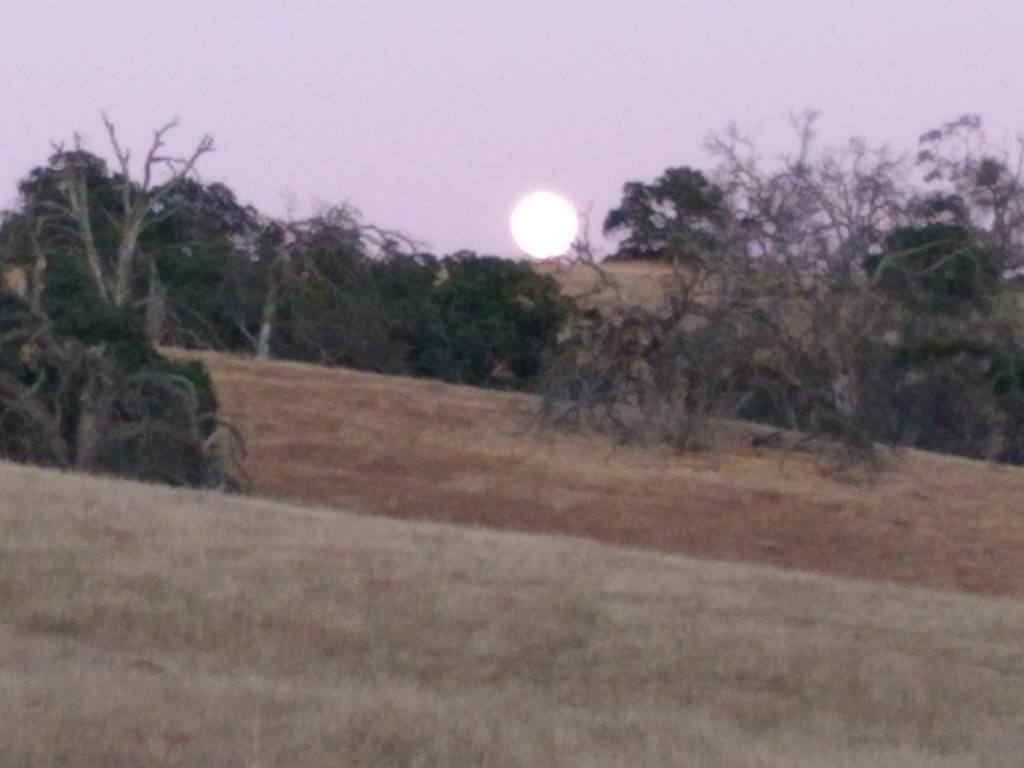
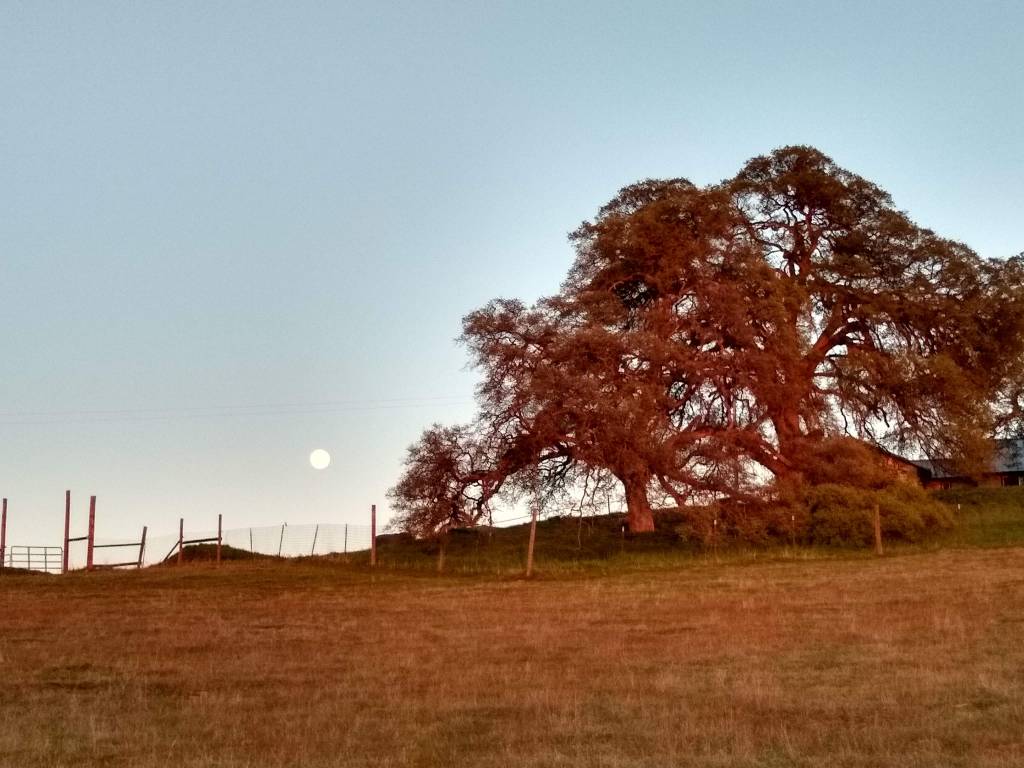
Full moon over the dry hills

From Green to Yellow Overnight. Branch Fence Fail. Drought Takes Over. Ode to a Beagle.

Swale Pond dried up

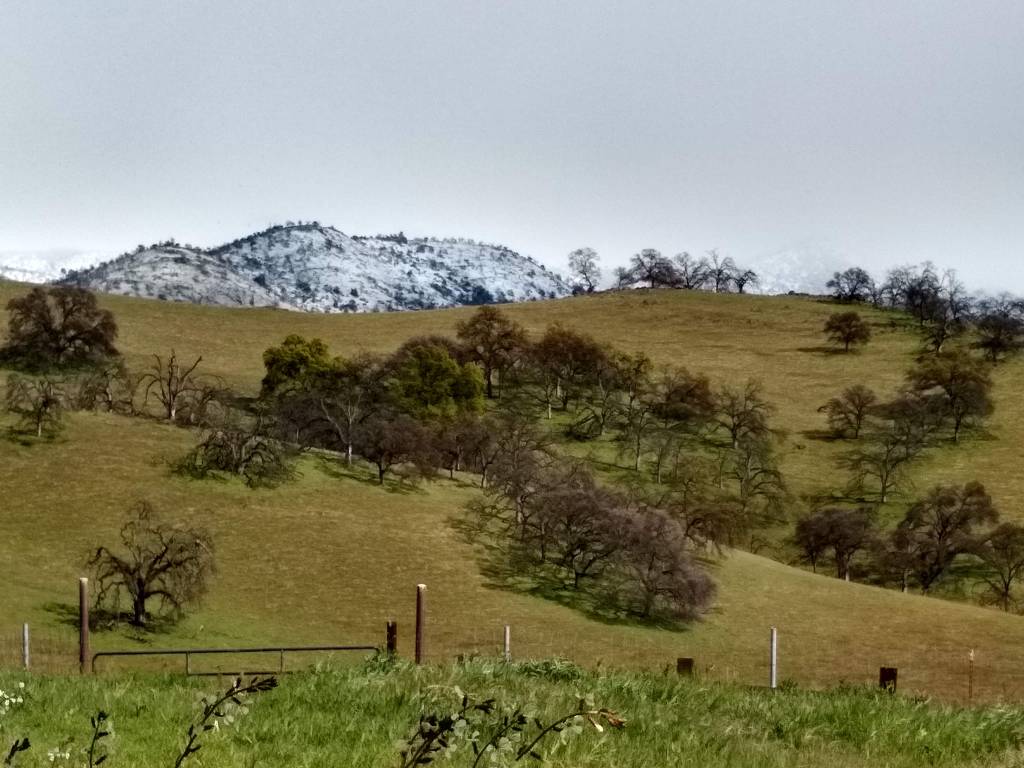
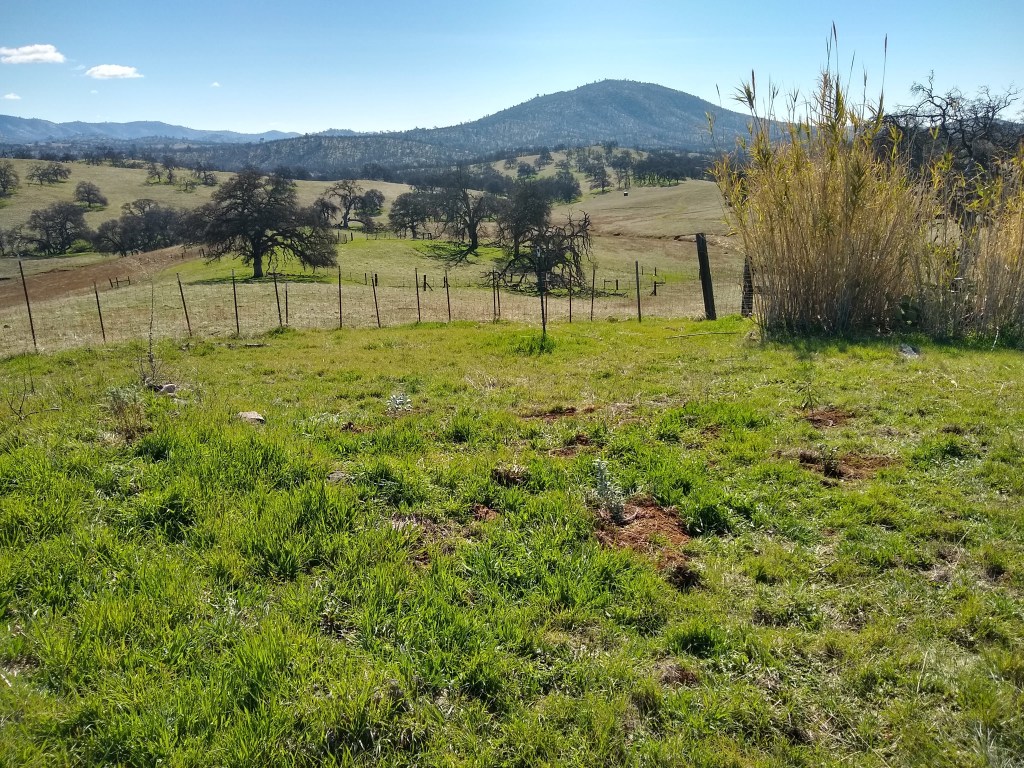
It has been a rough few weeks. The vibrant green of verdant hills has given way to the crunch of yellow straw. Yellow hits the eyes much differently than green. When green, the light is almost nourishing, energizing. While still beautiful, yellow light is blanching, dry like cotton balls in the mouth.

The drought has had a significant impact on the entire ranch, and it is just the beginning of May. While last year the a’wuu’atee (butterfly food) needed watering only once per week, with a few exceptions, the majority of plants will now need watering twice per week this year. I accounted for double watering for about 1/4 of the plants in my rain water budget, and had captured more than enough for a summer and fall watering schedule. However, with the earlier start to irrigation, the leak in Tank 1 resulting in loss of 30% of that water and 90% of the plants taking additional water, including some of the plants from last year, I may not have enough. The late storm in April helped refill Tank 3, because it was still hooked up to the gutters. Unfortunately, I had already taken down the piping system for Tanks 1 and 2 from the gutters. There was no refill, which would have helped greatly for Tank 1.

An earlier photo of the hill spring. It is the darker green in the center top portion of the photo. Note the very light green, almost white, around the darker. This is it shrinking in size.

The humidity is so low so often that the moisture gets sucked out of the troughs, the soil and the plants. I have not seen anything like this in years. The hill spring (photo above), where I planted one of the big leaf maples, is already drying up. This spring typically stays green through the summer and dries in the fall. I knew it would be a dry year, so I prioritized planting within the moist soil of the spring and also in the green portions of the arroyo. I am not sure that will be enough help. The soil is clay in both those locations and requires the spring moisture to absorb into the hardened soil for it to benefit the plants. Otherwise, it is just a location with deep fissures with limited moisture retention. I am watering the arroyo twice a week now and am concerned that the water simply “falling through the cracks” with limited absorption into the hard soil. I am still monitoring this site to make a final assessment of benefit or not.

Speaking of the Arroyo…

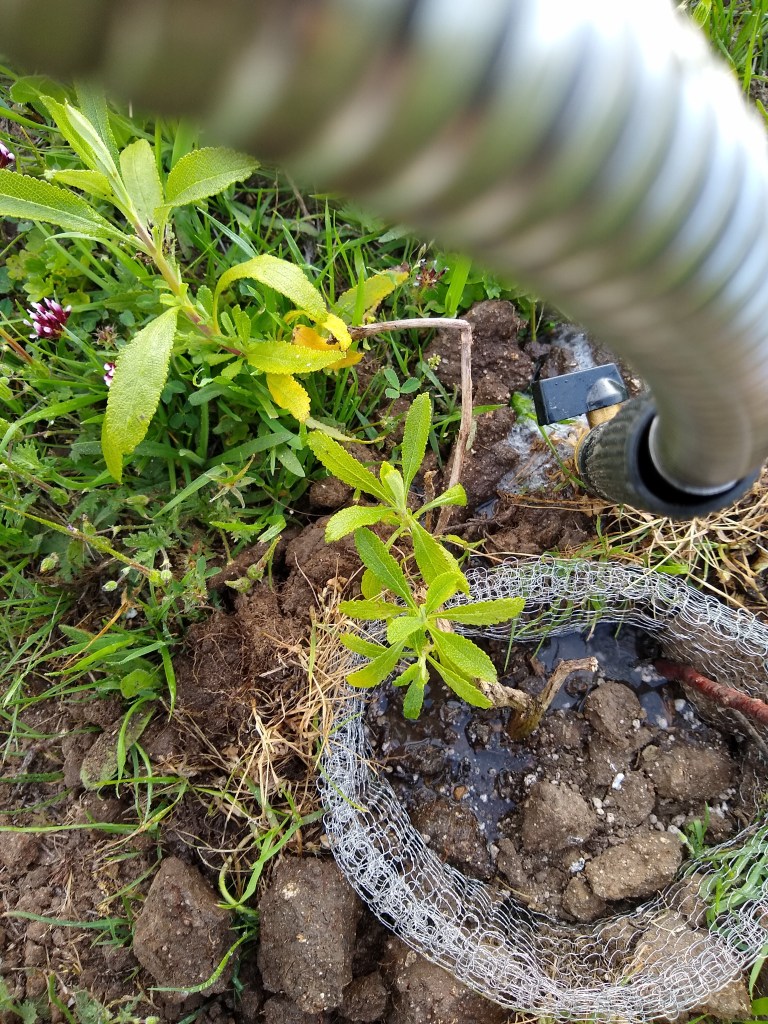
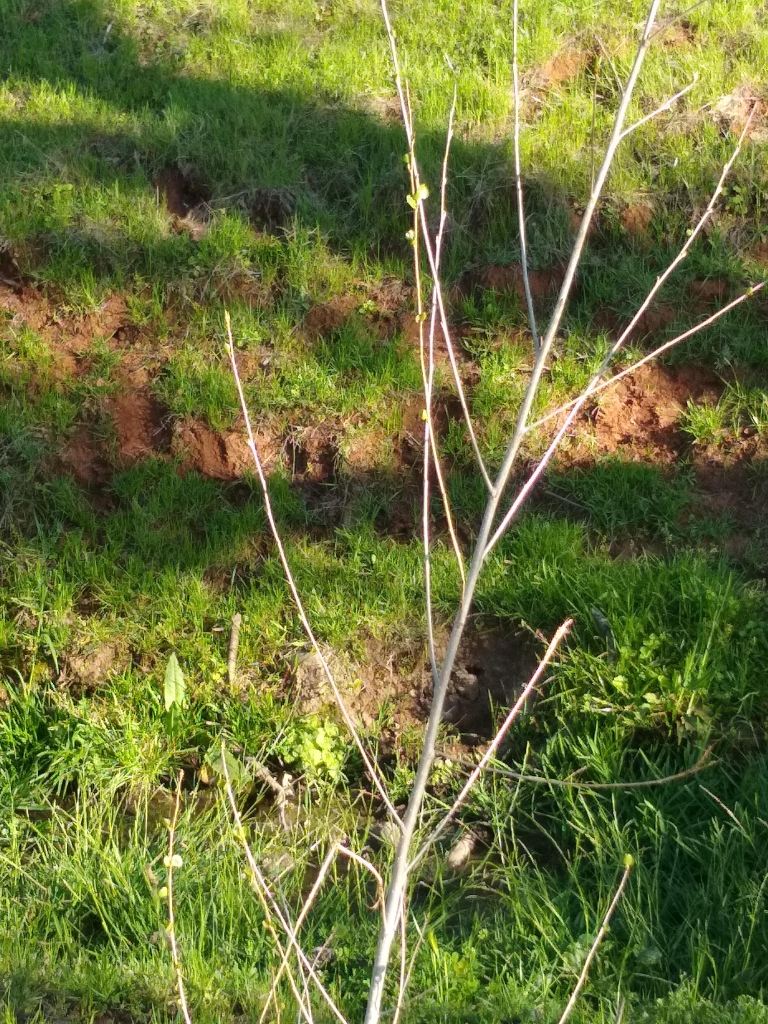
Success at the arroyo is mixed. This seems to be a place where a variety of spiders and bugs live – which is wonderful – but not for the red bud. A large spider moved into the redbud gopher basket. There was one hole, then two, and now three. How do I know it is a spider hole? I saw a very large spider come out to check out why there was water entering its hole. There was nothing I could do to save the redbud. Over the weeks, it died. I hate to think what happened to its roots. RIP redbud. You looked so beautiful.

There is still some green in the arroyo. It is all on the north-facing slope. My theory of planting on that side has paid off so far. The plants, with the exception of a purple sage that did not transfer well, are doing well. This is likely to change fairly rapidly. I have been watching with trepidation the growing number of grasshoppers in the arroyo. They are small now, and mostly on the grass. However, they grow massive and eat everything in their path. They are a plague. We have not had them at plague levels for many years. They have always been around, just not to such a degree as I have seen them in the far past – where they ate paint off the house. I don’t know what I will do if they eat all the butterfly plants.

Spring Creek is Still Flowing and Flowering

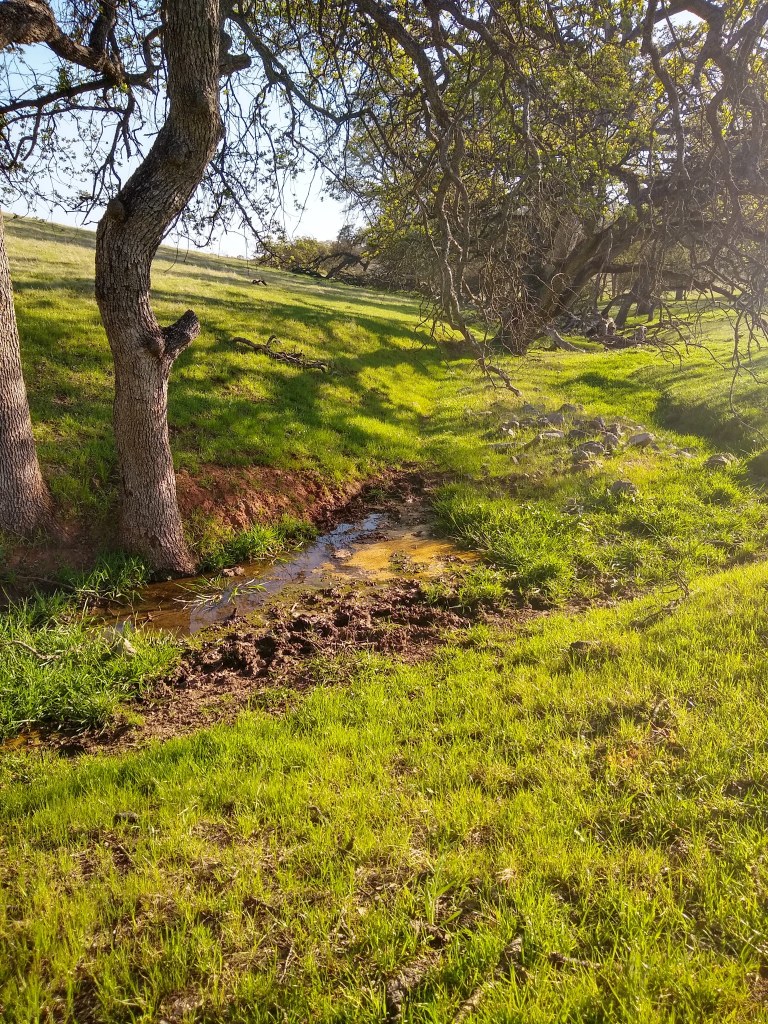
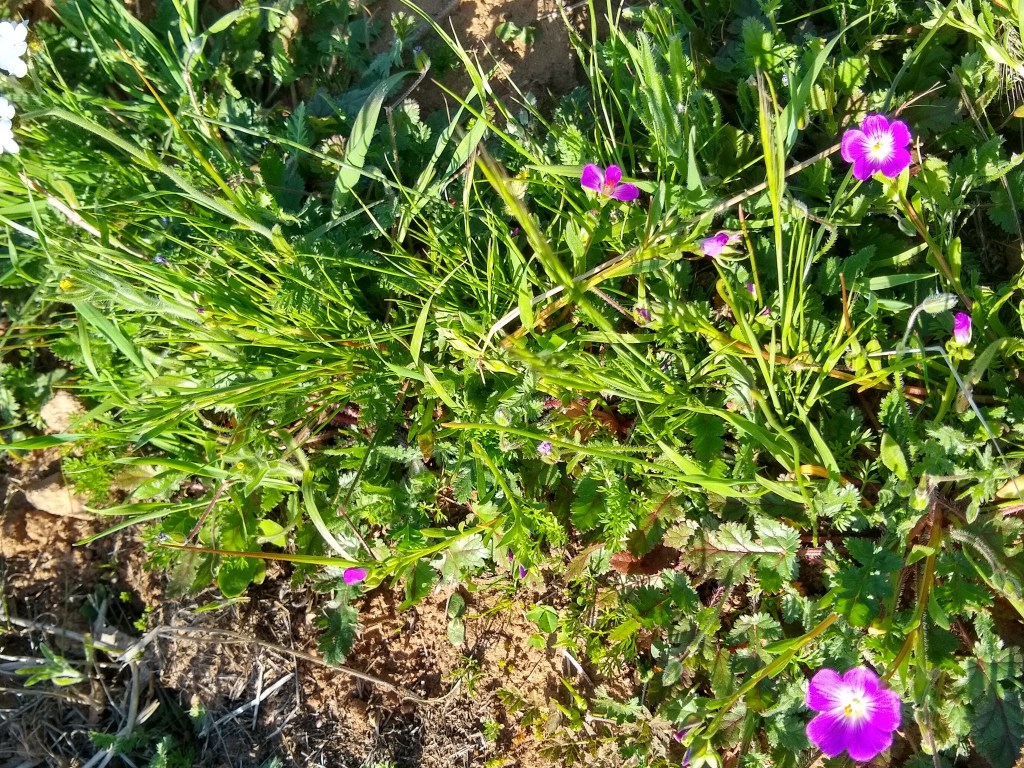
Yellow, white and purple flowers still blooming in the Spring Creek

Fortunately, there is still some water on the land. The spring is still flowing in Spring Creek. As a result, the growth is still happening organically. The cattle were moved out, which has allowed a variety of plants to grow where there is no fencing. The creek is also protected from the winds we get on the hill top. When it is windy, I don’t see butterflies. However, in the creek, there were many blue coppers. They are so beautiful and have quickly become one of my favorites.

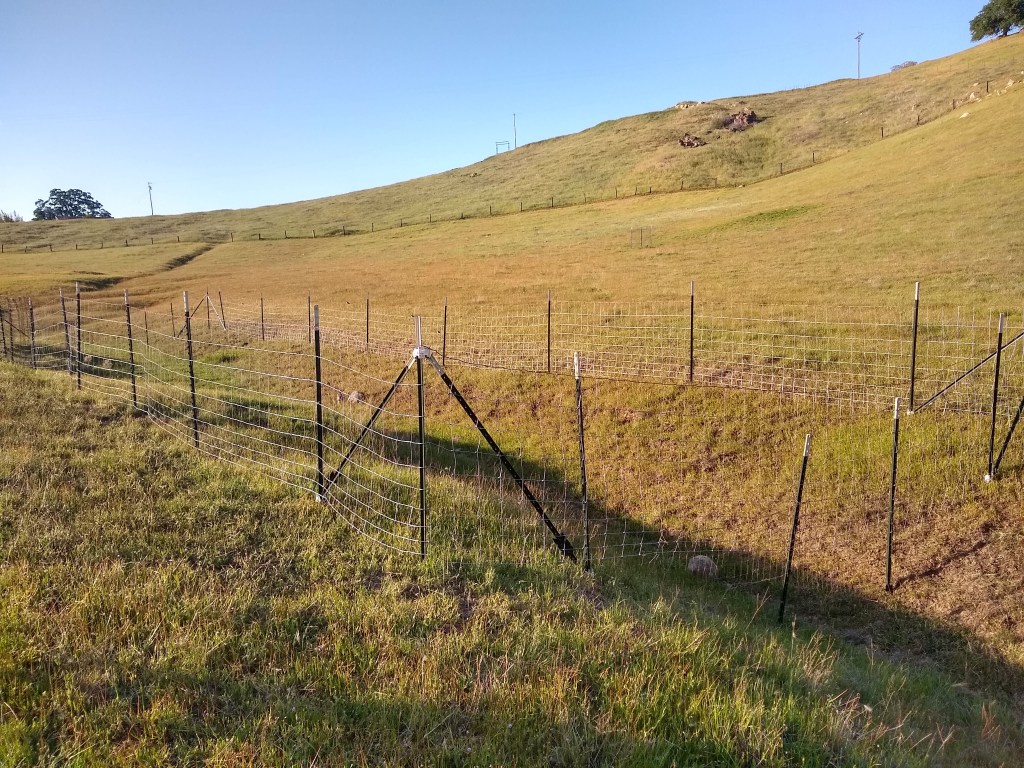
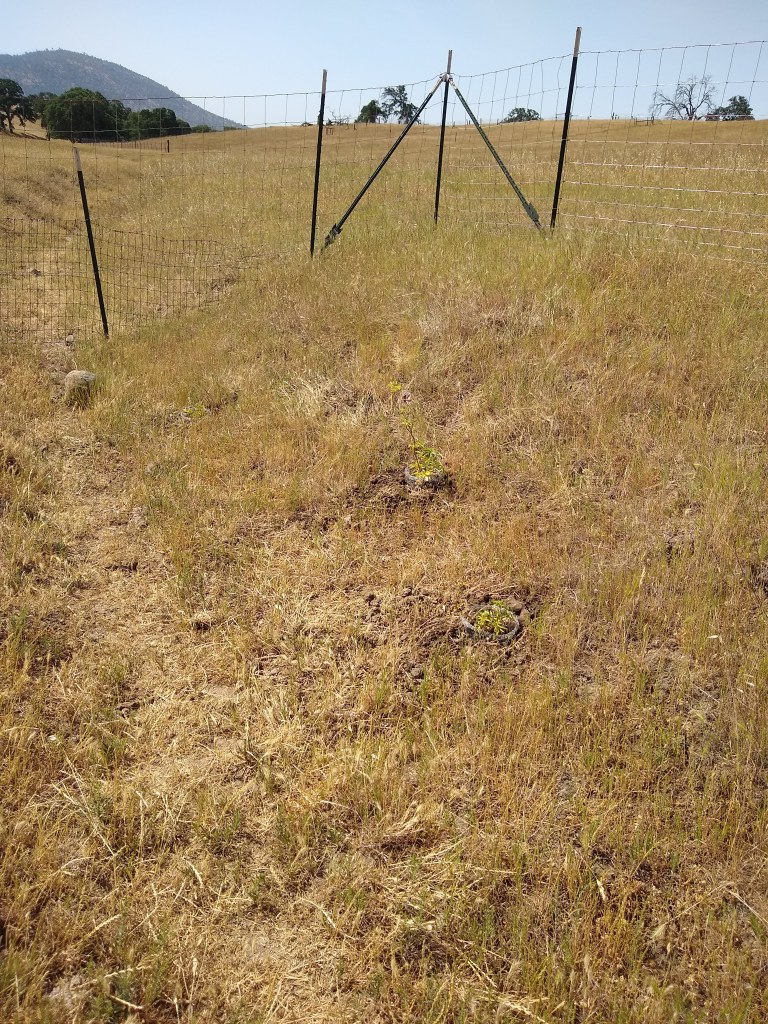
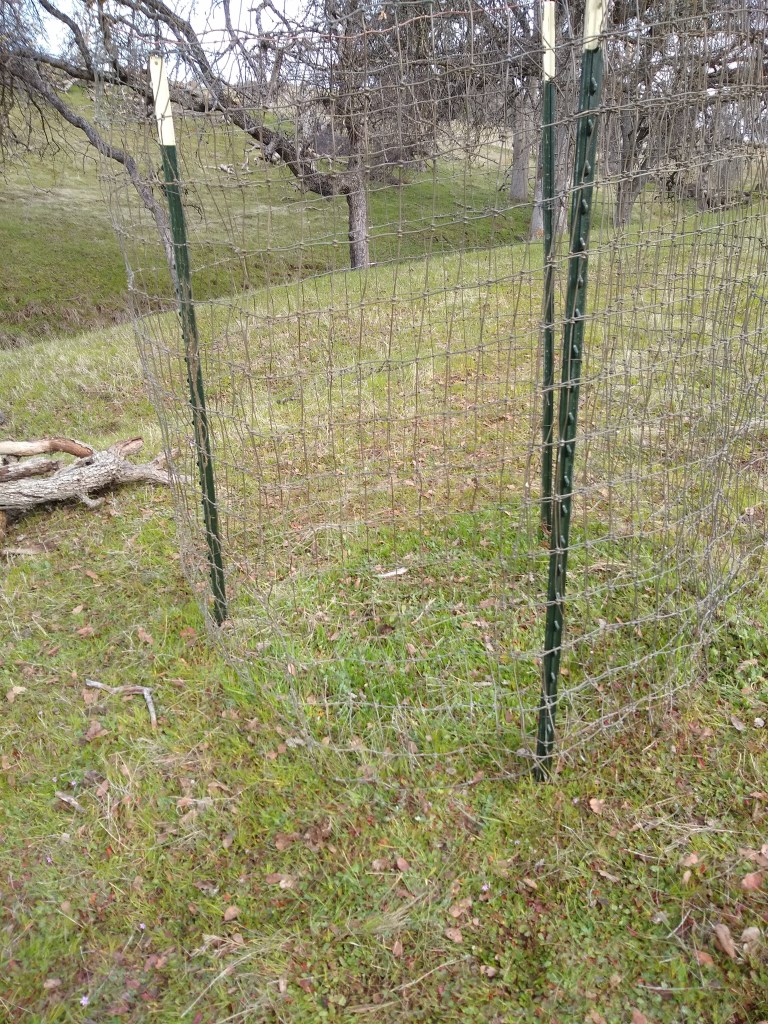
I purchased more Wedge-Loc corners to build fence around the Spring Creek. The branch fence was breached three weeks ago when the cattle were still here. Using the Wedge-Loc system will require less work over the long term and allow me to protect more linear feet of creek. I think the branch fencing is still useful. It is natural, beautiful, creates habitat and does act as a barrier. However, if you don’t have a group of people or regular ranch hand helping maintain it, you can lose the protection-ability as grass gets less plentiful and the pressure to browse it becomes greater for the cattle.

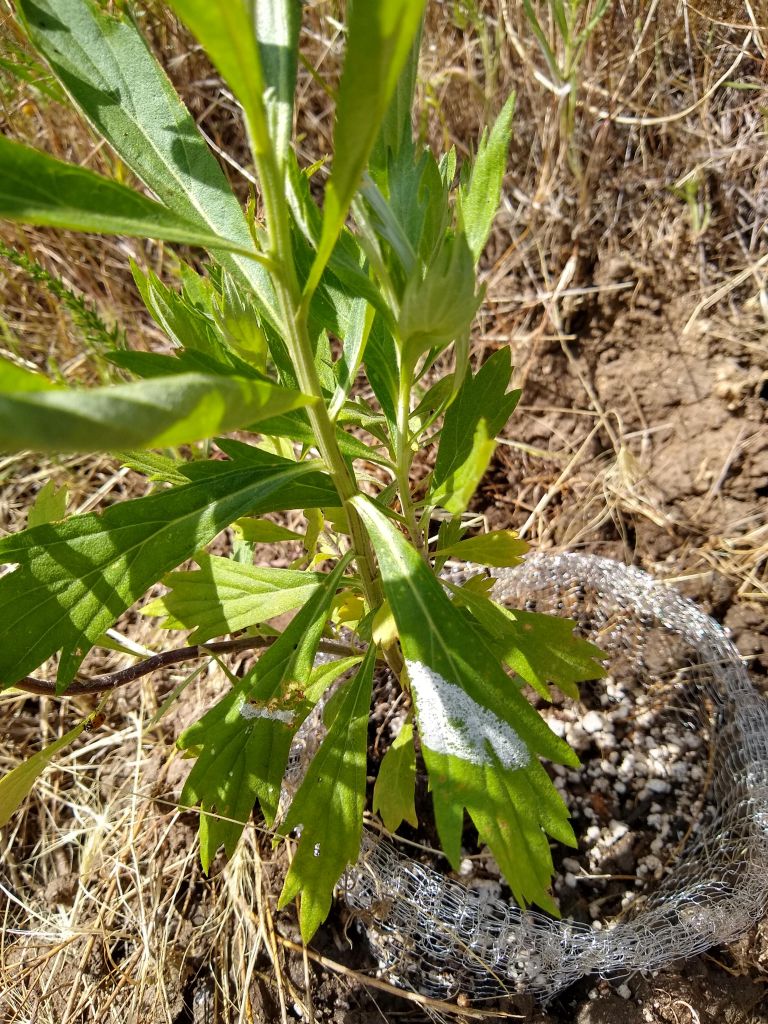
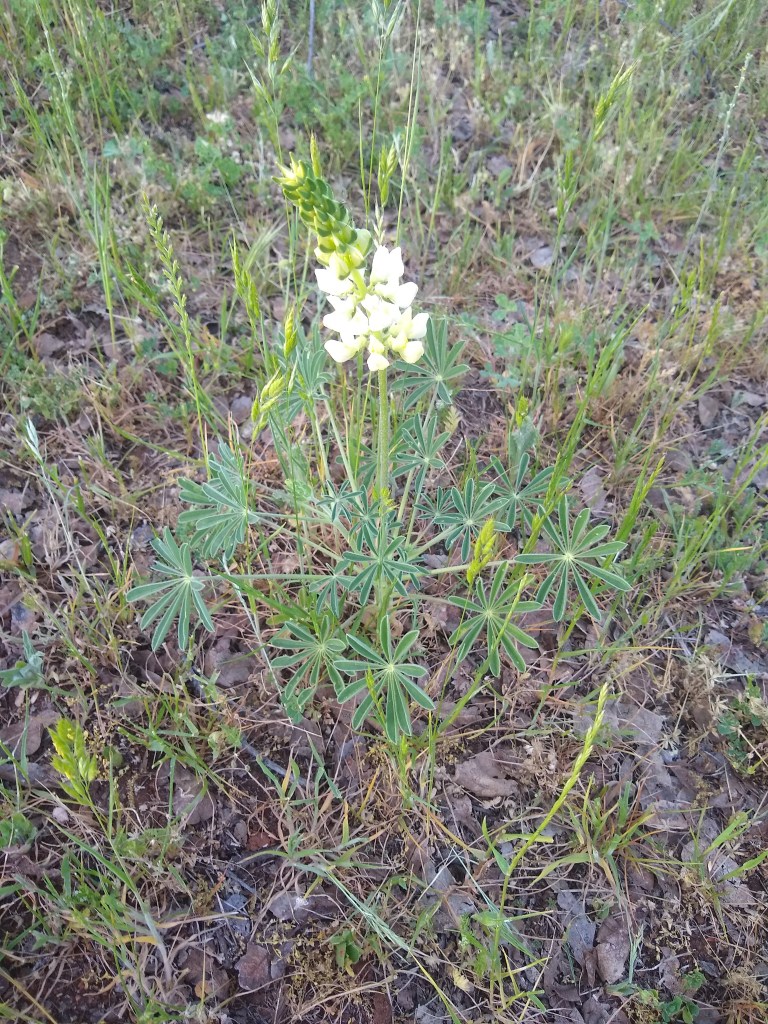
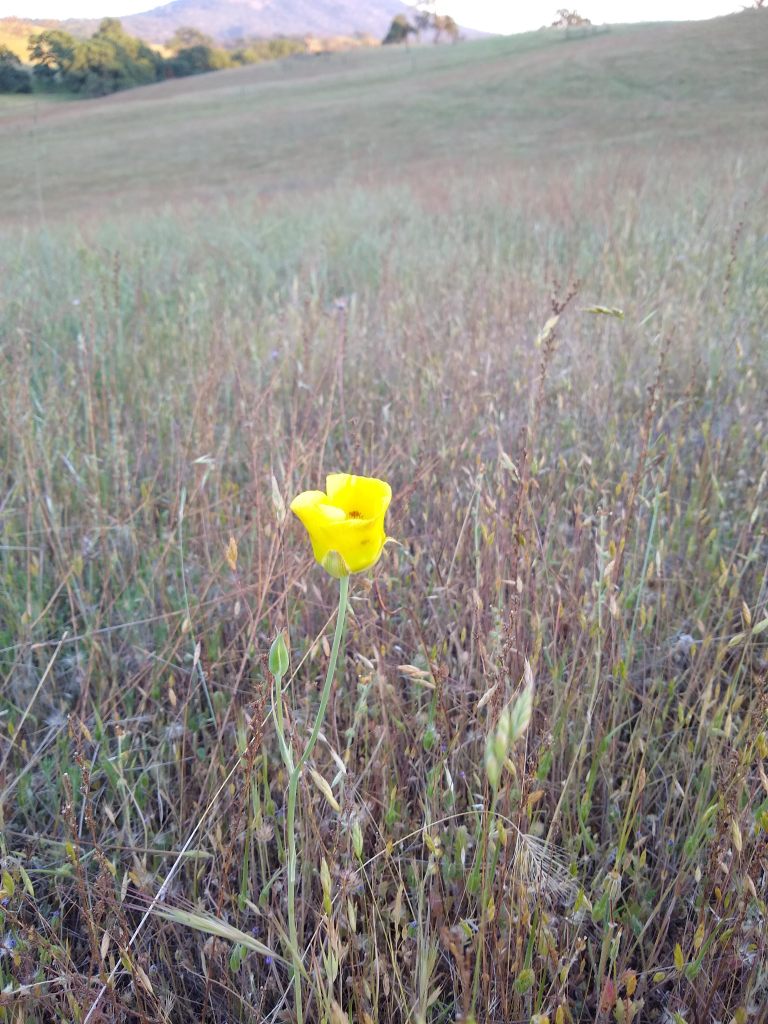
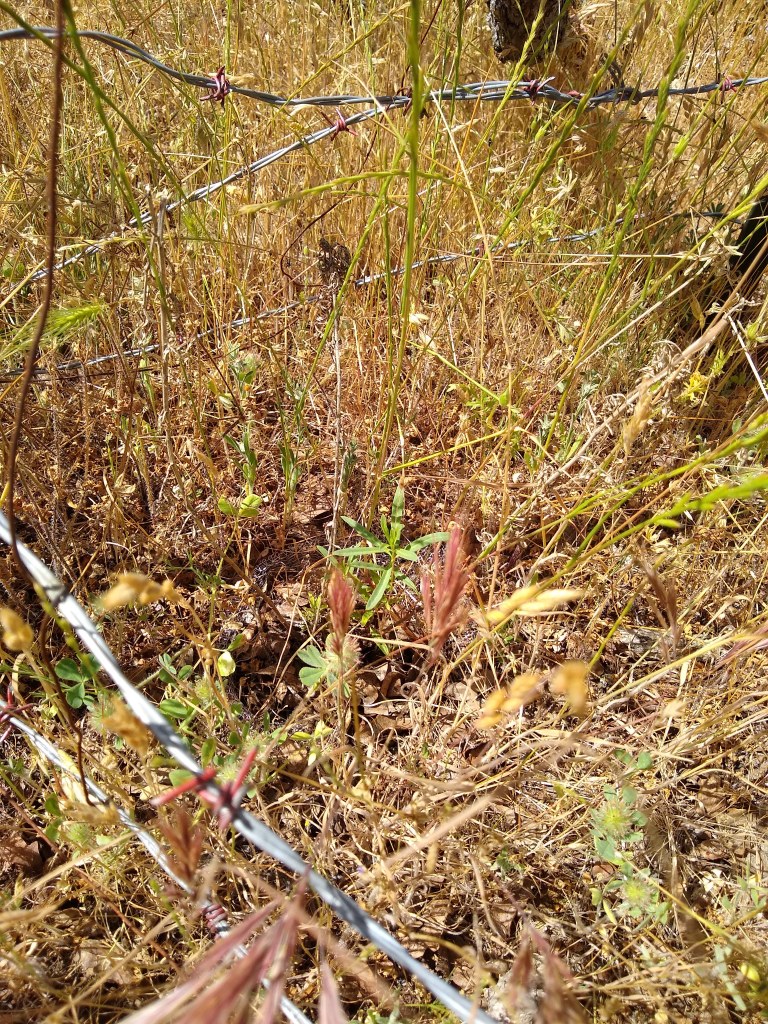
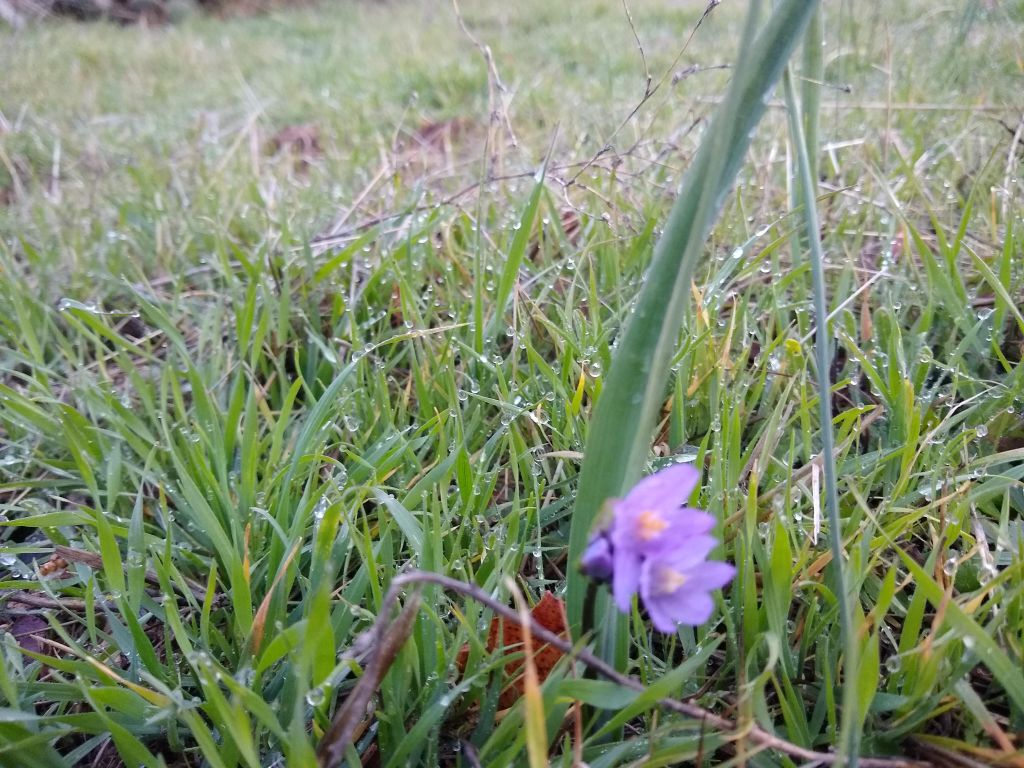
We have a proliferation of white lupine, yellow mariposa lilies and purple brodiaea. Also near the creek, one showy milkweed and one narrowleaf milkweed have returned from the original 7 planted in 2020 that the wild pigs turned up. They look strong and healthy. One golden current and a mugwort survived the breach of the branch fence. The mulefat is coming back after being browsed a while back. There are other plants I have not been able to ID yet. I planted the riparian Xerces kits along this creek – so I am not quite sure what things are. I think, for most of the plants, there needs to be more moisture, a slight flooding event, to get the roots going. I believe my limited watering is not enough to get them started. Maybe next year. Happily, the oak seedlings made it through the browsing. They all look strong and healthy.

Providing TA and Creating a Migration Pathway

A small portion of the Resource Conservation District grant is helping expand habitat through public education and provision of plants. Already, two people expanded existing habitat on their home parcels. I have also been thinking about migration pathways. Friends have ranches in a straight line south west and north east of me. How incredible it would be if there was a large supply of milkweed and nectar plants all in a line on the monarchs’ route through Mariposa County. I contacted both individuals, and they said they were interested. I performed site visits and helped select plant locations. Both locations are in moist areas of their ranches. One is in a wash below a spring. The other is a wet section of a creek that runs through the property. I included them in a Xerces Kit grant request. Ideally, we will have two riparian hedgerow kits per site. On my site, I will extend planting along the Spring Creek and possibly along Odom Creek.

April Rain Helped but Not for Long

A. Californica – A Bumper Crop!

One of the bright, happy occurrences this season has been the proliferation of California Milkweed. Last year, this magical plant appeared out of nowhere. I had counted three communities and populations of 13, 7 and 2. This year, I found four communities with populations of 16, 13, 2 and 1. I plan to hike to all of the sites to perform a final count. The site closest to the house ended up with 13! You may recall 4 weeks ago I lamented that I had only counted 6. Again, these plants are magic – popping up out of nowhere.

Ode to a Beagle

Andy – RIP April 2021
2005 to 2021

You were a bother with your insolence, smell and patio pooping

and daily disappearance from olfactory compelled sniffs and snooping.

My dad dropped you off unequipped for your destructive self-direction

We locked stares, quarreled and chased — but upon some reflection…

It is clear that your bay drove coyotes away.

Your epic snore made me, for quiet, thankful more.

Those ears velveteen changed dog haters from mean.

The prolific fur you shed made me clean under the bed, and

the rugs you destroyed are now redeployed

as outside paths, wool pave, along the well-worn trail toward all my pets’,

and your

grave.

a. Californica Obsession and Fencing – So Much Work…

The motherlode of a. Californica. Such a special plant!

a. Californica (a.c.) has become my absolute favorite butterfly plant. There are so many I love, but a.c. take the prize. Not only do they look like they are prehistoric, they have the most gorgeous flower and scent. In fact, several of the a.c. plants were blooming and beginning to emit their stunning scent. This is a little early as compared to last year. Things seem to be a bit off this year.

On my monitoring hike this past week, I found 14 a.c. plants on the north slope. This is one more in that community than last year. I found a third plant in the area that is closest to the house. We are getting closer to last year’s numbers, but are still significantly deficient (3 vs. 7 last year). The third community remains even at 2 this year (and 2 last year). I am finding larger plants too. This is really good because caterpillars need considerable plant material to make it to their chrysalis stage. One day, we will have the ability to transfer smell through the computer. I would love to be able to send you some of a.c.’s fragrance.

I am seeing many species of butterfly, but no monarchs yet. Today there were three white sulfur butterflies fluttering around as I watered in Site 2.

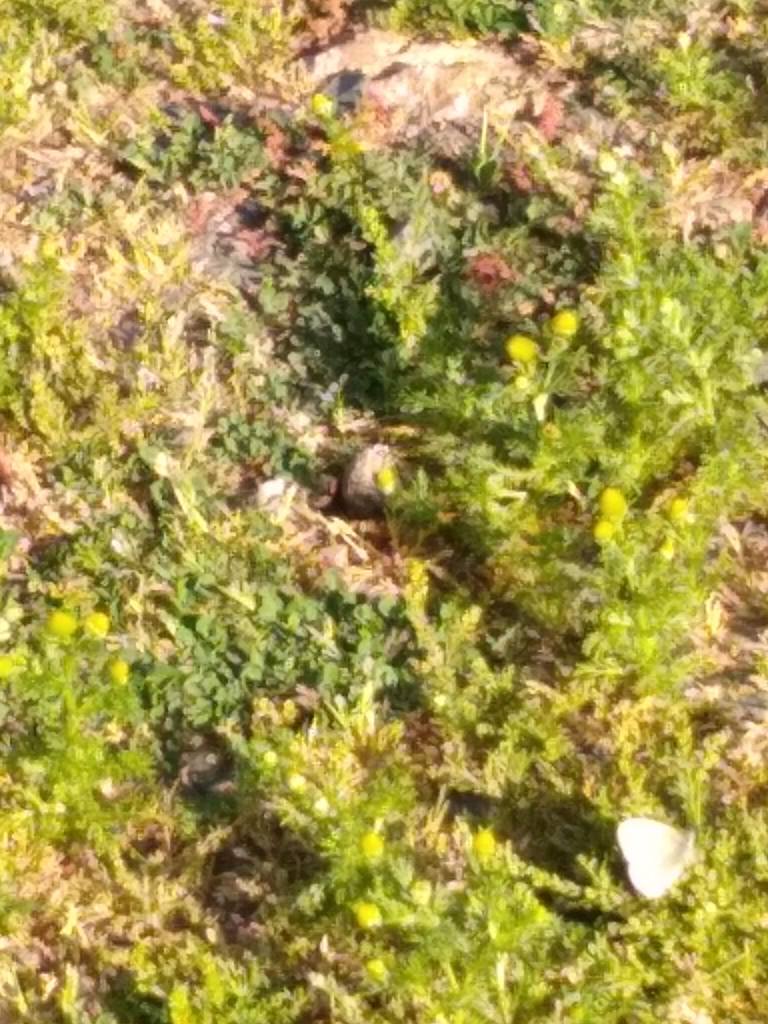
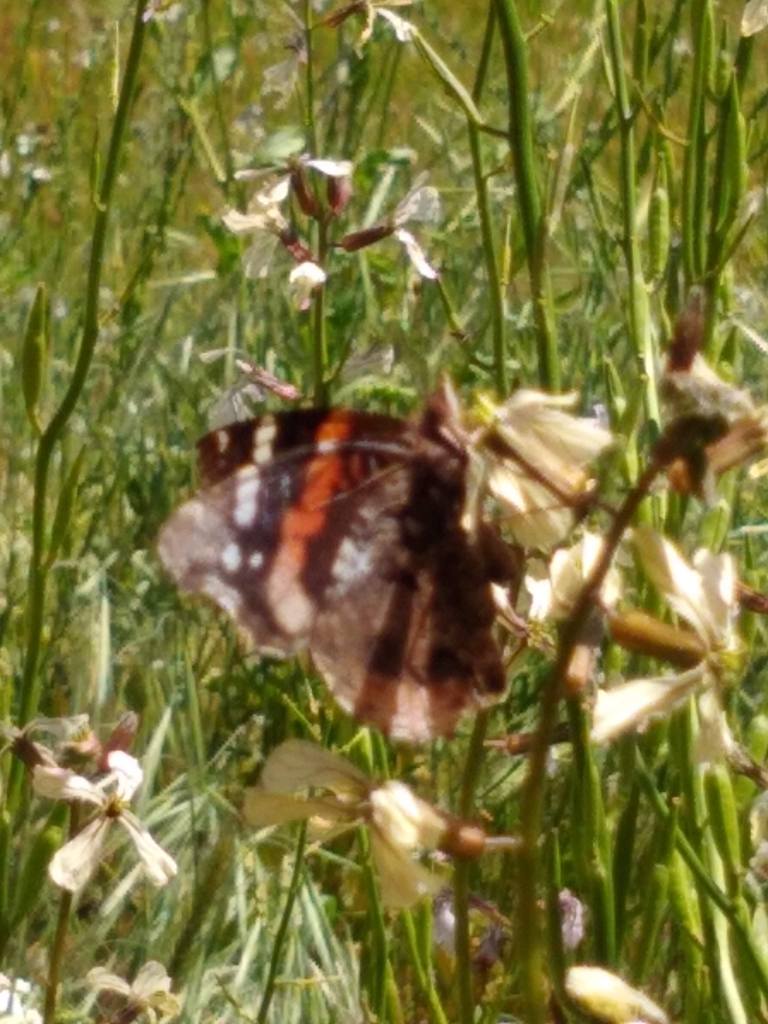
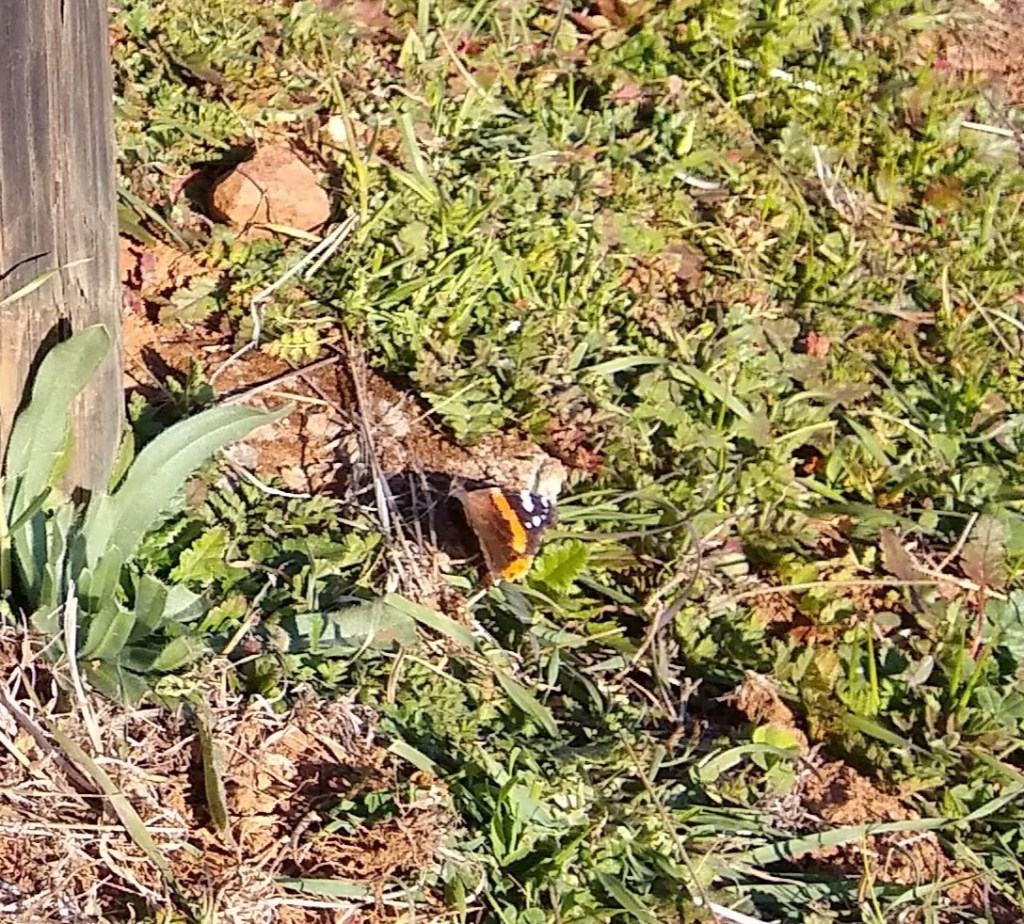
I saw a yellow butterfly today that was slightly larger than the whites. It was not like a swallowtail. It was much smaller. It moved much too quickly, and I had no hope of getting any type of photo – even a bad one. I was fortunate to be able to spend some time with a painted lady butterfly. She was much slower and stayed on the plant in front of me for quite some time. The butterfly had a little more black in the middle, but was unmistakably a painted lady.

Fencing is always a barrier to expansion into other places on the ranch. In addition to being expensive, the work is so difficult to do on my own. Fortunately, David said he would help me with the fence around Site 2. David is stronger and has more leverage with his height. It is much quicker when he is helping. I have been wanting to plant in the arroyo for some time, so this was really exciting for me.

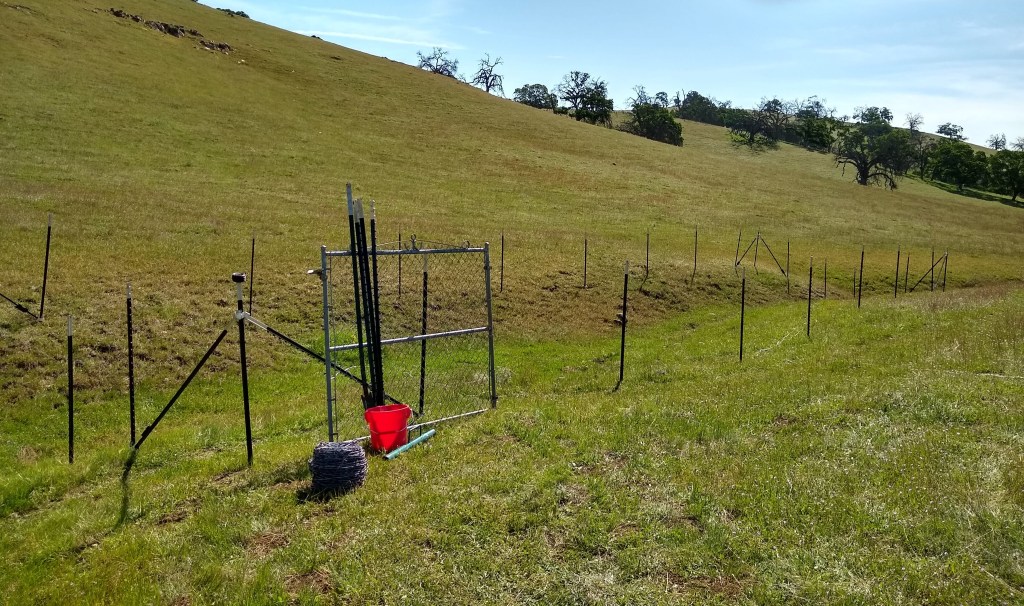
The posts are all set up. We decided to use Wedge Loc tools to construct corners. It is not as strong as a traditional corner that is cemented in, but it can do the job for a temporary fence. I was going to use barbed wire, but decided it would be too difficult to get the tension I need on it – given the corners are not in cement. I really don’t like working with barbed wire anyway. I had some extra no climb fencing at the shed, but opted to purchase new fencing. This way, I would have enough, and it would go faster. The cows are returning to my side on Wednesday, and I need to the fence complete by then – but David ran out of energy and time.

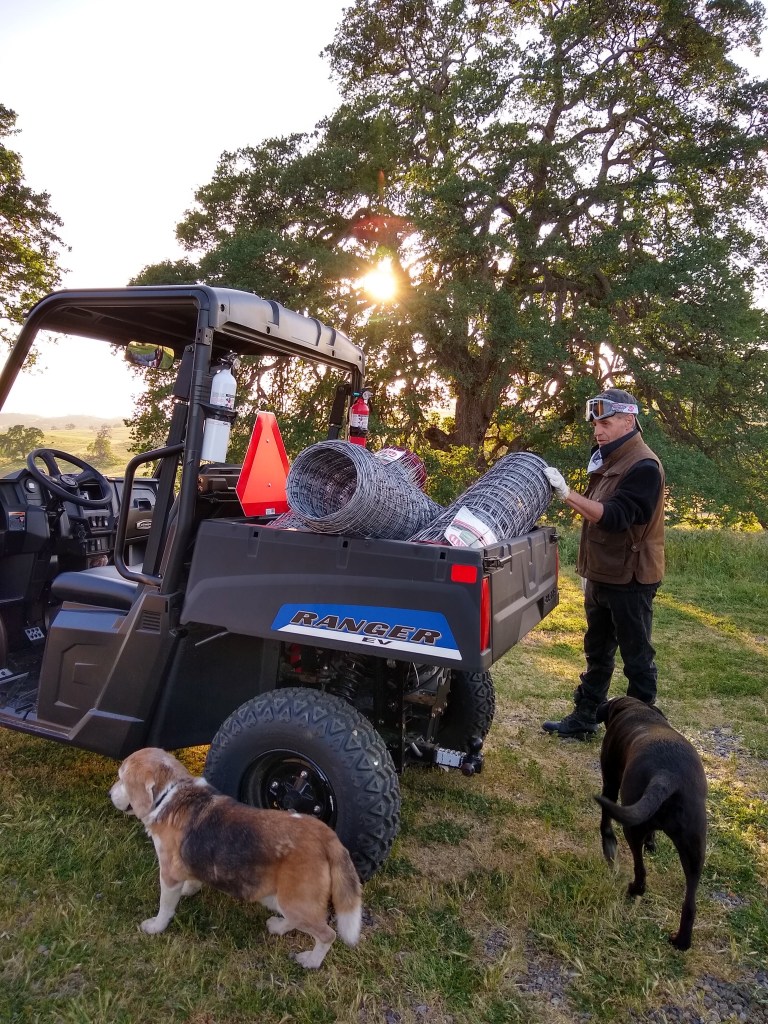
Fortunately, my neighbor, Ric Wetzel, was able to provide some supplemental help again. He drove over in his new, fancy, super useful all electric Polaris and hauled the fencing down to Site 2. He assessed the situation, returned on Monday afternoon to help me install the field fence and worked with me until the sun was down. Thank you Ric!! It all went so much faster with a second person – but oh my – what a lot of work. That Polaris is like driving on a cloud. You cannot feel the bumps – and on a ranch, that is saying a lot.

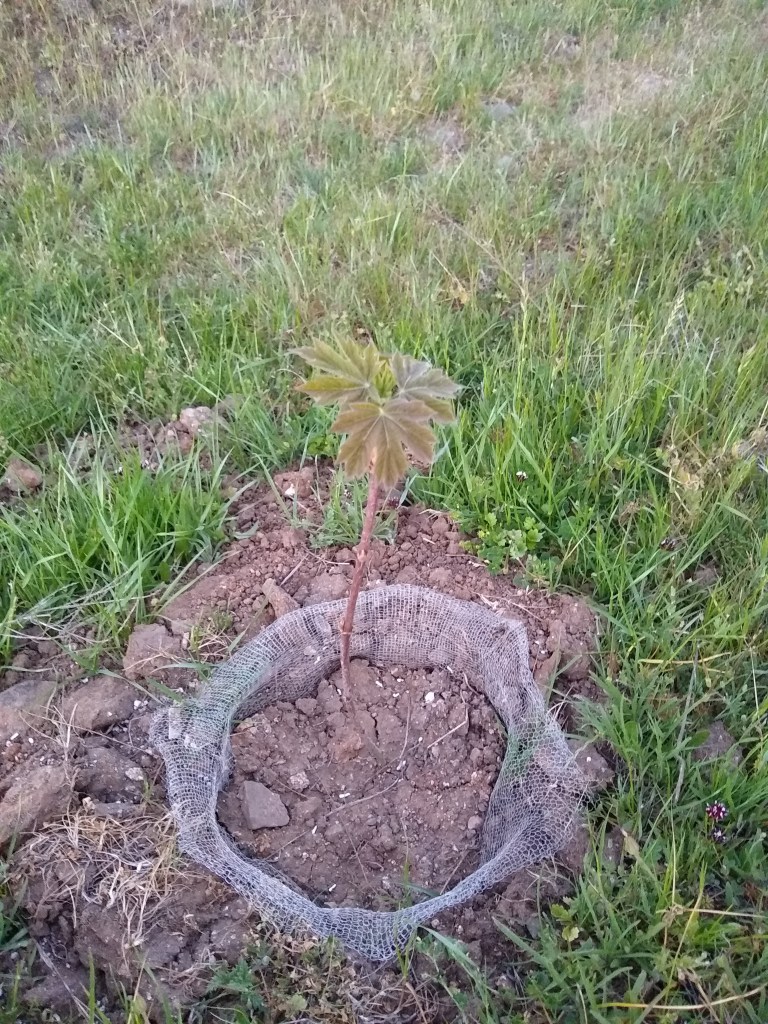
I took down the cage from around the redbud since it would be included inside the new fence structure and repurposed the entire thing for the newly planted maple tree I placed in the hillside spring down flow area. I really wanted to get some trees in place on the north side. Ron assured me that these Big Leaf Maple trees are native to California and are drought tolerant. He said they can be found all over Southern California and growing in arroyos too. I was sold and am excited to see what they do.

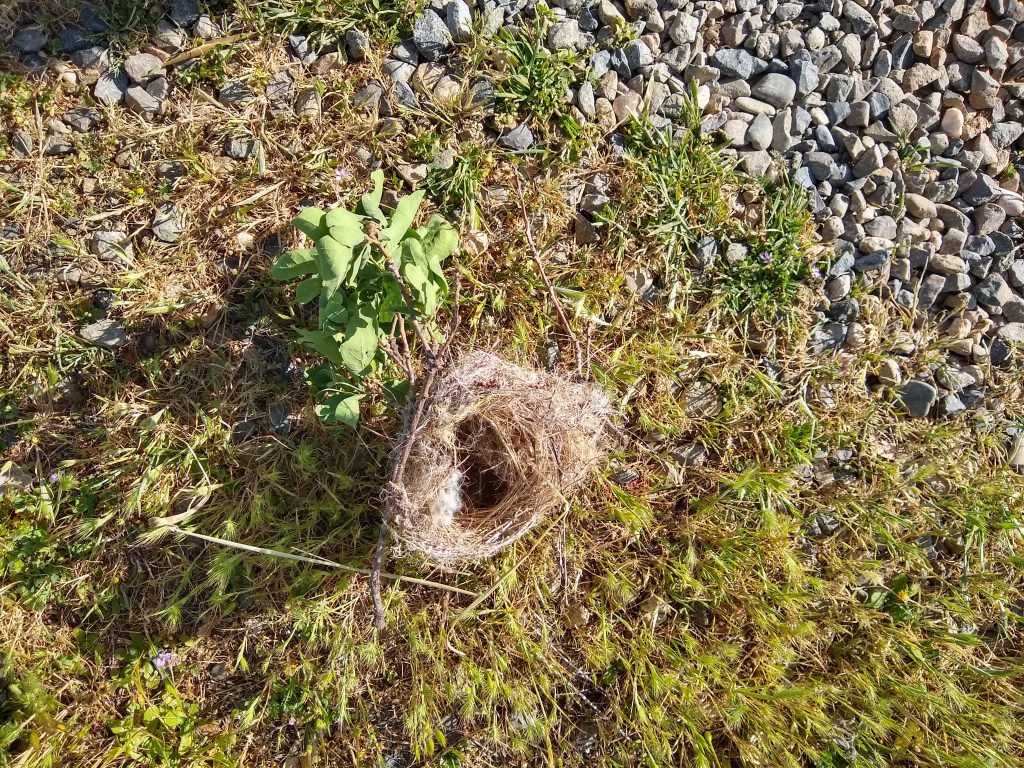
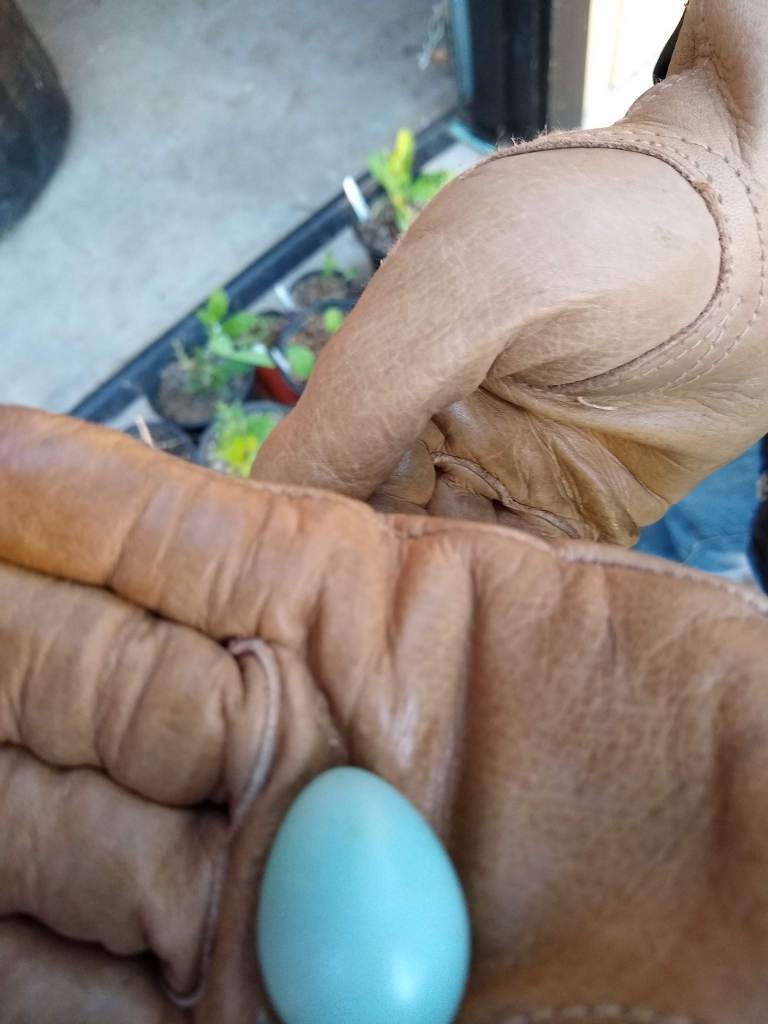
The wind has been fairly steady with some gusts. When I returned to the house on Saturday, I saw this gorgeous blue egg (see photo above) just sitting on the driveway. It was amazing. Then, David found the nest, still attached to the branch it was on. We thought this was a robin’s egg and next. The were not next to each other, but near enough. The first call I made was to Melinda Barrett from the County Resource Conservation District. She sent me an article that discussed that people should leave eggs alone when they find them out of the nest. Not only are the eggs likely not viable, but if you had the extraordinary amount of time it takes to raise a bird baby, the bird could never be returned to the wild since it would not have the benefit of the bird parents educating on finding food, flying, etc. I put the egg back where I found it opting for less work and heartbreak.

Potpourri of wildflowers

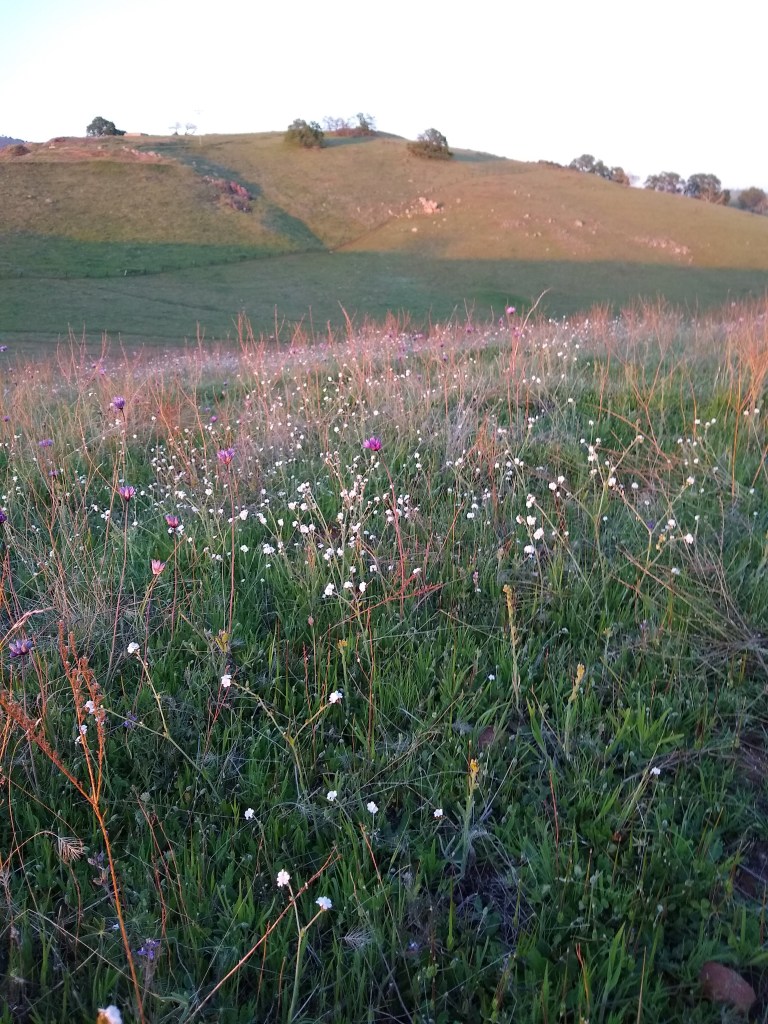
The wildflowers are still blooming. They are getting less and less as the ground dries out more rapidly. There was not sufficient rain to grow the grass tall, and the existing plants are beginning to die off and leave a crunch under foot. Cattle are being culled in anticipation of a lean feed year. The water in the Swale Pond is almost gone, and the Spring Creek is down to a trickle. There are still some deeper stands of water in Odom Creek, but that will be gone soon except at the spring. Rainwater Tank 1 had a slow leak. David fixed it, but I lost an eight of the water before it could be fixed. I am nervous about what the future will bring in terms of the drought. I decided to cut back by half on the plants I will plant this spring. I want to be sure I have enough rainwater to get all of us through this dry time.

On a positive note, David and I both received our first vaccine dose. We are planning for the second dose to take us out of commission for a few days. I will water on Thursday before I get the next shot in anticipation of this. Life, and death, are all around us. I am grateful to just be present, right now, in this place, being a part of something that is beneficial, loving and breathing life into the world.

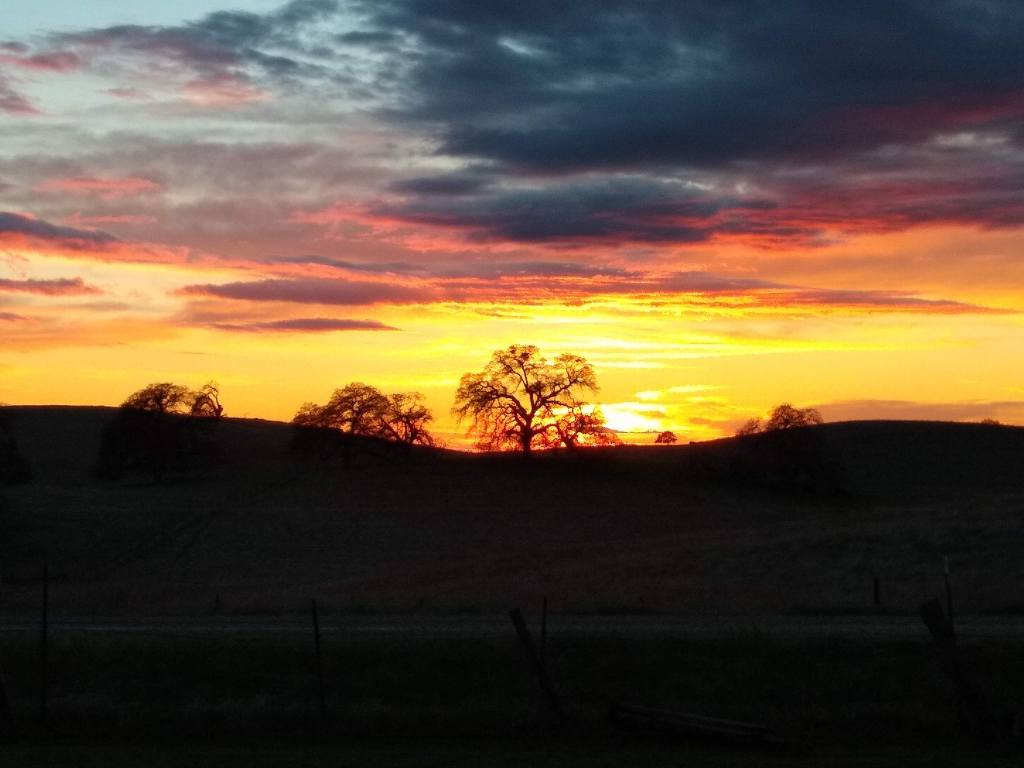
Wildflowers at sunset

More a. Californica Spotted and Wildflower Whiplash

a. Californica on the hill east of the house

I always let out a whoop of excitement when I see these remarkable a. Californica plants. They look so prehistoric to me, and the smell is heaven. The air of magic around these plants is only enhanced by its rapid “see them out of nowhere” growth. Last year, I shared that I found three communities of these plants – one near the house with seven plants, one on the tall south facing hill to the north of the house with thirteen plants, and one on a hill to the east of the house with two plants. I have been monitoring each location. The east hill has two plants. The site near the house has two plants (so far), and the north hill had two plants. In the last post, I suggested that it may still be early to see many of these plants, and I was right. The plants have been appearing about a week after my first sighting.

Signs of the Drought Apparent

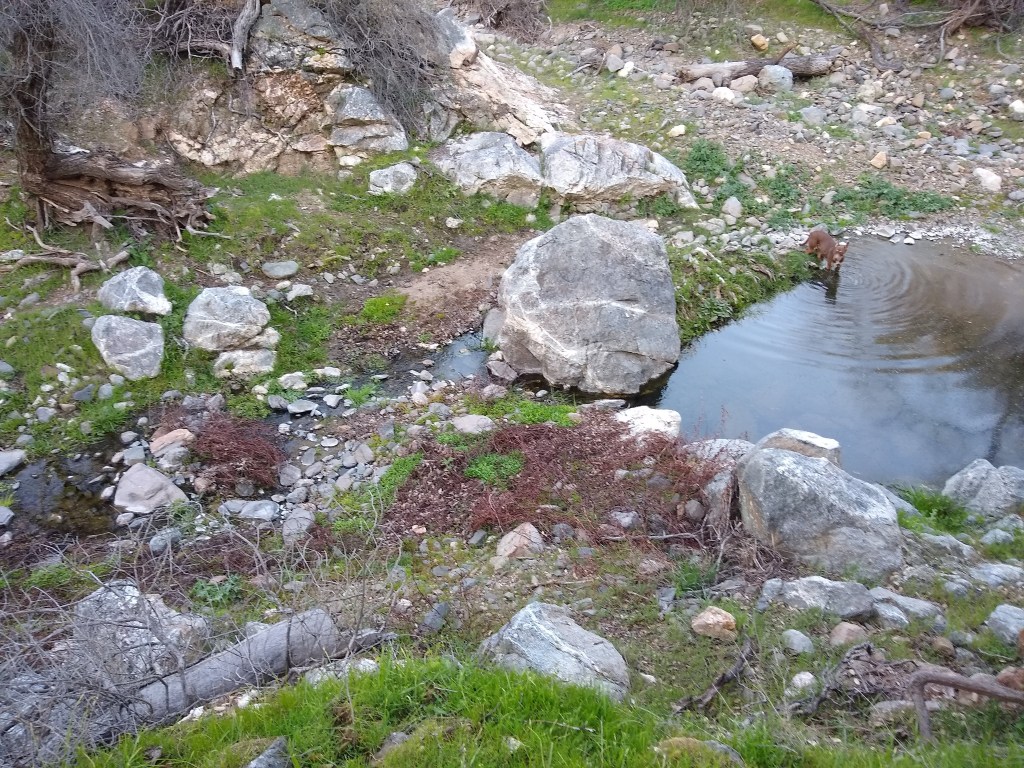
Spring Creek is still running, though just slightly. As visible in the first photo above, the eddy has receded several feet – and this is without cows drinking from it in almost two weeks. My trial mini beaver dam analog did not do much. I will try harder in the future. The Swale Pond receded 10″ in just one day. Note the moist area exposed and the water line in the second photo. The big spring in line on Odom Creek is still full. The creek is running pretty good. It was dry for quite some time in the early winter despite precipitation. The soil was so thirsty that there was little standing (or moving) water until late February. Not pictured are the increasing number of dry spots visible throughout the area. I have already begun irrigating. This is a three weeks earlier than last year.

Wildflower Whiplash – they are everywhere!

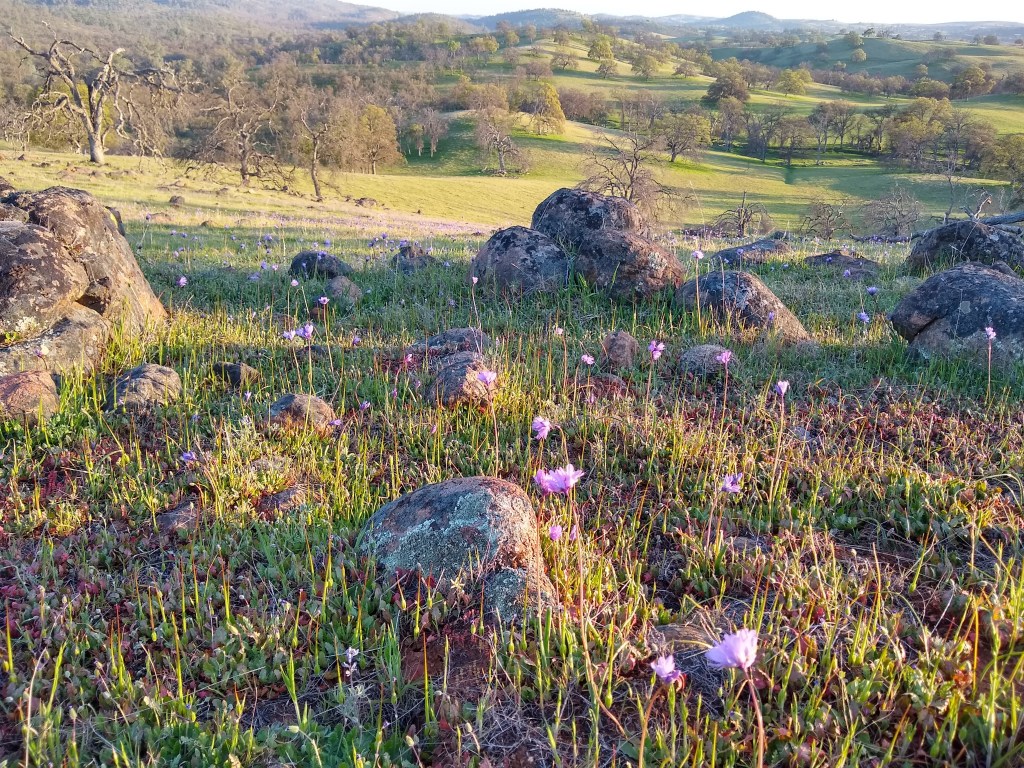
Stunning hill of purple (Blue Dick flowers)

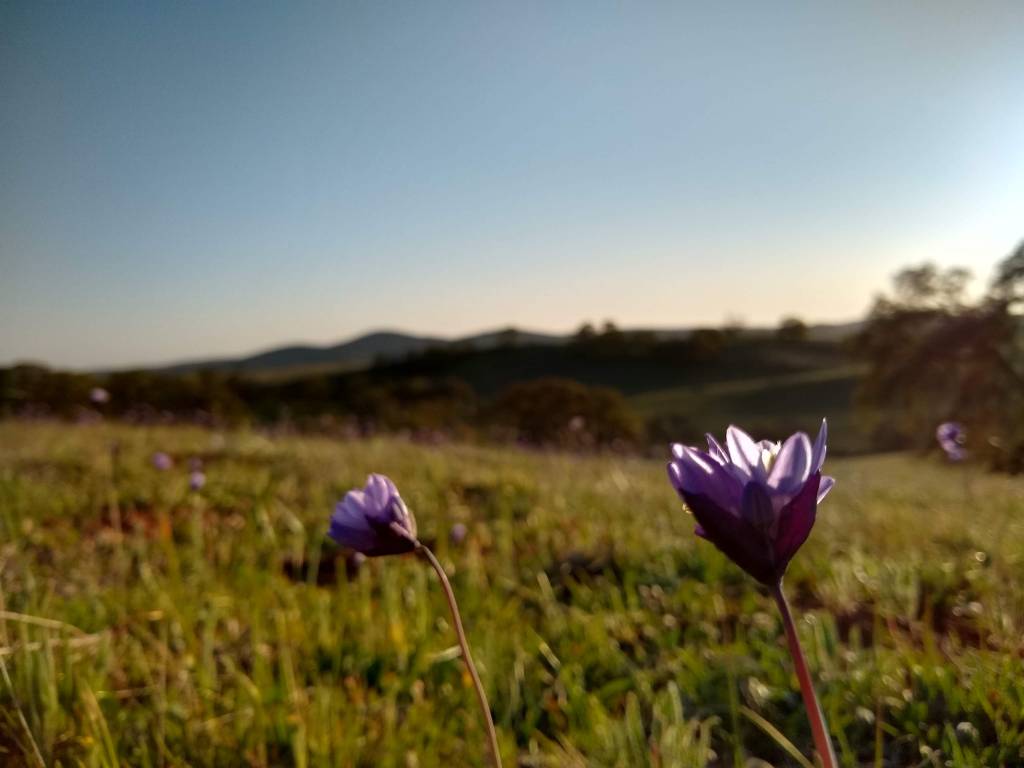
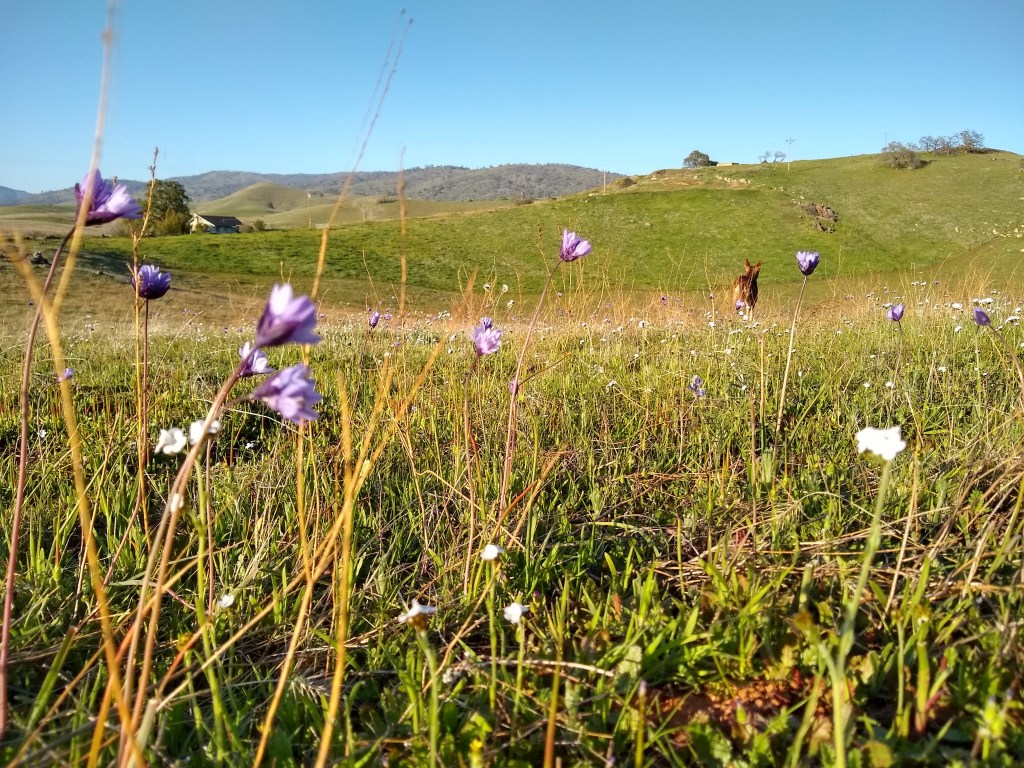
Blue Dicks, Popcorn Flower, Fiddleneck and Lupine proliferate insanely this year. The hills are washed in strokes of color – orange, purple, white, yellow. It is really stunning. You almost get whiplash swinging your head around in every direction to see the colors and flowers. The drought is partly responsible as well as the darker winter we had. The grass did not get the best timing for water and had less sunlight with which to grow. This made room for the wildflowers to sprout and not have to compete/be blocked out by the European grasses. While this is not good for the cattle business, it really is extraordinarily beautiful, amazing for pollinators and quite the olfactory experience. If I could share the smell with you through this blog, I would. Nectar is heavy in the air and the sound of all sorts of bees is an ongoing, loud undulating hum. My photos just do not convey this outlandish beauty.

Milkweeds Growing Well

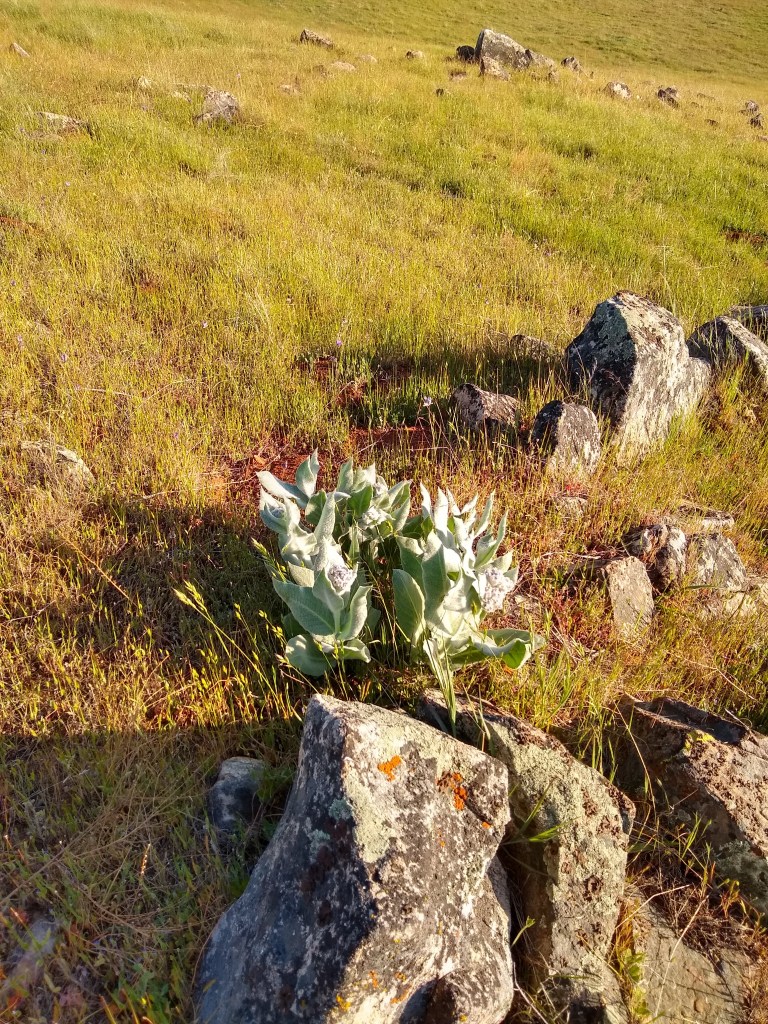
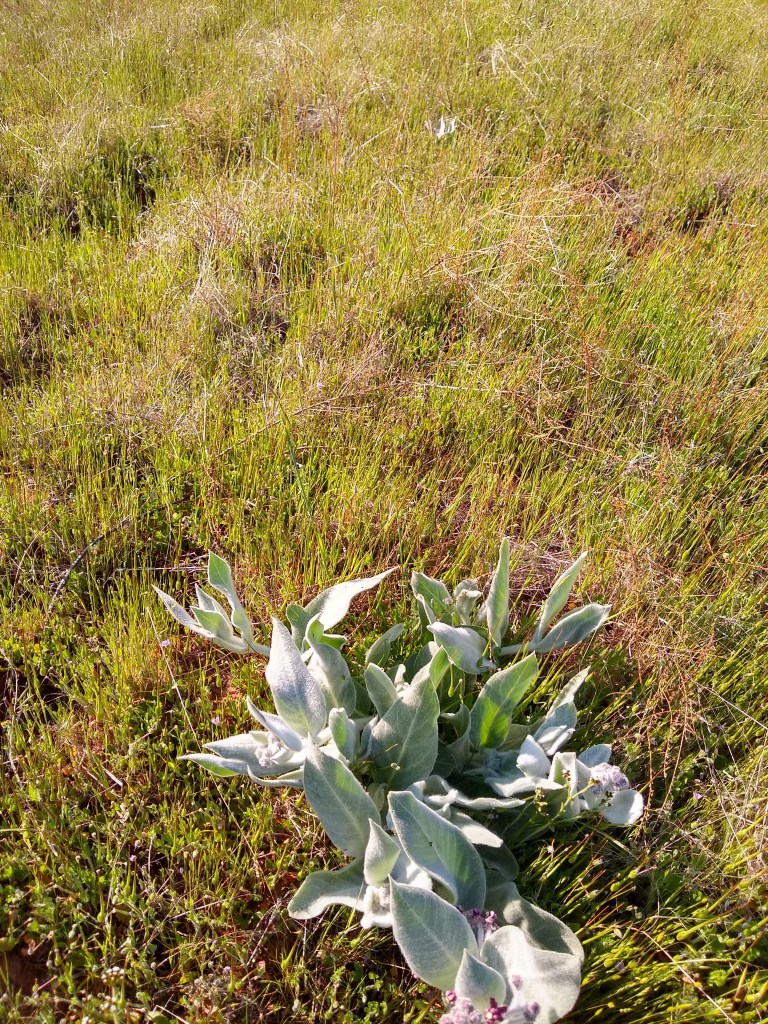
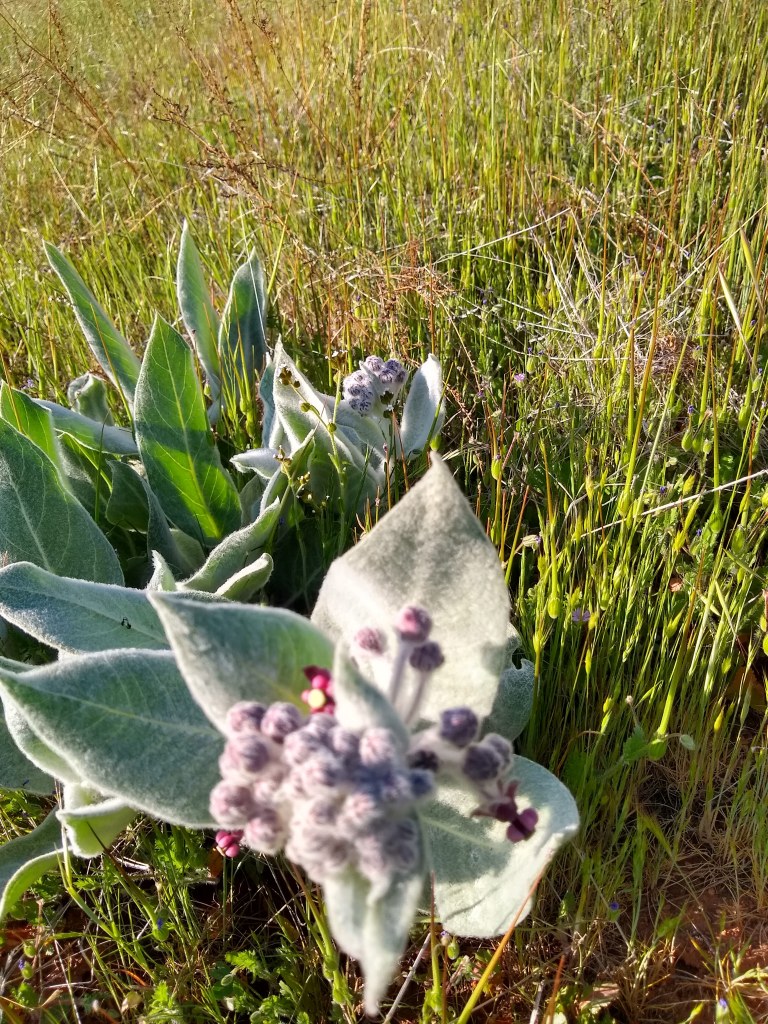
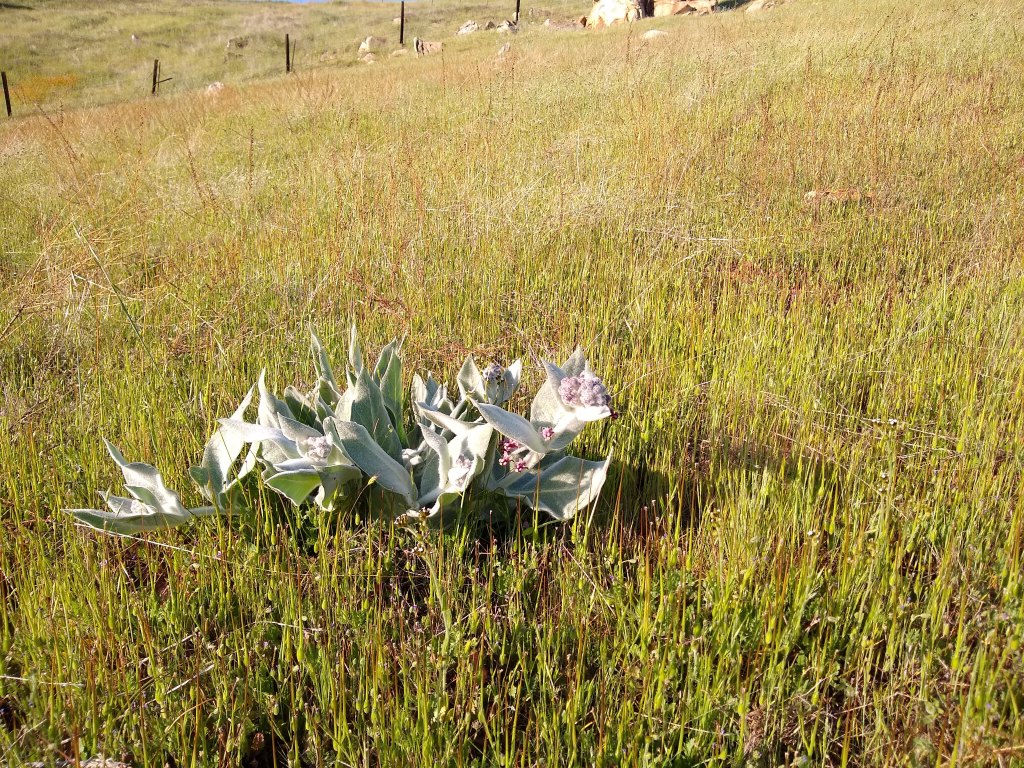
Xerces and Monarch joint Venture each push that milkweed is the most needed plant to be planted for monarch habitat. I am very happy to say that I have many milkweeds emerging strong and healthfully. Most are narrowleafs. However I found one showy coming back at Site 8 and, of course, the a. Californica. I have not seen any of the woolly pods I planted come back this year. The gopher hit them hard twice last year. I was happy to see some narrowleafs come back from the wild pig attack at Site 8. They did not reemerge last year, and I thought I may have lost them completely. I have growth that I can see in four of the seven milkweeds planted there last year. Of the nine I planted in the raised bed, only three have returned from the massacre by the gopher that sneaked into the bed. It does look like the CA fuchsia is reemerging. That would be incredible if so. We still have a deer grass and a yerba santa that survived the attack.

Other Notable Updates

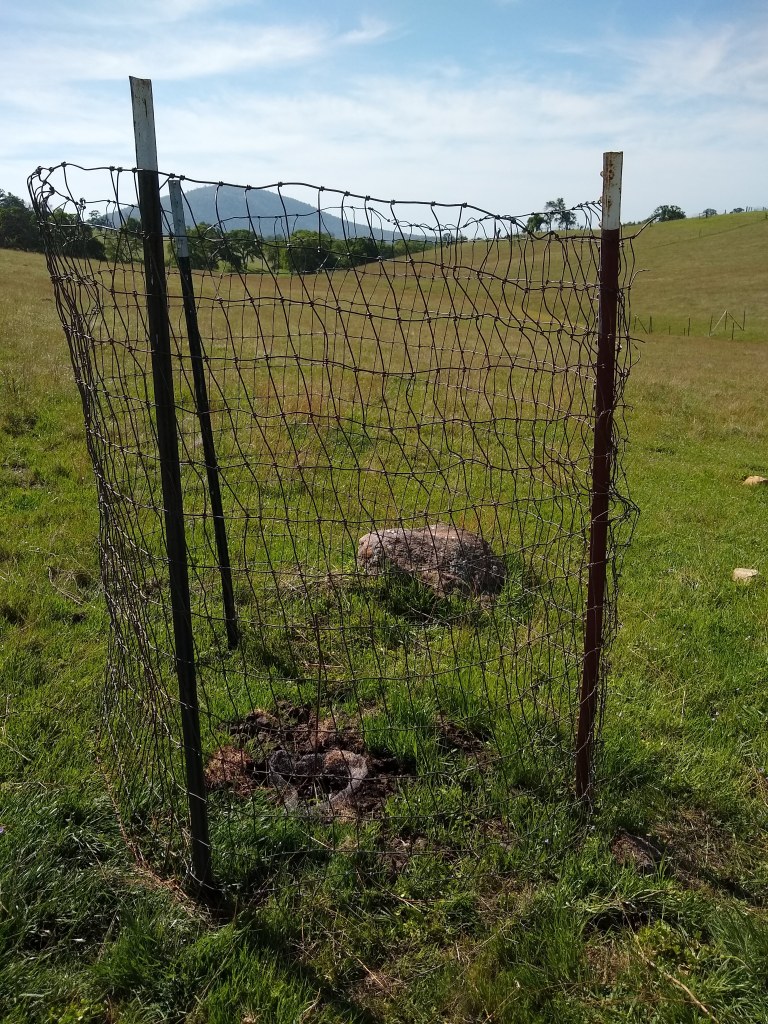
There is a tremendous variety of growth in and around the branch fence area. I have not seen any of the milkweed I planted from the Xerces kits emerge yet. The area is more shaded, and the showy milkweed seems to be taking longer to emerge. It seems as though another creature is making its way into the branch fence area. I’ve seen some of the fencing fallen down and soil disturbance. It isn’t a calf since they are on the south part of the ranch. I did not see any scat or tracks to be able to know. It would be useful and fun to set up a game camera. I have one, but have not gotten around to doing this. It would be interesting to see who is coming around in the night (or day when I am not looking).

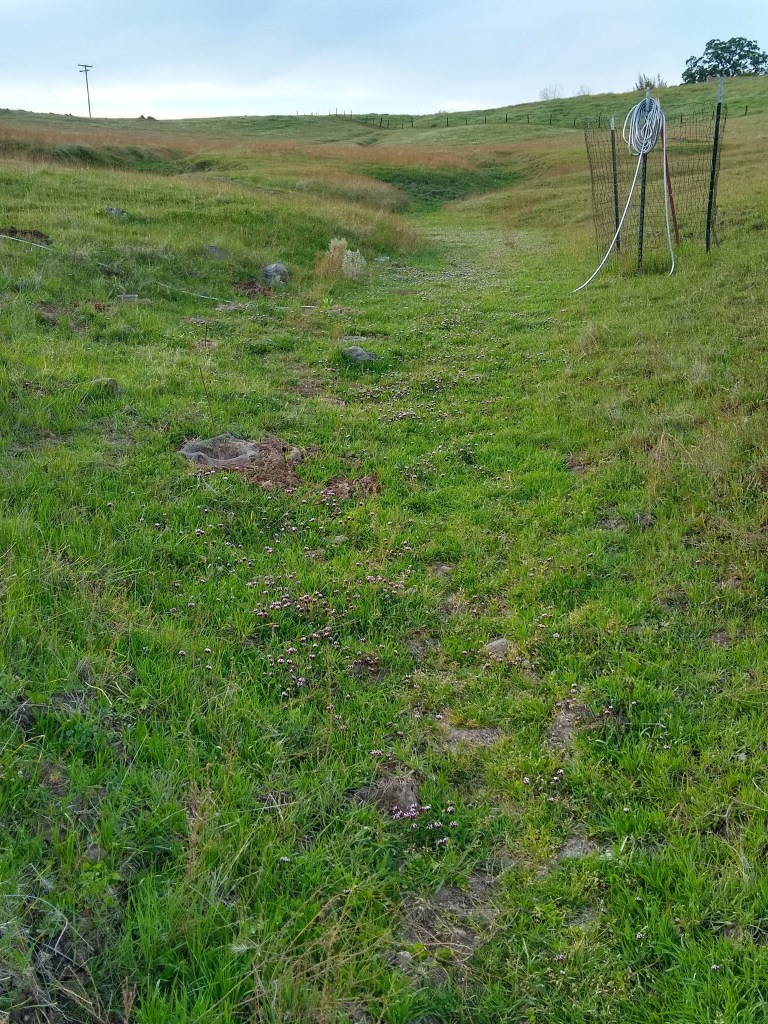
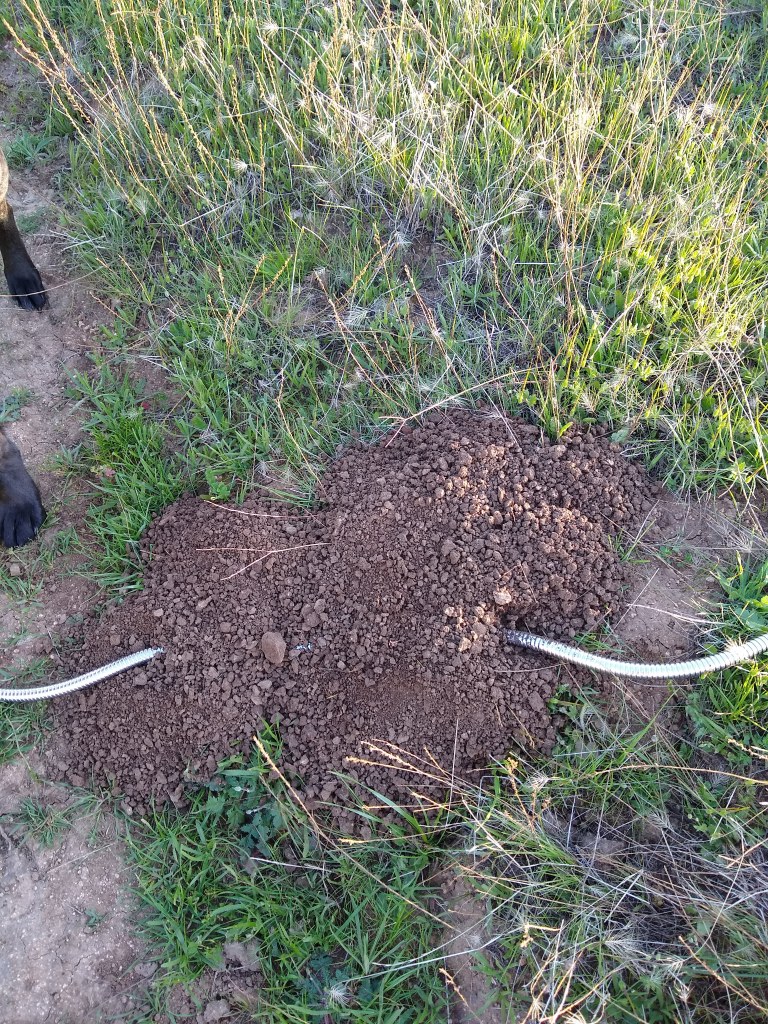
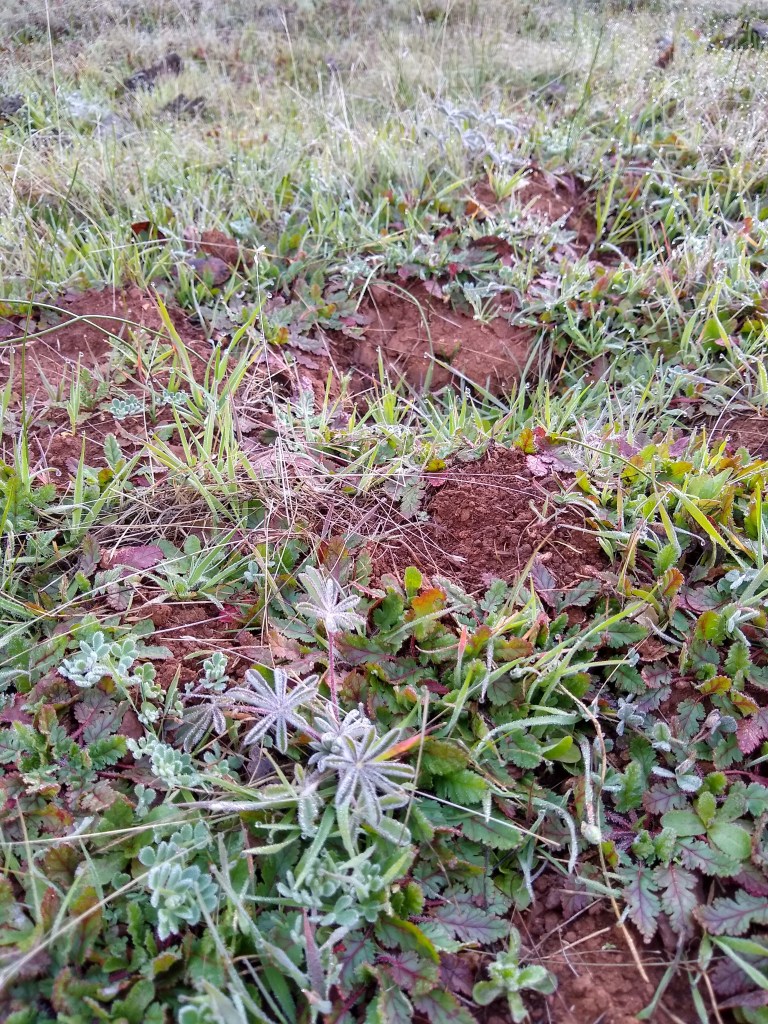
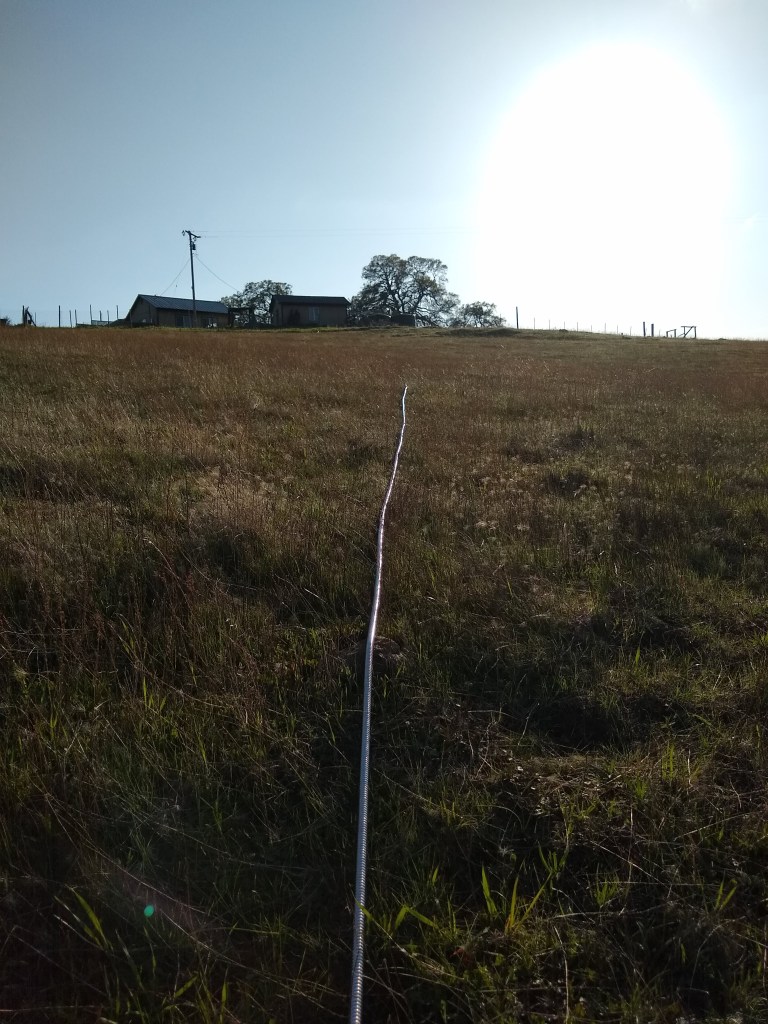
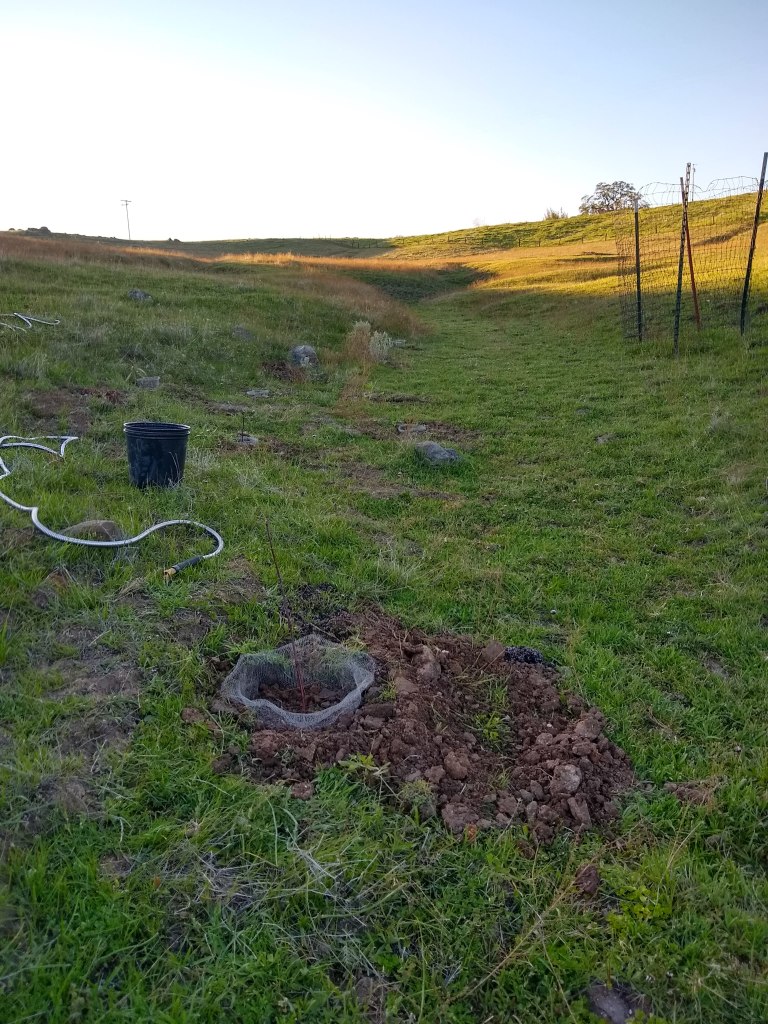
At Site 2 in the arroyo, the plants are off to a good, healthy start. I did see considerable gopher activity near the site. I found the hose covered in gopher mounds in several locations along its route from the water tank to the arroyo. Getting a stainless steel hose was a specifically so gophers could not bite through it and cattle could not crush it. It will be tested now. The cattle are due to return at the end of the week.

I have been seeing white butterflies with a pale orange throughout their wings. They spook easy, and I do not have a good photo to share. I was able to get two pictures from far away, but the pixelation when blown up is terrible. I did not include them here.

It appears that the cattle pushed their way through the barbed wire to browse the deergrass. I found one of the wires shifted up and the bunch of grass trimmed low. It is possible it could be a deer. I have seen evidence of their presence toward the more forested portion of the ranch. My neighbor said he saw one too the other day. There were no deer droppings or hair on the wire – but it is a possibility.

Spring is always a time of hope. Plants are in the ground and doing well before gophers, heat, pigs or any other misfortune finds them. David and I received our first vaccine shot last Friday. We have hope too that we will be able to do more away from home and see family and friends that we have only seen on a video screen. We miss hugs and being with the people we love. Let us all cling to as much hope as possible and the joy it brings. We do not know what lies ahead, but for now, I will celebrate the possibilities of togetherness and the arrival of the monarchs.

The ABCDs of Walappu’ “Uuchuthuu: a. Californica, Butterflies, Color, and Drought

Purples, whites, oranges, yellows, reds and blues abound!

In the melody of Carole King’s A: Alligators all around.

A: a. Californica comes from the ground.

B: Butterflies flitting around.

C: Colorful flowers abound.

D: Drought crept in without a sound.

And that is the current state of life (and my mind) here at Walappu’ ‘Uuchuthuu (Butterfly Home Place). Old, favorite children’s songs are not enough to comfort me as a moderate drought continues and is likely to get worse. Winter has turned to spring so fast I have hardly had time to write. In fact, today is three weeks since my last post. Rest assured dear monarch lovers, I have continued to be hard at work.

Protecting an oak sapling takes considerable effort.

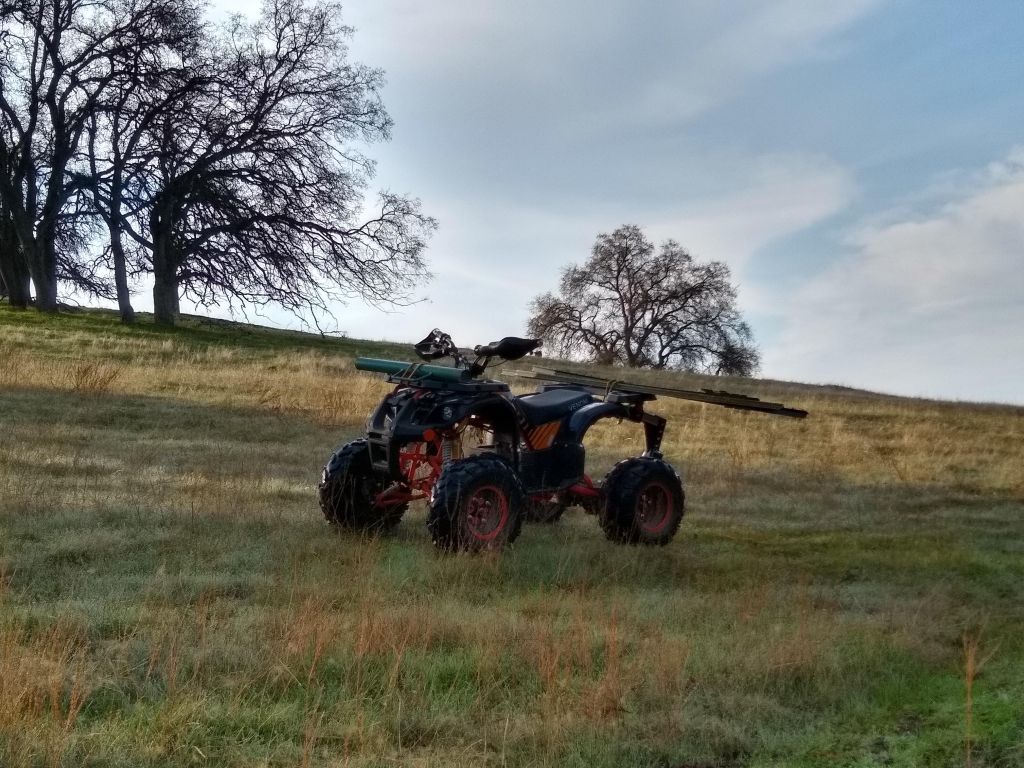
In my last post, I noted that my friend Maggie spotted a little oak seedling while hiking with me on the ranch. We protected it with downed branches to buy me time until I could get to the site and build a cage around it. Three weekends ago I was able to do so. It took much effort however. Since the ground was still wet from a recent storm, I did not want to disturb the soils with my quad by sliding up and down the hillsides. Instead, I loaded the quad with fencing materials and parked in a flat spot well away from the hillside site and hauled all the material to the site. For those that are not aware, t-posts are solid steel. The roll of no-climb fencing is a thick gauge metal. The t-post pounder itself is weighted steel, about 16.5 lbs. As I trudged across the creek, up hill, then across an arroyo to another hill, then up that hill to the oak seedling site several times with pounder, posts and a huge roll of fencing, I had only one thought in mind…”How am I not a size 6!? Why are my arms not as defined as a body builder?” The only explanation is that I love peanut butter too much.

I also put in t-posts around the cottonwood. I needed to do it anyway, and I was going to be nearby. The no-climb fencing still needs to be attached, but I have it ready alongside the driveway to easily pick up when I have the time. At least Maggie’s oak is going to be ok. There are so few young oaks (and so many that died in the last drought), I need to do a better job of protecting the seedlings I find.

My favorite is back: a. Californica

The first emergence of a. Californica

Finally, after weeks of monitoring the a. Californica site, I saw the first leaves emerge.These plants are so gorgeous and look so prehistoric to me. Last year, the site closest to the house had seven individuals. So far, I only see one. I also checked out the north-slope hillside where the thirteen plant community was last year. I found two – one single leaf by itself and another multi-leaf bunch. Both sites have much gopher disturbance. They ate a couple last year. I am hoping that this is only the beginning of their growth and many more plants will emerge so there are some that survive gopher predation. This early milkweed is a crucial source of food for monarchs as they begin their travels from the coast.

Diverse Butterfly Visitors

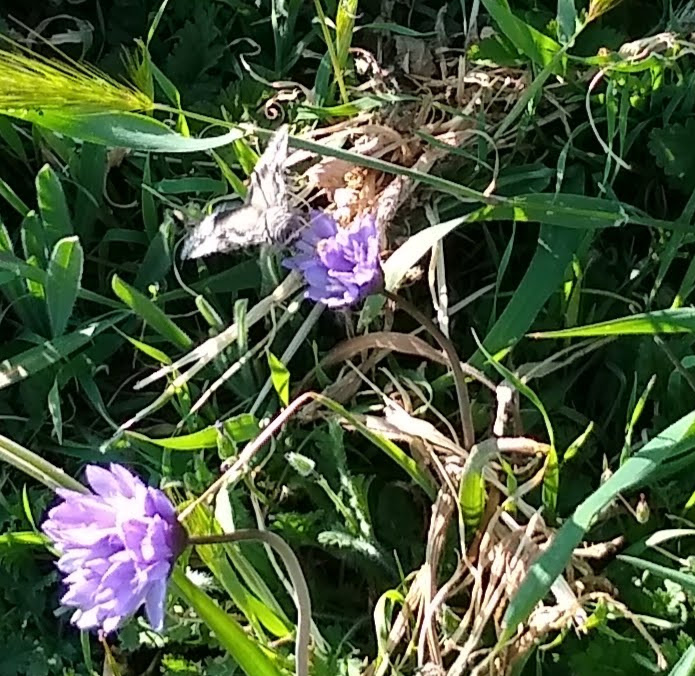
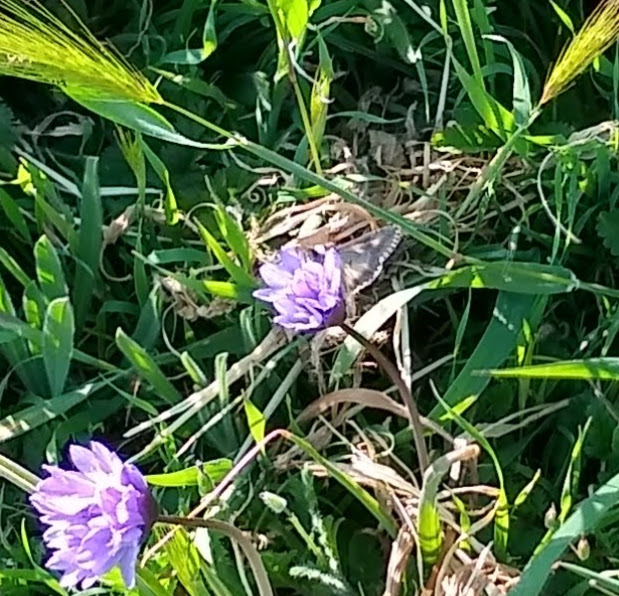
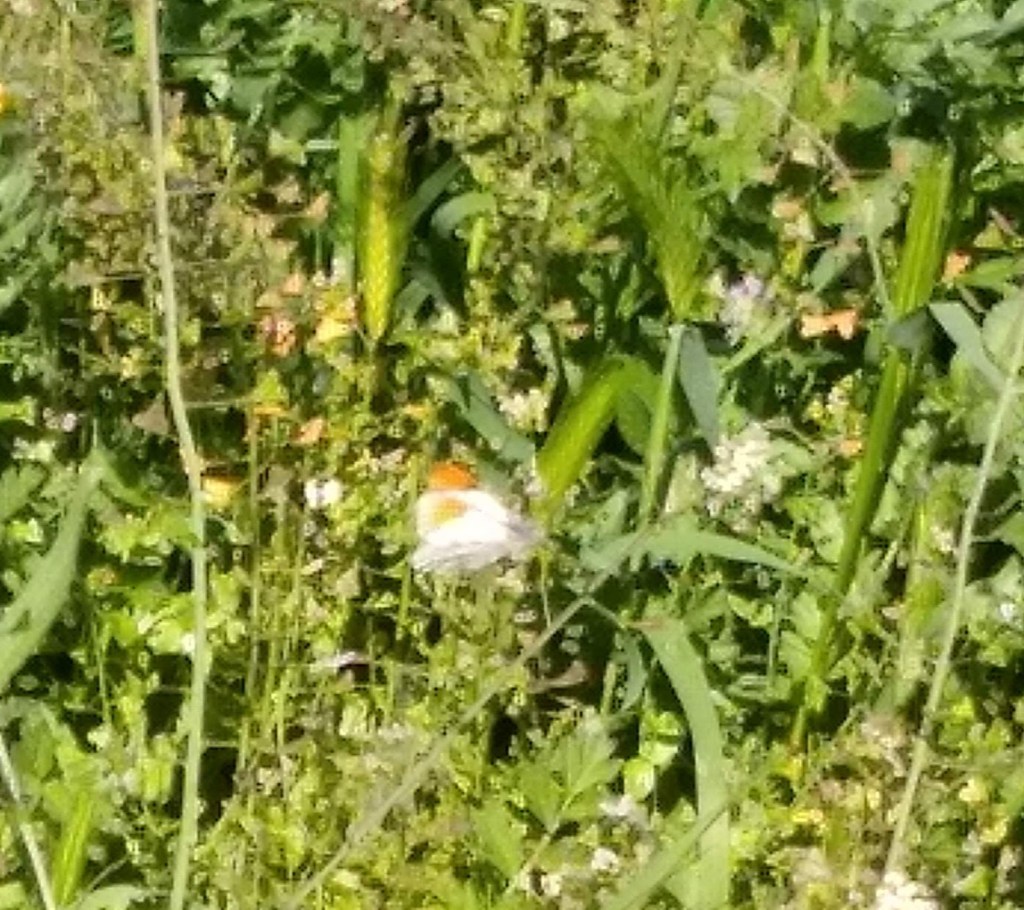
Cutting the grass early has really helped wildflowers proliferate. The little magenta flowers, generally not seen near the house this early, are thriving. We have so many species of flowers blooming that I have seen more than six species of butterflies already this year. They are tricky though. They flit so fast and disappear that it can be difficult to catch a glimpse for an ID or a photo. The butterfly visits began in late February and have grown in March. I was able to identify several using this iNaturalist tool. After being caught without a camera when the viceroy floated by, I now always have my camera/phone with me. So far, I think I’ve had: viceroy, painted lady, american lady, buckeye, white sulfur, brown checker, maybe a spring white and a Sara Orange tip. There have been a few I did not get a good look at, but they were clearly different than the above. Here are some of the butterflies of which I was able to get a photo.

Arroyo – Site 1 Planted!

I finally began planting in the arroyo. The soil is so much different there. Even though moist, it is a little tougher to dig. The soil is clay-like but also crumbly with very small rocks. I planted monkey flower, sulfur buckwheat, two narrow leaf milkweeds (I have a hole ready for a third when Ron brings another), white sage, purple sage, black sage, mugwort, yerba santa, two maple trees and one other plant I cannot remember right this moment. I planted one maple higher on the hillside in the path of the spring. In doing this, I am hoping it will have moisture available for longer in the season. The other plants are planted in the area of the arroyo that appears to be at the base of where the hillside spring travels. I also planted most plants on the north-facing slope. My thinking is that this will provide additional moisture as the climate changes. The hillside spring usually dries by late July or August. It is not much water. The spring mostly makes the grass there green longer. You can trace its subterranean trajectory by following the greenness of the grass down to the arroyo. Given its limited production, the plants will need to be irrigated as well over the summer. When helping write the grant, I estimated that it was 1000′ from my rain water tank to the site. I ended up using just under 600′ of the metal hose I purchased. This works out since this will leave me 400′ to use for other far flung locations.

The cows left last Thursday for their southerly rotation. I have another 4 days to a week to get a fence built around Site 1. I already have most of the materials and decided to use t-post diagonal brackets for the corners. I am not trying to make a permanent fence here. The goal is to establish the plants and trees, then remove the fencing. I purchased another 50 posts the other day. The price has gone so far up since I first began building fence. I used to pay $1.50 per post. Now the price is $4.91 – and that is good. Most other places have 6′ t-posts for well over $5/post. Ouch.

Drought Outlook

Not looking good…

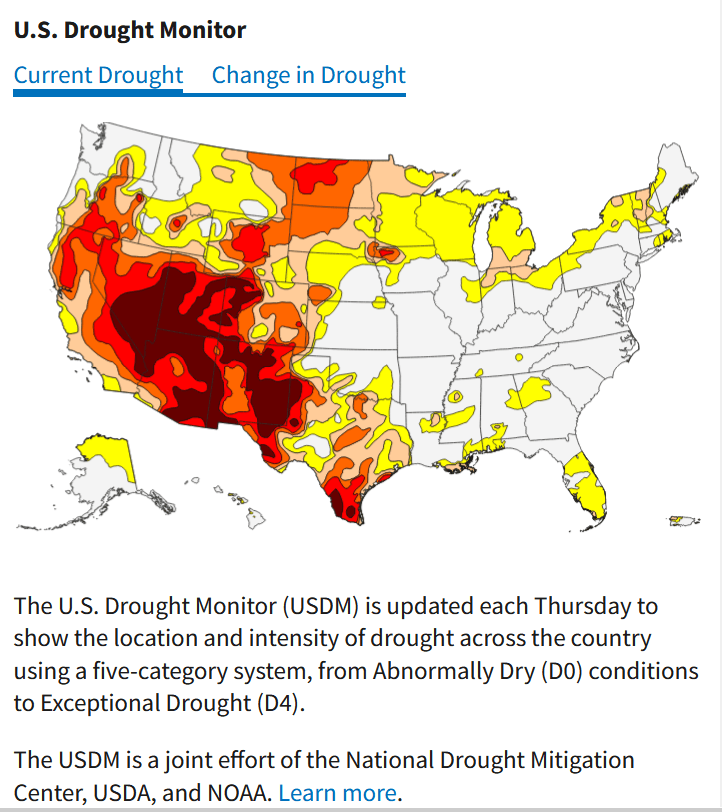
I keep a close watch on the Drought Monitor tool. I am so glad that I captured what I hope will be enough rainwater to get the newest plants through the summer season. I had hoped to add another tank, but did not get a chance to. There is much site work that has to be done. Last time, we hand dug the pad for the tank, built a retaining wall/box from old railroad ties and rebar we had laying around the ranch, and filled the box with sand that we purchased. It has worked well, but takes quite a bit of time. There is also the need to purchase just the right length and corners of Schedule 20 pipe. We just did not have the time or energy. We knew this would be a short winter season, and never received even one blockbuster rainstorm like we did last year. Maybe next year. My calculations say that we should have enough with the 7,000 gallons. I over- estimated water needs, but sometimes you need to water twice per week. Maybe the older native plants will need water. There are many unknowns. Stored rainwater is important because I don’t want to put any pressure on my well. David and I have already been in stricter water conservation mode for several months.

My rainwater gauge

I have been measuring rain for close to 17 years. The worst year of the 5-year drought was 9″ for the year. This year we have just under 10.75″. That concerns me. Last year, we had just over 14″. While 14″ is around the normal precipitation for my area, it does not allow much carry over into the next year. The soil, trees and grasses are thirsty. It shows. The swale pond did not have standing water until January 2021, despite a fairly wet December. Not good for plants and not good for fire resilience. We will do the best we can and hope it is enough.

Maintenance and Milkweed

With the emergence of the sun has come rapid growth of grass and all the other plants. David is mowing, and I am hand weeding to give the plants some light and space. Today, I staked all of the planting areas so we have markers that will keep us from weed-eating the plants if they get overrun by grasses. David does that work, and he does not know where everything is. Even if I am able to stay on top of weeding around the planting areas, it is good to have the stakes.

I have begun to water the plants. It is early, but they are already looking dry. I want to be sure they have a strong start. Maybe we will have some precipitation in April (fingers crossed). I monitor all of my plantings for growth. Sadly, so far, several of the dormant plants that came with the Xerces kits have not sprouted. Most of the bushes are doing very well though. The milkweeds from 2019 and 2020 have sprouts as do the newly planted milkweeds. They look strong and healthy. I am so grateful for that. Hopefully, the other Xerces plants will emerge. Maybe they just need more time.

Reflections

It has been a year since the the beginning of the CA Resource Conservation District grant, which allowed me to scale up the habitat work I was already doing. It was such a high last March when I learned my project had been selected from among many candidates across the State. At the same time, the impacts of the pandemic were just beginning as well. Everything was shutting down. Shock and fear took hold across the globe as we watched the bodies pile up in Italy and the bug make its rapid march, with each new red dot on the Johns Hopkins tracking tool, into every nation across the planet. It was made real when restaurants, schools and office buildings closed their spaces sending all of us home to watch life move forward without us. All most of us could do is watch the truly essential workers battle this disease with limited equipment, limited knowledge, poor national leadership and few options. If you were paying attention, there were some good things too. Here, the air was super clean – like it had not been in years. Wild animals showed themselves more now that they were given more room to be wild. The quiet of far less air traffic and road noise helped provide a level of peace needed as we grappled with the question of “what next?”. For me, not being essential, not being on the front lines of the pandemic able to use my energy to save lives, I chose to throw my energy and passion into helping save the lives of the monarch butterfly. It was good medicine for me.

We will survive this pandemic – but what will be do with our changed lives? Without bird songs, the howl of the coyote, cool breezes of clean air, clear, healthy water babbling across rocks, the smell of billions of blooming wildflowers, places of natural wonder and peace, and, yes, monarch butterflies making their epic migration, spreading their large wings as they surprise you with their beauty — without these, what is life worth anyway?

Branch Fence Bust and the Boys are Back in Town

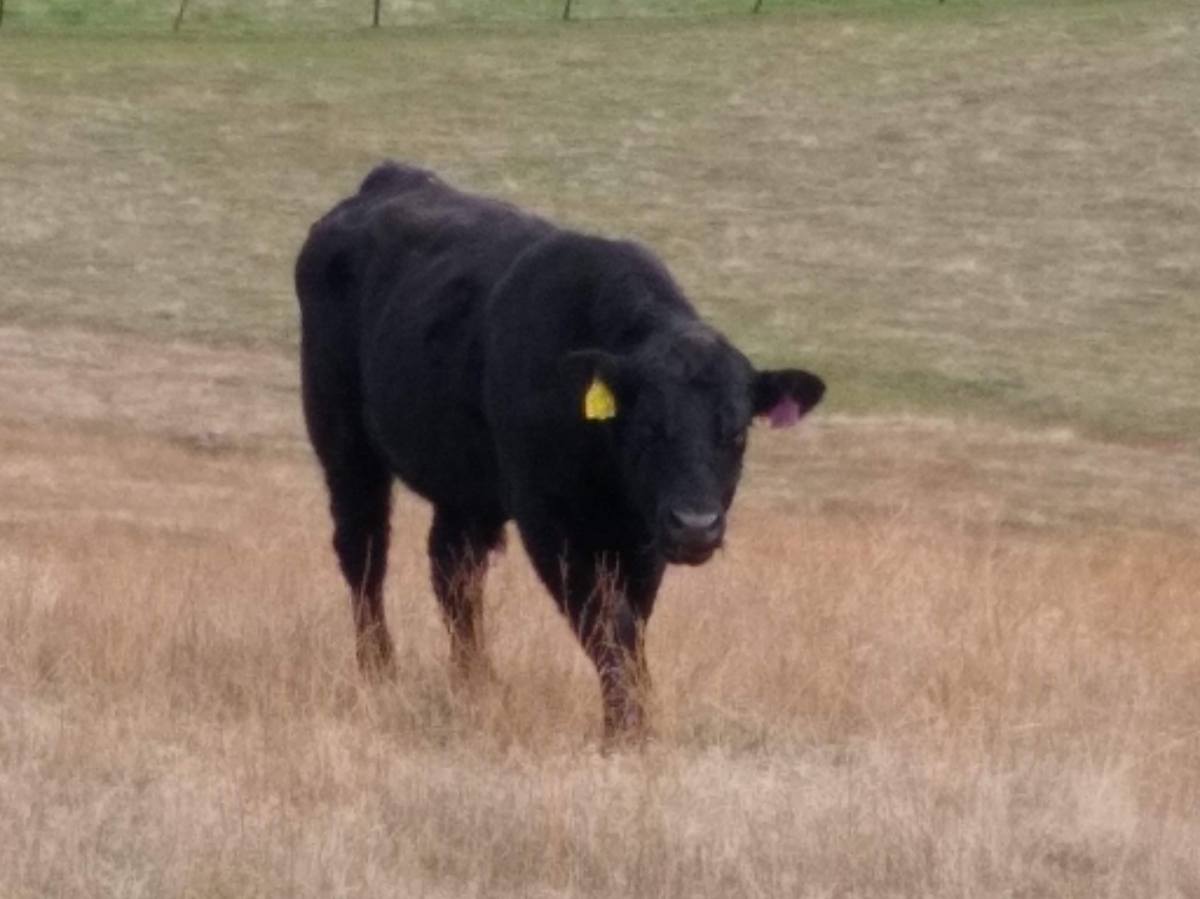
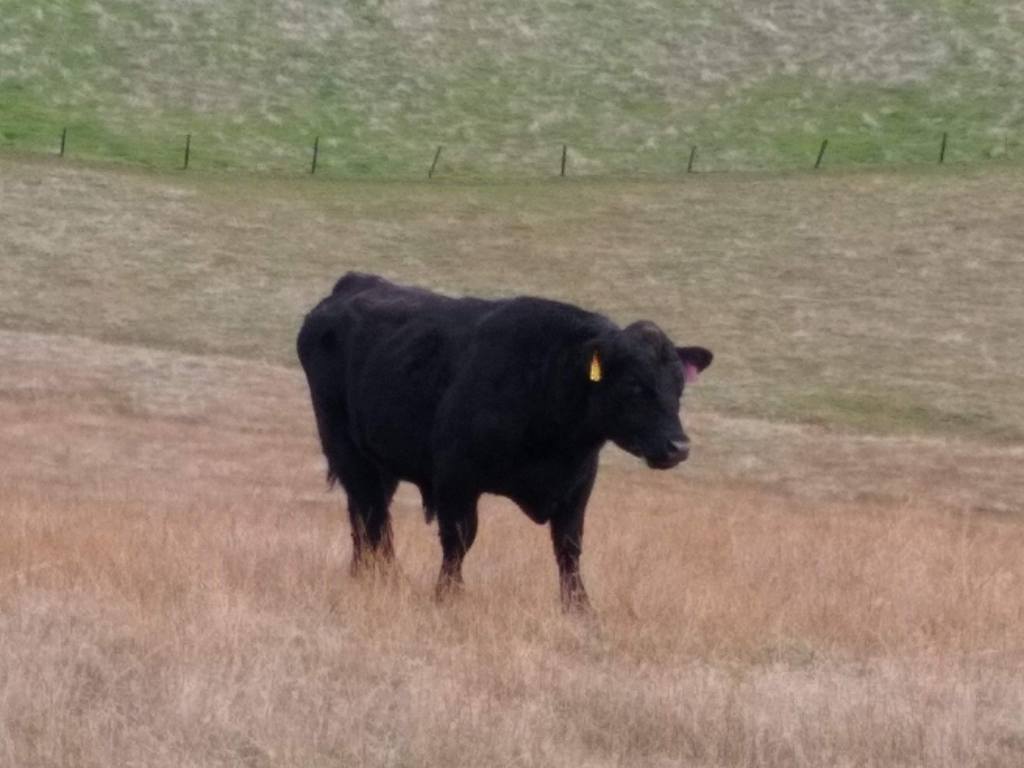
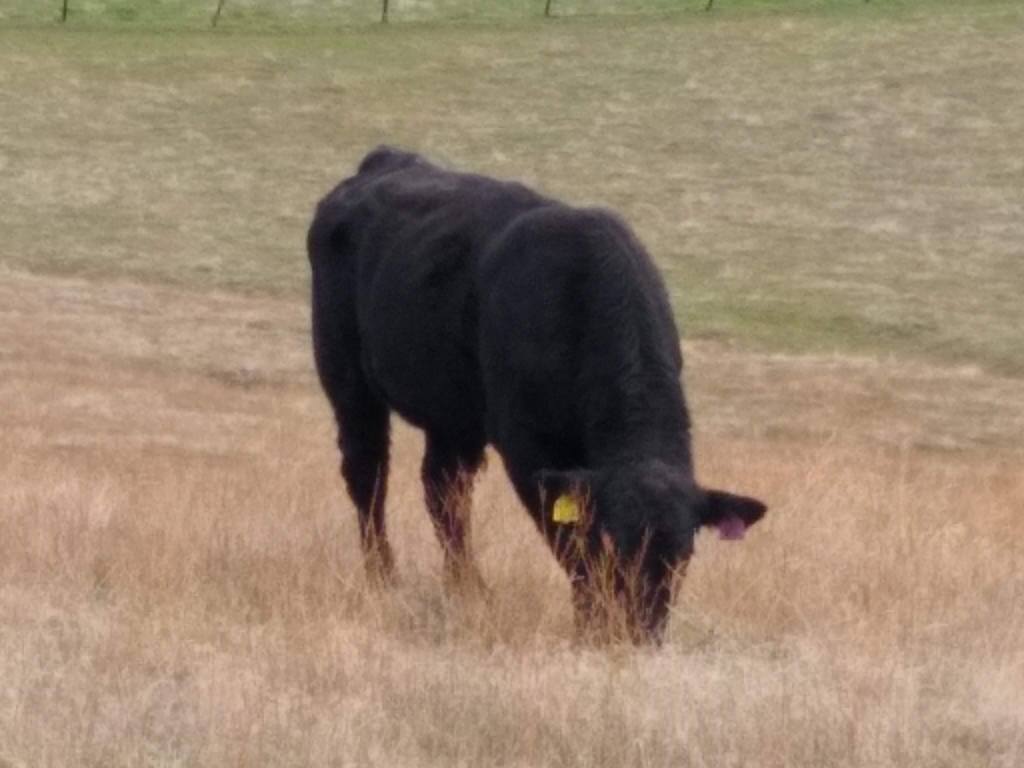
Bull grazing in the a. Californica milkweed area

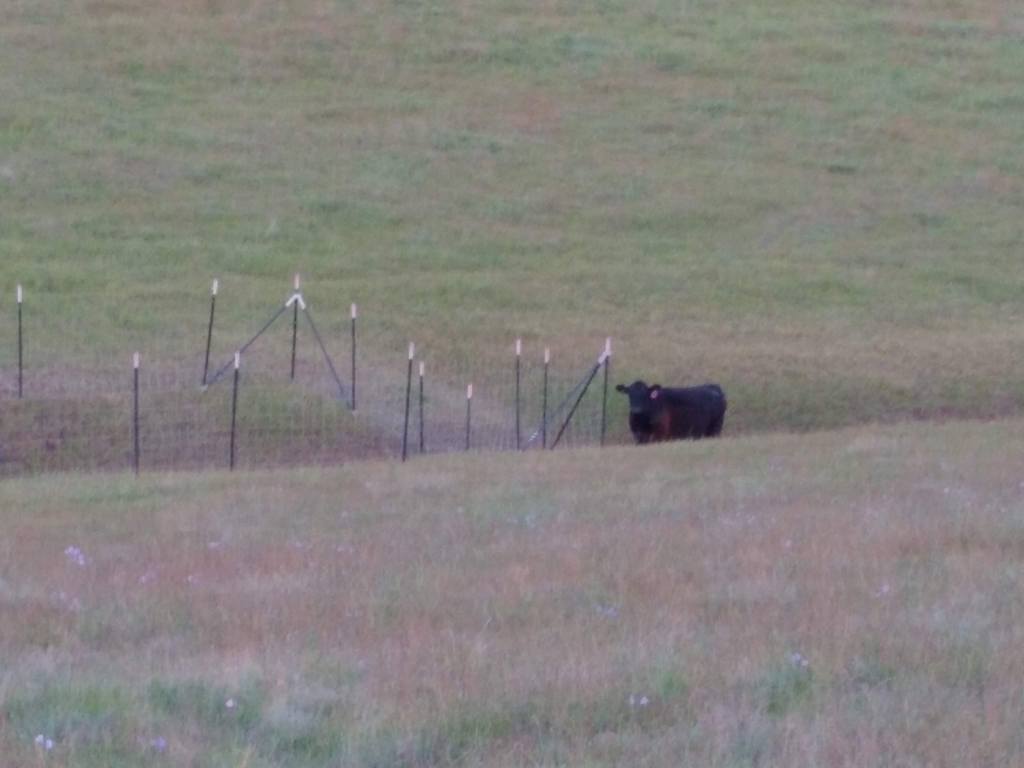
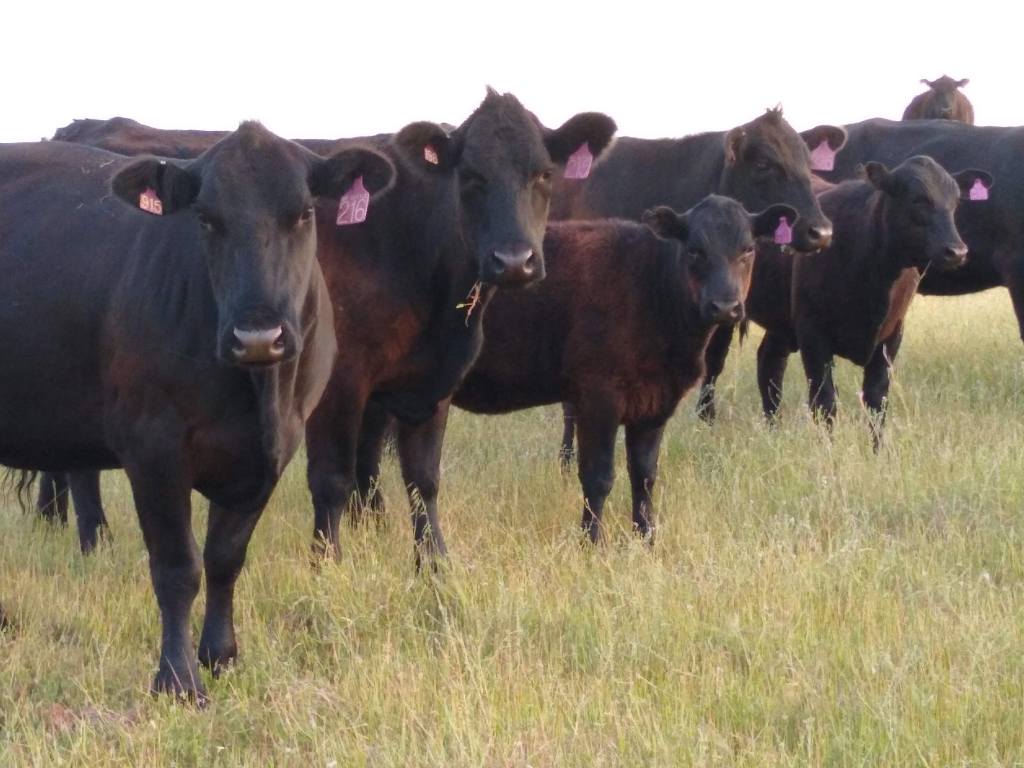
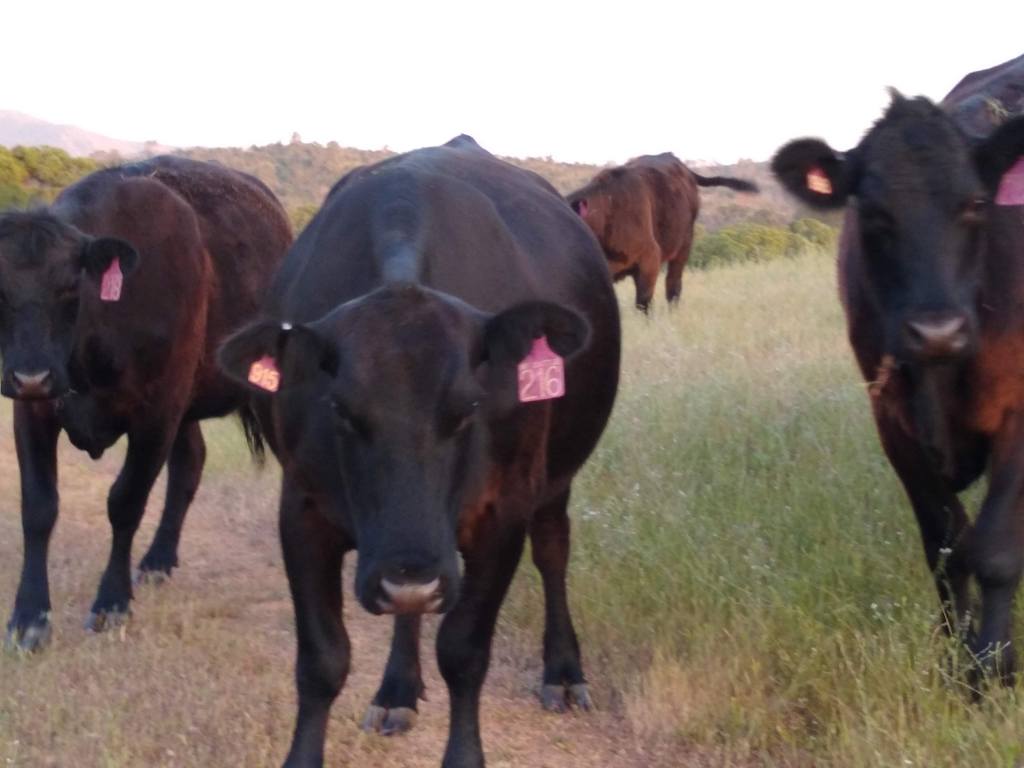
I love bulls. They are simply magic to look at with their size, muscles and intense stares. Fortunately, the bulls run by our cattleman here on the ranch are gentle. They would rather walk away than charge. Still…it is good to be real respectful of their presence – especially when they are around the ladies strutting their stuff. Remember, this is an 1,800+ lb animal. On my quad yesterday to do some watering, there was a big guy laying right in the path. I stopped. I looked at him. He looked– no he stared (intensely) — at me. After 45 seconds or so, I decided I would blaze a new trail to the northeast of him. Bull 1, Heather 0.
I have been checking the plantings in the branch fence (Site XR1) about every three days. Over the last six weeks, I saw that pieces of branch fence had fallen or had been tested by the cattle. The fence needed to be monitored and more branches placed every week or so. Last week, I noticed that the cattle had blazed a trail tightly alongside the enclosure. Hummm. This worried me. The fence had been tested just a week earlier resulting in me placing more branches on the east side. Now, it appeared that the cows were developing more than a passing interest. It makes sense that they would. With the limited precipitation, the grass is getting a bit thin on the ranch. By contrast, the creek beds are lush with growth. This is certainly true in the XR1 enclosure. More than grass is growing healthy and tall – quite an inducement to push in.

Cow trail

After seeing the path, I began to use rocks and other branches to block the path. Just up the hill on both sides of the creek are dead oaks with downed branches. In the last drought, we lost about 300 oaks across the ranch. It can be sad to see their ancient bodies in various states of decay. In this case, as I harvested the branches from the ground, I thanked the trees and limbs and told them that their remains will be used to promote new life so important to the health of this place. It is important to be grateful and respect all things.

I hauled the branches down from the hills, some lifted, but if they are large, dragged. Oak branches are tortuous – twisted and gnarled. This is a good thing for the fence. The twists of the branch tangle with the others. My goal is to lock them together as much as possible to promote strength. They also create width in an attempt to keep the cattle as far a distance from the planted area.

West side of branch fence. Note the lengths pushed out toward the trail

Currently, I fit my ranch work in before and after the end of my work day and on weekends. Especially in the fall and winter, when the days are shorter, I do not have much time to get things done. I did as much as I could before sunset, hoping it was enough.

Despite having spent considerable time shoring up the fence, I checked back the next day. What I saw shocked me. There was a cow pie inside the enclosure. Horror!

Evidence! A bovine was inside XR1

I looked around the entire fence. The breech was on the north side. I had built up the south, east and west sides, but felt the north looked fairly solid. Clearly, I was wrong. My heart was in my stomach terrified of what plants I might find gone or trampled. Luck was with me; all the butterfly plants were still there and intact. One had been pulled at, but had not been pulled out. I could breathe again! I tipped that plant back upright and patted tight the soil around its base. It looked like the intruder, enticed by the lush lengths of green, passed the currents and went right for the grass. The cow pie was smaller in size, so I guessed the interloper was an older calf or a young heffer. Usually, you can tell the difference in the poop. Calves have a slicker output since they are still taking milk, but the pie was in the water – so no telling who it was.

No matter, I began hauling branches to shore up the north side. I was not prepared with proper clothing, such was my hubris about the thicket I had installed. If anyone ever wonders why they see people working on the ranch in long sleeve shirts in the summer, it is to protect your skin. I was desperate to fix the hole immediately, so I worked despite having shorter sleeves on. My skin was scratched and bruised, but the hole was filled. Oh well. That is life on the range.
Not the half of it. Scrapes and bruises on my arms

Wildflowers

Pretty low growing wildflowers

Several blog posts ago I discussed that David and I planned to cut the grass early this year to see what would grow. It was a good idea that David proposed. We typically leave the grass to grow long thinking that it would protect the top soil and help the soil retain moisture by protecting the soil from wind and shading it. We cut the grass in February and found that we had a proliferation of wildflowers.

Proliferation of white flowers with some orange ones mixed in

The small white flowers that popped up were the same ones that we always see on the cattle road. They are the first to bloom and fill the air with nectar. How exciting it was to have them in such large numbers near the house. The bees are loving them. We also have a proliferation of the small magenta flowers near the house, which we typically see in smaller amounts. Of course, the timing and amount of rain impacts what grows too. Shortening the grass so that the sun could hit the soil and seed significantly contributed to the larger amount of wildflowers. We will continue this practice.

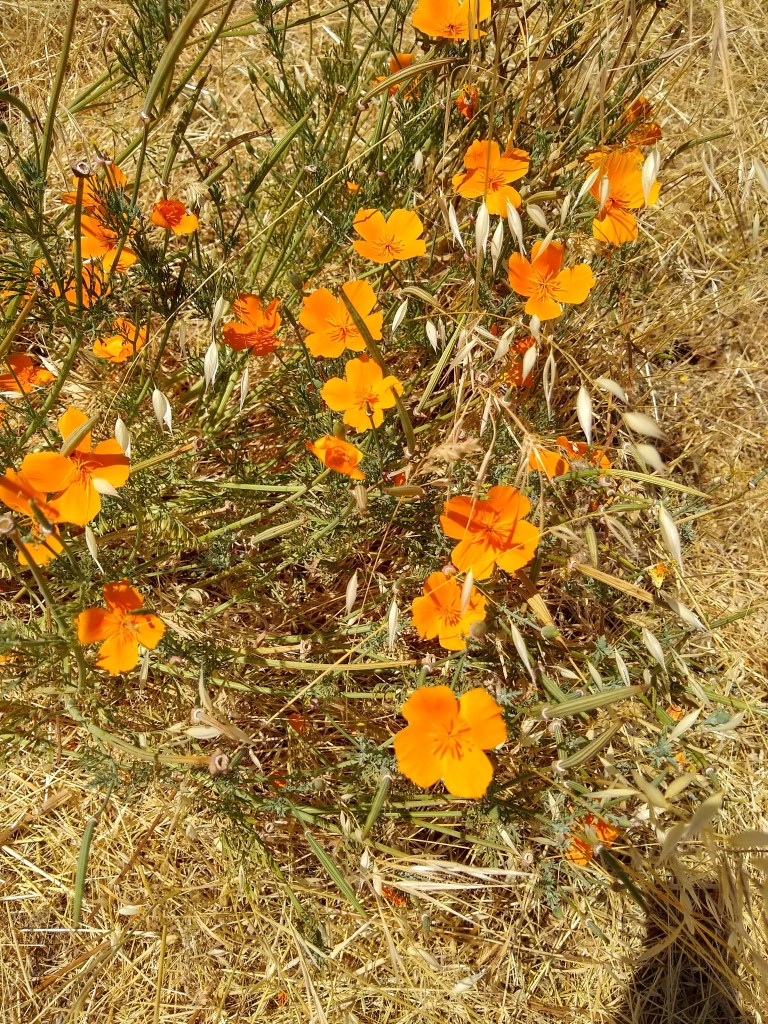
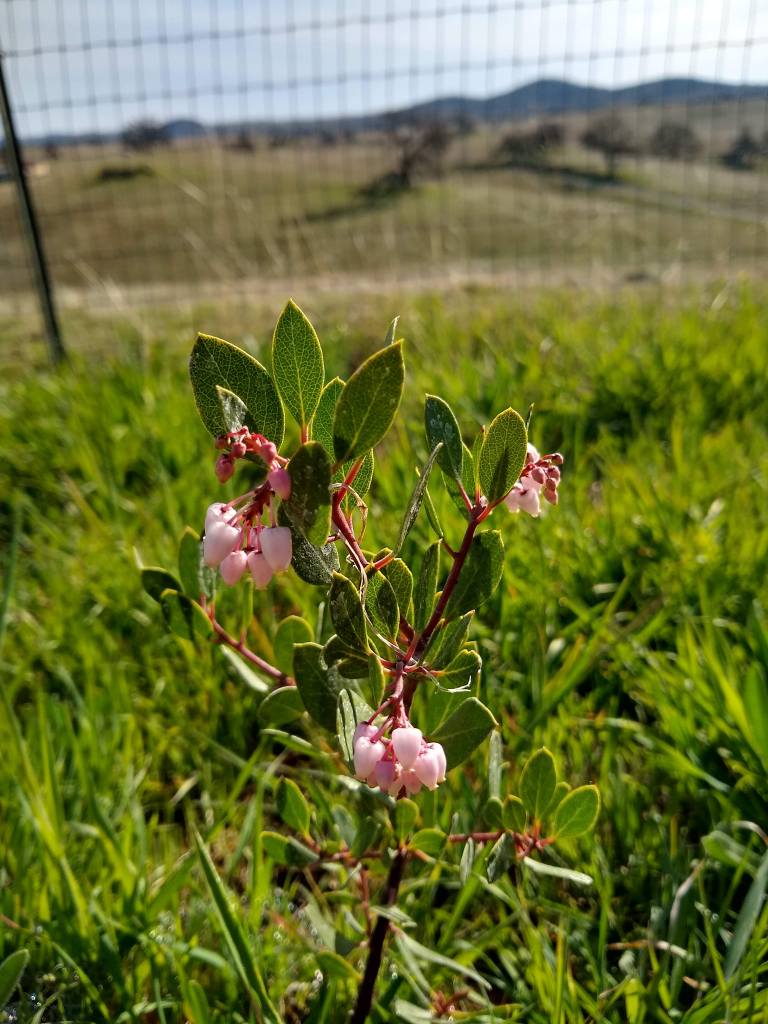
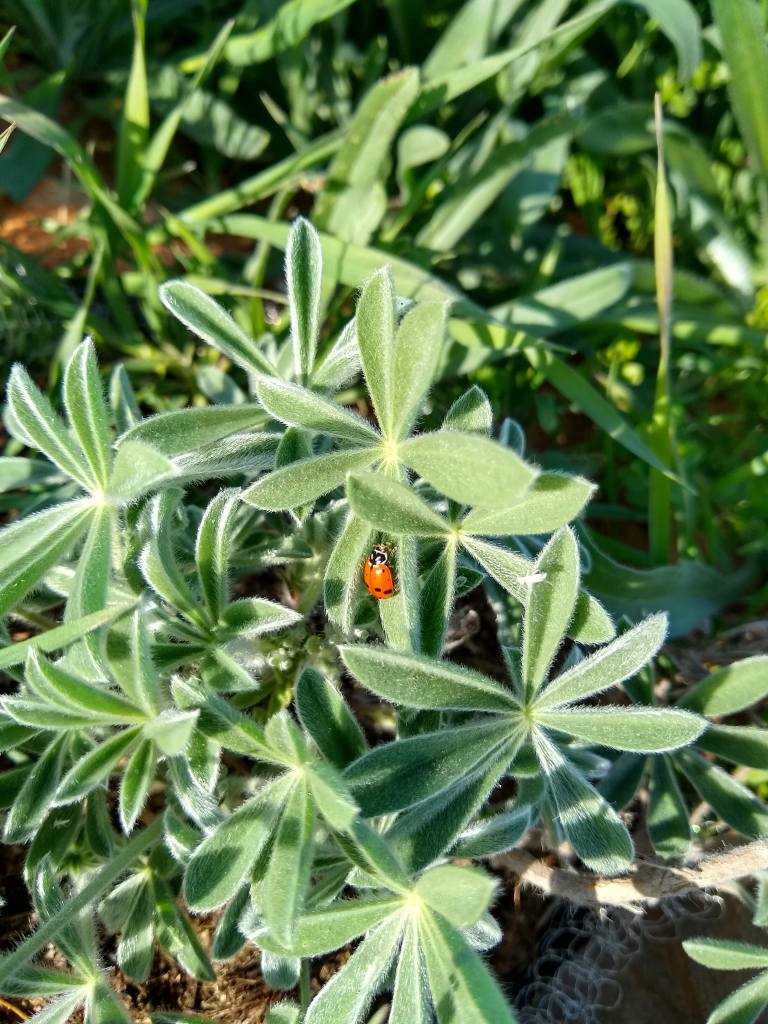
The blue dicks and poppies are blooming. We get both of these regularly. It is so much fun to see the empty stems pop straight up out of nowhere knowing there will be a blanket of purple in a few short weeks. The manzanita planted last year with the Xerces hedgerow kits are blooming. What gorgeous pink blooms. The coyote mint has finally taken off. I am looking forward to their scent. The lupine is growing well, but will not bloom for a little while longer. Lady bugs are all over the plants. What a welcome site. Finally, I found a remarkable surprise – soaproot. I have seen it on the ranch here and there, but the cows always eat it before I can try to protect it. For the first time, I found it in the house enclosure. What a joy. It is a traditional plant my Mi-Wuk cousins used for grooming.
More Butterfly Plants Planted – Milkweeds are Starting to Re-Sprout

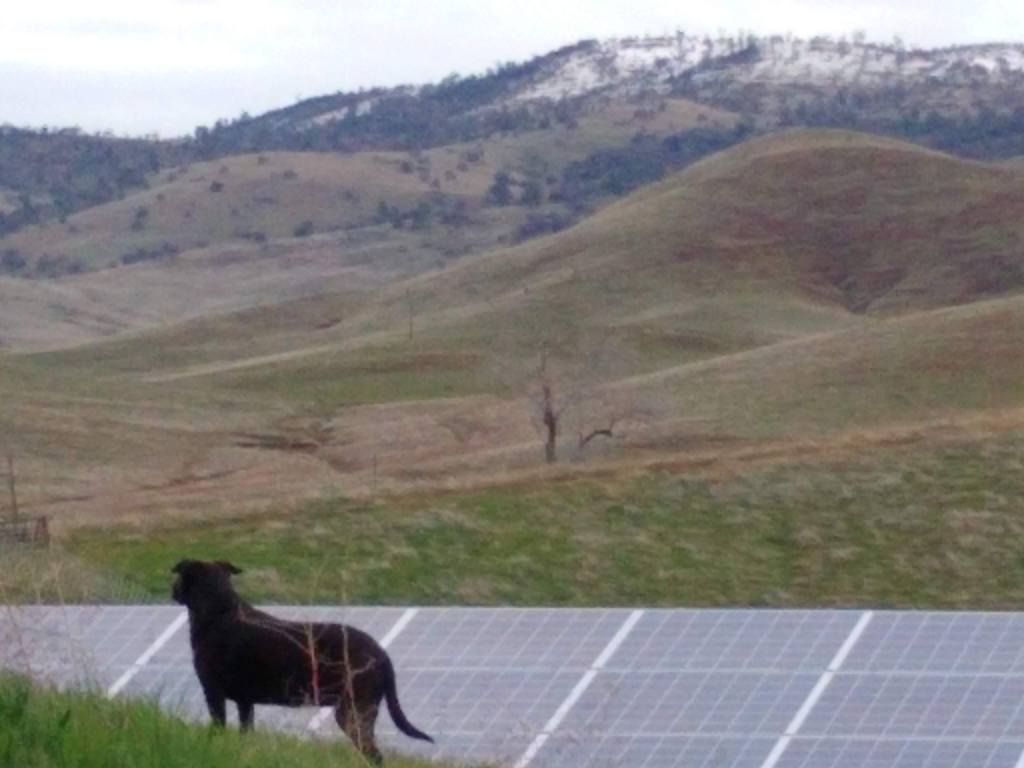
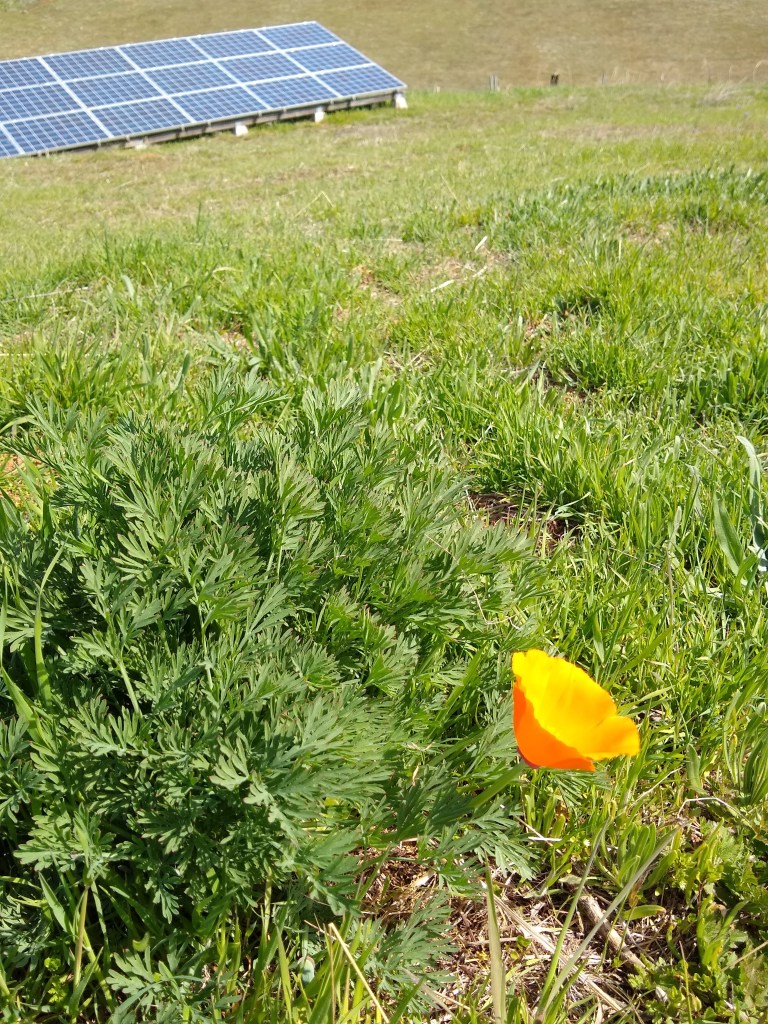
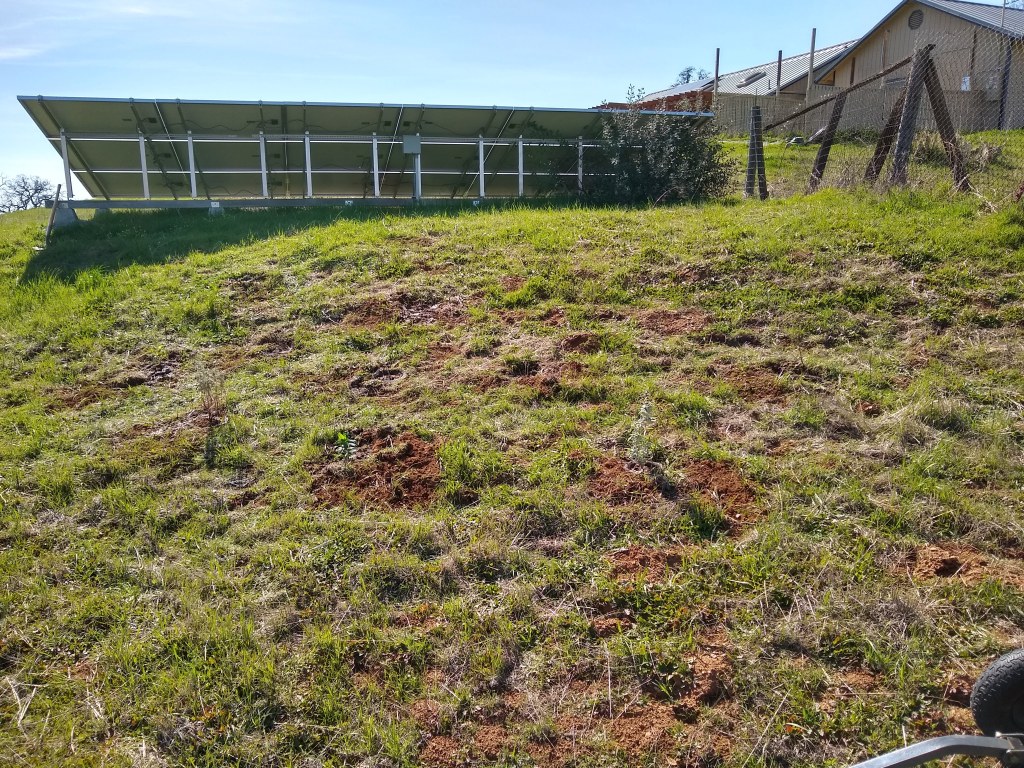
A butterfly pad on the north facing slope near solar panels
A pad on the east

I have taken delivery of 36 butterfly plants and have planted 24 so far. The concept is to plant nectar and milkweed together in a group so that there is everything the monarchs need to live, and to plant many of those groups. I am attempting to create butterfly “oasis” or “pads” (like lily pads for frogs) for them to flit from one to the next. In the home enclosure we now have four pads, two milkweed patches, disbursed nectar throughout and two hedgerow sections with nectar plants.

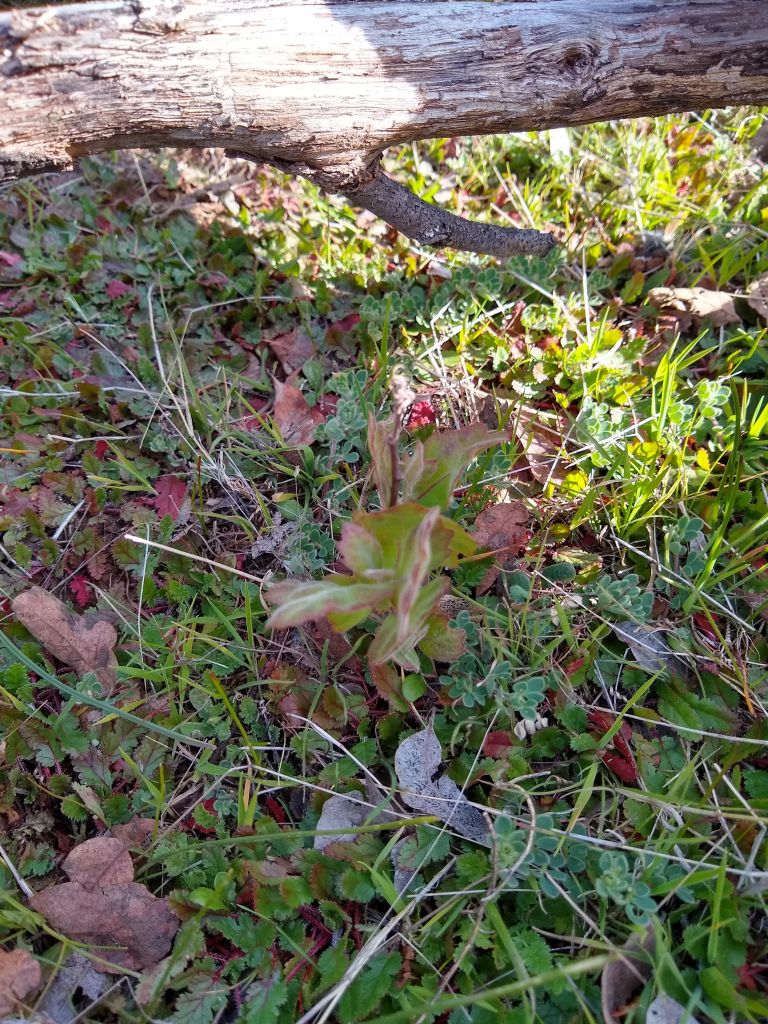
Milkweed sprout

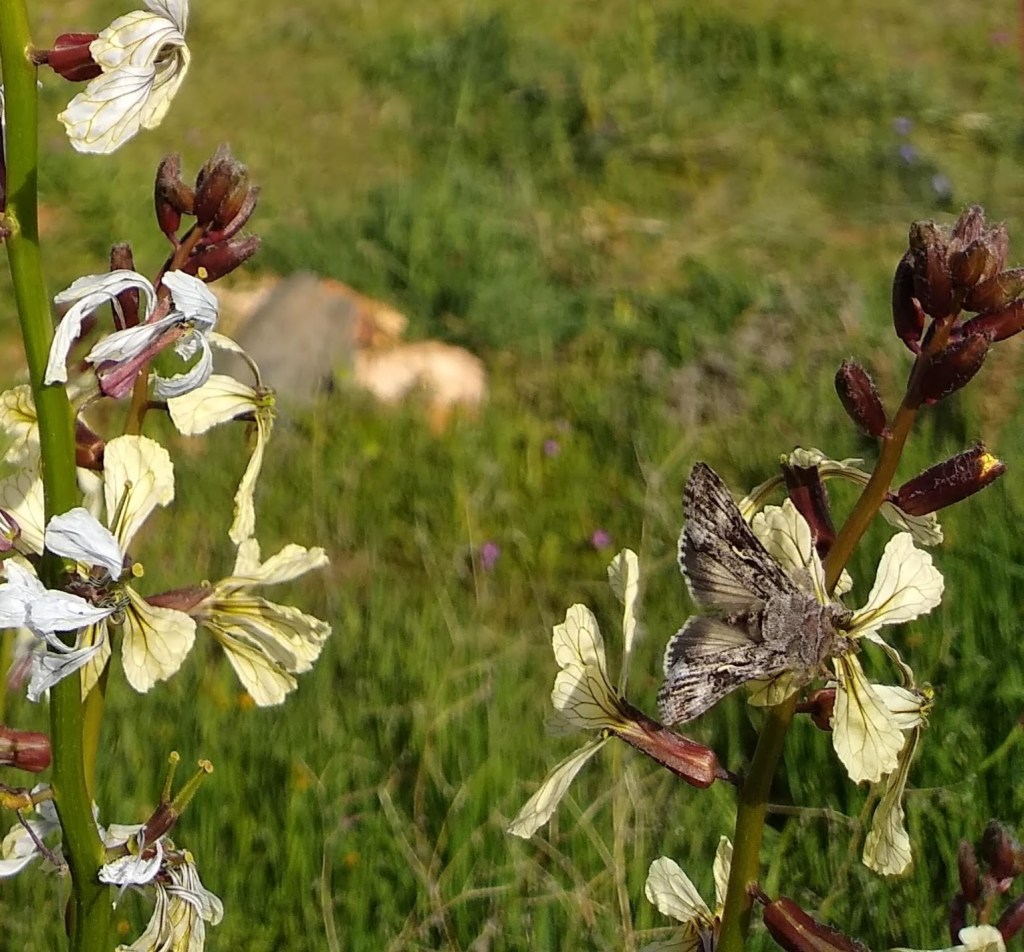
We have already seen six species of butterflies – a whitish one, a mostly black one, a viceroy, some painted ladies (we think – they move so fast), brown with some faint orange in the middle of the wing and brown moth like ones.

Brown with black markings
Brownish butterfly

Other Items

Healthy oak seedling with leaves

Over time, I have felt more comfortable that I know how to protect myself from the virus. With this comfort, I have had a handful of friends and family who I know follow good practices over to hike or have a meal on the patio. I was overjoyed to have my friend Maggie come over for a hike this past weekend. She has a well-trained eye and ear as a naturalist. Besides identifying blue bird calls, poison oak and a red tail, on our hike she spotted a healthy oak seedling. Somehow, it had avoided detection by the cattle. Maggie and I quickly made a brush pile to help protect it. I will go back out this weekend and build a cage around it. It is in a good spot to grow without other oak competition for light. How wonderful to have friends over again and to share the land with another person who loves it.

This brush pile is likely not enough to protect it long term. It is fairly small. It may buy me time however to build a cage around it.

We also had the opportunity to go to Odom Creek and check on the willows and mulefat. All were still there and doing really well.

Willow doing well inside the brush pile

In addition to all the planting, I continue to educate myself and participate where I can possibly help. To this end, the CAFF conference was excellent. I leaned about a wide variety of topics that could be helpful to my work, such as financing. I was also asked to join a monarch and rangeland working group tasked with expanding habitat on rangeland. I am not sure what value I will be able to bring, but it was good to meet and learn from so many others. At that meeting, I met Susie Calhoun. She is another land steward building habitat on her family ranch. She and her family are doing a great job. Check out their website to learn more and see some beautiful photos. https://www.3calhounsisters.com/
Let the Blooms Begin!

Blue dick

It truly is amazing how blooms happen. Overnight, they just appear. Although I have been seeing the stems for a couple weeks, I woke up Saturday morning to a proliferation of purple. In fact, there are many plants sprouting blooms or new leaves. Early nectar is an important habitat element for monarchs as they begin their journey from the coast northeast. I say this as if it is a sure thing. The truth is – the monarchs may never come. The Xerces overwintering count was less than abysmal. There were almost no monarchs overwintering. From millions to under 2,000 individuals, this is a major crisis. I keep having this fantasy that they are adapting to climate change and habitat loss, that their course is shifting, that they have chosen moderate habitats inland. It is simply a fantasy that helps keep me moving forward, a trick of the brain. While it is possible, it is not likely in numbers anywhere near the millions. So, I keep moving forward knowing that my work also impacts other pollinators – butterflies, bees, flies and really…everything.

I was so pleased to see that the majority of plants I planted are settling in, beginning to leaf-out. The buckeye is really leafing out. The cottonwood is still dormant, but I am excited to see that tree thrive. The redbud seedling is beginning to leaf-out. I am really excited to see it in bloom. If she likes it here, I will plant more. I am really excited about this shrub as well as the big leaf maple I just planted over the weekend. Ron Allen (mariposanativeplants.com) included the maple as a good option for pollinators in my latest order. I will plant another when the seedling is ready. Planting trees is crucial for carbon sequestration and helping reduce climate change. However, it is important to consider water availability when choosing what tree and where to plant. Ron said the big leaf maple is indigenous to California and is found in Southern California tolerating drier climates. With this in mind, I decided to purchase and plant it.

Big leaf maple planted on the arroyo

I chose to plant the maple along the arroyo near the swale pond. I plan to install more swales along the arroyo in the future, and felt that there would be sufficient moisture to maintain the tree(s) over the long term. Since it did not have leaves yet, I did not feel an urgent need to immediately place protection around it. I had a lot to do this weekend. I will build a cage around it this week. I already gathered the materials so they are ready when I have a two hour time slot.

Loaded and ready to go with fencing equipment on standby

All of the first set of plants are planted. I created a new milkweed/nectar plant “island” near the southeast corner of the house enclosure. I added the mugwort to the plantings of Site XR1.

I also took the time to monitor and weed around old plantings, especially the Xerces hedgerow kits. Some planted areas needed significant weeding. Several revealed some new growth way, way down at the dirt level. I am not sure if they are the plants I planted. Many were dormant at the time of planting. All I can say is that the sprouts look different than the typical grass I am familiar with, so I did not pull them. The riparian kit plants, that I can see, appear to be thriving especially the golden currents and mulefat. There is also an aster that retained its leaves all winter (i.e. nothing ate it).

On Friday, I saw two types of butterflies. They came and went so fast that I did not have time to attempt a photo. One was larger and black. The other was lighter, not quite white. Needless to say, I was overjoyed. It is proof that what I am doing is working. We also had a large number of European honeybees and a large bumble bee. They are loving the arugula flowers. Still no a. California, but I continue to look. Also, I am improving my knowledge by attending the Community Alliance with Family Farmers annual conference. There are some great topics, including carbon sequestration, composting, indigenous ag and many others. Check out the conference page.

Technical Support

Astrid and her best friend

A very small portion of the grant I helped write with Melinda Barrett of the Mariposa County Resource Conservation District (RCD) is for technical assistance helping others plan, choose and implement planing of pollinator friendly plants, particularly those appealing to monarch butterflies. I am leveraging my experience, with the expertise of Ron Allen and Melinda Barrett, to help connect people, land, plants and butterflies. My friend Carolin has been following the Walappu’ ‘Uuchuthuu posts on Facebook and wanted to participate. Ron and I helped her pick good plants for the monarchs and her location in Catheys Valley. She purchased some plants and got them into the ground right away. Carolin had some help though! Two of her children and the family fur-child helped too. See their photos below – and cuteness alert!
Monarch plantings are a phenomenal way to engage with family and teach children about their role as stewards in this world. A big “thank you”to Carolin and her family for jumping in as change makers and for sharing these great photos. Hopefully, there will be many more families and individuals participating in planting a’woo’atee (butterfly food). If you want to be a part of this change making project, contact me through the “contact” page on this blog.

It’s Butterfly Plant Season!

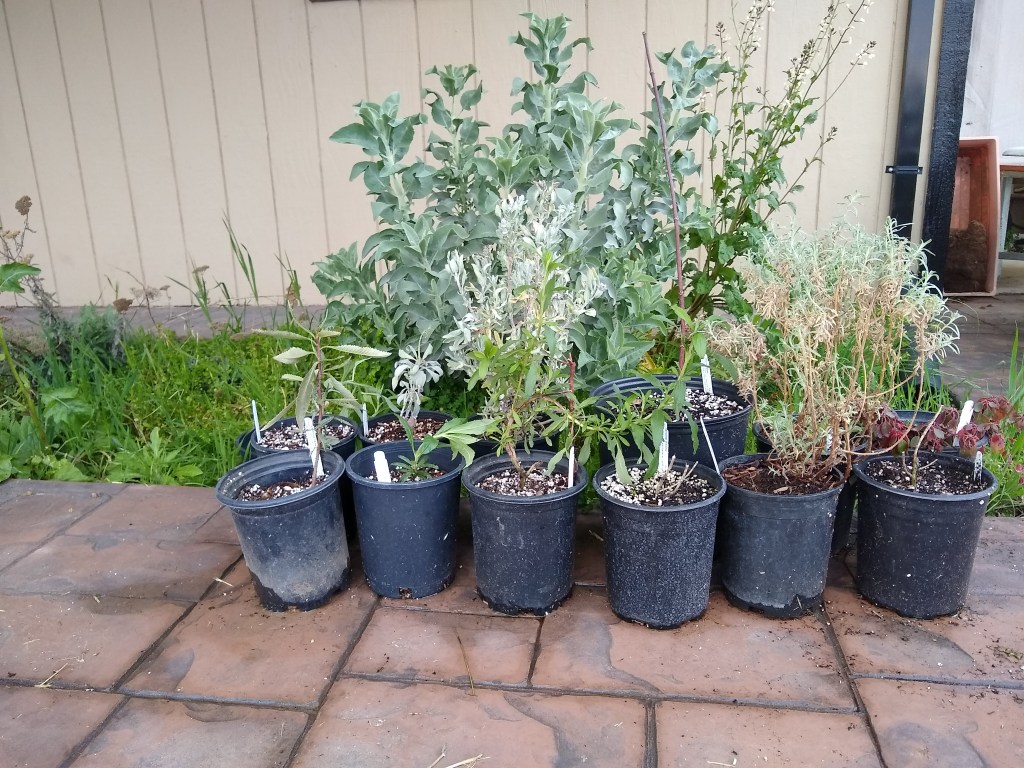
The first plants of 2021! Narrowleaf milkweed, sages, Ca fuchsia, yerba santa, sulphur buckwheat, maple+

I took my first delivery of butterfly plants today. I am excited to begin more intense work and for what is ahead of me this year. My plan is to make three to four large butterfly oasis (a collection of nectar plants and milkweeds) on the east side of the house within the large enclosed space.

This Spring, I am hoping to start the second part of my grant plan, which is to expand the plantings to other properties and provide technical support. A friend, Carolin, already asked about making butterfly plantings. With Ron Allen, UC Master Gardener and Mariposa Native Plants co-owner, I helped configure and select some of the best plants for her to use. She took her first delivery of plants today as well. She plans to make one butterfly oasis using 16 plants – ten milkweeds and six nectar plants. Carolin already has a number of plants in her garden that are butterfly friendly. Also, another friend, Caroline, will be expanding her existing butterfly planting by adding some showy milkweed. Caroline already has a phenomenal garden that is pollinator friendly with significant stands of narrowleaf milkweed.

Greening hills after the rain

The hills are beginning to green up with the continuous rain. We had some additional moisture this past week, but nothing on the scale of the storm the week before last. We had about 6/10ths of an inch. The sky has stayed cold and moody, which has helped the soil retain its moisture. The first wildflowers are beginning to show. First it was the sweet little white blooms that grow best on bare patches like the cattle road and trails. These blooms are already releasing their intoxicating, sweet smell. At their peak, the entire atmosphere is so thick with nectar that you can almost lick the air. Second, the small white flowers on top of the clover have been opening. And, finally, just today, I saw my very first blue dick bloom. I’ve seen the hillside filled with their sleek, slender, tall stems, but had not seen any hint of the purple bloom until today.

Every day I have looked for the a. Californica milkweed starts to make sure they are not being crowded out by the grass. Probably, given the many overcast days, the soil is not at the right temperature to communicate growth to the seeds and plants. I imagine when the sun shines more continuously, the grass will have a quick growth spurt. I may need to cut the grass in that area to give the a. Californica a chance.

The last couple of rains storms produced enough rain to fill all the rainwater tanks. I am now back up to 7,500 gallons stored. What a relief after missing out on all that gorgeous rain when the piping decoupled in four different areas. I think we will have a couple more large storms before the end of the rain season. I am going to attempt to install another 2,500 gallon tank on the north or east side.

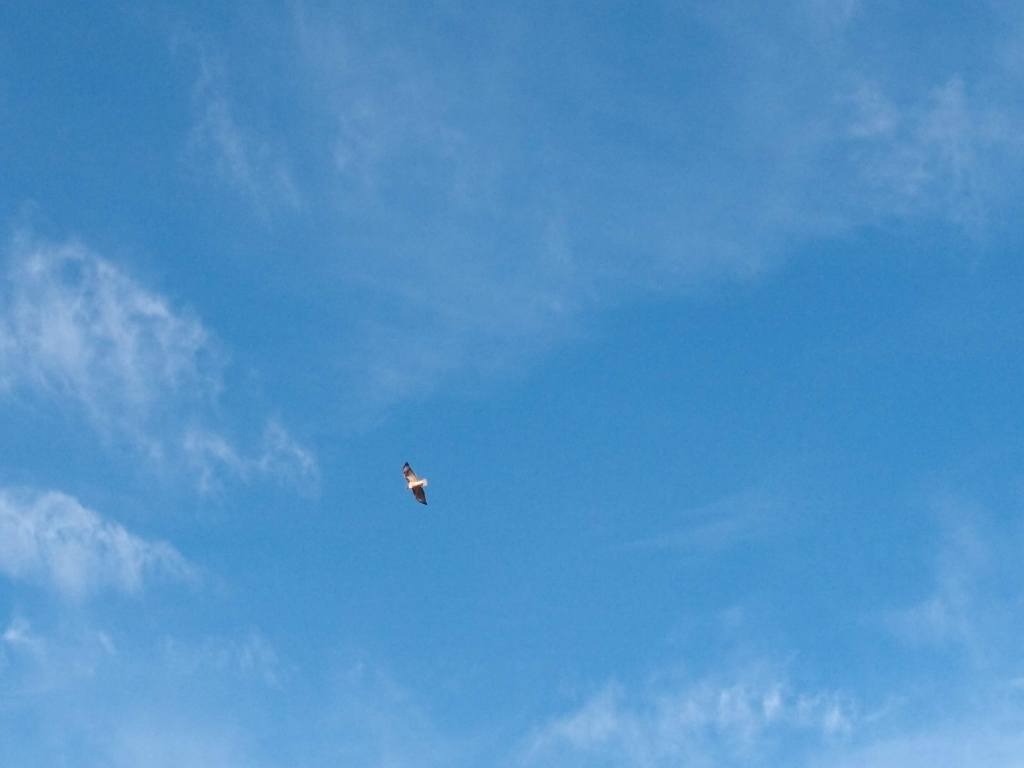
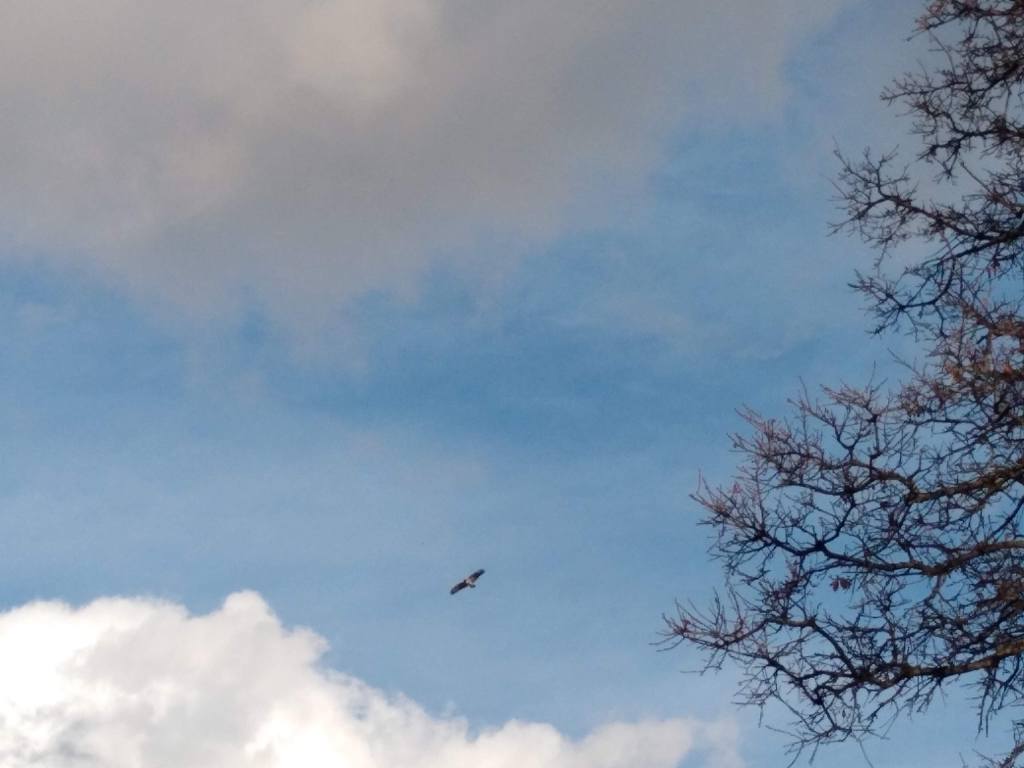
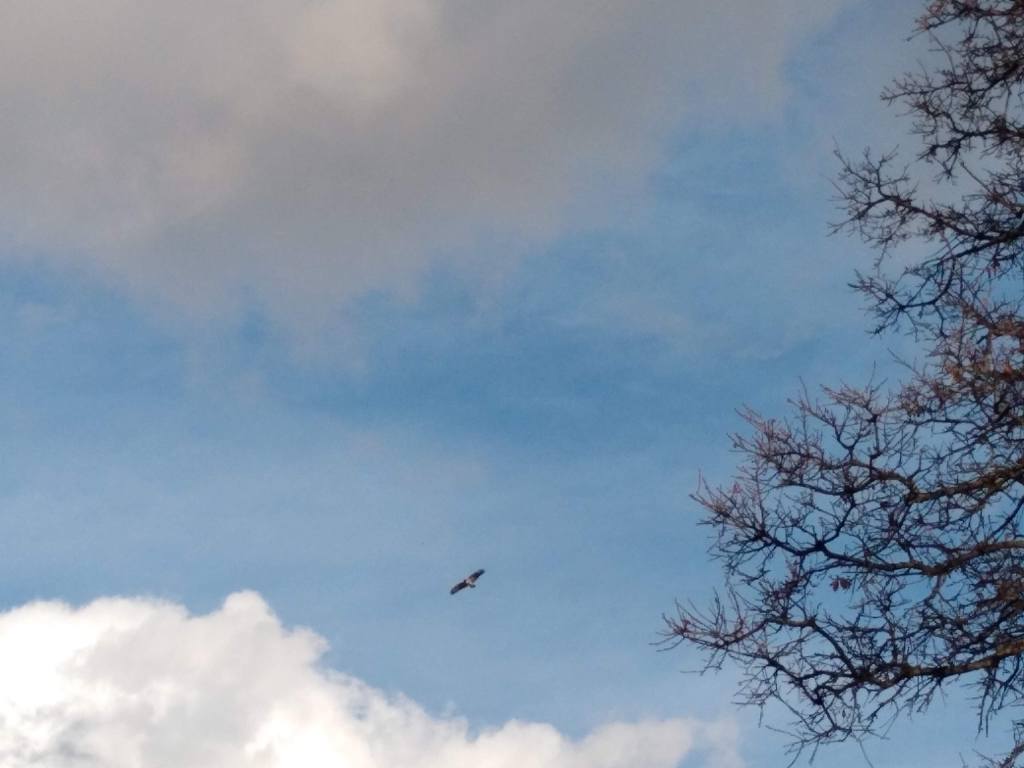
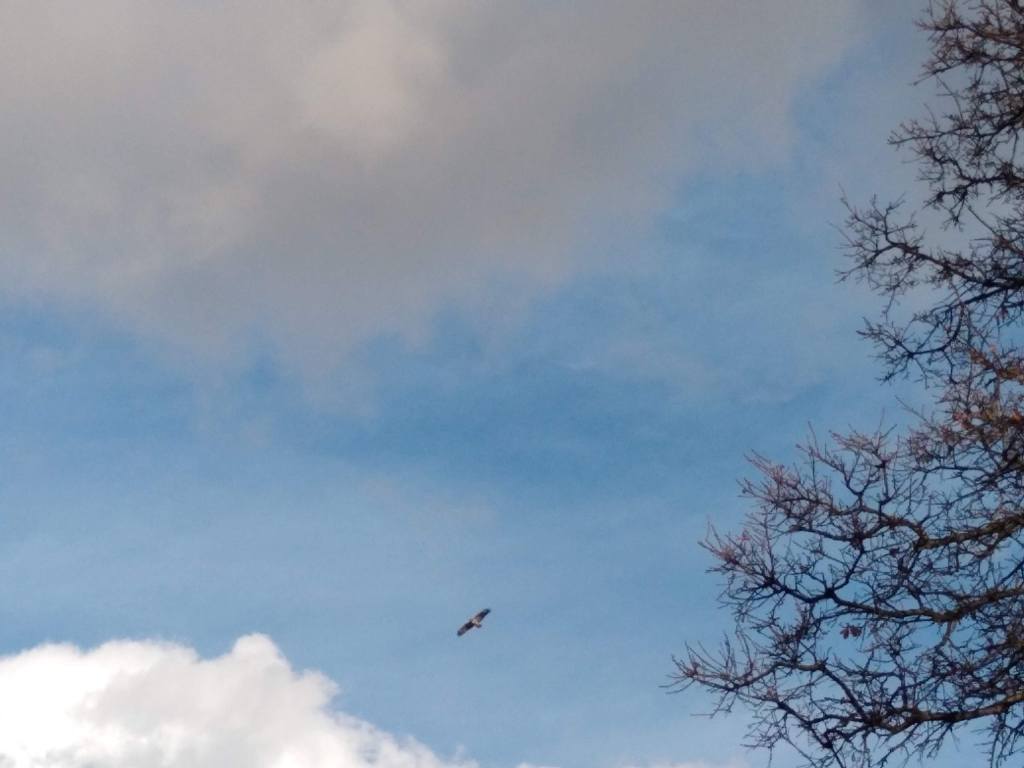
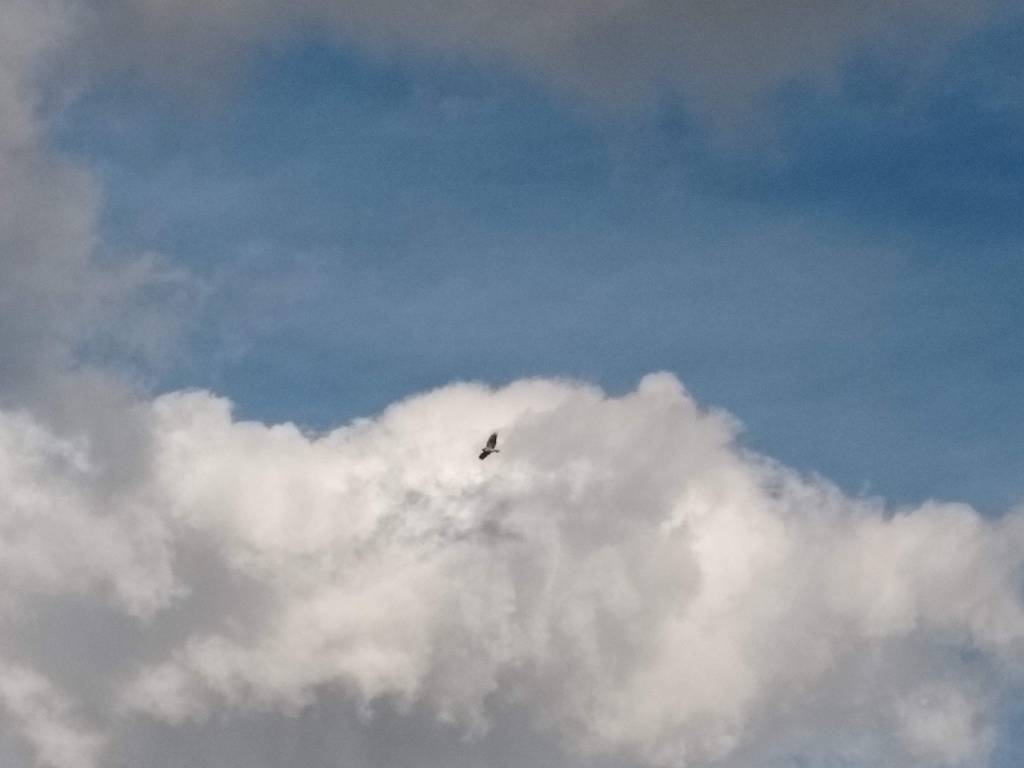
While walking the ranch, I have seen so many wonderful birds. The great blue heron continues to bring excitement with his close to the house presence. I wish I could have gotten a good photo for you this weekend. He was perched on the enclosure fence, wet feathers and a grumpy look. There was blood on his massive, long beak. No doubt he had had a gopher meal. The warblers are back singing their warbler songs. Crows, ravens, vultures, harriers, kites, titmice, and of course, my dear friends, the super large red tail hawks – all join me from time to time on my walks. The red tails were riding the winds of the oncoming storm the other day allowing me to get closer photos with my cell camera. If I only had a telephoto lens and a recorder for their high pitched calls!

It has been beautiful here. The storms, combined with the still limited travel due to COVID-19 of autos and jets, continue to keep the air so incredibly clean. Not only does it make for healthy living things, but it makes for sensational photographs. I will end this blog with the beauty of Walappu’ ‘Uuchuthuu – Butterfly Home place.