Rain Comes – More Needed

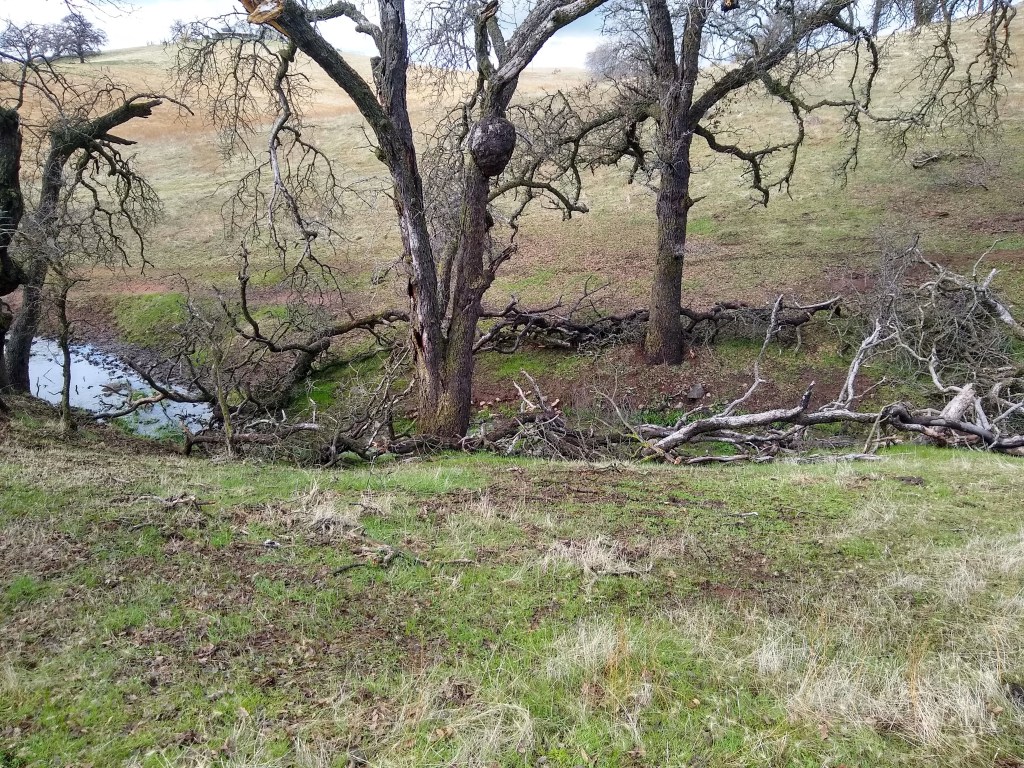
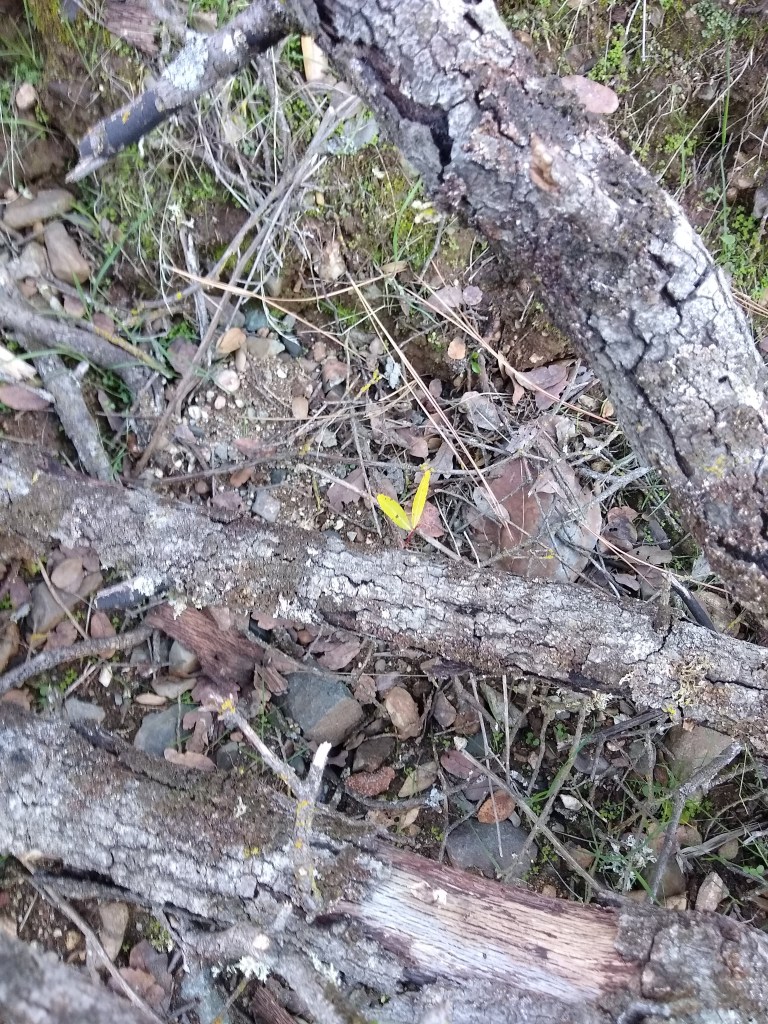
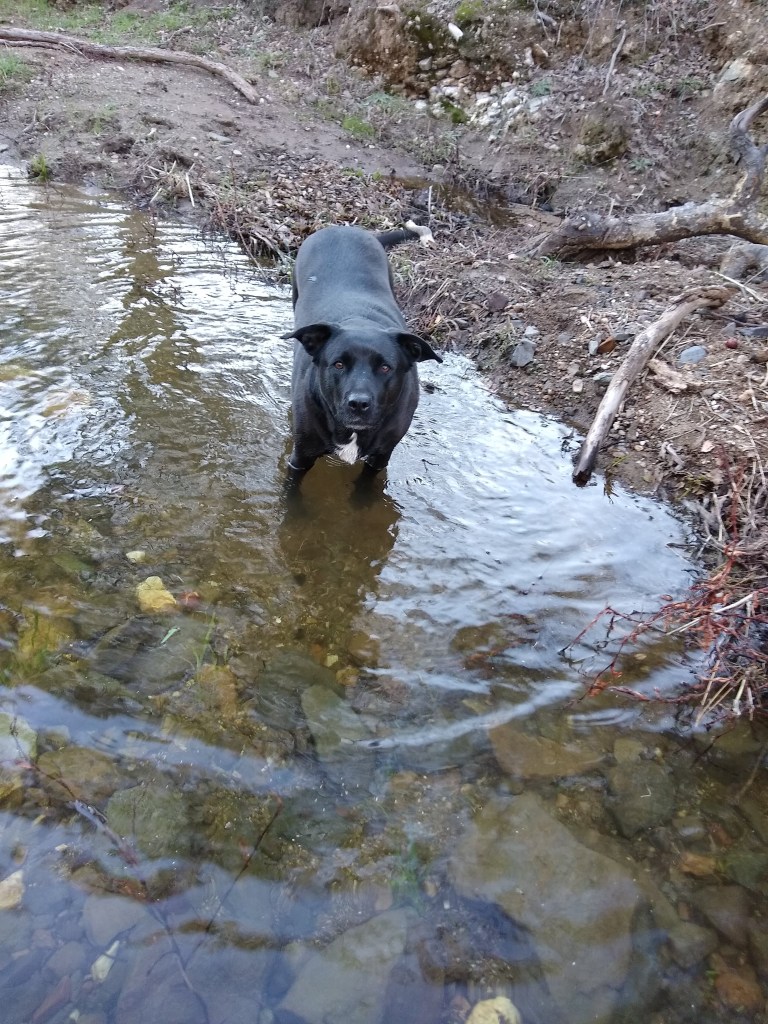
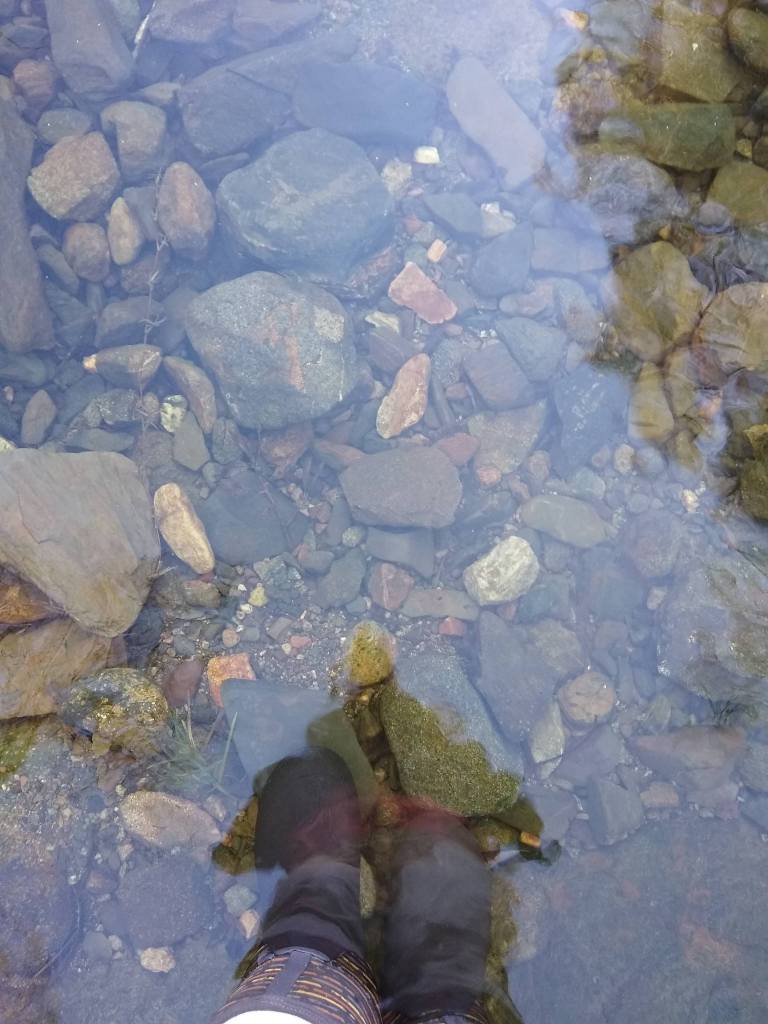
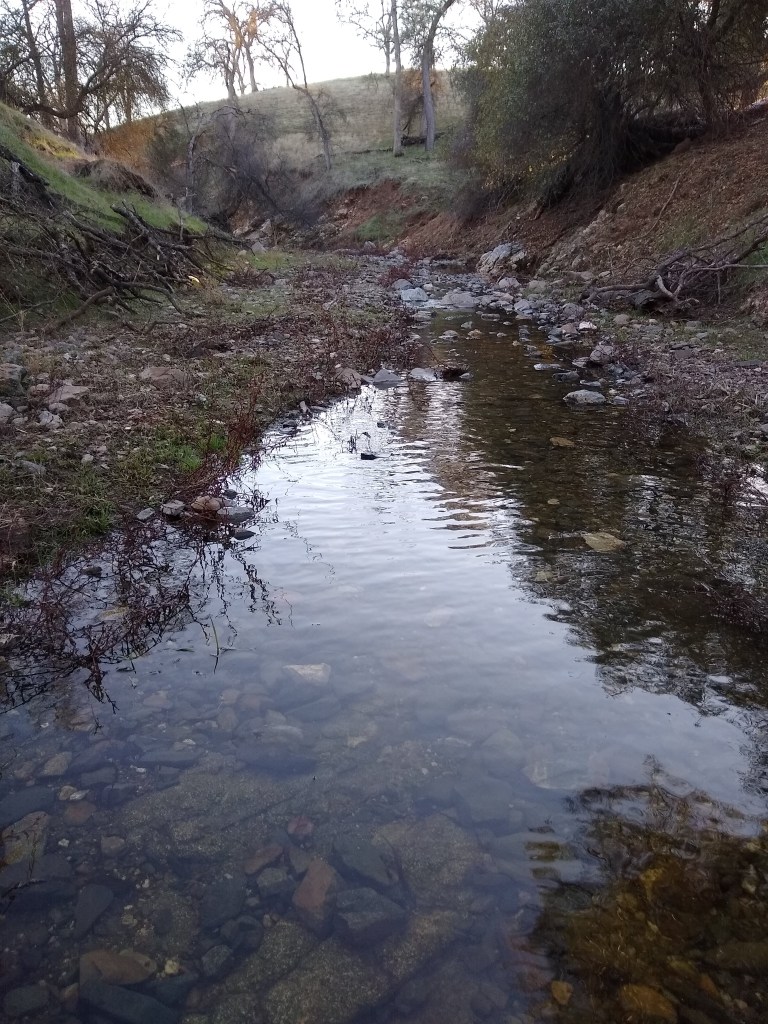
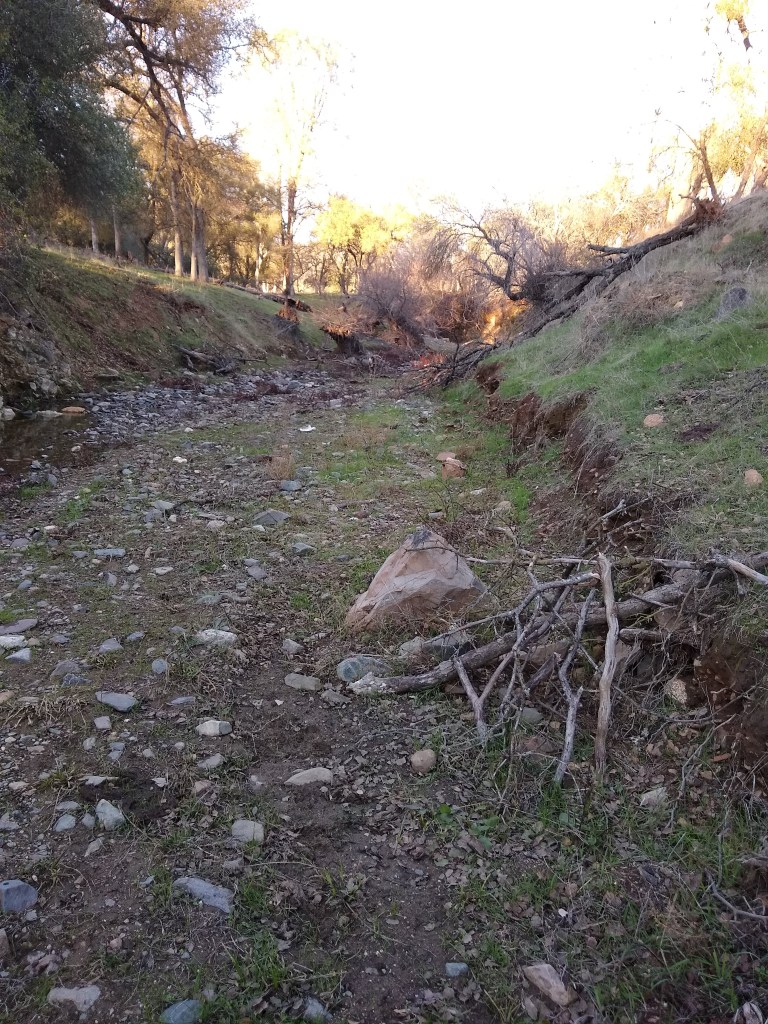
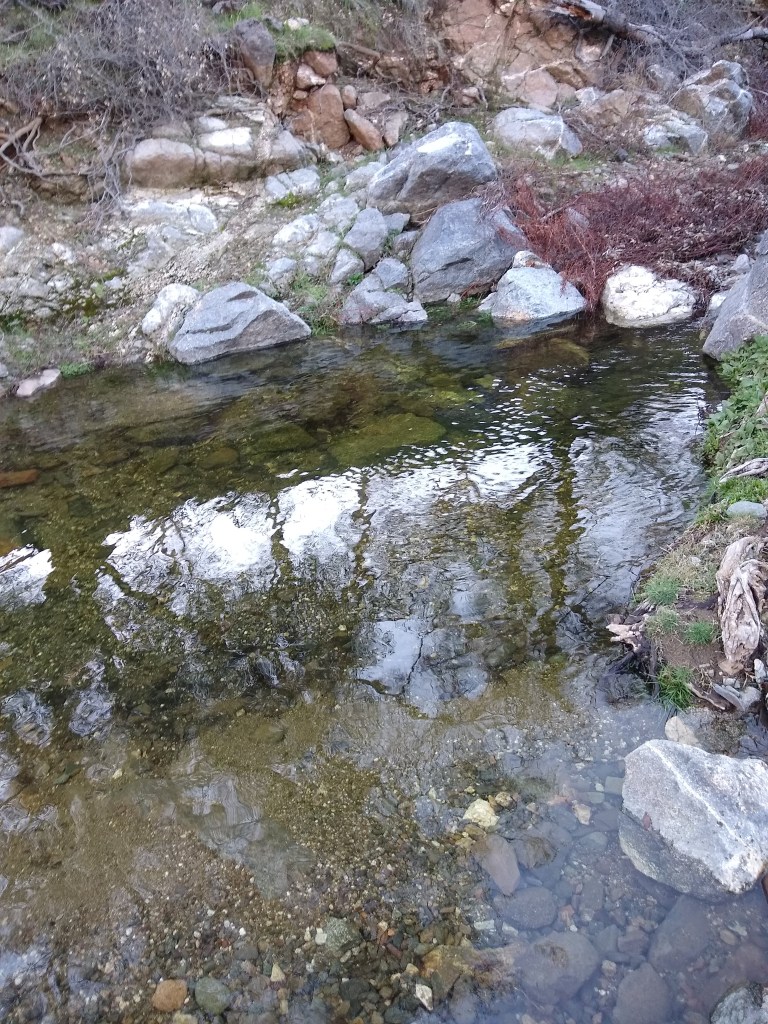
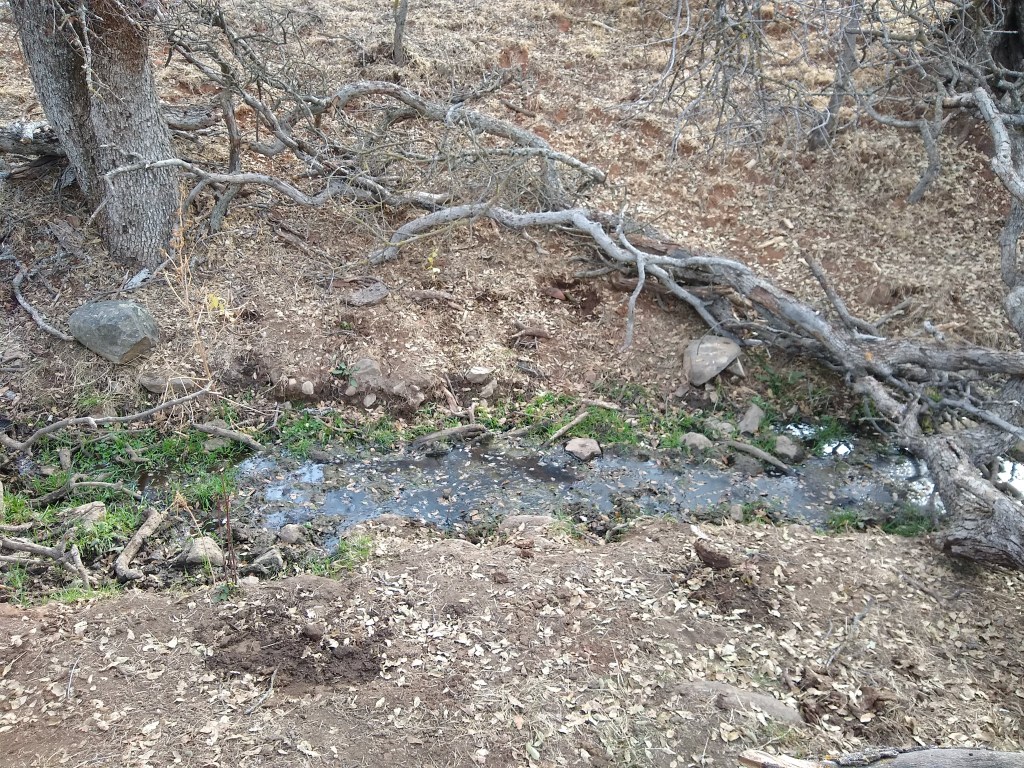
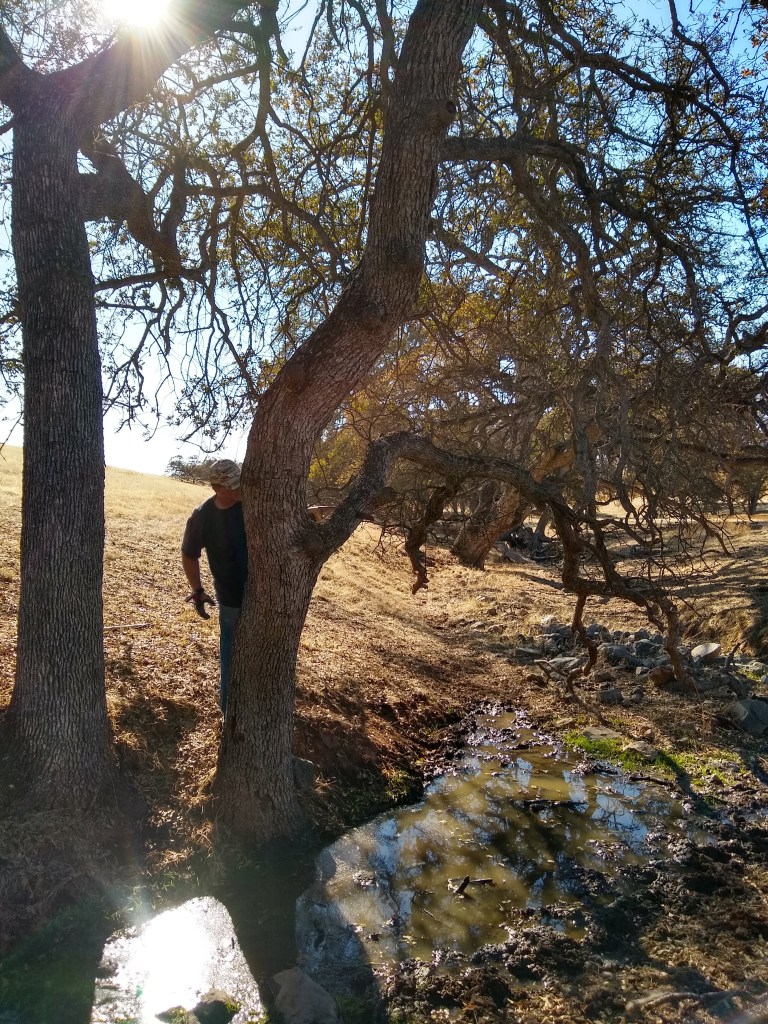
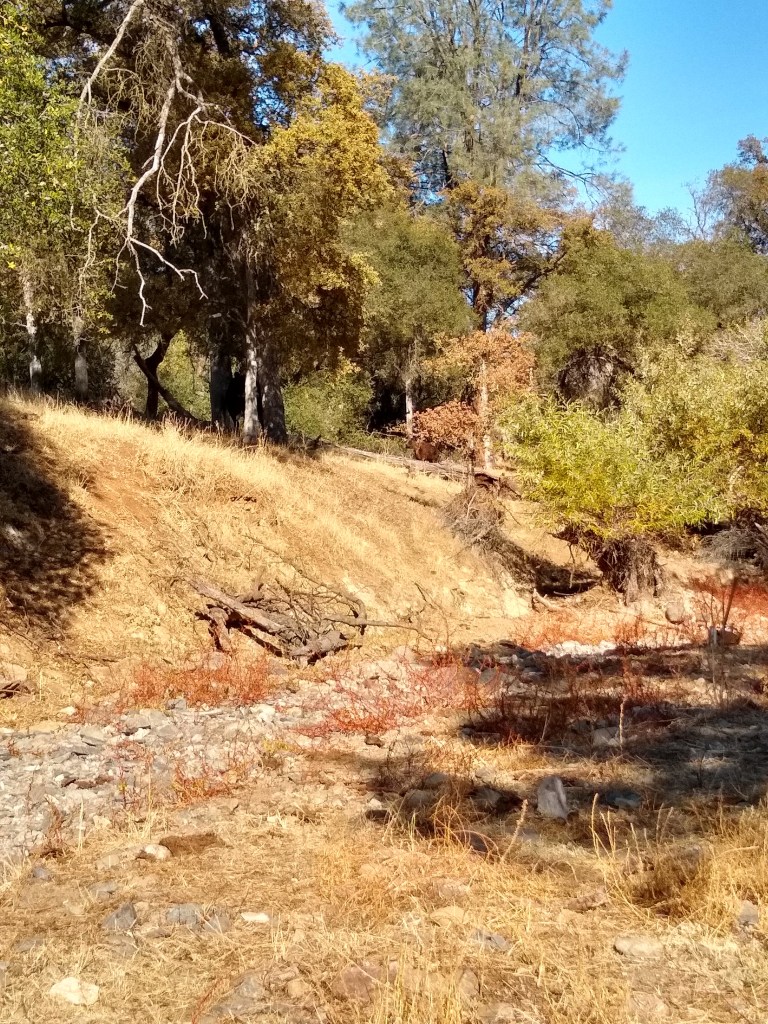
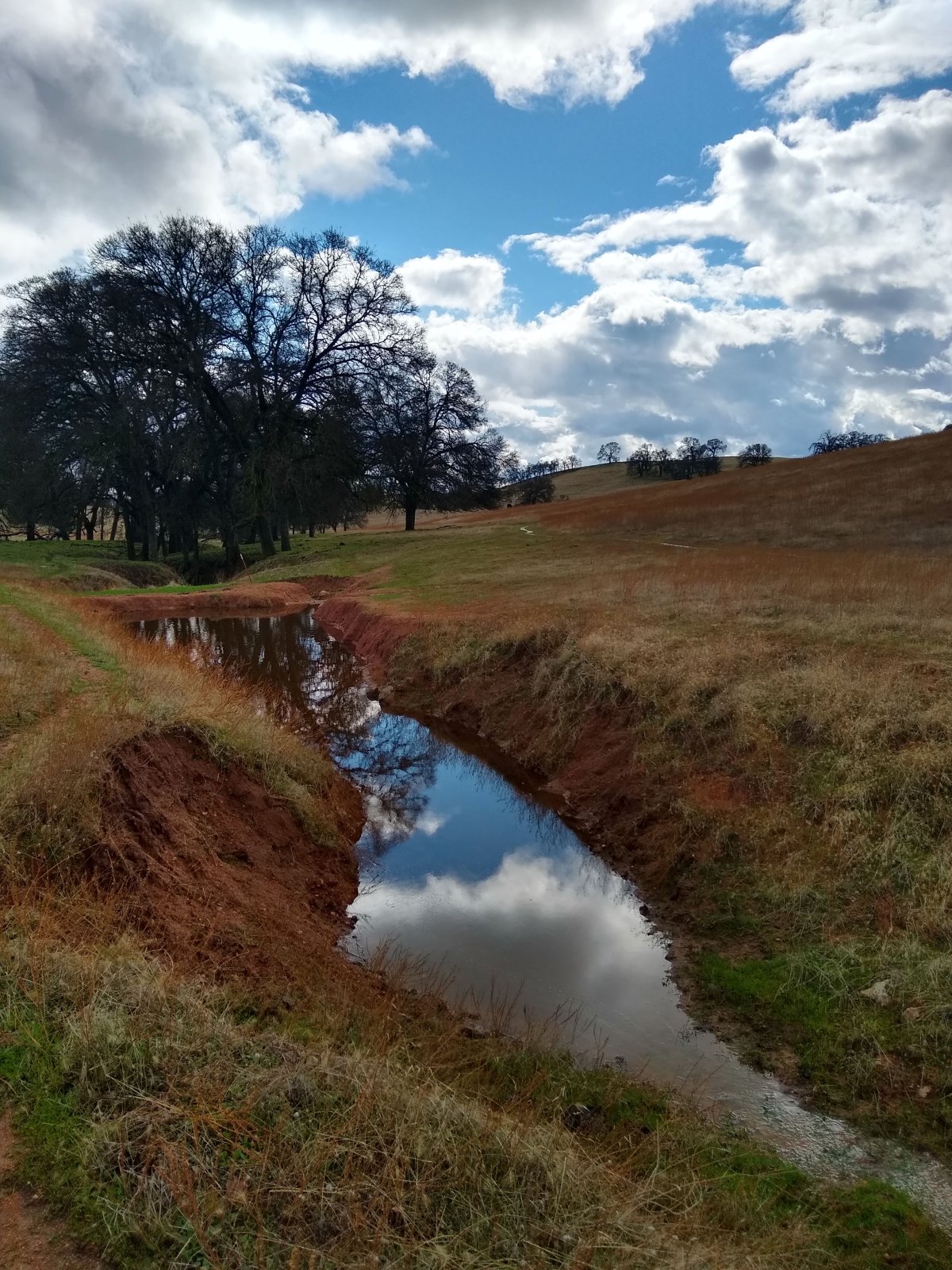
Swale Pond full at last

There were several days of rain over the last two weeks, with two continuous days of rain last week that were the real soakers. In those two days, we received 4.5 inches. It has been much needed. We are still in drought though, with a dry year predicted. Rain years are calculated beginning on October 1. So far, this rain year we have had 7.625 inches of rain. According to historic documentation, the average precipitation is 14 inches in Hornitos. We still have a way to go, and hopefully we go beyond that. The worse year of the five year drought this past decade was 9 inches. I don’t want to see that again. It was horribly dry, and that was the year the large spring on the mid section of the ranch finally dried up. I never thought I would see that. Our cattleman even had to haul in water.
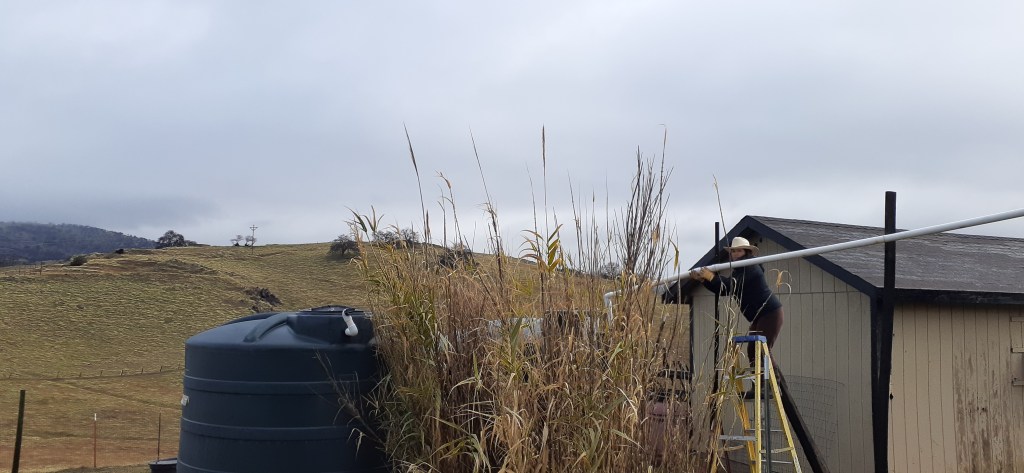
Heather reconnects pipe that had become disconnected

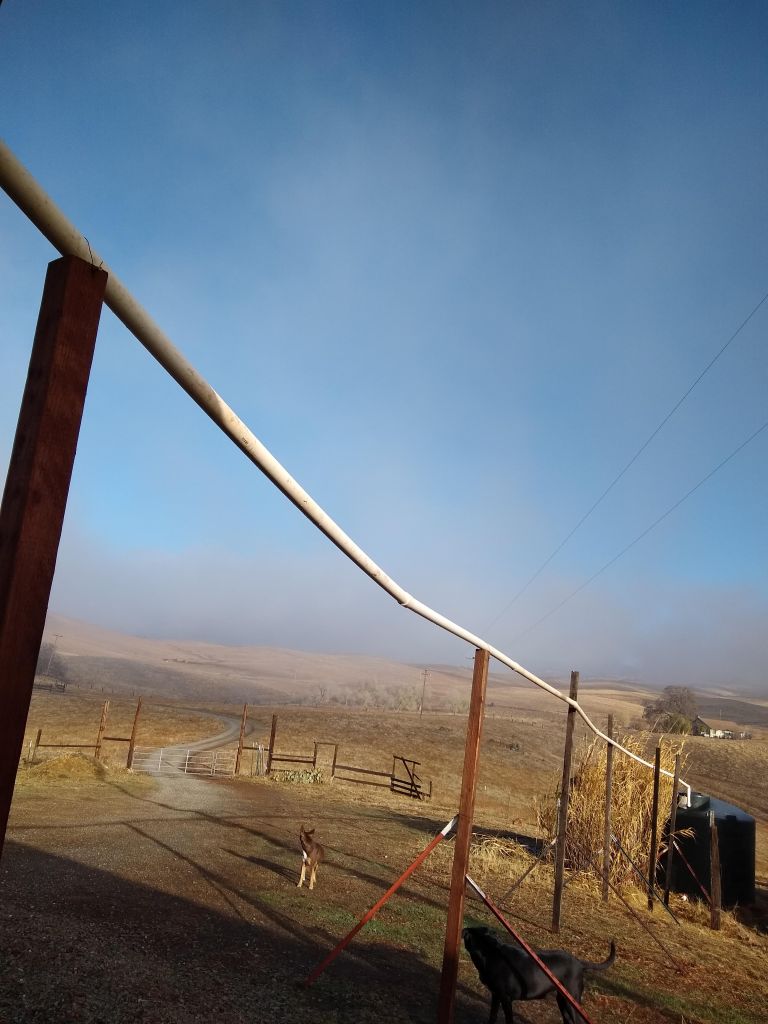
The winds were so terrible that my rain water catchment system failed. My husband and I went out three times to fix it. In a storm where the tank should have been full, it is only at half its capacity. So disappointing! The first occasion, the pipe had split in its mid section. The second occasion, the pipe had blown away from the downspout in one place and had disconnected in the mid section again. The third time, I found that the tank exit pipe had somehow gotten unglued and had been leaking the entire time. When I banged on it, it came completely off and the precious water collected began gushing out. I re-nested the pipe back over the other with all my strength. I got soaked in the process. Fortunately, my husband was out there with me that time, and ran to get the wet glue, which can still stick pipe together even when wet. He ultimately fixed it. The ground was soggy, and it was difficult to balance the ladder on the decline, especially in the wind. I almost fell off one time. I was able to keep the ladder upright as I followed the inertia and “walked” it down hill to a solid place before getting off. I got soaked on that one too. All I can do is hope that we get more rain without ferocious winds to fill the tank. I will need this water to keep the plants alive through the long, dry time.
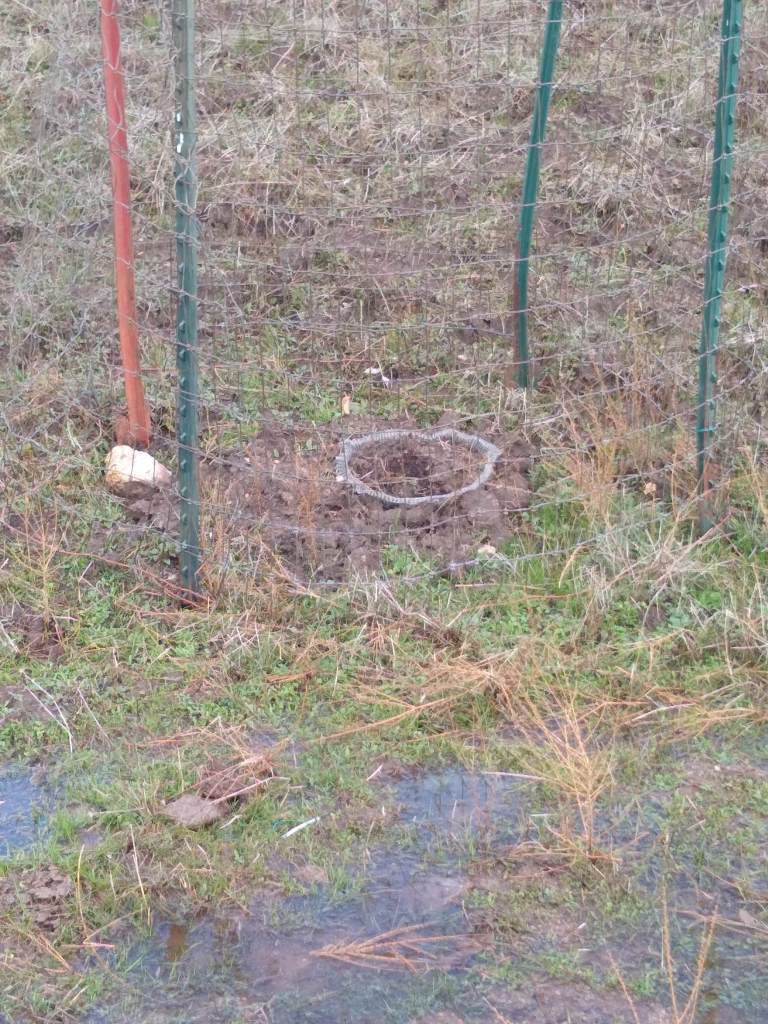
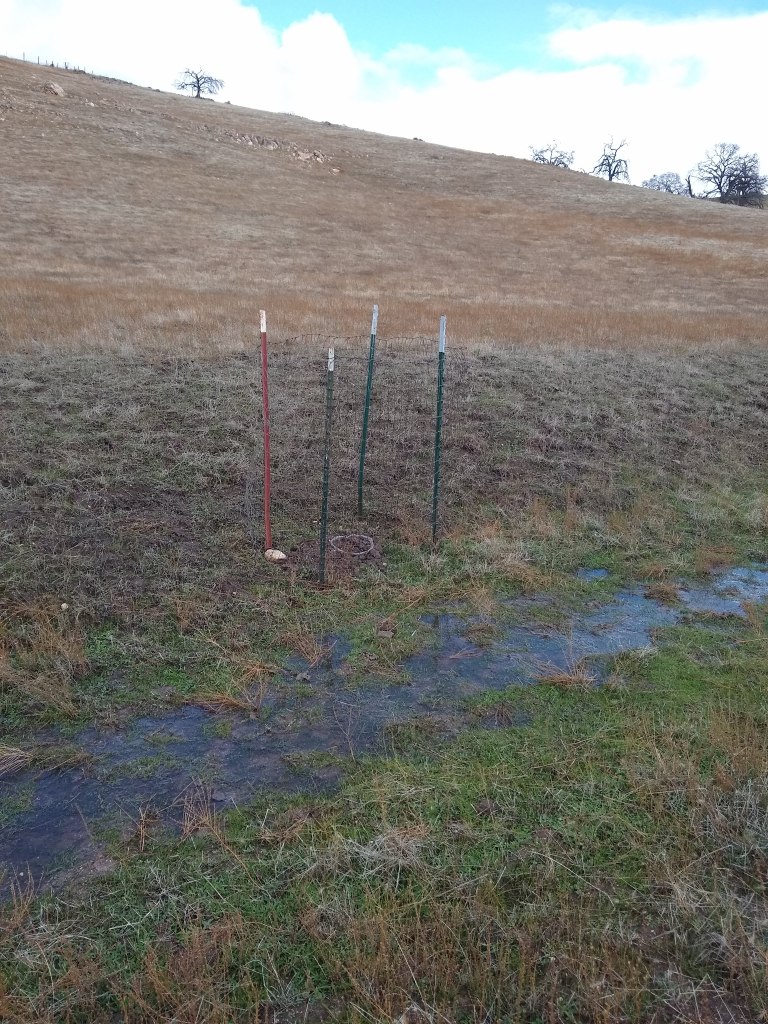
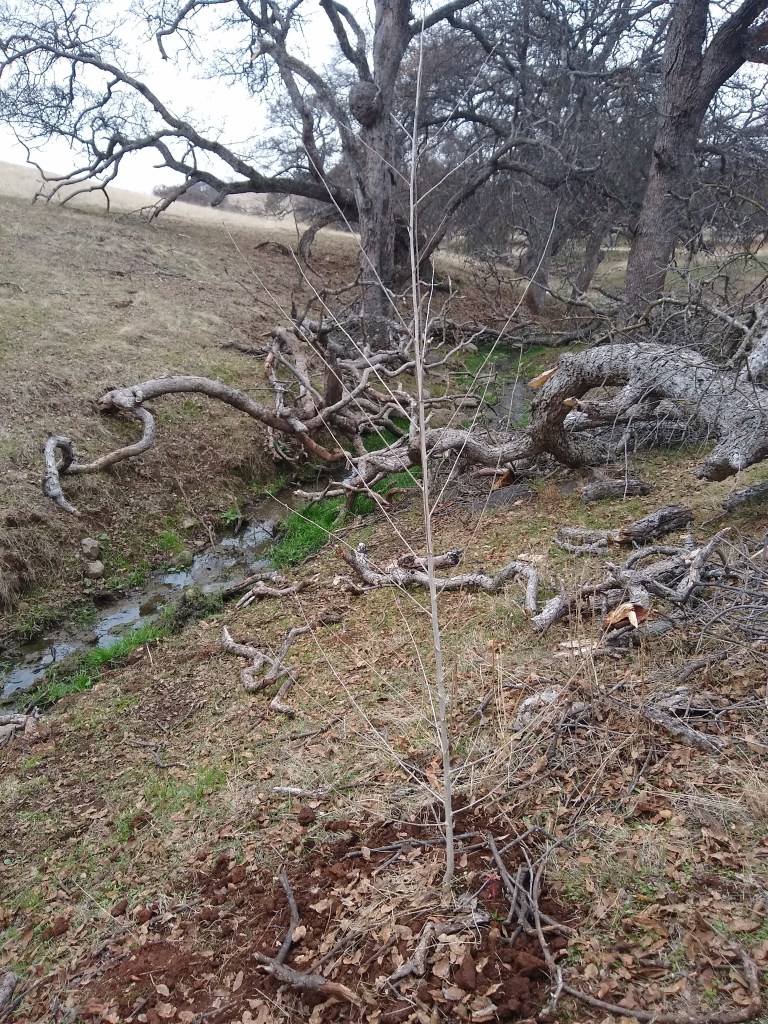
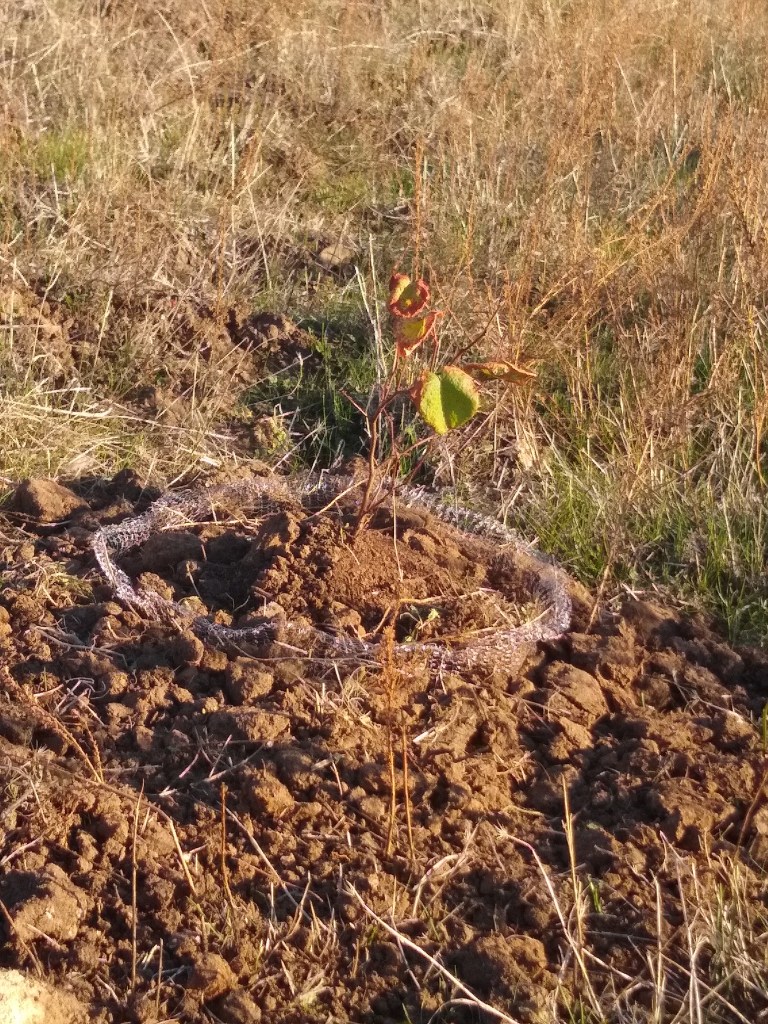
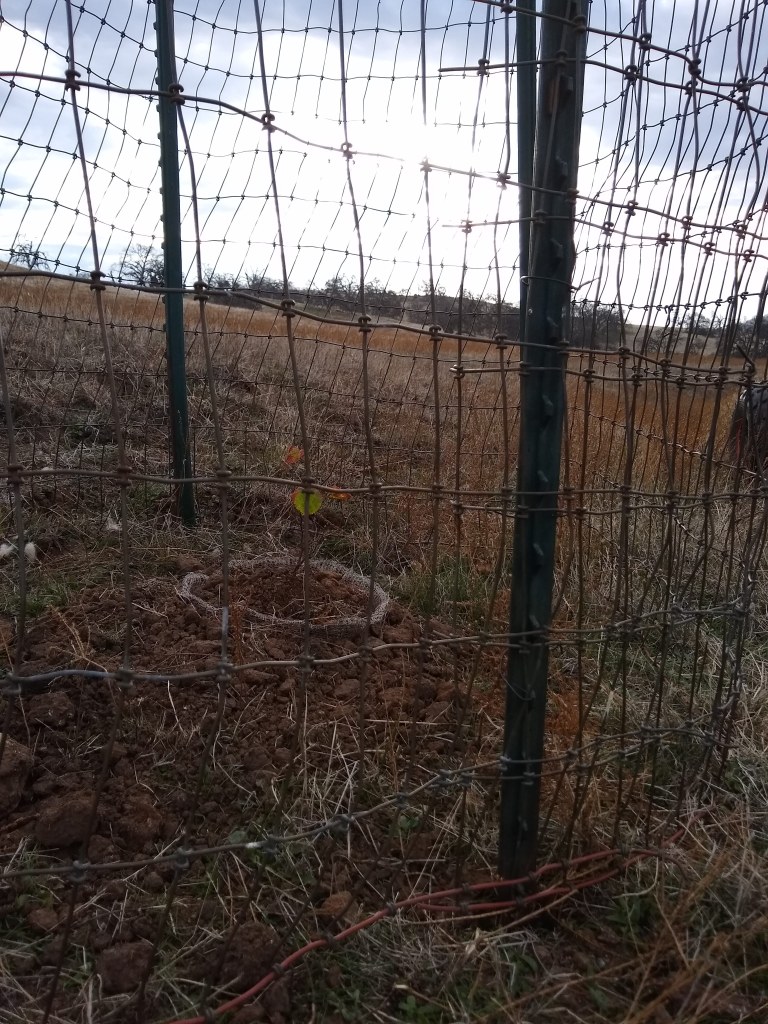
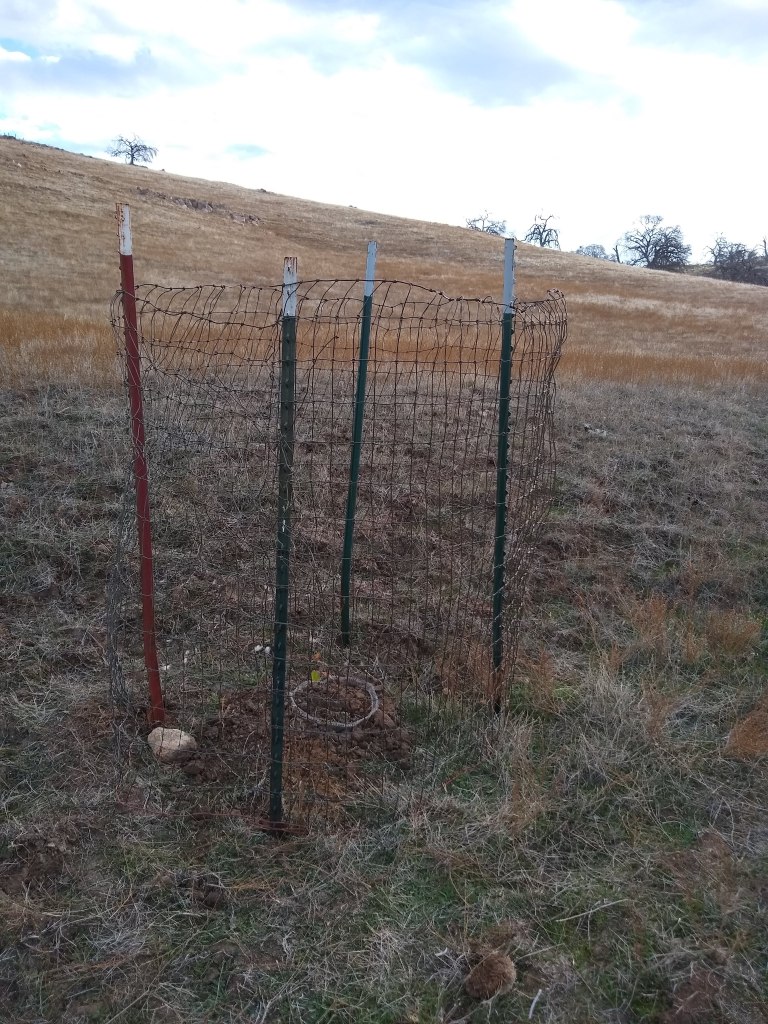
Cottonwood and cage still there

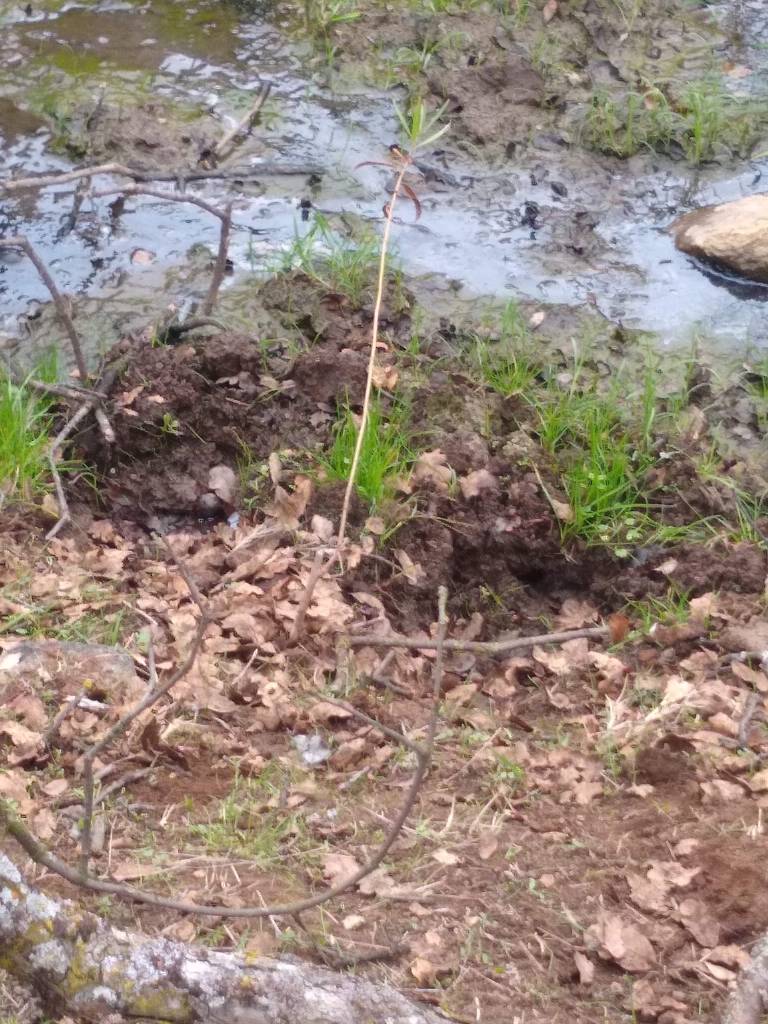
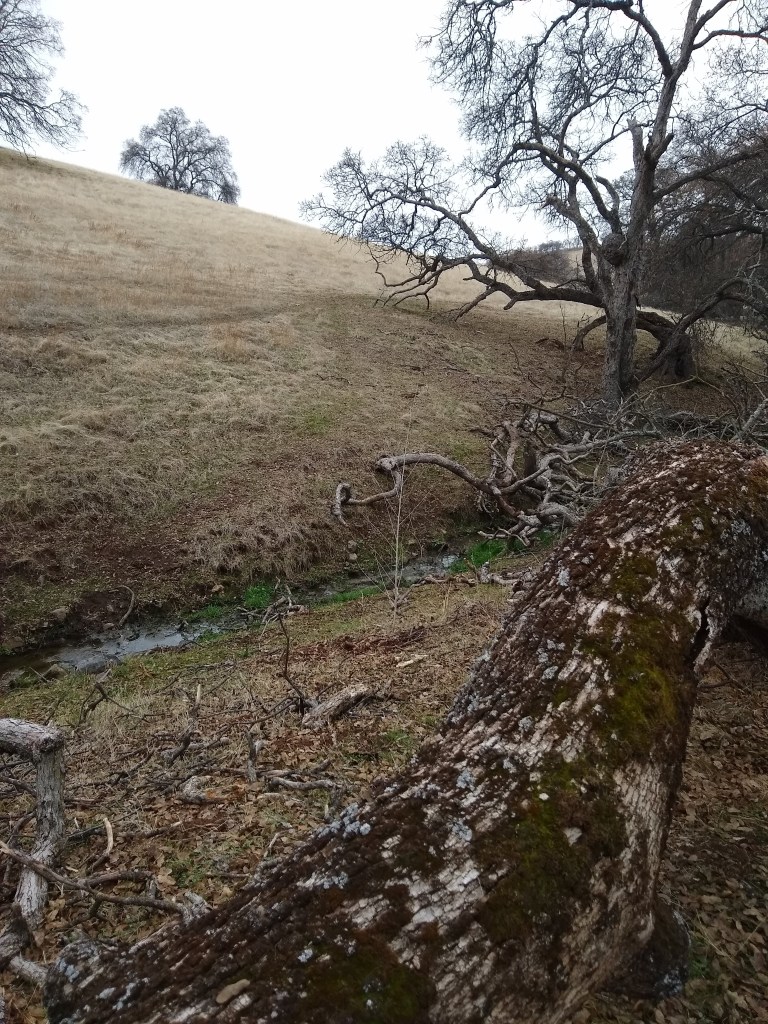
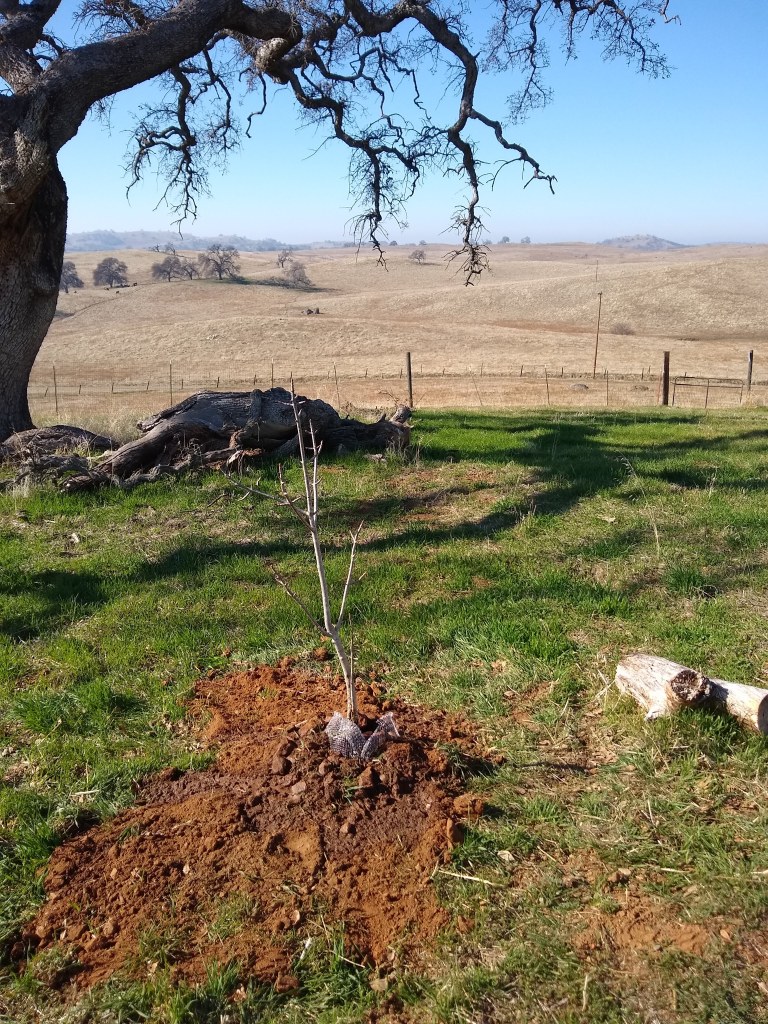
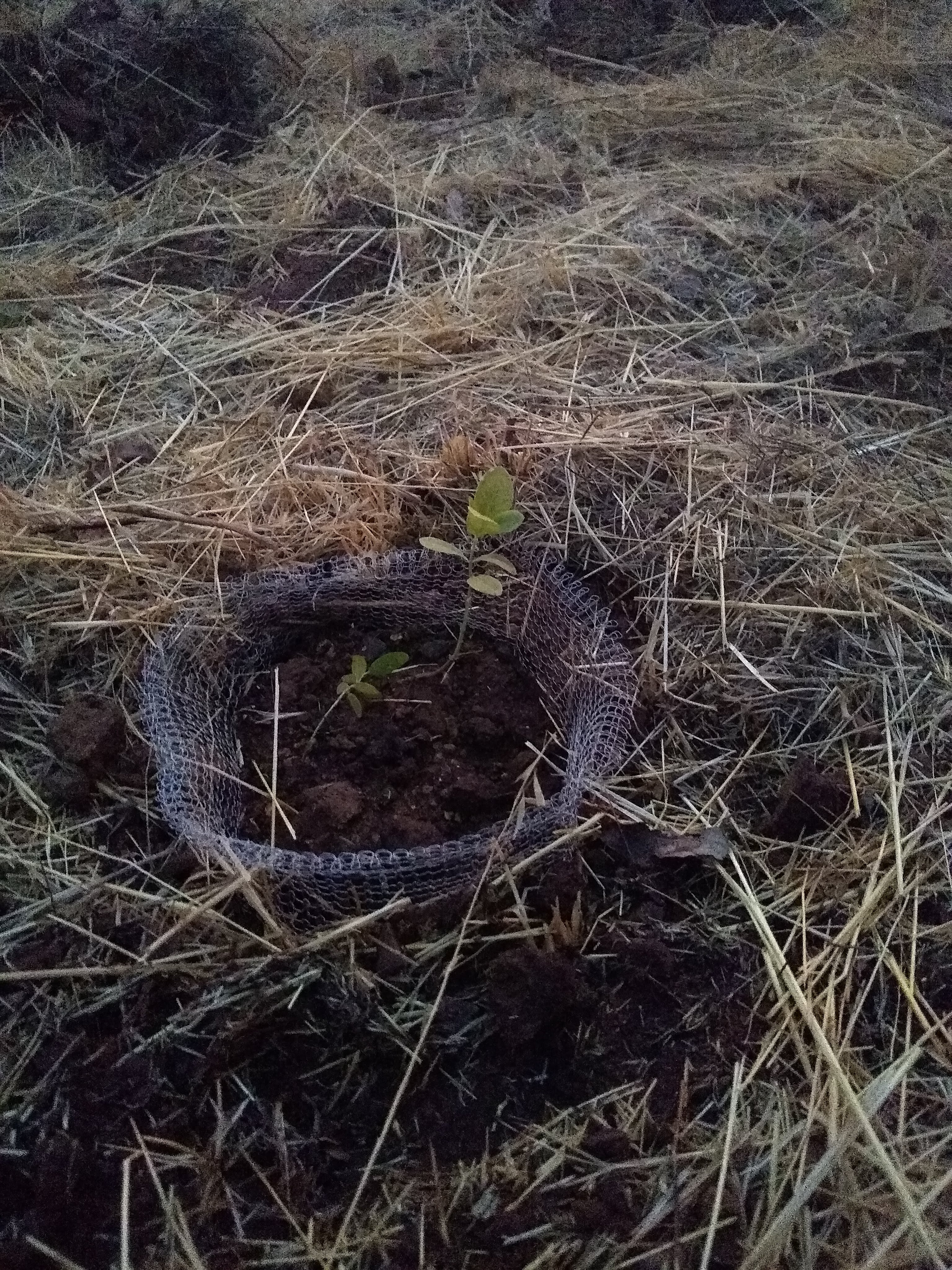
After the storm, I hiked around the property to check on the plantings. With the two straight days of rain and wind, I wanted to be sure the cottonwood and cage were alright as well as the plantings and branch fence and Odom Creek plantings with brush pile protections. I planted most of the plants close enough to the creek bed to get a soaking during high water, but not so close that the roots were in water all the time in the winter. I looked at the neighbor’s cottonwoods and my own buckeyes to see where they were successful in relation to the creek bed and followed that example.
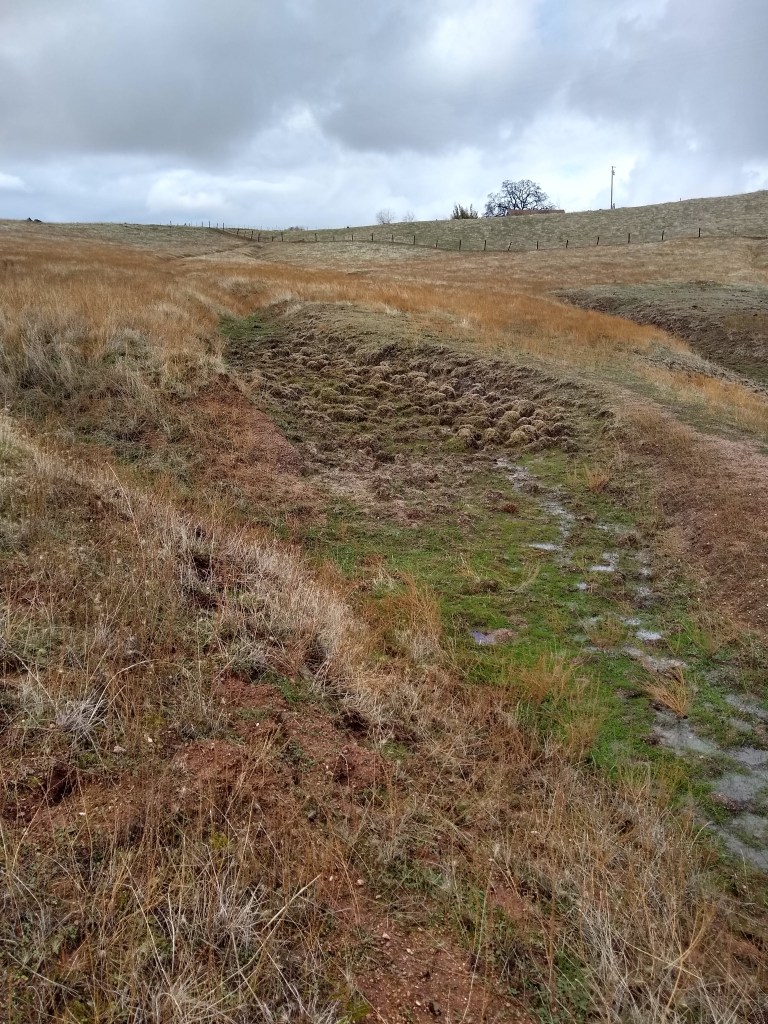
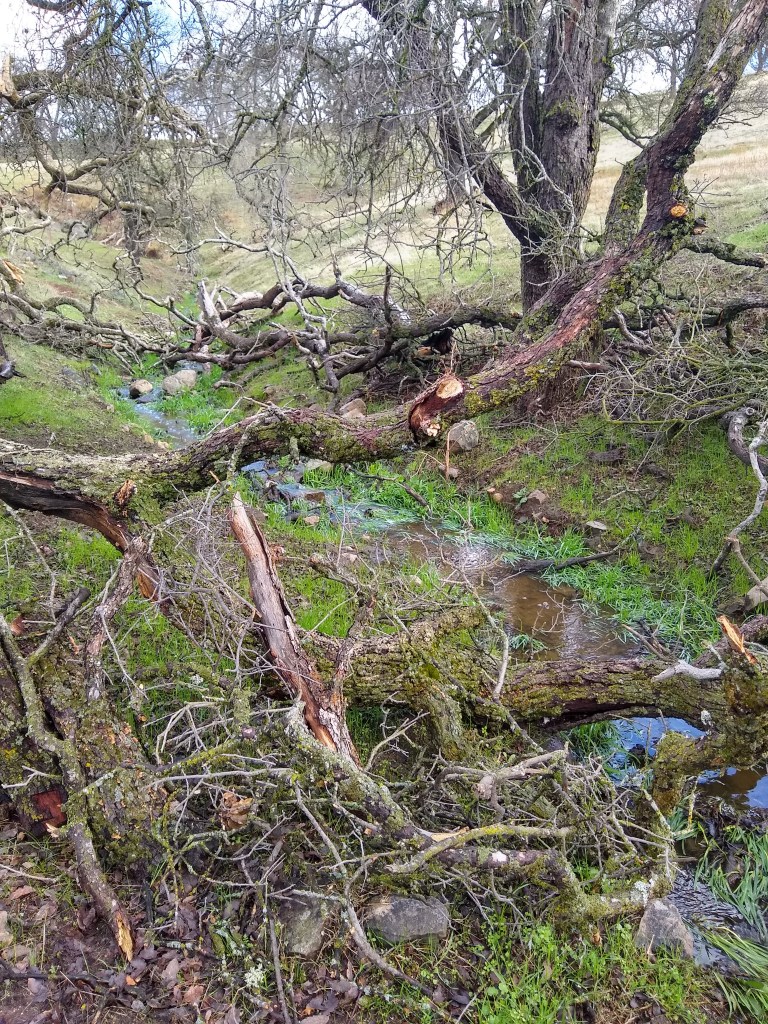
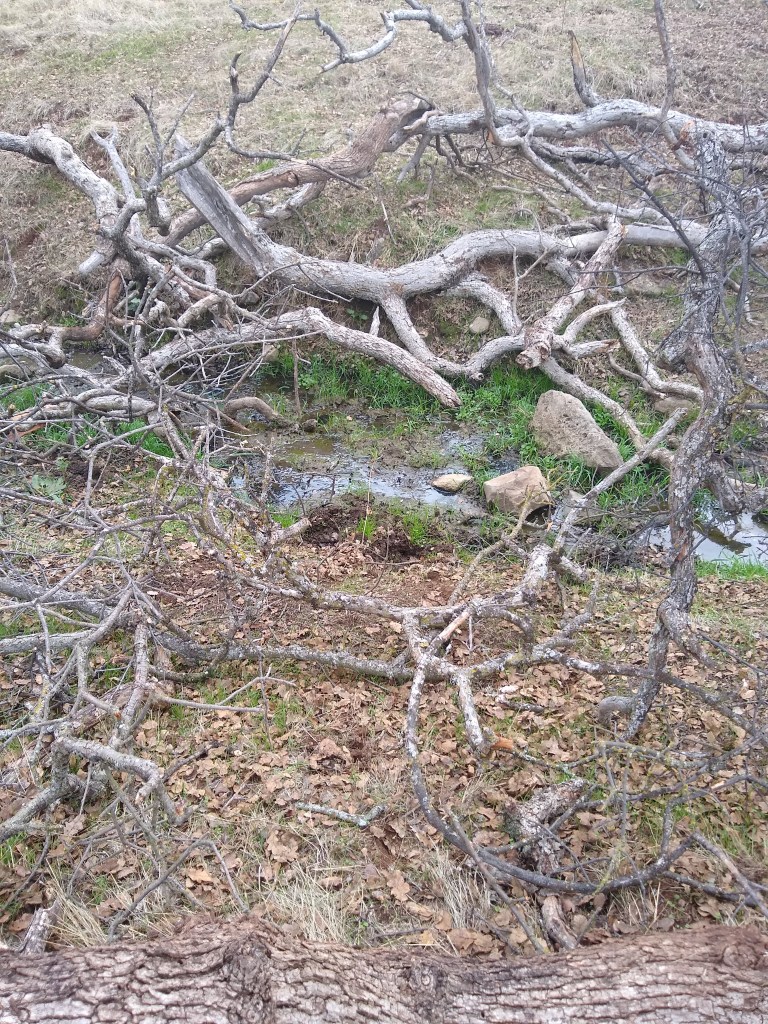
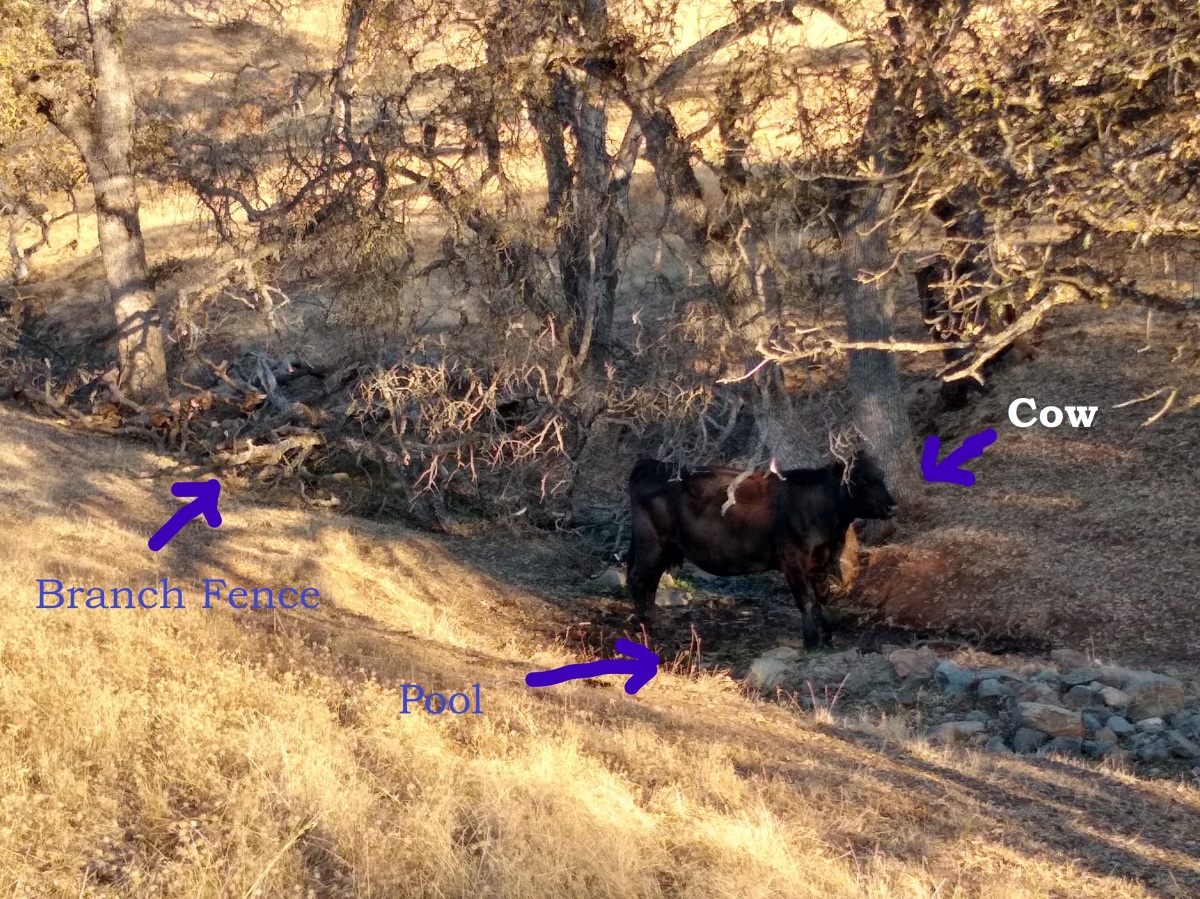
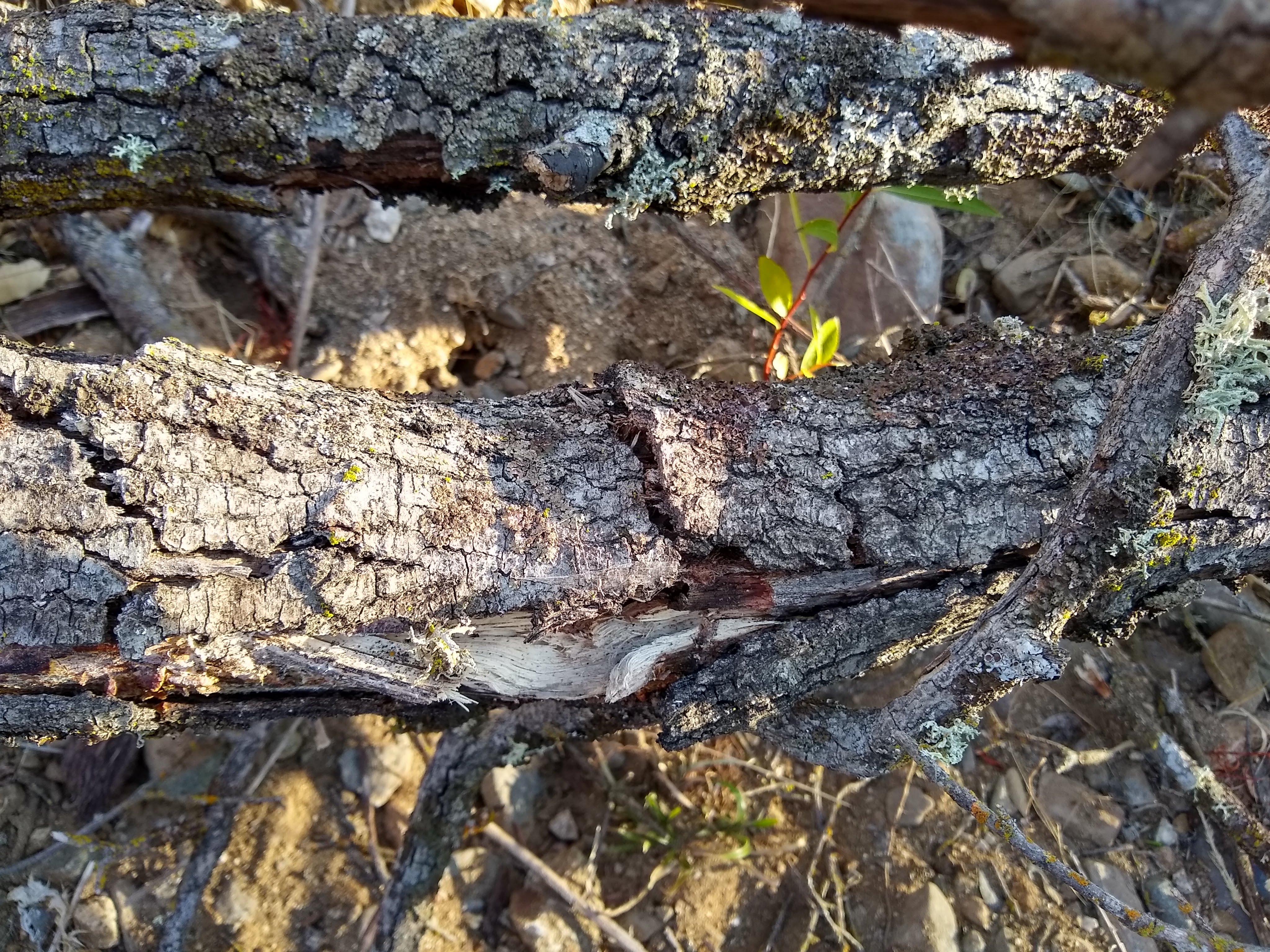
Fortunately, the two days of rain did not flood the spring creek and take the branch fence with it. There were a couple filler branches that moved downstream with the flow. I ended up replacing only three branches to fill a couple bare spots in the fence. Overall, I was really happy with the outcome. There are a few bulls on the ranch now along with the cows (It is that time of year for love.), and I have some concerns that the bulls will just push through it to get to the long blades of grass on the other side. I will keep watching.
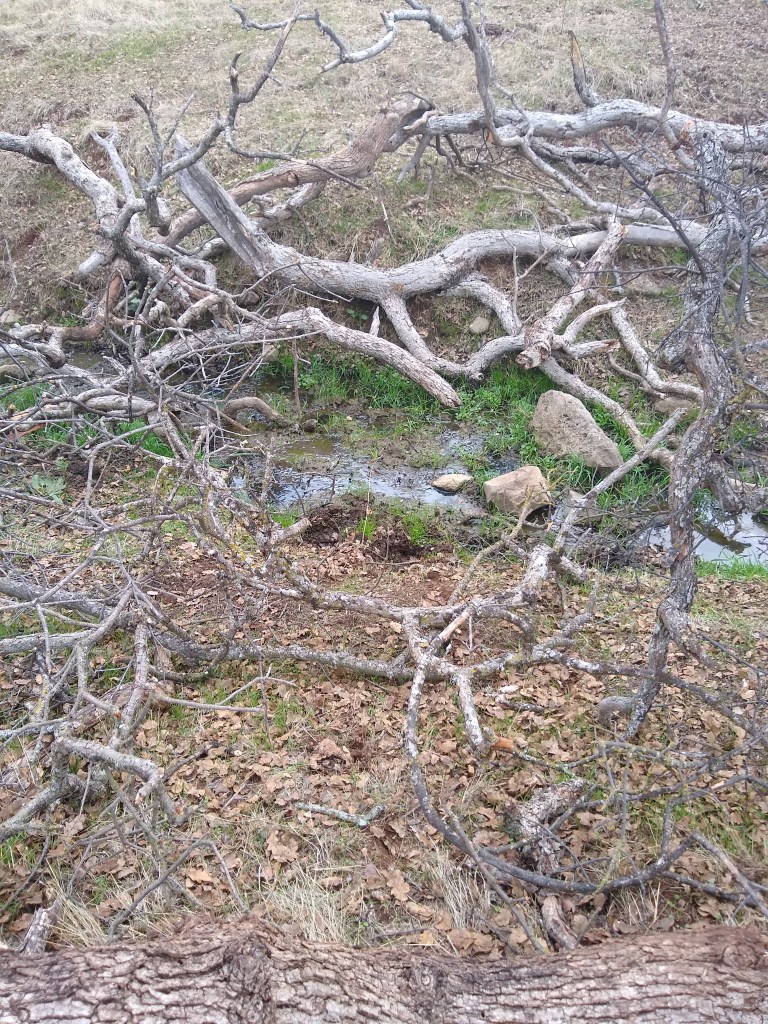
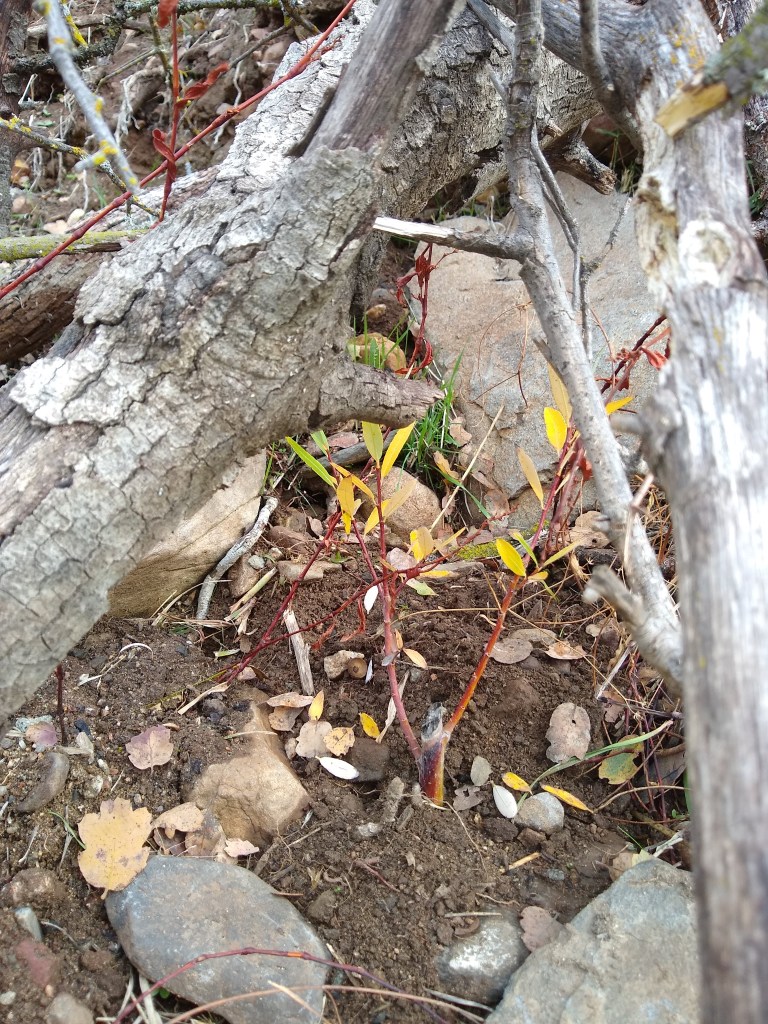
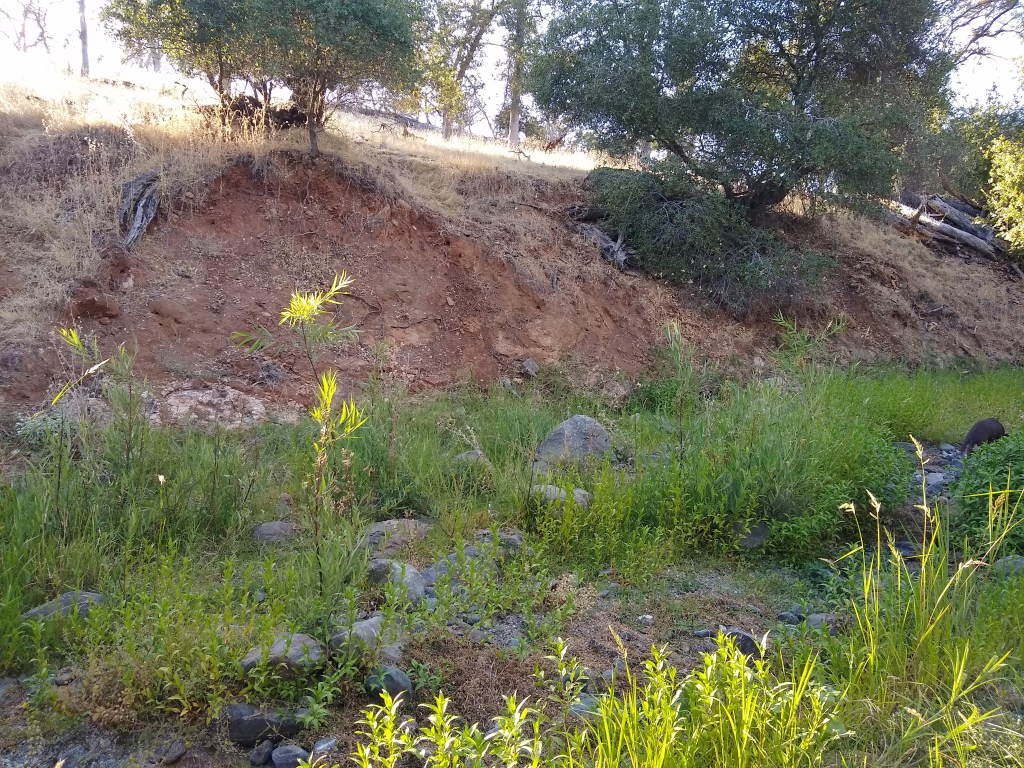
I also checked Odom Creek. There, I thought the flow would be greater with more of a chance that the brush piles over the willows would be washed away. To my surprise, it did not look as though the water reached the plants on the east side. Although the ground was wet, the dirt did not look dark as if the water line reached them. The water clearly soaked the willow on the west side. Each brush pile was intact. All plants were present and accounted for – four willows and one mule fat.
Other Monitoring

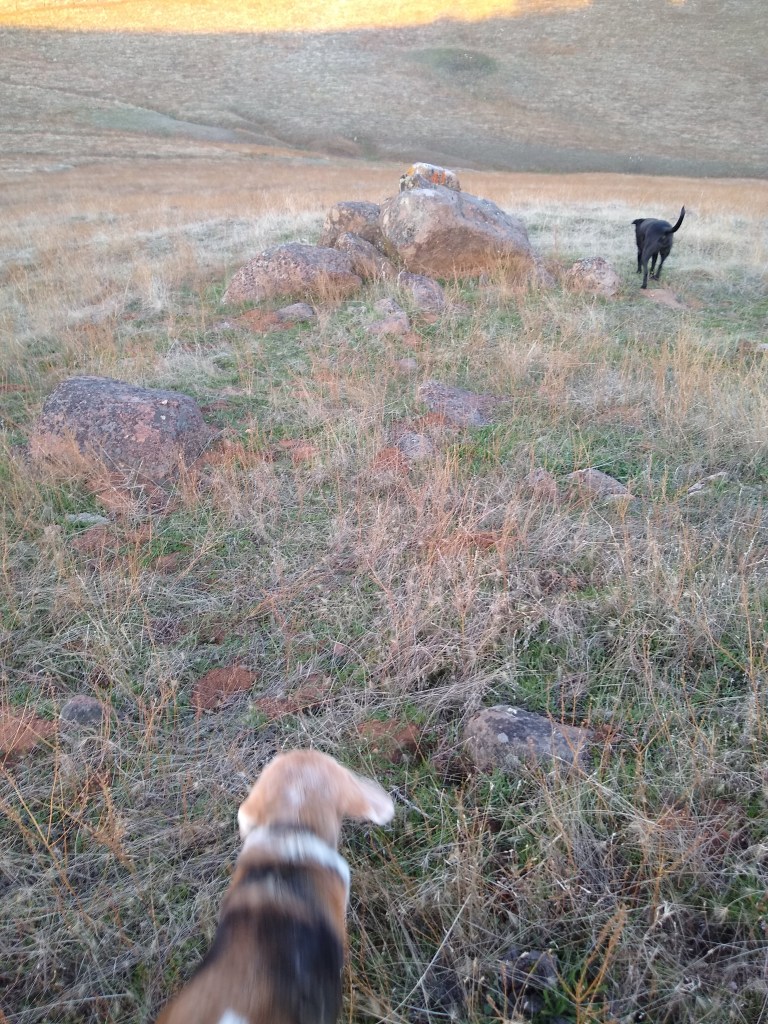
Looking for a. California sprouts with Andy and Bibi

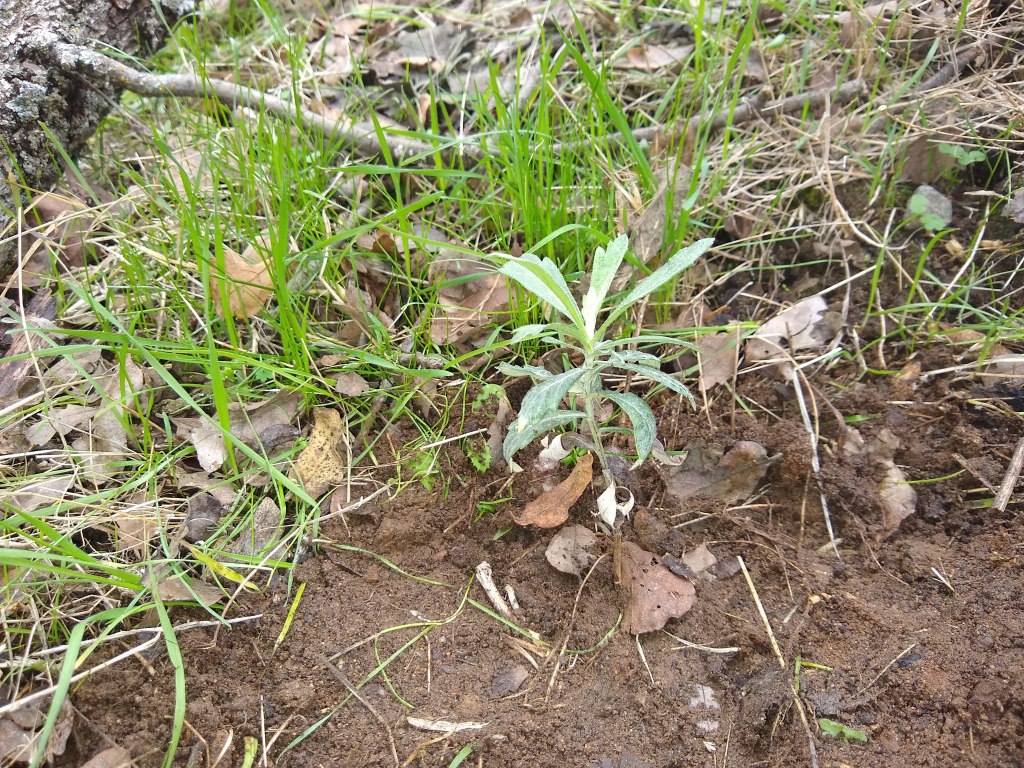
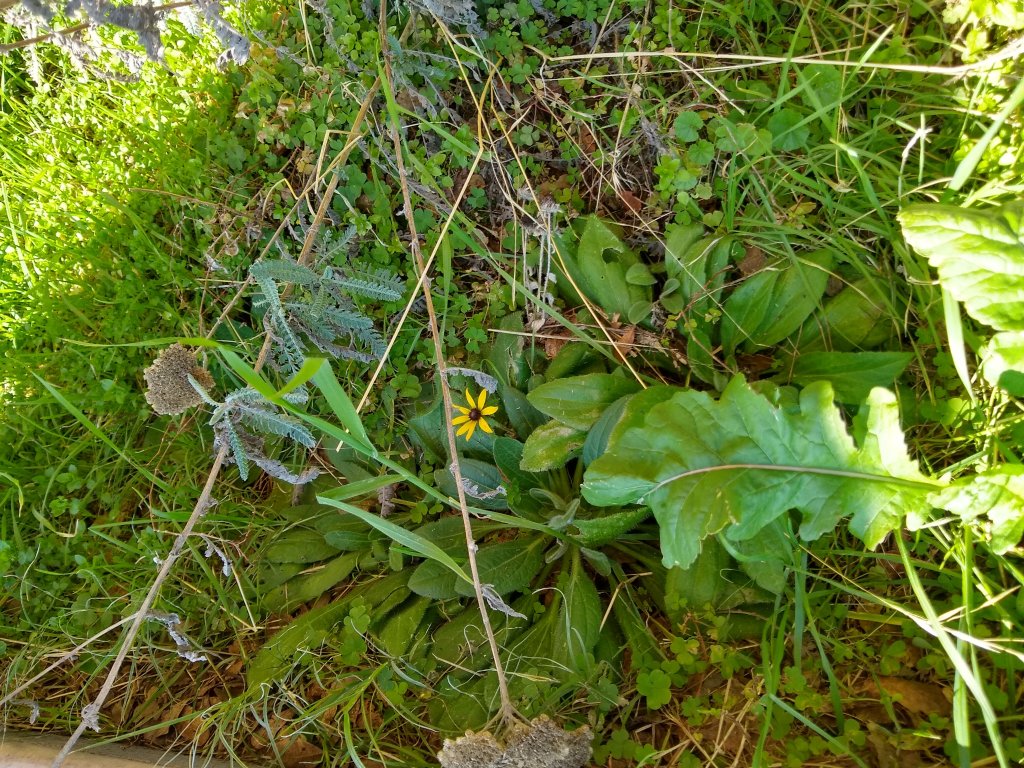
I have also been checking the a. Californica site closest to the house for sprouts. Last year, there was no rain in February, which I am thinking stunted grass grown allowing the a. California milkweed to get a head start on growing. This year, with rains in February, I am concerned that the grass may grow faster than the milkweed. I want to watch for its remarkable leaves and trim the grass in that area to give it a chance. That early milkweed will be important for the monarchs.

Planning for Spring Planting
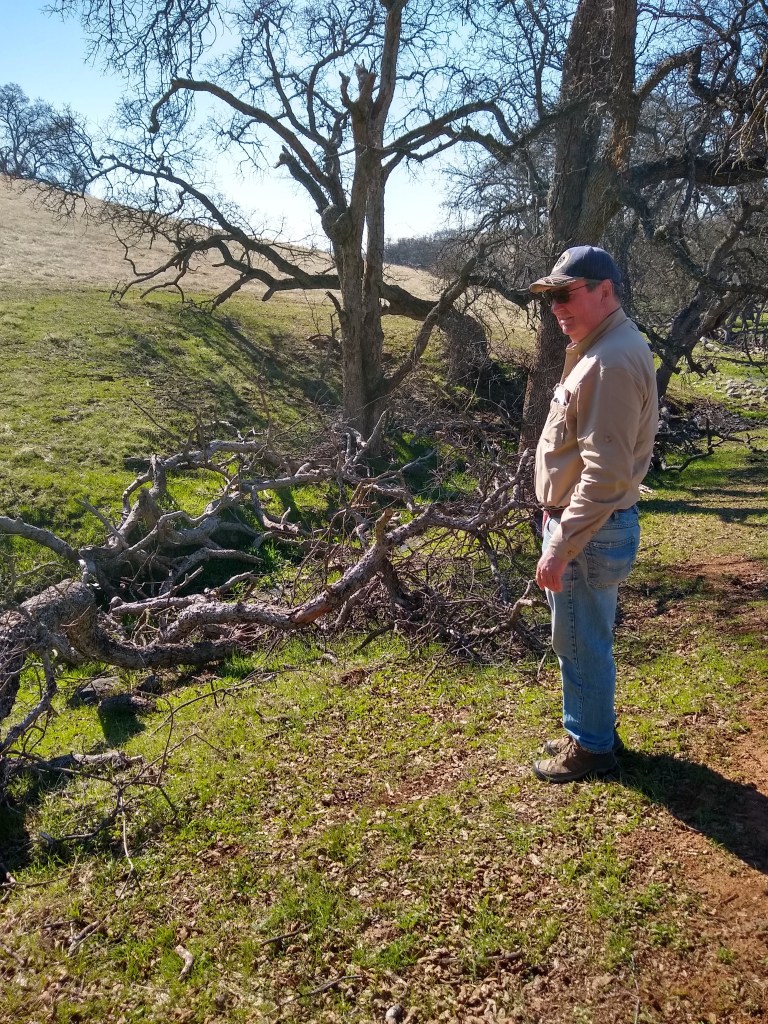
Ron Allen, UC Master Gardener and Co-Owner of Mariposa Native Plants

Ron came over to discuss the next plant order. I asked for his guidance on my plan and showed him the areas where I was thinking of focusing this Spring. He also got a chance to see what was doing well, and what didn’t make it. Overall, things looked good. I placed an order for 89 plants. We are continuing to go big for the monarchs.

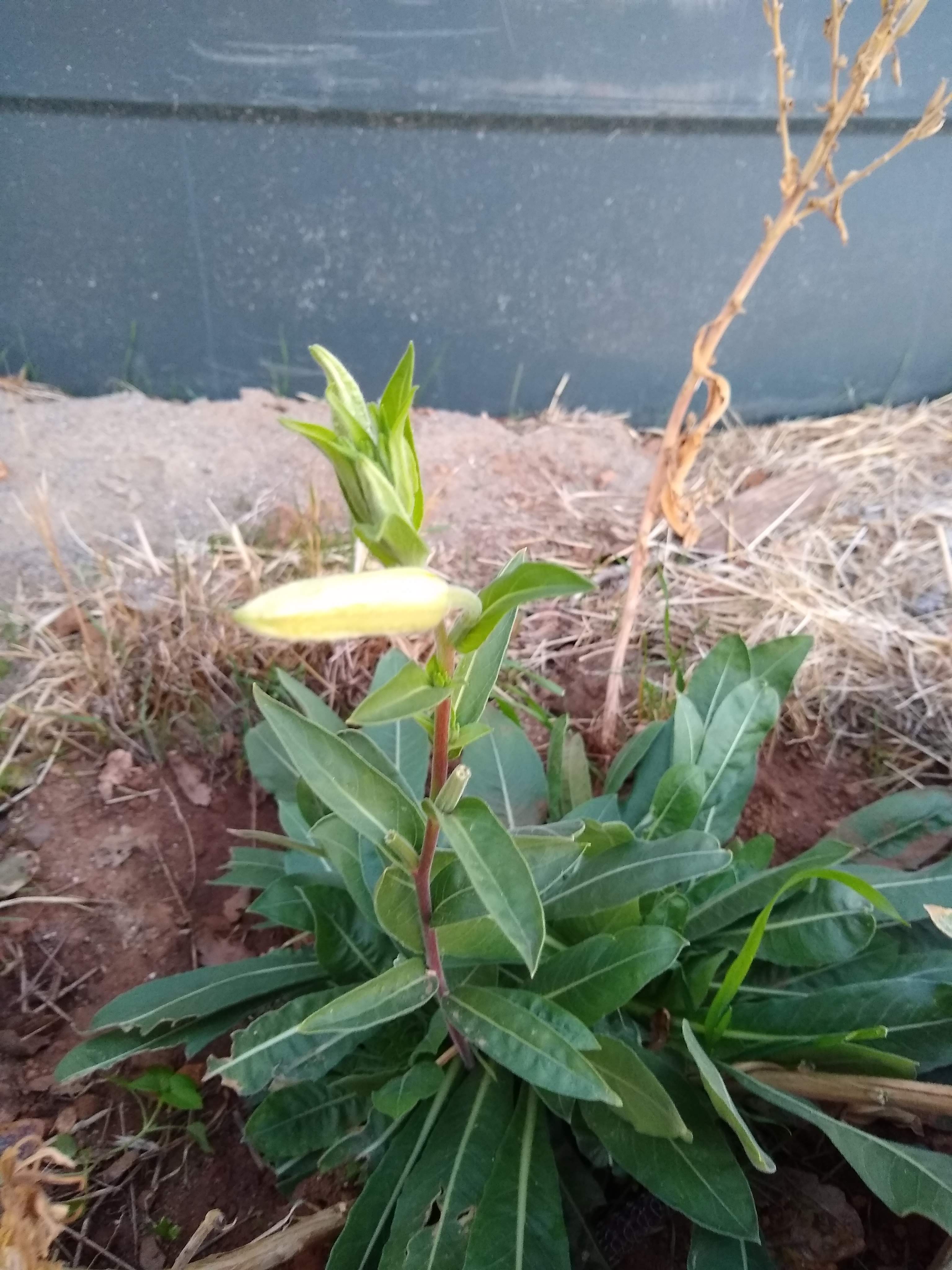
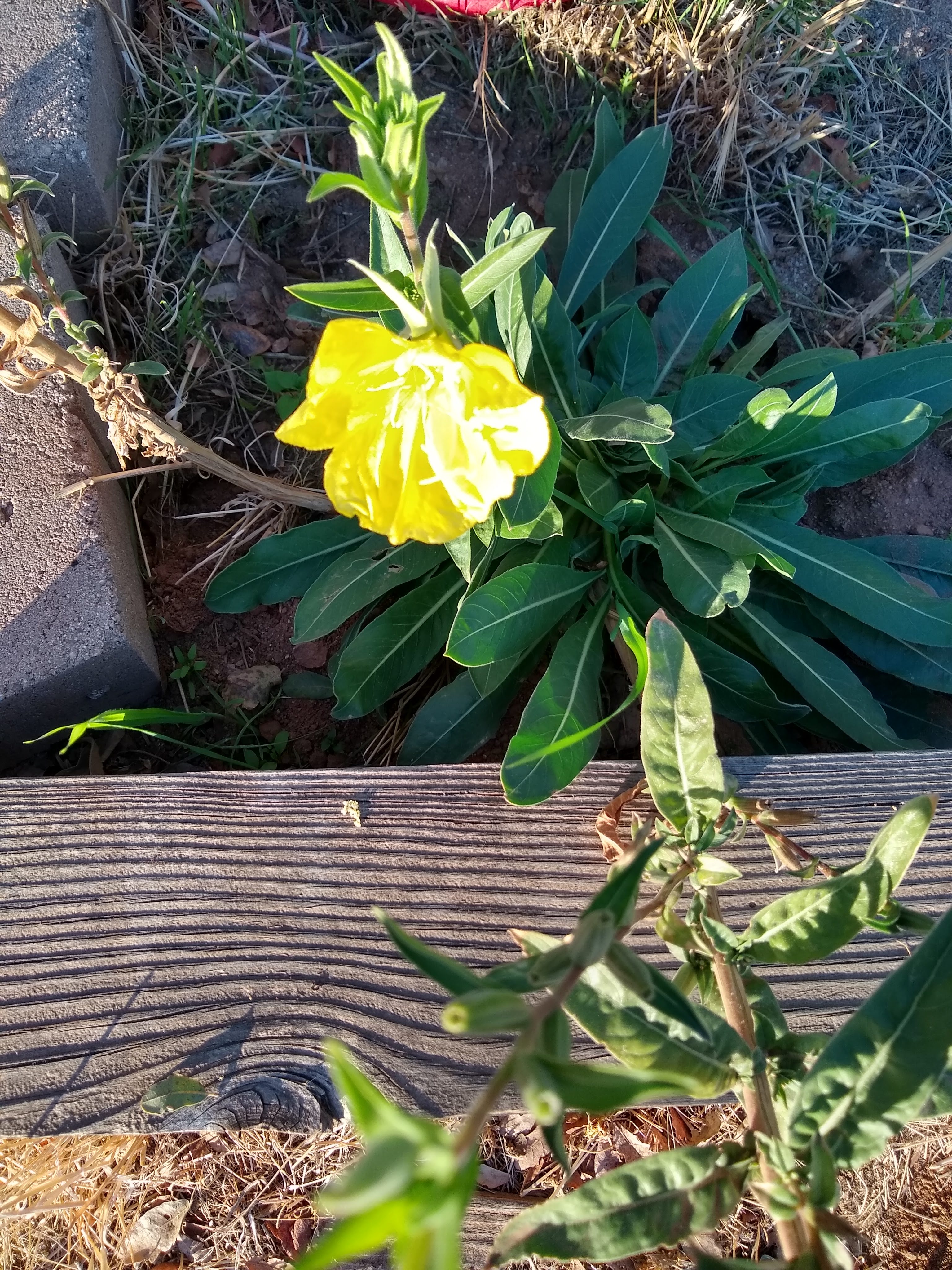
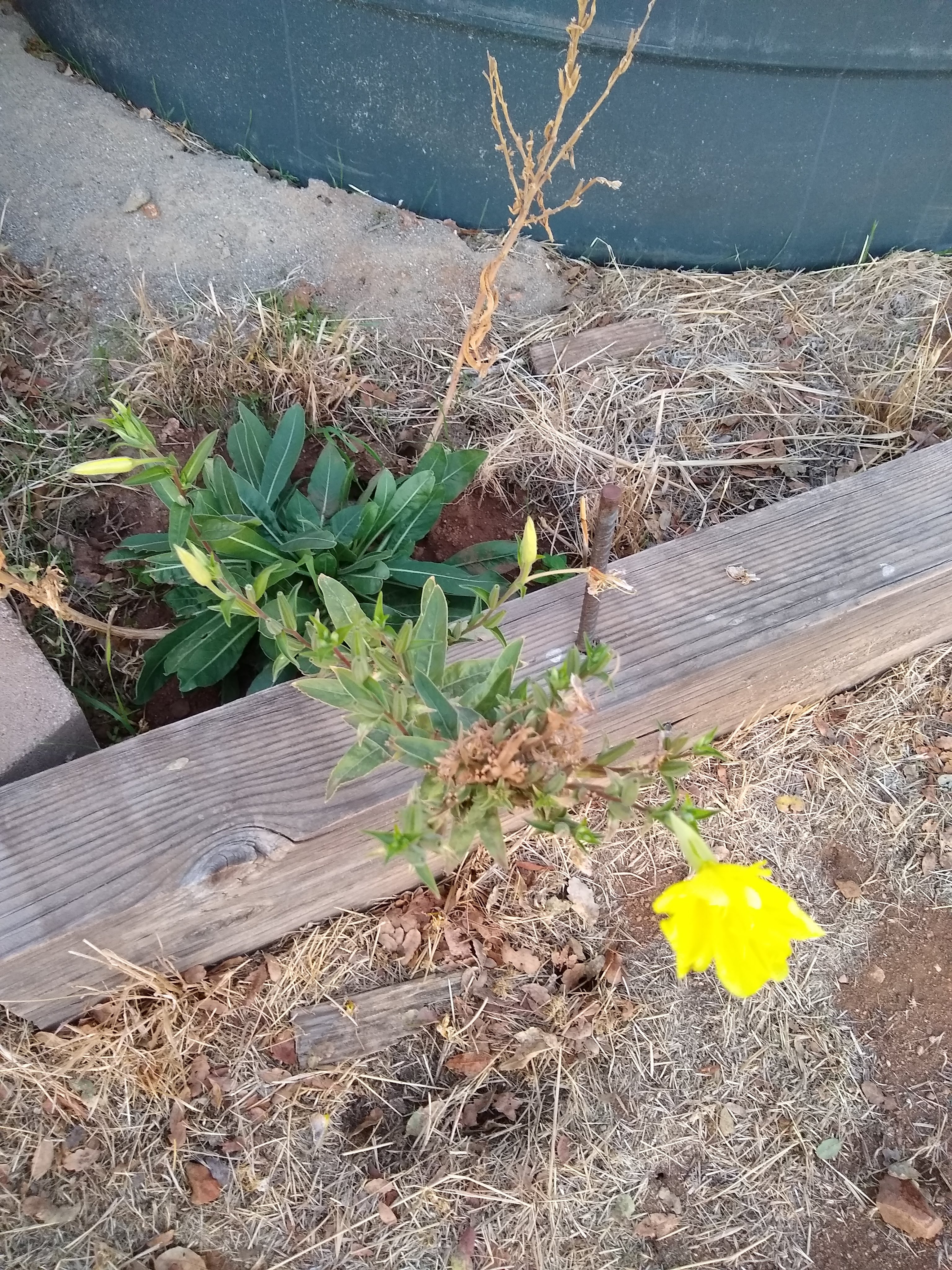
Already wildflowers have bloomed. I see blue dick stems and poppy leaves sprouted. The primrose never stopped blooming. Spring is around the corner. I am going to plant anything I can for February. The milkweeds won’t be ready, but there should be some nectar plants available then.
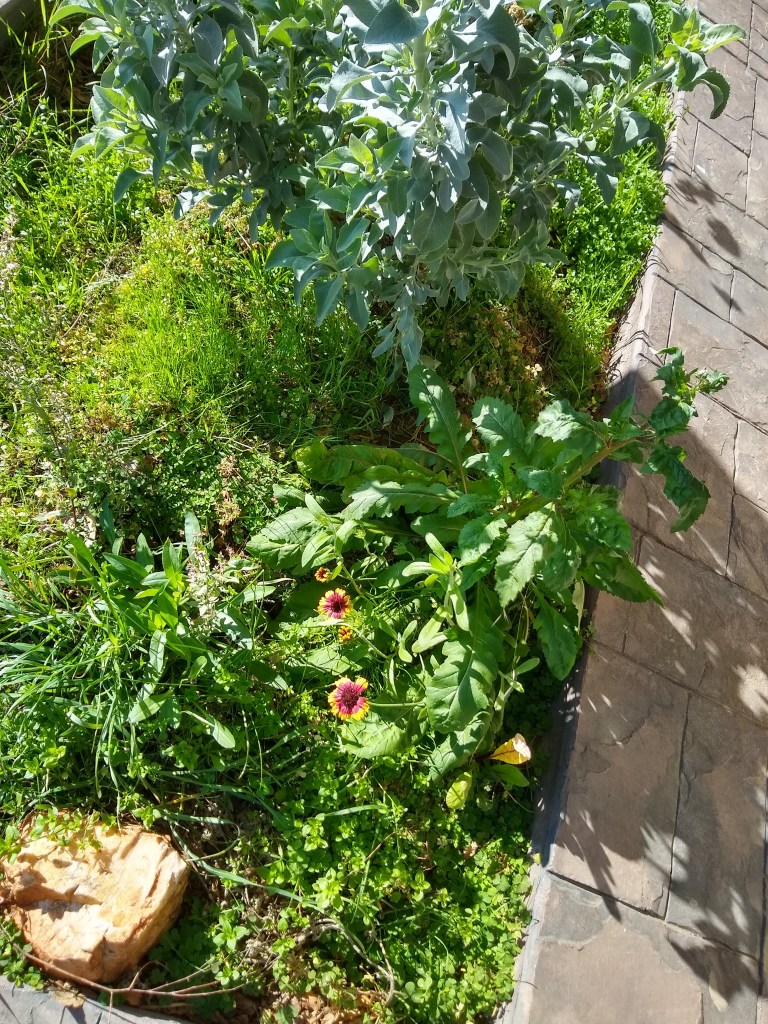
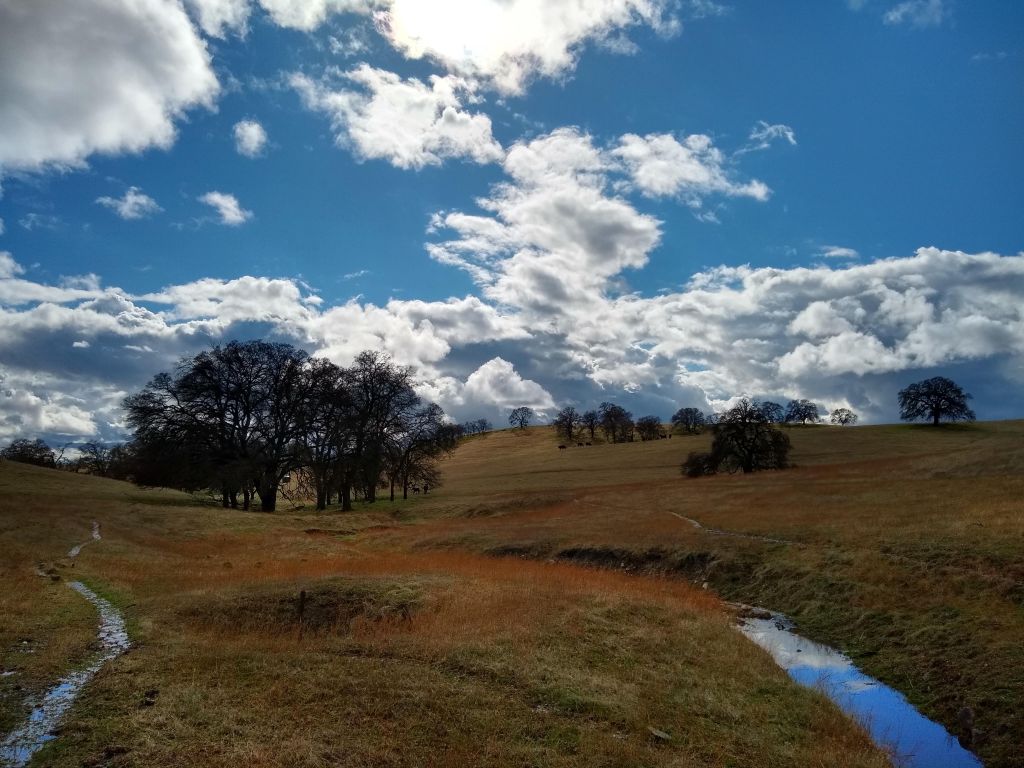
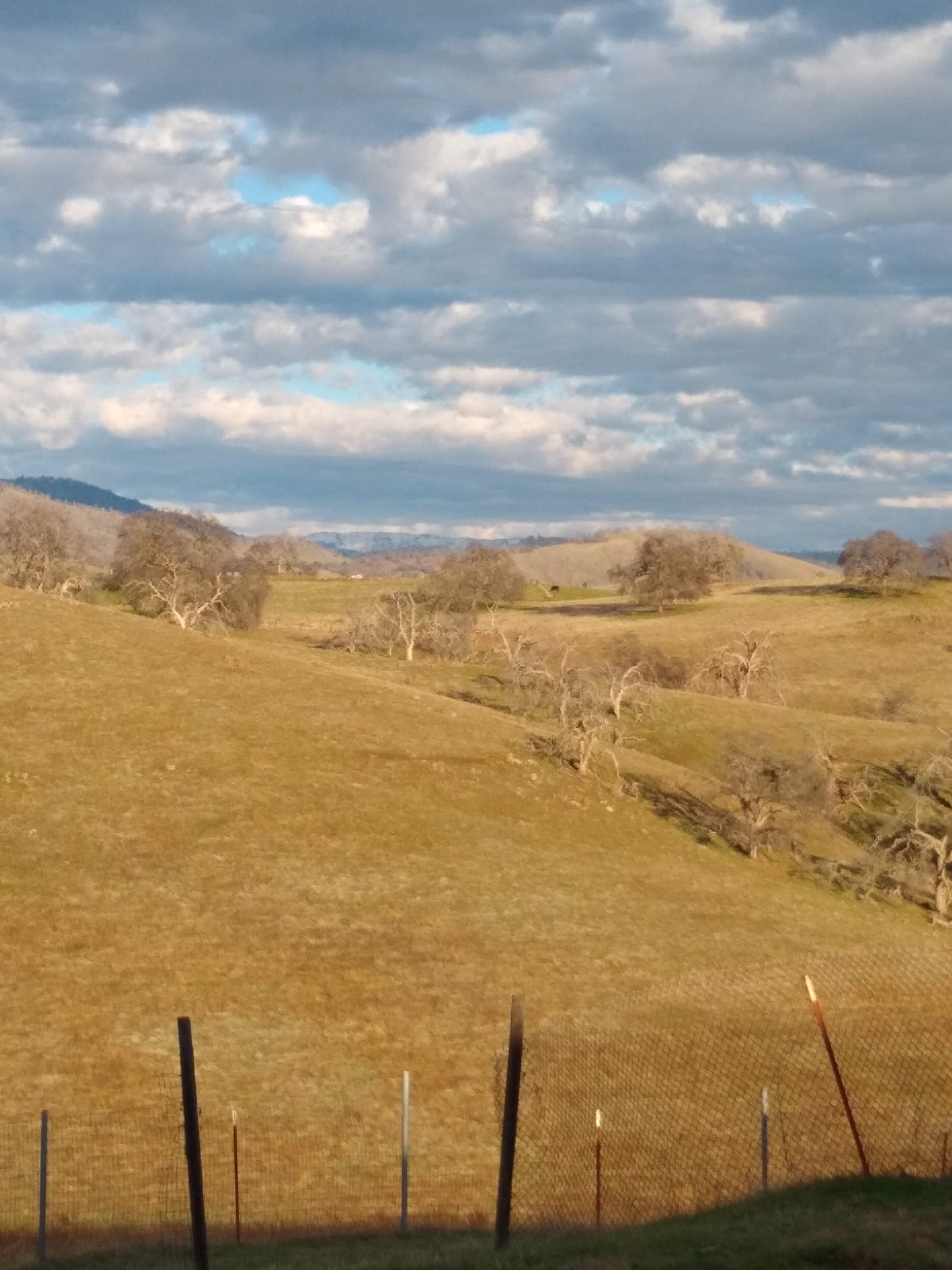
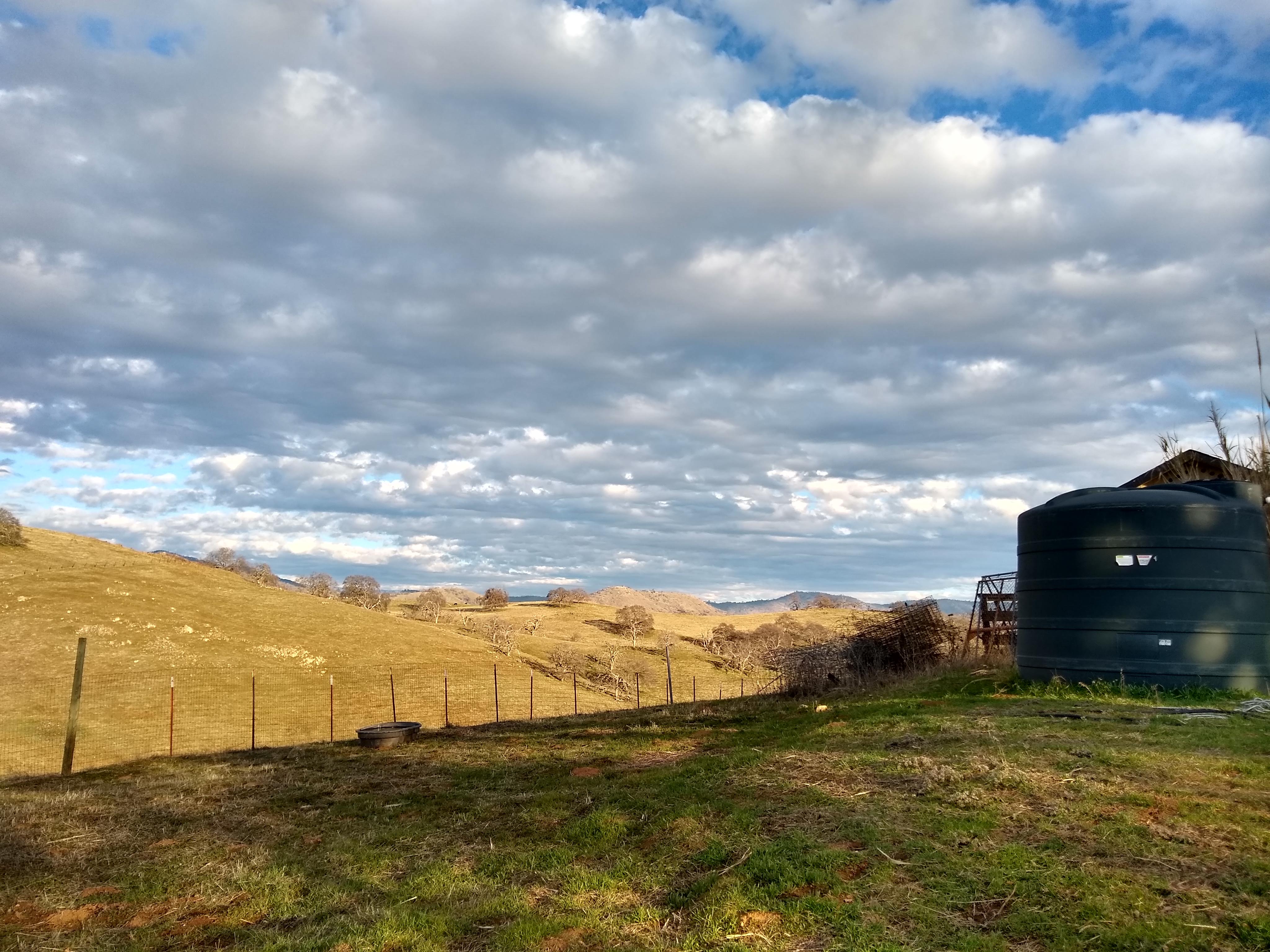
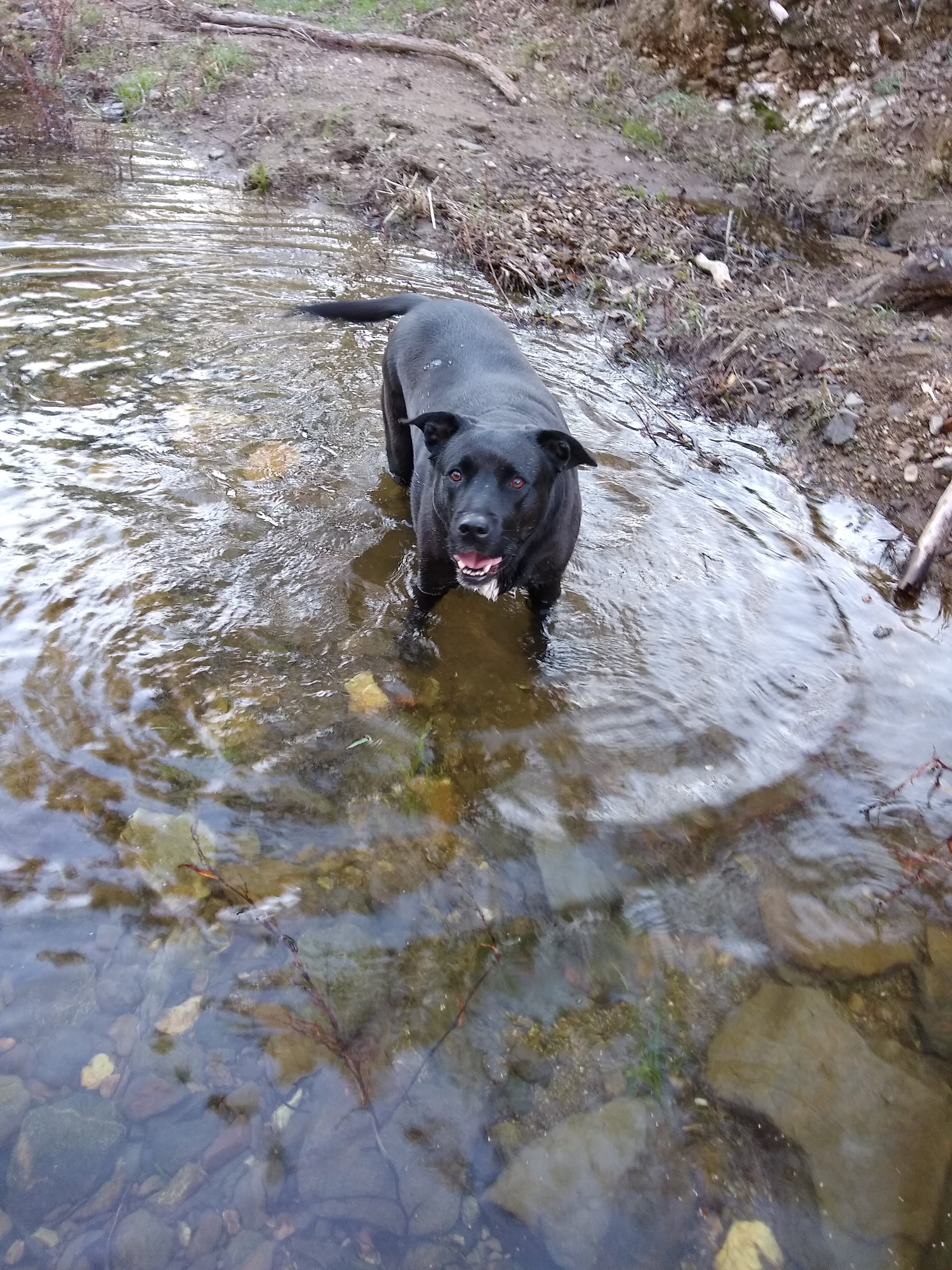
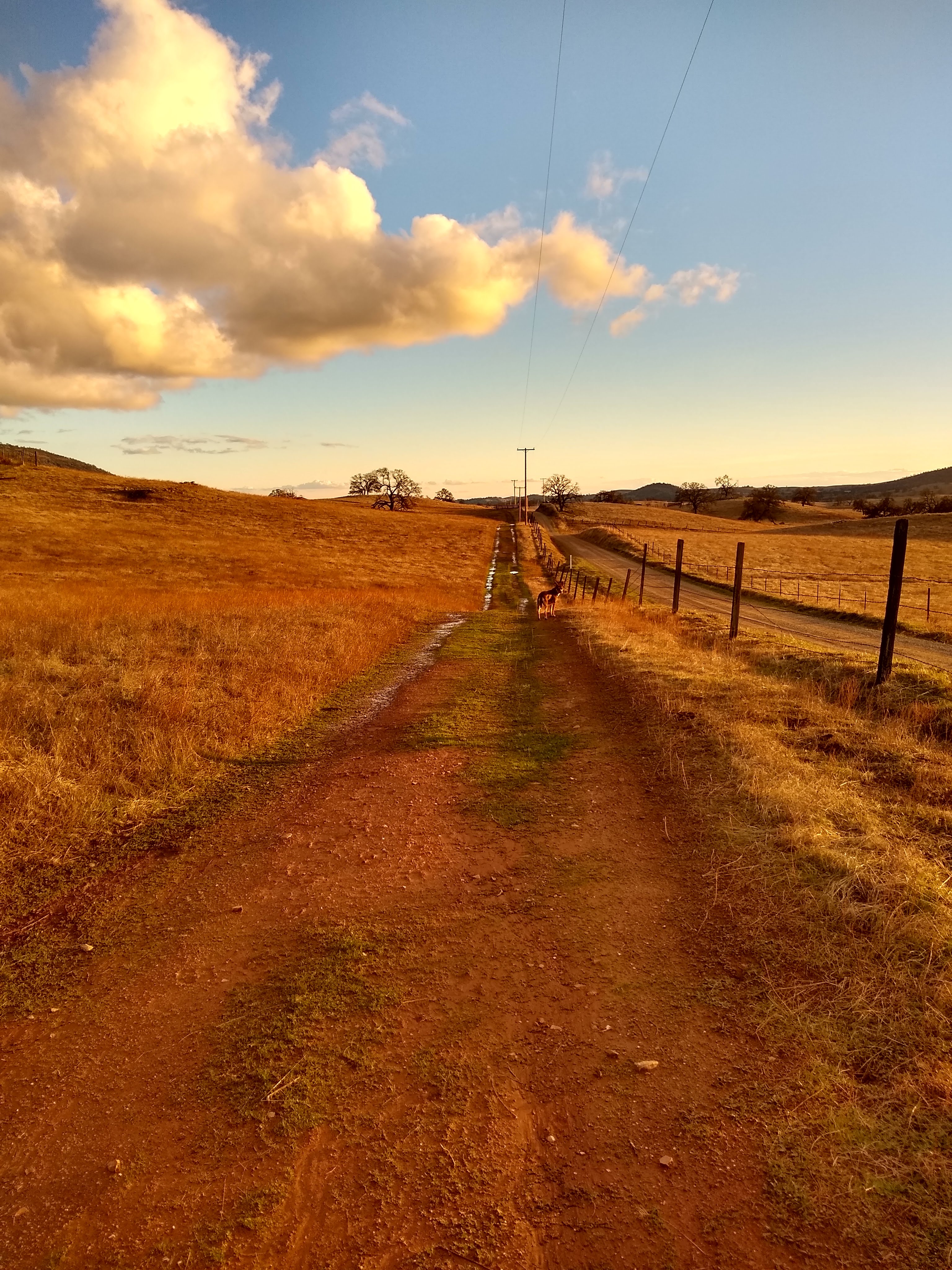
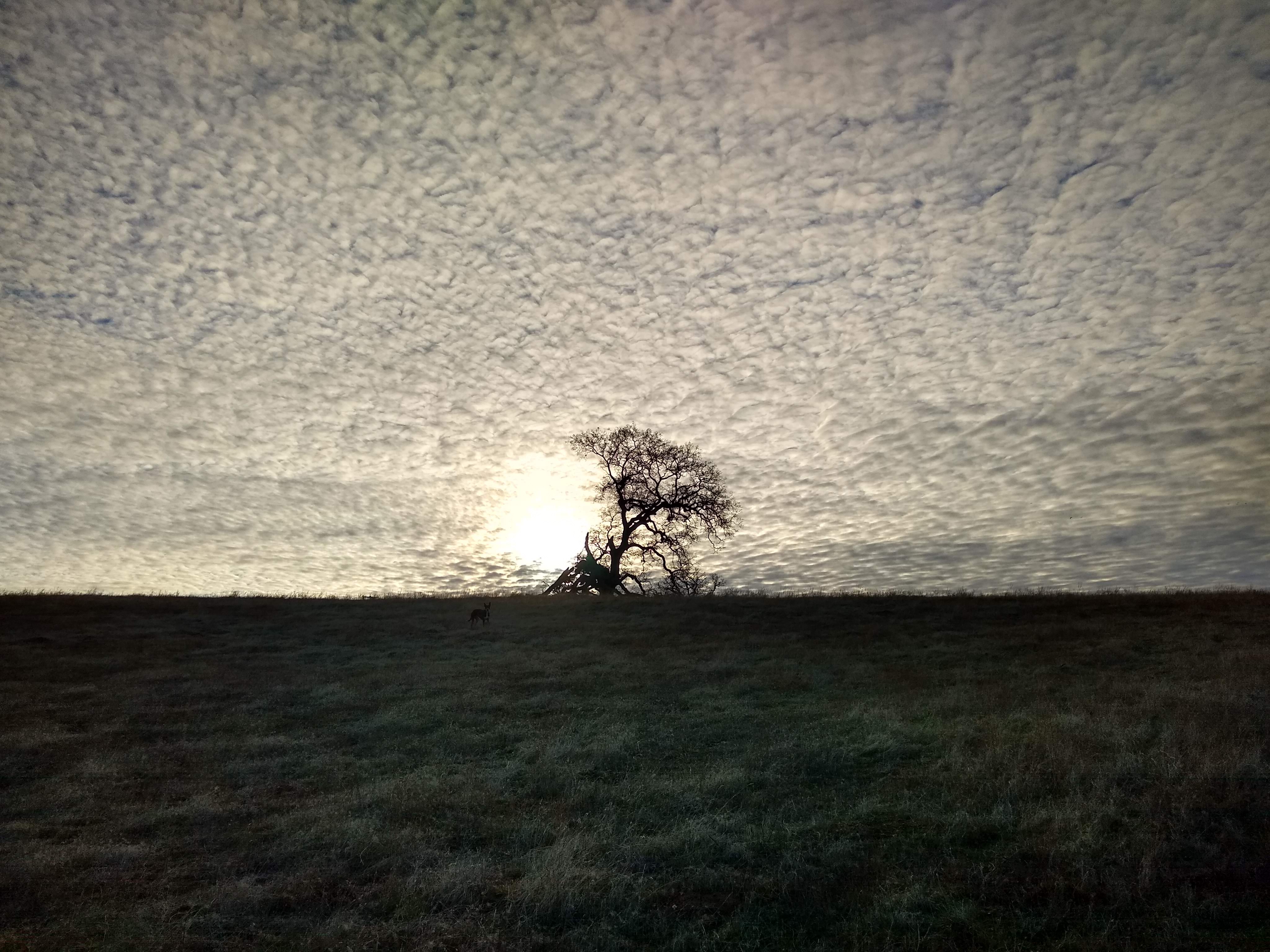
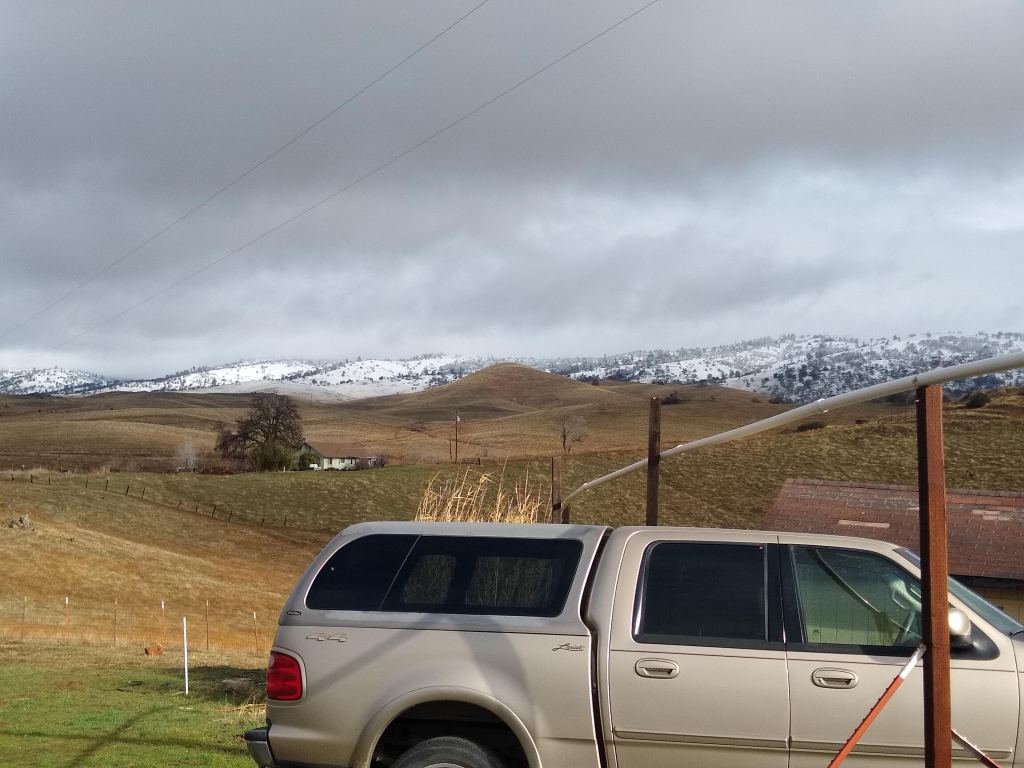
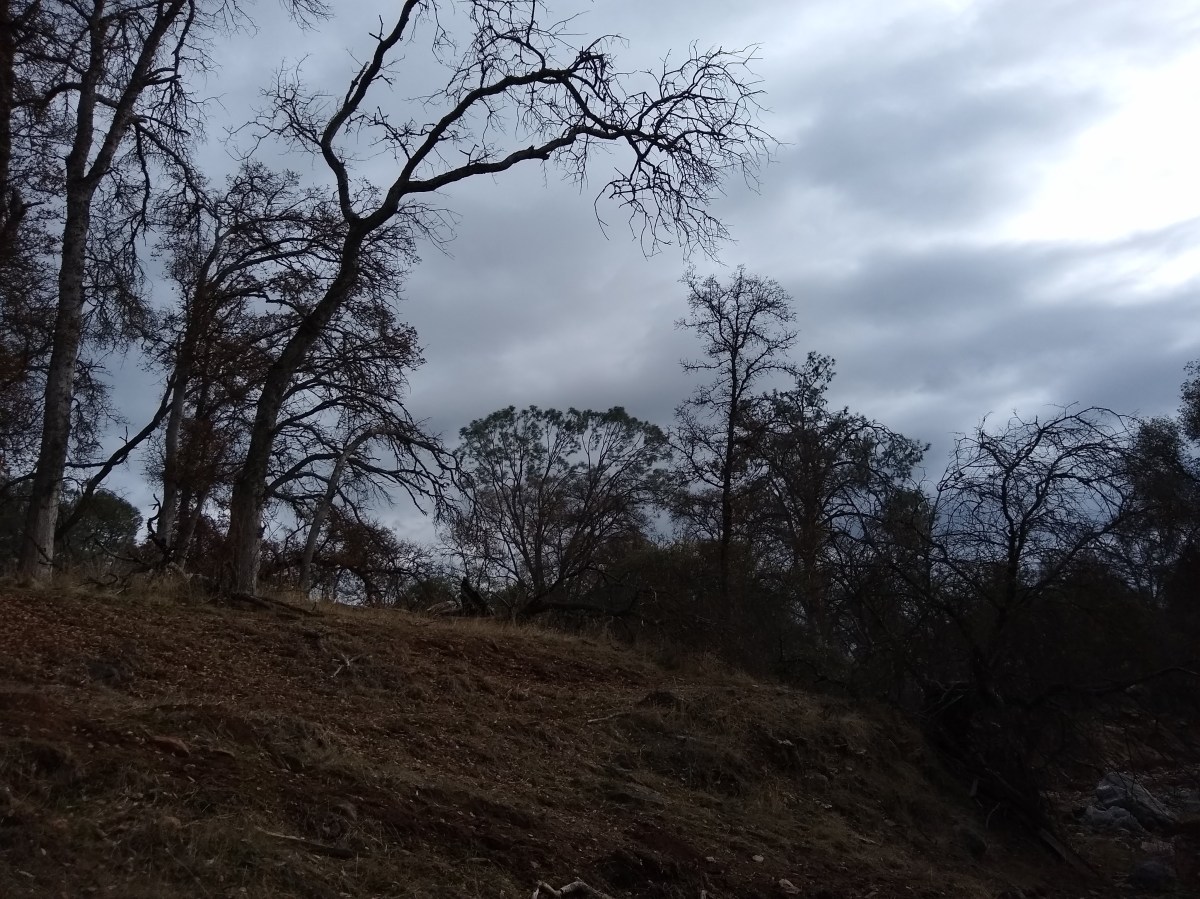
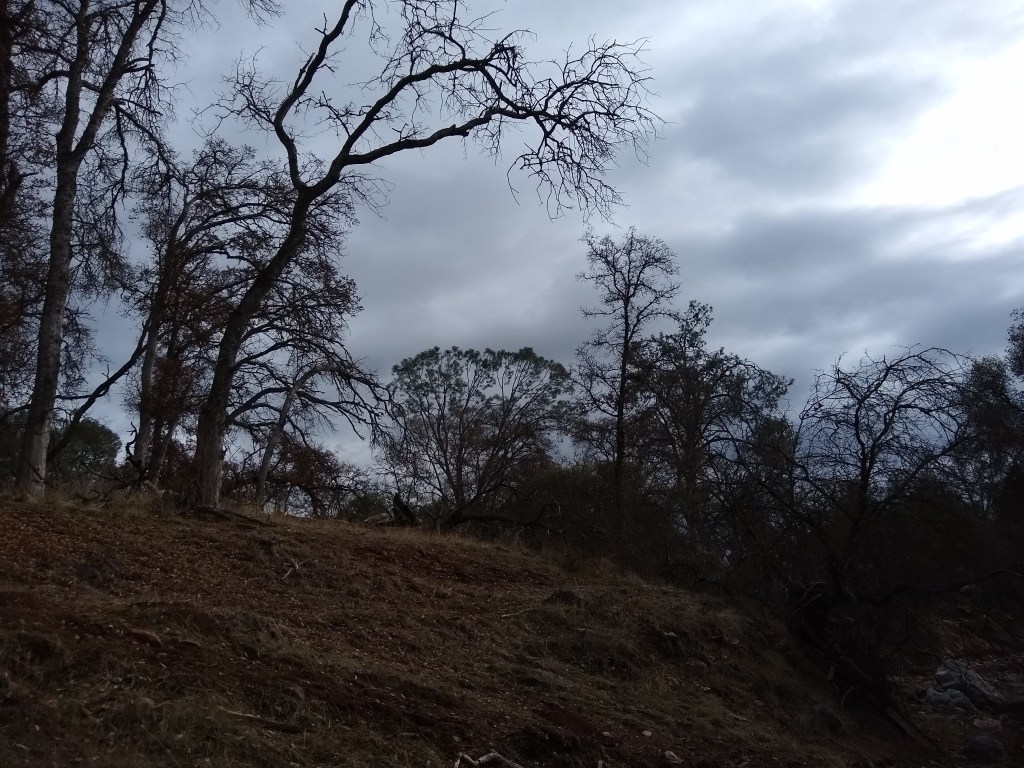
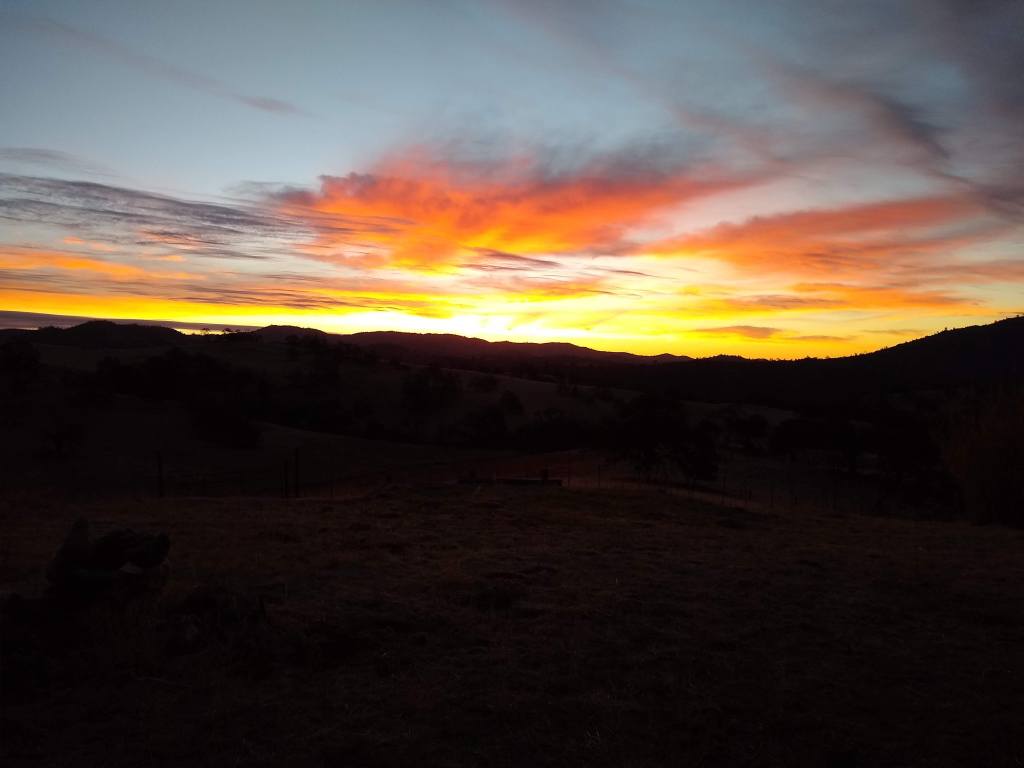
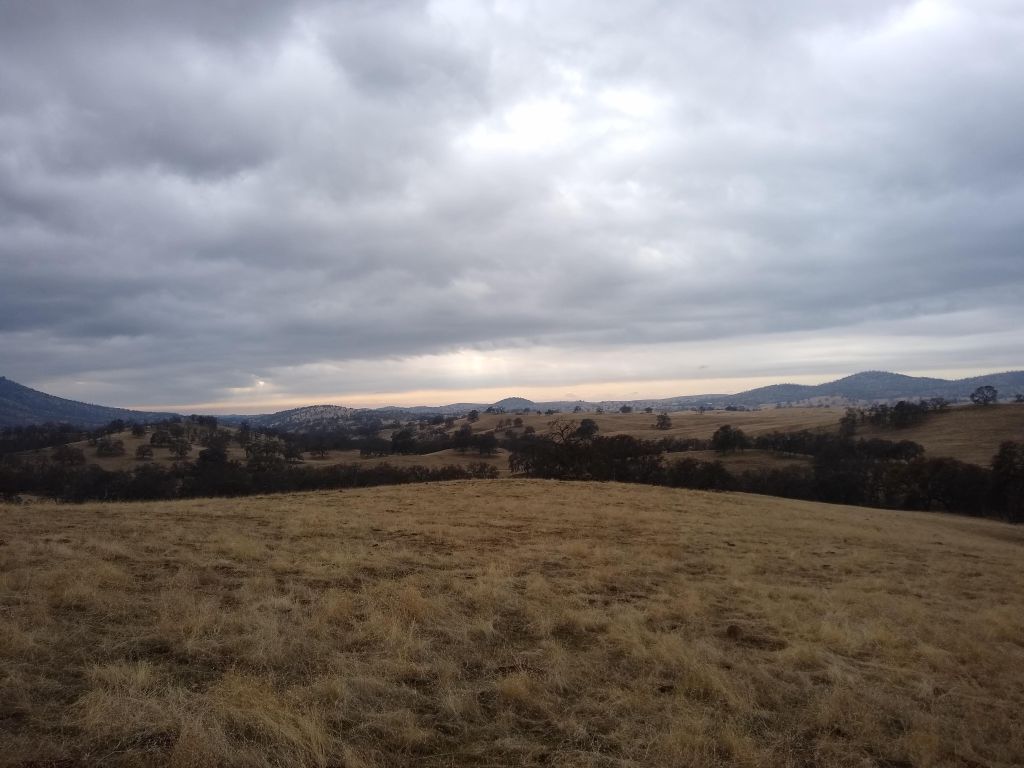
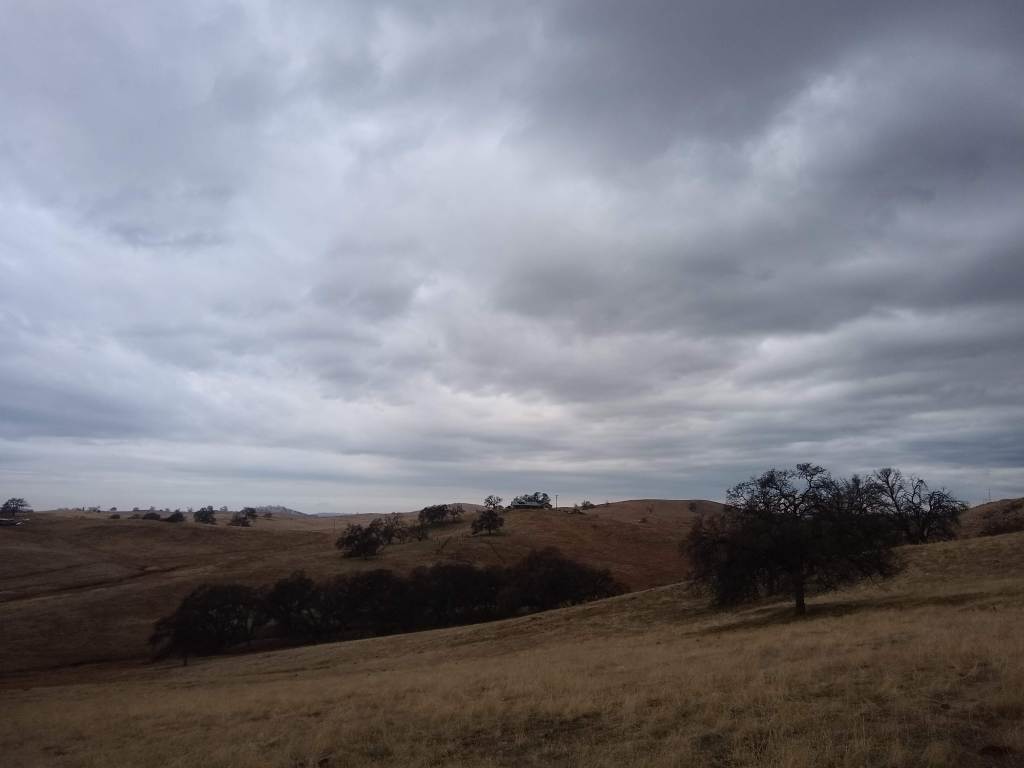
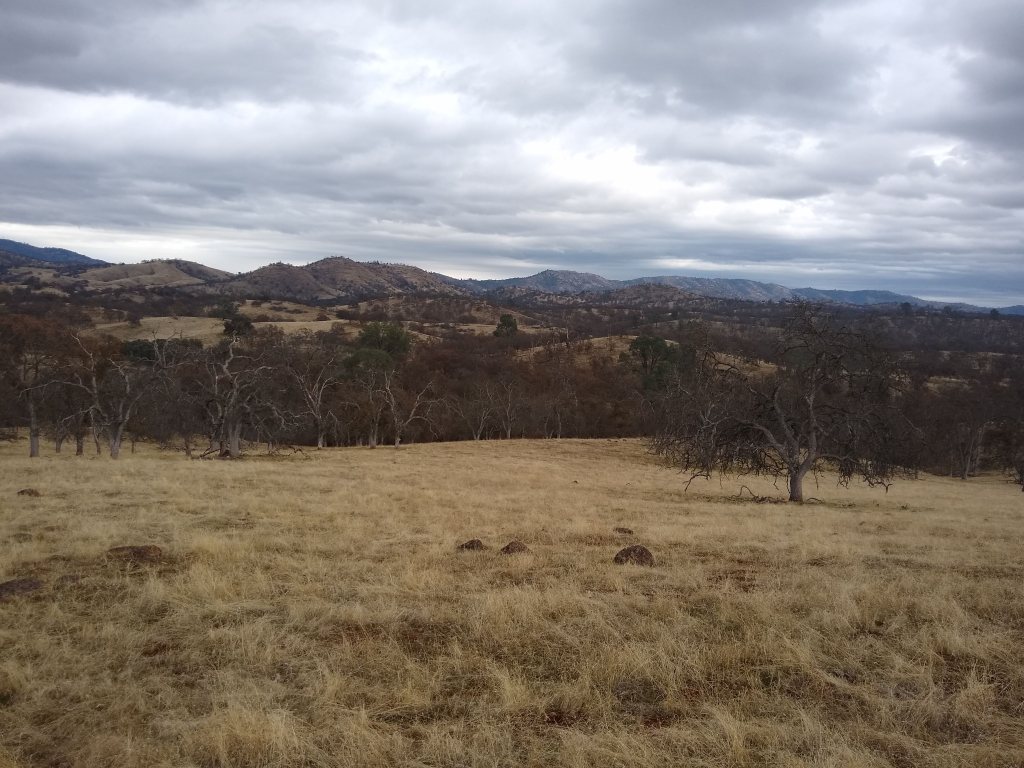
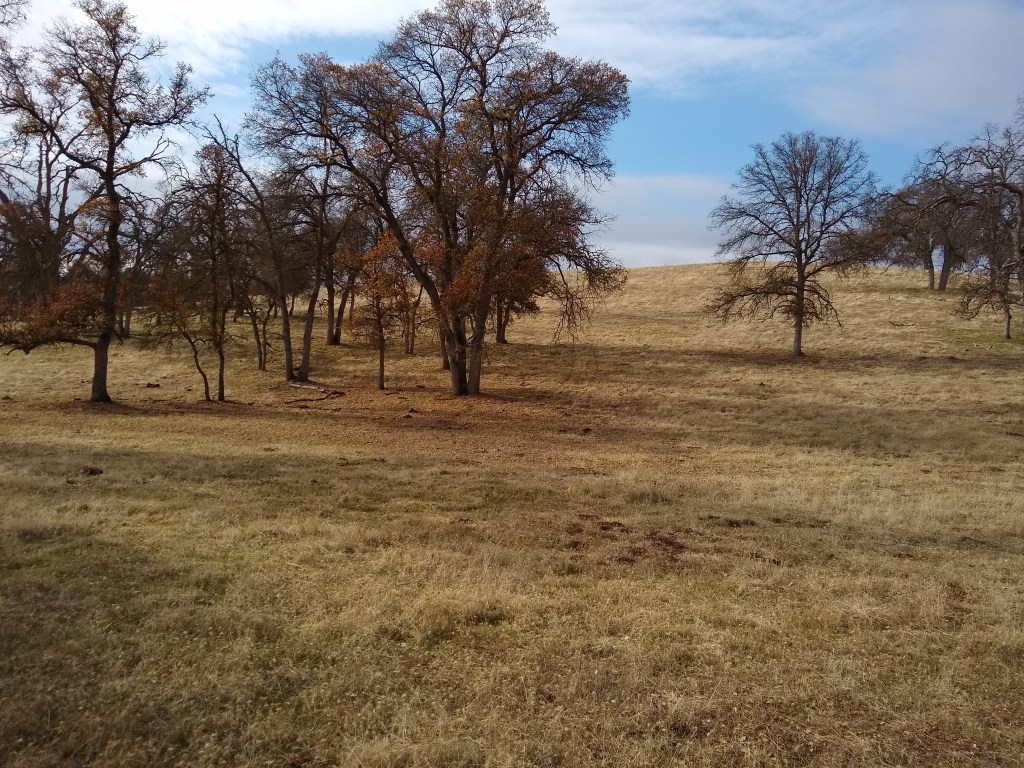
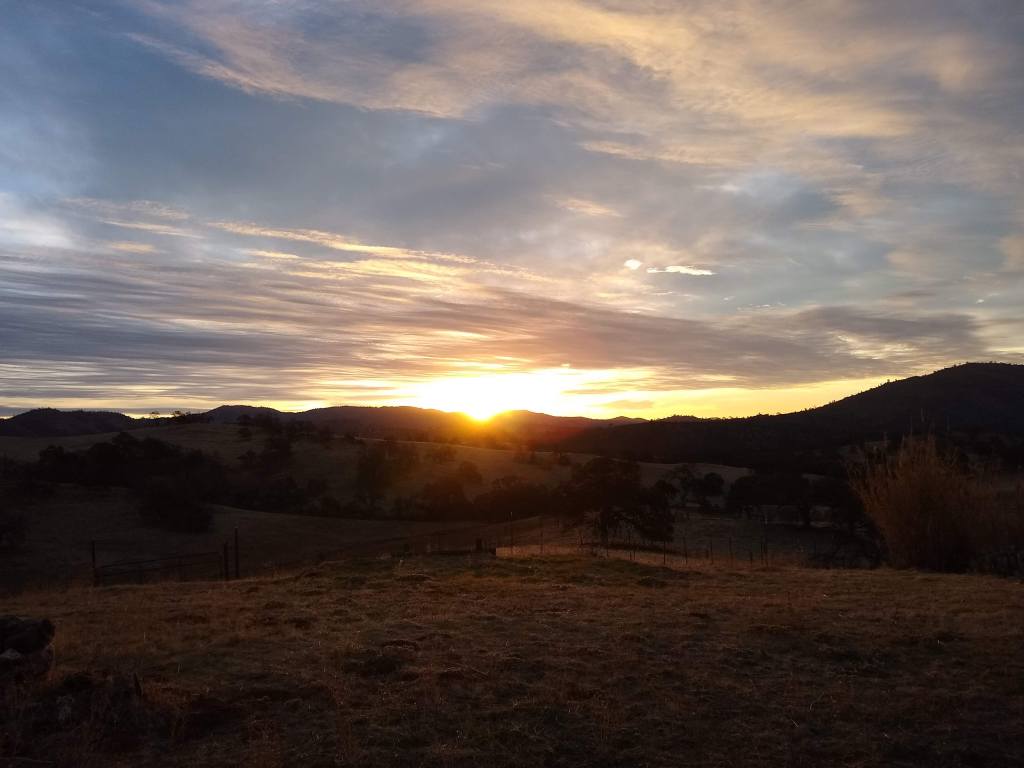
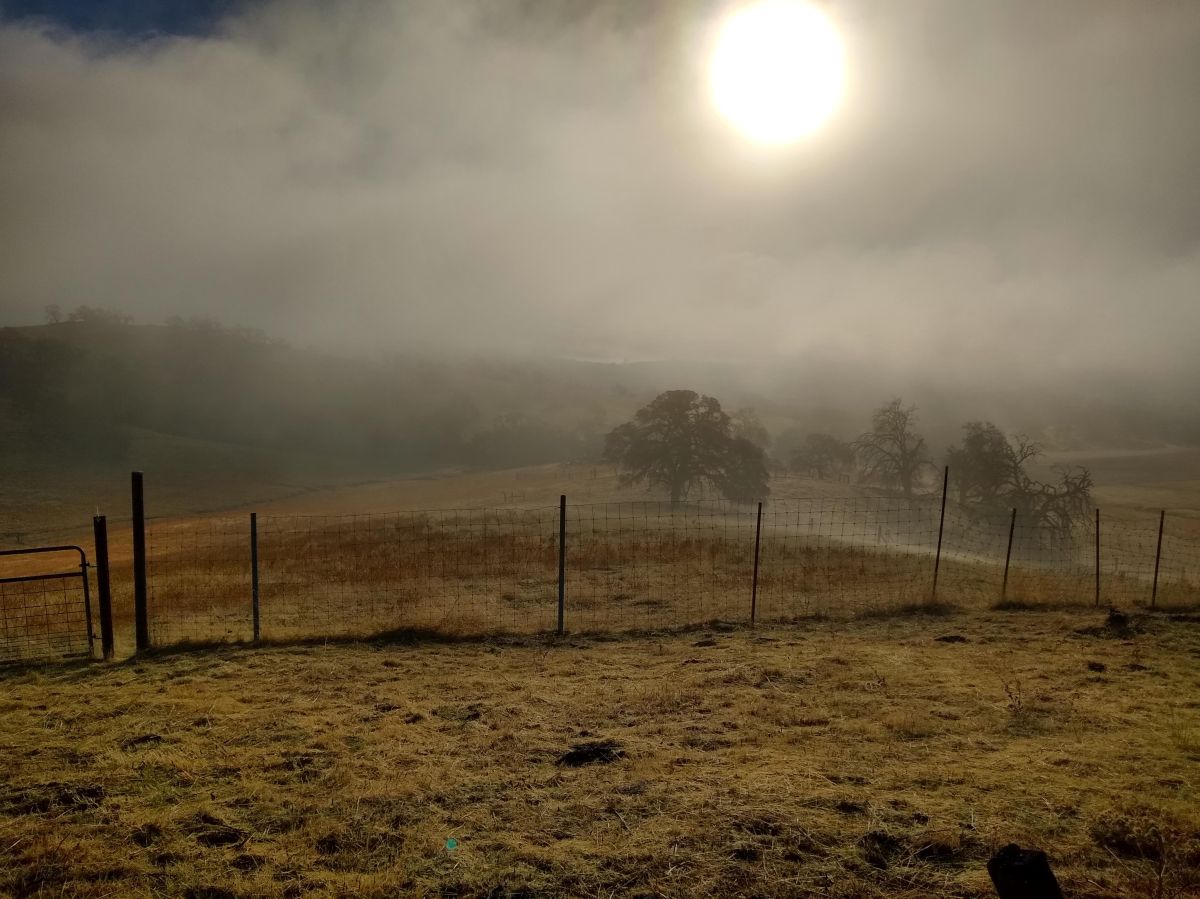
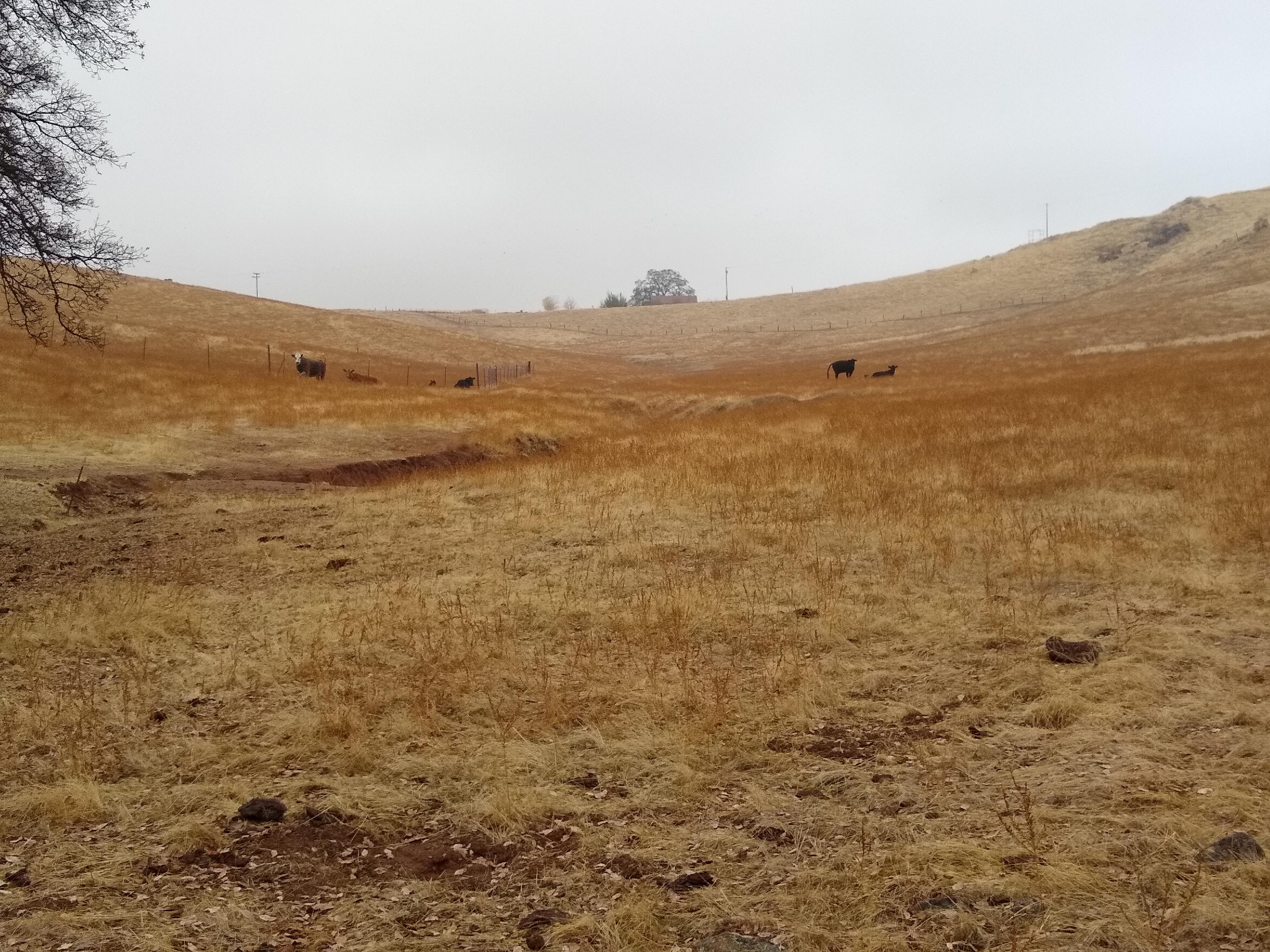
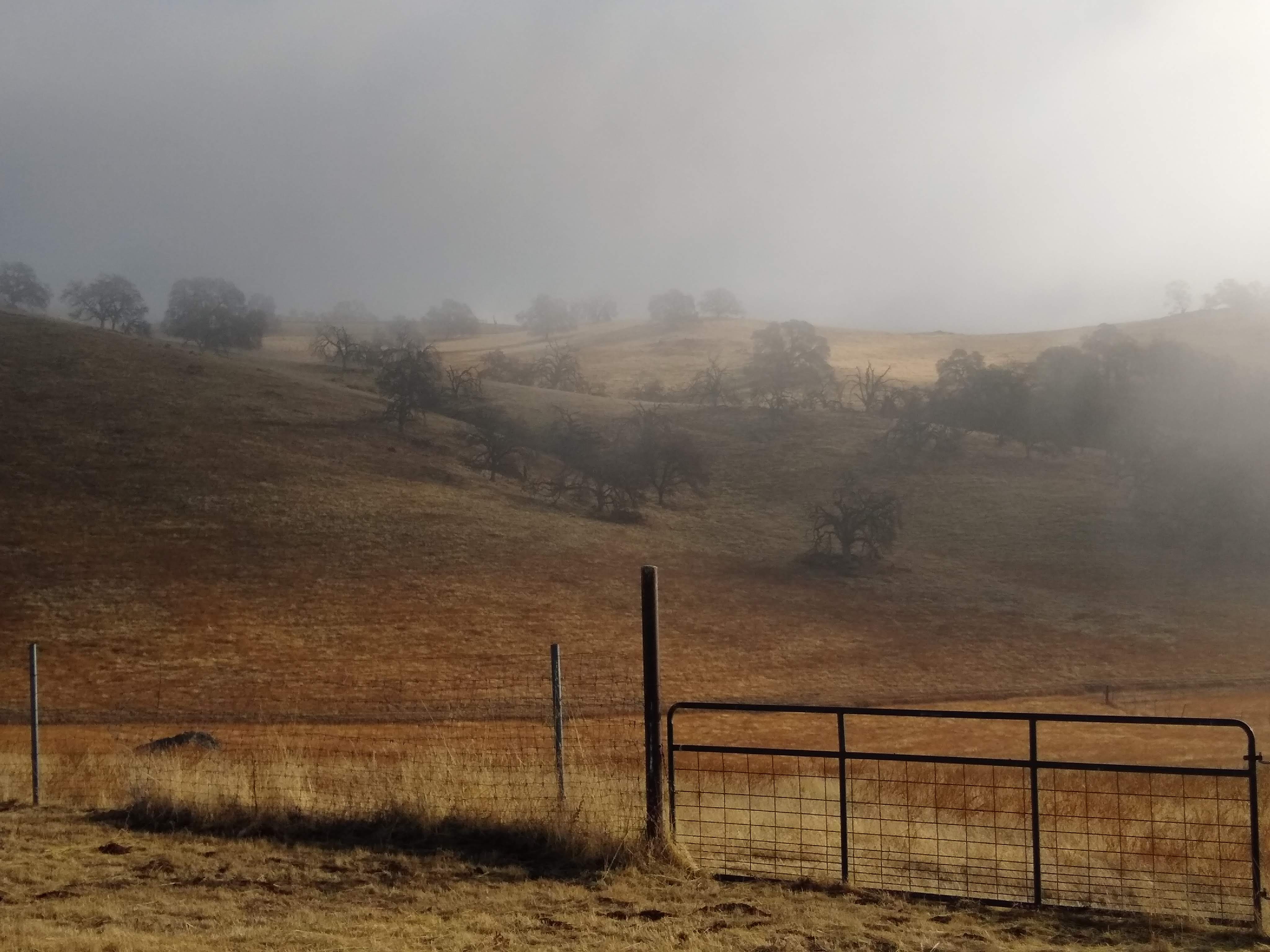
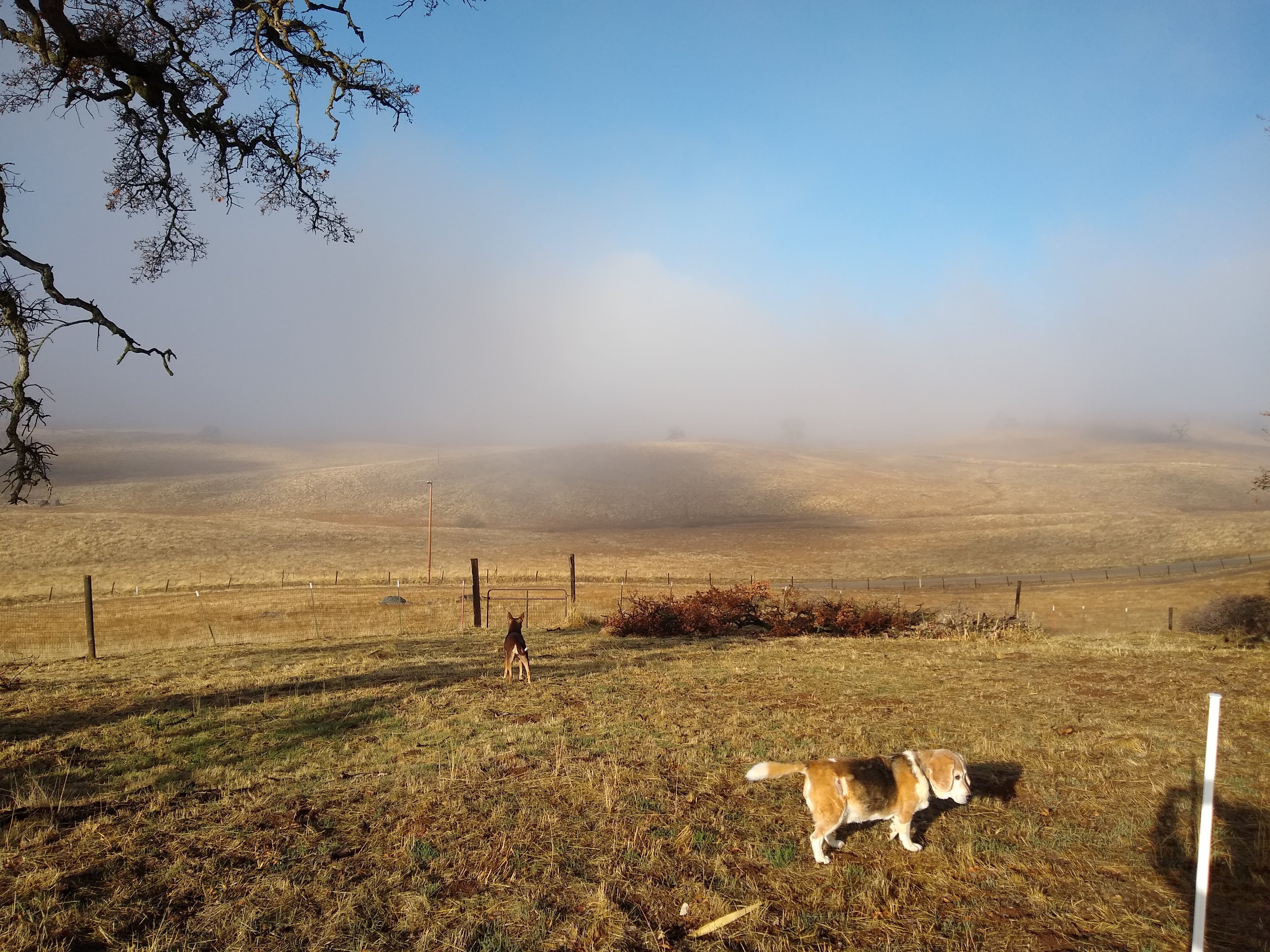
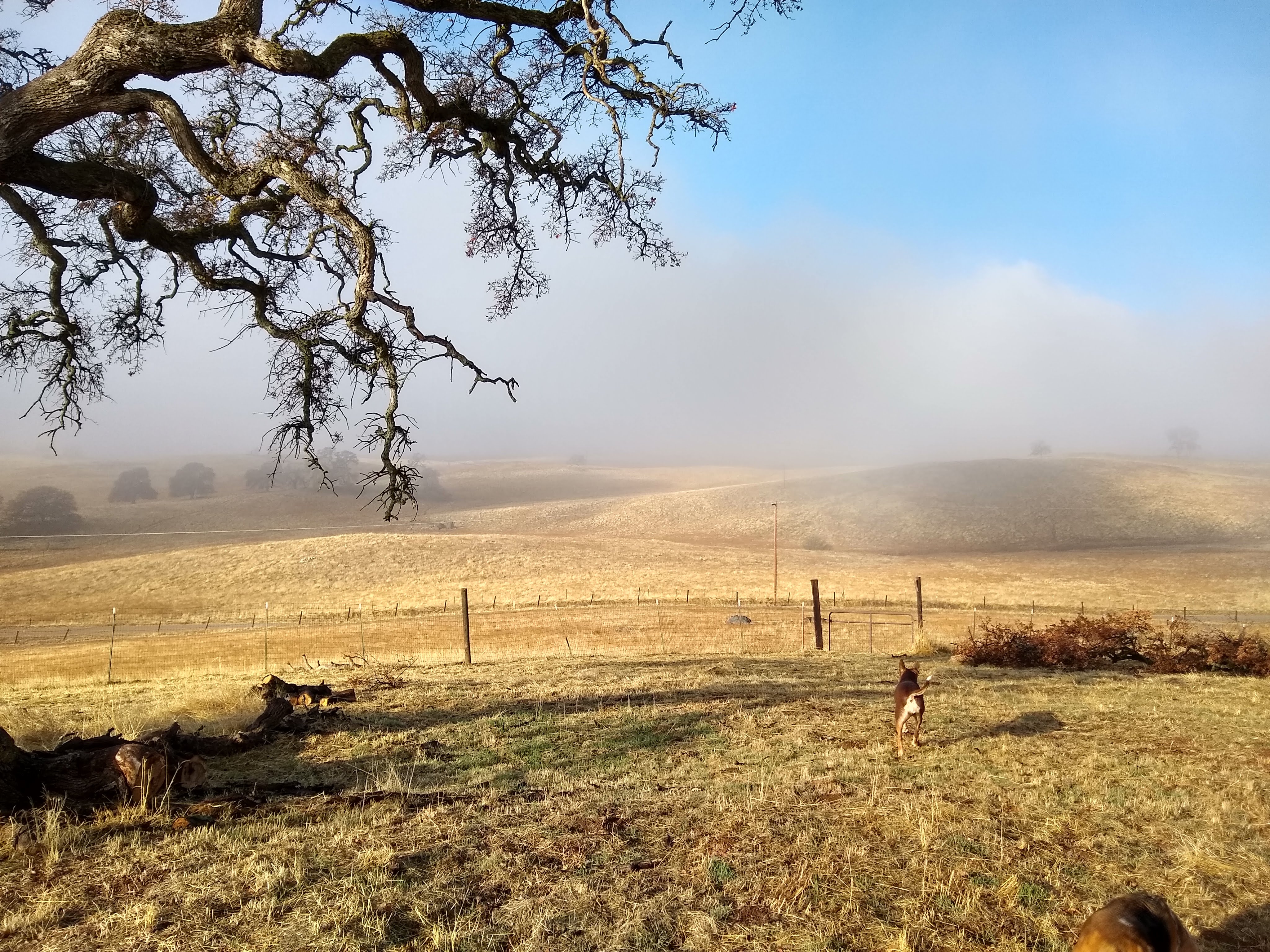
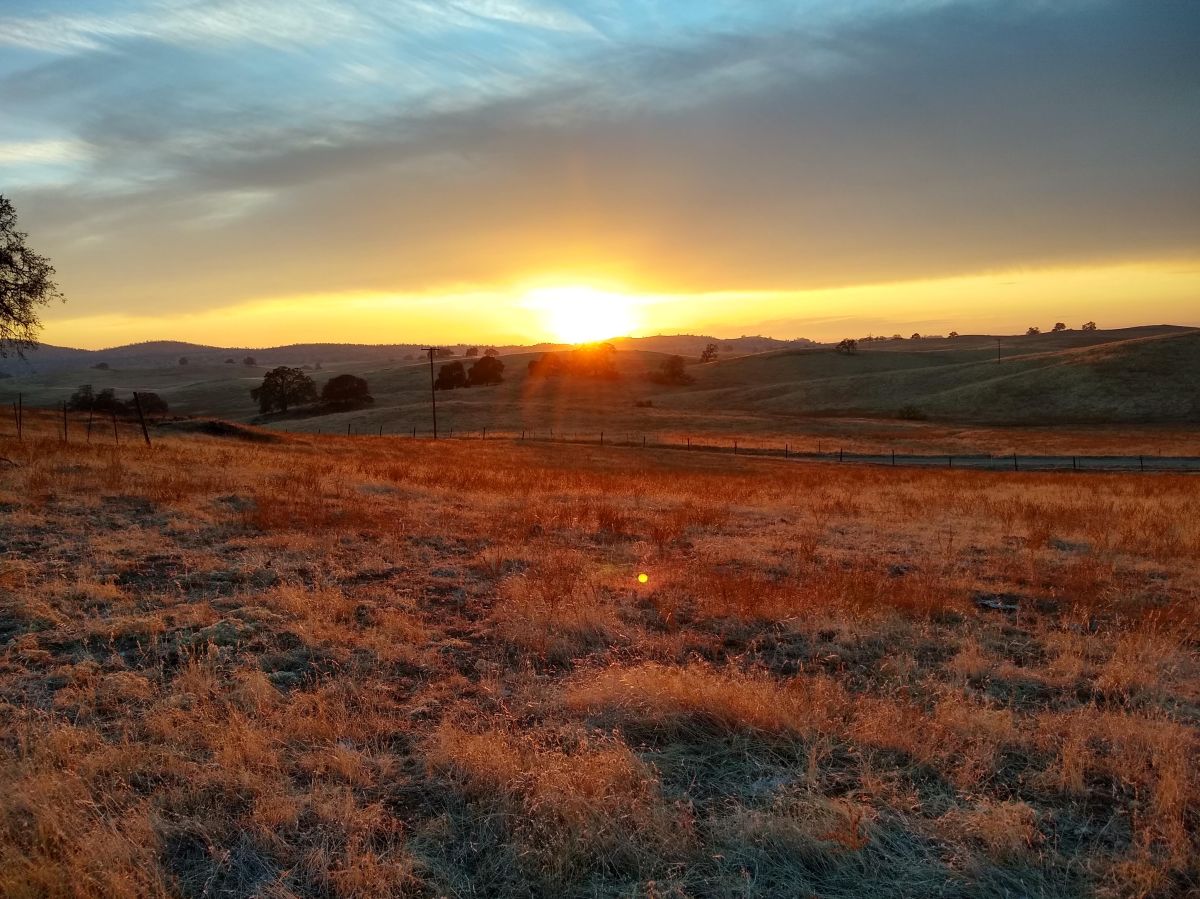
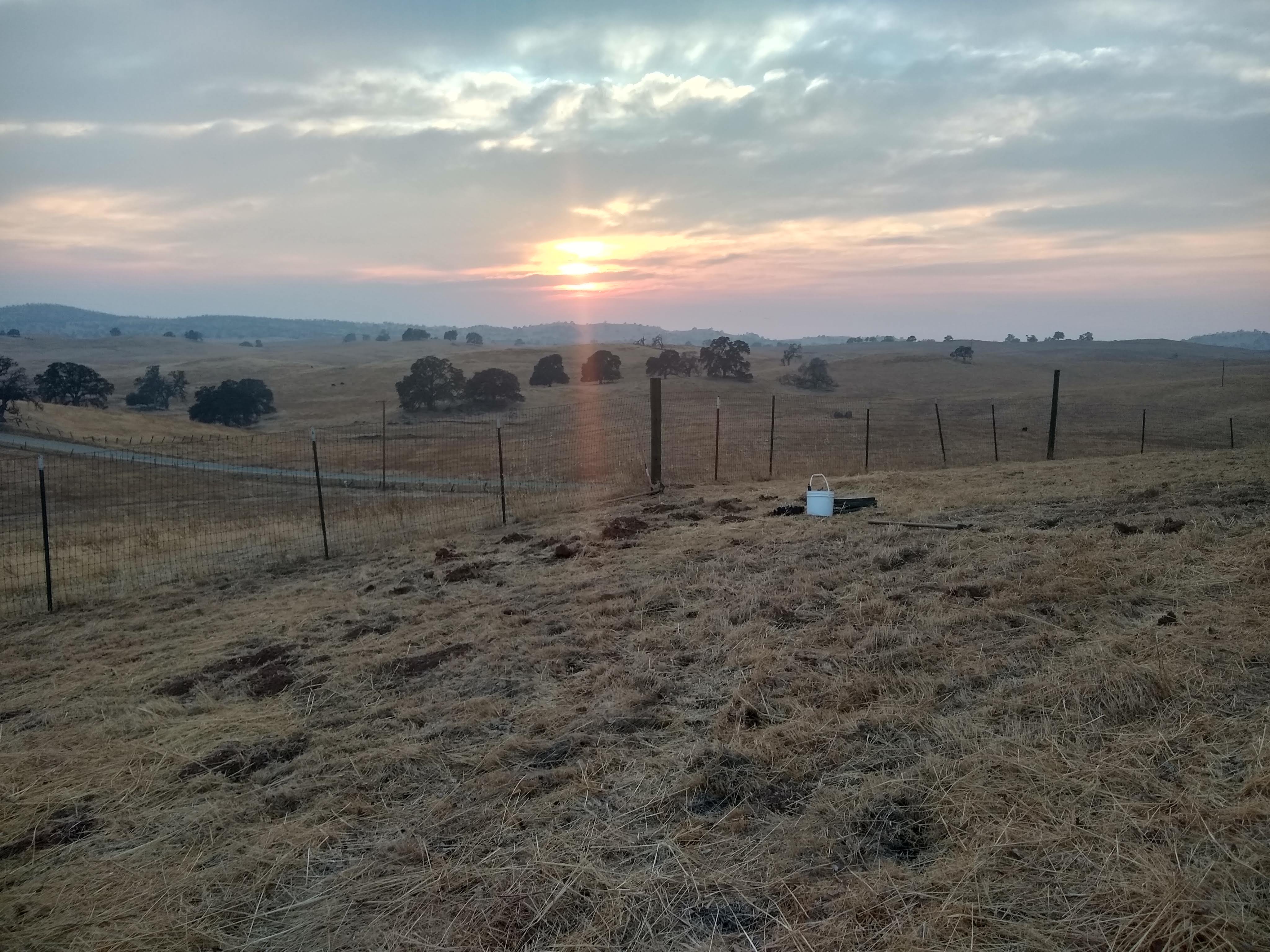
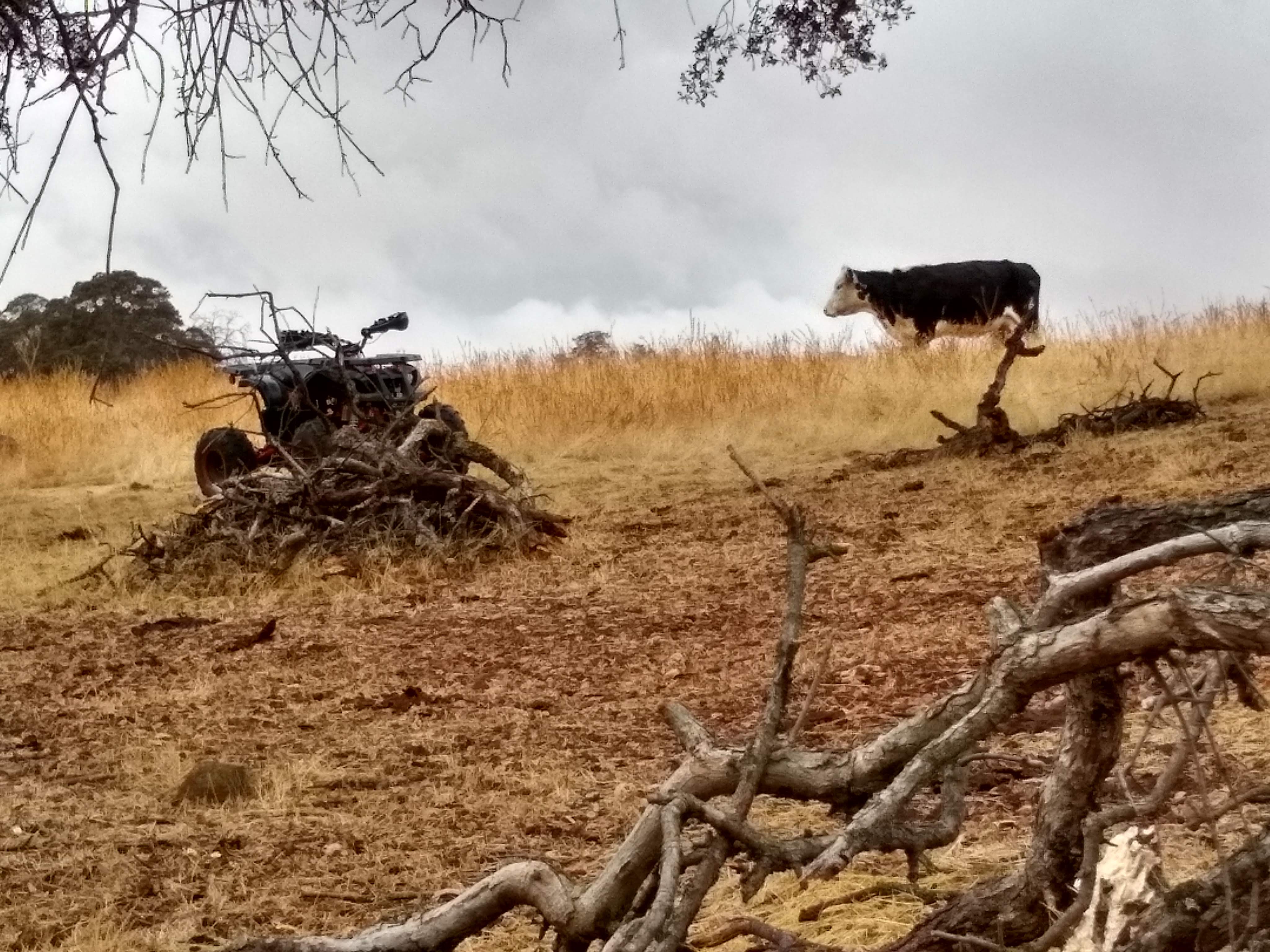
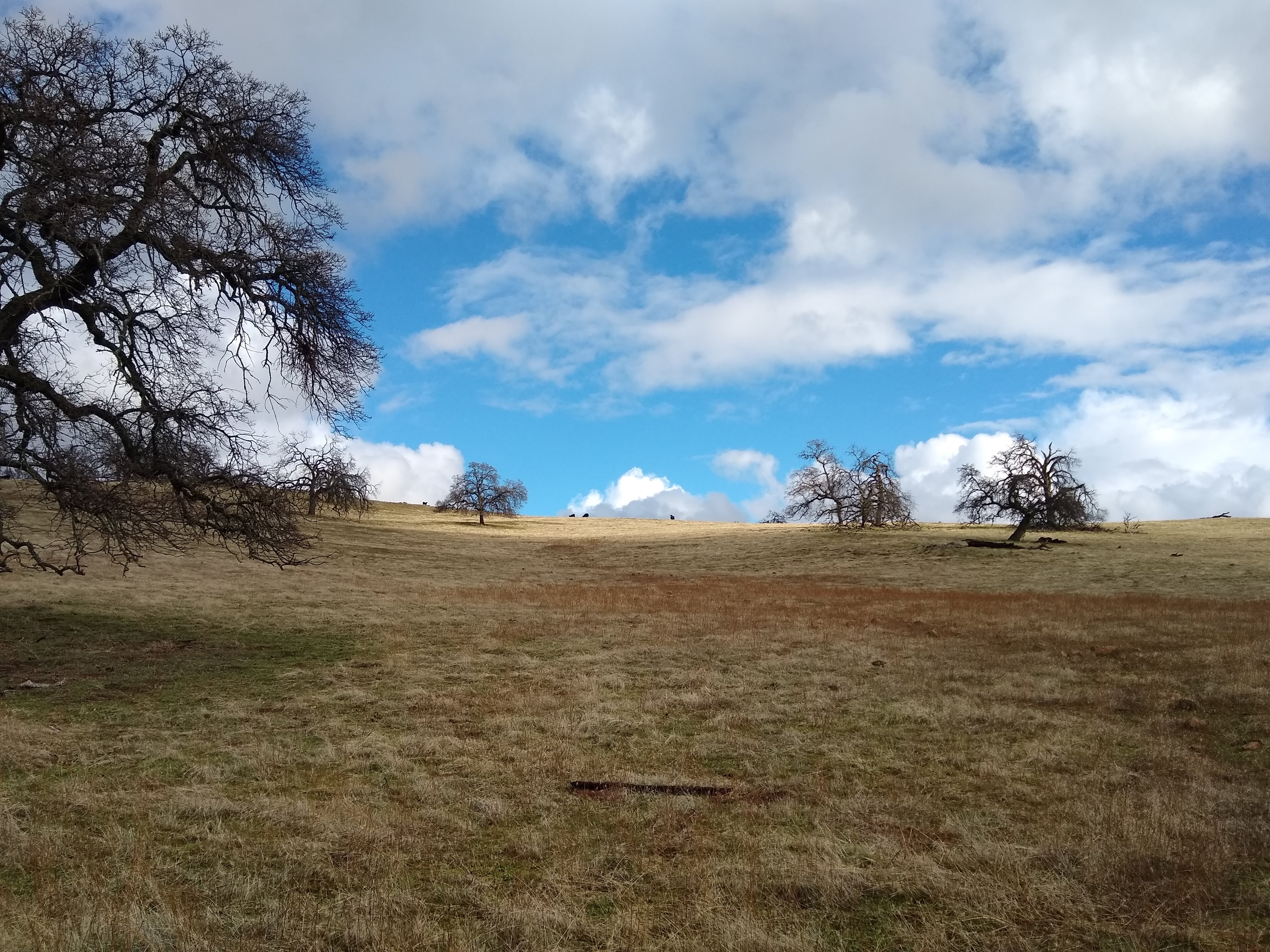
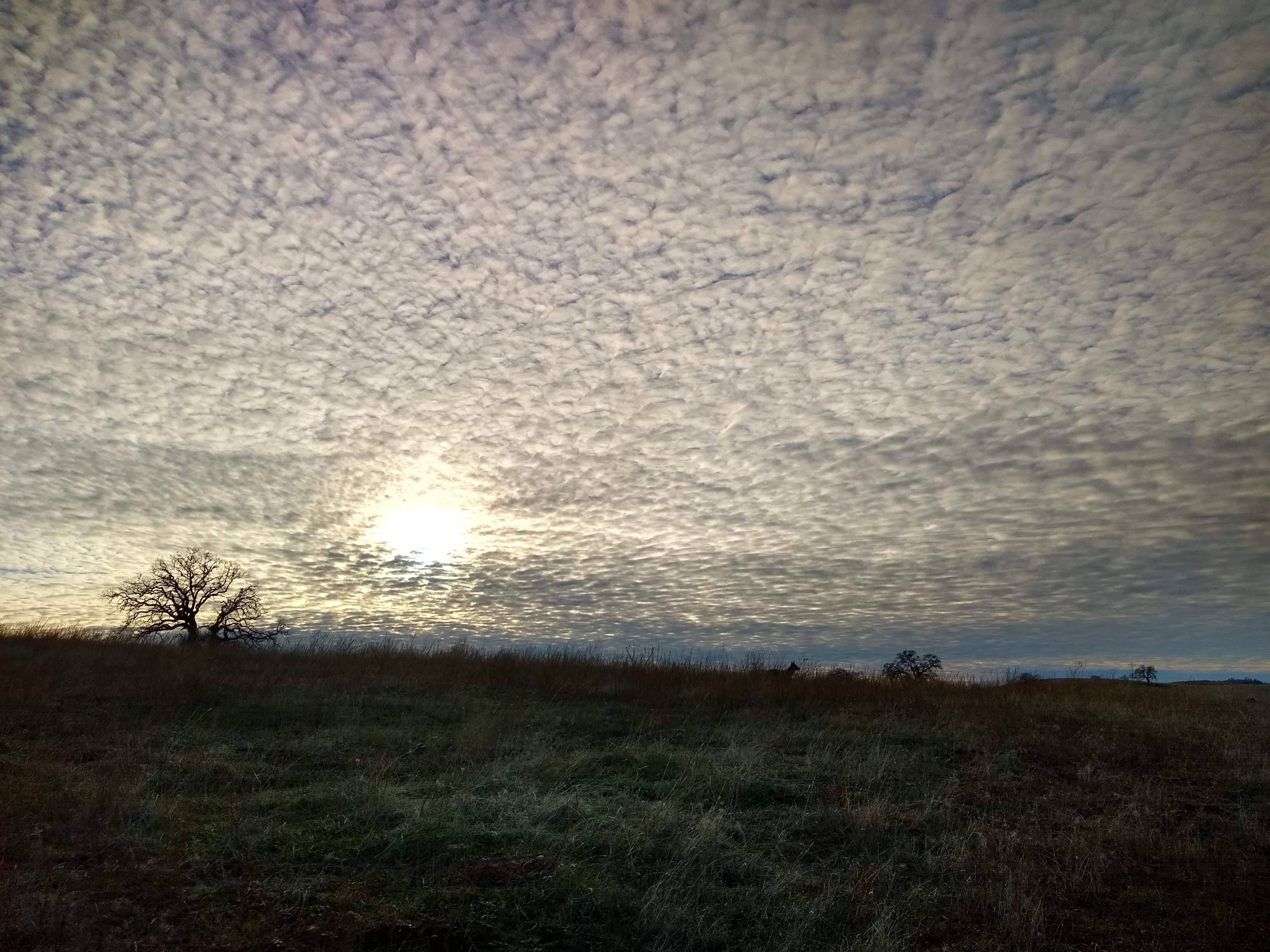
The storm made for some dramatic photos and clouds. I end my blog with some select shots that I hope you enjoy.
Things Are Ok

Branch fence holding

Right after the first of the year, I received a call from family that a younger relative’s health was not good. I helped them think through their issue, which lead to an Emergency Department visit and ultimately a five day hospital stay. My family member was very ill, so my husband and I dropped everything to make the eight hour drive, carefully per Public Health guidelines, to go help. Fortunately, I had planted most of the surplus plants Deedee brought me from a native nursery (see December 29th post). They all needed to get into the ground to benefit from winter rains. There were about six left. They would have to wait.

We stayed until my family member was ok, which was two weeks. That was two weeks in a city. Although I love where they live, there is nothing like being home, especially when home is a beautiful, rural ranch where you can see the stars, smell the soil and the loudest noises are the song birds chattering to one another. I was happy to be back in my natural habitat.

Heather in her natural habitat!

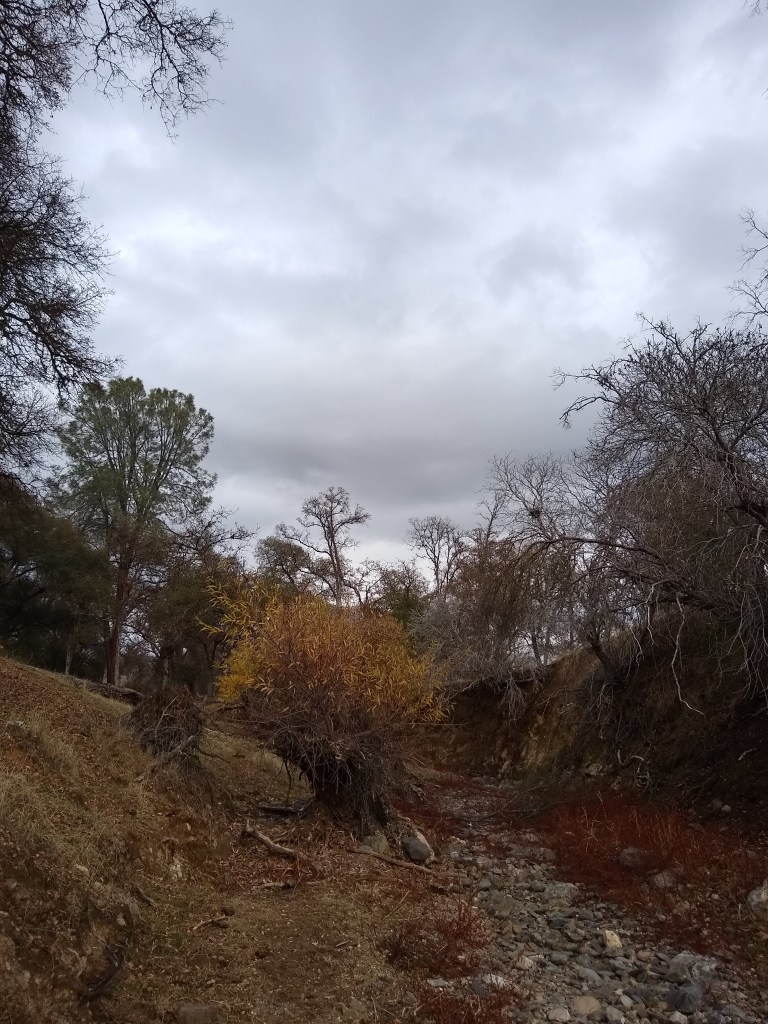
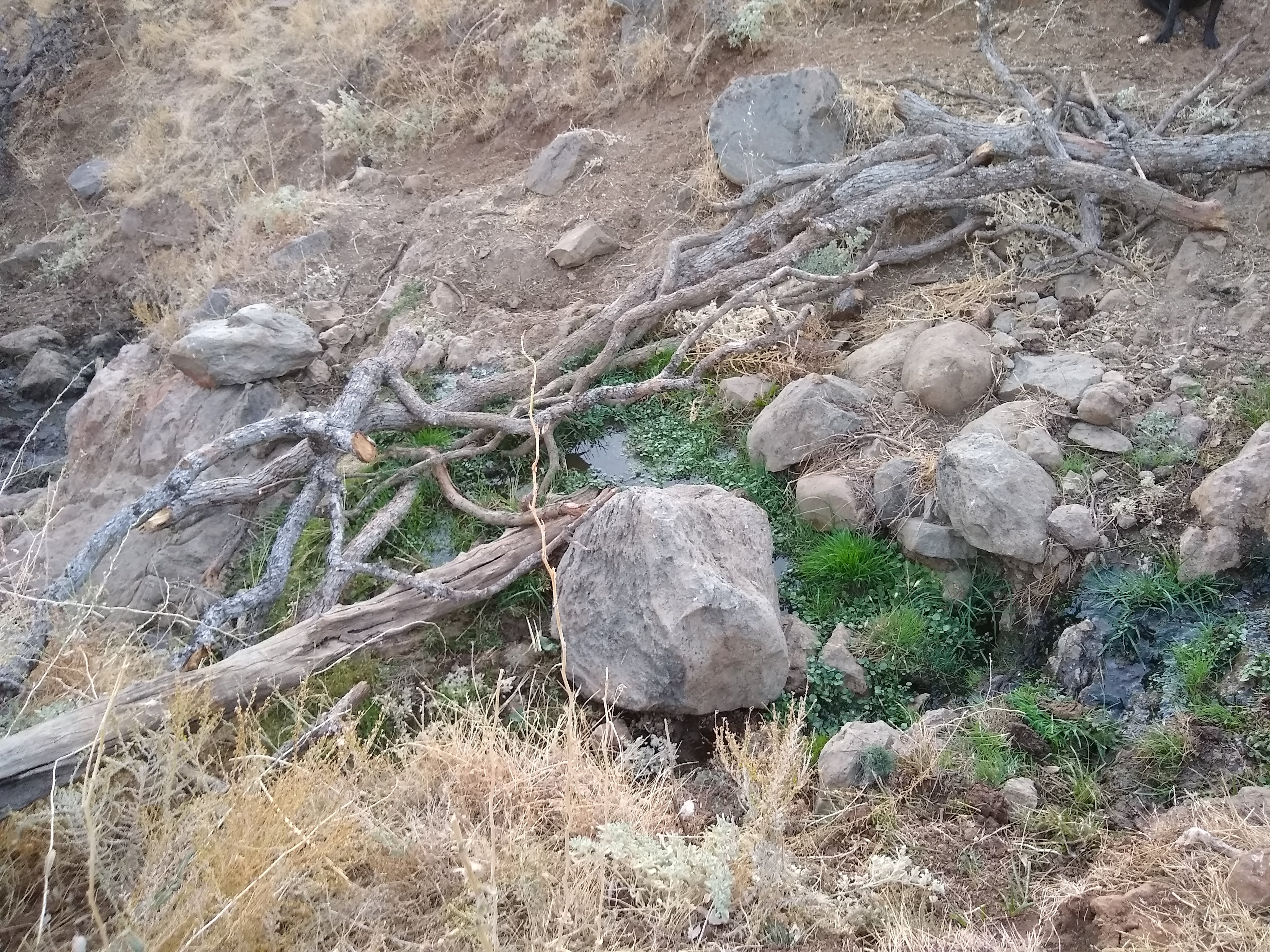
I hiked the ranch checking on all my plantings and generally seeing what was new. The plantings were still ok, and the branch fences were holding. Sadly, all of the washes were dry. The swale pond did not even have a wet spot. Odom Creek was still not running; it was only wet at the large spring and within a short distance, due to the slight water flow. Even more of a trickle was the little spring on the spring creek. It flowed slowly from the spring to just the other side of the pooled water. Evidence of the drought was clear. When I got back to the house, also site 9, I watered all of the newer plantings from before I left.

My first priority was to plant the buckeye, redbud and cottonwood trees.

I planted the buckeye as part of Site 9, which is ever expanding with all the hedgerows and nectar plants. The redbud is now the lone plant in Site 2, at the base of the spring that flows, subterranean to the arroyo. The cottonwood is in Site 8.

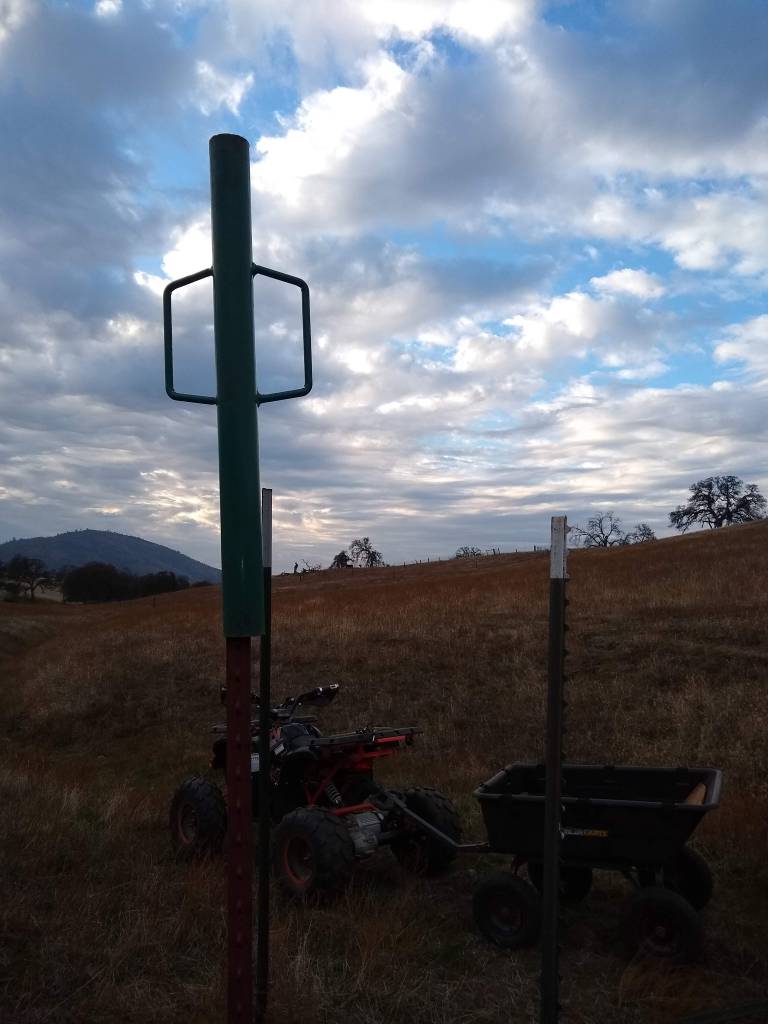
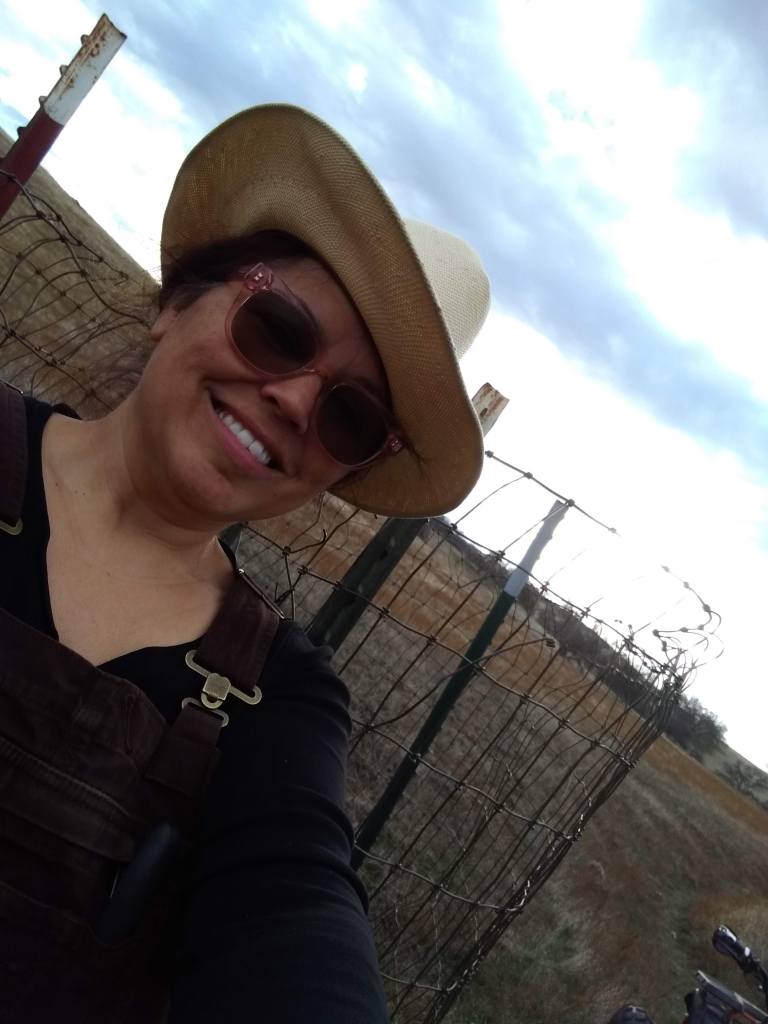
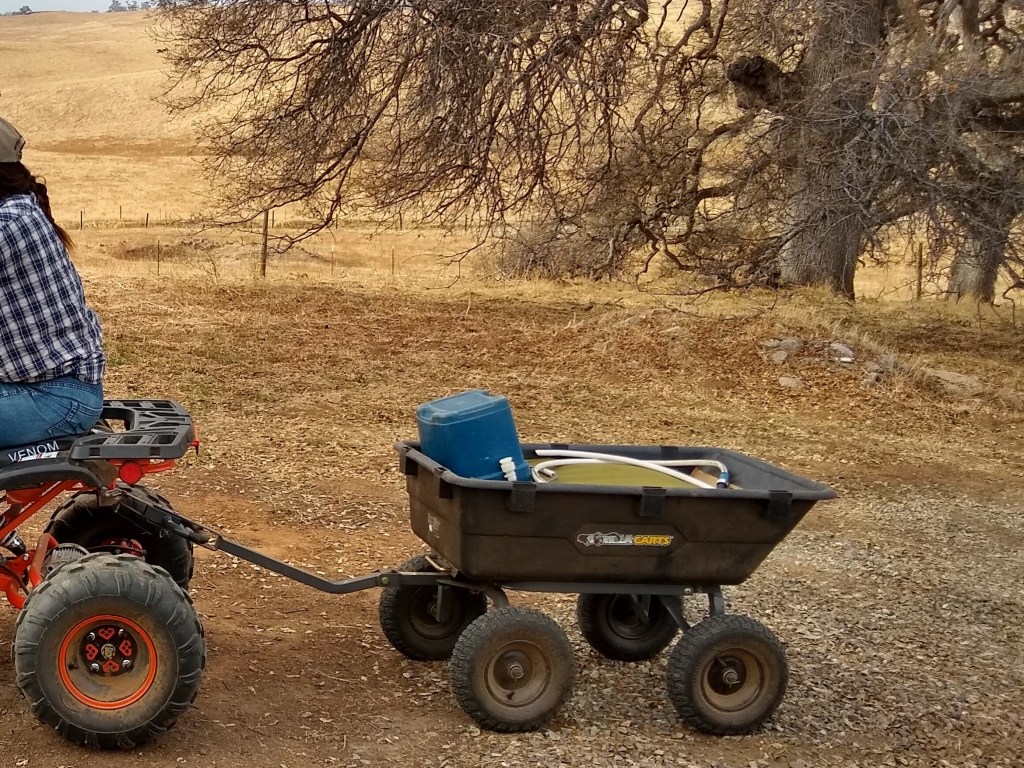
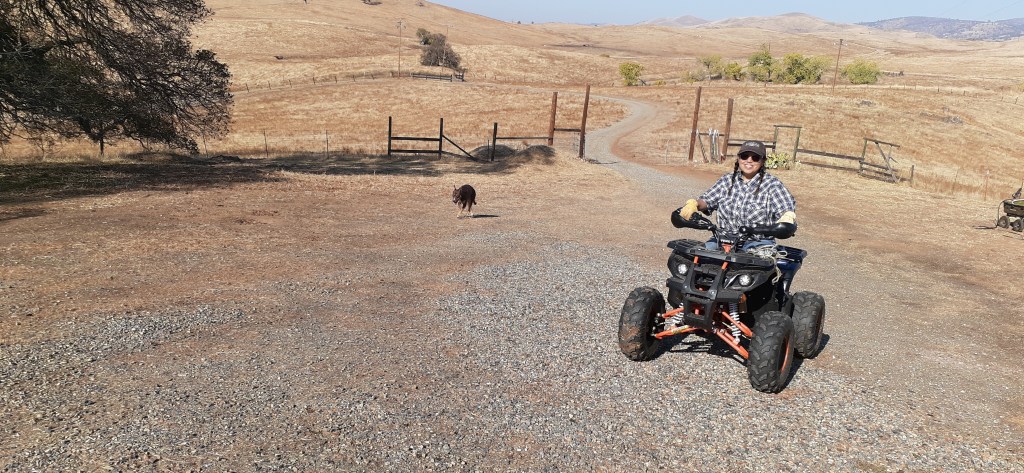
The cows were gone at this time, and were supposed to return in a few days. The redbud was placed out in the field outside of the fenced-in area. It would need protection in order to grow and thrive. The morning a day before the cattle were to return, I saw cows on the hills of the ranch. They were here early. Ack! I had all the supplies available, so I put on my overalls, hooked the cart to the quad, loaded the cart and headed to Site 2 to make the protective cage before I had to start my job.

I chose to use four t-posts with no-climb fencing attached to it. I like to use previously used posts for these projects, posts that are generally bent or messed up in some way. This leaves the nice posts for fencing needs. It can take a little more time to work with bent posts to get them into the ground, but it worked. I chose a thick gauge no-climb fencing from my leftover/ used fencing stock. Instead of a fence tool, I choose to use needle-nose pliers. They have wire cutting capability and grasping capability. The smaller size and lower weight is easier for my hands to work with. They are a great all- around tool that all homes, no matter the location, should have in their toolboxes. Of course, I brought my trusty t-post pounder and medium gauge smooth wire (you don’t want it too thin or too thick. Thin breaks too easy. Thick is too difficult to work with. It doesn’t twist well.). When you pound t-posts in, you should also use ear protection. Admittedly, I forgot to bring my ear protection. I figured it was only four posts and decided to not go back up to the house to get a set.

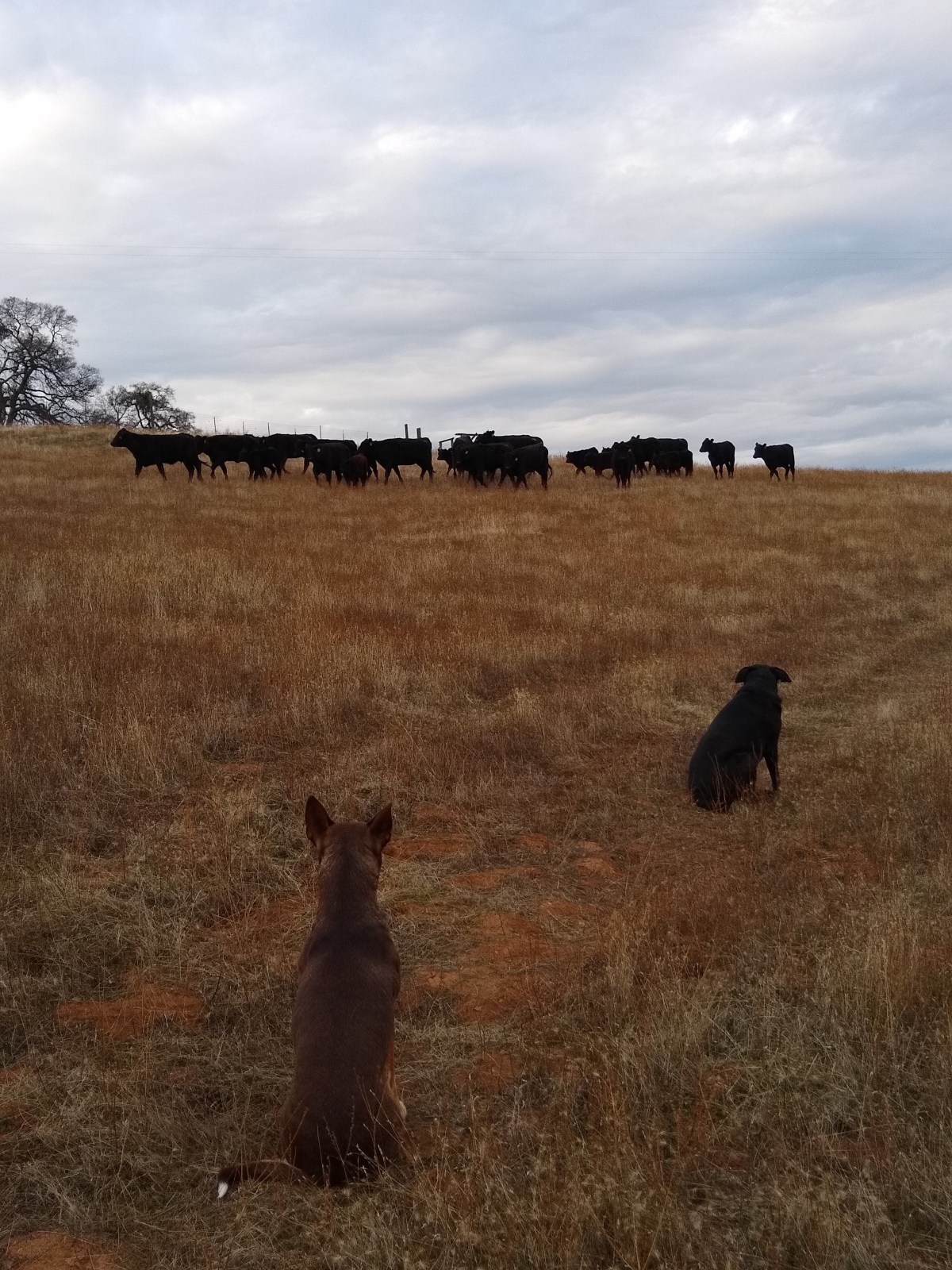
I did not realize I had an audience while I was working in the field – perhaps due to the lack of that ear protection and the t-post pounding still clinking in my ears. I saw one of my girls get up and move to the west. I looked up, and there they were – a small herd of cows and calves watching me work. After they noticed the dogs, they decided to keep moving along. The girls made sure they kept a wide berth from my location.

Finally, the cage was built. On the way back up the hill to the house, my cart hitch gave out and the cart separated from the quad and began rolling back down the hill. Fortunately, I had already made it about halfway up. The incline was not as great in that area, and the cart didn’t go too far. By hand, I hauled the cart the rest of the way up the hill. Then, I walked back down the hill to get the quad and got back to the house with 15 minutes before I had to start work. Success!

All the major plants are in the ground, and it was just in time before the first really cold weather. Snow did not quite reach my elevation, but there has been frost in the morning. As I write this, the next cold storm is on its way here. The wind has picked up mightily, pushing and gusting. I imagine it will begin howling through the crevices of the house as the rains begin later tonight.

Things are ok here for now, but we will see what this next weather system brings and what butterflies come this Spring. The official Xerces butterfly count is in. There were less than 2,000 adults seen. It is a crushing blow. I hope the habitat I am installing will contribute in some way to helping their numbers grow, but we are only one small part of a much larger ecosystem on which the butterflies depend. I can only dream that there are tens of thousands of butterflies over wintering inland in areas not yet discovered.

2020 In Review and Looking Forward

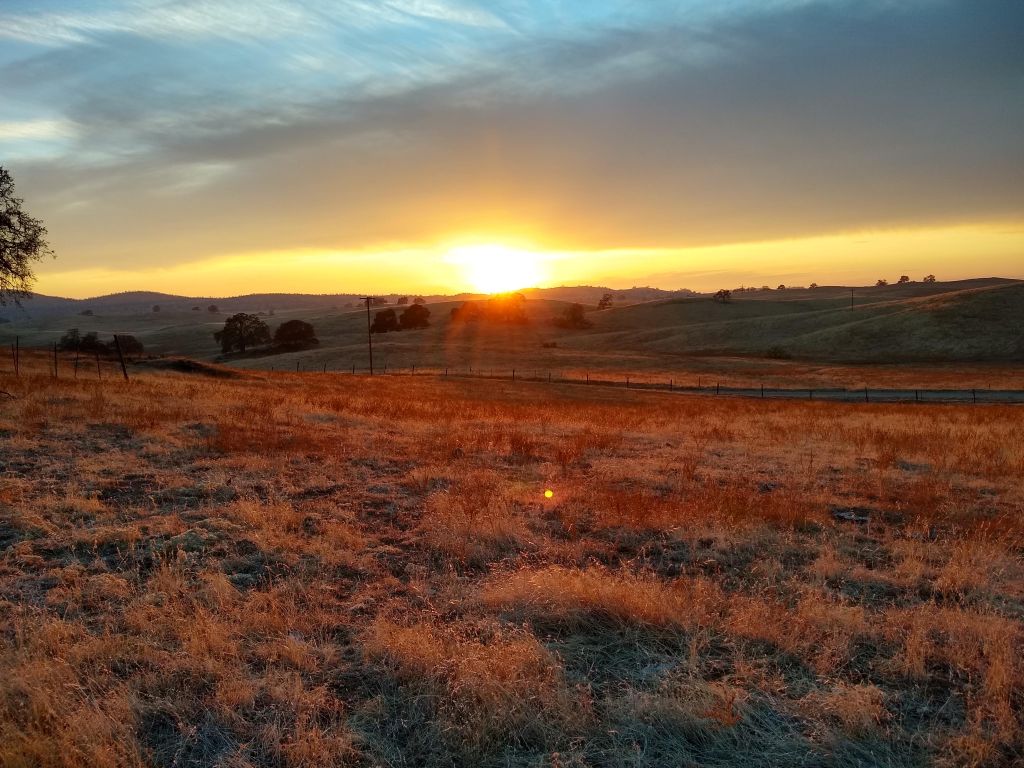
Clouds gathering before the storm

Each morning I fall in love with a depth that fills every inch of my body and outside of it forming a halo of energy that pounds like my heart but with more of a tingle, tingle, tingle than a thump, thump, thump. The land calls to me, calling me home to a place I only remember far back, buried within my DNA. The soil, with its smell, moisture and bugs, is a happy place for me, one that comforts me like a wool blanket or favorite childhood stuffed toy. I am grateful to be here – to be a steward to this place.

Sunrise on December 25th

Multiple days of rain have finally come, which is wonderful for the plants. I have had some well-deserved rest (despite having to plant all the plants Deedee brought). As the end of the year nears, it is a good time for reflection and planning.

Past: Plant as many plants as possible and enough will survive. Choose a variety of species to accommodate as many pollinators and types of butterflies. Water more than you think. Use stainless steel mesh gopher shields in non-creek areas. Expect heartbreaking losses, but keep moving forward.

2021: Add more rainwater storage. Plant more plants. Add trees. Add fencing and water slowing features in the drainage and spring creek, such as a beaver dam analog. Write more grants. Begin the community tech support program, and hire a young person to help. Reconnect with the elementary school in July for student education beginning in the Fall. I am convinced we will all be in a better situation and can return to being in-person.

Updates

The branch fence is holding. Cow pies were all around the fence, and fortunately there was no breech.

With the rain, the grass is growing again. The cattleman has begun the rotation cycle. The cows are on my side of the ranch for two weeks, then will move to the south end. I will be paying close attention to the height of the grass in the areas of the heartleaf milkweed to ensure it is low enough to give the milkweed a chance to emerge. I am so excited to see if more grow. I also plan to mow the hilltop where I have most of my plantings to ensure greater nectar plant emergence. In years past, I allowed the grass to grow tall and then used it as soil cover when it was mowed. While there were still wildflowers that emerged, I am going to try something different to see if more wildflowers grow. I was encouraged by the heartleaf milkweed. This will be the first year we continuously mow.

The branch covers for the willow tree plantings are still intact as are the plants. They will get more moisture this week, which will help them establish well.

We have a solid forecast for rain. Thus far, we have received just over 2″ total of rain since October 1. Sunday, I walked the ranch choosing sites for the cottonwood and buckeye trees that Deedee gave me. The cottonwood may be planted in the arroyo near Site 1 down slope from the hillside spring. They are growing in a similar drainage on my neighbor’s place. The buckeye will be planted on the west facing slope just up stream on the spring creek from Site XR2. The cows seem to leave all the other buckeyes alone on Odom Creek, so I am not planning to fence around this tree. I will check with the biologists to get their opinion on my site choices before planting.

The sun rising

The sun is rising on a new year and each day provides a renewed opportunity for benefiting our relations. If humanity were to make a New Year’s resolution, I would wish for it to be that humanity reflect on what greed, anger and hatred does, how it provides nothing of benefit to anyone – and to move forward with a commitment to respect, generosity and service. This would result in us exploring and remediating our actions that decimate the Monarch and everything else. Would that not be a valuable pursuit? What a wonderful reward to see Monarchs and all other butterflies plentiful again, flitting around, tickling the hairs on our arms as they land and lift. Personally, I need to find peace within myself and move forward from this time. I do not see that path clearly yet, but I am walking that direction with my eyes open ready to learn.

Brush With Disaster

Cow break in into the enclosure – Near disaster!

I woke up Sunday morning to a cold room. I started the electric fireplace, plugged in the Christmas tree and let the dogs out the front door on the west side of the house. It was cold, so they returned quickly. I turned from the door, still rubbing the sleep from my eyes and put the kettle on for tea. My husband emerged from his slumber in our room, stretched, yawned, looked outside to the east and said, “Is that a cow inside the fence?” I was opposite of him, with my view to the southeast. I only saw cattle up against the fence, but safely on the other side. I told him, “No.”, but in a split second, I scanned the other direction. Sure enough a cow was inside our enclosure – the enclosure that provides protection for over 100 butterfly plants.

Instead of panicking, I jumped into my boots and and thew my jacket on all the while David telling me to stay calm, that we could replant is she ate the plants. I more rapidly sashayed than ran outside. The cold was palpable since I was still in my shorty pajamas. There is a distinctive smell to the cold. If only there was more moisture and a little colder temperature, we would have had snow. The first frost of the season was on the ground, and the crunch of my step was audible as I carefully navigated the cow out of the enclosure. She was lively and not pleased about being asked to leave the prime, untouched (by cow) grass. I had to be very delicate. She was easily pressured and responded to even a wide berth being given. When you move cattle around, you get a sense for what level of distance will elicit movement and how far in one direction or another will result in the cow moving the direction you want her to go. It is a precise calculation done more by feel and observation than numbers in your head.

I had opened the east gate before herding her, so was able to move her through that gate. She stopped just on the other side of the gate, looked back at me and began to run down the hill with one buck of her back legs sending a clear communication of her complete displeasure. After closing the gate, I had to walk the fence line to see where the heck she had gotten in. All the other gates were closed. I found the breech not too far a distance from the east gate. It was at the southeast corner – a weak point that had been fixed one or two times before.

Broken fence with another cow close by

The break does not look like much, but it may shock you how agile a full grown 1,300lb cow can be – especially when there is new grass available. I asked David to fix the fence while I checked all the plants. Fortunately, it appeared as though she was only in for a short while and chose to head north from the break. Had she gone the other way, it would have been doom for my butterfly plants. Everything was intact and healthy. I let out a sigh of relief. On a ranch, there is always something.

Xerces Biologist Visits

Deedee Soto delivers native plants

As I have mentioned many times, I am incredibly grateful for the expertise I have had available to me by many individuals and agencies. The Xerces Society has been a remarkable partner. Deedee Soto is a biologist with Xerces. Her expertise on plants is beyond comprehension for me as a mere mortal. She has provided helpful advice on where to plant, how to plant, and what to plant. She has also been extremely helpful in working with the NRCS on my project.

When she asked if she could use a place on the ranch to conduct a study of milkweed rhizomes, I did not hesitate to say “yes”. Last week, she showed up with equipment and a number of overstock plants from a native nursery for my project and two others in Mariposa. I was happy to take them. We walked around the hedgerow plants from the Xerces grant discussing the successes and the rough transfer of one toyon. This woman knows her stuff! I finally let her get on with her work, and I went back inside to go begin my work day. Below are photos of her rhizome project, which I hiked to this Sunday to take a look.

Still Dry

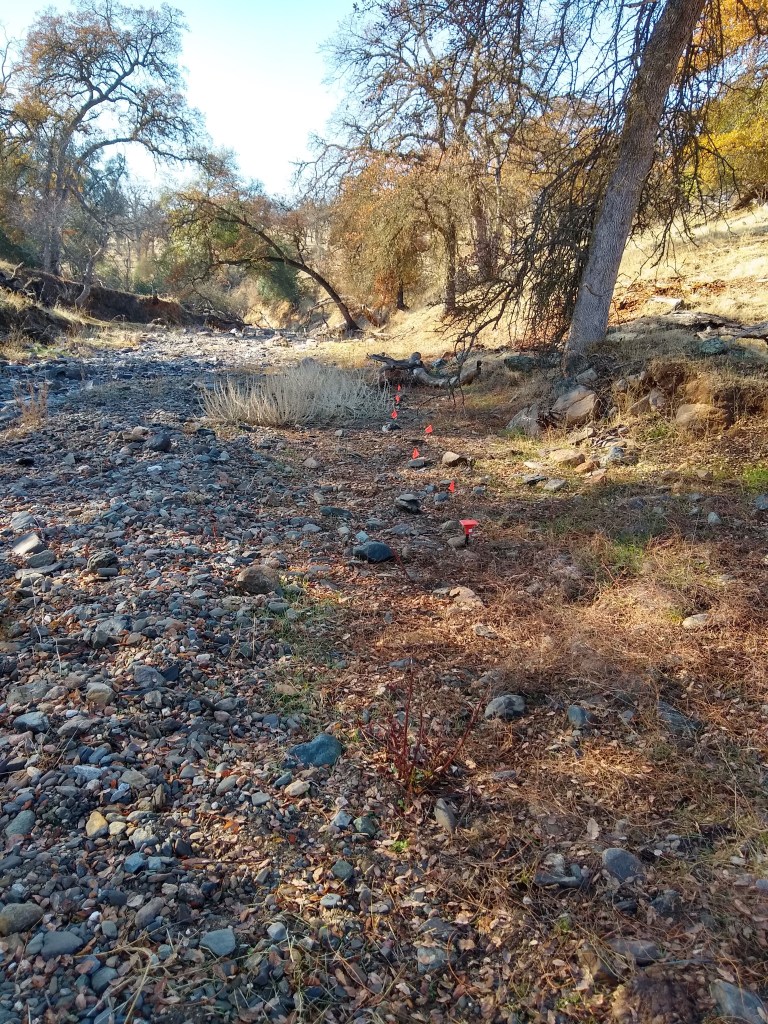
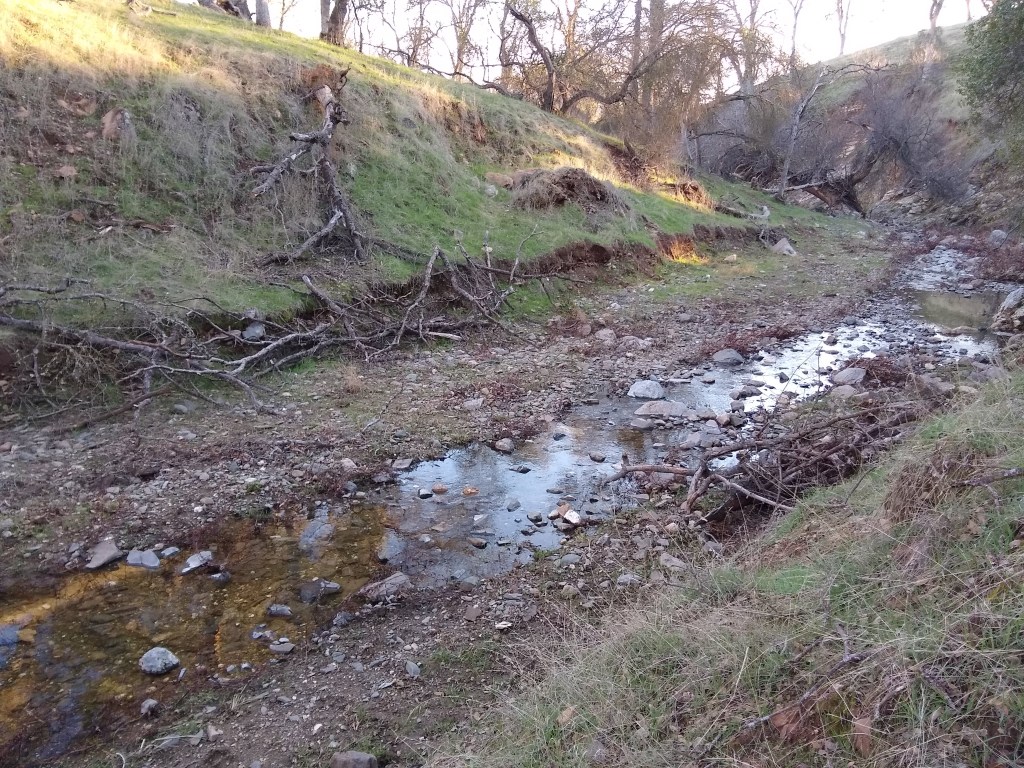
Swale Pond still dry after two storms

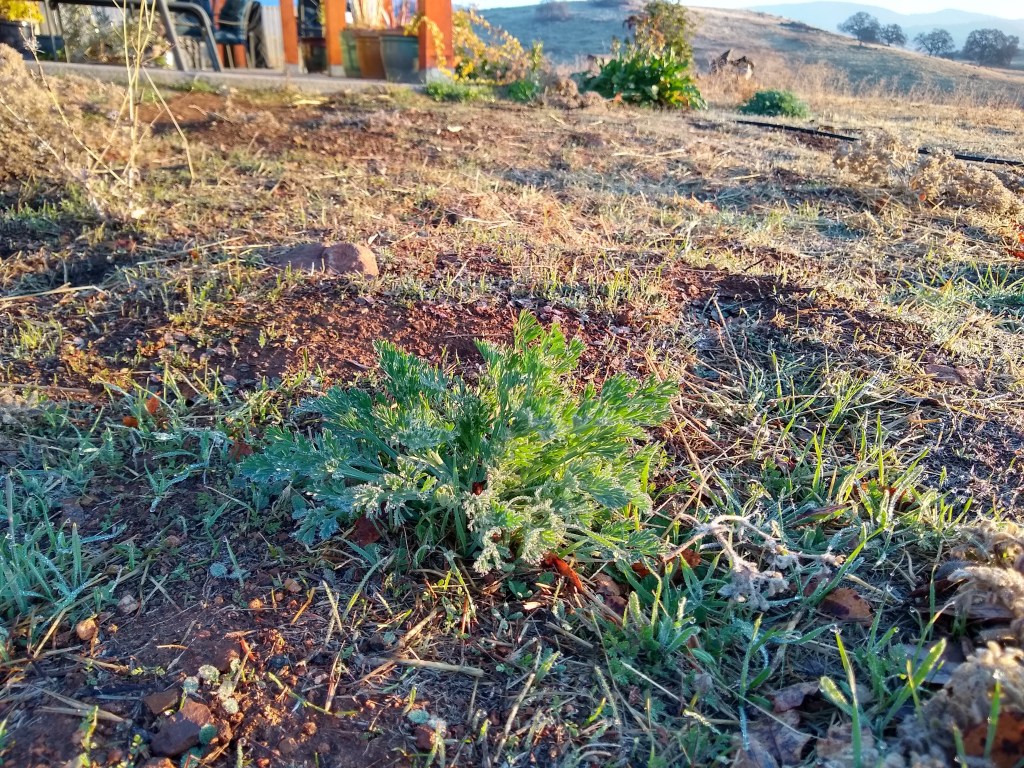
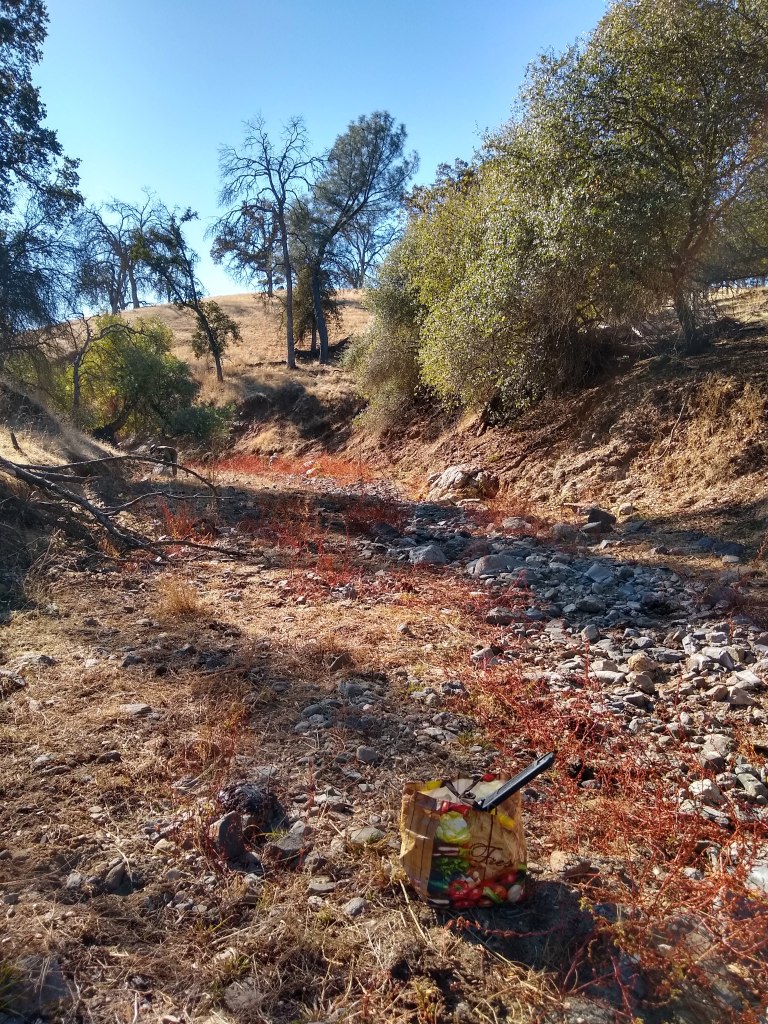
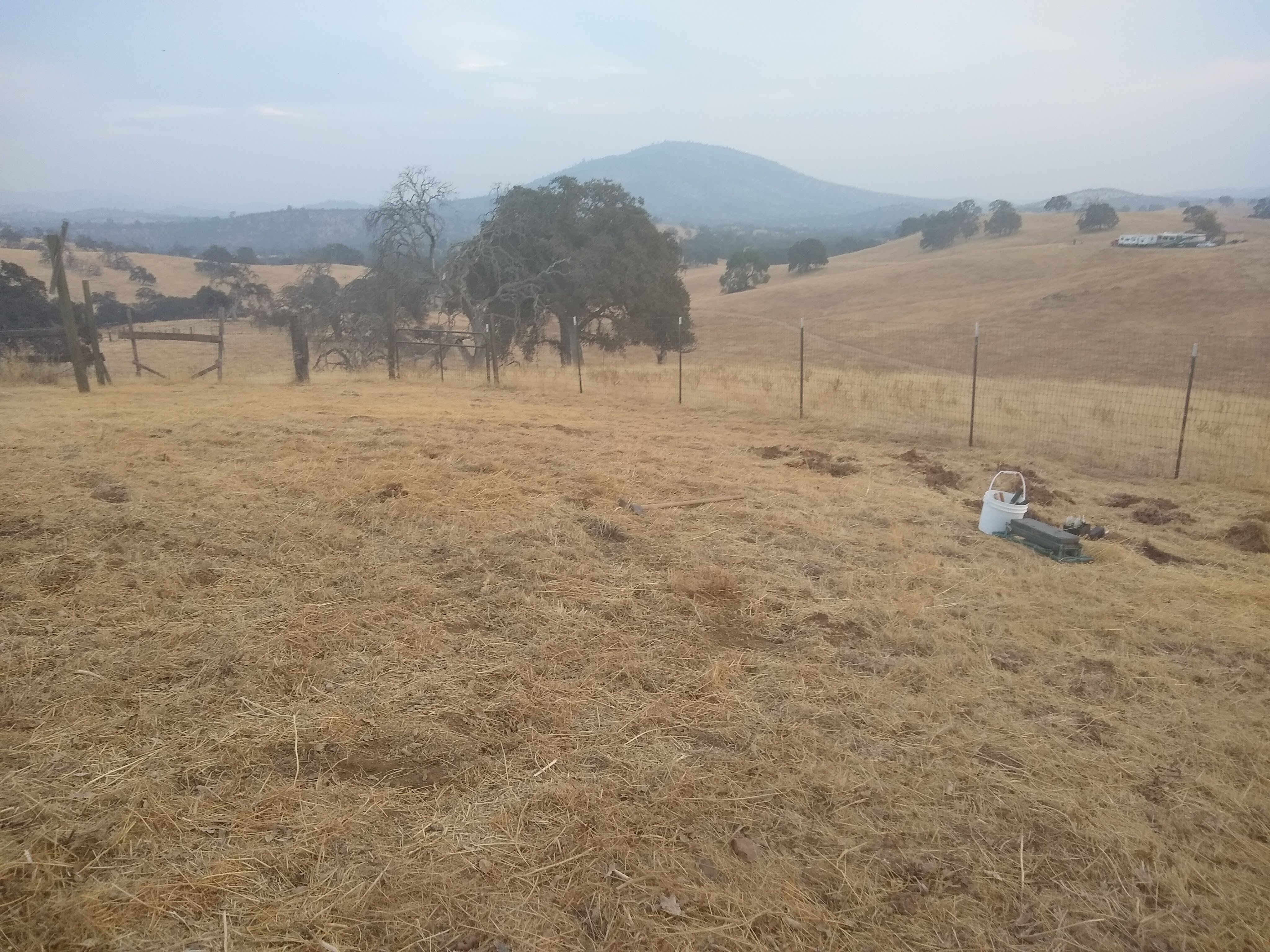
The recent storms did not drop much water here. Between the two, we received 1.25 inches. We did have some areas of standing water on the road, but the arroyos and the pond and much of the creek were still dry. The only water on the northern most side of the ranch are from the two springs – one on the spring creek and the other on Odom Creek. Fortunately, we have had dew most of the days this week. It has provided enough additional moisture to keep the grass growing. Poppies have also sprouted, which seems early.

Poppy greens in the foreground and a large clump in the background

Other Thoughts

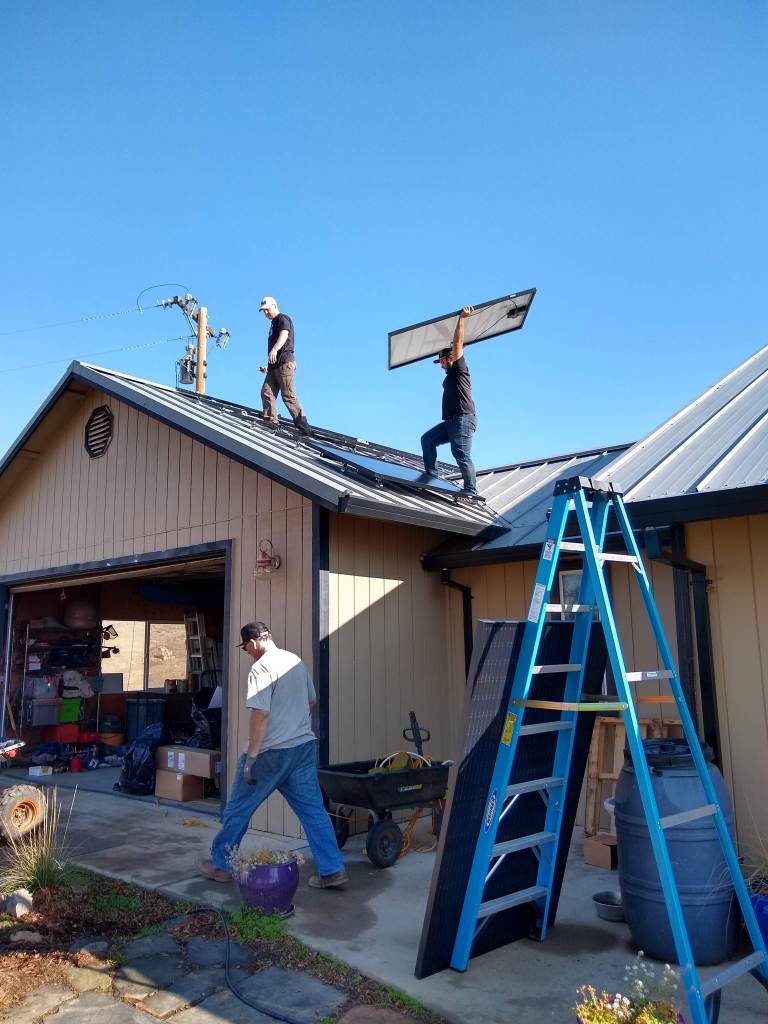
The guys installing solar and David helping

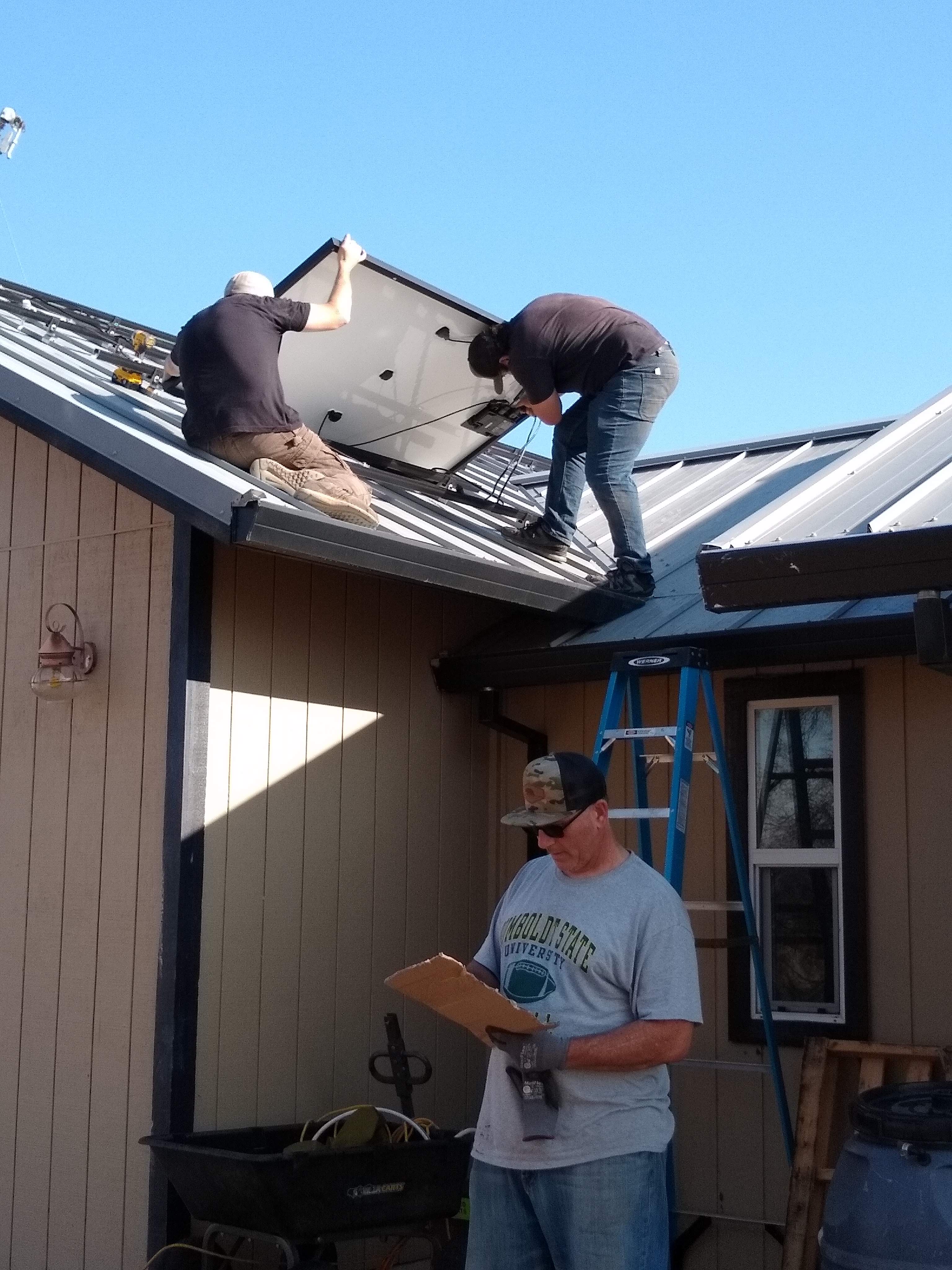
Butterfly habitats do not occur in a vacuum. They, like everything else, are interdependent upon a healthy system. With every choice I make, I very much try to think about my impacts. Even modest shifts in the climate are devastating for many species, and we are seeing this now with the monarchs. Although I already have a solar array, I have been wanting to expand it so I can contribute more clean energy to the grid (and offset my own use). Fortunately, I have a “hook-up” in the family. My nephew works in the business. He and his colleague did my work as a side job. David and I handled getting the permit and completing the PG&E application. We saved some money by doing it this way. The panels are up, gorgeous and already producing clean energy. Thank you Ashtin and Rodney! Thanks to David for helping prep the panels and pass them up to the team.

Solar is not the only choice we all can make for a cleaner, healthier world. Saying “no” to plastic shopping bags, consuming less of everything, not using herbicides or pesticides, and planting native milkweed are all low to no cost activities that can help our incredible planet.

Besides the near disaster with the cow and the panel installation, things have been quiet. My back has had a break, and I have enjoyed walking the ranch, checking water and fence and dreaming of next year. I am looking forward to the planet alignment on Monday 12/21, the Solstice star. The raptors have been amazing. I am grateful to live here with my love, fur-babies, and all the wild creatures. To all of you out there who have been reading my blog, I wish you a beautiful holiday season filled with light and love – even if it has to be from a distance over Zoom – it is still love.

Rain = Happiness. Low Monarch Count = Heartbreak

Looking east as the sun tries to break through the rain clouds

This will be a short post today. I am overjoyed that we had rain over the weekend. When I heard the rain drops on my skylights Friday night, my heart leapt — and I am not being over dramatic. Rain is so critical to what we are trying to do here, as well as for grass growth for the cattle, that I cannot underscore my joy enough. Per my rain gauge, we had 1 inch since Friday 12/11. It has been dry, dry, dry. One inch is not much, but at least it is something. I checked the XR2 planting sites on Sunday, and there was no displacement of the branch structures protecting the plants by water or cows. Every day that the plants are not disturbed is a day that the roots can get a better hold into the ground. There was no change in water flow or volume. One inch, after such dryness, doesn’t do much but moisten the first little layer of soil. That is great, but we need deep watering over several rain events to really give the plants the best start to the Spring and fill the swale pond and creeks. The rain also means I don’t have to haul water. My back, neck, shoulders and arms get a well-deserved break.

Rainwater Status

We ended the dry time with 2,000 gallons of rainwater. This is good news. This means we have additional capacity to add plants and flex depending on rain levels. I am planning on scaling up the planting even larger next Spring and Fall, so I will still add another one or two 2,500 gallon tanks. The two empties were tied to the house and have a decent start on the capture. Tank 3, on the south end of the house, was connected even earlier, and we had the benefit of capturing rain from the last storm in addition to this. We have over 100 gallons in that one. Thanks to my husband David for putting the system together!

Heather’s poor girl’s rain water capture system – but it is effective! Tank 1 on the north side

Bad News

I hate to share this very bad news. The early counts of monarch overwintering sites show even fewer monarchs than last year. It is a horrific thought that these incredible creatures could have populations so low as to not be viable for population growth. Let’s hope for greater numbers as the count continues. It isn’t over yet – and next year we all have to triple our efforts to help.

The Branch Fence Holds + Effects of Drought Visible

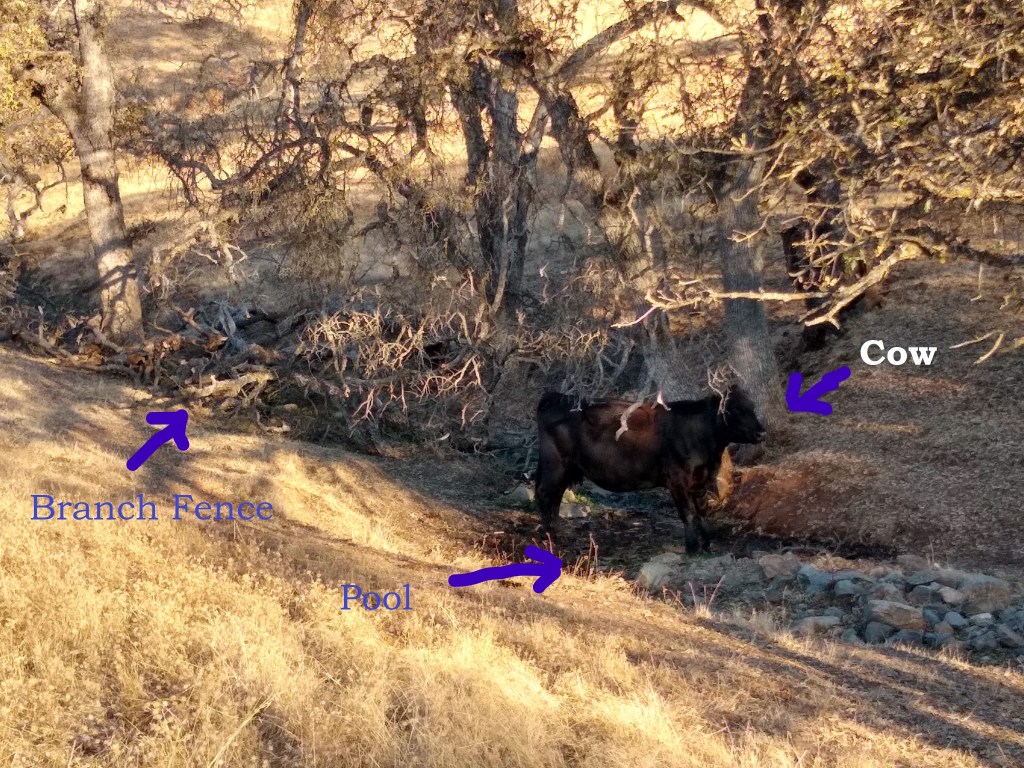
As planned, cows have access to the low sloped pool adjacent to Site XR2

Hurray – the branch fence David and I worked so hard on has held. Even with cows nearby drinking from the pool, they have not intruded into the planting area. Eventually, we will fence most of the upper section of this creek and some of the lower section for habitat restoration, and drive the cattle to water at the lightly sloped pool. This will reduce erosion of the creek banks and allow all the plants that are trying to get a start to grow to maturity.

I checked the Odom Creek plants as well. All were present and accounted for.

Drought Here Again

The soil is so dry that Millie kicks up dust while walking

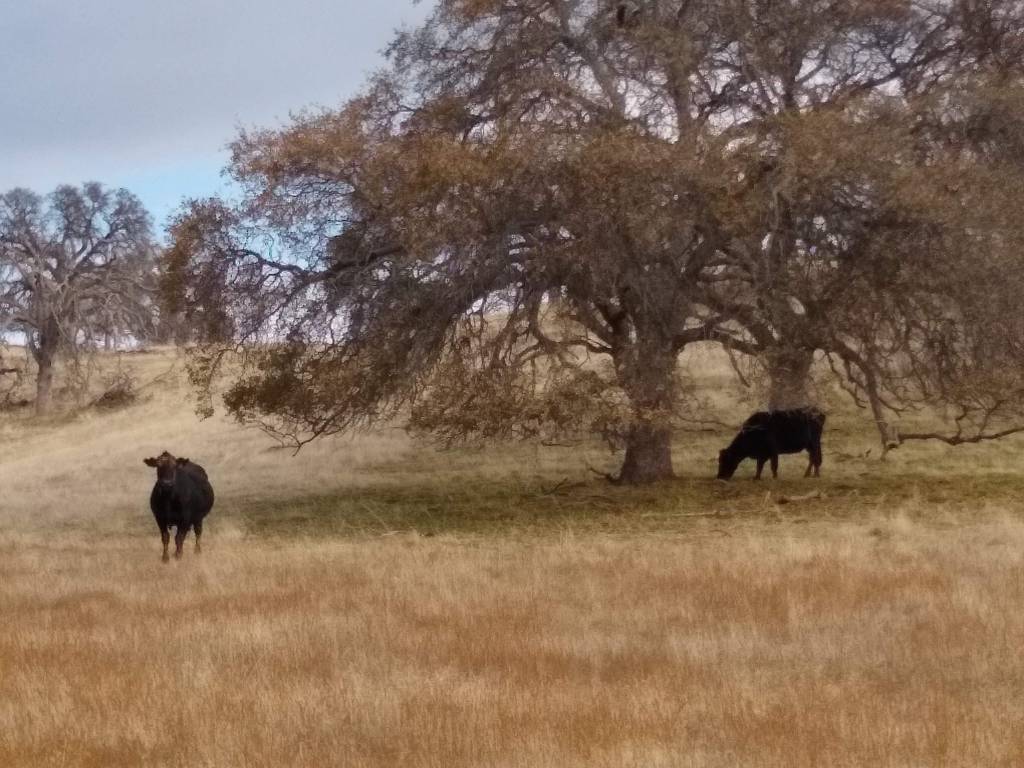
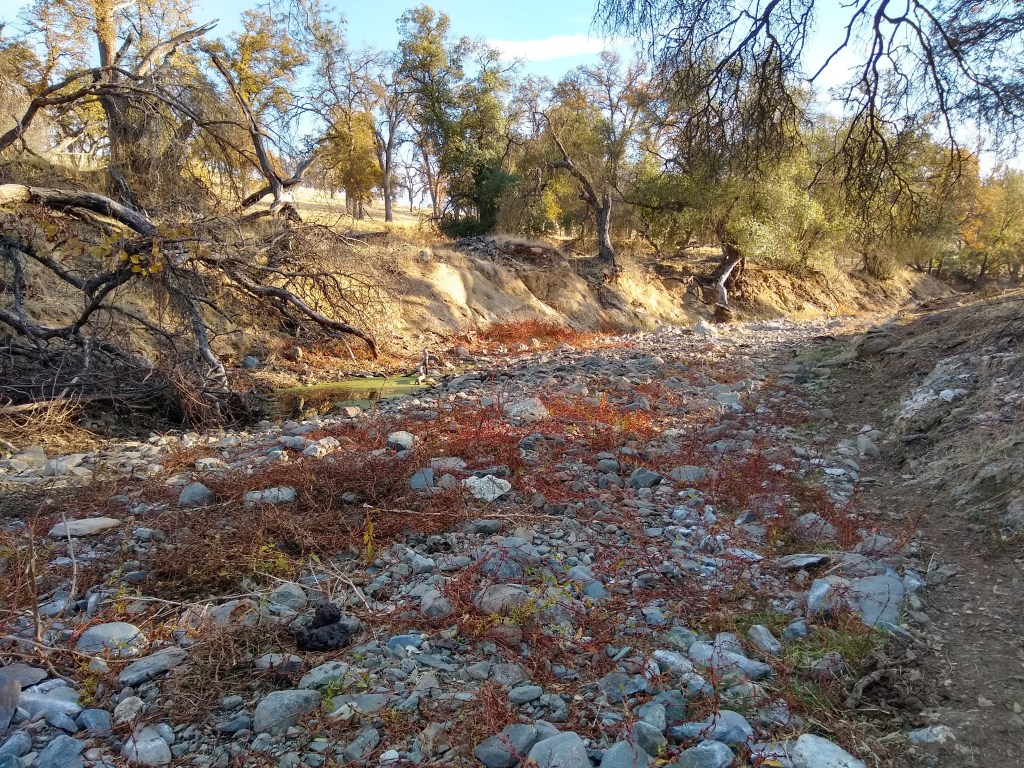
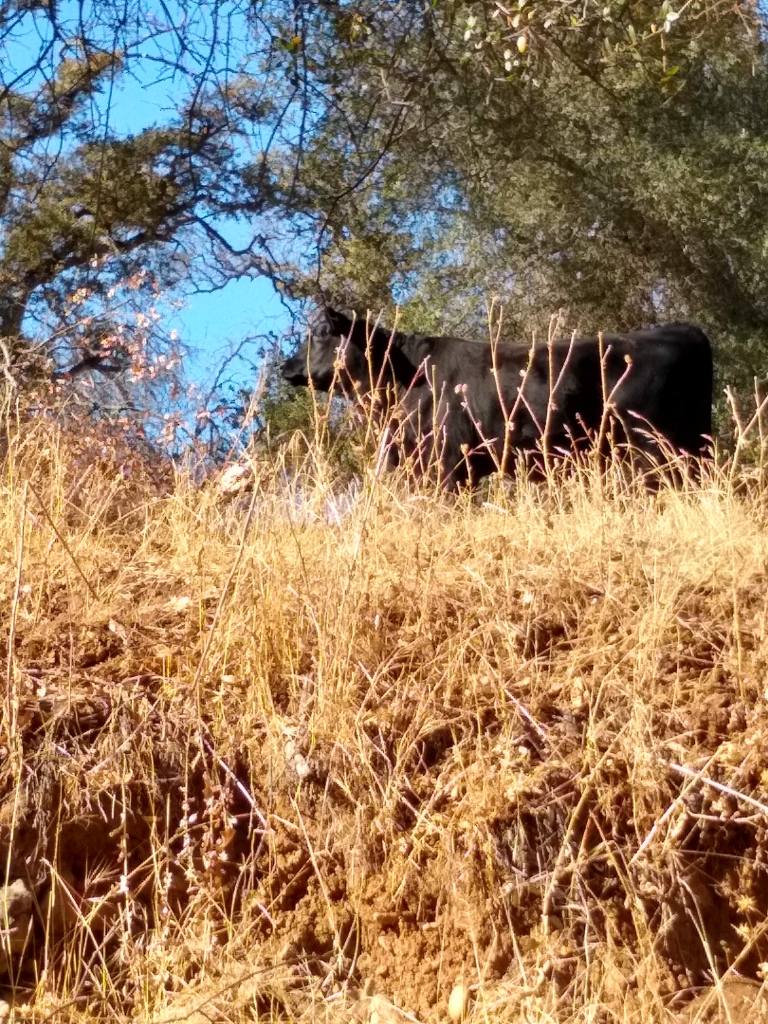
I have included my concerns about drought in many of my previous posts as well as the confirmation we will be in a La Niña year this year. The effects of a lack of moisture are really evident. Pathways look like bare highways with no grass growth to replace dry grass worn away from use. The creeks are dry. My neighbor’s pond is dry. All we have are the two small springs keeping some moisture going on this side of the ranch. I don’t know how my neighbor’s spring is doing; I’ve not checked. Most of the cattle left today. Tom (the cattleman) and his family drove them up the road to another leased ranch with more water. He left behind a handful of cows with small calves.

Mamas and babies resting in the grass

With no precipitation or morning dew, I am back to watering the plants once per week. Although I’ve added another sixty-eight plants with the Xerces kits, many of the old plants and some of the new ones are already dormant. They don’t need as much moisture as those with leaves. After watering the plants near the house, I hooked up the cart, filled the bladder with water, and delivered clean rain water to the Xerces riparian plants as well as Site 8.

The soil was happy to receive the water. I can’t say as much for my attitude. Dry conditions worry me, and I’m feeling a bit grumpy. Maybe it is that and the COVID surge too. On the heels of a contentious election as well, it is all just extremely overwhelming. Not only do I feel pained for humans, I also feel pain for all my other plant, animal, insect relations. It has become clear why that beautiful blue heron has been hanging around. He has no water. His mate has not returned to start a new family near my neighbor’s now dry pond as they typically do. He is forced into eating gophers and mice. I’m not complaining about that, but I know herons prefer water. I’ve filled all the troughs around the hilltop for his consideration and use. Fortunately, I over planned water, and still have over 2,000 gallons available. I also had Tank 3 hooked up when the small rain storm came through last month, so I have about 40 new gallons there. With a bit of forethought, attention to science, and a kindness, derived from absolute love, which by its very nature results in sharing, perhaps all of us, David, me, the plants and the heron, will be able to survive this time.

Xerces Kits 100% Planted – Major Muscles Mandatory

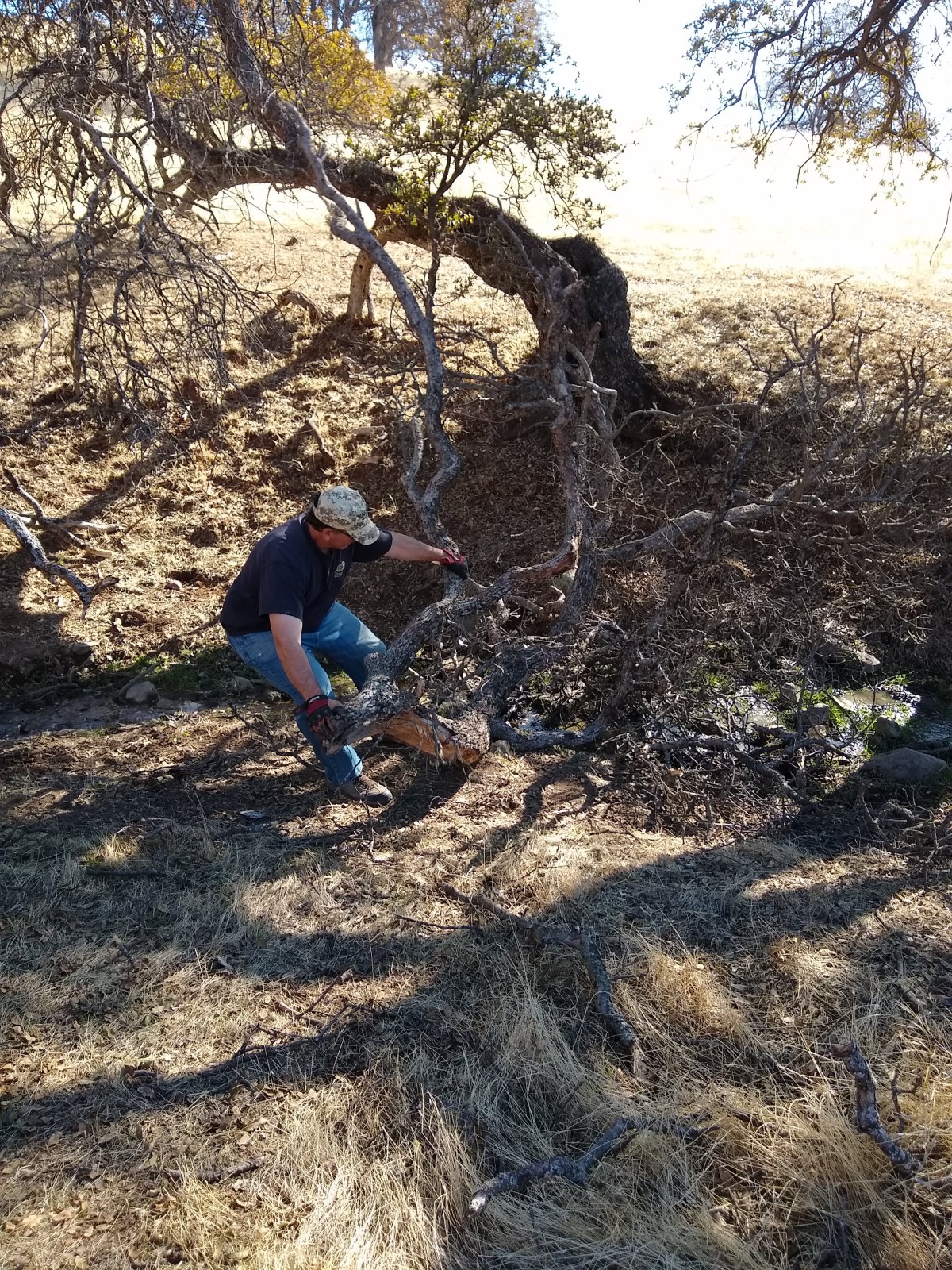
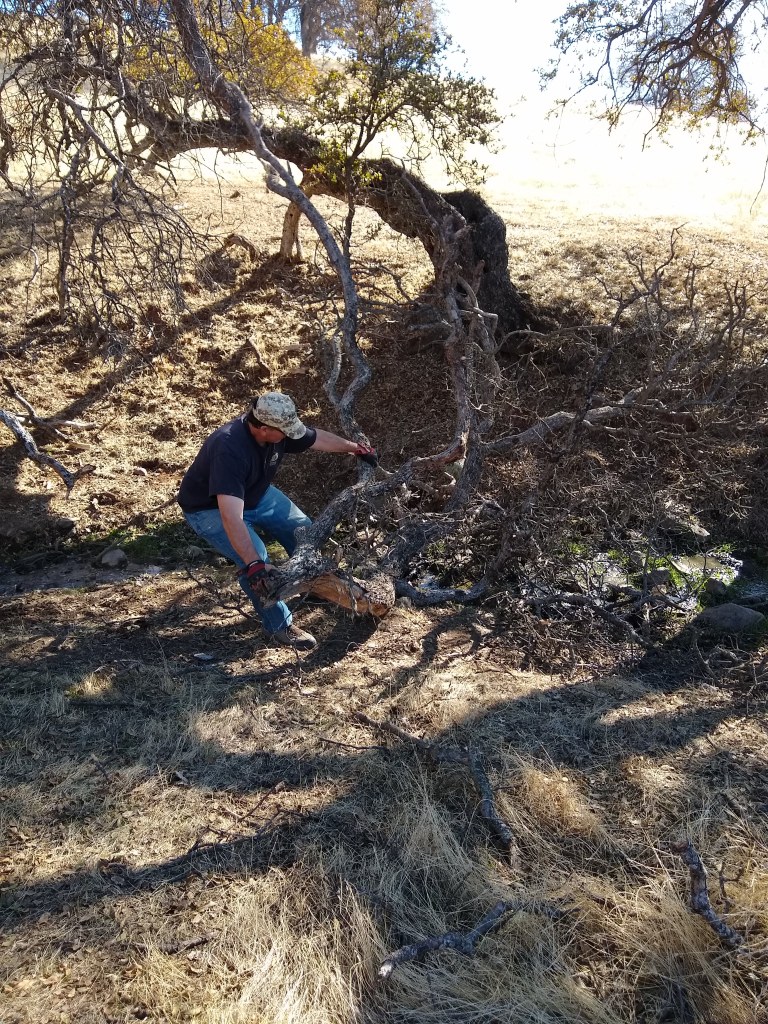
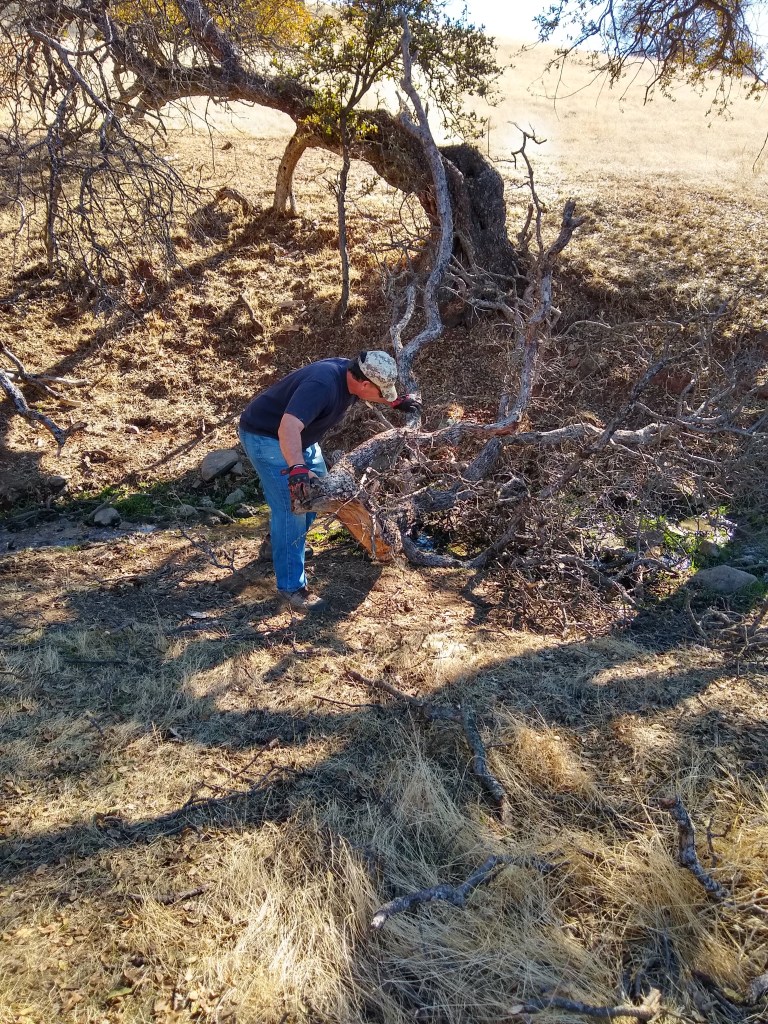
David uses brute strength to haul out a 15′ downed oak limb

There are many ways for a spouse to say “I love you” – jewelry, taking out the garbage, cleaning up dog poops, watching a sappy period piece together, getting up in the middle of the night to feed a crying baby. But, for me, nothing says “I love you” more than hauling massive oak limbs to build a fence for your wife’s butterfly habitat.

I am a pretty strong women. I grew up in the mountains shoveling snow off my family’s steep driveway. I chopped wood, stacked it and hauled it inside. I lit fires, swam across lakes and held the family record for putting snow chains on our car tires. There are limits however, and I reached mine this weekend. No matter how I tried, how much I tried to use my brain to think of solutions, I could not haul the large branches I needed to make a branch fence for the newly planted butterfly plants. I needed help – in particular – my husband’s man strength.

I’ve been delaying planting the spring creek for a while due to fencing concerns and then the cow carcass. However, it was finally time to get the last 23 riparian plants into the ground – no excuses. After spending the morning digging holes and planting 18 of the 23, then hauling as much downed wood as I could around the planting site, I reached a stopping point. I dragged myself back to the house, mud in my hair, dirt on my face, a scratch on my leg, and soil coming out of my pockets. My strategy was simple – flattery. I found my husband on a ladder painting the garage. He took one look at me and just shook his head. I said, “I sure could use your super strong muscles. The plants need protection, and I just cannot make it happen. The logs are too heavy, but not too heavy for you [Eyelash flutter].” My husband, who has his own projects and largely leaves me to manage things on my own, recognized my desperation….and….maybe he was motivated somewhat by the chance to show off. He said he would help.

The next two hours were spent hauling downed branches, sawing off dead limbs and shaking limbs off trees – then, as gently as possible, placing them on top of other base branches to form a fence around the planting area. David was magnificent. I would be lying if I told you I didn’t swoon a little. It is just something innate [eyelash flutter].

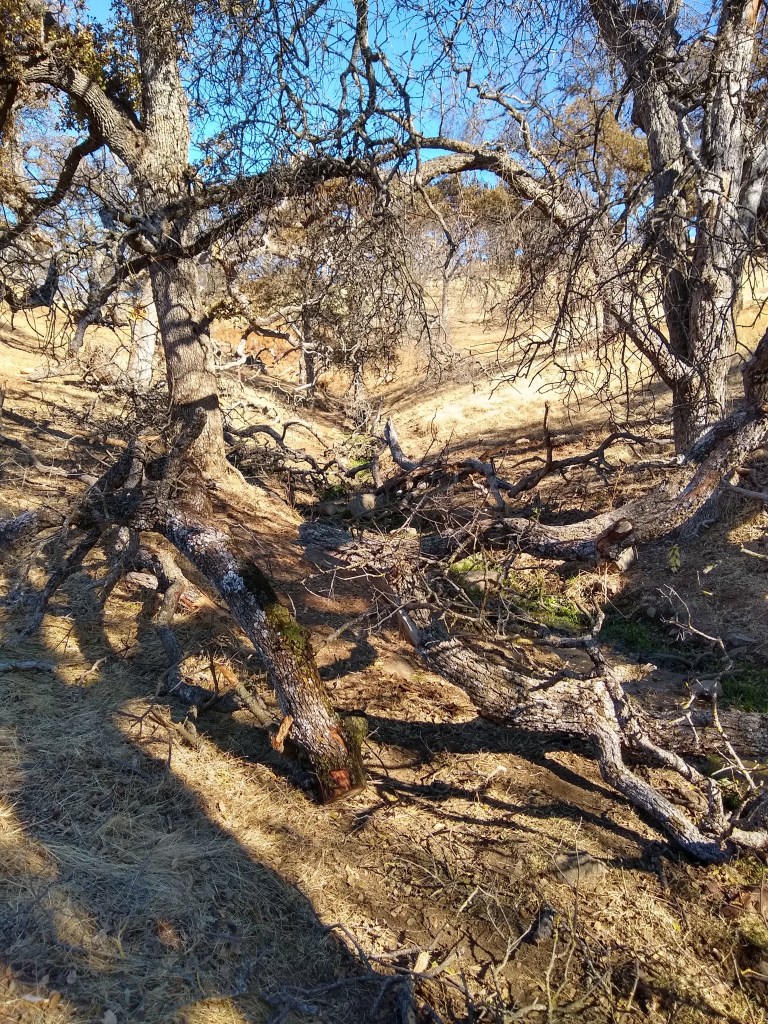
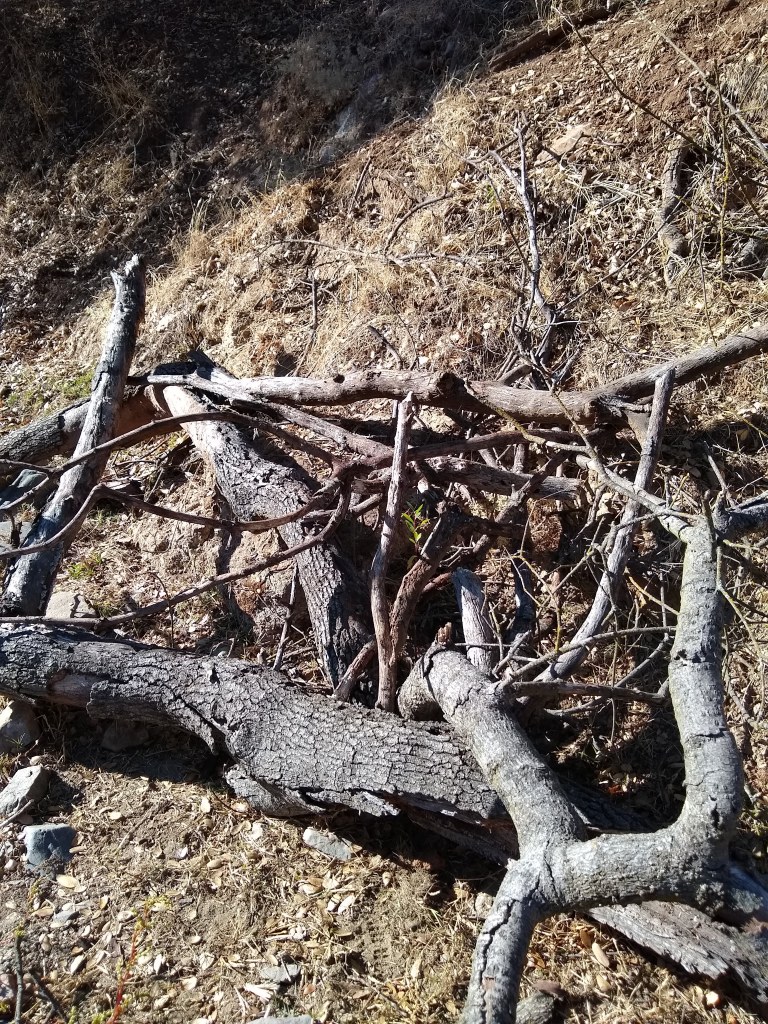
On Sunday, we needed to finish the spring creek barrier. Fortunately, the plants I installed survived overnight despite a not complete barrier. One of the currants was chewed on a little by some other creature though. David pulled more large logs; I pulled small ones. Together, we completed the barrier. I also called my neighbor to ask for his help. Up stream at Site 7, he had built the only branch fence that kept the cattle out. I needed his assessment on the quality of our work. He gave us an A+.

Spring creek Xerces plot X2 branch fence

After the good grade, I released David back to his projects at the house. Ric, our neighbor, and I went to Odom Creek to plant and protect the last five plants. As I mentioned in a prior post, part of the Xerces Riparian kit contained willow trees. For those more familiar with the weeping willow tree seen generally in urban areas in California, our state has many native willow trees. They are not as water hungry as the weeping willows, which are native to the more swampy southeast of the country. However, they still like water. The ones on the ranch can be found naturally in the creek beds of the larger creek where there is sufficient water resource to sustain them. This is why I chose to take these plants from the kit and place there in another location on the ranch. A willow in the small spring-fed creek would take too much water resource I think. In time, I will plant more butterfly plants in Odom Creek. I also plan to fence it to see what recovers there.

Above is a selection of photos from the planting. In addition to four willows, I also planted one mule fat from the kit. Ric generously offered to dig the holes. (Thank you Ric!!). He also hauled branches and cut larger branches that could not be pulled down in one piece. He brought his very cool electric chainsaw to help us in the work. I chose sites, hauled branches and planted my sweet little plug friends into the ground. I hope they will enjoy a good, long life in this space.

It’s California. Plants Still Blooming!

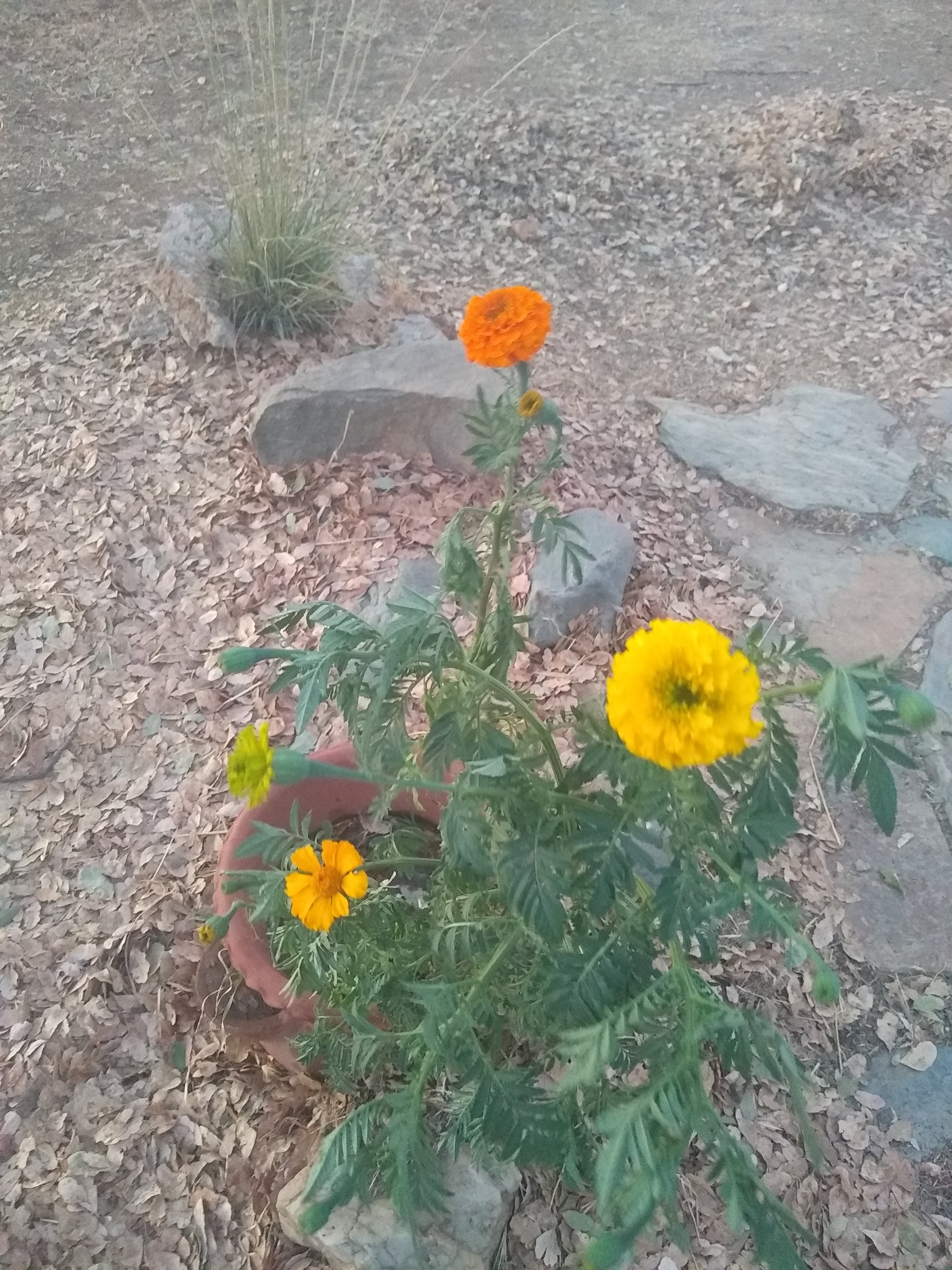
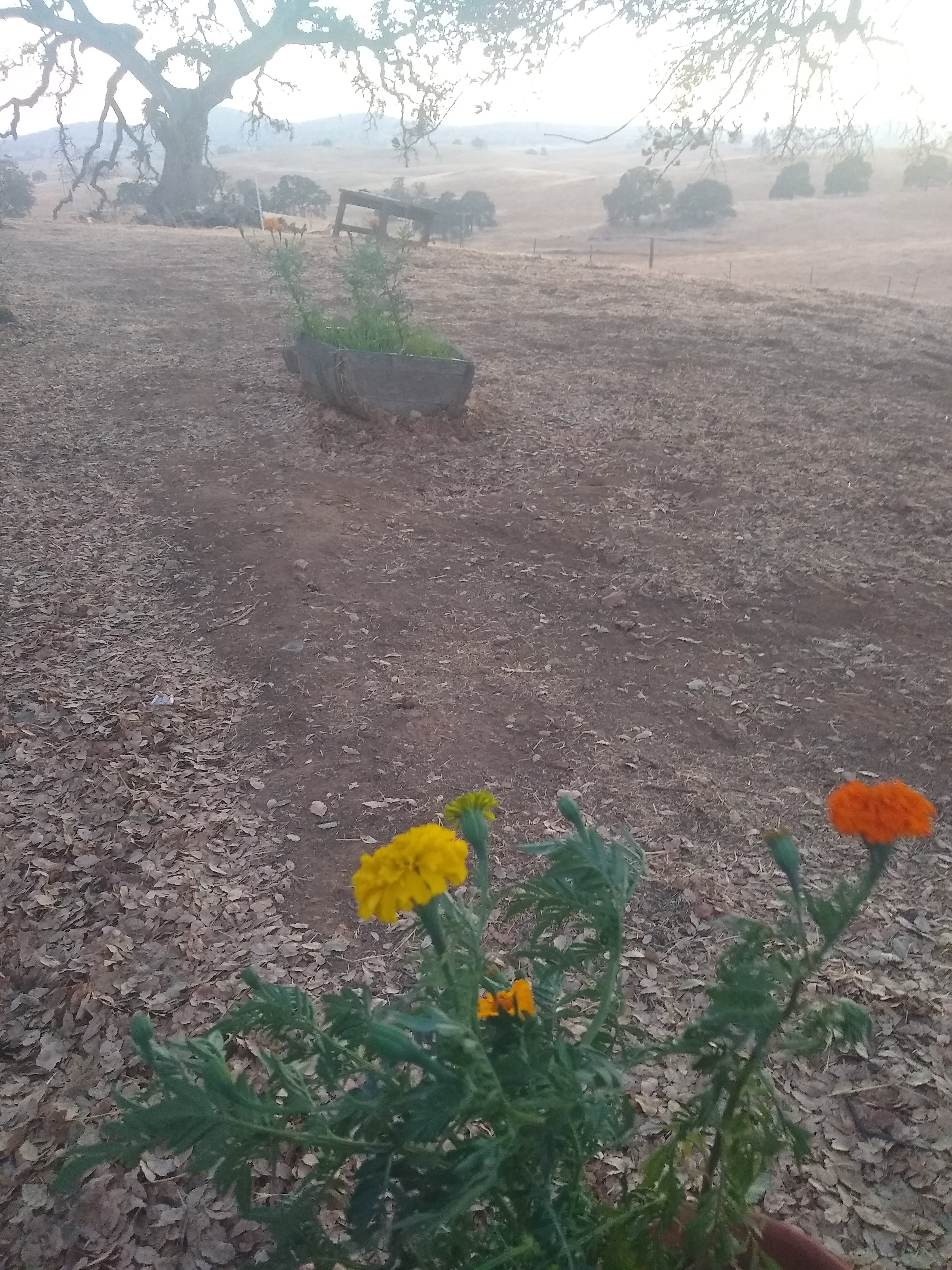
We still have salvia, fuchsia, sunflowers, marigold, primrose, and rosemary (not pictured) blooming. Lots of colors and choices. The coyote mint has grown more. The yarrow is still green and full. The Xerces hedgerow plants appear to be doing well. I say “appear” because many have gone dormant and no longer have a presence above ground. I am still watering some plants that look like they need it since the weather has been predominantly dry. I have not seen any butterflies, but the bees and a hummingbird or two, continue to enjoy the nectar. I am really getting excited for Spring!

Our Good Friends Still Here and Helping

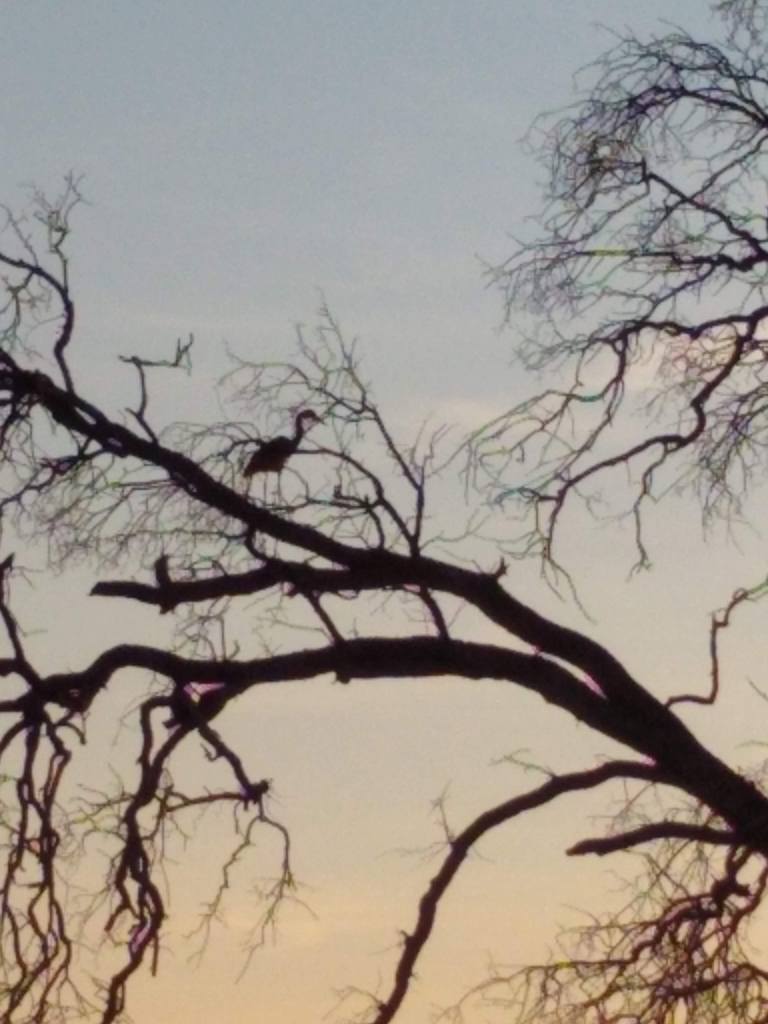
A blue heron at dusk in an old oak tree just down the hill from the house

In the last post, I discussed the rescue of the plants by several feathered friends. They continue to watch over the hill. Since the great horned owl, blue heron and the harrier (who has now brought a husband here too) have been around, gopher activity has come to nearly a halt. In fact, the gopher that somehow got into my raised bed, decimating the unprotected roots of the butterfly plants each day, has stopped its death march. Maybe the owl got it (I hope). We really do have several someones watching over us.

Cow Death Requires Pivot and Good Friends Come to the Rescue

Sun sets over the ranch and the dearly departed cow

I don’t envy the cattleman who leases the ranch fields. Cattle ranching is a great deal of work. You are making a living using sentient animals, so there is much responsibility for their respectful care. Last week, I stumbled upon one of the cows laying in the creek. It is not unusual, but something about her did not look right. She was thin and a bit rangey. She did not rise when my dogs barked. I called my cattleman, who relayed that this cow, along with three others, had been ill with milk fever. They had all been doctored, but this one had required additional care. They left her with some herd mates to recover quietly. He asked a few questions, and then told me she should be alright.

She wasn’t, and she died. These things happen in any livestock operation, and certainly in life generally. She had calved a stillborn calf and become infected. After three treatments, she seemed to be doing well he told me. When I came upon her, nothing was disturbed, no logs out of place, no enclosures flattened. We both think she was weak and slipped down into the creek – right into the middle of my butterfly habitat. There, she died of her illness. When I saw her again, there was no sign of predation. I was grateful for that. She transitioned without that violence. While this situation has left me saddened, like other downed animals of any type, her transition has allowed other wild animals to survive. I have not gone back to that place so that the scavengers can do their crucial work without my scent. It is nature taking its course.

Pivot Needed

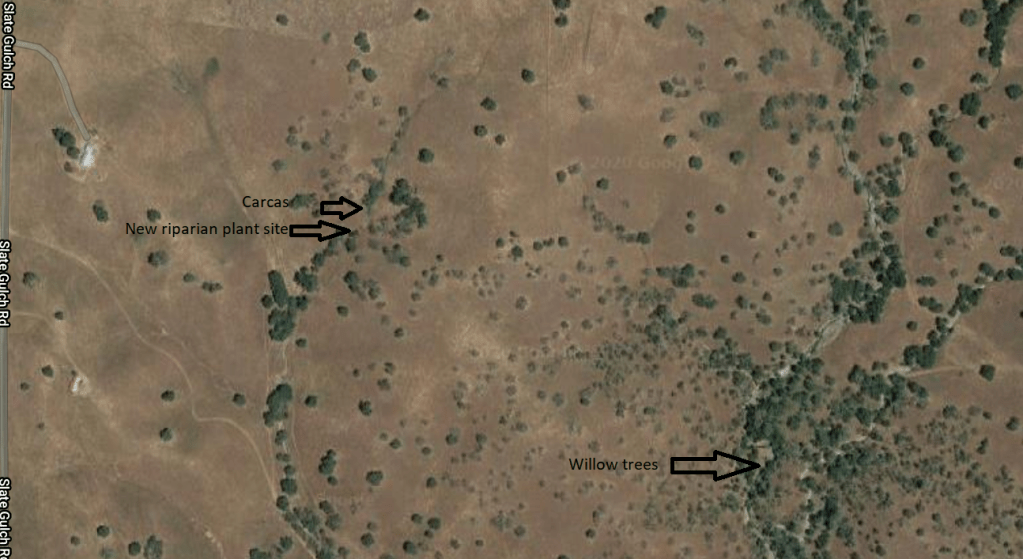
Site plan for shift of riparian habitat

With the cow death adjacent to the only fenced portion of habitat, and upstream of some of the other sites, I was not inclined to plan near the existing habitat. Not only did I not want to work near a rotting carcass, I did not want to work near water that could be tainted if the scavengers did not act fast. I needed to search for other good sites that could be protected with either downed branches or a temporary fence. I looked further down the spring creek, finally deciding that I would simply stay away from the water – just in case. Knowing that the spring creek probably could not support the willow tree saplings I have to plant, I also looked for sites along the larger Odom Creek.

Returning from looking for alternate planting sites

I found two sites. The one further down stream of the existing habitat will be the home of most of the riparian plants. There is still water in that section, and there is a nice “beach” that gets some high water moisture, but is typically not submerged. This area has a significant number of downed branches nearby – sufficient to block off the location. Because the spring creek is not a main surface water source however, I felt uncomfortable planting any of the willows there. Instead, I identified another site along Odom Creek. which already has a number of willows in the creek bed. There are already a few saplings in the nearby area. This section is also very steep with the main cow trail coming in along the creek bed at south end of the creek (vs along the banks). We should be able to plant the saplings there, and block off the south entry to the area. If we get a large storm, we will need to go back to re-block the entry.

Area of Odom Creek just south of where new willow saplings will be planted

The photo above was taken earlier this year. Since then, the cattle have chewed up the willow sapling in the photo. Today, I saw it still had leaves, but had been roughed up a bit. The entry way narrows just south of this spot. By blocking the entry, we will help preserve this area too.

Good Friends Arrive…to Eat Gophers

Great blue heron perches on the solar panels looking for its next meal

After the first real rain, we wait with anticipation for the return of the mating pair of great blue heron who have chosen this area to raise a family for the past 15 years. So far, we have one back. Sometimes it takes a while for the other to join, or we just don’t see it until later. During the drought, we were distraught when this pair did not return for a couple years. There was just not enough water.

For the last several mornings, this heron has been hanging out in the oak, in the field, or on the solar panels. These birds are magnificent. Pardon the poor quality photo (above), but these guys spook easily. We had to take the photo from inside the house. When we know s/he is near, we give it ample room and delay any outdoor activities until it decides to leave. Why? Besides the fact that it is magic to look at this bird, it is eating gophers. Yes!

Also, for the past three days, we’ve had the largest harrier I’ve seen here. She has been flying in her characteristic grid pattern close over the range looking for gophers (or any other mammal she thinks might do). She flew remarkably close to Andy the other day – my aged beagle. Alas, he was much too big for her. Again, pardon my poor quality photo (below).

Harrier flying unbelievably close to me bringing me untold joy. I named her “Speckles”.

Another good friend finally came to the rescue. On Friday night, I awoke to the hoot of a great horned owl. In some cultures, the owl is a sign of impending death. In others, it is good fortune. In the US dominant culture, the owl is used as a symbol of intelligence. For me, I am hoping it is a harbinger of death to gophers – especially the one that occupies (shockingly) my raised bed.

Taking Care of the Oaks

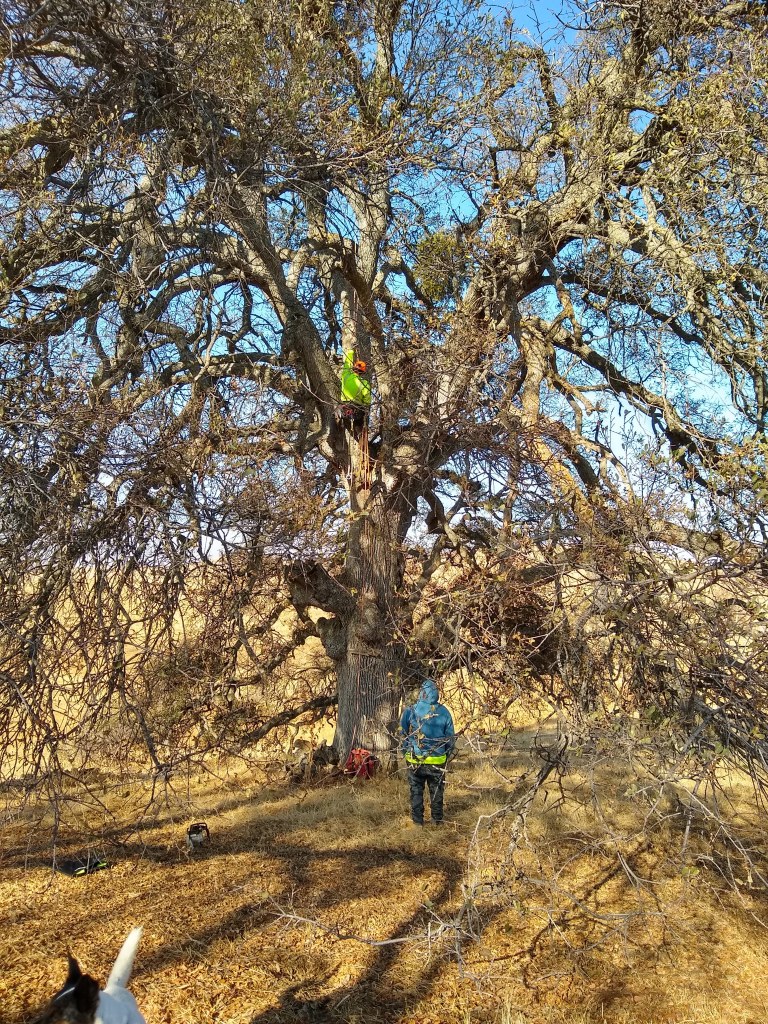
Over the weekend as well, I had some nice young men come over to cut the mistletoe from two majestic oak trees here. Nick Brocchini is one of the Tribal youth I worked with while tutoring on the high school campus in the Indian Education Program many years ago. He is now a grown young man, with a family and a very needed tree service vocation. He brought his lovely cousin with him, Gary. It was difficult to watch, both due to my worry for Nick who was climbing the tree, but also for seeing branches, despite being filled with mistletoe, dropping from the tree. I sure hope this “haircut” will help these old trees thrive. I gave them a nice hug letting them know I was trying to help them. I love them so much. It was also really nice to see Nick. What a pleasure it is to see the young people in my community grow and do well.
Nick, Gary and Roscoe helping me care for the oaks

Last week, I presented at the CA Resource Conservation District Conference. See the post from last week for more information. The presentation went well. I told my story, and happily there were people who were interested. Some had questions. I met several new people who are interested in the same things as me. I also learned much from the other presenters in my session as well as the other sessions I attended. I am always learning and grateful to all of my teachers.

I will have much work to do over the long holiday weekend. There are still butterflies here. I scared one from the grass while on my way to look for alternate sites. It was one of the larger brown ones that I’ve not IDed yet. The hedgerow plants are doing well. I sure hope the carcass is fully gone this week, so that I can plant without additional concern and get back up stream to work in that area.

A Tidal-wave of Plants – All Hands on Deck to Save the Monarchs

Heather speaks to Angela while picking up Xerces Kits at the NRCS nursery facility in Lockeford, CA

In the early summer this year, Melinda Barrett, the Director of the Mariposa Resource Conservation District (RCD), had generously included my project in their grant request for the Xerces Society pollinator kits. Also included were kits for the County and UC Master Gardeners, both working on spots in town on the Mariposa Creek Parkway. To pick them up was the least I could do, so I volunteered. David and I made the nearly two hour trip to Lockeford on November 3. The nursery site was gorgeous, sitting along side the Mokelumne River. There seemed to be over a thousand plants waiting to make their way to projects all around the state. It was clear Xerces was making a monumental effort to get plants into the ground as rapidly as possible. I felt very honored and humbled to be one small part of this massive effort.
Deedee Soto (Xerces), Melinda Barrett (MCRCD), and I meet with Waylon Coats at the Sarah Priest Tribal Allotment land in Midpines, CA.

I was allocated six kits from the Xerces grant. While four kits would be used for Walappu’ ‘Uuchuthuu, two could be used for community projects. Our first community participant came from the local Tribe. Waylon Coats is a member of the Southern Sierra Miwuk Nation Tribal Council. His ancestors have lived along the Bear Creek in Midpines for thousands of years. When I discussed my project at the Council Meeting last Spring, as noted in a previous post, he was the first to volunteer his relation’s Tribal land for the project. Melinda, Deedee Soto (Xerces) and I paid a visit to Waylon to look at the site in mid October. He showed us a few options, but we chose the first site he thought would be good. It was gorgeous! Bear Creek was running. There were many pools of standing water, and a nearly dry spring that fed into the spot we chose. There were already butterfly plants in that area. In fact, as we spoke, a beautiful sulfur butterfly flitted from plant to plant in the dappled, peaceful section of creek we were exploring.

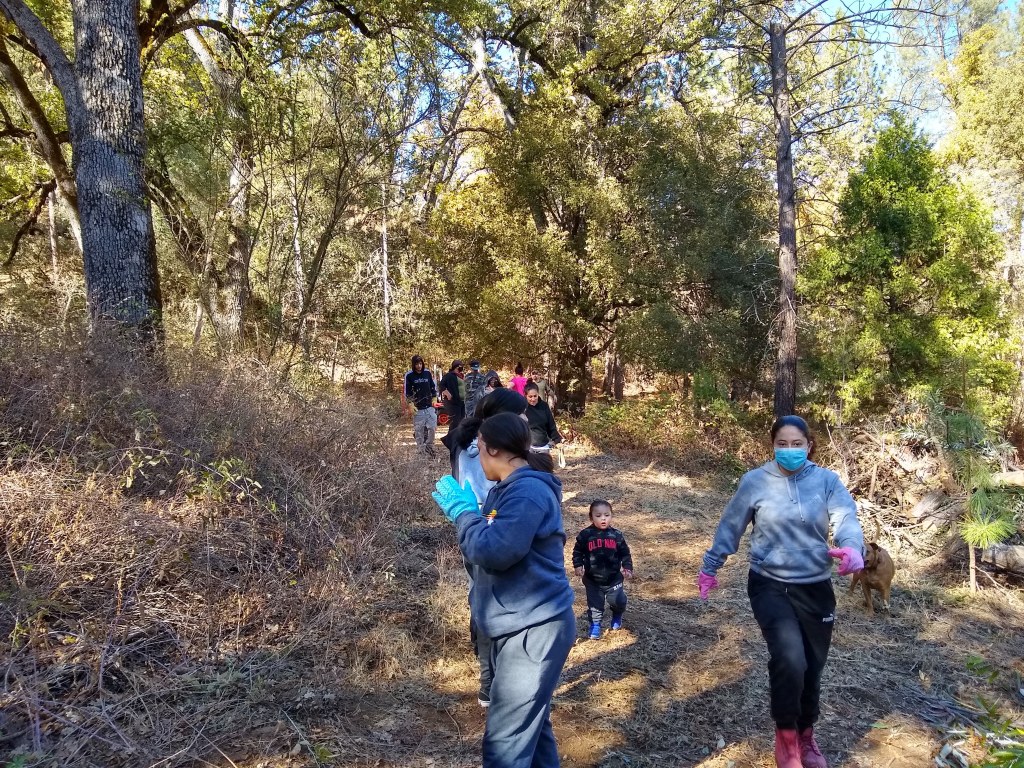
Waylon works with Native youth (He is very young himself.). He teaches them traditional practices, and this project was a perfect fit. The site had considerable invasive and overgrown species that needed to be cleared. He, and his youth group, planned to do the clearing work prior to me delivering the plants. I delivered the plants on Sunday 11/15, and the place was nearly ready to go. He had at least 18 relations there and ready to plant – not all youth. There were several adults too as well as little ones. So many indigenous communities are coming together to reclaim their knowledge and be change makers in healing the land. I know many butterflies will find their food and incubators, here, in this serene, protected place.

Planting Xerces Kits – a race against time

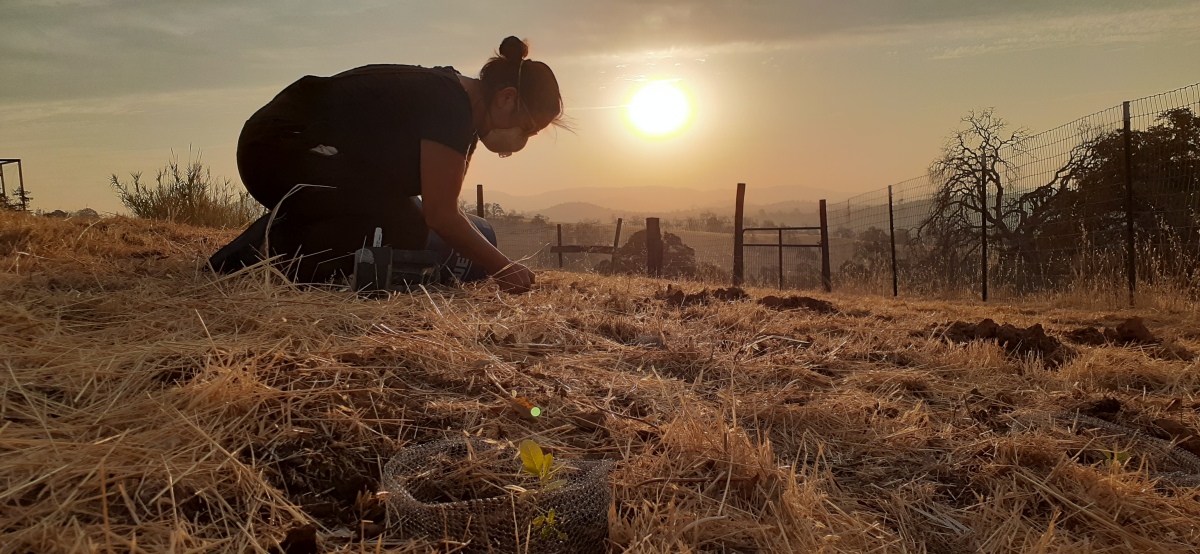
Heather plants the hedgerow kits early in the morning despite the continuing smoke of the Creek Fire.

The kits are comprised of nectar and milkweed plants designed for either drier areas (hedgerow) or moist creek areas (riparian). It was a strange growing year this year – probably mostly due to the smoke. The milkweeds started going dormant quicker than the Xerces team expected. What they have learned is that the milkweed transplants are much less successful after they go dormant. It was imperative that the milkweeds were put into the ground as soon as possible.

I picked up the plants on 11/3. My husband and I had made some of the holes prior to their arrival, but we did not get all of them done. The smoke has been difficult to work in. It limits my husband’s ability to work outside, in particular, due to his asthma. David is my primary hole digger. He is big and strong – and can get more hole digging work done so much quicker than I. Sadly, I was not able to have much of his time. Instead, I took the pickax and made an additional fifty holes over the next five days. [Yes, my back is still aching.] There are still about ten plants remaining to be planted in the riparian section – awaiting more fencing work to be complete in the next week.

We did receive a reprieve in the form of a small storm. This made digging holes much easier, not just from the moisture, but from the smoke being pushed out. Being able to breath is a huge plus when wielding a pickax. I prioritized the milkweeds from both types of kits. They were in the ground withing the first 48 hours. Next, I completed the hedgerows in time for the next storm. I had to be concerned about freeze as well. The temperatures dipped into the 20s here in Hornitos. Although the plants are on the covered patio, I did not take any chances. I placed a sheet over all the plants to keep them even warmer.

Below is a collage of images from planting both the hedgerow and riparian kits.

The hedgerow plants all received mesh baskets. At the creek, where gopher intrusion is much less, the milkweeds were planted directly into the ground. I placed downed branches over those plants that still had green sprouts to prevent cattle browsing.

Other Items of Note

Major shock! A gopher finds a way to access my raised bed and decimate unprotected plants.

My heart sunk when I found that a gopher had made it into my raised bed. I did not place any of the plants in mesh baskets inside the container, so they have become easy pickings. As of this writing, it got all five marigold plants, my one remaining woolly pod milkweed and a narrow leaf. I am nearly despondent about this turn of events. They were all so healthy. Some of these plants need to make it though so there are more mature milkweeds for the butterflies to choose from.

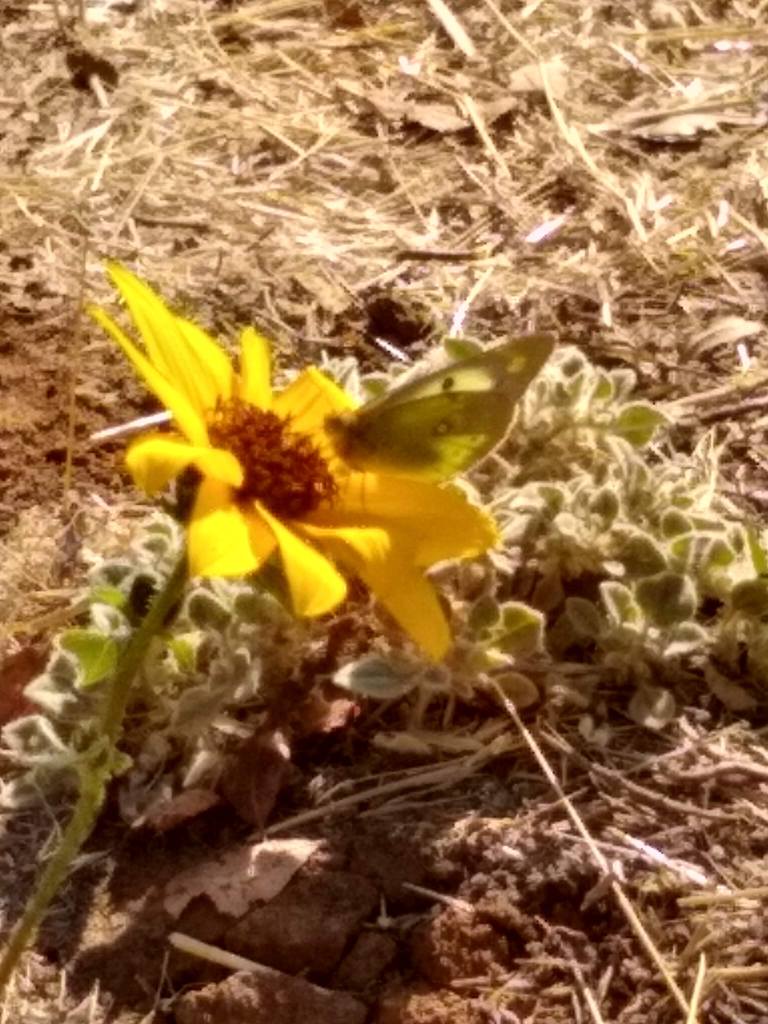
Alfalfa Sulfur butterfly on a sunflower

Fortunately, we continue to have blooms and butterflies continue to come. None of them are monarchs, but we recently had this green gossamer-winged beauty (photo above). The experts think this is an alfalfa sulfur butterfly.

Common Buckeye butterfly visitor

We also had this brown beauty (photo above) arrive a week ago. The photo is brown because this was the week the smoke came back with an AQI reading of over 140. I think this is a common buckeye. So gorgeous. We’ve also continued to have the cute little lilac butterflies (read the post before this for more info and images) and white sulfurs. I am really grateful that they continue to come here and find food.

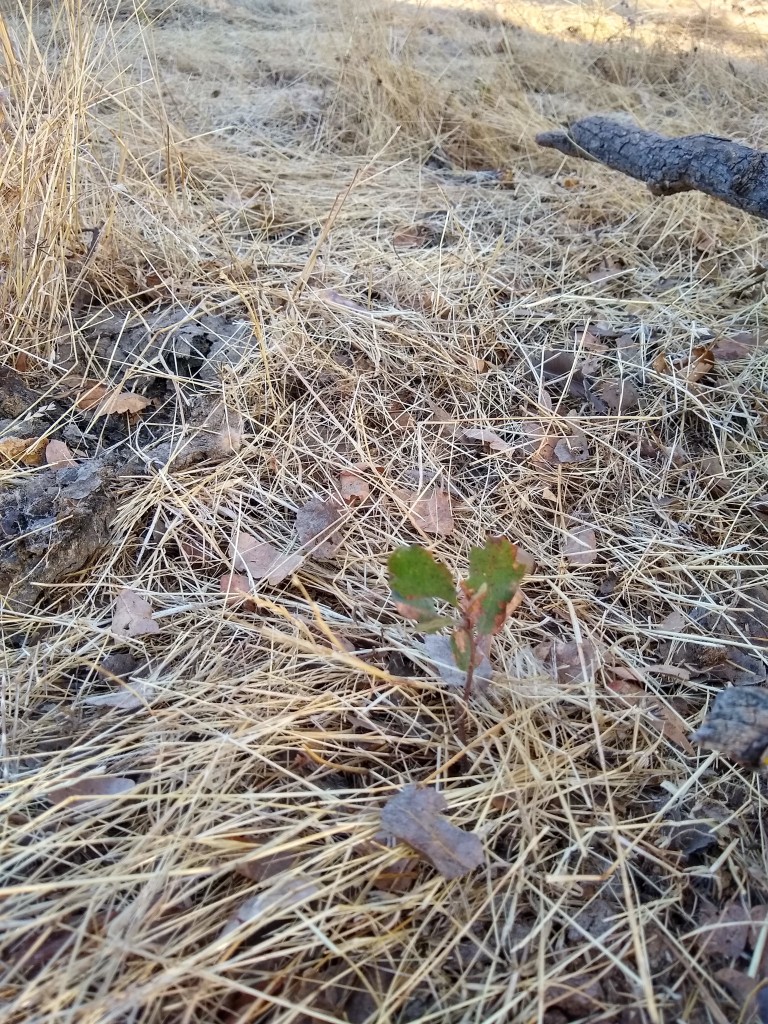
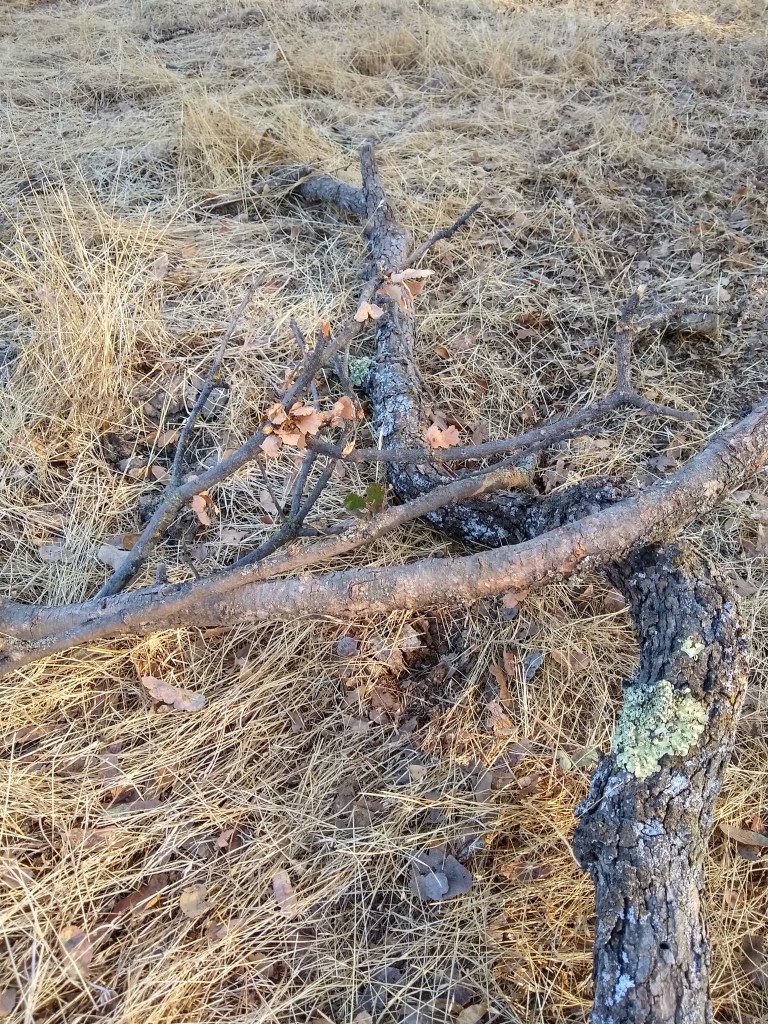
I am finding more and more oak seedlings. Those that are in especially good places, like where there is not a living tree adjacent or the nearby tree is dead, I am covering with downed branches. This helps to protect the seedling from being grazed by the cattle. I now have about eight mounds of branches protecting ten seedlings.

The final item I would like to share is that I was asked to speak about this project at the California RCD state conference. I am really happy to do so, but very much hope it is of interest to the audience. I will not be providing a scientific presentation. Rather, it is more about my story of how this project came together and how it is progressing. I will try to keep it lively and not make folks fall asleep! If you are interested, here is a link to the presentation in PDF form.

Like our work to solve the COVID-19 pandemic, we are only able to be successful if we work together. Instead of a virus, our shared challenge is convention and in some aspects greed. We do not have to do things the same way we always did. Even those ways were changed from the way things were before then. Nothing is static. The choice we have is whether we embrace change in a way that brings greater health to all or a greater profit and lifestyle for a few. I would rather live in a place that is healthier and happier for all living things. I hope you would too.

The Smoke Cleared and Then…

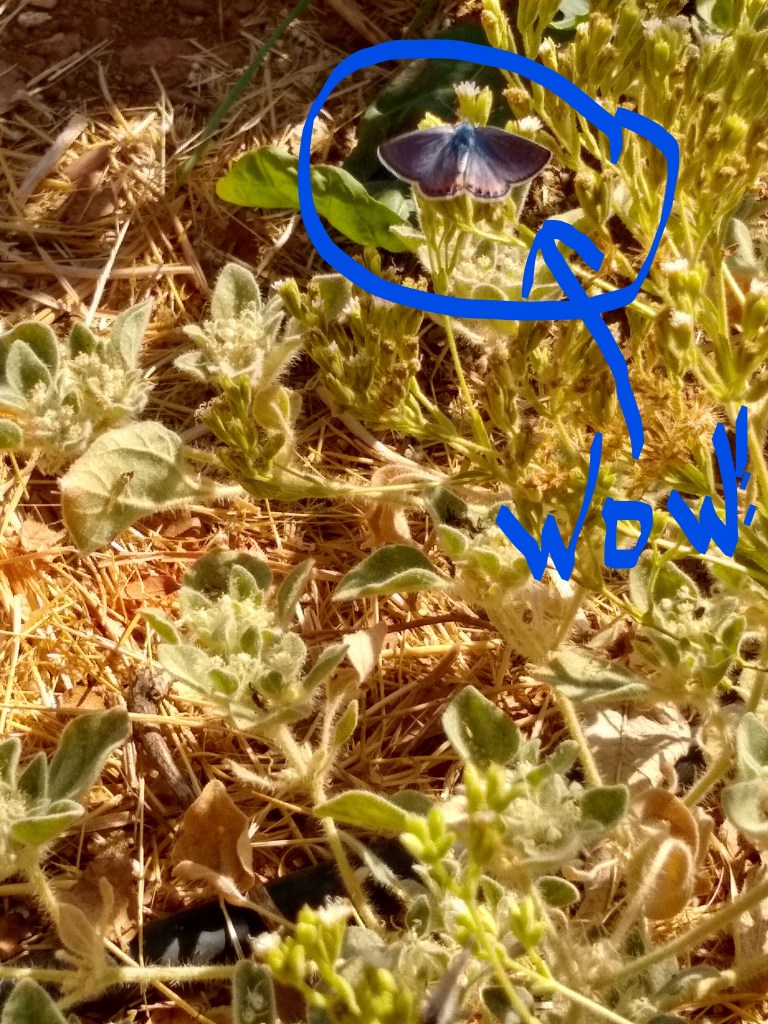
Lilac blue butterfly – wow!

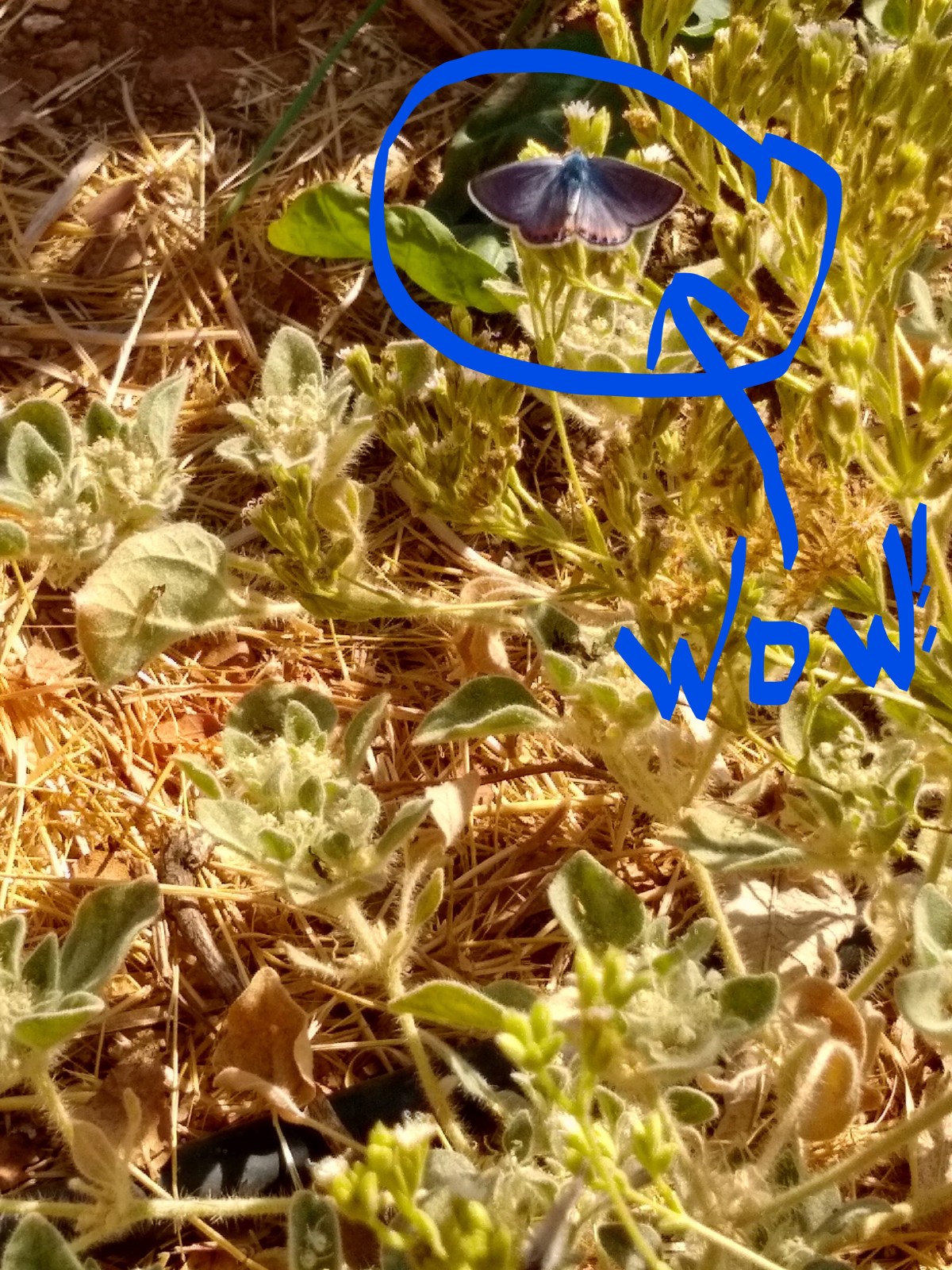
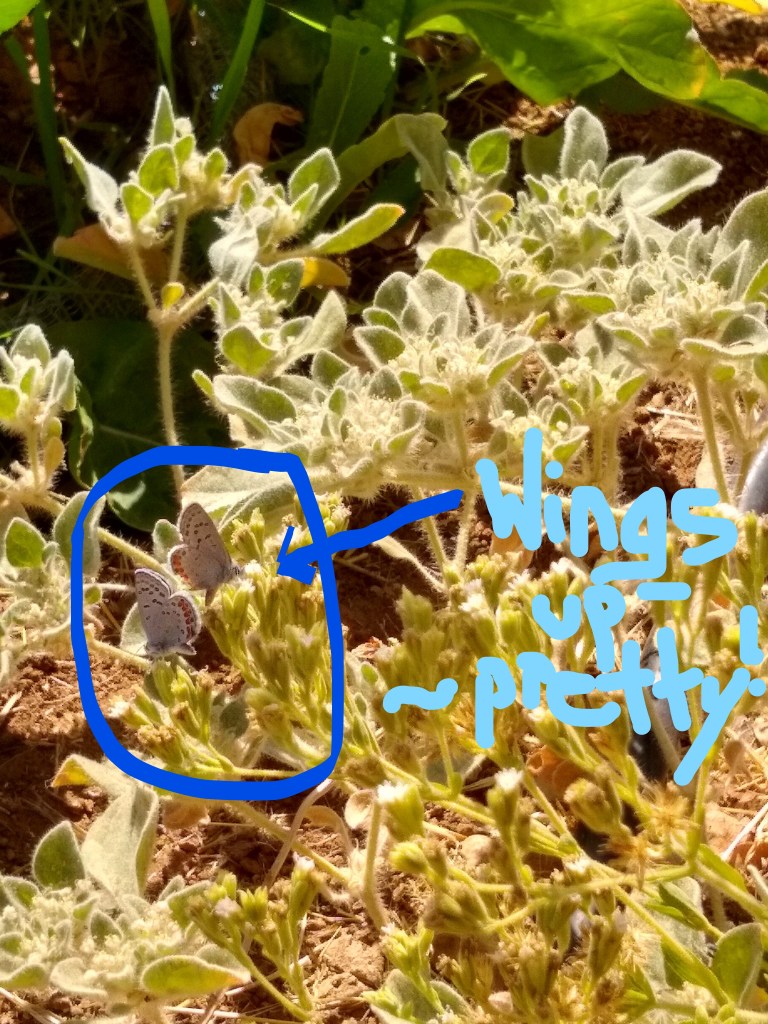
Last week a trough of low pressure came through the area. This pushed the smoke elsewhere. The changes at the ranch were immediate. In addition to clean air for my lungs, there were pollinators everywhere. My father decided to go for a drive the day the smoke cleared and stopped by (Of course, we followed physical distancing requirements and stayed outside). To have him stretch his legs, I took him on a tour of all the butterfly plants and blooms. As we got to the end of the patio, we saw the first group — a swarm or kaleidoscope of small, lilac-blue butterflies!!! They fluttered all around me as I walked through their nectar sources. I was overcome with surprise and joy – so much so, I nearly fell to my knees. My dad chuckled and asked if I was ok, and I said “I really did it. I created a home for butterflies!” All this work paid off. They are here. Maybe not the monarchs, but these beautiful little ones are here!

Butterflies eating or resting. So pretty!

We kept walking, and there were more and more. I couldn’t count them. These little ones seemed to like the dove weed, aster, butterfly bush and the blooms on my stevia herb plant. They were fluttering around the milkweed too. Their coloring was extraordinary, with a bar of orange with black spots just on the end of each wing. In addition to the small lilac-blues, there were the white and bluish sulphur butterflies. I was overjoyed.

Fortunately, they stayed several days, and I was able to collect myself to get the images seen on this blog and one decent video of a couple butterflies fluttering about on the stevia. Here it is, and enjoy these 36 seconds of pure Zen. Sadly, the smoke rolled back in, and the butterflies were gone.

Other Amazing Things

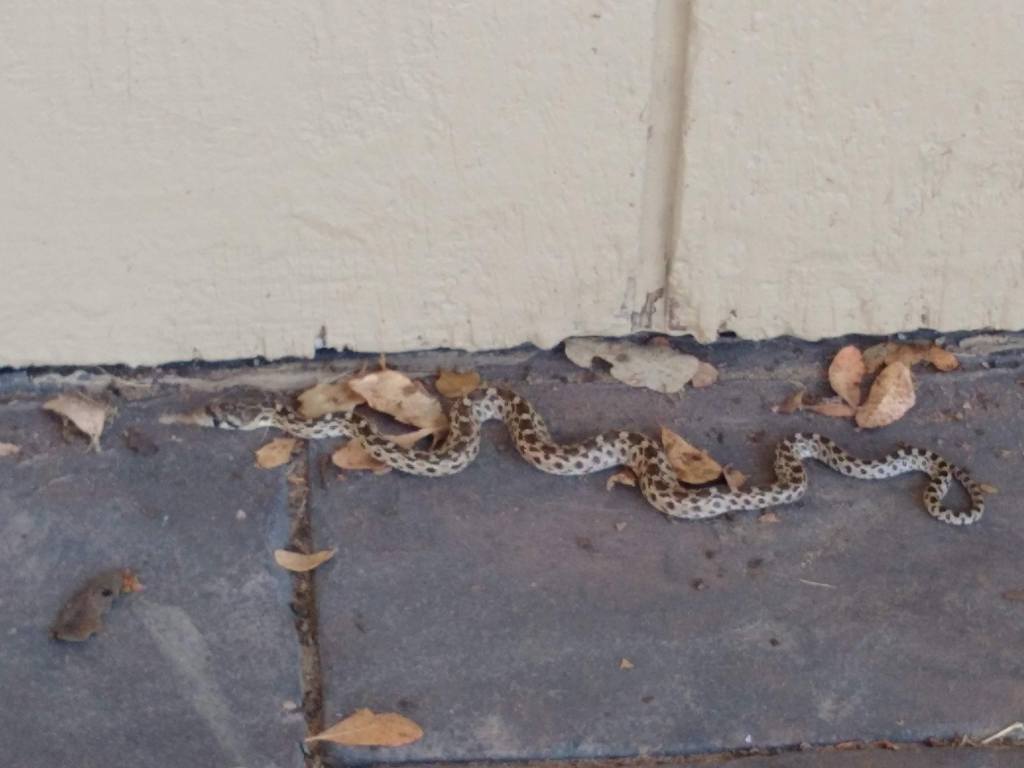
Garter snake – a good friend to the garden and gardener!

The land seems healthy. We have seen snakes, lizards, tarantulas, song birds of all sorts and frogs. There was even a falcon battle in the front yard. The animals are not being shy, which means there is plenty to eat, plenty of habitat, enough space between all of us, and they are feeling comfortable to make a life here.

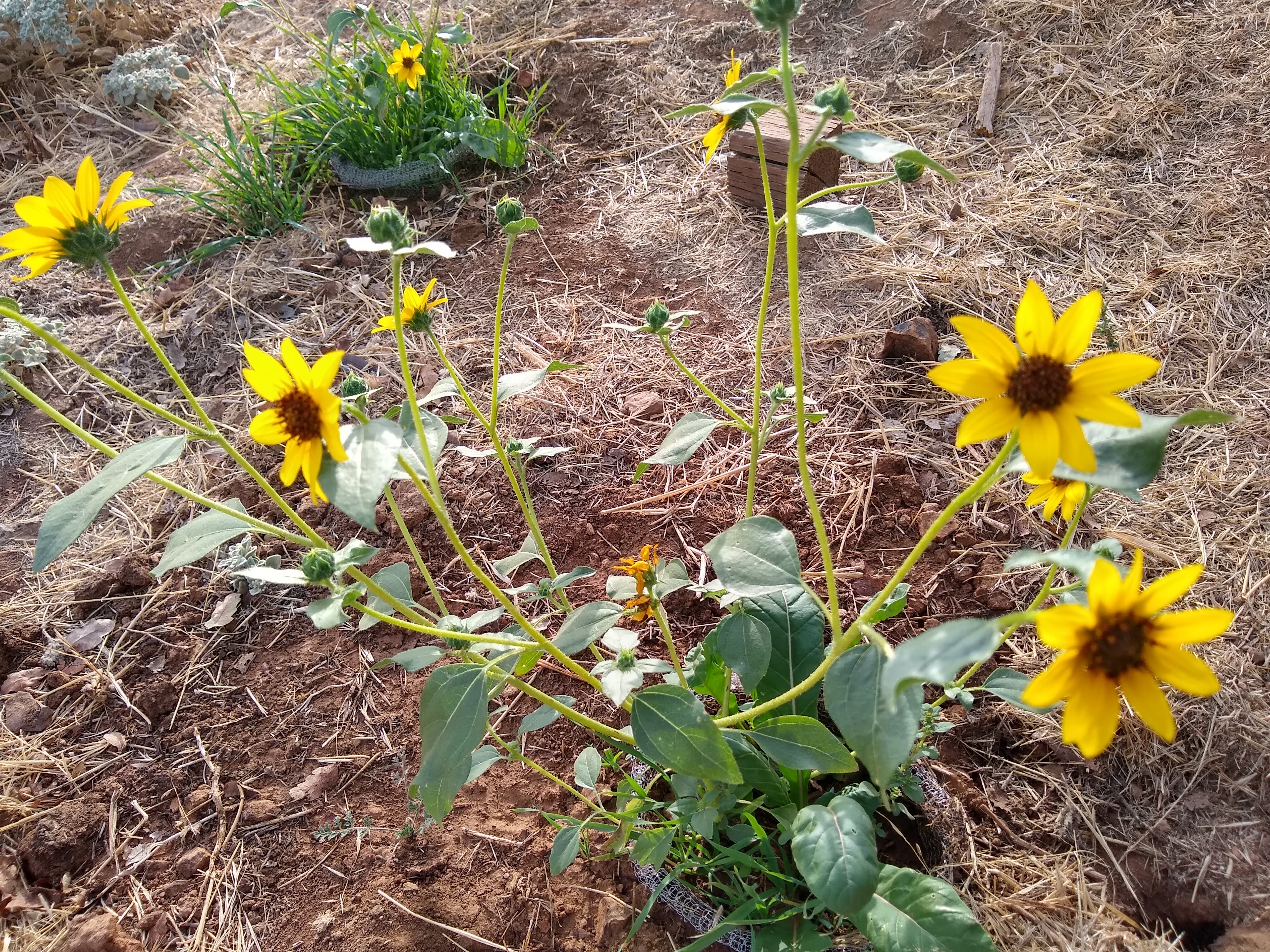
The marigolds are finally fully in bloom. It took a while, but the smell is lovely, and the sight of their sweet blossoms – beautiful. The sunflowers are fully open and are so joyful. If it was not for the smoke ebbing and flowing, the scene would be a daily respite.

Branch Protection Works

Grass grows where the branches are. Far less grass where there are none (apologies for the blur)

Some notes from Sites 7 and 8: You can really see the difference where we placed branches and where there are none. The cattle has not grazed the branch areas as heavily. This gives me an idea for protecting the creek, which I will vet with the biologists.

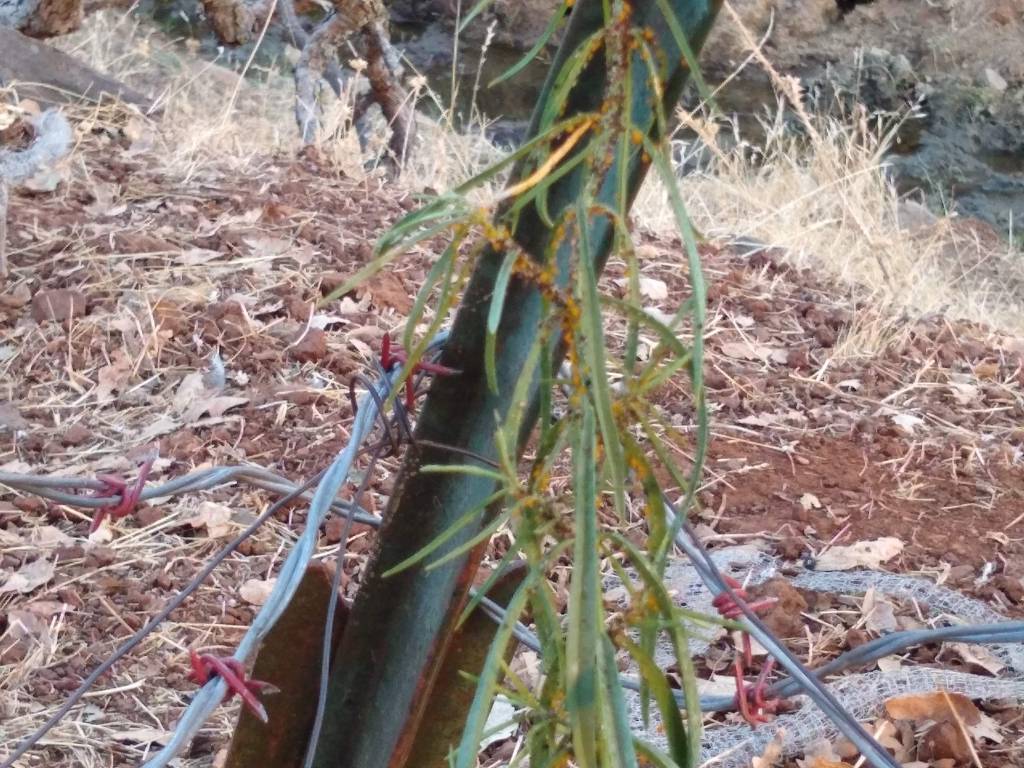
I also noticed a mass of aphids (the orange spots) on the narrowleaf milkweed. I have some at Site 9, but only on one milkweed. The aphids do not seem to prefer the showy or woolly pod plants. According to Ron, my native plant vendor, they shouldn’t hurt the plant. Besides, we are nearing the dormant period. It is good that something gets some use from them, since the monarchs did not make it here this time.

Aphids on the narrowleaf milkweed – Site 8

Getting Close to the End of the Season

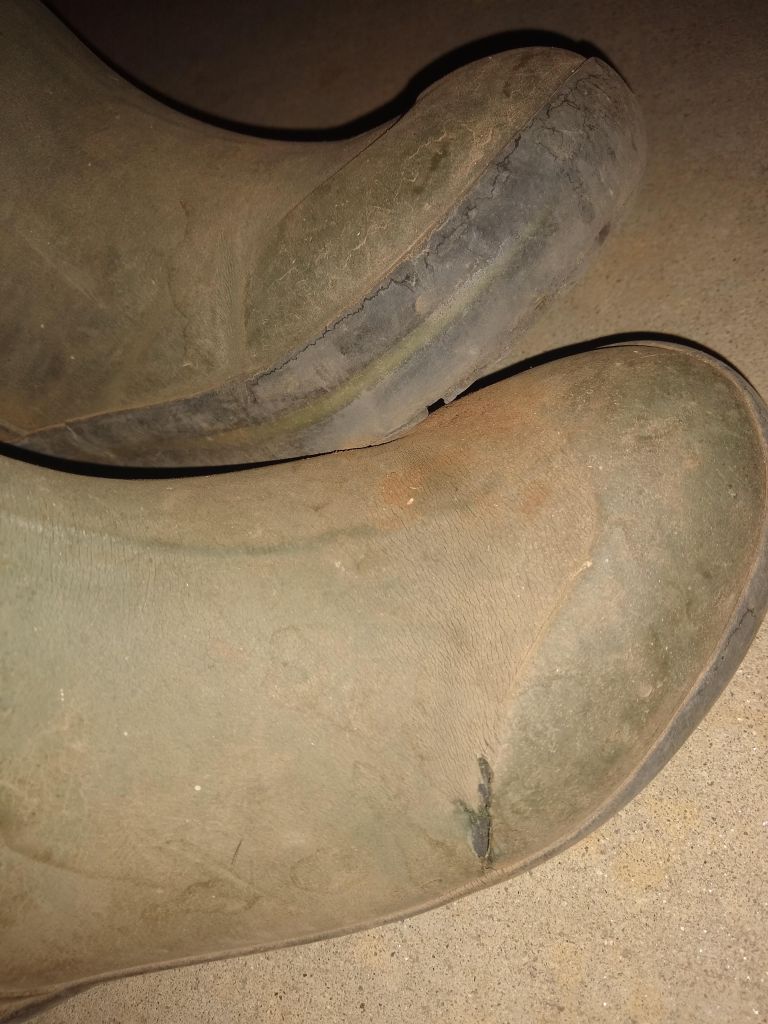
Rubber boots are shot

We have just one big planting to go before we are at the end of the season. My back is sore, the skin on my fingers cracked, and my boots are completely worn out. It is not a complaint, but a sign that it has been a productive seven months. Just for that one swarm of butterflies…it is all worth it. I think next year will be even better. I just need to get the next set of plants in the ground so we have more early bloomers ready to go for February. Oh, and if anyone has some recommendations on a really good brand of rubber boots, please share them with me. I hope I will need them soon (read: need rain).