Falling In Love Over 50

In Hala’i (My friend)

Do you remember the last time you fell in love? Giddiness, wanting to be with that special person all the time – or cross paths at least, flushes of heat, random moments of happiness, disappointment when they are not where you think they will be, heart flutters, consuming thoughts of the other person – ahhh, the pleasures and struggles of love. It has been a while for me. After all, David and I are working on our 30th year together.

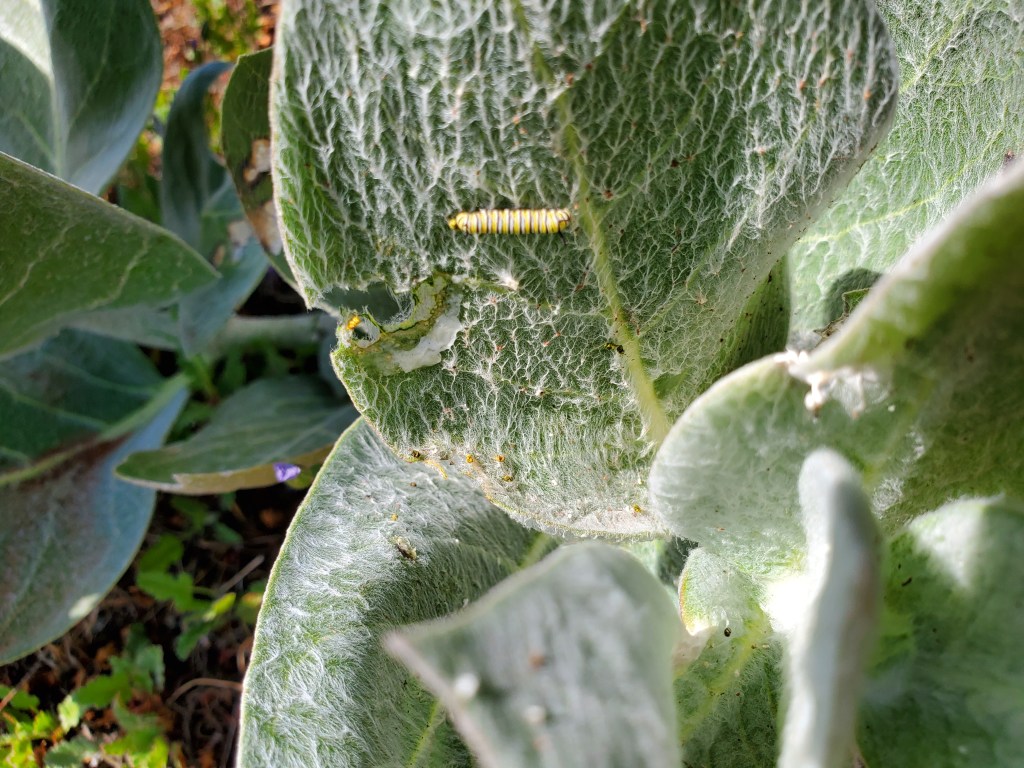
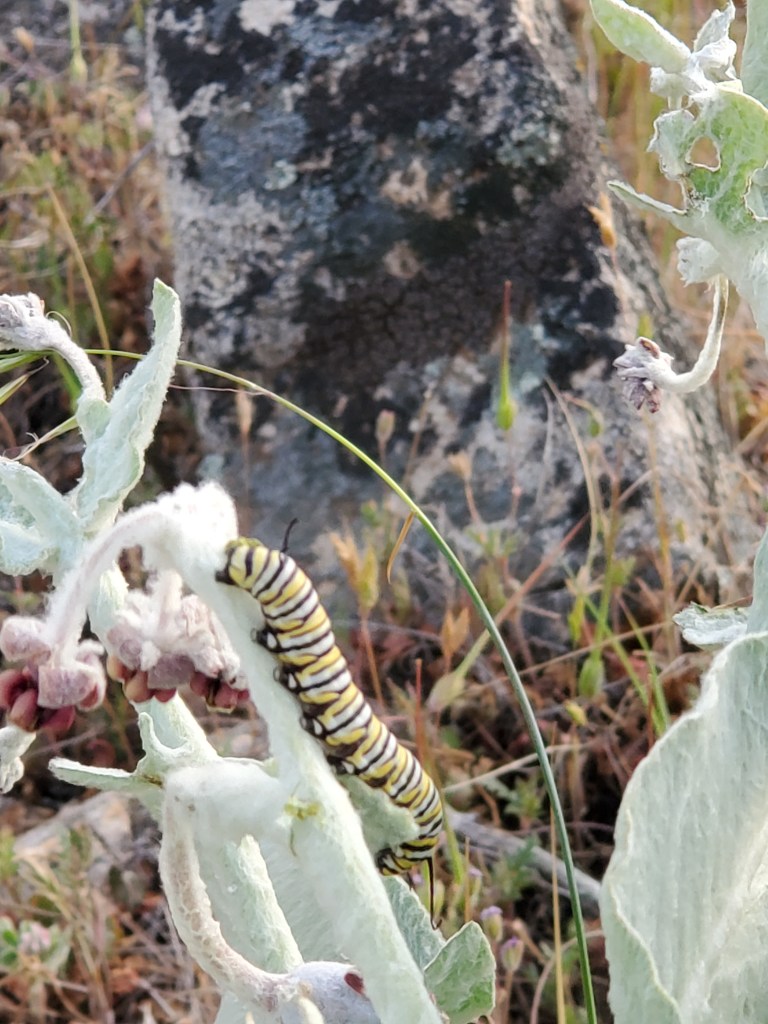
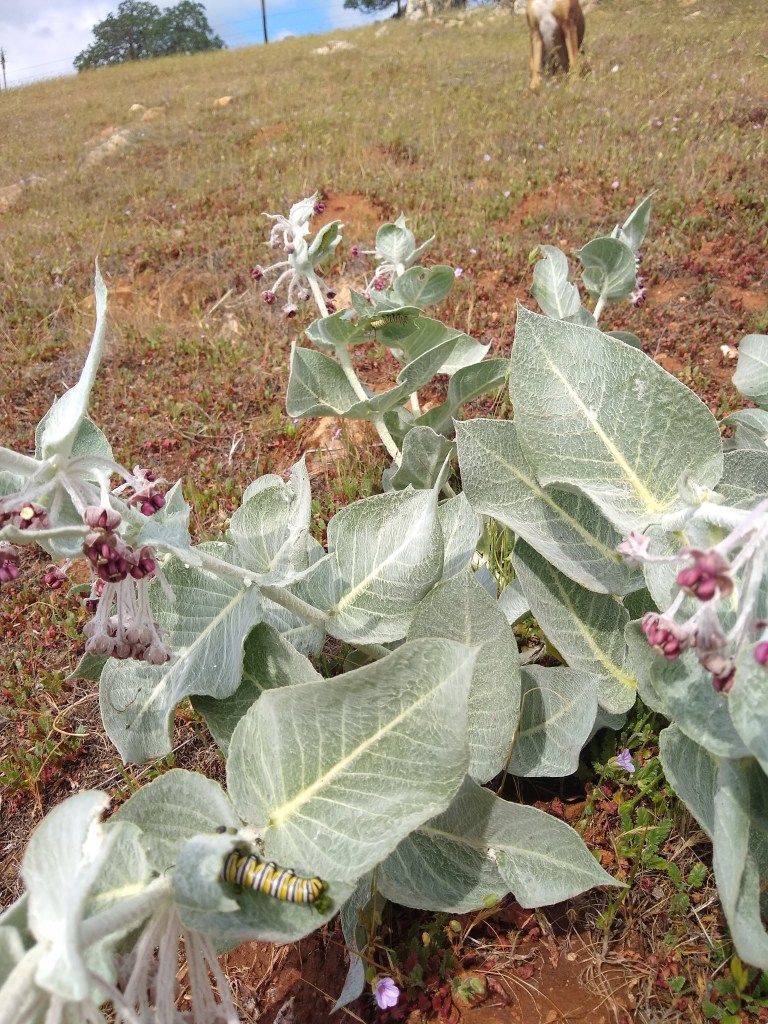
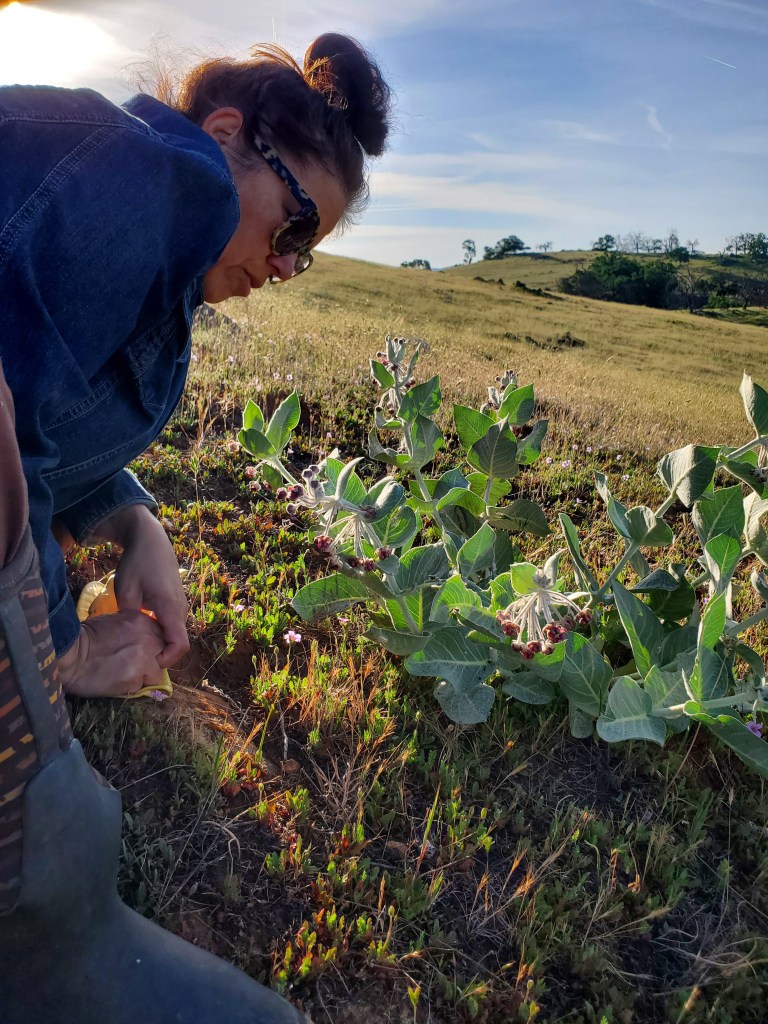
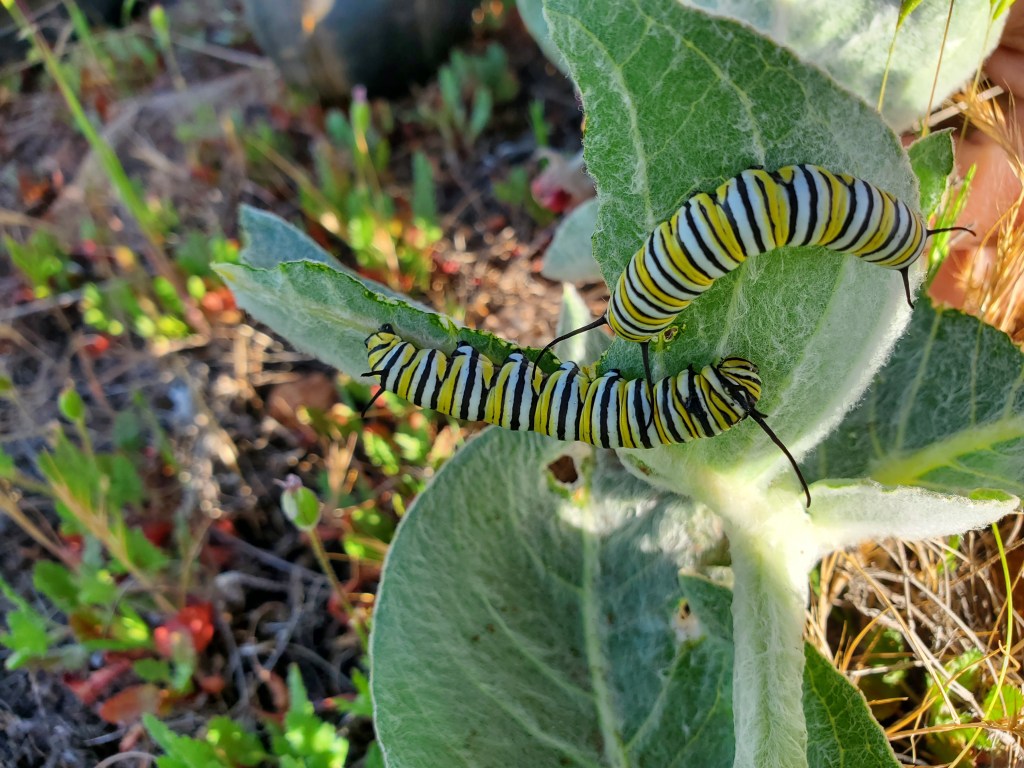
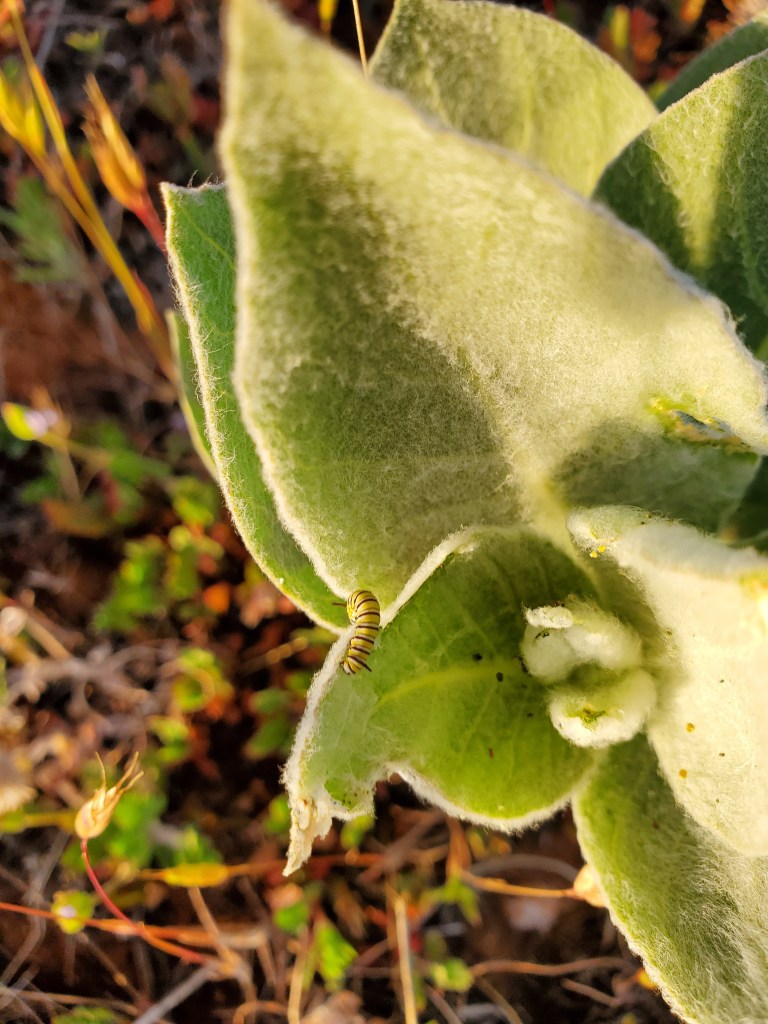
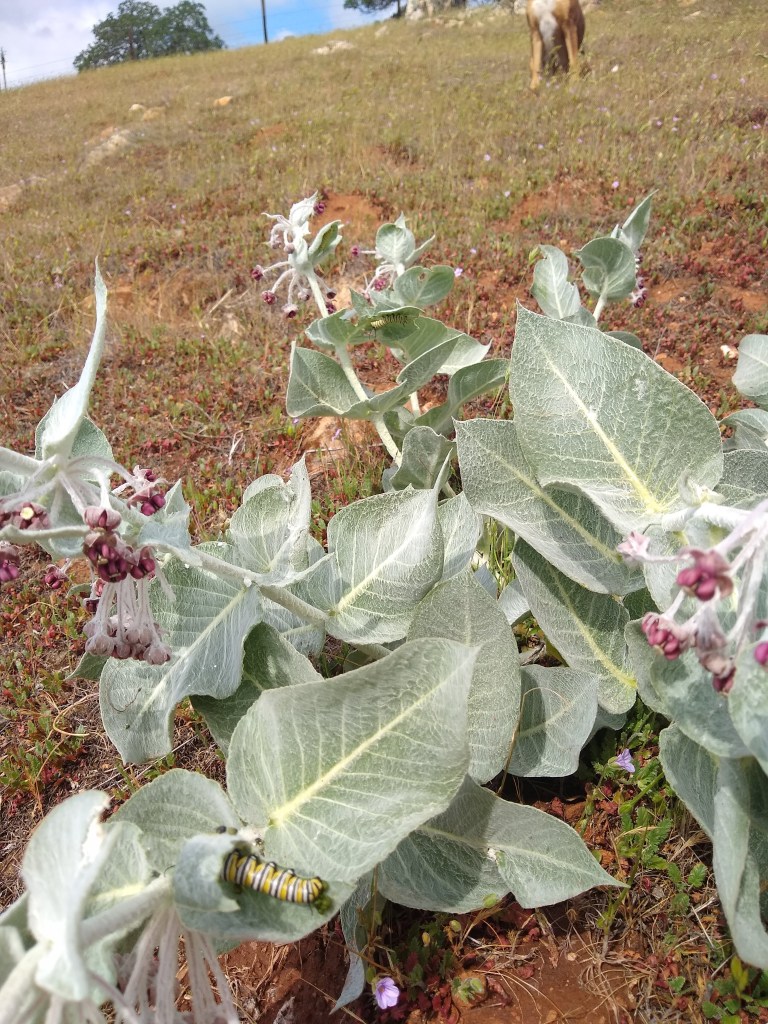
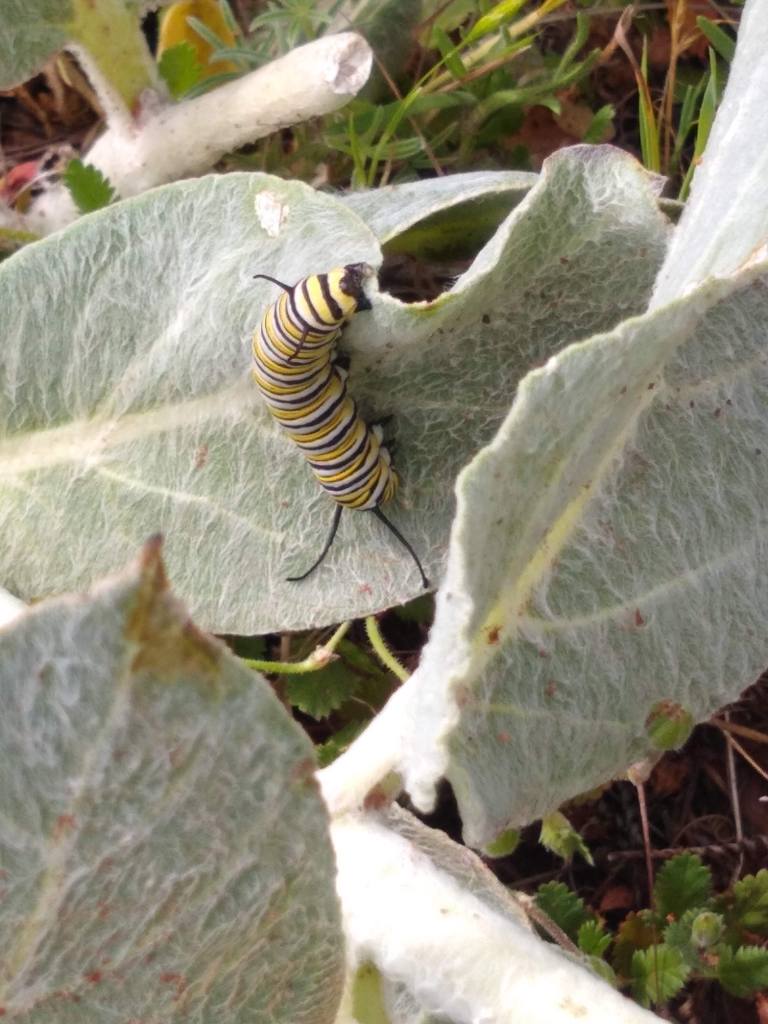
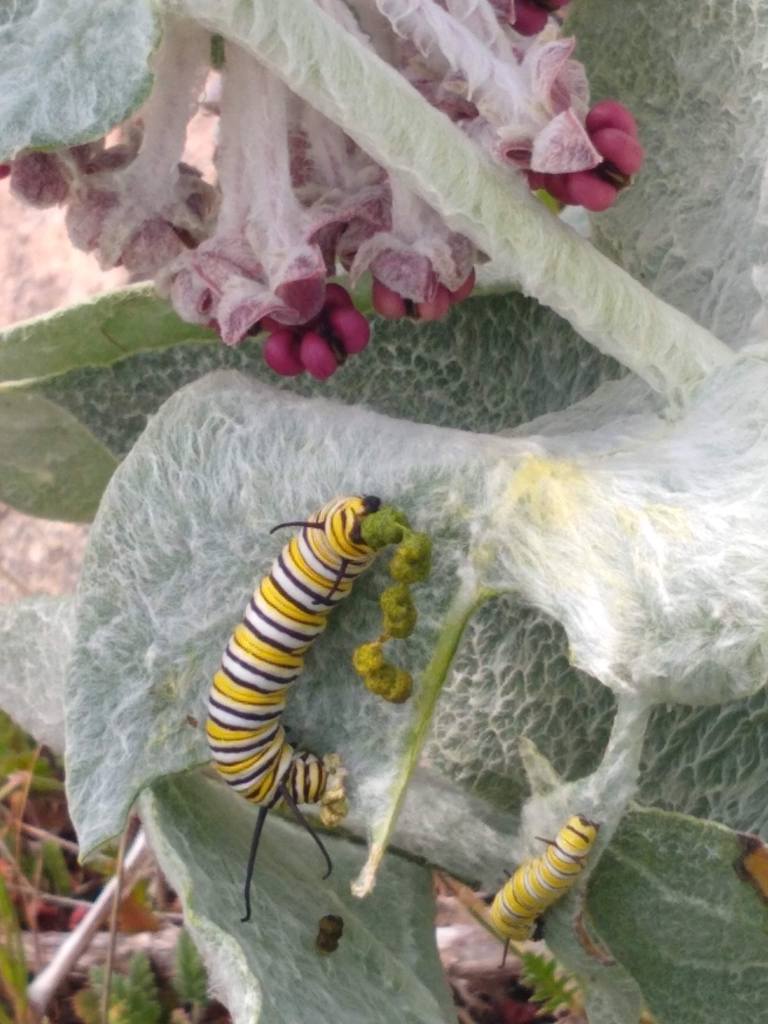
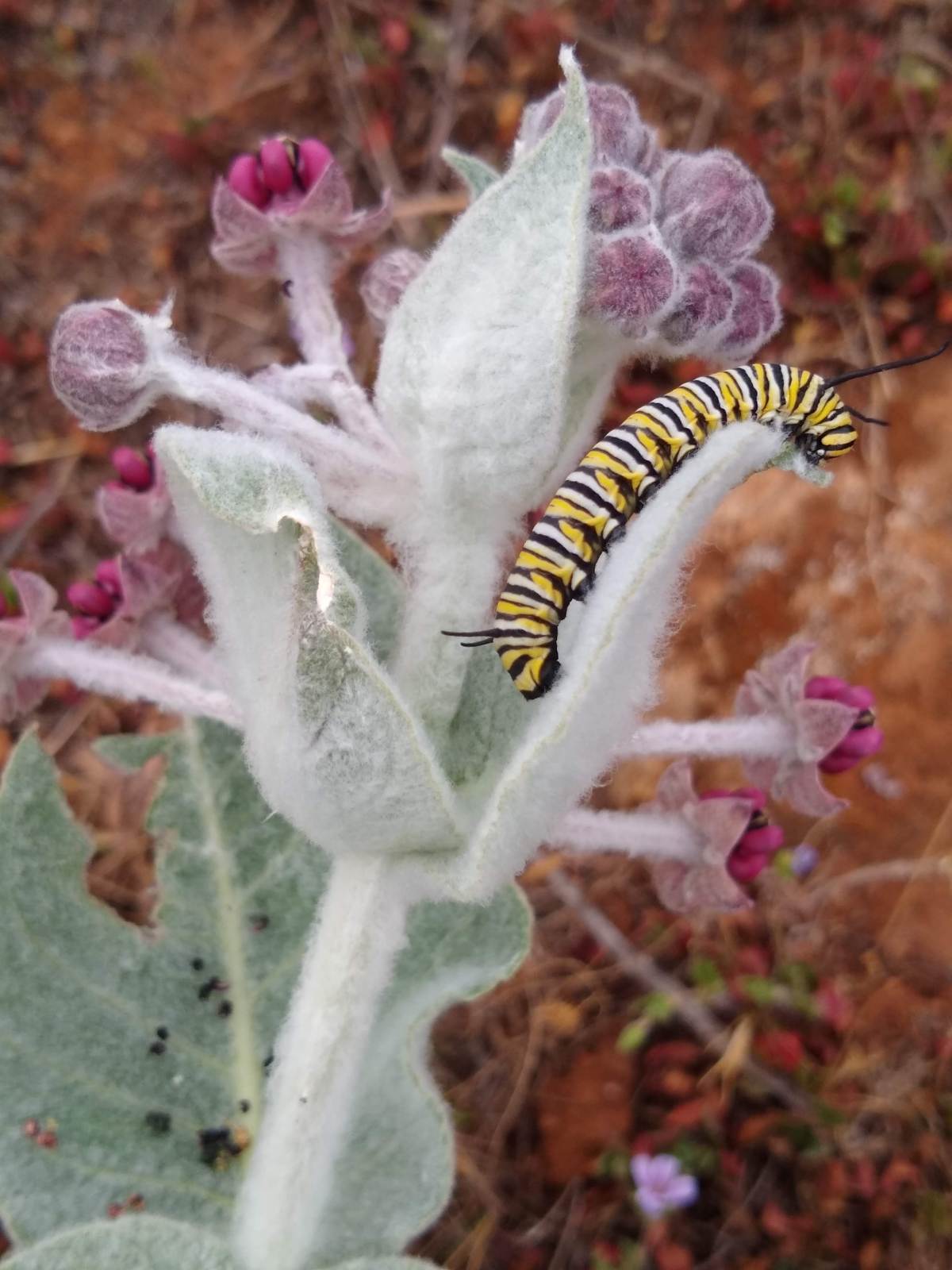
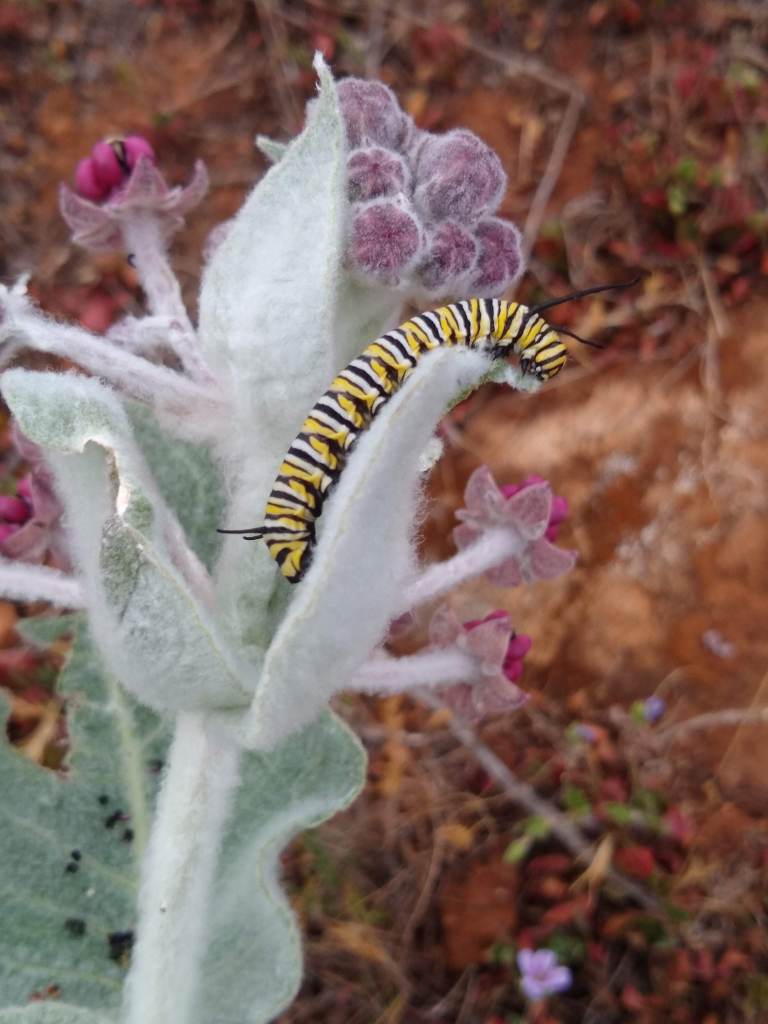
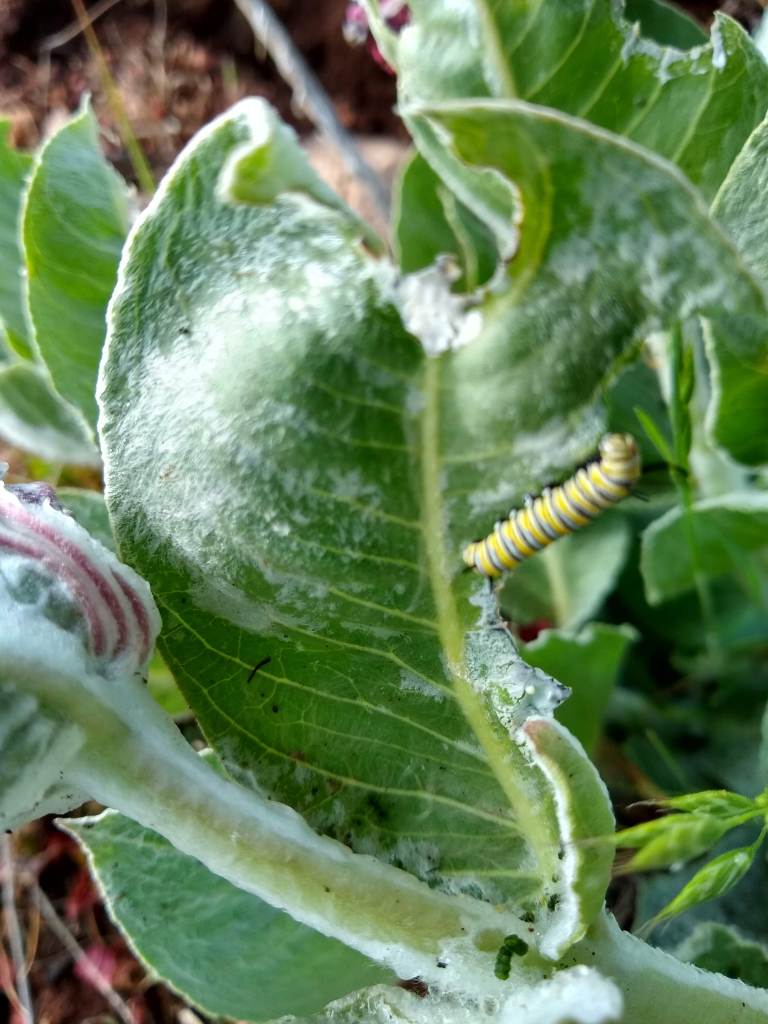
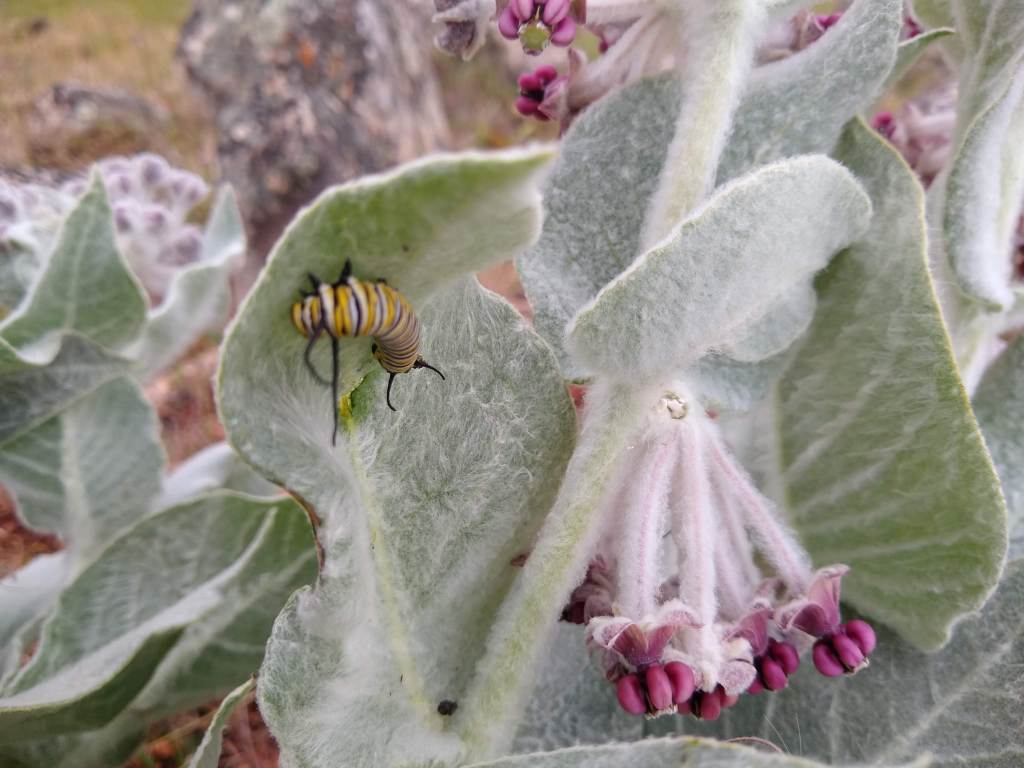
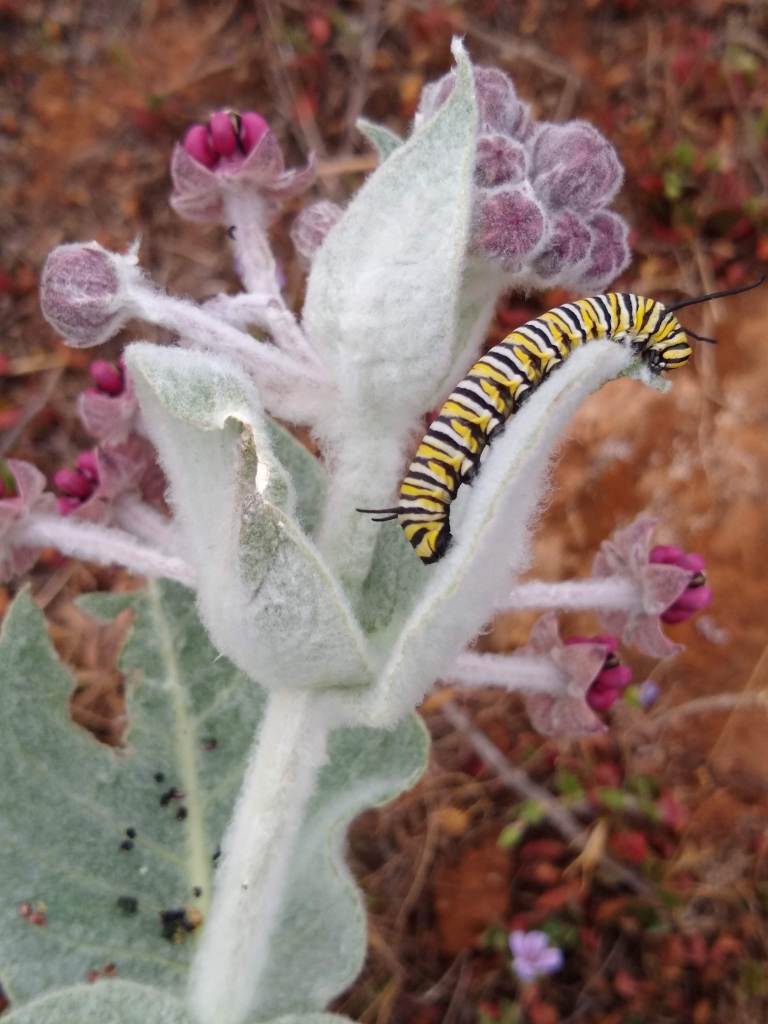
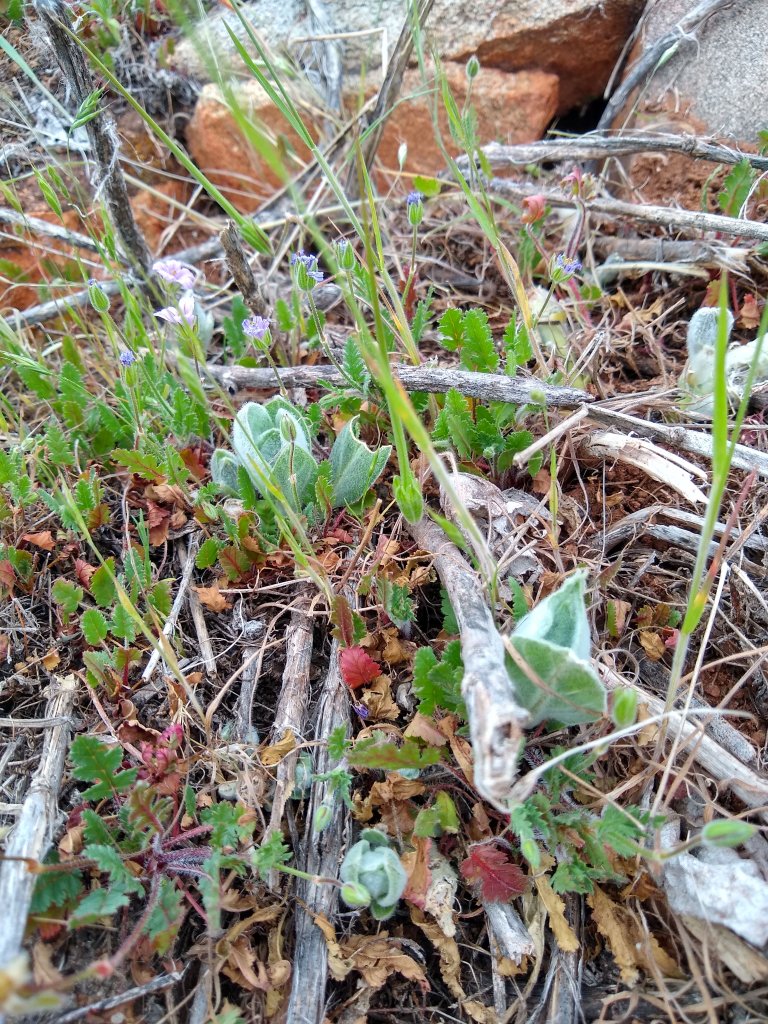
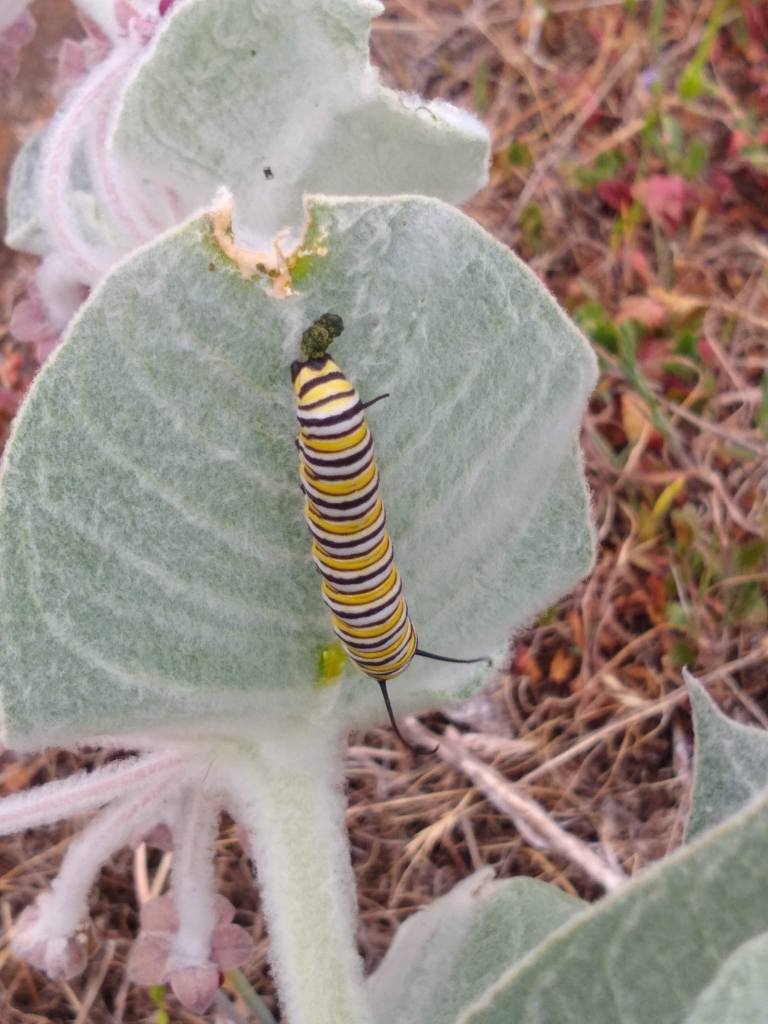
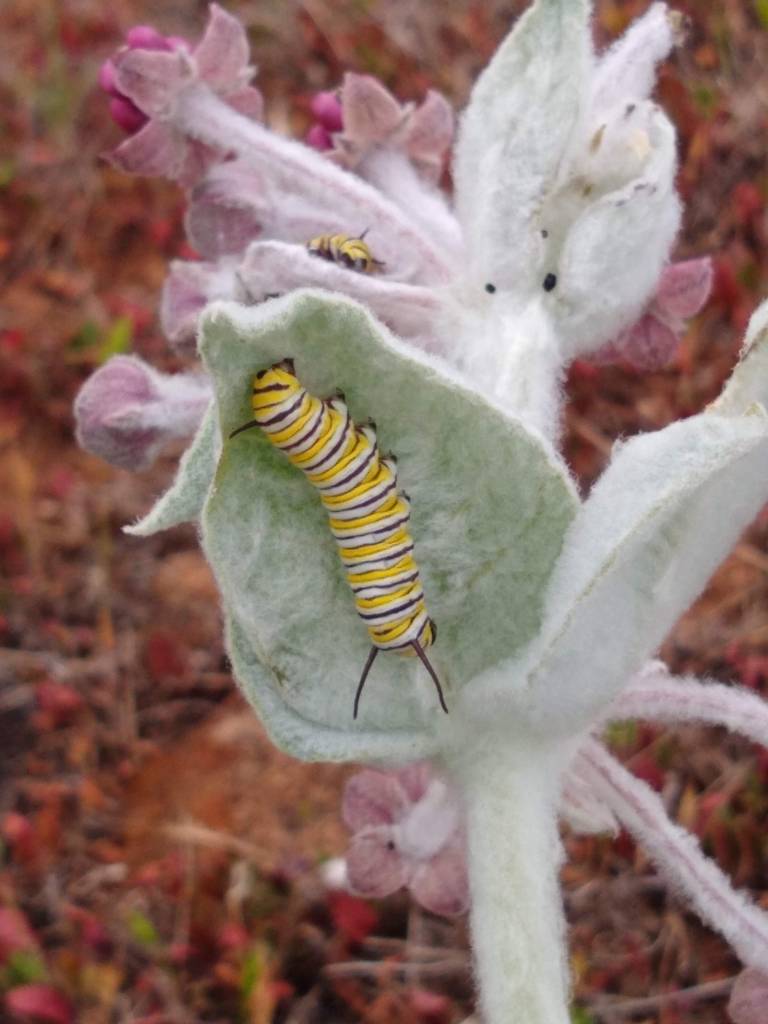
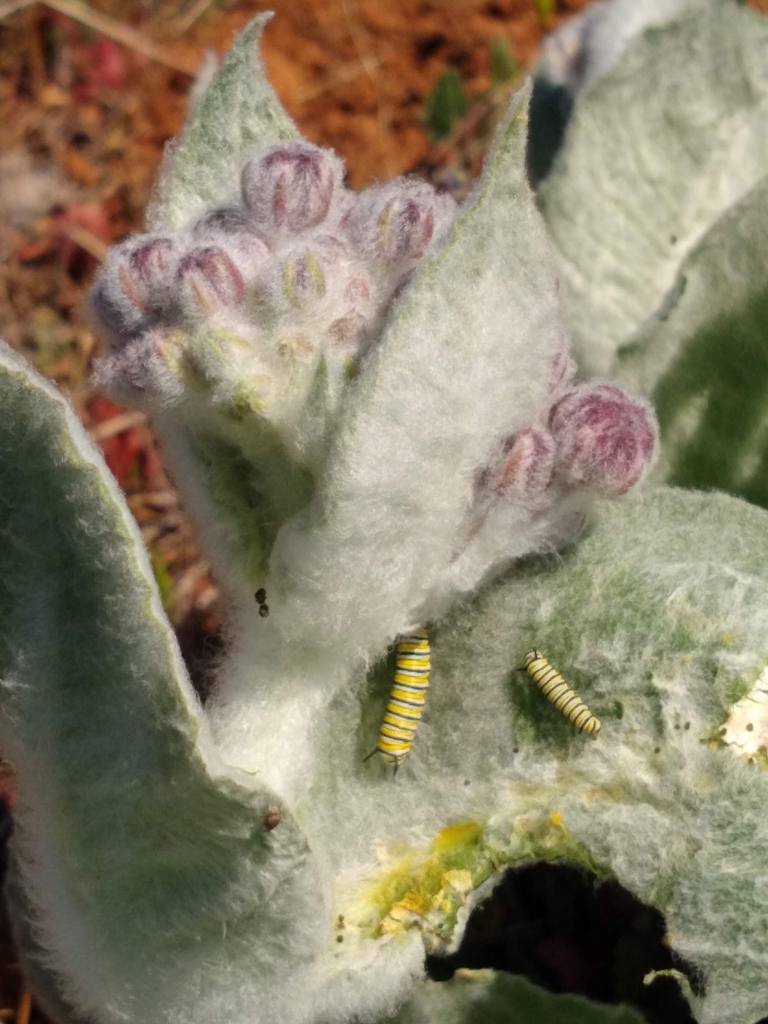
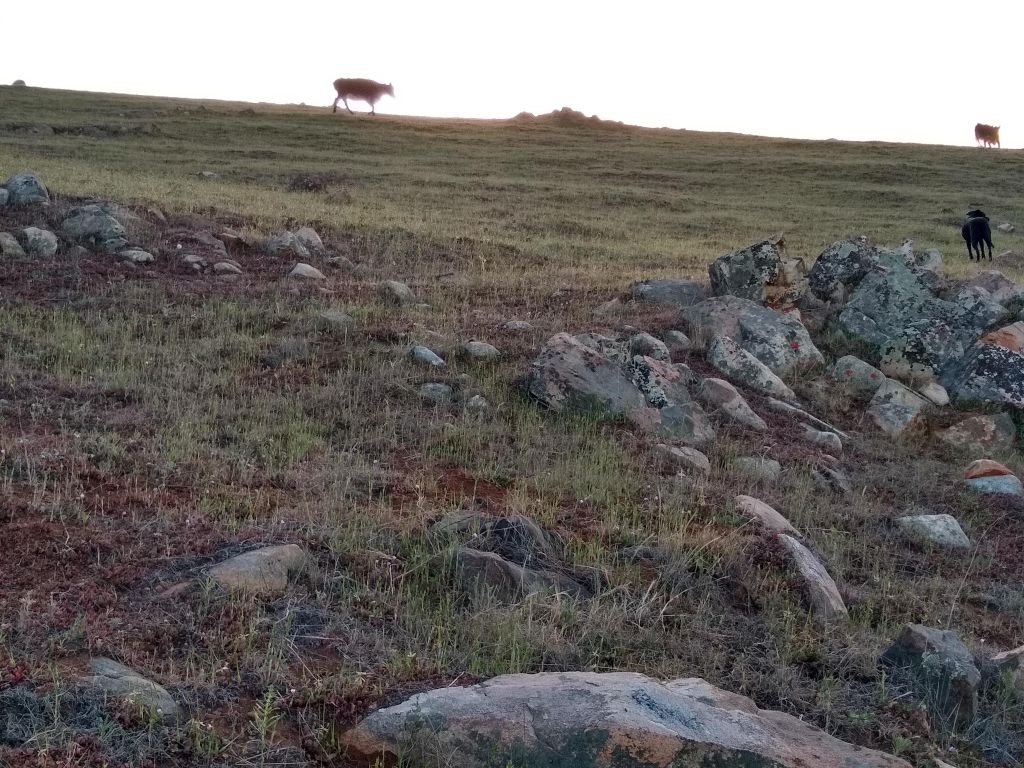
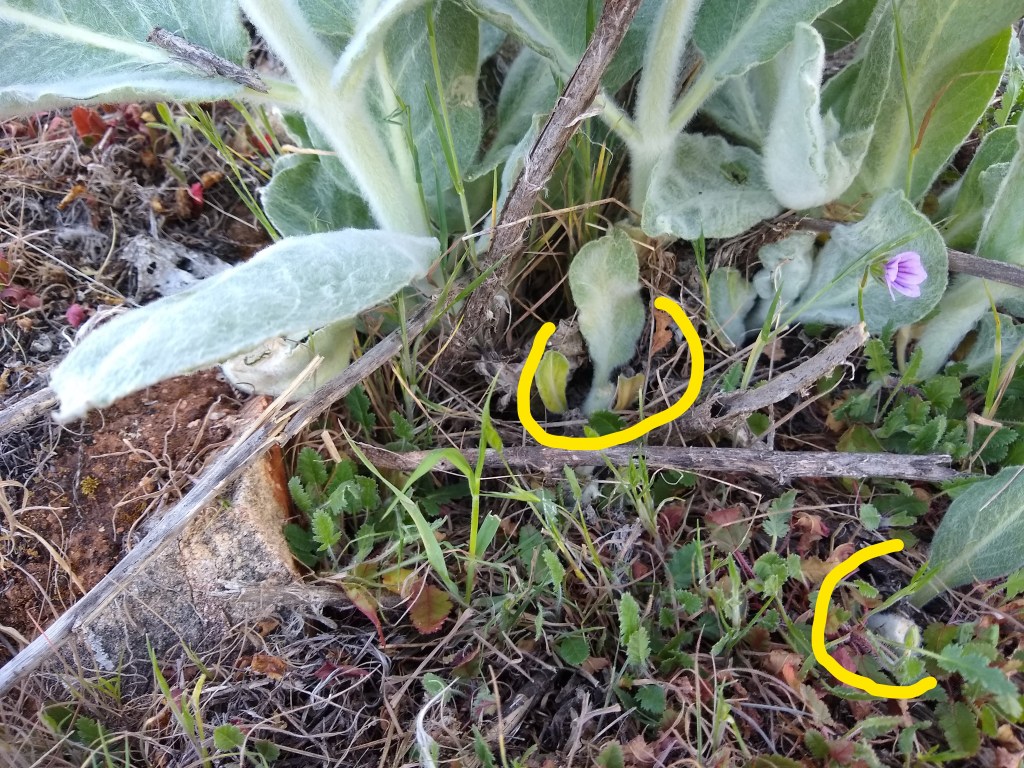
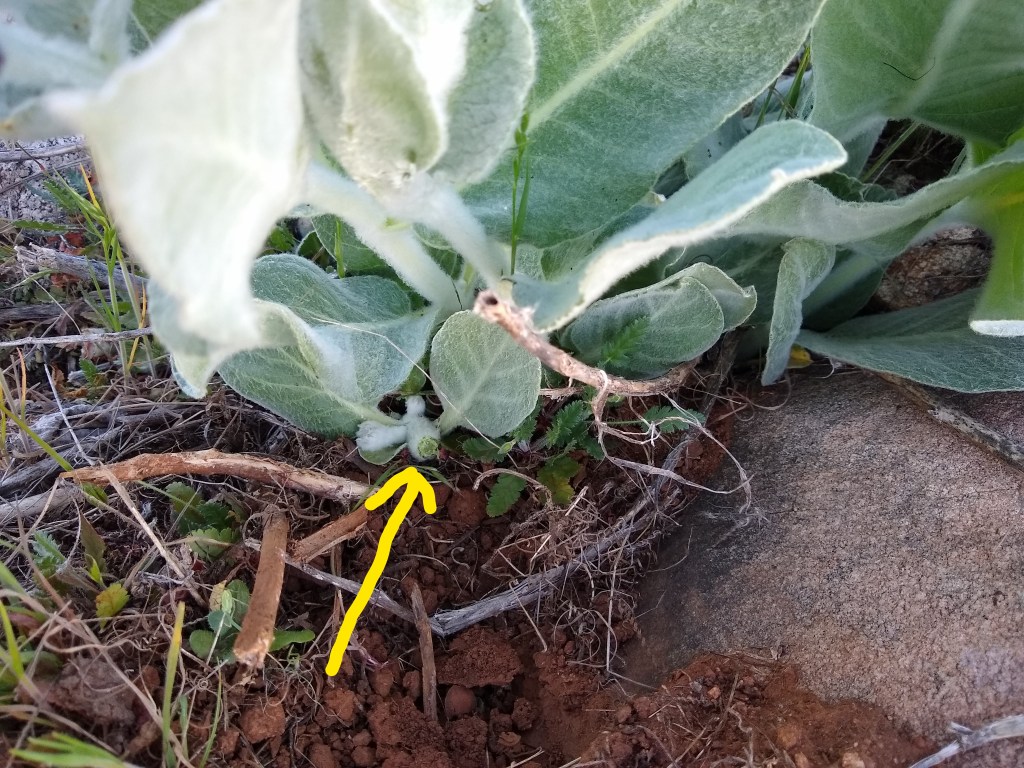
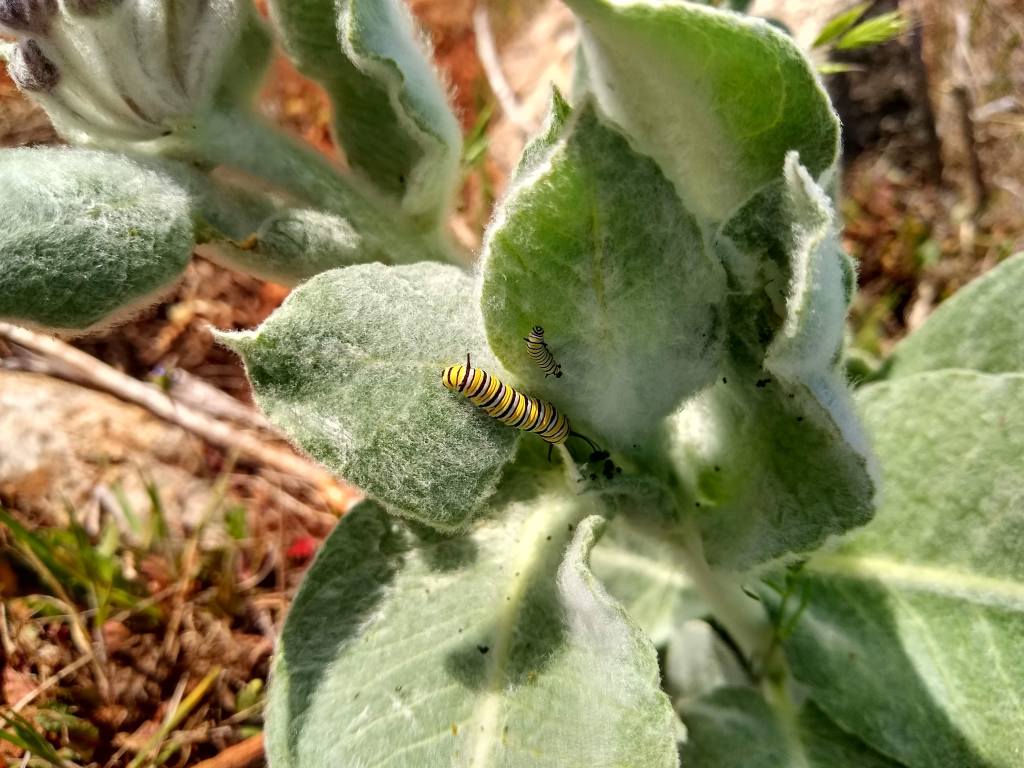
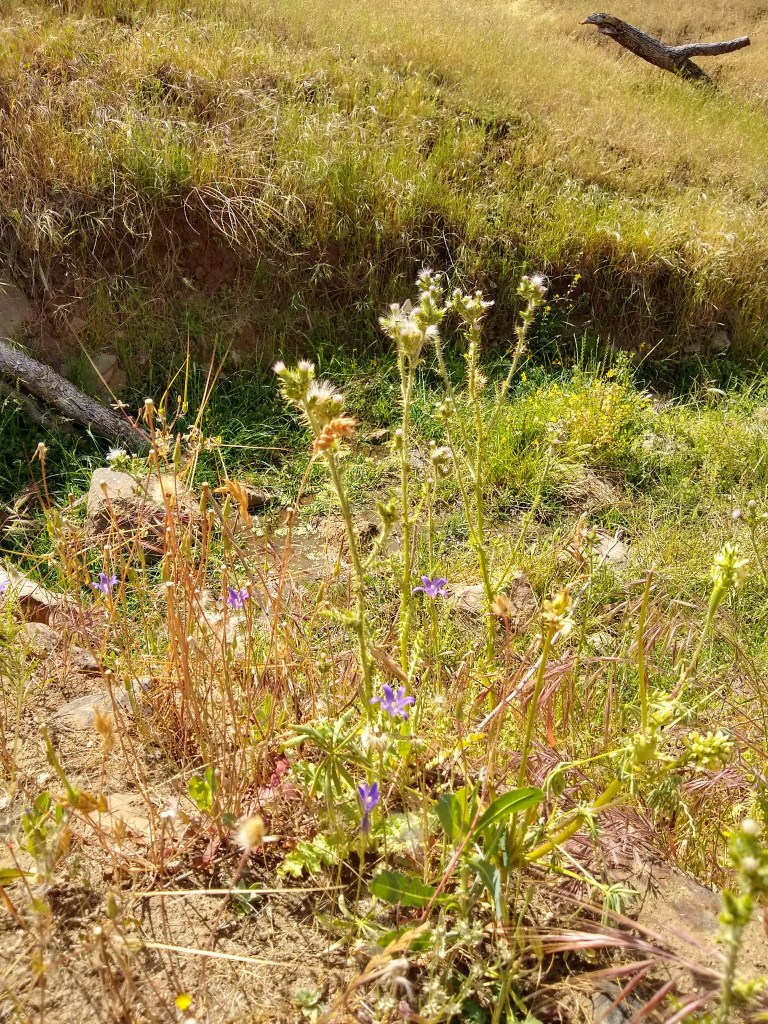
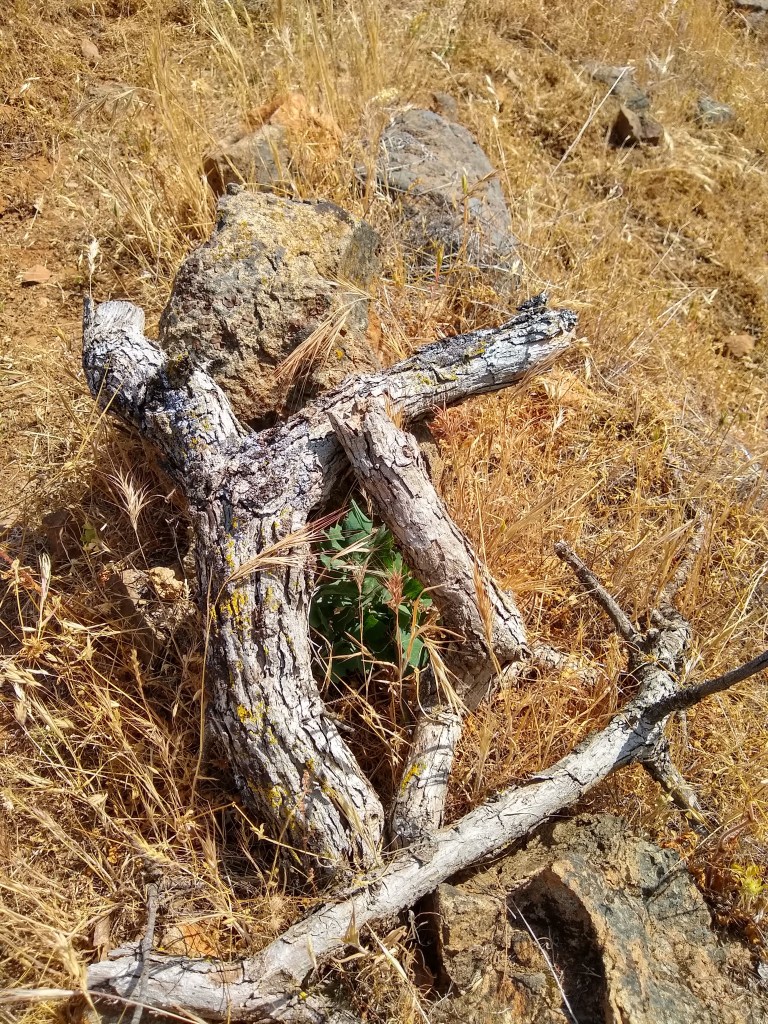
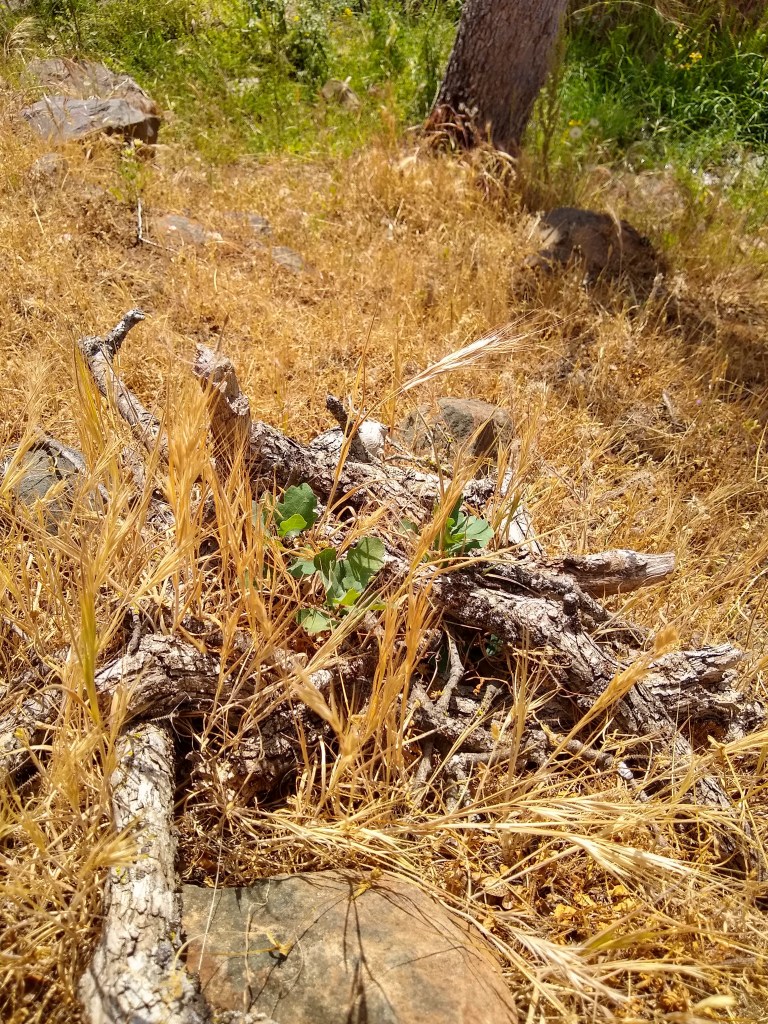
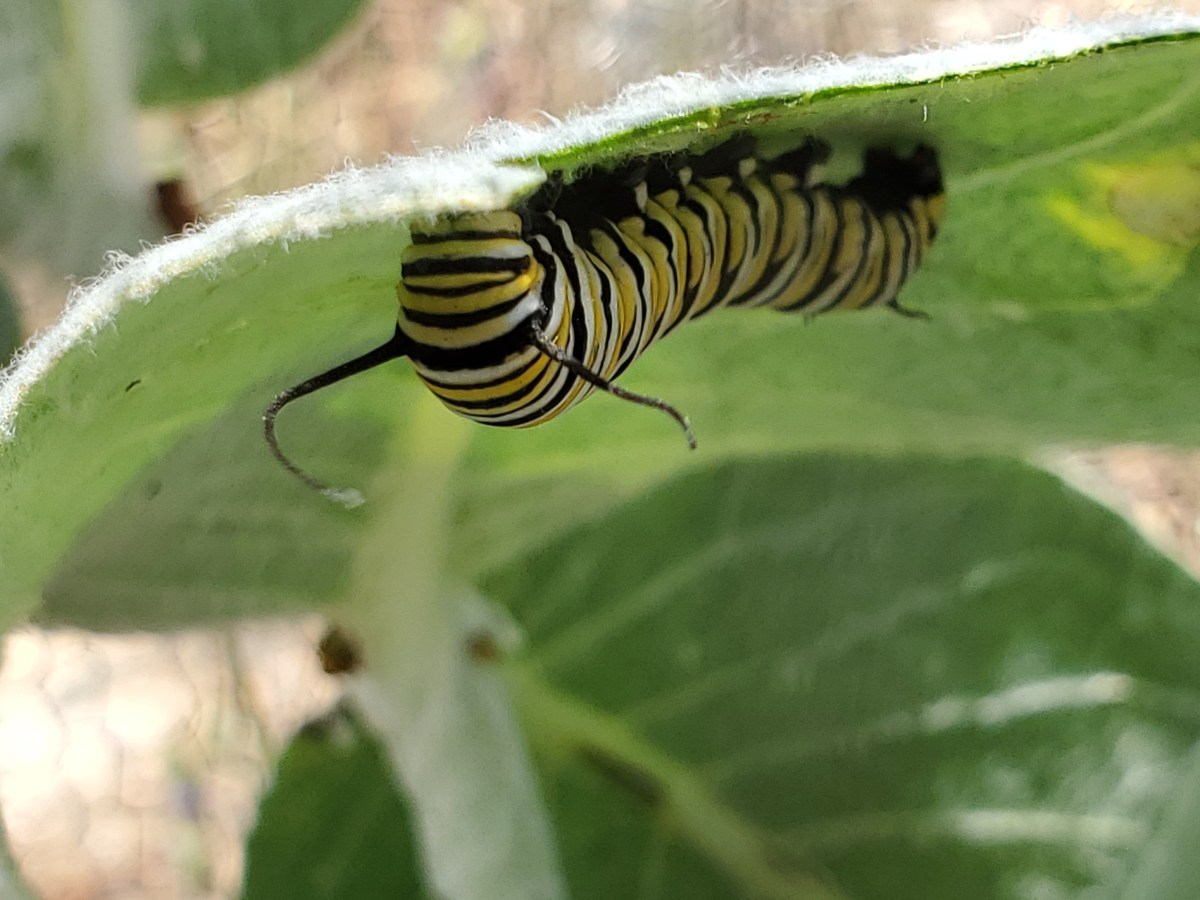
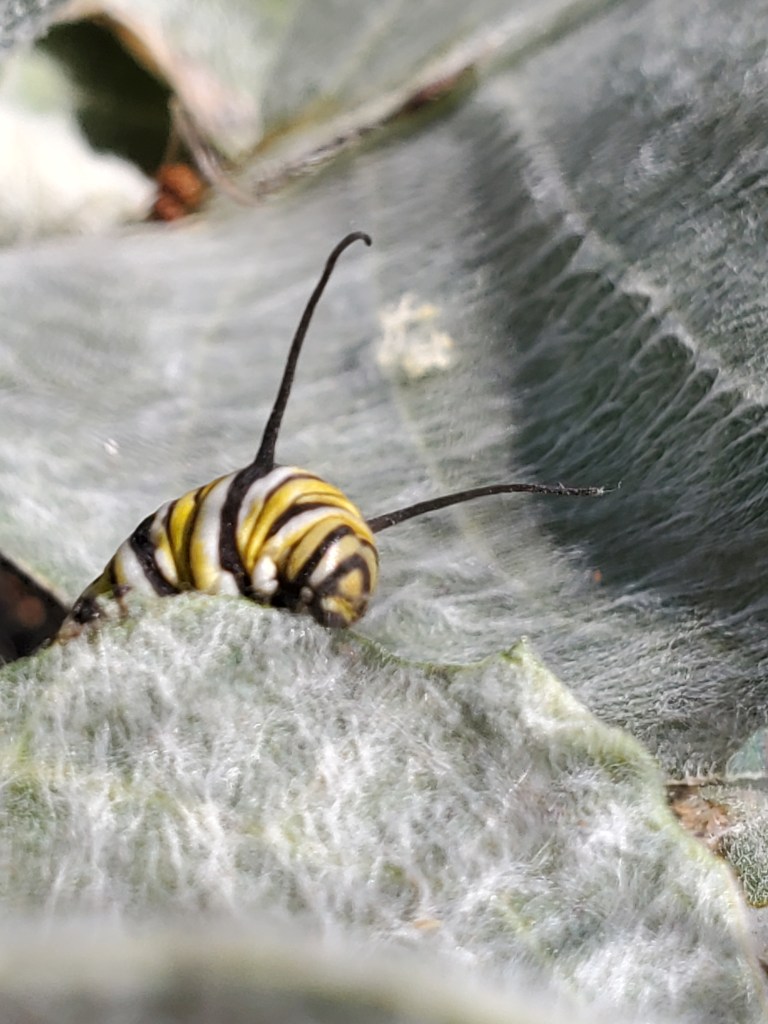
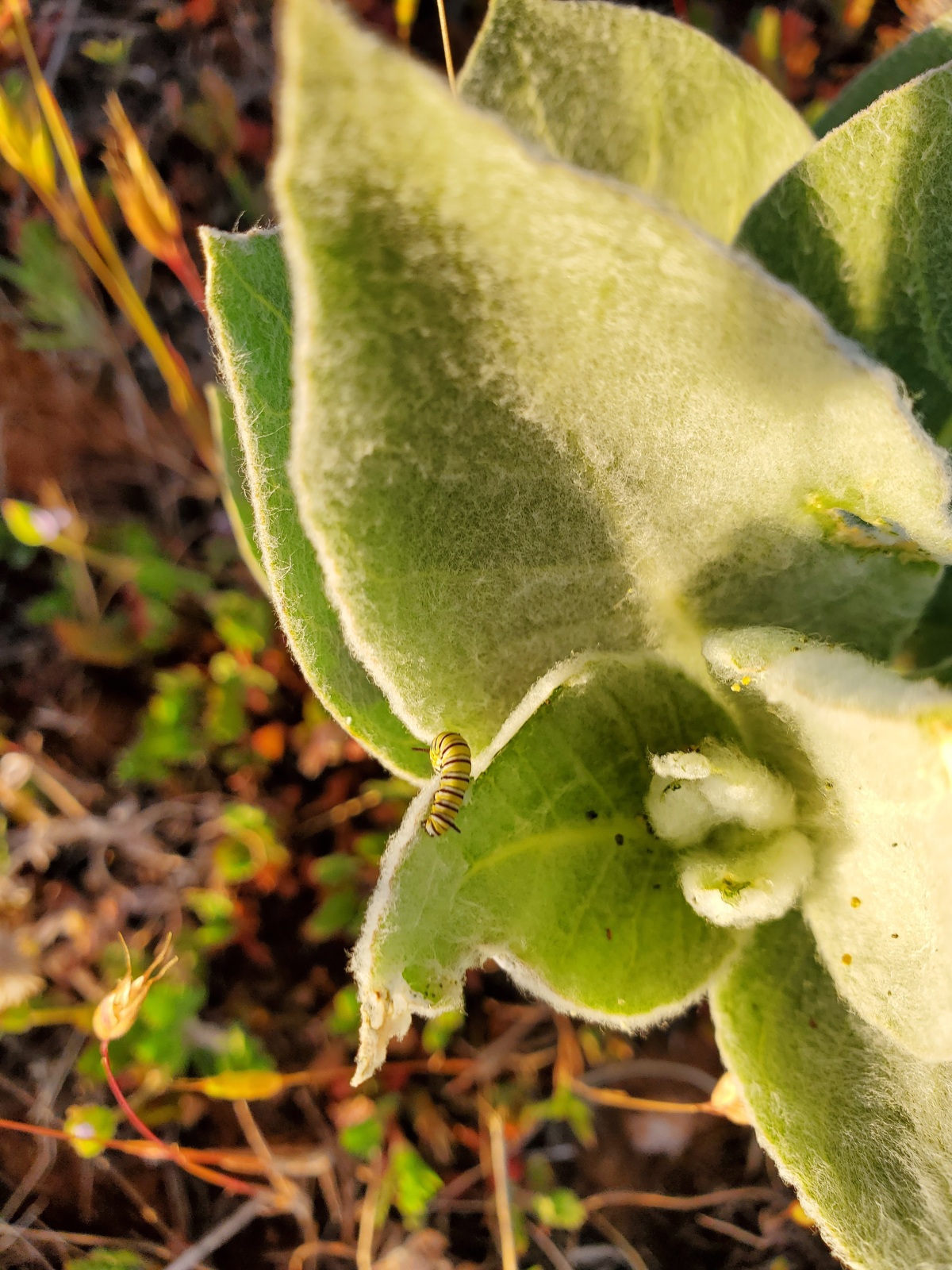
In April, the stars and milkweeds aligned, and I fell in love again. I was not expecting it. I bumped into my new love while inspecting the California milkweeds with biologist Tom D. Landis, who came all the way from Oregon to make an assessment of early milkweeds in Central California. I had not seen any caterpillars for a while, but then, all of the sudden, there it was, all by itself, clinging to one of the smallest California milkweeds. Tom saw it first, but then I locked eyes with its expressive antennae. I was smitten, and named it “In Hala’i”, “my friend” in my Native Yoeme language. Fortunately, David was not jealous, and accepted his temporary demotion as I trudged up and down the massive hill to spend time with my new love.

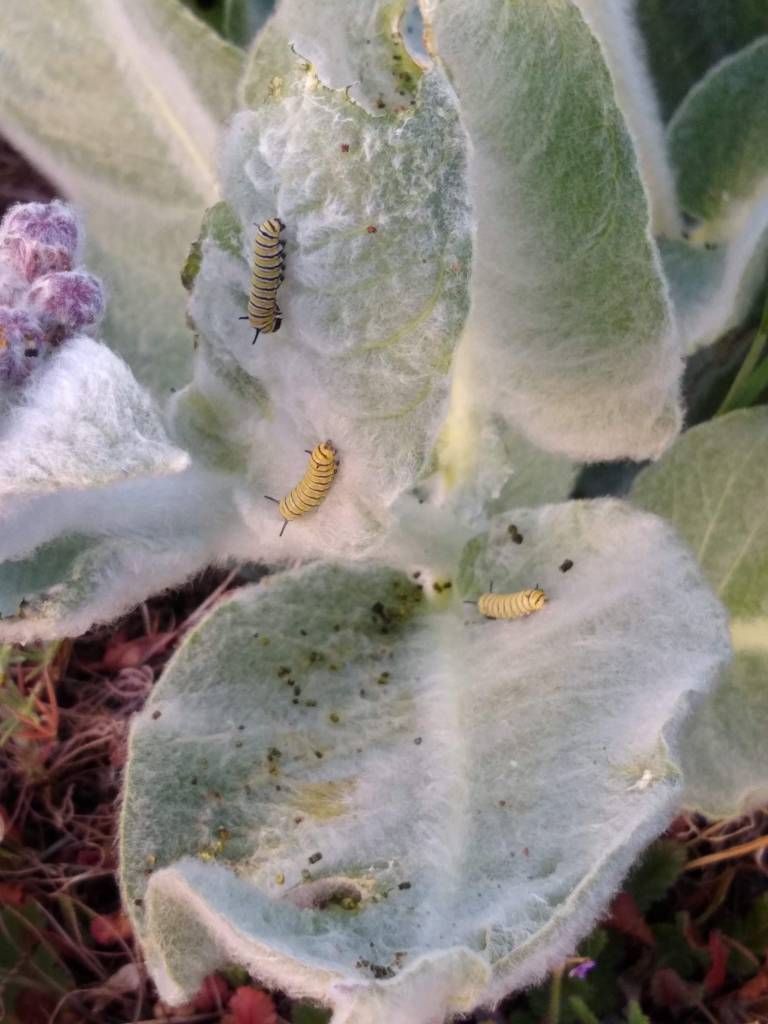
By now, you realize I am talking about a caterpillar. In Hala’i was the very last monarch caterpillar on the ranch. It makes me smile to think that I had monarchs laying eggs as late as early April high up in the California milkweed patch completely unbeknownst to me.

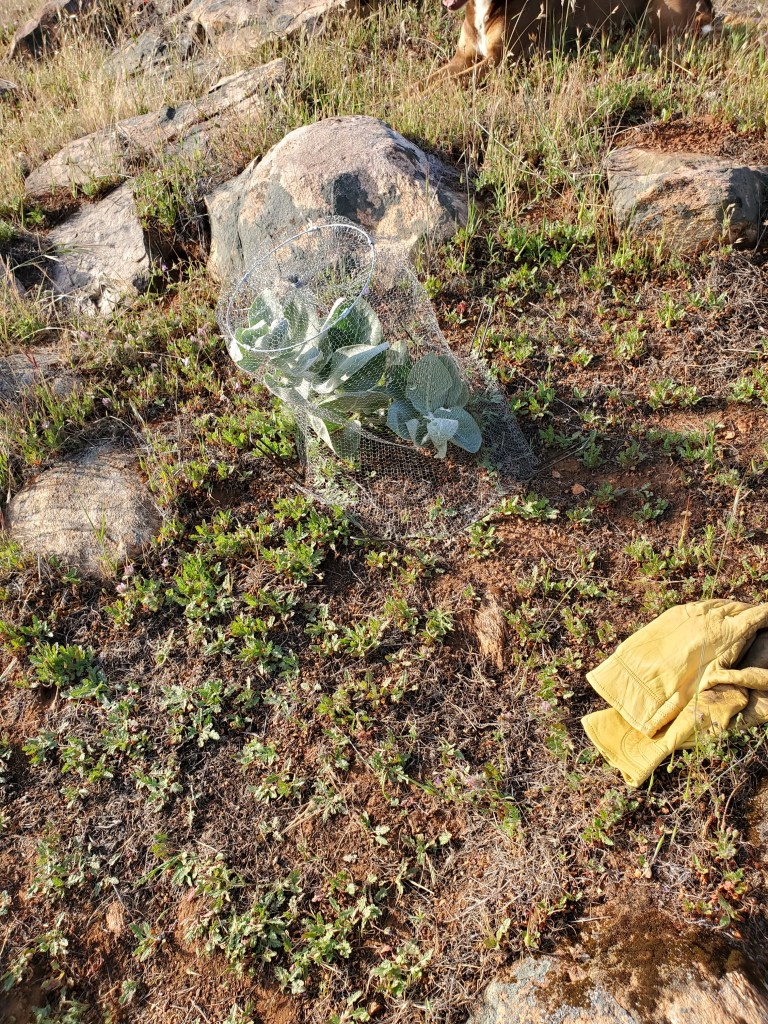
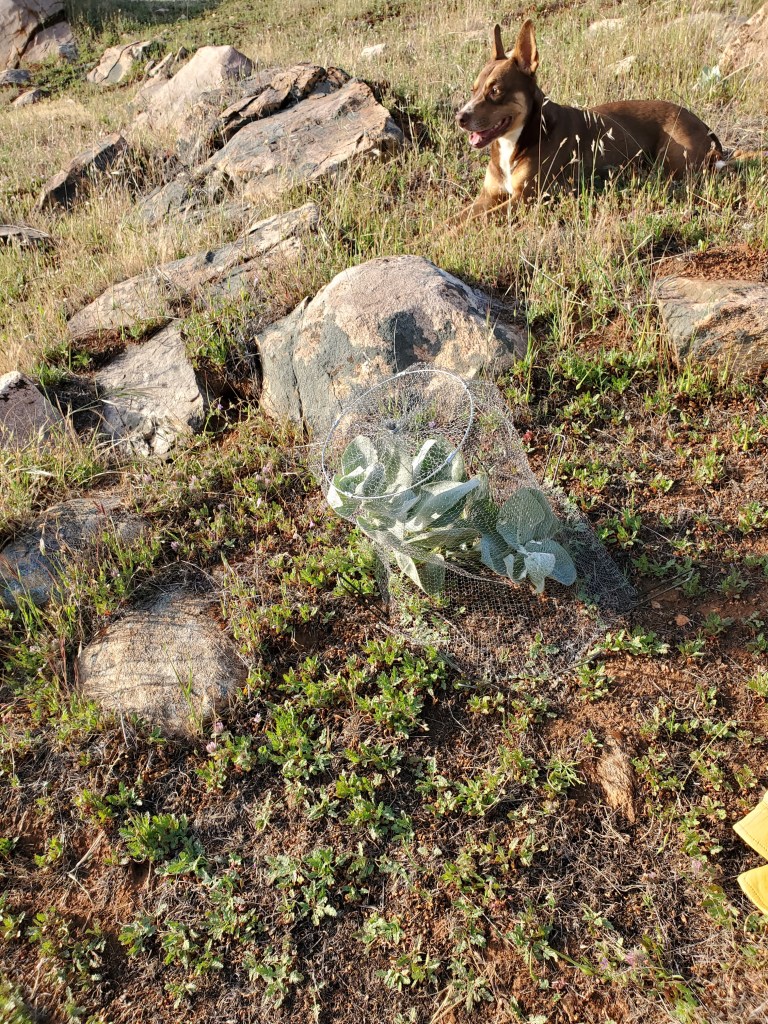
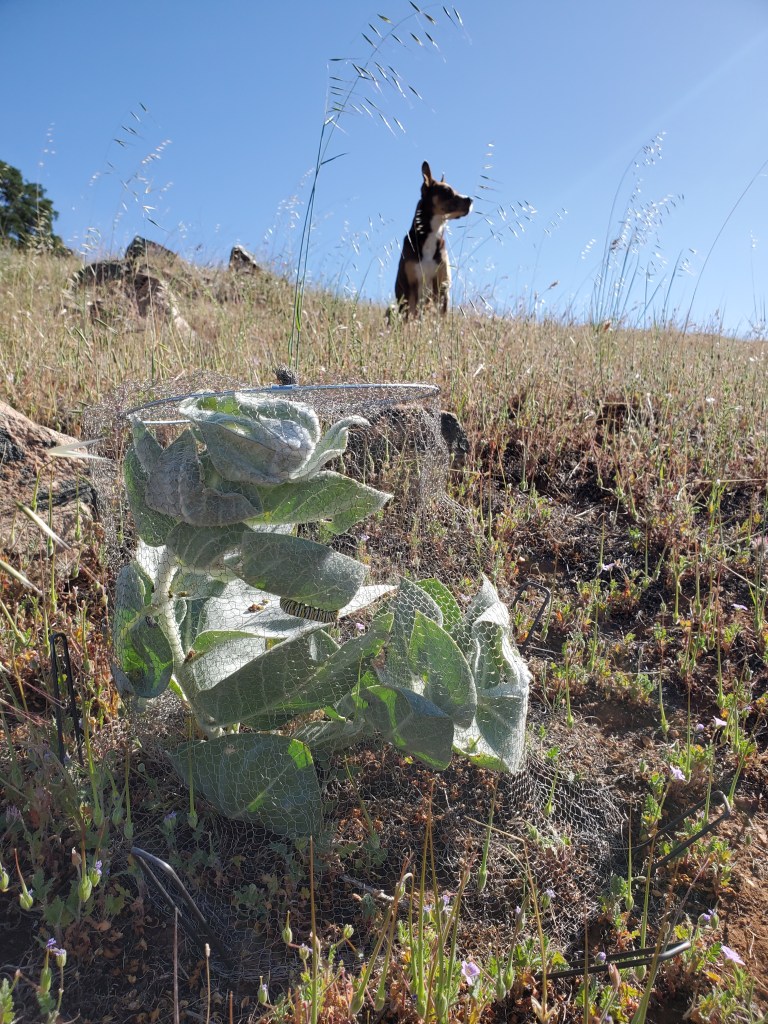
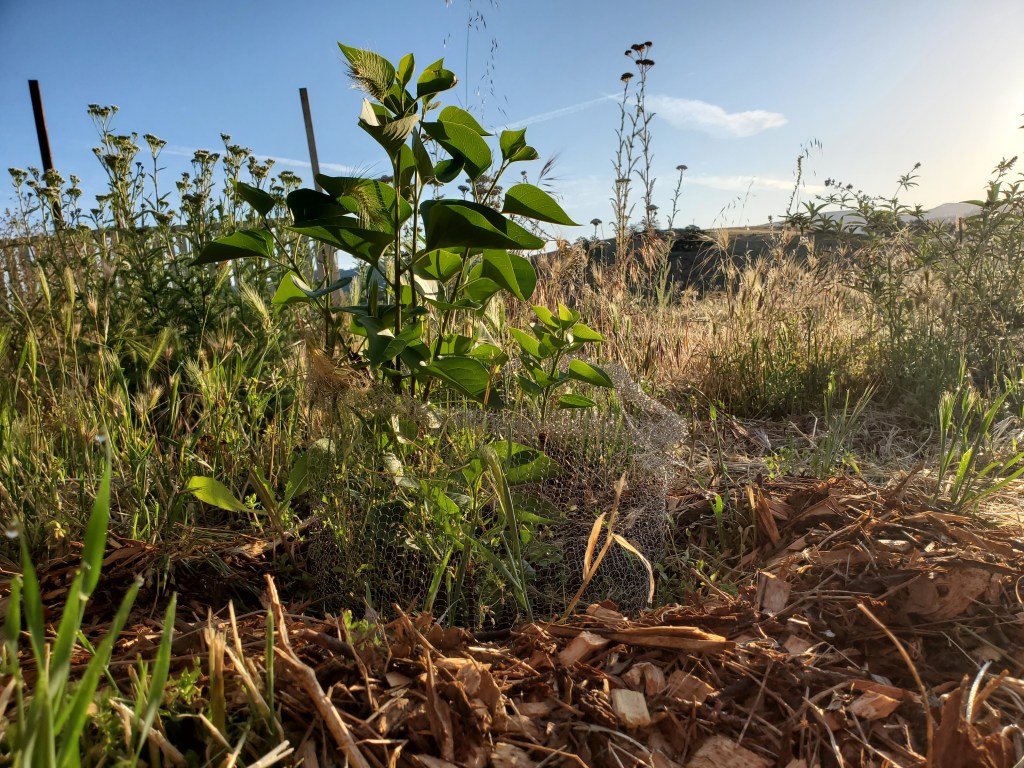
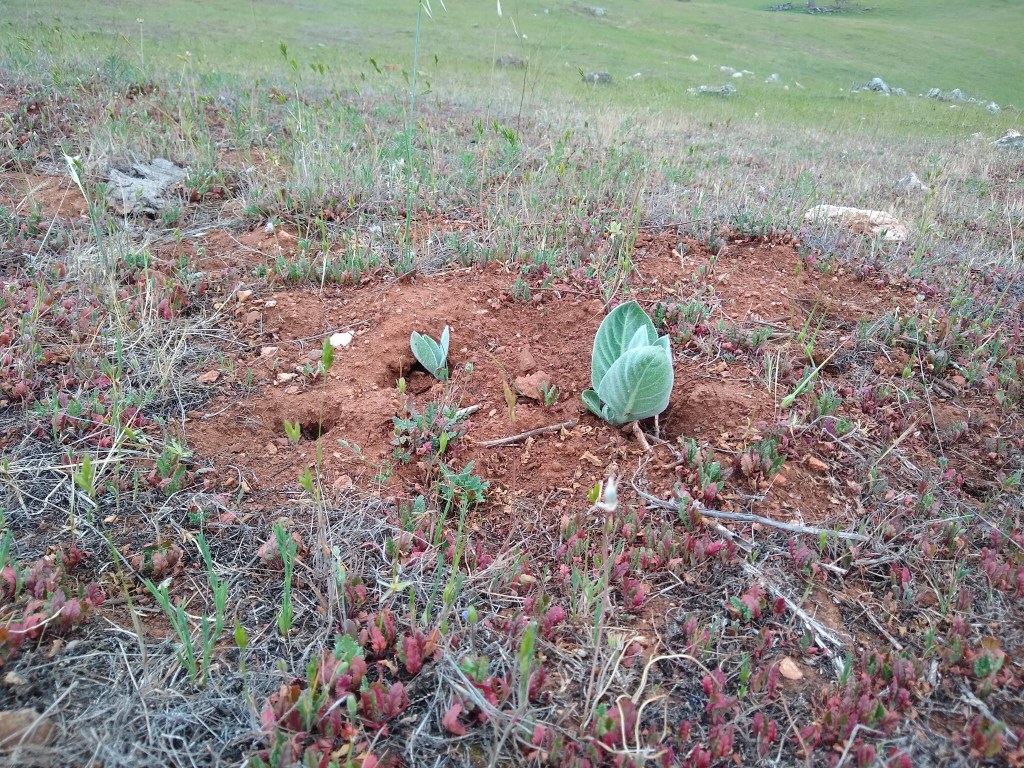
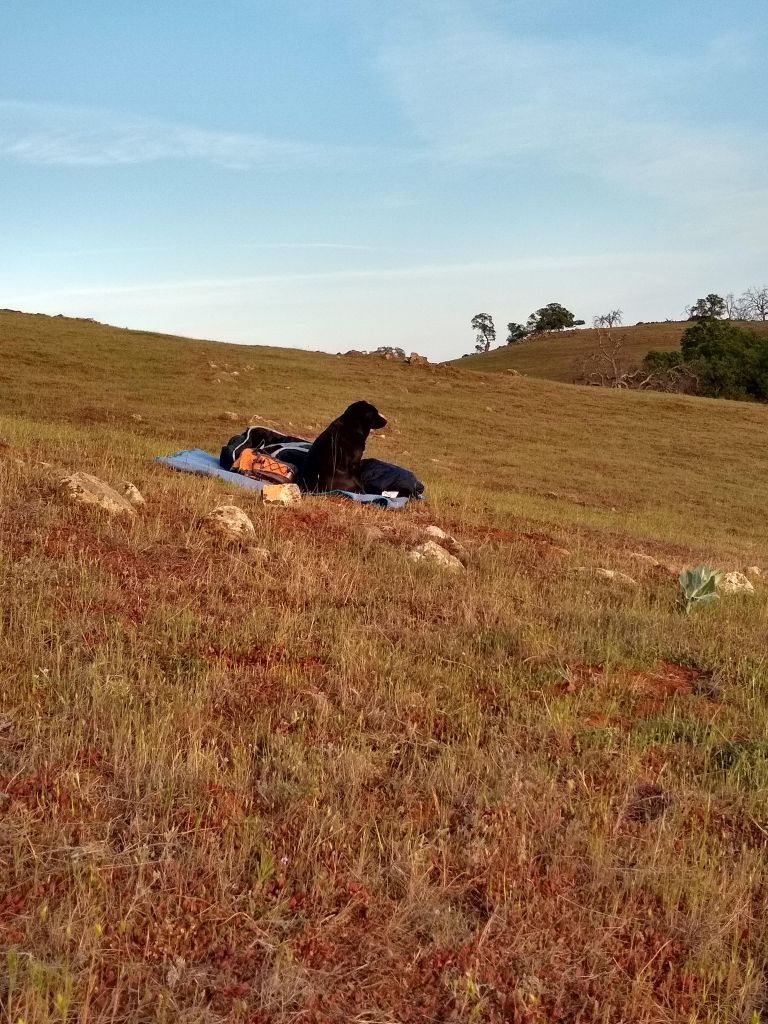
I made a commitment to ensure In Hala’i’s safety, to see it through to adulthood. I used a large stainless steel gopher mesh bag to cover the plant and staked it with mesh pins. I then visited the plant every other day originally, then daily as it got bigger, to ensure its comfort, safety and that it was eating. Yes, love makes a person do strange things. Though my giddiness and heart flutters were from tromping up a 60% grade daily, and maybe the flushes of heat were the result of being – a- eer – a woman over 50, I did have extreme happiness when I saw it, and utter disappointment when I did not. Sometimes I would stay a while, and we would talk about all of the amazing sights it would see when it became an adult.
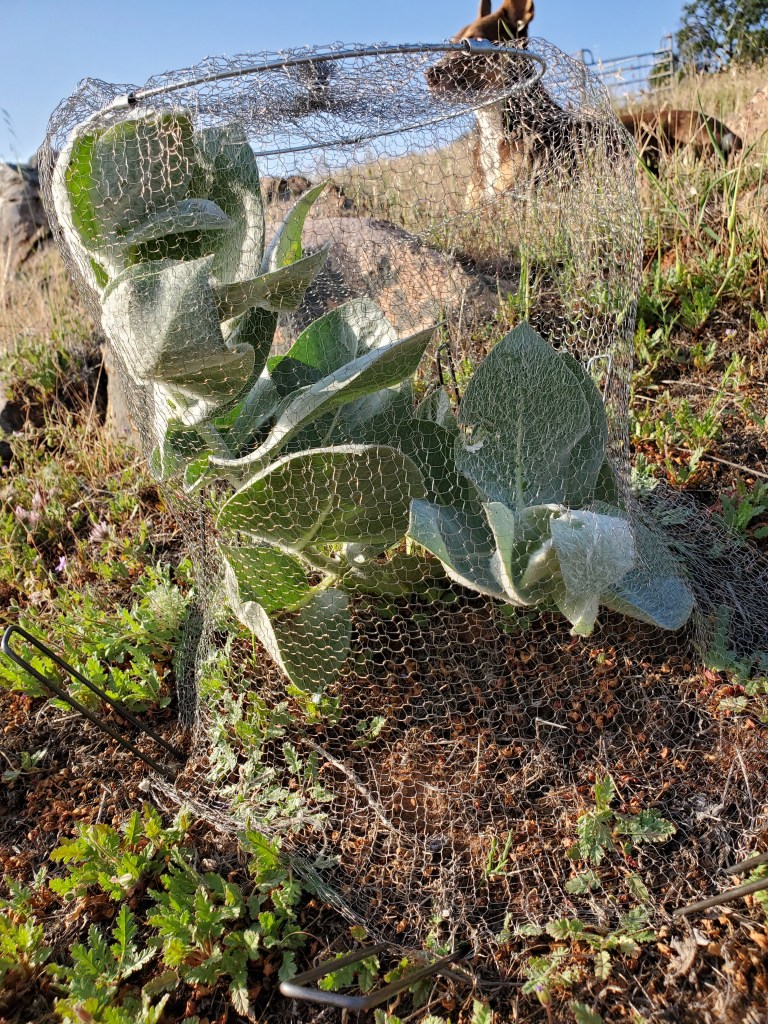
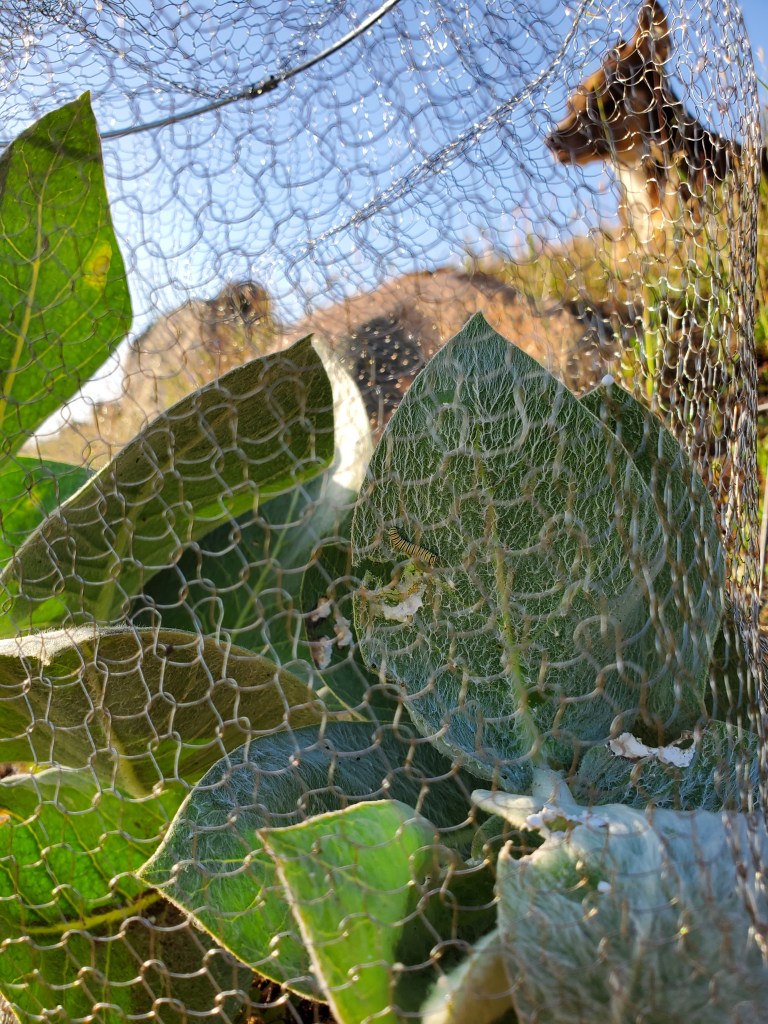
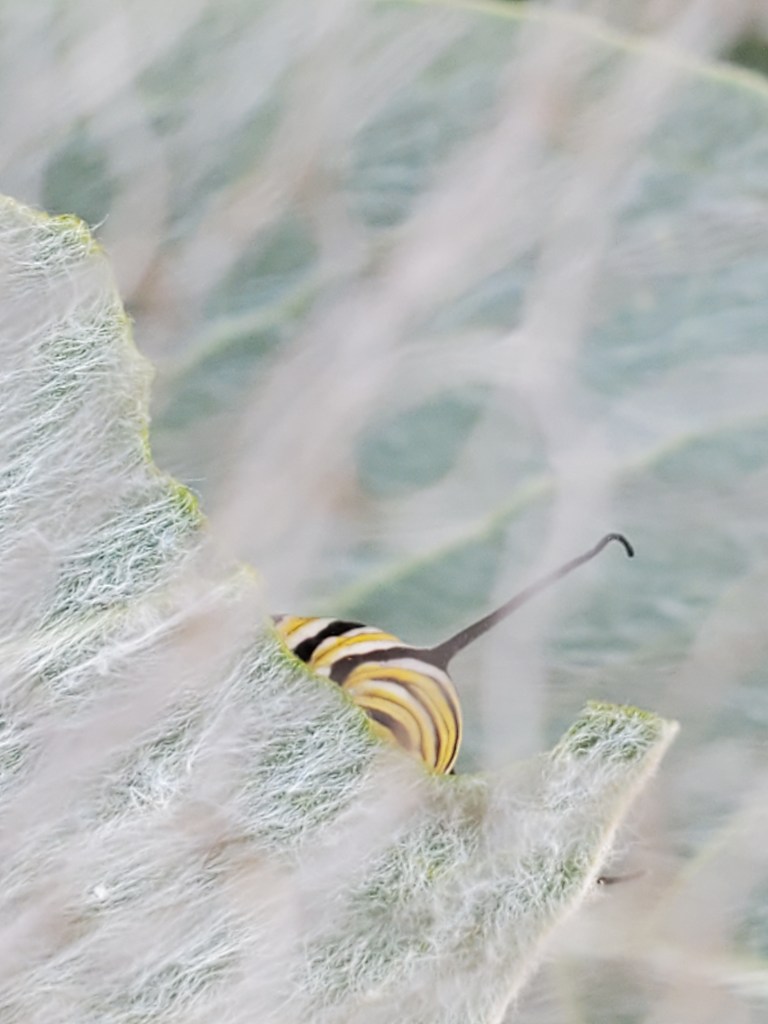
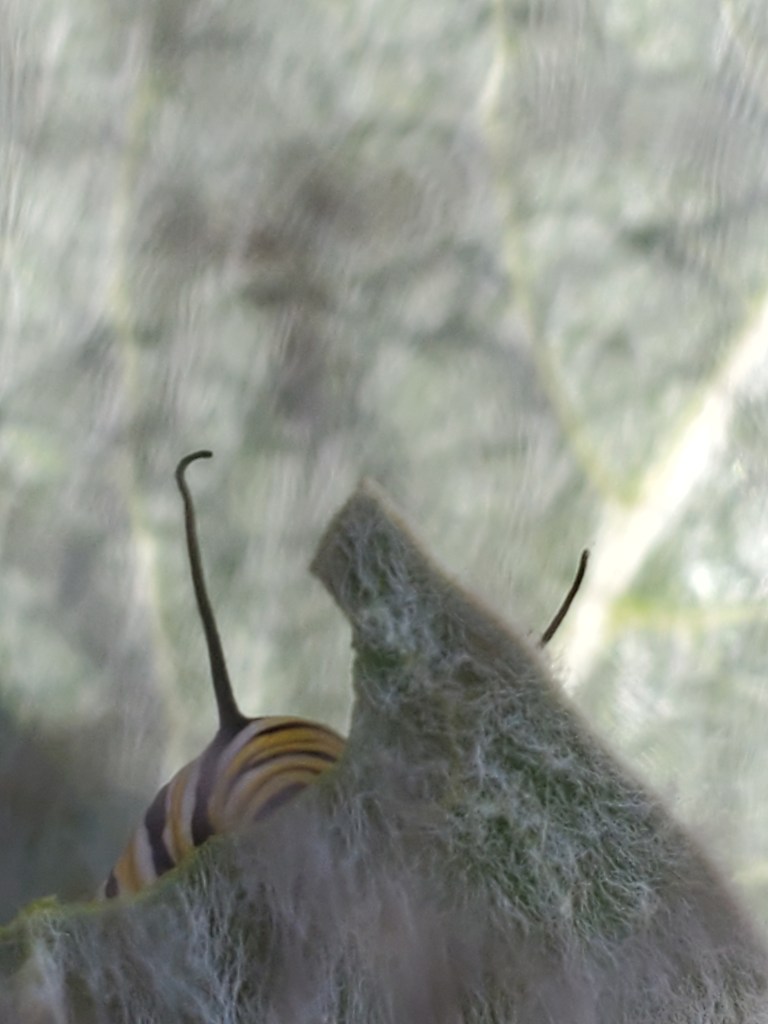
Adulthood means the metamorphosis to butterfly is complete. I am now waiting anxiously for that time – that time when In Hala’i will spread its wings and fly off to distant lands. On Sunday, a week ago today, was the last time I saw In Hala’i. All I could think of (and hope for) was that it found a safe place to make a chrysalis. I had watched it grow from less than half an inch to 2 inches, and that is the magic length. In Hala’i had gotten to that size in a caterpillar’s life when such things as transformation could happen any day. Perhaps last Sunday or Monday was that day. I am still monitoring daily. Today, Sunday 5/15, will be the earliest In Hala’i could change, so I will begin monitoring twice a day. There is always the possibility the caterpillar crawled under the basket and made a chrysalis elsewhere. Hopefully, I will get to see it, alive, healthy and ready to launch out into the world. I love you In Hala’i and wish you well my dear friend.
Updates from Before In Hala’i

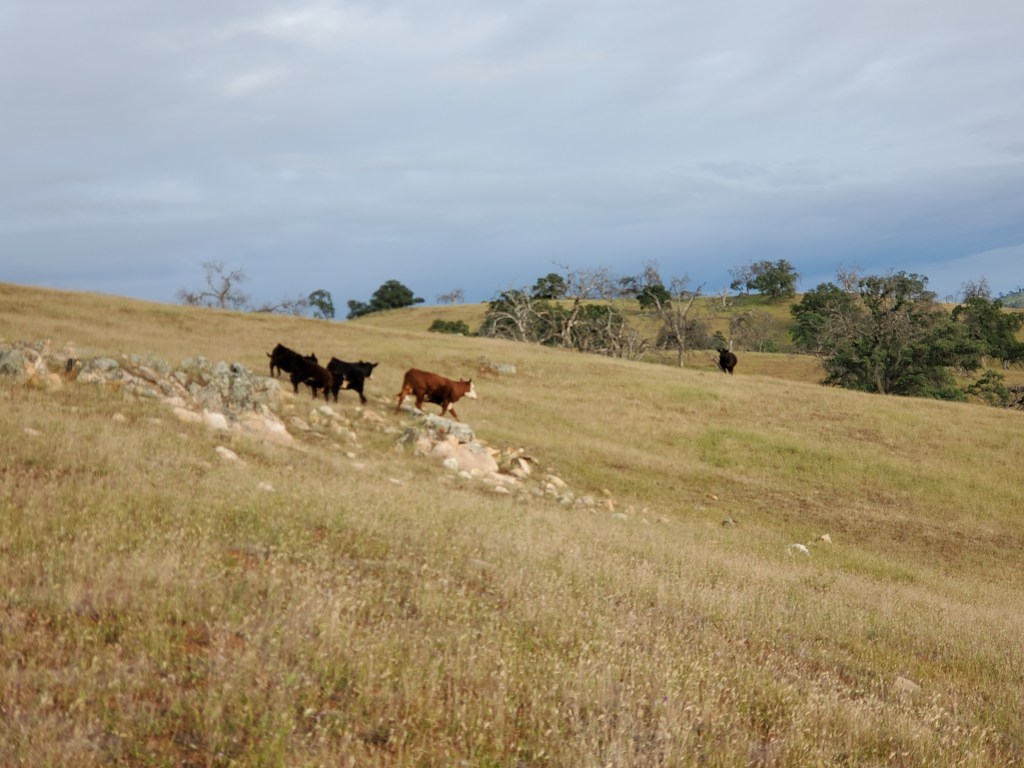
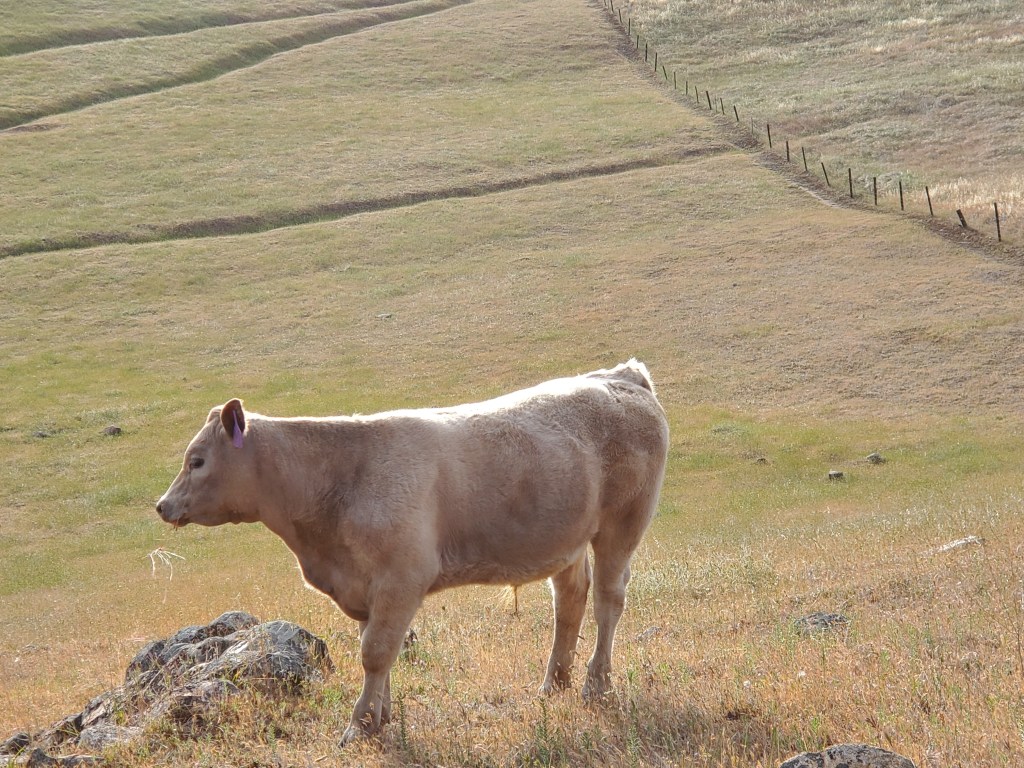
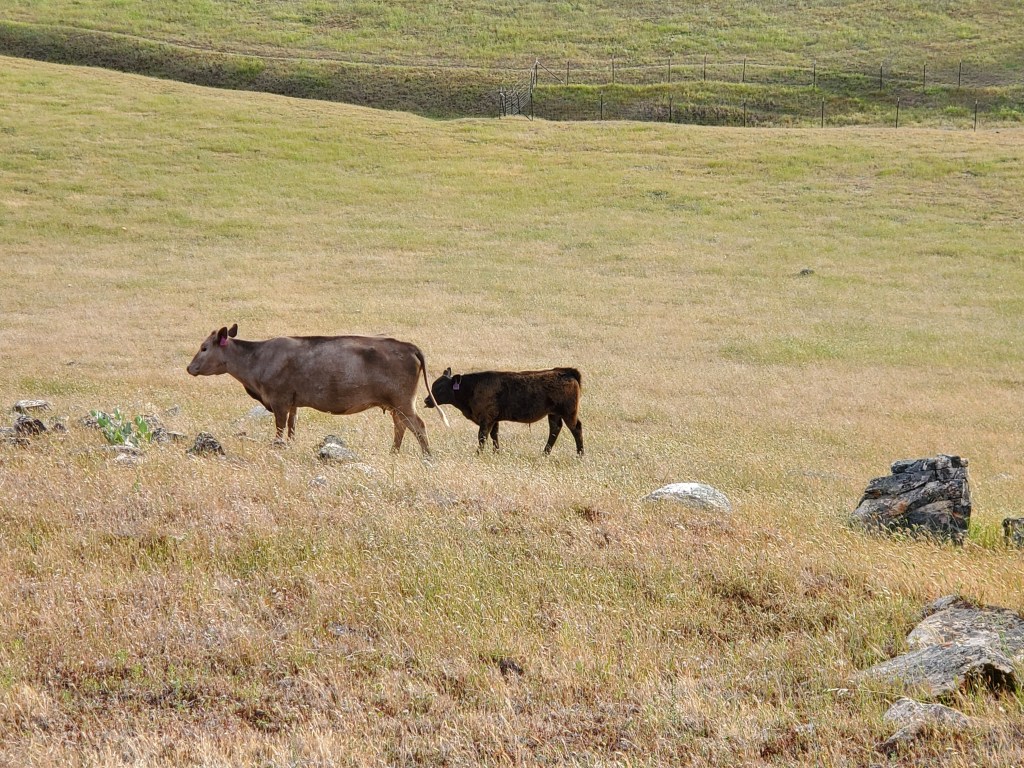
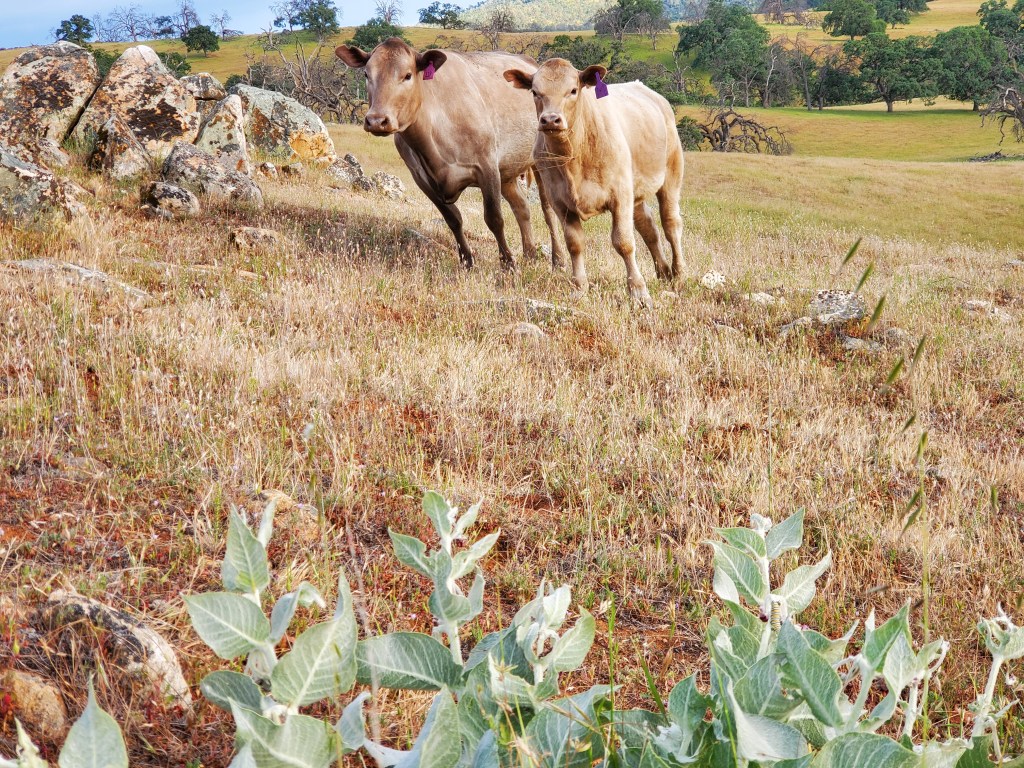
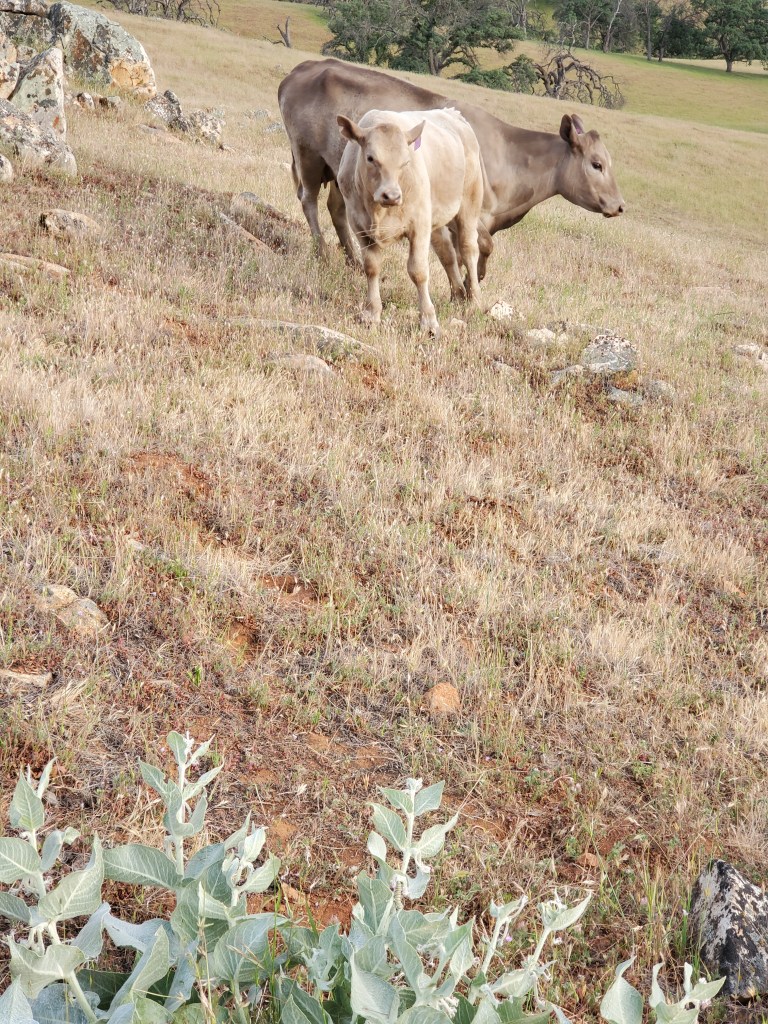
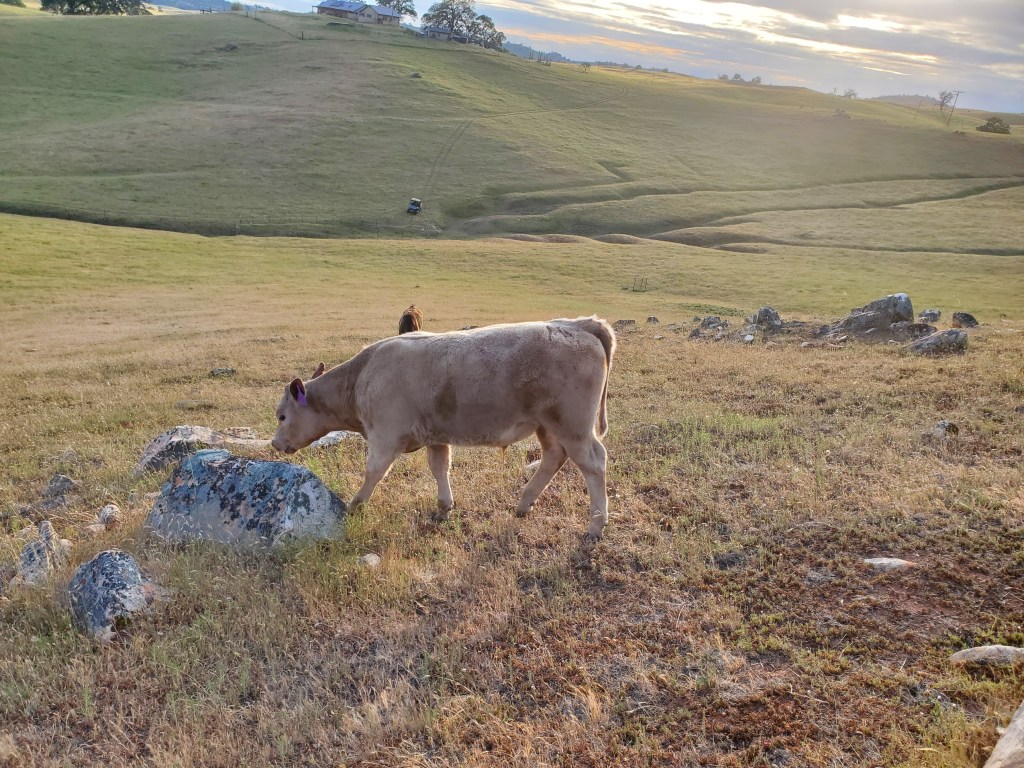
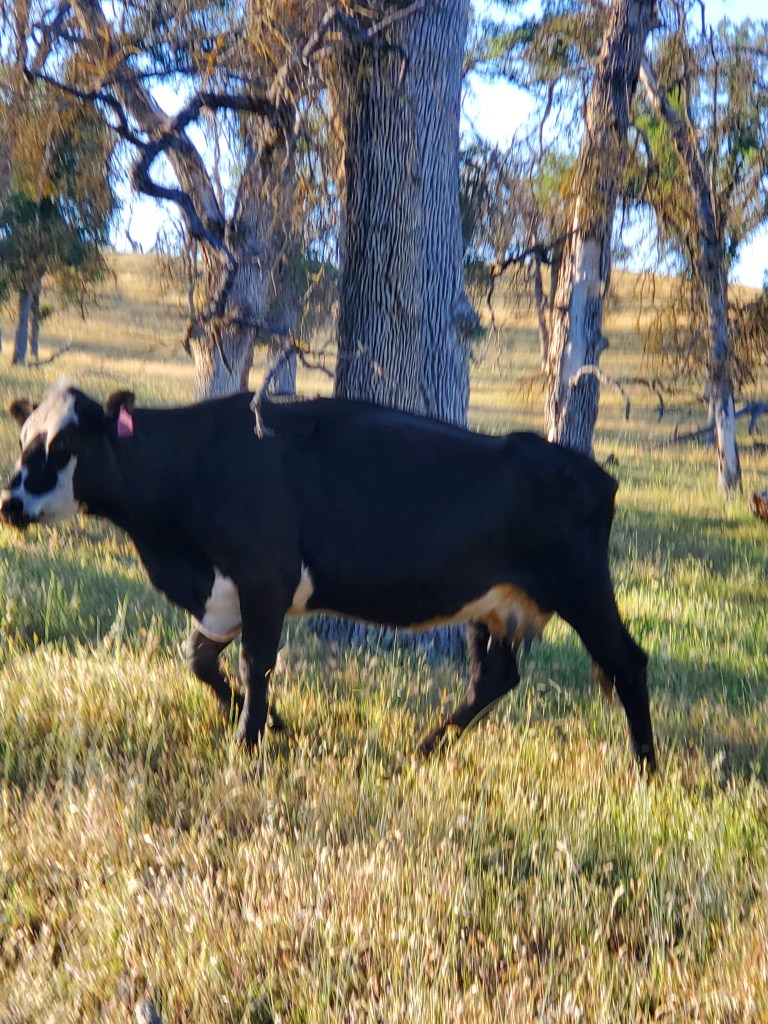
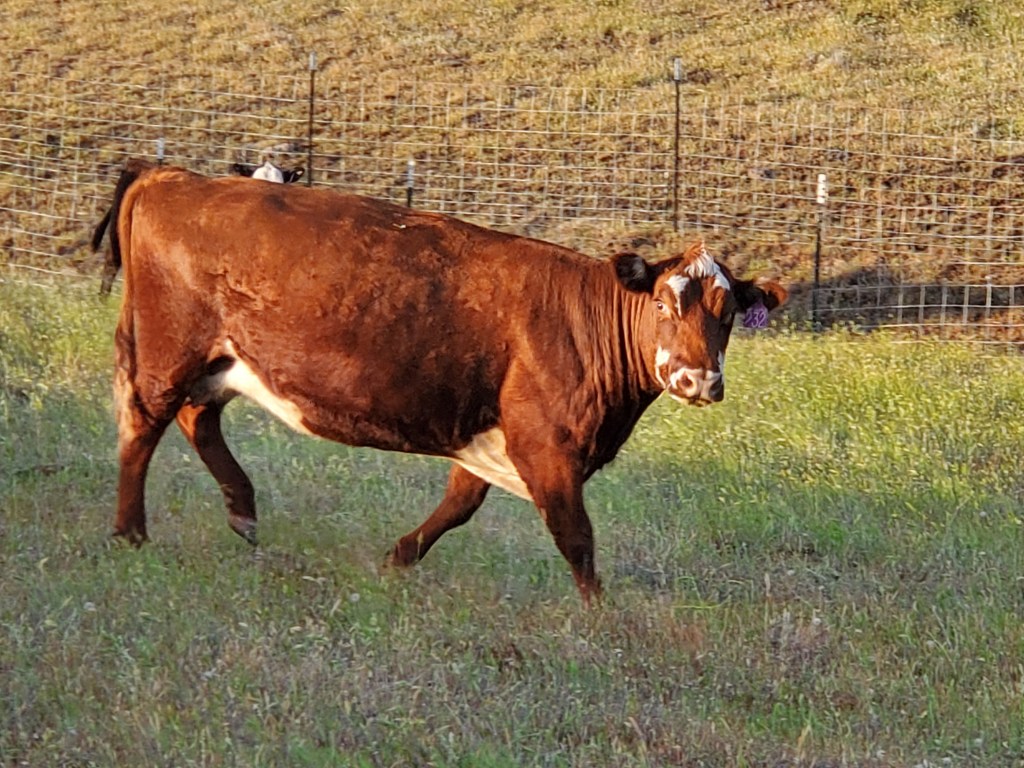
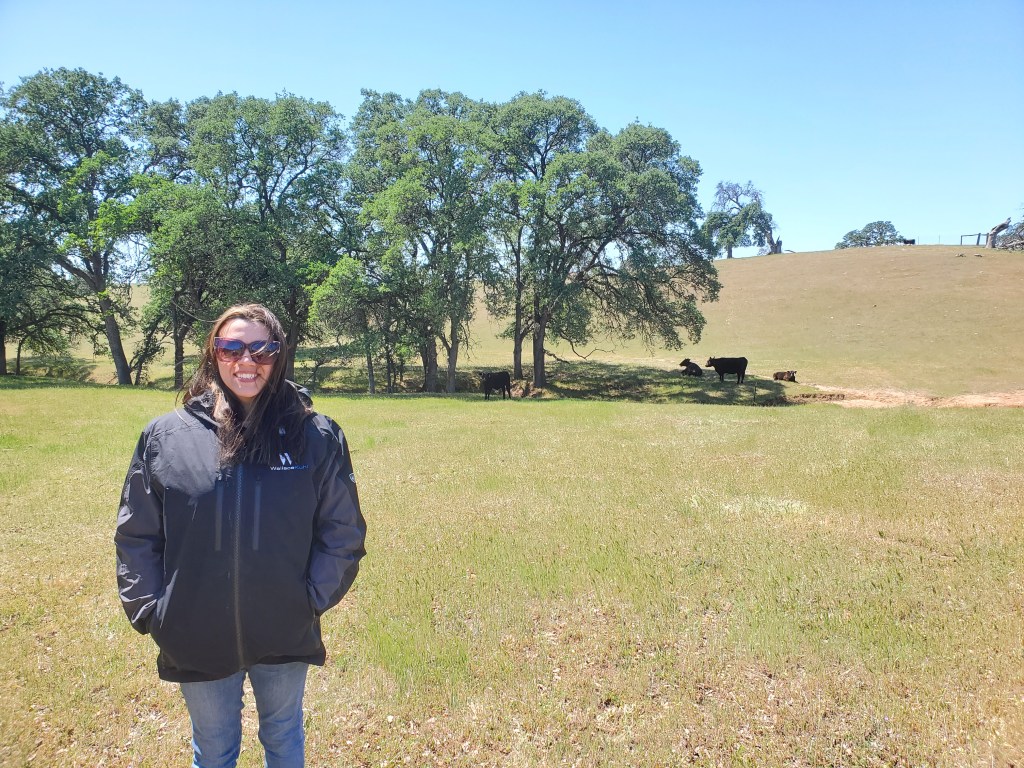
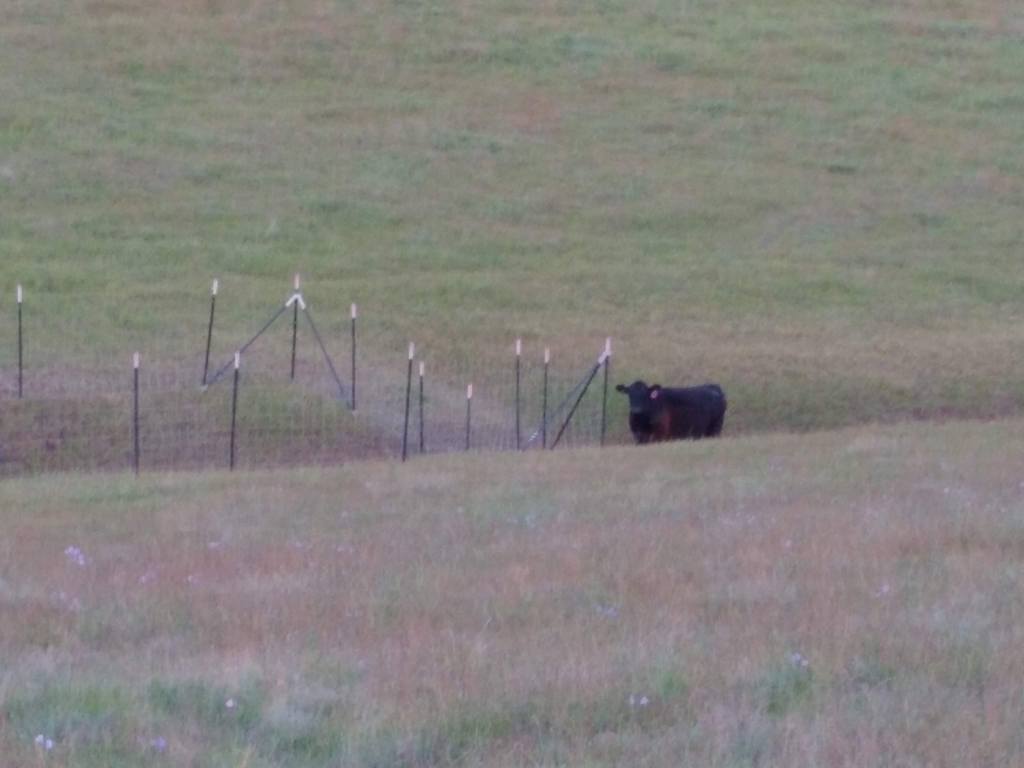
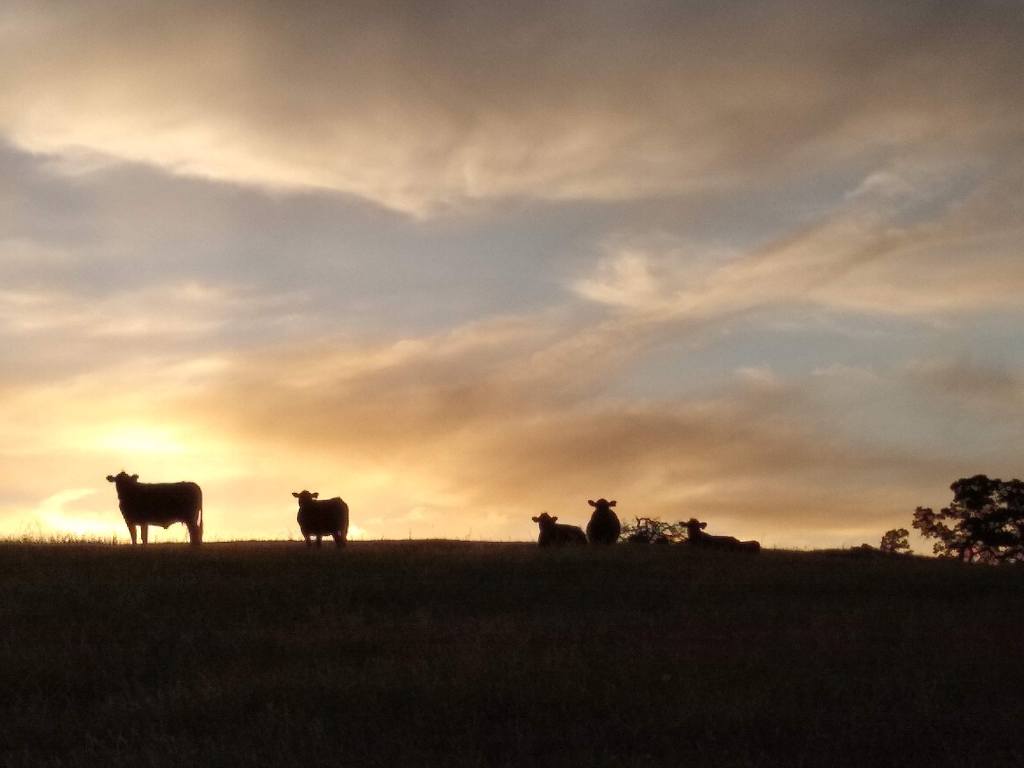
In early April, there was one last cow stand-off to protect the second wave of caterpillars. It involved a curious calf, which means it involved its mother too. Not a good situation. Every time we (Beatrix, Millie and I) asked the calf to leave, mamma would get upset. We would back off, then she would back off. But then the calf would come back toward the plant. It was a frustrating, time-consuming, delicate enterprise. Eventually, we triumphed. The calf lost interest, and the pair went along their way downhill. They are a sweet pair. I really love them, but we have to make space for all creatures. Fortunately, the next day, the cattle were back to the south once again, allowing the rest of the caterpillars to grow to maturity without fear of cow incursion.

Continuing Outreach and Education

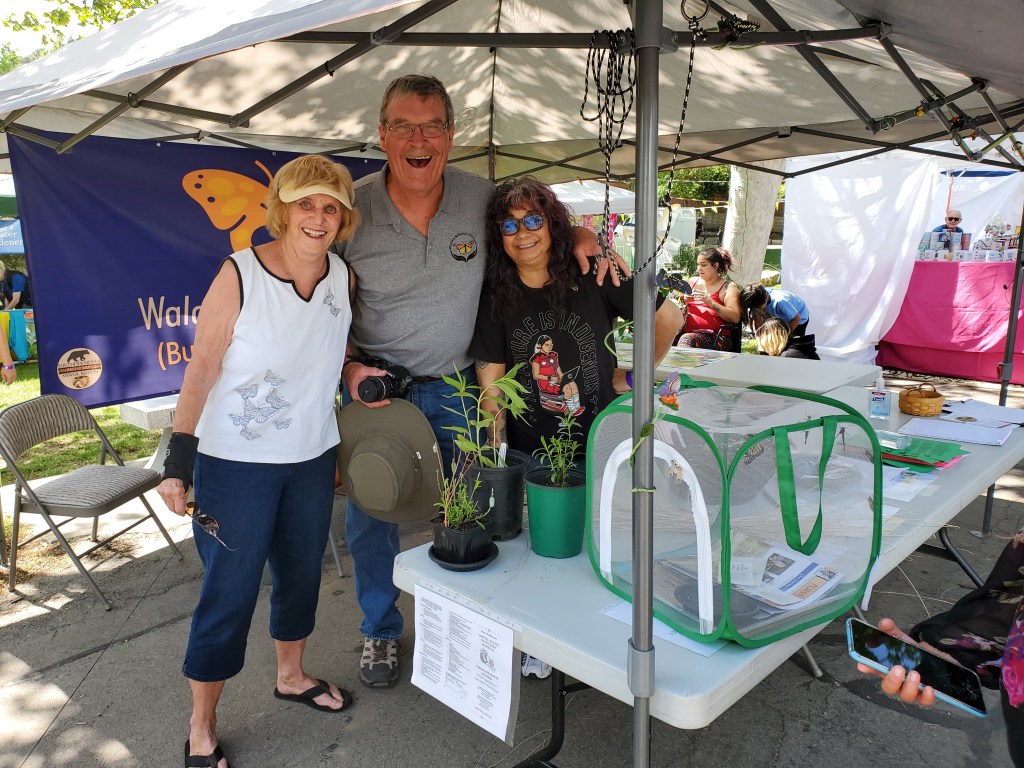
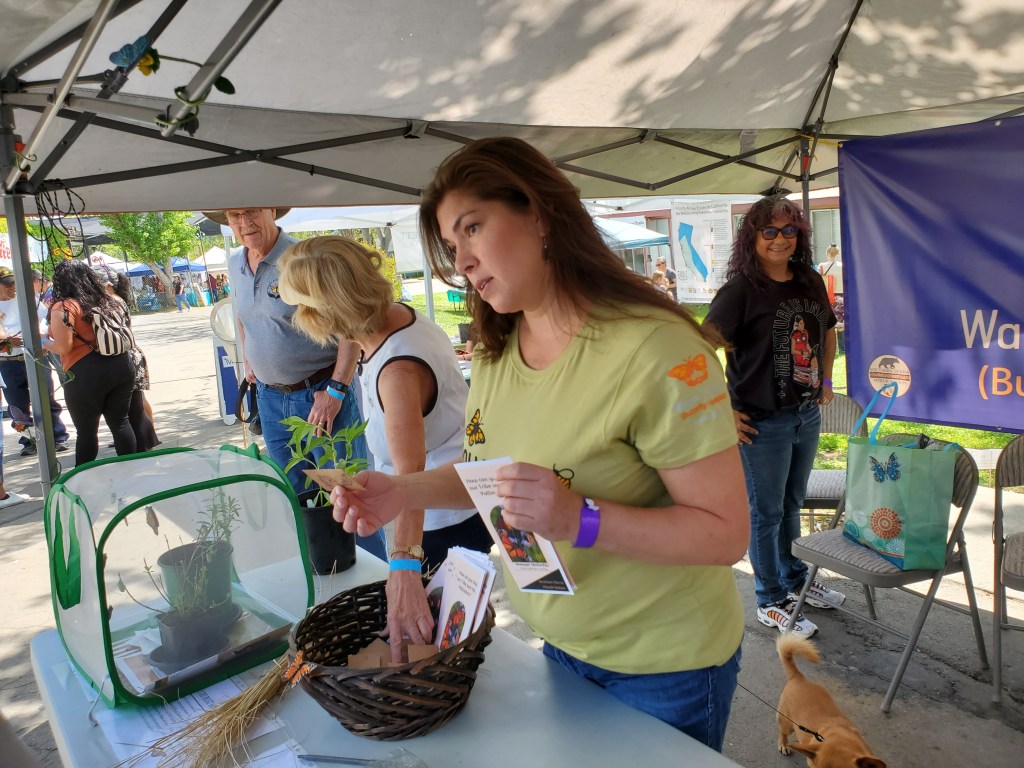
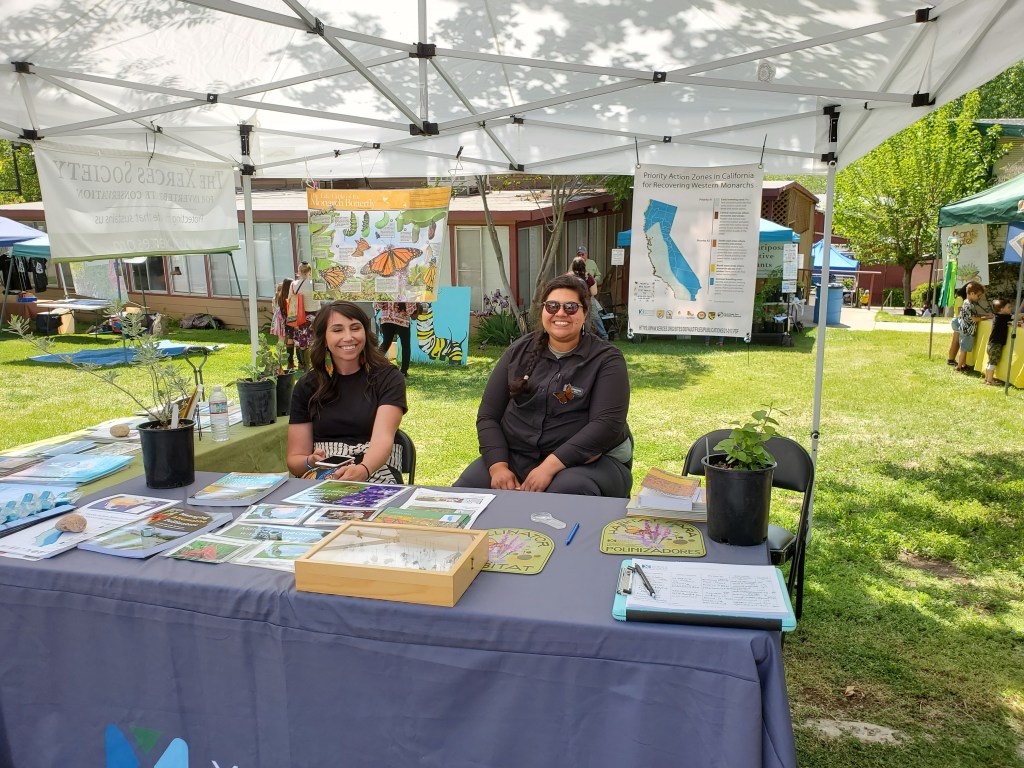
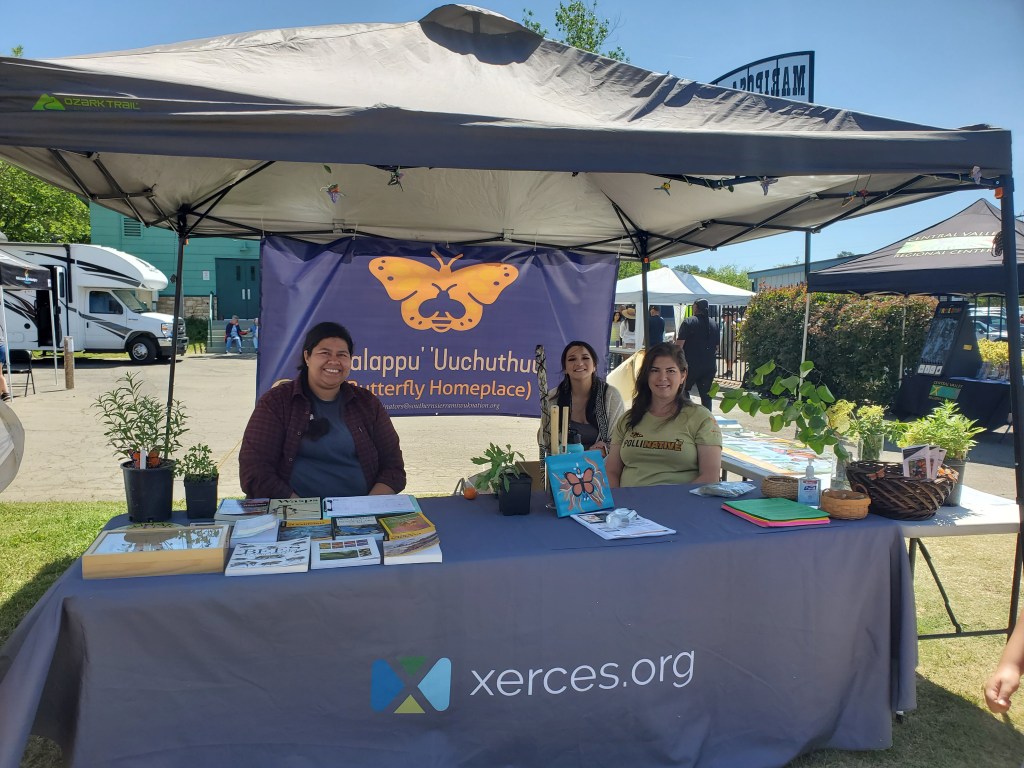
The Pollinator Team has continued to provide outreach to the public with pollinator education. Kristie and Nellie, with another volunteer, Gussie, have been gathering the information of residents of Mariposa county interested to install habitat as well as convincing others in the flyway to plant pollinator-friendly plants. Deedee Soto of Xerces, who is a member of our Pollinator Team, had a booth at the Butterfly Festival and shared a booth with the Team at the Pow Wow. It is always so helpful to have her as an expert available to answer questions. We always appreciate the generosity of the Xerces Society. I volunteered with them at the Butterfly Festival and briefly at the Pow Wow. It was wonderful to see so many people interested in monarchs. We had a special appearance from Nellie’s grandfather, Bill Tucker, who is a good friend as well as an honored Tribal elder. Also making a special appearance were biologist Tom D. Landis and monarch expert Diana Magor. Both came to perform early milkweed inventories with Ron Allen (UC Master Gardener and Mariposa Native Plants owner). It was a fun day.
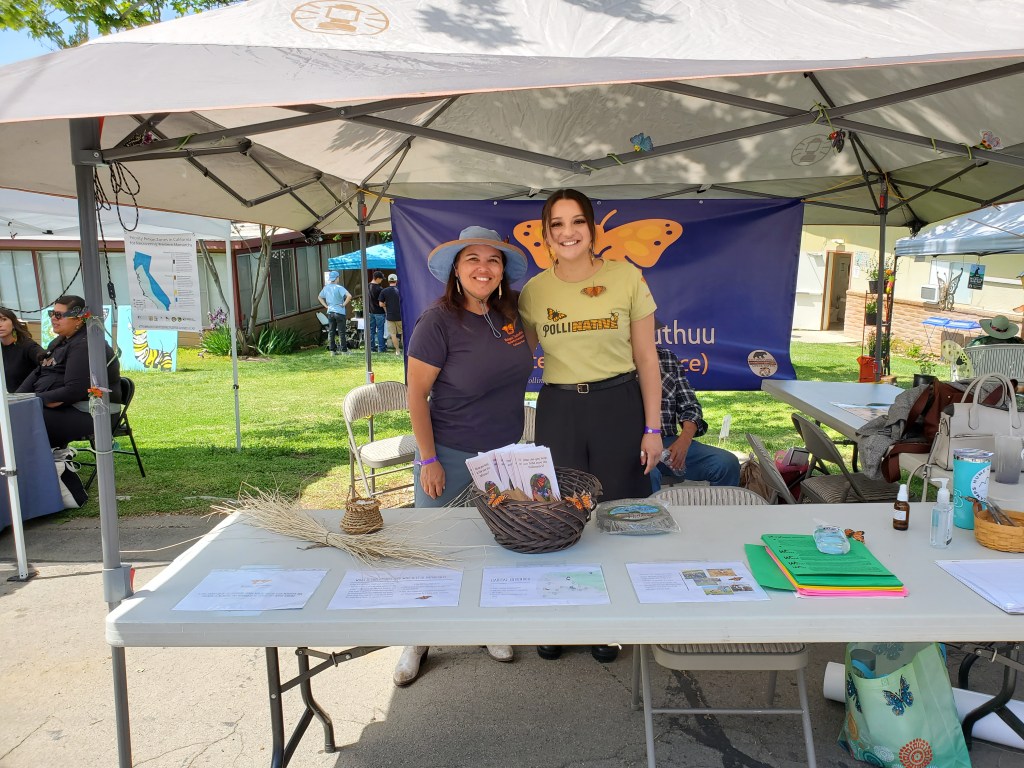
I have continued doing education and outreach on my own as well. I was able to connect a couple farms to pollinator resources. The Sateurn Farm will plant some milkweed as a trial, and Raw Roots Farm in my own community will plant hedgerows in the Fall. I ordered Xerces kits for them. Deedee and I will also be approaching some no-spray vineyards in Lodi with which I have a relationship. Little by little, we are making more habitat and making a change in California for the pollinators. Let’s hope it is not too late.

Me giving a milkweed to Mr. Saeturn at the Saeturn Farm in Merced

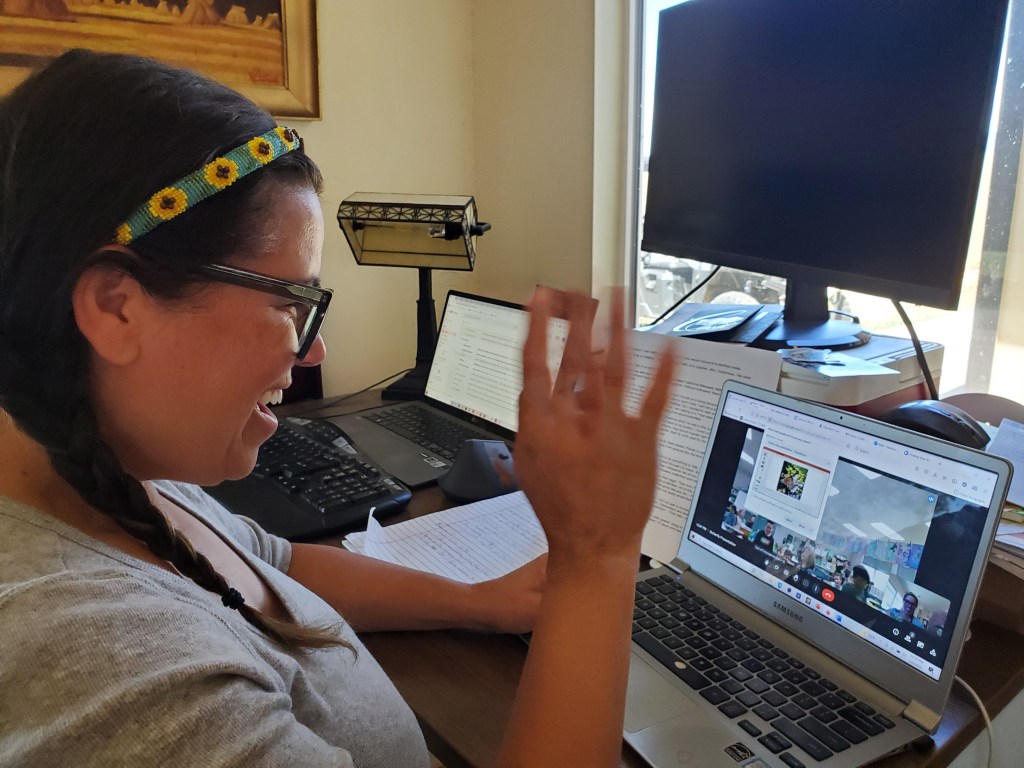
Additionally, I had the super fun opportunity to talk to my friend, Cerina Gasteneau’s, 2nd grade class in Crescent City about monarchs. They are studying butterflies, and Cerina asked if I would give a talk. I made a power point presentation that was photo heavy and told stories about cows, caterpillar poop, dog guardians and chrysalis ooze — the things that 2nd graders love to talk about. They were quite advanced, so I was able to discuss the entire life cycle, opportunities and threats. It was fun. I also surprised them by sending a package filled with magnetic, hand-painted monarch butterflies for them to affix to their shirts, fridges, or wherever they wanted. I love children. They are the stewards of tomorrow and worthy of extraordinary investment.
Washington Post Runs Small Story

You may recall we had a Washington Post photojournalist, Melina Mara, at the house following me around as I worked on monarch habitat tasks. She not only was with me but several others all around Central California. It was an interesting time to say the least. Finally, last month, her colleague Dino Grandoni, a journalist at the Post focused on environment and energy called. He wanted to do an interview to accompany the images Melina took nearly a year before. The resulting article was a short photo story made for digital only (not print). It focused on a wonderful woman in Oakland who expanded habitat around Lake Merritt, me, and Xerces’ Deedee Soto. Although Dino did not share my more substantive quotes that focused on pollinator education, the overall work achieved public awareness, which is the most important goal. Thank you to the Washington Post for covering this important story of the decline of this iconic, crucial species and a narrative that every day people can be effective in addressing this issue.

General Ranch Updates

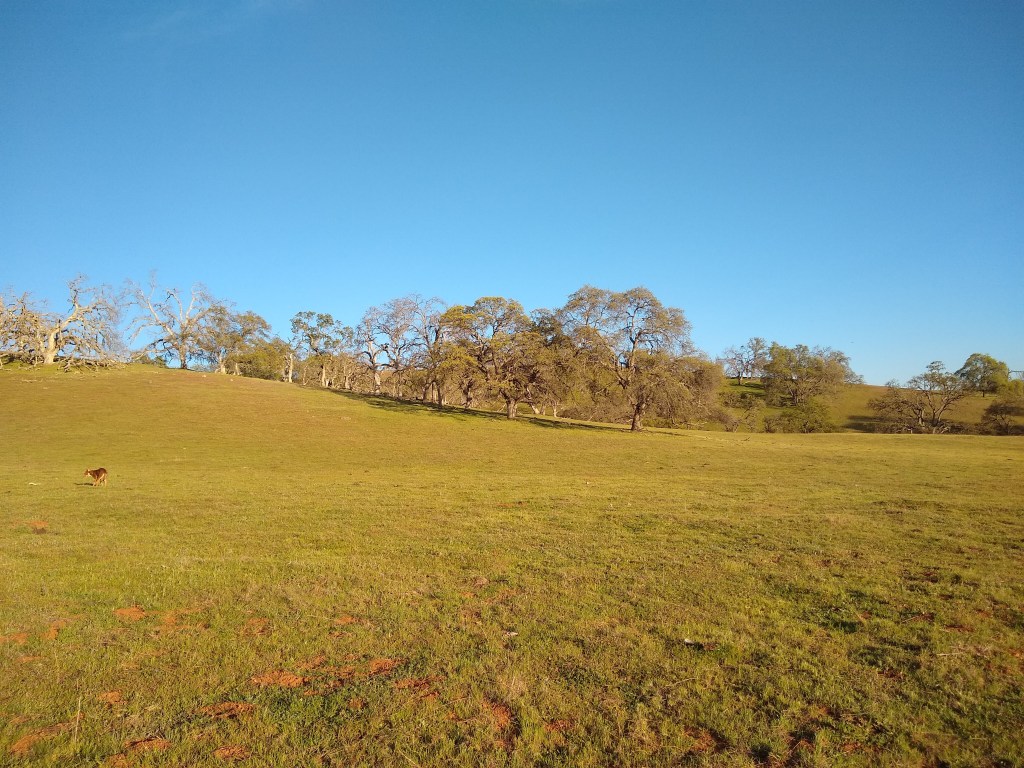
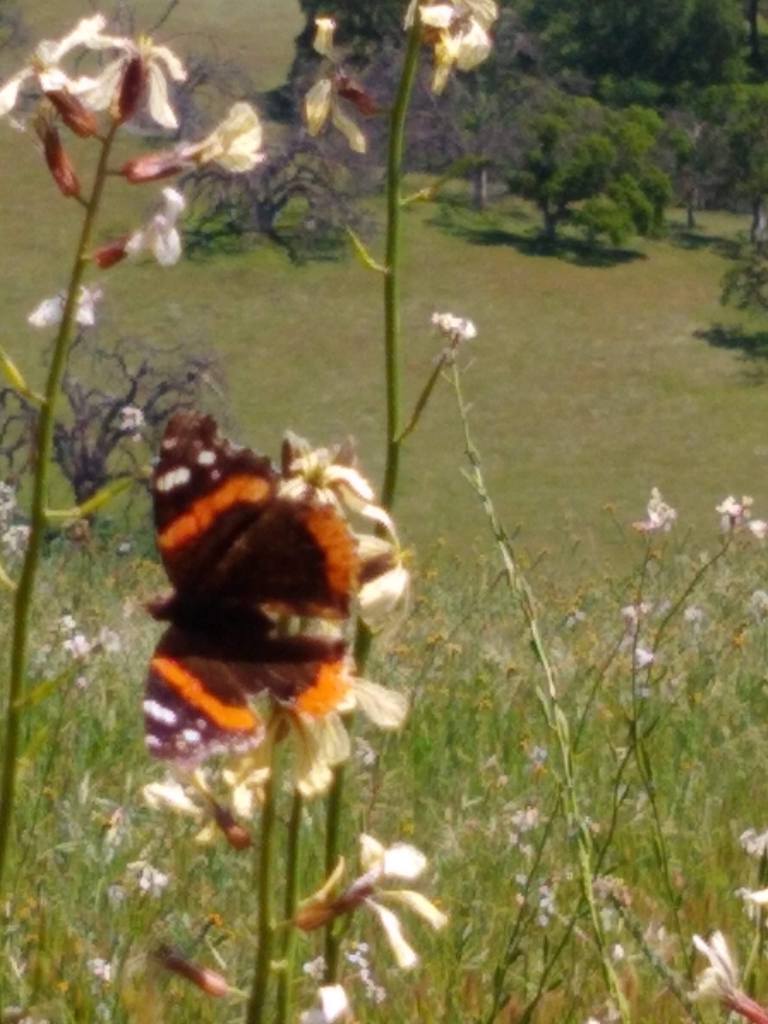
Life continues as we move from cooler spring weather to the heat of summer. Wildflowers are nearly gone, but other perennial native plants are beginning their blooms. The pacific asters, yarrow, sunflowers, gum weed and white sage are all beaming with flowers. The ceanothus has started. Yerba Santa, monkey flower, lupines, purple and black sages are all but done blooming. The narrow leaf milkweeds are getting buds on the end of their stems. We should have ongoing sources of nectar for whoever comes by. As for humans, I have had a steady stream of visitors. It has been a wonderful change from the sequester of the pandemic. All have been interested in the butterfly work and marveled at the smell of the plants and the beauty of the blooms. We have not seen many butterflies this year, but more than last year. White sulphurs, blue coppers, painted ladies, viceroys and, splendidly, I can happily say, monarchs, have all visited. Maybe the summer and fall will bring more.

Personally, this constant effort has been a respite from the ups and downs of life. Between the Ukraine, domestic politics, the loss of a friend, work pace, pandemic, graduations, births, achievements, weddings, divorces, other dramas, and, in general, life returning to a pre-pandemic cadence – it has all been so much. Perhaps many of us have gotten used to a slower pace and a life behind a screen instead of in-person, with all the energy that it gives and takes. Hopefully, we all have our own versions of a habitat project where we can move our bodies, quietly contemplate, be good humans for this Earth and breathe.
Beloved sister and brother visit

Monarch Caterpillars are Joy on a Leaf + Cows Handled and Rain

Young monarch caterpillar on an A. Californica leaf

I have had many great joys in life – making my mom happy, seeing my first eagle in the wild, holding my nephew in my arms no matter his age, getting Milky the Cow for Christmas, driving a car with no tailpipe, knowing my husband was safe on 9-11 after dropping him off for his San Francisco to Newark flight the night before. Now, helping bring the monarchs back to Hornitos and watching their babies grow is on this list. It is difficult for me to believe that I am not dreaming, that this is really happening. My eyes well up with tears at the thought that these magnificent creatures now find this location a safe place to have their babies.

Last time I wrote, I had just had a stand off with the cows. My cattleman and I negotiated the rotation of the cattle to the south part of the ranch, and they were herded there on March 20. I was relieved. It was good for about 6 days, then I saw a handful of dots on the hillside. I grabbed my binoculars and – GAD ZUKES – it was cattle… 6 cows and two calves to be exact. They were quite a ways off in the distance so not an imminent threat. There is a low spot in the fencing between the neighbor’s ranch and the next parcel. They had gotten through. Oh well, it was only 4 days until the cattle rotated back; we would need a protection plan for the most exposed incubator milkweed anyway.

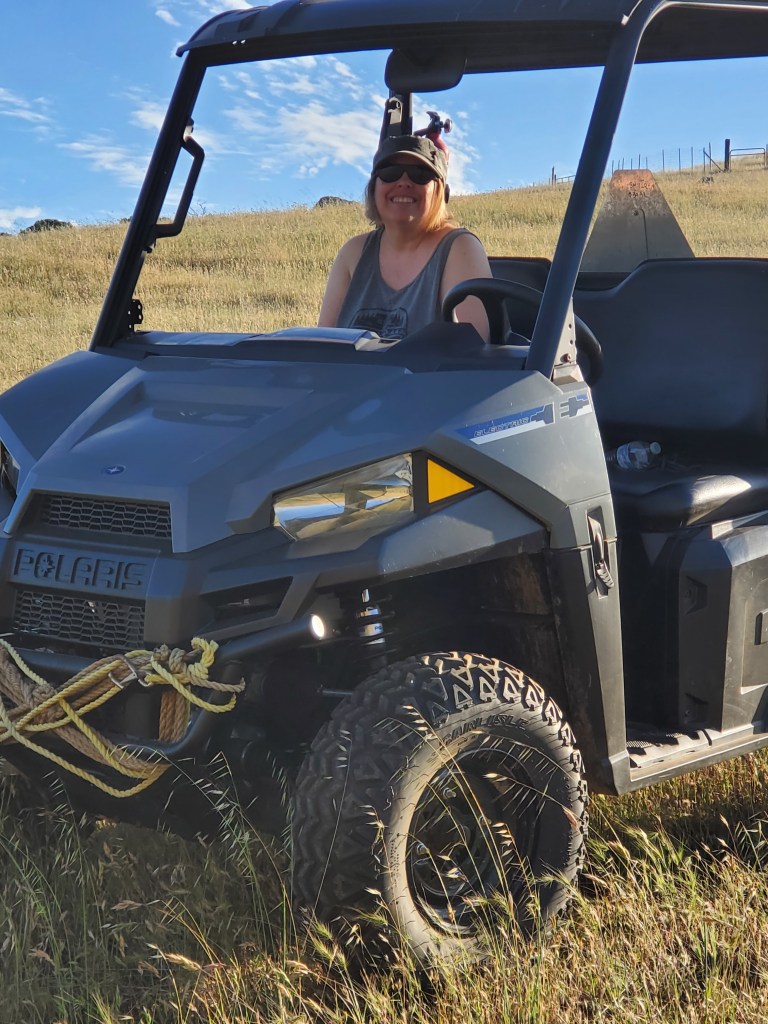
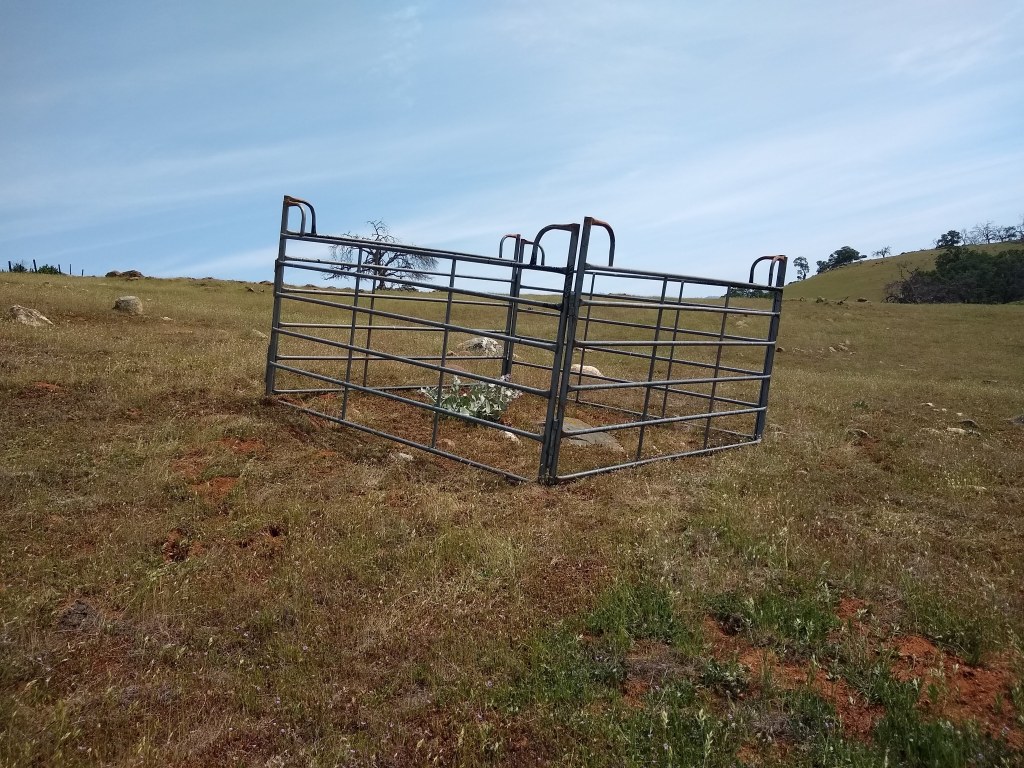
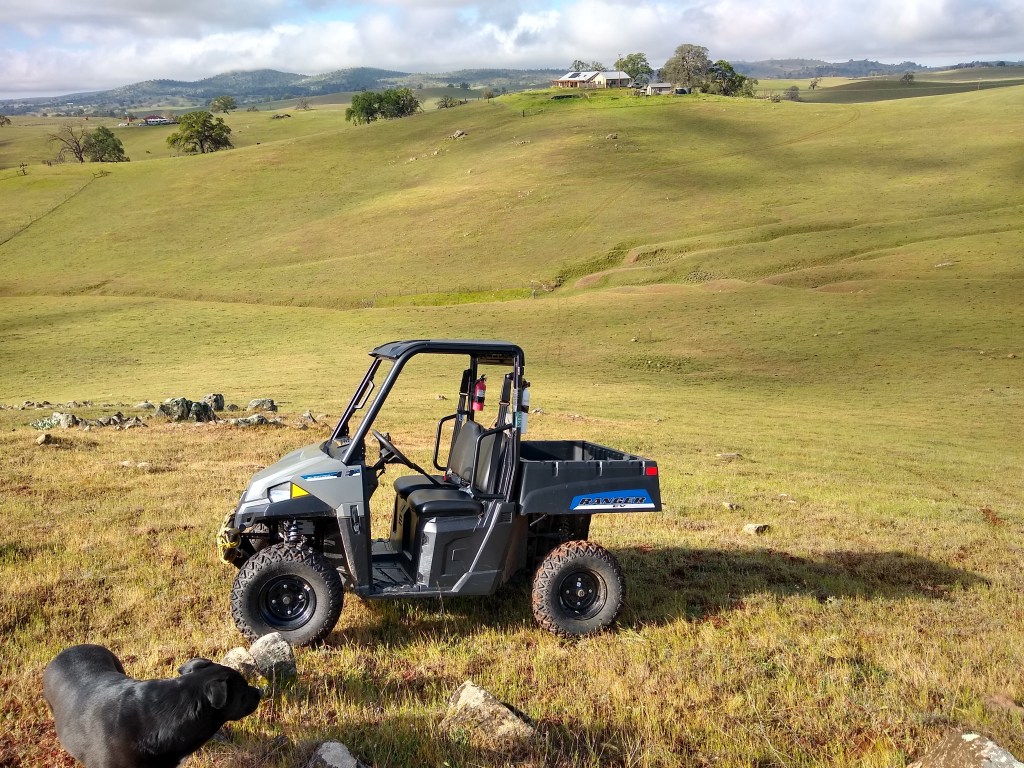
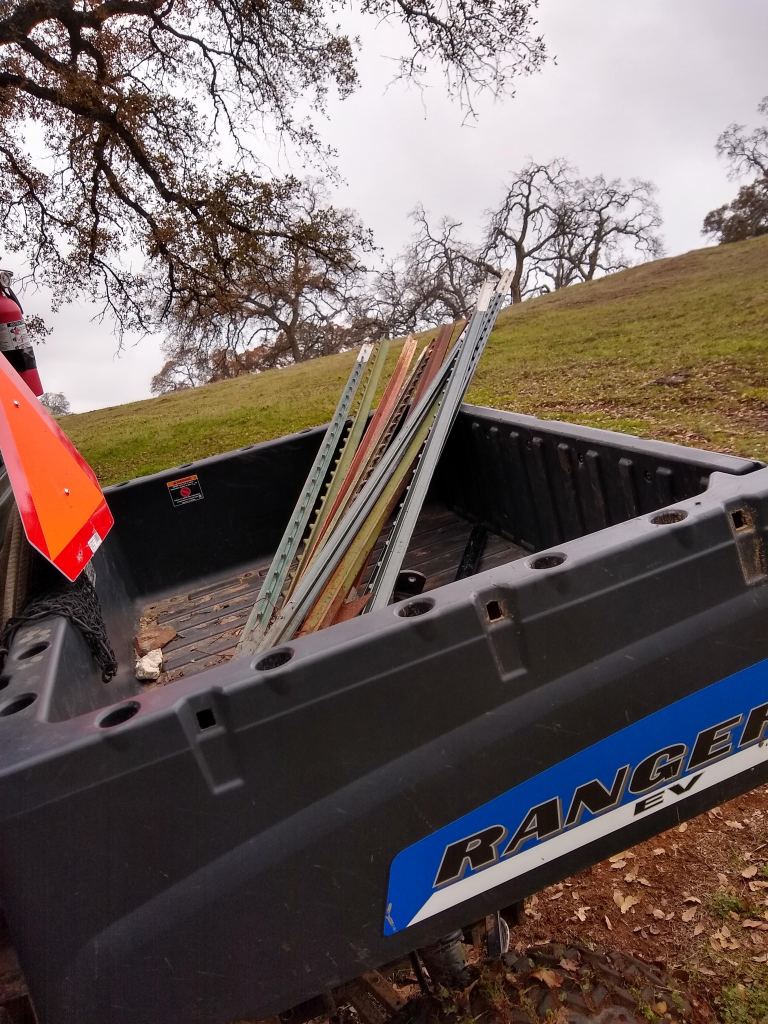
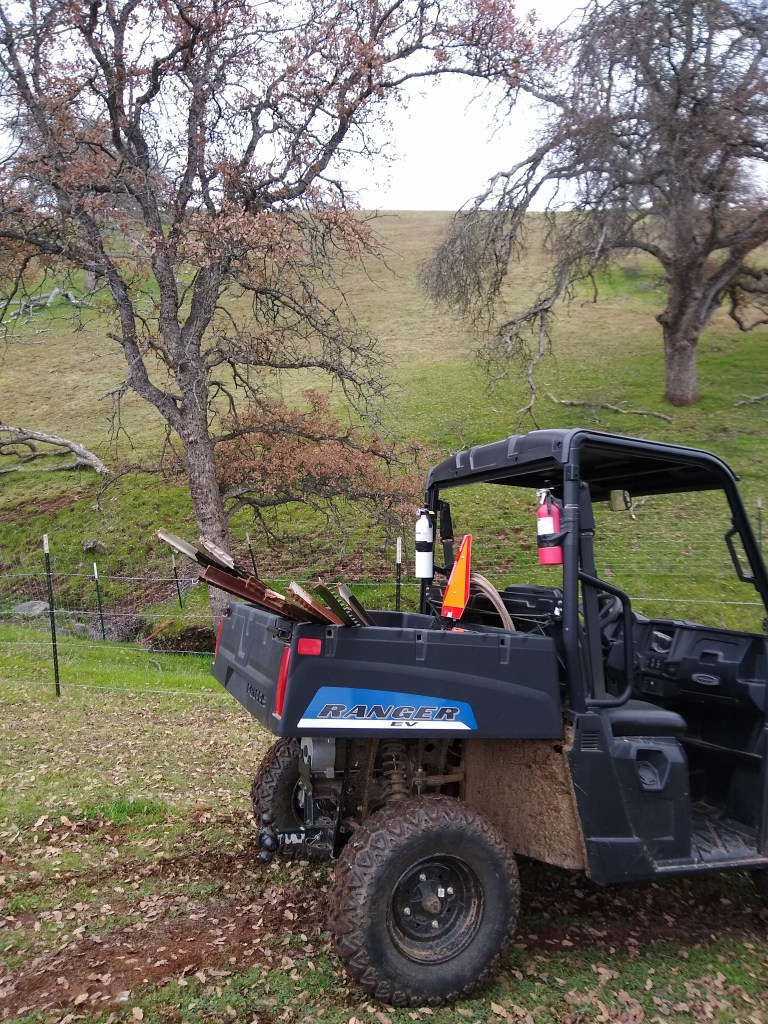
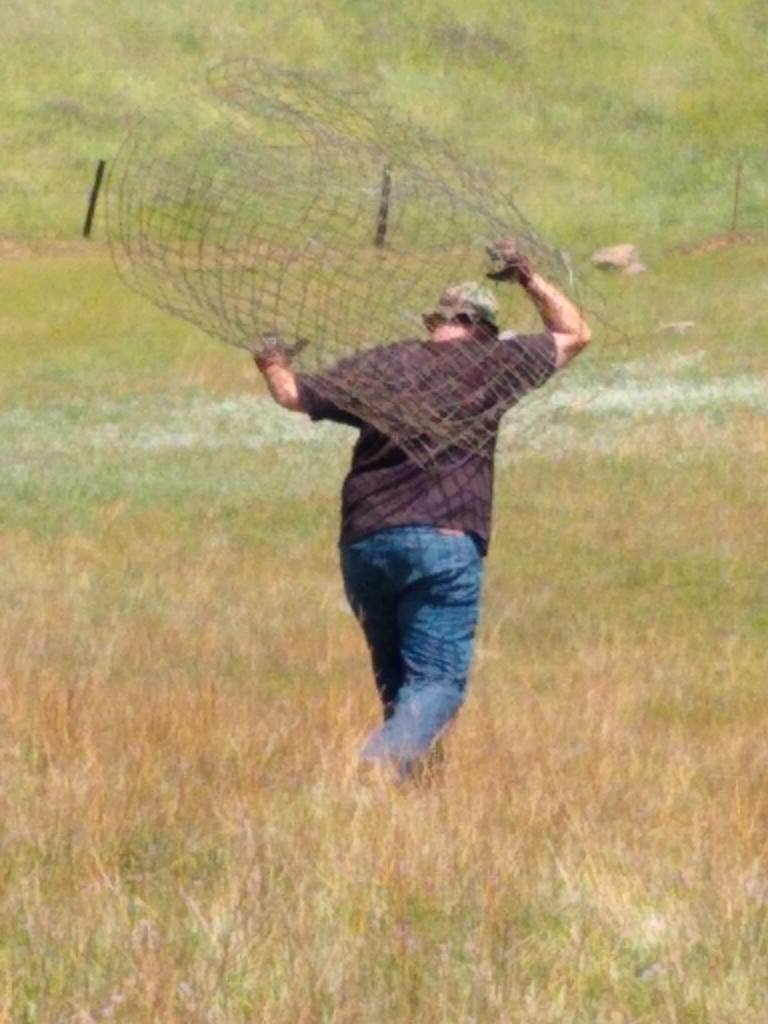
Our wonderful neighbors, Kim and Ric Wetzel, not only let us borrow their Polaris regularly, they had some extra livestock panels laying around said we could borrow them. (These folks are unbelievable.) David and I picked them up and drove them up the side of the 20% grade hill, then hauled them by hand to the rocky outcropping where the California milkweed patch is located. Did I mention there were 25 mph wind gusts at the top of the ridge? Well – there were, and it was rough carrying the panels.

The good news is that we were able to protect the most exposed milkweed with the most caterpillars on it. I felt reassured again.

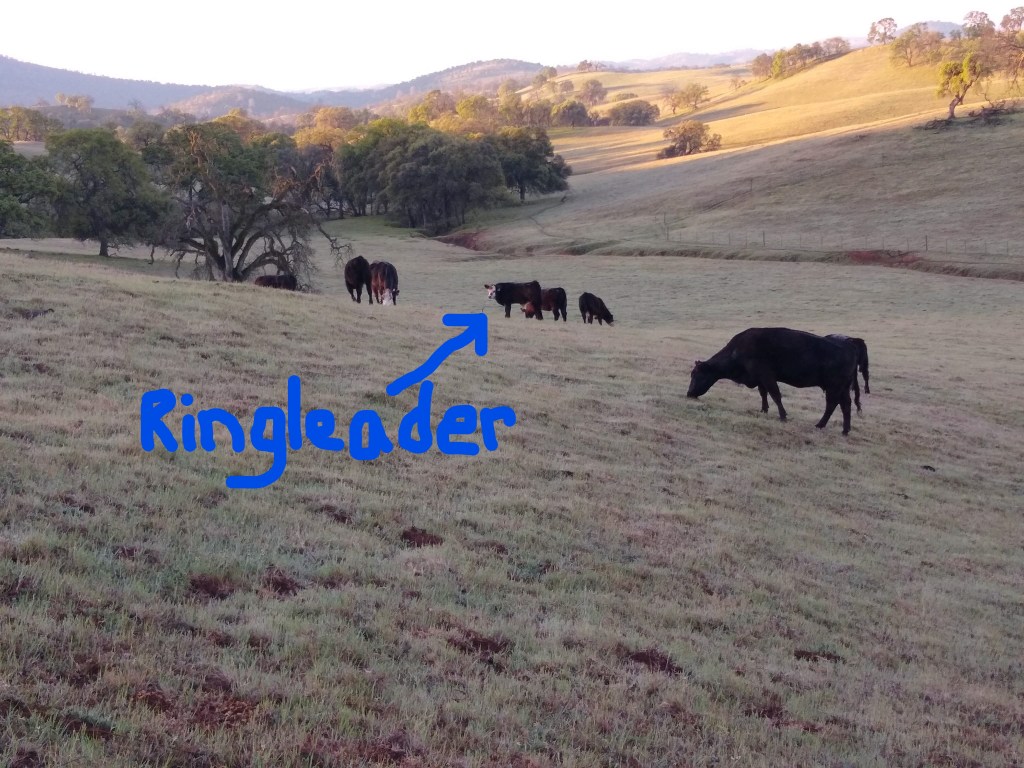
Another wonderful thing happened; it rained. What a joy. It has been such a dry year, and we need the rain. We received about 1/2 inch. The best thing, however, is that it promoted grass growth. More feed for the cattle means less interest by the cattle in the A. Californica milkweed. It was a good thing too, because Skull was back (see previous blog for the cow ringleader), and she was keeping too close an eye on things.

Skull

I told her, “You have a half a section of ground to graze, and you and your crew want to be here?” I was ignored.

Rain

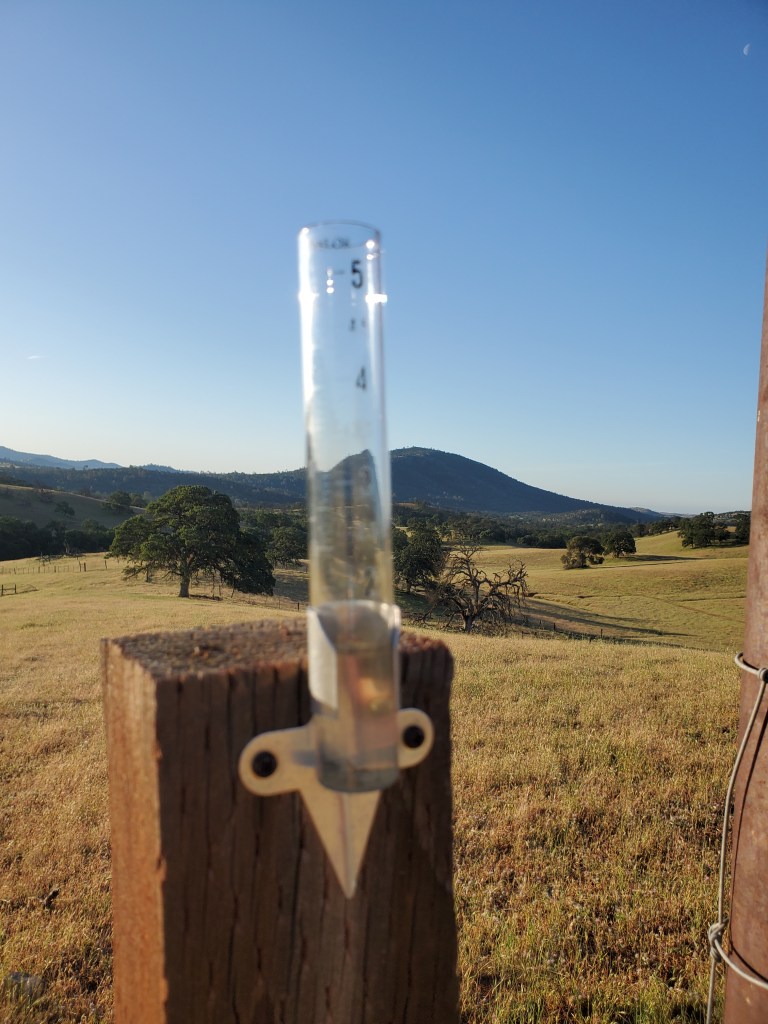
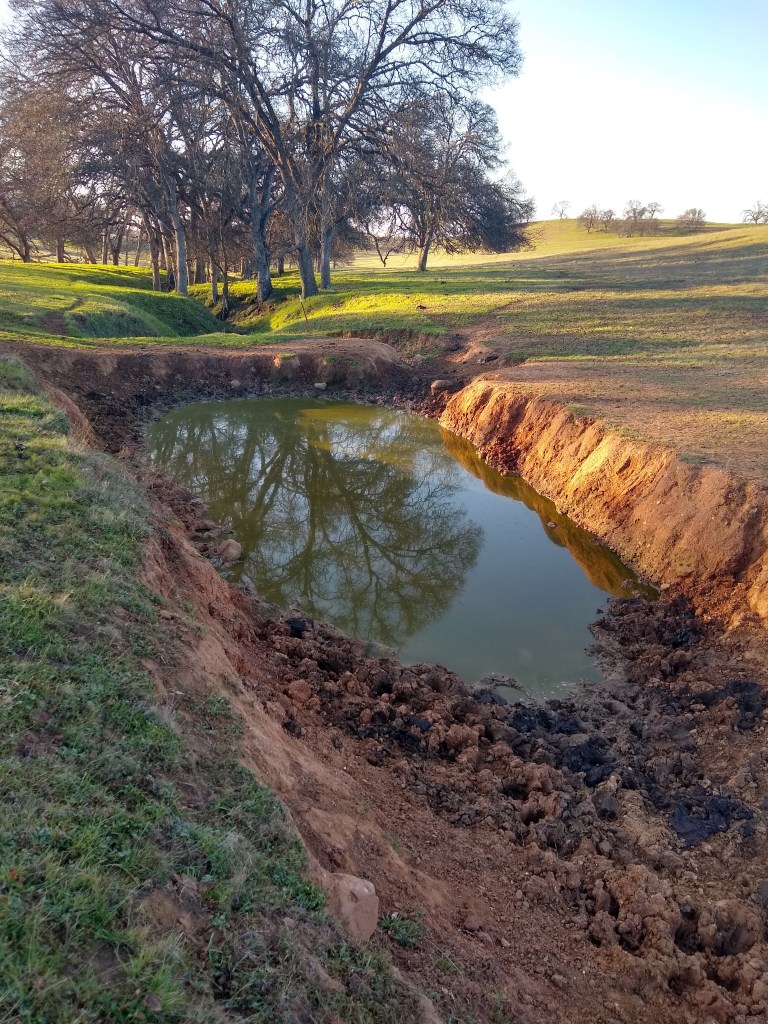
We are barely over 10″ so far this the rain year. Whew – we were holding so close to the record low rainfall for the worst year of the 5-year drought here, 9″. Just over 10″ is still extremely low, but I will take as much, even incrementally, as possible. It was enough to result in standing water, but not enough to really fill anything.

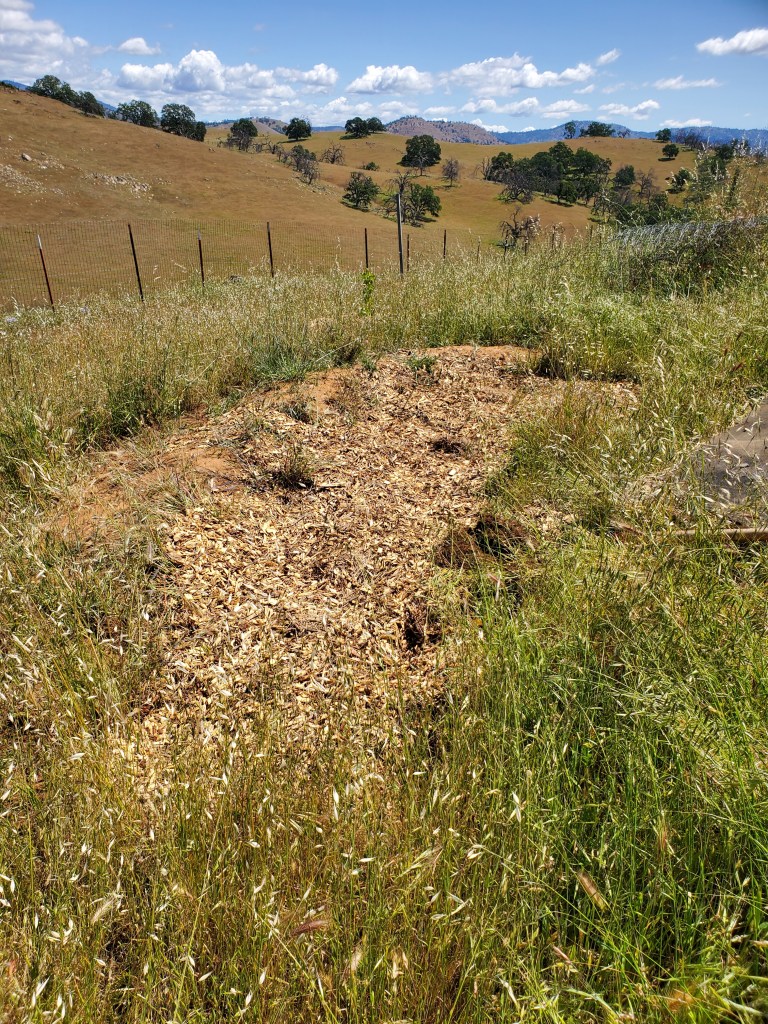
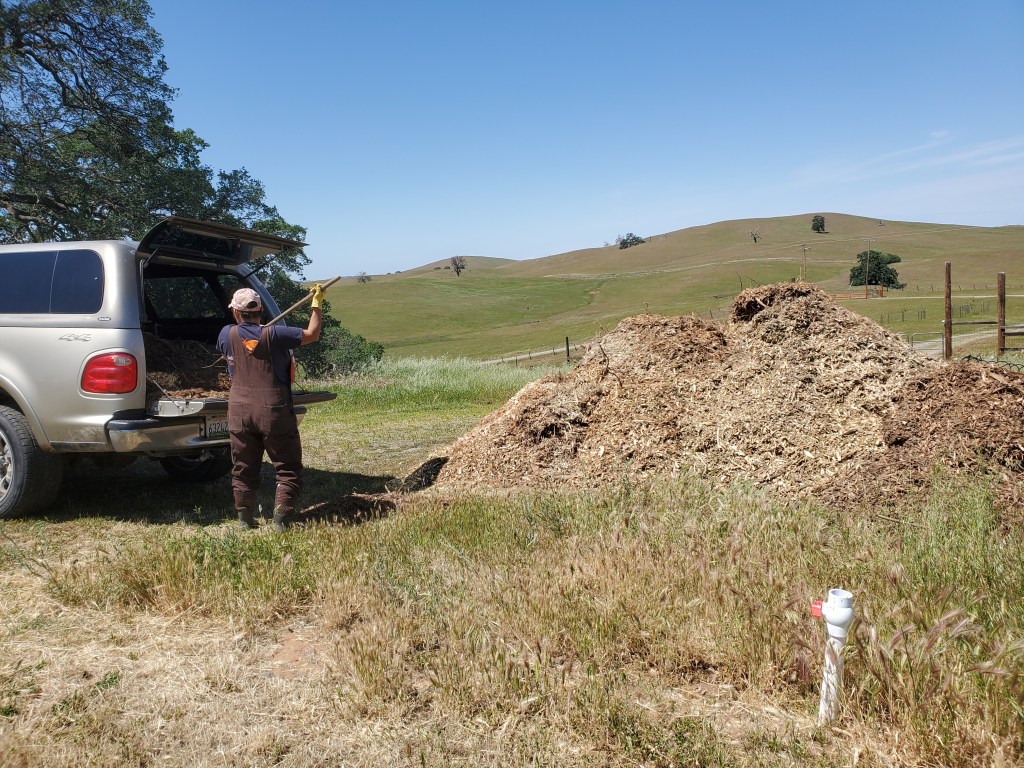
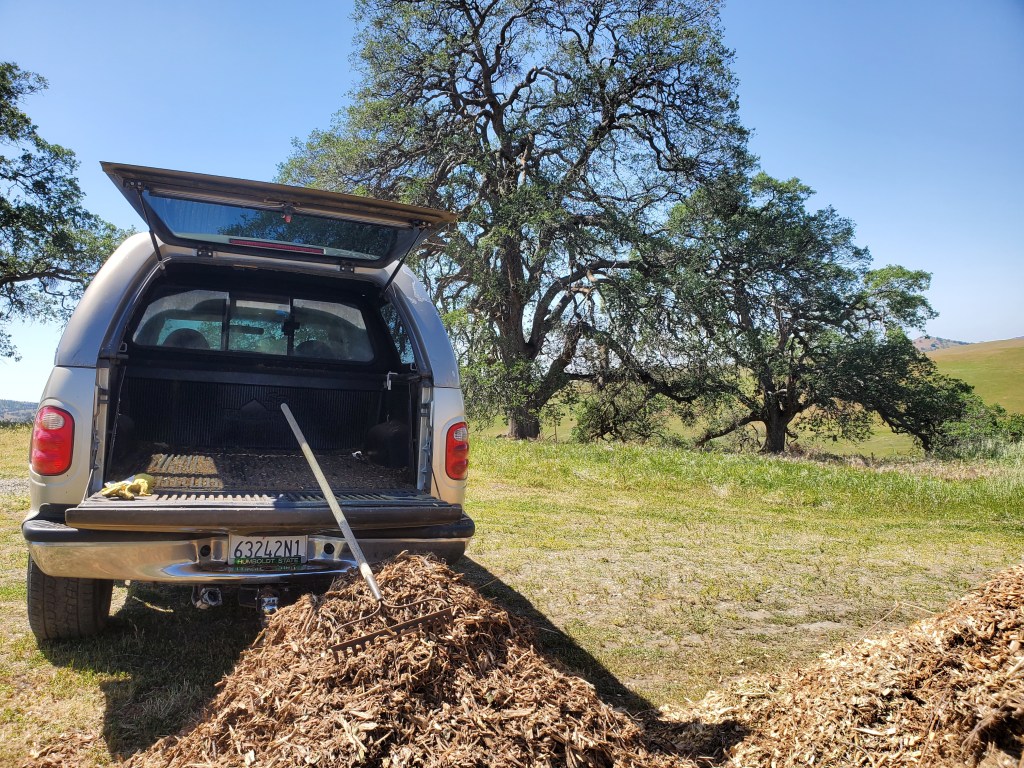
I have been trying to get wood chips to use for mulch for the past several weeks. My friend and Xerces biologist, Deedee Soto, has been drilling mulch into my mind ever since we first met. Mulch retains the moisture in the soil and can really help plants stay hydrated in this dry environment. I need to fill the two rain gardens installed by the rainwater installation vendor and have plenty of mulch to spread around the butterfly plants after the grasses are mowed. With the rising temps and late season rain, it has been a mad dash to get mulch in place, and what better way than using a product being produced in my community.

Because PG&E is working to cut trees away from power lines, there is an abundance of chipped wood, but you have to either know where they are dumping the chips or be near by their work area to get them. I had done everything I could to get on someone’s list to get wood chips, but nothing. I took matters into my own hands and put out a plea to “the crowd” on Facebook. “Does anyone know where ArborWorks is working in the county? I am desperate for wood chips.” Right away I began to get answers (I have such wonderful people in my life!). Caroline K. said I could share some of hers (Thank you Caroline!). Jazzmyn B. said someone had been dumping truckloads of chips next to her mom’s house on public lands. It was an eyesore and her mom would be happy to have someone begin taking it. That seemed like the best option to explore.

David and I were on it. We drove up in the afternoon on Sunday, about 35 minutes south east, and found the pile easily. Jazzmyn was right; it was a massive pile dumped adjacent to the driveway. I could see why her mom would want it gone. David and I began shoveling chips into the back of the truck. Finally, after 30 minutes, the back was full. That was a lot of work. I was going to owe David big time. We drove home and fell into the Adirondack chairs on the front patio too tired to take our wood chip dust-filled clothes off at the door and get some libation. We made it inside eventually. I didn’t know if I was going to be able to convince David to go back and get another load.

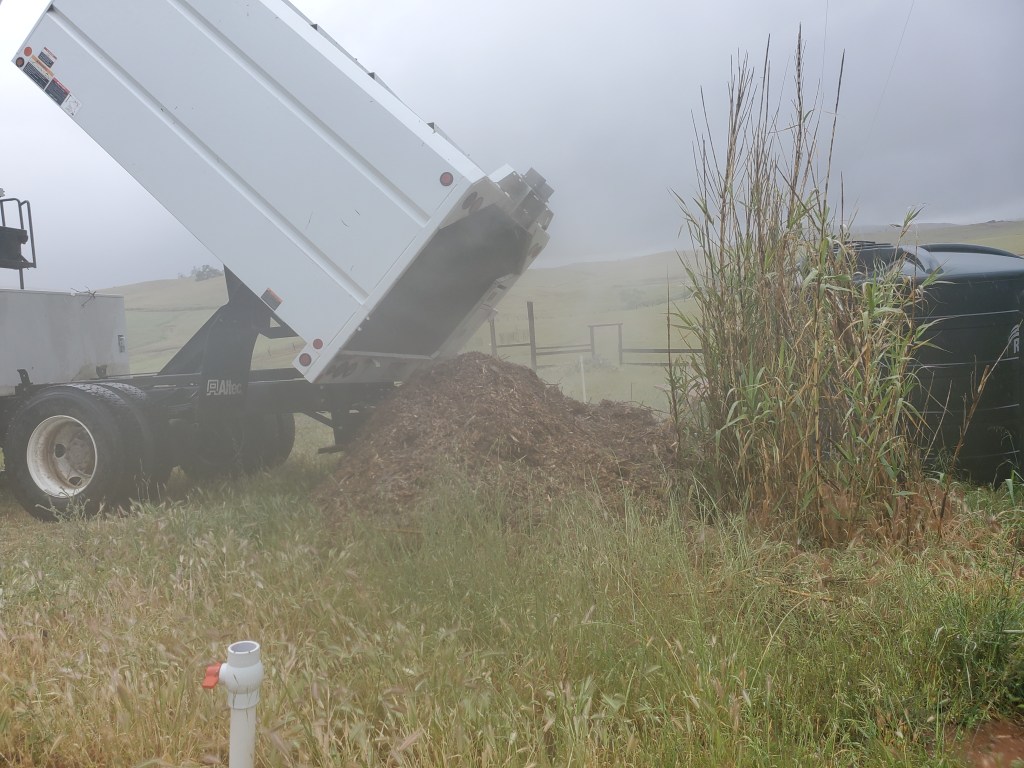
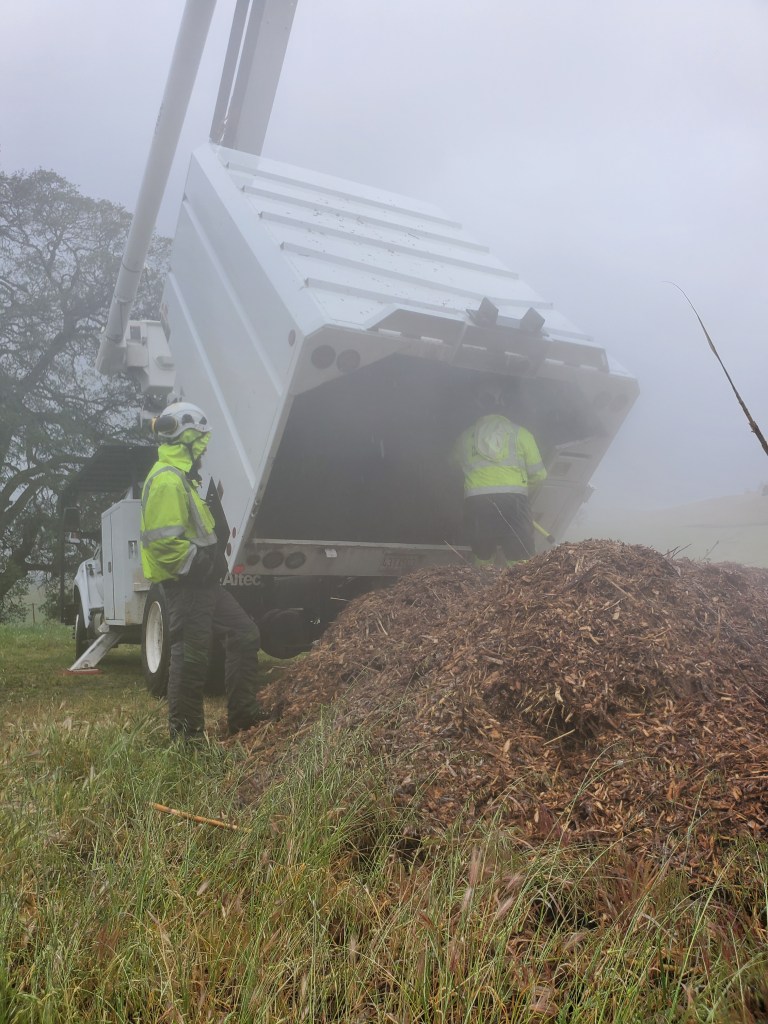
Well, just like you need to wash your car or leave your windows rolled down to encourage rain, evidently so must you bust your tail getting chips in order to have wood chips delivered. The next day, I finally got the call I had been waiting for. A crew was at the gate and ready to dump a truck load of chips. It was quite rainy. I went out to greet them and thank them profusely for their service to our community and for this service of bringing chips to people who want them – like me. I directed them to the dump location and watched the show. I was soaked, but didn’t care. I was happier than I had been in a while.

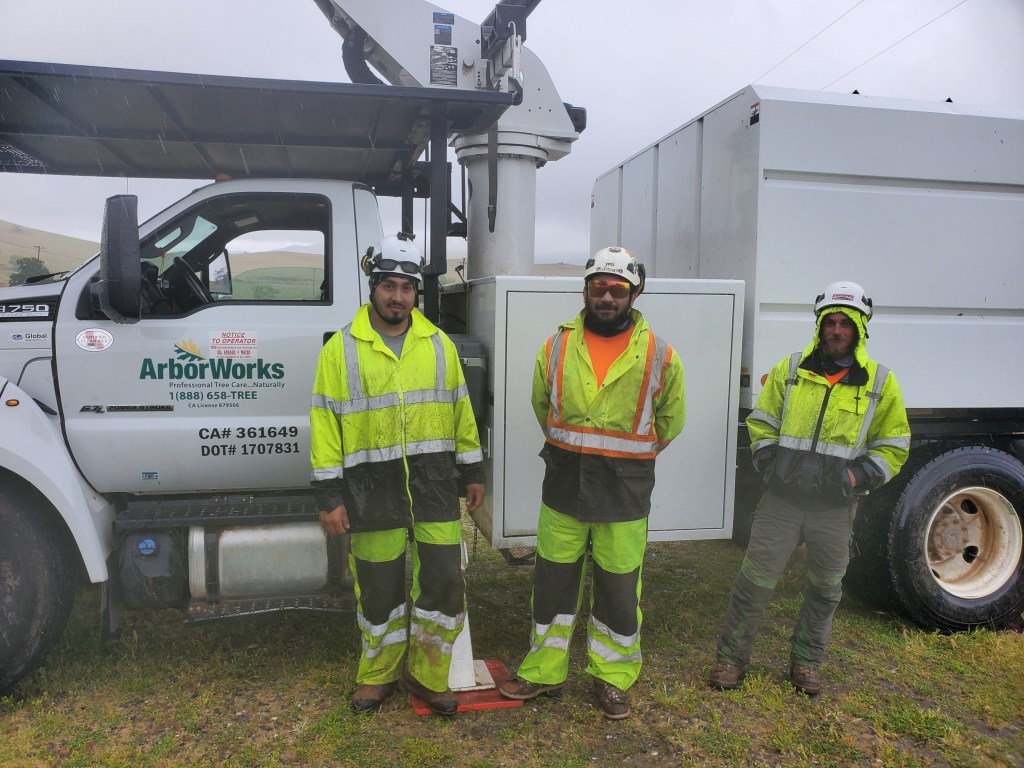
The good news is that once they find you, you are a great place to dump chips. The bad news is that once they find you, you are a great place to dump chips. The driver asked if I wanted a second load, I said “Yes!” They came and dumped. But then, the trucks kept coming. So far, I have had 4 loads. I think – maybe – they are done now. All of the teams were really nice, good guys, who moved with extreme competence and knowledge around their equipment. Very reassuring. Thank you ArborWorks!! You are my heroes!!

Monitoring

I am always out on the ranch monitoring, checking, counting, fixing and protecting. Recently, I found one of the caterpillars dead after the storm last Monday. Half of its medium-sized body was still connected to a leaf and the other half was dangling off. I was heartbroken. A biologist reminded me that only 5% of monarch eggs make it to adulthood. It is of little comfort. We need more to make it, to help restore the once vibrant multi-million individuals that blanketed the skies, inspired stories, compelled awe, laid eggs that turned into caterpillars, that turned into chrysalides, that turned into adults and brought joy to humans, my ancestors from tens of thousands of years ago on this continent to those that arrived more recently. Our task is to transform that wonder, regard and love into broad action, into policy, that will mitigate, or dare I dream, eliminate, the barriers of poisons and habitat loss that throttle the monarchs, all pollinators and indeed our very own ability to thrive.

Cow Standoff – Babies Under Threat

Large caterpillar (probably at Instar 4) trying to make it to a monarch

In the last blog post, I relayed the near loss of the incubator milkweed plant and my aborted protective camping almost-adventure. I also detailed how my cattleman and I agreed that it would work out to shift the cattle to the south part of the ranch a few days early for a rotation of 10 days. However, he was not able to move them until Sunday…I had to ensure the baby monarchs’ protection for one more evening and day.

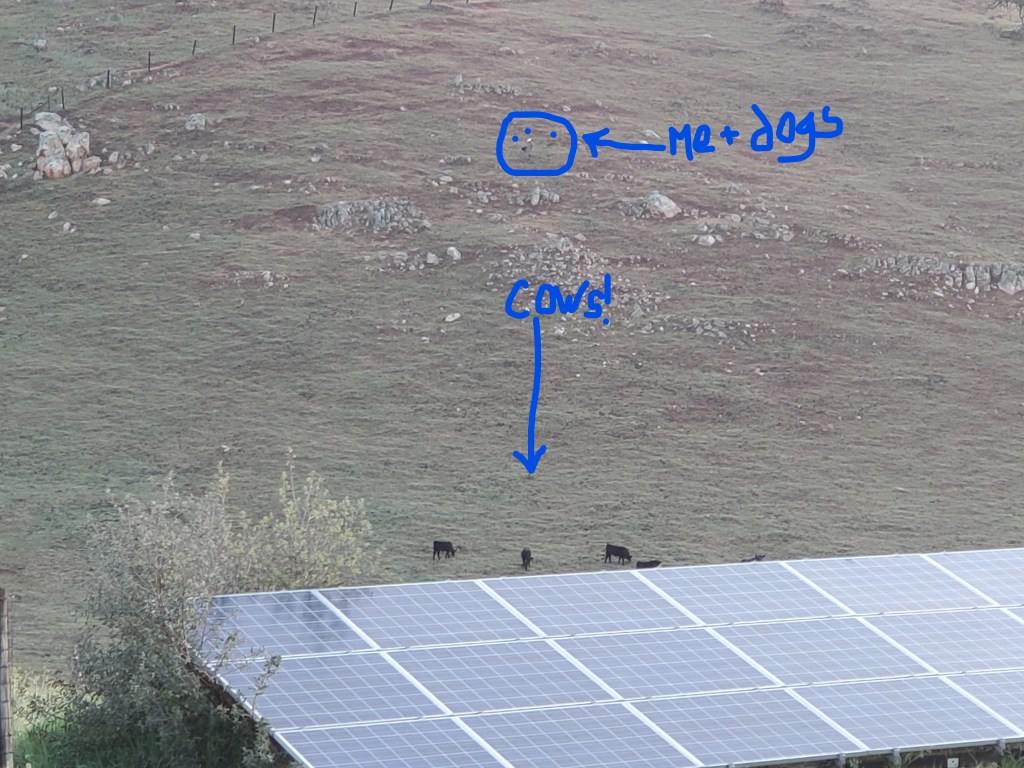
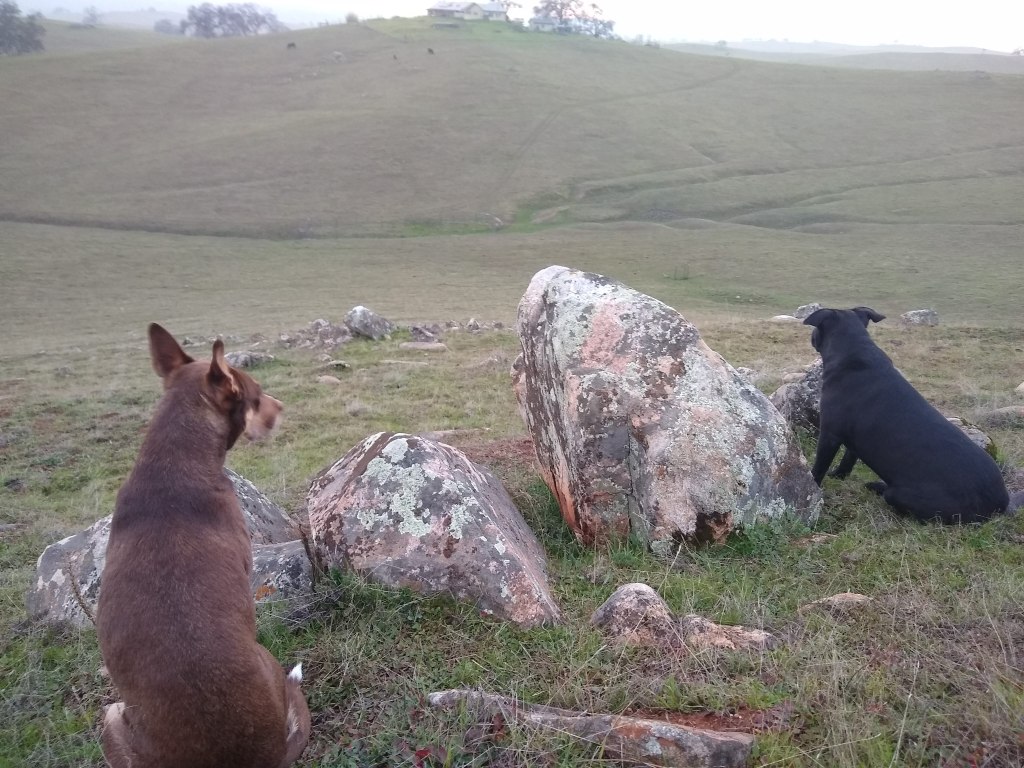
Like Saturday morning, I rose before the sun to make sure I was moving before the cattle were. I was out the door at 6am, and there were already several cows up. They were in the vicinity, but not adjacent to the milkweed. Still, it was too close for comfort. The dogs and I made our way to the milkweed patch to stand guard for however long it took the cattle to circulate away from this section of the ranch.

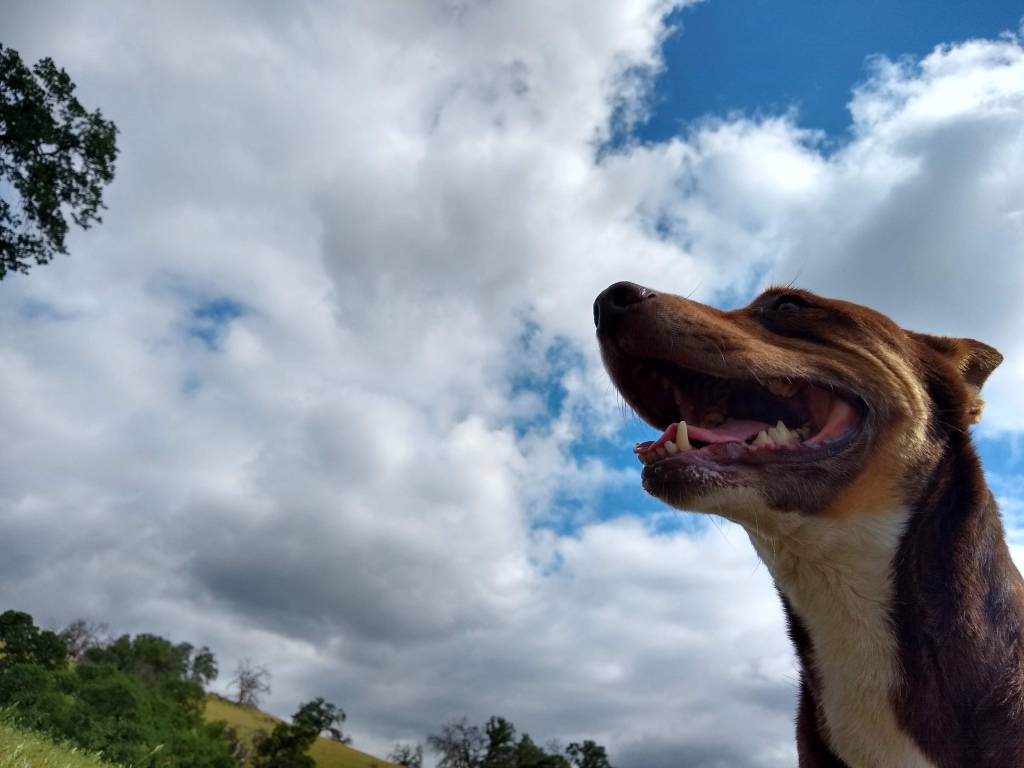
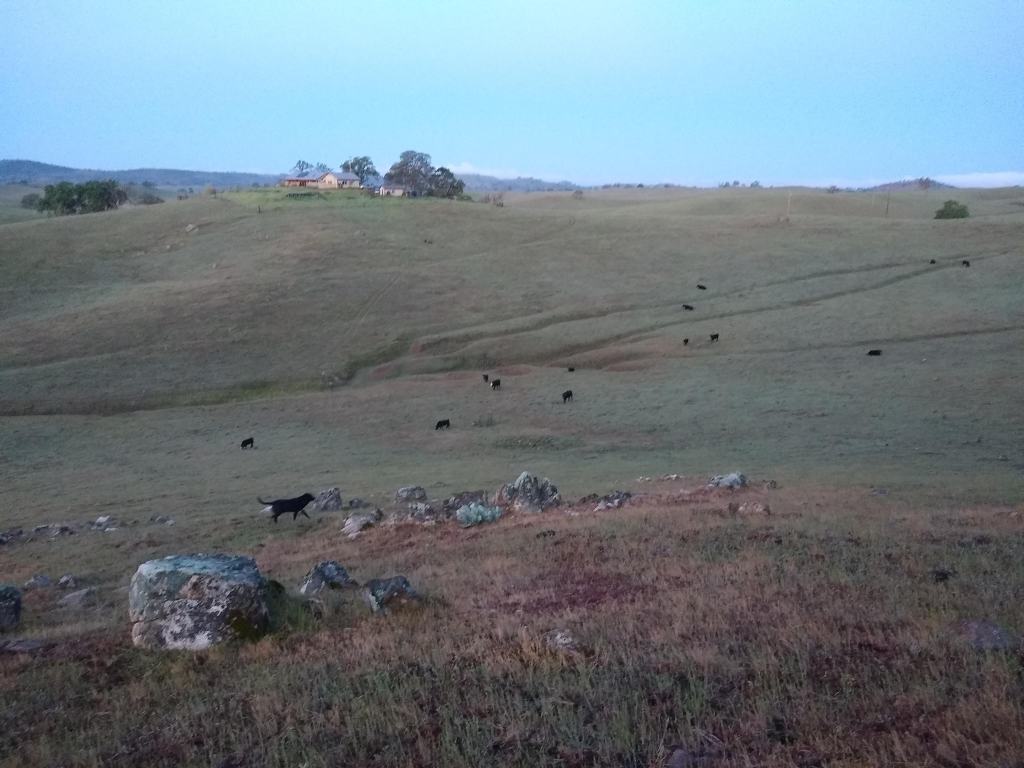
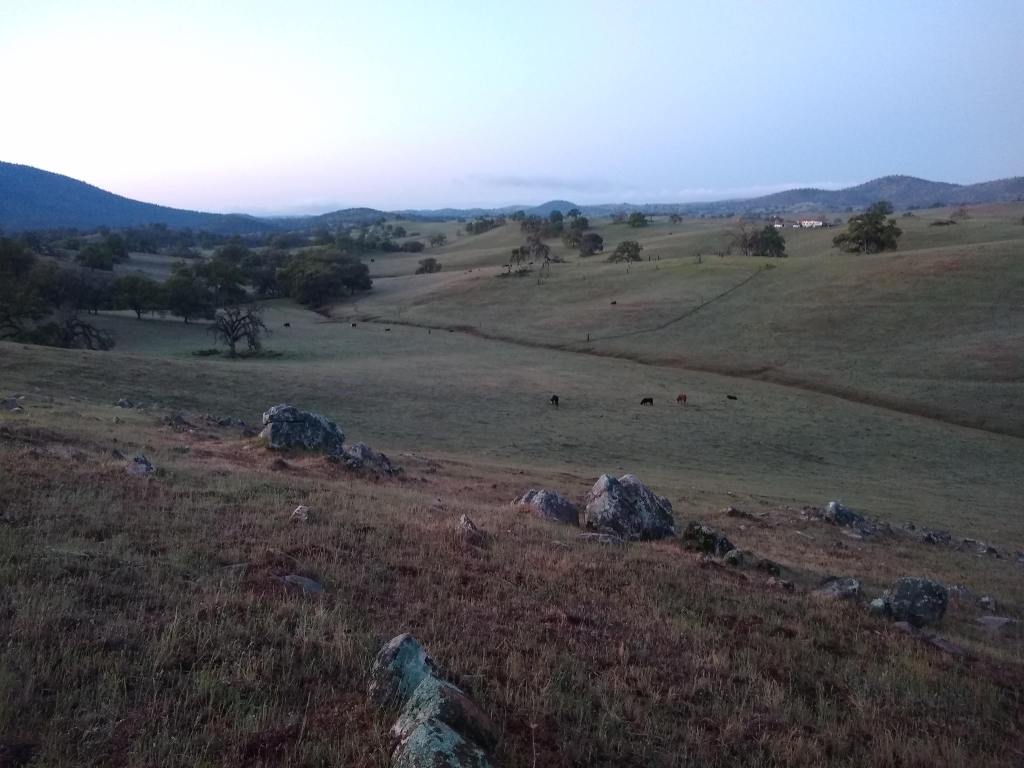
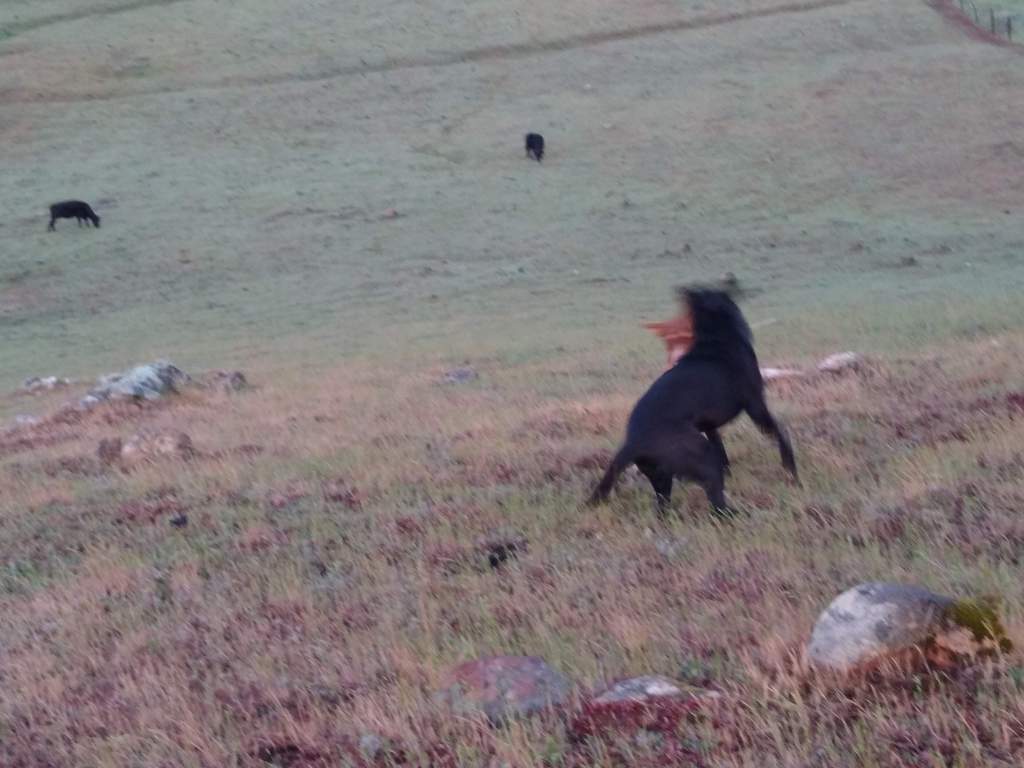
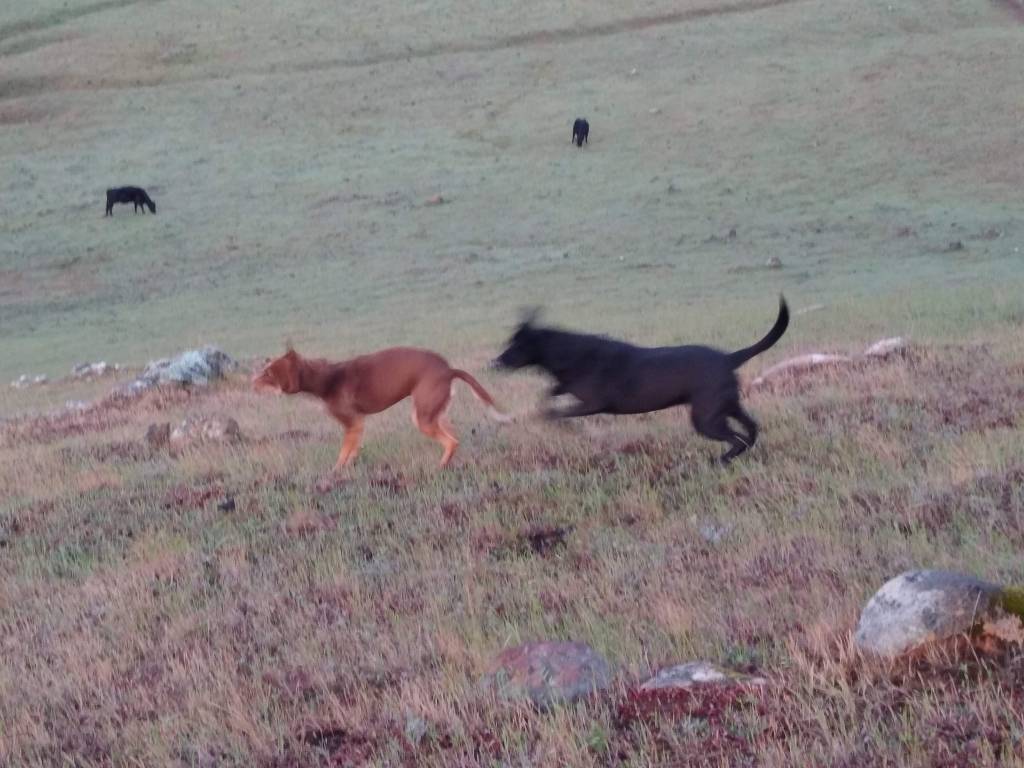
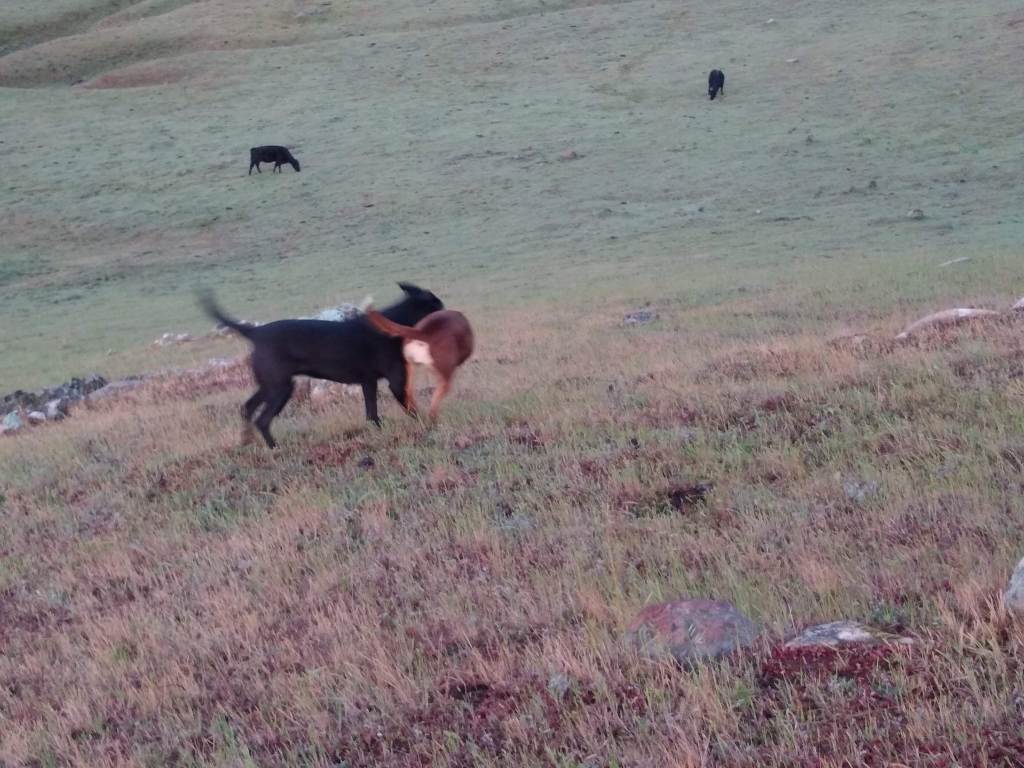
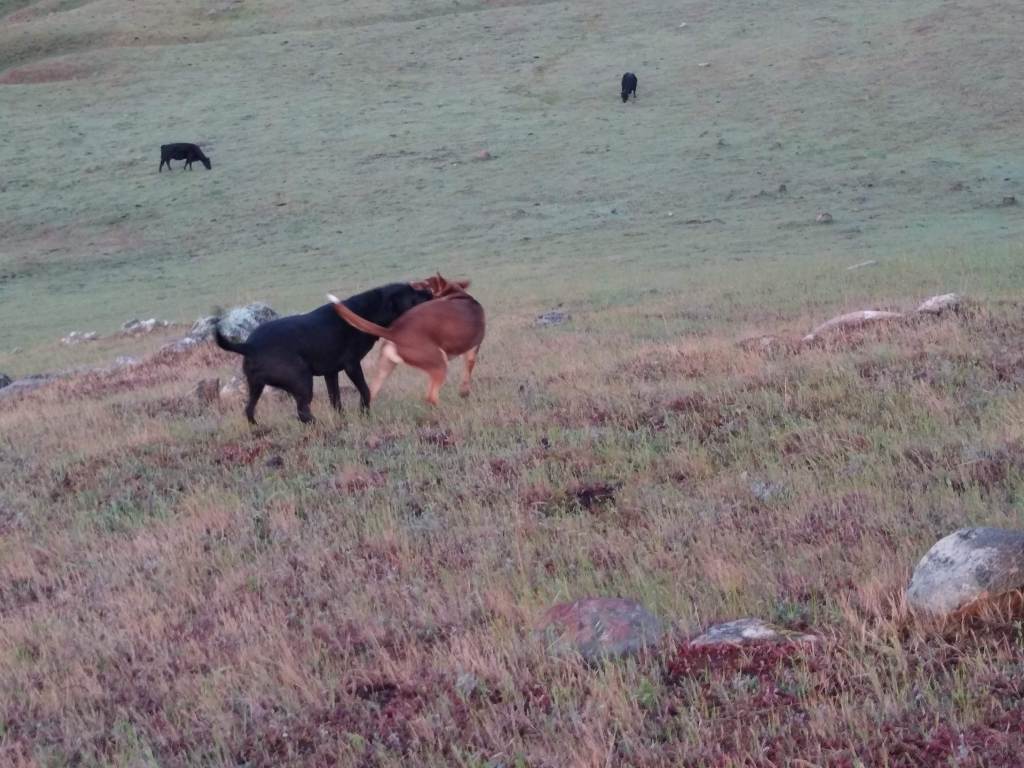
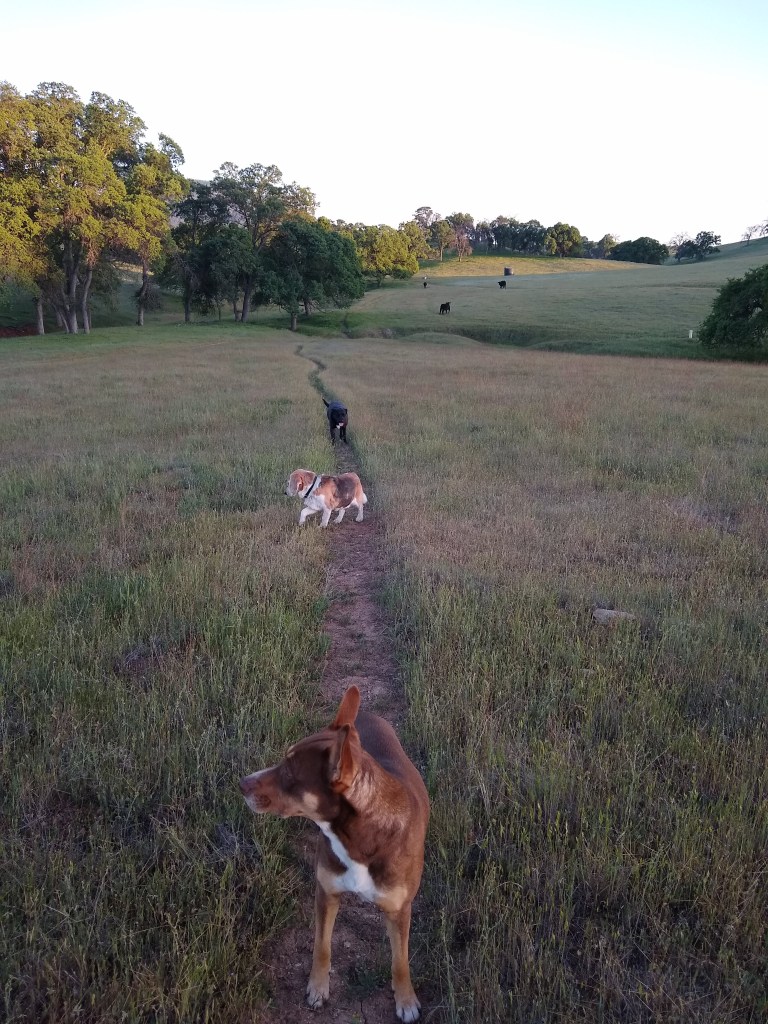
The sun began to lighten up the sky, and one by one, the cattle began to stand up from their nested slumber in the grass to begin their morning ablutions. I stood guard as the dogs showed their joy playing a game of wrestle and chase. Who wouldn’t be excited to be outside first thing in the morning, the cool air stinging your cheeks, a brisk walk moving the blood in your body, the slight breeze shifting your fur. The smell was crisp and alive – a good day to guard a plant full of caterpillars.

Dave watches the drama unfold from the other hilltop

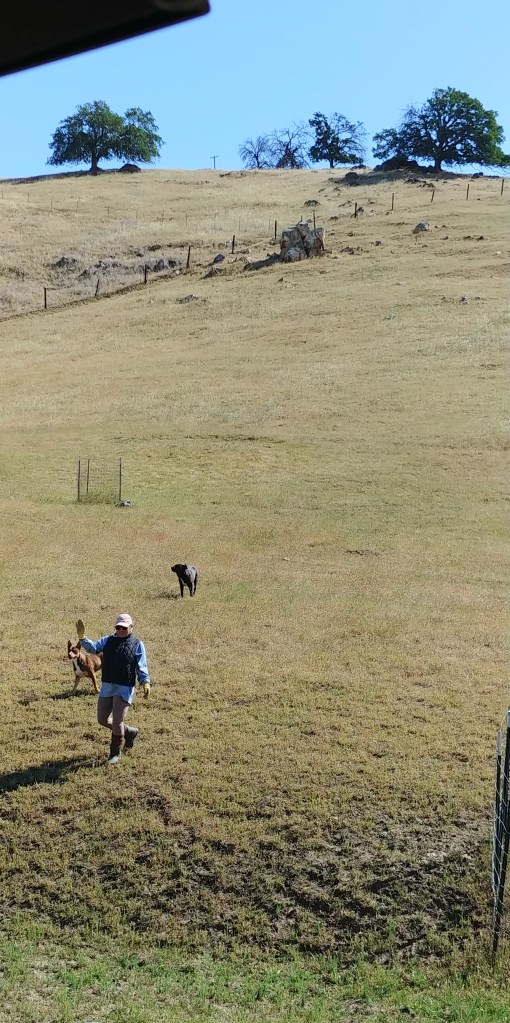
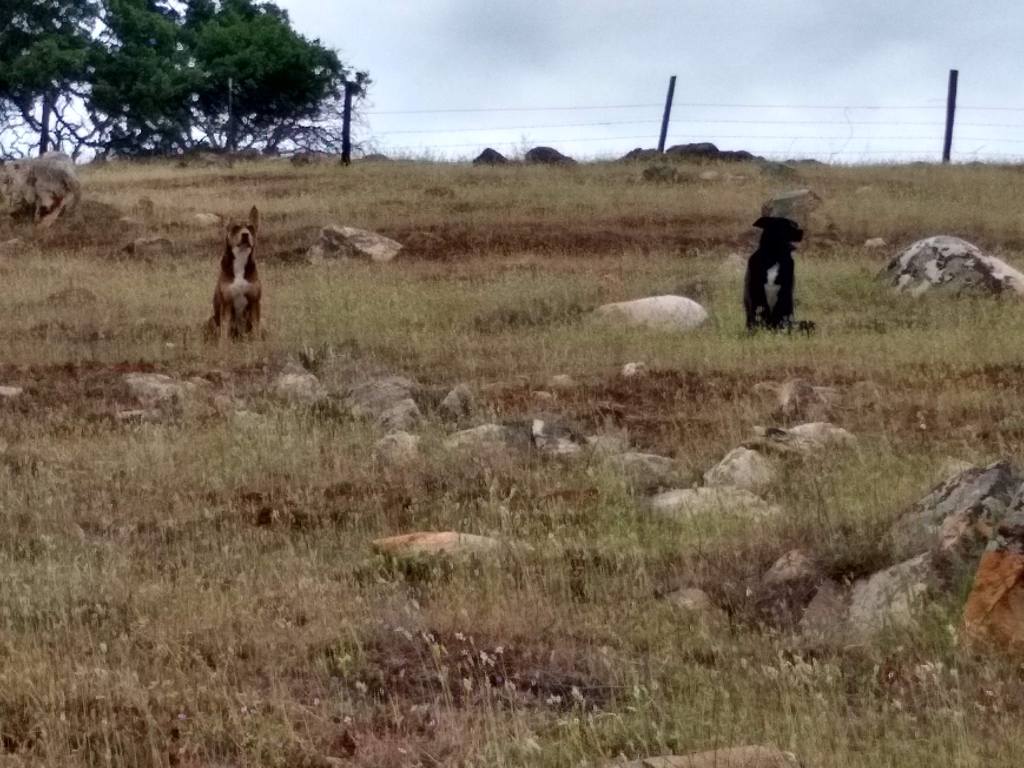
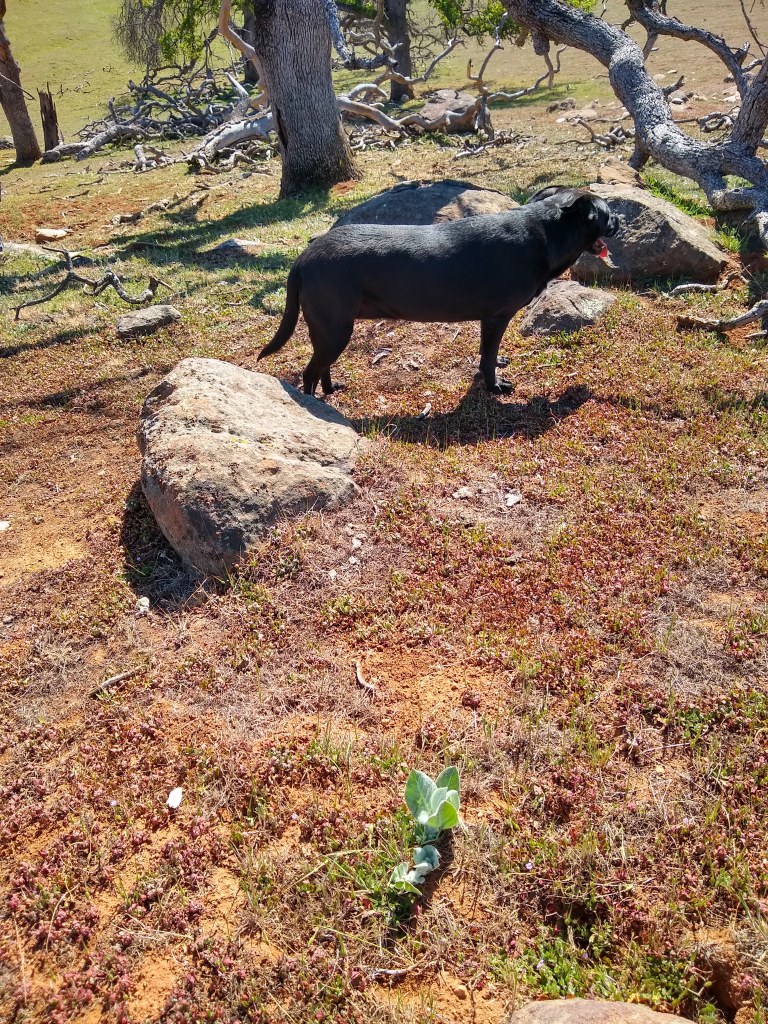
As time went on, the cattle migrated around the hill. I went home for a cup of tea and breakfast – in front of the large window looking north to keep an eye on the situation. I calculated how close they could get before I would need to run up the hill to get to the patch before them. Then…trickery! A separatist cow group splintered off from the herd and went up the hill. It was like they remembered the green of the milkweed and made a plan to circle back. I ran out the door, the dogs at my heels, jumped in the neighbor’s Polaris and drove as fast as I safely could up the dangerous incline. I had to approach with care. If I chose the wrong side to head them off, they could stampede over the plants all but assuring the destruction of the patch. This pushed me to the steepest, rockiest side of the hill. As I watched the cows continue their approach, inching closer and closer, I could drive no further. The rocks were too plentiful. Jumping out, I ran across the tilted hillside, dodging milkweed and rocks. The dogs were there first – stopping the cows in their quest just feet away from the patch, and the treasure of the caterpillars beyond. Breathless as I ran, I said “leave it!” – lest they move them toward me and trample the plants. They obeyed – standing like schoolyard bullies daring some poor kid to make a move. It was like this when I finally got to the east side of the patch. Millie and Beatrix standing like statues except for the slight lick of their chops contemplating – no savoring – the thought of a chase. I imagined them thinking, “Make my day.”

It was a stand-off.

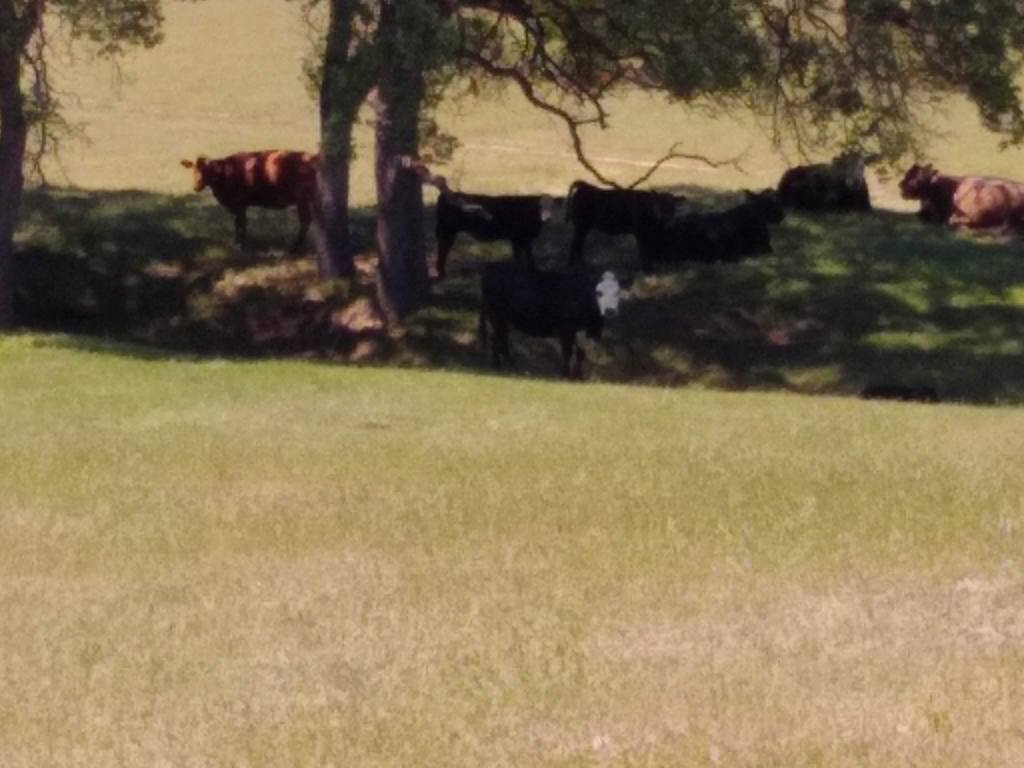
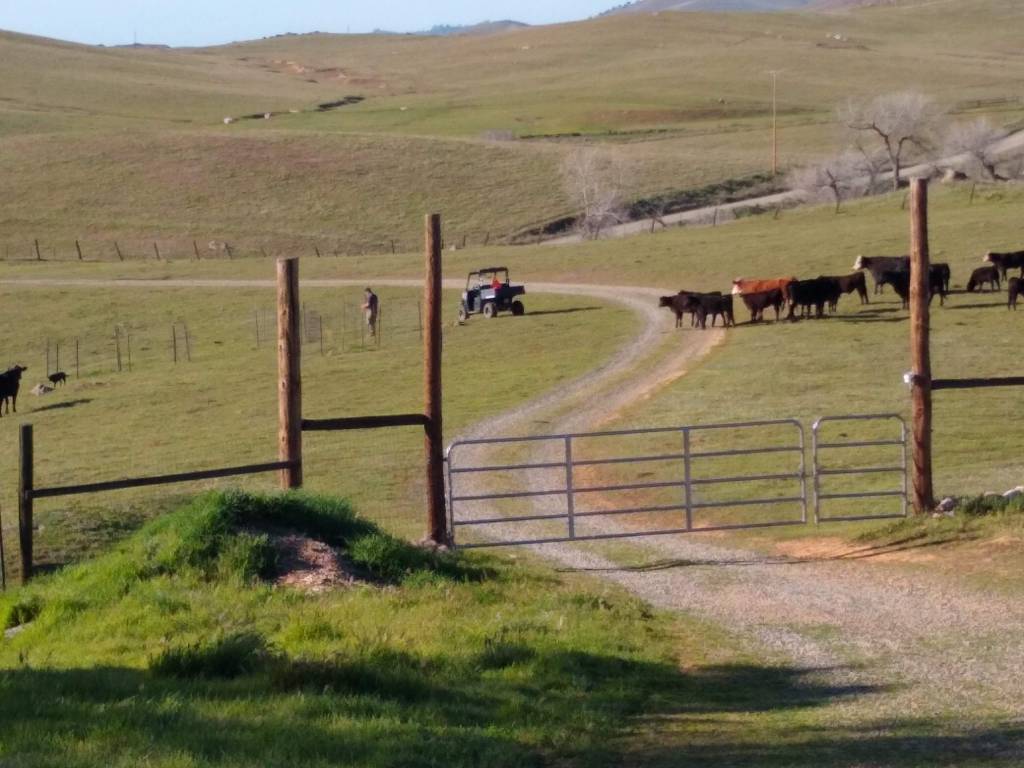
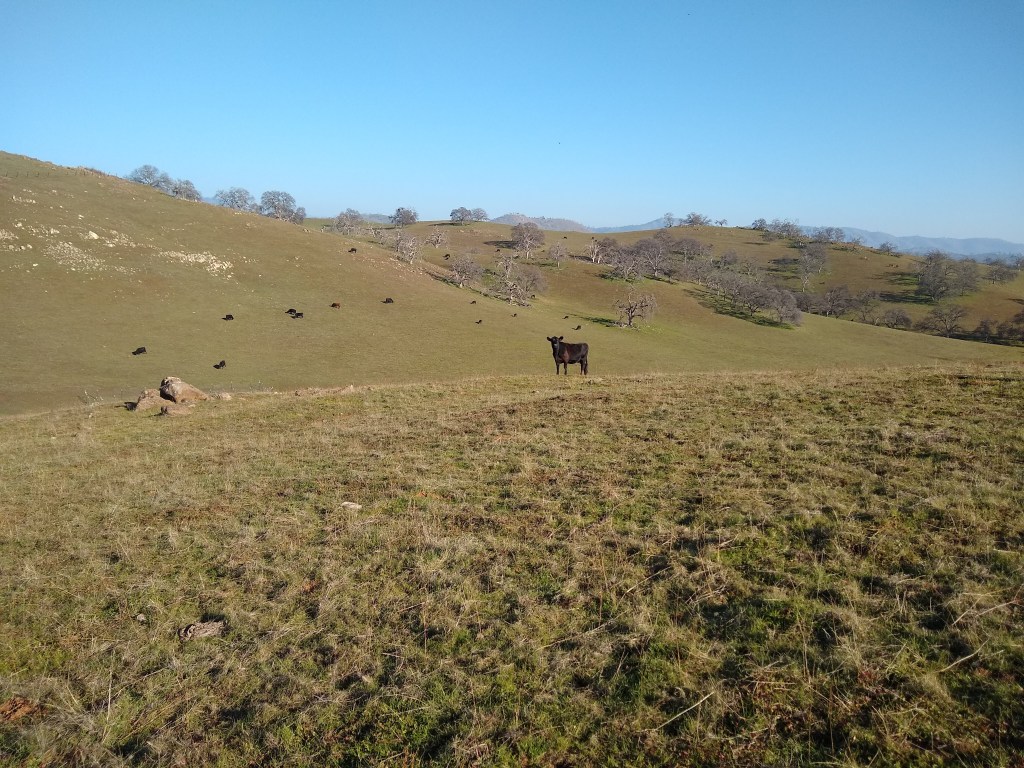
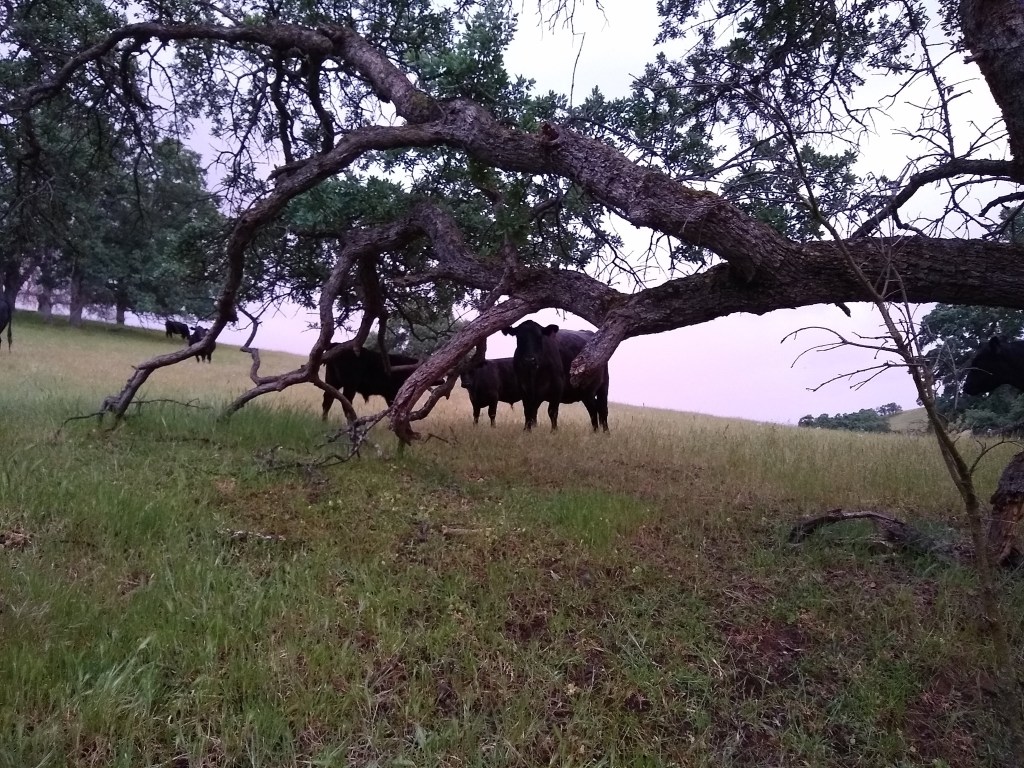
Cattle are smart, and they don’t like to be stationary for too long. The drought had taken its toll on the land, and they were going to chomp those bright green plants they had seen the day before. Their ringleader is Skull, and she brought about 10 of her toadies along with some their calves. As a rule, I give a wide berth to all mamas with their babies, and I certainly did not want to put pressure on any of them. But, this was my one patch of ground, and I was not going to cede it. Skull is about 1,500lbs, black with a white face that leaves black fur around her eyes giving her that skull-like appearance. Creepy. She is not someone you would want to pick a fight with. She stared at me demanding that I get out of the way. The dogs inched closer to her as she tossed her head. Then she looked back at me, and I said, “You have 364 and a half acres to graze. This is my half acre. Go on…GET!” Oh boy, she did not like that. She hit her hoof to the ground and scrapped the dirt, then snorted. Dang – she was getting agitated. I tried a different approach in a softer voice, “Oh sweet, sweet skull. Please understand. I love you, but I love the monarchs more right now. Why don’t you go take your posse and eat some other plants?” Another stomp, scrape and snort. Things were not looking good. The issue, it appeared, was non-negotiable on both sides, and I would not be moved. Sensing the moment, and tired of the conversation, Beatrix and Millie looked at me. I nodded, and they were off. Barking and moving forward at the splinter group. Some of Skull’s toadies peeled off right away and headed down the hill, but a few others hung on. Skull stepped toward the dogs, but they were undeterred. The girls redoubled their efforts; they were not fooling around. Skull and her team relented and reluctantly made their way down the hill, slowly, knowing their size and desires. Then, nearing the bottom of the hill, Skull stopped and looked back up the hill at me, the dogs now sitting by my side staring back at her. It was clear I had won this battle, but the war was yet to be determined. She turned back around and meandered off, head held high.

With the tense moment passed, I turned to regale in the treasure that was protected. The caterpillars were safe. There were large, medium and small ones eating. They were thriving. Beatrix and Millie saved the day.

Badass Canis familiarus

With the cattle moved on, I set my sights on figuring out how I would get the Polaris back down the ultra steep hillside. Photos do not do it justice. Driving down is almost like going over a cliff. I created a plan of careful movements to position the vehicle nose forward using the same track I had created to get up the hill. I took a deep breath, loaded myself in the unit, put my seatbelt on, placed my left foot on the break and my right on the acceleration, shifted in reverse and took off the break. It lurched forward for just a quarter second before I caught it with the break pedal. Breathing again. I reversed, got it into position and carefully went downhill in low gear.

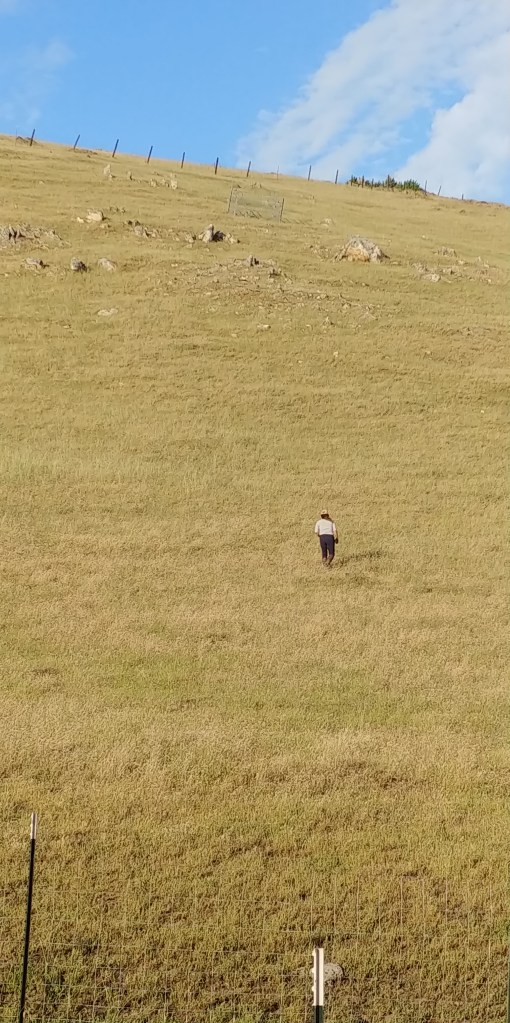
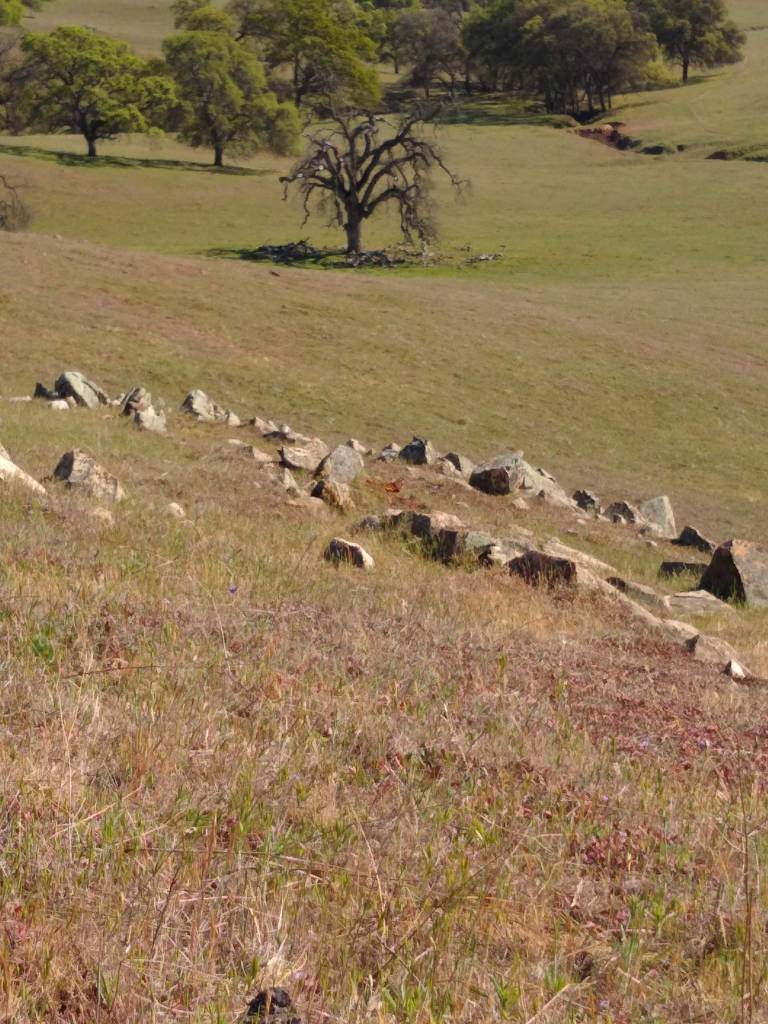
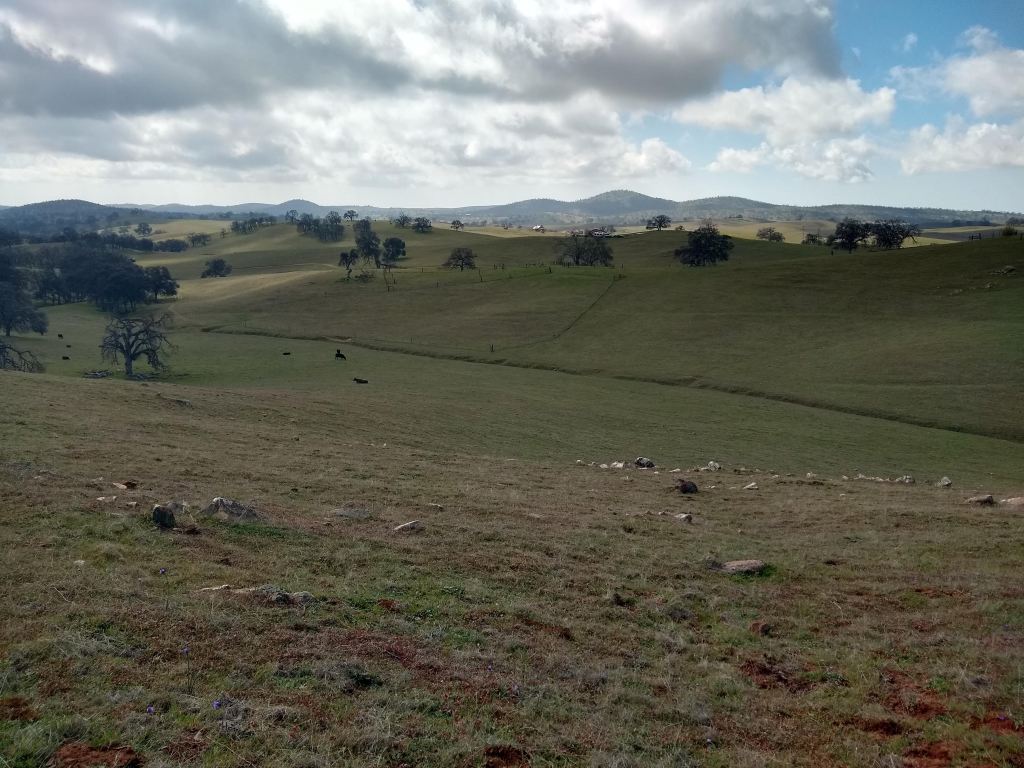
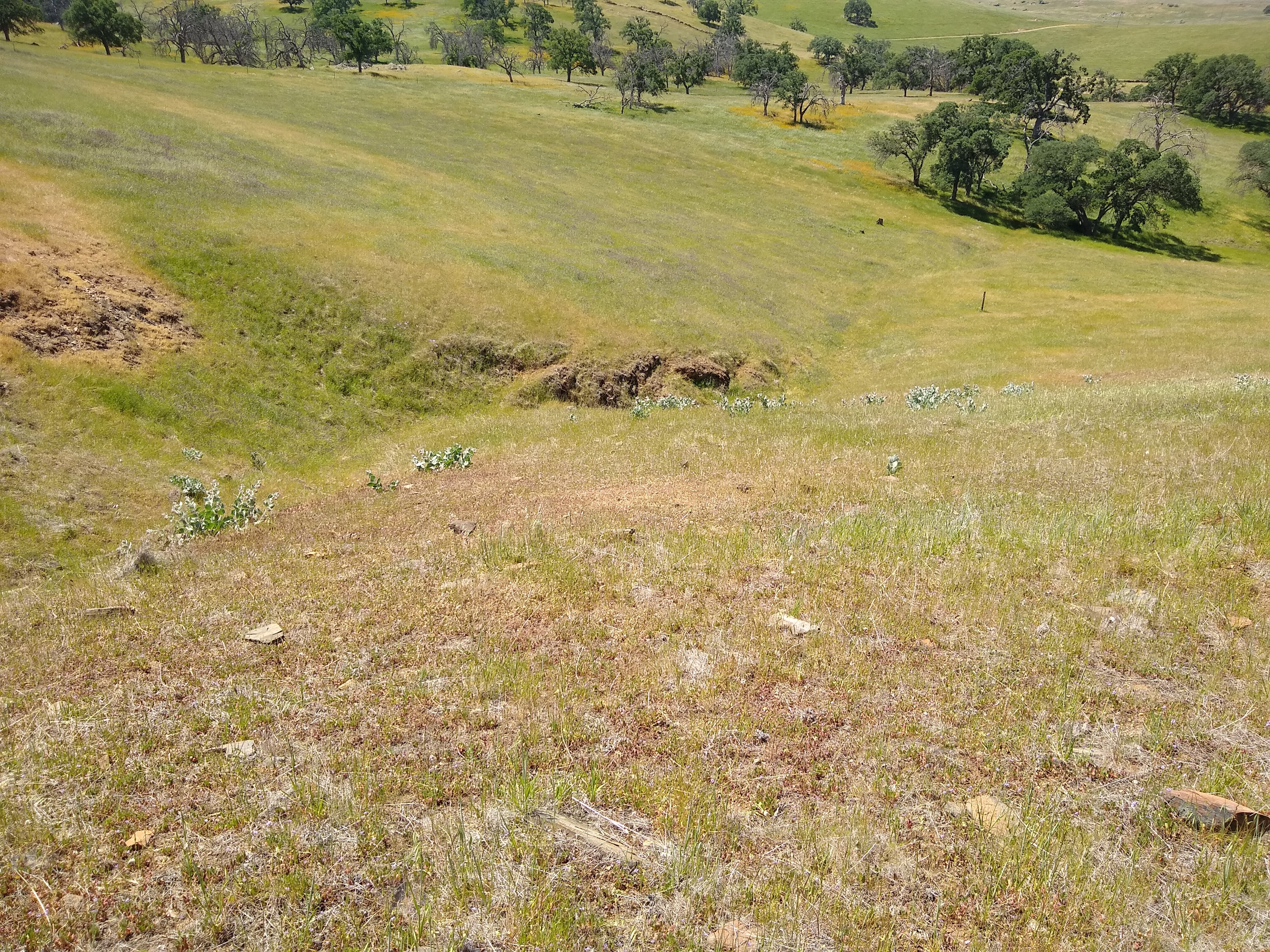
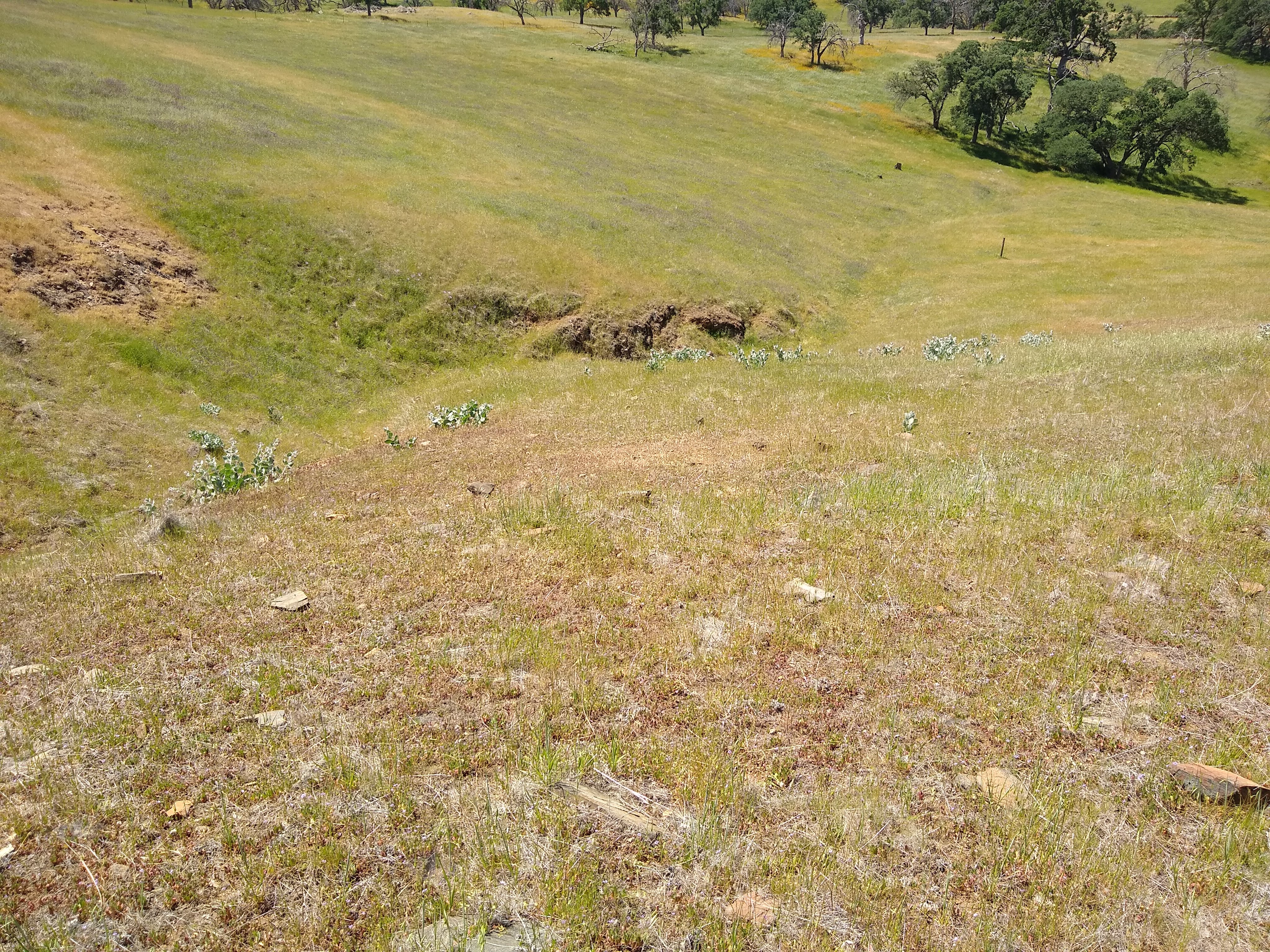
Images are deceiving. This is not a gentle slope.

Nectar and Monarch Sightings

The nectar of the milkweed is a crucial source of food for a newly emerged butterfly

With the cows to the south, I could feel comfortable going on vacation. My pet sitter texted me with a sighting of a monarch on the back patio. I nearly cried. It isn’t just one. There are several sightings now. I really believe this place was chosen as a nursery because of the added nectar (Thank you CARCD and Xerces for grants and extra plants). In the last two years, there has been no evidence of caterpillars chewing on plants. This year has been good for early blooms. We have a wide variety of plants flowering. It has been this way since January.

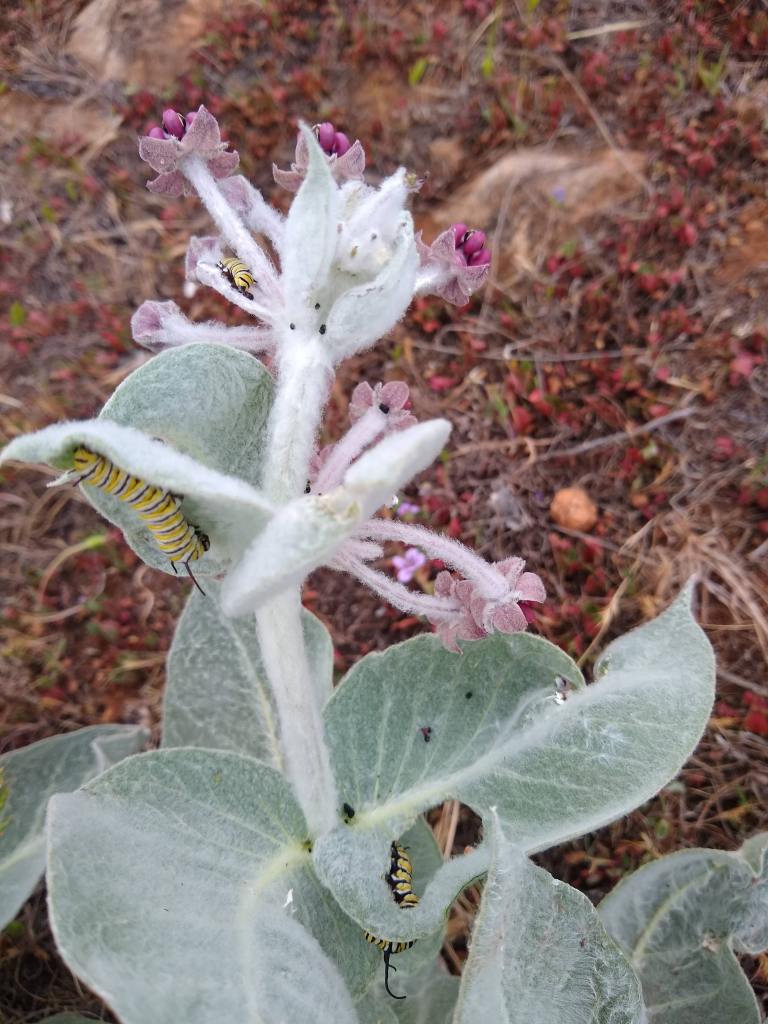
After returning from vacation, I checked on the incubator milkweed. It was gone – stripped down to nothing but a few buds at the base of the plant. This is as intended. The caterpillars eat, and eat. They then find another plant to ravage until they are large enough to make their chrysalis. I counted 5 on one large plant and one on another. There was evidence of slight chewing on a third large milkweed, but I did not see any caterpillar.

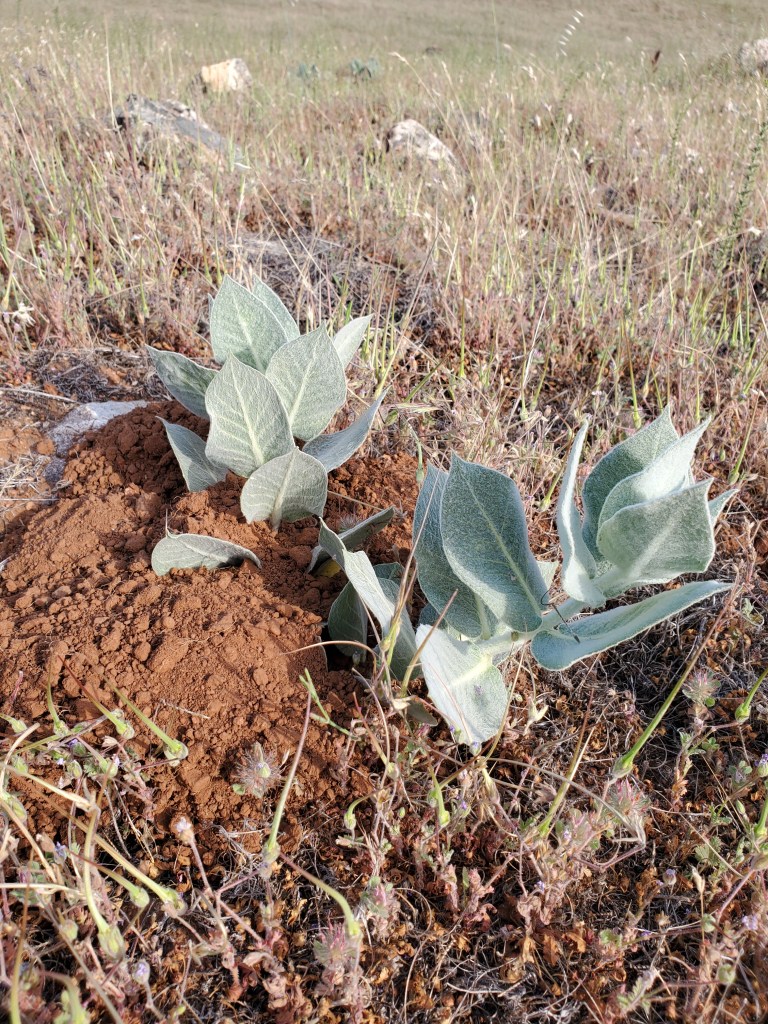
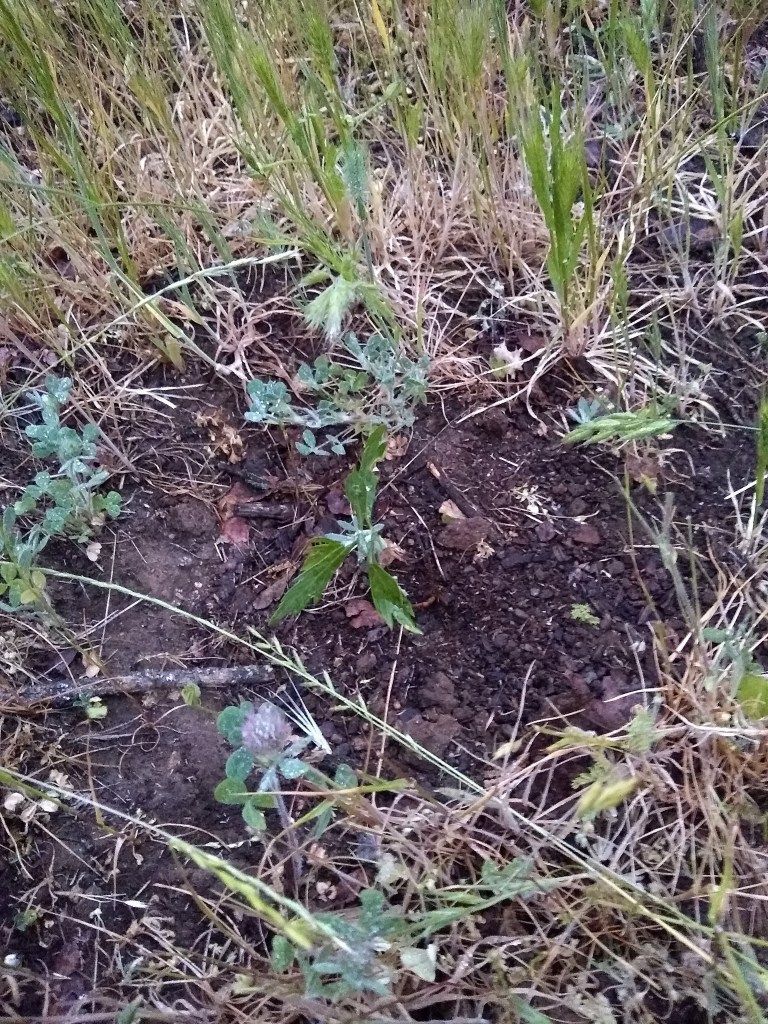
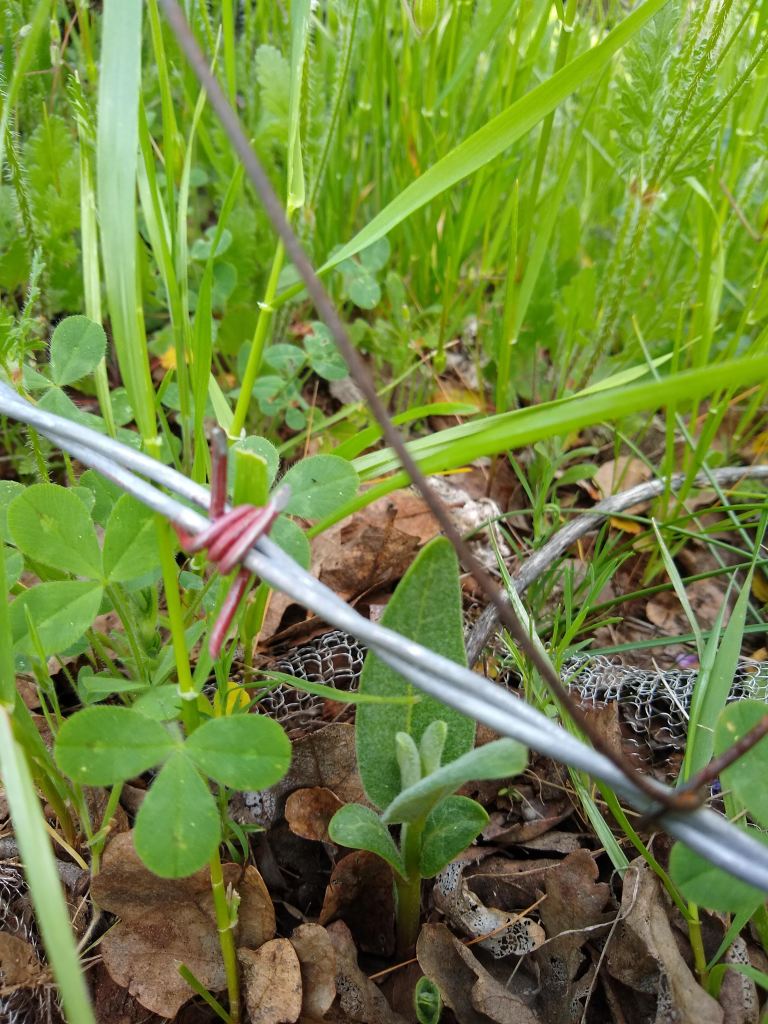
As I was returning, imagine my shock when I found 4 A. Californicas emerging from the soil of the first milkweed patch, AC1, closest to my home – the site I had been watching with despair at its non-return. In years past, this site had as many as 11 individual plants. This could be good news for any late comers to the ranch who want to start their family here. Lesson learned – never count out nature.

Monarch (and BABIES) on the Ranch and Near Disaster Leads to More Adaptive Management

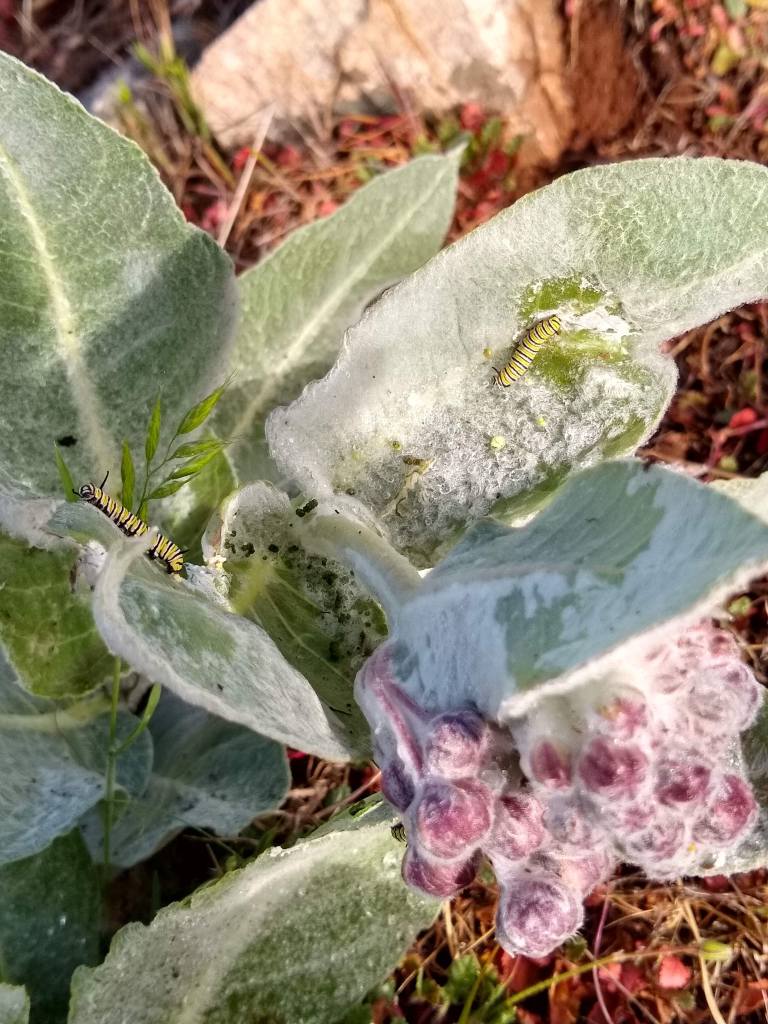
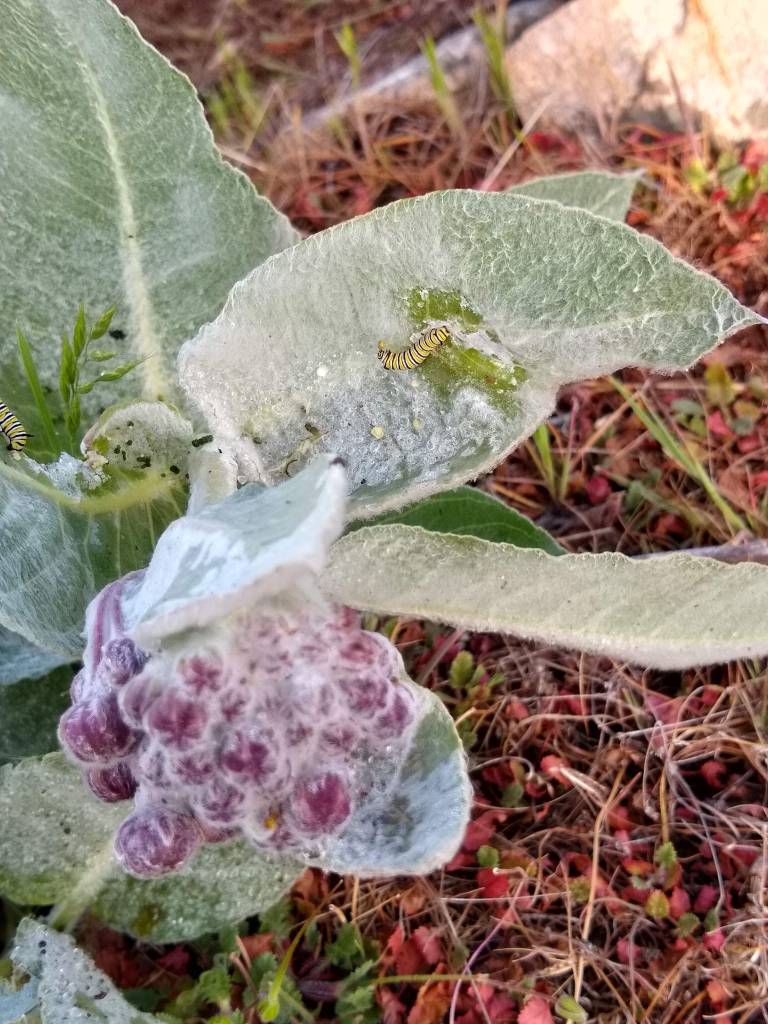
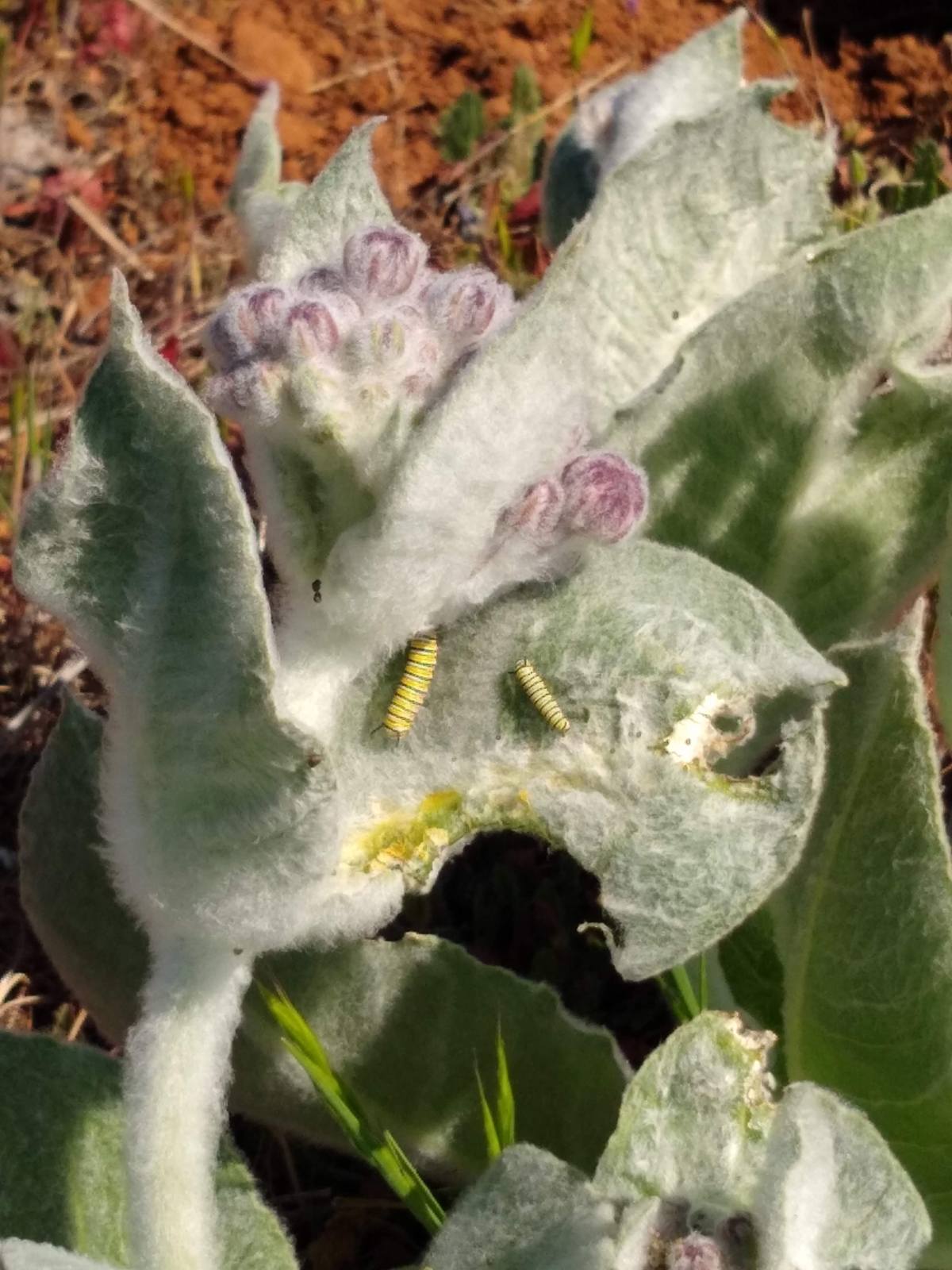
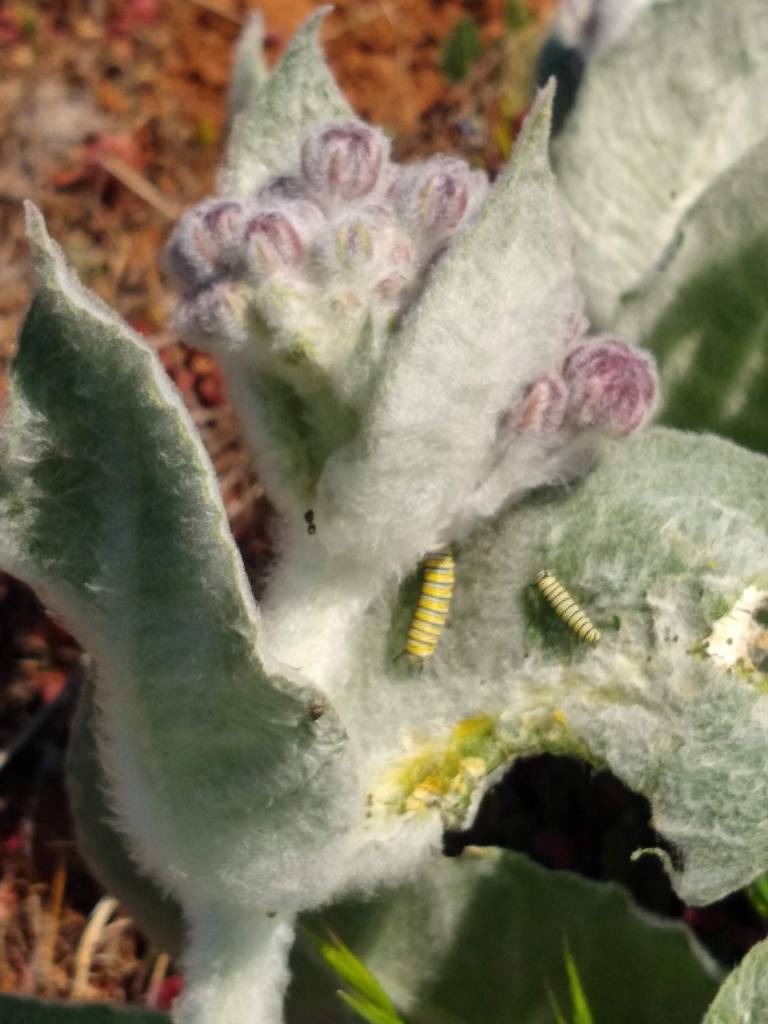
Monarch caterpillars eating

As I write this, I am still breathless. We have monarchs! We have monarch babies! Thank goodness for Ron’s monitoring project. It has required me to check on the A. Californica (AC) patches regularly. It was one such monitoring effort I went on earlier this week that produced the greatest joy to occupy my heart since, well, since the week when I found the ACs. I guess I find many moments of joy in life!

On Wednesday, March 16th, I decided to check on the ACs during my lunch hour. It was such a beautiful day with a very slight cool breeze, no clouds in the sky. I felt compelled to get away from my desk and enjoy the out-of-doors for a bit. Gratefully, I work from home, which enables me to seamlessly move from inside to outside during breaks in my day.

The monitoring project requires me to note date of emergence, flowering, when seed pods are set and when the seed pods have opened. It also requires monthly measurements. I have been going to the patches semi-regularly to check – semi-regularly because the largest one is well away from the house up a 6% slope. It takes some effort to get there. Ok, let me get to the good part! So, I decided to take a walk through the riparian area. I saw some other butterflies, sat around by the spring creek for a while observing and checking on the Xerces plants.

This put me on a course to access the large AC patch (AC2) from the east already near the top of the hill. First, however, I checked on the other two smaller patches. In AC4, the two plants were small but already flowering. In AC3, the plant was still small, but healthy.

I finally got to the large patch with several tall, mature plants that were already beginning to flower. All the flowering shocked me because this was quick and very early. It was in this muddle of thought and calculating from my experiences last year when out of thin air I catch some movement to the east. It was a monarch butterfly flying around. WHAAAT?! Could I believe my eyes? I fumbled with the phone camera trying, but failing monumentally, to capture a photo. I even turned the camera app off accidentally in my excitement. Then, it was gone, and I got nothin’. Oh how I hated myself.

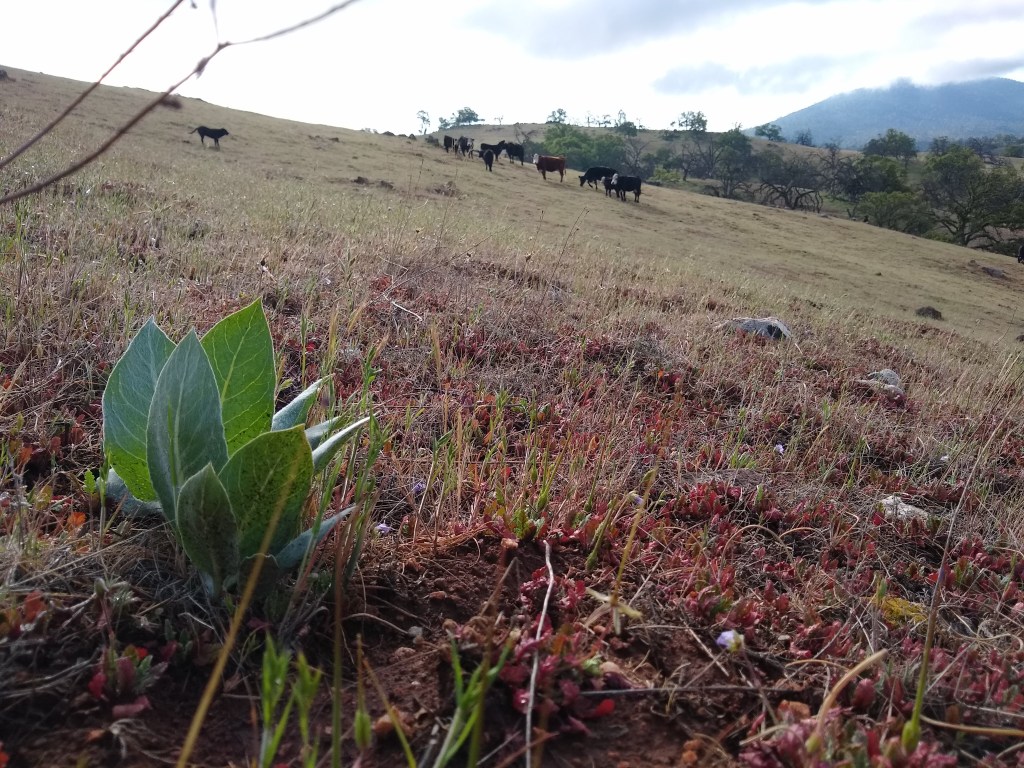
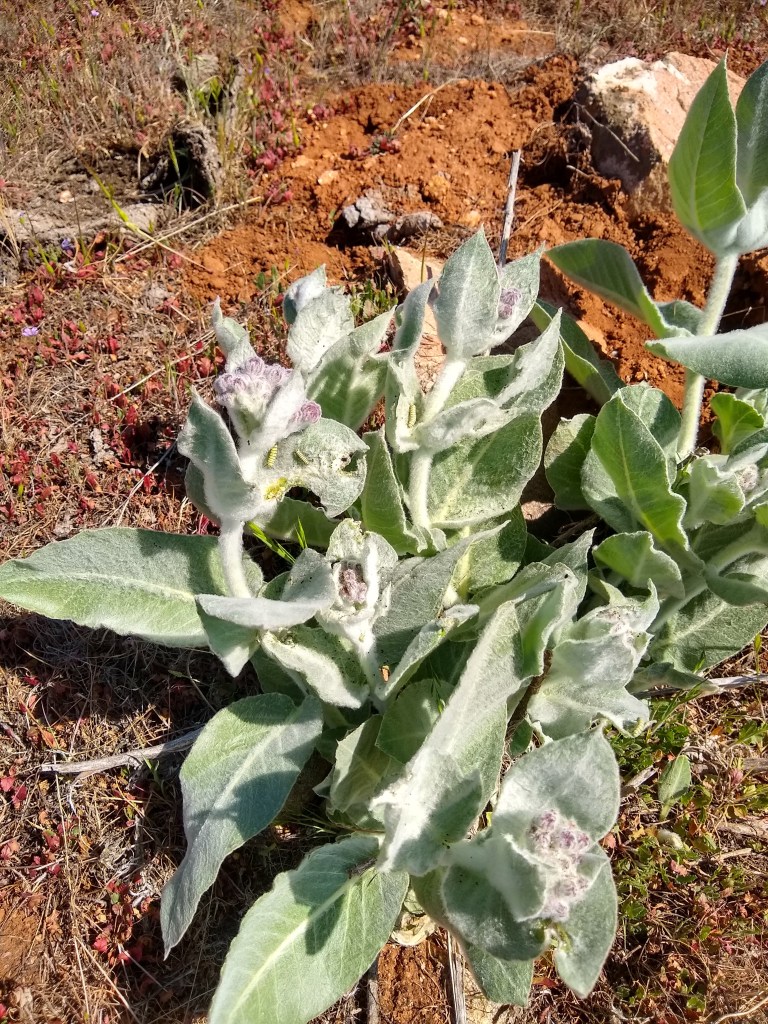
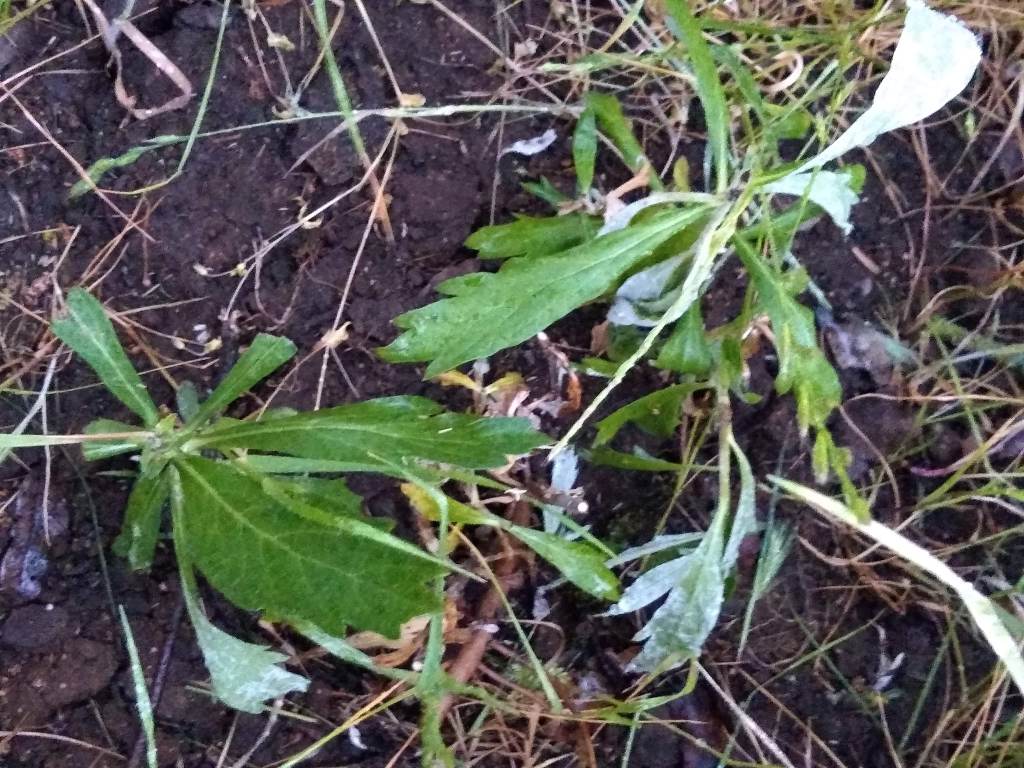
Seeing the monarch made me wonder about babies. I took a close look at the AC plants. I saw quite a bit of holes on one mature plant. Looking closer…there they were, the most beautiful sight, monarch caterpillars – monarch babies, the progeny of this magnificent, healthy, beautiful adult who graced me with her presence – the future of the species attached to leaves all over the milkweed. I counted 15 caterpillars. I looked at all of the other plants. Nothing. There was some evidence of eating on one, but I didn’t see anything…at the time.

I sat down next to the main caterpillar nursery plant and contemplated my luck. I sang to the plants and caterpillars a little butterfly song I made up on the spot. Quietly, I hoped I would see the adult monarch again. I was singing to her too. A hawk flew over me. I called to it. A blue belly lizard made its way up on top of a rock not too far from me and began doing his push-ups – letting me know this was his territory. There is so much to see and hear when you give yourself time to sit quietly in one place.

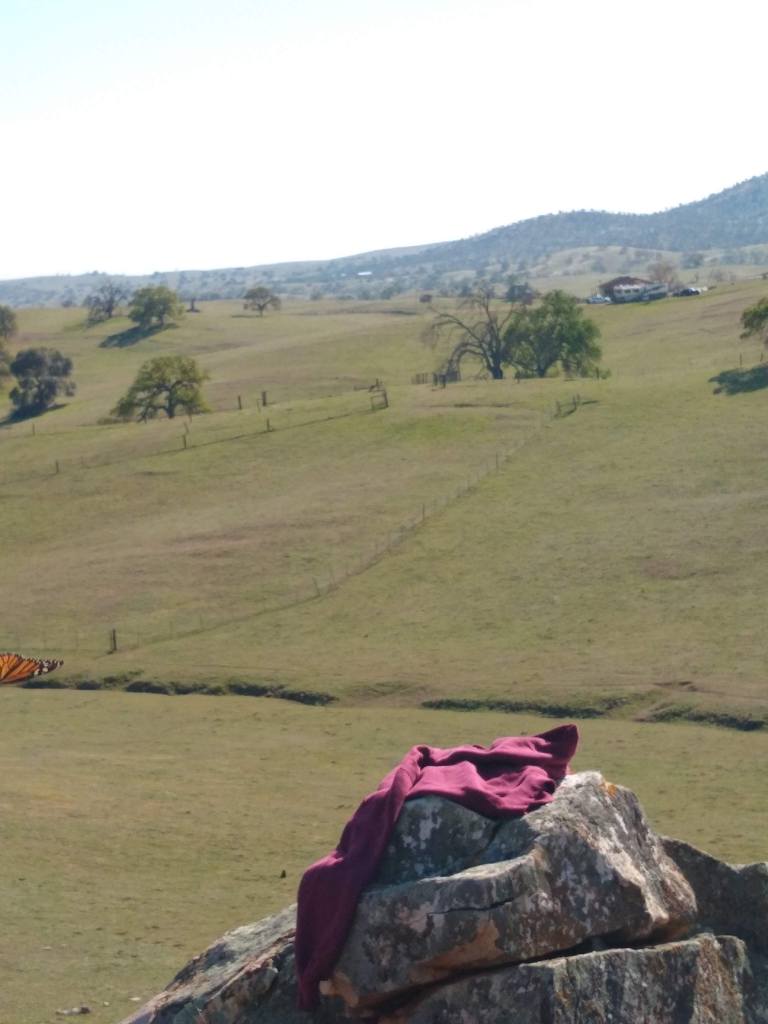
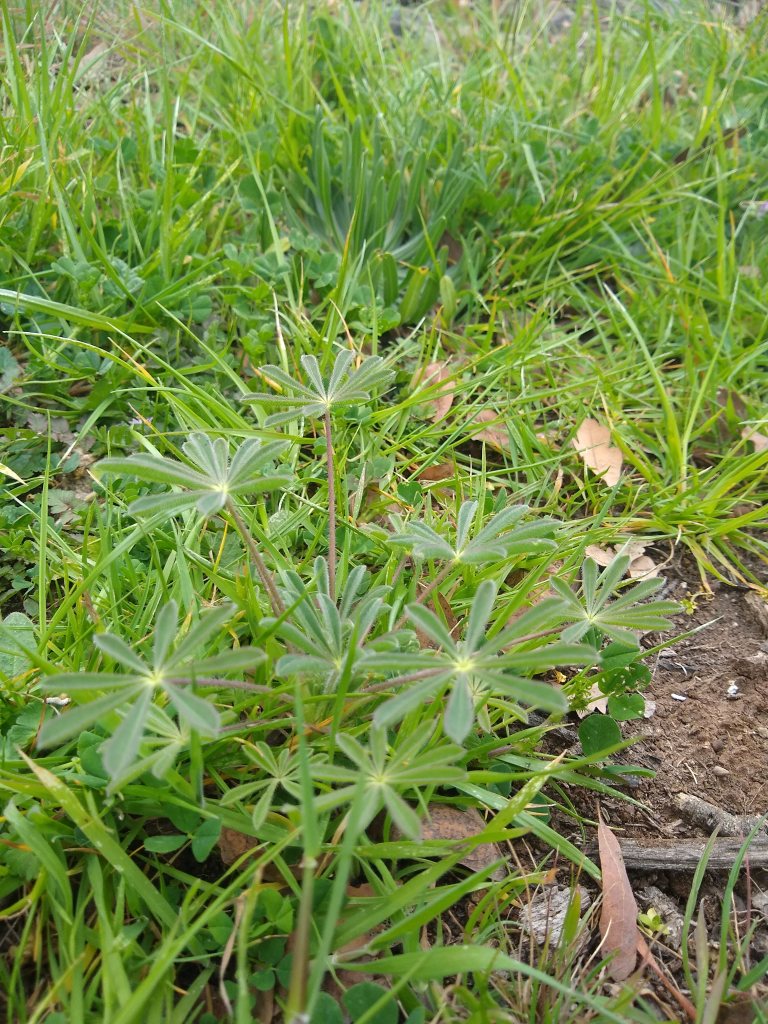
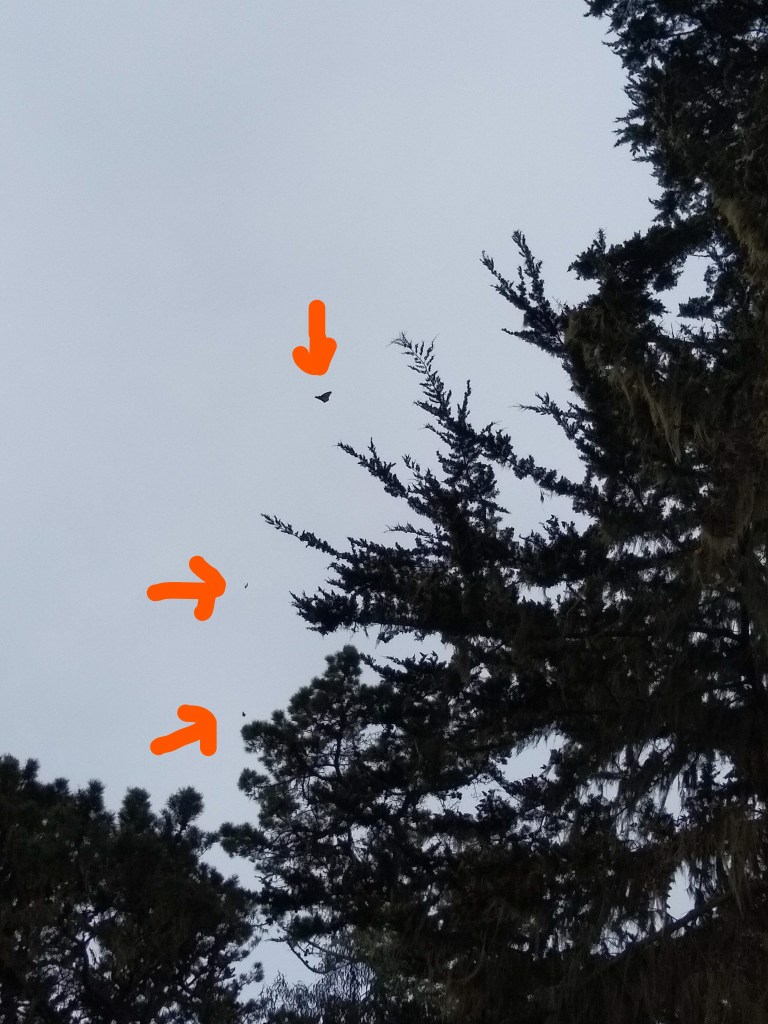
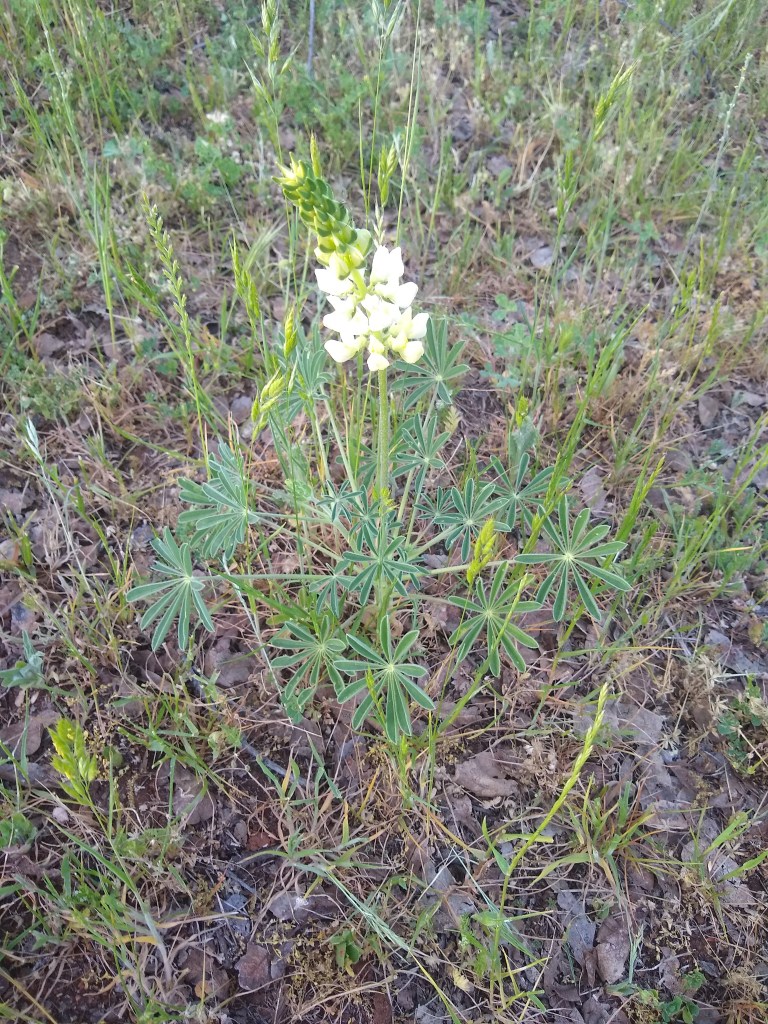
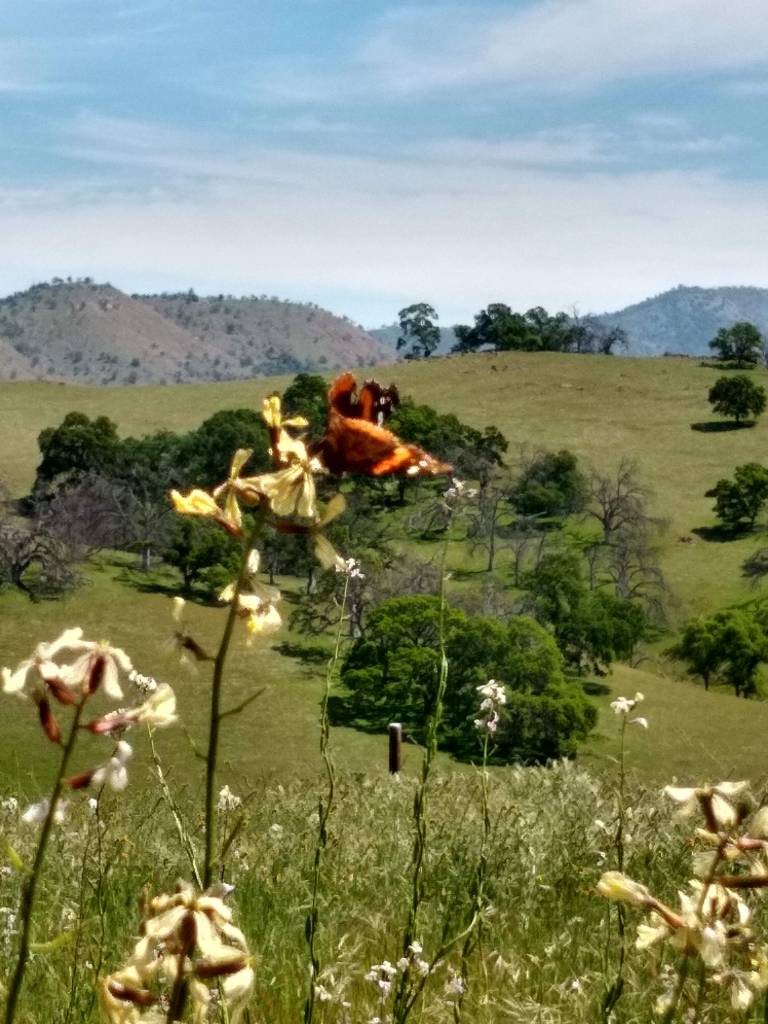
Out of thin air, again, like magic, she appeared. She landed on another milkweed. She coasted close to the earth downhill. I saw her glide just above the range and then land well away from me. There is much lupine blooming, so perhaps that is what she was after. Then she zigged. She zagged. She came back up the mountain right on a course towards me. I was wearing pink, so maybe she thought I was a flower. The entire time I had my camera at the ready. I got a couple distant photos and had not taken off the zoom when she approached me. As a result, I only got the edge of her wing, but what a gorgeous, sensational piece of wing that was!

And just like that, she disappeared. Although I was there for an hour and a half, she did not reappear. I turned my attention to the milkweeds again. I wanted to convince myself this was not a dream. The caterpillars continued their ravenous march across the leaves completely unaware of my ecstasy. Satisfied this was reality, I made my way down hill toward home to complete the rest of the workday.

That night, I had trouble staying asleep. I woke at 2:30am. Beauty is never without its price. I realized I was nervous. Like a parent waiting for their child to let them know they arrived somewhere safely, I found myself pacing, waiting for the sun to rise. The cattle were on my side of the ranch, and I had some concerns for the safety of the plants, and with them, the caterpillars. I went outside and saw the cattle all sleeping on the driveway. I felt better to see their inactivity, but also uneasy knowing how close they were to the site. I went back inside resolving to keep a close watch when it became light out.

Disaster! I fell asleep at some point and woke to the bright sun shining on my face and a kitten on my chest. How did this happen?! How could I not have woken up at sunrise and especially when my furry baby made a little nest on my person?! I bolted toward the window where my fears were realized. The cattle were up on the steep slope grazing, and there was one right next to the incubator plant. Quicker than I have moved in about a year, I jumped into my muck boots, threw on a vest over my scant pajamas and put on a hat fleeing out the door and into the range before me. Ran down the driveway, through the gate, made a hard right, nearly tumbled down the hill toward Site 2 and the arroyo, then ran as hard as possible up the mighty hill, navigating rocks and gopher holes, up and up until I reached the babies.

Cows in milkweed patch

I gently shooed the cows away, downhill, away from this prize. It wasn’t their fault. They are doing what they are meant to do. With the drought and almost no forage, these tall green plants now look more enticing, and the cows are willing to give the bitter, toxic plant a chance. They can’t help themselves, and I still love them. But gosh darn – the plant had been grazed. Two tall stocks were missing. I rapidly looked all over the plant, counting again and again to make sure. There were twelve. Three caterpillars were missing.

We were all in luck. The largest of the caterpillars was safe. This one is perhaps just a day from moving into its chrysalis stage. I also looked at all of the milkweed plants again. I found two caterpillars on another large plant, and one on a third mature milkweed. Is it coincidence that I found three more or perhaps did the caterpillars drop as the cow snipped off the stem and made their way to another plant? Probably not. I probably just missed them the previous day – but I will never know.

The Need to Balance

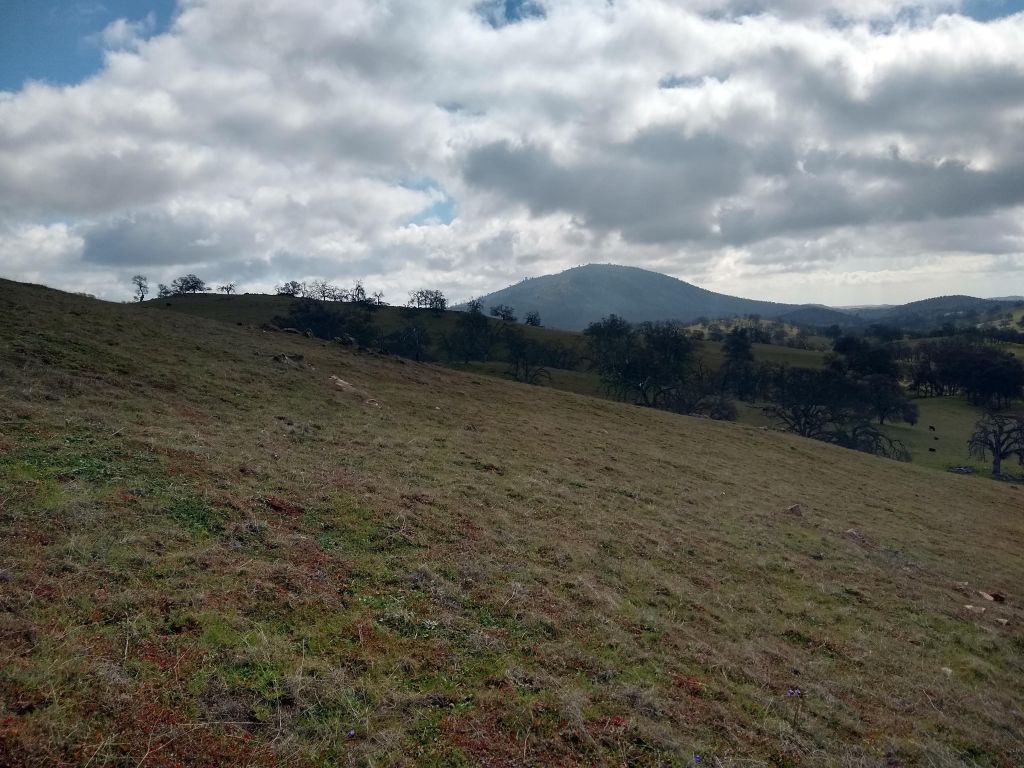
The term “adaptive management” refers to making decisions based on realities present on the ground. After the very close call with the cows, I waited until later that morning and texted my cattleman. He has had the cattle on a rotation cycle between the south and north parts of the ranch since he bought the business from my old cattleman. This practice is a good one. It attempts to mimic the movement of grass-eating large mammals that roamed rangeland before Europeans arrived. He is always watching what is happening on the ground and makes the decision when to move them based on the amount of feed or water and other things as well. For much of the recent past, the cattle have been on a 14 day rotation, but he has rotated them at 10 day intervals too. Last Friday marked day 10. I hoped that perhaps this could be close enough to be ok to shift the cows. I asked him what was possible.

Tom was a bit on edge. It has been a bad year. He lost tens of calves in the high country due to bears. He is almost out of water on a leased piece of ground up the road from me, and the drought has left very little grass for the cattle to eat. He has been spending thousands on hay – to supplement the lack of grass. Just like any business, you want your inputs to be less than the output — and the greater that difference can be the better. It means more profit. I understand.

Tom didn’t want to deviate from his plan. I also did not want to make impacts to the neighbor’s ground that would be bad, but I said, “Let’s talk this through.” I wanted to walk through all of the actions and consequences to see what was reality and what was just reactionary. I had offered to compensate for a week’s worth of hay if that was what was needed to move the cows. He didn’t think that would make a difference. Ok. He politely said with a slight tone of stress, “Pardon me, but I am looking at three caterpillars versus thousands of dollars in feed, and I don’t see that computing.” I said, “Ok, let’s dig into that ‘thousands of dollars in feed’. I just offered to pay for the feed you would be missing from this side by moving them. So what do you mean? The entire ranch is a golf course. To me, it is nearly the same on each side of the ranch.” He acknowledged that was true.

We talked about insurances, Farm Bill supports, who was getting what. He vented. The stress reduced, and he asked about how long the caterpillars would need to be done. He had planned on coming out here the next day to take a look at what was left. He could move the cattle. It ended up being one half dozen or the other. He could hit that side a little more, but for 10 days instead of 14 and then come back. If there was rain, we would have that much more over on the north.

We had a plan.

Still, I said “Think on it overnight, and we can make a final plan tomorrow. I can make a temporary fence if I have to. I will have just enough time.”

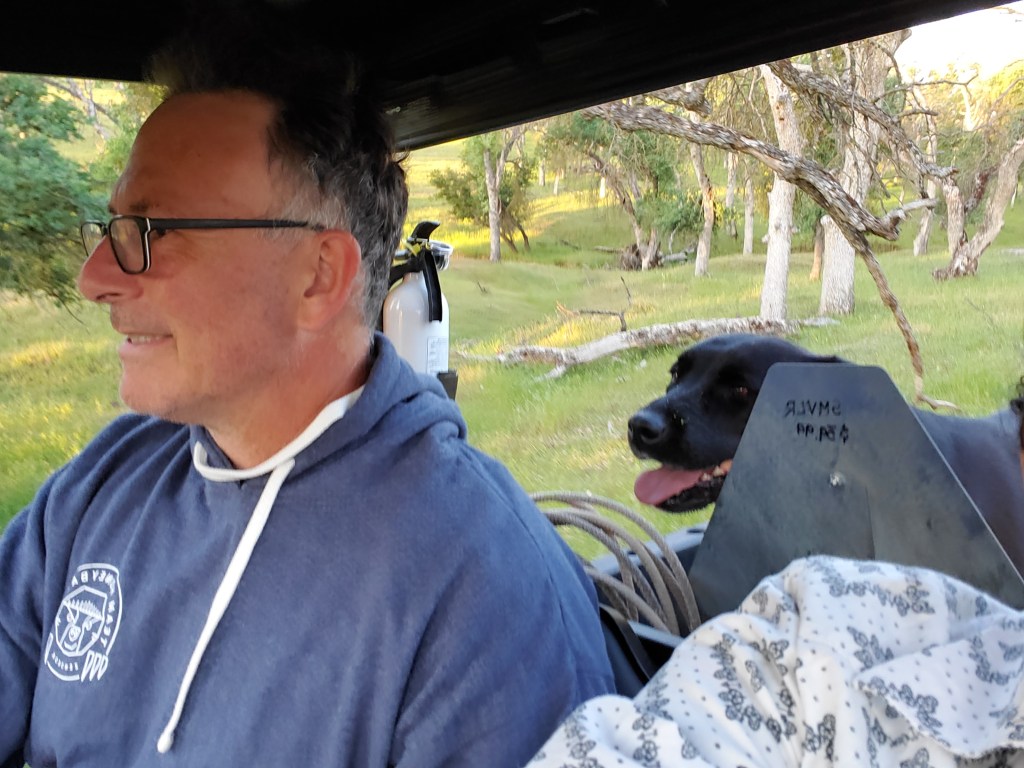
This meant the plants would need some safety over night. I decided I would camp near the milkweed patch to prevent any more grazing of the plants. My husband was not happy. He is from Los Angeles, a city boy. His mind went straight to coyotes, mountain lions and rabid something or others. He did concede that bears wouldn’t make their way down from the higher country just to get me -though the thought had crossed his mind. I was neither concerned nor deterred. I loaded up the very basics of camping gear and set off with my trusty canine companions.

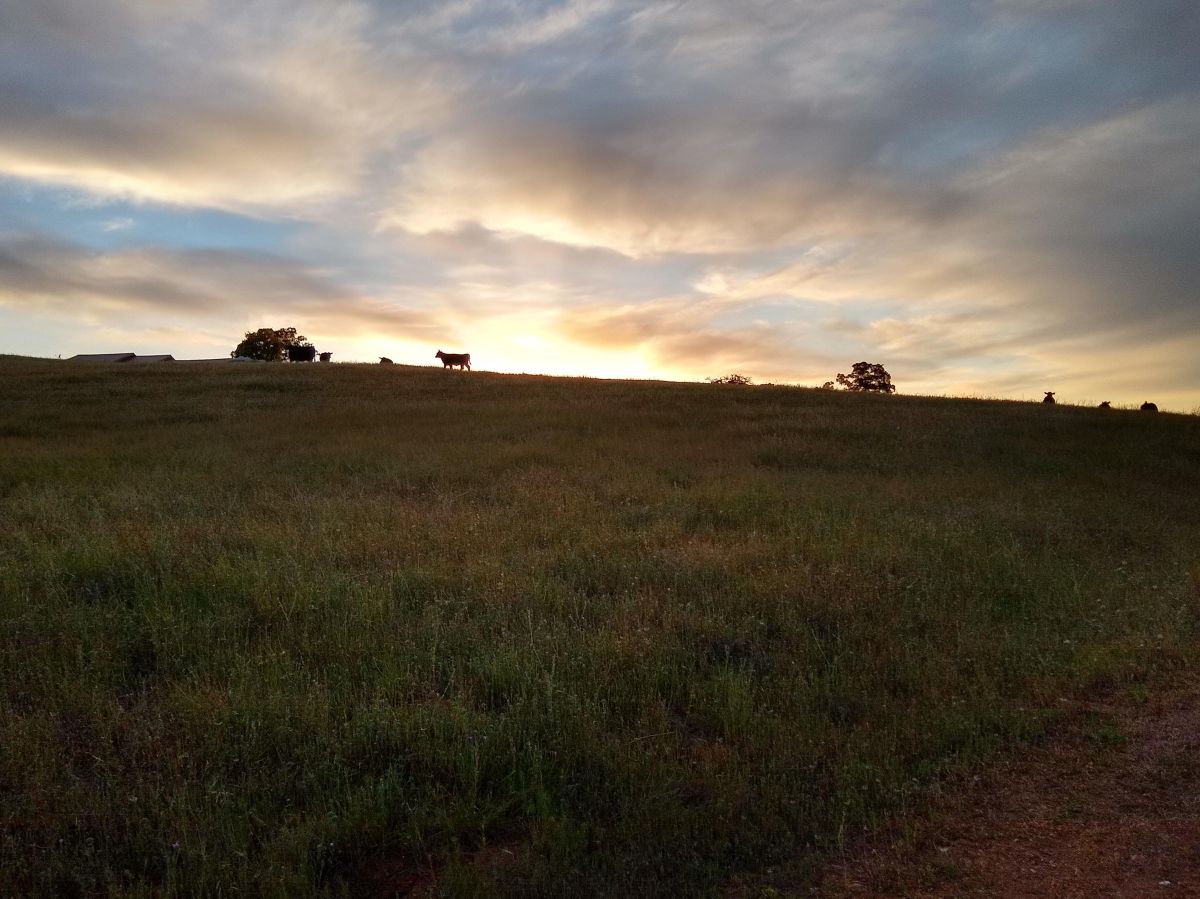
There was only one cow in view far off in the distance as the sun set. It was beautiful. It being a Friday night, there was more traffic on the road and a small plane flew overhead. I could see the twinkle of my neighbor’s lights begin to turn on as the sun sank and the wisps of light began to fade away. There was a cool breeze, then the smell of flowers. Oh my goodness, really?! The milkweed flowers were just beginning to emerge from their duff-covered encasement. Not many had released themselves, so it was just a hint, a distant echo of what is to come. I settled into my bag. I thought about the cows settling down too. It was just then that David turned on our festive strand of cafe style lights on the back patio – like there was some kind of carnival happening without me at home. It looked beautiful from my hilltop vantage. He called me – one last effort to coax me back home so he wouldn’t have to worry. He said, “HB, you know, the cows will be sleeping. You can come home and just get up before dawn. I can have your whiskey and soda waiting for you.” Damn, that boy’s smart and a smooth operator. I double checked the data on cattle grazing, and reassured myself that they would be stationary for the night. Indeed, I saw them just the day before laying allover the driveway sleeping. I was convinced – and Beatrix had been whining. I made the careful trek home in the dark. The full moon had not yet risen. It was just giving us all a taste of its presence, illuminating the edge of the high country and hills with a band of light.

I had mixed feelings. What if a cow decided to eat in the night? It is so incredible out here, shouldn’t I just stay? I had not had much sleep the night before and knew I would not sleep well if I stayed out under the stars. Ah heck, it was best if I slept in my bed and just beat the cows to sunrise. I made peace with the decision. It worked out too. I got some solid sleep for 5 hours and awoke to wind and clouds having moved in over night. I put on my clothes and headed out to make sure there were no interlopers to the milkweed patch. I stayed well away down hill from the patch. No need to be up there more than necessary. It was incredible, but overcast and windy. All was well. The cattle came at about 6:45am. They began to make their way toward the site little by little. Then, they turned the opposite way opting for lower ground and nestled themselves near the swale pond. Unknowingly, I was flanked on the other side by two mamas and 4 babies. They saw me, saw I had no hay, and kept on moving, never once looking in the direction of the milkweed, not climbing the hill. They joined the others at swale pond. The patch is protected for now. Tom decided to move the cows on Sunday. Thinking on it overnight he figured it would actually work out better for him given his other commitments and an upcoming trip. For me, I will have one more day of fatigue monitoring the cattle. It is a small price to pay, and I will worry about that tomorrow. Today, the caterpillars, and all of us, whether we recognize it or not, win.

Wildflowers, A. Californica Emerges, Drought and Handing Off

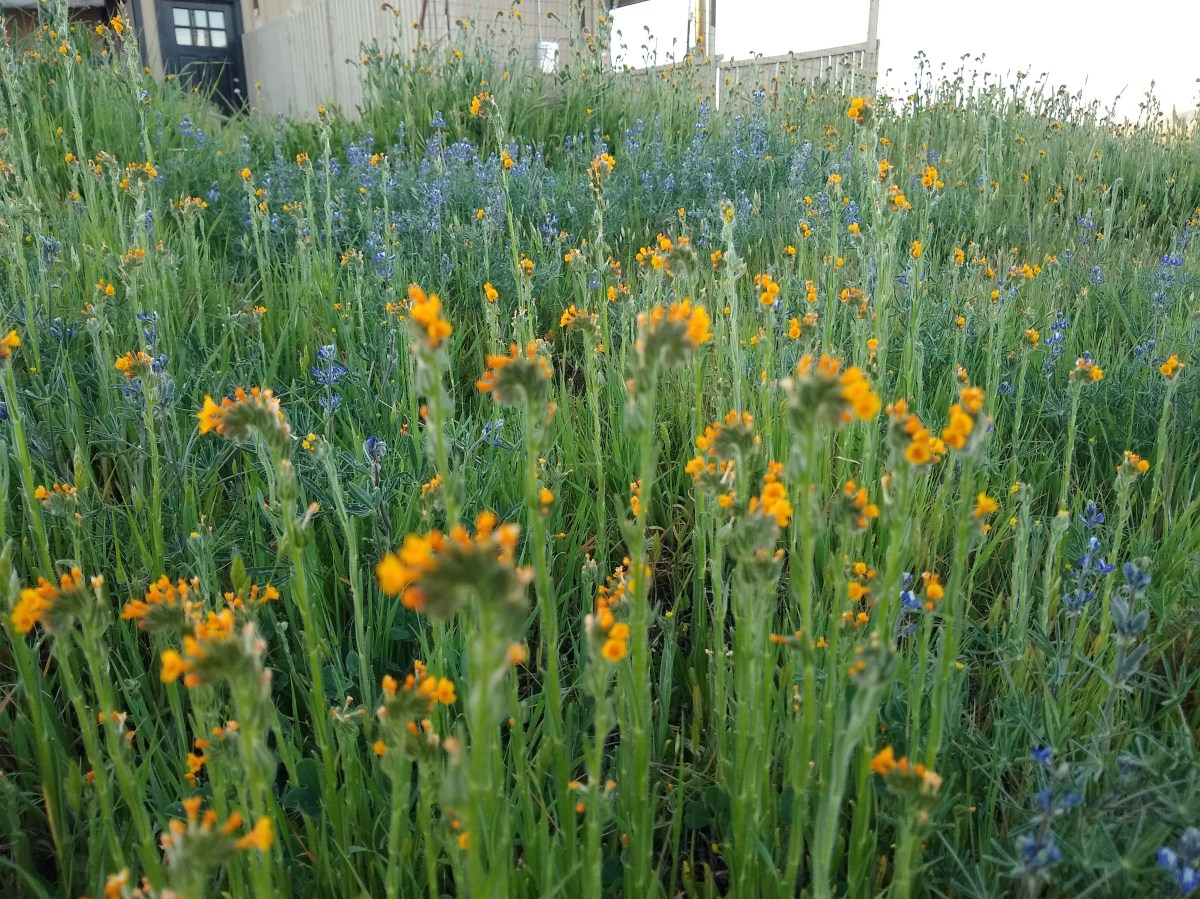
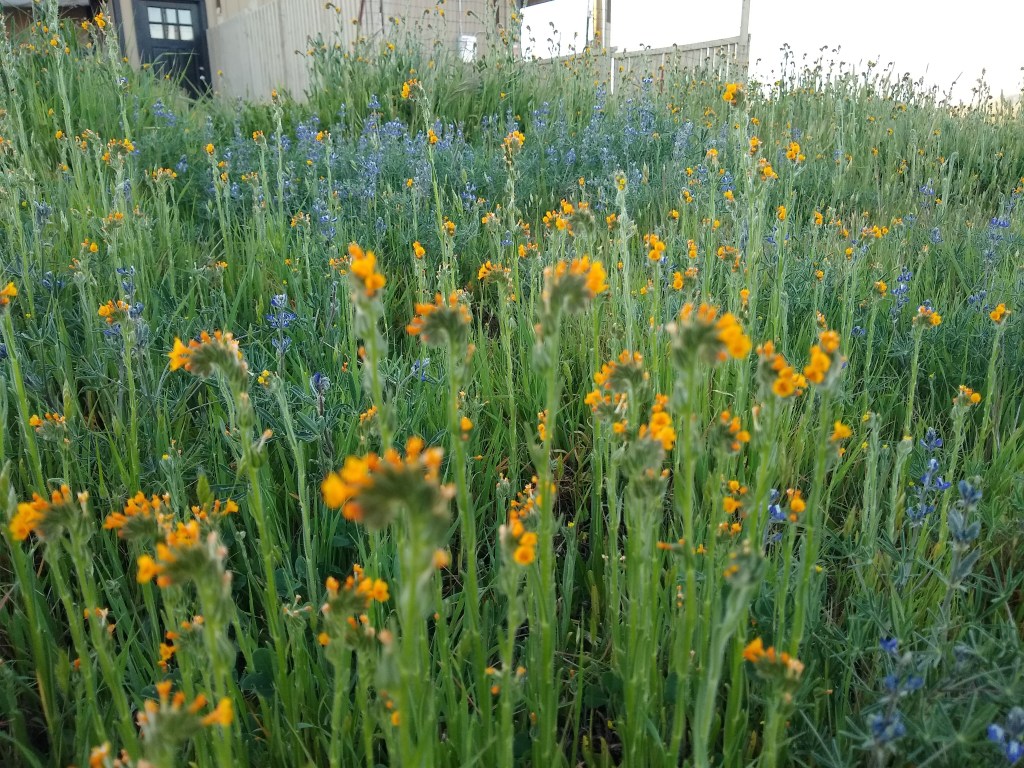
Millie watches Beau kitten walk through the wildflowers (lupine and fiddleneck)

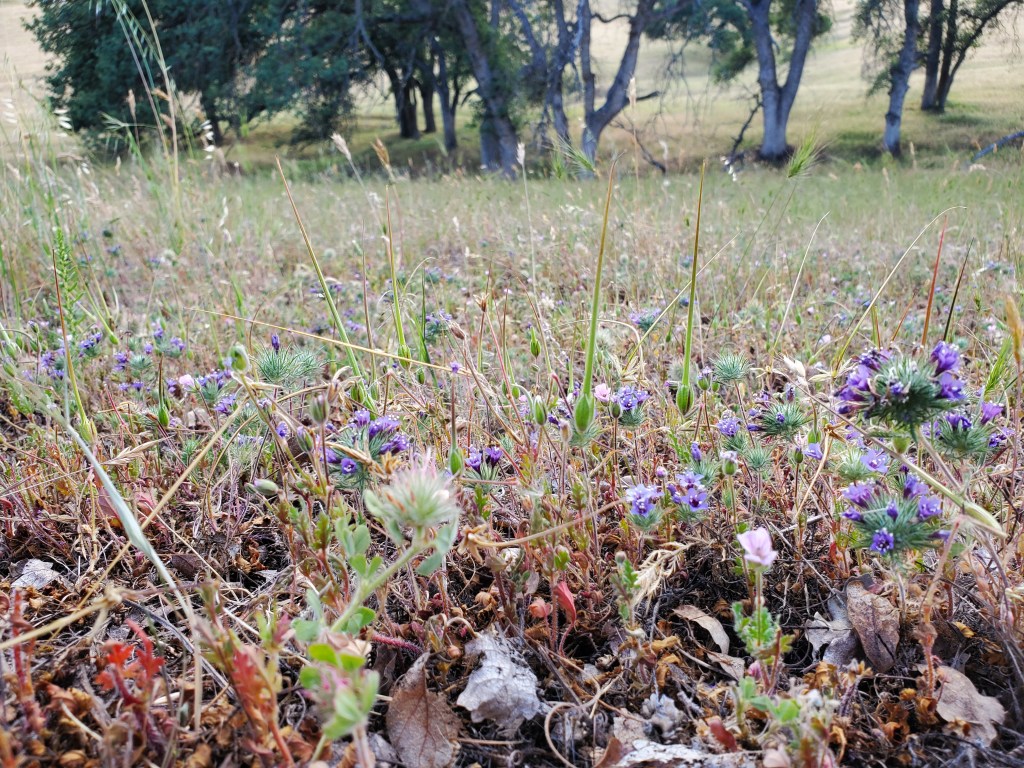
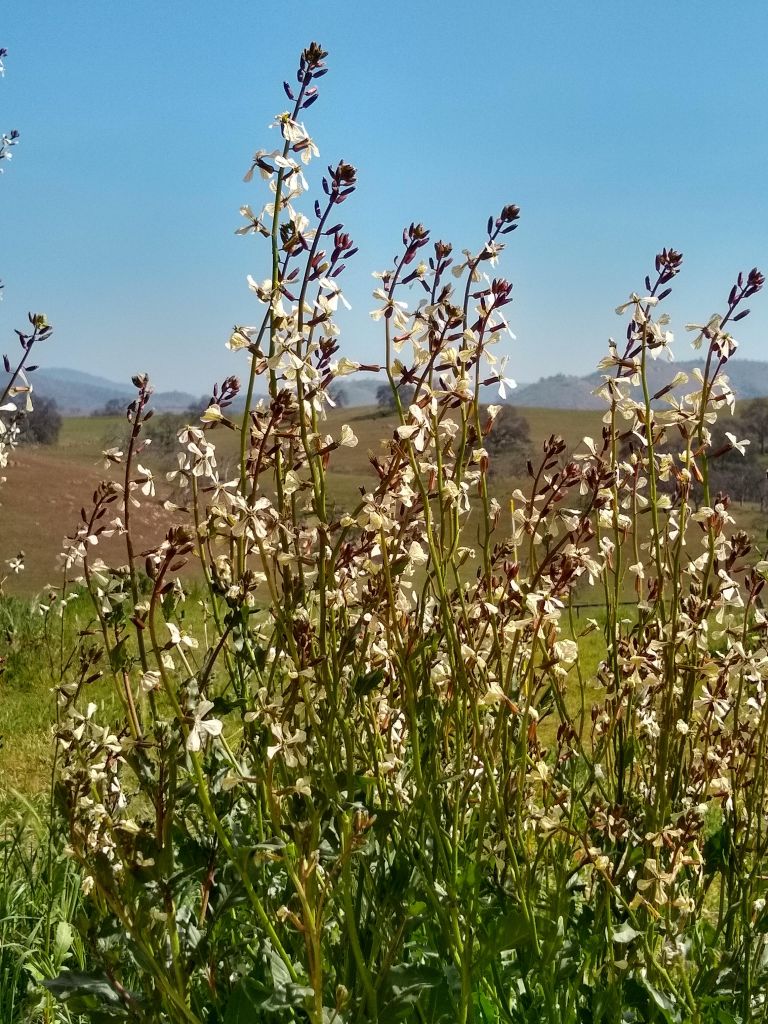
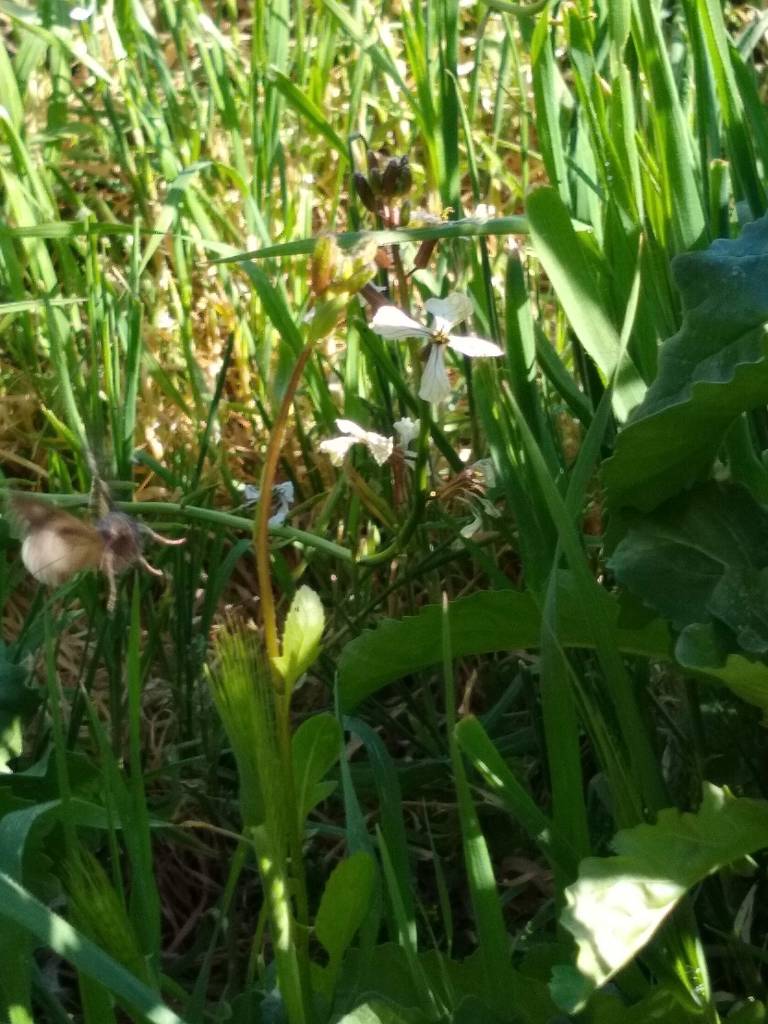
Wildflowers of all colors and sizes abound here in the foothills. It is like spring. I welcomed the thick scent of nectar into my home by keeping the doors and windows open the entire day last week. I never tire of the joy the olfactory experience brings me. Tempering my joy is the notable lack of bees across the range. I recall when I first came to this place that there would be plethora of different bees on the flowers – chunky bumble bees of different colors, thin, agile pollinating flies, and European honey bees of course. Fortunately, near the house is a different situation. There are honey bees, silver native bees, thin flies and every now and again a bumble bee on the arugula flowers. I love to lay on my chaise next to my towering stands of arugula, with the bees flying around me and listen to their hypnotic hum.

A. Californica Emerges…Partially

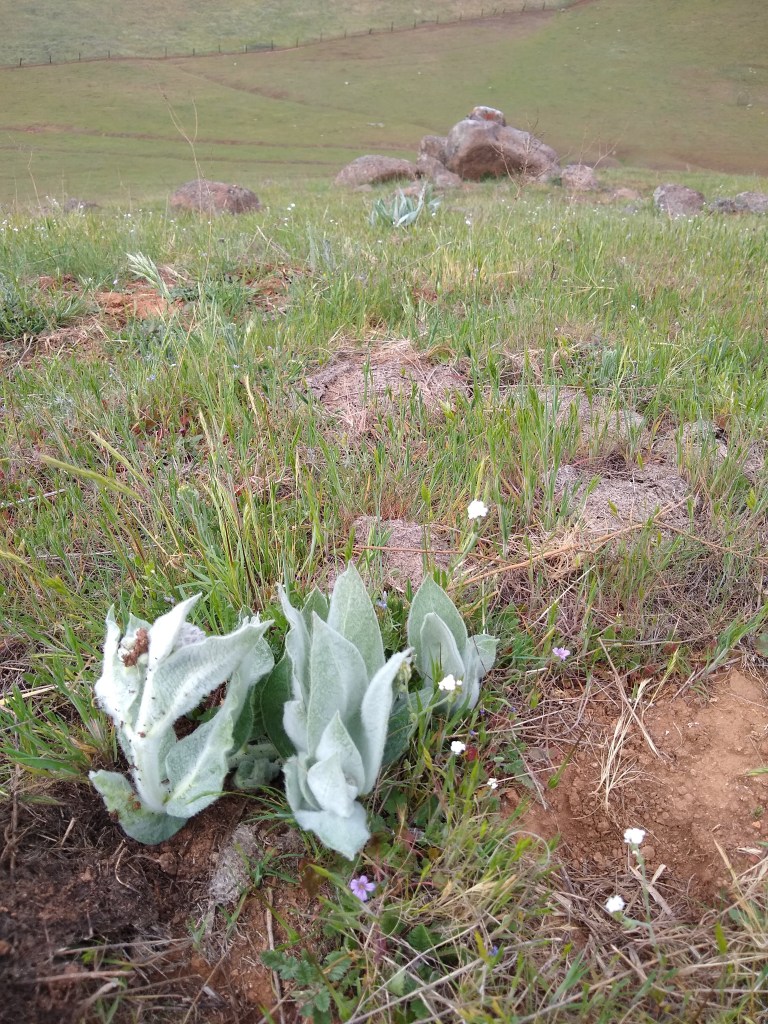
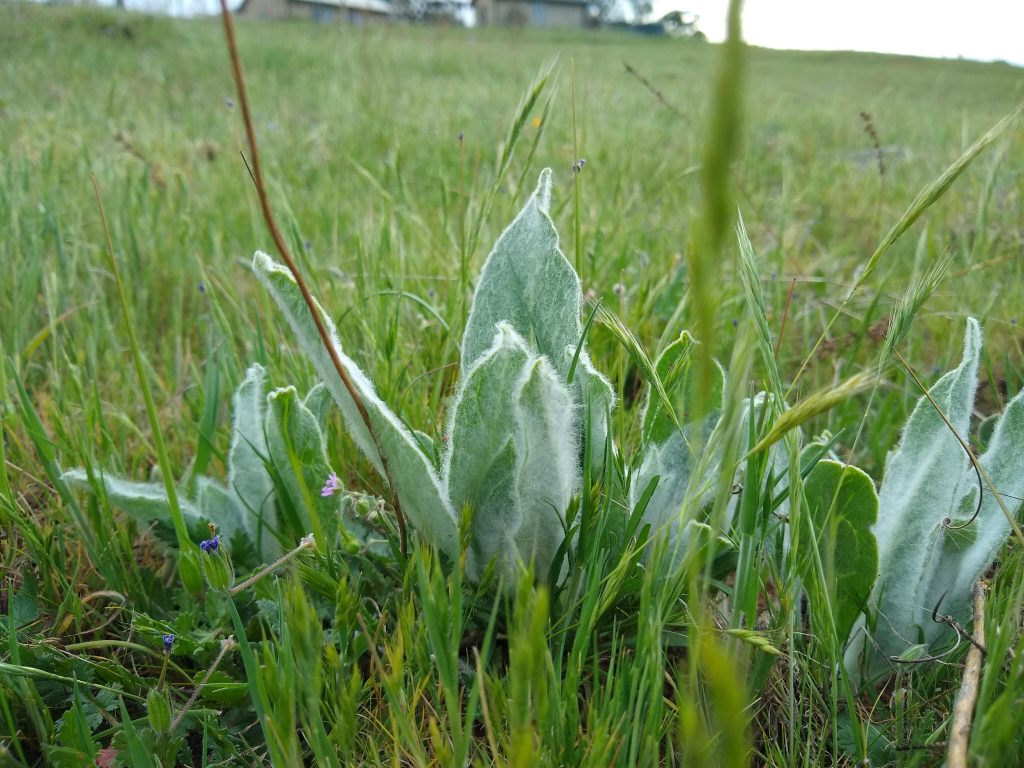
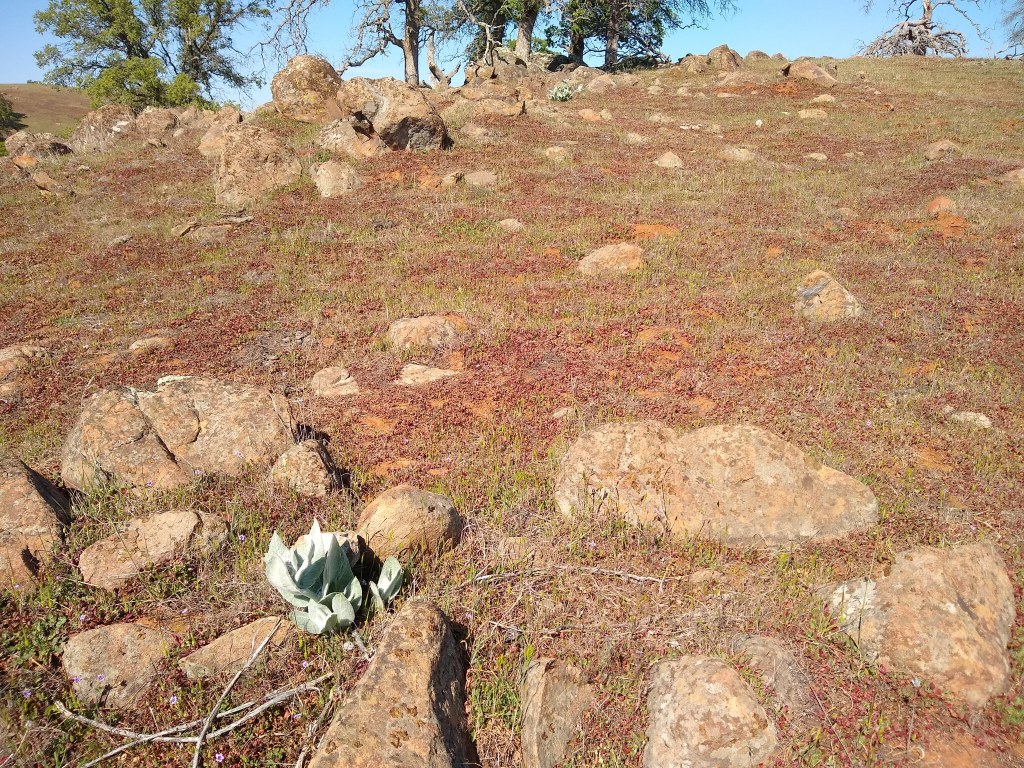
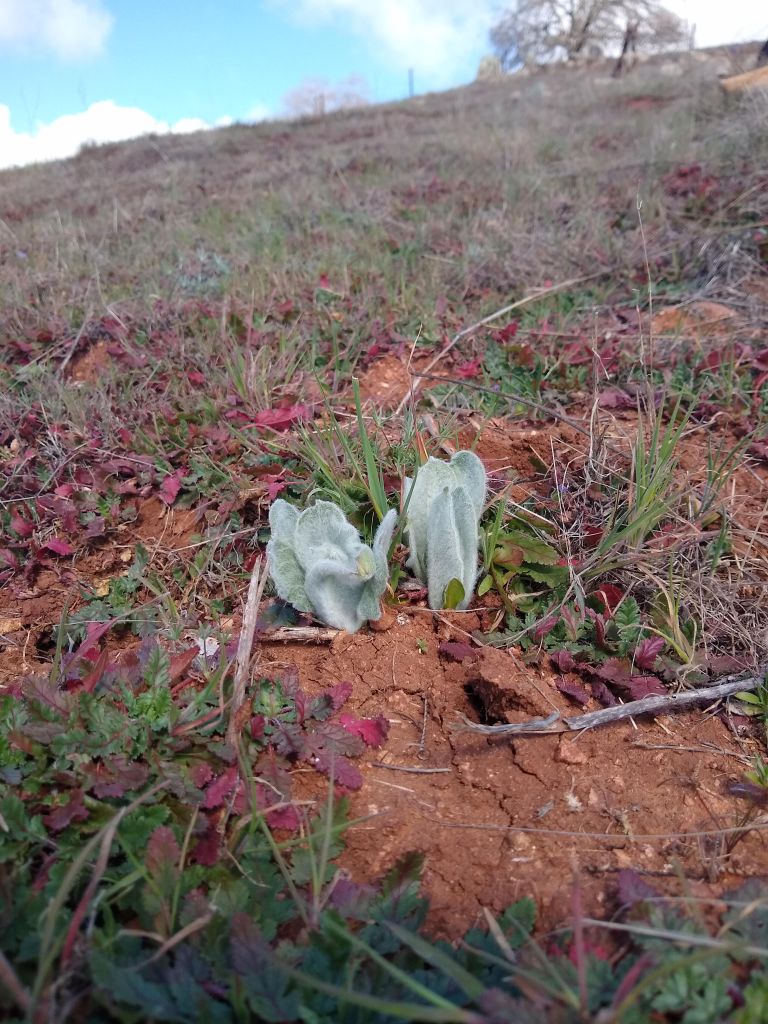
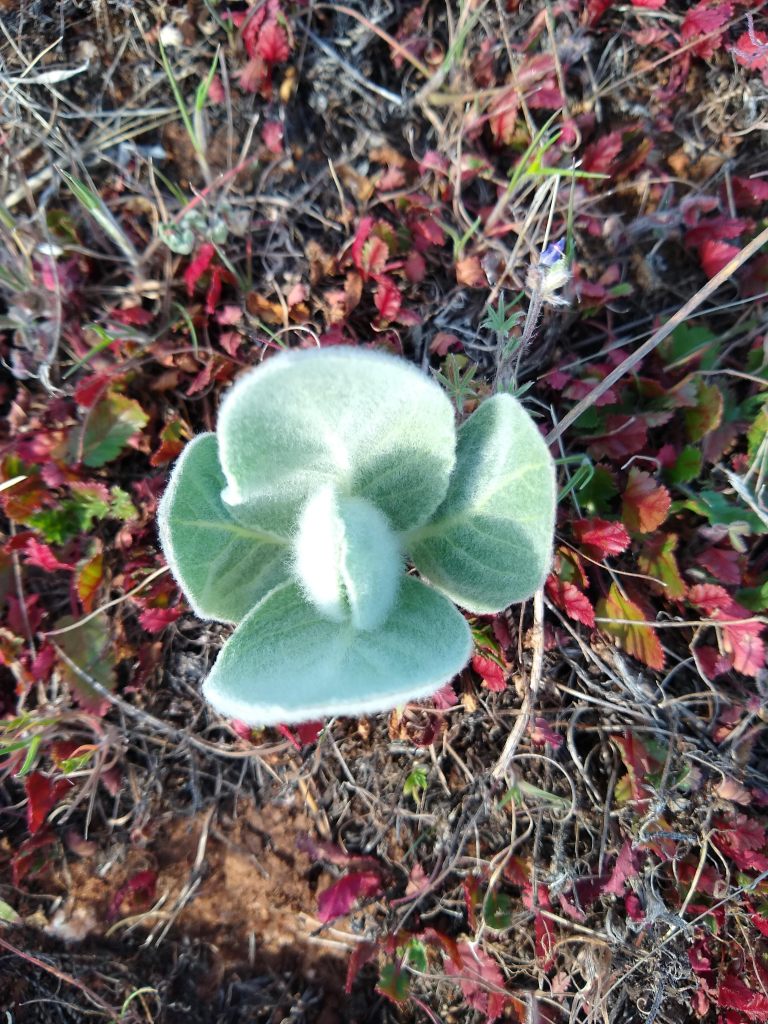
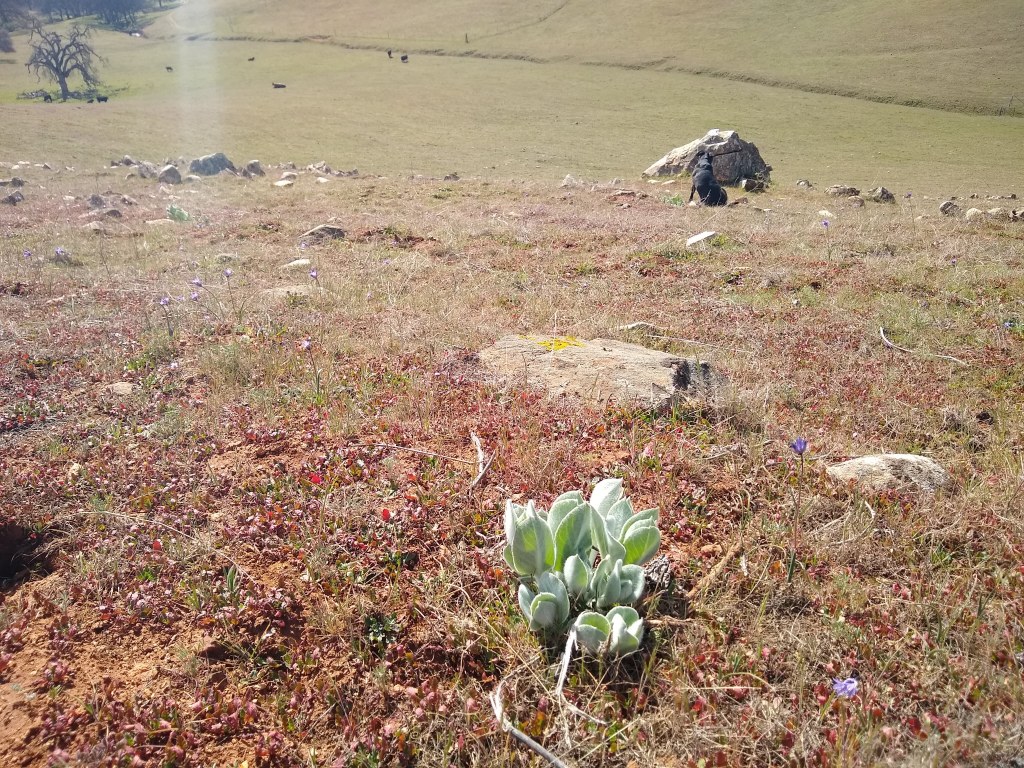
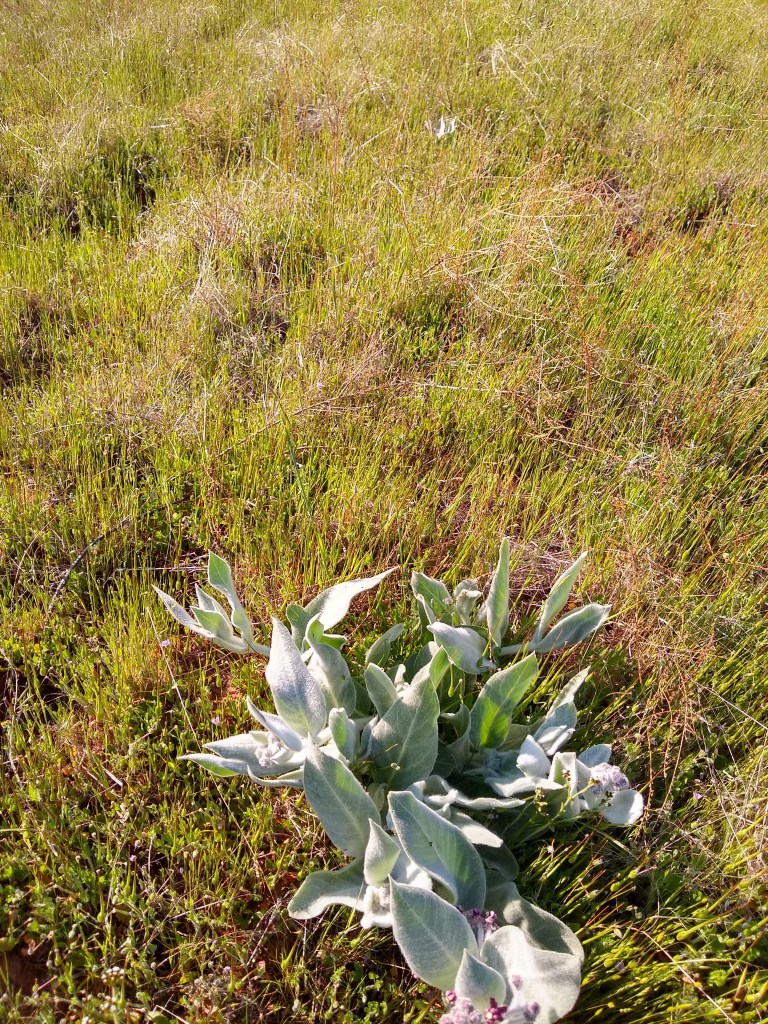
My plant obsession emerged in late February on the south facing slope – A. Californica (AC), California milkweed. What a tricky friend it is! I have been monitoring the emergence of early milkweeds for Ron as part of a larger program he is involved in. I must have walked by the rocks on the south facing slope twice in the latter part of February. I never saw anything.

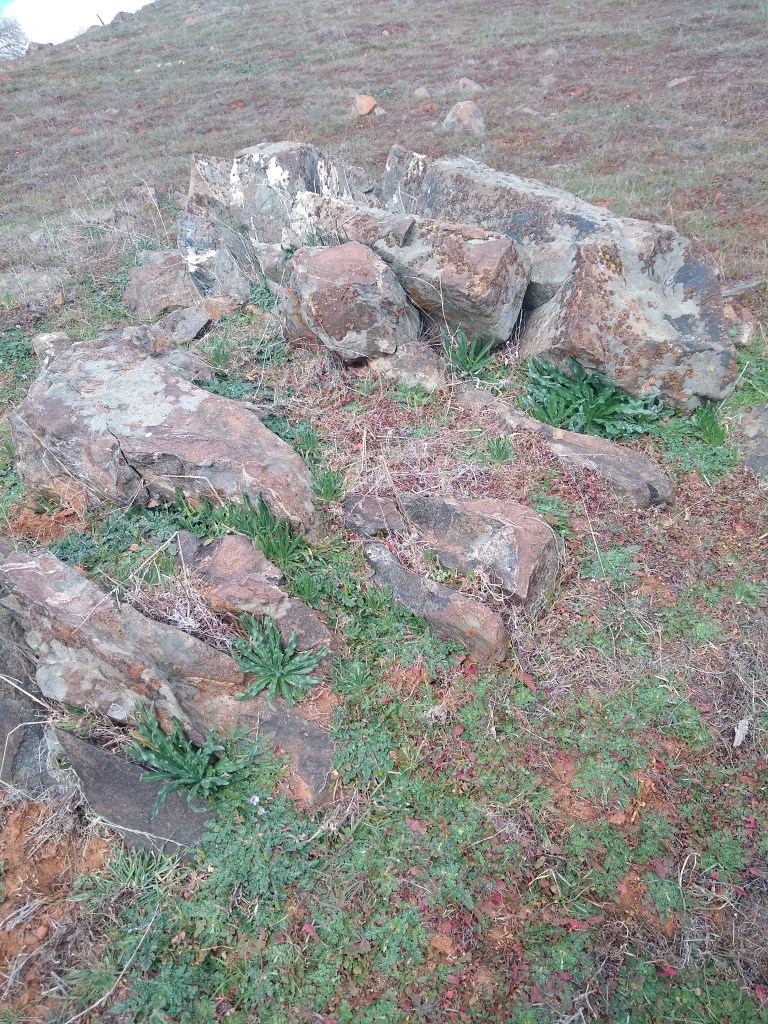
In the early days of March , on a cool day, after checking the area, I headed home, down the very steep slope that leads to Site 2. I decided to pull some weeds around the baskets of Site 2 since I was there. I reached into the pocket of my jacket and found no gloves. The gloves were a yellow tan color, much like some of the rocks that protruded on the landscape. Looking left and right, I saw nothing. Although I dreaded it, I began to make a slow climb back up the steep south facing slope in search of my gloves. You must understand, the gloves were not cheapos. David got me a special pair that he thought would last longer and fit better since I work so much with my hands. Very sweet of him. But, this meant I was determined to find them.

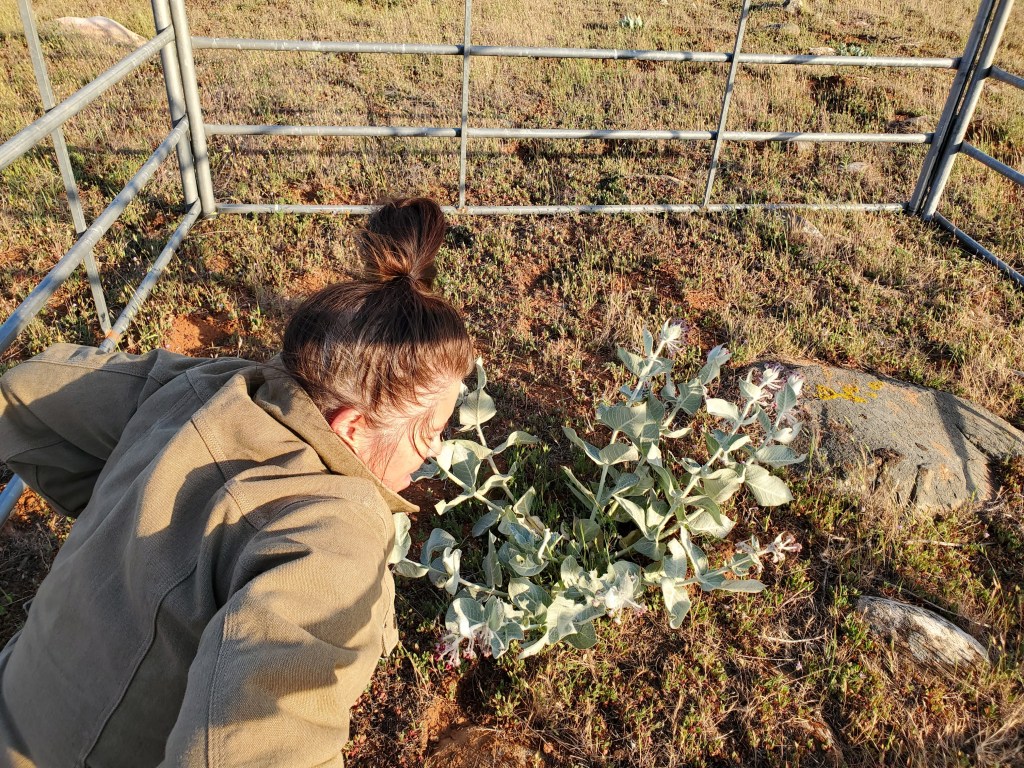
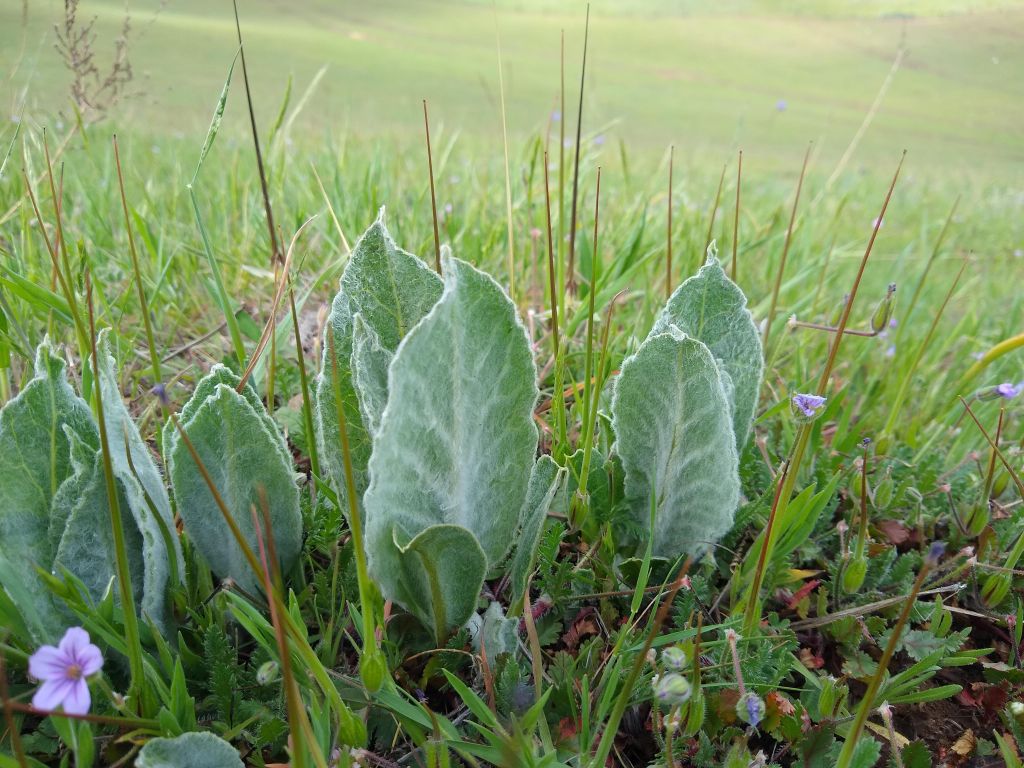
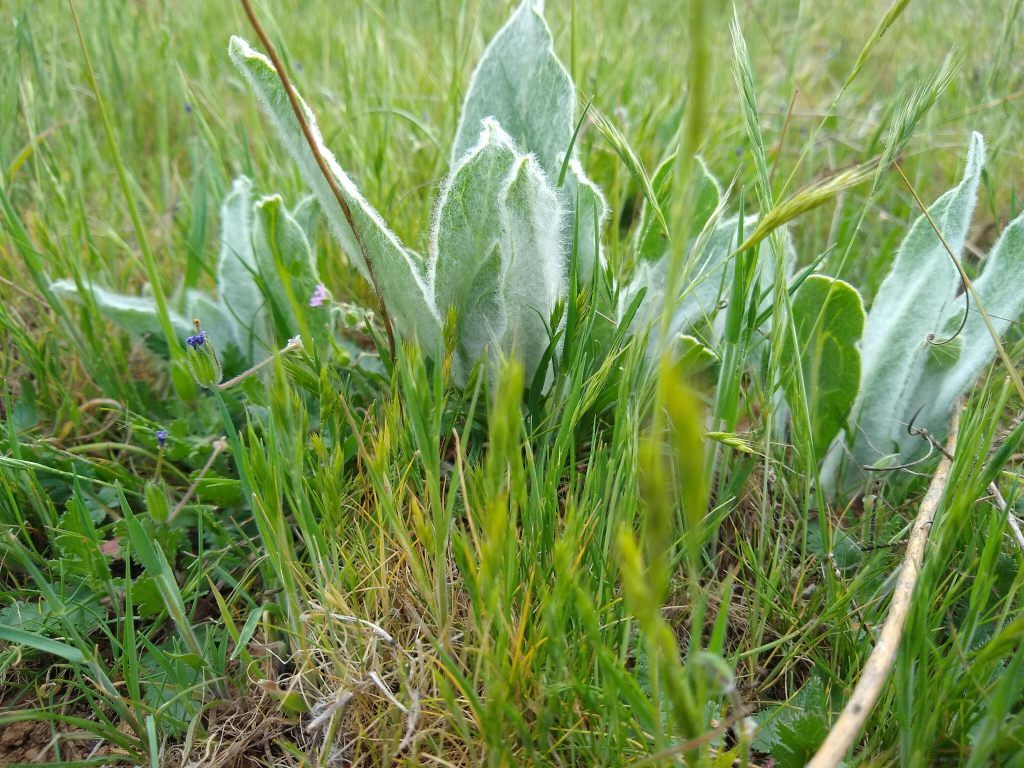
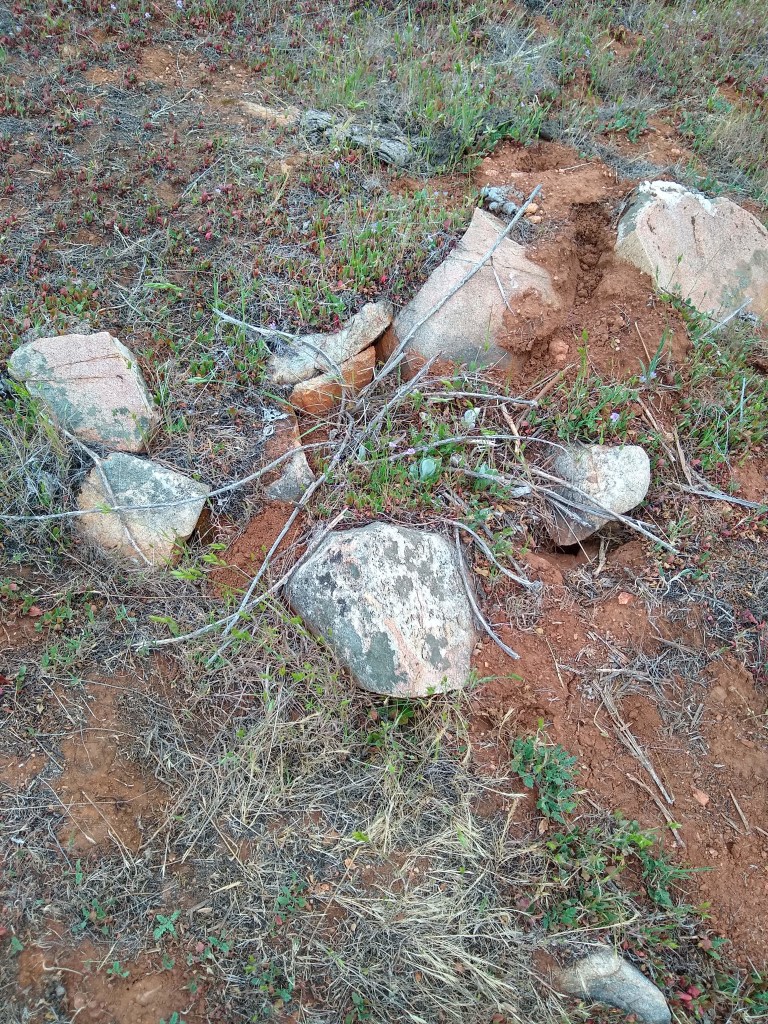
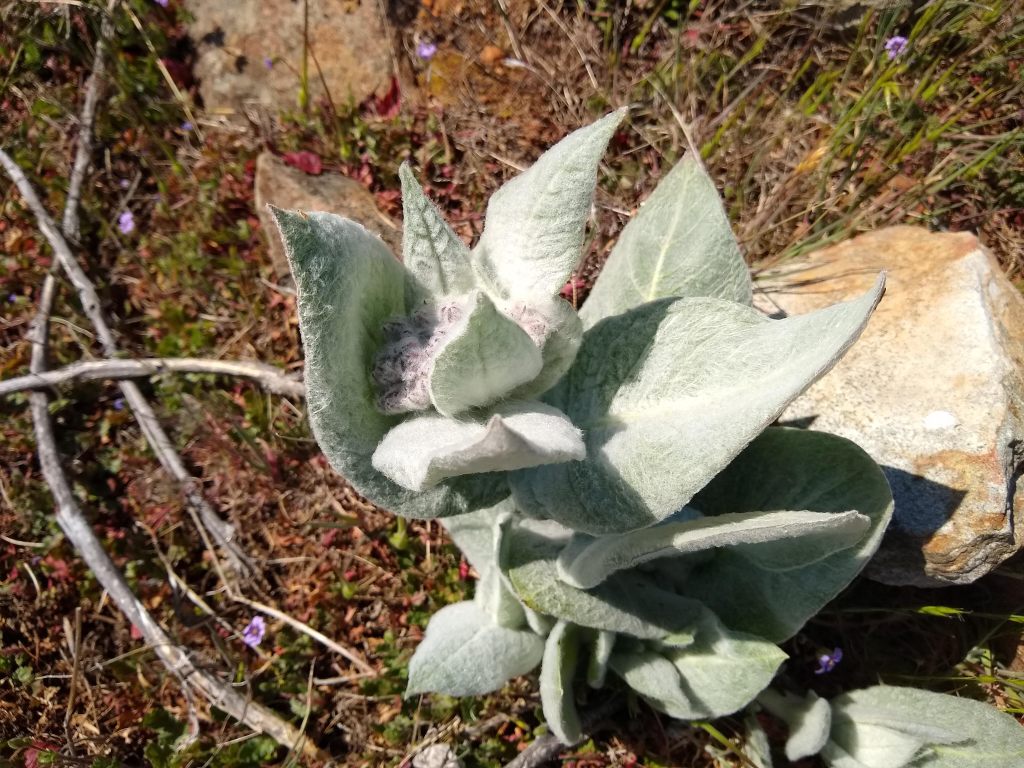
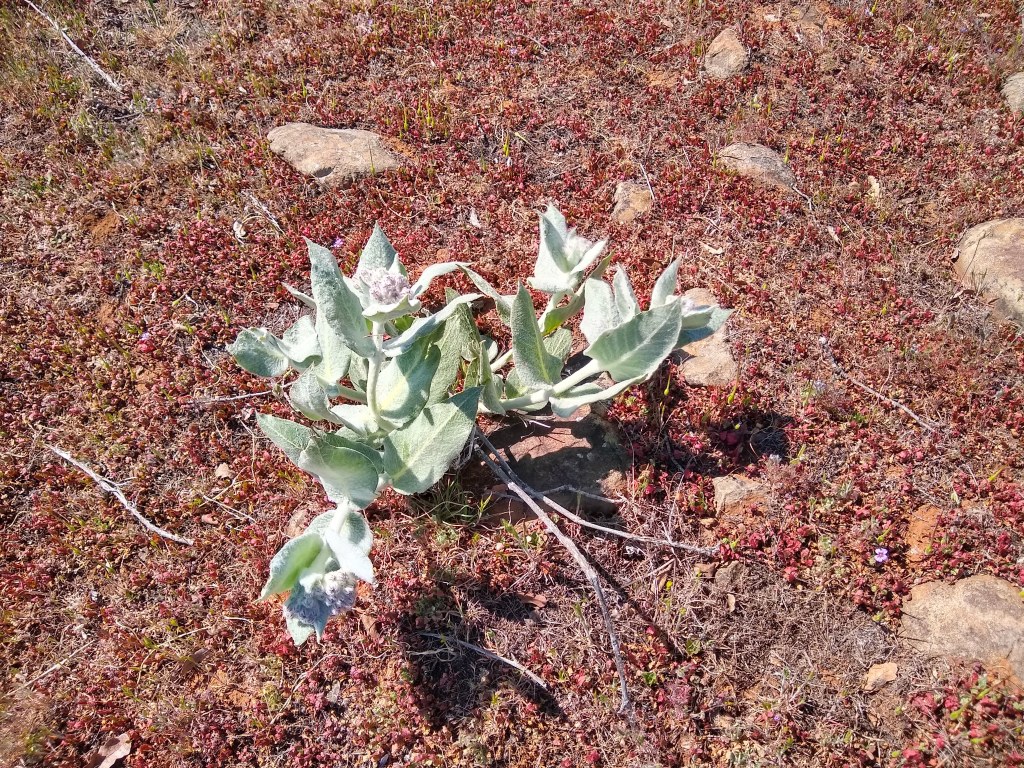
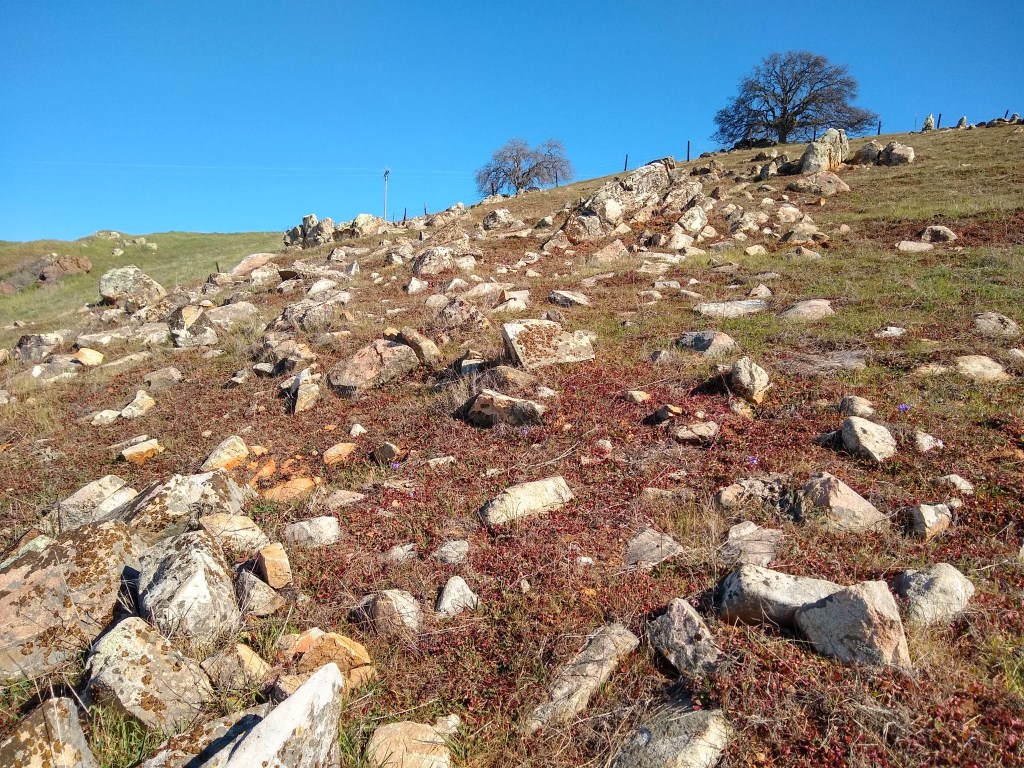
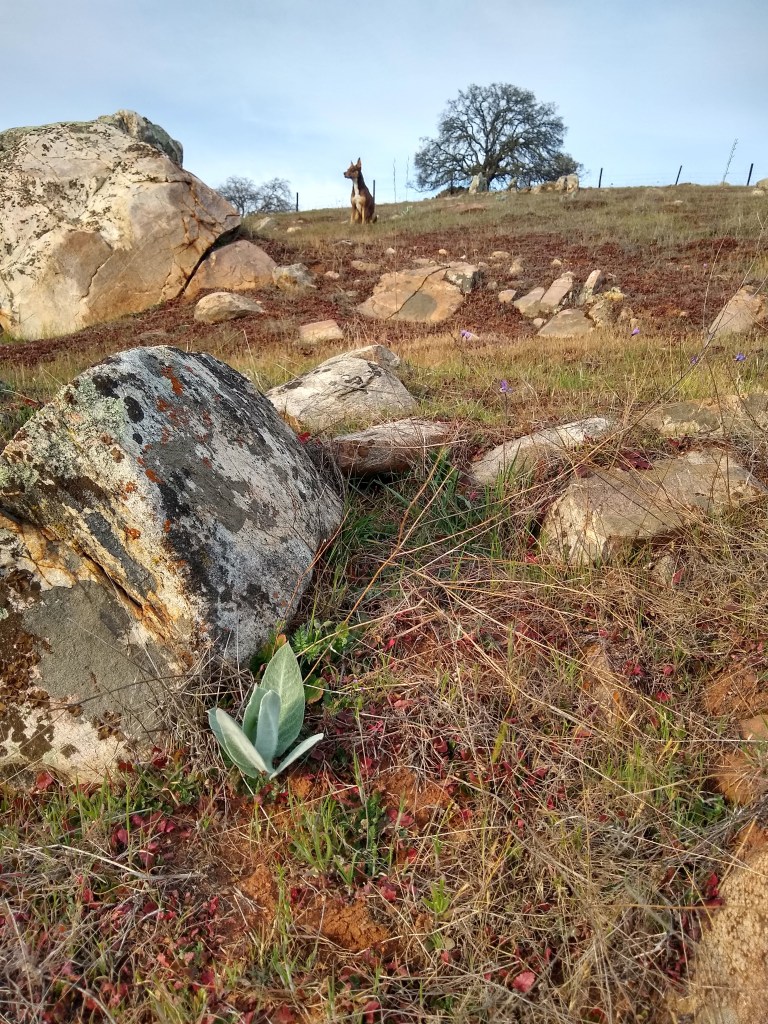
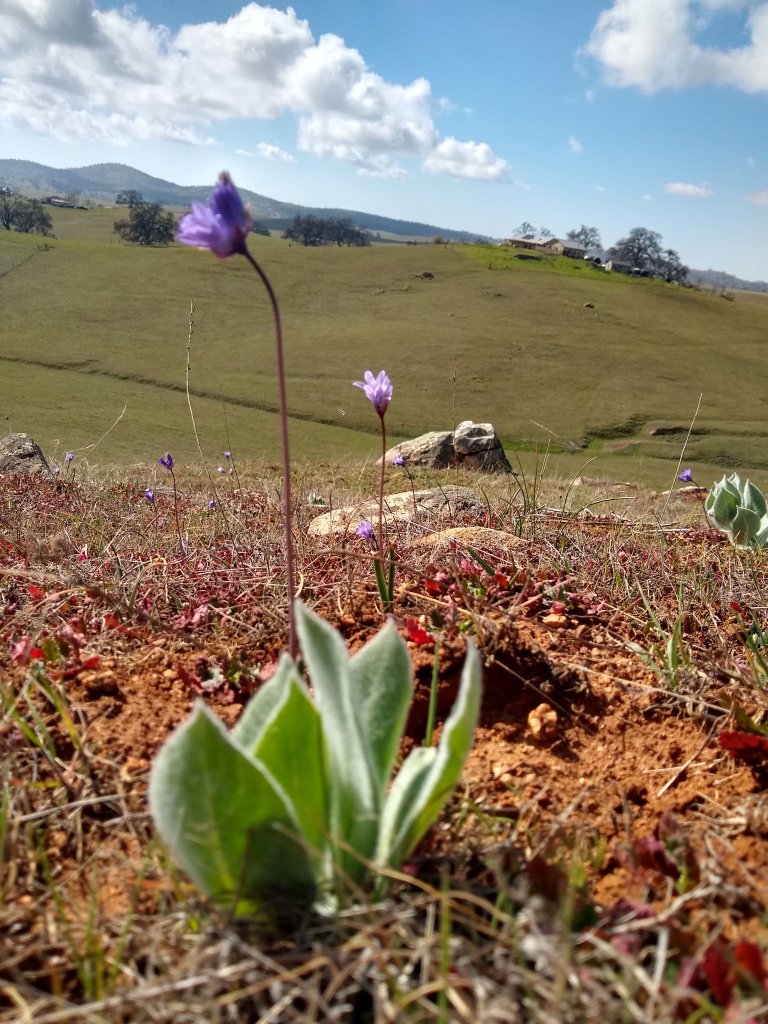
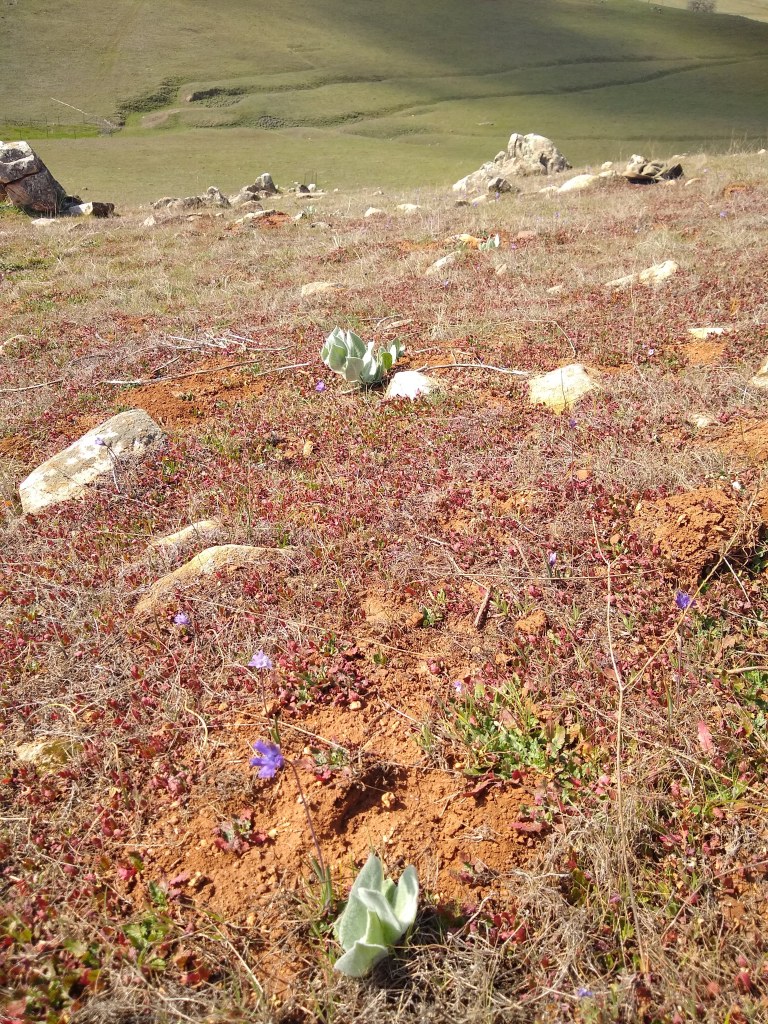
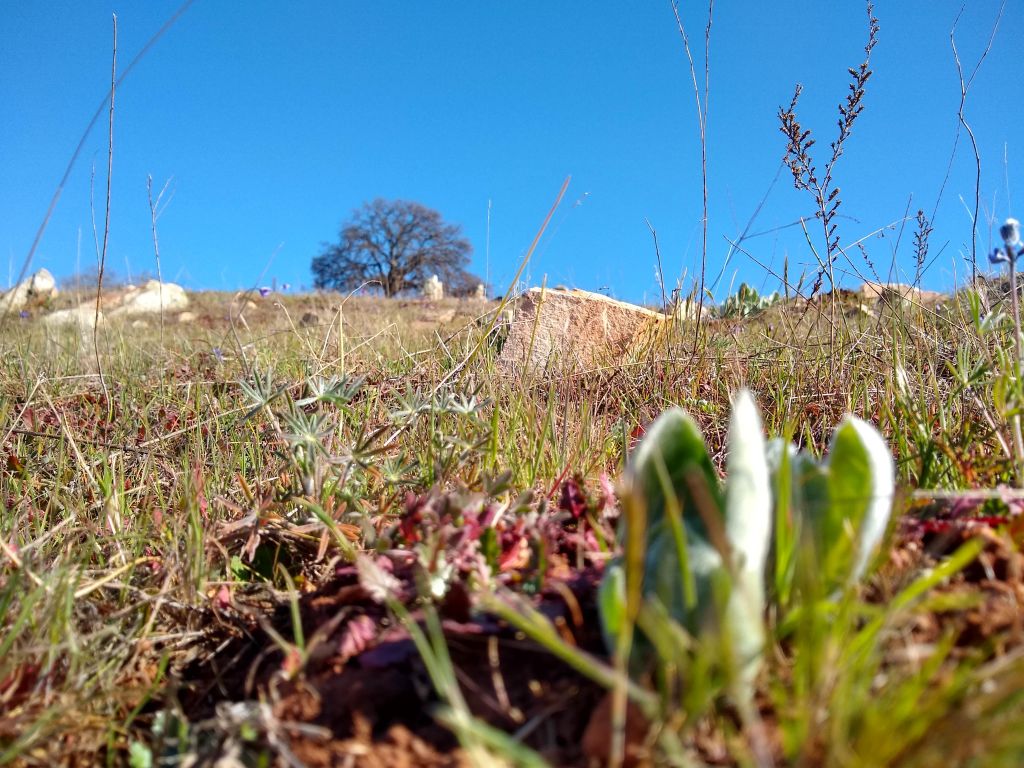
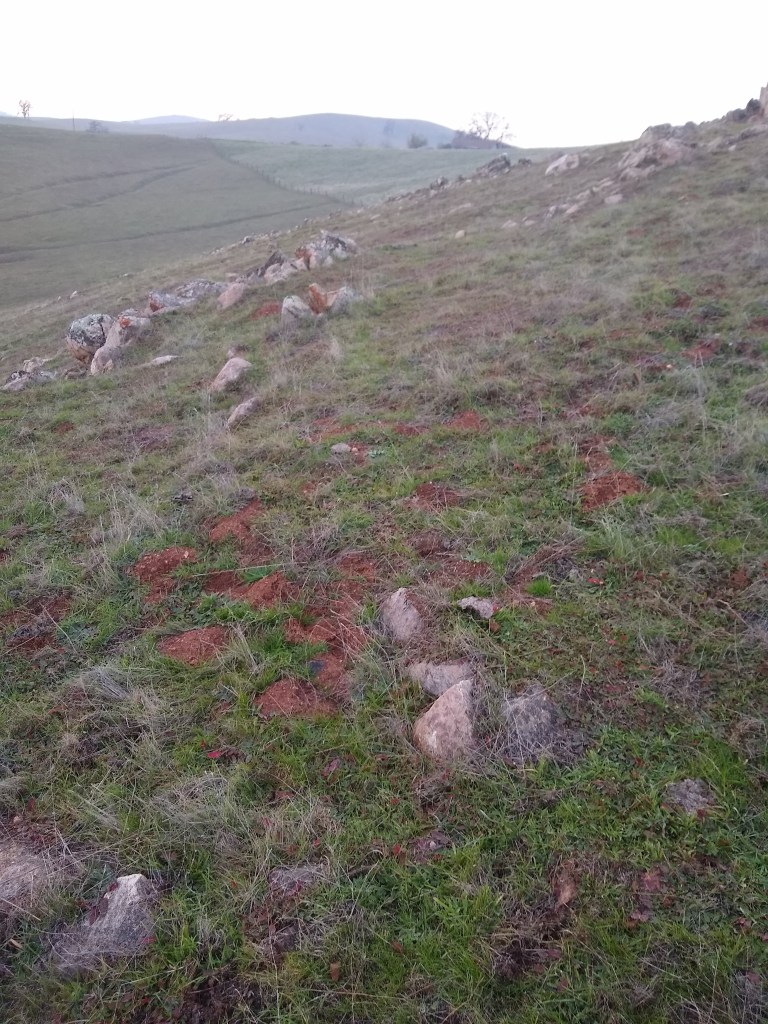
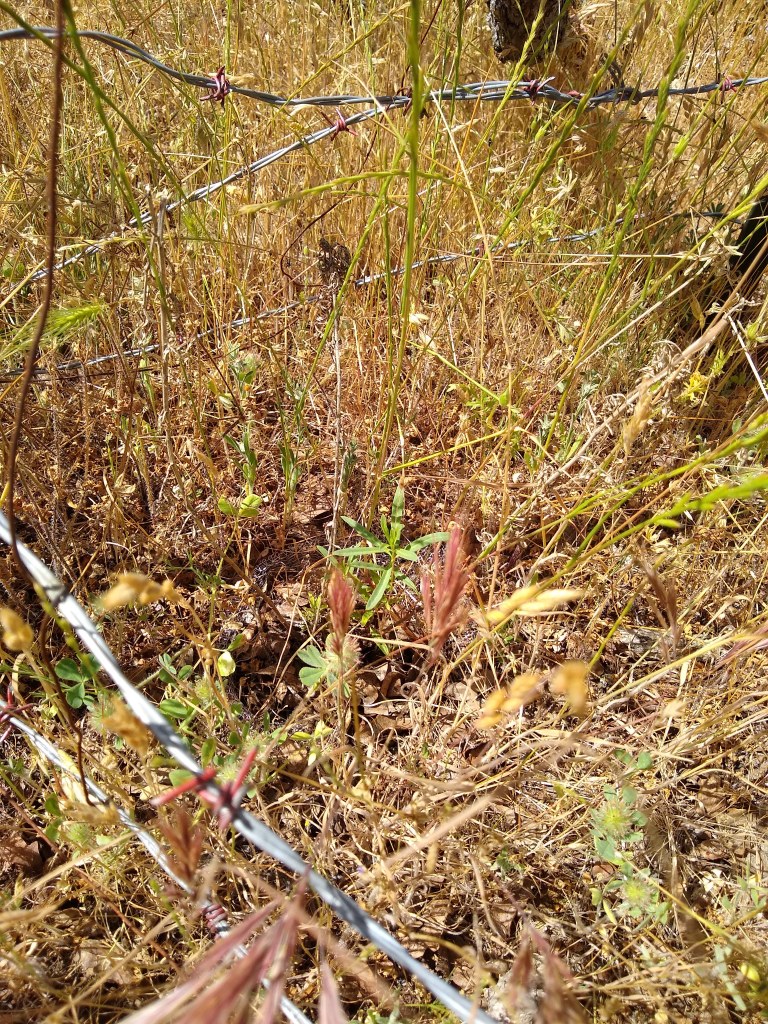
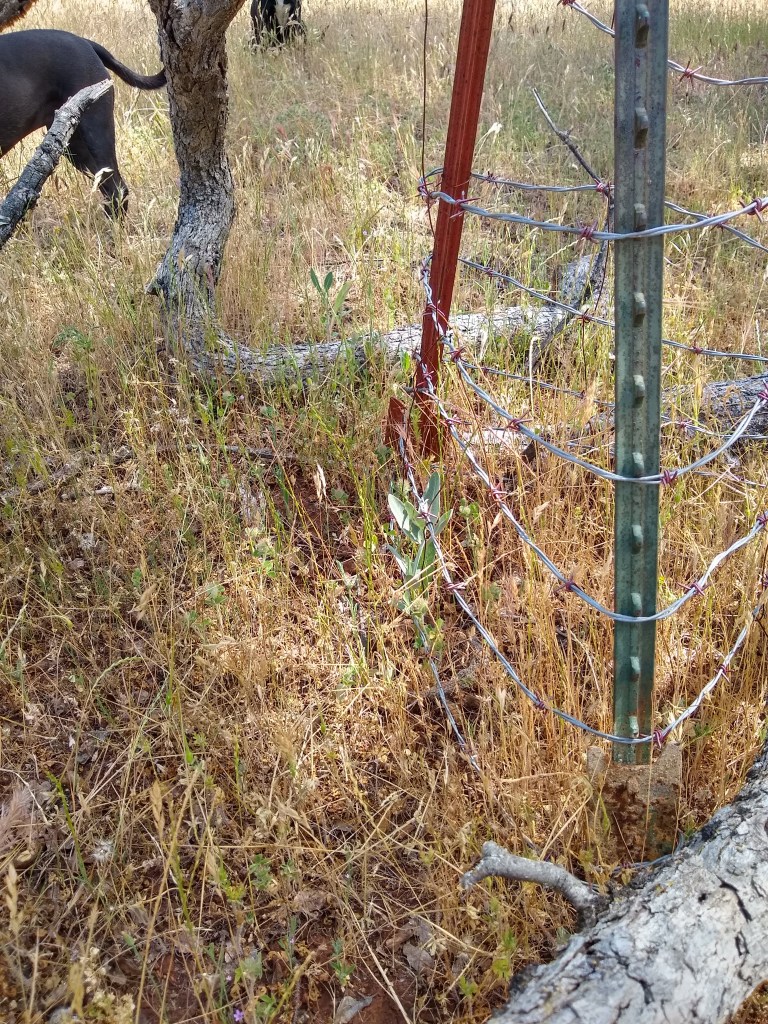
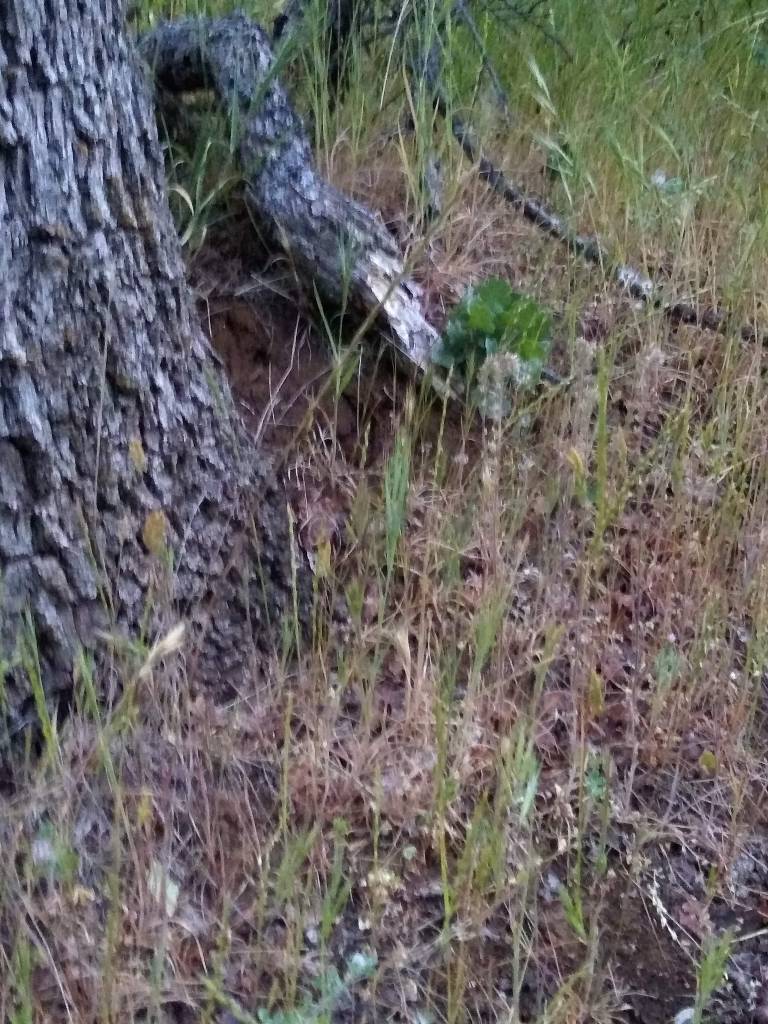
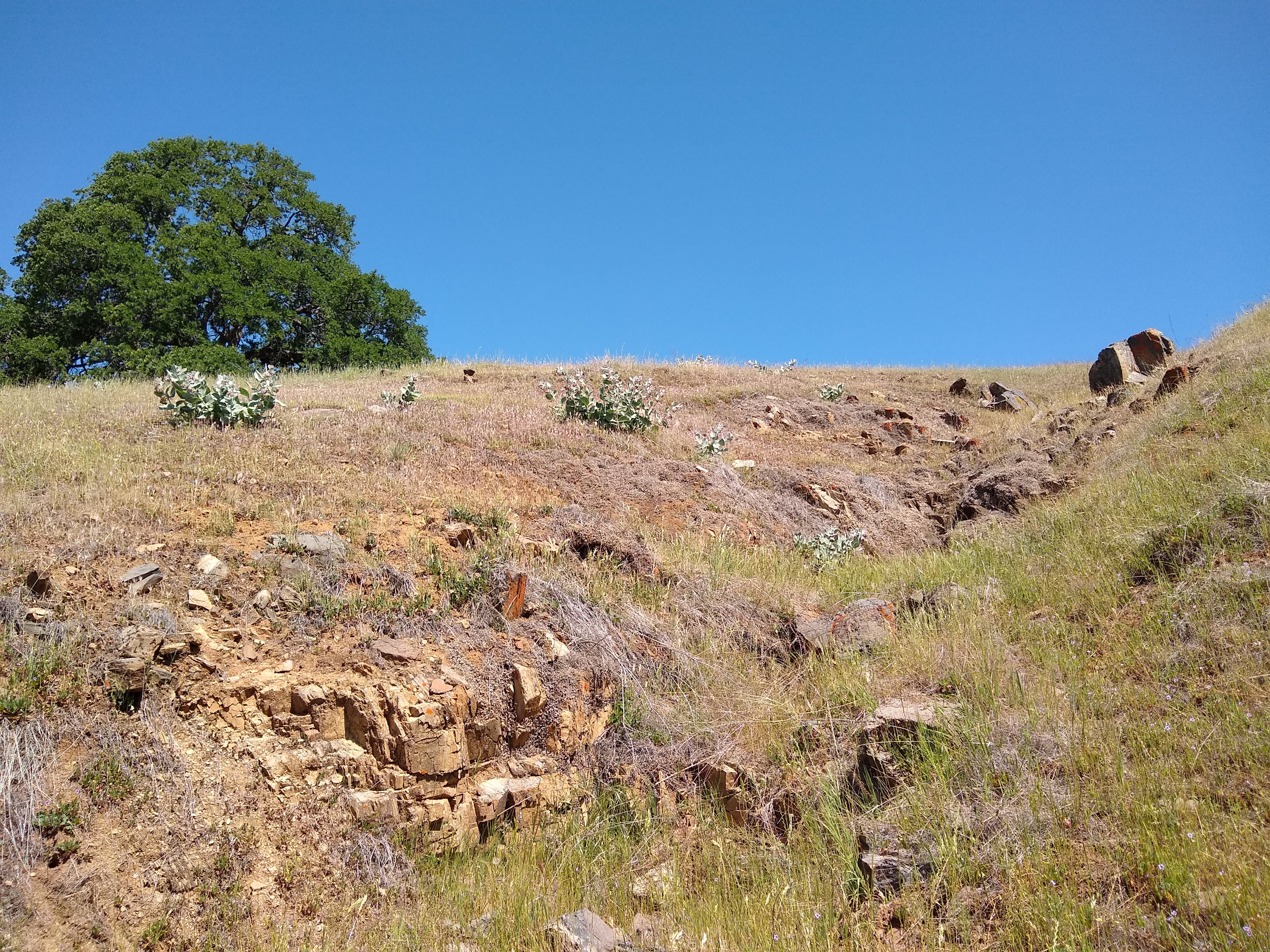
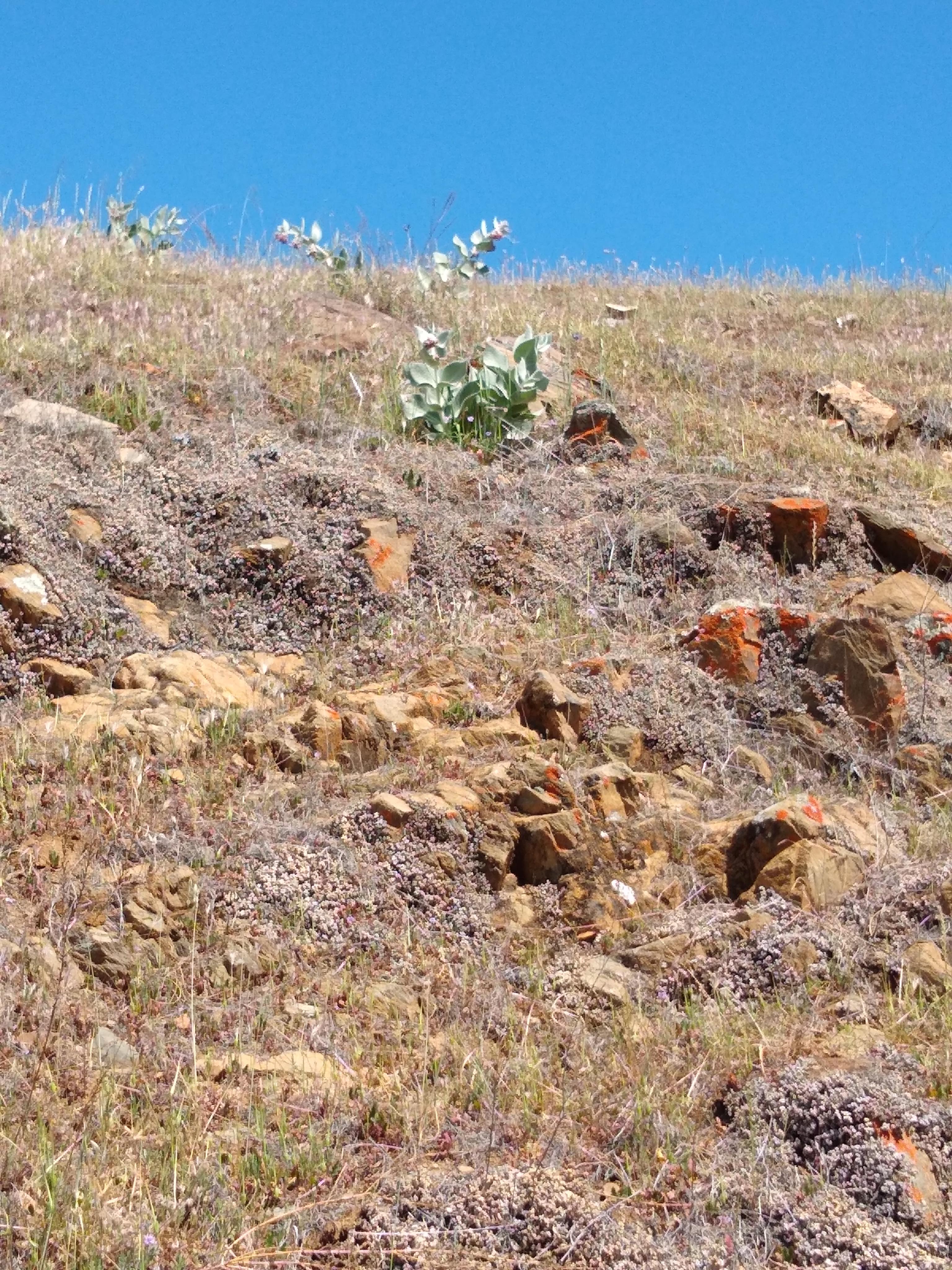
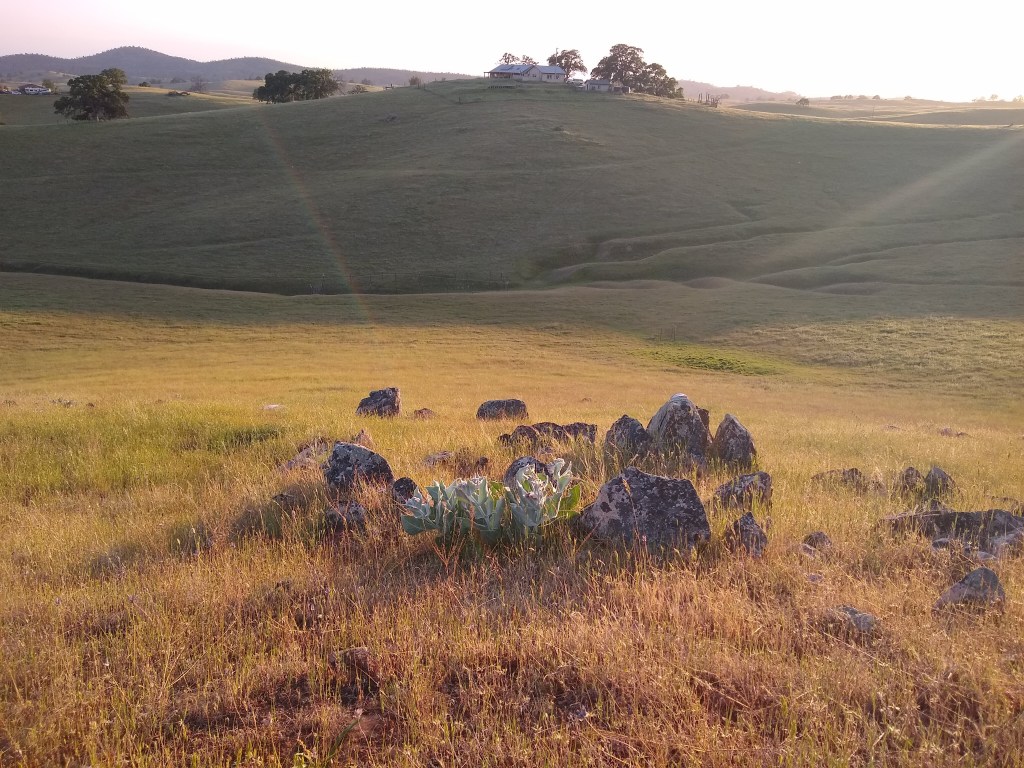
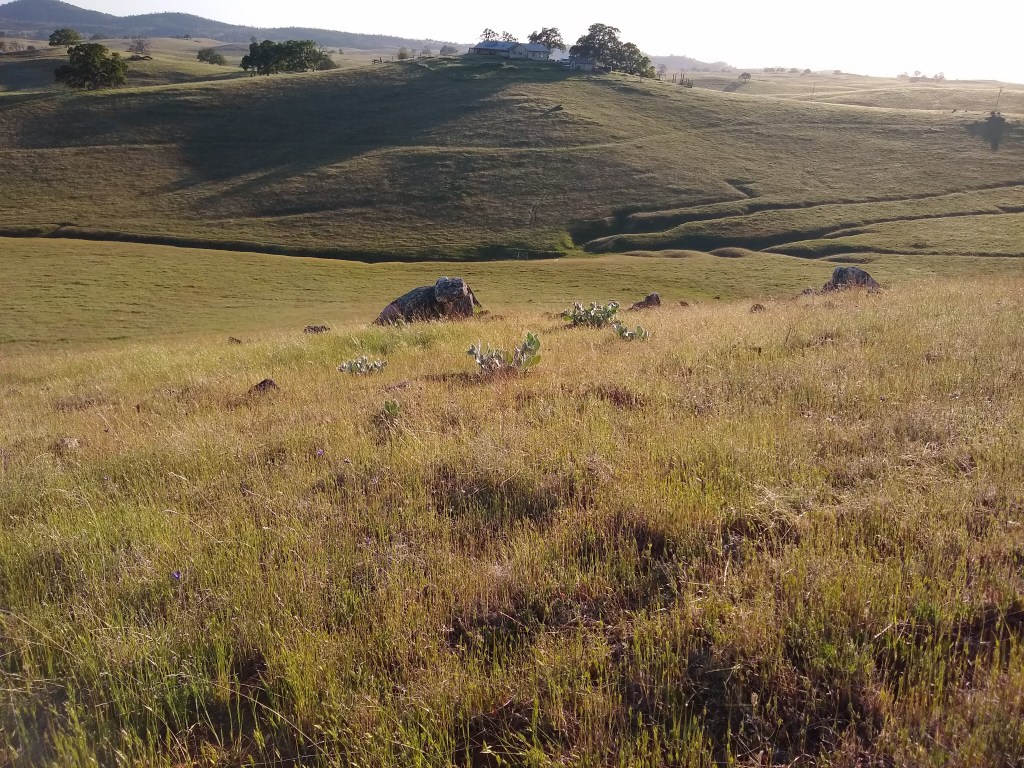
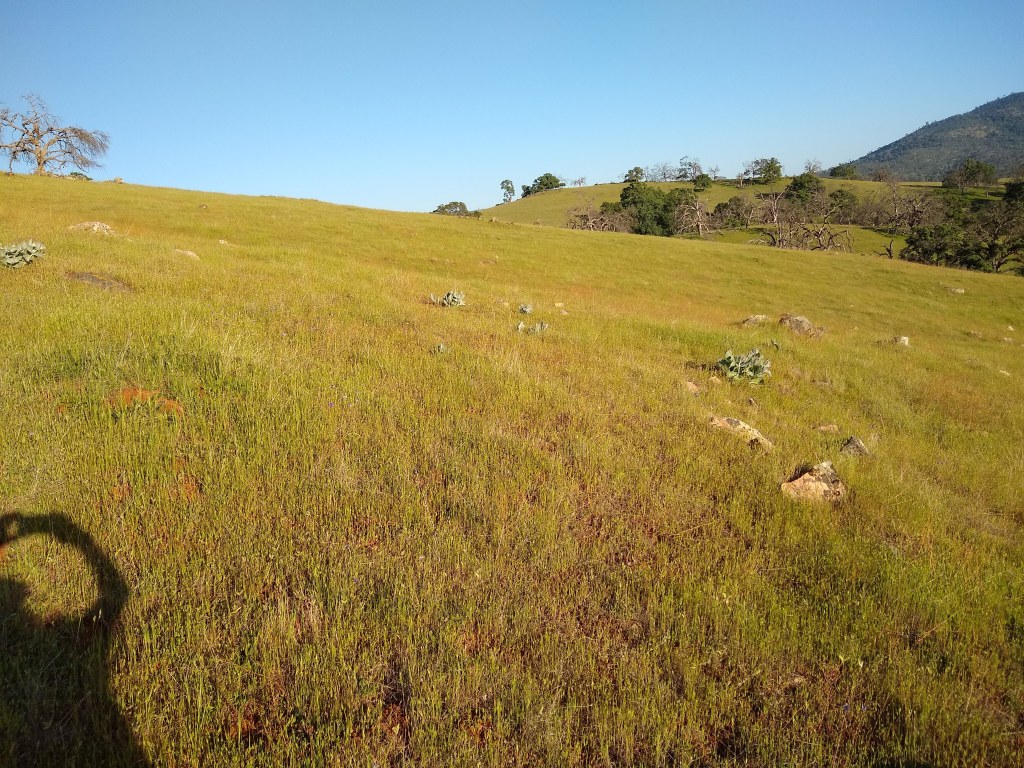
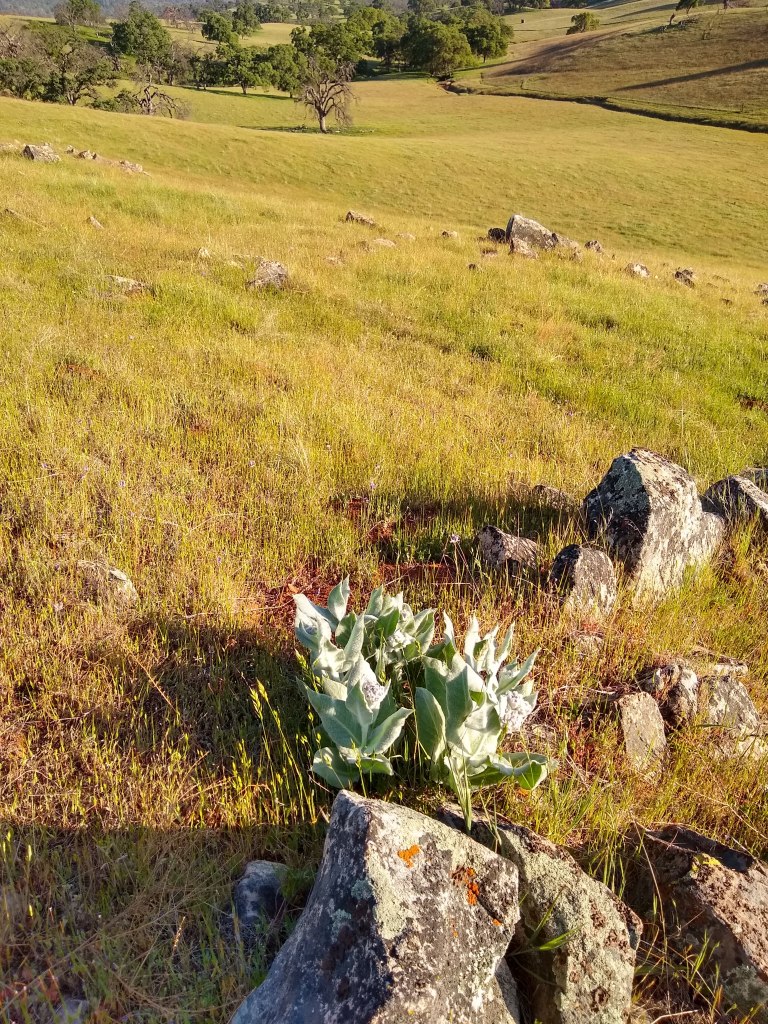
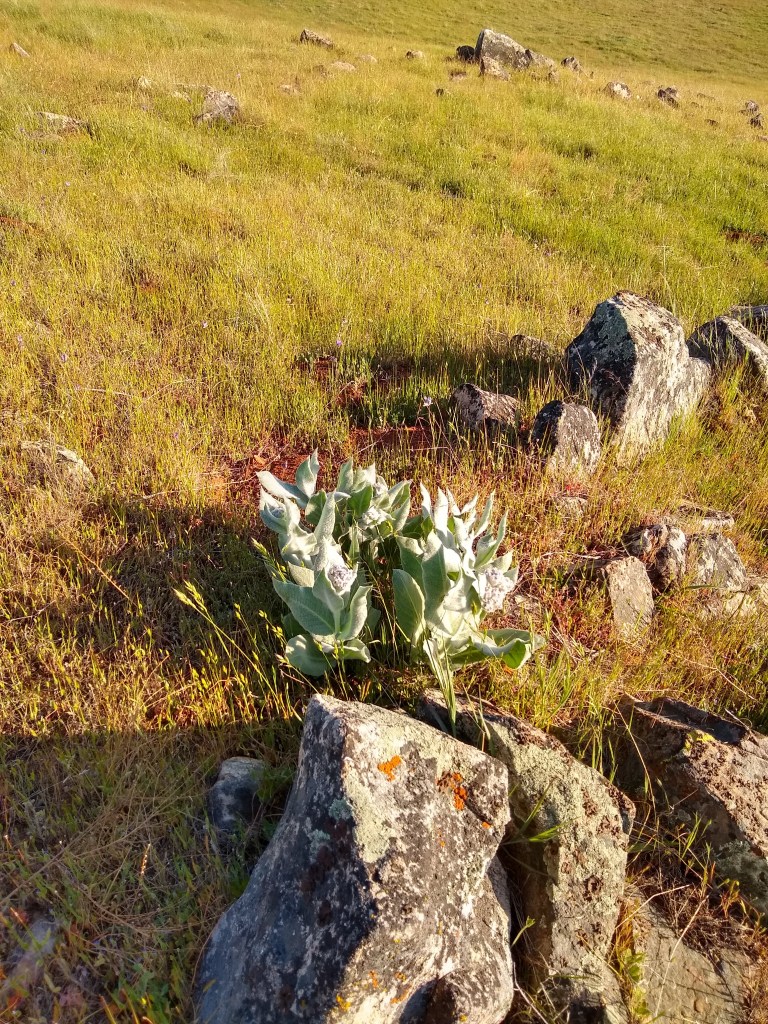
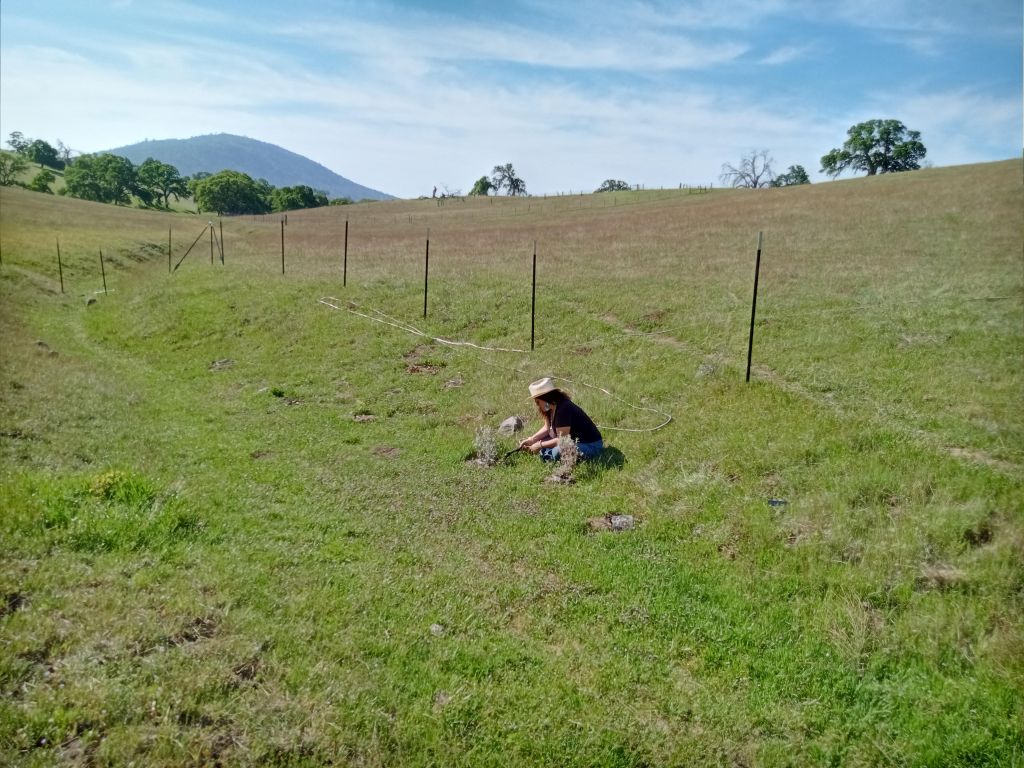
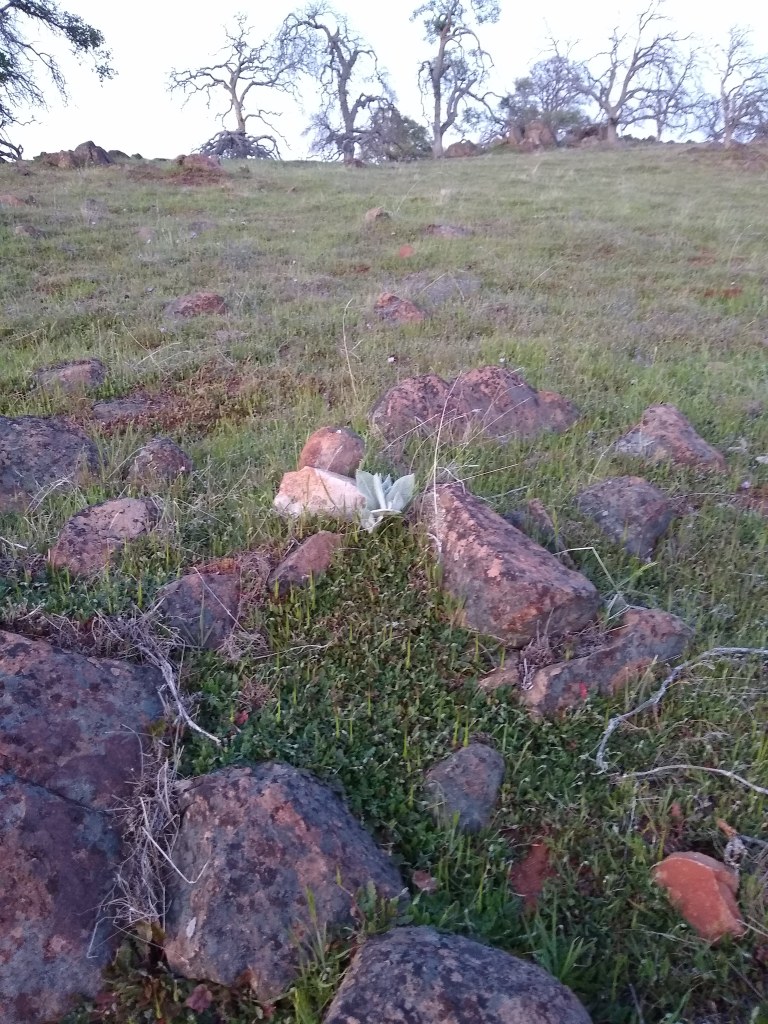
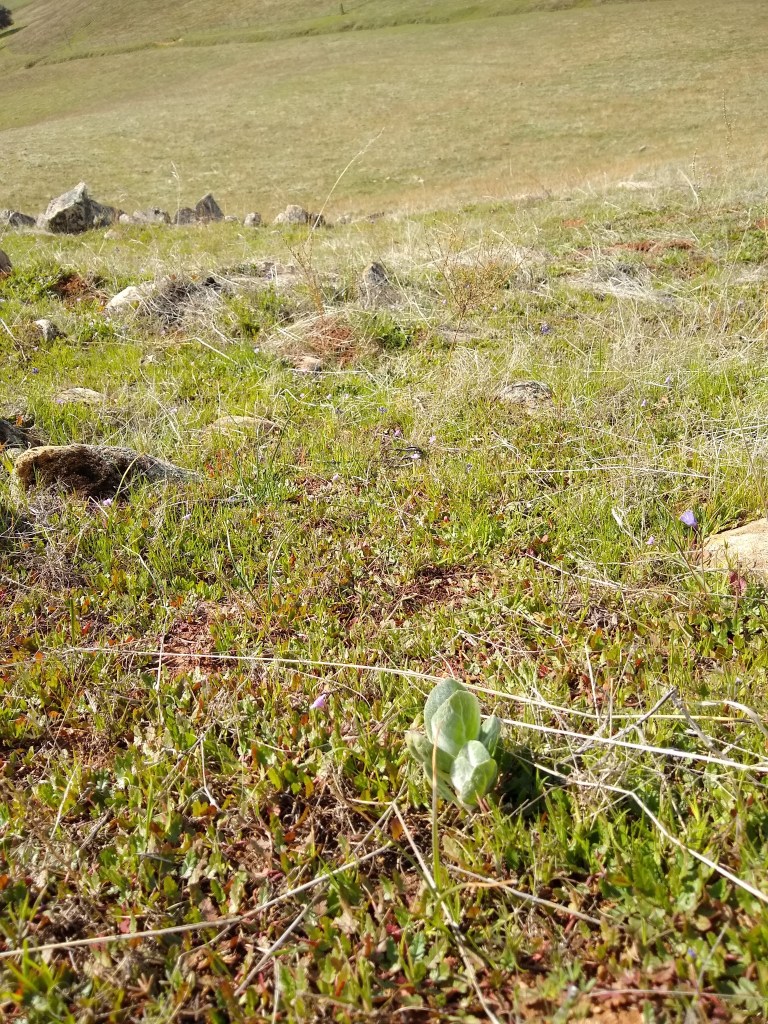
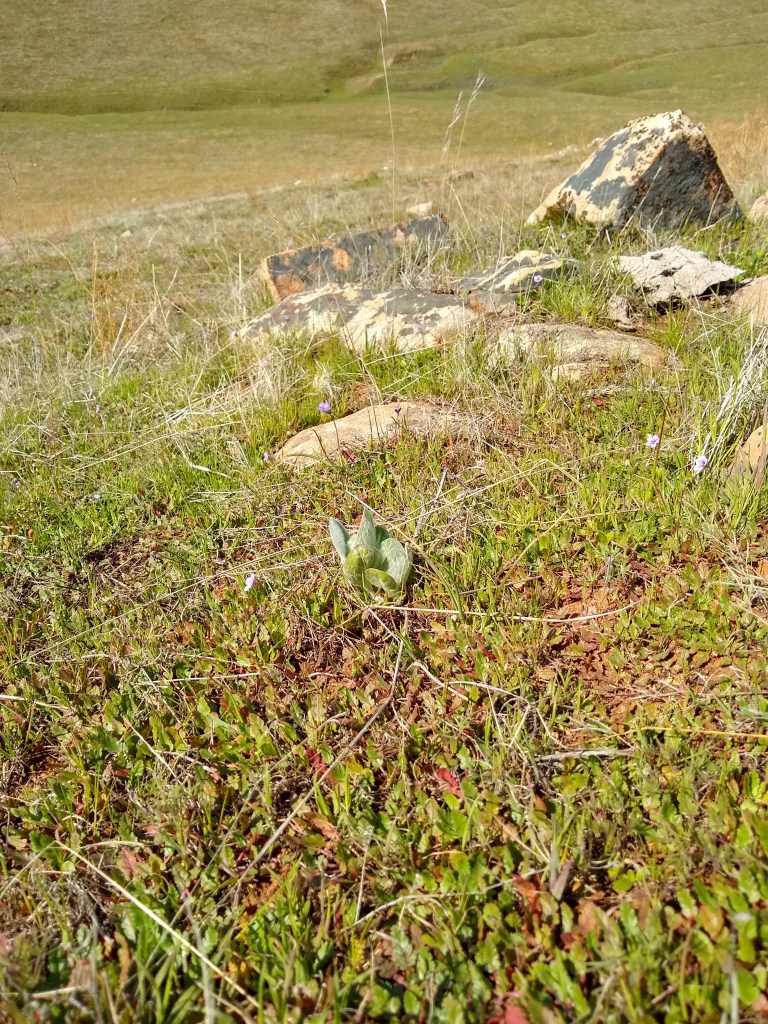
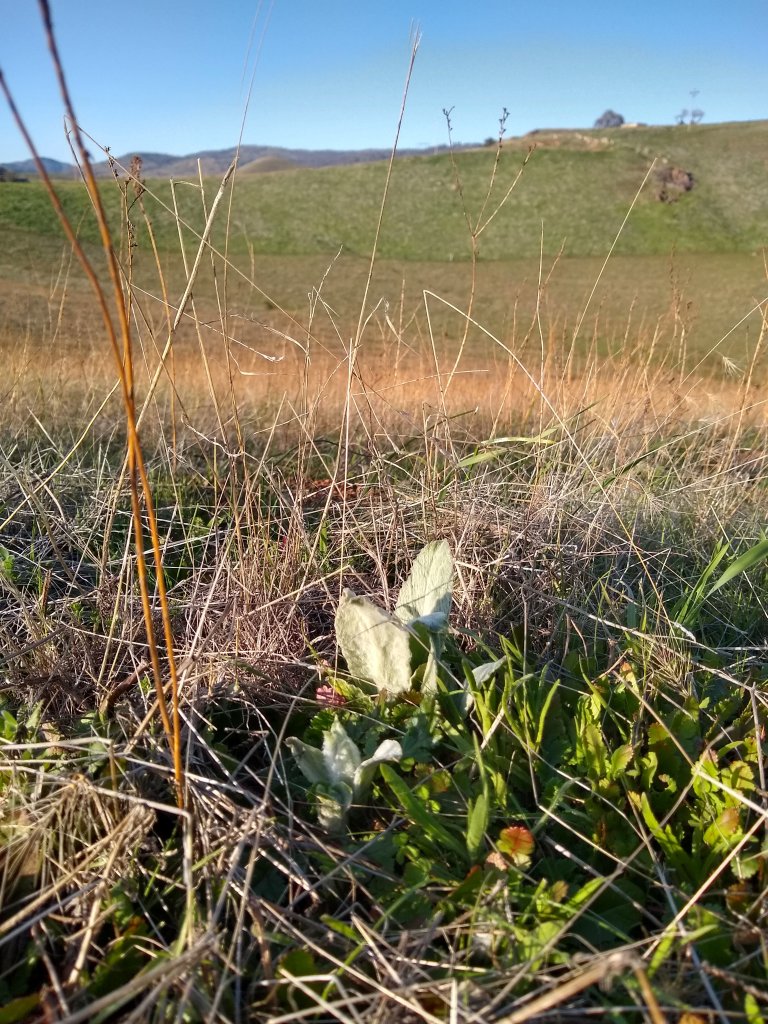
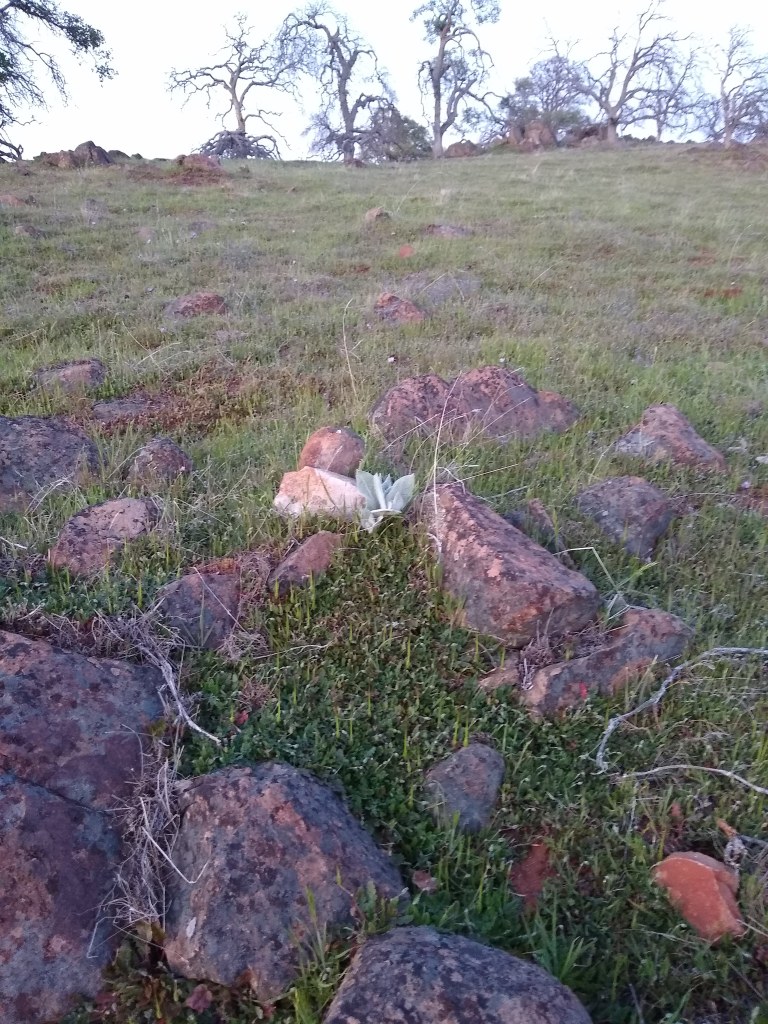
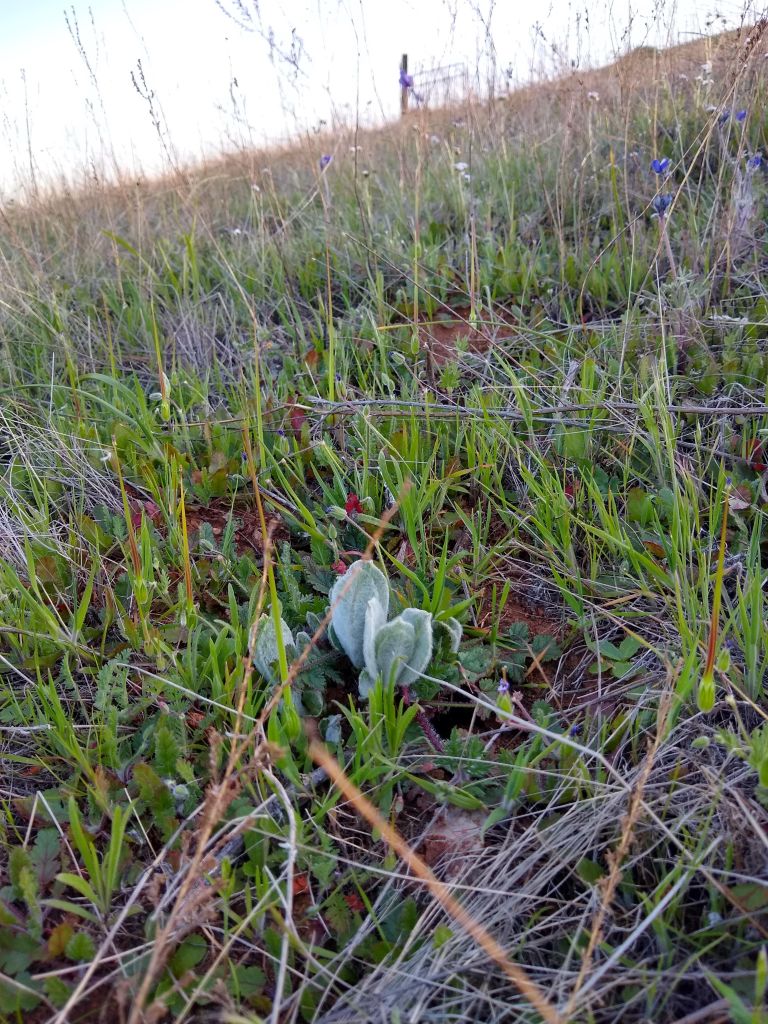
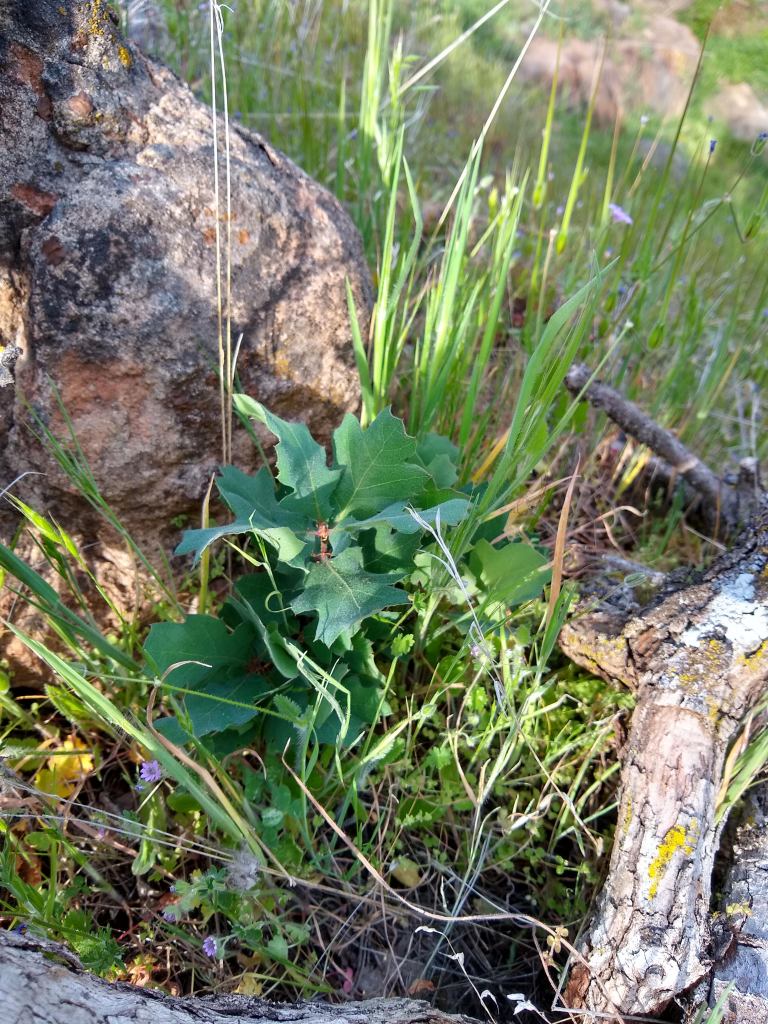
Everything happens for a reason I suppose. Trudging back up the slope, about halfway up the hill, I saw a glimpse of light green on the dark green, brown, and red colored background almost glowing in the light. Could it be? No. I had wandered this area just a moment ago, and twice over the last two weeks. But yes! There is was, slightly moving in the breeze, a gorgeous puff of AC. As much as possible, I picked up my pace to get to it. Indeed, it was a large specimen of AC. It had to have been there, camouflaged against the moss on the rocks, for weeks. I began to look around and like prairie dogs peeking out of their holes there were another 3, no — 5, no –10, albeit smaller ACs. My heart beat more from the excitement than the 6% slope I had just loped up. Everywhere I turned there was AC. In all, after counting 6 times to ensure I got it right, there were 16 individuals in total in that community of plants. I could not help but grin so wide the sides of my mouth ached. What a great day.

I have been monitoring all AC sites where I have found the plants previously. Of the four, two have emerging plants. The other AC site has one very strong plant with three sprouts. Last year, this site had one plant with one sprout. The older the plants are, the stronger the roots become and the larger the sprouts get. I have seen smaller plants that get a later start never get to bloom. This is why it is really important to protect the older growth ACs.

Hopefully, we will begin to see some emergence in the other sites soon. The other sites are north and west facing (as opposed to south) – so this may be a factor.

Drought Worsens

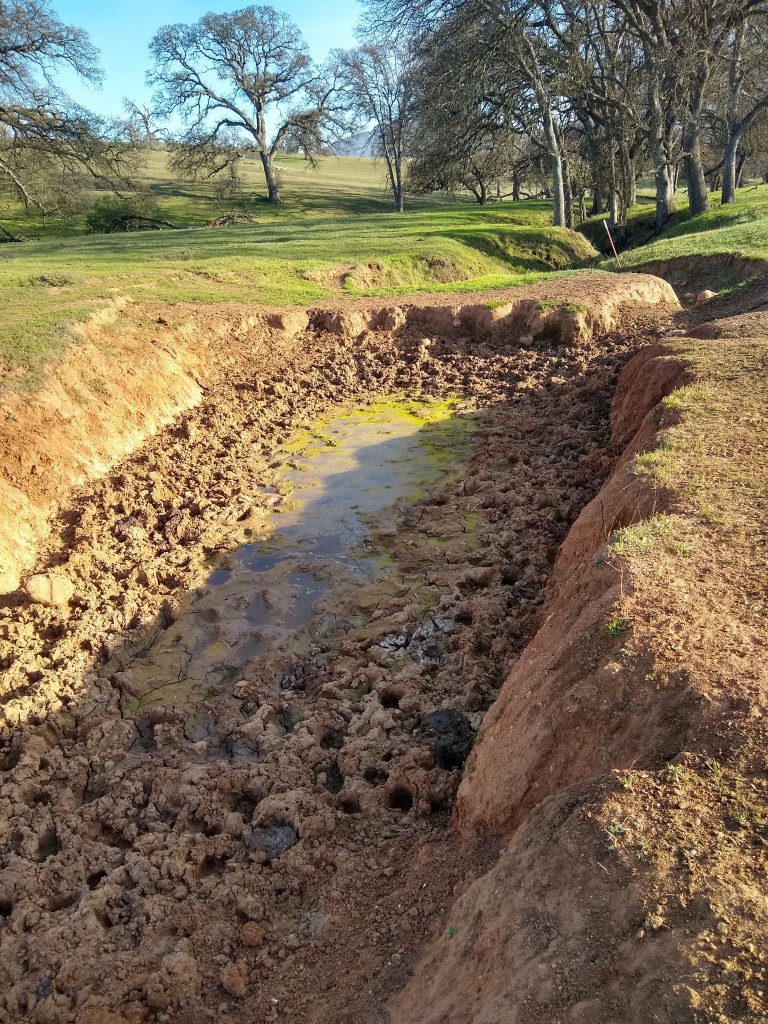
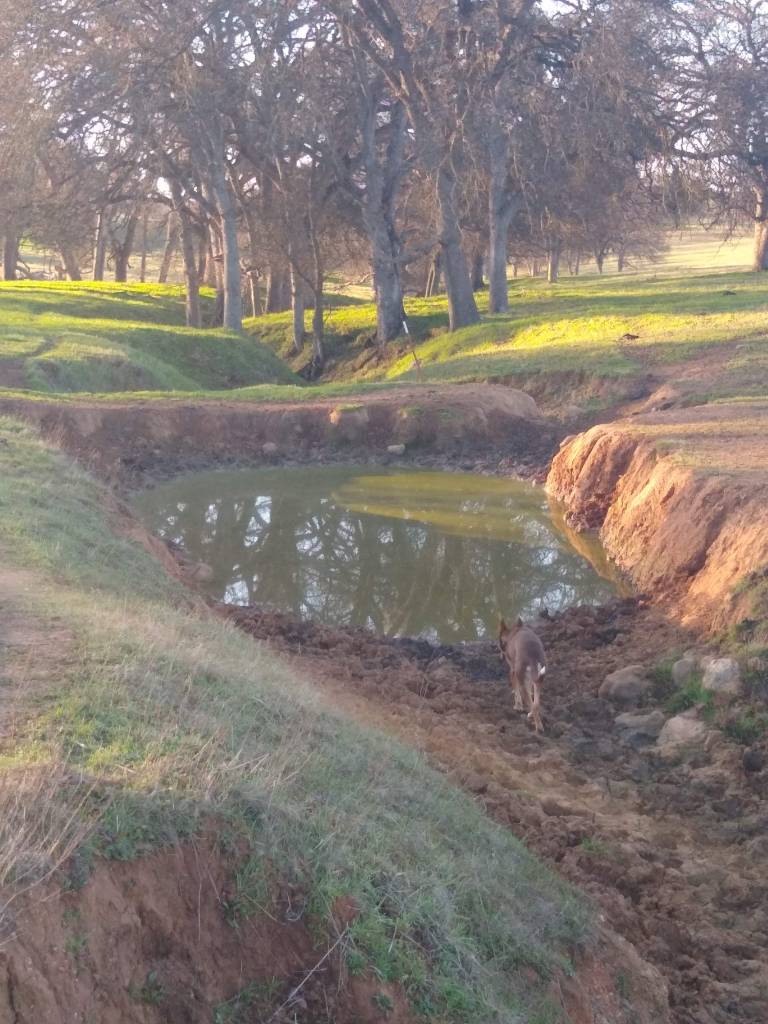
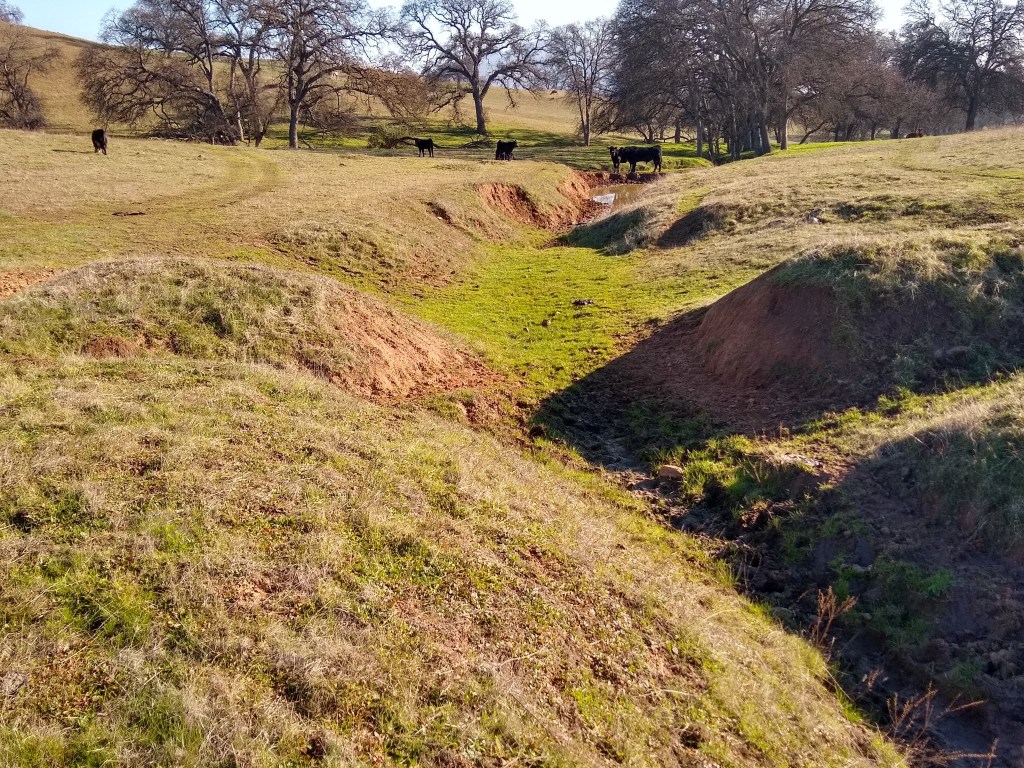
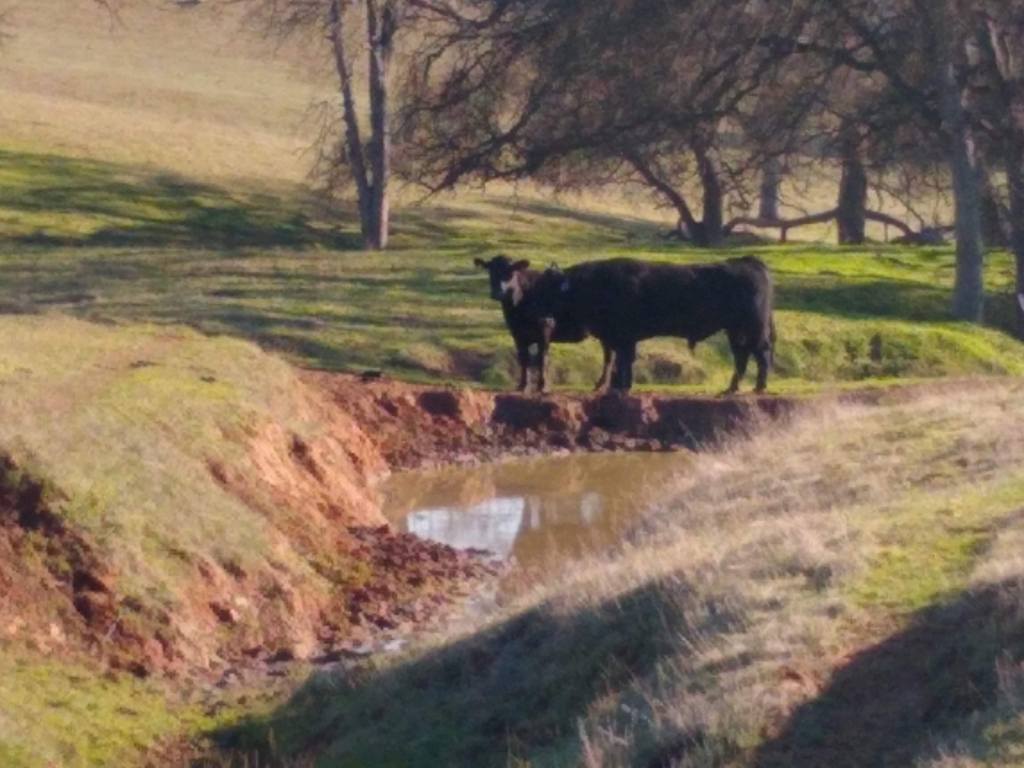
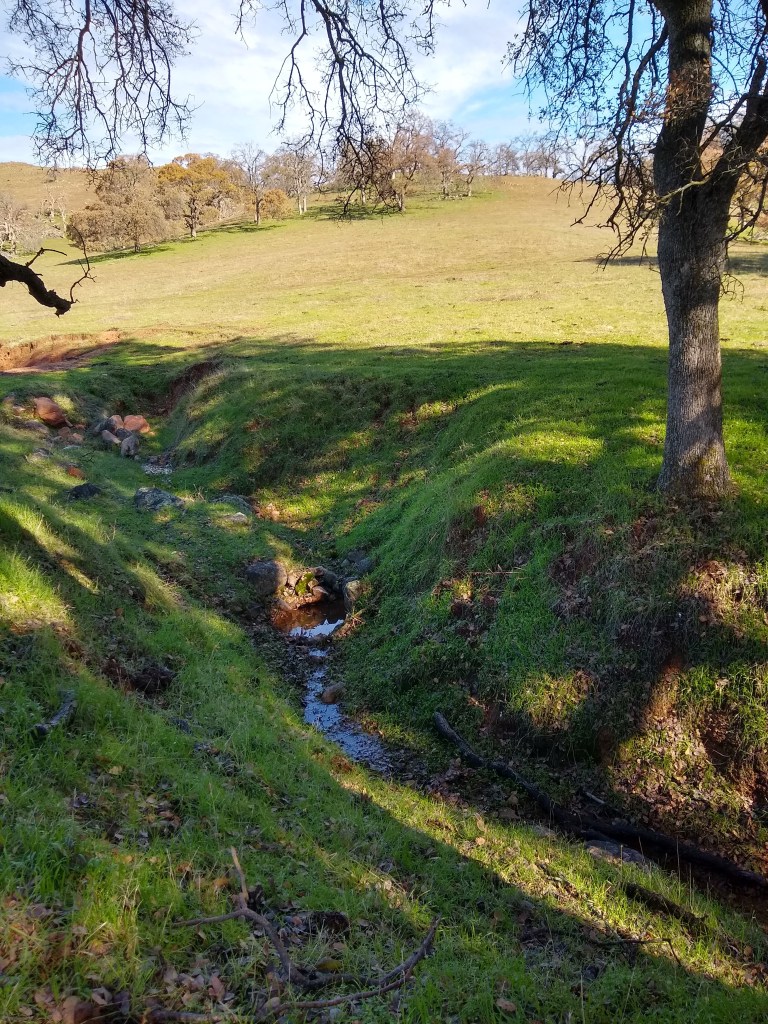
There has not been any appreciable precipitation since my last post. Tanks one and two are still unfilled because of the defective rainwater system part from December. Such a lost opportunity. This means I continue waiting for a large rain event to make up for that issue. There are large swaths of red and brown patches all over the ranch. These are areas where no additional vegetation has grown and the existing vegetation has already run its life span. No water = no grass growth. The water is now completely gone in the swale pond. The springs are still running. It is not pooling in the spring creek since there was no good water saturation down stream. We still have standing water in Odom creek, but not as extensively as is typical.

Butterflies Visit

We have had more butterfly visitors, but not as many as in the past for this time of year. There have been several painted lady butterflies, some gray hairstreaks, a white and/or pale blue sulphur butterfly (I could not get a good look). There are so many flowers but not as many butterflies to utilize them.

Narrowleaf and Indian milkweeds have also begun to emerge. They will be good for many butterflies and not just the monarchs. I don’t know if any monarchs will stop by. A friend saw a monarch in the Merced River canyon area, which is farther east and higher in elevation. Maybe I will get some stragglers.

Odds and Ends

Most things that were not leafing out or growing, are now showing leaves or leaf buds. No showy milkweeds, but I don’t expect them until later. We expanded the protection fencing around the big leaf maples, and they are already being used. Just yesterday I was checking the enclosures and was stopped in my tracks. The bluest birds I’ve ever seen here were flitting around, roosting on trees, roosting on the fences and then dropping to peck into the ground. They were stunning. Fortunately, the dogs were not with me. I was able to get a closer look without scaring them away. Rounded heads, iridescent blue, no blush of rust on the wings or chest. They were mountain bluebirds! I have only seen western bluebirds here and only in the riparian areas. What a joy that they have already found the new trees.

I also pulled out the solar fountain and filled it with water. Within a day, the basin was being used by a bird to bathe. There has been considerable preening, nest building, dating and coupling going on around here. It is spring!
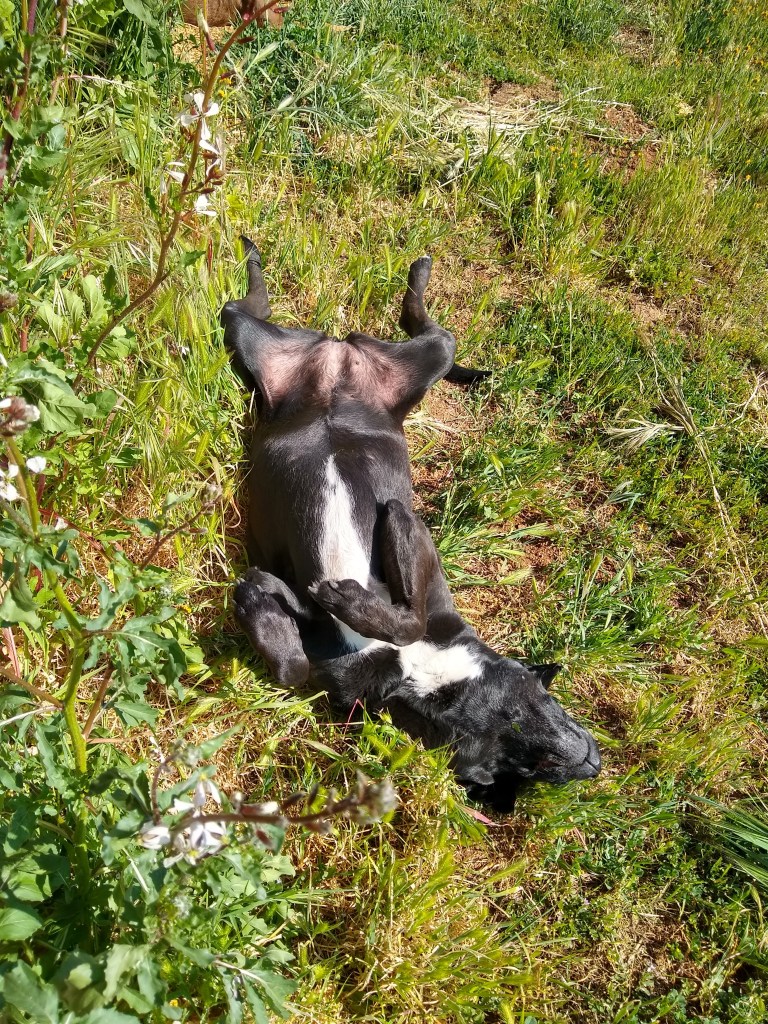
Warm sun and soft grass – nap time

Handing Off

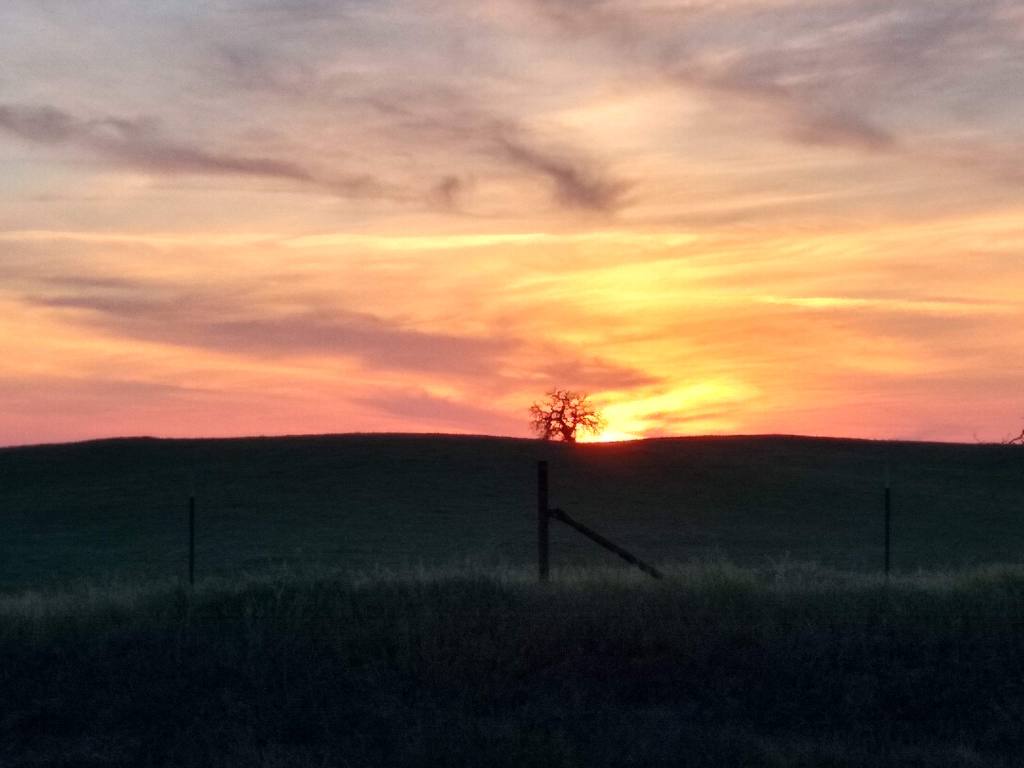
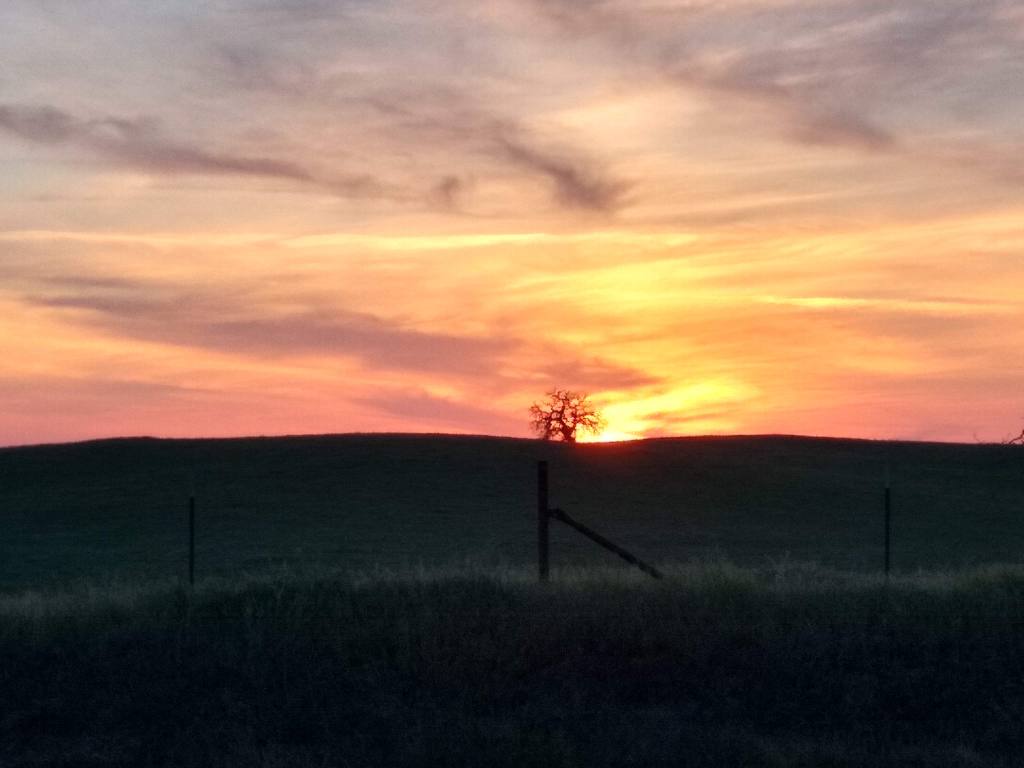
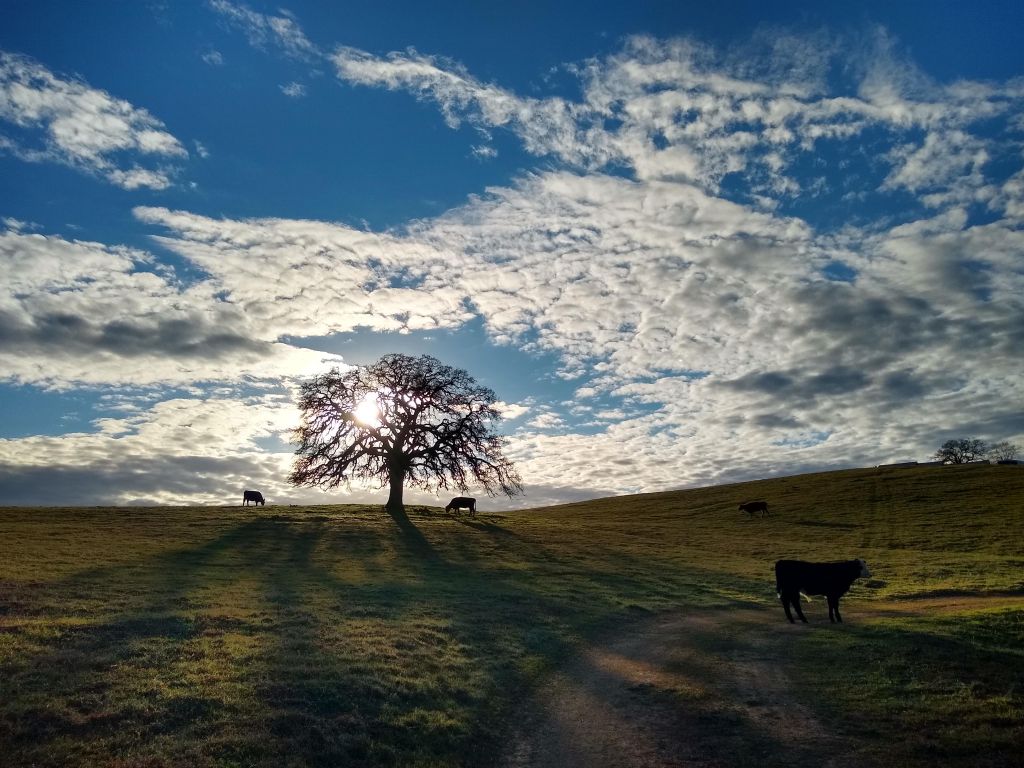
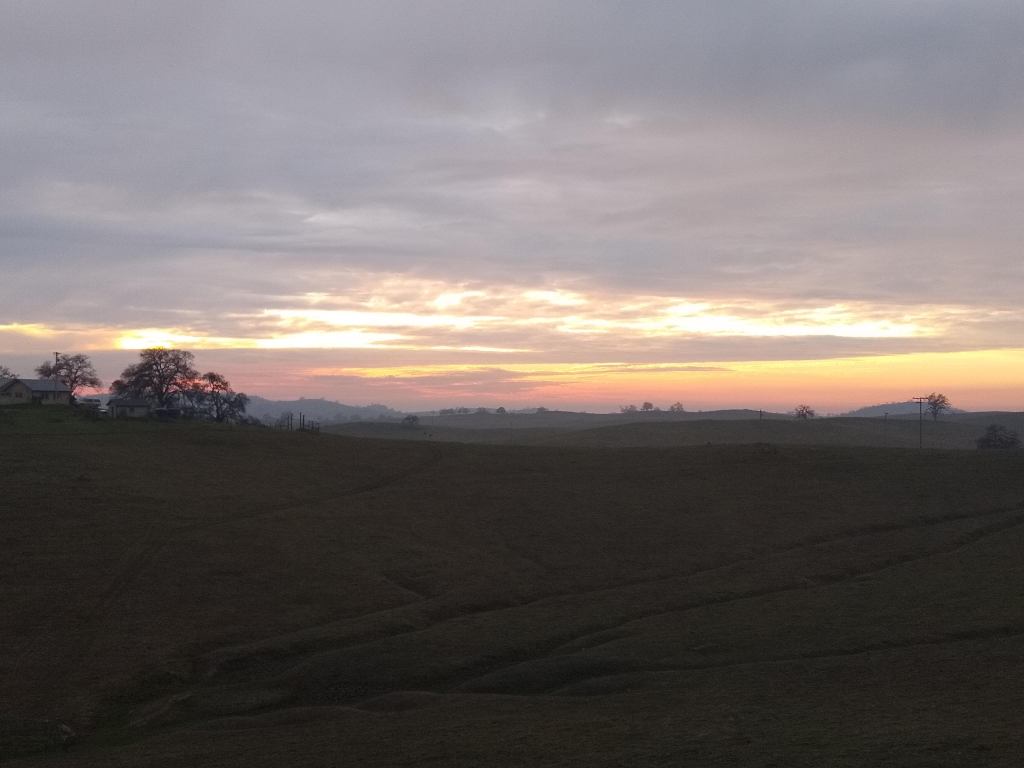
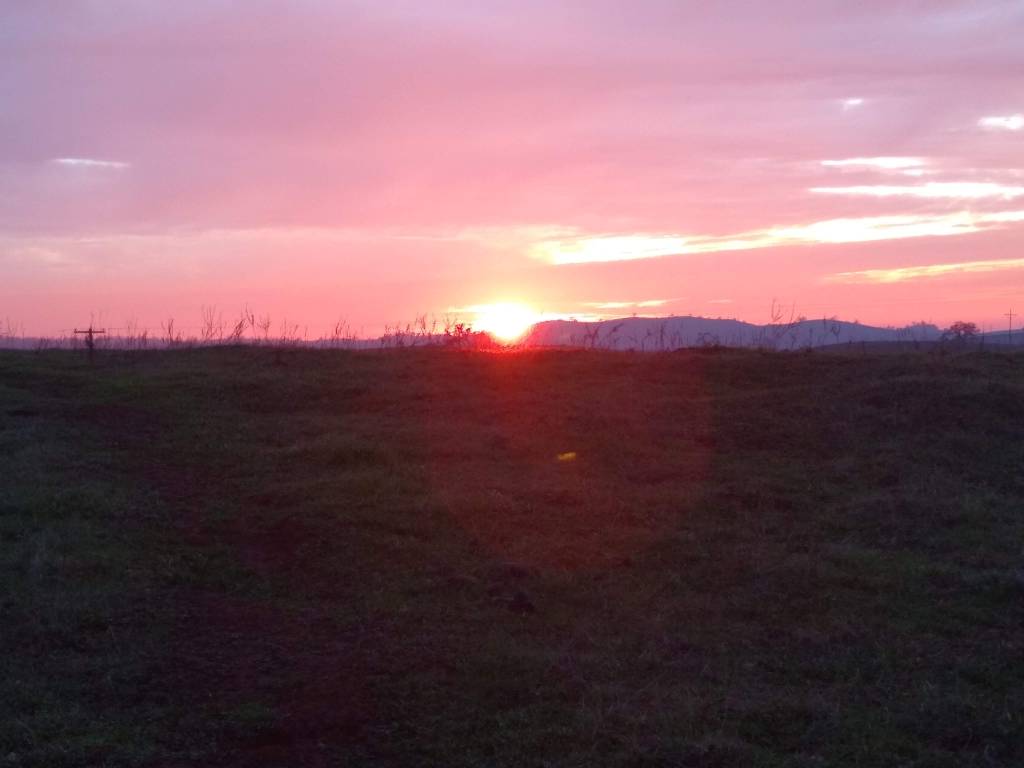
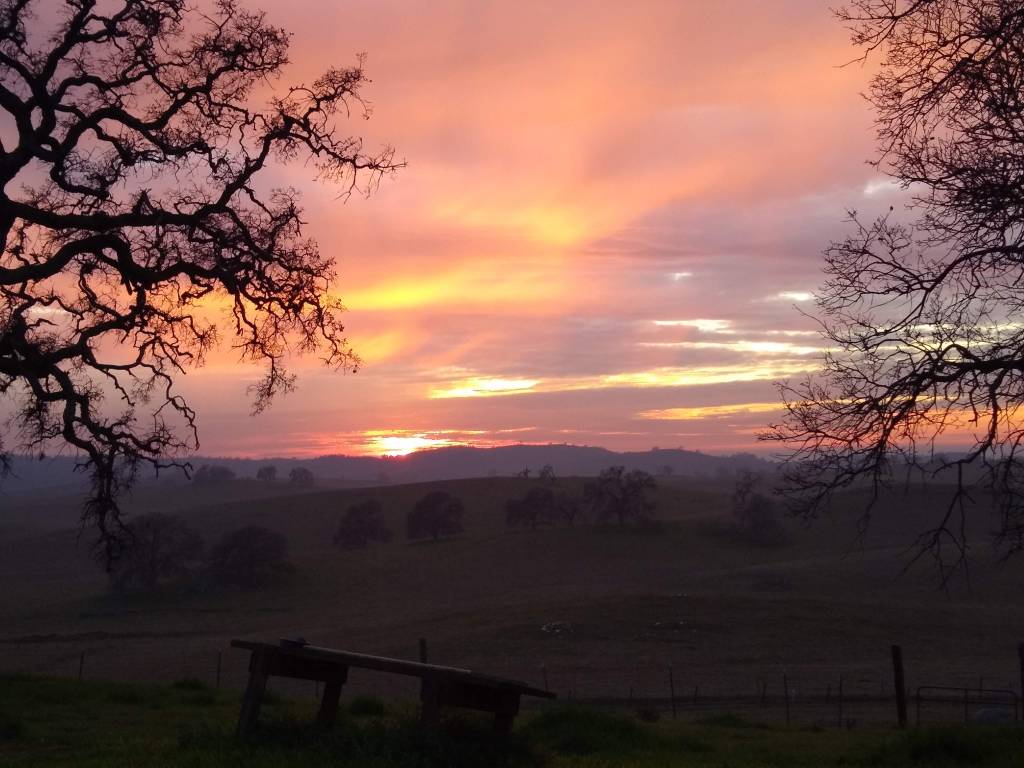
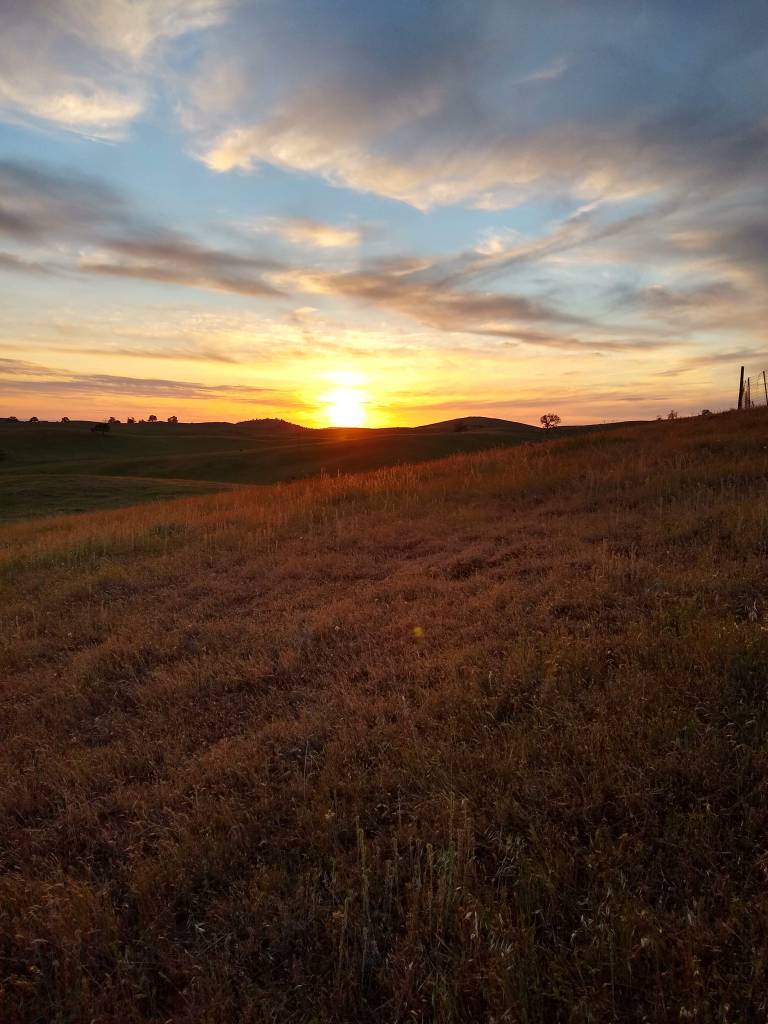
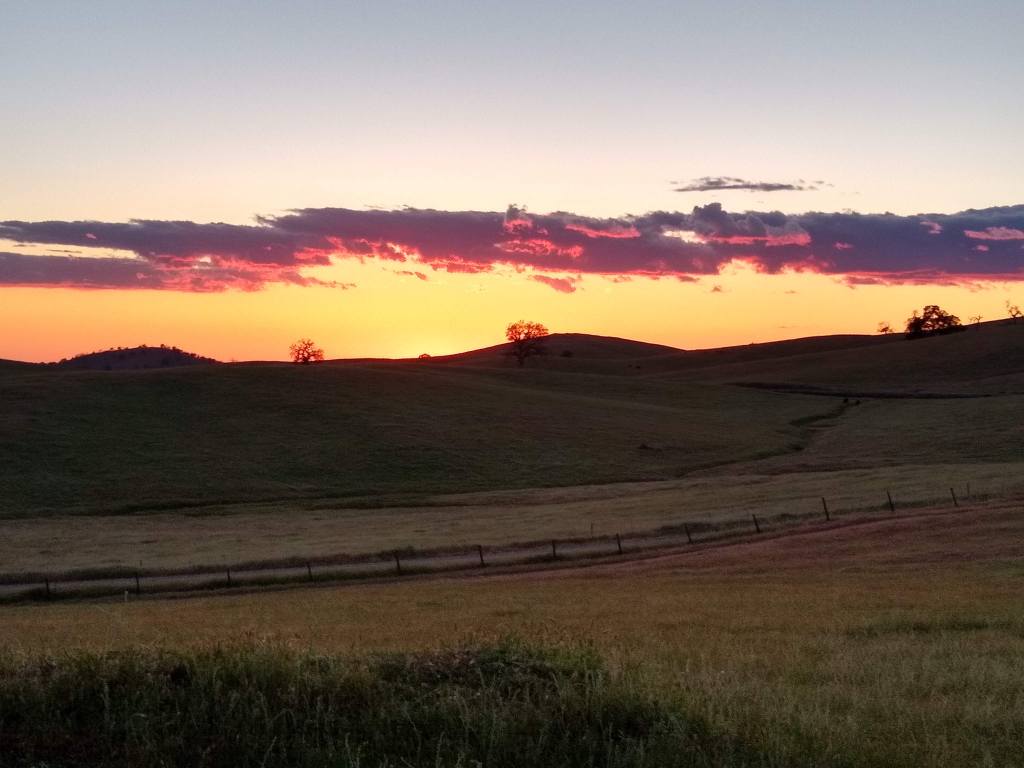
Sunset at the ranch

Walappu’ ‘Uuchuthuu is officially handed off to the Southern Sierra Miwuk Nation. The California Association of Resource Conversation Districts grant is now complete. While I will continue stewarding and building habitat where I live, I will only stay loosely involved as a volunteer under the thoughtful, caring and deeply passionate leadership of Kristie with support from Nellie and Tara (and of course Clay from Miwumati, Deedee from Xerces and Ron from Mariposa Native Plants). With schools interested in presentations, residents wanting to plant pollinator gardens, the Butterfly Festival coming up in April and the Pow Wow soon after that in May, the Team still much work to do. I could not be happier.
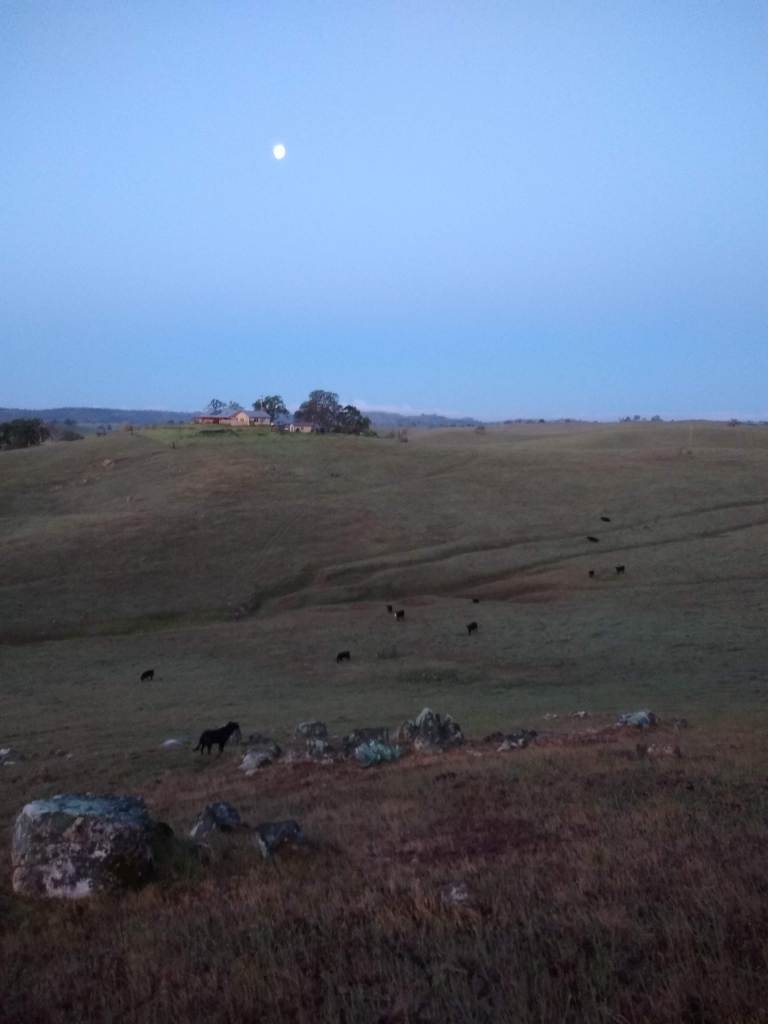
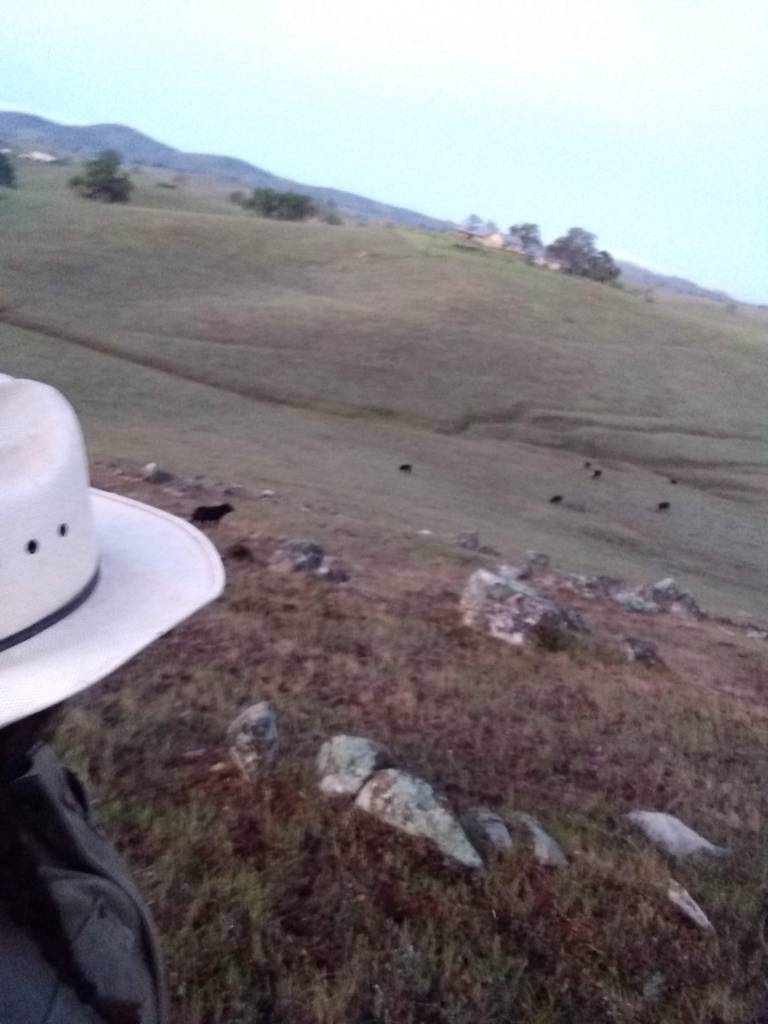
As an Indigenous person, I feel a deep and intrinsic connection to stewardship of the planet as well as this specific place. However, there is no one more suited to stewardship of this region than the progeny of the first peoples themselves – the Southern Sierra Miwuk. When you live by, for and because of your non-human relations for tens of thousands of years, you unconsciously become one – you know one another extremely well and are part of the collective whole. This knowledge will be central in ensuring the survival of the monarchs and all of our pollinator family.

Ito te vitne in weweriam. Amand te tevote naabuihatia ini tui tekipanoa. Se osi enchi nake.

Good luck my relations. Best wishes with this good work. I very much appreciate you.

Kristie at a site assessment and intake
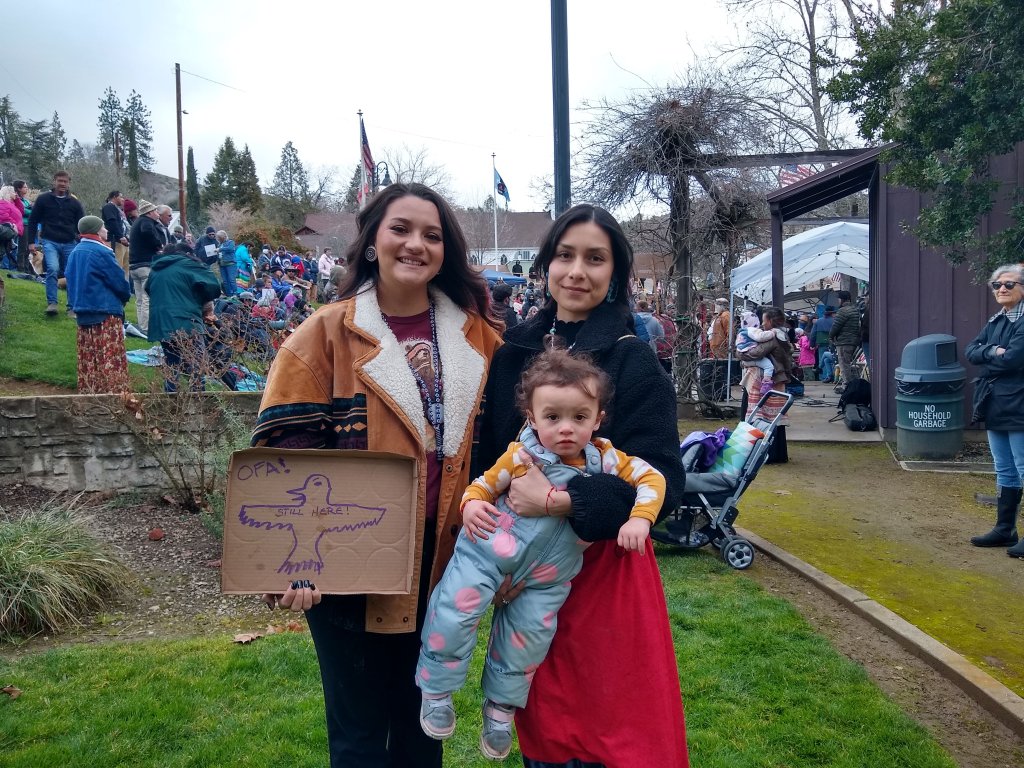
Nellie at March for Federal Recognition with friends and next generation stewards Miwa and Willow
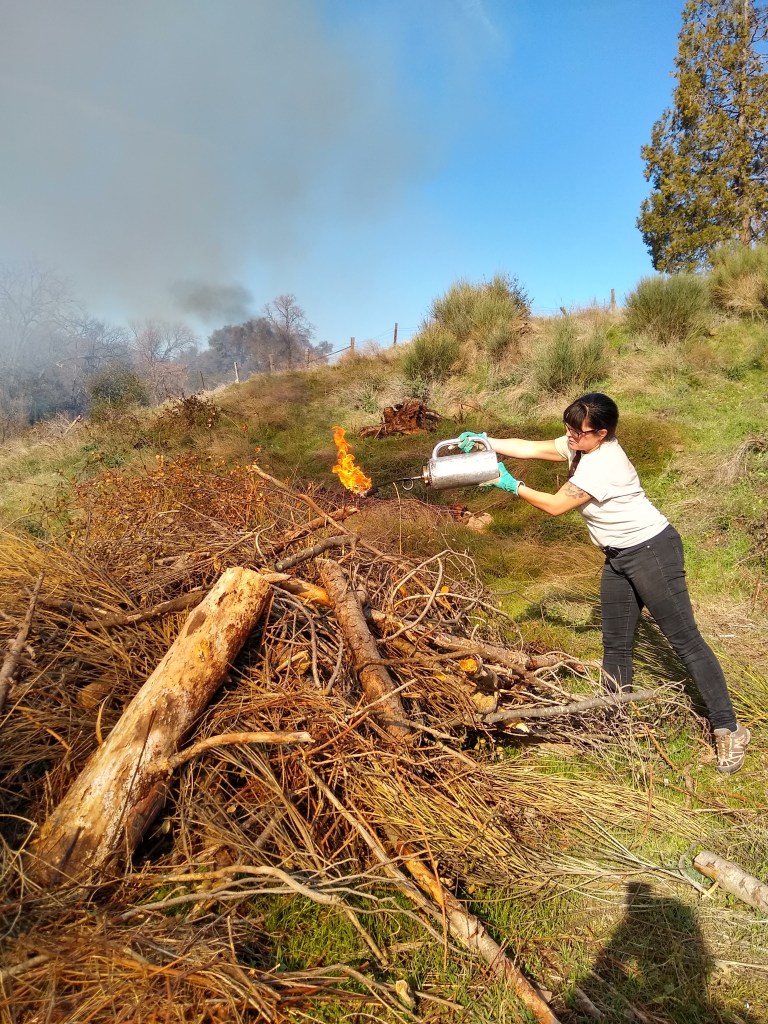
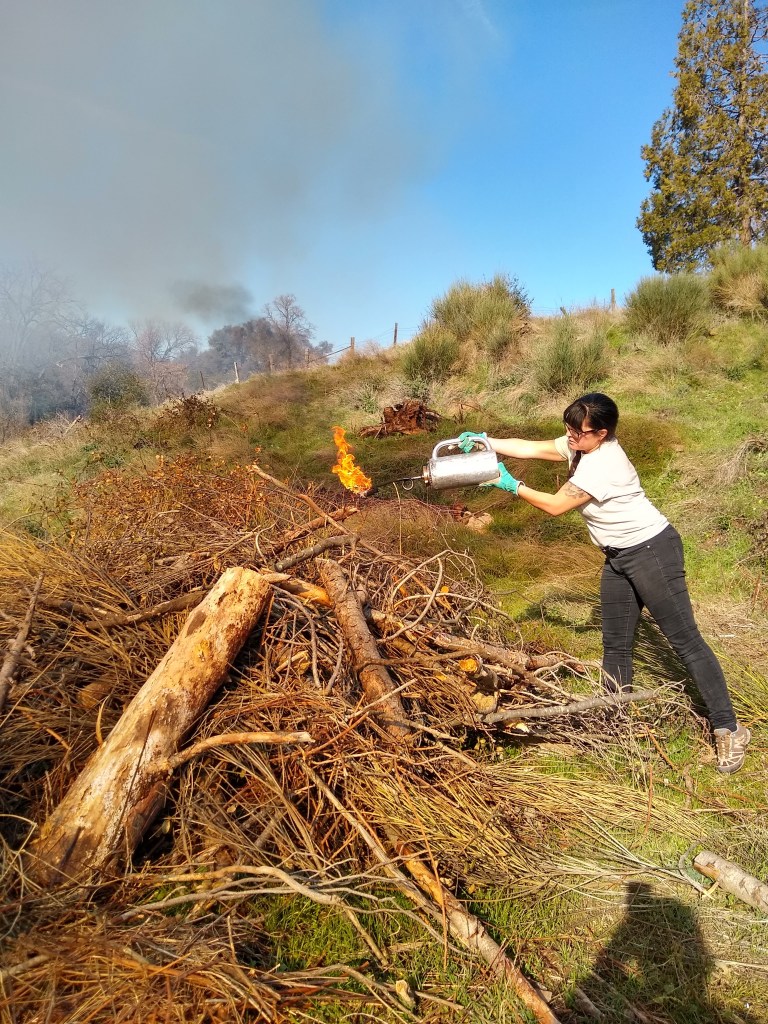
Tara burning for the health of the land

Drought Heavy On My Mind. Monarchs on Their Way

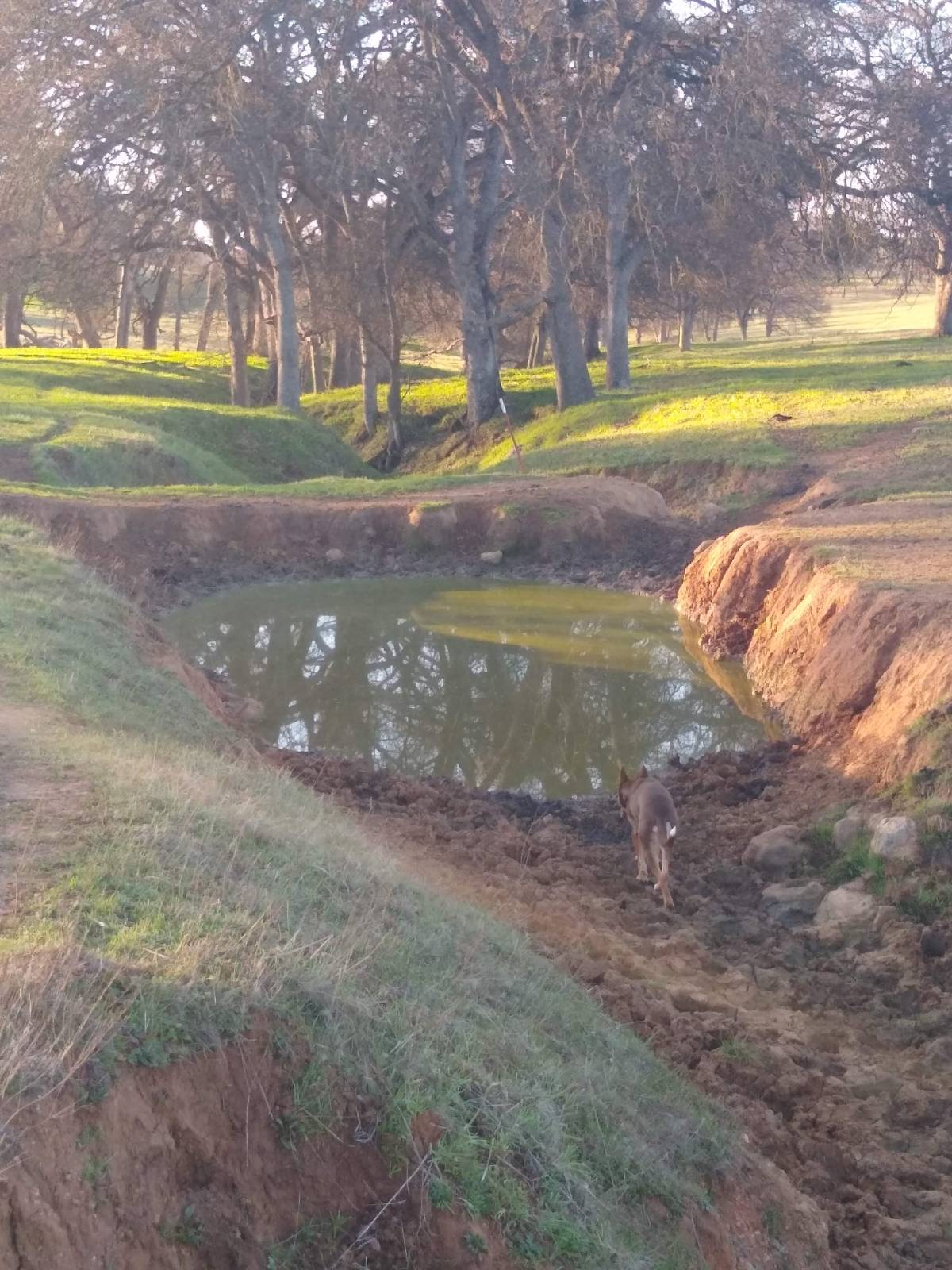
Swale Pond continues to shrink in the heat

I am getting nervous. There has been no rain, with none in the forecast. I’ve already begun to water some plants that are in drier soil and looking thirsty. The south rainwater tank is getting early use. We need a good storm. I would feel better if my two main tanks were filled, but recall, a defective part used in the professional rainwater install allowed thousands of gallons of water to flow away from the tanks instead of into them. Without them filled, I am unable to water everything that needs watering.

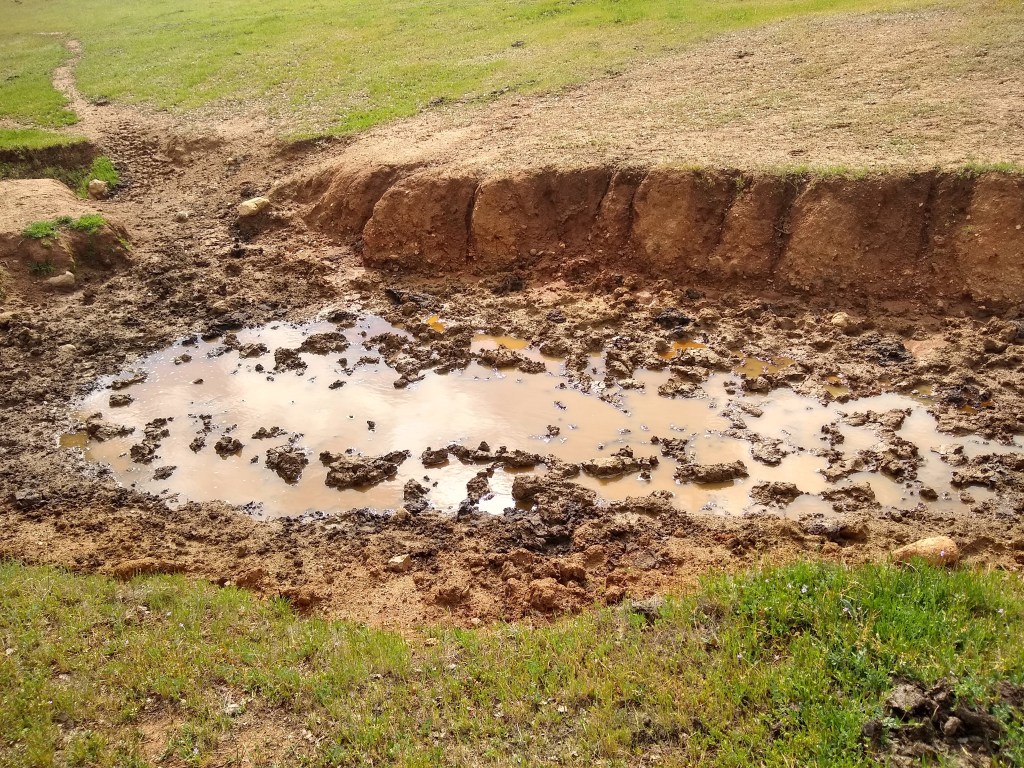
The Swale Pond is shrinking with absorption, evaporation and use by cattle and wildlife. It is the main deep source of water on the NW side of the ranch. We are still getting a little dew in the mornings, which helps the grasses. Mayflies, ants, honey bees, and fly pollinators are out and busy. Fortunately, it is still cold at night and in the morning. We had overcast skies the other day and no wind for some time, which also helps slow evaporation. The grasses are still green, but we are getting patches of brown where plants have died back with no other growth to take their place. The system here is teetering on the edge. On a good note, I saw a bald eagle a week ago Sunday. I saw another one in the Valley near my home. Both sightings were pure joy.

For the Future

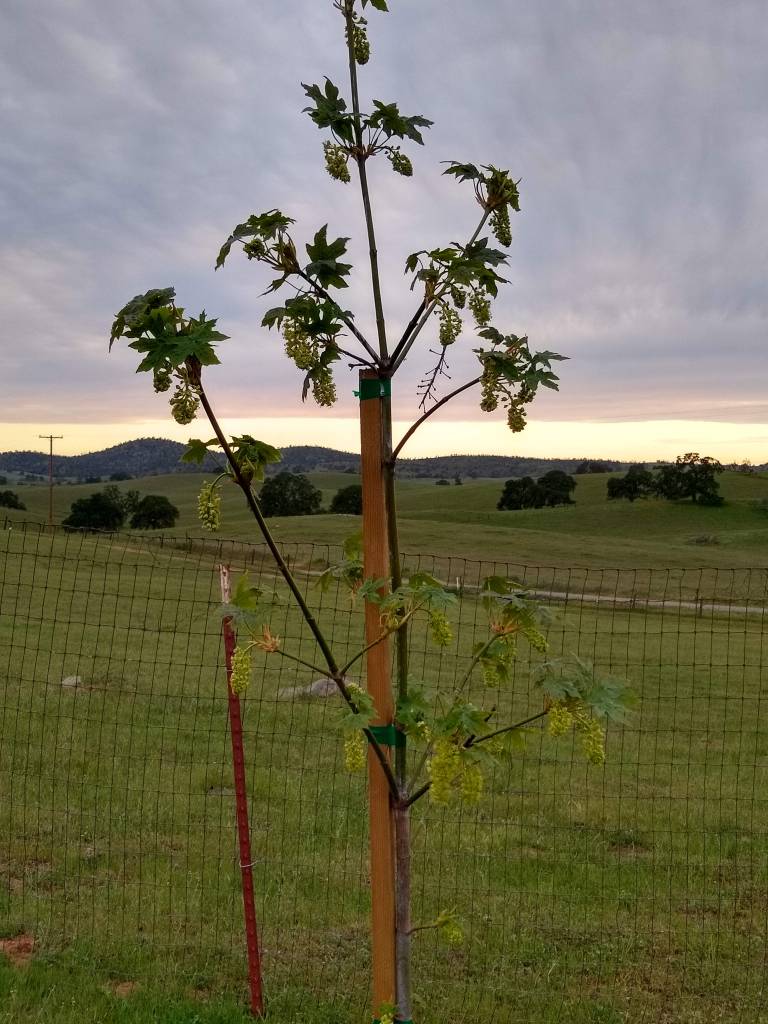
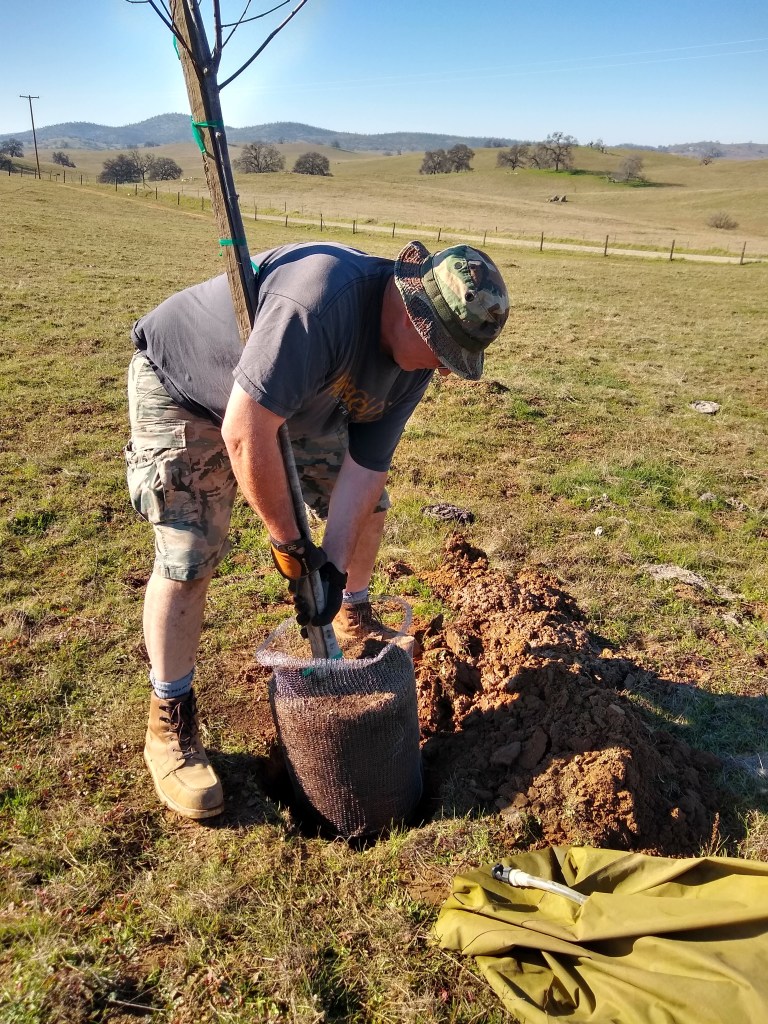
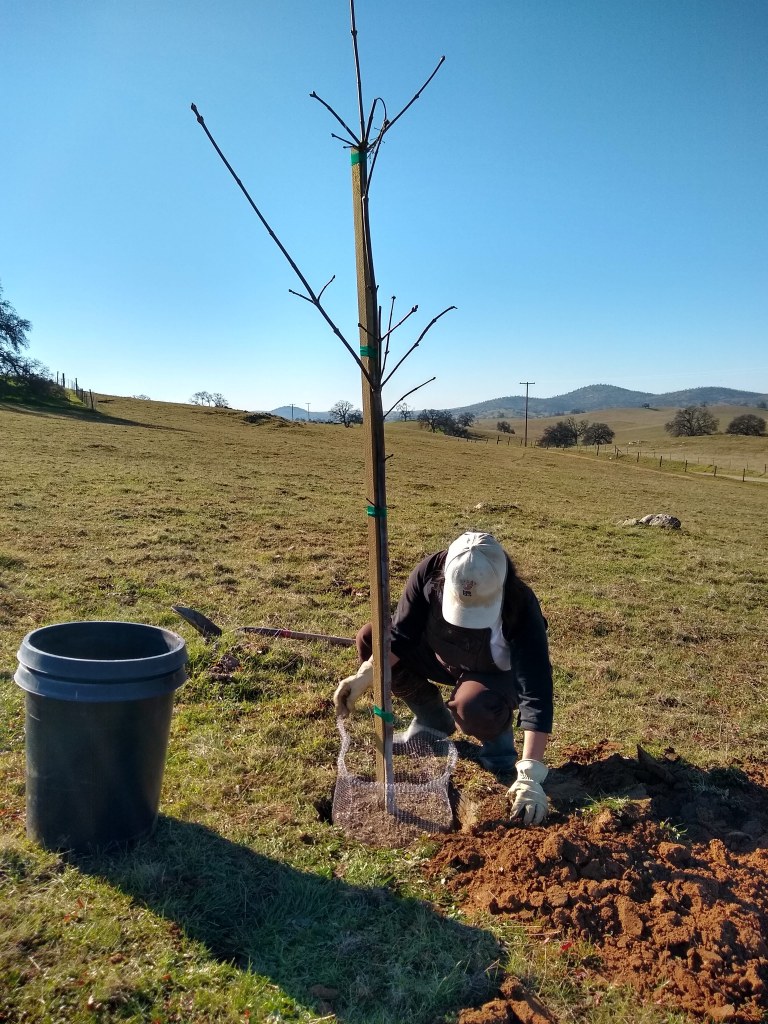
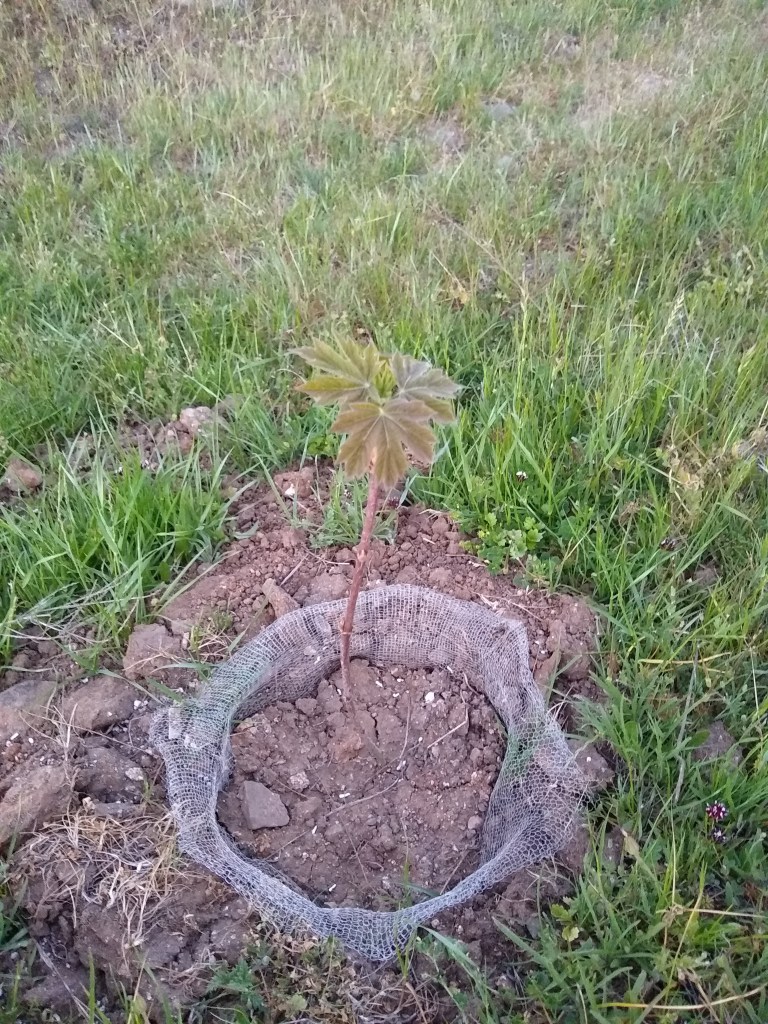
I planted three big leaf maples last weekend. David helped with the larger trees given their weight. I purchased them before I knew I wouldn’t have water in the rainwater tanks. You may think, “Girl, you’re crazy. Your blog is filled with freak-outs about drought. You’re a nervous wreck. Why plant trees that require much more water than bushes or plants?” That is a great question. There are several reasons:

1. Trees can change an ecosystem. A biologist told me that due to their shade and function of bringing water closer to the top of the soil, more moisture can end up being present providing an important resource for other plants to thrive. Monarchs, and many other butterflies, often roost in trees to avoid predation, and rest.

2. Trees provide shade. This can help grasses and larger plants survive the worsening heat.

3. Trees are an important part of sequestering carbon. They uptake carbon from the air and push out oxygen.

4. Finally, these trees are more drought tolerant that most others. Ron Allen of Mariposa Native Plants and a UC Master Gardener said they grow in arroyos in much more arid Southern California.

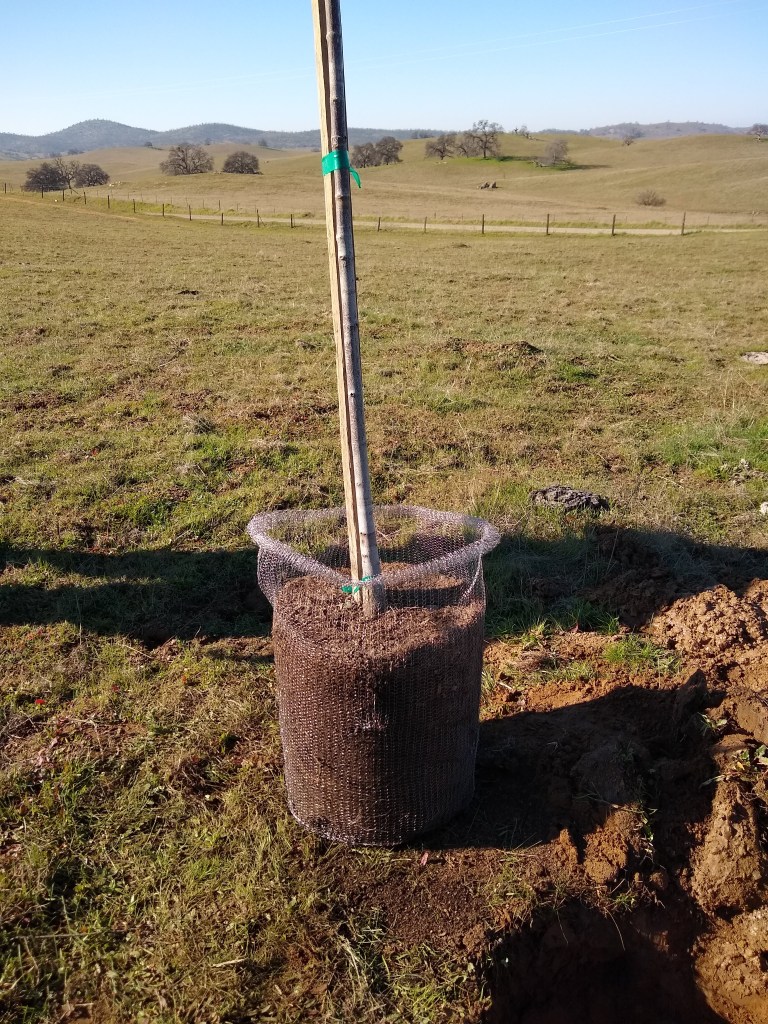
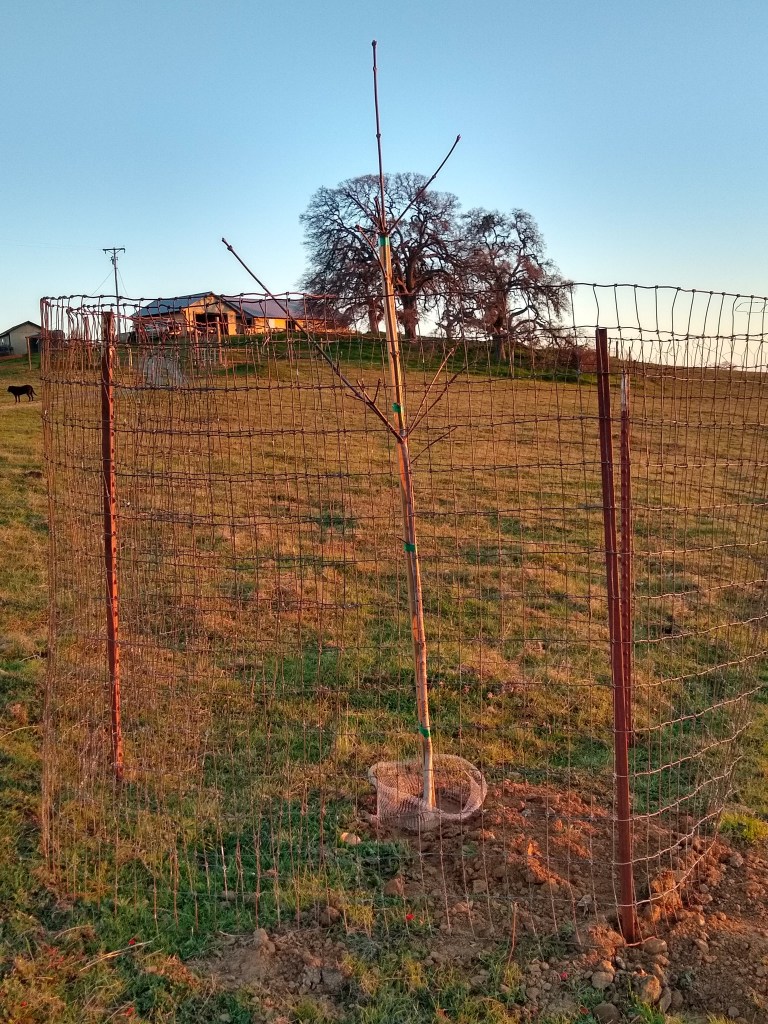
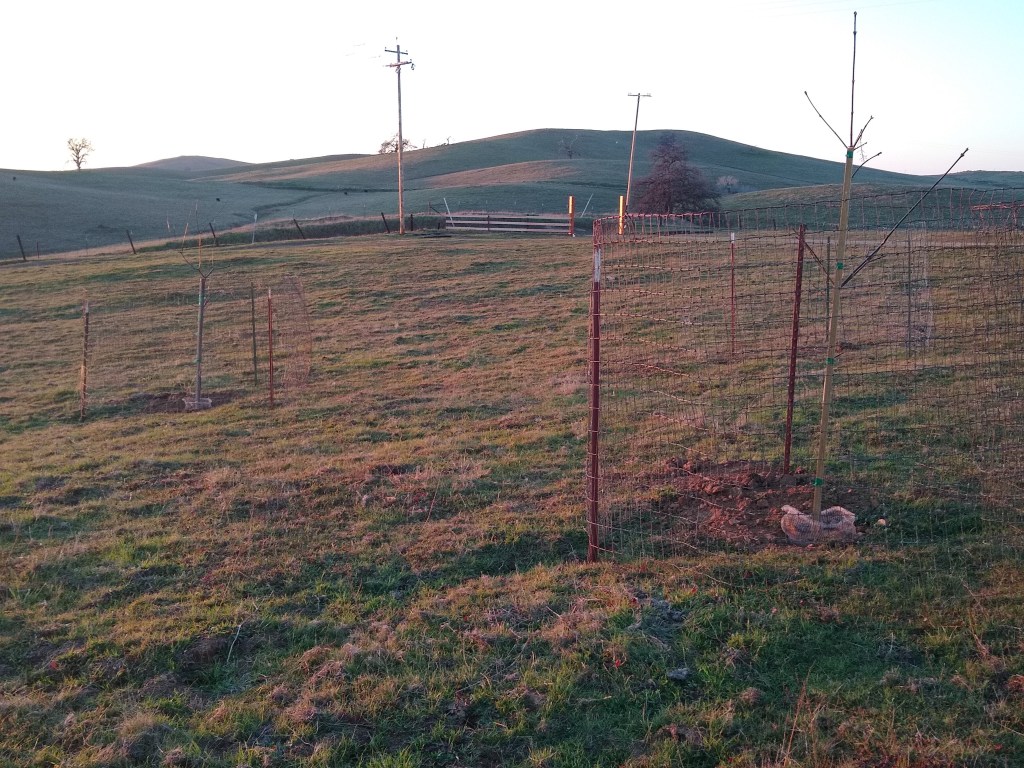
I am going to give them more of a try. I planted three others last year in different places on the ranch. Grasshoppers ate two, and the cattle got to the other before I could get protection around it. This time, I purchased more mature trees, planted them closer to the house (thus my new water system), and built fencing around them the same day they were planted. I planted them in a shallow draw as opposed to an arroyo. Let’s see if all of these things make a difference. I would really love shade in this section of the ranch and another place for butterflies to roost. It is humbling to plant a tree – especially at my age. It is a true act of love to know that what you are doing is not necessarily for you. This tree will outlive me by many years providing shade, shelter, beauty and cool soil for generations to come.

Blooms

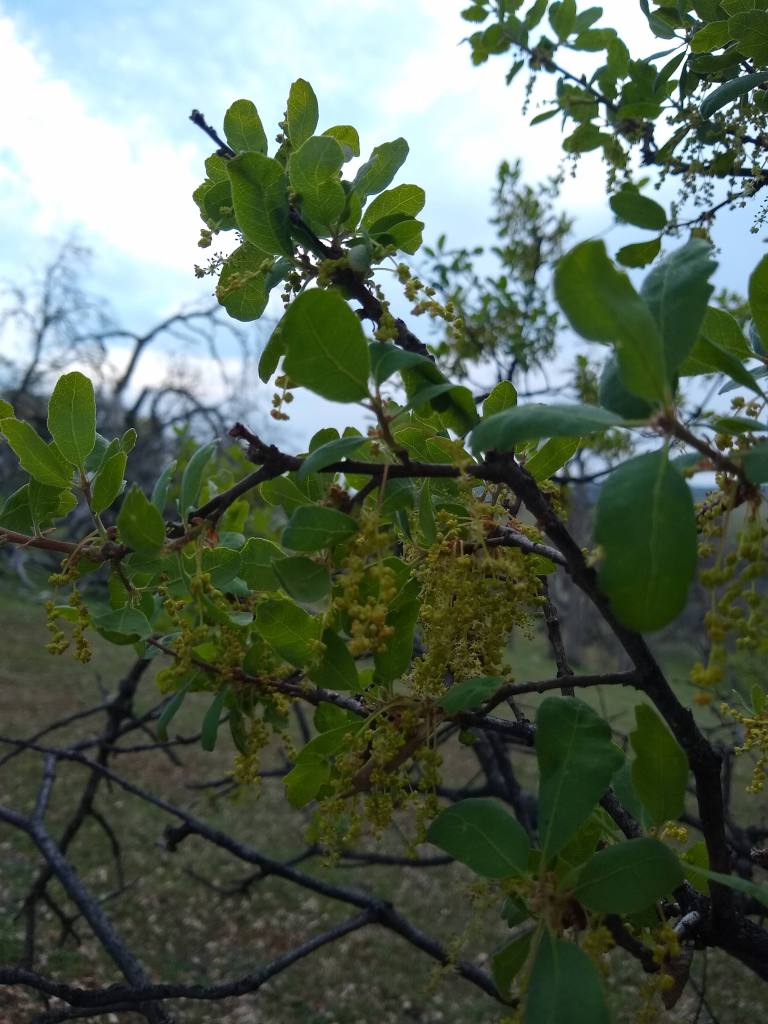
New oak leaves emerge

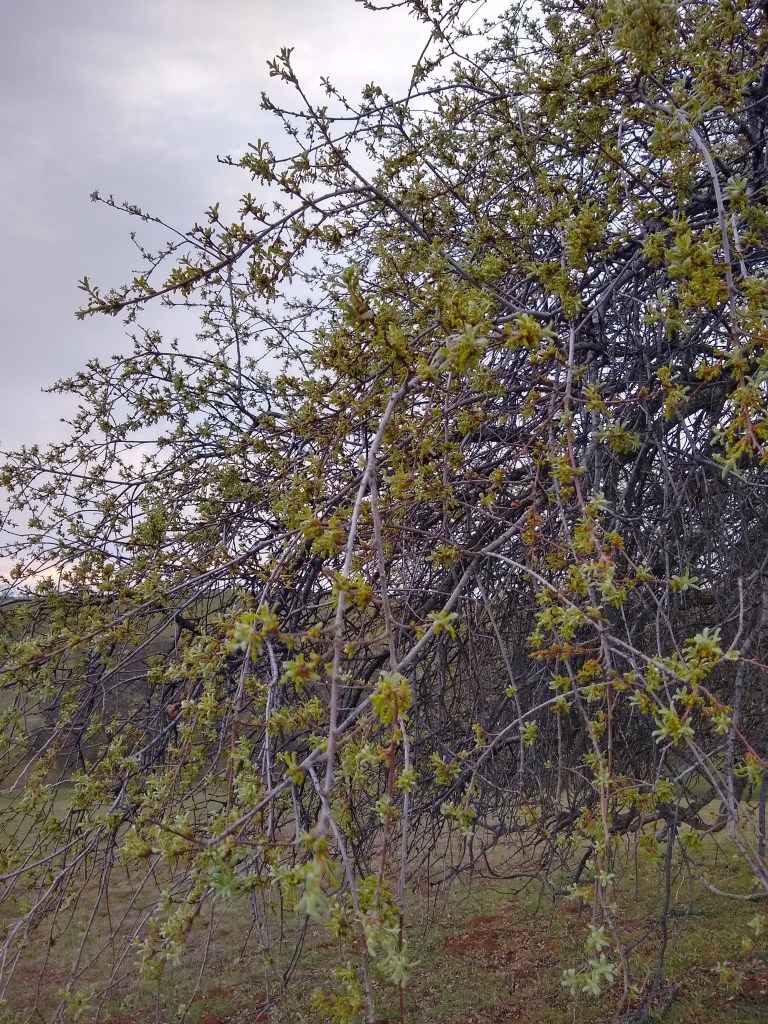
Many things are early this year. The heat and sunlight have given cues to the plants and insects to start living their above ground, visible lives again. Most of the wildflowers are coming out all at the same time – not following their typical cadence. Given climate change and the lack of moisture overall, this may be a self-preservation thing. It also may be a good thing. I understand, from a monarch expert on the coast, that, as of this writing, the female monarchs are for the most part gone from the overwintering sites. They have begun their northeast journey to summer sites. This means they are on their way this direction. There is much danger – more than usual. The early departure during the heart of winter means that they can get caught in a cold snap and freeze. They also may get to certain locations before food is available. They will be passing through the largely toxic fields of the Central Valley during a time of dormant spraying of nut trees. It is a difficult passage, which I hope they will navigate successfully. I anticipate having more nectar for them in a couple weeks. Perhaps they will get here in mid March. I will keep my eyes open.

As I mentioned in my last blog, I am helping a team of scientists monitor for early emerging milkweeds. They are interested in A. Californica (and A. Cordifolia, which I’ve not seen here). So far, I have not see any of my native A. Californica emerge. I am seeing some of my potted and newly planted milkweeds emerge however (Indian milkweed and narrowleaf). I expect to see the A. Californicas emerge in late February or March. I just hope they will be large enough to entice monarchs to lay eggs.

Riparian Fence Nearly Done

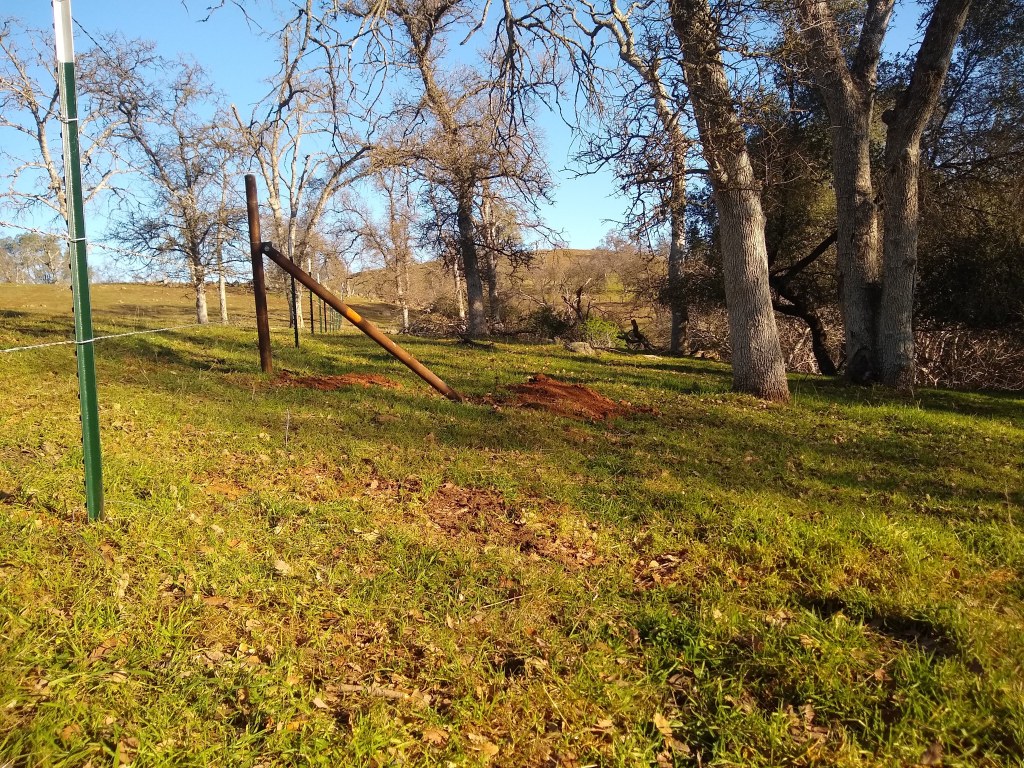
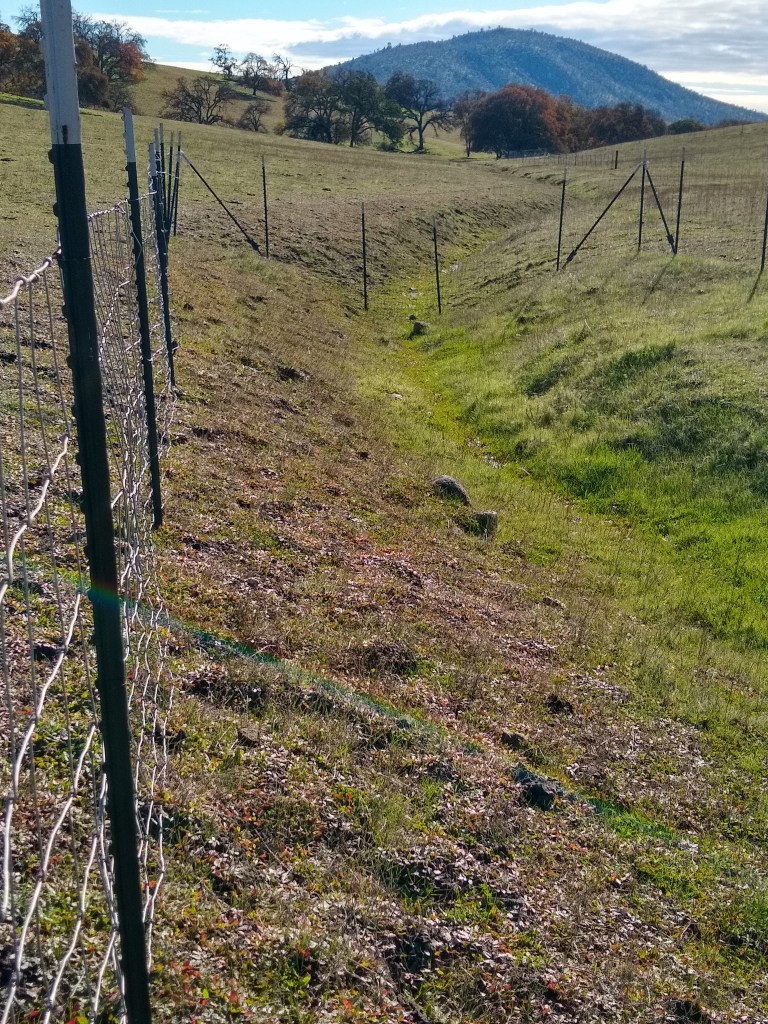
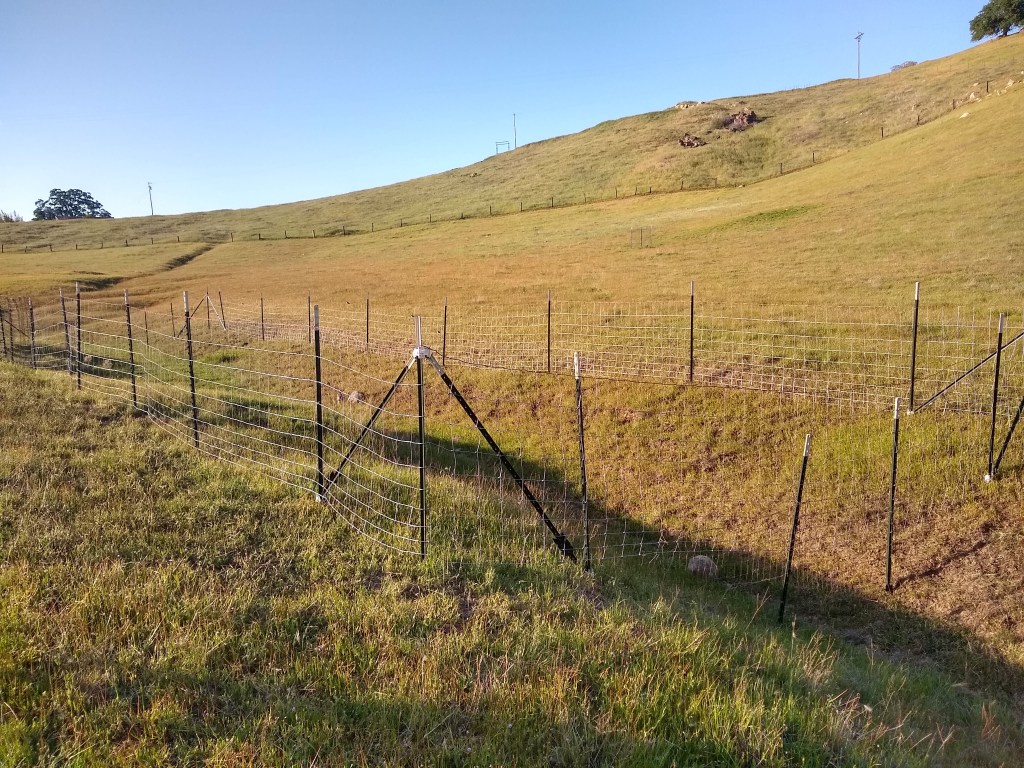
Riparian fence at Odom Creek with brace post

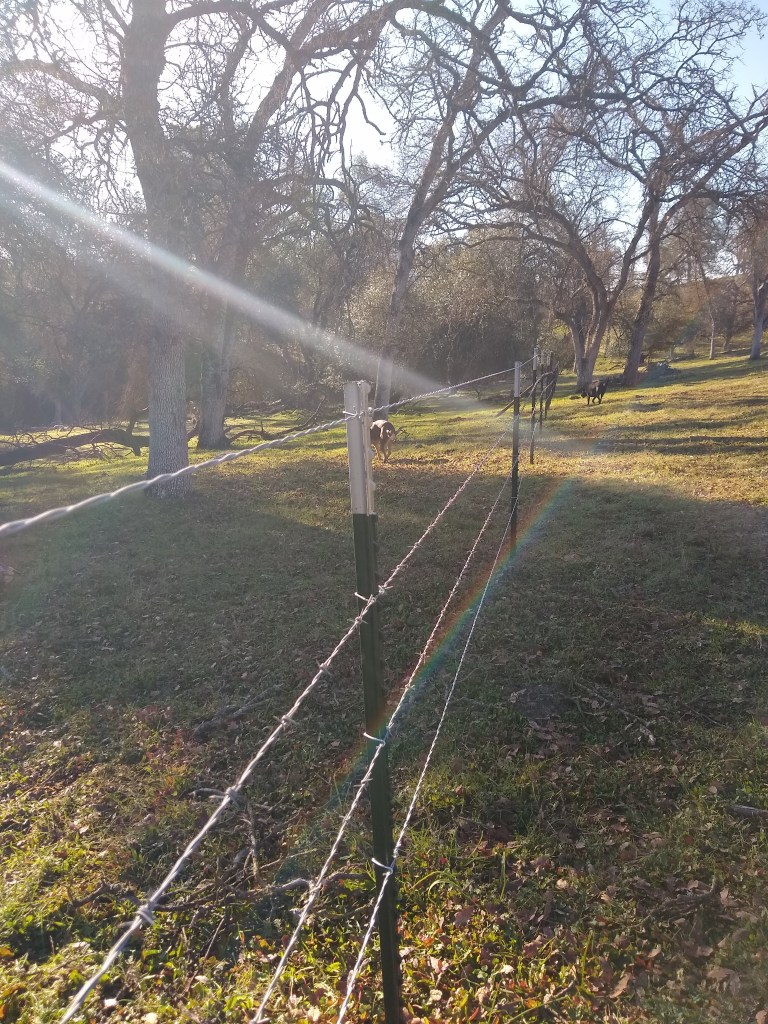
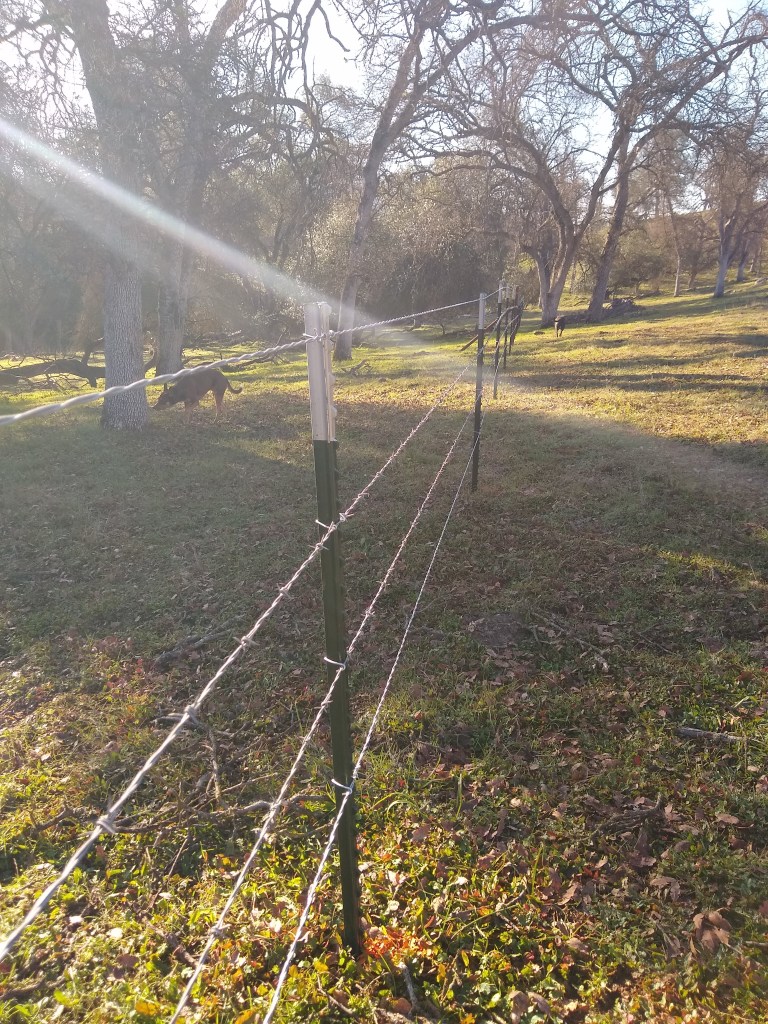
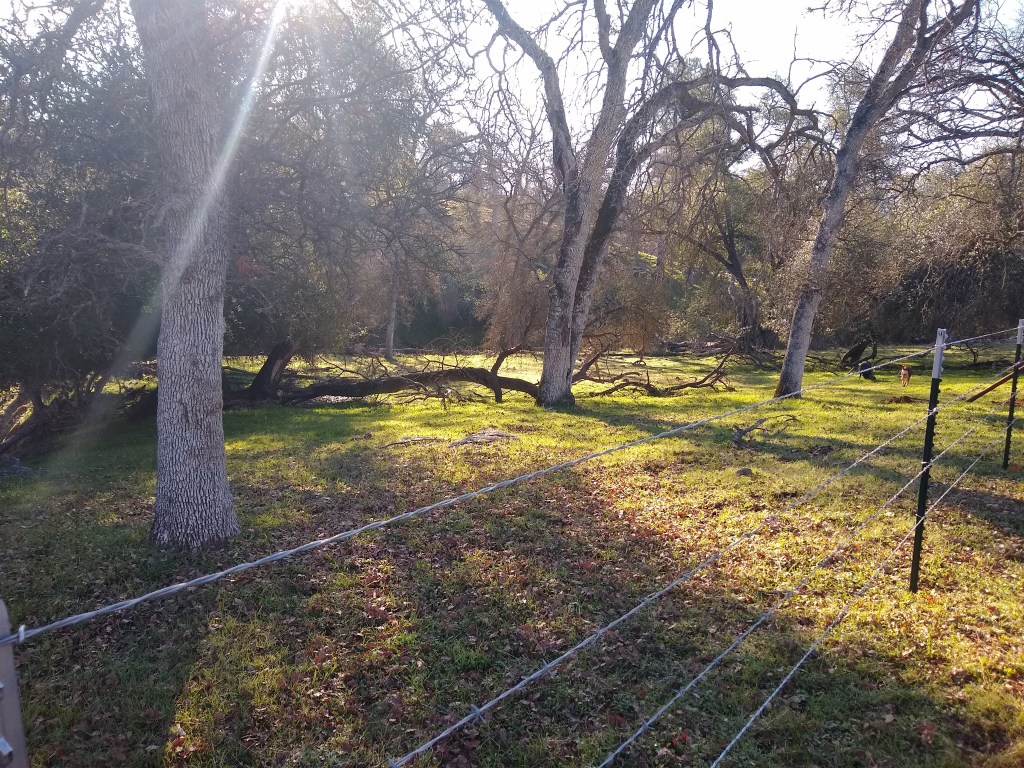
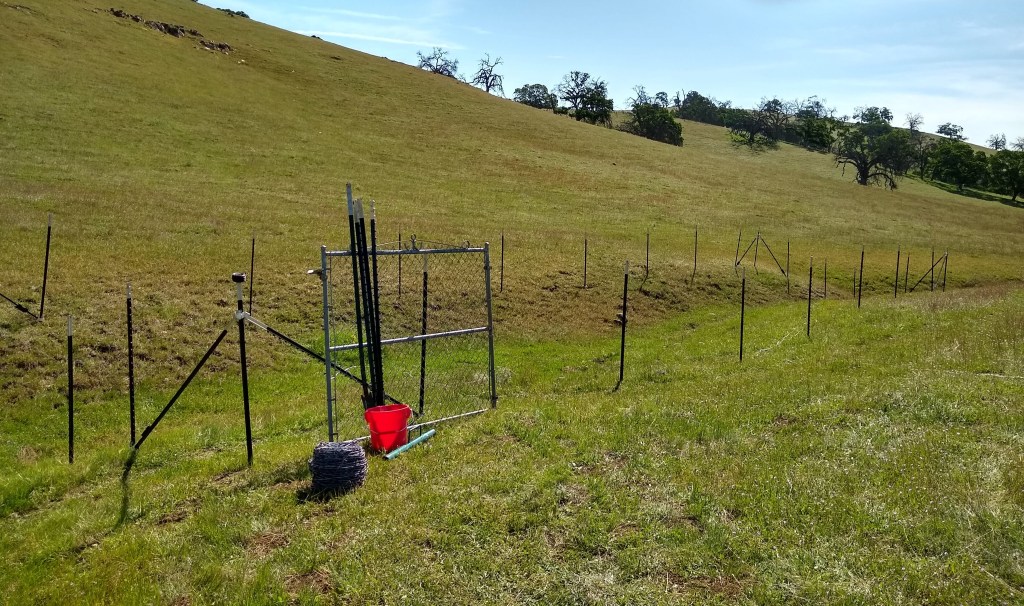
Regular, long time readers of this blog will know that fencing has been the bane of my existence. So much effort, consternation and “ink” in this blog have been dedicated to discussing the protection of milkweed and nectar planting sites throughout the ranch. Oh my, so many different attempts, failures, and cow break-ins have been chronicled. Finally, I have gotten a professional to perform the long, arduous task of installing the riparian fence to exclude cattle from portions of the creeks. Say it with me…hip…hip…hooray. You will now be spared my fencing complaints and dejection!

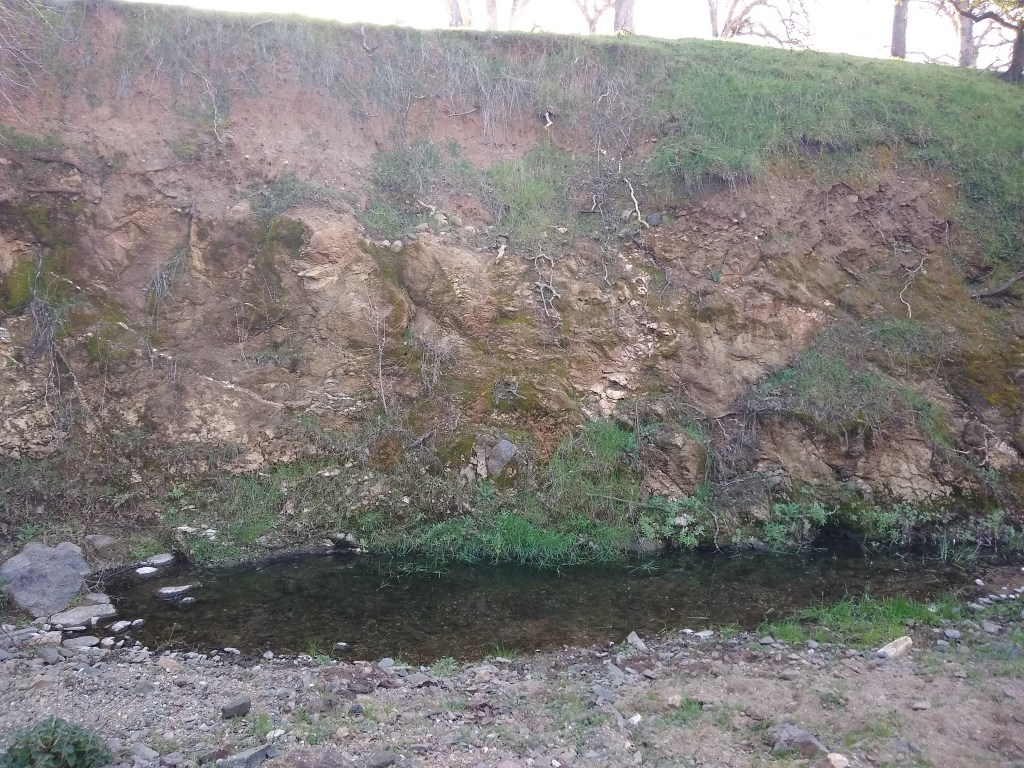
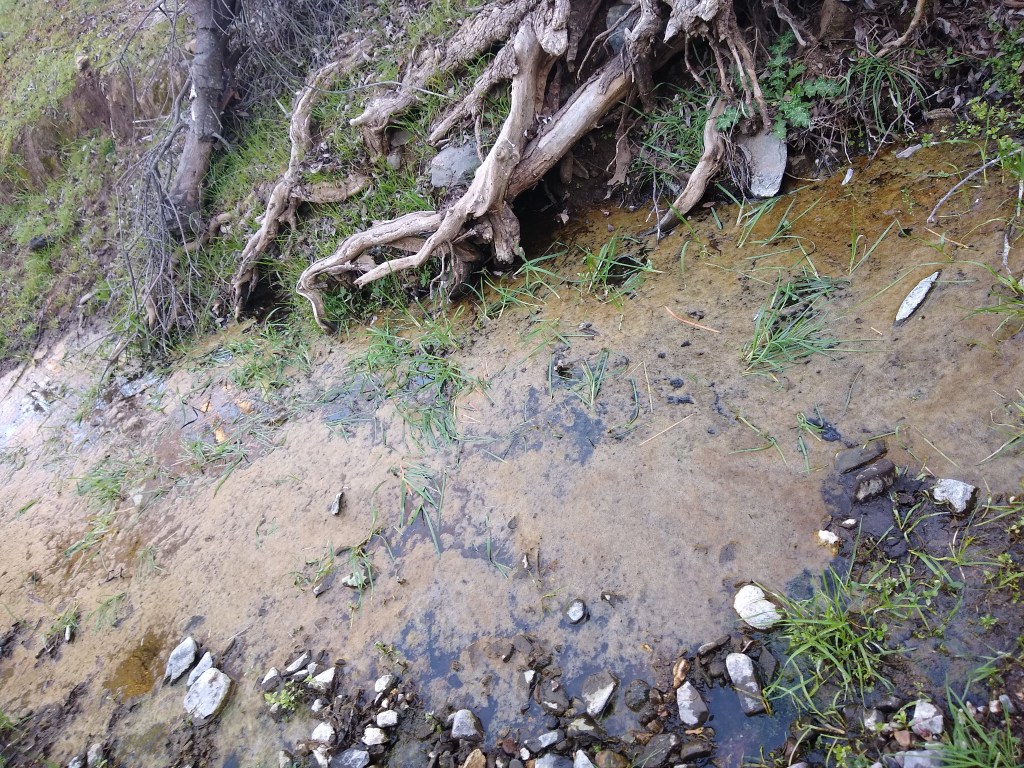
Two of the many reasons for excluding the cattle from the creeks is to protect the water quality (see photos below) and prevent erosion of creek banks. High organics, from poop and pee, create excessive nutrients that algae feed on. Too much algae on the surface can prevent the transfer of life-sustaining oxygen into the water and make it less possible for fish and amphibians to live and less healthy for mammal and avian wildlife. Excluding cattle for a time also gives the ground an opportunity to rest and for me to see what grows without the impact of livestock. I am excited to see what happens. We will graze these enclosures after monarchs would have left and the native plants have seeded. We want the grasses to be grazed down for health of the ecosystem and fuel load reduction for wildfire.

The Joy of Walking the Ranch

There is the smell of life all around – growing grass, nectar from wildflowers, trees leafing, cold, moist air in the arroyos. The air has been clean and the temperature temperate. These are the days you live for, the days you want to walk the hills for miles, sit, breath, contemplate. Our life is so hurried. The shift to remote and online meetings has only encouraged the blurring of the boundary between home and work and the push to be even more productive since one need not travel to attend meetings and conferences. I heard from a colleague that she actually attends two meetings at once sometimes. We are reaching a breaking point as a society. We need to get back to connecting with one another, outside, in natural places, over food, to live once again.

Monarchs Bounce Back a Bit and Preparing for the Next Push

Monarchs in overwintering sites cling to the branches of this tree

Monarch numbers bounced up considerably this year. The only other news in recent times that gave me as much joy and comfort was when the doctor said my brother was going to be ok a year ago this month. I could breathe a little more freely then and now. Although it has been all over the news, if you have not heard, the official Thanksgiving count of monarchs was at 247,237 overwintering adults. This is up from 1900+ last year, but still far lower than the millions of adults they had in the 1980s. There still is a need for a monumental, all-hands-on-deck effort to save the western monarch and its iconic migration. Please do what you can. Read the Xerces Society Call to Action for great, doable ideas for you and your family.

Worth the Fight

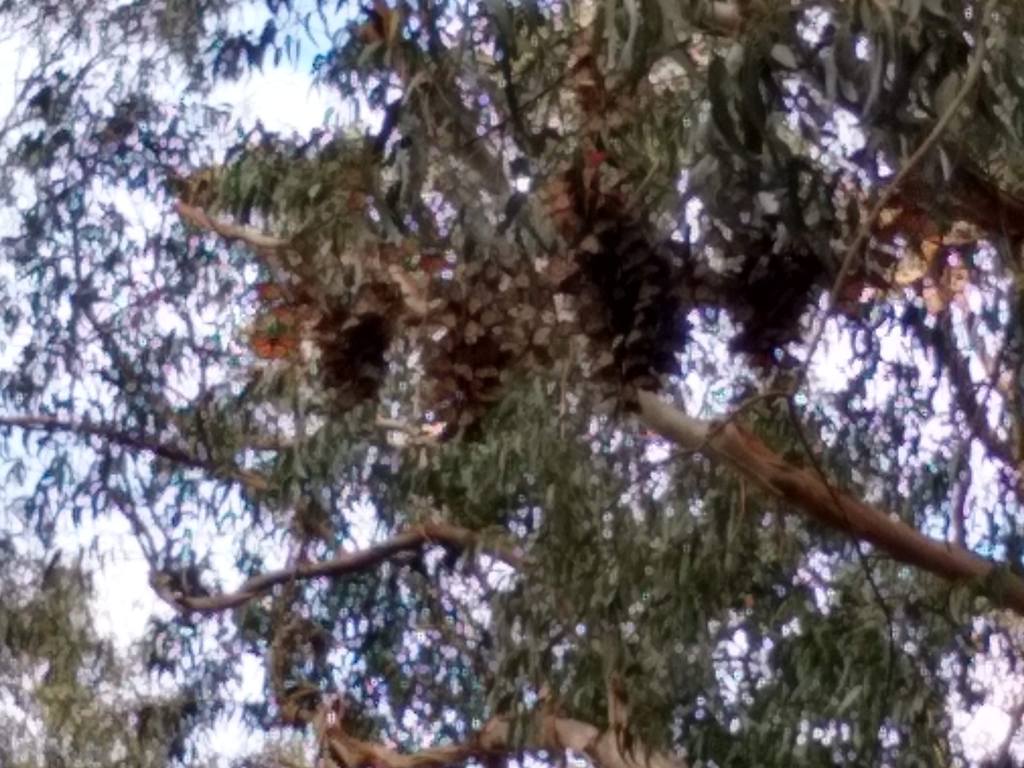
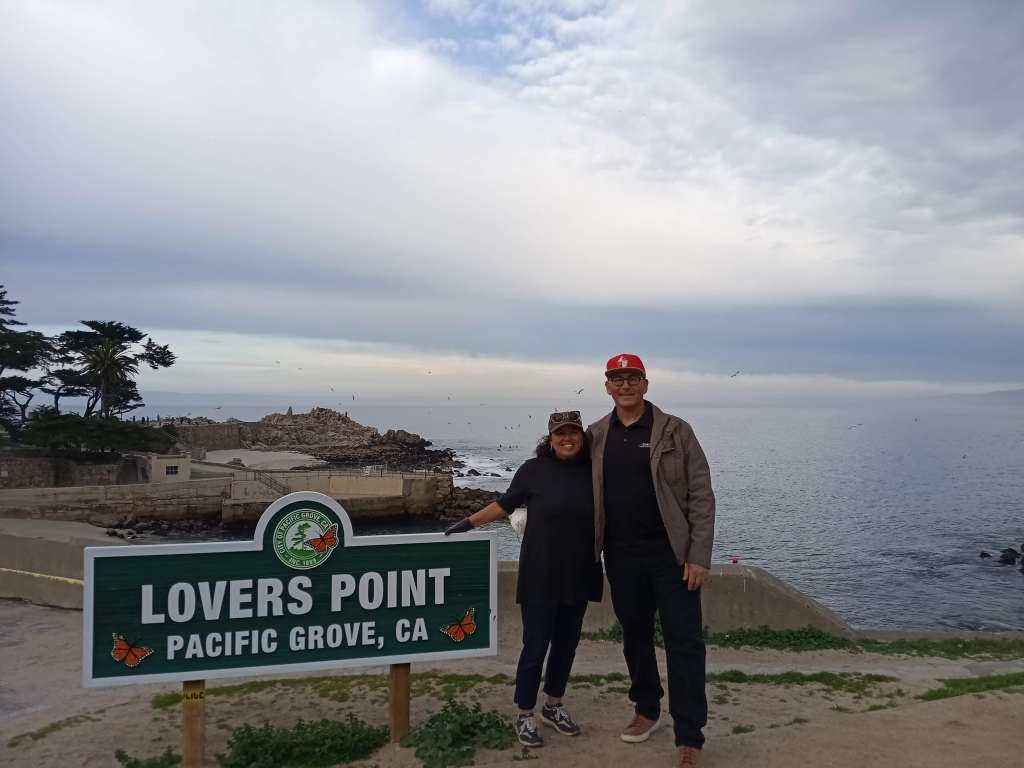
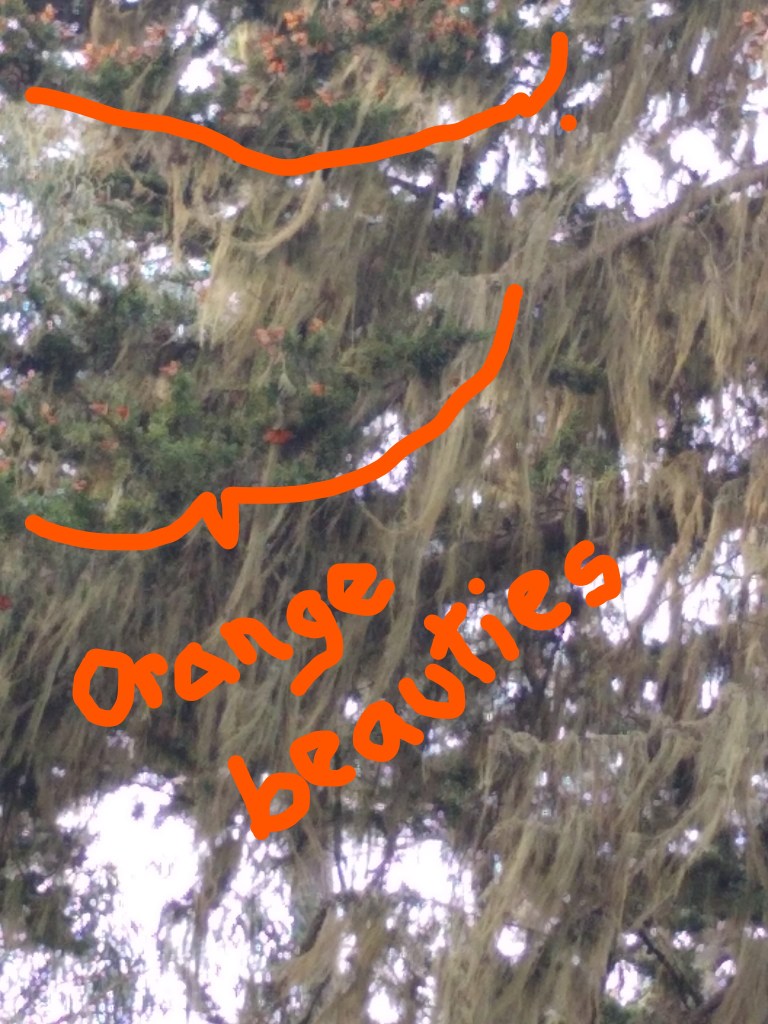
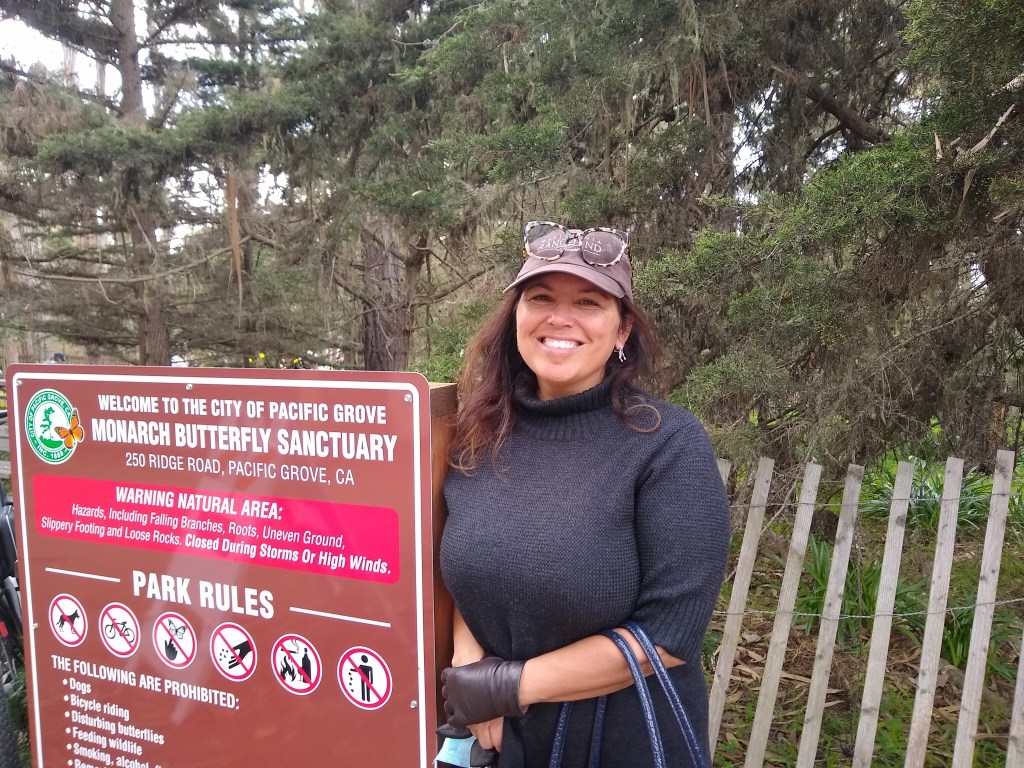
The monarchs are worth my time. They are worth my effort. It takes but one glimpse of stained glass fluttering in the sky for a person to fall in love. I encourage everyone to visit he overwintering sites to see what we are fighting for. David and I went on a road trip in mid January to both the Pacific Grove and Pismo Beach sites. We witnessed the miracle of 10s of thousands of butterflies clinging to branches, butterflies that will fly thousands of miles for better food, weather and to make babies. The monarchs have been leaving earlier due to climate change, and we saw many monarchs awake, flitting around, leaving their perches and then heading back into their bundles. The sky was filled – not like the Tribal elders told me of the times before Europeans – but in the 100s at various elevations. It was incredible. I thought they were smart to stay well away from humans far up in the sky. It was profound to know that one or more of these miracles could beat the odds and arrive at my location to feast and lay eggs. I spoke to them in a language so ancient I knew they had to understand – the language of my ancestors who must have seen these baise’ebolim in such large numbers as they flew across the Sonoran Desert. “Amand te tevote in weweriam. Se si enchi nake. Ito te vitne. (Greetings, I acknowledge you my relatives. I appreciate you very much. Good luck and see you soon.” It was humbling. David held my hand, and I softly cried.

No Rain in Sight

We have been dry for over a month. Well, there was one rain in January that was so little it was immeasurable. There was not even a full drop in the rain gauge. I have a feeling February might be the same. We are just over 8 inches here – horribly below normal. I walk the arroyos and creeks to take stock of the amount of water left. Putting in Swale Pond 8 years ago was such a good move. It has enabled more pooling in the arroyo. Even those little spots of water can be a boon for wildlife and livestock. My cattleman told me that he was able to start grazing the ranch earlier because of the existing pools last year. As of last week, all of the little pools on the arroyo are dry. Just the swale pond is left.

Grazing and other Ranch Planning

Several times a year I get together with my cattleman, Tom Fane, to discuss ranch needs, his grazing plan and ecosystem services work. Last week, we discussed timing for grazing the soon-to-be enclosed riparian areas. We are thinking of the Fall and/or early Spring to graze the European grasses depending on native plant emergence. We will carefully watch how things go. Along with his son Chaz, we are also designing the riparian fencing together. I trust his knowledge, and want to ensure that the things I do on the ranch don’t make grazing too difficult. The grasses out-compete the early native plants that butterflies and other native pollinators need to survive in the Spring. In fact, the drought this year, lack of sunlight last year and grazing the year before all resulted in better than average early milkweed growth.

Ron Allen, UC Master Gardener and my native plan supplier, asked me to help with a study looking at emergence and blooming of early milkweed species. I of course said “Yes”. With the monarch females leaving the overwintering sites early due to changes in the climate, they are going to need milkweeds to lay eggs on. I have been monitoring the sites since last month, but know, from my data over the last two years, that they did not emerge until late March. I did see much gopher activity in the area, though Ron says that should not impact the A. Californica. We will see how it goes this year. Indeed, we are experiencing the earliest wildflower blooms I have ever seen and not in the typical cadence. They all seem to be coming in rapidly one after the other. We had the first emerge in December! Perhaps the flowers and butterflies all sense what we do not – a three day winter, a two month Spring, and a long, hotter summer than ever before.

Beneficial Fire

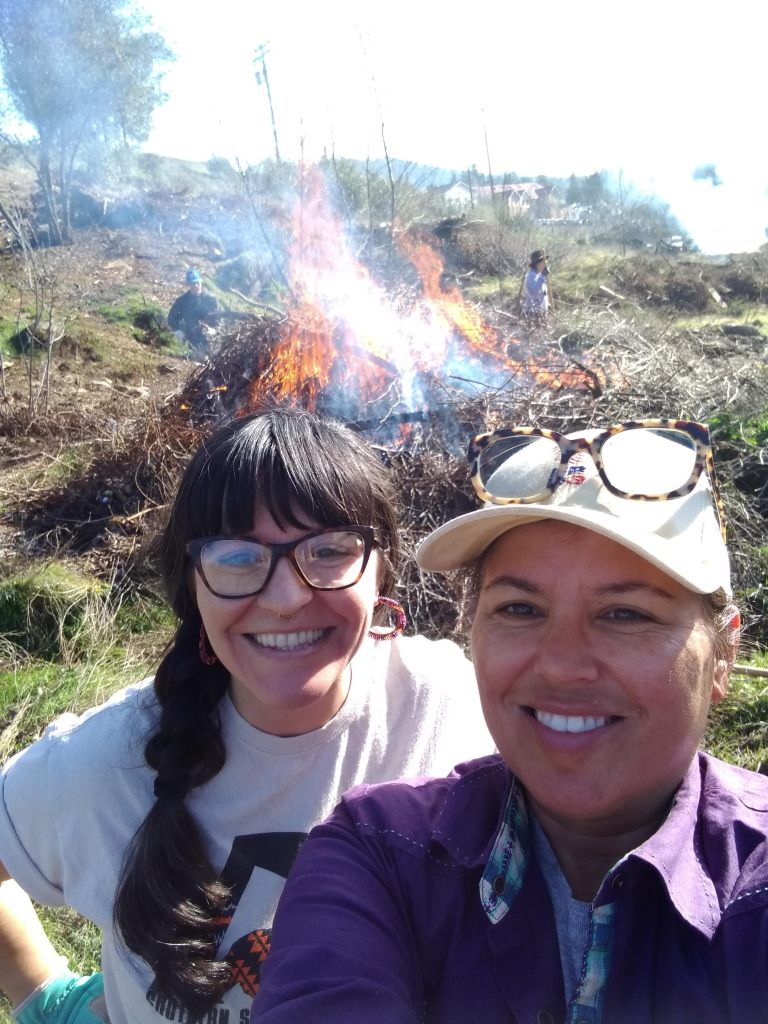
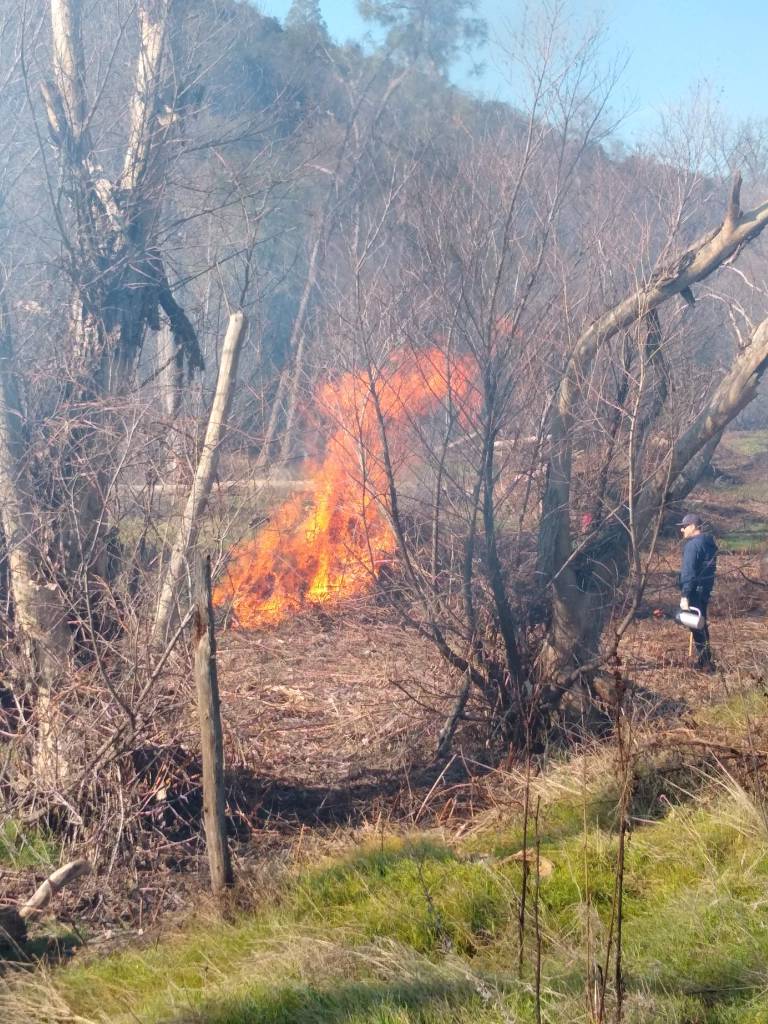
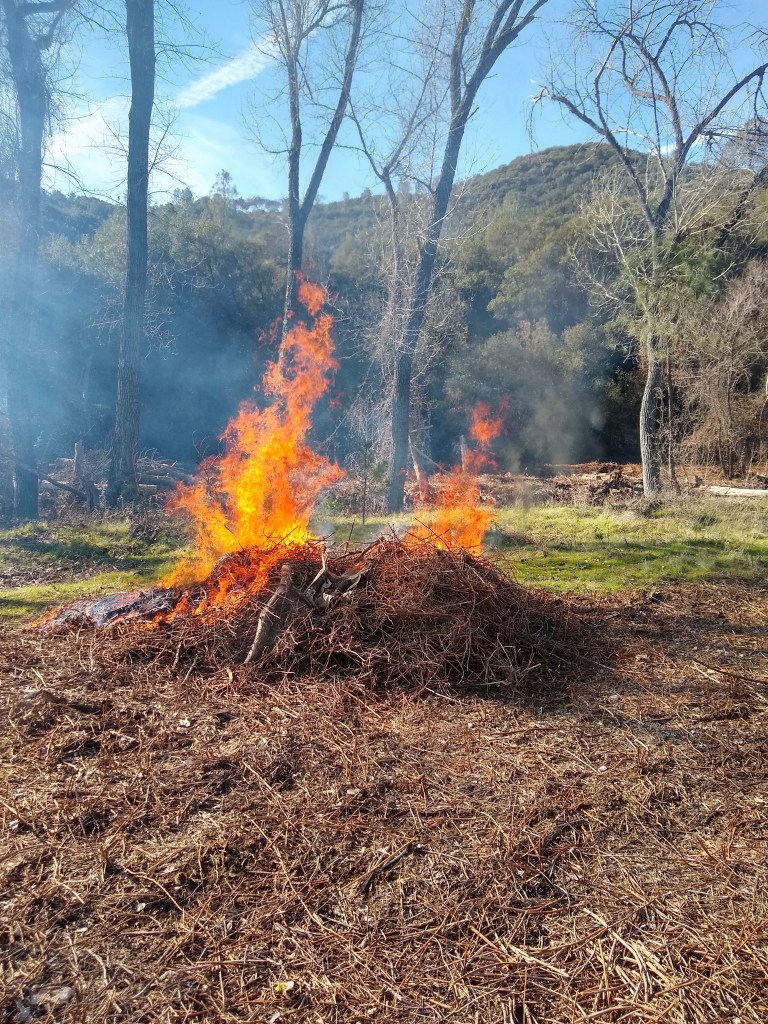
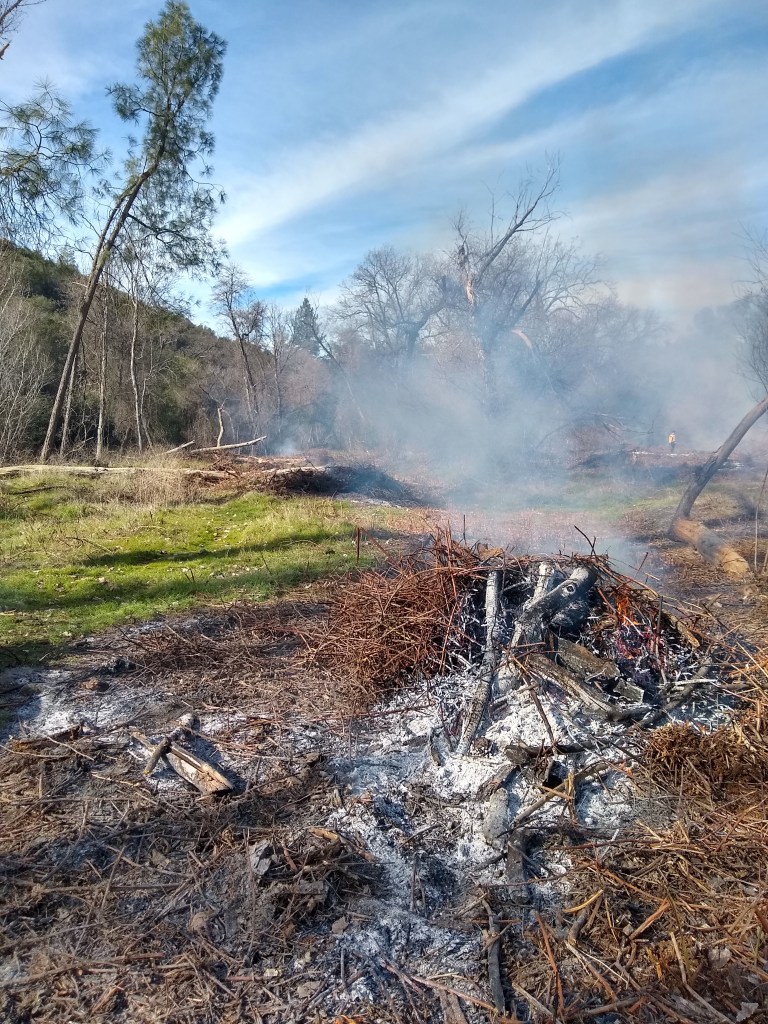
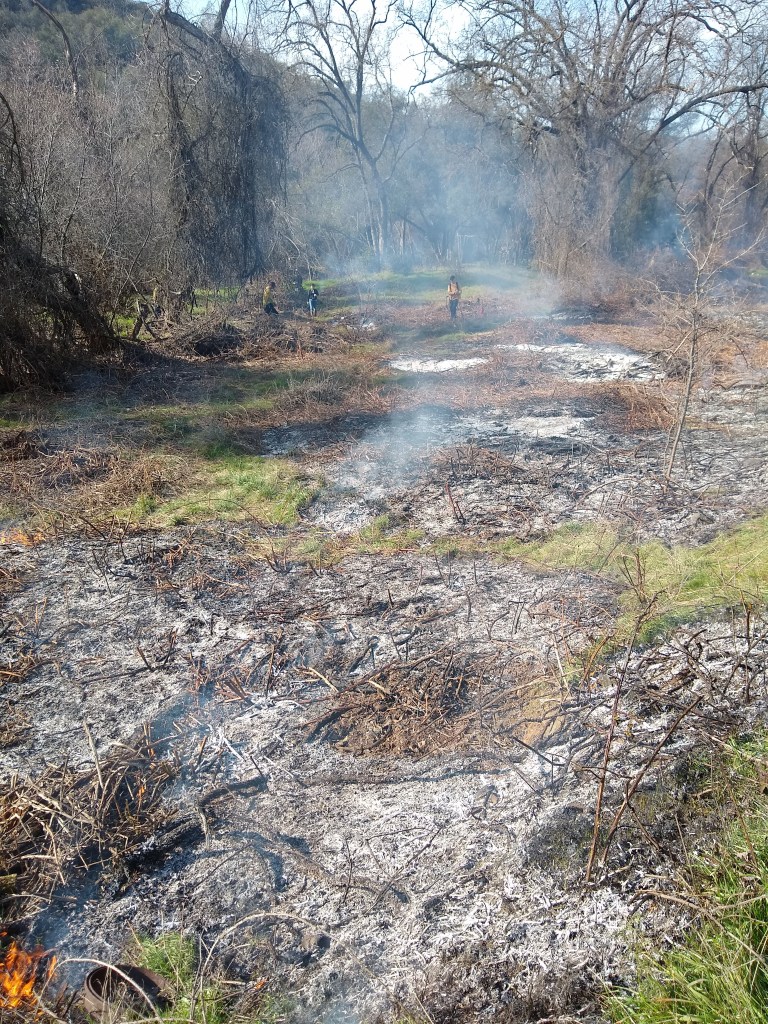
I joined the Southern Sierra Miwuk Nation (SSMN) at a burn along the Mariposa Creek Parkway. They are partnering with the Sierra Foothill Conservancy, Arts Council and others on restoration of the Creek for land health and public recreation. I wanted to learn more about putting good fire on the land. This is something I have been wanting to do here at the ranch for a while. I know every blade of grass burning is like burning money for my cattlemen. However, if we are working to get rid of invasive, non-nutrient rich grasses, like medusahead, and replace the area with natives and more nutrient rich feed, Tom could be brought along. He was the foreman on the million+ acre Tejon Pass Ranch, and knows a few things about fire. He has seen it in action and seen it work to control species that are problematic and getting out of control. He is tacitly on board for now.

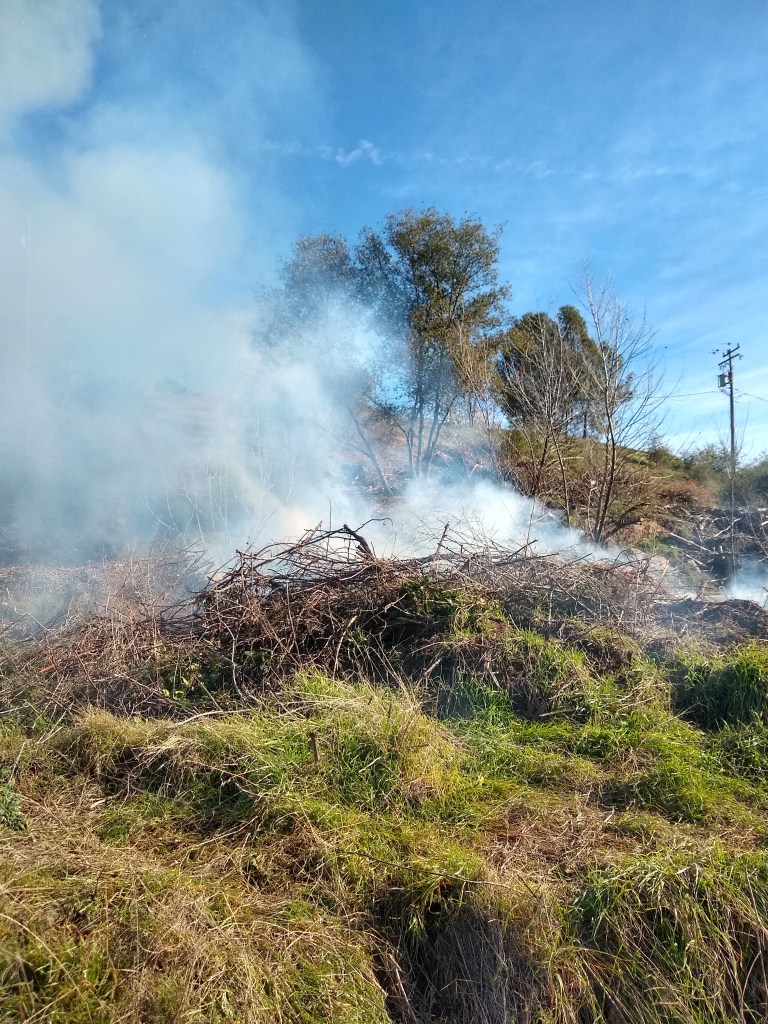
I learned a lot at the Mariposa Creek fire – mostly to not be afraid when professionals are around. Some of the piles were so big the heat and smoke curled as the material caught fire. Fortunately, they rapidly burned through the material and became more like the typical burn pile you see allover rural California. I can handle that!

Carrying On

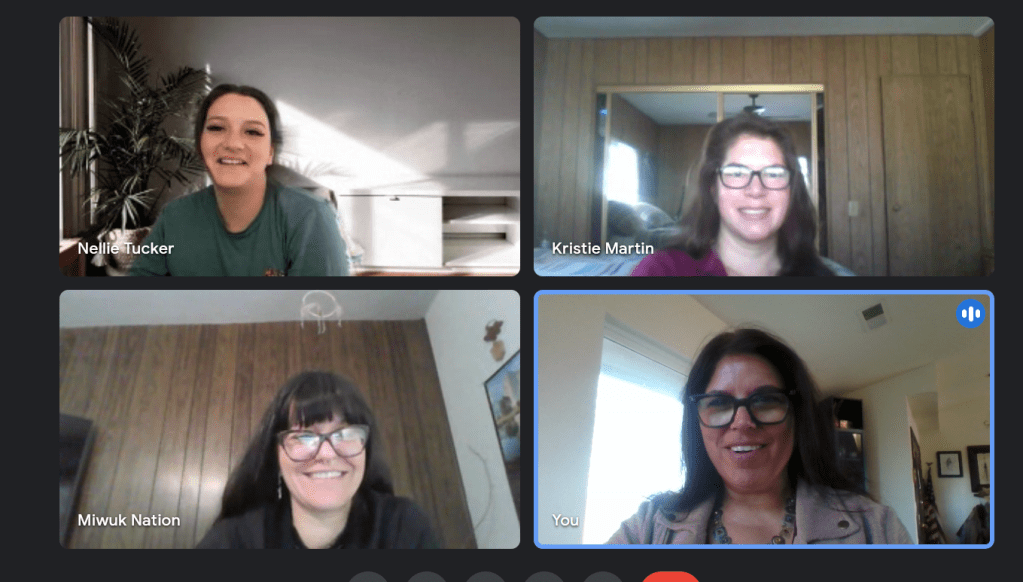
There is always much work even outside of the normal planting season. As a mentor, I meet with the Pollinator Team once per week for project updates, thinking through opportunities and co-working on materials. We wrote a grant together with the RCD last week (Hope we get it) in an effort to continue this important work. They are getting ready for their big push to encourage more people to plant butterfly gardens. We are also beginning planning for the Butterfly Festival and the Pow Wow. They have some really cool ideas for performing monarch education with the schools. I cannot wait to share some images from those events when they happen.

A meeting of the core team the other day -clockwise from top left: Nellie, Kristie, Heather and Tara. Not pictured are other Team members that join when needed – Deedee Soto of Xerces, Melinda Barrett from Mariposa Resource Conservation District, Ron Allen, Mariposa Native Plants, and Clay River Miwumati Family Healing Center Managing Director.

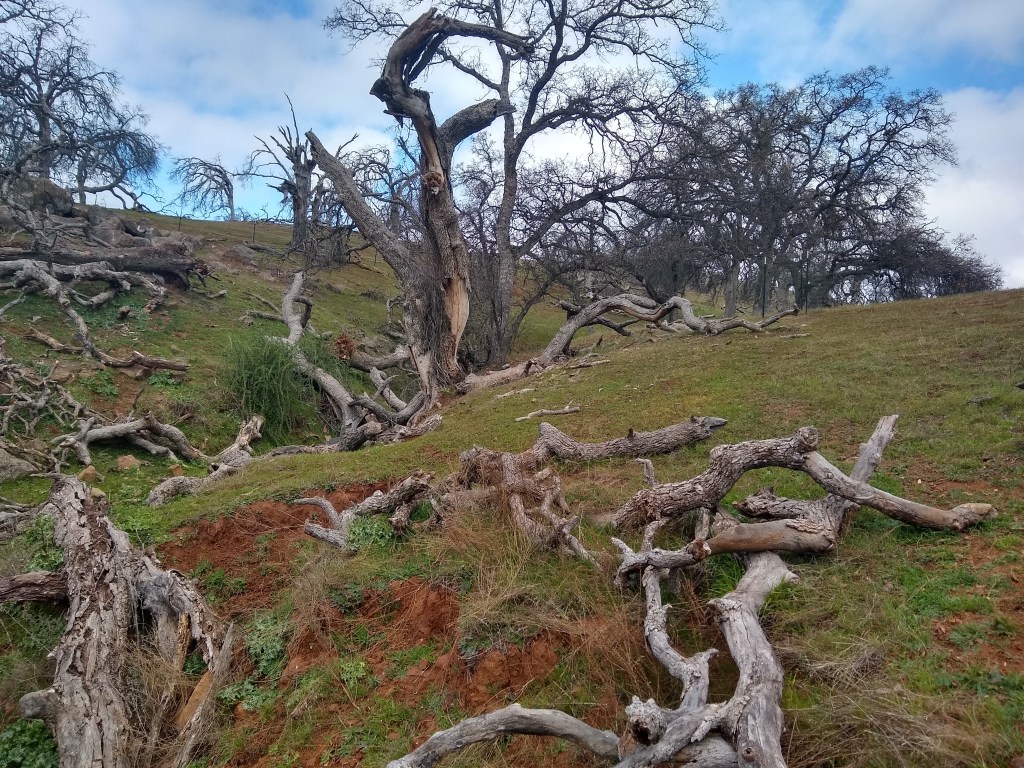
I have been taking down the fence that has been protecting Site 8 in anticipation of the new, professional riparian fence. The front fencing has also began sagging. David and I have been working on dismantling and rebuilding it. I dug three holes for the big leaf maples. I finally got around to digging out the other rain garden – the area that takes the overflow from the rainwater catchment tank. It is smaller than it needs to be, but that was all the energy I could give it at the time. At least Beatrix found a new soft place to lay her head! I weeded all the butterfly gardens, cleaned up the little pollinator fountain, and made a list of the next items to work on: more fence removal at Site 8, cutting downed oak for chipping into mulch, more weeding, build a rock barrier to shield the hedgerow from the wind, continue to monitor AC 1 and AC 2. Plant the maples, plant the rain garden mounds, build protective fencing around the maples, spread mulch into the rain gardens and around plants — oh, and start some food seeds like more radish and carrots. The list never ends, but I would not want to live any other way.

Ancestor and good friend does a close fly-by

From Green to Yellow Overnight. Branch Fence Fail. Drought Takes Over. Ode to a Beagle.

Swale Pond dried up

It has been a rough few weeks. The vibrant green of verdant hills has given way to the crunch of yellow straw. Yellow hits the eyes much differently than green. When green, the light is almost nourishing, energizing. While still beautiful, yellow light is blanching, dry like cotton balls in the mouth.

The drought has had a significant impact on the entire ranch, and it is just the beginning of May. While last year the a’wuu’atee (butterfly food) needed watering only once per week, with a few exceptions, the majority of plants will now need watering twice per week this year. I accounted for double watering for about 1/4 of the plants in my rain water budget, and had captured more than enough for a summer and fall watering schedule. However, with the earlier start to irrigation, the leak in Tank 1 resulting in loss of 30% of that water and 90% of the plants taking additional water, including some of the plants from last year, I may not have enough. The late storm in April helped refill Tank 3, because it was still hooked up to the gutters. Unfortunately, I had already taken down the piping system for Tanks 1 and 2 from the gutters. There was no refill, which would have helped greatly for Tank 1.

An earlier photo of the hill spring. It is the darker green in the center top portion of the photo. Note the very light green, almost white, around the darker. This is it shrinking in size.

The humidity is so low so often that the moisture gets sucked out of the troughs, the soil and the plants. I have not seen anything like this in years. The hill spring (photo above), where I planted one of the big leaf maples, is already drying up. This spring typically stays green through the summer and dries in the fall. I knew it would be a dry year, so I prioritized planting within the moist soil of the spring and also in the green portions of the arroyo. I am not sure that will be enough help. The soil is clay in both those locations and requires the spring moisture to absorb into the hardened soil for it to benefit the plants. Otherwise, it is just a location with deep fissures with limited moisture retention. I am watering the arroyo twice a week now and am concerned that the water simply “falling through the cracks” with limited absorption into the hard soil. I am still monitoring this site to make a final assessment of benefit or not.

Speaking of the Arroyo…

Success at the arroyo is mixed. This seems to be a place where a variety of spiders and bugs live – which is wonderful – but not for the red bud. A large spider moved into the redbud gopher basket. There was one hole, then two, and now three. How do I know it is a spider hole? I saw a very large spider come out to check out why there was water entering its hole. There was nothing I could do to save the redbud. Over the weeks, it died. I hate to think what happened to its roots. RIP redbud. You looked so beautiful.

There is still some green in the arroyo. It is all on the north-facing slope. My theory of planting on that side has paid off so far. The plants, with the exception of a purple sage that did not transfer well, are doing well. This is likely to change fairly rapidly. I have been watching with trepidation the growing number of grasshoppers in the arroyo. They are small now, and mostly on the grass. However, they grow massive and eat everything in their path. They are a plague. We have not had them at plague levels for many years. They have always been around, just not to such a degree as I have seen them in the far past – where they ate paint off the house. I don’t know what I will do if they eat all the butterfly plants.

Spring Creek is Still Flowing and Flowering

Yellow, white and purple flowers still blooming in the Spring Creek

Fortunately, there is still some water on the land. The spring is still flowing in Spring Creek. As a result, the growth is still happening organically. The cattle were moved out, which has allowed a variety of plants to grow where there is no fencing. The creek is also protected from the winds we get on the hill top. When it is windy, I don’t see butterflies. However, in the creek, there were many blue coppers. They are so beautiful and have quickly become one of my favorites.

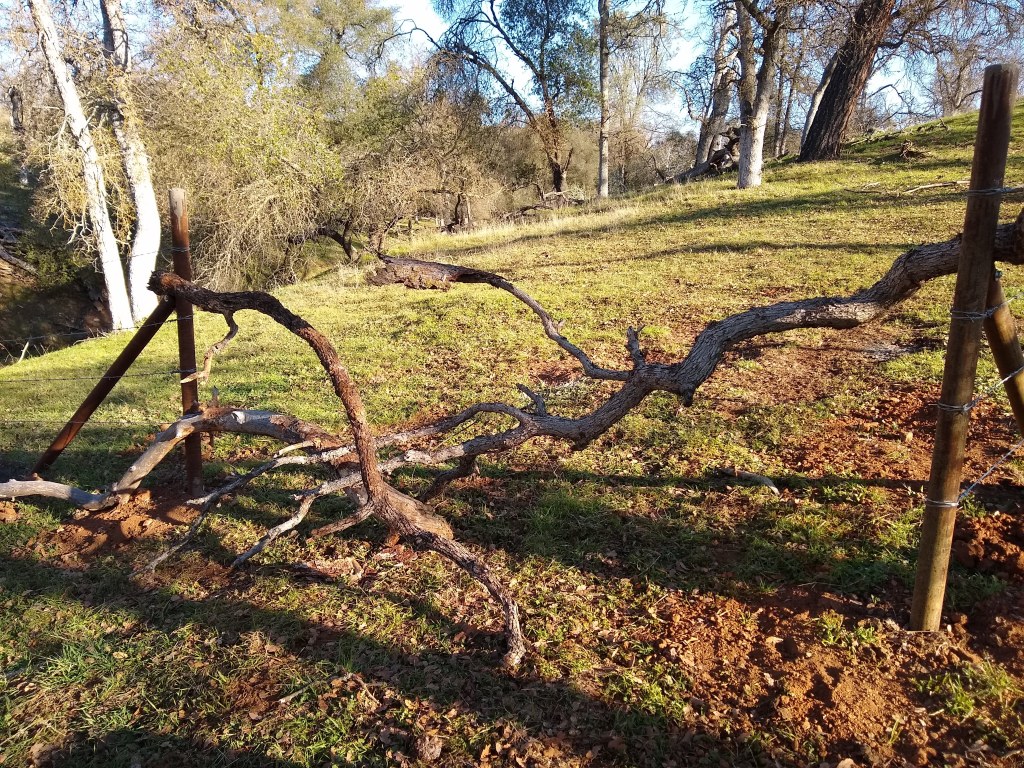
I purchased more Wedge-Loc corners to build fence around the Spring Creek. The branch fence was breached three weeks ago when the cattle were still here. Using the Wedge-Loc system will require less work over the long term and allow me to protect more linear feet of creek. I think the branch fencing is still useful. It is natural, beautiful, creates habitat and does act as a barrier. However, if you don’t have a group of people or regular ranch hand helping maintain it, you can lose the protection-ability as grass gets less plentiful and the pressure to browse it becomes greater for the cattle.

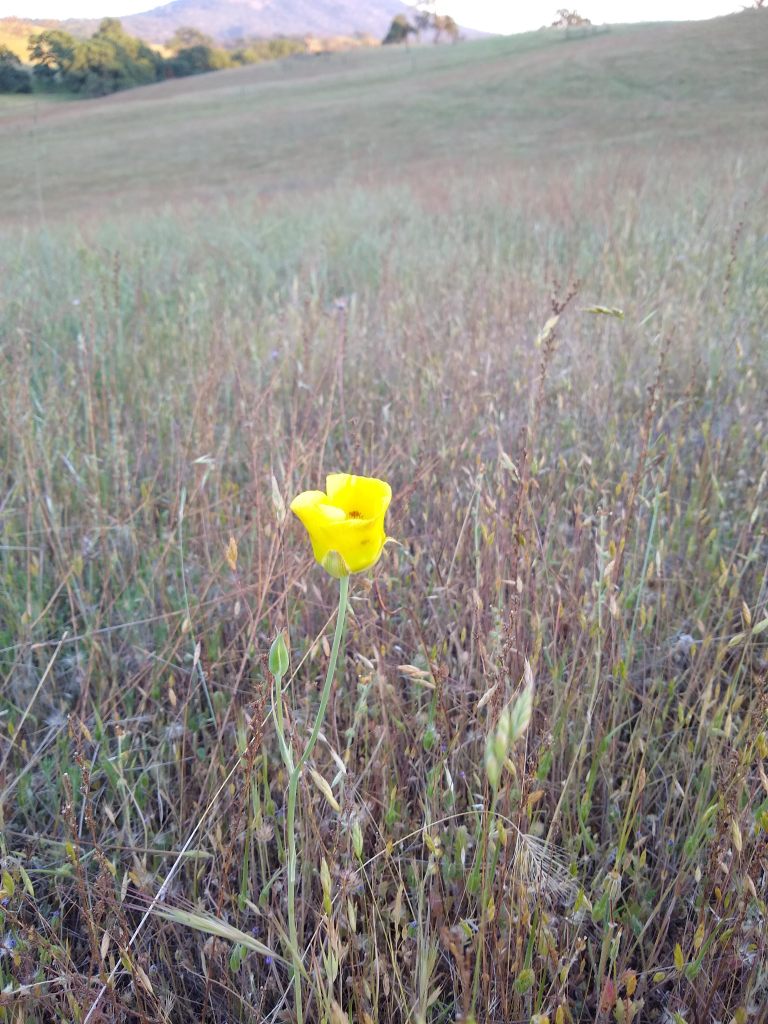
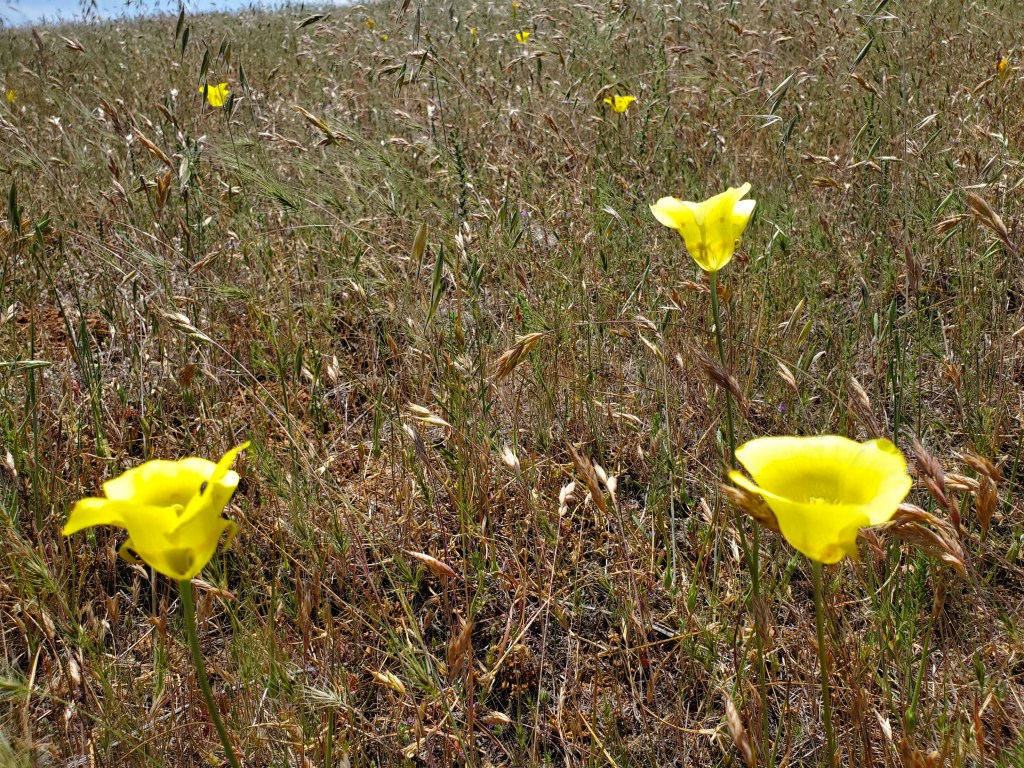
We have a proliferation of white lupine, yellow mariposa lilies and purple brodiaea. Also near the creek, one showy milkweed and one narrowleaf milkweed have returned from the original 7 planted in 2020 that the wild pigs turned up. They look strong and healthy. One golden current and a mugwort survived the breach of the branch fence. The mulefat is coming back after being browsed a while back. There are other plants I have not been able to ID yet. I planted the riparian Xerces kits along this creek – so I am not quite sure what things are. I think, for most of the plants, there needs to be more moisture, a slight flooding event, to get the roots going. I believe my limited watering is not enough to get them started. Maybe next year. Happily, the oak seedlings made it through the browsing. They all look strong and healthy.

Providing TA and Creating a Migration Pathway

A small portion of the Resource Conservation District grant is helping expand habitat through public education and provision of plants. Already, two people expanded existing habitat on their home parcels. I have also been thinking about migration pathways. Friends have ranches in a straight line south west and north east of me. How incredible it would be if there was a large supply of milkweed and nectar plants all in a line on the monarchs’ route through Mariposa County. I contacted both individuals, and they said they were interested. I performed site visits and helped select plant locations. Both locations are in moist areas of their ranches. One is in a wash below a spring. The other is a wet section of a creek that runs through the property. I included them in a Xerces Kit grant request. Ideally, we will have two riparian hedgerow kits per site. On my site, I will extend planting along the Spring Creek and possibly along Odom Creek.

April Rain Helped but Not for Long

A. Californica – A Bumper Crop!

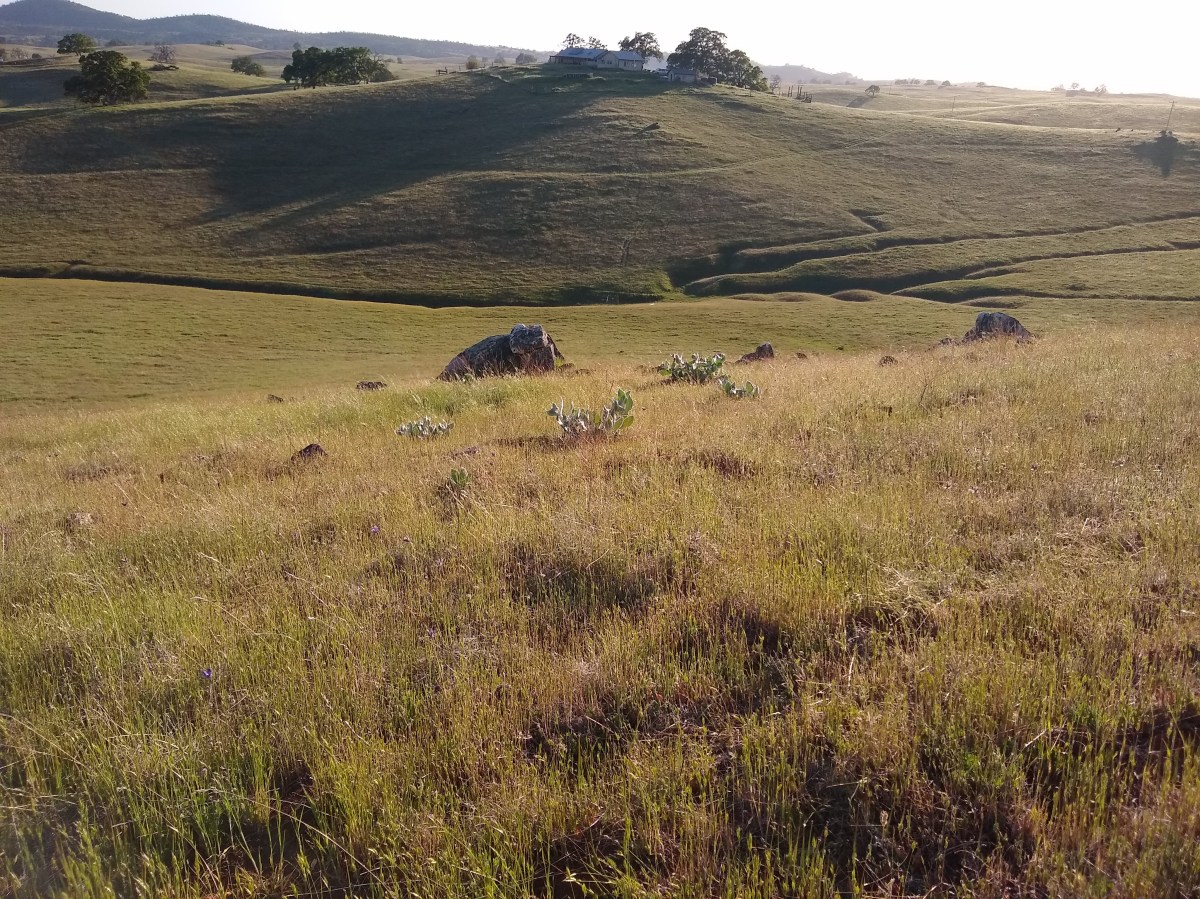
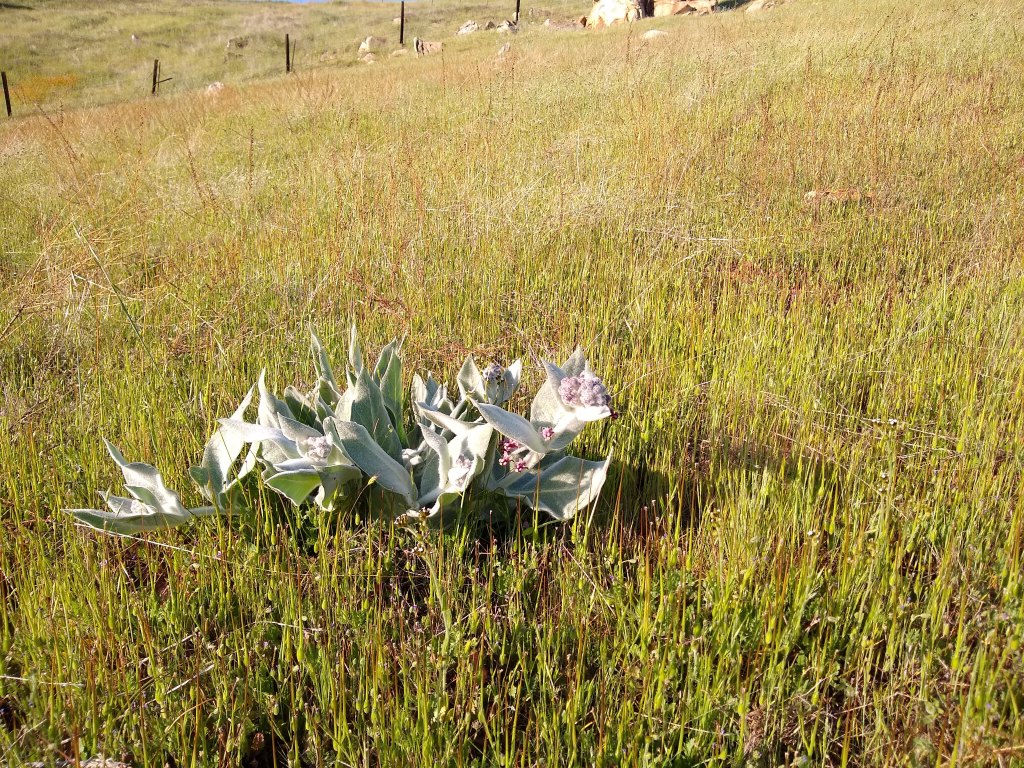
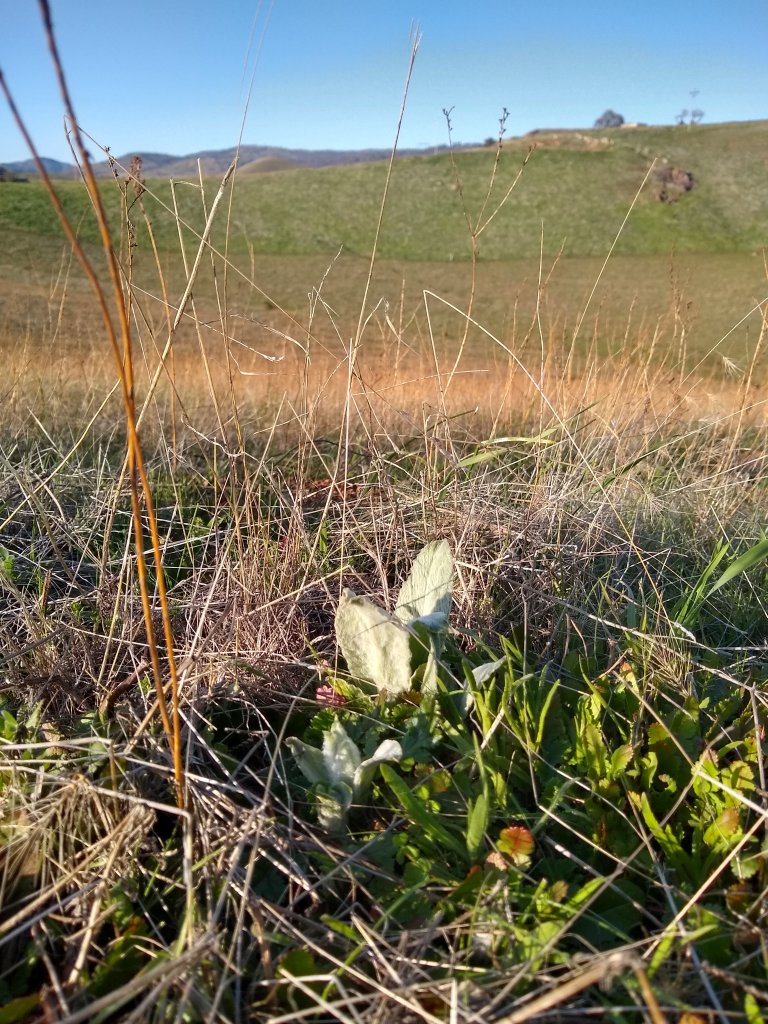
One of the bright, happy occurrences this season has been the proliferation of California Milkweed. Last year, this magical plant appeared out of nowhere. I had counted three communities and populations of 13, 7 and 2. This year, I found four communities with populations of 16, 13, 2 and 1. I plan to hike to all of the sites to perform a final count. The site closest to the house ended up with 13! You may recall 4 weeks ago I lamented that I had only counted 6. Again, these plants are magic – popping up out of nowhere.

Ode to a Beagle

Andy – RIP April 2021
2005 to 2021

You were a bother with your insolence, smell and patio pooping

and daily disappearance from olfactory compelled sniffs and snooping.

My dad dropped you off unequipped for your destructive self-direction

We locked stares, quarreled and chased — but upon some reflection…

It is clear that your bay drove coyotes away.

Your epic snore made me, for quiet, thankful more.

Those ears velveteen changed dog haters from mean.

The prolific fur you shed made me clean under the bed, and

the rugs you destroyed are now redeployed

as outside paths, wool pave, along the well-worn trail toward all my pets’,

and your

grave.

a. Californica Obsession and Fencing – So Much Work…

The motherlode of a. Californica. Such a special plant!

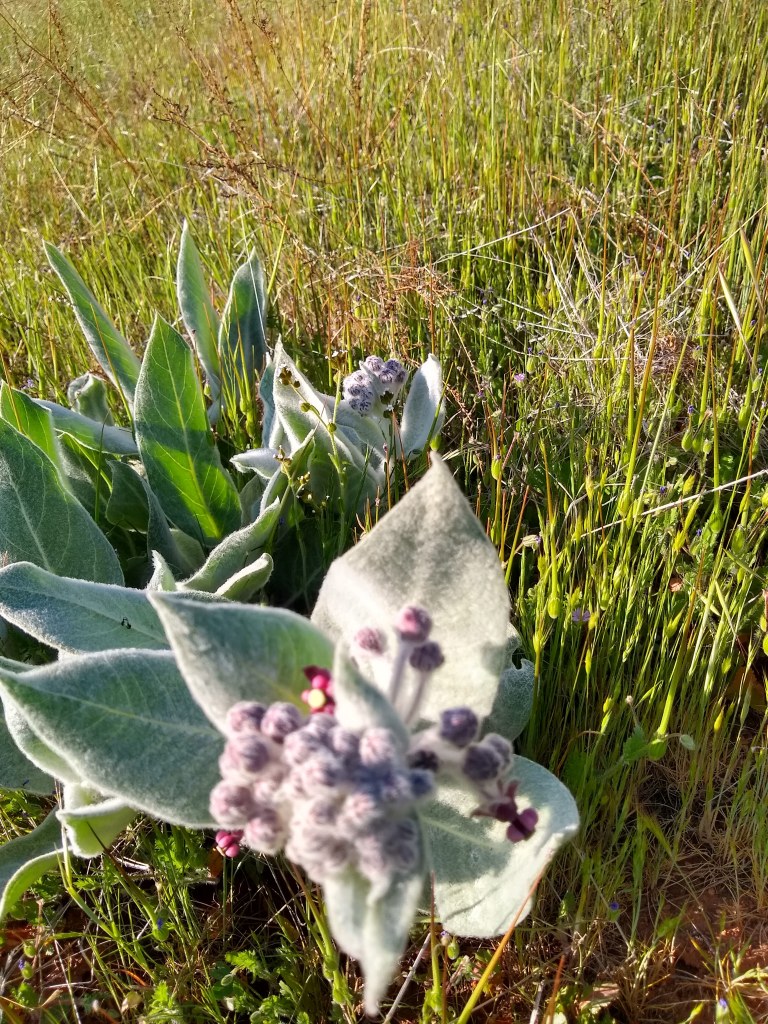
a. Californica (a.c.) has become my absolute favorite butterfly plant. There are so many I love, but a.c. take the prize. Not only do they look like they are prehistoric, they have the most gorgeous flower and scent. In fact, several of the a.c. plants were blooming and beginning to emit their stunning scent. This is a little early as compared to last year. Things seem to be a bit off this year.

On my monitoring hike this past week, I found 14 a.c. plants on the north slope. This is one more in that community than last year. I found a third plant in the area that is closest to the house. We are getting closer to last year’s numbers, but are still significantly deficient (3 vs. 7 last year). The third community remains even at 2 this year (and 2 last year). I am finding larger plants too. This is really good because caterpillars need considerable plant material to make it to their chrysalis stage. One day, we will have the ability to transfer smell through the computer. I would love to be able to send you some of a.c.’s fragrance.

I am seeing many species of butterfly, but no monarchs yet. Today there were three white sulfur butterflies fluttering around as I watered in Site 2.

I saw a yellow butterfly today that was slightly larger than the whites. It was not like a swallowtail. It was much smaller. It moved much too quickly, and I had no hope of getting any type of photo – even a bad one. I was fortunate to be able to spend some time with a painted lady butterfly. She was much slower and stayed on the plant in front of me for quite some time. The butterfly had a little more black in the middle, but was unmistakably a painted lady.

Fencing is always a barrier to expansion into other places on the ranch. In addition to being expensive, the work is so difficult to do on my own. Fortunately, David said he would help me with the fence around Site 2. David is stronger and has more leverage with his height. It is much quicker when he is helping. I have been wanting to plant in the arroyo for some time, so this was really exciting for me.

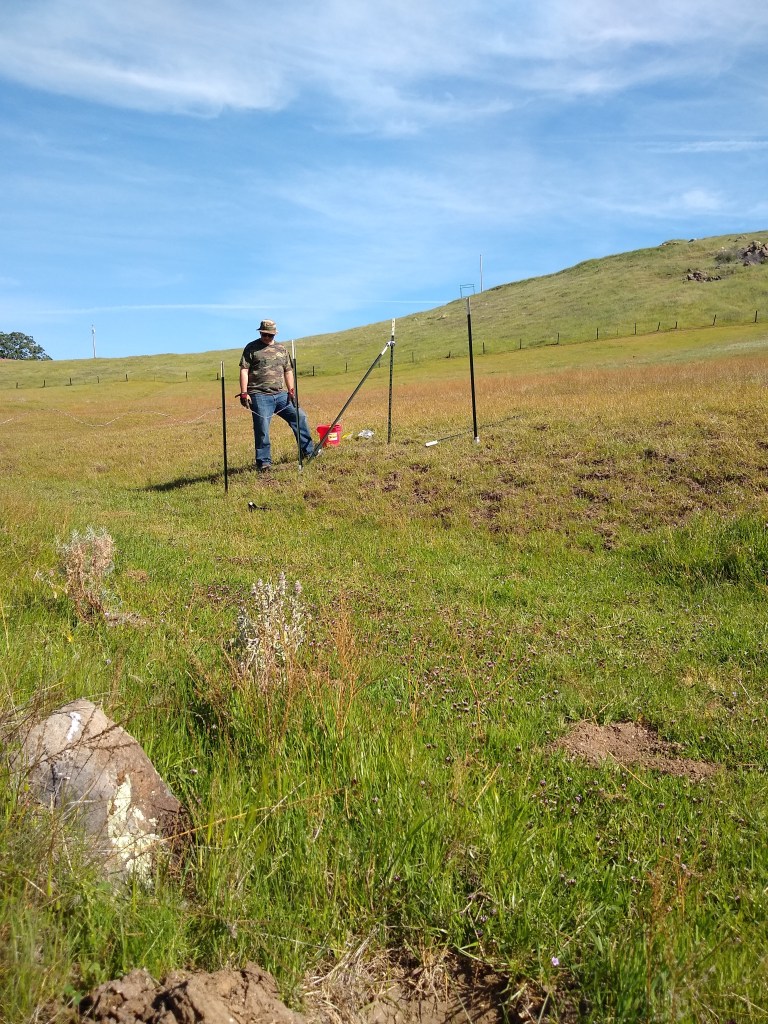
The posts are all set up. We decided to use Wedge Loc tools to construct corners. It is not as strong as a traditional corner that is cemented in, but it can do the job for a temporary fence. I was going to use barbed wire, but decided it would be too difficult to get the tension I need on it – given the corners are not in cement. I really don’t like working with barbed wire anyway. I had some extra no climb fencing at the shed, but opted to purchase new fencing. This way, I would have enough, and it would go faster. The cows are returning to my side on Wednesday, and I need to the fence complete by then – but David ran out of energy and time.

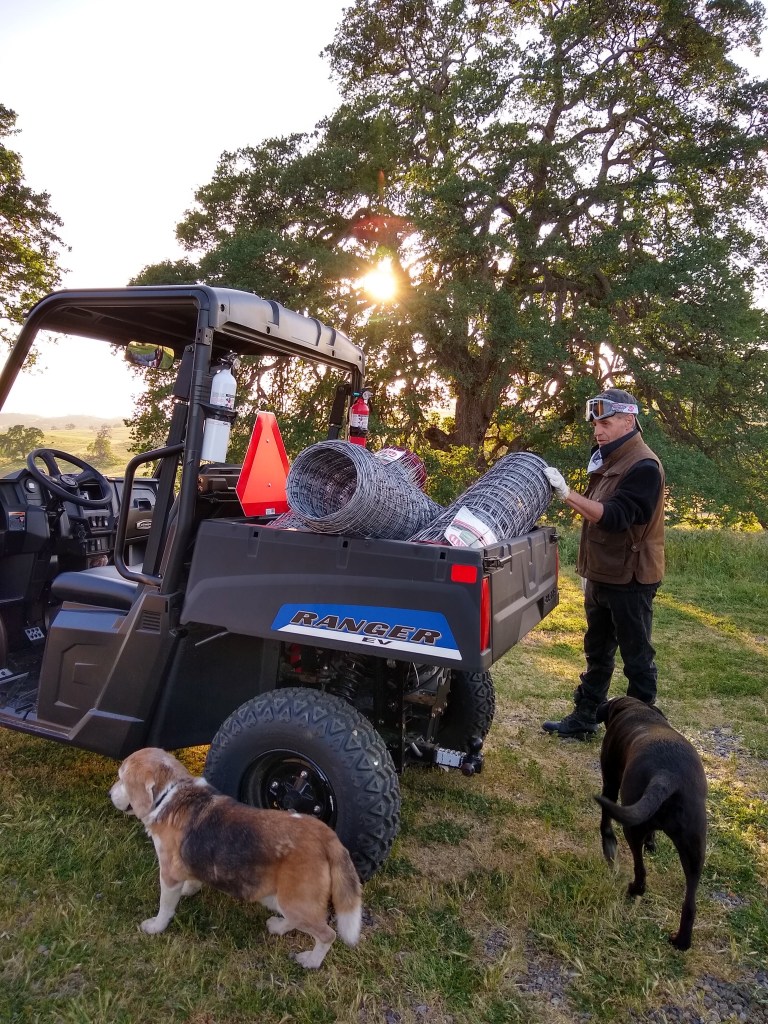
Fortunately, my neighbor, Ric Wetzel, was able to provide some supplemental help again. He drove over in his new, fancy, super useful all electric Polaris and hauled the fencing down to Site 2. He assessed the situation, returned on Monday afternoon to help me install the field fence and worked with me until the sun was down. Thank you Ric!! It all went so much faster with a second person – but oh my – what a lot of work. That Polaris is like driving on a cloud. You cannot feel the bumps – and on a ranch, that is saying a lot.

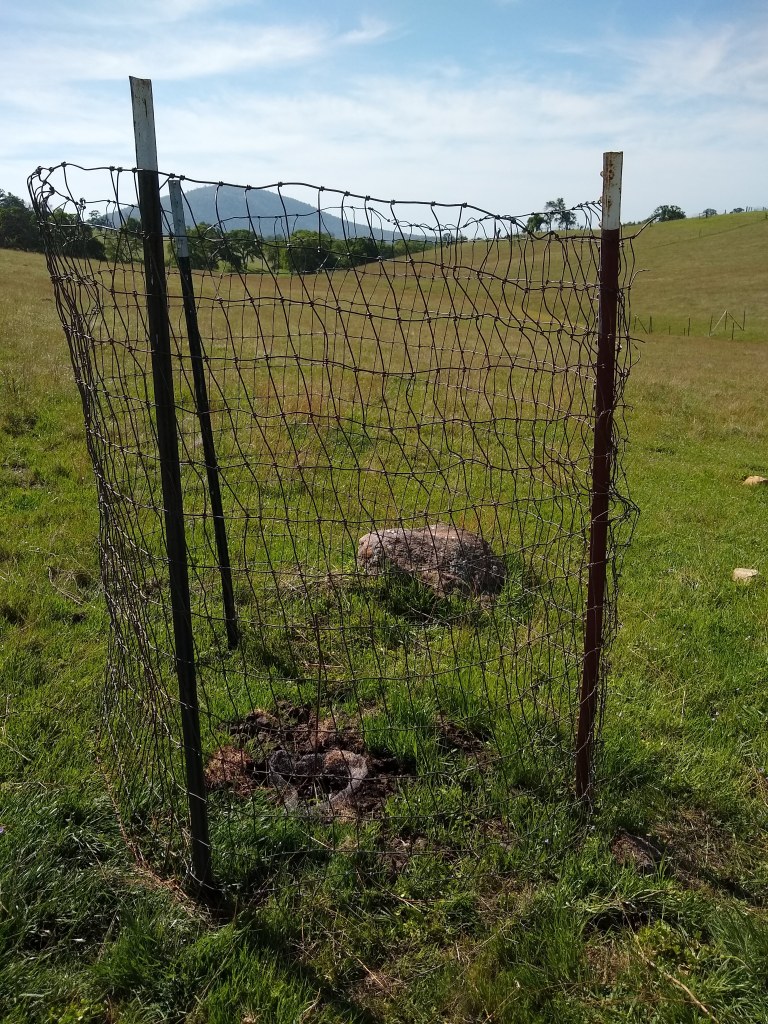
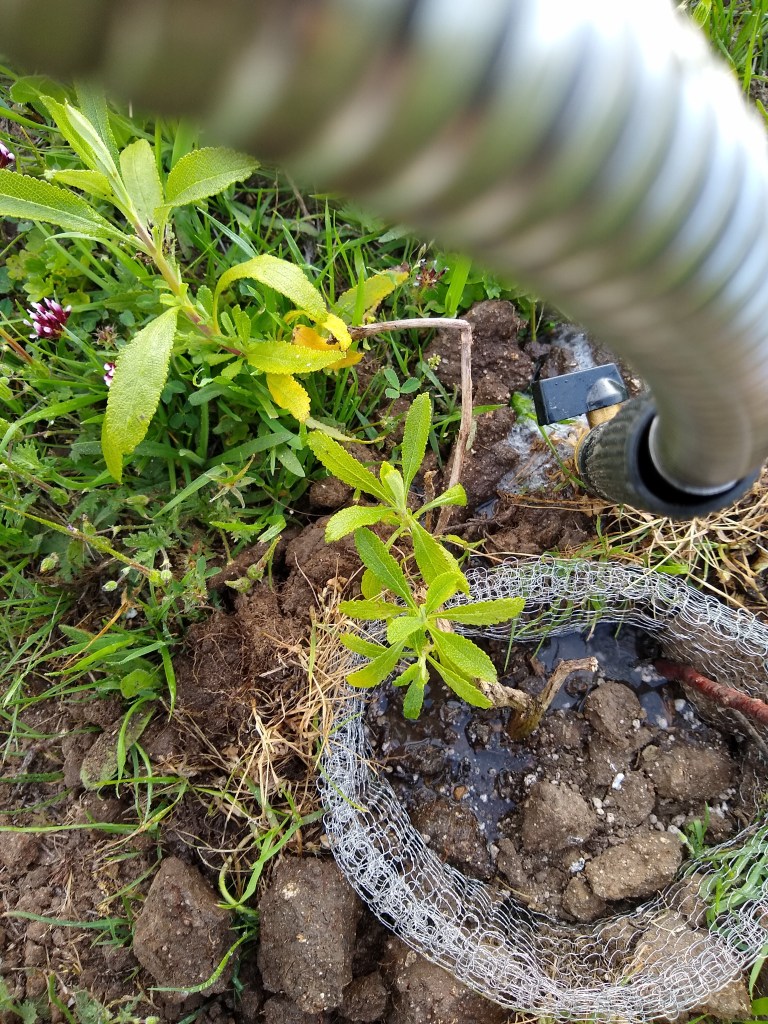
I took down the cage from around the redbud since it would be included inside the new fence structure and repurposed the entire thing for the newly planted maple tree I placed in the hillside spring down flow area. I really wanted to get some trees in place on the north side. Ron assured me that these Big Leaf Maple trees are native to California and are drought tolerant. He said they can be found all over Southern California and growing in arroyos too. I was sold and am excited to see what they do.

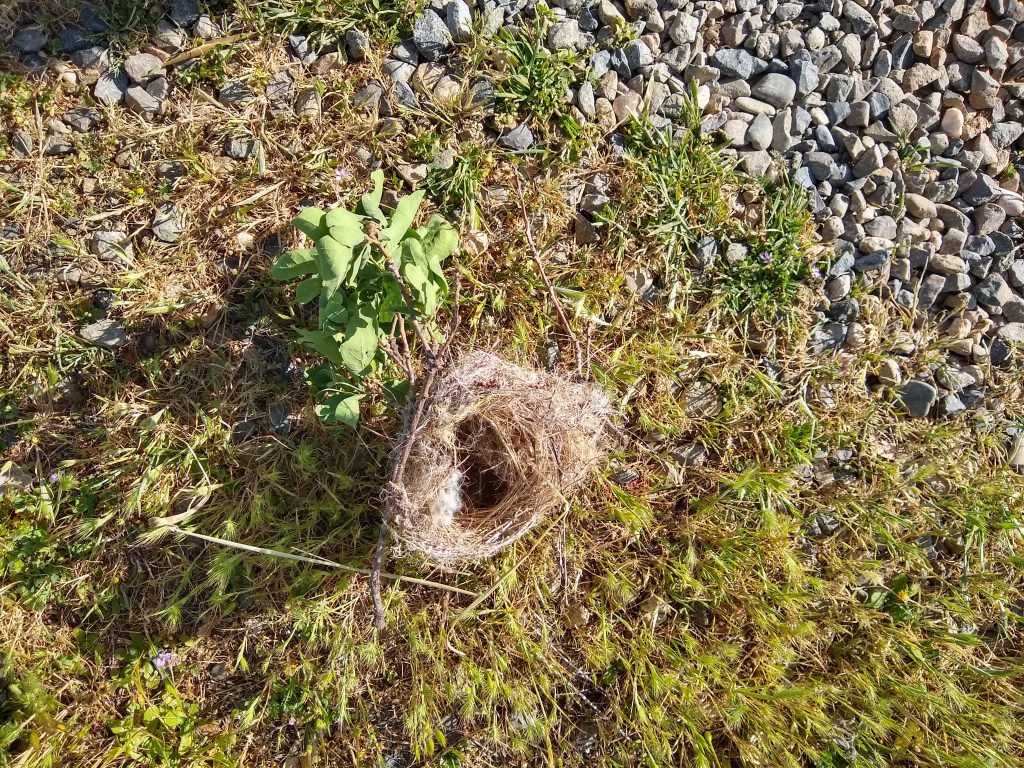
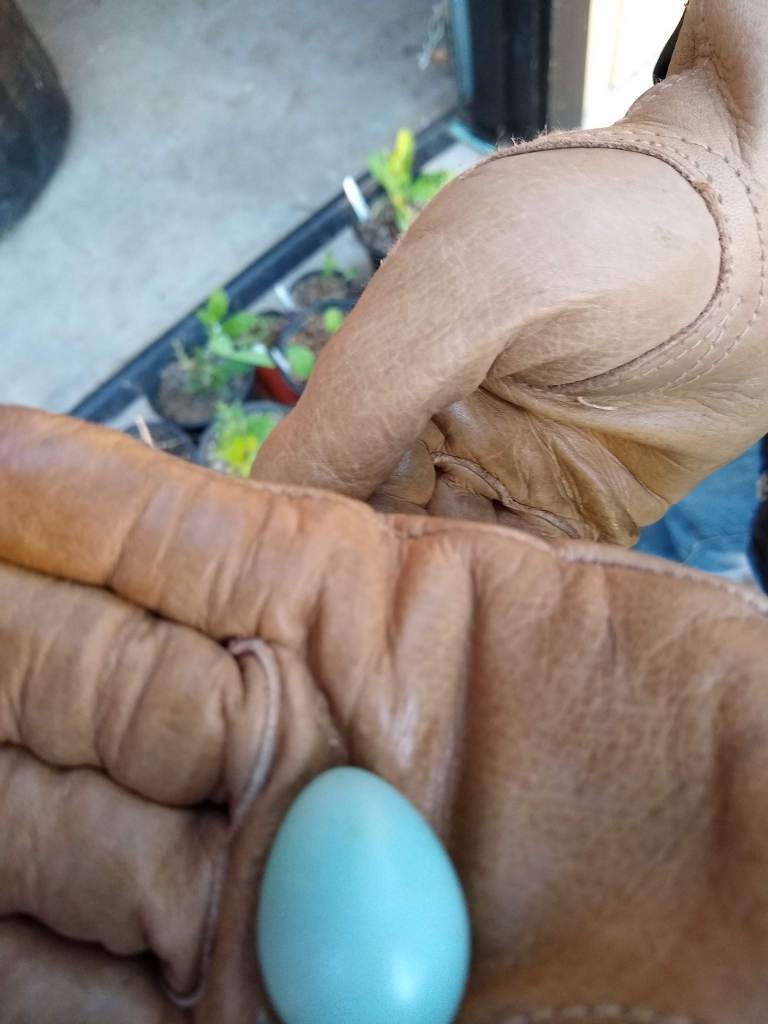
The wind has been fairly steady with some gusts. When I returned to the house on Saturday, I saw this gorgeous blue egg (see photo above) just sitting on the driveway. It was amazing. Then, David found the nest, still attached to the branch it was on. We thought this was a robin’s egg and next. The were not next to each other, but near enough. The first call I made was to Melinda Barrett from the County Resource Conservation District. She sent me an article that discussed that people should leave eggs alone when they find them out of the nest. Not only are the eggs likely not viable, but if you had the extraordinary amount of time it takes to raise a bird baby, the bird could never be returned to the wild since it would not have the benefit of the bird parents educating on finding food, flying, etc. I put the egg back where I found it opting for less work and heartbreak.

Potpourri of wildflowers

The wildflowers are still blooming. They are getting less and less as the ground dries out more rapidly. There was not sufficient rain to grow the grass tall, and the existing plants are beginning to die off and leave a crunch under foot. Cattle are being culled in anticipation of a lean feed year. The water in the Swale Pond is almost gone, and the Spring Creek is down to a trickle. There are still some deeper stands of water in Odom Creek, but that will be gone soon except at the spring. Rainwater Tank 1 had a slow leak. David fixed it, but I lost an eight of the water before it could be fixed. I am nervous about what the future will bring in terms of the drought. I decided to cut back by half on the plants I will plant this spring. I want to be sure I have enough rainwater to get all of us through this dry time.

On a positive note, David and I both received our first vaccine dose. We are planning for the second dose to take us out of commission for a few days. I will water on Thursday before I get the next shot in anticipation of this. Life, and death, are all around us. I am grateful to just be present, right now, in this place, being a part of something that is beneficial, loving and breathing life into the world.

Wildflowers at sunset

More a. Californica Spotted and Wildflower Whiplash

a. Californica on the hill east of the house

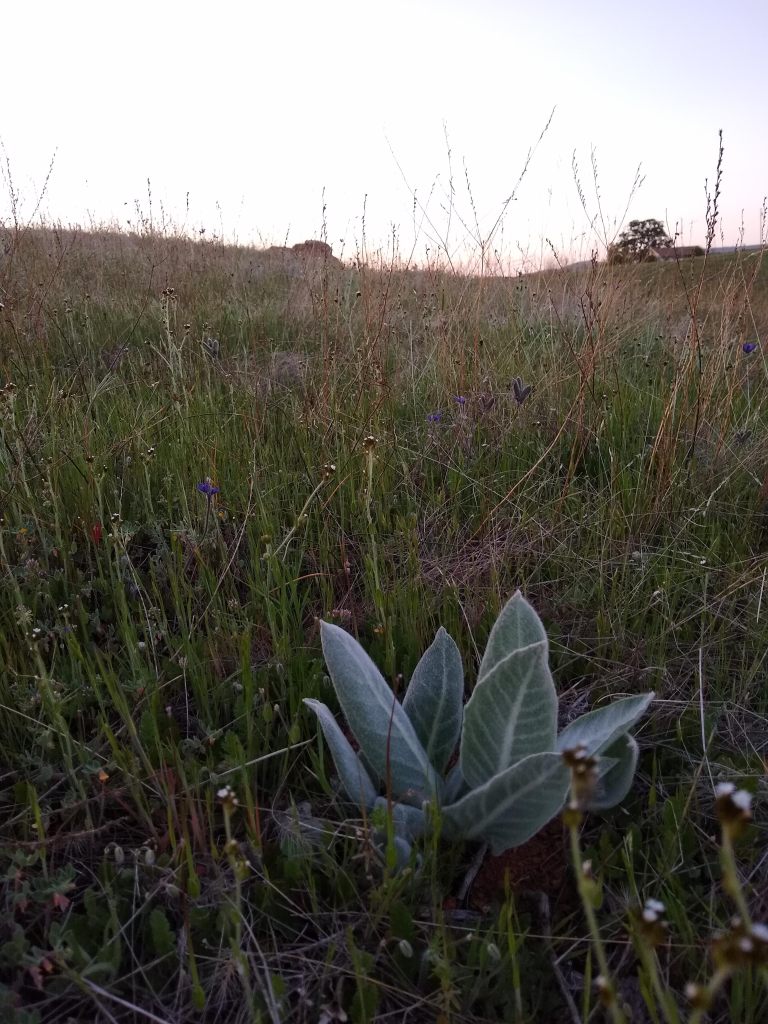
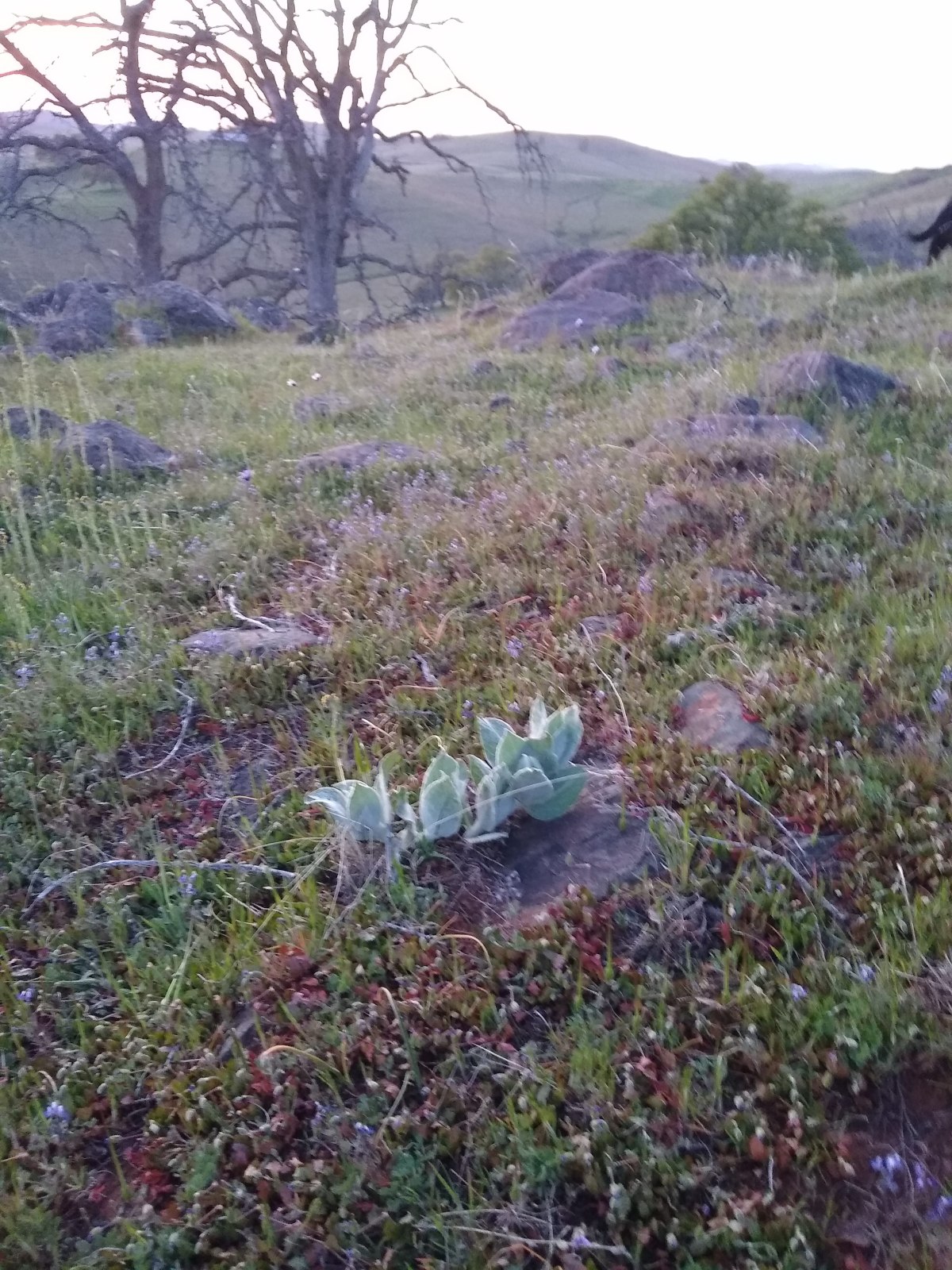
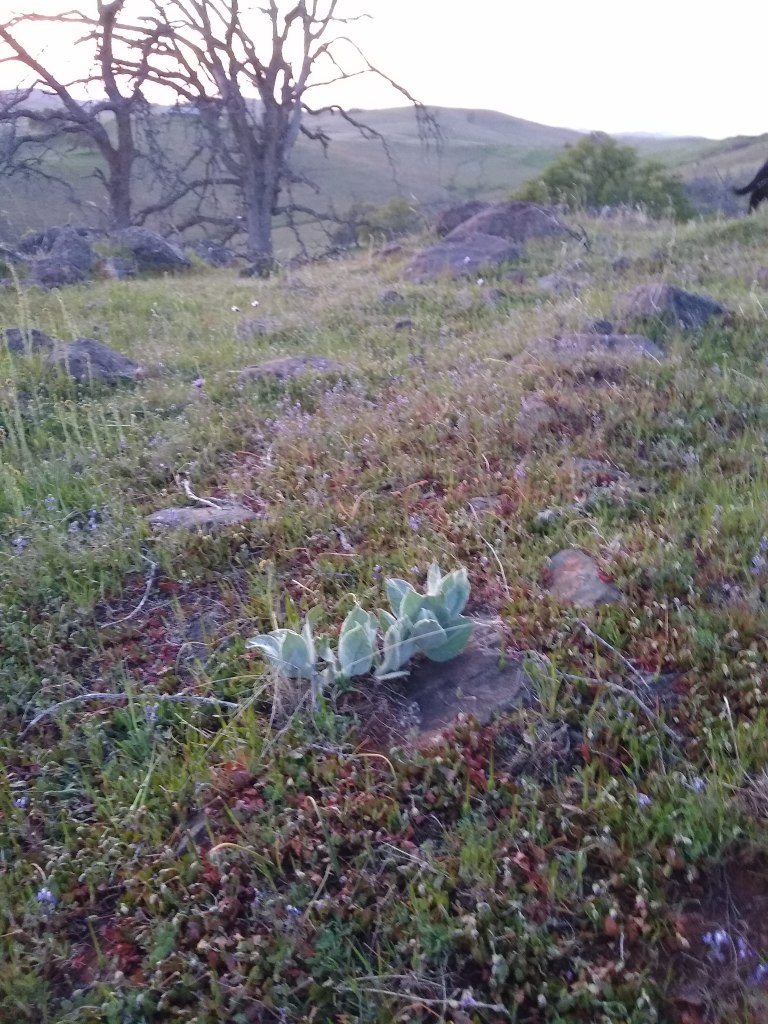
I always let out a whoop of excitement when I see these remarkable a. Californica plants. They look so prehistoric to me, and the smell is heaven. The air of magic around these plants is only enhanced by its rapid “see them out of nowhere” growth. Last year, I shared that I found three communities of these plants – one near the house with seven plants, one on the tall south facing hill to the north of the house with thirteen plants, and one on a hill to the east of the house with two plants. I have been monitoring each location. The east hill has two plants. The site near the house has two plants (so far), and the north hill had two plants. In the last post, I suggested that it may still be early to see many of these plants, and I was right. The plants have been appearing about a week after my first sighting.

Signs of the Drought Apparent

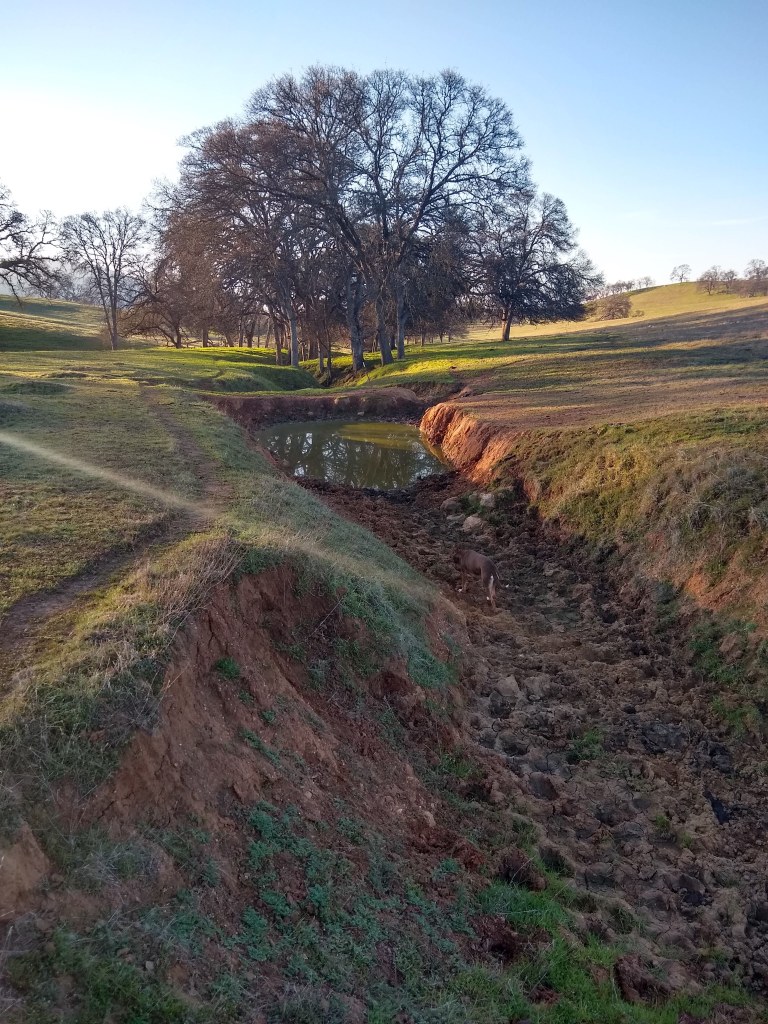
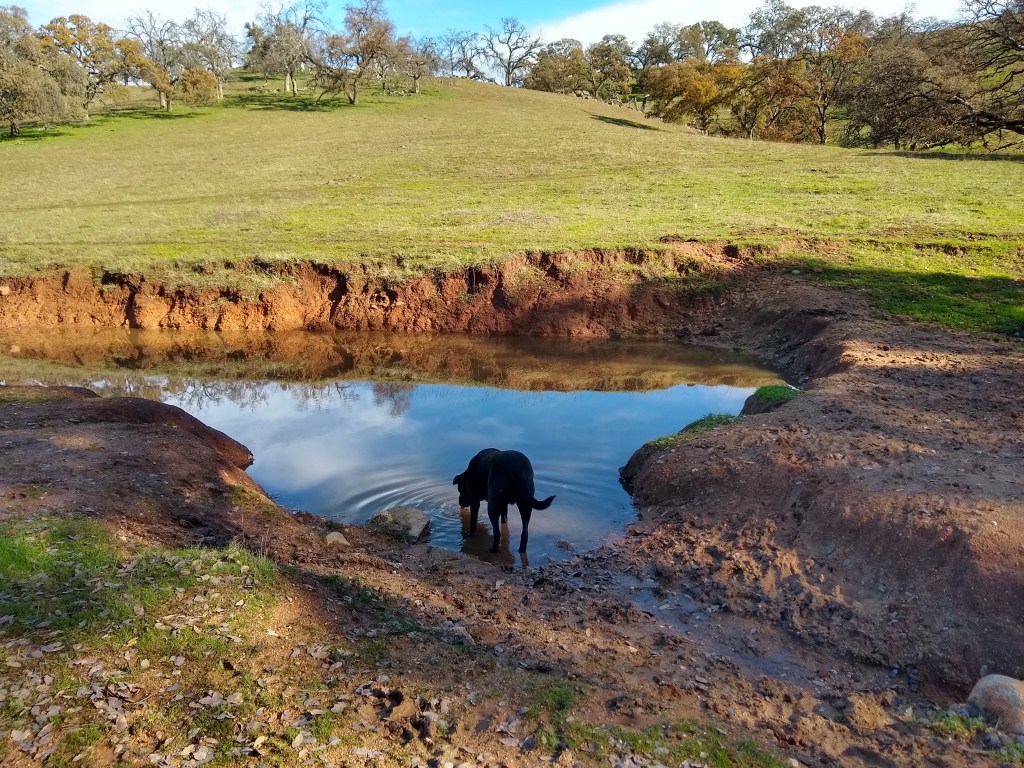
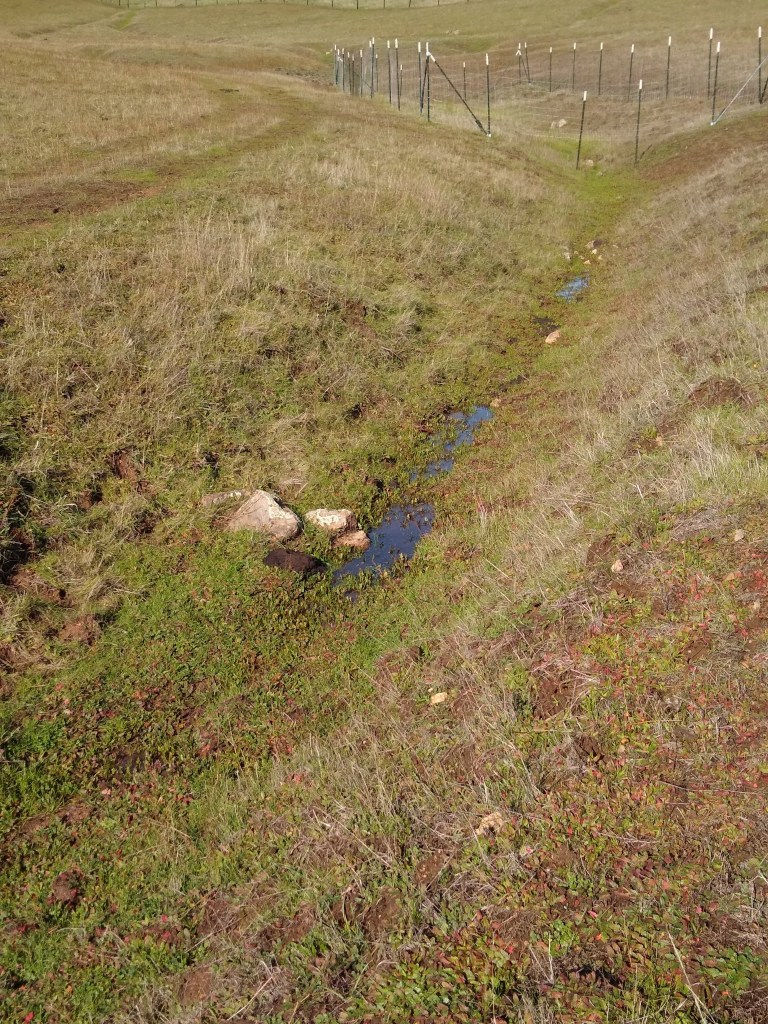
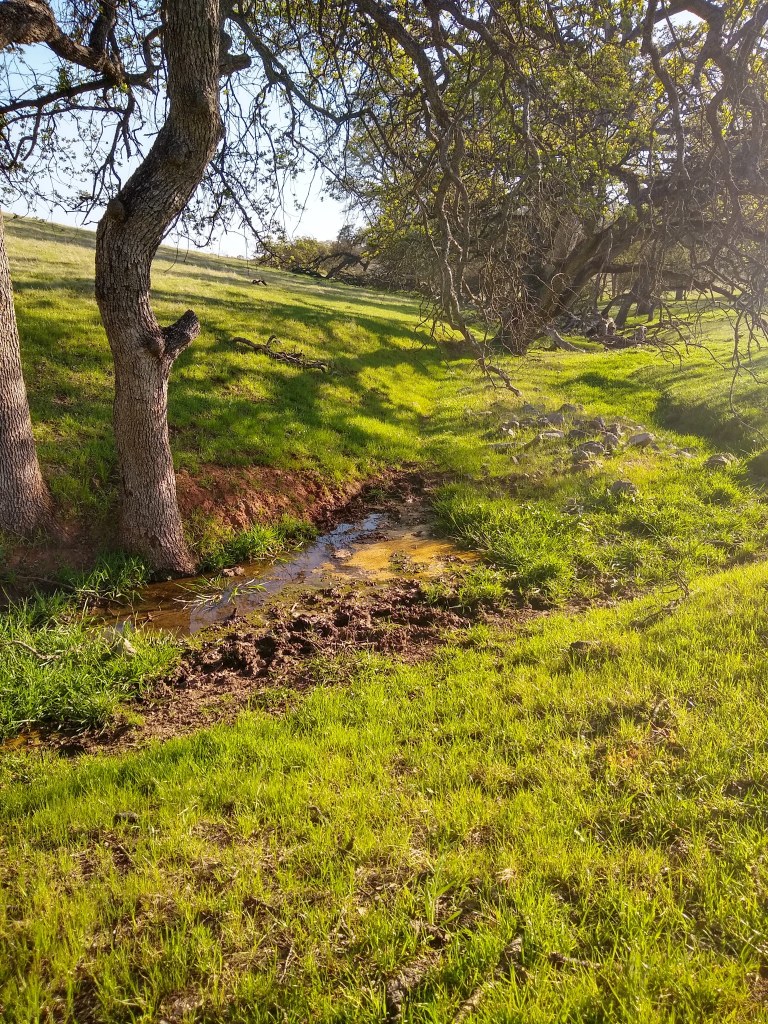
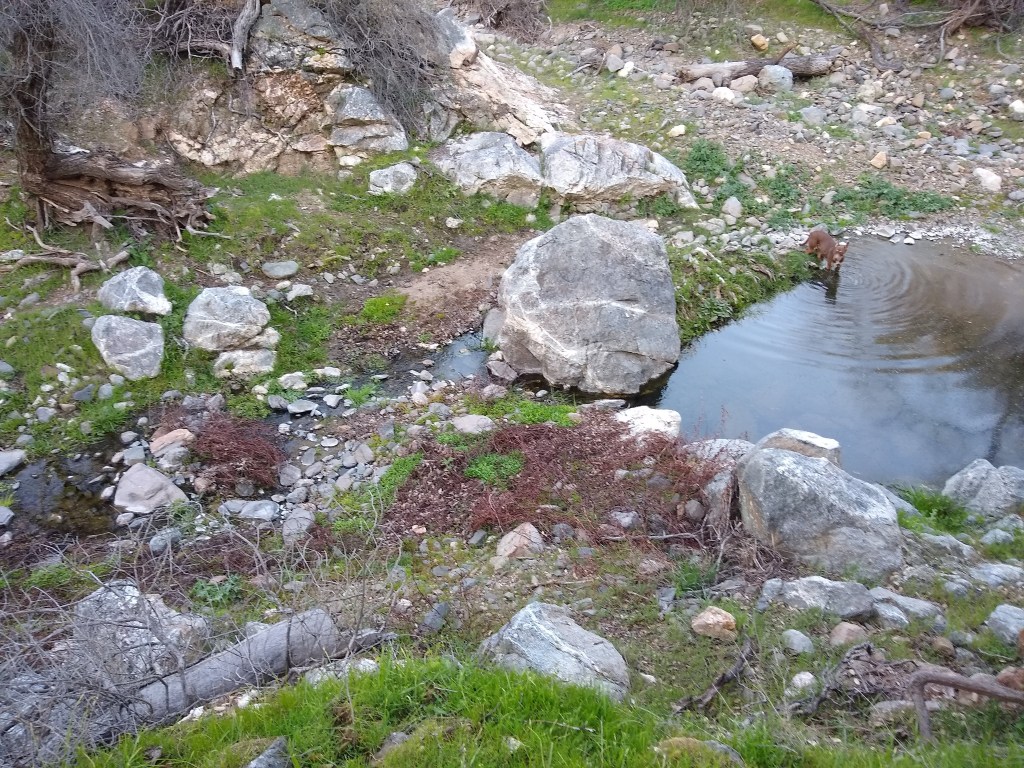
Spring Creek is still running, though just slightly. As visible in the first photo above, the eddy has receded several feet – and this is without cows drinking from it in almost two weeks. My trial mini beaver dam analog did not do much. I will try harder in the future. The Swale Pond receded 10″ in just one day. Note the moist area exposed and the water line in the second photo. The big spring in line on Odom Creek is still full. The creek is running pretty good. It was dry for quite some time in the early winter despite precipitation. The soil was so thirsty that there was little standing (or moving) water until late February. Not pictured are the increasing number of dry spots visible throughout the area. I have already begun irrigating. This is a three weeks earlier than last year.

Wildflower Whiplash – they are everywhere!

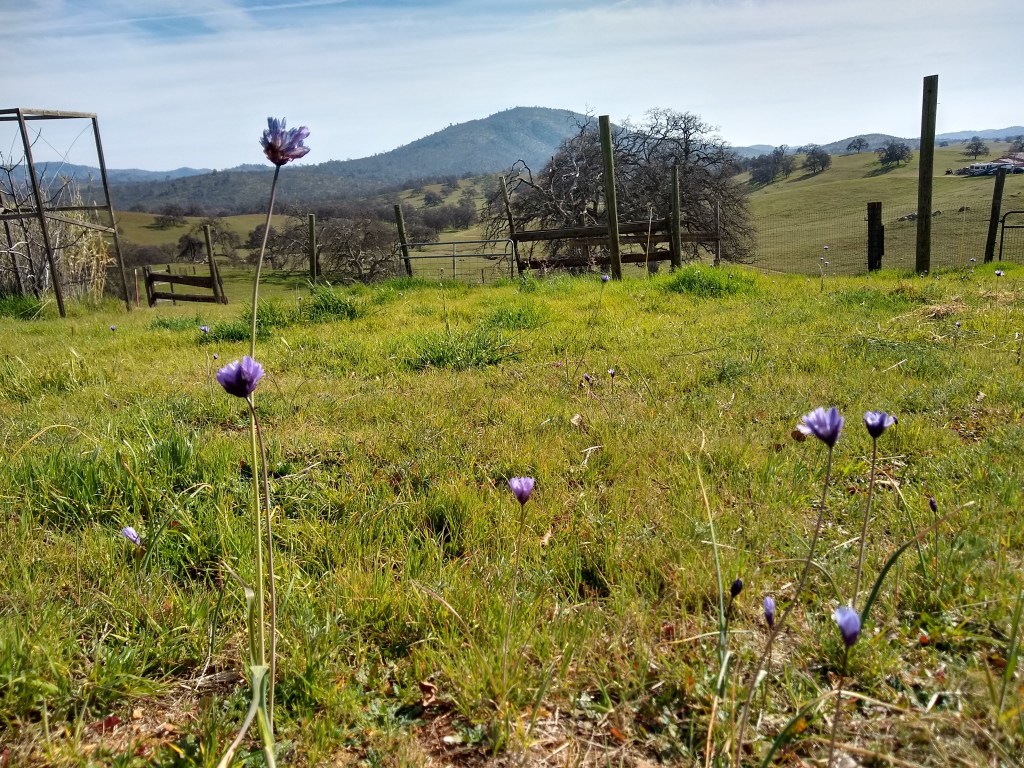
Stunning hill of purple (Blue Dick flowers)

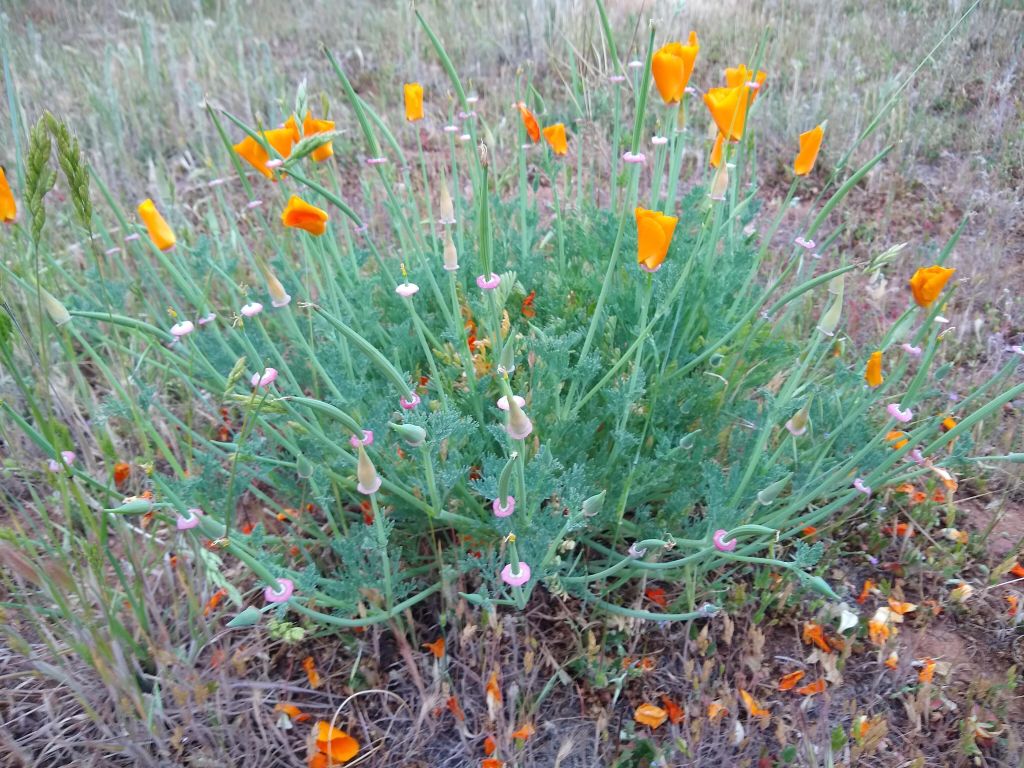
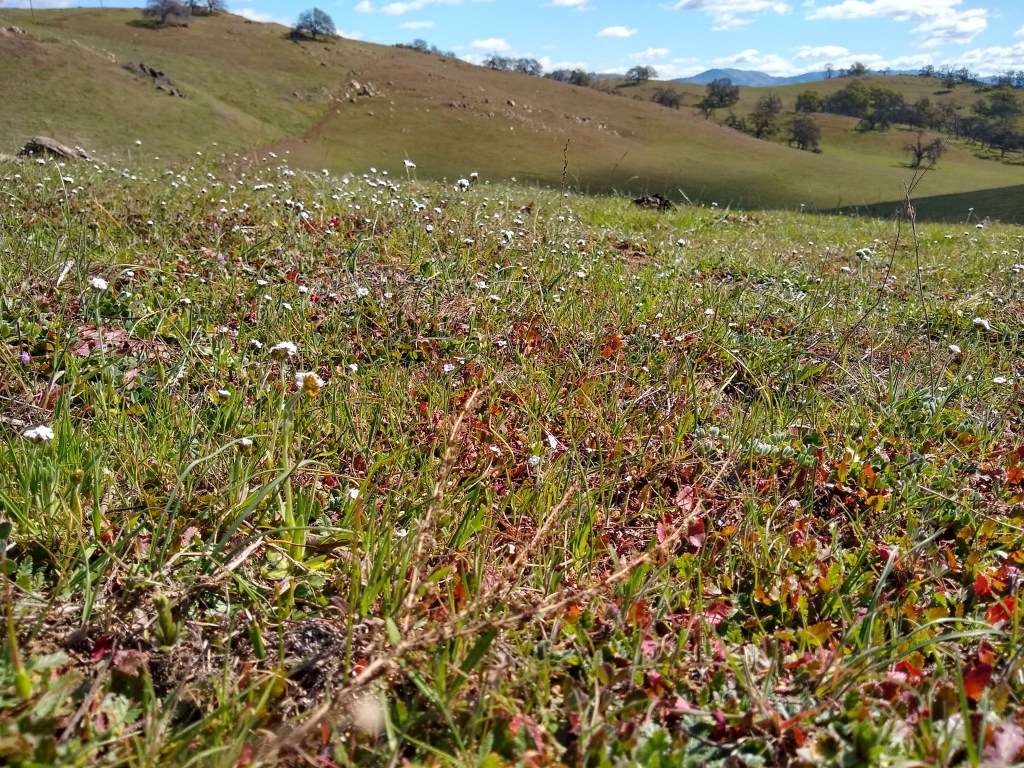
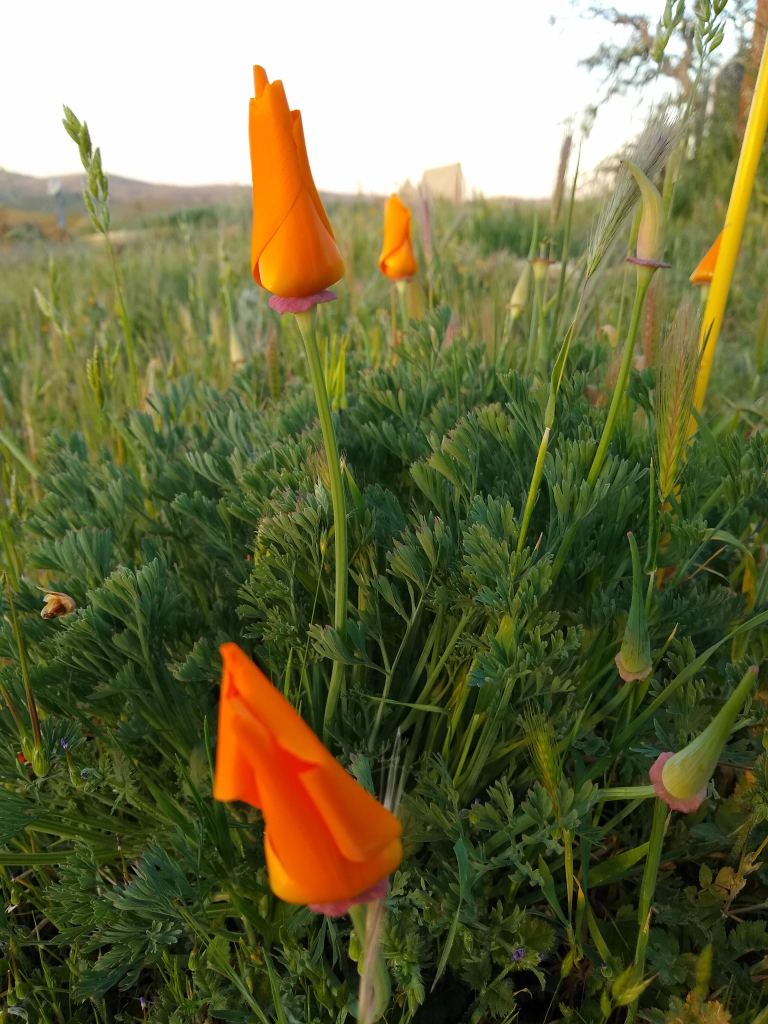
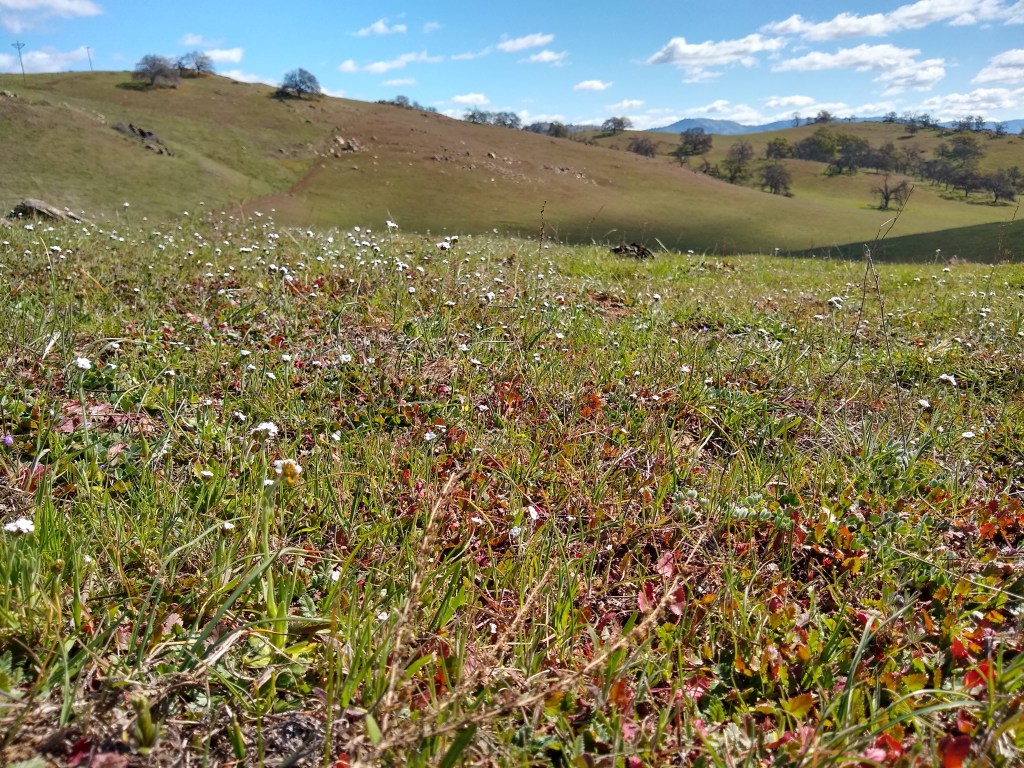
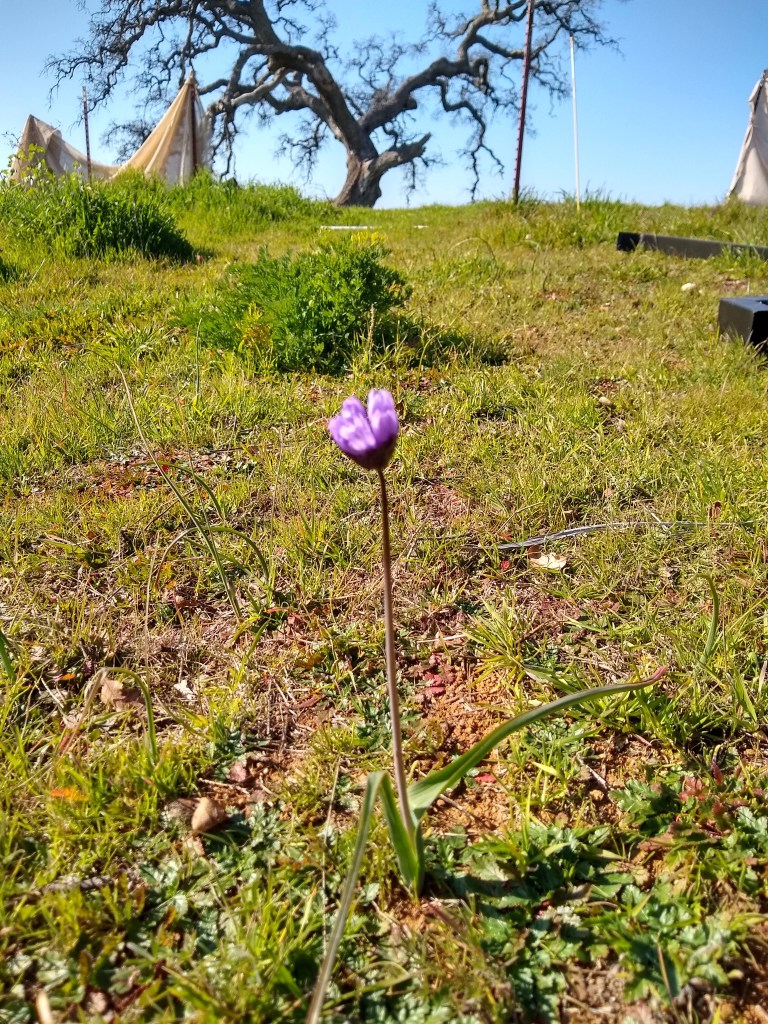
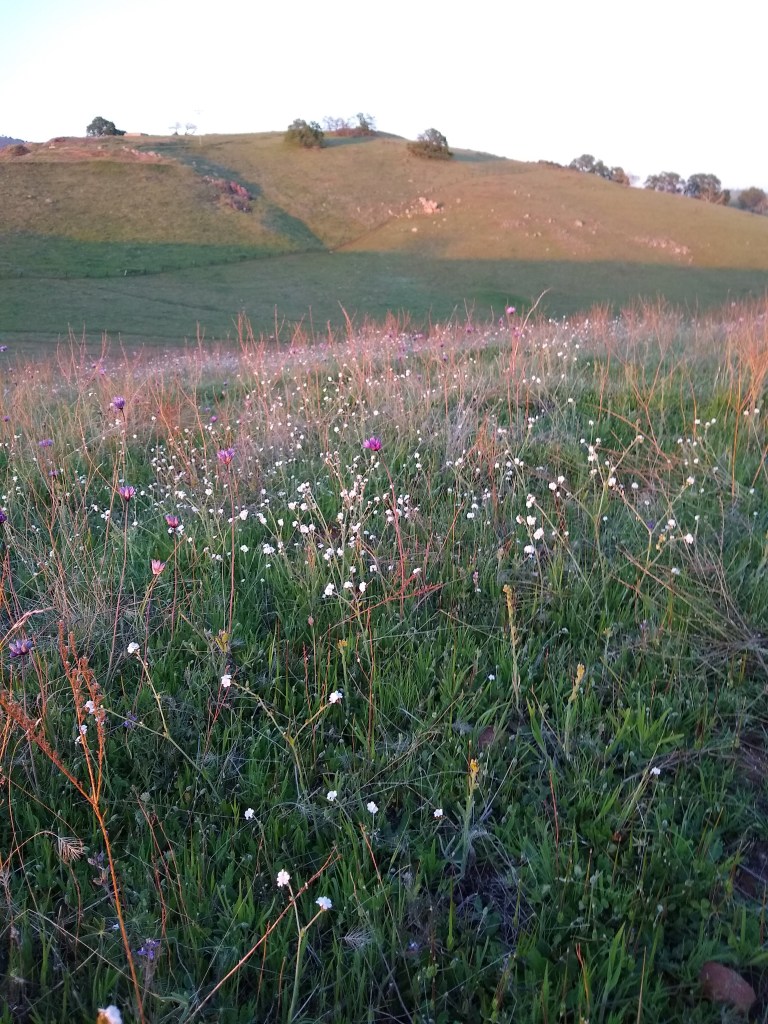
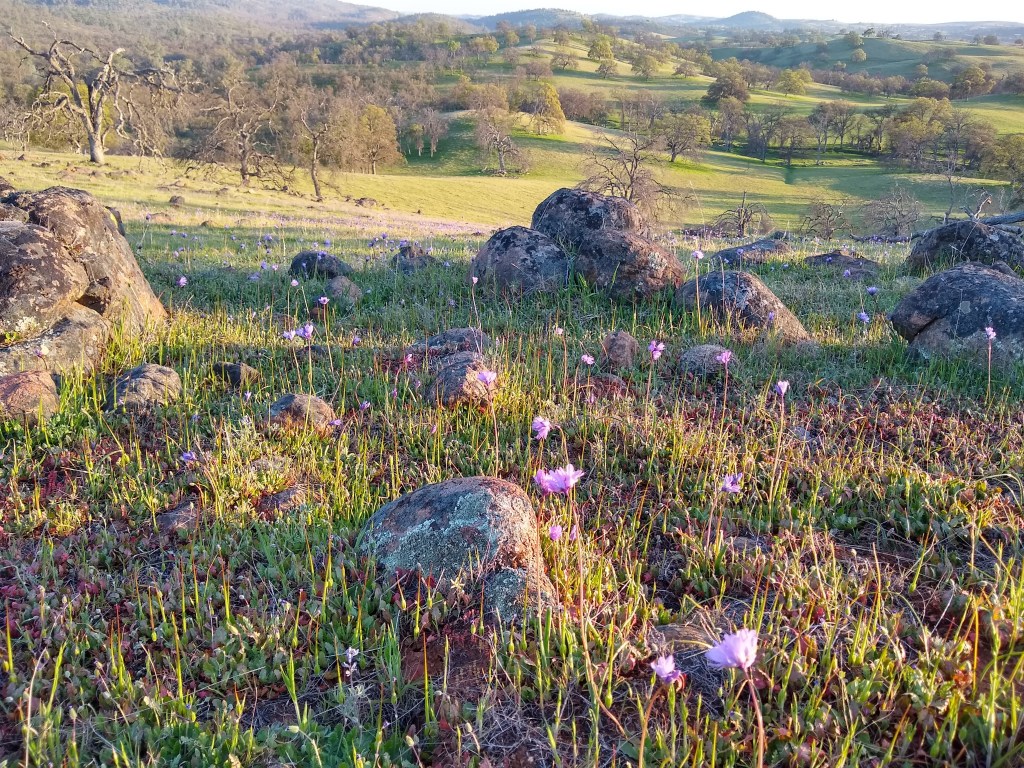
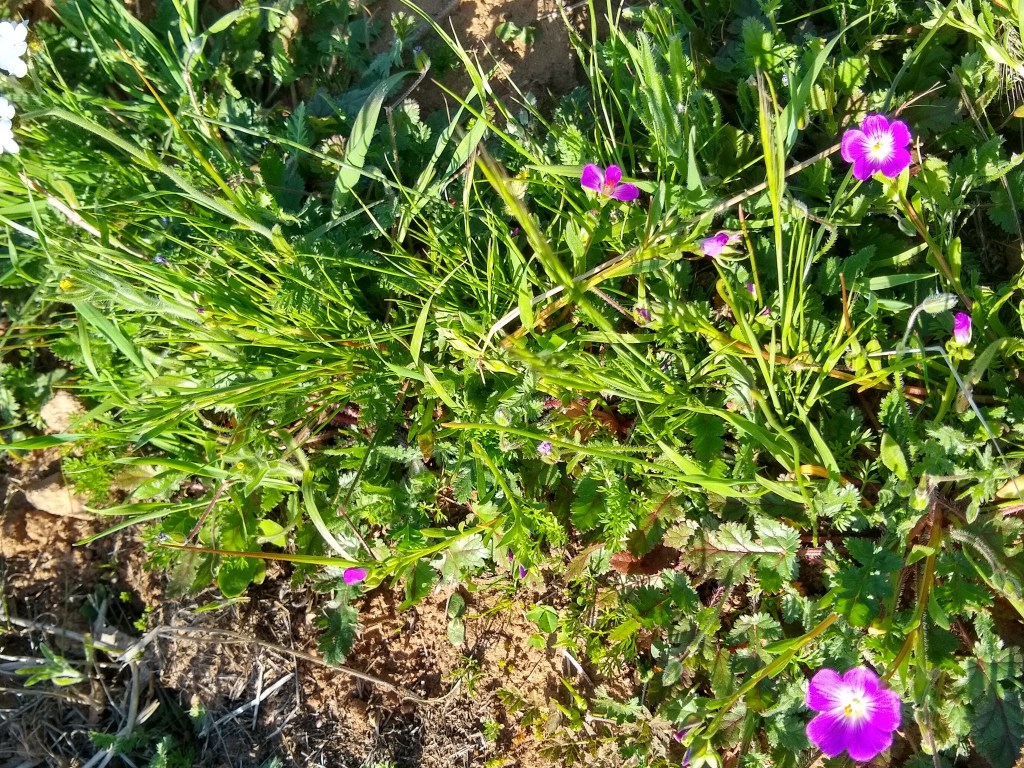
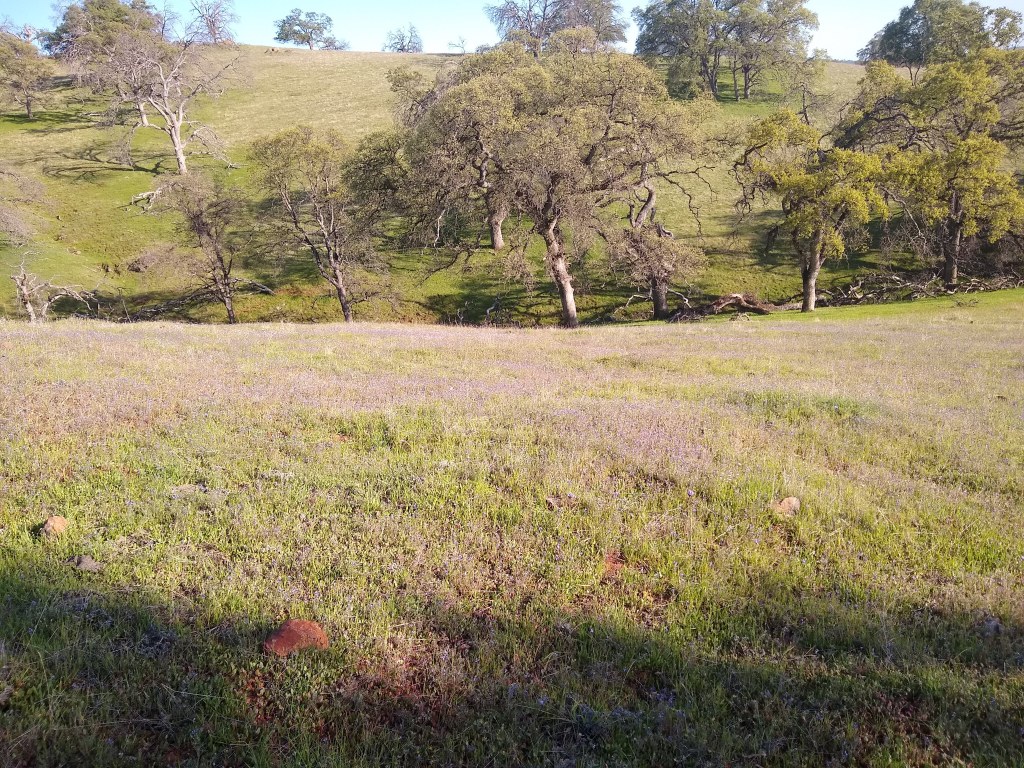
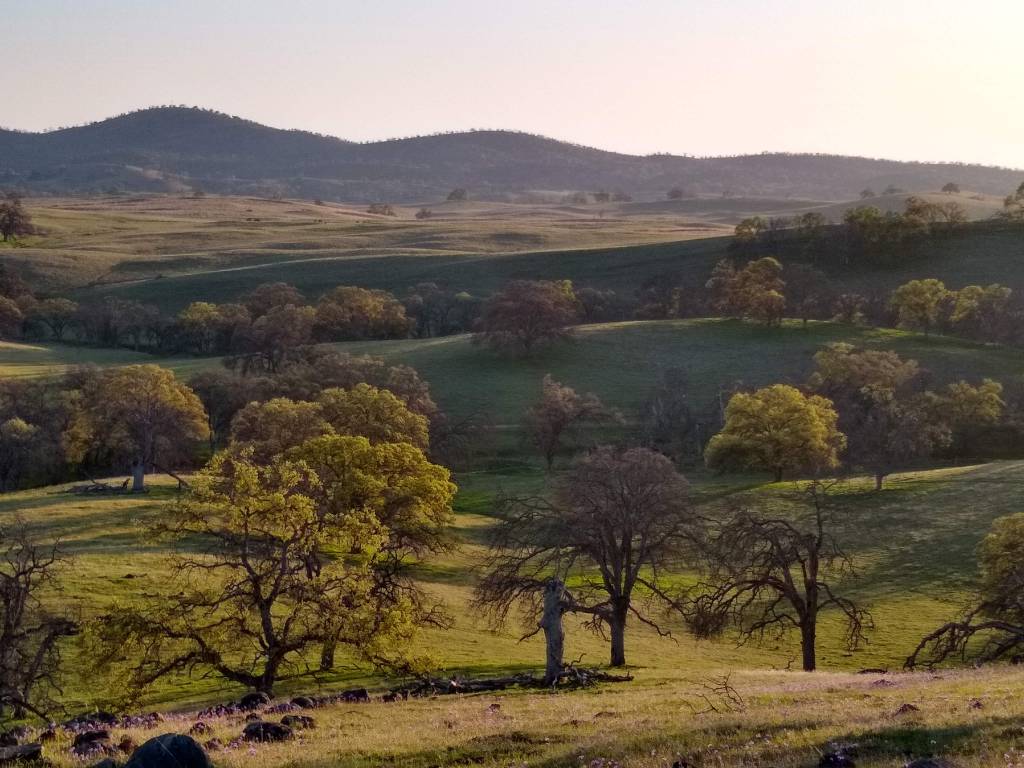
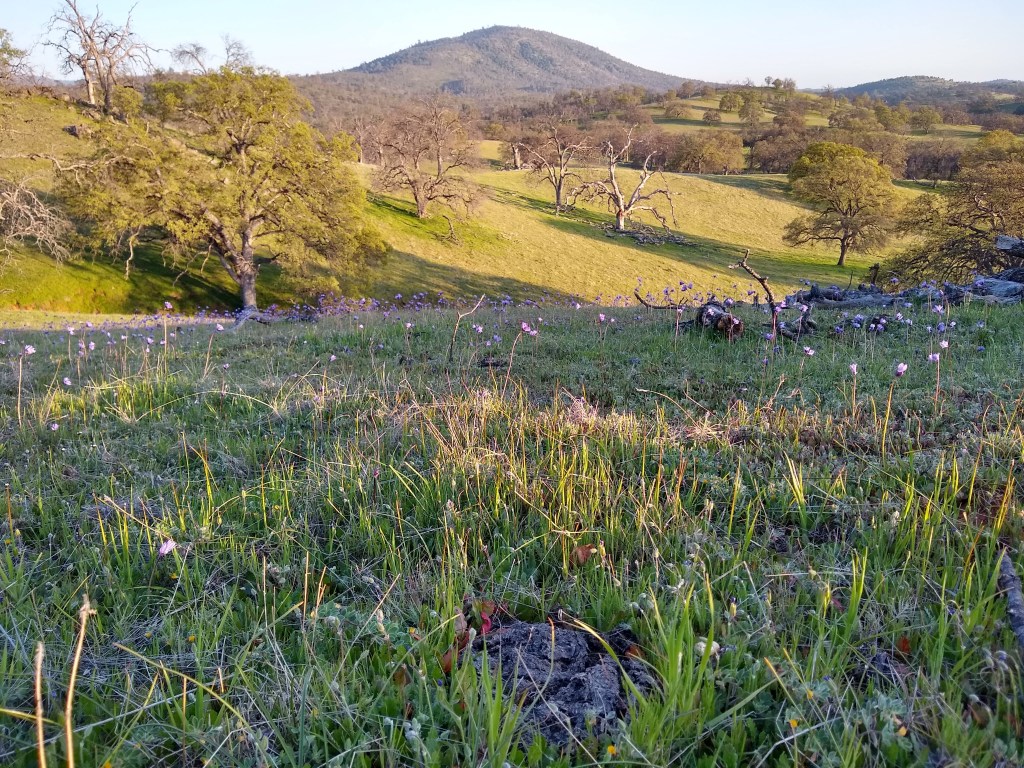
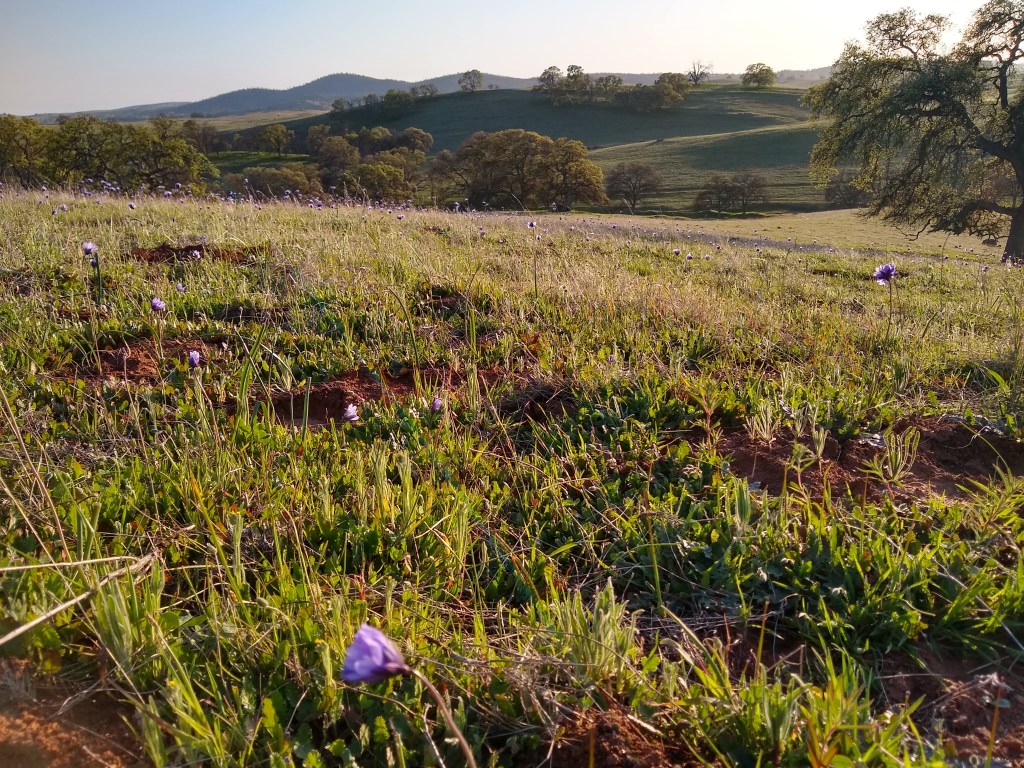
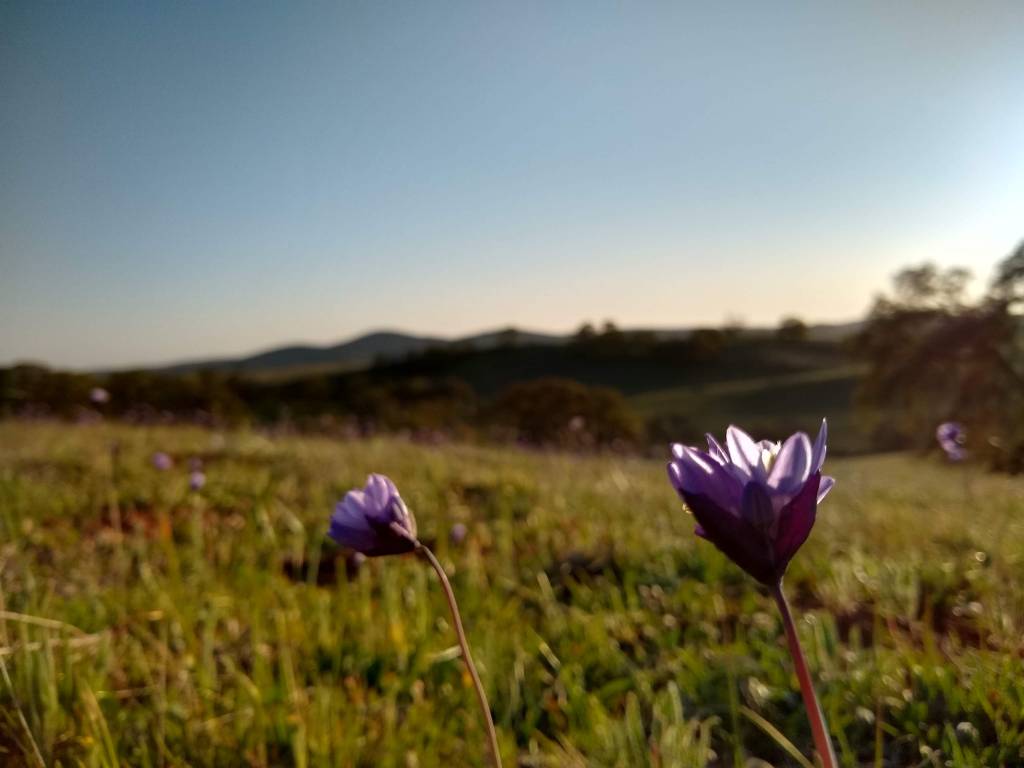
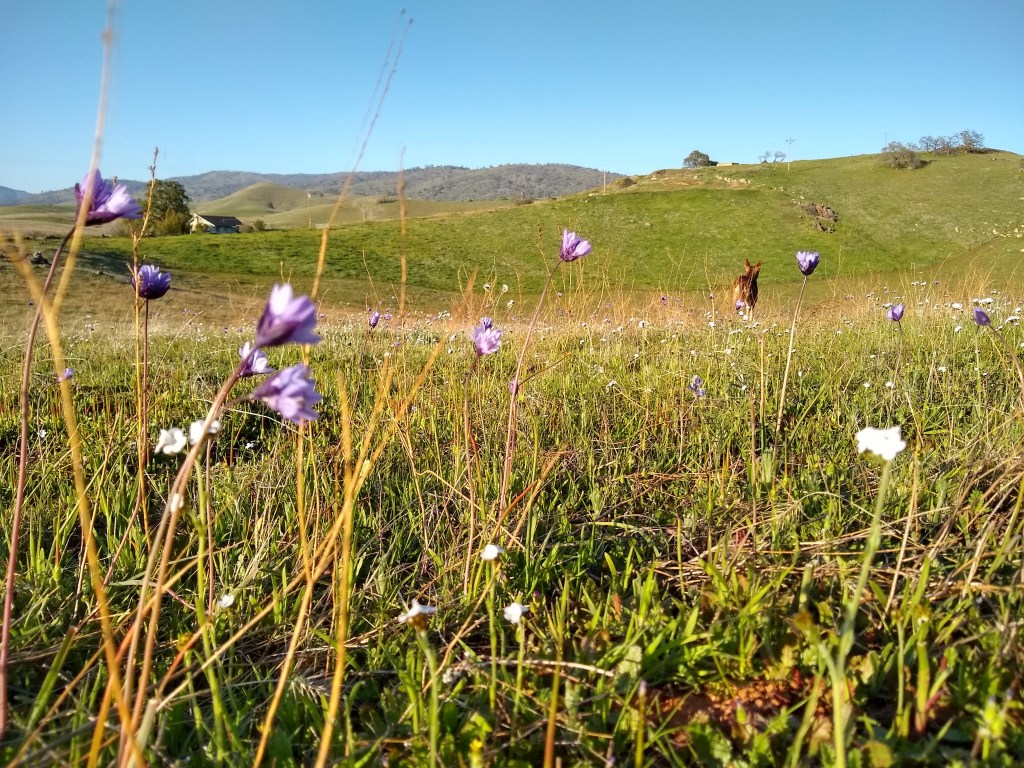
Blue Dicks, Popcorn Flower, Fiddleneck and Lupine proliferate insanely this year. The hills are washed in strokes of color – orange, purple, white, yellow. It is really stunning. You almost get whiplash swinging your head around in every direction to see the colors and flowers. The drought is partly responsible as well as the darker winter we had. The grass did not get the best timing for water and had less sunlight with which to grow. This made room for the wildflowers to sprout and not have to compete/be blocked out by the European grasses. While this is not good for the cattle business, it really is extraordinarily beautiful, amazing for pollinators and quite the olfactory experience. If I could share the smell with you through this blog, I would. Nectar is heavy in the air and the sound of all sorts of bees is an ongoing, loud undulating hum. My photos just do not convey this outlandish beauty.

Milkweeds Growing Well

Xerces and Monarch joint Venture each push that milkweed is the most needed plant to be planted for monarch habitat. I am very happy to say that I have many milkweeds emerging strong and healthfully. Most are narrowleafs. However I found one showy coming back at Site 8 and, of course, the a. Californica. I have not seen any of the woolly pods I planted come back this year. The gopher hit them hard twice last year. I was happy to see some narrowleafs come back from the wild pig attack at Site 8. They did not reemerge last year, and I thought I may have lost them completely. I have growth that I can see in four of the seven milkweeds planted there last year. Of the nine I planted in the raised bed, only three have returned from the massacre by the gopher that sneaked into the bed. It does look like the CA fuchsia is reemerging. That would be incredible if so. We still have a deer grass and a yerba santa that survived the attack.

Other Notable Updates

There is a tremendous variety of growth in and around the branch fence area. I have not seen any of the milkweed I planted from the Xerces kits emerge yet. The area is more shaded, and the showy milkweed seems to be taking longer to emerge. It seems as though another creature is making its way into the branch fence area. I’ve seen some of the fencing fallen down and soil disturbance. It isn’t a calf since they are on the south part of the ranch. I did not see any scat or tracks to be able to know. It would be useful and fun to set up a game camera. I have one, but have not gotten around to doing this. It would be interesting to see who is coming around in the night (or day when I am not looking).

At Site 2 in the arroyo, the plants are off to a good, healthy start. I did see considerable gopher activity near the site. I found the hose covered in gopher mounds in several locations along its route from the water tank to the arroyo. Getting a stainless steel hose was a specifically so gophers could not bite through it and cattle could not crush it. It will be tested now. The cattle are due to return at the end of the week.

I have been seeing white butterflies with a pale orange throughout their wings. They spook easy, and I do not have a good photo to share. I was able to get two pictures from far away, but the pixelation when blown up is terrible. I did not include them here.

It appears that the cattle pushed their way through the barbed wire to browse the deergrass. I found one of the wires shifted up and the bunch of grass trimmed low. It is possible it could be a deer. I have seen evidence of their presence toward the more forested portion of the ranch. My neighbor said he saw one too the other day. There were no deer droppings or hair on the wire – but it is a possibility.

Spring is always a time of hope. Plants are in the ground and doing well before gophers, heat, pigs or any other misfortune finds them. David and I received our first vaccine shot last Friday. We have hope too that we will be able to do more away from home and see family and friends that we have only seen on a video screen. We miss hugs and being with the people we love. Let us all cling to as much hope as possible and the joy it brings. We do not know what lies ahead, but for now, I will celebrate the possibilities of togetherness and the arrival of the monarchs.