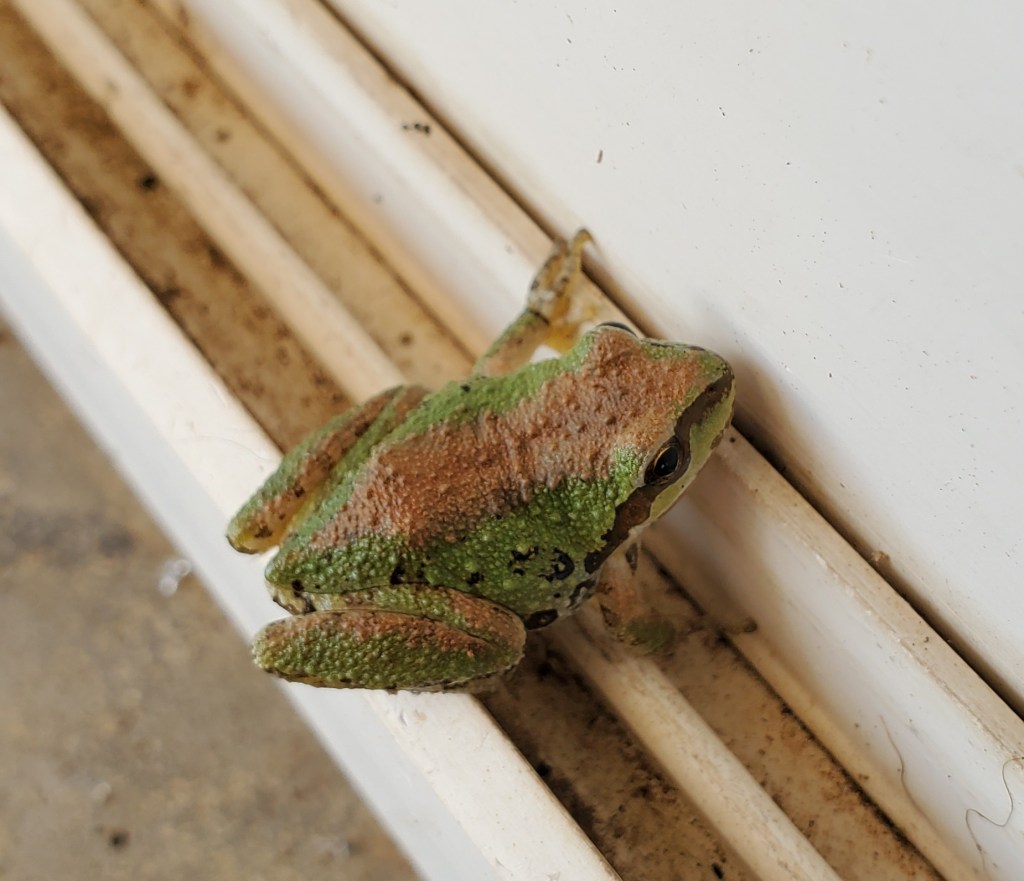
Sierra Tree Frog thinking about climbing the sliding door
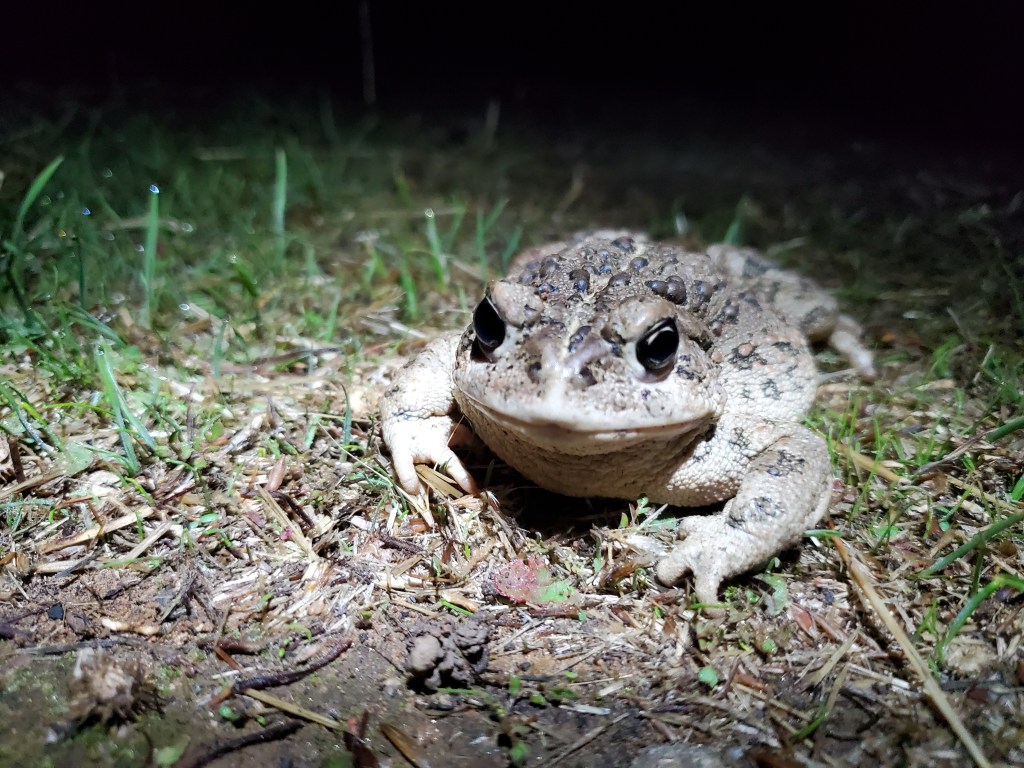
Every day, I am treated to a symphony orchestra of such precise, crisp quality that I am moved emotionally. Each diverse player is always in-tune, and the music is in stereo. No, I’ve not traveled to San Francisco or Los Angeles. I step out on my front porch to a noisy, bustling world — first the rushing creeks after the rain, then chorus frogs with their undulations in 360 degree splendor. The coyotes cannot be left out. They join from far distances and close, their songs carrying across arroyos and hills. A mourning dove enters the symphonic experience just at the right time, then a muted tink of the rustle as a light breeze moves through the oak branches, playing the leaves like keys of a piano. Like a horn, a screech owl hoots, or a barn owl screeches. California toads croak, then trill. Finally, my own heart plays a role keeping time, threading through this musical soup, a genius blend, warming and nourishing, rich and whole.
Guzzler Project
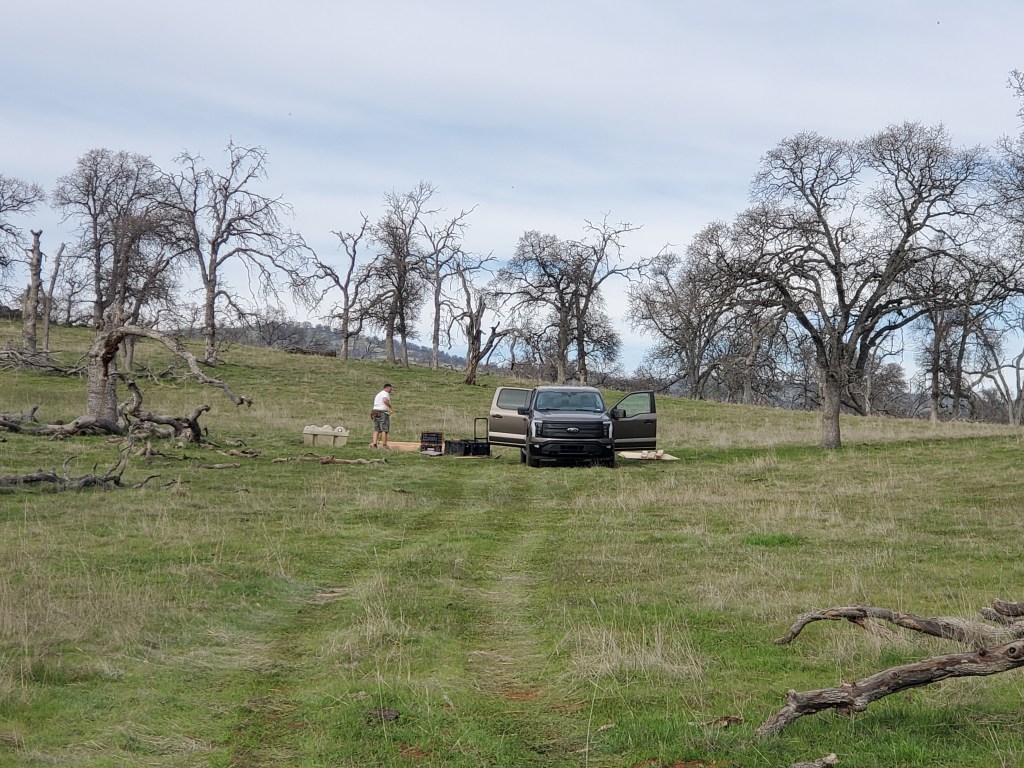
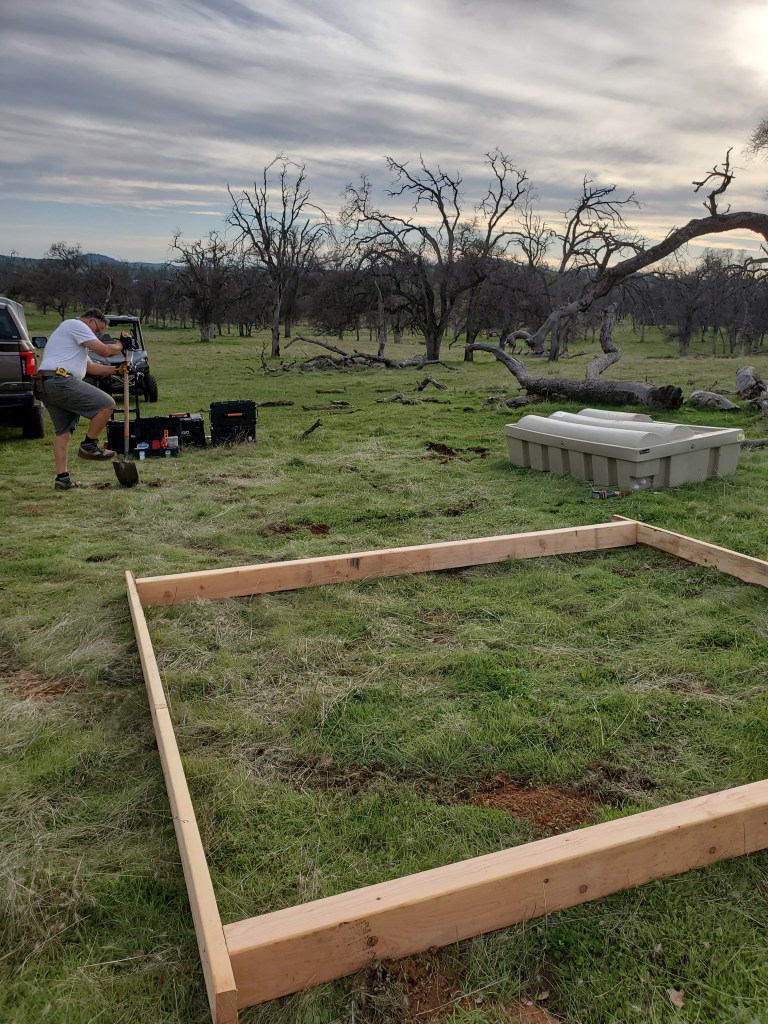
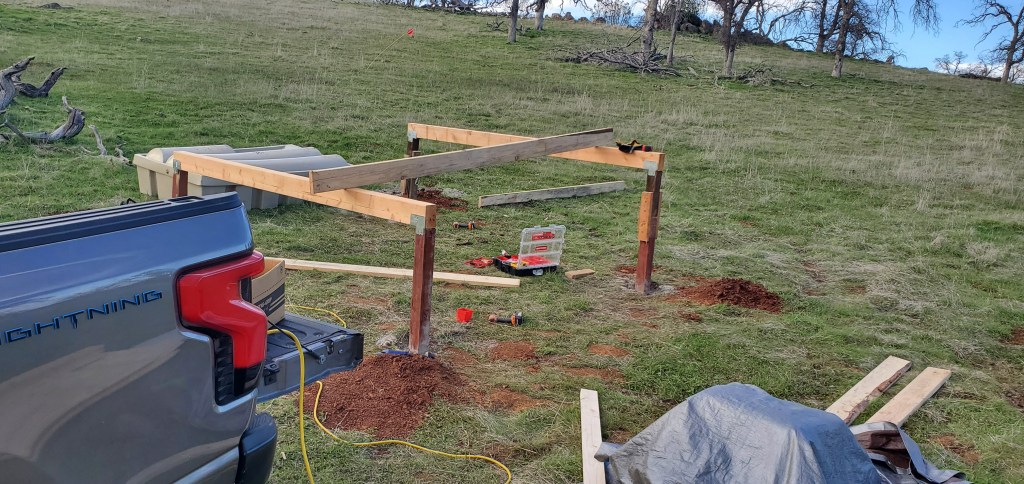
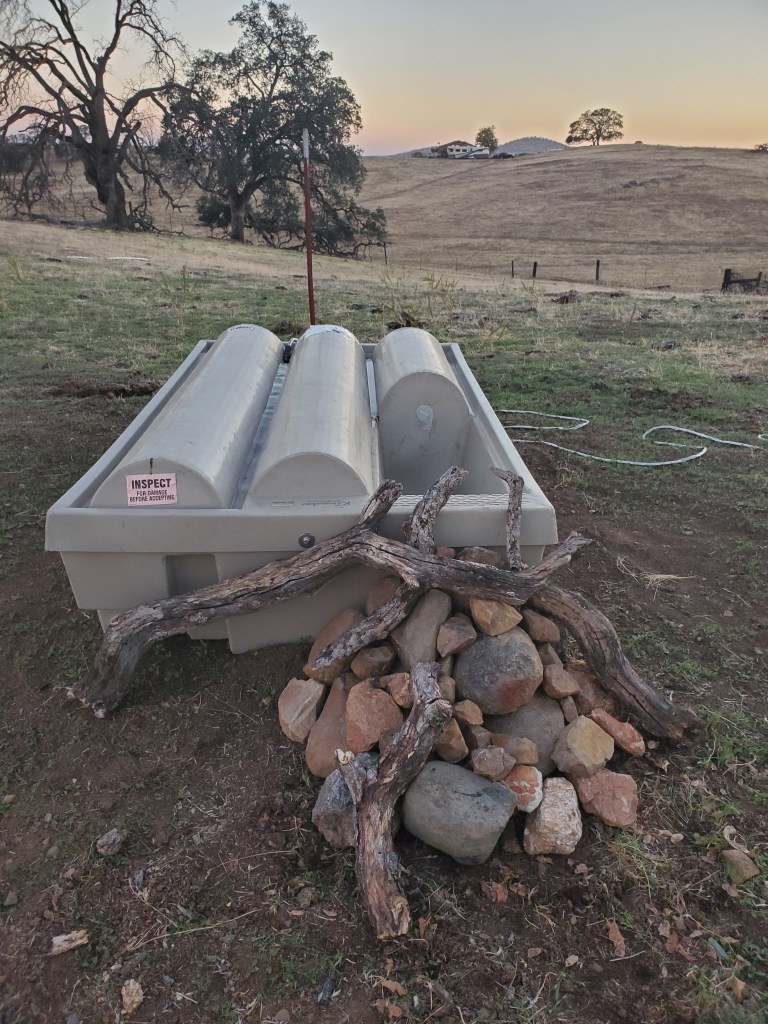
Construction of Guzzler Two, which is located on the east section of the ranch, has begun. David made a mistake early on in the dimensions. Although he fixed it, we lost half a day putting us behind timeline and up against the recent rain storm. He got the posts sunk and cemented and the headers on, but was not able to get the rest of the joists, roof and gutter on. It was disappointing, since we have a week of rain. However, I have to give us both a break. Life has been challenging. There was no time to start earlier. We have so many projects, medical appointments for dad, work and catch up for work from the last several months as well as other volunteer responsibilities. I remind myself that we just can’t do it all.
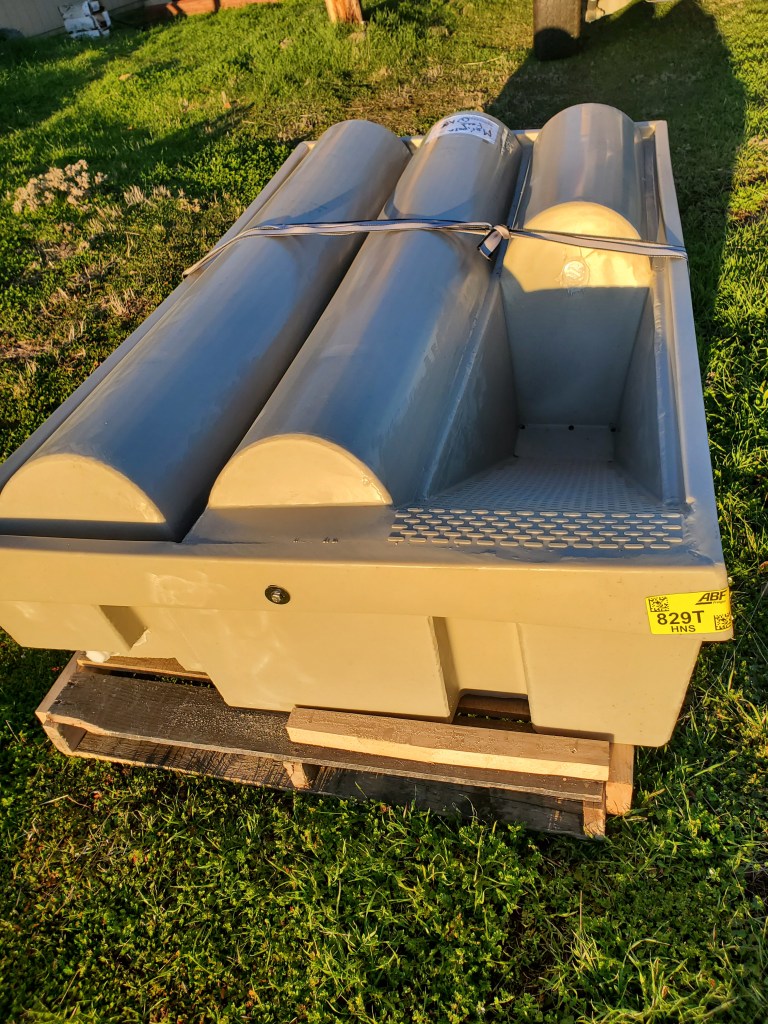
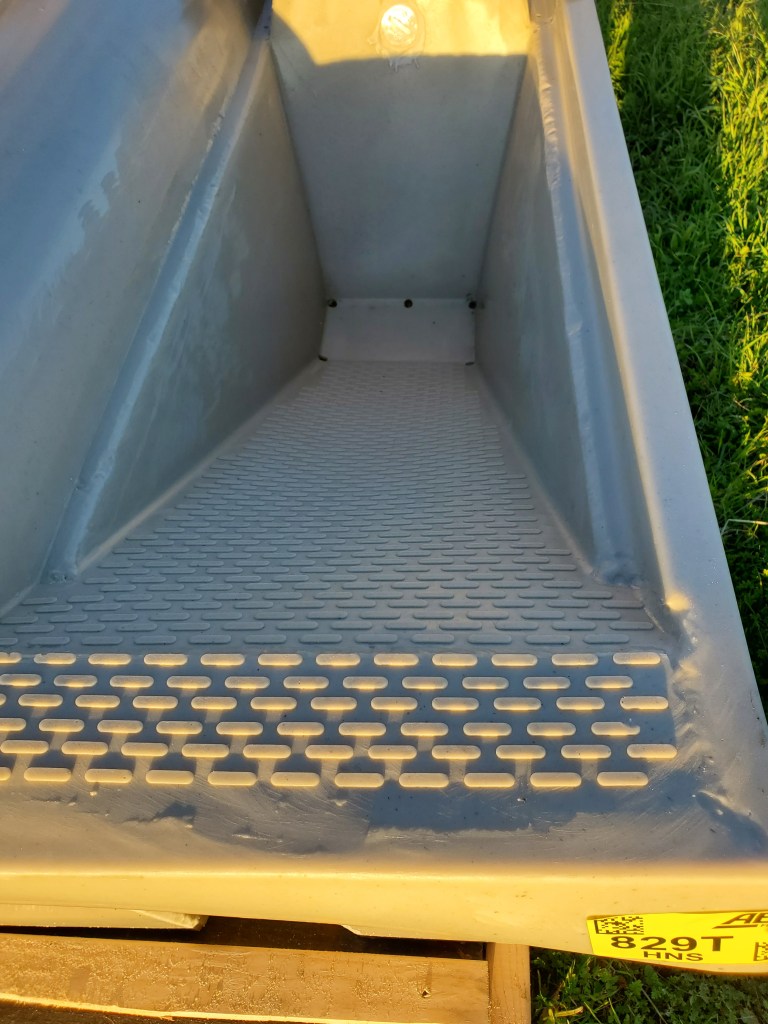
I am grateful for the time we can dedicate. At least the guzzler is up, and has a beveled lid that is designed for rainwater catchment. There is a ramp built in, so we will get some water in and have a working unit for animals.
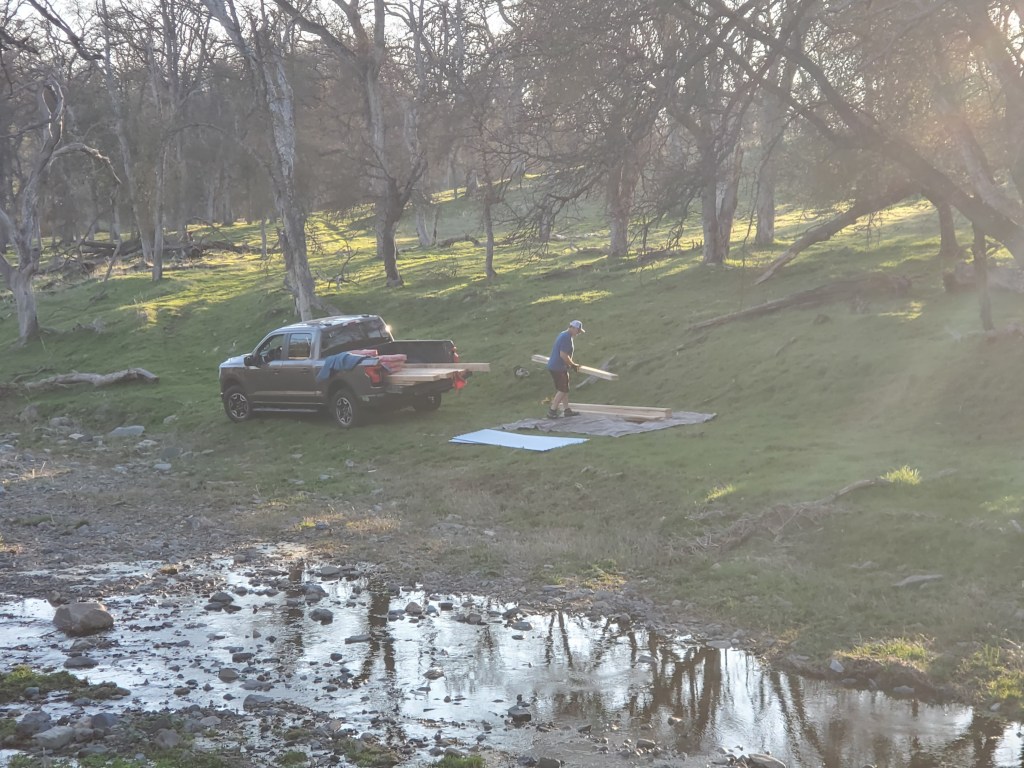
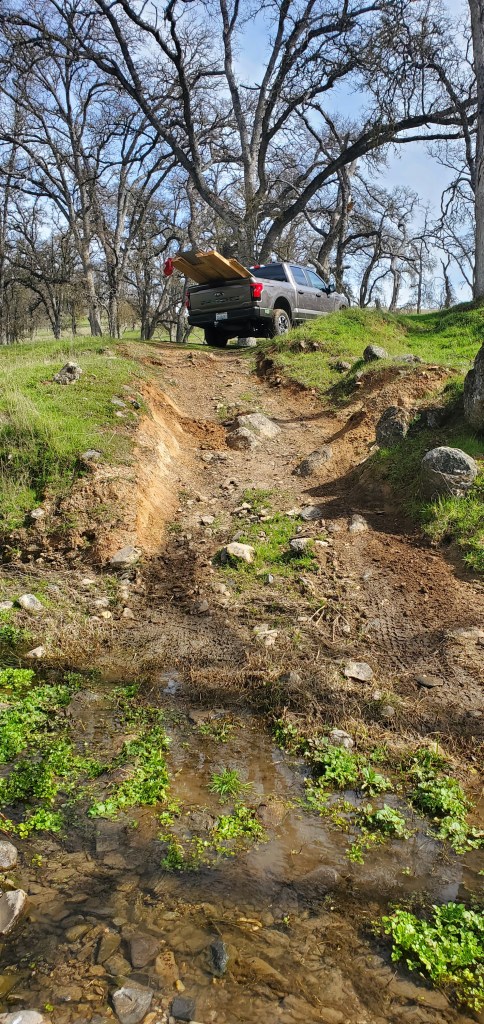
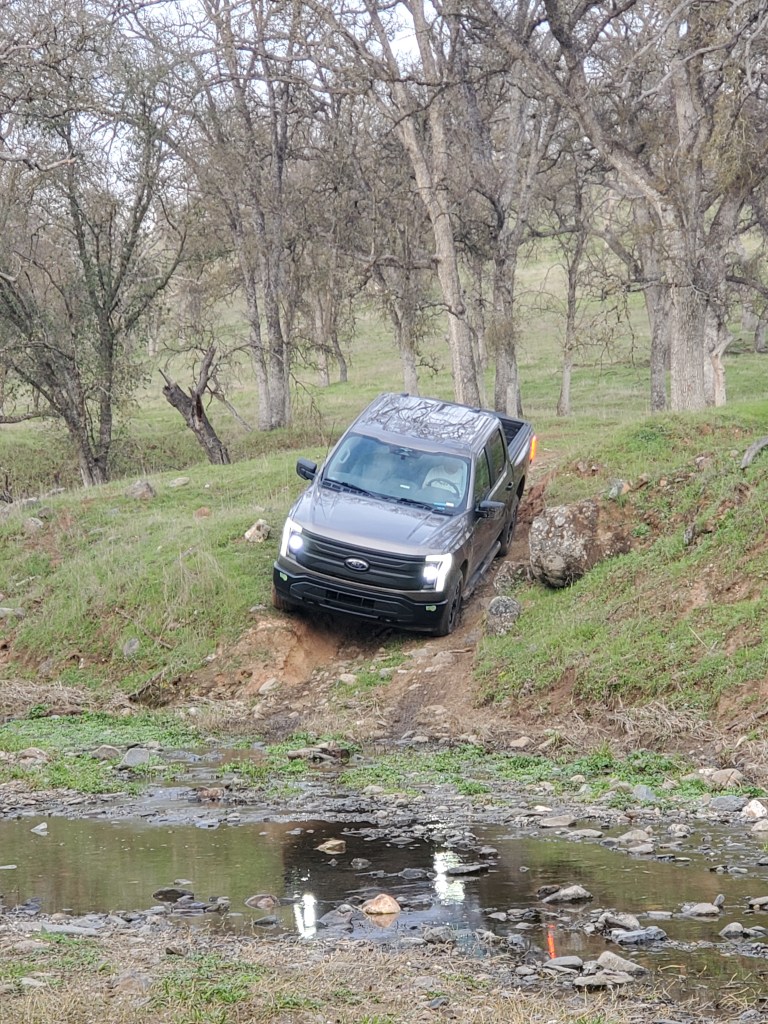
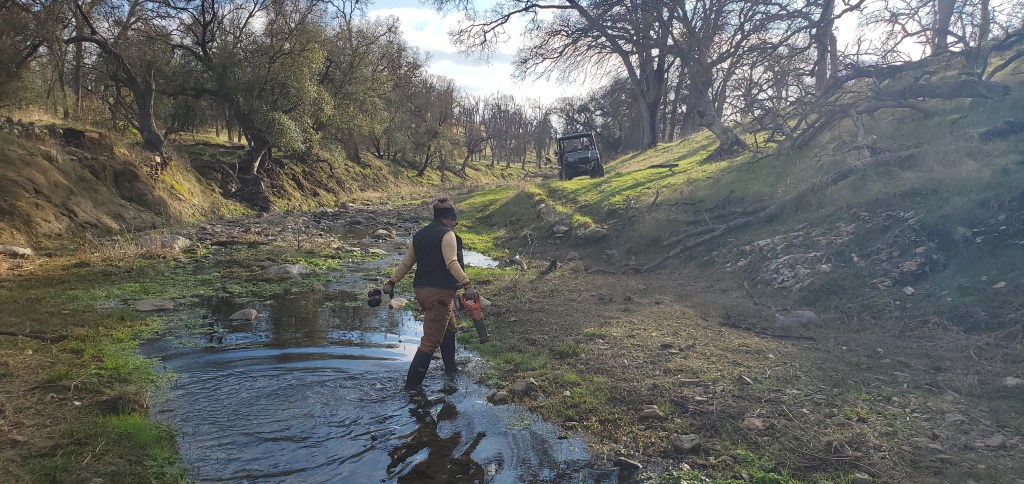
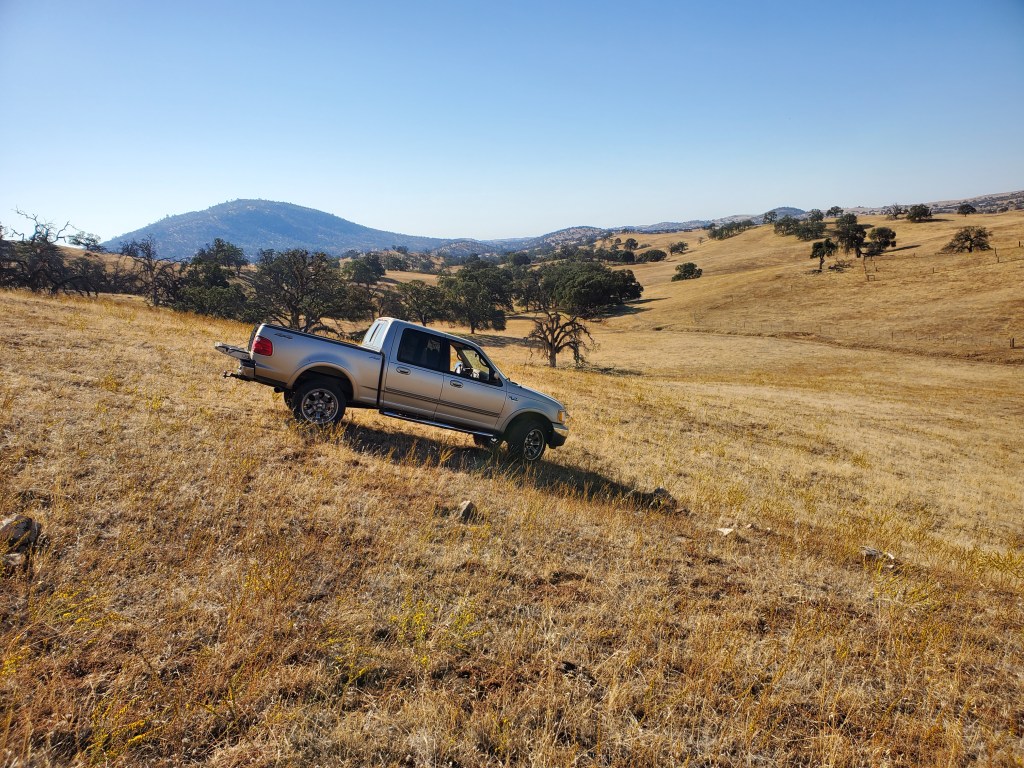
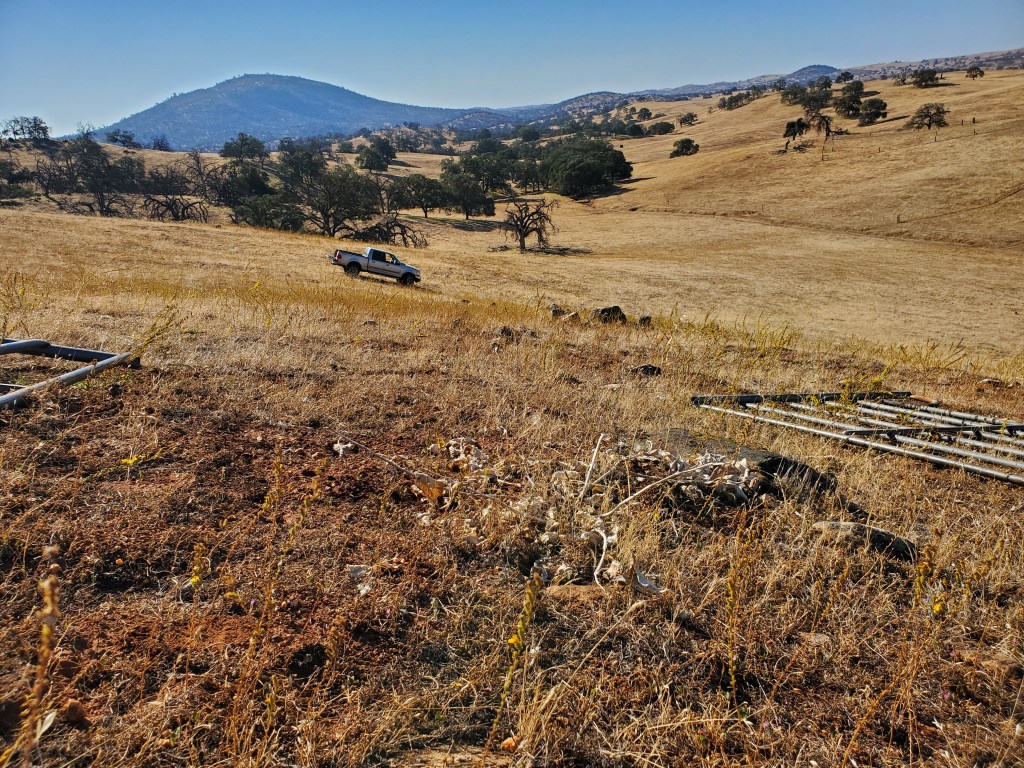
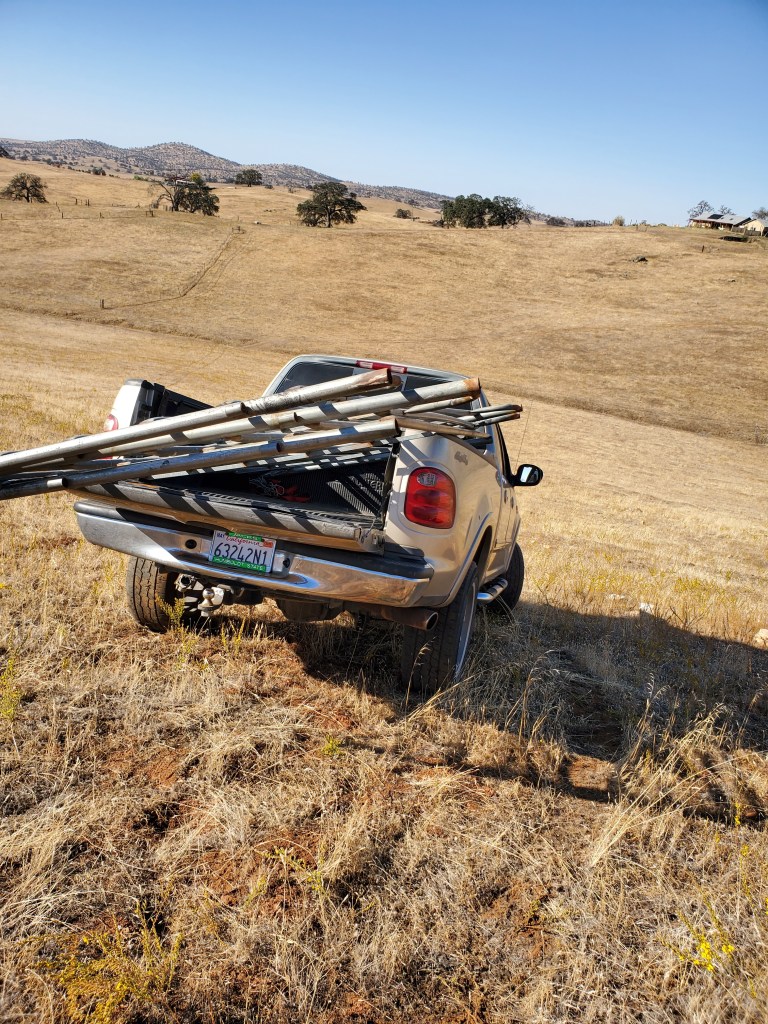
In 2015, the big flood year, the road to the area east of Odom Creek on the ranch was washed out. I would access via foot or ATV. We initially began to stage the materials on the west side of Odom Creek, but David had a feeling he could make it in the truck. I thought this should be a big “no”. Besides the fact that this is a newer truck David uses to commute with, I try to limit motorized vehicles on the ranch simply because their impact on the soil. Everything we have is electric, so I am not concerned about emissions or oil leaks. The weight and act of rolling across the ground over and over has consequences. This is why I stay in my tracks as much as possible when servicing plantings.
Well, when I left to plant oaks, David measured the area, measured the truck, measured the area, measured the truck and decided to go for it. He texted me some photos, and I was shocked. The truck made it. I thought that perhaps making one trip with the truck instead of five with the ATV might be better. I walked the route first trying to make sure there were no frogs or other wildlife, then I allowed myself and/or David to roll through the water and on the bank again. I am trying to do what I can to mitigate damage and hoping the guzzler will make up for any damage we may be causing rolling our vehicles back and forth.
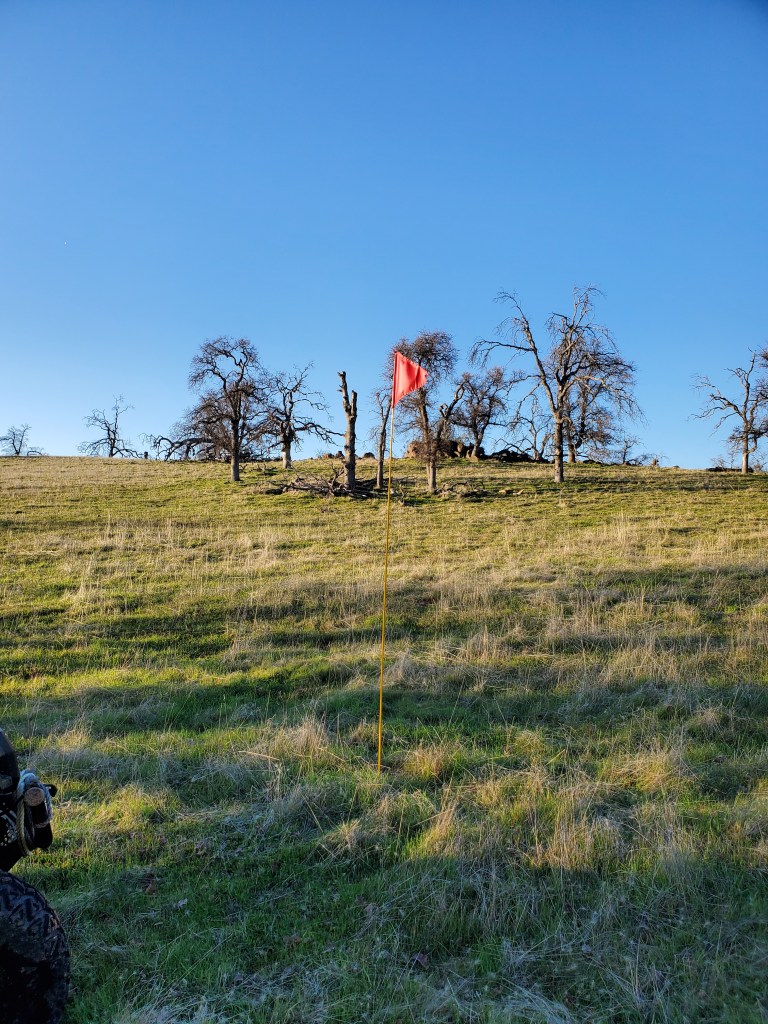
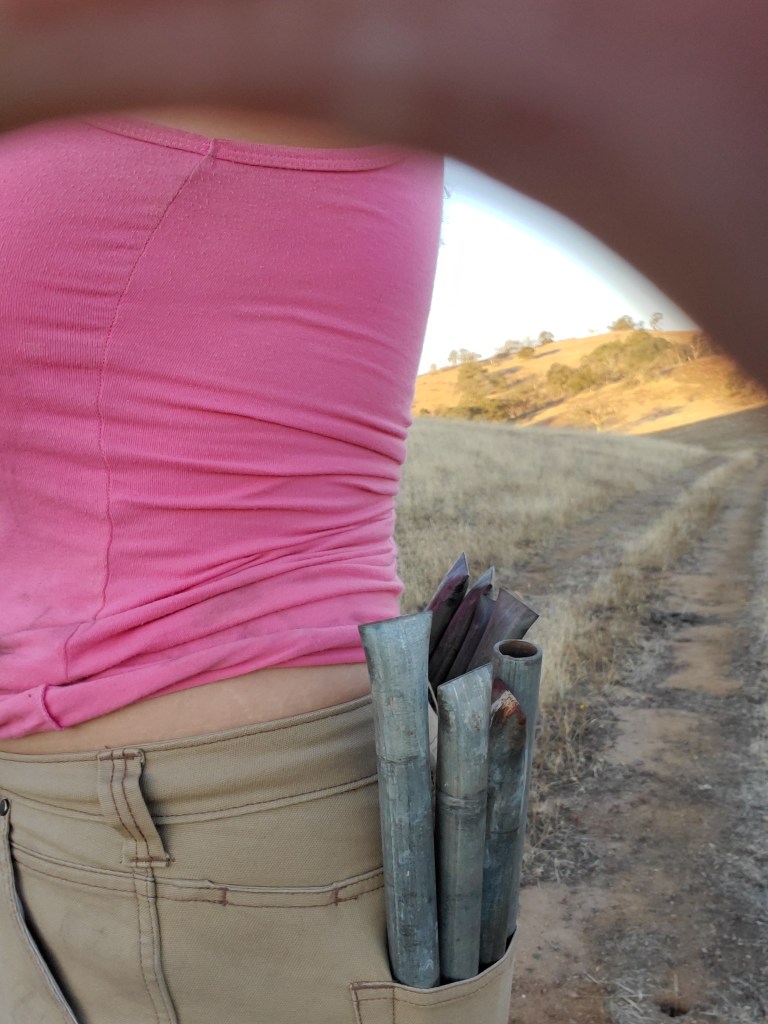
Planning our pathwayLoaded and ready to goBeginning to stage west of the creekI begin to take suppliesDavid gets a bright ideaTank site flaggedDavid unloadsSetting up a frame to gague where to put the post holesInitial frame upHappy as a clam from his 4-wheeling success, David returns for the evening
Blue Oaks Continue to be Planted
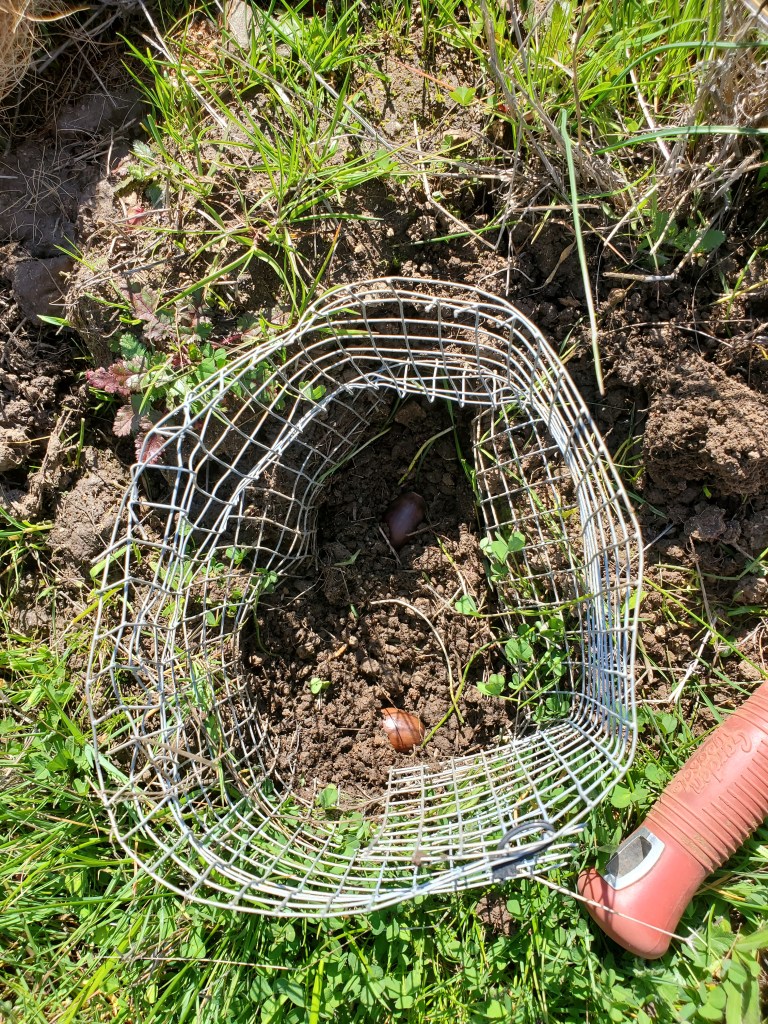
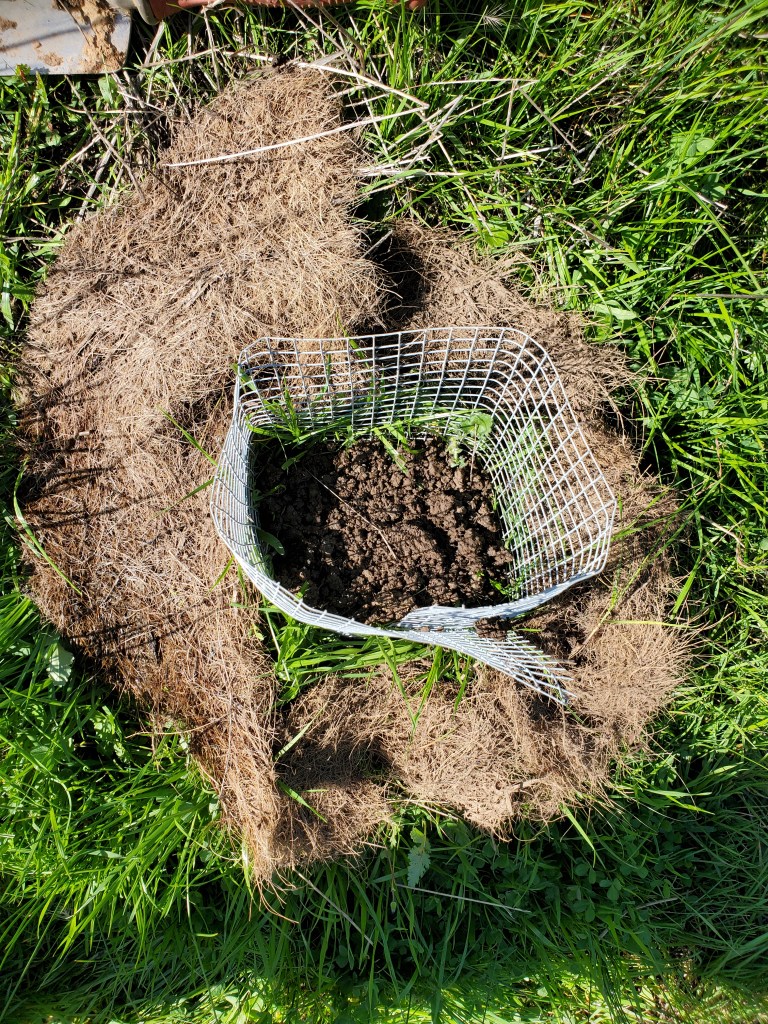
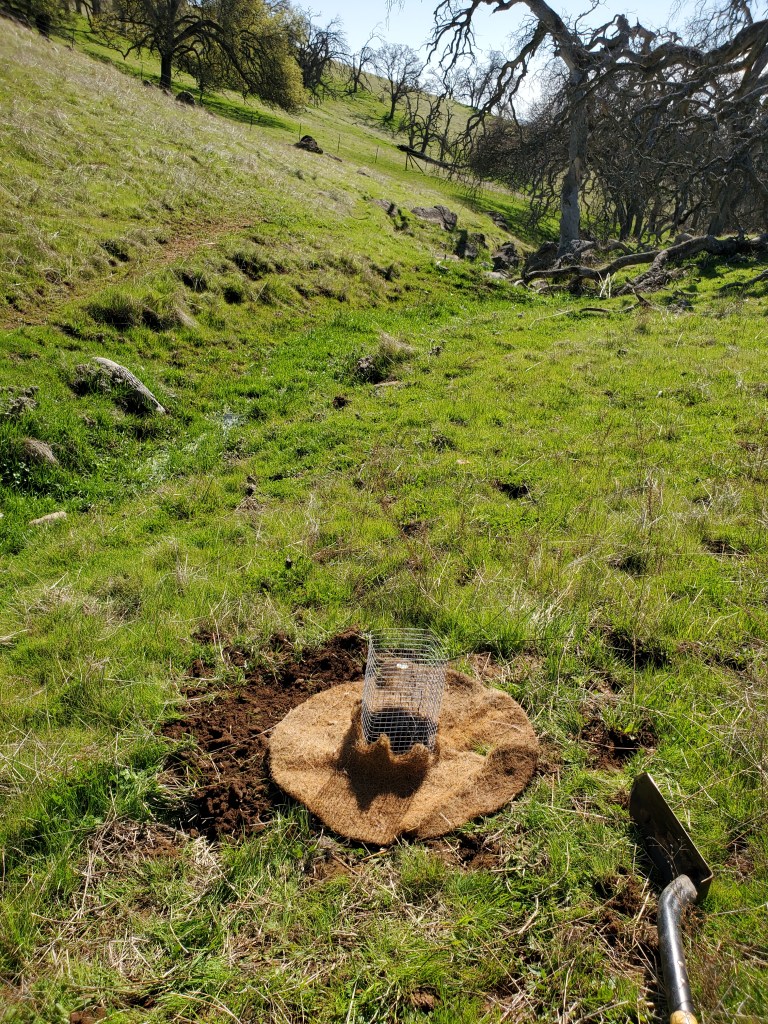
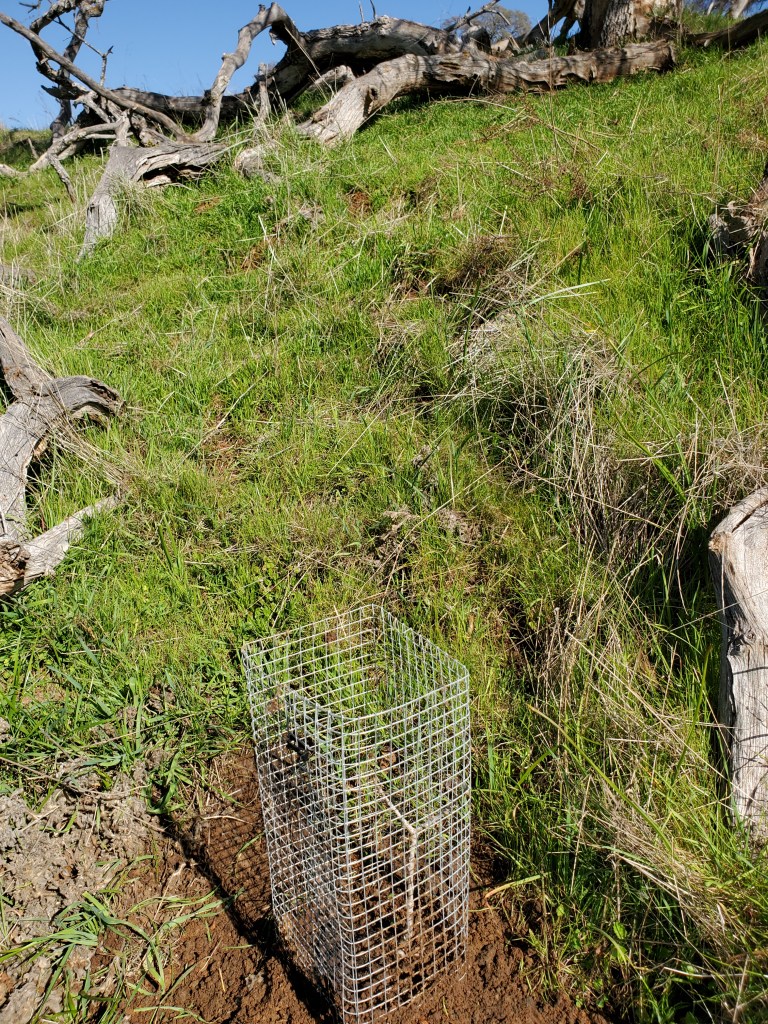
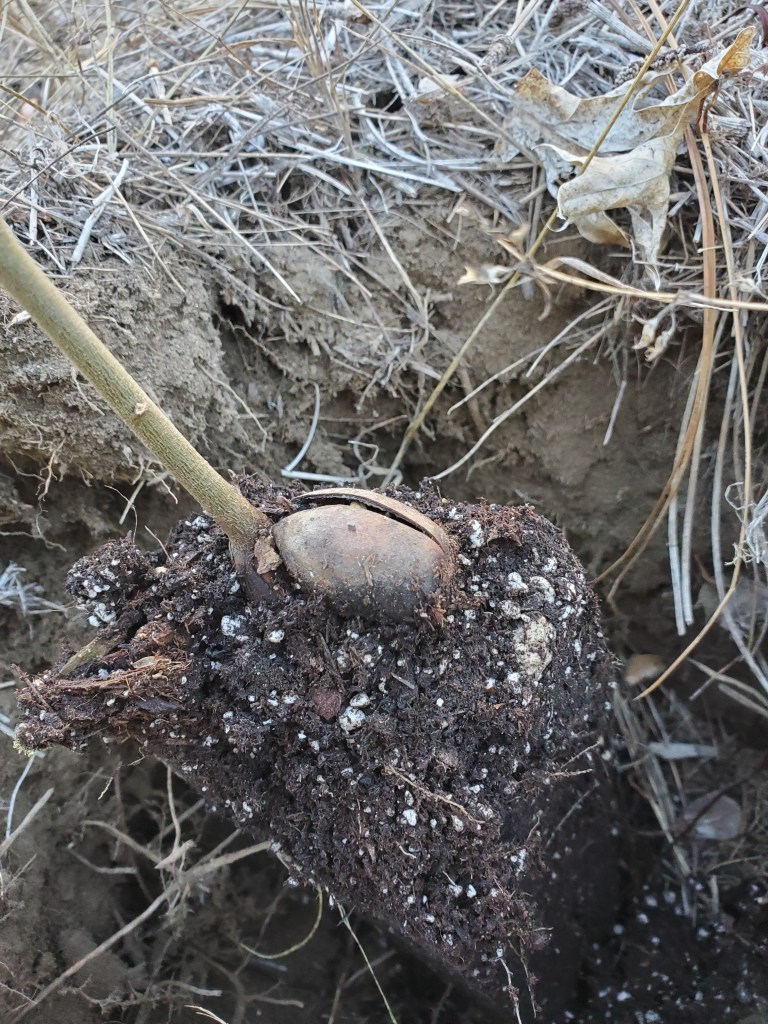
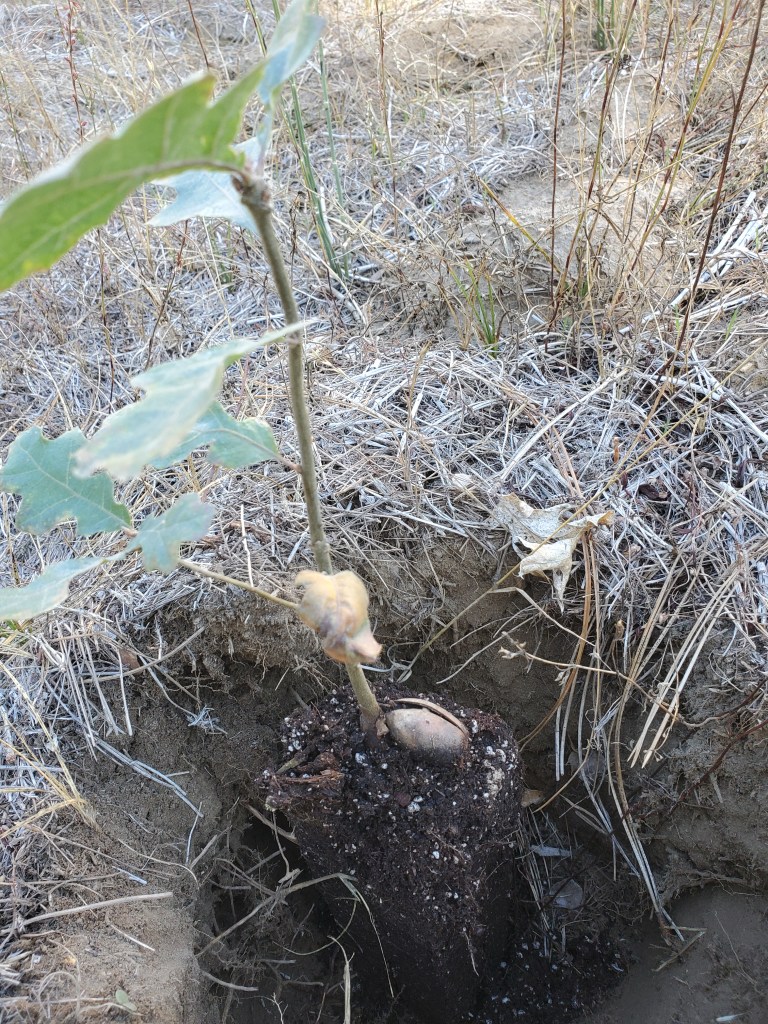
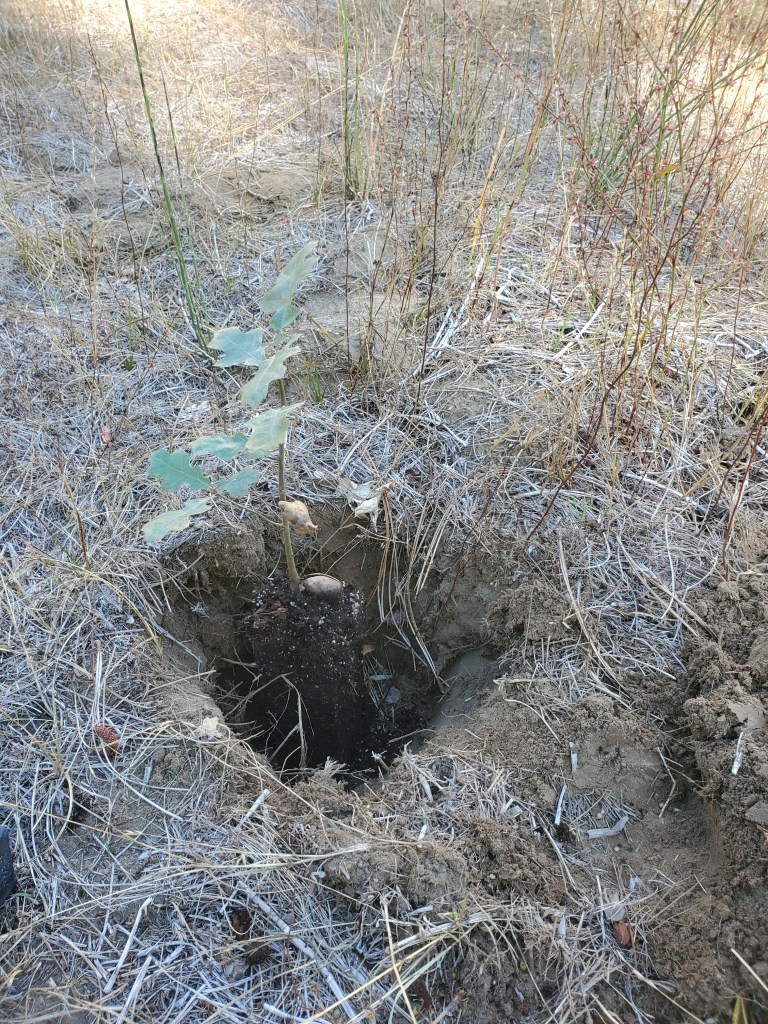
I have accelerated my work getting seedlings and acorns in the ground. With the challenges of life, I’ve not had enough time to spend. Fortunately, the ground was still soft from prior rains. It was easier to work with. Most seedlings required gopher protection. This means digging 18″ +/- holes in which to place specially designed cages with soft wooden bottoms that are long enough to allow the lengthy oak taproot to grow. The wood bottoms have holes for drainage and root movement. Conceptually, the soft wood bottom will rot in a year or two, opening up more space for the roots to thicken and become resilient.
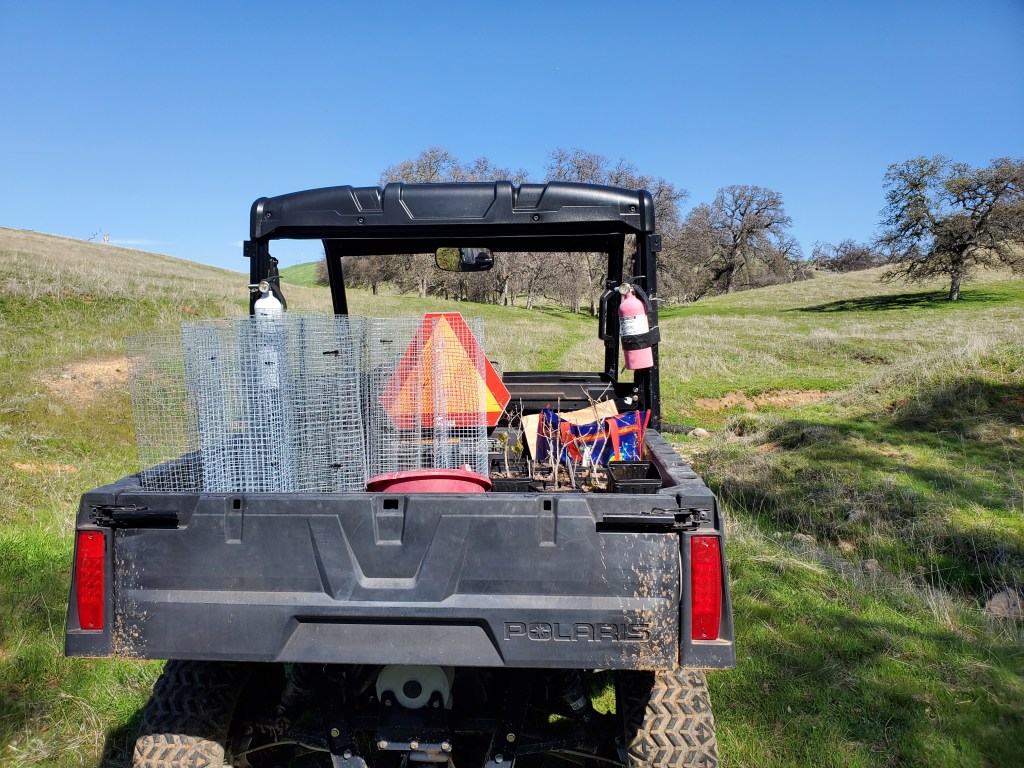
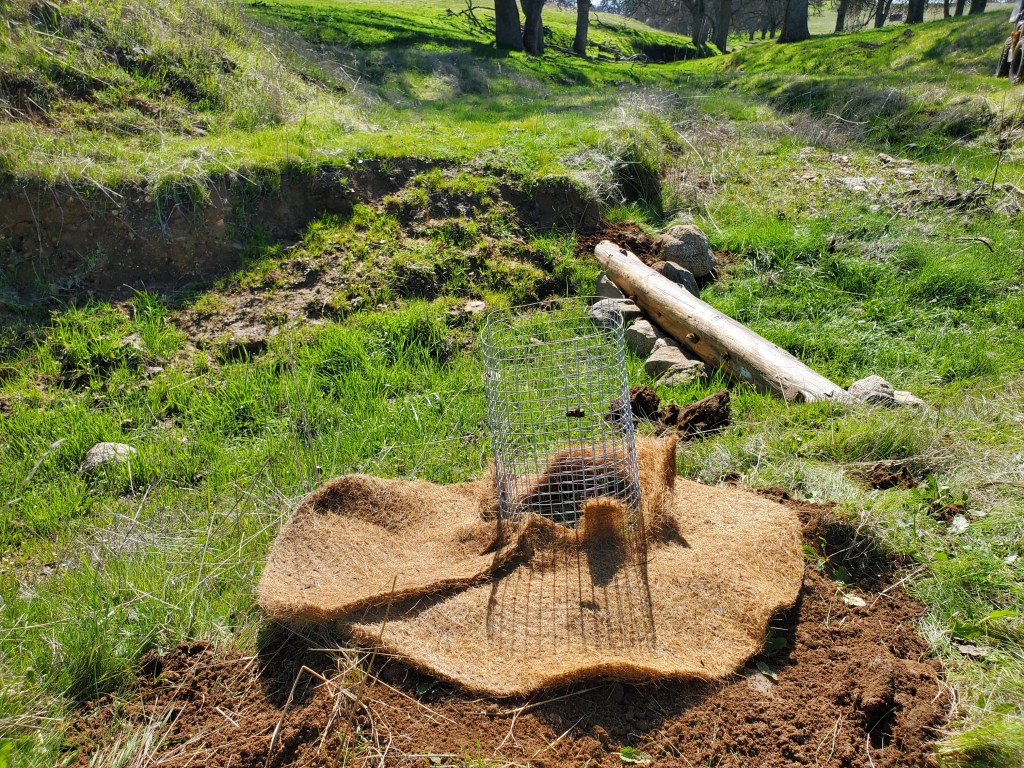
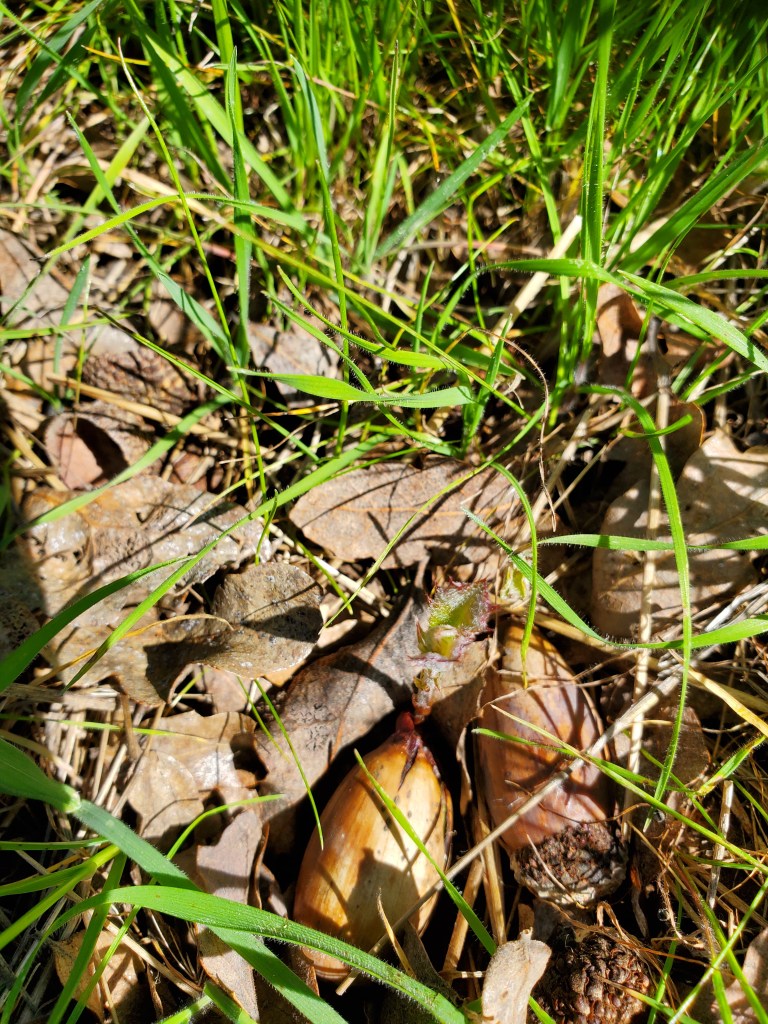
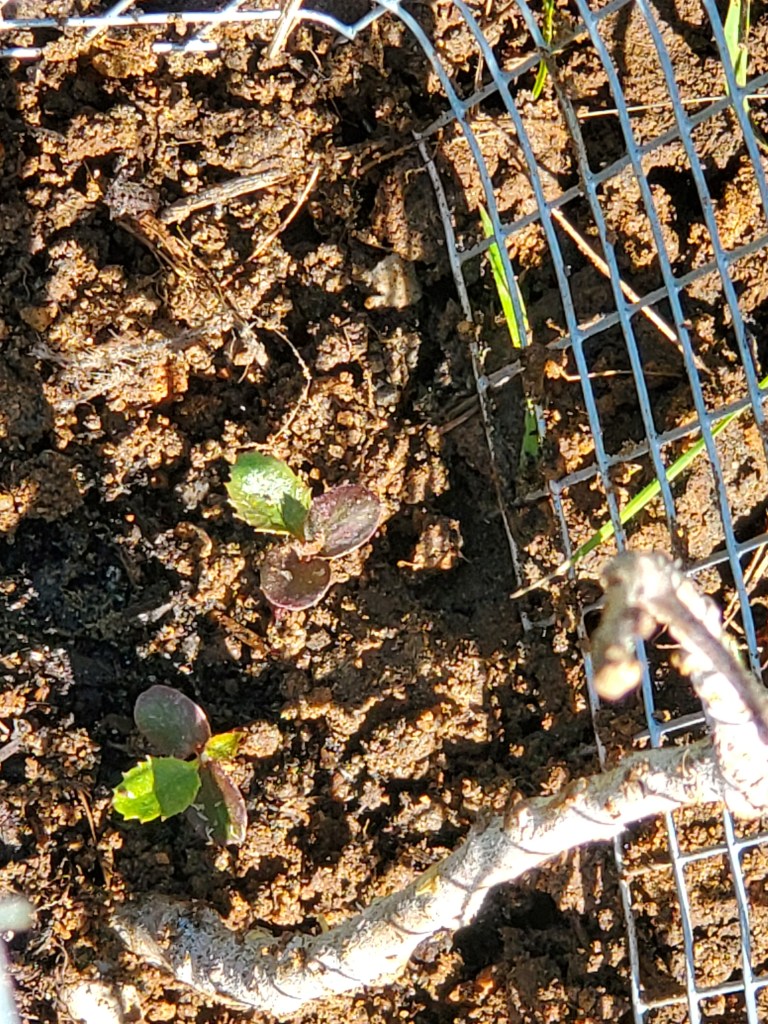
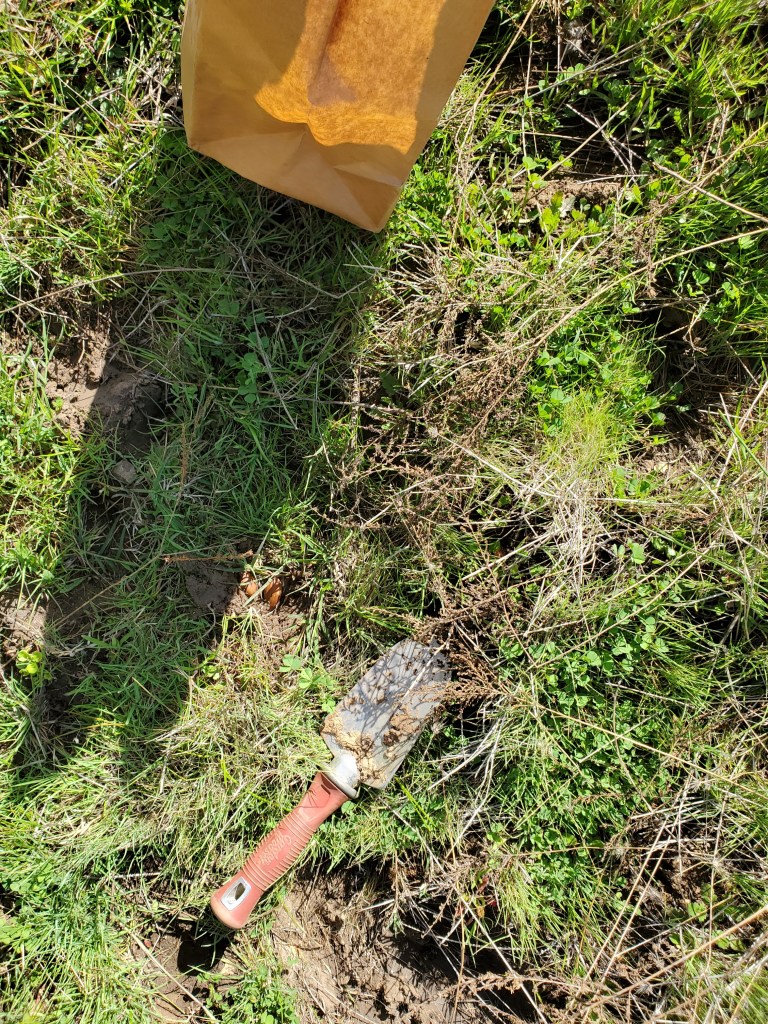
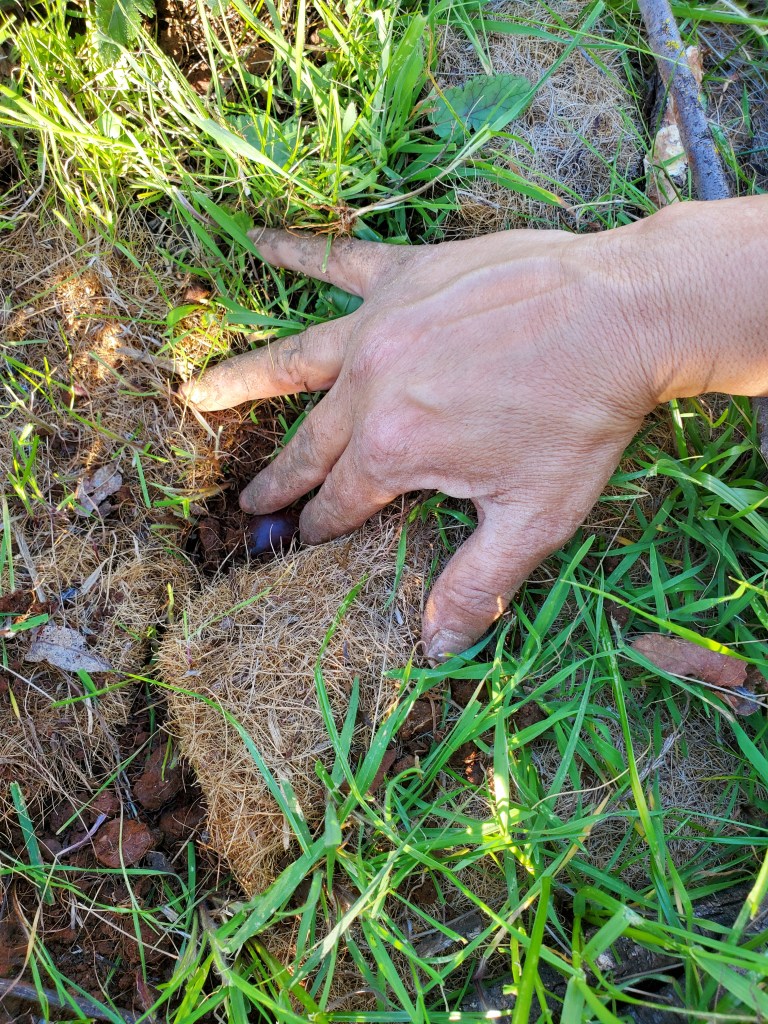
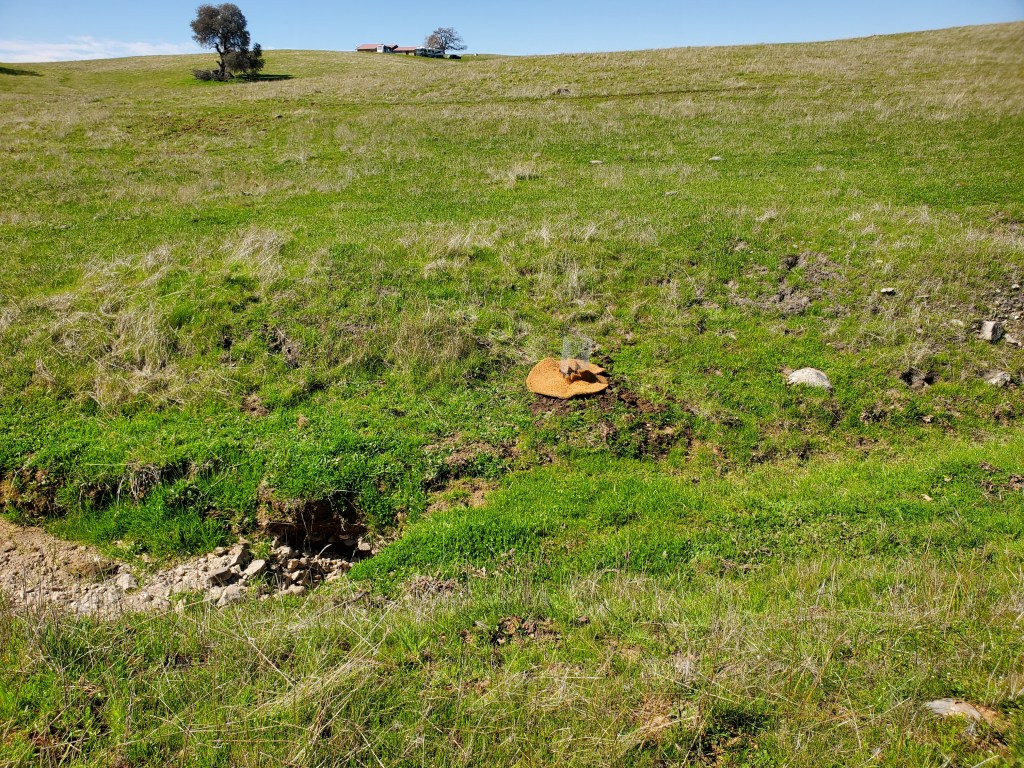
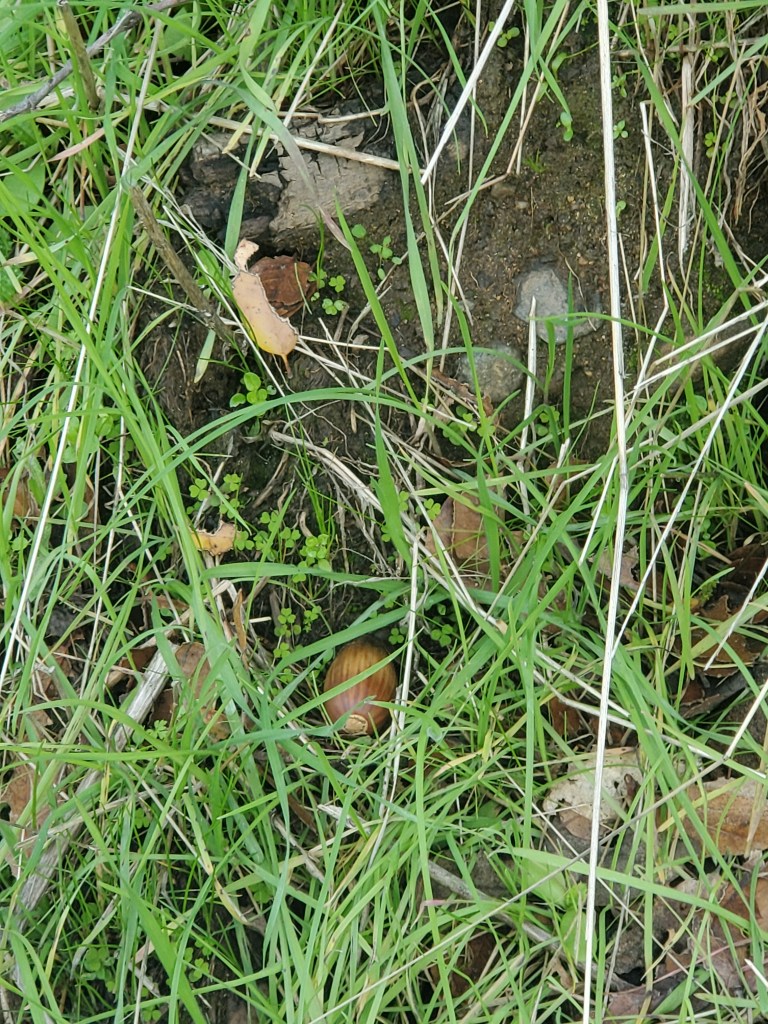
Placing acorn in last year’s cageAcorn covered lightly with soil and coir wrapped around the base for moisture retention and weed preventionMy bog bag of fall acorn harvested from the heritage oaks by the houseMini branch fence around a cage. They help me find the sitesLoaded up and ready to goA seedling planted along the Spring Creek bankFound a lanky oak seedling that I did not plantJust emerged oak baby from an acorn I did not plantSeedling planted inside cattle exclusion areaSeedling planted in treeless area of Spring Creek. Next step is building a fenceTwo spouts from seedlingAnother oak seedling planted upstreamExample acorn planting along the creek. Look at 11 o’clock from the hand shovel. There is a brown acorn. I will cover it lightly after the photoAnother acorn planted in a site from last year
In all, I planted close to 60 acorn along the creek and in five cages left over from last year. For the seedlings, I planted three along the Spring Creek, three in the new grove near the driveway, and four near the house. I will be planting five more down slope from the house in an effort to repopulate two areas with oak die-offs. Those will take a little more time since I will be creating a trench above and below each seedling to capture more rainwater. This will help increase soil moisture near where the roots can access it. I still have a pile of local oak bark to fill the trenches and absorb more water. The next step for all of the oaks outside the exclusion zone will be to build a fence.
New Log Drop
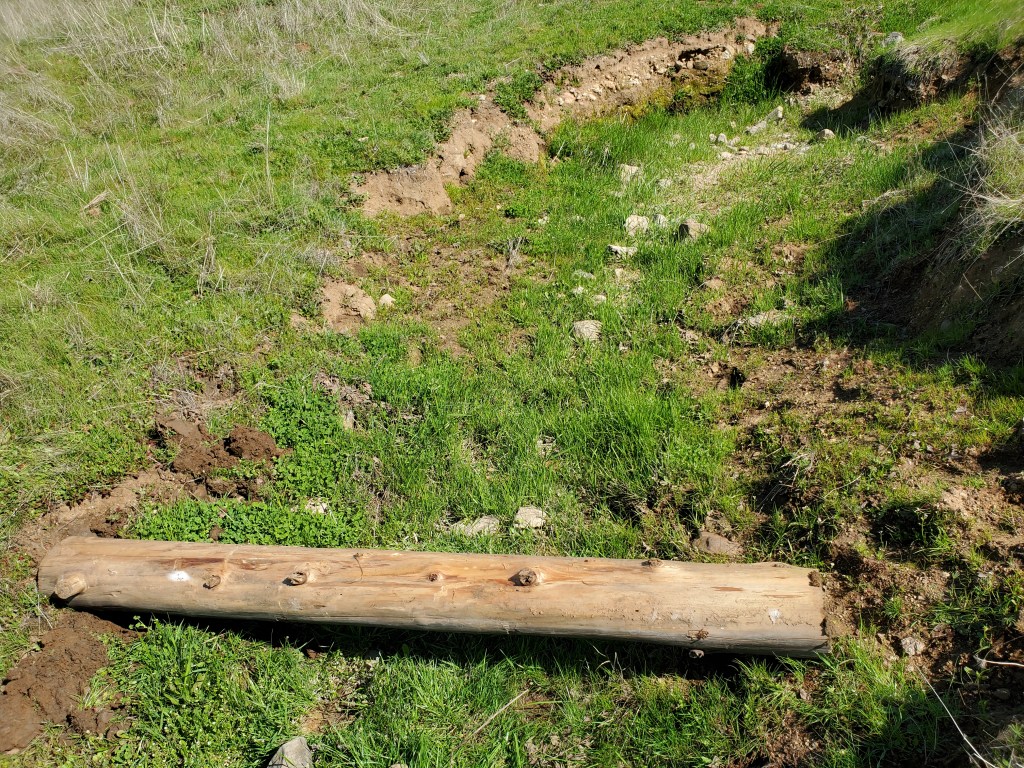
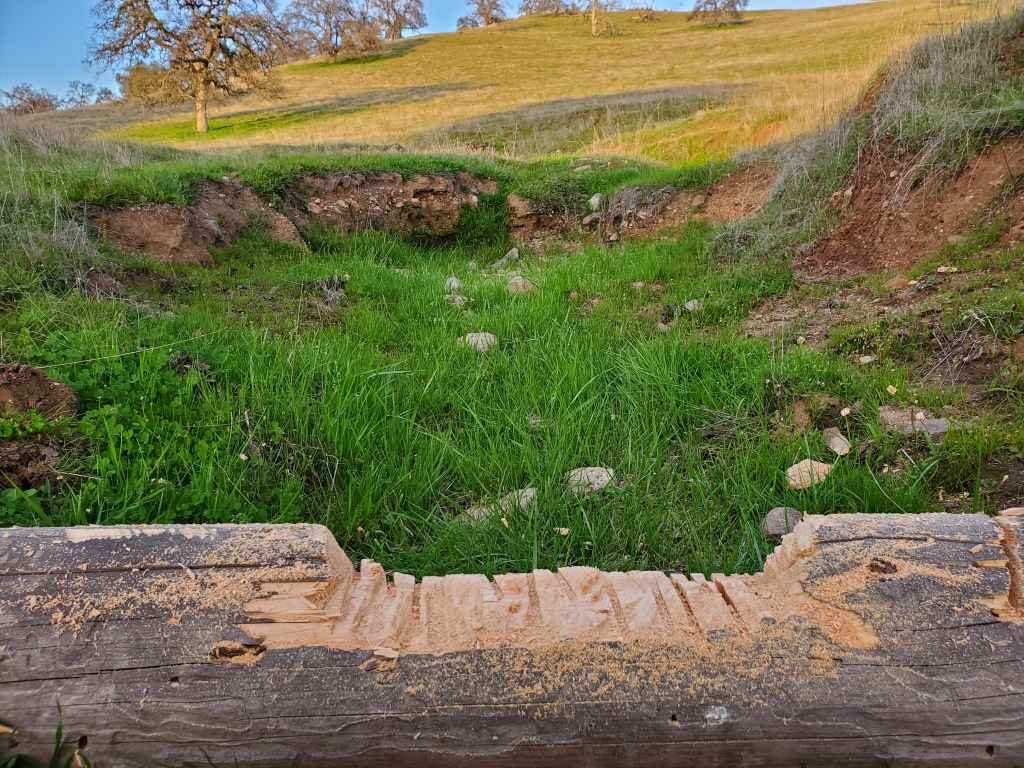
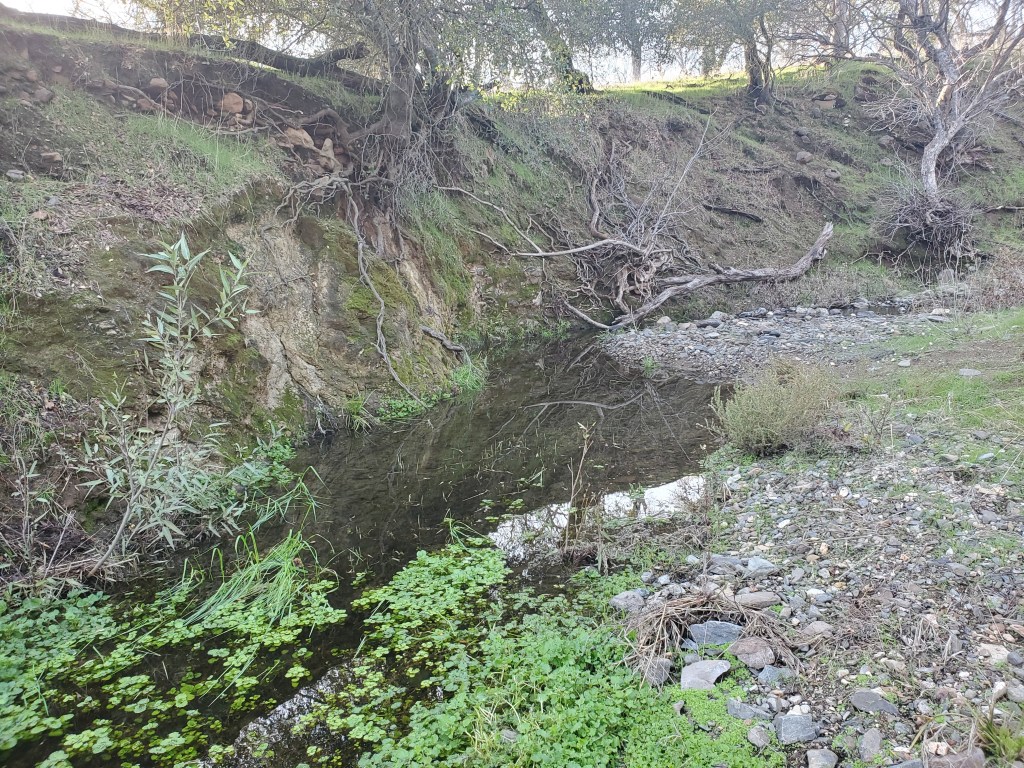
I created a very informal log drop further down stream on the Spring Creek. Again, the goal is to slow the rushing water from increasingly aggressive storms to try to retain the soil moisture and give the land more of a chance to recharge ground water. I also placed an oak behind the log drop to, hopefully, provide more moisture for the oak to thrive longer in dry conditions. The soil has a lot of clay, which retains moisture. There are groves up and down stream from the oak planting area, so I think the soil can work for these oaks.
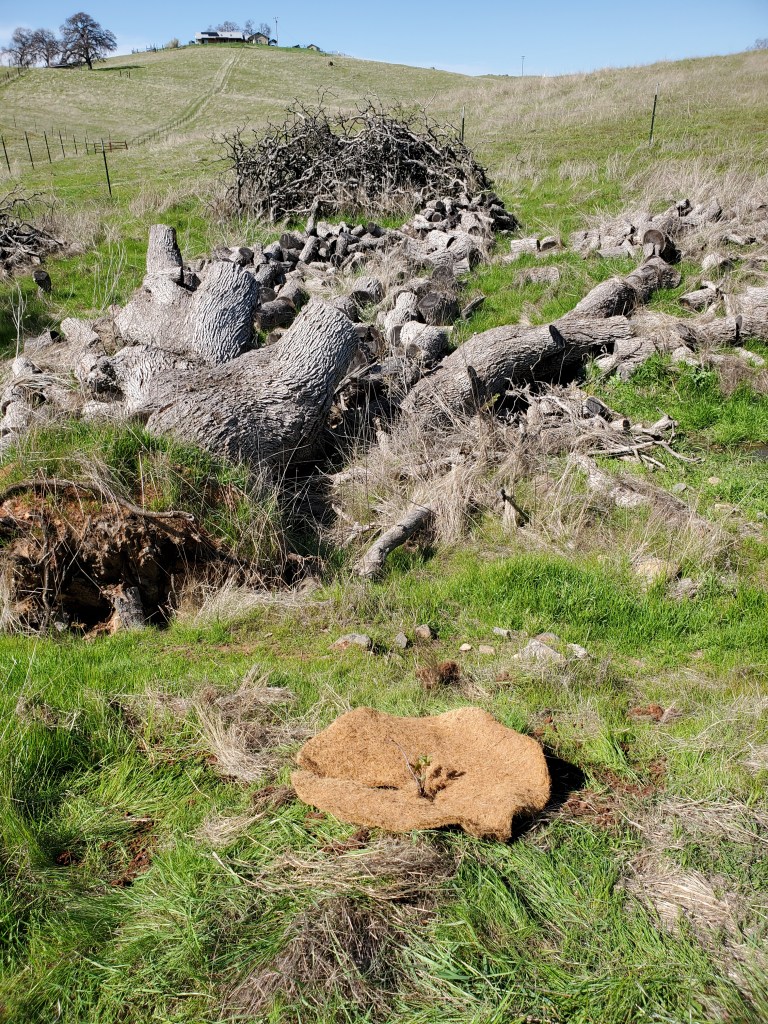
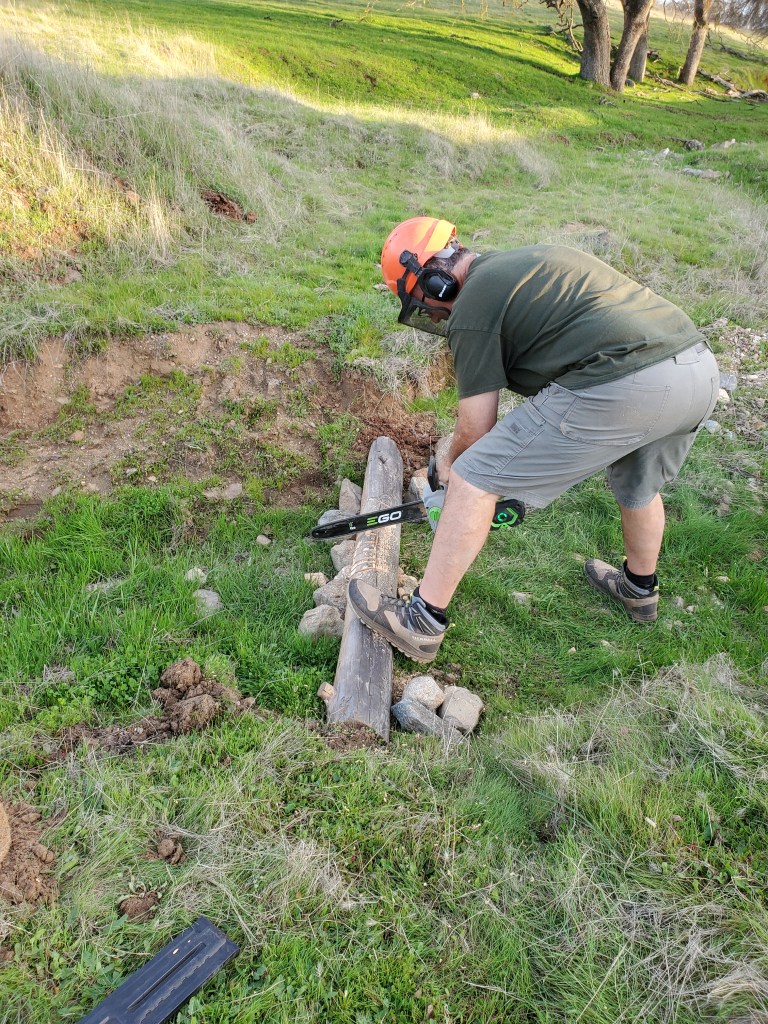
Cedar log placementBeginning to rough it in and then set rocks to dissipate the water energyArea of the oak plantings and log dropNo trees in this sectionDavid stop on his way back from the guzzler project to help. I scored the channel and he made lateral cutsCompleted spillover channel. This helps take the pressure off the log
Wildflowers are Up
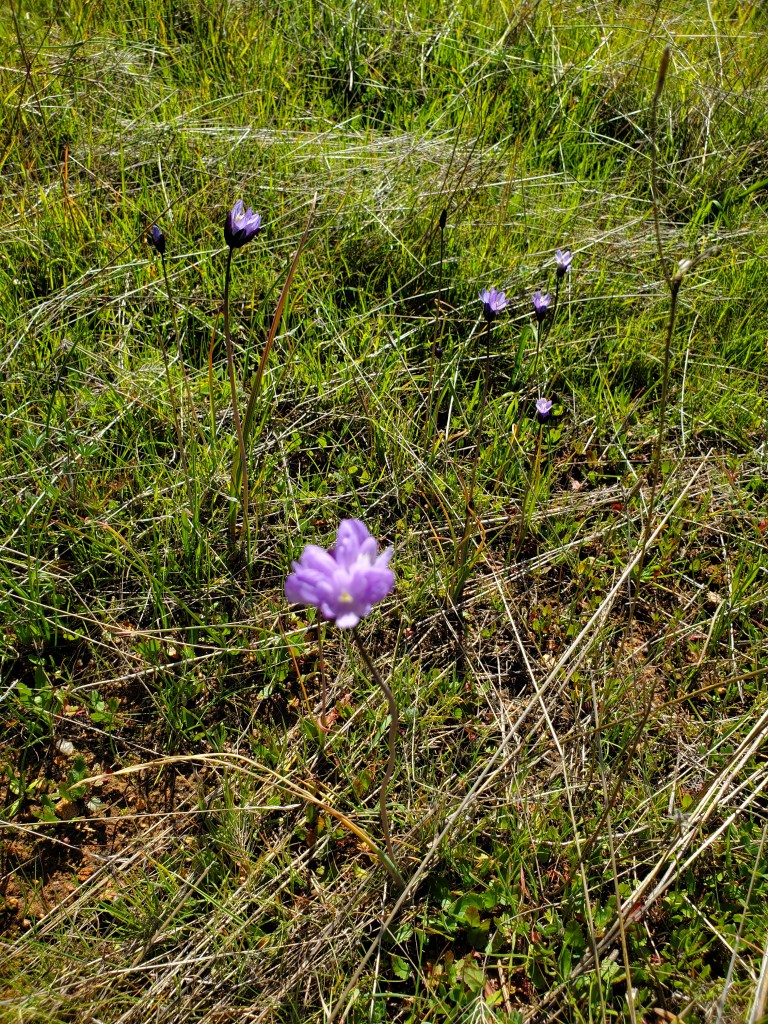
The wildflowers are in full display, with more blooming each day. There are so many colors – blue, purple, orange, white, and of diverse variety. I also saw my first butterflies on March 1 (possibly buckeyes. They were brown) and heard a large bee. Spring is happening whether I am ready or not…I’m not. The air is smelling like nectar. In another few days it will be heavy with the perfume of a million flowers.
Odds and Ends
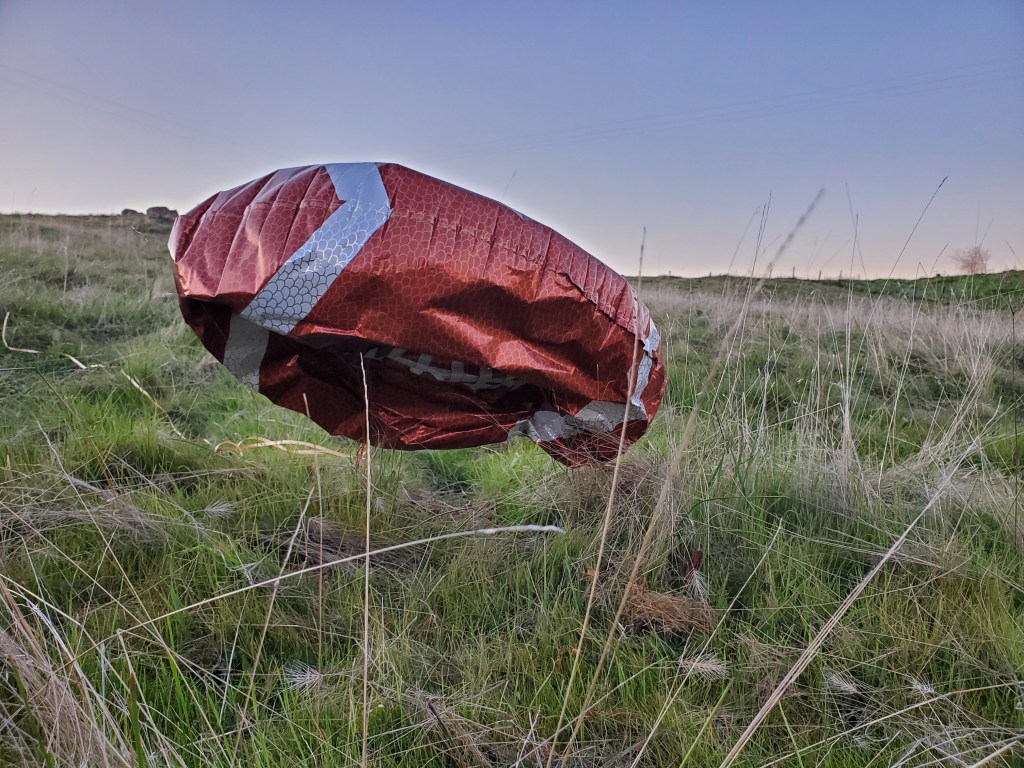
The joy of living here and caring for the land is immense. There is always so much to see and experience, even 22 years later. I pick up garbage that floats through the creek, blows down the hill or floats in the air. It seems we are always finding mylar balloons. Please don’t purchase them. They are trash and end up at my place. They can kill calves who do not know what they are and eat them.
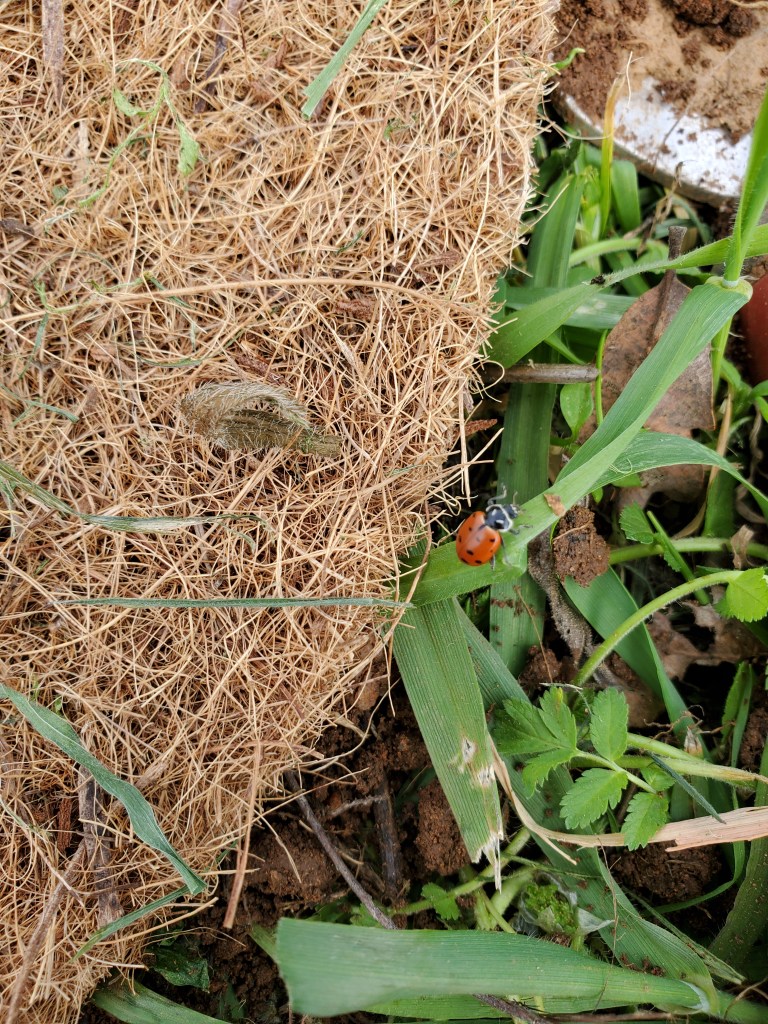
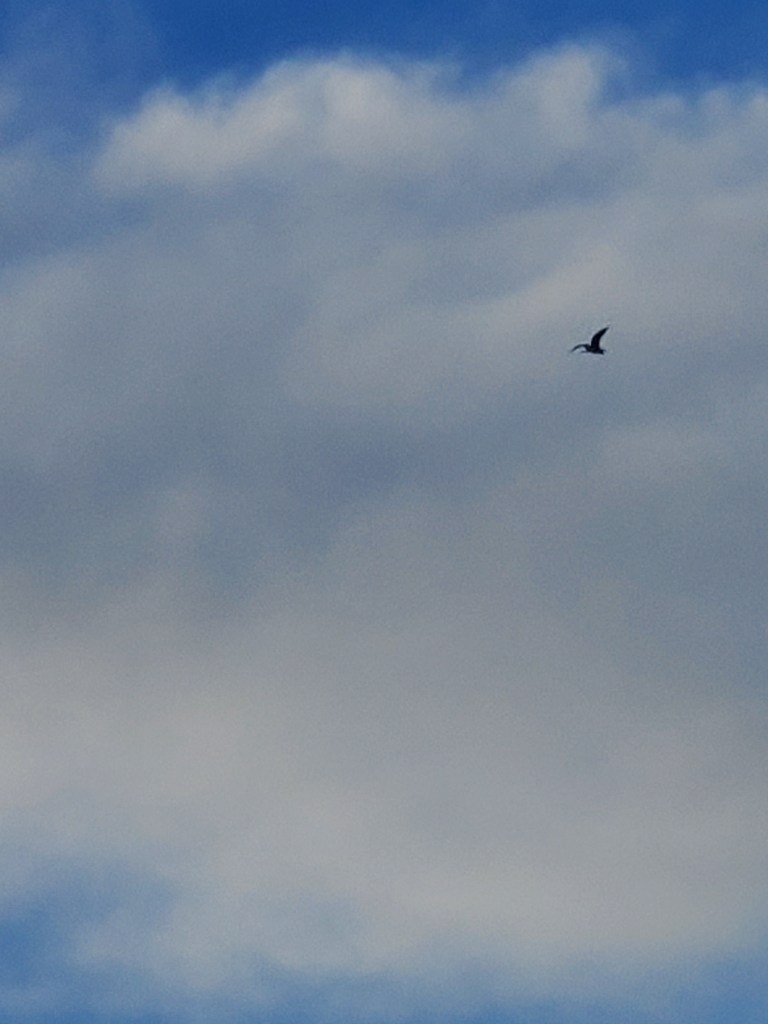
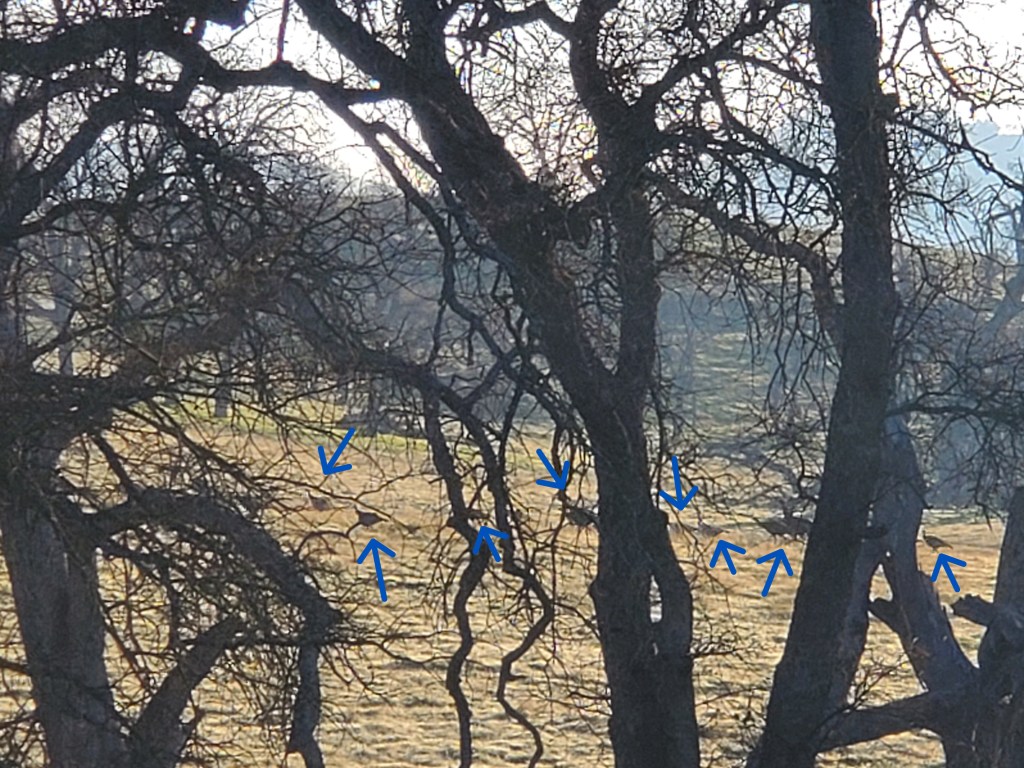
While planting oaks, I heard a whoosh near my head. Two redtail hawks in their mating ritual, dove and sped back up high near where I was working. It was incredible to see and hear them so close. Getting an early start to the day allows us to see so much wildlife. We saw a huge group of turkeys. They are large and interesting, though they are not native. They eat the eggs of quail, harming their populations. I wish a bobcat would control their population more. People think they are cute and feed them just a few miles down the road, but they are very destructive. I would rather see quail than turkey any day. The lady beetles are out. They are really beautiful. I used to see them incubate in tree bark as a child. We had so much abundance then. The other evening at dusk, as David and I were finishing our work, we saw a great blue heron flying to the east. I hope it stopped at the neighbor’s pond and decided to stay a while. We used to have a mating pair that would return each year. They had their nest in a tall bull pine on the neighbor’s property. It fell one winter. When the couple returned the next year, they did not stay. The male would come back year after year with no mate. What a loss.
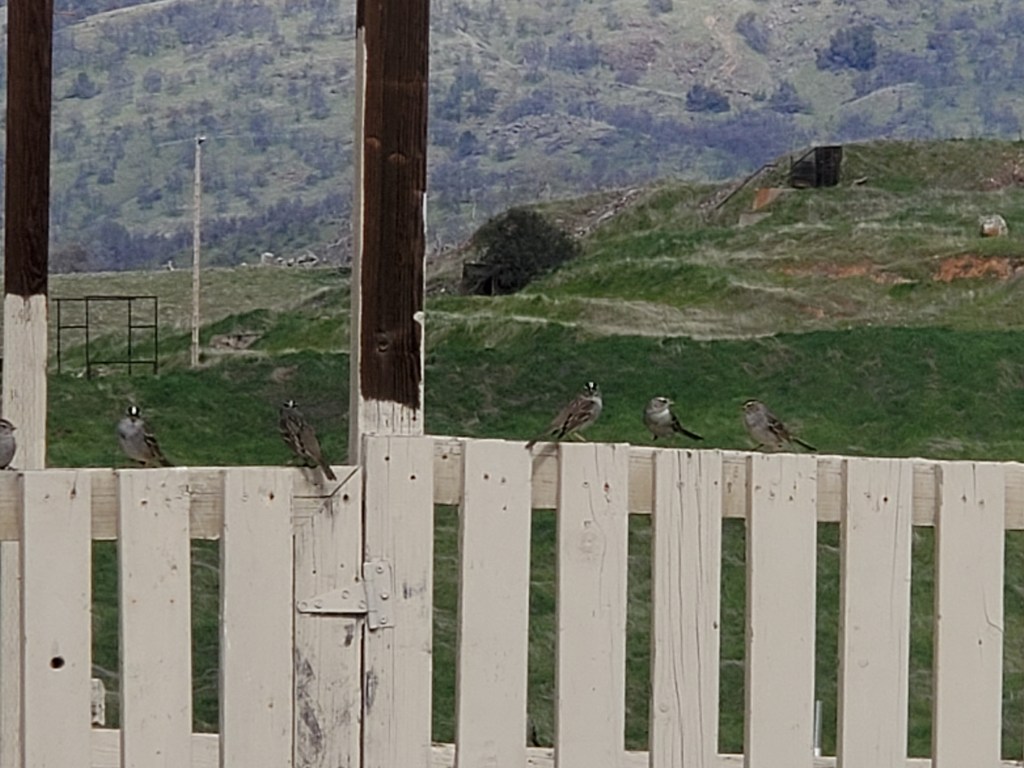
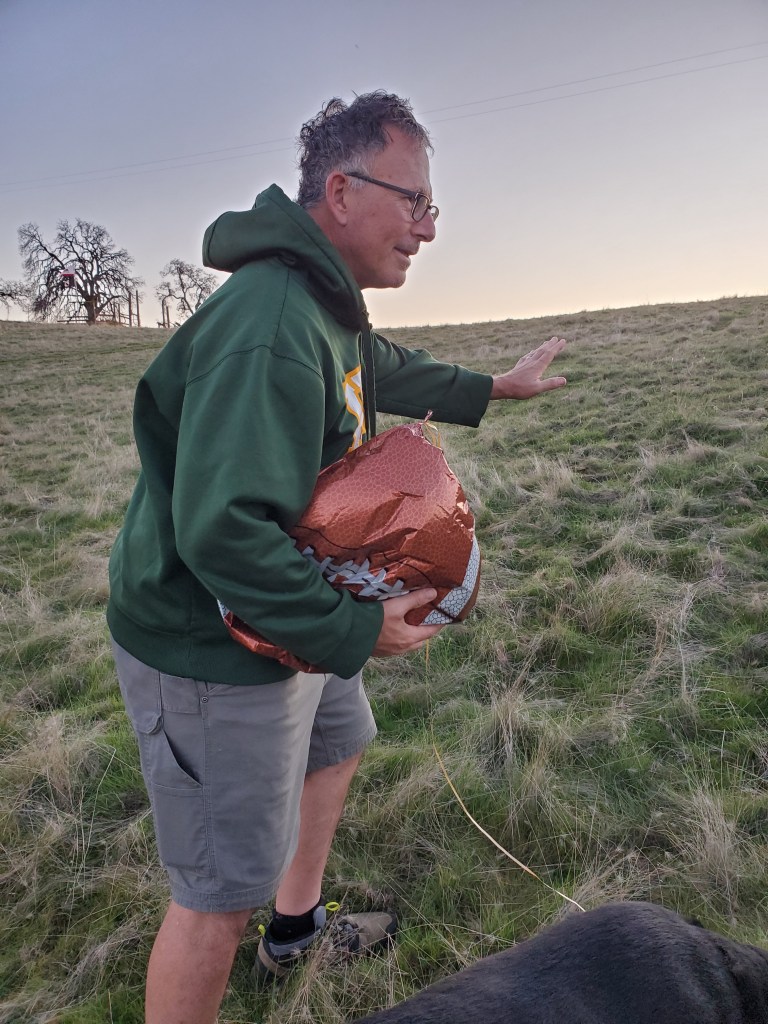
Planted an oak I found among my nectar plantsWhite crowned sparrows hanging outLady BeetleCalifornia Sunflower. Planting nectar plants in addition to oaksMylar football balloon in the far north fieldDavid goofing aroundGreatBlueHeronMass of turkeysHawks in love
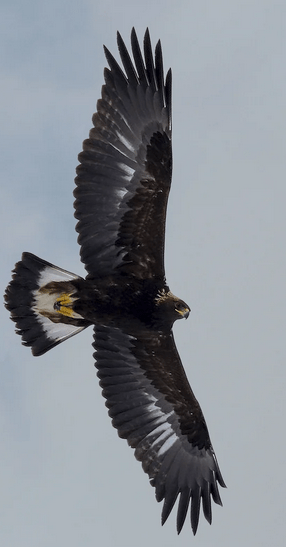
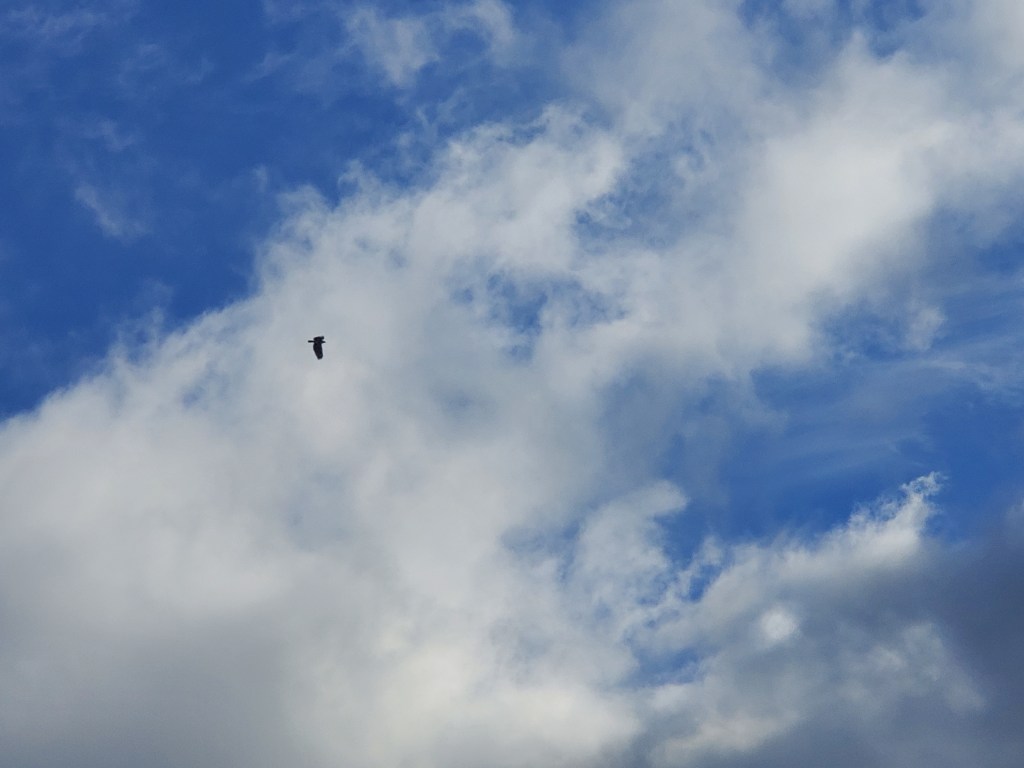
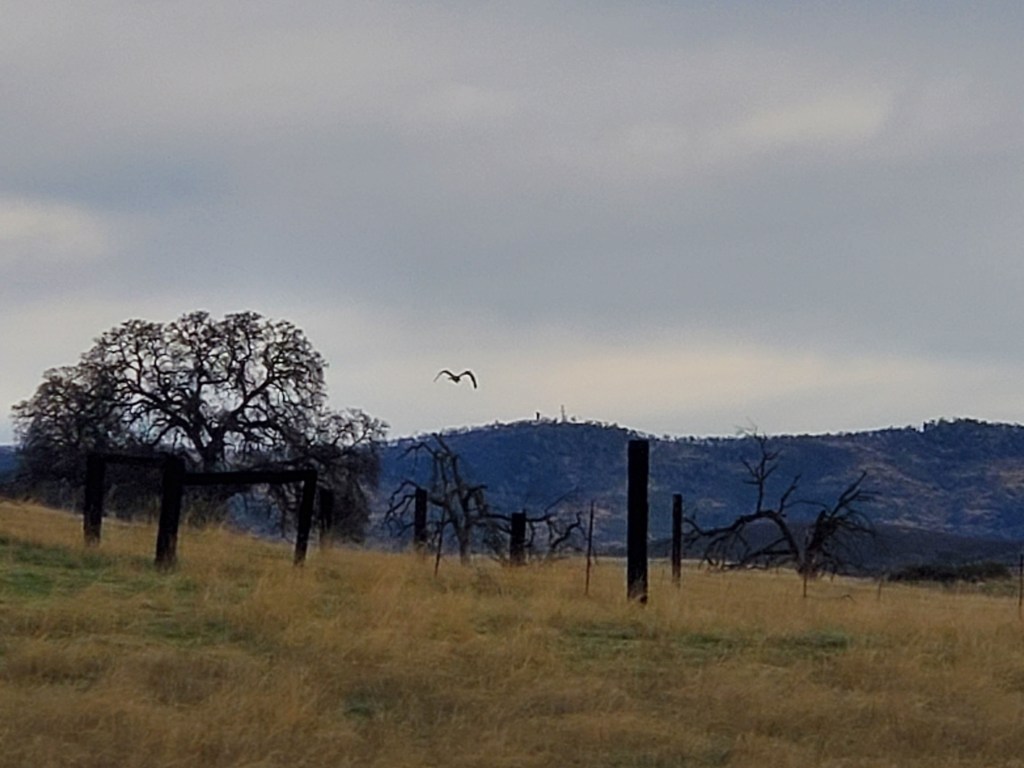
Probably the most exciting thing I have seen in a long time was a golden eagle. It honored me with its presence on February 27. I was looking out the living room windows, which look to the east. I saw a massive bird fly down the hill. It circled the tree near guzzler 1 then flew back over the house. I dropped what I was doing and flew outside. It was about over the house then, so I rushed around the side of the house to get another glimpse. It was massive with long, dark fingered wings and gorgeous white patches underneath. It flew north west, presumably to the Merced River, which is close by.
I screamed. David thought I was crazy. I couldn’t stop telling him about it. My goodness, it was gorgeous. David finally protested after the third retelling, and I said, “Now you know what it feels like when you tell me constant ‘bug in the compiler’ stories about your tech issues.” “Touché.” he said.
We are doing something right when an eagle comes to visit. We work hard to be good stewards and good ancestors. Thank you eagle for letting us know.
This is what it looked like, but it all happened too fast to get a picture. Photo credit: RaptorResources.org
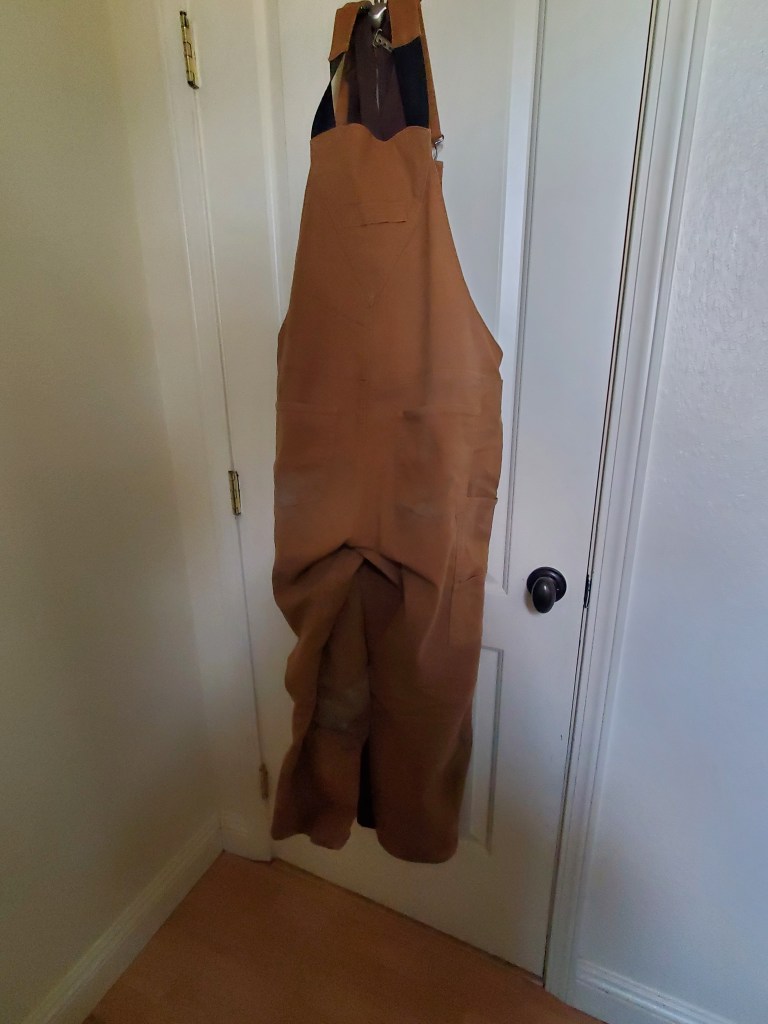
It has been a rough ten months months, especially the last few. My father’s illness has become nearly all consuming, now an irregular regular part of my life. For months, my overalls have hung in the guest bathroom, a reminder that I still have other commitments, patiently waiting for me to have time to really dig into work.
Fortunately, at the end of December, life was a little more stable, and I got to slip on my beautiful overalls once again. Ooooo, they felt so good – worn in cotton canvas covering my skin, enveloping me like a human sized garden glove. Those overalls are my absolute favorite piece of clothing.
California Milkweed Seeds Planted
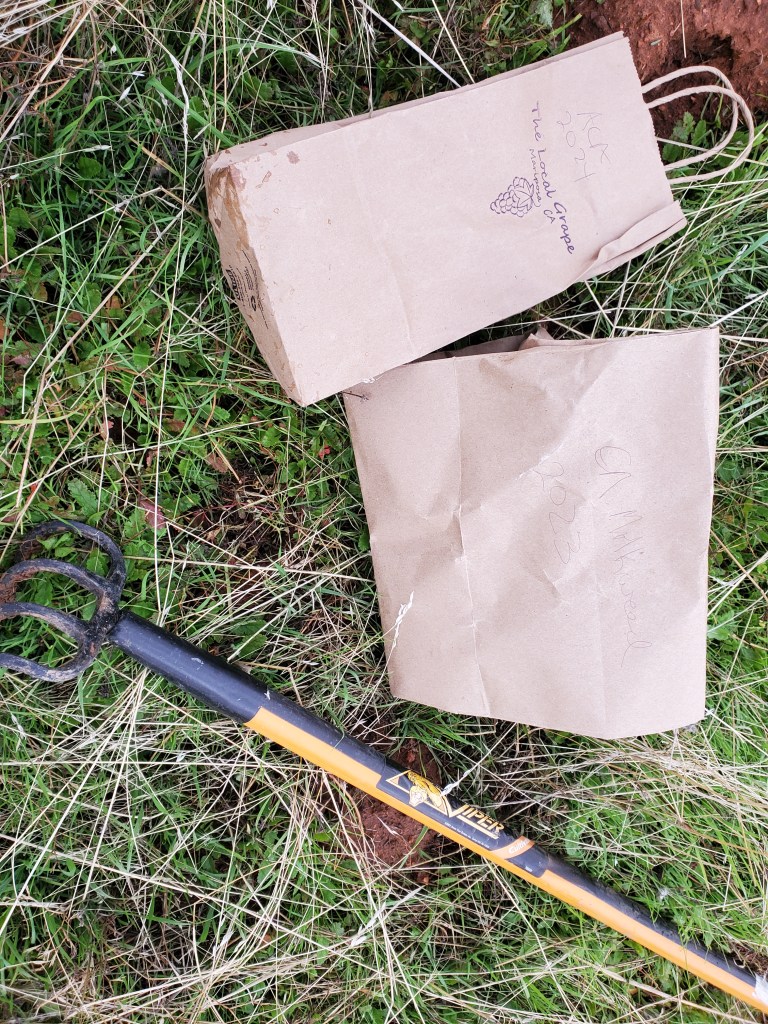
I shuttered with delight as I walked out into the cold air, overalls on, before the sun came up and with all intent to finish planting before the rain began. At a time in the past, one of the biologists told me that there was some evidence that 2 to 3 year old California milkweed seed had higher germination rates. In 2023 and 2024, the seed pods I saved from the ravages of the grasshoppers were intended for planting a year or two or three later. The 2023’s were maintained in a cool, dry, dark place for a nearly 2 years. The 2024’s were were maintained the same, but for just two seasons. I brought them both with me, including my trusty small rake.
I made my way up the steep slope to the California milkweed site to plant seeds. My goal is to expand the number of California Milkweed plants. I want them to spread all the way across the hillside acting as a welcome roadside respite for monarchs, a first or second stop on their great migration. I looked for new spots to plant. Last year, I planted the 2022 California milkweed seeds, and I wanted to avoid those locations. I chose the area of the single plant community near the dead oak. There were many spots near rocks, and along the same belt as the existing plants. I try to emulate what I see in nature hoping it provides a better chance for the seed to establish.
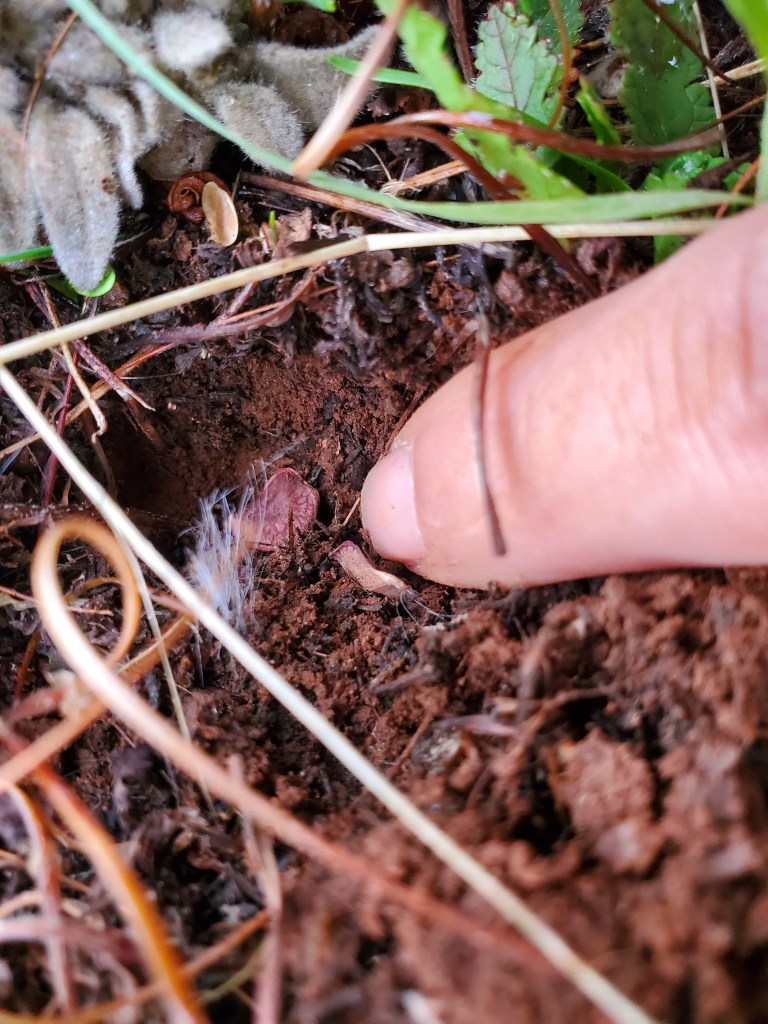
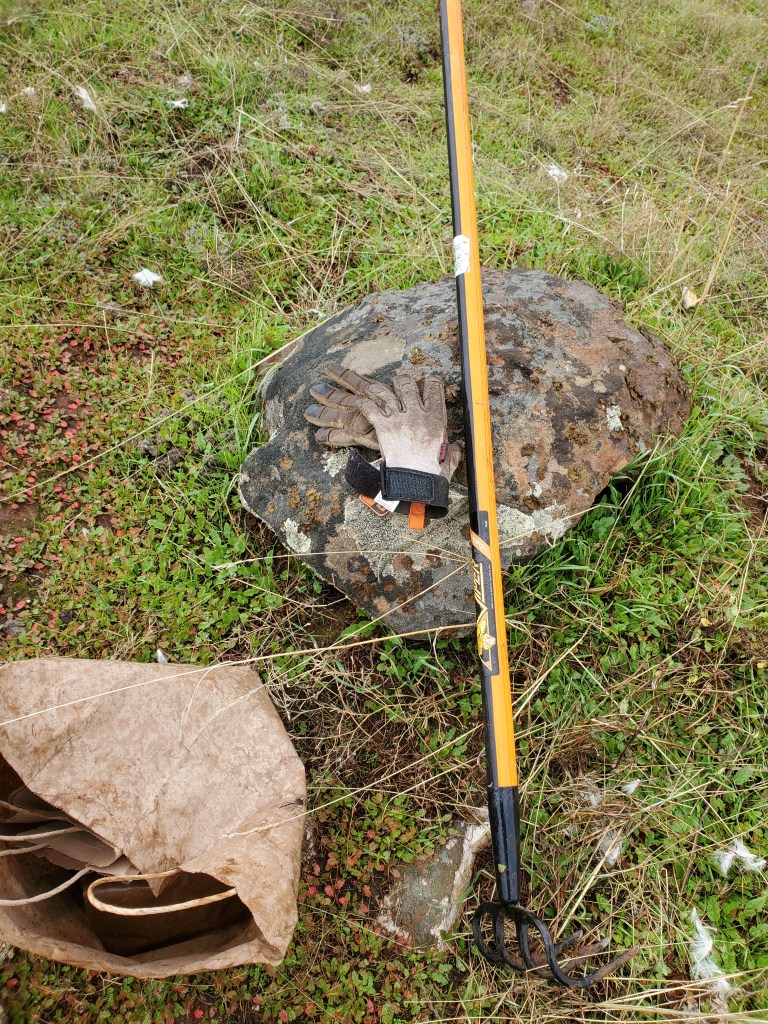
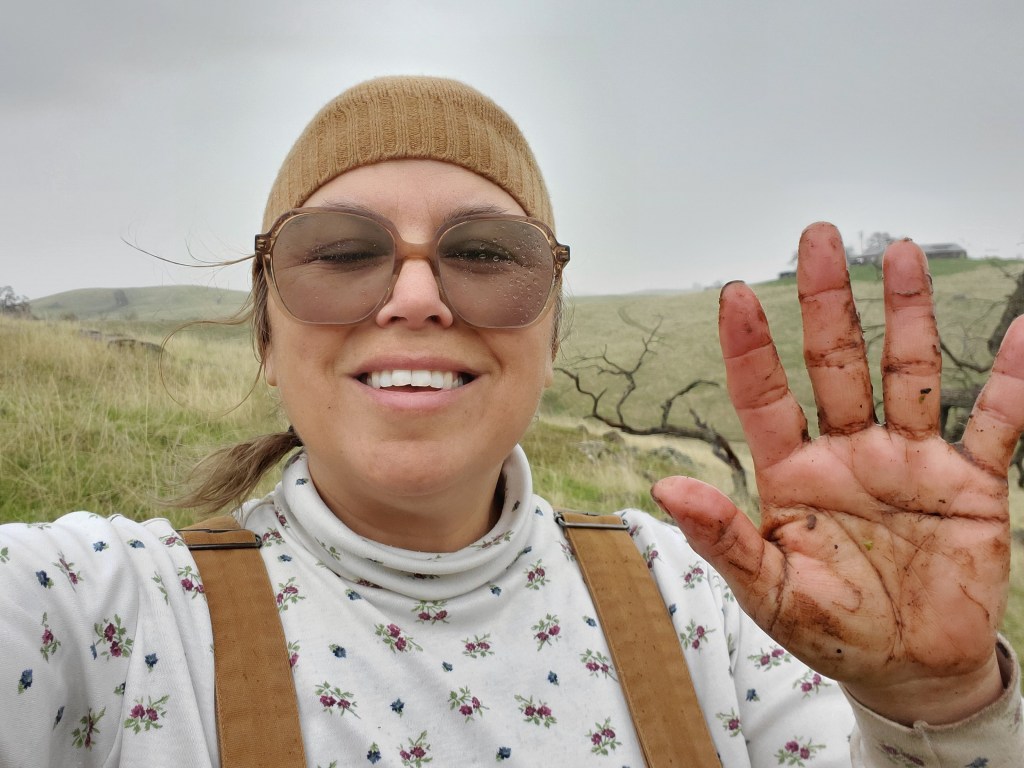
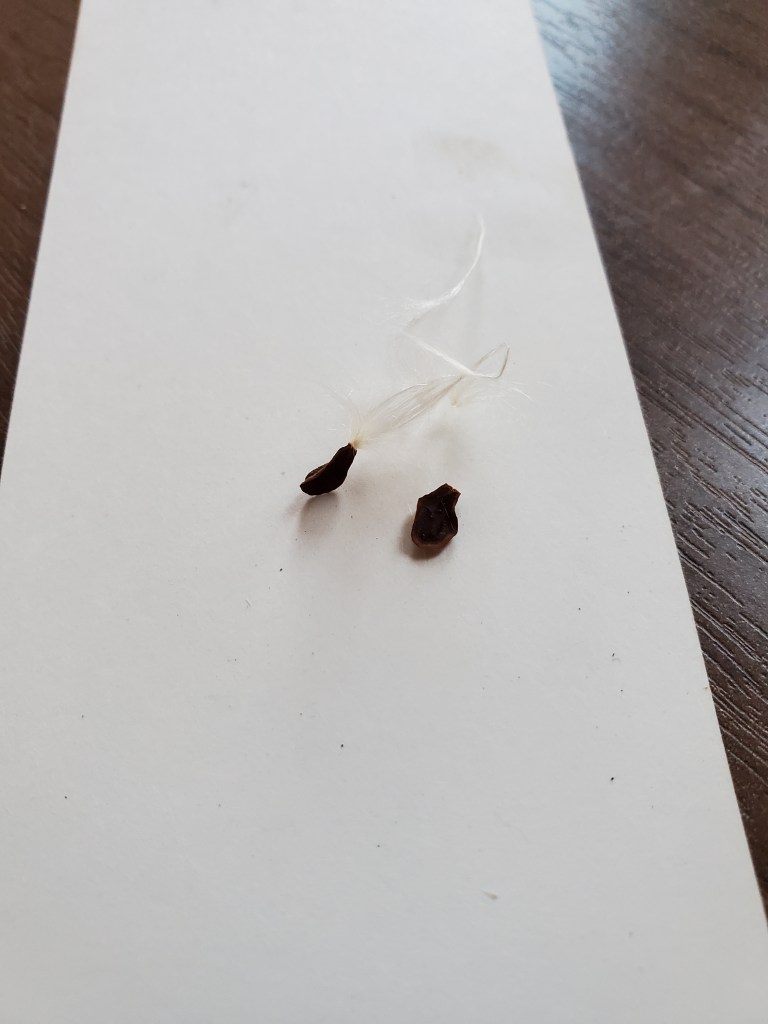
I started out raking the ground open, but quickly decided I needed to get more personal with my work. The gloves came off and the rake set down. It was me and about 300 seeds, many still connected to the fluff they are born with, meant to sail on the wind to spots further from their home. And, further from home they were — about 100 feet. I took off the fluff, made a hole with my finger and planted three to ten seeds per hole – depending on size.
It was so nice to see them after so much time. By this time, they are good friends – family, companions to me inside my home. Every seed is a treasure, embodying the past, present and future all at the same time. We all depend on this seed. When they grow, they will feed bees, flies, beetles, spiders, and yes, monarchs. Those animals will cause their own shift in the ecosystem, ending up causing my and your food to be produced. You cannot avoid being humble in the presence of such importance. All you can do is say, “Chiokoe uttesia weweria. Ne enchi nake.” “Thank you relative. I appreciate you” – and tuck them into the soil that will be their forever home, if we are lucky.
Beautiful sunriseRain is comingBags of seeds and my abandoned rakeThe treasure!Rain beginsSeed with its headdress of fluffBull sniffs Cow. Cow ignores BullOld pod of CA milkweed seed with its treasurePlanting the seeds, a little fluff made it inRake and gloves abandoned. Time to get the hands real dirtyDirty hands – happy girl
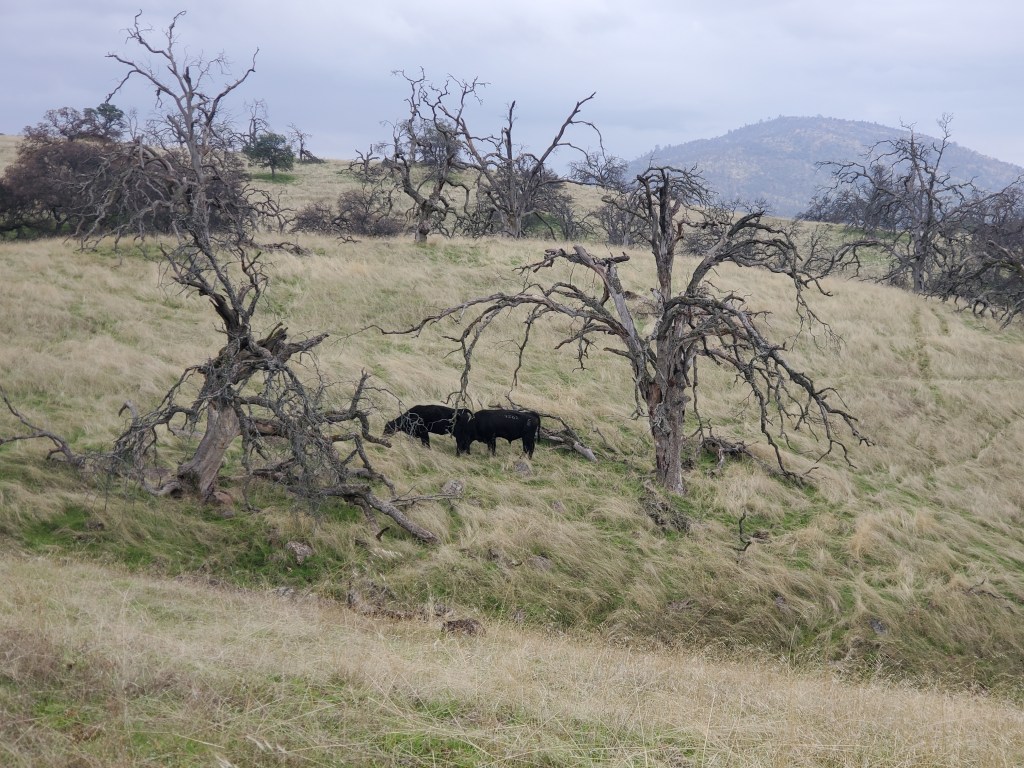
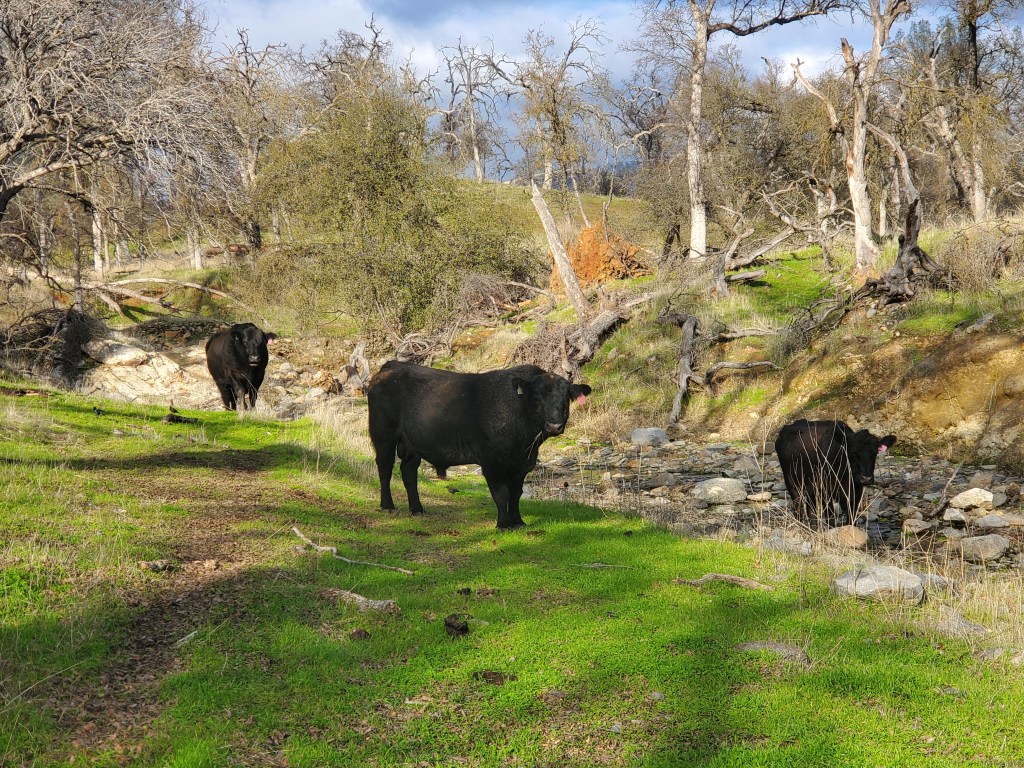
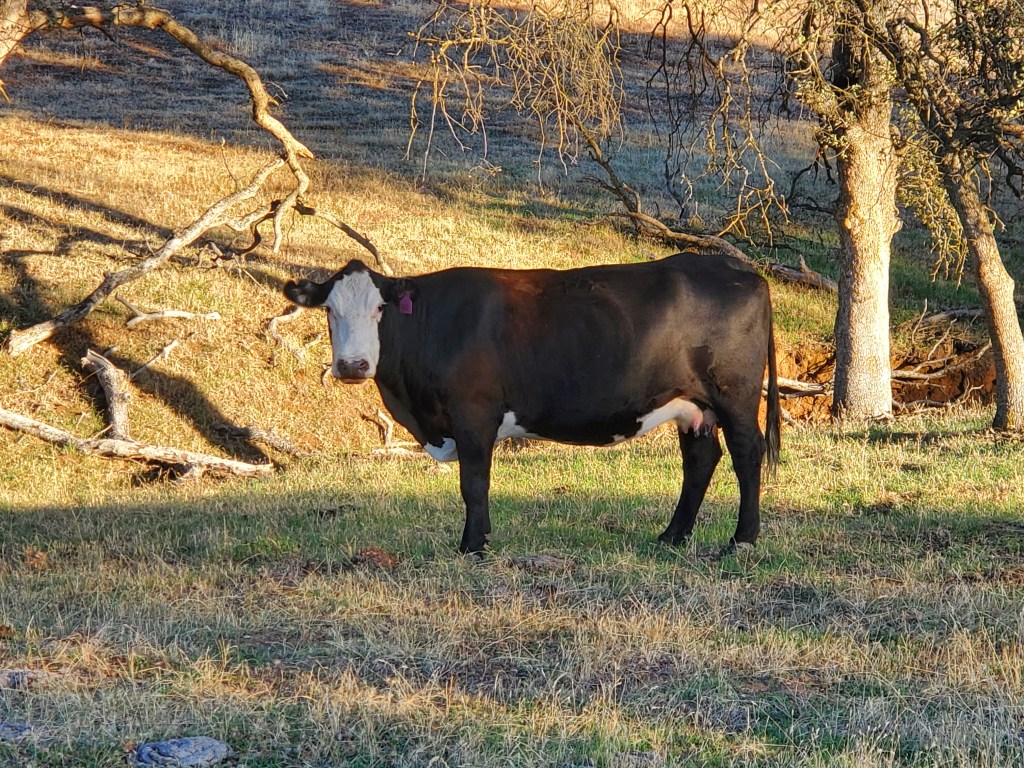
It is a joy to be out on the range in cold weather a light wind blowing. I came without the dogs this day, but I was not alone. The low growl and then pant of the bulls on the ranch, like teenage boys, following the ladies around, trying to get their attention. What entertainment – watching a bull make such a ruckus! The story unfolded down the hill from me. I watched him lower his head and call out. The ladies ignored him and began to slowly walk away. He followed behind them, hoping for some attention. The hill got too steep I think, because he stopped and she kept on going. Oh so sad. The next time I looked up he was standing alone looking up the hill wondering where the ladies went and why they were not totally impressed. Don’t feel bad; they will eventually get together and a new tranche of babies will dot the hillside.
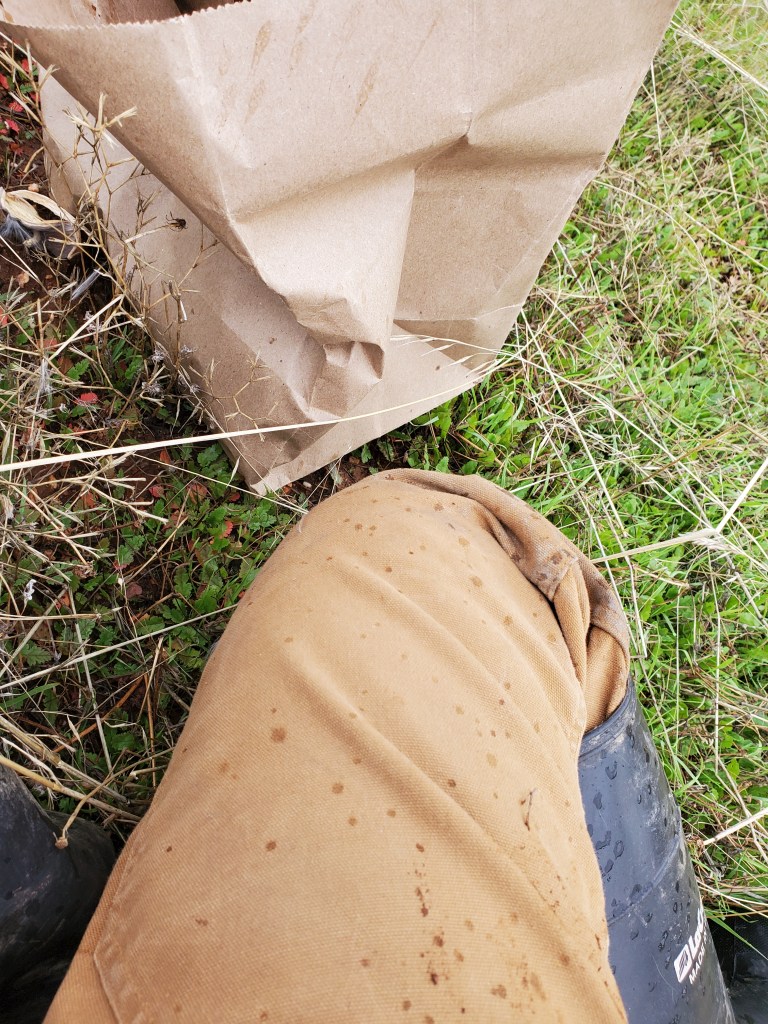
The birds also keep me company. Their songs are beautiful, but they also serve as an alarm for me. I know when they stop singing the weather is about to get bad. I am, after all, racing against the weather to plant these seeds. I want them to be in moist soil so they have what they need to begin to grow when the weather gets warmer and the soil heats. I start to see drops on my leg and on the bags. The drops come and go. It isn’t until the birds stop singing that I decide it is time to go. The rain is coming down steadily. The seed bags are soaked. I didn’t get a chance to plant the 2024s, but all the 2023s are safely tucked in. Mission accomplished. I head back home.
Narrowleaf Milkweed Planted
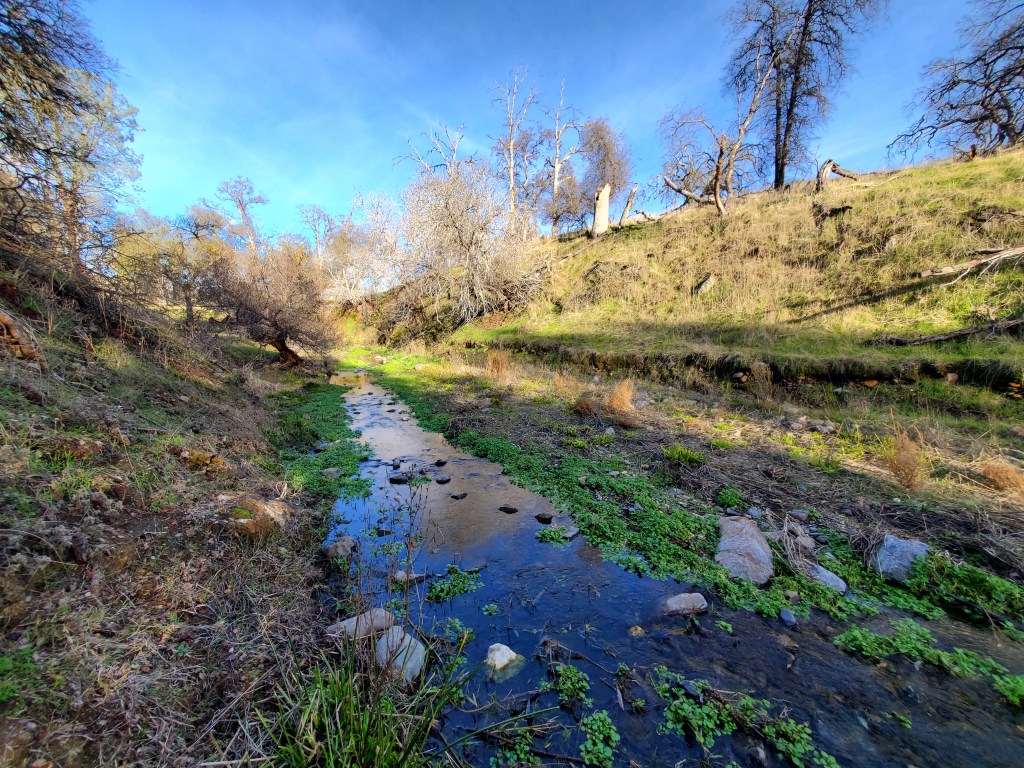
Since early 2024, I’ve had a 40lb bag of narrowleaf milkweed seeds. My intent was to plant them all last winter. I was was able to get about 1/3rd into the ground, but I ran out of time. With the rains taking a break in late December 2024, I made plans to seed the riparian exclosure areas. It had been some time since I was in the mid-section of the ranch. It was a joy to be out there on the creek. Over two days, rake in hand, I was able to plant the entire stretch of Spring Creek, even beyond the exclosure, and the entire stretch of Odom Creek inside the exclosure. Fun, but I now have a stiff neck!
I changed the type of planting sites to, hopefully, give the seeds different opportunities to establish. The existing milkweed on Odom Creek I have found just off the main area of the water flow, but in the creek bed. I have also seen the showy milkweed I planted thrive up higher on the creek bank. With this observational experience, I chose a variety of locations up and down the stream, closer and further away from the water, uphill and downhill, in disturbed areas and in areas with existing grass growth, next to rocks, away from rocks, in sandy soil, in clay and in loam. I hope something will establish!
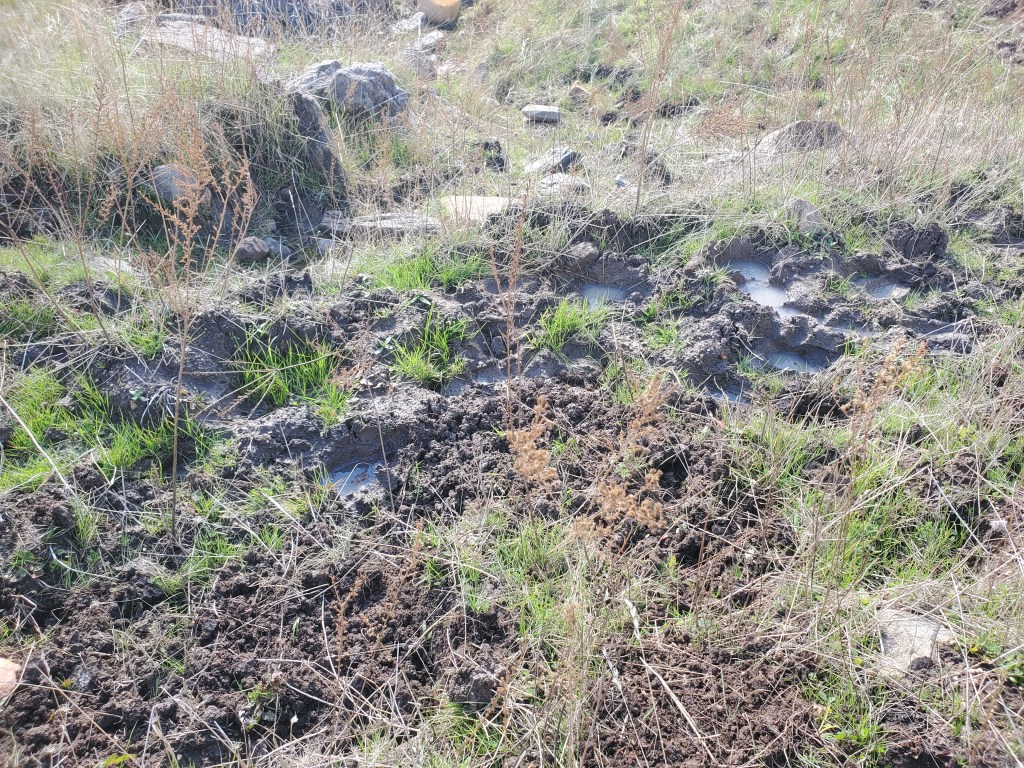
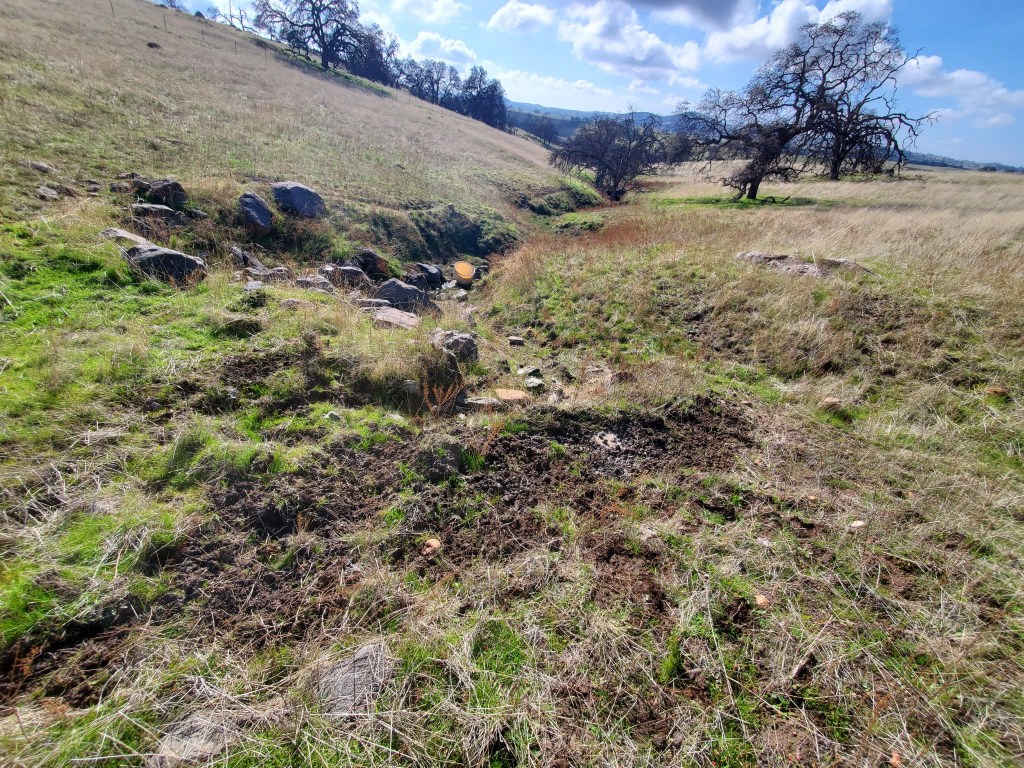
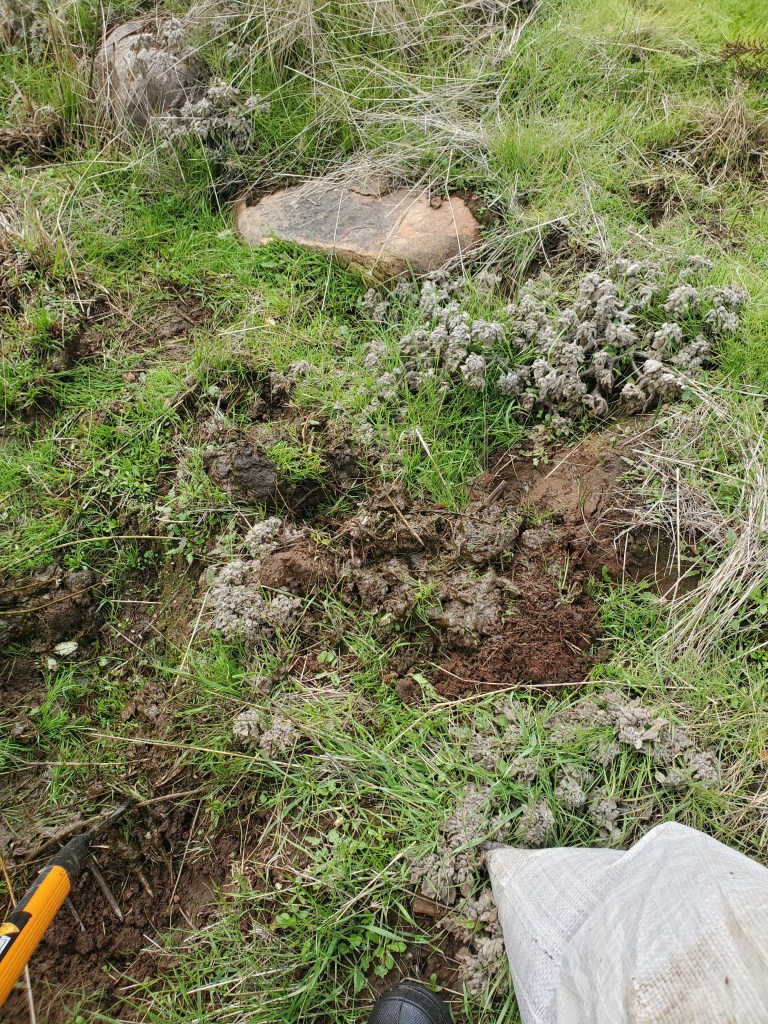
I also tried a couple new things in the Spring Creek site. There was an area where the cattle had trampled wet earth, many wet holes, ridges and the like. I used the holes in the disturbed ground as moist areas to plant in, then I raked the area smooth again with the seeds within the soil. We will see…
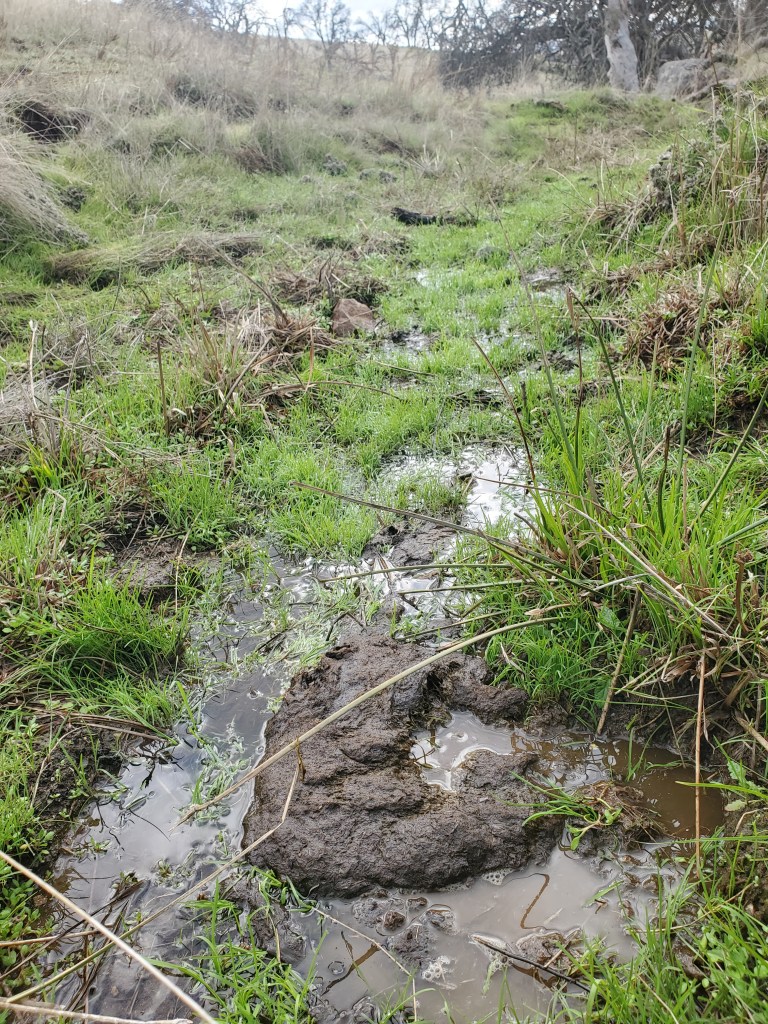
On my walk up stream, I found a few cowpies in the creek. This is not good. It adds significant organic matter/nutrients into the water, which promotes algae blooms when the temperatures warm, diminishing the water quality. I scraped some earth up the bank, put seed in, covered it lightly, then took the cow pie out of the water and placed it on top of the seeds. I got this idea from a California Association of Resource Conservation District conference session in December. It was a session on oak recruitment on rangeland with Kurt Vaughn and Alex Palmerlee. One of the tools they used in providing nutrients to acorn plantings was a slurry of cowpie and water. The audience could not stifle their amusement as the guys discussed the delight they had in mixing cow poo with water to make a mulch. Definitely gross to some. If it works better, what an abundant resource on ranches.
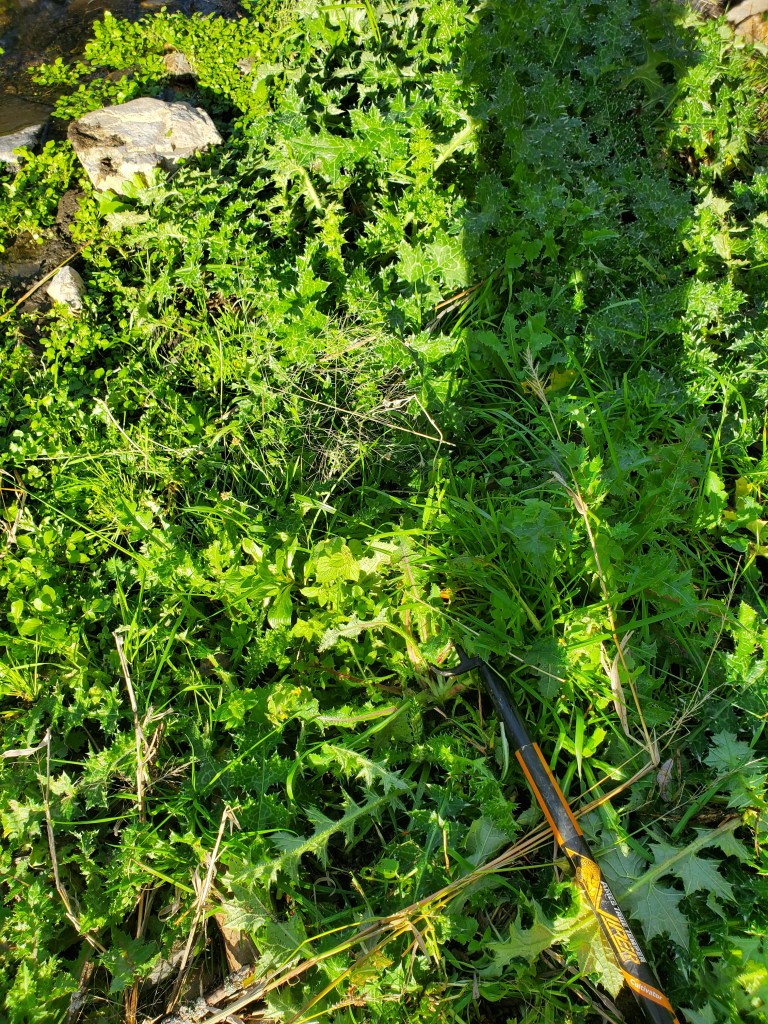
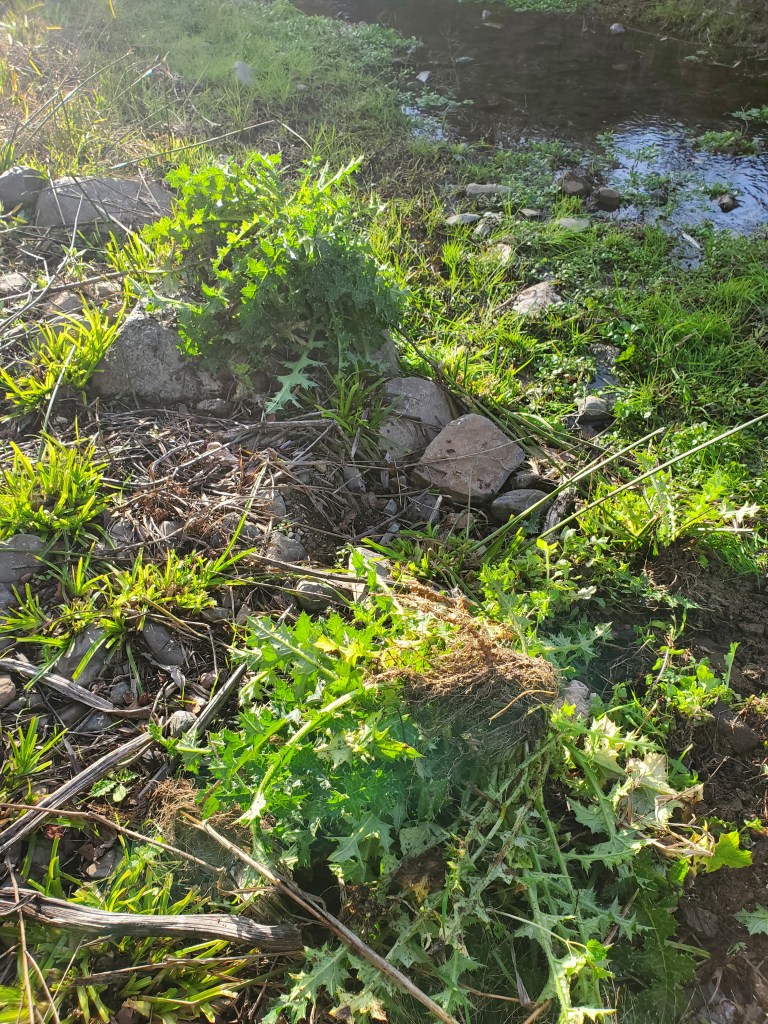
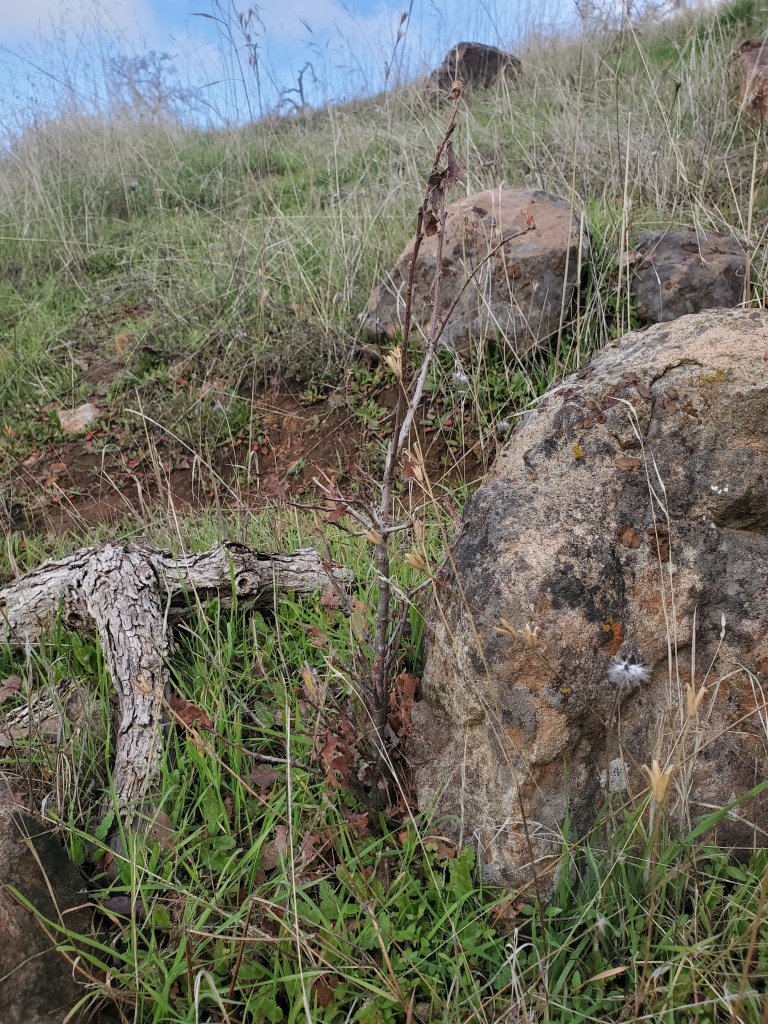
Beatrix along for the rideYikes! Oak branch fell on riparian fencingBranch weighting the tin lower against the groundBeautiful – Odom CreekSeep monkey flower revealed after pulling out thistleTook some time to thin the thistlePulled thistleGorgeous mushrooms all overPretty creek poolPlanting high and lowAn acorn making its way into the dirt. Hope it becomes a tree!Planting seed on the ridge above the creekSun shining throughAnother poolPlanting a large swath of creek bankScraping the soil, seeding, then raking the dirt overSeeding up hillSeeding down lowTried something new. Used cow foot holes to plant the seeds then rake them smoothRaked over cow foot holes with seeds plantedLupine leaves already emergedMy wonderful old oak friend who grew x3 since excluding the cattleCowpie in the streamUsed cowpie to cover seeds. Maybe they will grow better?Seeding in the Spring Creek moist soil areaA taawe weweria (hawk relative) flies over to check out my work.
Acorn Gathered for Tree Planting
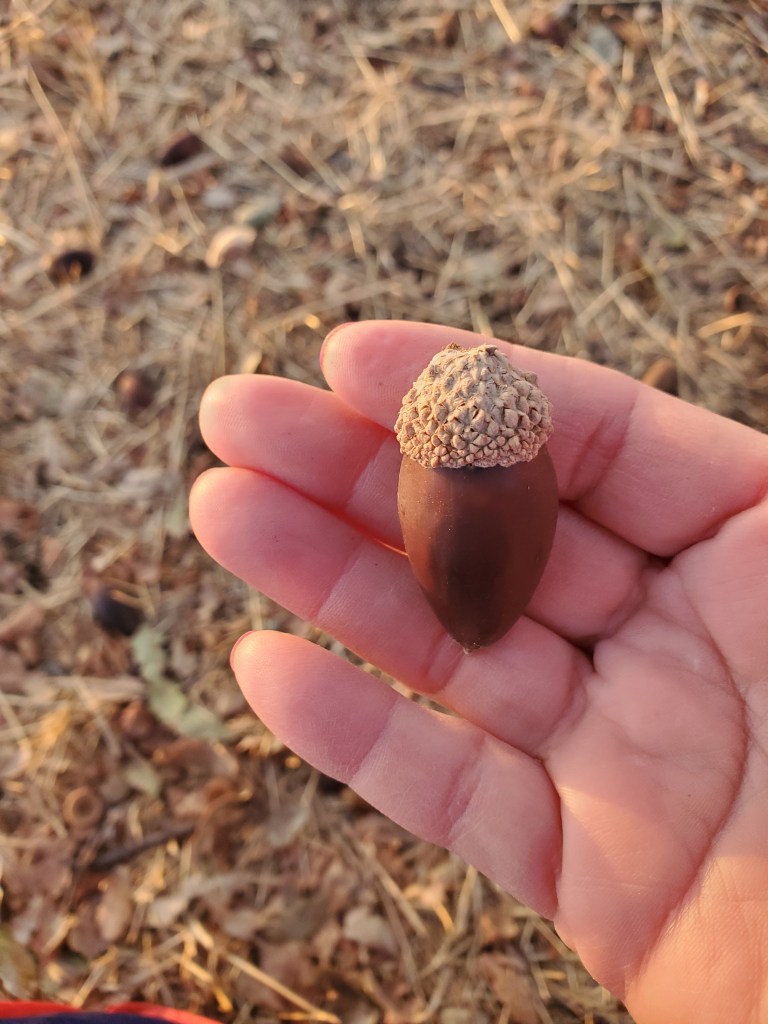
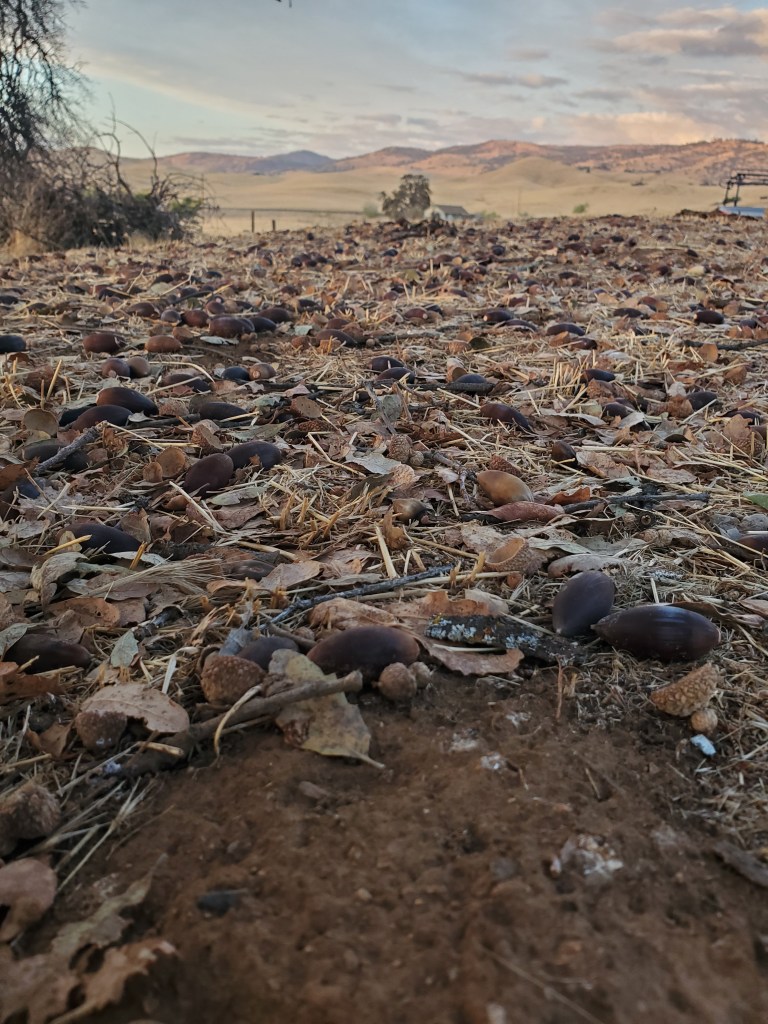
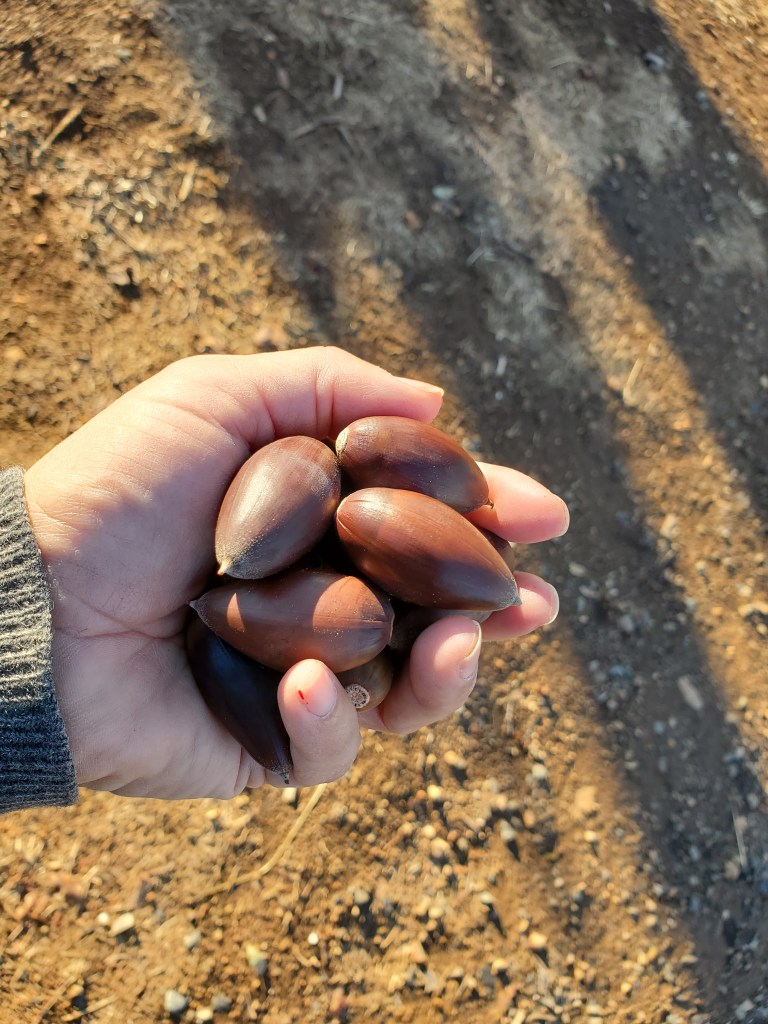
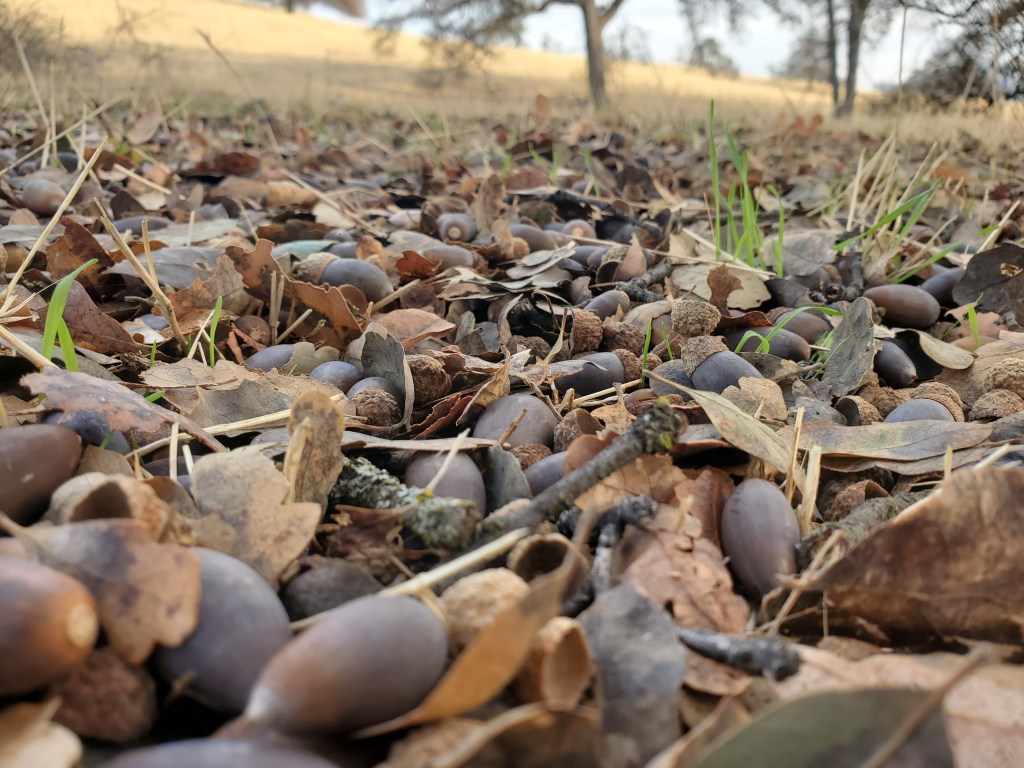
While I did not have time to gather acorn for flour making, I did have a chance to gather about 200 for planting across the ranch. I harvested from the grand old oak near the house and the smaller oaks in the Spring Creek riparian area. I am planning to do a combination of seedlings (16), and the rest will be plantings of acorn. I do not want a repeat of last year when the grasshoppers ate all my back-breaking work.
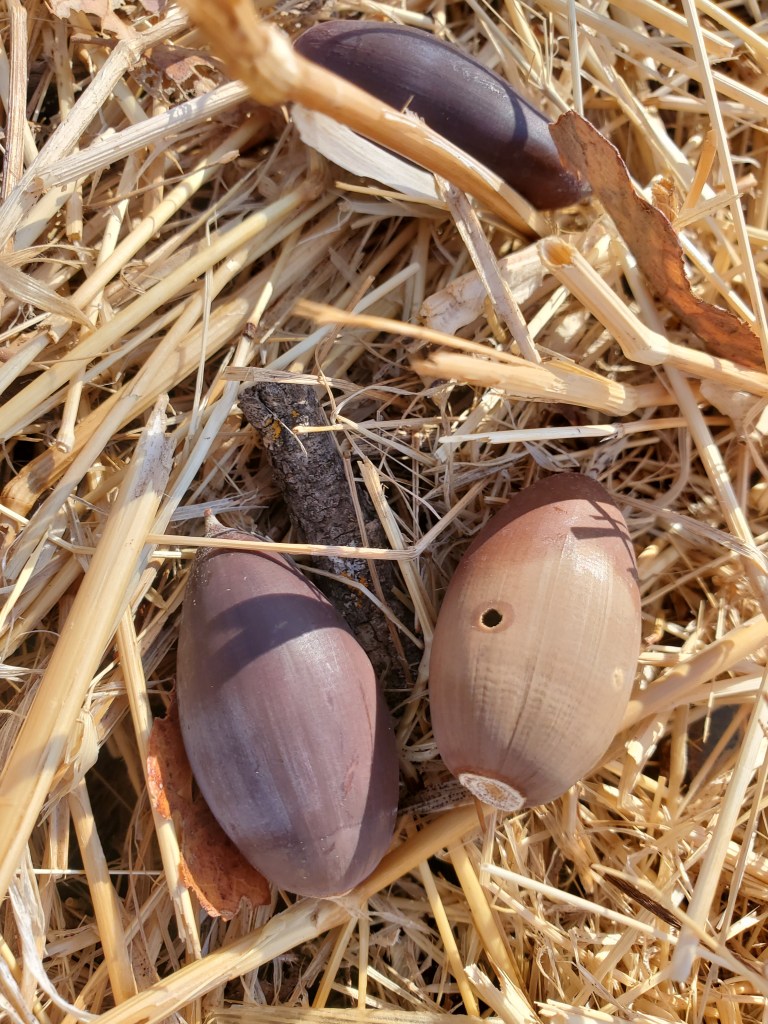
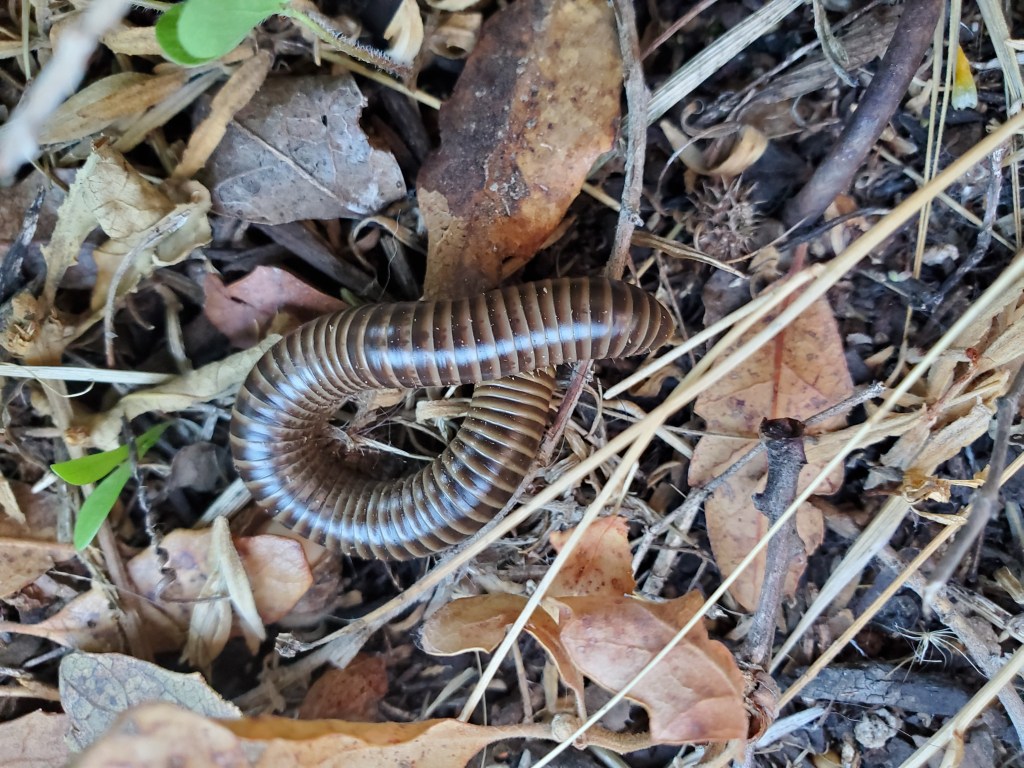
Perfect acornMast year. Thousands of acorn everywhereMillie and Beatrix help collect acornAn example of what you do not want when gathering for plantingHealthy, dense acornA worm friend I found along the wayLots of acorn to chose from
Storms Bring a New Guest
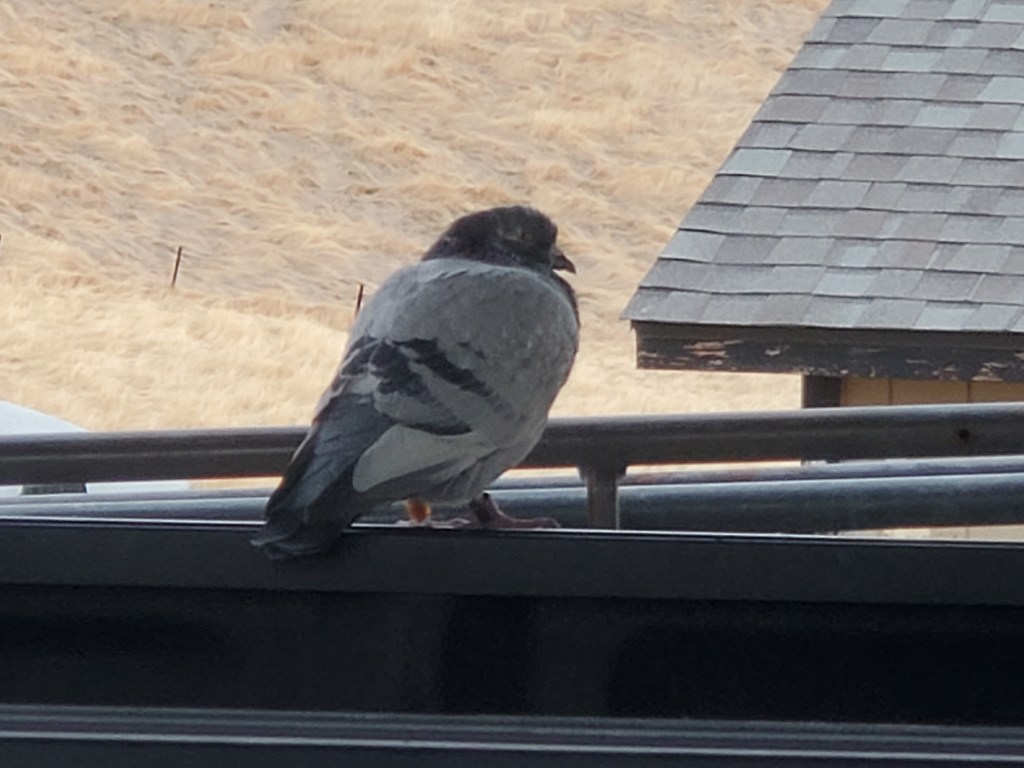
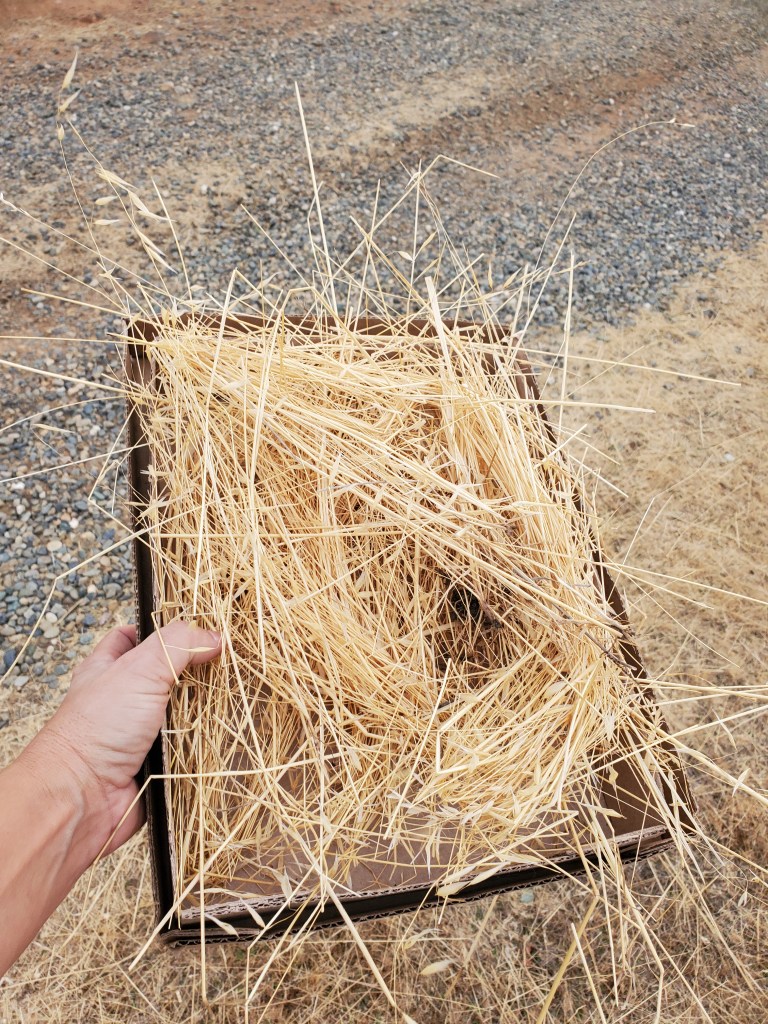
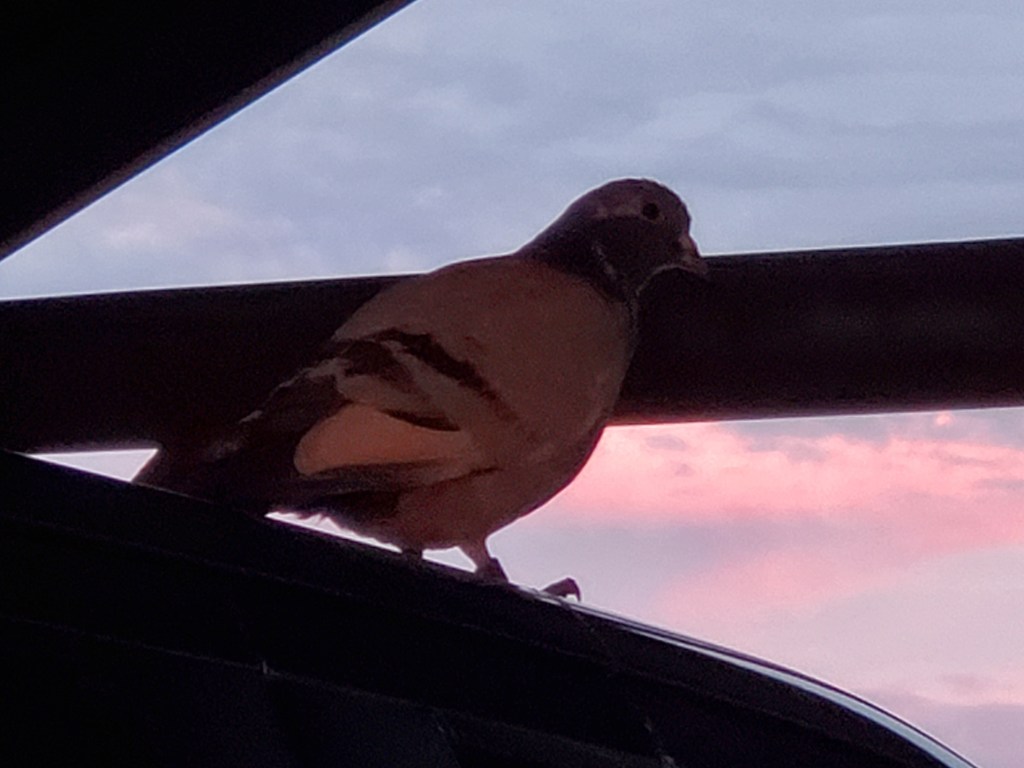
During the December storms, a new guest showed up that I’ve never seen here before. It was a pigeon. The pigeon had bands on its legs, so we knew it belonged to someone. Every time we tried to get close to look at the bands, it would fly away from us. David built it a roosting box and attached it to the underside of the carport. I made it a little bed. It stayed with us a week. At first, it roosted on the truck under the carport. Then, when we were working outside and had the garage open, it decided the garage was better and roosted on the ceiling beams. At dusk, the bird would perch on the gutter outside my office window and stare at me. I would come outside, and it would fly to in front of the garage door. It was saying, “Hey lady! Open the door so I can roost for the night.” It was really neat at first, but then we saw the piles and piles of poop on the vehicles, patio and in the garage. After the bird stayed several days after the storms were over, David felt it was getting too comfortable. He hatched a plan to see if it really wanted to stay or if it was just being a bit slow going back home. The plan was to prevent it from roosting inside to see if it went back to roosting under the carport. The pigeon didn’t stay. It decided to go home – or find another temporary housing situation. We are definitely suckers for animals, so it is probably good it didn’t stay.
Catching Up – So Much More Accomplished
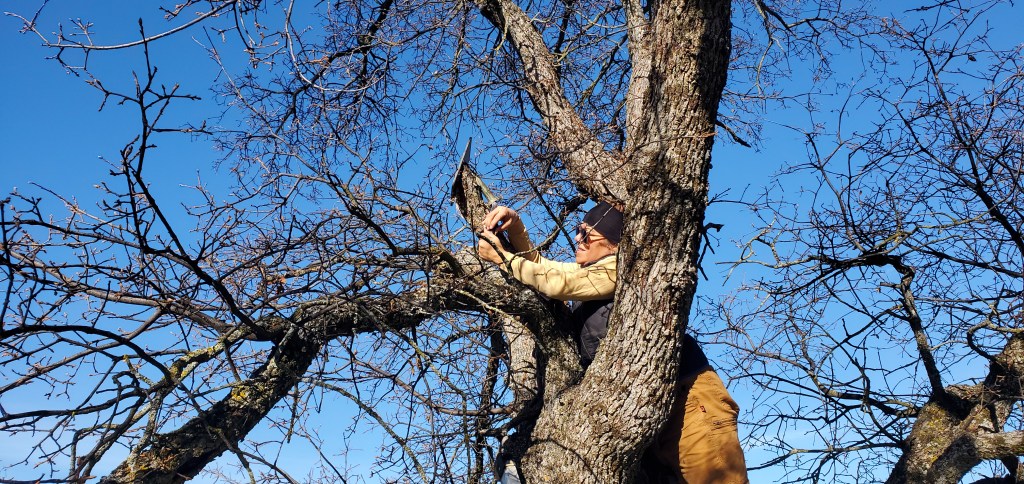
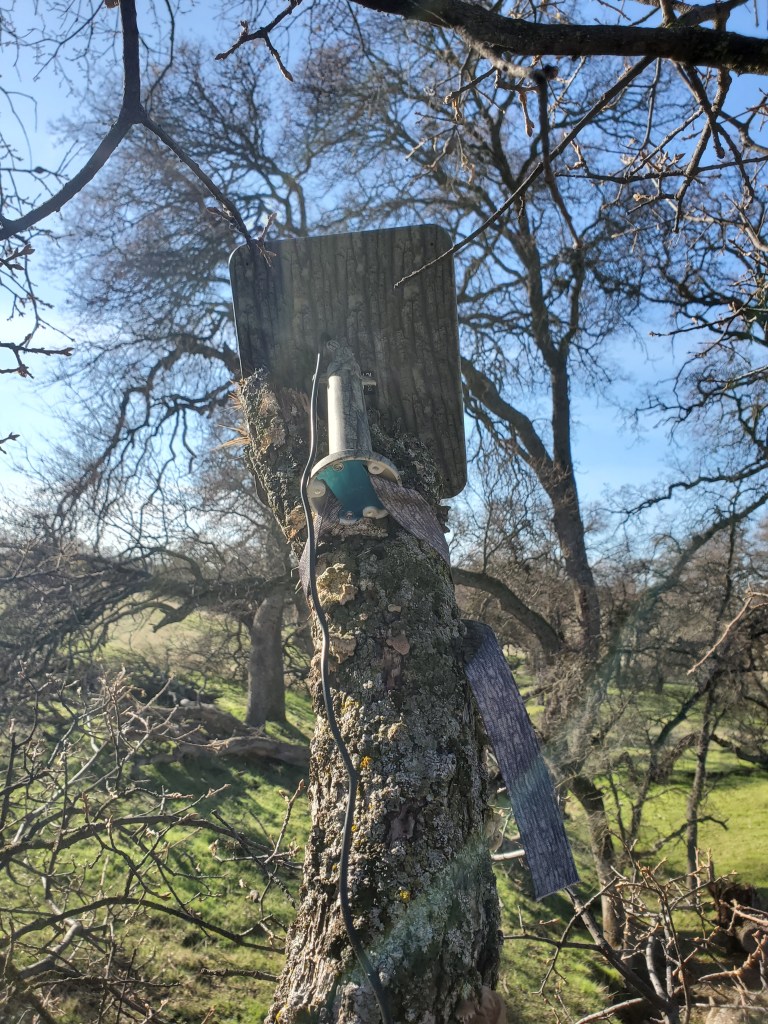
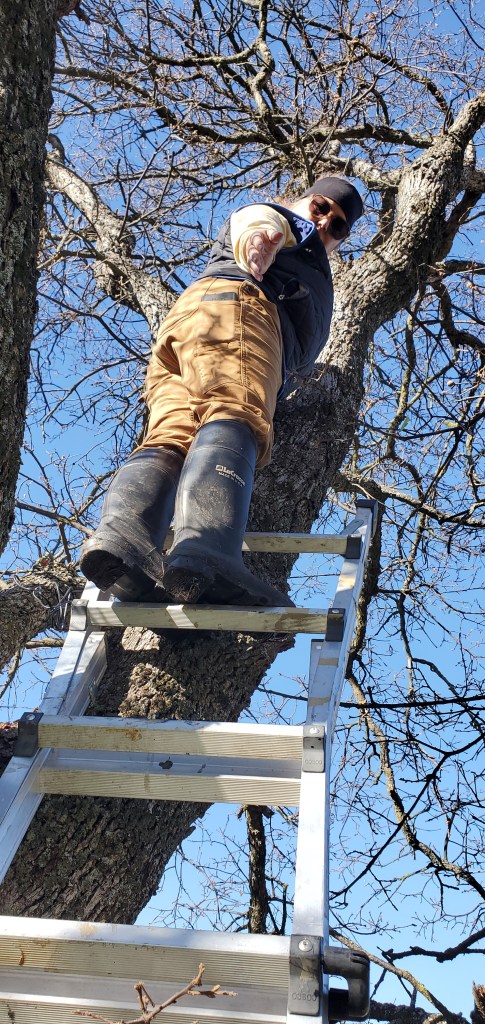
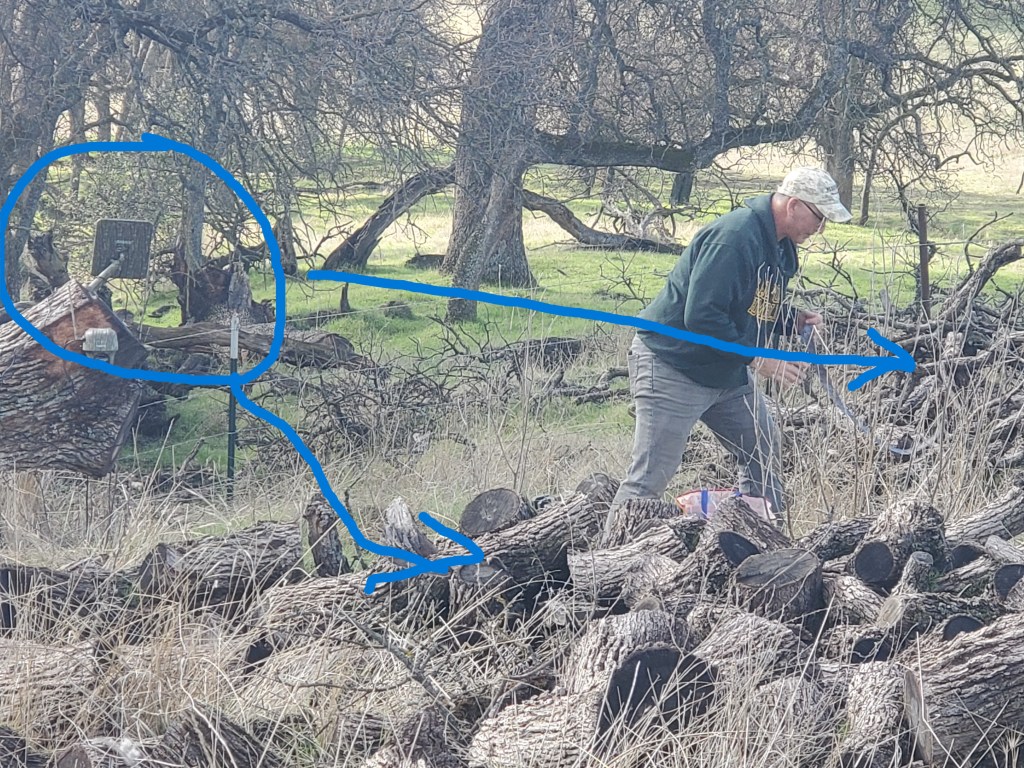
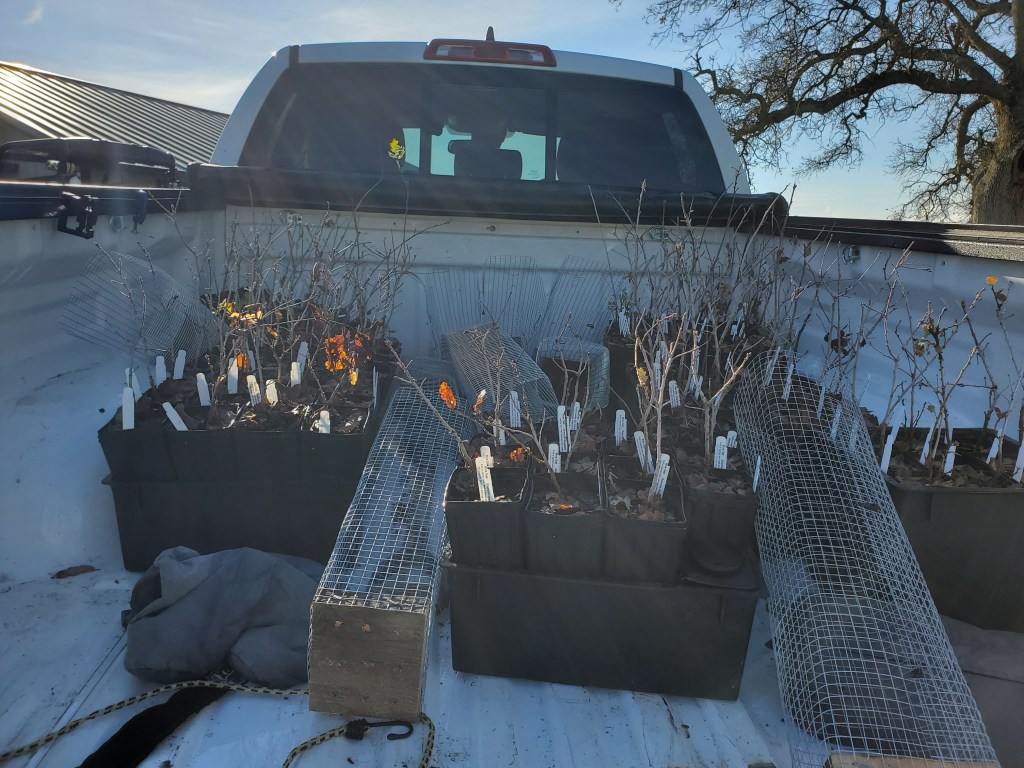
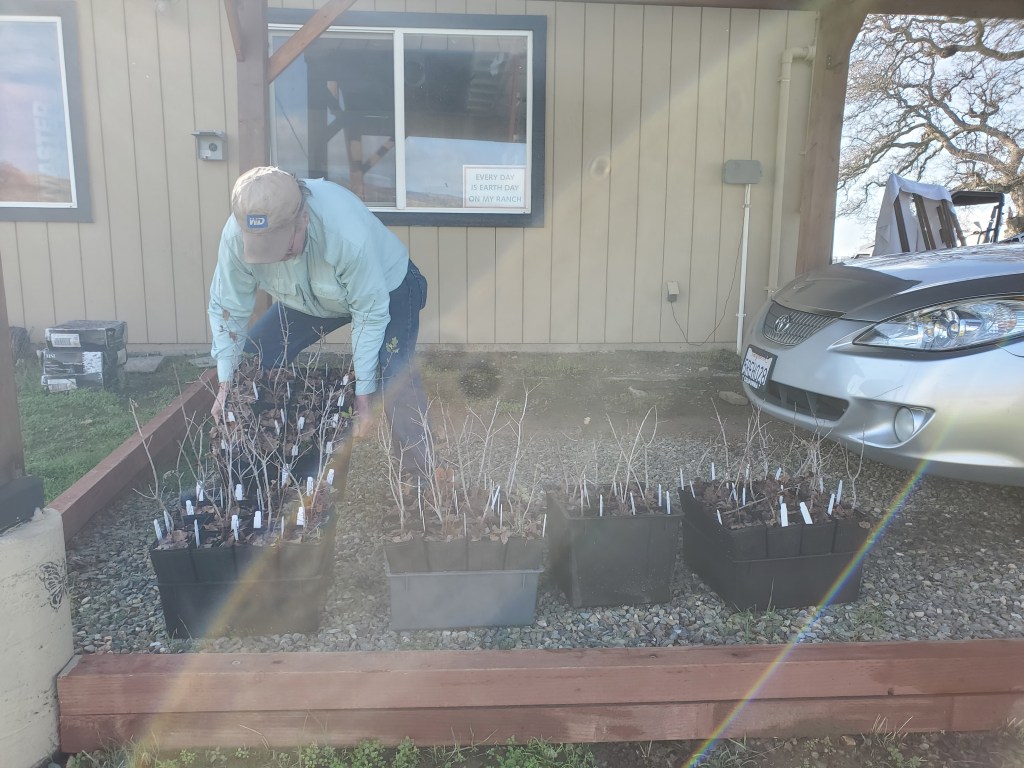
In addition to the seed planting, I have also gotten more plants from Ron Allen at Mariposa Native Plant to install. With the help of David, we set up another game camera. It was super fun to climb a tree. In the end, we decided a fallen tree trunk was the better view. The cell signal is not the best there, so we may yet move it again.
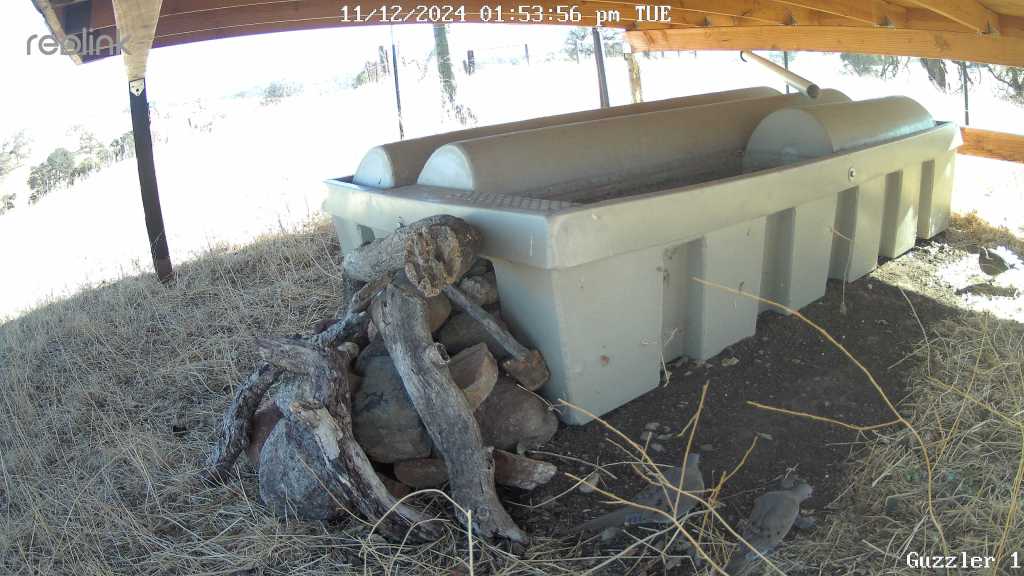
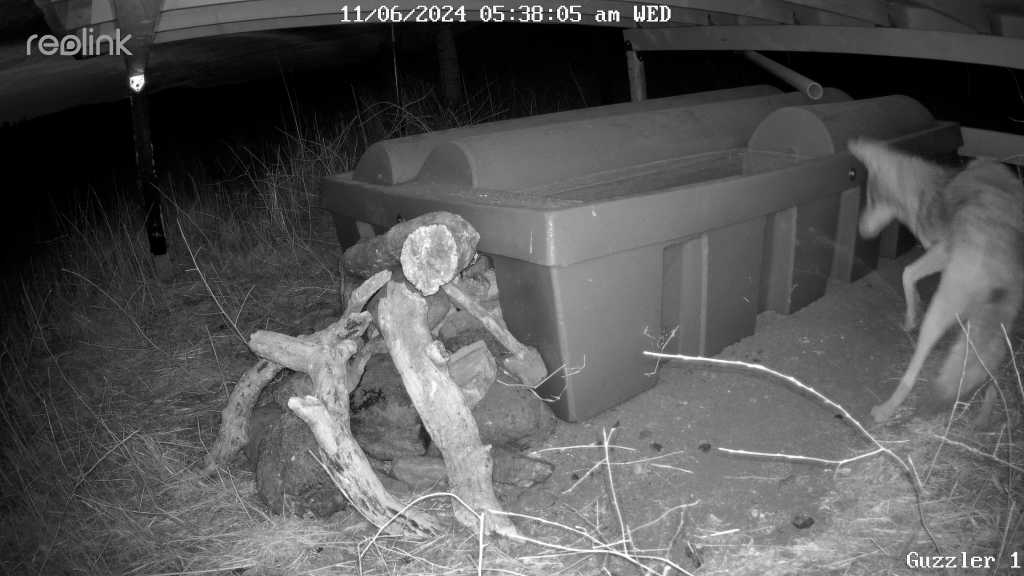
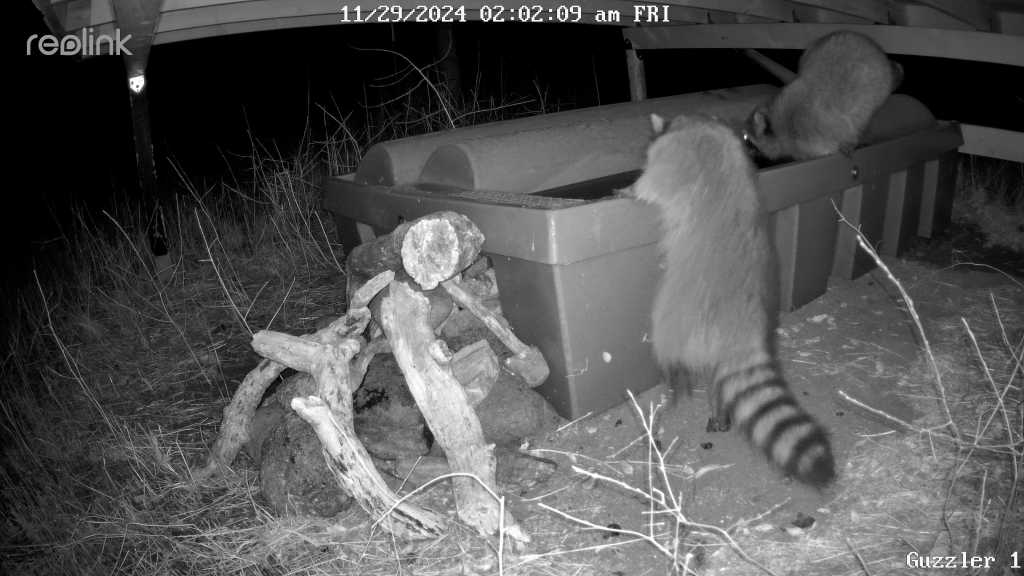
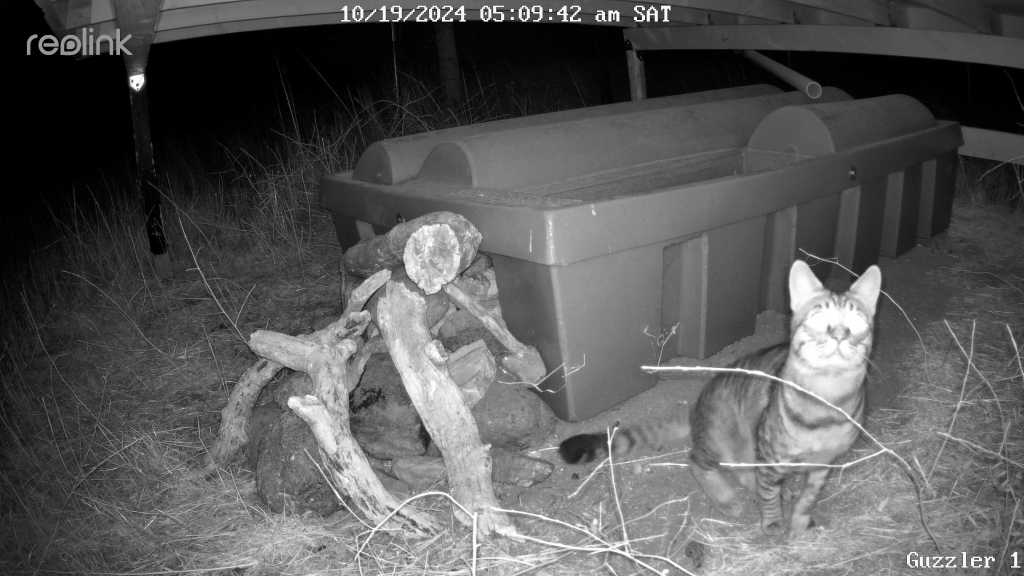
The new guzzler for the back of the ranch also arrived last week. It will help make water available to wildlife when/if the creeks run dry. They have been extremely helpful to wildlife during the late summer and early fall times when water is not as plentiful. We have gotten some fun photos of visitors to the guzzler. My favorite design element is the built in ramp. This way, no one drowns.
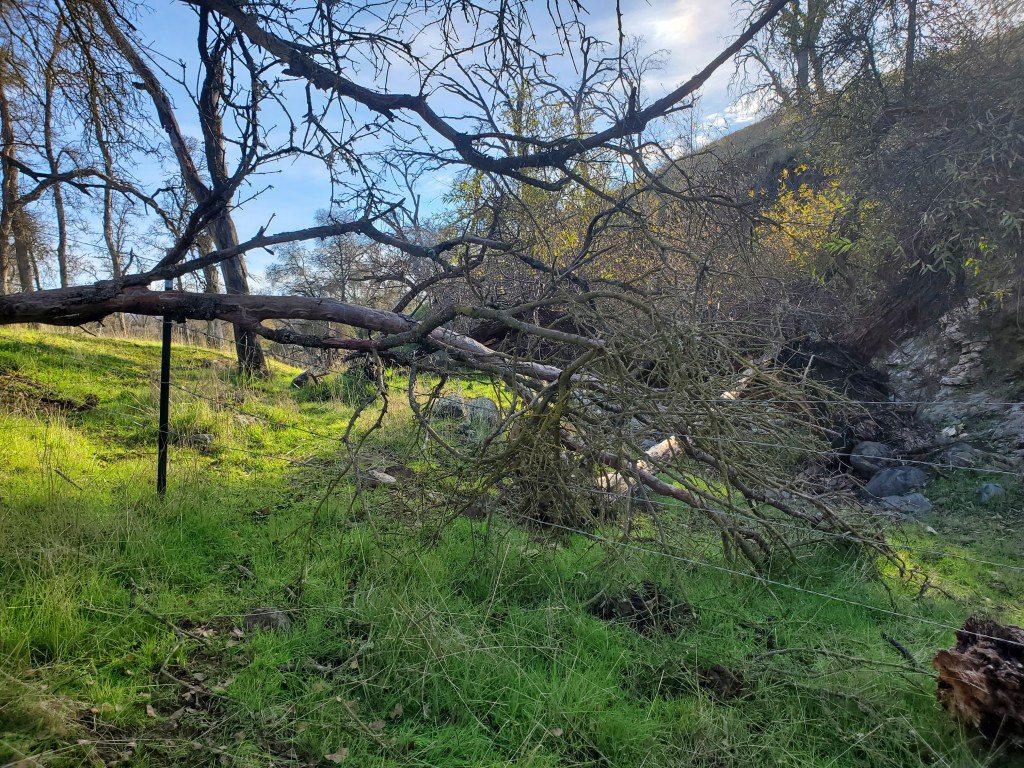
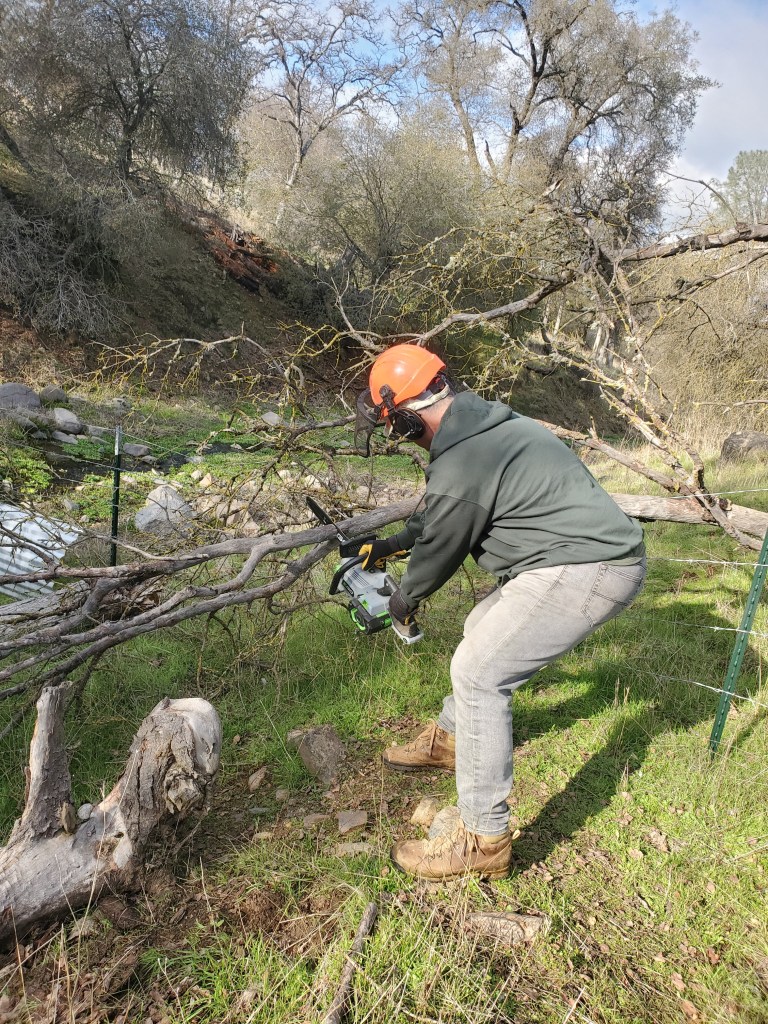
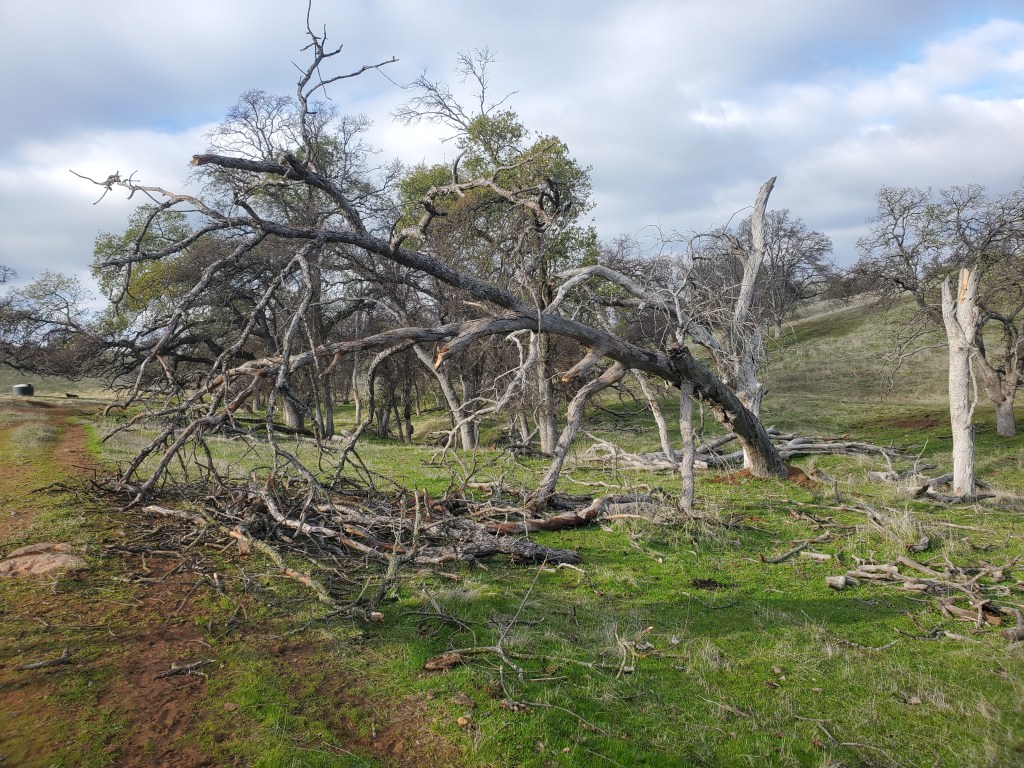
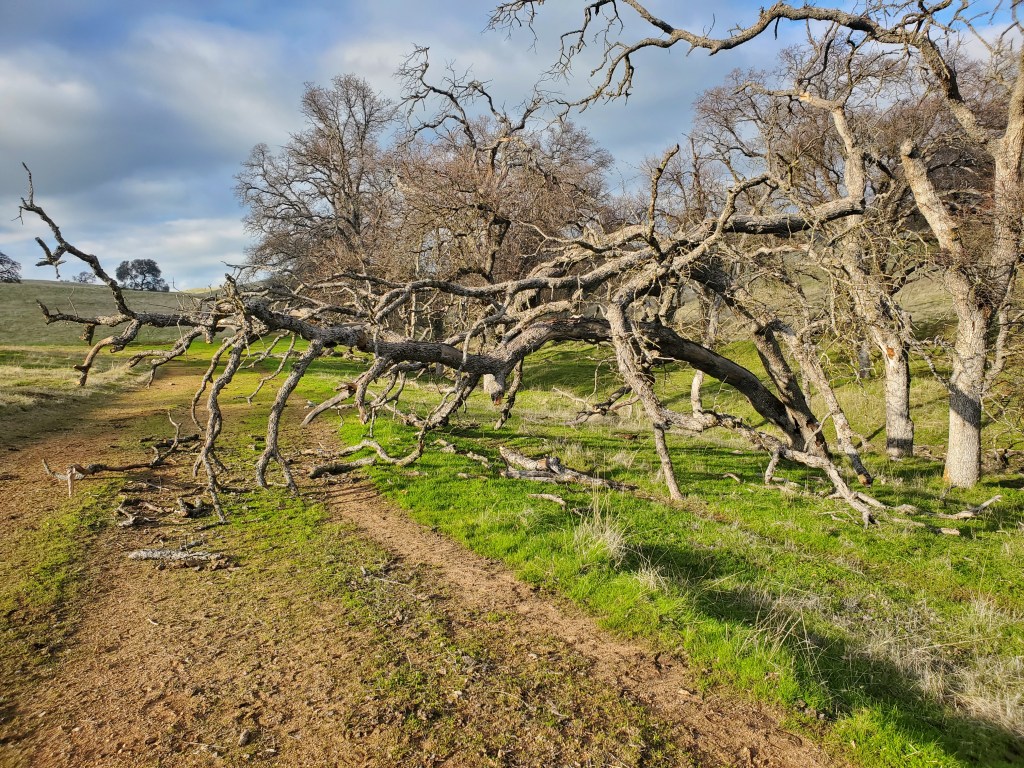
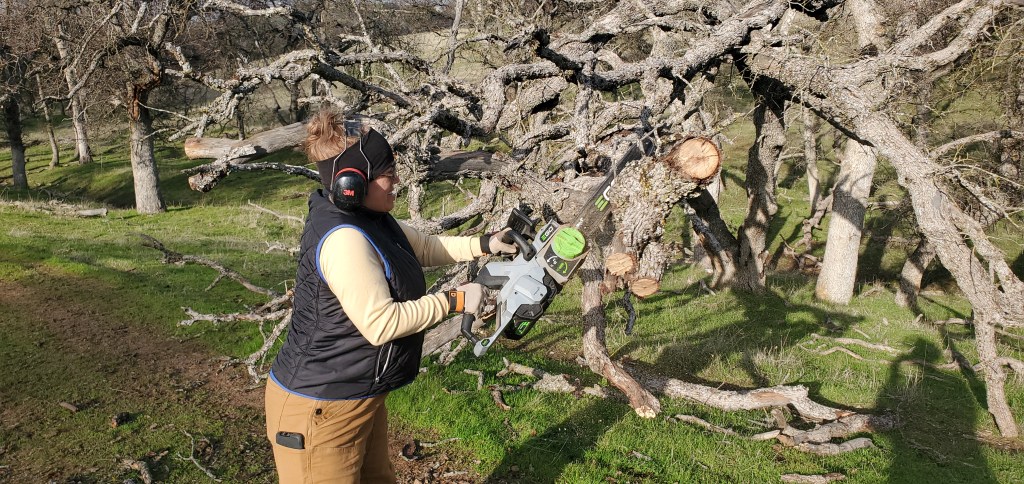
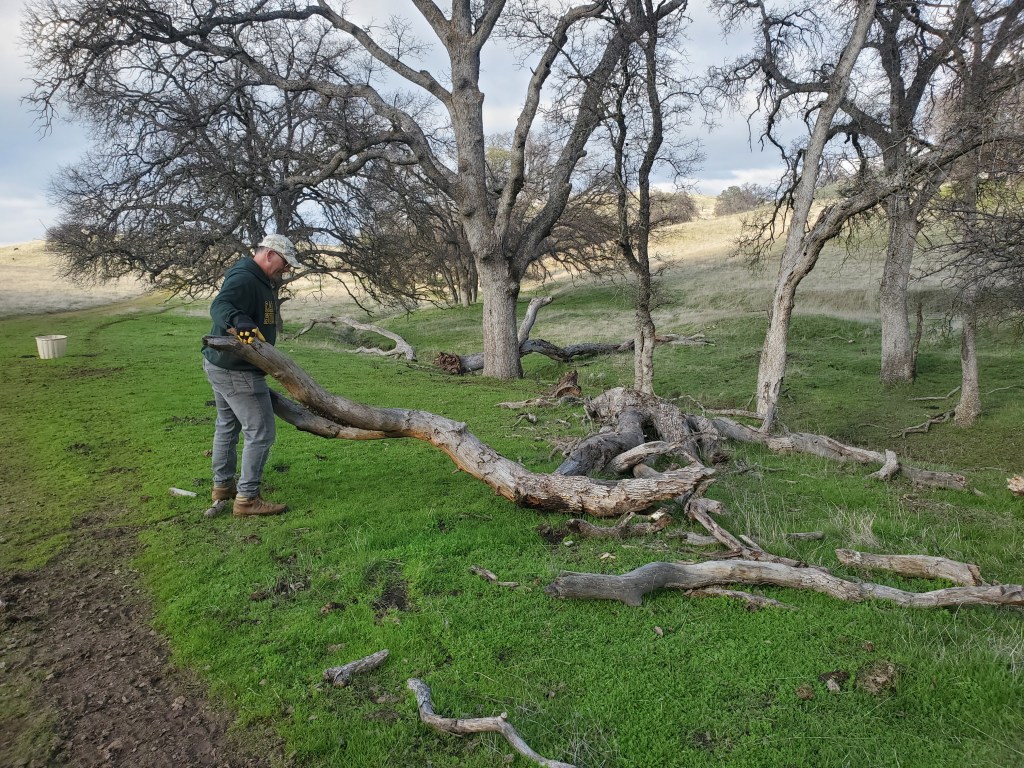
As noted in the passage above about narrowleaf planting, an oak branch had fallen on my exclusion fencing. The storm had also knocked down some branches and trees across the neighbor’s section of the cattle road. David and I ended up doing a bit of chainsaw work too.
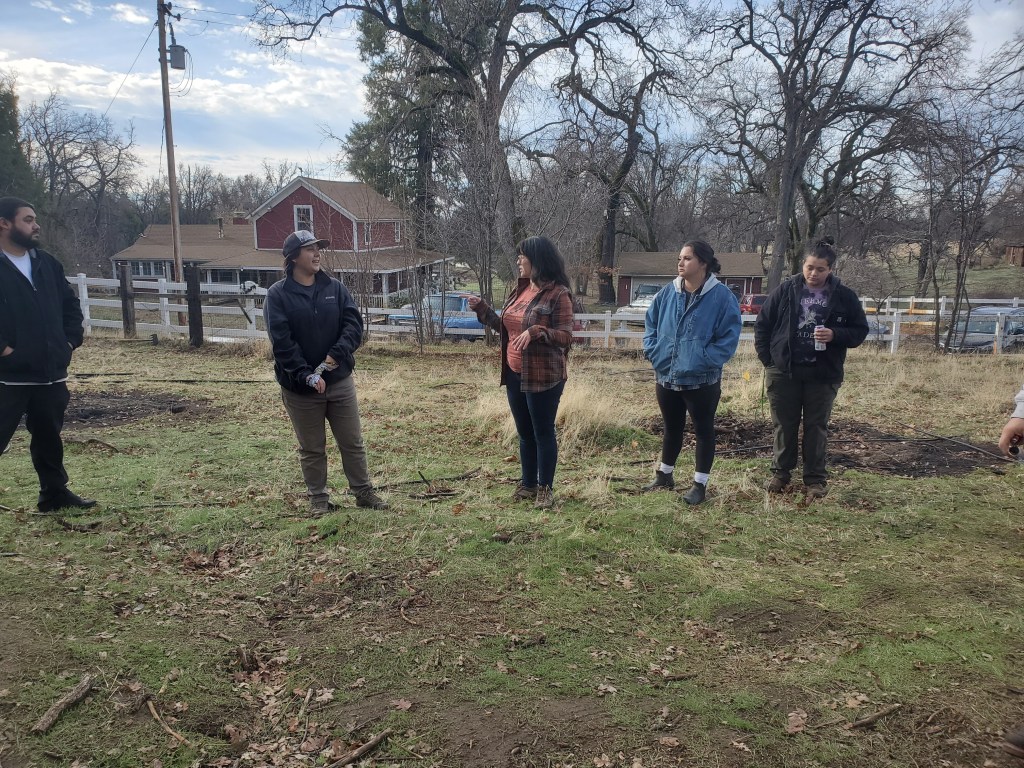
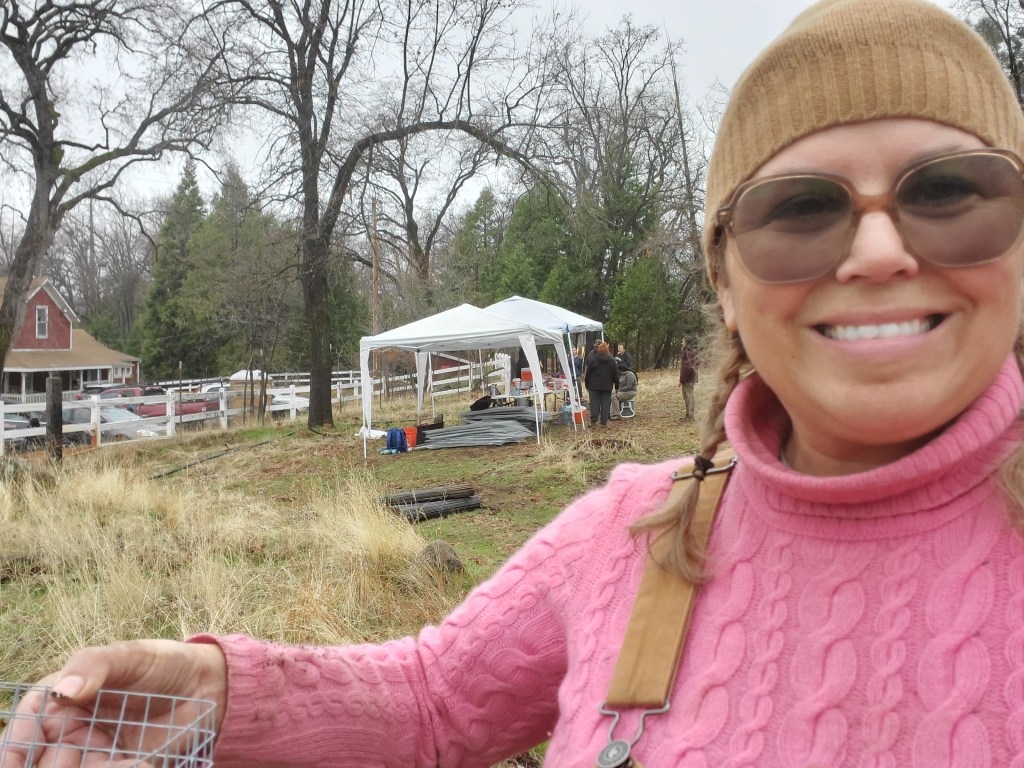
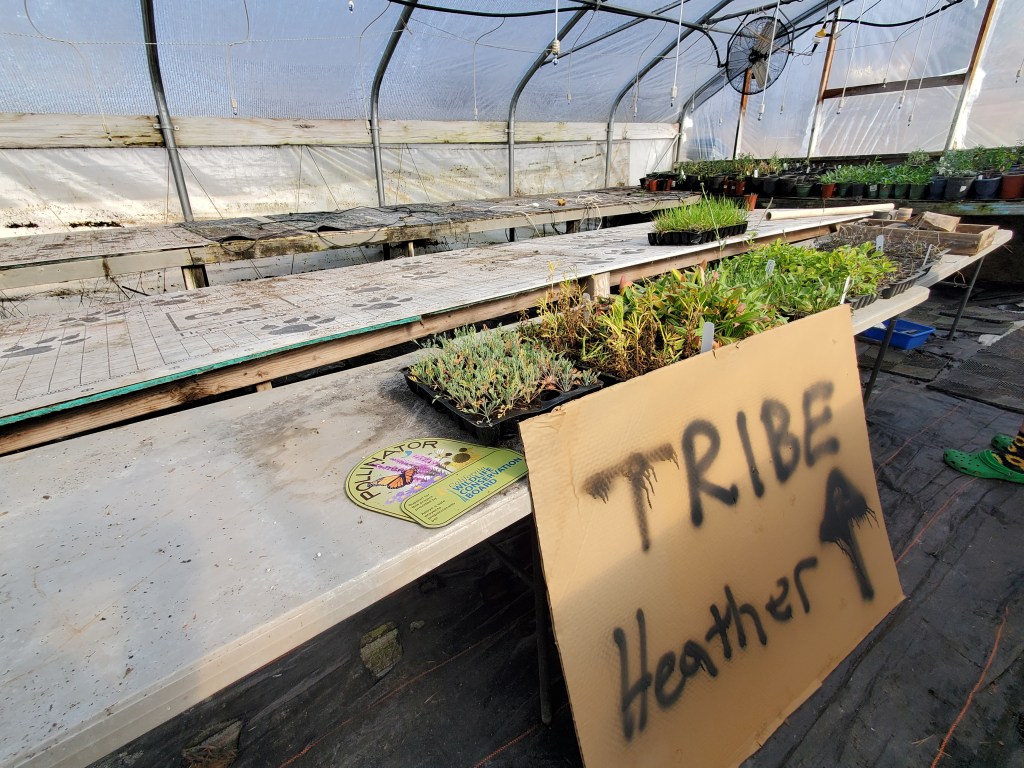
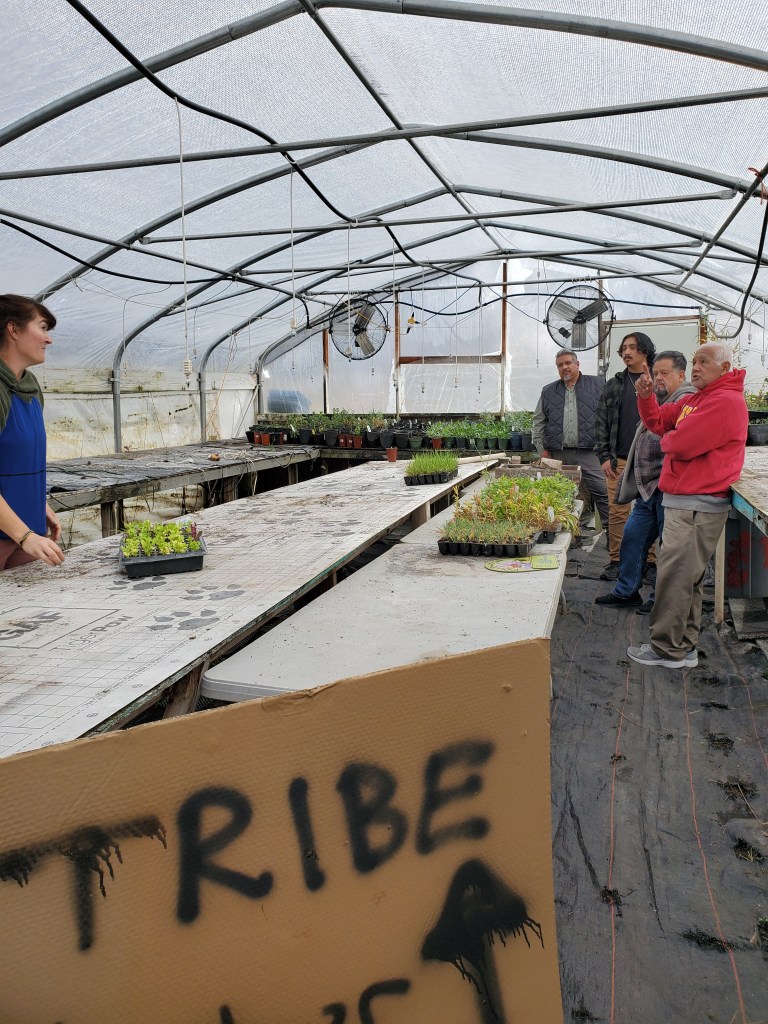
I worked with a few Tribes and Indigenous led organizations over the last month. I volunteered with the Southern Sierra Miwuk Nation to install plants for their massive restoration work on a village site. In November, members of the Tubatulabal Tribe (Eastern Kern), including Tribal Chairman Robert Gomez came to Catheys Valley to pick up their Xerces Habitat Kits. The kits were generously picked up and stored at a friend’s farm, Raw Roots Farm, so the Tribe did not have to drive so far north to pick them up. The Tribe is undertaking a major restoration effort themselves and wanting to start a farm to feed their people.
Finally, the 108 blue oaks from Butte County acorn arrived for California Open Lands, a nonprofit led by Mechoopda Tribe member Ali Menders-Knight. I had ordered them last year for my restoration efforts, but when a catastrophic fire burned through their lands in Butte County, I knew that those seedlings were for them. The acorn came from grandmother trees in that area, and would now need to head home to heal the land. How serendipitous.
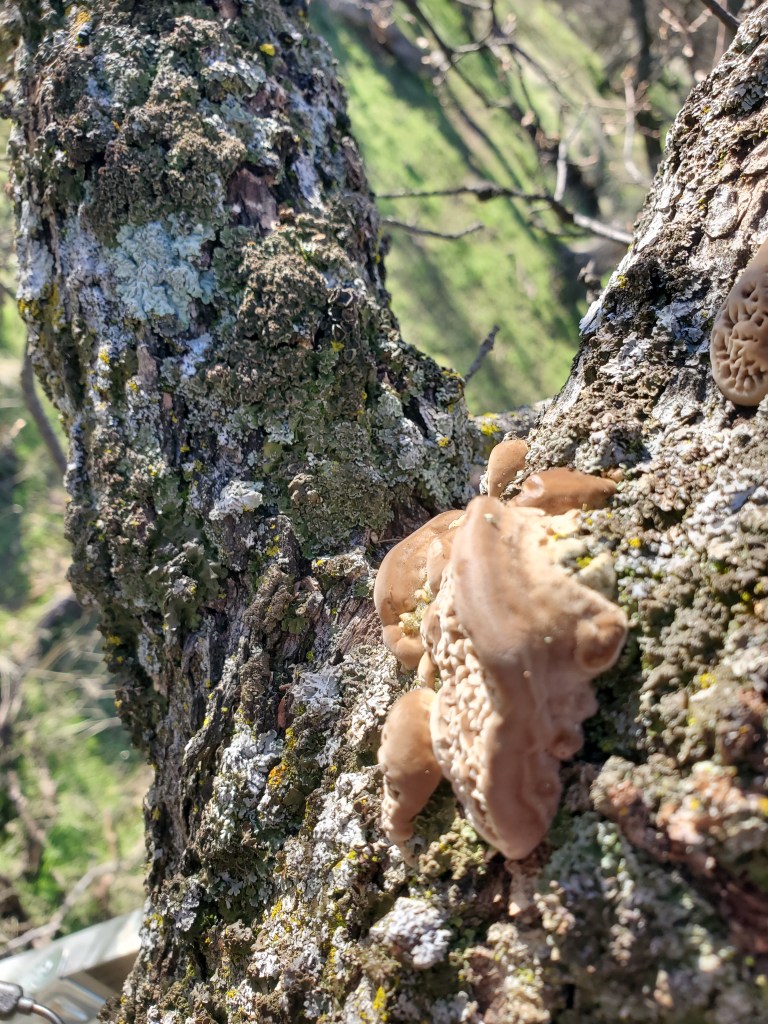
David places a later to help me get into the treeAttaching the solar panel that will keep the camera chargedFungal growth on the treeThe solar panel fit snugly on the end of a branchDavid hands me the camera nextBeautiful weatherCam moved to straight view towards the brush pile and creekRon delivers more oak seedlings and cagesThese 108 seedlings will go to Ca Open Lands to reforest their Tribal lands burned in the Butte County fire last yearDavid chops up the branch that fell across the exclusion fenceReturning from chainsaw workDead trees impacted by the stormAcross the roadGetting busy with the sawStrong man moves tree branch. They are heavier than they look!Bulls not happy about our need to cross the pathRestoration leadership giving instruction (Tara, Shana, Nellie) – SSMNOver a thousand plants and treesBringing the oak cagesDeedee and I at the planting site with the Southern Sierra MiwukRaw Roots stores the Xerces seedlings safely. Thank you Glikens!Farm caretaker answers questions with Tubatulabal Tribe membersChairman Gomez finds the perfect veggieWalk and talkDavid fixed the tin the storms disconnected upstream of the swale pondSwale pond is filled with water backed upNectar plants ready to be plantedGuzzler arrives!Built in ramp is a life saver
Tending the Monarch Habitat Plots
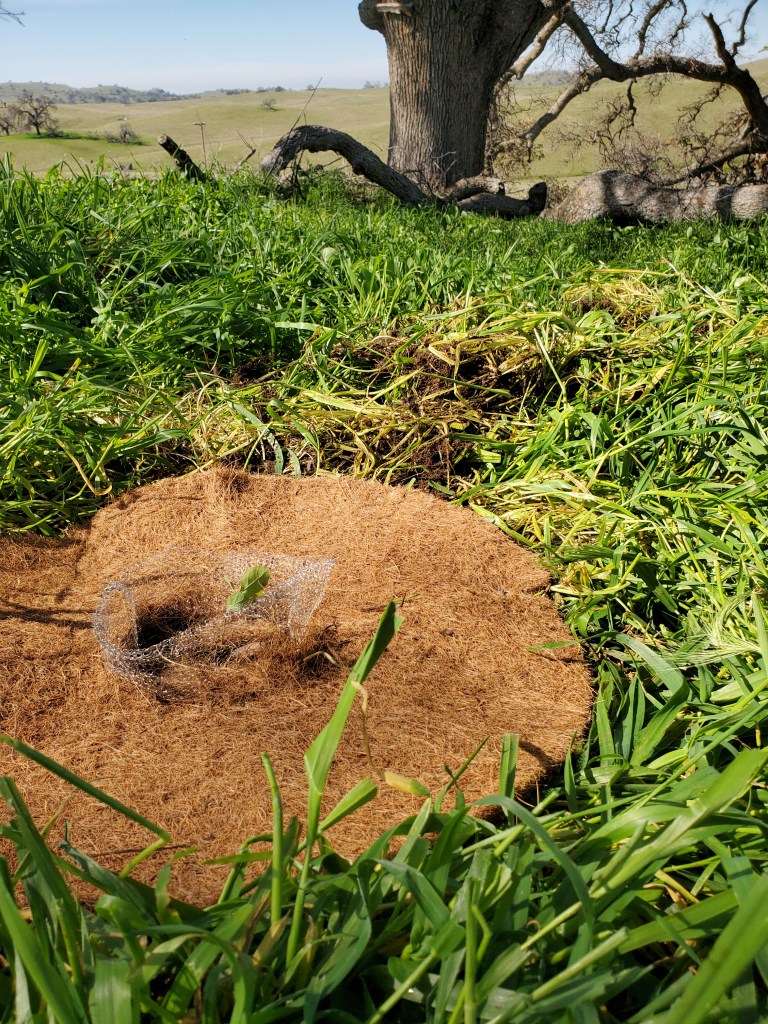
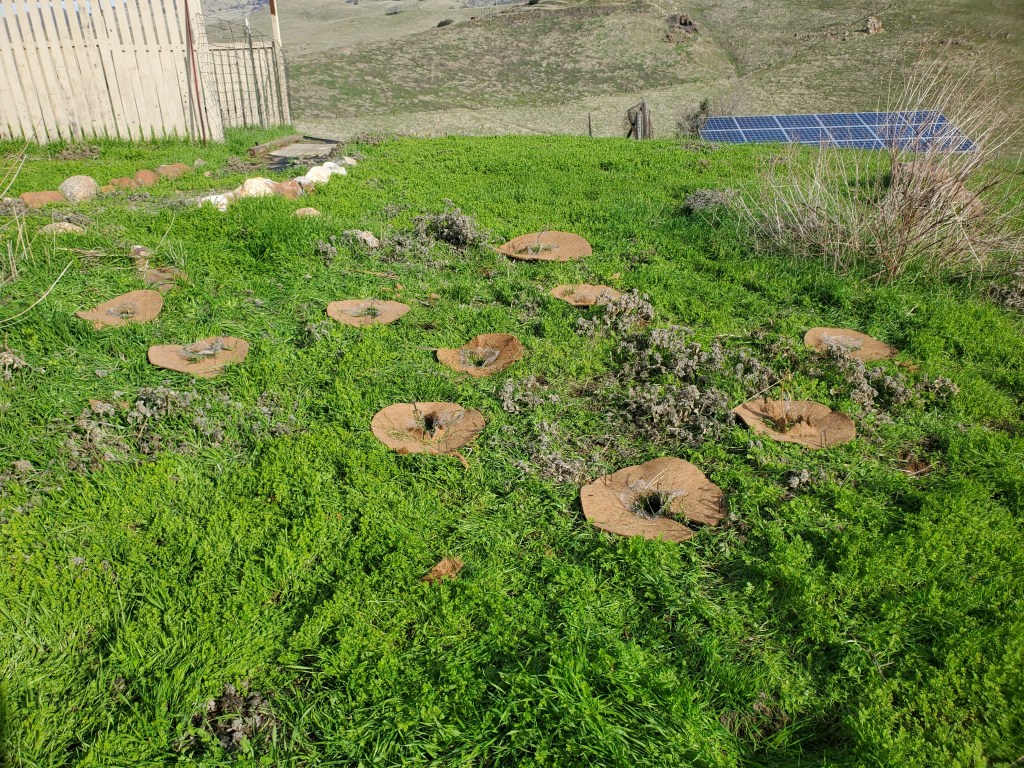
Every year, I think I am going to trim grasses early and place coir pads around the monarch plants so that I can find them in spring and not mow over the baskets. I never do. BUT, this year is different. I got to at least one plot already, and I am staged up to do the others. For the plants whose roots run, like milkweed, I will remove the coir pads close to emergence time to allow for more plant material to emerge.
In working in the plots, I am finding that many of the plants are dead. The grasshopper killed them, and my hopes that there may be some vestige of life are dashed. I am seeing some come back, but the majority, so far, are gone.
Using my trimming tool to cut the grass from around the basketsAll done. Nice and open!This guy did not make itA completed coir pad installation on one monarch habitat plotStaging the materials and tools for the work
Weather is Too Warm
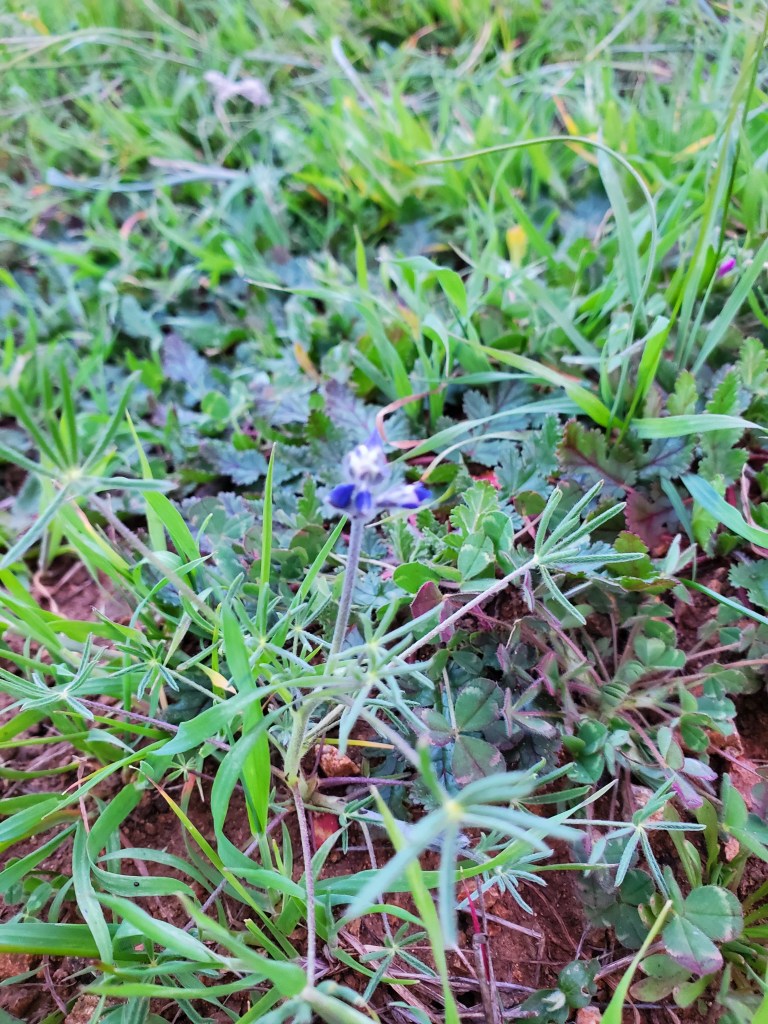
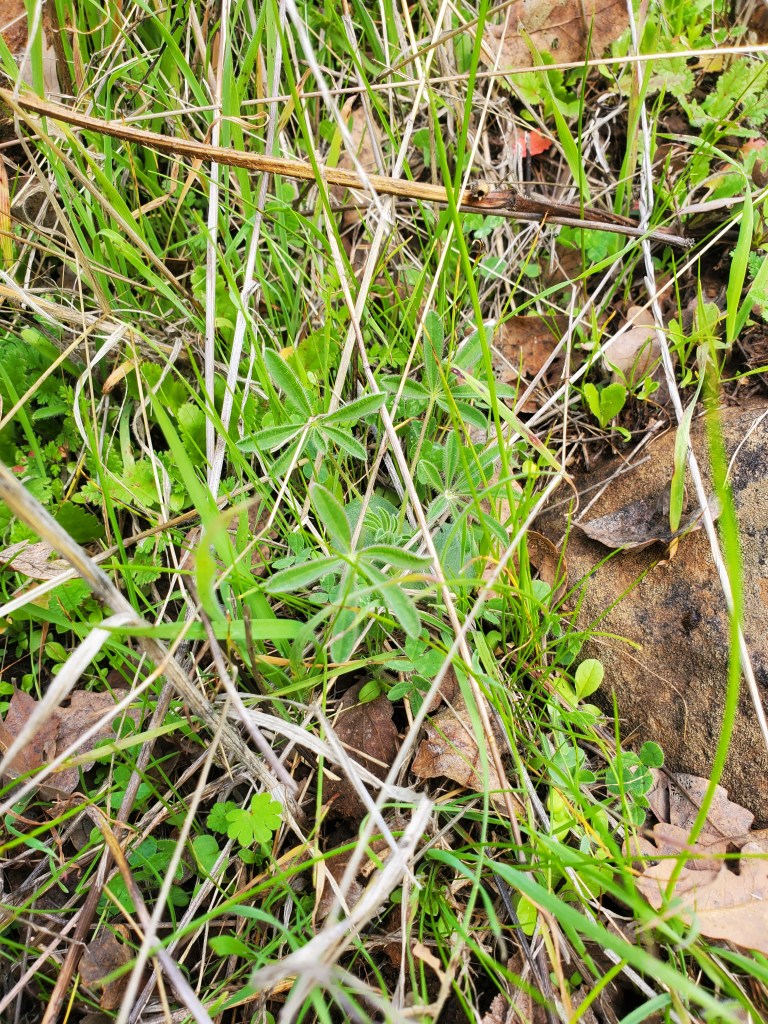
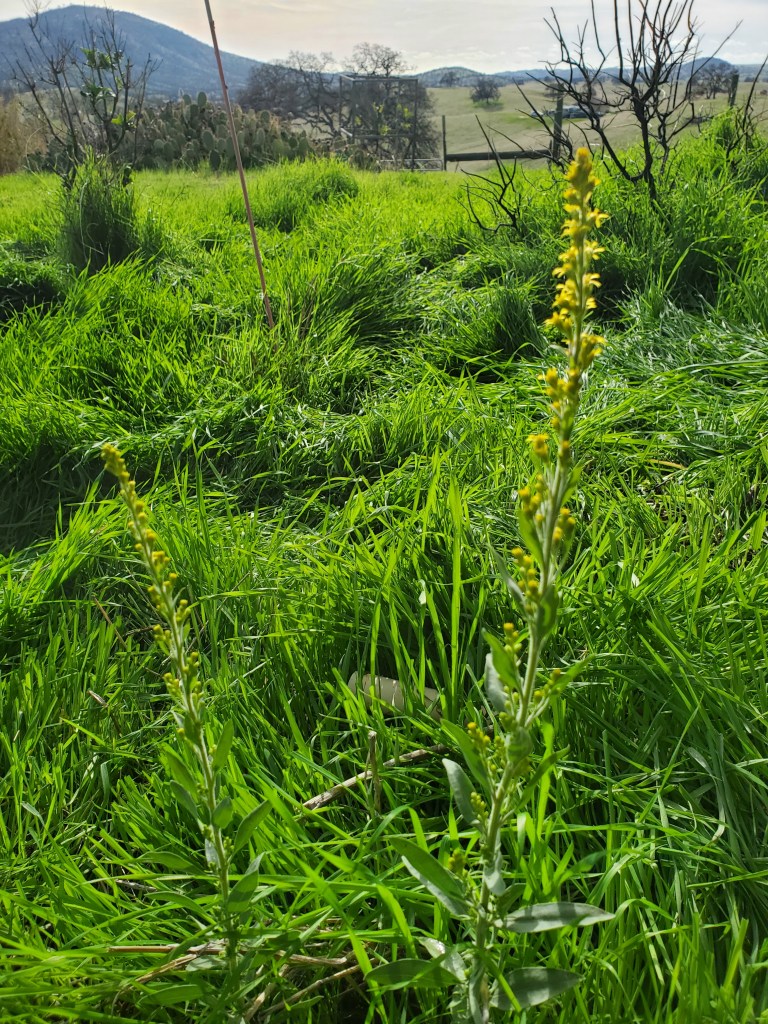
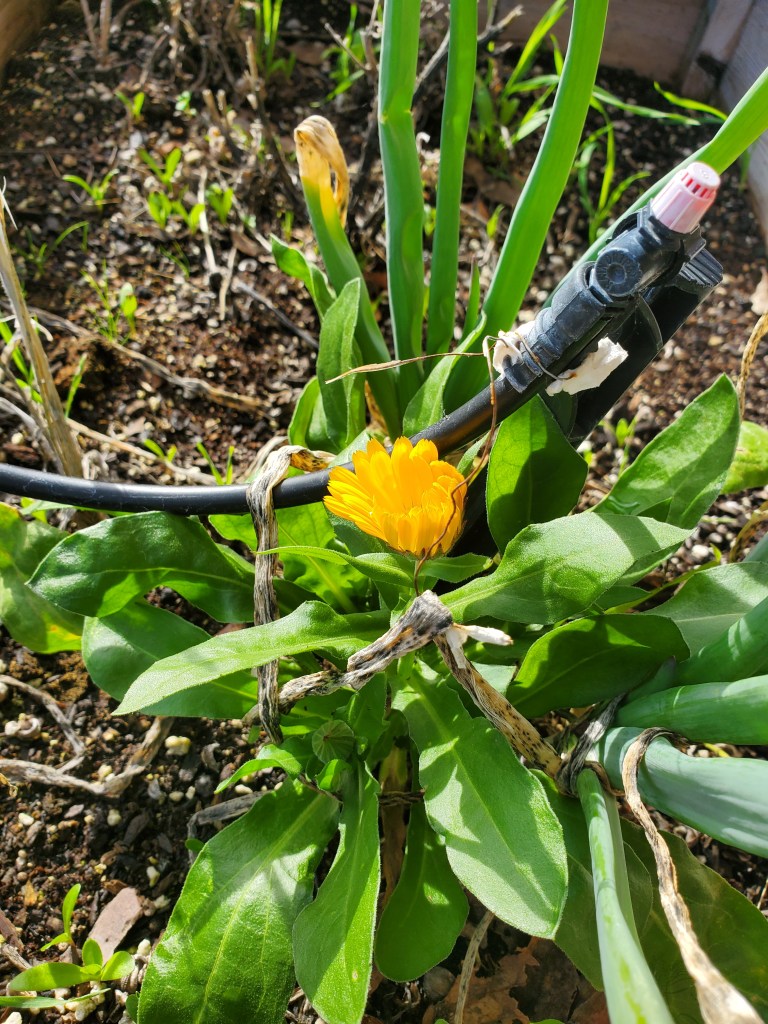
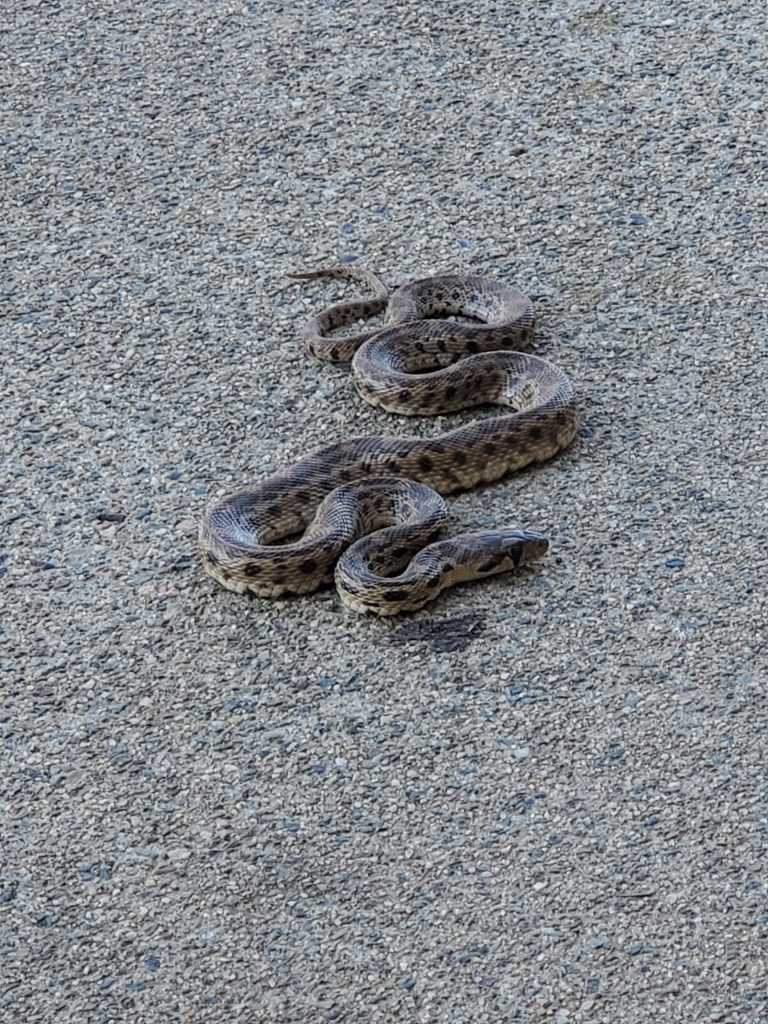
It may seem wonderful to some, but the weather is far too warm. After part of December had rain and cold temperatures, the weather shifted to warm days, cold nights and no rain. This is extremely concerning. Things I have never seen are occurring. I found a gopher snake on the patio. It is usually too cold for them to ambulate. Flies are in the house. A marigold, verbena plant and goldenrod are in bloom. They are fall weather flowers. A broad leaf milkweed is still alive. The lupine are already up. I am used to them emerging in February or March. There has been almost no frost on the ground. We need that to kill some bugs, like grasshopper larvae, to maintain balance. I saw an adult grasshopper in December. Terrifying. Life needs to sleep, and the deep cold helps facilitate that. We need winter.
For every hour I spend outside, I am inside two. Not only do I spend hours at my computer writing this blog, I have to work on ag reports for the county, water rights reports for the state. I am so behind in implementing grants I have for water storage and tree planting projects, and I need to get the materials and supplies together for those. David and I went to check on the site of the second guzzler. We had to go through a forest of downed branches to get there, which made me remember I also wanted to plan a prescribed fire in my enclosed areas. There is so much planning, research and writing.
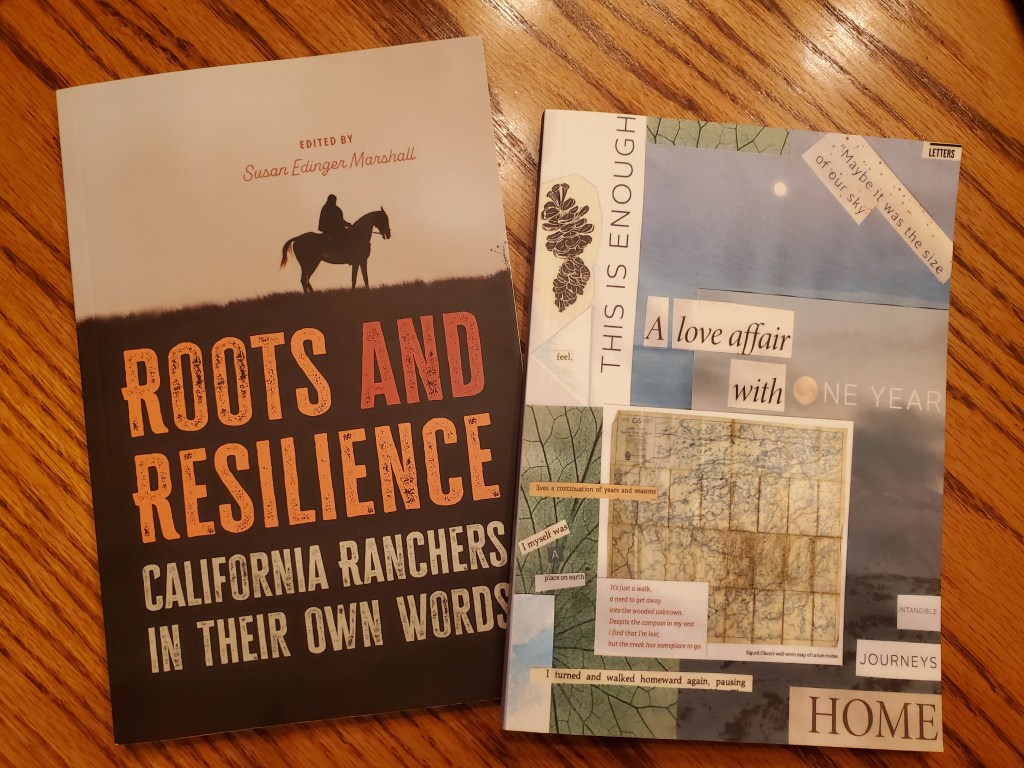
As I always say, I am not complaining. It is an honor to be a land steward and to get to work on this land every day. It is such emotional and sacred work for me that I often write about my feelings, or stories of something that happened. It was a tremendous honor to be asked to write an essay for the new book, Roots and Resilience: California Ranchers in Their Own Words (Nevada Press). I also submitted a piece that was accepted for inclusion in Zine Magazine, a publication of the Women, Food and Agriculture Network. Both are available for sale. For those that love to read, or love stories of nature, these are really wonderful books filled with good stories and creative writing. Full disclosure, I receive no financial benefit from the sale of these books. I am recommending them to you because they truly are good and interesting reads.
Working on a report to the countyHeaded to the back of the ranch to scope guzzler sitesA shock and joy to be published
Wanderings
My thoughts have turned to Los Angeles County every day – the people, animals, the land, sky and water. David and I have many friends who live in the area, and some are evacuated. My heart breaks for the entire situation.
It has long perplexed me why as a species we are so willing to trade the beauty of this land, the health of the water and air we need to live, the songs of birds, animals and insects that bring us joy, and even the very lives of our children for extreme convenience, to preserve the ability to amass wealth and power for a handful of humans. Where is it that the values our grandparents taught us were lost? Why is it we are so willing to be sick? Where did we lose site of the real treasure, of what is truly important?
As I care for my father, and see him struggle to be well, it makes so clear the importance of how one lives life and the joy we find in the most simple things. I was raised in a good way by parents who wanted to be better than their parents, who themselves wanted to be better than their parents. I am grateful for their teachings and those of my grandfather. Low consumption, care for all things, no waste, fight for what is right, simple is ok, you don’t have to be conventional, dancing is joy and many others.
Let’s each of us do our part to help all of our relatives – the two legged, the winged, the ones with fins, the four-legged, everyone. They need us; we need them. We all need one another.
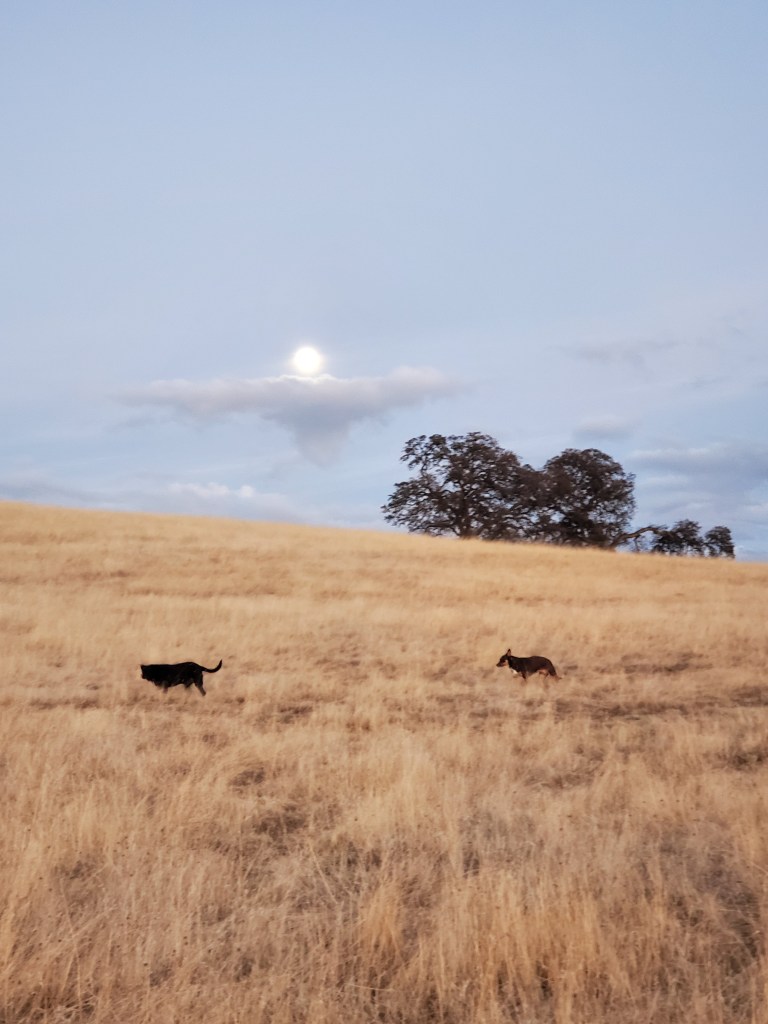
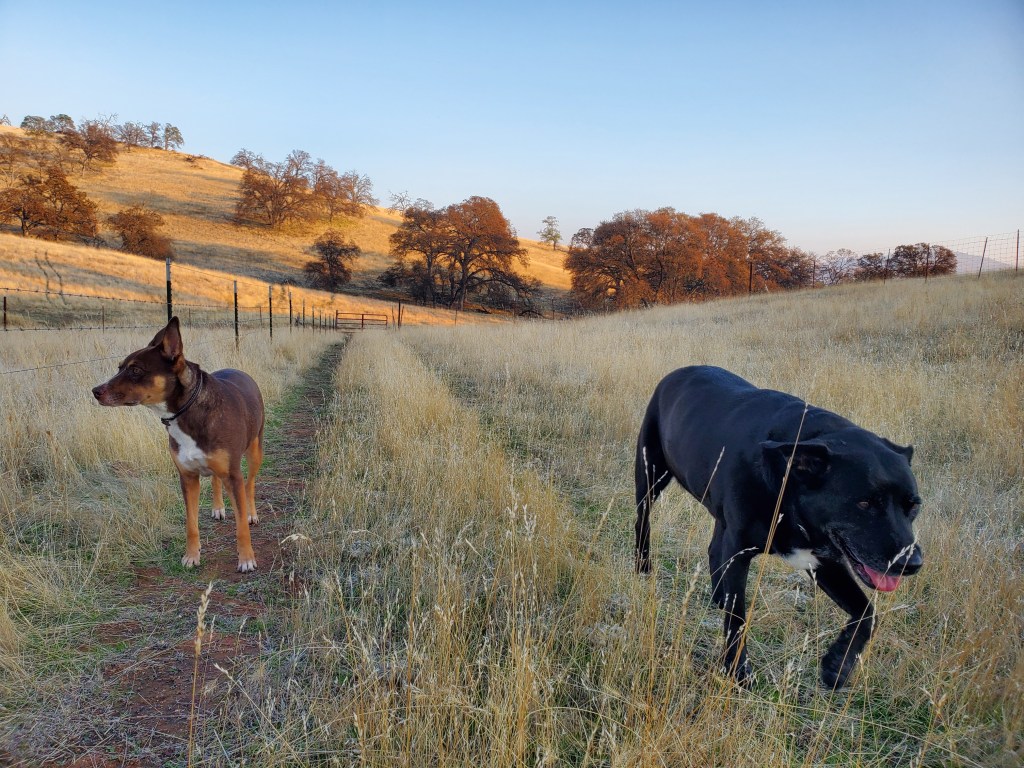
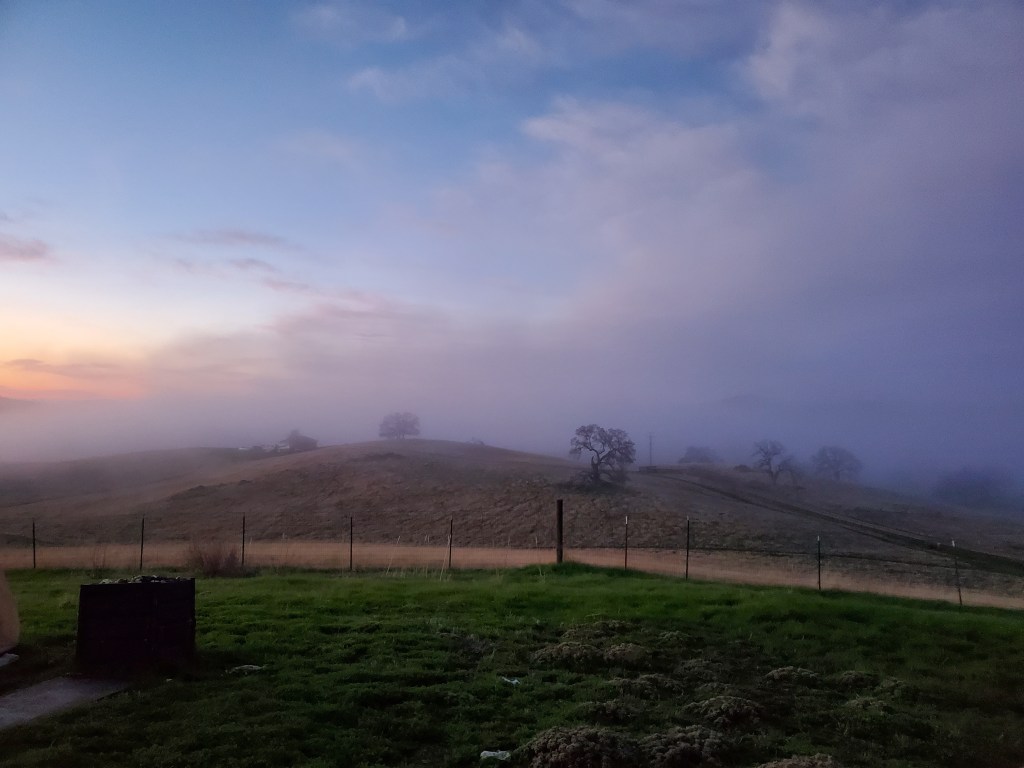
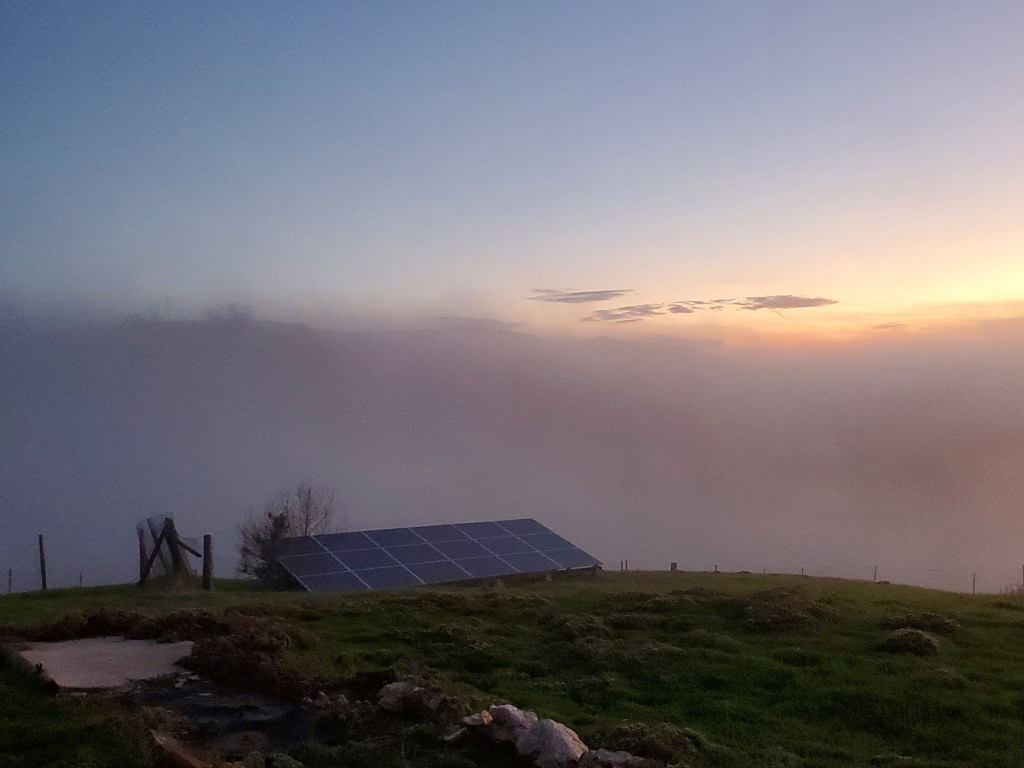
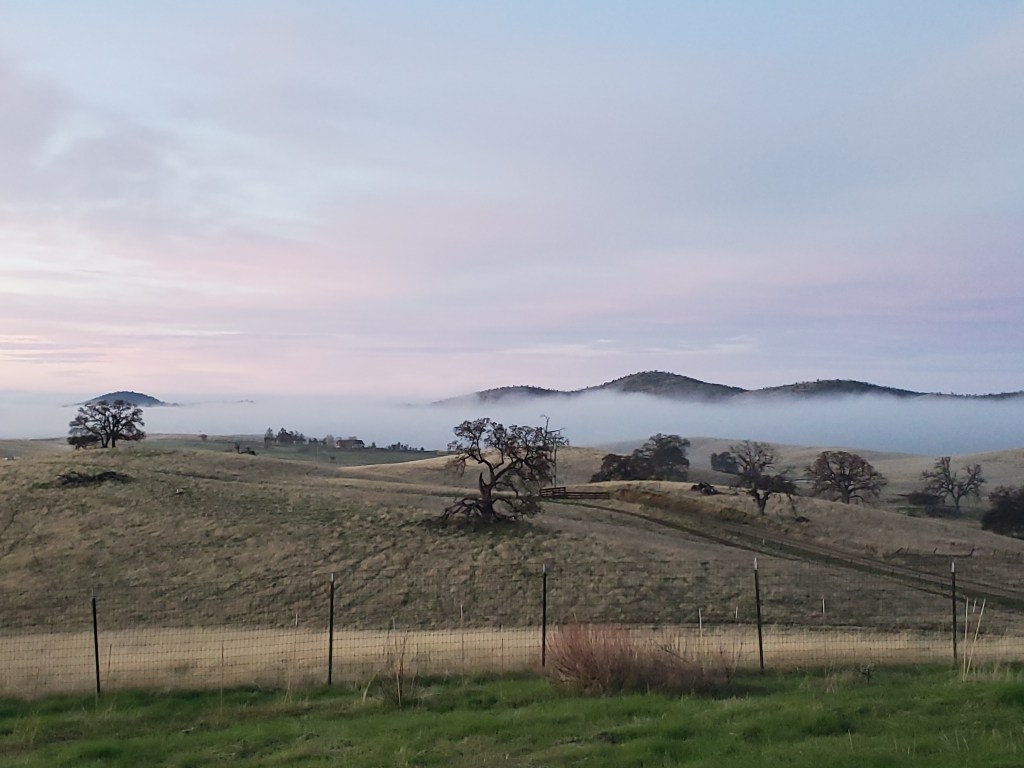
Red tail above meSunriseFull moon over the ranchMy girlsI love toads!FogFog rolls inFog recedesMoisture on the landSunsetWater is lifeWhite collared dovesCoyoteTwo fat raccoonsFeral kittyGreat blue heron flies over the ranch with a mate just out of view
Two monarchs eat and pass through on October 12, 2022
Stop reading for a moment. Breathe deep. Now, take another breath. Feel better? Remember when you were a child? If not, reflect on any child you know. We all start with love – love of nature, love of animals – an innate empathy that is part of our DNA – because we are comprised of our world. Find that place again, find that love, if you’ve lost it. Breathe. Refocus your thoughts on your natural space. It doesn’t matter where you live – apartment, suburb, room in another’s house, a large ranch – there is always something you can do to improve the natural environment, thus your health, our health and the health of the planet. What did you decide to do, or what more did you decide to do? We each have the power to make decisions on re-balancing how we live — how much we take on, how much more time outside of typical hours we give to work or volunteering, what we choose to spent time on. Sometimes they are big changes, but most times they are small, but make a difference. Rebalancing your life can lead you to wonderful experiences.
A major choice I made was to focus more of my time on the ranch, with a particular focus on climate resilience. It has been some of the best work of my life, building habitat piece by painstaking piece and building new structures to scale the work. It was not always clear that this work would be successful. If you are a regular reader, you know my failures and emotional troughs! Yet, mother nature, with a little partnership from humans, delivers, and she delivers every time.
Monarchs Going and Coming + More Butterflies in October
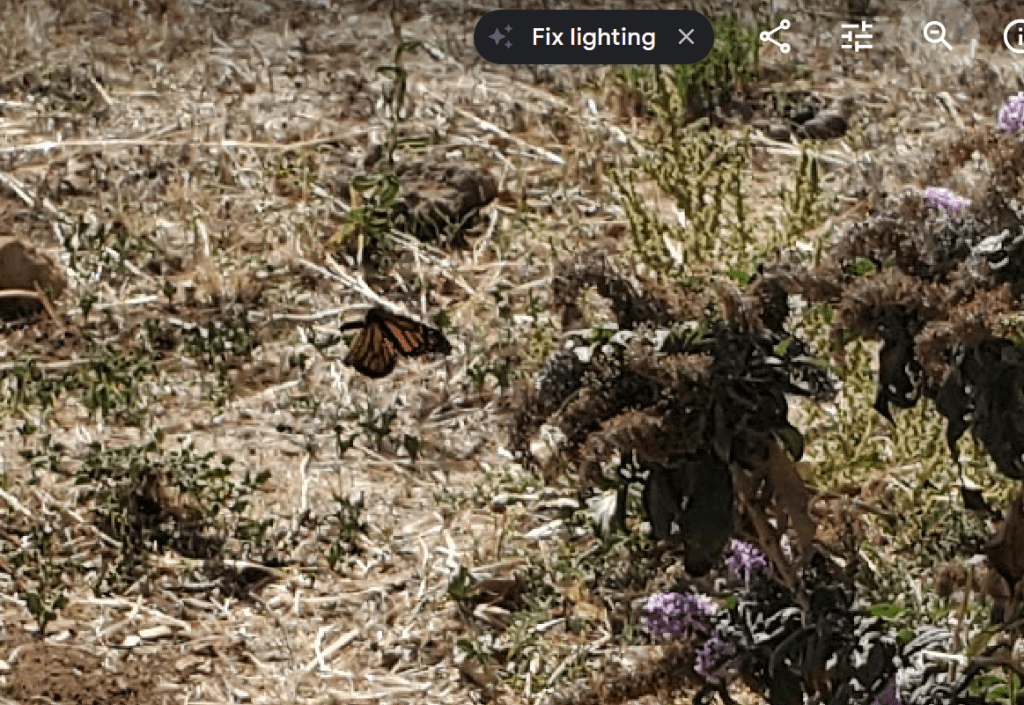
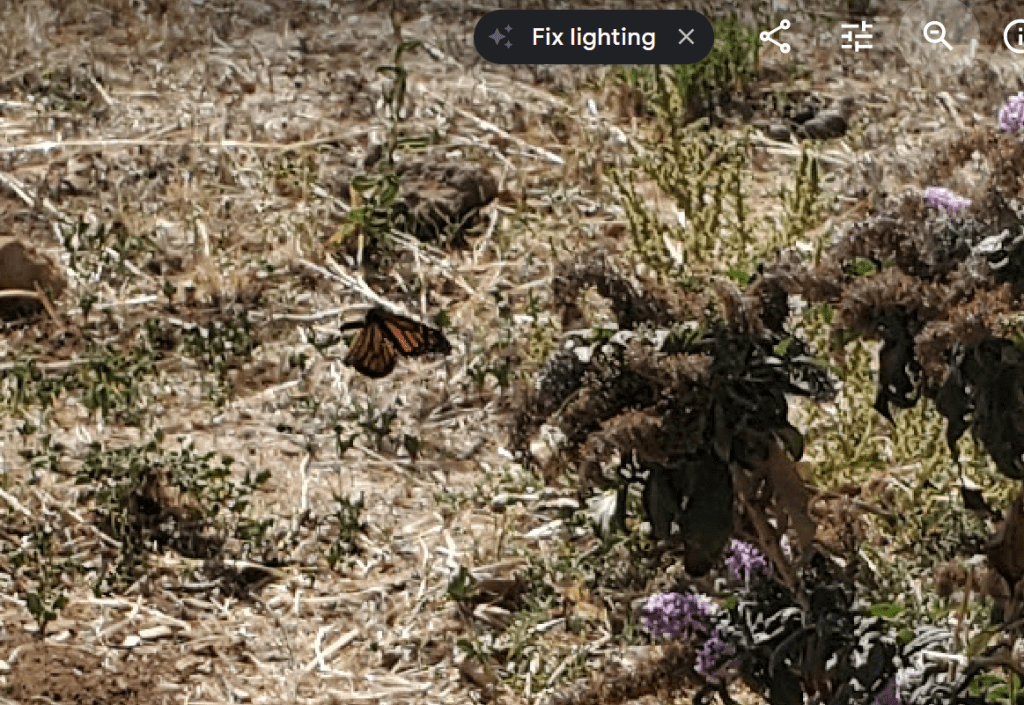
It was overwhelming on October 12 when I saw two monarchs nectaring and flying around the garden. They appeared out of nowhere, flitted on the marigold, then the sunflowers, then the butterfly bush. As quick I as saw them, they were gone. Whoa. I had to catch my breath. “Did I really see them”, I asked myself. Fortunately, I took a multitude of photos and found one that I could zoom and see the distinctive markings. Yes! We are back on the monarch migration route!
Original photoZoom of area near butterfly bush bloom
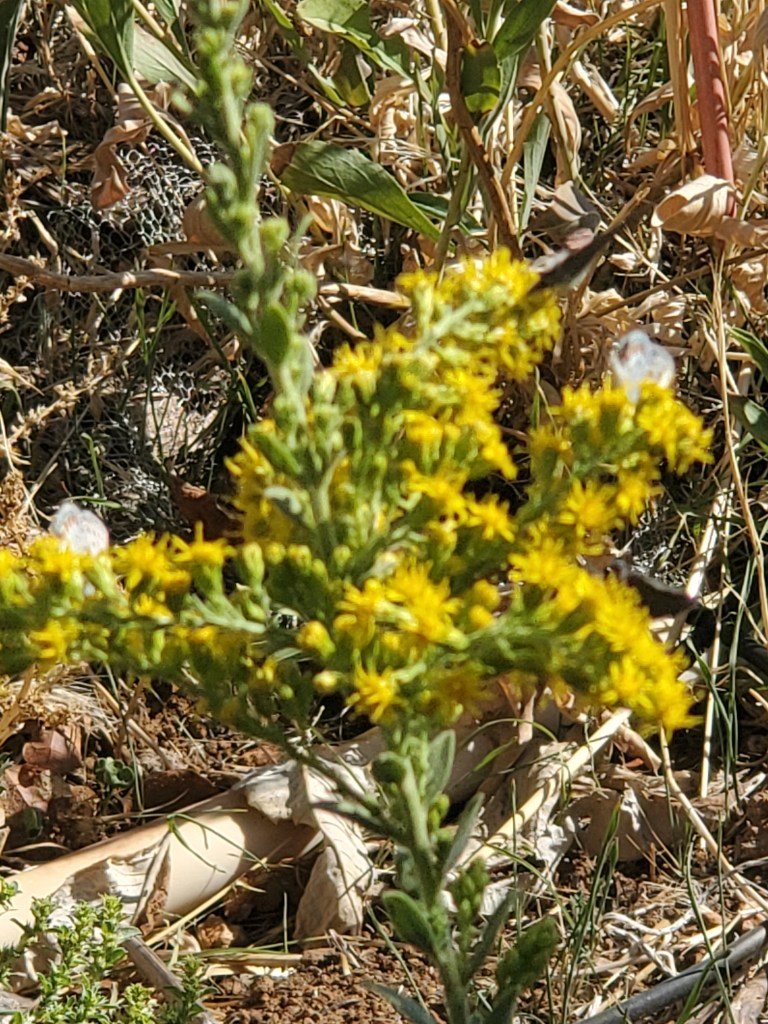
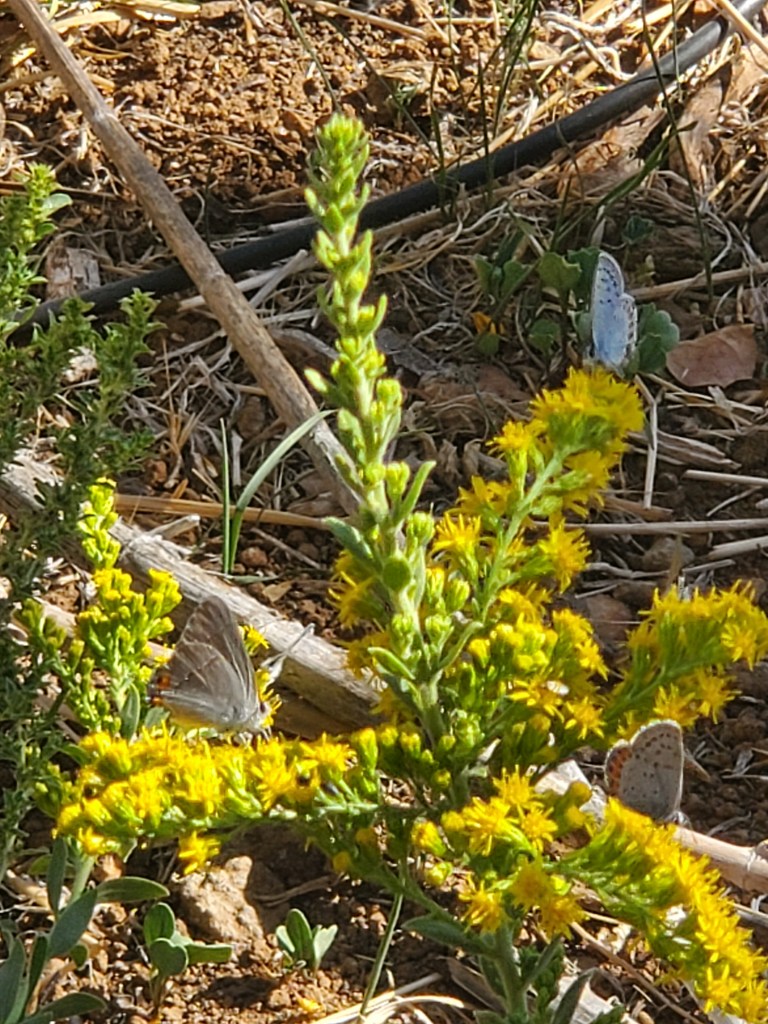
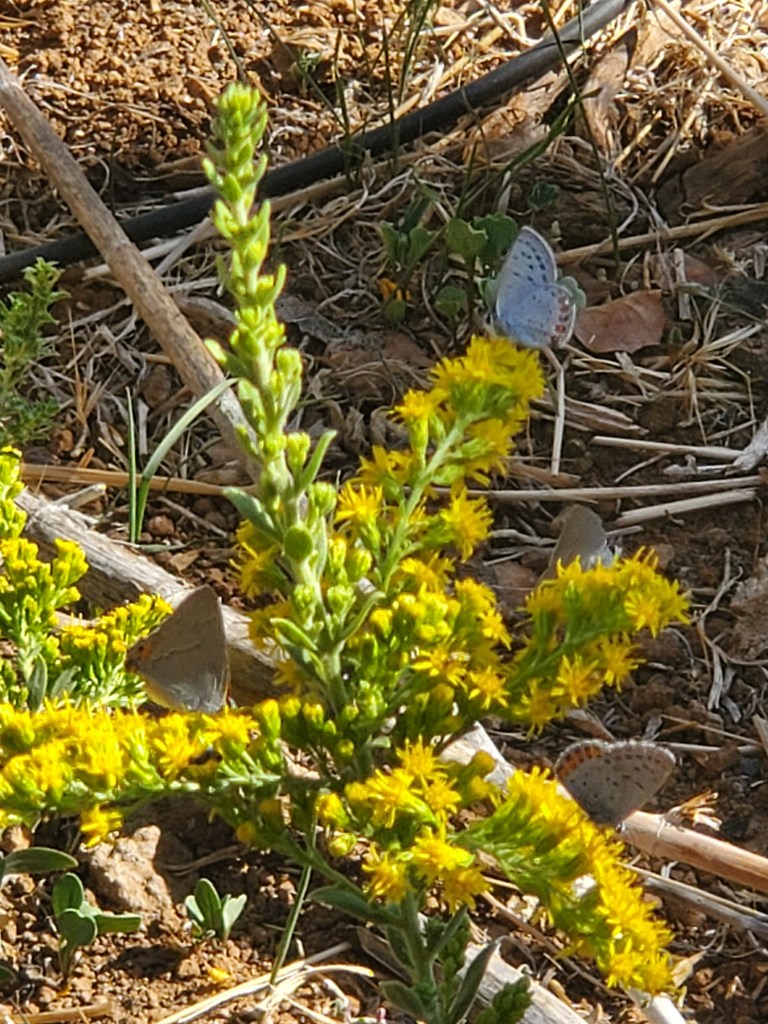
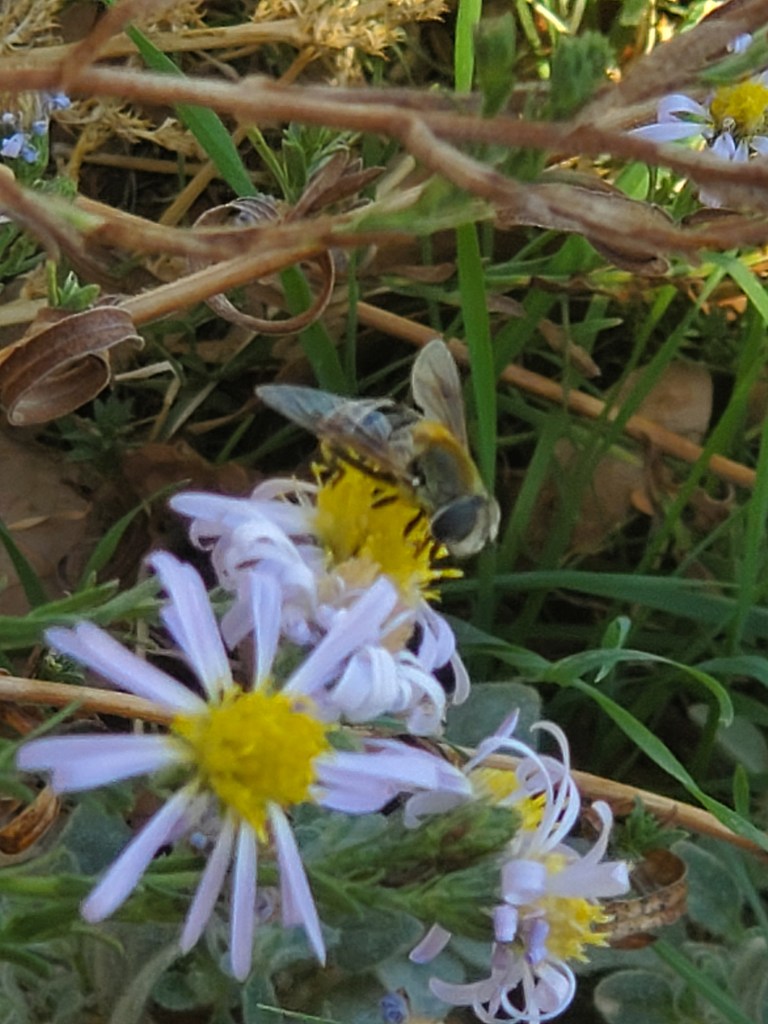
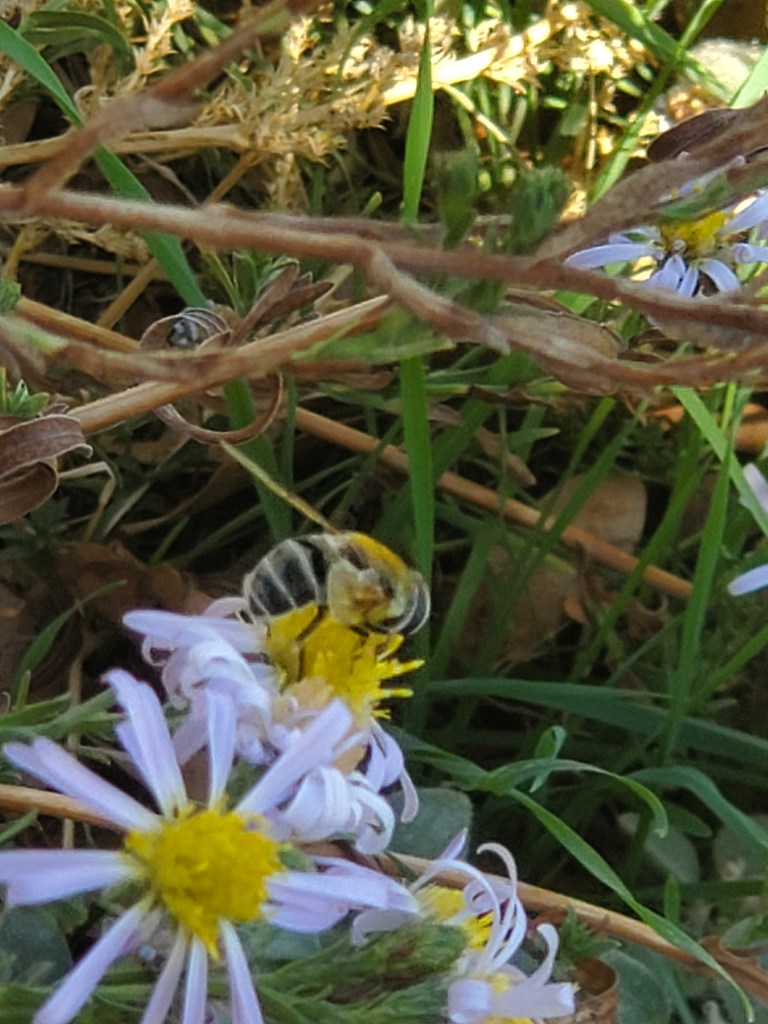
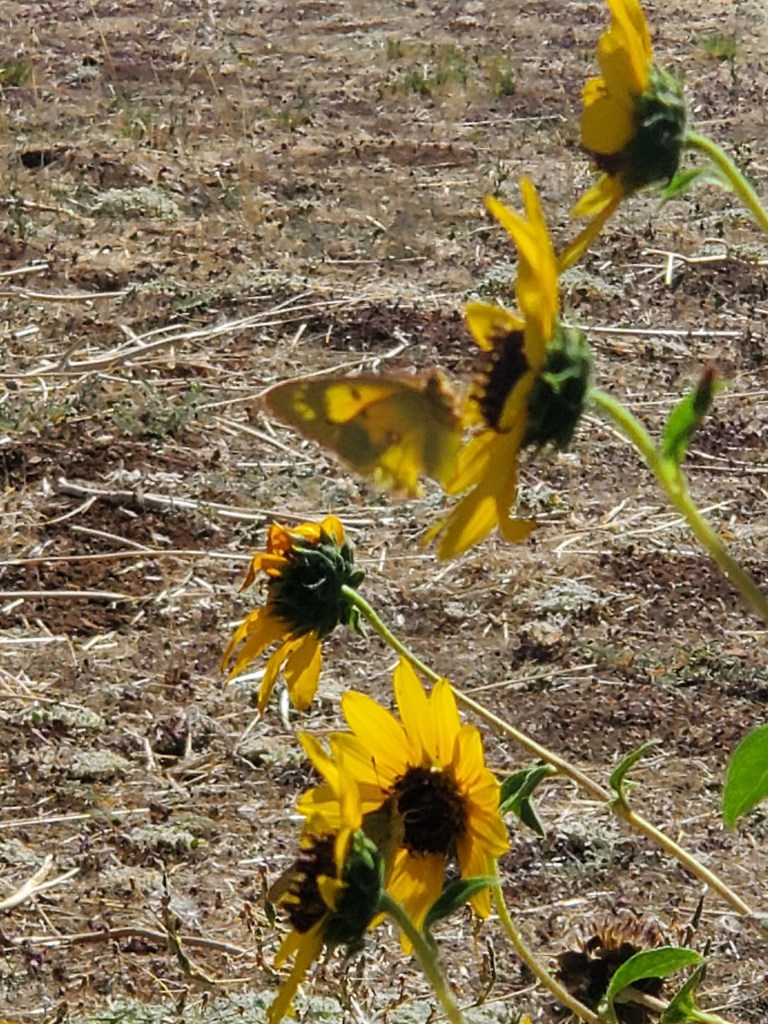
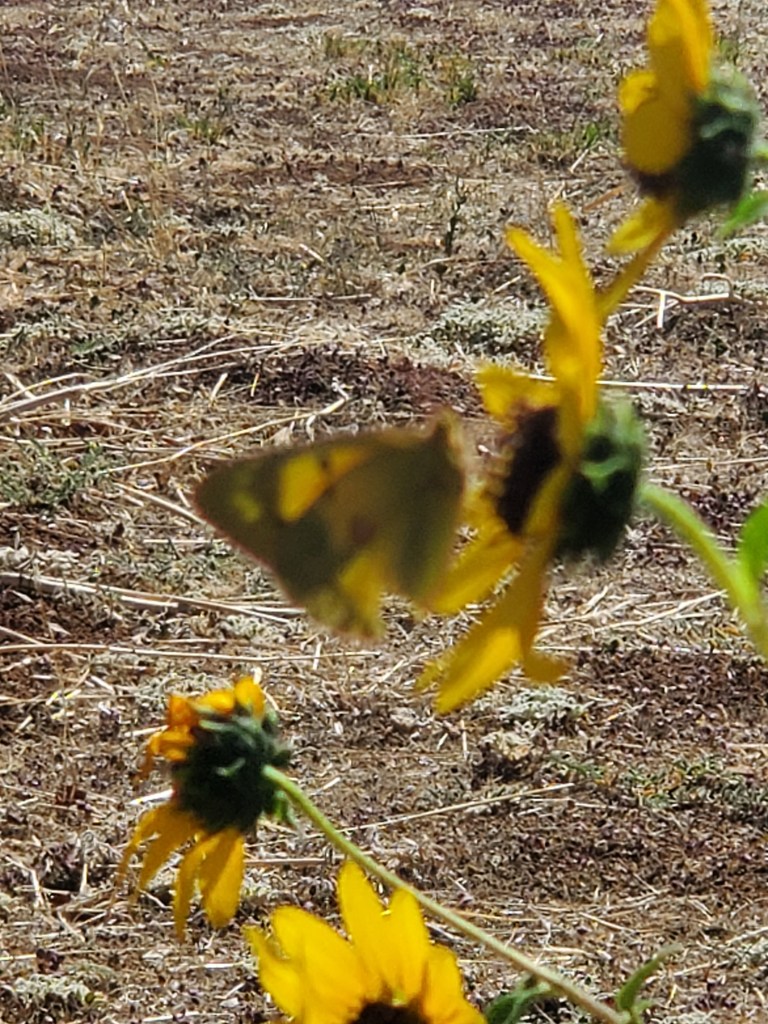
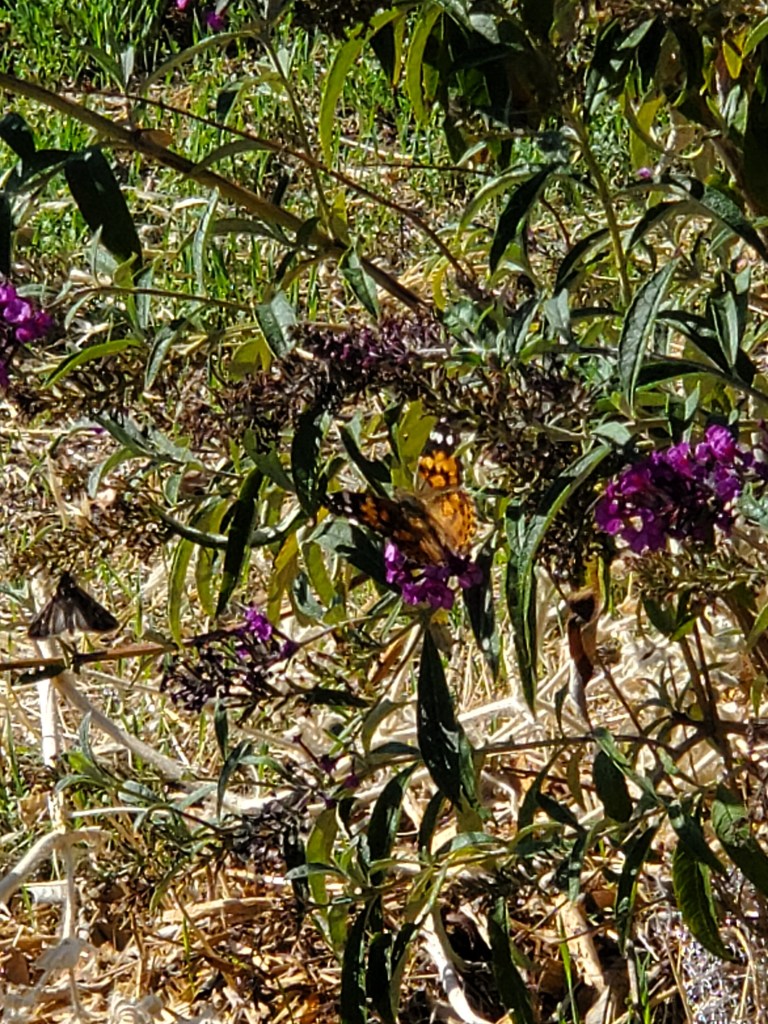
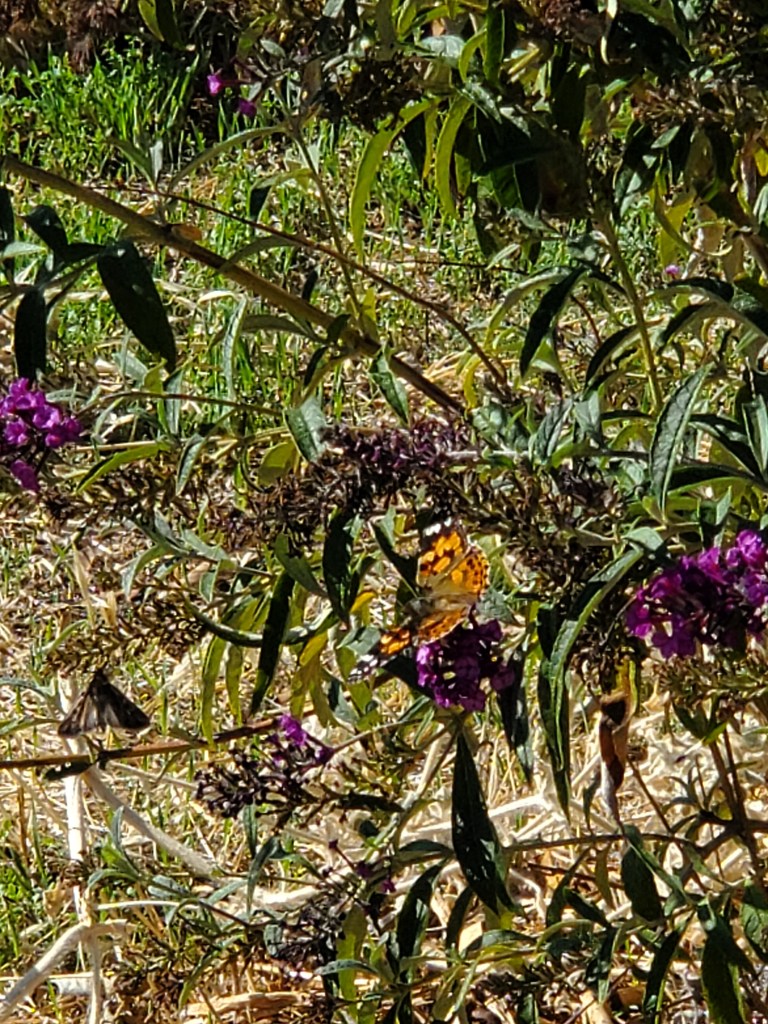
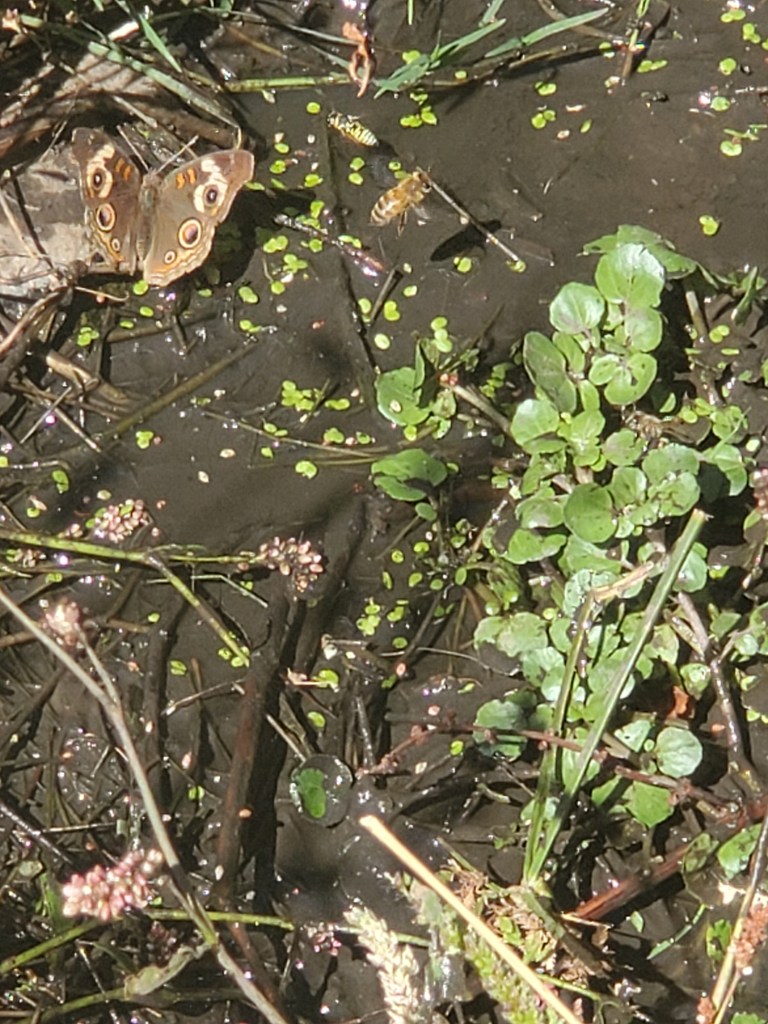
Not only monarchs, but other beautiful butterflies have visited the plants. I was losing hope last month with the ongoing heat, but October has been the best month so far for butterfly spotting. It cooled just a little, and then they all started showing up. There was the one buckeye at the Spring Creek spring. It was hanging with several California hairstreaks. We have had a procession of sulphurs in white and yellow and some large painted ladies. We had one or two red admirals, which was fun to see. The goldenrod and pacific aster attracted the visit of a large number of Caliofrnia hairstreaks. Finally, I saw what I thought could be a parnassian, but I really need an expert look. It was not the right color for those, so maybe not.
California hairstreaksCalif hairstreaksCalif hairstreaksNative beeNative bee changes positionParnassian? Buckeye?Mystery butterfly. Any guesses? Painted ladyPainted ladyPainted ladyBuckeye butterfly, bees at the spring
Ranch Health
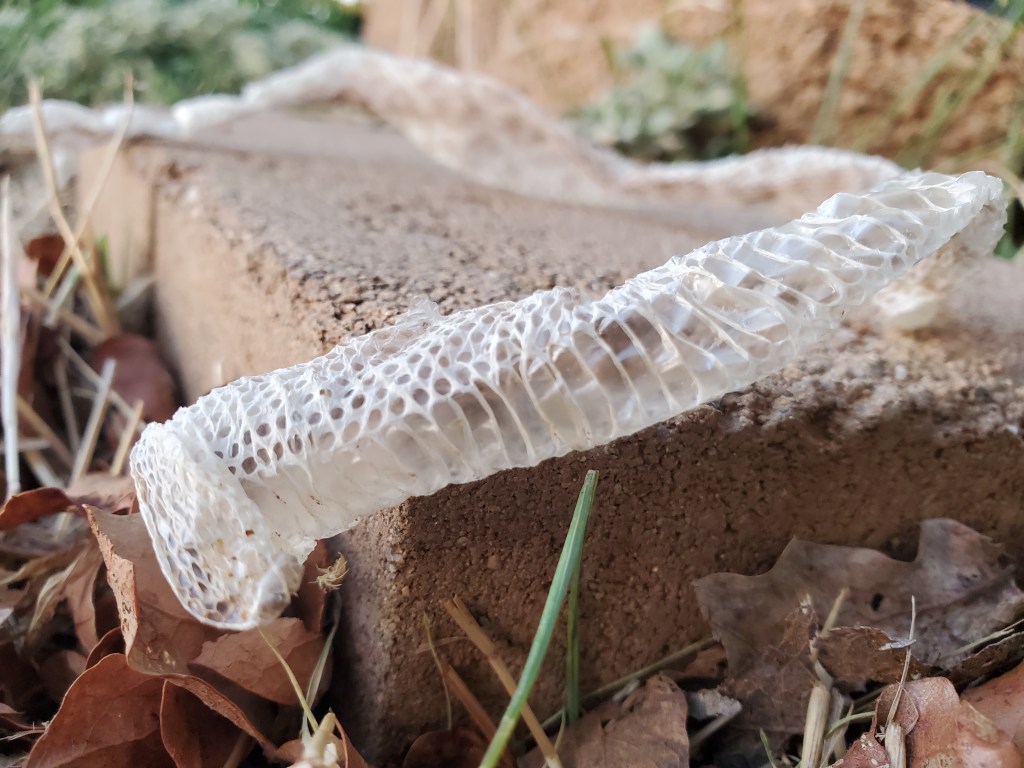
Shed snake skin – nice big one. Good sign of health!
Beyond butterflies, the ecosystem seems to be functioning despite the ongoing heat. Only recently has the air cooled significantly overnight. Daytime temperatures were in the 90s in September and have finally decreased into the 80s in October. That is still warm. Plants continue to grow, bees continue to harvest. The growing season is longer. Nothing is resting just yet.
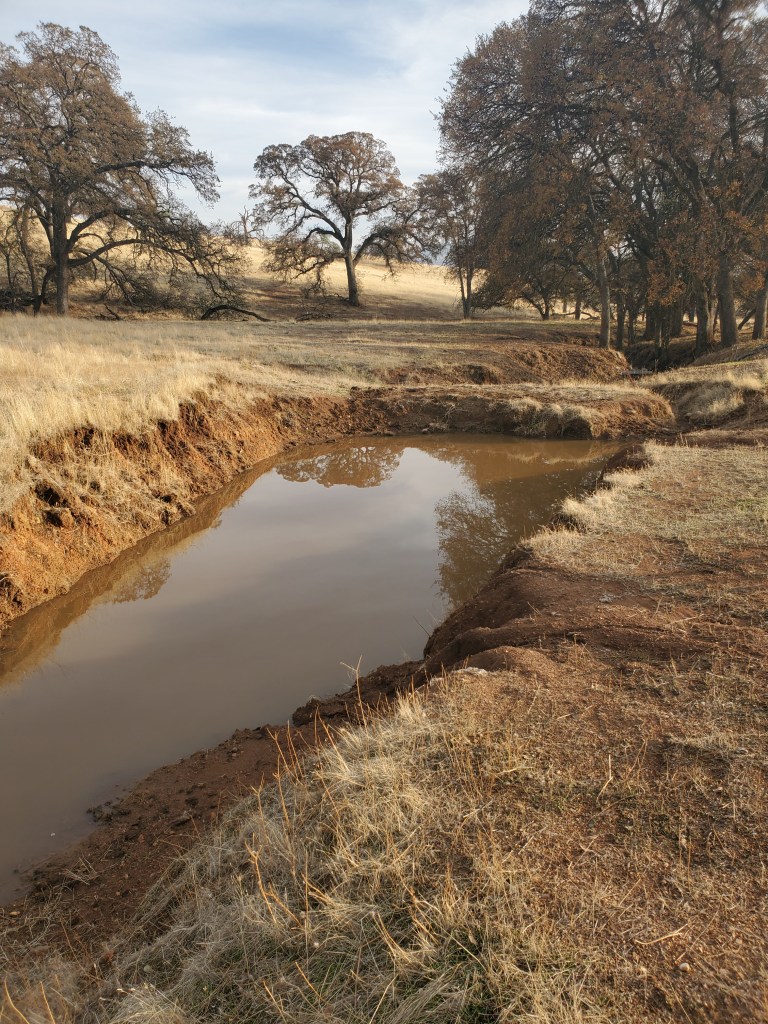
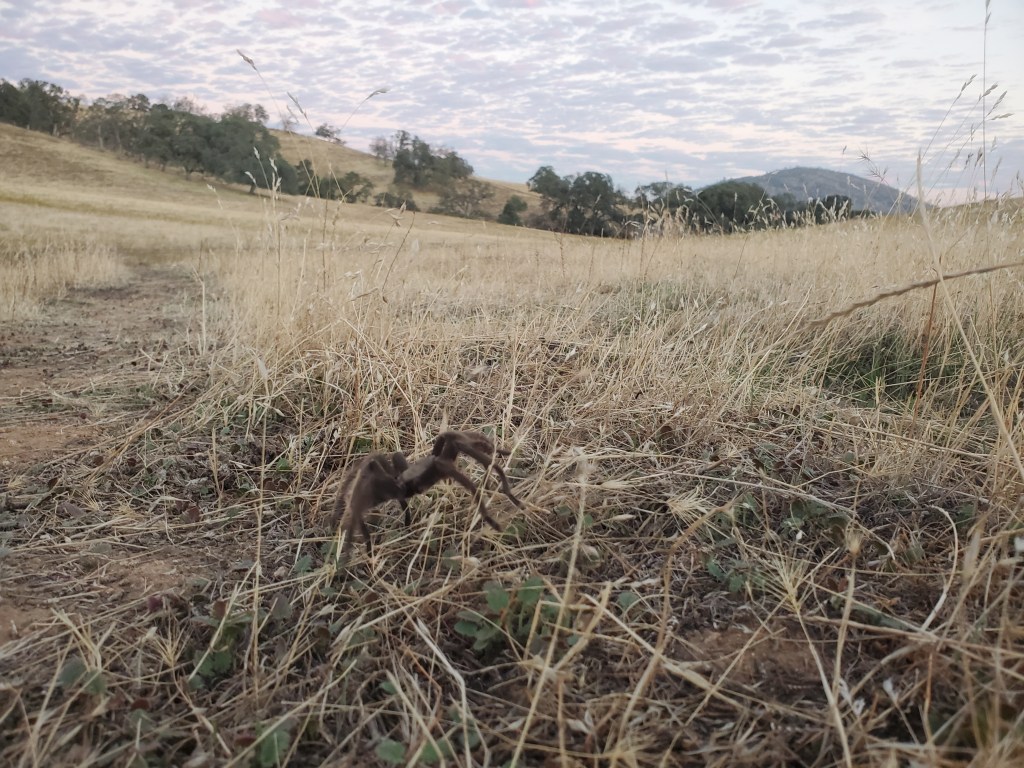
I have only counted 10 tarantula sightings. That is low. The ongoing heat has kept them in their holes I think, or perhaps the profusion of tarantual hawks earlier in the season (yikes!) reduced their population. Everything still needs water. The springs are still shrunken. The neighbor’s pond is dry. This continues to make the guzzler project extremely important for wildlife: mammal, bird and reptile water access. It is still in place with water, but no overhang or permanent fence yet – a work in progress. The cows are back on and did hit the guzzler a few times emptying it. The cows have plenty of water on the south side of the ranch, where another neighbor’s ponds are still wet. They need the water too. They are calving and need to produce milk. Fortunately, we had that rain in September. I was only able to refill the guzzler because of those 1.25″, which half filled the rainwater tanks. That storm has helped me continue not only wildlife watering but irrigation – since I do not use my well water for that purpose.
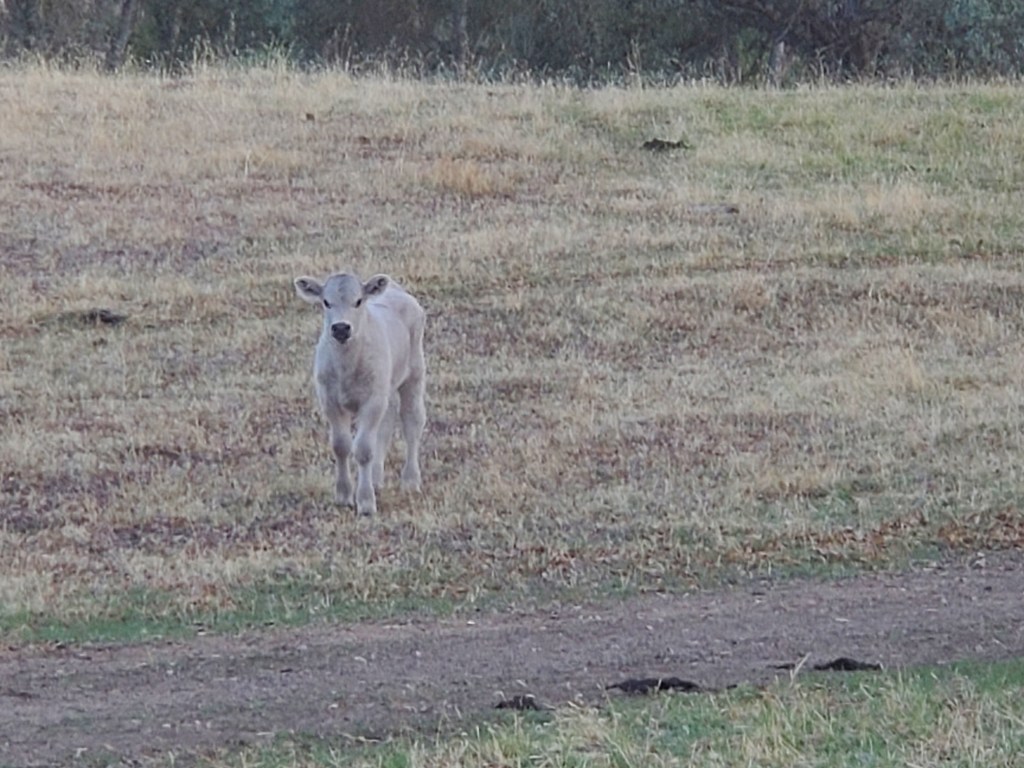
Pacific asters in bloomTarantula in 4-wheel driveGuzzler set upCute calf!More astersBeauty!Close to sunset looking NECan’t get enoughRefilling the guzzler down one of its channels
To keep the cattle out of the guzzler, I repurposed the panels I used to protect the incubator milkweed in June. Thanks again to my neighbors for the loan! I will build the required overhang and exclusion fencing before the end of the year. The panels were a nice, quick remedy.
Vinegar weed is everywhere this year. The smell is amazing. Taking down the panelsCollecting the pins in my pocketTrying to grab a pic of the sunset resulted in a selfie. Dave thought it was cool, so I added it.Steep!Hauled the panels to the truckLoaded the panels, tied downSet them up again around the guzzler. Water preserved for wildlife!
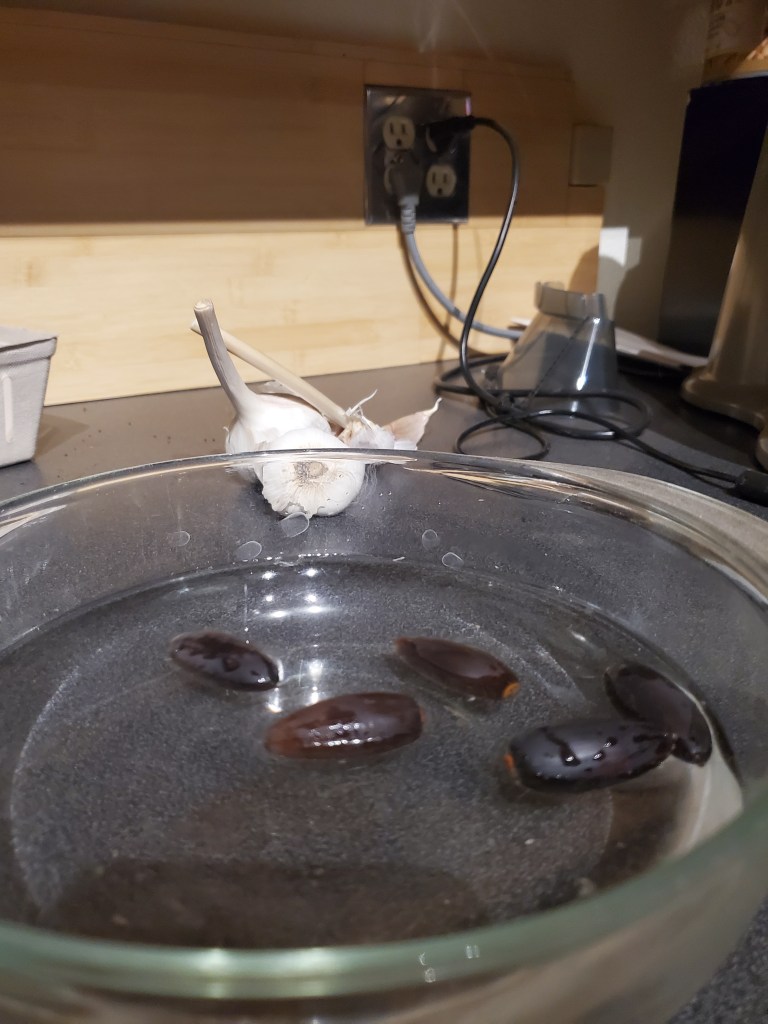
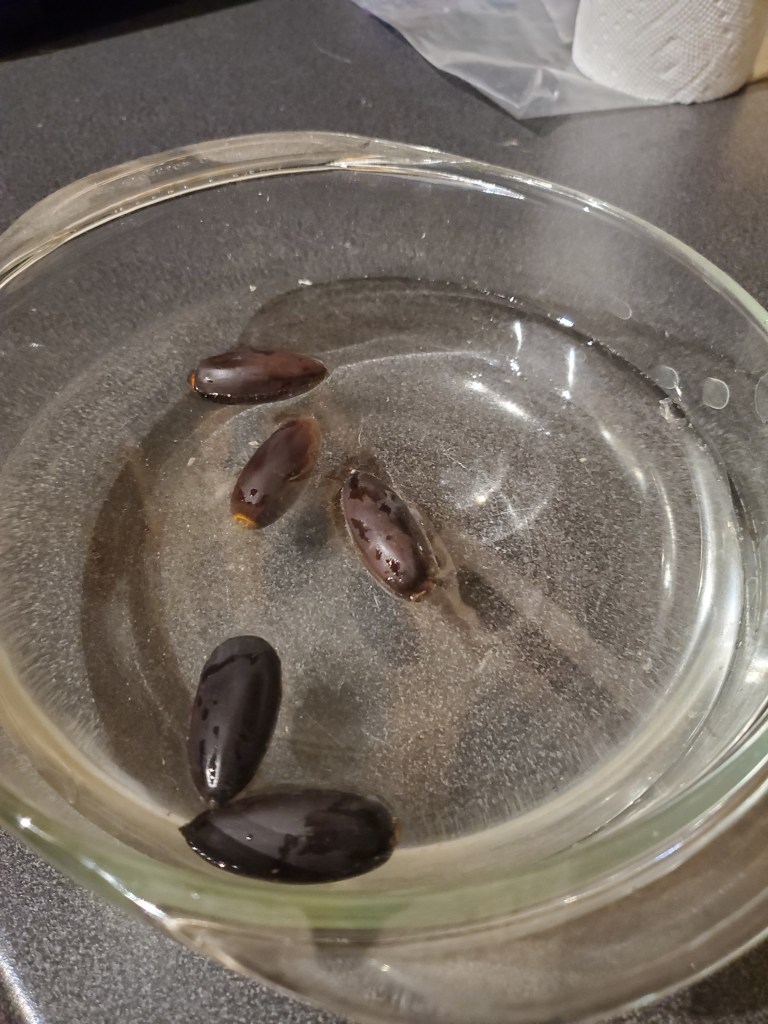
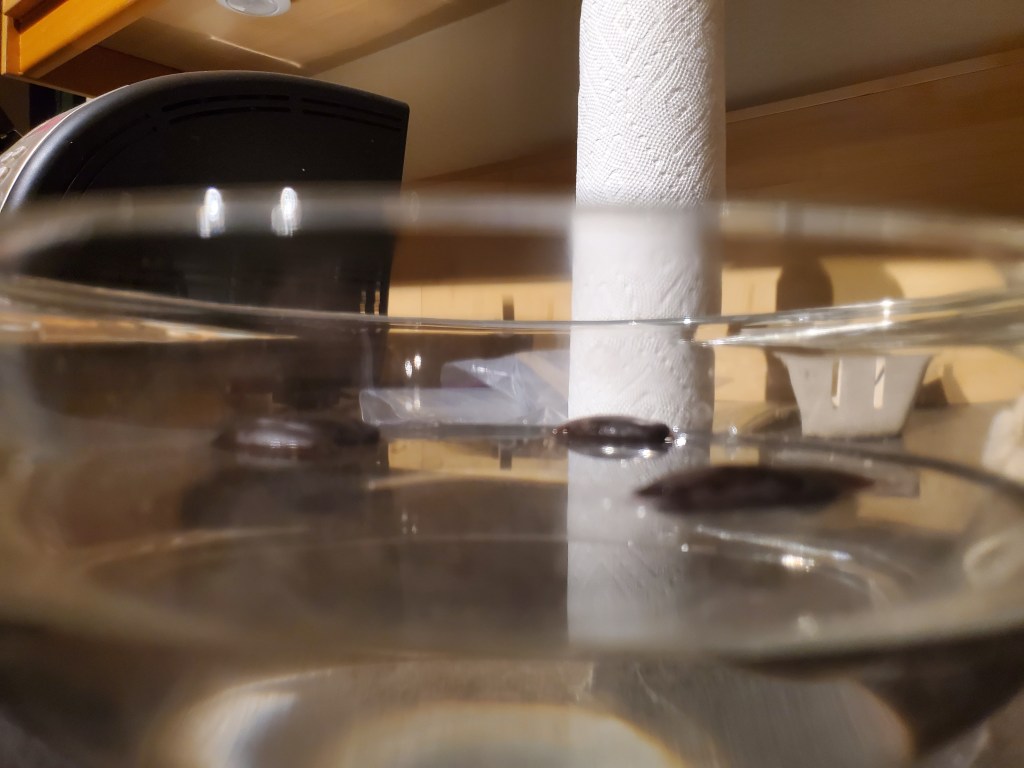
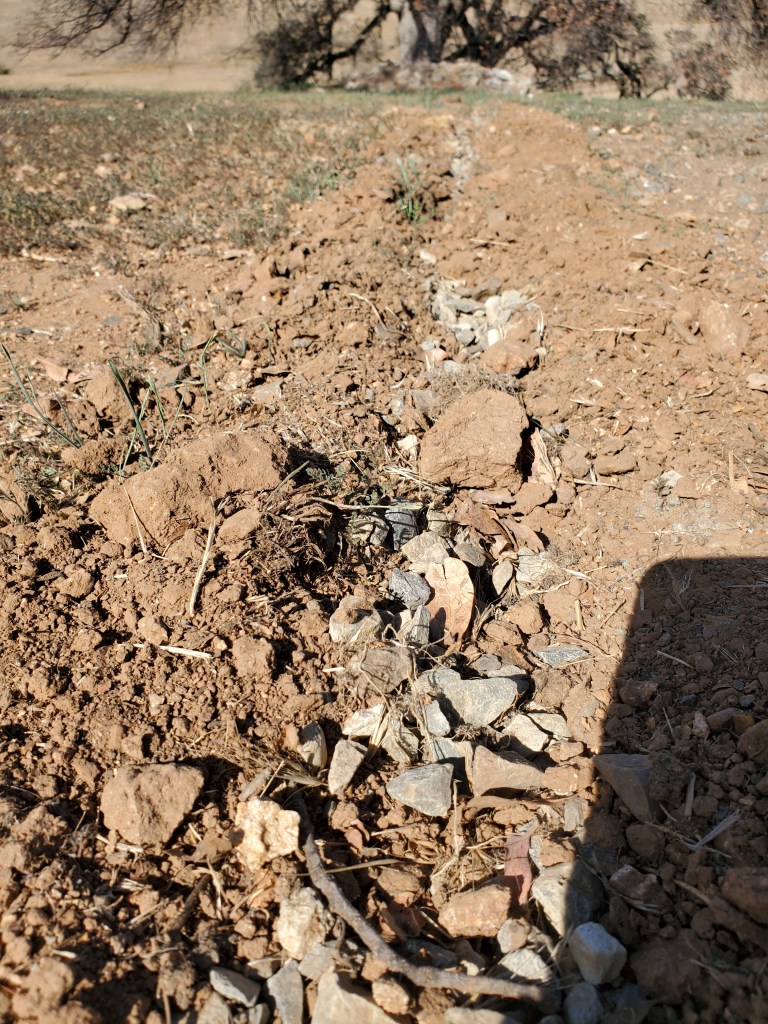
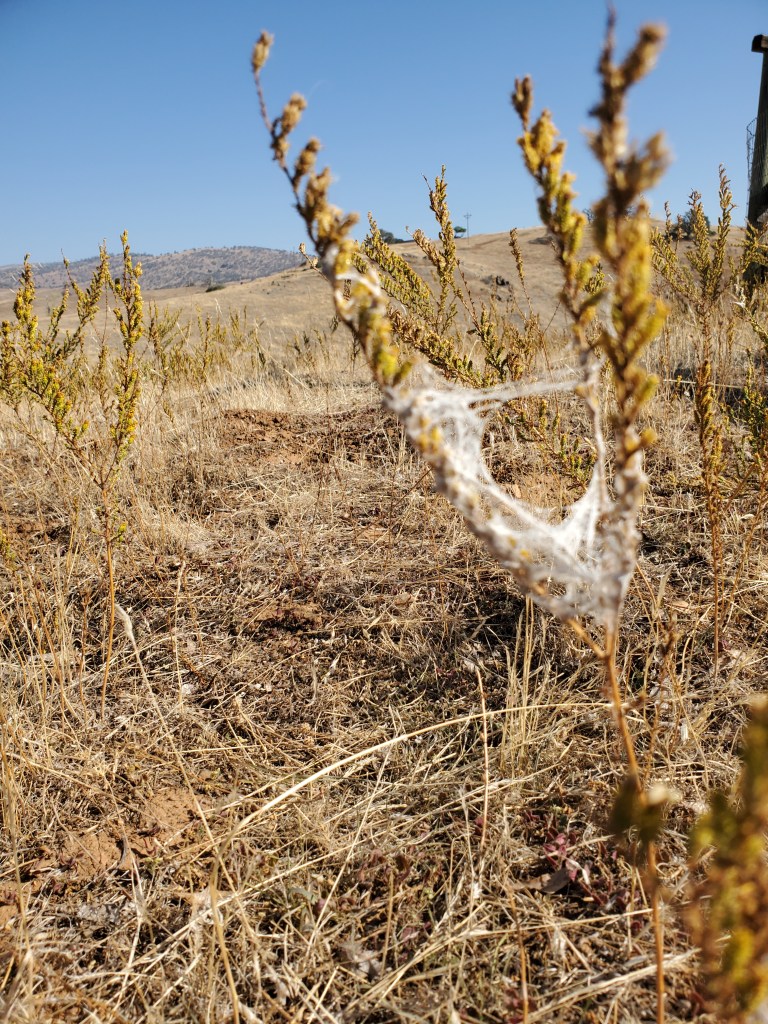
October definitely means spiders. We have had webs flying through the air with their precious cargo, thousands of baby spiders. They are tangled into everything: tarweed, grass, boulders, fence posts – you name it. I did have some time to fill the trench I dug to the oak tree (see last blog post) with gravel. It needs another two or three passes to fill the trench. The rock helps maintain open space for the rain water to move through in a rain event all to deliver more water to the large old oaks. I have been collecting acorn as well. As mentioned in the last blog, it is slim pickings for acorns this year. I am desperate to start some seedlings from my acorns so we have younger trees growing and available to take the place of the grand old ones in front of the house when their life span is at an end. To choose the ones most likely to germinate, you float them in water. The acorn that sinks to the bottom will be the healthiest to use. The lighter the acorn, the less energy it has stored or the more likely bugs have already gotten into them to eat. I did try to start about 10 trees 10 years ago. I was not successful. I have more expert help now. That makes a difference.
Grand oakAck! Most are floatingOnly one acorn of the bunch sinksFloating acornTrench filled with first layer of rockA cache of baby spiders in their air travel device
Winter Garden Growing Well
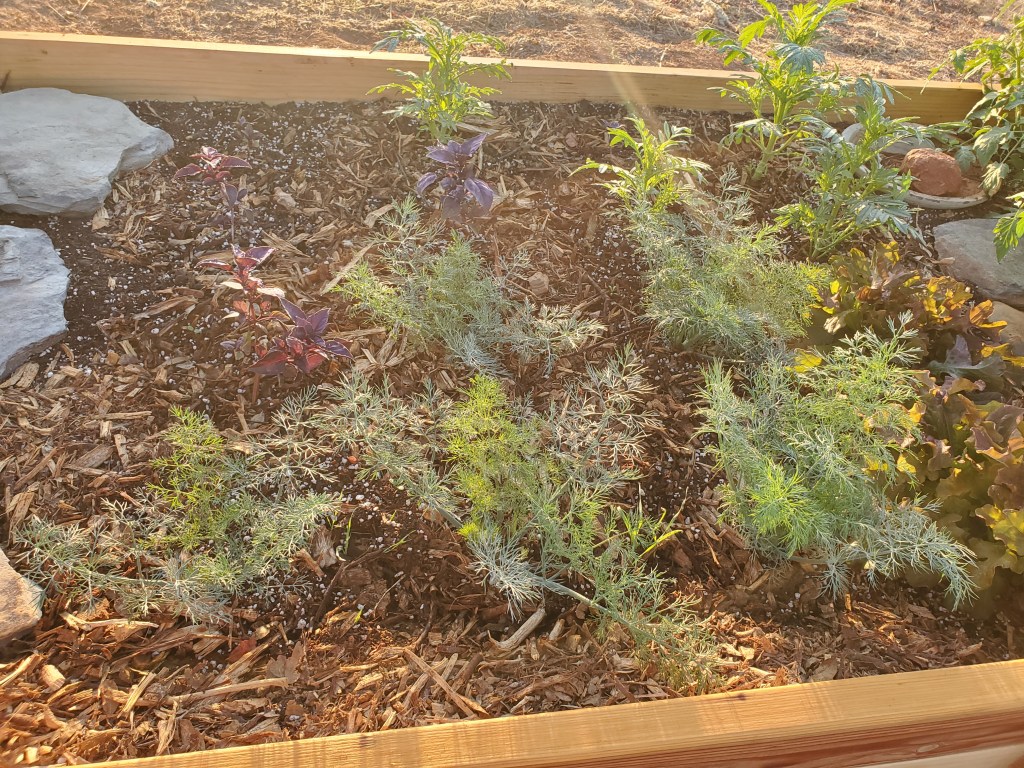
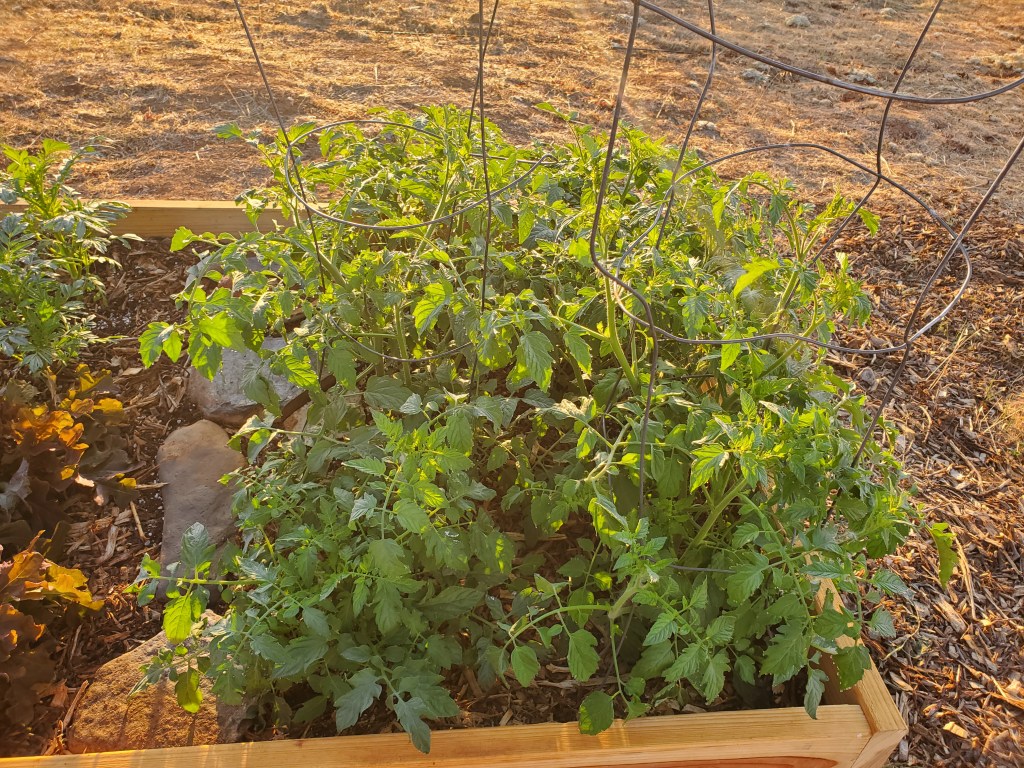
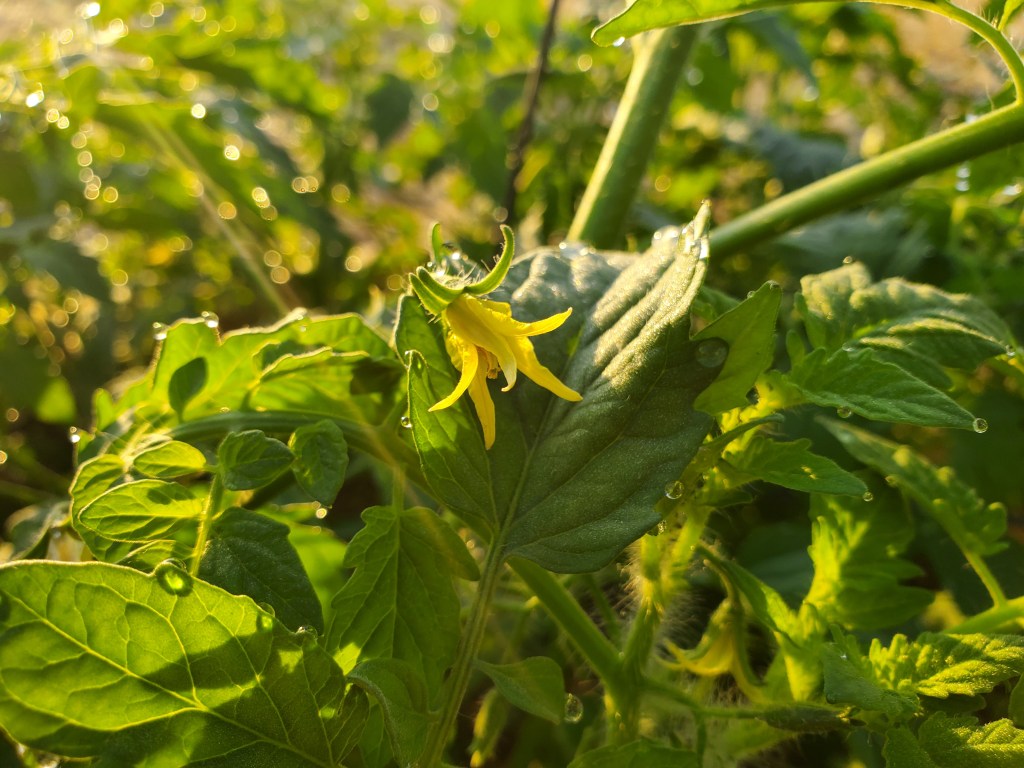
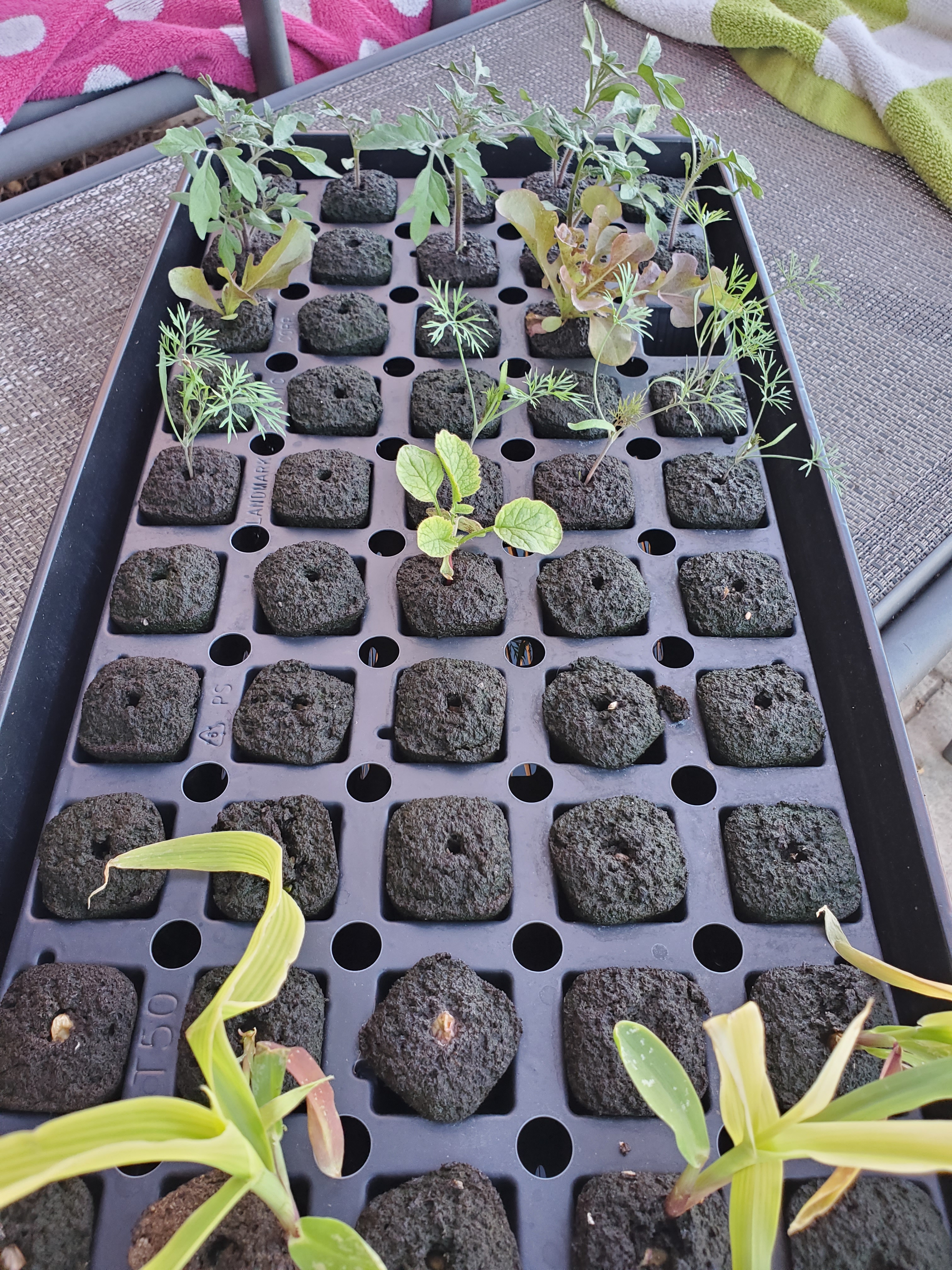
Corn and marigold in the northDill, basil and marigoldCherry tomato plantsTomato bloom
I have already been able to harvest red leaf lettuce, basil and dill for salads. We will see if I get any tomatoes and corn. With the decrease in sunlight and the cooler nights, I don’t know if they will produce. As I mentioned in the previous blog post, since it was still hot, I thought I would make the most of it and see if I could extend those crops. There are some blooms on the tomato plants. Very exciting. I will see if the plants can beat the clock. I will also continue to look for free or low cost greenhouse elements for me to piece together something that can amplify the heat. I will likely add spinach, radish and carrots later. For the in-between time, I will add oats and peas as nitrogen fixing cover crops.
Rebalancing Off Ranch
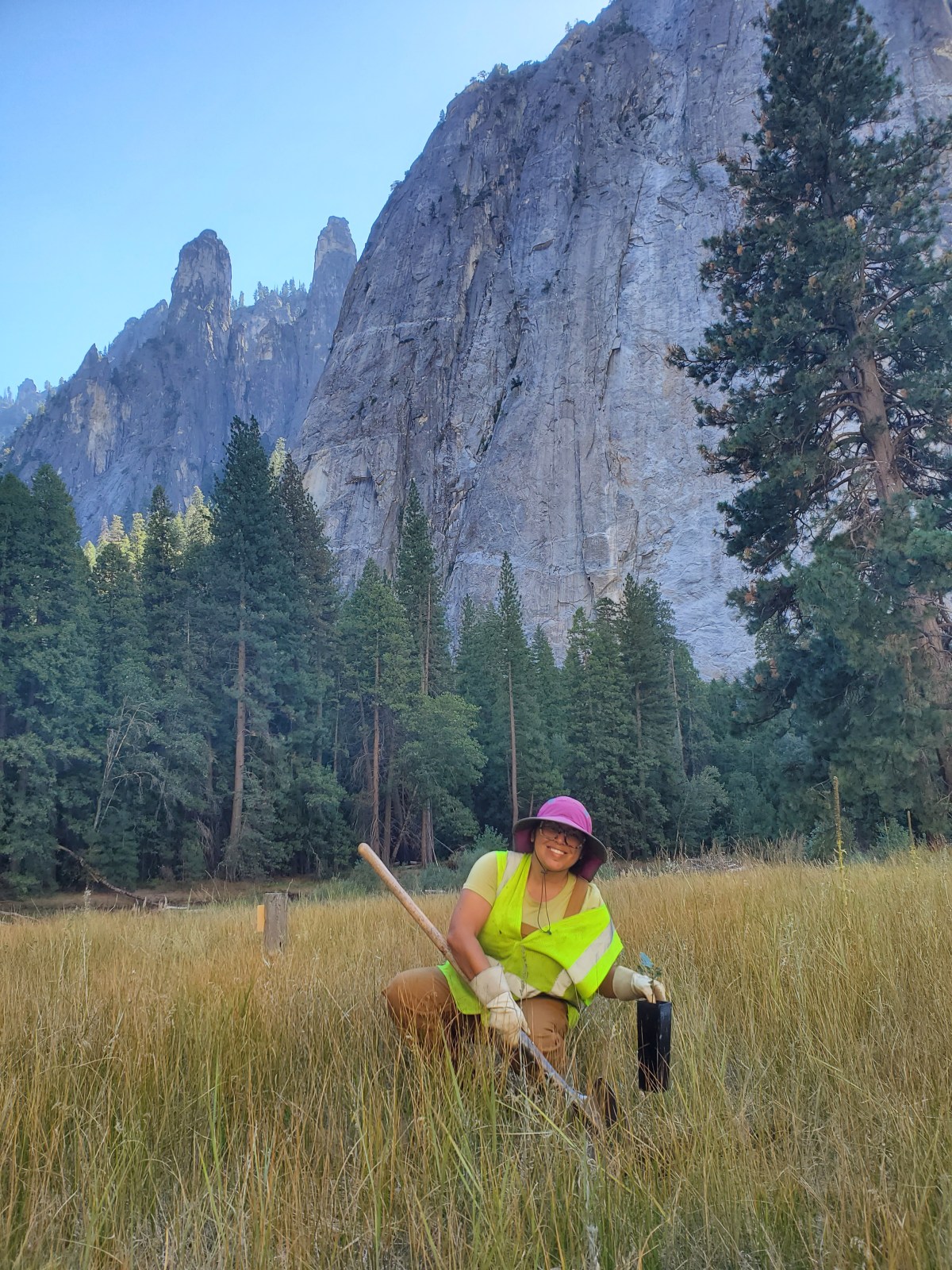
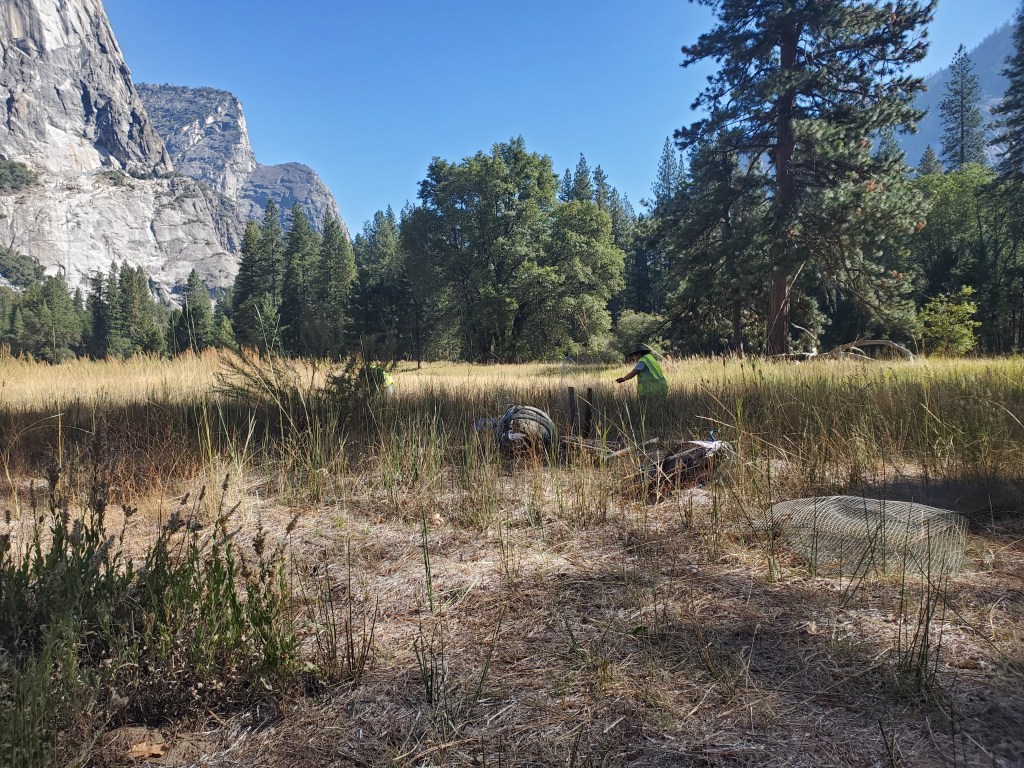
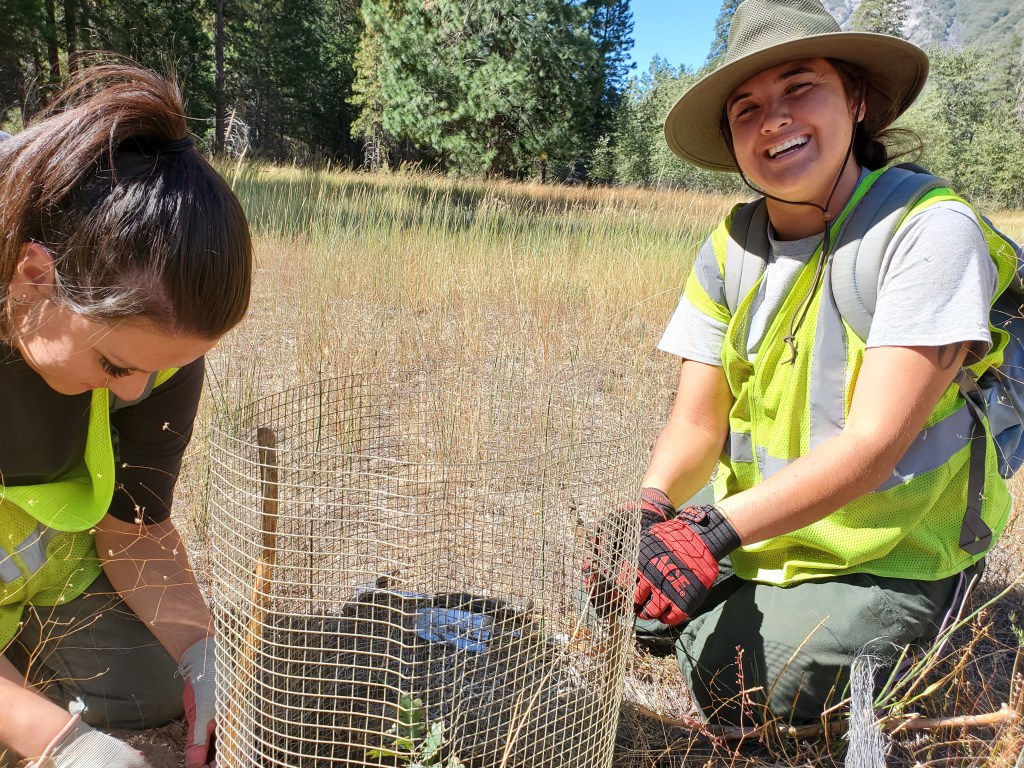
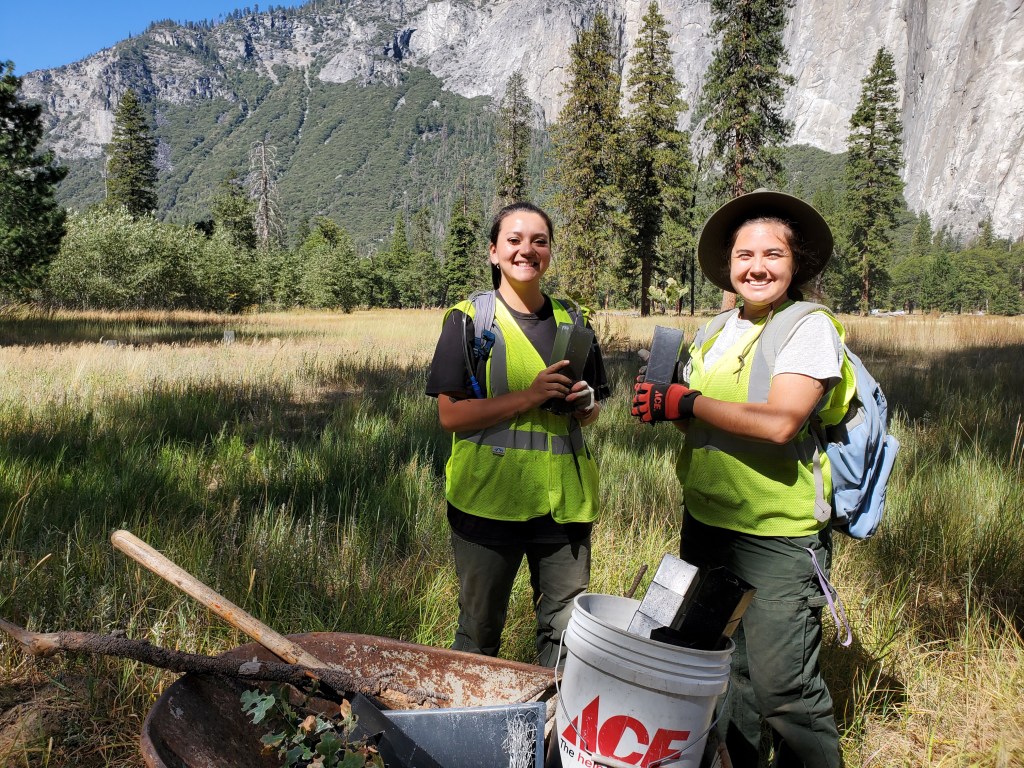
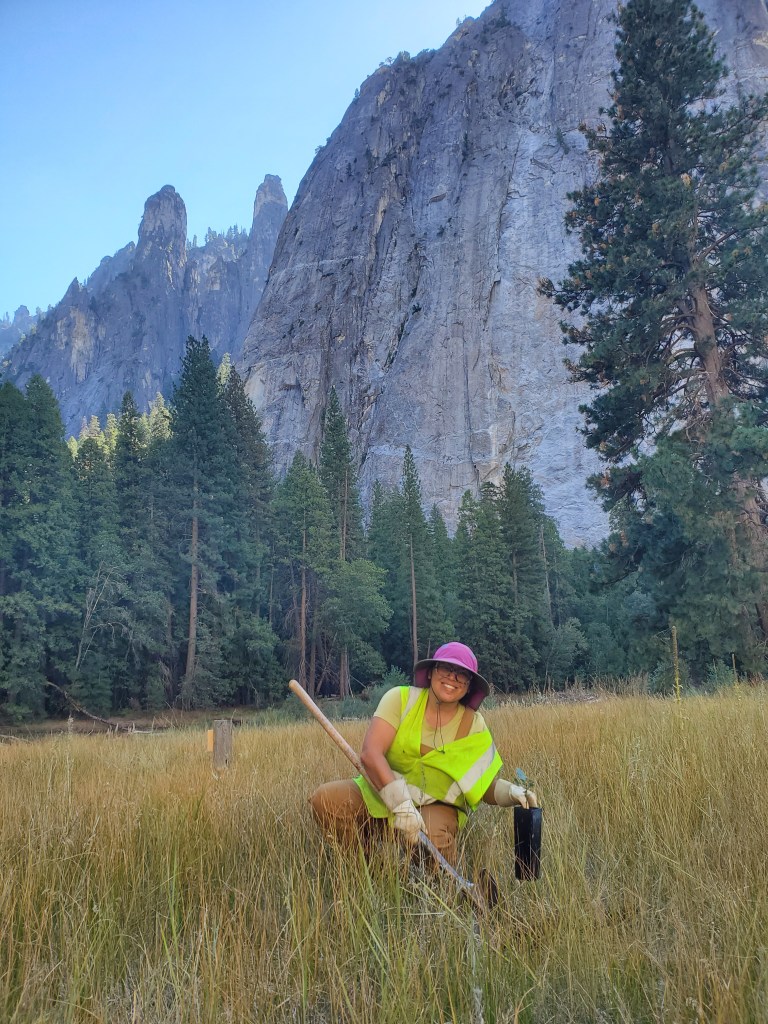
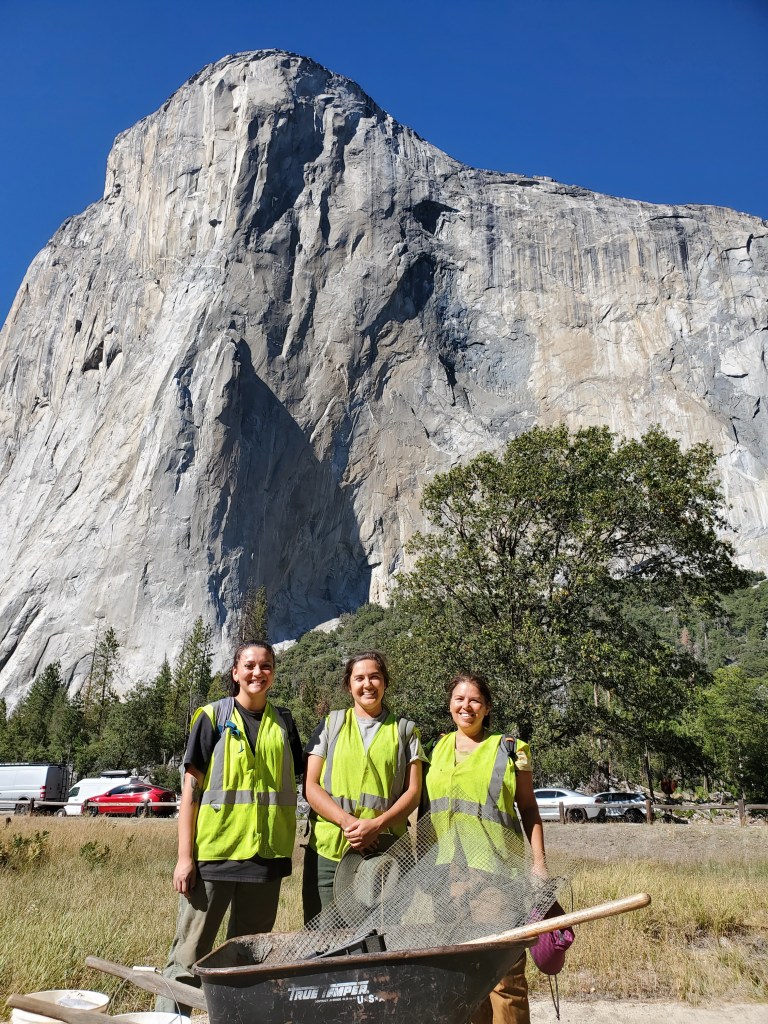
The Southern Sierra Miwuk Tribe has been working on meadow restoration in Yosemite. Before colonization, their people would burn the meadows to clear the conifers and encourage greater black oak proliferation, thus acorns. Due to the attempted extermination of Indigenous people from the area and then wrong-sighted conservation policies, the meadows have been disappearing, and with them their remarkable ability to recharge groundwater. More recently, the National Park Service has understood the importance of First People’s knowledge and activities prior to Park status. Once again, Indigenous people are leading the restoration work in our most cherished wild spaces. The Tribes may get to use fire in the future, but for now, all of the work is by hand. This autumn, I joined my Native cousins in planting black oak seedlings and removing pine seedlings. Don’t worry dear readers who love pine trees (I love them too), there are many other places where they flourish. They grow like weeds and are not in any danger of extinction. The meadows, on the other hand, are.
From an acorn grows a mighty oakOak seedling with acorn startBlack oak ready to plantWorking in El Capitan meadowPlanted oakIrene and Nellie secure a basket around the seedling for a little more protectionPacking upIrene takes a pic of me digging and plantingWhat a place to work!
Thank you to the wonderful young people who are leading the way in so many efforts around the world and to our elders everywhere for keeping ecological knowledge and parts of our culture intact under great stress and not so good odds. Chiokoe uttesia in weweriam (Thank you my relatives).
Any of us can join efforts of restoration, conservation and rebalancing. Look for them in the places near you and make a commitment for one day a month to start. If you love it, if it reconnects you, if you are feeling the rebalance happen, commit to more time. If you aren’t feeling it, try a different effort – beach clean-ups, campaigns for better climate policy, implementation of Green New Deal efforts. It is an all hands on deck moment, and you are one of the many hands we need. If mother nature, me and a small group of supporters, can bring monarchs back to the ranch in less than three years, imagine what ALL of us can do across every aspect of climate. Let’s be good relatives now for our future generations and all living things. Aho.
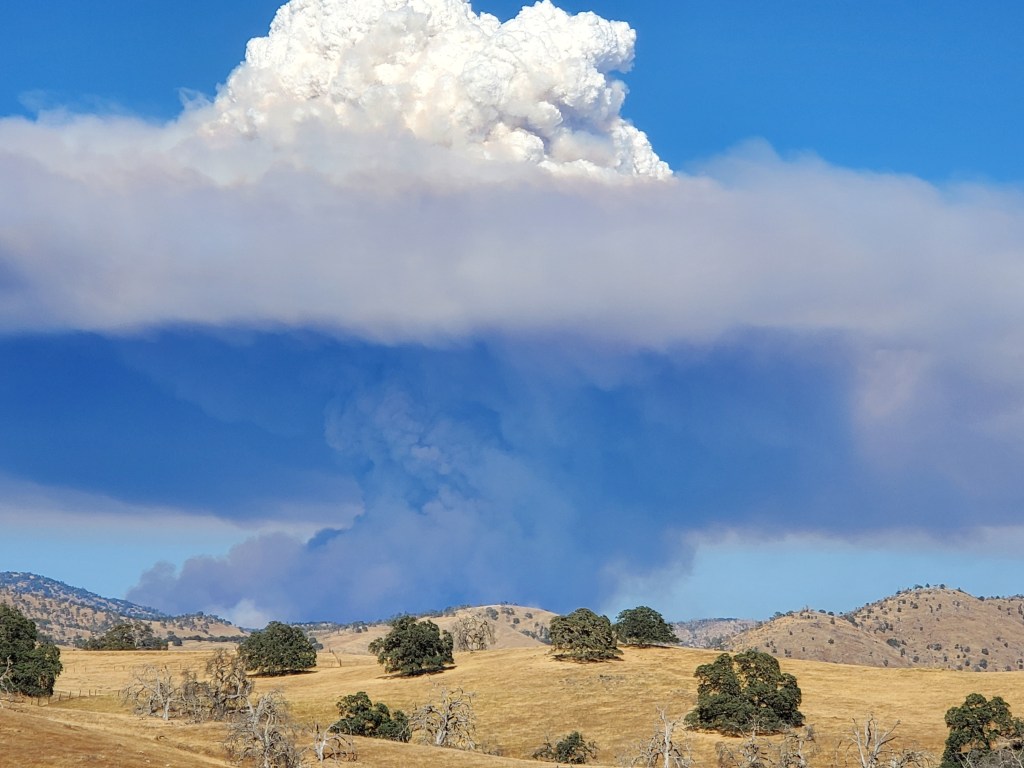
Please forgive me for complaining a little at the start of this blog. I know it is meant to discuss my pollinator work, and I am sorry to be a downer. All the things we do are entwined as elements of our life -so the bleed over and into is all part of the same narrative I guess. It has been a very difficult last three months. If you were wondering why a post had not been published in a while, I did not have the energy. A close, dear friend fell, became ill and died. It was a rapid, difficult, frustrating experience made worse by a fragmented healthcare system. His fall was in June, and by July he was gone. COVID finally caught up to me in June despite my being extremely careful. Although it was mild for me, I was positive for 10 days and had to put many things on hold. In July, wildfire hit just east of us displacing many friends with several losing everything. We took on evacuees at the ranch with their animals. The emotional exhaustion was evident among everyone – evacuees, responders and the average community member. The compassion fatigue, overwhelming sadness for all living things and extreme, ongoing heat has gotten to everyone I think. I could not believe my temperature gauge when driving home from a meeting in the Central Valley. It said 118F.
I find it remarkable that anything can exist in these circumstances of heat, smoke, drought and extremes. It is no surprise that very few butterflies have visited the ranch despite plenty of blooms. All is not depressing. We have had a proliferation of tarantula hawks and more dragonflies than have been here in years. Perhaps the increase in dragonflies, a natural predator of butterflies, is part of the reason for limited sightings. I don’t think we have gotten to a place of balance at the ranch yet. Regular drip irrigation has increased soil moisture around the house, but the drought has taken its toll on everything, soil, plants, trees, humans.
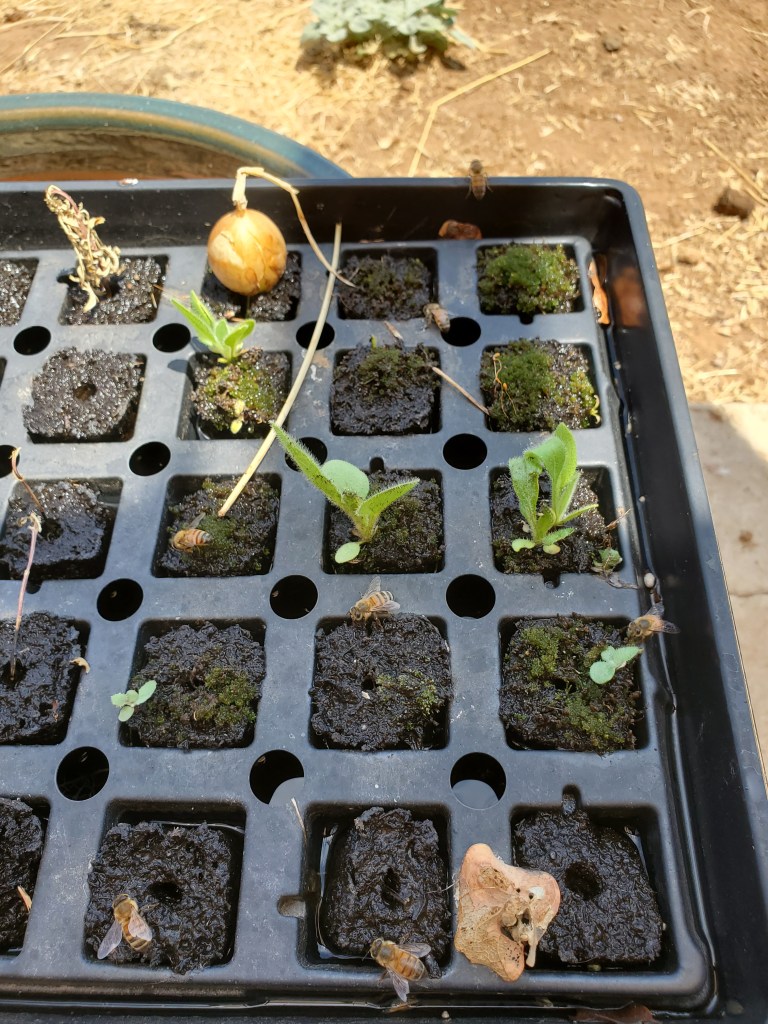
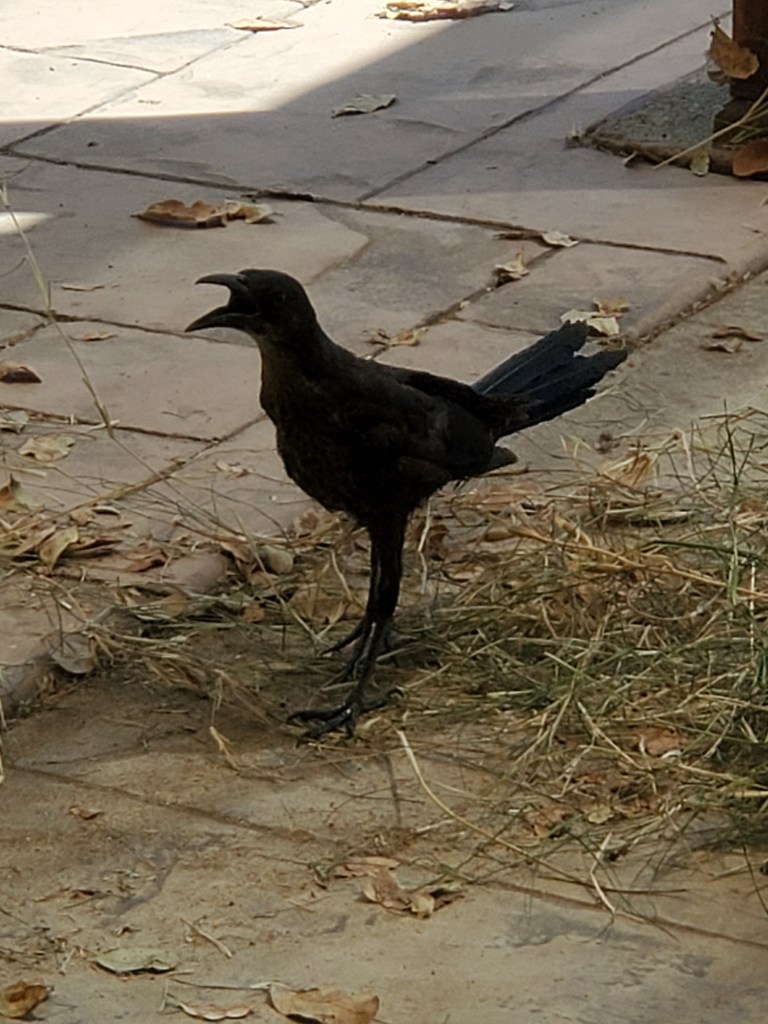
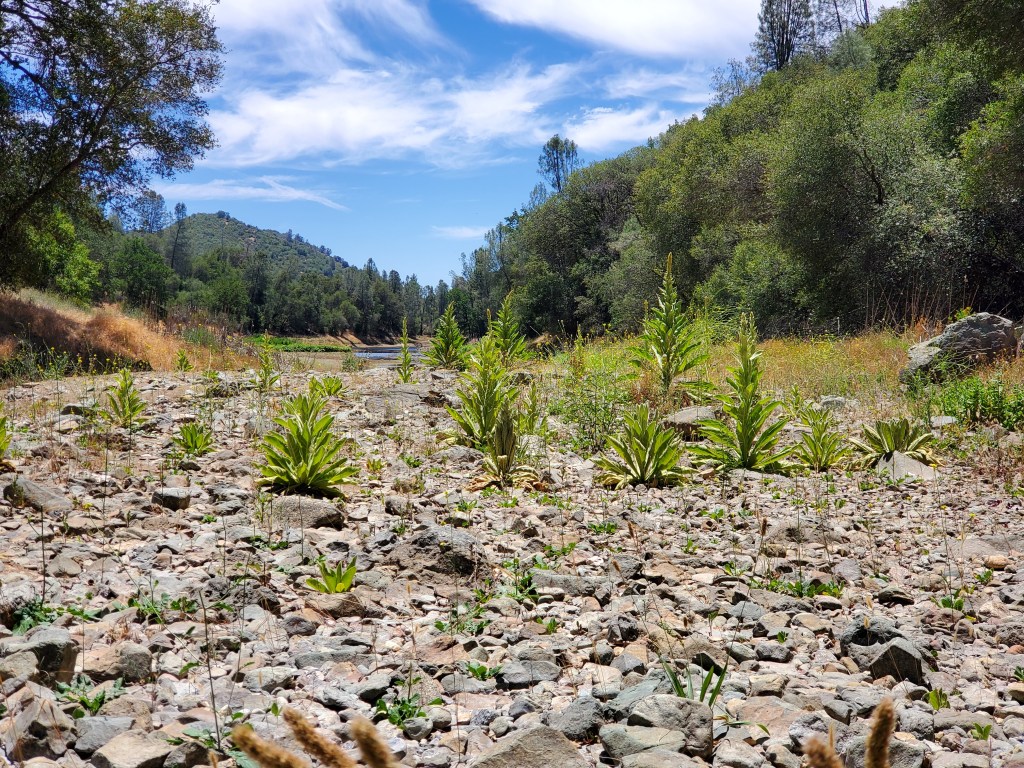
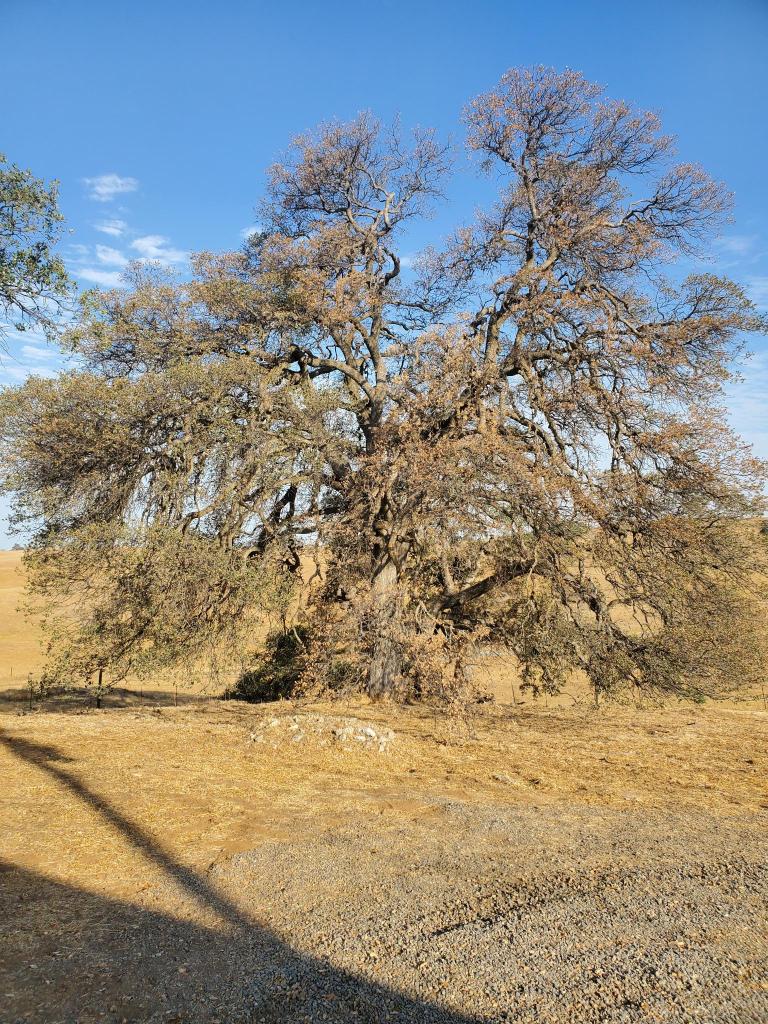
Honeybees desperate for water use the seedling tray and mediaPanting birdExcept for the spring, my section of Odom Creek is dryGrand old oak leaves all brown and deadReliable spring is beat back by the heat to almost nothing. There are only two spring fed puddles now on the ranch in the north. It is barely enough to keep wildlife watered. This near failure of the spring is an indicator or how very, very bad the drought is.
Milkweed Established!
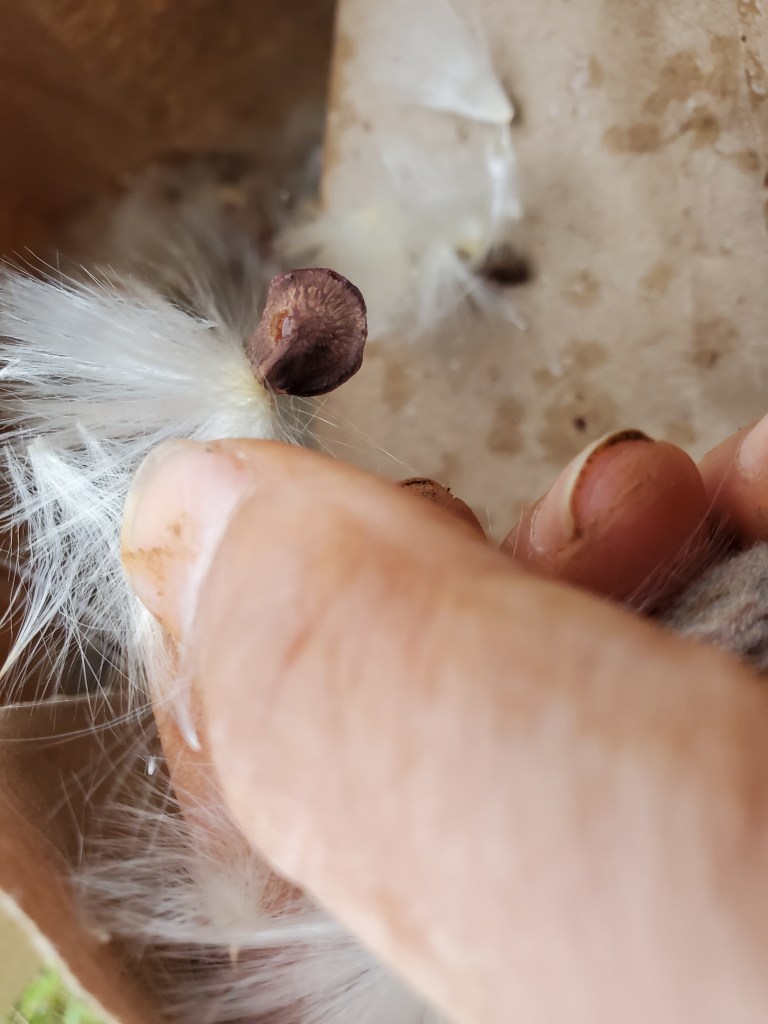
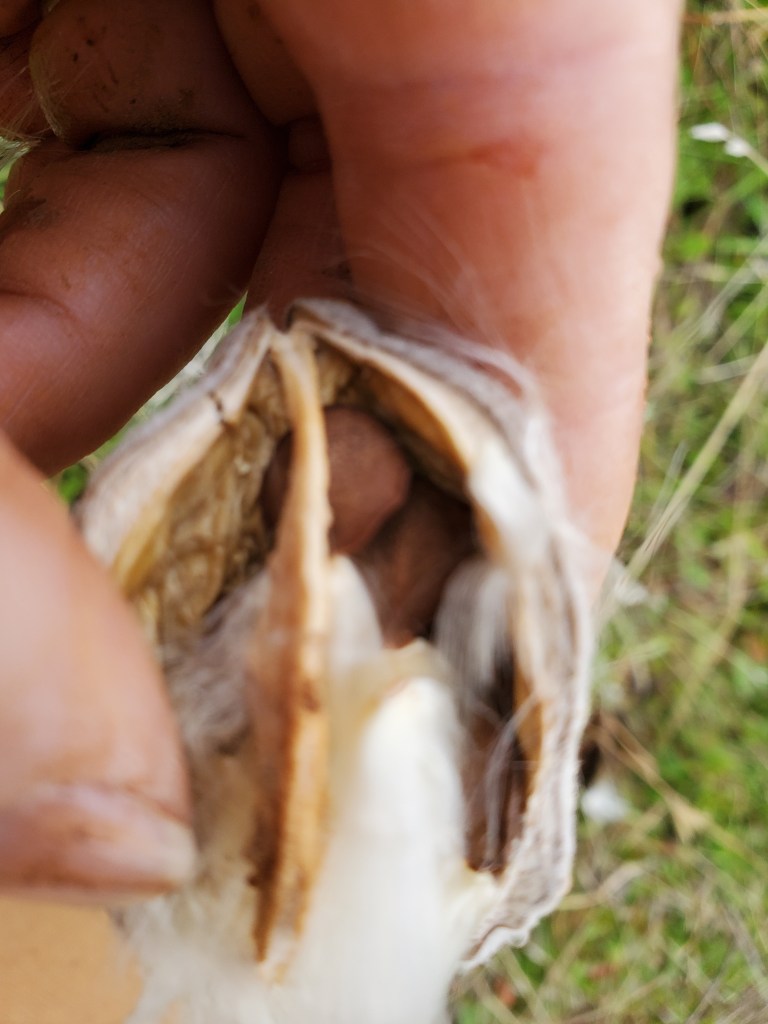
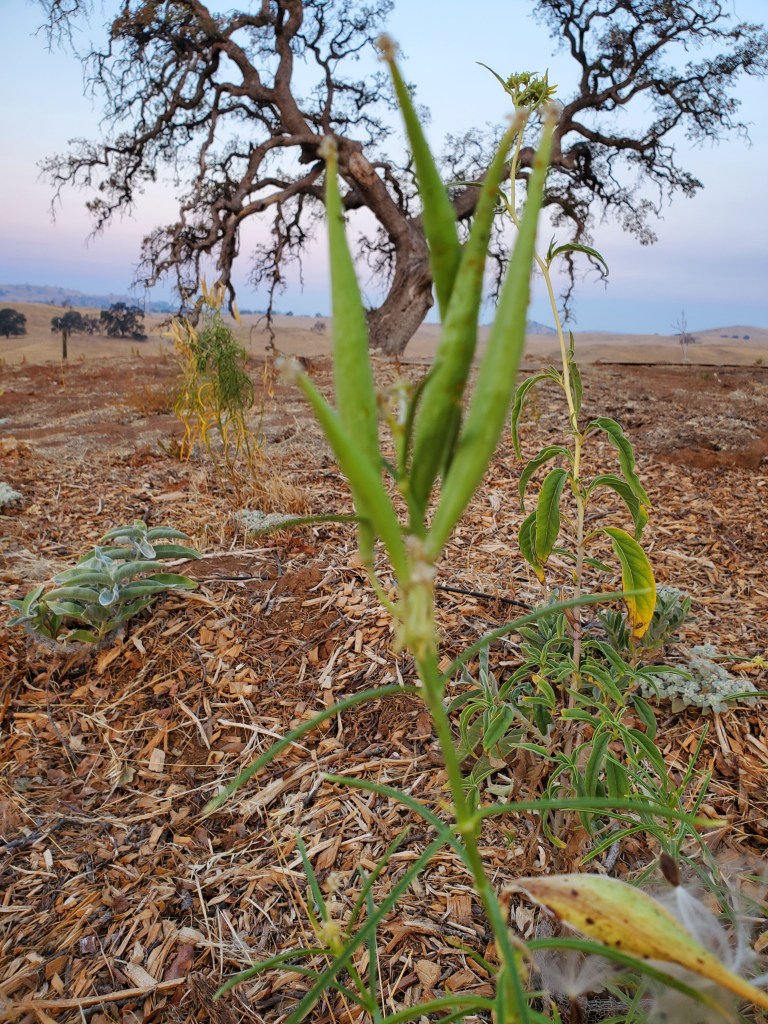
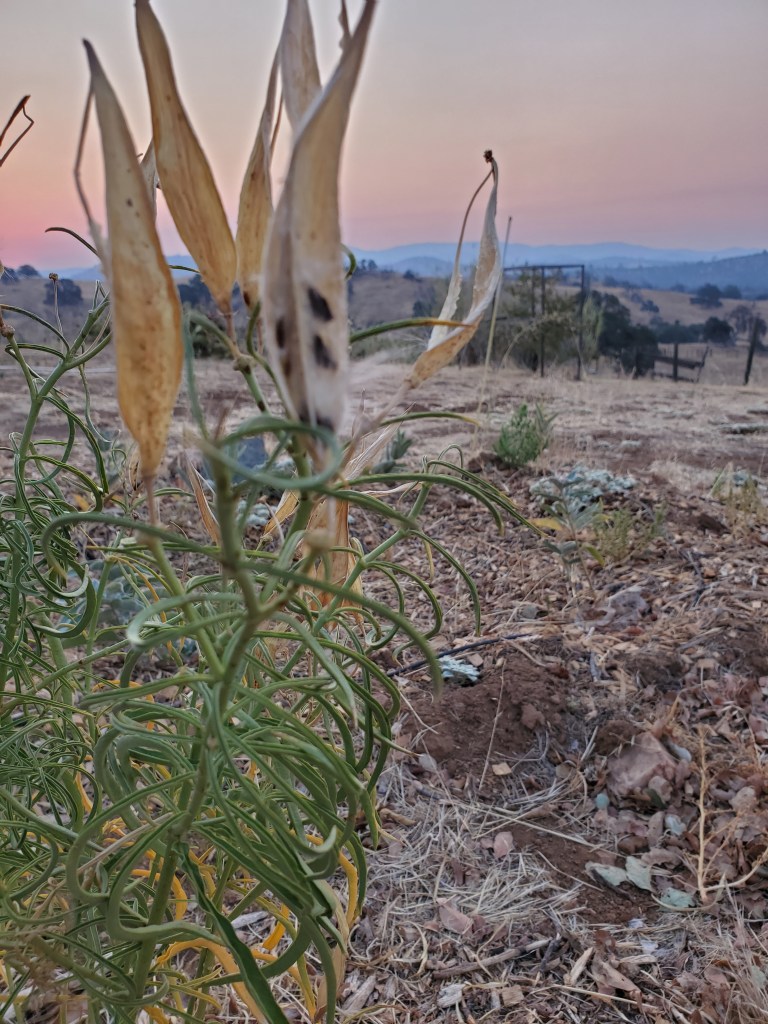
Open seed podSeeds dangling from their duffSeeds close-upNew podsMore open pods
The milkweed in the older plots were mature enough to produce seed pods. It was a joy to see them healthy and doing well despite gopher attacks over the past 3 years.
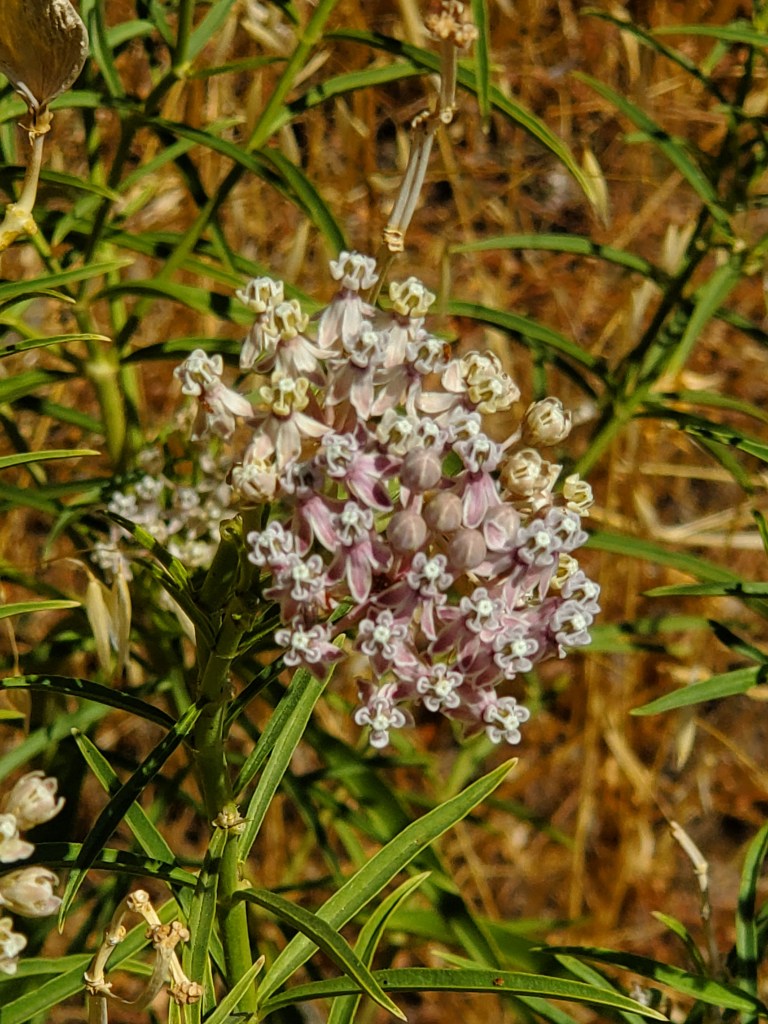
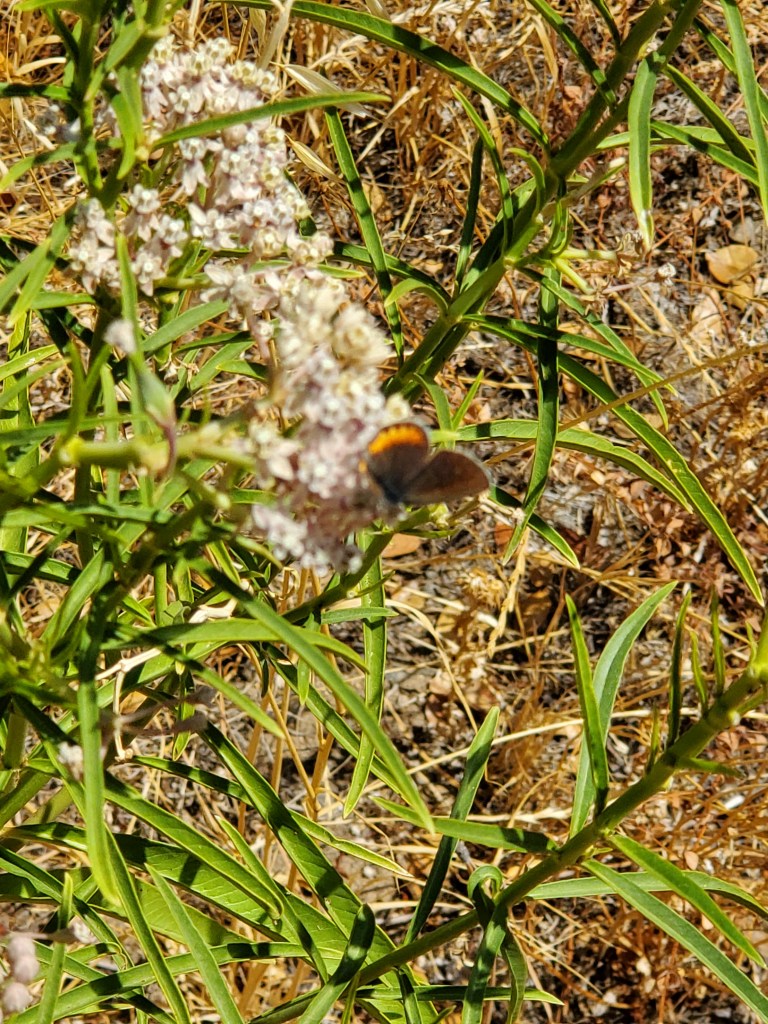
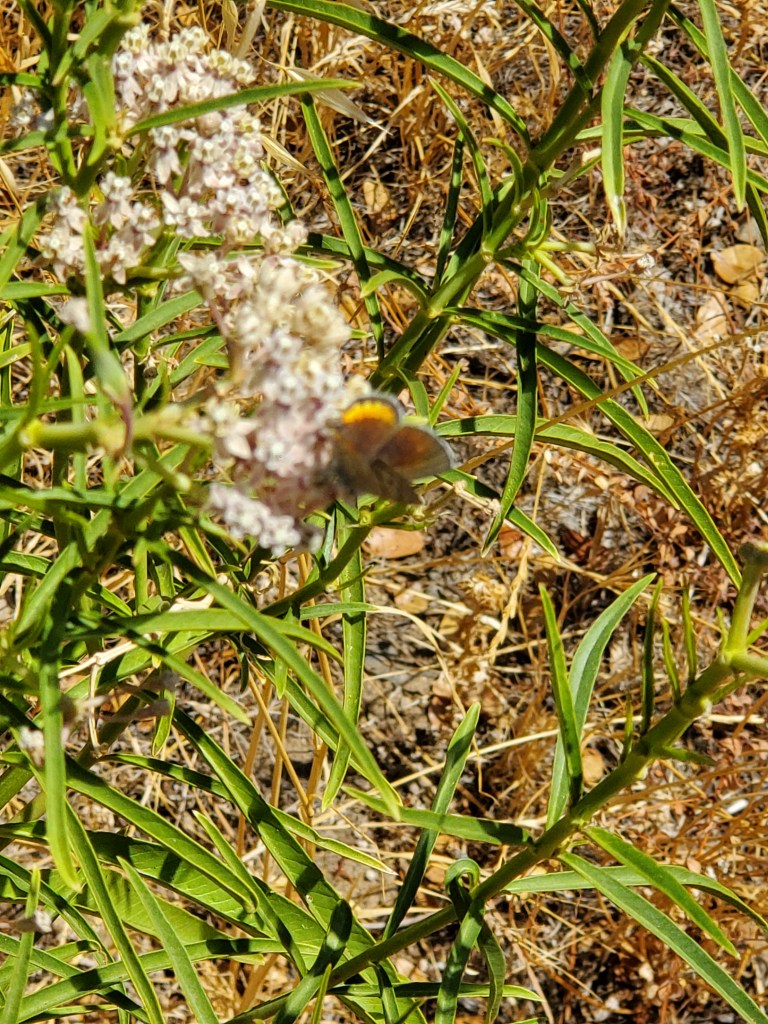
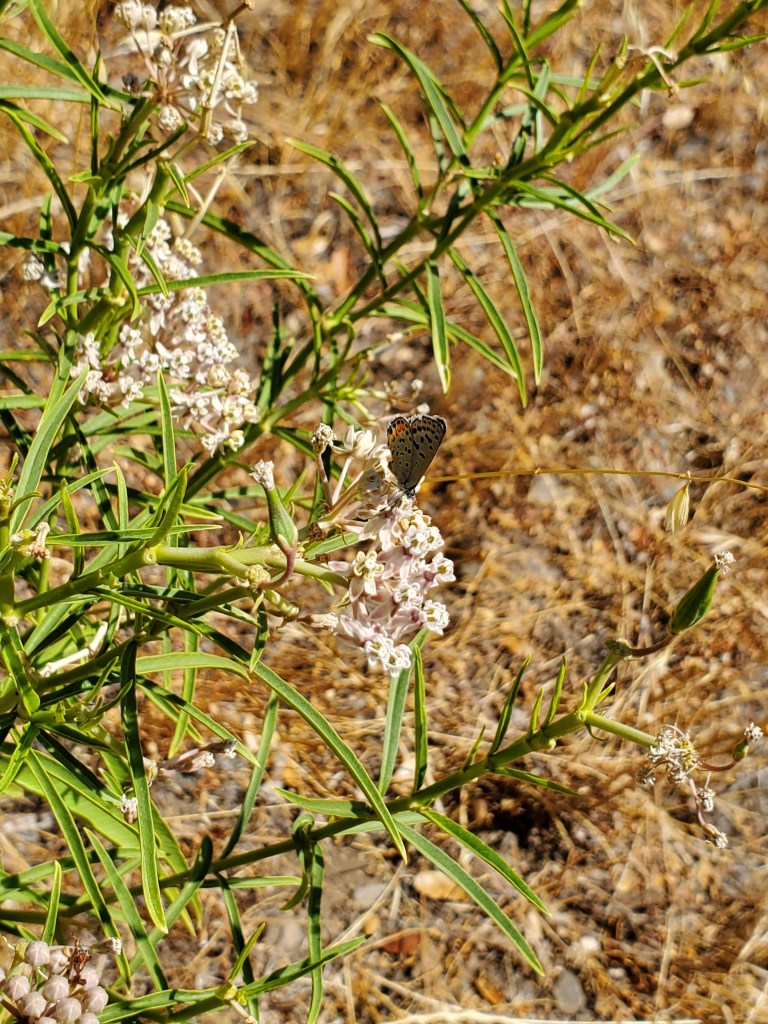
I am now able to identify narrow leaf milkweed in the wild and have seen several plants in my creek bed and on the side of the road around the county. It is very interesting that they often appear alone or quite a distance from one another. I wonder if that has to do with years of grazing and pesticide use (on the major highways). On a monitoring excursion to Odom Creek last week, I found two or three milkweeds in bloom in the creek bed. There were several California Hairstreak butterflies around each plant. I saw a buttery yellow cabbage or sulfur butterfly and one buckeye butterfly.
Narrowleaf milkweed in the wildBloomHairstreak on milkweed bloom
Blooms
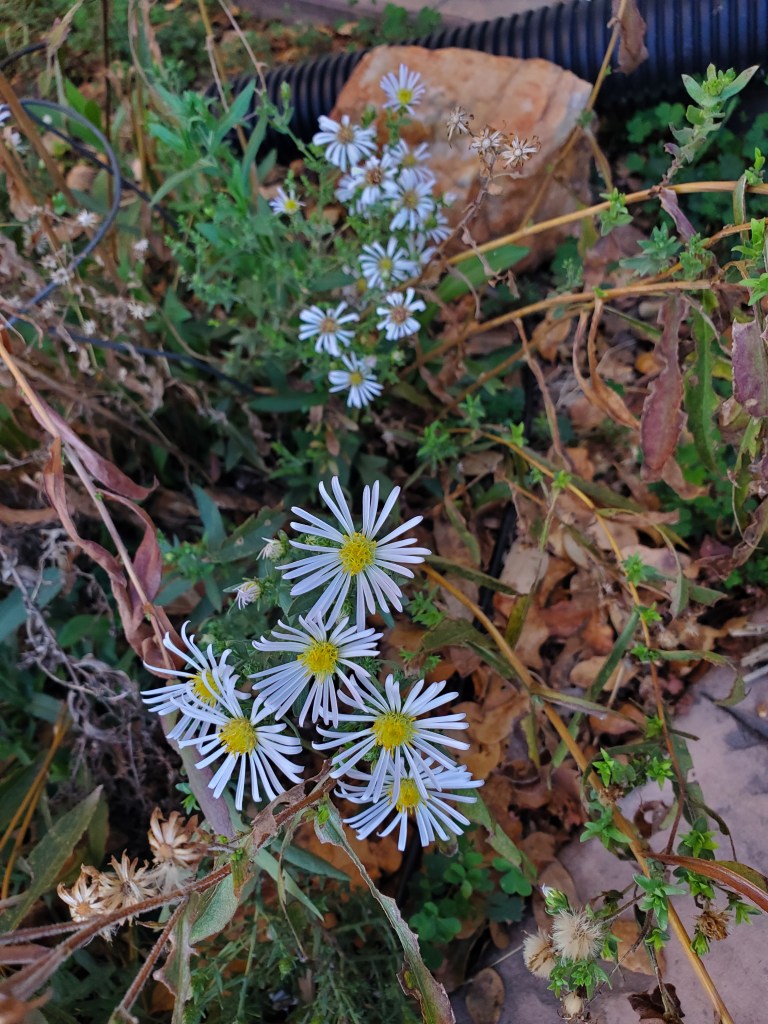
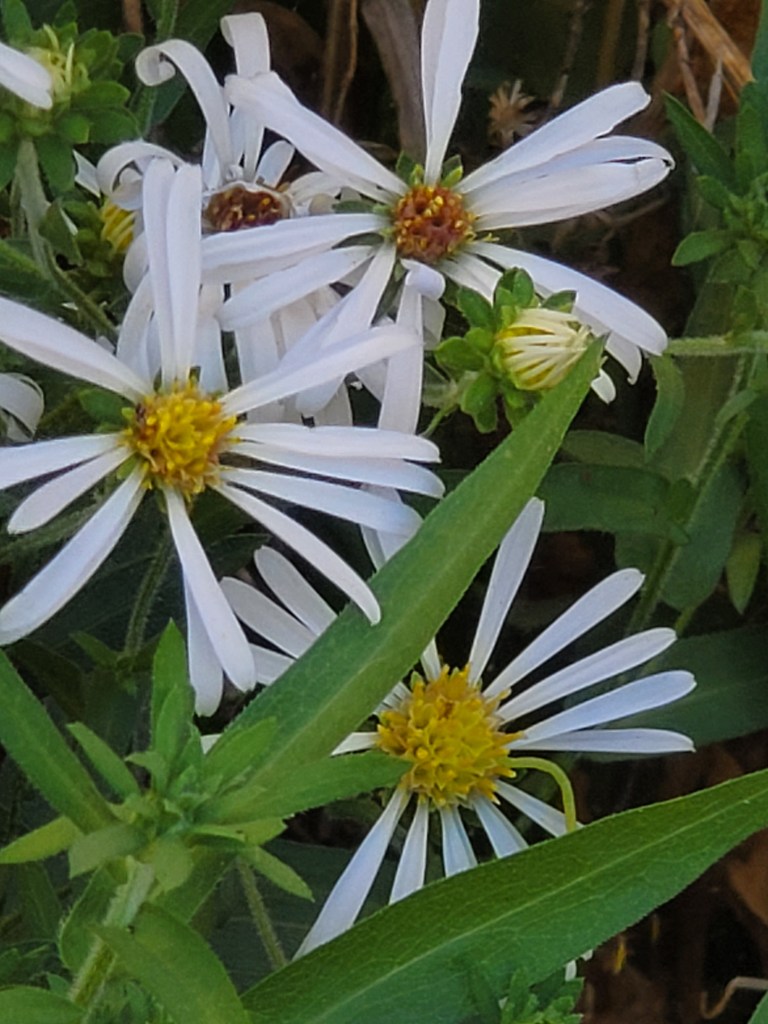
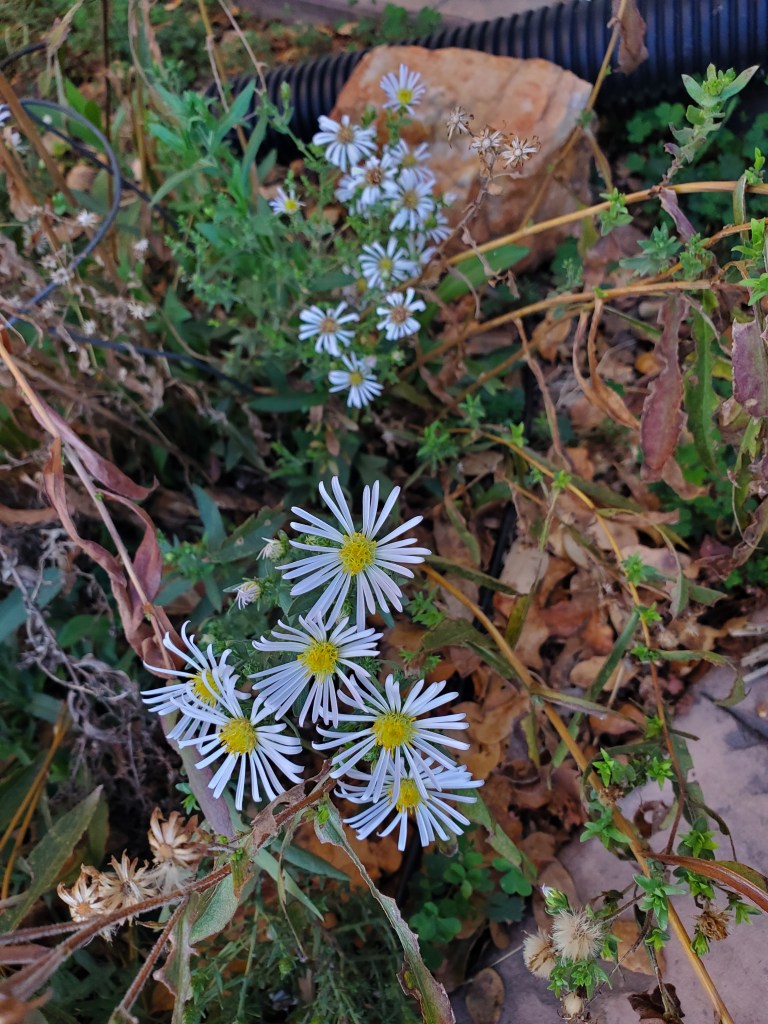
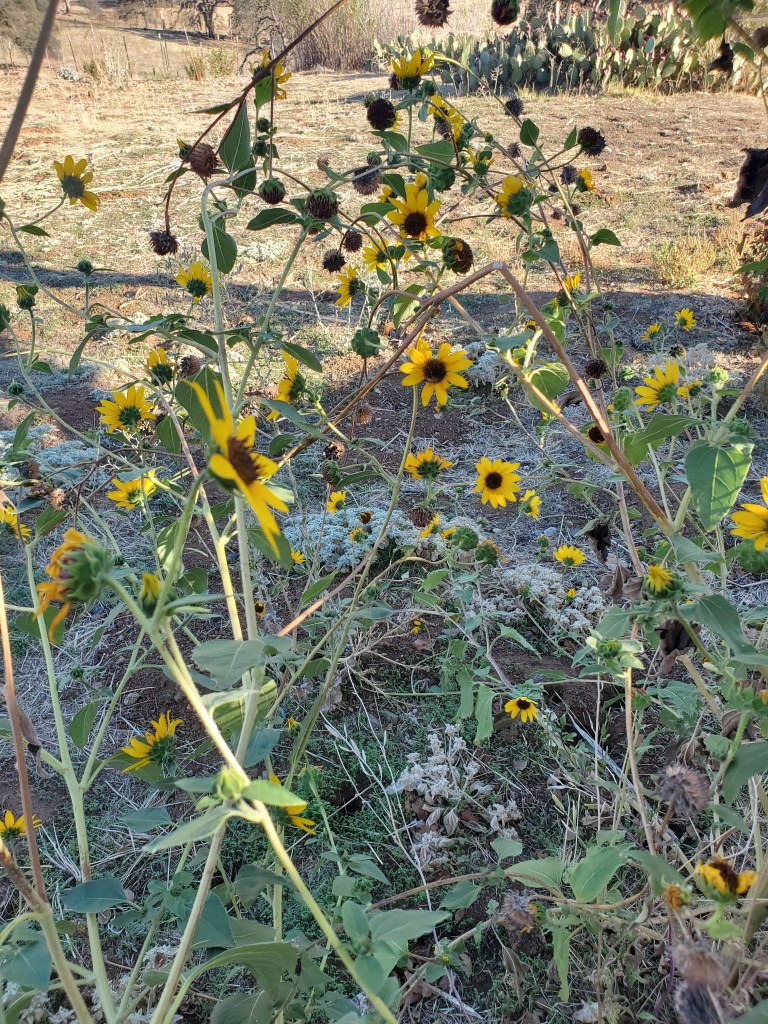
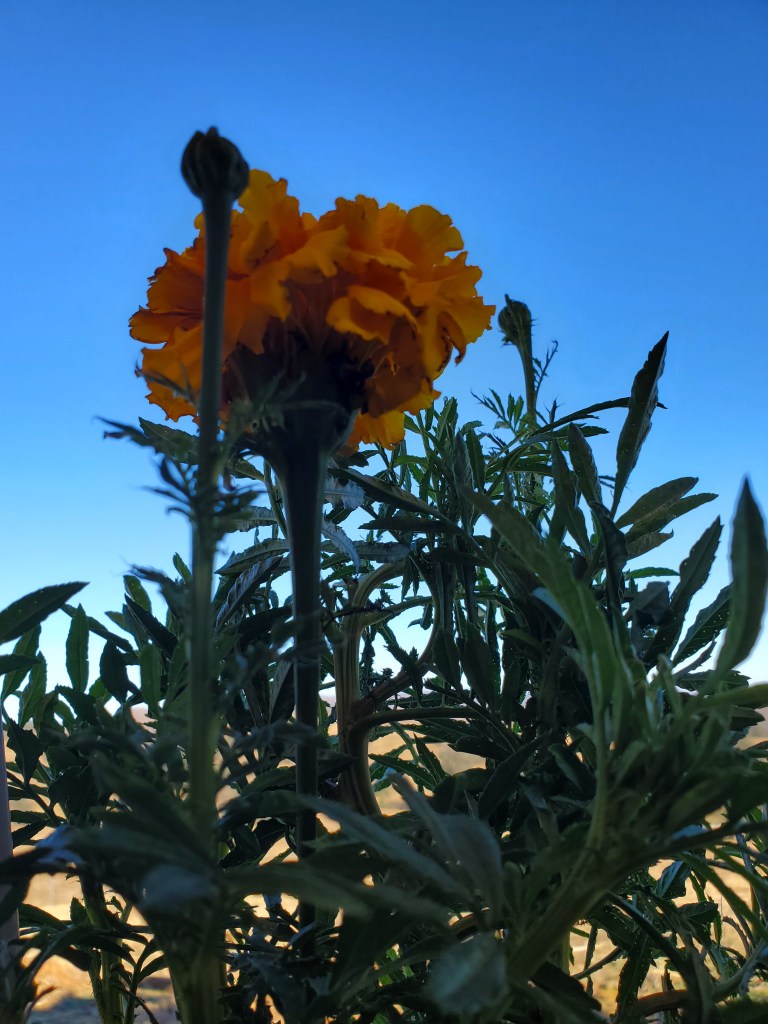
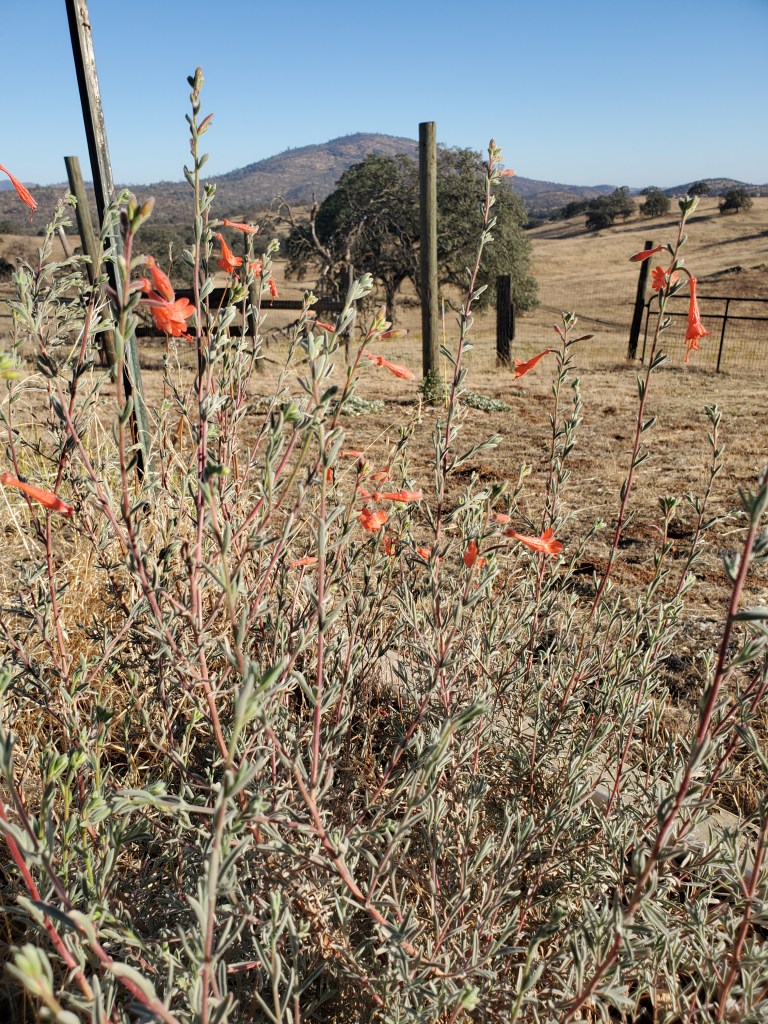
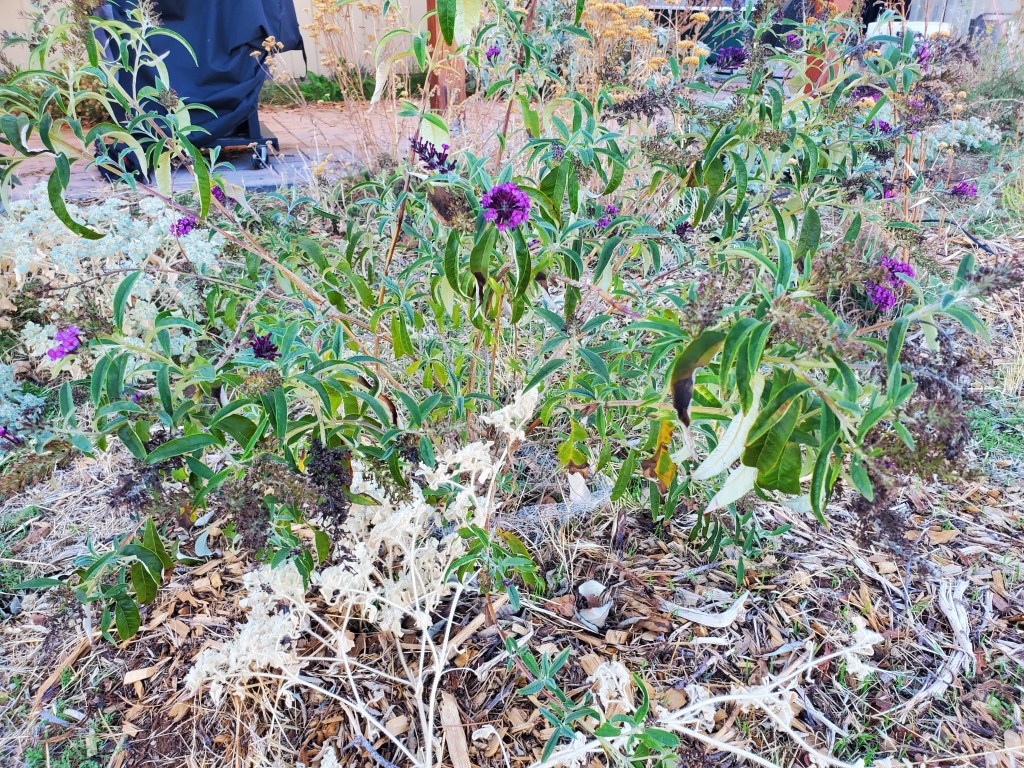
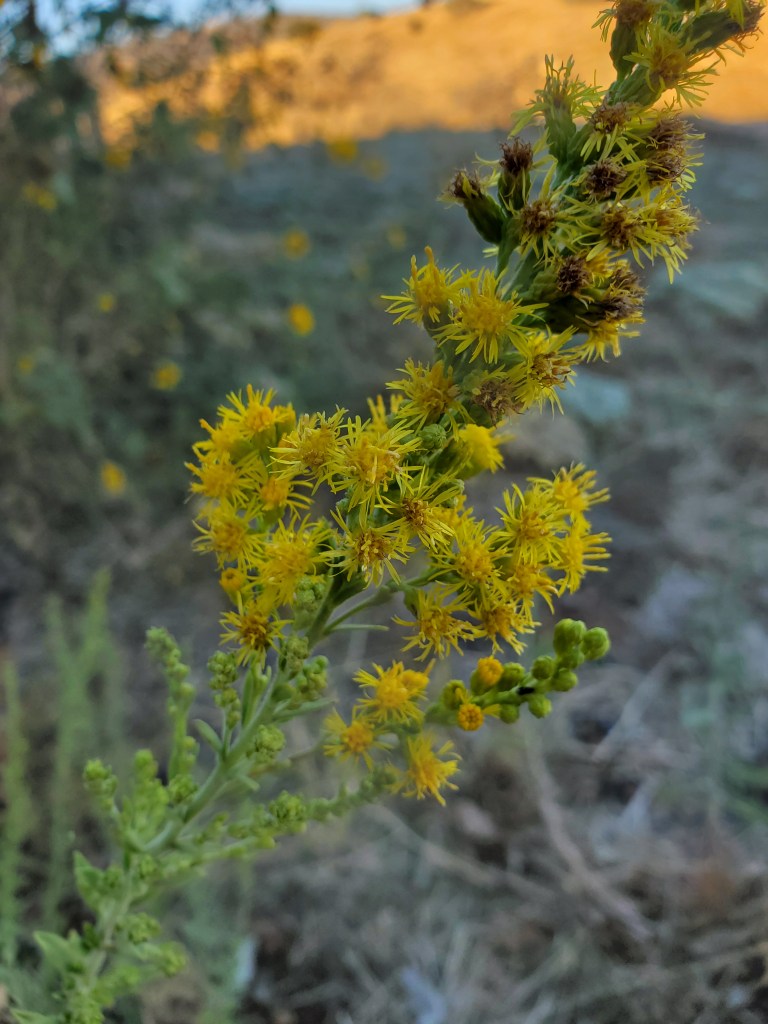
As planned, we have plants in bloom from the beginning of Spring throughout Fall. In bloom currently are California fuchsia, goldenrod (just opening), marigold, sunflower (still going!), pacific aster, a few gum weed and Mexican sunflower blooms, buddleia, vinegarweed (lots of these plants this year), and tarweed. There are even several herbs and onions blooming. There are many options for the pollinators to choose from.
Pacific asterSunflowersMarigoldCA fuchsiaBuddleiaGoldenrodA large tarweed – one of my favorites (but not a favorite of my cattleman. It makes the cow hides real sticky).
Concern for the Grand Blue Oak
It is normal for oaks to conserve their energy during drought. They kill off their leaves and drop limbs. It can be very dangerous to walk under stressed oaks. I mentioned one of the large oaks in the front of the house in my last post and earlier in this post. It started with one branch having all its leaves dead in May. Then, almost overnight, all the leaves were brown and falling by August. A small branch dropped earlier this month. It has been incredibly distressing. These trees in the front of my home are over 200 years old, and they just cannot die on my watch.
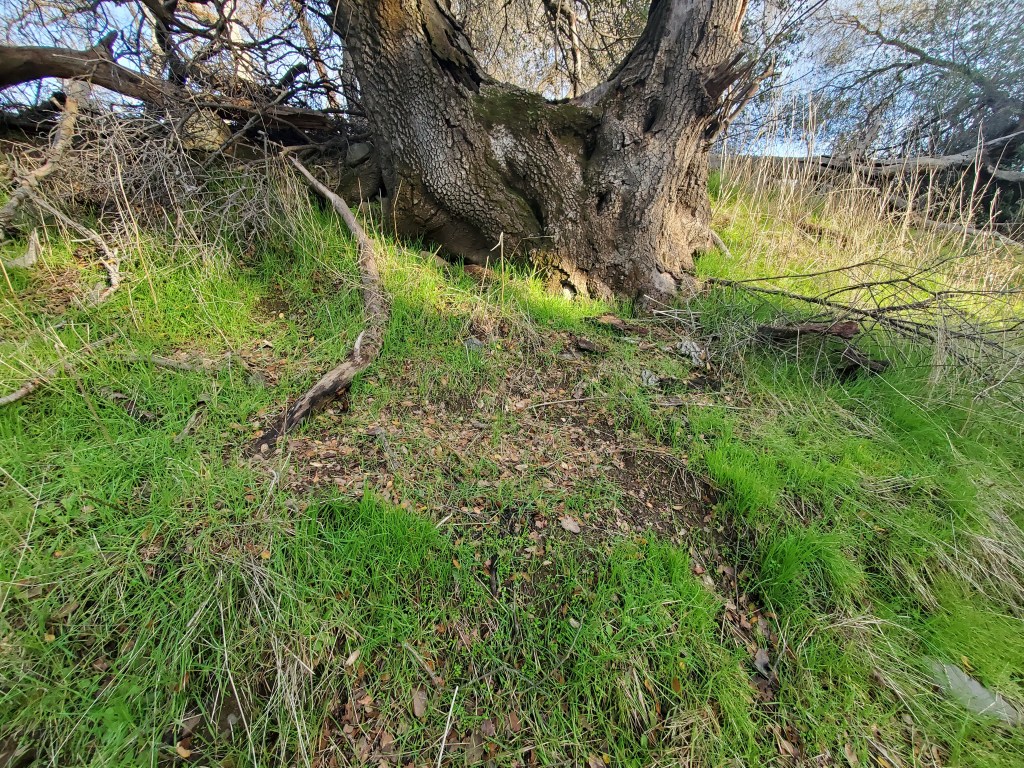
Several years ago, a landscape and water expert was at my house when another tree in the front was extremely stressed. She recommended digging a trench just outside the drip line of the tree crown so that rain water would be stopped and recharge the area around the tree. Not only did I do that for two of the four oaks in front of the house, I ran my front gutters into the trenches. It worked! The branches I thought were dead all came back except for one.
I did this exact same thing for the newest tree in crisis. I am hopeful it will work too.
Downspout to trenchTrench to blue oakDowned branch
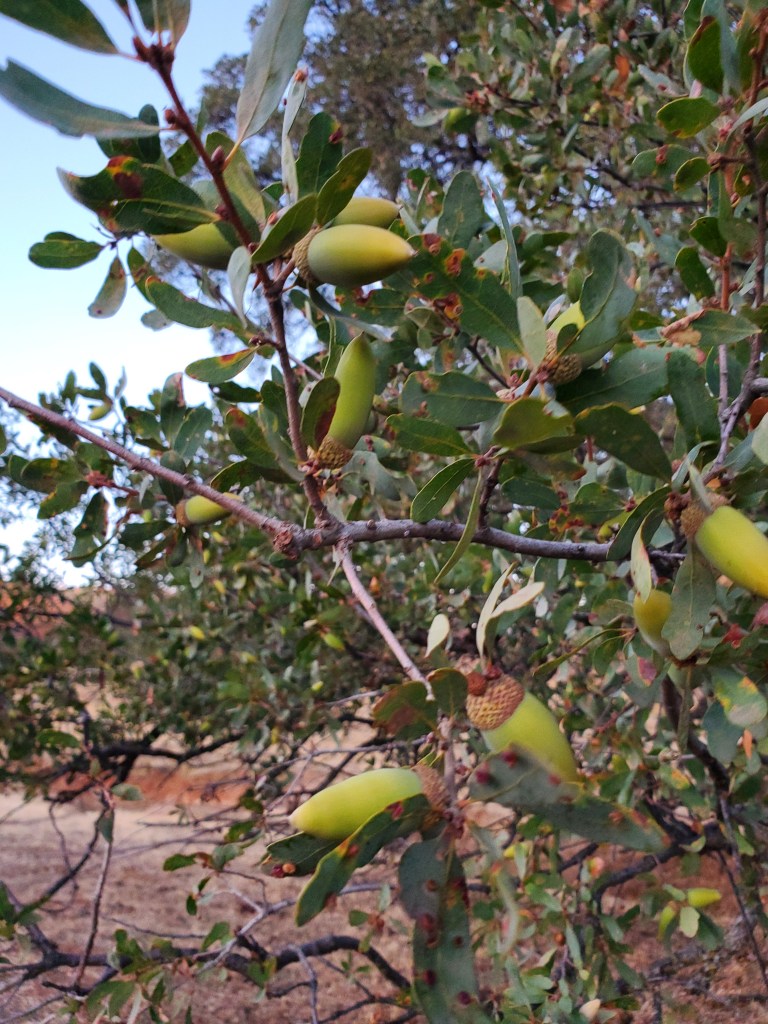
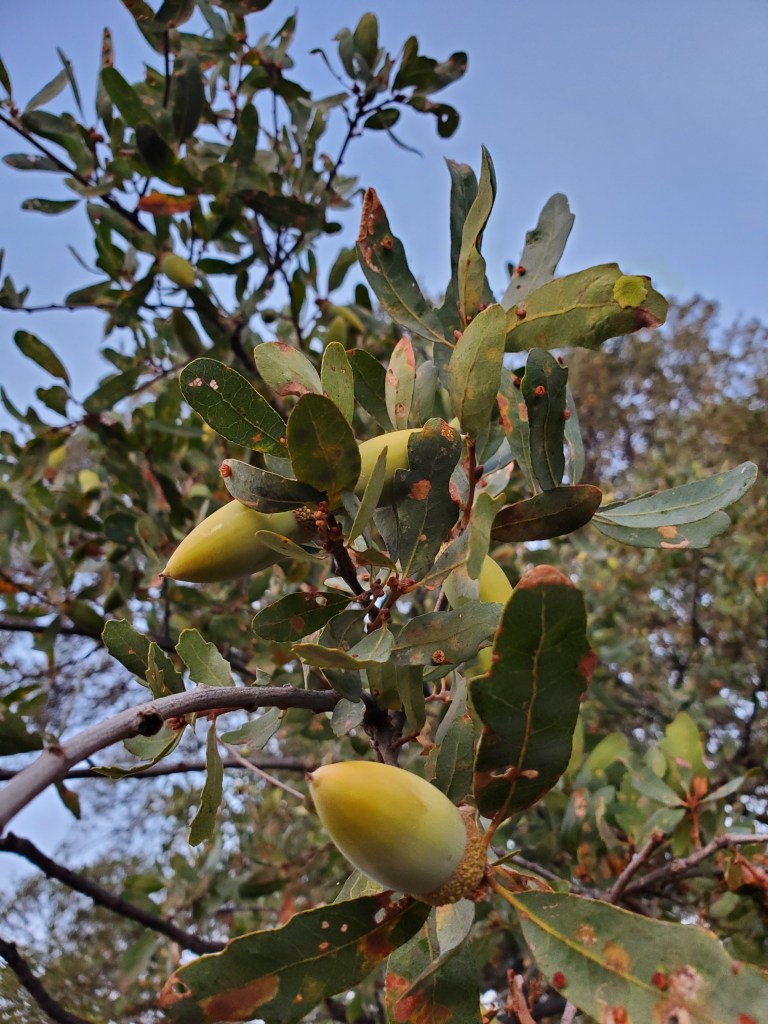
The other issue with the oaks and drought is reduced production of acorns, a critical food source for animals and humans alike. It is also the next generation of oak babies. We need to have an overwhelming number of acorns just to get a handful of seedlings. Sadly, most of the oaks on the ranch do not have many acorns, and many that are growing are still very green and undersized. I want to see those acorns mature and drop. All I can do is implement good land practices, swales to slow rainwater runoff, and hope for better next year. Land restoration is a patient practice. Stewardship is a way of life anyone can adopt anywhere they live.
Leaves browningUndersized acornOne bunch of acorns decent sizedGood sized acorn in one bunch along the spring creek
New Raised Bed
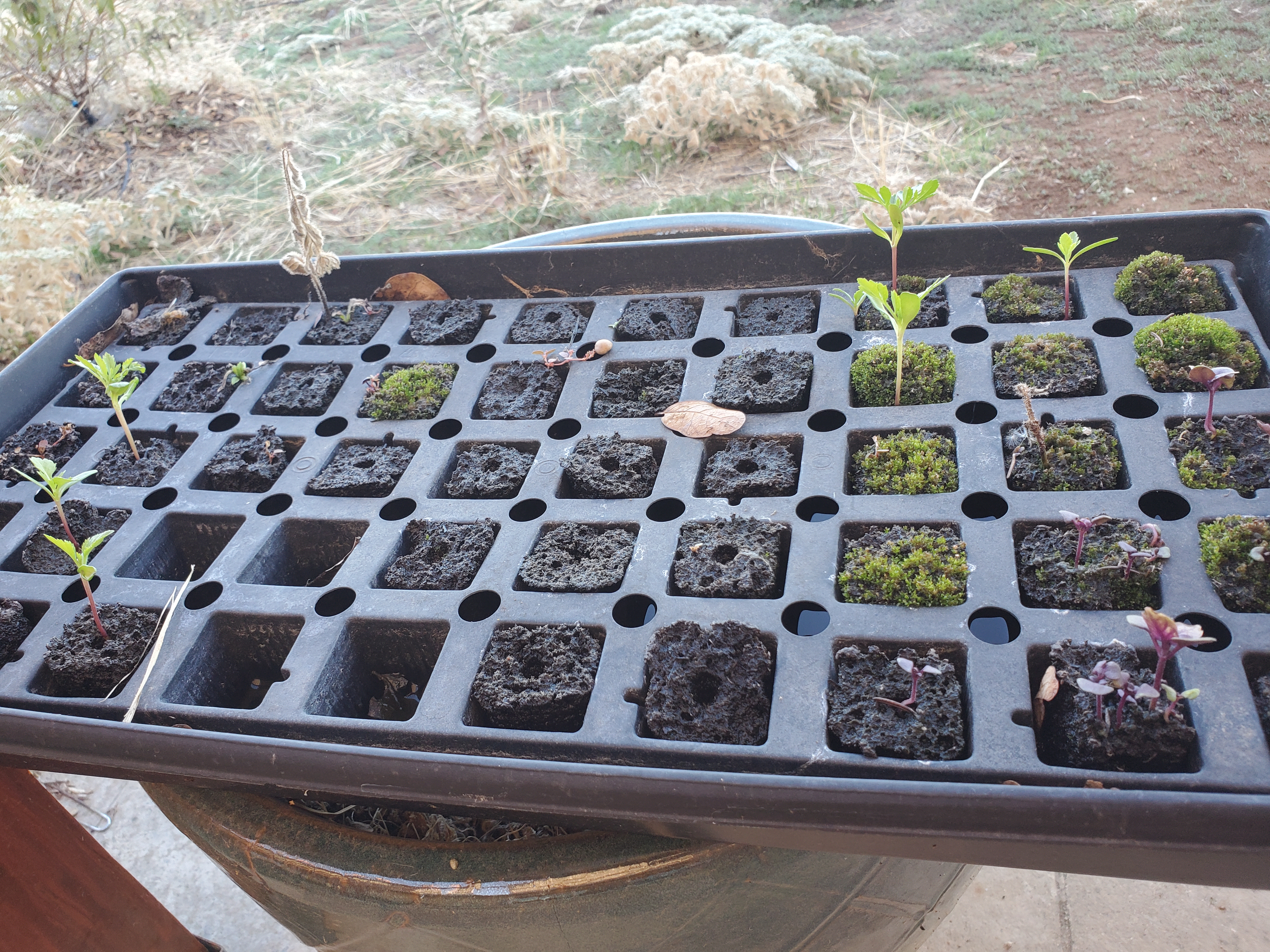
I raise a number of plants from high quality organic/non-GMO seed or seed gathered from my plants. Not only its it more cost effective, but I receive great joy from starting them and watching them grow. The seedling trays have also served as an important source of water for bees this year. Even birds have dropped by to visit. When the birds come by, I can be assured it is not just for water but seed snacks. Every seeding batch, several never start. For some, the seed just is not viable. For others, they become a snack for birds. I am ok with that. Fortunately, I don’t depend on my garden as my only source of food. If I did, I am sure I would feel differently. Additionally, I grow native plant starts, herbs and flowers. All of these, including my food, will become blooms for pollinators. It is a tripe win for everyone.
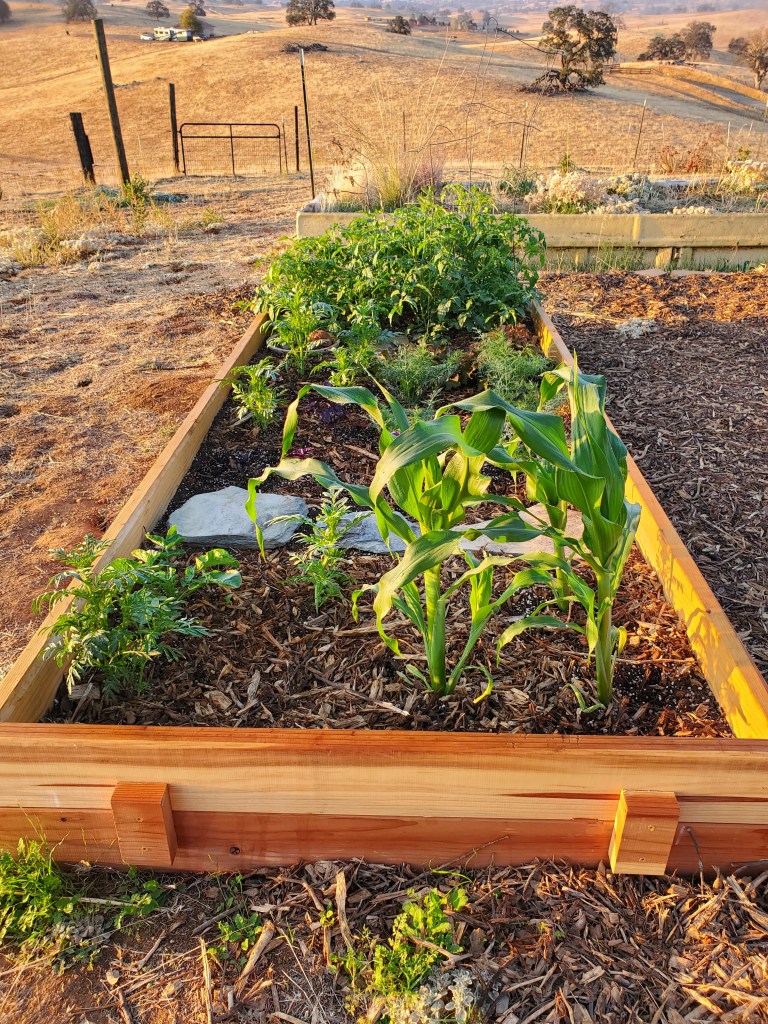
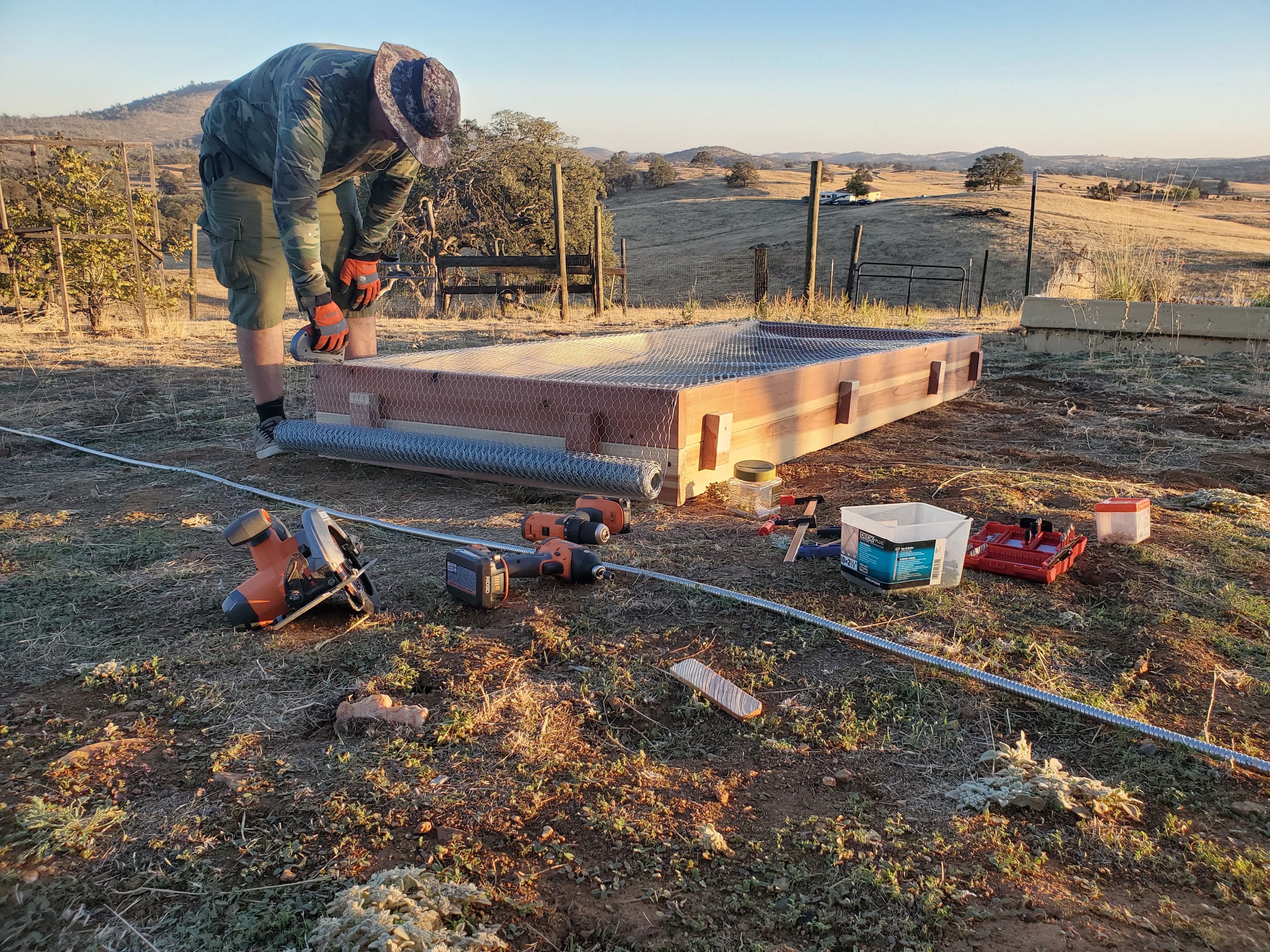
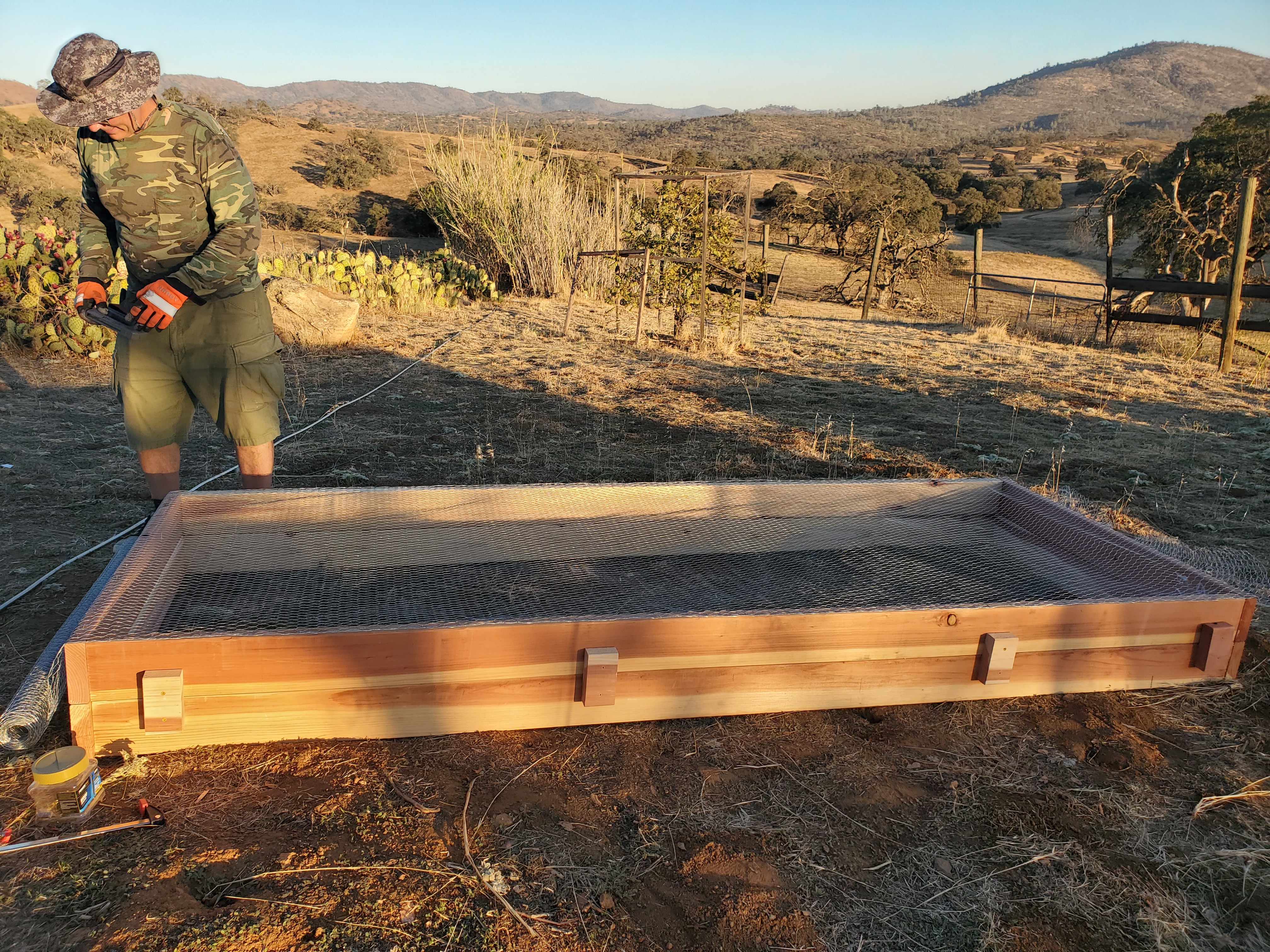
The weather has been so warm I decided to start a winter garden with plants that should have been full grown by now and producing food – like tomatoes. I am also including vegetables, herbs and flowers that should be ok late and/or over winter normally – like lettuce and spinach. I have a number of strong looking seedlings, but will not plant in my tomato tub raised bed due to the ongoing gopher intrusion. There is no other place cultivated to plant, so I asked my darling husband to build me a new raised bed. Truthfully, I can do this myself, but David loves to work with wood and is much handier than I am. So- he gets the job. David built me a gorgeous raised bed using redwood and secured it with a roll of Diggers double galvanized mesh (same company I get the speed baskets from to plant my native plants). Because I am raising vegetables, I needed richer soil and did not have time to bring my local soil up in nutrients (bad planning on my part). I had to purchase soil, which was costly. I have a couple of old french doors I salvaged, which I will use to make a greenhouse over the tomato part of the bed. I am hoping this will help bring the tomatoes to maturity. It is all an experiment.
I use a square foot gardening method. In this way, I can make the most use of the garden space, water with efficiency and co-locate natural pest deterrents, such as marigolds. See the link for more information about how many vegetables you can plant per square foot. In my situation, most of the seedlings I have are plants that need space, so you will see that I generally have one plant per square foot. For some, I could probably get more, but I was too lazy to pull out my book to check planting amounts per sq ft. There is definitely a cost to being impatient!
Tomatoes in the foreground and corn in the background require lots of space. Basil, dill and marigolds in the center.Note the marks on the wood. Those are guide marks for each square foot. Helps me stay on track.
Last Days of Summer Bring Rain and Fall has Arrived
On September 18 and 19, we received .75″ and .5″ respectively of rain. It was a delightful late summer storm. The smell brought me as much joy and anticipation as being hungry smelling baking bread or BBQ meat. You cannot wait to get outside to work, take a walk, just breathe. I think most of the area hoped this meant cooler temperatures from then out, but the miserable heat came back a few days later. It has been in the high 80s and high 90s for the past several days. Air conditioner is on again. Not good.
Sunrise
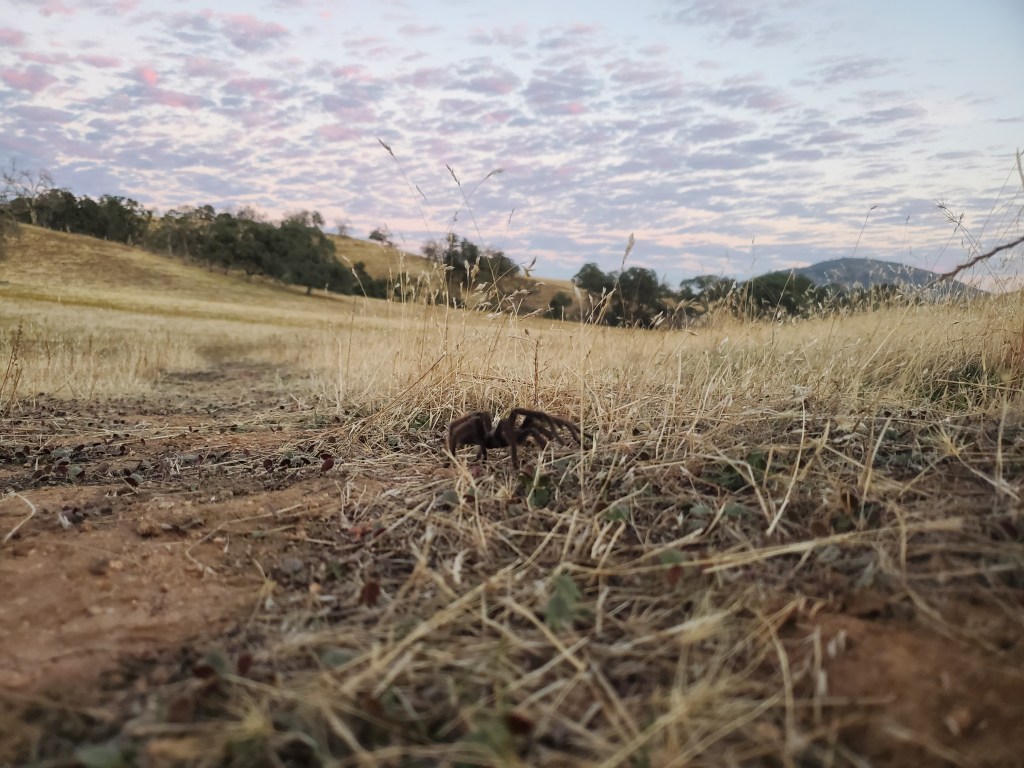
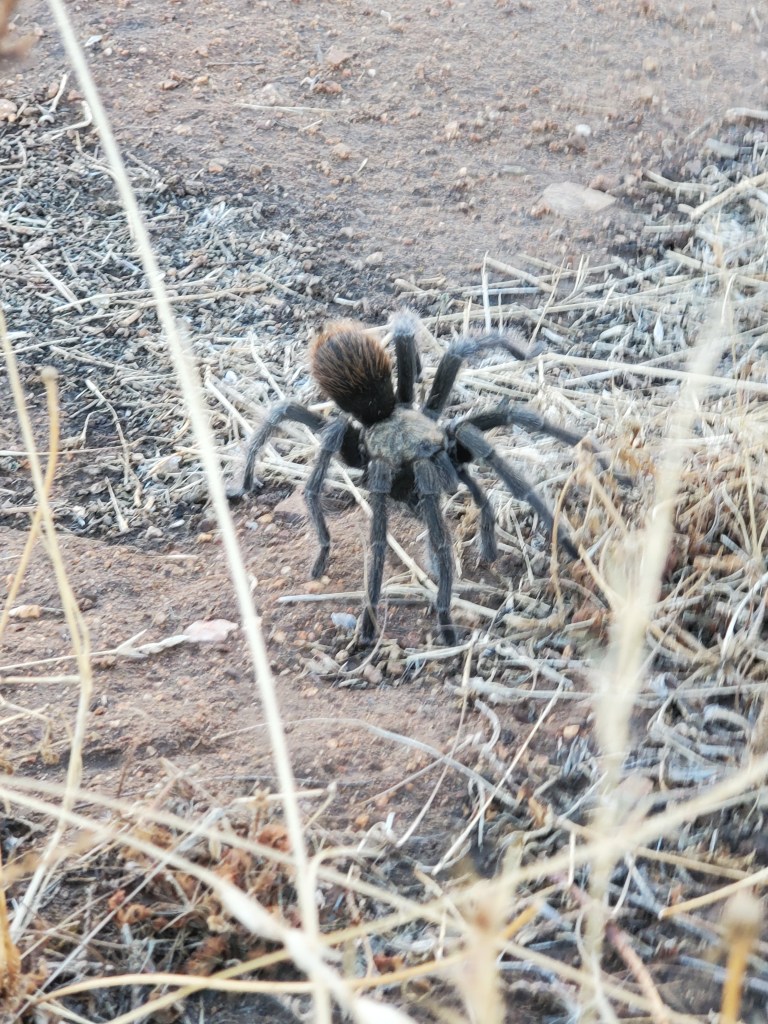
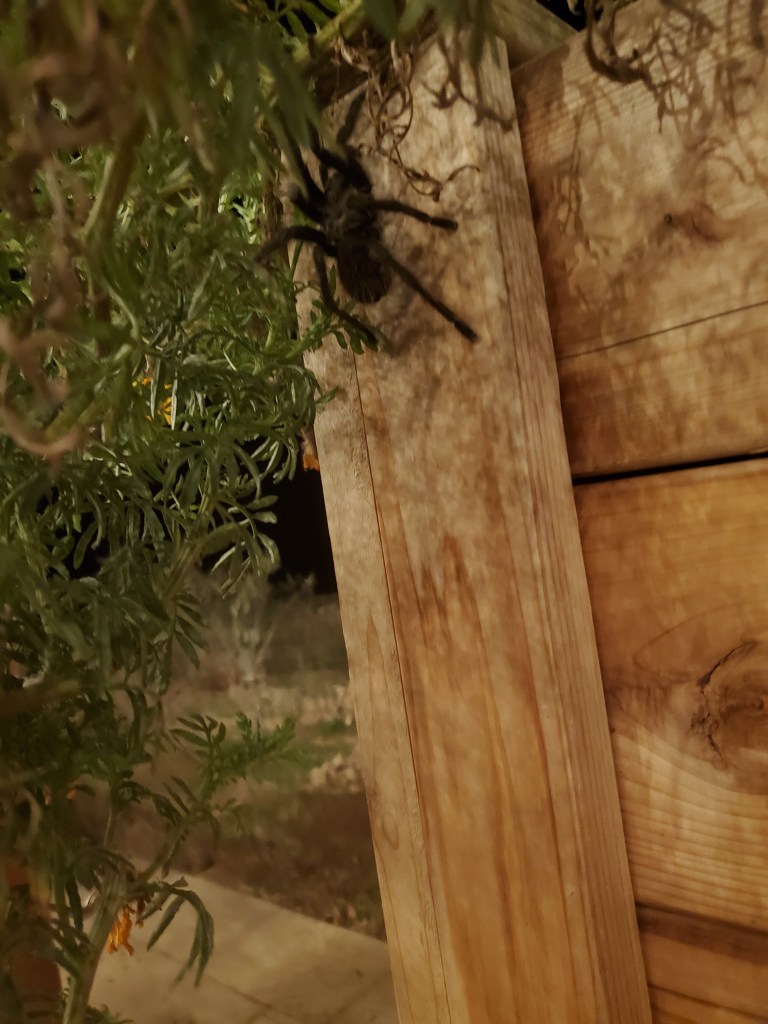
Still, the temperatures are cooler than 115 – something to be grateful for. Besides the temperatures cooling, Fall is heralded by my dear loves, the tarantulas (Ok, some people determine the beginning of Fall when pumpkin drinks appear at Starbucks; I prefer spiders.). I have counted 5 so far. It is an imprecise, unscientific count, but it has helped me to understand their populations by counting the number of sightings. We had several healthy, large ones at the ranch.
LOVE You!Yes. I am sorry. They can climb vertically quite capably.
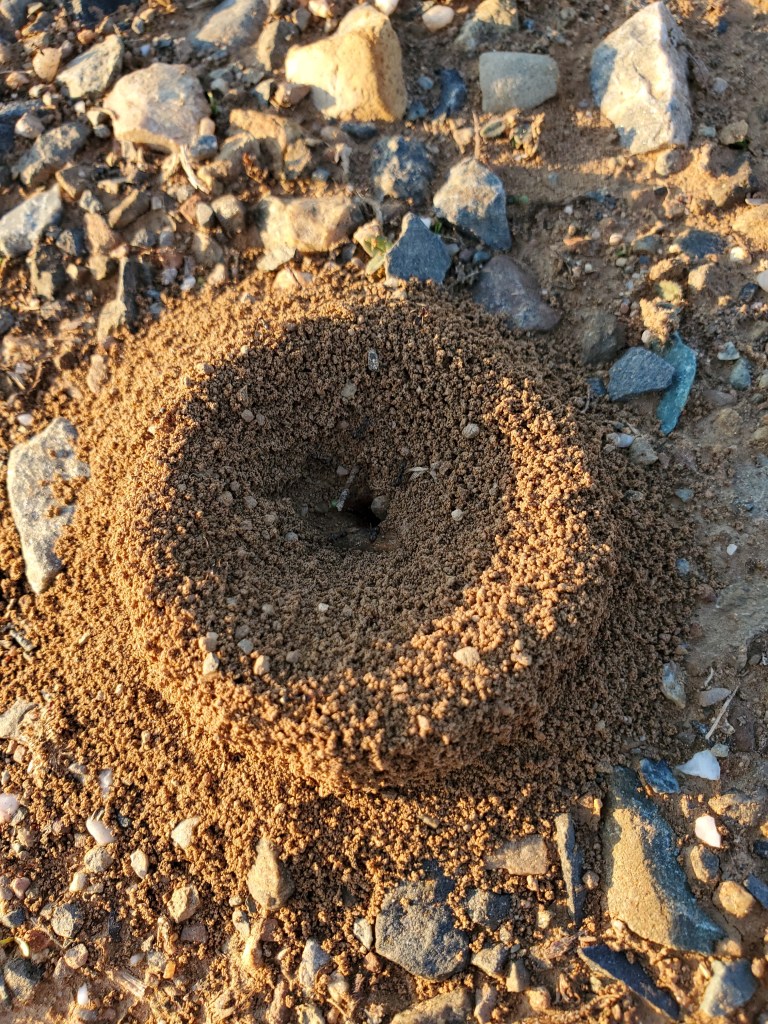
I am seeing a number of small ant holes in close proximity. I think I am living on top of ant LA. To think my bucolic, slow-paced surroundings are directly above a bustling, major metropolis of a billion small, vicious, biting red ants is a bit unnerving. People think I have too much coffee, but now you know why I keep moving and don’t stay in one place for too long.










































 PolliNative