Rough Summer for Blue Oaks

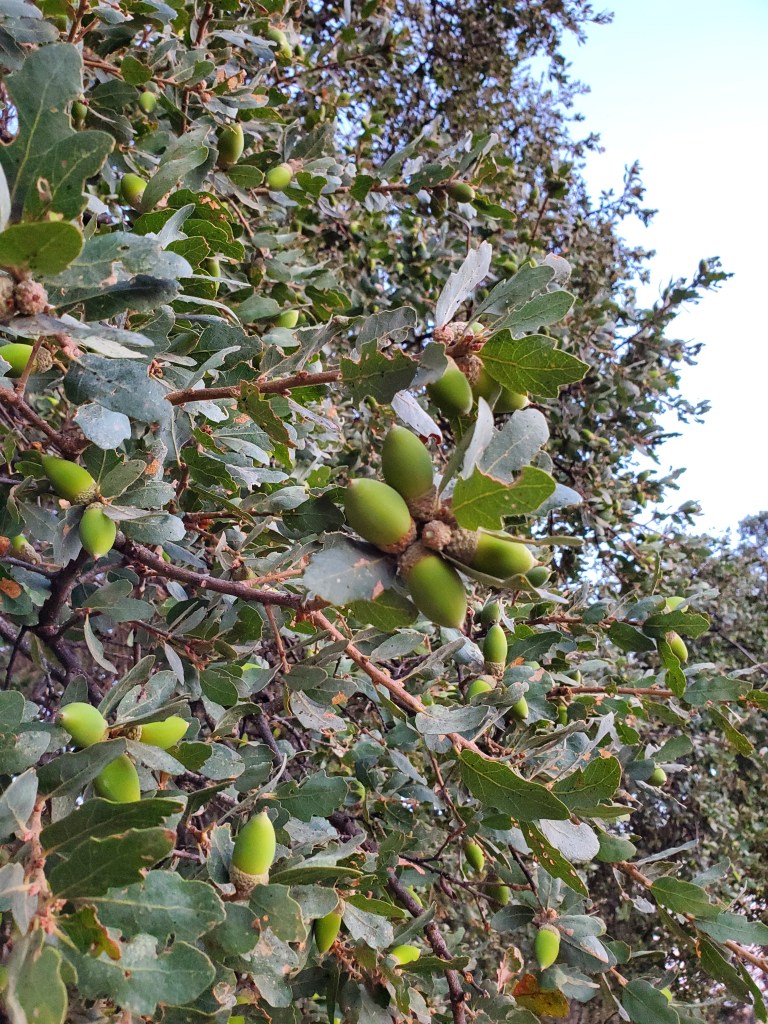
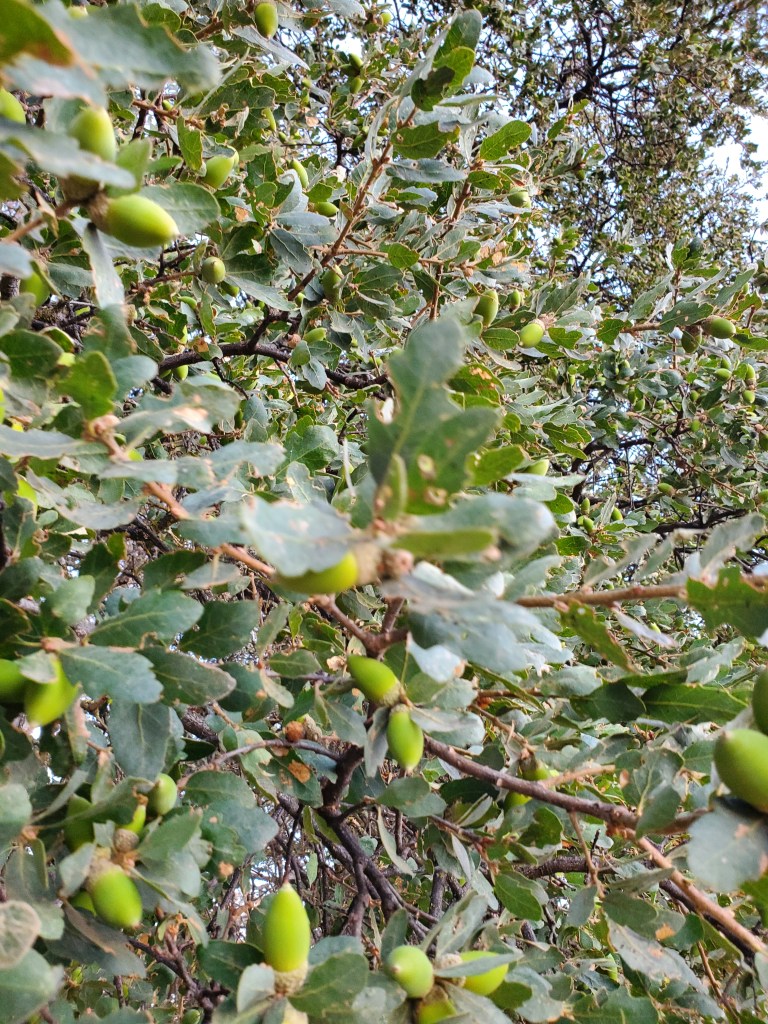
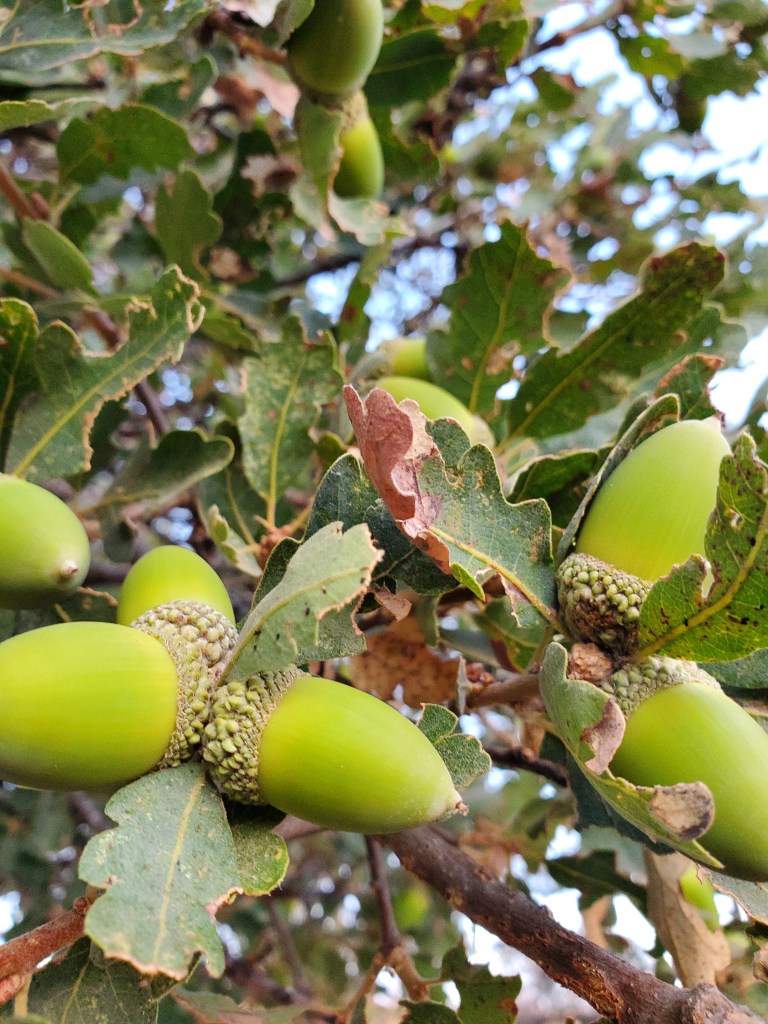
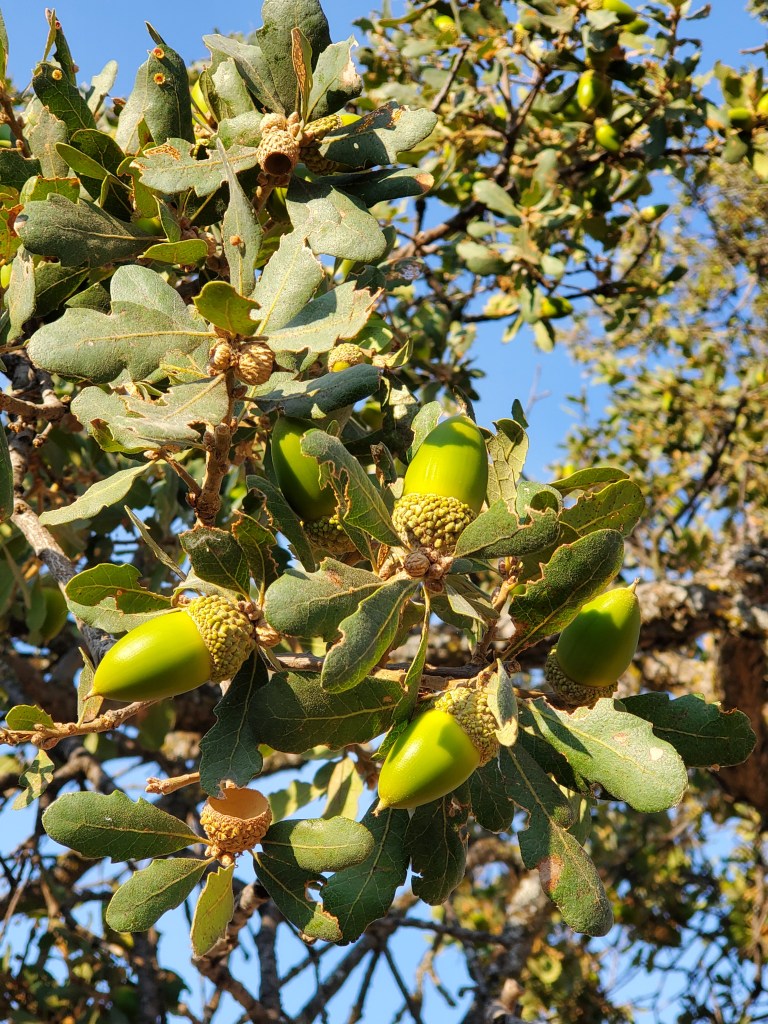
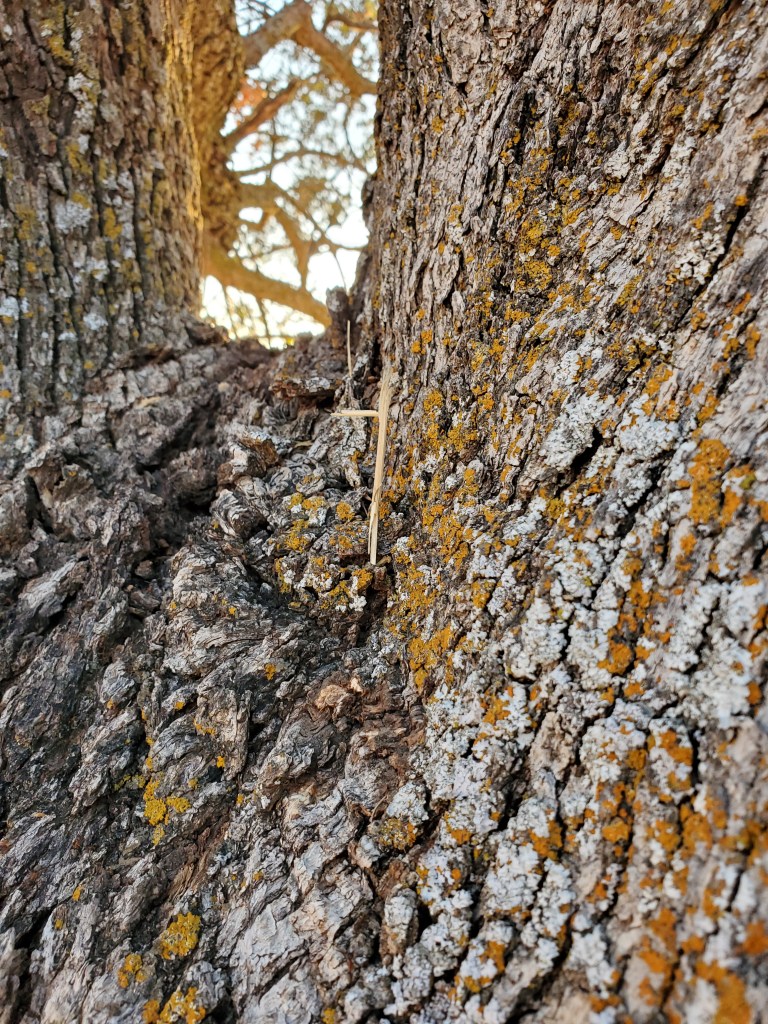
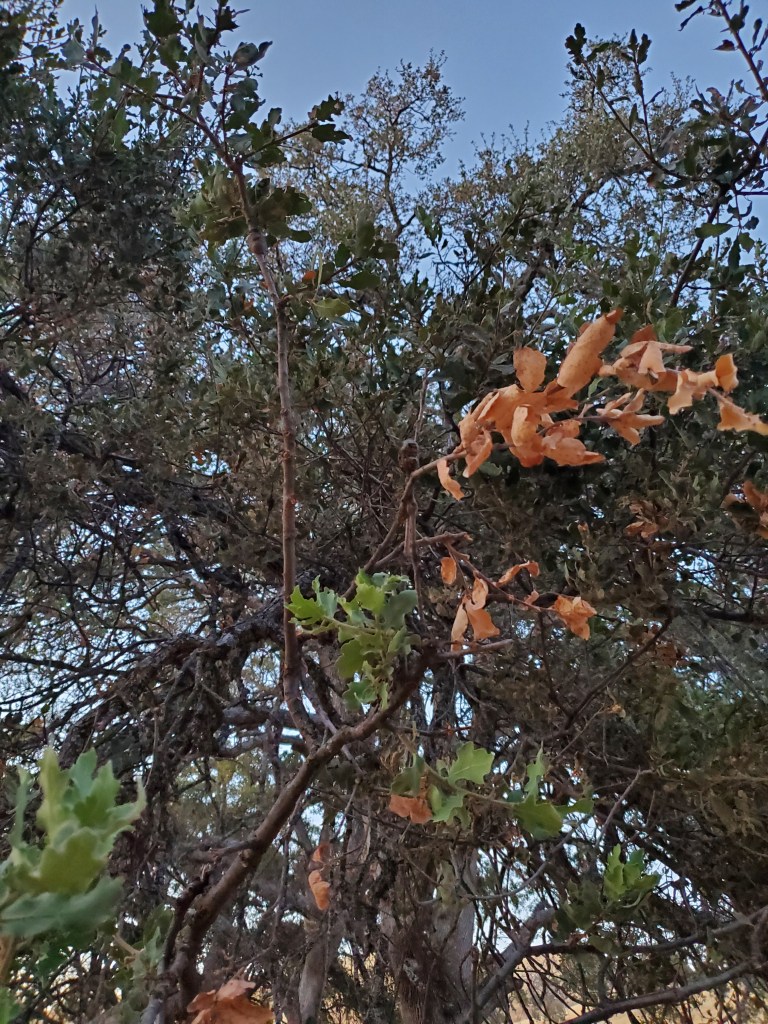
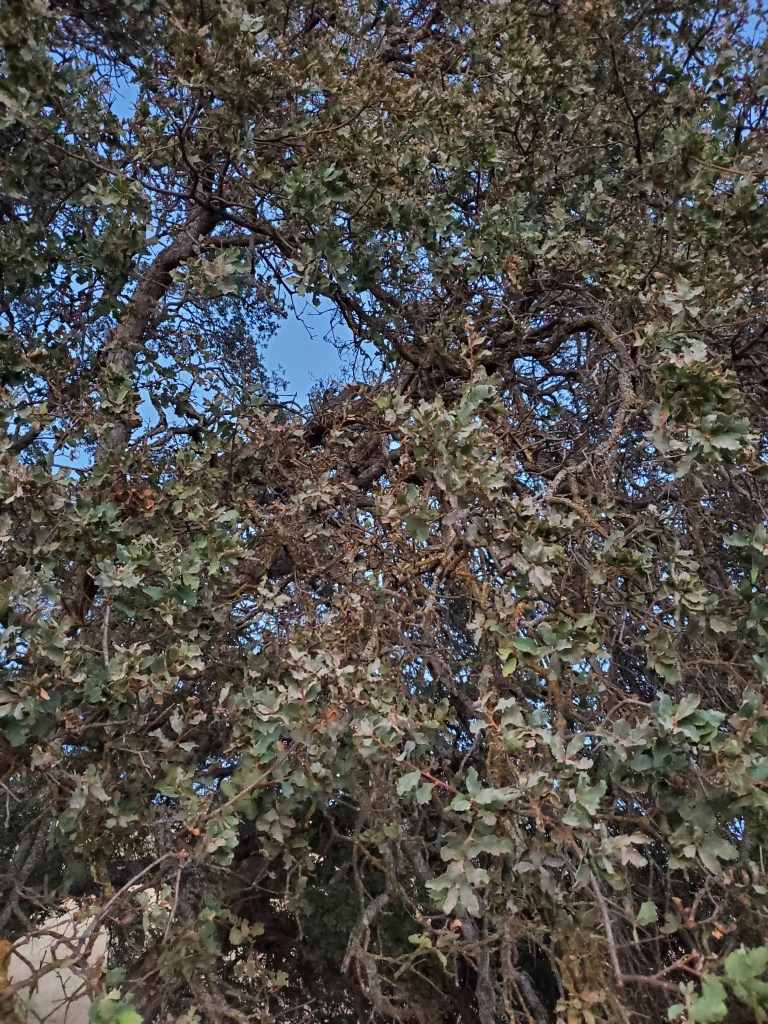
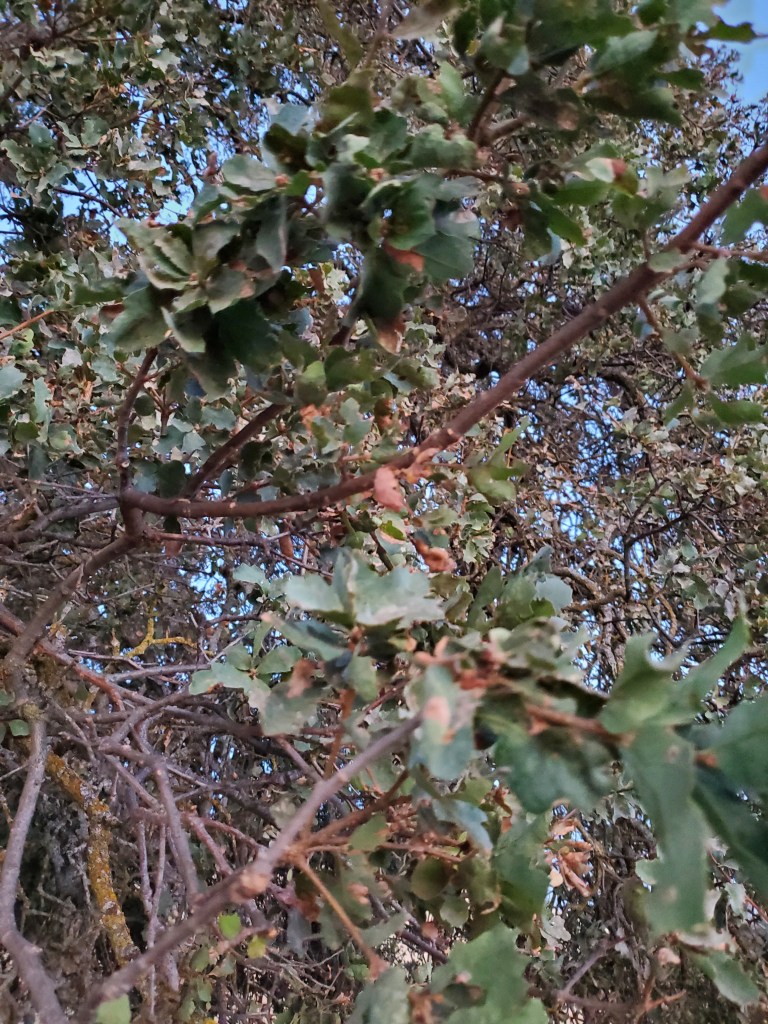
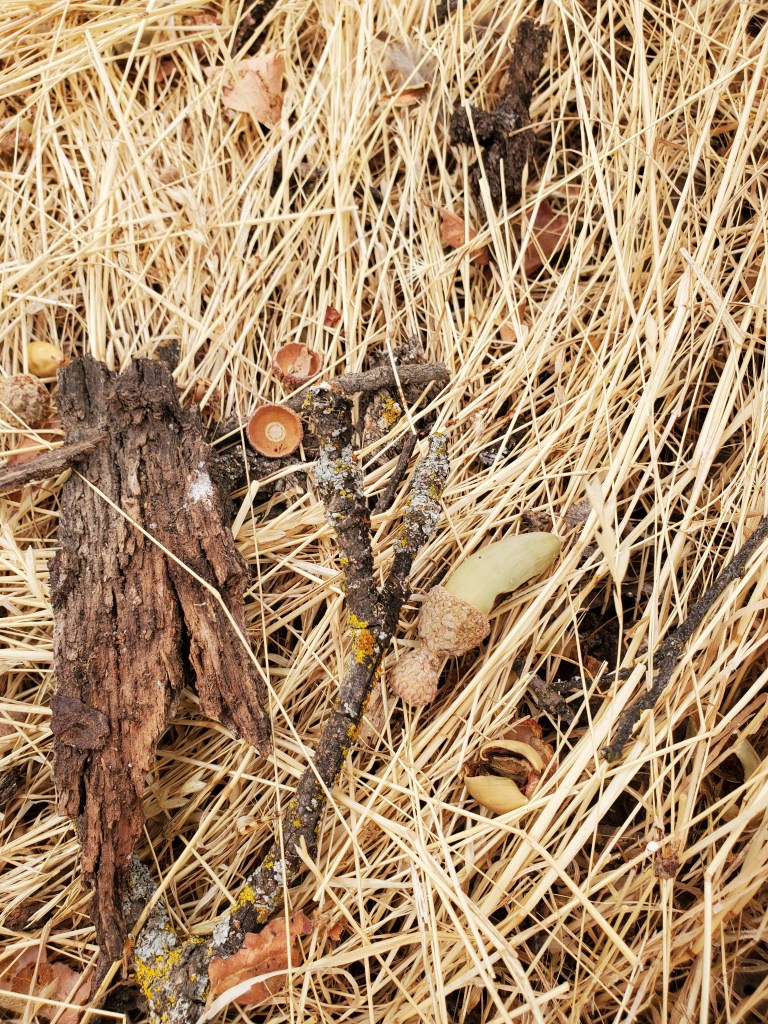
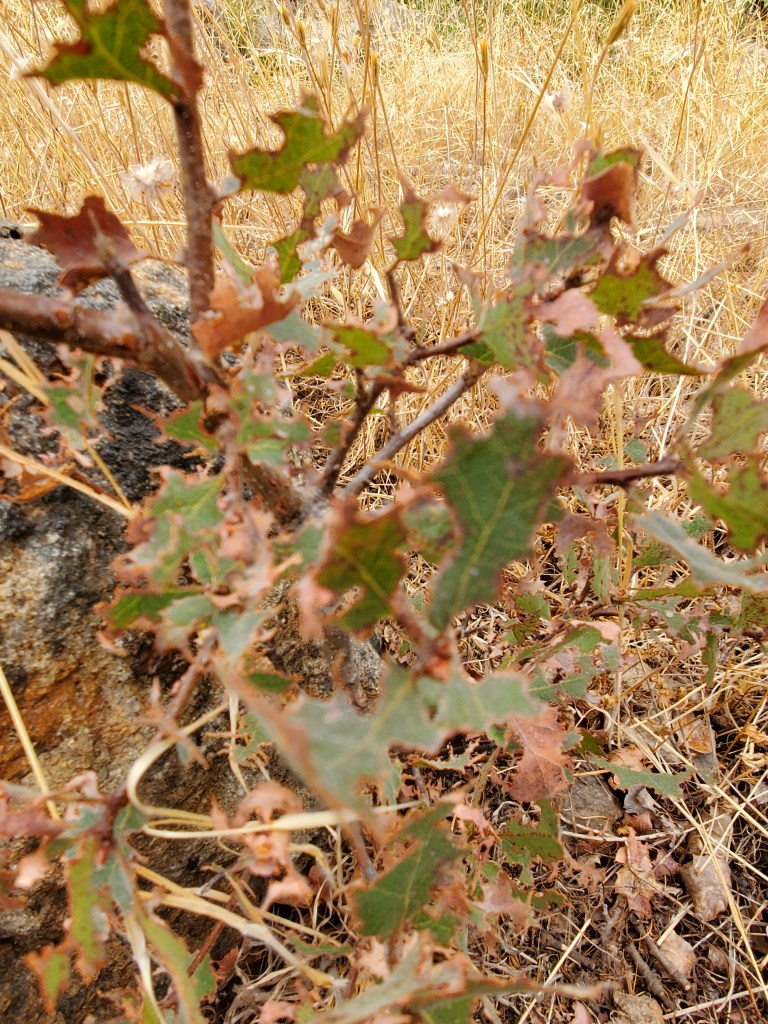
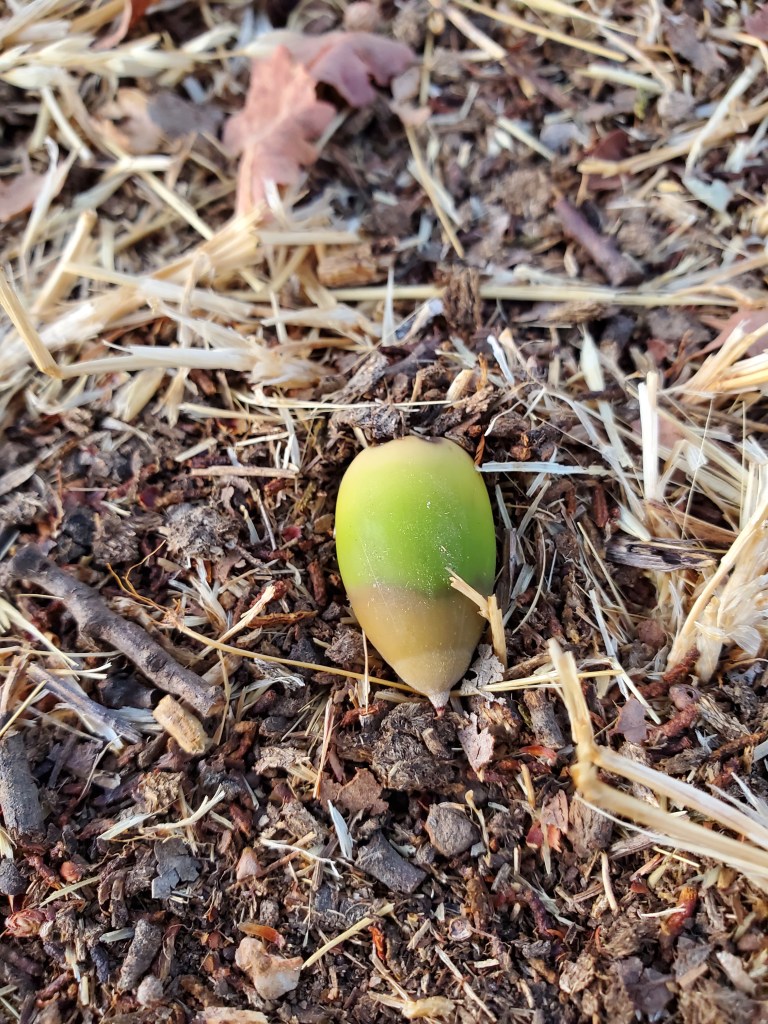
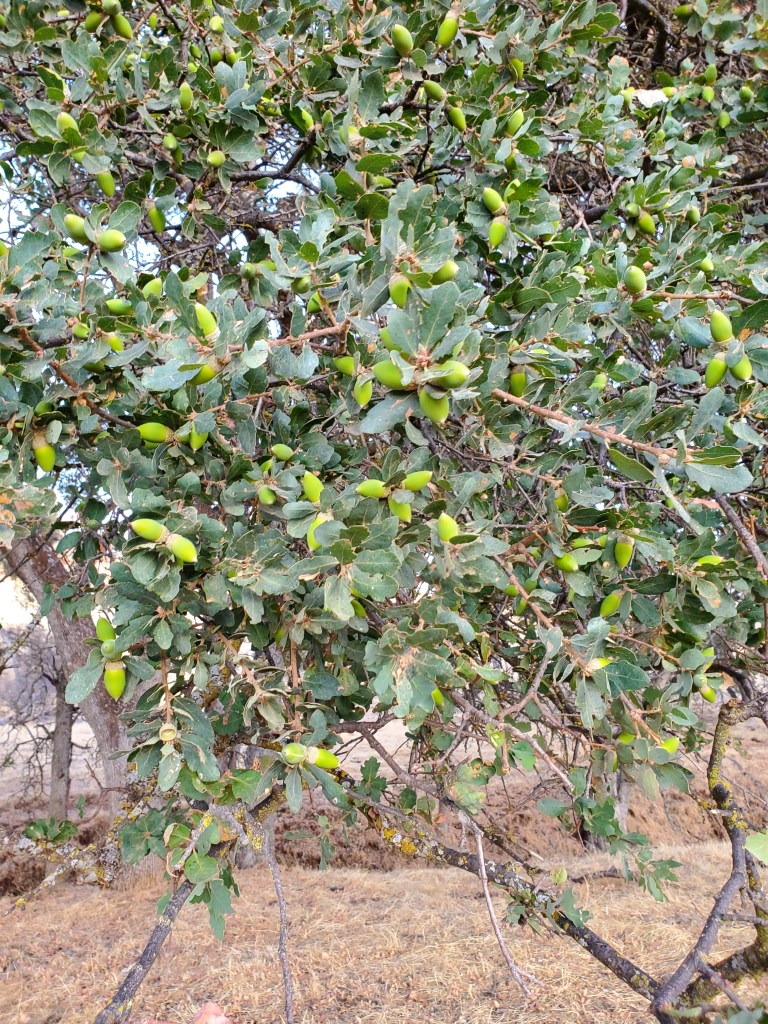
What looked like a bumper crop this year of acorns has transformed to crispy leaves and dumped immature acorns. July happened, and with it, record sustained heat. Oaks are resilient, but so many days of extreme heat on the heels of a long drought within the recent decade are just too much even for these magnificent giants. They had plenty of water over the last two years. Even with water though, they are suffering. Prior to the heat, I was overjoyed to see thousands of acorns on the trees. It was exciting to think I could do more oak planting using my own acorn stock – and even have enough left over for the animals and me to enjoy. My hopes withered like the leaves I was watching, as day after day, green acorns appeared on the ground, less leaves on the trees, and the remaining leaves showing signs of burning / crisping. Most of the grand oaks no longer look so good.

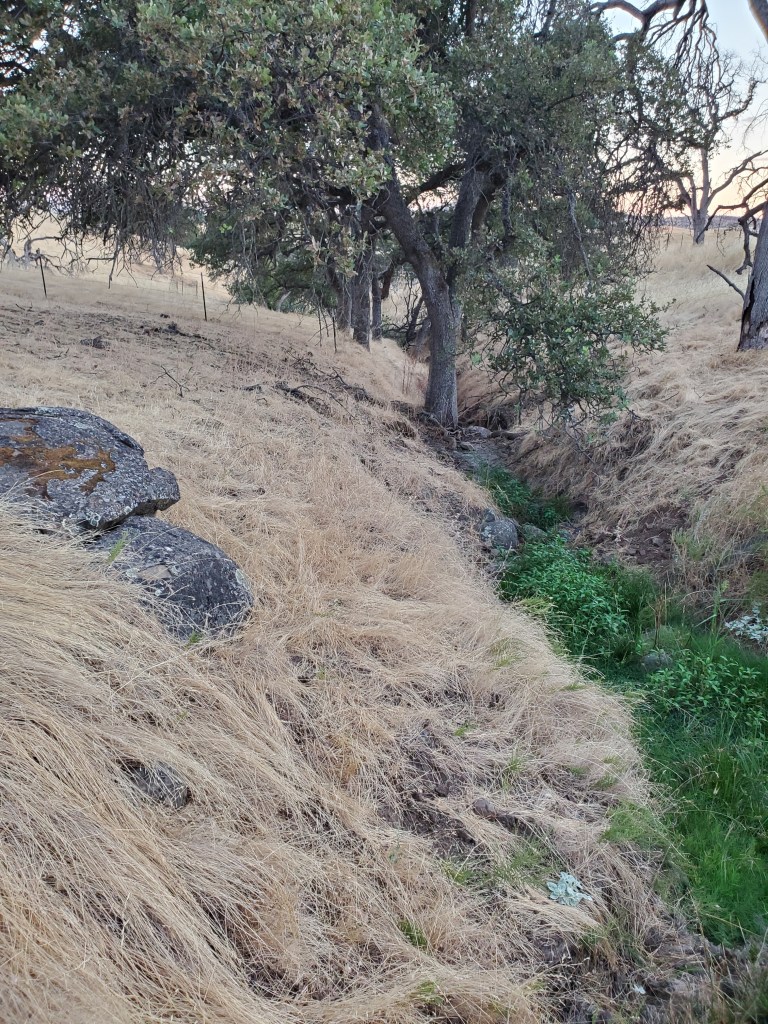
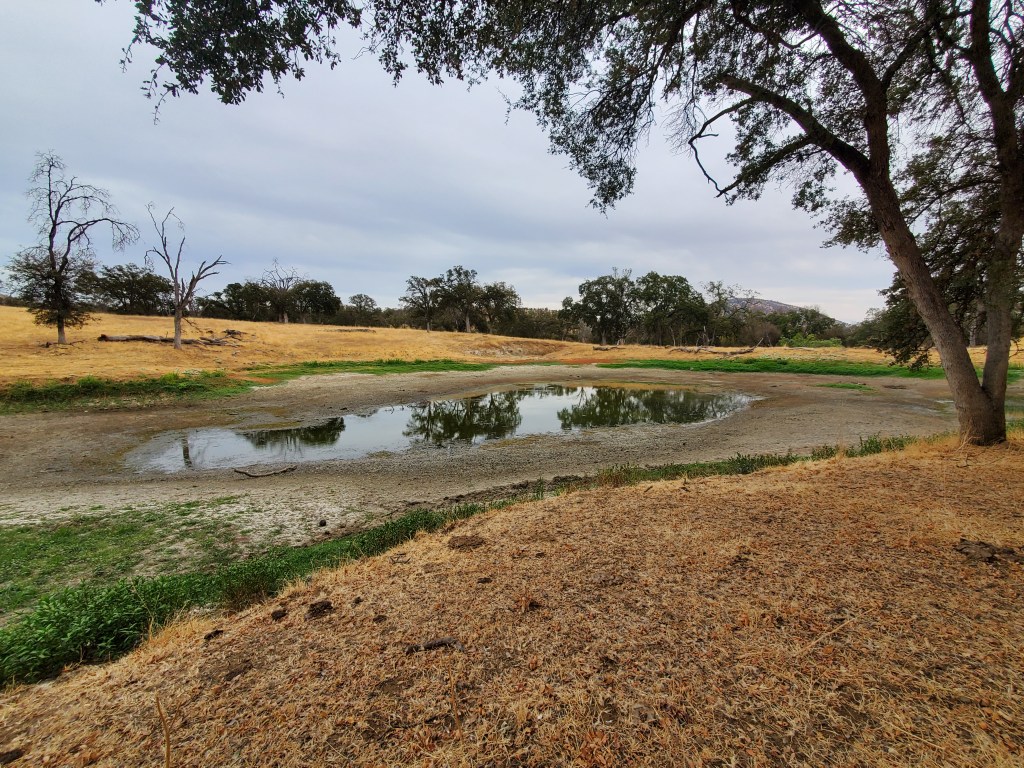
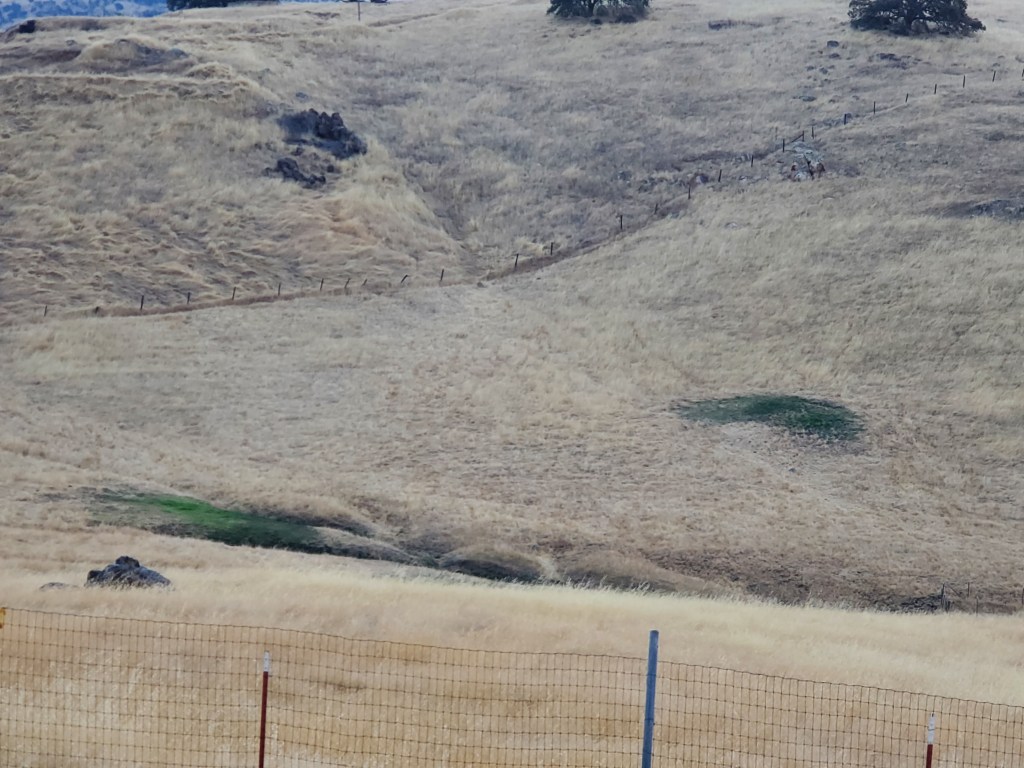
One bright sign is that the oaks adjacent to the swale pond are doing extraordinarily well. Their leaves have withstood the heat and acorns are still attached in copious amounts. Hoping for repeat good news for those oaks adjacent to the check dams, I explored the grove. Sadly, the trees were crisped. Even the oaks sitting lower in the creek and drainages were rough looking. The check dams slow the runoff holding back small quantities of water for a short time. The swale pond holds large quantities of water over a long period of time. I only did a very cursory look, and need to do a more thorough examination across the entire ranch to understand if this is the pattern. If so, how can I ever hope to save these magnificent relatives, so critical for food, shelter and shade on such a large scale?

Water – Still Here

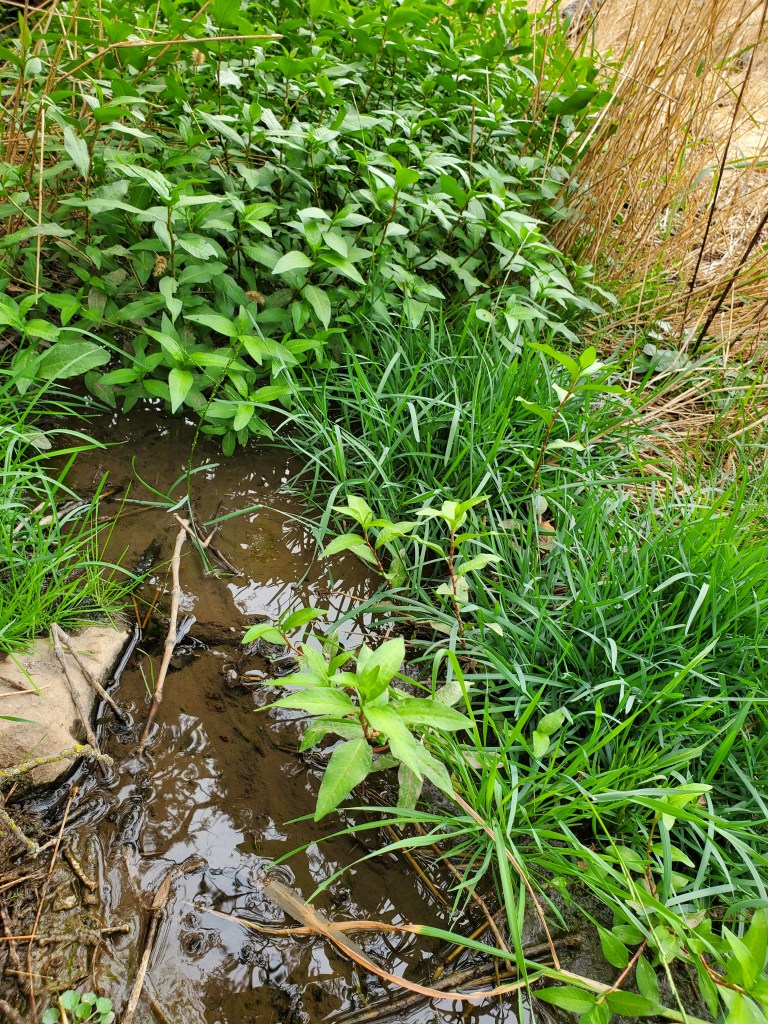
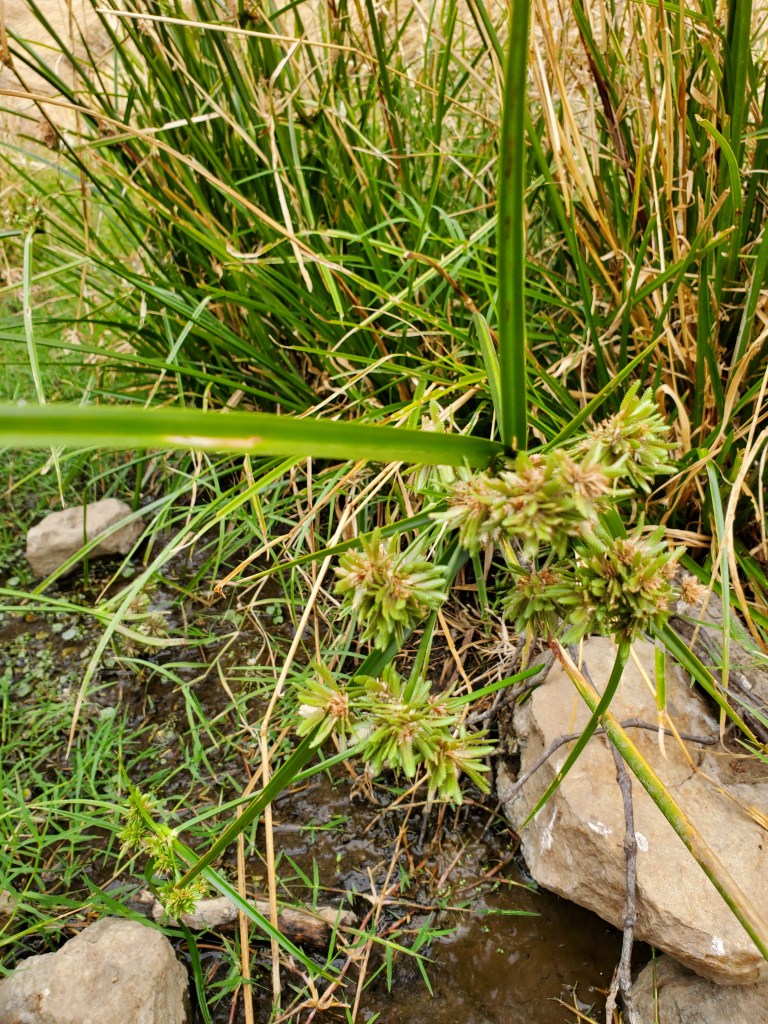
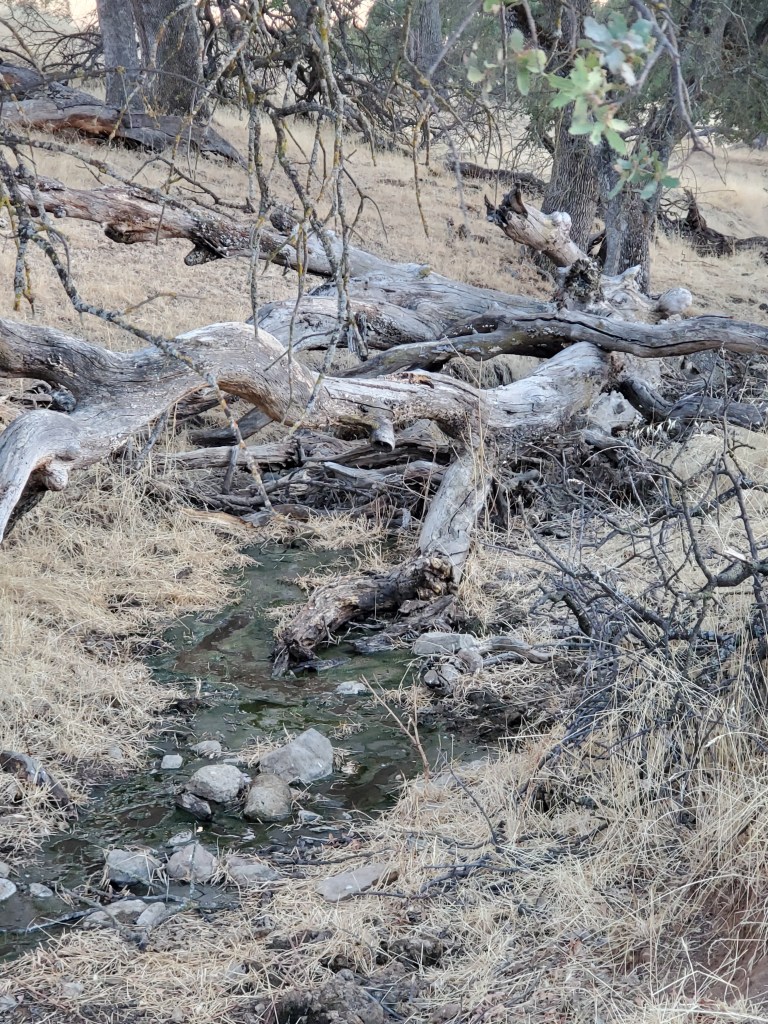
I am grateful that there is still water running in the creeks and seeping from the springs. It ensures life can continue and that there are nectar flowers to feed hungry pollinators. There was also watercress – a wonderful treat for humans.
Traditional Foods – Critical

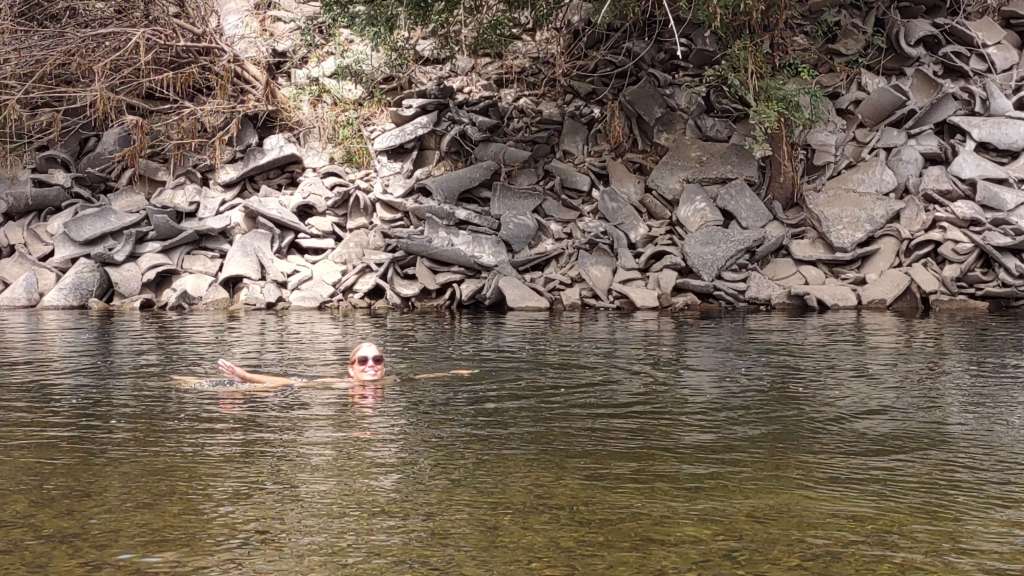
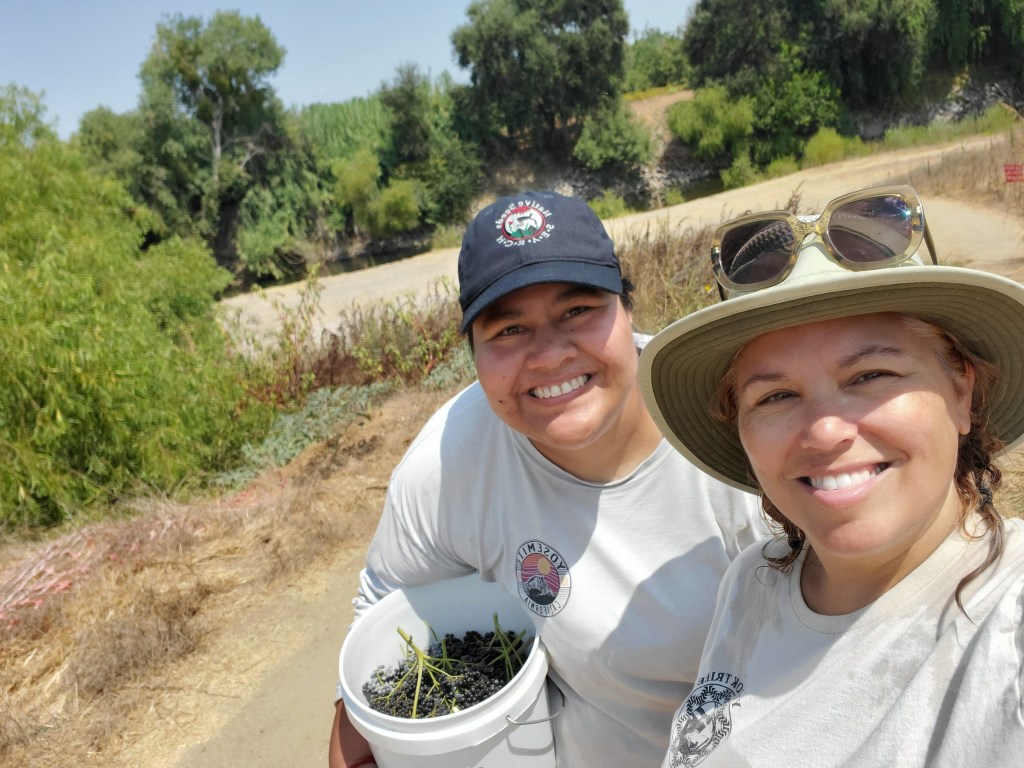
The weekend before last, my young friend Deedee and I went to gather elderberry. Although we gather for ourselves, our primary mission is to gather for the Tribal elders. We always provide the largest and best berries for them. I kept a small bag to make elderberry syrup for my family and friends. Elderberry is a medicine plant and helps the immune system. Gathering can be a dusty, sweaty business. Fortunately, the site we go to is adjacent to the Merced River. I jumped in for a rinse off and swim. Pure joy!

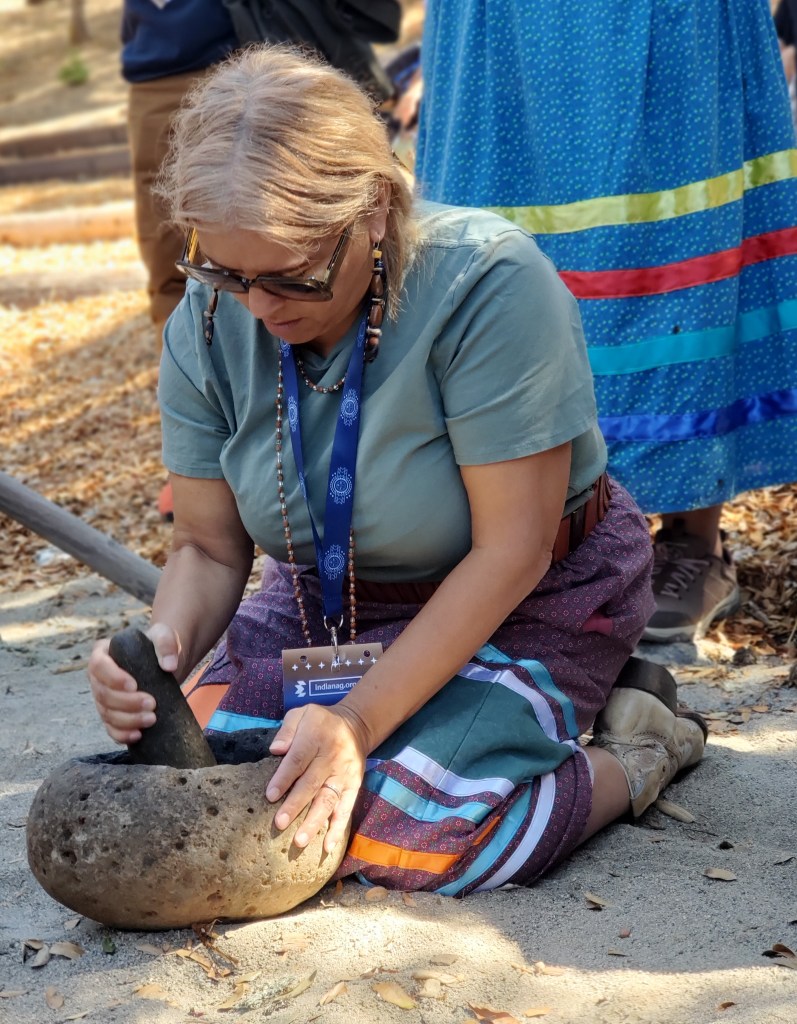
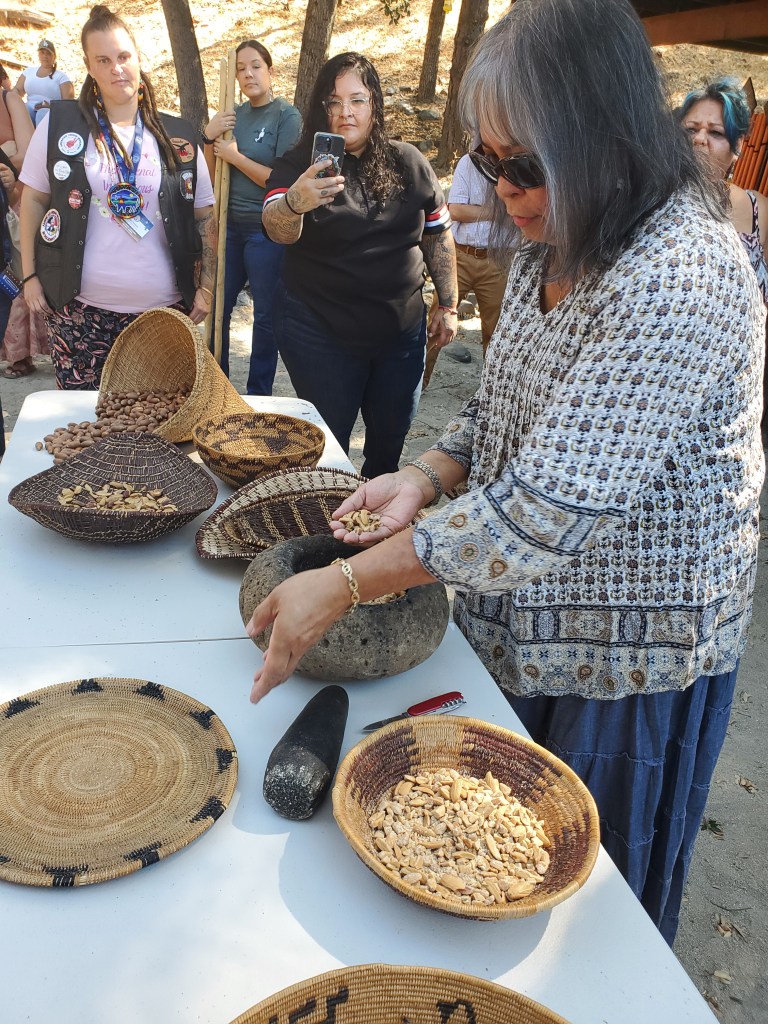
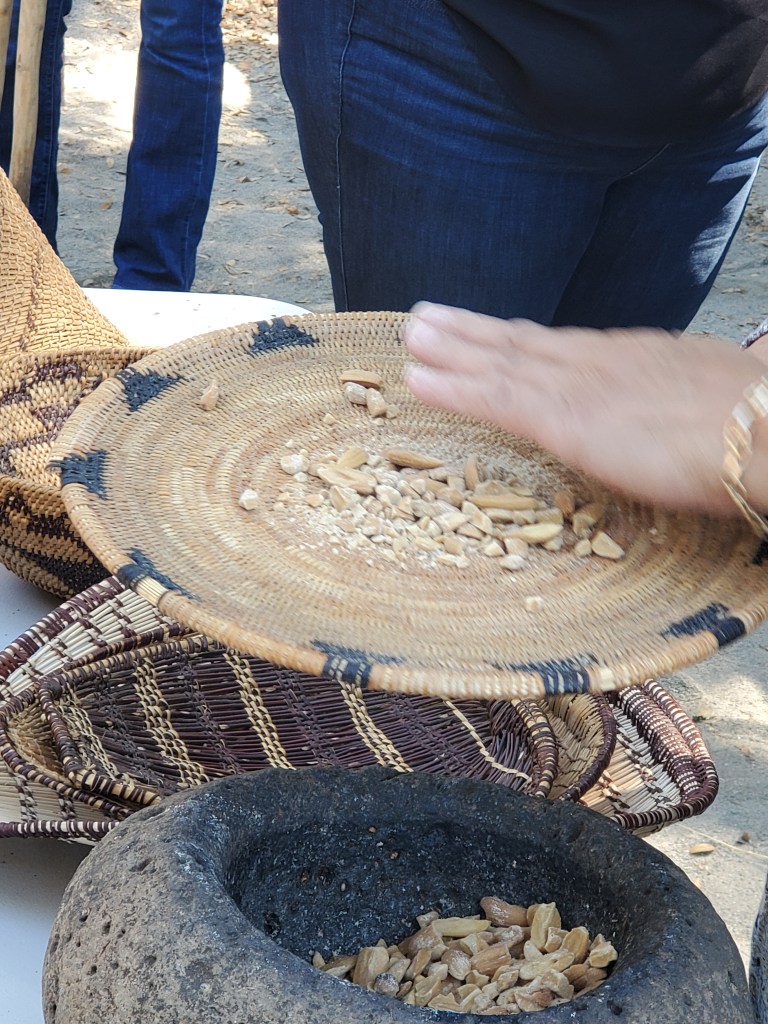
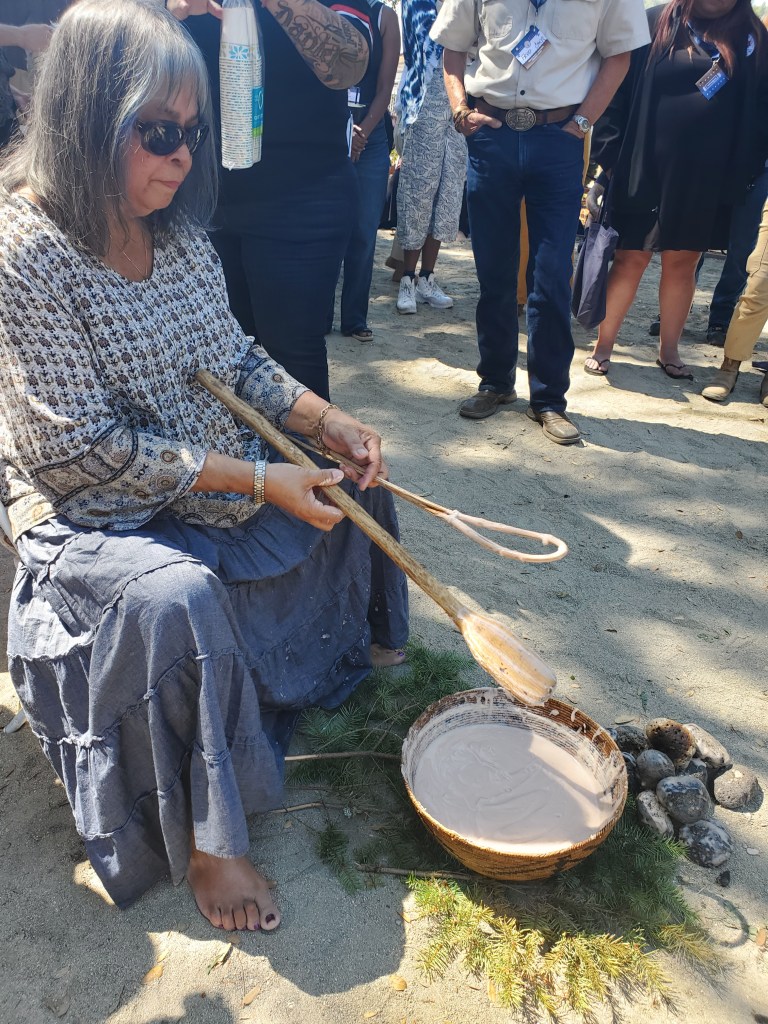
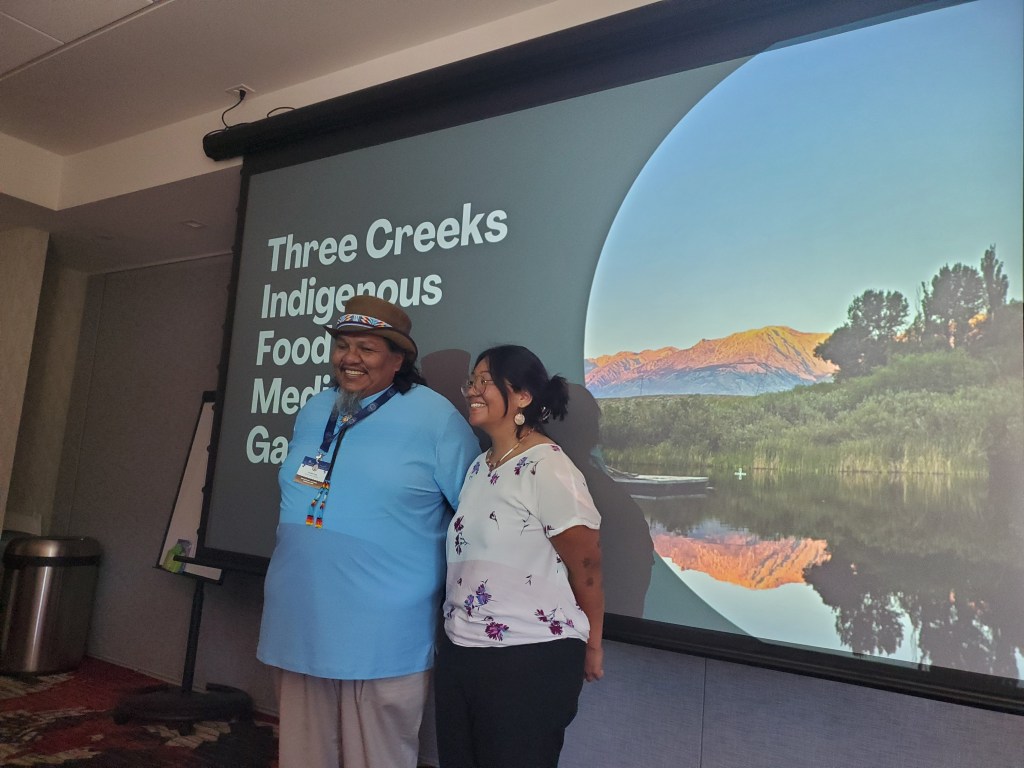
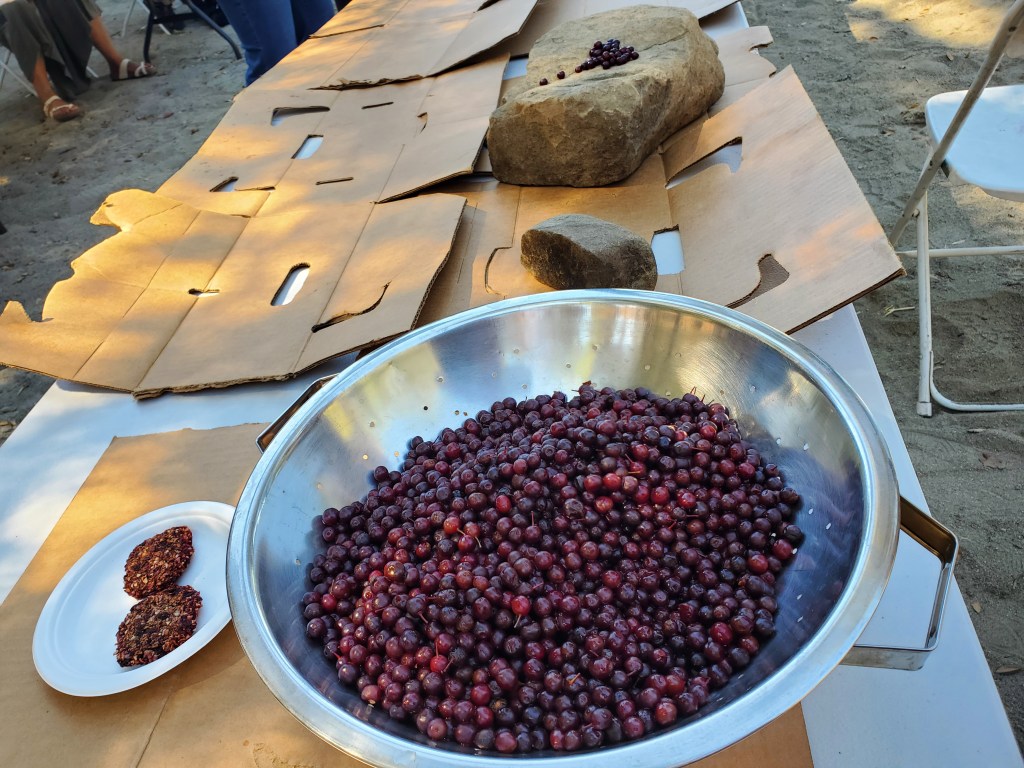
Last week, I had the absolute delight of attending the Intertribal Ag Council Pacific Region gathering over at Coyote Valley. It was an incredible two days of learning, seeing old friends and making new ones. There were some demonstrations of acorn mush making and choke cherry preservation in addition to learning about projects and programs from people all over the region. Jennifer Bates, the acorn mush demonstrator, was from the Calaveras/Tuolumne Miwuk people. She said that as long as the acorn is good, the people are good. They have survived on acorn for thousands of years, and won’t starve. This is exactly what I thought too, which is why the condition of the oak trees on the ranch is so concerning. Her acorn flour was from black oaks – super tasty. It was some of the best acorn mush I’ve had.

More Life Returns

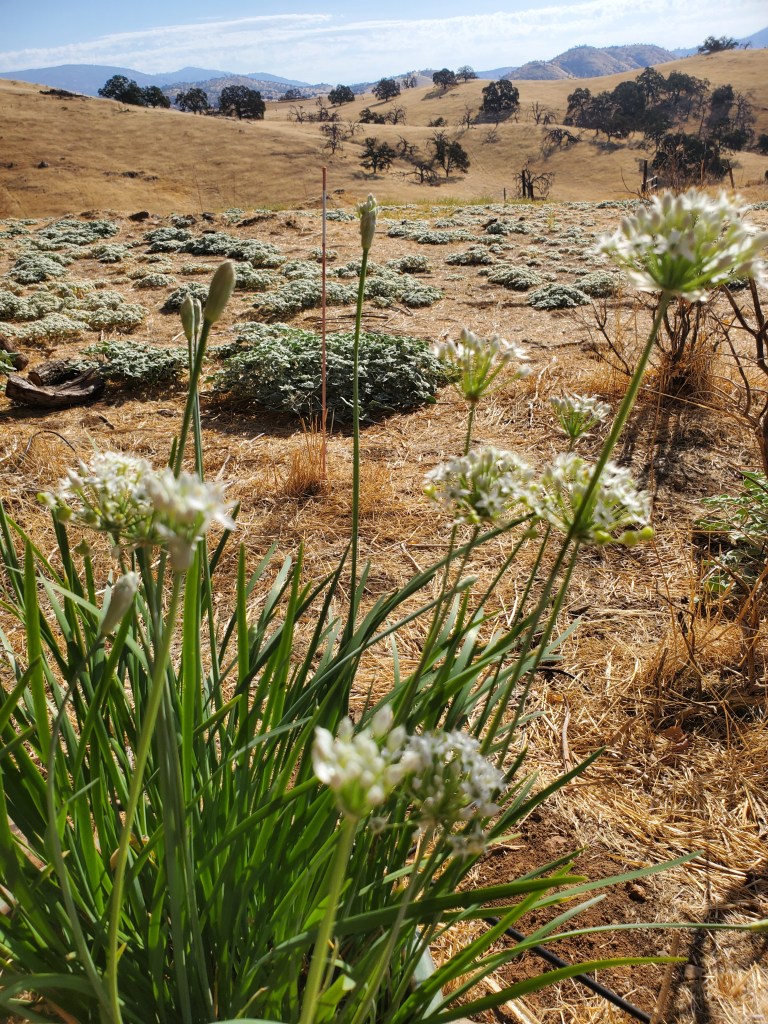
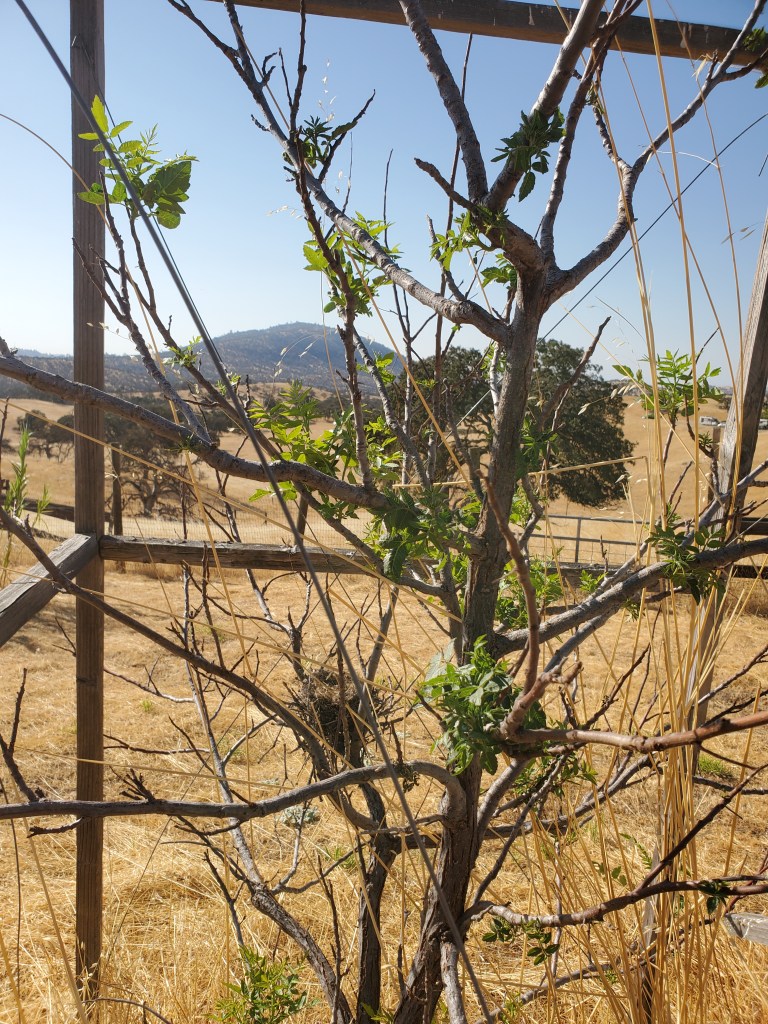
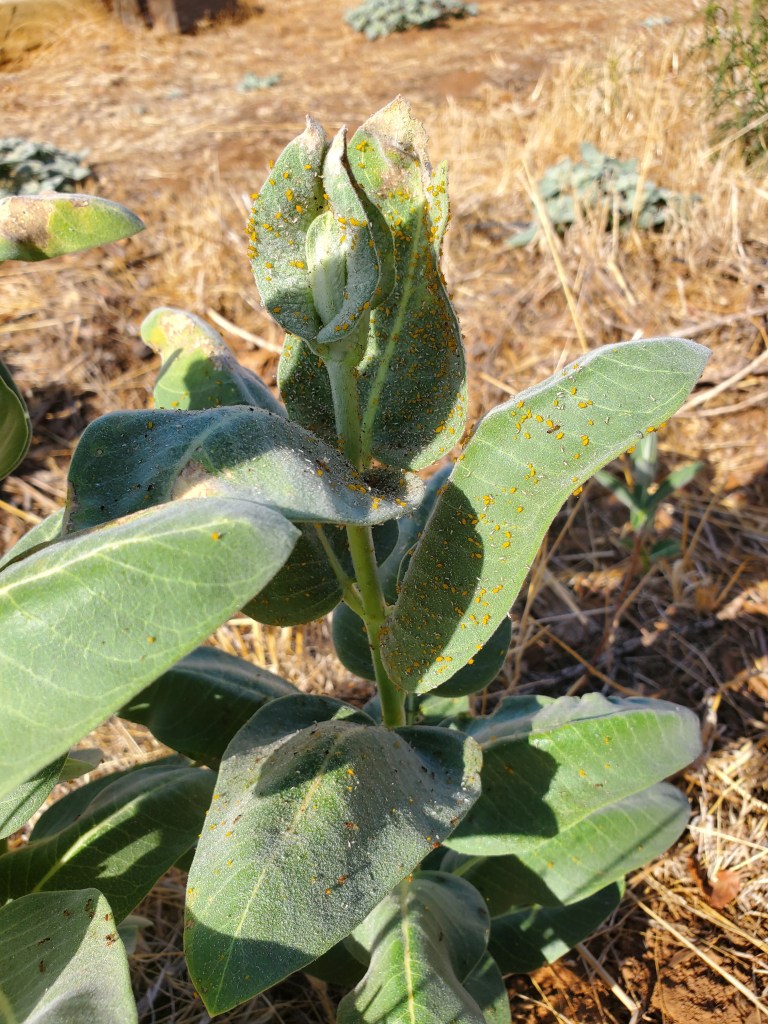
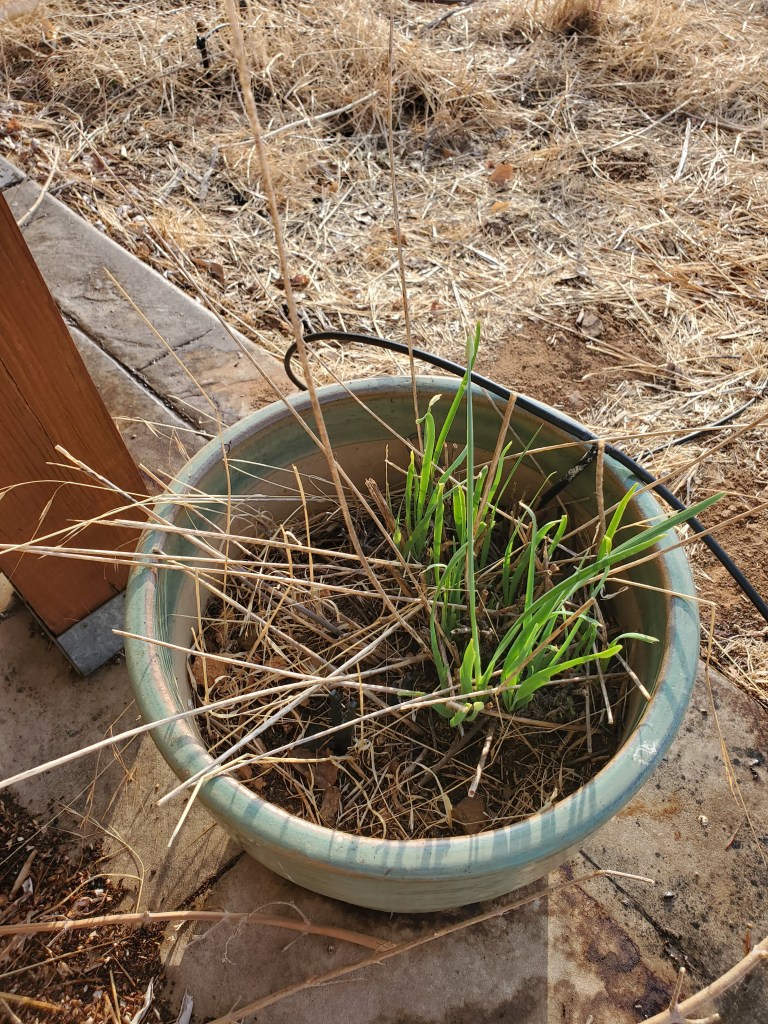
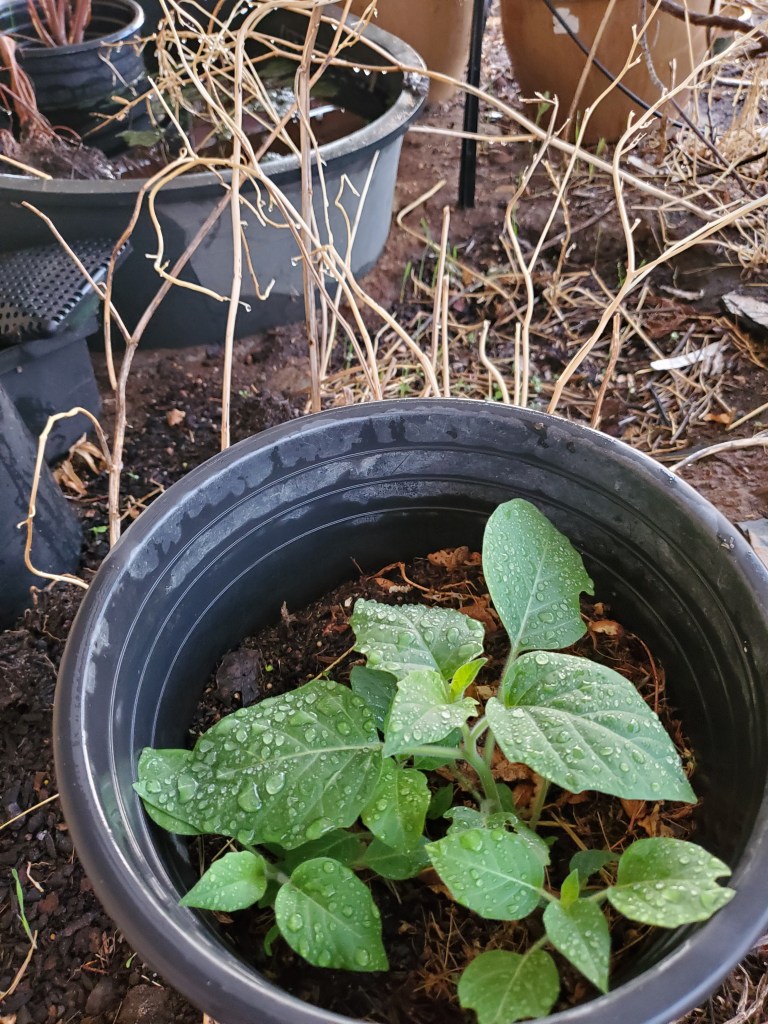
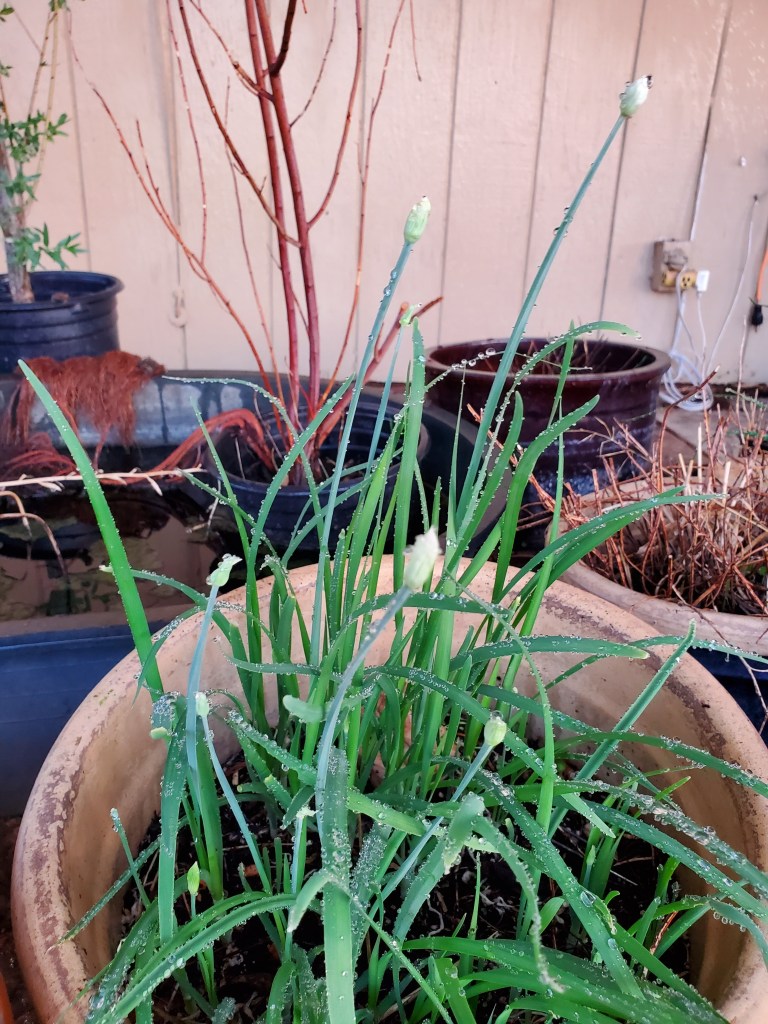
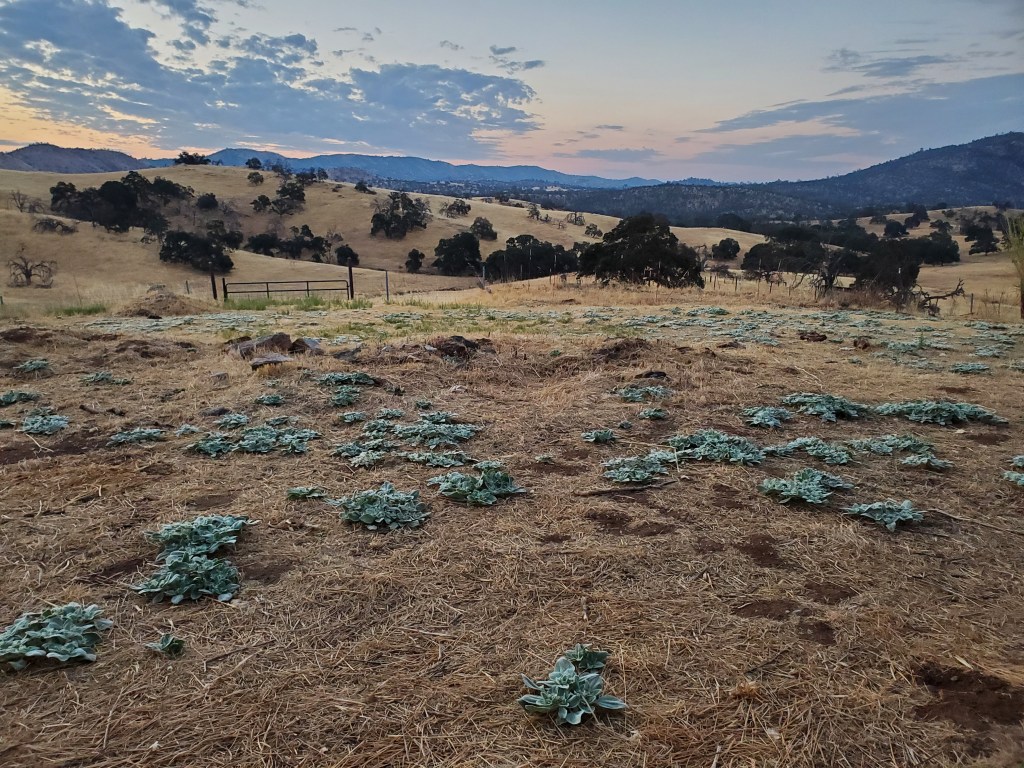
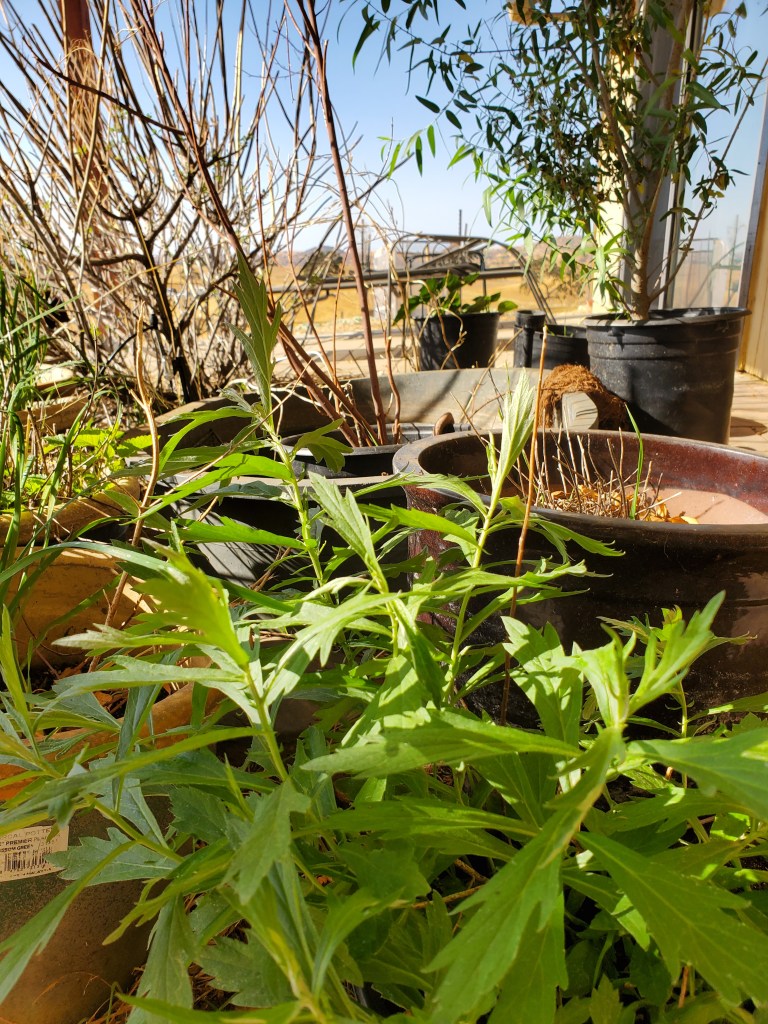
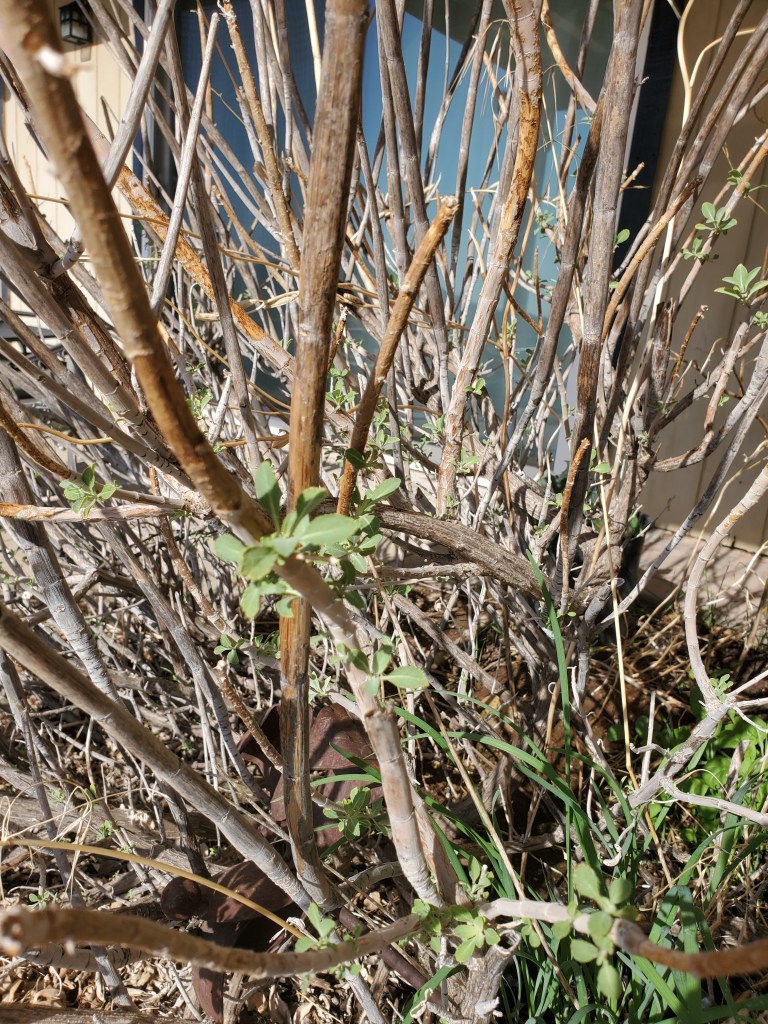
When I returned from my conference and seeing my family on the coast, I came home to even more returned plants. The white sage is resprouting leaves. There were more milkweeds popped up and bloomed. Onions and lemon balm have taken over the potted plants. Most surprising, the walnut tree resprouted leaves. I did not expect that. The wormwood returned and is thriving. Every morning, with the heat of the sun, between the wormwood and sage, it smells like being in ceremony. It elicits such good memories of being together with family and friends, connected to the earth and ancestors, taking time to be present in the moment of life and being grateful for everything.
Wanderings

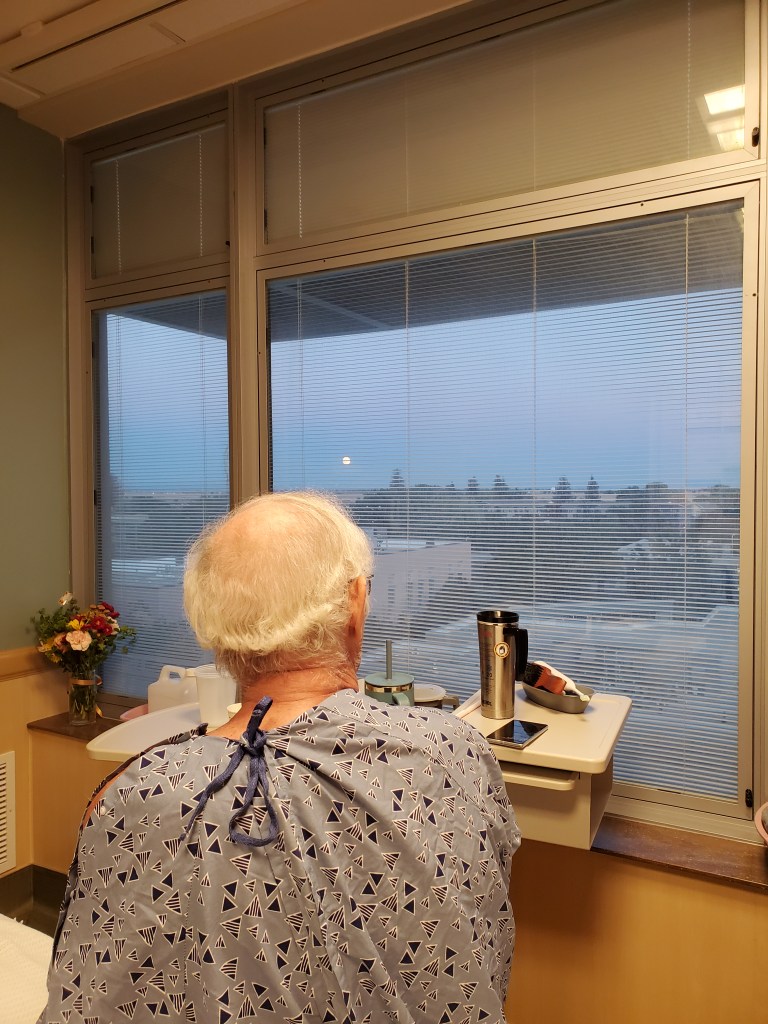
Thinking of life and death, the cycles and blurred lines, has been top of mind. I’ve lost so many friends these past three years, helped others who were sick, and now my father is facing a difficult illness, of which we are still figuring out the details. While my education is helpful, it is the garden that has prepared me. I understand that life is about the seeds we plant – the confidence and joy we help others to see, the kindness we show, the service we provide, and yes, the milkweed that resprouts. What seeds has any of us planted? What goodness have we cultivated in the world? What kind of ancestor do you want to be – one that created, nurtured and cultivated to expand beauty and repair or one solely focused on the self and what can be gained? That question is what makes the difference in the blurred edges of existence. Like my garden, there is no end, just different versions of oneself – emerging, growing, blooming, seeding, serving, withering, nourishing in death, then reemerging again. Each stage is beautiful and requires energy – to take, to release…and to give.
Life Returns

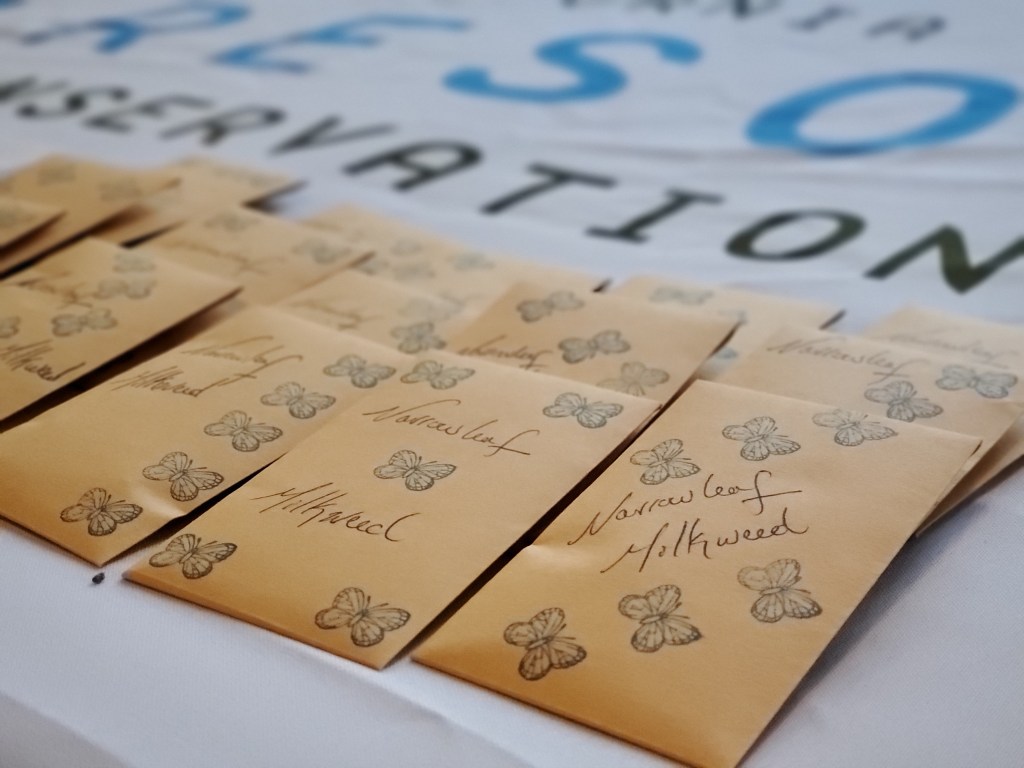
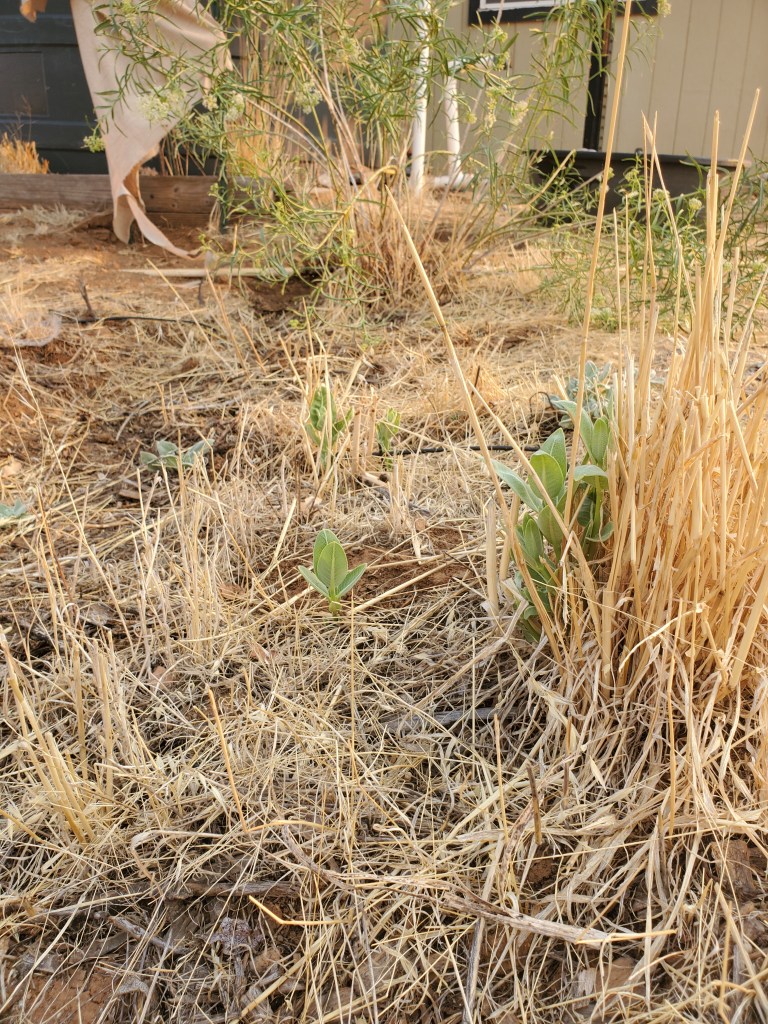
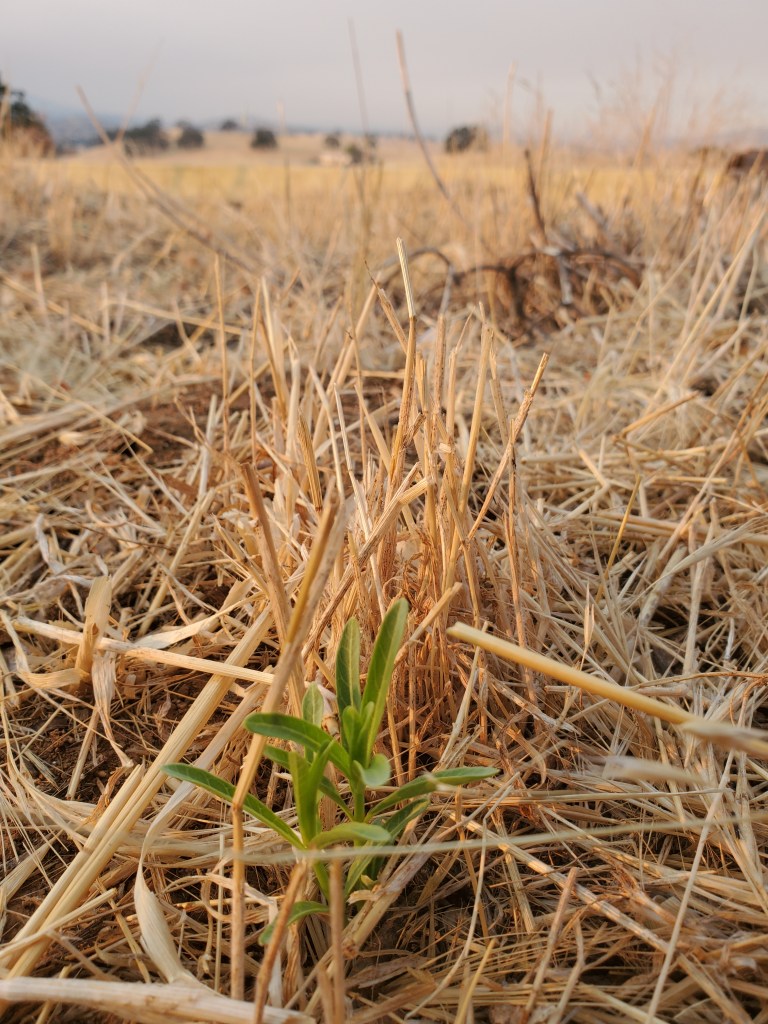
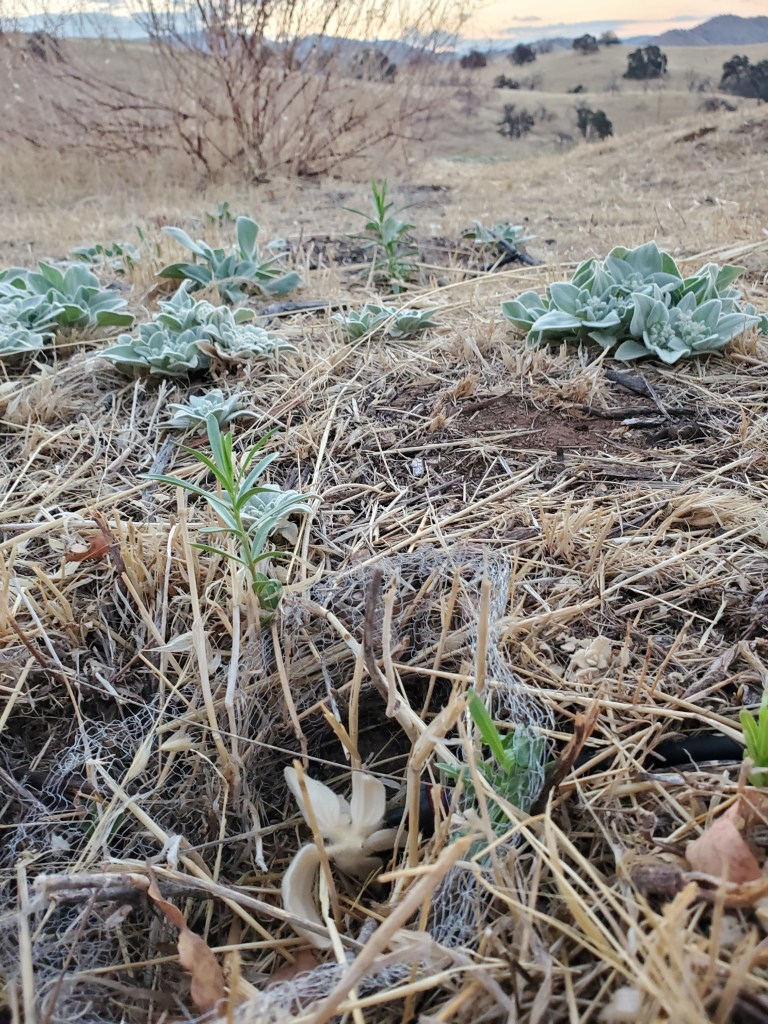
Broadleaf milkweed begins to emerge with a now freed narrowleaf milkweed in the background

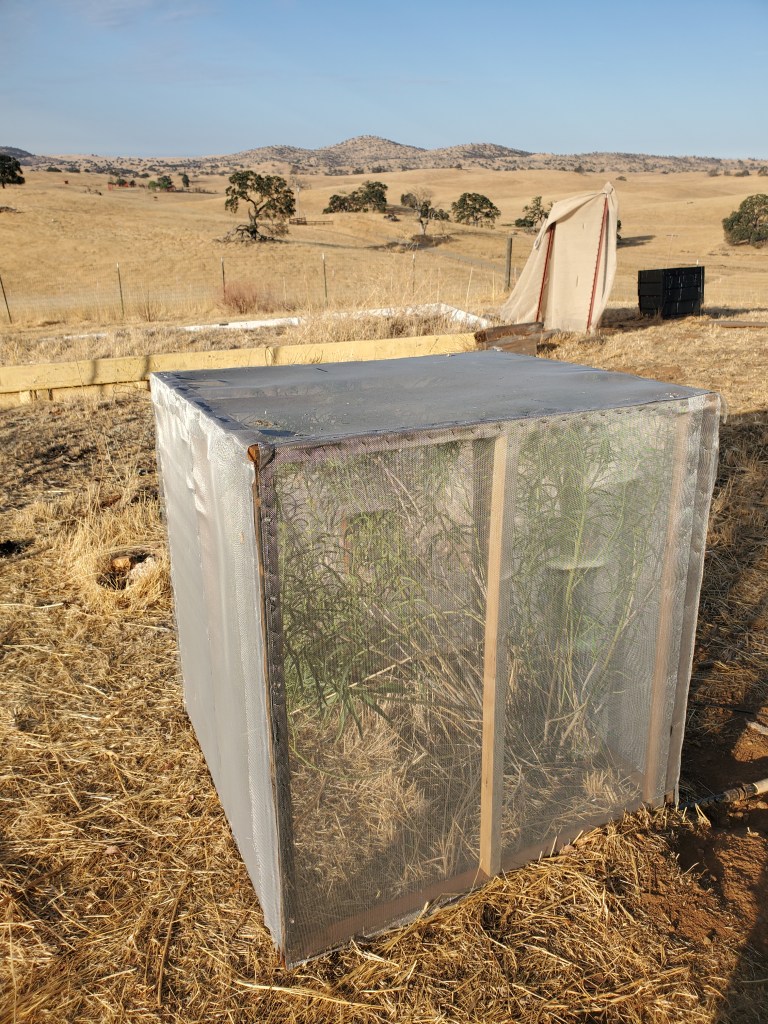
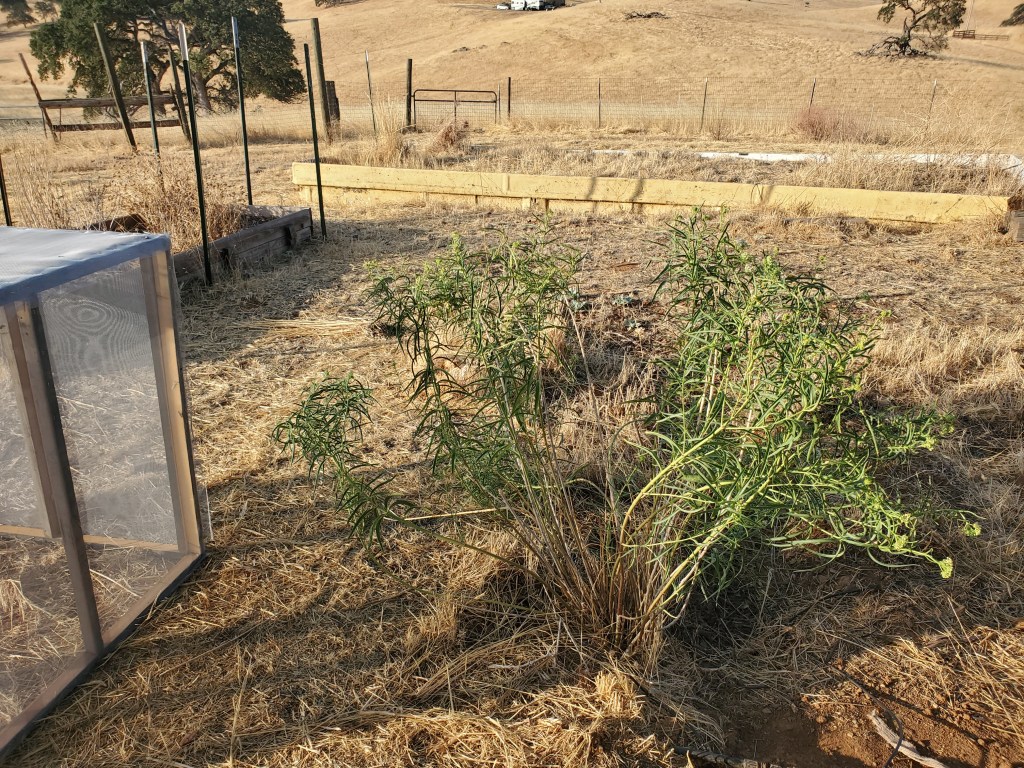
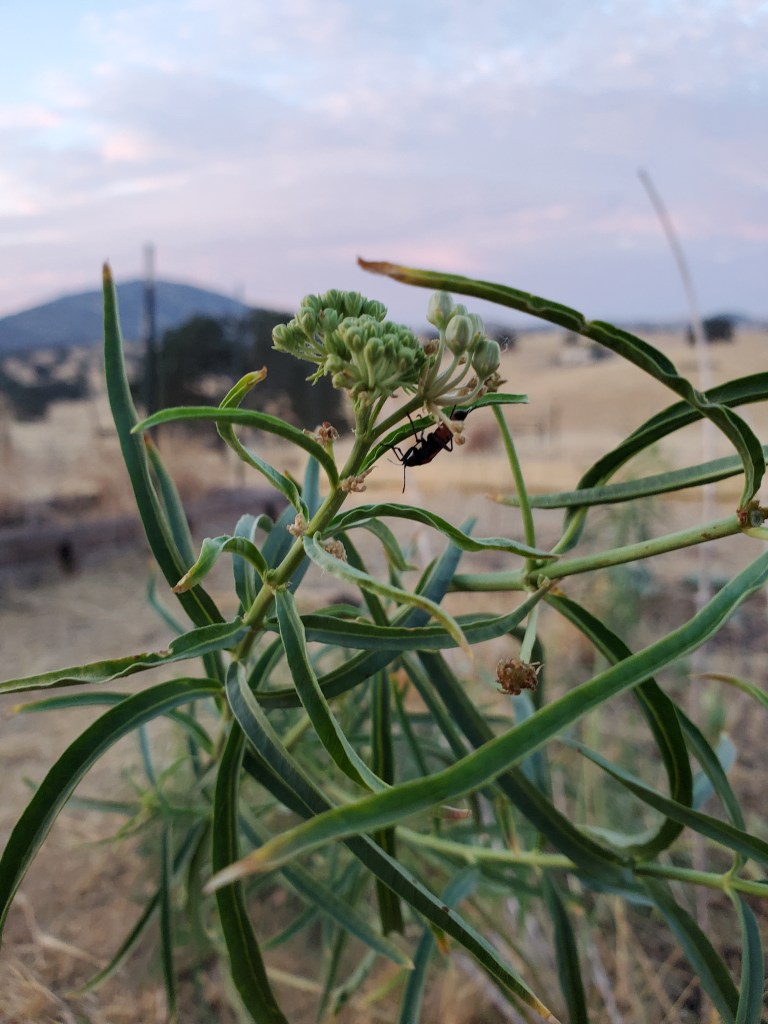
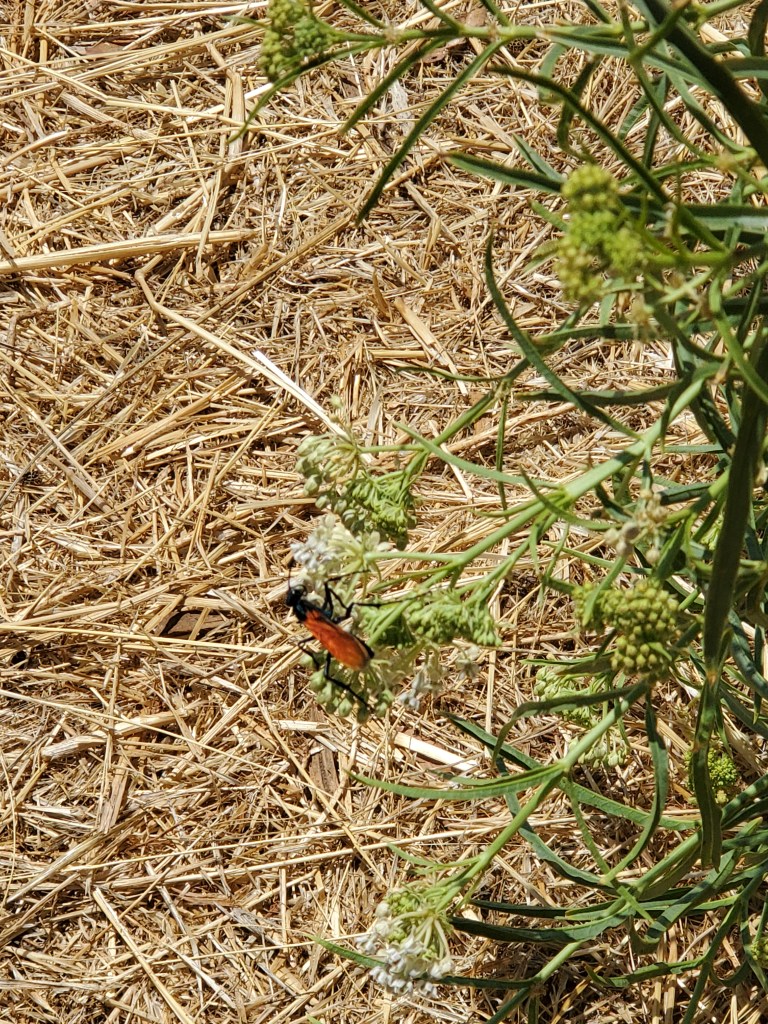
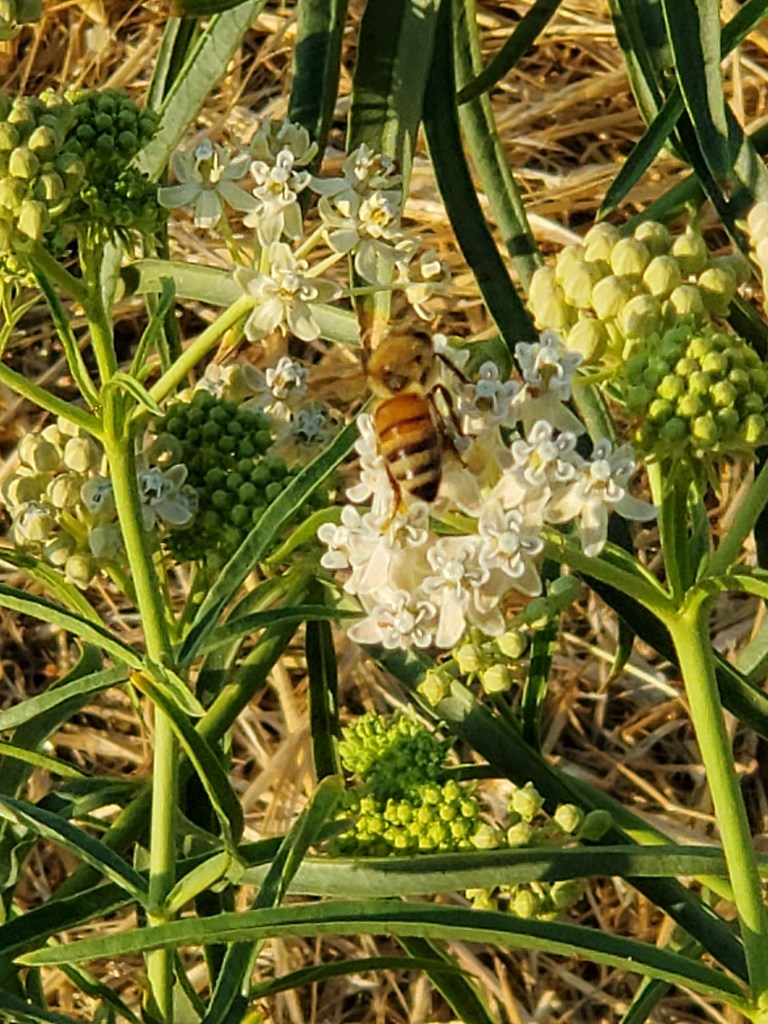
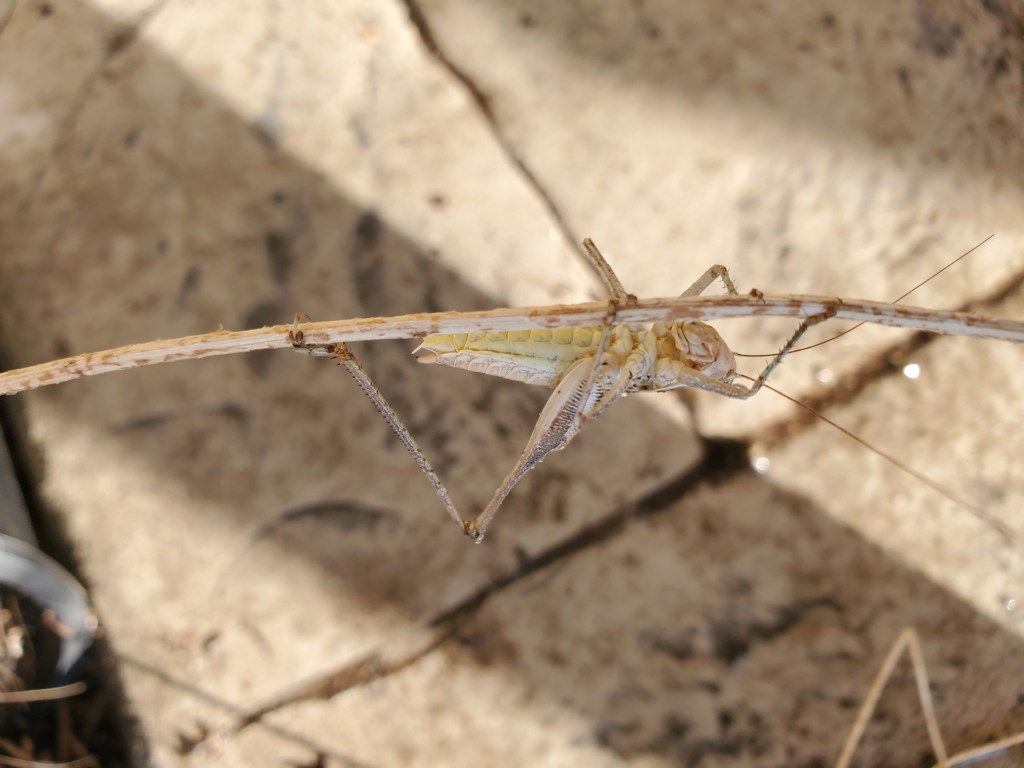
Last week I freed my narrowleaf lone survivor. The screen had no grasshoppers on it for three days, and the overall number has decreased sufficient for me to feel comfortable removing the protective screen box. Oh, it was like a reunion! To see her fully open to the elements, branches swaying in the breeze, flowers open to the sun, filled me with a love and joy that is difficult to express. Standing, as I was, amid the carnage that used to be a busy, scent-filled, native plant hilltop, with the only nectar/milkweed plant now remaining, I suppose I felt a sense of elation that we survived this together and that there was an opportunity to provide food and incubation to the pollinators that remain and maybe – just maybe – monarchs on their way back to the coast. I squealed with joy and gave her a light, long hug, talking to her, thanking her for her patience and for her survival. As I released her from my arms, immediately, she was supporting life. Tarantula hawks and a bee were the first to find her blooms. I am so happy.

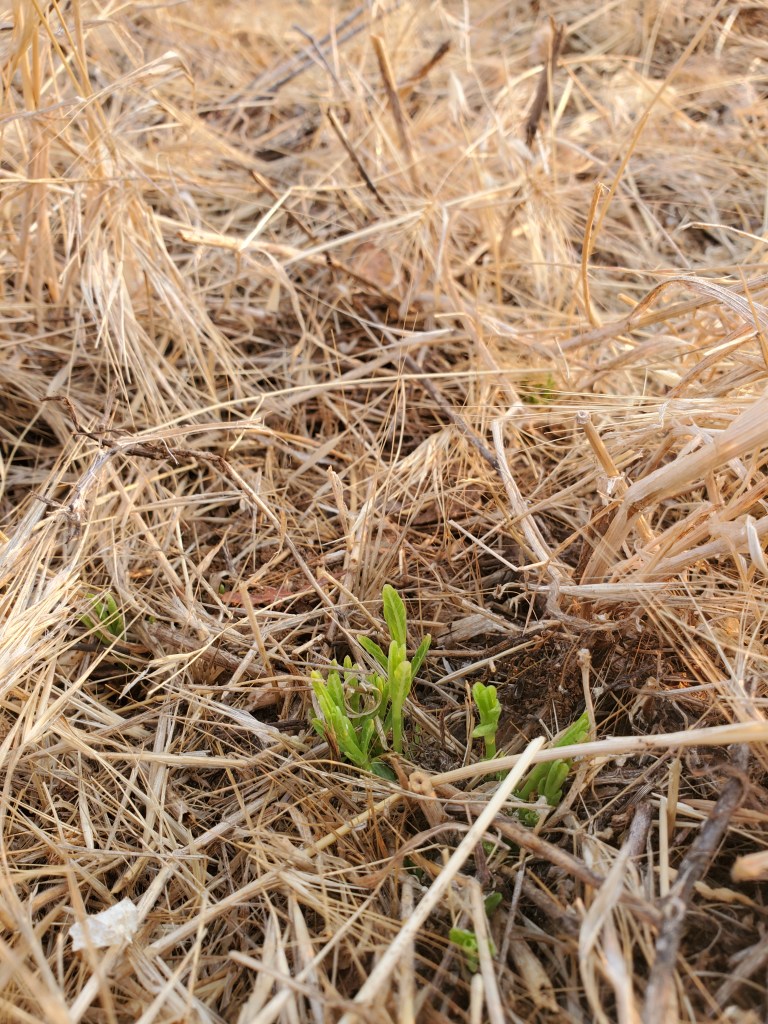
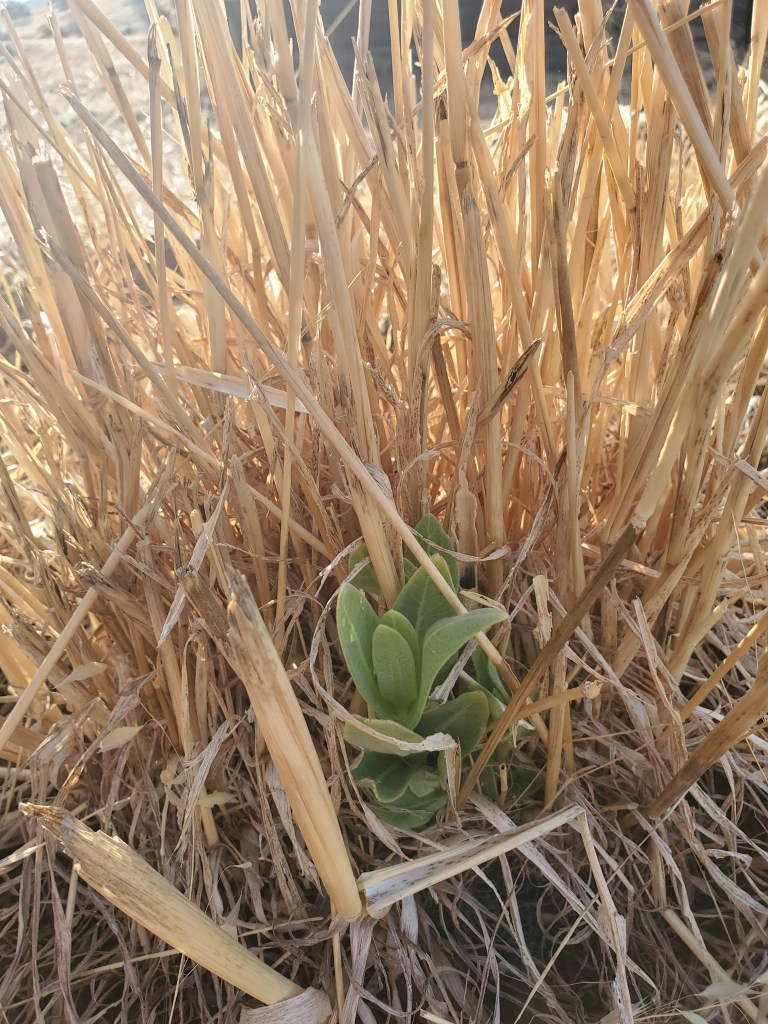
After the narrowleaf’s freedom (and the major decrease of hoppers), very quickly I began to see new signs of life. Onions started to reemerge and now have buds. The willow began to leaf-out. Most exciting, there was one stem of a broadleaf milkweed I found at the base of a bunch grass long ago eaten by the hoppers. Two days after that find, there were more. As I write this, there are ten reemerging narrowleaf milkweeds and six broadleaf. I am hoping to find more in the coming days. Maybe they will get big enough in time for the monarchs to find and choose to use them. There is still hope.

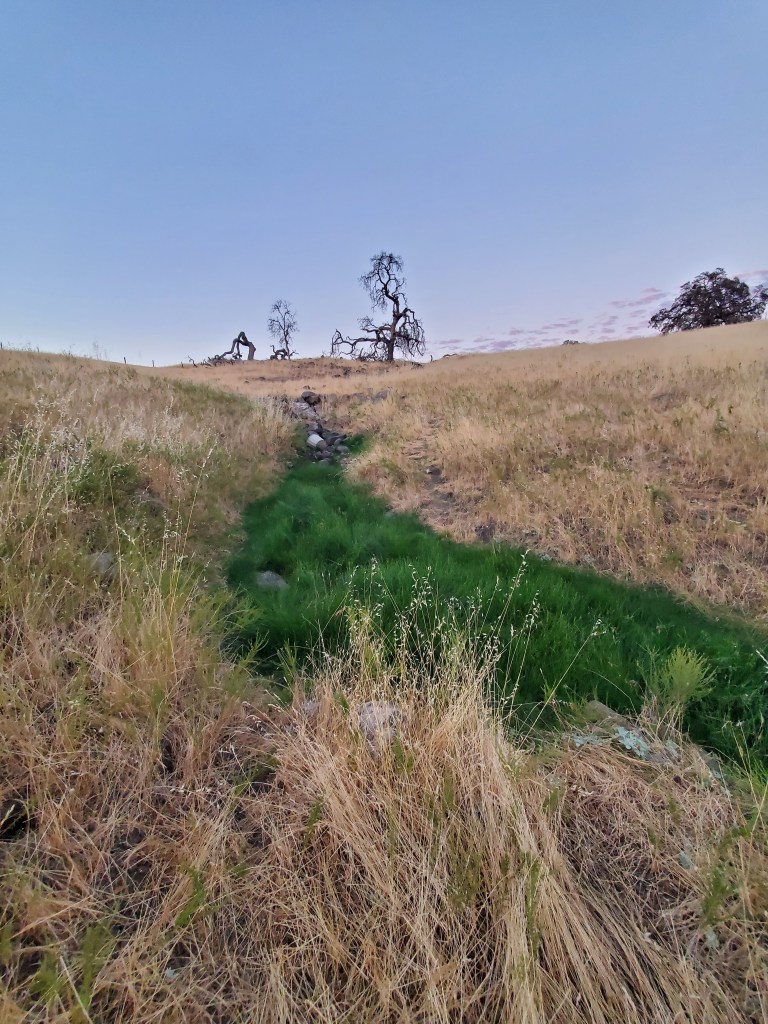
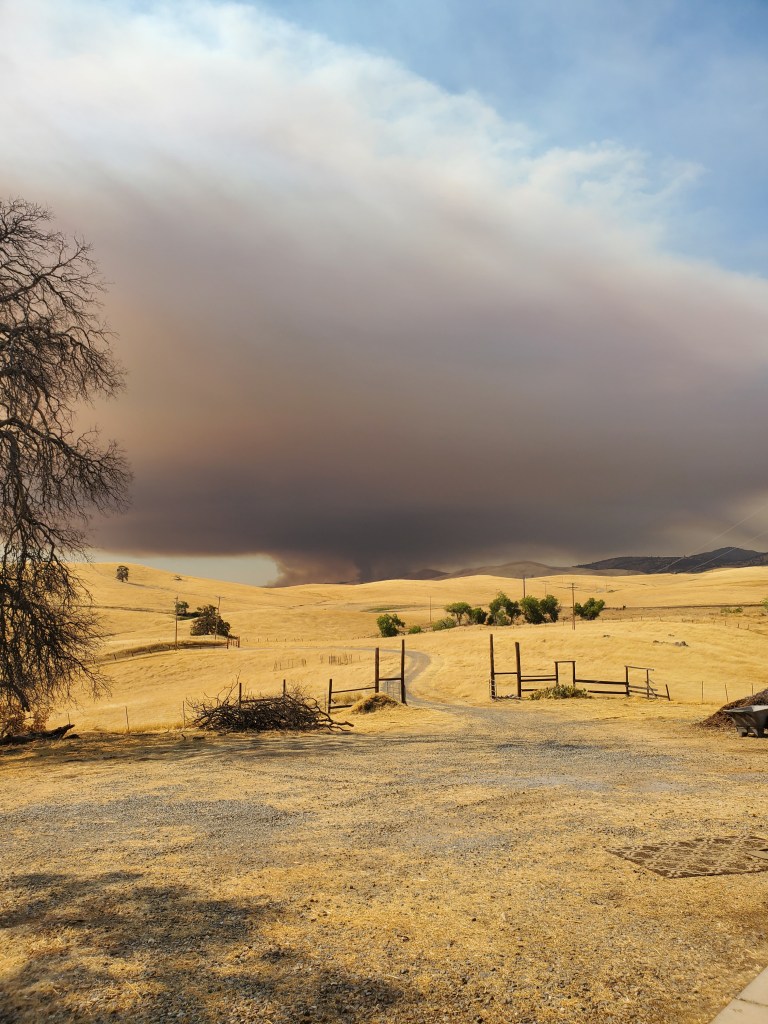
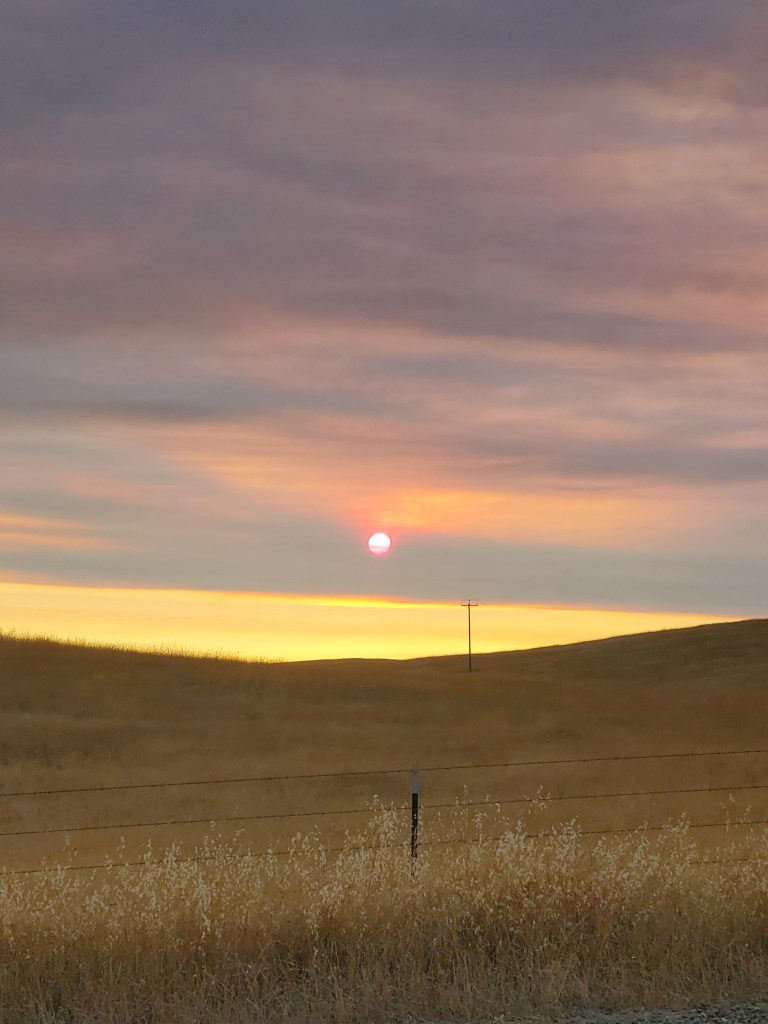
To get pollinator life back will be an ongoing struggle. There are still grasshoppers. We’ve had more fires, and the smoke very much diminishes animal and insect activity, even among birds. The heat is another factor too. That certainly diminishes activity, and it also dries the soil. Remarkably, the wet zones in the drainage are still wet and green, and the small springs continue to produce. Typically, the drainage and small seep on the hillside are dry by August. I ascribe this to the lingering effects of two good rain years in a row. There is no plant life around my rock and log dams, and no sign of milkweed. I have noticed milkweed seed can take two to three years to emerge above ground. I will hope for some more plant life next year.

Acorns Abound

The oaks continue to grow their acorns. They are also shedding many small acorns, which are all over on the ground. As long as there is a healthy crop of fat acorns, I can understand shedding the smaller ones. I plan to harvest this year and make some acorn mush. There will be plenty for me and for the animals that feed on them too.

Water Pains

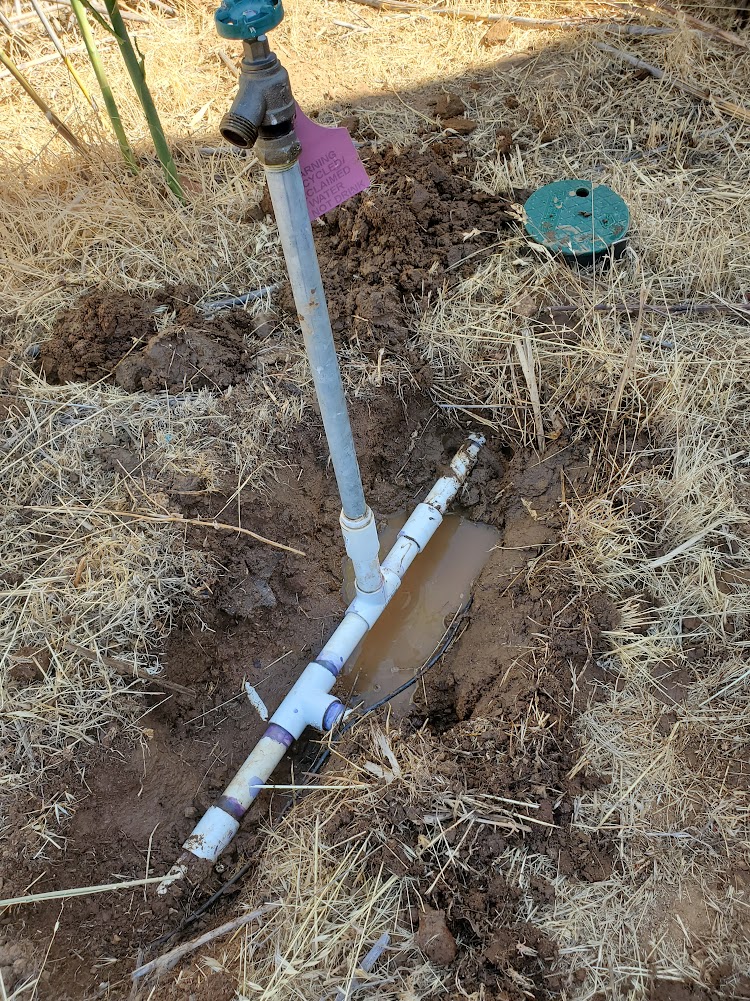
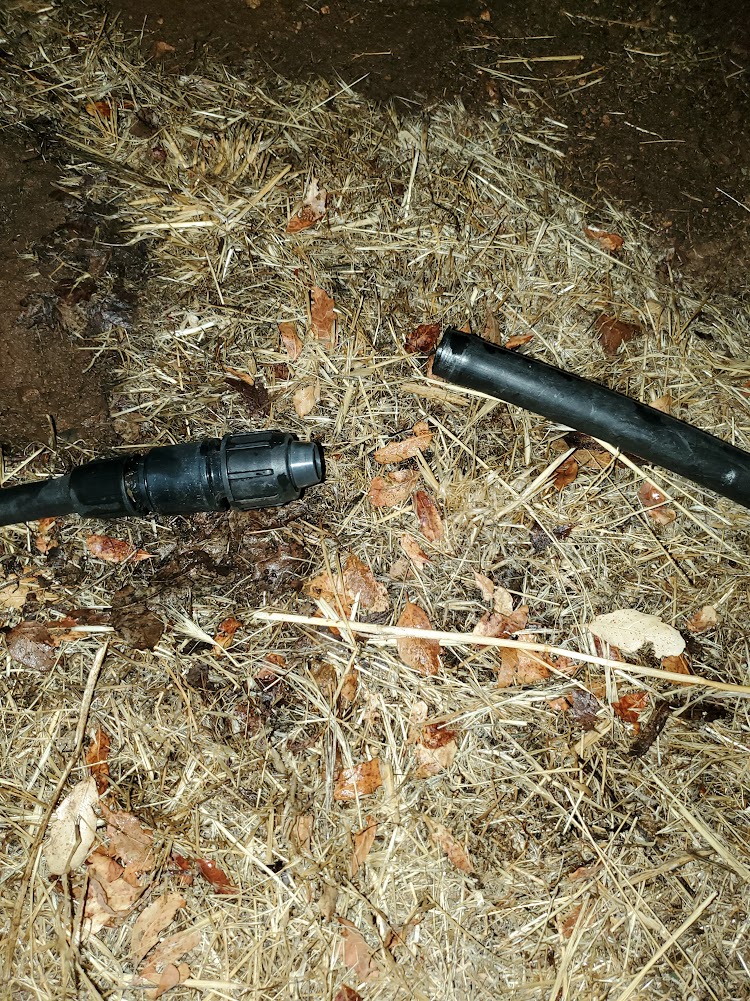
In June, the irrigation system broke. There was a leak in one of the main lines, and the pump kept putting pressure in the line further pushing more water into and then out of the leaking pipe. As a result, the tanks were empty and the pump stopped working. David fixed the leak, and got the pump working. Horribly, all the rainwater I had gathered for the summer was now gone. What a disaster. We had to purchase two 3,000 gallon loads to fill the tanks.

We have had at least one leak each season of a main PVC pipe along with some other small 3/4″ or 1/2″ tubing leaks. It is frustrating since we spent considerable money to move from my poor girl’s system to a professionally installed system. I know things will fail over time, but it has been excessive.
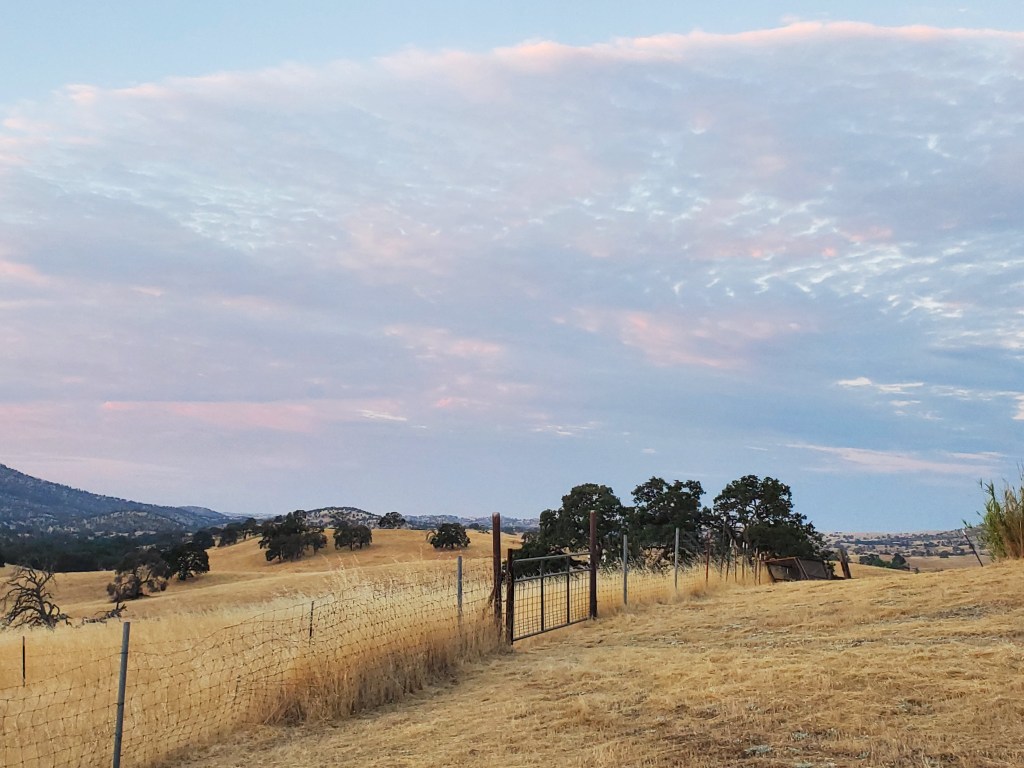
In July, we had another issue and another several leaks of secondary mains. We were out of town, of course (That is when all water issues happens). The pump kept tripping the circuit and could not pump water. Fortunately, we have a very kind neighbor, Ric, who was willing to go over and do some problem solving. It turned out the breakers were bad, and he replaced the one breaker the pump was connected to. He then saw that there were several breaks in the main line. Water spewed out each time the pump was on thereby not being able to deliver any water to the plant roots I was trying to keep alive. He fixed them! What a hero! That was above and beyond. We brought him and his wife back some yummy foods from our travels. Thankfully, I had left the three tanks closed off from one another when I had the replacement water delivered after the last leak. With the three water line breaks, this meant that only one of the tanks, with the newly purchased water, was lost. With only 5,000 gallons, that will not be sufficient to get me through the summer. I will have to buy another delivery before the end of the month.
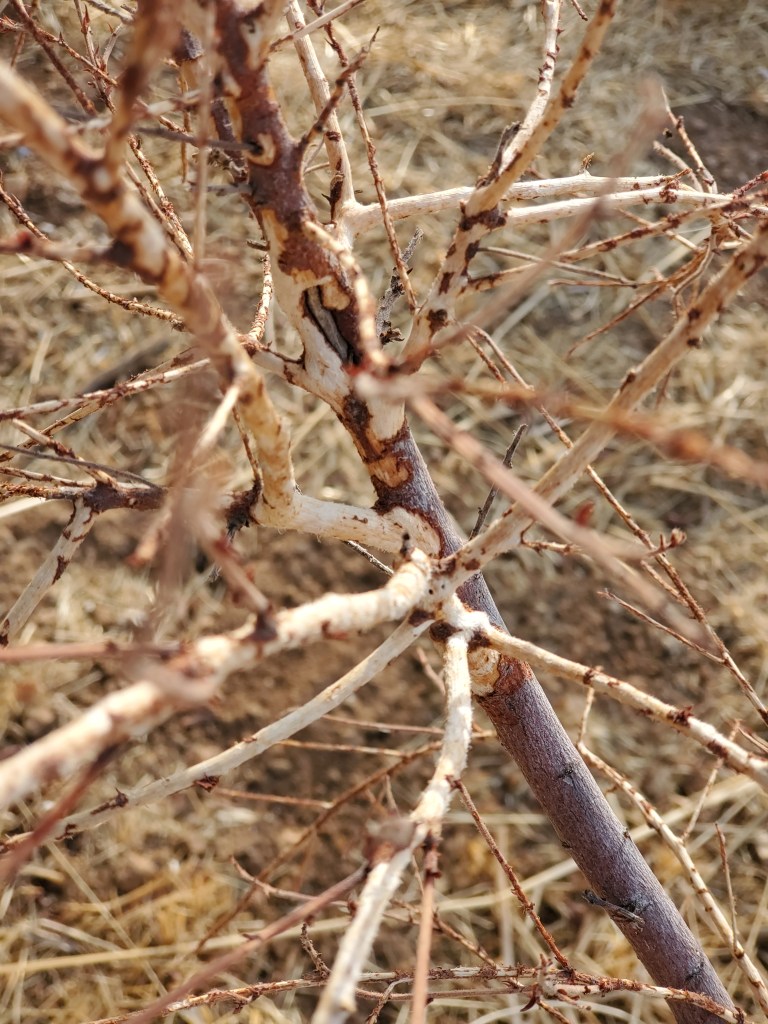
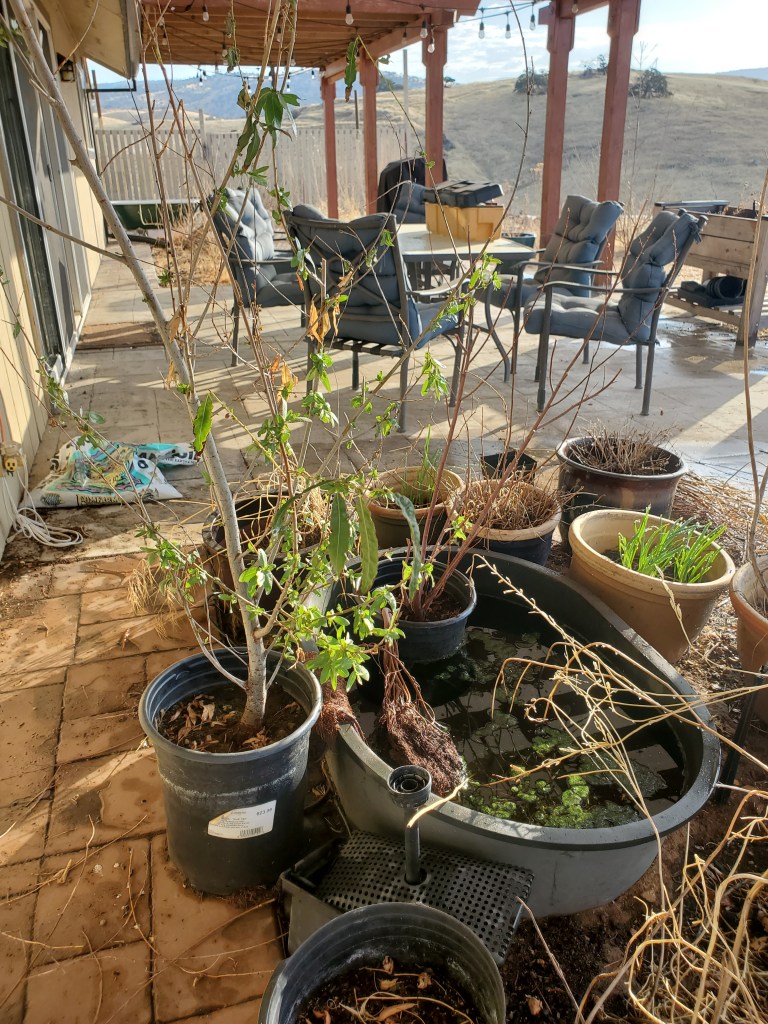
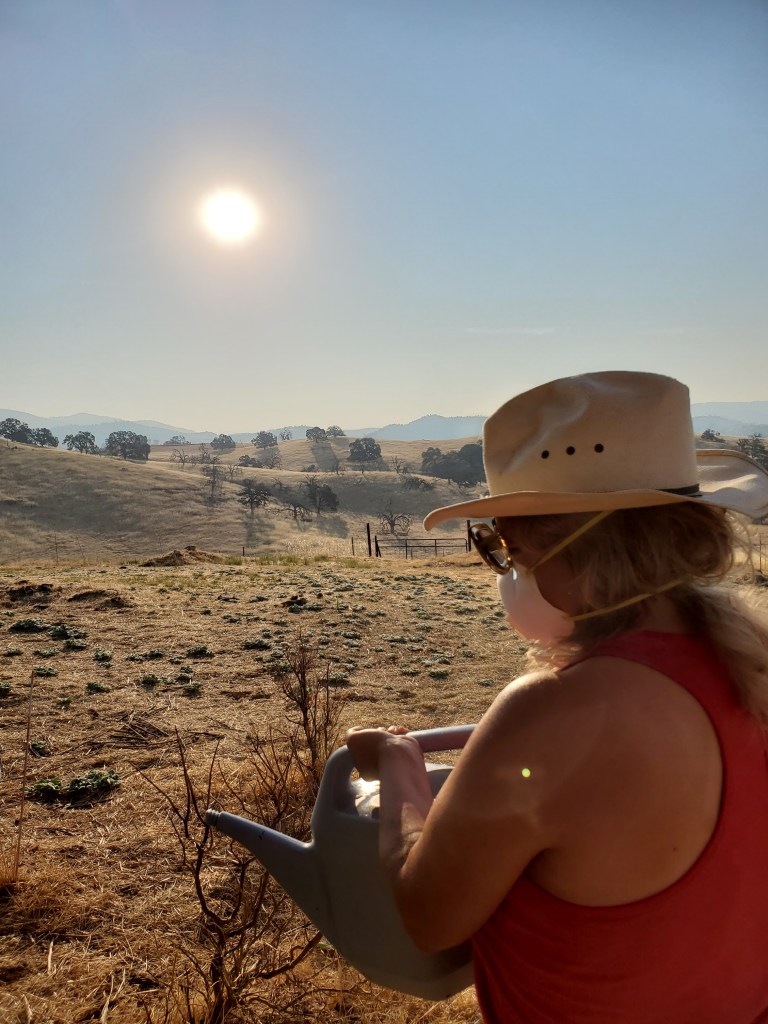
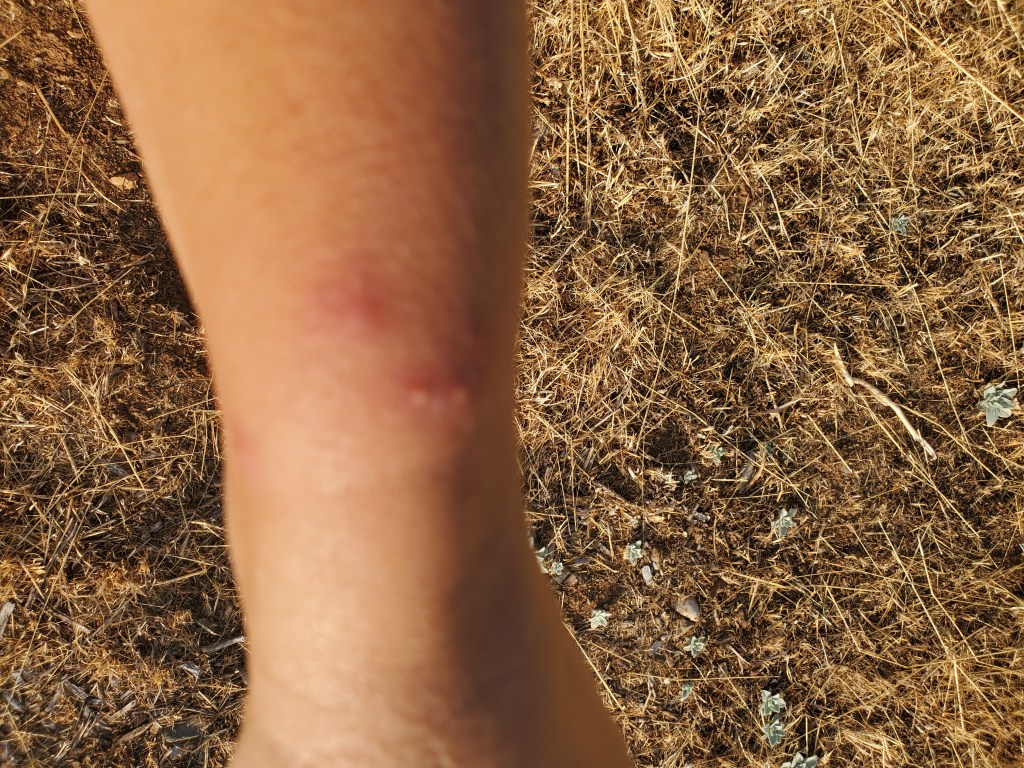
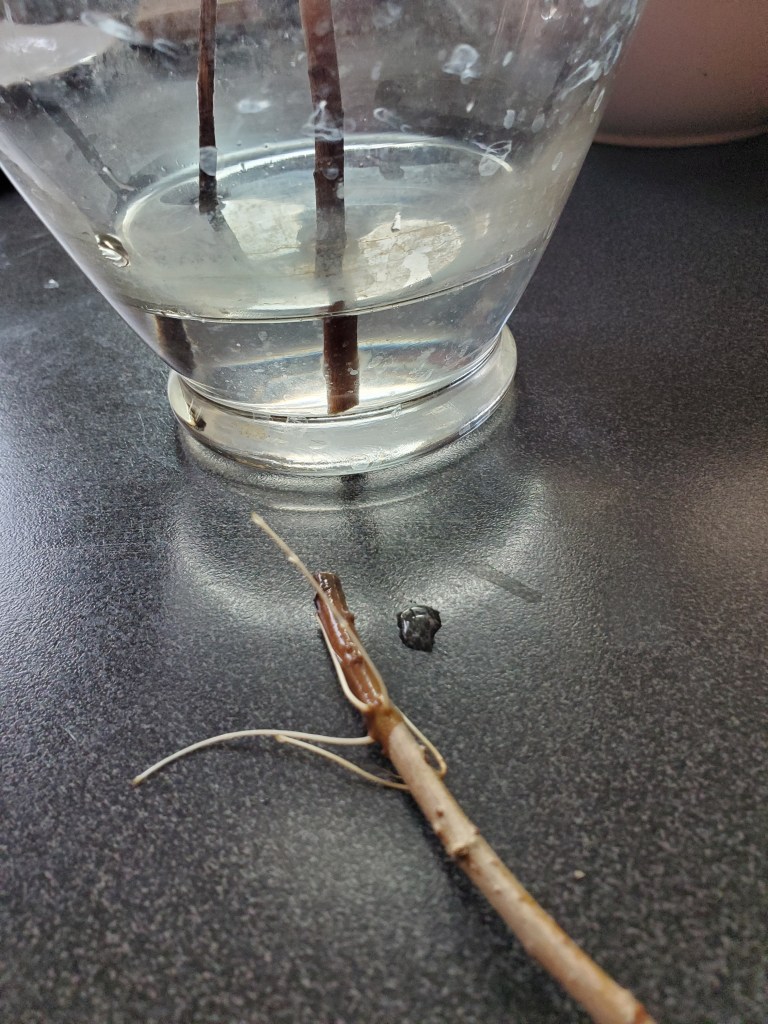
During this time of heat and no water, it appears that one of the willow trees did not make it. She was still in a container, and her roots probably cooked in it. The other larger willow survived. I took several cuttings of the dead willow to see if I could get it to sprout. One did, and I will plant her in about two weeks. Also during this time, I was hand watering and had the audacity to pull old grass remnants from one of the deer grass pots – to unchoke it. Yikes, did that create a stir of mean ants. Before I knew it, they were up the deer grass stalks, then onto the watering can, then up onto my hand where they chewed me up. That hurt. I put mud on the wounds, which helped tremendously.

Wanderings

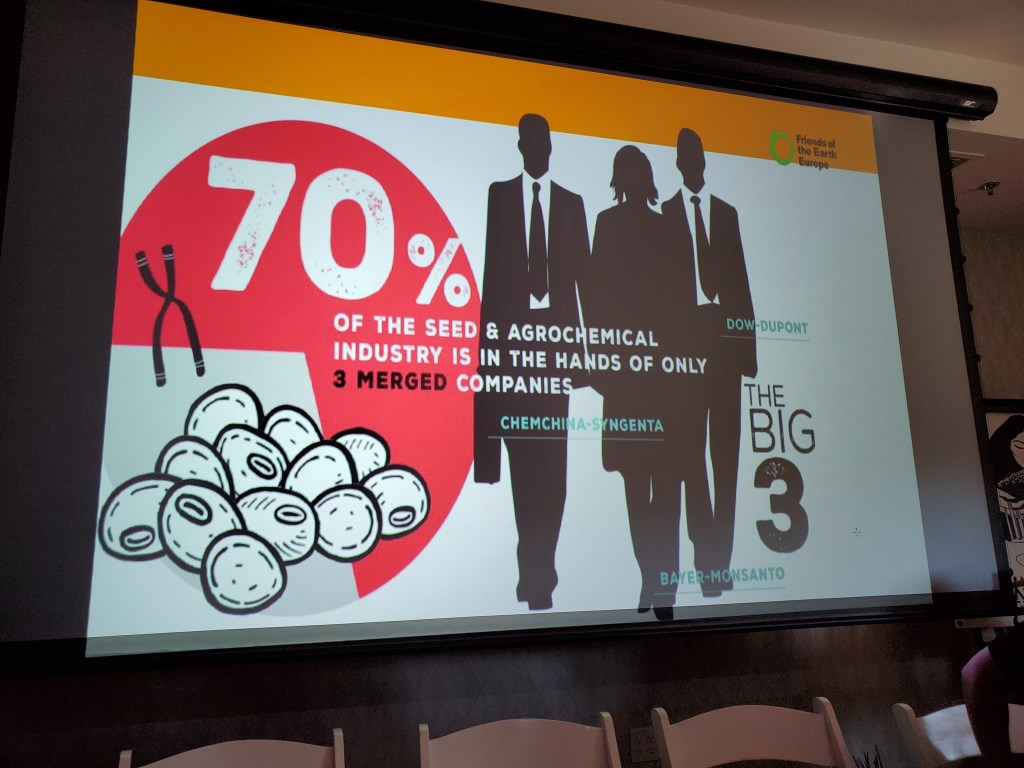
I thought I was going to decelerate my work, but the monarchs are still on the brink. I read the Western Association of Fish & Wildlife Agencies 50 year plan for monarchs and saw the graphs showing the precipitous decline over time and saw the same graphs showing the inverse relationship with use of two types of pesticide/herbicide. I know we think we have to feed the world and therefore think we need to use a plethora of artificial tools to increase yield, but at what expense? I am not sure many of the scientists and industry leaders stop to think about the consequences of an increased battle with the natural elements, already made more virulent by our continuing effort to tame it into submission. That lack of full-spectrum thinking casts a wide shadow, for a world with no insects, is a world in which we cannot survive.
After reading that report, I emailed Ron Allen at Mariposa Native Plants and ordered more nectar plants to replace those I know I’ve lost from the grasshopper incursion. Combined with what I was able to salvage and grow for myself, it may be enough to ensure that I don’t lose a generation of bees and butterflies, a population grown through habitat expansion for the past 4 years. I need to continue to do my part. I can’t decelerate now.