
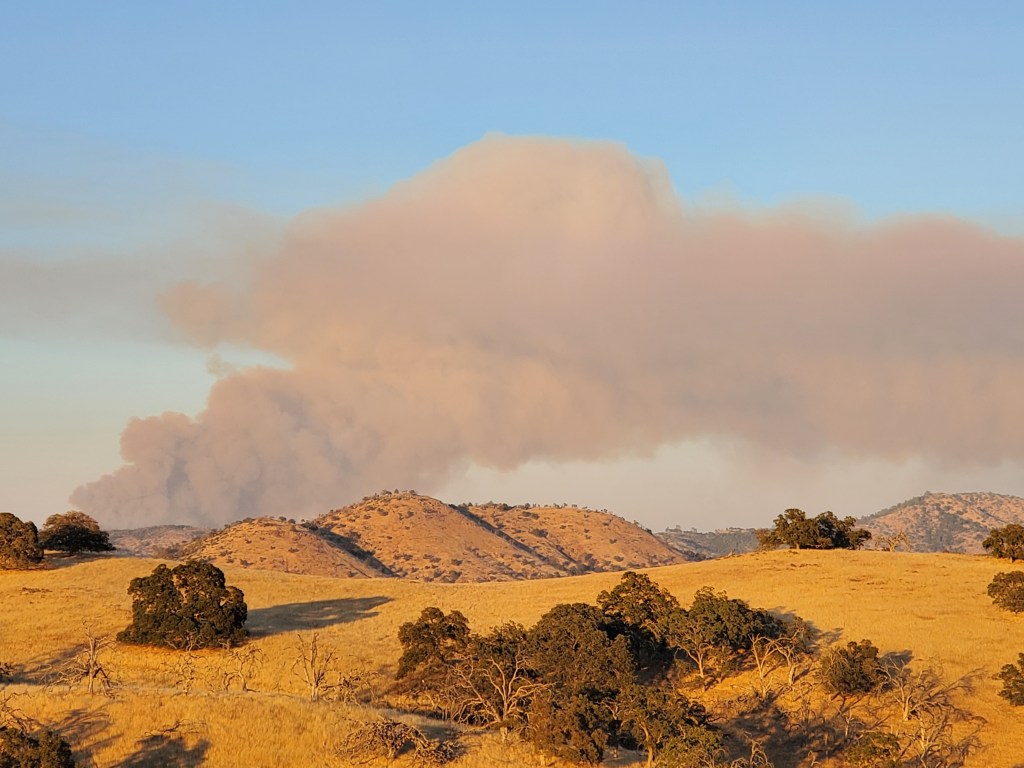
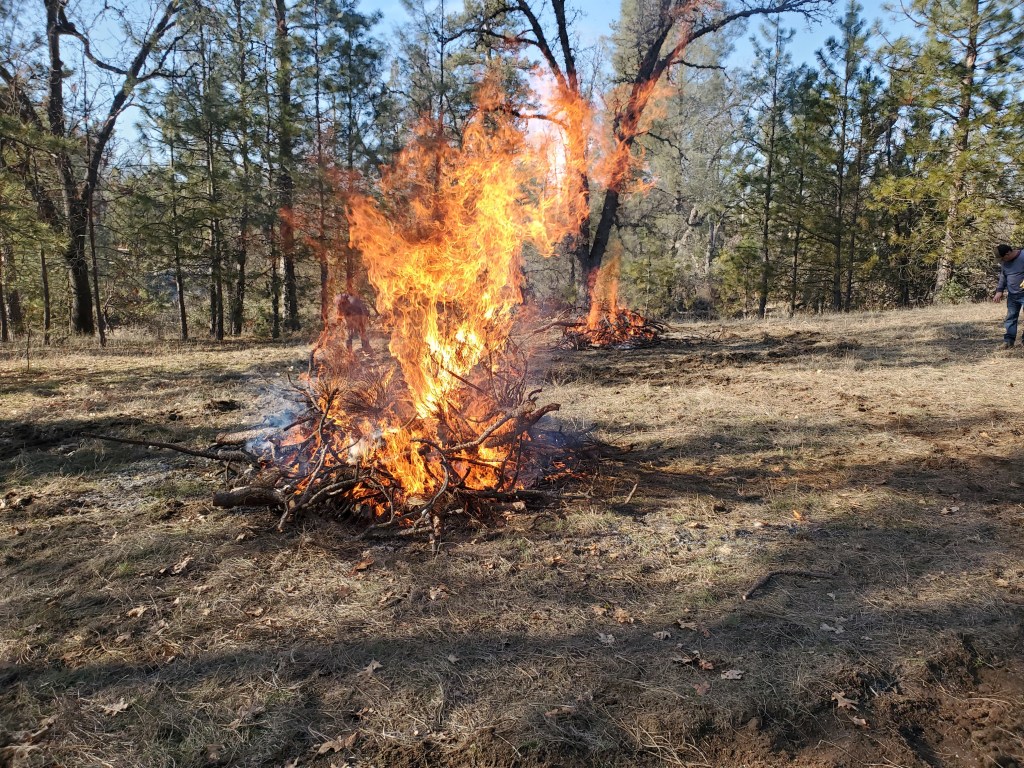
French Fire plume growing fast
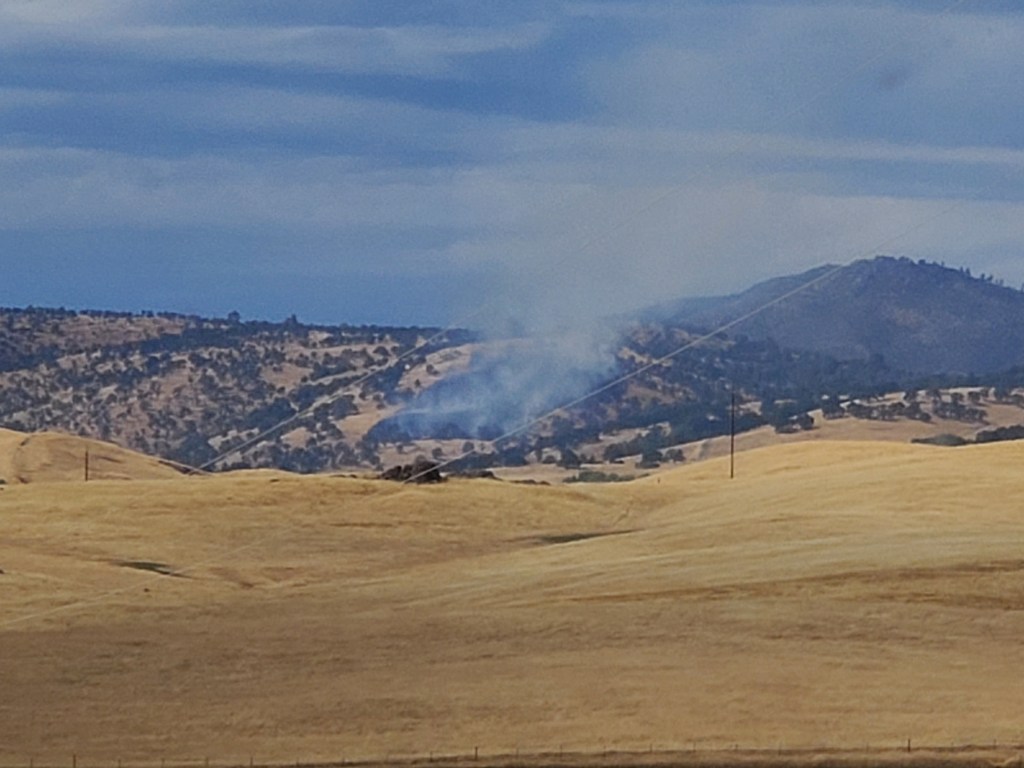
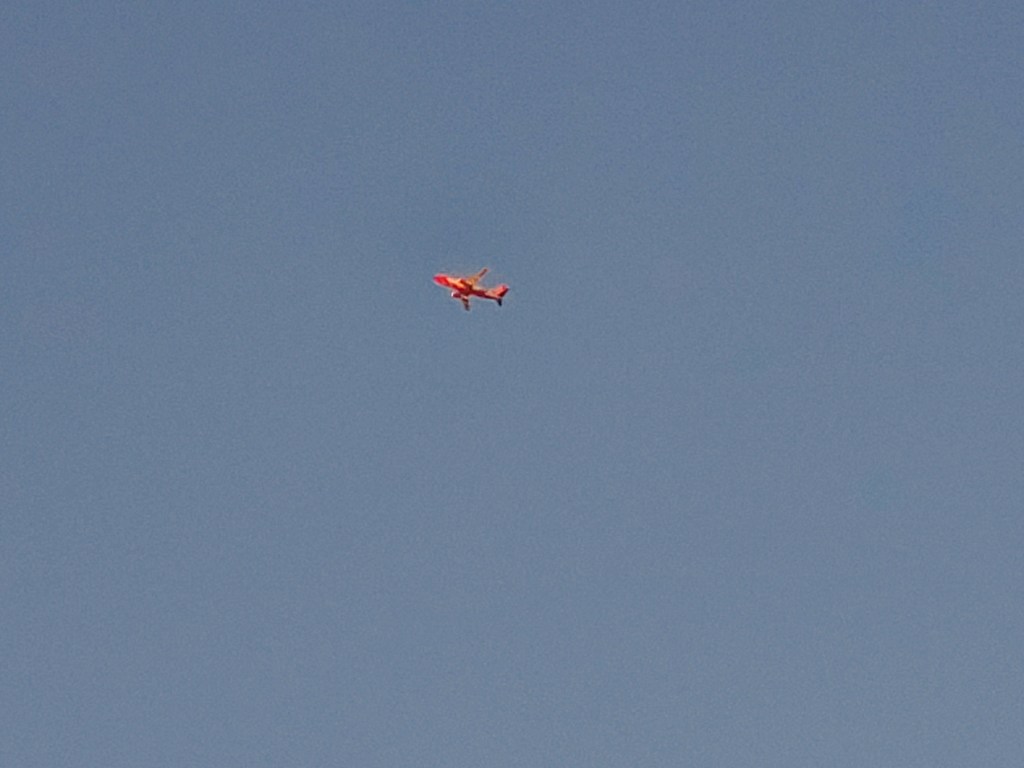
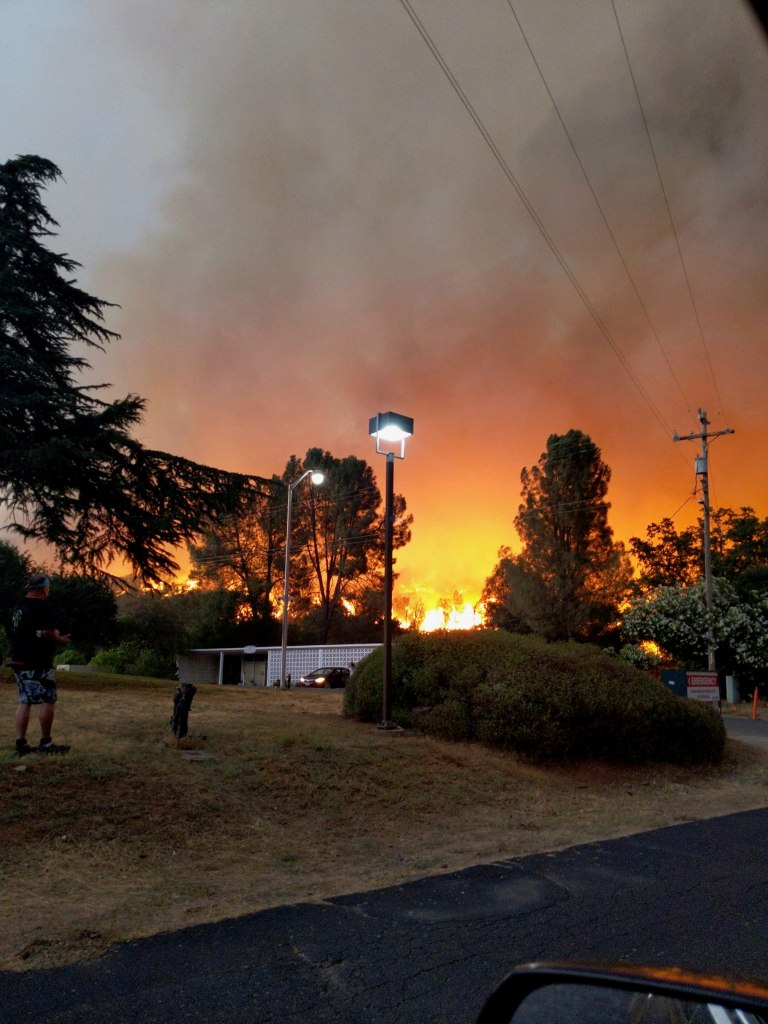
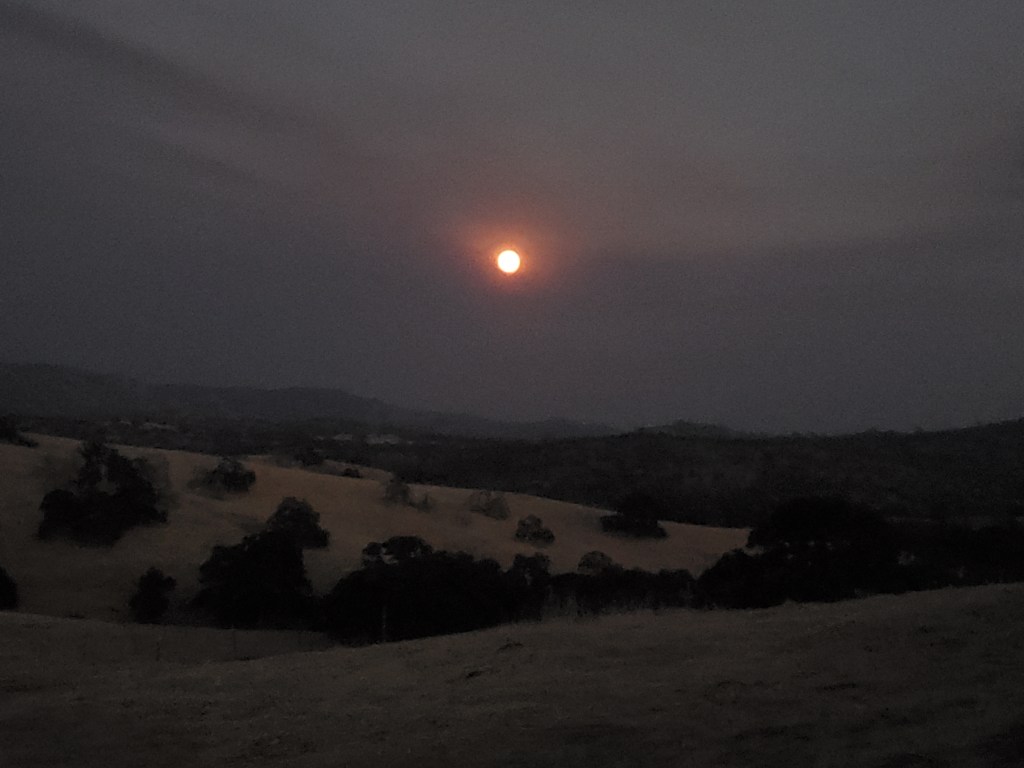
It is going to be a bad fire year. We have already had three fires near the house and the French Fire burning right up to the edge of town. I have more air traffic than normal – big planes and helicopters – flying to one fire or another. There are so many all around the region and state. It has been stressful to say the least – and hot. Even if you are in air conditioning, the heat weighs on you. What I have found is that when there are many contiguous days of temperatures over 100 degrees F, the heat just stays. Nothing has a chance to cool down. This includes the human body. There is only so much it can take before you begin to see changes, and that tolerance level is different for everyone. For me, it gets to be too much after a couple weeks, again, even when I am in air conditioning.
I notice it in people all around me as well. Some guy took the time to yell at my mother-in-law and I, for example, for standing too near a crosswalk. It seems we inconvenienced him by 5 seconds in that he had to decide if he should stop to let us cross or not. The heat is getting to people, and they are acting crazy.
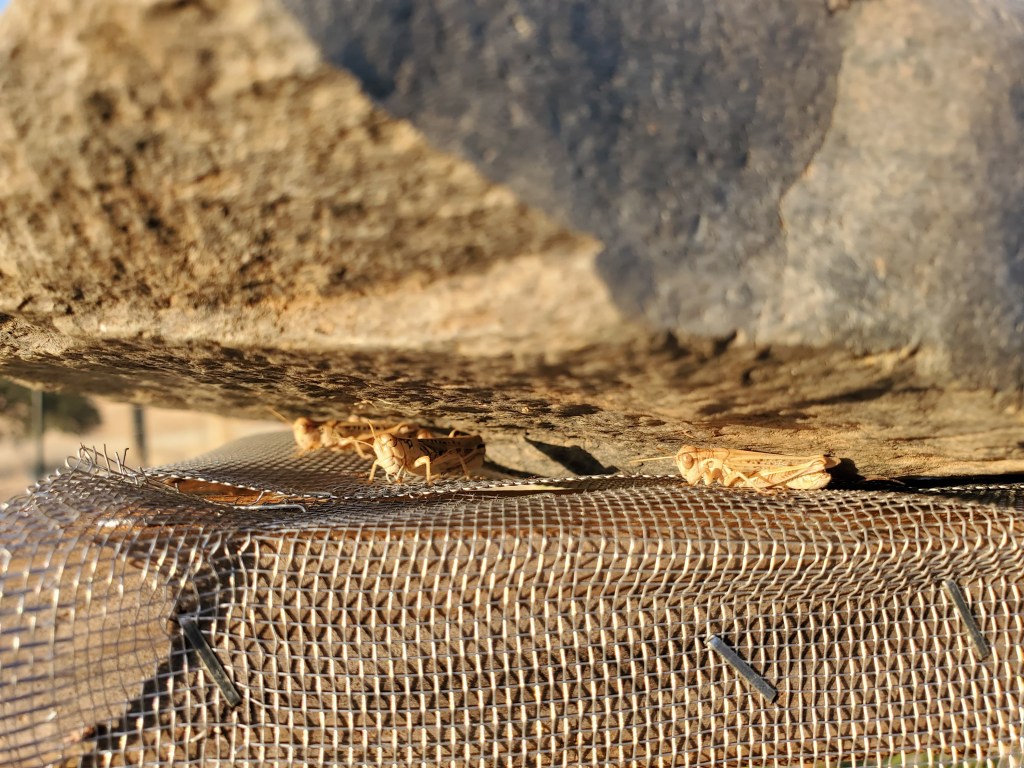
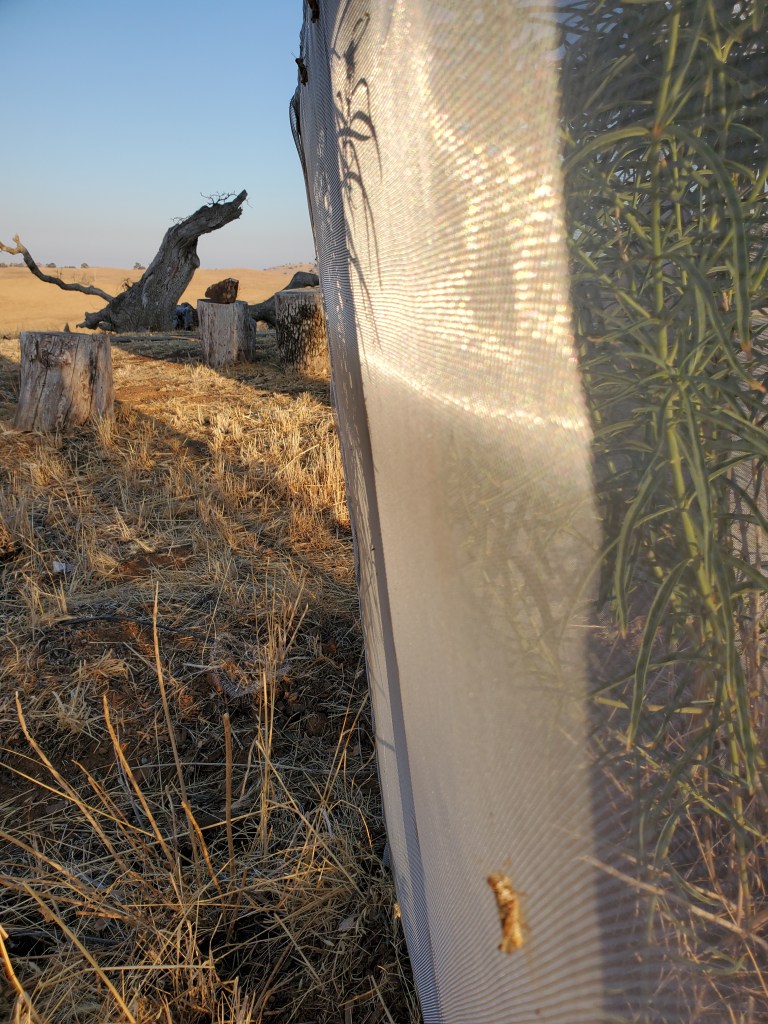
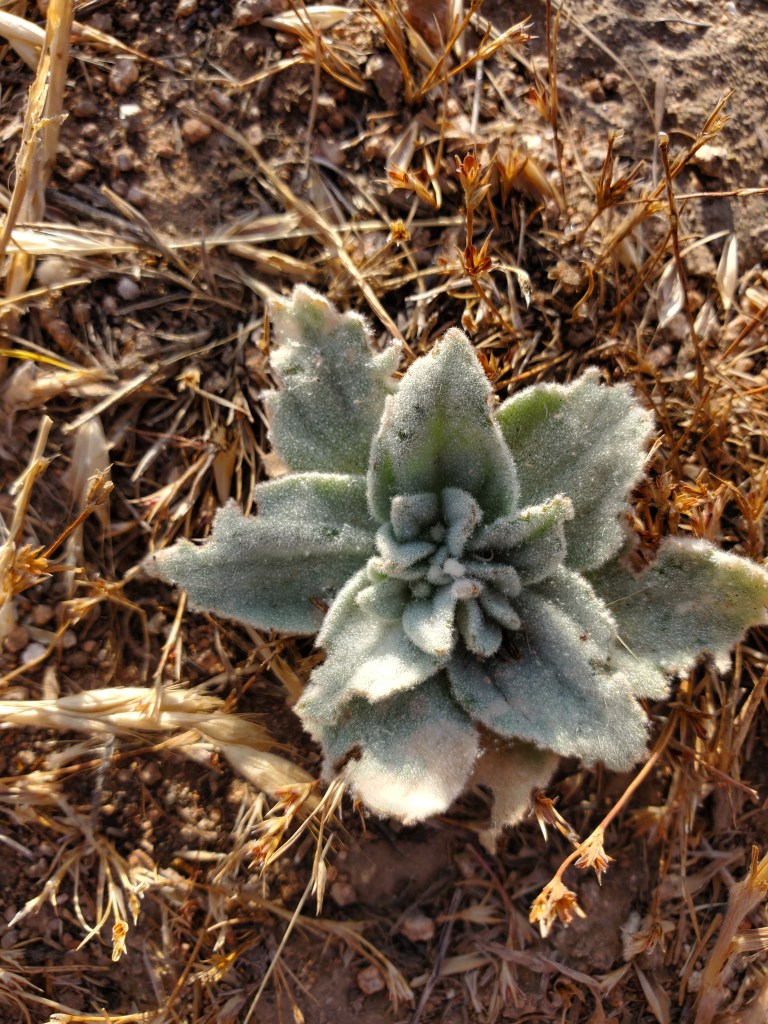
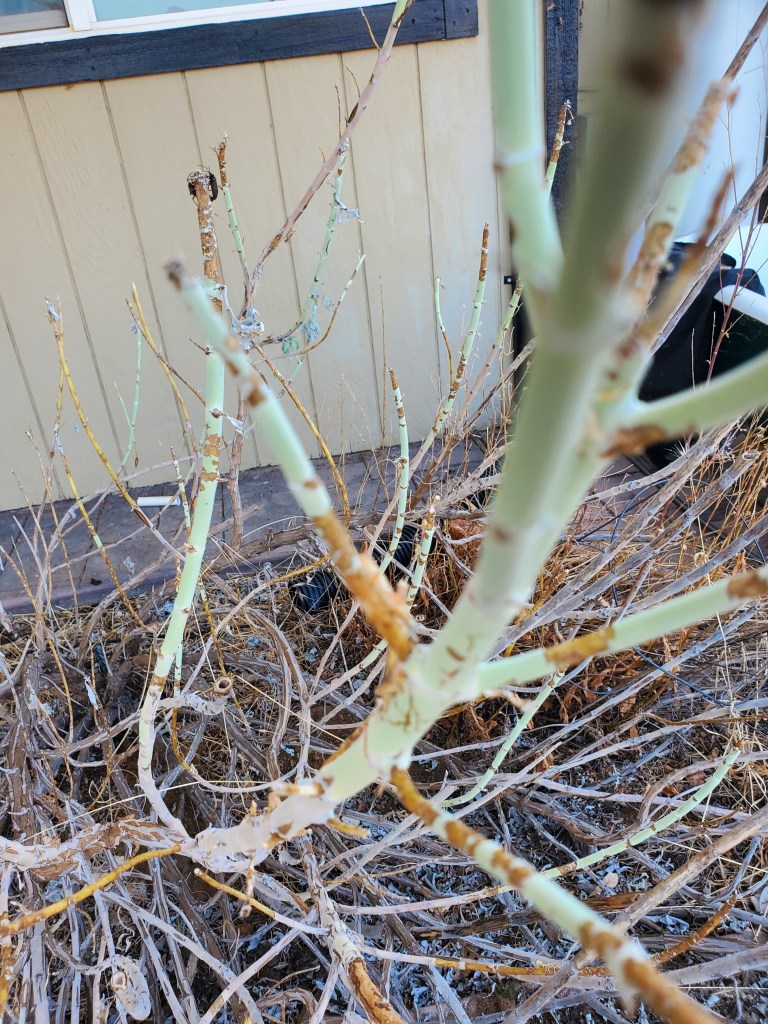
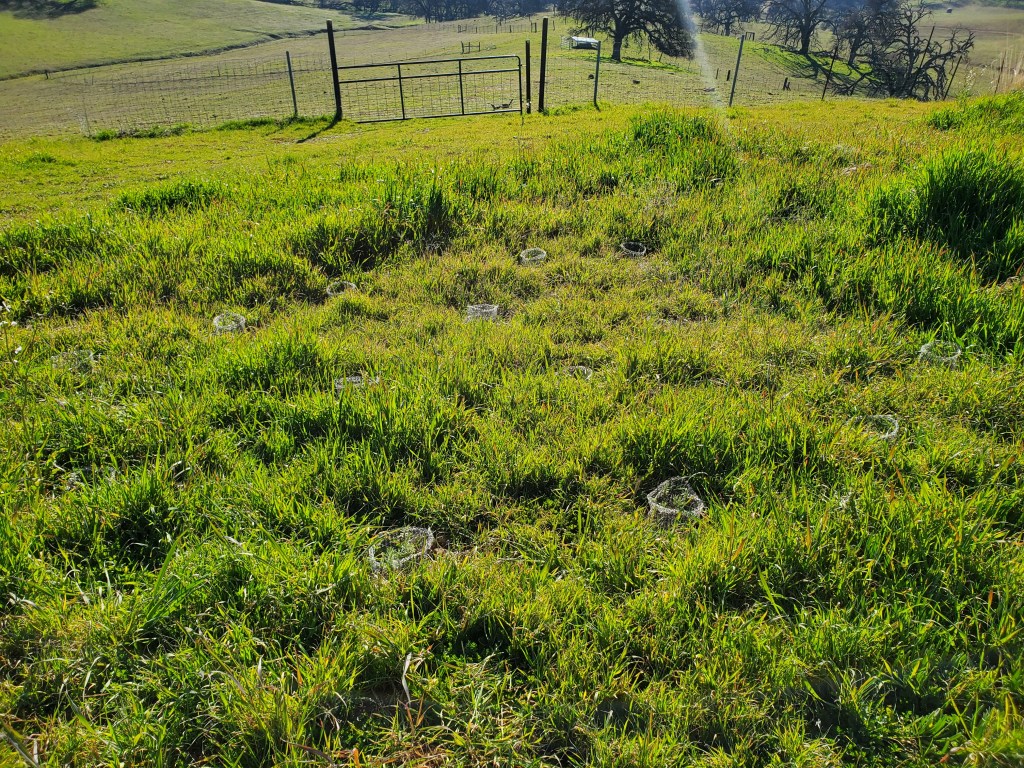
The heat is bad enough, but when you look out your window and see sticks where lush plants and happy flowers used to be, it is can be depressing. The grasshoppers have receded from their population of billions, but they are still here in the 1000s. I won’t be able to release my lone milkweed survivor until there are nearly none. Yesterday, I counted 9 on the cage, but there are thousands still in the grass all around. I feel badly for her gorgeous, nectar-rich flowers that have bloomed with no butterfly, bee, fly or moth to use it. Even if pollinators were near, the flowers are behind screen, only able to bloom because they were imprisoned. What a great day it will be when I release her stems, leaves and petals.

I am seeding more plants now, a little too late in the season for some, in the hope that I will have some more life out there, even if I have to plant it myself. My goodness — seeds are a miracle in this life. I am so grateful for their puny-sized, packaged progeny, patient and planning their emergence. Seeds, I love you.
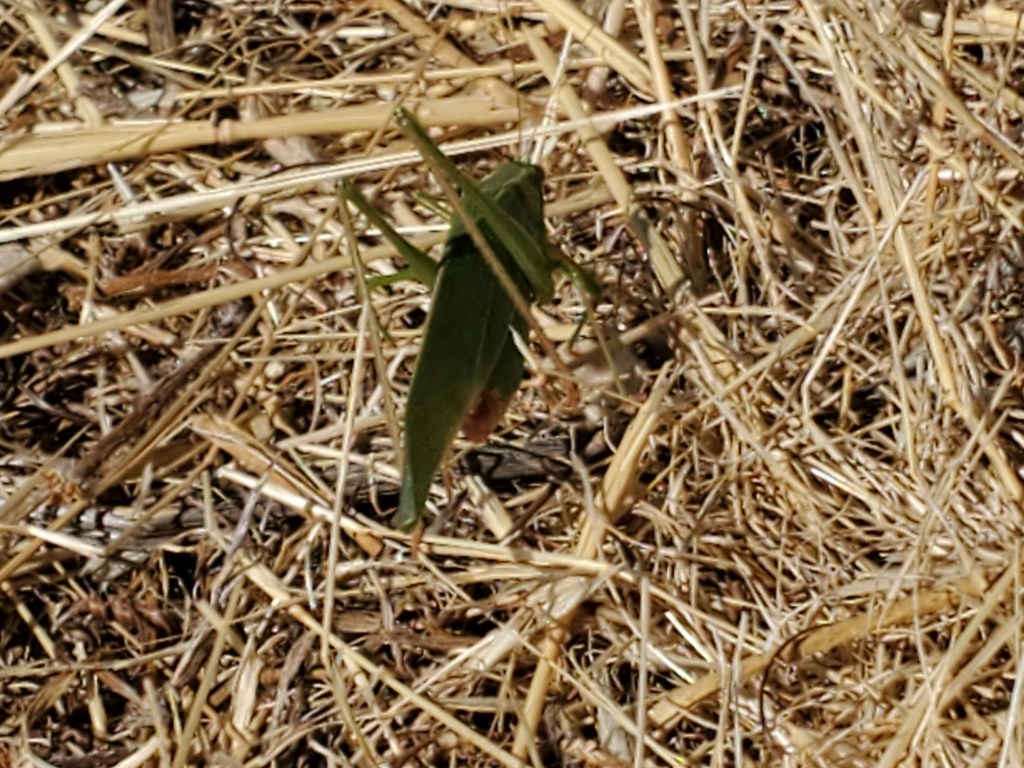
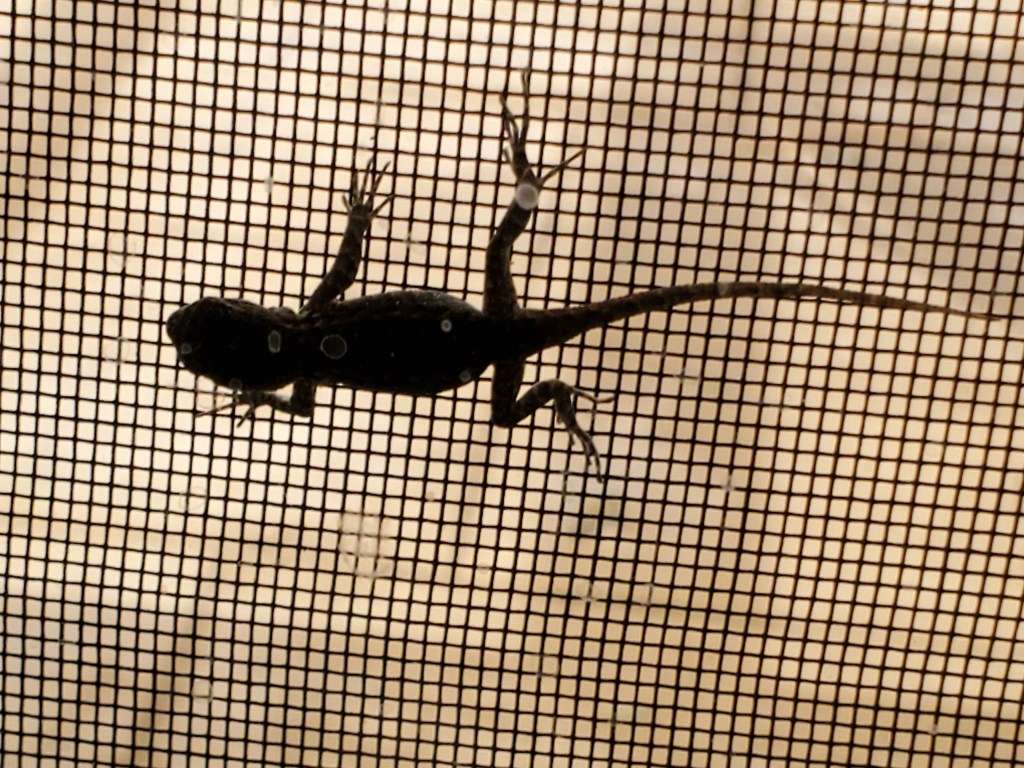
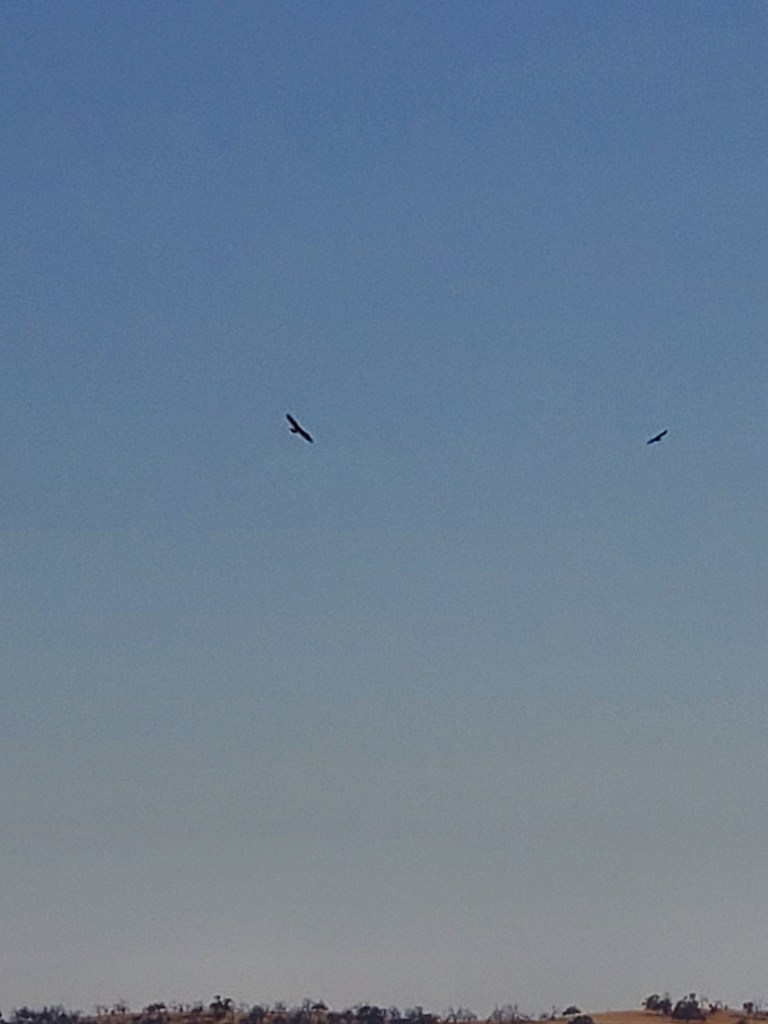
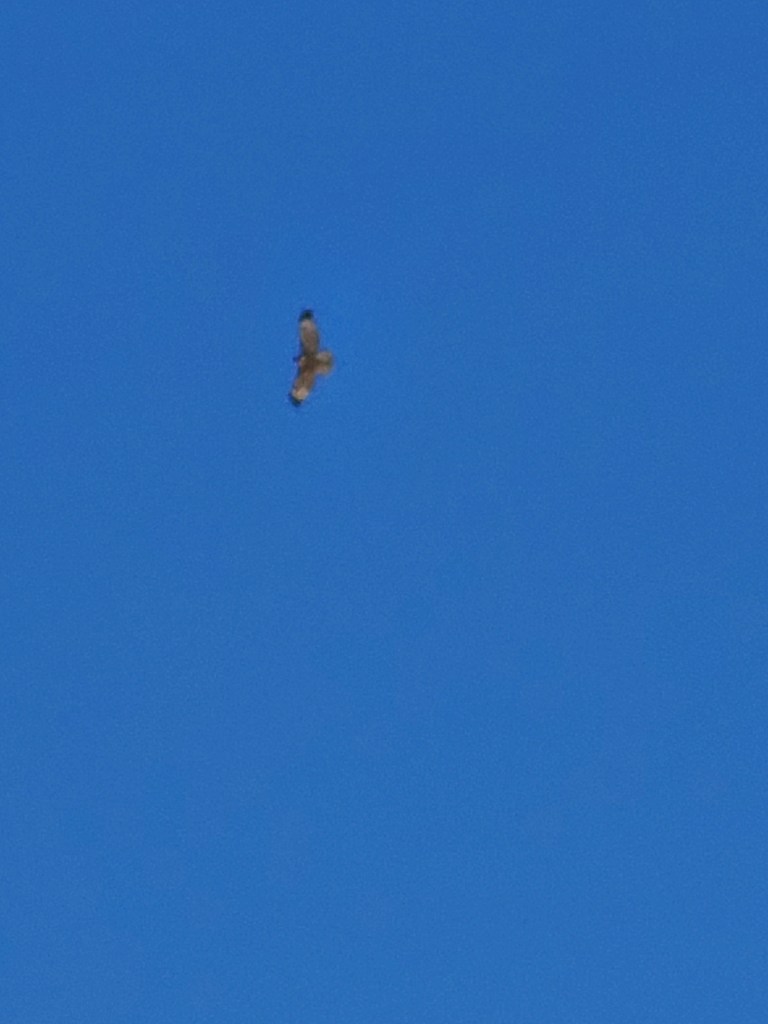
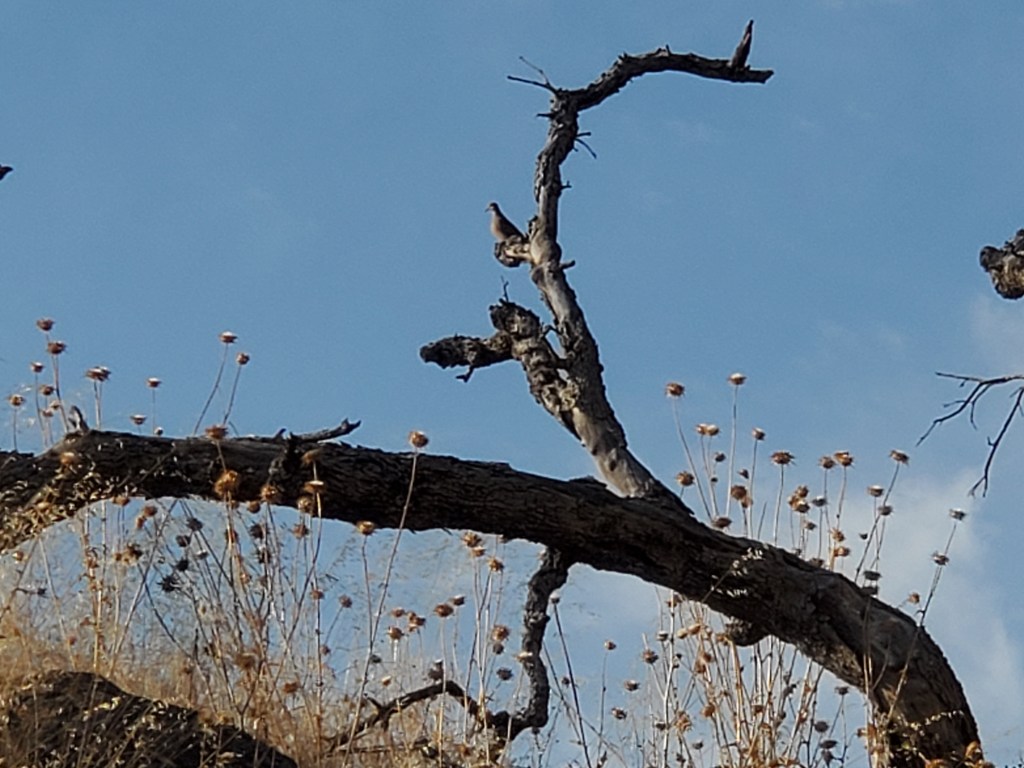
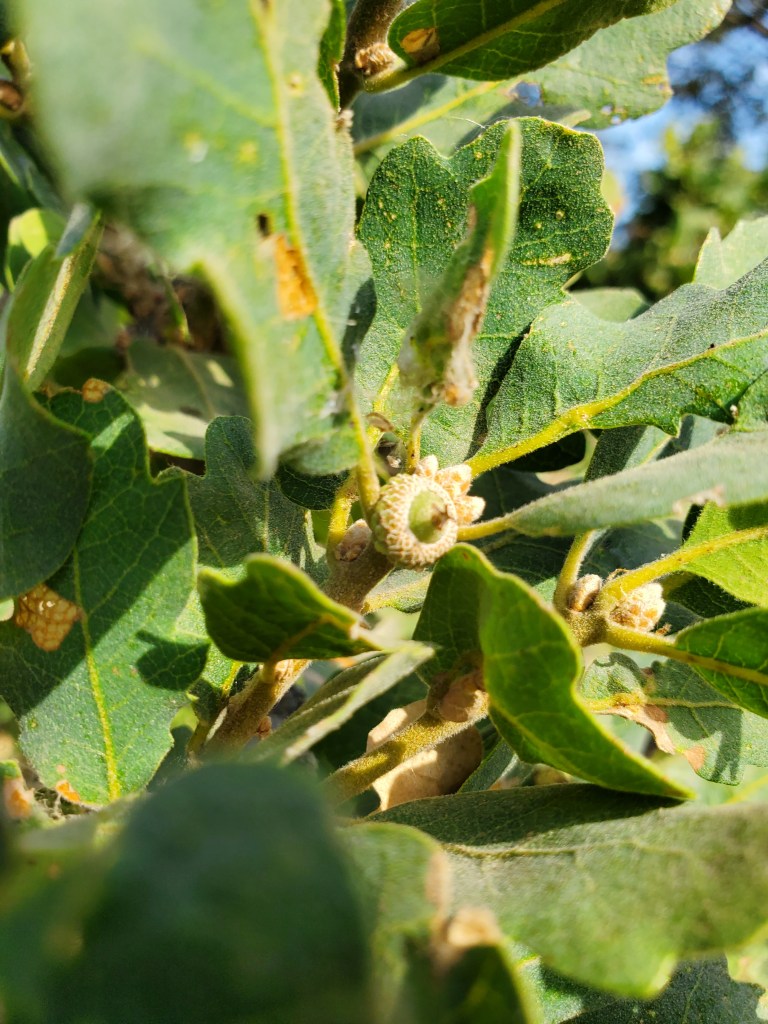
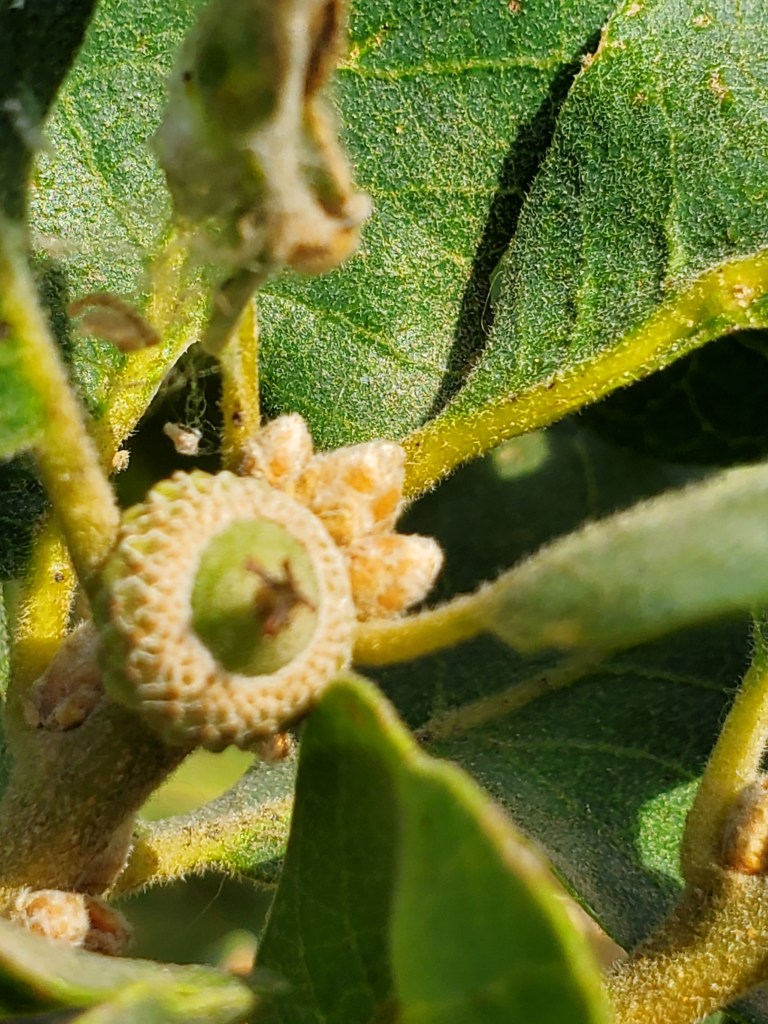
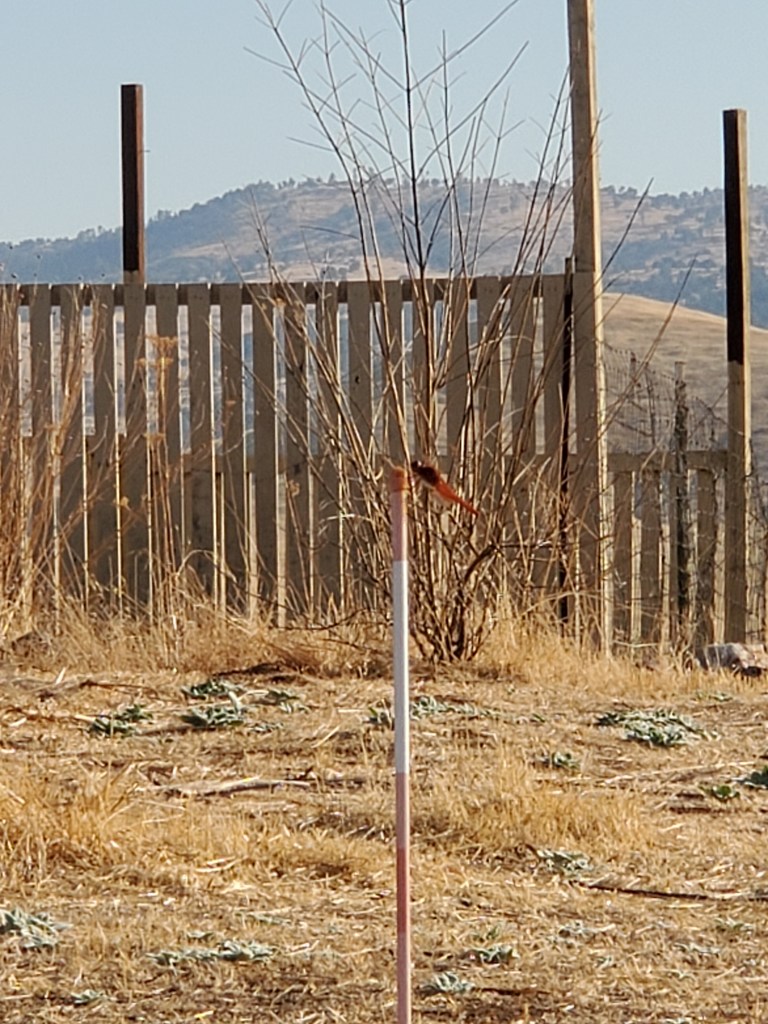
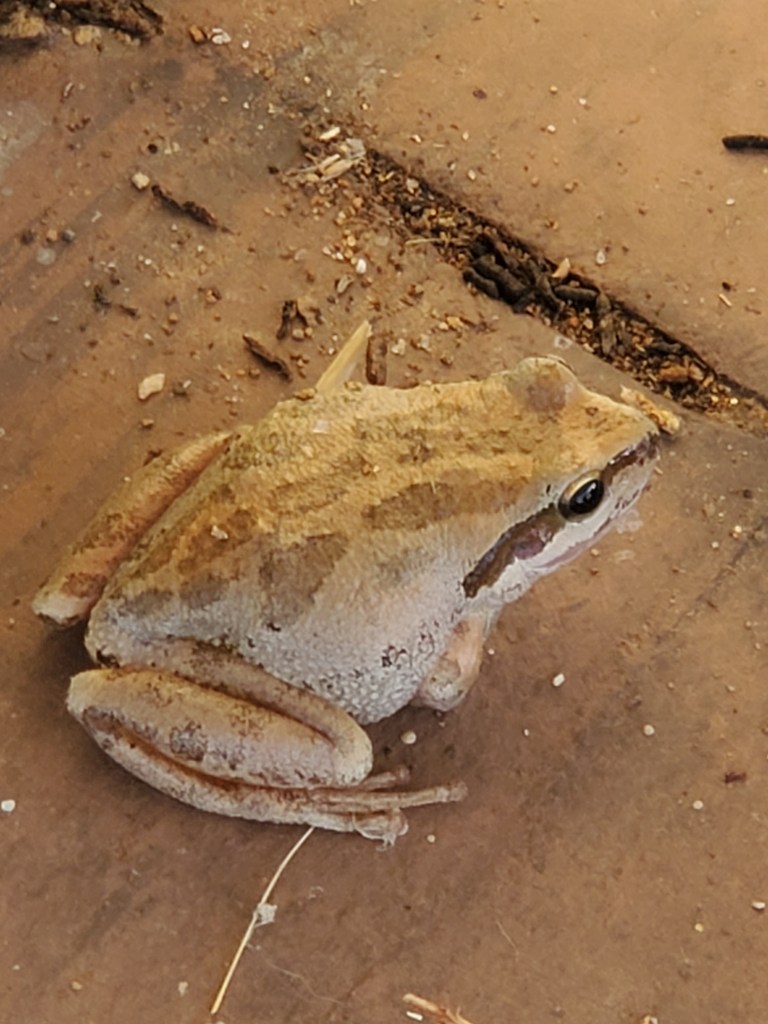
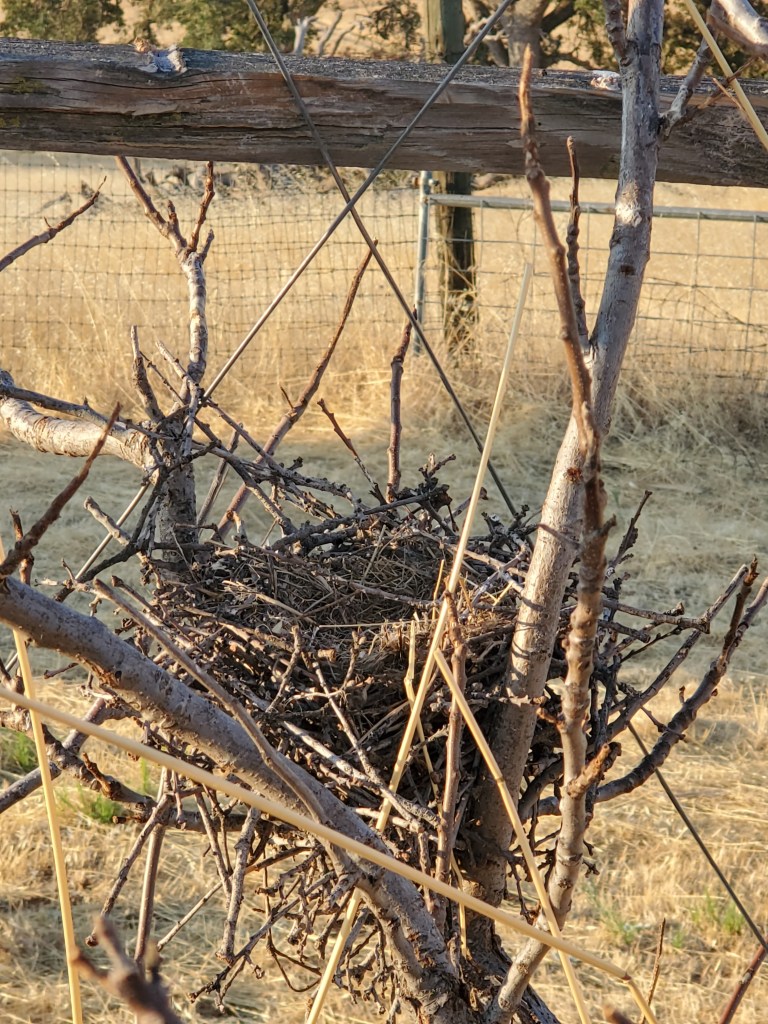
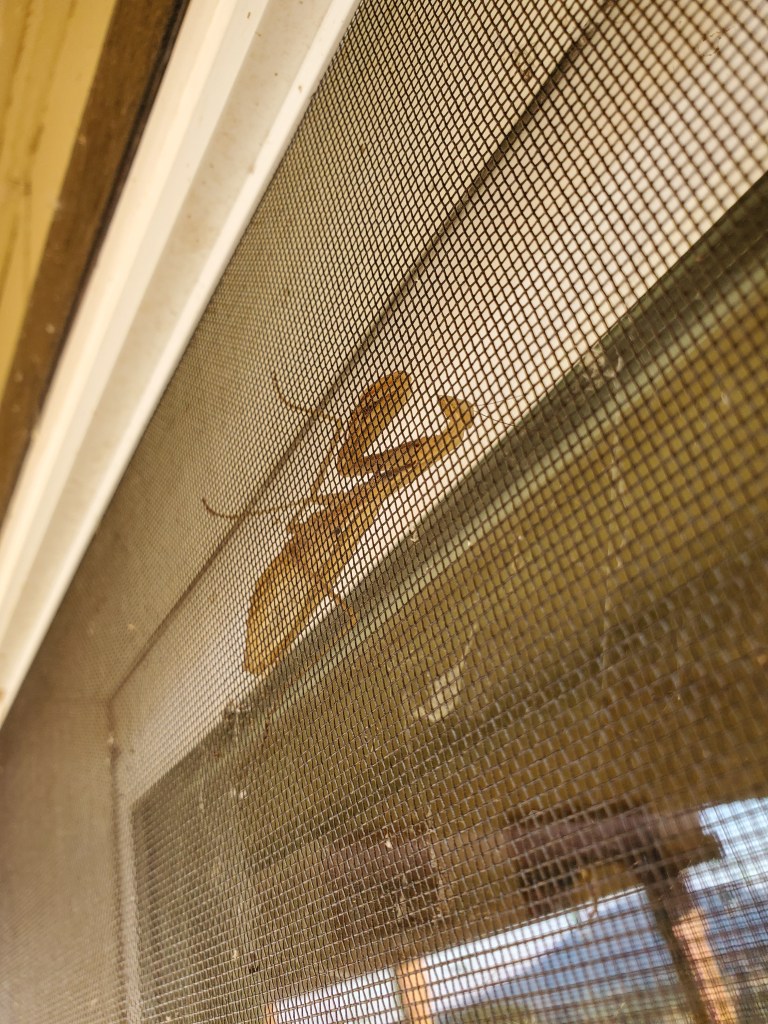
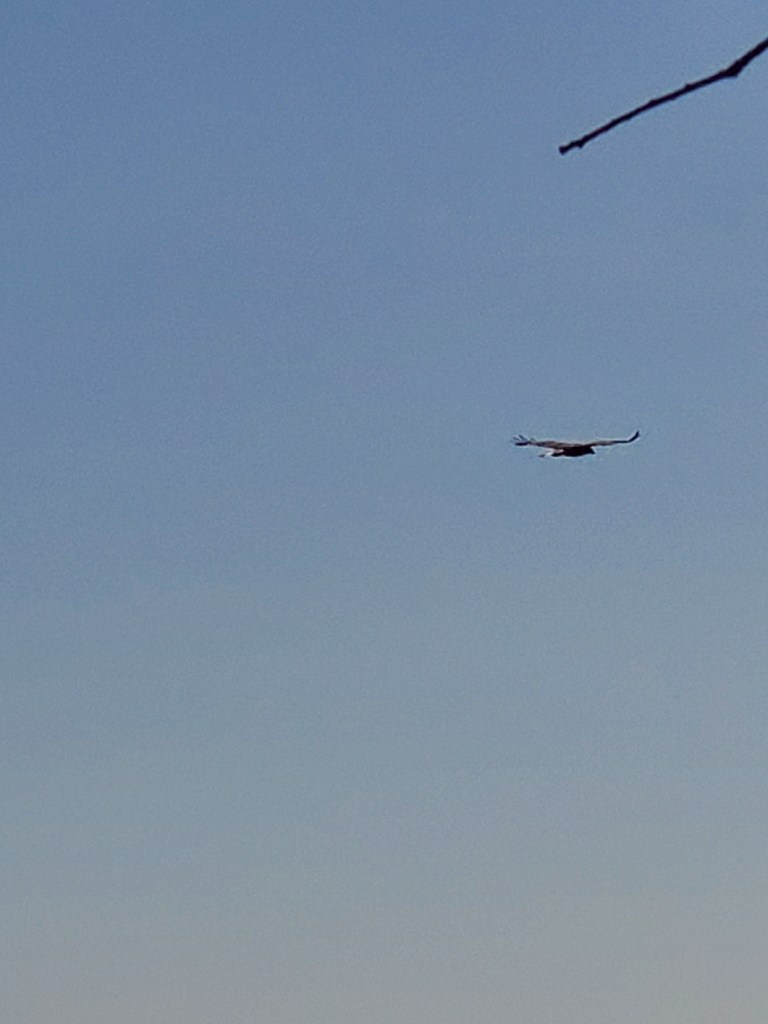
As I lament, I must also recognize the resilience of the life that is left. Acorns are emerging. The songbirds continue to stay. Large raptors and vultures soar. Lizards dart from one location to the next, while the California Toads move at night, leaving their poop behind. Small frogs have begun to show themselves, emerging from the tendrils of willow roots and debris in potted plants. Dragonflies have been more visible at the house, and not just in the creek where there is still running water. A beautiful green snake took up residence near the toad pond (presumably because dinner is very near and fat). Even a cool hopping insect that looks like a leaf was hanging around on the Polaris. Life is all around and abundant – and some that were eaten will return.

Water Still Running
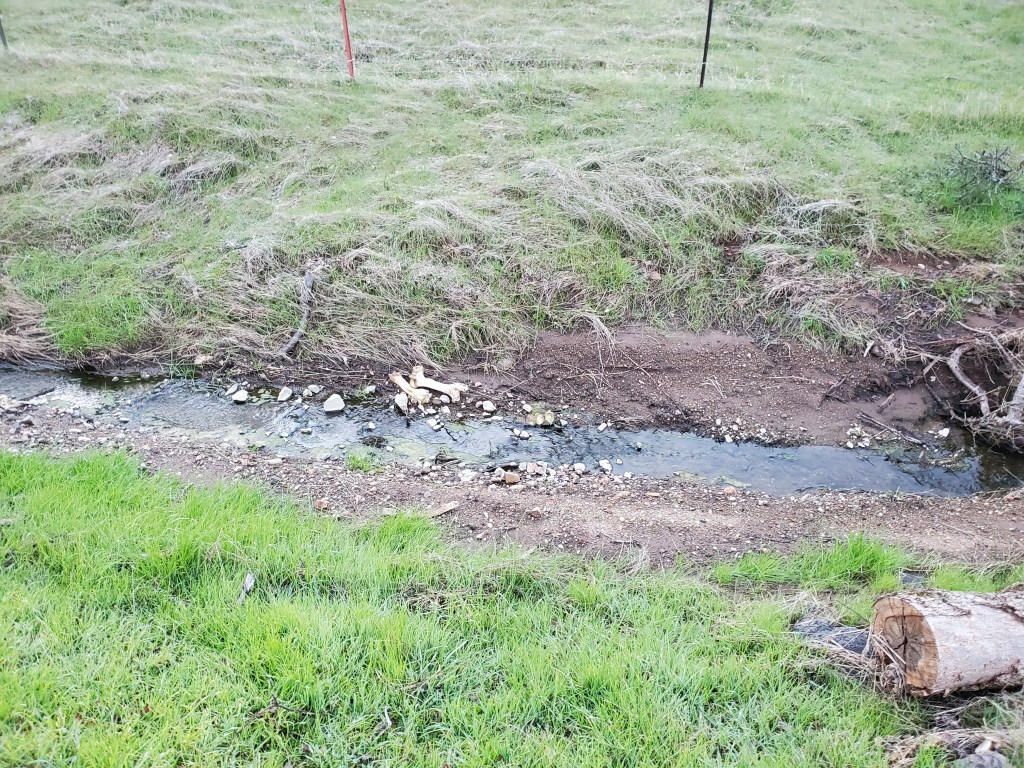
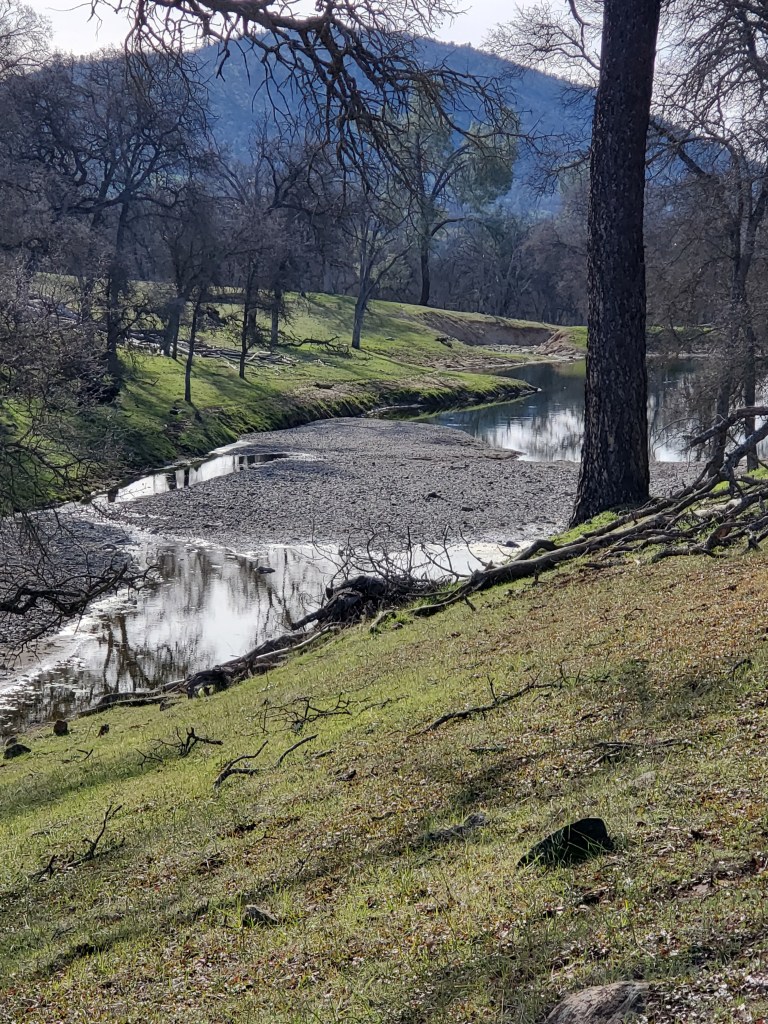
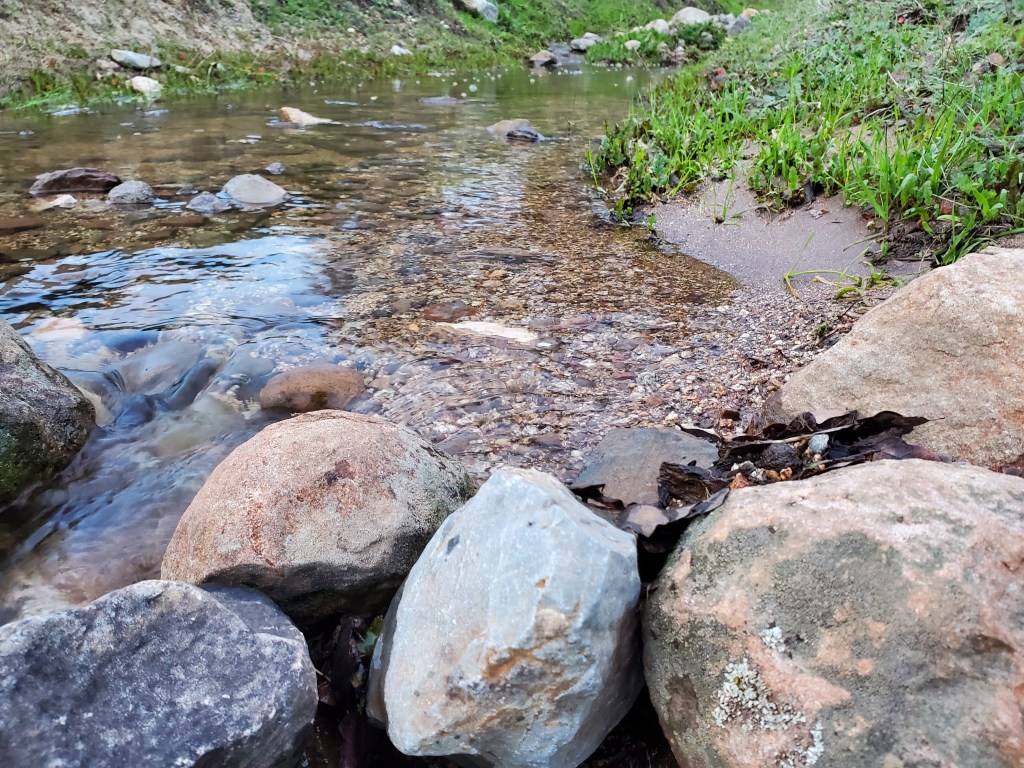
The creeks are still running. They are providing much needed water access and sustenance for the plant life adjacent to the creeks.
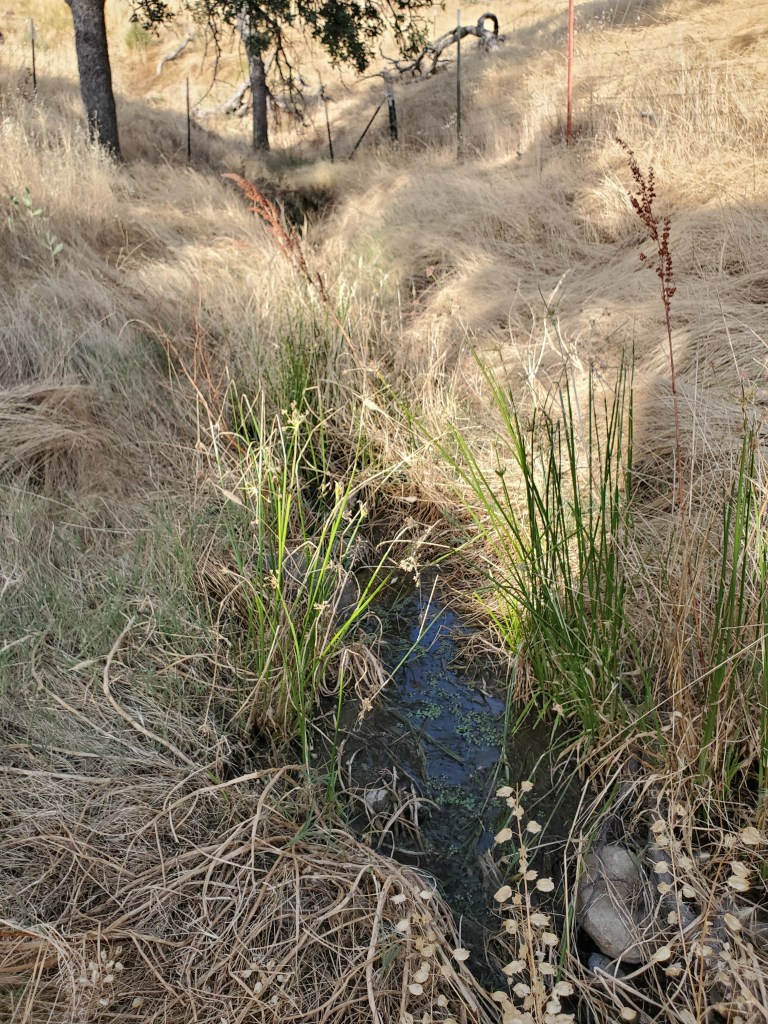
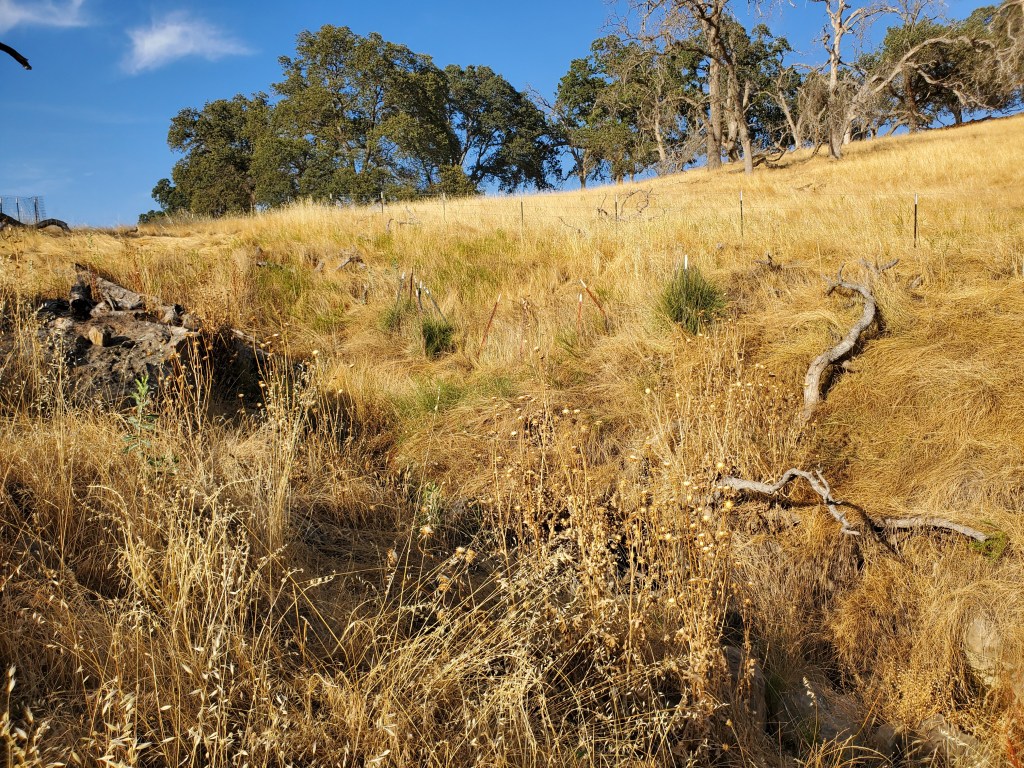
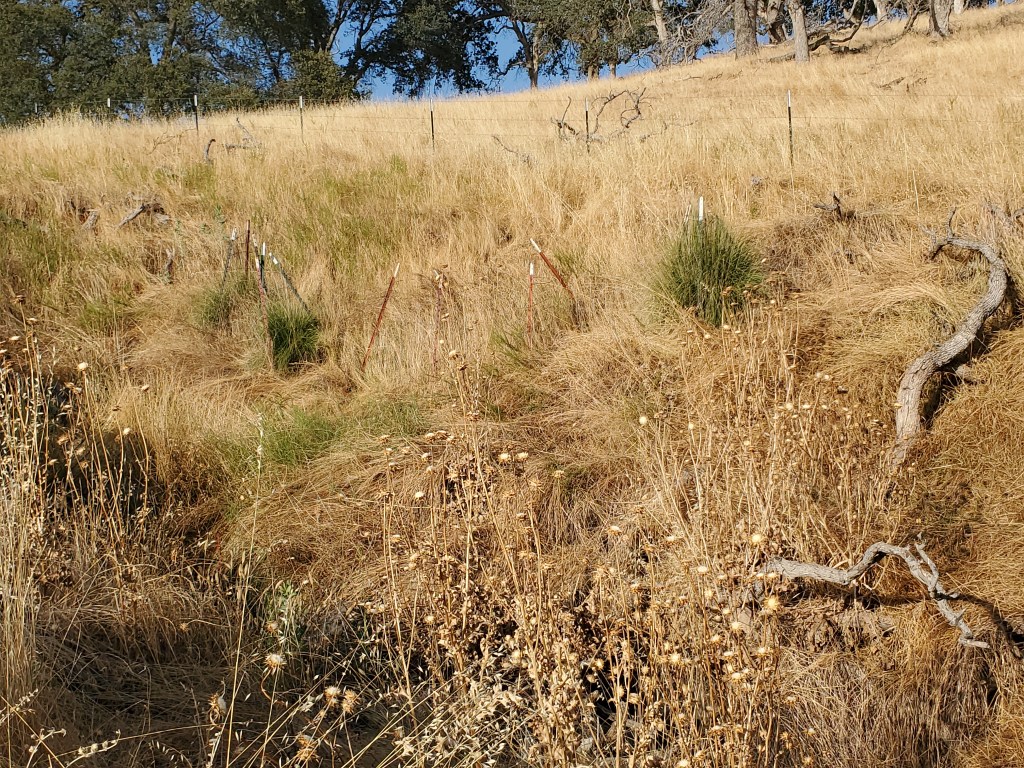
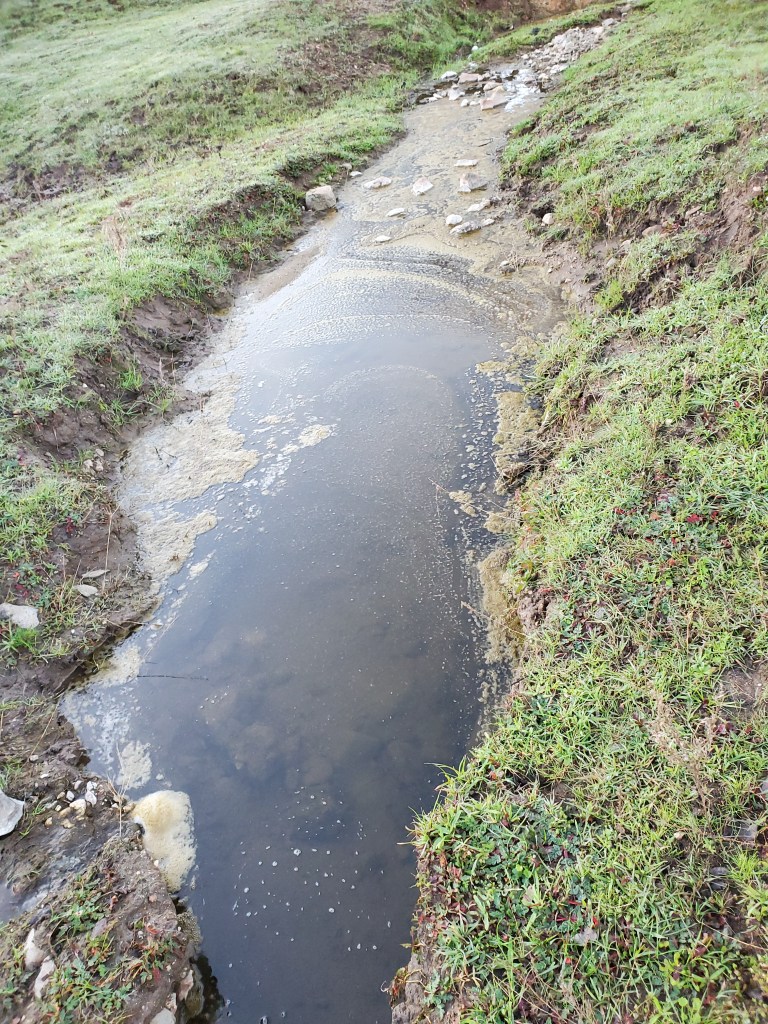
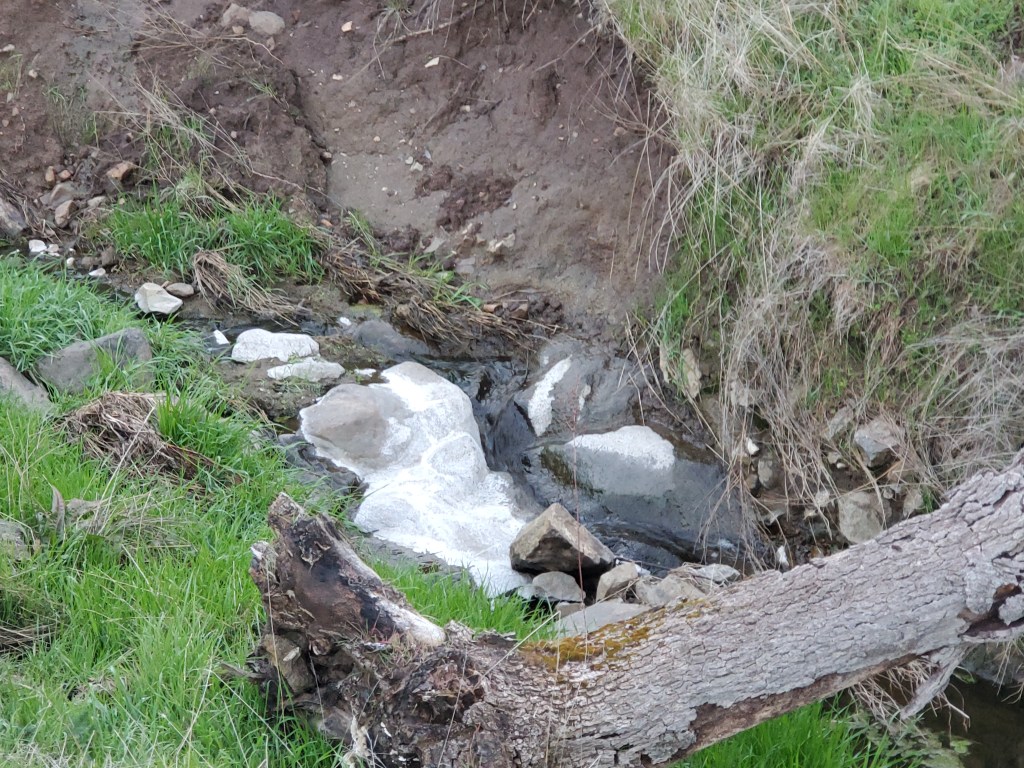
Unfortunately, the amount of nutrients in the water from cattle dung and the heat are causing algae to bloom. Algae is an interesting life form. It can be toxic. Its decomposition can suffocate life in the water, but it also provides a significant portion of oxygen on the planet, much like forests.
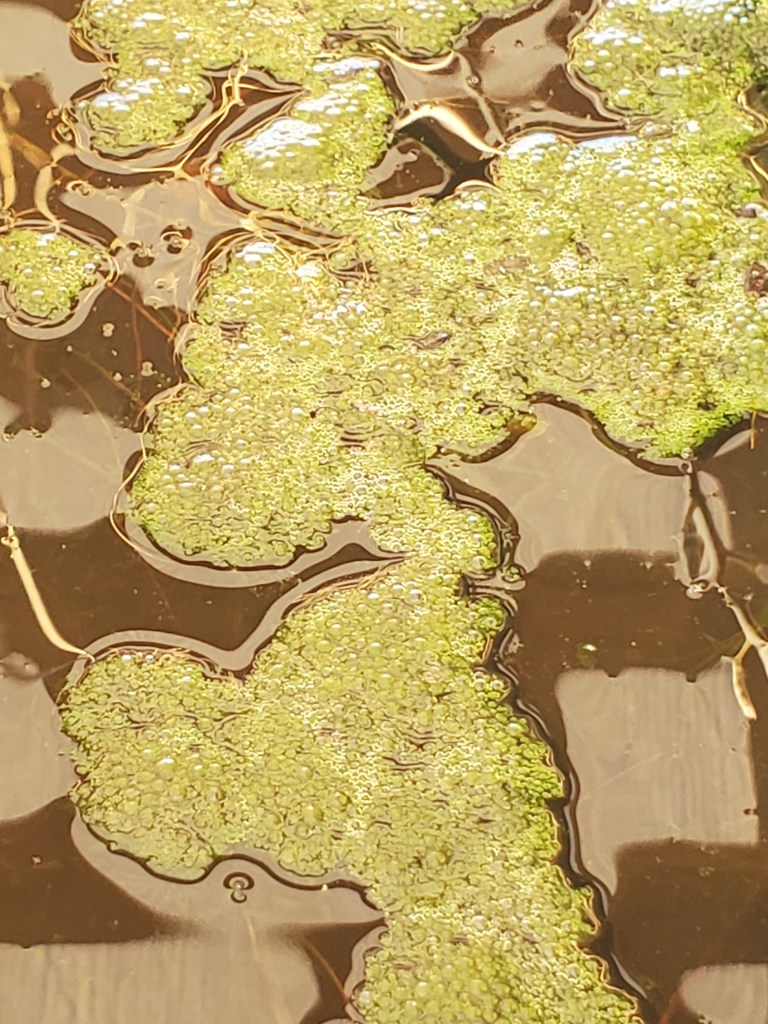
I don’t know if the green algae on the creek is harmful, but I don’t mess with it – – except to throw rocks into the spring and puddles to break up its thickness, and open some holes to the water underneath. This is in part some of the reason I fence out cattle, to decrease the amount of excess nutrients going into the water. I cannot help upstream, but I can decrease the overall amount as it moves through my ranch at least.
Riparian Oak Seedlings Still Alive
I am overjoyed to report that the oak seedlings in the riparian areas still have leaves. I did see some damage to the leaves, but that is all. The grasshoppers did not fully destroy them as they did the very young plants I planted.
I learned recently that what looks to be like a young oak can actually be decades old. This was mind blowing. Given this, perhaps the small oaks in the riparian area have developed a more mature protective element to their leaves and bark that prevented more predation. I know that what I call seedlings are actually many years old since I’ve been protecting them for over a decade with downed branches when the area was open to grazing. Their smallness is a product of grazing and drought. It has been a huge relief to see them grow last year and this year in response to more water and protection.
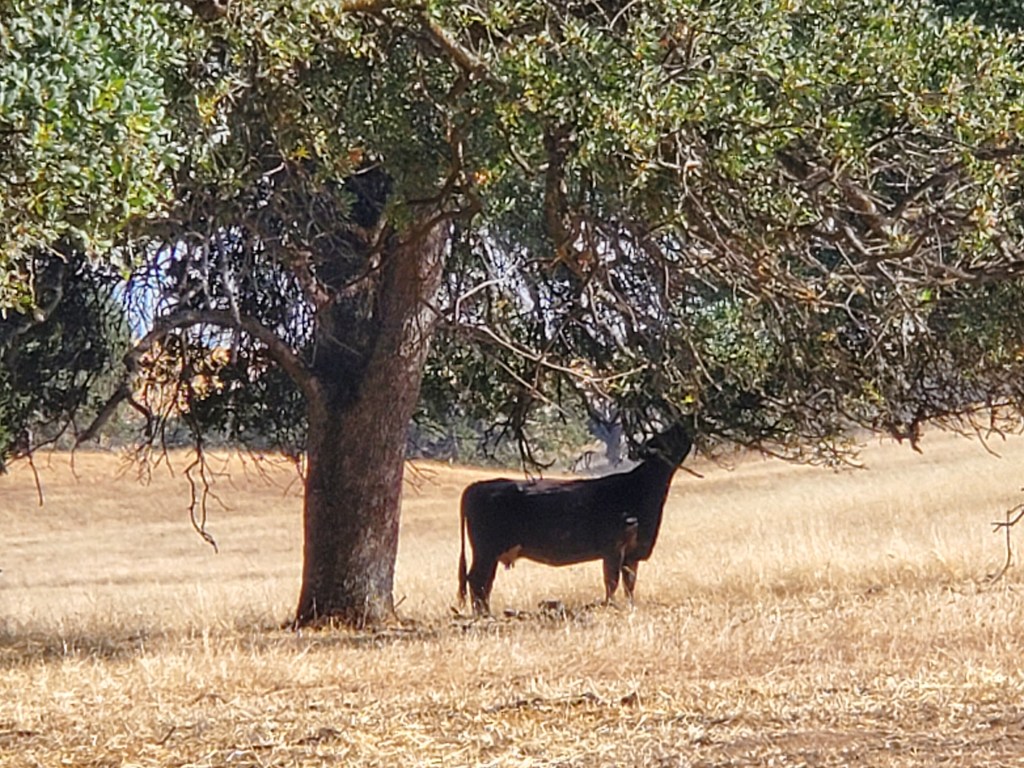
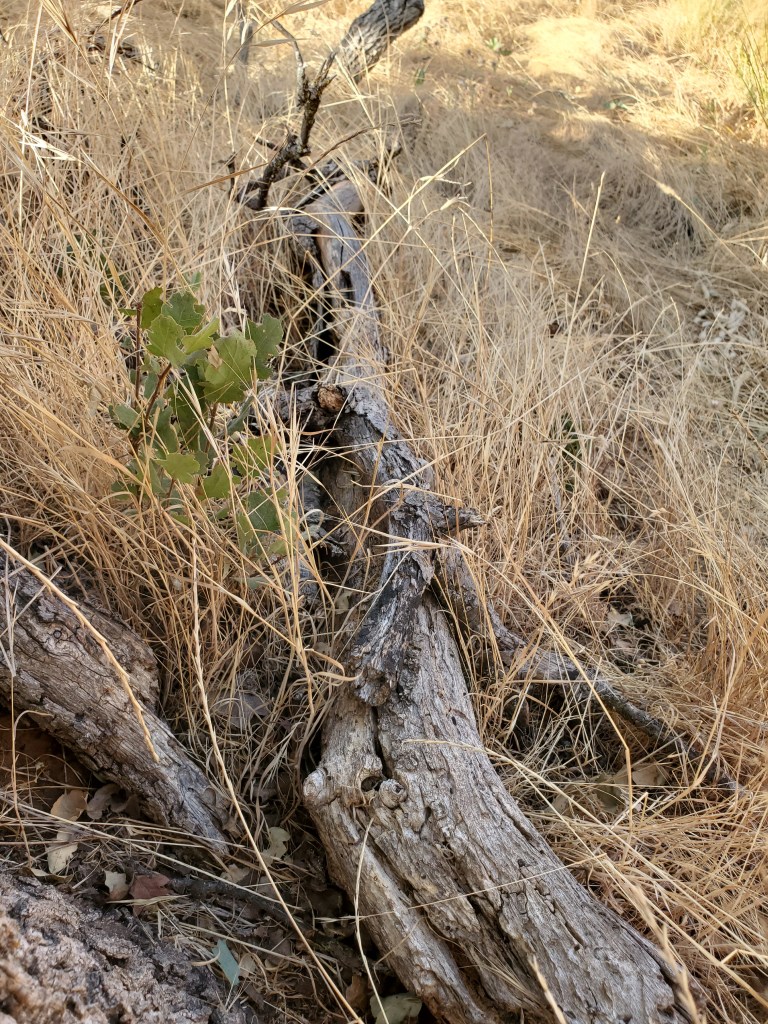

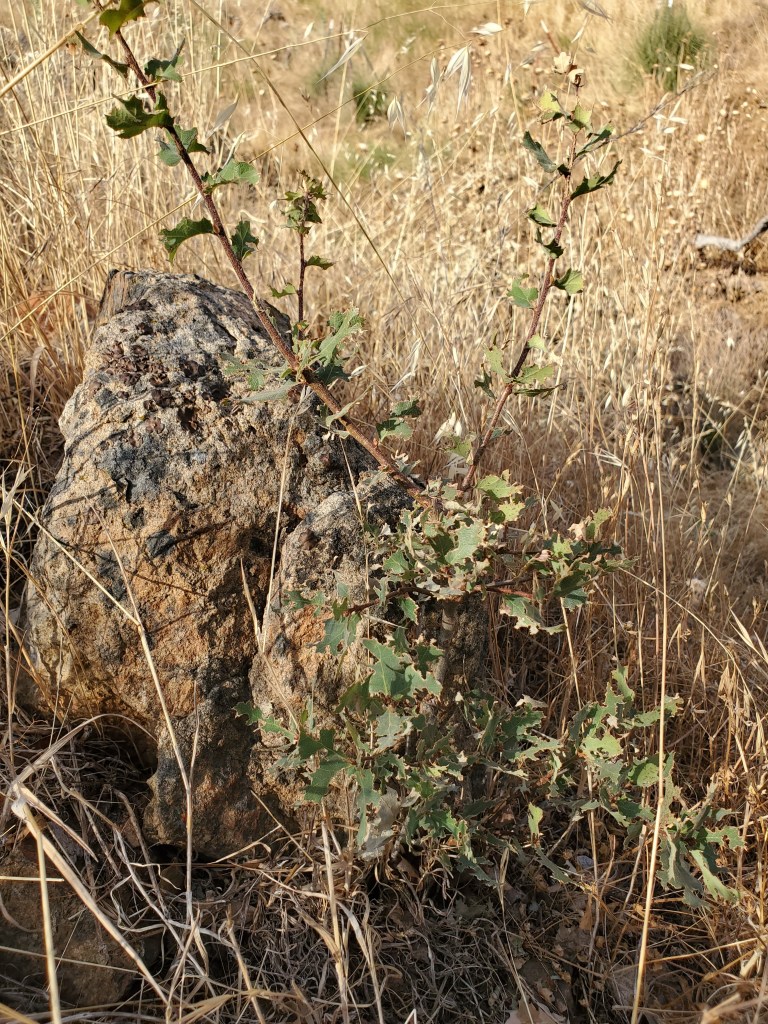
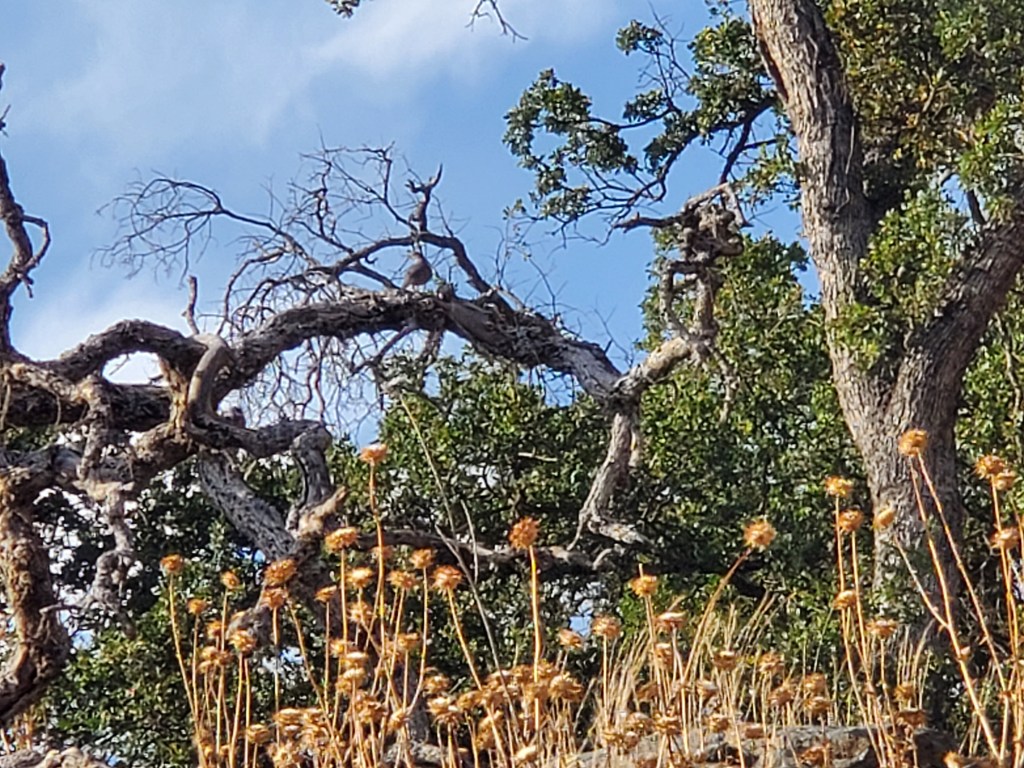
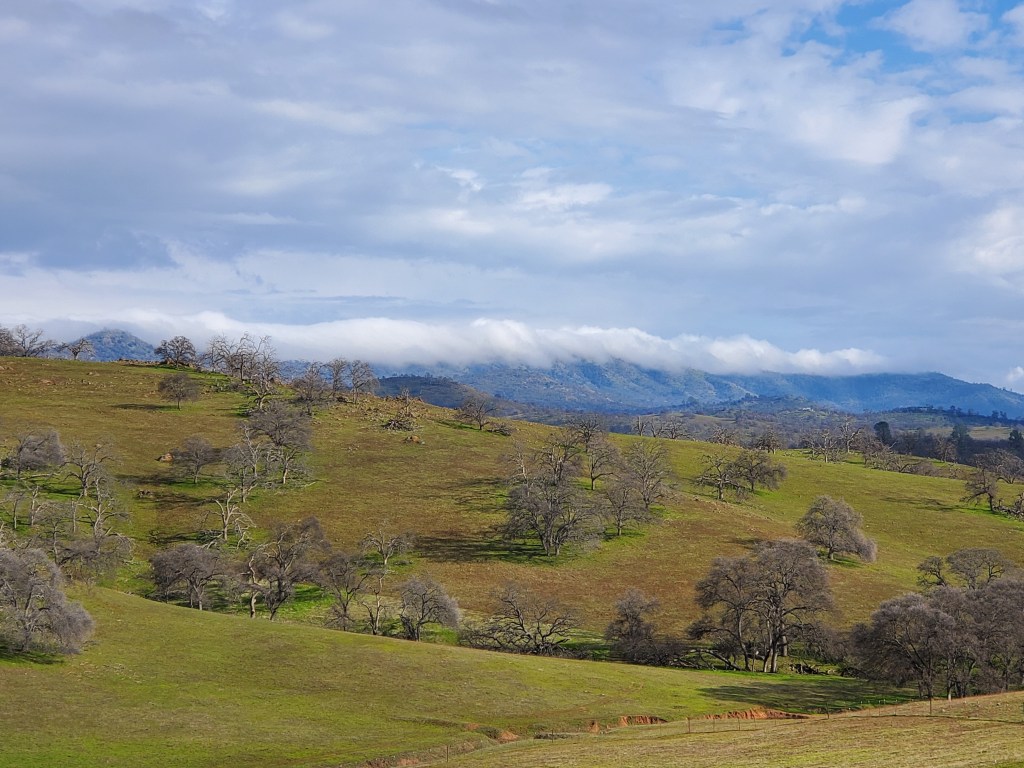
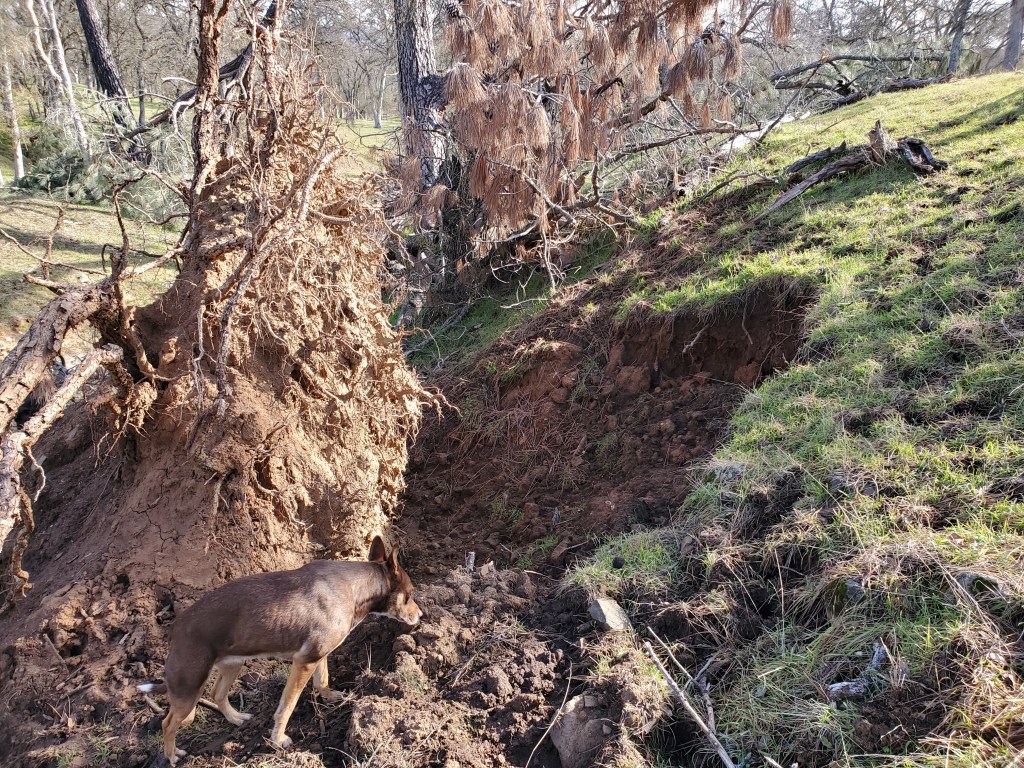
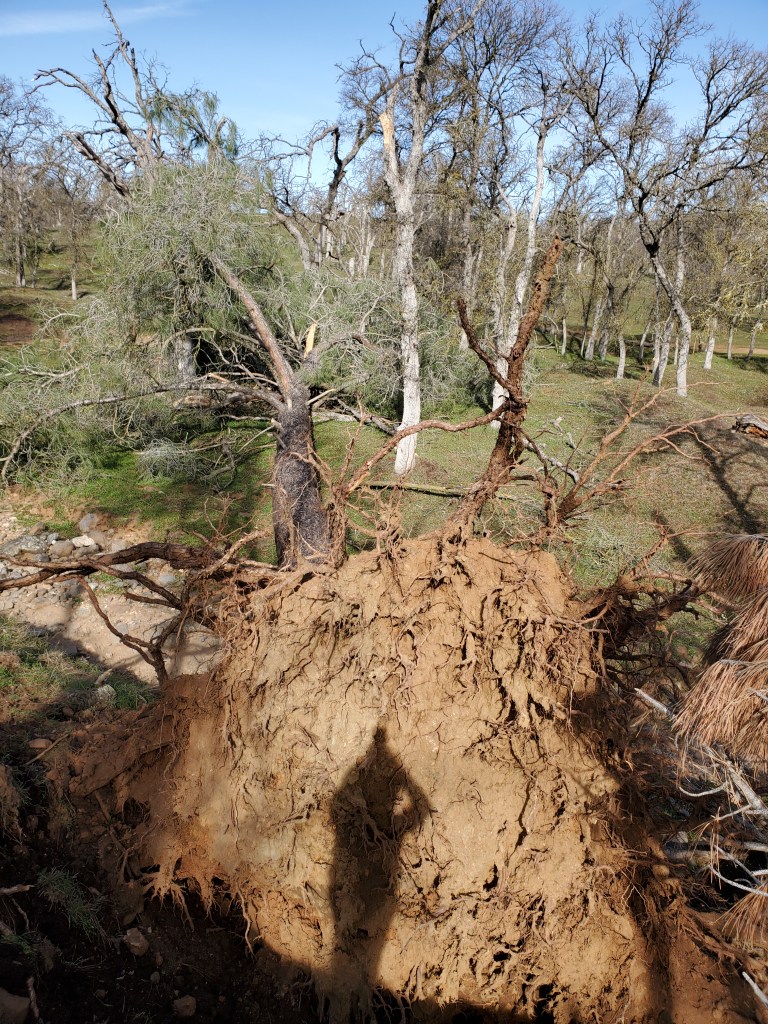
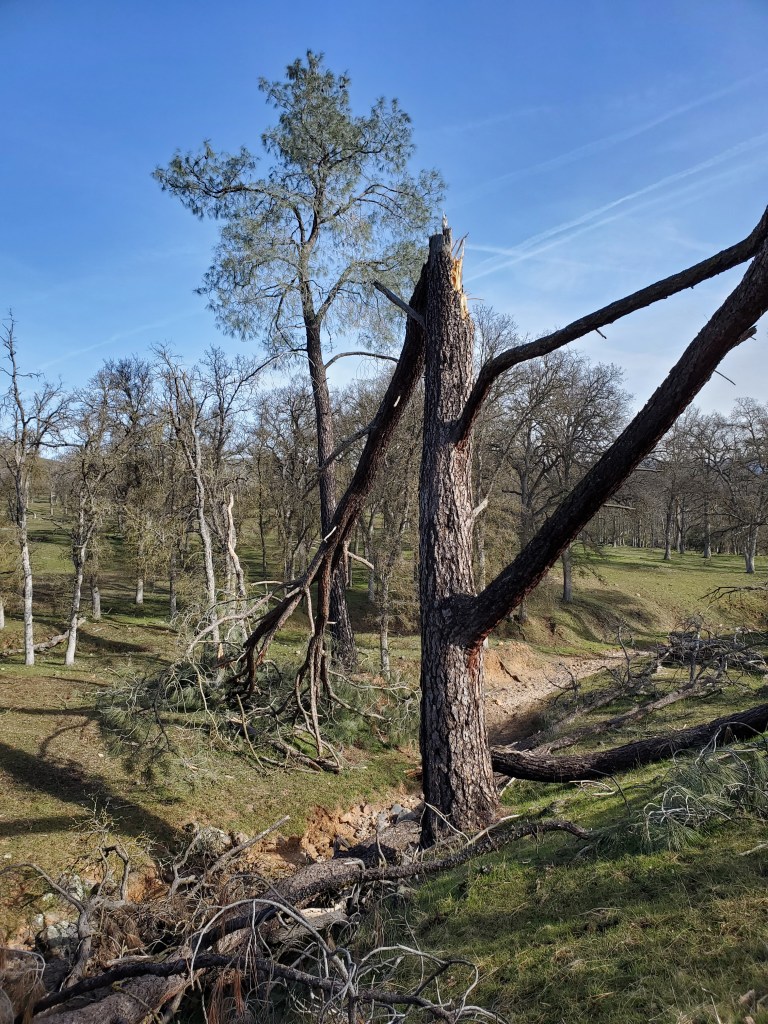
This success is all the more important as I continue to see decline among the adults on the hillsides. On my walk yesterday, I heard a horrible loud crack. I looked in the direction of the noise and saw movement in one of the grand oaks on the south hillside slope from the house. Then, I saw an entire branch fall. It continued to crack then crash down.
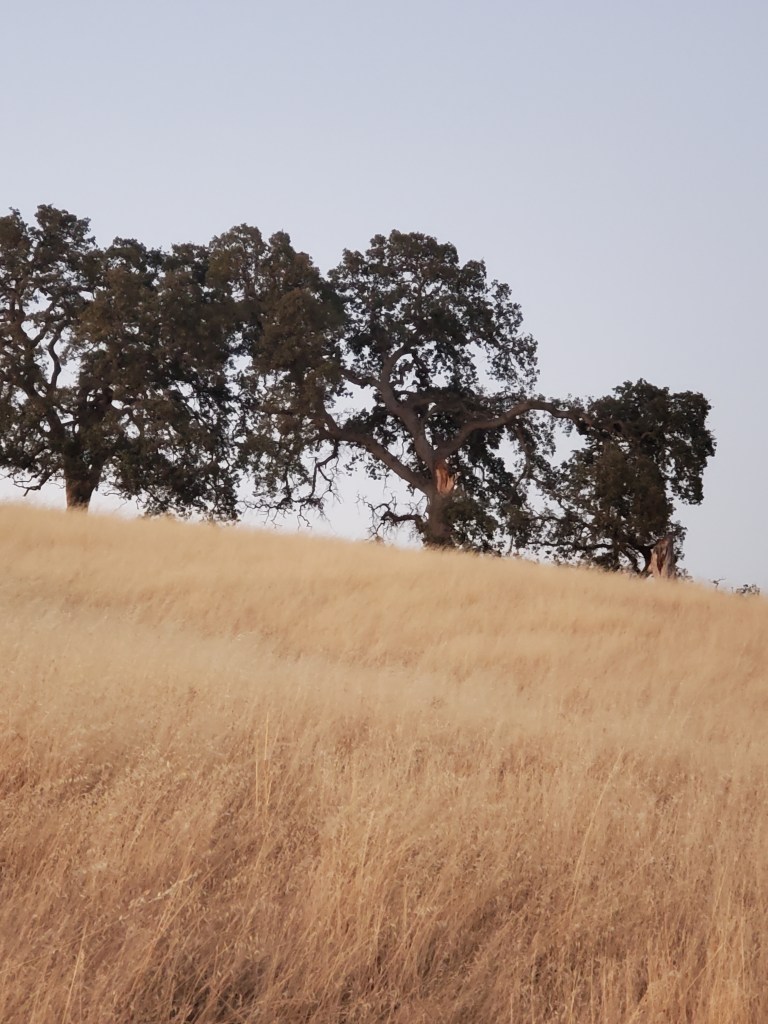
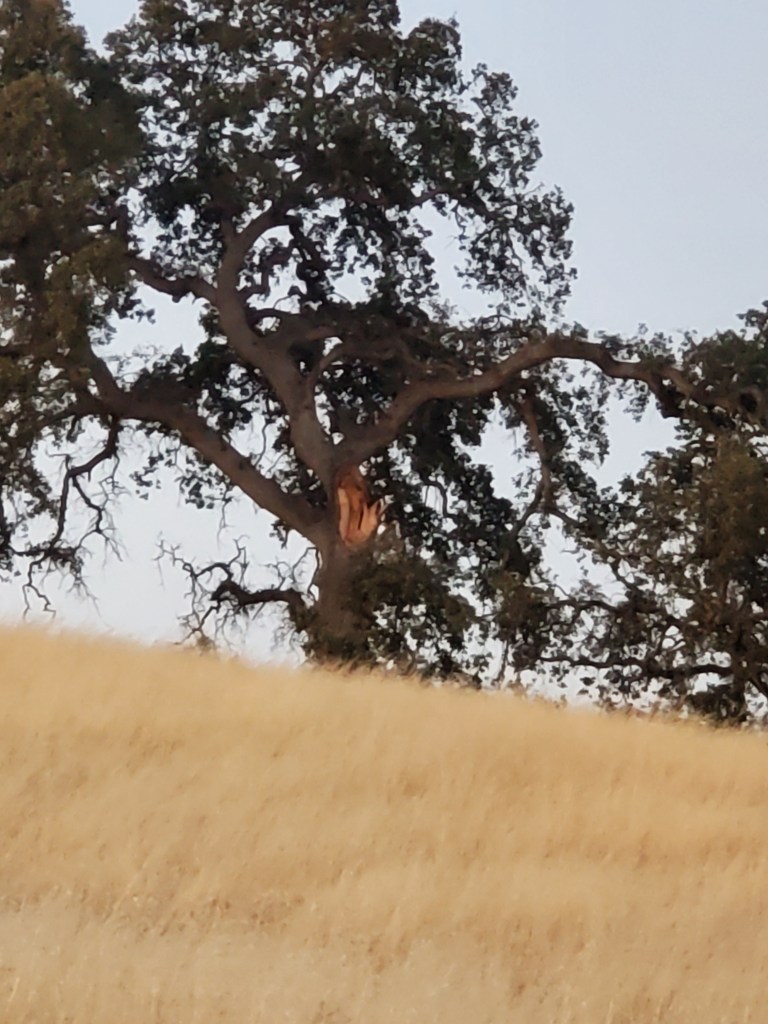
I was horrified, sad, angry- oh, how I grieve for these crucial lives. I keep thinking, “What can I do better?” I don’t use much water at the house. I put water back into the ground. I am slowing water. I guess I need to do more dirt work and create little moats below and above groves of trees, outside their drip lines, to capture water as it runs down hill during rain events. The work cannot begin until the soil is moist again. The metal edges of tractor buckets can cause a spark, and this whole place is filled with dried out, tall, European Grasses. Another year going by; the clock ticking on what can be done and if it will be too late to help. And, the cost – it will be all on me to cover with no program to help.
Breathe. Deep in. Full out. Repeat…Repeat. Reminder: you can only do what you can do. Much is out of your control and so much larger than you. You are not absolved of responsibility, but the full responsibility is not yours and yours alone. Stay healthy. Keep your joy and continue working at a pace you can sustain.
Extreme Heat is Not an Acceptable Norm
I know the extreme heat is a key factor in the death, piece by piece, of my oak relatives. It causes the death of thousands of people per year in the United States, and that is increasing. We cannot accept this as normal. If we love this incredible land, ocean, waterways and sky, if we love our children, then we must be intentional in our actions. I know this issue, like the oaks falling apart, is larger than one person. If we each contribute something, then things can get better. We have seen this happen already with the butterflies. Acting together, many planting milkweed and more nectar plants, have helped bring the monarchs back from the brink of extinction on the west. Although we have more to do to stabilize the population, we are on the right track.
Every choice we make as individuals makes an impact. You don’t have to deprive yourself at every turn; what I am suggesting is that we have to understand that our individual choices have consequences. In knowing this, we can make informed choices, not let guilt-aversion act as a barrier to good action and understand that we are each important change-makers in how the future is shaped. This is big; I know. Please don’t loose your sense of hope. It is some of the most powerful medicine we have. Aho.












 PolliNative