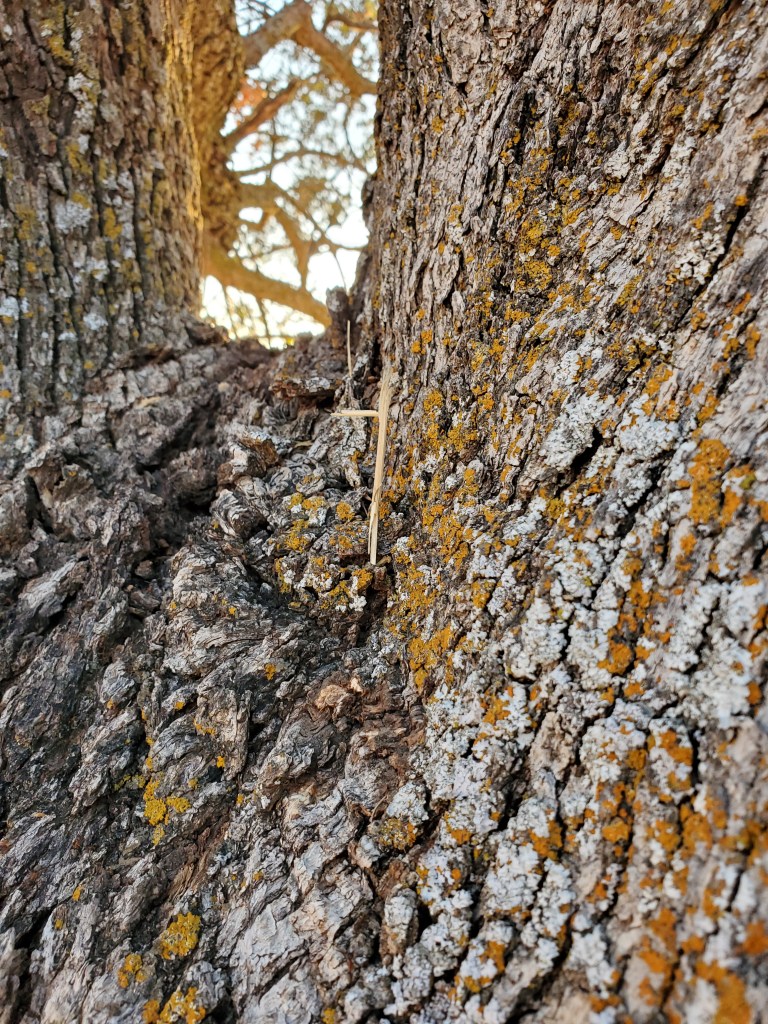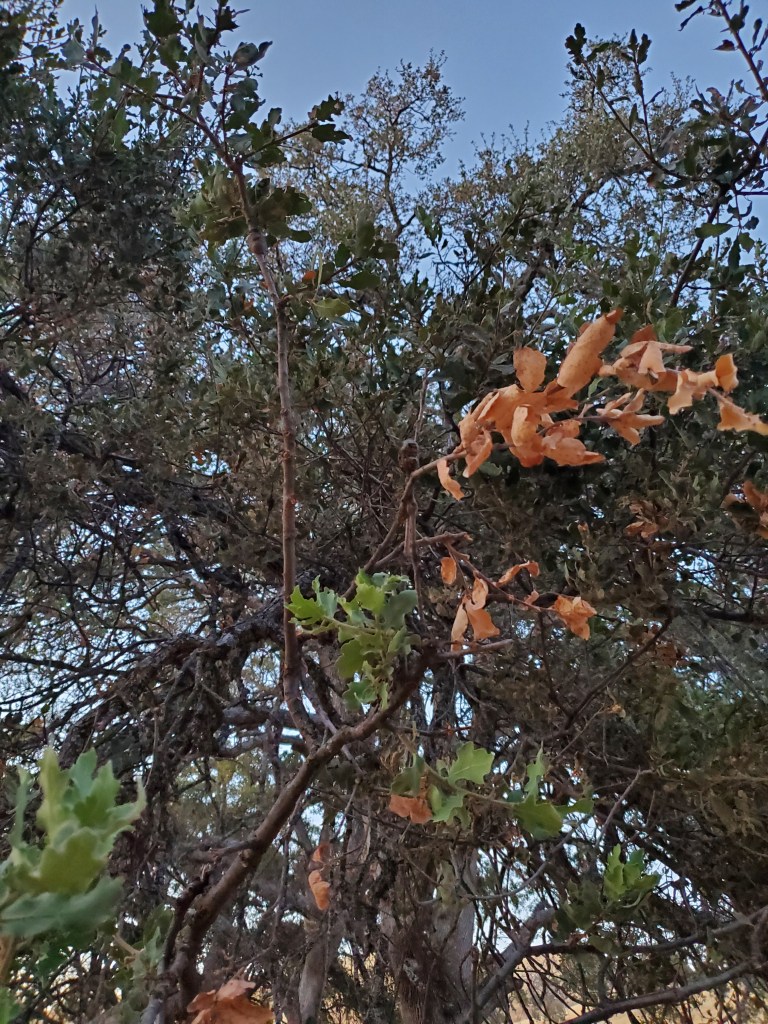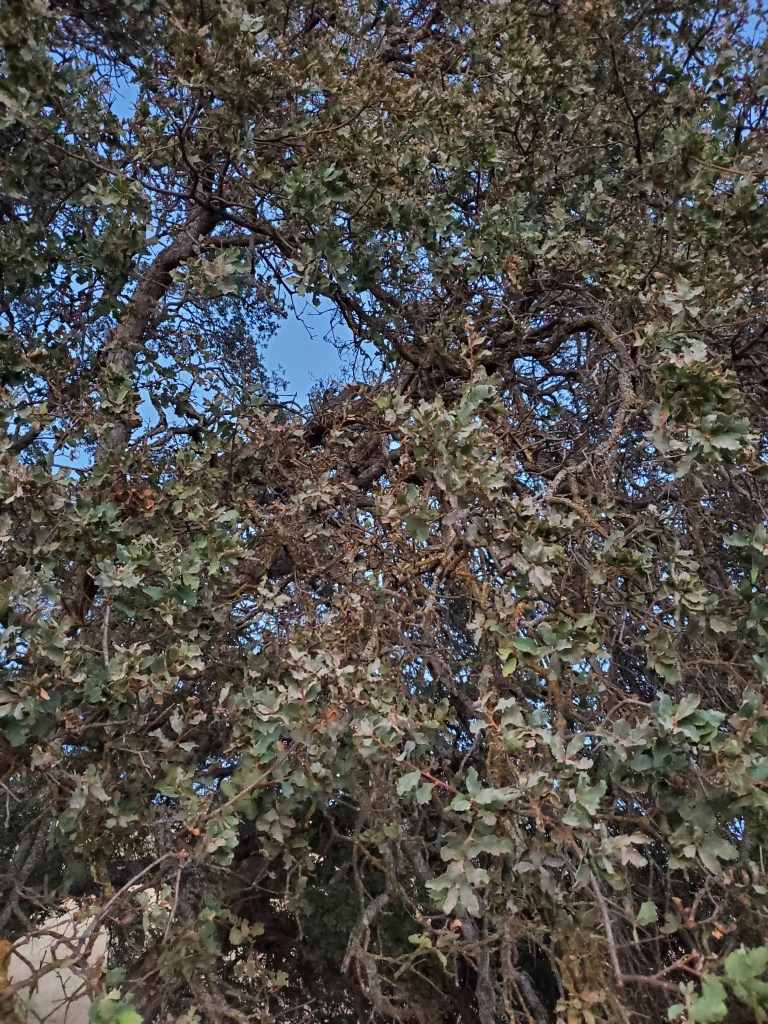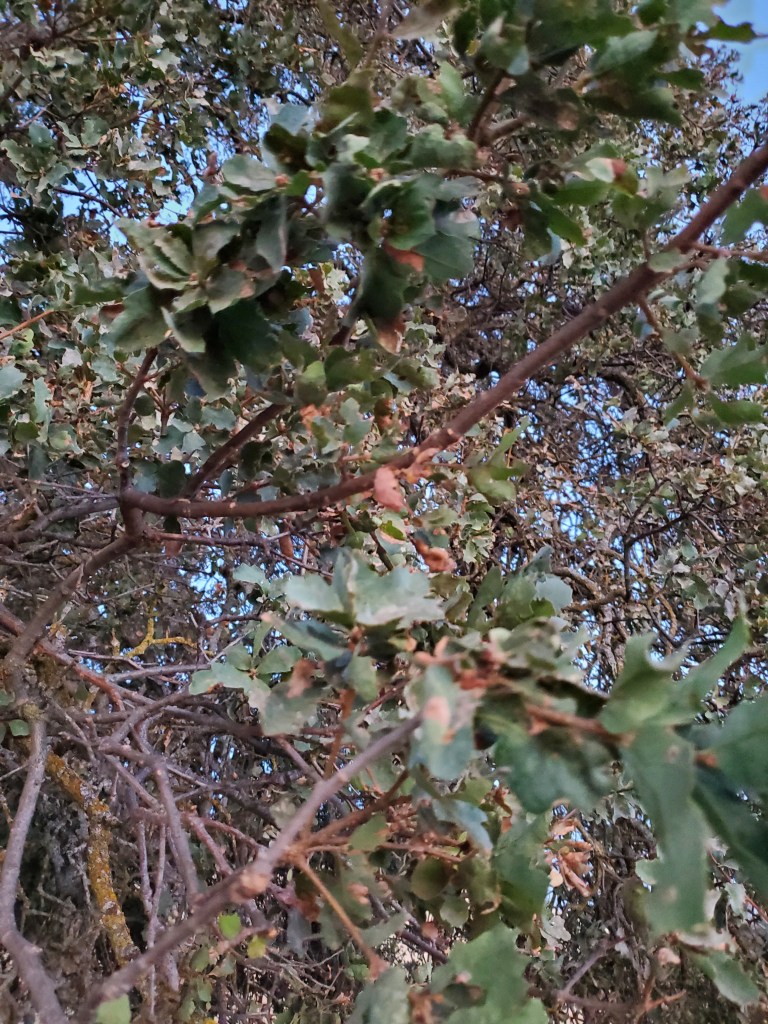
Another Race Against Time

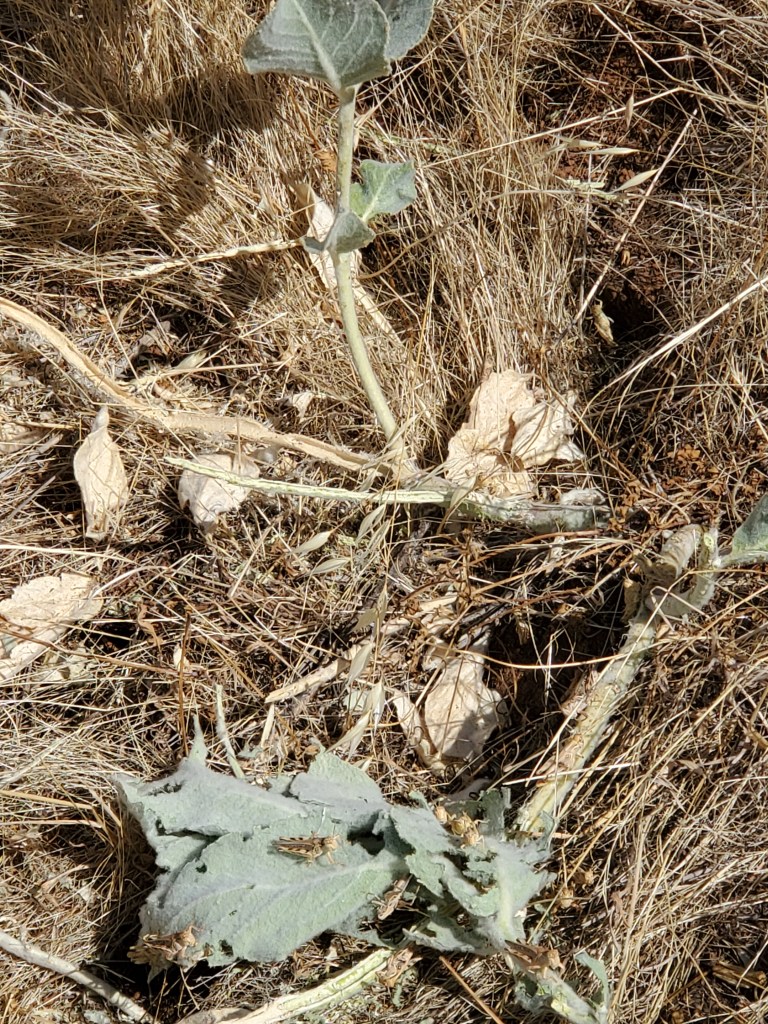
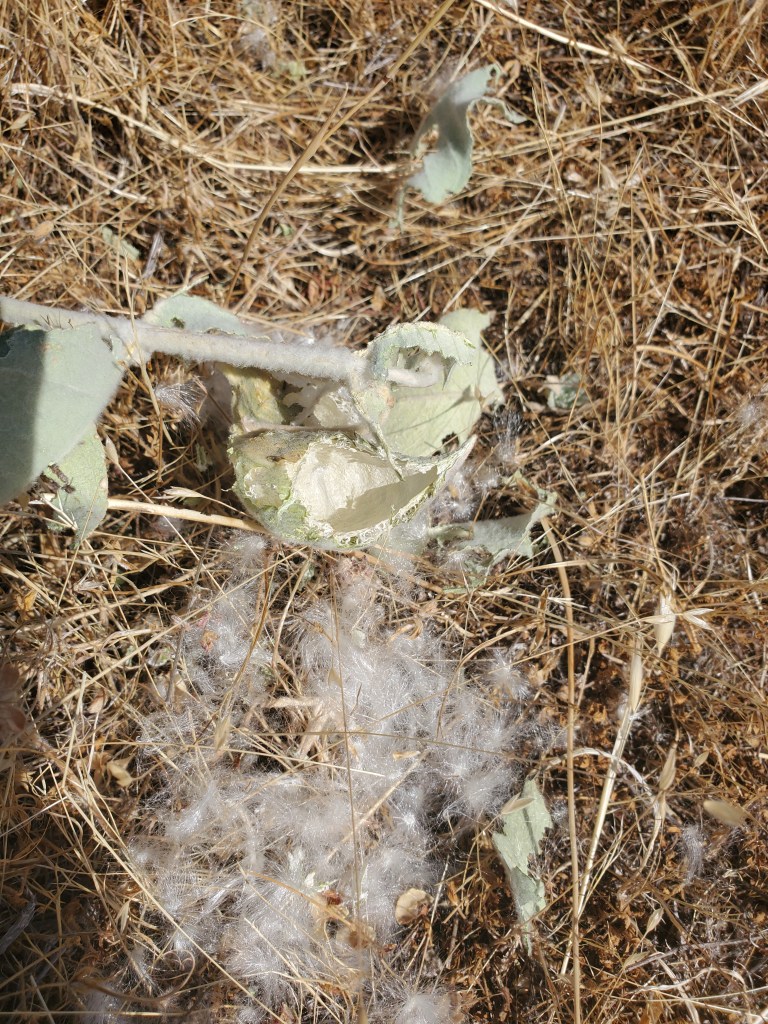
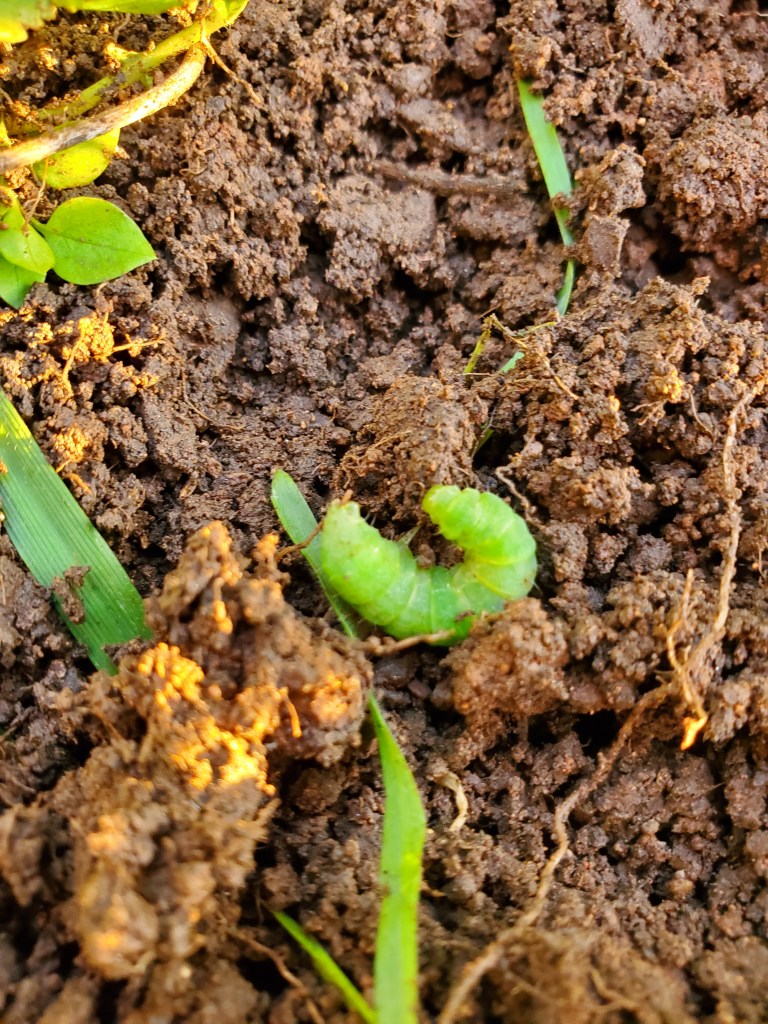
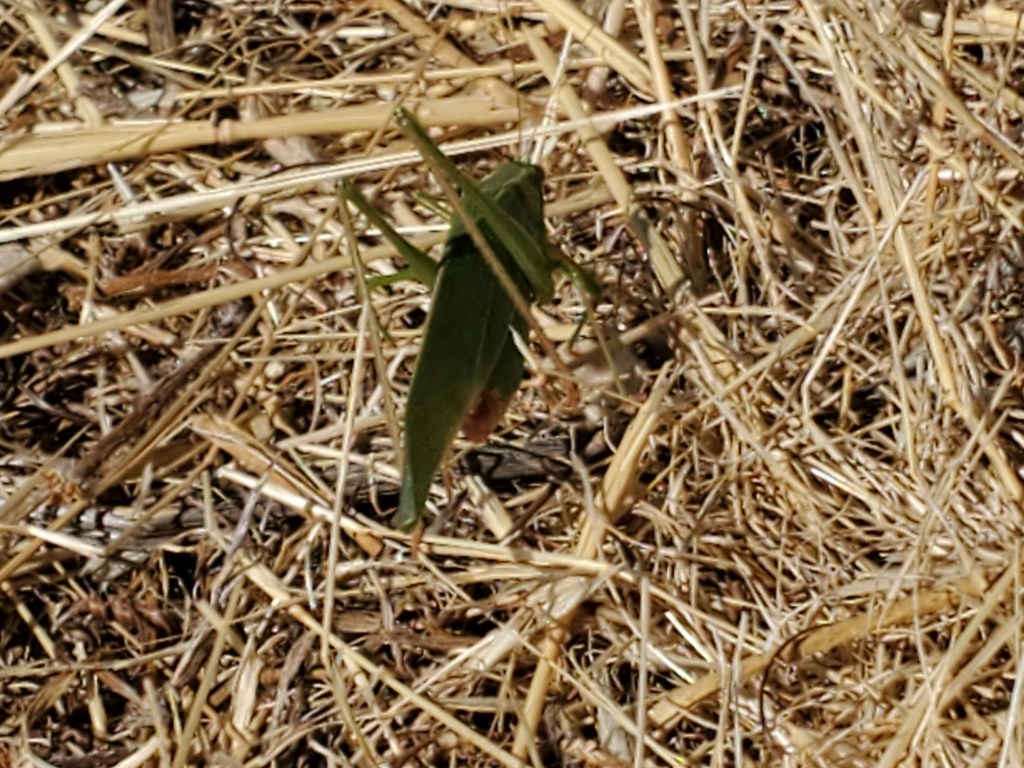
Oh yes, by the title and the time of year, I am sure you understood that the grasshoppers are back. They are eating their way up the hill. I had hoped they would not be back, that the typical cadence of boom and bust for the hoppers would return. We are due for a few years without plague levels. Alas, once again, the imbalance of what we are doing to this planet has manifest itself on Taawim Bwiapo. Essentially, almost nothing gets to live but the grasshoppers.

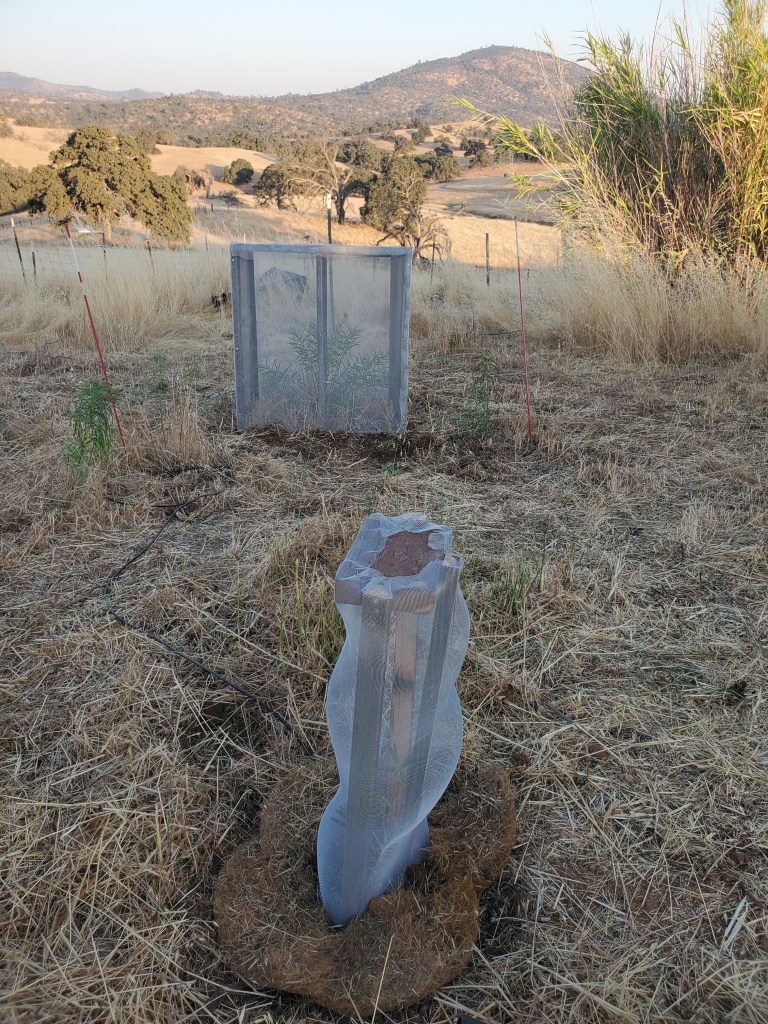
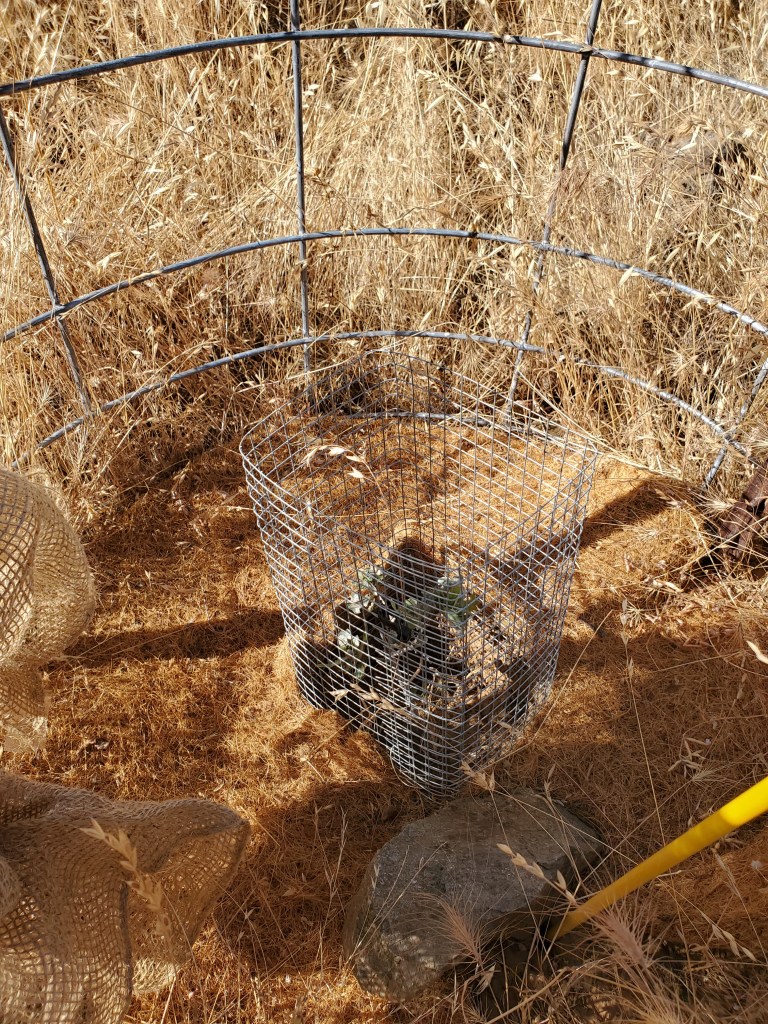
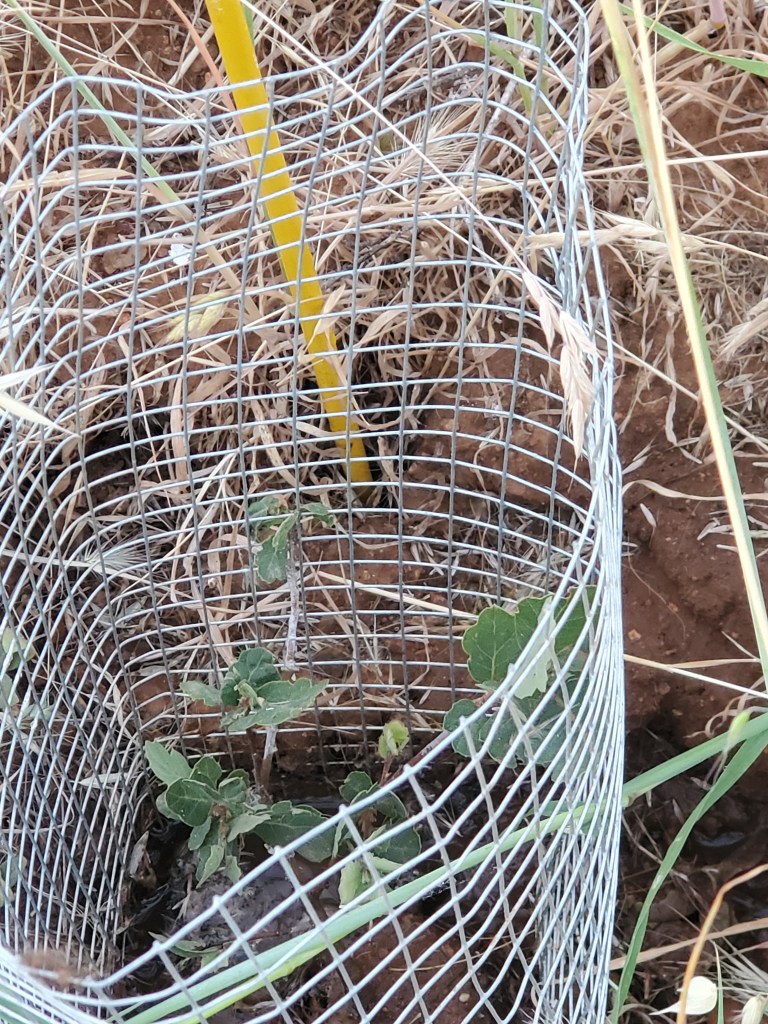
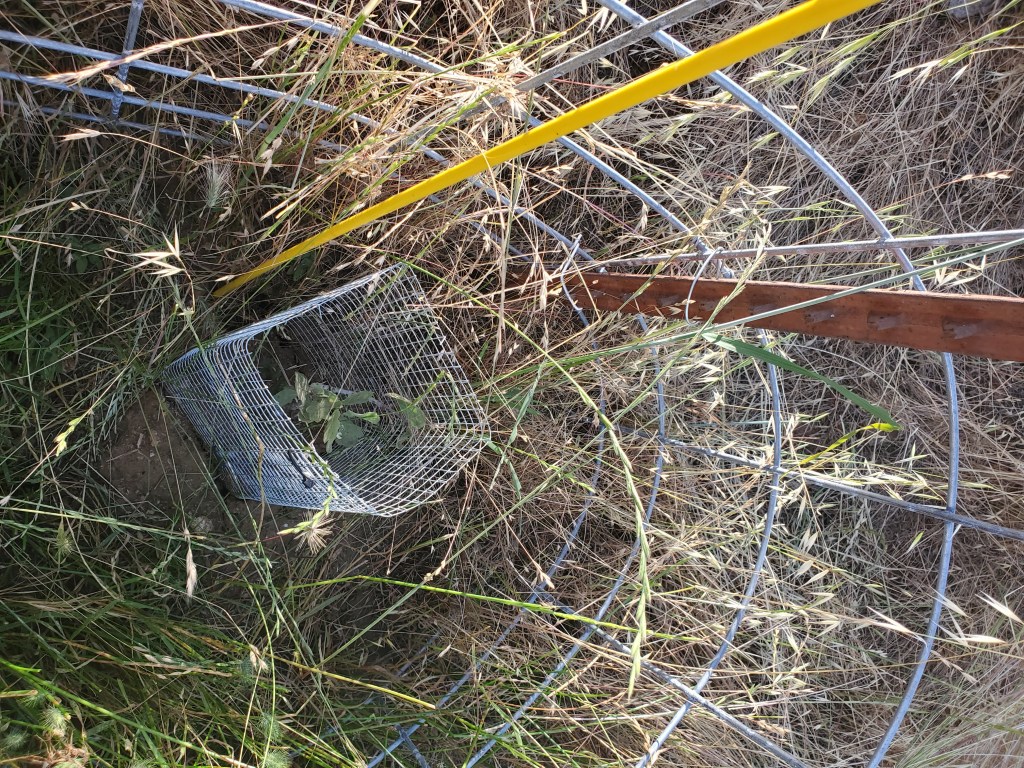
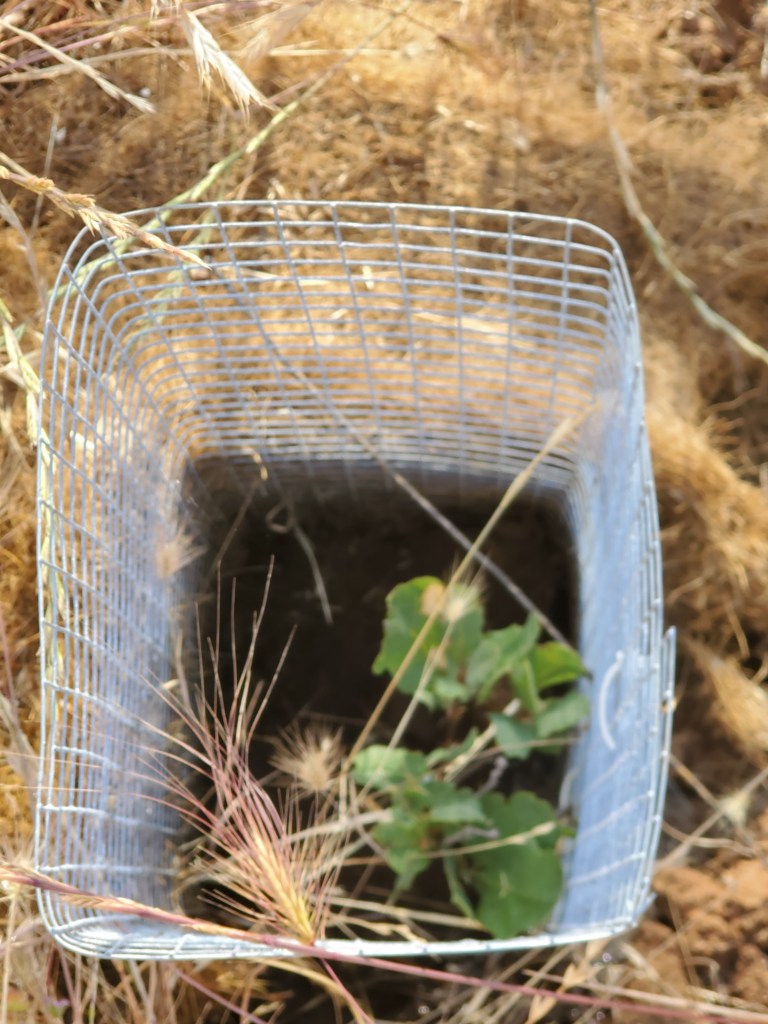
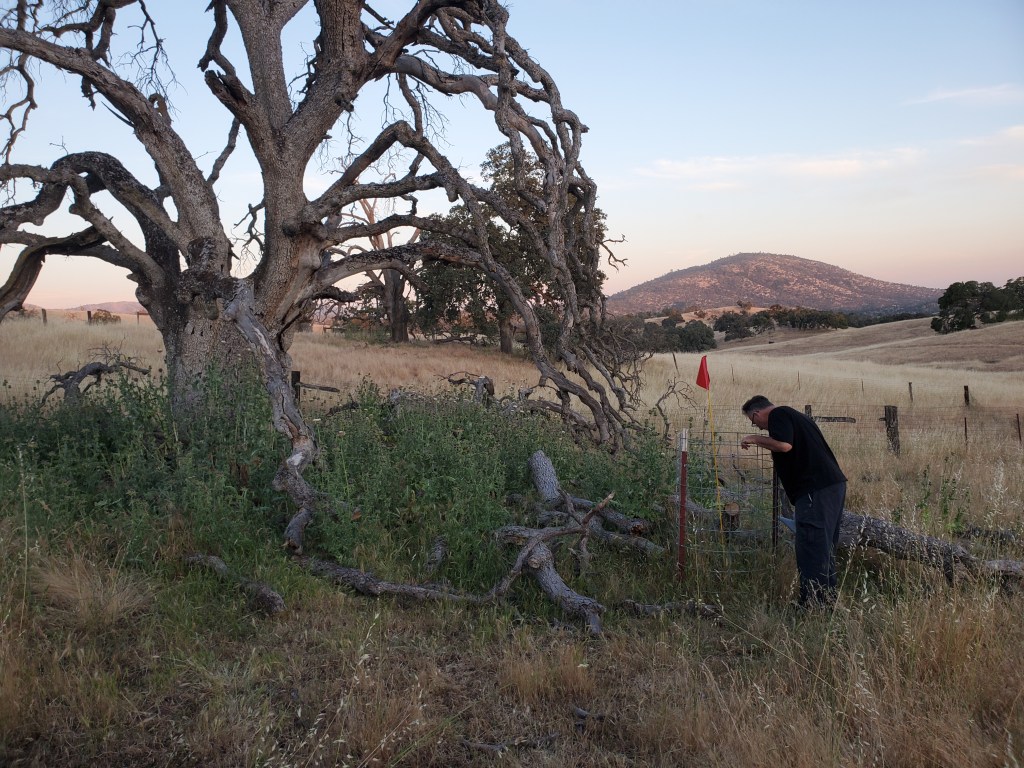
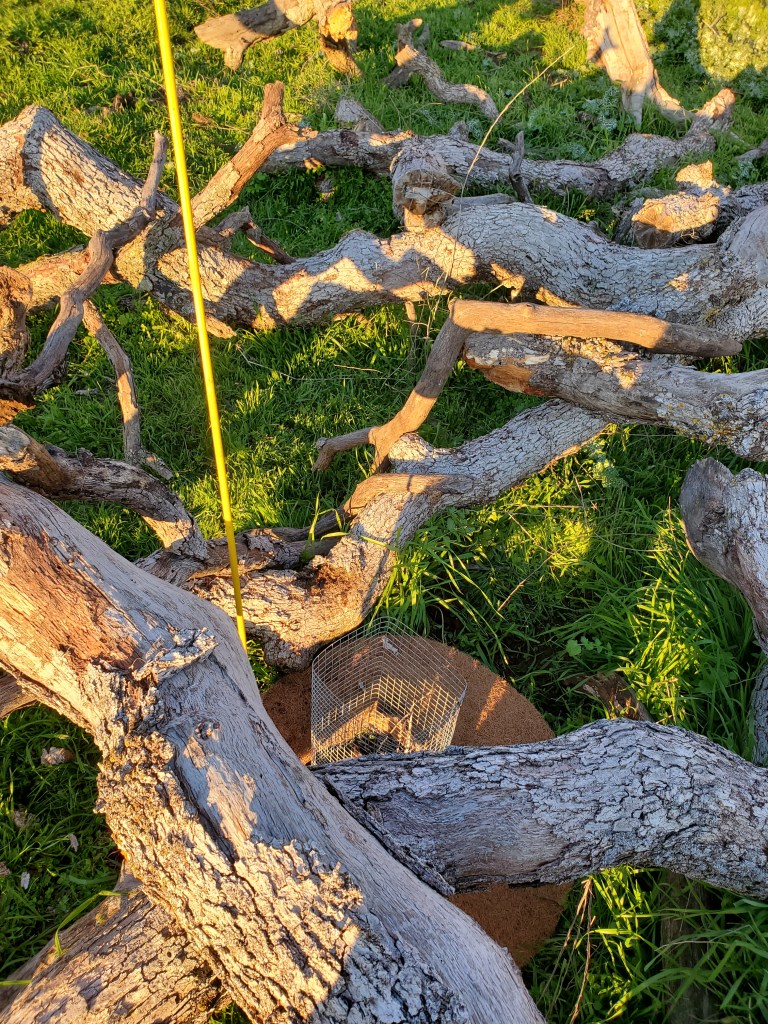
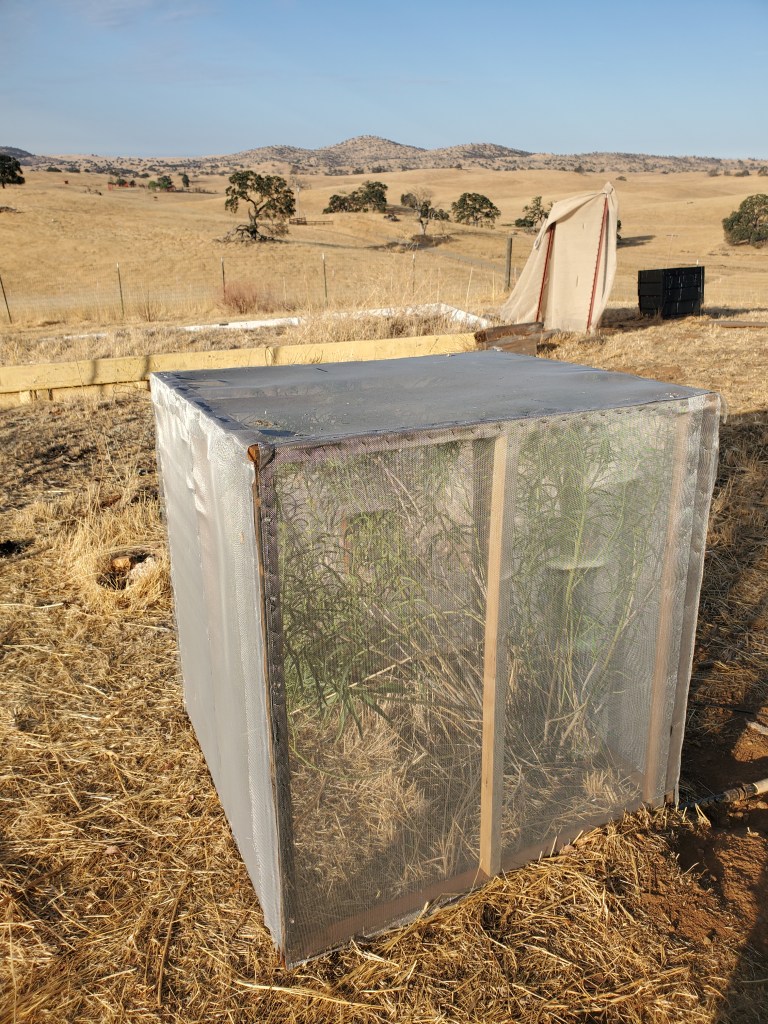
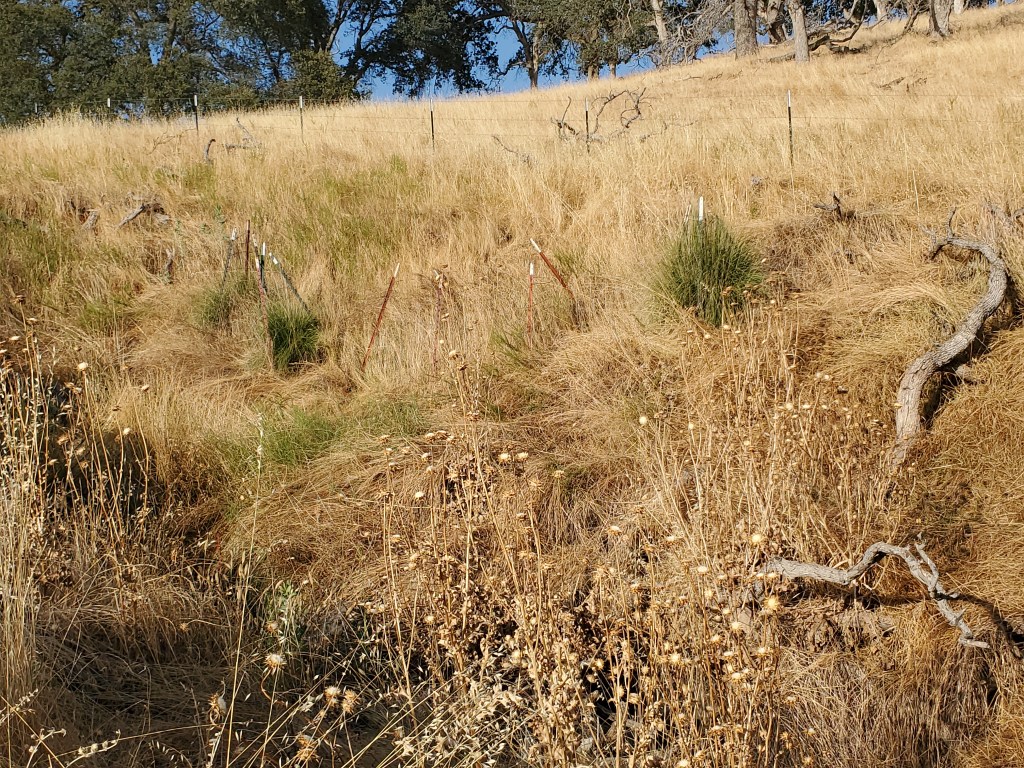
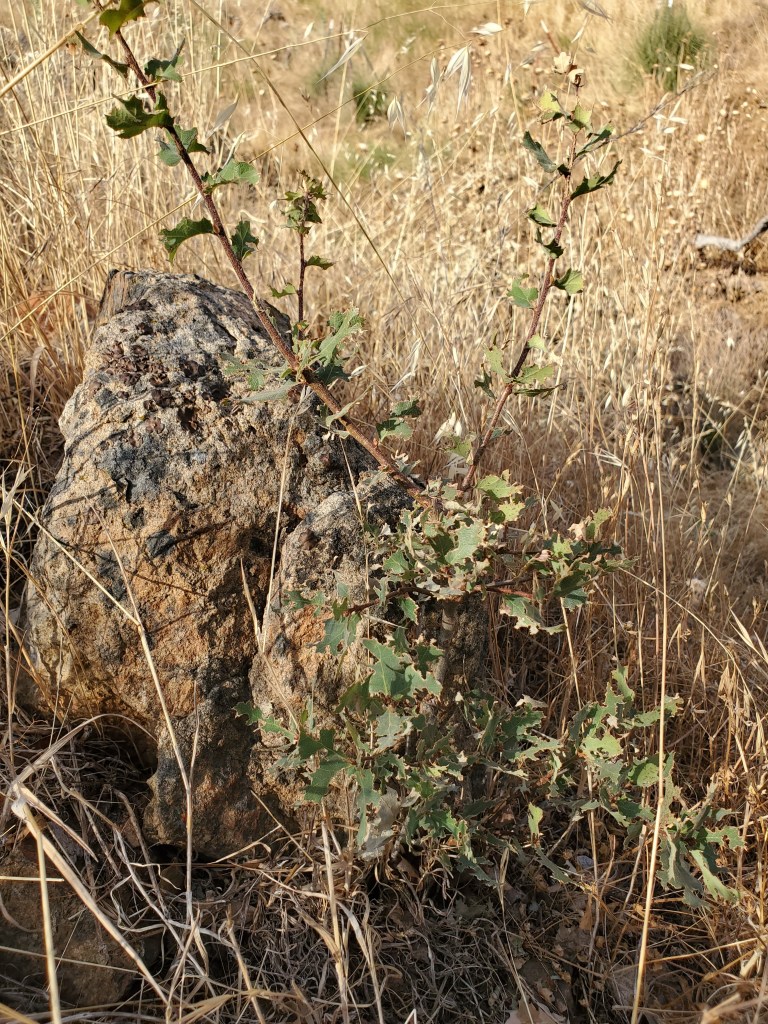
Except…this year, I am more ready – busted thumb and limpy leg and all. As soon as I saw some bites in the oak seedlings by the creek. I had David purchase aluminum screen. He began to make little screen houses to go over the gopher cages in which the oak seedlings were planted as well as other screen boxes for my pollinator plants. The poor guy. He is doing so much. I am getting better, little by little, but still cannot perform most of the ranch work I need to get done. David also has his paid work to do, which has been extremely busy of late. To enable us to get what we need done in the timeframe it needs to be done, I decided to hire someone to help us on the ranch, and to give poor David a break.
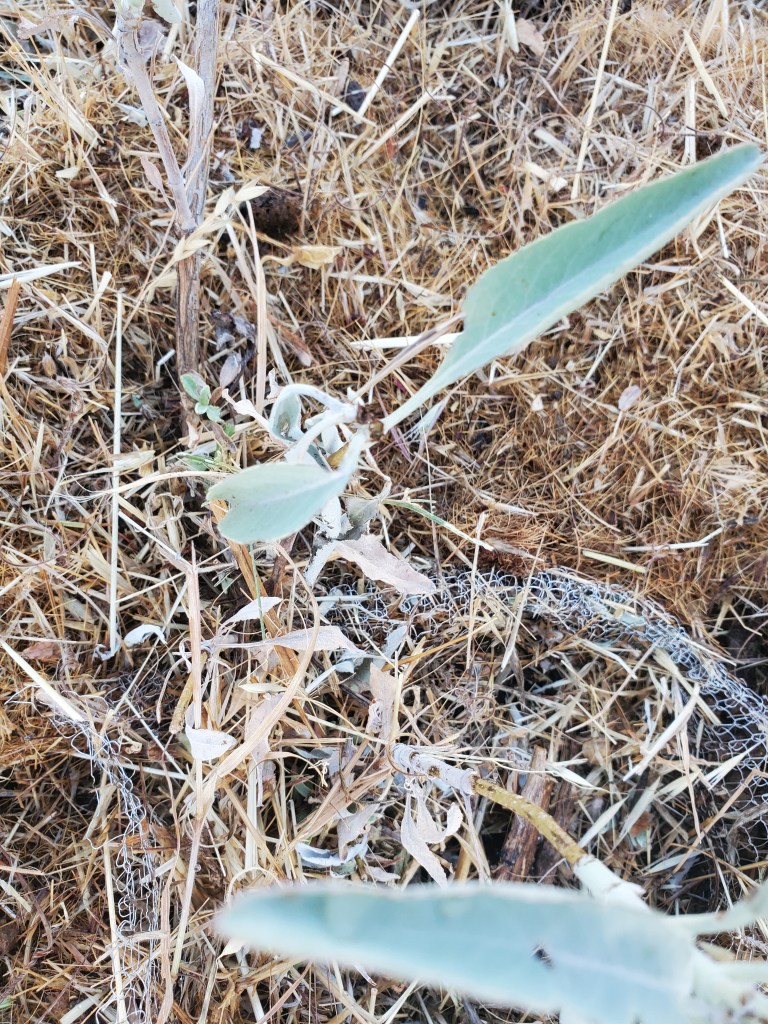
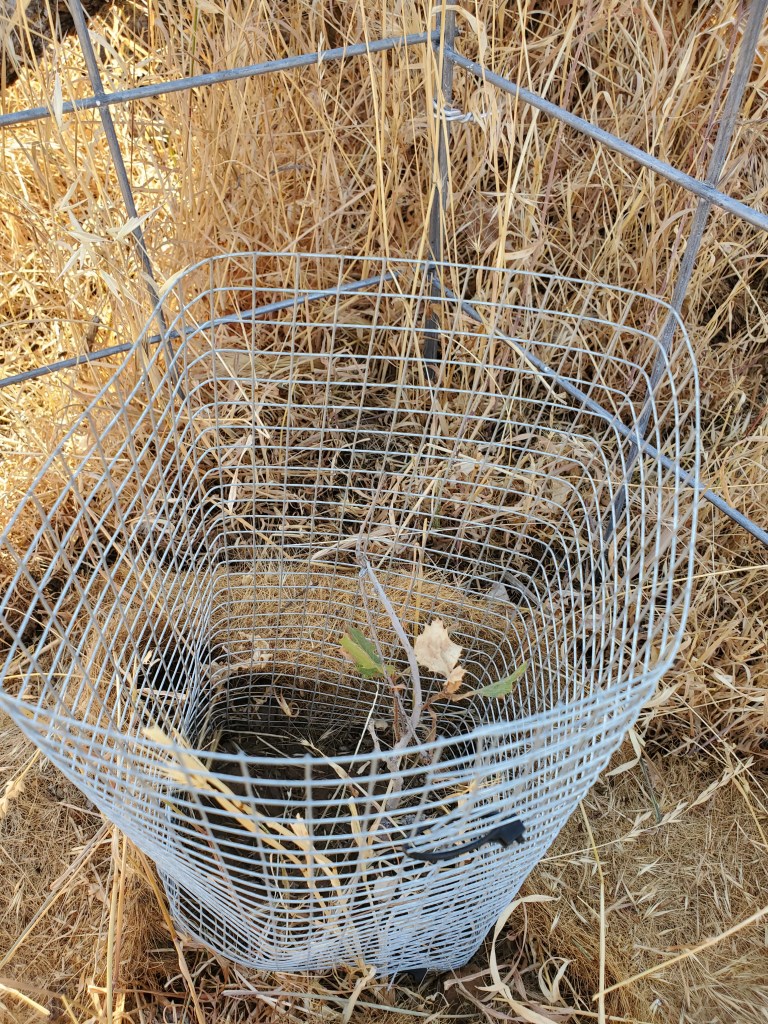
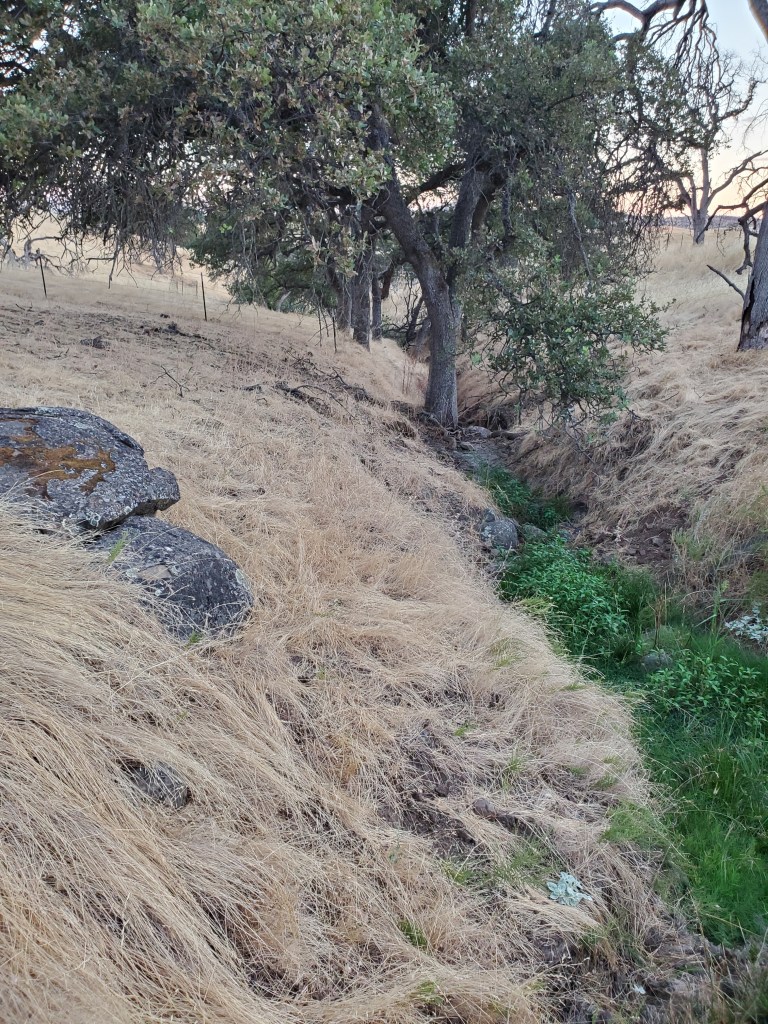
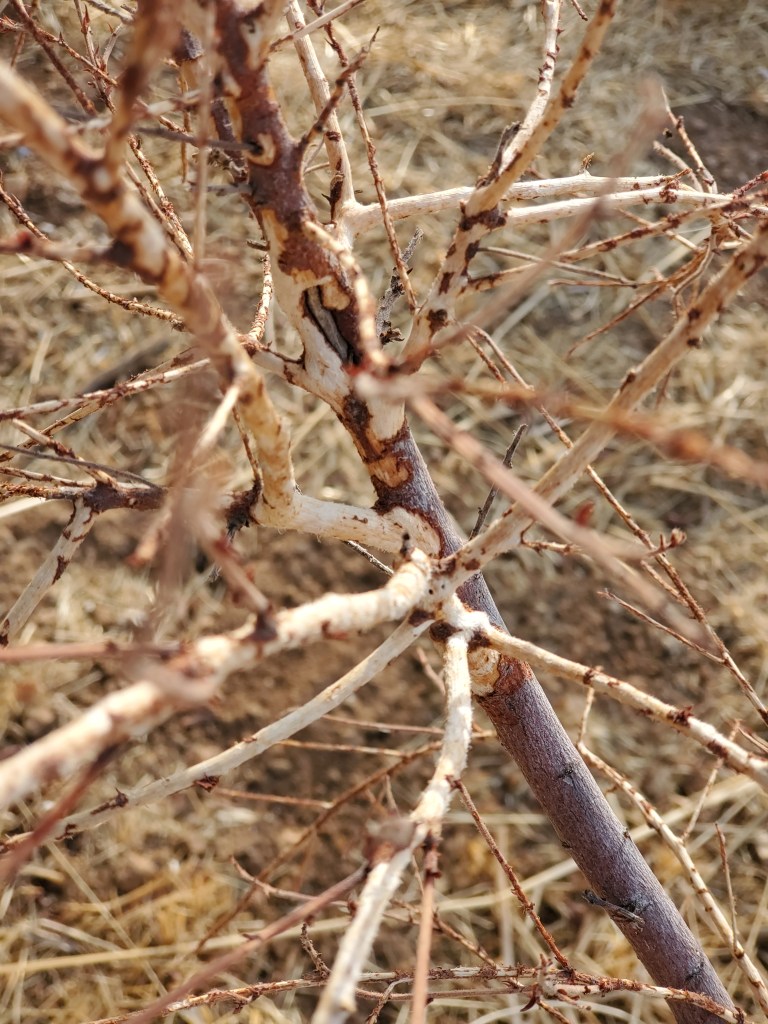
I put out the word I was looking for someone, and a friend, Jeanne Ann, said she had a grandson who was looking for work. His name is Sam. He jumped in and did weedeating freeing David to help with the oaks. We began placing his boxes and found that the two oaks at the downstream section of Spring Creek were already eaten. I lost my breath. I was horrified. When I looked closer, I saw that the bark had not yet been eaten off, like last year. Maybe there was still a chance. We covered and watered them anyway in case they were able to survive.

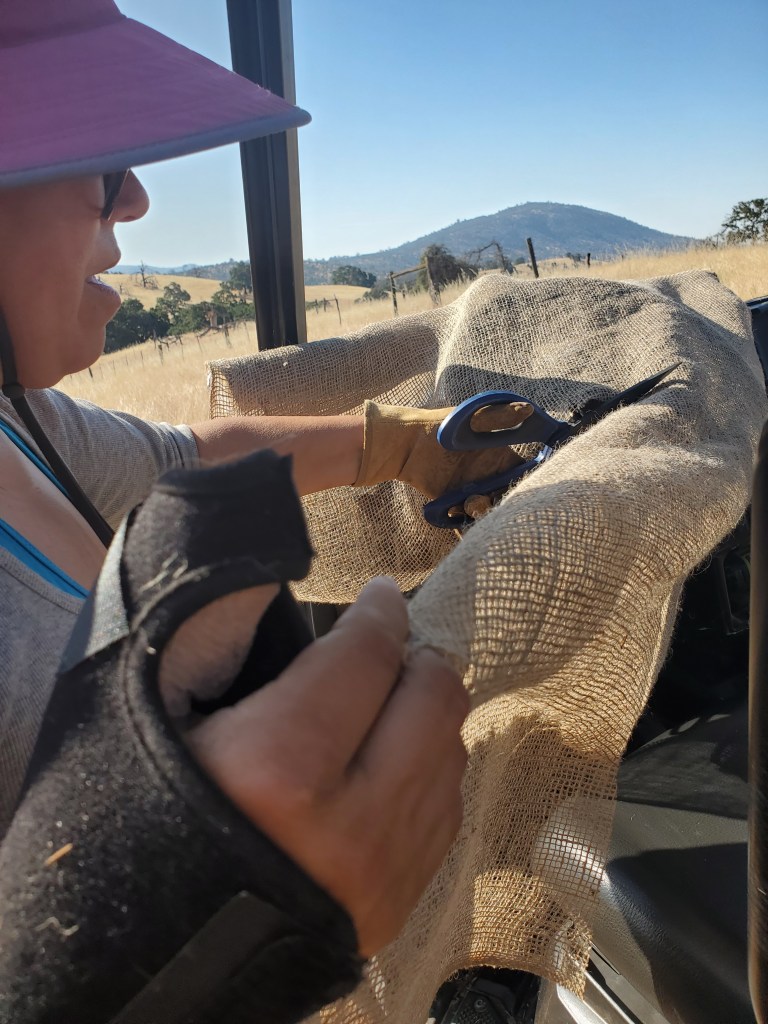
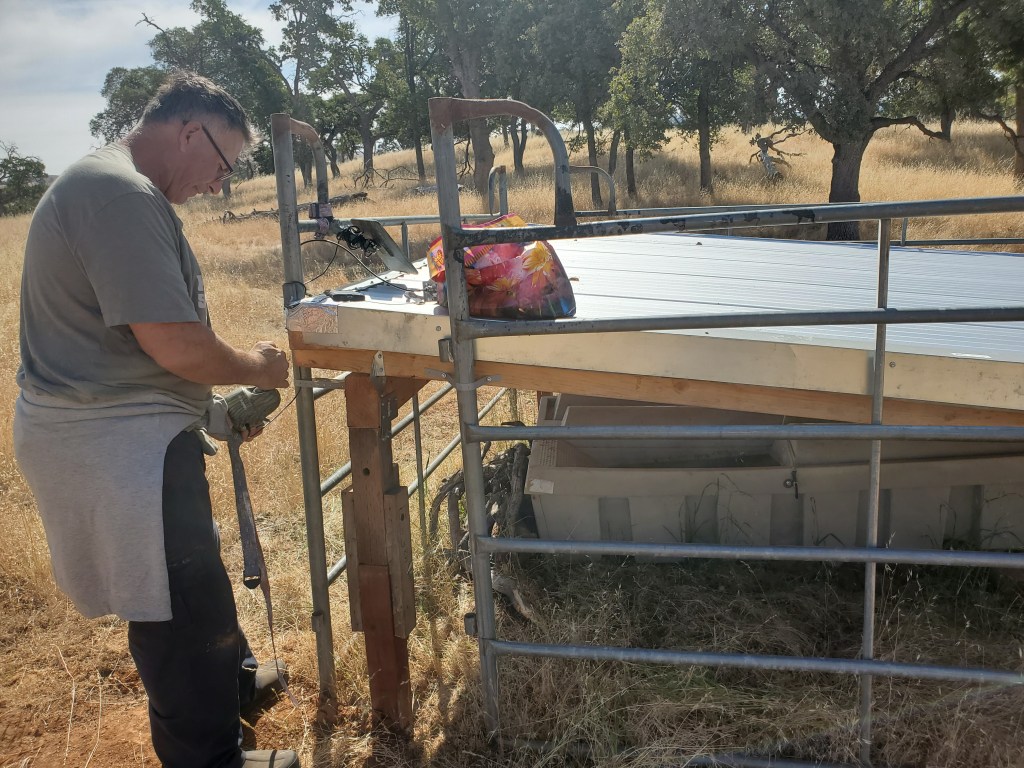
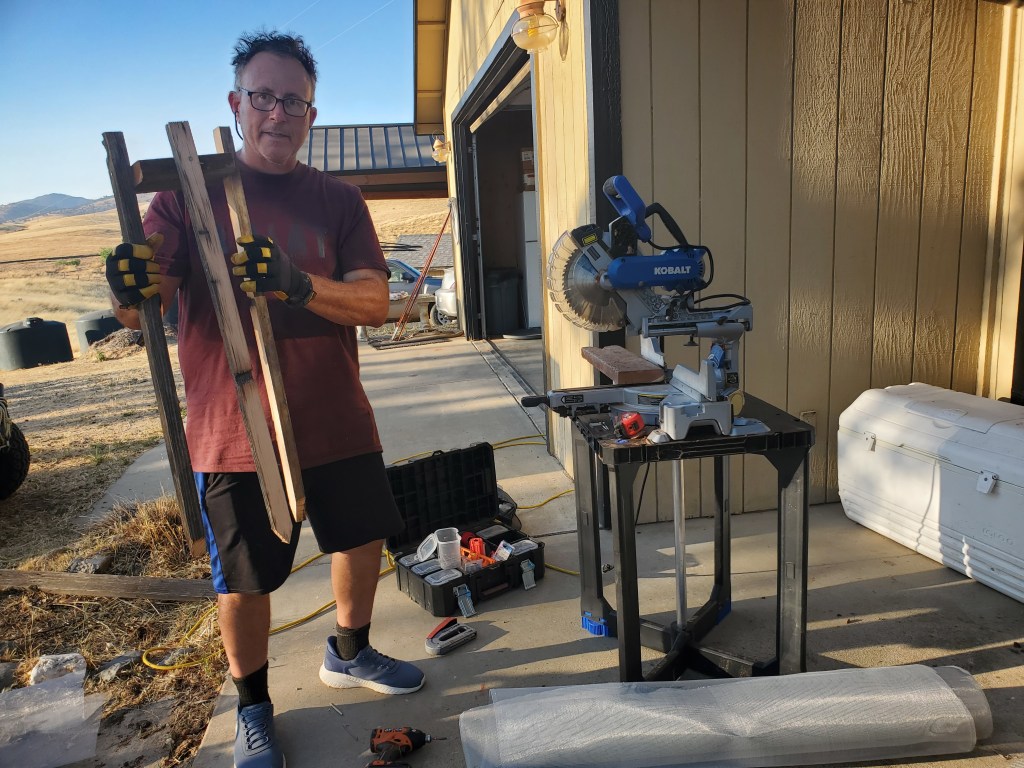
Then, a major issue happened at David’s work, and he was on a service incident for the entire day. Work stopped on my oak and plant cages. With my injuries, I was not able to do anything. I asked Sam if he knew how to build and use carpentry equipment. Turns out, he has done building before -so he had knowledge. He jumped in and innovated on David’s design and began pumping out screen boxes. Thank you Sam!!
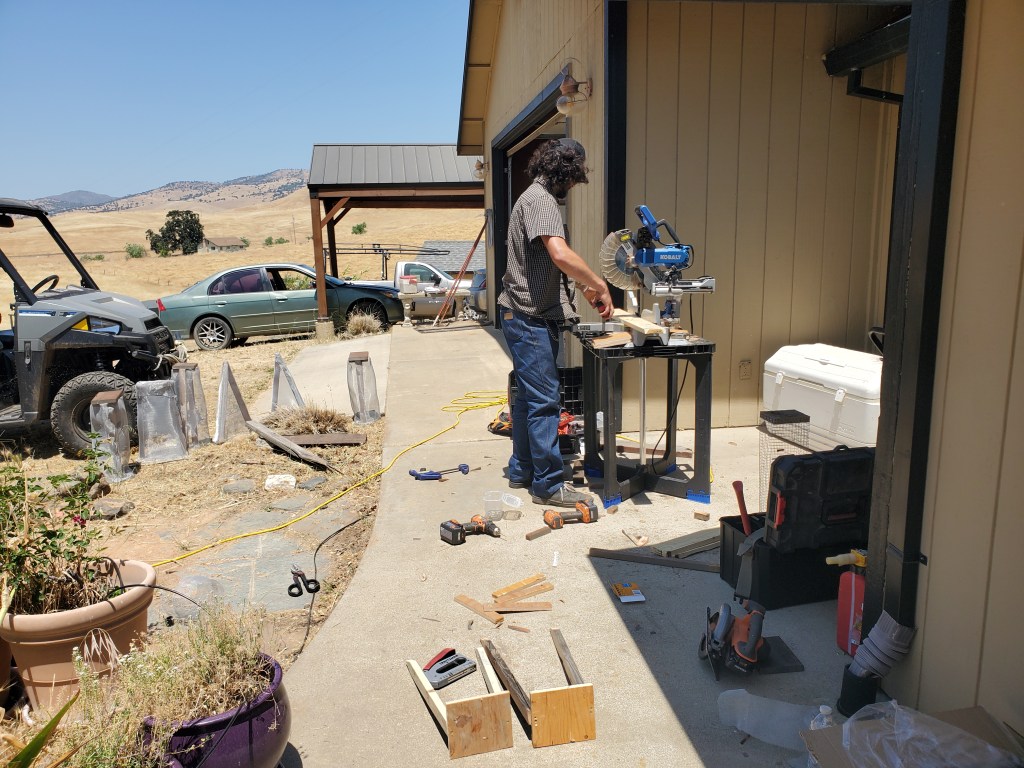
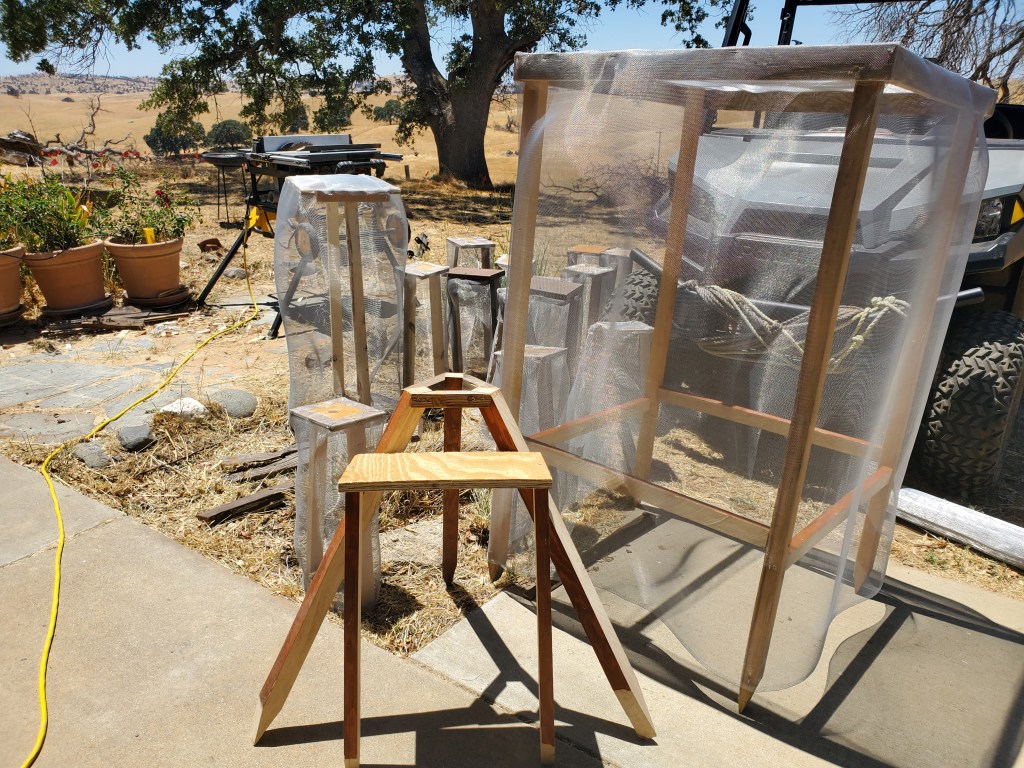
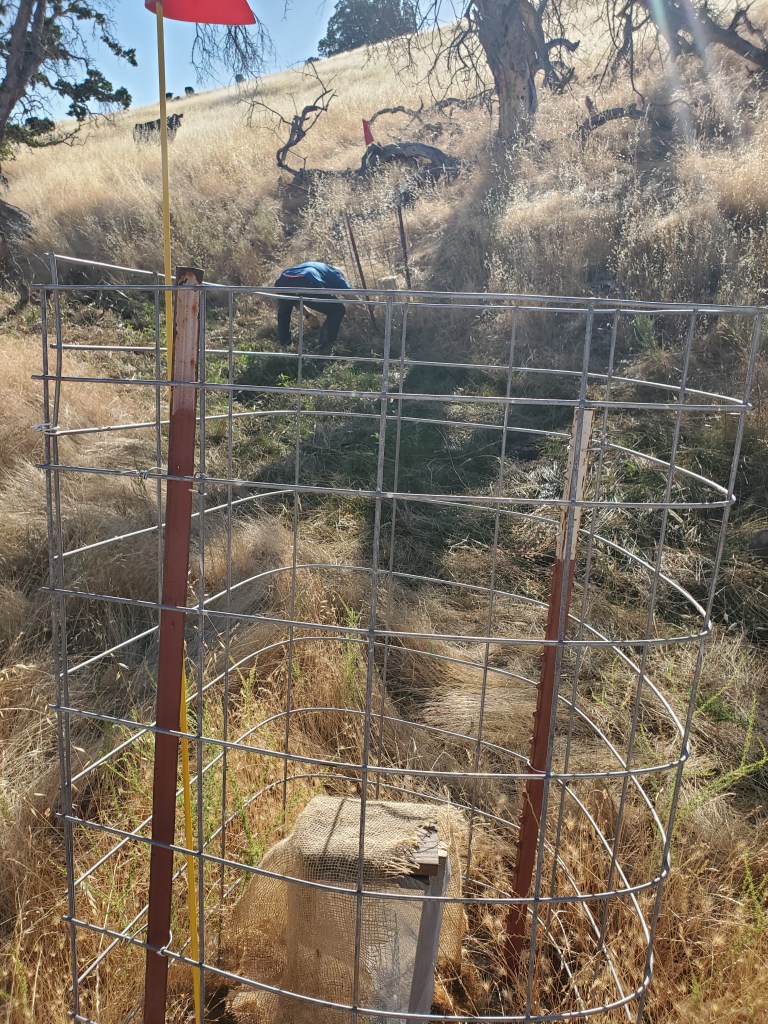
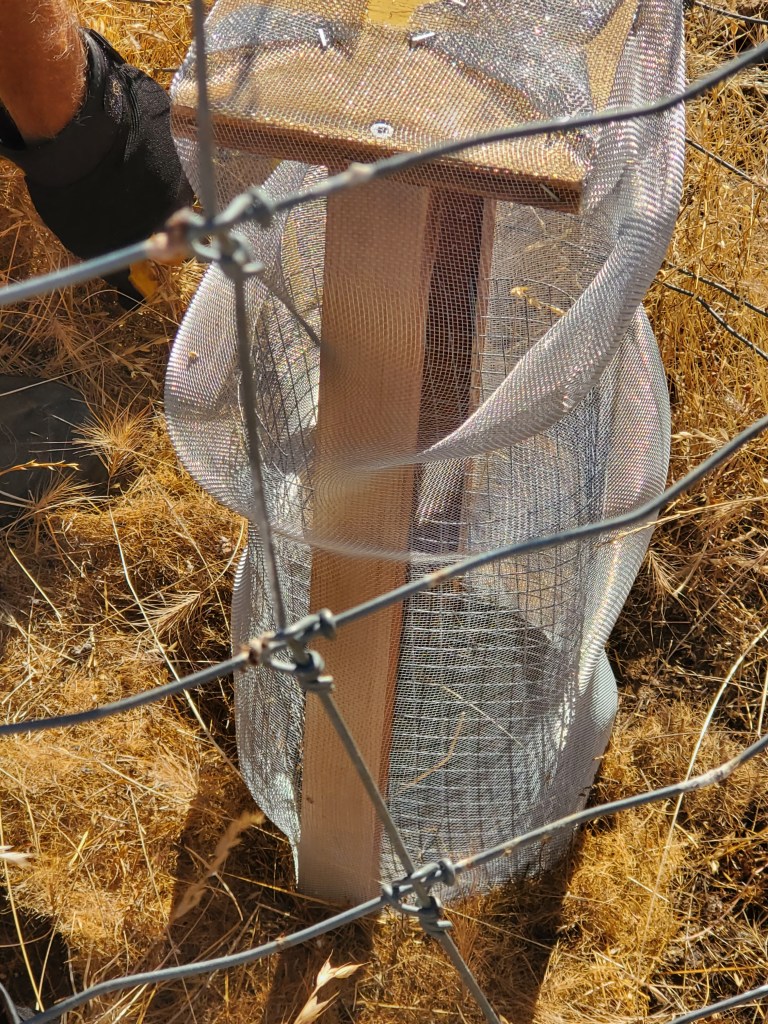
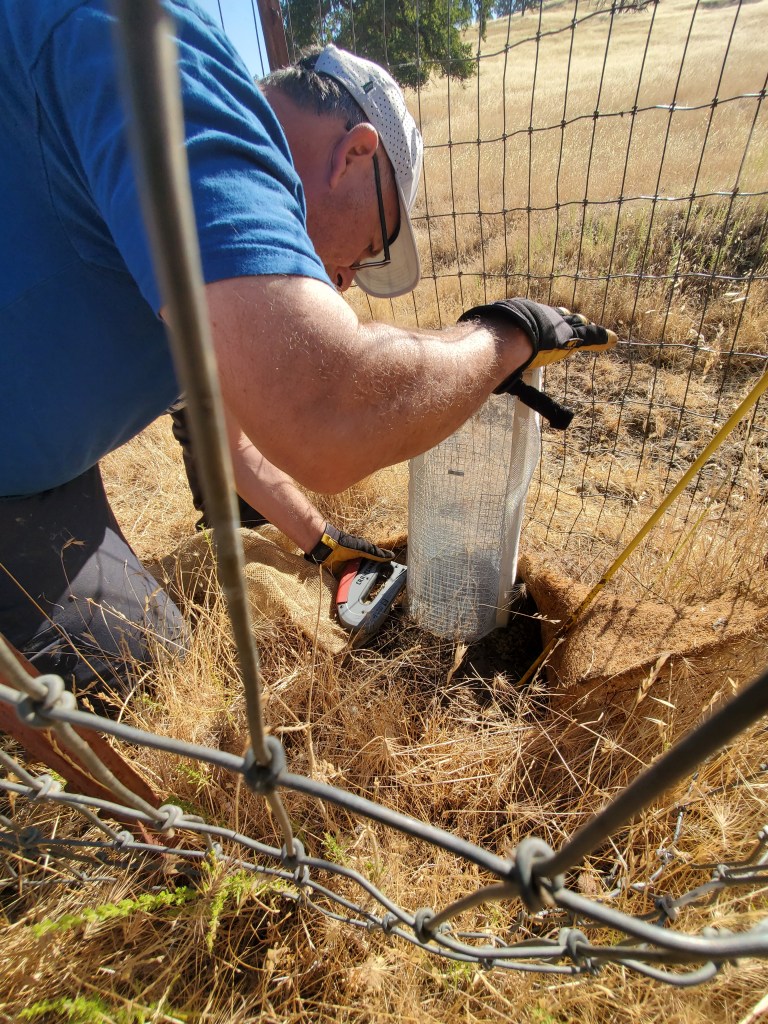
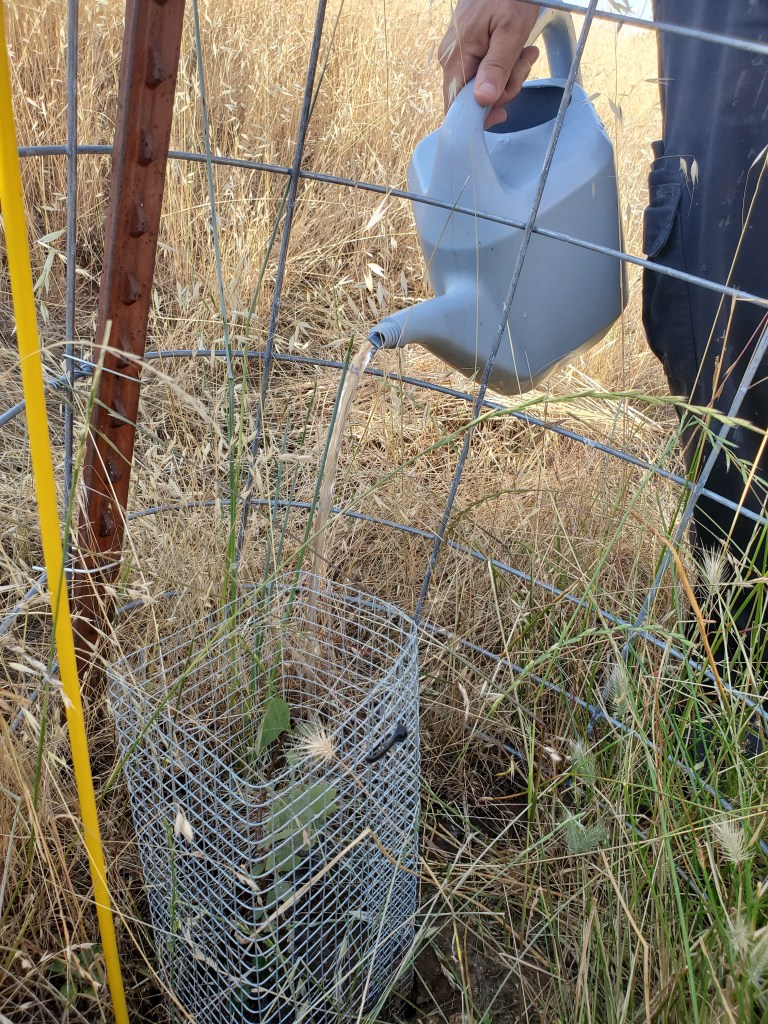
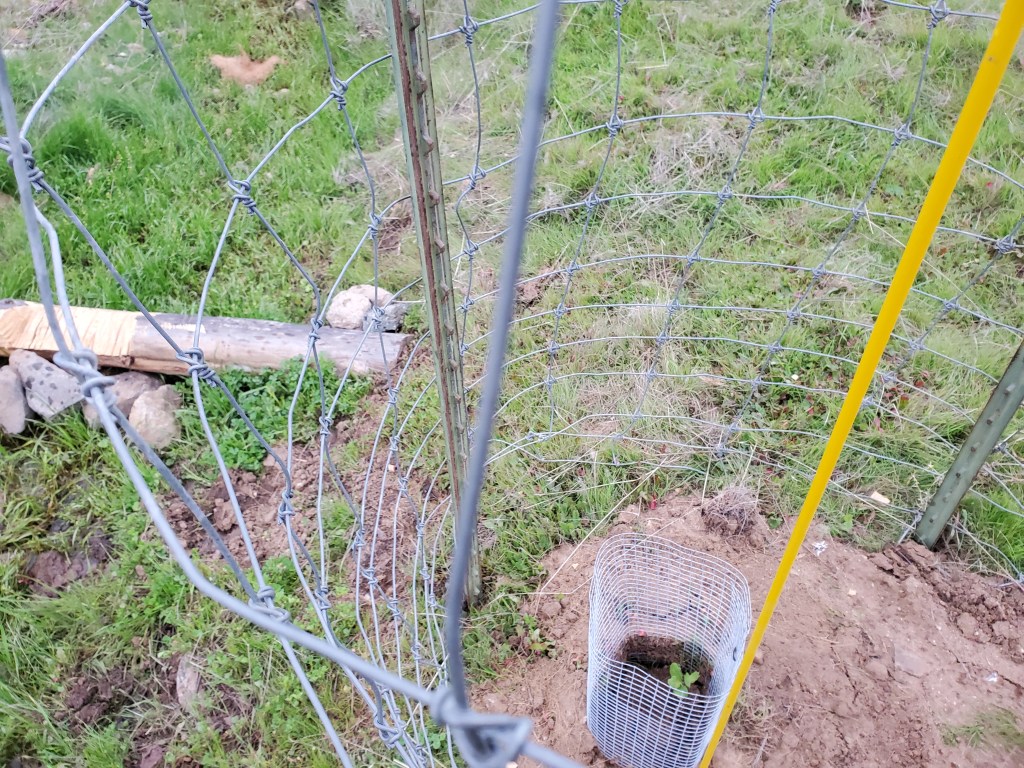
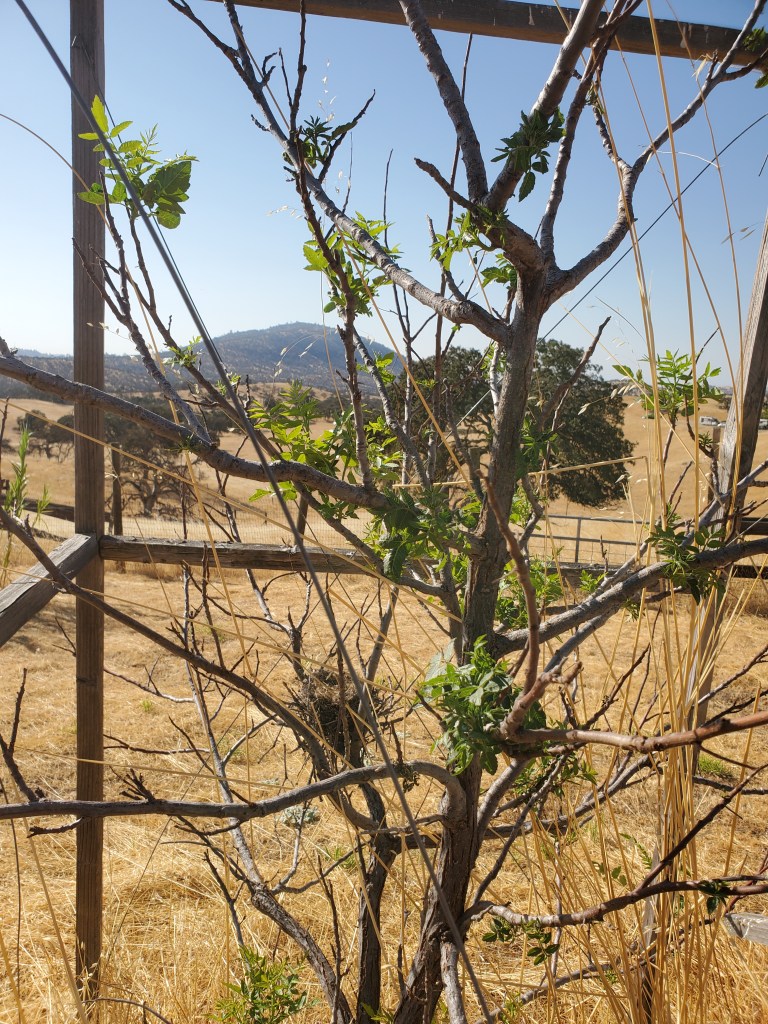
They are designed to have a wooden top to give it weight and an attachment point. There are two stakes (cut on the table saw from scrap wood) attached to the wooden top. They are nailed in at an angle to help with going over the cage shaft. Screen is measured to just fit around the gopher cage shaft. The screen is wrapped around the wooden structure and stapled.

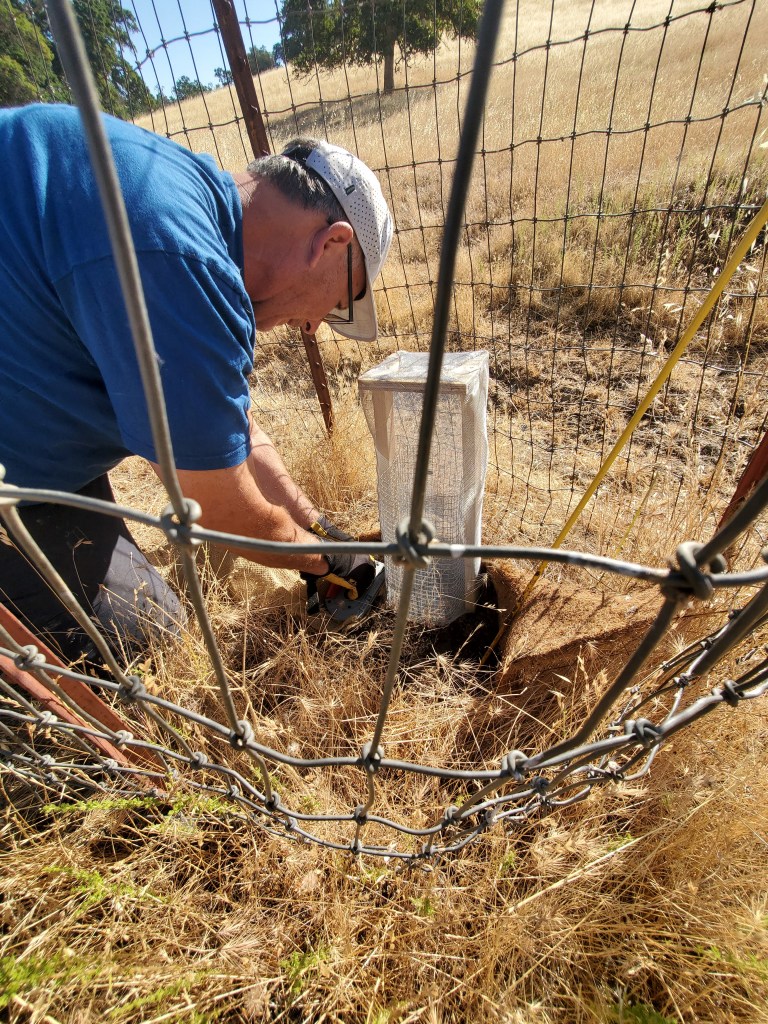
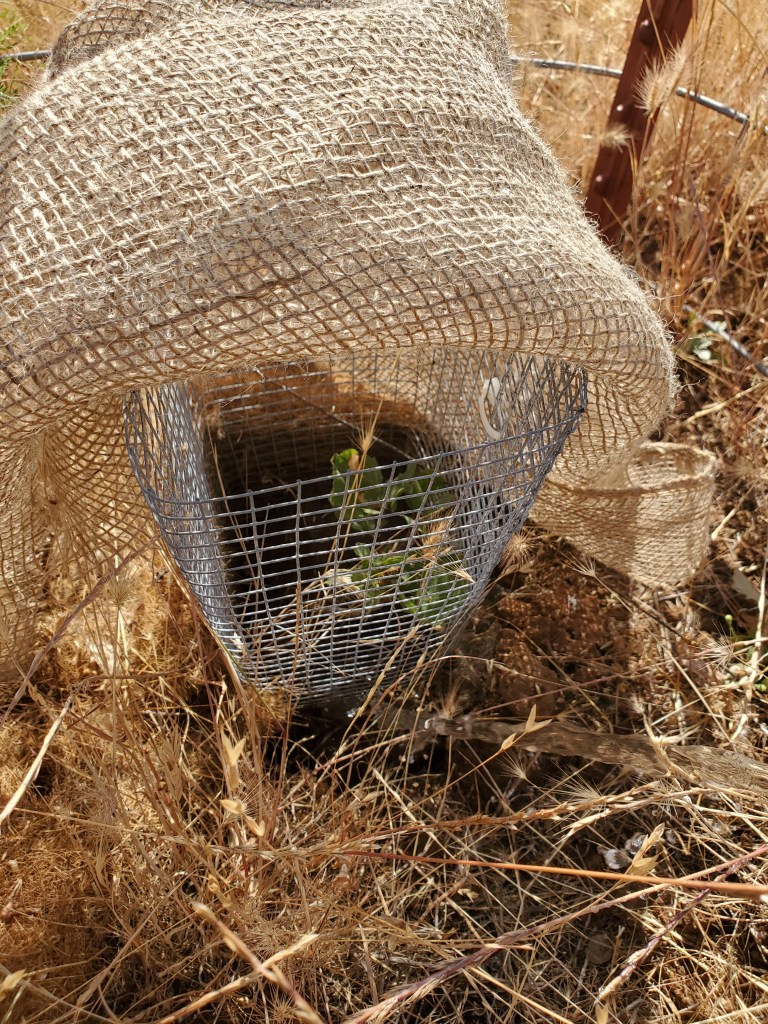
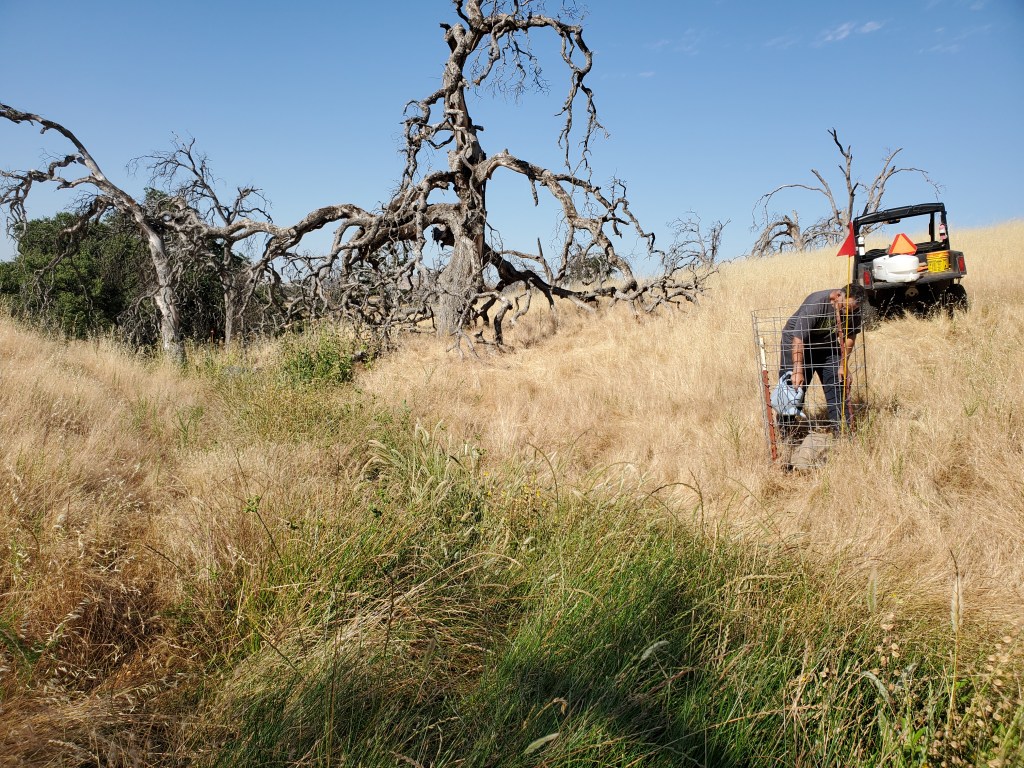
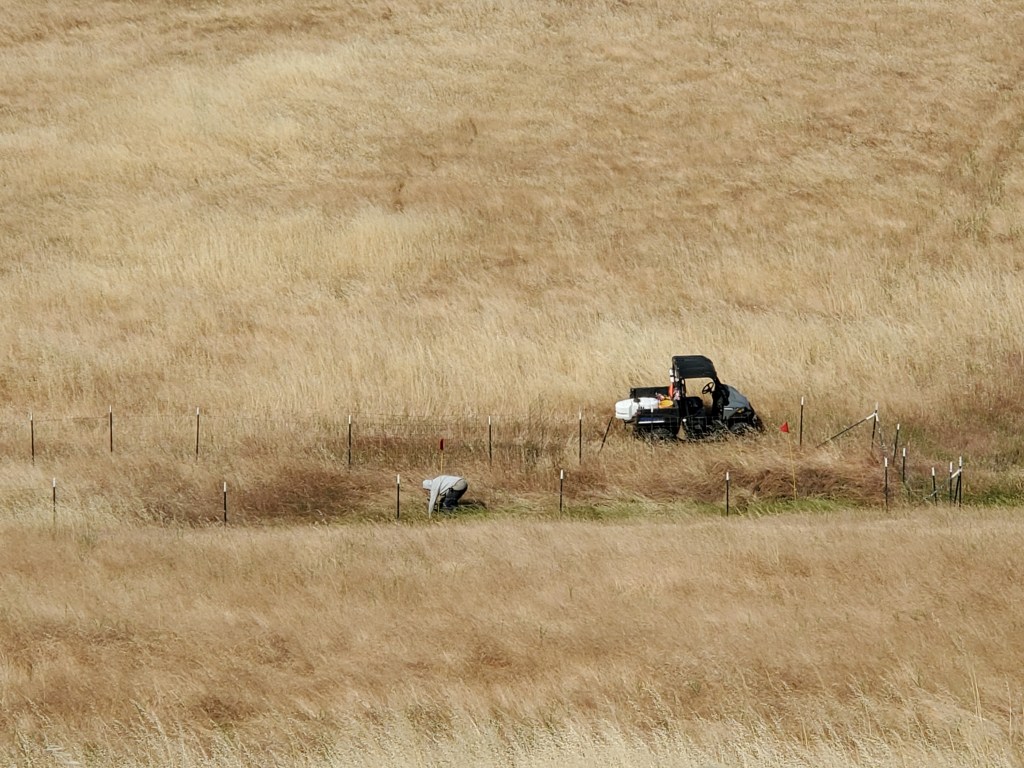
To do this takes time. The trees by the house got their boxes first. Then more needed to be built. Sam worked on the boxes while David and I placed what had been built. David could only work with me in short bursts because of his work schedule. It is laborious and very hand-oriented. You need to load water for the trees, load the boxes, the hammer, buckets and other tools to open cages or fix things. Then, you need to drive the polaris to the locations — no power steering. Next, you unload what you need, pull the huge, heavy tub with water toward the tailgate, unscrew the cap, hold onto the cap despite the pressure of the water in the large container, hold the watering can with the other hand or place on the ground, close the cap just right to prevent leakage (since you must have enough water for all the trees on your route.), haul the water, remove the shade burlap from the gopher cage, and water the tree. You need to pull up the coir pad so the screen box stakes can hit the dirt. Then, you go back to the cart, grab the screen box, lift it over the side of the cage. You need to alternate your hands through the openings in the cage, grabbing the screen box with one hand while placing your next hand through the next level of holes to grab the box, gently lowering it down over the oak in its gopher cage. This takes time. It is a gentle operation because you don’t want to risk dropping the screen box in the cage out of reach or breaking a branch on the seedling. Next, you carefully fit the screen over the gopher cage. They are designed to just fit. You don’t want to be too strong with it or the screen may pull off the staples or wood crack. You pull it over the gopher cage like a condom, then take your hammer and pound the wood stakes into the moist ground with the hammer. You then squish dirt up against the screen so there is no entry point for the hoppers. You place the coir pad back around the blended unit, grab the discarded hammer, walk back to the polaris and do it all again. Ideally, you don’t want to have to open the cage. That takes much more time – so you have to be careful.

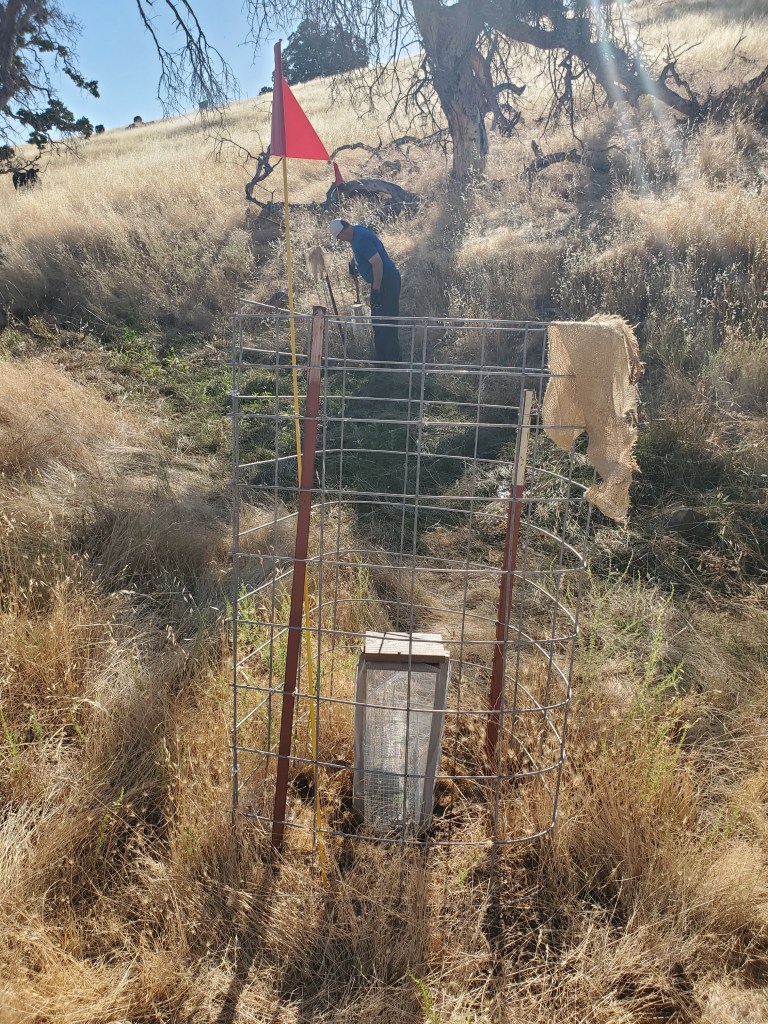
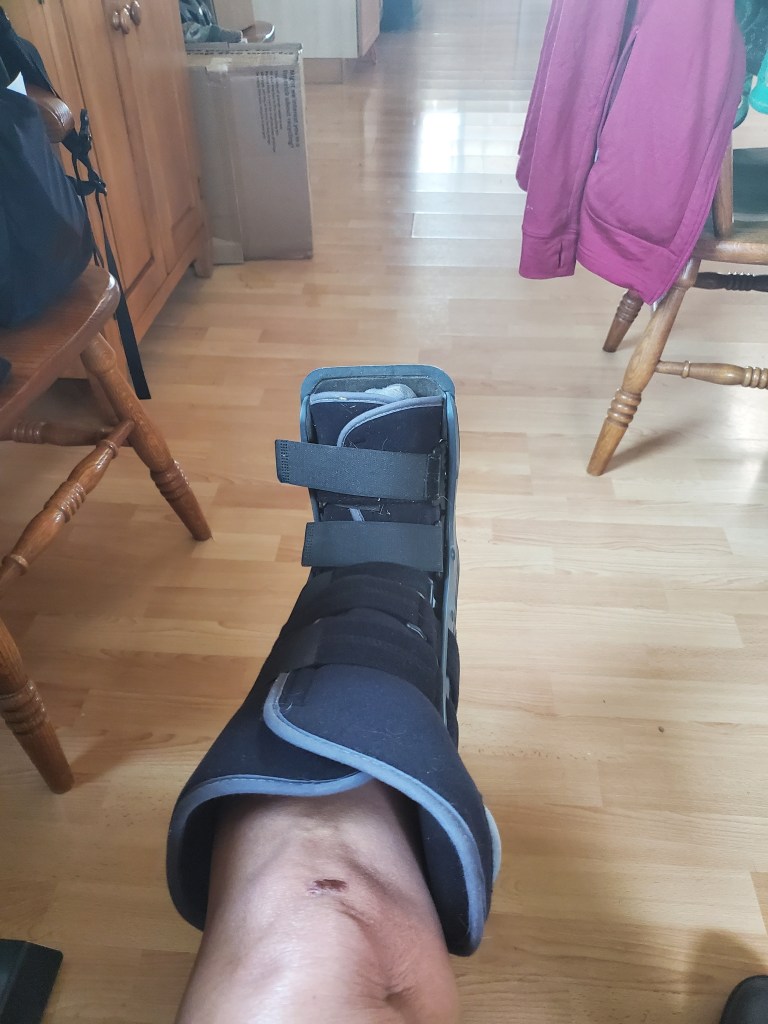
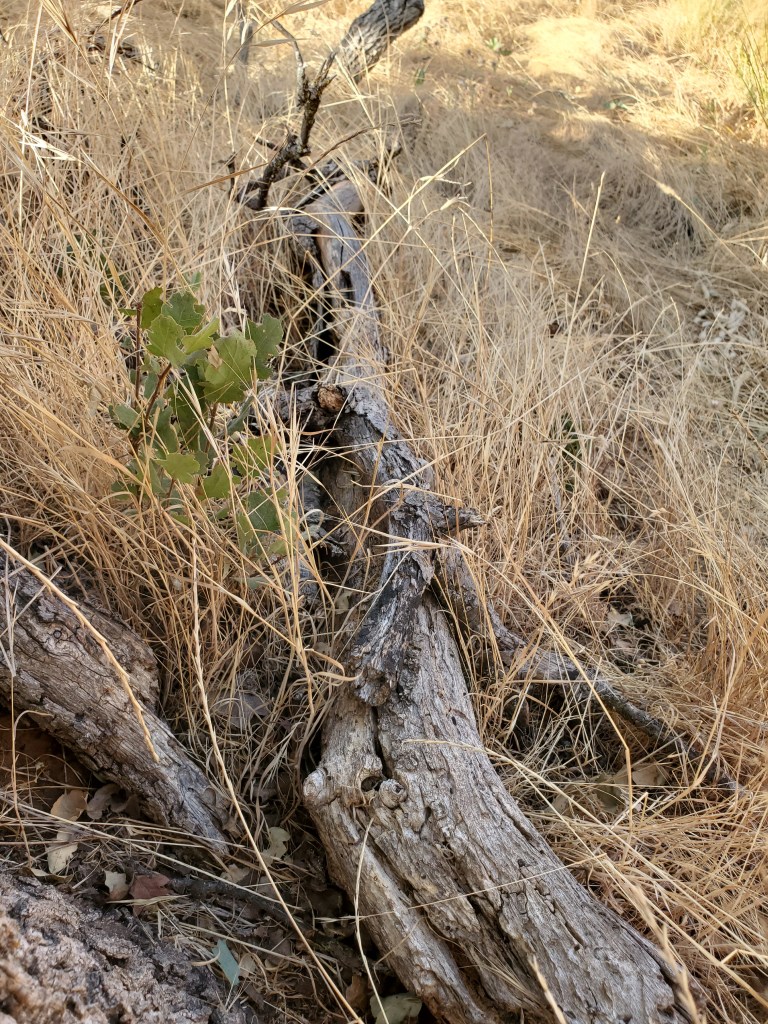
With my thumb still busted, wrist, knuckles and ankles still sprained, my job has been copilot, holding the water bucket with my good hand, carefully walking over to the tree, watering and removing the burlap and coir pad. David was doing everything else. As we went to each tree, I held my breath as I lifted the burlap shade cover, hoping I would see the healthy seedlings I had watered just 6 days prior. The two upstream on the Spring Creek…they looked great. I breathed out. The one by the lower pastures planted into the old dead oak, I lifted the cover, mostly eaten. There was one green leaf left. I’ll take it. Watered and screened. The discovery was unsettling. I became nervous for the others.
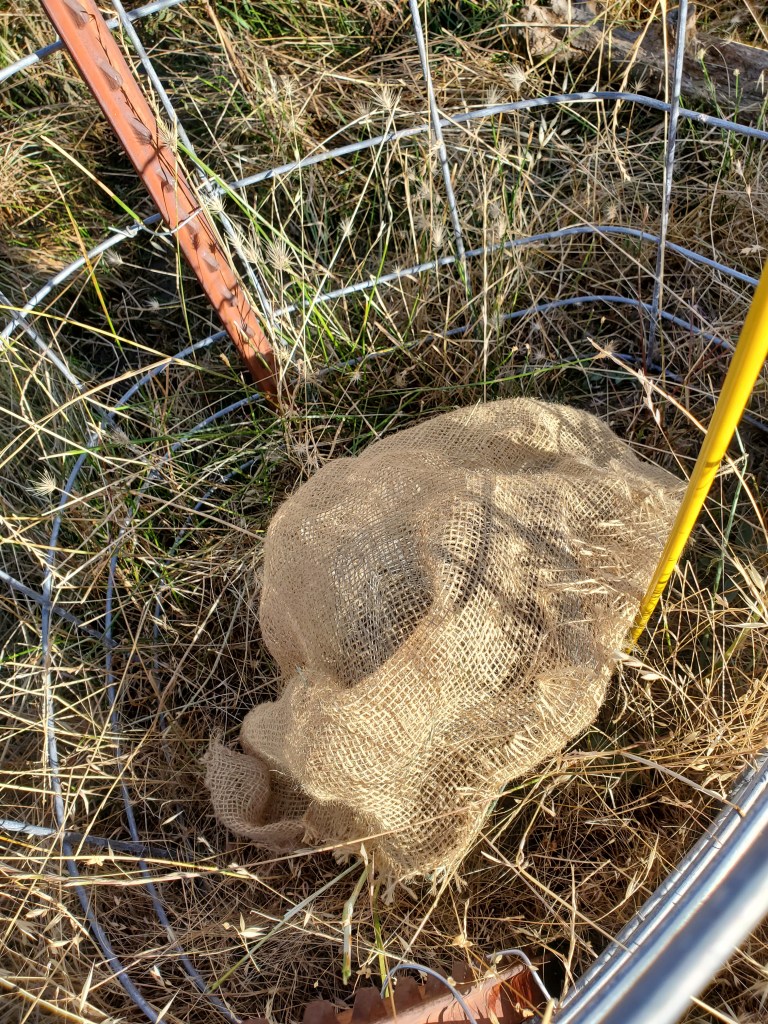
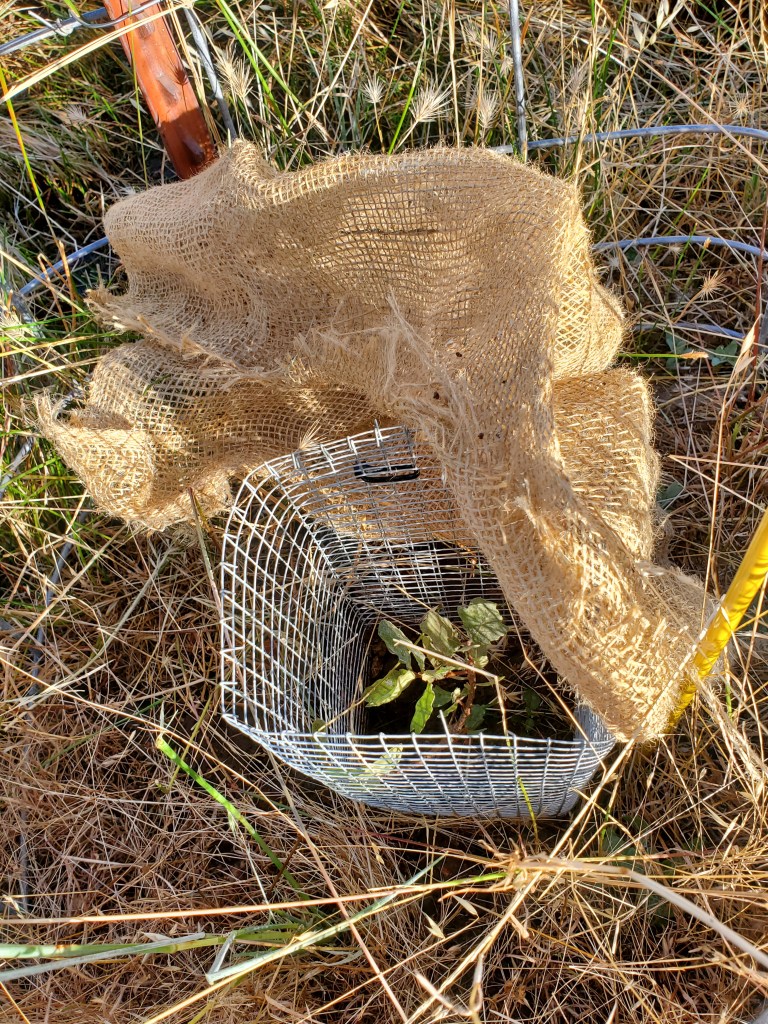
Then, David received a message that there was another major issue at work. He had to help save the day for a different type of situation. Secretly, I deflated. We needed to complete the work or there might not be any other trees to screen. I felt nearly useless and very dependent upon David. Shoulders slumped, I helped pack up the polaris and got into the passenger’s seat. We had been out since 6:30am working. It was almost 9am. David had given me plenty.

As we drove toward the house, I resolved that I would do as much as I could with one hand. There could be no more delays. We already lost the two oaks down stream. I had to do something. We got home; David jumped out and quickly went inside. I went over to the pile of screen boxes, loaded up for the remainder of the oaks, got behind the driver’s seat for the first time in 5 weeks and carefully backed up and went back out.

The first tree was the oak by the guzzler. Hopefully, I lifted the burlap. She was gone. I went to my knees, gripping the cage, lay my head on the fencing and let out a scream and started to cry. Another one so healthy just days ago –gone. I pulled it together, and with renewed determination, I set about doing what David did, slowly and steadily. I was able to use my right arm, instead of the hand, as a bolster to hold things against my body and my left hand to do everything else. It was not ideal, but it was the only tool I had.
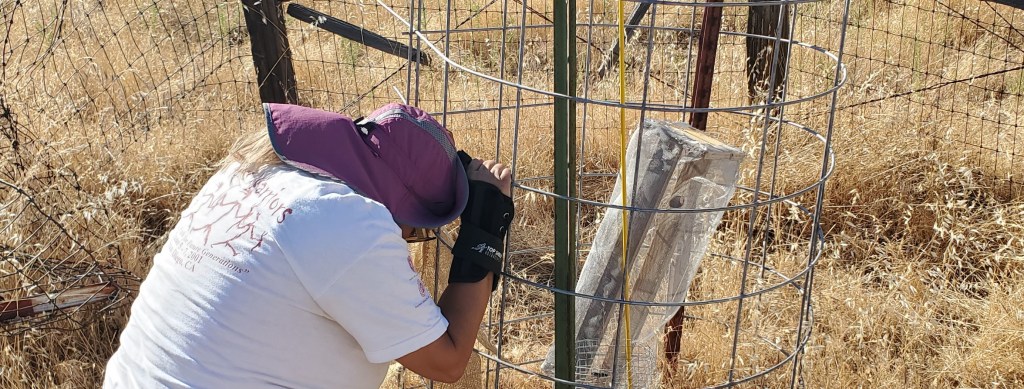
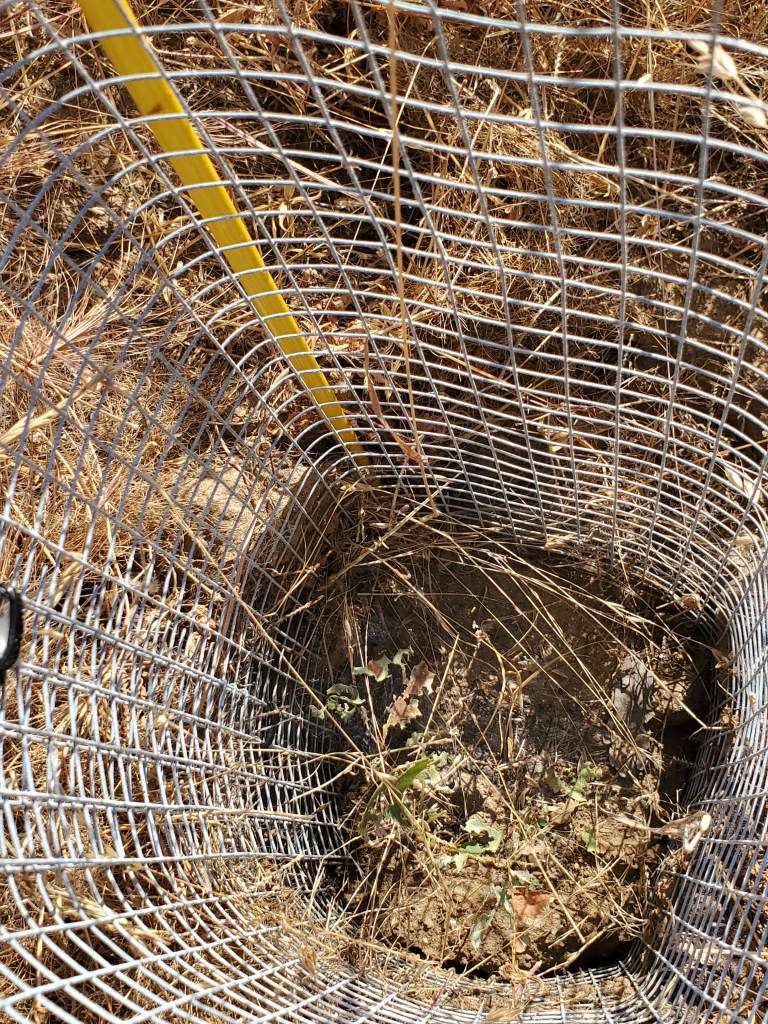
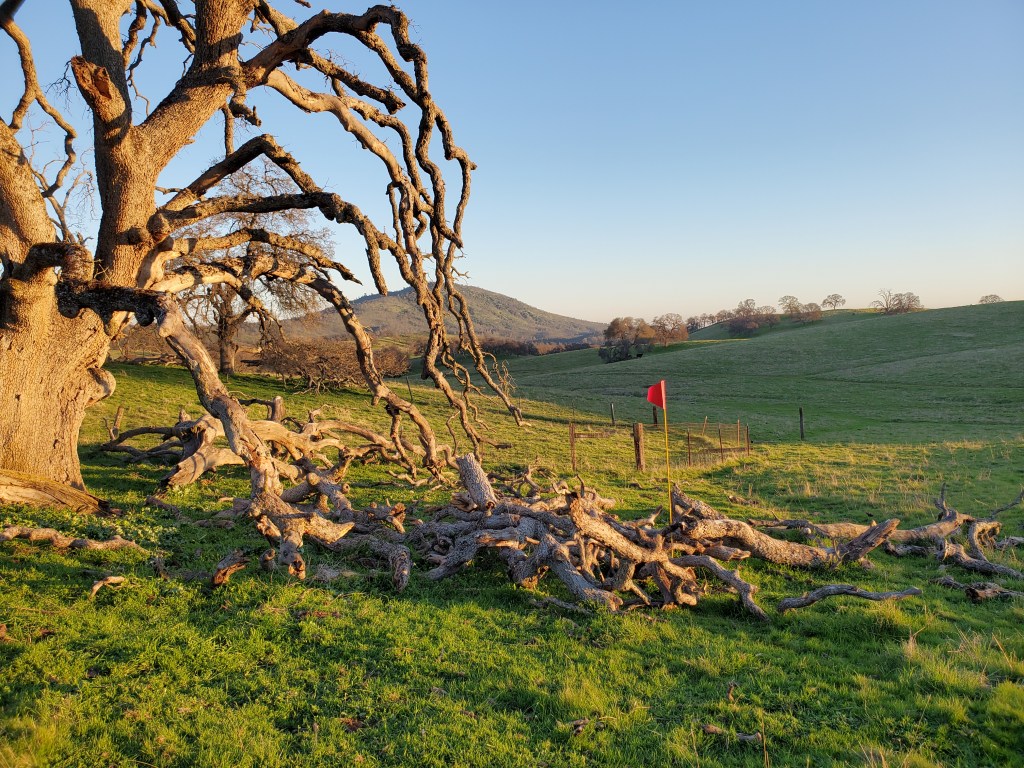
Like the other eaten oaks, the bark was still intact. I watered her, screened her, shaded her, and then moved on. The oak near the perimeter fence on the southeast was gone too. Instead of getting mad, I did the same thing… water, screen, cover. I went to the next tree. She was gone. My stomach started twisting. Hatred for myself for not being on it sooner crept in. Remember, every tree that does not survive, I must wait another year before I can try again. It is another year wasted. Water, screen, cover. I drove to the tree due west of our old, dying grove, lifted the burlap and — she was super healthy, full of leaves! The hoppers had not found her yet. I watered, screened and covered. Of the nineteen seedlings, six were stripped and ten had survived. The other three failed to thrive. They were lost around the time of the May heat wave.

Two Weeks Prior

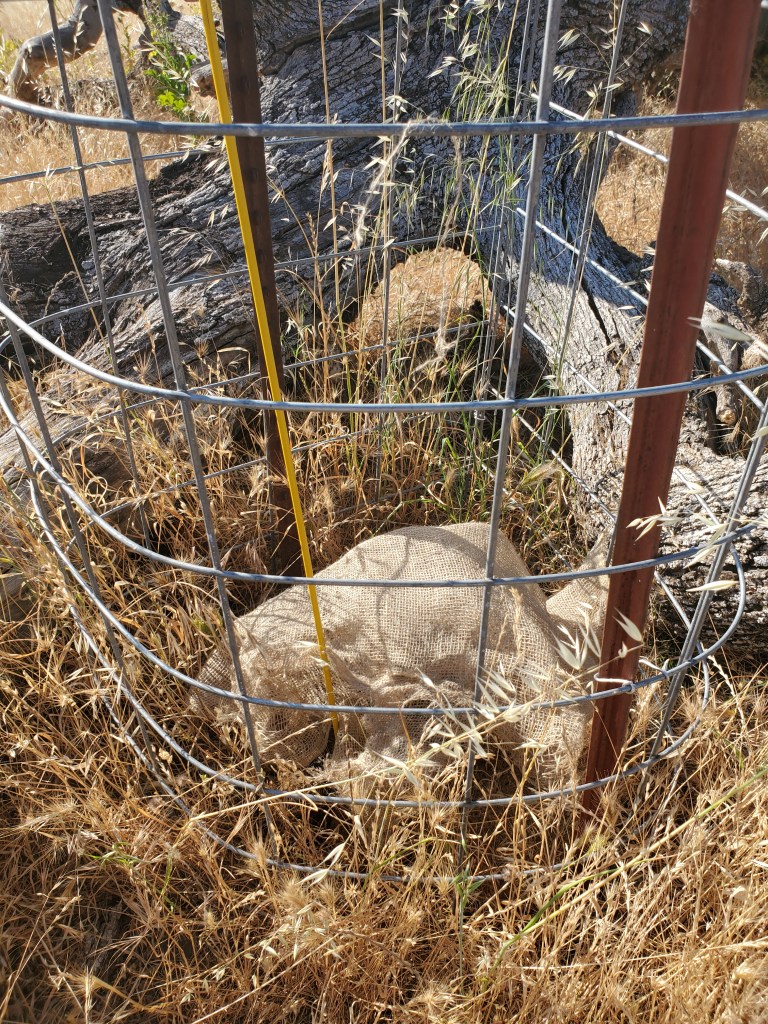
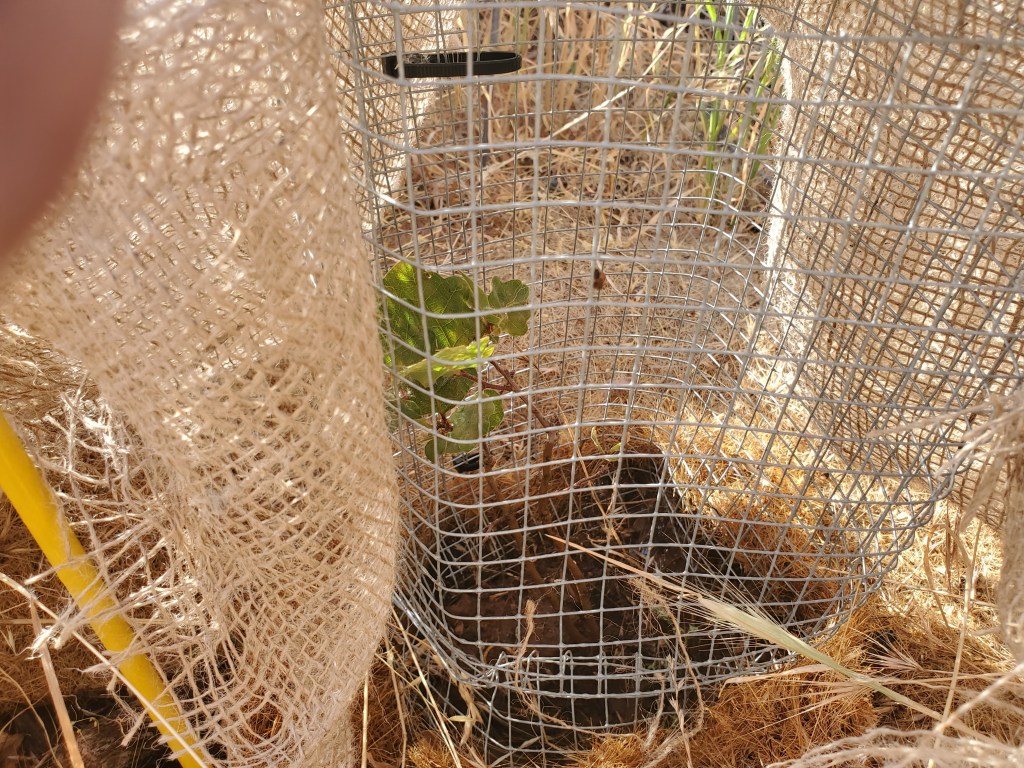
Just like in the movies, I will now take you to a flashback two weeks before the hoppers ramped up. David and I have been maintaining a strict watering schedule of every 5 days for the oaks. In anticipation of the mini heatwave, we also cut sections of burlap to lay over the gopher cages to shade the oaks. Sadly, two oaks appear to not have made it through the heat, the one in the exclosure and one of the driveway oaks. We continue to water them just in case the roots are still alive.
Milkweeds Gone

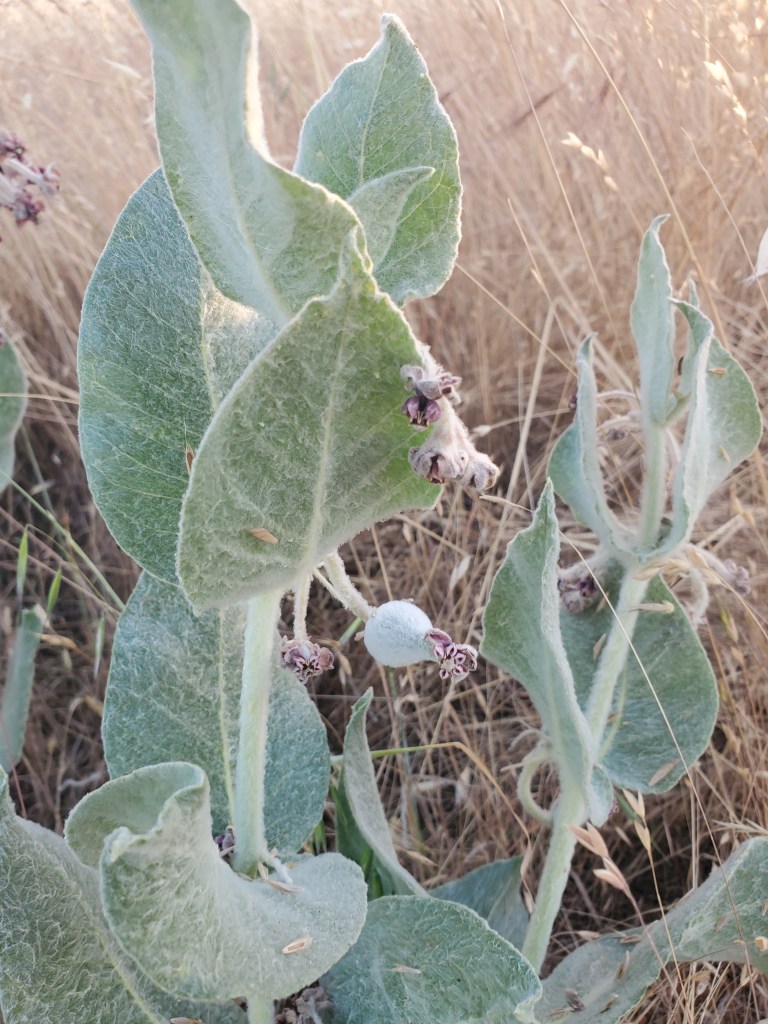
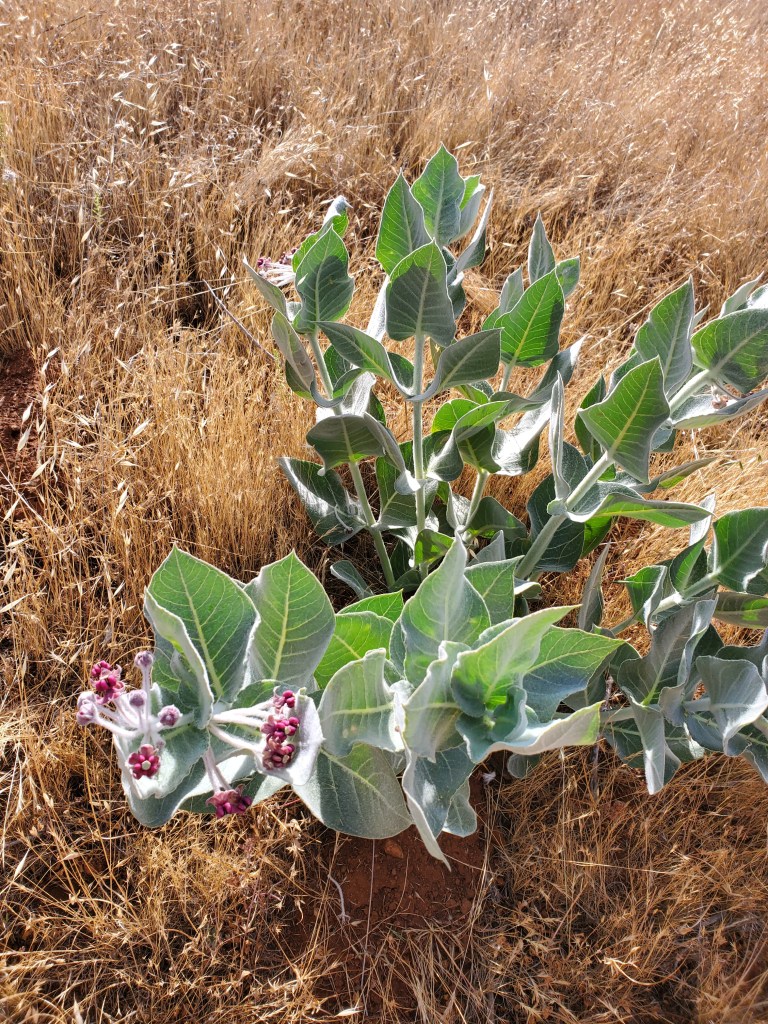
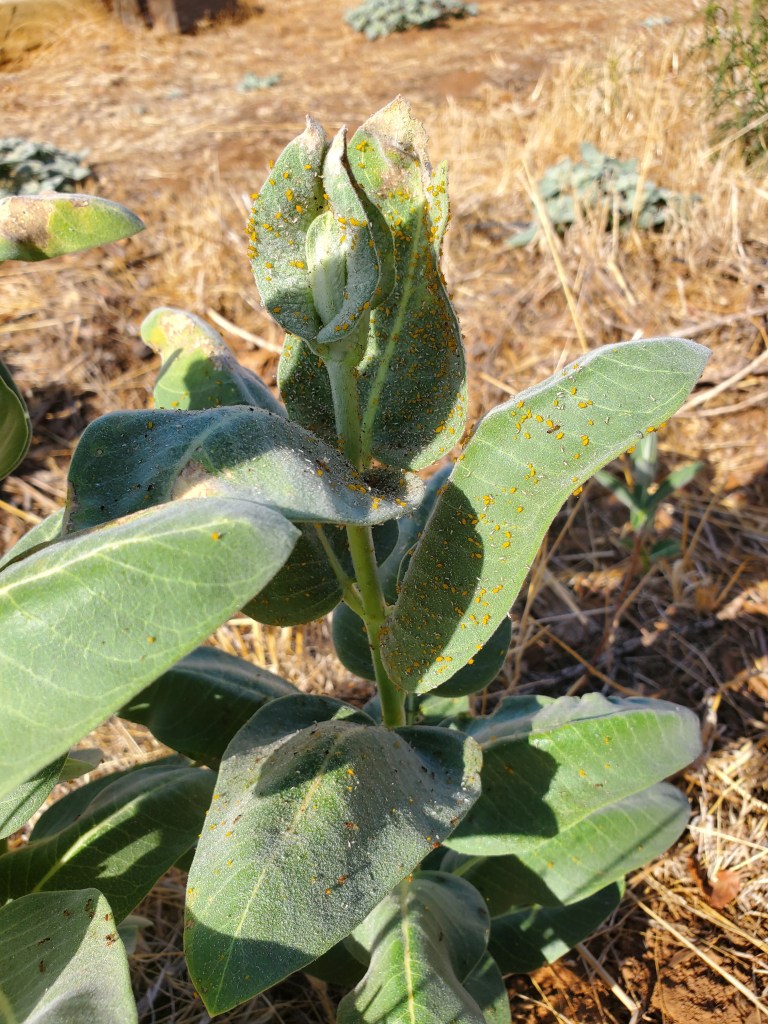
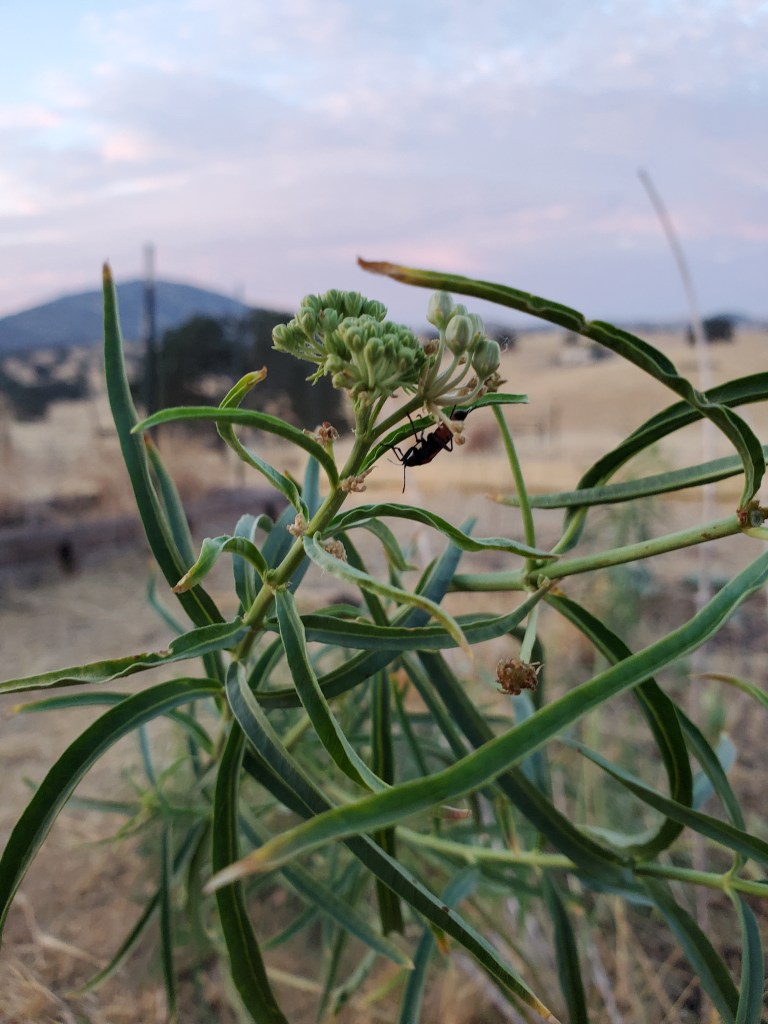
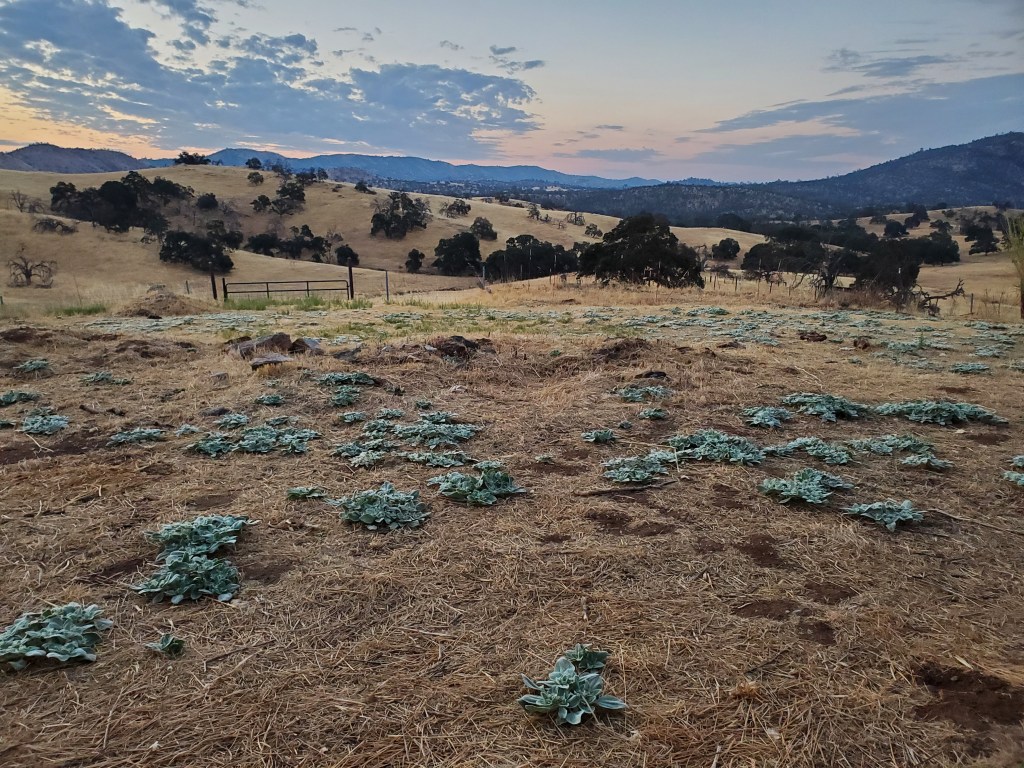
Similar to the oaks, the grasshoppers are all over the California milkweed. The only difference from last year is that the hoppers came later giving the milkweed more time to set seedpods. With the accident, I have not been able to monitor the sites. Last Sunday, I felt strong enough to walk up the hill, slowly and carefully. I found every milkweed at one stage or another of being eaten. On the more intact ones, there was still no sign of monarch activity. I am officially designating this spring a no monarch spring. Add that to the no monarch fall. It is beginning to feel very depressing.
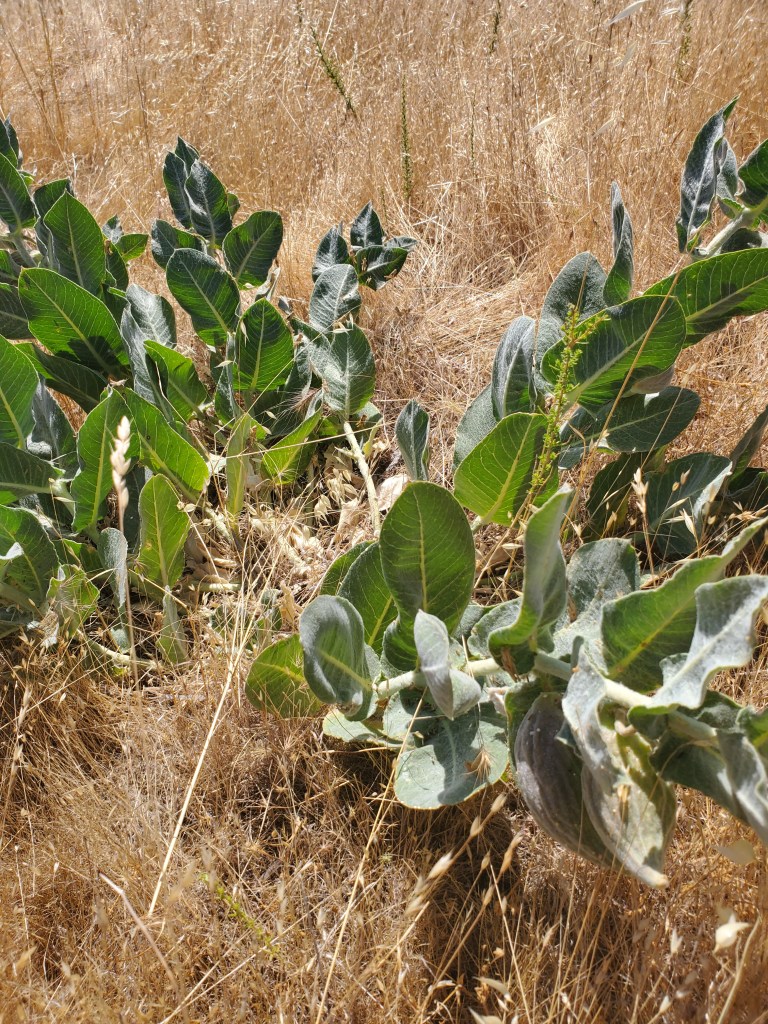
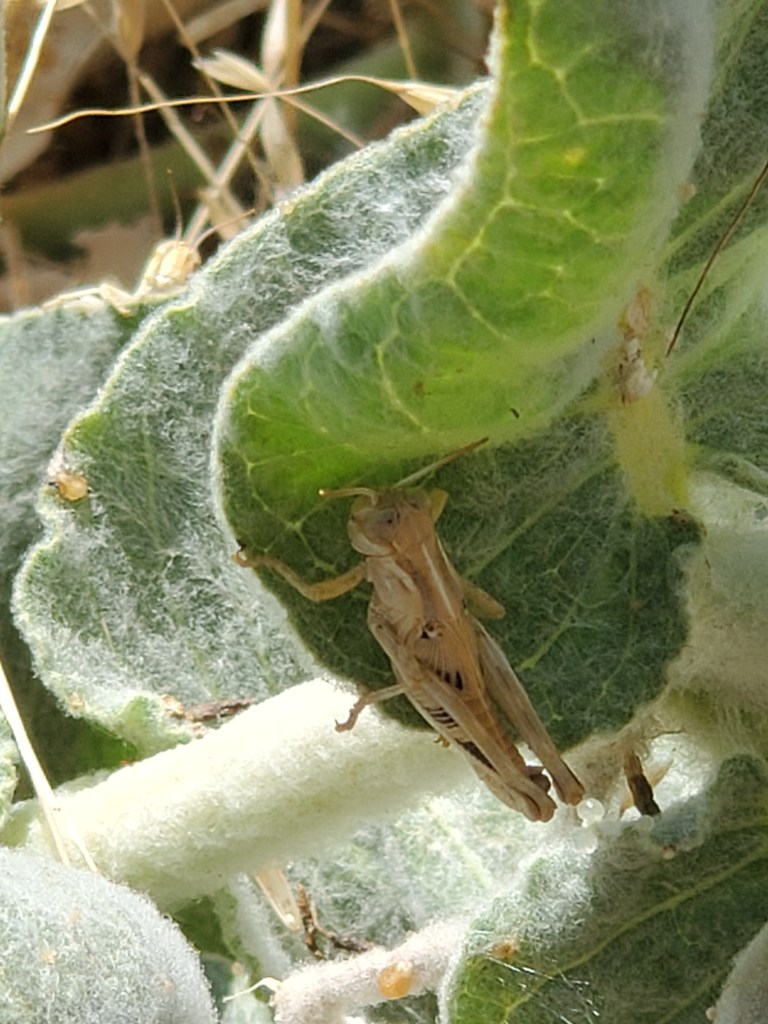
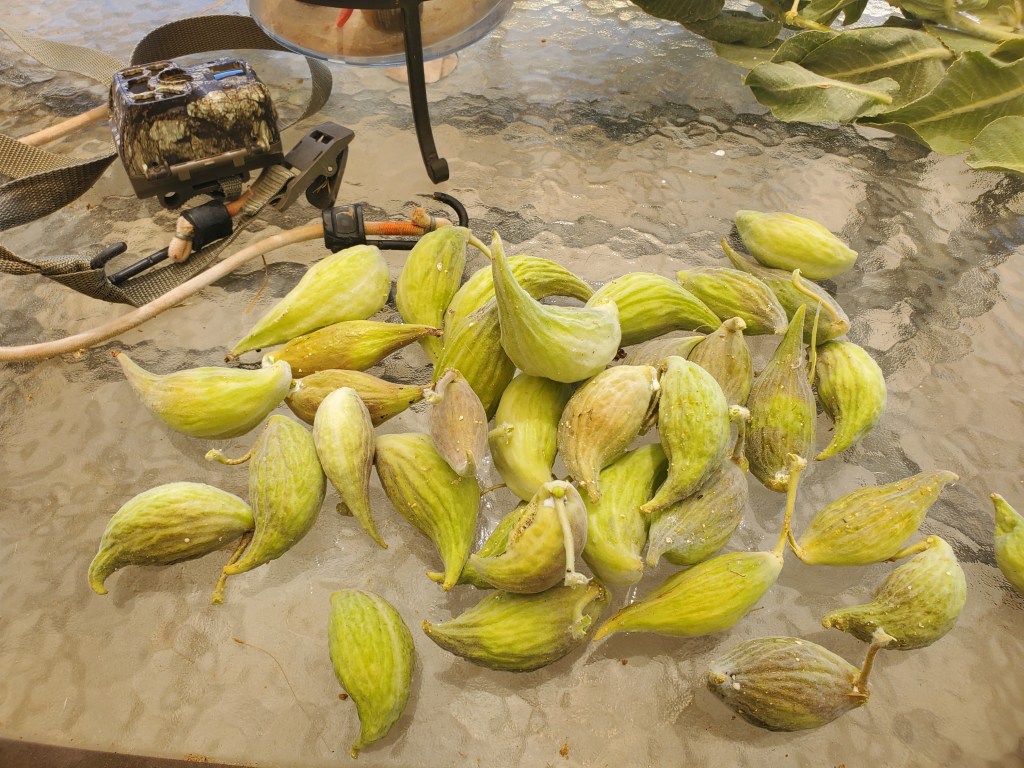
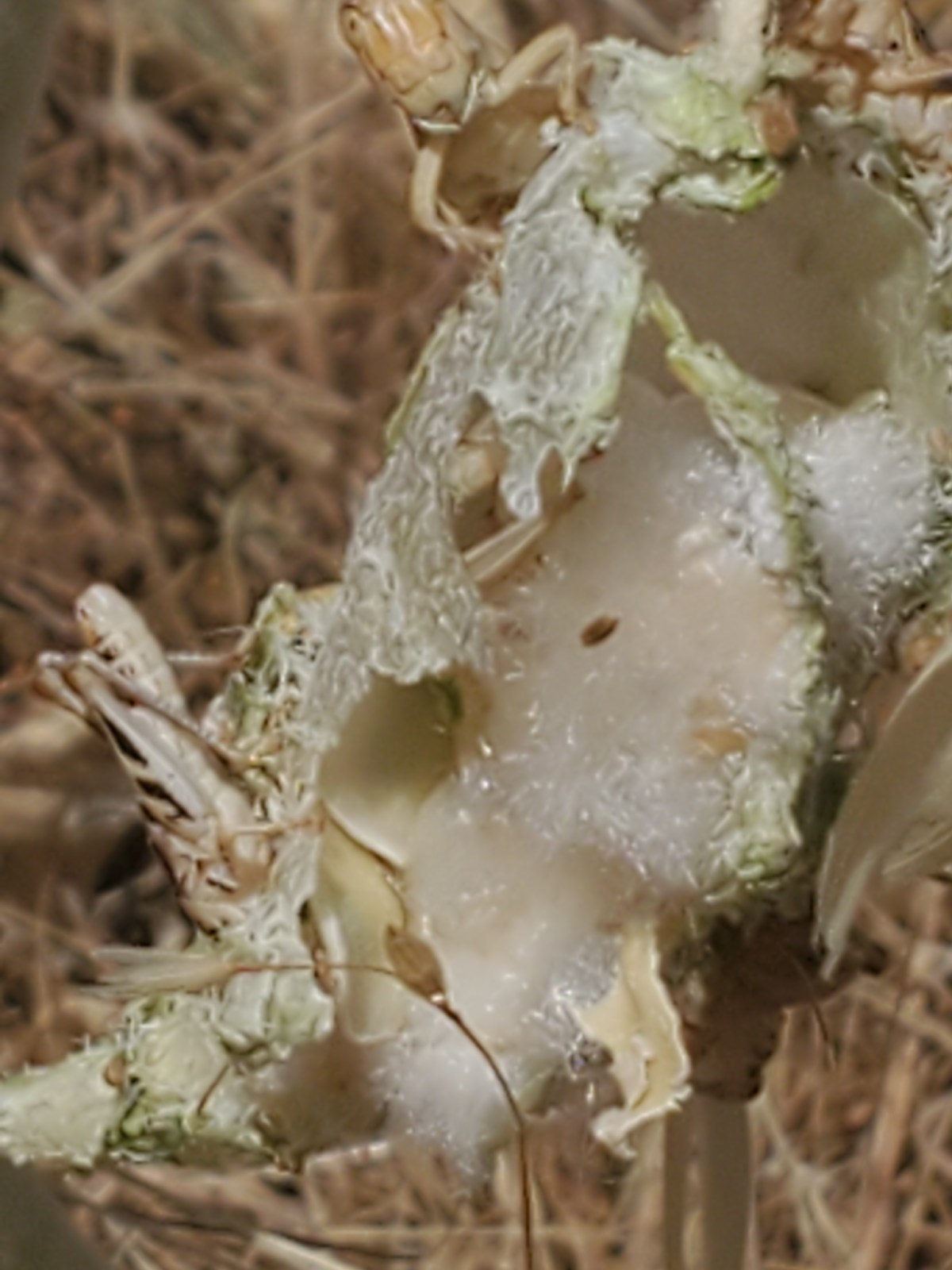
The plants on the south-facing slope were mostly eaten. There was evidence of seedpod destruction. Although not prepared with clippers and a bag, I began to harvest the pods. If I waited much longer, they would all be gone. Because I was pulling them off the stem early, the white “milk” ran onto my hand making my fingers and palm sticky. I continued, but could only find six seed pods remaining at the site. I moved to the north-facing site. More plants were intact, but were rapidly being eaten. There was a bumper crop of seed pods, including four massive ones. Normally, I would never harvest more than 10% of the pods and allow them to drop and open naturally. In this case, with sure death ahead of them, I went about my business of disconnecting the children from the umbilical cord, they, still holding tight for the nourishment it brings, and me, covered in mom’s milk grabbing her treasure for the possibility of life down the road.

With no bag, I placed them in my pockets, held a bunch in my arm and finally, made a pouch with my tee shirt. Several branches, with seedpods still attached, had been dismembered from the plant by the hoppers. I used those as a base for piling on the loose pods. It worked. I was able to slowly navigate back across the hills, pregnant with A. Californica seed, to the patio without dropping a pod. After the danger has passed, I will release these seeds back into the areas from which I harvested them – probably September.
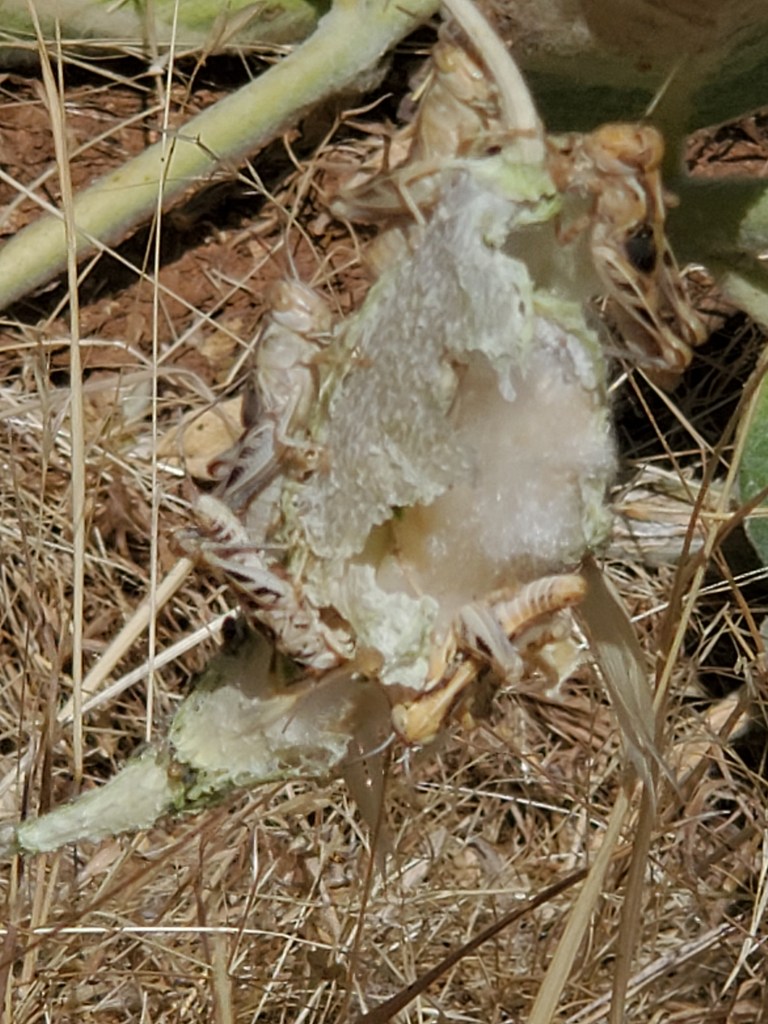
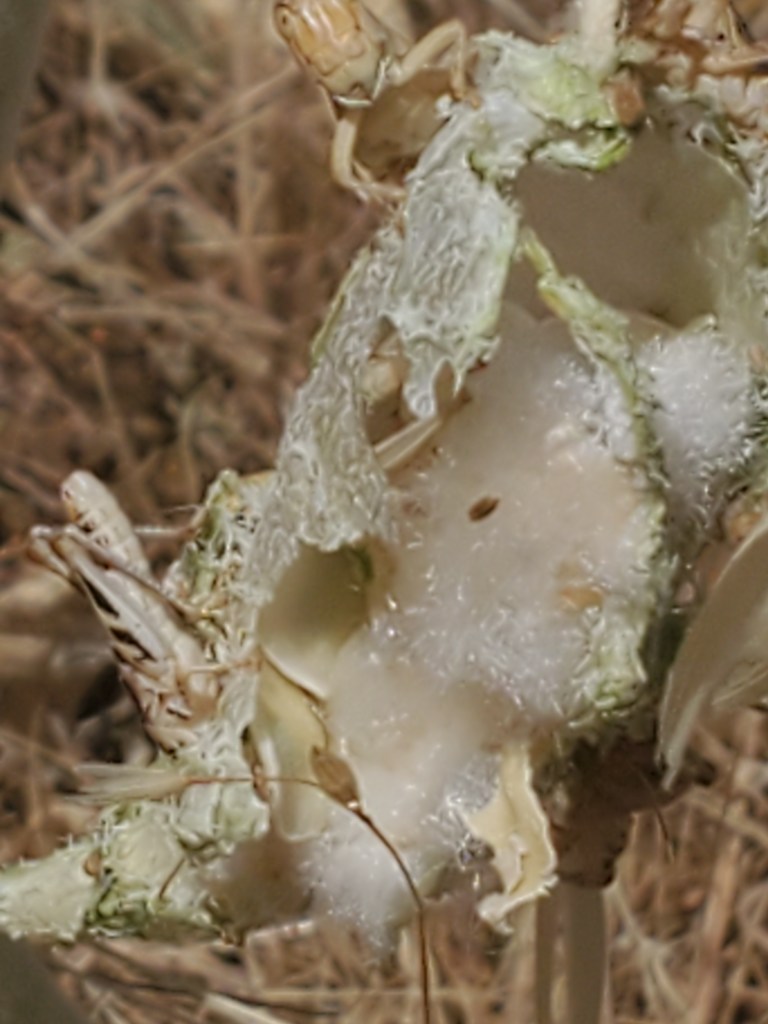
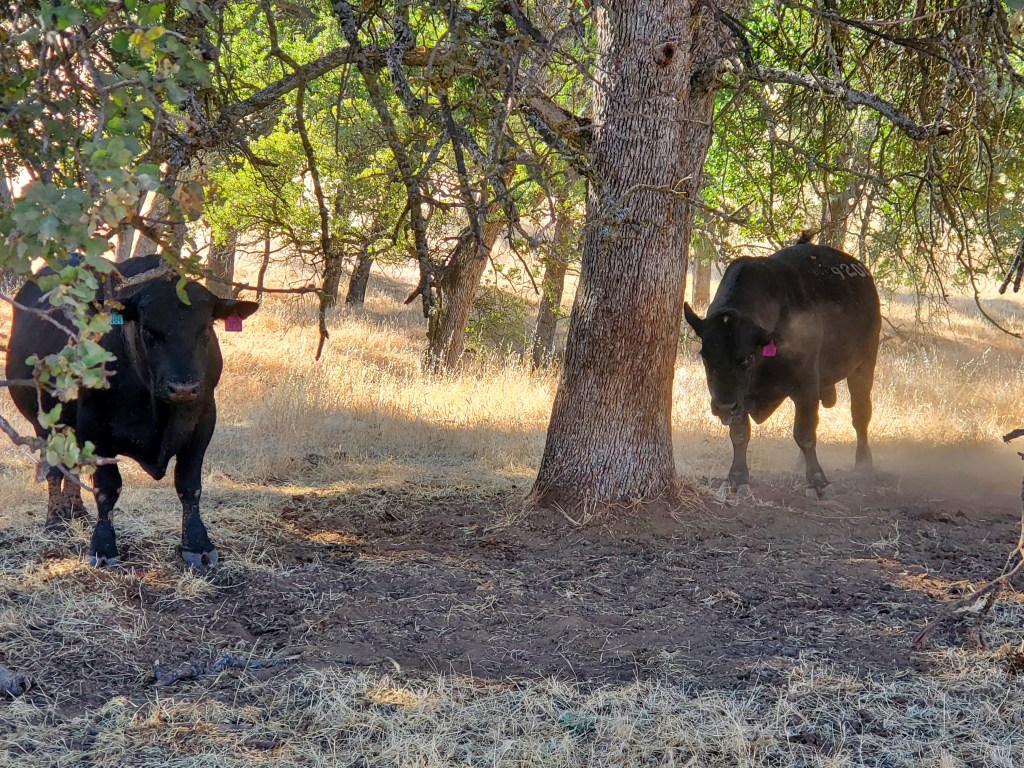
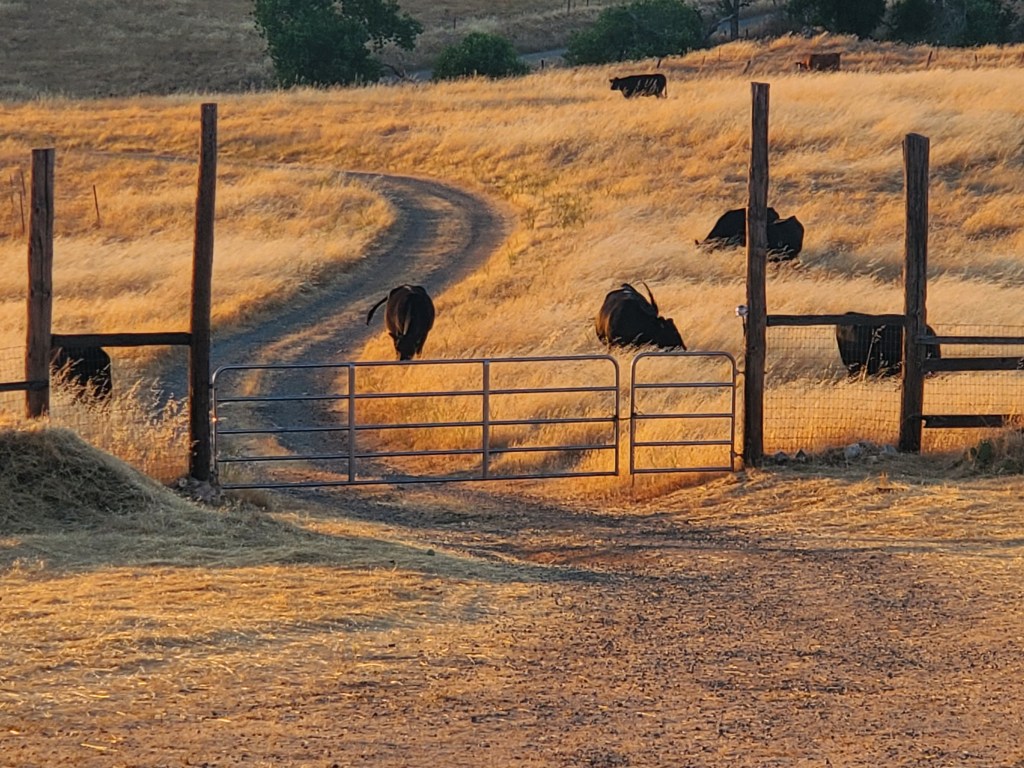
With the milkweeds done for the year, the cows still remaining on the ranch and the grasses nearly 4′ tall, I opened the gates to the far north field. The cattle have made their way into the field munching on the buffet of tall grass and thick green grass and flowers in the riparian areas that have been, as yet, untouched by cattle. Within the first day, those green patches were eaten down to dirt. My feelings are mixed. While I want to preserve the flowers I have left in the riparian areas, I also would like the tall grass to be grazed off a bit. Fire danger is always top of mind. All needs must be balanced, habitat for birds, pollinators while not trying to overstock too much on grass.
Wildlife

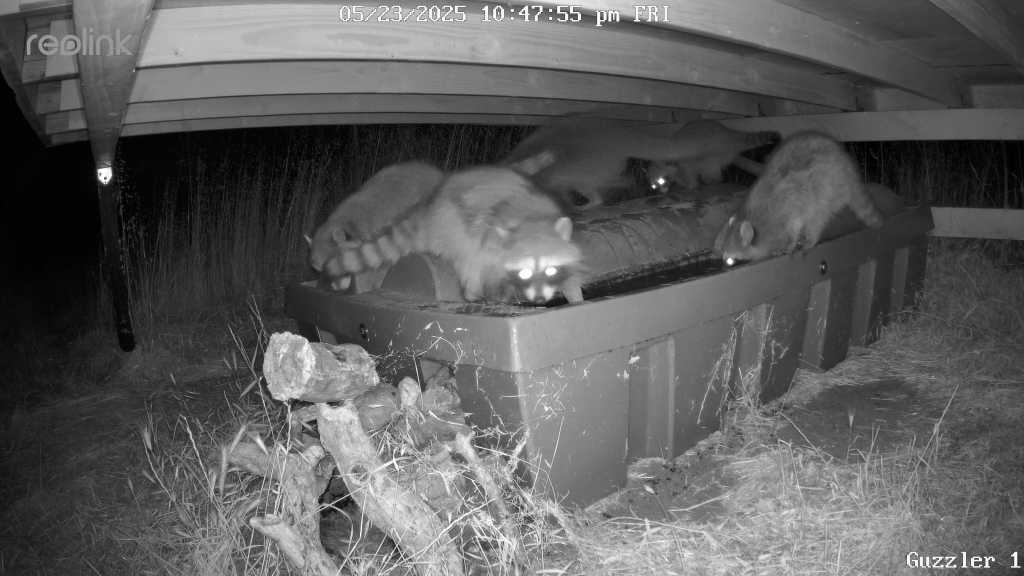
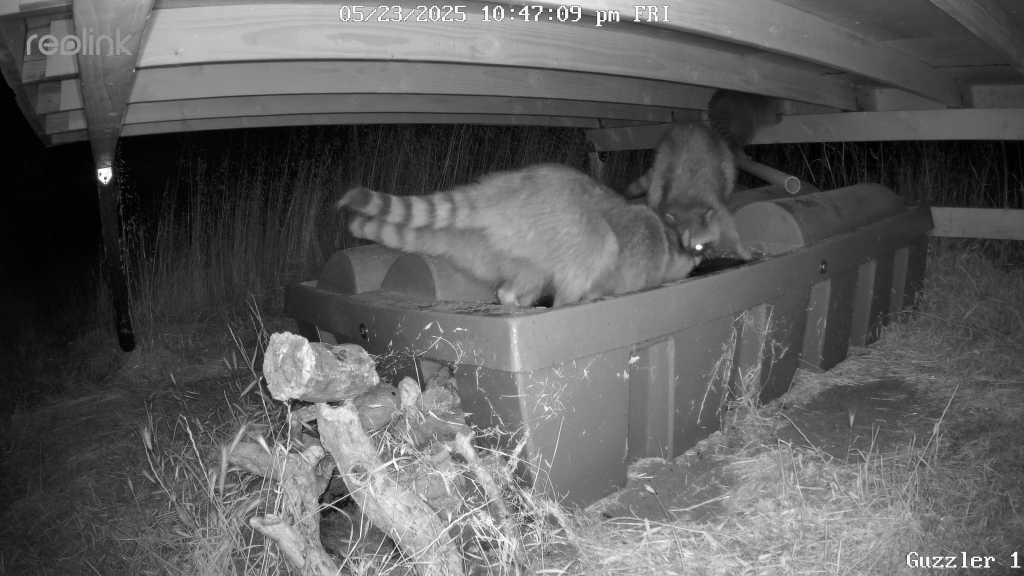
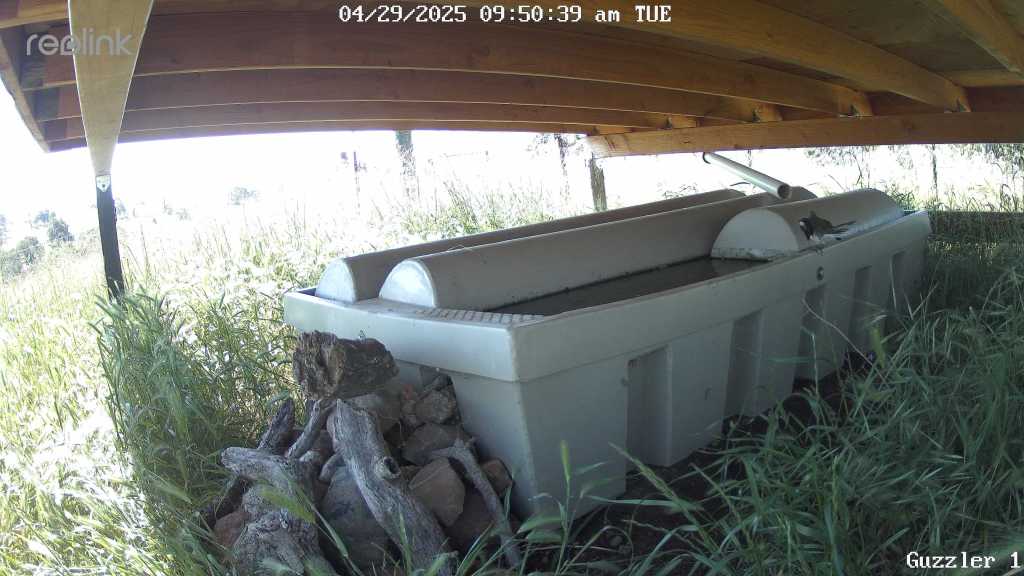
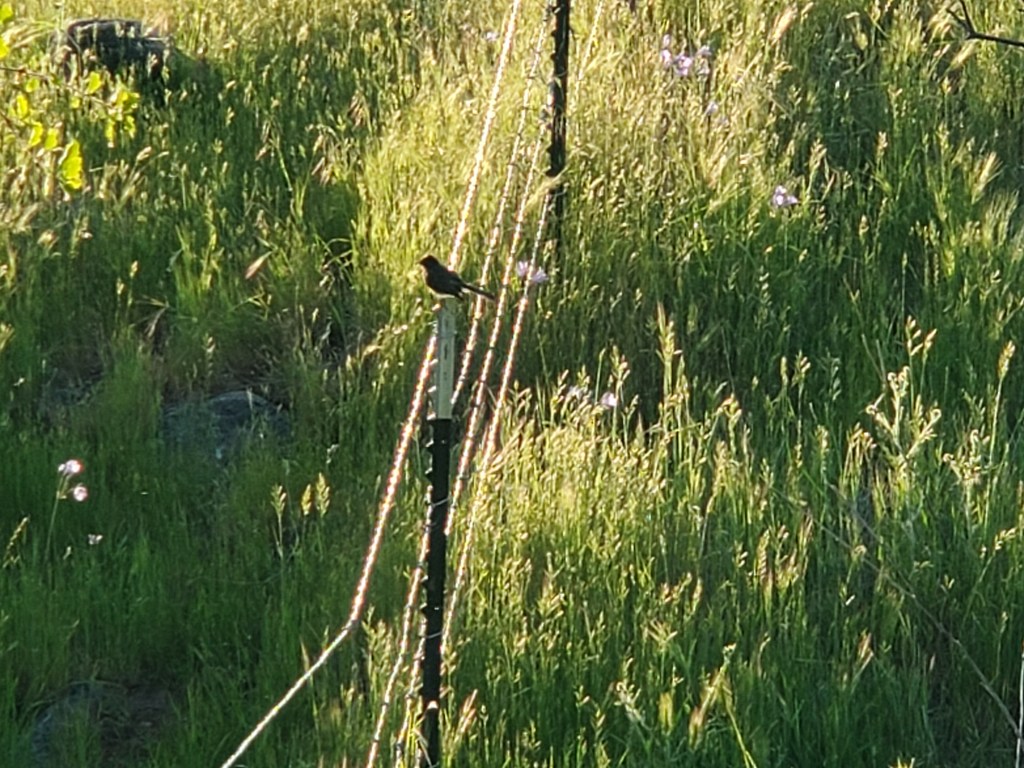
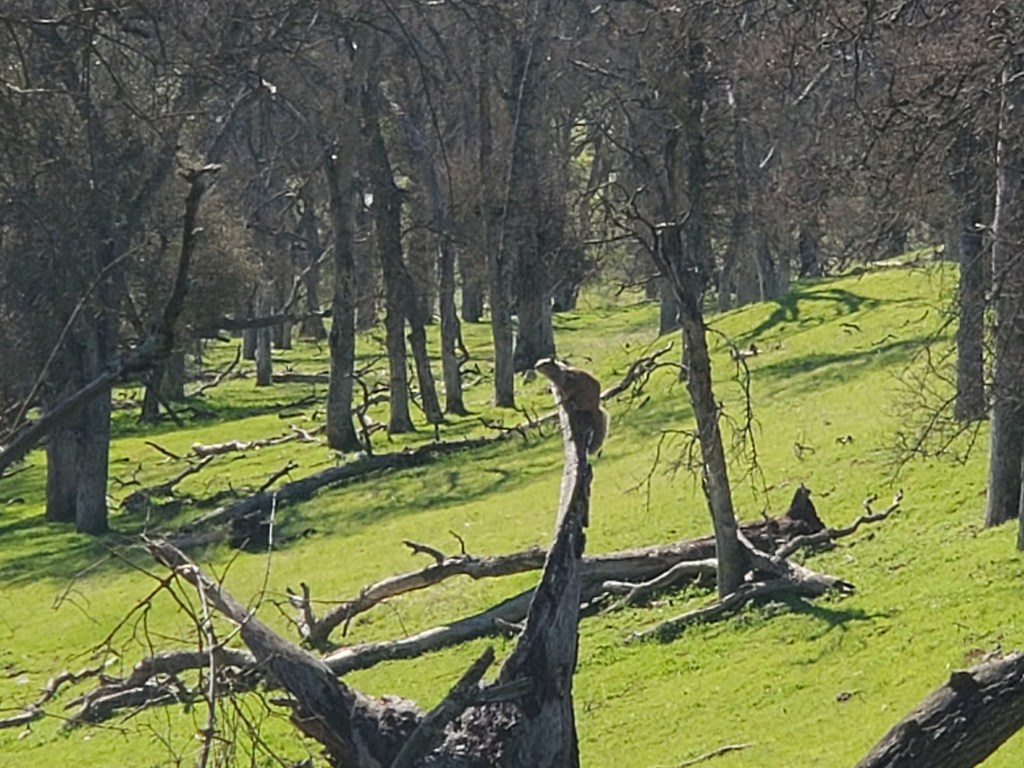
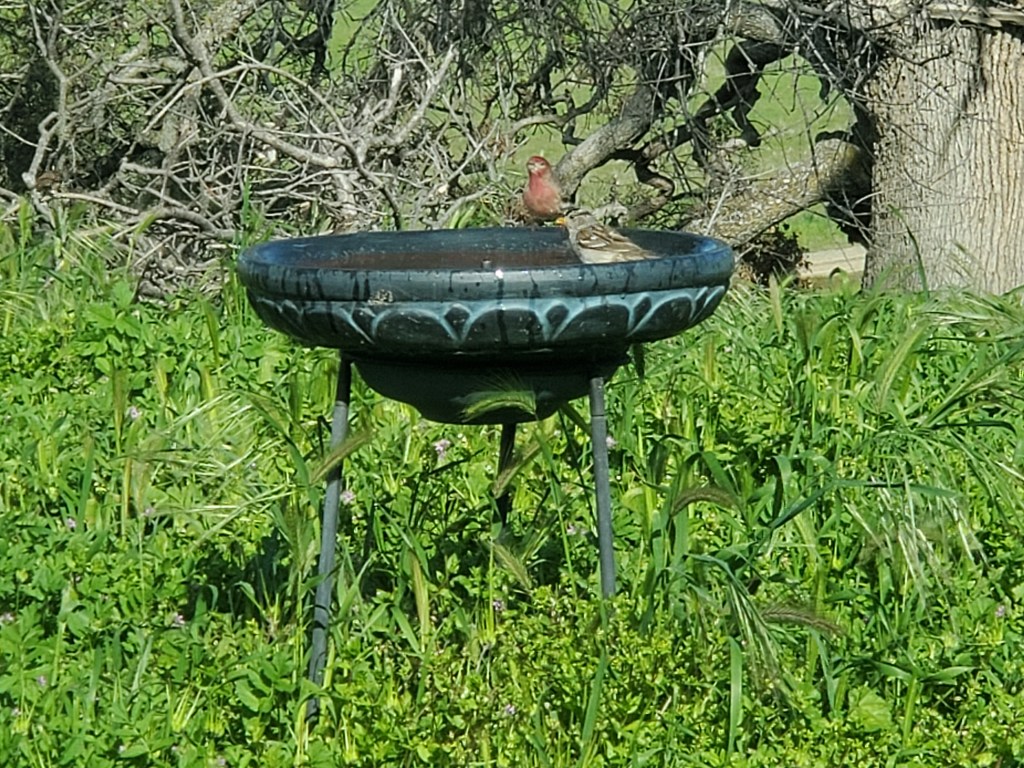
Even as the temperatures heat up, there are blooms, and I still see glimpses and/or evidence of wildlife. The guzzler has continued to be a center point for racoon and bird activity.
Wanderings

What horrors we are seeing. There are so many tragedies happening; I can feel the energy of the earth listing. There is only one healthy way to be, and that is in balance. You don’t take more than you need. You don’t give more than you can. My dear friend had a very ill wife. He cared for her for over 20 years. He was unbelievable, one of the finest caregivers I have ever seen. Lifting, bathing, feeding, driving, monitoring – he was her spirit moving her through life, so that she could live well and with dignity. She passed last month. My friend, with nothing left for himself, died three and a half days later. He gave more than he could.

With so much loss and sadness, it has been difficult to focus on writing. The unrest, murders, bombs and abuses of power, have caused me and so many others emotional distress. This is not living in a good way. I see it on the ranch, the imbalances. It is unhealthy, and things are mixed up here. There are only two entities that can move us back into balance – us, or Maala Bwia (Mother Nature). Given all the human greed and climate horror of the last century to today, I don’t have much hope that it will be us that leads the shift back. But, if it is itom Maala/our Mother, it will not end well for many of us. So let’s get more of us working toward finding our equilibrium.

Amid the depravity and cruelty, there is always light. This is something so lovely it will fill your heart – true heroes from the Resource Conservation District of Santa Monica Mountains racing to save gobbie fish and trout from sure death after the catastrophic Palisades Fire in Southern California. This is the type of character that will shift us – respect, dedication and reciprocity to all life no matter its popularity, size or their ability to be commercialized for humans.

Here is the article in the LA Times.

Here is a brief YouTube film the organization made.

Here is a link to a larger documentary about humans fulfilling their obligations to the Huya Ania (Wilderness/Natural World). It is just a trailer, but please, try to organize a viewing at your location if you have the capacity.

Goodness exists all around us. Grab hold of it instead of the negative. Cling. Never let go. Eventually, its light wraps you, moves through you, becomes who you are. Let’s all bring more light.
Relationships

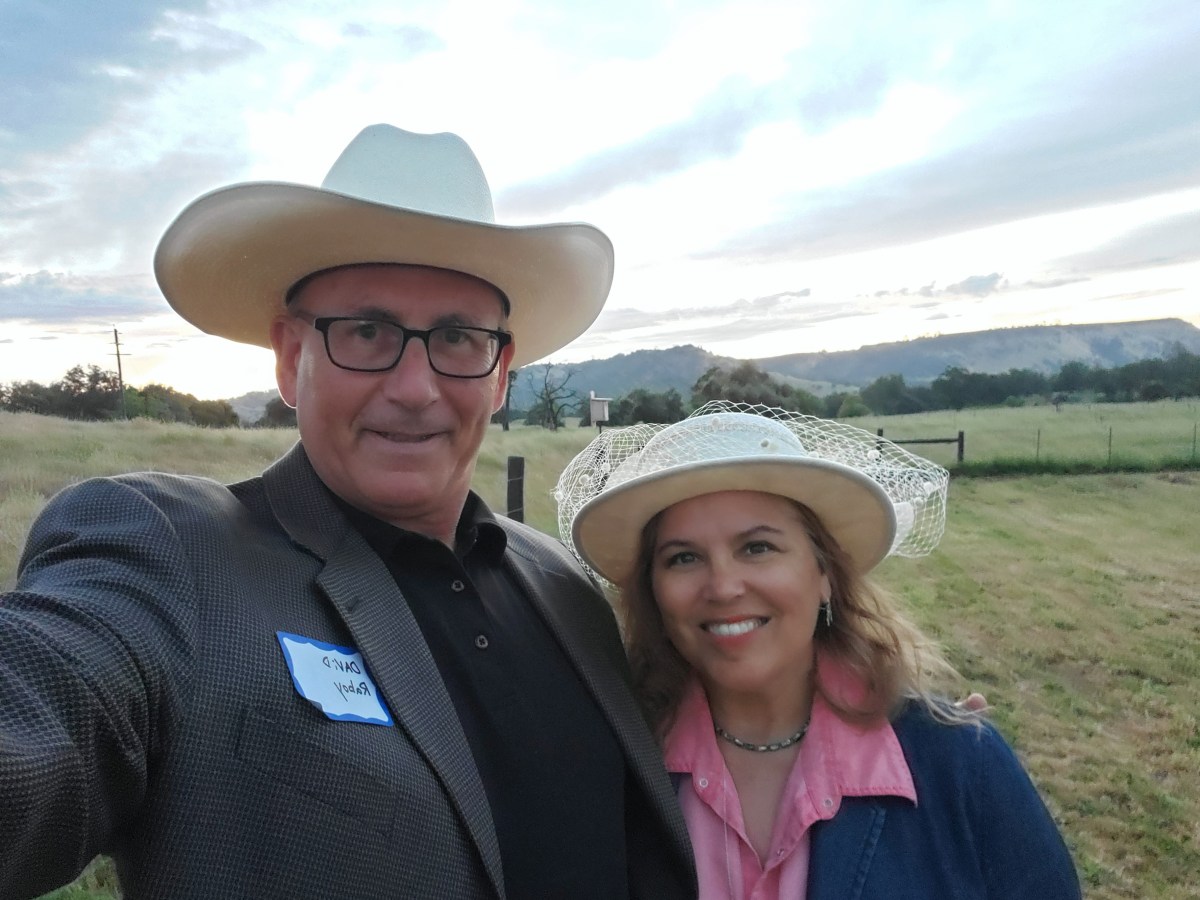
My hubby and I at the Sierra Foothill Conservancy dinner

We need each other.

As the monarch needs the milkweed, and the milkweed needs the soil, and the soil needs the rain, we rely on systems that work together so that we may live.

Recently, I was hit by a car. I was riding a rental bike, like I’ve done for years in nearly every city to which I travel, and a distracted motorist saw me too late, hit the breaks, but still made impact with the bike sending me into the gutter of the road. I don’t remember from impact to lifting my head up from the ground, but as I lifted my head, the breath knocked out of me, the sting of air making contact with my insides, the smell of blood, I was in disbelief. How could this happen to me? I am so careful.

To walk across a street, to ride a bike with traffic, to drive through an intersection, these are all acts of trust, a dependency on others, a relationship where you rely on others to understand the gravity of responsibility and a determination that laws will be followed. Sometimes our relationships break down, rules not followed, predictable patterns altered, one side exploits the other taking more than is given – the balance that makes life possible can begin to shift.

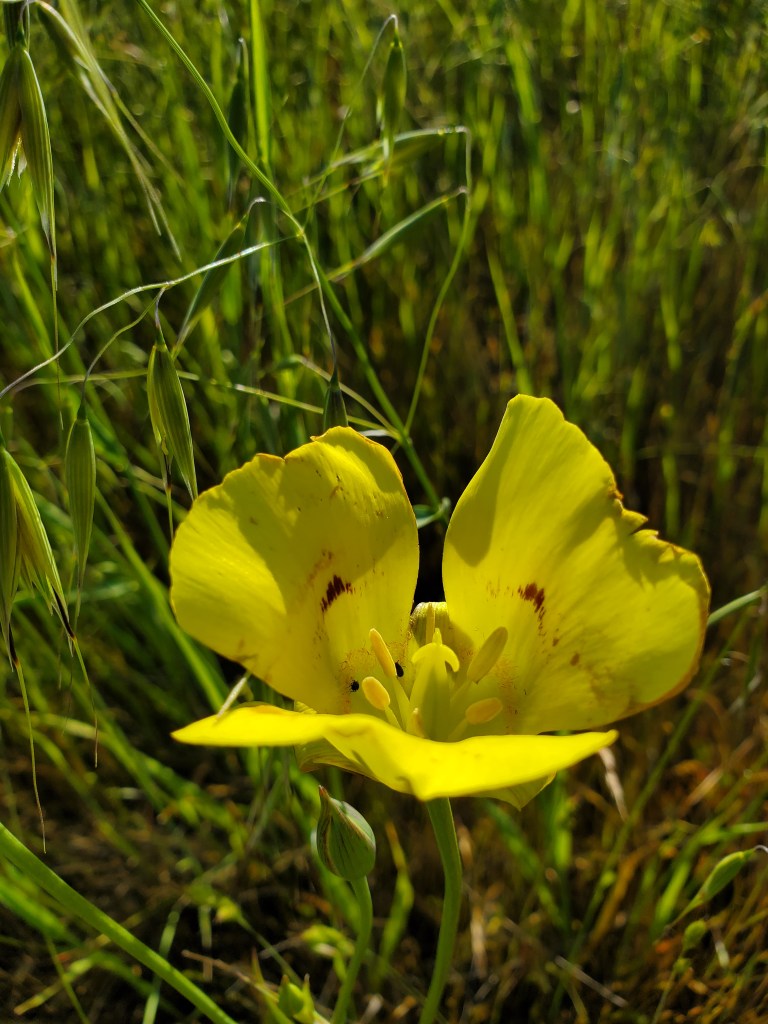
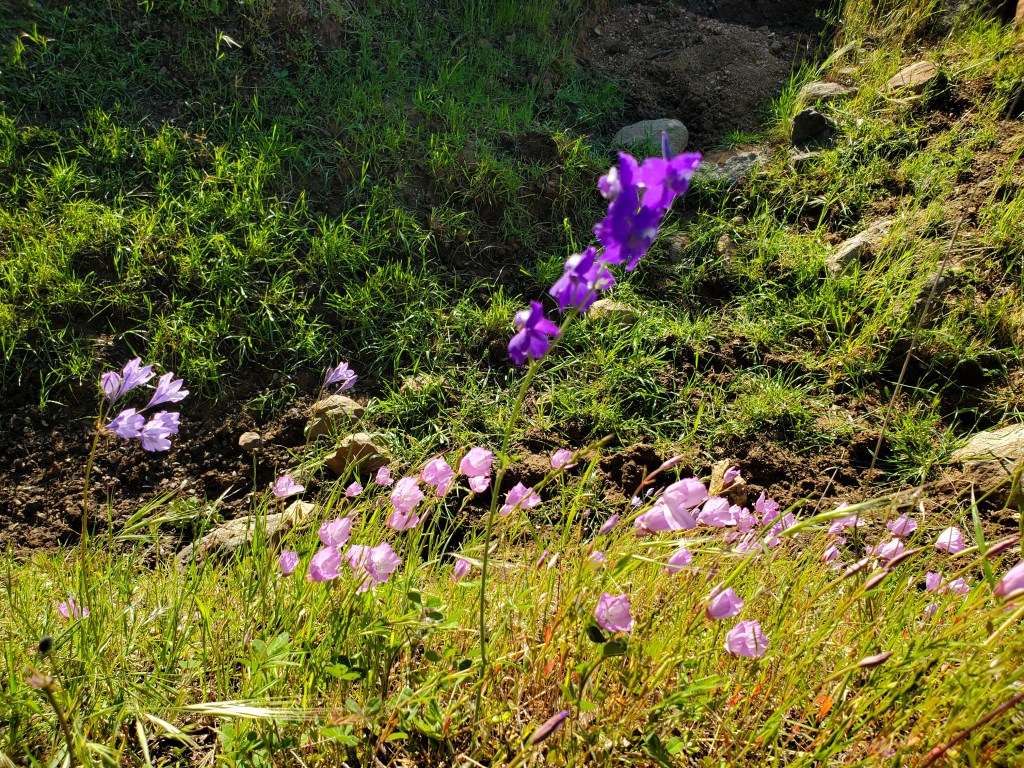
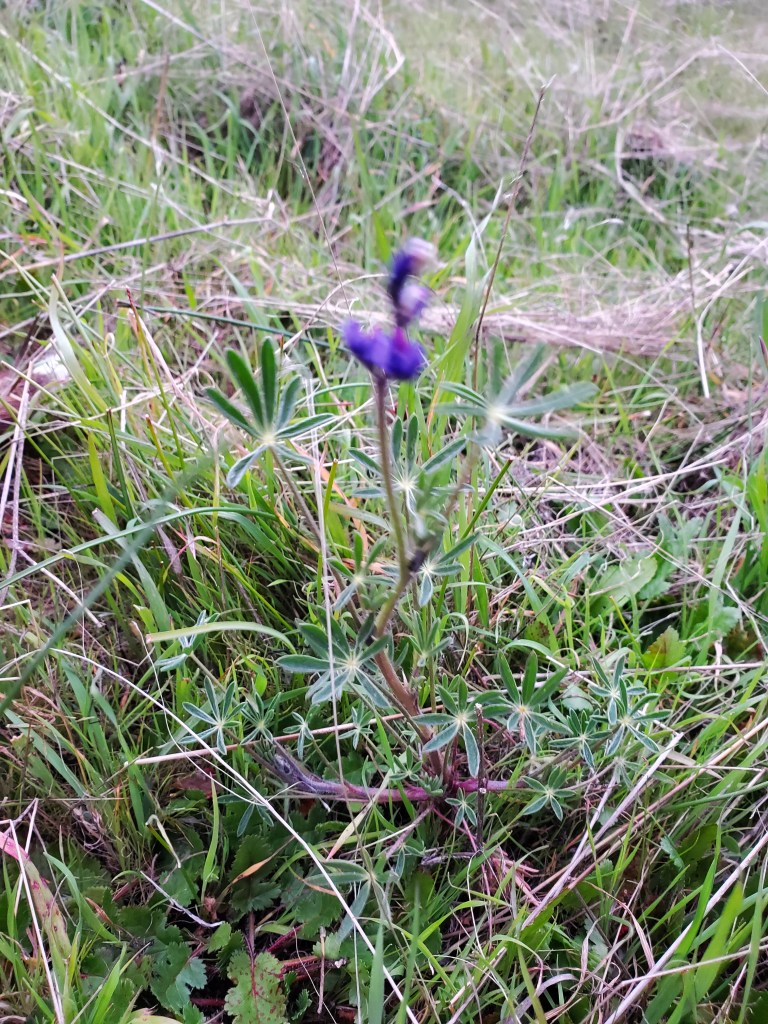
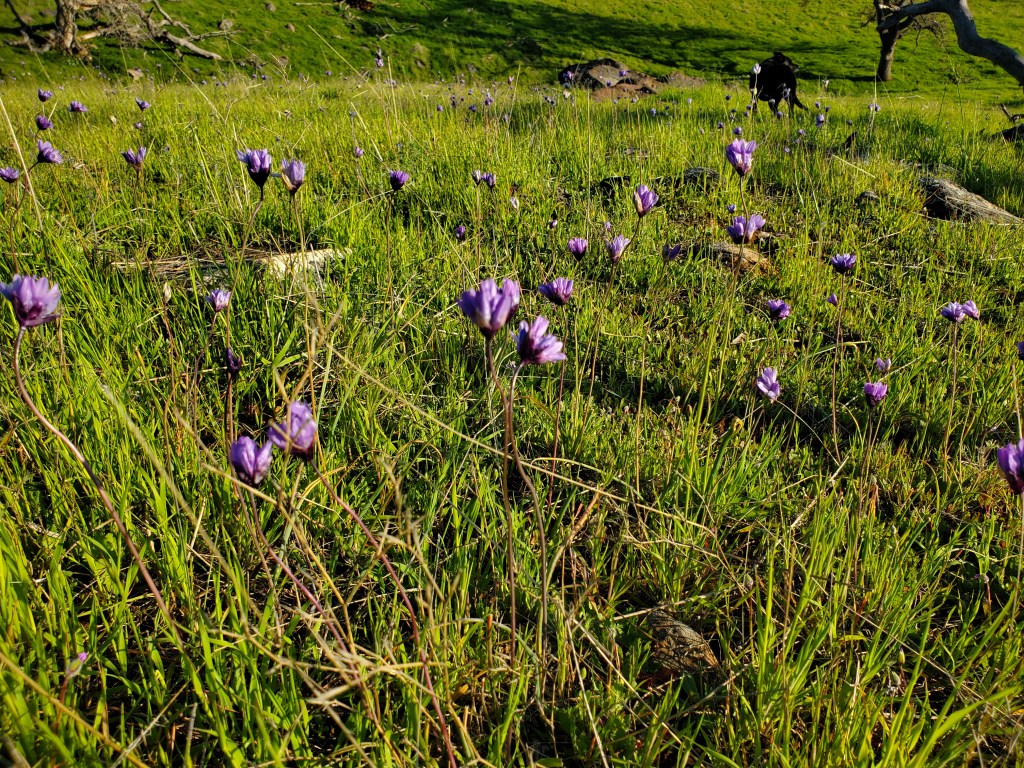
While there is beauty across the ranch, nectar in all colors, shapes and sizes, there are not many insects using them, particularly butterflies. There were mostly cabbage butterflies this year nectaring on the wildflowers. I saw two yellow swallowtails. David saw one orange butterfly (He couldn’t identify it, though I hoped it was a monarch.). And, just the other day, I saw a checkerspot. Not much of a list compared to years past – especially when there is so much nectar around. Last year, I understand; we were decimated by grasshoppers. There was nothing – but this year – there is so much.

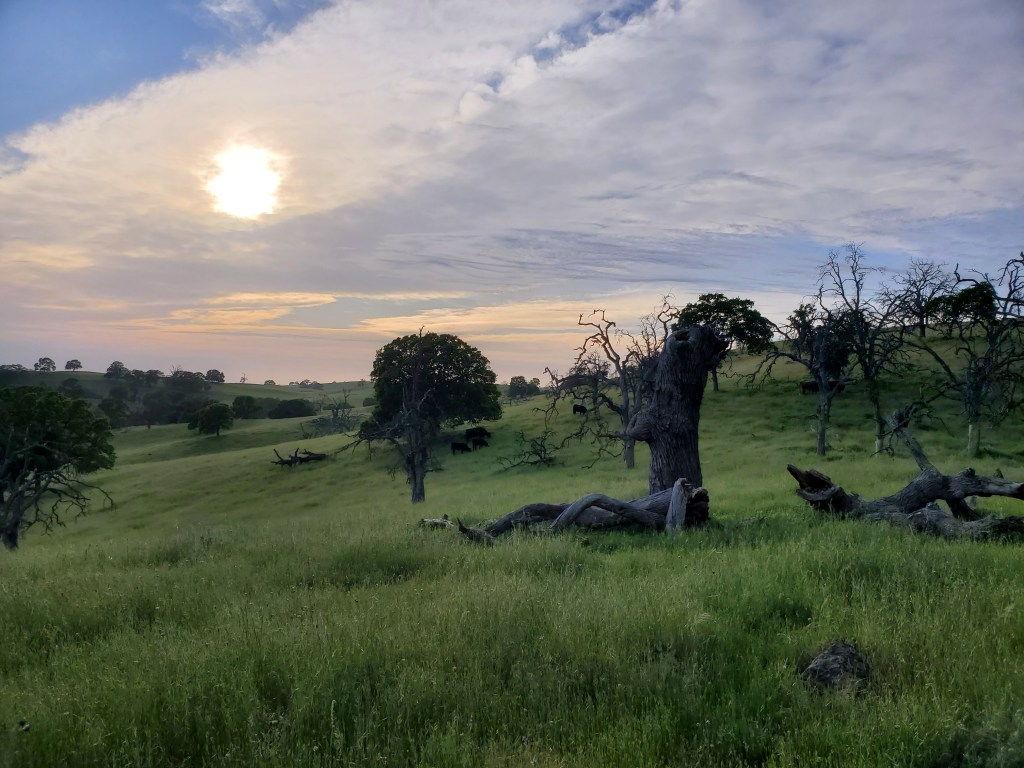
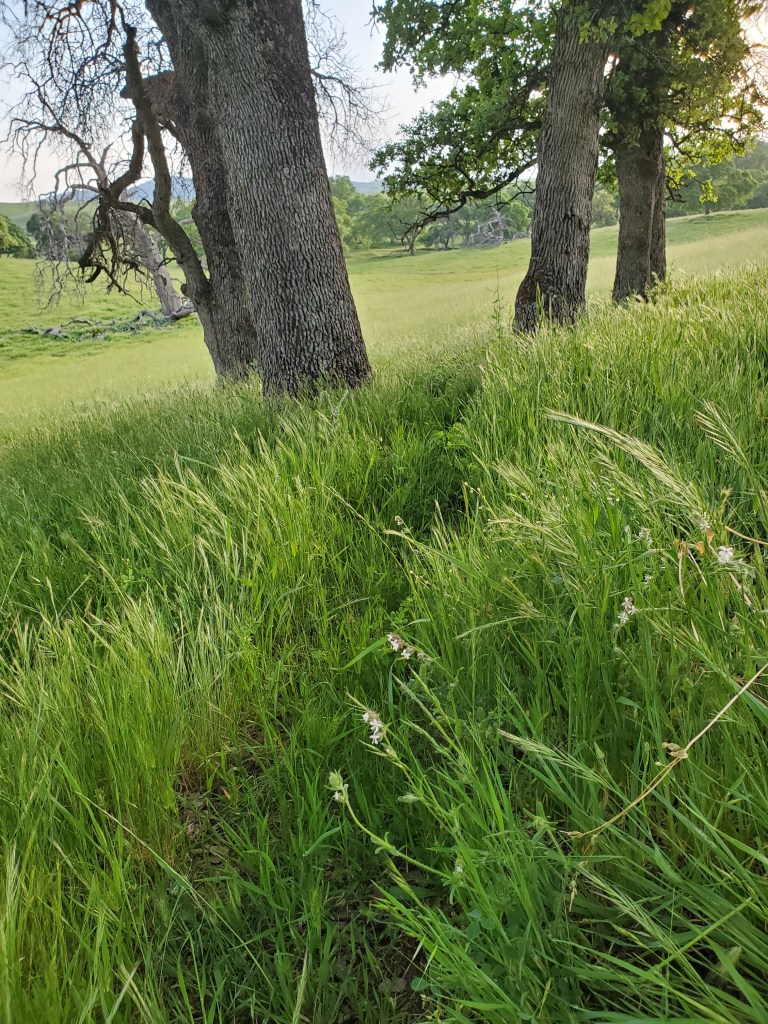
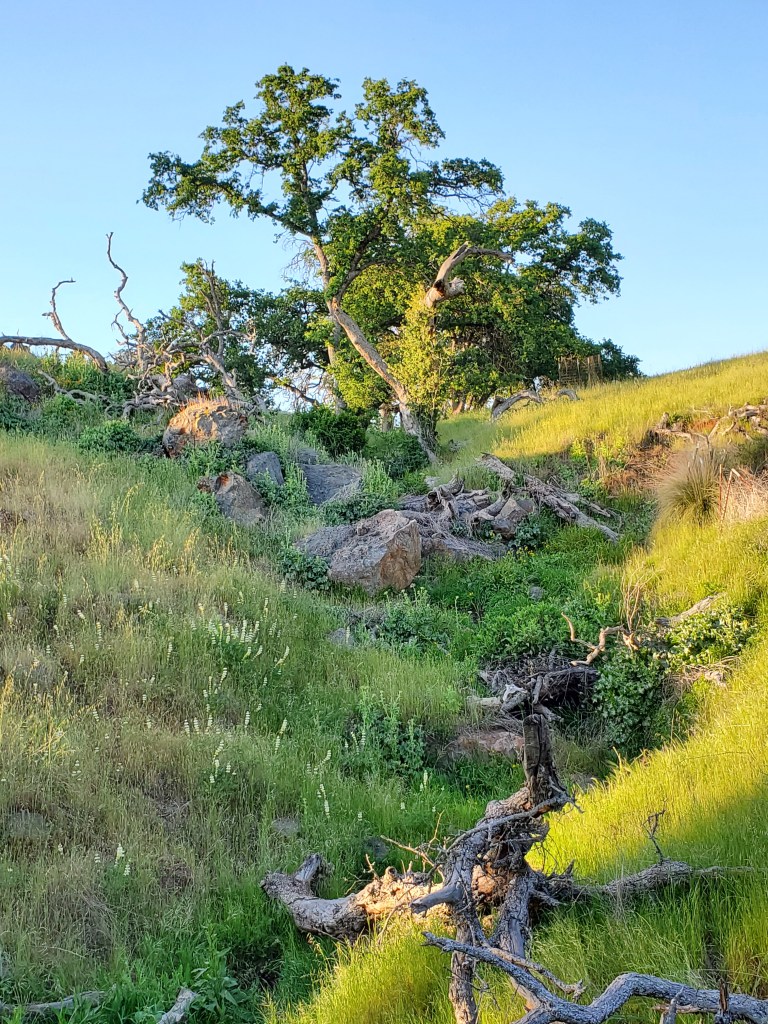
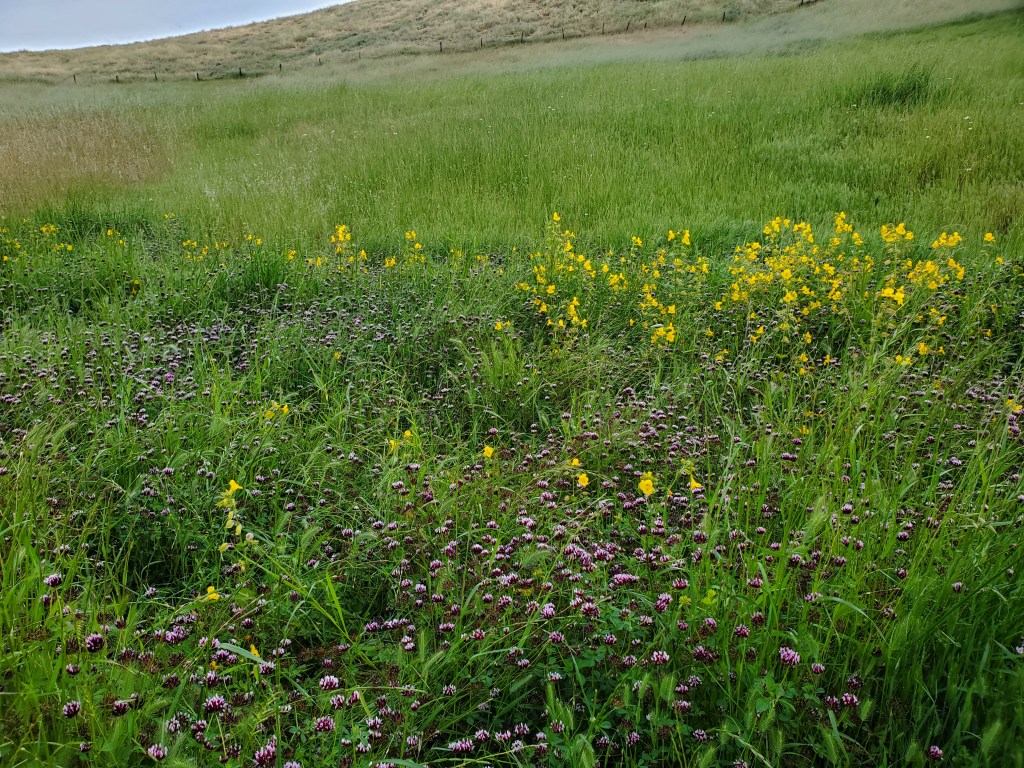
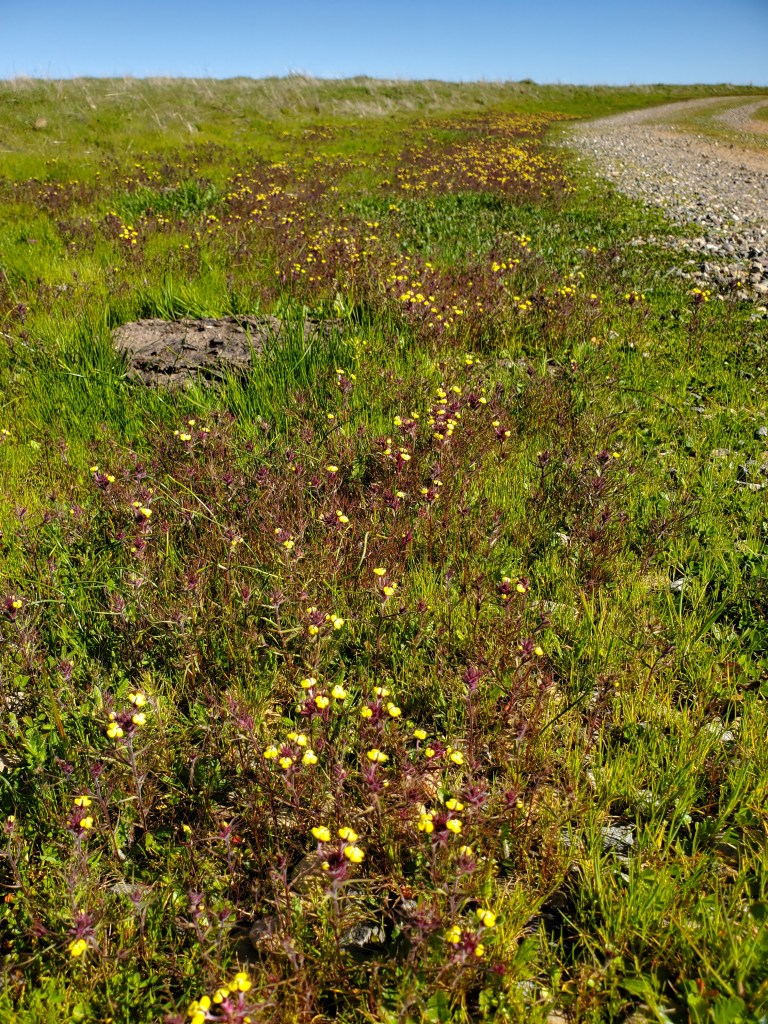
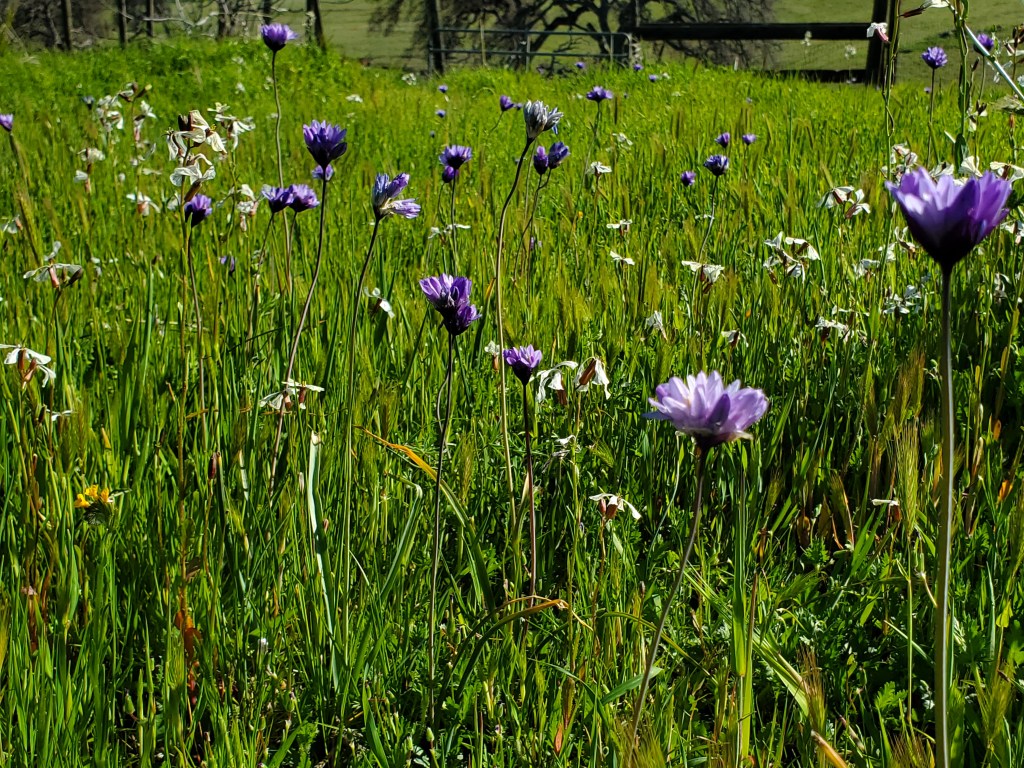
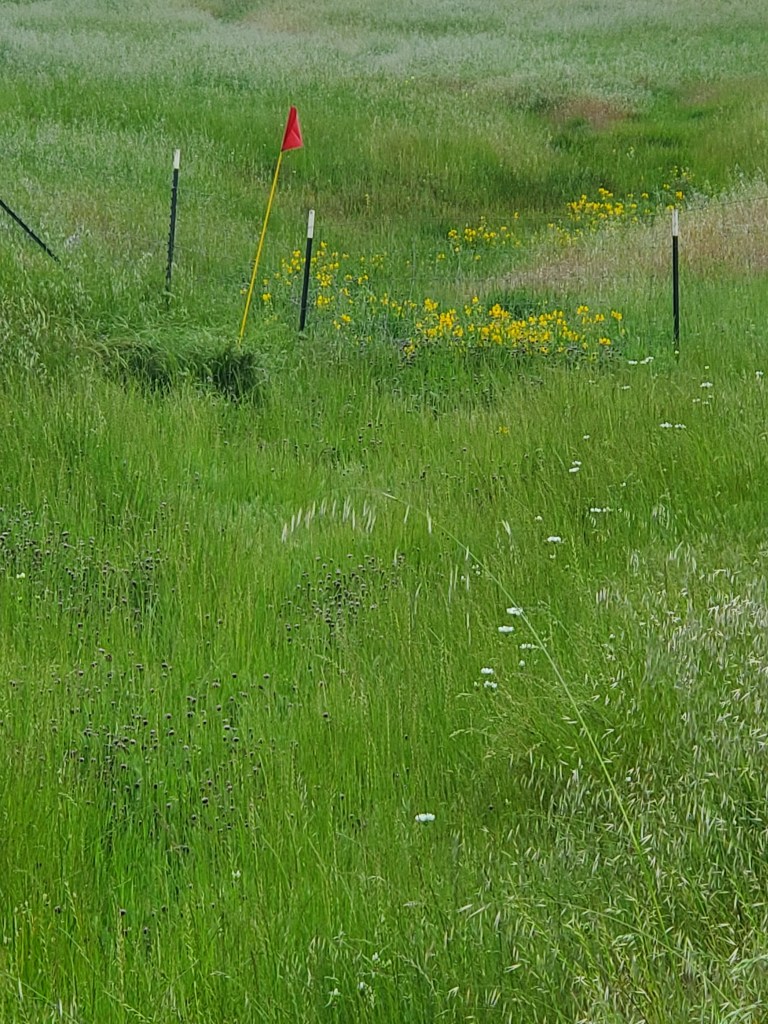
The following photos were taken largely in late April and early May when the grass was still green – and when I still had full use of my legs and hands. At this time, late May, the hillsides are yellow from young grass turned to hay and the water ways have shrunken and drainages dried. I am healing, but poor David is having to do my work and his.

Oaks Surviving

Most of the planted oaks are surviving. We lost two of the 19 seedlings. The areas with acorn plantings – none of them came up. The acorns were all taken. However, there has been a blockbuster of natural recruitment (oaks emerging naturally from acorn). While weed eating, David found one hundred emerged oaks around one of the grandmother blue oak trees. We have looked at other nearby oaks and found more seedlings. Evidently, there is the right combination of moisture, acorn and soil conditions to allow for massive propagation. Don’t get too excited. Most of those babes will get eaten. With vigor, David flagged the seedlings so he could keep an eye on them and continue to pull grass as new shoots grew, but he quickly saw that these seedlings were also delicious meals for gophers. We are going to try to cage some of them and water them – especially outside of the enclosure where the cattle graze.

No Monarchs – Again. But, Bumbles Return

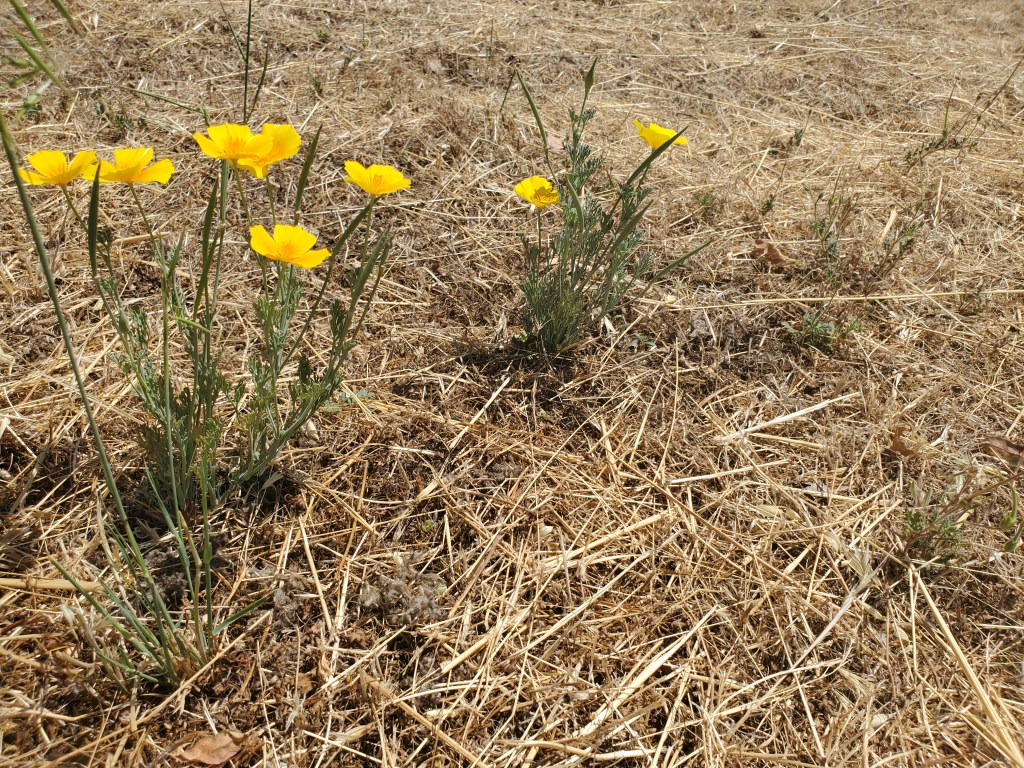
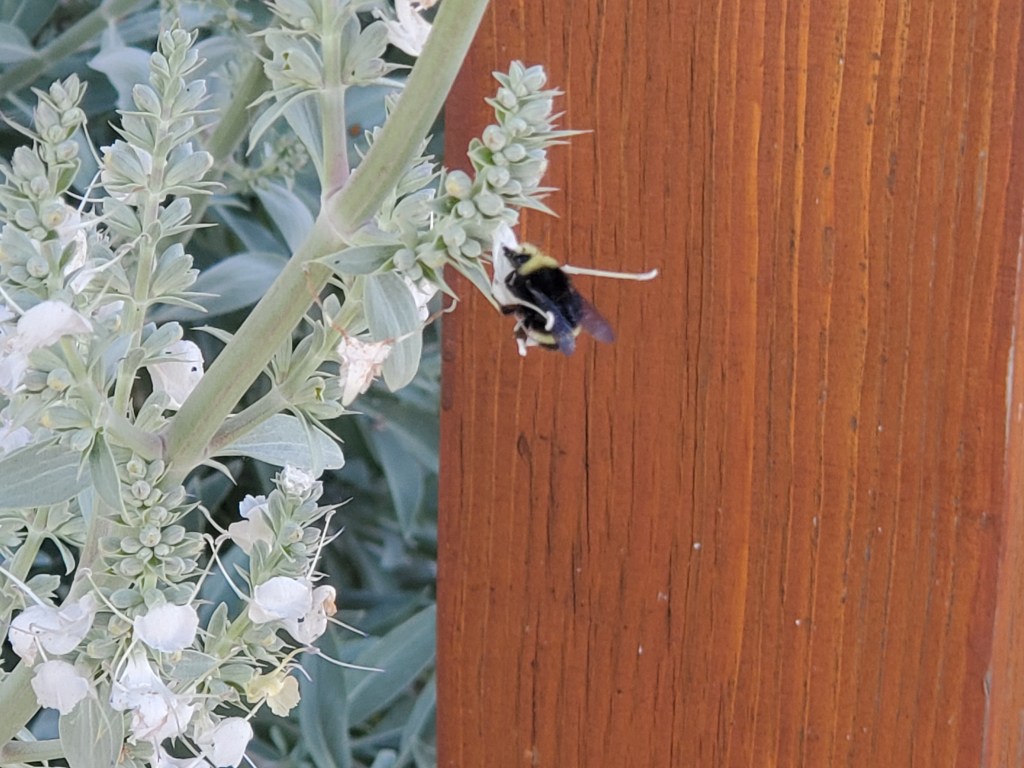
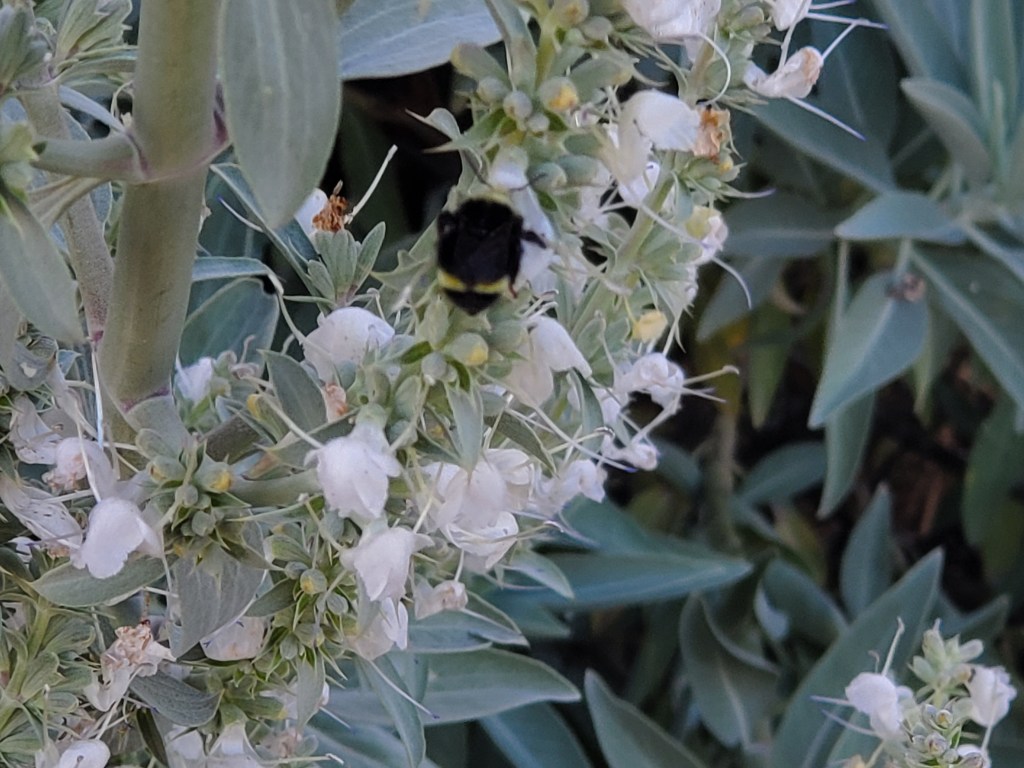
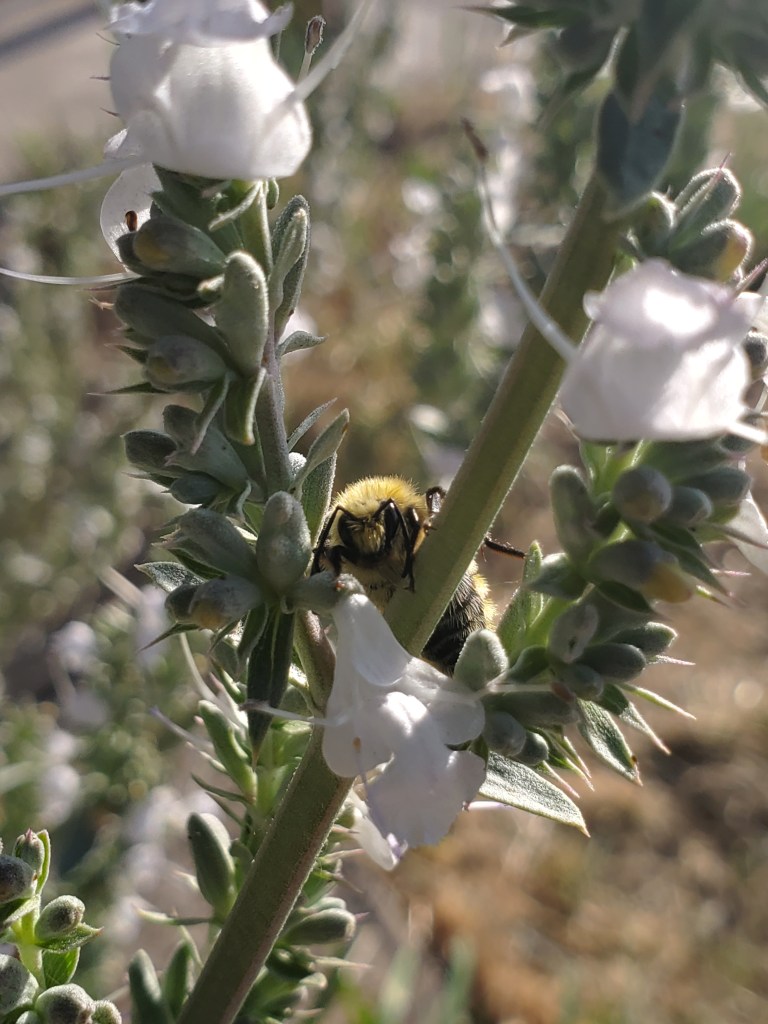
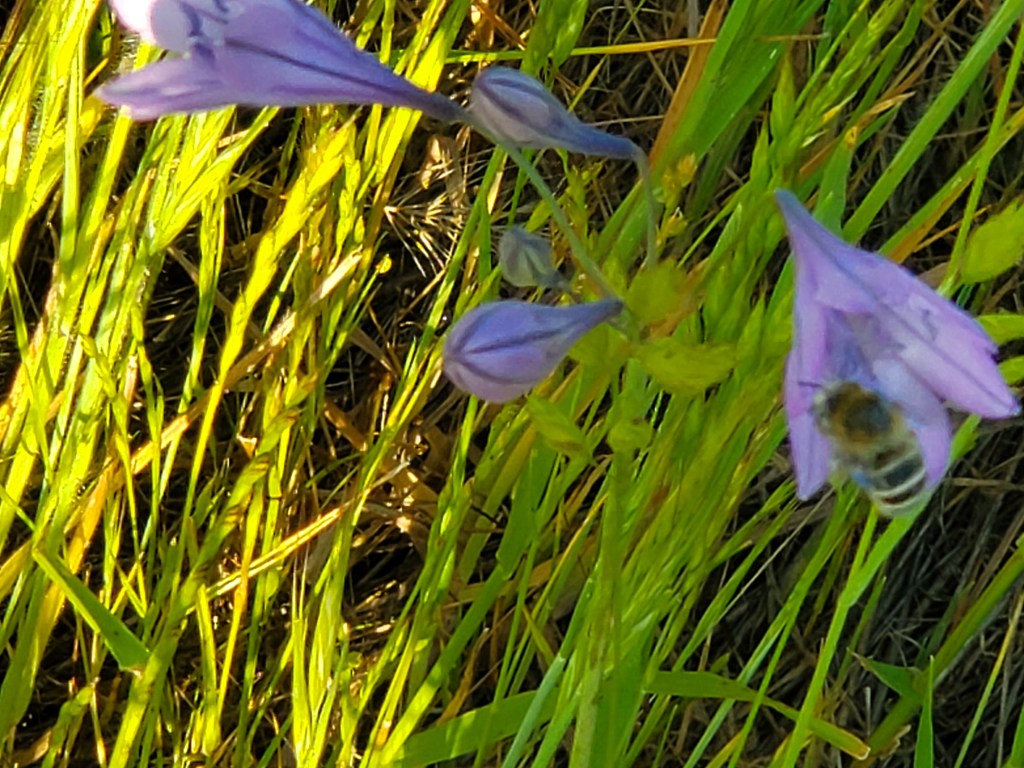
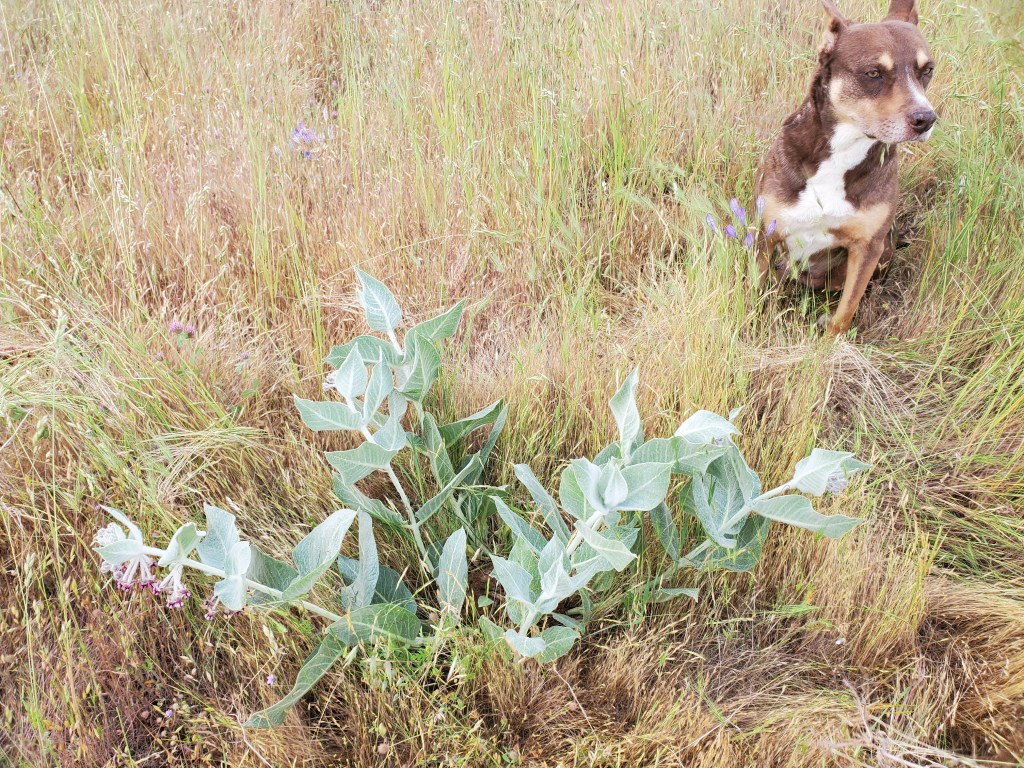
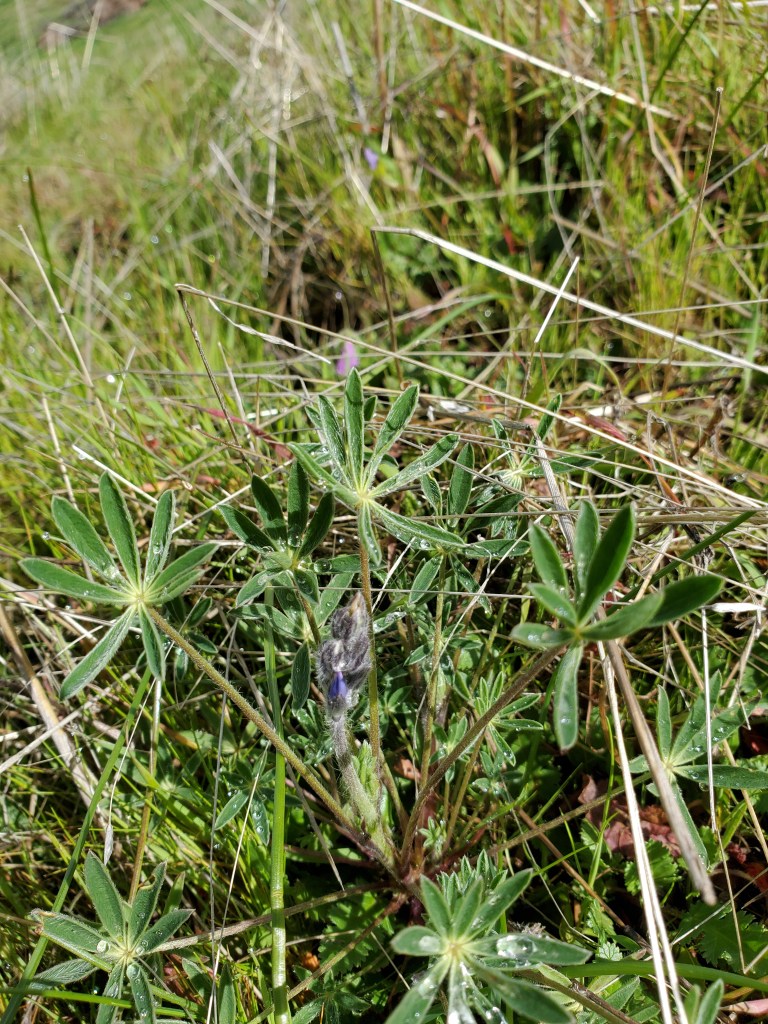
Sadly, the California Milkweed has remained pristine, no telltale bite marks, yellow stain or caterpillar poop. The north facing plants are still blooming with just a few beginning to set seed pods. The south facing plants, reliable hosts for traveling monarchs, are fully spent and well into setting seed pods. The only reason my spirit is not completely crushed is that the crotch bumble bees still reigned supreme on the hill in the milkweed plots. I even saw some down the hill near the cow clover. They seem to be increasing in number slightly.

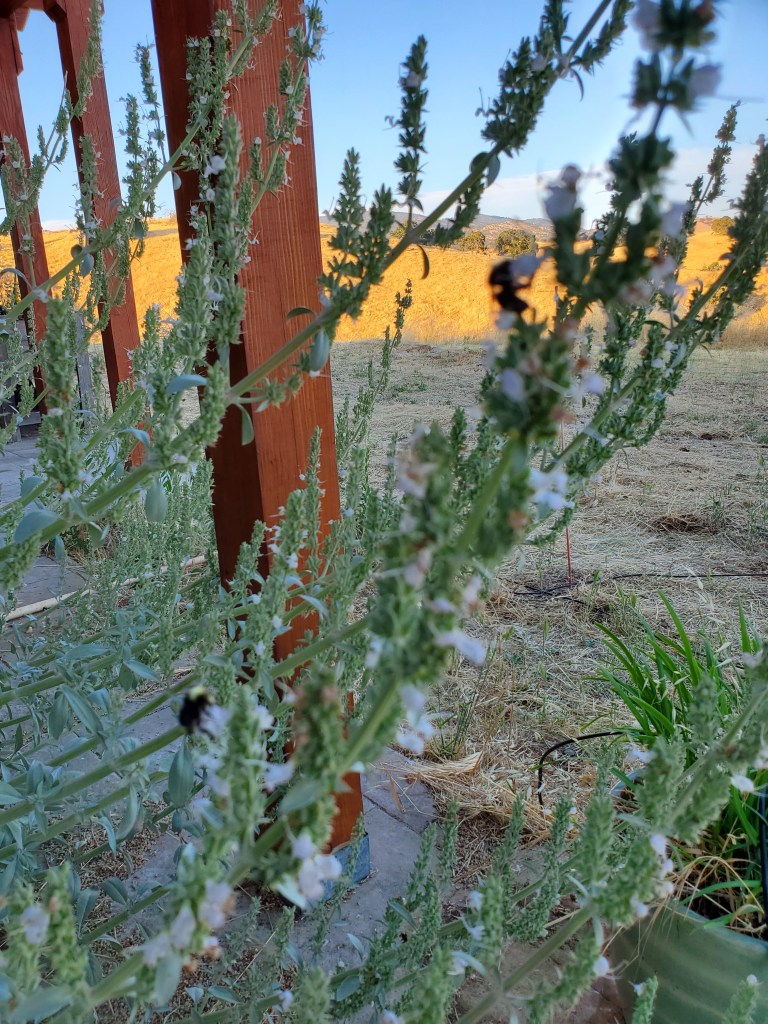
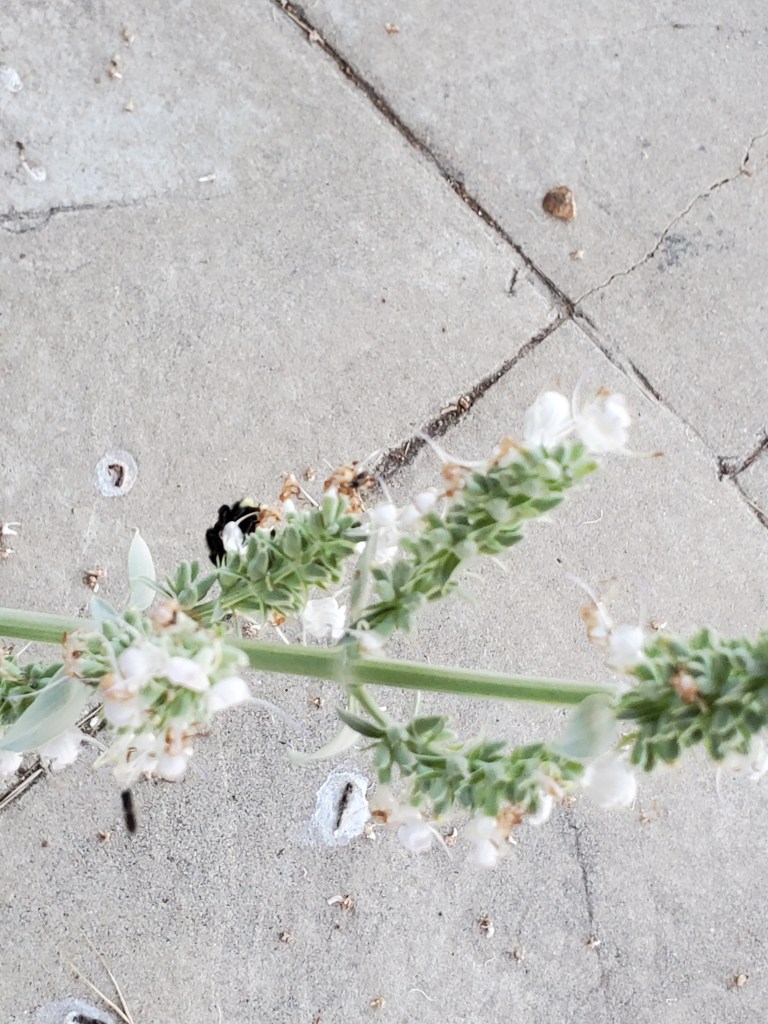
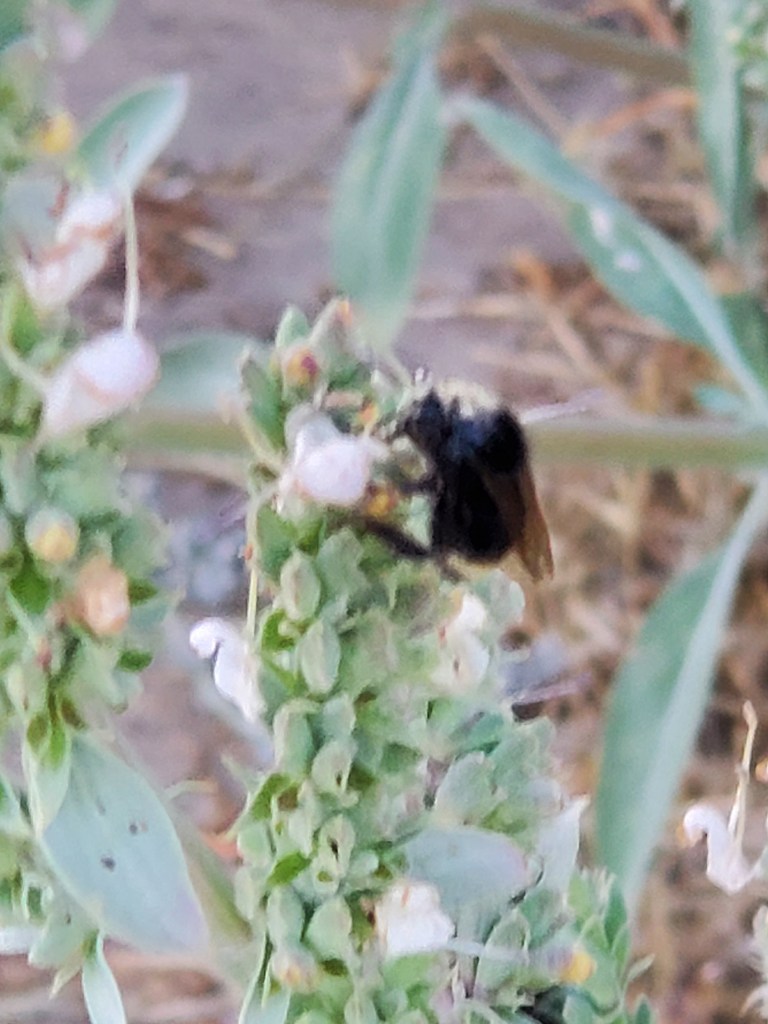
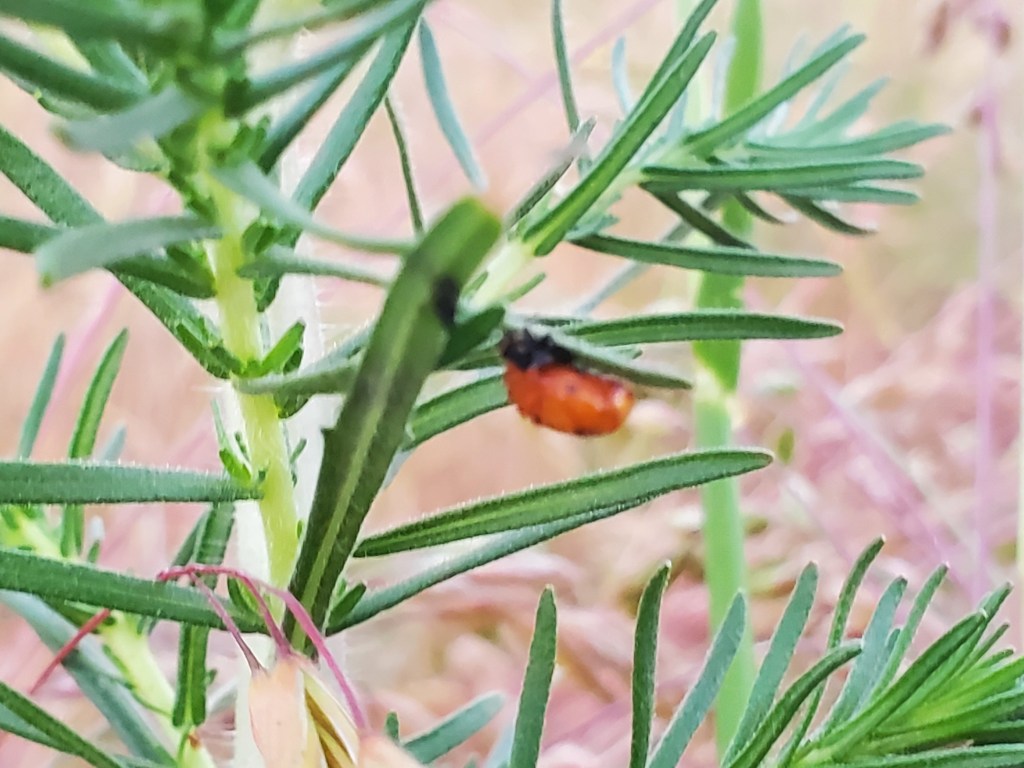
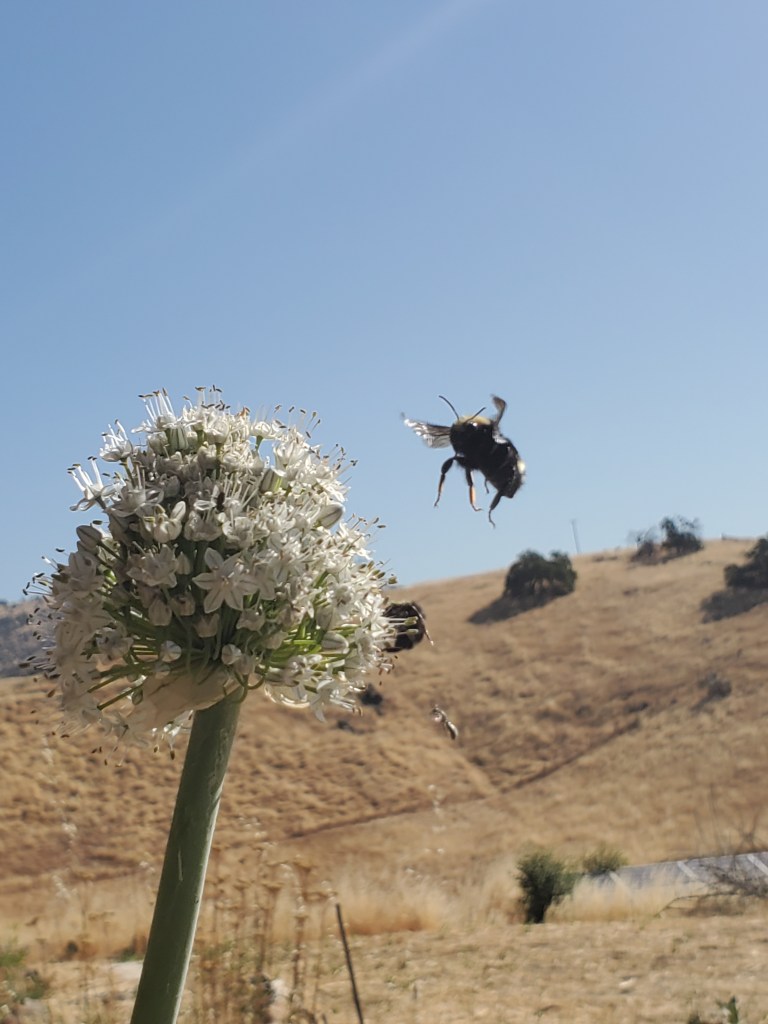
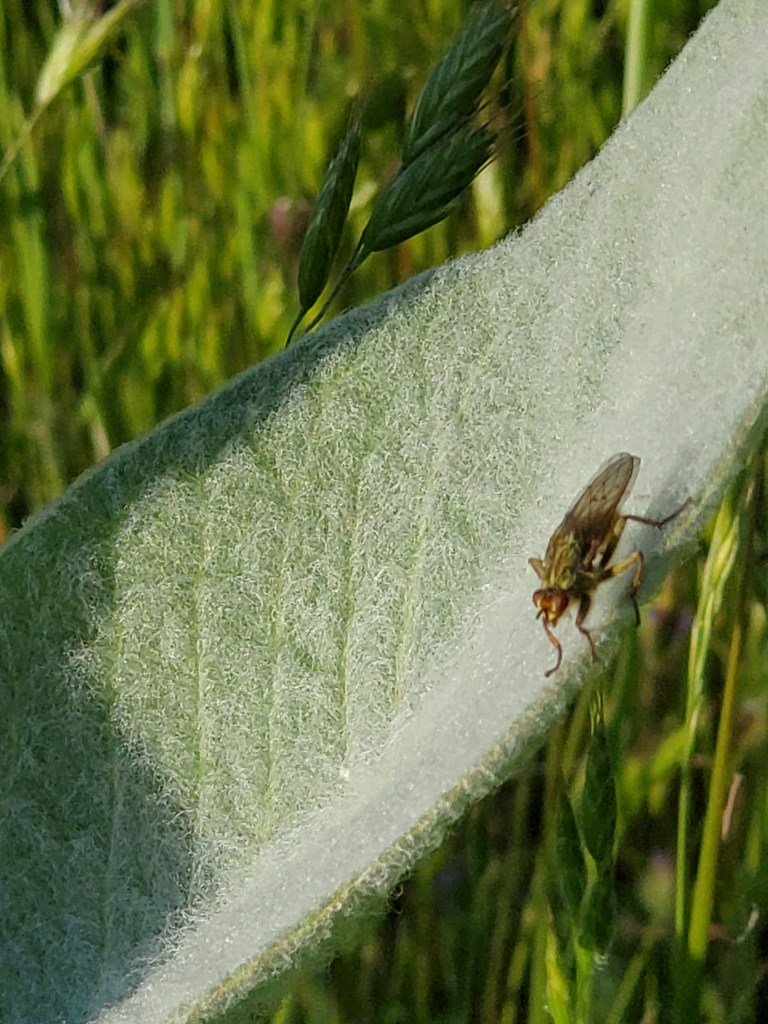
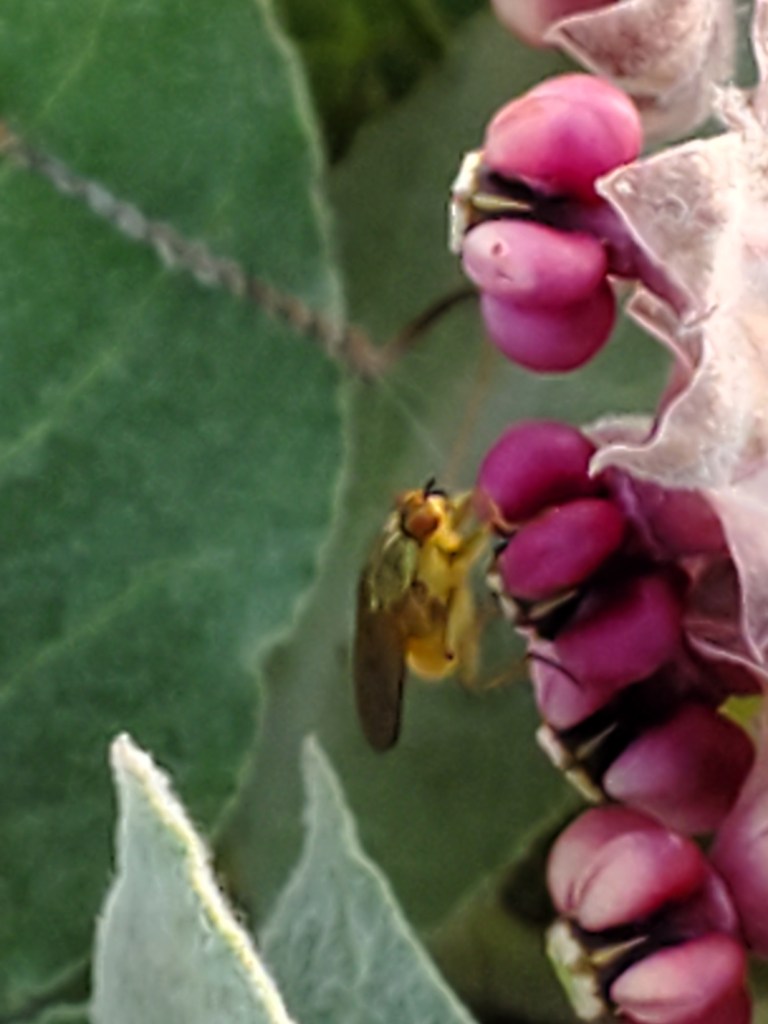
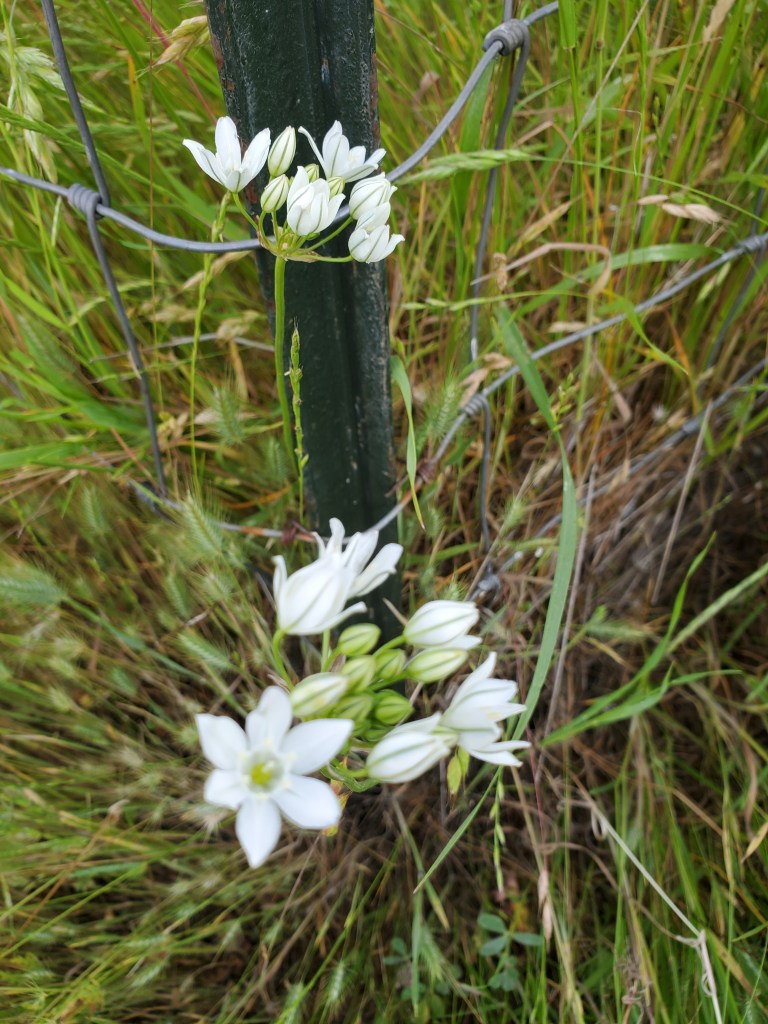
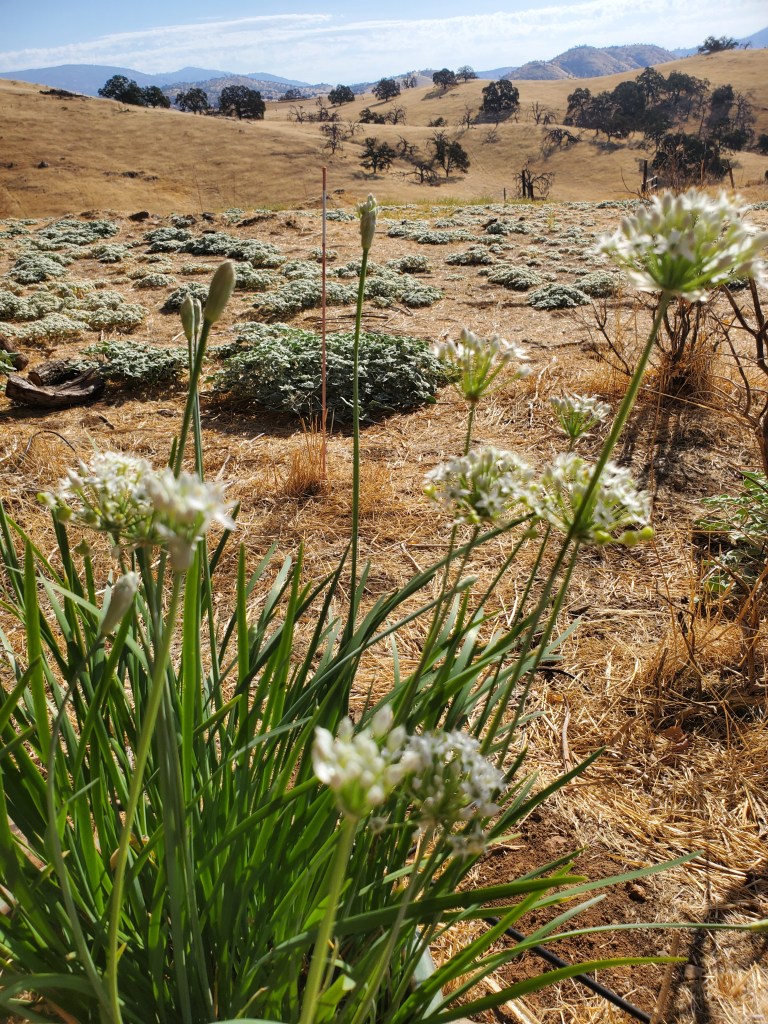
With the survival of my old white sage plant from the grasshopper incursion, its blooms have brought back a myriad of bumble bees and small pollinating flies. The onions are blooming as well and have encouraged micro pollinators into the yard. I love seeing those very small, hard-working insects. More lady beetles have been around, but not in numbers I’ve seen before. Of course, house flies seem to be abundant every year, and this year is no exception.

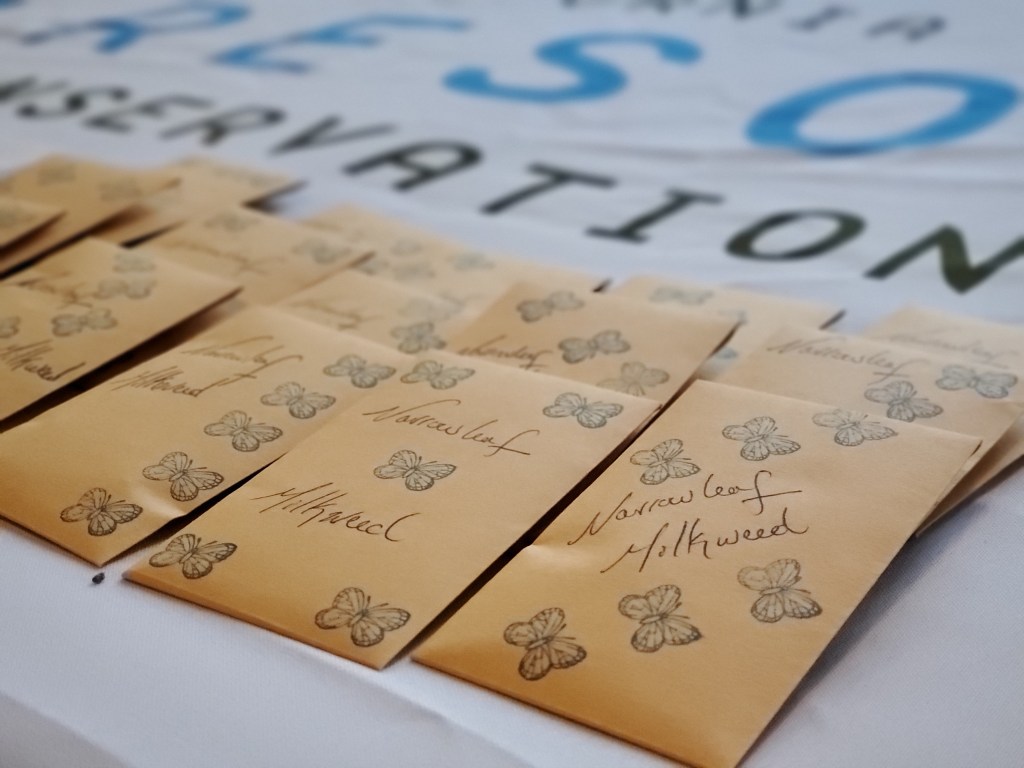
With the second lowest count of monarch adults since the history of the overwintering count, I perhaps should not have hoped for a visit. This would be the second time in a row monarchs have bypassed the ranch. I understood skipping us last fall on their way back. Truthfully, I didn’t want to be here. All the stripped and murdered plants, grasshoppers shifting around like flakes in a snow globe, it was all too sad. But, I stayed. I had saved one large narrowleaf milkweed with a screen box my husband made. I kept watch on that plant for the entire summer to make sure it was still available should the monarchs stop back on their way to overwinter. Like a child at Christmas, I waited for an orange, black and white Santa to come, gifting their eggs to hatch and a sense of fulfilled purpose and hope. But, Monarch Santa never came, and I questioned my work. How could I do better? How can I make the habitat more resilient?

Birds and Other Wildlife

The bird songs have been incredible this spring. I finally set up my hammock, and when I have time, lay in it and listen. There are audio devices available now to hang in trees, record and send back to the vendor for a list of birds present based on the songs. Very cool. I want to do that.

Even though I don’t have a value-added product I sell from the ranch, I decided I wanted to become an Audubon Certified ranch. This is a badge that tells consumers that your ranch adheres to a set of protocols that promote more sustainable ranching practices – and certainly promote better habitat for birds. I already follow and perform many of the practices they outline, so I think we will be a good fit. I applied to do this because I want access to more expertise on bird habitat and become a better birder. One of the things I am really excited to work on is improvement of quail habitat. They are so cute. I want them to thrive here.

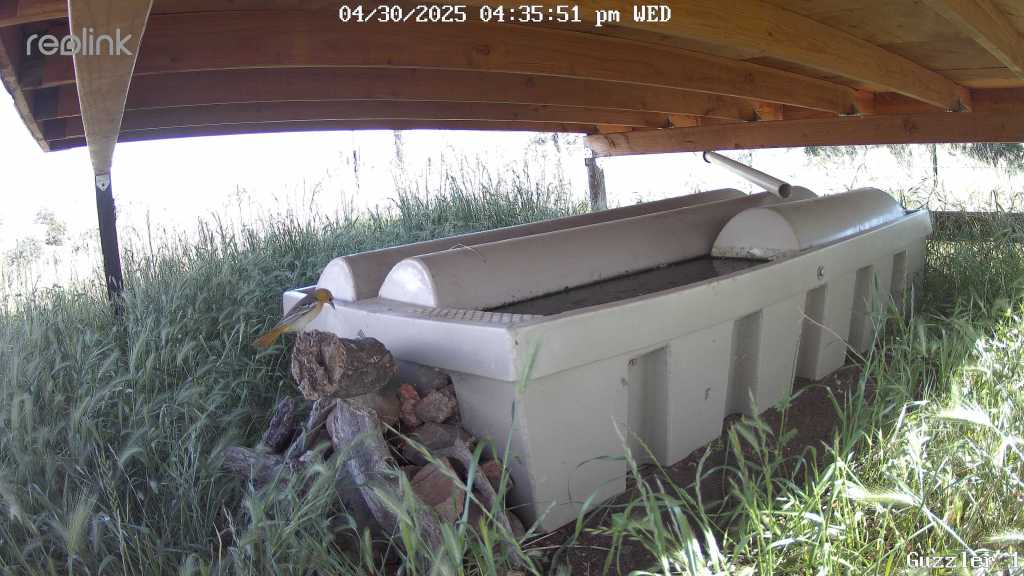
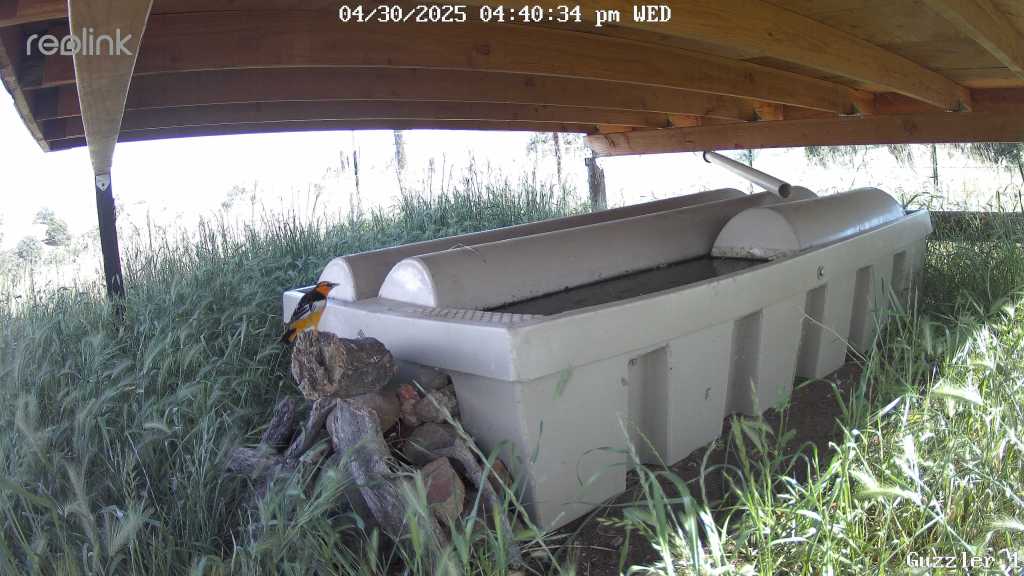
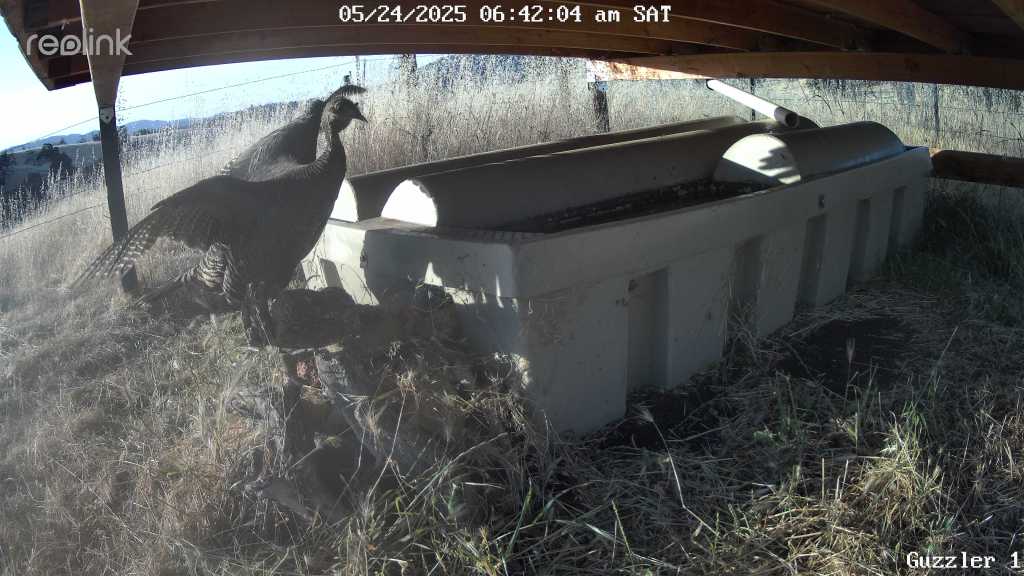
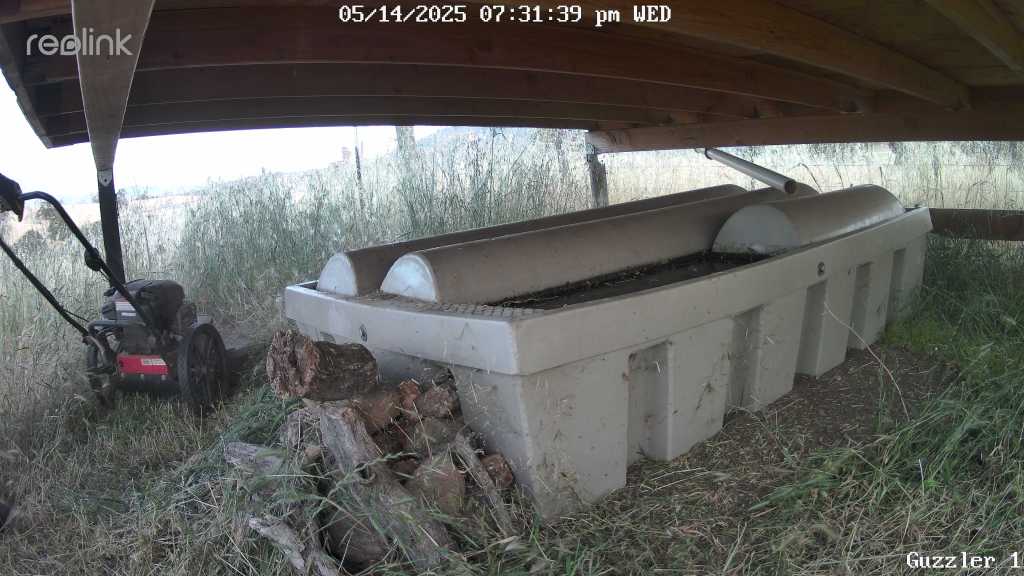
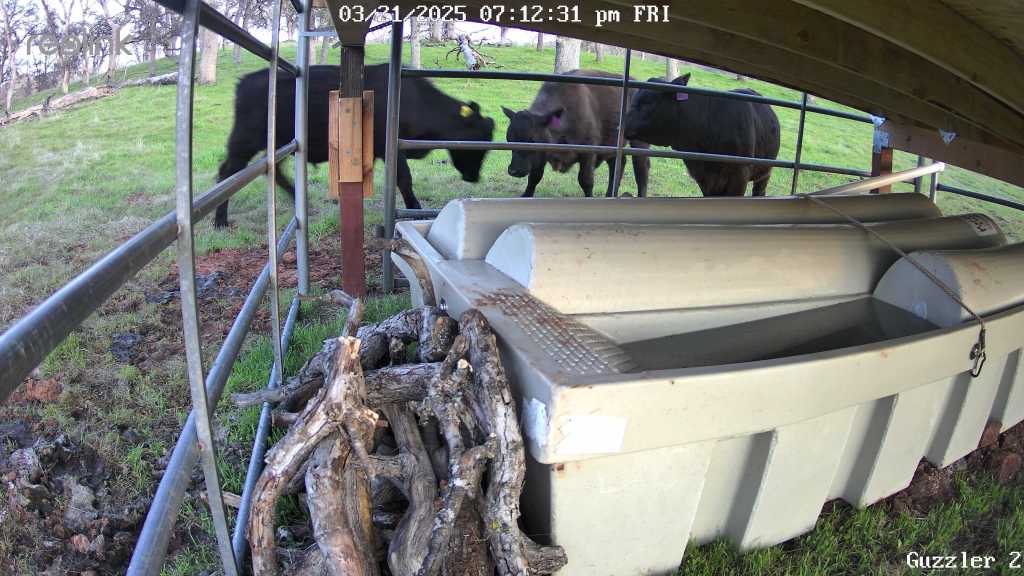
There has been quite a bit of action around the wildlife guzzlers. Raccoons at both Guzzler 1 and 2, and birds at Guzzler 1. There was even a family of five raccoons that visited. Check out the photos below to see who stopped by.

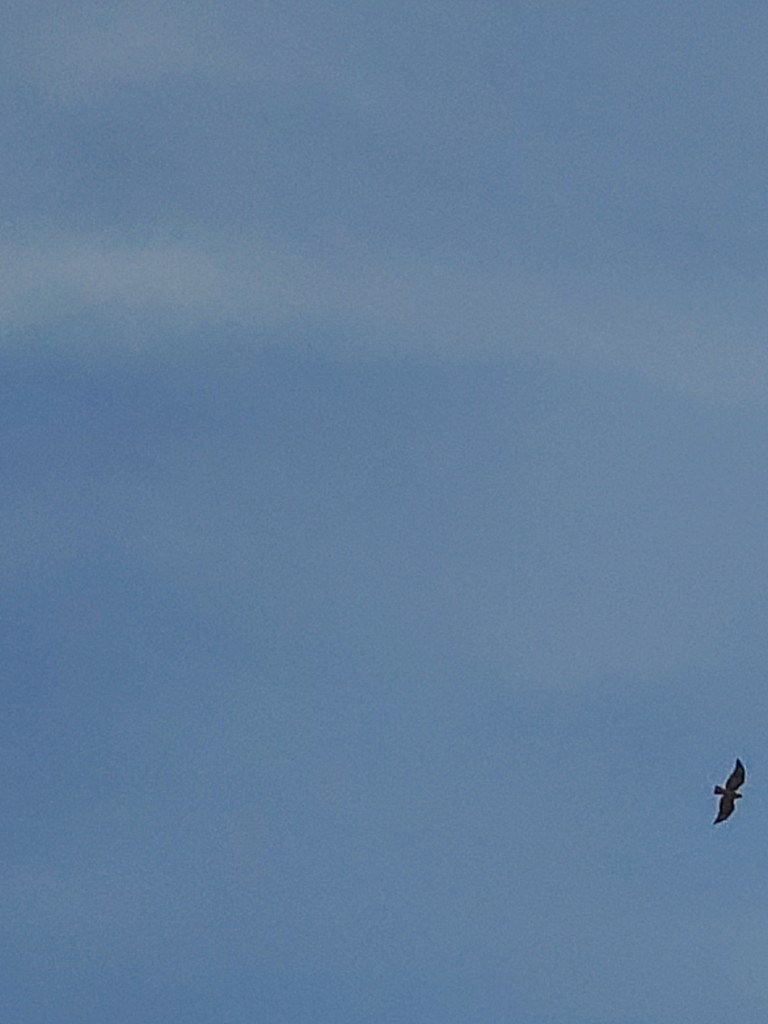
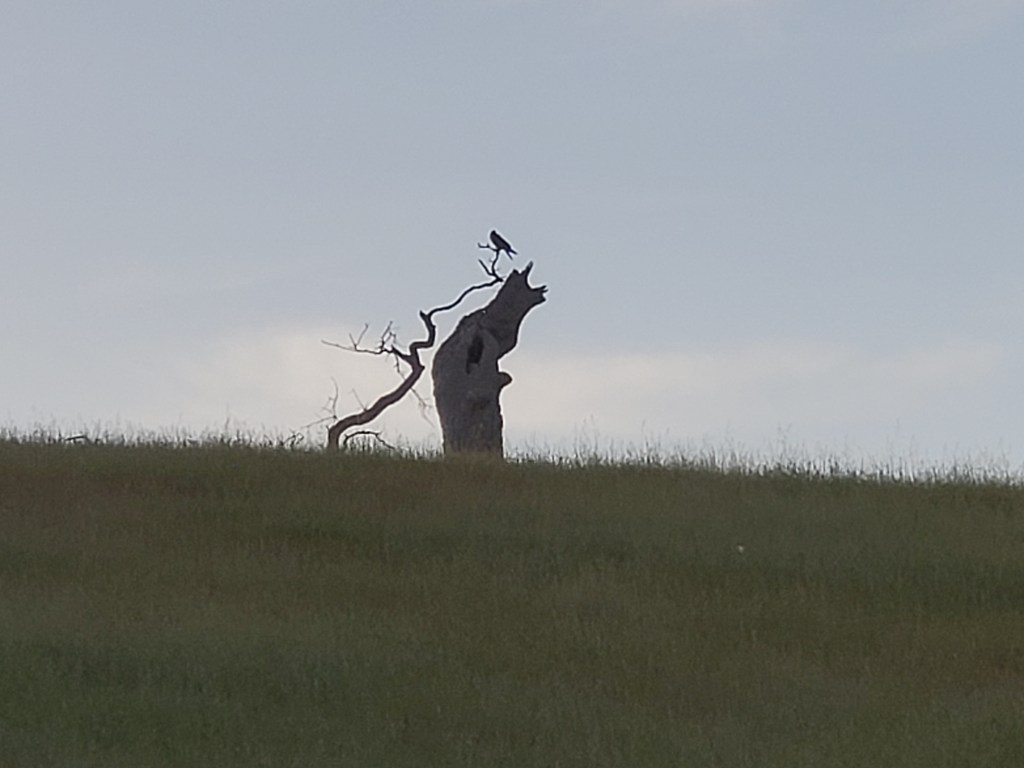
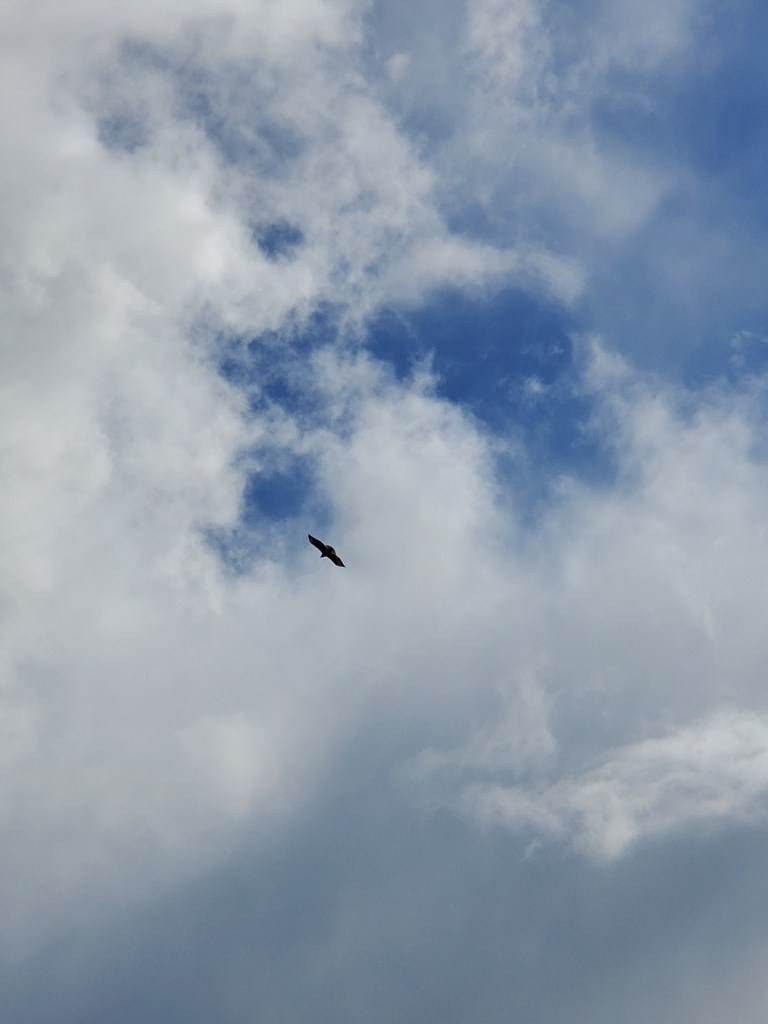
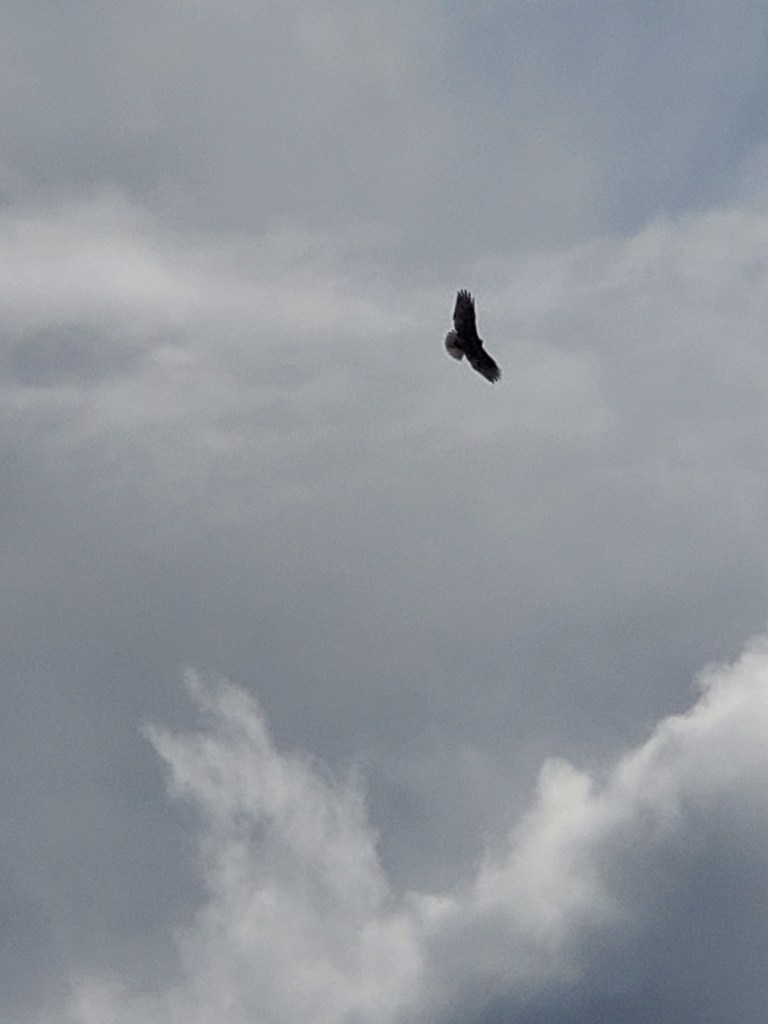
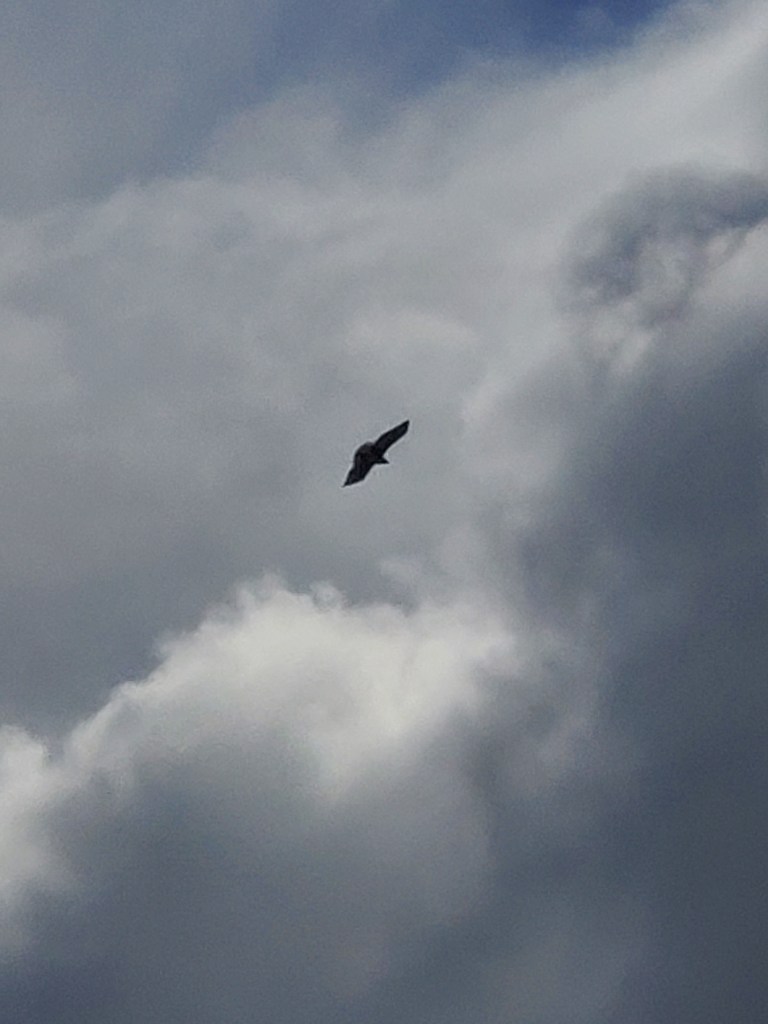
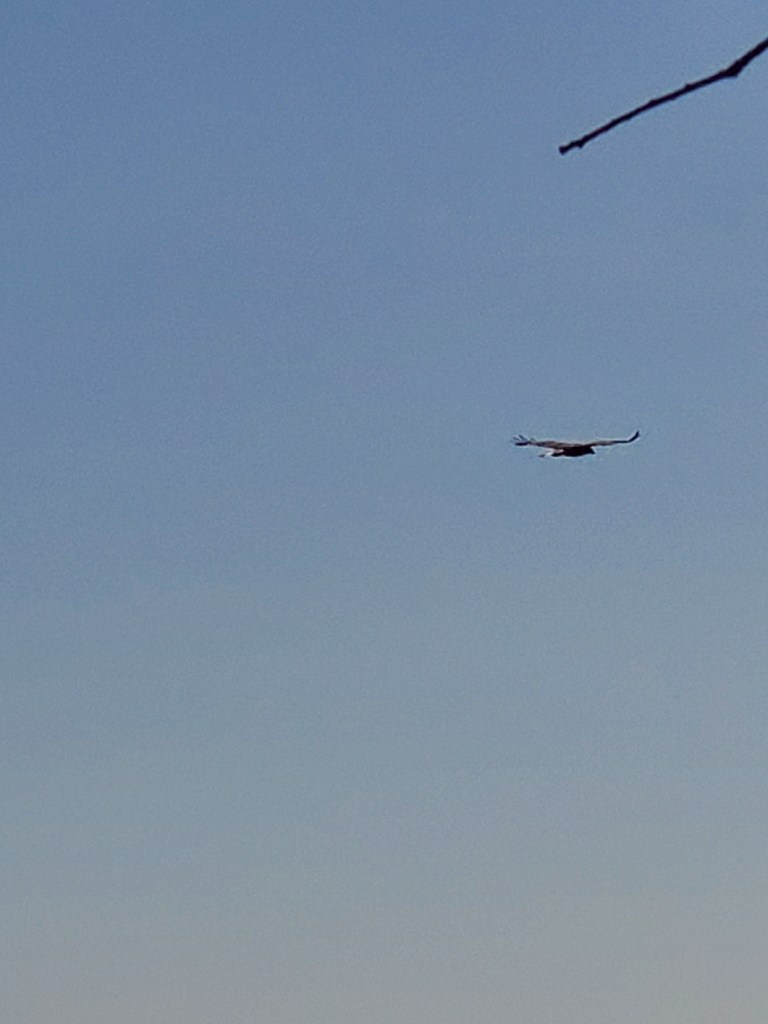
I also had a wonderful encounter with a hawk. I called to him, and he came. I talked to him as he circled me 8 times. Wow, was he a beauty.

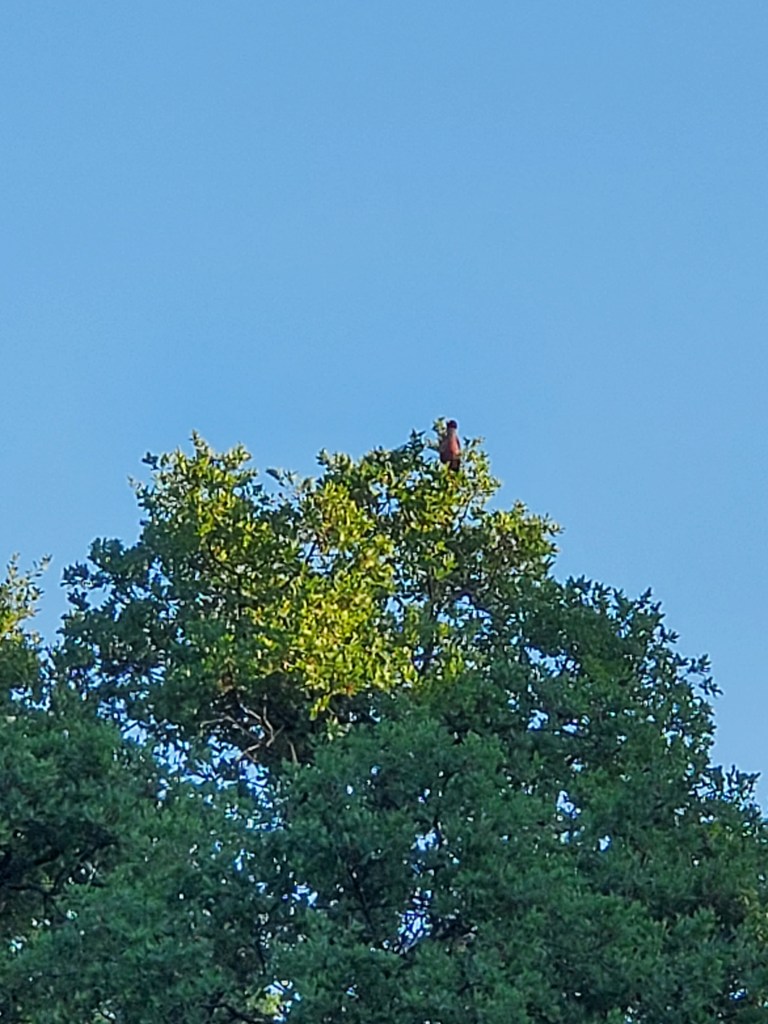
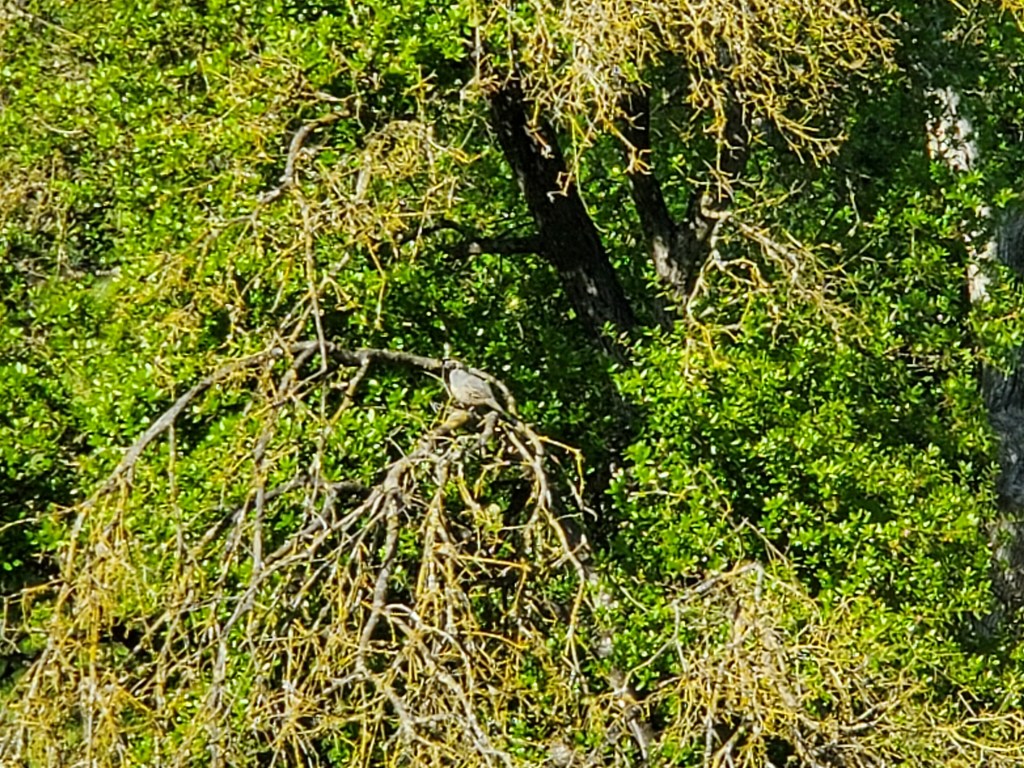
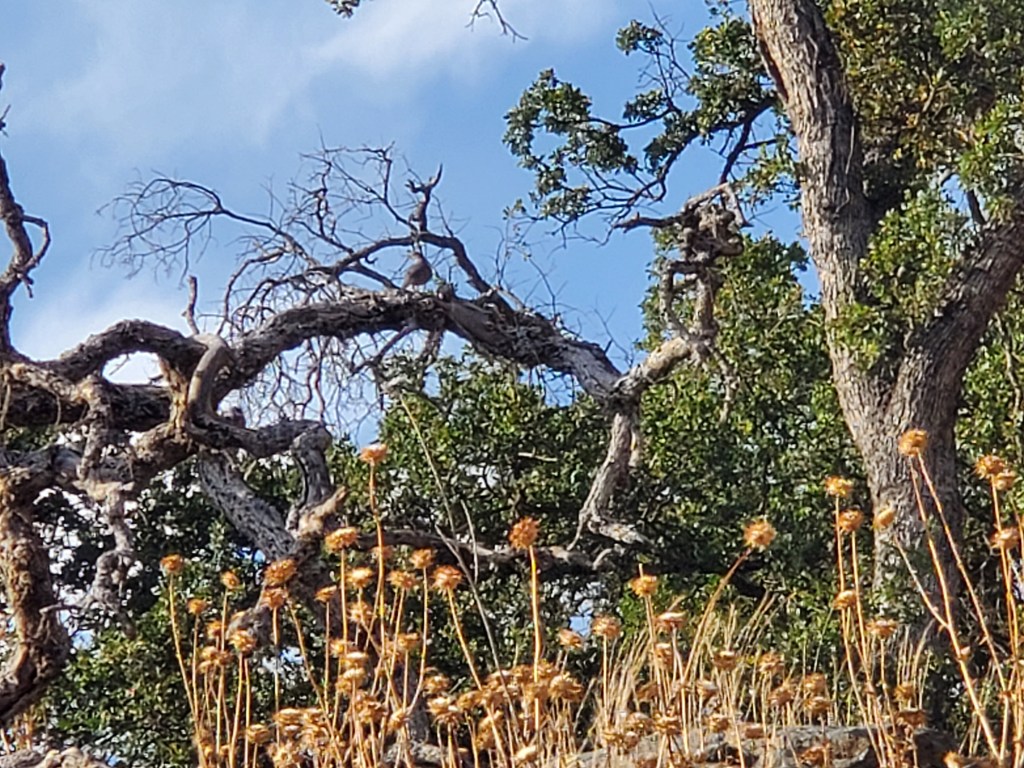
While walking in the grove, I saw a large bird in a tree. I tried to get good photos, but by this time, you know that is not my best skill. After showing them to a friend who knows much more than me, he thought it was a lewis woodpecker. I know we have those, so I believe him!

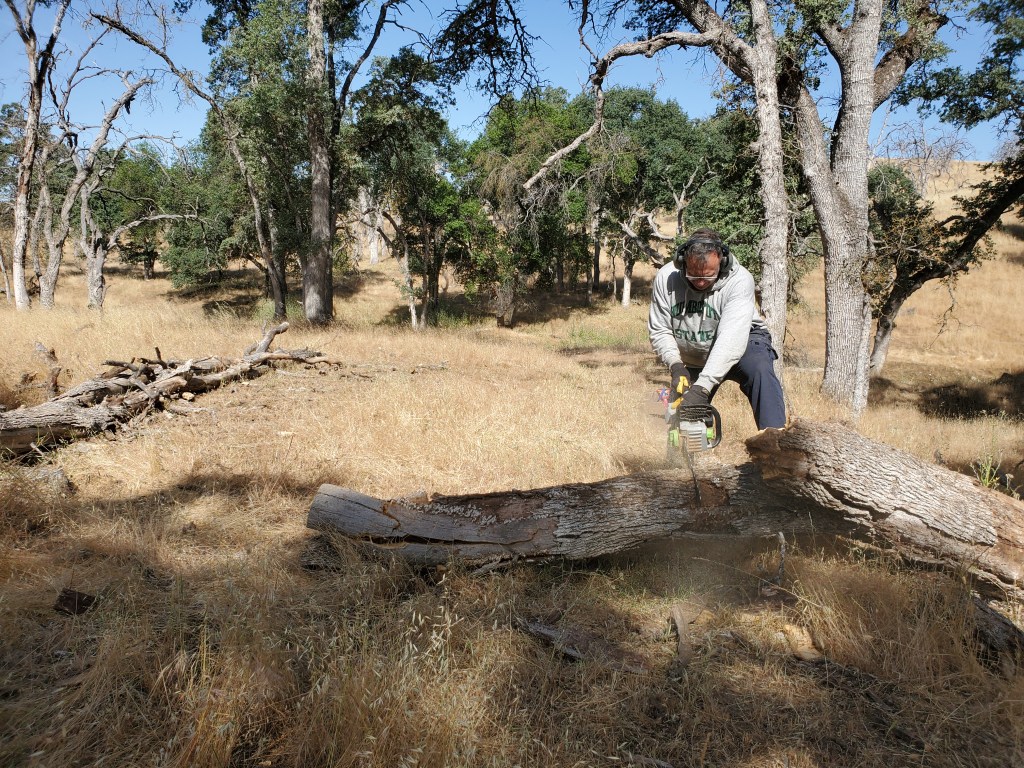
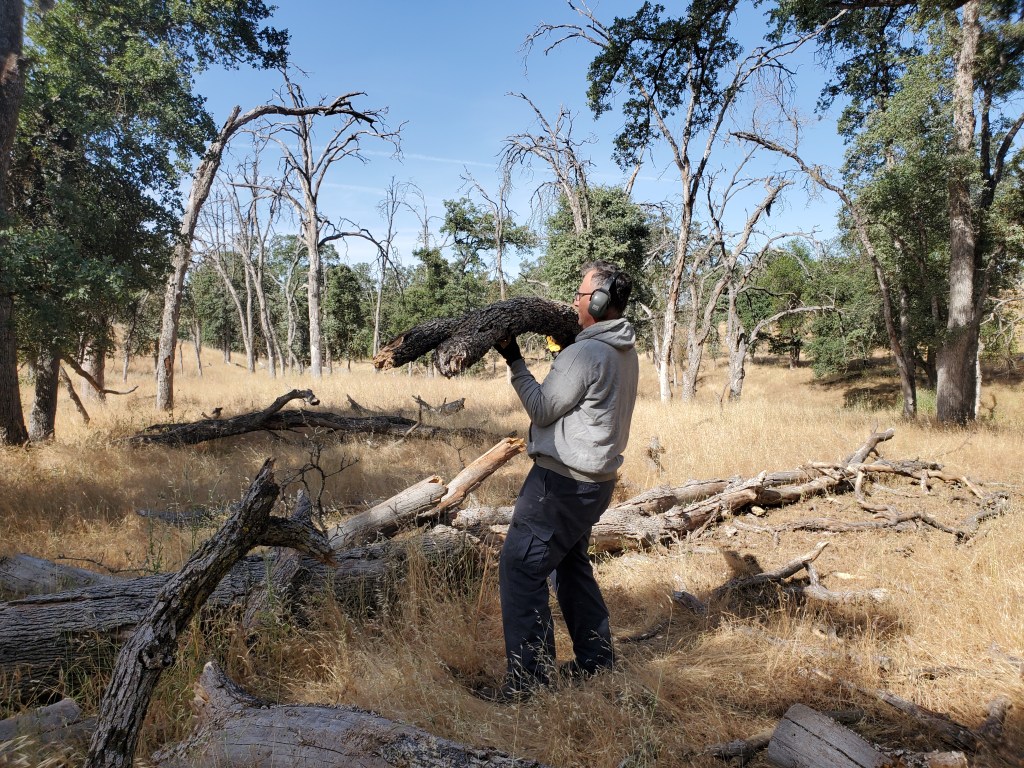
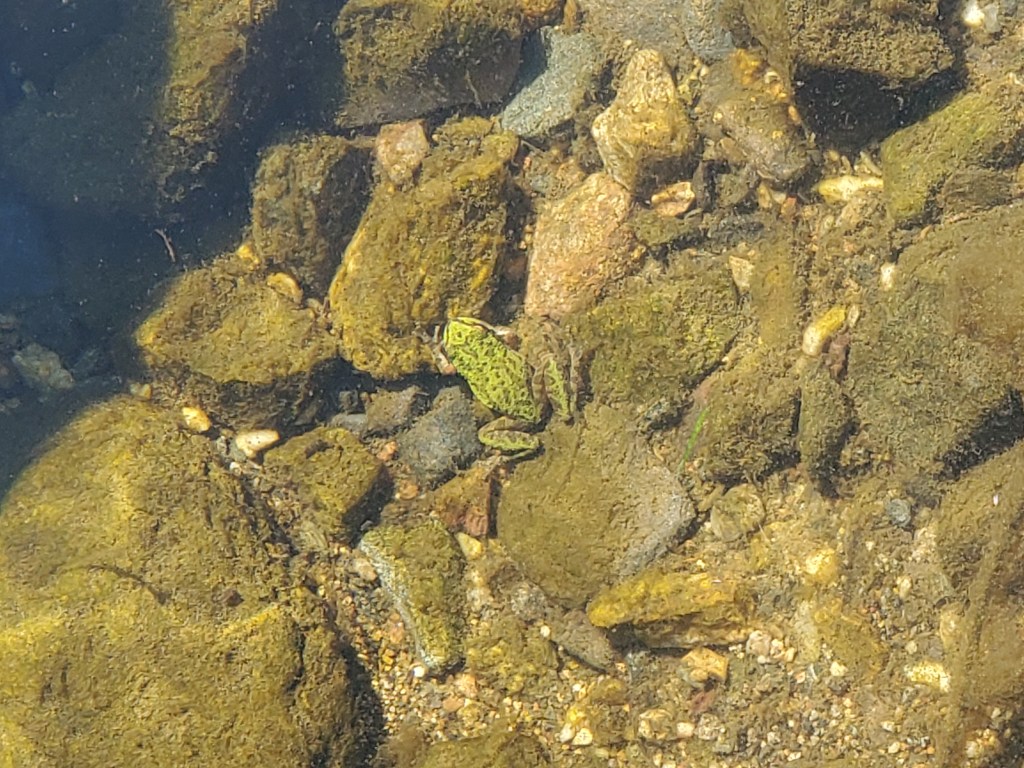
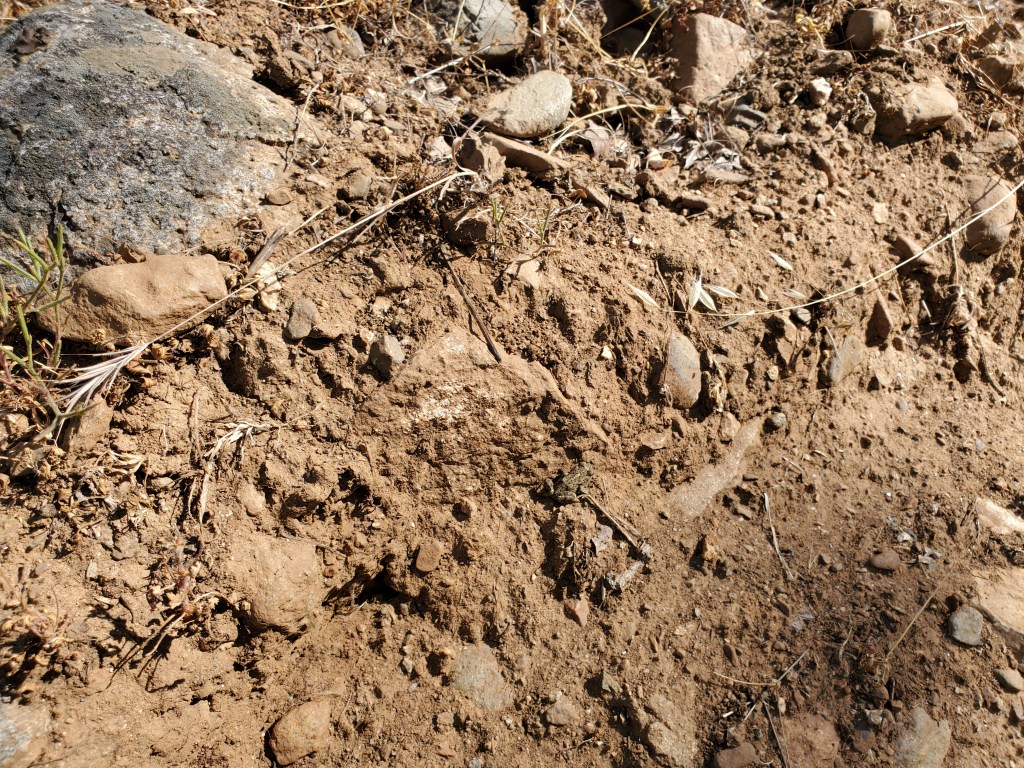
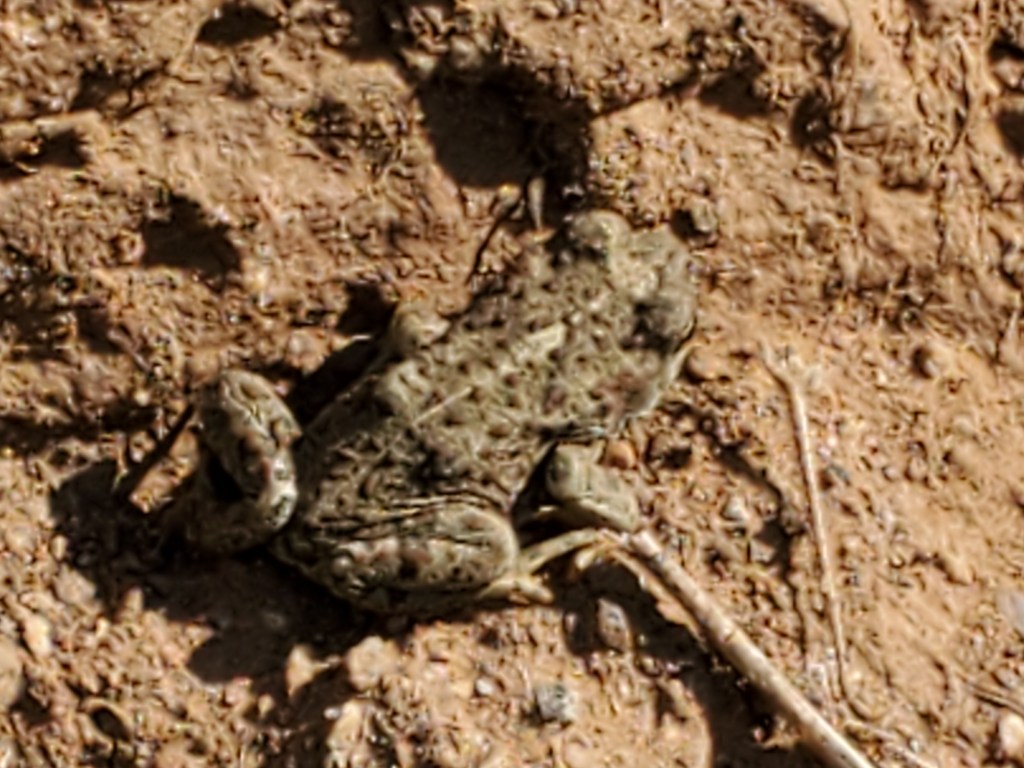
When David and I went to check on Guzzler 2 and cut up the downed tree across the road, we noticed that there were hundreds of what looked like little baby toads hopping around the Odom Creek riparian area. I had Dave stop the Polaris and keep it parked at the top of the hill, so we didn’t impact (read: squish) this incredible hatchery of hundreds of amphibians. We had to haul all the equipment by hand across the creek and up the other side, deal with the tree, then move on to the Guzzler 2 to troubleshoot the camera and weed around the guzzler. Fortunately, David is incredibly strong. He hauled all the chainsaw equipment, and I, with my bum leg and bum right hand, carefully carried the bag of game cam equipment.

Lots of beauty all around us.

Land Stewardship

Work on the land is never done. Type A folks and list makers, don’t feel panic. Feel joy. Ours is an ongoing relationship of commitment and love. What a sense of accomplishment you feel when you see the land around you look healthier, smell wonderful, and host so much more wildlife. You did that; you are fulfilling your responsibilities as a species with your particular brain, hands, food needs and knowledge. Chiokoe uttesia weweria. Thank you relative.

It has been difficult to fulfill these responsibilities for me as of late due to the accident. But, prior to that, there was considerable weed pulling and whacking, monitoring milkweed, watering the planted oaks, and watering native plants to give them a good start.

Wanderings

You just keep moving. There is always so much to do, so much to accomplish and commitments to fulfill. There can be little time to reflect on the “what wases” and “what could have beens”. Walking is where I reflect, and that has temporarily been taken from me. Sitting in my hammock, my bum hand, ankles and leg in sight, unable to perform some of the simplest of tasks, learning to use my left hand for more than is typical, my emotions stir. They shift, float round and round, then settle in to a simmer. What emerges is the knowledge, clearer than ever, that we are all part of one larger whole. In Indigenous circles, we talk about “All one nation.” or “All one people.” How many times I’ve used that statement believing it from a scientific point of view, not the philosophical or the practical. Sitting, as I was, not useless, not helpless, but more in need – not as useful as I’d like, the thought of how much help I have already needed and would continue to need was acid simmering, a dull pain then realization – “all one people”.

I thought about the man that hit me, the man that helped me, the first responders, the unconcerned officers, the hotel staff most of whom were kind, our friends that came to the rescue (Carol, Sean and Ernest, then Josh to check my wounds), my boss Nancy whose compassion and understanding is simply inspiring – and blindingly effervescent, my husband’s love for me. How remarkable a life is it to see such consideration and care. It is not that I think I don’t deserve the kindness of others; it is simply uncomfortable for me to cause any imposition. I know everyone has challenges they are dealing with, and I don’t want to be one more weight. But, how I cried at the love shown to me and to David. How I sobbed feeling David’s arm reach around me to provide support when my leg didn’t want to work, and the care with which he changes my bandages, ignoring the blood, goo and scabs as he navigates the myriad of bruises to delicately place a clean pad with antimicrobial cream over the broken skin he has always loved to touch. We are all one people not just in DNA ways, but in the need we have for one another – not just to receive care, but to provide it.
My accident could very easily have resulted in a worse outcome, as the left temporal lobe area of the helmet, scraped and cracked, would indicate. So, the bandage changes, the leg support, the running around watering oak trees, pulling weeds, planting plants – they are all a joy for him because it could have been so different, something that is too dark to think of, but close enough to see the shadows of what could have been.

As with everything in my life, I see it as a metaphor or a parallel with the life of the monarchs. There are so many who care. They see the changes, the damage, the need for help, and they jump in, an ocean of people whose relationship with this beautiful insect leaves a trail of life in the form of habitat, improved policy, and human relationships that bring joy. We all need each other because we are all one living organism – all of us – monarchs, bees, dogs and trees. We are all relations. We see the shadows too dark to contemplate, and thankfully, some refuse to imagine a life without monarchs – and so we work, together, caring for one another, healing and hopefully, leaving what is broken more intact, enough to support millions of butterflies, and every life, once again.

I started this blog post with a photo of David and I. This relationship is my skeleton, my skin, my connective tissue, supporting everything I do. The center of my story, however, is the land – in bwia ania, my land universe. It is my heart, one of my deepest relationships. This beautiful planet, with all its environs, is the reason we are all here. It gives us food, air and water. Let’s be a good relation, in good relation, with her and one another.

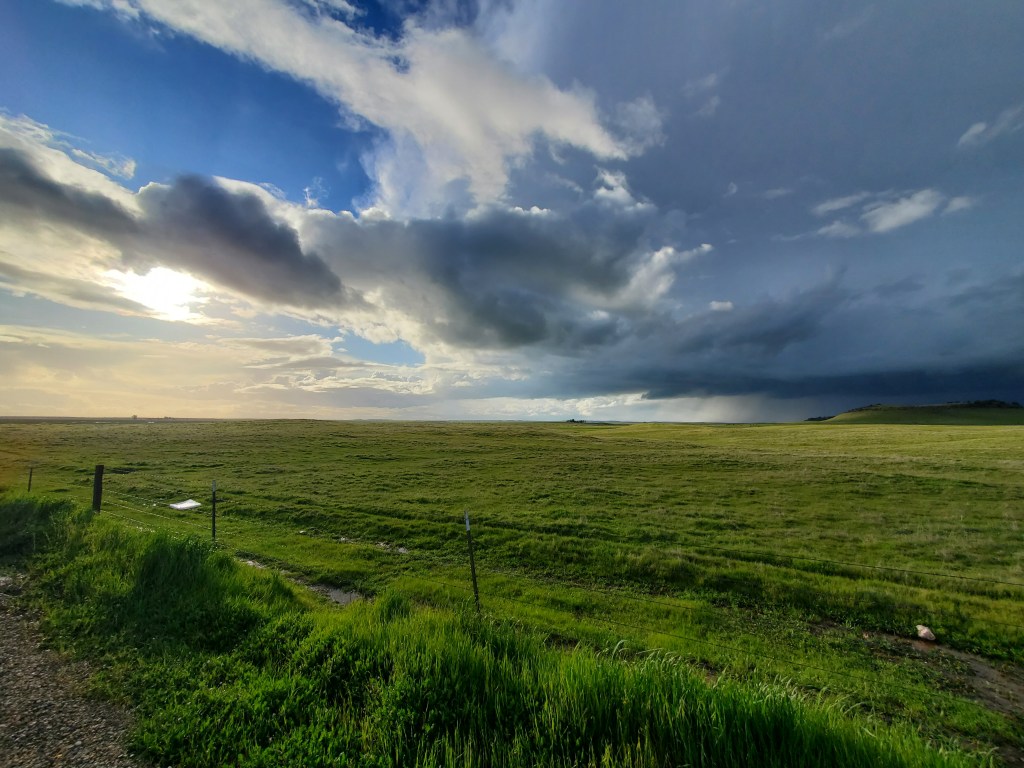
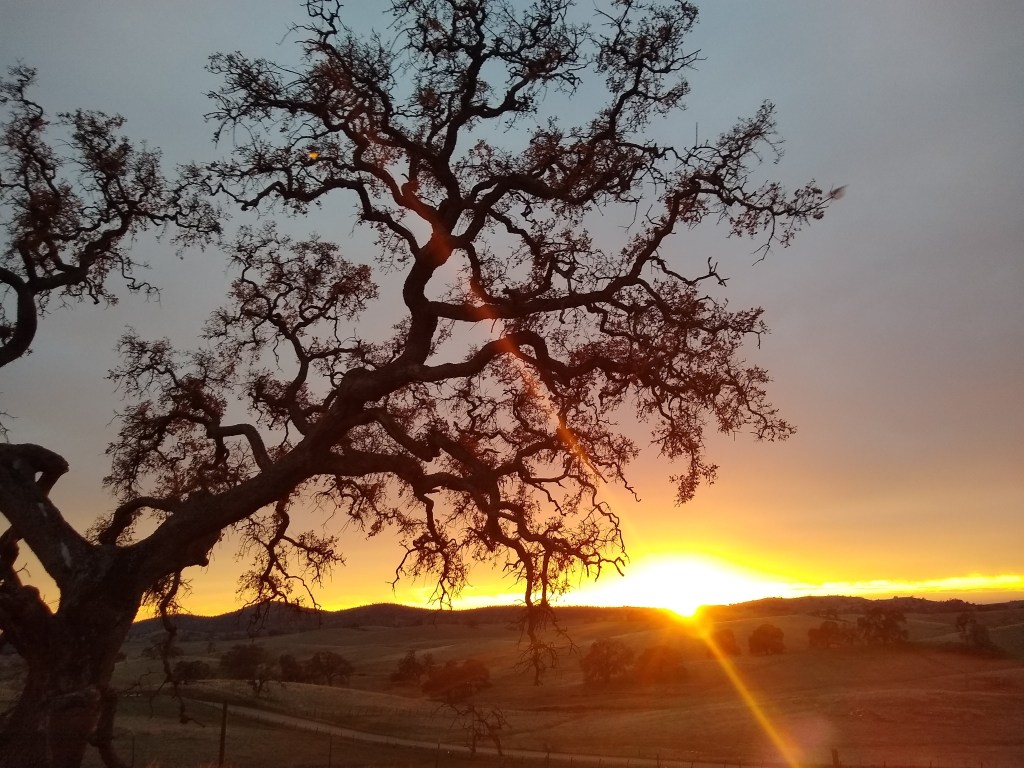
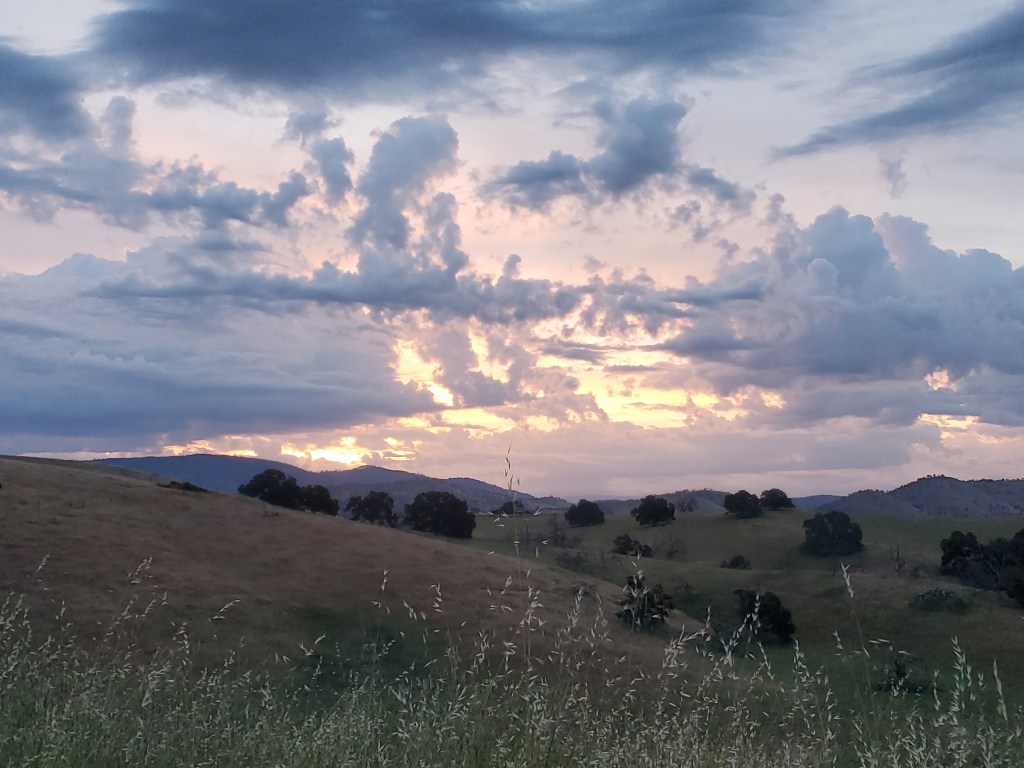
Sunrise after a storm at Tawim Bwiapo (Place of the Hawks)

Water | Oaks | Tornado Warning!

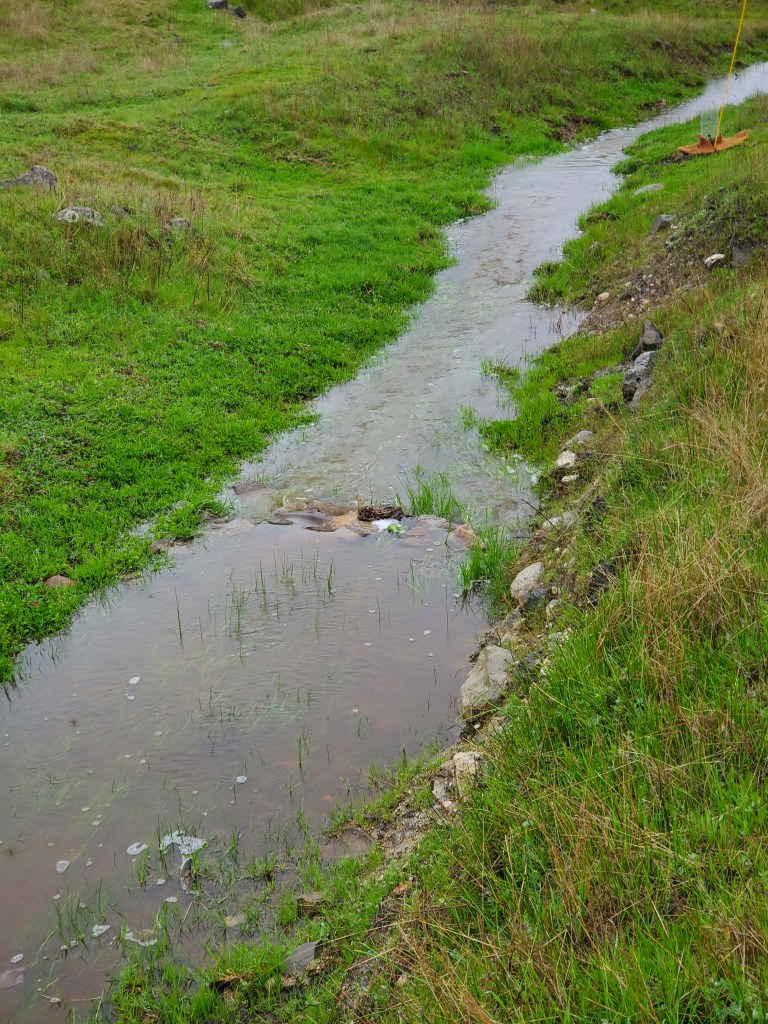
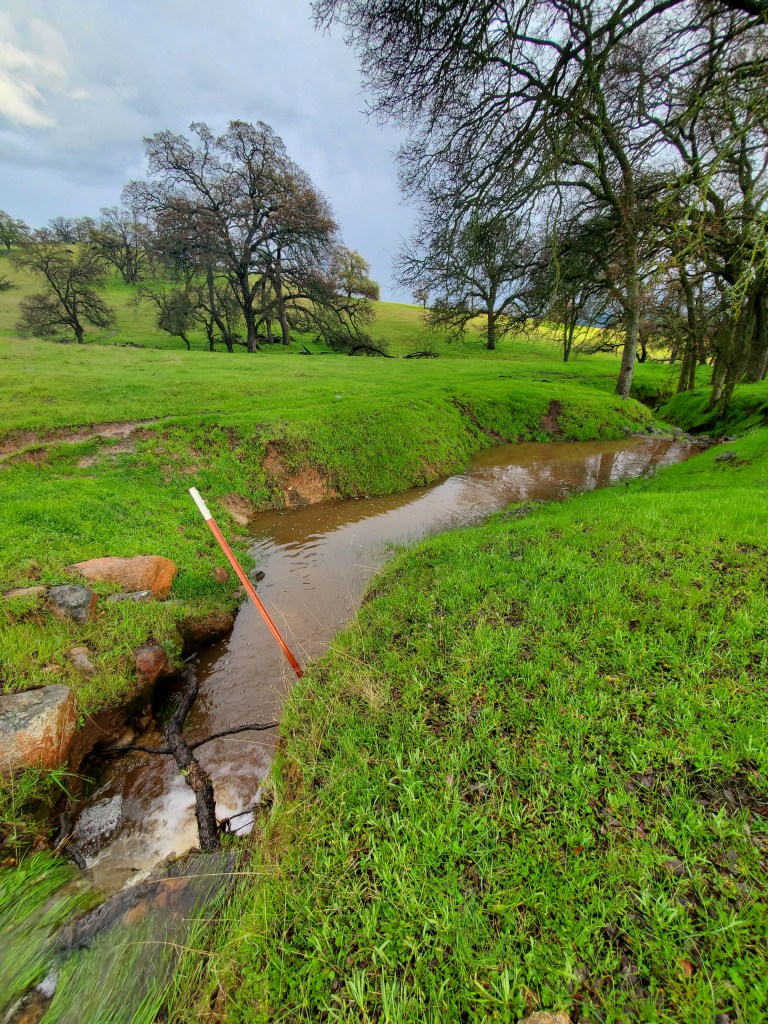
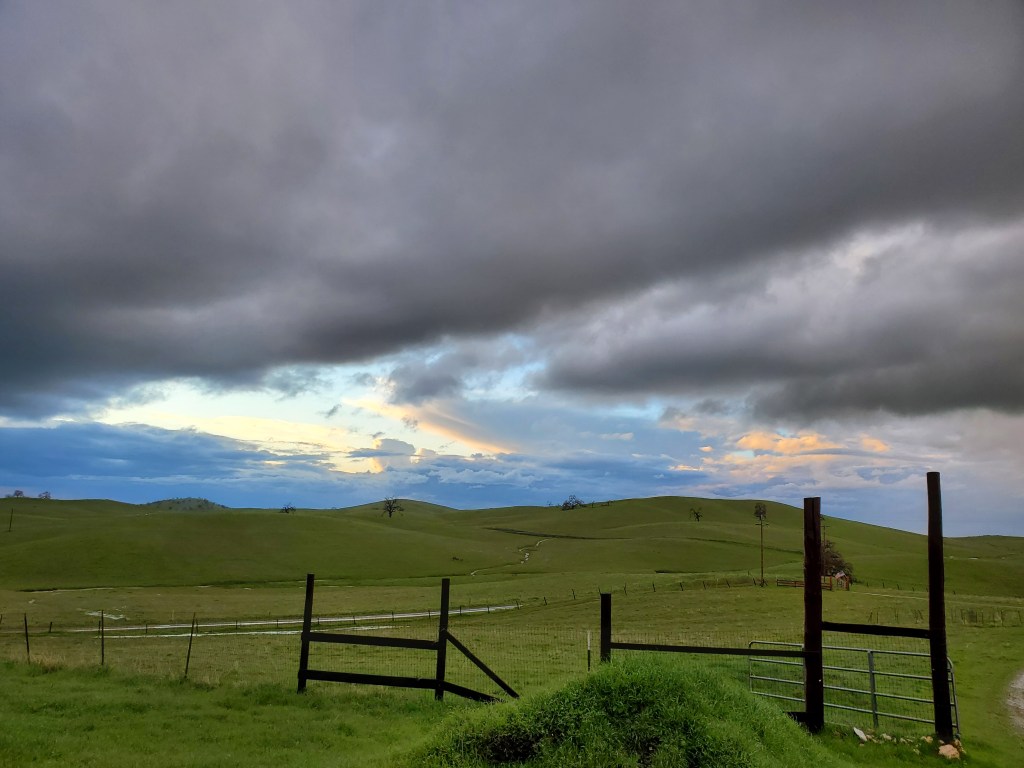
Another storm brings much needed water

I ate two bars of chocolate for breakfast, and I was lit. No one said I was perfect – eggs, oatmeal, too hard for me to think about preparing that day, and I succumbed to the ease of – go to the fridge, grab a bar, open a wrapper, and eat. Then, again. Not proud, but true.

Lately, the intense investment of time, energy, thought and emotion over the last 12 months are catching up with me. My dad is improving; though there are still back-slides, he can do more for himself. As a result, I collapse into a heap of less usefulness and find myself tired all the time, getting out of routine, or filling those moments of routine with non-dad items long ago neglected.

This transition period is messy. Some days my brain is so out of sync I cannot put two words together thoughtfully. My diet of chocolate, peanuts and jam and, if I had some energy earlier in the week, basic salad, is not the finest to promote optimal brain function. Some days my husband will take pity on me and make me a smoothy, or an egg. This day, I am up earliest and on my own. Chocolate it is. Caffeine and I do not mix. I know this. I am hungry, lazy and just love the taste. Jitters take hold, and my plan to plant more oaks just got an accelerant.

Oak Planting Nearly Done

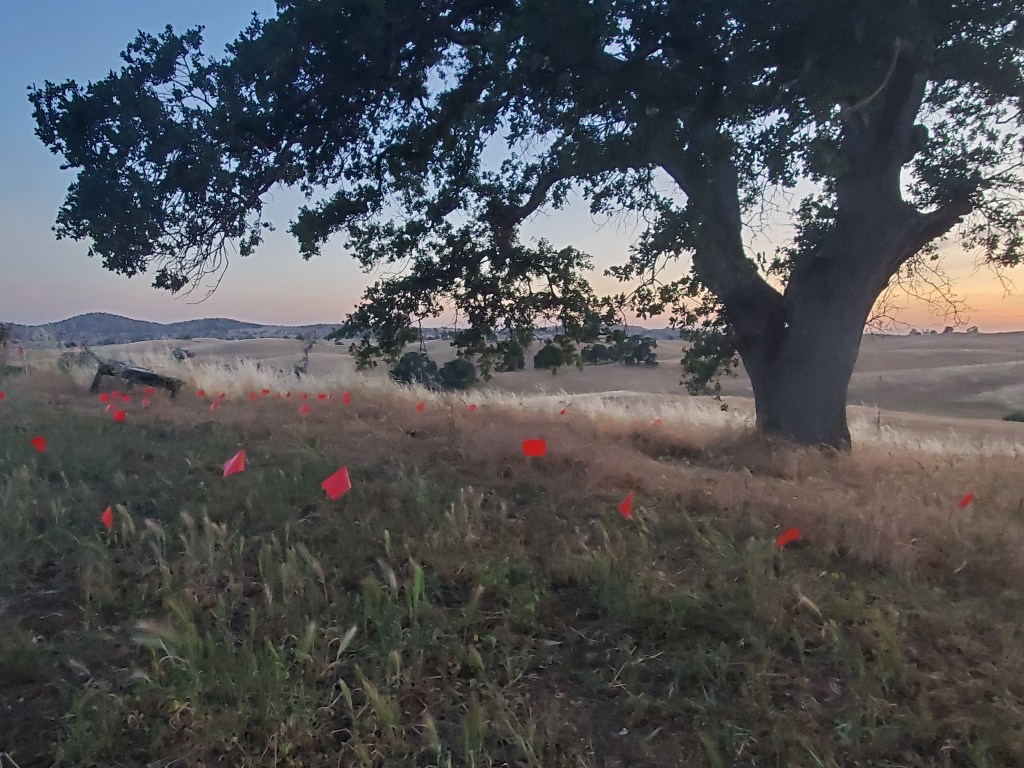
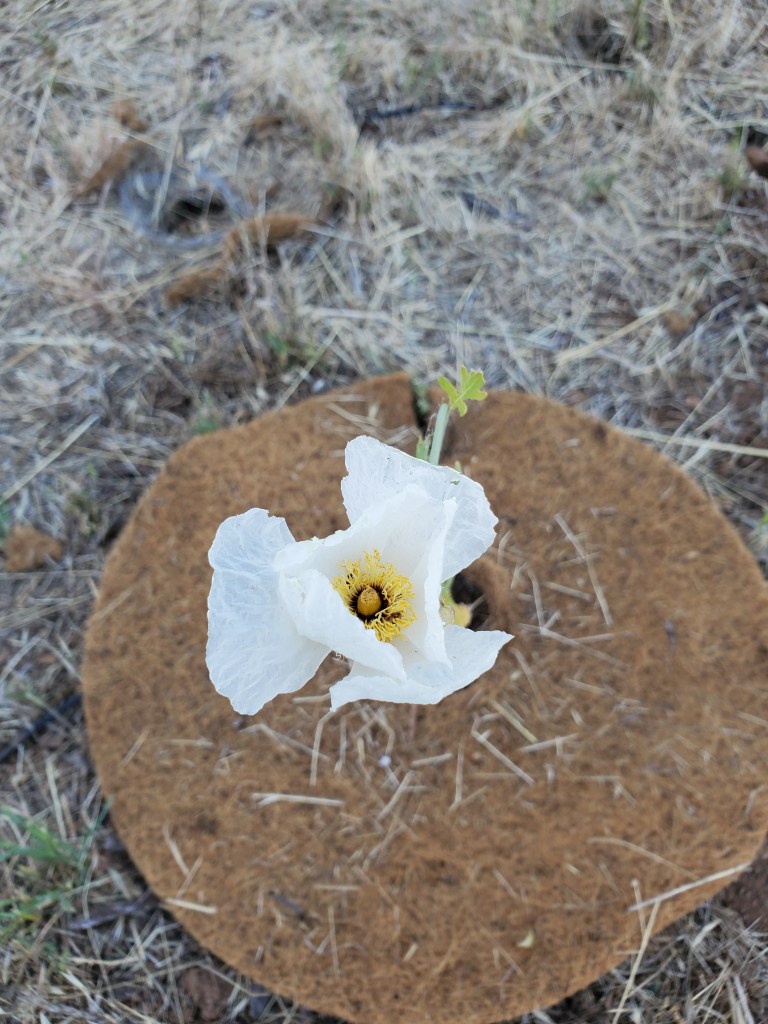
I planted all of the oak seedlings except one, planted all of the riparian oak acorns, and planted half of the elder oak acorn. The rest of the elder oak acorn I saved for acorn flour. I checked the plantings done earlier in the month and February. The cows got their snouts through the fencing on one and pulled the coconut coir. I put it back. Some of the flags were askew. I straightened them. I placed flags on others. I weeded away from new growth in the already enclosed plantings. Maintenance is important to ensure better outcomes.

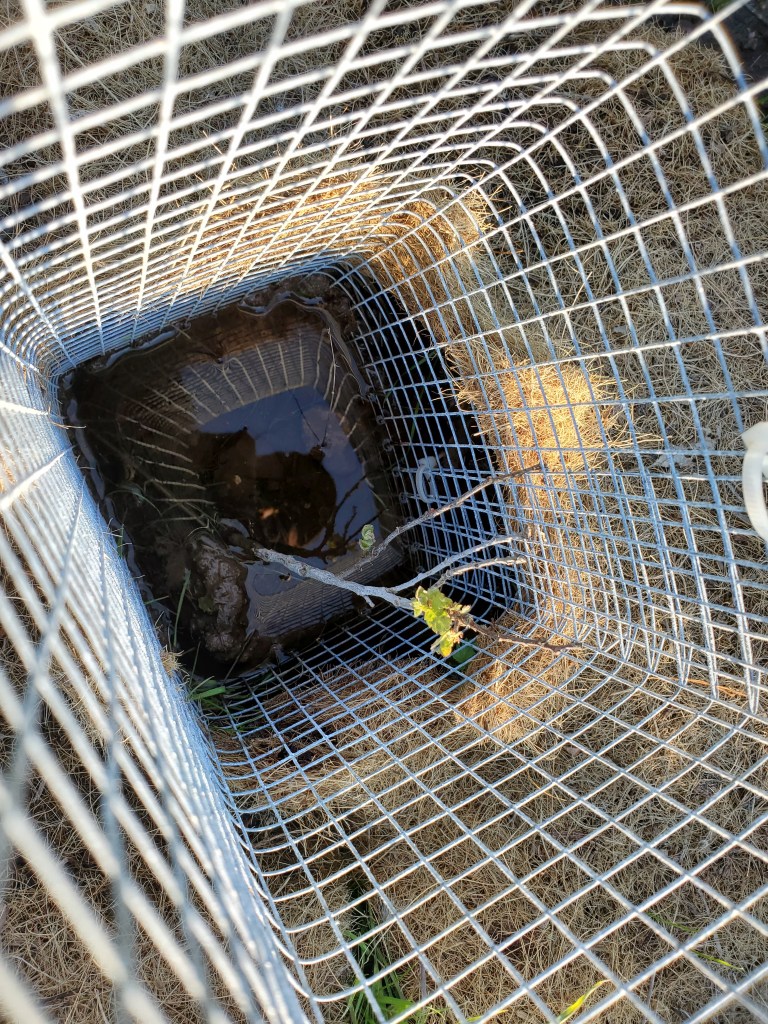
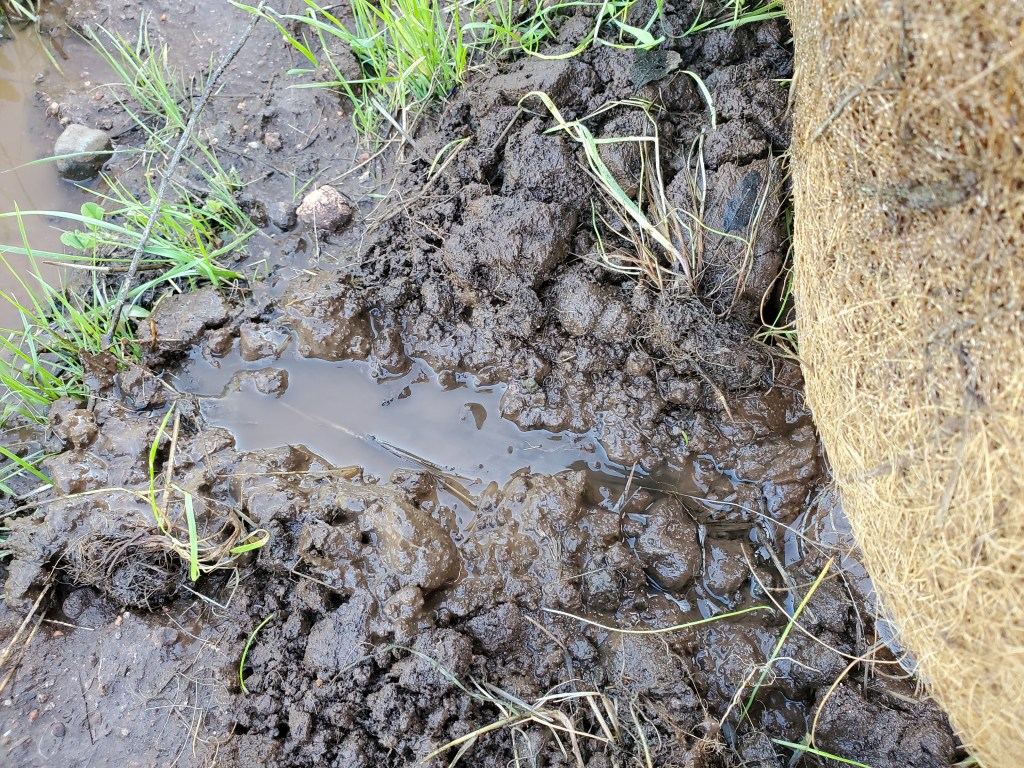
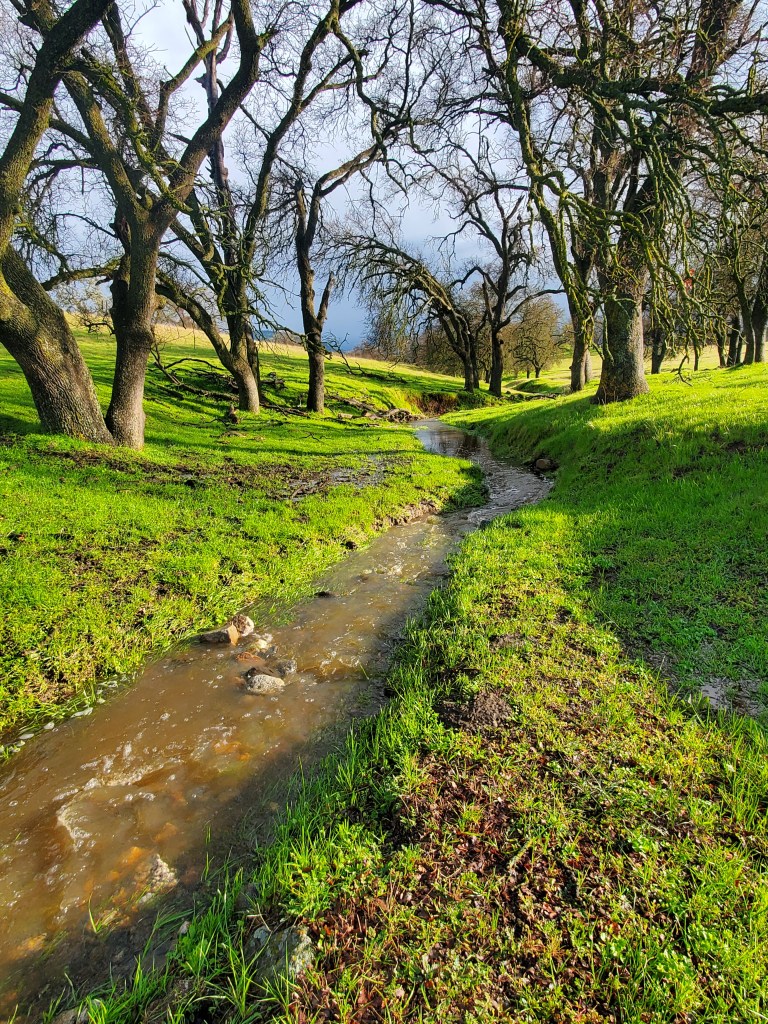
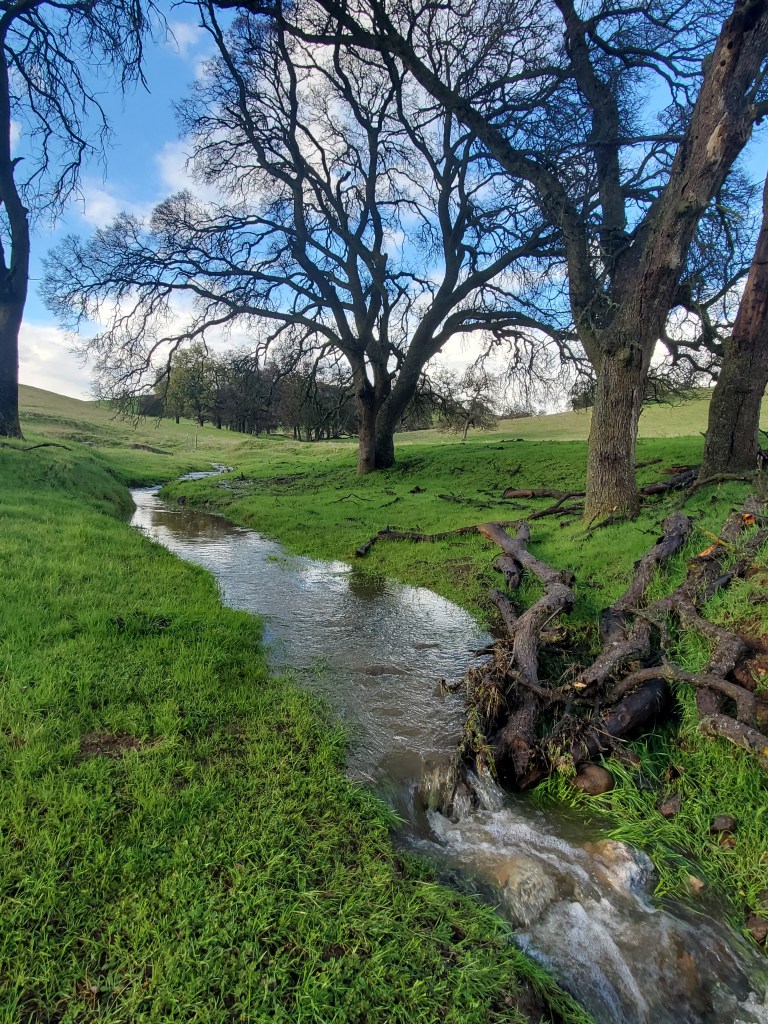
After one of the storms, I saw one of the seedlings I planted had its basin filled with standing water. Too much water, and oak roots can rot. One of the challenges of selecting a site is that I am considering access to water over the long term. As such, I have been planting near the creek or near a spring flow. One of the upstream oaks on Spring Creek is planted in a flow. It is west facing with other oak shade. The soil is predominantly clay. Excellent conditions for water accumulation.

I lifted the coir pad, stuck my finger in the mud and created a channel to allow the standing water to flow out of the small basin I try to place around each planting. It mostly worked to alleviate the stand. Water is everywhere, and that section, because of the flow, is already saturated. However, I was able to get the water down low enough so it was not submerging part of the trunk. The weather will be dry this week, and I anticipate the remaining standing water will be gone within 24 hours. I will go back and recreate the basin wall for the next rain event.

While out checking the oaks and maintaining their planted areas, I was quickly caught up in a storm. The wind was ferocious, bending the oak marking flags to almost 90 degrees. Fortunately, I was in my final section, which happened to be nearest the house. The rain started to pour. While I had a jacket on, I was wearing shorts (I know. I’m crazy). The wind whipped at my exposed legs, and then it started to pour. I typically traverse the ranch on foot to limit soil impacts from the quad or truck. I finished with the oak I was working on and bolted up the hill, through the gate, around to the front of the house, sloshing in mud (I had my muck boots on), mud splattering across my legs. Finally, I got to the front door – a soaked, muddy mess. Although I was almost denied entry to the house by my family, it was ok. I love this life.

Checking New Log Check Dam

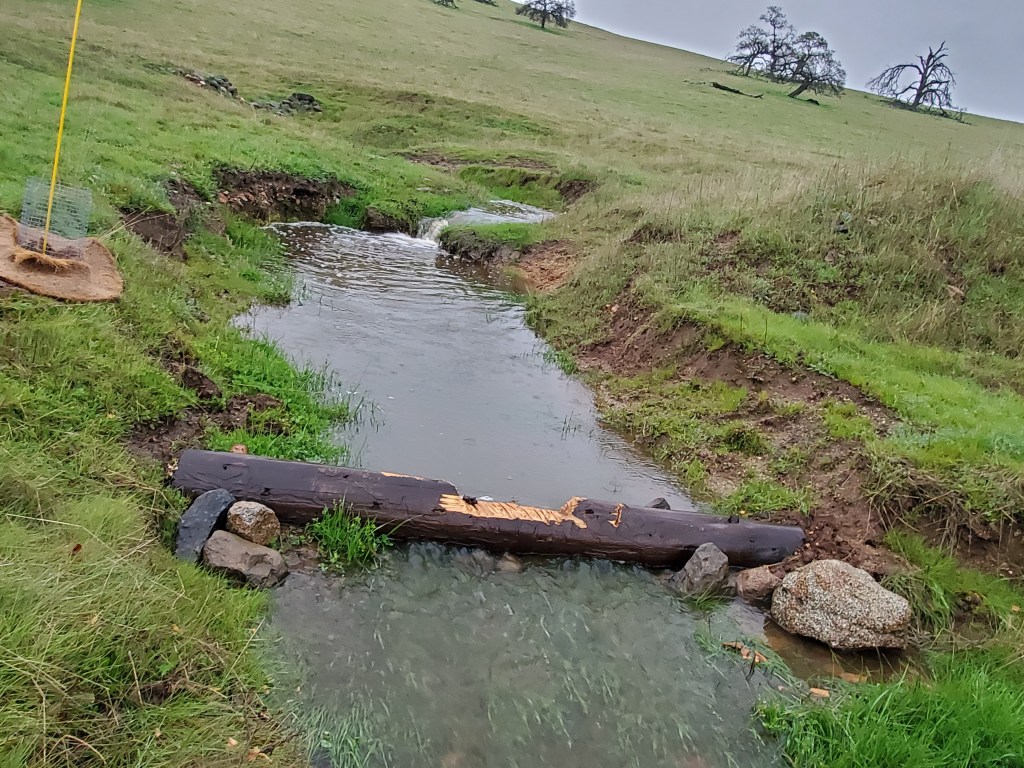
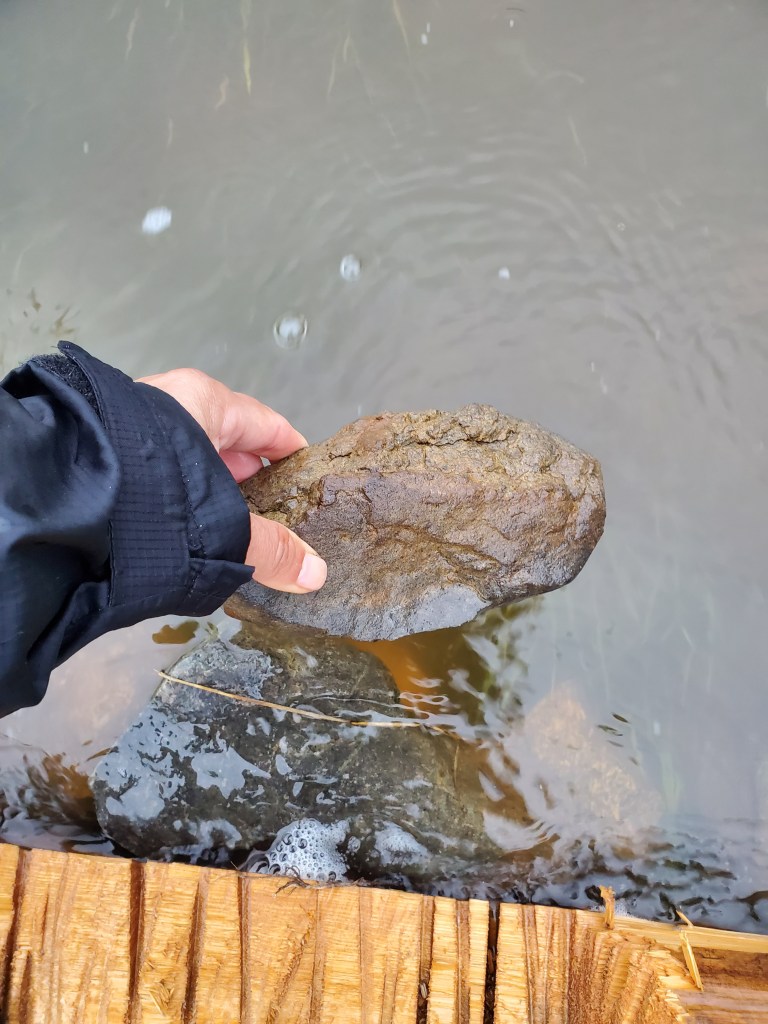
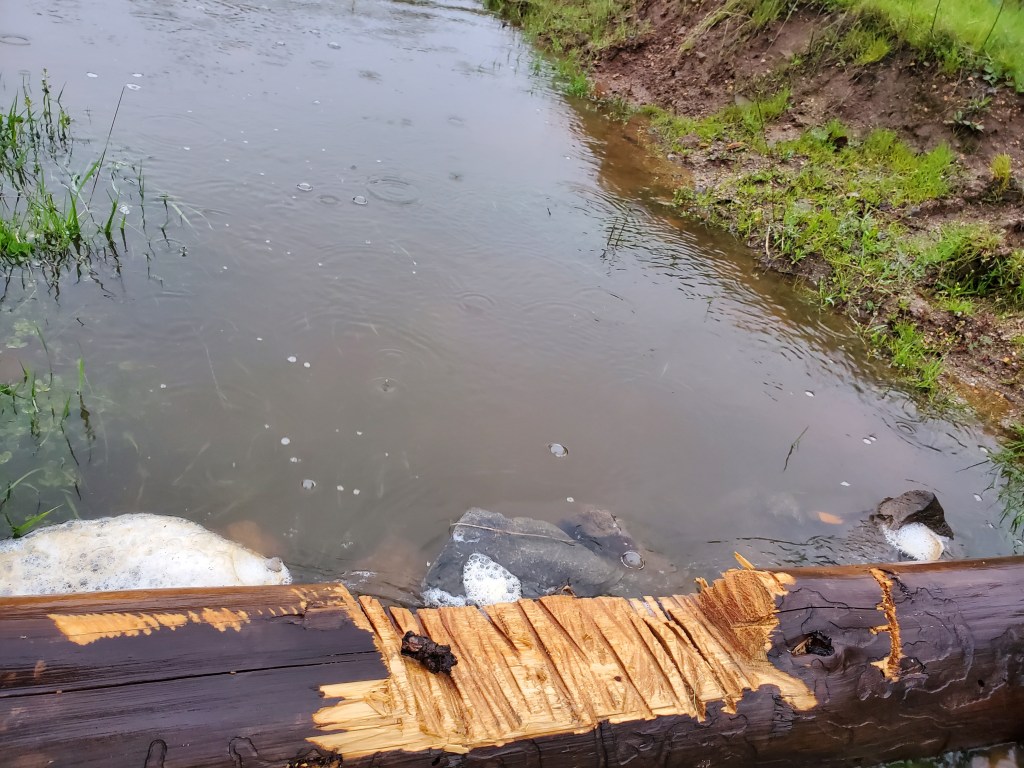
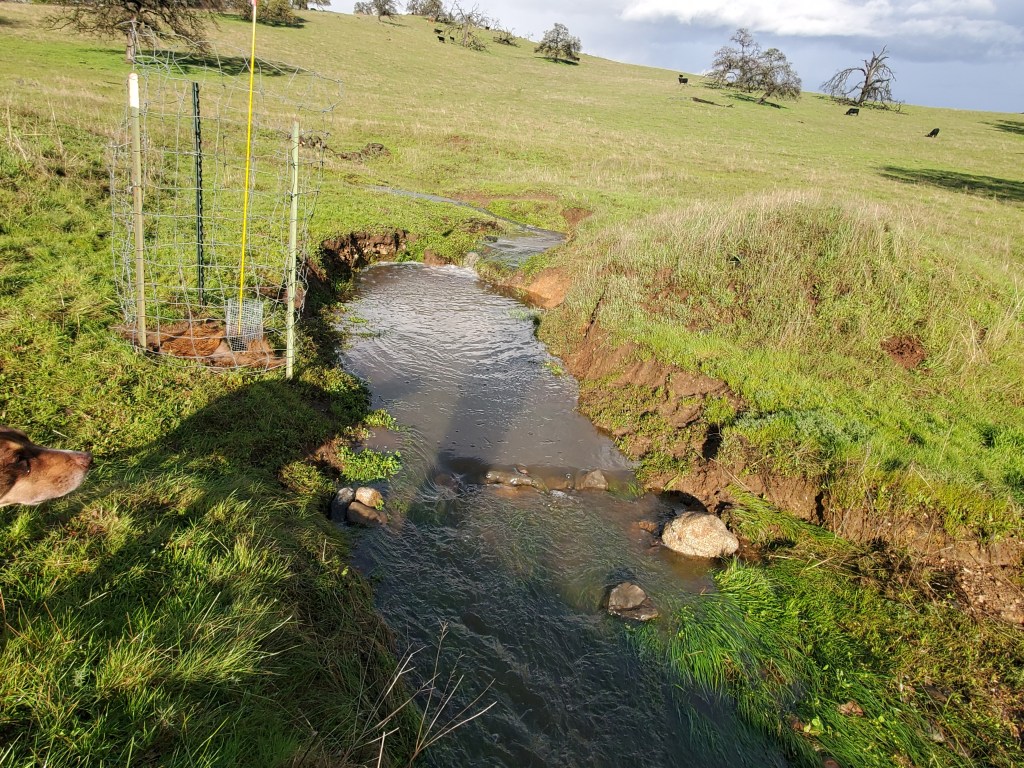
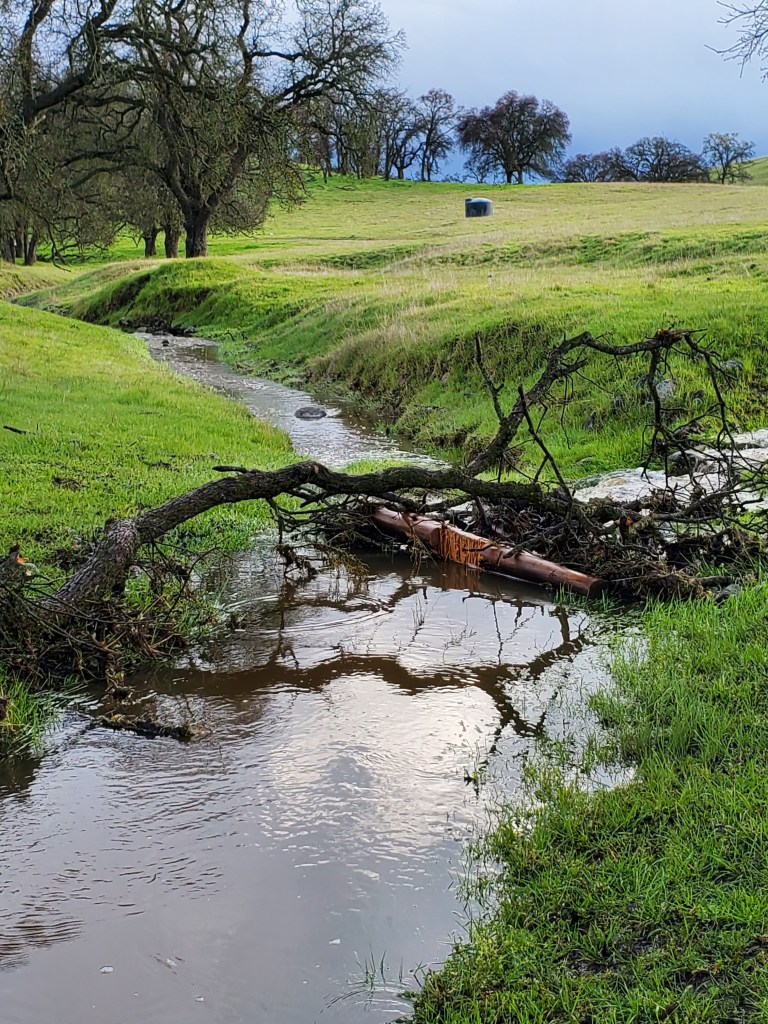
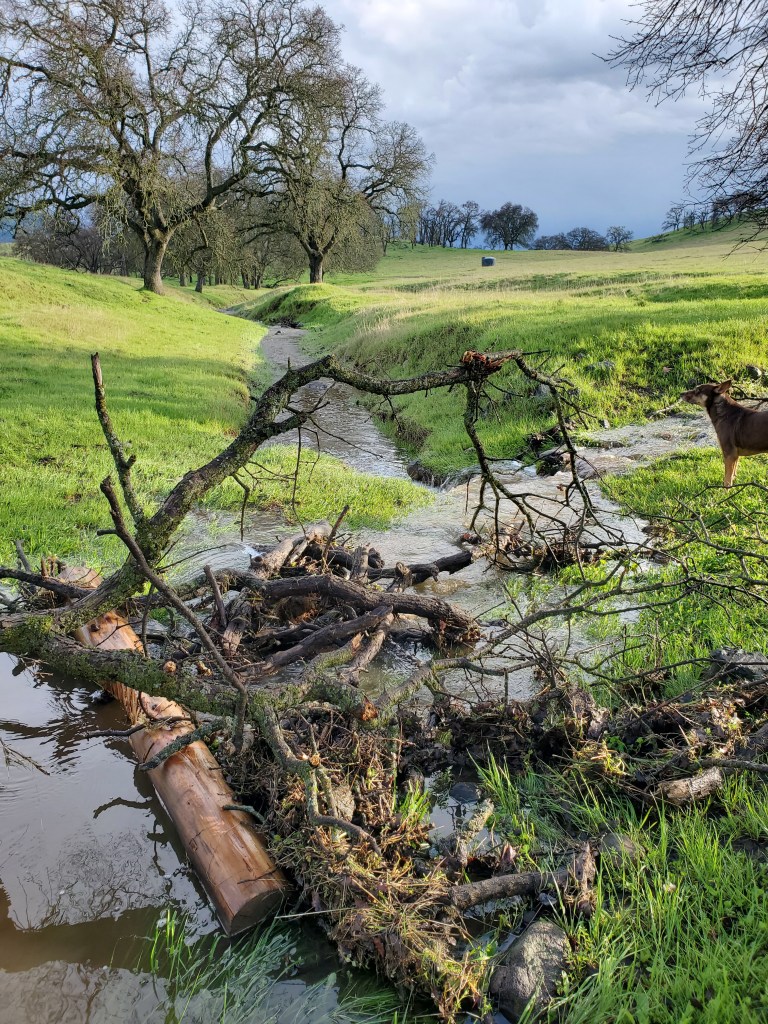
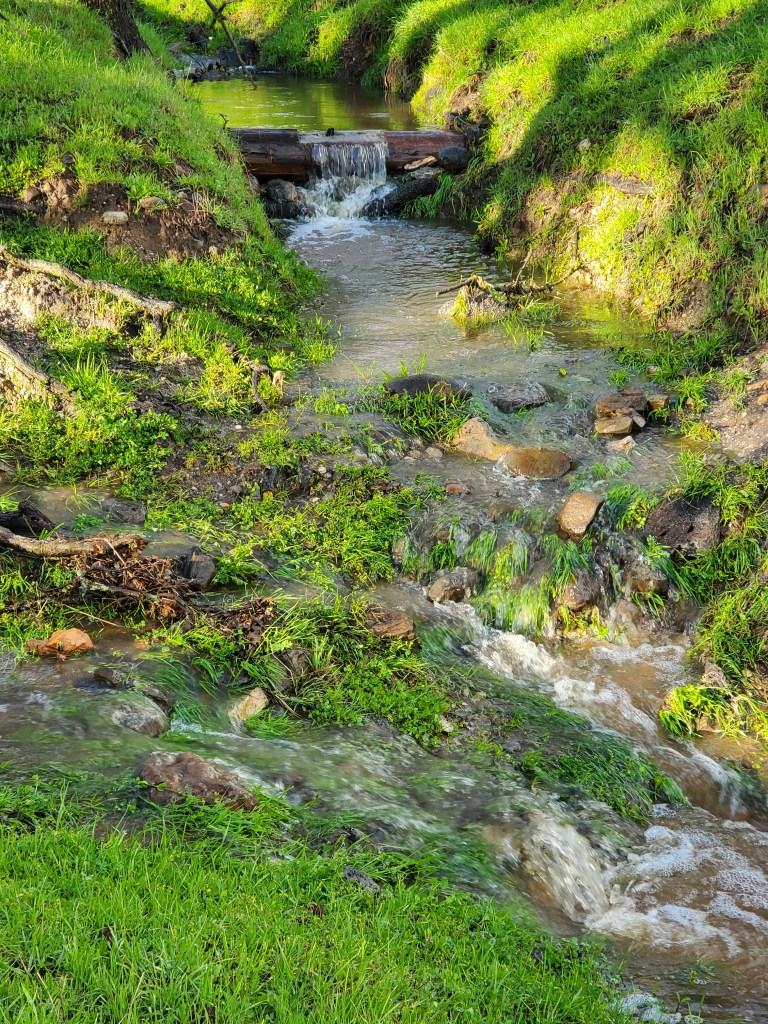
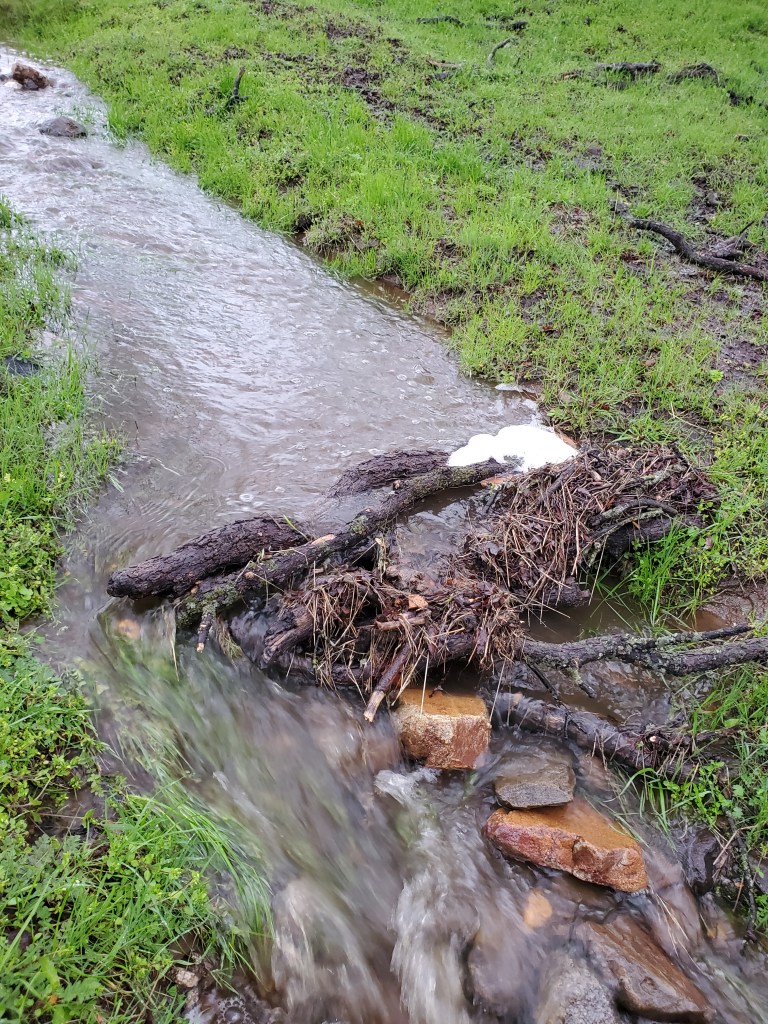
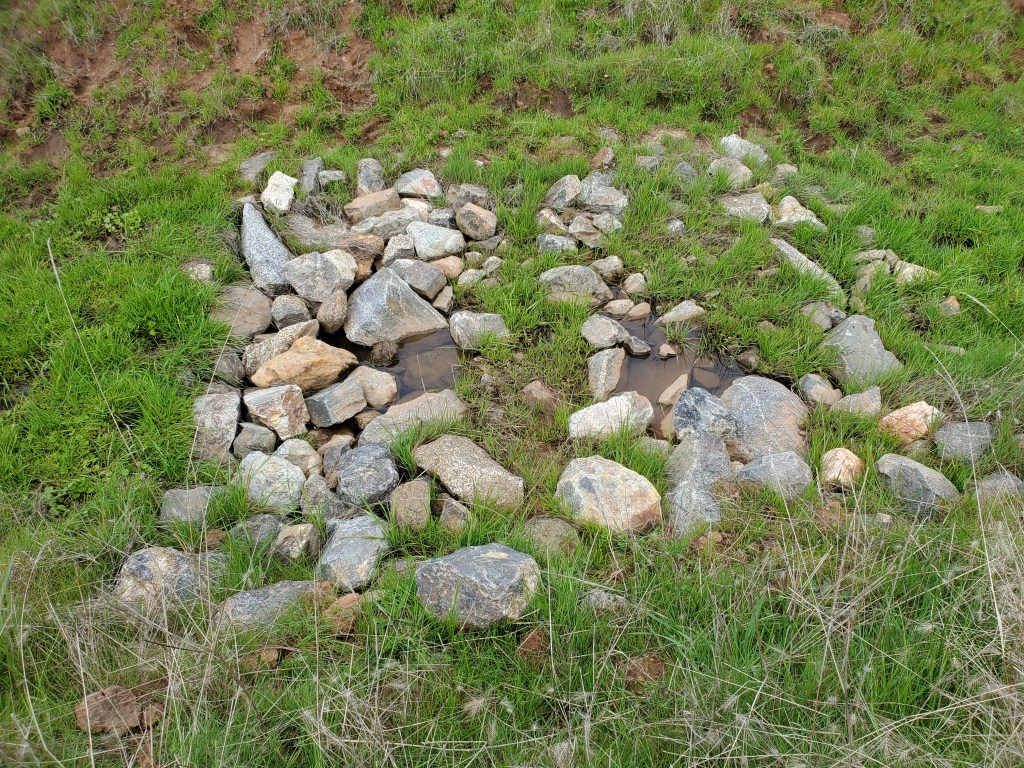
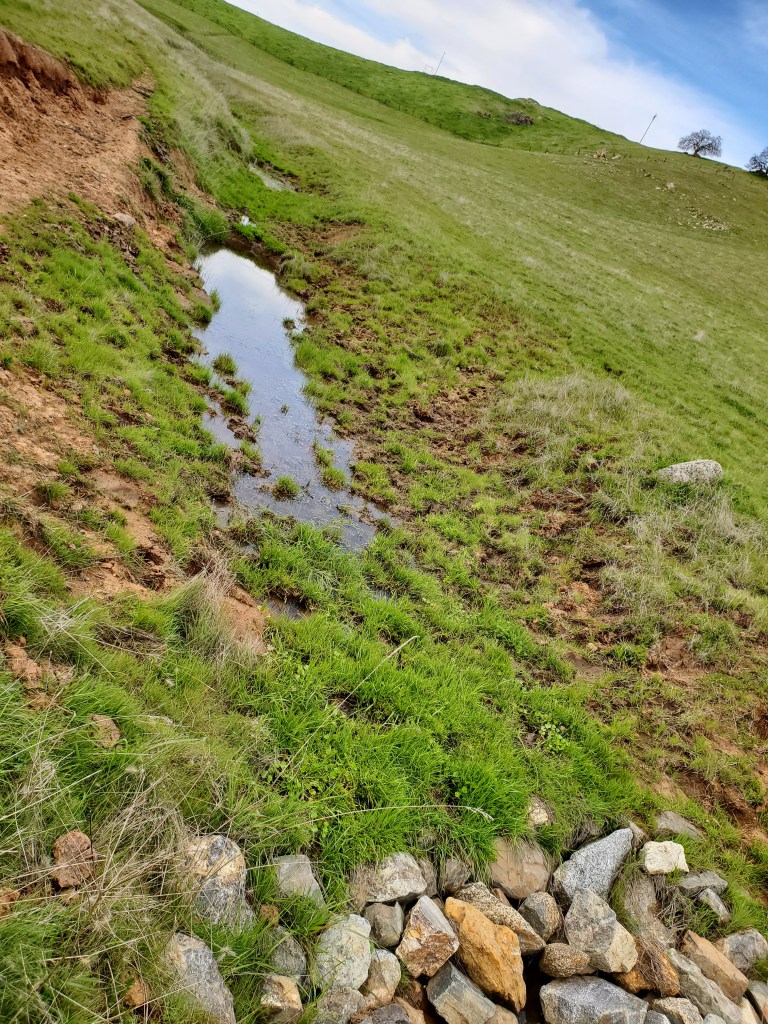
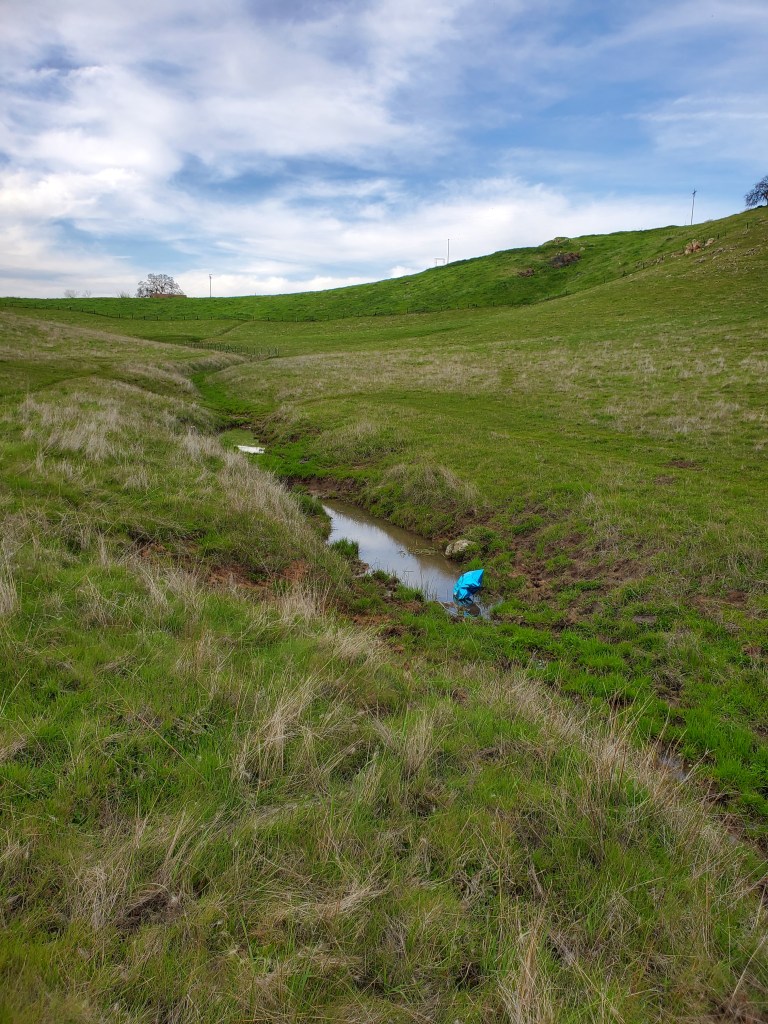
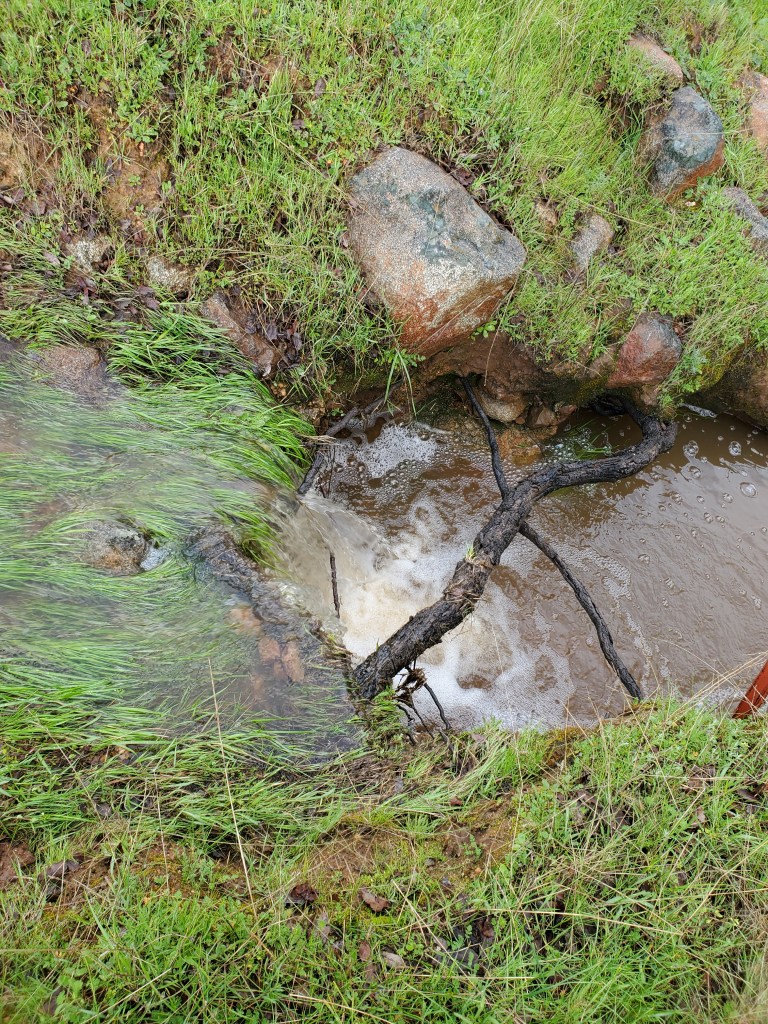
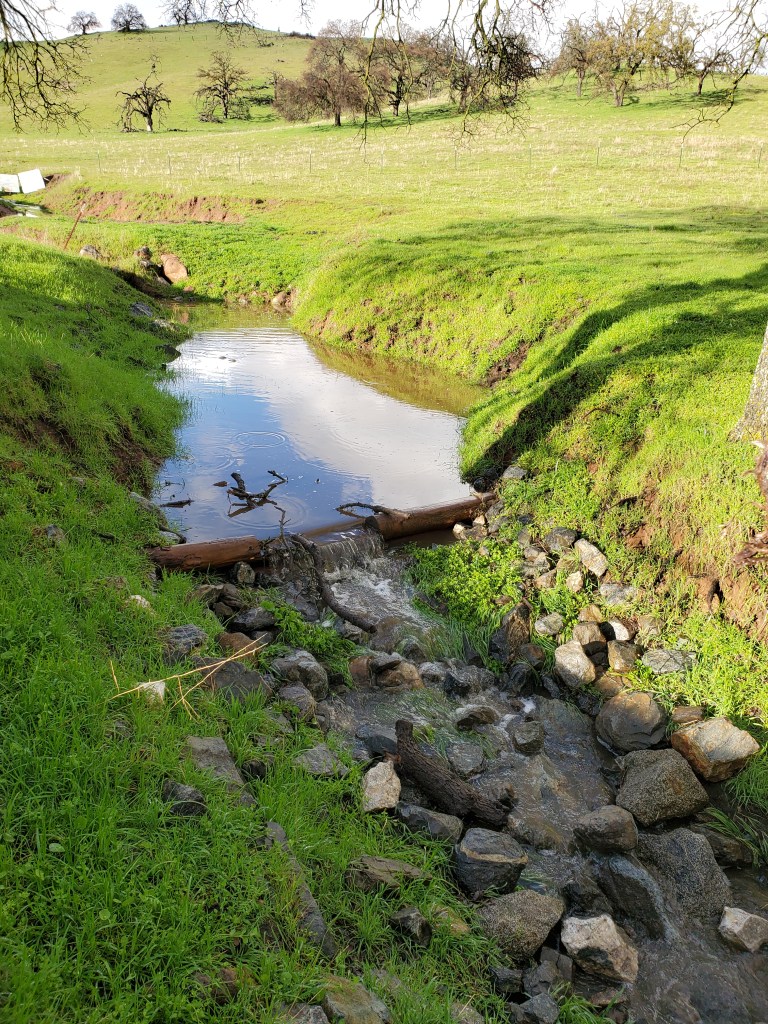
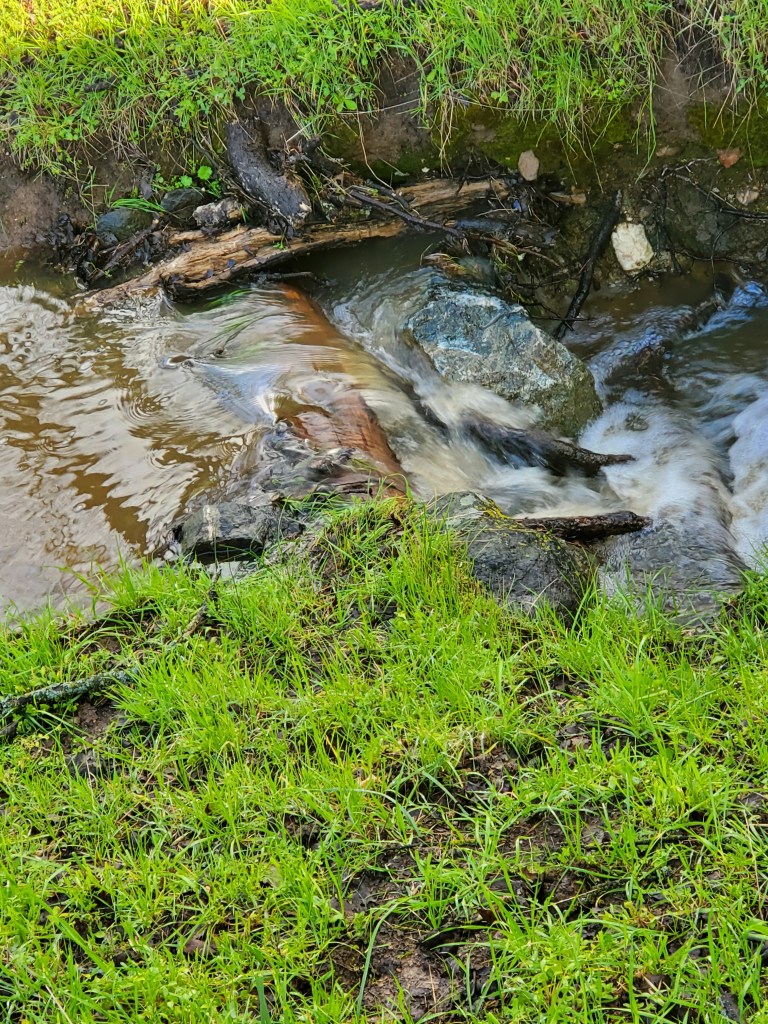
I was excited to see that the new, poorly connected log check dam was still in place after one of the storms. It was doing its job, pooling water behind it, slowing the runoff just enough to really soak the soil. Then, the large storm came with 2.25″ of rainfall. I checked the dam again. It was not there. The rocks I put in place to help the log were still there acting as a smaller check dam and pooling some water. I walked down stream and found the log. It was caught up in a tangle of branches, leaves and gunk about 60 feet downstream. Not to be deterred, I pulled it out from the makeshift dam and began to pull it toward its original location. The cedar log, typically lightweight, was heavy with absorbed water. David, who was walking with me then, took pity on me and picked up the log with the flick of his wrist, to show off, and returned it to its place. We will need to secure it much better in the coming days.

Gates Shut. North Field Belongs to the Milkweed Now

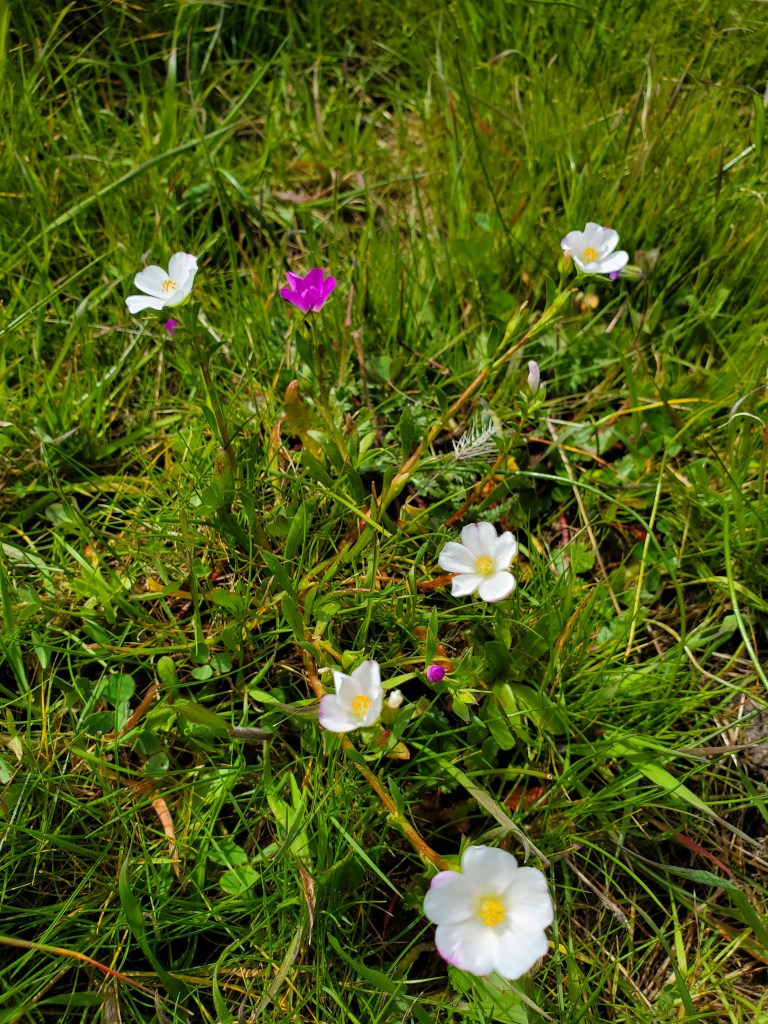
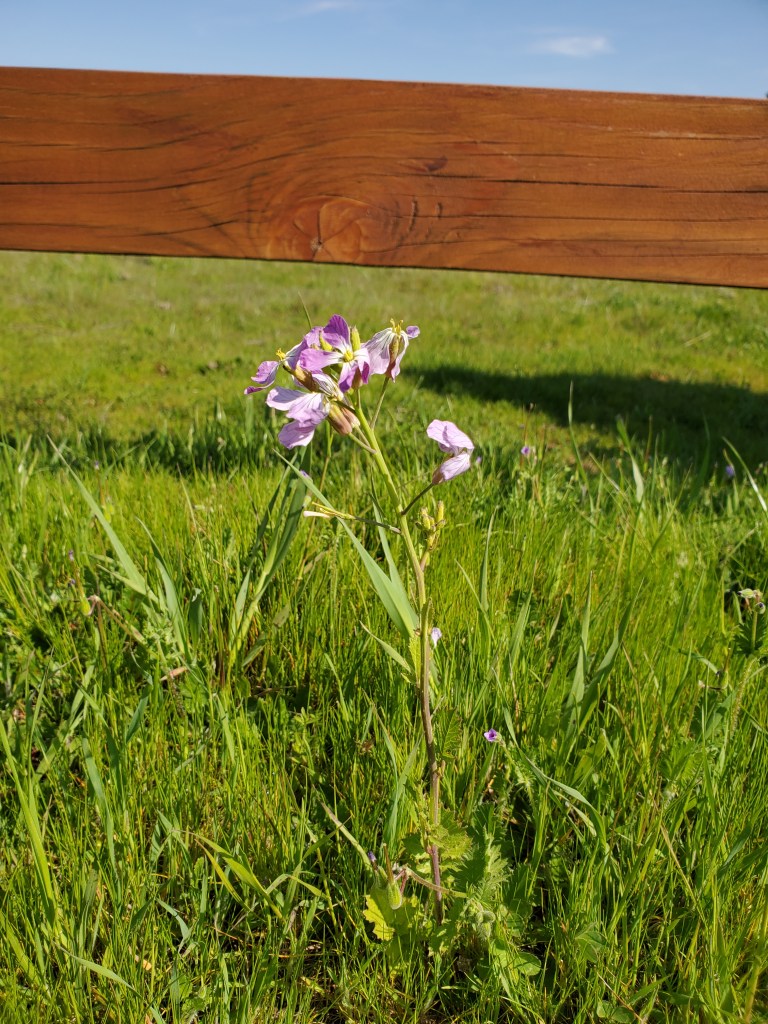
One of the best investments I’ve made in the last couple years is the cross fence to protect the California Milkweed. It is a critical, early emerging plant essential for post-overwintering monarch survival. Three of the four communities of plants are protected by this fence. In addition to protection of the California Milkweed, excluding the cattle during prime wildflower season has resulted in 40 acres filled with wildflowers of all types, sizes and colors. This means I have unbelievable amounts of nectar without having to plant another plant across a huge swath of land. Not only are the colors dazzling, the smell hangs in the air. It is like drinking perfume.

I think because of the weather whiplash, the California Milkweed is stunted. They are not their normal size for this time of year and are already producing flowers that will bloom in about a week. As of 3/20/2025, there are only four of the possible 21 emerged. Given that this past overwintering count of monarchs has been the second lowest on record, perhaps there will be fewer butterflies floating this way, and the stunted plants will be sufficient. I have not had an opportunity to place a camera up on the hill. The last time I tried, there was no signal for my special game cameras. I think I will use it in analog mode and grab the photos off later. This way, there is something up there as soon as possible.

While I am on the hill checking each milkweed and looking for more emerging, I decide to take a break and sit, contemplate things. Out of nowhere comes Taawe (Hawk). They decide to come for a visit, flying close and low. Taawe is close enough to hear me, so I speak in my language. It’s an original language of this continent, co-evolved with the many relatives from this soil. We’ve all shifted around following a cycle of movement south to north, west to east, and back again. Taawe understands me; it circles, flits, plays with elevation, but always above me. It circles away. I call to it. Taawe circles back. We play this game for a few circles, then I lay back down on the cool grass, the smell of soil and moisture in my nose. It flies to the east, and I say “Chiokoe uttesia in weweria. Ito te vitne.” “Thank you my relative. See you soon.”

Guzzler Install Complete

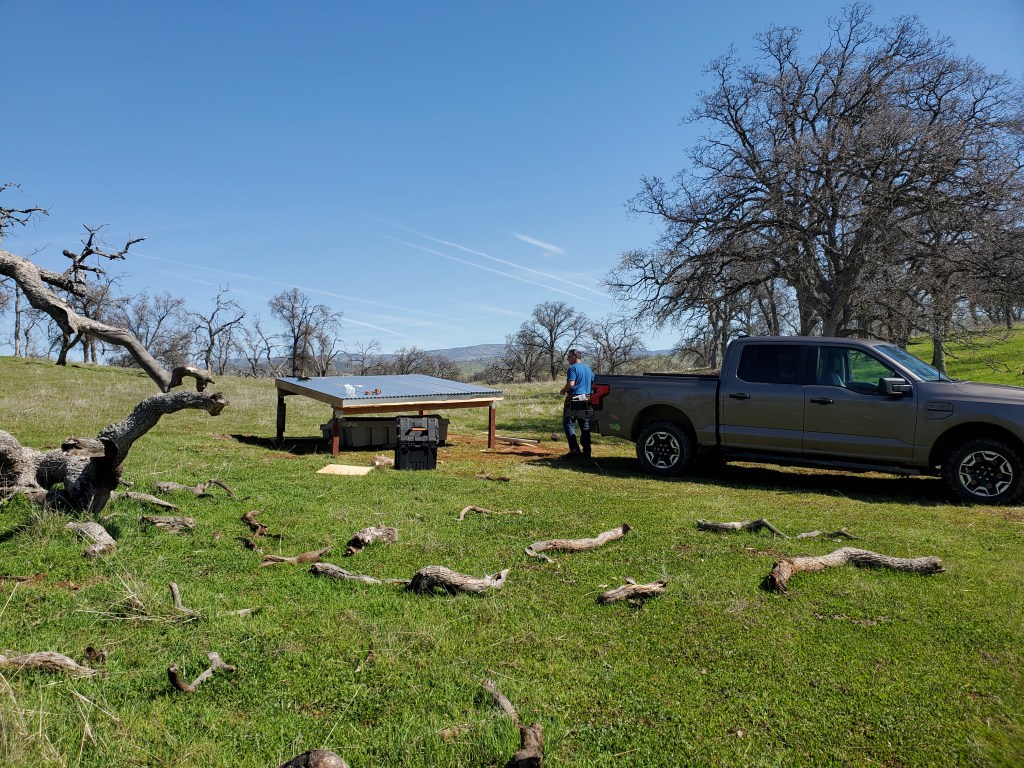
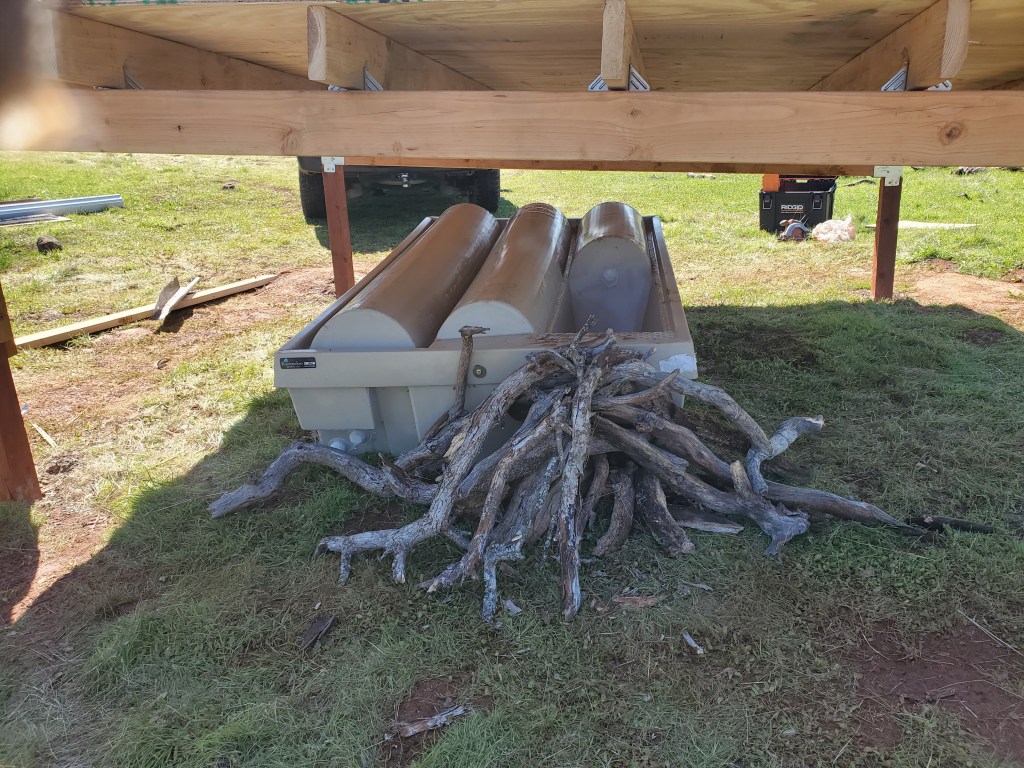
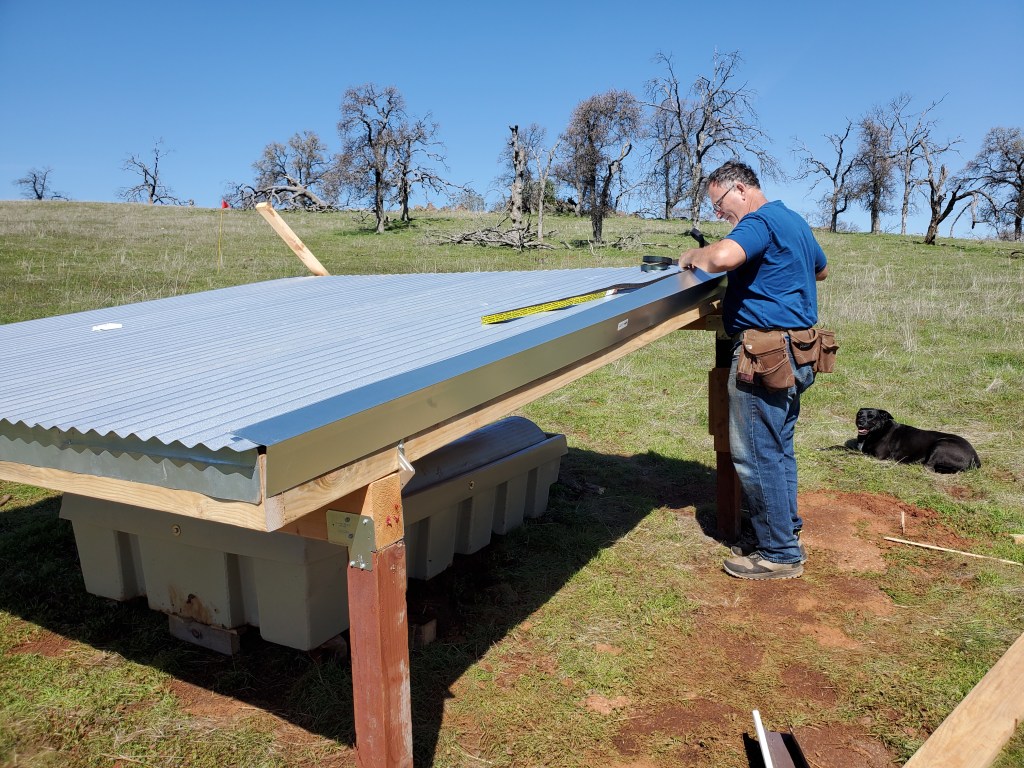
It took David nearly six days over two and a half weeks, but the guzzler is finally complete. We still need to build a fence around it to exclude the cows and build out the tank portion of the system to feed more clean water to the unit over time. Currently, there are stock panels attached to the overhang structure to keep the cow away from it as best as possible. Panels are ok since the gaps in them are large enough for most animals to move through. They are too small though for larger animals like deer. It is a priority for me to complete that fence to maximize its utility. The storms have filled the unit, and it is ready for wildlife to drink from. THANK YOU David!!

Dangers Realized

Although I have relaxed more with the fencing in place, catastrophes can still happen. Three times now I have gone outside to find cows where they shouldn’t be. Once, they jostled the gate open to the far north field. They jostled the gate open to guzzler 1, and yesterday I found them in the Spring Creek exclusion area. The wire gate had been squished down. In all cases, my heart sunk with concern that all I worked for could be lost in one accident with a poorly structured gate lock. Things were ok with the far north field. The Ca Milkweed was fine, and not too many of the blooms were up to be eaten. Guzzler one sustained significant damage. The solar panel connected to the game camera was severed. The wire had been snipped and stomped on. The stainless steel mesh over the gutter was folded up on both ends in tortuous fashion. Fortunately, we have an extra panel with wire and more gutter screen. We can fix that. I have yet to assess the damage to the exclusion area where large lupines, oak seedlings and larkspur are all just getting ready to develop blooms. It would be a catastrophe of large proportion if much of that was destroyed. In all cases, I secured the gate locks with a carabiner (cannot be licked open), twisted wire (cannot be jostled open), and a second loop securing the wire gate.

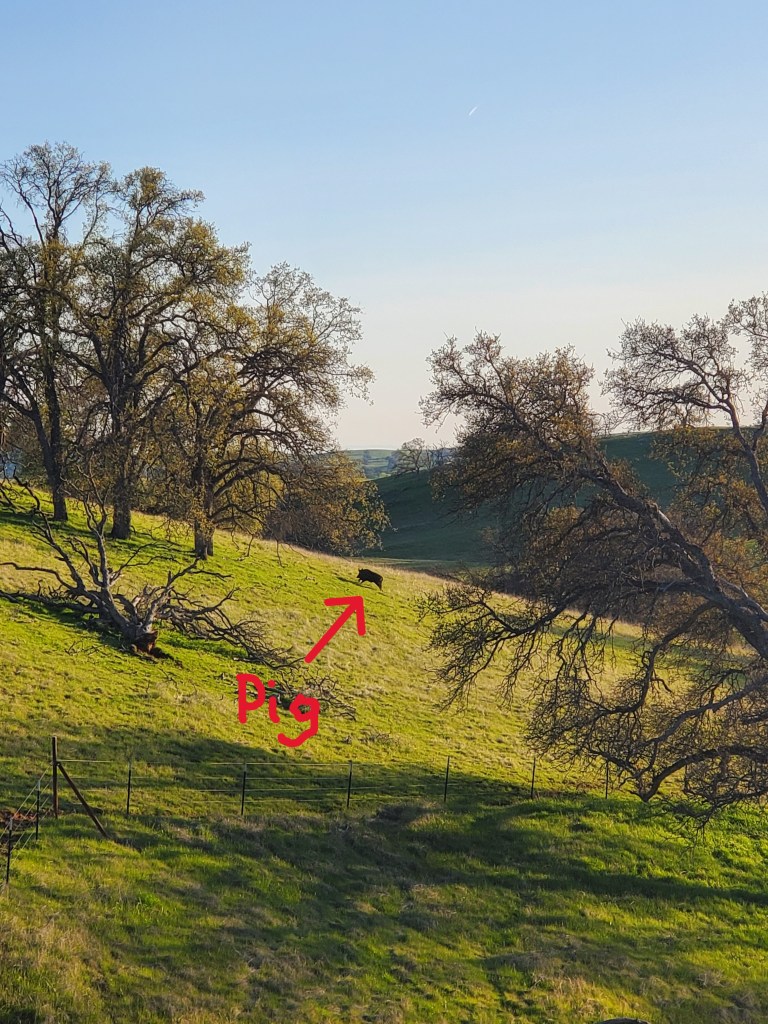
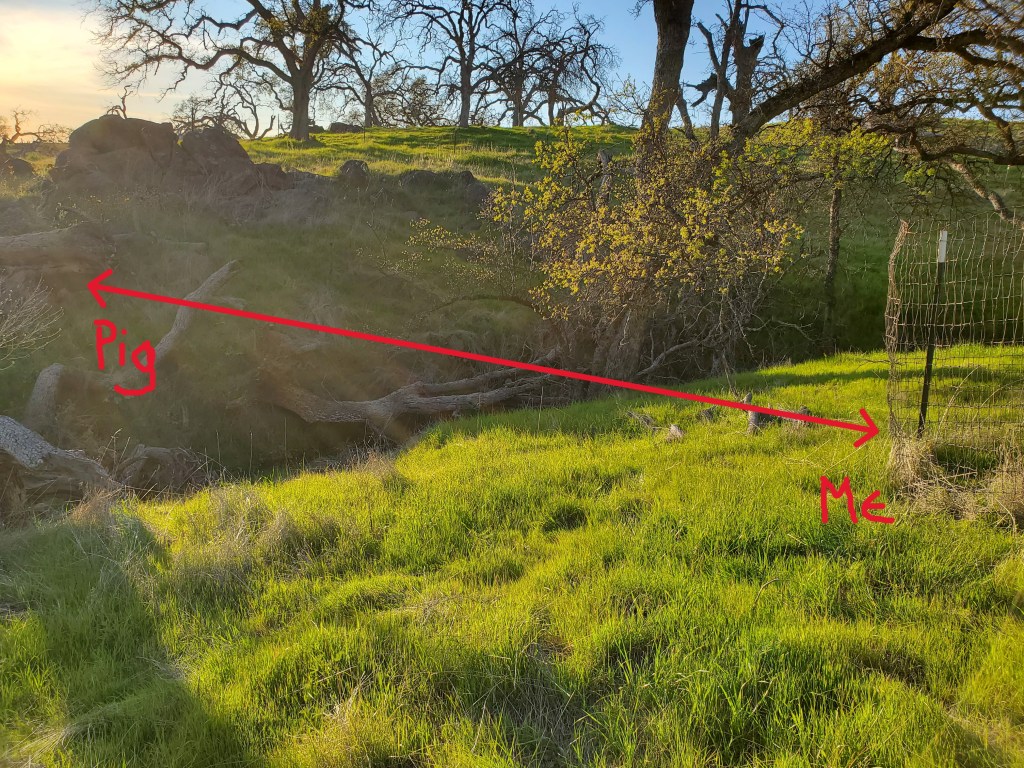
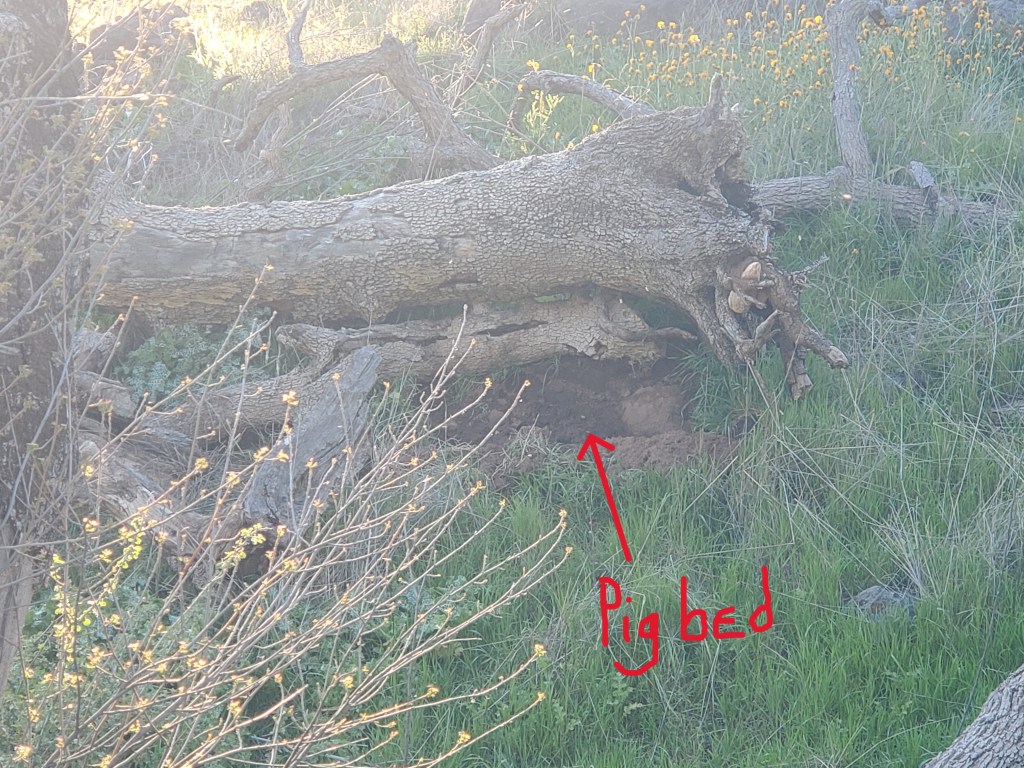
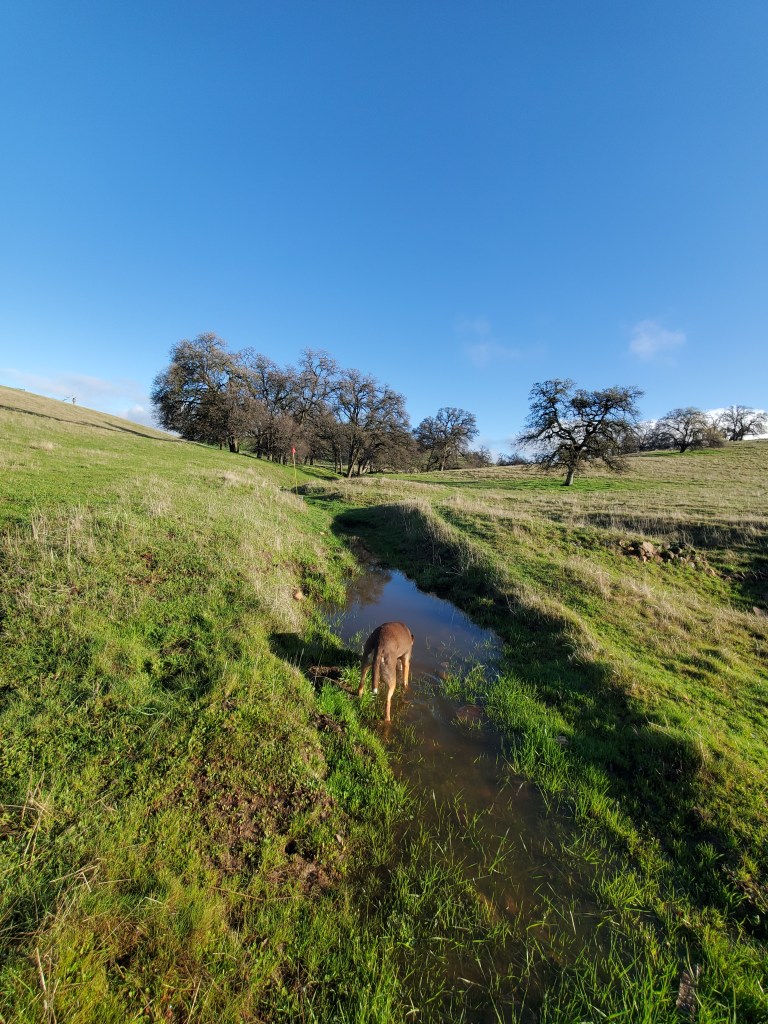
Cows are not my only problem. The other day when I was assessing the Spring Creek planting areas, I opened the caging of a small oak to thin grass that had grown around it. I was on my knees peacefully pulling the grass away from the oak when I heard a thrash across the creek. It was a single wild pig. She was small, about 250 lbs, and had been laying in a hollow between downed tree limbs. She must have been assessing me for a while. There were at least 15 minutes that transpired as I walked, dogs at my feet, into the area, then to the caged oak, and then the time it took to open the cage and sit there for a while pulling grasses.

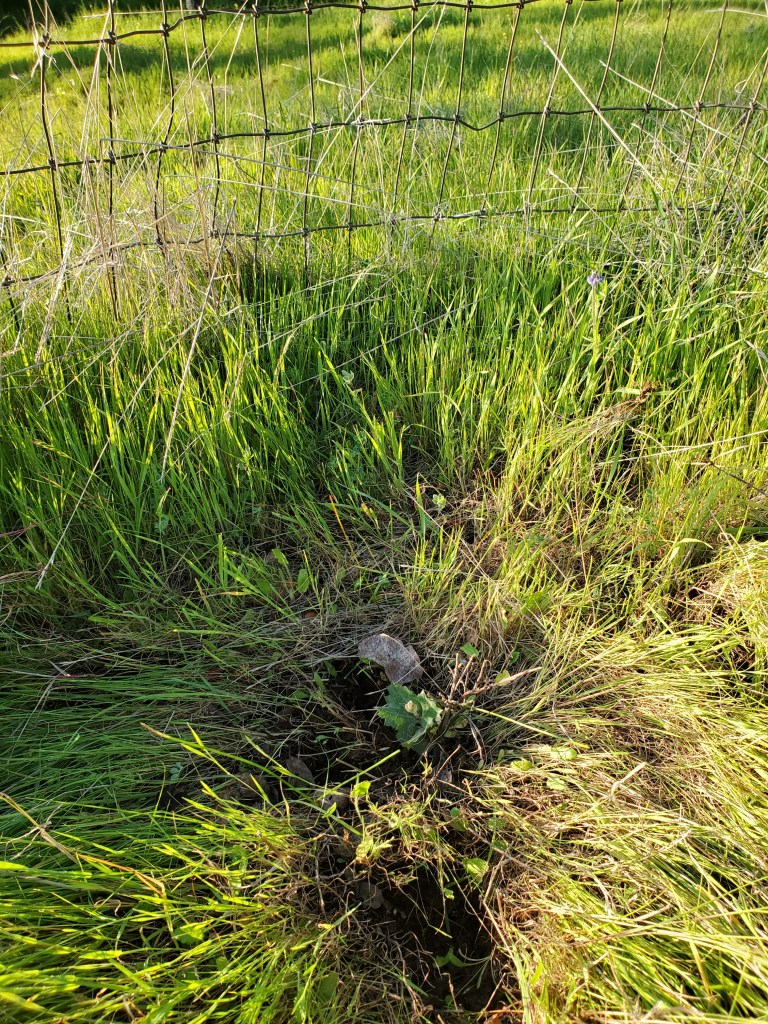
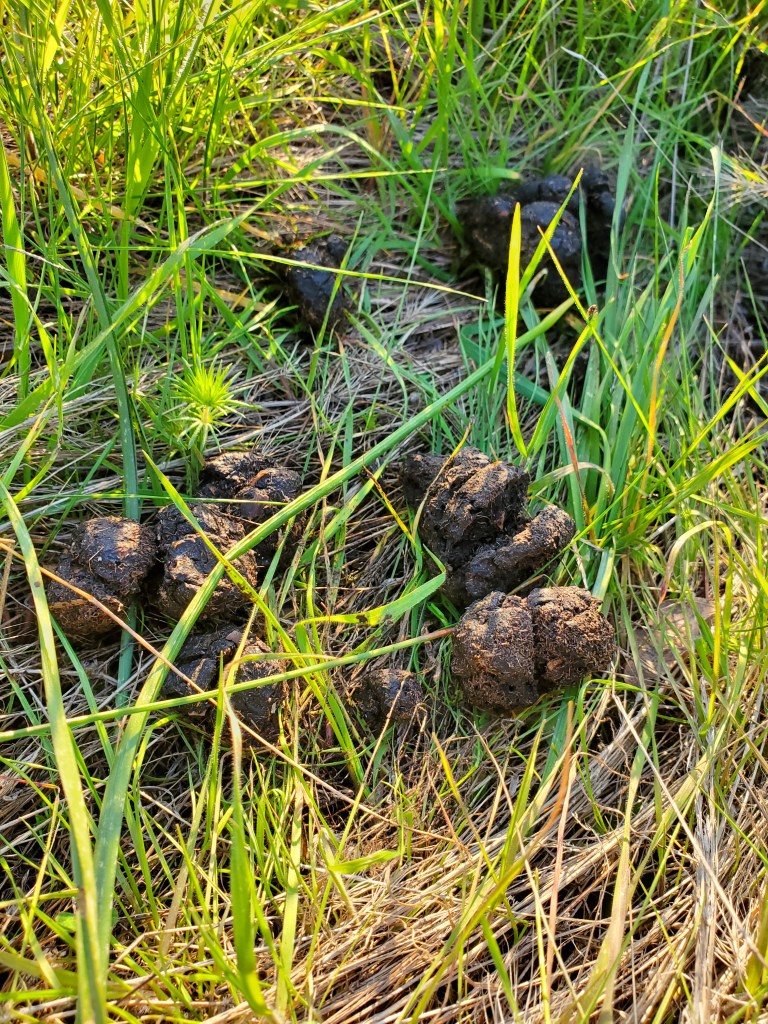
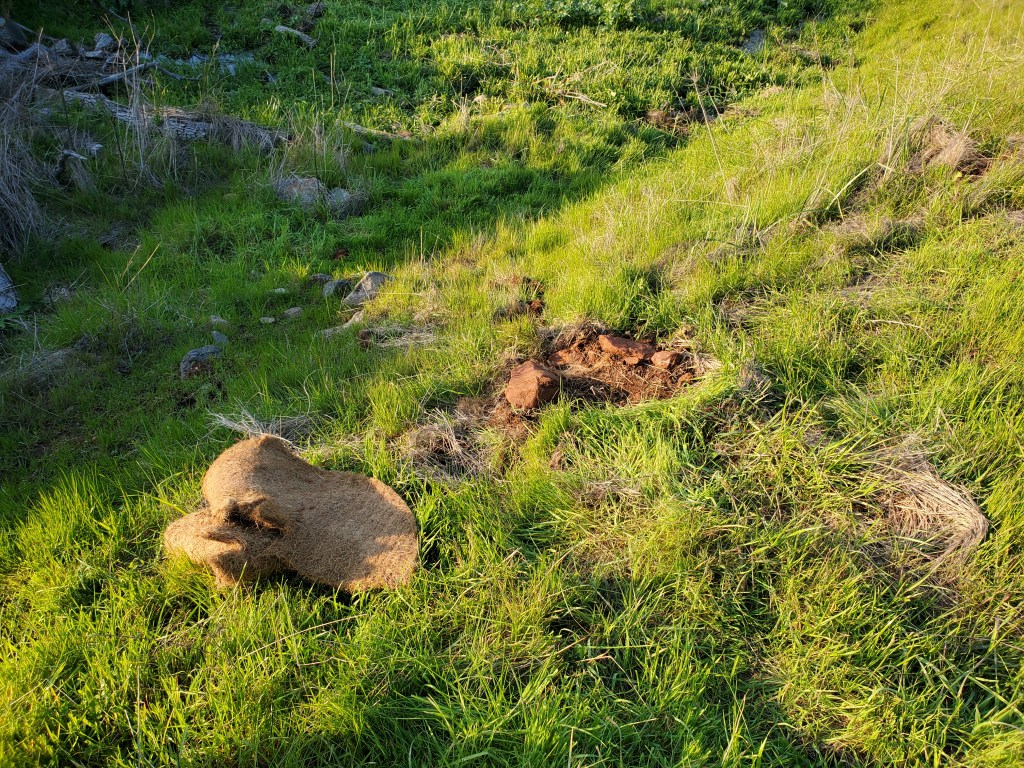
I immediately got to my feet and watched her run downstream, then across the creek, under the fence, up and over the hill. I didn’t think much of it until I followed downstream and found upturned soil from pig rooting, hoof marks sliding down the creek banks, a missing seedling from the slide, and then I worried about all the acorn I planted. Could she have rooted them out and eaten them? All that hard work for nothing? Pigs are non-Native and are very destructive. As a lover of all life, I have long pondered what to do about this issue. I hate the idea of killing them, but I may need to seriously consider that. With them in this area as often as they are, I may not ever be able to make headway on habitat. The survival of my Native relatives, monarchs, bumble bees, grasses, oaks and milkweed are paramount to me.

Wildlife and Flowers Abound

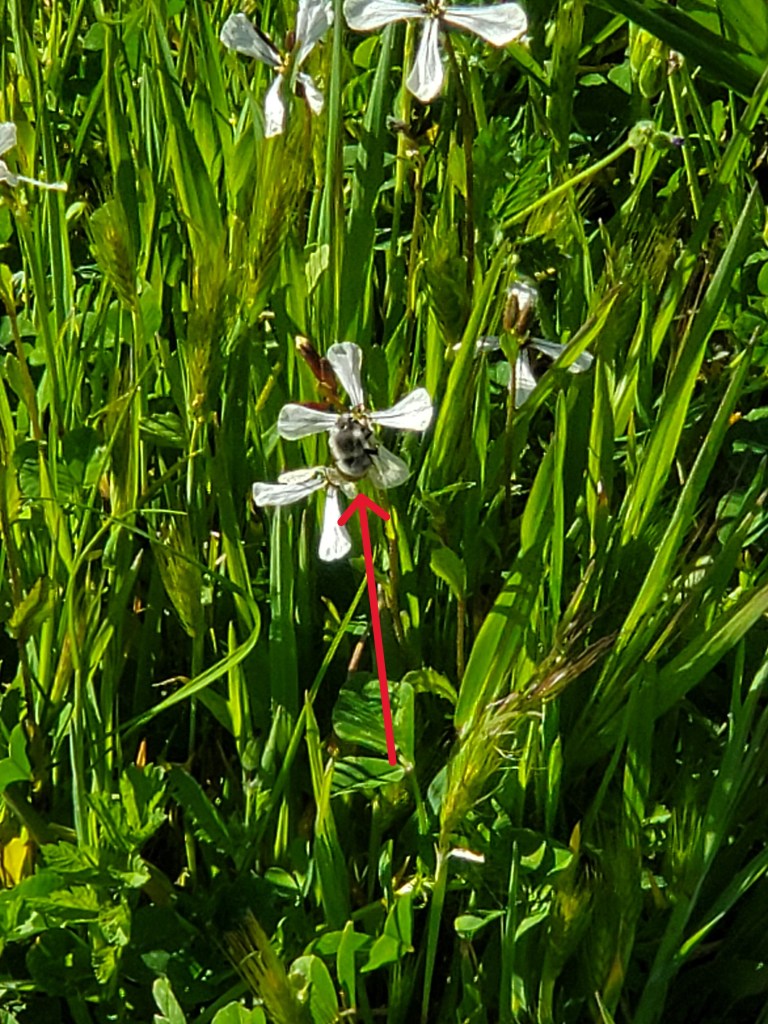
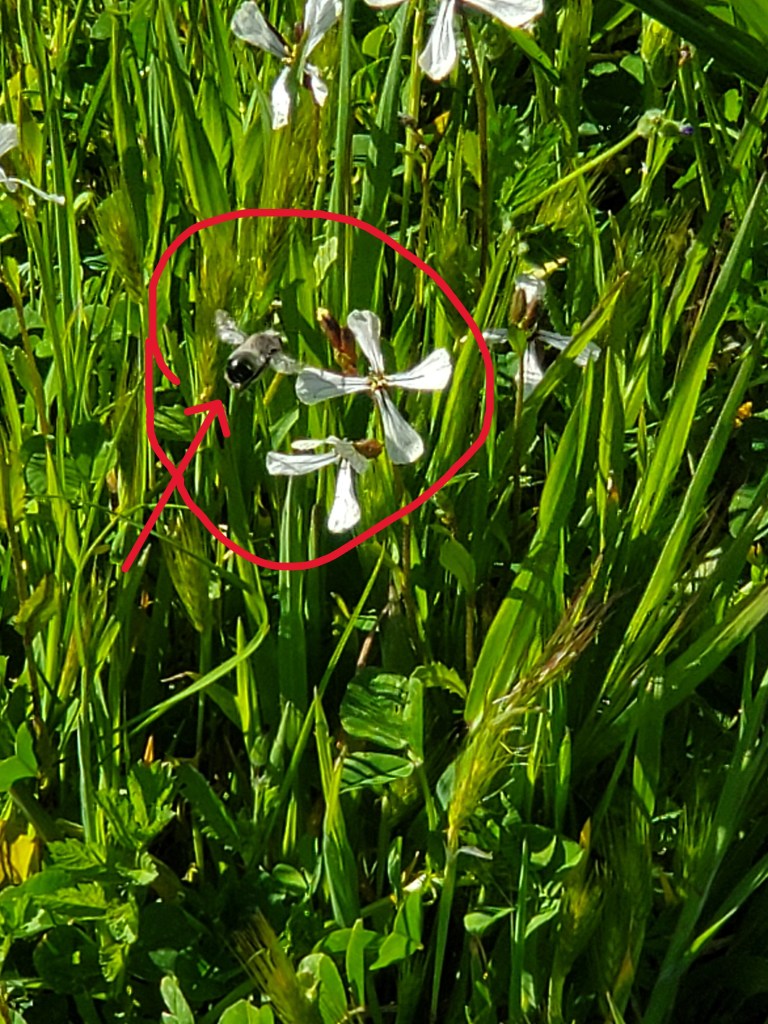
In addition to the pig and worms, I have seen interesting bugs, a ground squirrel, lots of various types of song birds and raptors, frogs, a silver bee, and most excitingly a couple swallowtail butterflies. I did not get a photo of them, but they are beautiful. It flew over me when I was lounging in the garden.

Water Everywhere

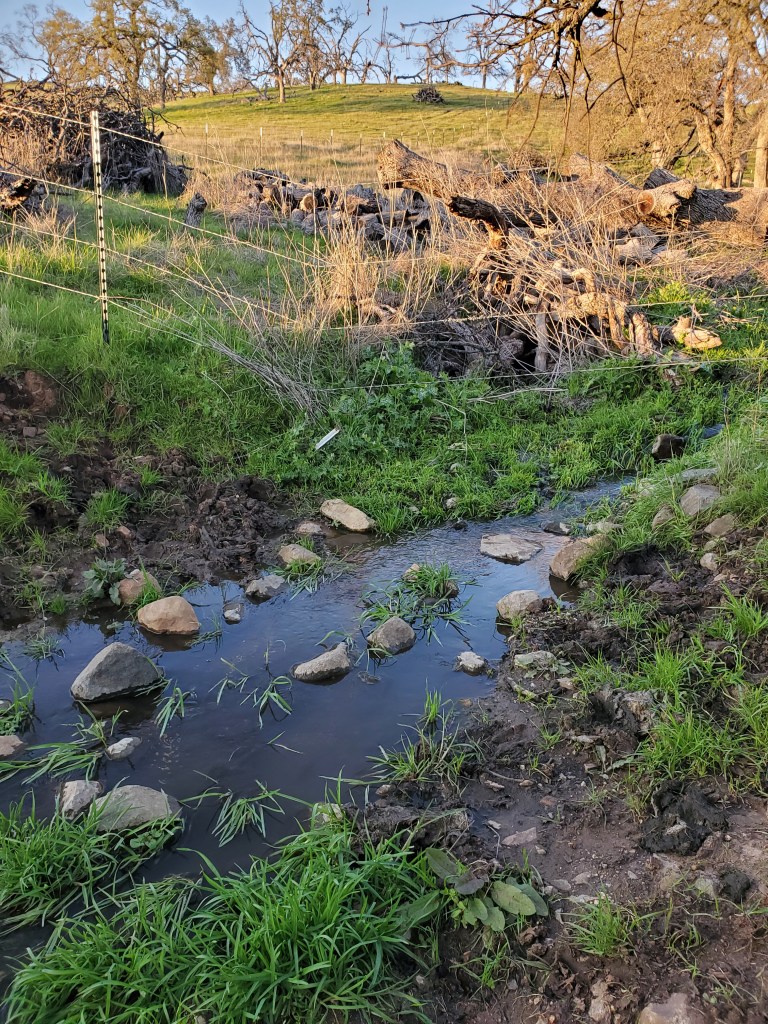
My neighbor said to me the other day that she has never heard so many frog songs in her entire time owning her ranch, which has been longer than me. They have been loud, joyful and seemingly from every direction. She thought it was due to my work. I don’t know if that is true, but I cannot help feel a sense of happiness that perhaps I contributed at least a little by creating lots of eddies, moist areas and long lasting puddles with the check dams. Thank you Kim for noticing that something was different.

Tornado Warning

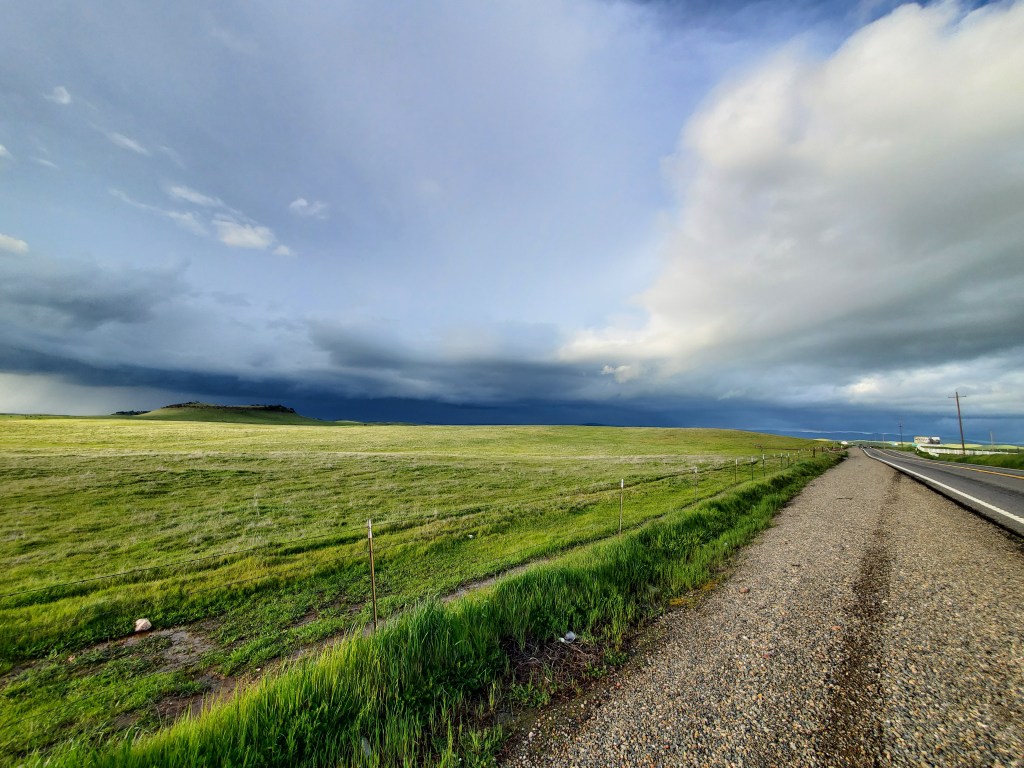
Tornadoes have never been a California staple. For all my cognitive years, I’ve not heard of anything like this until the early 2000s when there was a funnel cloud sighting in Livermore. In the last three years, we have had a real tornado in Santa Cruz, a warning in San Francisco, a warning in south Mariposa, one for some other counties in the Valley, and now, on Tuesday, March 17, 2025, two in one afternoon, both in my vicinity. This is not normal.

David looked at the radar and saw the first cell would be well north of us. He said not to worry. I was of course still worried and making a plan in my head – a California girl with no tornado experience except The Wizard of Oz, Day After Tomorrow and some documentaries I watched a million years ago. I remembered that you should take shelter in a room without a window, or a place with the most framing, or possibly in the middle of the house. Who remembered? Like most Californians, we don’t have a basement — and we are on the top of the hill to boot.

I had just started to calm down when I heard my phone beep loudly again. It was another tornado warning. David was home by then and looked at the radar. It appeared that the severe storm cell was going to be headed straight for us. I ordered everyone in the house to shelter in the laundry room, and to bring the cats and dogs. I called my neighbor to encourage her to move from her RV into her home.

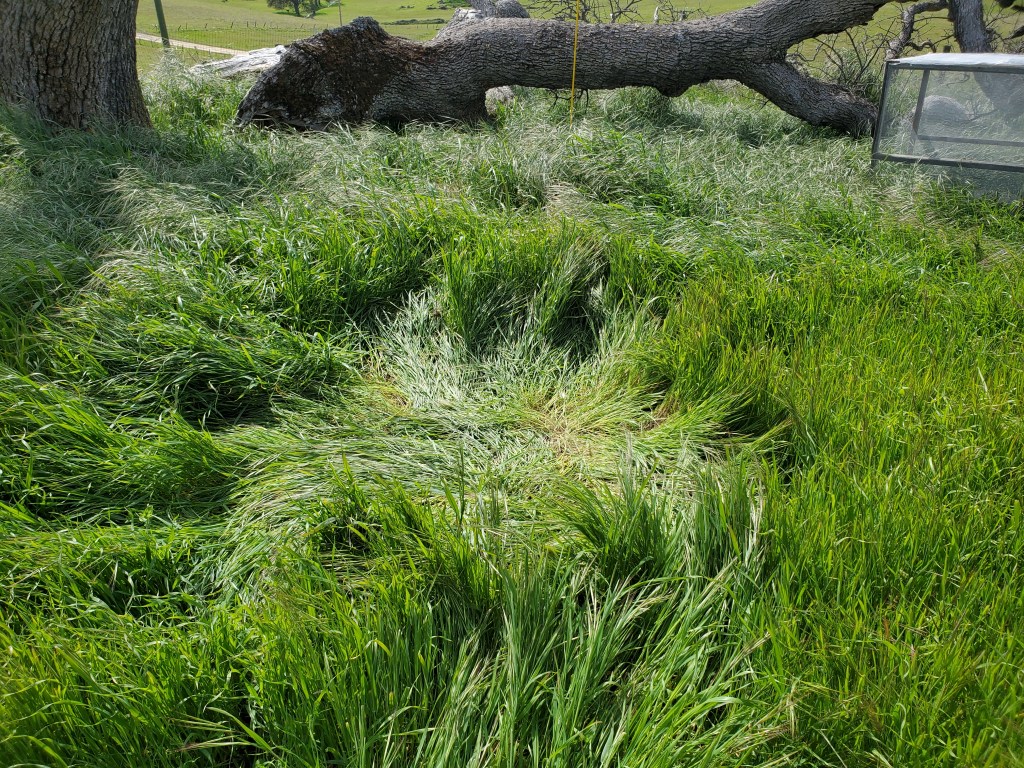
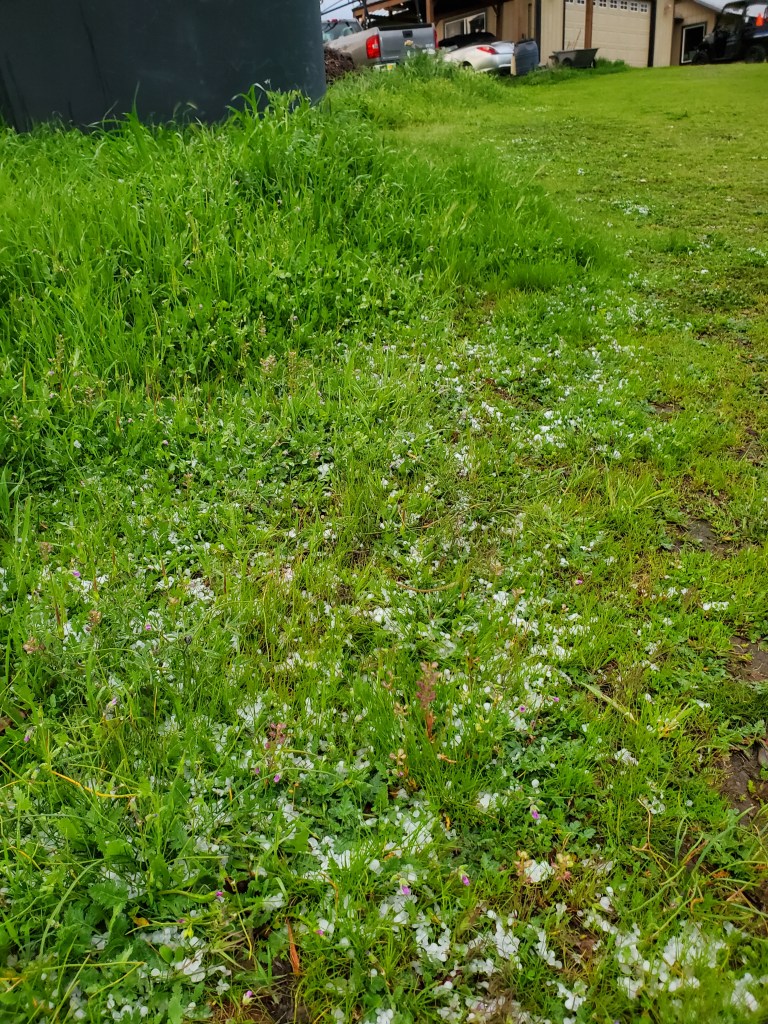
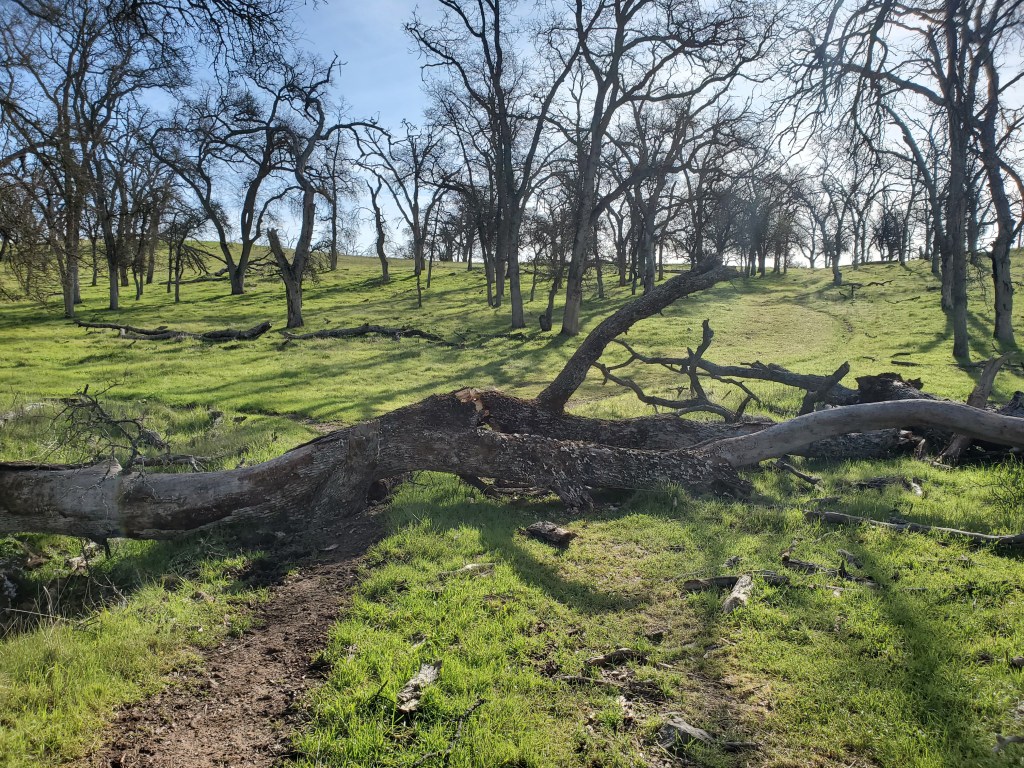
The cell reached the house 15 minutes later. The thunder was remarkable, booming so loud overhead and shaking the house. Then, the hail fell, hitting our metal roof like an angry teenager slamming a million doors over and over. In just 10 minutes, the storm had moved on. Light filtered through the clouds once more. Besides the ground being littered with hail stones, several of the long dead oak trees toppled. I found one across the cattle road a day later. Chainsaw work is in my future for sure.

I feel grateful that mother nature is warning us instead of simply squishing us. We have an opportunity to act, to care, to show respect for all living things – to change the course of our life and be in greater balance. “How can I respond even more than I am already doing?” is the question I ask myself regularly. Two tornado warnings in one afternoon? What will it take to wake people up to care? For me, I am going to double down on milkweed, consume less, choose even less packaging, fly less, walk more … and … look into building a basement.

Rough Summer for Blue Oaks

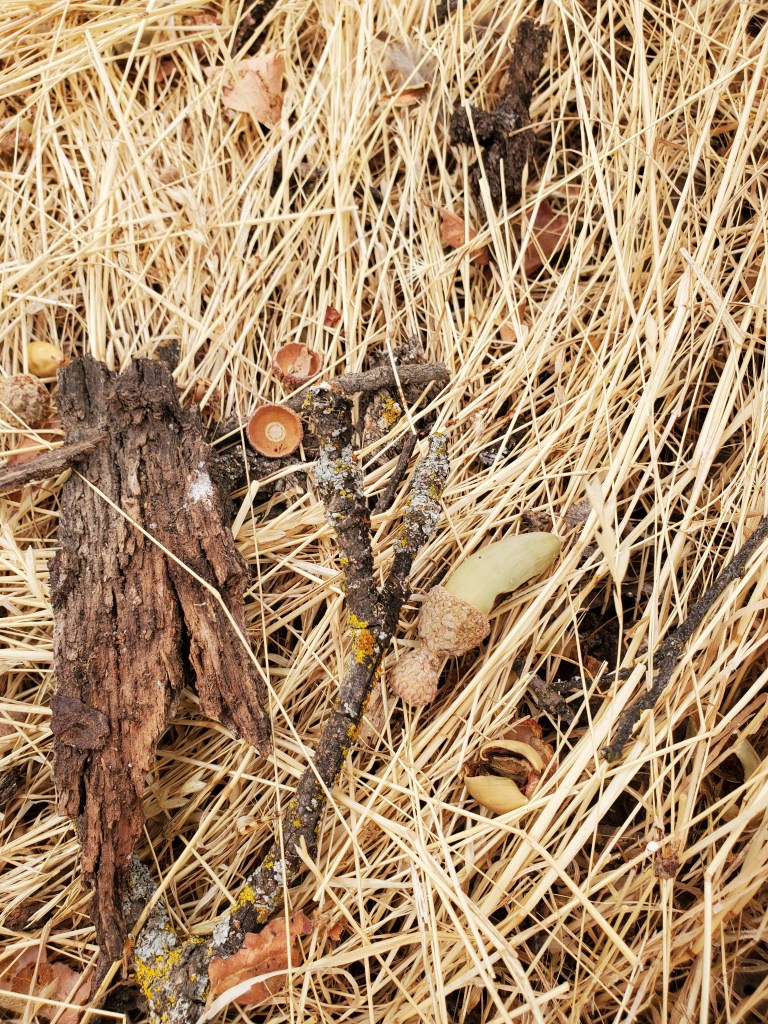
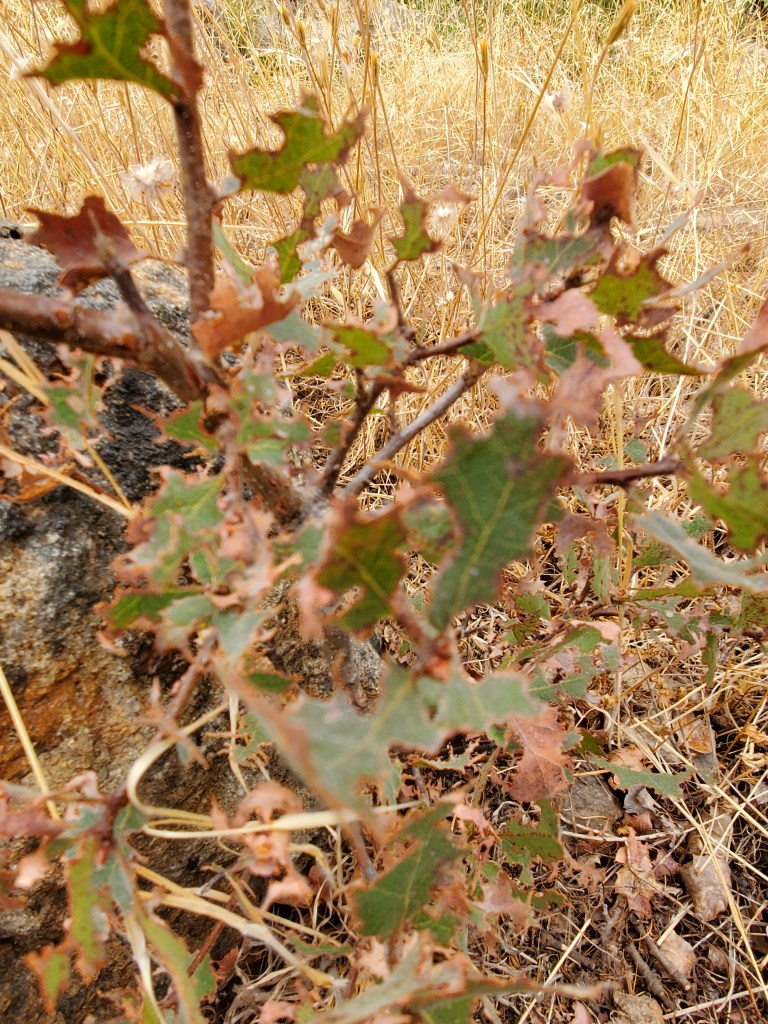
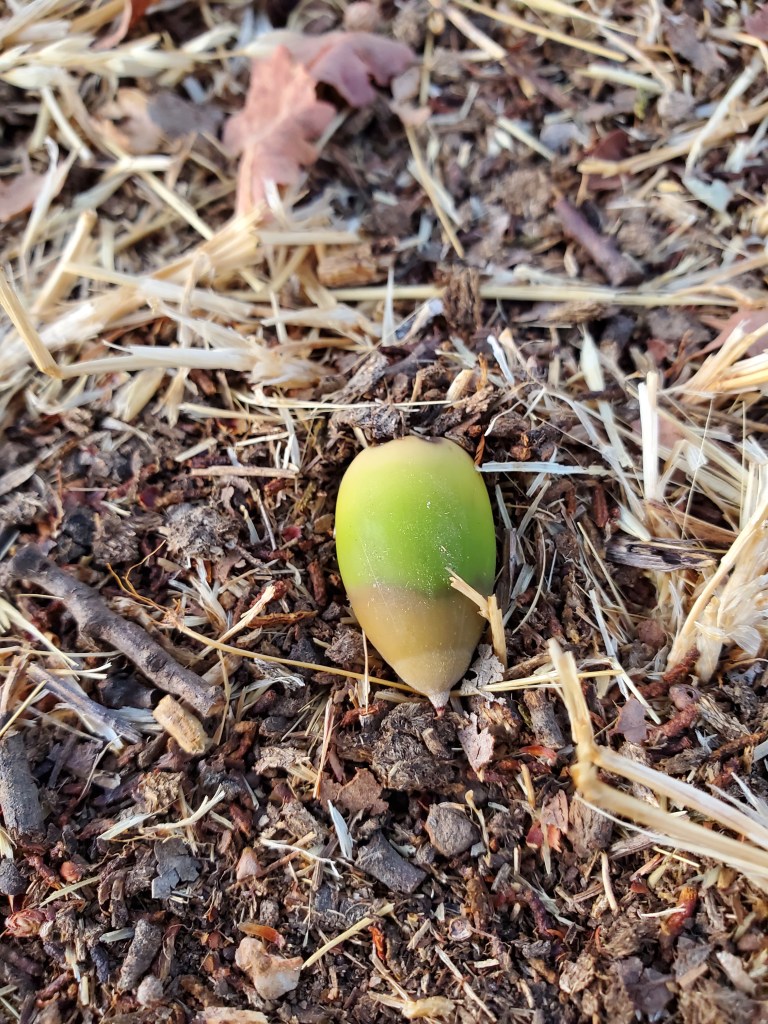
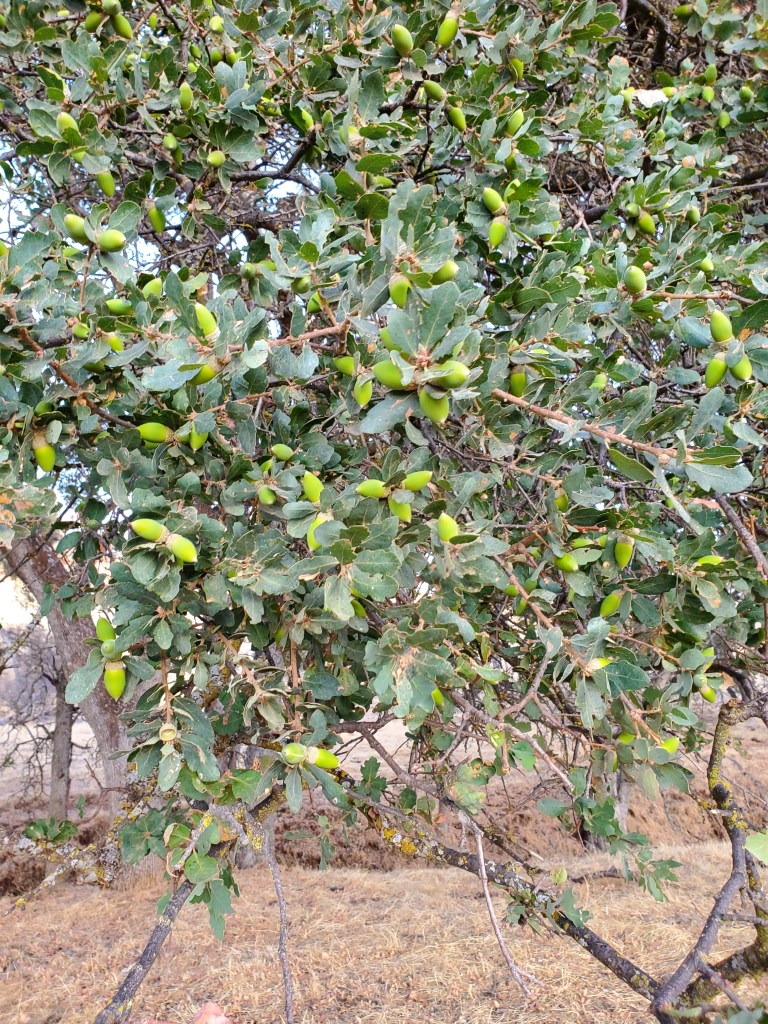
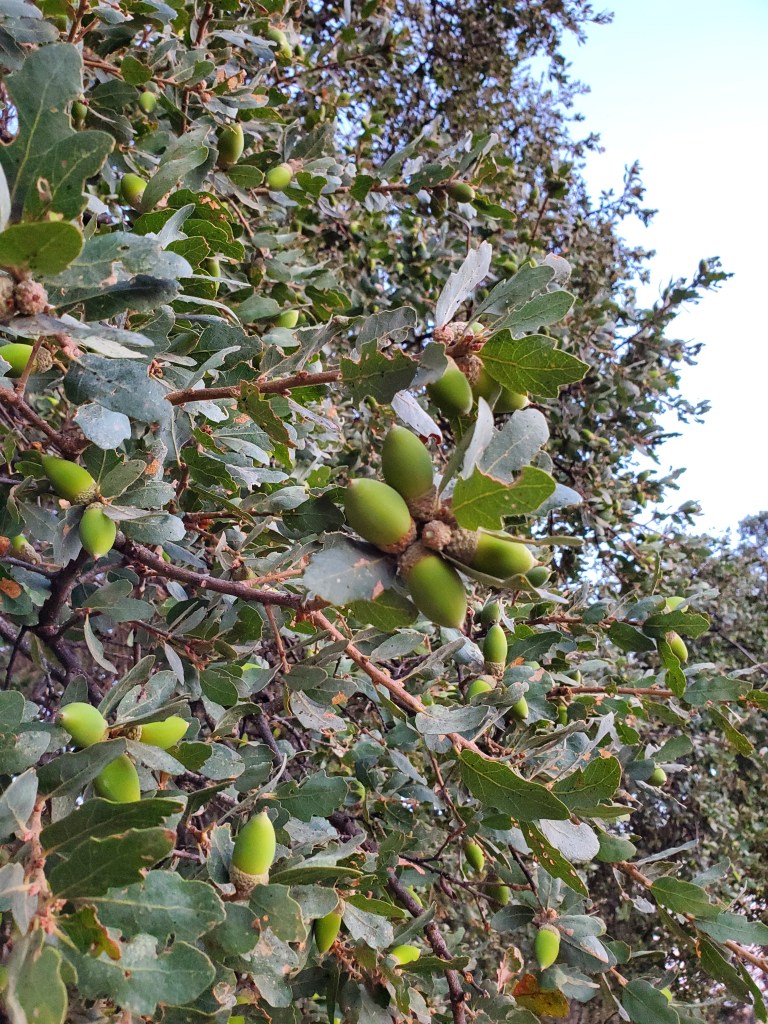
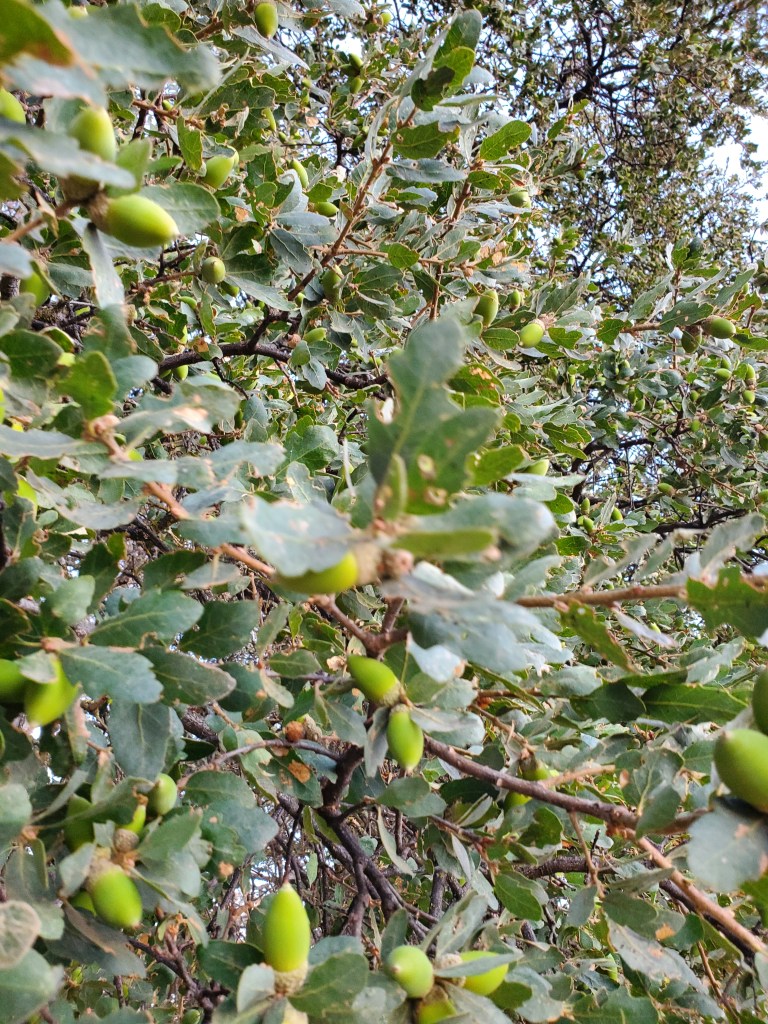
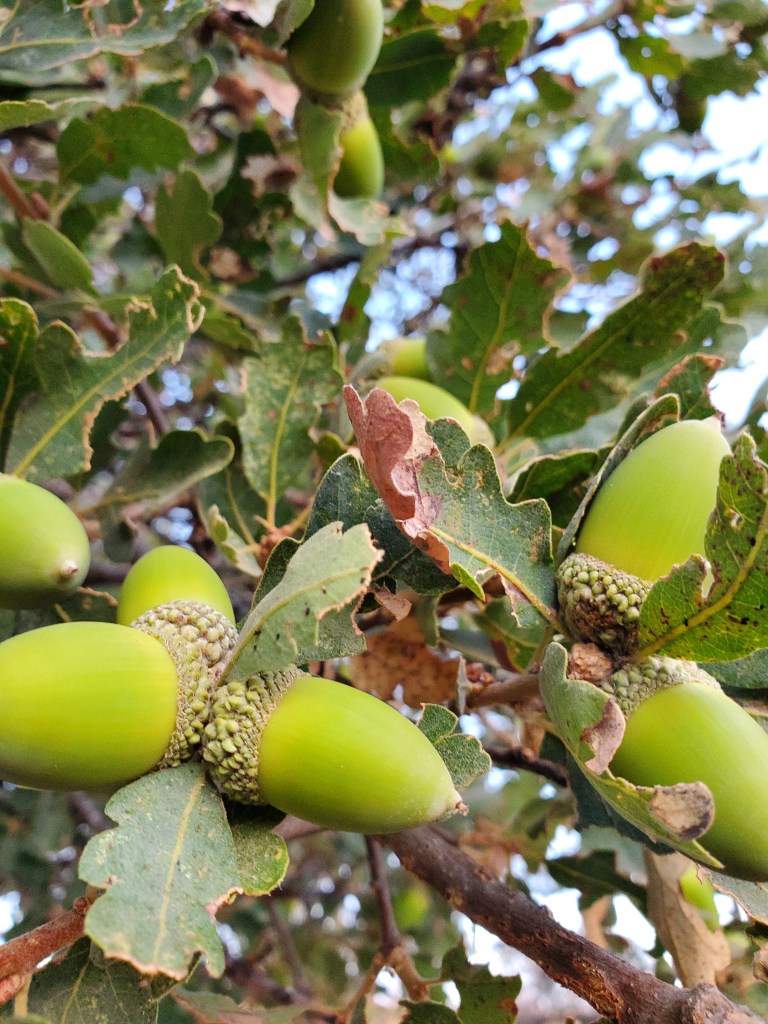
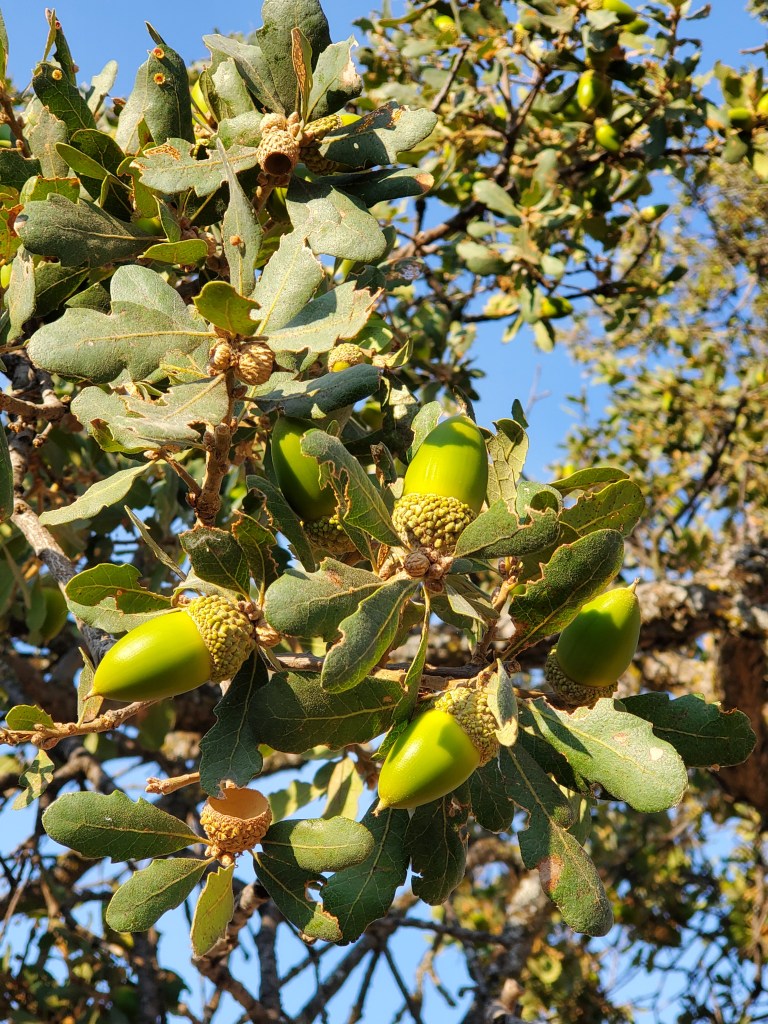
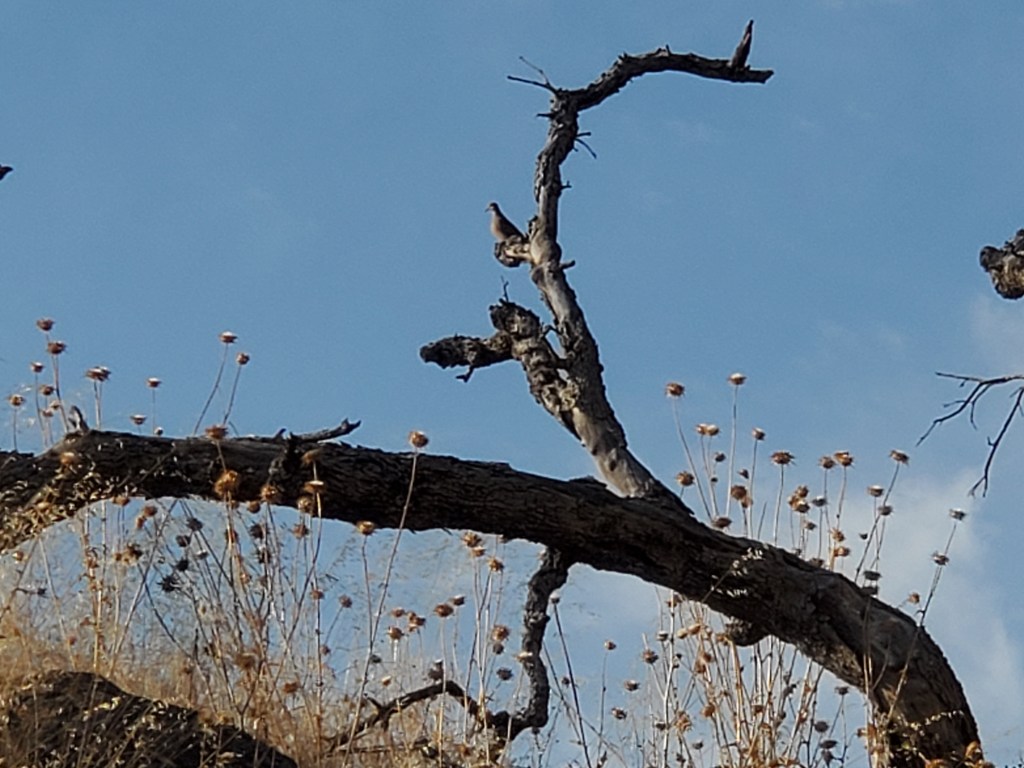
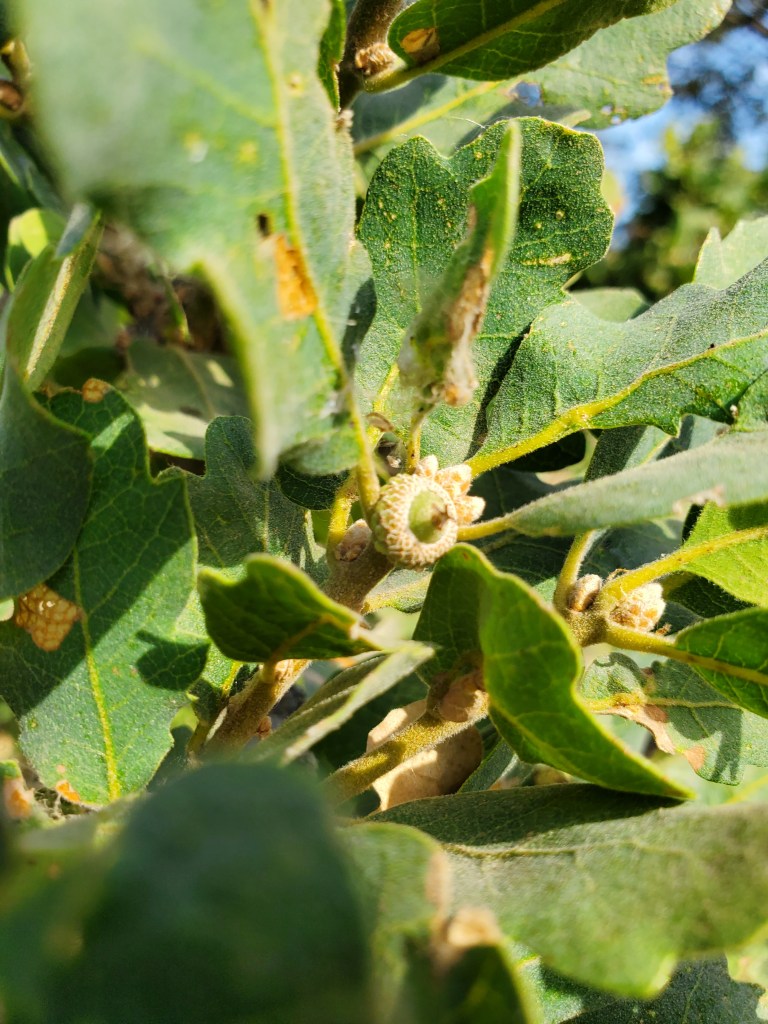
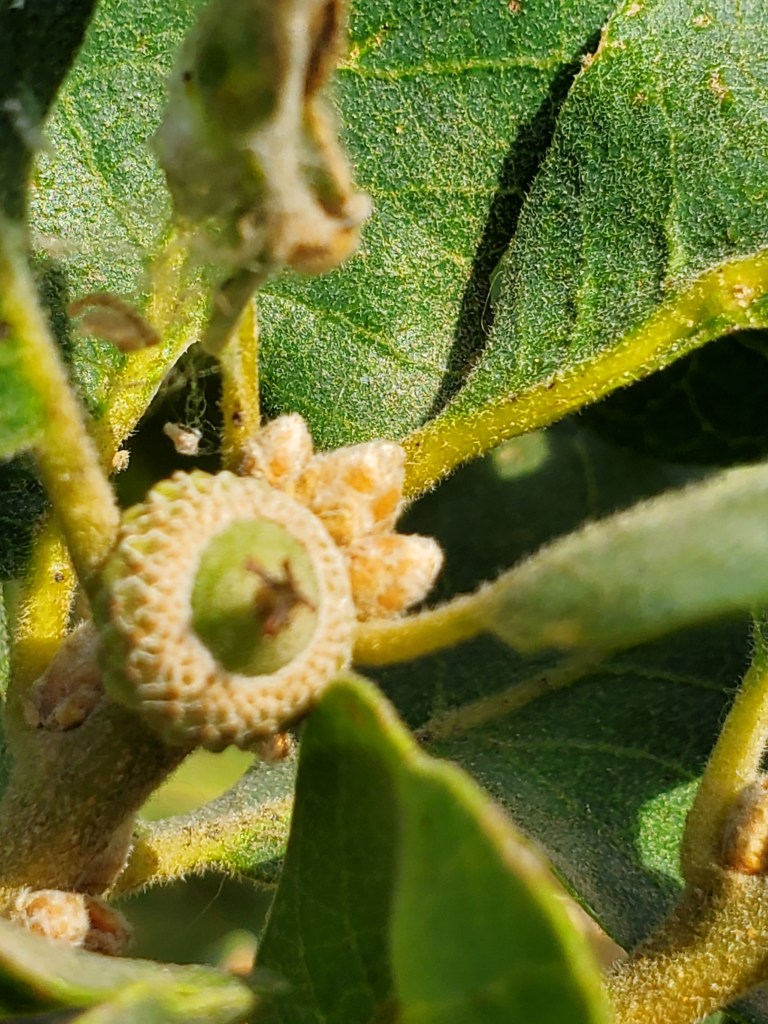
What looked like a bumper crop this year of acorns has transformed to crispy leaves and dumped immature acorns. July happened, and with it, record sustained heat. Oaks are resilient, but so many days of extreme heat on the heels of a long drought within the recent decade are just too much even for these magnificent giants. They had plenty of water over the last two years. Even with water though, they are suffering. Prior to the heat, I was overjoyed to see thousands of acorns on the trees. It was exciting to think I could do more oak planting using my own acorn stock – and even have enough left over for the animals and me to enjoy. My hopes withered like the leaves I was watching, as day after day, green acorns appeared on the ground, less leaves on the trees, and the remaining leaves showing signs of burning / crisping. Most of the grand oaks no longer look so good.

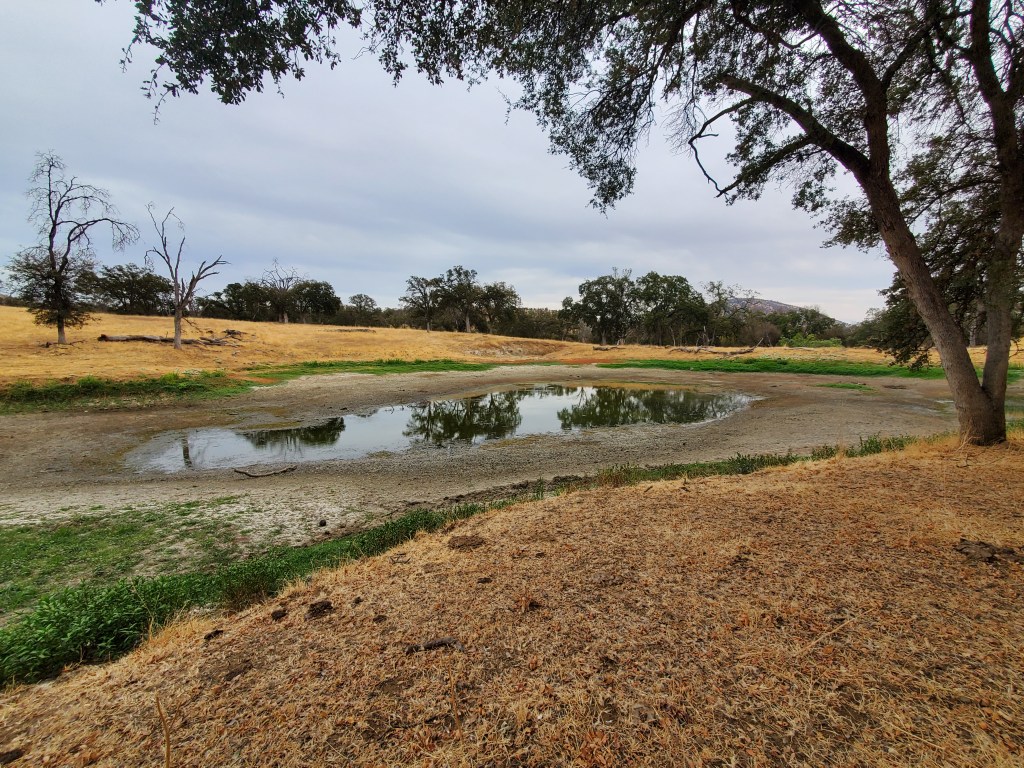
One bright sign is that the oaks adjacent to the swale pond are doing extraordinarily well. Their leaves have withstood the heat and acorns are still attached in copious amounts. Hoping for repeat good news for those oaks adjacent to the check dams, I explored the grove. Sadly, the trees were crisped. Even the oaks sitting lower in the creek and drainages were rough looking. The check dams slow the runoff holding back small quantities of water for a short time. The swale pond holds large quantities of water over a long period of time. I only did a very cursory look, and need to do a more thorough examination across the entire ranch to understand if this is the pattern. If so, how can I ever hope to save these magnificent relatives, so critical for food, shelter and shade on such a large scale?

Water – Still Here

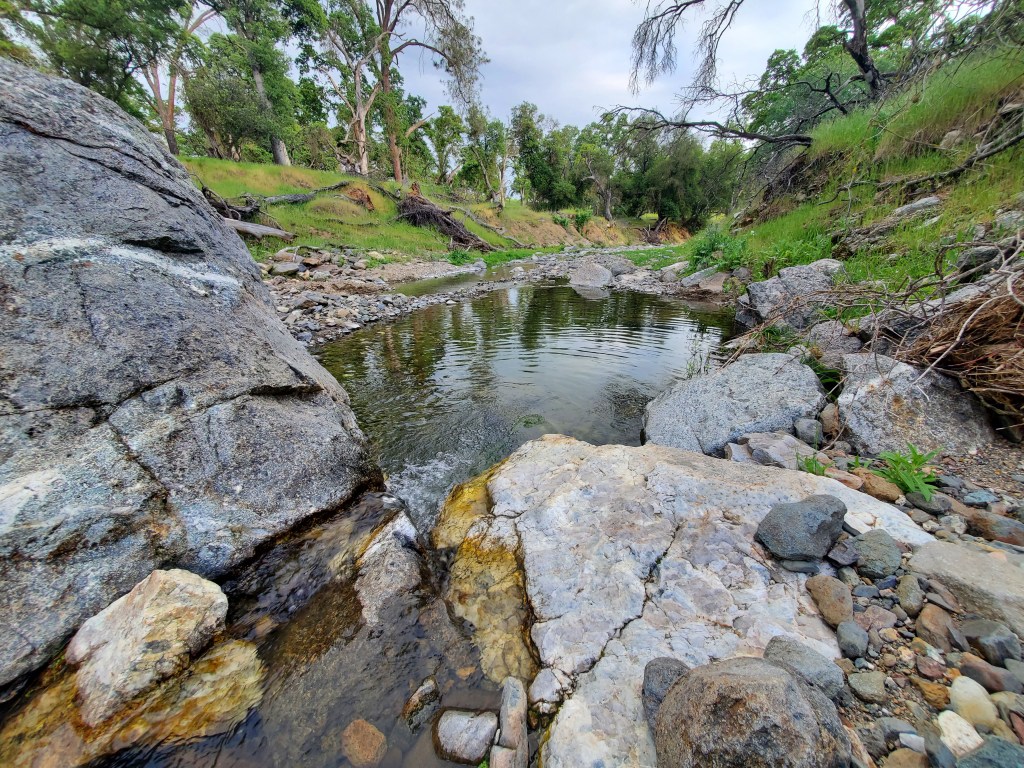
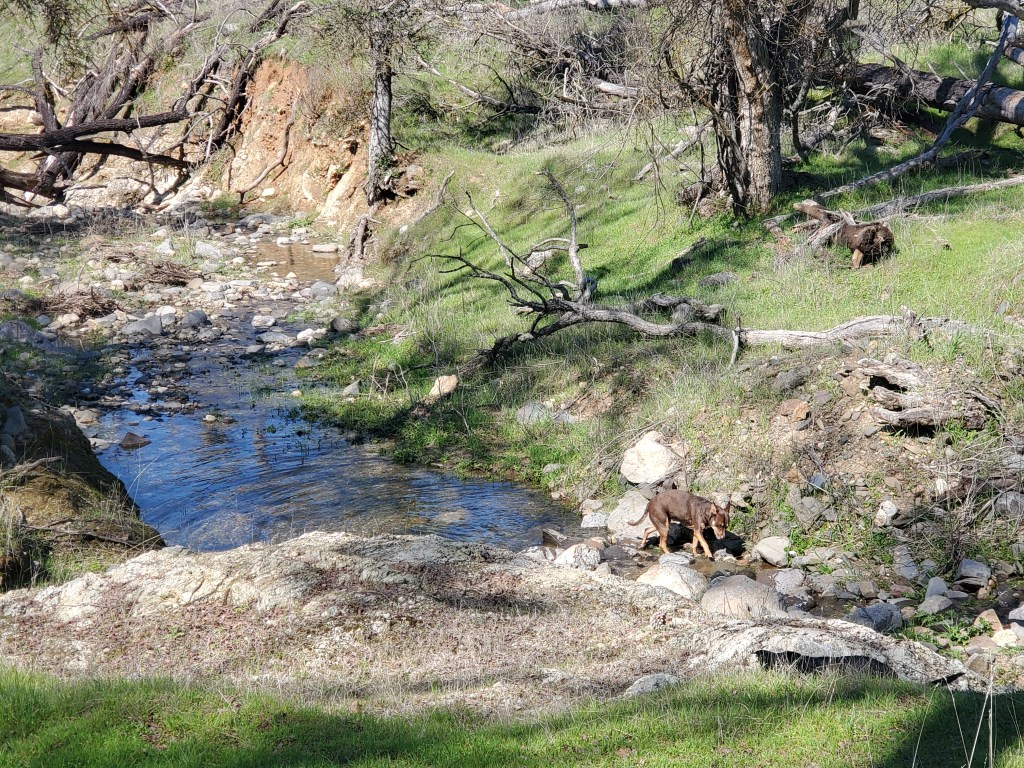
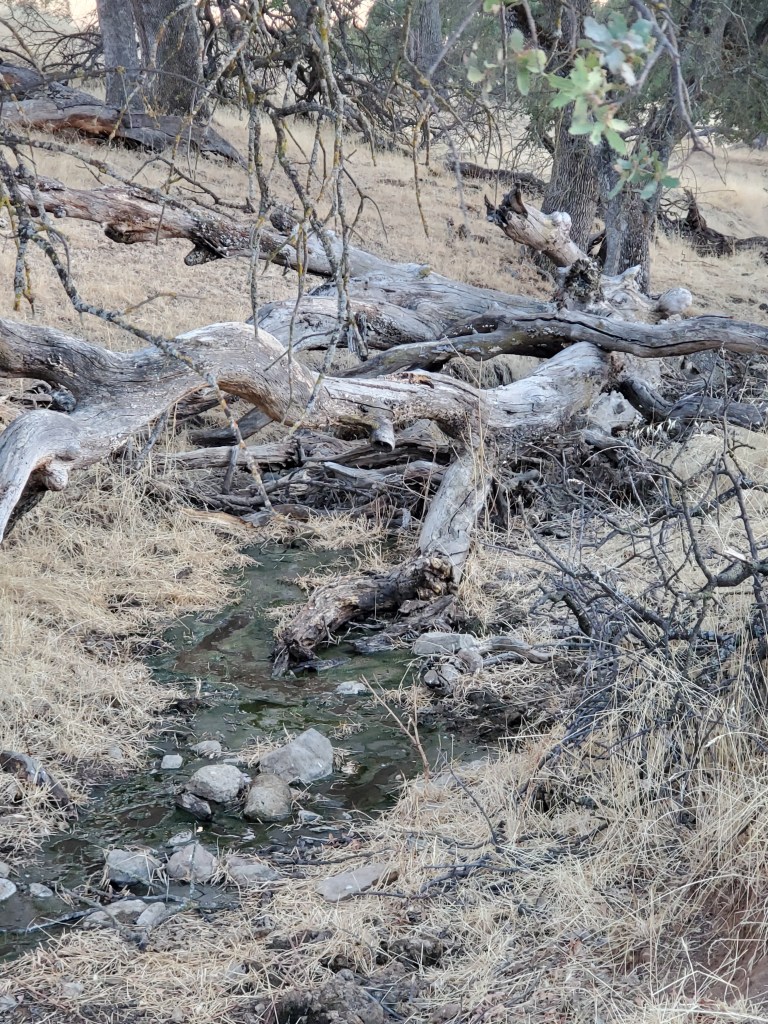
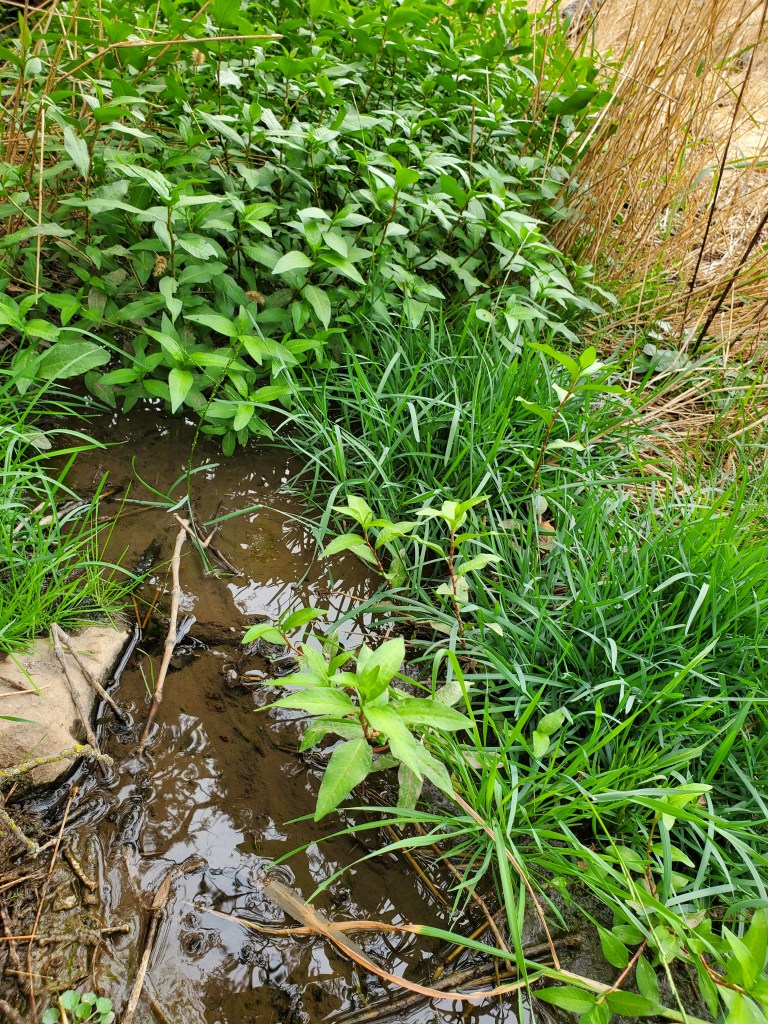
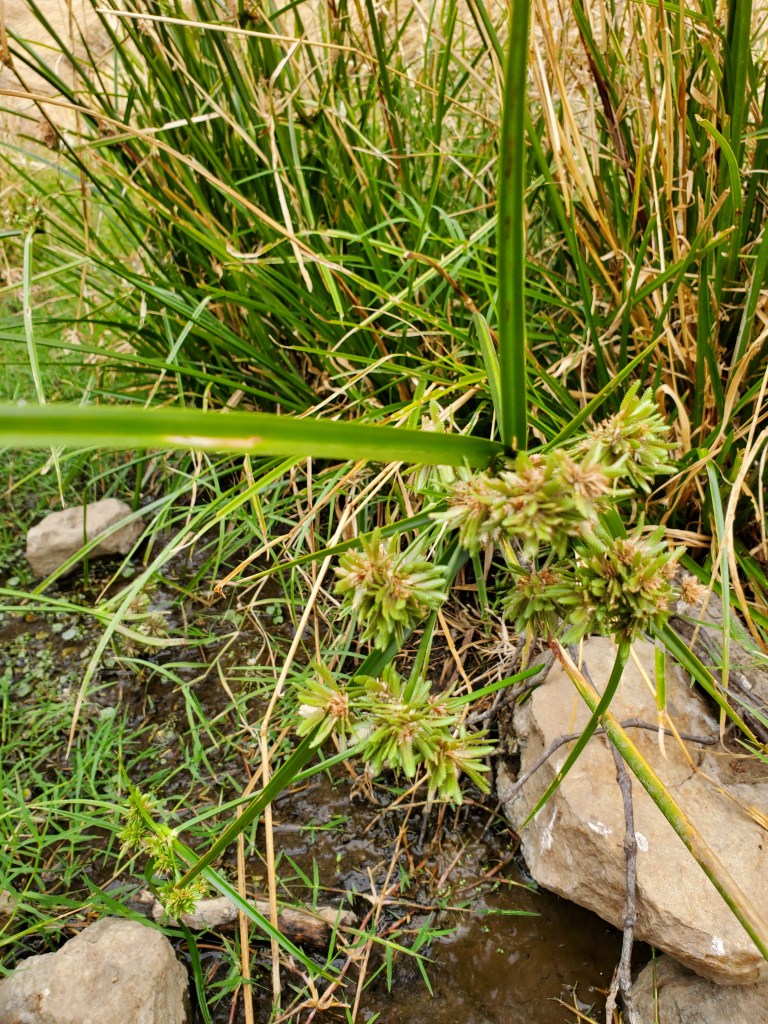
I am grateful that there is still water running in the creeks and seeping from the springs. It ensures life can continue and that there are nectar flowers to feed hungry pollinators. There was also watercress – a wonderful treat for humans.

Traditional Foods – Critical

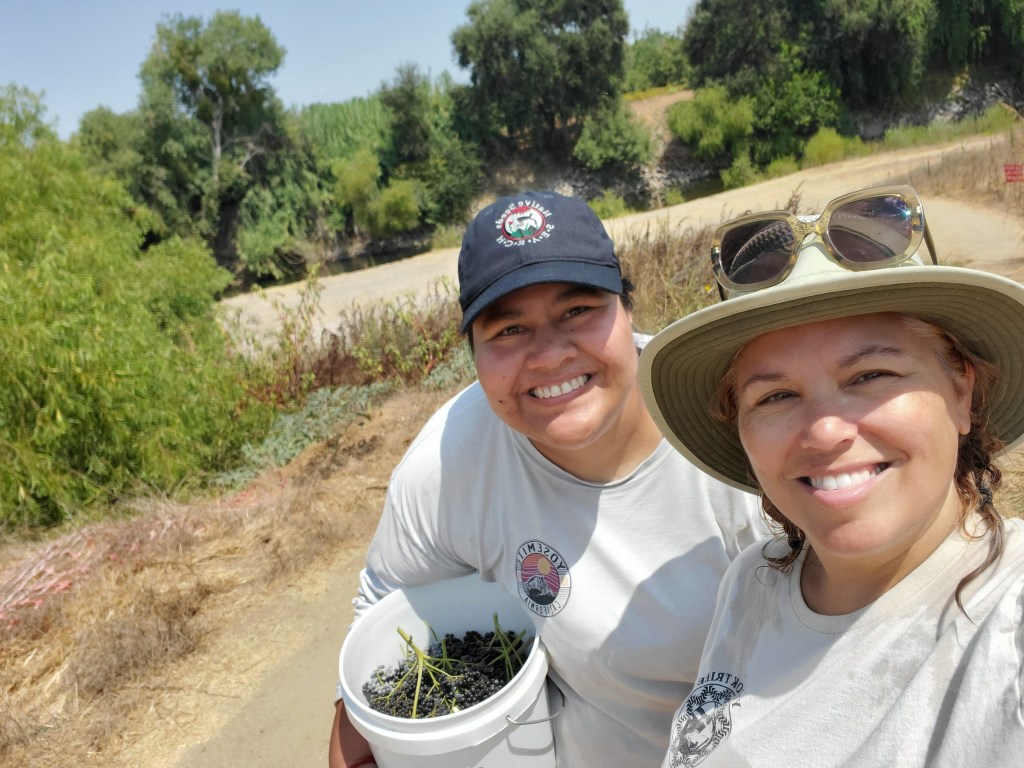
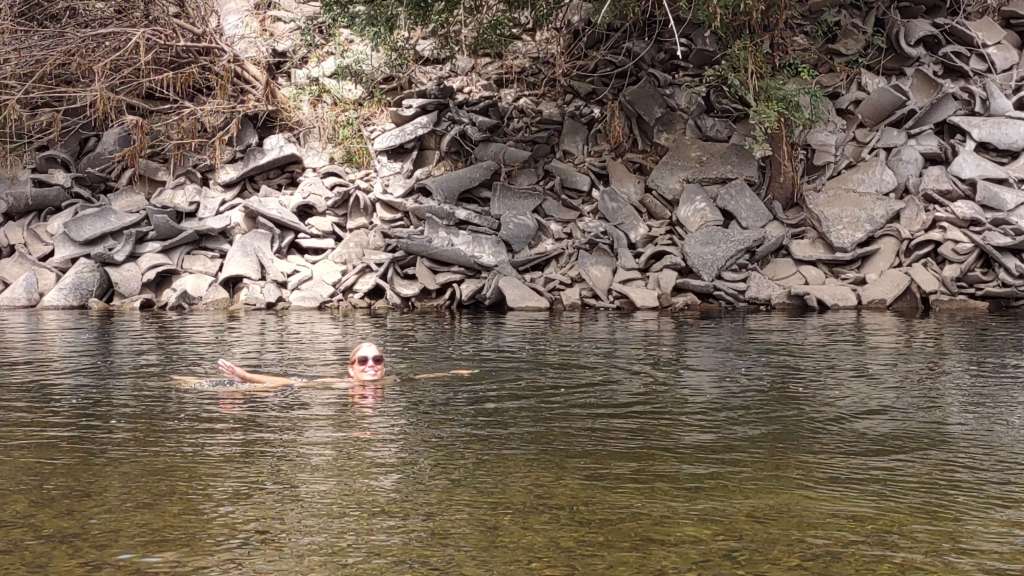
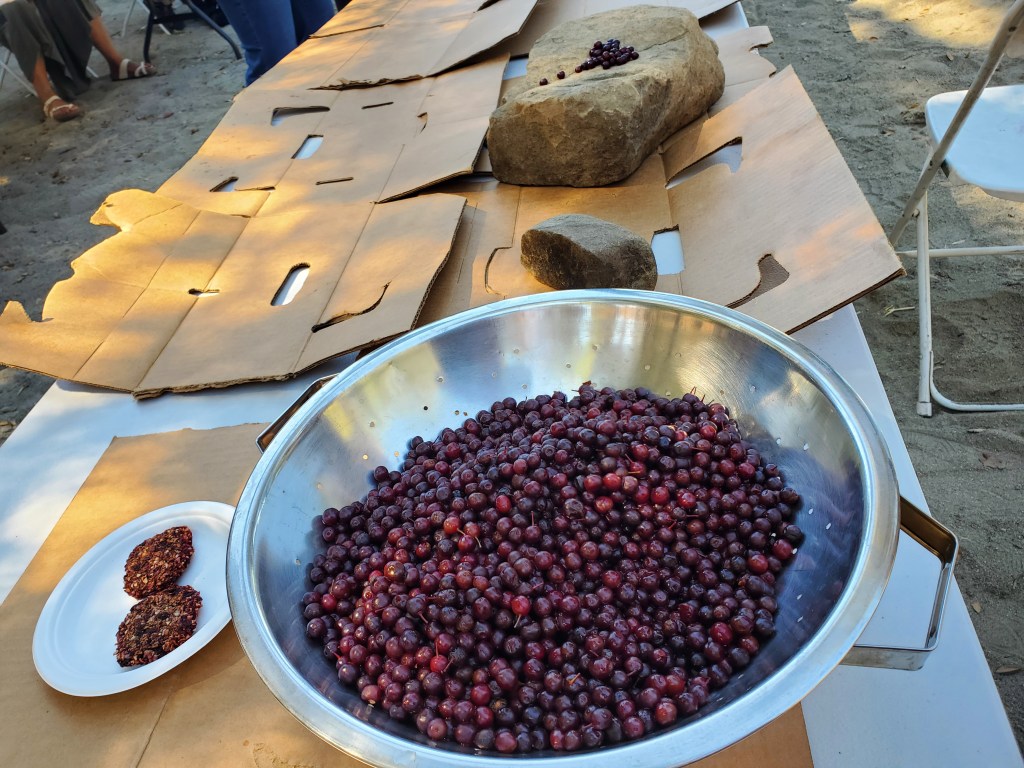
The weekend before last, my young friend Deedee and I went to gather elderberry. Although we gather for ourselves, our primary mission is to gather for the Tribal elders. We always provide the largest and best berries for them. I kept a small bag to make elderberry syrup for my family and friends. Elderberry is a medicine plant and helps the immune system. Gathering can be a dusty, sweaty business. Fortunately, the site we go to is adjacent to the Merced River. I jumped in for a rinse off and swim. Pure joy!

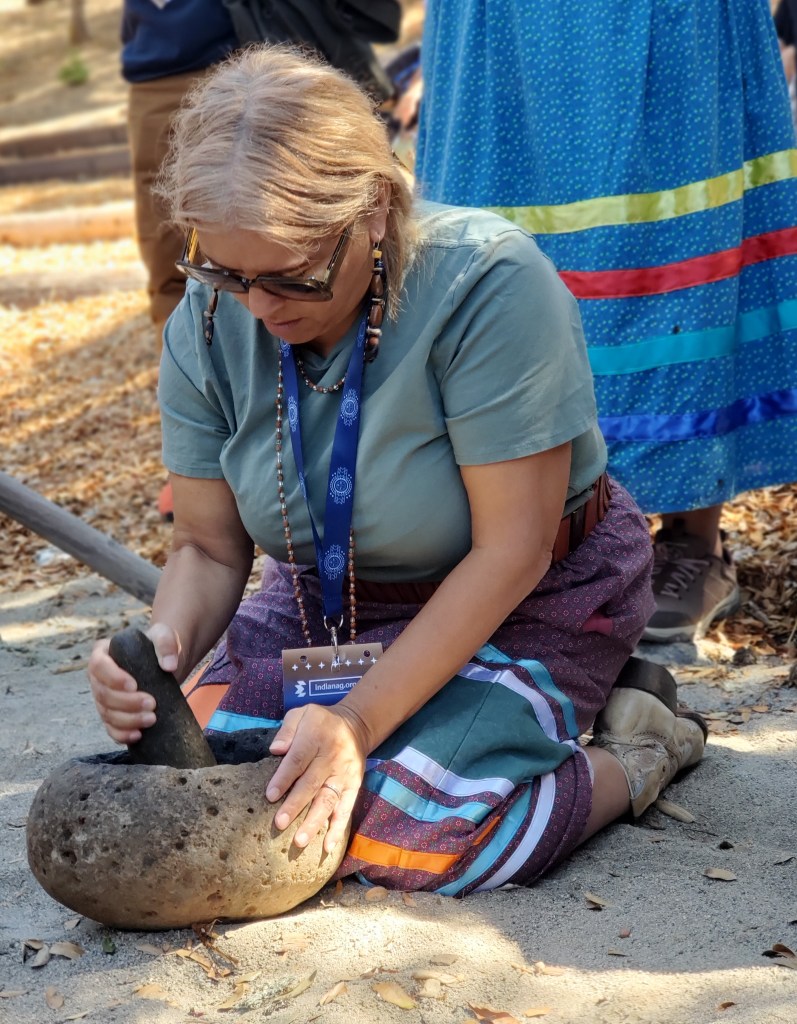
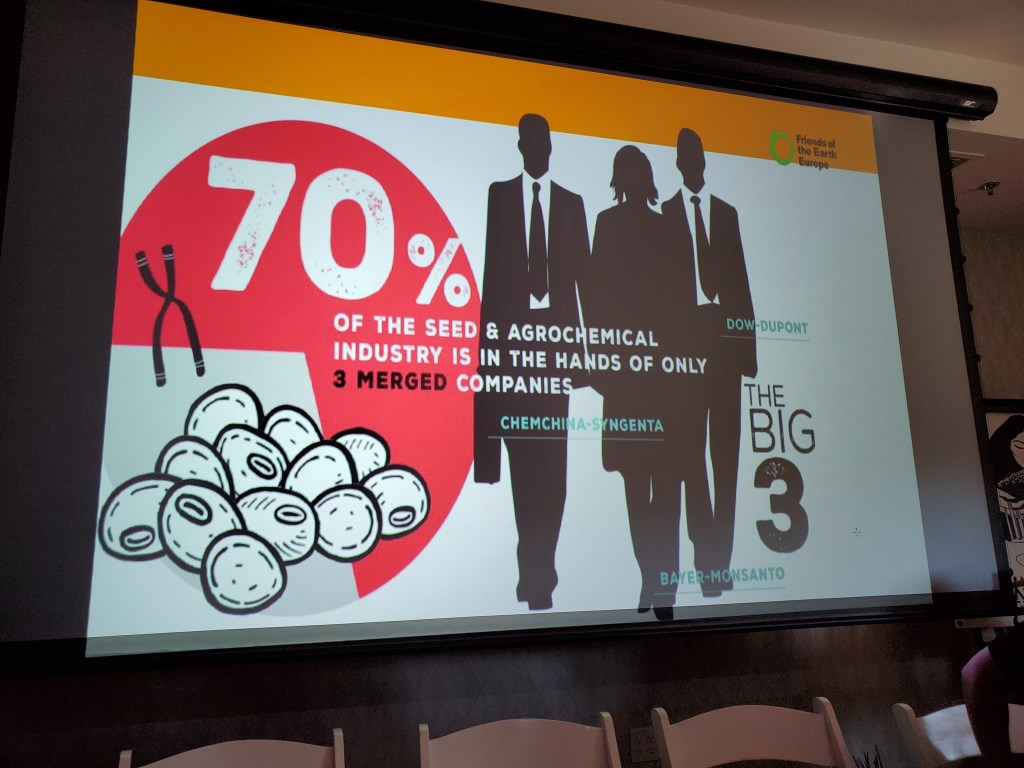
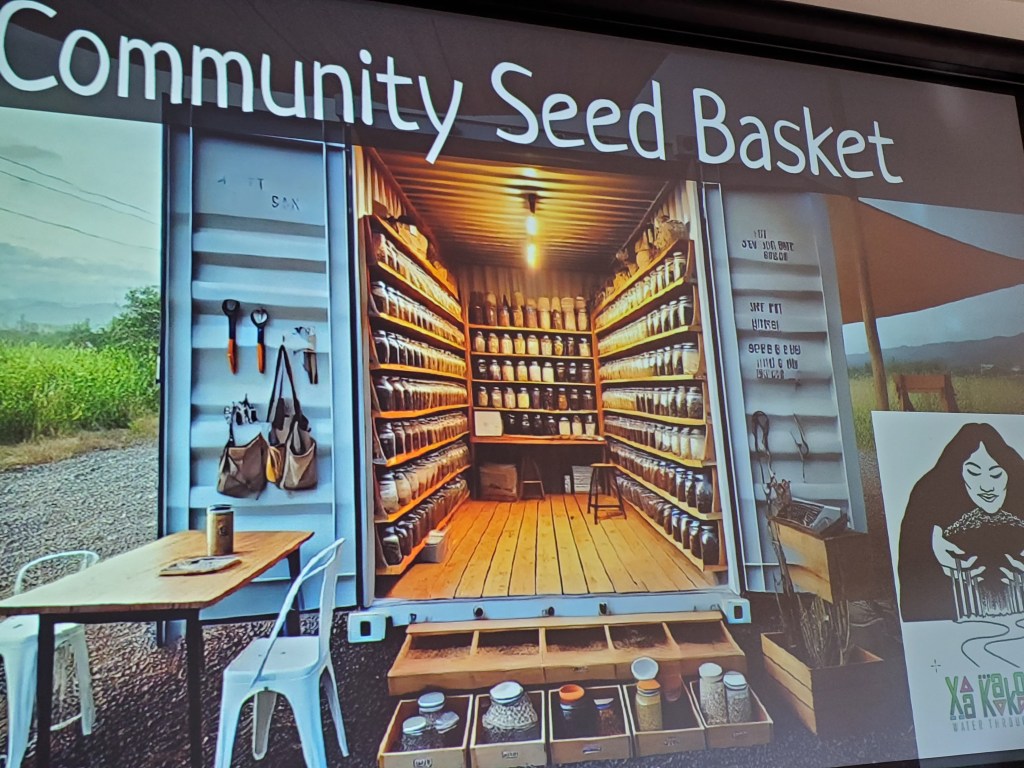
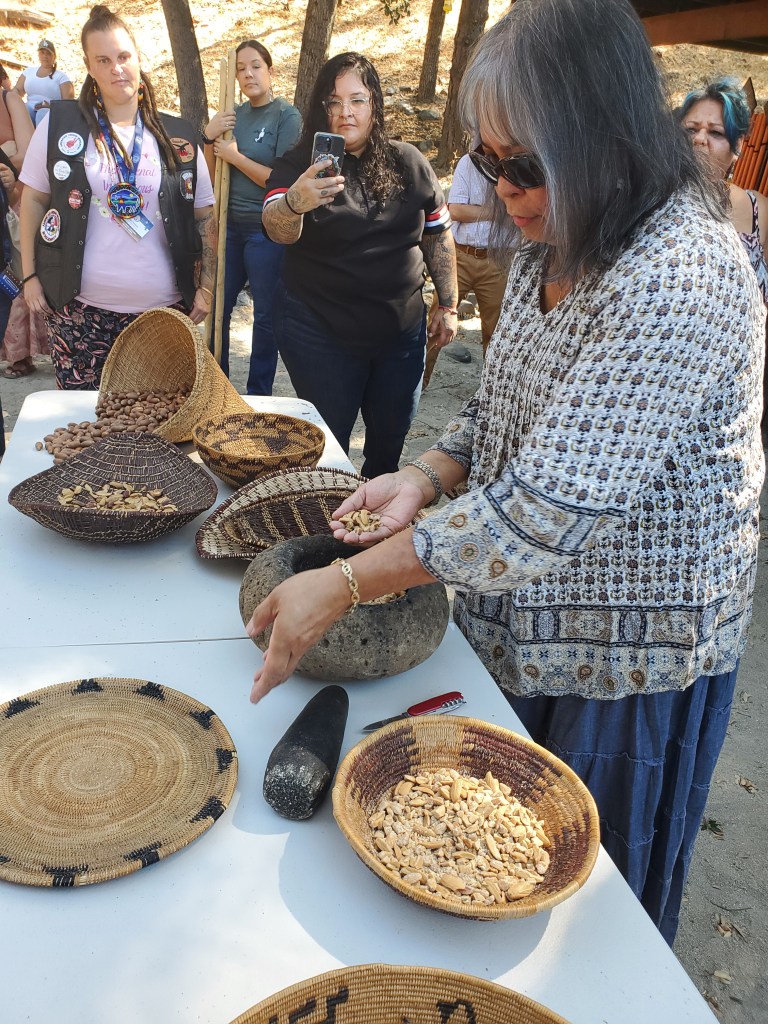
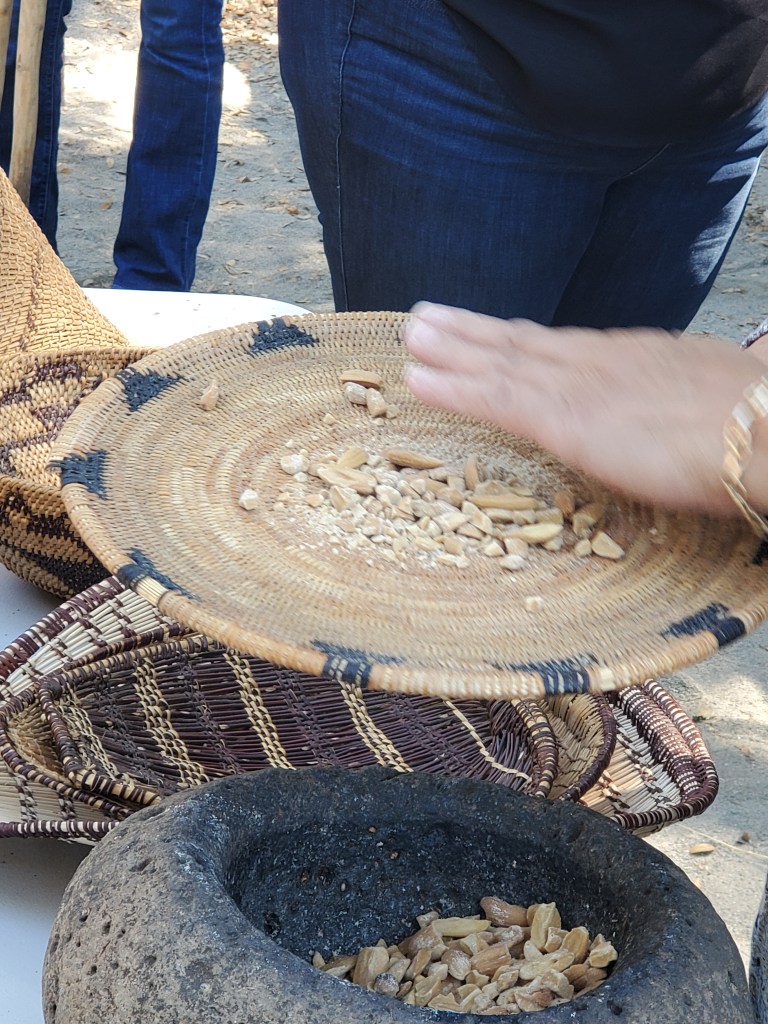
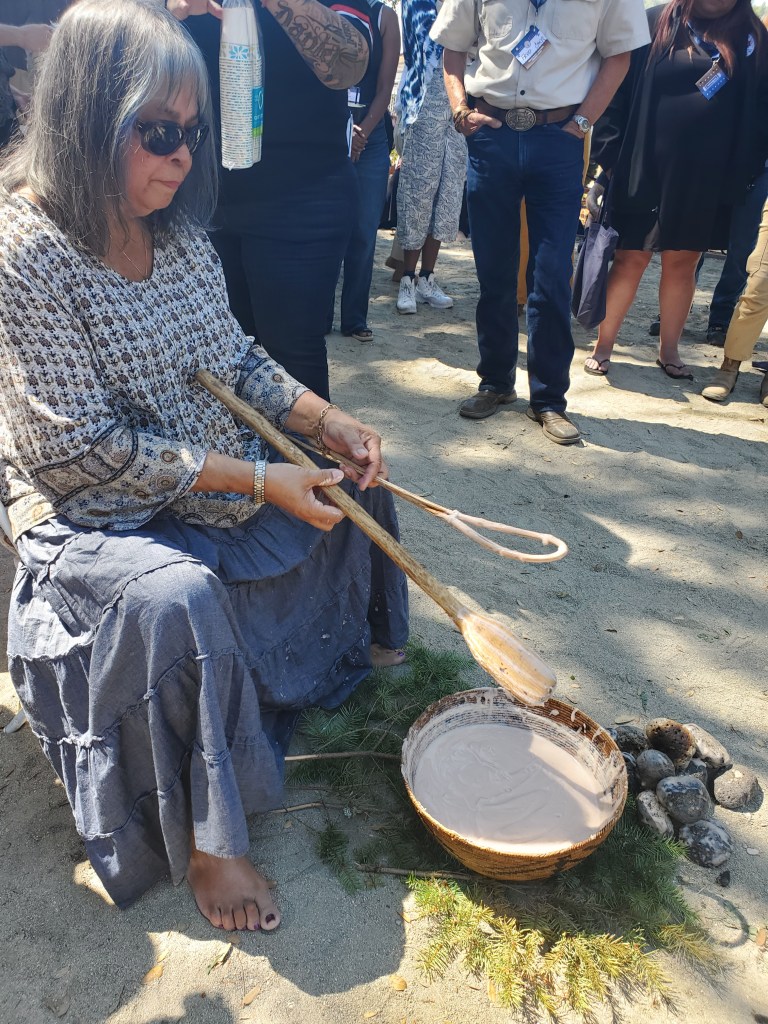
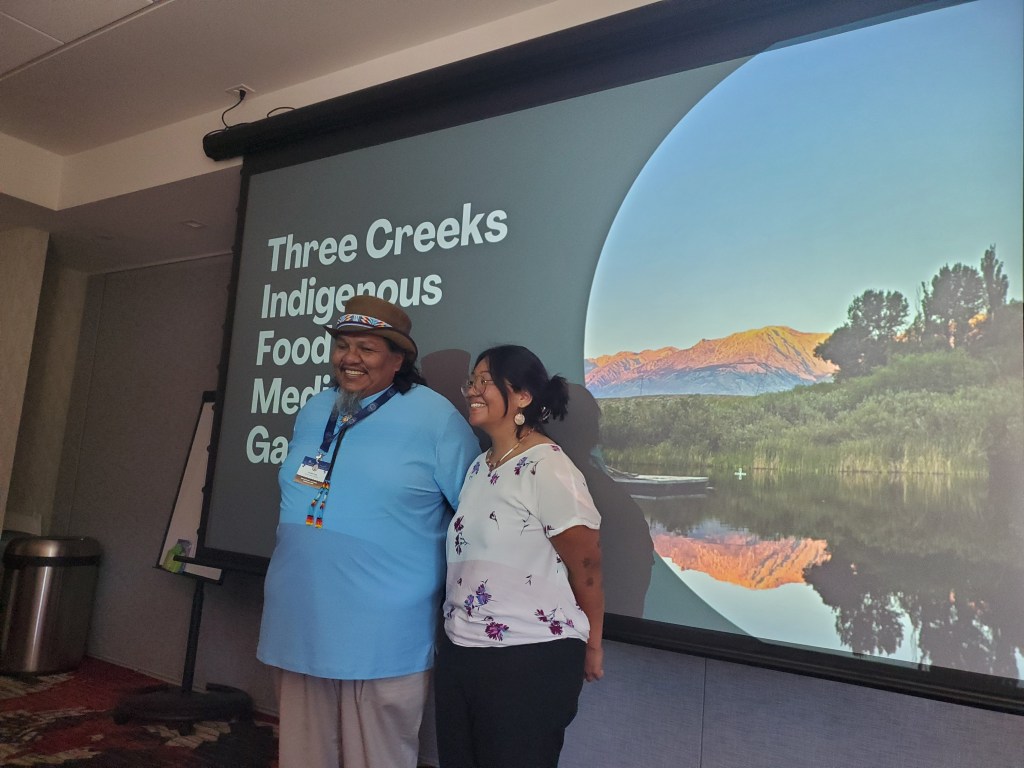
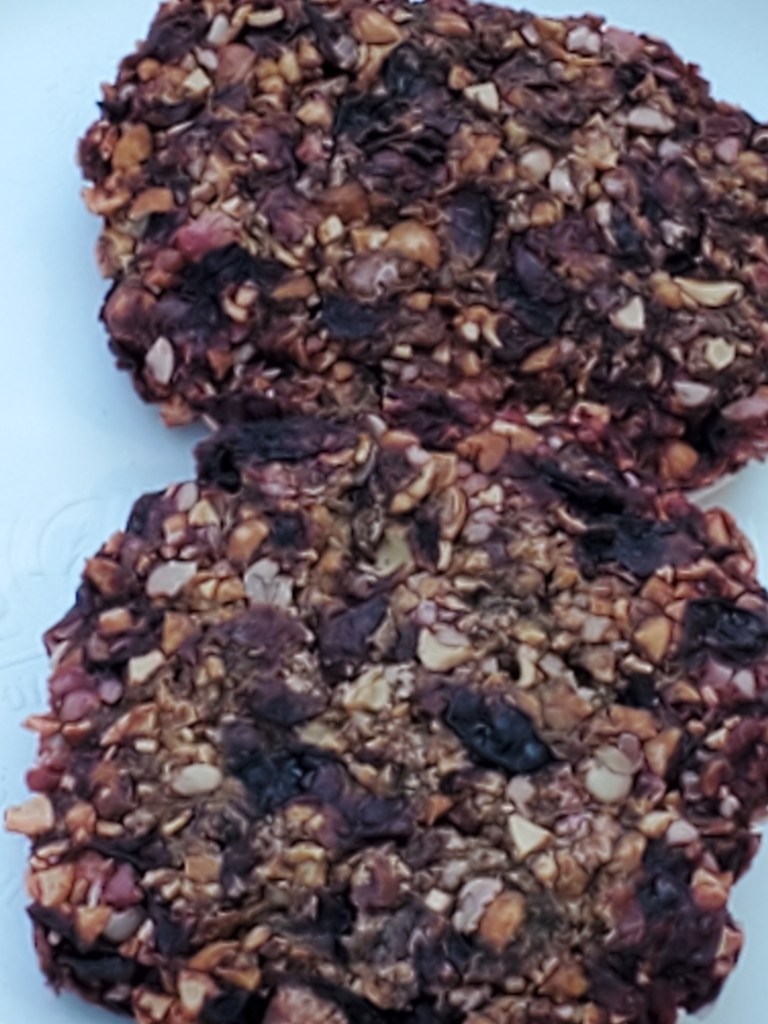
Last week, I had the absolute delight of attending the Intertribal Ag Council Pacific Region gathering over at Coyote Valley. It was an incredible two days of learning, seeing old friends and making new ones. There were some demonstrations of acorn mush making and choke cherry preservation in addition to learning about projects and programs from people all over the region. Jennifer Bates, the acorn mush demonstrator, was from the Calaveras/Tuolumne Miwuk people. She said that as long as the acorn is good, the people are good. They have survived on acorn for thousands of years, and won’t starve. This is exactly what I thought too, which is why the condition of the oak trees on the ranch is so concerning. Her acorn flour was from black oaks – super tasty. It was some of the best acorn mush I’ve had.

More Life Returns

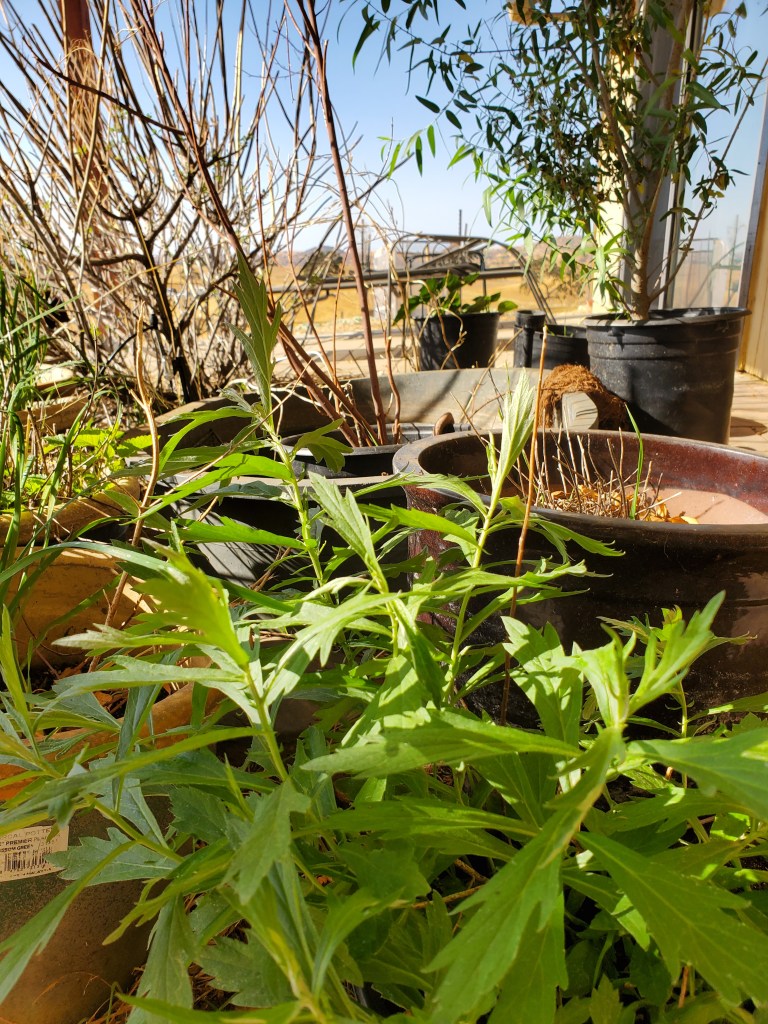
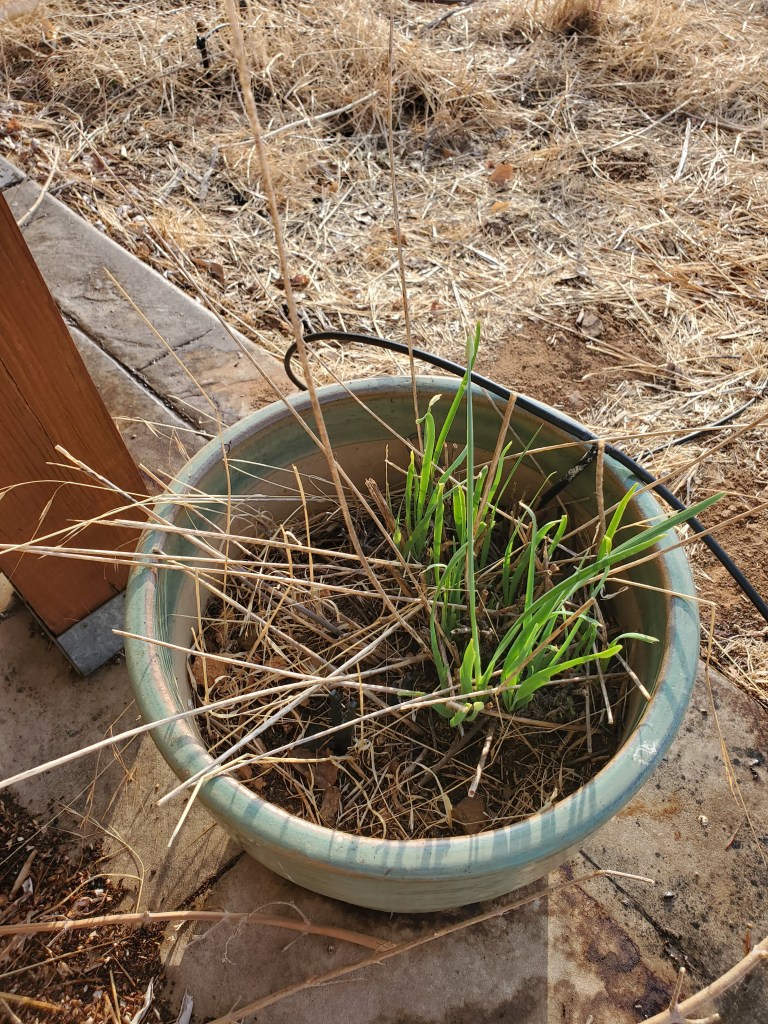
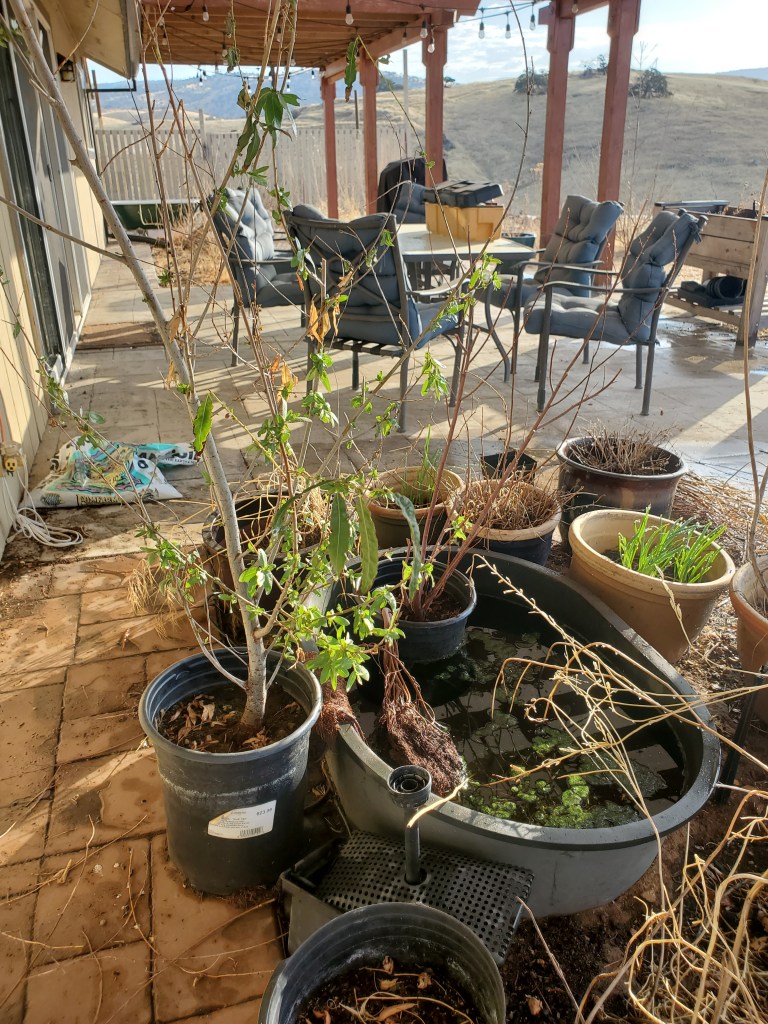
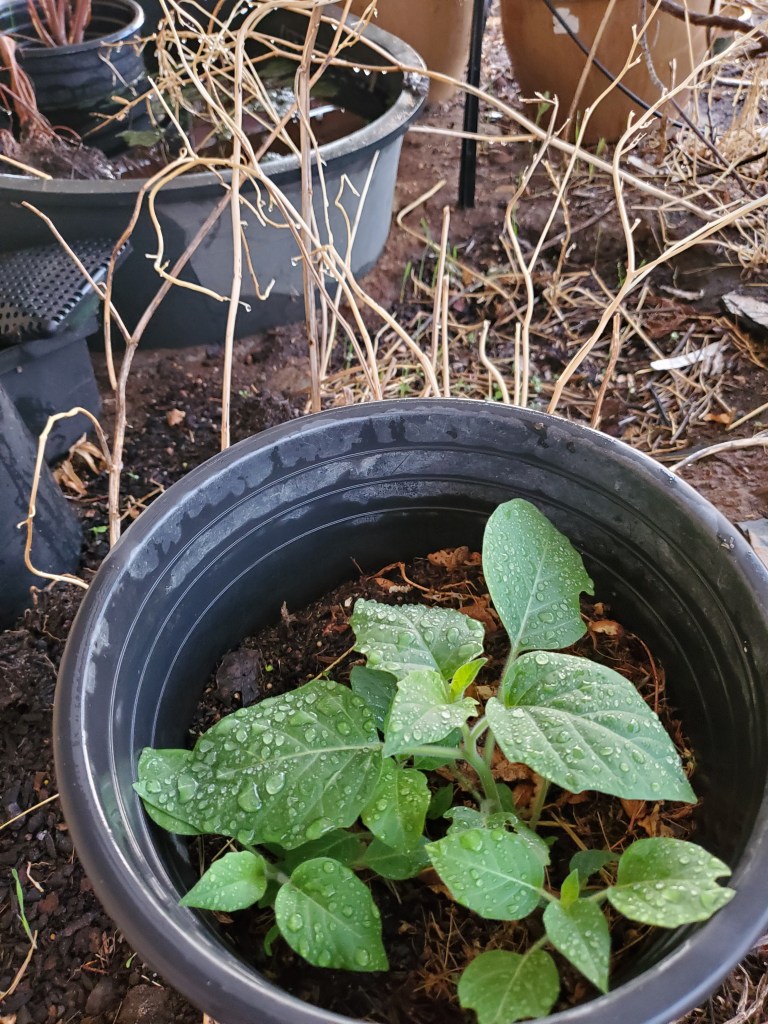
When I returned from my conference and seeing my family on the coast, I came home to even more returned plants. The white sage is resprouting leaves. There were more milkweeds popped up and bloomed. Onions and lemon balm have taken over the potted plants. Most surprising, the walnut tree resprouted leaves. I did not expect that. The wormwood returned and is thriving. Every morning, with the heat of the sun, between the wormwood and sage, it smells like being in ceremony. It elicits such good memories of being together with family and friends, connected to the earth and ancestors, taking time to be present in the moment of life and being grateful for everything.

Wanderings

Thinking of life and death, the cycles and blurred lines, has been top of mind. I’ve lost so many friends these past three years, helped others who were sick, and now my father is facing a difficult illness, of which we are still figuring out the details. While my education is helpful, it is the garden that has prepared me. I understand that life is about the seeds we plant – the confidence and joy we help others to see, the kindness we show, the service we provide, and yes, the milkweed that resprouts. What seeds has any of us planted? What goodness have we cultivated in the world? What kind of ancestor do you want to be – one that created, nurtured and cultivated to expand beauty and repair or one solely focused on the self and what can be gained? That question is what makes the difference in the blurred edges of existence. Like my garden, there is no end, just different versions of oneself – emerging, growing, blooming, seeding, serving, withering, nourishing in death, then reemerging again. Each stage is beautiful and requires energy – to take, to release…and to give.

Life Returns

Broadleaf milkweed begins to emerge with a now freed narrowleaf milkweed in the background

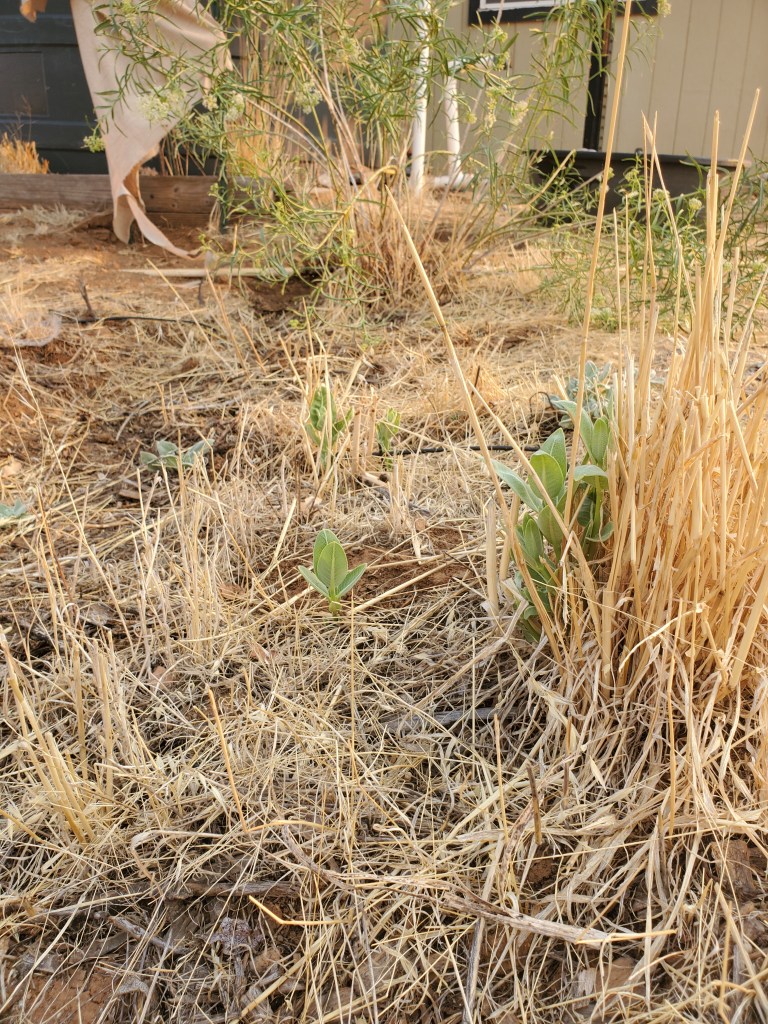
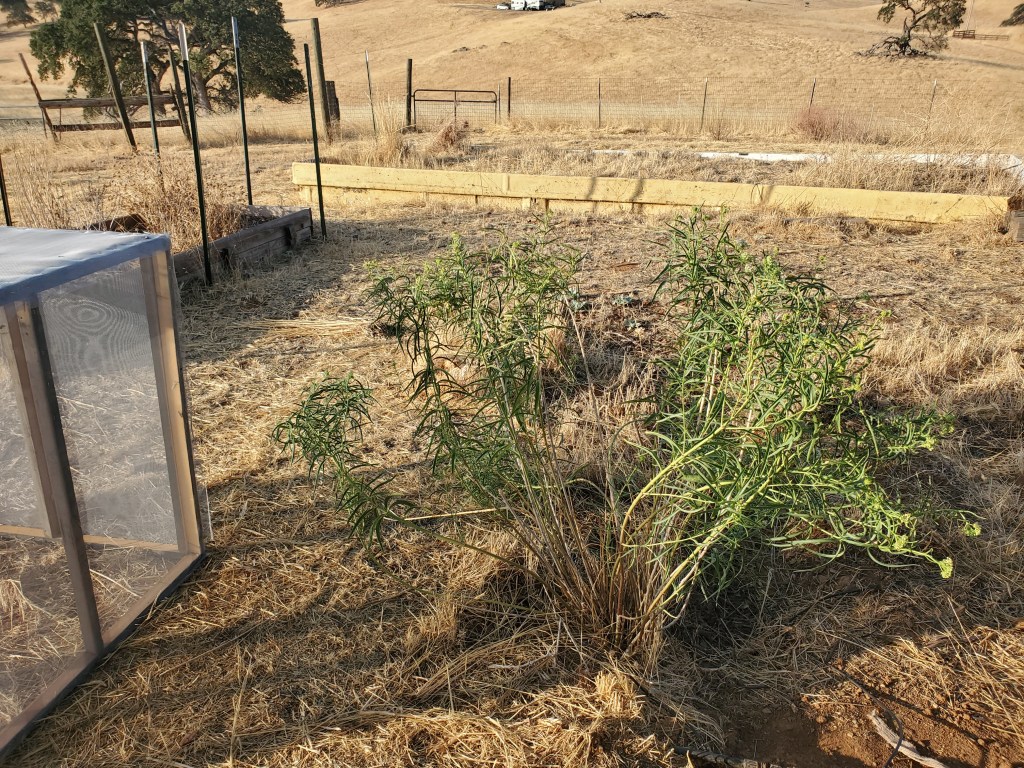
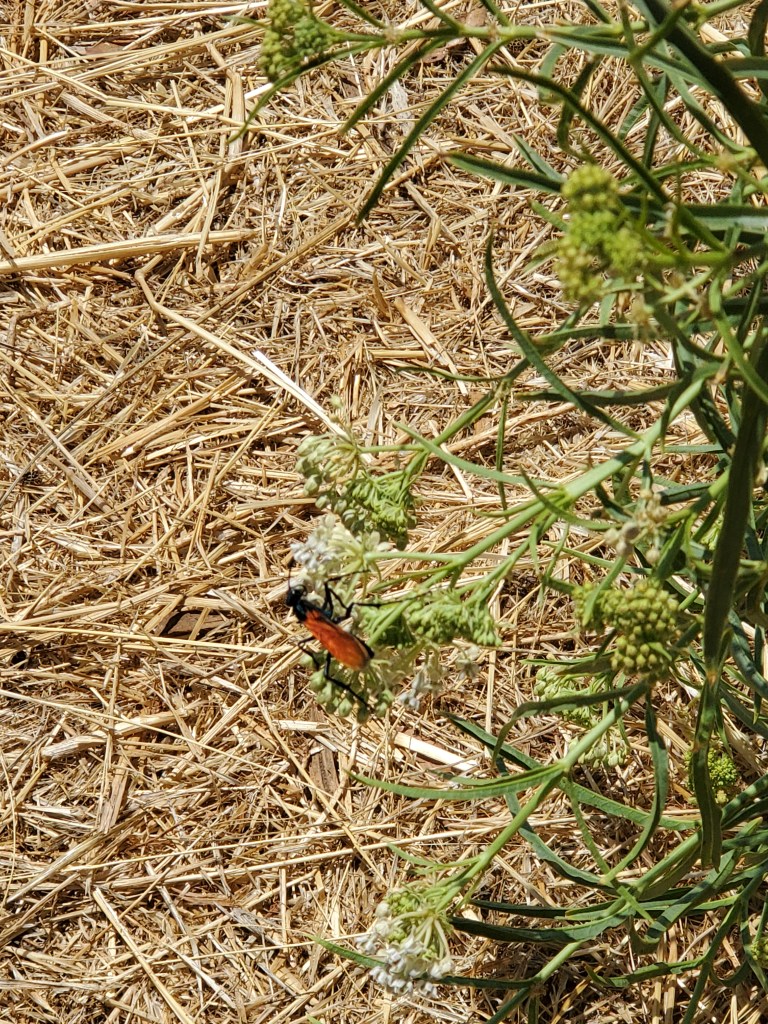
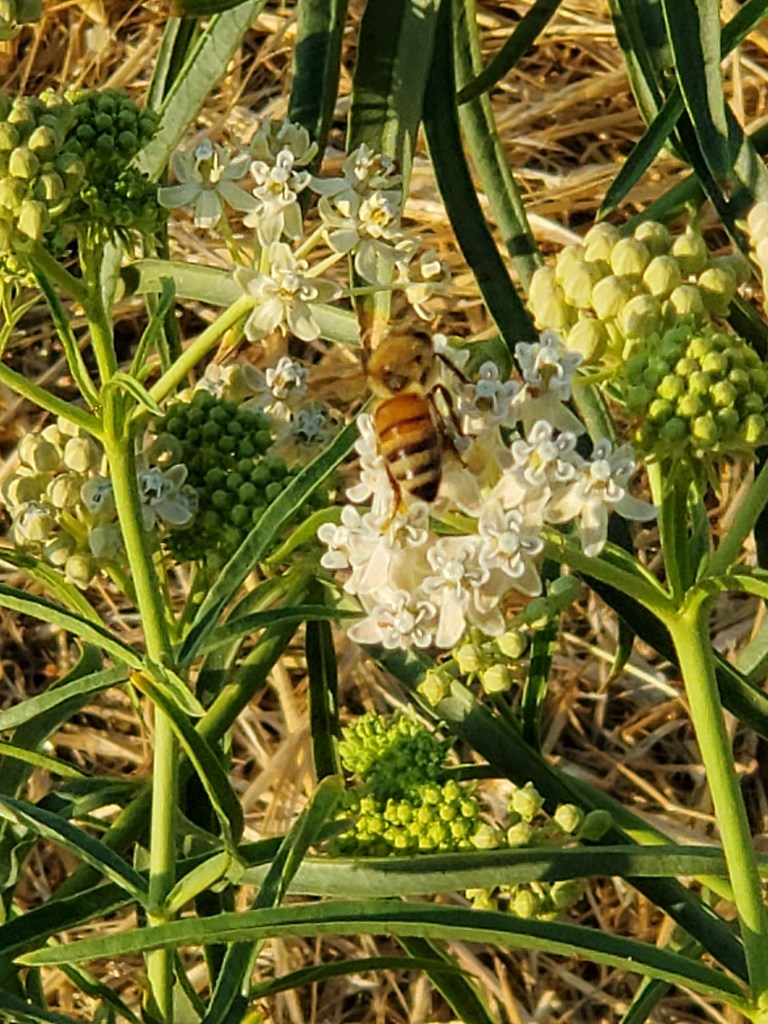
Last week I freed my narrowleaf lone survivor. The screen had no grasshoppers on it for three days, and the overall number has decreased sufficient for me to feel comfortable removing the protective screen box. Oh, it was like a reunion! To see her fully open to the elements, branches swaying in the breeze, flowers open to the sun, filled me with a love and joy that is difficult to express. Standing, as I was, amid the carnage that used to be a busy, scent-filled, native plant hilltop, with the only nectar/milkweed plant now remaining, I suppose I felt a sense of elation that we survived this together and that there was an opportunity to provide food and incubation to the pollinators that remain and maybe – just maybe – monarchs on their way back to the coast. I squealed with joy and gave her a light, long hug, talking to her, thanking her for her patience and for her survival. As I released her from my arms, immediately, she was supporting life. Tarantula hawks and a bee were the first to find her blooms. I am so happy.

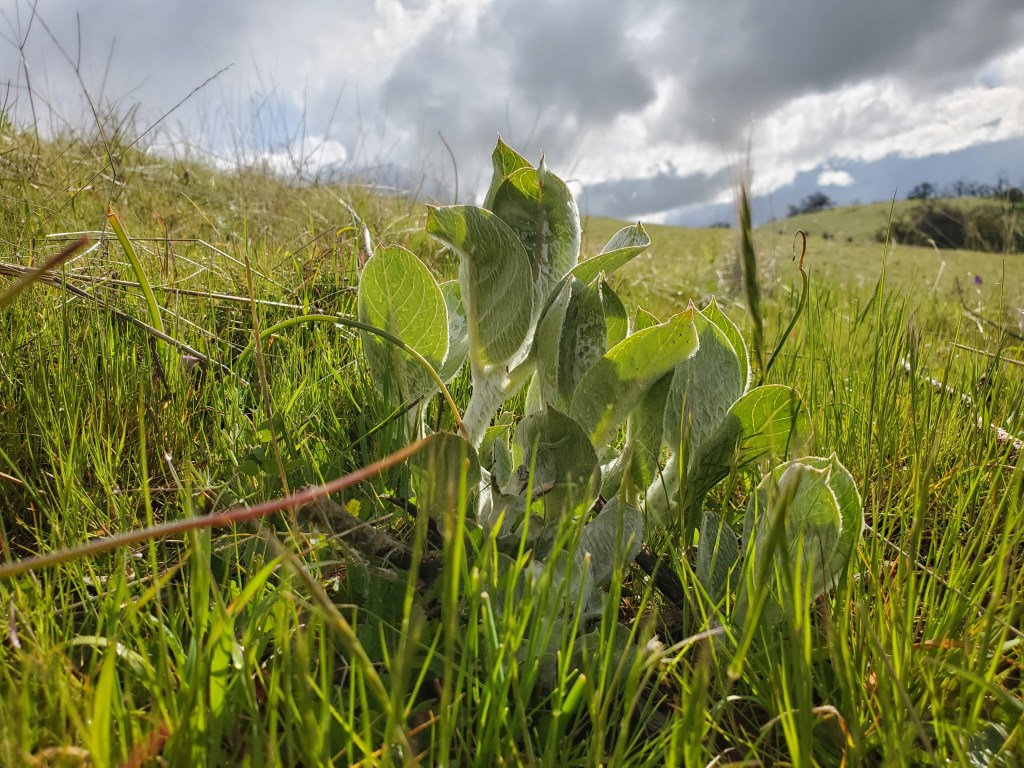
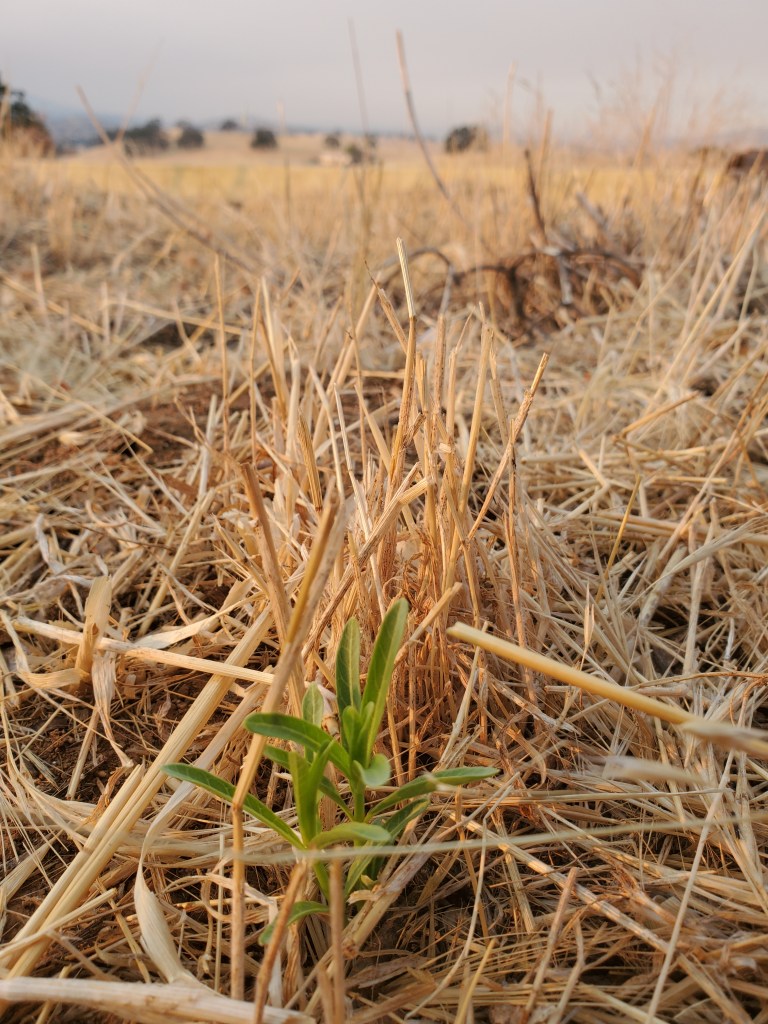
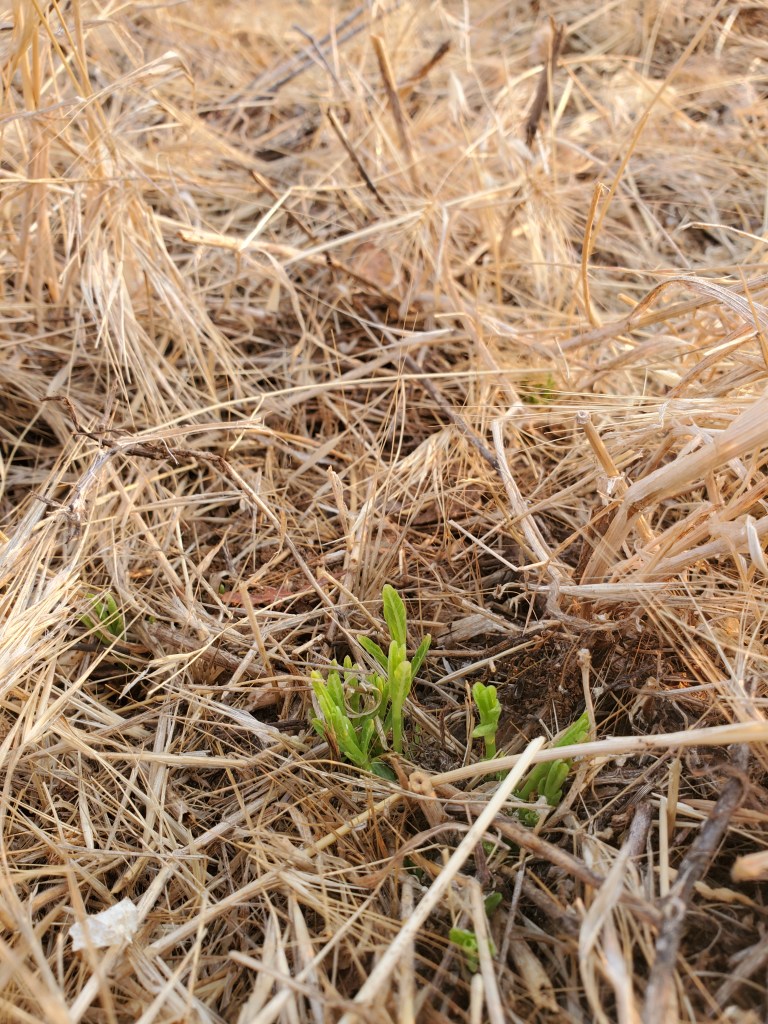
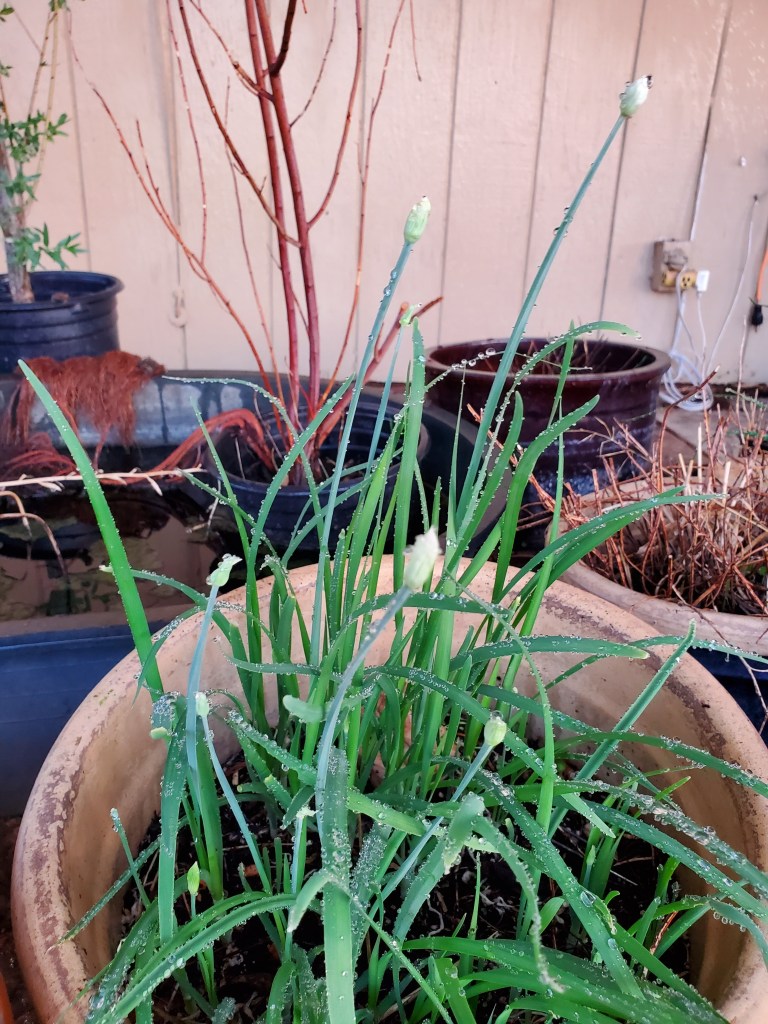
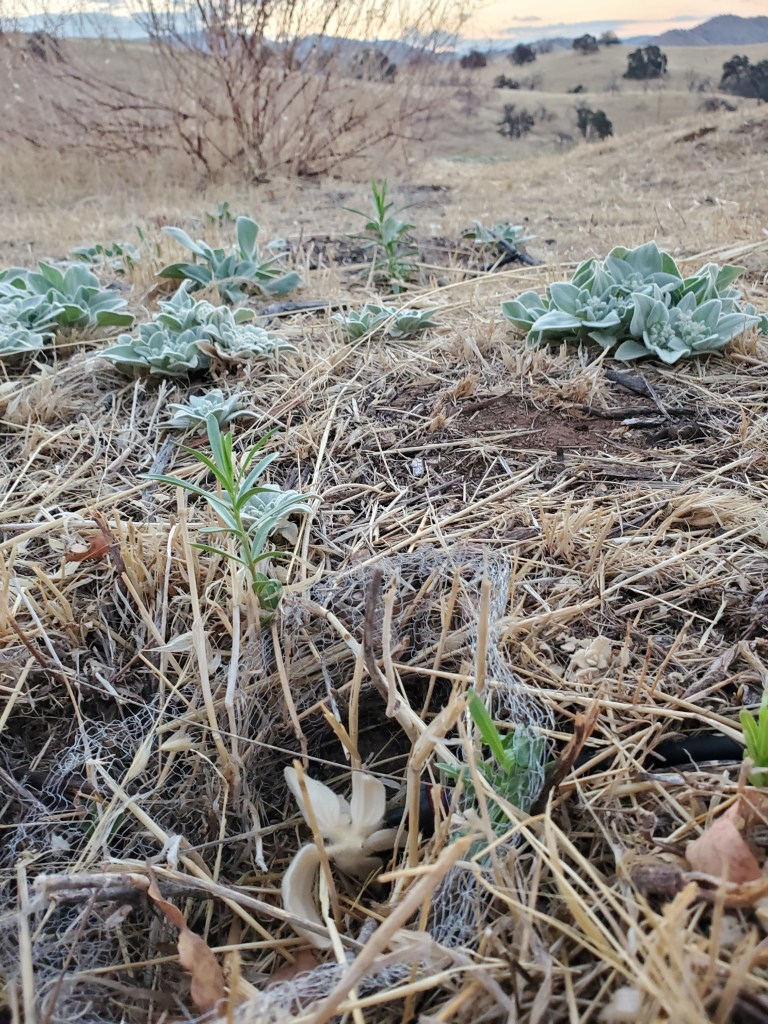
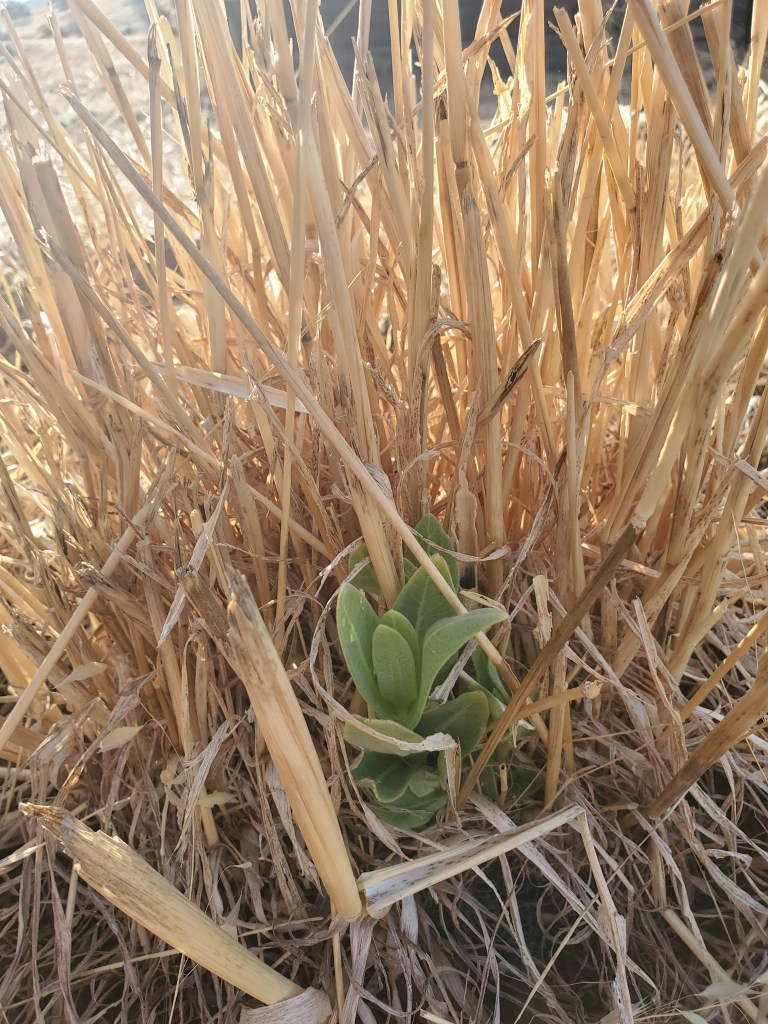
After the narrowleaf’s freedom (and the major decrease of hoppers), very quickly I began to see new signs of life. Onions started to reemerge and now have buds. The willow began to leaf-out. Most exciting, there was one stem of a broadleaf milkweed I found at the base of a bunch grass long ago eaten by the hoppers. Two days after that find, there were more. As I write this, there are ten reemerging narrowleaf milkweeds and six broadleaf. I am hoping to find more in the coming days. Maybe they will get big enough in time for the monarchs to find and choose to use them. There is still hope.

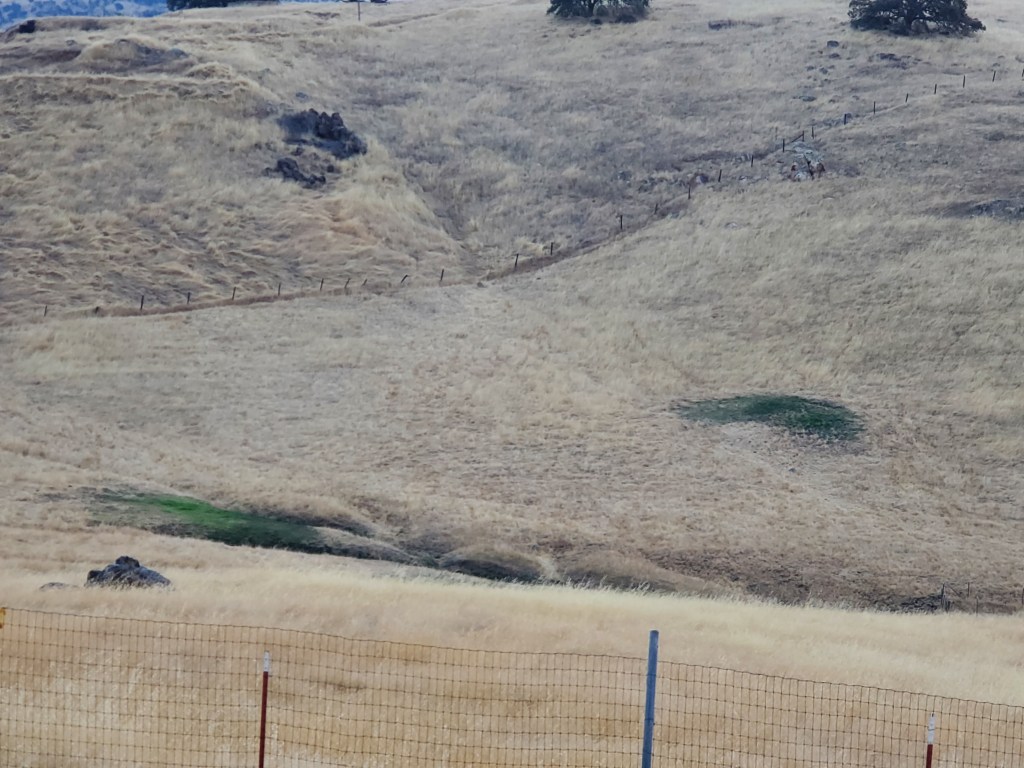
To get pollinator life back will be an ongoing struggle. There are still grasshoppers. We’ve had more fires, and the smoke very much diminishes animal and insect activity, even among birds. The heat is another factor too. That certainly diminishes activity, and it also dries the soil. Remarkably, the wet zones in the drainage are still wet and green, and the small springs continue to produce. Typically, the drainage and small seep on the hillside are dry by August. I ascribe this to the lingering effects of two good rain years in a row. There is no plant life around my rock and log dams, and no sign of milkweed. I have noticed milkweed seed can take two to three years to emerge above ground. I will hope for some more plant life next year.

Acorns Abound

The oaks continue to grow their acorns. They are also shedding many small acorns, which are all over on the ground. As long as there is a healthy crop of fat acorns, I can understand shedding the smaller ones. I plan to harvest this year and make some acorn mush. There will be plenty for me and for the animals that feed on them too.

Water Pains

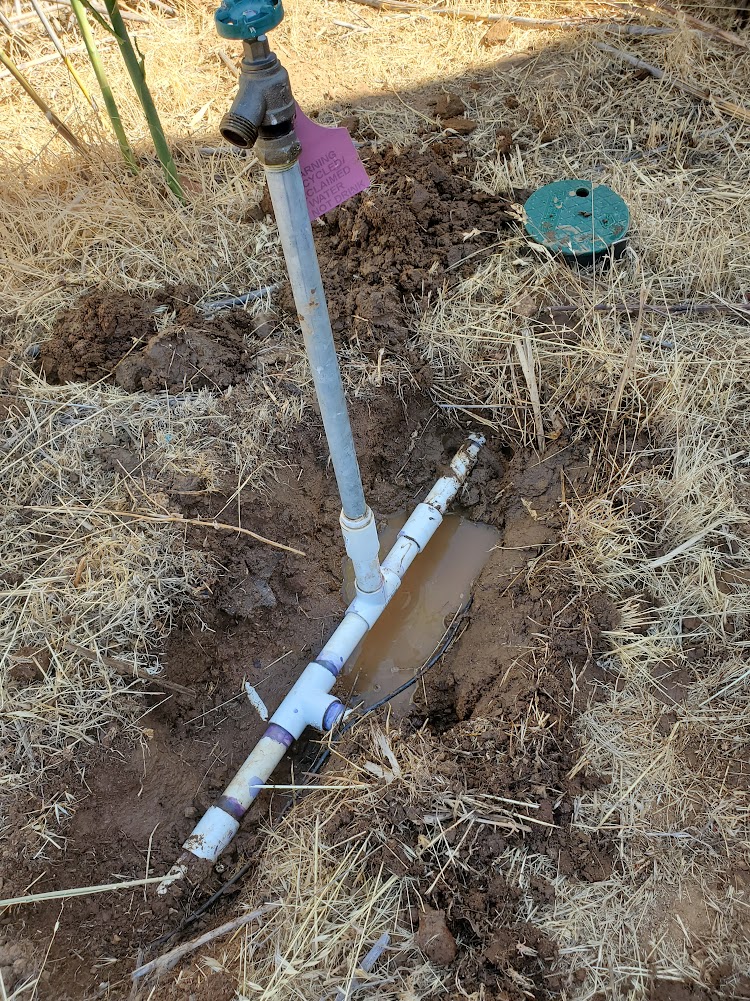
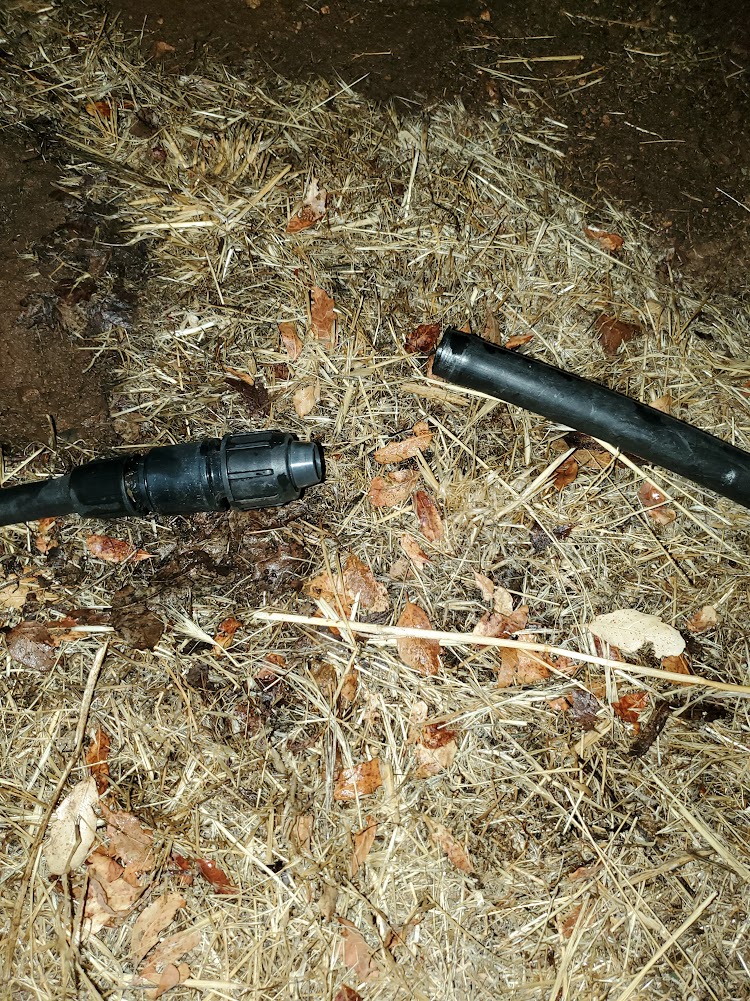
In June, the irrigation system broke. There was a leak in one of the main lines, and the pump kept putting pressure in the line further pushing more water into and then out of the leaking pipe. As a result, the tanks were empty and the pump stopped working. David fixed the leak, and got the pump working. Horribly, all the rainwater I had gathered for the summer was now gone. What a disaster. We had to purchase two 3,000 gallon loads to fill the tanks.

We have had at least one leak each season of a main PVC pipe along with some other small 3/4″ or 1/2″ tubing leaks. It is frustrating since we spent considerable money to move from my poor girl’s system to a professionally installed system. I know things will fail over time, but it has been excessive.

In July, we had another issue and another several leaks of secondary mains. We were out of town, of course (That is when all water issues happens). The pump kept tripping the circuit and could not pump water. Fortunately, we have a very kind neighbor, Ric, who was willing to go over and do some problem solving. It turned out the breakers were bad, and he replaced the one breaker the pump was connected to. He then saw that there were several breaks in the main line. Water spewed out each time the pump was on thereby not being able to deliver any water to the plant roots I was trying to keep alive. He fixed them! What a hero! That was above and beyond. We brought him and his wife back some yummy foods from our travels. Thankfully, I had left the three tanks closed off from one another when I had the replacement water delivered after the last leak. With the three water line breaks, this meant that only one of the tanks, with the newly purchased water, was lost. With only 5,000 gallons, that will not be sufficient to get me through the summer. I will have to buy another delivery before the end of the month.

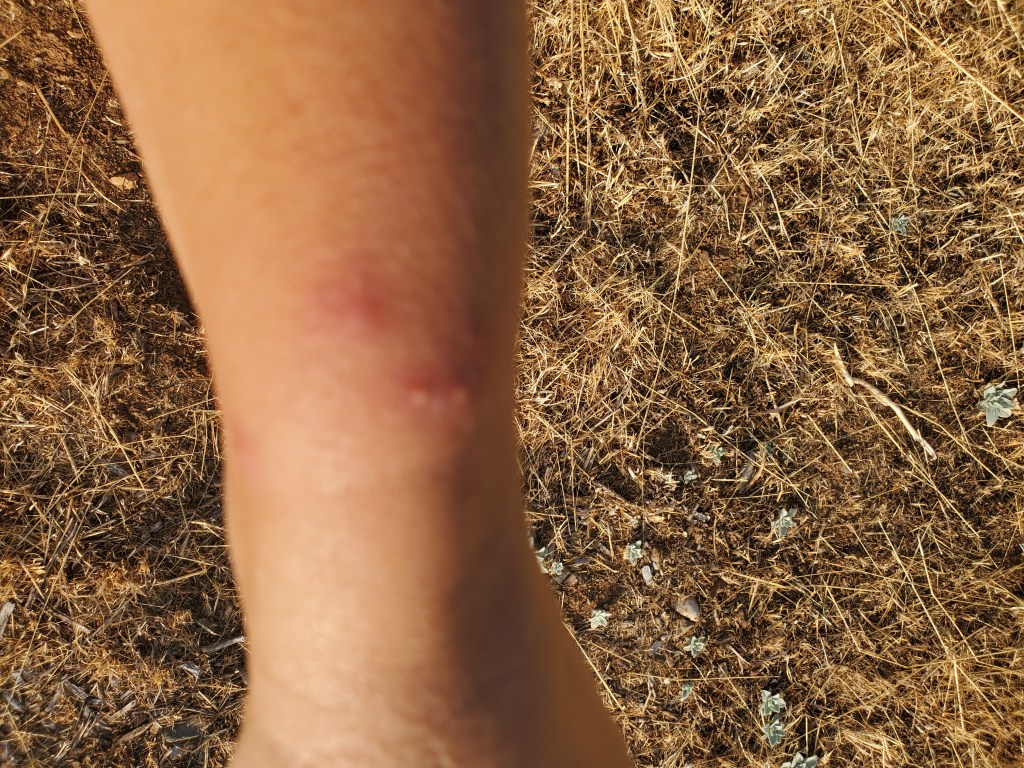
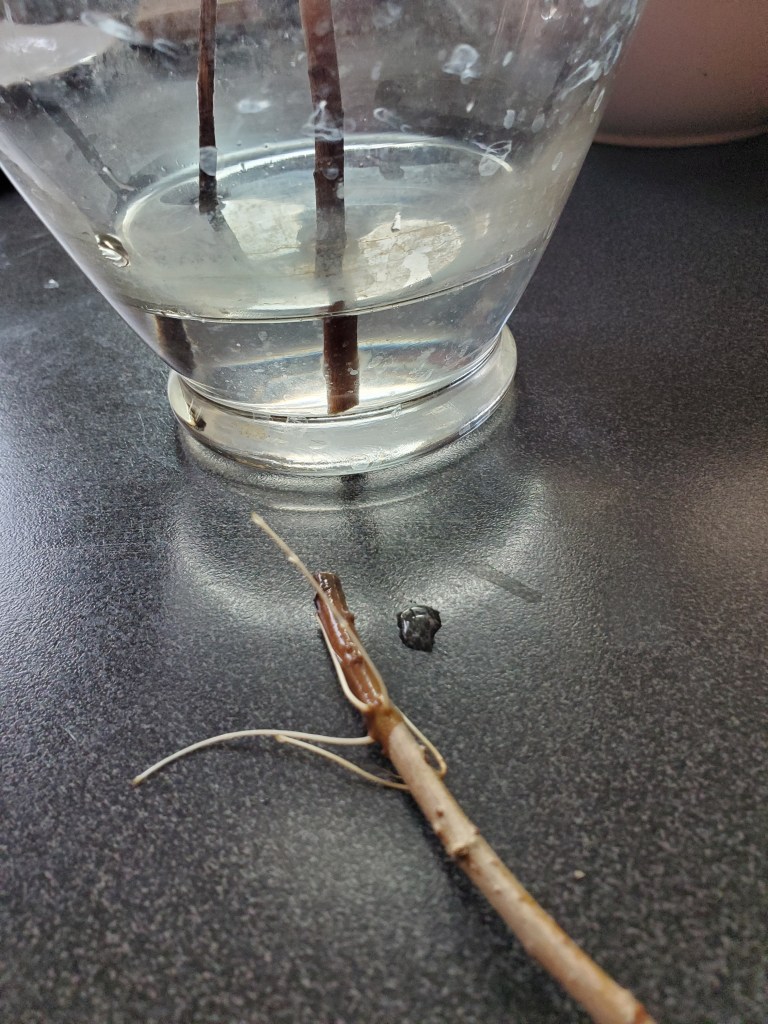
During this time of heat and no water, it appears that one of the willow trees did not make it. She was still in a container, and her roots probably cooked in it. The other larger willow survived. I took several cuttings of the dead willow to see if I could get it to sprout. One did, and I will plant her in about two weeks. Also during this time, I was hand watering and had the audacity to pull old grass remnants from one of the deer grass pots – to unchoke it. Yikes, did that create a stir of mean ants. Before I knew it, they were up the deer grass stalks, then onto the watering can, then up onto my hand where they chewed me up. That hurt. I put mud on the wounds, which helped tremendously.

Wanderings

I thought I was going to decelerate my work, but the monarchs are still on the brink. I read the Western Association of Fish & Wildlife Agencies 50 year plan for monarchs and saw the graphs showing the precipitous decline over time and saw the same graphs showing the inverse relationship with use of two types of pesticide/herbicide. I know we think we have to feed the world and therefore think we need to use a plethora of artificial tools to increase yield, but at what expense? I am not sure many of the scientists and industry leaders stop to think about the consequences of an increased battle with the natural elements, already made more virulent by our continuing effort to tame it into submission. That lack of full-spectrum thinking casts a wide shadow, for a world with no insects, is a world in which we cannot survive.

After reading that report, I emailed Ron Allen at Mariposa Native Plants and ordered more nectar plants to replace those I know I’ve lost from the grasshopper incursion. Combined with what I was able to salvage and grow for myself, it may be enough to ensure that I don’t lose a generation of bees and butterflies, a population grown through habitat expansion for the past 4 years. I need to continue to do my part. I can’t decelerate now.

Hot, Dry and a New Normal We Must Not Accept

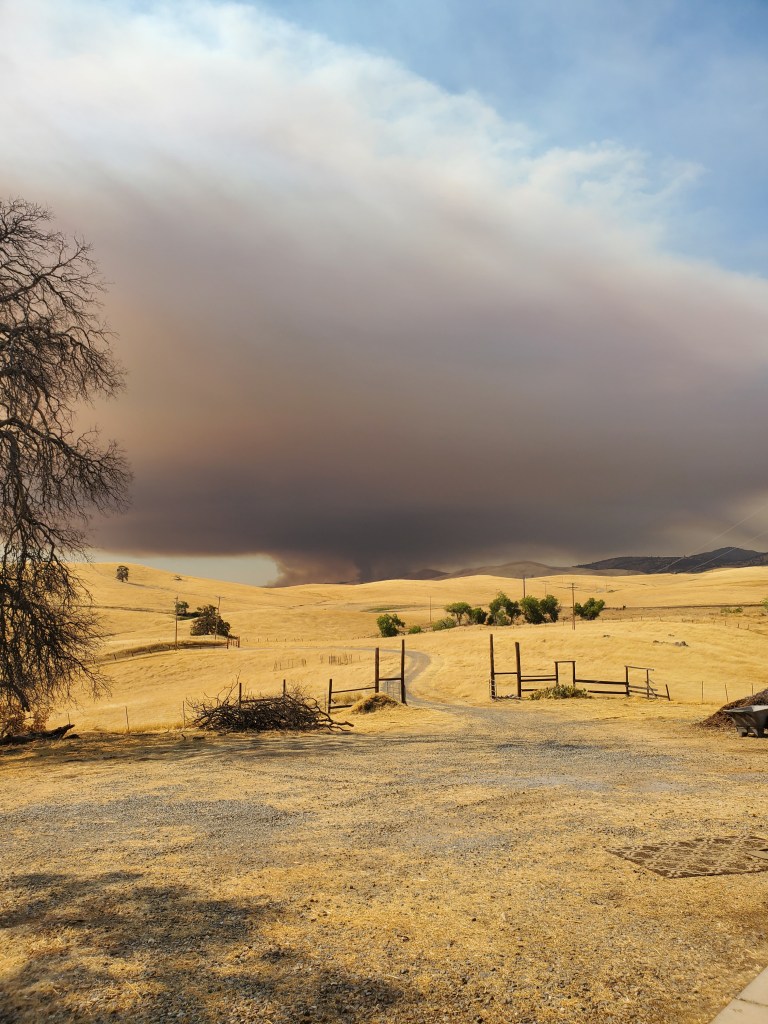
French Fire plume growing fast

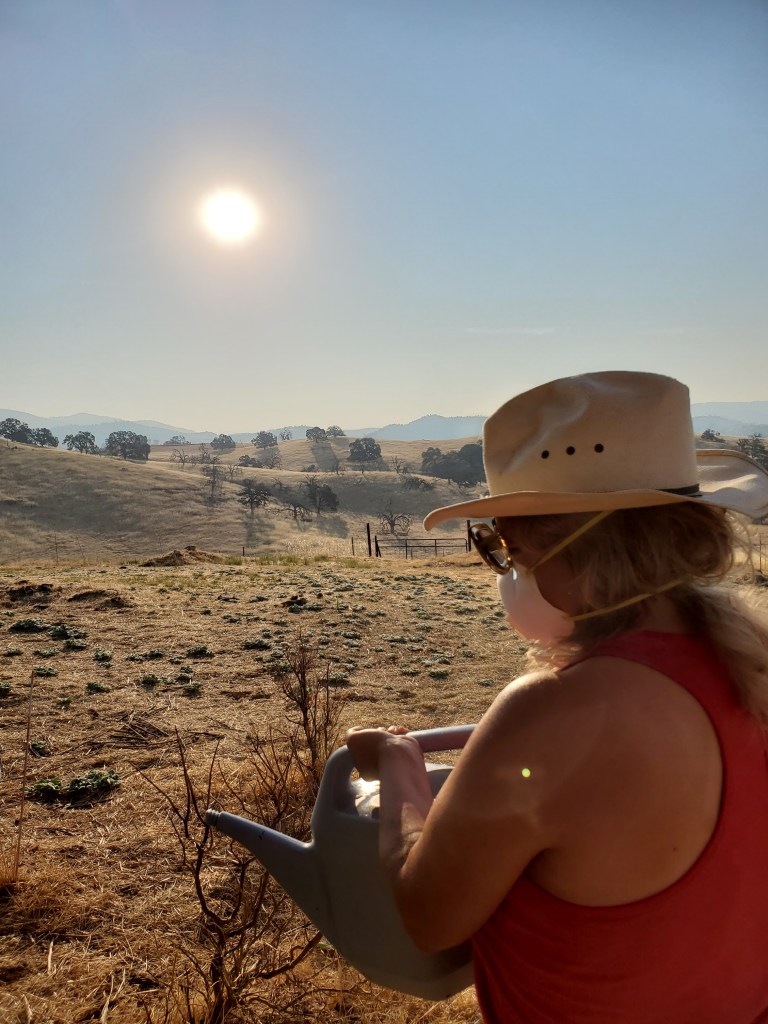
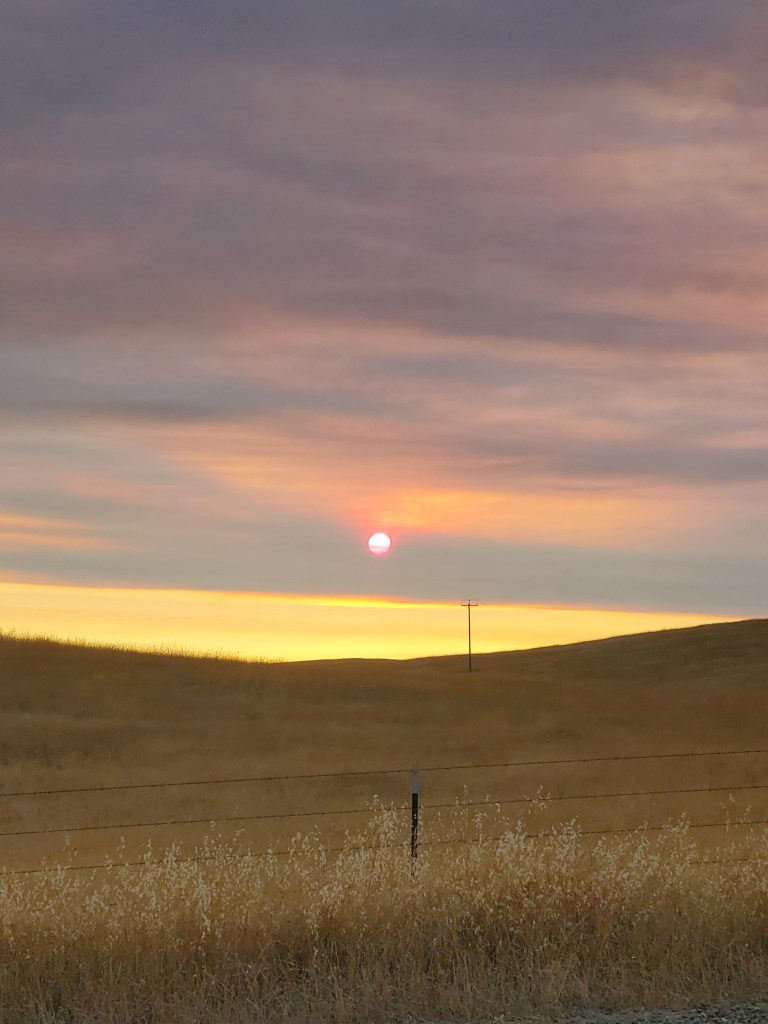
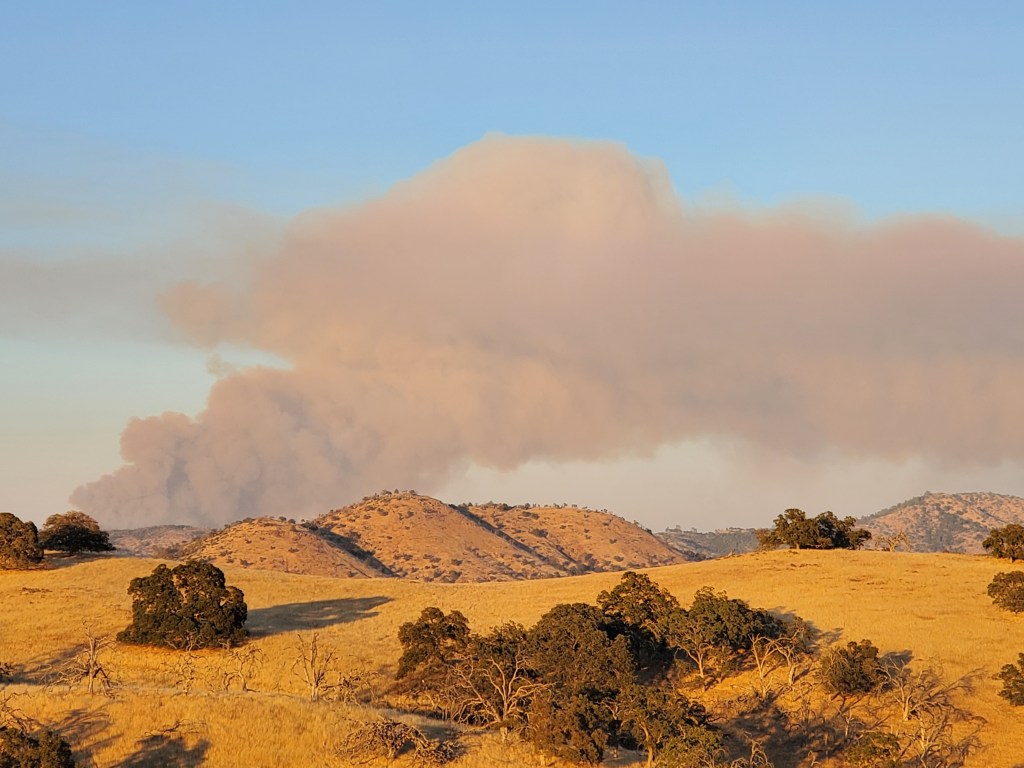
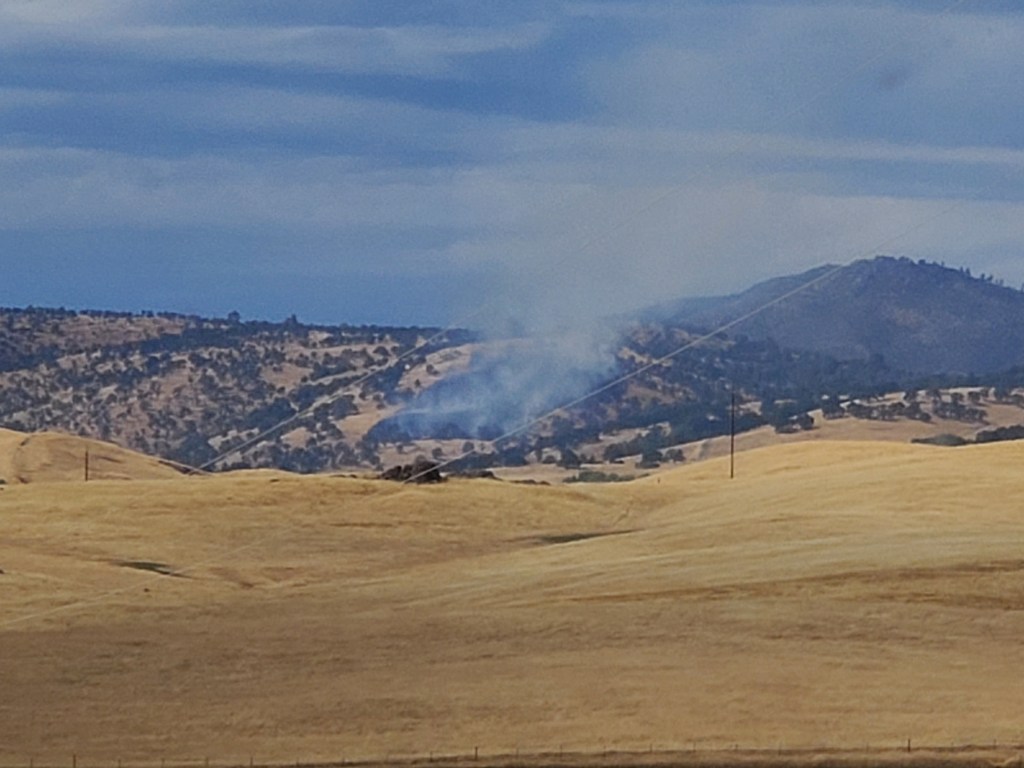
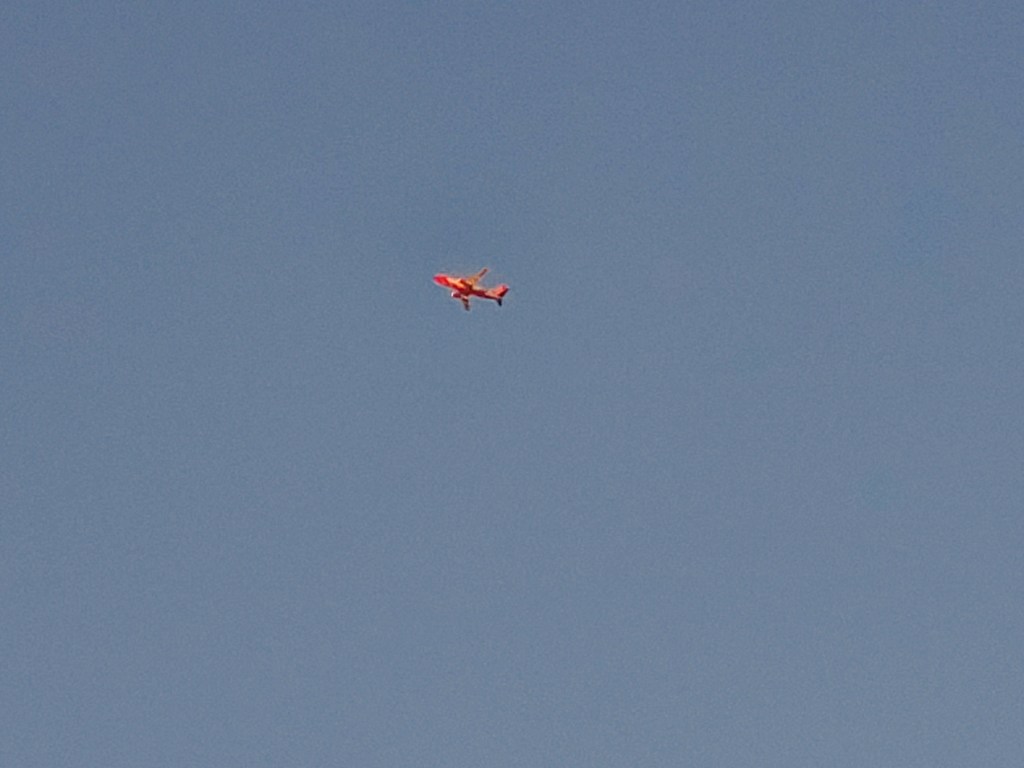
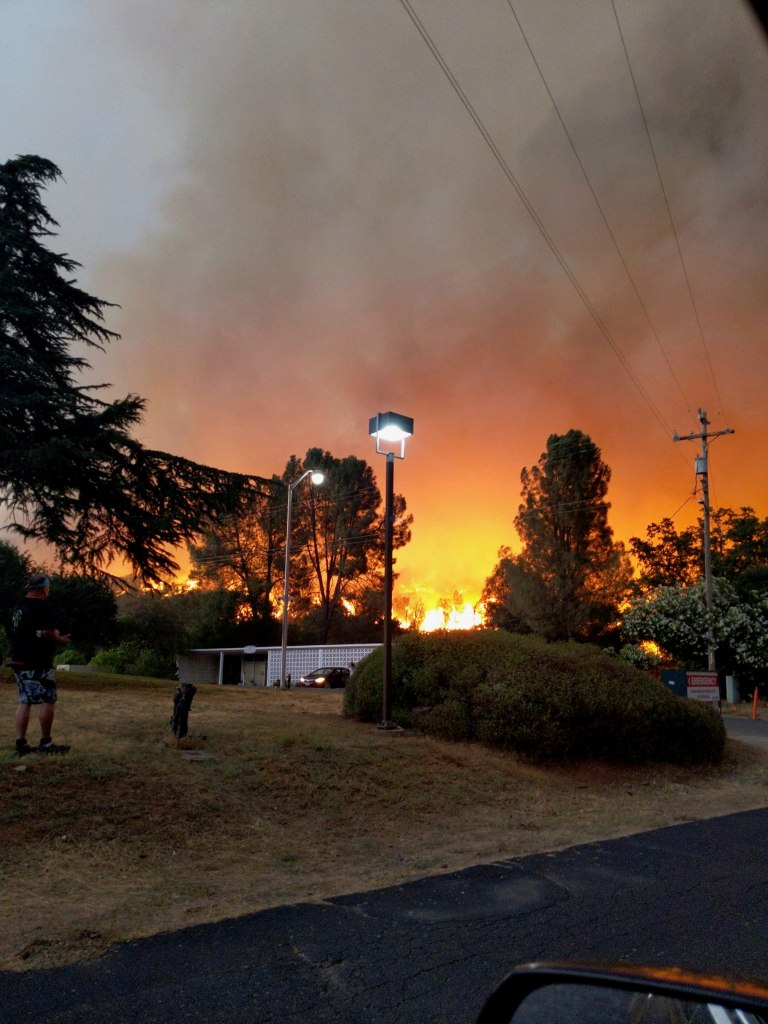
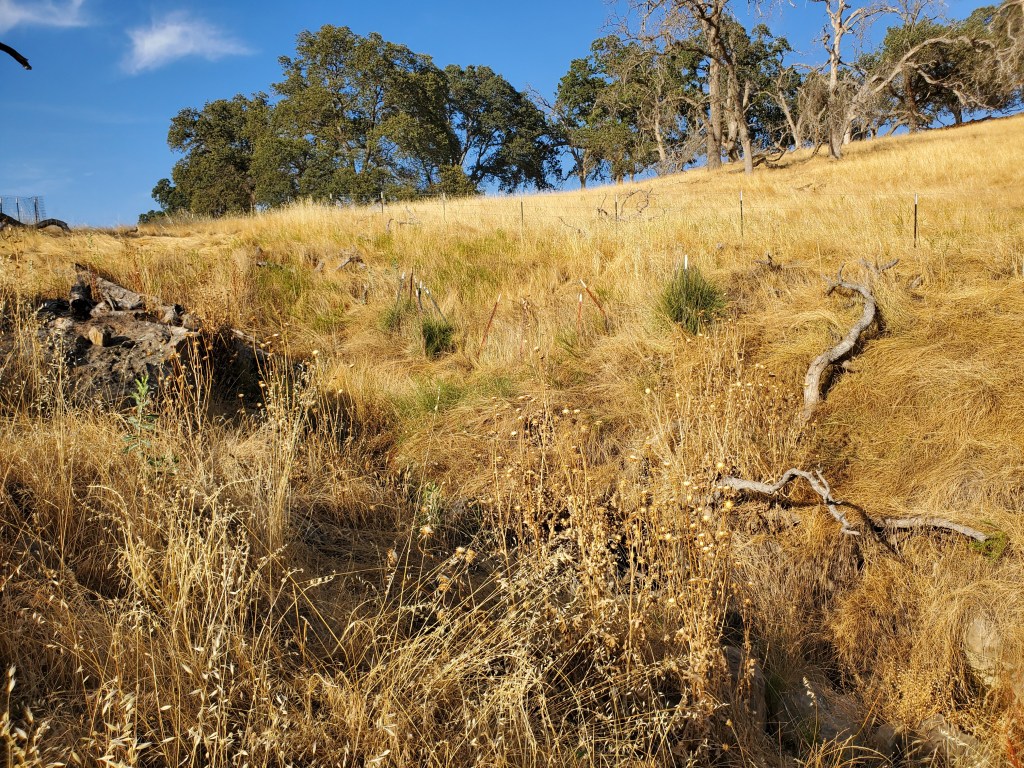
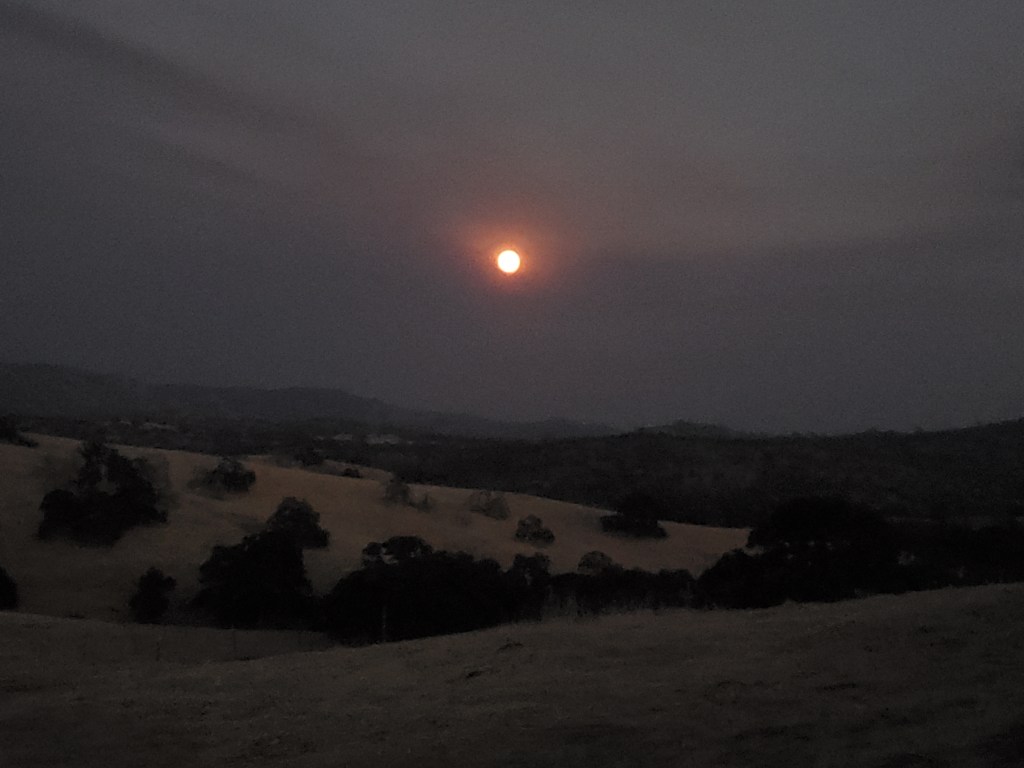
It is going to be a bad fire year. We have already had three fires near the house and the French Fire burning right up to the edge of town. I have more air traffic than normal – big planes and helicopters – flying to one fire or another. There are so many all around the region and state. It has been stressful to say the least – and hot. Even if you are in air conditioning, the heat weighs on you. What I have found is that when there are many contiguous days of temperatures over 100 degrees F, the heat just stays. Nothing has a chance to cool down. This includes the human body. There is only so much it can take before you begin to see changes, and that tolerance level is different for everyone. For me, it gets to be too much after a couple weeks, again, even when I am in air conditioning.

I notice it in people all around me as well. Some guy took the time to yell at my mother-in-law and I, for example, for standing too near a crosswalk. It seems we inconvenienced him by 5 seconds in that he had to decide if he should stop to let us cross or not. The heat is getting to people, and they are acting crazy.

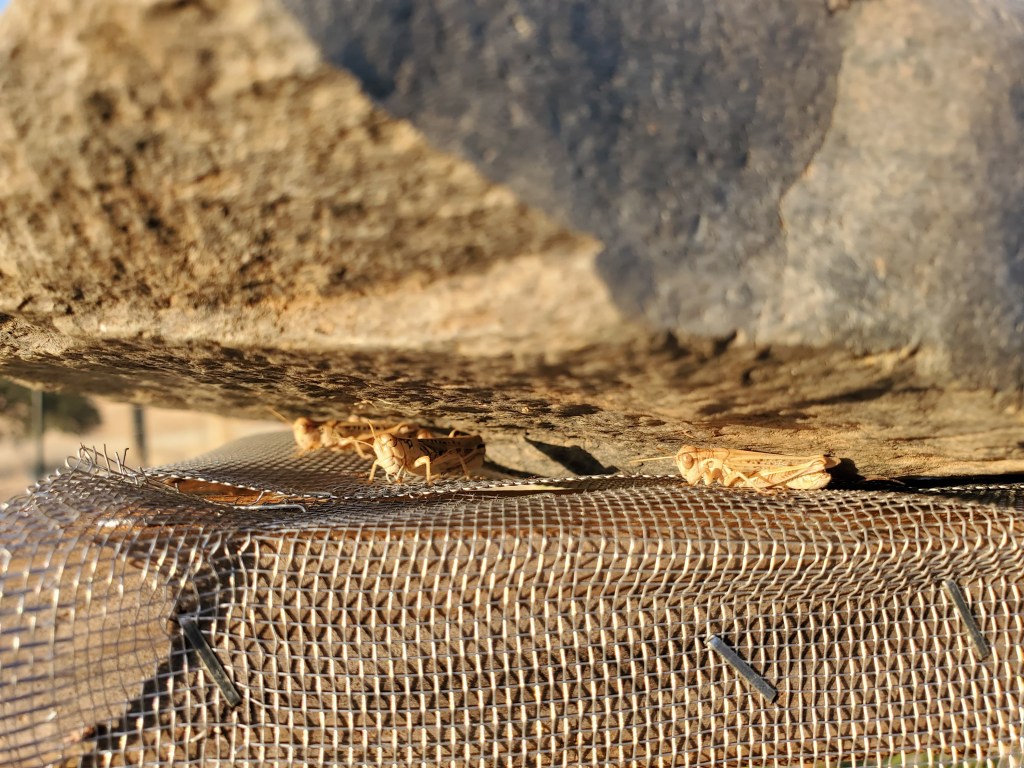
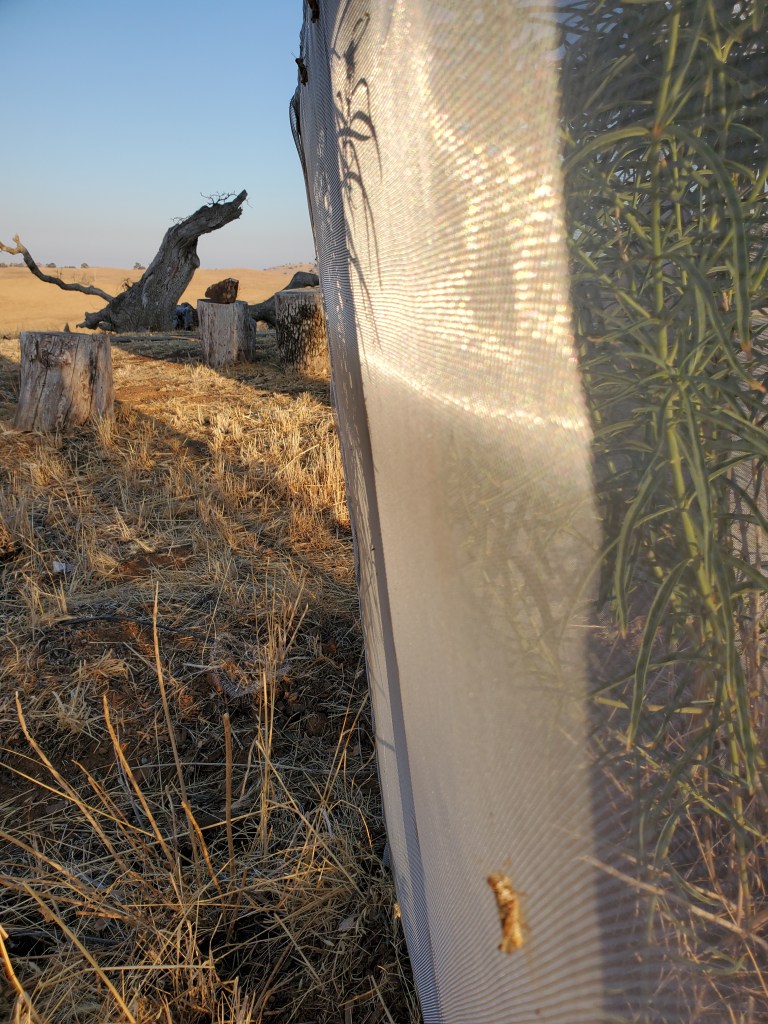
The heat is bad enough, but when you look out your window and see sticks where lush plants and happy flowers used to be, it is can be depressing. The grasshoppers have receded from their population of billions, but they are still here in the 1000s. I won’t be able to release my lone milkweed survivor until there are nearly none. Yesterday, I counted 9 on the cage, but there are thousands still in the grass all around. I feel badly for her gorgeous, nectar-rich flowers that have bloomed with no butterfly, bee, fly or moth to use it. Even if pollinators were near, the flowers are behind screen, only able to bloom because they were imprisoned. What a great day it will be when I release her stems, leaves and petals.

I am seeding more plants now, a little too late in the season for some, in the hope that I will have some more life out there, even if I have to plant it myself. My goodness — seeds are a miracle in this life. I am so grateful for their puny-sized, packaged progeny, patient and planning their emergence. Seeds, I love you.

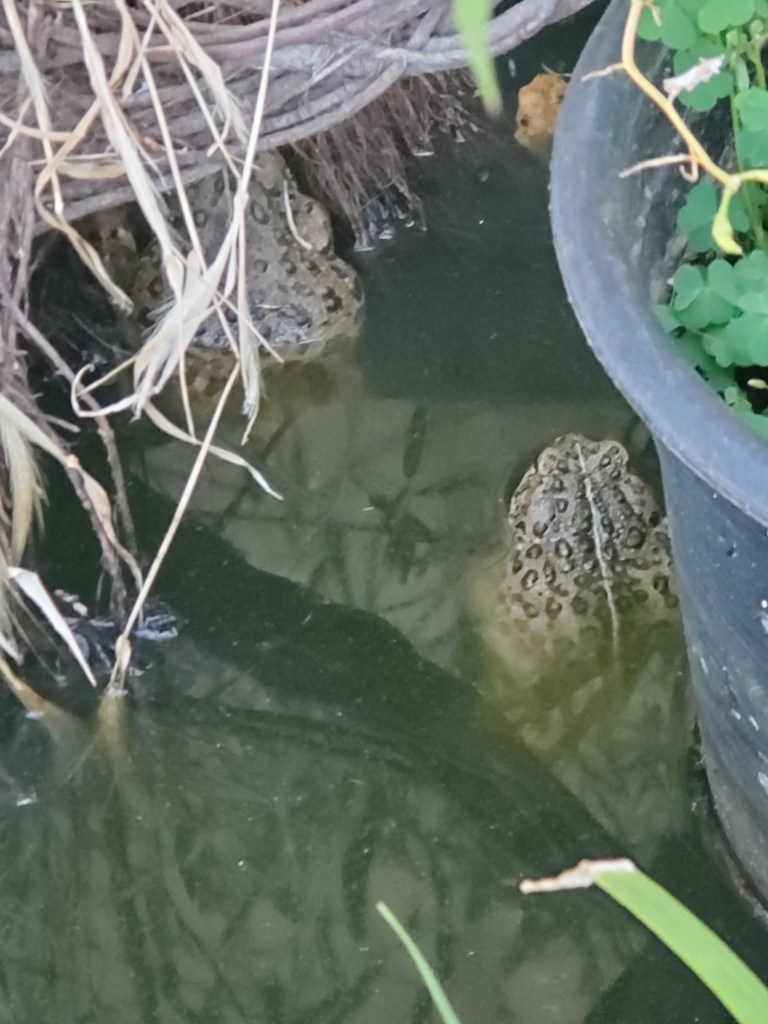
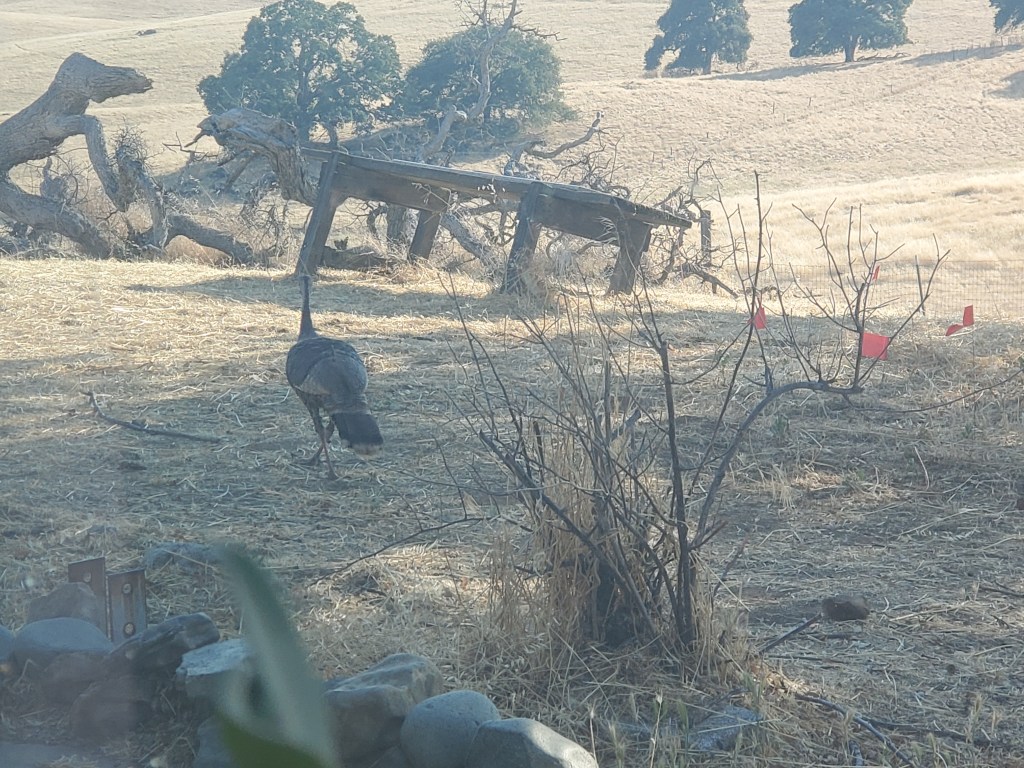
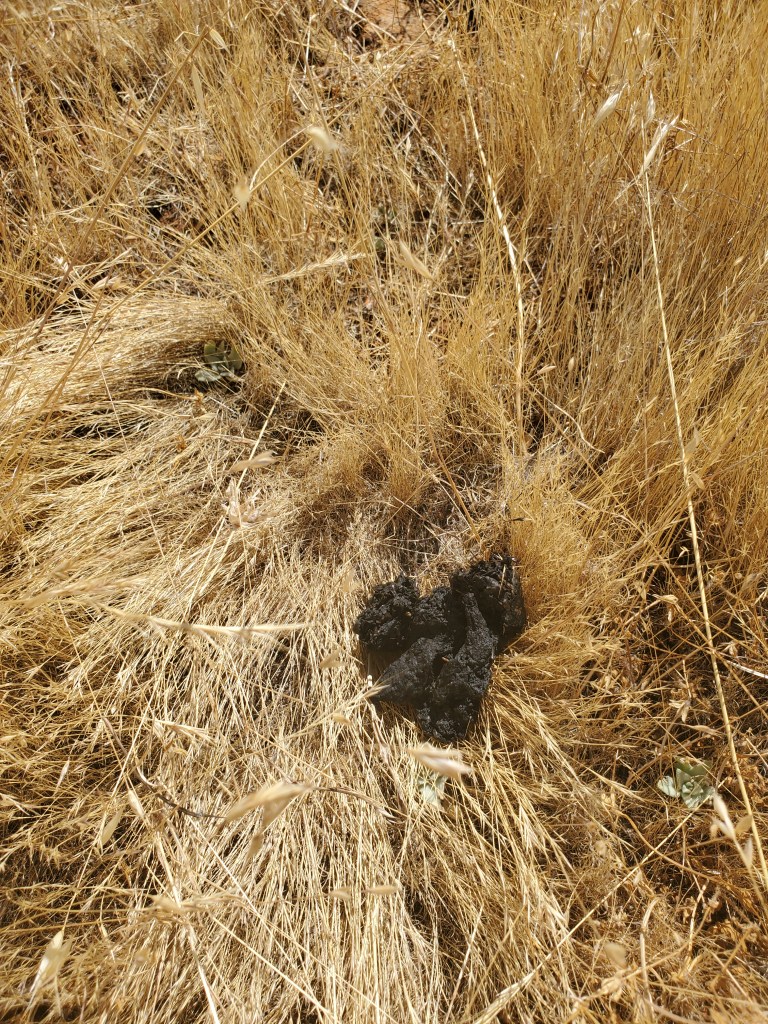
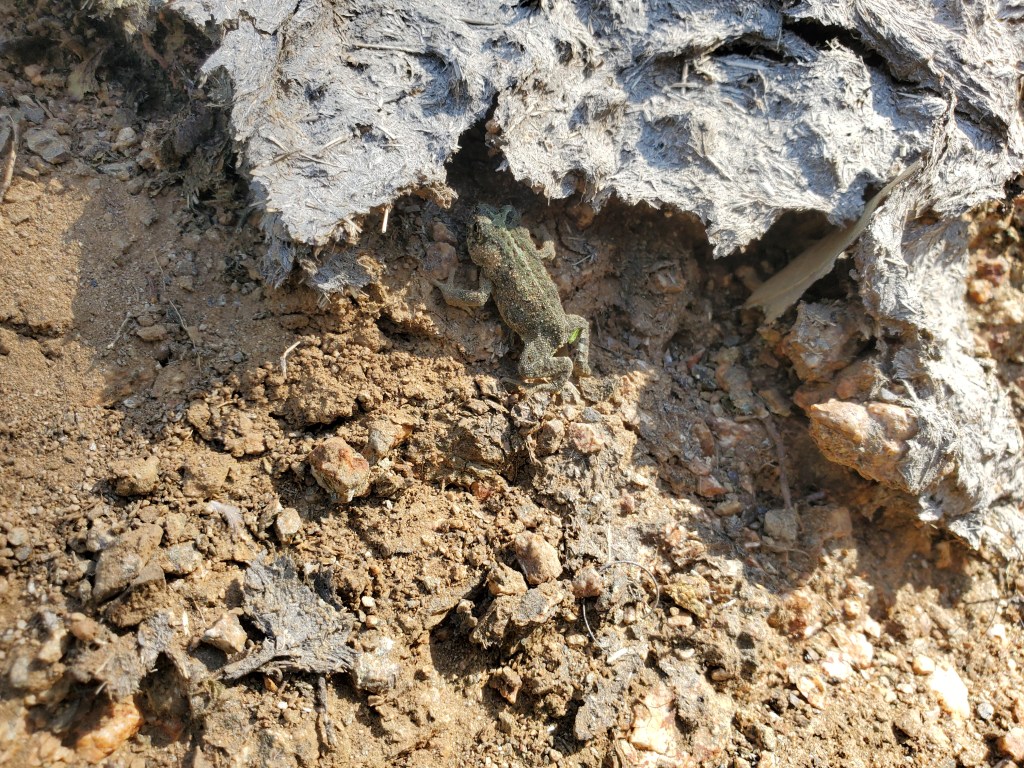
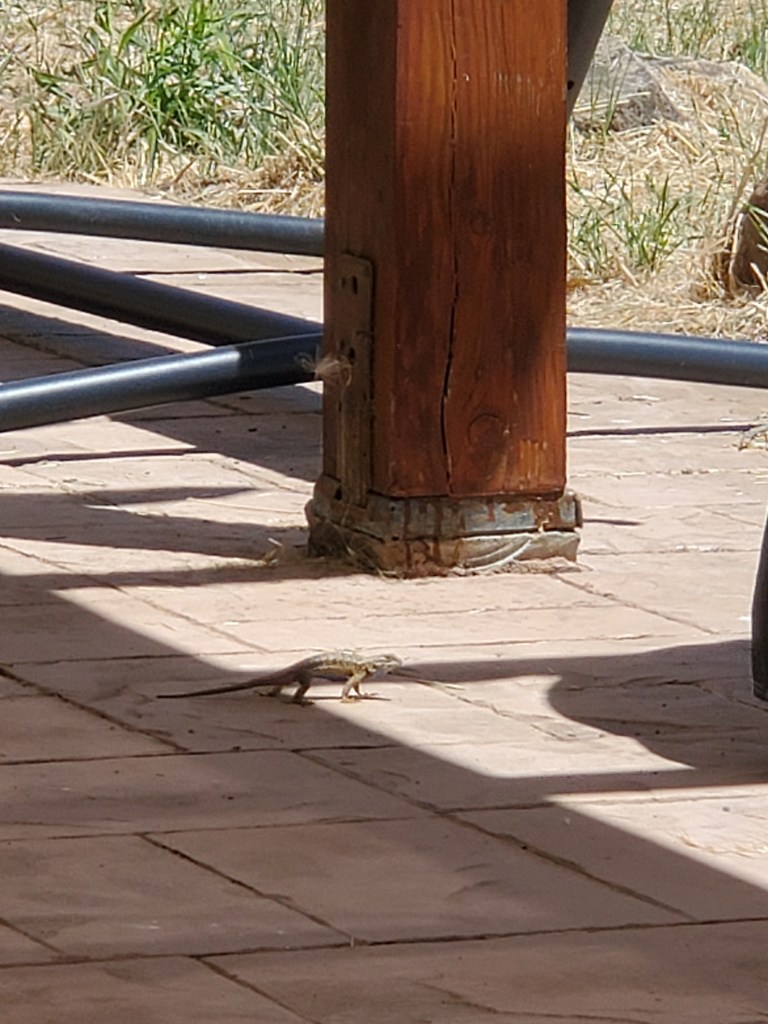
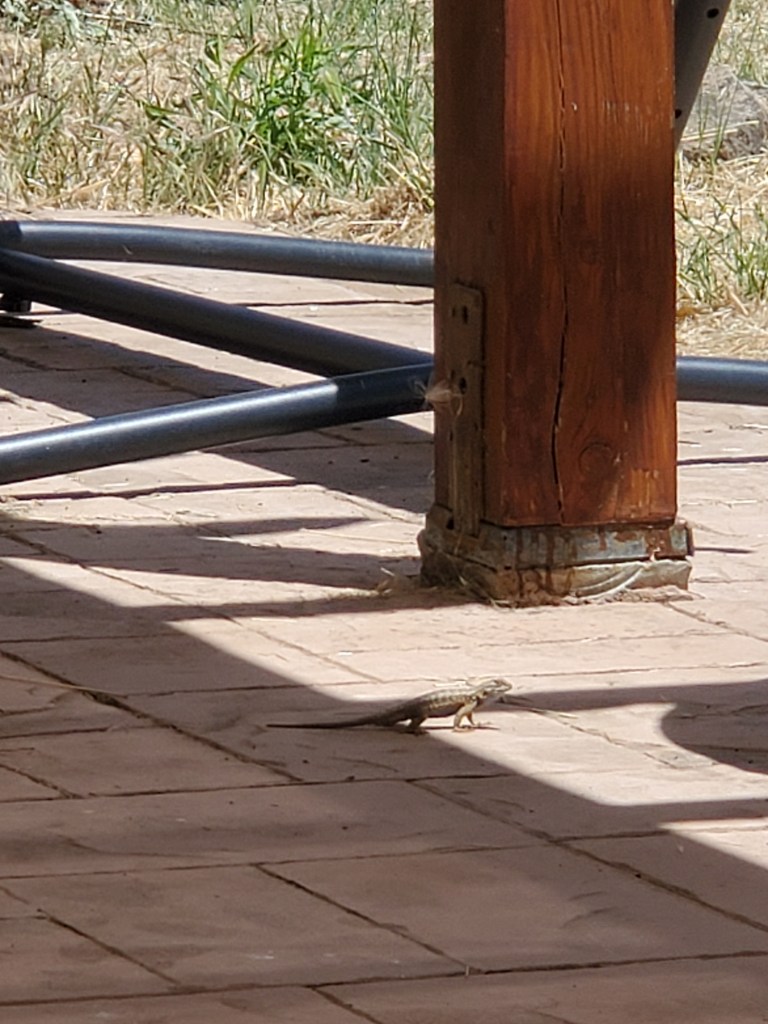
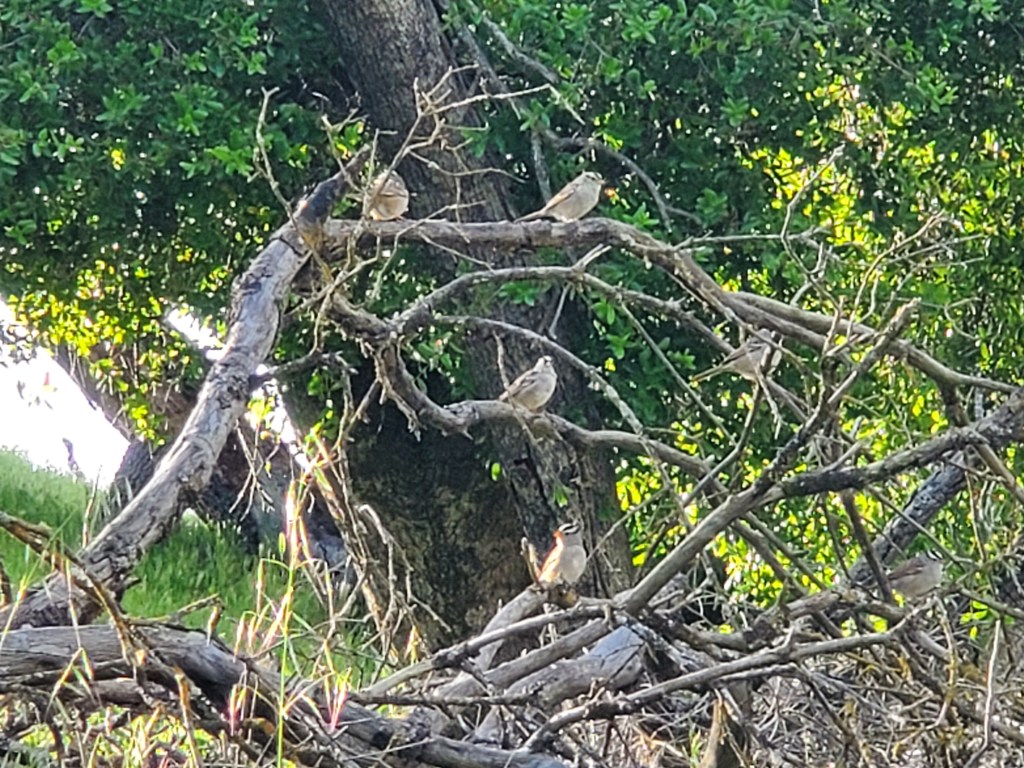
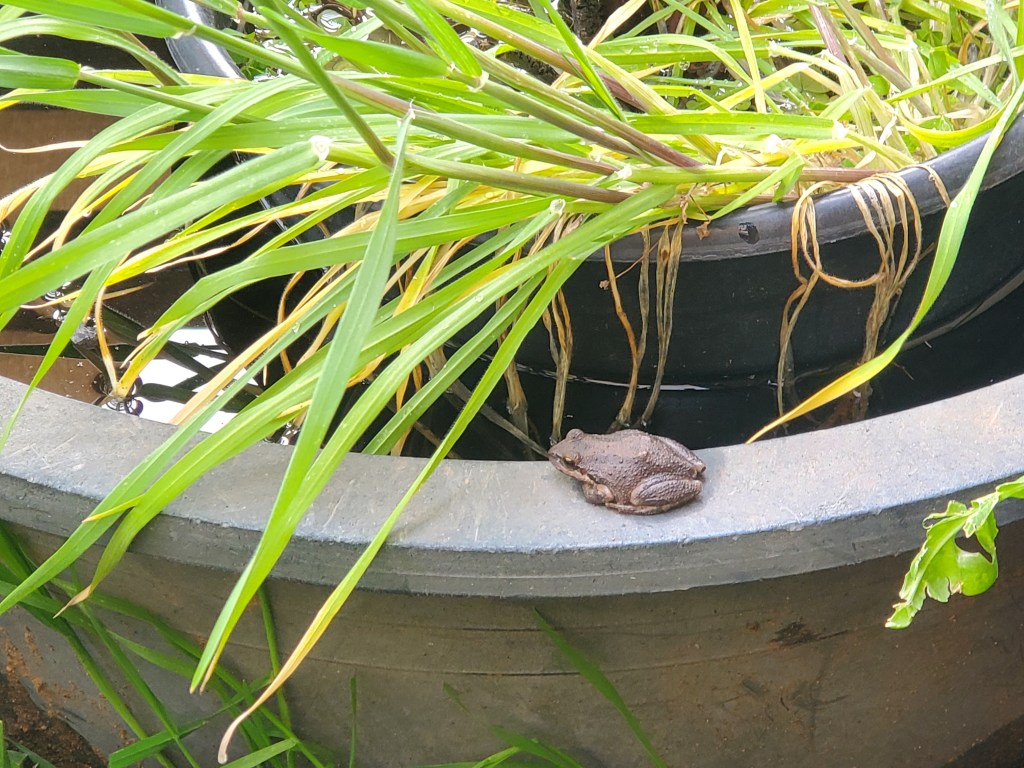
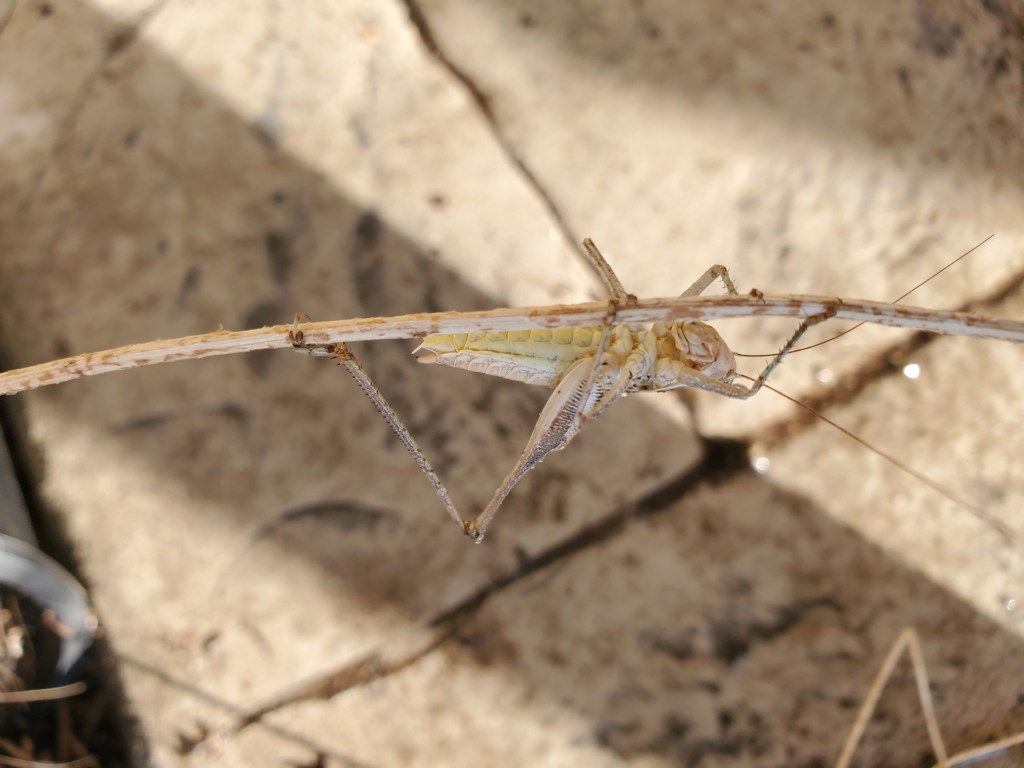
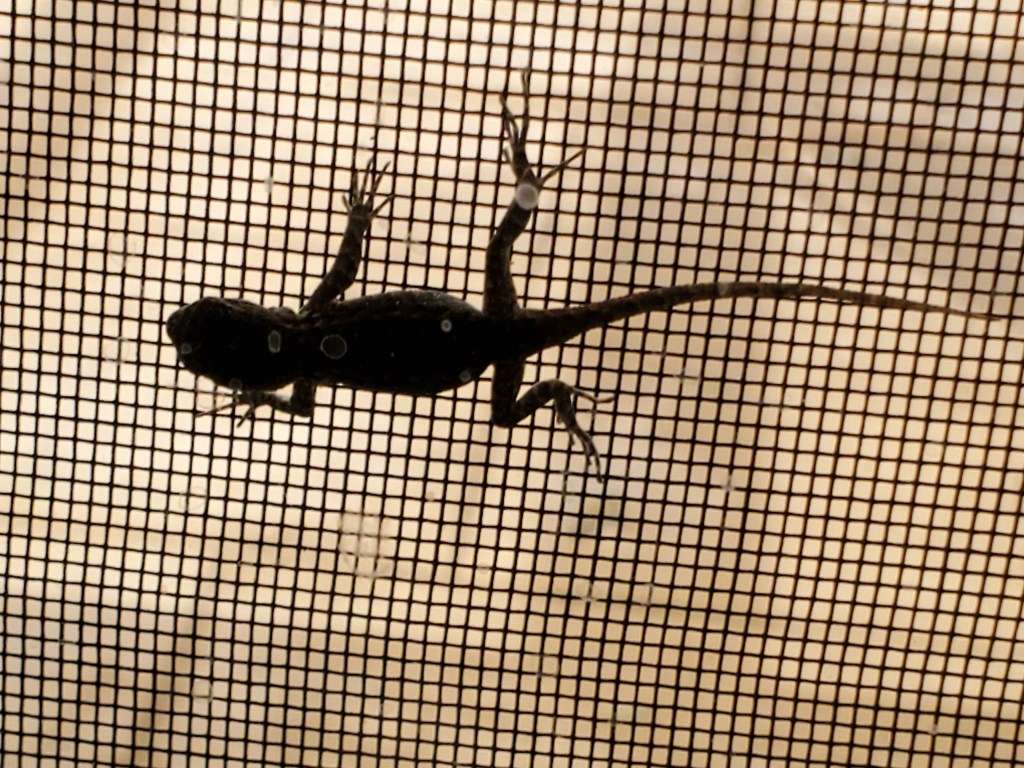
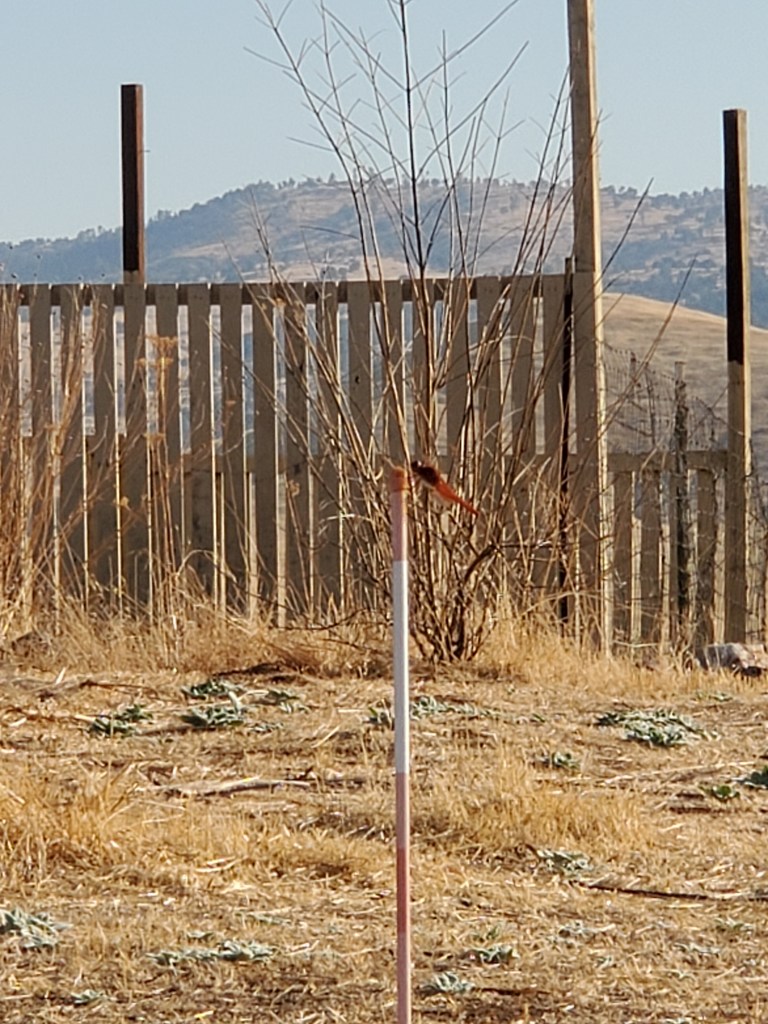
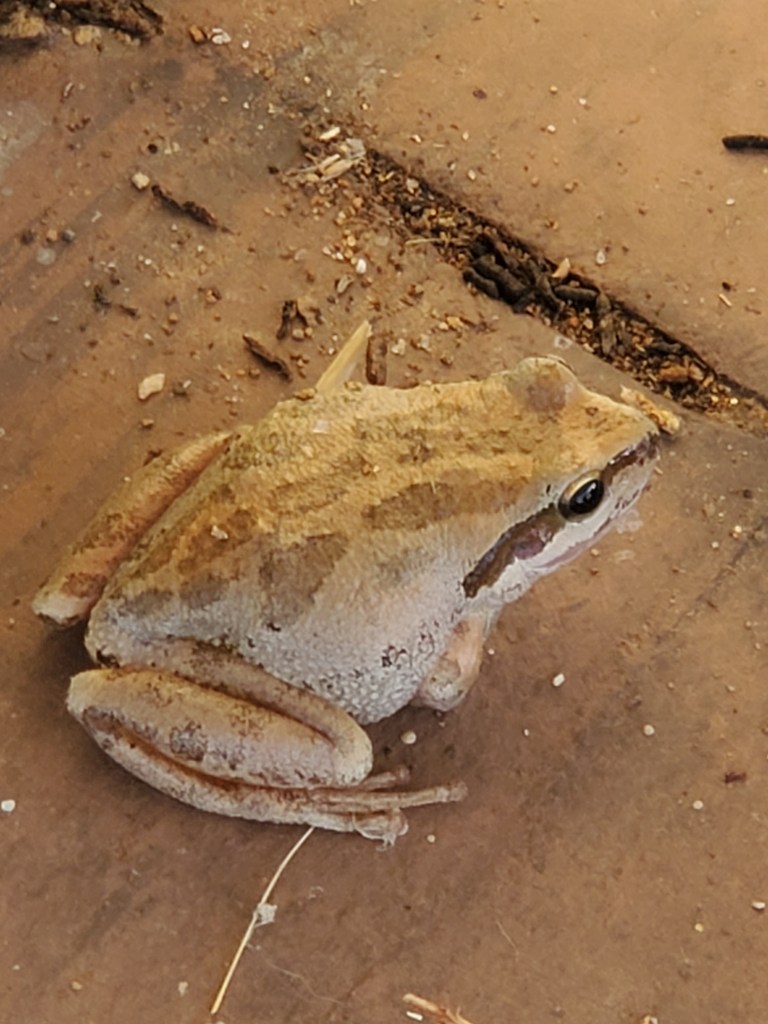
As I lament, I must also recognize the resilience of the life that is left. Acorns are emerging. The songbirds continue to stay. Large raptors and vultures soar. Lizards dart from one location to the next, while the California Toads move at night, leaving their poop behind. Small frogs have begun to show themselves, emerging from the tendrils of willow roots and debris in potted plants. Dragonflies have been more visible at the house, and not just in the creek where there is still running water. A beautiful green snake took up residence near the toad pond (presumably because dinner is very near and fat). Even a cool hopping insect that looks like a leaf was hanging around on the Polaris. Life is all around and abundant – and some that were eaten will return.

Water Still Running

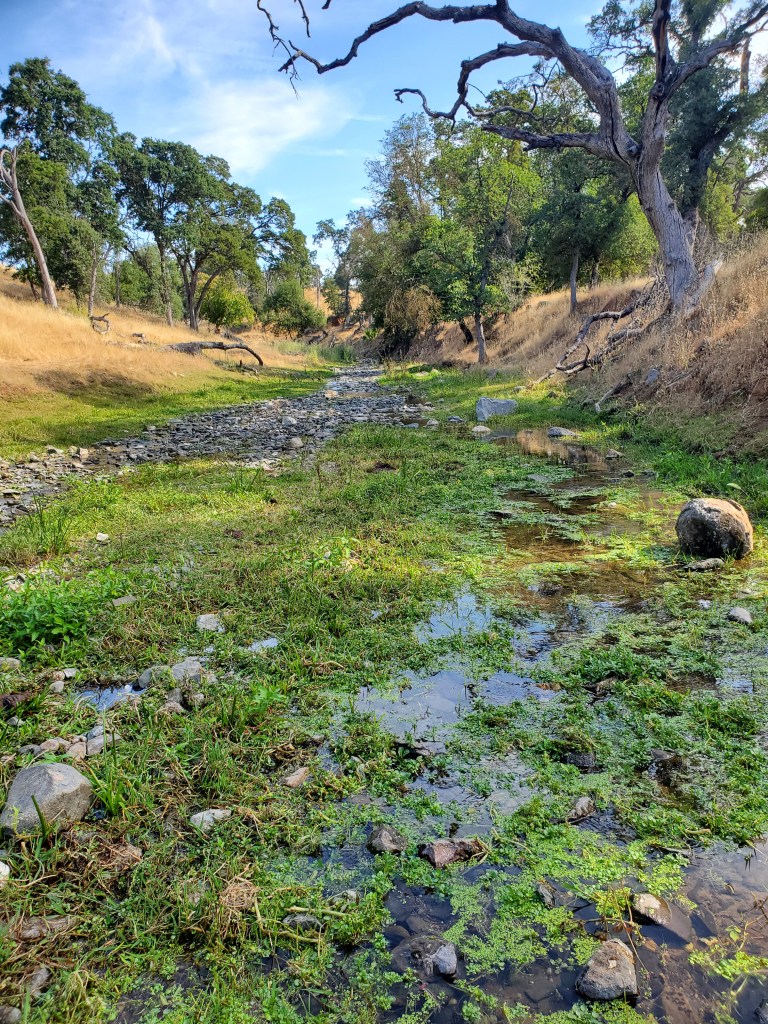
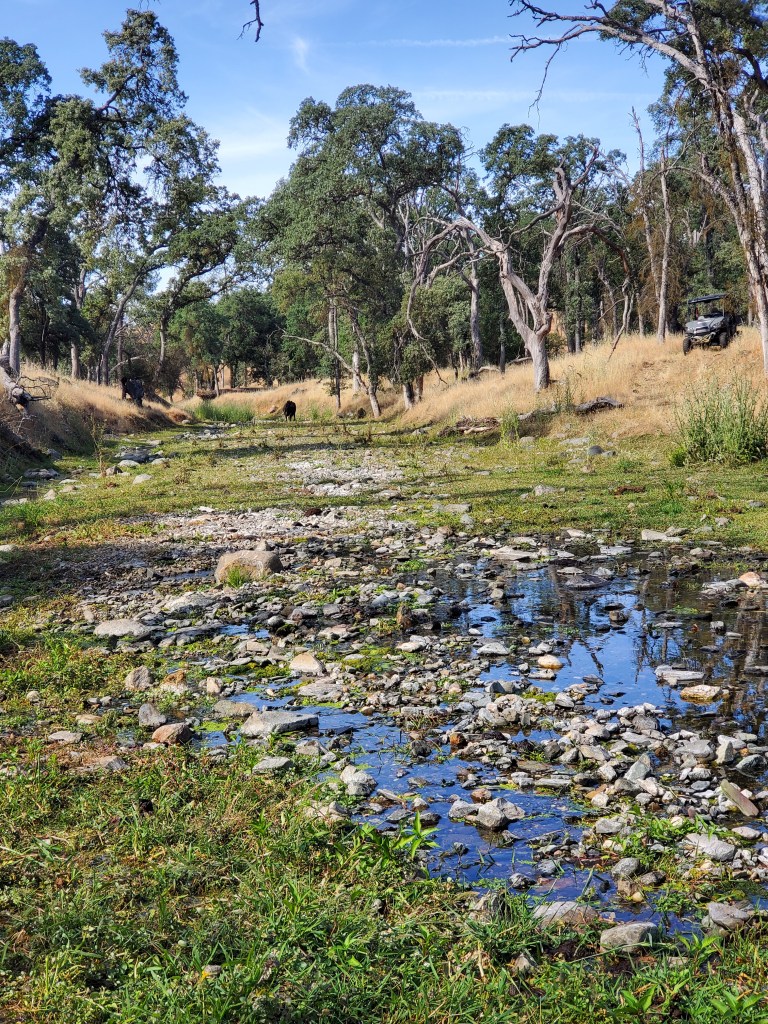
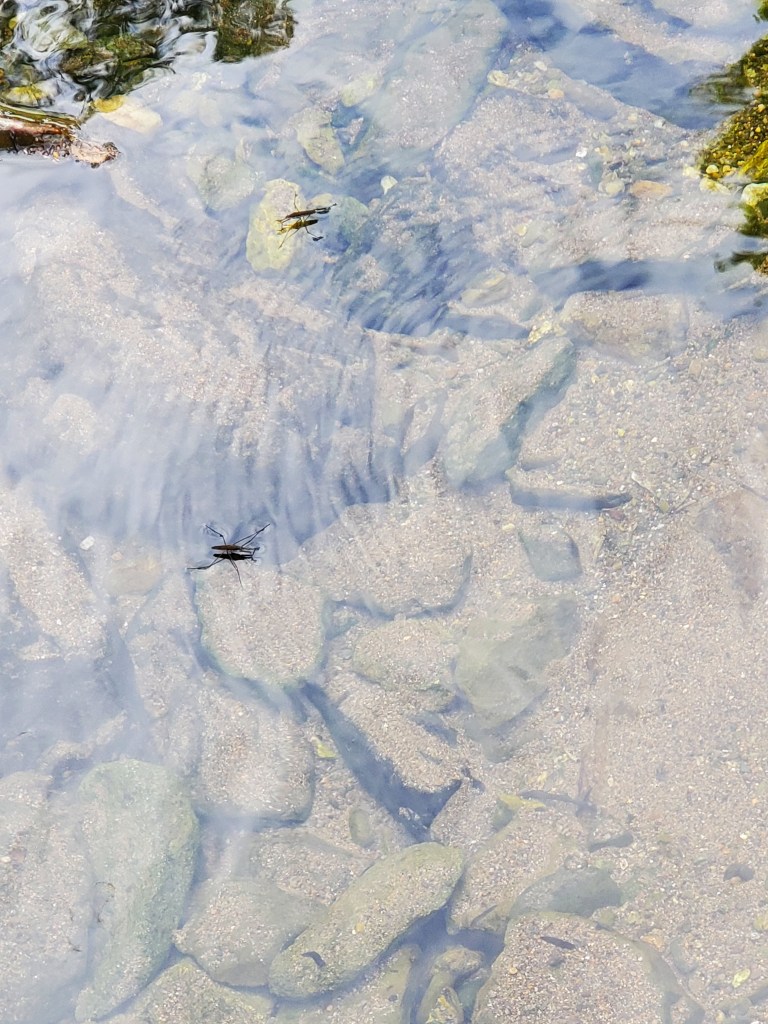
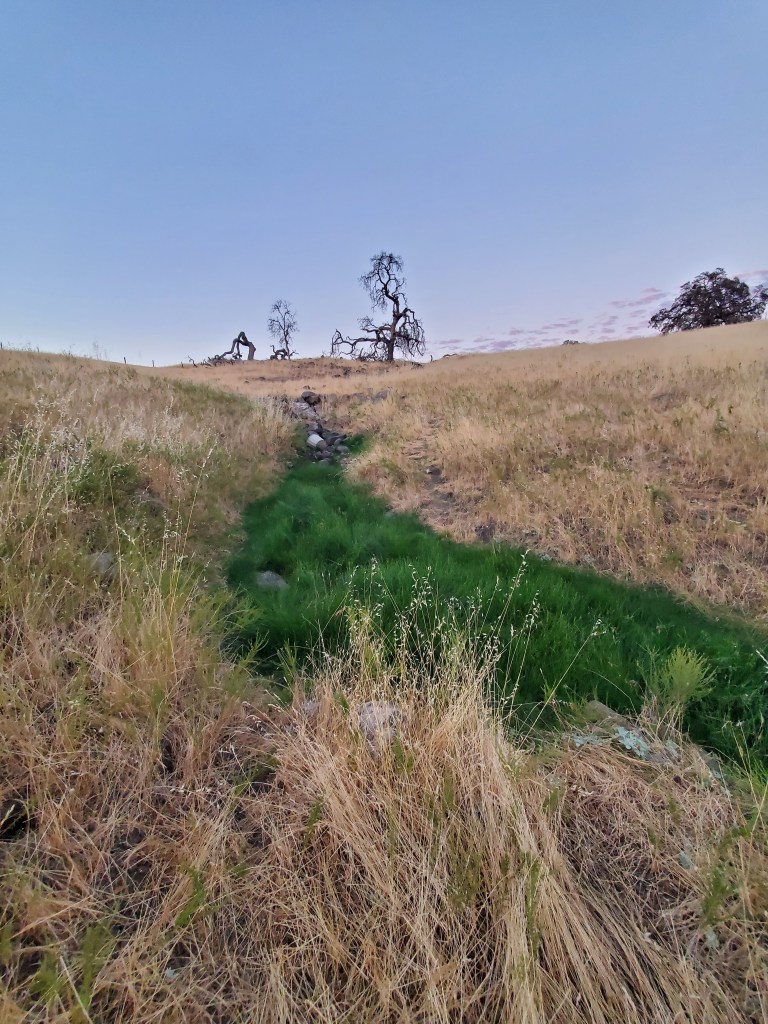
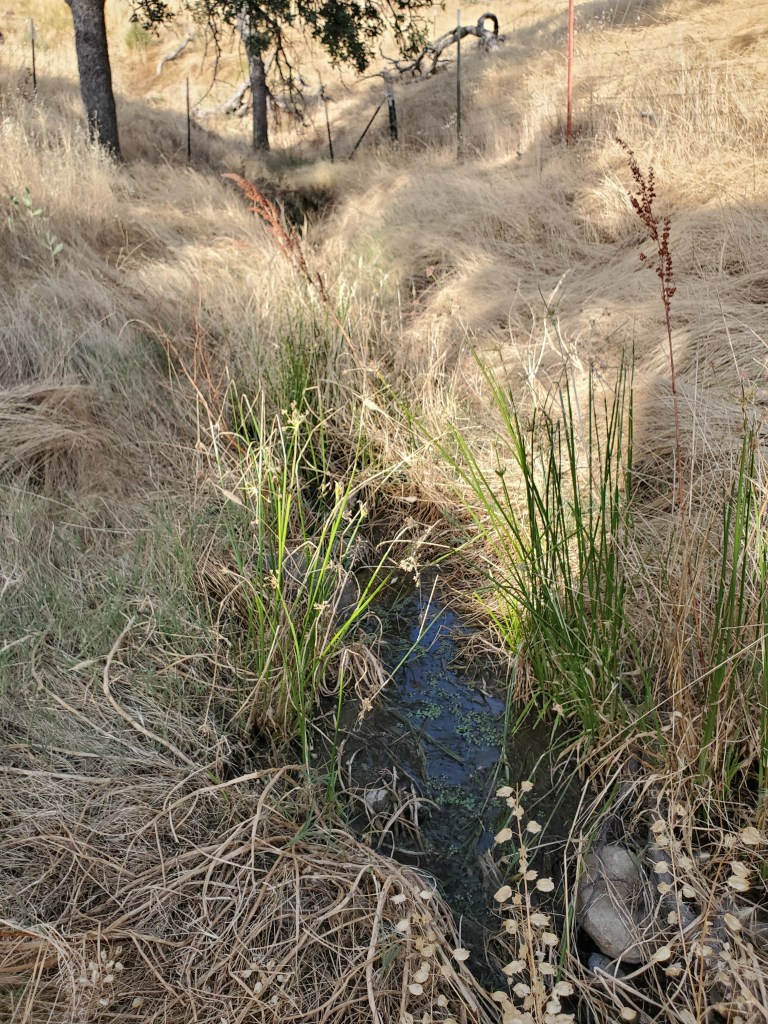
The creeks are still running. They are providing much needed water access and sustenance for the plant life adjacent to the creeks.

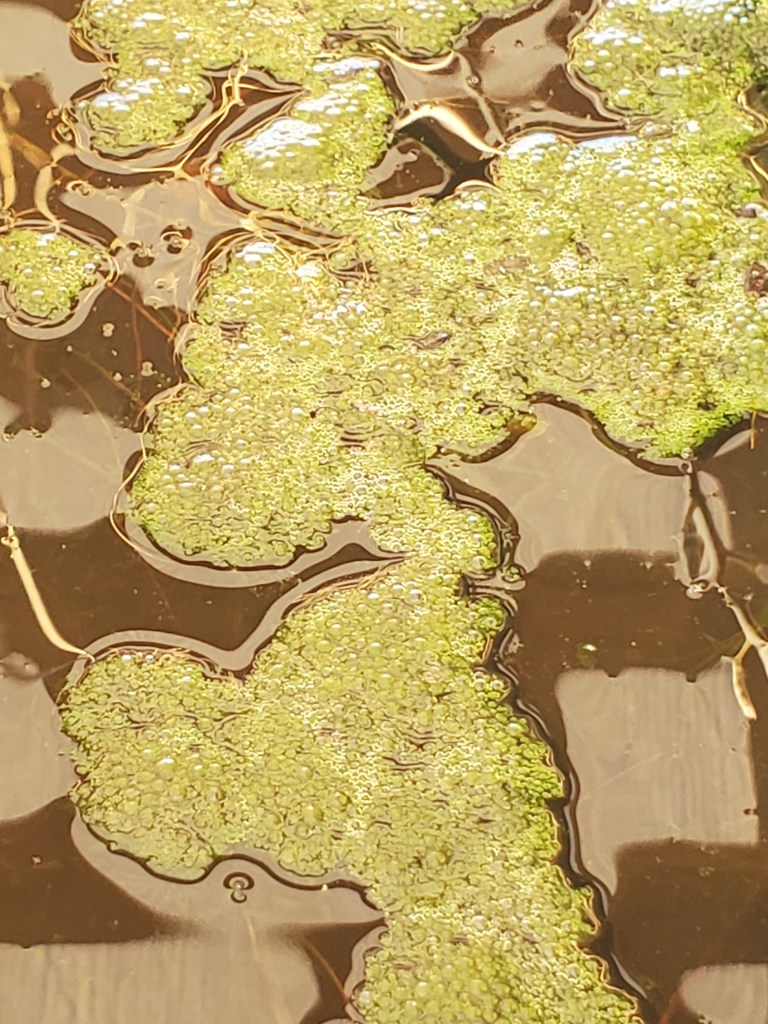
Unfortunately, the amount of nutrients in the water from cattle dung and the heat are causing algae to bloom. Algae is an interesting life form. It can be toxic. Its decomposition can suffocate life in the water, but it also provides a significant portion of oxygen on the planet, much like forests.

I don’t know if the green algae on the creek is harmful, but I don’t mess with it – – except to throw rocks into the spring and puddles to break up its thickness, and open some holes to the water underneath. This is in part some of the reason I fence out cattle, to decrease the amount of excess nutrients going into the water. I cannot help upstream, but I can decrease the overall amount as it moves through my ranch at least.

Riparian Oak Seedlings Still Alive

I am overjoyed to report that the oak seedlings in the riparian areas still have leaves. I did see some damage to the leaves, but that is all. The grasshoppers did not fully destroy them as they did the very young plants I planted.

I learned recently that what looks to be like a young oak can actually be decades old. This was mind blowing. Given this, perhaps the small oaks in the riparian area have developed a more mature protective element to their leaves and bark that prevented more predation. I know that what I call seedlings are actually many years old since I’ve been protecting them for over a decade with downed branches when the area was open to grazing. Their smallness is a product of grazing and drought. It has been a huge relief to see them grow last year and this year in response to more water and protection.
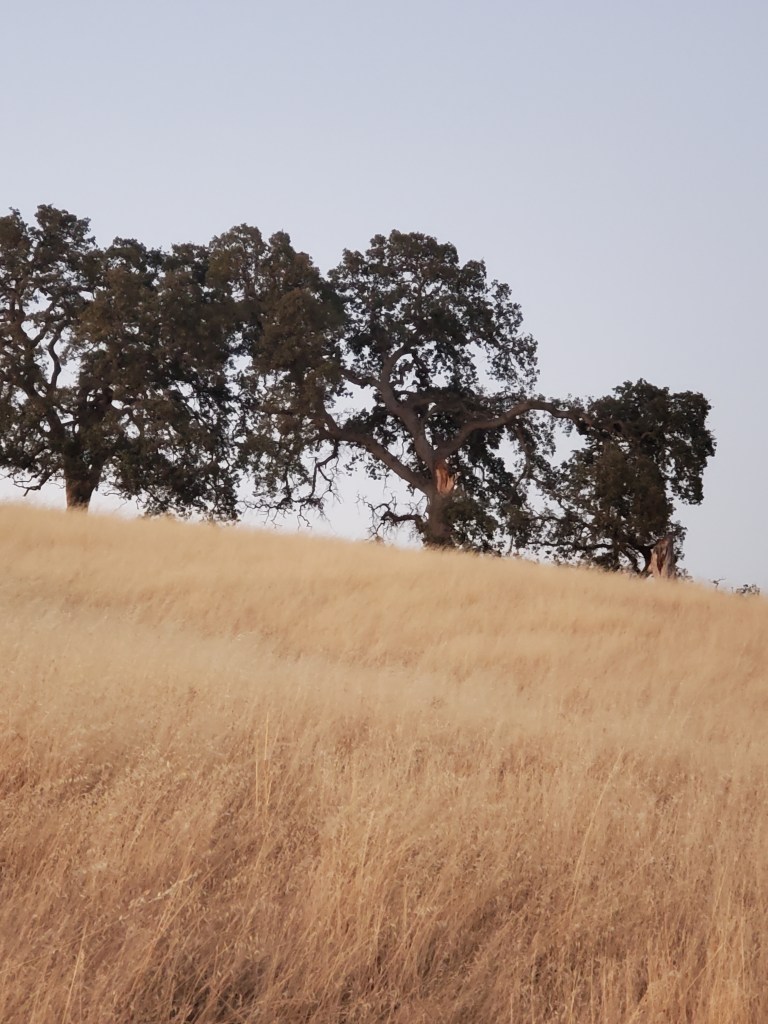
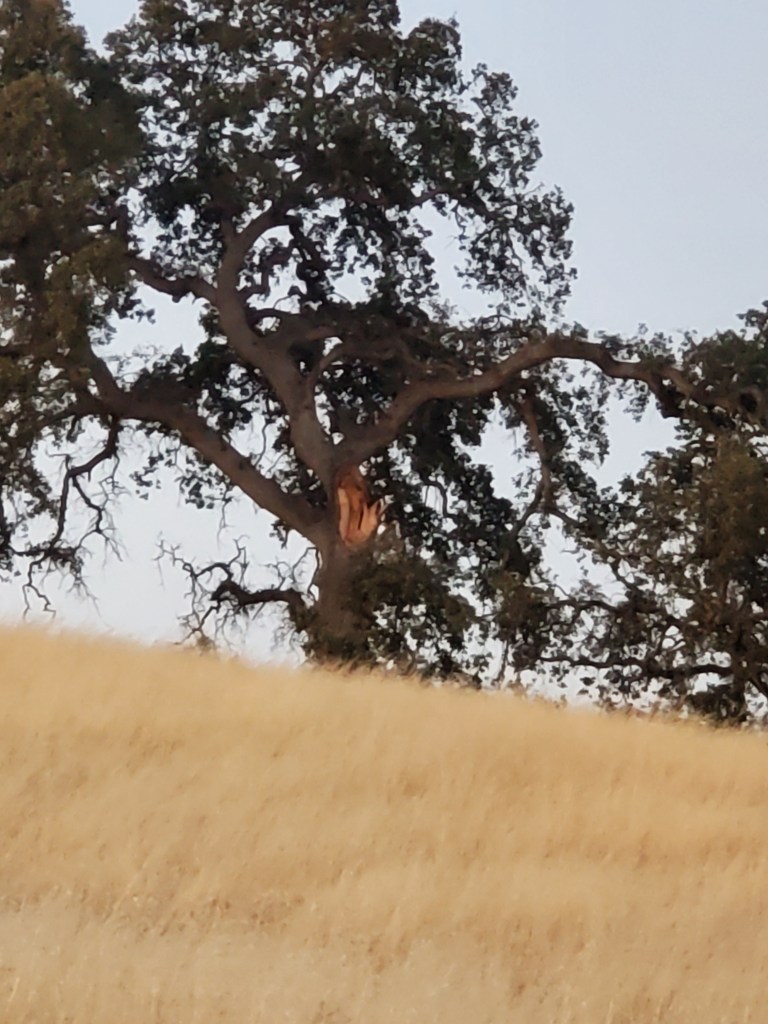
This success is all the more important as I continue to see decline among the adults on the hillsides. On my walk yesterday, I heard a horrible loud crack. I looked in the direction of the noise and saw movement in one of the grand oaks on the south hillside slope from the house. Then, I saw an entire branch fall. It continued to crack then crash down.

I was horrified, sad, angry- oh, how I grieve for these crucial lives. I keep thinking, “What can I do better?” I don’t use much water at the house. I put water back into the ground. I am slowing water. I guess I need to do more dirt work and create little moats below and above groves of trees, outside their drip lines, to capture water as it runs down hill during rain events. The work cannot begin until the soil is moist again. The metal edges of tractor buckets can cause a spark, and this whole place is filled with dried out, tall, European Grasses. Another year going by; the clock ticking on what can be done and if it will be too late to help. And, the cost – it will be all on me to cover with no program to help.

Breathe. Deep in. Full out. Repeat…Repeat. Reminder: you can only do what you can do. Much is out of your control and so much larger than you. You are not absolved of responsibility, but the full responsibility is not yours and yours alone. Stay healthy. Keep your joy and continue working at a pace you can sustain.

Extreme Heat is Not an Acceptable Norm

I know the extreme heat is a key factor in the death, piece by piece, of my oak relatives. It causes the death of thousands of people per year in the United States, and that is increasing. We cannot accept this as normal. If we love this incredible land, ocean, waterways and sky, if we love our children, then we must be intentional in our actions. I know this issue, like the oaks falling apart, is larger than one person. If we each contribute something, then things can get better. We have seen this happen already with the butterflies. Acting together, many planting milkweed and more nectar plants, have helped bring the monarchs back from the brink of extinction on the west. Although we have more to do to stabilize the population, we are on the right track.

Every choice we make as individuals makes an impact. You don’t have to deprive yourself at every turn; what I am suggesting is that we have to understand that our individual choices have consequences. In knowing this, we can make informed choices, not let guilt-aversion act as a barrier to good action and understand that we are each important change-makers in how the future is shaped. This is big; I know. Please don’t loose your sense of hope. It is some of the most powerful medicine we have. Aho.

Tragedy Strikes as Major Storm Rolls Through

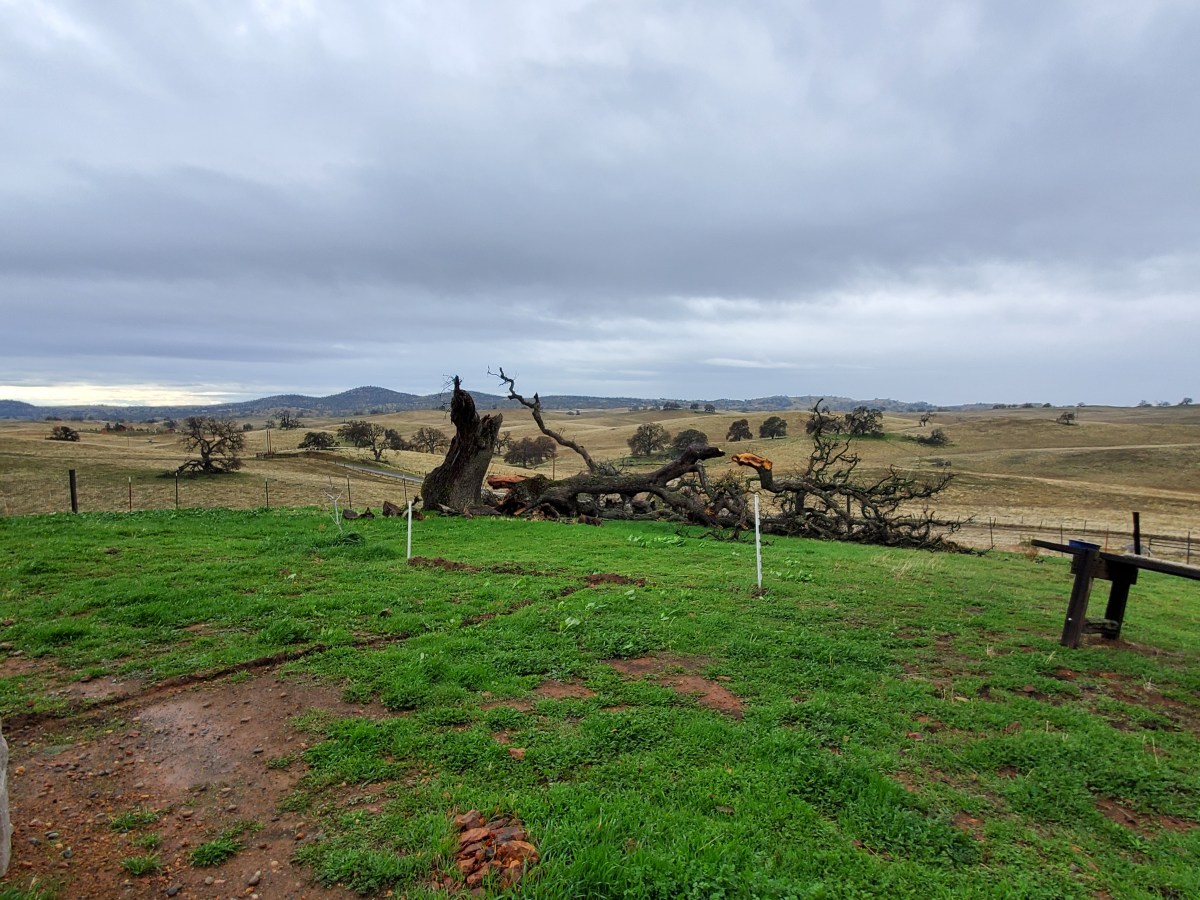
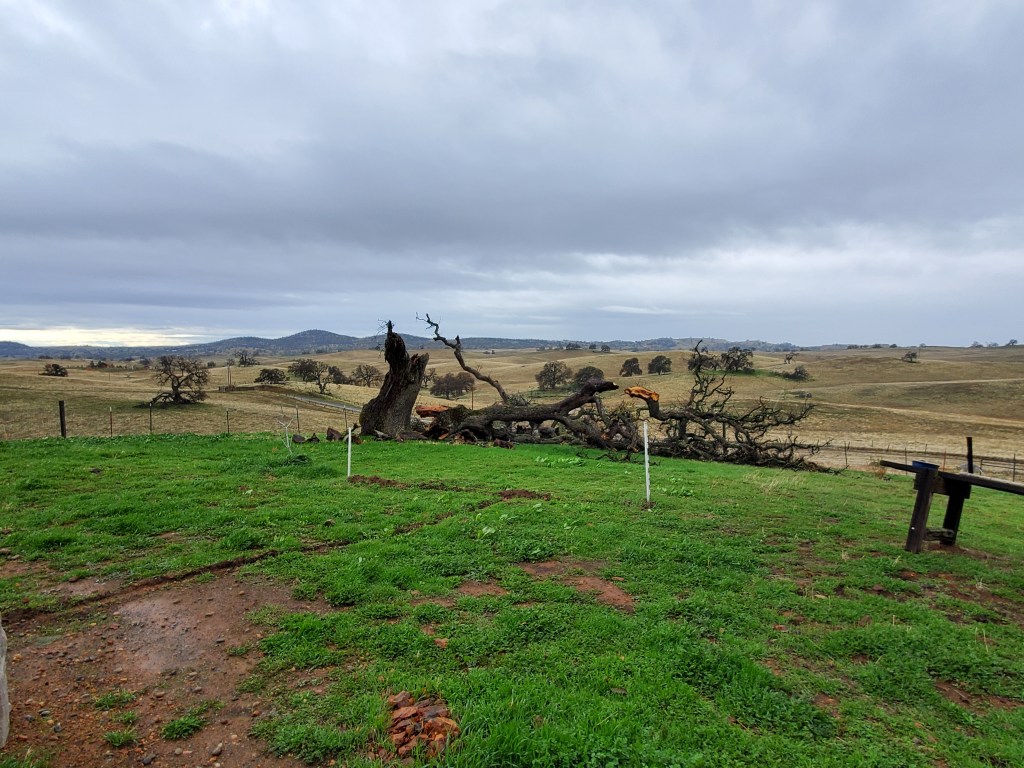
Early this weekend morning, after a night of howling winds and sheets of rain, I exited the house to take David to an appointment. I had just stepped outside the garage to make the walk downhill to open the first of our two gates. I peered left to see my beloved, favorite elder tree, as I often do, when I froze in horror. A scream welled from deep inside me… “No! Oh no, no, no!”

David emerged from the car not sure what was happening as I ran toward my best friend these last 20 years. Screaming as I ran, I flung myself into what was now a broken pile of branches, leaves and dismembered trunk heaped onto the ground – only a craggy stump remained upright. My arms embraced the now horizontal trunk of the most beautiful tree that ever lived, and I sobbed into her. I sobbed telling her how much I loved her, how much I appreciated her and how sorry I was that I could not help her survive longer, help her thrive in a changing climate. Her tired, 200+ year old body, now a collection of parts, trunk stretched across the earth that birthed her when my Miwuk and Yokut cousins still walked free upon the land. Tortuous branches, so large but delicate, twisted up, one upon the other now – instead of stretched like 20 Bali dancers making their flourishes, arms gracefully moved around, spiraling, curving, wrists turned just so. A million leaves scattered on the ground, some still clinging to the fingers that nurtured them, blowing with the gusts of wind, tempered but insistent that the job be done to separate leaf from branch and branch from trunk and trunk from root – a cycle inescapable as much as I wished it not to be…at least for her.
I don’t know how long I was there embracing her, my face buried into her fallen trunk, bark in my hair, on my skin and sweater, tears and mucus running from my face onto her body, the smell of wet wood, distinctly oak. I had not cried this fully, this deeply since I lost my mother – another entity deeply rooted in the land and in my life that fell too early. How long was I there before a hand came around my still heaving shoulders, body quivering from the effort to manifest sadness, David saying, “I am so sorry”?

David was not sure if he should cancel or continue the day, but we had to continue. Life continues. She will continue – as mulch, habitat and who knows what else – as her pieces become smaller and smaller, giving their remaining gifts back to the soil.

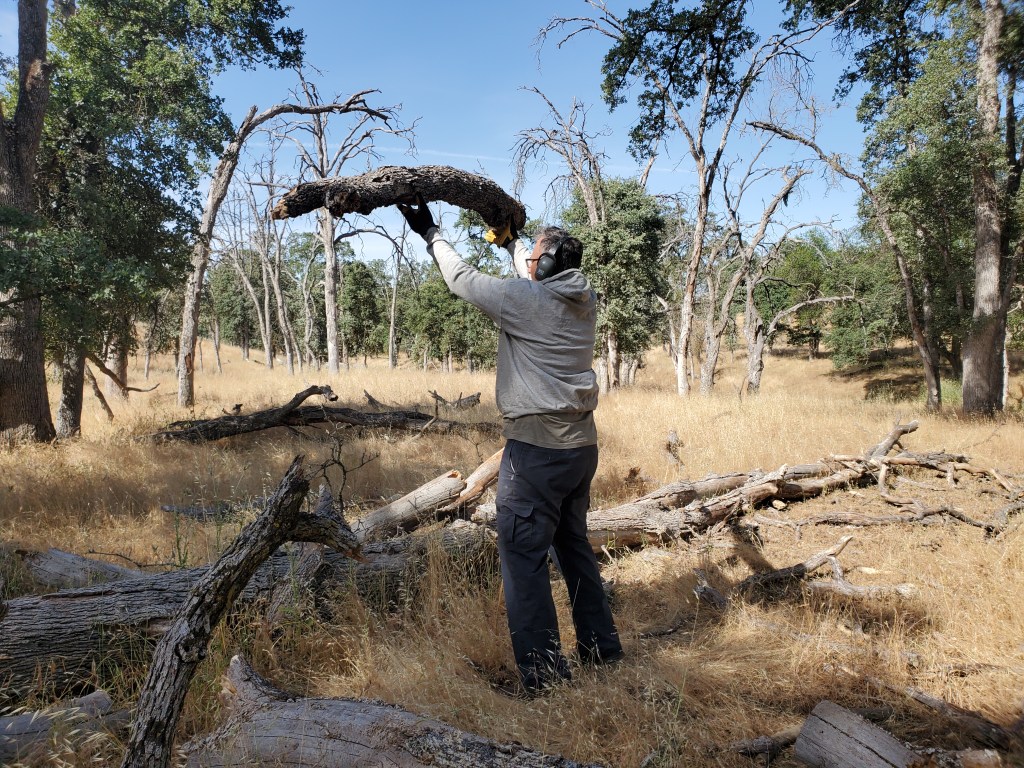
As the next morning begins, I have never dreaded the light so much. To see her again spread across the hill is almost unbearable. Perhaps there is more I can do for her, some ritual or ceremony, some way to memorialize her as she was. Ah- I will plant the acorns today. In three generations, her progeny will soar towards the sky for another to love her as I have and marvel at the magnificence.