Branch Fence Bust and the Boys are Back in Town

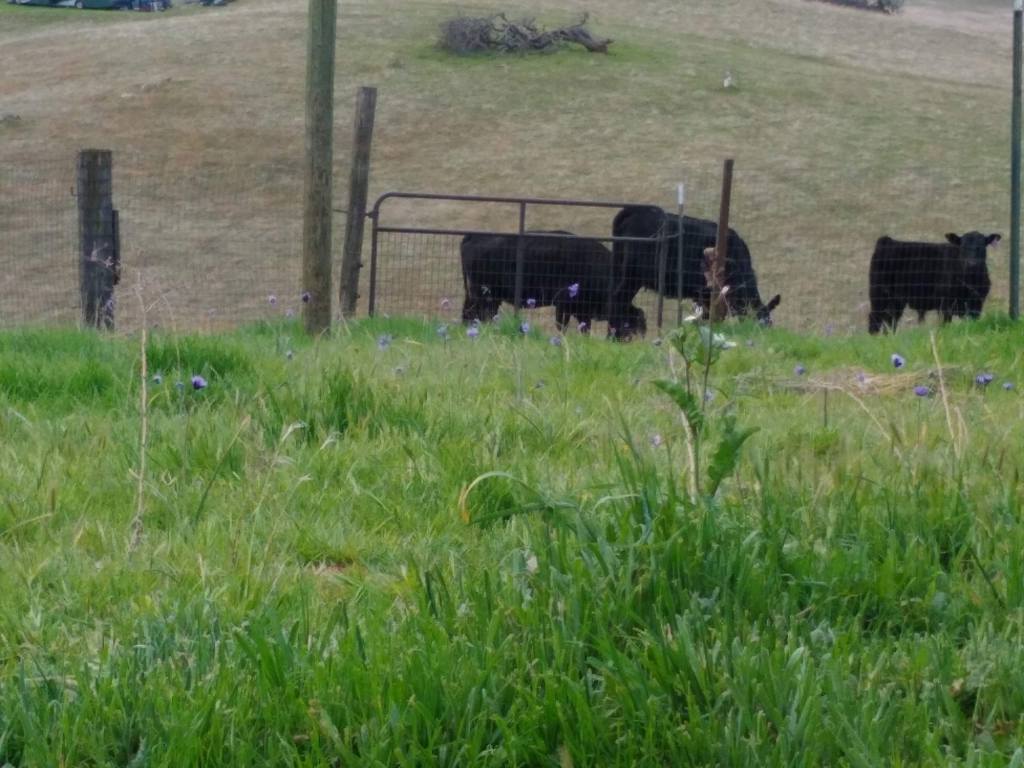
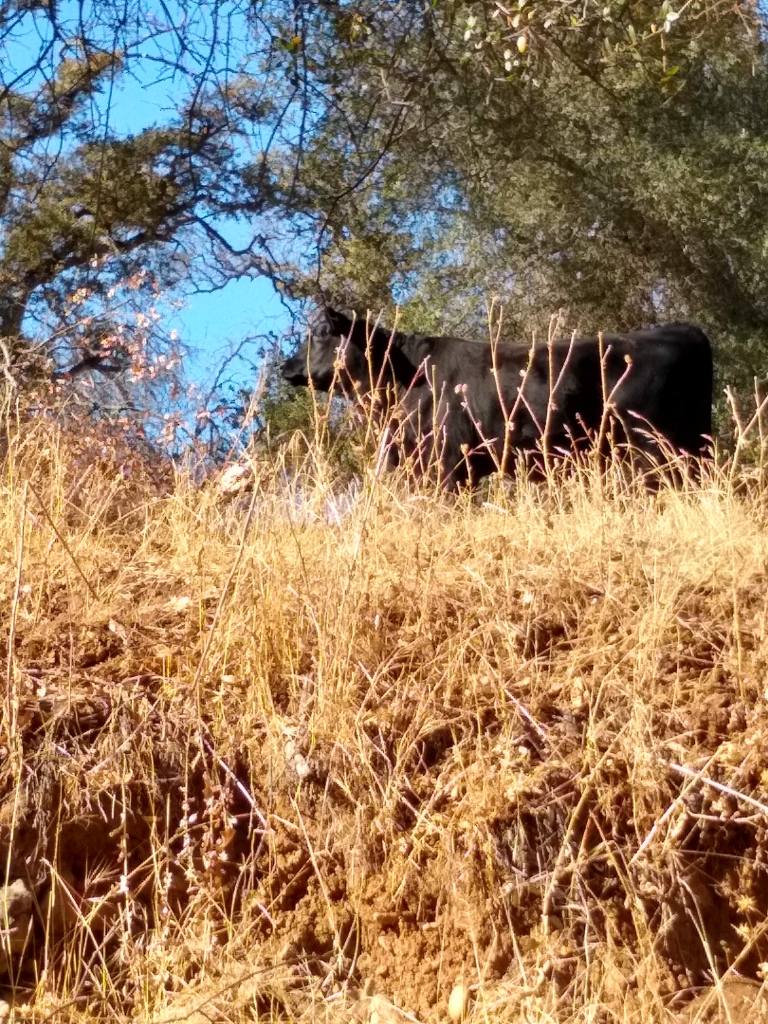
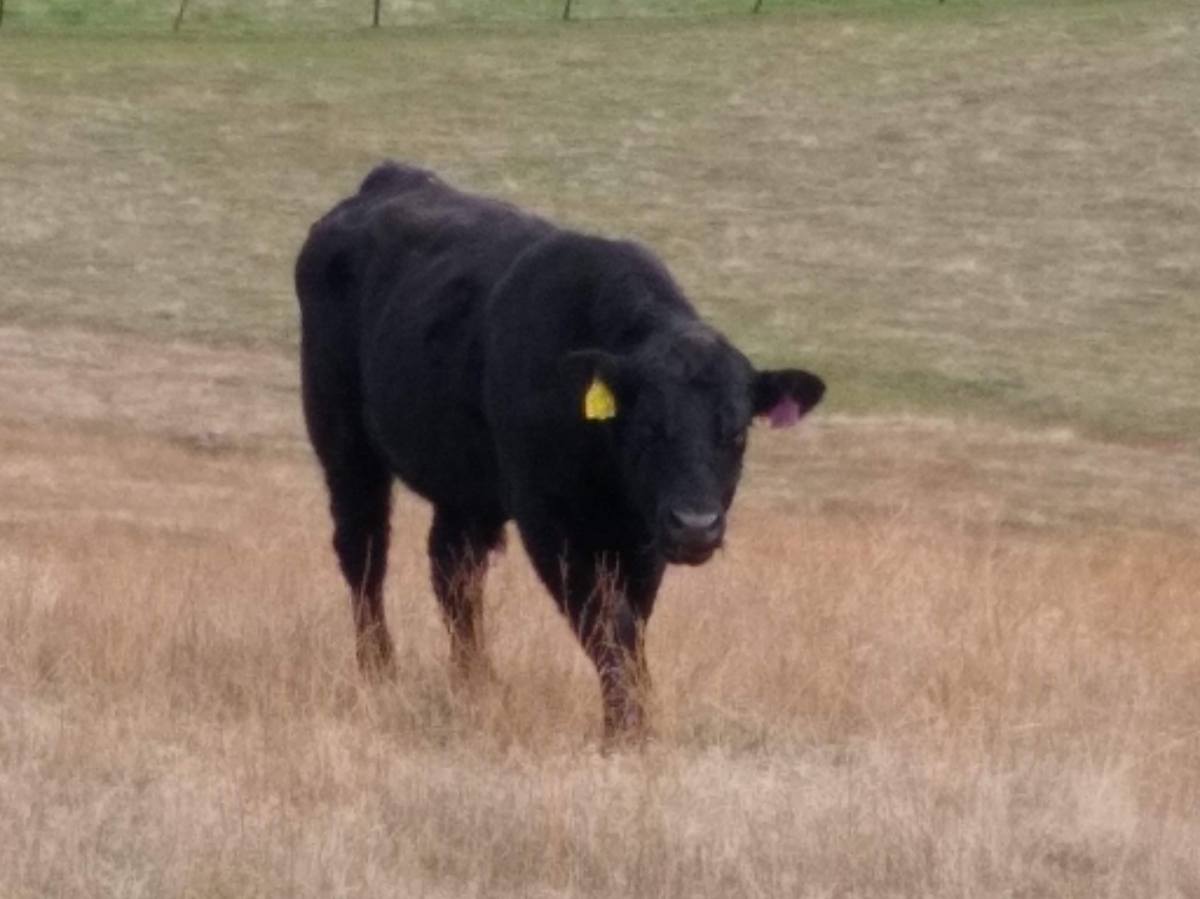
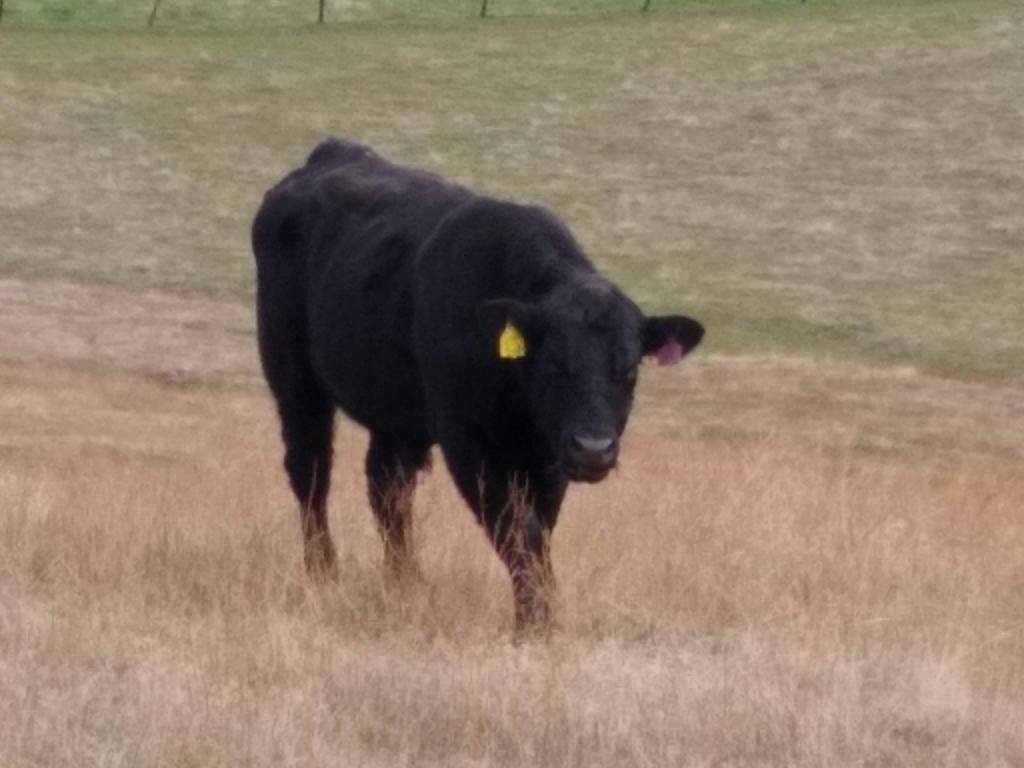
Bull grazing in the a. Californica milkweed area

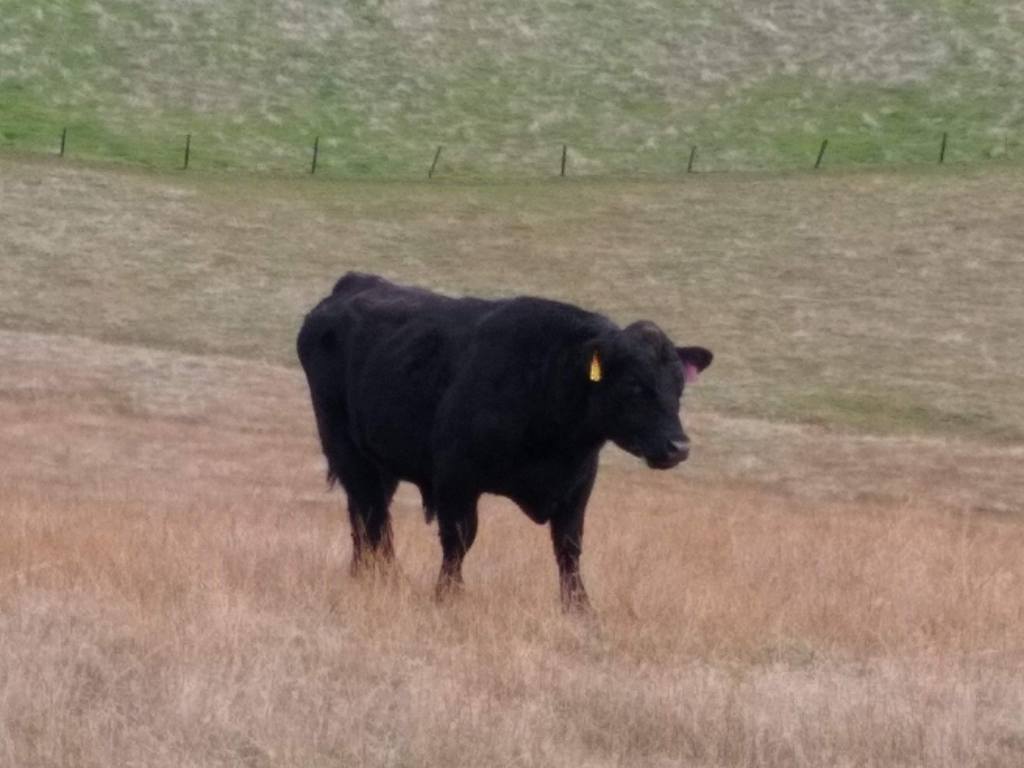
I love bulls. They are simply magic to look at with their size, muscles and intense stares. Fortunately, the bulls run by our cattleman here on the ranch are gentle. They would rather walk away than charge. Still…it is good to be real respectful of their presence – especially when they are around the ladies strutting their stuff. Remember, this is an 1,800+ lb animal. On my quad yesterday to do some watering, there was a big guy laying right in the path. I stopped. I looked at him. He looked– no he stared (intensely) — at me. After 45 seconds or so, I decided I would blaze a new trail to the northeast of him. Bull 1, Heather 0.
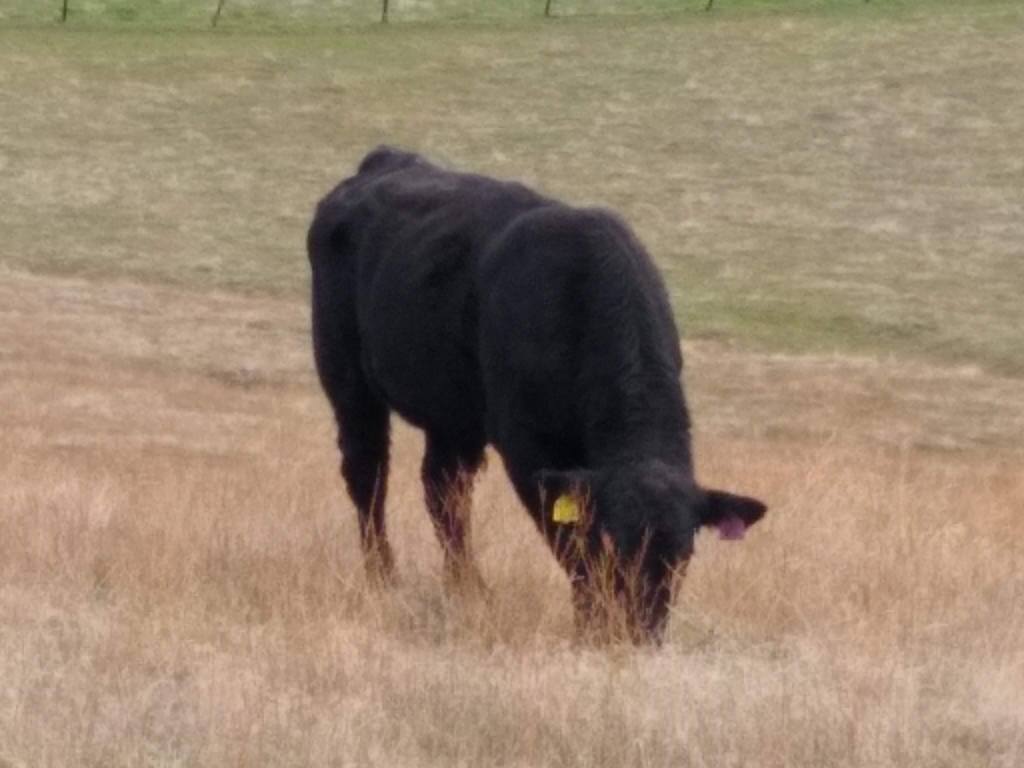
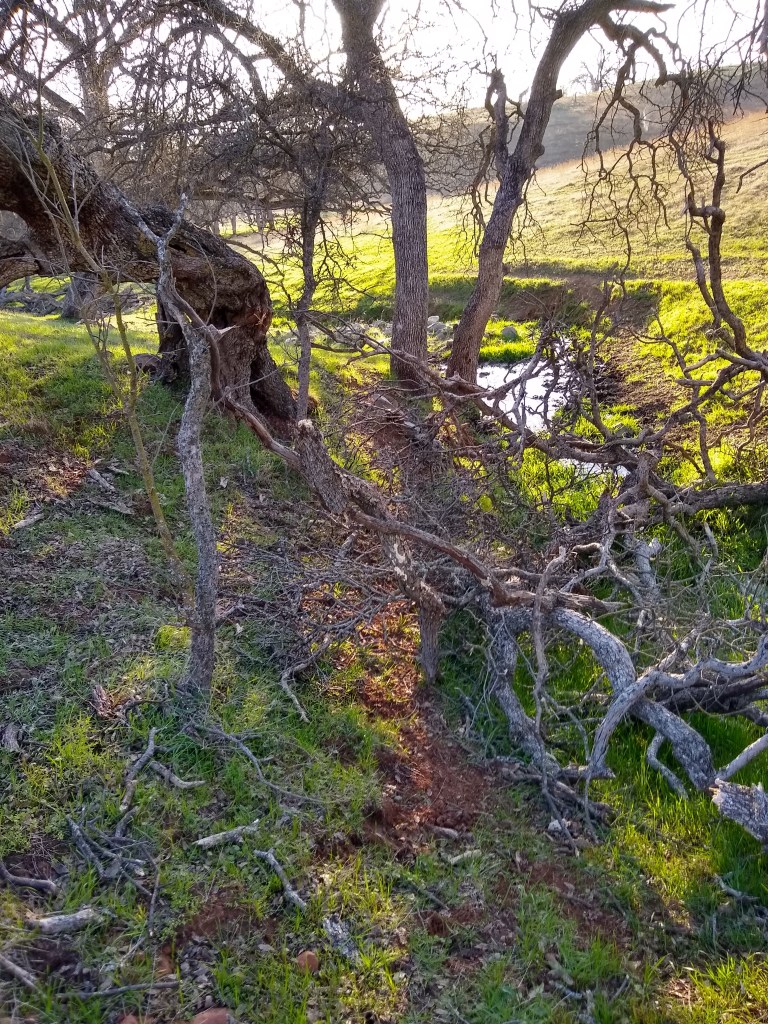
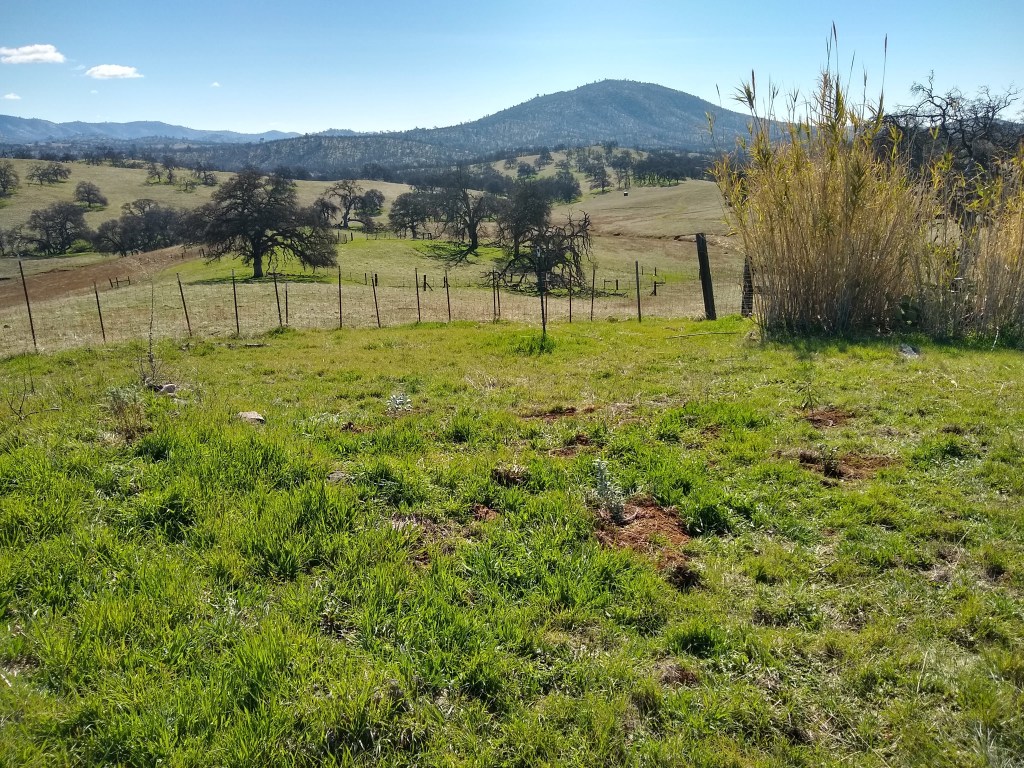
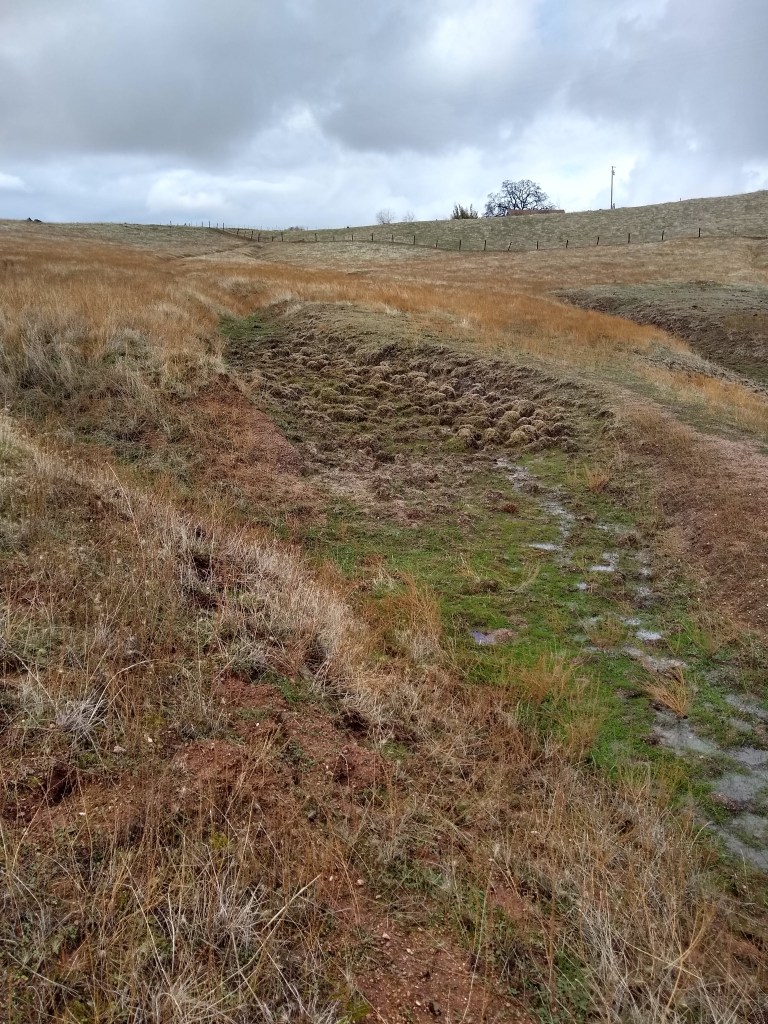
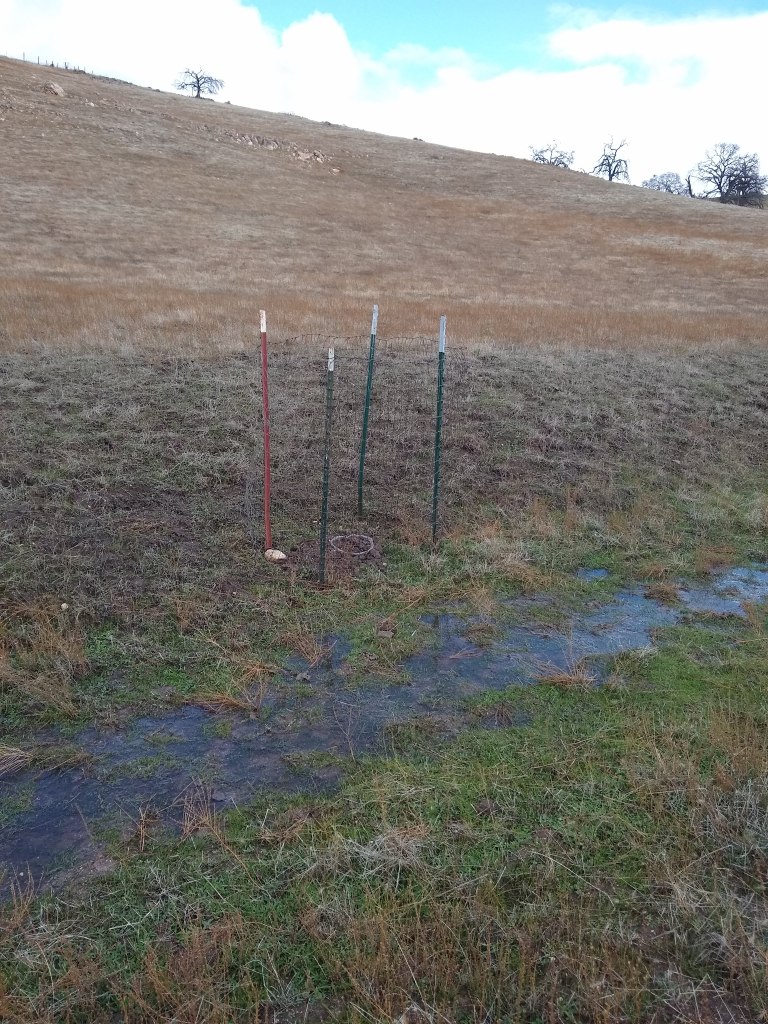
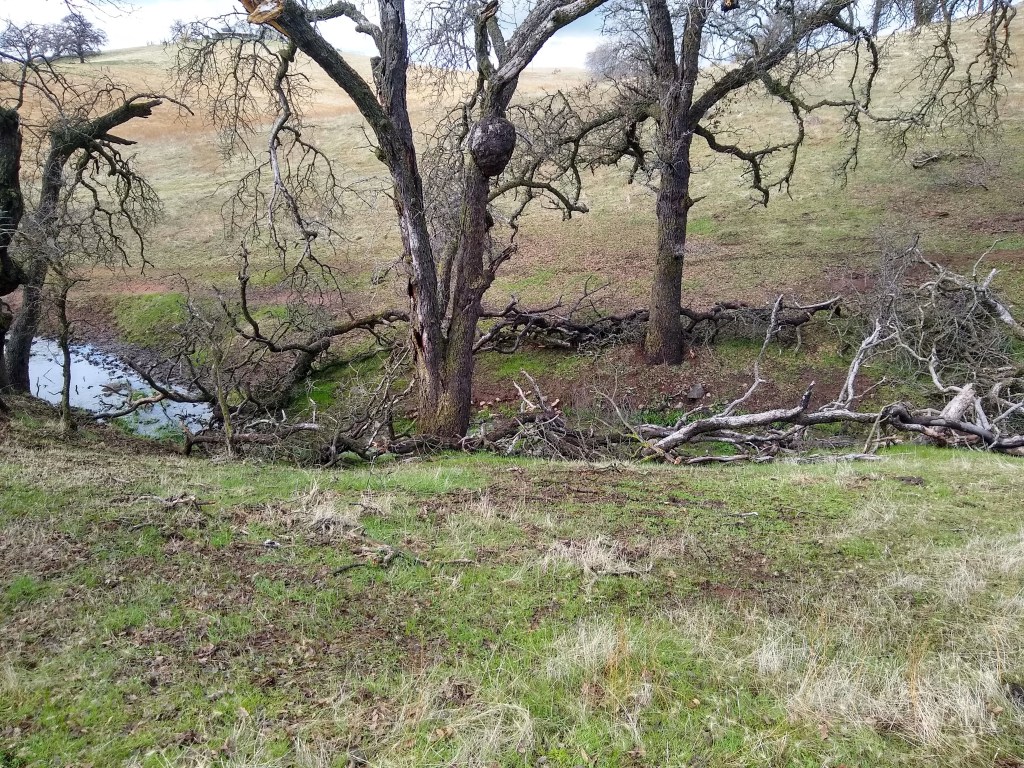
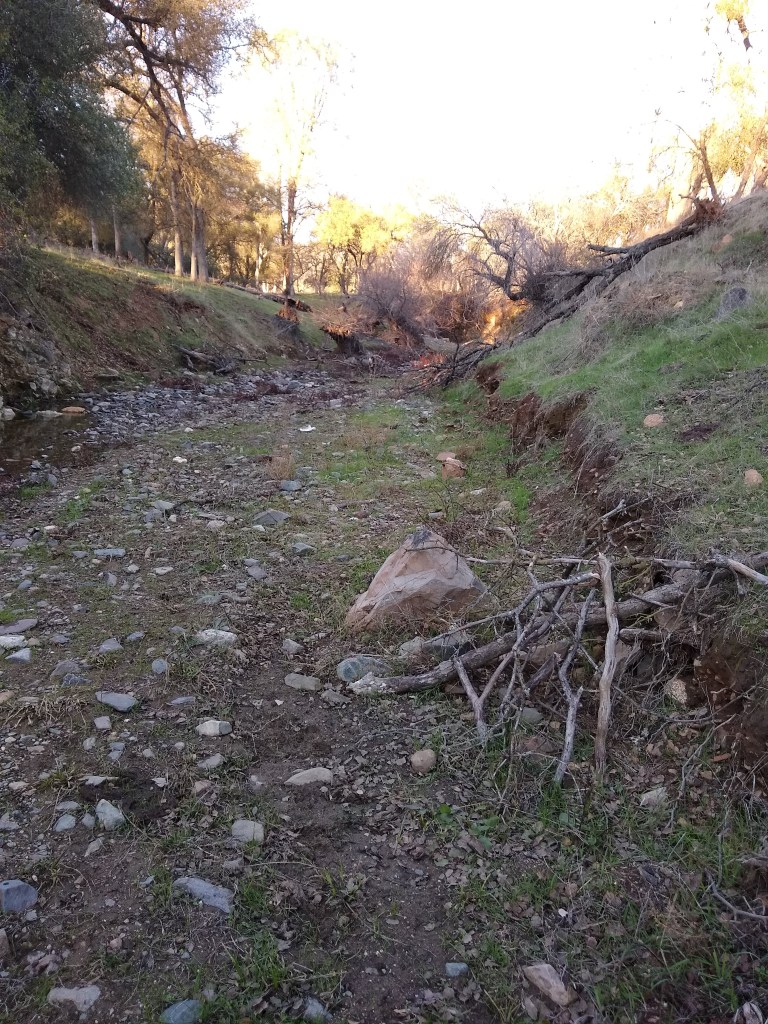
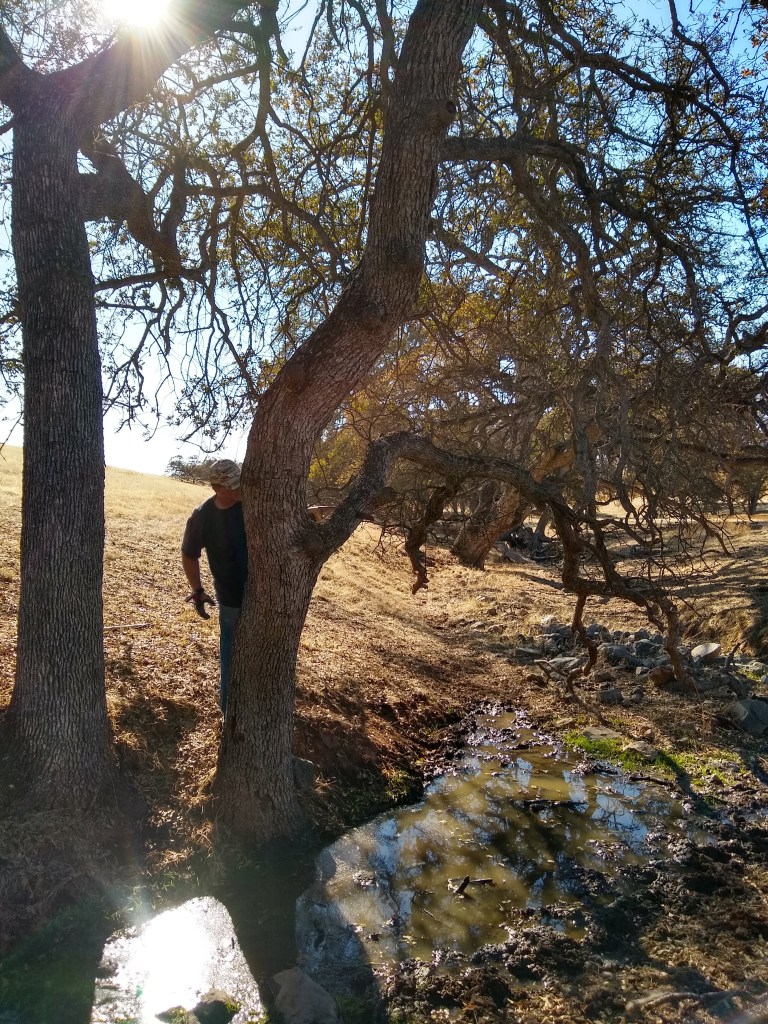
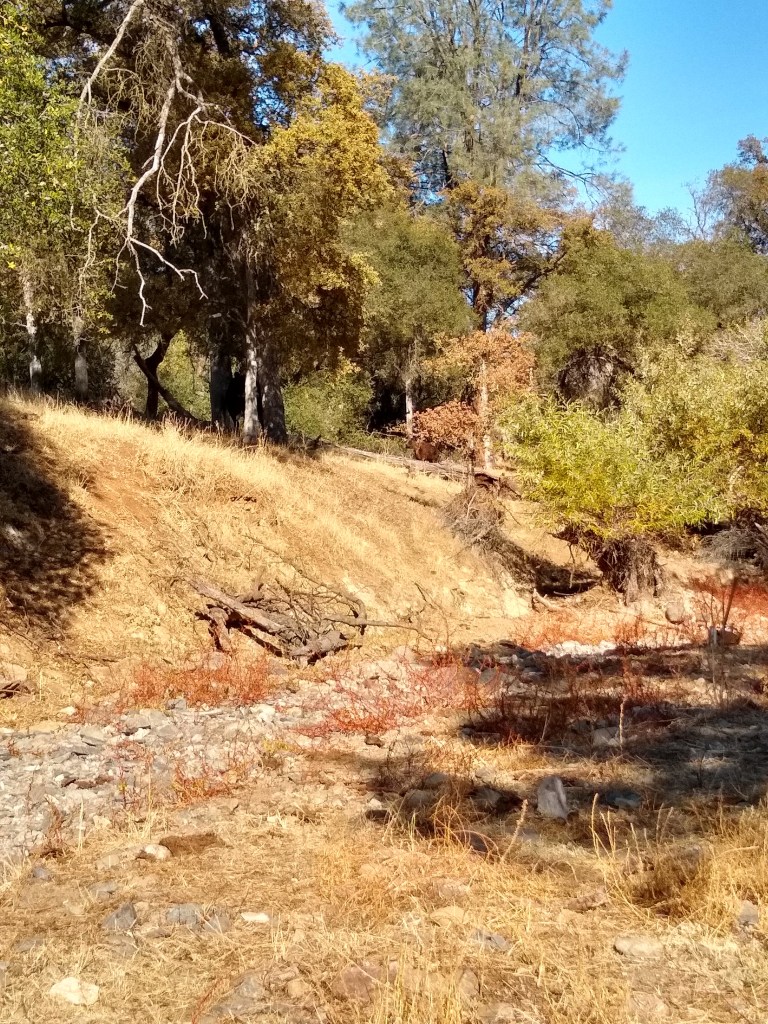
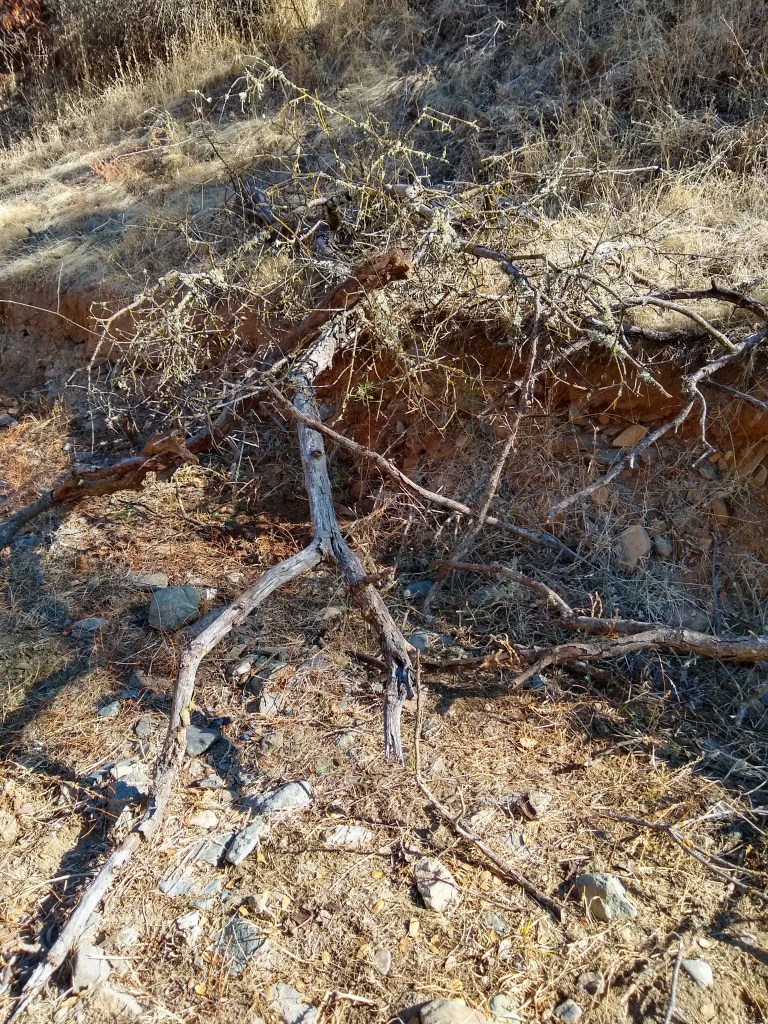
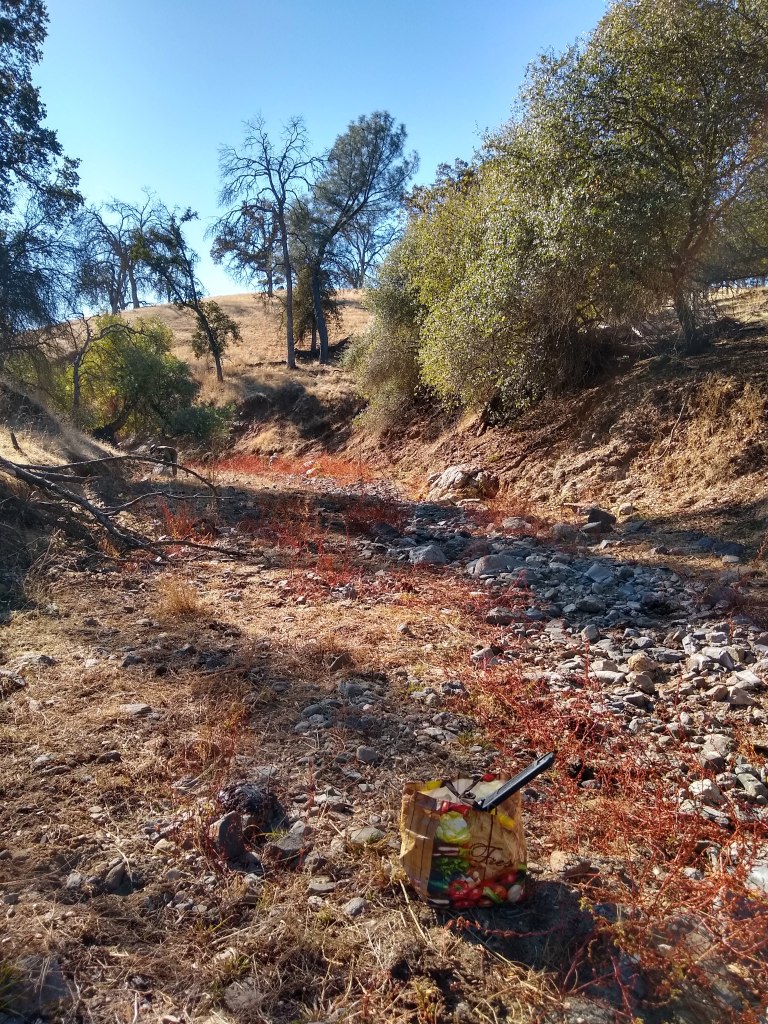
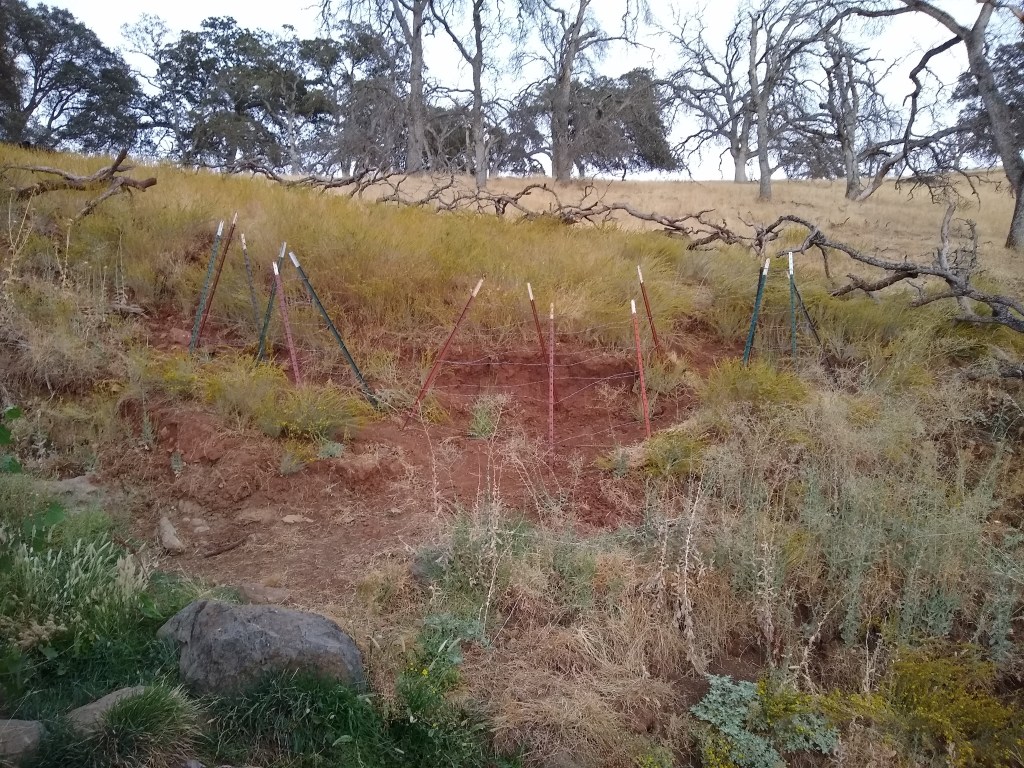
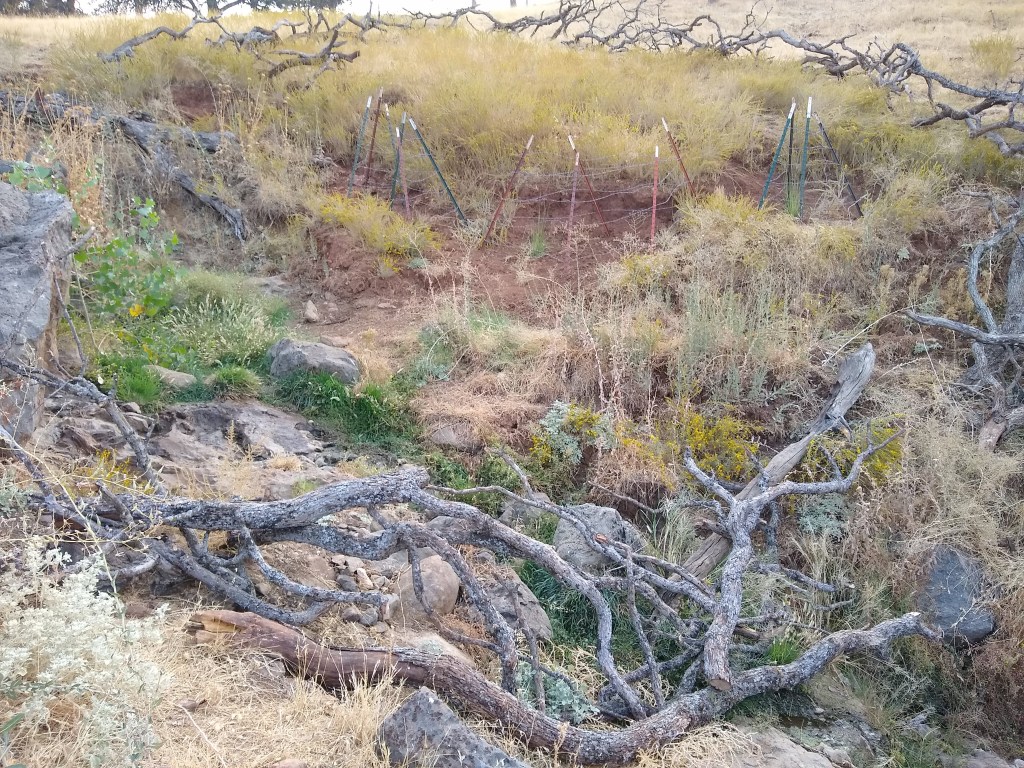
I have been checking the plantings in the branch fence (Site XR1) about every three days. Over the last six weeks, I saw that pieces of branch fence had fallen or had been tested by the cattle. The fence needed to be monitored and more branches placed every week or so. Last week, I noticed that the cattle had blazed a trail tightly alongside the enclosure. Hummm. This worried me. The fence had been tested just a week earlier resulting in me placing more branches on the east side. Now, it appeared that the cows were developing more than a passing interest. It makes sense that they would. With the limited precipitation, the grass is getting a bit thin on the ranch. By contrast, the creek beds are lush with growth. This is certainly true in the XR1 enclosure. More than grass is growing healthy and tall – quite an inducement to push in.
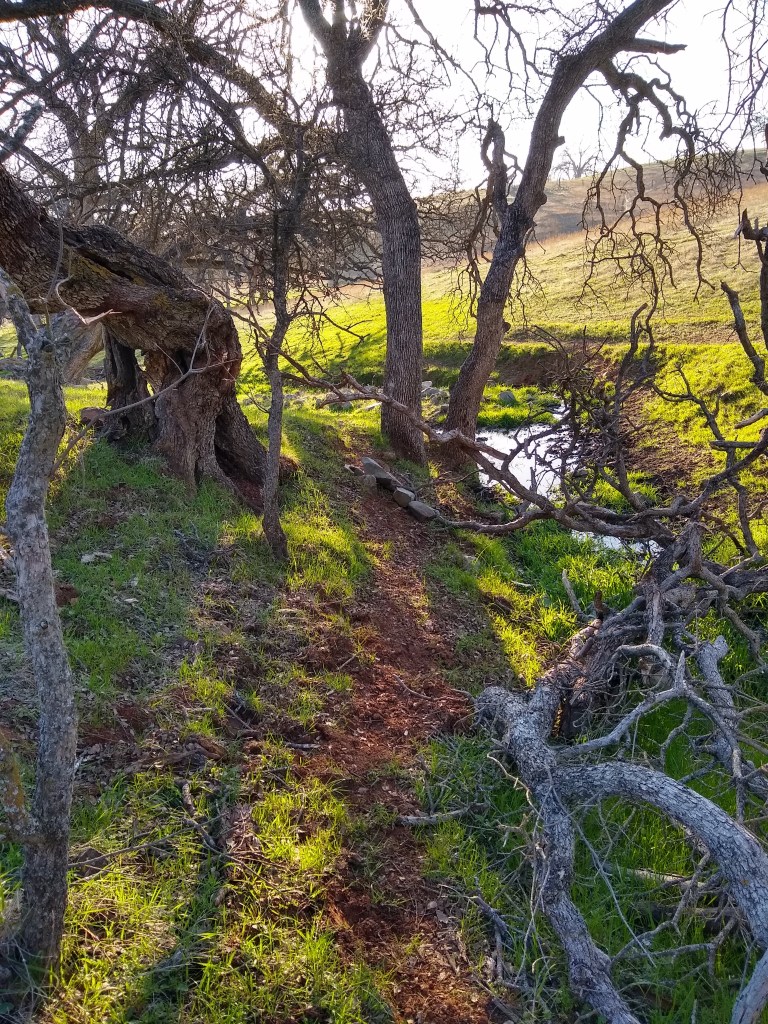
Cow trail

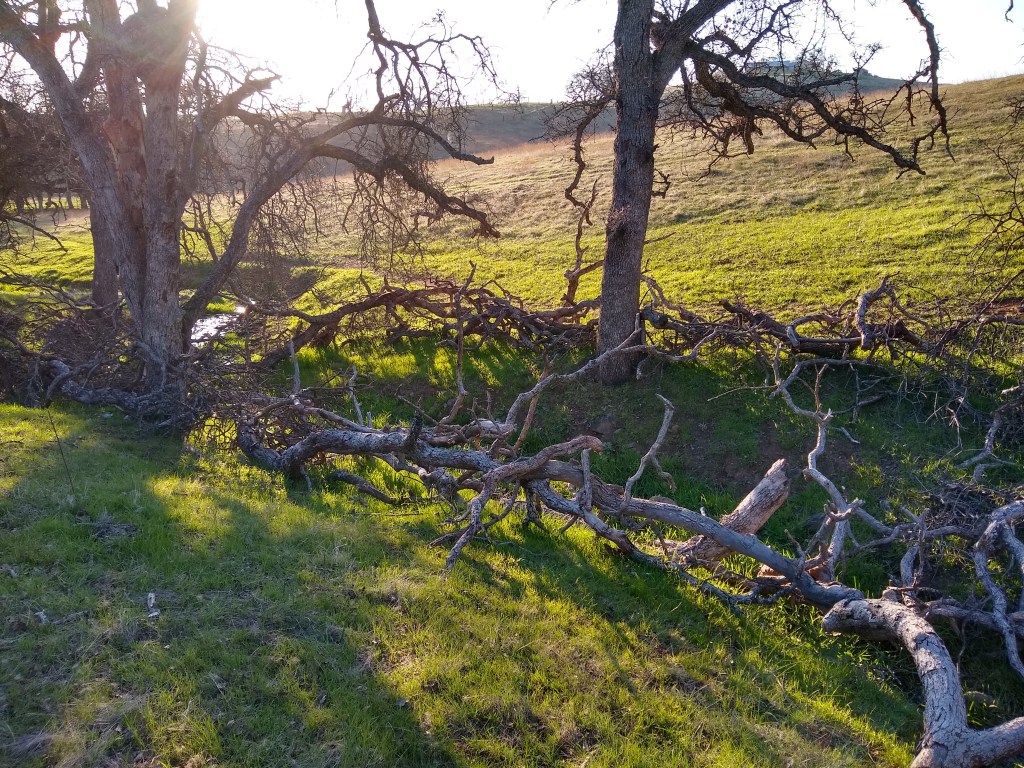
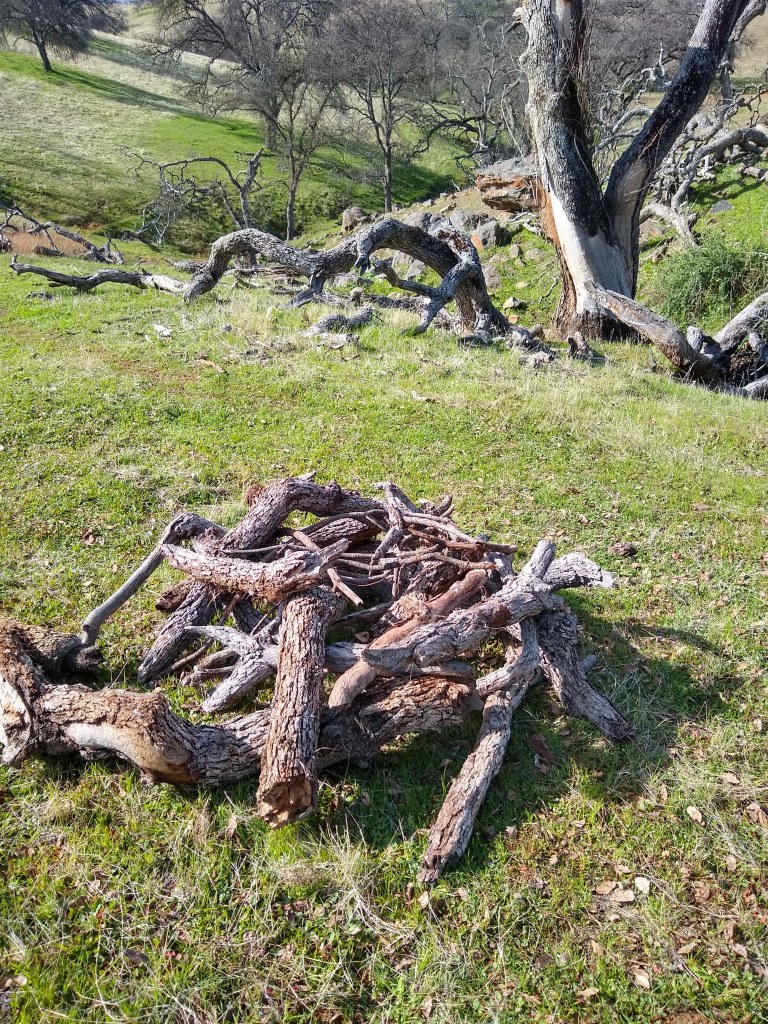
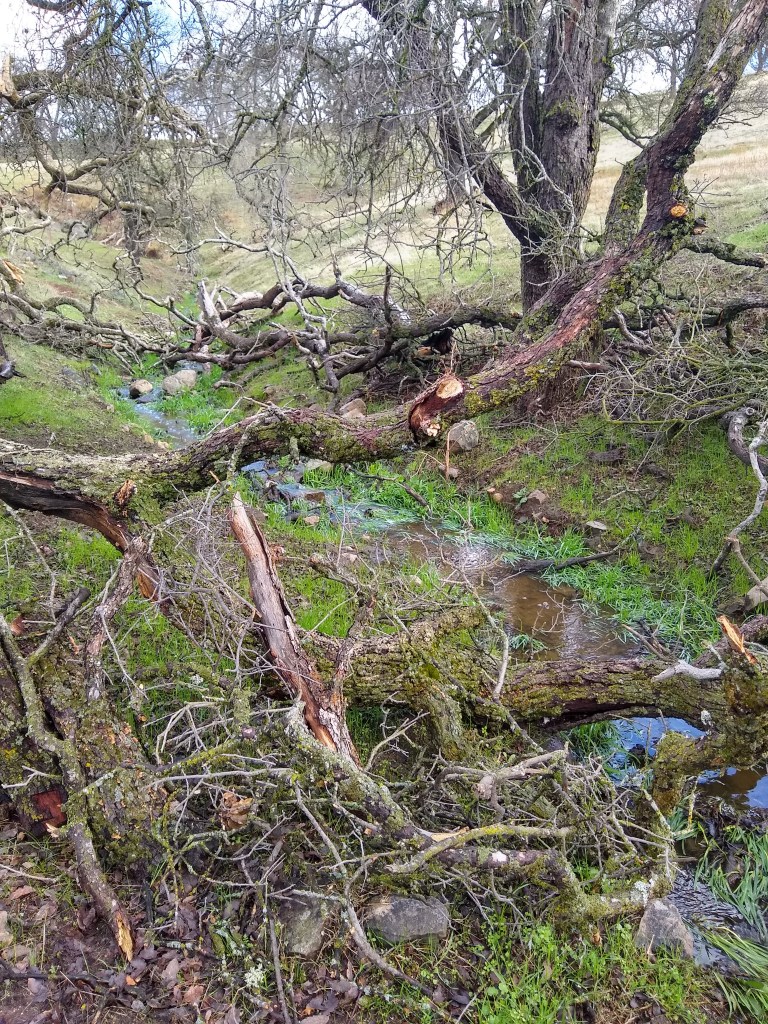
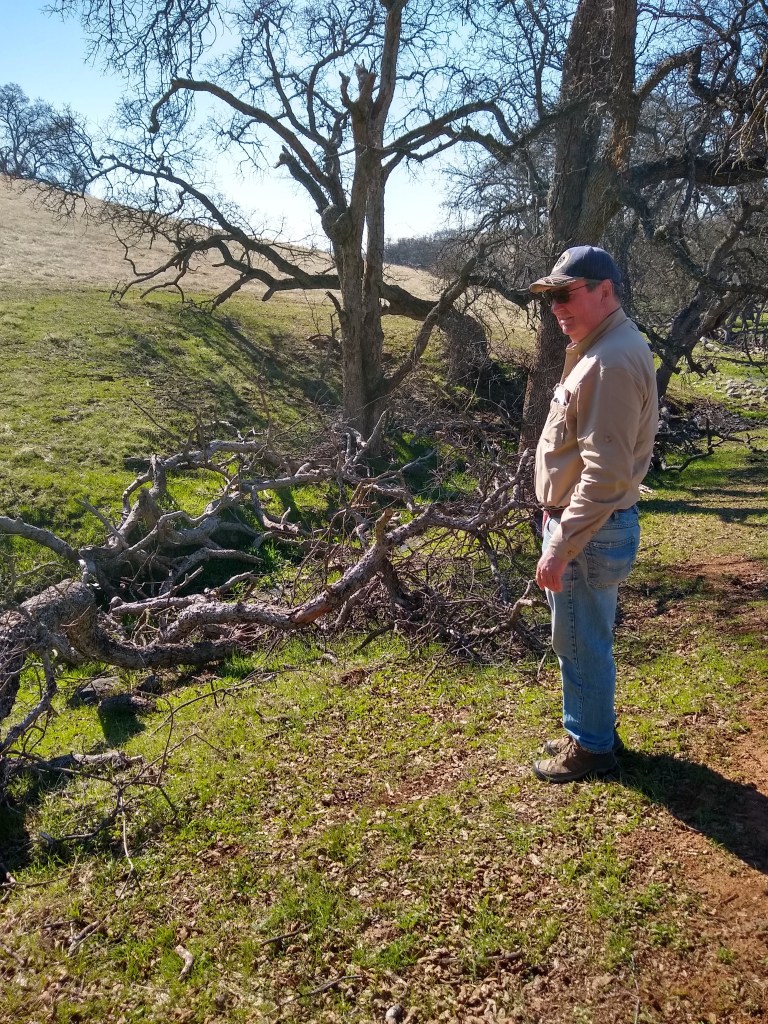
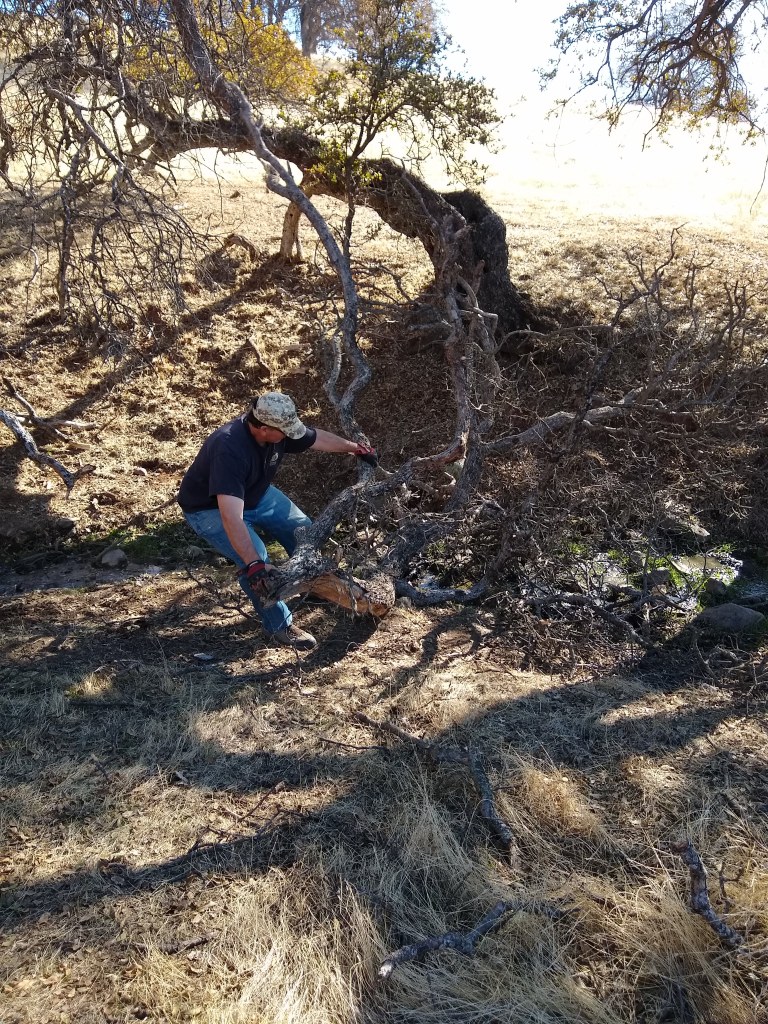
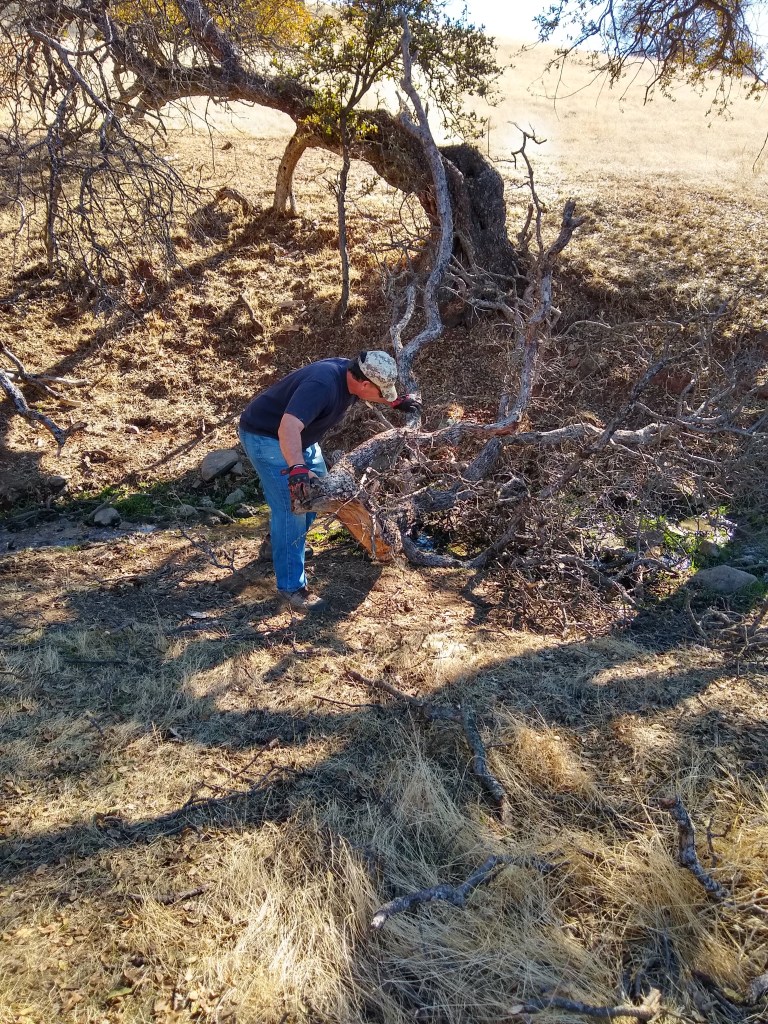
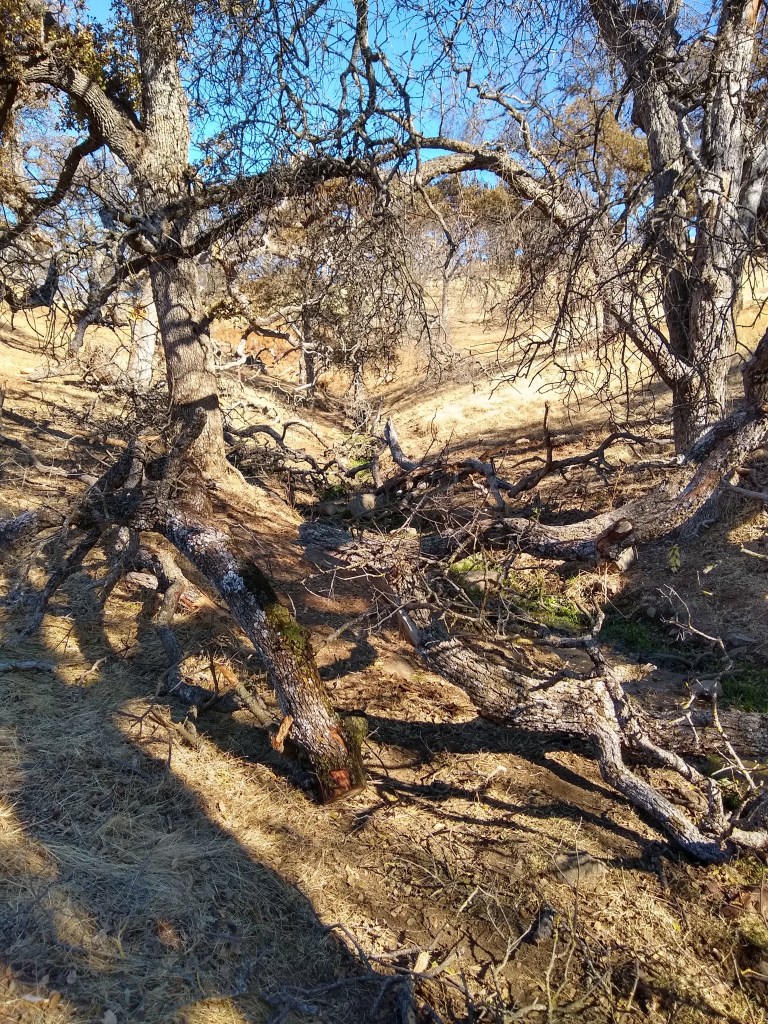
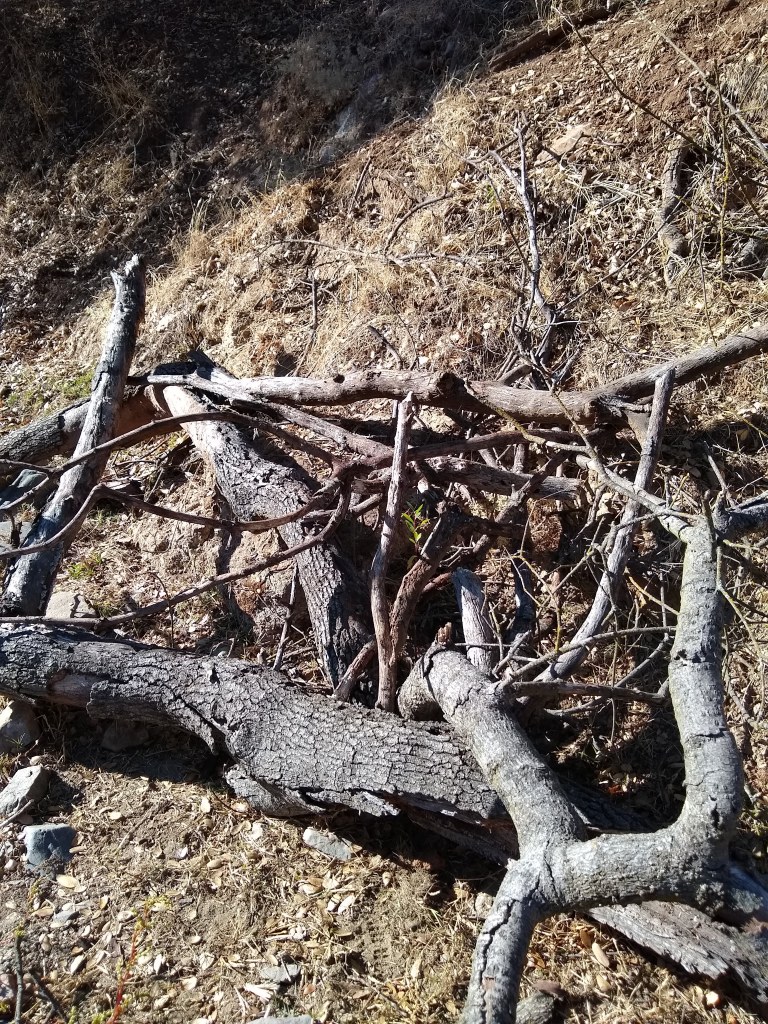
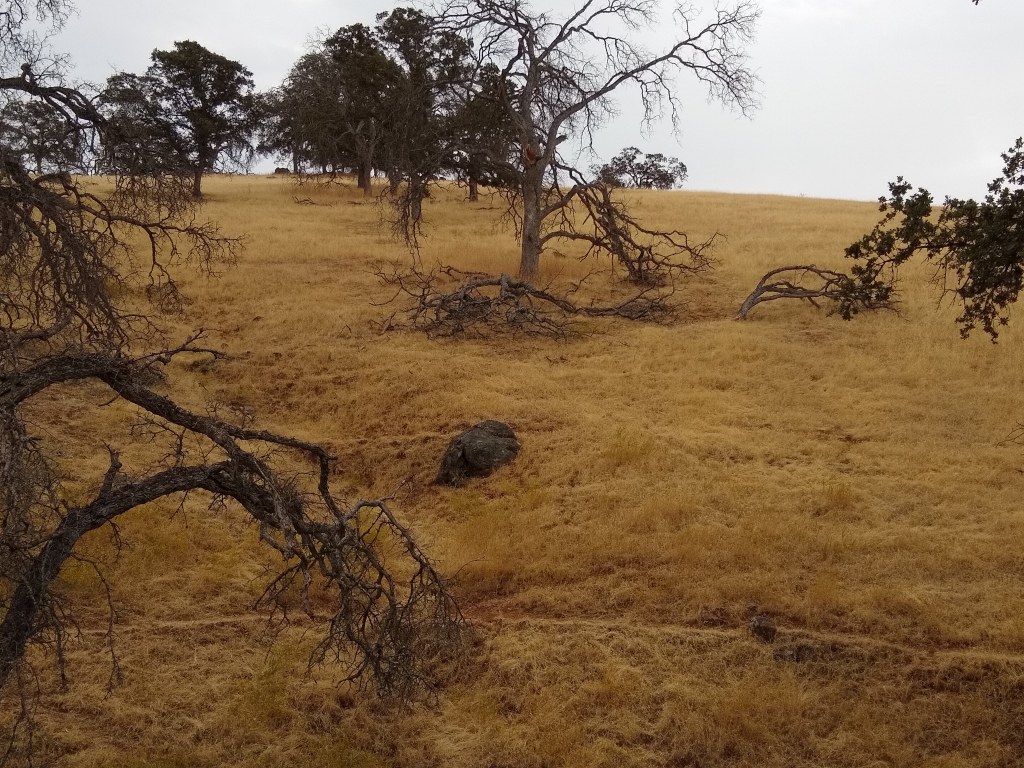
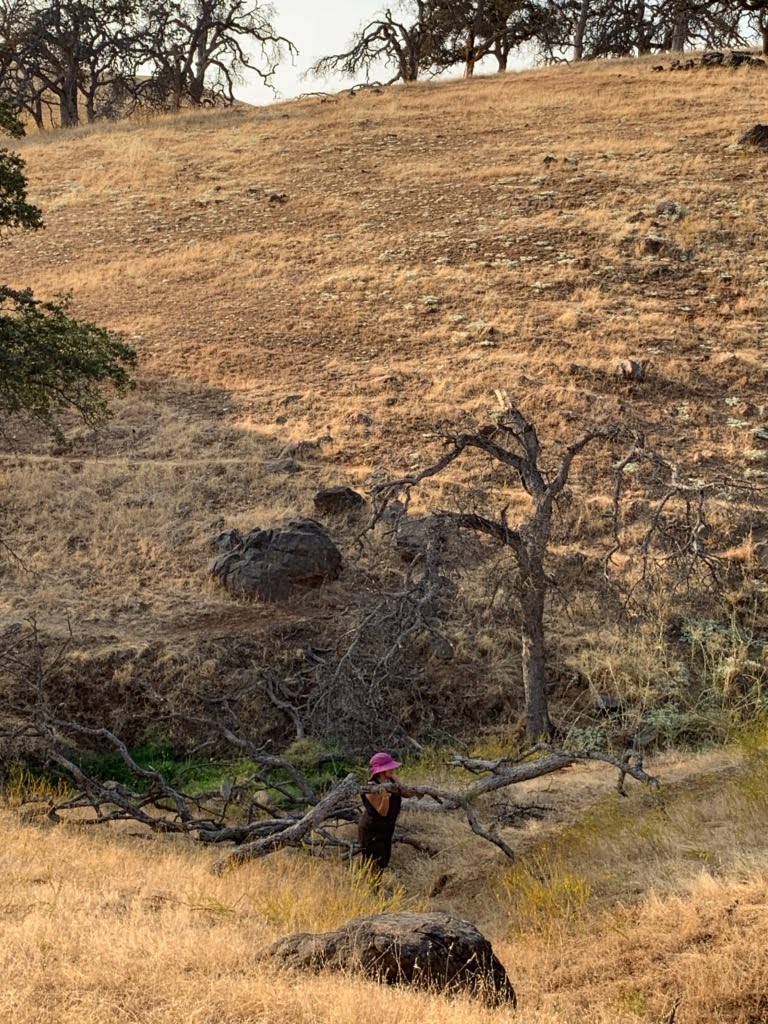
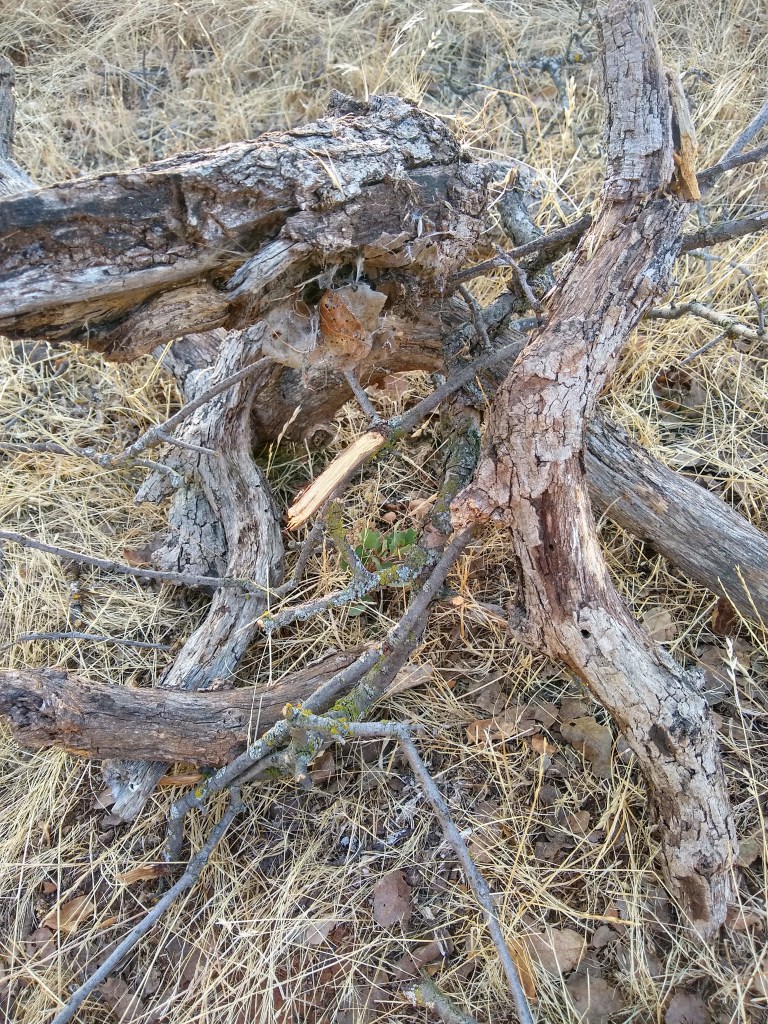
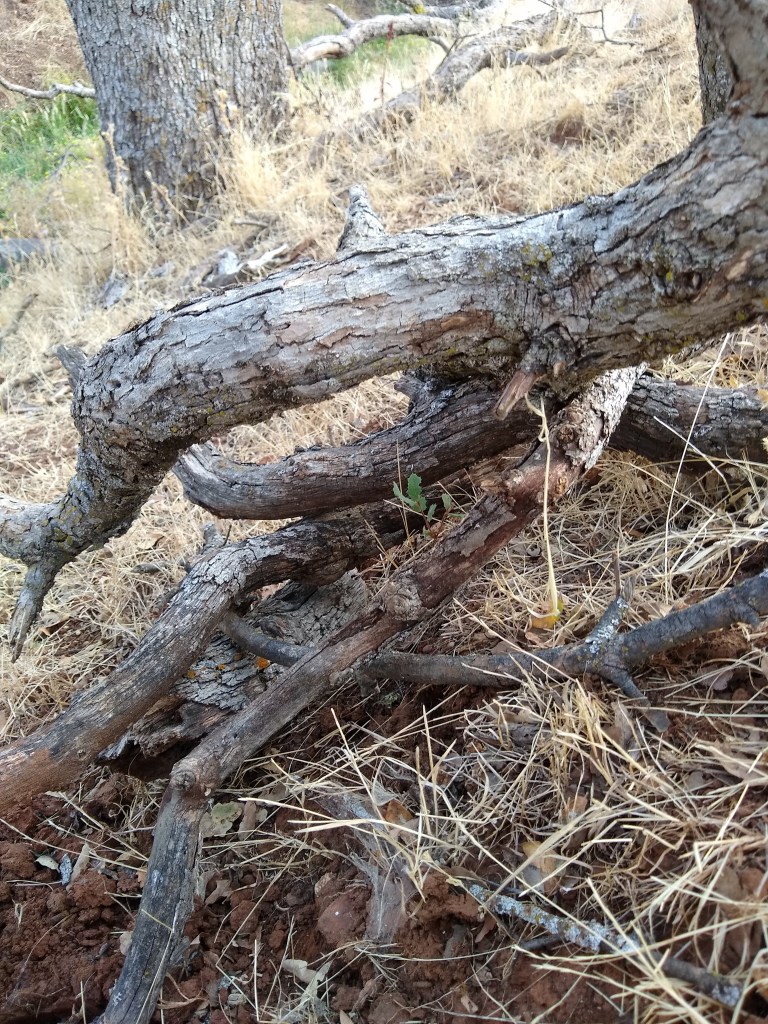
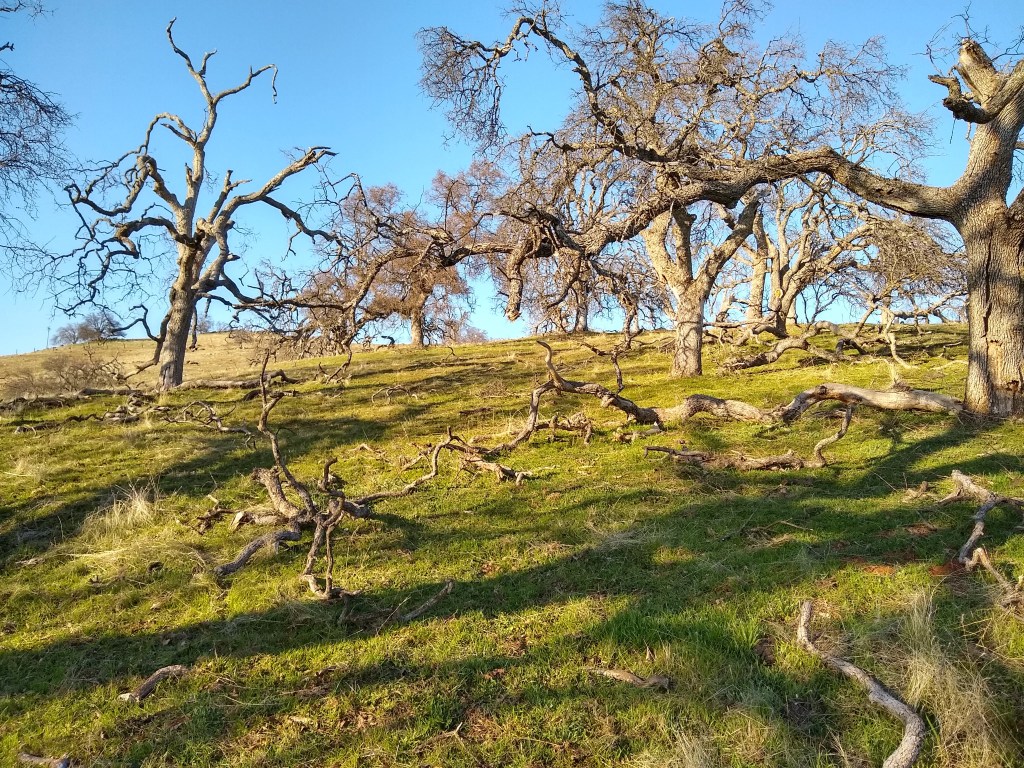
After seeing the path, I began to use rocks and other branches to block the path. Just up the hill on both sides of the creek are dead oaks with downed branches. In the last drought, we lost about 300 oaks across the ranch. It can be sad to see their ancient bodies in various states of decay. In this case, as I harvested the branches from the ground, I thanked the trees and limbs and told them that their remains will be used to promote new life so important to the health of this place. It is important to be grateful and respect all things.

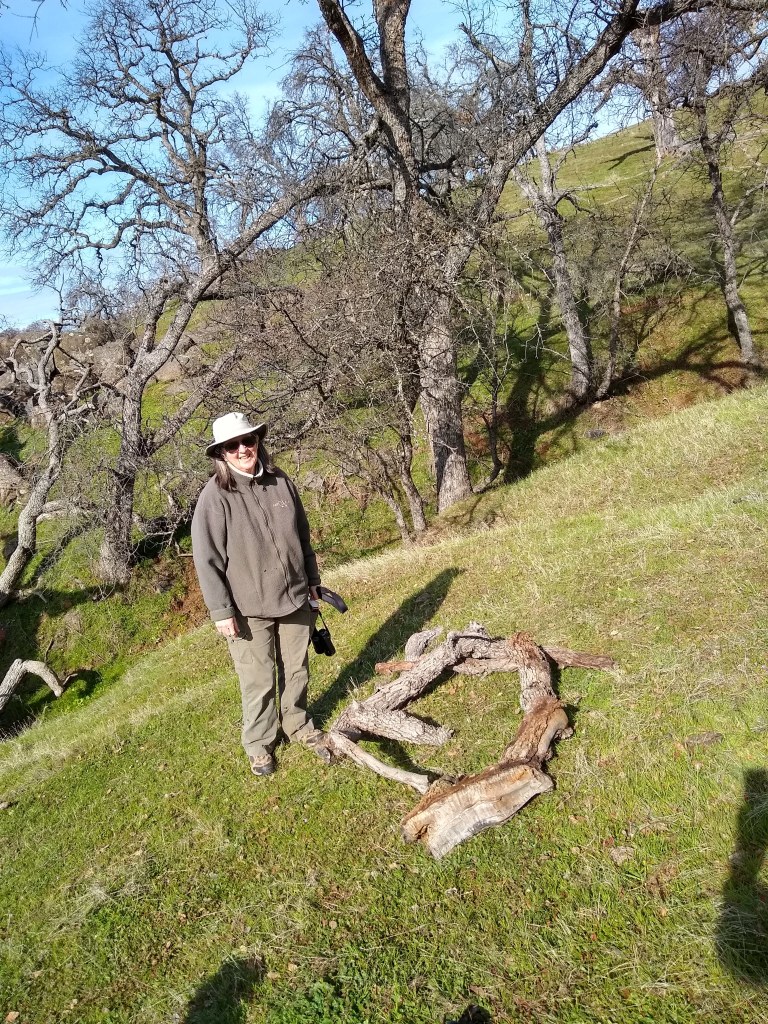
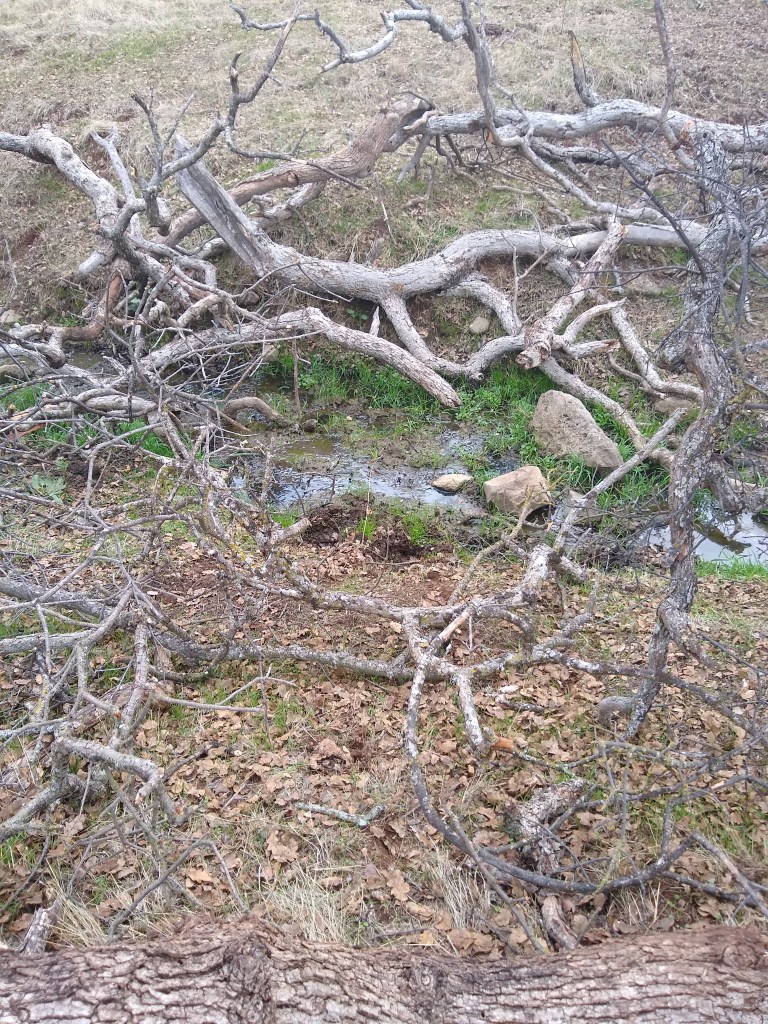
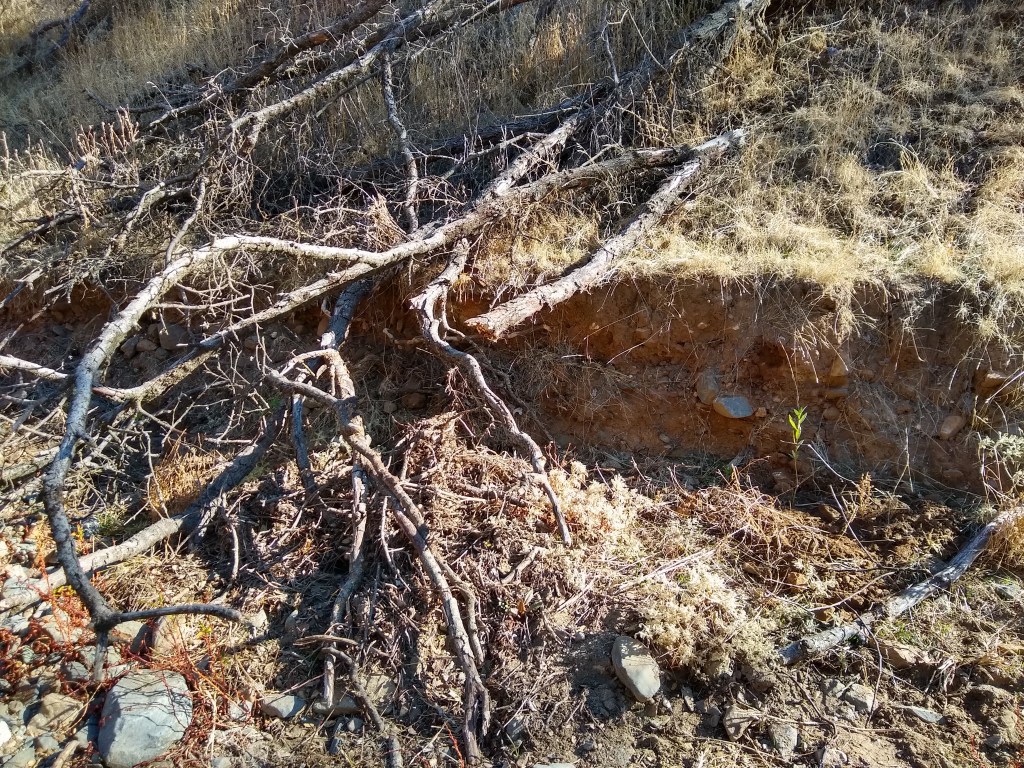
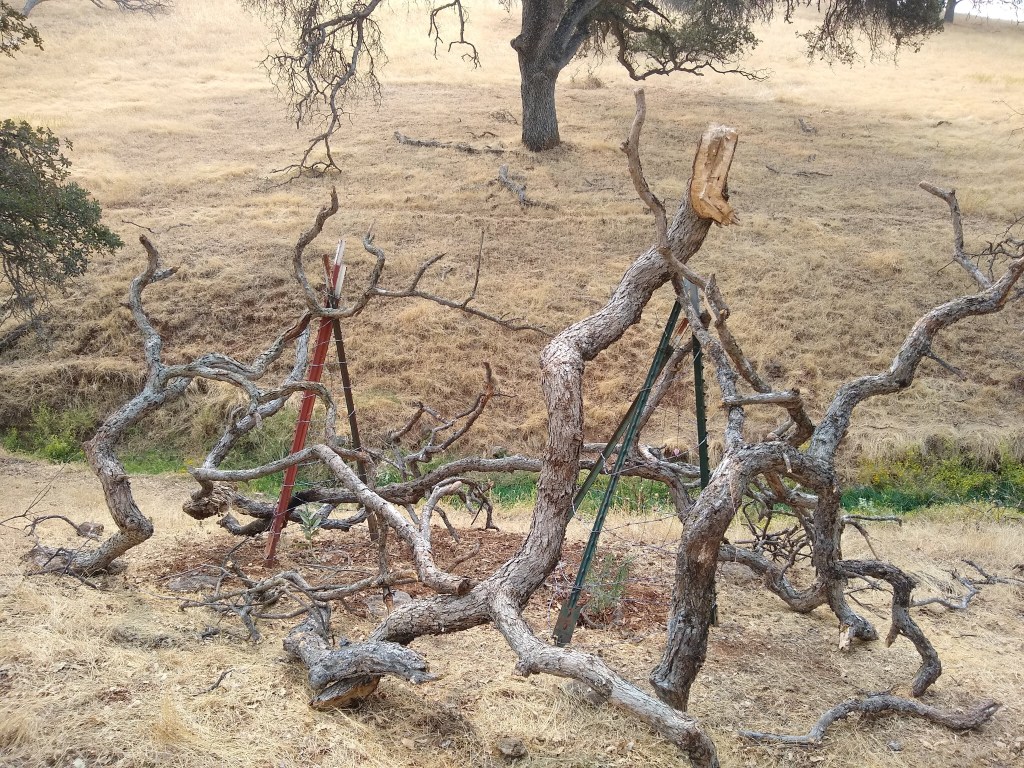
I hauled the branches down from the hills, some lifted, but if they are large, dragged. Oak branches are tortuous – twisted and gnarled. This is a good thing for the fence. The twists of the branch tangle with the others. My goal is to lock them together as much as possible to promote strength. They also create width in an attempt to keep the cattle as far a distance from the planted area.
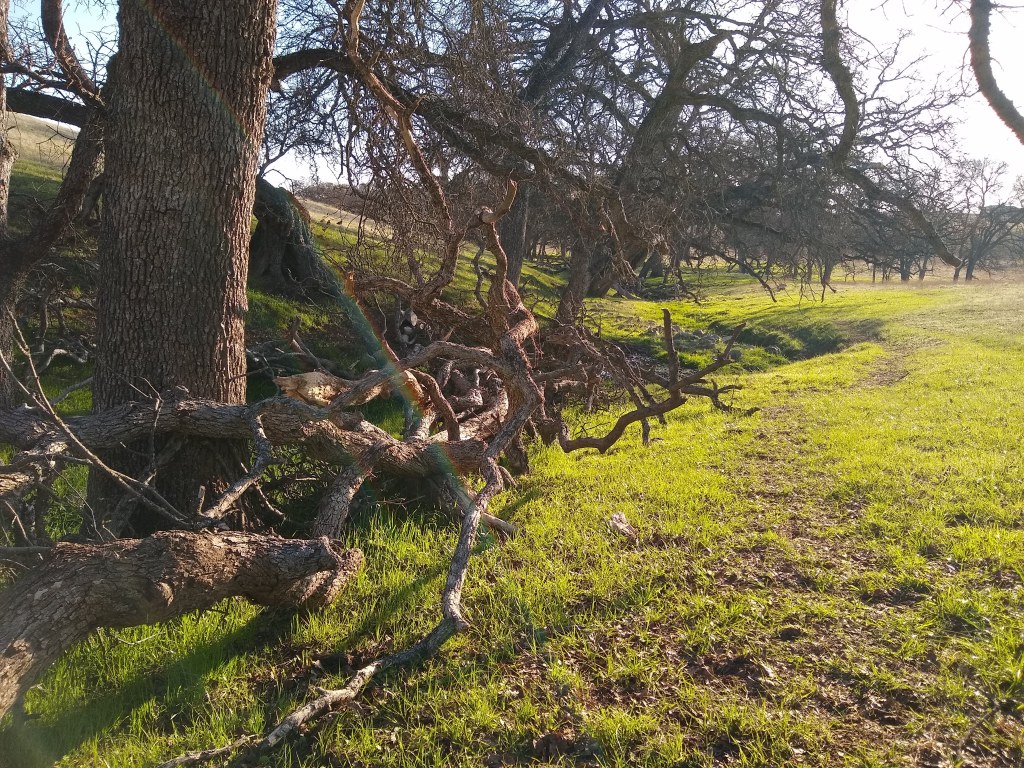
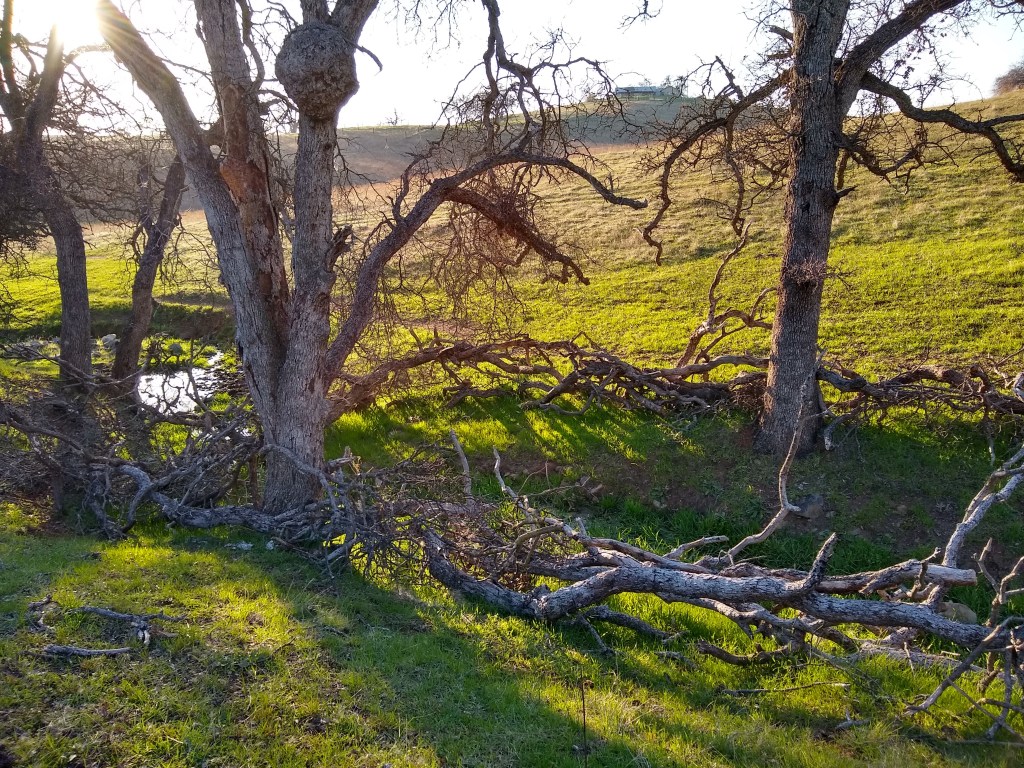
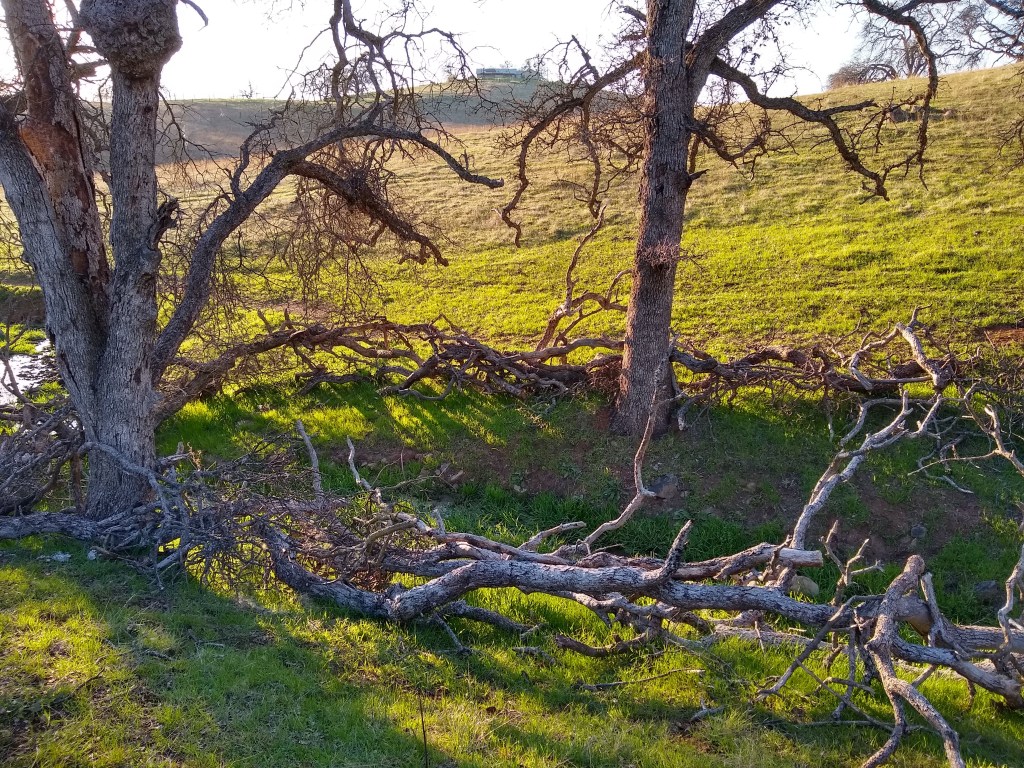
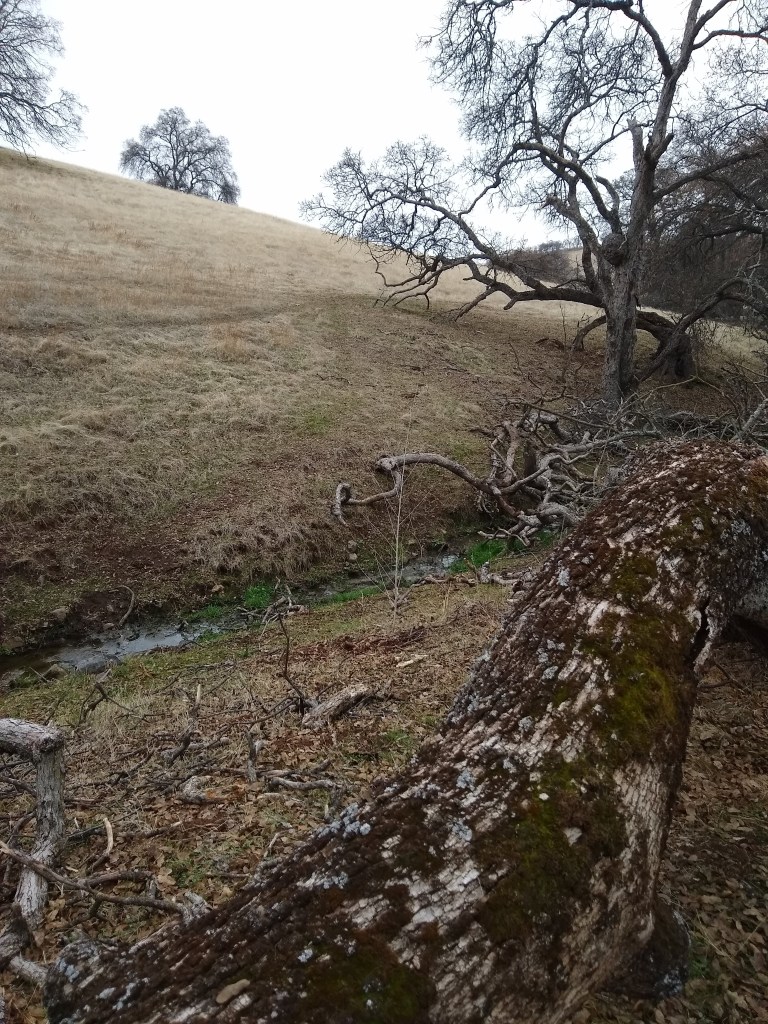
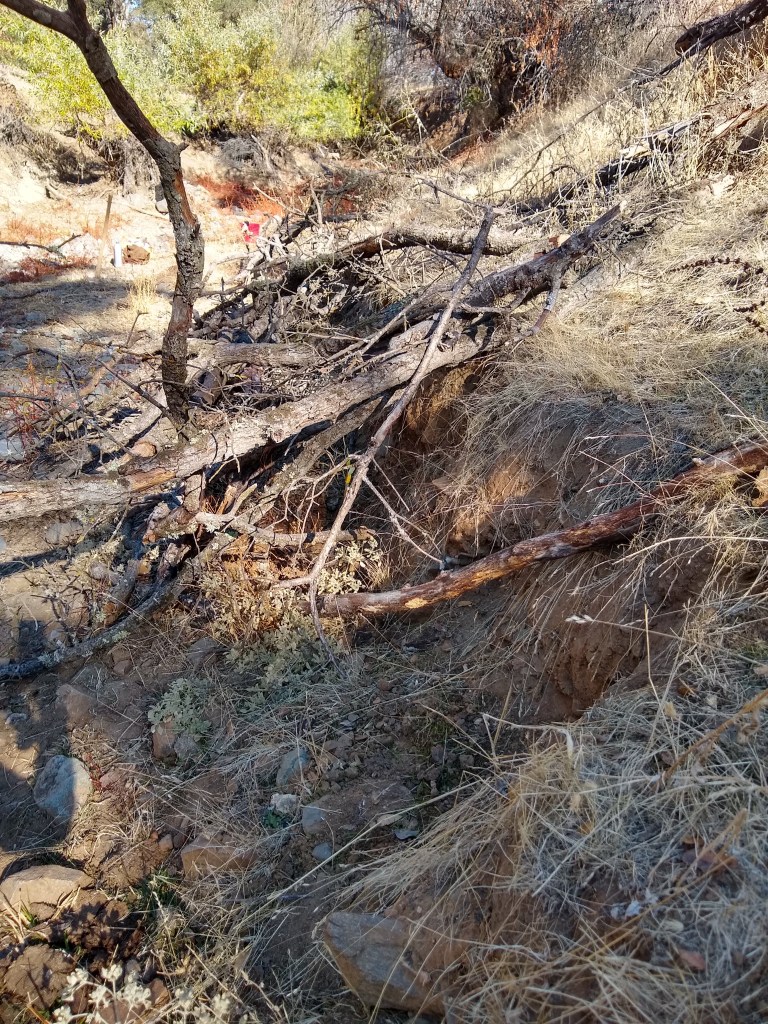
West side of branch fence. Note the lengths pushed out toward the trail

Currently, I fit my ranch work in before and after the end of my work day and on weekends. Especially in the fall and winter, when the days are shorter, I do not have much time to get things done. I did as much as I could before sunset, hoping it was enough.
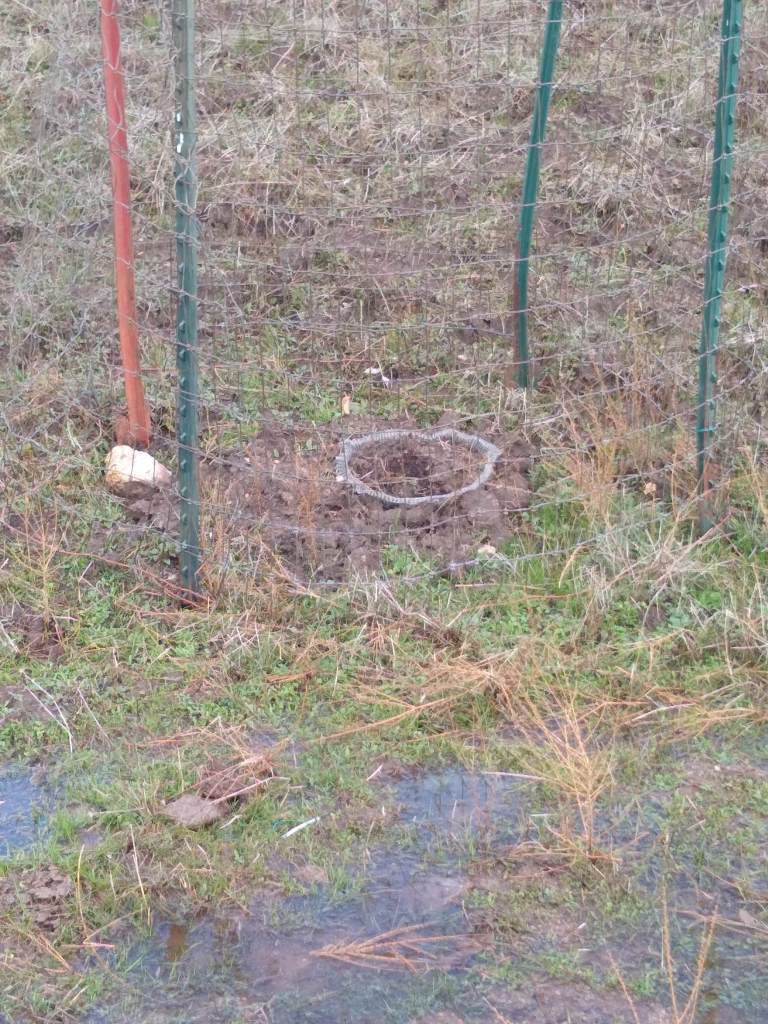
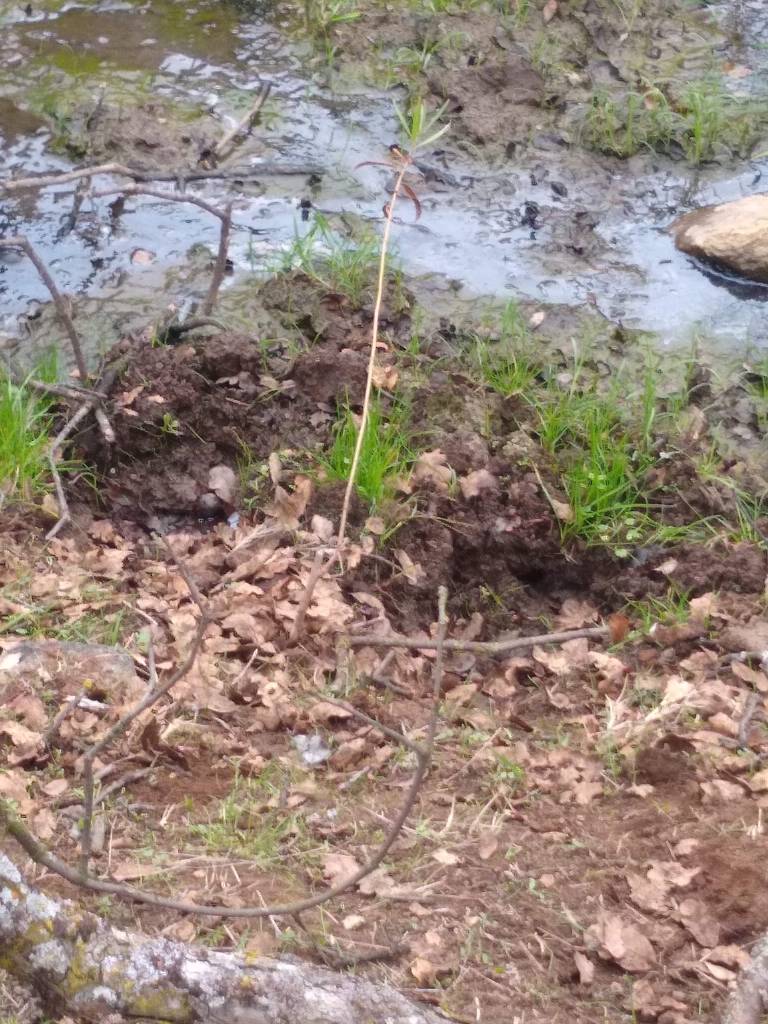
Despite having spent considerable time shoring up the fence, I checked back the next day. What I saw shocked me. There was a cow pie inside the enclosure. Horror!
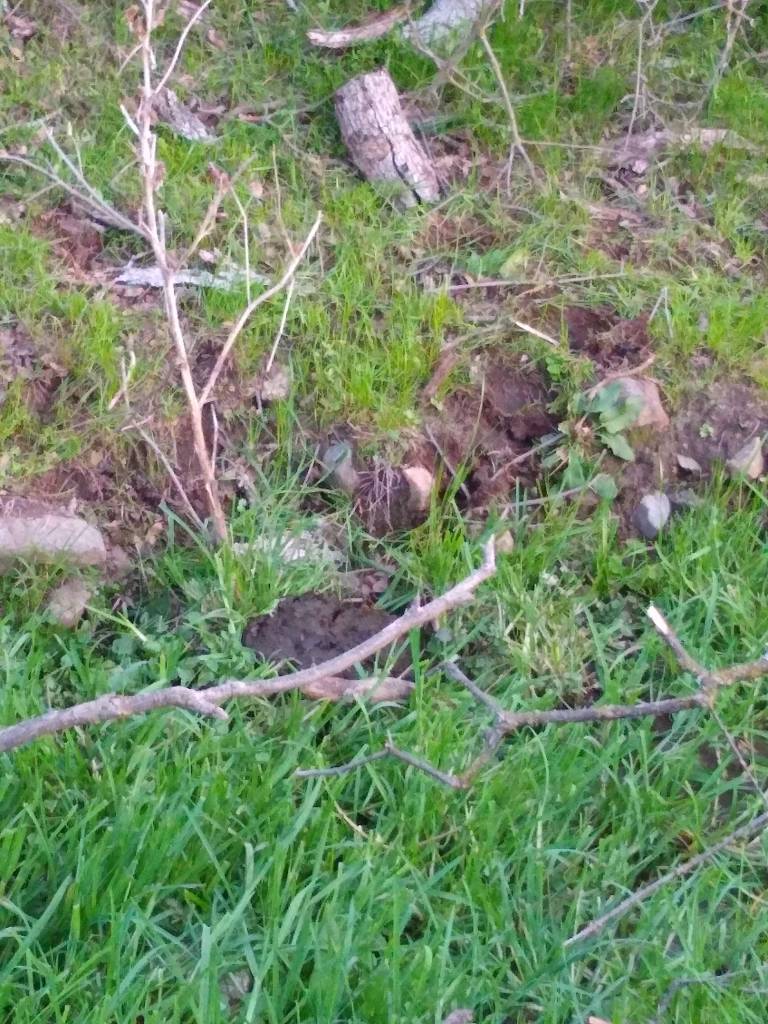
Evidence! A bovine was inside XR1

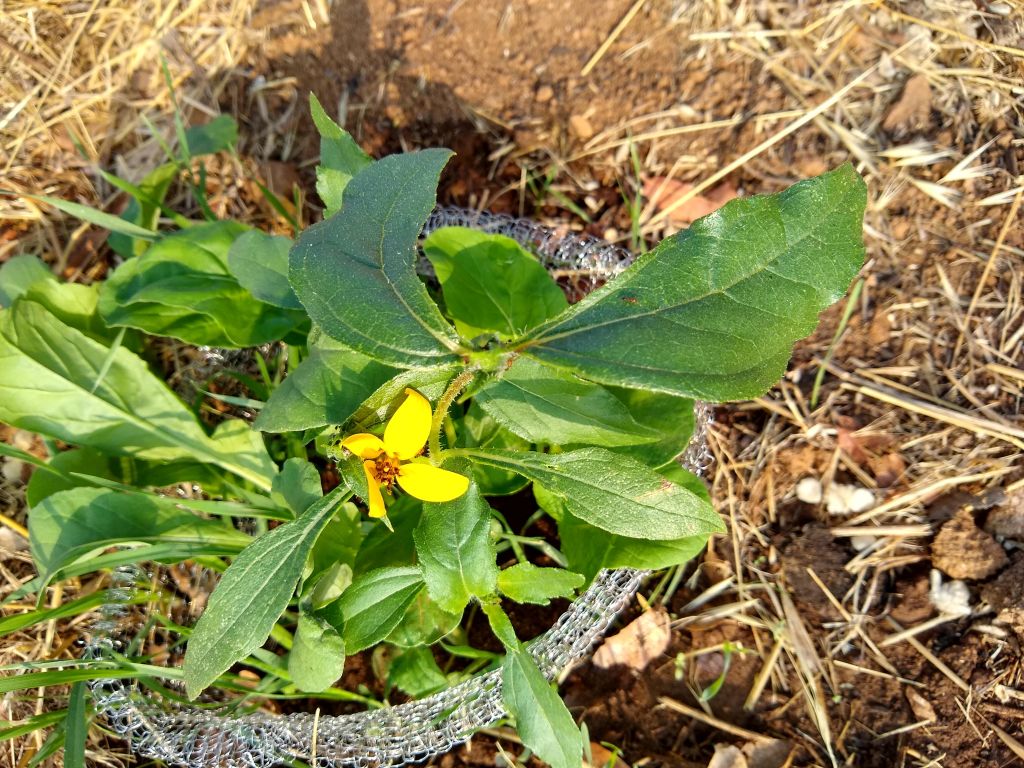
I looked around the entire fence. The breech was on the north side. I had built up the south, east and west sides, but felt the north looked fairly solid. Clearly, I was wrong. My heart was in my stomach terrified of what plants I might find gone or trampled. Luck was with me; all the butterfly plants were still there and intact. One had been pulled at, but had not been pulled out. I could breathe again! I tipped that plant back upright and patted tight the soil around its base. It looked like the intruder, enticed by the lush lengths of green, passed the currents and went right for the grass. The cow pie was smaller in size, so I guessed the interloper was an older calf or a young heffer. Usually, you can tell the difference in the poop. Calves have a slicker output since they are still taking milk, but the pie was in the water – so no telling who it was.

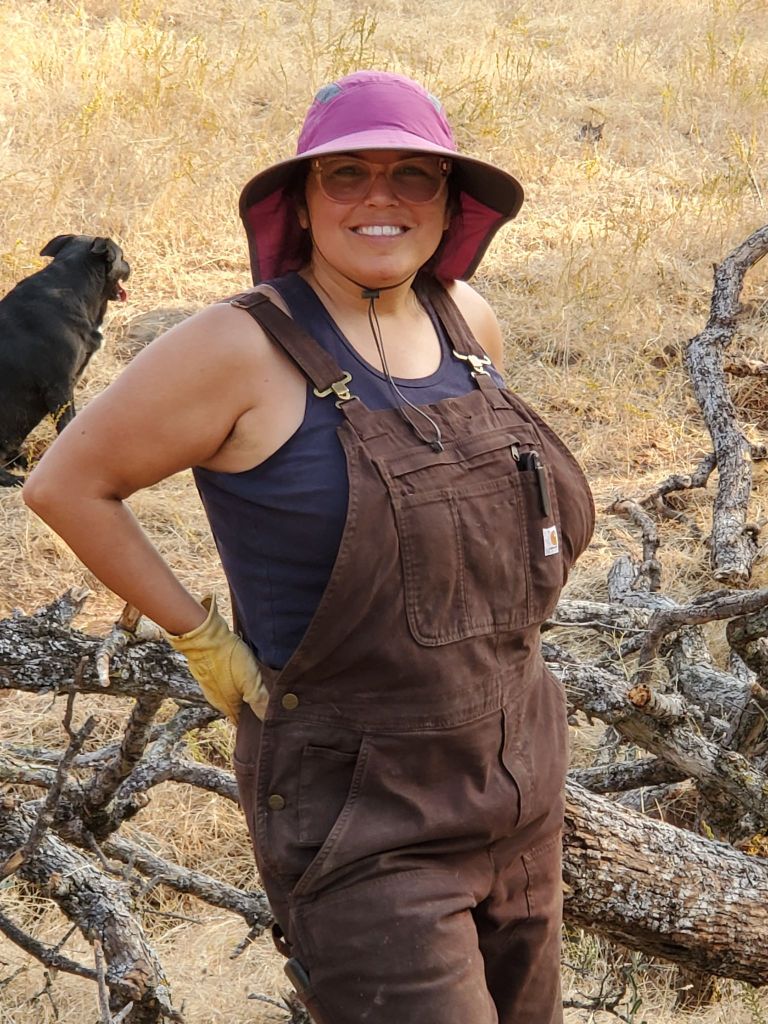
No matter, I began hauling branches to shore up the north side. I was not prepared with proper clothing, such was my hubris about the thicket I had installed. If anyone ever wonders why they see people working on the ranch in long sleeve shirts in the summer, it is to protect your skin. I was desperate to fix the hole immediately, so I worked despite having shorter sleeves on. My skin was scratched and bruised, but the hole was filled. Oh well. That is life on the range.

Not the half of it. Scrapes and bruises on my arms

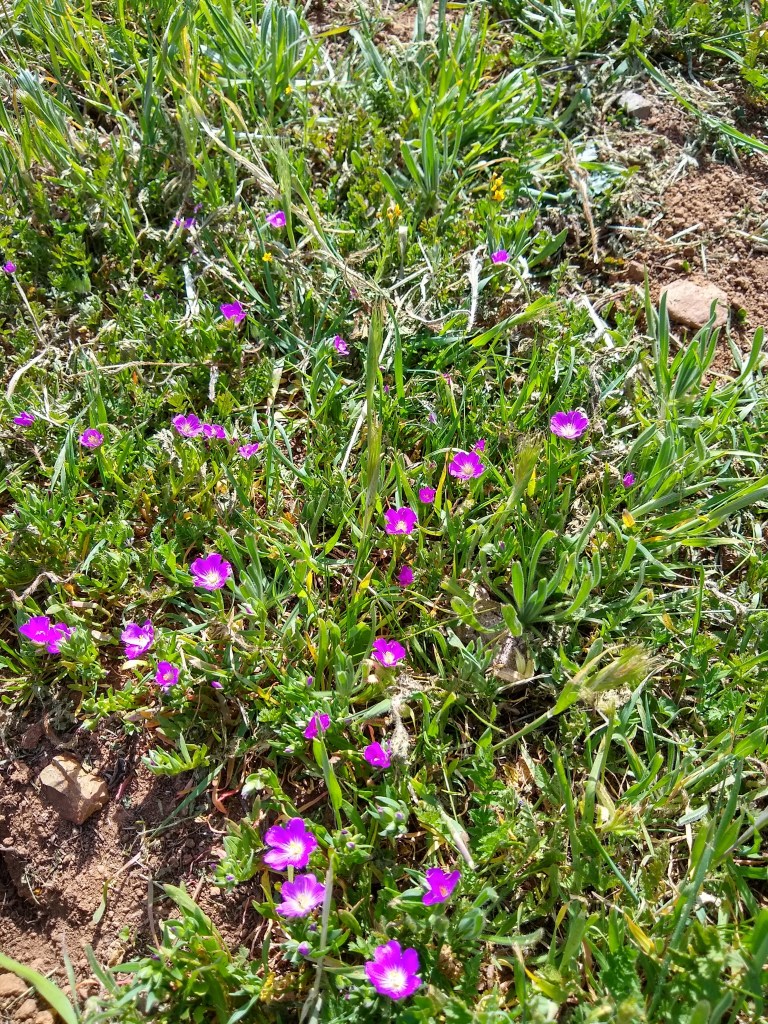
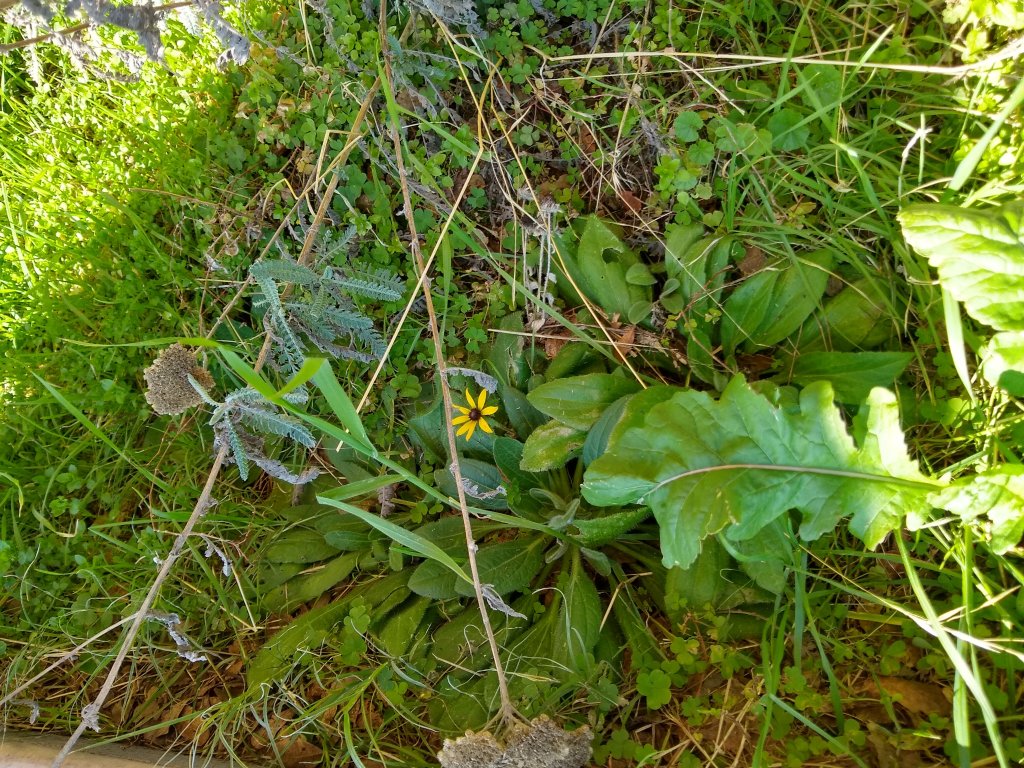
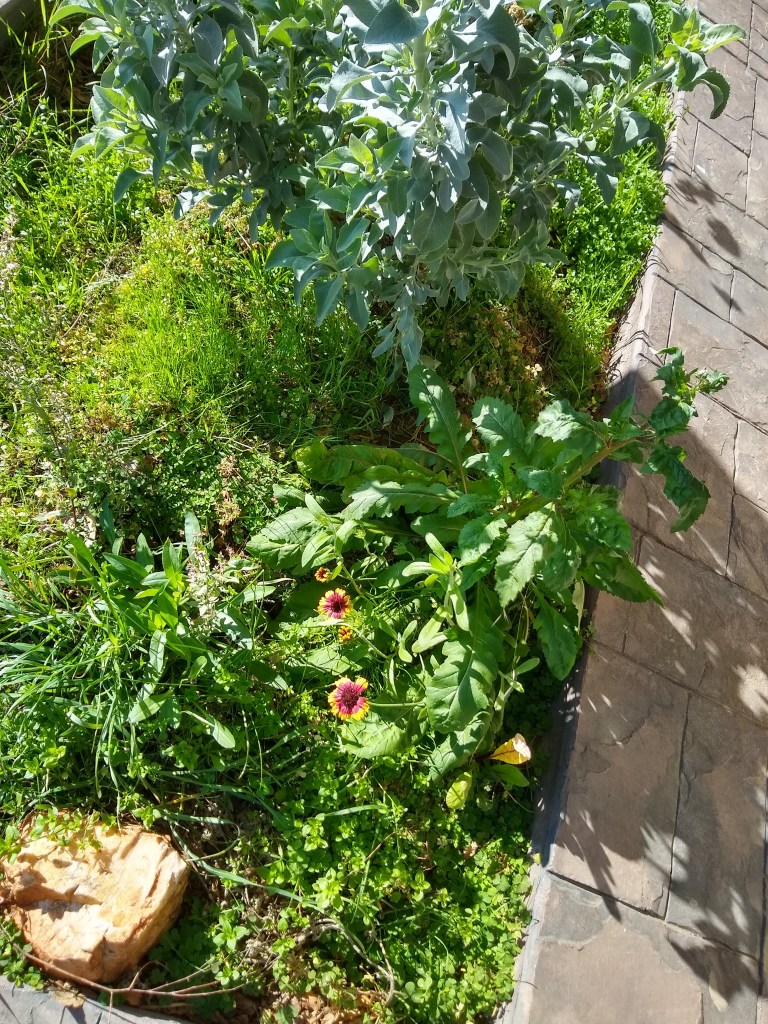
Wildflowers

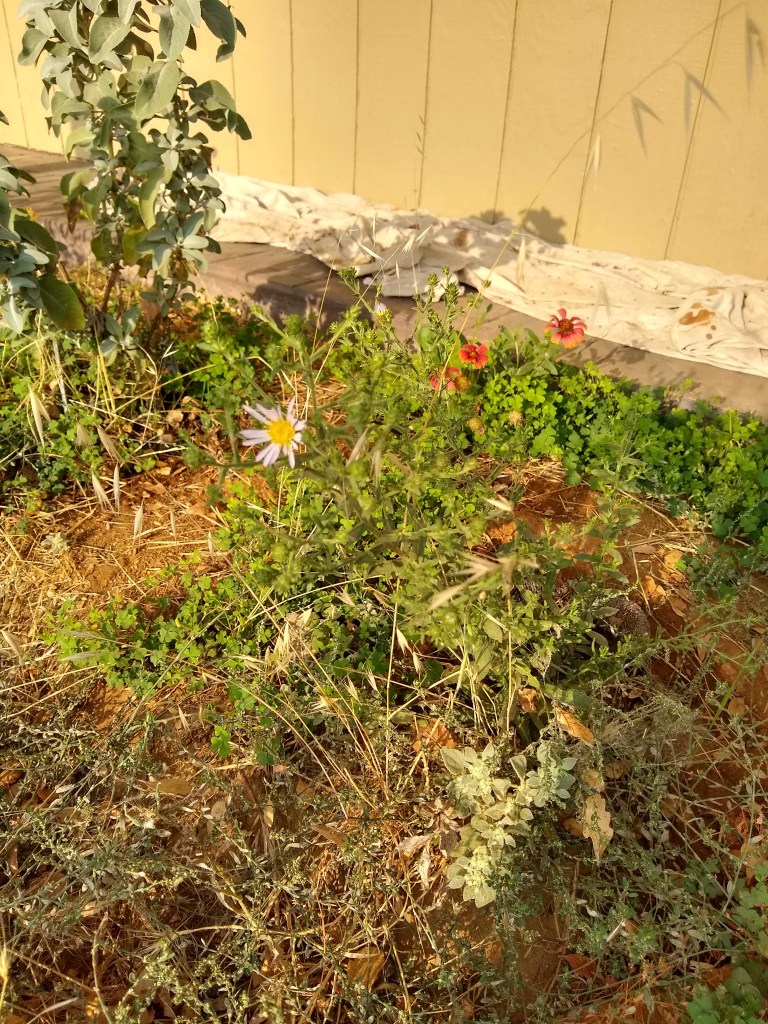
Pretty low growing wildflowers

Several blog posts ago I discussed that David and I planned to cut the grass early this year to see what would grow. It was a good idea that David proposed. We typically leave the grass to grow long thinking that it would protect the top soil and help the soil retain moisture by protecting the soil from wind and shading it. We cut the grass in February and found that we had a proliferation of wildflowers.
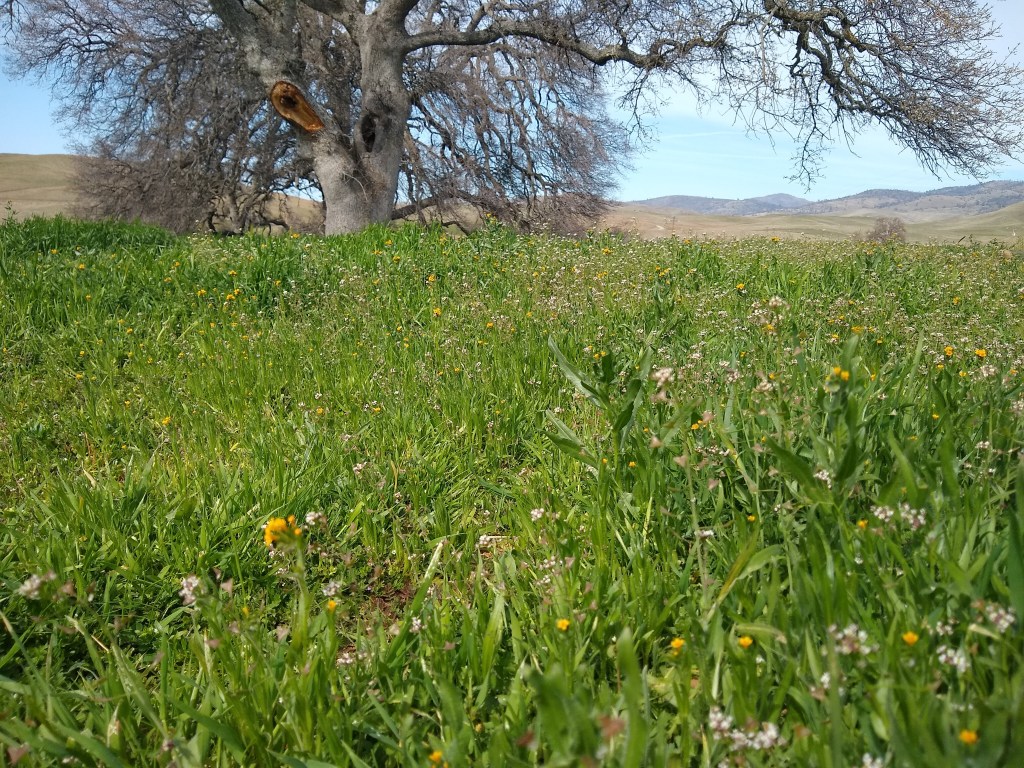
Proliferation of white flowers with some orange ones mixed in

The small white flowers that popped up were the same ones that we always see on the cattle road. They are the first to bloom and fill the air with nectar. How exciting it was to have them in such large numbers near the house. The bees are loving them. We also have a proliferation of the small magenta flowers near the house, which we typically see in smaller amounts. Of course, the timing and amount of rain impacts what grows too. Shortening the grass so that the sun could hit the soil and seed significantly contributed to the larger amount of wildflowers. We will continue this practice.

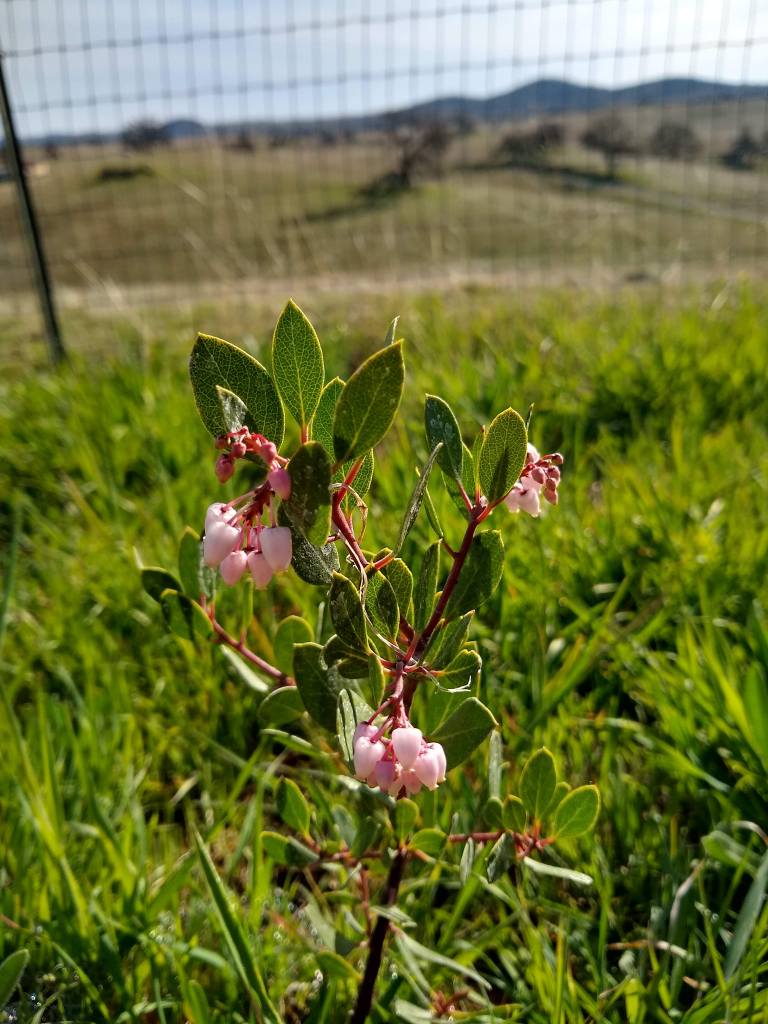
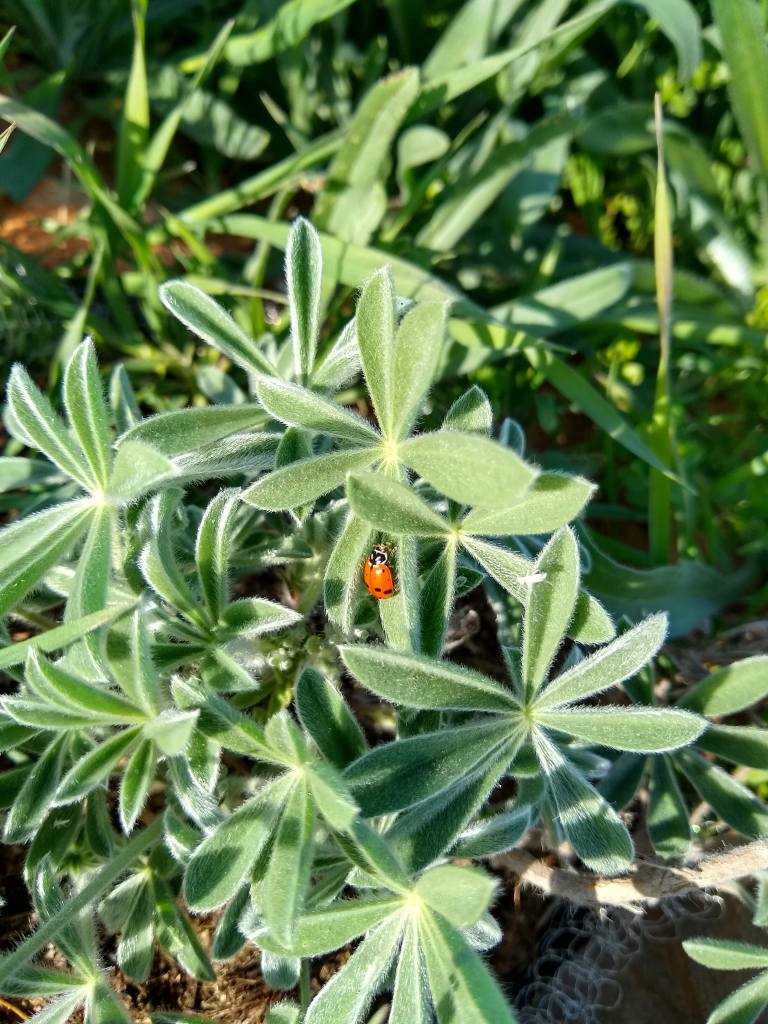
The blue dicks and poppies are blooming. We get both of these regularly. It is so much fun to see the empty stems pop straight up out of nowhere knowing there will be a blanket of purple in a few short weeks. The manzanita planted last year with the Xerces hedgerow kits are blooming. What gorgeous pink blooms. The coyote mint has finally taken off. I am looking forward to their scent. The lupine is growing well, but will not bloom for a little while longer. Lady bugs are all over the plants. What a welcome site. Finally, I found a remarkable surprise – soaproot. I have seen it on the ranch here and there, but the cows always eat it before I can try to protect it. For the first time, I found it in the house enclosure. What a joy. It is a traditional plant my Mi-Wuk cousins used for grooming.
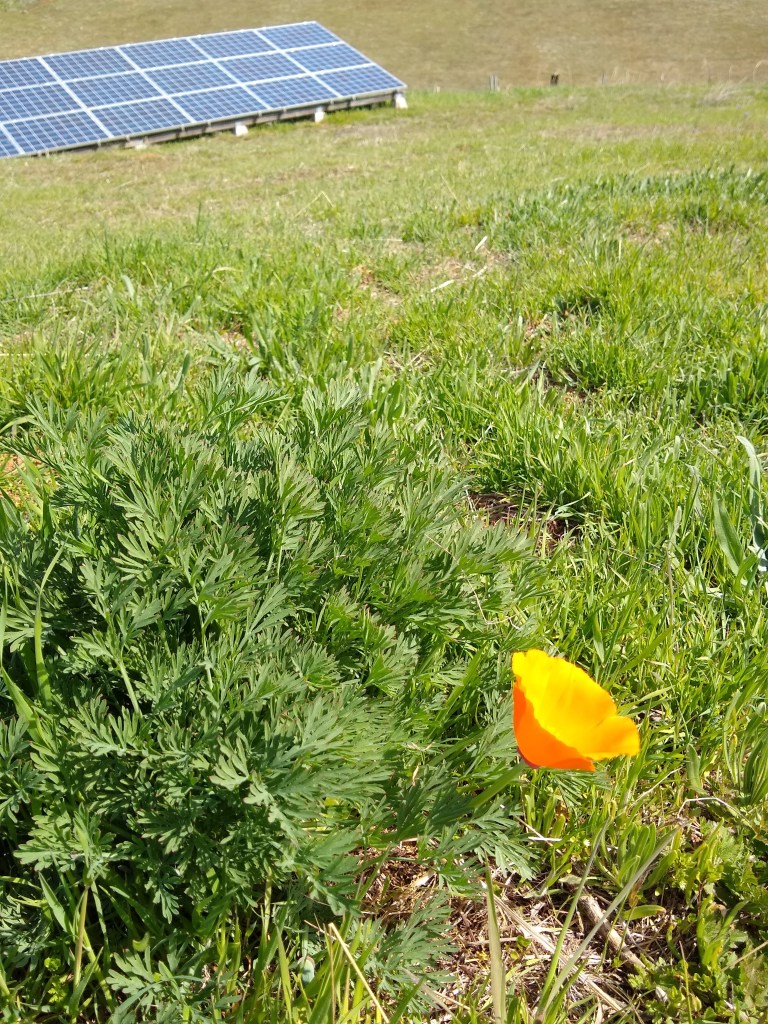
More Butterfly Plants Planted – Milkweeds are Starting to Re-Sprout
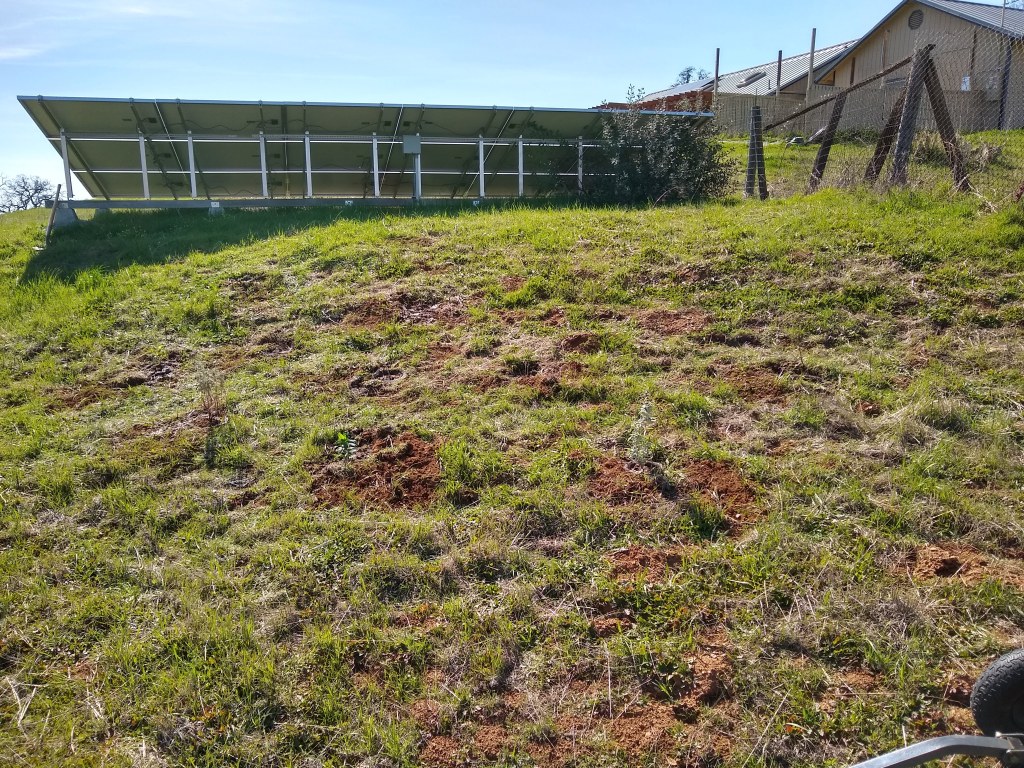
A butterfly pad on the north facing slope near solar panels
A pad on the east

I have taken delivery of 36 butterfly plants and have planted 24 so far. The concept is to plant nectar and milkweed together in a group so that there is everything the monarchs need to live, and to plant many of those groups. I am attempting to create butterfly “oasis” or “pads” (like lily pads for frogs) for them to flit from one to the next. In the home enclosure we now have four pads, two milkweed patches, disbursed nectar throughout and two hedgerow sections with nectar plants.

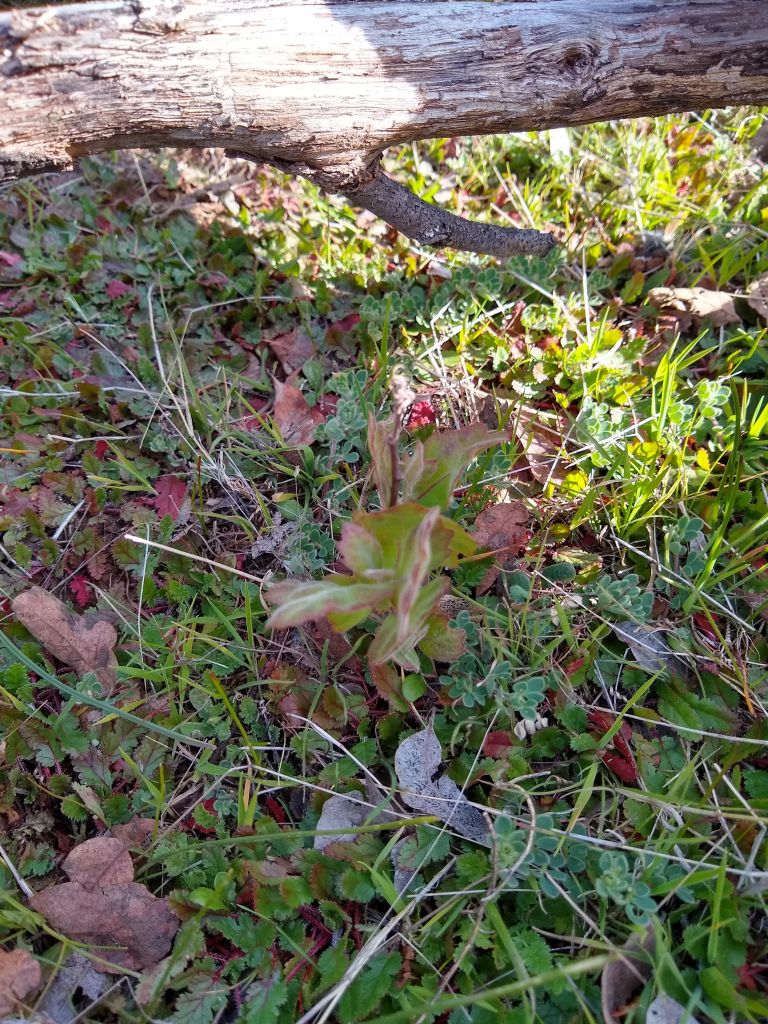
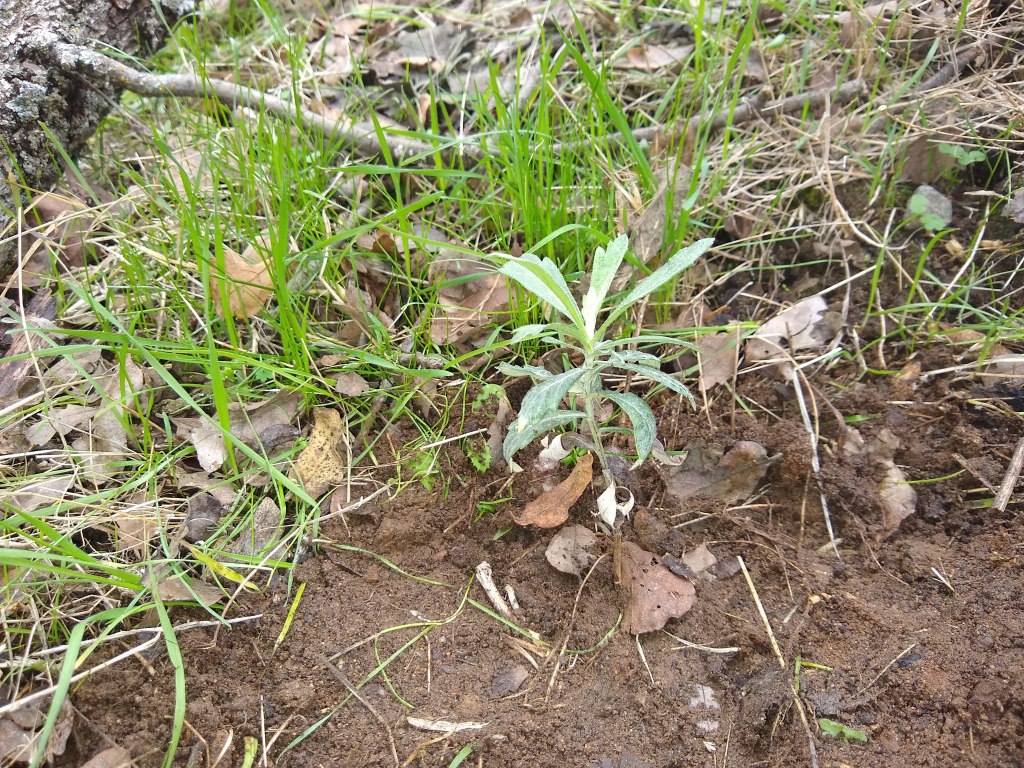
Milkweed sprout

We have already seen six species of butterflies – a whitish one, a mostly black one, a viceroy, some painted ladies (we think – they move so fast), brown with some faint orange in the middle of the wing and brown moth like ones.
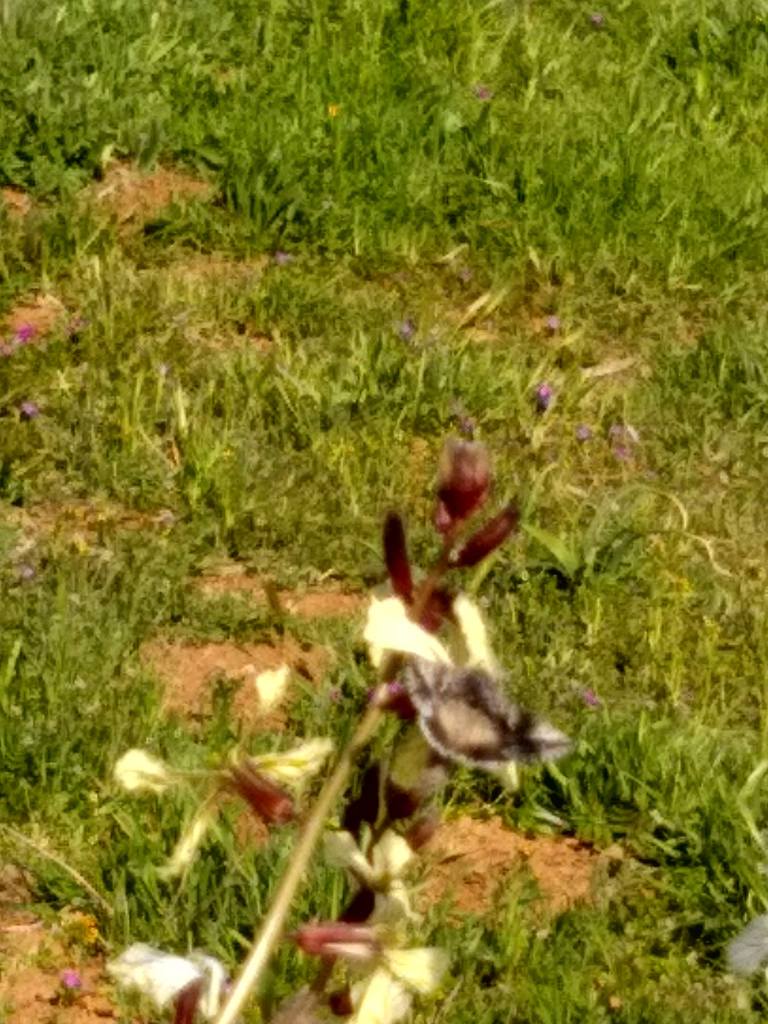
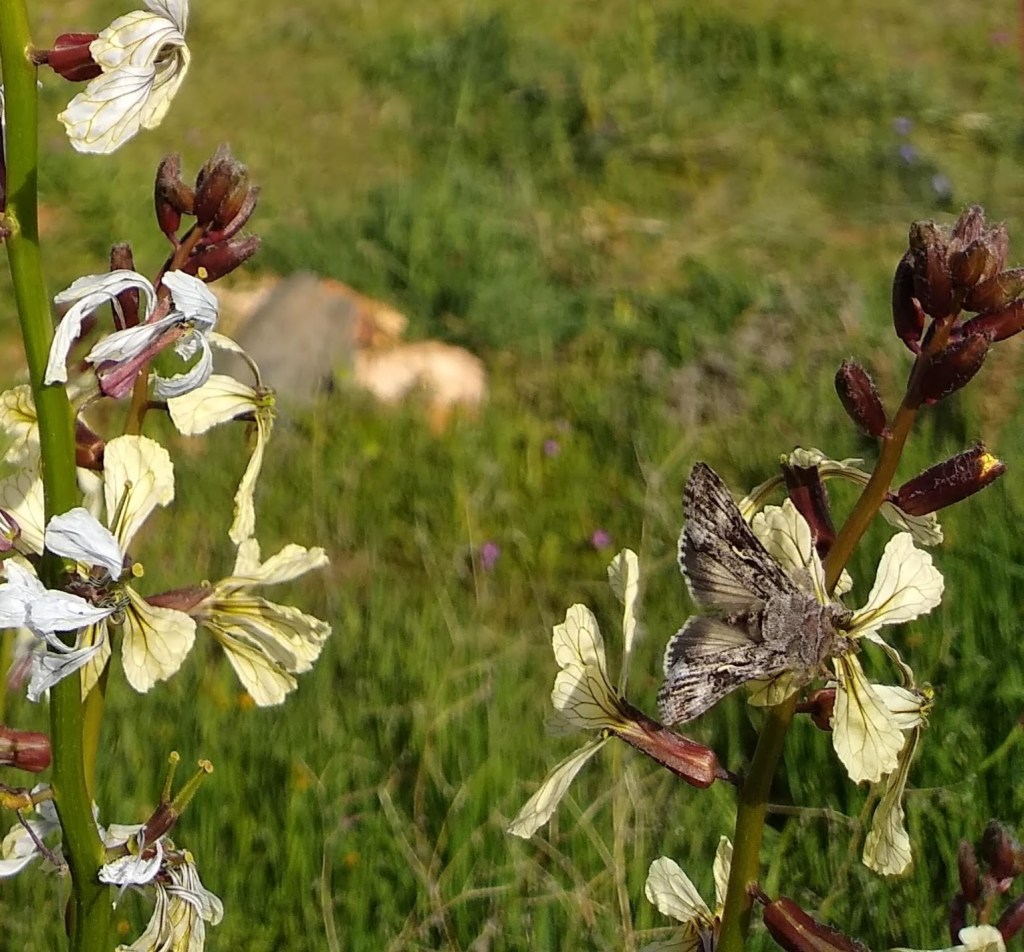
Brown with black markings
Brownish butterfly

Other Items

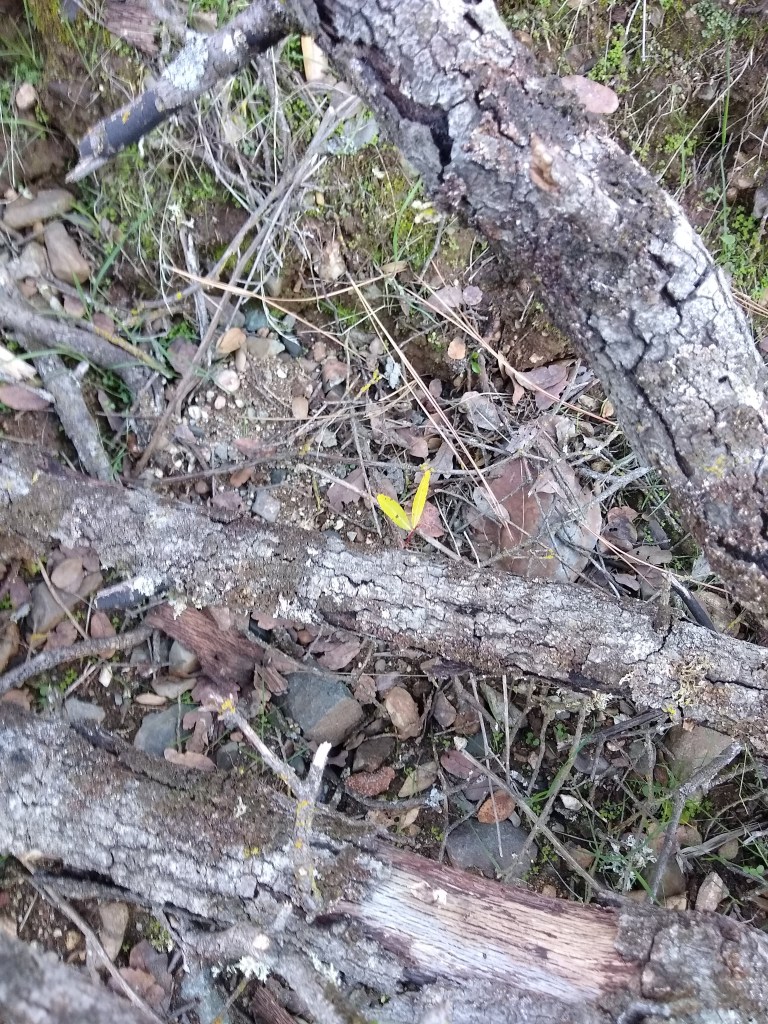
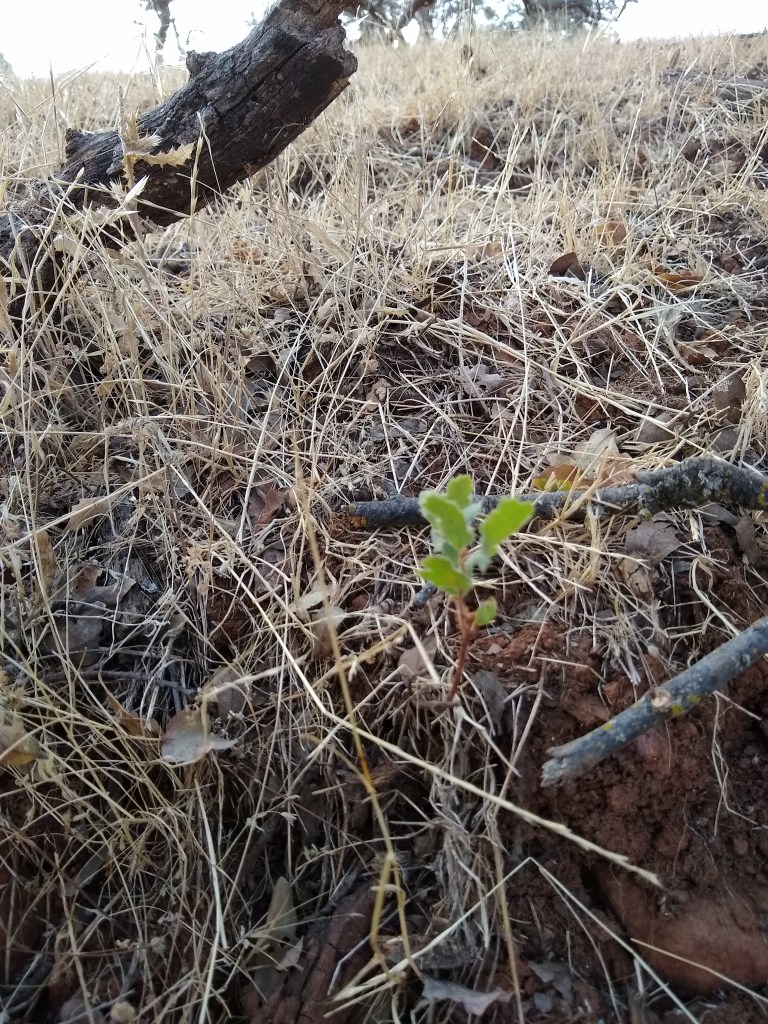
Healthy oak seedling with leaves

Over time, I have felt more comfortable that I know how to protect myself from the virus. With this comfort, I have had a handful of friends and family who I know follow good practices over to hike or have a meal on the patio. I was overjoyed to have my friend Maggie come over for a hike this past weekend. She has a well-trained eye and ear as a naturalist. Besides identifying blue bird calls, poison oak and a red tail, on our hike she spotted a healthy oak seedling. Somehow, it had avoided detection by the cattle. Maggie and I quickly made a brush pile to help protect it. I will go back out this weekend and build a cage around it. It is in a good spot to grow without other oak competition for light. How wonderful to have friends over again and to share the land with another person who loves it.
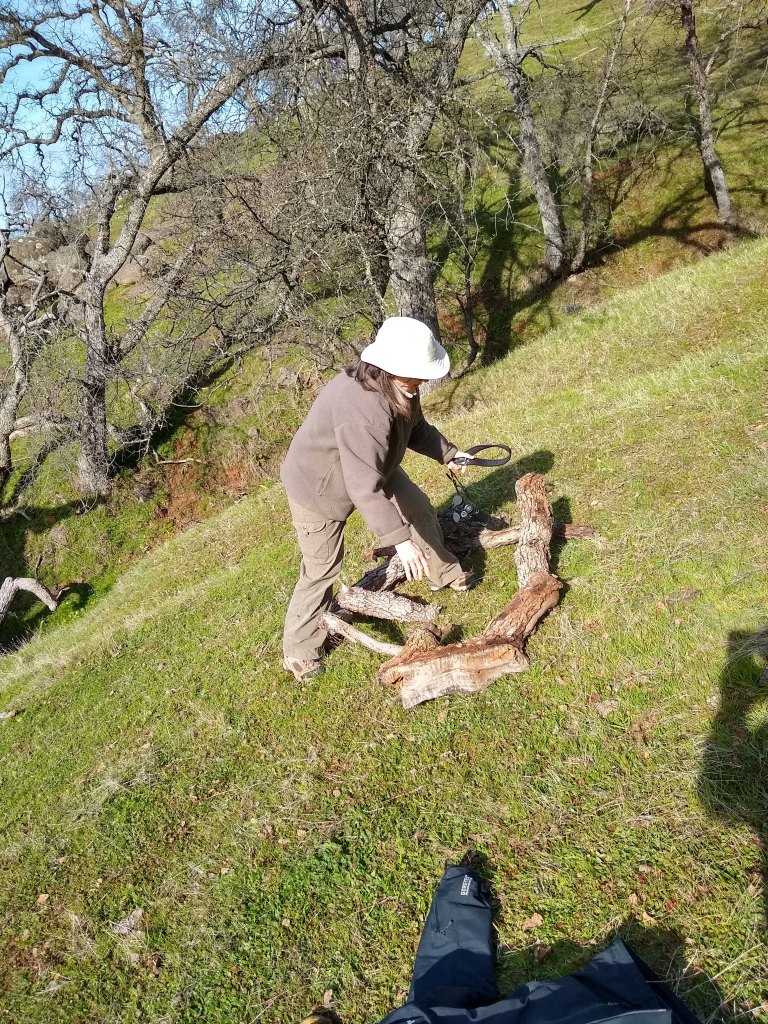
This brush pile is likely not enough to protect it long term. It is fairly small. It may buy me time however to build a cage around it.

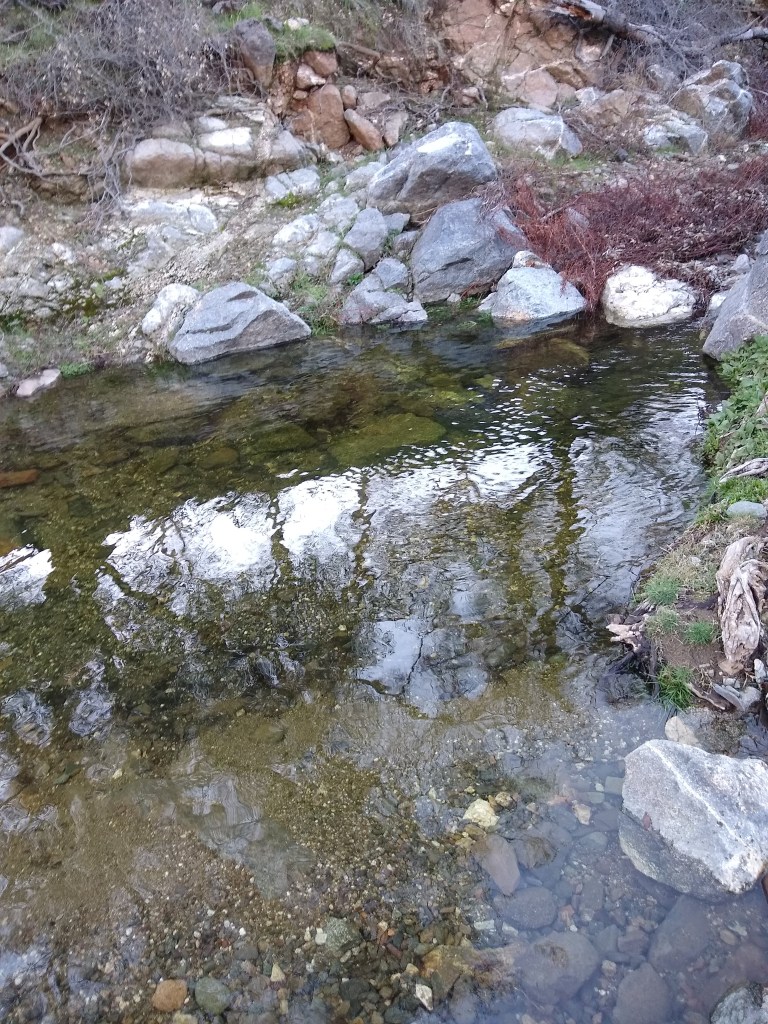
We also had the opportunity to go to Odom Creek and check on the willows and mulefat. All were still there and doing really well.
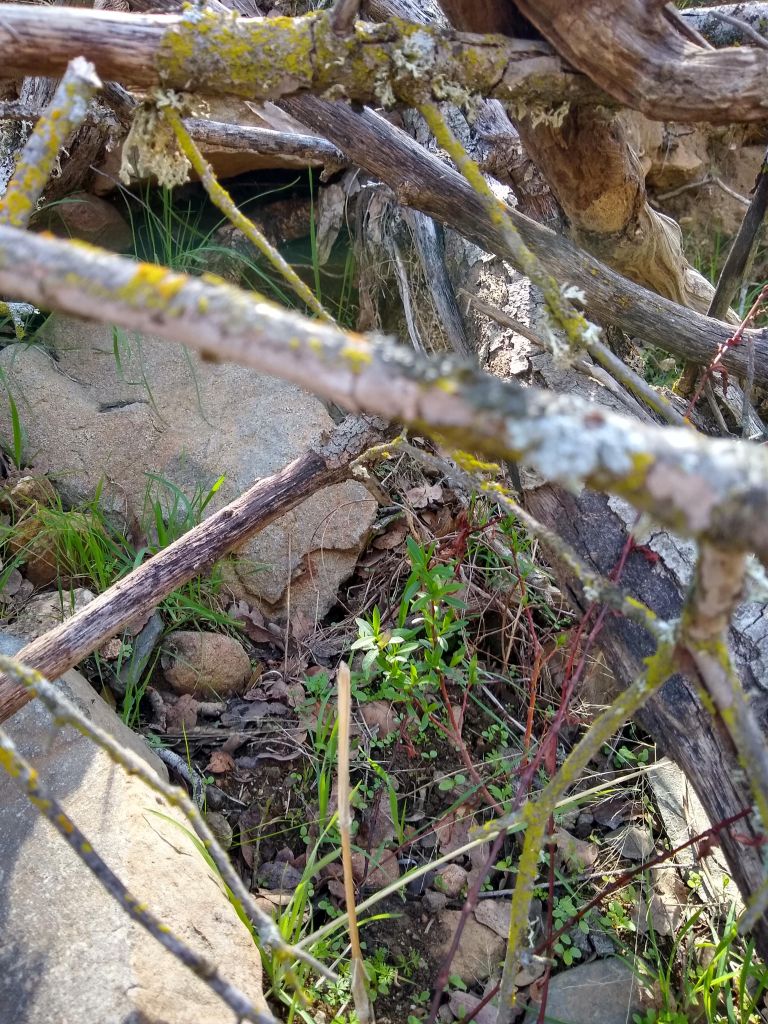
Willow doing well inside the brush pile

In addition to all the planting, I continue to educate myself and participate where I can possibly help. To this end, the CAFF conference was excellent. I leaned about a wide variety of topics that could be helpful to my work, such as financing. I was also asked to join a monarch and rangeland working group tasked with expanding habitat on rangeland. I am not sure what value I will be able to bring, but it was good to meet and learn from so many others. At that meeting, I met Susie Calhoun. She is another land steward building habitat on her family ranch. She and her family are doing a great job. Check out their website to learn more and see some beautiful photos. https://www.3calhounsisters.com/
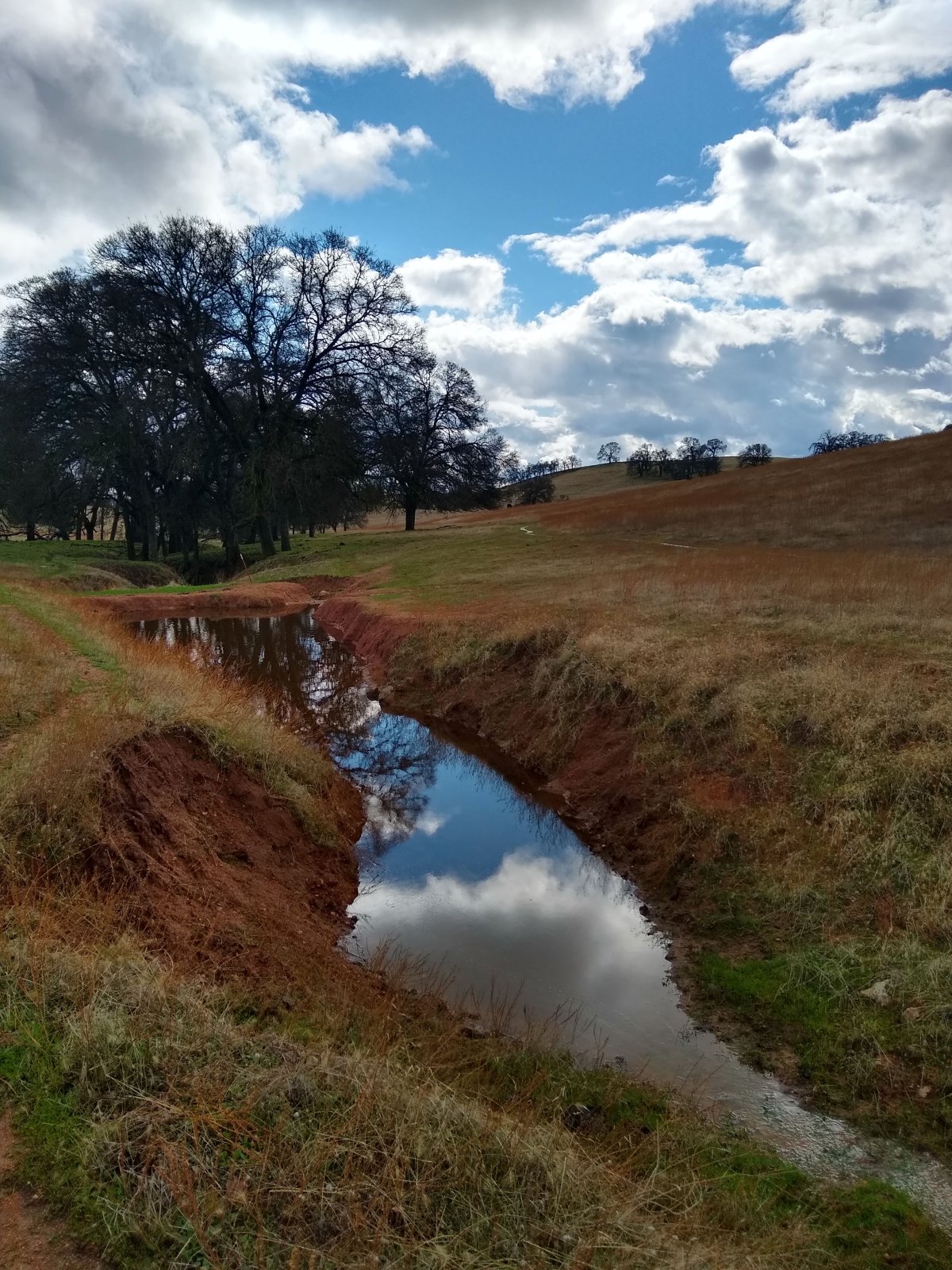
Rain Comes – More Needed

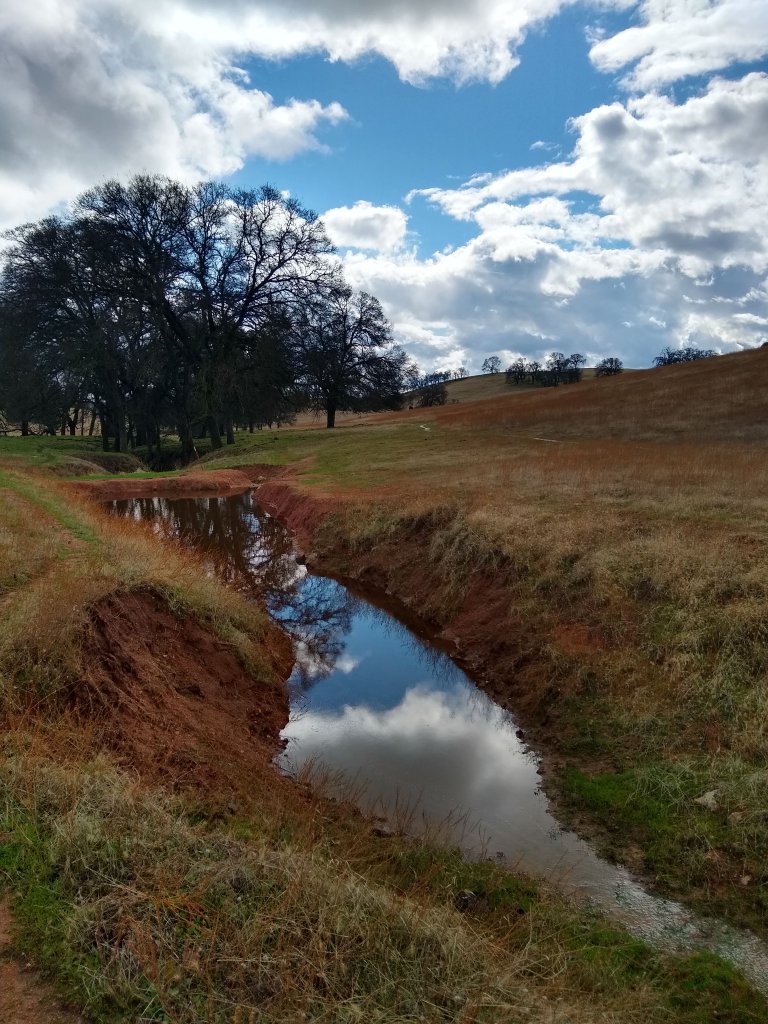
Swale Pond full at last

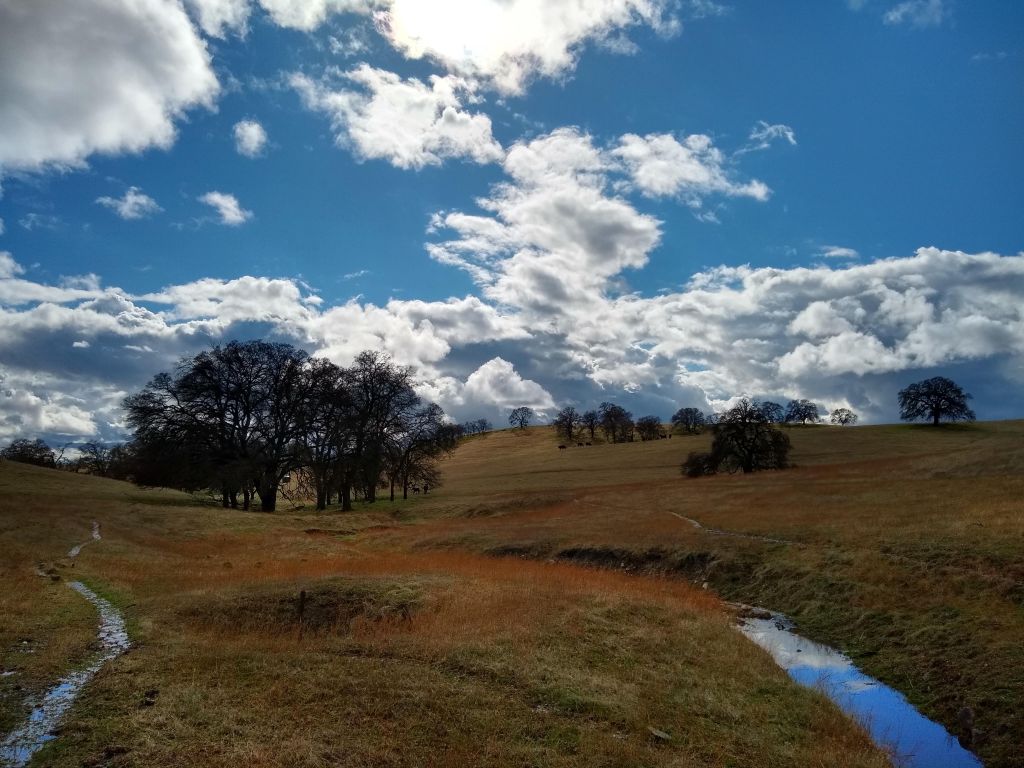
There were several days of rain over the last two weeks, with two continuous days of rain last week that were the real soakers. In those two days, we received 4.5 inches. It has been much needed. We are still in drought though, with a dry year predicted. Rain years are calculated beginning on October 1. So far, this rain year we have had 7.625 inches of rain. According to historic documentation, the average precipitation is 14 inches in Hornitos. We still have a way to go, and hopefully we go beyond that. The worse year of the five year drought this past decade was 9 inches. I don’t want to see that again. It was horribly dry, and that was the year the large spring on the mid section of the ranch finally dried up. I never thought I would see that. Our cattleman even had to haul in water.

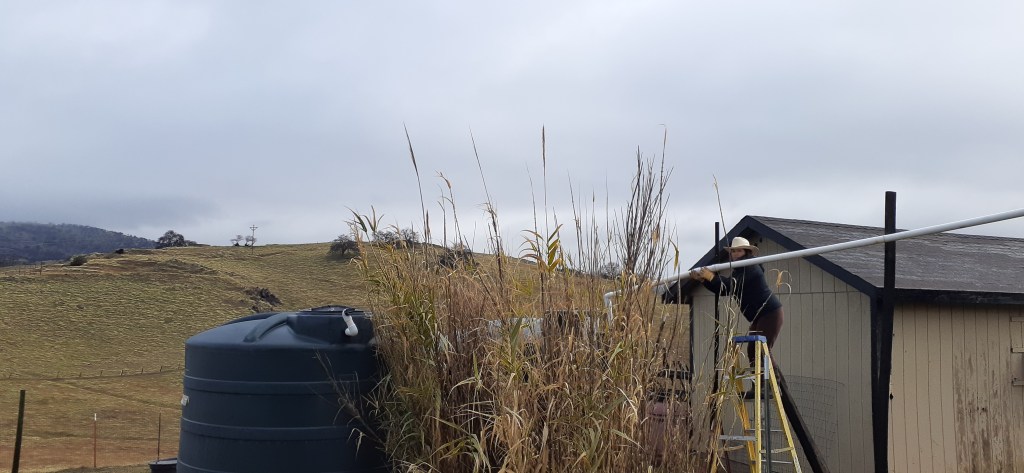
Heather reconnects pipe that had become disconnected

The winds were so terrible that my rain water catchment system failed. My husband and I went out three times to fix it. In a storm where the tank should have been full, it is only at half its capacity. So disappointing! The first occasion, the pipe had split in its mid section. The second occasion, the pipe had blown away from the downspout in one place and had disconnected in the mid section again. The third time, I found that the tank exit pipe had somehow gotten unglued and had been leaking the entire time. When I banged on it, it came completely off and the precious water collected began gushing out. I re-nested the pipe back over the other with all my strength. I got soaked in the process. Fortunately, my husband was out there with me that time, and ran to get the wet glue, which can still stick pipe together even when wet. He ultimately fixed it. The ground was soggy, and it was difficult to balance the ladder on the decline, especially in the wind. I almost fell off one time. I was able to keep the ladder upright as I followed the inertia and “walked” it down hill to a solid place before getting off. I got soaked on that one too. All I can do is hope that we get more rain without ferocious winds to fill the tank. I will need this water to keep the plants alive through the long, dry time.

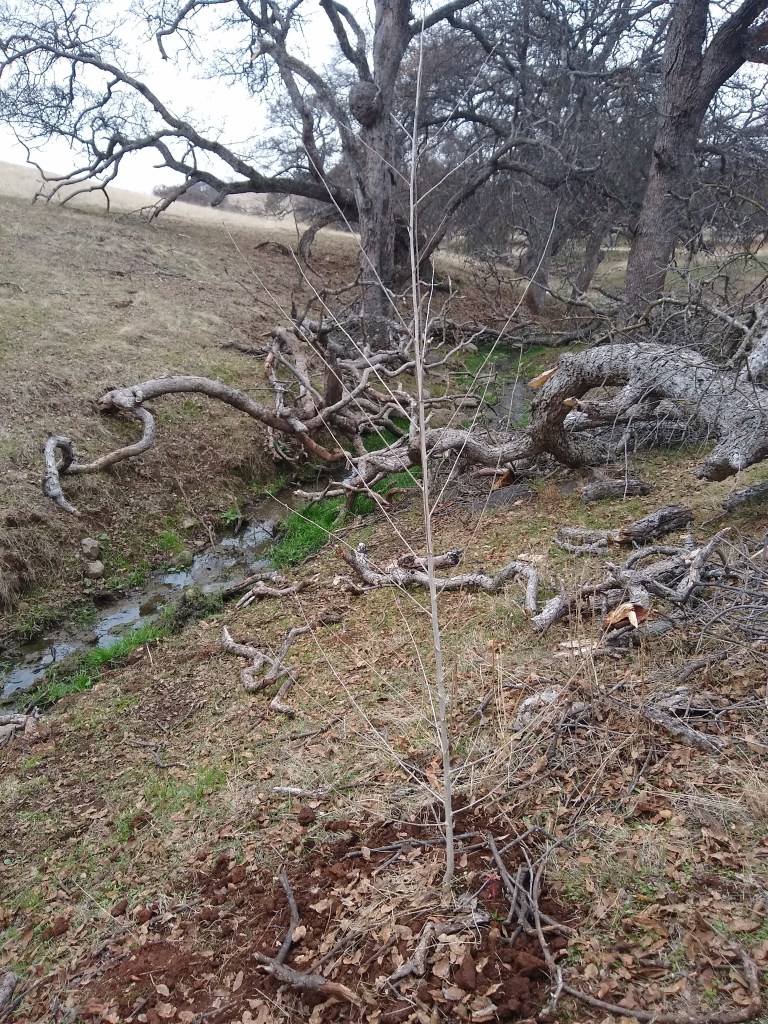
Cottonwood and cage still there

After the storm, I hiked around the property to check on the plantings. With the two straight days of rain and wind, I wanted to be sure the cottonwood and cage were alright as well as the plantings and branch fence and Odom Creek plantings with brush pile protections. I planted most of the plants close enough to the creek bed to get a soaking during high water, but not so close that the roots were in water all the time in the winter. I looked at the neighbor’s cottonwoods and my own buckeyes to see where they were successful in relation to the creek bed and followed that example.

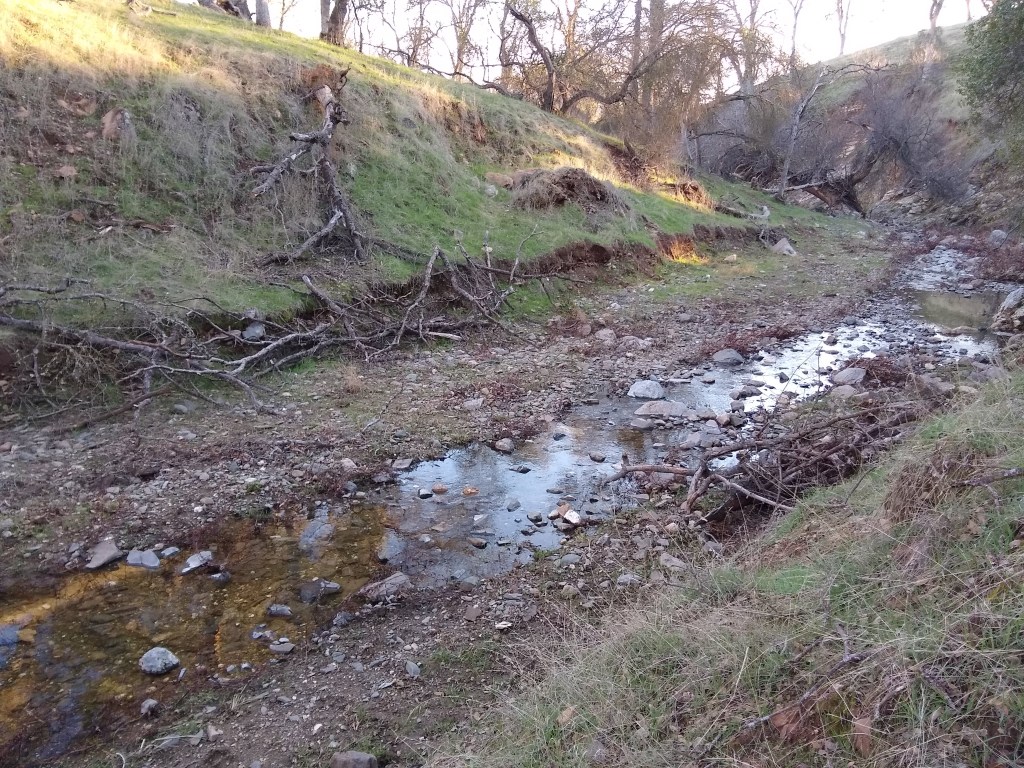
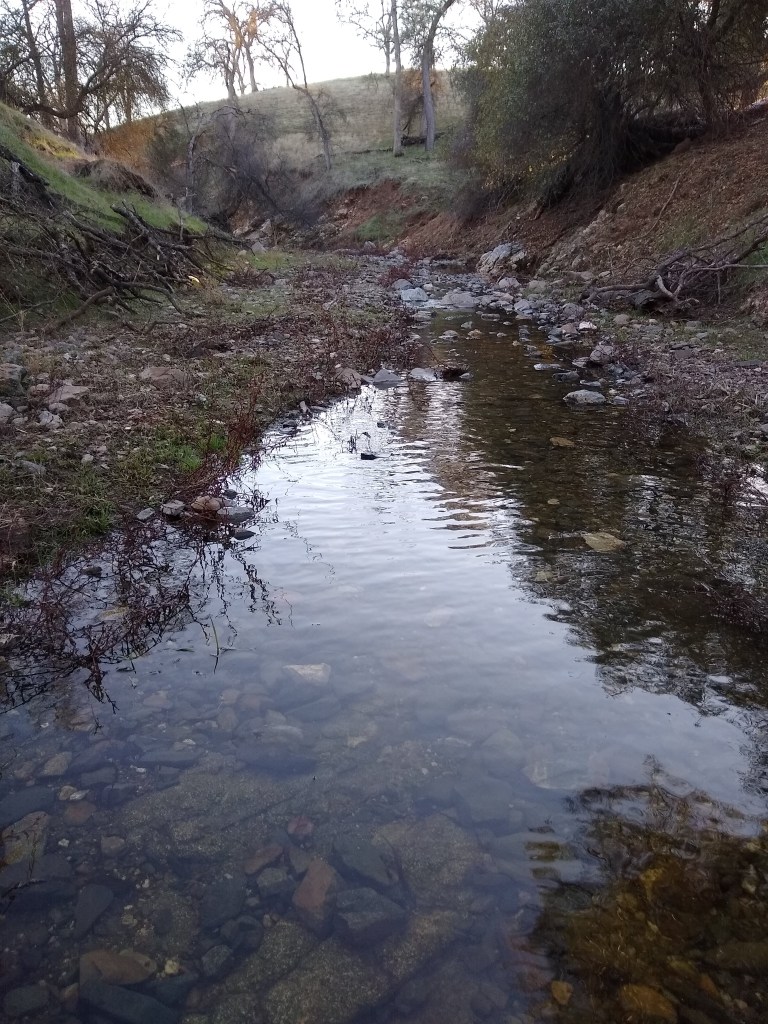
Fortunately, the two days of rain did not flood the spring creek and take the branch fence with it. There were a couple filler branches that moved downstream with the flow. I ended up replacing only three branches to fill a couple bare spots in the fence. Overall, I was really happy with the outcome. There are a few bulls on the ranch now along with the cows (It is that time of year for love.), and I have some concerns that the bulls will just push through it to get to the long blades of grass on the other side. I will keep watching.

I also checked Odom Creek. There, I thought the flow would be greater with more of a chance that the brush piles over the willows would be washed away. To my surprise, it did not look as though the water reached the plants on the east side. Although the ground was wet, the dirt did not look dark as if the water line reached them. The water clearly soaked the willow on the west side. Each brush pile was intact. All plants were present and accounted for – four willows and one mule fat.

Other Monitoring

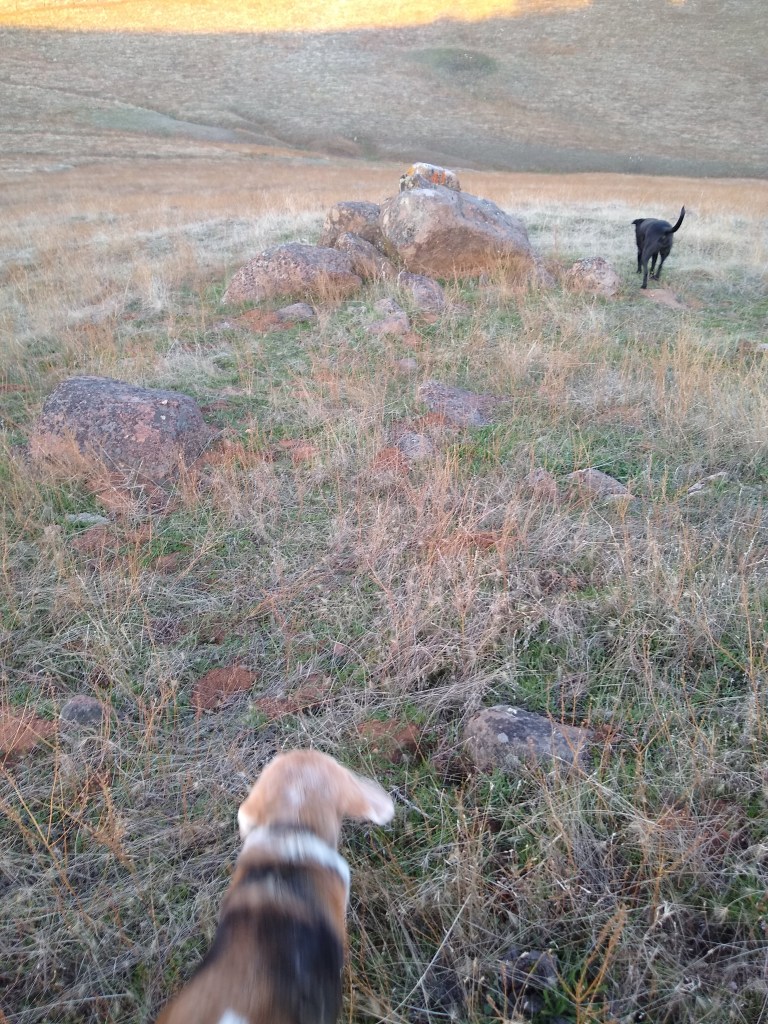
Looking for a. California sprouts with Andy and Bibi

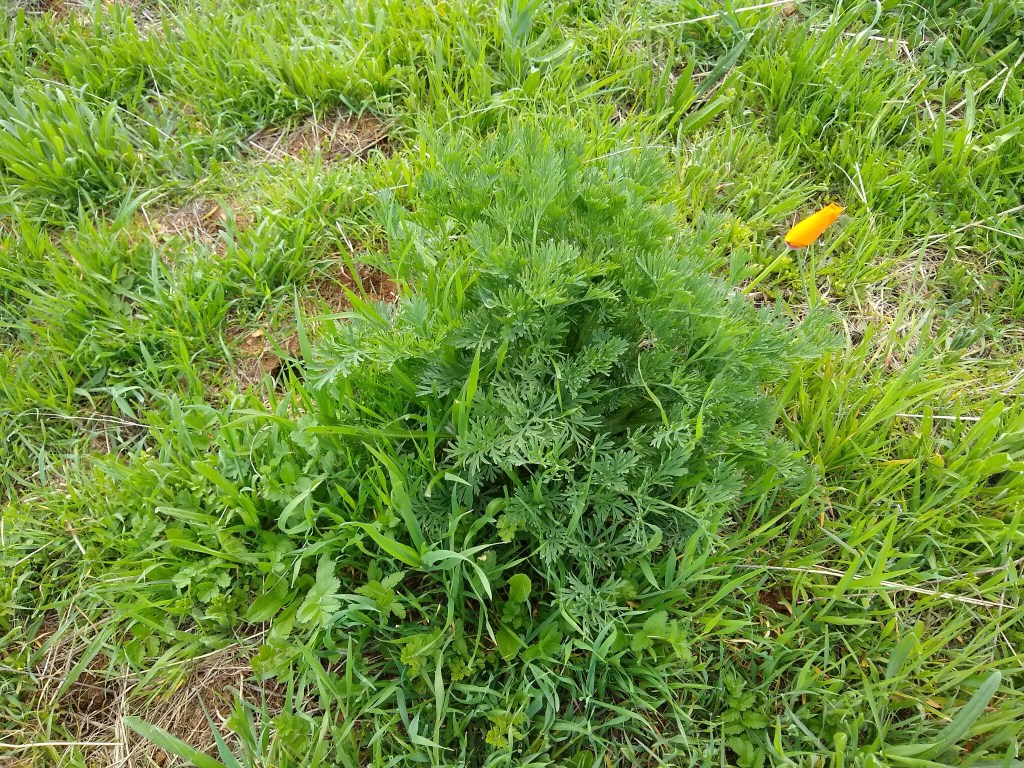
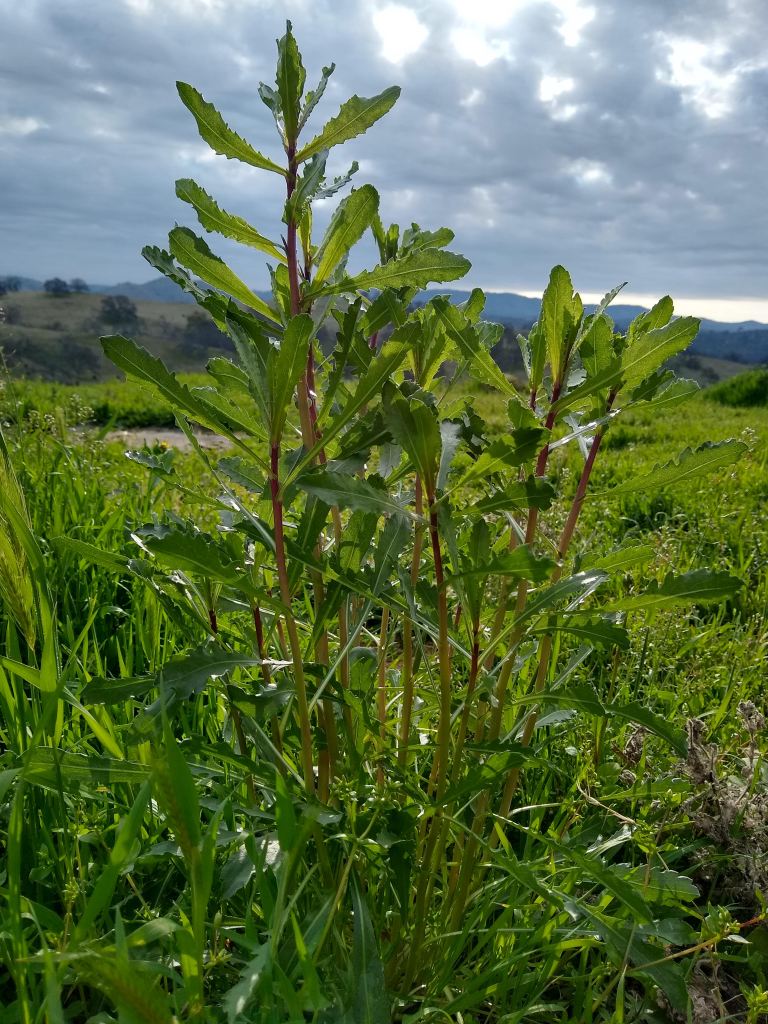
I have also been checking the a. Californica site closest to the house for sprouts. Last year, there was no rain in February, which I am thinking stunted grass grown allowing the a. California milkweed to get a head start on growing. This year, with rains in February, I am concerned that the grass may grow faster than the milkweed. I want to watch for its remarkable leaves and trim the grass in that area to give it a chance. That early milkweed will be important for the monarchs.

Planning for Spring Planting

Ron Allen, UC Master Gardener and Co-Owner of Mariposa Native Plants

Ron came over to discuss the next plant order. I asked for his guidance on my plan and showed him the areas where I was thinking of focusing this Spring. He also got a chance to see what was doing well, and what didn’t make it. Overall, things looked good. I placed an order for 89 plants. We are continuing to go big for the monarchs.

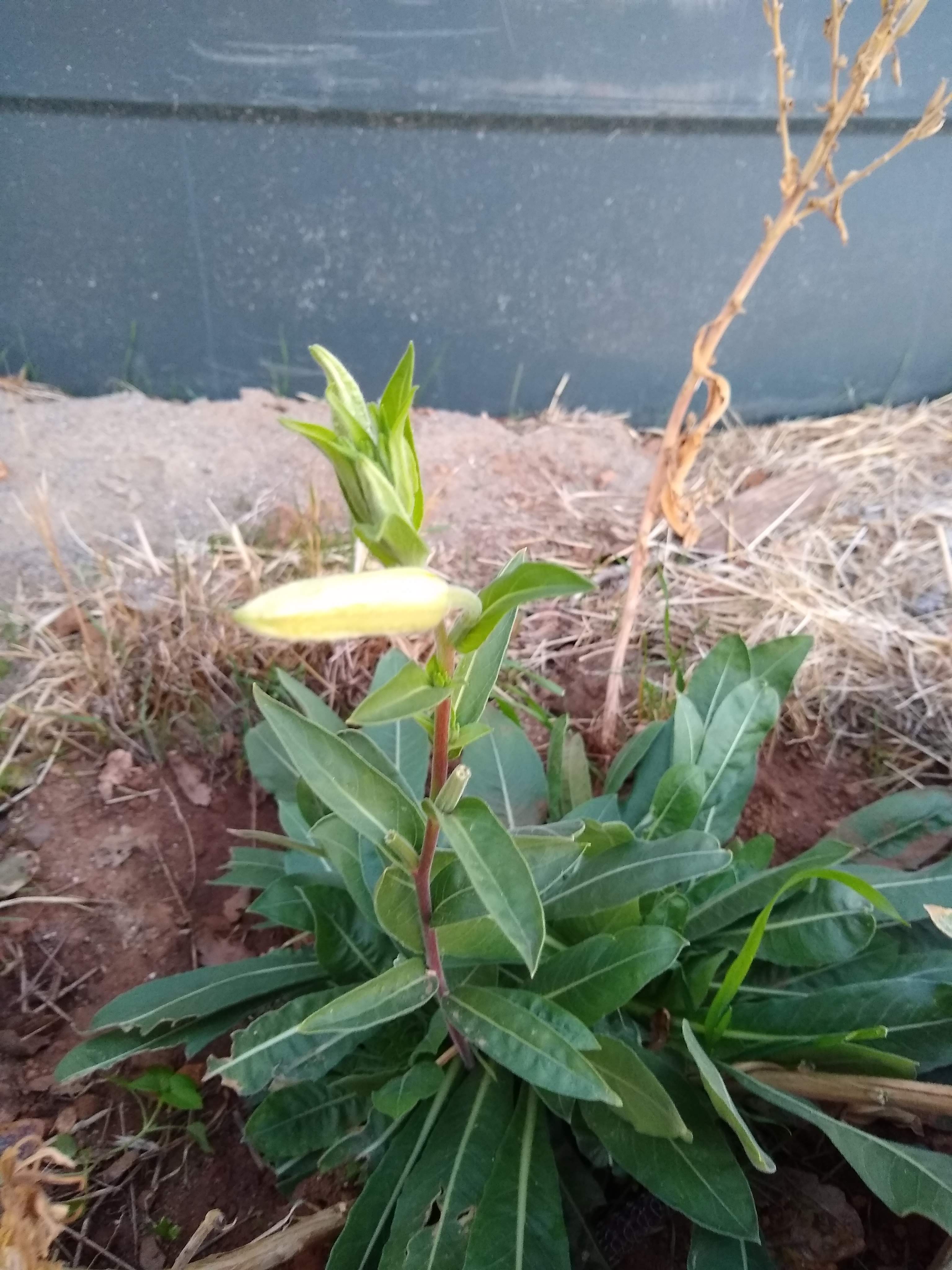
Already wildflowers have bloomed. I see blue dick stems and poppy leaves sprouted. The primrose never stopped blooming. Spring is around the corner. I am going to plant anything I can for February. The milkweeds won’t be ready, but there should be some nectar plants available then.

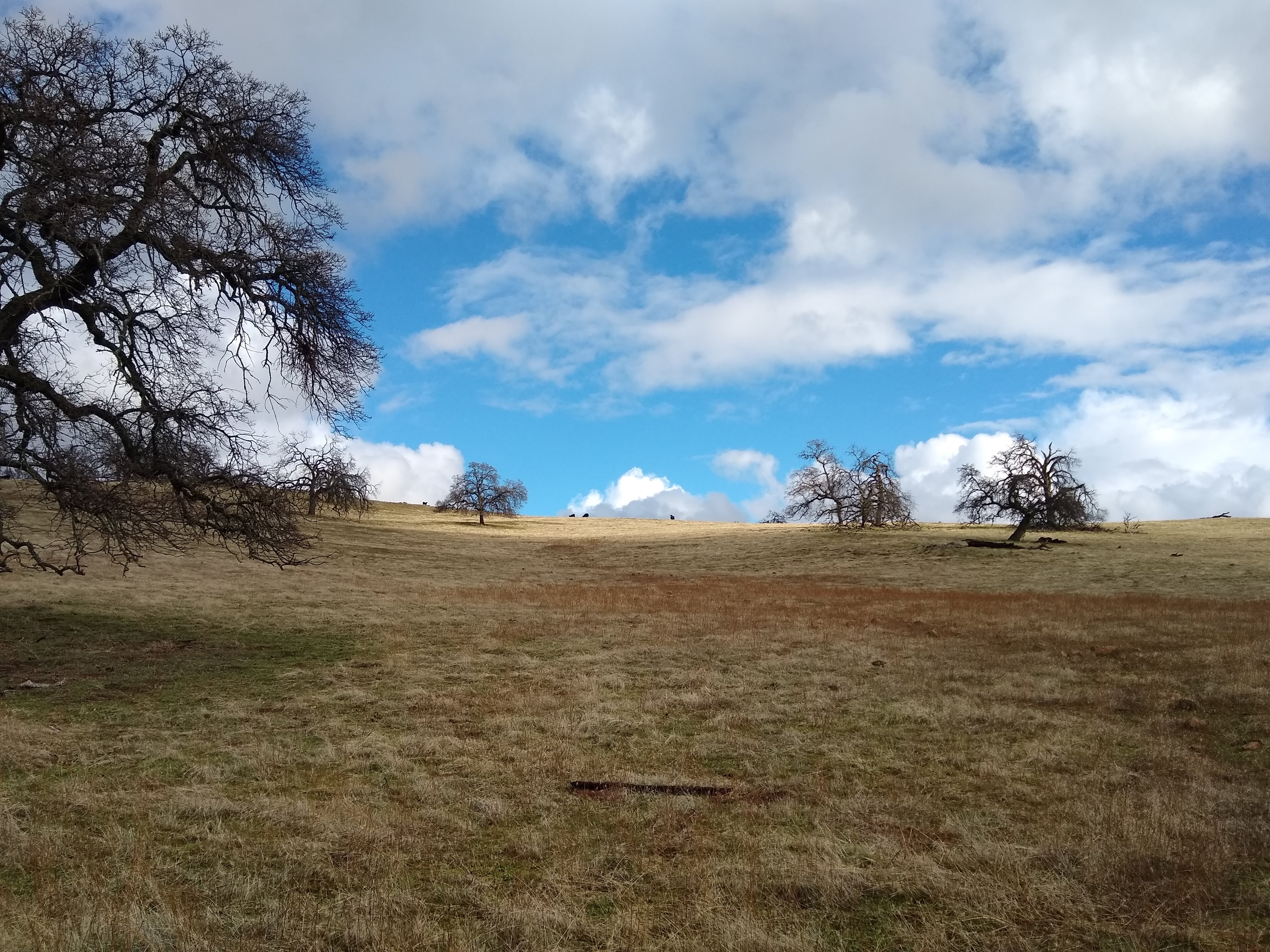
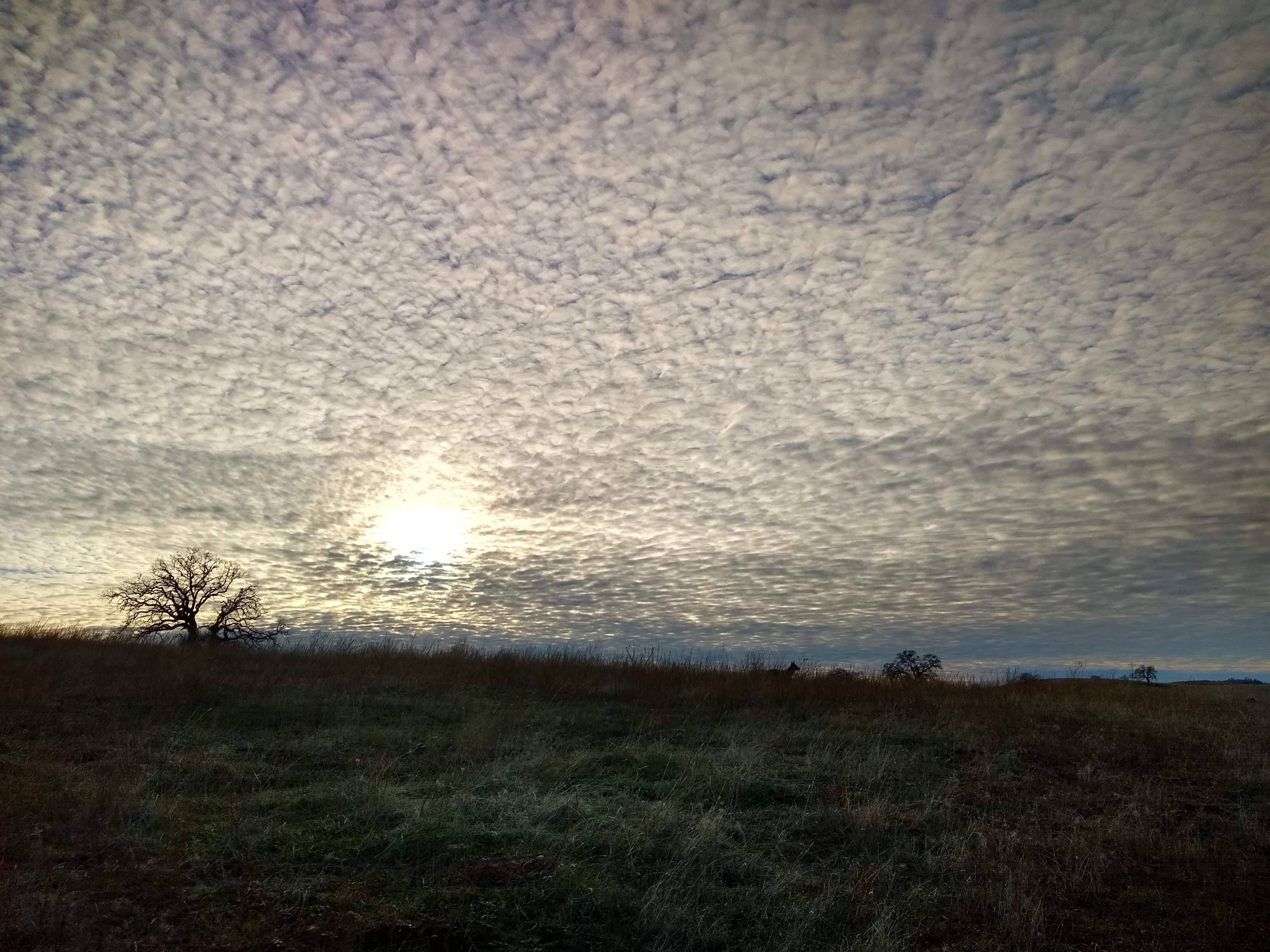
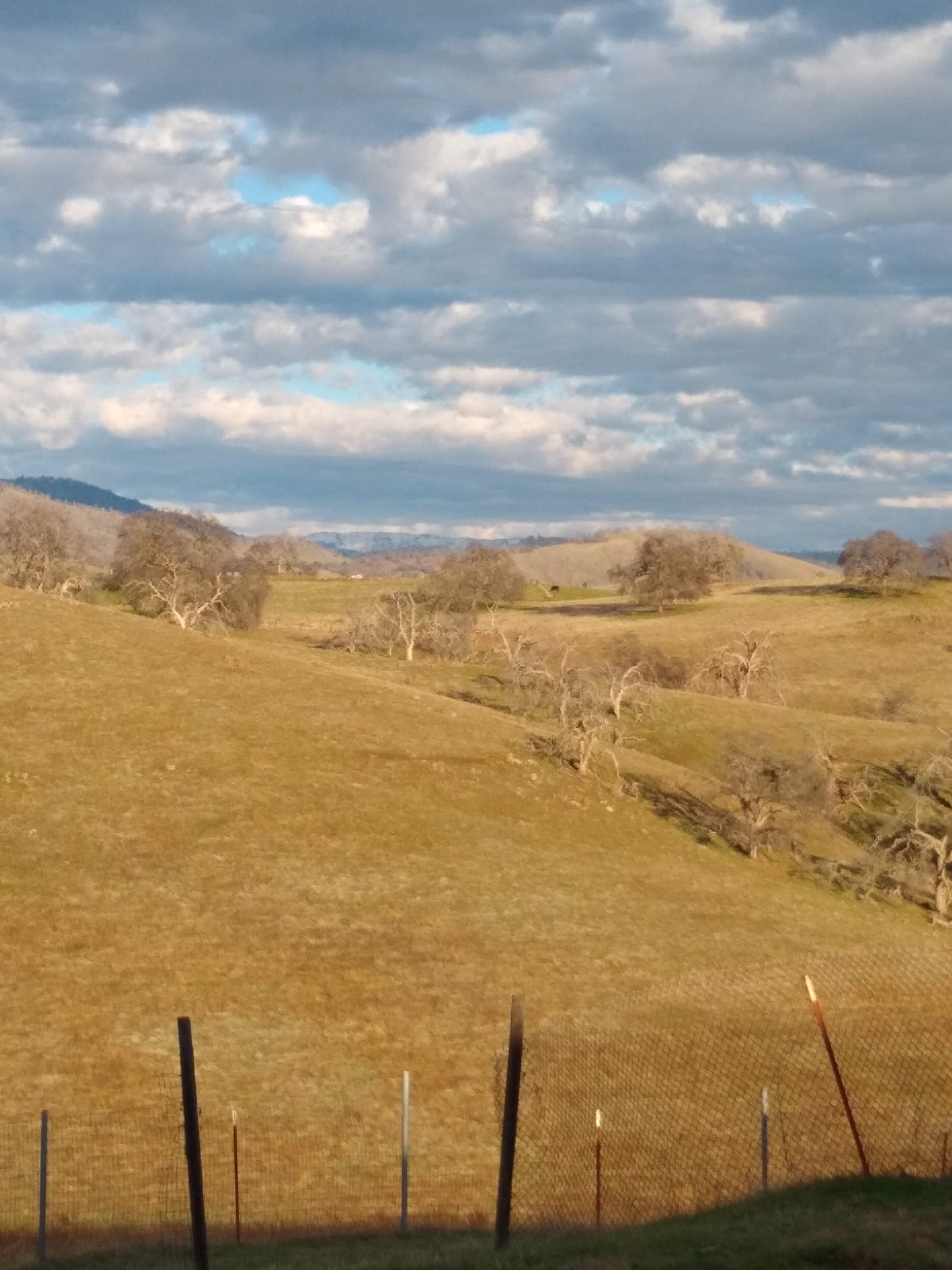
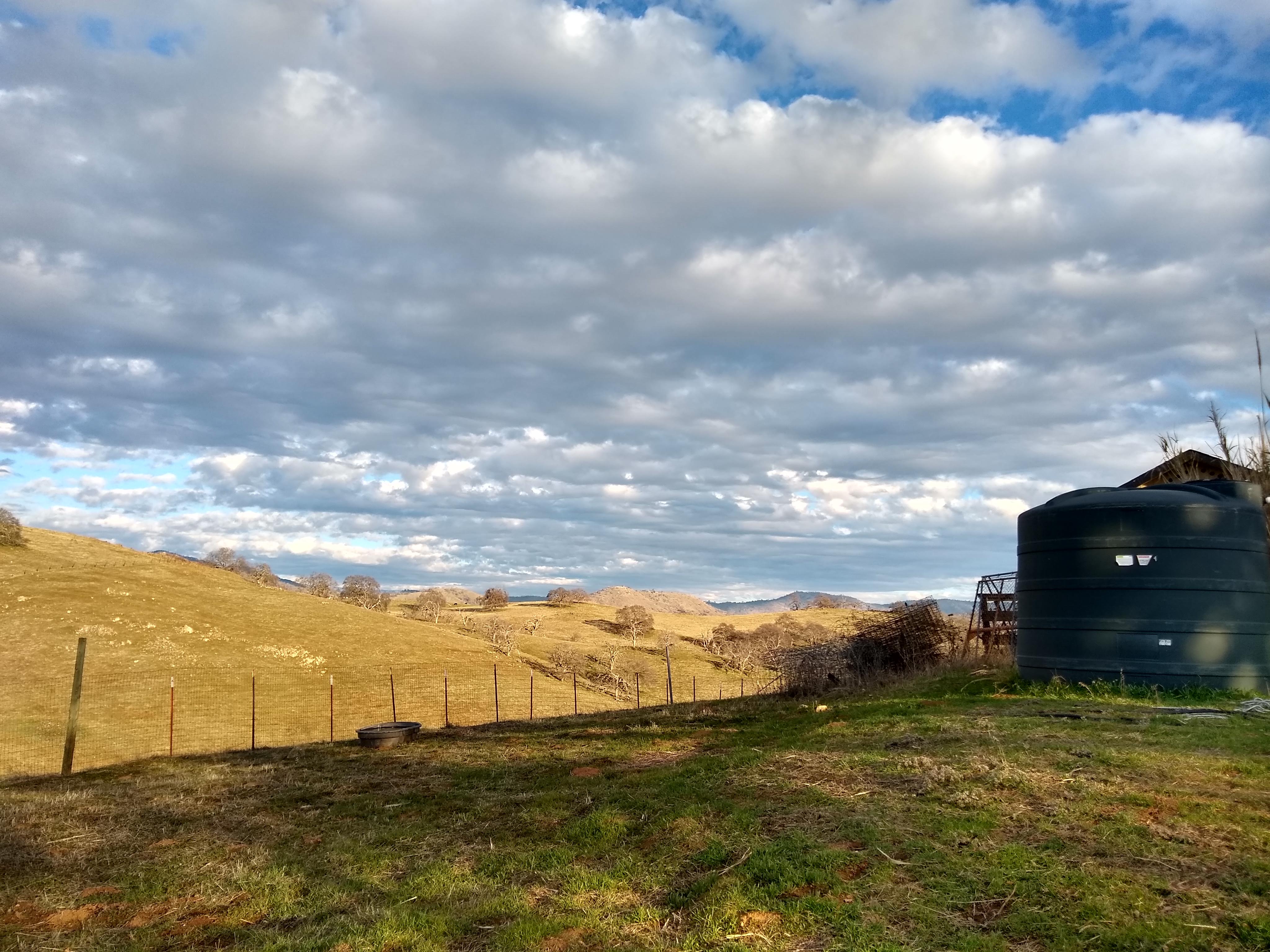
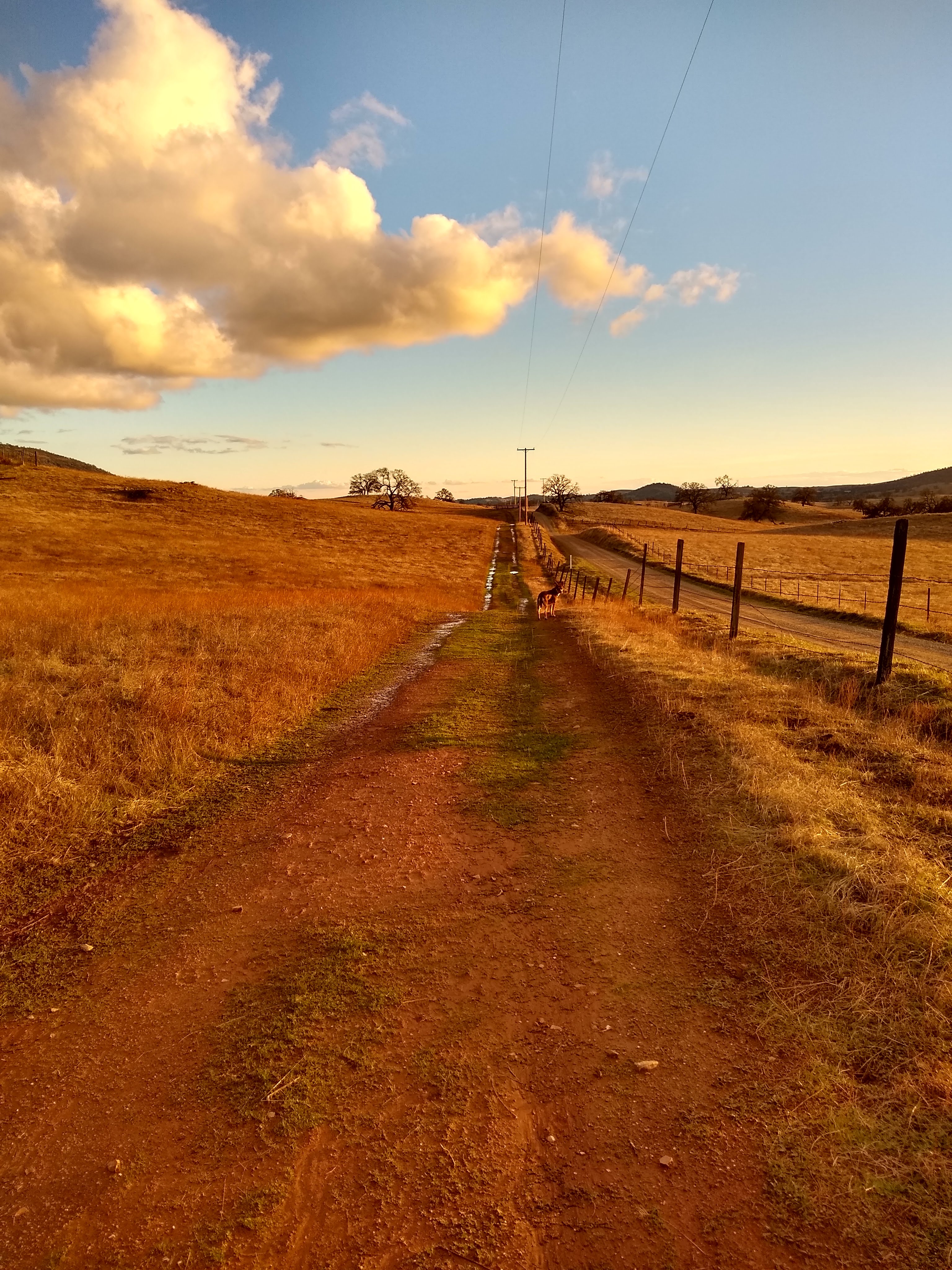
The storm made for some dramatic photos and clouds. I end my blog with some select shots that I hope you enjoy.

The Branch Fence Holds + Effects of Drought Visible

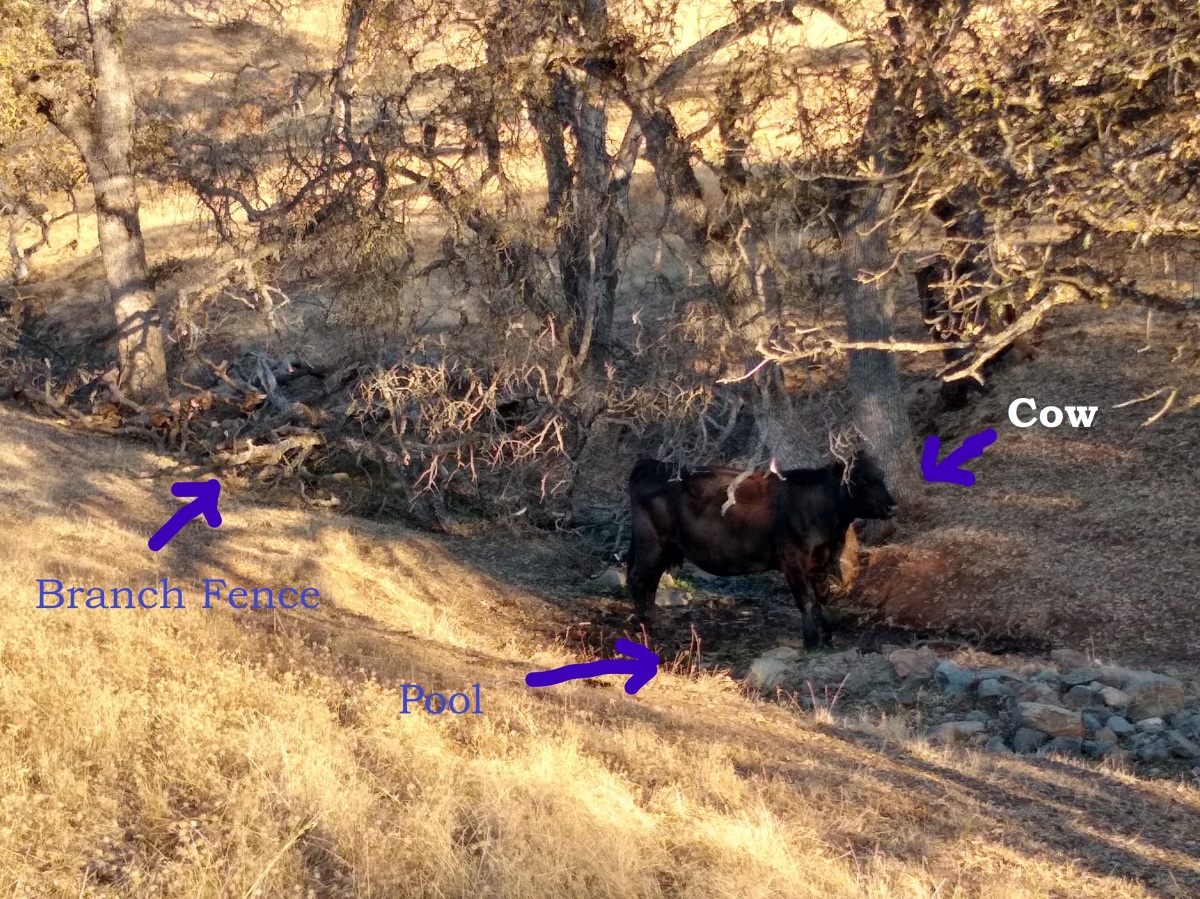
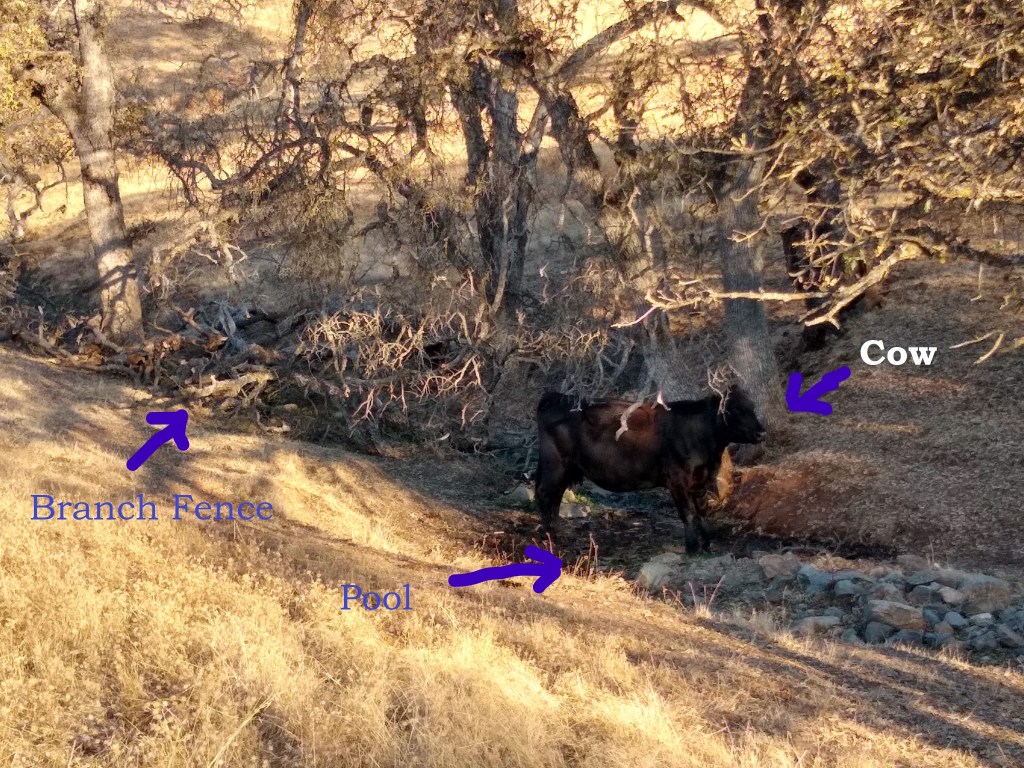
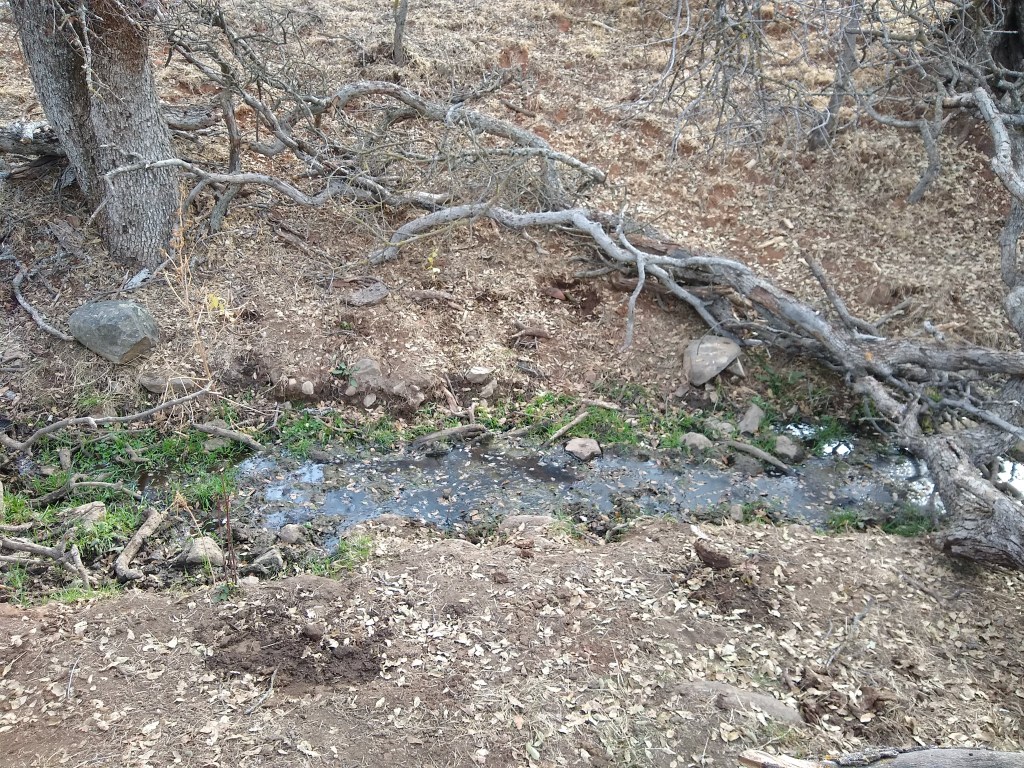
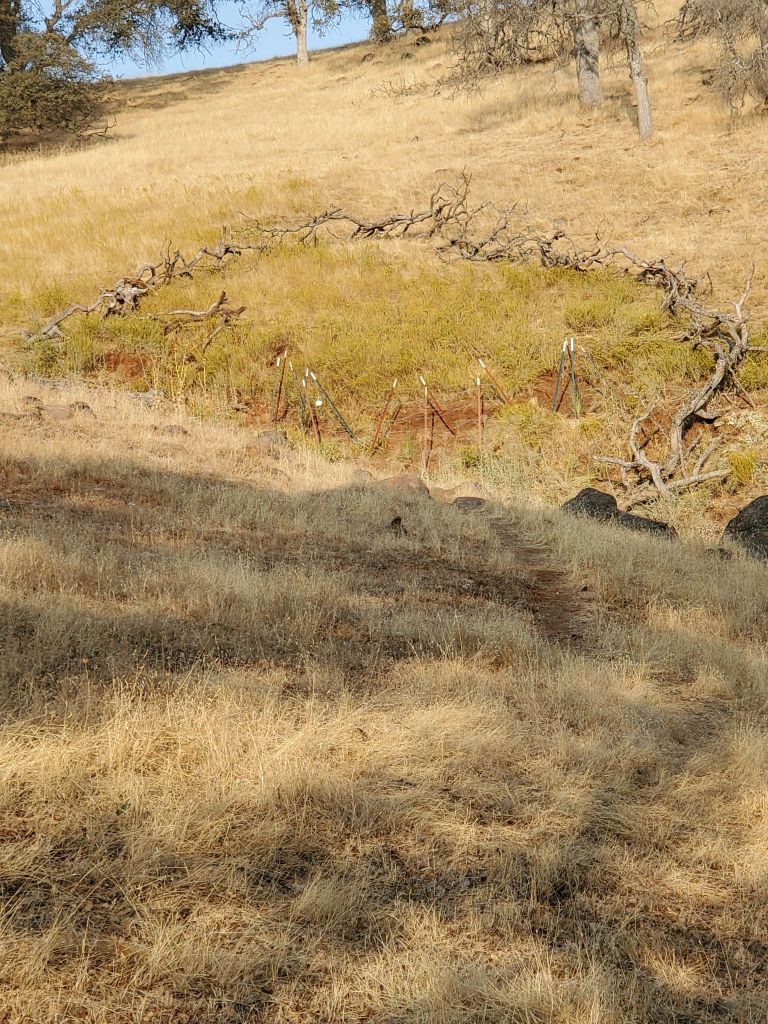
As planned, cows have access to the low sloped pool adjacent to Site XR2

Hurray – the branch fence David and I worked so hard on has held. Even with cows nearby drinking from the pool, they have not intruded into the planting area. Eventually, we will fence most of the upper section of this creek and some of the lower section for habitat restoration, and drive the cattle to water at the lightly sloped pool. This will reduce erosion of the creek banks and allow all the plants that are trying to get a start to grow to maturity.

I checked the Odom Creek plants as well. All were present and accounted for.

Drought Here Again

The soil is so dry that Millie kicks up dust while walking

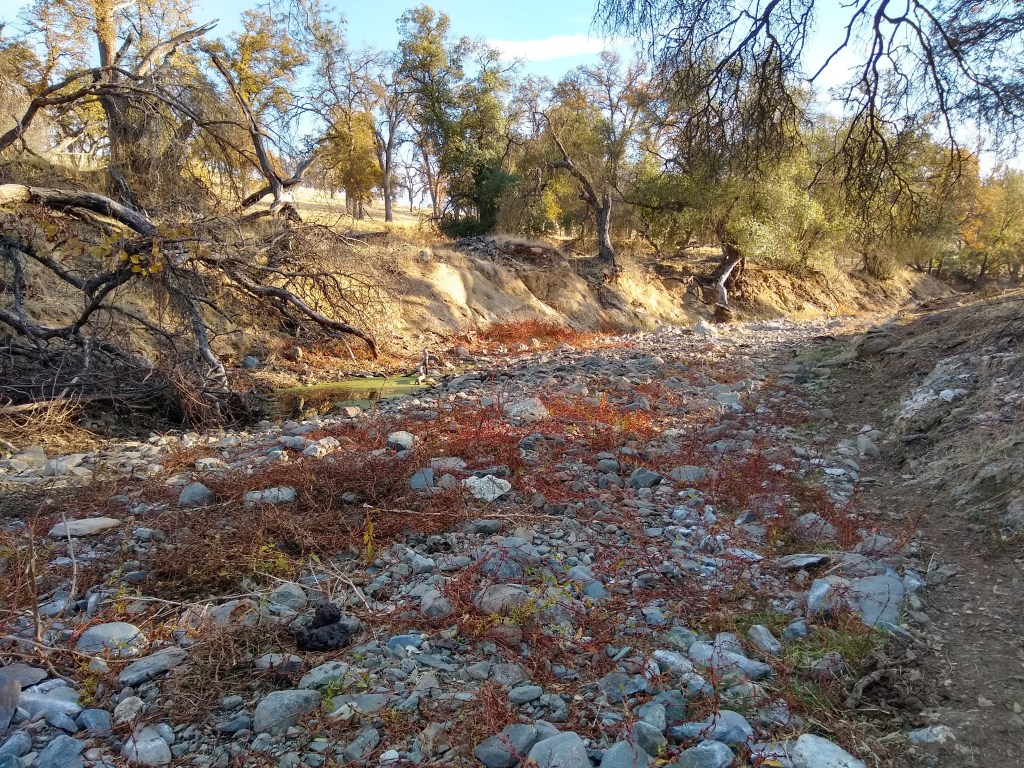
I have included my concerns about drought in many of my previous posts as well as the confirmation we will be in a La Niña year this year. The effects of a lack of moisture are really evident. Pathways look like bare highways with no grass growth to replace dry grass worn away from use. The creeks are dry. My neighbor’s pond is dry. All we have are the two small springs keeping some moisture going on this side of the ranch. I don’t know how my neighbor’s spring is doing; I’ve not checked. Most of the cattle left today. Tom (the cattleman) and his family drove them up the road to another leased ranch with more water. He left behind a handful of cows with small calves.

Mamas and babies resting in the grass

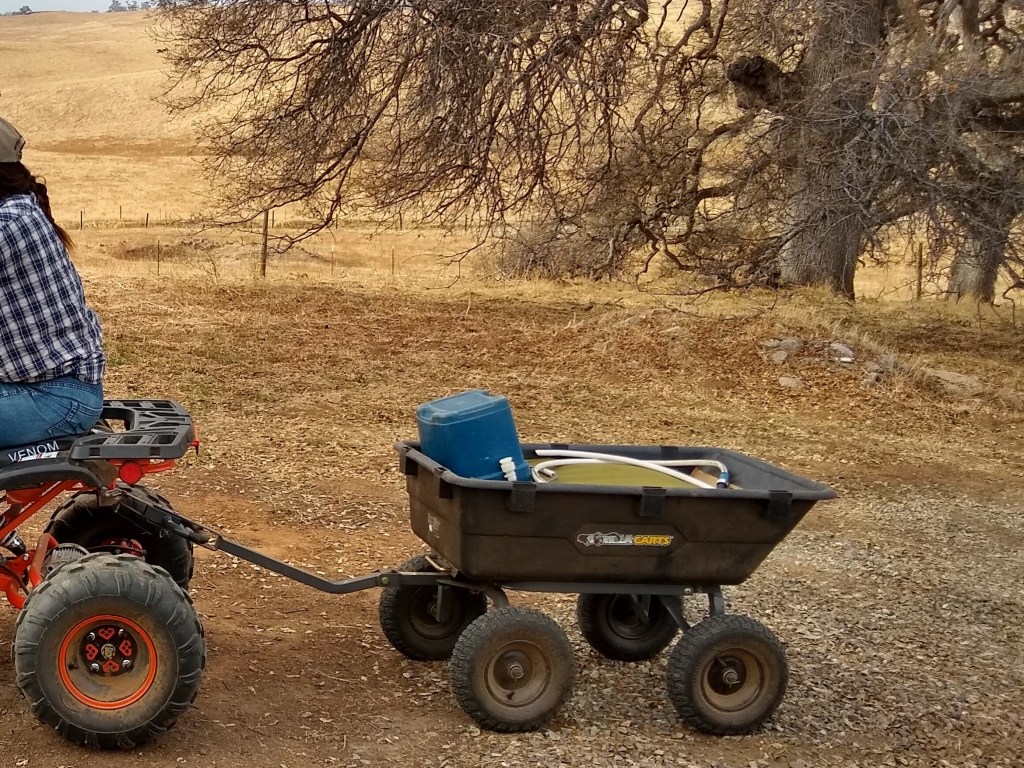
With no precipitation or morning dew, I am back to watering the plants once per week. Although I’ve added another sixty-eight plants with the Xerces kits, many of the old plants and some of the new ones are already dormant. They don’t need as much moisture as those with leaves. After watering the plants near the house, I hooked up the cart, filled the bladder with water, and delivered clean rain water to the Xerces riparian plants as well as Site 8.

The soil was happy to receive the water. I can’t say as much for my attitude. Dry conditions worry me, and I’m feeling a bit grumpy. Maybe it is that and the COVID surge too. On the heels of a contentious election as well, it is all just extremely overwhelming. Not only do I feel pained for humans, I also feel pain for all my other plant, animal, insect relations. It has become clear why that beautiful blue heron has been hanging around. He has no water. His mate has not returned to start a new family near my neighbor’s now dry pond as they typically do. He is forced into eating gophers and mice. I’m not complaining about that, but I know herons prefer water. I’ve filled all the troughs around the hilltop for his consideration and use. Fortunately, I over planned water, and still have over 2,000 gallons available. I also had Tank 3 hooked up when the small rain storm came through last month, so I have about 40 new gallons there. With a bit of forethought, attention to science, and a kindness, derived from absolute love, which by its very nature results in sharing, perhaps all of us, David, me, the plants and the heron, will be able to survive this time.

Xerces Kits 100% Planted – Major Muscles Mandatory

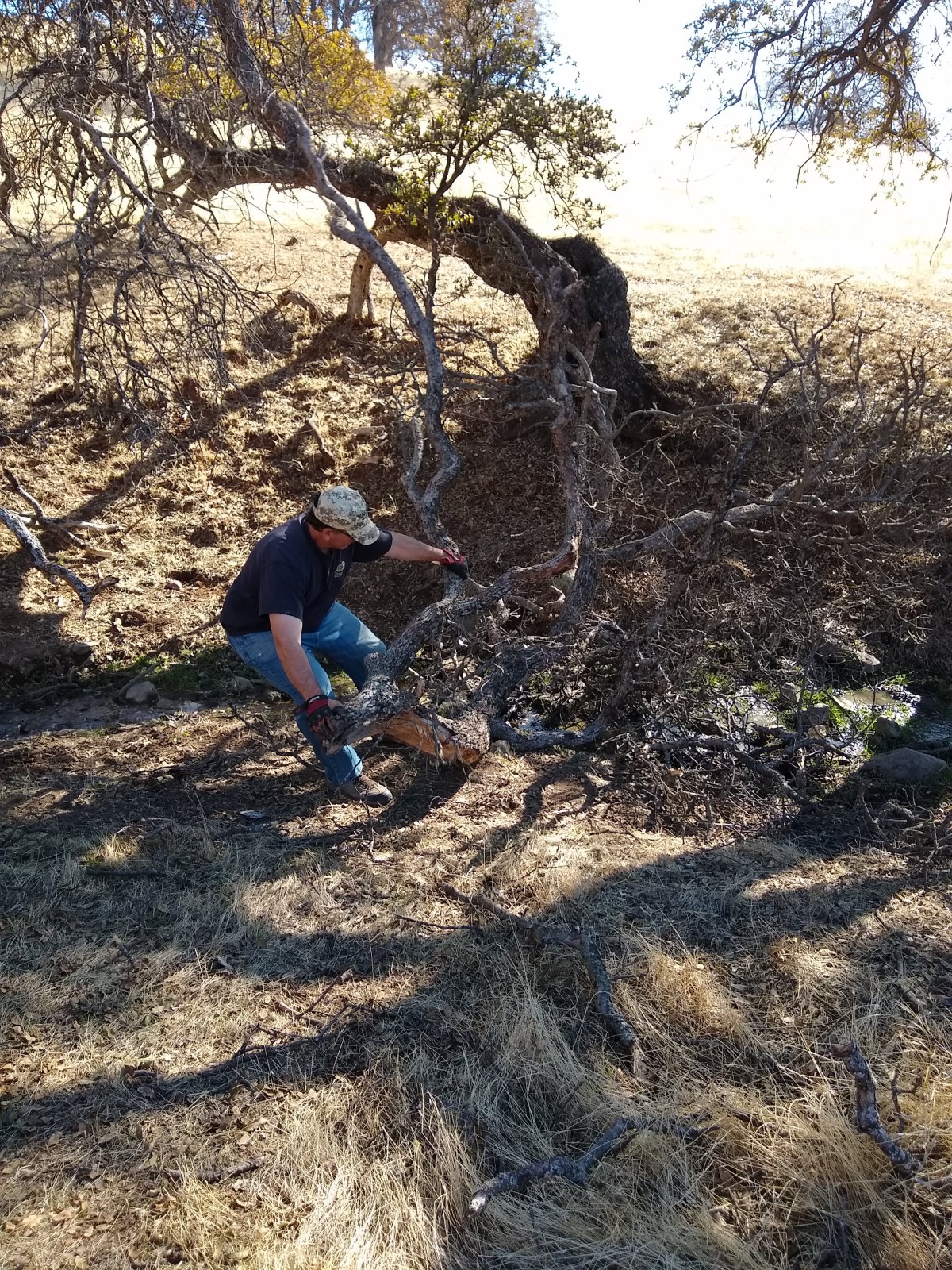
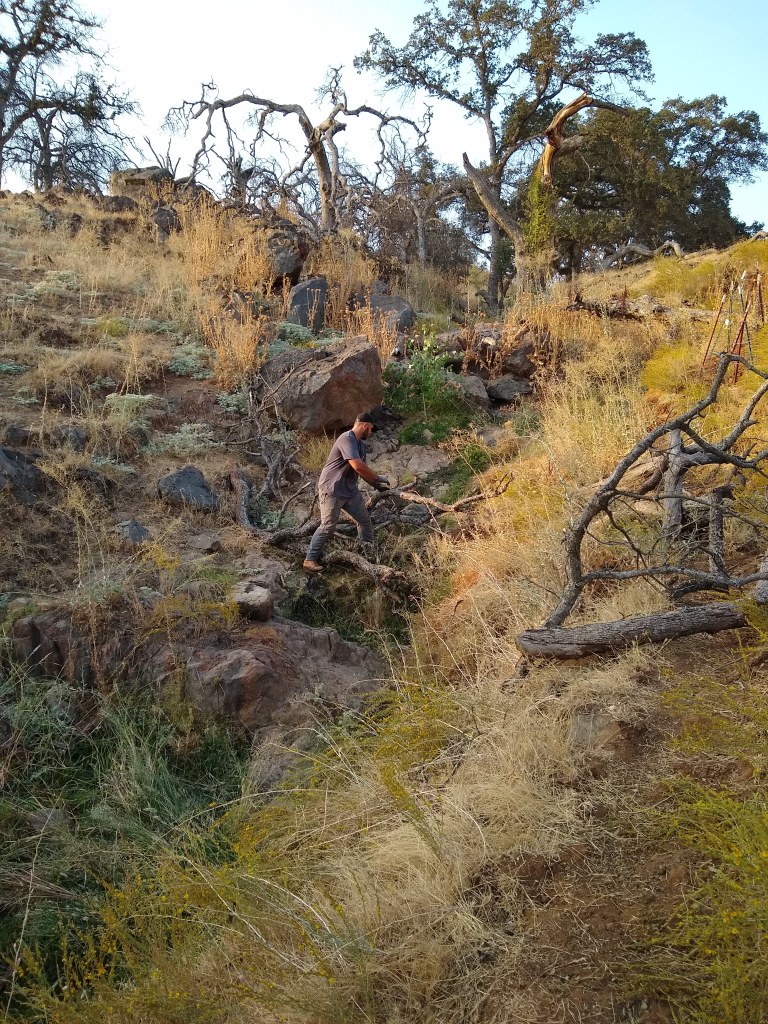
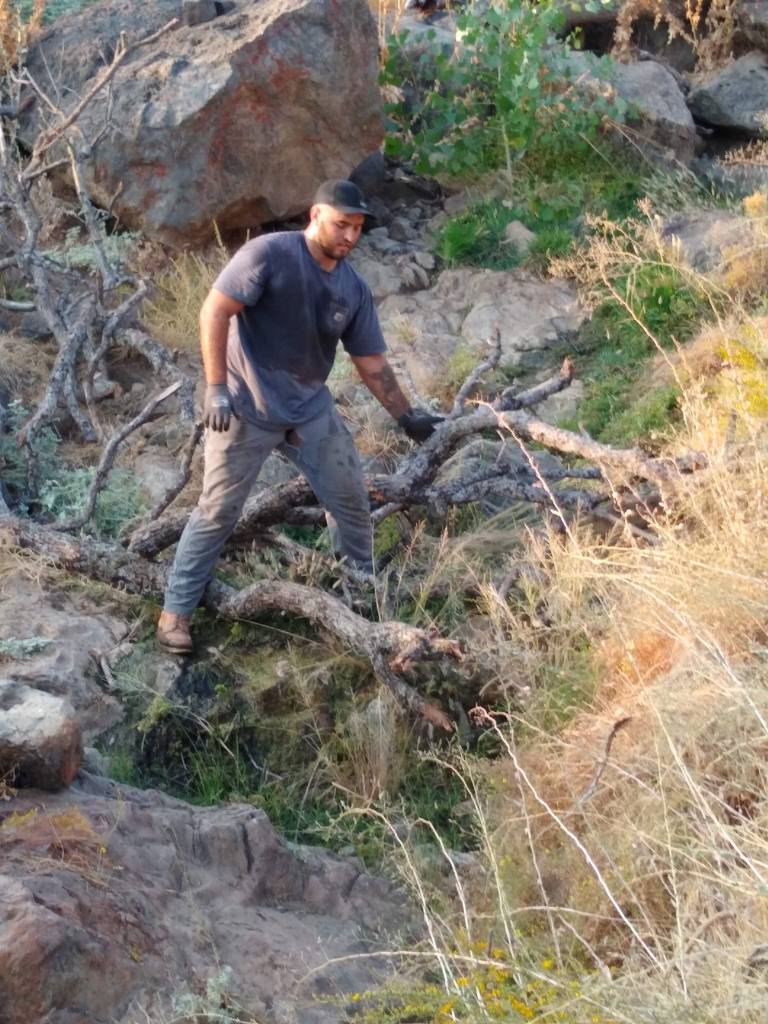
David uses brute strength to haul out a 15′ downed oak limb

There are many ways for a spouse to say “I love you” – jewelry, taking out the garbage, cleaning up dog poops, watching a sappy period piece together, getting up in the middle of the night to feed a crying baby. But, for me, nothing says “I love you” more than hauling massive oak limbs to build a fence for your wife’s butterfly habitat.

I am a pretty strong women. I grew up in the mountains shoveling snow off my family’s steep driveway. I chopped wood, stacked it and hauled it inside. I lit fires, swam across lakes and held the family record for putting snow chains on our car tires. There are limits however, and I reached mine this weekend. No matter how I tried, how much I tried to use my brain to think of solutions, I could not haul the large branches I needed to make a branch fence for the newly planted butterfly plants. I needed help – in particular – my husband’s man strength.

I’ve been delaying planting the spring creek for a while due to fencing concerns and then the cow carcass. However, it was finally time to get the last 23 riparian plants into the ground – no excuses. After spending the morning digging holes and planting 18 of the 23, then hauling as much downed wood as I could around the planting site, I reached a stopping point. I dragged myself back to the house, mud in my hair, dirt on my face, a scratch on my leg, and soil coming out of my pockets. My strategy was simple – flattery. I found my husband on a ladder painting the garage. He took one look at me and just shook his head. I said, “I sure could use your super strong muscles. The plants need protection, and I just cannot make it happen. The logs are too heavy, but not too heavy for you [Eyelash flutter].” My husband, who has his own projects and largely leaves me to manage things on my own, recognized my desperation….and….maybe he was motivated somewhat by the chance to show off. He said he would help.

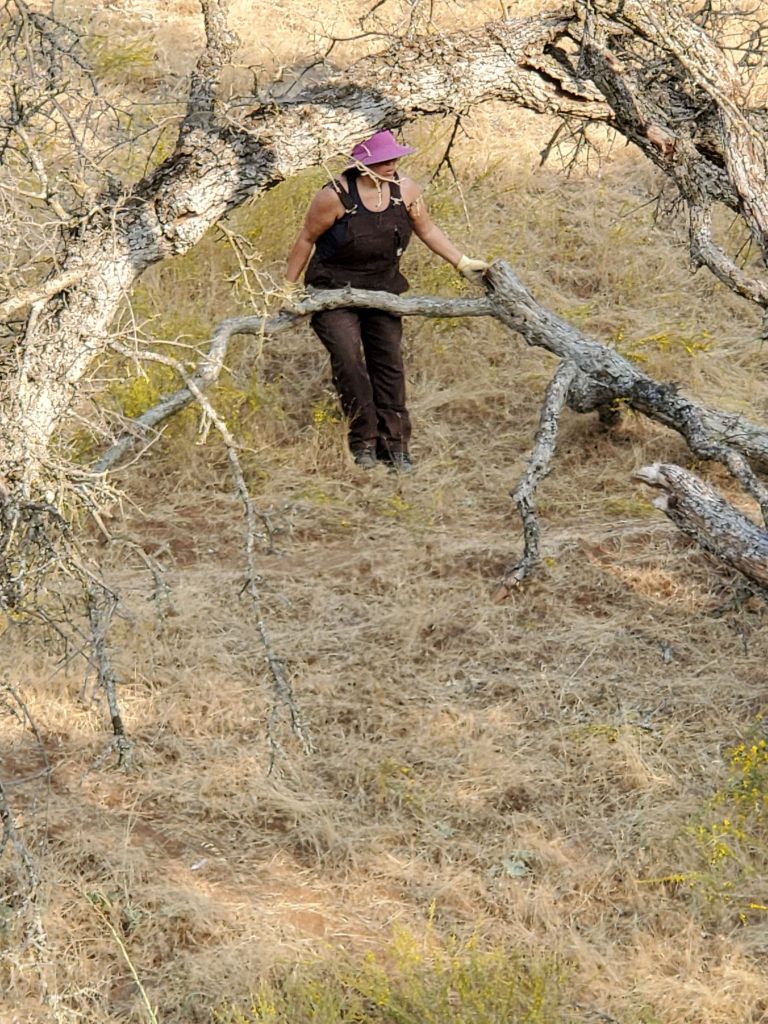
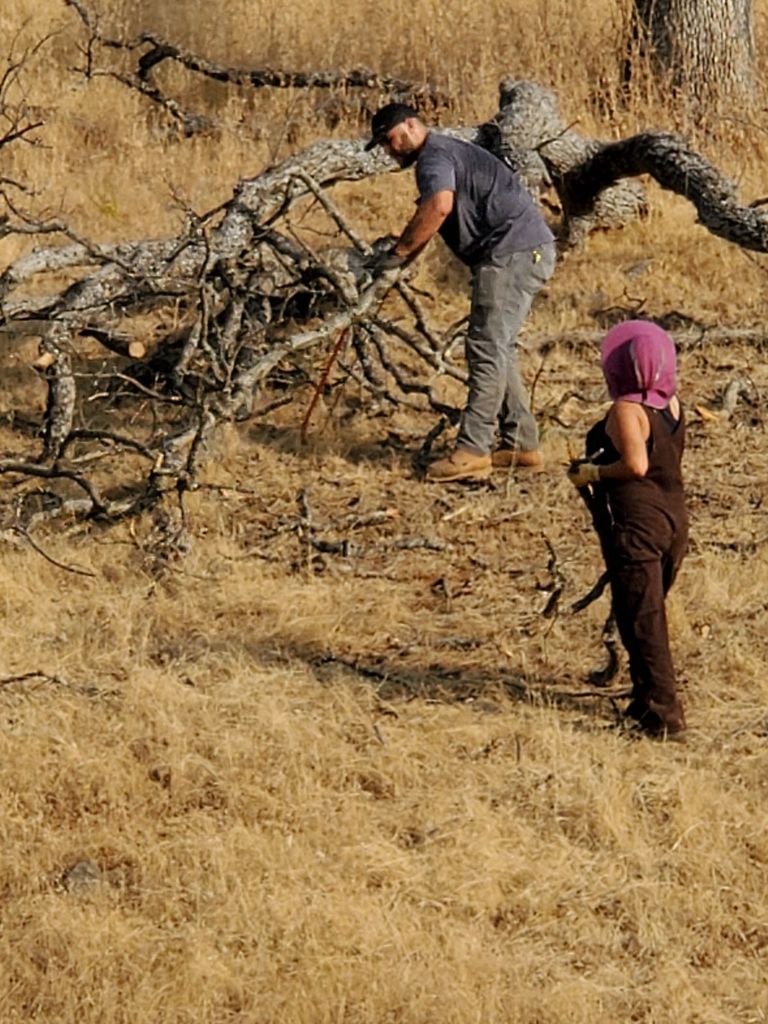
The next two hours were spent hauling downed branches, sawing off dead limbs and shaking limbs off trees – then, as gently as possible, placing them on top of other base branches to form a fence around the planting area. David was magnificent. I would be lying if I told you I didn’t swoon a little. It is just something innate [eyelash flutter].

On Sunday, we needed to finish the spring creek barrier. Fortunately, the plants I installed survived overnight despite a not complete barrier. One of the currants was chewed on a little by some other creature though. David pulled more large logs; I pulled small ones. Together, we completed the barrier. I also called my neighbor to ask for his help. Up stream at Site 7, he had built the only branch fence that kept the cattle out. I needed his assessment on the quality of our work. He gave us an A+.

Spring creek Xerces plot X2 branch fence

After the good grade, I released David back to his projects at the house. Ric, our neighbor, and I went to Odom Creek to plant and protect the last five plants. As I mentioned in a prior post, part of the Xerces Riparian kit contained willow trees. For those more familiar with the weeping willow tree seen generally in urban areas in California, our state has many native willow trees. They are not as water hungry as the weeping willows, which are native to the more swampy southeast of the country. However, they still like water. The ones on the ranch can be found naturally in the creek beds of the larger creek where there is sufficient water resource to sustain them. This is why I chose to take these plants from the kit and place there in another location on the ranch. A willow in the small spring-fed creek would take too much water resource I think. In time, I will plant more butterfly plants in Odom Creek. I also plan to fence it to see what recovers there.

Above is a selection of photos from the planting. In addition to four willows, I also planted one mule fat from the kit. Ric generously offered to dig the holes. (Thank you Ric!!). He also hauled branches and cut larger branches that could not be pulled down in one piece. He brought his very cool electric chainsaw to help us in the work. I chose sites, hauled branches and planted my sweet little plug friends into the ground. I hope they will enjoy a good, long life in this space.

It’s California. Plants Still Blooming!

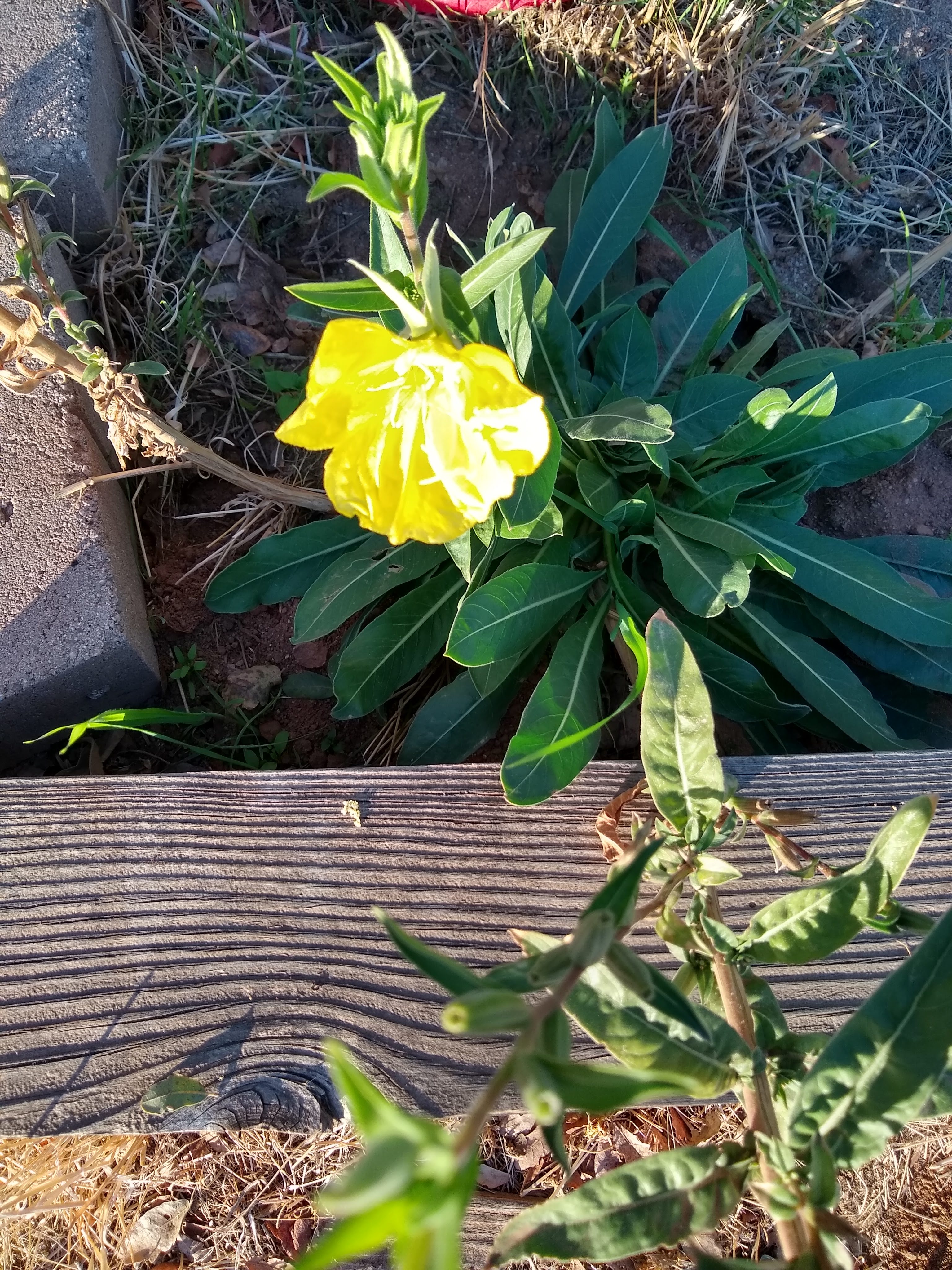
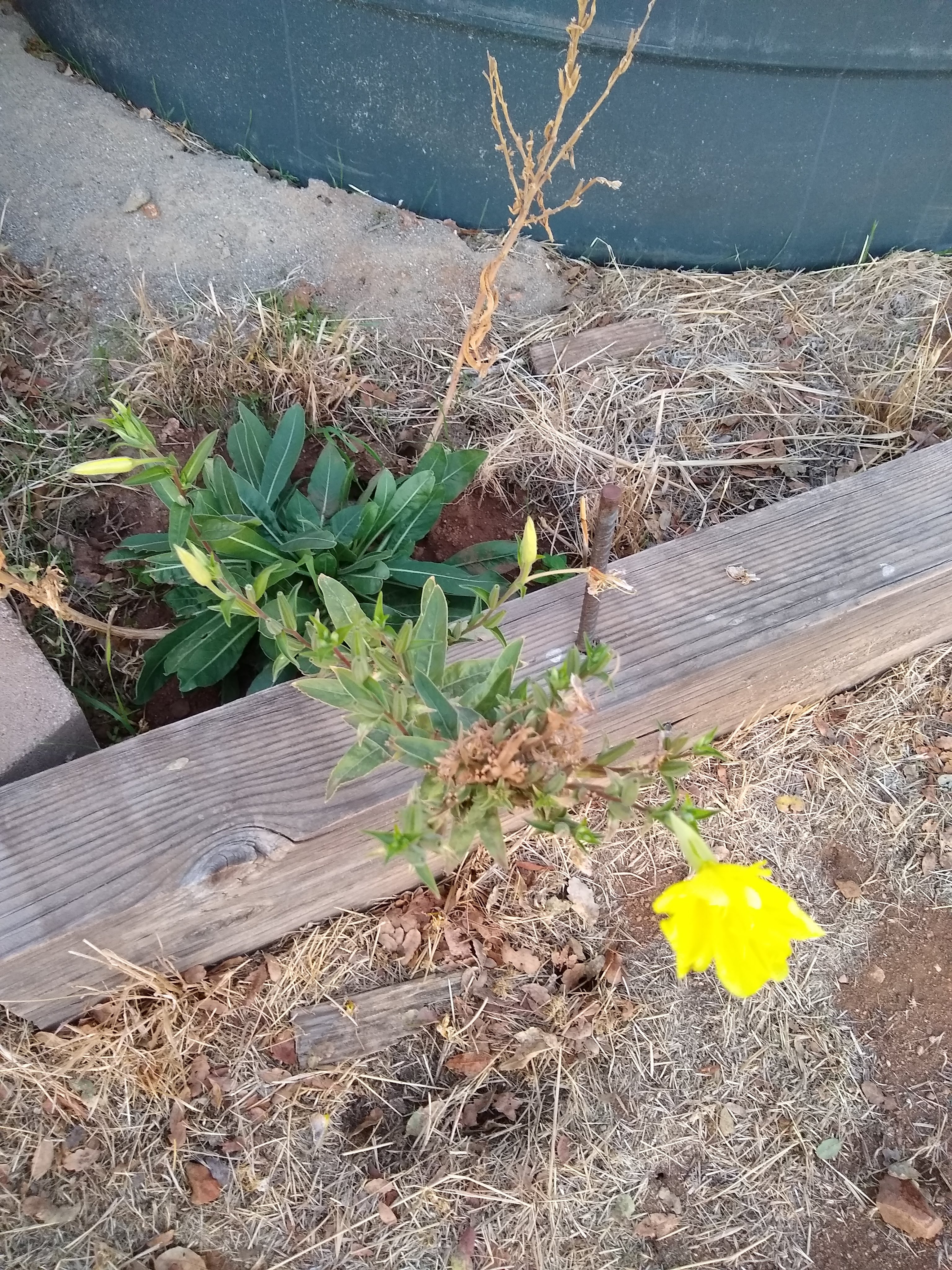
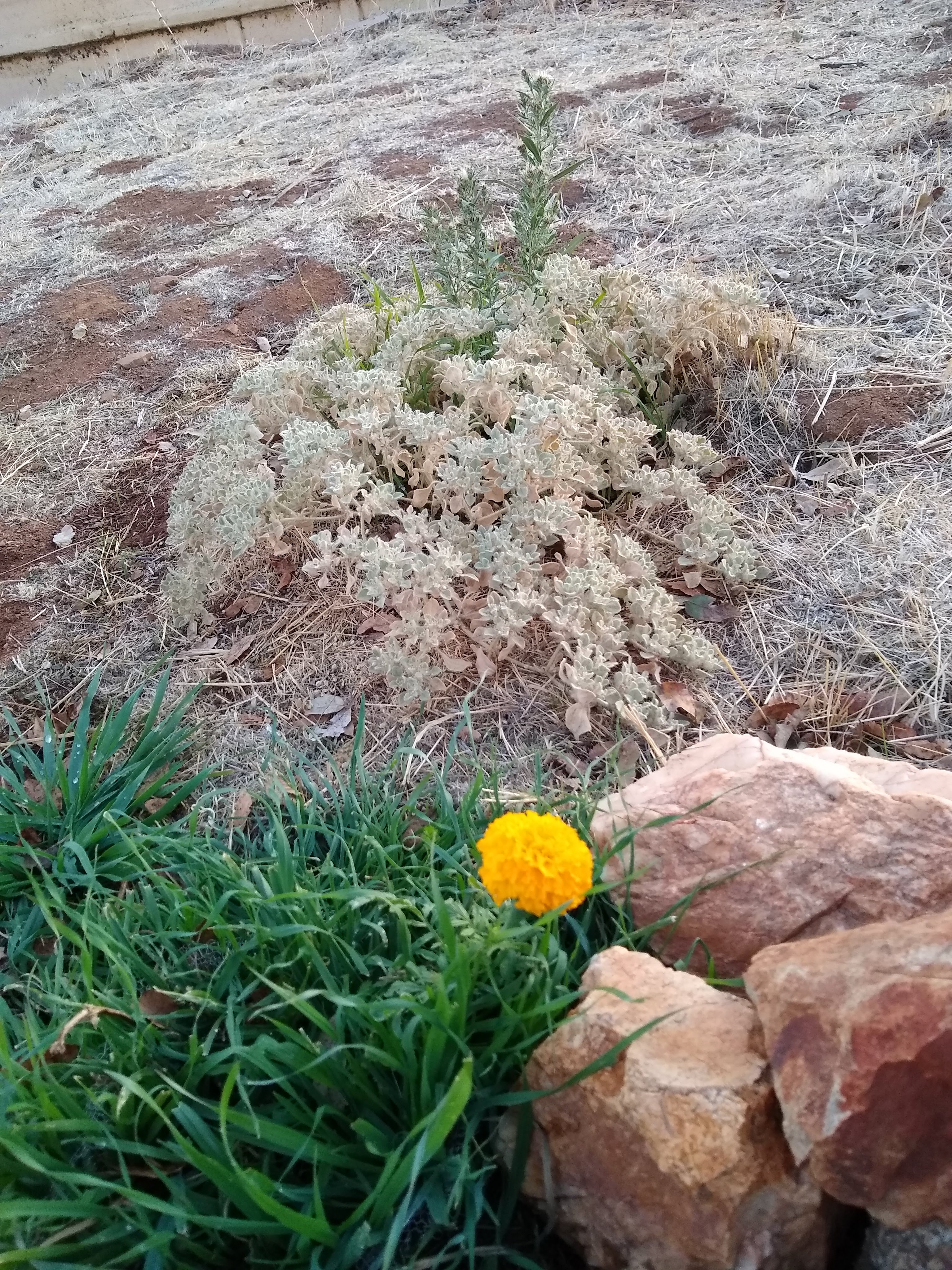
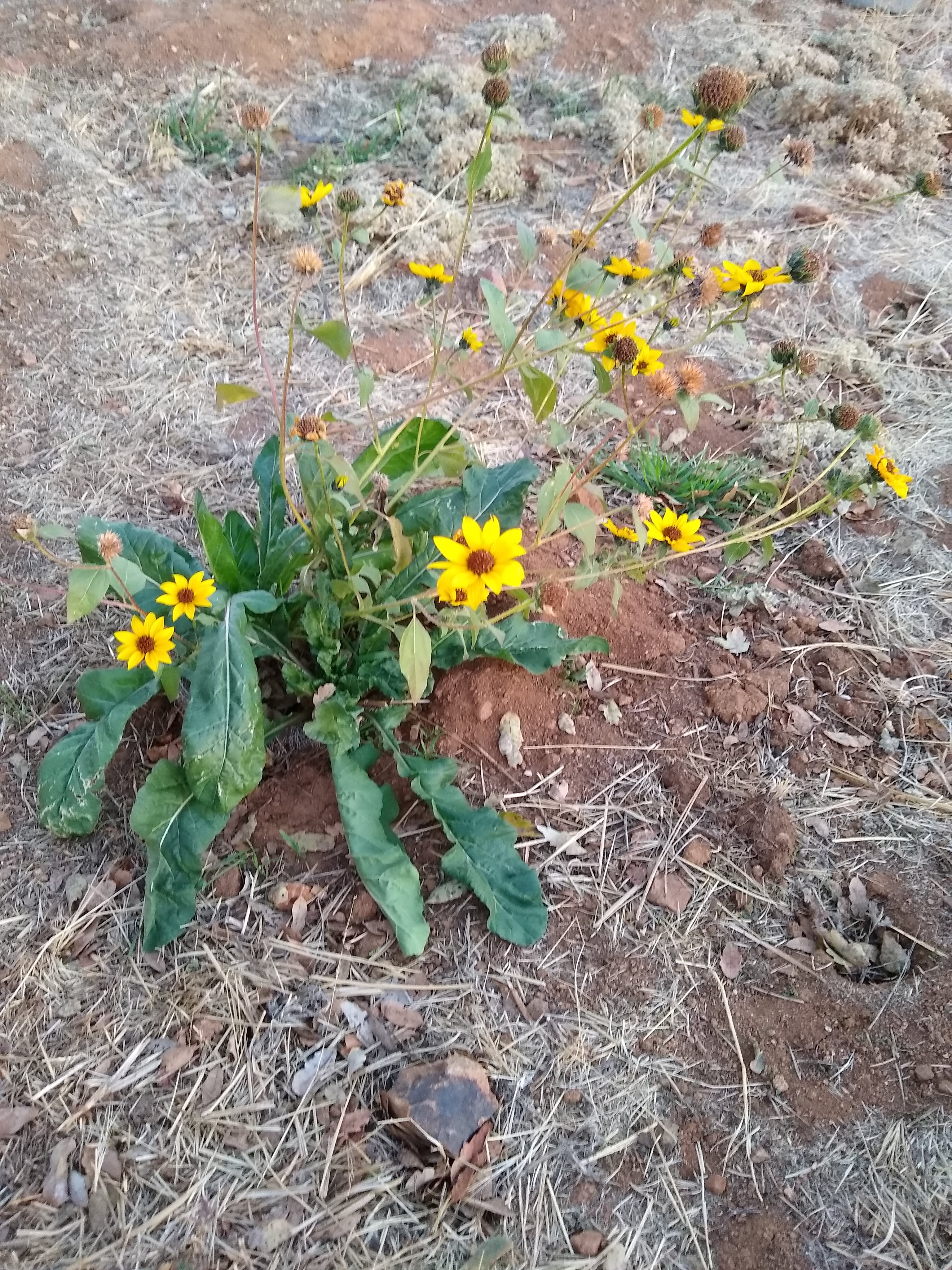
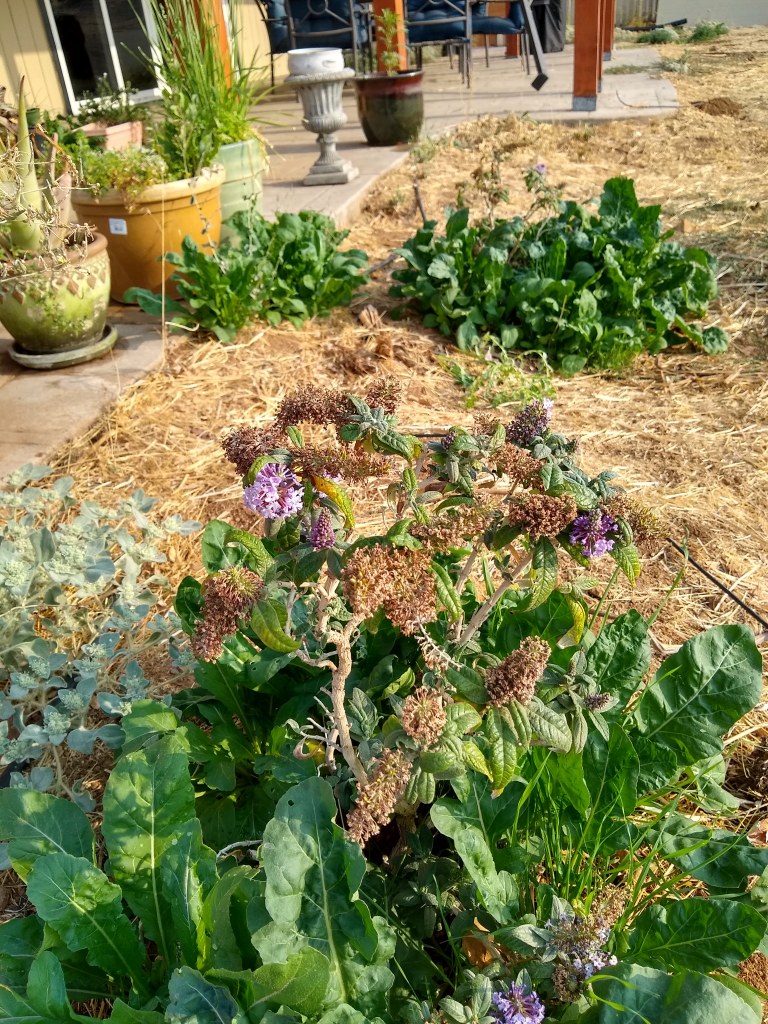
We still have salvia, fuchsia, sunflowers, marigold, primrose, and rosemary (not pictured) blooming. Lots of colors and choices. The coyote mint has grown more. The yarrow is still green and full. The Xerces hedgerow plants appear to be doing well. I say “appear” because many have gone dormant and no longer have a presence above ground. I am still watering some plants that look like they need it since the weather has been predominantly dry. I have not seen any butterflies, but the bees and a hummingbird or two, continue to enjoy the nectar. I am really getting excited for Spring!

Our Good Friends Still Here and Helping

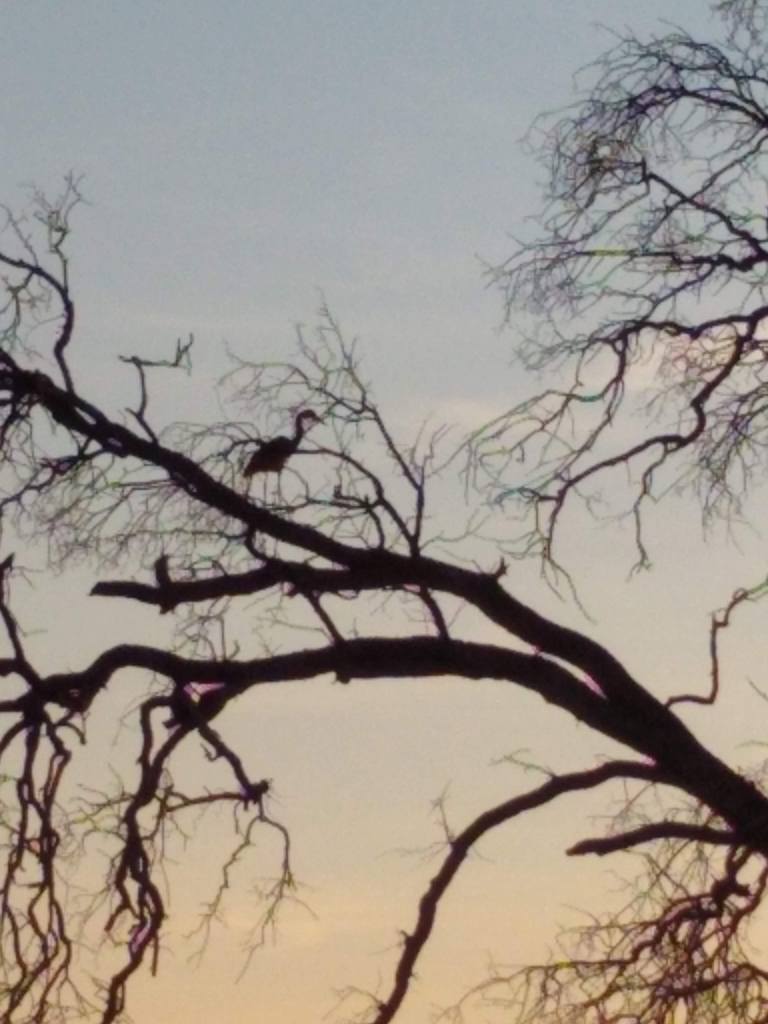
A blue heron at dusk in an old oak tree just down the hill from the house

In the last post, I discussed the rescue of the plants by several feathered friends. They continue to watch over the hill. Since the great horned owl, blue heron and the harrier (who has now brought a husband here too) have been around, gopher activity has come to nearly a halt. In fact, the gopher that somehow got into my raised bed, decimating the unprotected roots of the butterfly plants each day, has stopped its death march. Maybe the owl got it (I hope). We really do have several someones watching over us.

Mistakes. Smoke Inhalation. Cow Pressure. Not a Good Month.

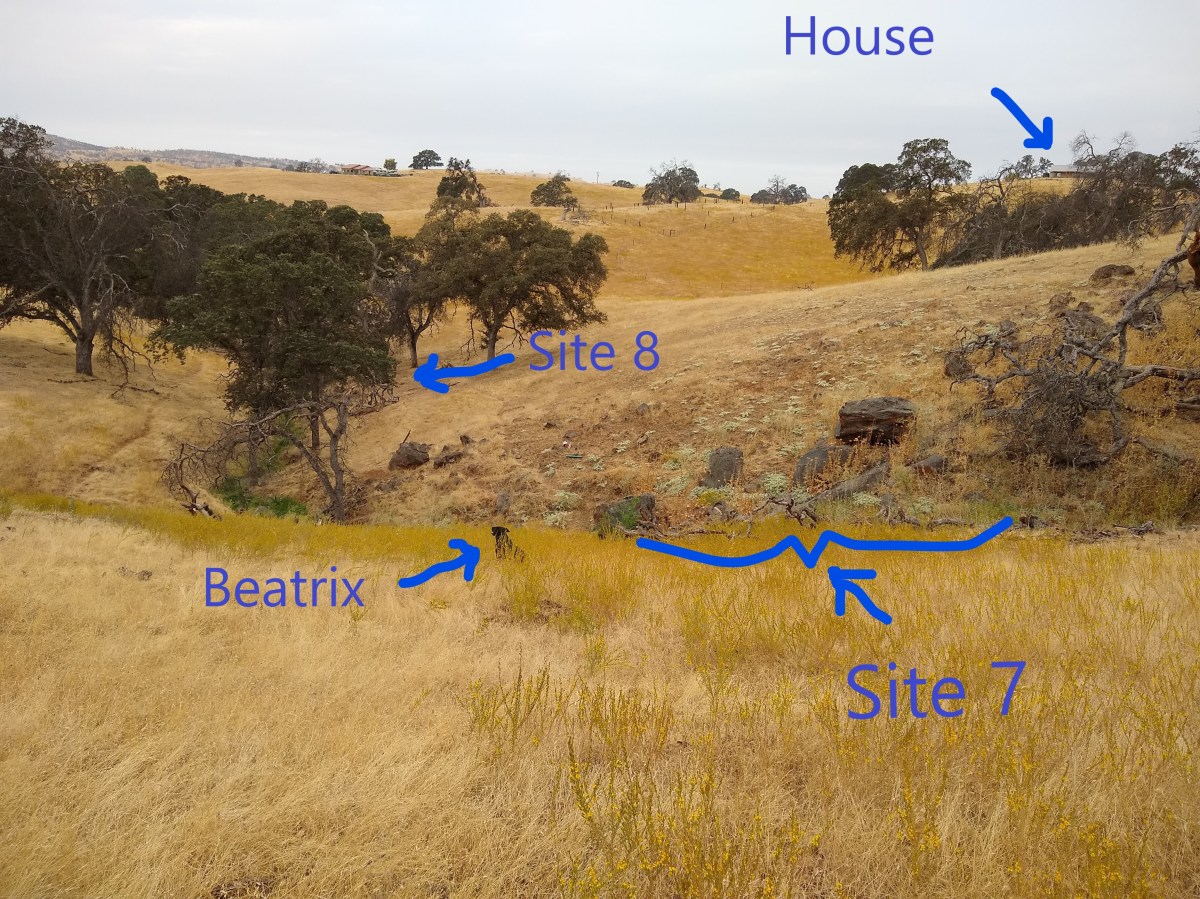
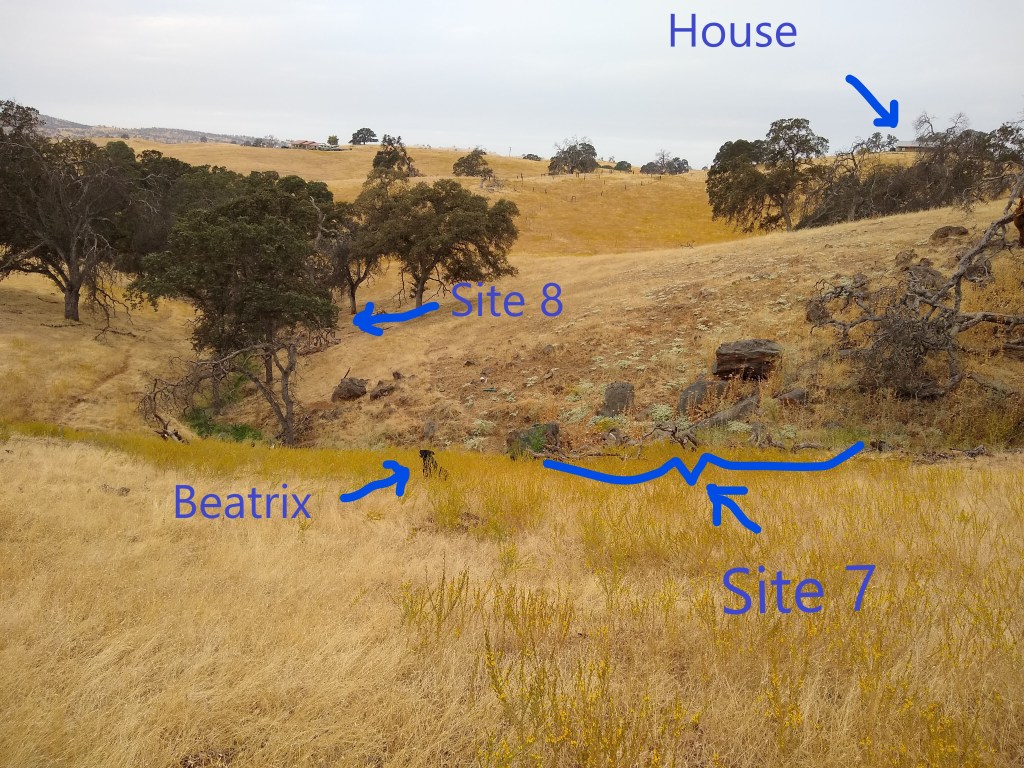
Overview of Spring Creek sites with annotation

Despite daily care of the plants, I have not felt like writing. In addition to the death of my beloved cat of 16 years, Andromeda, on September 4th, my brain has been suffocated in hazardous levels of smoke. In the last two weeks, every particulate in the region has passed through Hornitos. My days have been spent inside greedily hording oxygen molecules, constantly monitoring air quality for just the right time I can rush out and perform my chores. The weight of the smoke on my chest was matched only in the urgency I felt to complete the fence work around Sites 7 and 8. I got a text from Tom the cattleman that the cows would be back last week. Normally, I get a bit more notice, so I asked if it was at all possible to delay their arrival. It was, and the count down began.

It was a huge mistake for me to delay building the fence. Although I could not have predicted this long lasting hazardous level of smoke, more than in any other year I have been alive, I certainly knew it could be hot, or that something else may have conflicted with the time. It was a mistake to not have pushed myself to learn more about electric fences and just install it. Ok – moving on.

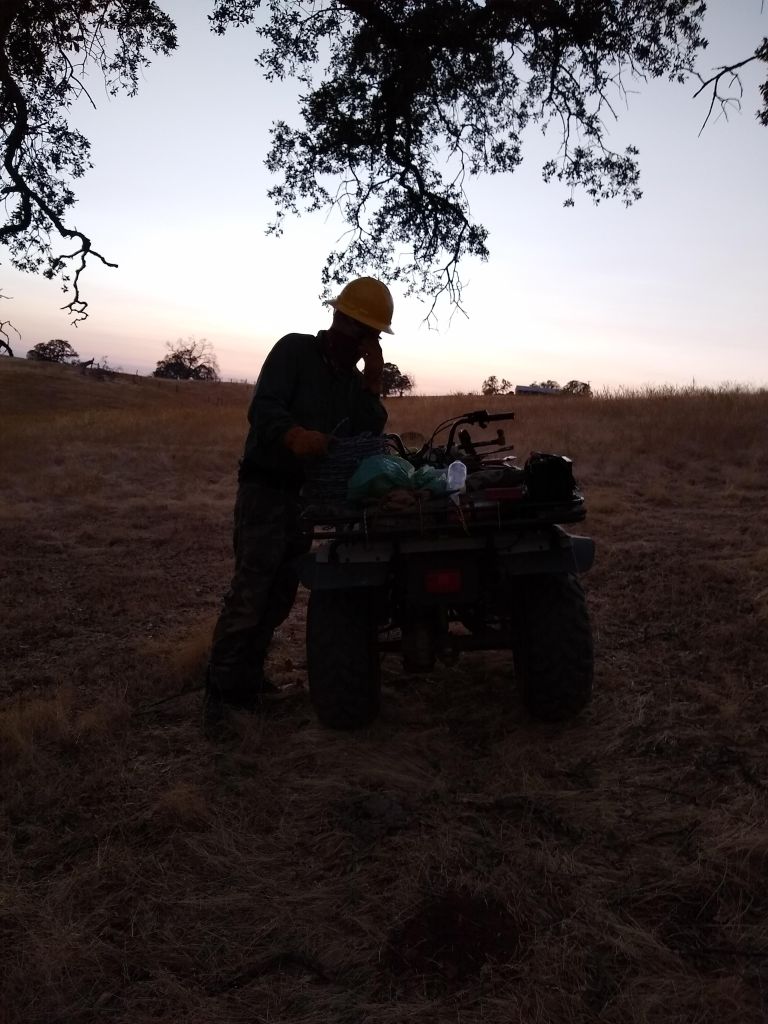
Doing things last minute inevitably results in a less efficient design and corners being cut. Ideally, I had wanted to fence off a larger section of the spring creek. Keeping the cows from munching the flowers and grasses butterflies and other pollinators depend on was the goal. With my husband unavailable due to another project, I really needed some help. My neighbor, Ric Wetzel, had offered several times in the past to do watering if needed. I never want to take advantage of anyone – so I just said “thank you; I have it covered.” This time, I asked if he could bring his quad and help me pull some downed branches into an organic barrier around the creek. He said “yes” – but he ended up helping with everything. Thank you Ric!!!

Neighbor Ric Wetzel helping me build protective fencing around the milkweed

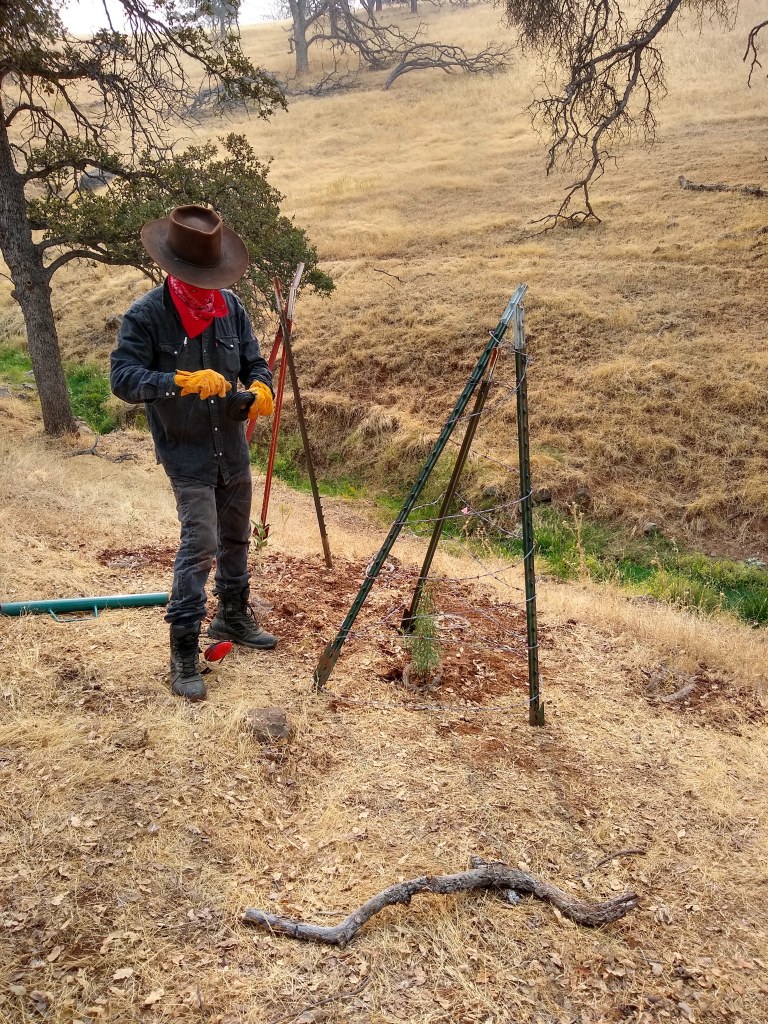
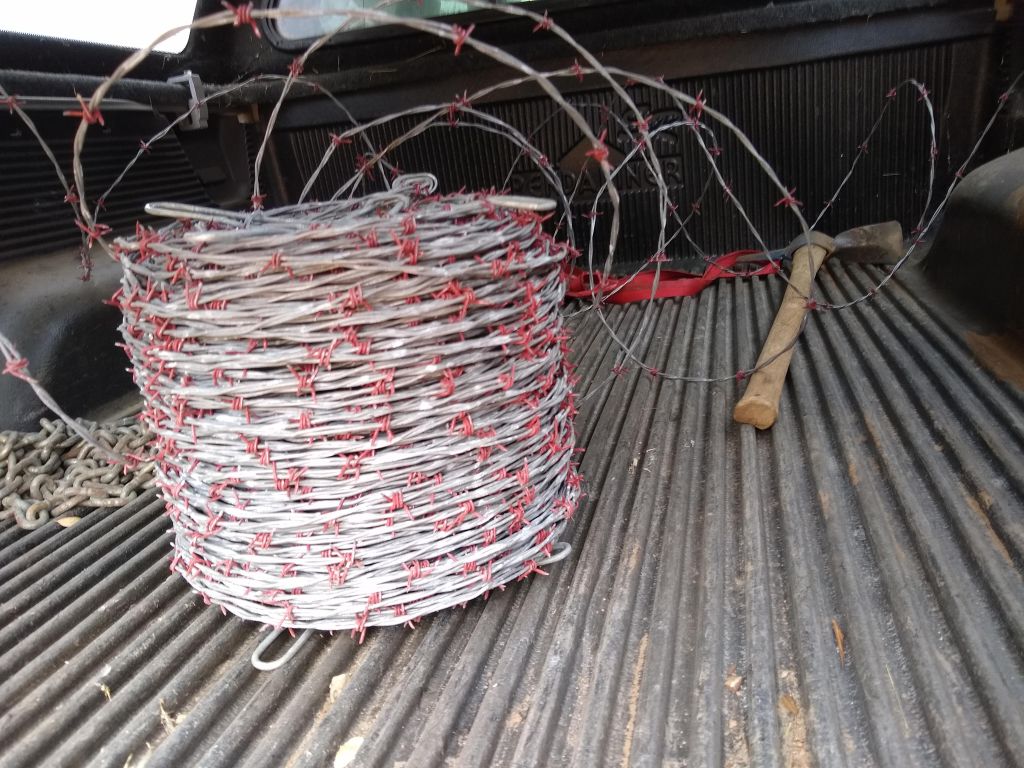
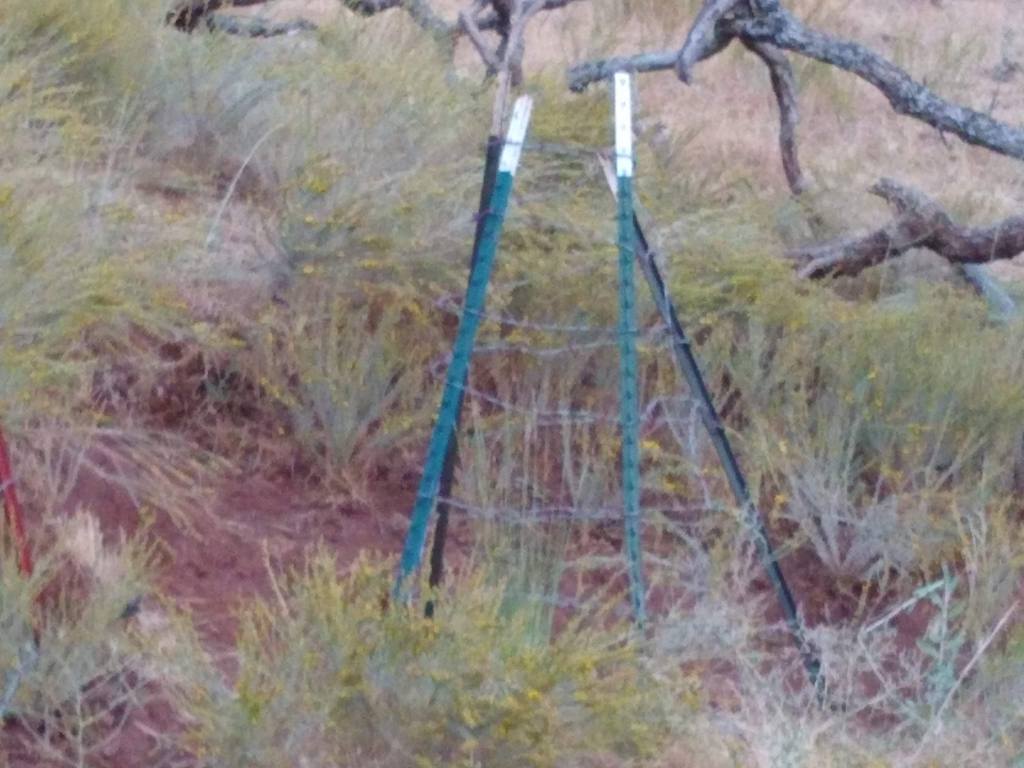
I loaded up all the supplies into my truck earlier in the week, so when the smoke lifted a little, I could jump in and get to work. I wore my N95 mask as I hauled tools, t-posts and wire from where the truck was parked to the sites. What I decided to do was create a cone around the milkweed and loop barbed wire around the structure. Jesse, one of the biologists with whom I consult, recommended that we use downed branches to create an additional barrier between the structure and the animal. The idea is to push the animal out, create more space, so there is not the ability to browse on the plant even a little. The final structure is pictured below.

Protective coverage of Site 8 plants

The branches are not secured. This will be a test to see if the cattle will push on them or if the optics are enough to keep them moving along.

Unfortunately, I ended up sick from working in the smoke. When I say sick, I mean lay down and sleep sick. I was outside hauling and pounding t-posts for several hours over two days. I did not realize I was that sensitive and that my N95 would not protect me as much as I thought. Fortunately, my neighbor was not as sensitive and stayed well. I lost Sunday afternoon through Wednesday. All I could do was water a handful of plants on my patio. On Thursday evening, a storm came through. On Friday September 18th, we got a miracle reprieve – rain, wind and clean air!

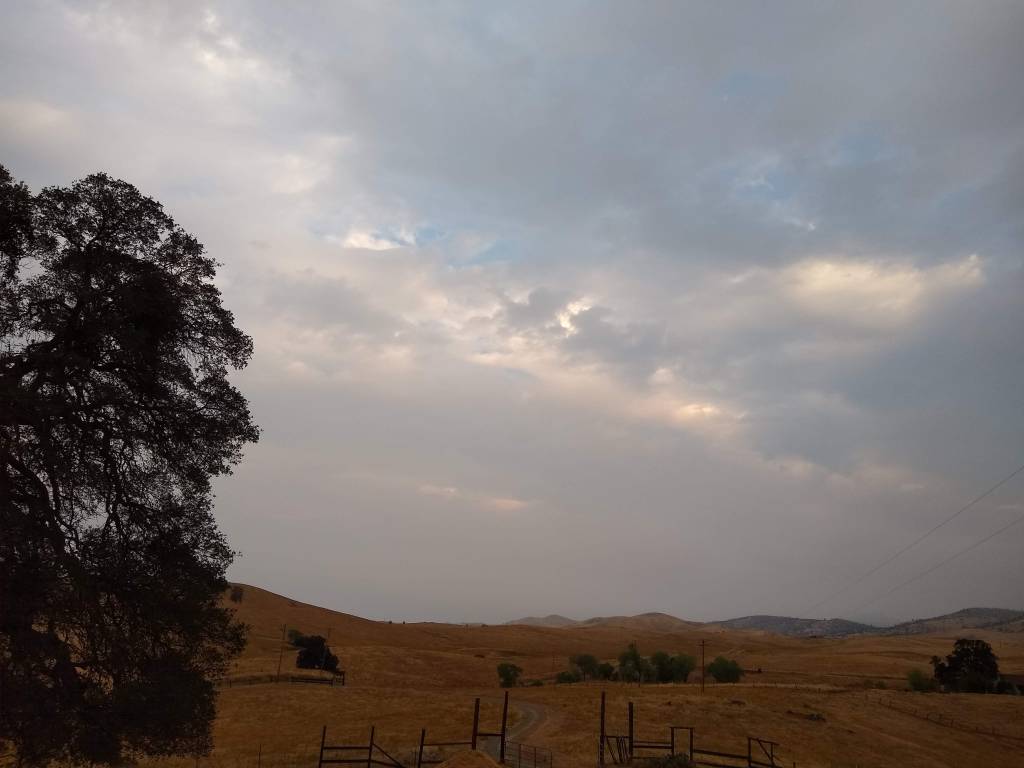
Rain clouds, smoke gone, joy returned

I immediately got out to work. Breakfast would have to come later. I did not know how long the clean air would last. After hauling water, I set out for Site 7 to work on the structures for protecting the deer grass and hillside. I installed 14 t-posts, and set up all the materials for the afternoon. Ric arrived later that day and began building a gorgeous wooden fence from downed branches. I joined him a little later and we installed the barbed wire. It was nearly dark when we concluded the day – still not finished with the site.

Although there was still more to do, I was exhausted. I called in reinforcements – my nephew Ashtin and his finance Desiree. I was grateful when they said they did not have any real plans and could help. Together, we sawed, hauled, dragged and placed branches across cow trails, in front of the deer grass structures, and along and across the banks of the creek. I had to concede defeat for my ideal. We were not going to be able to wall off the section of creek I wanted, so I settled for just a small portion.

The clean air and smell of Fall was a huge jolt for me. I so appreciated the efforts of my neighbor and family – a million thank yous. We will see if this works to keep the cows out.

Smoke Clears – Butterflies (not monarchs) and Bees Return

The smoke dampened everything, from animal activity to my spirit. It was eerily quiet – few bird calls, no native bees, few honey bees, no butterflies. After the storm, all of the sudden there were little white butterflies, speckled butterflies, native bees, pollinator flies and lizards. The birds started singing again. Fortunately, more of the nectar plants had begun to bloom, welcoming these cherished visitors.

Today, after watering, I went back to the spring creek to do a little more work. I had spied a few oak starts and wanted to protect them from cattle grazing. I picked up smaller downed branches and sticks and covered the seedlings – ensuring that sunshine could still penetrate. We will see if these small brush piles work as a deterrent.

Transitions

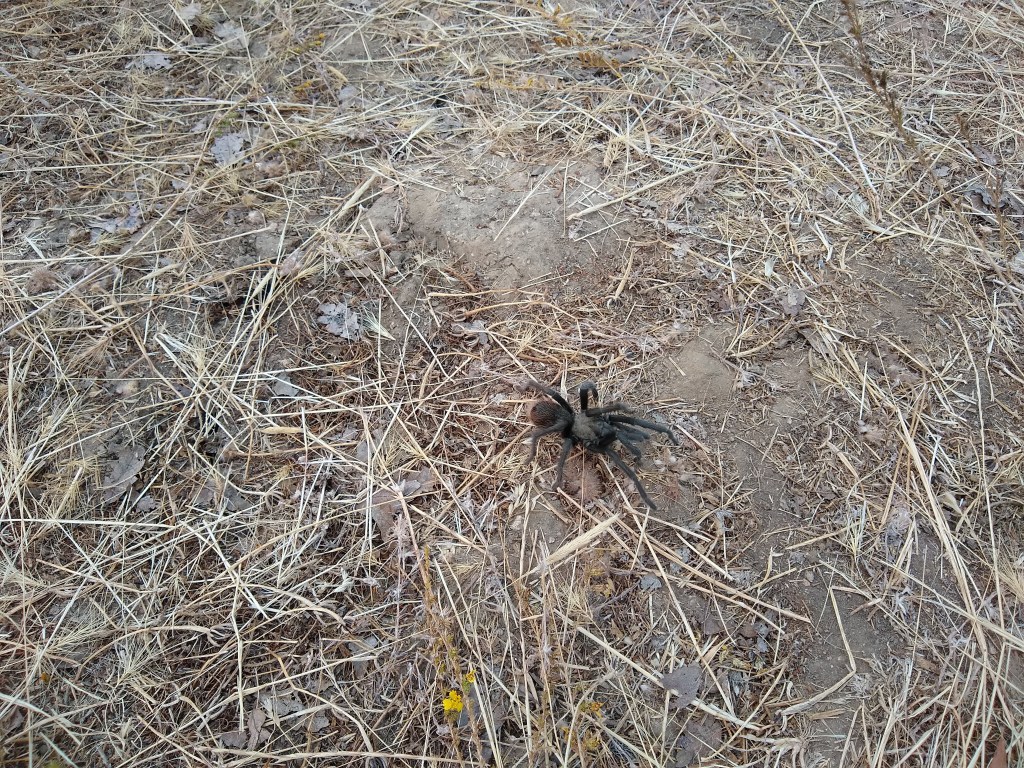
A tarantula friend

The days are getting shorter and the tarantulas are out. It is just about Autumn. All the monarchs should be tucked into their overwintering site by October. The chance of me having a sighting here is getting less and less. I understand from my monarch class that the monarchs have already begun arriving on the coast. There have been the fewest sightings since stats have been captured along their migration path. It would truly be a shock if any were to stop by. Is my project too late to help them? I comfort myself with the eternal phrase, “There is always next year.” I will have more plants and more mature plants to provide respite on their journey north. Maybe they will stop by.