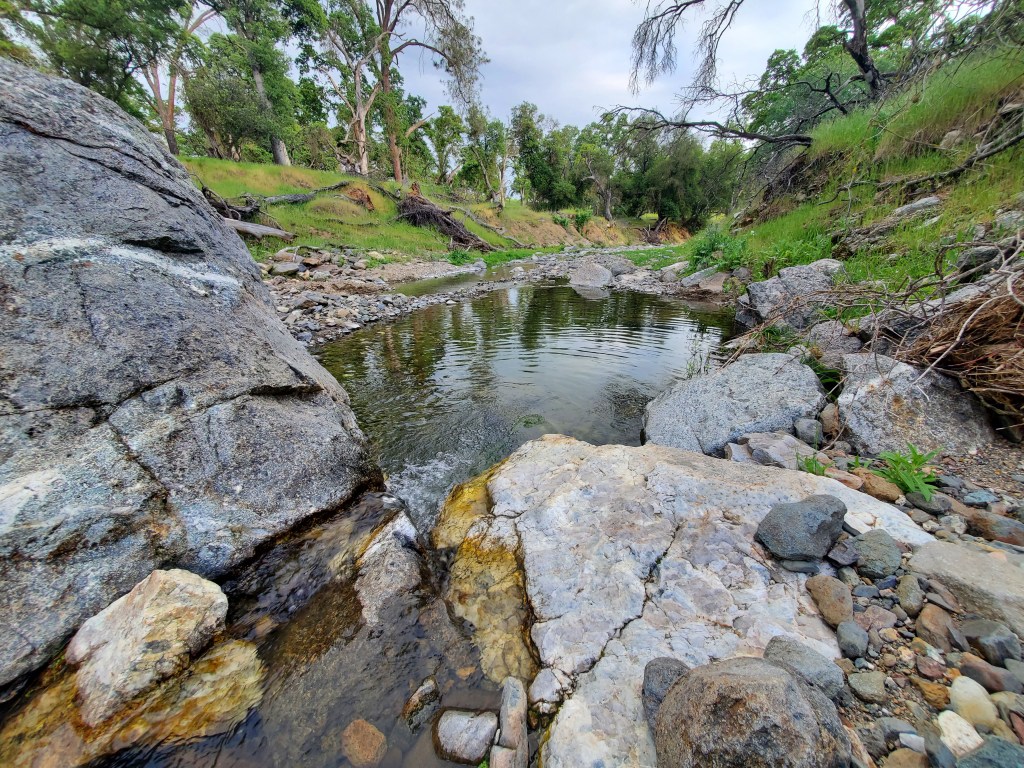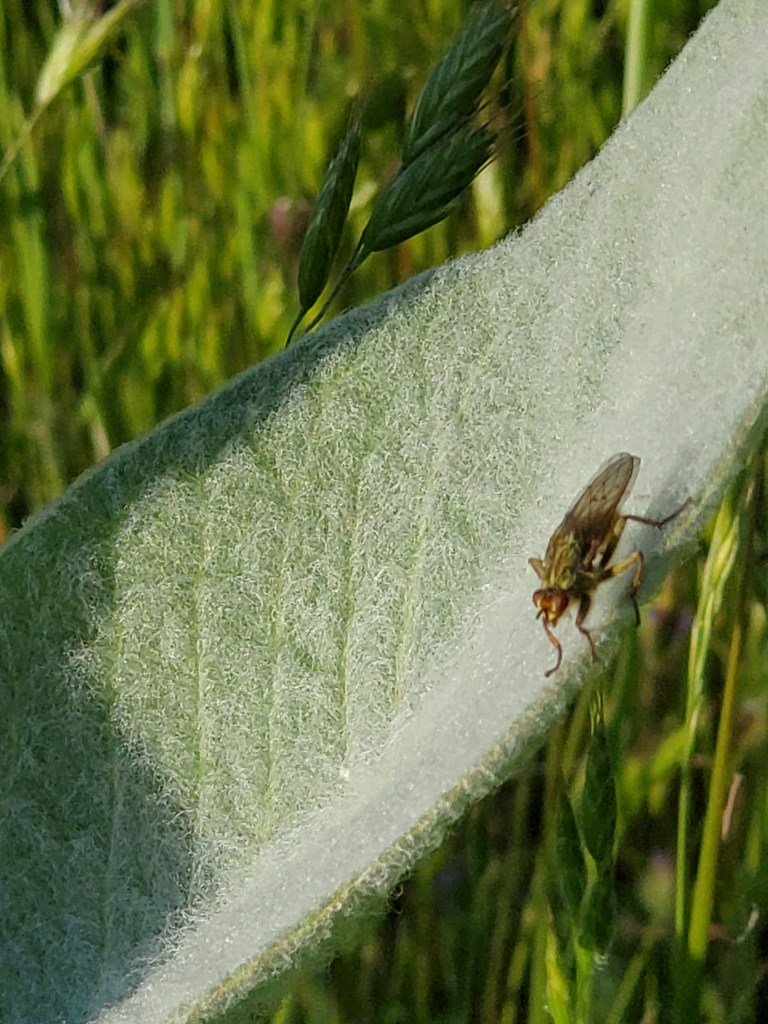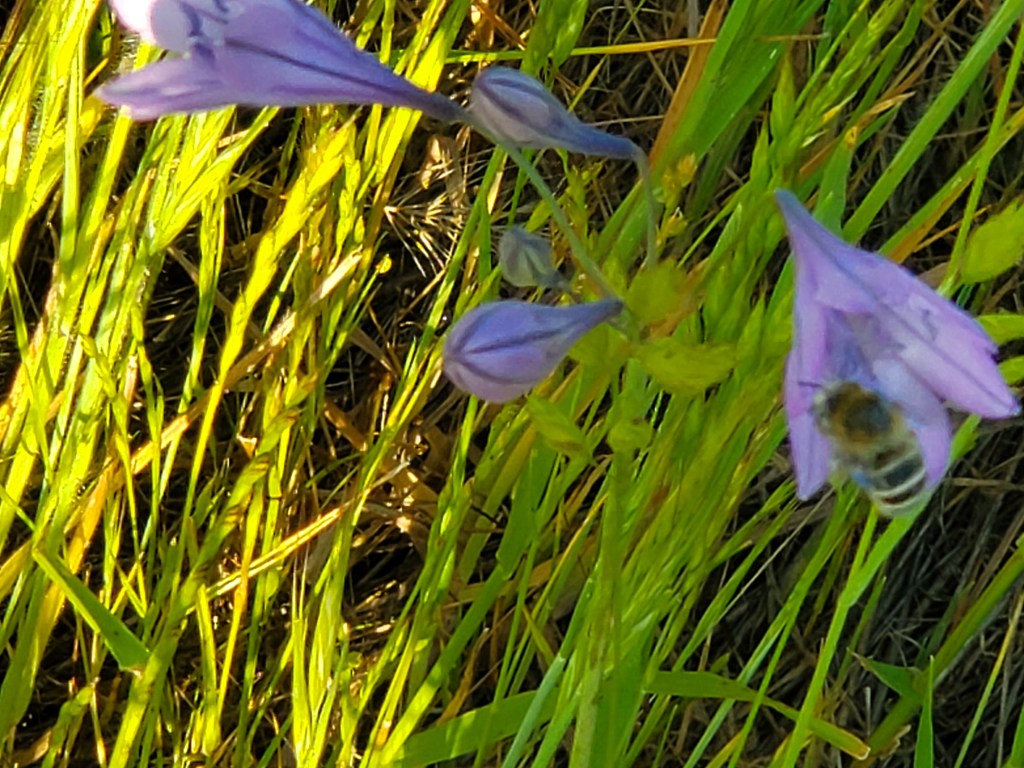
Another Race Against Time

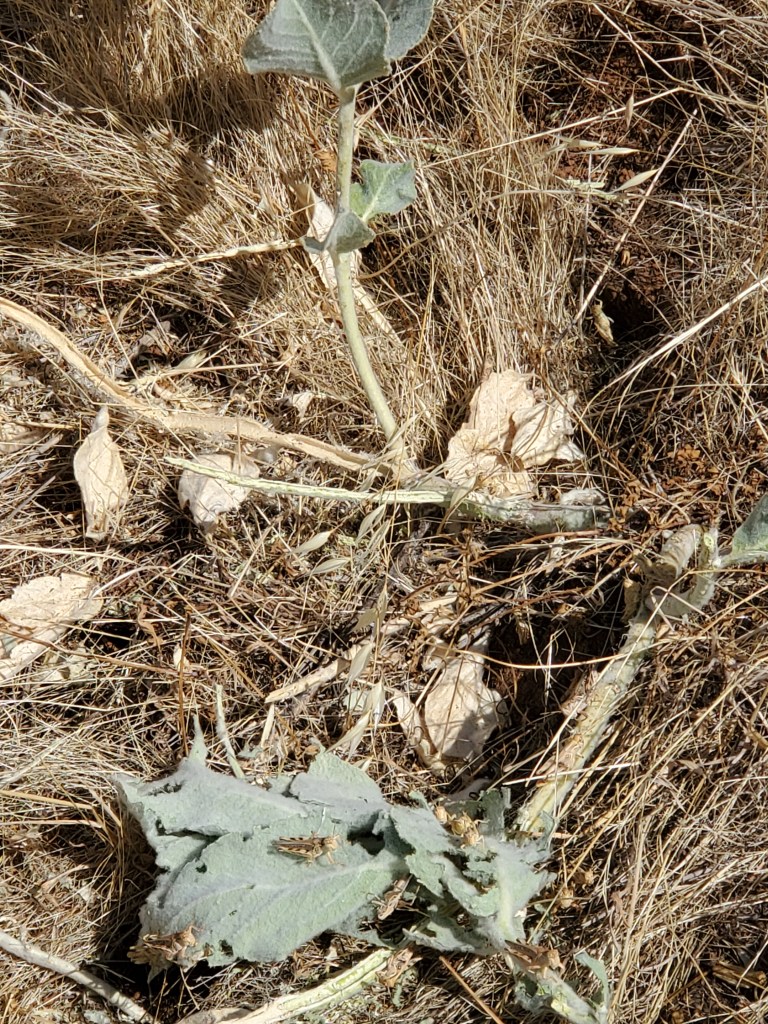
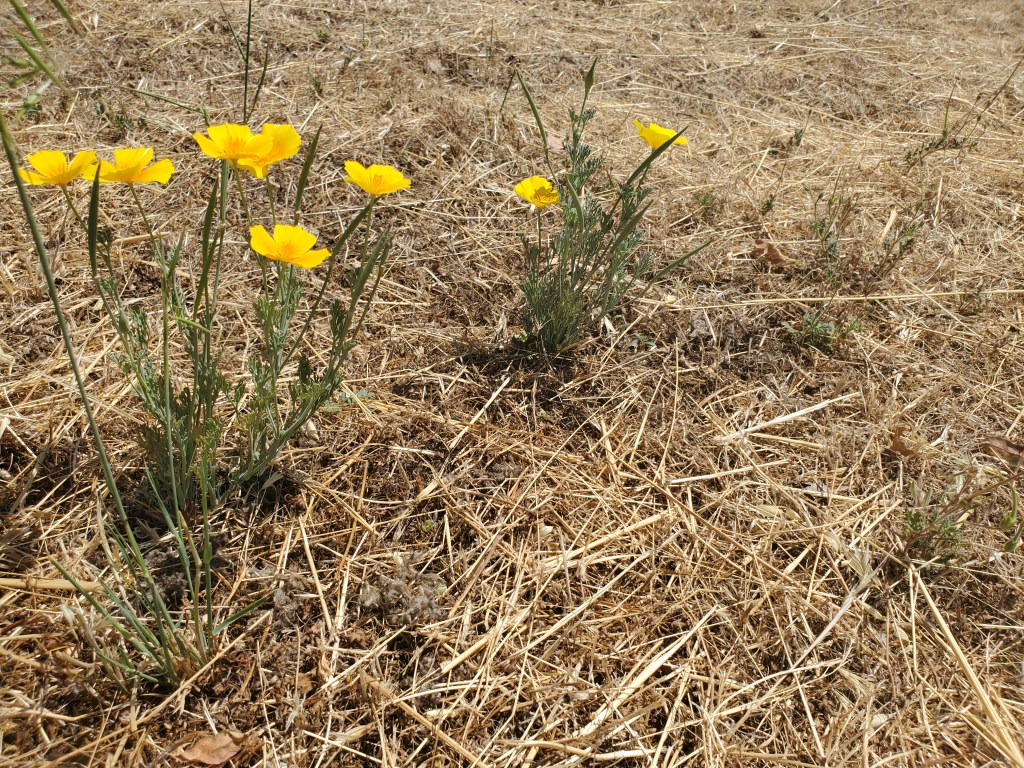
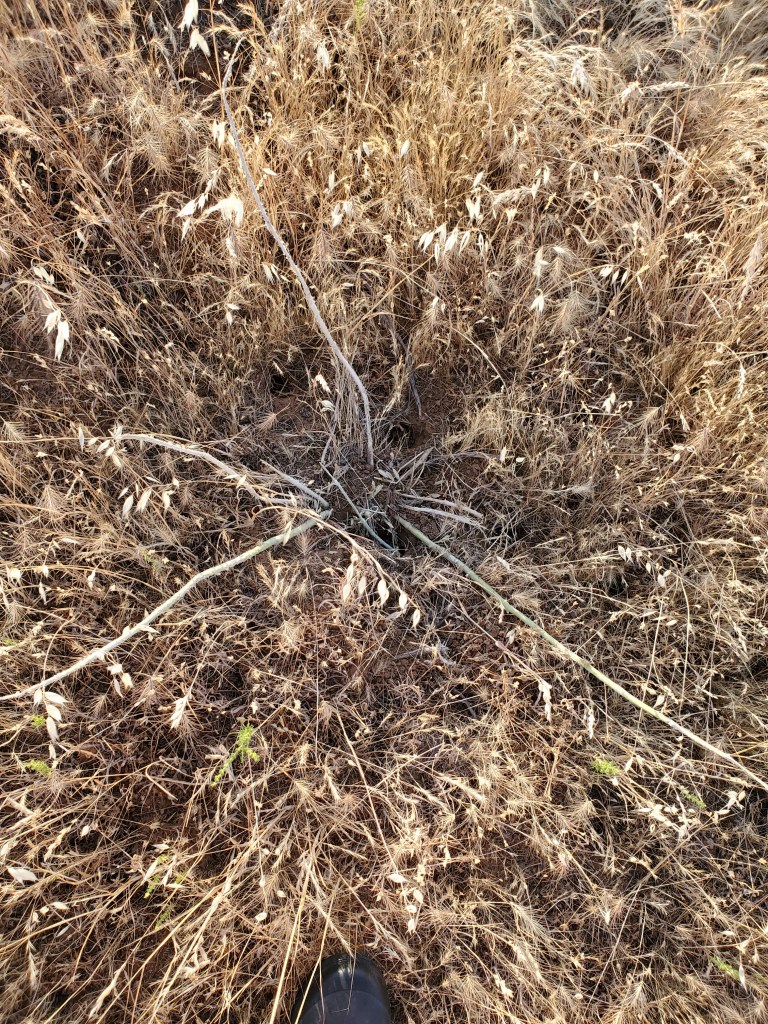
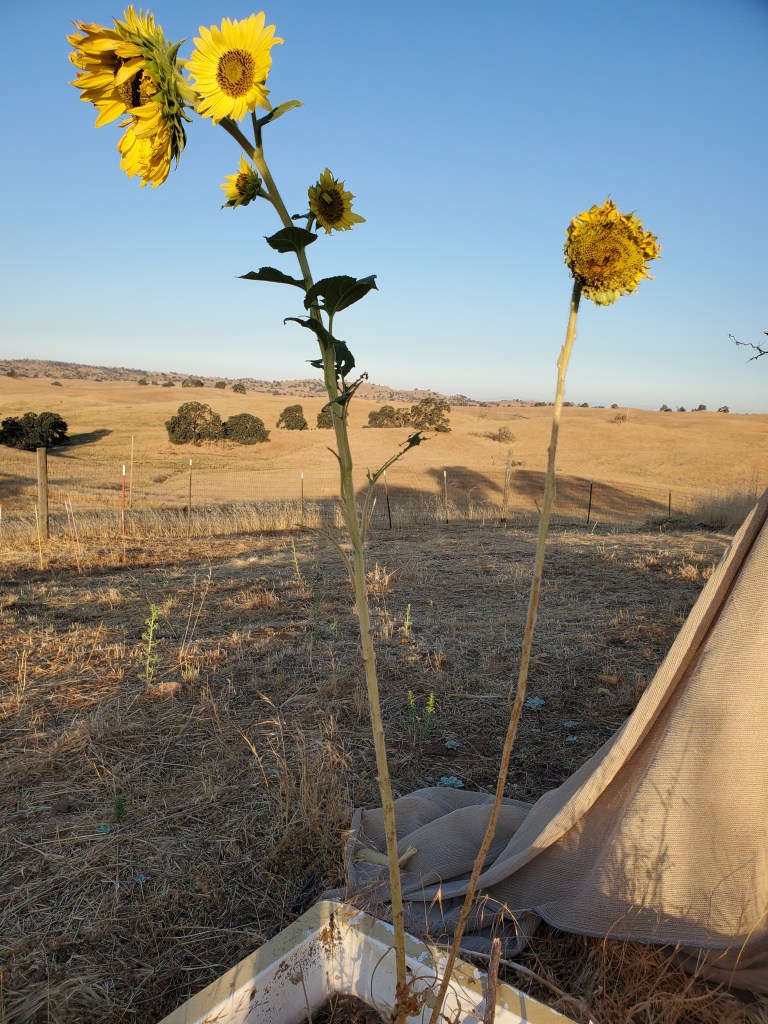
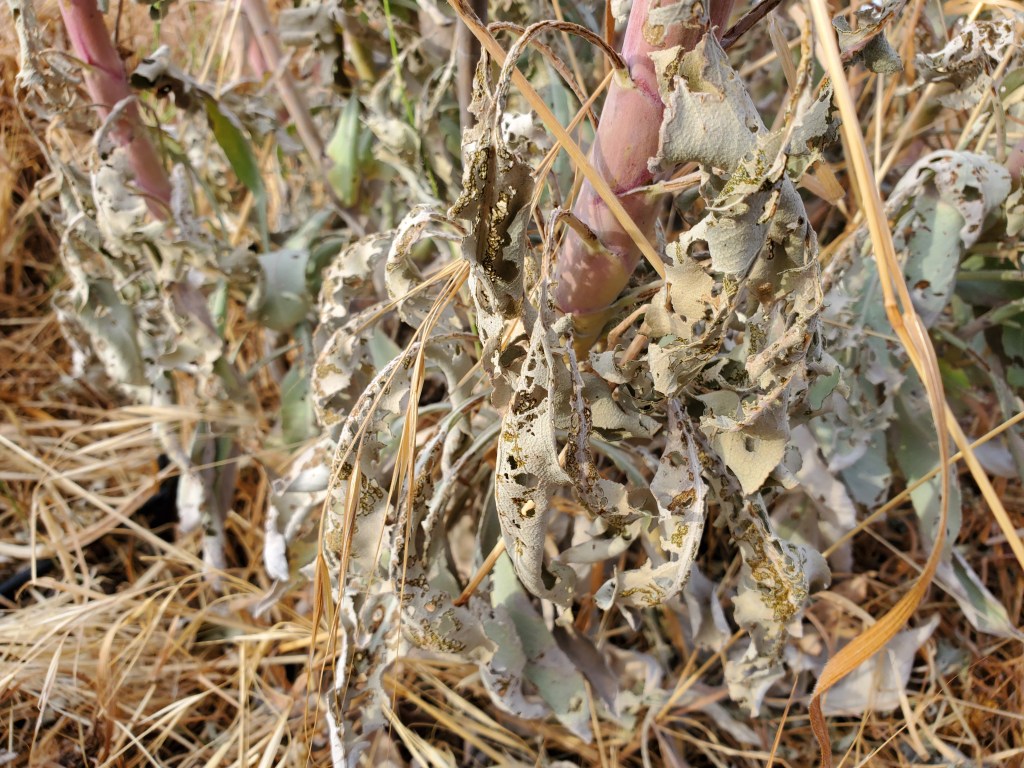
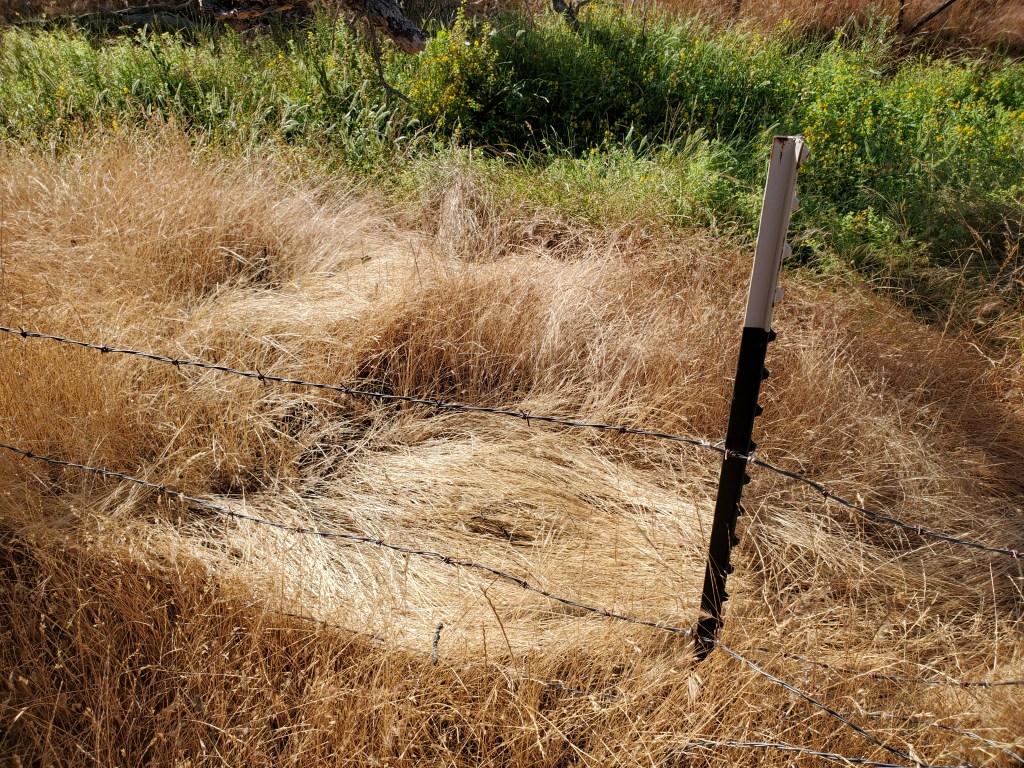
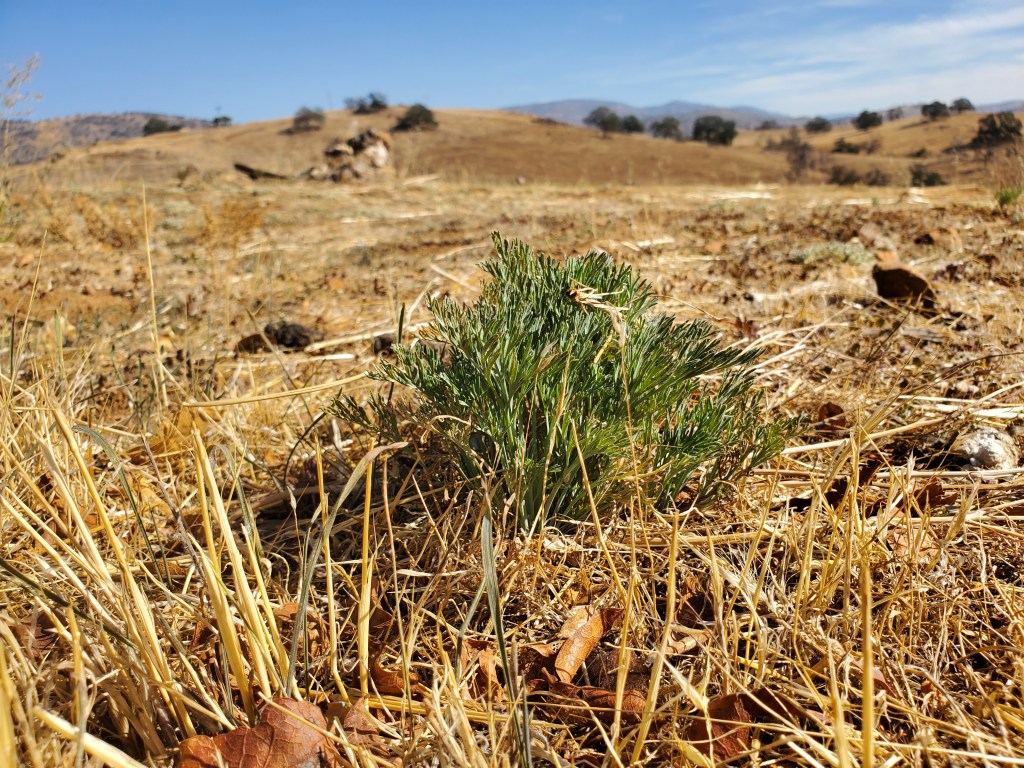
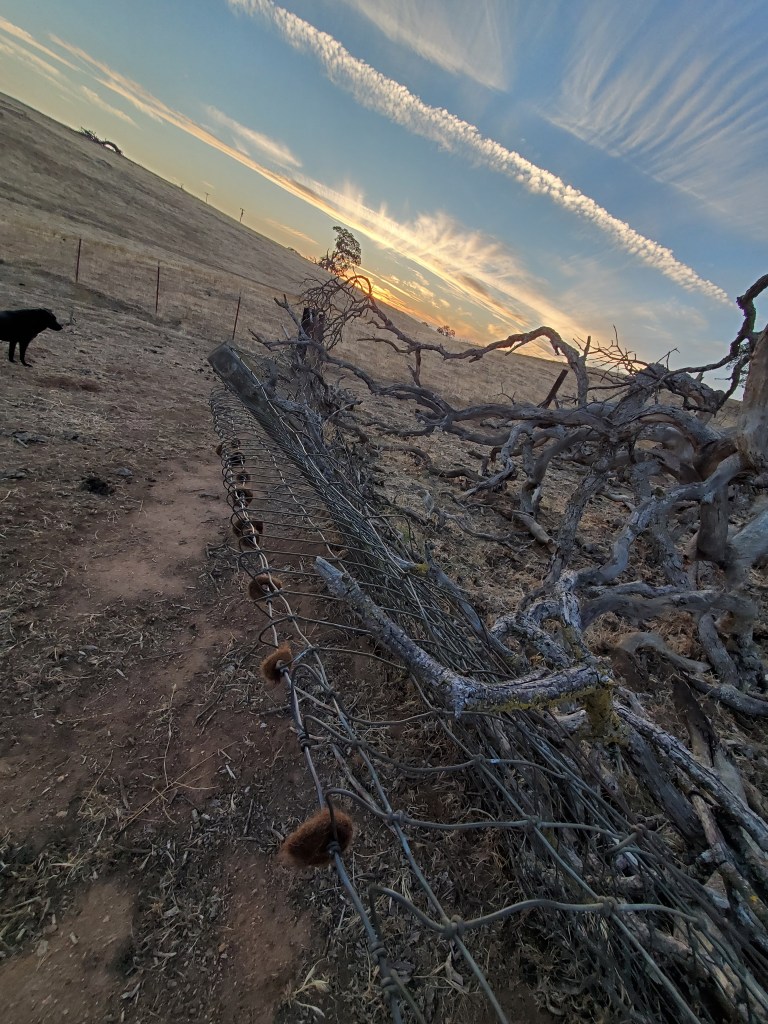
Oh yes, by the title and the time of year, I am sure you understood that the grasshoppers are back. They are eating their way up the hill. I had hoped they would not be back, that the typical cadence of boom and bust for the hoppers would return. We are due for a few years without plague levels. Alas, once again, the imbalance of what we are doing to this planet has manifest itself on Taawim Bwiapo. Essentially, almost nothing gets to live but the grasshoppers.

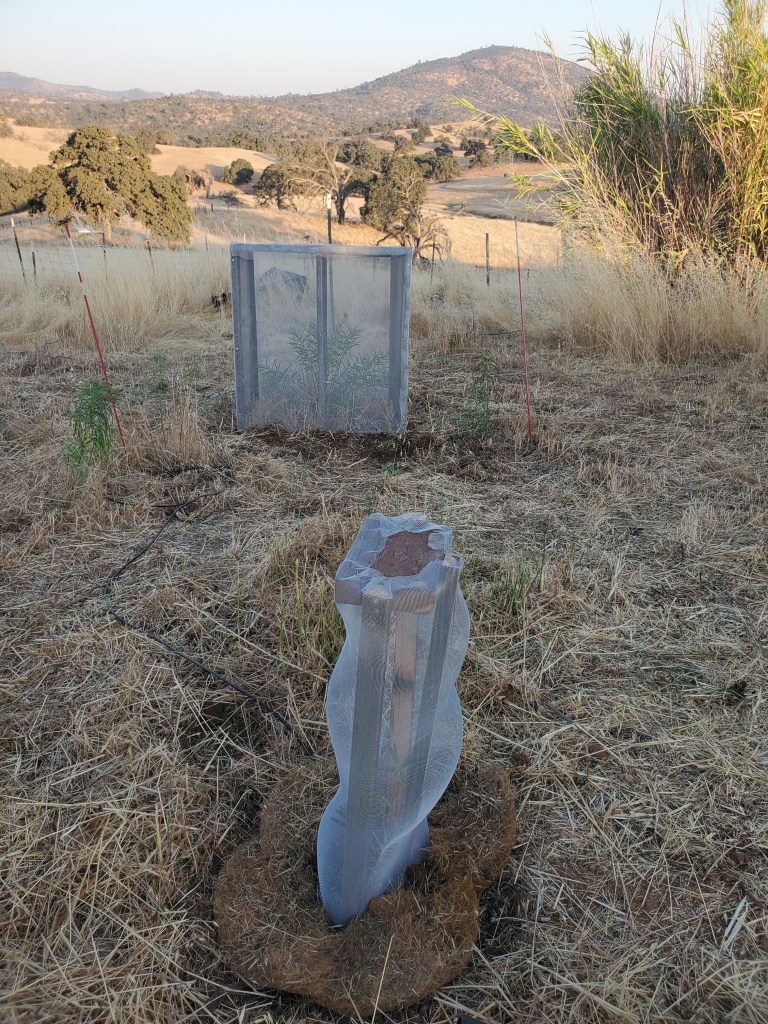
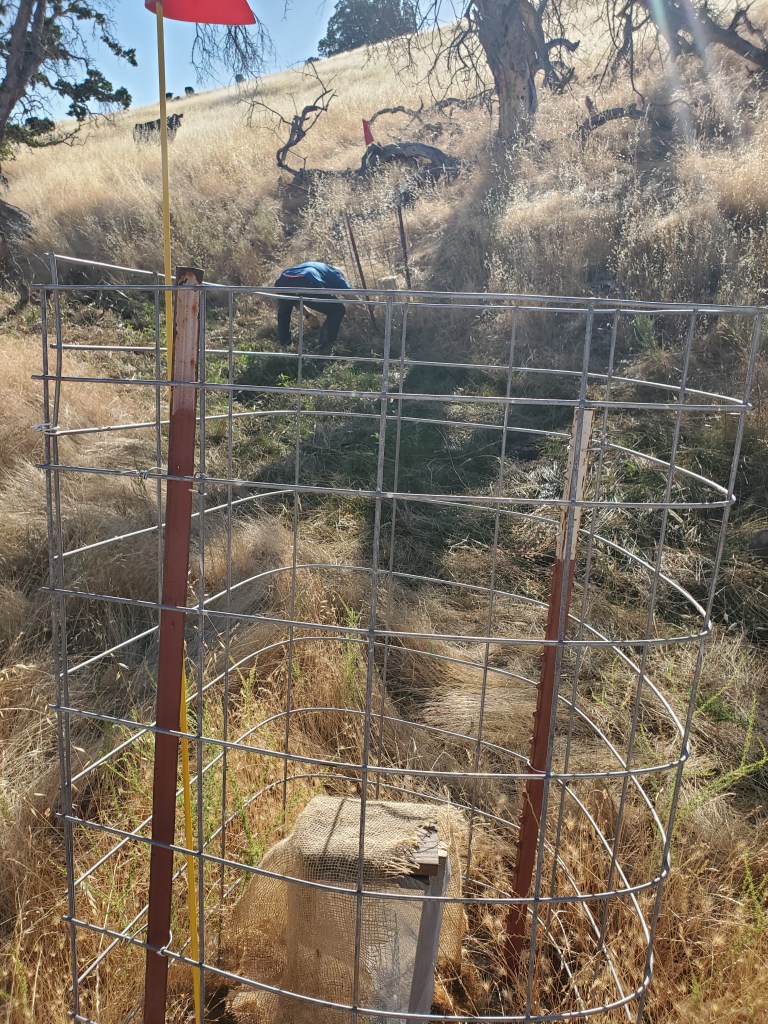
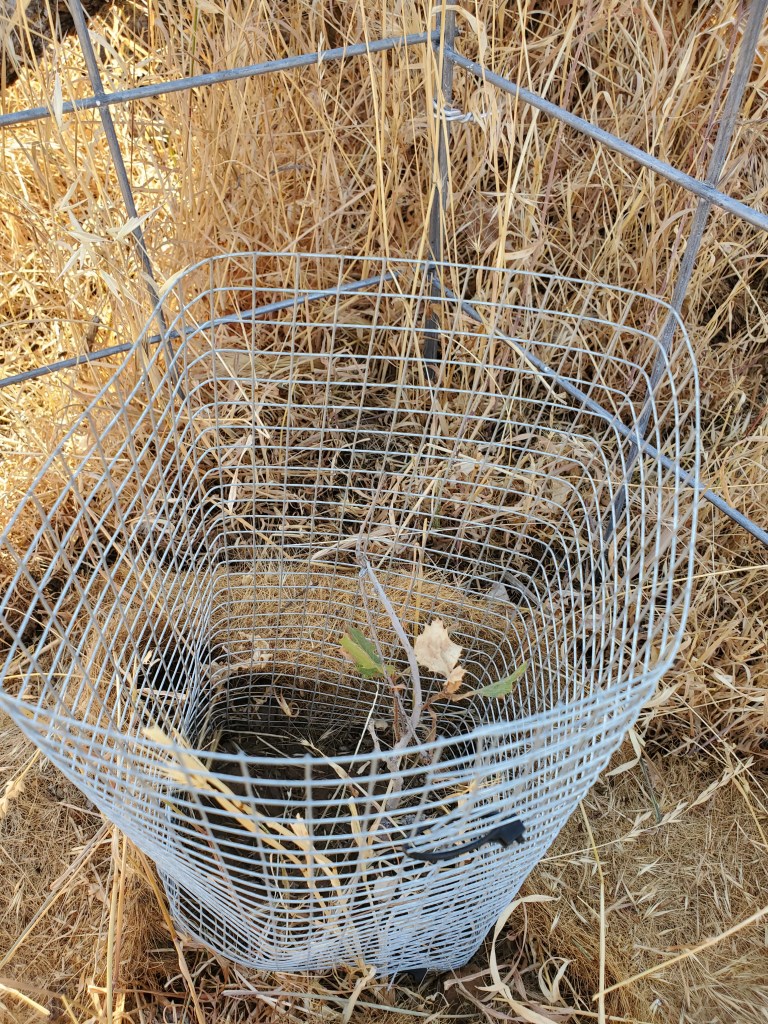
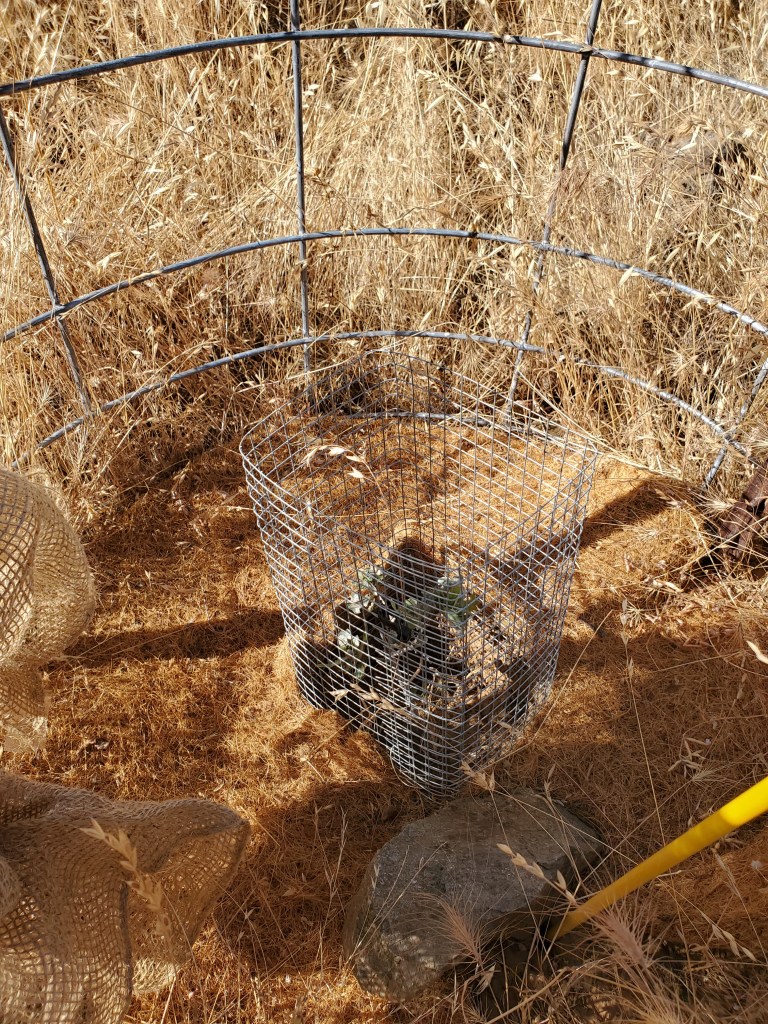
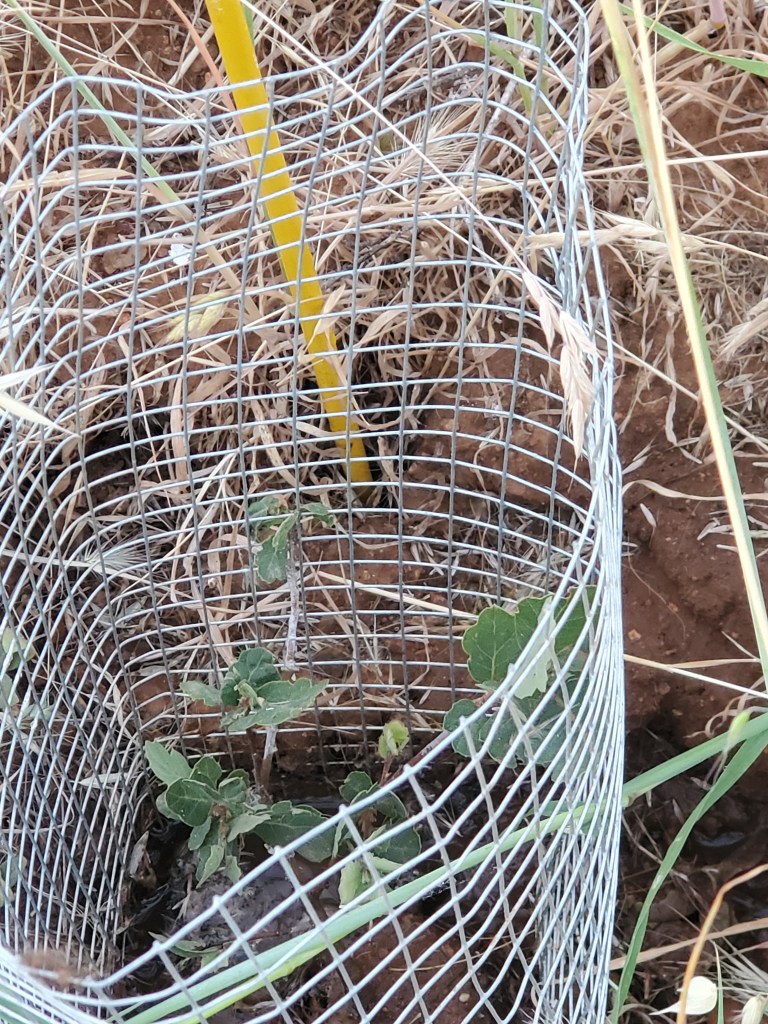
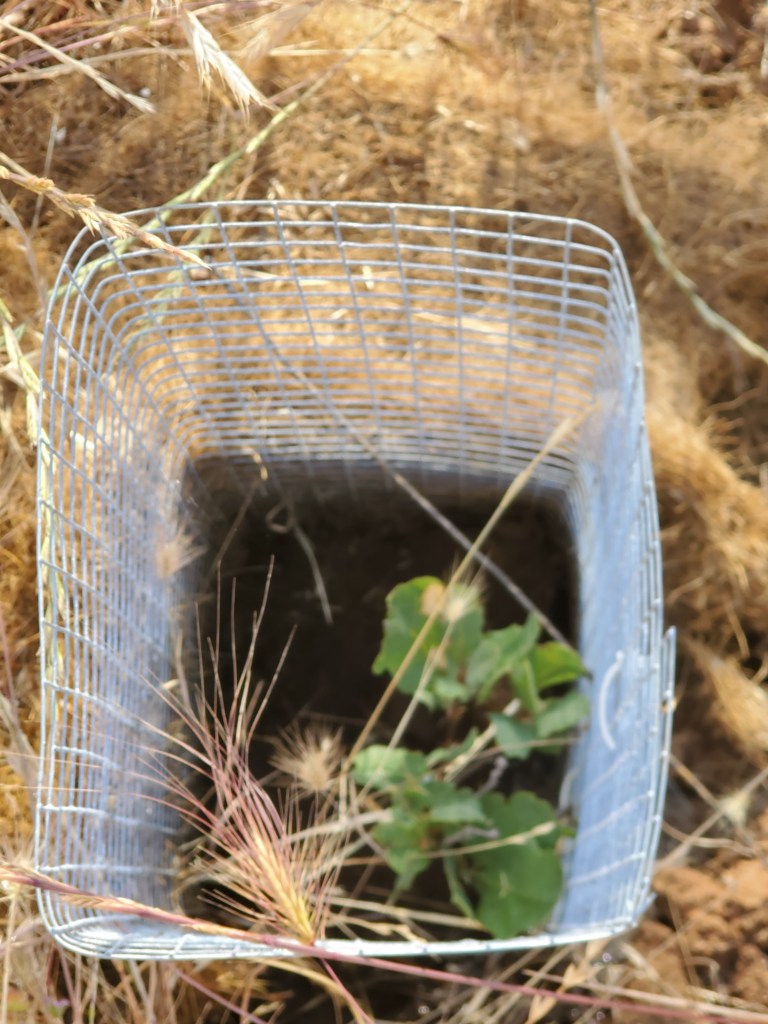
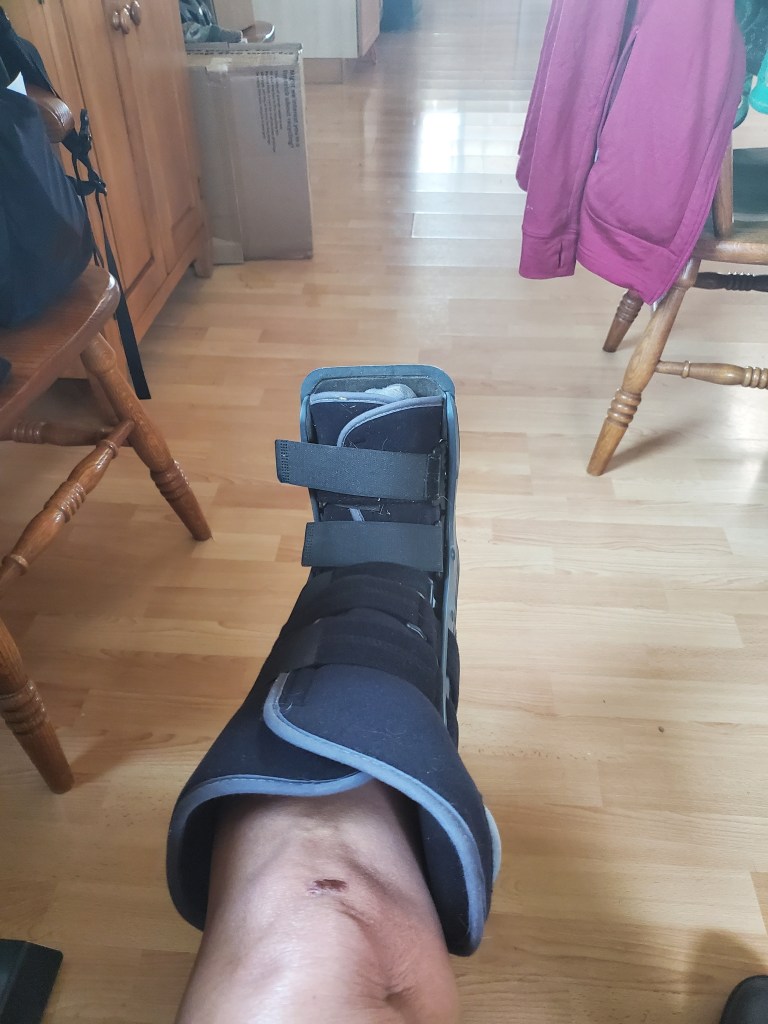
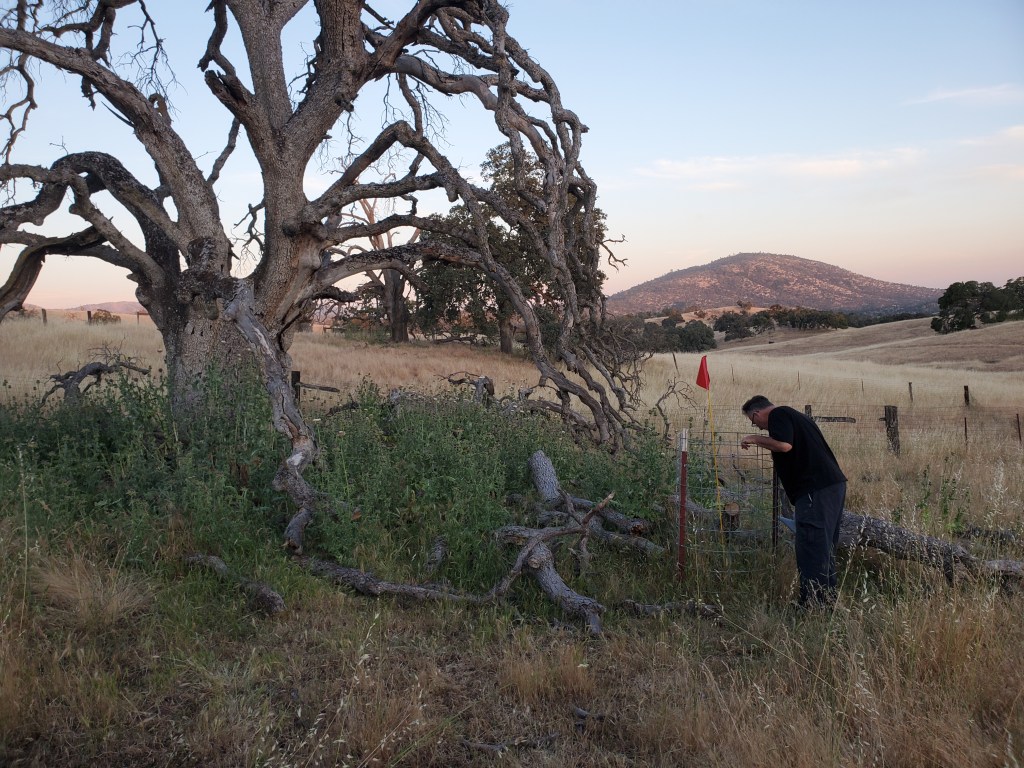
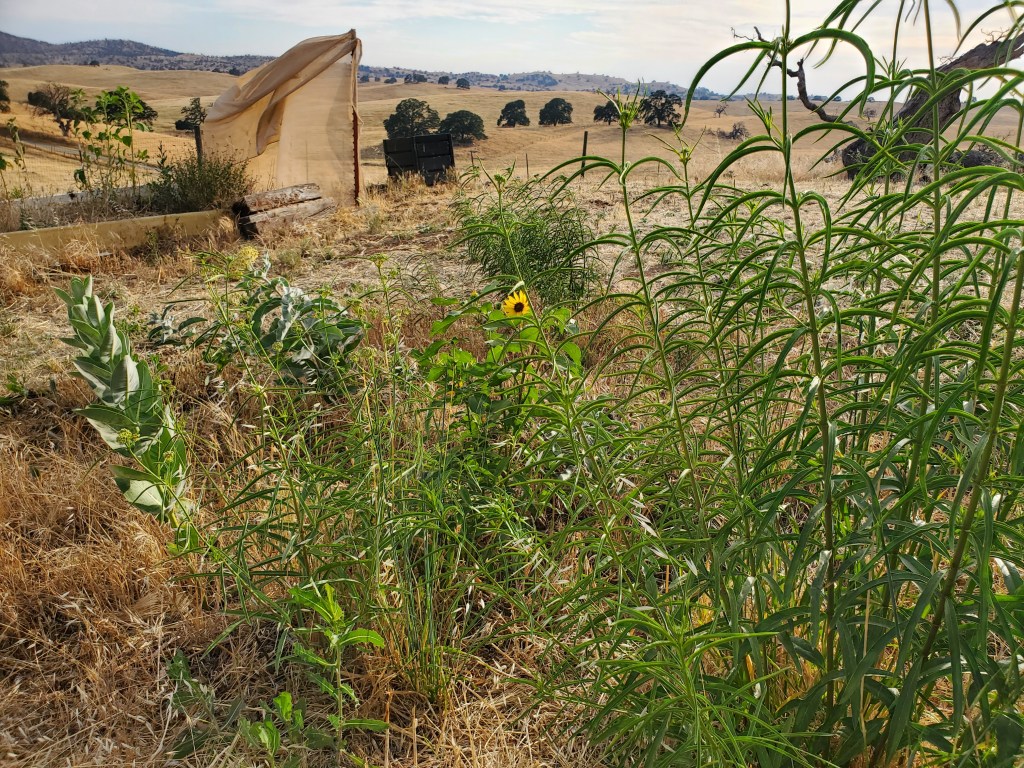
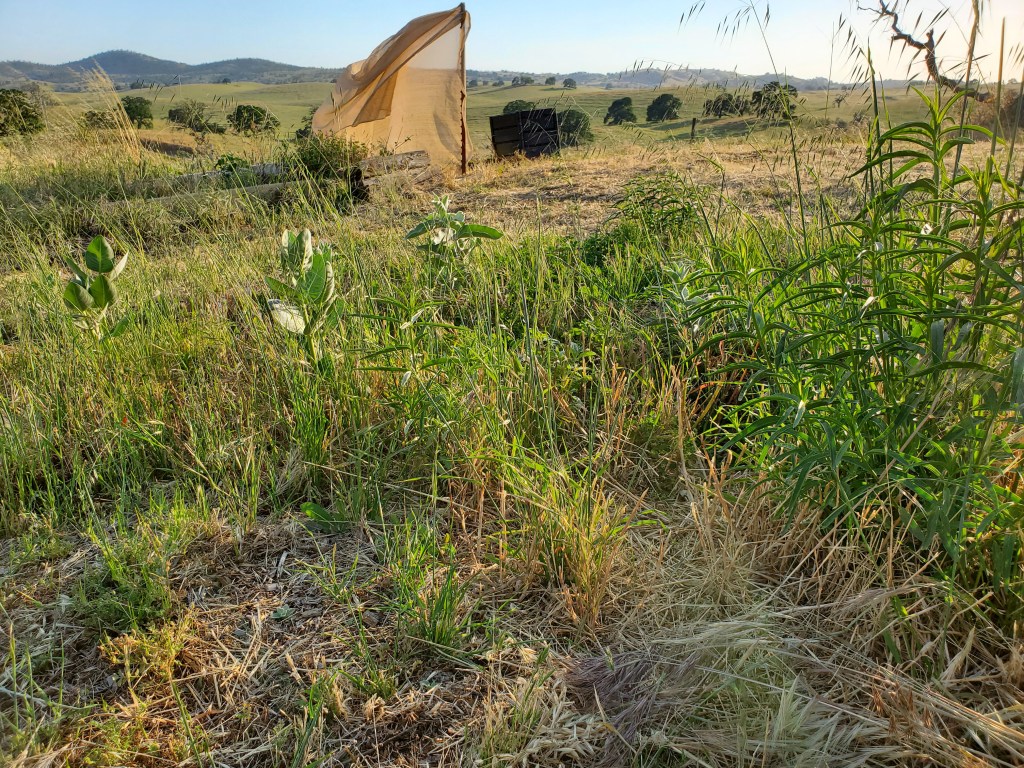
Except…this year, I am more ready – busted thumb and limpy leg and all. As soon as I saw some bites in the oak seedlings by the creek. I had David purchase aluminum screen. He began to make little screen houses to go over the gopher cages in which the oak seedlings were planted as well as other screen boxes for my pollinator plants. The poor guy. He is doing so much. I am getting better, little by little, but still cannot perform most of the ranch work I need to get done. David also has his paid work to do, which has been extremely busy of late. To enable us to get what we need done in the timeframe it needs to be done, I decided to hire someone to help us on the ranch, and to give poor David a break.
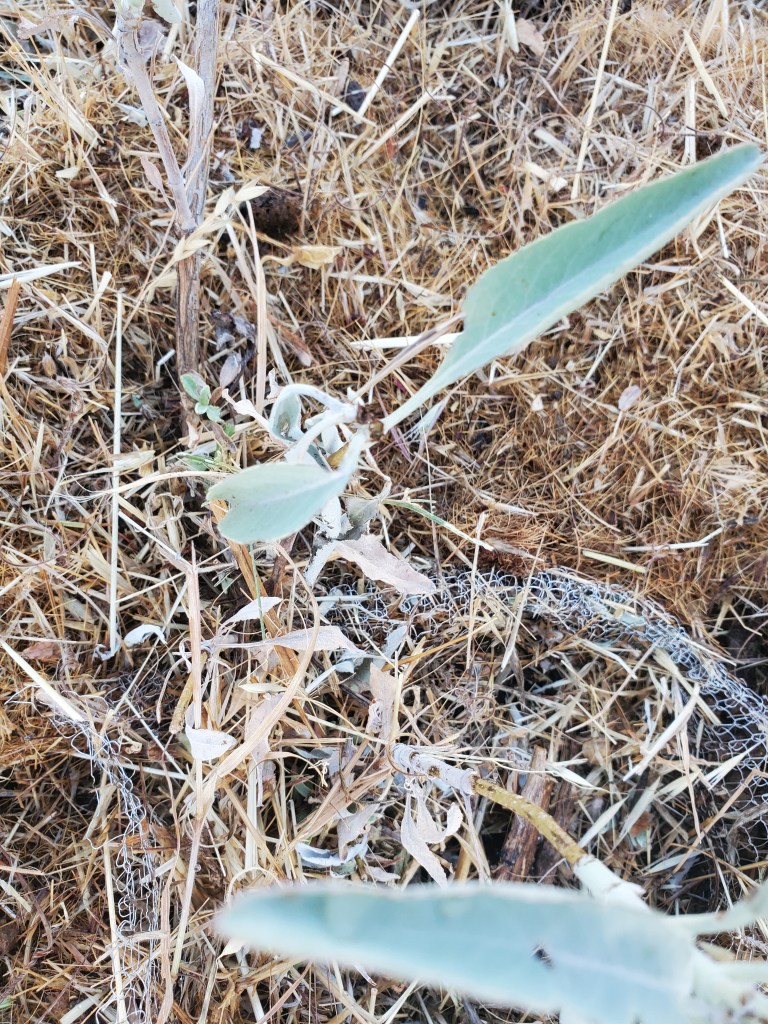
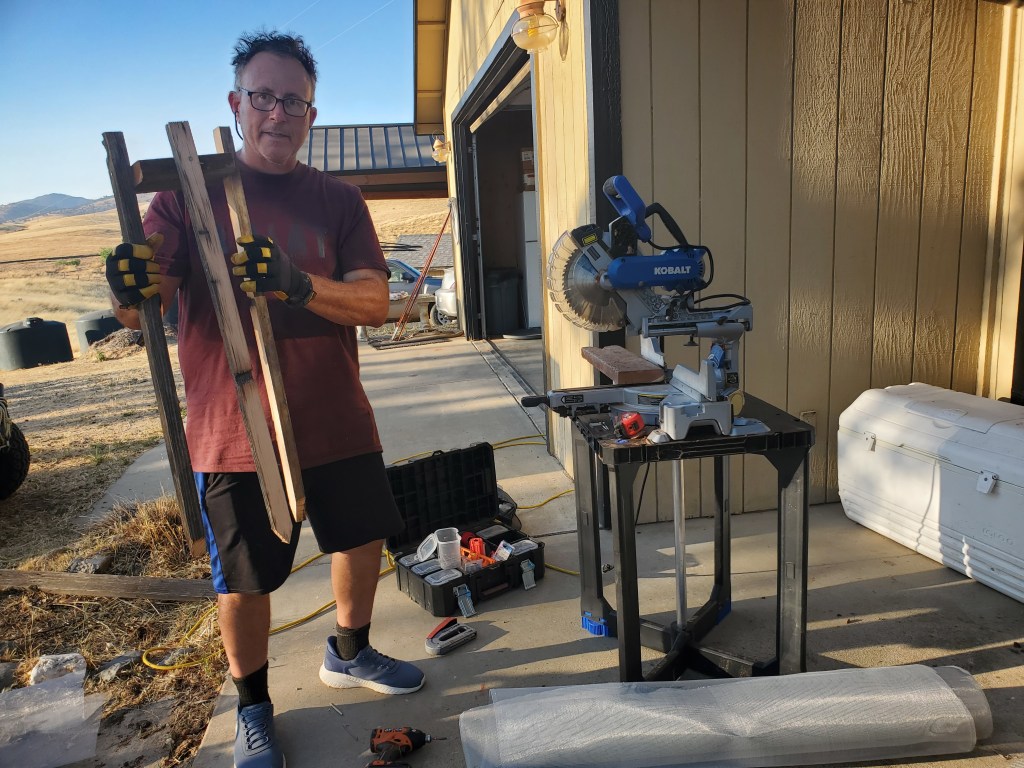
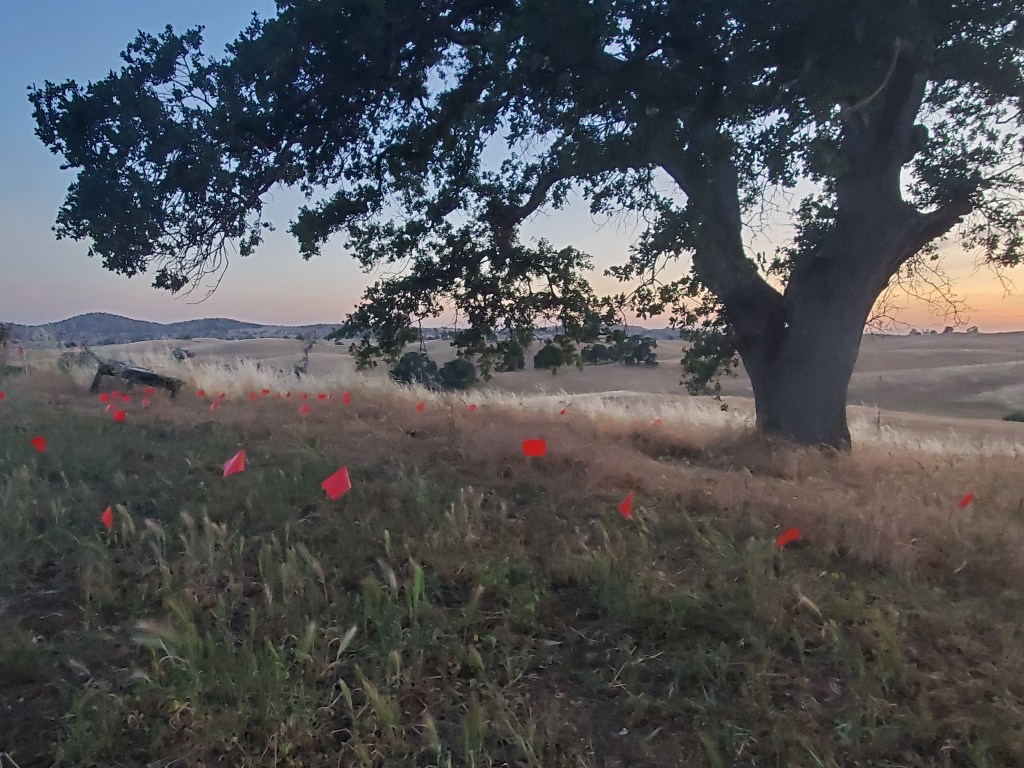
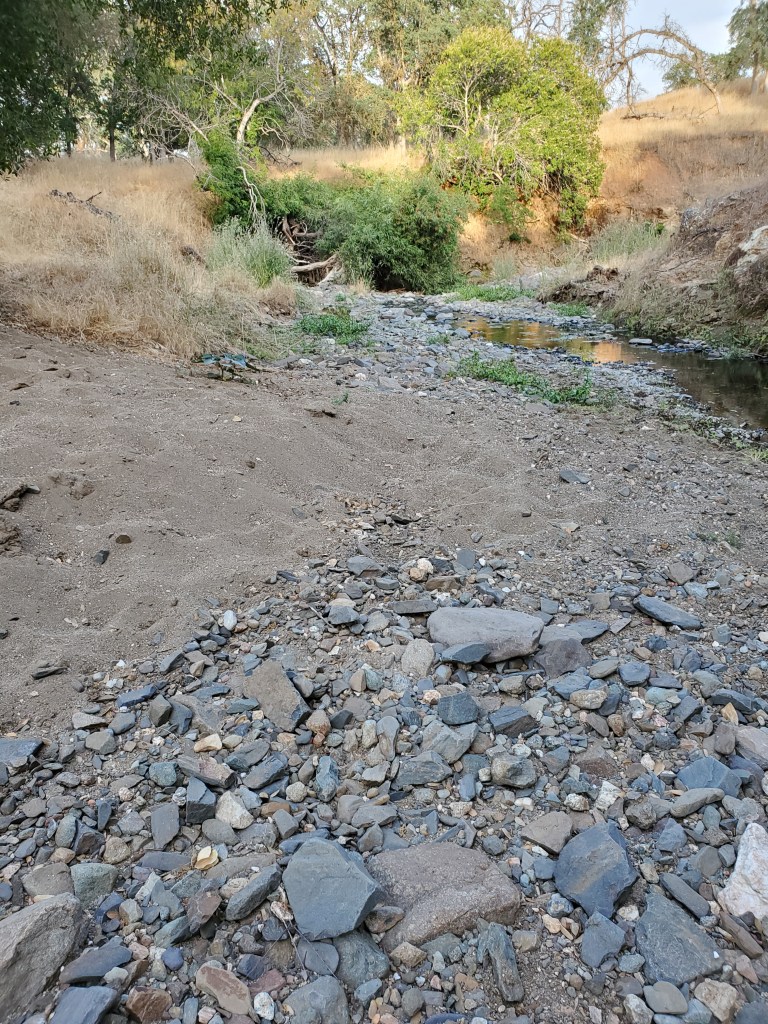
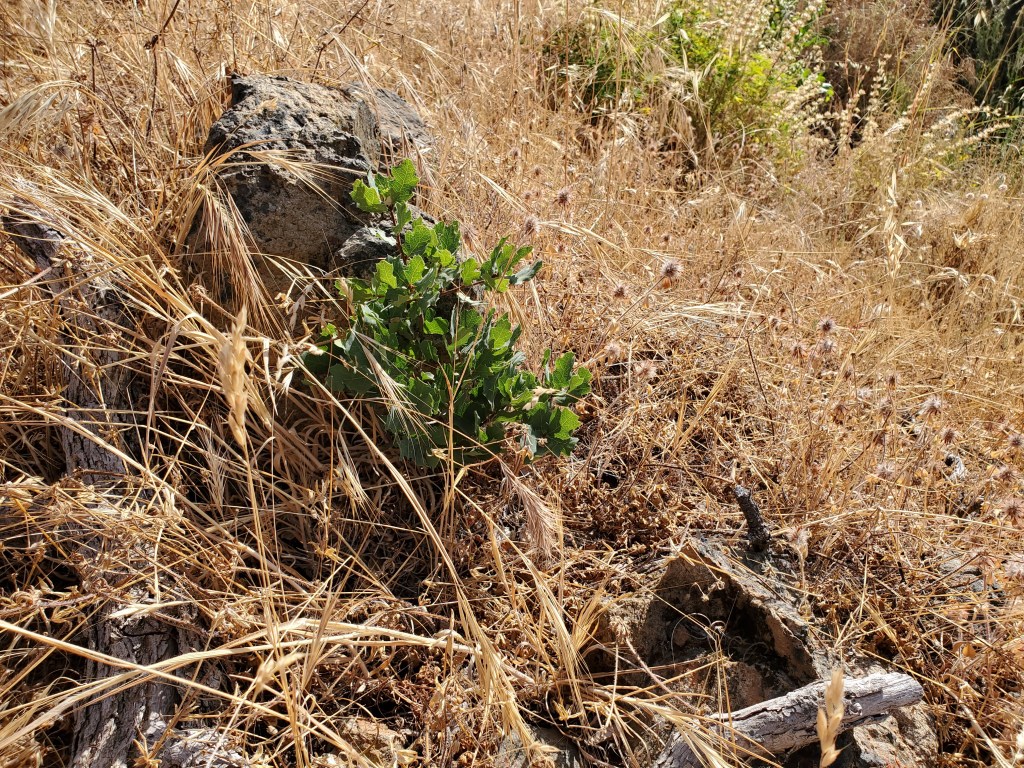
I put out the word I was looking for someone, and a friend, Jeanne Ann, said she had a grandson who was looking for work. His name is Sam. He jumped in and did weedeating freeing David to help with the oaks. We began placing his boxes and found that the two oaks at the downstream section of Spring Creek were already eaten. I lost my breath. I was horrified. When I looked closer, I saw that the bark had not yet been eaten off, like last year. Maybe there was still a chance. We covered and watered them anyway in case they were able to survive.

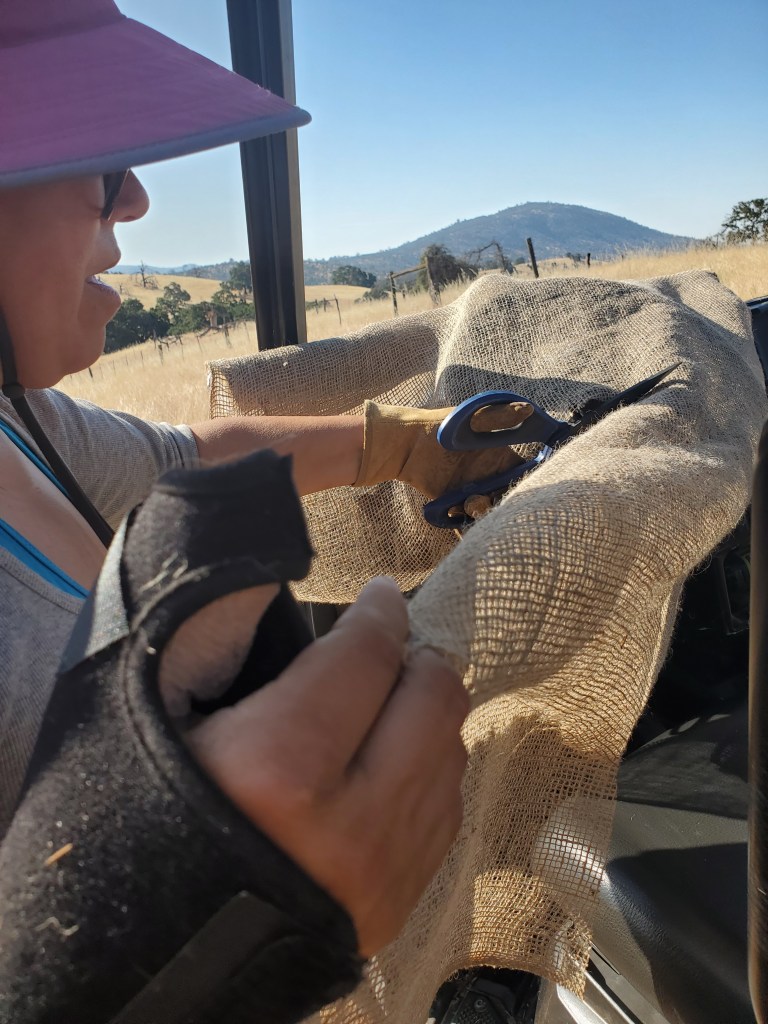
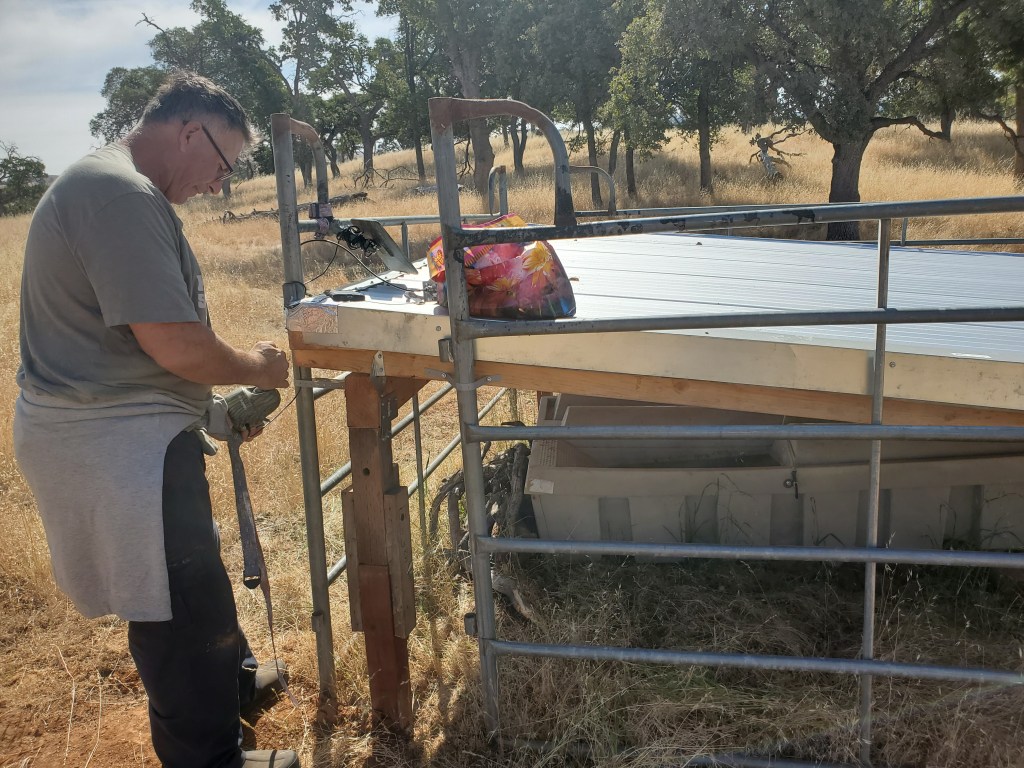
Then, a major issue happened at David’s work, and he was on a service incident for the entire day. Work stopped on my oak and plant cages. With my injuries, I was not able to do anything. I asked Sam if he knew how to build and use carpentry equipment. Turns out, he has done building before -so he had knowledge. He jumped in and innovated on David’s design and began pumping out screen boxes. Thank you Sam!!
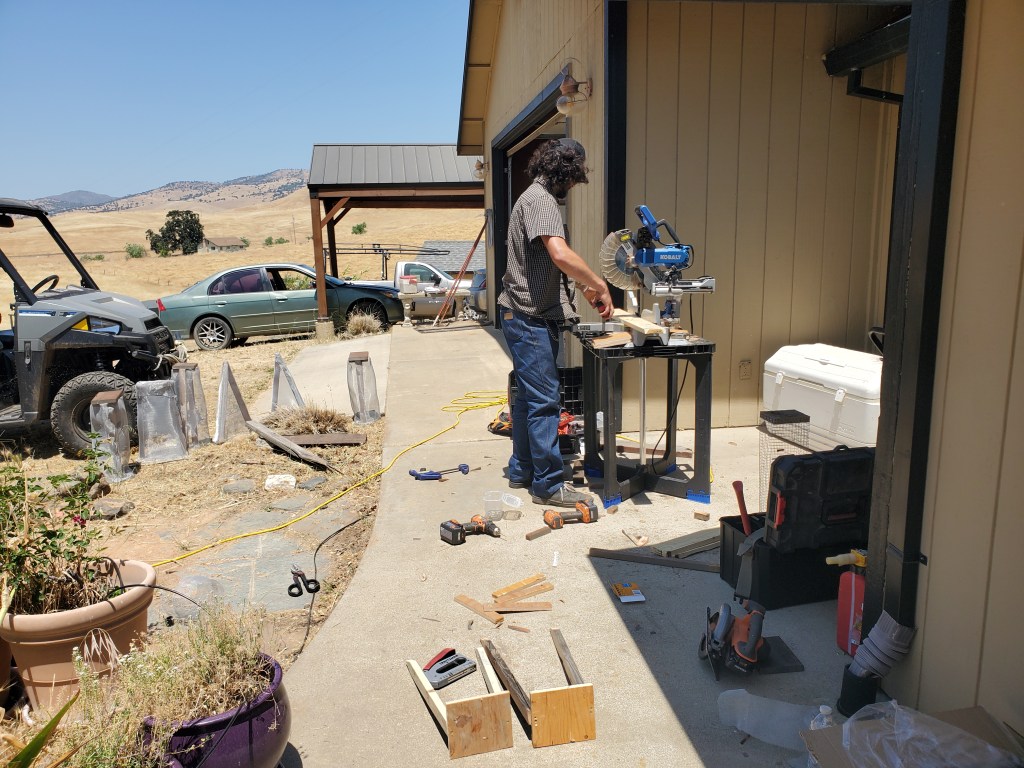
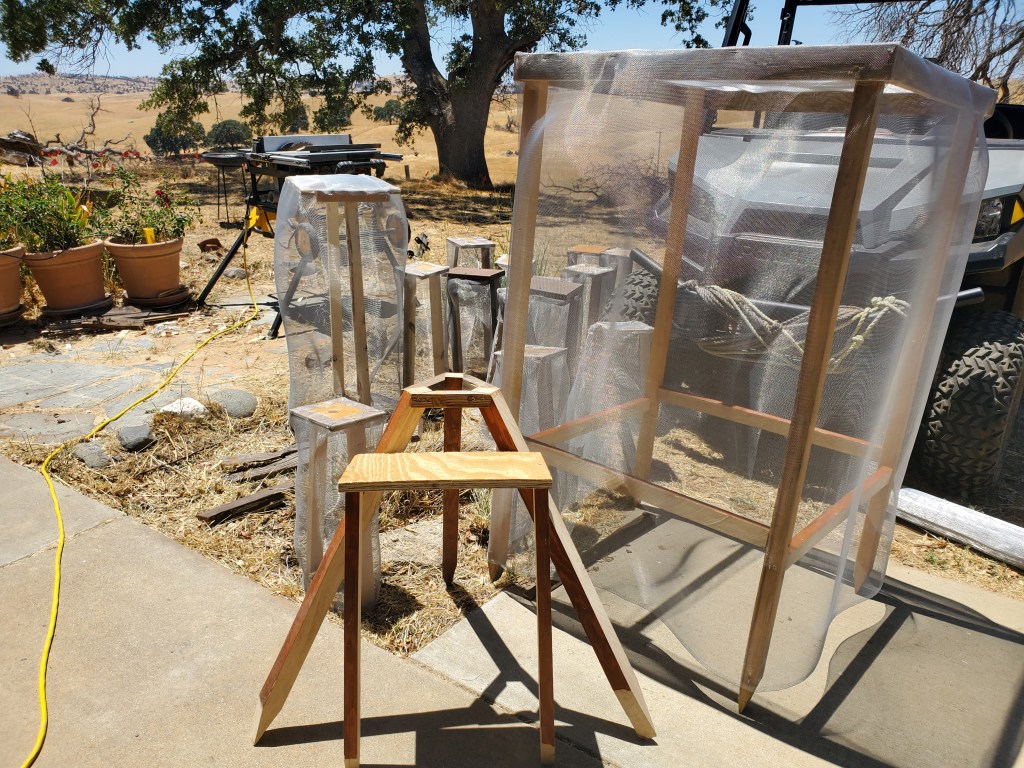
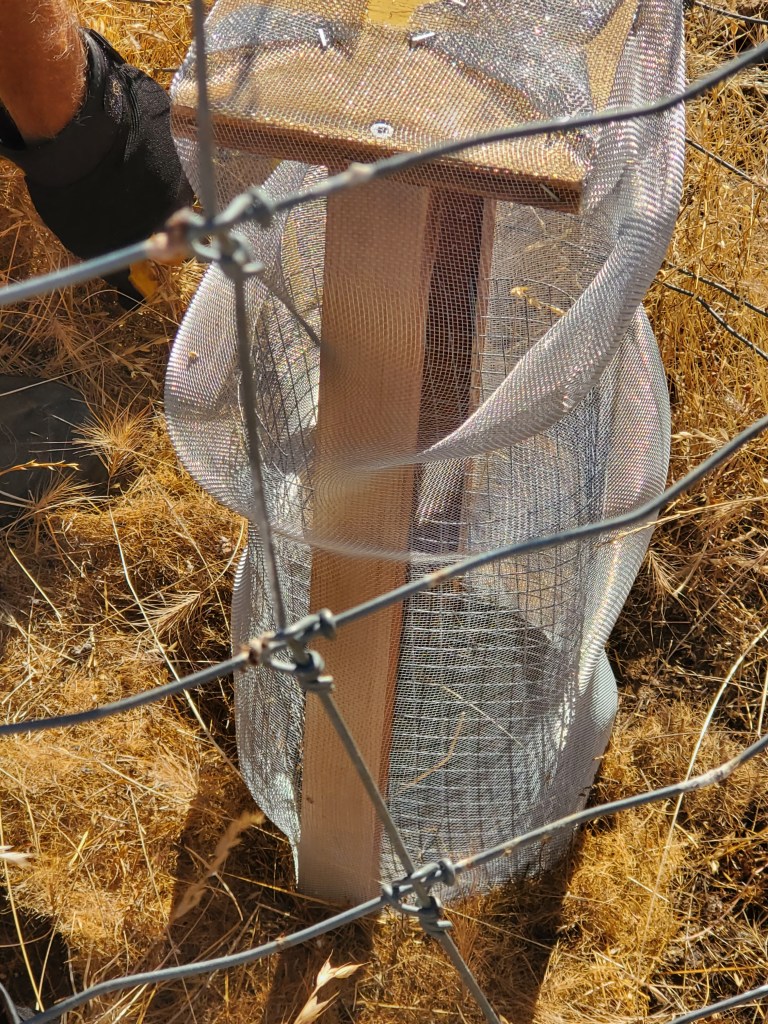
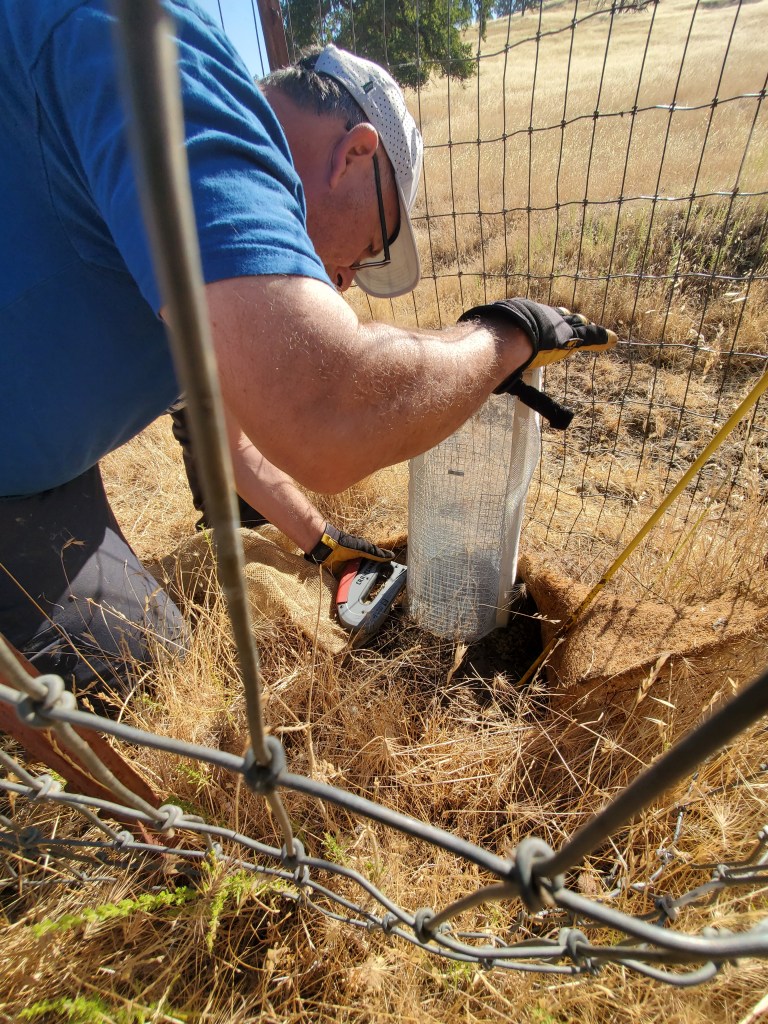
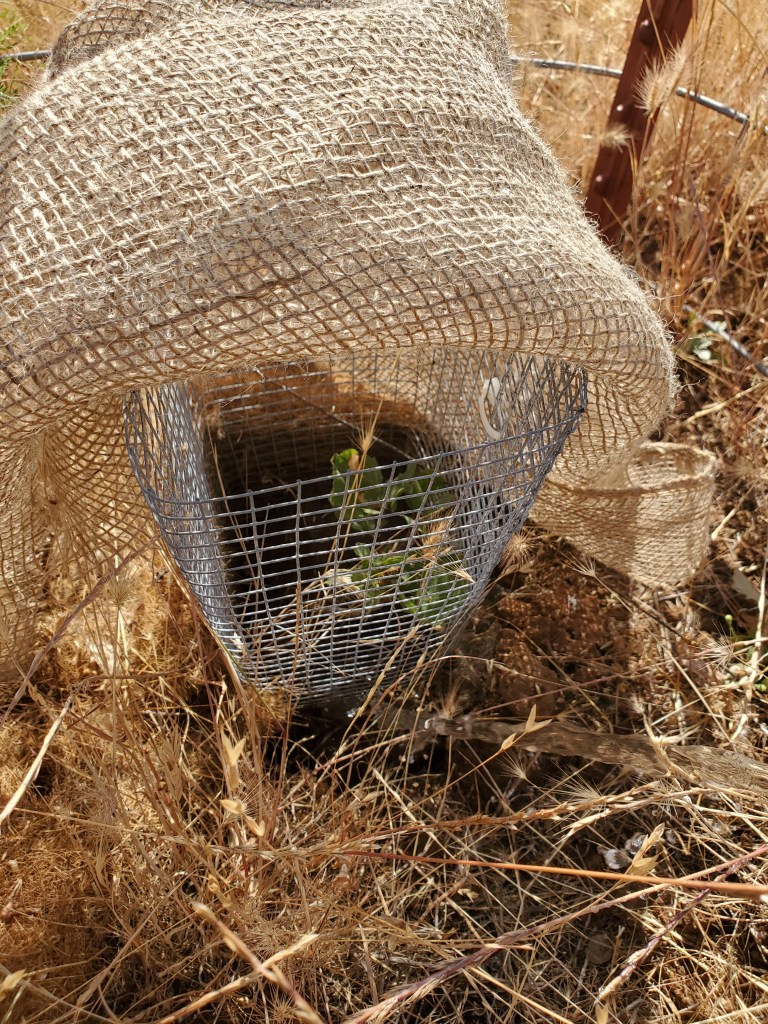
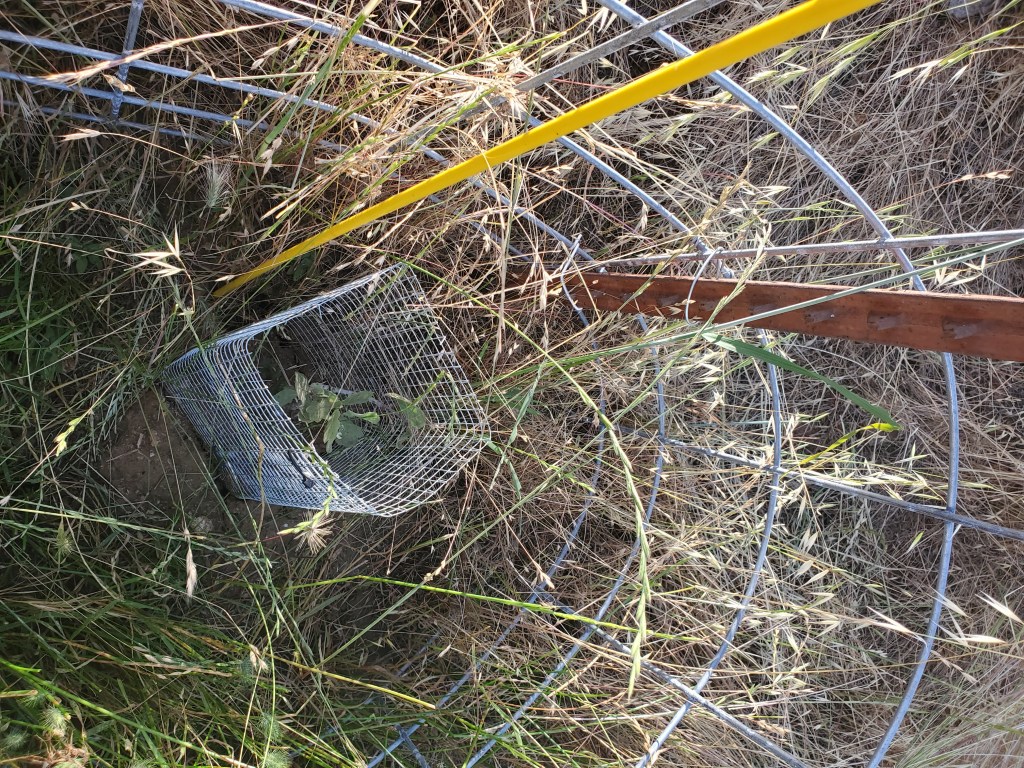
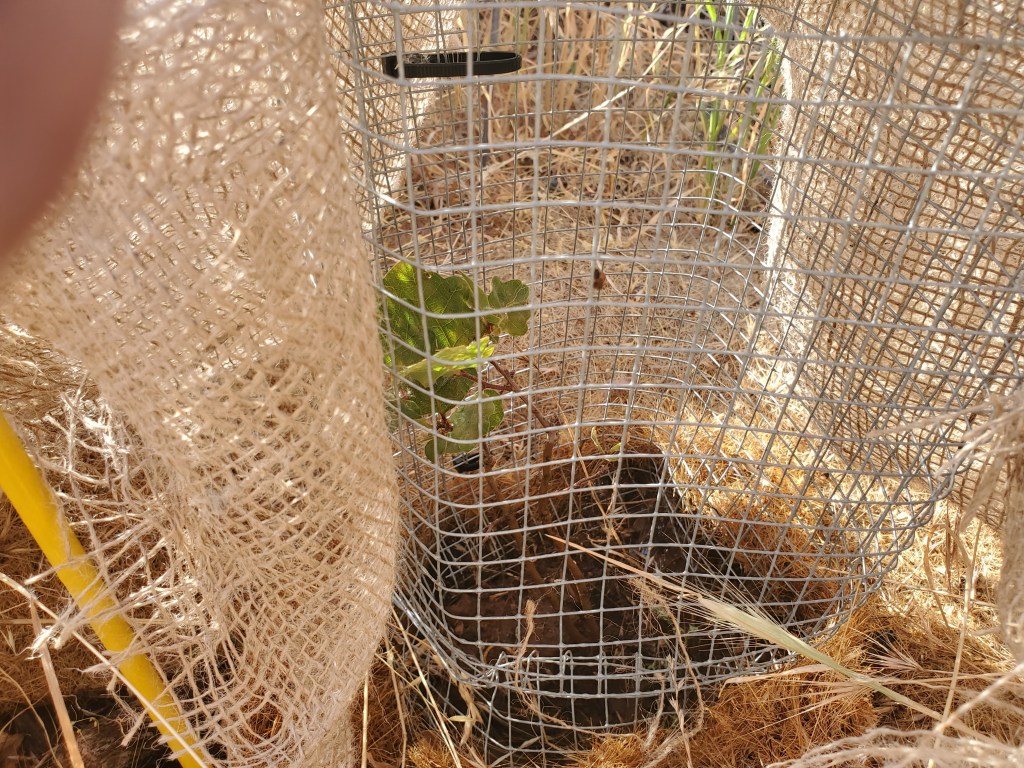
They are designed to have a wooden top to give it weight and an attachment point. There are two stakes (cut on the table saw from scrap wood) attached to the wooden top. They are nailed in at an angle to help with going over the cage shaft. Screen is measured to just fit around the gopher cage shaft. The screen is wrapped around the wooden structure and stapled.

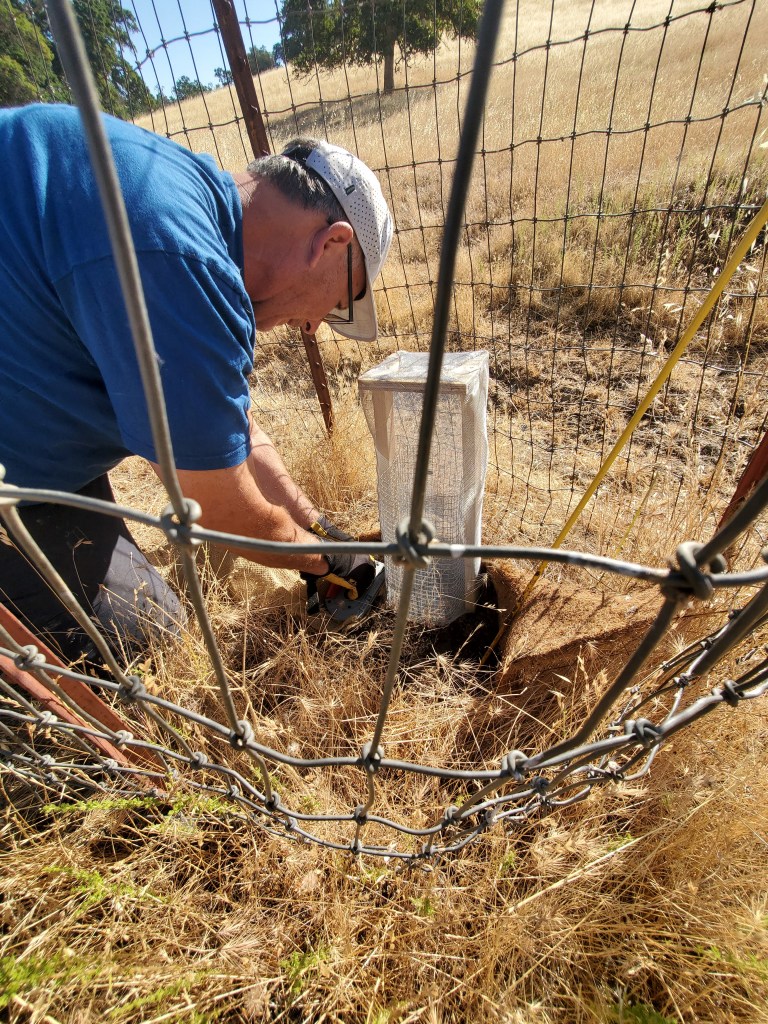
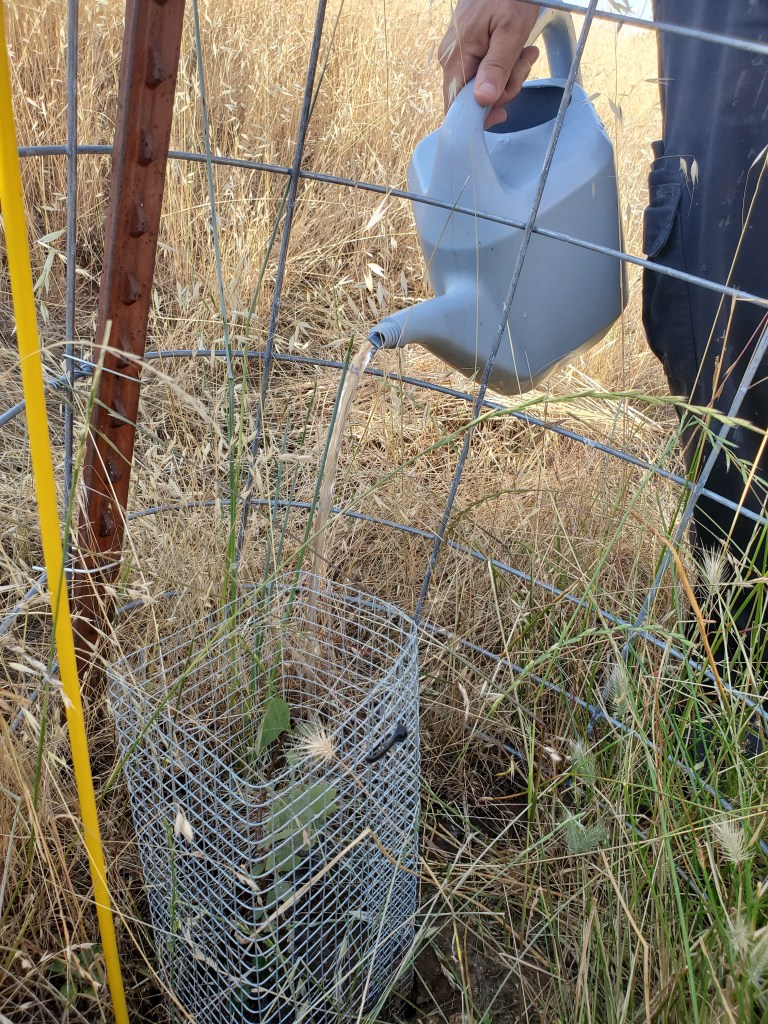
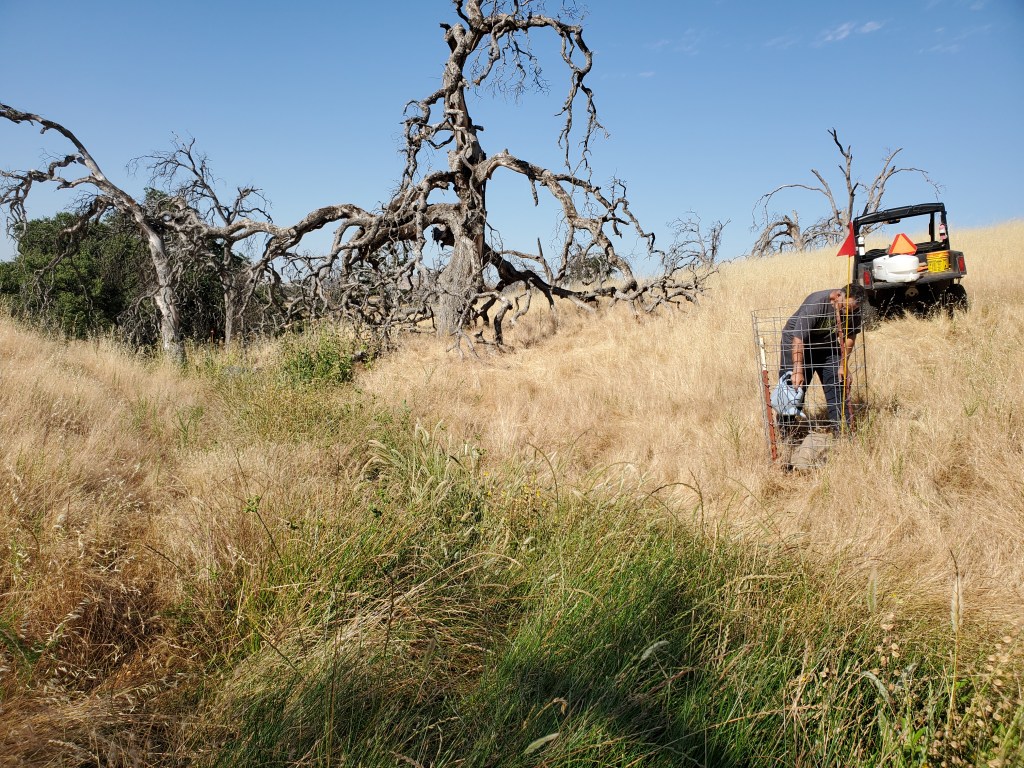
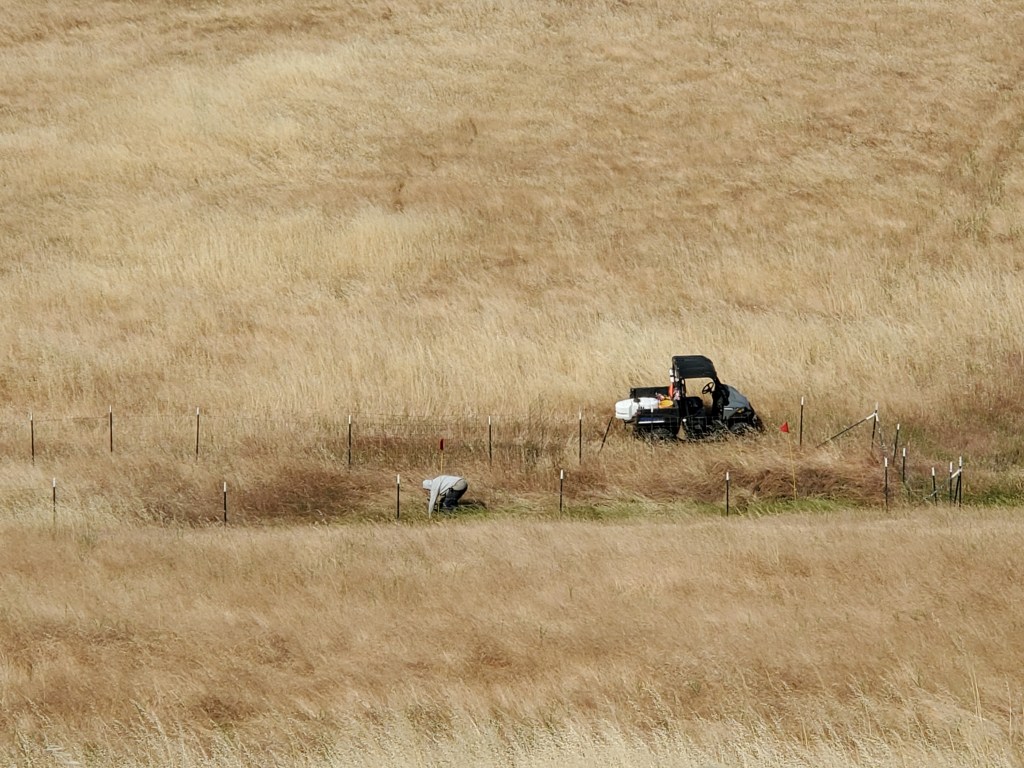
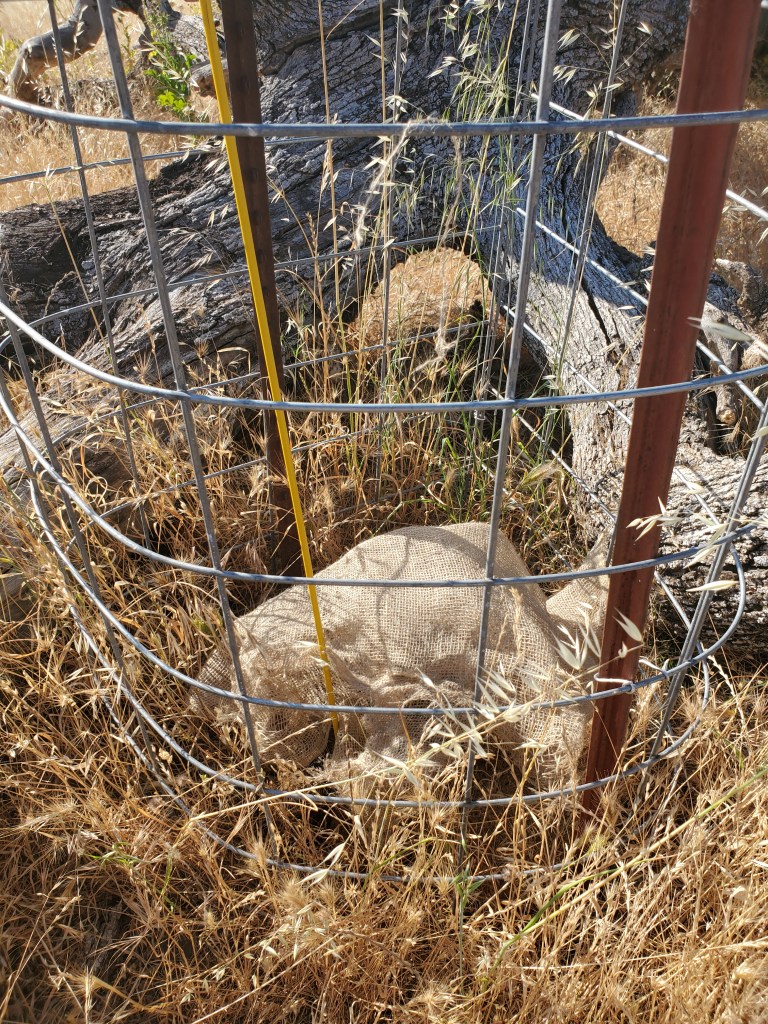
To do this takes time. The trees by the house got their boxes first. Then more needed to be built. Sam worked on the boxes while David and I placed what had been built. David could only work with me in short bursts because of his work schedule. It is laborious and very hand-oriented. You need to load water for the trees, load the boxes, the hammer, buckets and other tools to open cages or fix things. Then, you need to drive the polaris to the locations — no power steering. Next, you unload what you need, pull the huge, heavy tub with water toward the tailgate, unscrew the cap, hold onto the cap despite the pressure of the water in the large container, hold the watering can with the other hand or place on the ground, close the cap just right to prevent leakage (since you must have enough water for all the trees on your route.), haul the water, remove the shade burlap from the gopher cage, and water the tree. You need to pull up the coir pad so the screen box stakes can hit the dirt. Then, you go back to the cart, grab the screen box, lift it over the side of the cage. You need to alternate your hands through the openings in the cage, grabbing the screen box with one hand while placing your next hand through the next level of holes to grab the box, gently lowering it down over the oak in its gopher cage. This takes time. It is a gentle operation because you don’t want to risk dropping the screen box in the cage out of reach or breaking a branch on the seedling. Next, you carefully fit the screen over the gopher cage. They are designed to just fit. You don’t want to be too strong with it or the screen may pull off the staples or wood crack. You pull it over the gopher cage like a condom, then take your hammer and pound the wood stakes into the moist ground with the hammer. You then squish dirt up against the screen so there is no entry point for the hoppers. You place the coir pad back around the blended unit, grab the discarded hammer, walk back to the polaris and do it all again. Ideally, you don’t want to have to open the cage. That takes much more time – so you have to be careful.

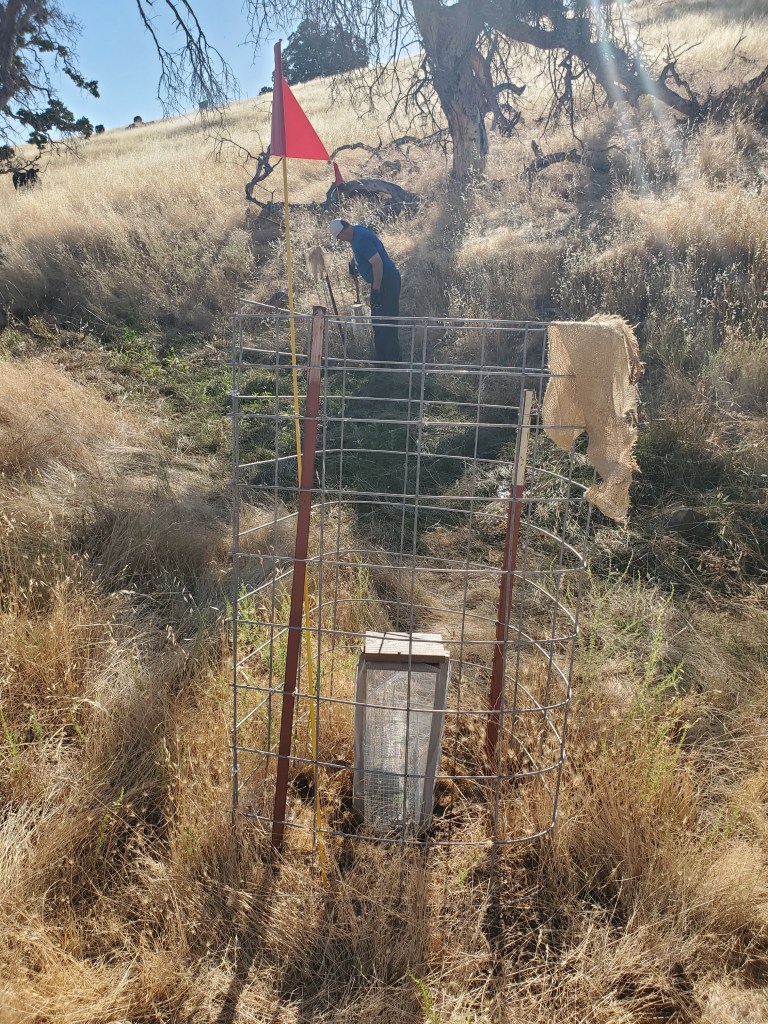
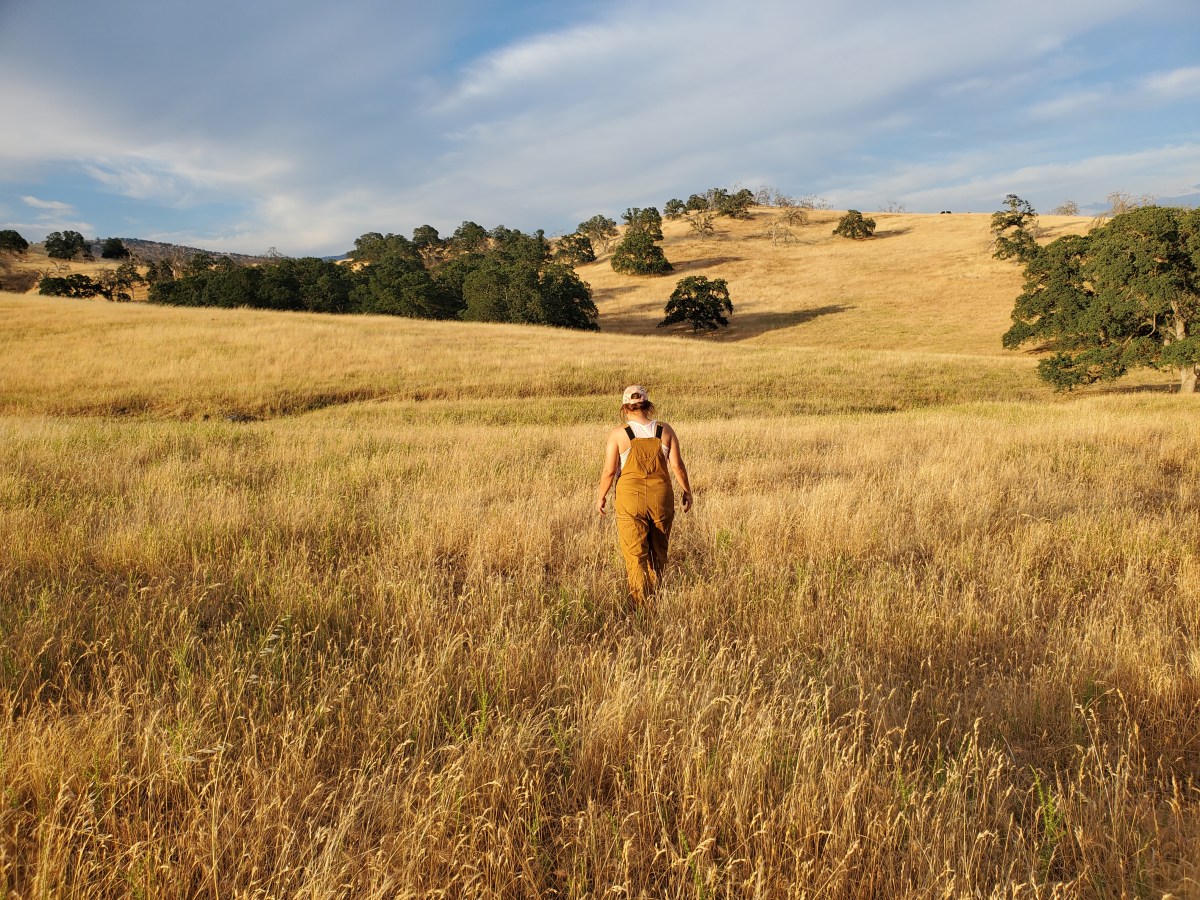
With my thumb still busted, wrist, knuckles and ankles still sprained, my job has been copilot, holding the water bucket with my good hand, carefully walking over to the tree, watering and removing the burlap and coir pad. David was doing everything else. As we went to each tree, I held my breath as I lifted the burlap shade cover, hoping I would see the healthy seedlings I had watered just 6 days prior. The two upstream on the Spring Creek…they looked great. I breathed out. The one by the lower pastures planted into the old dead oak, I lifted the cover, mostly eaten. There was one green leaf left. I’ll take it. Watered and screened. The discovery was unsettling. I became nervous for the others.
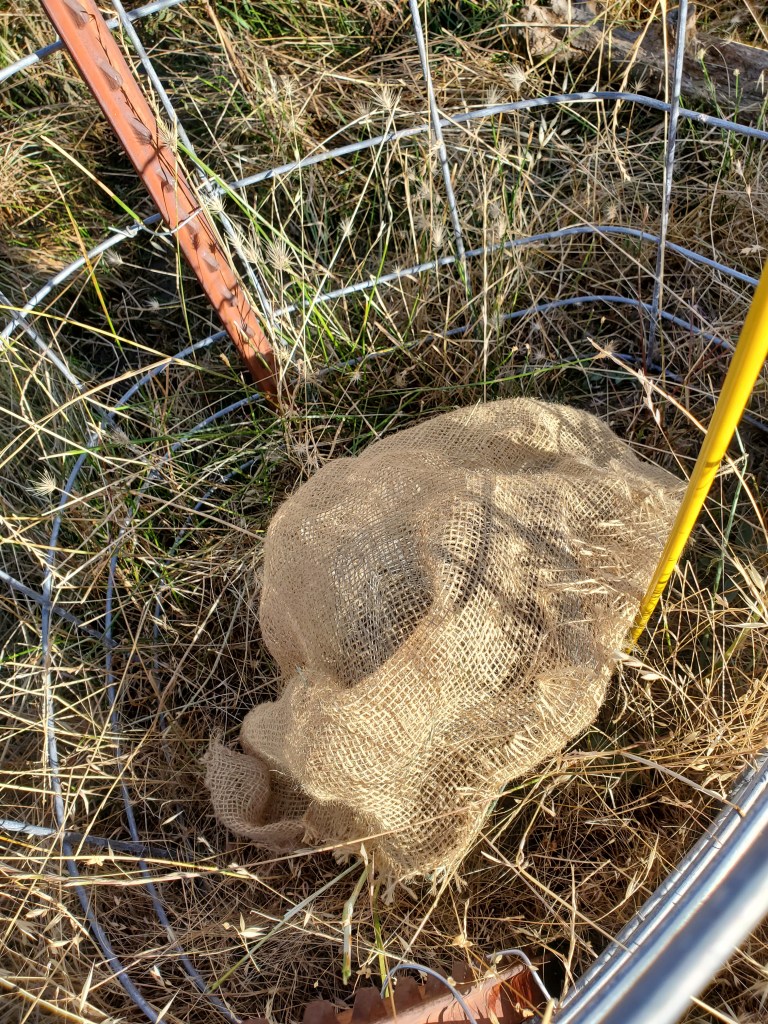
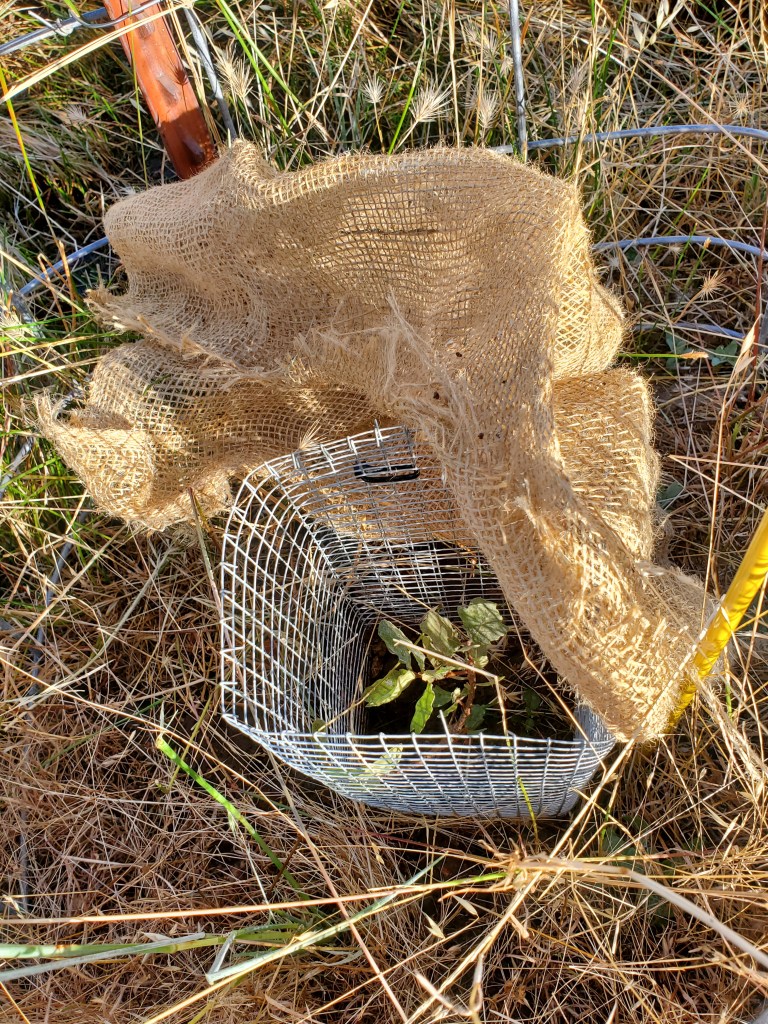
Then, David received a message that there was another major issue at work. He had to help save the day for a different type of situation. Secretly, I deflated. We needed to complete the work or there might not be any other trees to screen. I felt nearly useless and very dependent upon David. Shoulders slumped, I helped pack up the polaris and got into the passenger’s seat. We had been out since 6:30am working. It was almost 9am. David had given me plenty.

As we drove toward the house, I resolved that I would do as much as I could with one hand. There could be no more delays. We already lost the two oaks down stream. I had to do something. We got home; David jumped out and quickly went inside. I went over to the pile of screen boxes, loaded up for the remainder of the oaks, got behind the driver’s seat for the first time in 5 weeks and carefully backed up and went back out.

The first tree was the oak by the guzzler. Hopefully, I lifted the burlap. She was gone. I went to my knees, gripping the cage, lay my head on the fencing and let out a scream and started to cry. Another one so healthy just days ago –gone. I pulled it together, and with renewed determination, I set about doing what David did, slowly and steadily. I was able to use my right arm, instead of the hand, as a bolster to hold things against my body and my left hand to do everything else. It was not ideal, but it was the only tool I had.
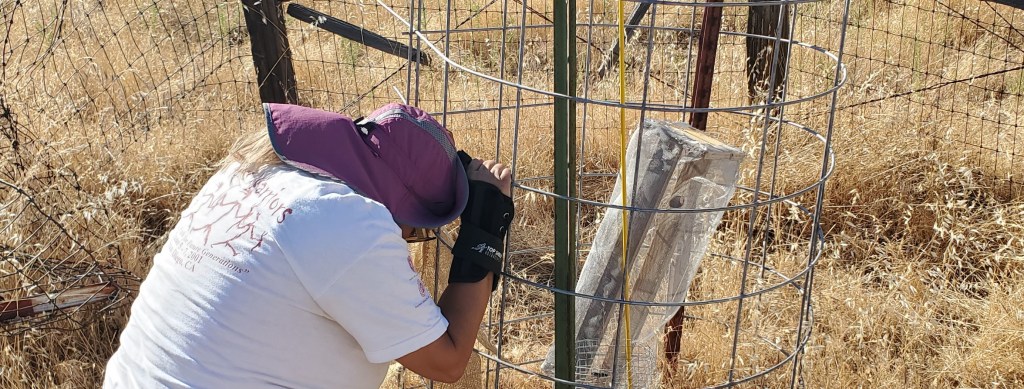
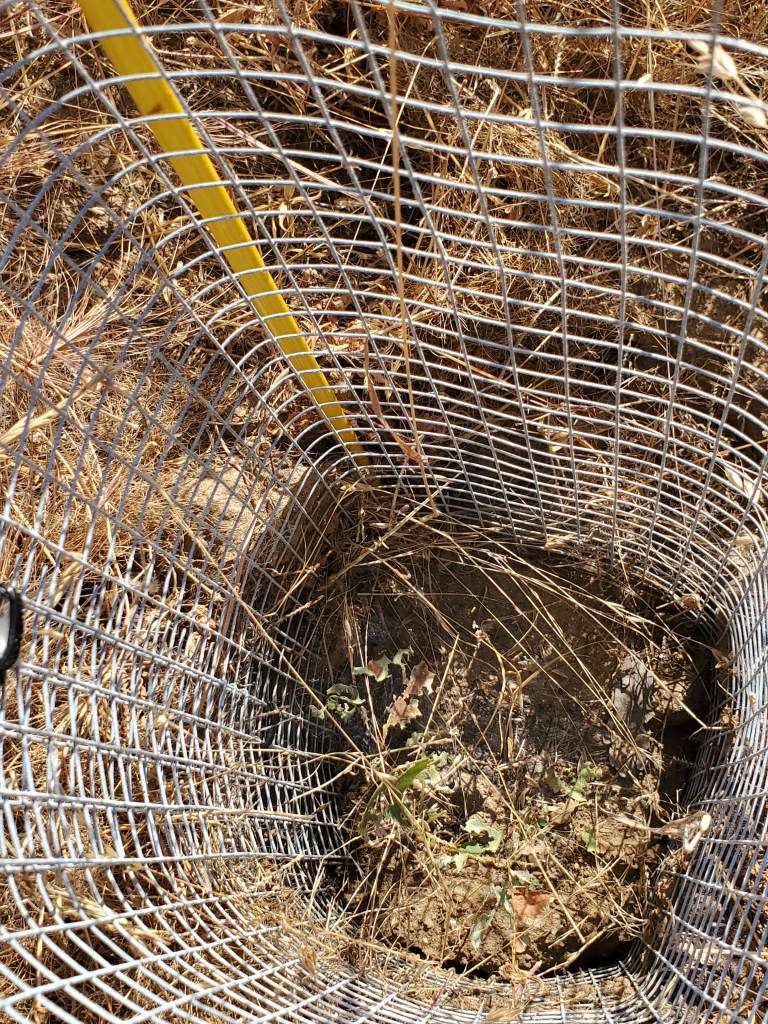
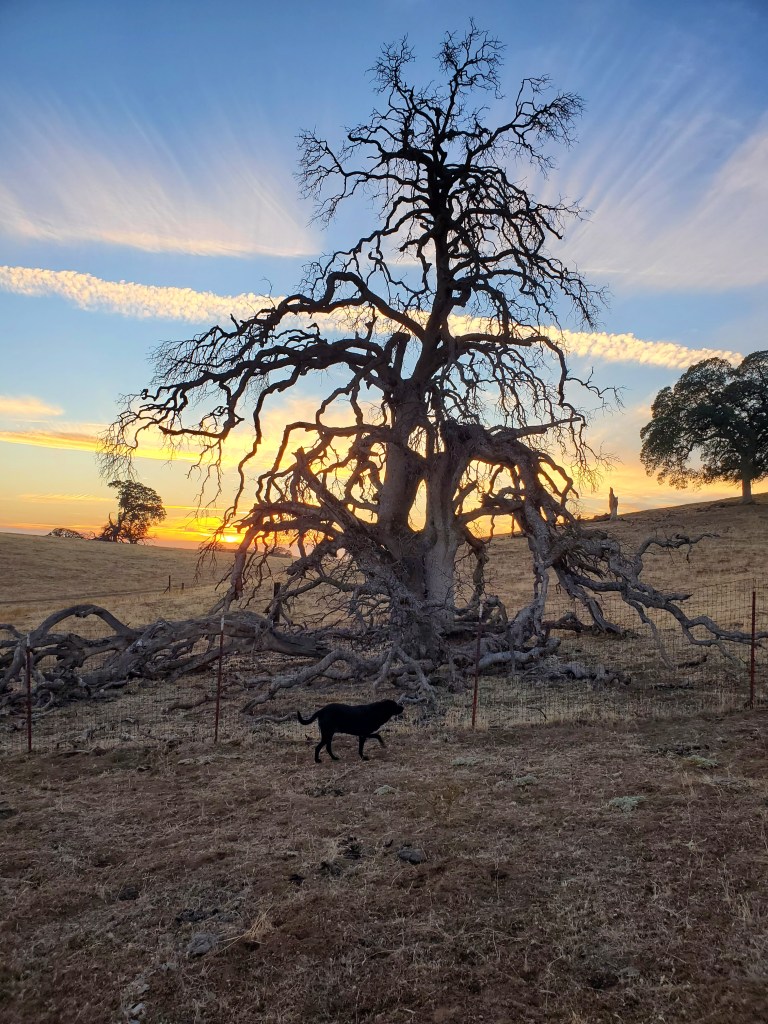
Like the other eaten oaks, the bark was still intact. I watered her, screened her, shaded her, and then moved on. The oak near the perimeter fence on the southeast was gone too. Instead of getting mad, I did the same thing… water, screen, cover. I went to the next tree. She was gone. My stomach started twisting. Hatred for myself for not being on it sooner crept in. Remember, every tree that does not survive, I must wait another year before I can try again. It is another year wasted. Water, screen, cover. I drove to the tree due west of our old, dying grove, lifted the burlap and — she was super healthy, full of leaves! The hoppers had not found her yet. I watered, screened and covered. Of the nineteen seedlings, six were stripped and ten had survived. The other three failed to thrive. They were lost around the time of the May heat wave.

Two Weeks Prior

Just like in the movies, I will now take you to a flashback two weeks before the hoppers ramped up. David and I have been maintaining a strict watering schedule of every 5 days for the oaks. In anticipation of the mini heatwave, we also cut sections of burlap to lay over the gopher cages to shade the oaks. Sadly, two oaks appear to not have made it through the heat, the one in the exclosure and one of the driveway oaks. We continue to water them just in case the roots are still alive.
Milkweeds Gone

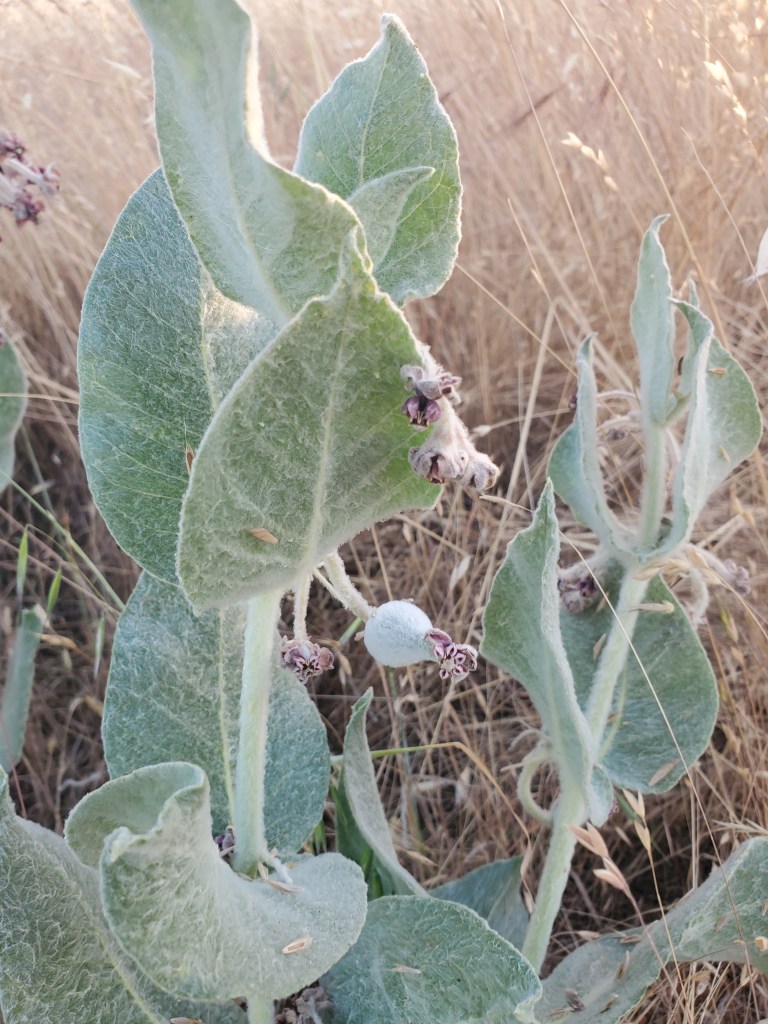
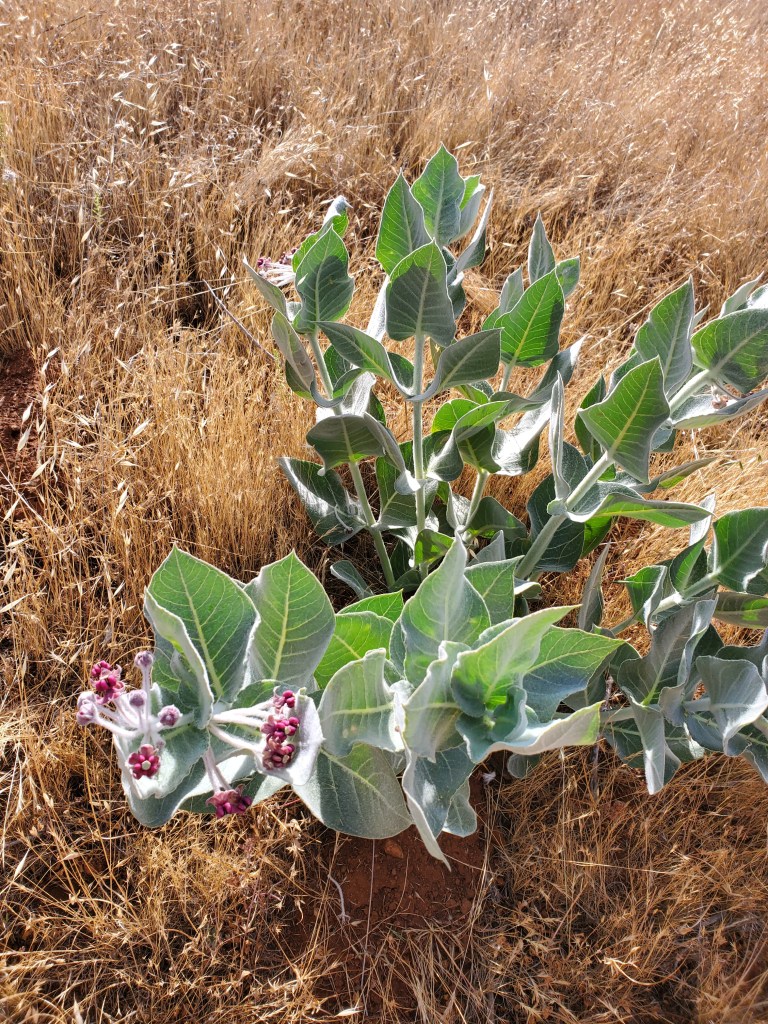
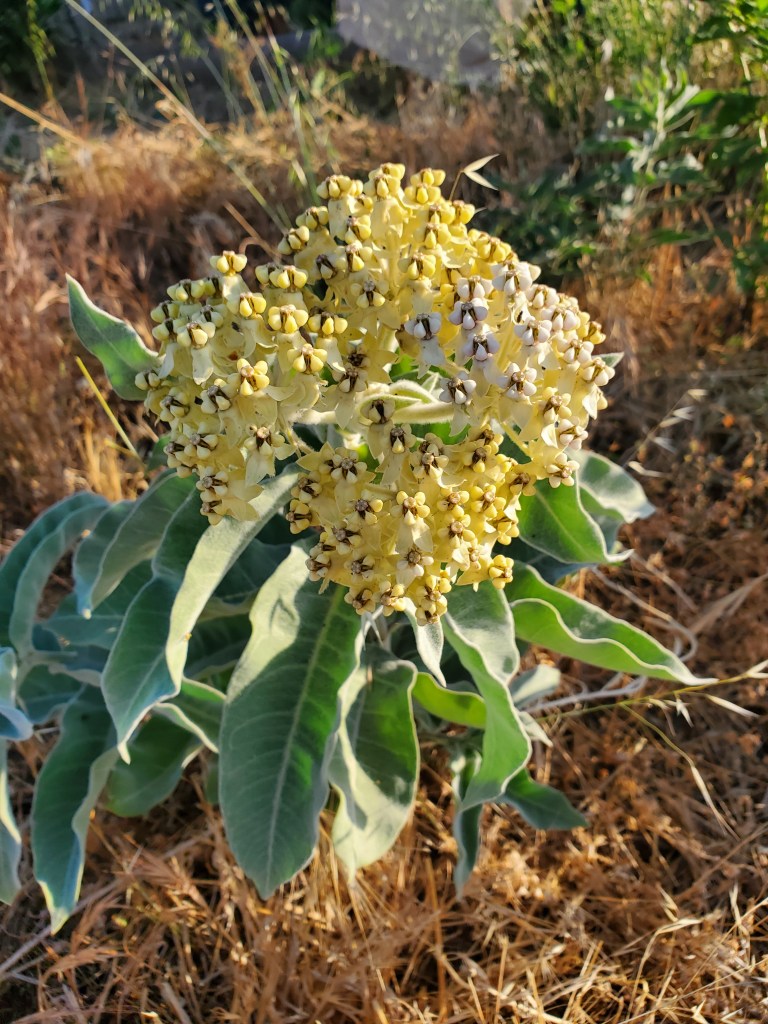
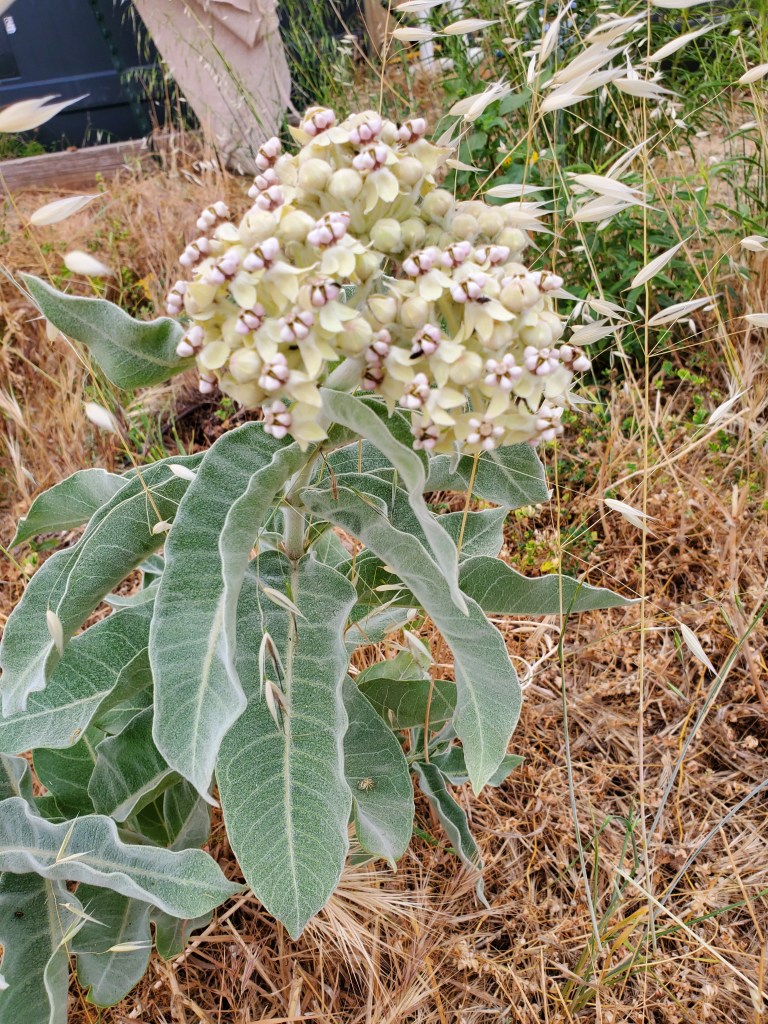
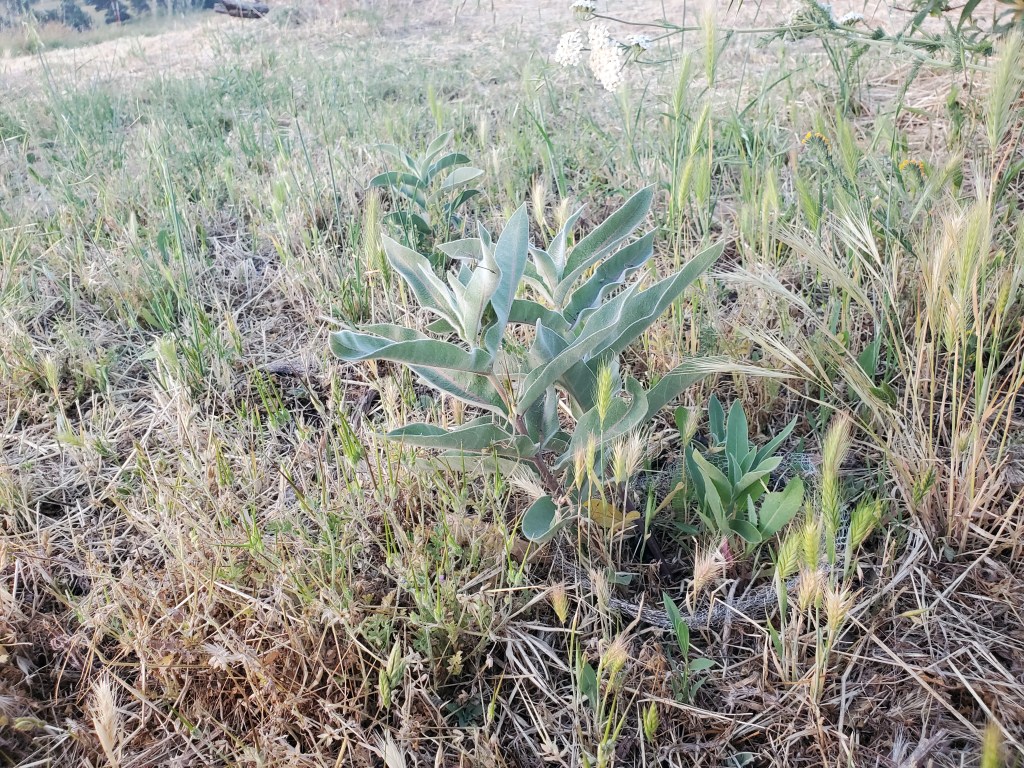
Similar to the oaks, the grasshoppers are all over the California milkweed. The only difference from last year is that the hoppers came later giving the milkweed more time to set seedpods. With the accident, I have not been able to monitor the sites. Last Sunday, I felt strong enough to walk up the hill, slowly and carefully. I found every milkweed at one stage or another of being eaten. On the more intact ones, there was still no sign of monarch activity. I am officially designating this spring a no monarch spring. Add that to the no monarch fall. It is beginning to feel very depressing.
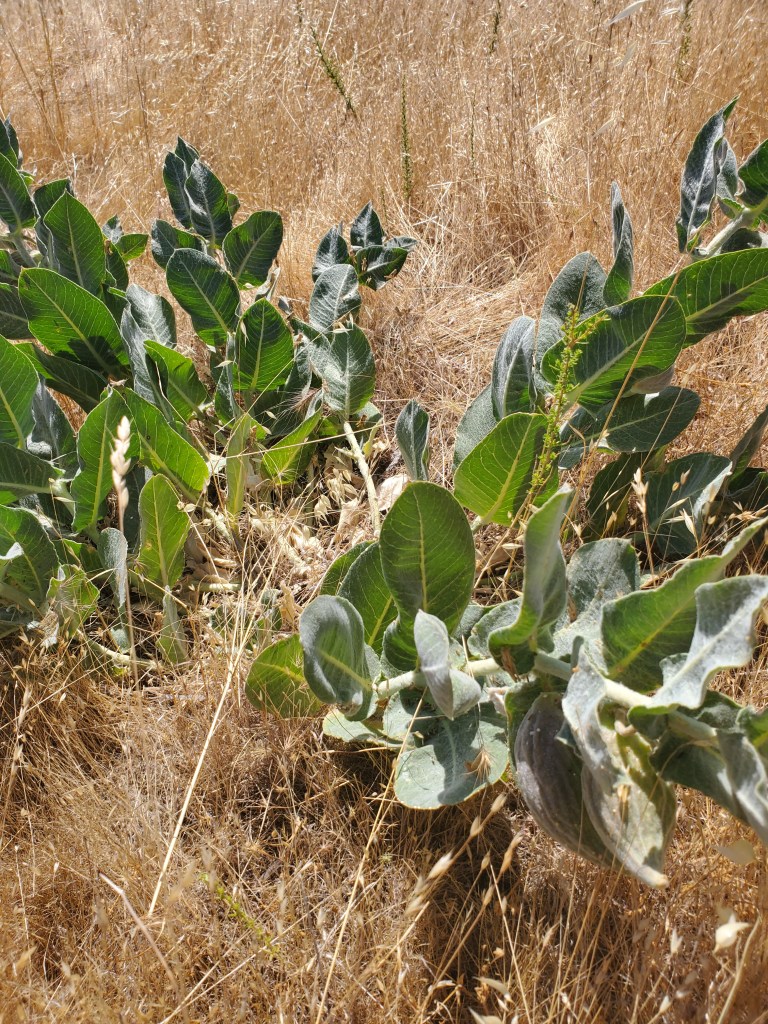
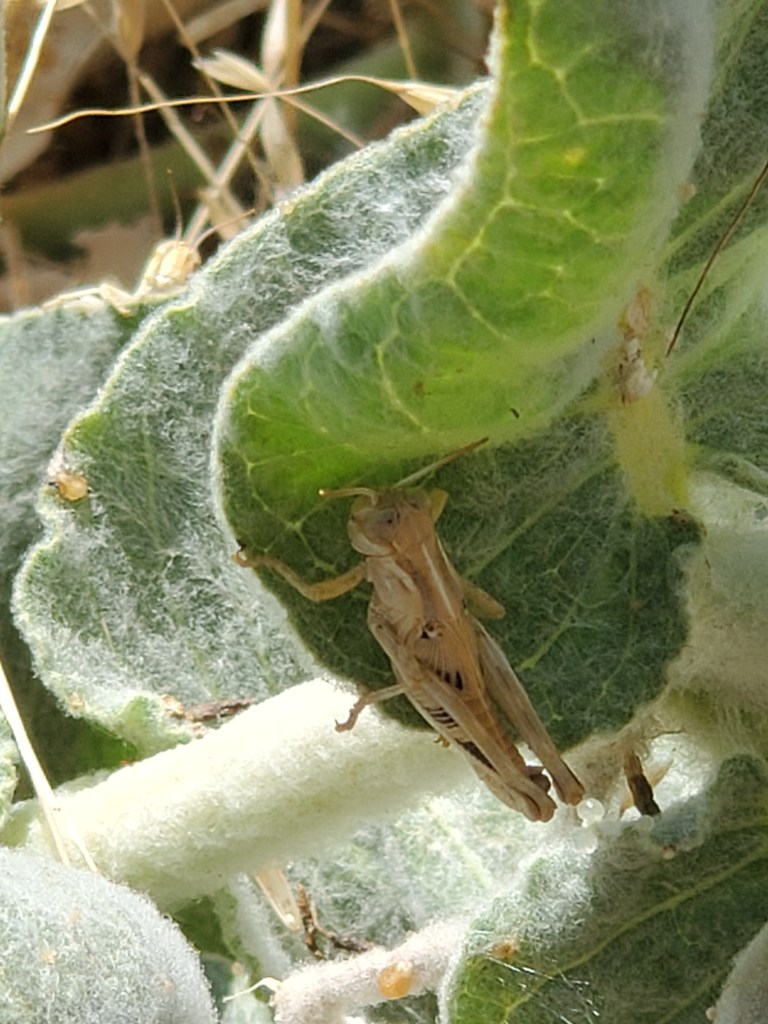
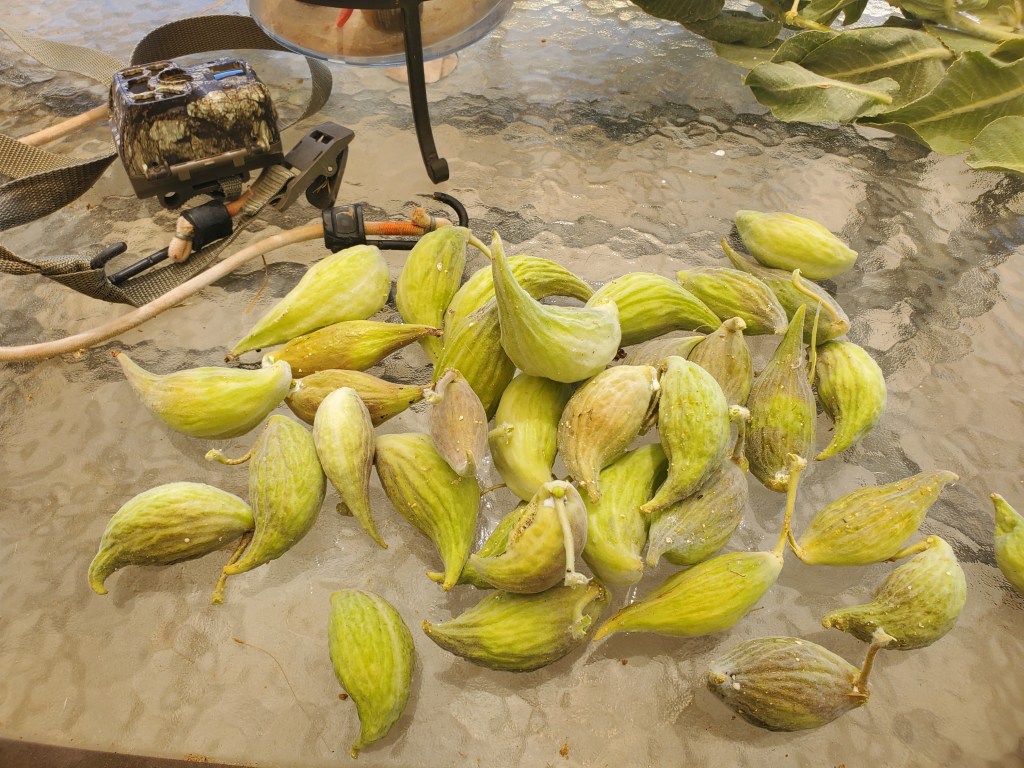
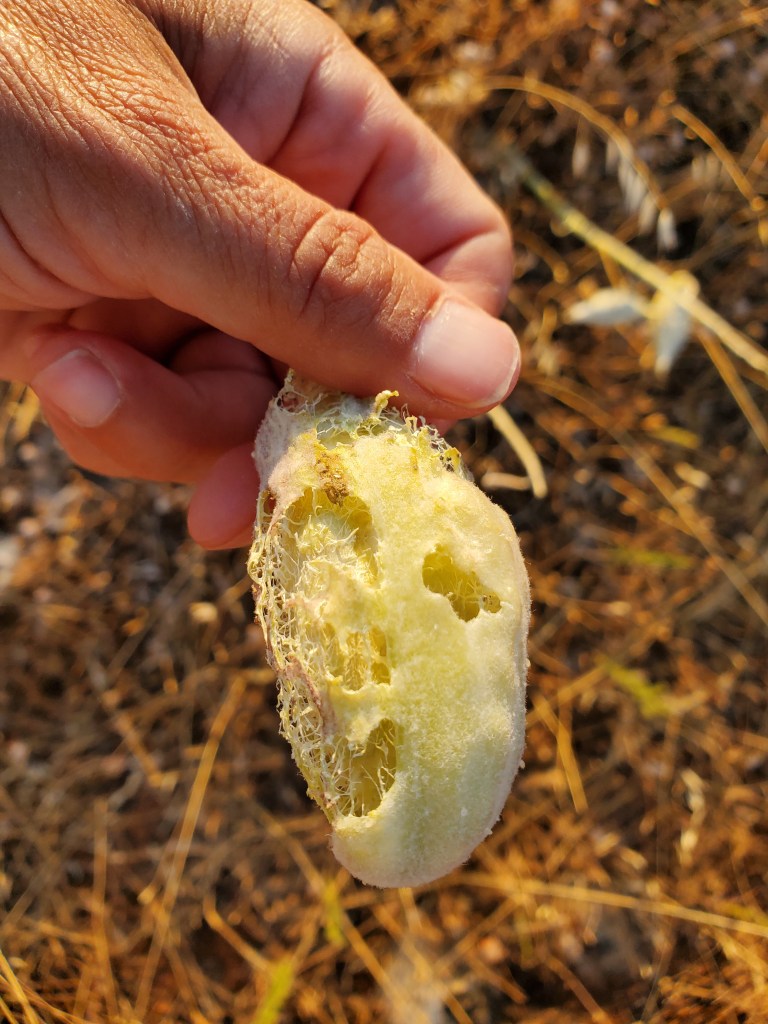
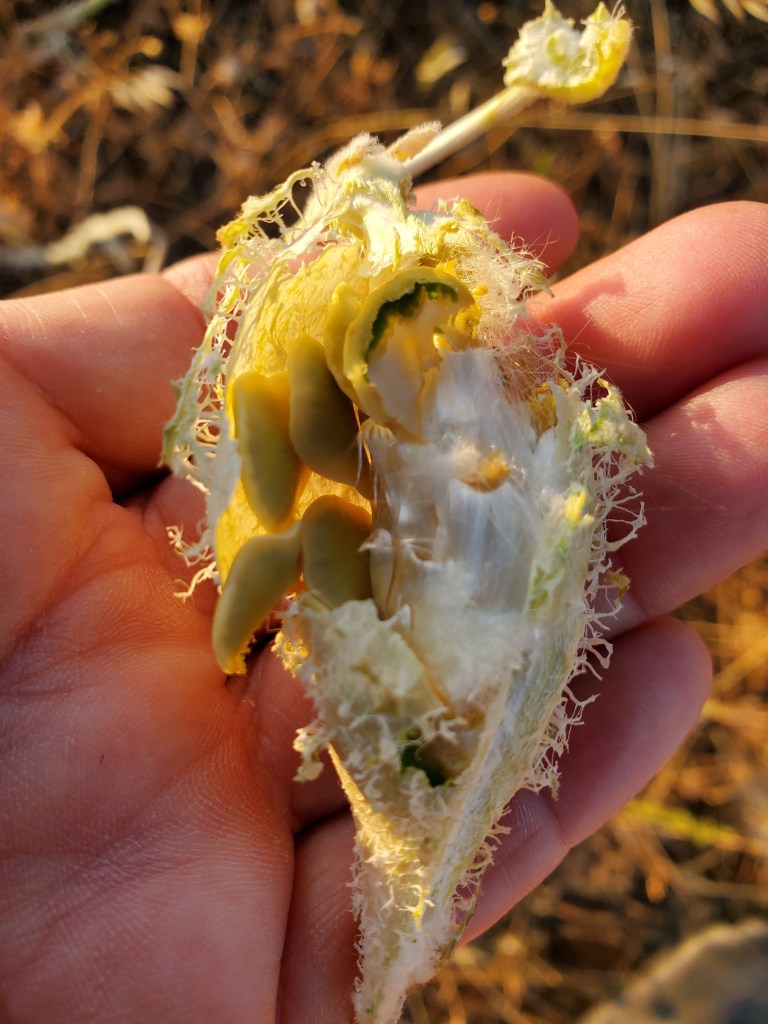
The plants on the south-facing slope were mostly eaten. There was evidence of seedpod destruction. Although not prepared with clippers and a bag, I began to harvest the pods. If I waited much longer, they would all be gone. Because I was pulling them off the stem early, the white “milk” ran onto my hand making my fingers and palm sticky. I continued, but could only find six seed pods remaining at the site. I moved to the north-facing site. More plants were intact, but were rapidly being eaten. There was a bumper crop of seed pods, including four massive ones. Normally, I would never harvest more than 10% of the pods and allow them to drop and open naturally. In this case, with sure death ahead of them, I went about my business of disconnecting the children from the umbilical cord, they, still holding tight for the nourishment it brings, and me, covered in mom’s milk grabbing her treasure for the possibility of life down the road.

With no bag, I placed them in my pockets, held a bunch in my arm and finally, made a pouch with my tee shirt. Several branches, with seedpods still attached, had been dismembered from the plant by the hoppers. I used those as a base for piling on the loose pods. It worked. I was able to slowly navigate back across the hills, pregnant with A. Californica seed, to the patio without dropping a pod. After the danger has passed, I will release these seeds back into the areas from which I harvested them – probably September.
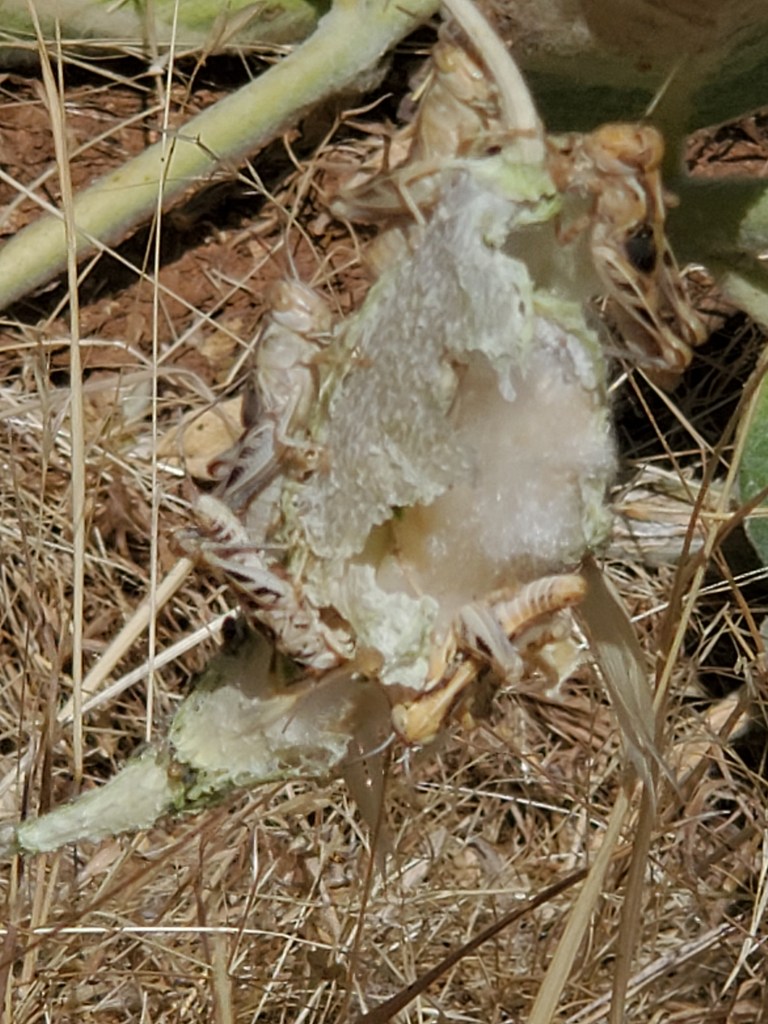
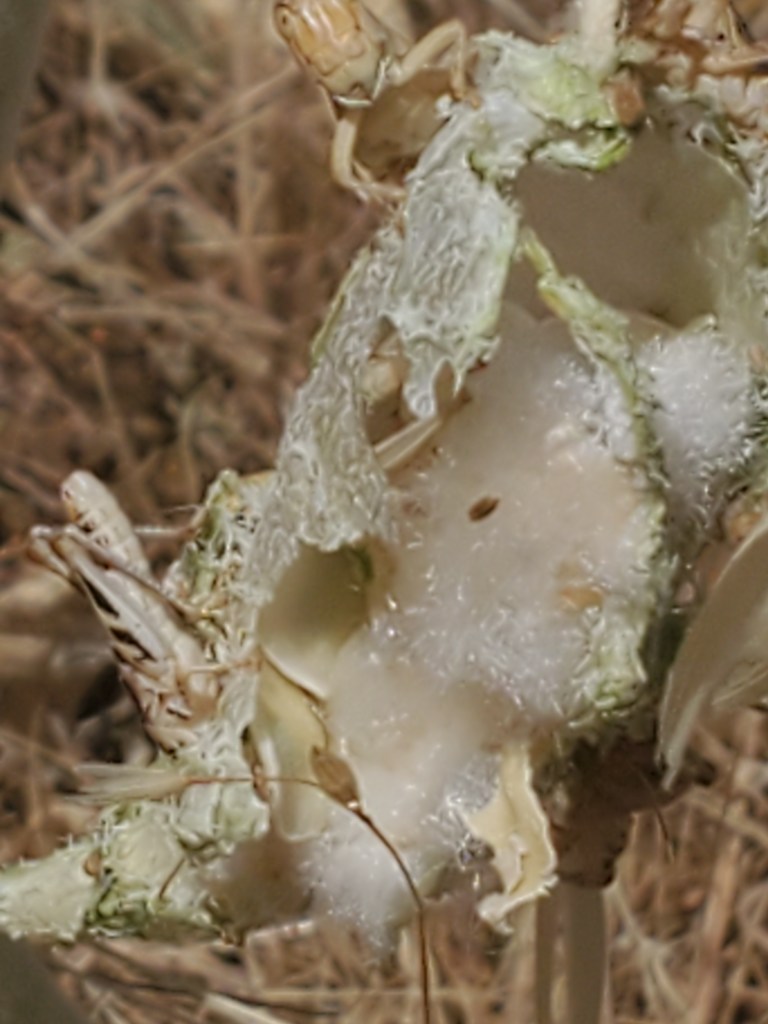
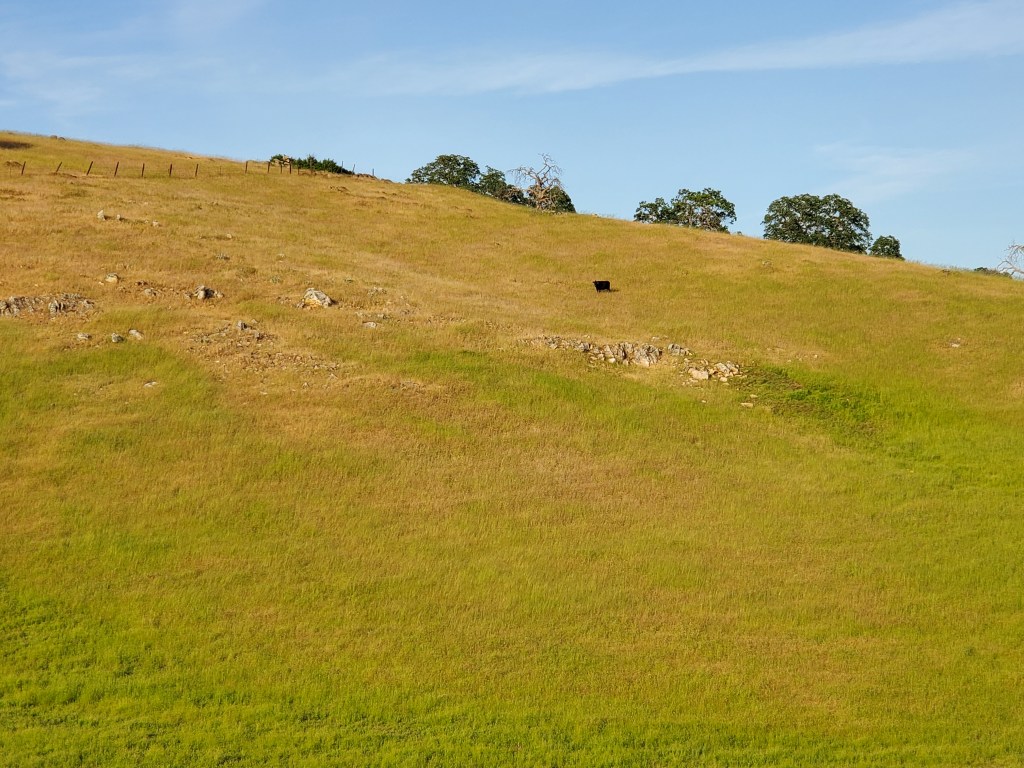
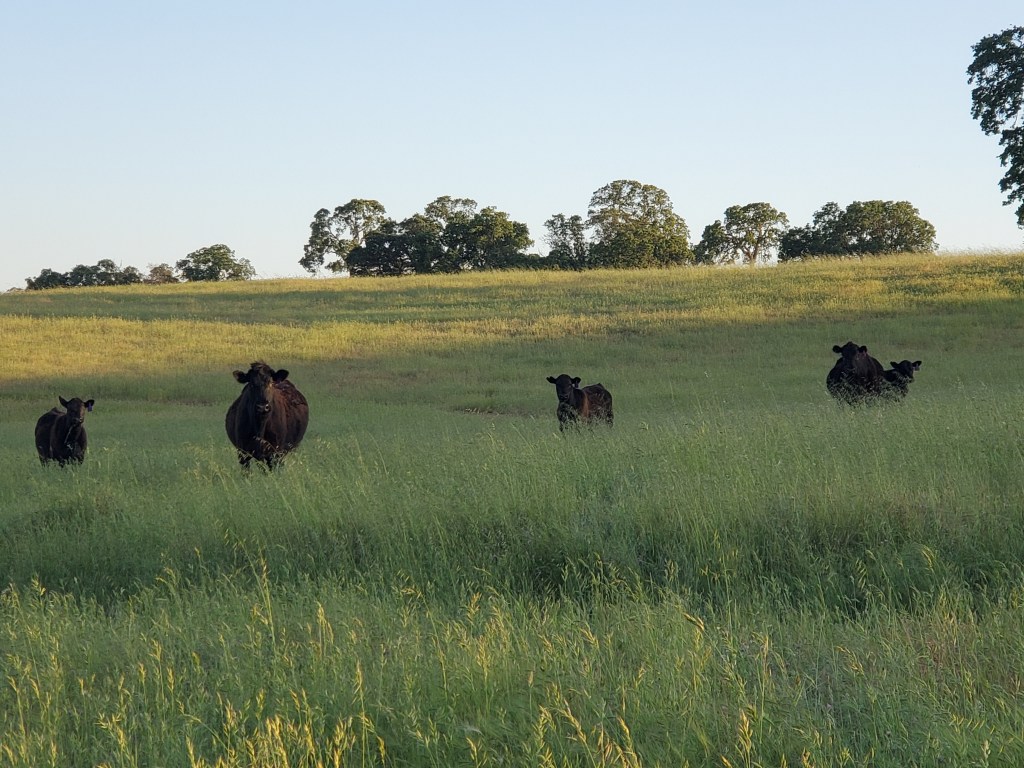
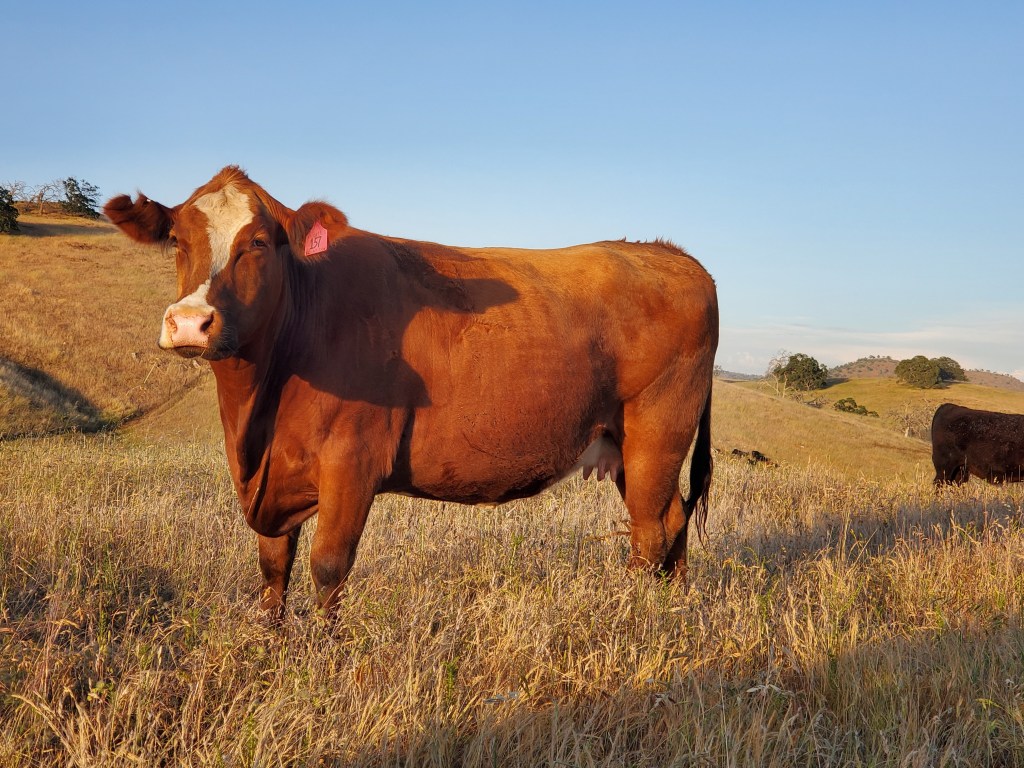
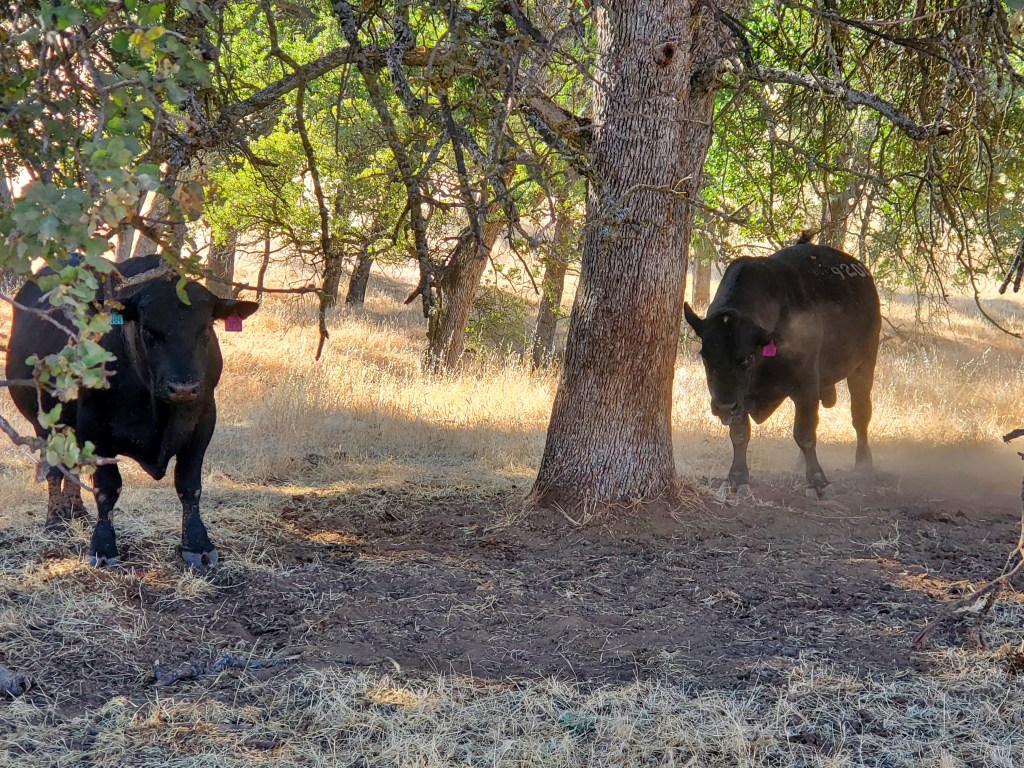
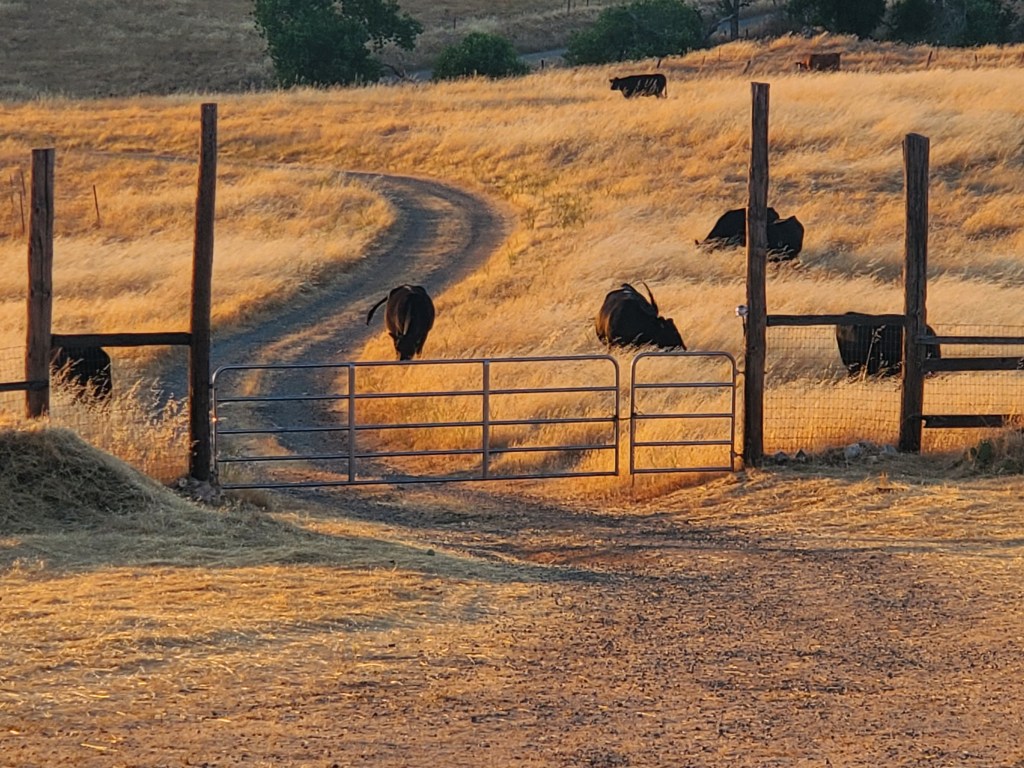
With the milkweeds done for the year, the cows still remaining on the ranch and the grasses nearly 4′ tall, I opened the gates to the far north field. The cattle have made their way into the field munching on the buffet of tall grass and thick green grass and flowers in the riparian areas that have been, as yet, untouched by cattle. Within the first day, those green patches were eaten down to dirt. My feelings are mixed. While I want to preserve the flowers I have left in the riparian areas, I also would like the tall grass to be grazed off a bit. Fire danger is always top of mind. All needs must be balanced, habitat for birds, pollinators while not trying to overstock too much on grass.
Wildlife

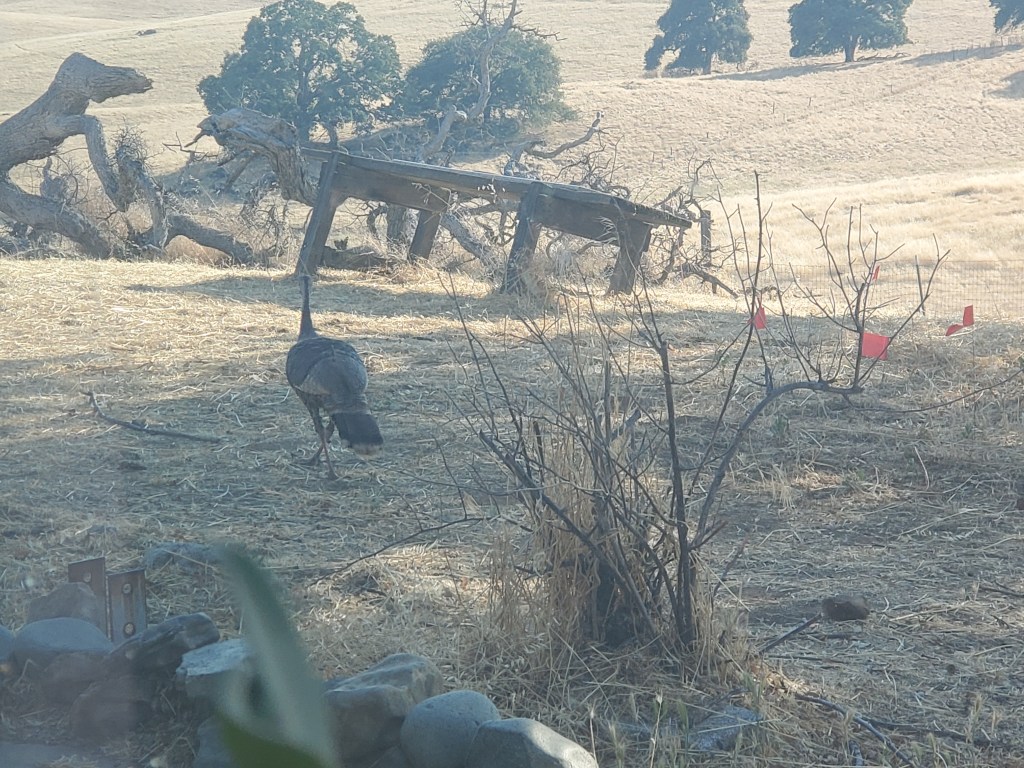
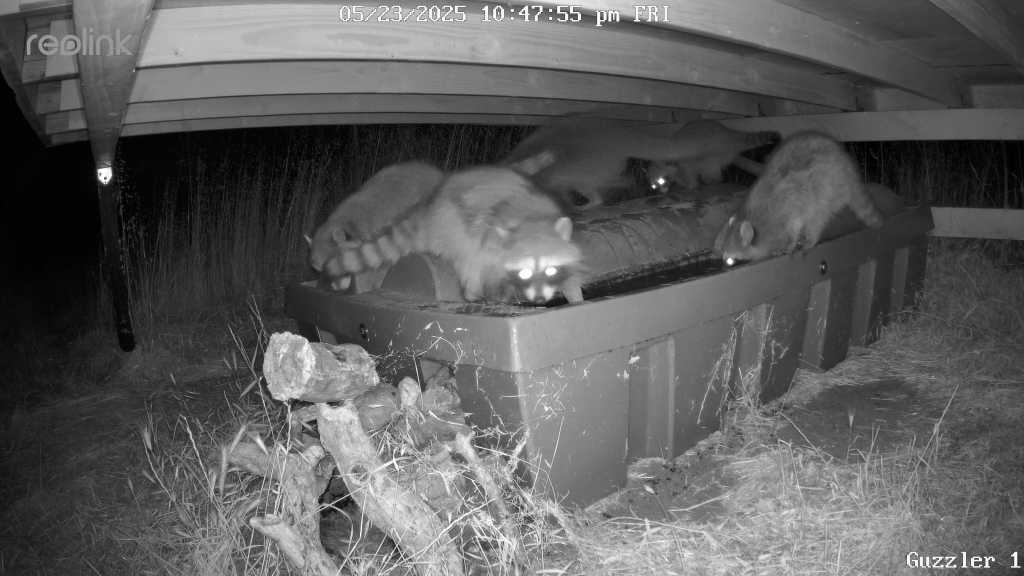
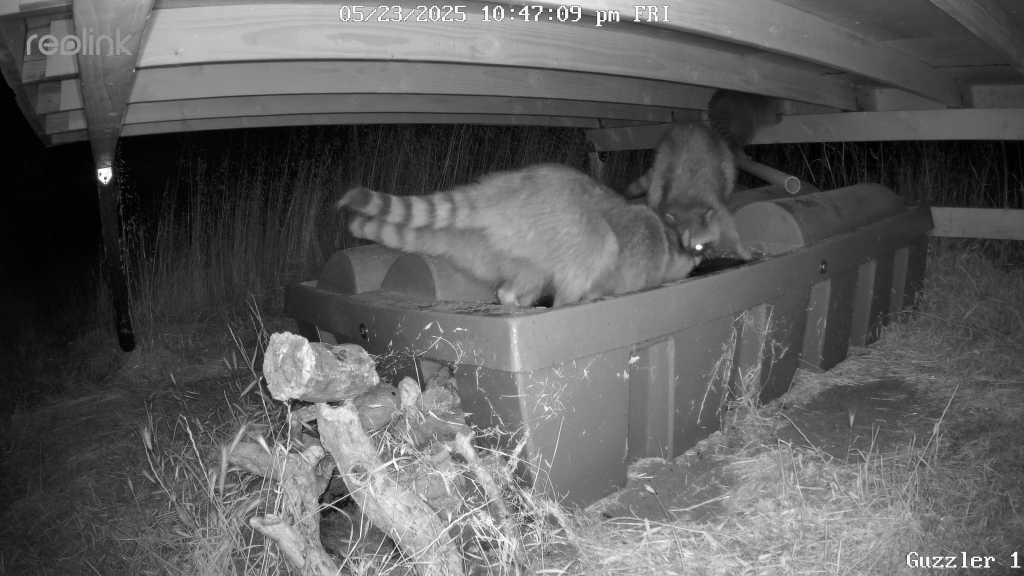
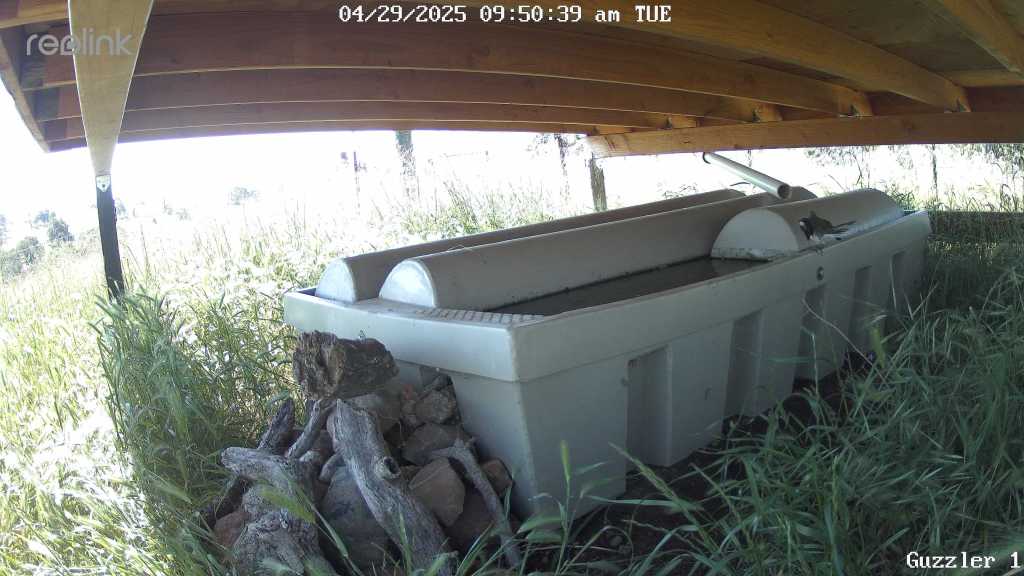
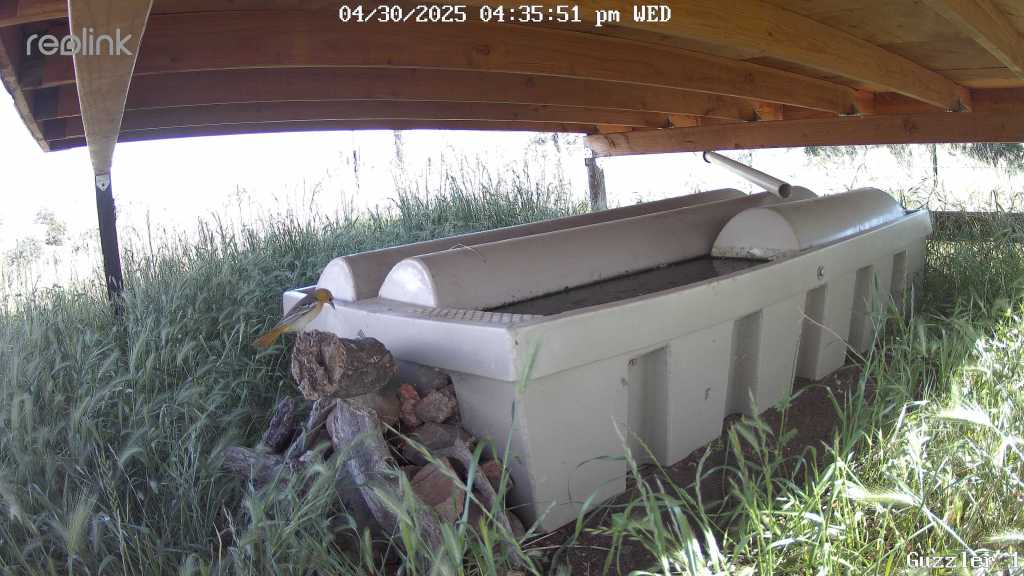
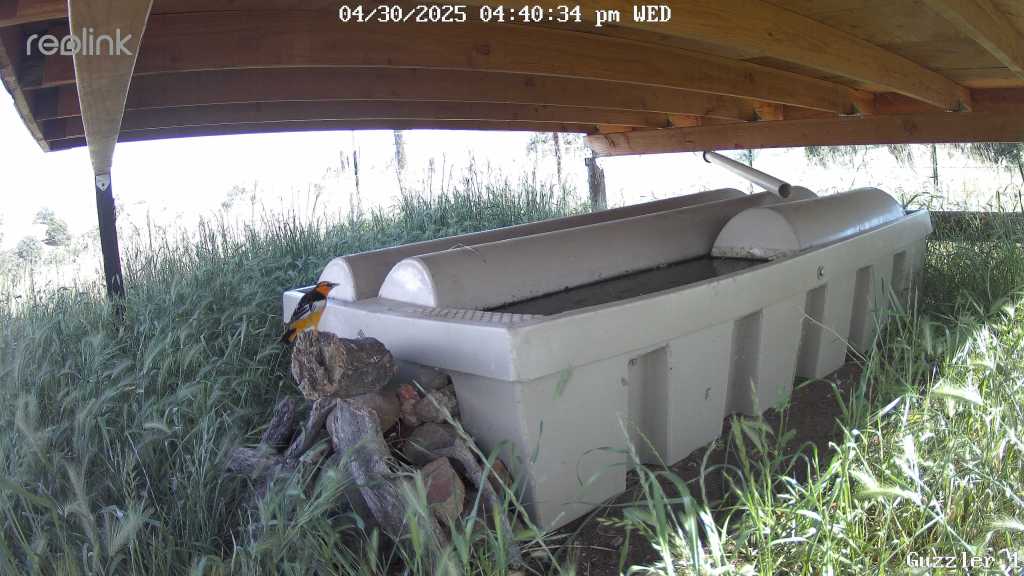
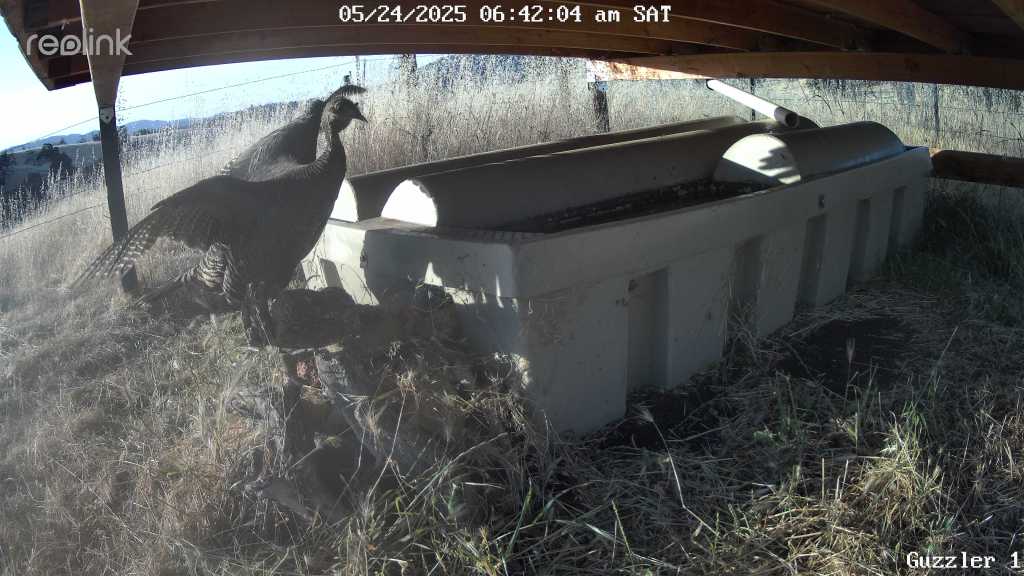
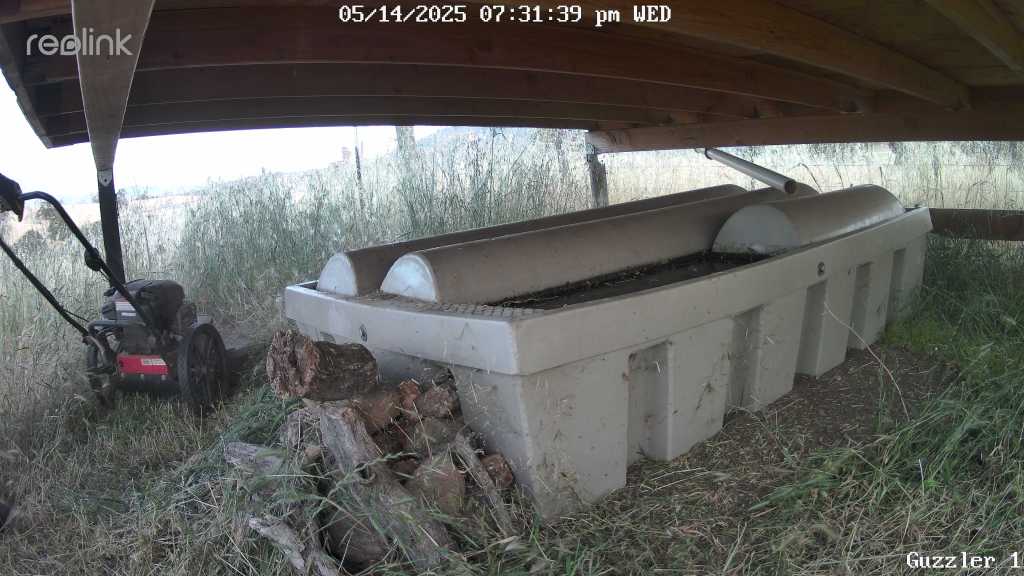
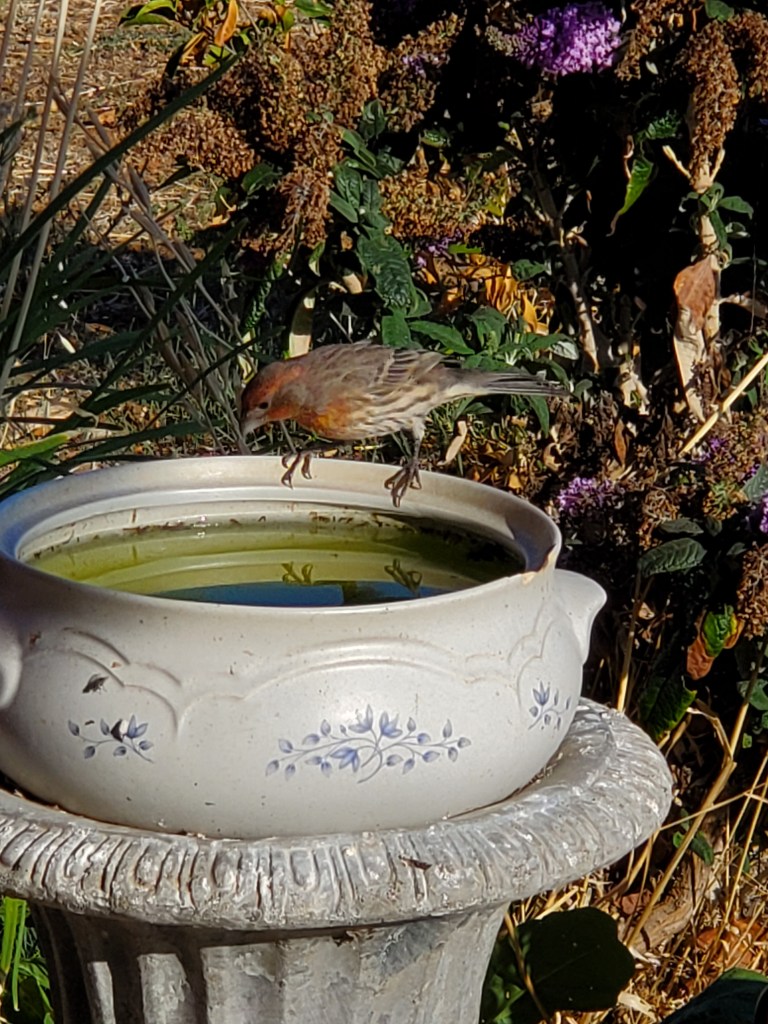
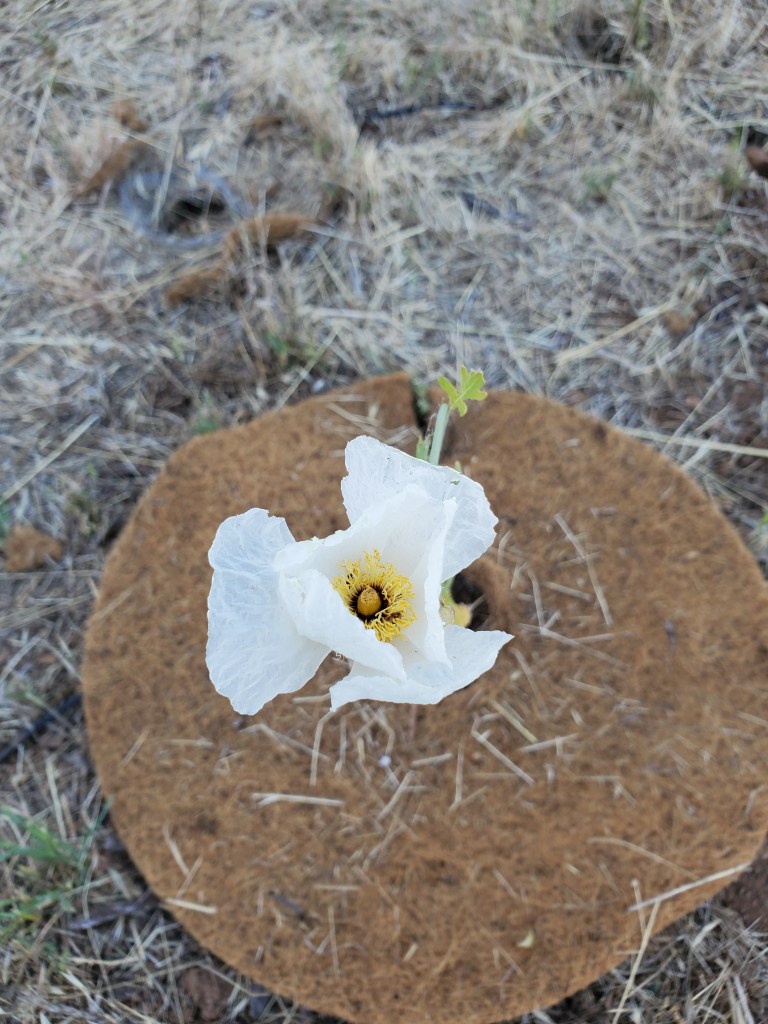
Even as the temperatures heat up, there are blooms, and I still see glimpses and/or evidence of wildlife. The guzzler has continued to be a center point for racoon and bird activity.
Wanderings

What horrors we are seeing. There are so many tragedies happening; I can feel the energy of the earth listing. There is only one healthy way to be, and that is in balance. You don’t take more than you need. You don’t give more than you can. My dear friend had a very ill wife. He cared for her for over 20 years. He was unbelievable, one of the finest caregivers I have ever seen. Lifting, bathing, feeding, driving, monitoring – he was her spirit moving her through life, so that she could live well and with dignity. She passed last month. My friend, with nothing left for himself, died three and a half days later. He gave more than he could.

With so much loss and sadness, it has been difficult to focus on writing. The unrest, murders, bombs and abuses of power, have caused me and so many others emotional distress. This is not living in a good way. I see it on the ranch, the imbalances. It is unhealthy, and things are mixed up here. There are only two entities that can move us back into balance – us, or Maala Bwia (Mother Nature). Given all the human greed and climate horror of the last century to today, I don’t have much hope that it will be us that leads the shift back. But, if it is itom Maala/our Mother, it will not end well for many of us. So let’s get more of us working toward finding our equilibrium.

Amid the depravity and cruelty, there is always light. This is something so lovely it will fill your heart – true heroes from the Resource Conservation District of Santa Monica Mountains racing to save gobbie fish and trout from sure death after the catastrophic Palisades Fire in Southern California. This is the type of character that will shift us – respect, dedication and reciprocity to all life no matter its popularity, size or their ability to be commercialized for humans.

Here is the article in the LA Times.

Here is a brief YouTube film the organization made.

Here is a link to a larger documentary about humans fulfilling their obligations to the Huya Ania (Wilderness/Natural World). It is just a trailer, but please, try to organize a viewing at your location if you have the capacity.

Goodness exists all around us. Grab hold of it instead of the negative. Cling. Never let go. Eventually, its light wraps you, moves through you, becomes who you are. Let’s all bring more light.
Relationships

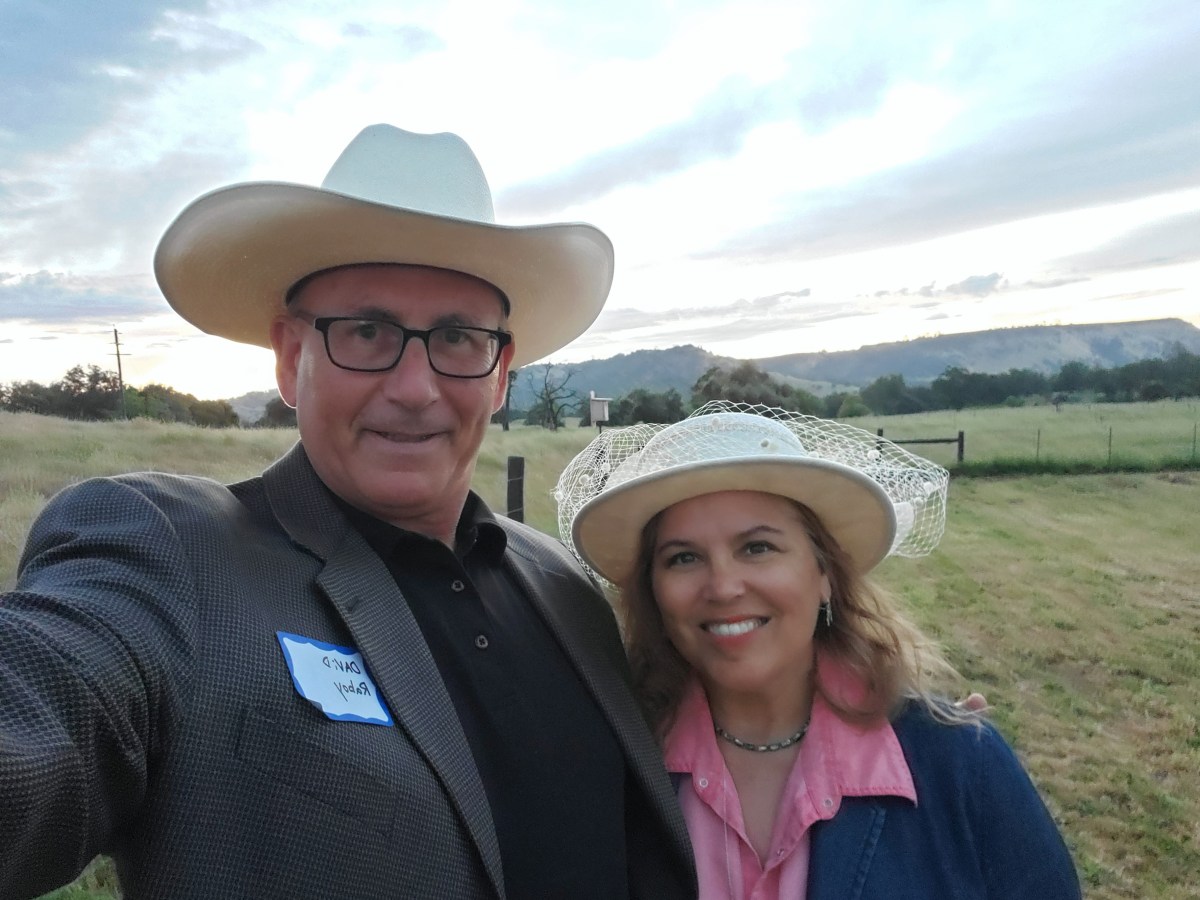
My hubby and I at the Sierra Foothill Conservancy dinner

We need each other.

As the monarch needs the milkweed, and the milkweed needs the soil, and the soil needs the rain, we rely on systems that work together so that we may live.

Recently, I was hit by a car. I was riding a rental bike, like I’ve done for years in nearly every city to which I travel, and a distracted motorist saw me too late, hit the breaks, but still made impact with the bike sending me into the gutter of the road. I don’t remember from impact to lifting my head up from the ground, but as I lifted my head, the breath knocked out of me, the sting of air making contact with my insides, the smell of blood, I was in disbelief. How could this happen to me? I am so careful.

To walk across a street, to ride a bike with traffic, to drive through an intersection, these are all acts of trust, a dependency on others, a relationship where you rely on others to understand the gravity of responsibility and a determination that laws will be followed. Sometimes our relationships break down, rules not followed, predictable patterns altered, one side exploits the other taking more than is given – the balance that makes life possible can begin to shift.

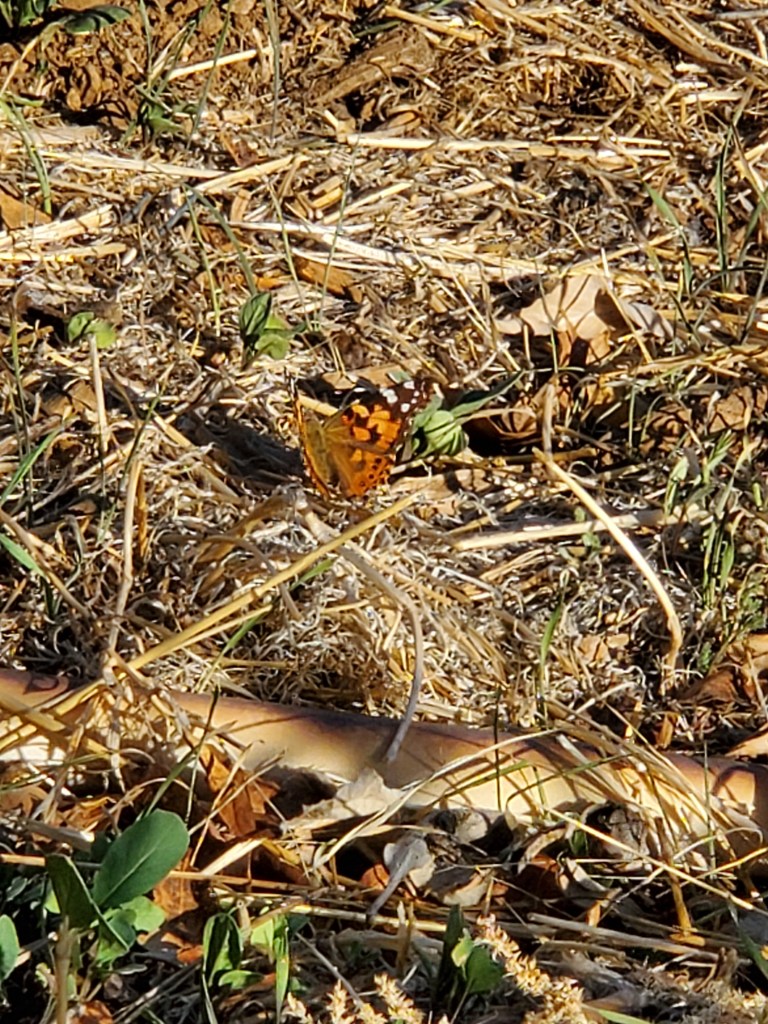
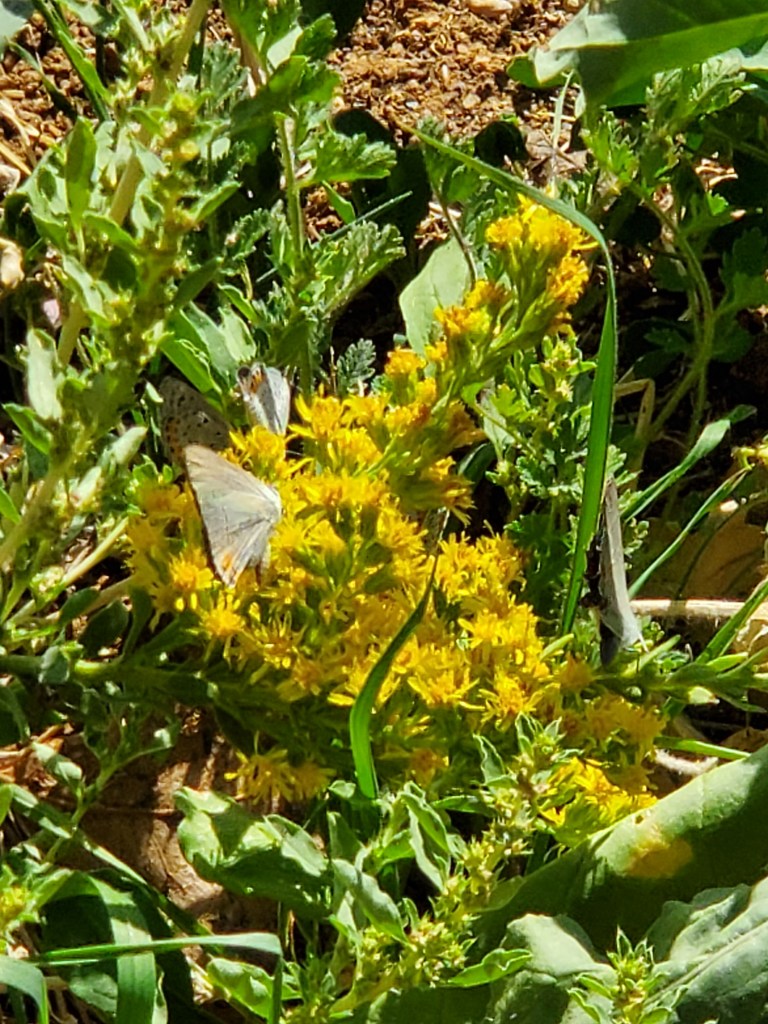
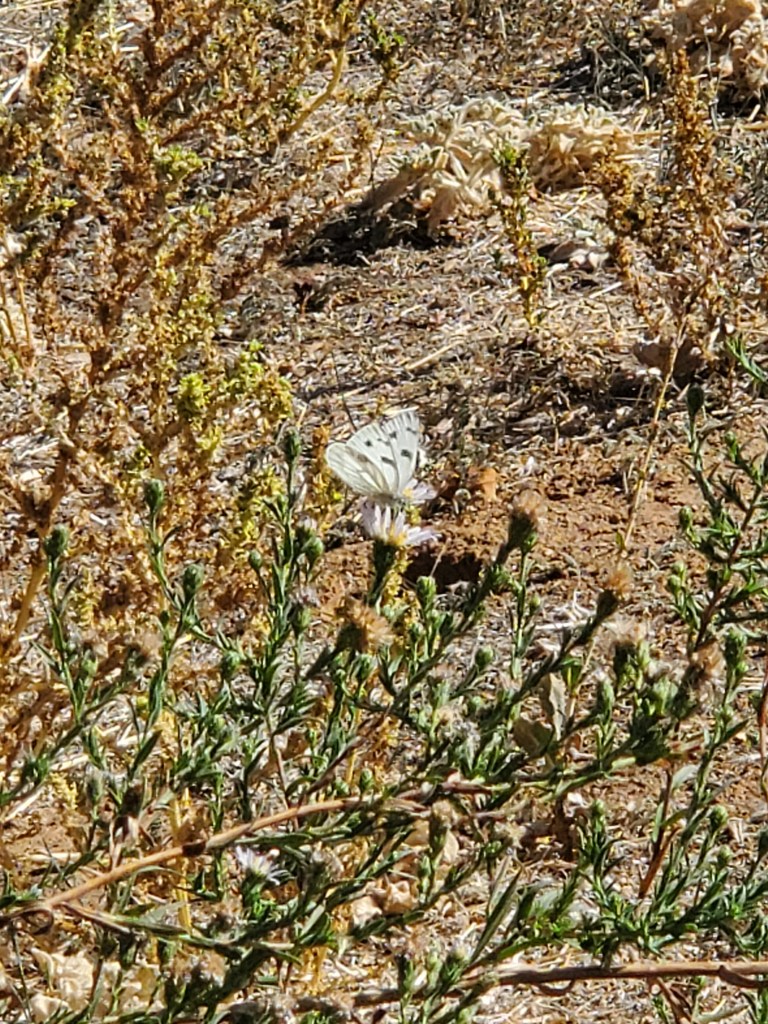
While there is beauty across the ranch, nectar in all colors, shapes and sizes, there are not many insects using them, particularly butterflies. There were mostly cabbage butterflies this year nectaring on the wildflowers. I saw two yellow swallowtails. David saw one orange butterfly (He couldn’t identify it, though I hoped it was a monarch.). And, just the other day, I saw a checkerspot. Not much of a list compared to years past – especially when there is so much nectar around. Last year, I understand; we were decimated by grasshoppers. There was nothing – but this year – there is so much.

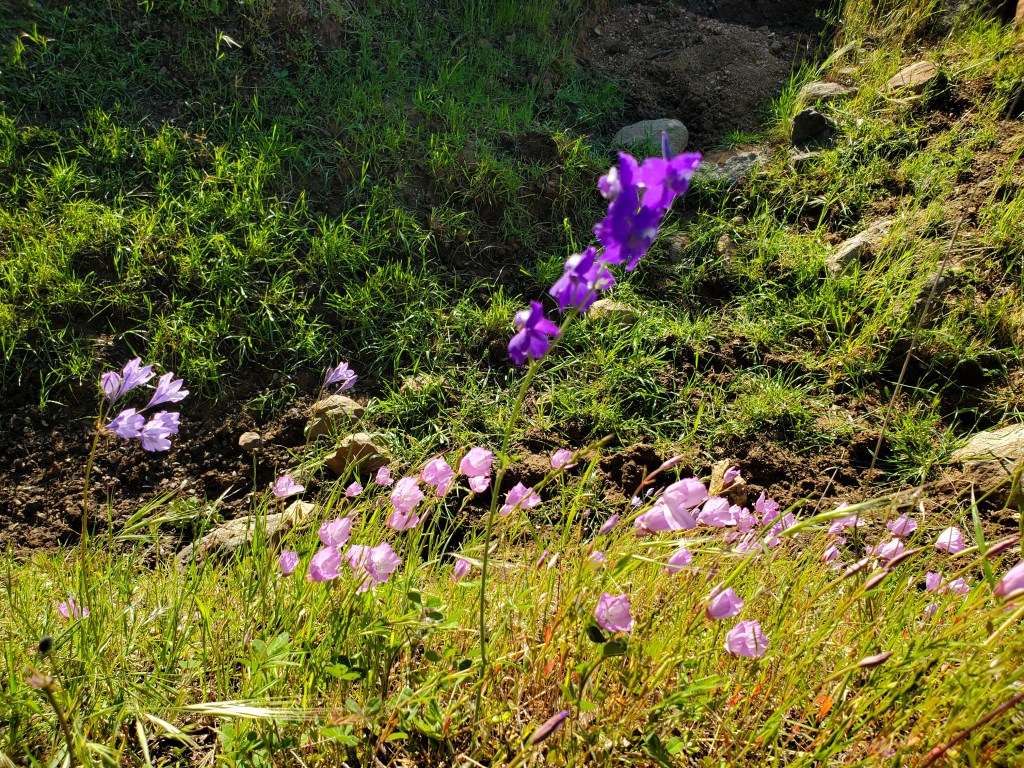
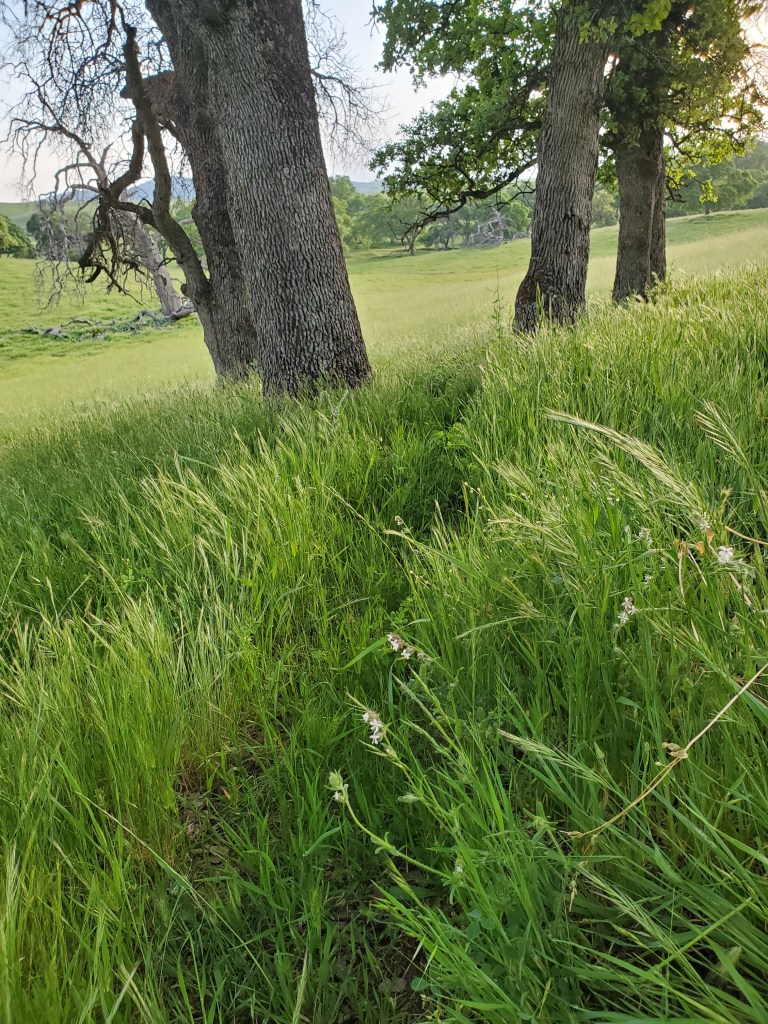
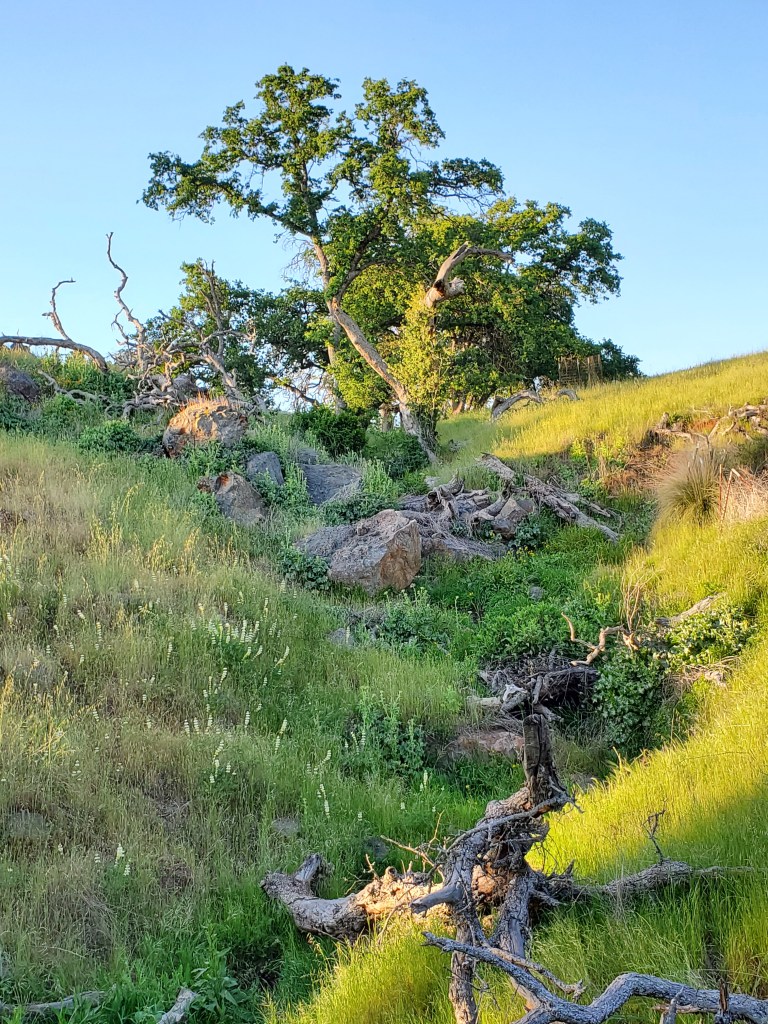
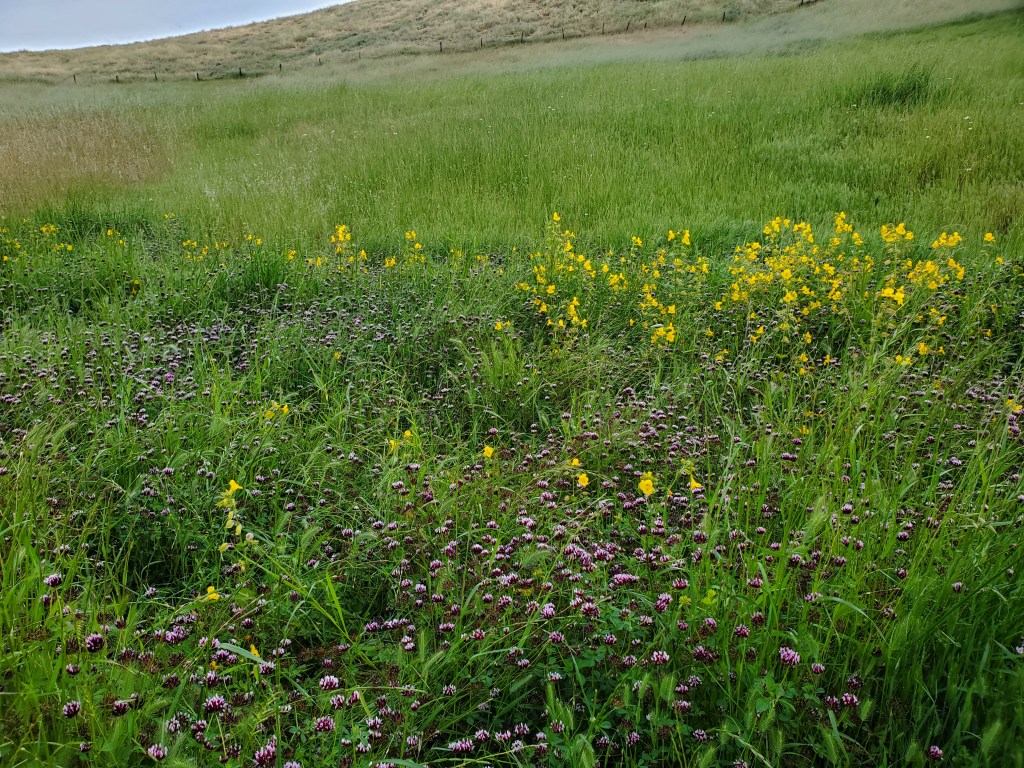
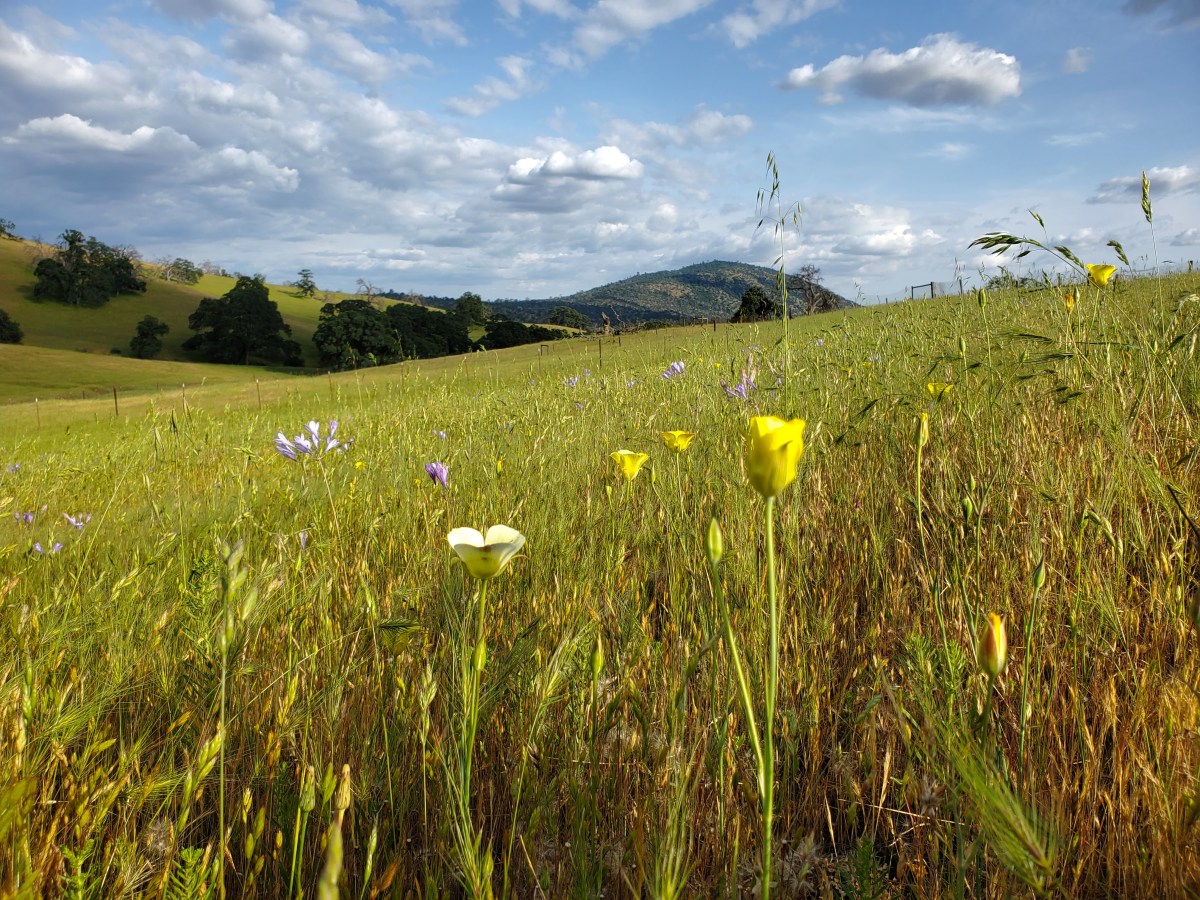
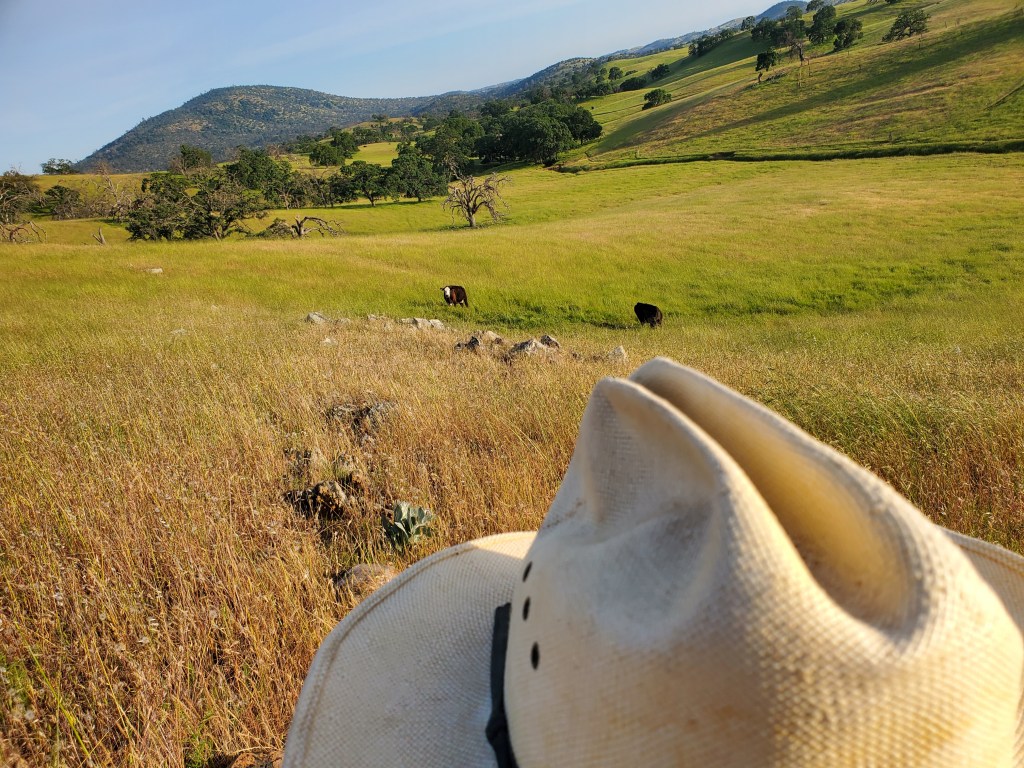
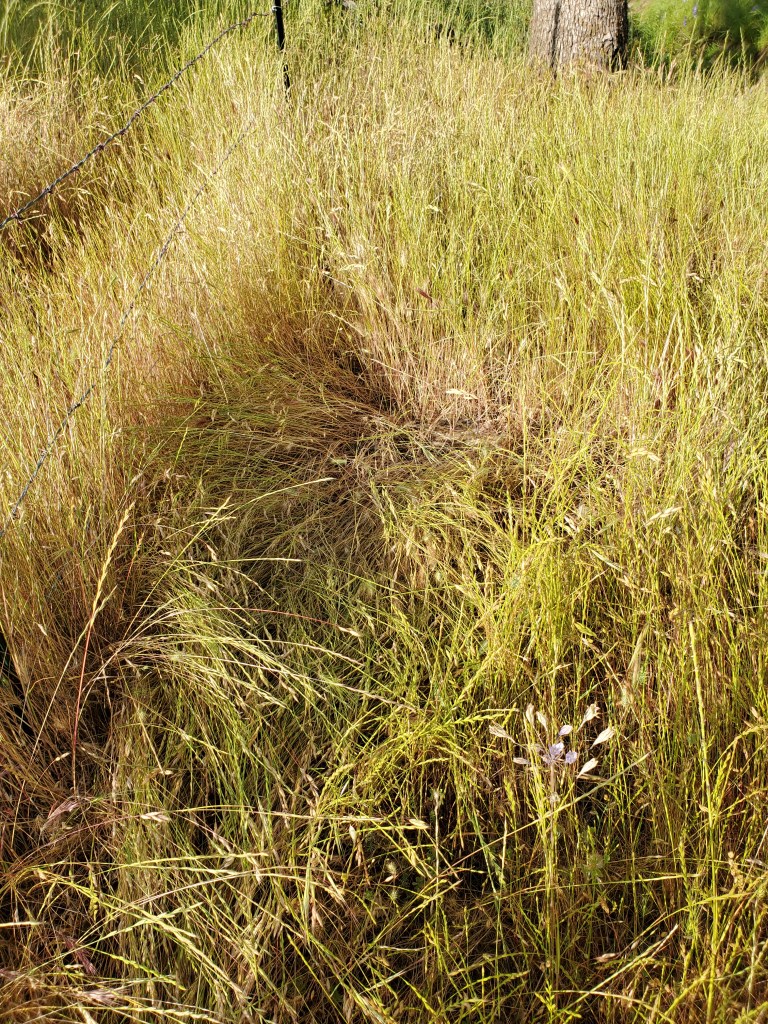
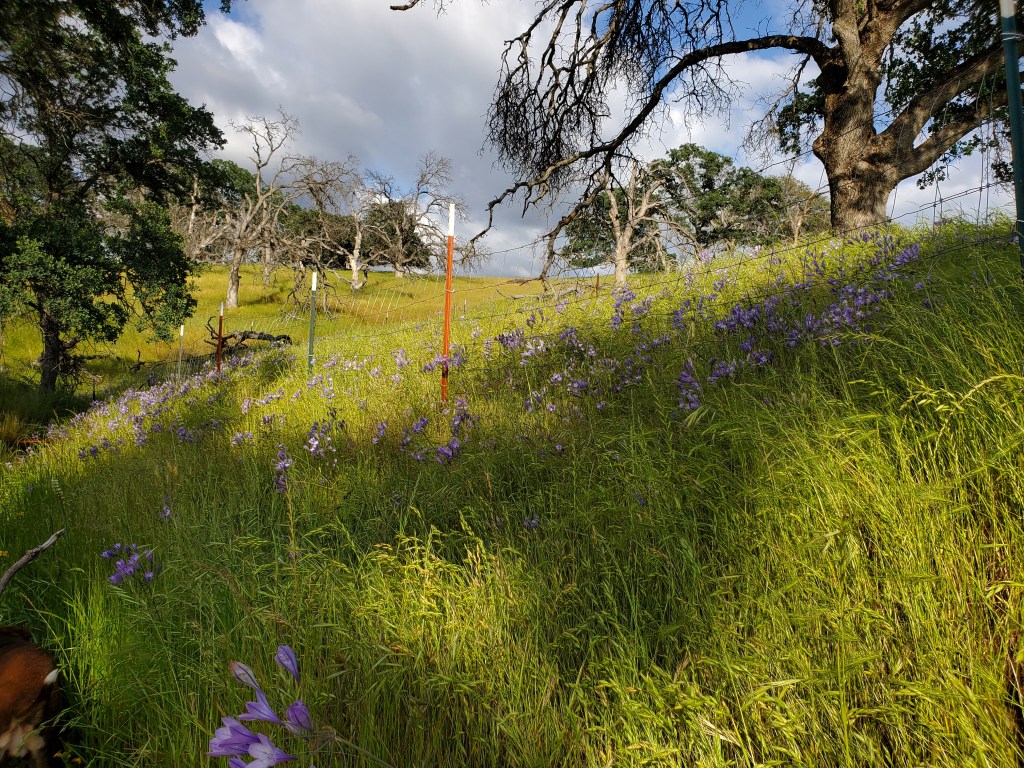
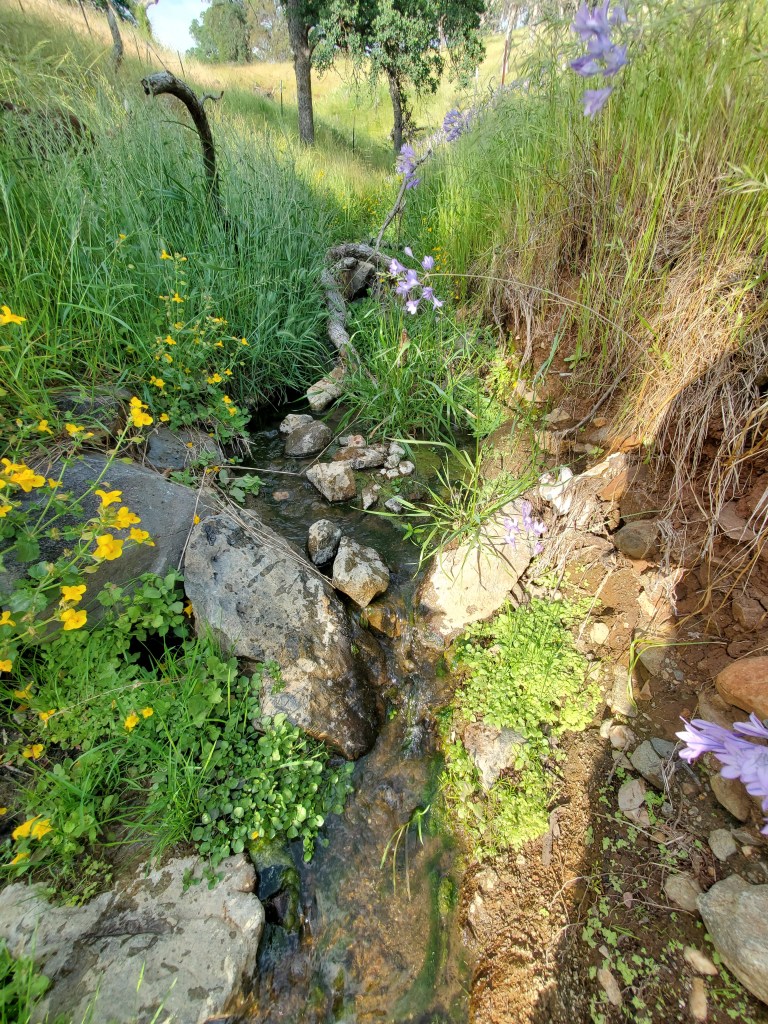
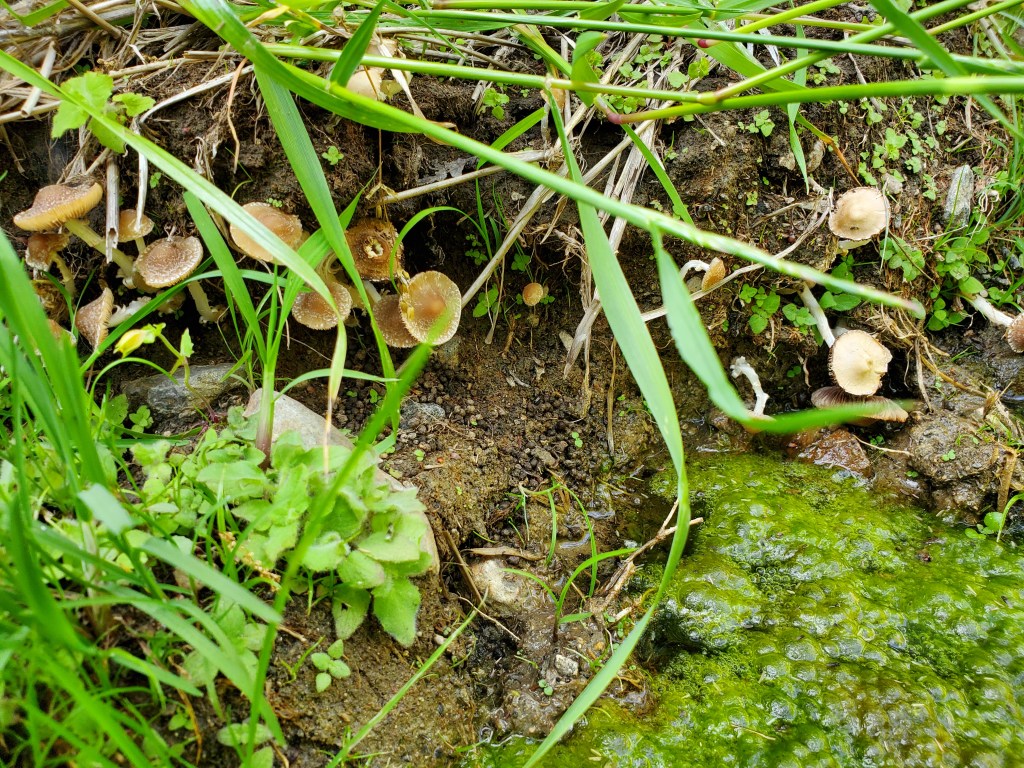
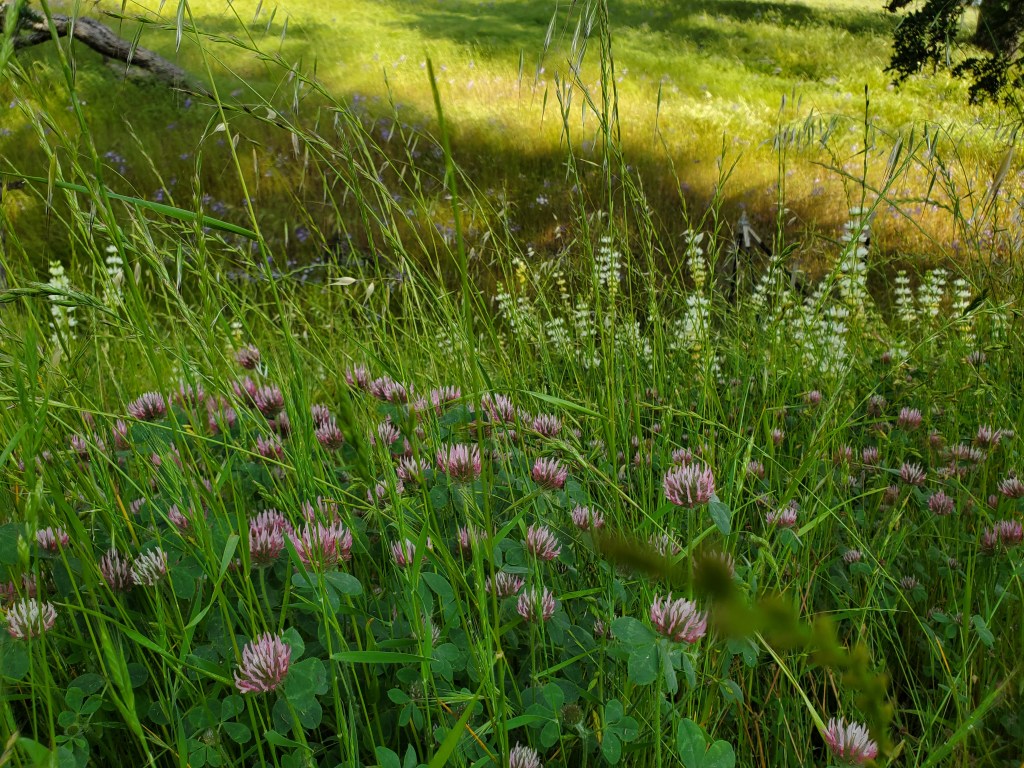
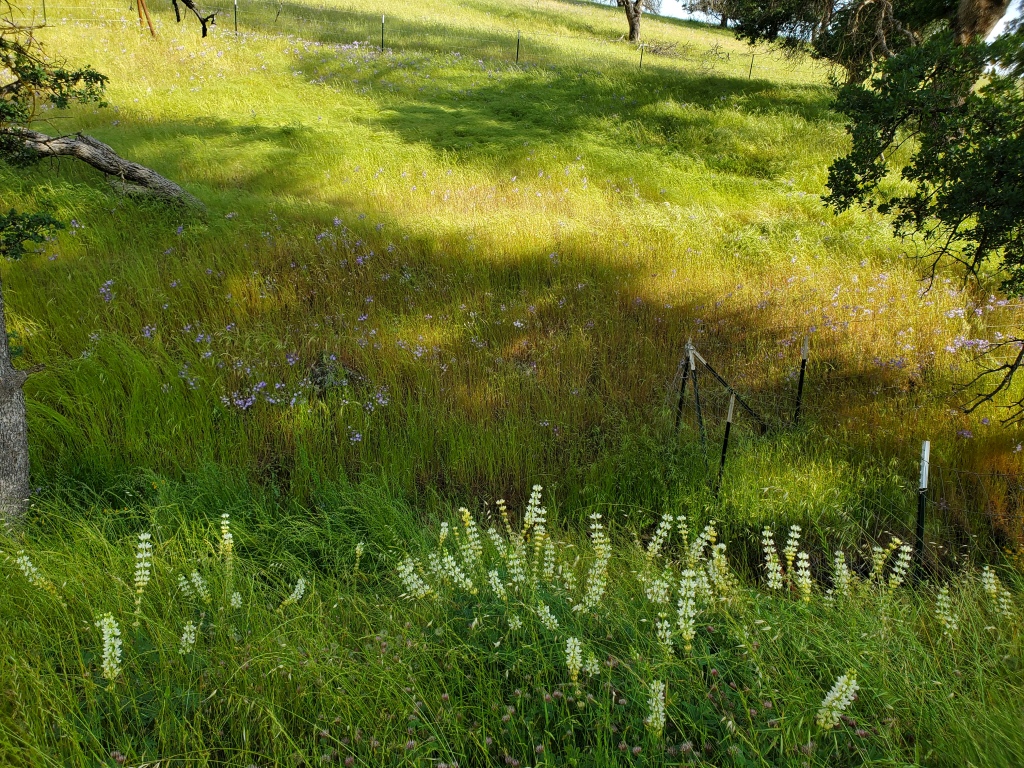
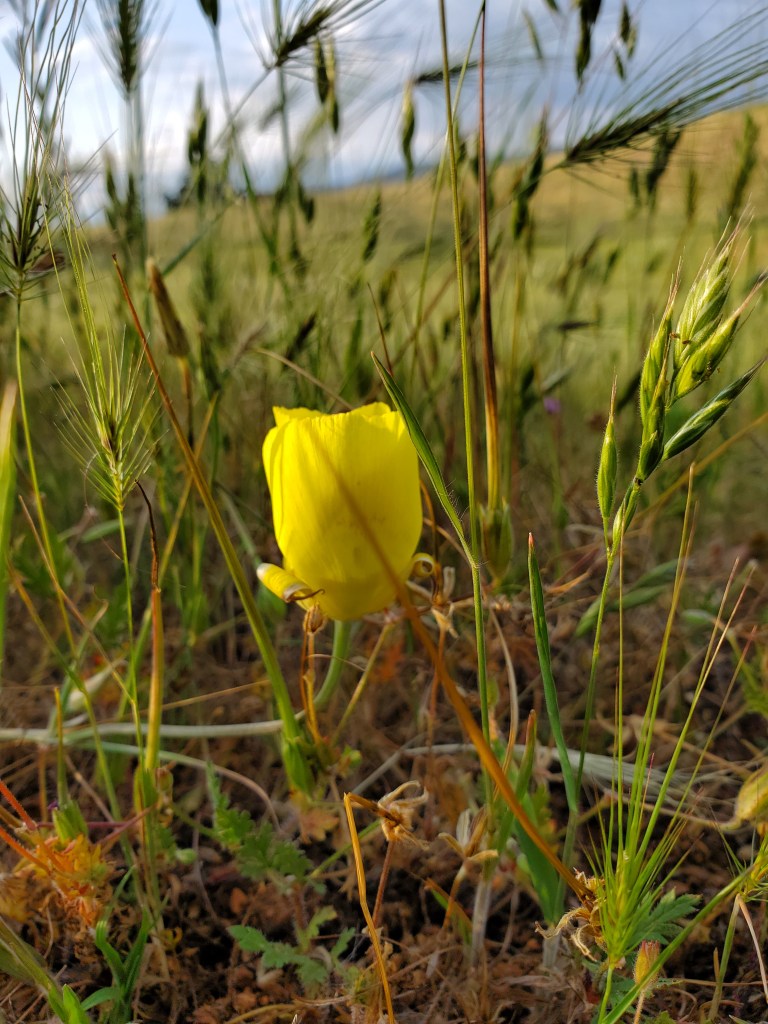
The following photos were taken largely in late April and early May when the grass was still green – and when I still had full use of my legs and hands. At this time, late May, the hillsides are yellow from young grass turned to hay and the water ways have shrunken and drainages dried. I am healing, but poor David is having to do my work and his.

Oaks Surviving

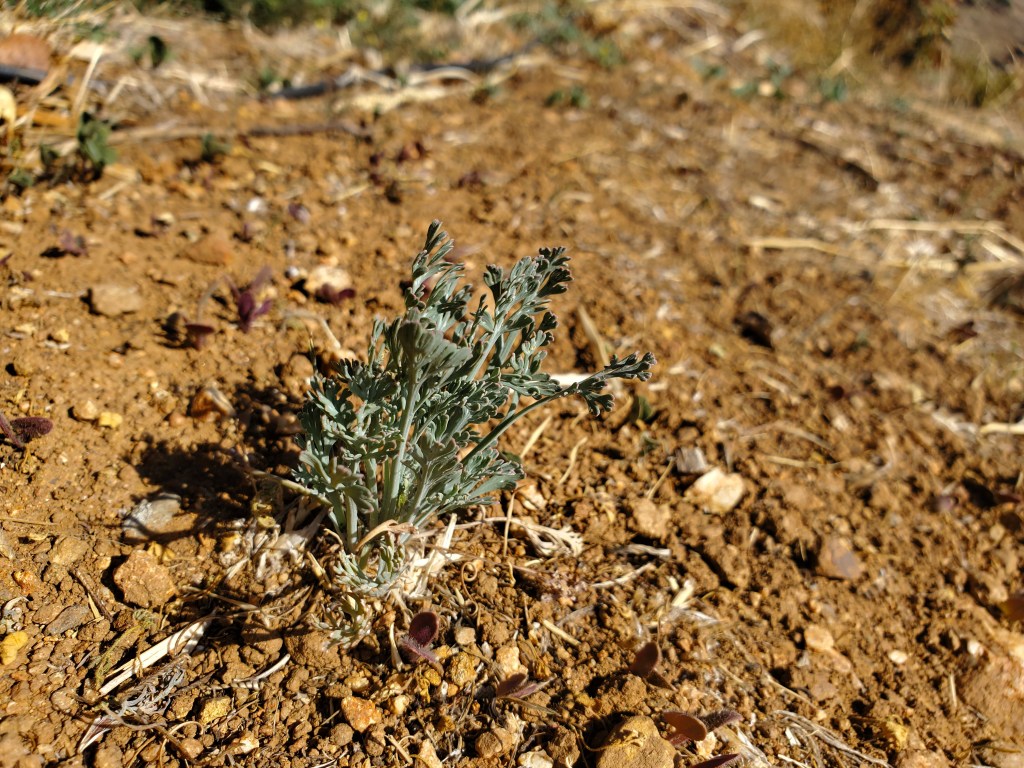
Most of the planted oaks are surviving. We lost two of the 19 seedlings. The areas with acorn plantings – none of them came up. The acorns were all taken. However, there has been a blockbuster of natural recruitment (oaks emerging naturally from acorn). While weed eating, David found one hundred emerged oaks around one of the grandmother blue oak trees. We have looked at other nearby oaks and found more seedlings. Evidently, there is the right combination of moisture, acorn and soil conditions to allow for massive propagation. Don’t get too excited. Most of those babes will get eaten. With vigor, David flagged the seedlings so he could keep an eye on them and continue to pull grass as new shoots grew, but he quickly saw that these seedlings were also delicious meals for gophers. We are going to try to cage some of them and water them – especially outside of the enclosure where the cattle graze.

No Monarchs – Again. But, Bumbles Return

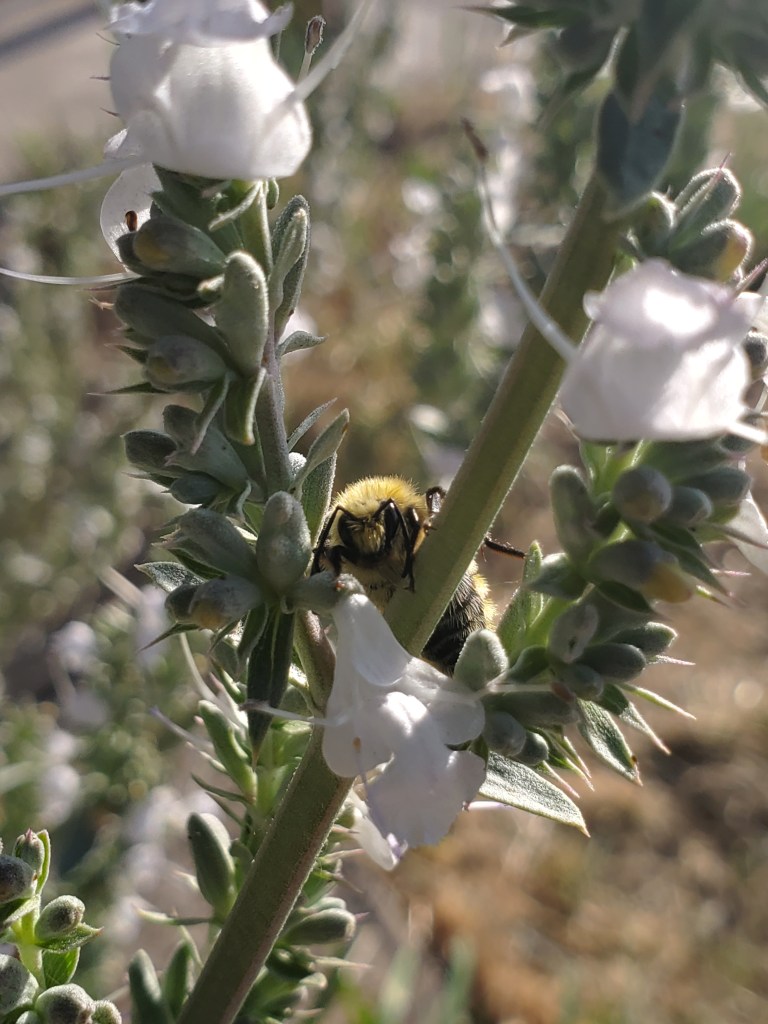
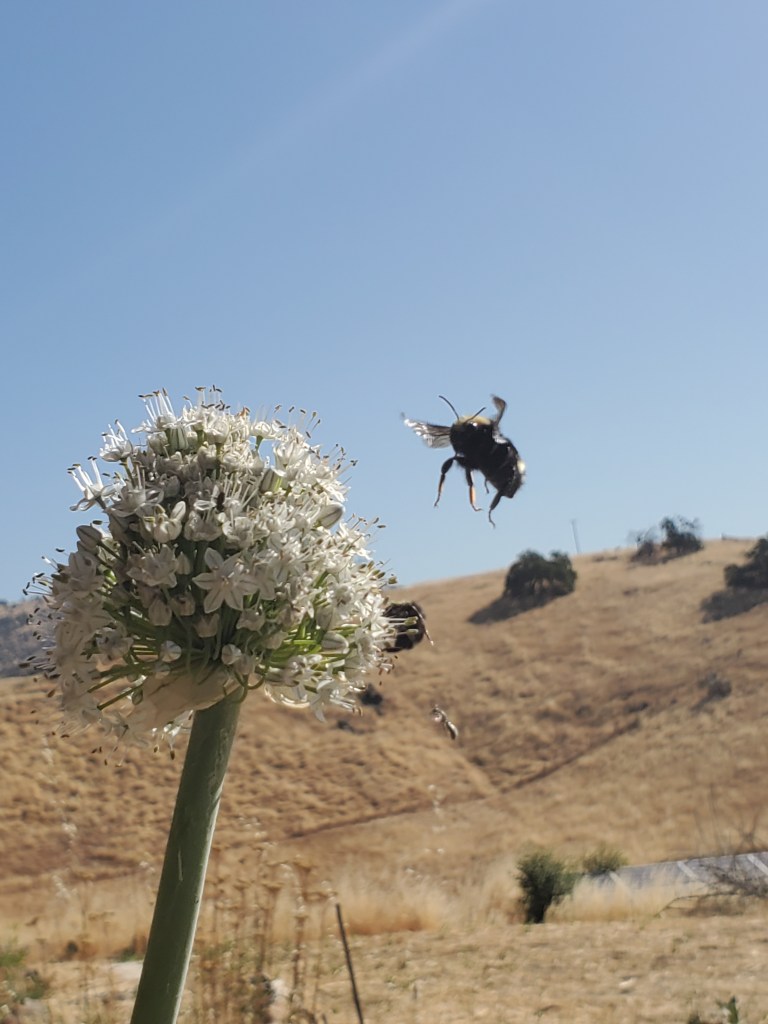
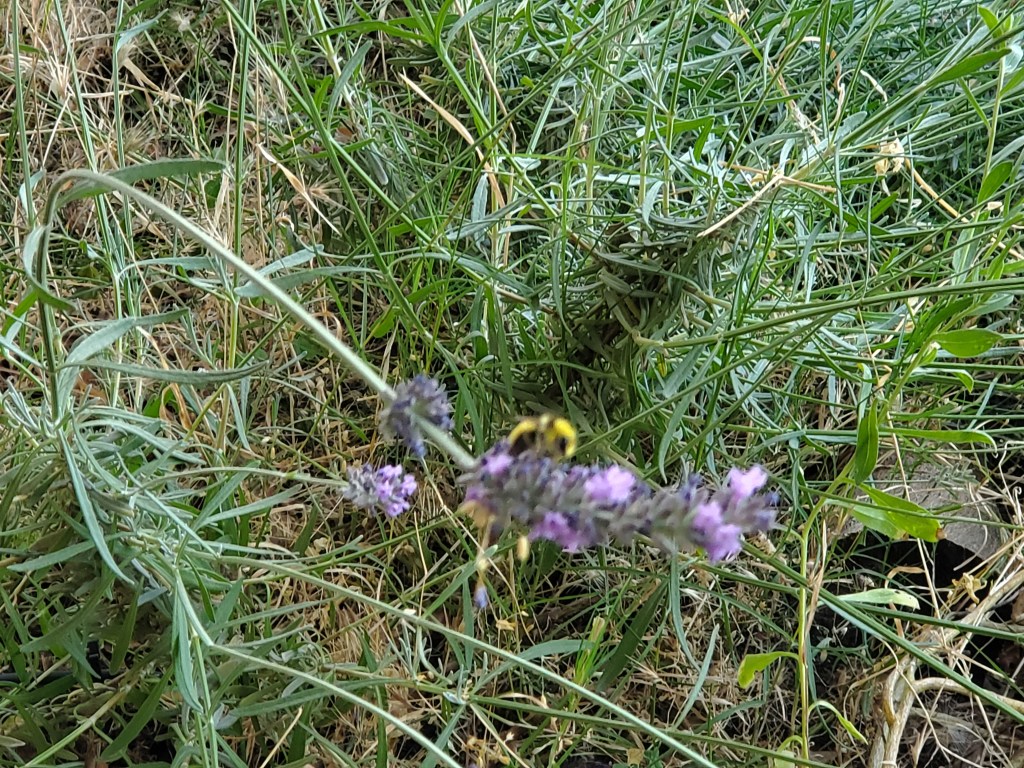
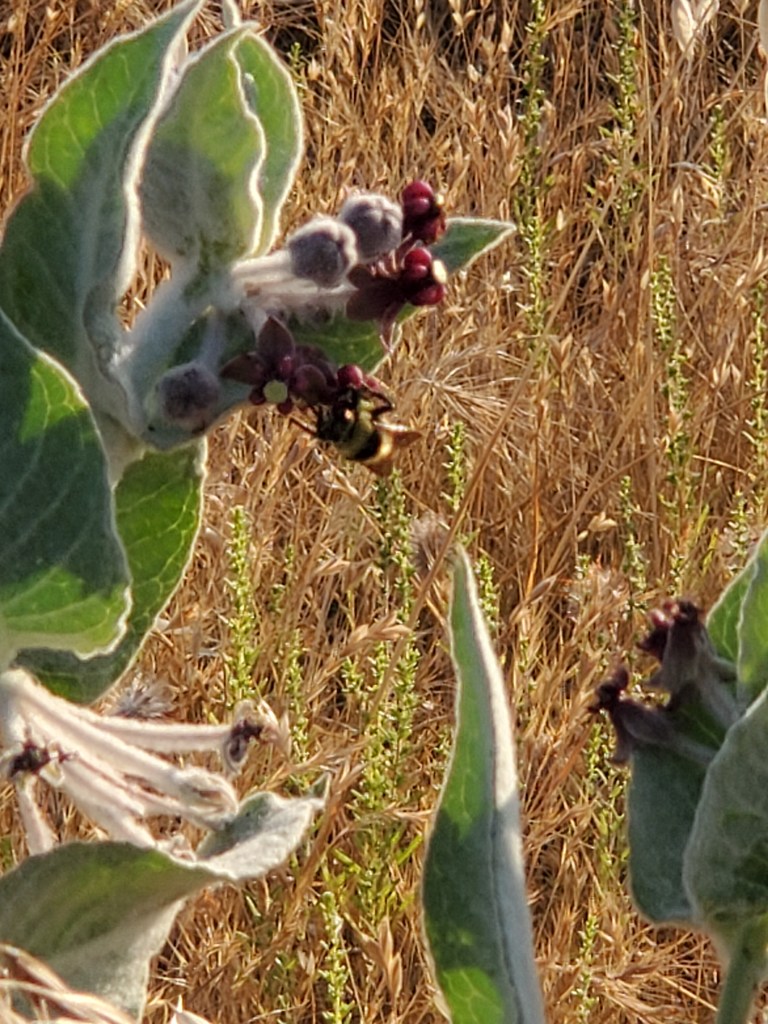
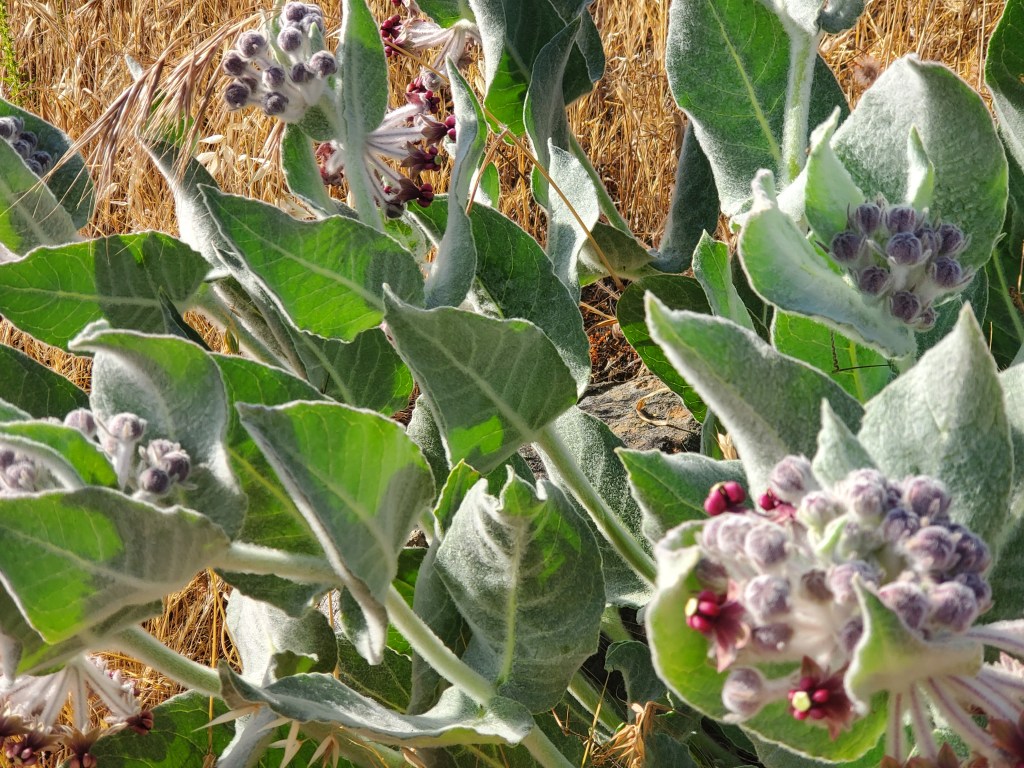
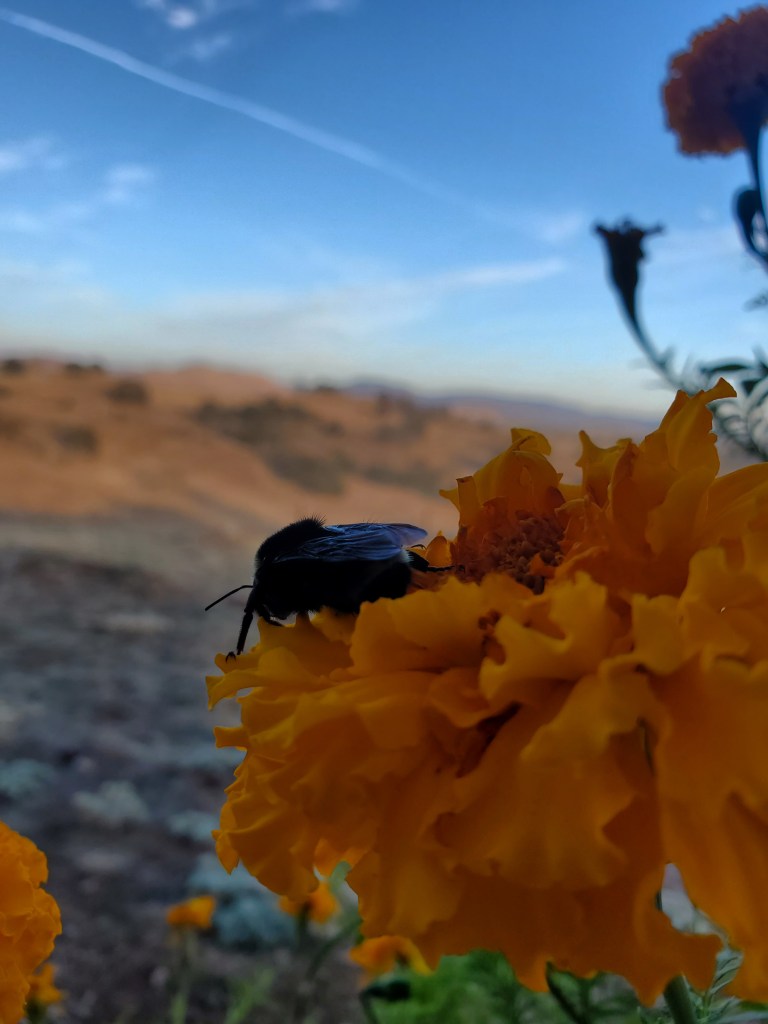
Sadly, the California Milkweed has remained pristine, no telltale bite marks, yellow stain or caterpillar poop. The north facing plants are still blooming with just a few beginning to set seed pods. The south facing plants, reliable hosts for traveling monarchs, are fully spent and well into setting seed pods. The only reason my spirit is not completely crushed is that the crotch bumble bees still reigned supreme on the hill in the milkweed plots. I even saw some down the hill near the cow clover. They seem to be increasing in number slightly.

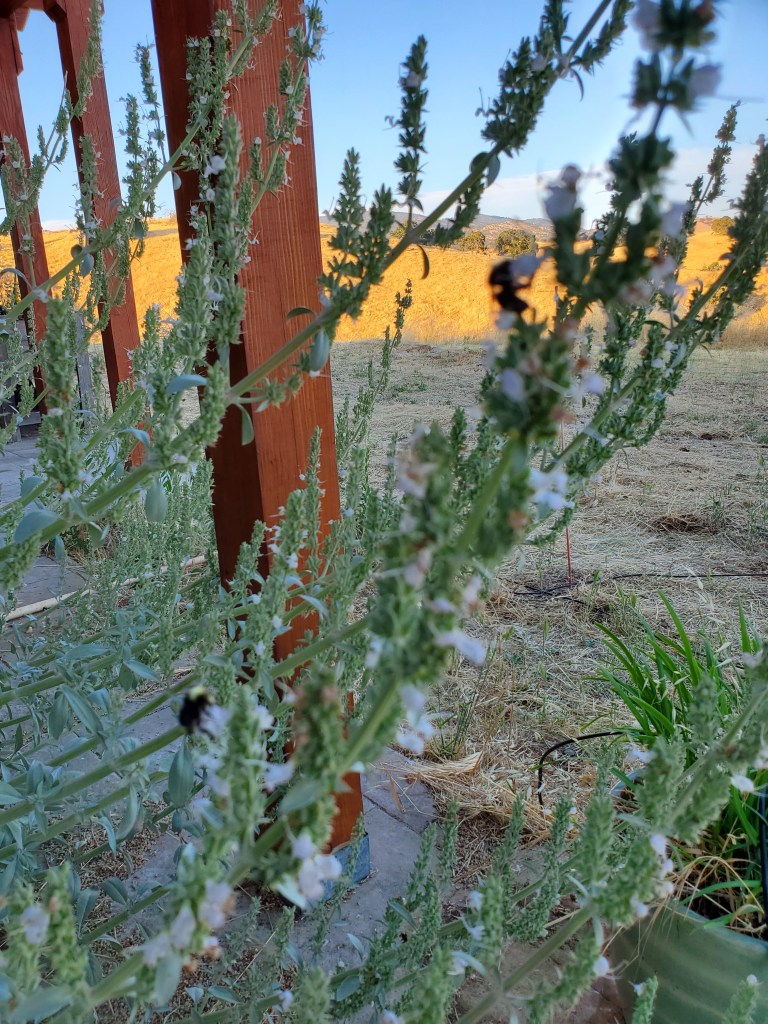
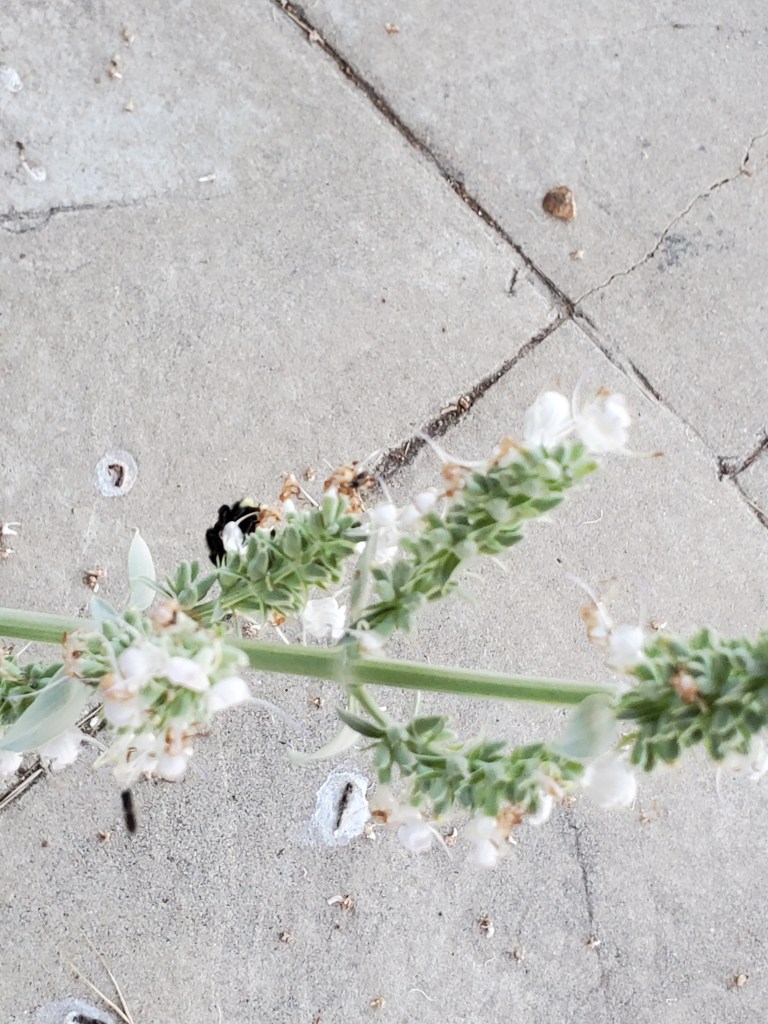
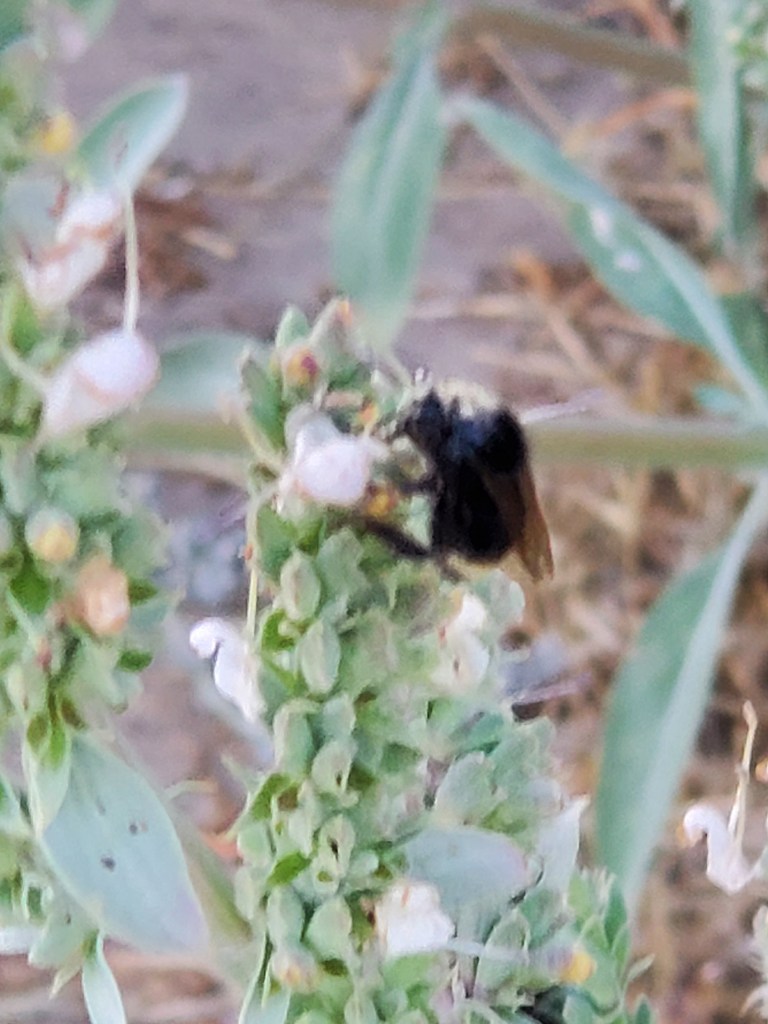
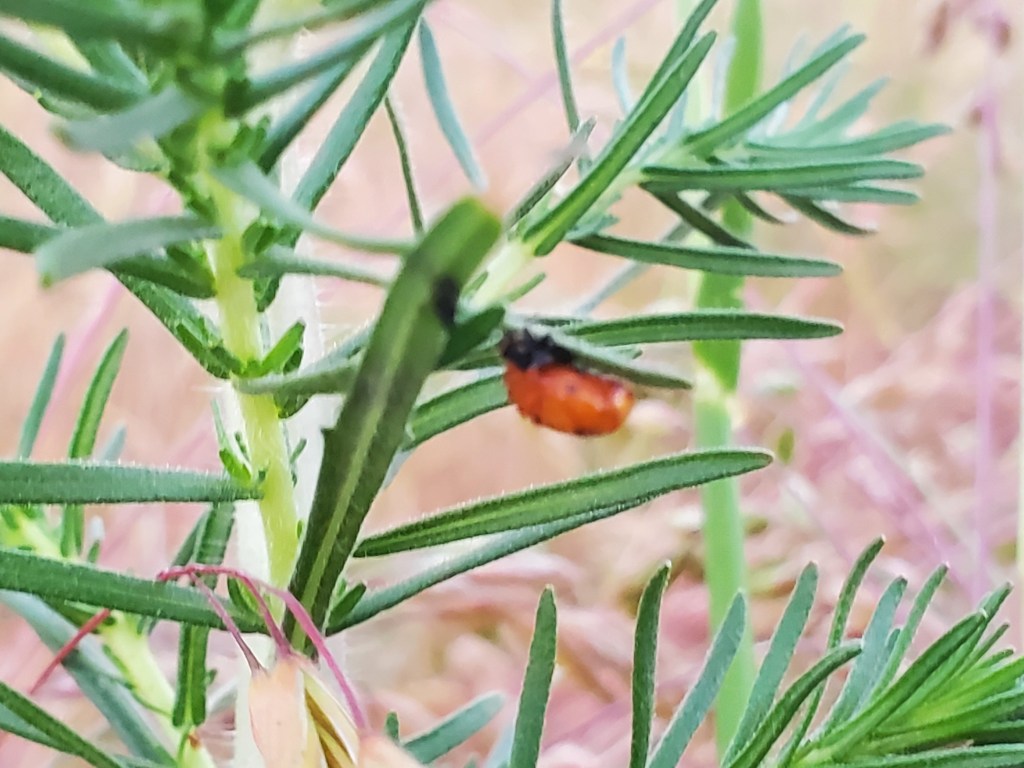
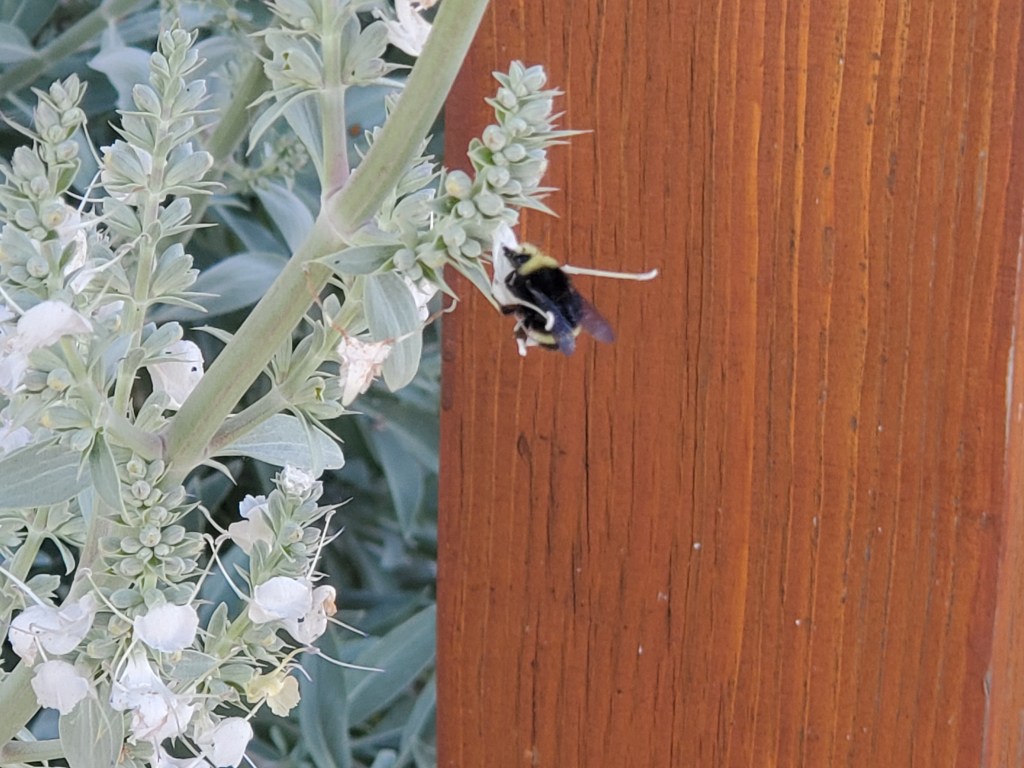
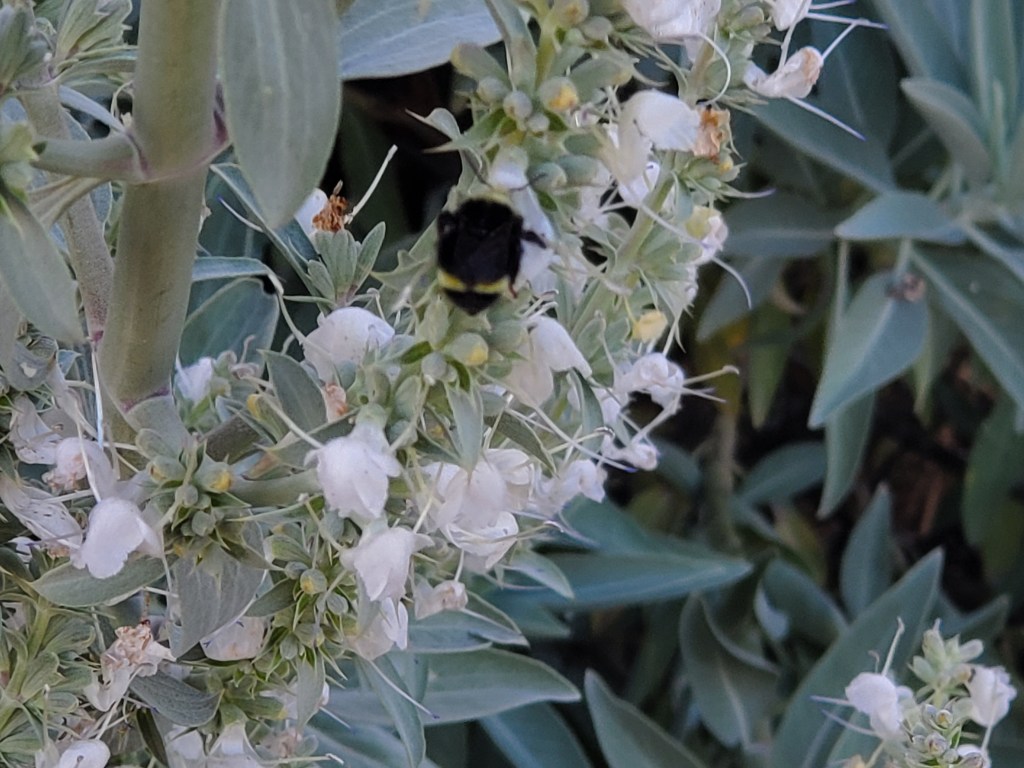
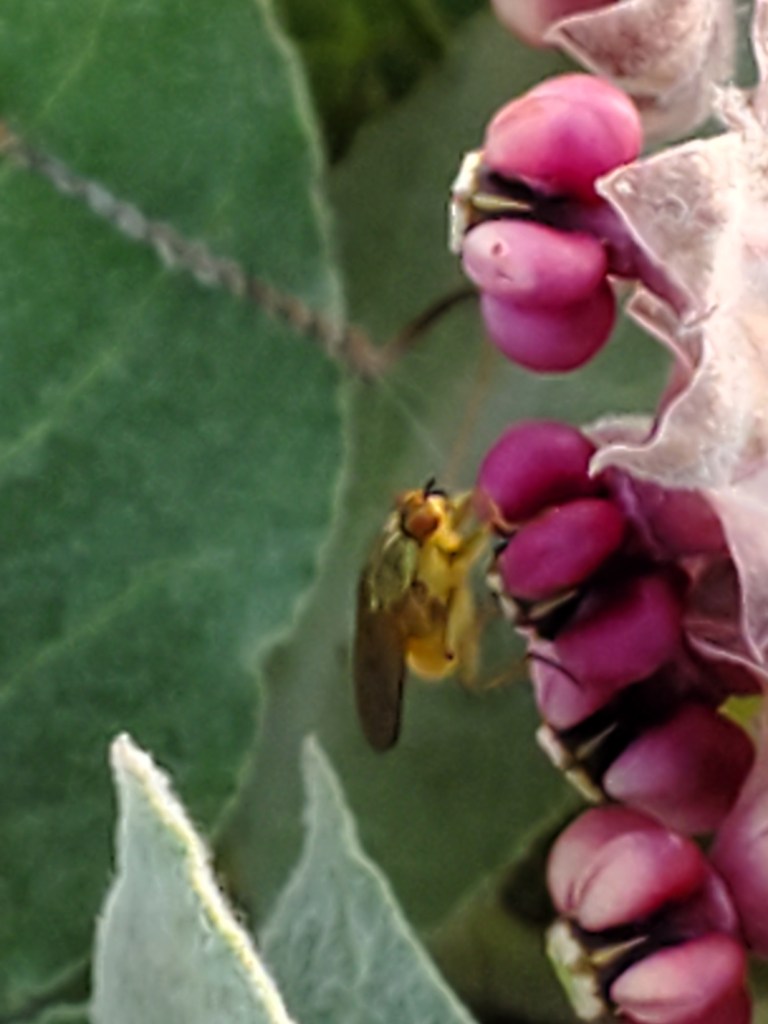
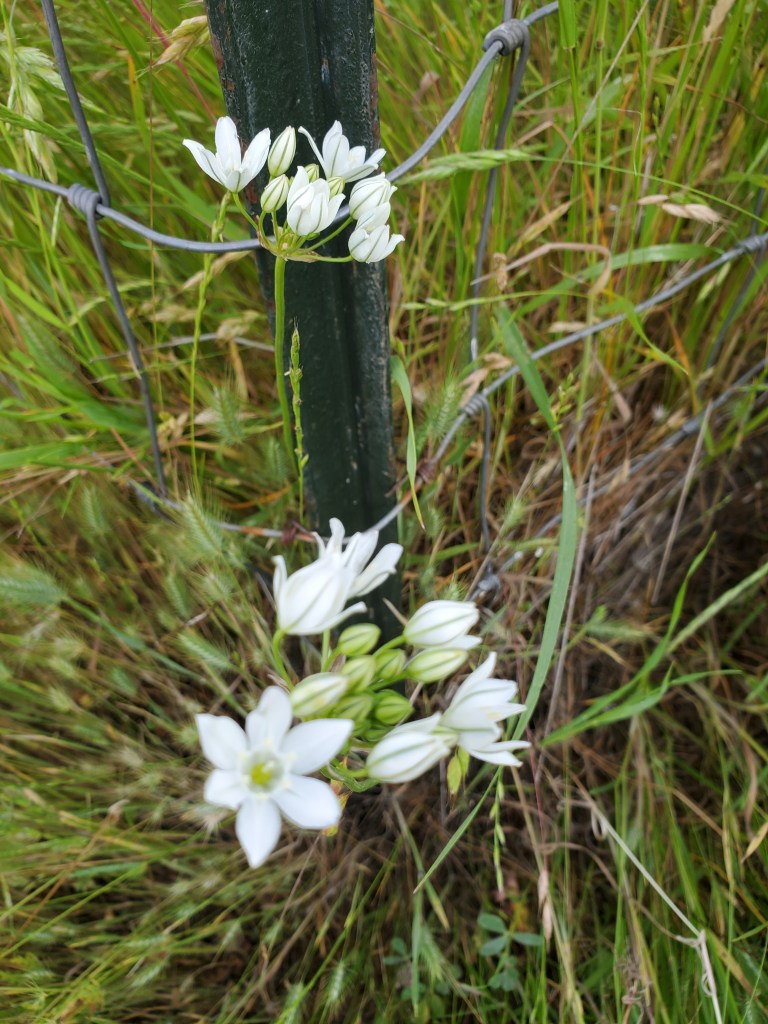
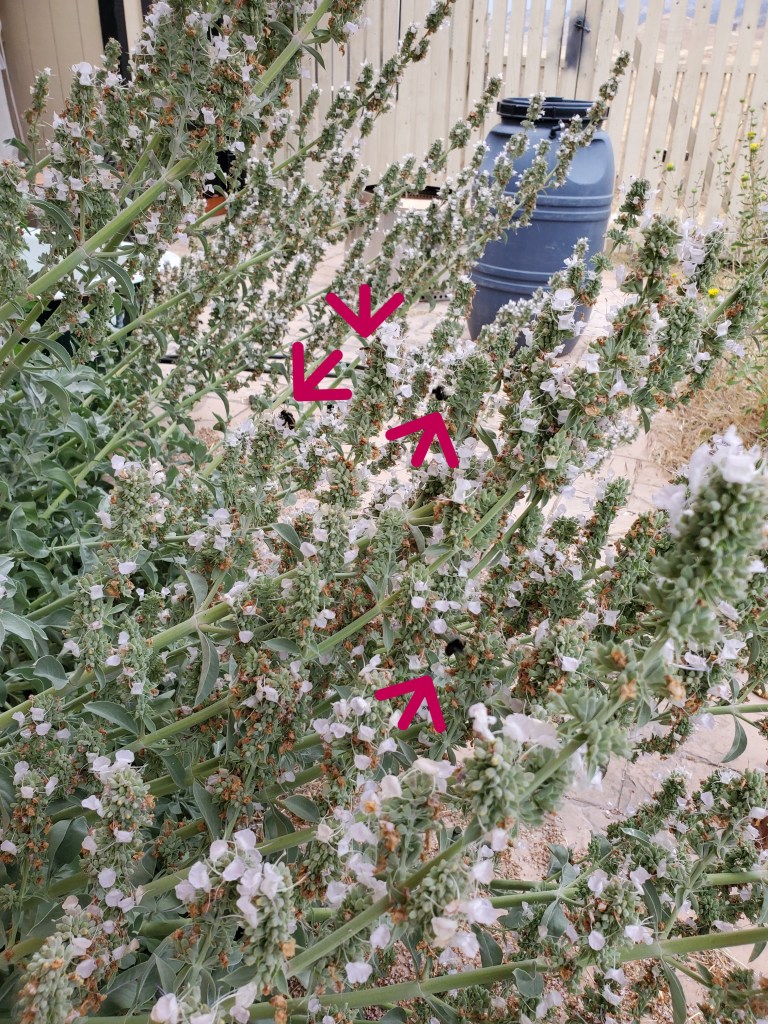
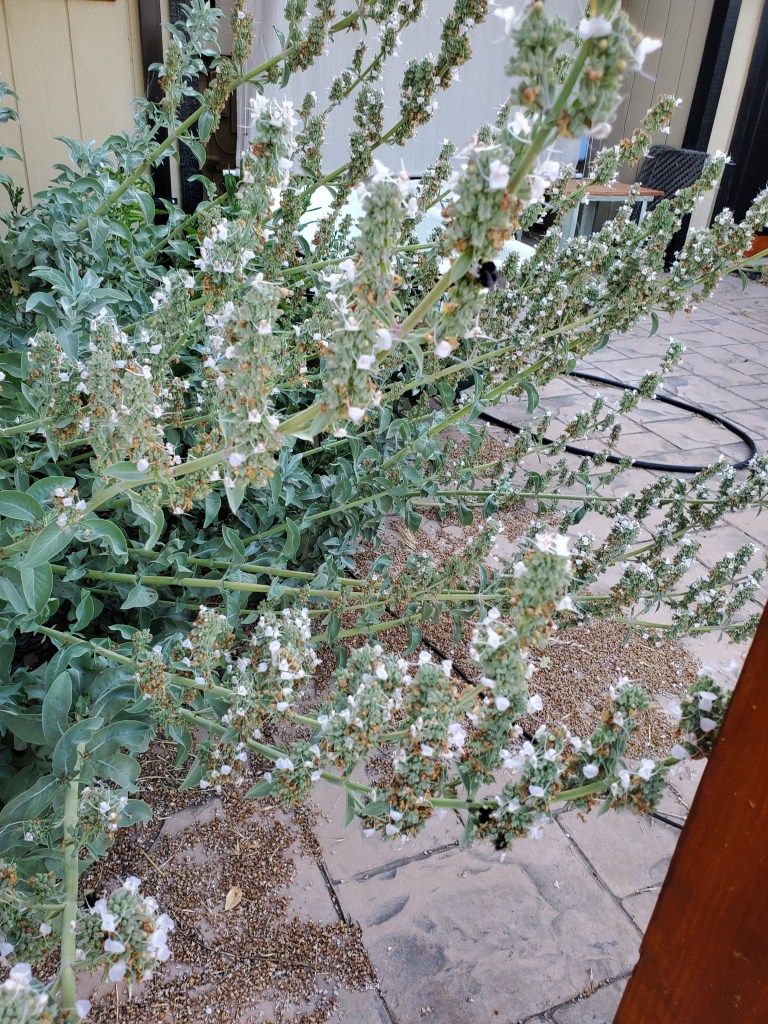
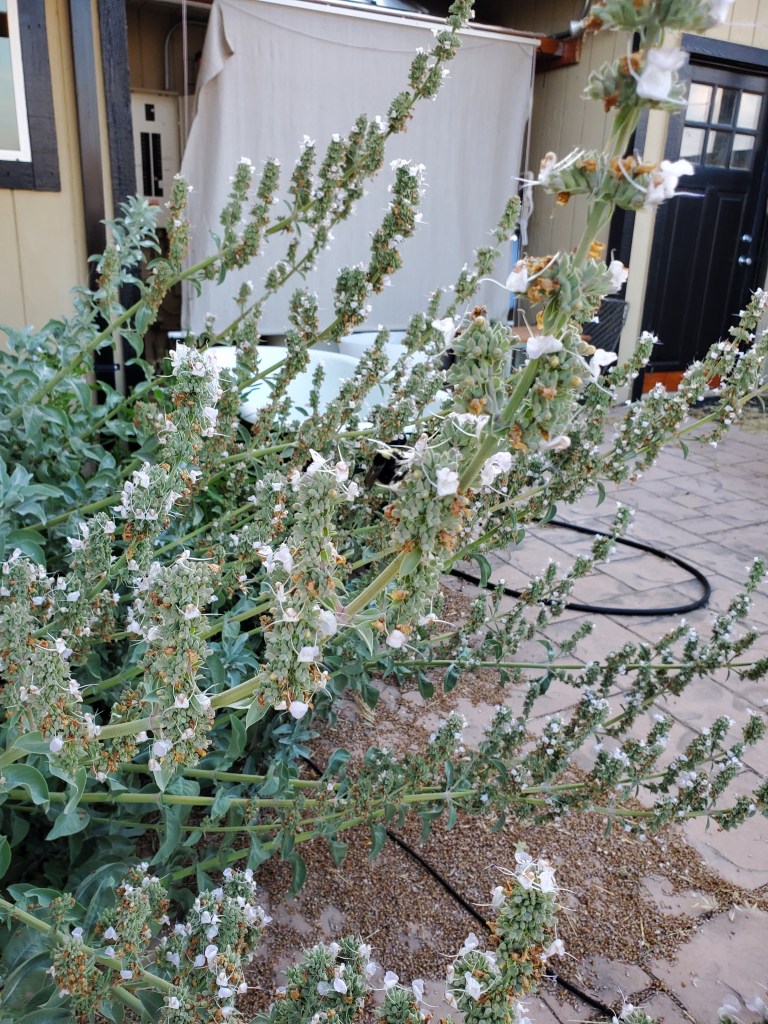
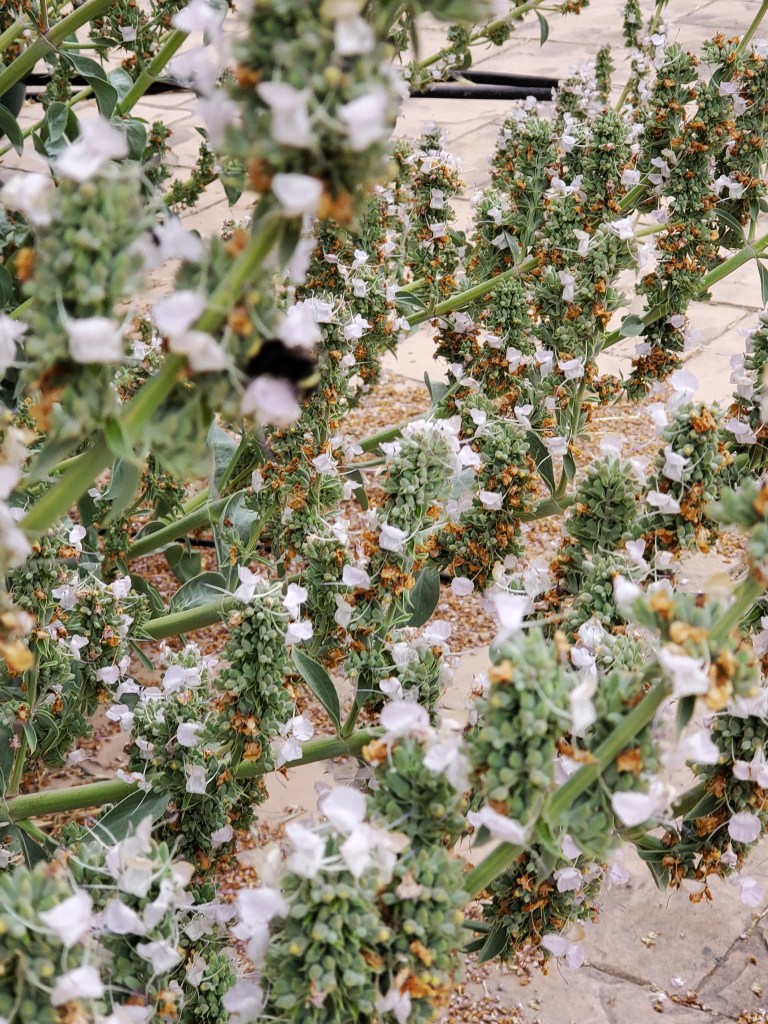
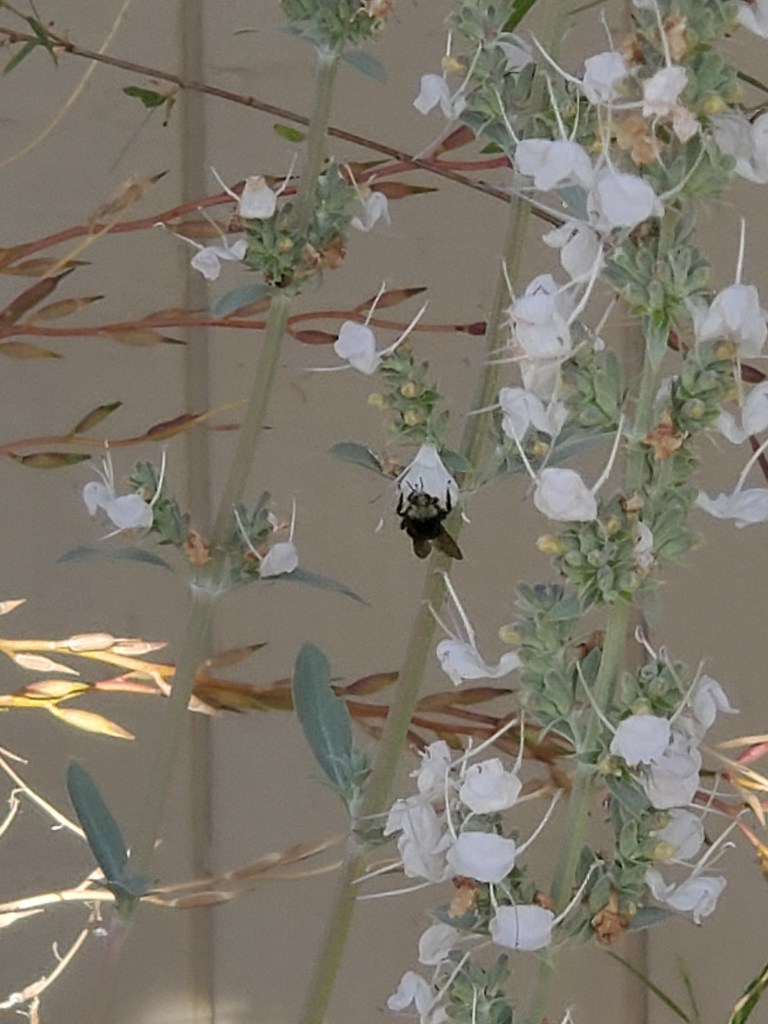
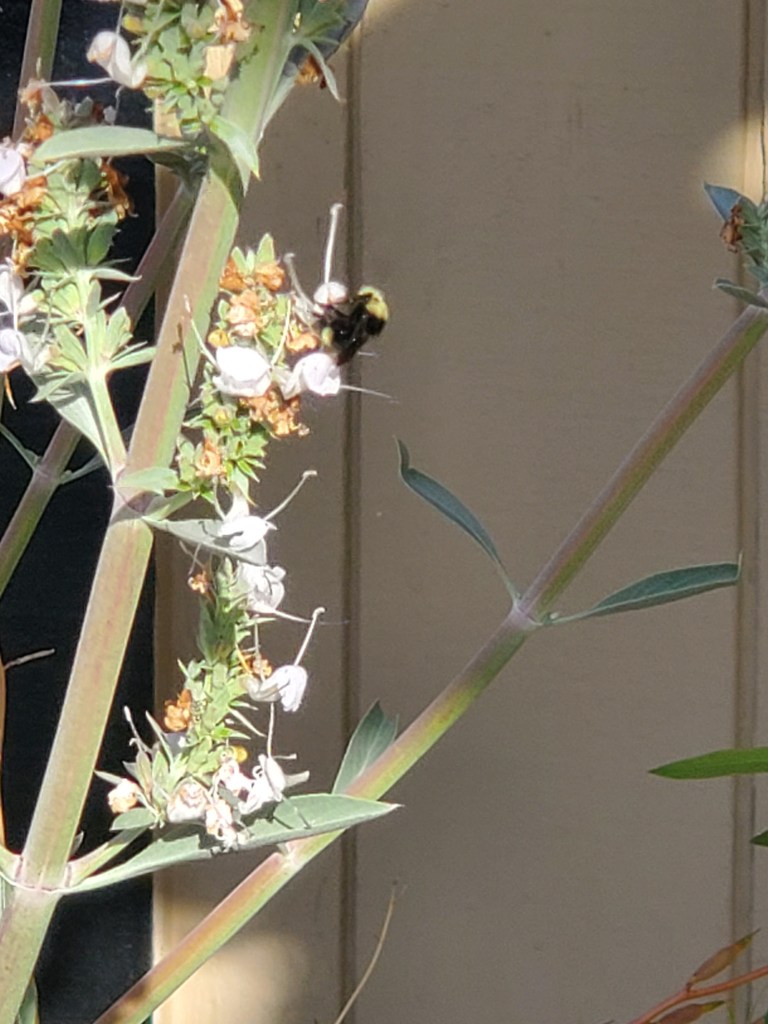
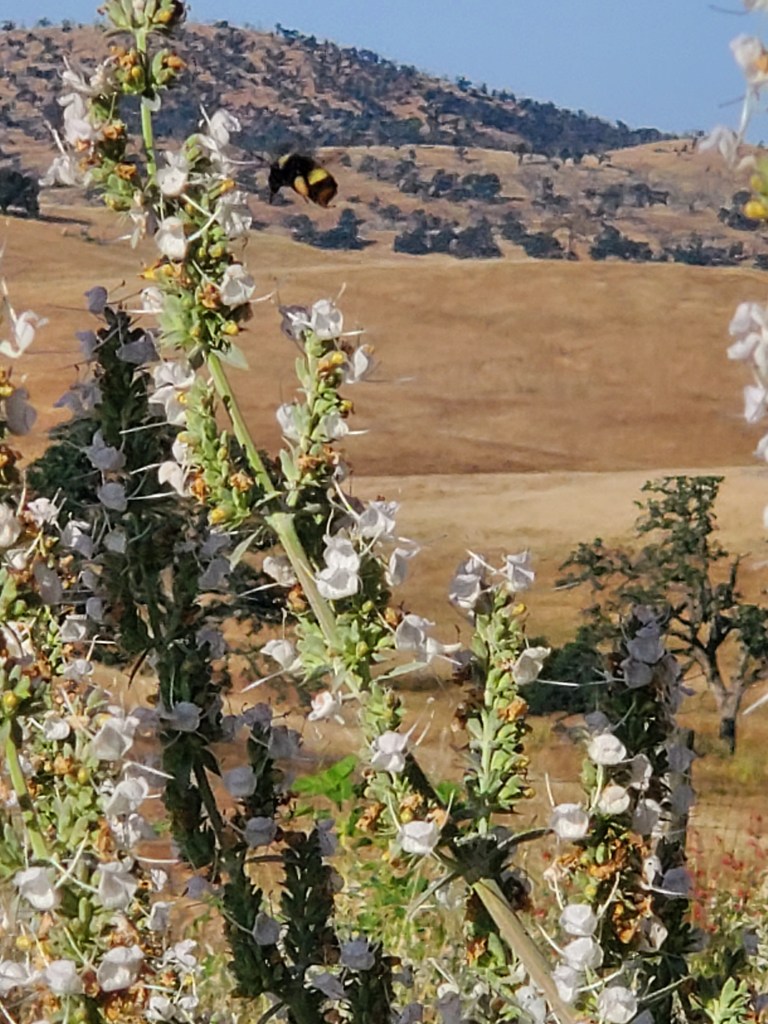
With the survival of my old white sage plant from the grasshopper incursion, its blooms have brought back a myriad of bumble bees and small pollinating flies. The onions are blooming as well and have encouraged micro pollinators into the yard. I love seeing those very small, hard-working insects. More lady beetles have been around, but not in numbers I’ve seen before. Of course, house flies seem to be abundant every year, and this year is no exception.

With the second lowest count of monarch adults since the history of the overwintering count, I perhaps should not have hoped for a visit. This would be the second time in a row monarchs have bypassed the ranch. I understood skipping us last fall on their way back. Truthfully, I didn’t want to be here. All the stripped and murdered plants, grasshoppers shifting around like flakes in a snow globe, it was all too sad. But, I stayed. I had saved one large narrowleaf milkweed with a screen box my husband made. I kept watch on that plant for the entire summer to make sure it was still available should the monarchs stop back on their way to overwinter. Like a child at Christmas, I waited for an orange, black and white Santa to come, gifting their eggs to hatch and a sense of fulfilled purpose and hope. But, Monarch Santa never came, and I questioned my work. How could I do better? How can I make the habitat more resilient?

Birds and Other Wildlife

The bird songs have been incredible this spring. I finally set up my hammock, and when I have time, lay in it and listen. There are audio devices available now to hang in trees, record and send back to the vendor for a list of birds present based on the songs. Very cool. I want to do that.

Even though I don’t have a value-added product I sell from the ranch, I decided I wanted to become an Audubon Certified ranch. This is a badge that tells consumers that your ranch adheres to a set of protocols that promote more sustainable ranching practices – and certainly promote better habitat for birds. I already follow and perform many of the practices they outline, so I think we will be a good fit. I applied to do this because I want access to more expertise on bird habitat and become a better birder. One of the things I am really excited to work on is improvement of quail habitat. They are so cute. I want them to thrive here.

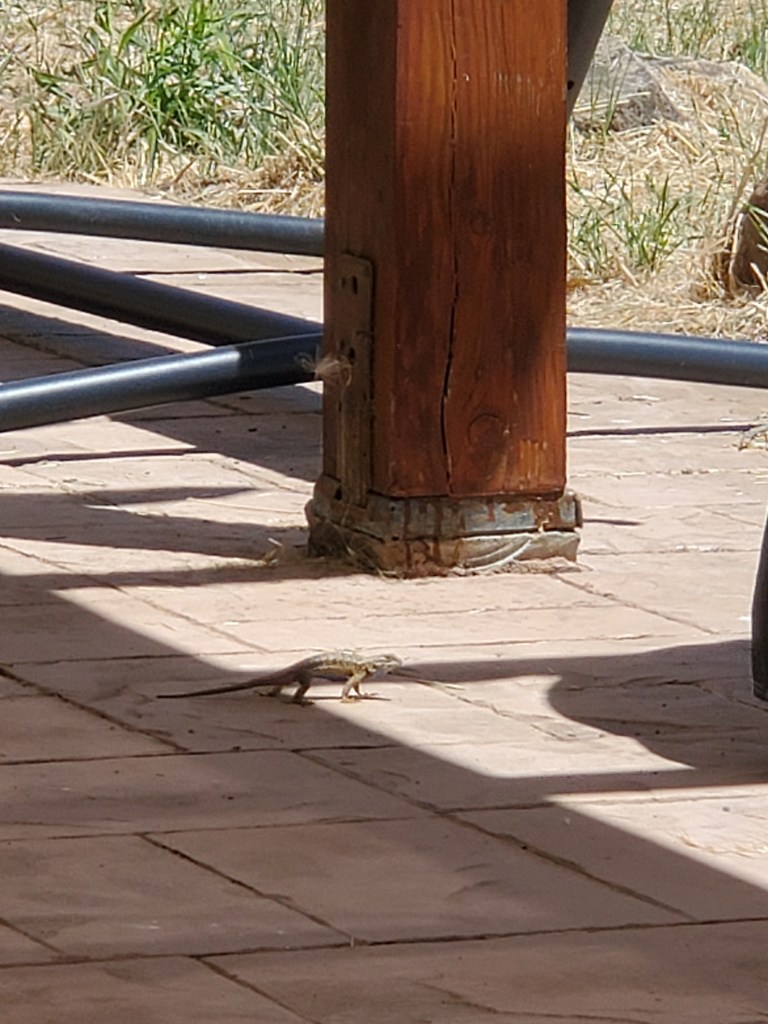
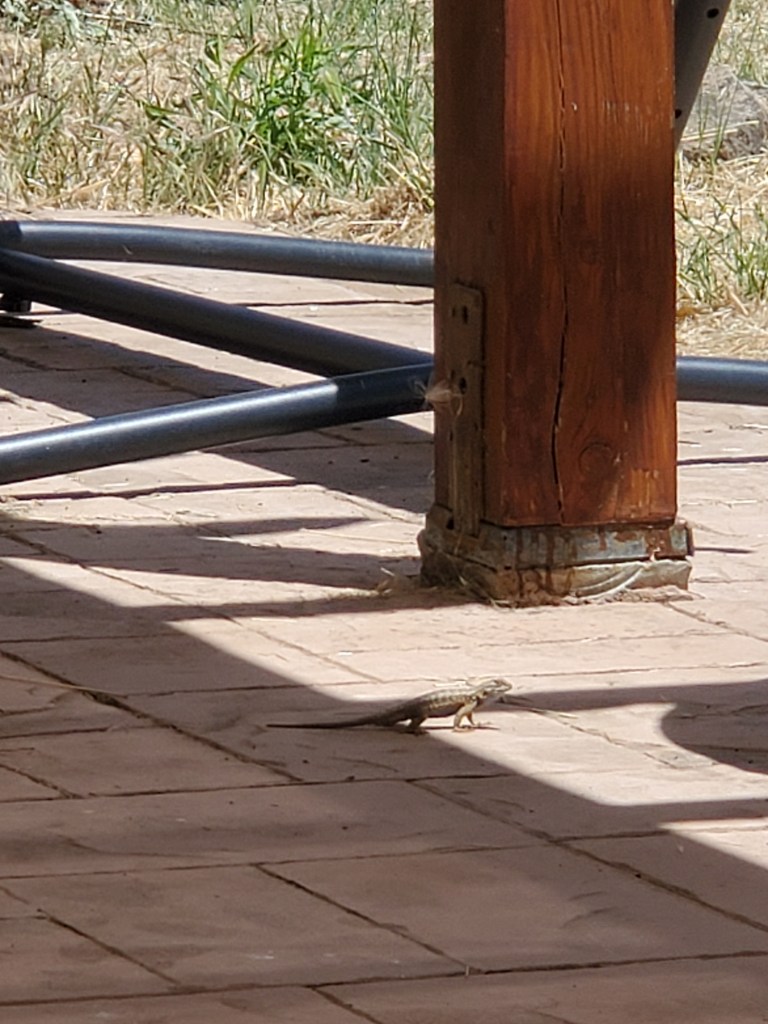
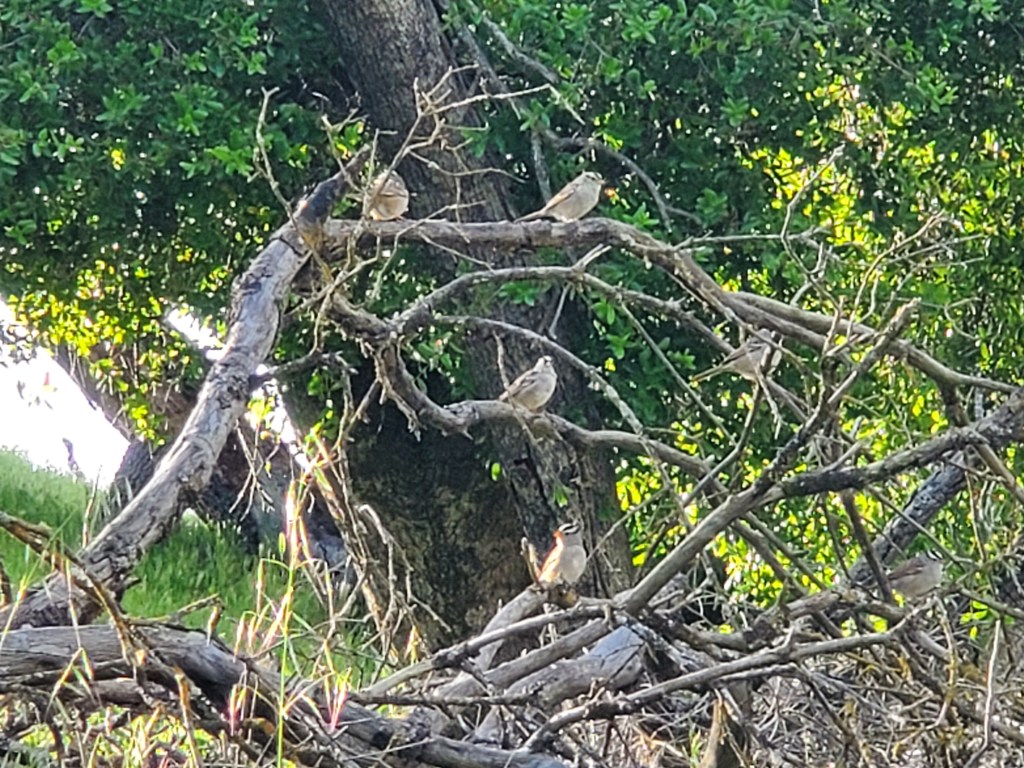
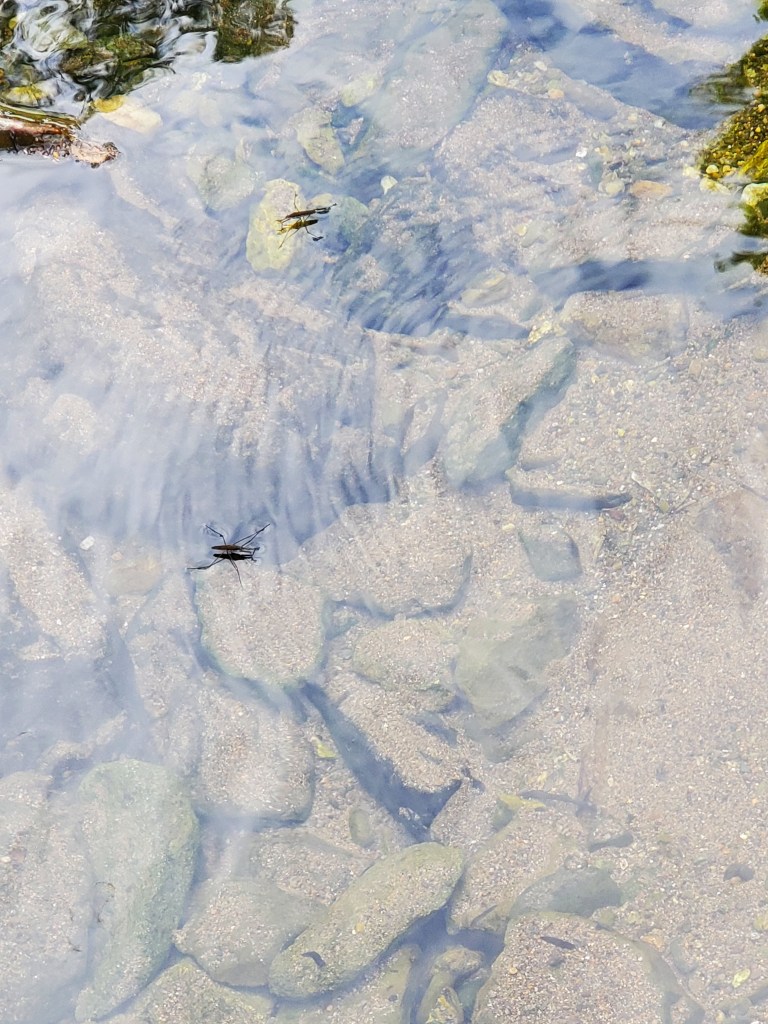
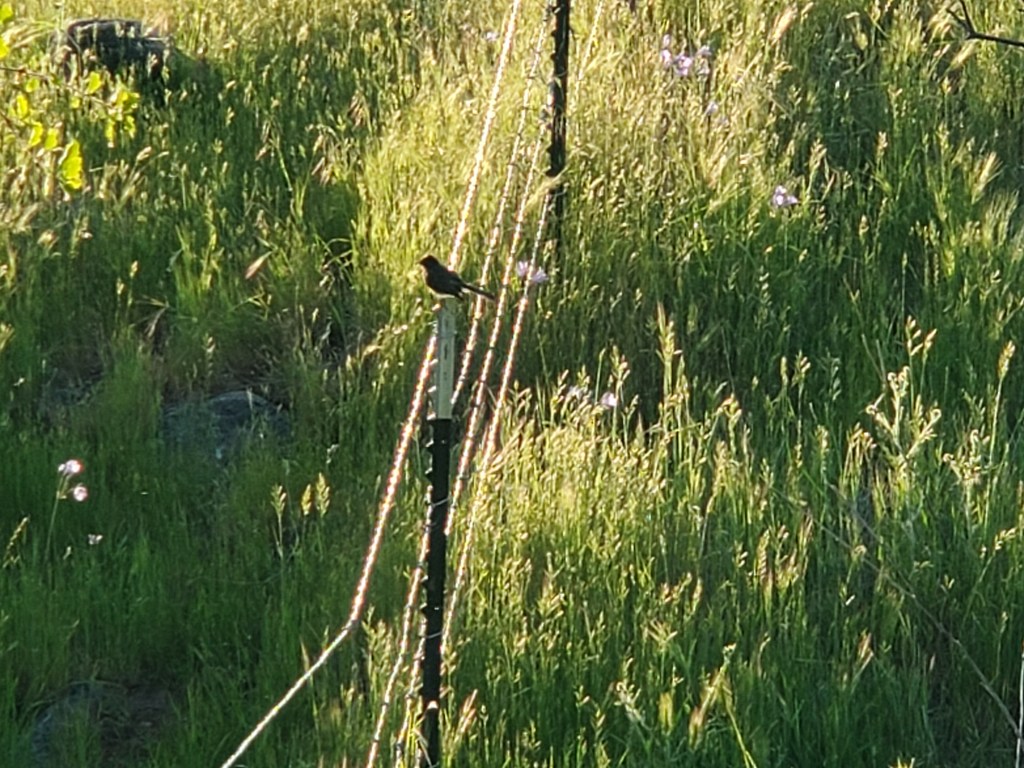
There has been quite a bit of action around the wildlife guzzlers. Raccoons at both Guzzler 1 and 2, and birds at Guzzler 1. There was even a family of five raccoons that visited. Check out the photos below to see who stopped by.

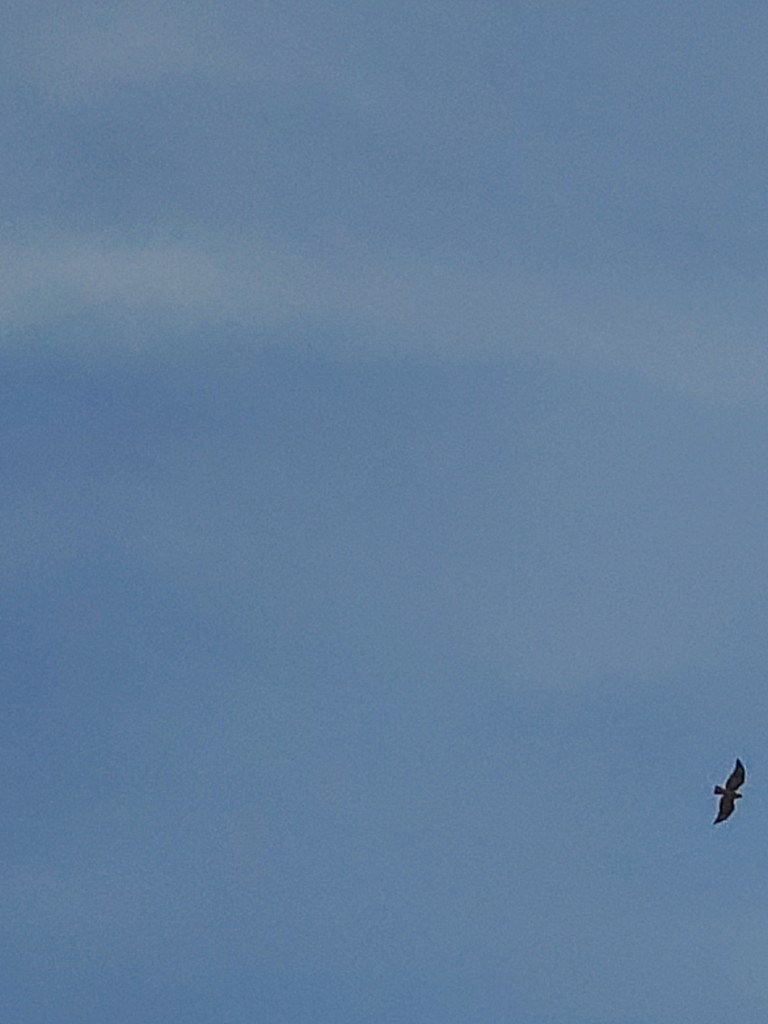
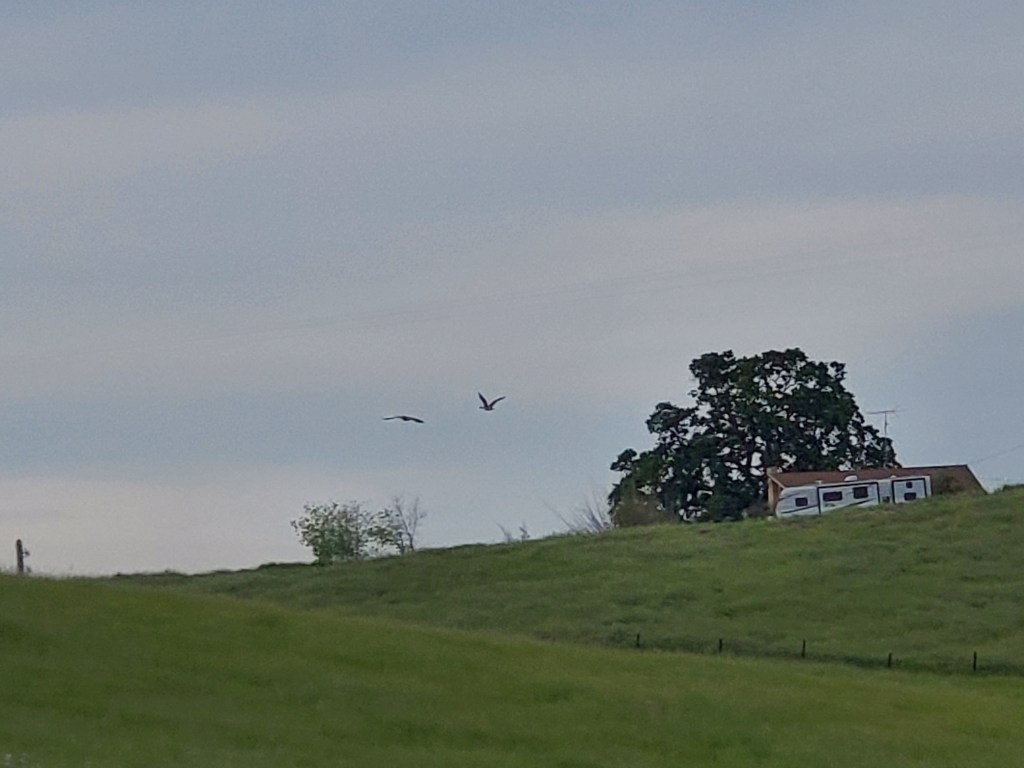
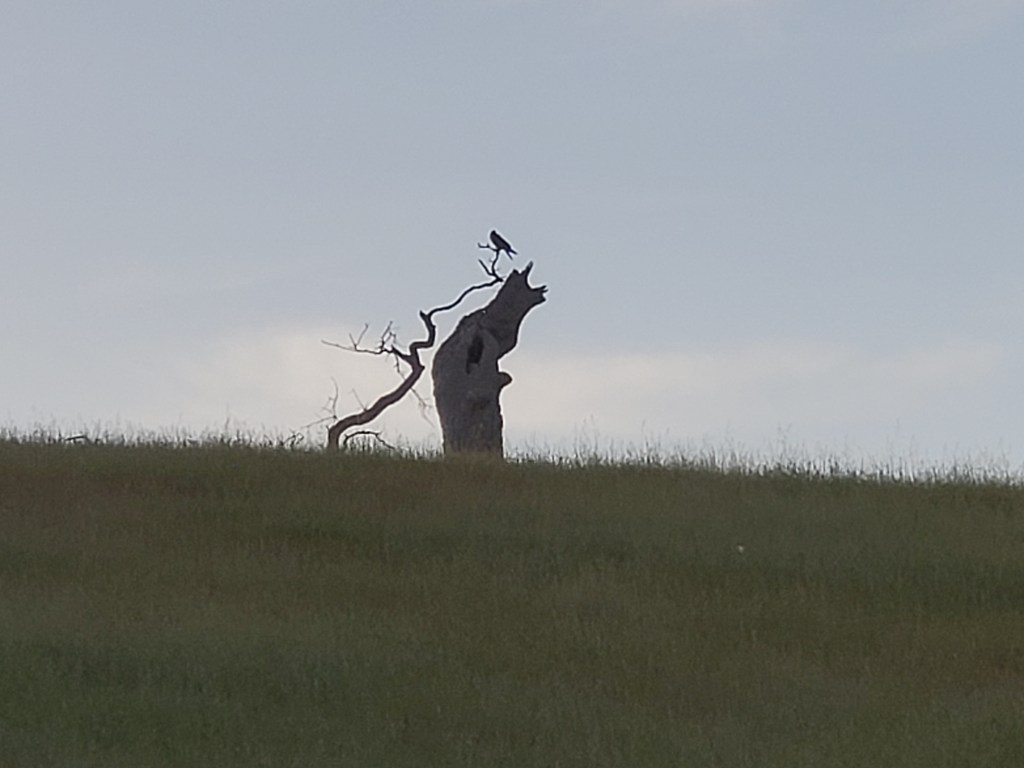
I also had a wonderful encounter with a hawk. I called to him, and he came. I talked to him as he circled me 8 times. Wow, was he a beauty.

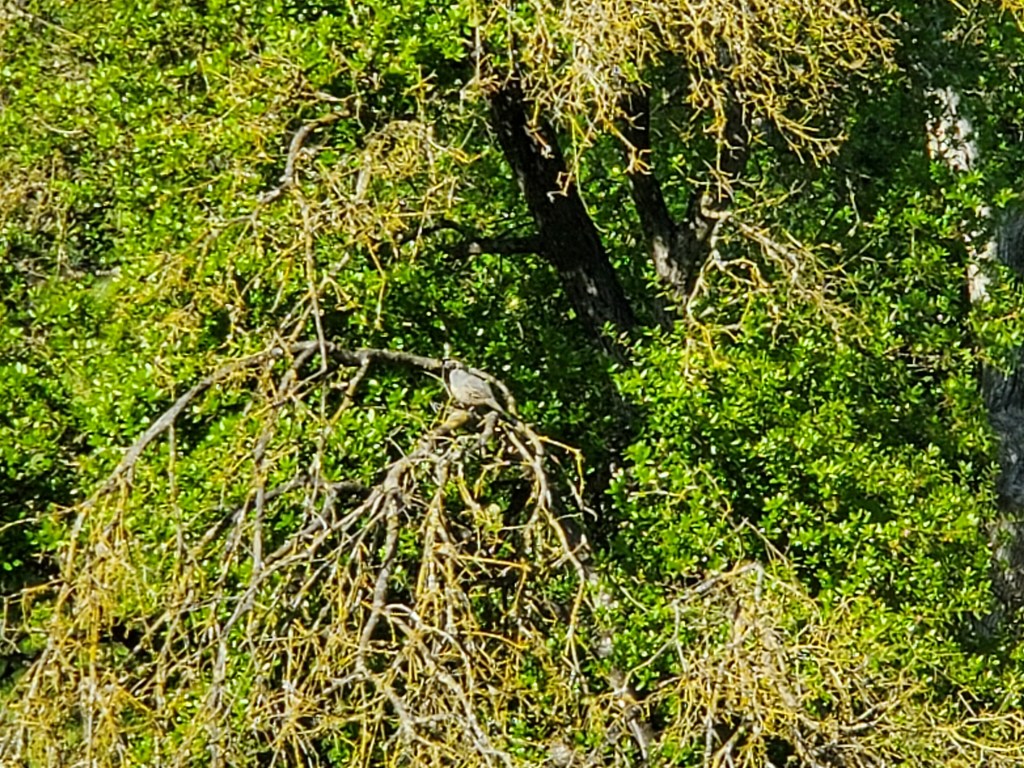
While walking in the grove, I saw a large bird in a tree. I tried to get good photos, but by this time, you know that is not my best skill. After showing them to a friend who knows much more than me, he thought it was a lewis woodpecker. I know we have those, so I believe him!

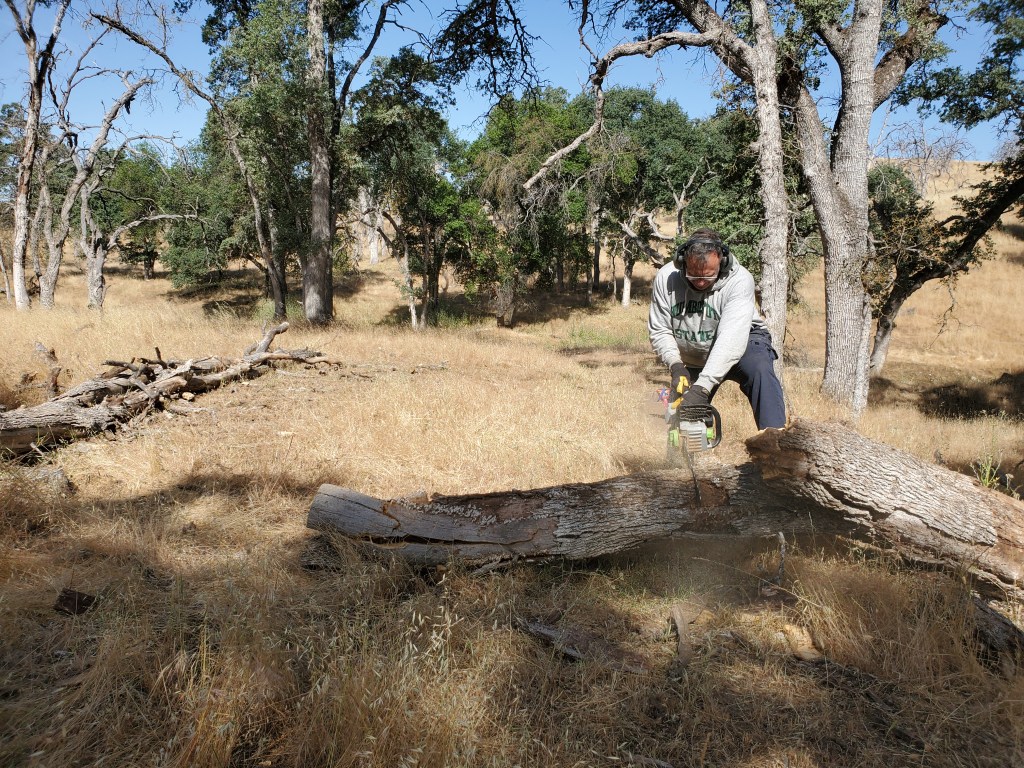
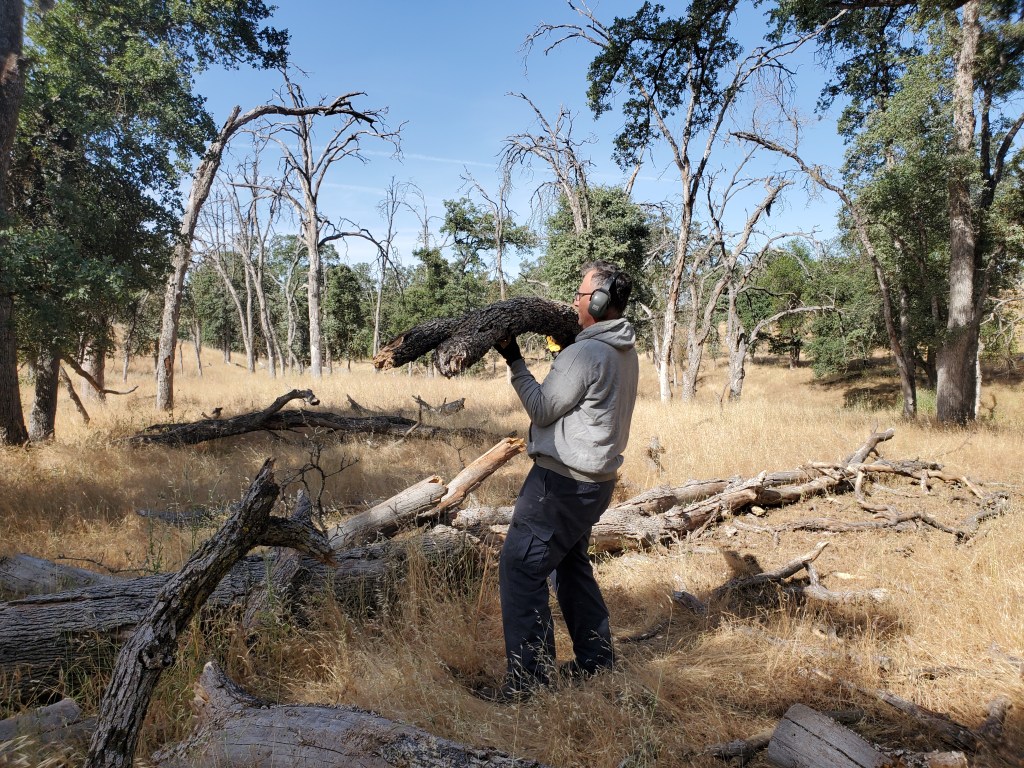
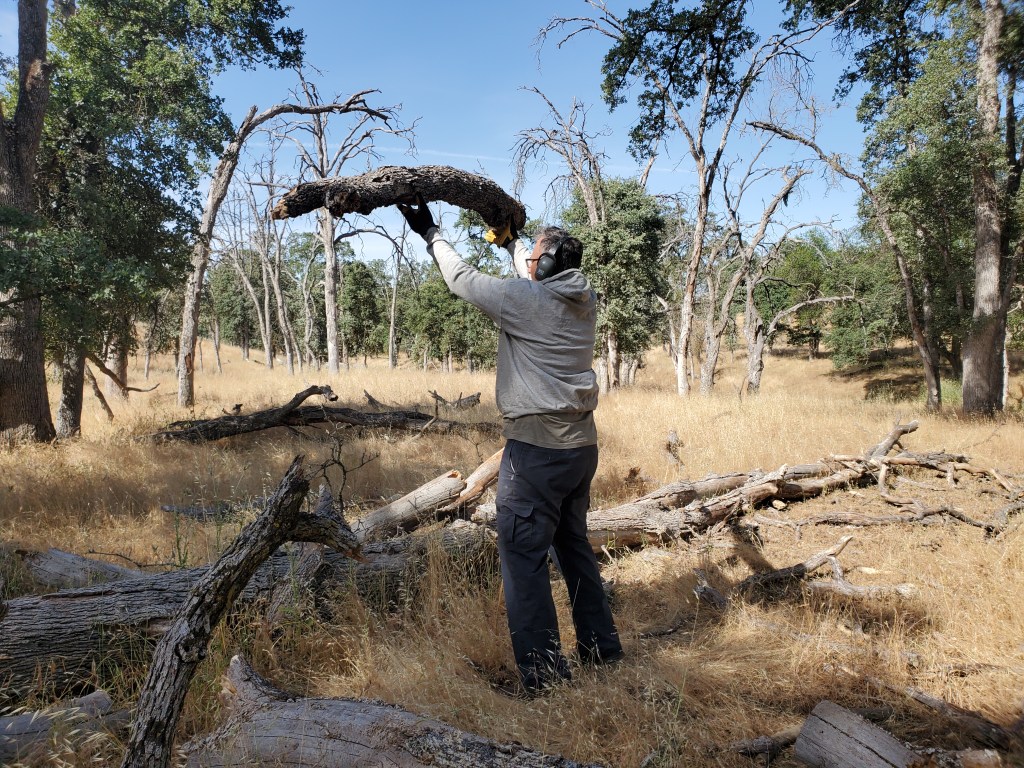
When David and I went to check on Guzzler 2 and cut up the downed tree across the road, we noticed that there were hundreds of what looked like little baby toads hopping around the Odom Creek riparian area. I had Dave stop the Polaris and keep it parked at the top of the hill, so we didn’t impact (read: squish) this incredible hatchery of hundreds of amphibians. We had to haul all the equipment by hand across the creek and up the other side, deal with the tree, then move on to the Guzzler 2 to troubleshoot the camera and weed around the guzzler. Fortunately, David is incredibly strong. He hauled all the chainsaw equipment, and I, with my bum leg and bum right hand, carefully carried the bag of game cam equipment.

Lots of beauty all around us.

Land Stewardship

Work on the land is never done. Type A folks and list makers, don’t feel panic. Feel joy. Ours is an ongoing relationship of commitment and love. What a sense of accomplishment you feel when you see the land around you look healthier, smell wonderful, and host so much more wildlife. You did that; you are fulfilling your responsibilities as a species with your particular brain, hands, food needs and knowledge. Chiokoe uttesia weweria. Thank you relative.

It has been difficult to fulfill these responsibilities for me as of late due to the accident. But, prior to that, there was considerable weed pulling and whacking, monitoring milkweed, watering the planted oaks, and watering native plants to give them a good start.

Wanderings

You just keep moving. There is always so much to do, so much to accomplish and commitments to fulfill. There can be little time to reflect on the “what wases” and “what could have beens”. Walking is where I reflect, and that has temporarily been taken from me. Sitting in my hammock, my bum hand, ankles and leg in sight, unable to perform some of the simplest of tasks, learning to use my left hand for more than is typical, my emotions stir. They shift, float round and round, then settle in to a simmer. What emerges is the knowledge, clearer than ever, that we are all part of one larger whole. In Indigenous circles, we talk about “All one nation.” or “All one people.” How many times I’ve used that statement believing it from a scientific point of view, not the philosophical or the practical. Sitting, as I was, not useless, not helpless, but more in need – not as useful as I’d like, the thought of how much help I have already needed and would continue to need was acid simmering, a dull pain then realization – “all one people”.

I thought about the man that hit me, the man that helped me, the first responders, the unconcerned officers, the hotel staff most of whom were kind, our friends that came to the rescue (Carol, Sean and Ernest, then Josh to check my wounds), my boss Nancy whose compassion and understanding is simply inspiring – and blindingly effervescent, my husband’s love for me. How remarkable a life is it to see such consideration and care. It is not that I think I don’t deserve the kindness of others; it is simply uncomfortable for me to cause any imposition. I know everyone has challenges they are dealing with, and I don’t want to be one more weight. But, how I cried at the love shown to me and to David. How I sobbed feeling David’s arm reach around me to provide support when my leg didn’t want to work, and the care with which he changes my bandages, ignoring the blood, goo and scabs as he navigates the myriad of bruises to delicately place a clean pad with antimicrobial cream over the broken skin he has always loved to touch. We are all one people not just in DNA ways, but in the need we have for one another – not just to receive care, but to provide it.
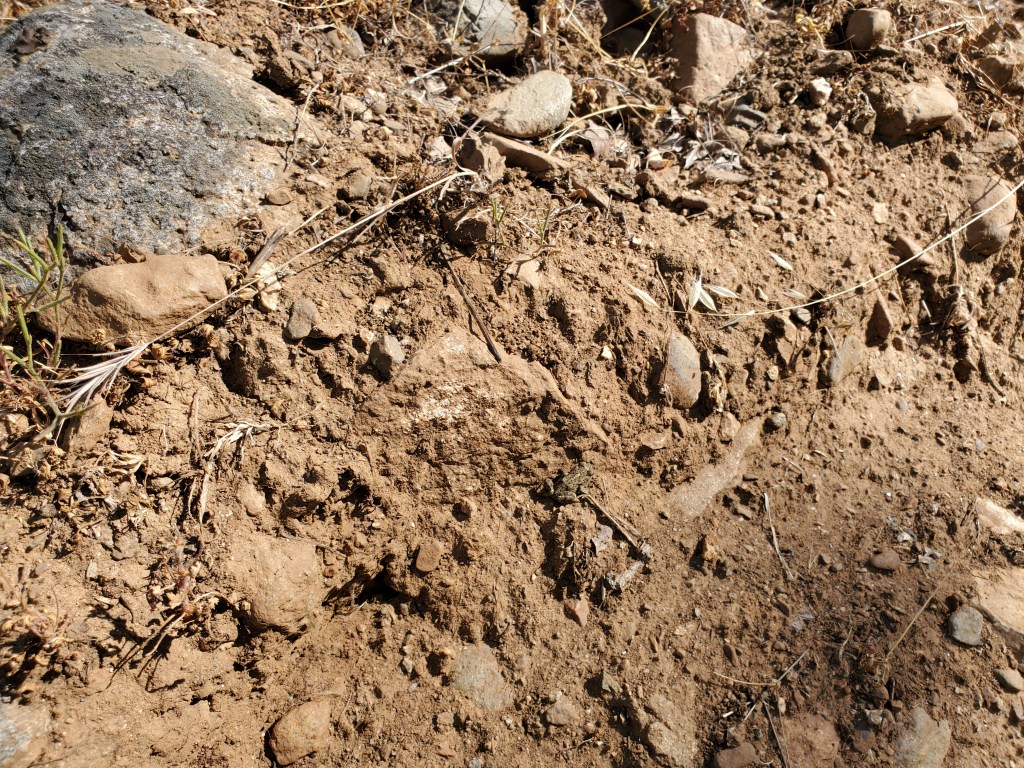
My accident could very easily have resulted in a worse outcome, as the left temporal lobe area of the helmet, scraped and cracked, would indicate. So, the bandage changes, the leg support, the running around watering oak trees, pulling weeds, planting plants – they are all a joy for him because it could have been so different, something that is too dark to think of, but close enough to see the shadows of what could have been.

As with everything in my life, I see it as a metaphor or a parallel with the life of the monarchs. There are so many who care. They see the changes, the damage, the need for help, and they jump in, an ocean of people whose relationship with this beautiful insect leaves a trail of life in the form of habitat, improved policy, and human relationships that bring joy. We all need each other because we are all one living organism – all of us – monarchs, bees, dogs and trees. We are all relations. We see the shadows too dark to contemplate, and thankfully, some refuse to imagine a life without monarchs – and so we work, together, caring for one another, healing and hopefully, leaving what is broken more intact, enough to support millions of butterflies, and every life, once again.

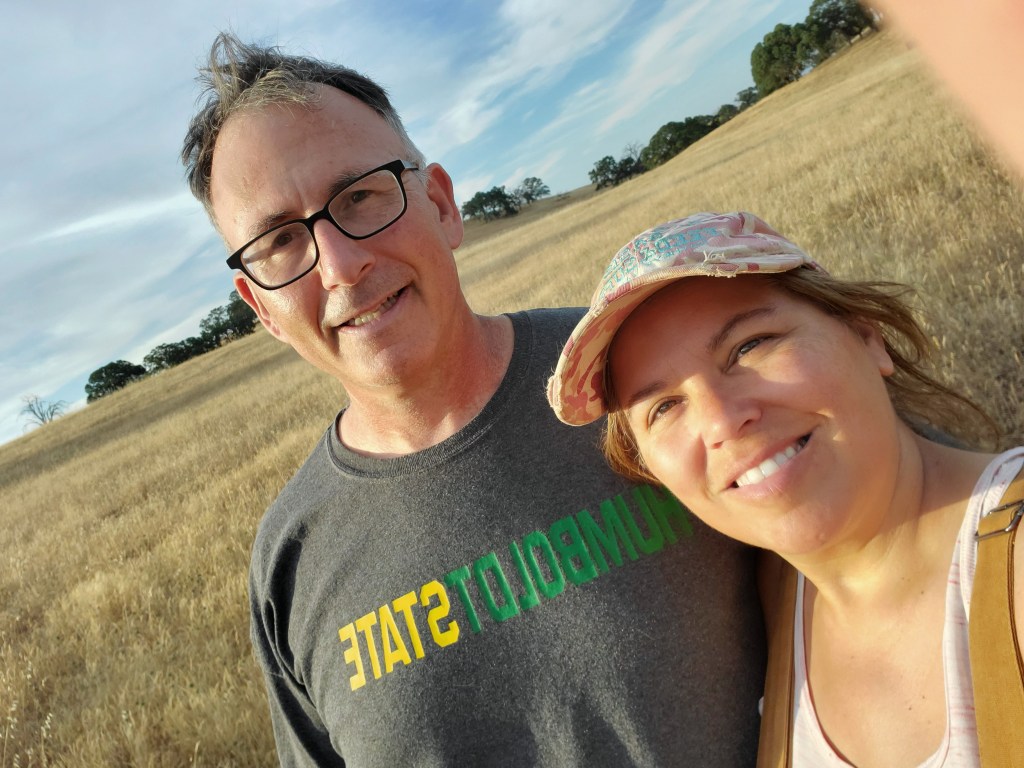
I started this blog post with a photo of David and I. This relationship is my skeleton, my skin, my connective tissue, supporting everything I do. The center of my story, however, is the land – in bwia ania, my land universe. It is my heart, one of my deepest relationships. This beautiful planet, with all its environs, is the reason we are all here. It gives us food, air and water. Let’s be a good relation, in good relation, with her and one another.

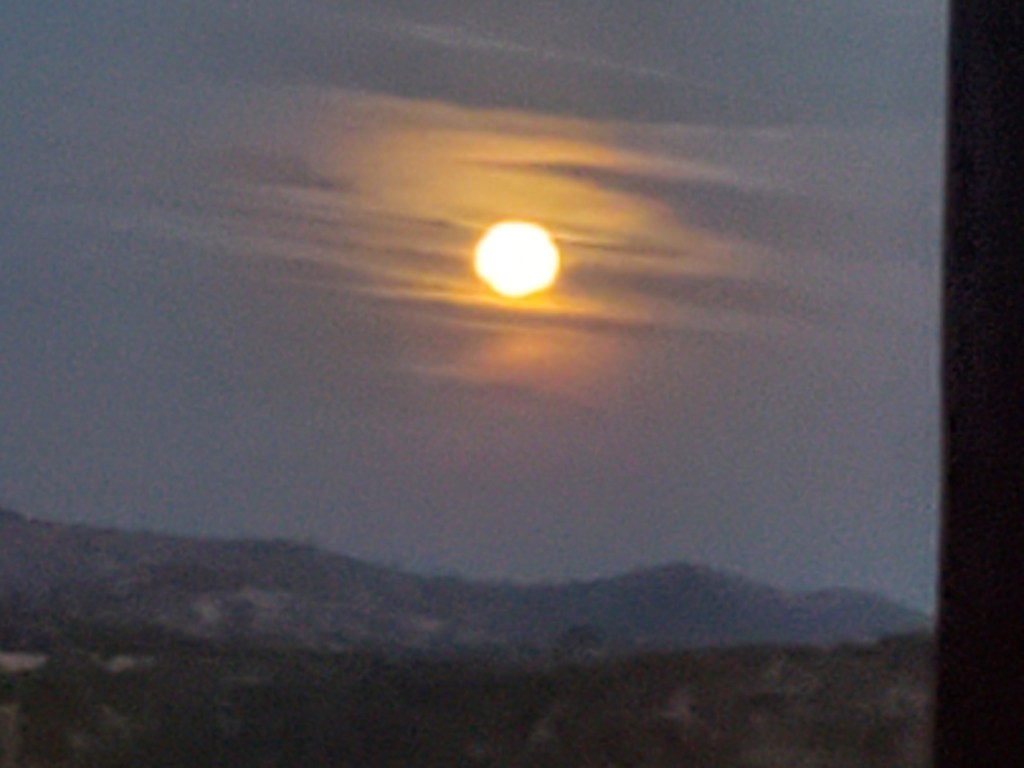
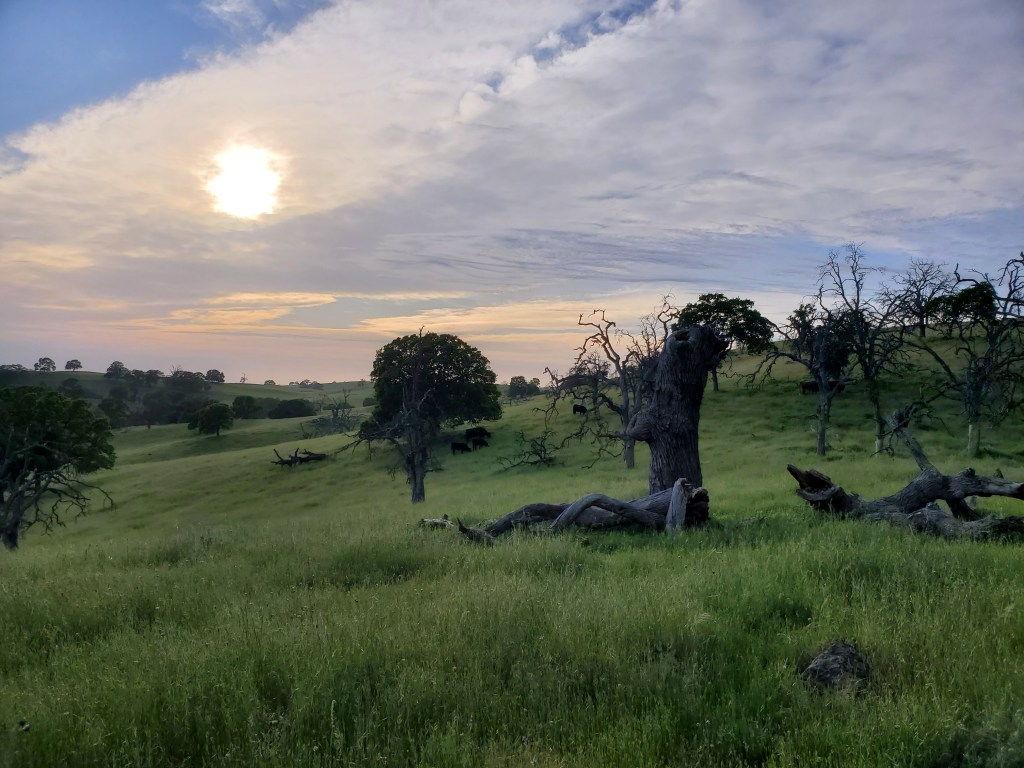
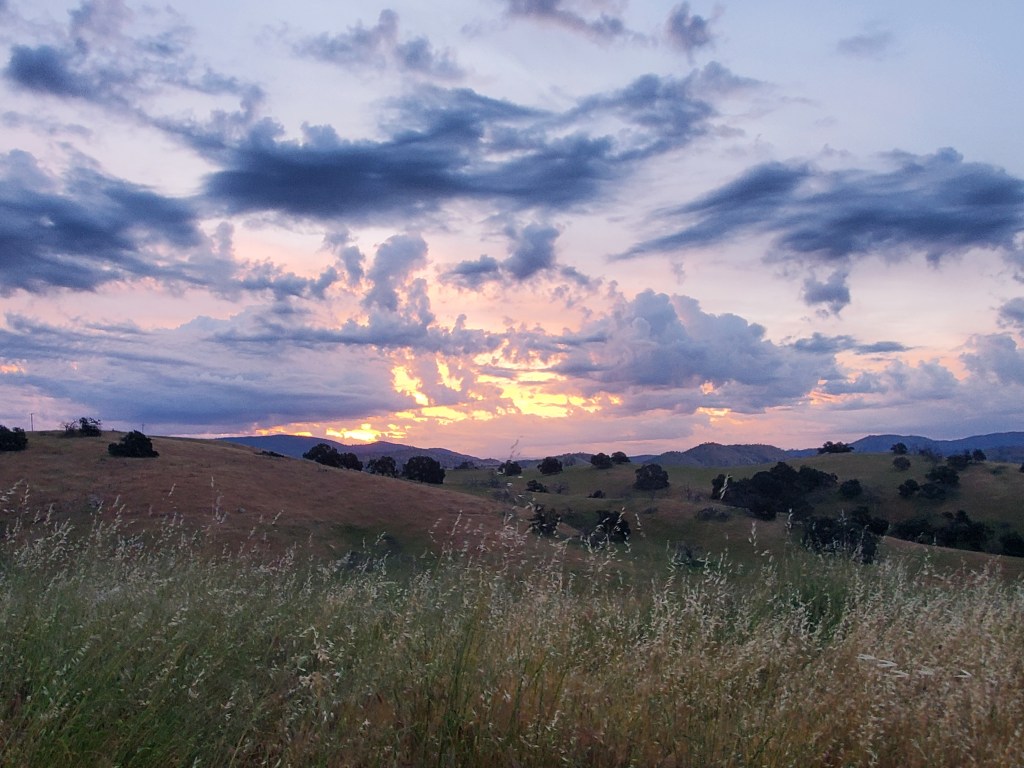
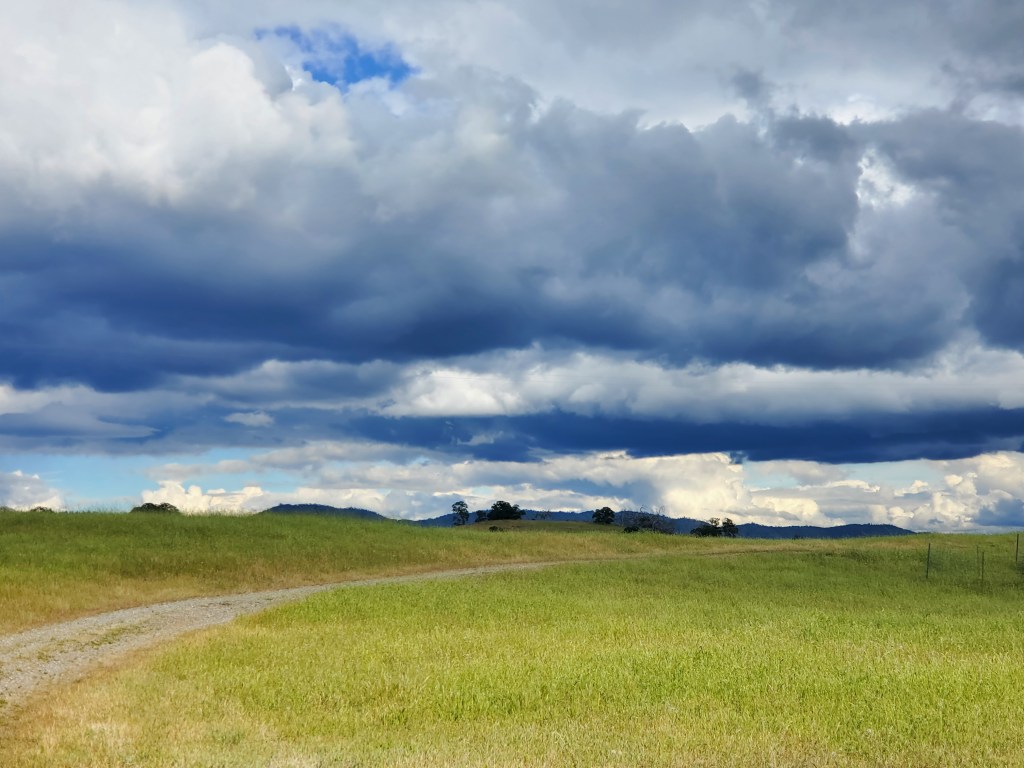
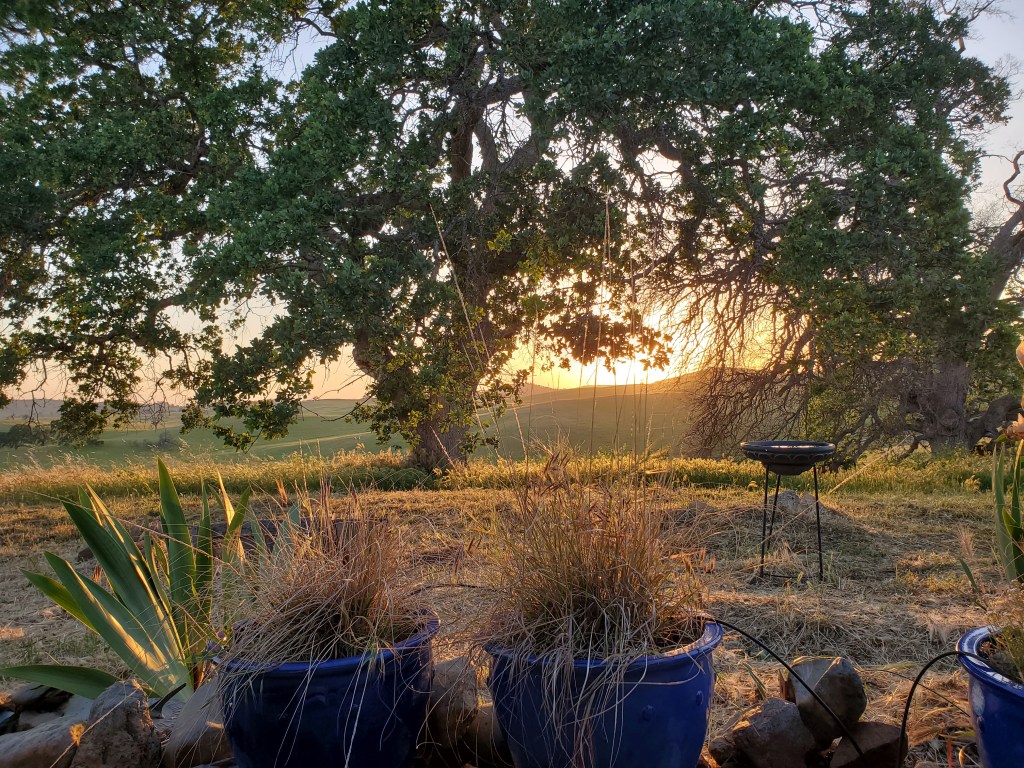
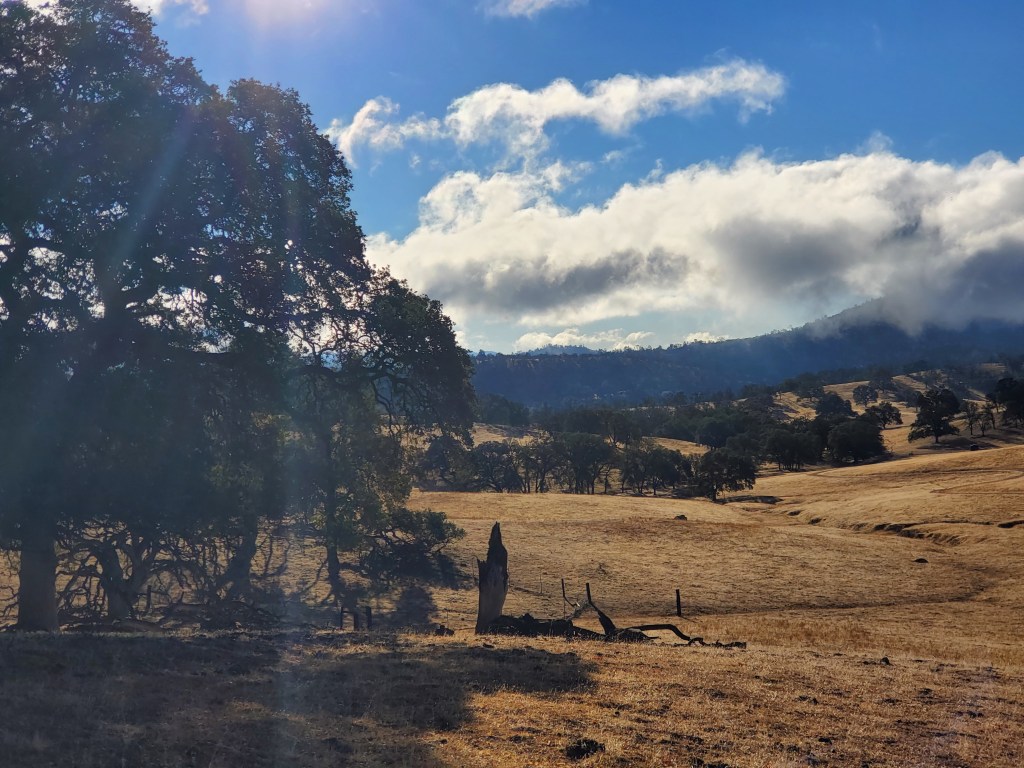
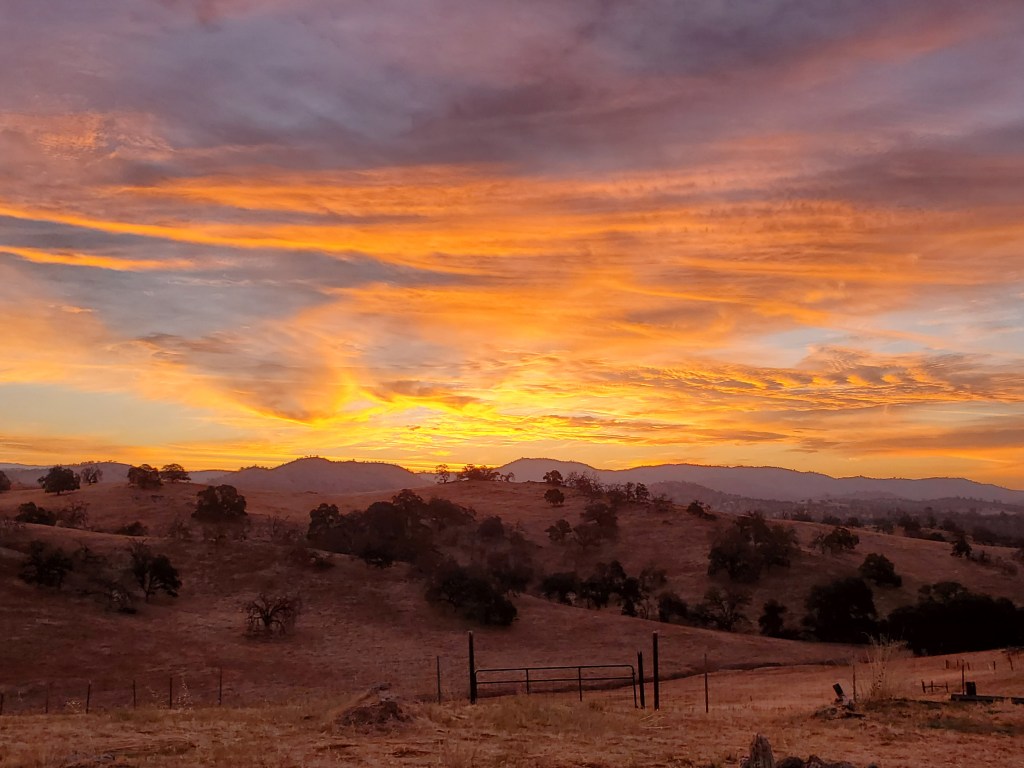
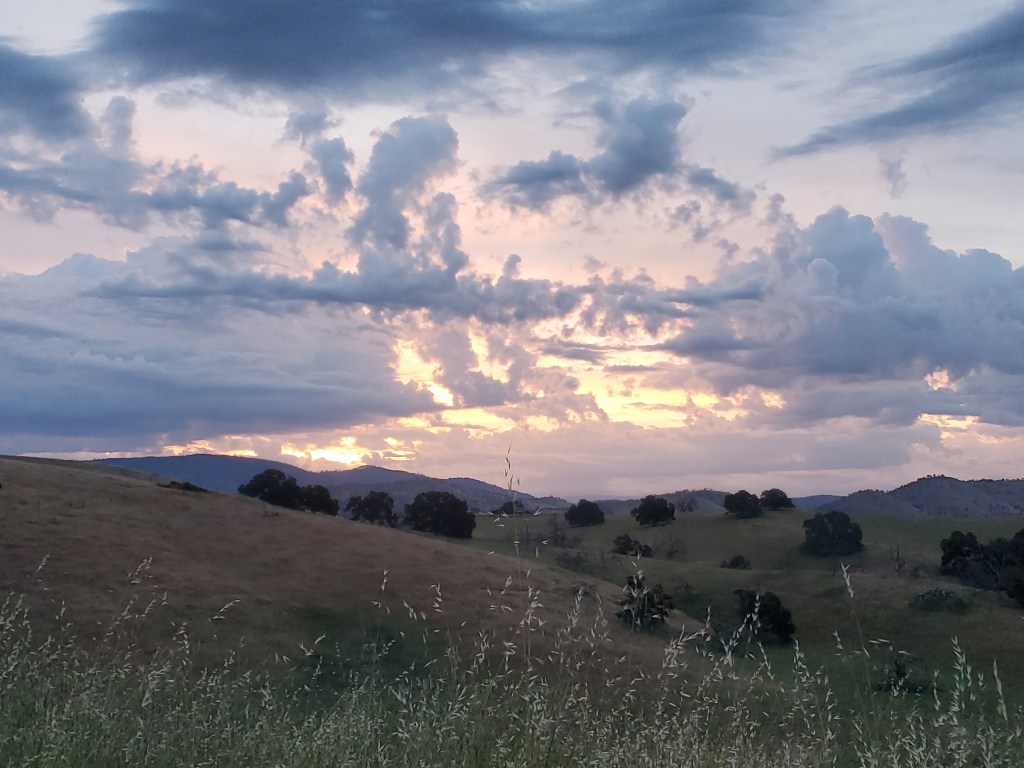
Sunrise after a storm at Tawim Bwiapo (Place of the Hawks)

Grasshoppers Decimate Plants

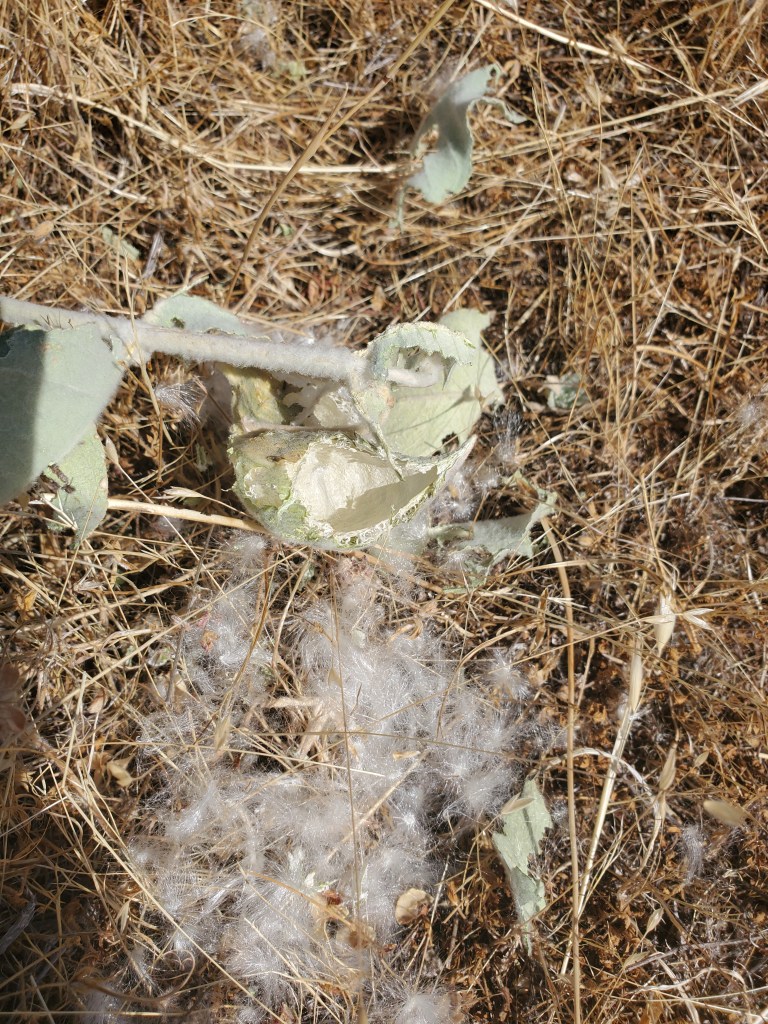
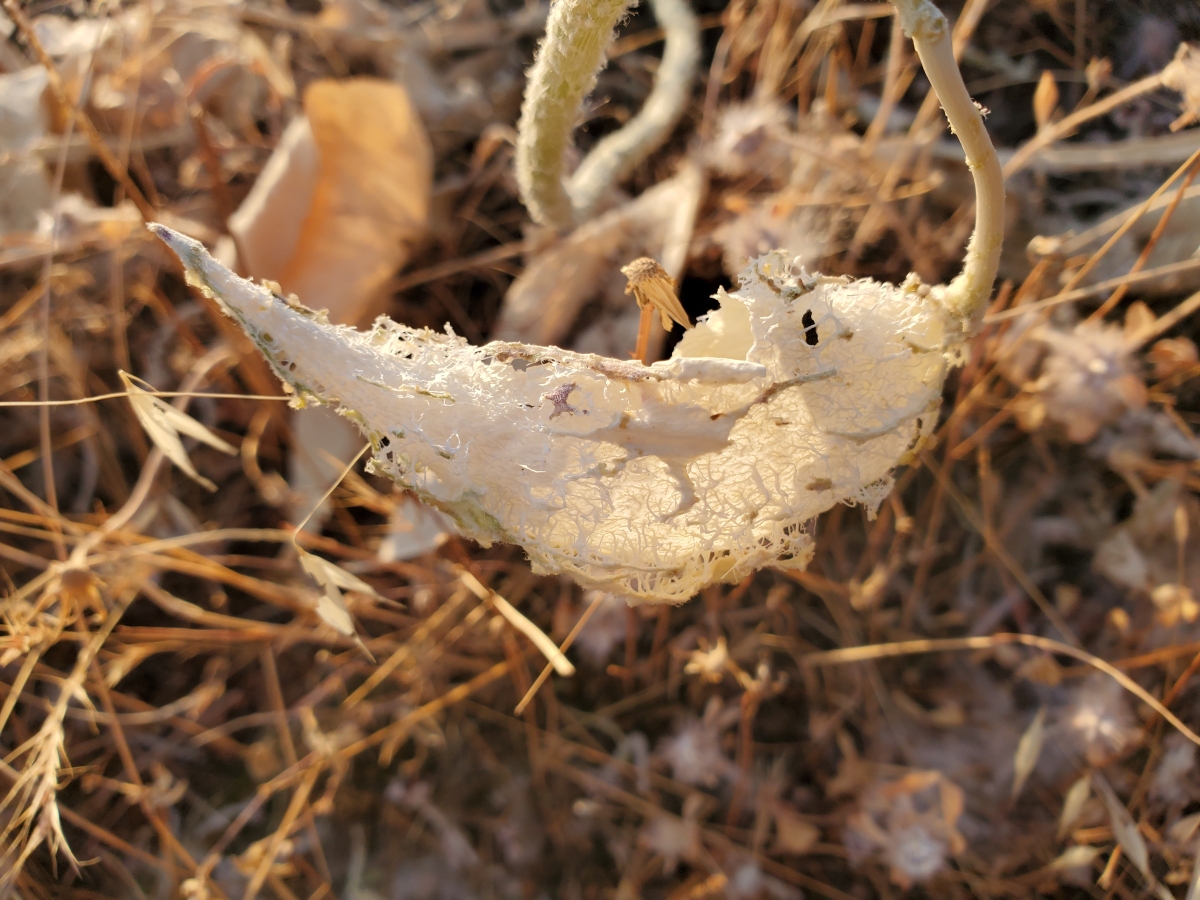
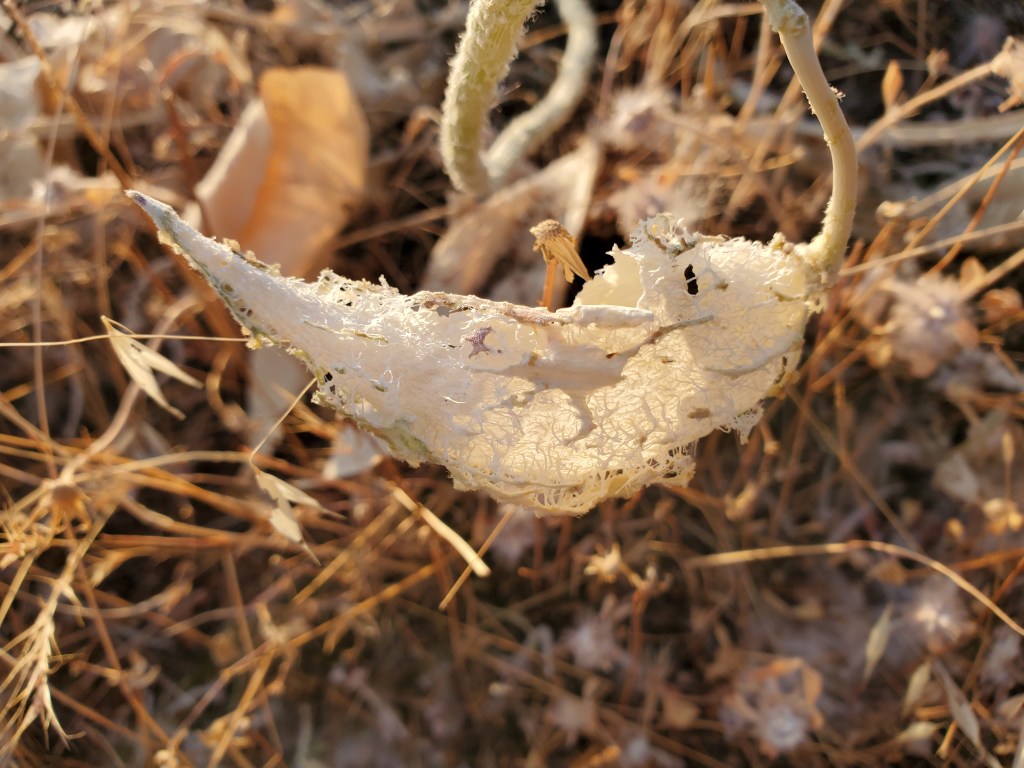
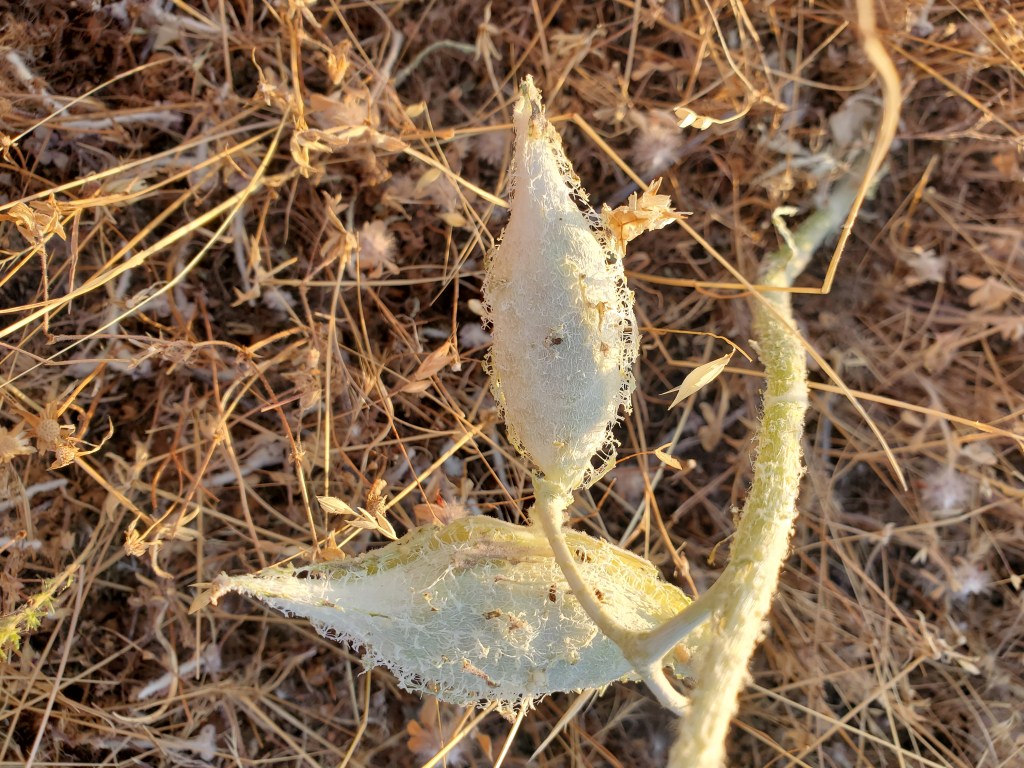
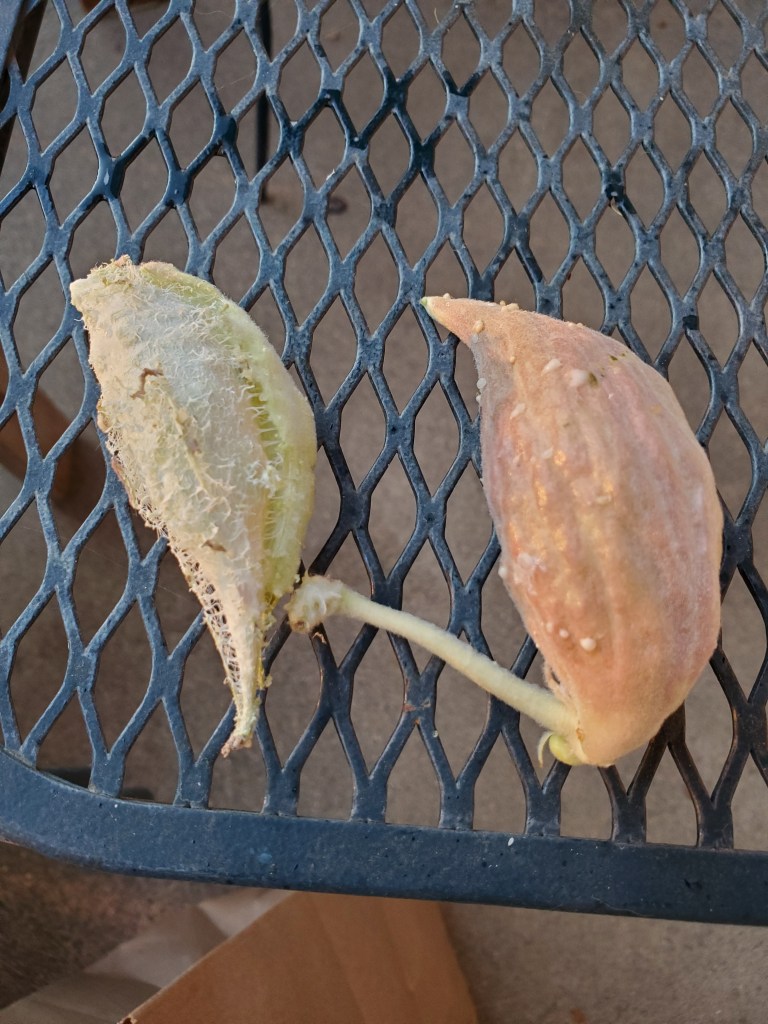
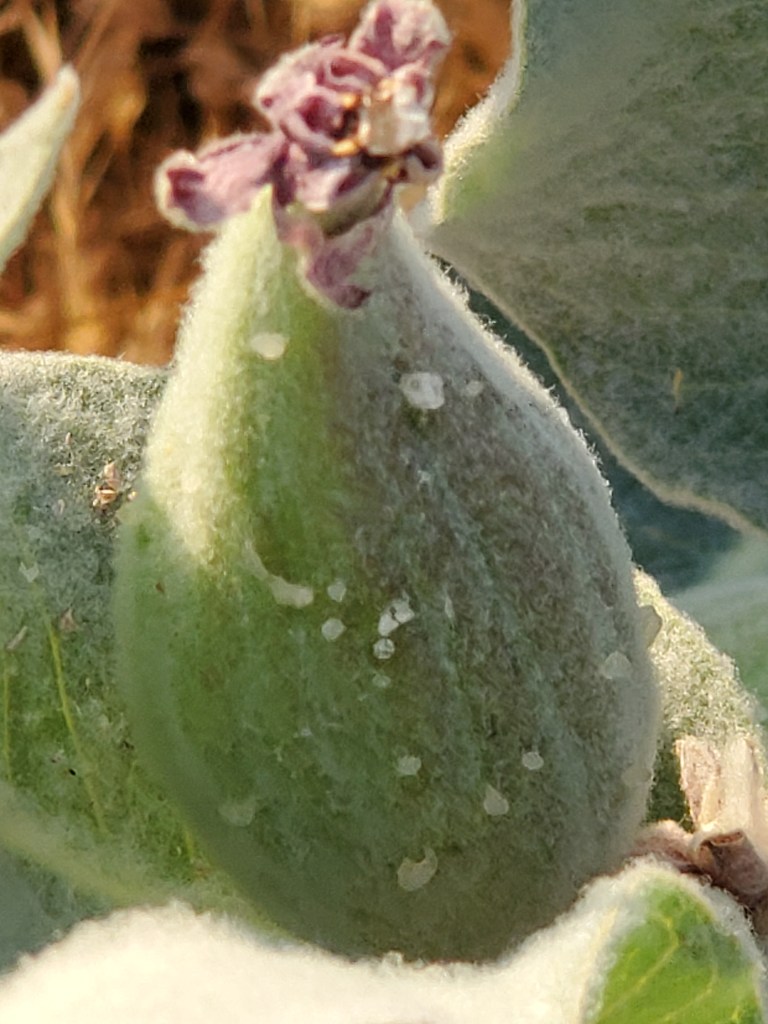
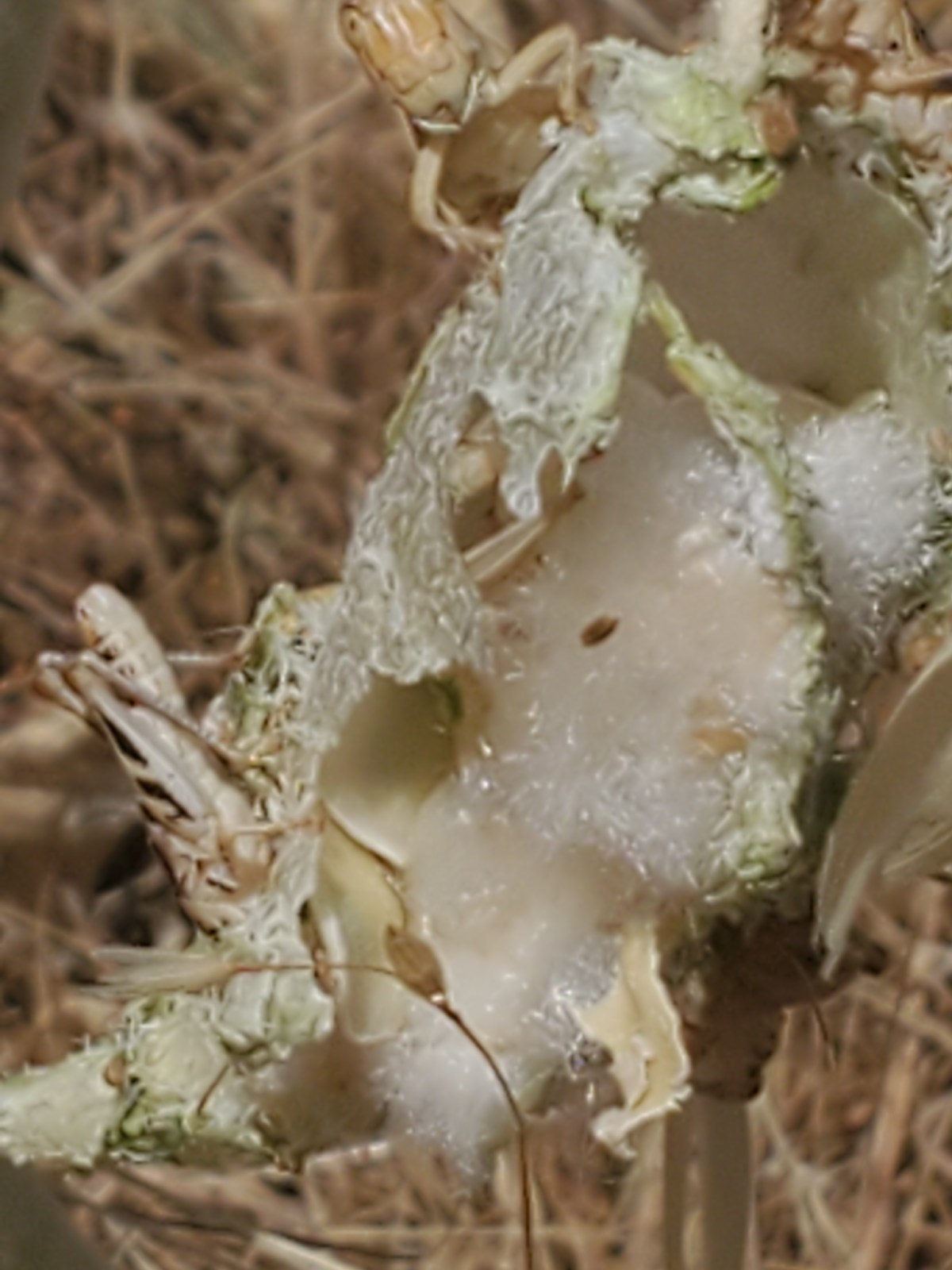
California Milkweed seedpod eaten through by grasshoppers

This year is bad for grasshoppers. Even after 21 years, I cannot discern a pattern to which years will be plague-level. They can be bad in drought years and in water years, hot weather or cool weather. If someone knows more or has a theory, please share.

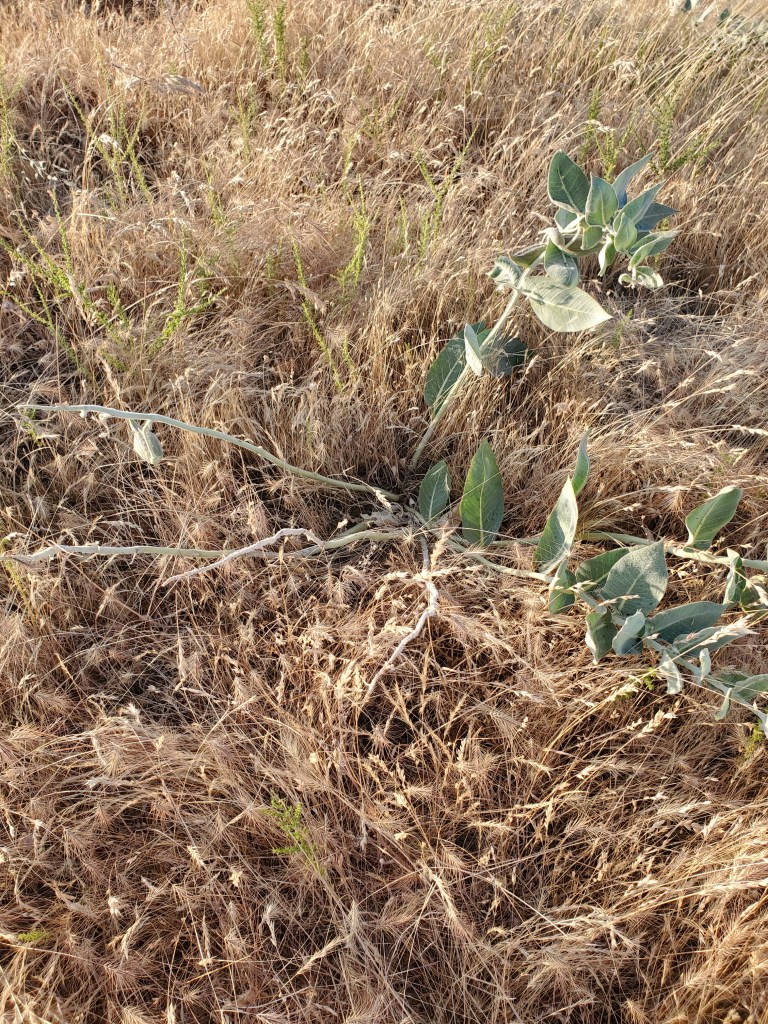
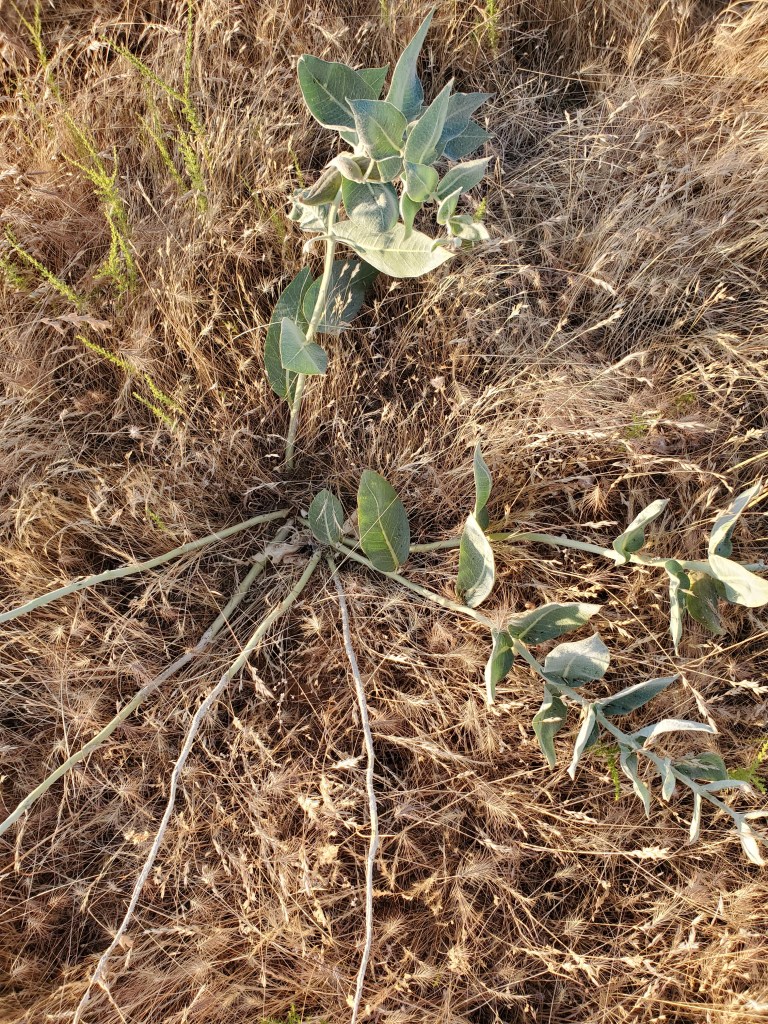
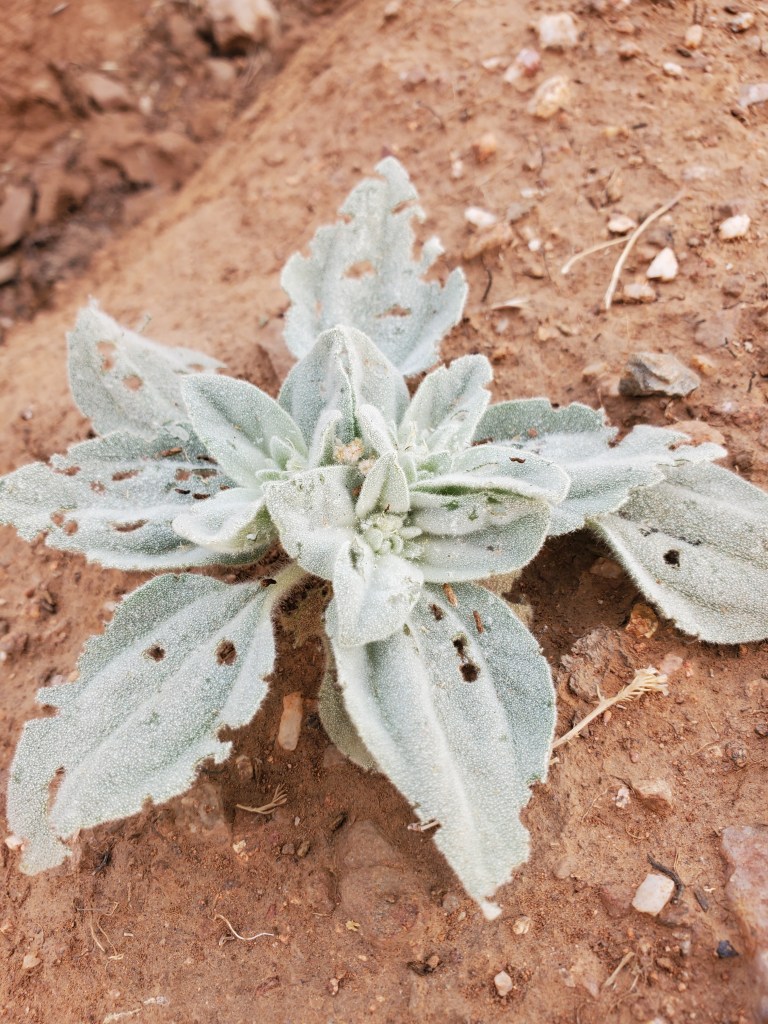
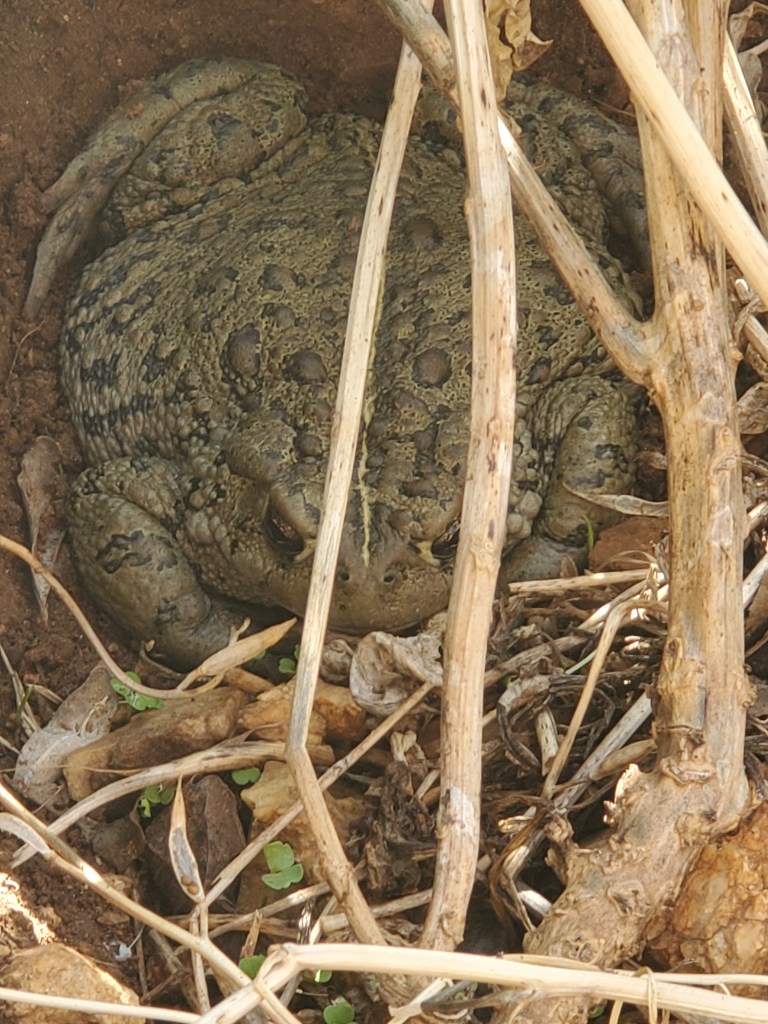
All new plants and many mature plants are eaten. Even sage, with its gorgeous fragrant secretion, have been consumed. Some of the Xerces hedgerow bushes and most of the plants closest to the house are still surviving – but it may only be a matter of time. Perhaps Erma, my toad friend, is keeping some of the hoppers at bay. Most of the plants in her section are still intact. Sadly, the sage and wormwood are being consumed. It is near complete devastation. In years past, this level of destruction would crush me – since so much time and work has been spent in making a healthy, full-spectrum native plant habitat. However, I have seen the plants reemerge in subsequent years. Perhaps not all survive, but most come back, and this level of sustainability is exactly what I want to see. This reemergence of milkweeds and nectar plants demonstrates establishment, which is a huge success.

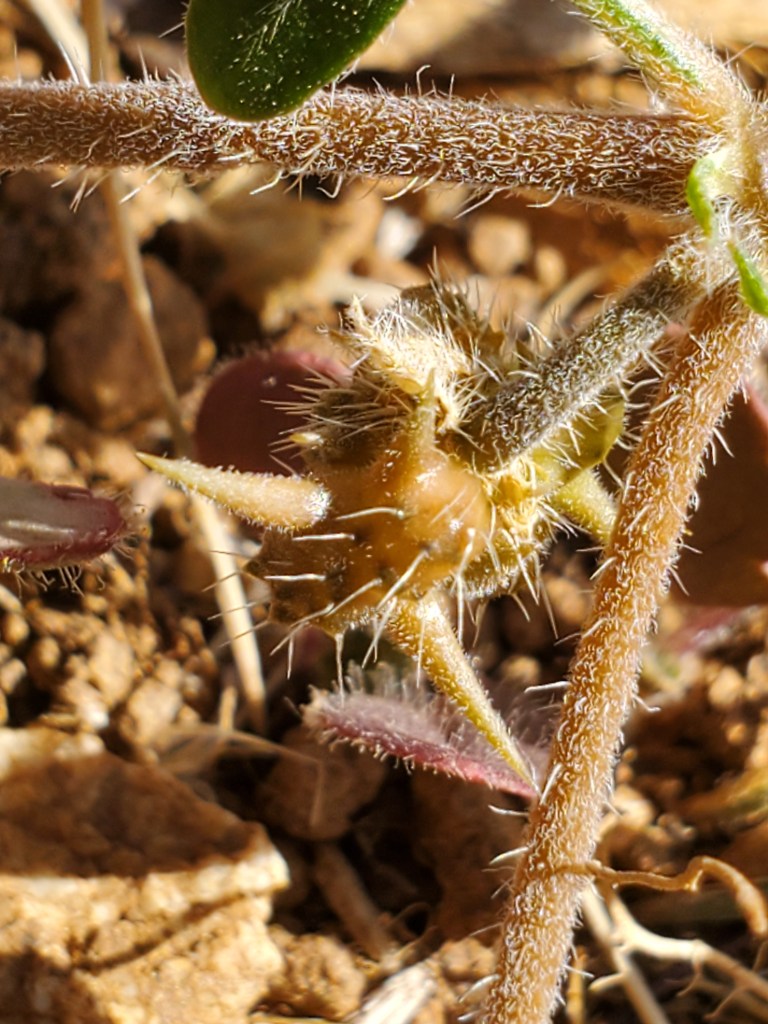
Even so, I still need to intervene to give native plants the advantage. The grasshoppers are so bad that they are eating the seedpods of the crucial California Milkweed — before they are ready to open and disburse. I took a closer look to understand how complete the decimation was, and found that they are eating the seeds as well.

Immature seeds that have been partially consumed. Seeds should be a dark brown

In late June, I went to the large plots searching for pods to save. I had to act fast; many plants had been consumed already.

I trudged up the hill finding intact pods on plants. Some were still small. The cooler temperatures delayed milkweed growth resulting in some plants emerging later and not having as much time to mature, develop flowers and seedpods. I picked pods knowing they were not quite mature. Since it is this late in the season, I know they will continue to dry in the bag and produce fully mature seeds. I did this in other years when grasshoppers were bad. When I pulled, most pods had limited resistance, but still secreted the “milk” from the plant. It felt as if I was detaching a baby from its mother’s umbilical cord – separating it from its nutrients. I promised the plants I would return the seed when it was safe.

In total, I collected 24 pods. With approximately 8 seeds per pod, I will be able to distribute up to 192 seeds back to their locations. I will fulfill the promise to the mother plants probably in October when the hopper danger has passed. As I went back down the hill, wind whipping around, I ensured the bag was folded tightly, and placed under my arm. The wind had tried to take the bag from my hands several times already. The lightweight treasure is easy to roust. Today, at least, I could claim victory.

June Bumbles

June was a great month for bumble bees. I had many sightings to add to the citizen science project Bumble Bee Watch. If you want to make a difference for bumble bees, besides ensuring habitat and nectar, you can also help scientists track them. Set up an account today and upload images as you find these critical, fuzzy friends doing good work in your garden.

Wanderings

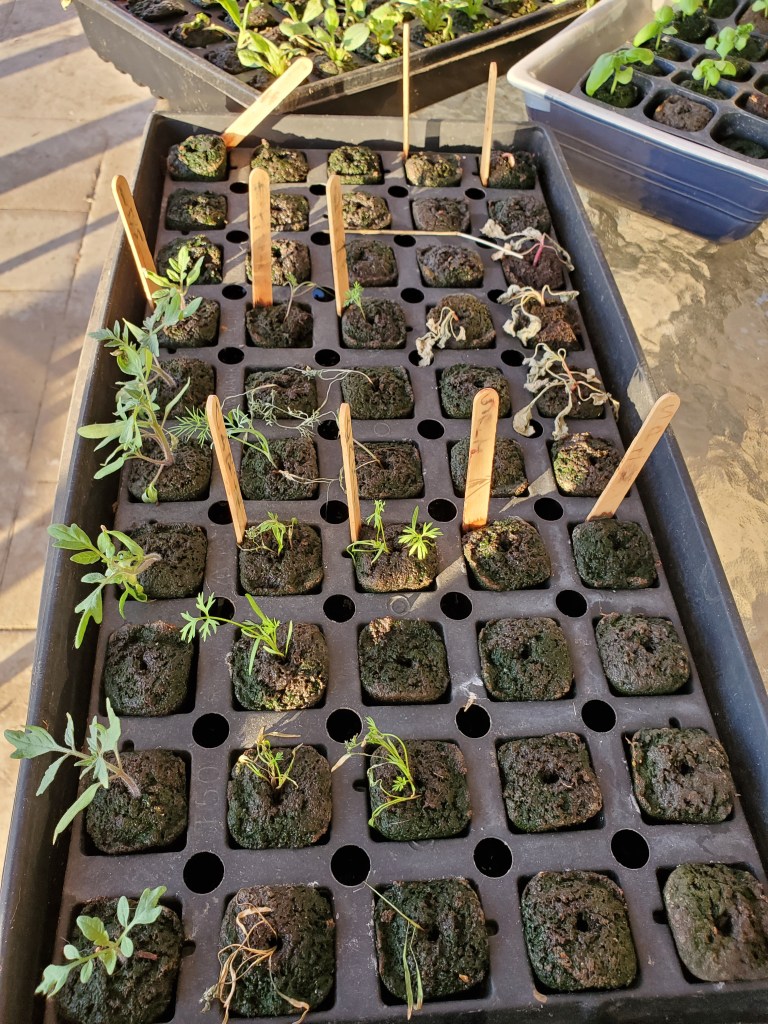
It is remarkable how a place can change in just two weeks. I was gone on vacation and came back to more skeletal plants and even brighter yellow grass. As dry as the grass is, the soil continues to hold moisture. I placed my hands in the dirt as soon as I got home just to check in with the land. Springs are still flowing and areas with a high water level are still green. There was a horrific 110 degree day while I was gone, and David made one fatal mistake. He did not double check the seedling trays. The water can evaporate rapidly from the shallow basins drying out the media in the same day. With the temp so high and no additional infusion of water, the seedling media dried out. I lost half of the seedlings that were sprouted. Fortunately, several still made it though. Life on the ranch can be tough especially if you are not always monitoring.

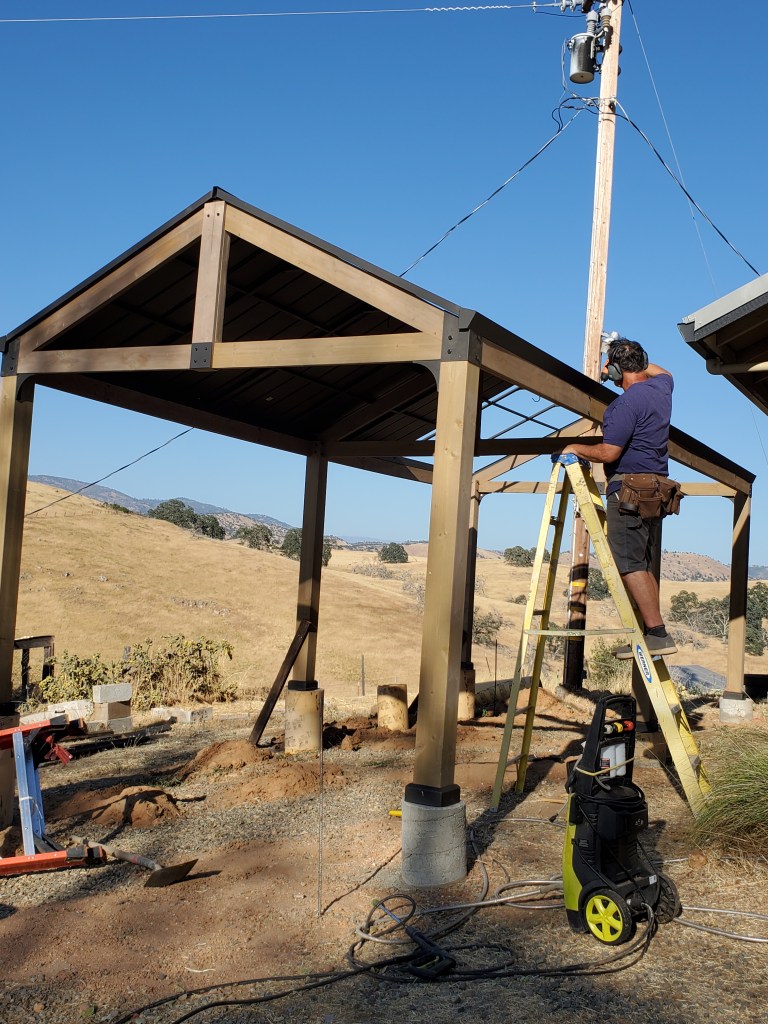
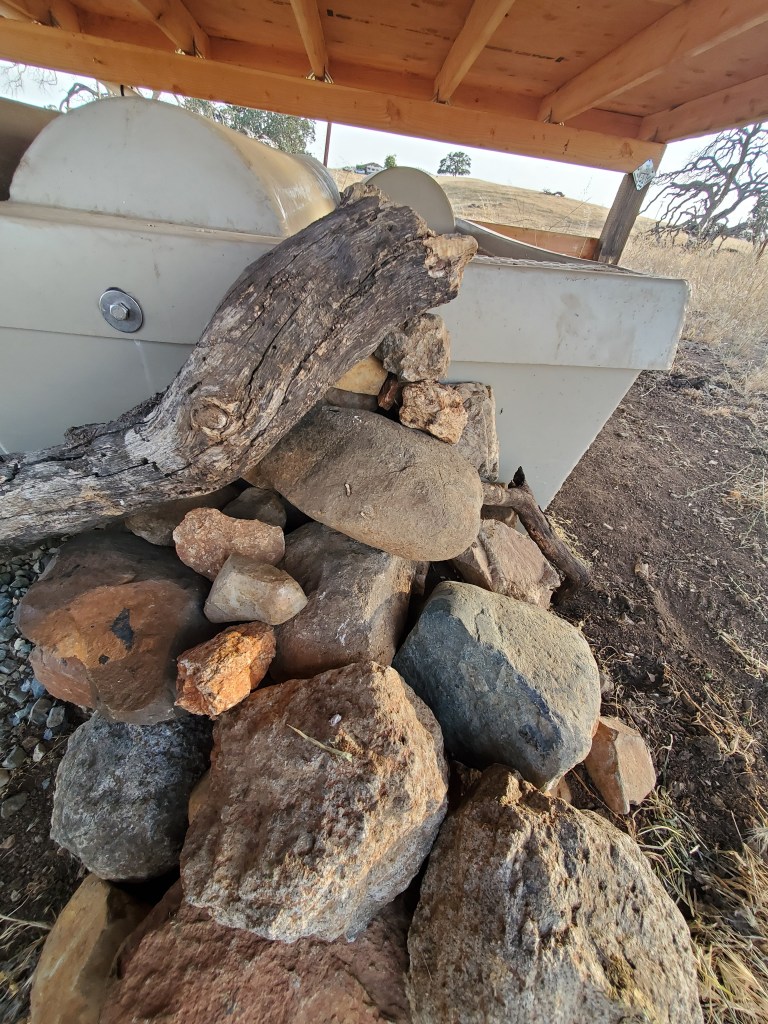
David has been building a carport, which is another opportunity for rainwater catchment. We will add some screens, PVC pipes and tanks in the coming months. This week, hopefully, my log and rock drop structures will be put in the arroyo to slow runoff in storms. This will preserve soil moisture and build the channel back up. We will be prepared for next year.

As I write this early in the morning, the birds are beginning to sing. The coyotes just finished their morning chorus. The young ones have now joined in. Another generation will take their place on this land, helping the ecosystem by eating rodents, rabbits and other fare to keep populations in balance. If only they ate grasshoppers too.

Bright Sides Despite a Spring Without Butterflies

Looking on the bright side – that has been my reflection for the last month. I have come to terms with the fact that the monarchs skipped me this year. I’ve heard reports from many friends and readers that they have spotted a monarch or had multiples in their gardens. All sightings have been friends/family closer to the coast or higher in elevation. They skipped me. I can’t blame them. It has been very cool here. It seems that many hung out in gardens on the other side of the coast range for days waiting out the weather. Then, they were able to cruise another 100 or so miles, past me, to just up the mountain. Oh well. I am glad they are surviving and making their journey.

Maybe they will stop on the way back – or next year.

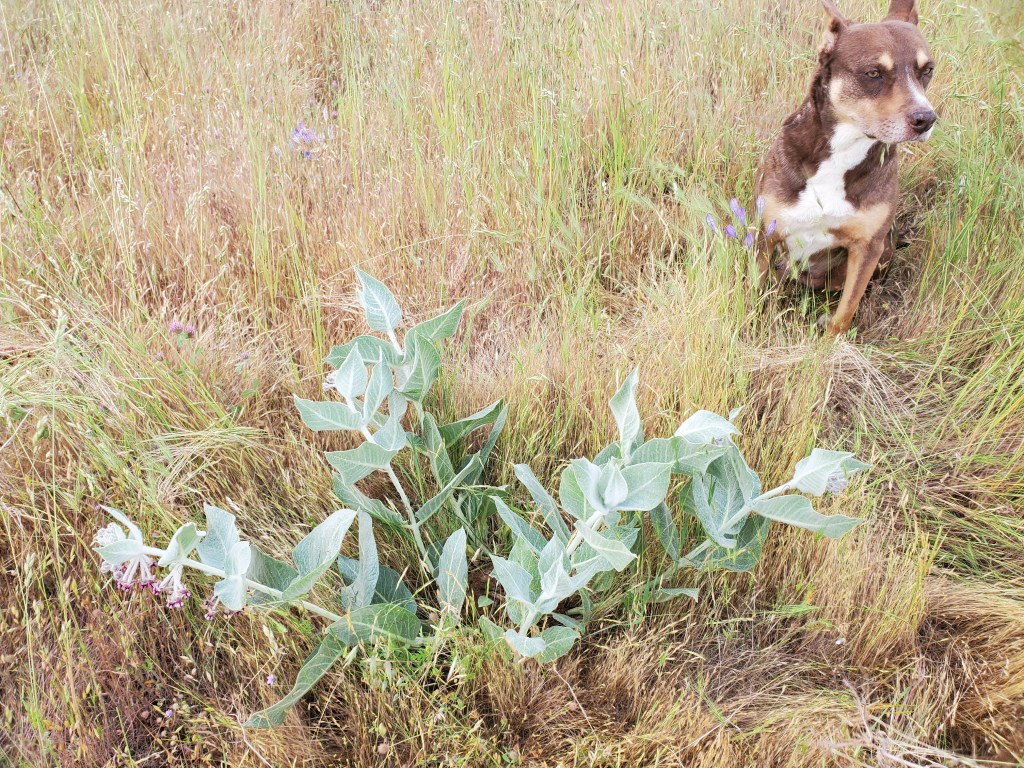
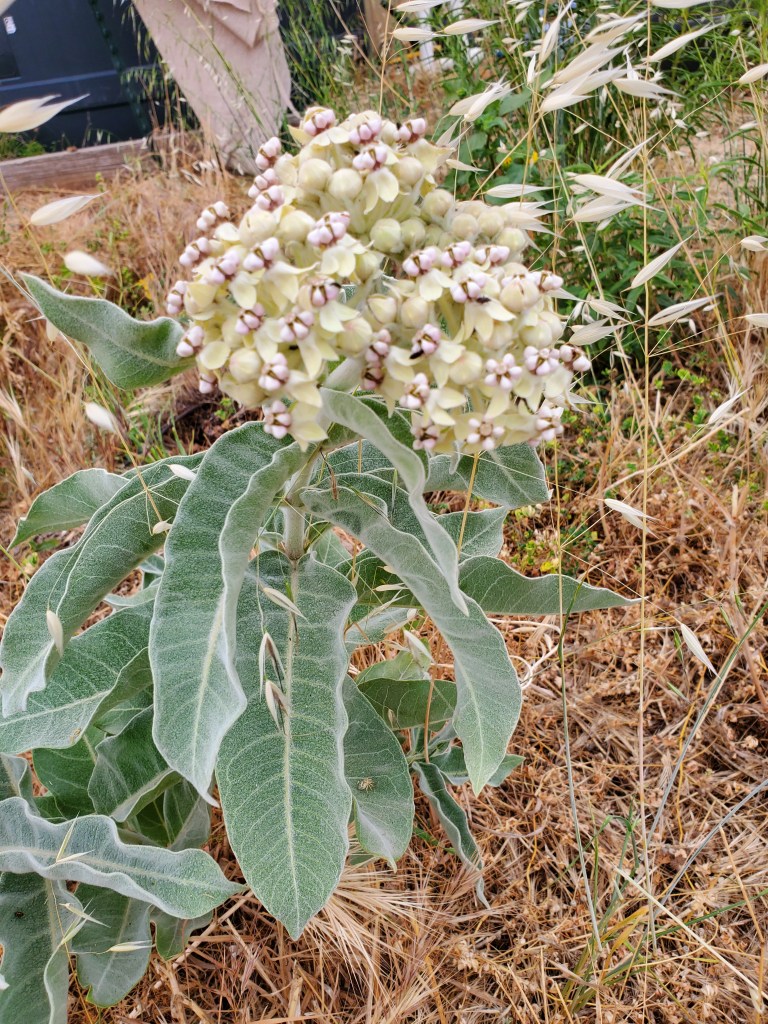
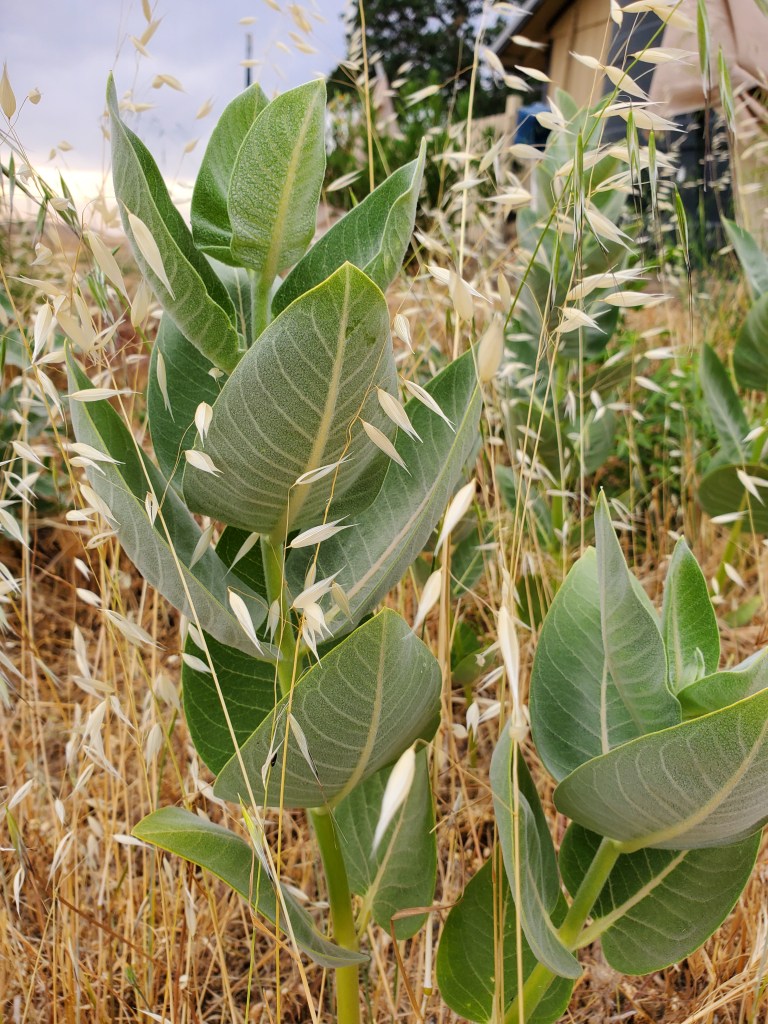
We have so much gorgeous milkweed – at least four different species – narrowleaf, ca milkweed, showy and woolly pod. They are all healthy, strong and growing well. I thought, “Well, maybe someone will get some use from them”. We have had only a handful of butterflies, which I mentioned and identified in my last post. I’ve seen just one other since, a painted lady (I think – since they flit so fast). No butterflies…but…something else just as exciting – bumble bees, and almost 30 of them at one time!

As I have reported in a past blog, bumble bees are in decline. They are ground nesters and susceptible to disturbances in soil movement. Pesticides and herbicides also account for their decline. Something else I noticed, when the sage was in full bloom, and attracting all types of pollinators, the European honey bees seemed to gang up on the less numerous bumbles and push them away. While they found another flower to harvest from, it made me wonder if all the bee boxes everywhere aren’t causing some problems. My neighbor two parcels south always has a person drop over 30 hives each year for several months. I love honey, and honeybees, but as with anything, scale is critical to consider as we think about policy and our own choices about how we steward land. I have a rogue honeybee hive in a nearby creek too that I love to visit. There is something marvelous about a group of animals that escape their human serving bonds in an effort to become wild, and live on their own terms. It is about living in balance; we all need one another to thrive. It is a partnership, a relationship that is multi-directional, not ones’ needs more than another. We must respect one another to make things work for all of us. Again, it is all about scale.

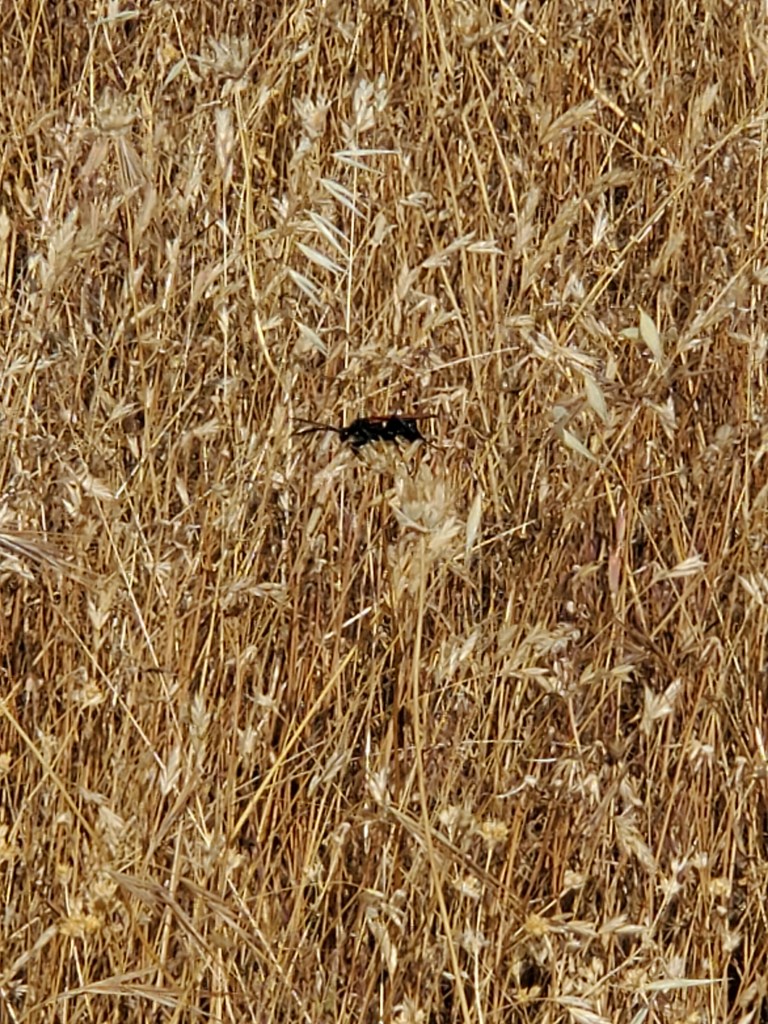
Not only are the bumbles using the blooms, I’ve seen more tarantula hawks than ever flying around, enjoying milkweed (and other) blooms.

A tarantula hawk finds something interesting on one of the spent flowers

The tarantula hawks are big, with a long nose, deep black coloration, a large abdomen with stinger and small (as compared to their body size) orange wings. As I was walking the ranch, they seemed to be everywhere I went. When they fly close to you, you pay close attention. They are not aggressive, but can sting humans if provoked. I have heard from others around here that their sting is extremely painful. I pay them much respect. Their name holds a grim tale for one of my favorite creatures on the ranch, the tarantula. If you want to learn more, this Natural History Museum site seems a credible source.

Bad News: Grasshoppers

It is a horrendous year for grasshoppers. They are not yet fully grown and have caused significant, heartbreaking destruction. Sixty percent of the Xerces plants I painstakingly planted have been eaten. Some are making a come-back, but they will not stand a chance. All I can hope for is that their roots were strong enough to return next year. Fortunately, some of the early blooming nectar plants already grew, bloomed and seeded. So far, all the new Xerces milkweed has remained untouched. I don’t hold out hope that they will be spared. The hoppers ate the Ca Milkweed down to sticks the year before last.

The hoppers are also shredding my existing, mature plants. They murdered three of the four big leaf maples last year. Only one emerged with leaves, and sadly, will likely be finished off this year. The sages that are further from the house have been mangled as was the buddleia. The further from the house, the more decimation there is. They are plague level. While there are natural predators all around, there are not enough to keep them in control. A friend at the Tribe told me that their ancestors used to use fire to round them up and eat them. I am thinking about starting a grasshopper farming operation. Insect food is the trend for the future!

I began collecting seed pods from several of the plants so that the hoppers did not eat them before they could spread. You can see in some of the photos below, the hoppers are already taking a bite into the seed pods. Fortunately, the pods are the last of the plant they will eat, which gives them time to mature and me time to collect them. The Ca Milkweed is critical.

Good News: Milkweed Spreading

Another “bright side” is that many of the older milkweeds are beginning to spread. It has taken four years, but they are established. For Xerces and Ca Wildlife Board (via Mariposa County Resource Conservation District), funders of my increased scale for planting, this is a great return on investment. I know I will have nectar plants with the prescribed grazing and riparian exclusion during blooming times, but previously, milkweed was much rarer on the ranch. Now, through these investments, milkweed is established in greater numbers and places on this rangeland…and they are doing it without supplemental water. This is a huge win for pollinators, since rare bumblebees seem to love the flowers as well as monarchs.

Maintaining Habitat

Most of the work I do is not as exciting as planting new, healthy plants. It is straightening gopher baskets, re-piling rocks, checking water, fixing fence, cutting grass and limiting or removing invasives – among many other things. The cool weather has given me the opportunity to work longer and more hours into the season to get things done. Recently, I checked the wildlife guzzler. It is still filled with water, though it has decreased a bit. There is evidence of birds using it. The cows knocked down the panels, and the calves can get in, so the rock and branch ramp to the guzzler was disturbed. I re-piled the stones and branches so that smaller creatures have access the guzzler. I also cleaned out some leaf material from the water.

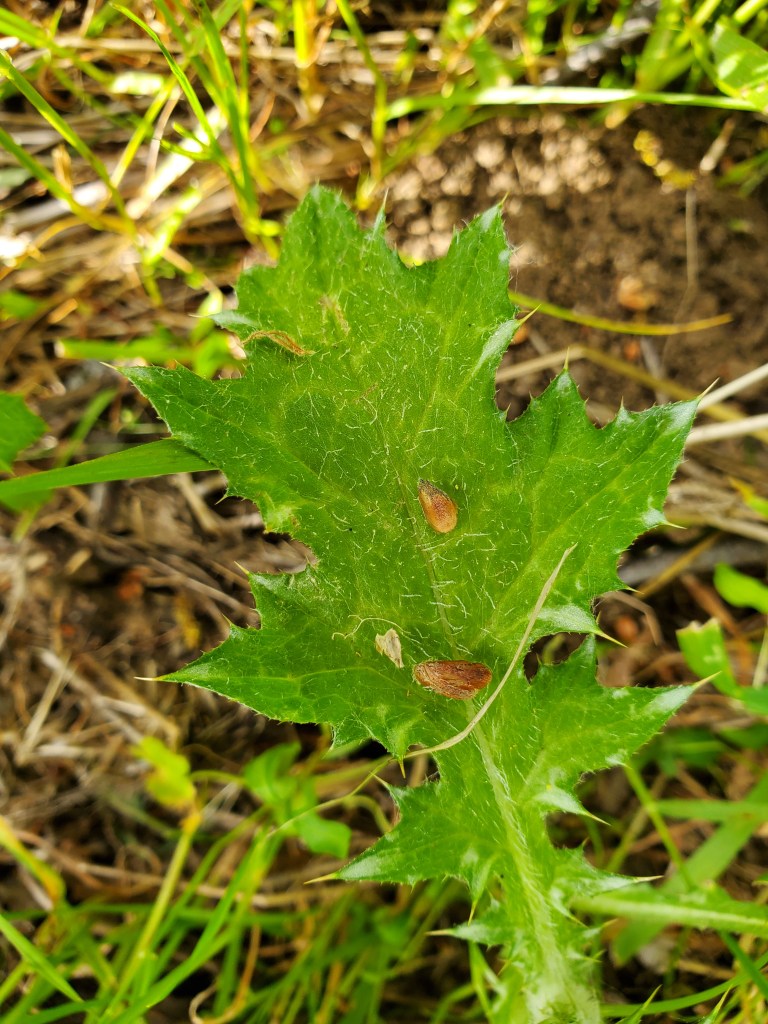
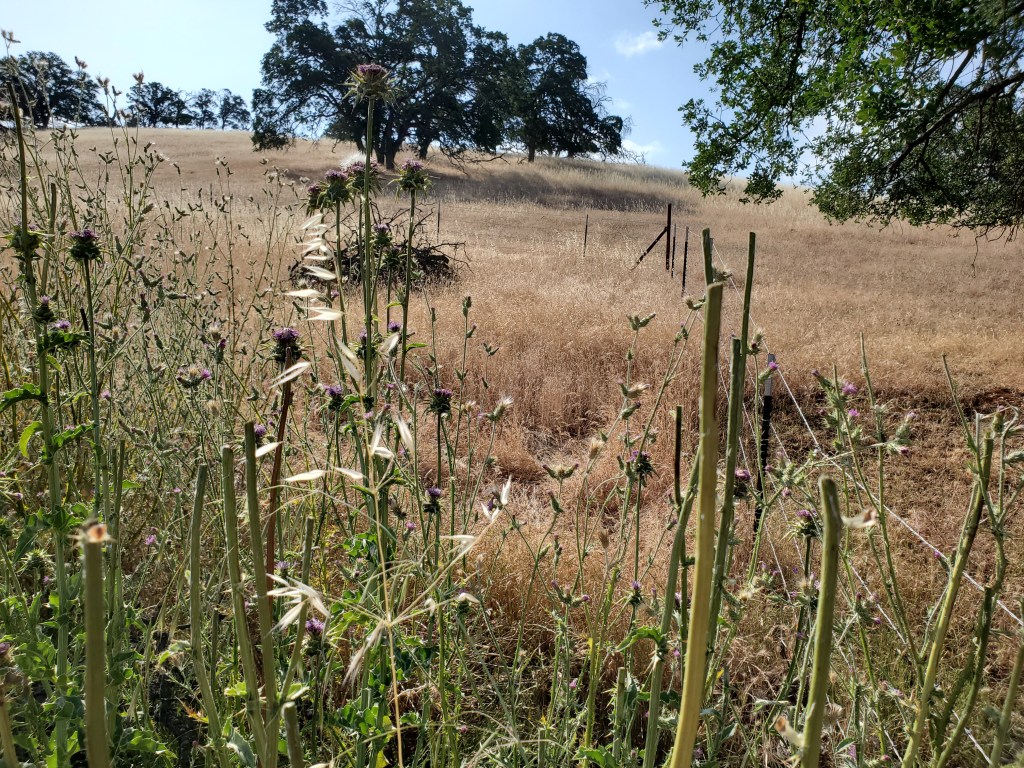
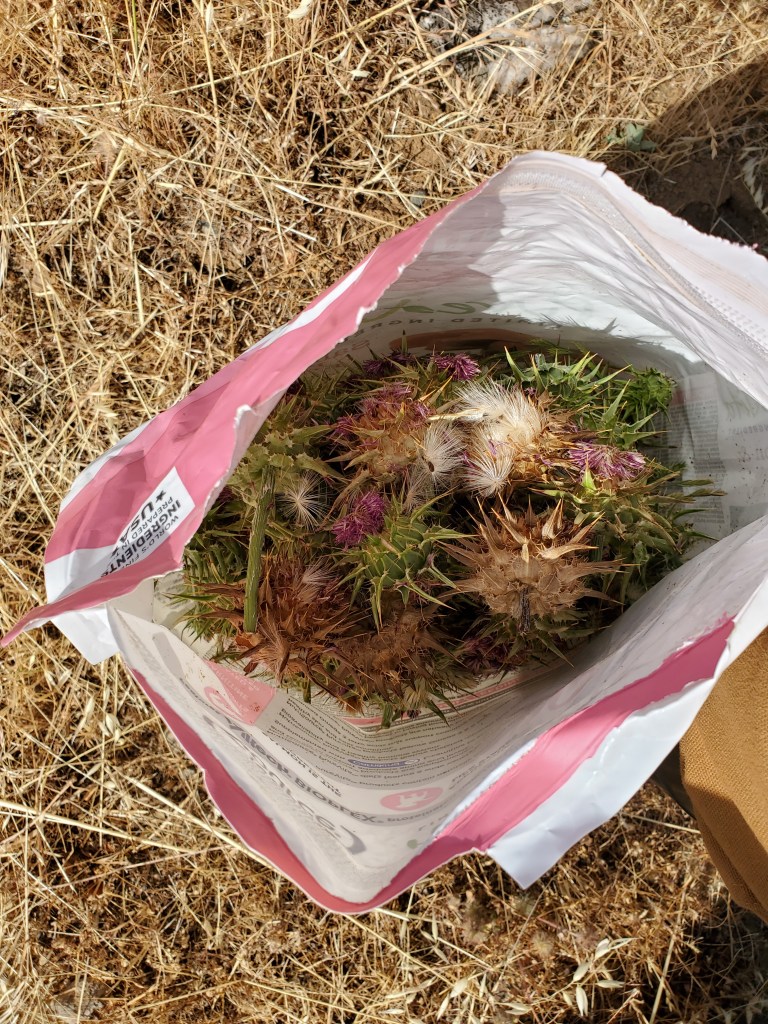
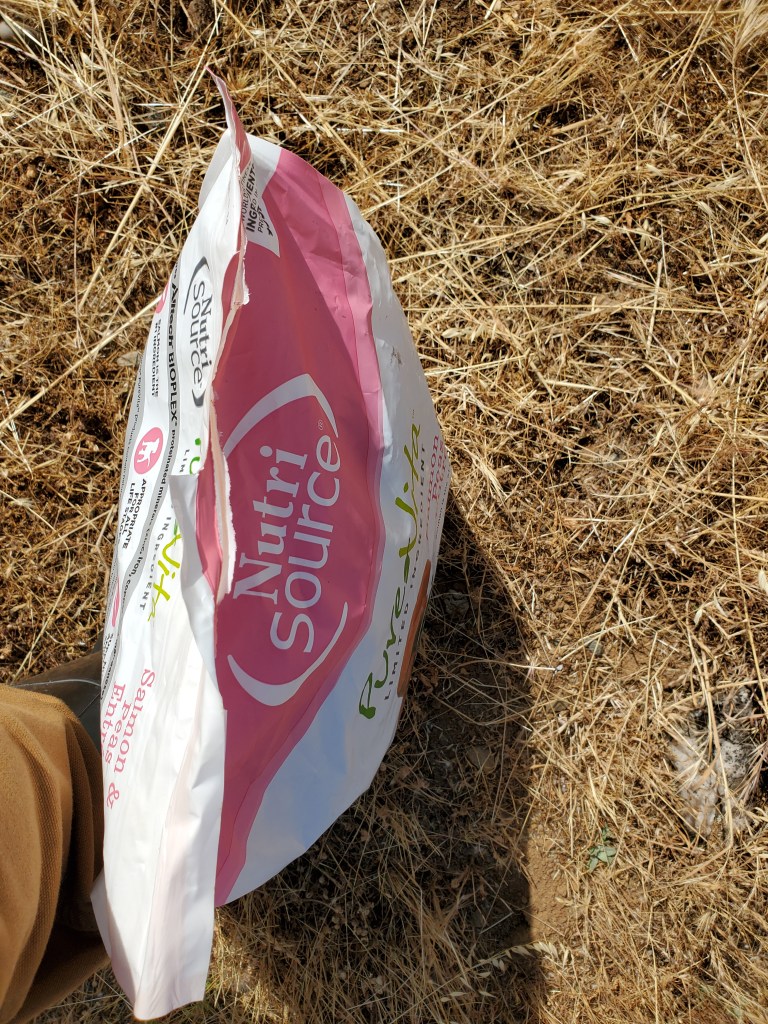
Another not real sexy task is removing seed heads and flowers from the thistle. With the rains, it has really taken off this year. I have had to travel away from the ranch several times this spring, which has meant that the thistle has already bloomed, and some are already gone to seed. Dressed in my canvas overalls and rose gloves, I took out probably 300 heads from the creek out of a million. It is important to use a thick plastic bag that seals. Thistle is so sharp, it can slice through a regular plastic bag and release the seeds you worked so hard to prevent from spreading. For this effort, I used an empty dog food bag with a Velcro closure. It worked great. While I was cutting off bloom and seed heads, I saw a bumble using the thistle blooms. It made me feel slightly better for being so derelict in my responsibilities. At least in those areas, there will be a few thousand less chances for spread.

Befriending a Toad

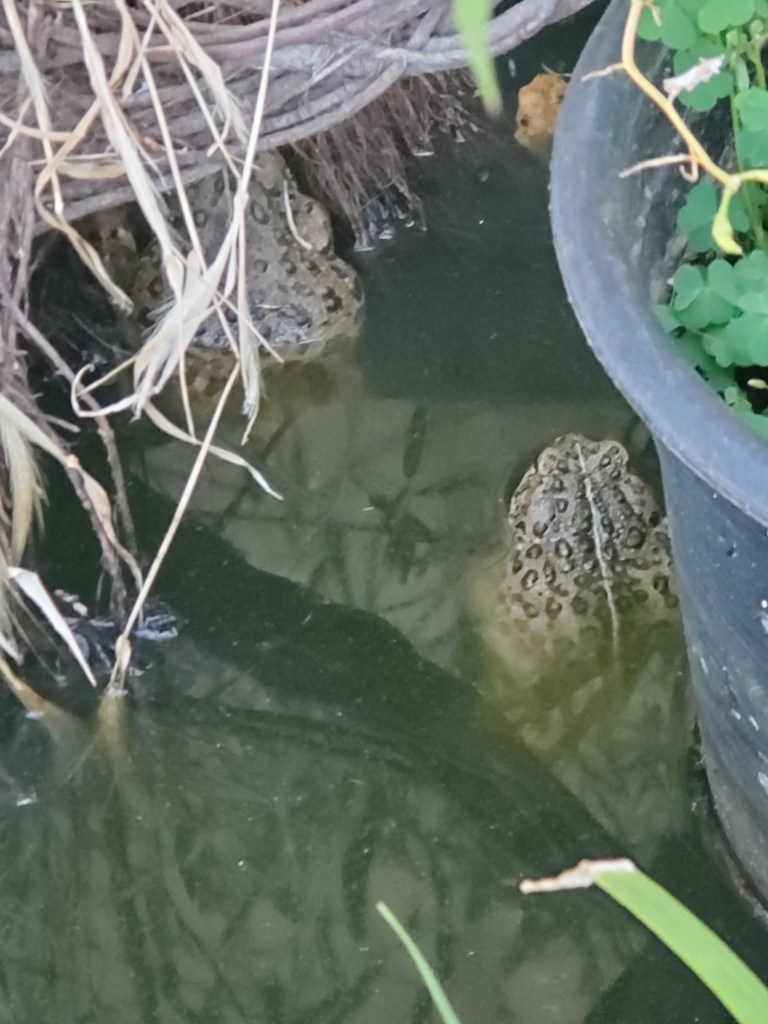
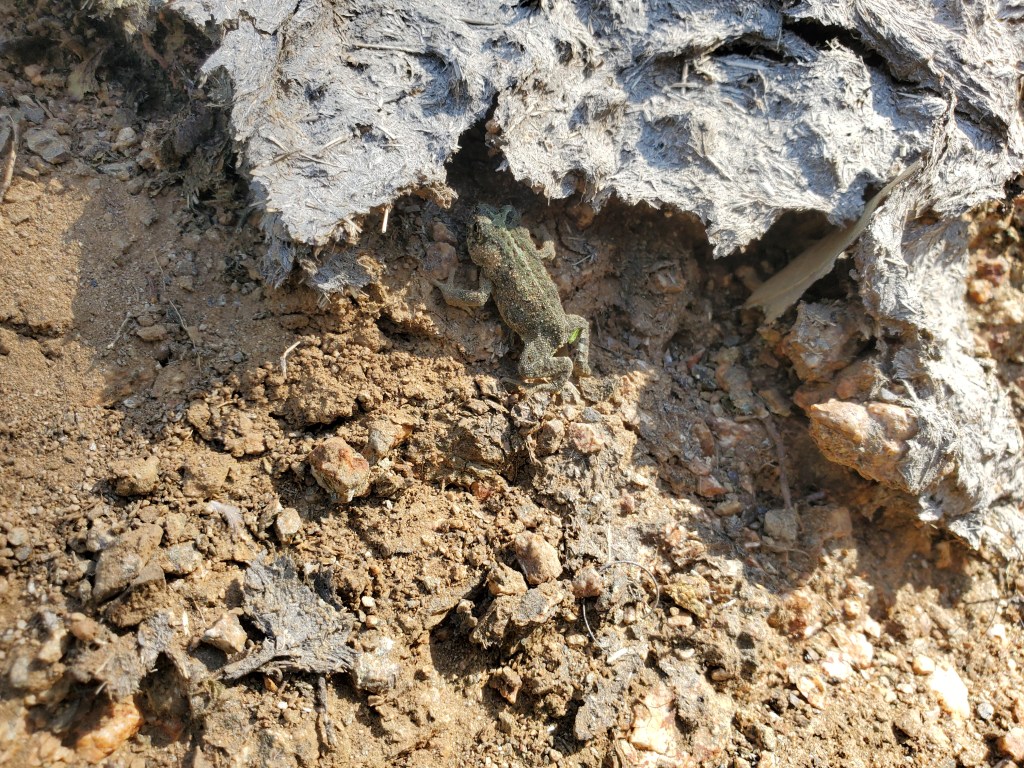
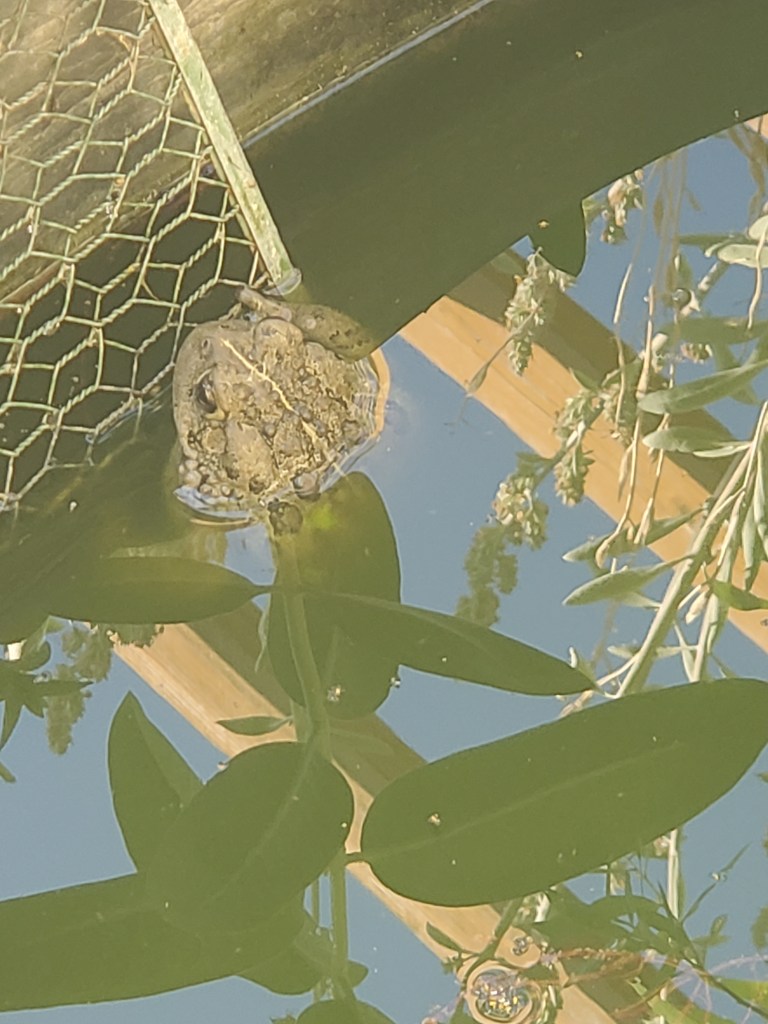
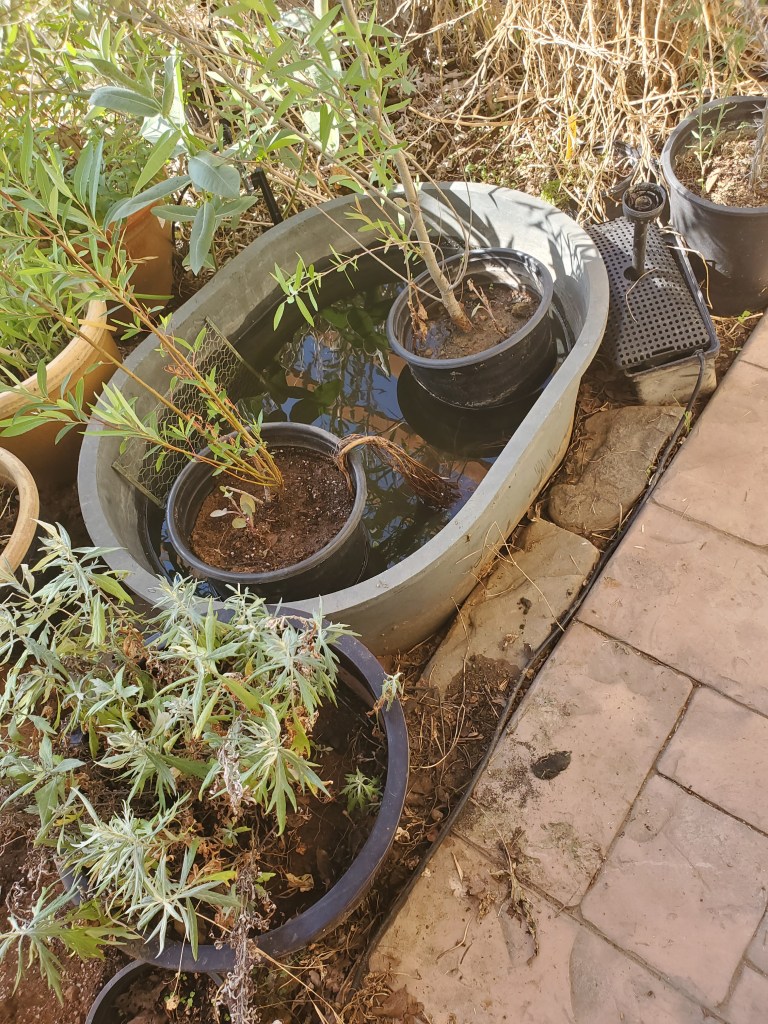
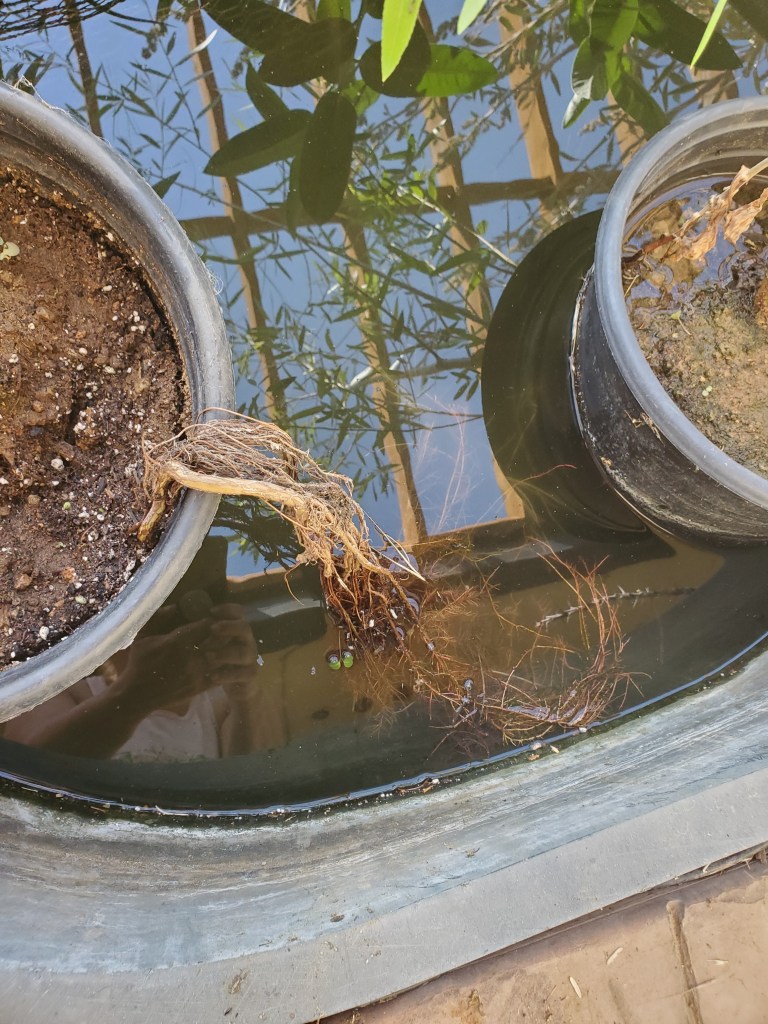
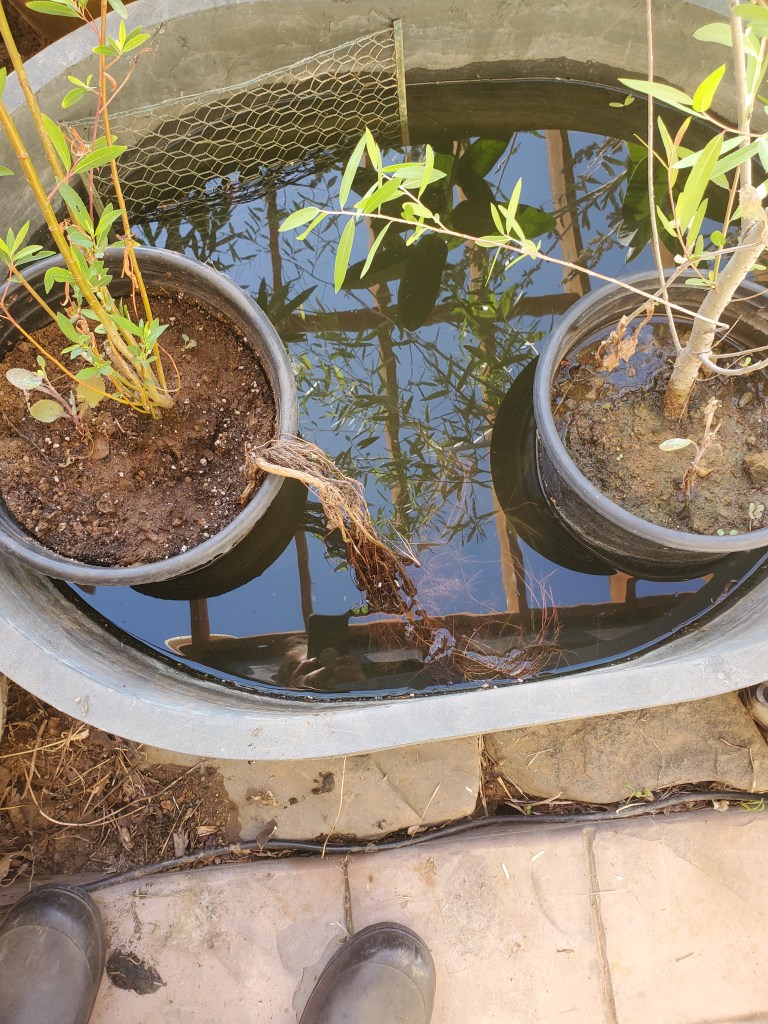
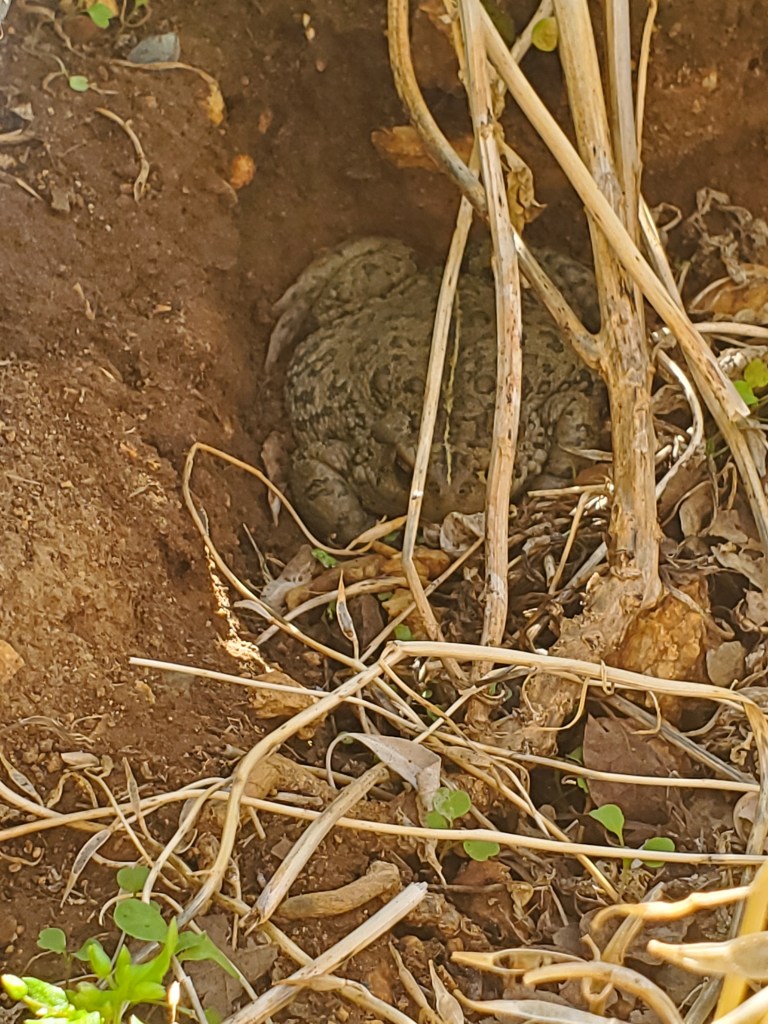
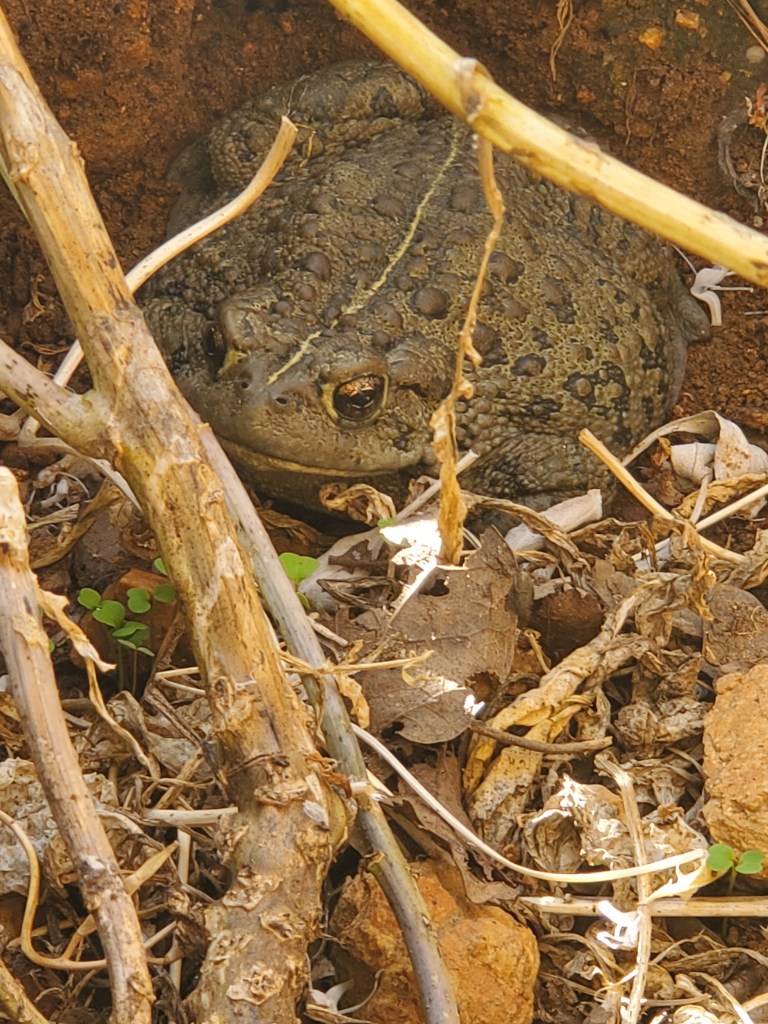
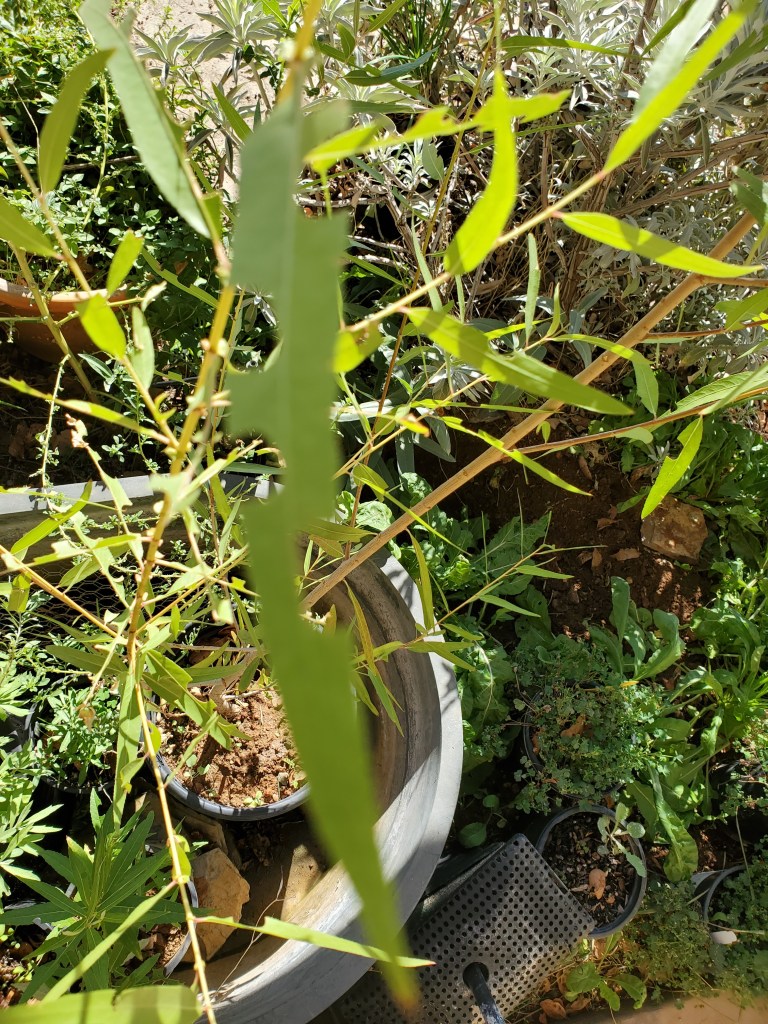
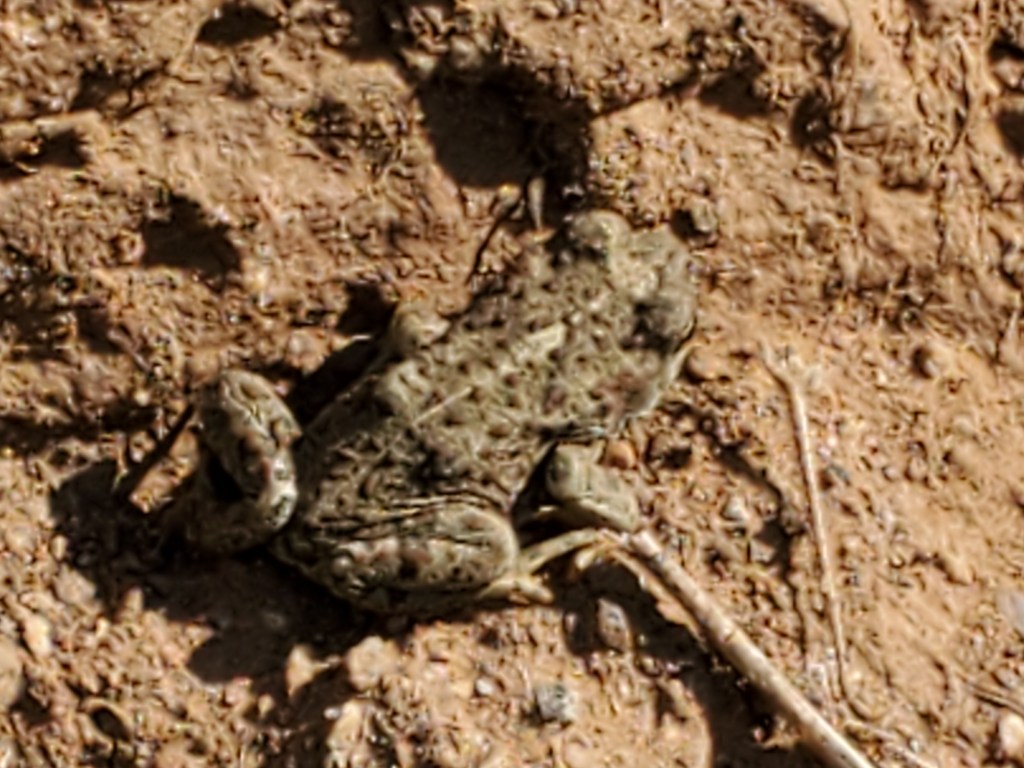
There have had been many frogs and toads around the ranch. While I have not seen many of the small tree frogs (that used to hang out on the doors and windows) in the last 15 years, I have seen several toads near the house each year (maybe that is why I don’t see the small frogs). Amphibians are remarkable animals. They live in and out of water and eat a significant number of insects per day. I am particularly grateful to the toads. They eat grasshoppers, and I have one lovely lady that is protecting my medicine and tea plant area. Her name is Erma (pronounced Air-d-ma, the Spanish way, but I linger on the “air” part trying to make it sound like a “ribit”.). I think she has been in that same location for several years as she can burrow in the ground to avoid dry conditions for quite some time. The area Erma is occupying is watered regularly with rainwater I collected over the winter. There is also a trough in that section I keep half filled with rain water. I still have two Xerces willows in pots in the trough. Their roots are extensive. The leaf cutter bees seem to love their leaves, so I kept a couple at the house instead of planting them in the creek. Erma loves soaking in the trough. I find her clinging to the willow roots or just on the escape ramp, her eyes and nostrils barely out of the water. She is so beautiful.

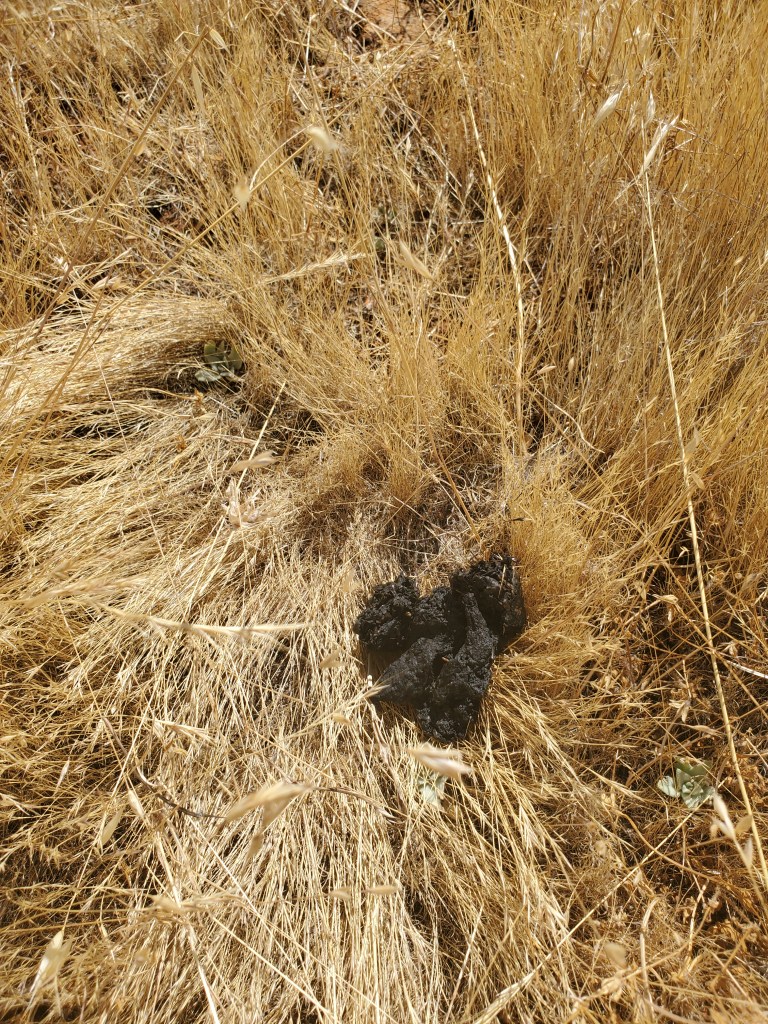
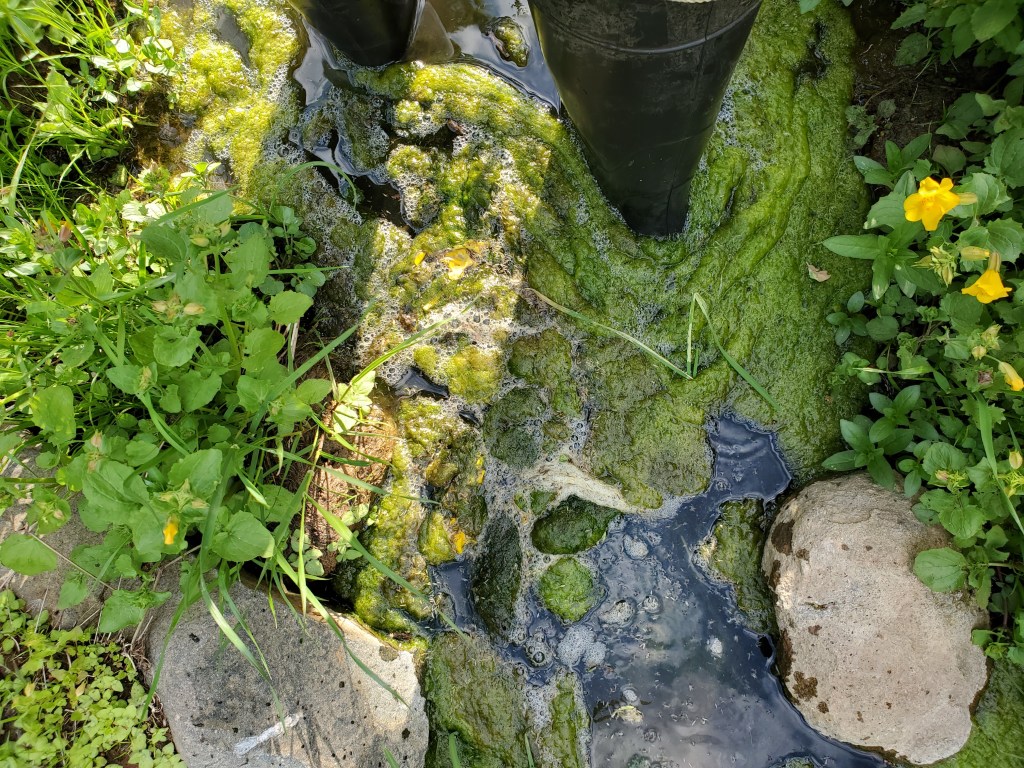
In years past, the toads would defecate on the patio. Their poo is quite large and slimy, as you might imagine. I have not seen any poop on the patio for a few years. Erma, it seems, prefers to poo in the water trough. Even though fresh water is added daily, it became a creamy jade green with floaters. Ick, I know. I wasn’t sure if I should clean out the trough, or if she preferred it, um…highly organic. I believe, for my elevation, it is beyond the breeding time. I did not see any tadpoles when the water was less green, so decided to dump the water.

What an effort. I have rocks in the bottom for habitat and to create various depths. No way was I able to lift it, not even David is strong enough, and I did not want to tip it and disturb Erma. That meant I had to use a bucket to bail the water out to a level where it could be lifted. What a messy muck. The water would splash up hitting my face and clothes. Then, I would walk it over to a planted area, bucket full, to release the load. I was thinking that dispersed, these nutrients would be good for the plants and soil. Back and forth, I walked bucket sloshing with the green goop. David sat at the patio table, feet kicked up on another chair, coffee in hand, enjoying the “zen” of my repetitive movement. I don’t mind him watching me work. I enjoy the company. It was a beautiful morning. Finally, I was near the bottom. David put his coffee down and helped me take the trees out, move the rocks and pots away from the site. We lifted the trough to the other end of the patio where I dumped the rest. I rinsed the rocks, escape ramp and roots of the muck. The trough was replaced, and everything put back. With newly rinsed buckets, I began walking back and forth from the south rainwater tank refilling the trough. It was done. All the while, Erma was watching me from her spot under the sage in the dirt. Her throat was pulsing as she stared, which is not something I see her do often. I don’t know if that meant she was happy, anxious or just digesting some bug. No matter, she will have a fresh trough of water for her soaking…and pooing enjoyment.

If you want to learn more, here is an interesting citizen science resource I found that covers amphibians. From this site, there are other credible links to official resources.

Blooms Continue

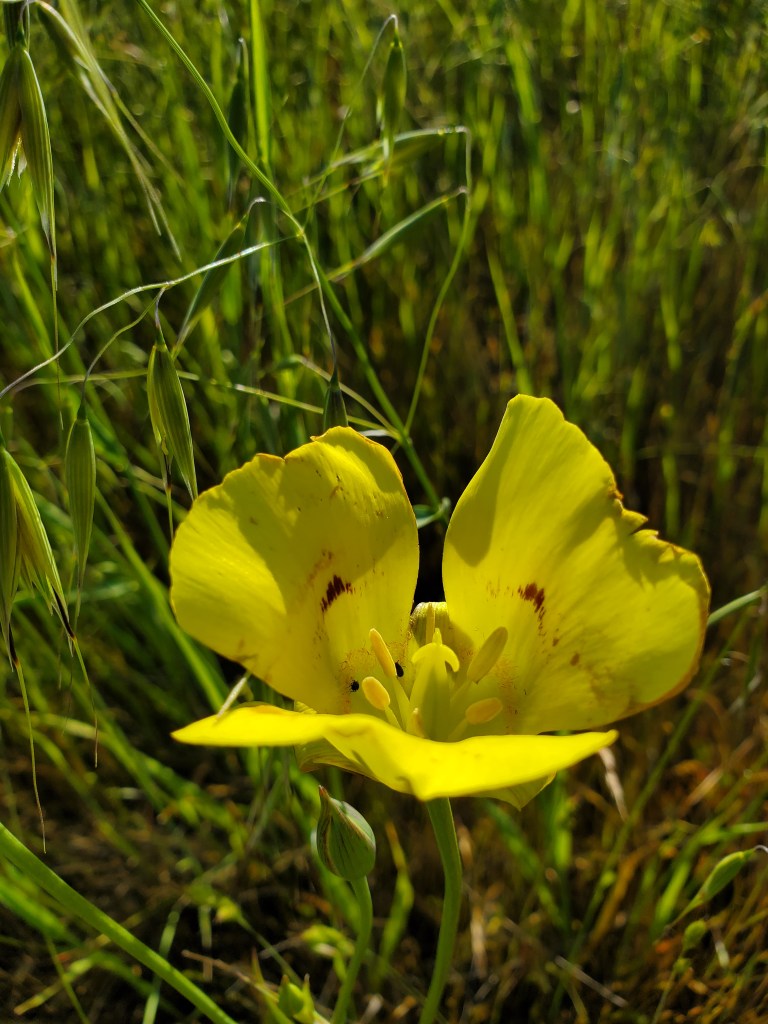
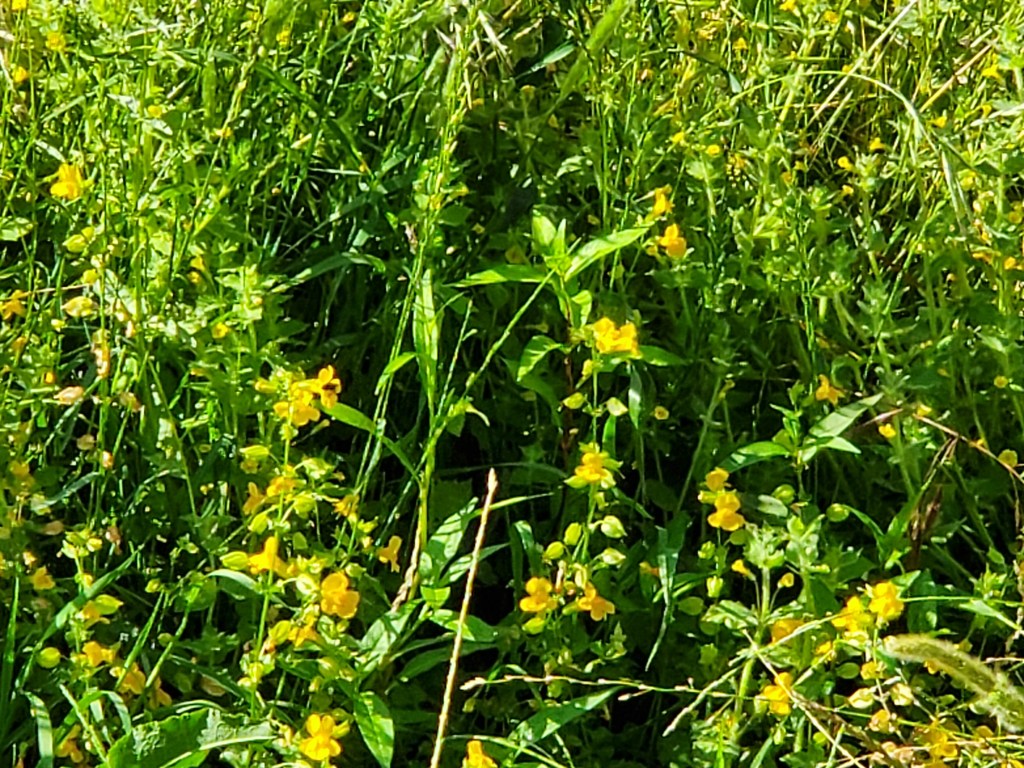
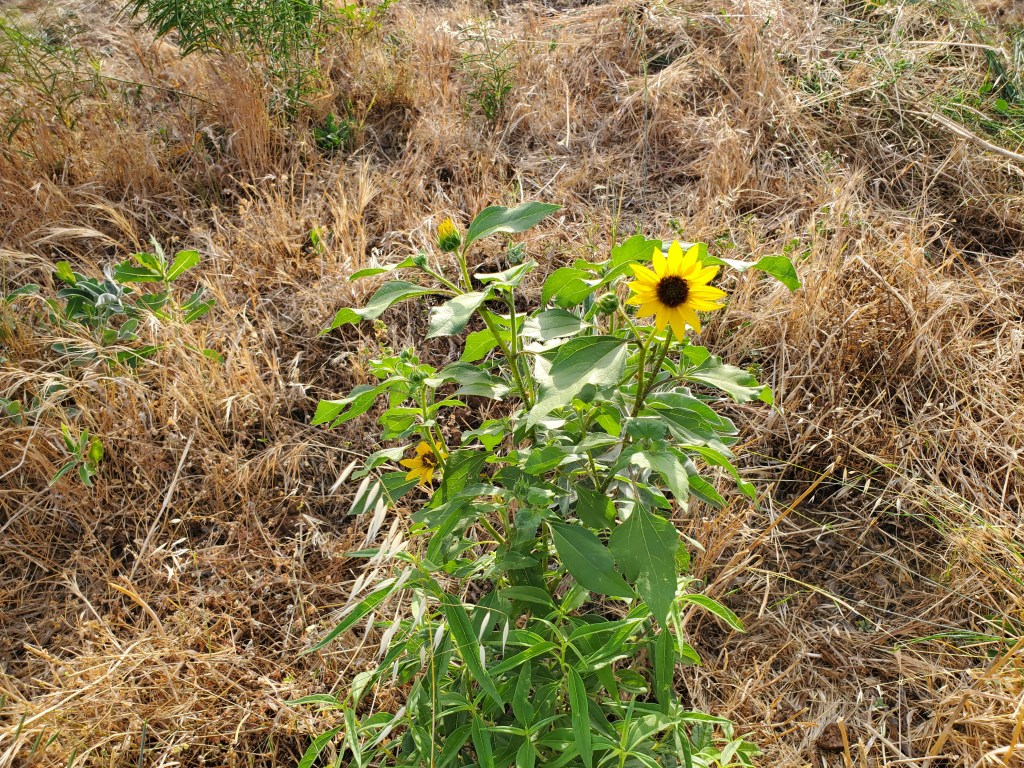
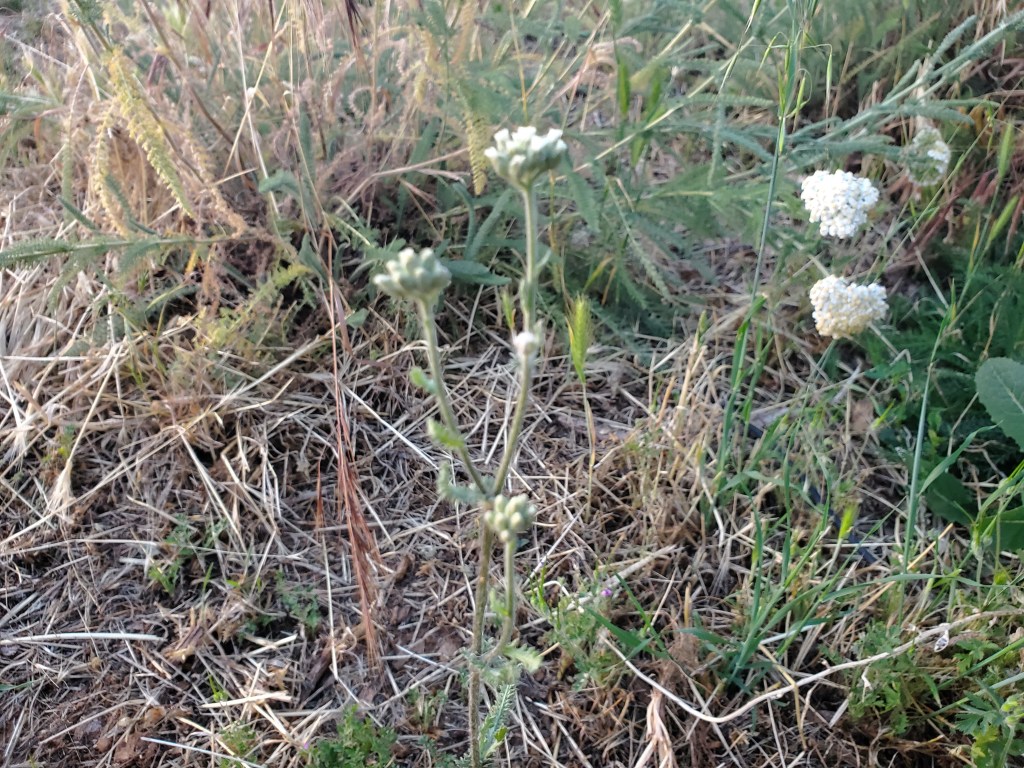
One of the keys to high quality habitat is to have plants that bloom throughout the year. Currently in bloom are buckwheat, sage, lavender, showy milkweed, sunflowers, primrose, yarrow, verbena, gum weed, salvia, Mexican sunflower, and I just found one black-eyed susan. In the creek, the yellow flowers are still in bloom – and of course, thistle. On deck is more sunflowers, buddleia (if the hoppers don’t get it first), narrowleaf milkweed and golden rod. These all have unopened buds.

Excluded Riparian Areas Doing Well

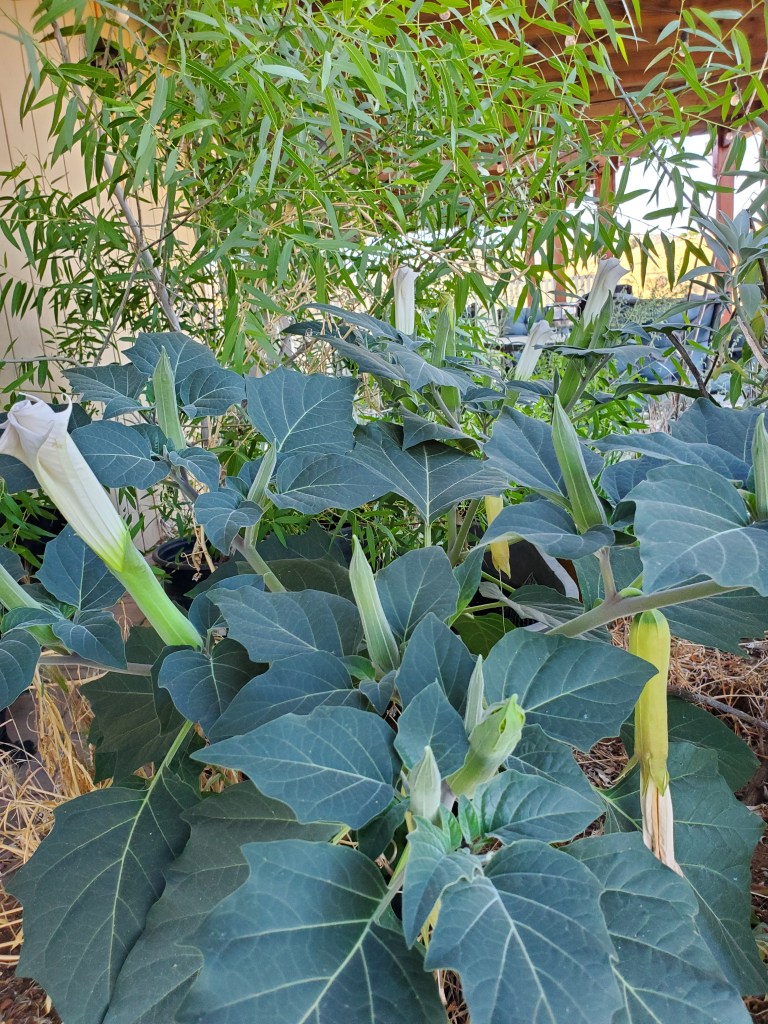
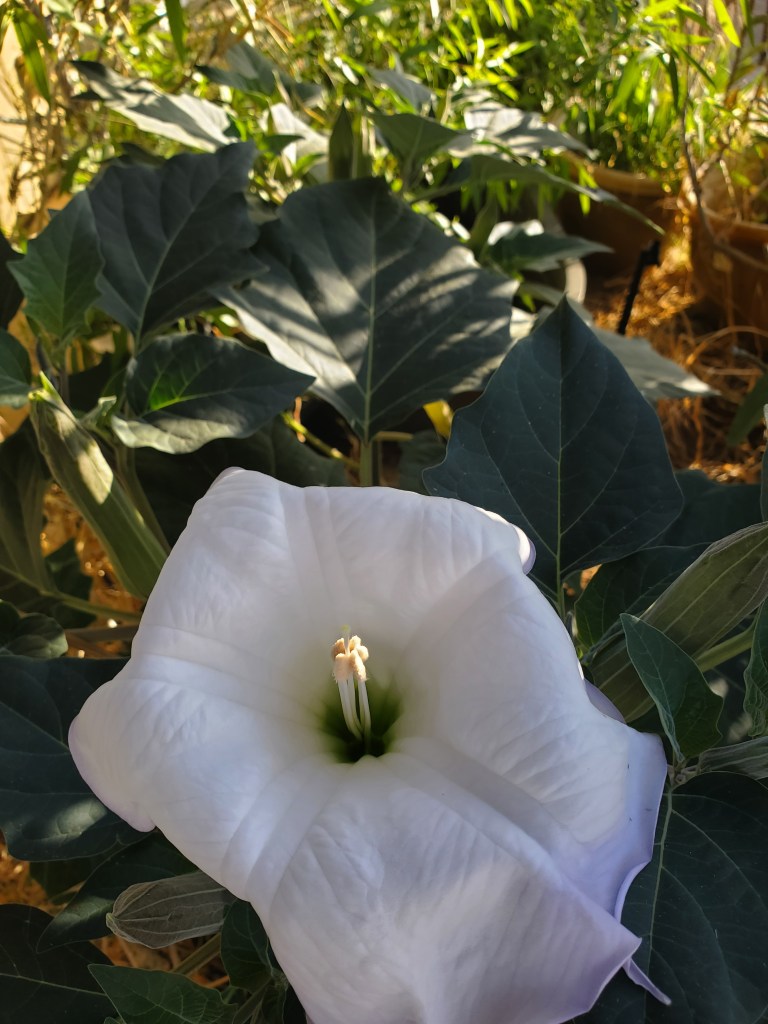
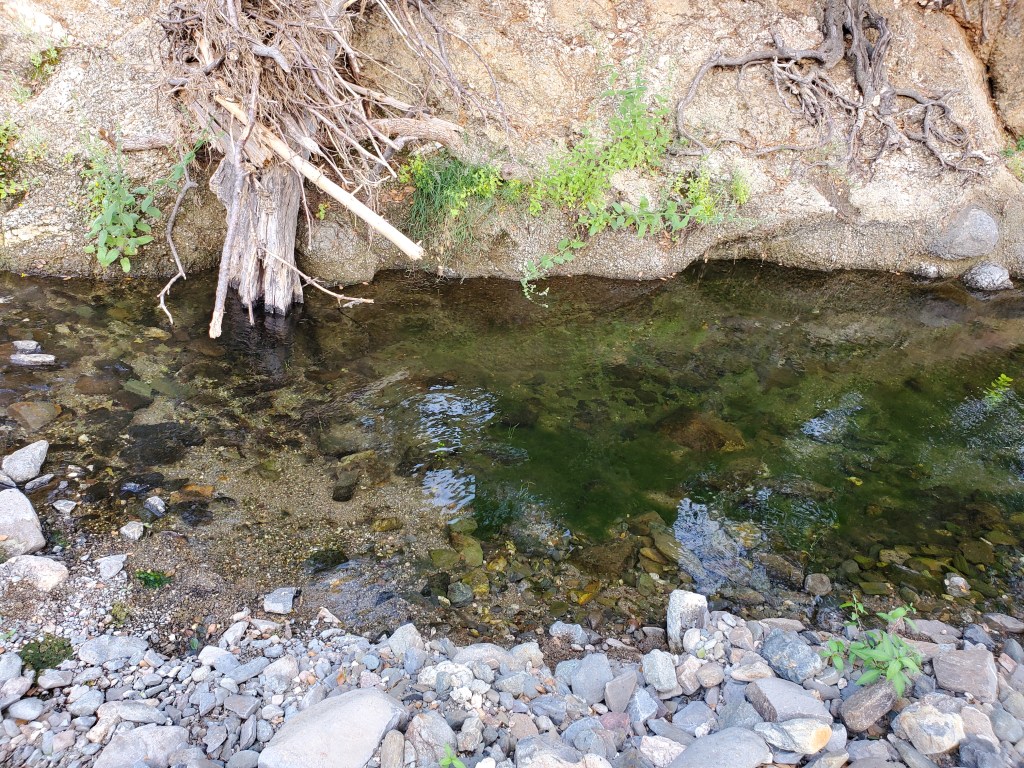
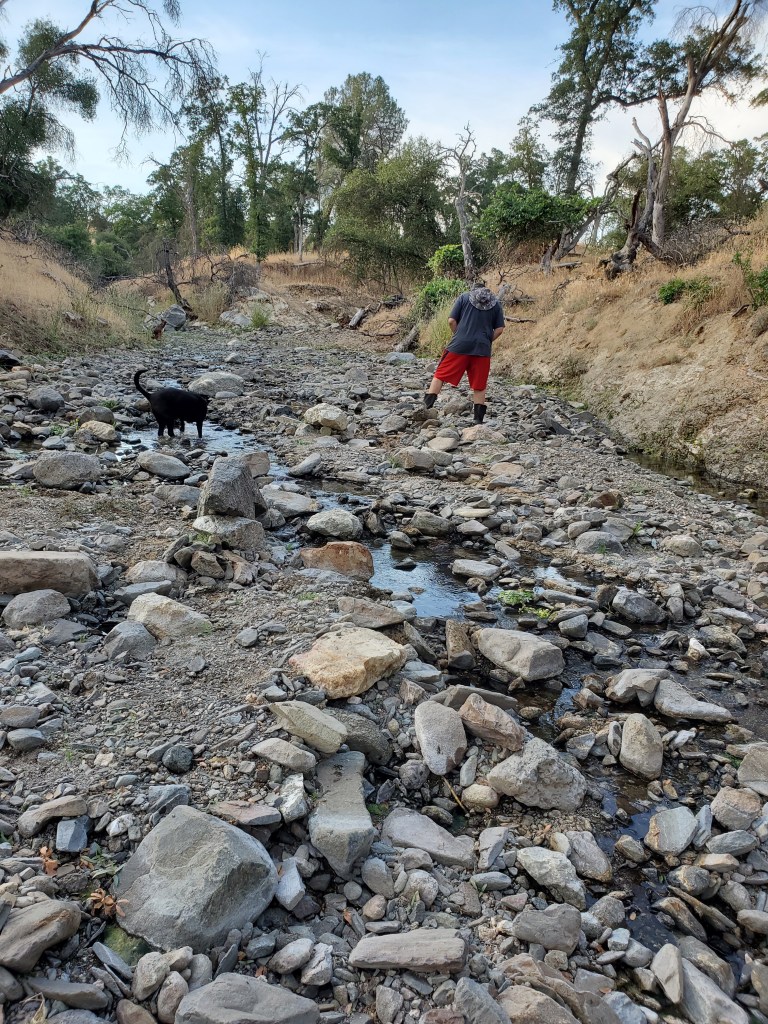
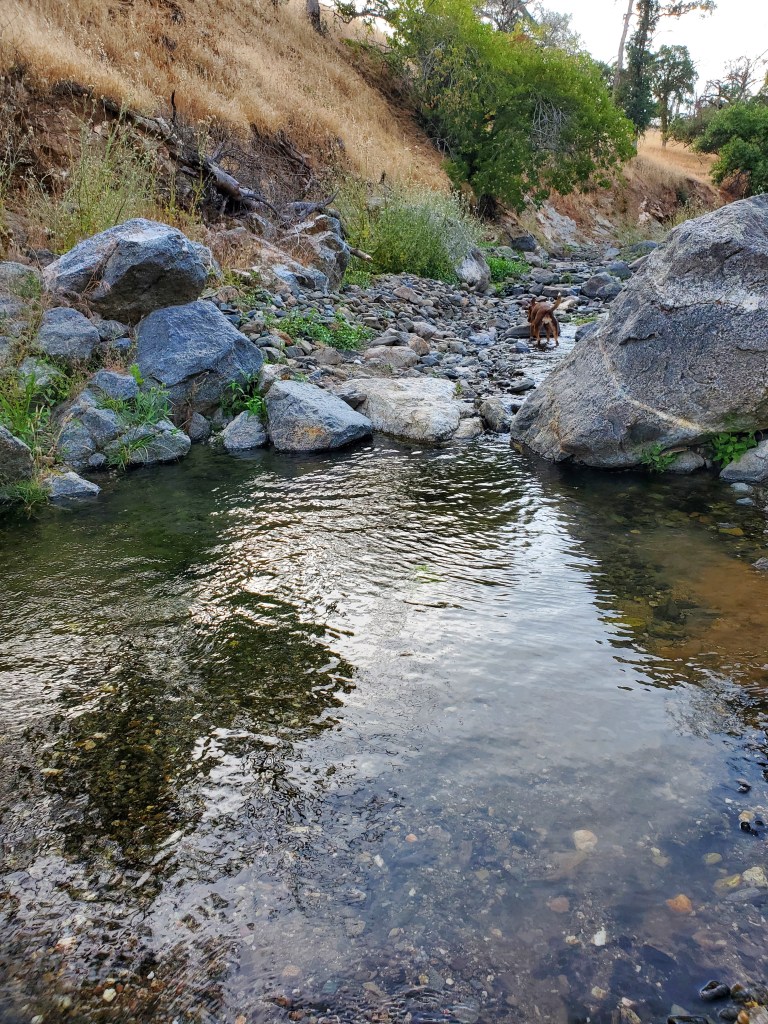
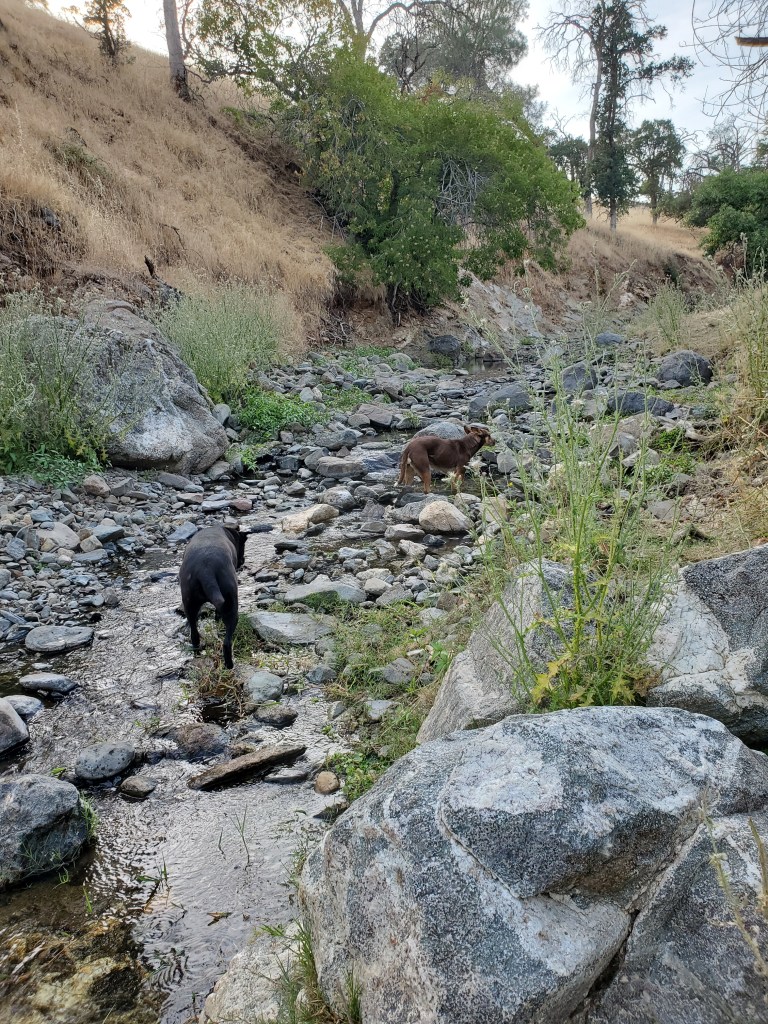
The Odom Creek riparian area excluded from grazing this year is continuing to do great. The black oak and cotton wood seedlings that showed up last year are thriving. There is plenty of yellow flowers in the Spring Creek. Both are still running, but Odom is big and still cold from snow melt. Walking near it you feel the temperature change. You also feel humidity from the evaporation. David found small frogs hopping in the creek and burrowed in the dirt. A young redtail reprimanded us for entering her domain. The mass of rushing water really changed things on the creek. It opened up some of the more narrow upstream passages. I don’t see the massive narrowleaf milkweed, or any of the other milkweed I found last year. The water may have rushed the roots away. There is a massive pile of sand and rock deposited from the storms. Maybe something new and good was brought downstream. I did see many datura and found some vinigarweed beginning to grow (Love that stuff!). Generally, all of the oaks have never looked better. Their leaves are full and deep green. The blue oak seedlings in the exclosures are continuing to do well. Gads, they grow so slow though!

Unusual Visitor

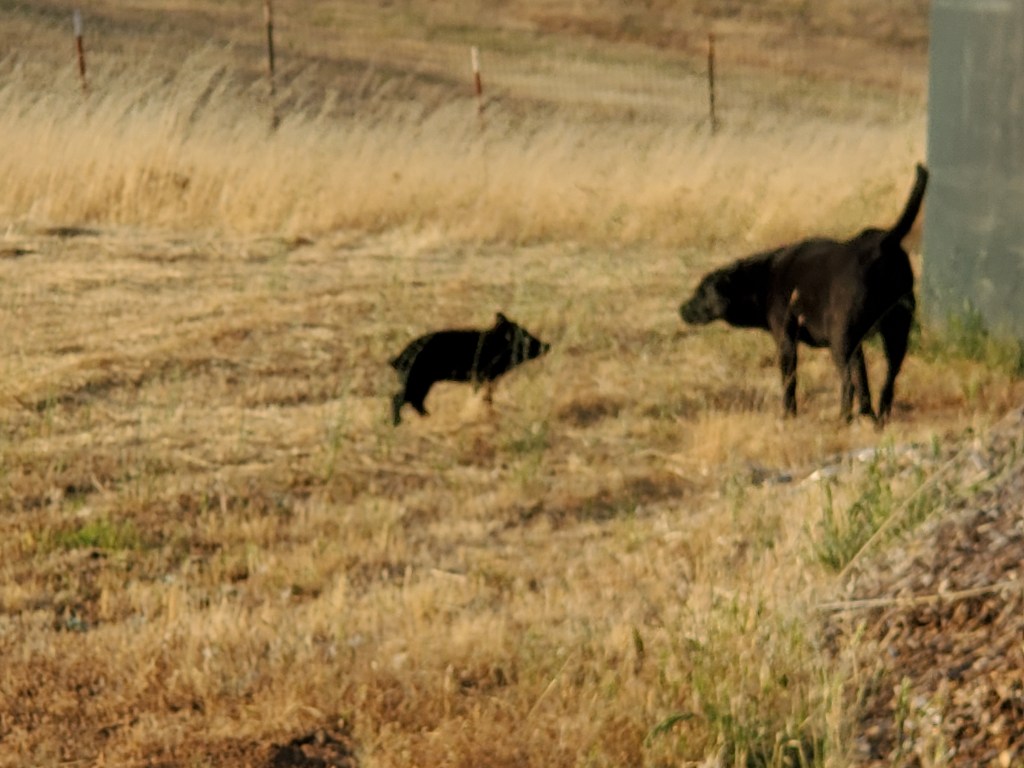
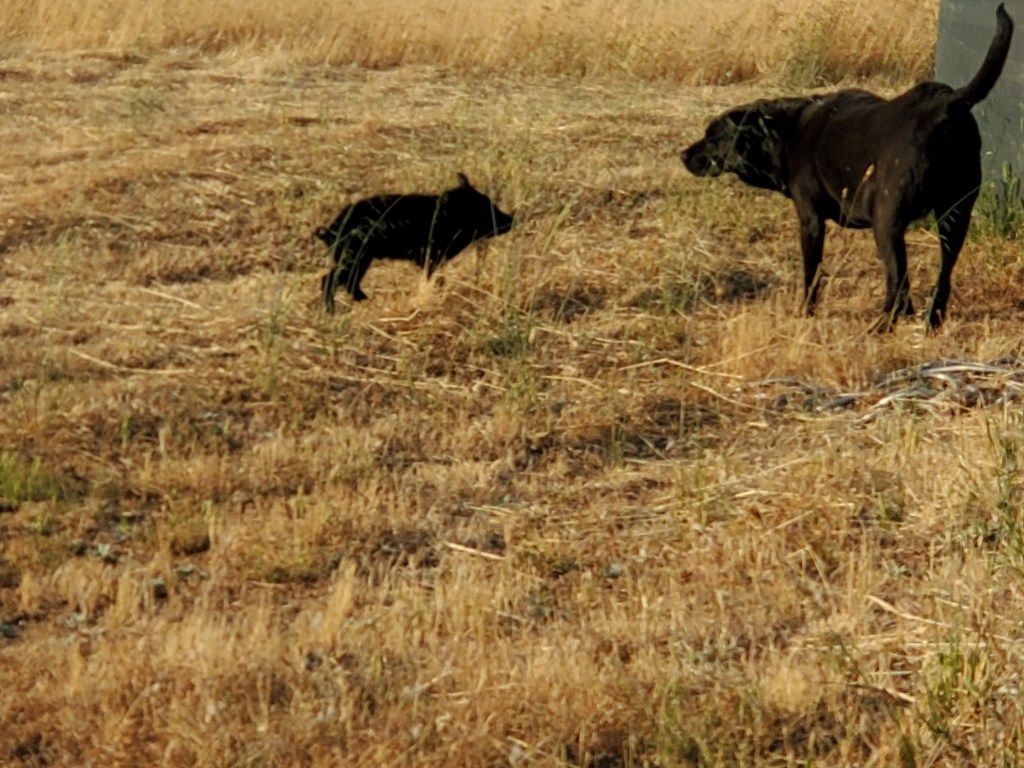
When David and I arrived back home the other day and let the dogs out, a little piglet emerged from the north water tank area. I think she saw our chubby lab Beatrix and thought it was its mom. We were in shock. This has never happened in the 21 years we’ve been here. Immediately, we began looking around for mama pig. Wild pigs are extremely large and intelligent. The last thing we wanted to do was get in between a mom and her baby. David, being the sweet giant he is, immediately went into the house, cut up an apple and tried to give it to the baby. It charged him, and he gave up. I said, “Let’s just leave it alone. Mom is either watching us right now, or she left it because there is something wrong with it.” I thought about what I might do if it was orphaned, and decided I would let nature take its course. They are non-native after all. We went into the house. When we came back out 15 minutes later, it was gone.

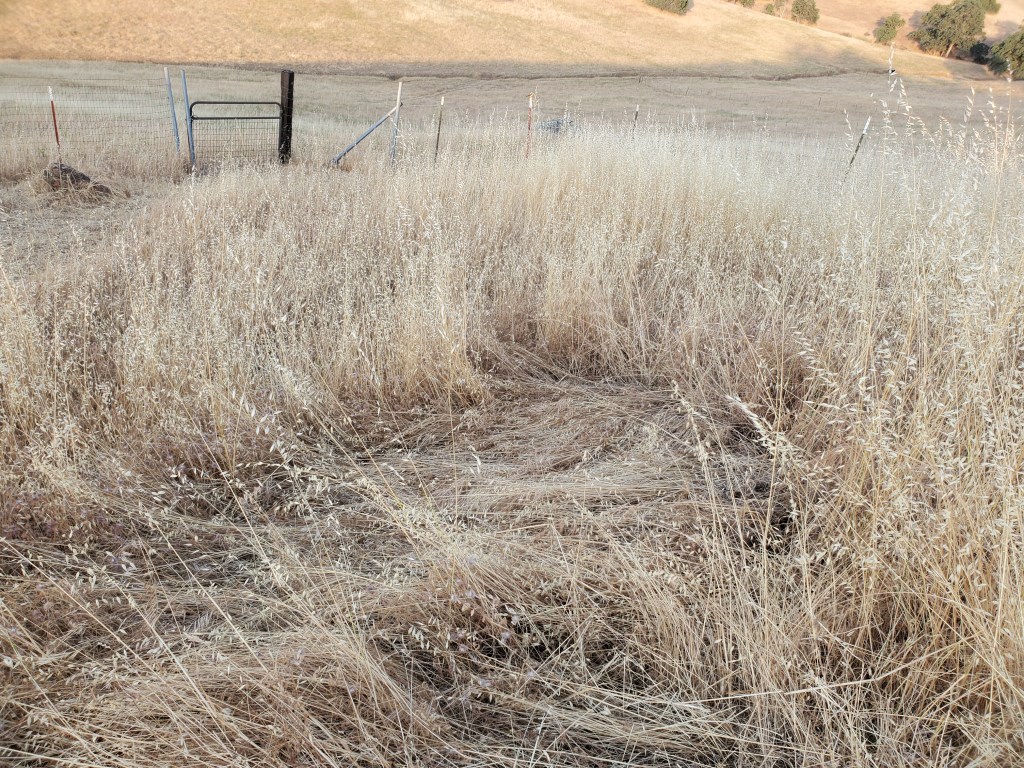
Sows (female pigs) leave their drove (or herd) to have their babies. We found the area where it appeared the large mother bedded down. I don’t know if she birthed her babies close to the house, but it seems she felt safe enough obscured in the tall grass, David had yet to cut, to have her family close by us dogs and humans. I take that as a compliment. Wild pigs are non-native and very destructive to the ground (If you look at an early blog post “Wild Pig Attack”, you will see how they ripped up one of my first pollinator plots.). However, it is a privilege and wonder to see anything as unique as this.

Planting Seeds for the Months Ahead

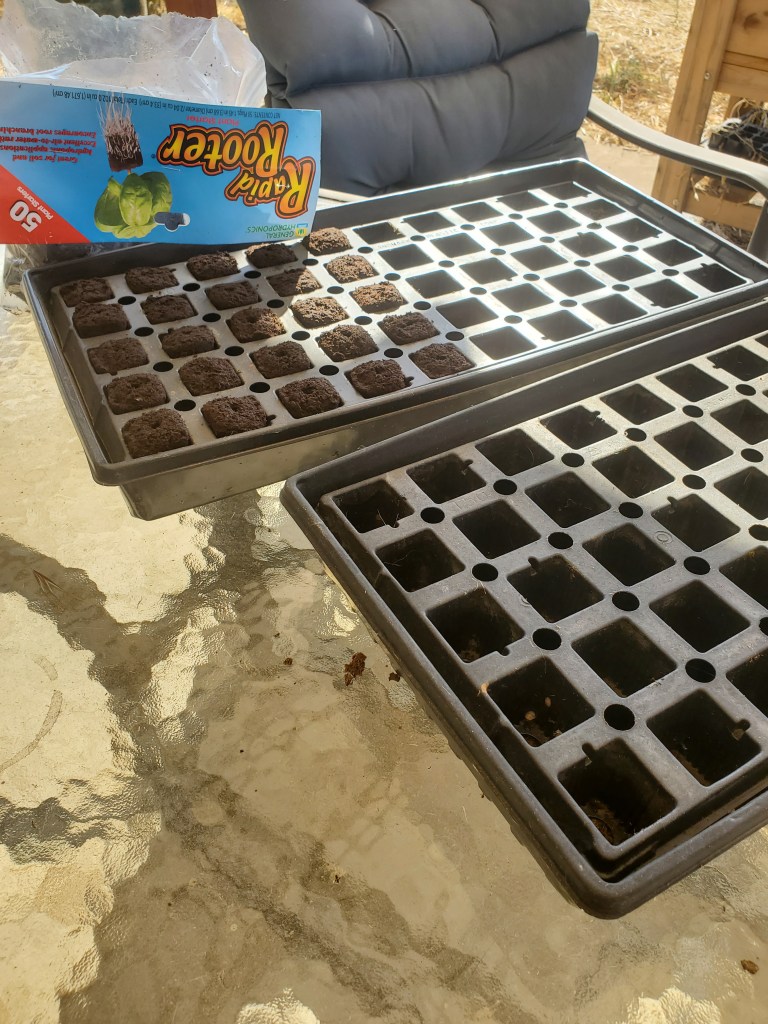
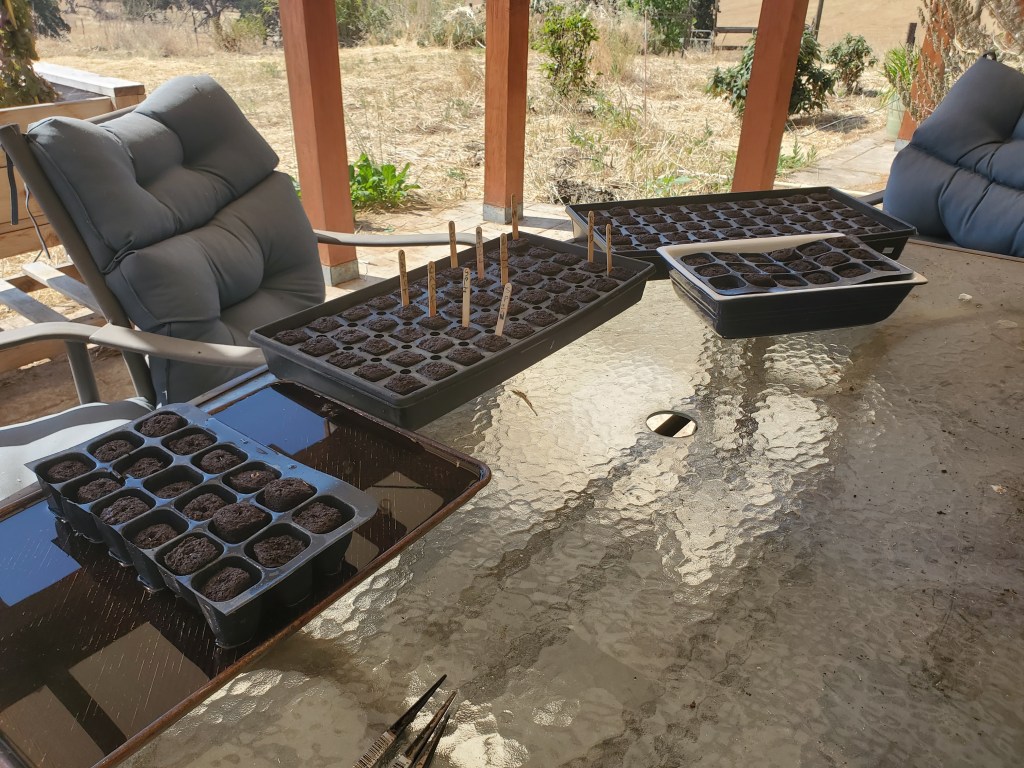
I spent the morning the other day cleaning up, repotting, and planting seeds in the seed tray. I seeded marigolds, black-eyed susan, coneflower, and road-side sunflowers. I also put in some seeds for my garden – spinach, tomato, basil, carrot, radish and dill. I have been eating out of the garden -lettuce, arugula, peas, chives, mint and onion – and want to continue through the summer. I planted a lot of basil. My sister enjoys making pesto, and I greatly enjoy eating it. I plan to bring her the 18 seedlings for her cooking pleasure.

Wanderings

Bright sides. This September, it will be four years since I began this habitat journey. I will save my full reflections for an anniversary post, but, despite the heartbreaks, stickers, and injuries, this ride has been one of the best things I have done with my abilities. I have learned incredible things. One is to chill out and look on the bright side. This spring we have not had many raptors, which is highly unusual. In fact, it has never been that way in the open grassland part of the ranch. The sky has has never seen a day without a red tail. My ears have captured the bouncing chords of p-eee-ahh, p-eee-ahh and brought them inside my head, and then to my heart, every day. There is a family that lives on the hill. They soar with their babies about now, in threes and sometimes fours, if one from the previous year makes it home. My ranch is named after them…Taawe Bwia, or land of the hawk, in my native language. Where are all the taawim (hawks)?

During the deluge this past winter, the drops turned to torrents, cascading downhill, filling every hole and then coming out every hole, spiraling, like eddys, when in the flats. I remember seeing air bubbles coming from the holes. I thought it was from the energy of the movement. But, maybe it was from what lived below.

As I look back on the blog posts, the imprints of my memories, thoughts and emotions, I see much disdain for the underground relatives, the gophers, moles and voles. Whatever was taking down my plants – I resented. While I always respected their right to live, to have families and feed their families, just as I do, I was still distraught. All the work, the expense, the hopes and desperation I had packaged in my heart, my singular focus on doing my part to help the monarchs survive, it blocked my senses, the whispers from my ancestors, telling me u betuku bwia weweriam, empo Heather hikkaha. Hikkaha (The under land relatives, Heather you listen. Listen.). Last year, I began to hear. I made peace. I remembered that they are aerating the land, allowing water to go deep to roots, allowing other creatures, like bees and snakes to have homes when they are not there. They are teaching me what belongs and at what scale. They are helping me access soil so I don’t have to dig, and they are bringing in yo’oem (my ancestors), the hawks to me. They give their lives for Taawe. The gophers have been so generous, and I have been so ignorant. Without them, their size and numbers, Taawe cannot be here – and that is a tragedy. Taawe eats mice, lets me know to be alert when something is passing through, reminds me how we are connected to above and below, and reminds me that I am seen, even when I think I am alone someplace or in my mind’s space. I am part of something.
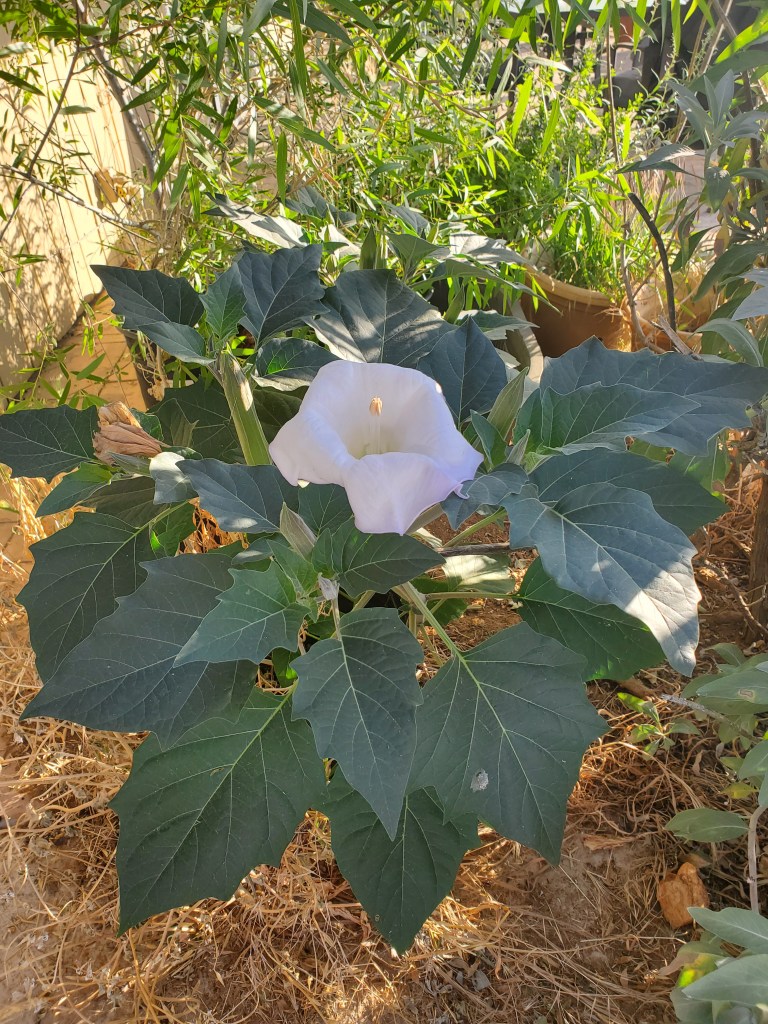
Today, as I walked among the yarrow that is finally spreading beyond the cages, I saw a bloom wiggle, then drop. A crunch, crunch. Another wiggle, then drop more, then one more time and crunch, crunch. I did not try to interfere. I did not growl. A slight smile crossed my face. I said, “Take what you need.”

Taawe will be home soon.

More Tragedy. Bumbles. No Monarchs…Yet.

The record waters of Winter 2023 came too late for my great, great grandmother tree. Last year, in this blog, I relayed how she was losing leaves in May, when they should have been growing out and green. Then, in my August 2022 post, I shared that all her leaves turned brown all at once. That must have been the moment of death. Despite the signs, I held out hope that she would recover. When all the oaks began sprouting leaves, and she did not, I deluded myself that she was just late. Eventually, I had to admit she was gone. When he was over in March, I consulted Ron Allen of Mariposa Native Plants (He is also a UC Master Gardener). He looked at the branches, chose one of the smaller ones, and it snapped right off, dry throughout. He said she was gone.

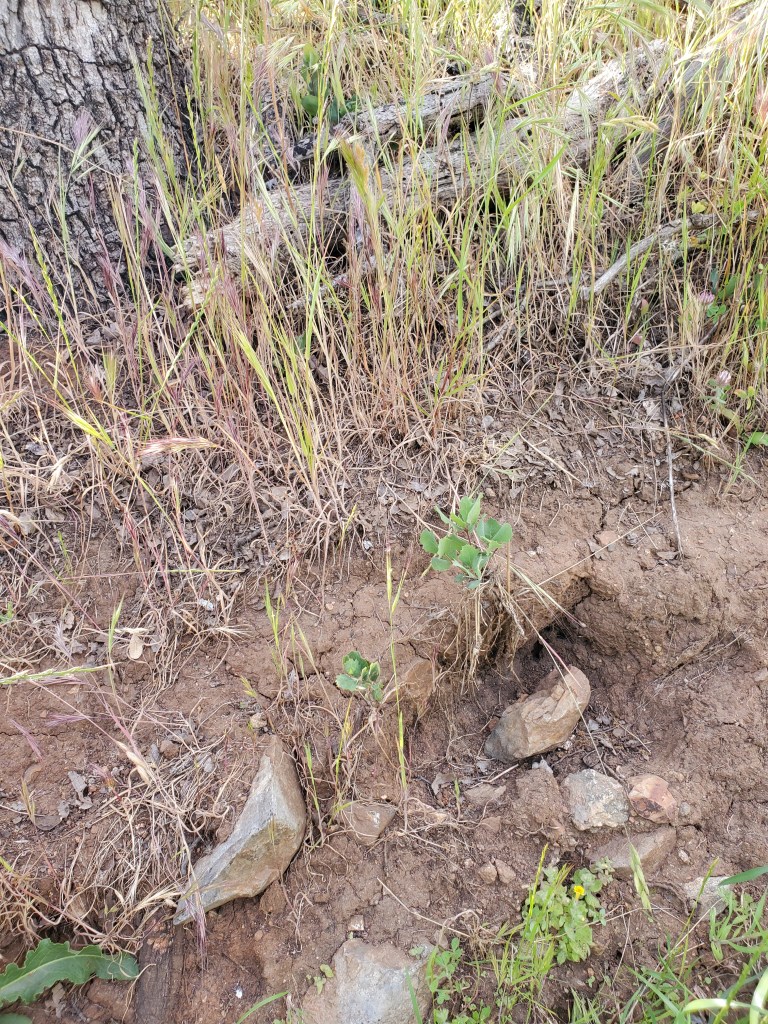
What I determined I needed to do is plant seedlings. After the loss of my favorite oak in December 2022, I resolved to collect acorn and plant them. There are no guarantees with that, and we have certainly not had any seedlings over the years with all the acorn those trees produced. This is why I had to pivot to seedlings. I got two from Ron. We discussed how the roots of the trees, even though dead above, can still be alive for some time below. Ron was telling me about how these dead trees are called nurse trees, and when planting seedlings within the crown, they have a better chance of survival because the roots protect them. There is communication and sharing of resource. There is so much being written now of what is happening below the surface of the soil, and it is magnificent. Of course, Indigenous communities knew about these connections. Many stories contain valuable information and lessons that survived colonization. I will see if I can share a story in a future post.

Bees Have Emerged

I am happy to report that the native bees have finally emerged. I have seen several semicircle, precision cuts in leaves telling me that the leaf cutter bees are out. Although I saw the female crotch bumble bee in April, I saw the majority of other native bees beginning mid May. We had several groups of smaller bumble bees. This is fantastic since they are a species in decline. In each grouping there was a larger sized bumble and two or more smaller bumbles. I wonder if the larger was the female and the smaller were males. There were many, many more European Honeybees competing with the bumbles for food. Fortunately, I have significant blooms this year and think there is enough to go around. I also saw small gray native bees with the abdomen stripes. They seemed to disappear when I got close with the camera. Although I am nearly finished with my pollinator steward certification program, I am just scratching the surface of available knowledge on native bees. There is so much to learn and so little time to dedicate.

Plenty of Nectar and Milkweed – Few Butterflies

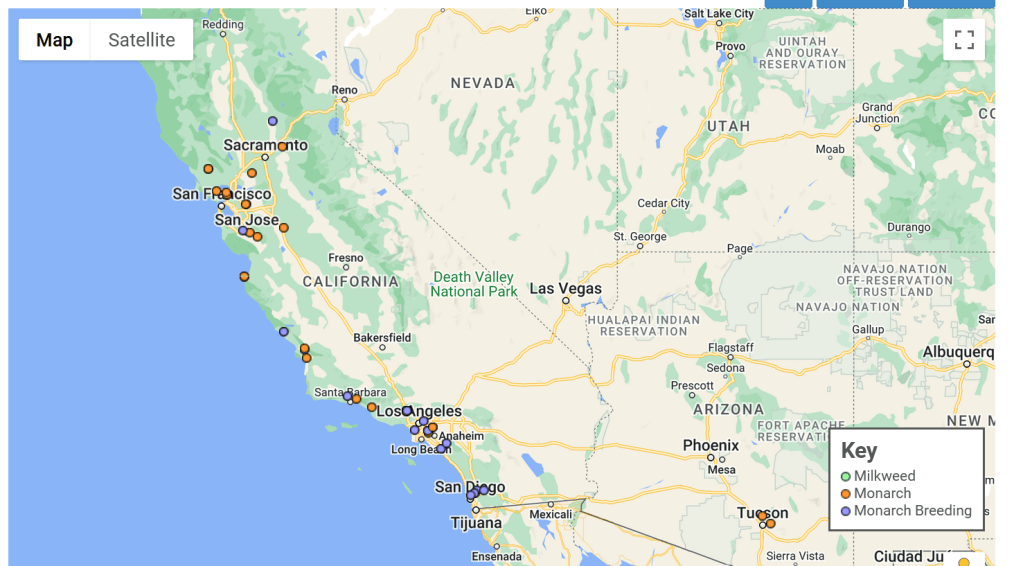
Above is a screen shot of the latest citizen data on the monarch migration. It comes from the Western Monarch Milkweed Mapper site. The cool temperatures have had them leaving the groves later than last year and possibly staying in more temperate areas longer. Far less sightings have been recorded as compared to last year. I am not sure what it all means yet. Reader, would you help? If you are in the west, please use this tool to document sightings of monarchs. I am going to ask my crowd on social media to help track them as well.

As of this writing, my many stands of mature milkweed have gone unused. There is absolutely no sign of chewing (herbivory) on the plants. I have seen only a handful of butterflies. Most were painted ladies, some cabbage and sulphur, and one red admiral.

I am still holding out hope for monarchs. Some of the California Milkweed has fresh flowers sending scent into the air. Temperatures have been erratic, which may have contributed to the butterflies being mistimed with the flowering.

From Green to Yellow

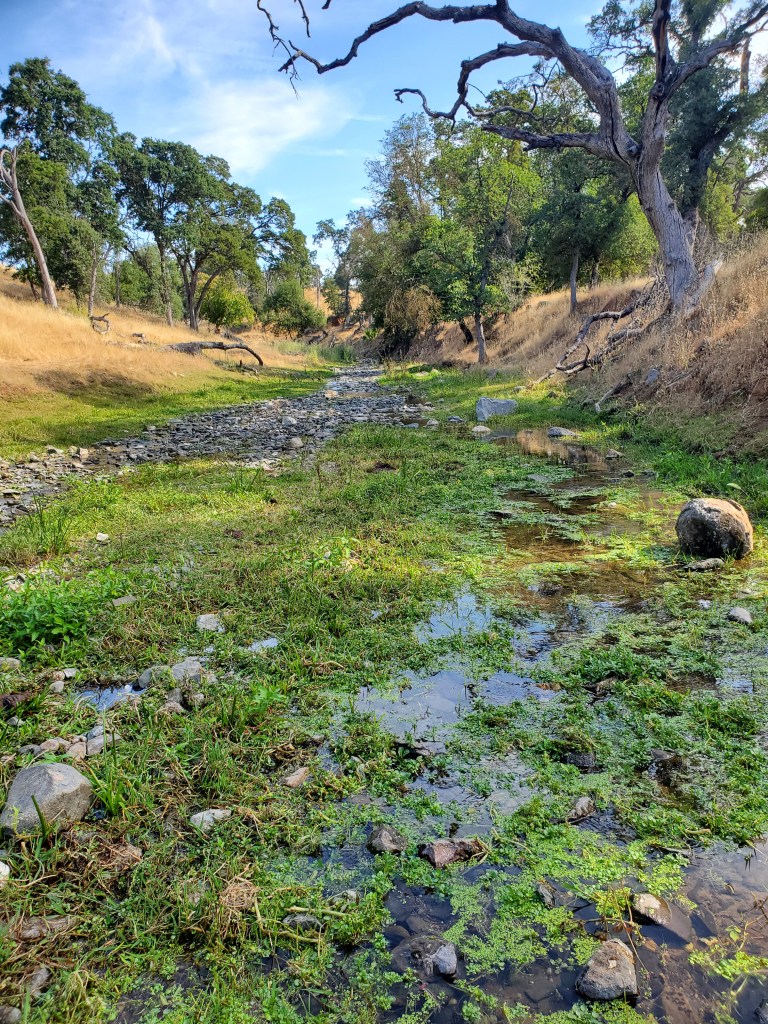
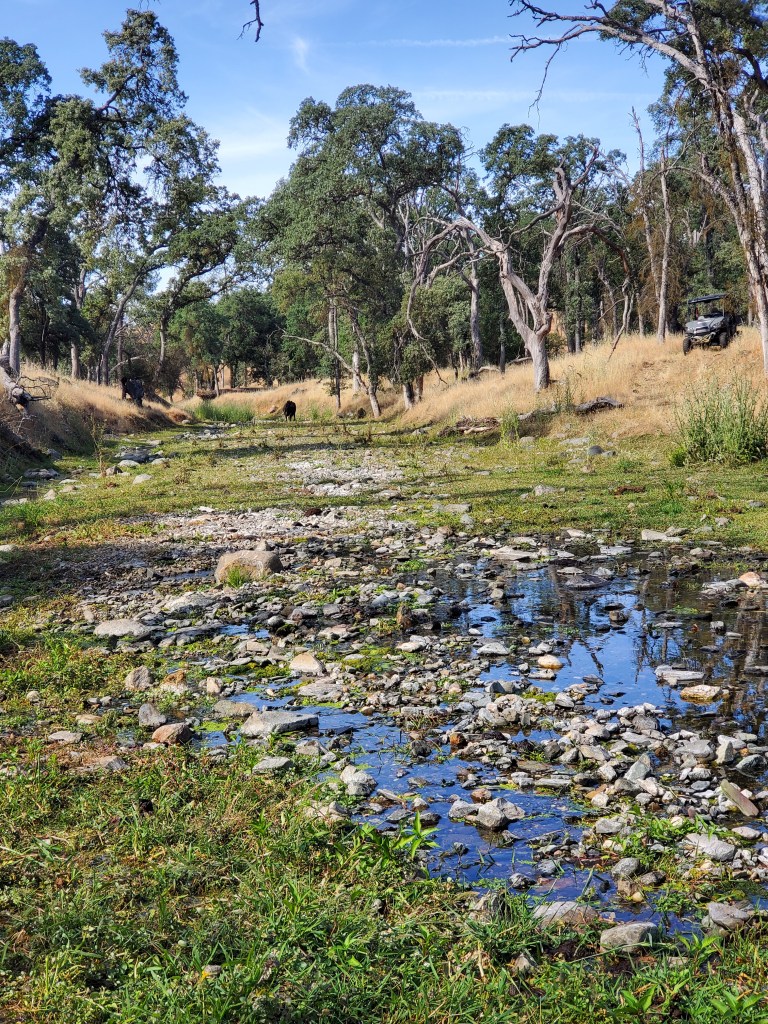
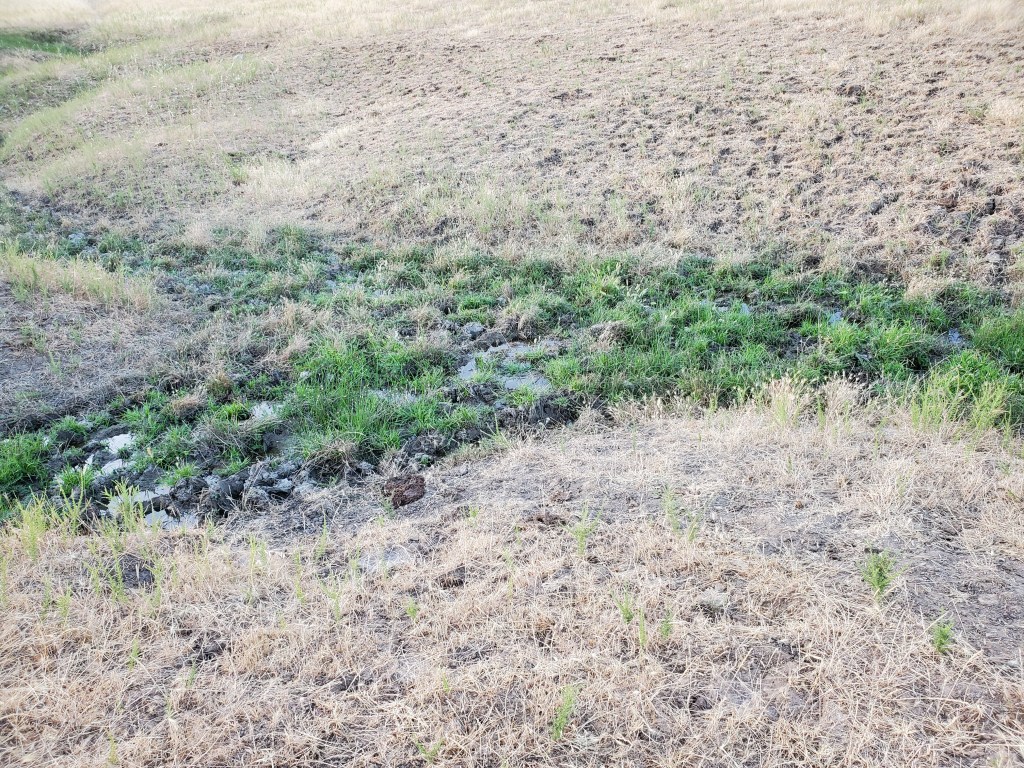
Every year I am stunned by how rapid the shift is from green grass to yellow grass. Many of the photos in this blog post were taken two to three weeks ago, so you will see things as green. By the end of May, most of the landscape turned yellow. There is still water remaining in the arroyos and the swale pond. Typically, by June, they are all dry. The springs are still green as well as the recharge areas in the arroyos. Tarweed is up and some are in a very early bloom. The doveweed has emerged and will be large by August – or possibly earlier like the tarweed. We still have a large number of wildflowers – purples, whites, yellows. A beautiful native toad is living in my patio garden area. The cows are fat and happy. This is a year of abundance of food and water, but not a very large population of insects to use them.

Last of the Butterflies as Cold Weather (Finally) Approaches

Cold weather is here. Rain is here. I am calming down with the change in temperature and precipitation. I worry too much about water and the life it enables. My concern is not for me, but all the living things here. Sure, I can leave and be a water refugee, but most of the animals and insects cannot. So – I must use my power as a human to do what I can to ensure livability for all. It is a responsibility we all have, but not one that all fulfill. These values are typical in Indigenous communities and families. We are taught that we are part of the ecosystem and have an obligation to live with respect in reciprocal relationship with all things. I am not always the best relative. I have many more shoes than one person can ever use, for example, taking much more resource than I should. I try my best as a Native in the modern world to fulfill my obligations. I fall short often. No one is perfect.

I watch storm clouds move in as I prepare for rain.

So far, we have had .75″ in this rain year (October 1 start). If you include the 1.25″ in September, we have now had 2″. The lengthy warm weather has allowed the blooms to continue, which has provided welcome nectar for bees and butterflies late this season.

Not all plants are welcome. The lingering heat also allowed goathead (puncture vine) plants to continue growing. They are a painful scourge, and I work very hard removing them by hand year after year. Typically, they are done growing by September. This year, with the ongoing irrigation, their roots were able to find the water not meant for them, and with the sun, continued to grow. I did not keep my eyes out for them after the beginning of September, so many grew quite large with their prickly, penetrating load. I got to them too late and paid for it with large distributions of painful “seed”.

As cold weather descends, I will see less and less of these insect friends, no blooms, and not as many plants. Everything needs time to rest – the soil, the insects, animals, plants and me.

Xerces Society – Making a Difference

Wayfinding sign at the NRCS Center for Habitat Kit pick up

I have sung the praises many times of Xerces Society. They have very committed staff who work with diverse people and organizations to achieve their pollinator conservation mission. They are incredibly helpful and truly make a difference working with people who know so little like me. Check out their education on various pollinator species.

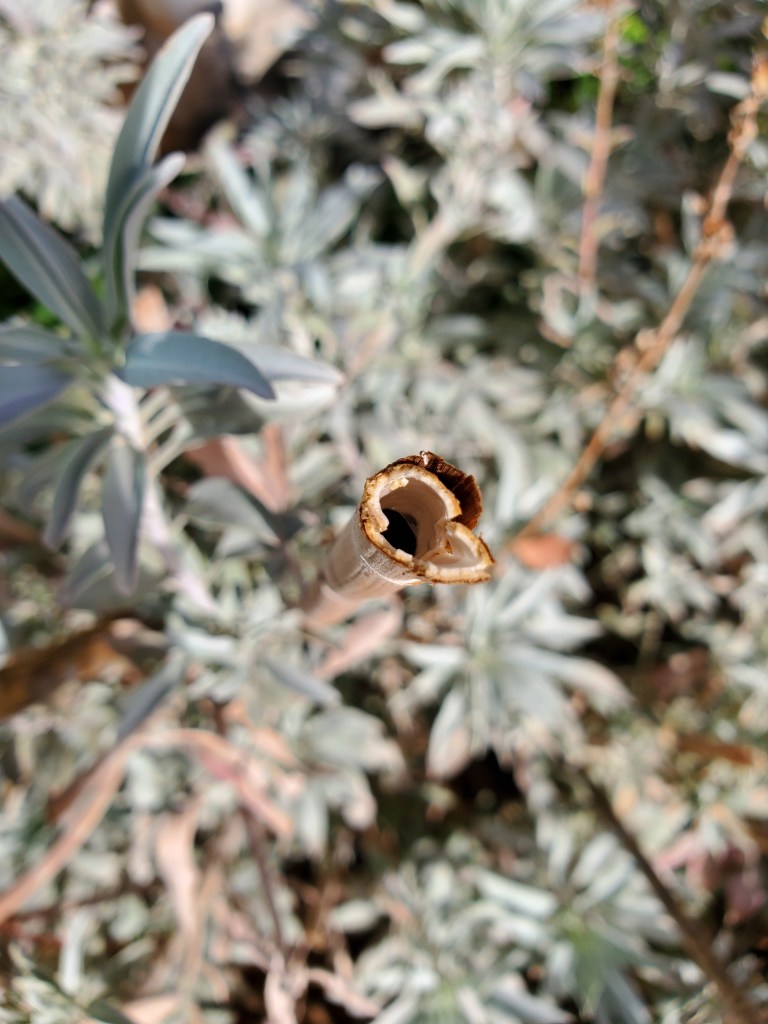
Last month, I attended one of their webinars on building habitat for native bees. It was so informative. I was able to go outside right away and create habitat per their discussion. Some of the things I learned that made an impact on me: 1. most bees live extremely close to where you see them. They do not have the physical ability (in terms of energy) to move too far away from their nest. 2. It is better to use leaf litter as mulch than wood/bark in areas where there are ground nests. They do not have the strength to push the bark away from the hole and could get trapped, and 3. Some bees nest in hollow sticks and some of those bees need longer sticks than others. They will take bites from leafs and use them to close the opening of the stick after they lay their eggs. Very cool!

The first thing I did was freak out. I had laid down significant mulch across many areas this spring to prevent moisture loss from the soil. My imagination ran wild as I was sure I trapped native bees in their ground holes by the thousands. I started to cry mad tears. These are the times I wish I had more knowledge to identify a bee hole. Son of a gun! I pacified myself by remembering that we must always think about balance. The bark mulch was crucial around the disturbed soil from planting milkweed and nectar plants to prevent the rapid drying out of the soil in the relentless Hornitos sun. I used the mulch for walkways to prevent soil damage and erosion in those areas I traffic quite a bit. There is considerable ground I did not cover, which is protected, and could host a bee nest. Ok, I wiped my tears and began to breath again.

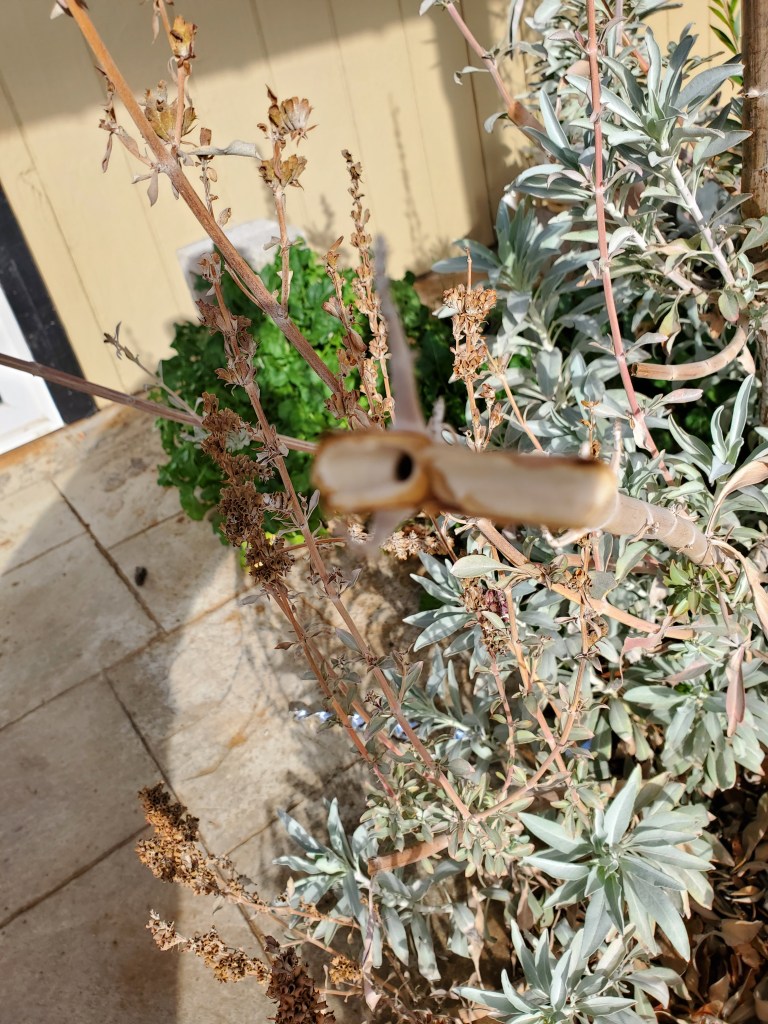
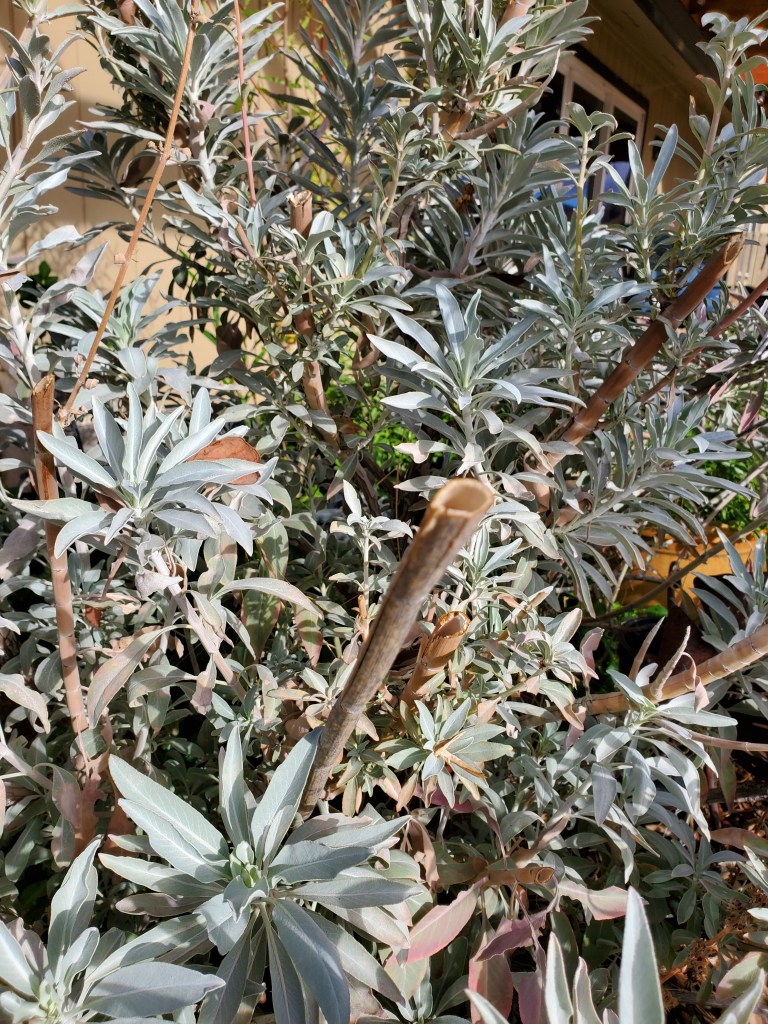
The next thing I did was to trim the white sage. I had been cutting the old bloom stems for seeds as my Chiricahua Apache friend Pete showed me to do. I did not realize as I had been cutting them that I was making habitat. Now, with my newly gained knowledge, I cut the bloom stems at different lengths. The bee expert talked about leaving lengths between 4″ to 8″. I sometimes needed to squish the stem to make sure the opening was very round and open. I really hope I see a plugged hole.

I was also able to recognize the patterns cut from the willow leaves by native leaf cutter bees. Xerces staff person Deedee Soto, who I work with most, had pointed that out to me during one of her visits. Now, I saw even more. The willow leaves look like half moon Swiss cheese. I hope this means that I have A LOT of native bees living near me. What great neighbors to have!

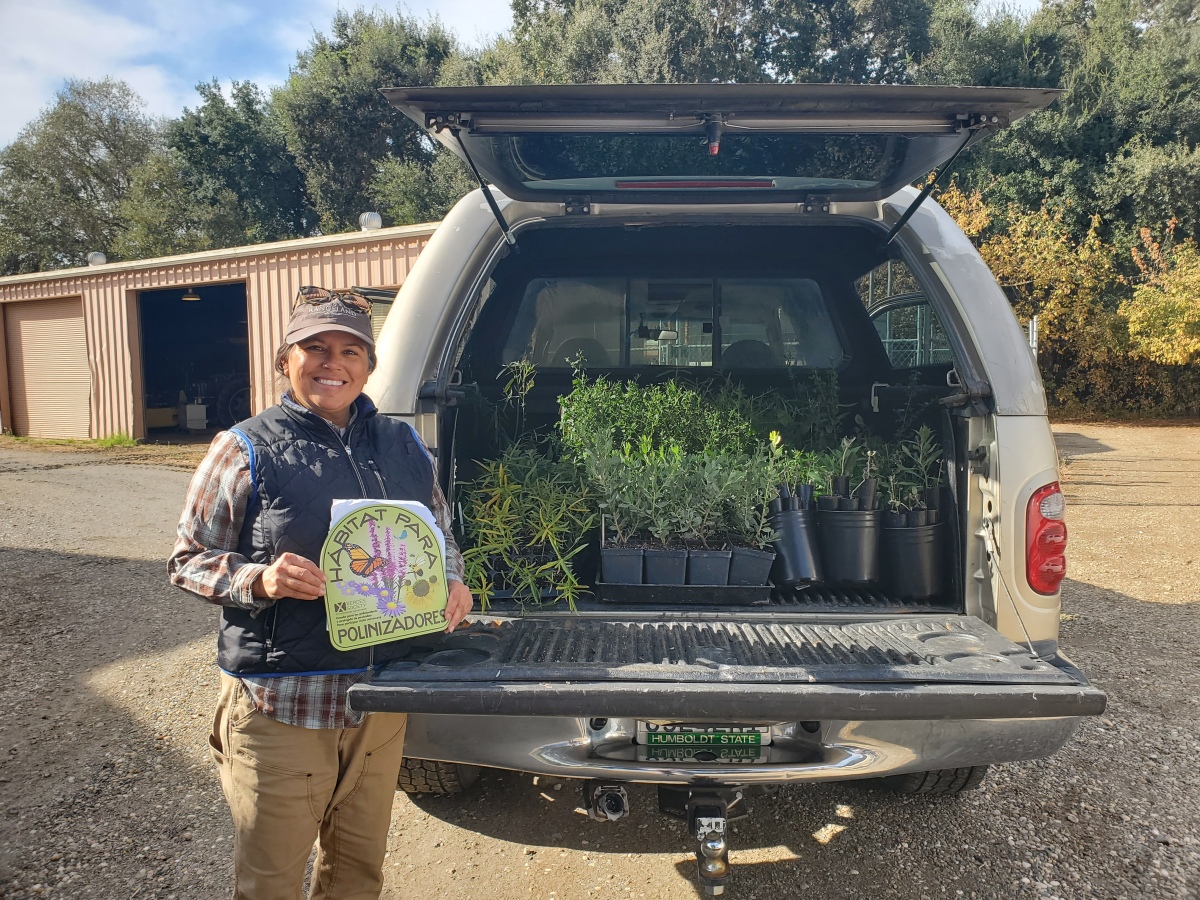
Xerces Kits are back!

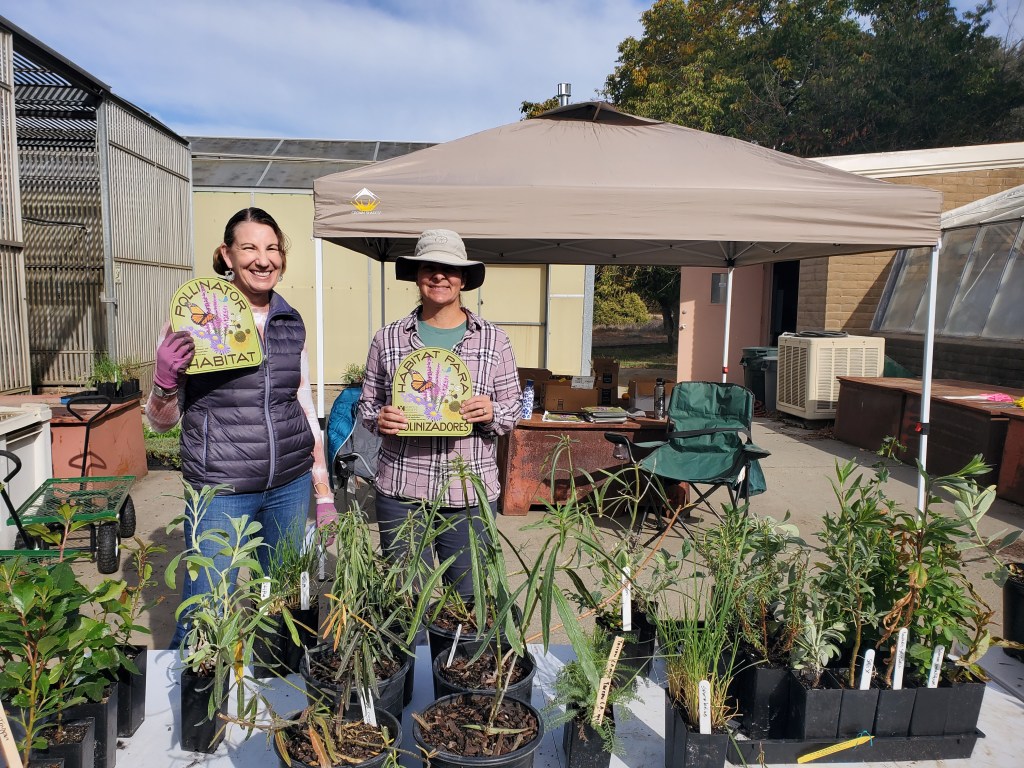
It is again that time of year when Xerces is distributing habitat kits. I cannot sufficiently express my gratitude for access to these important plants. I will be honest; not all of them survive each year. Hornitos is a tough place to make a life. Between drought, grasshoppers, gophers, and crippling heat, not everything can make it. Fortunately, life persists. Many of the Xerces plants have matured to generate seeds, and the milkweed has begun to run underground, replacing those that were lost along the way. I consider this a success and hope they (and their funders) do as well. We were able to bring back monarchs after a 10 year absence. Come on! That is incredible. Sometimes, I need to remind myself of this when I get sad about anything. With the help of Xerces, Mariposa Native Plants, Mairposa County Resource Conservation District and the Southern Sierra Miwuk Nation Pollinator Team – along with individual participants inspired by the work, we have made a difference in Mariposa County.

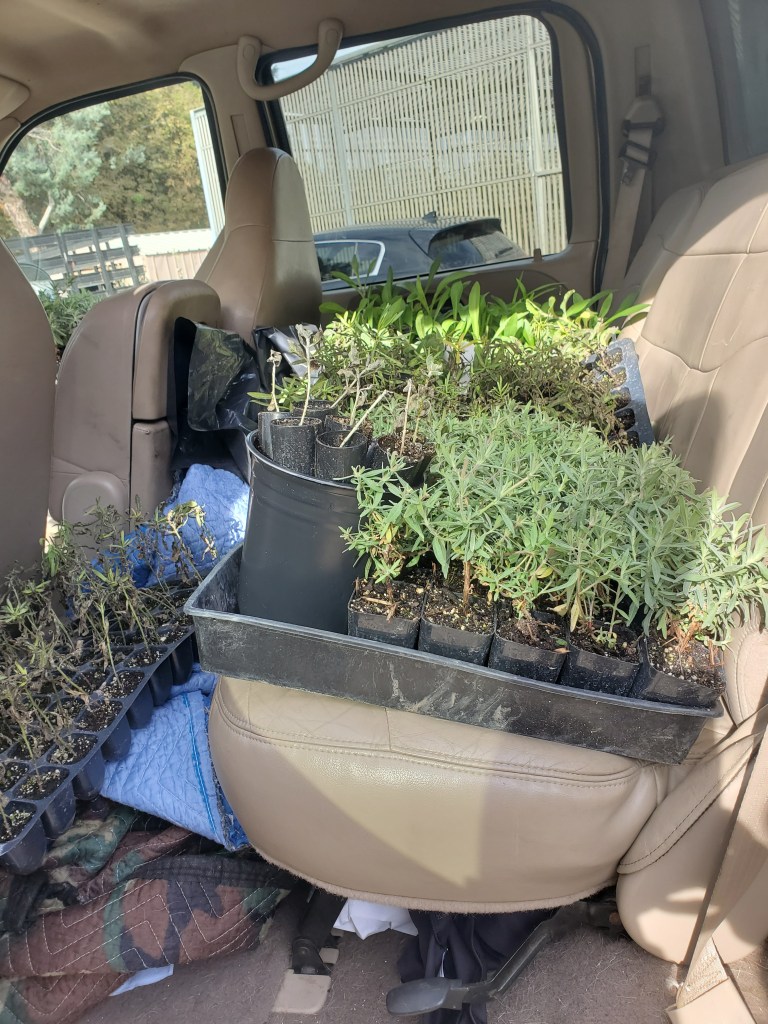
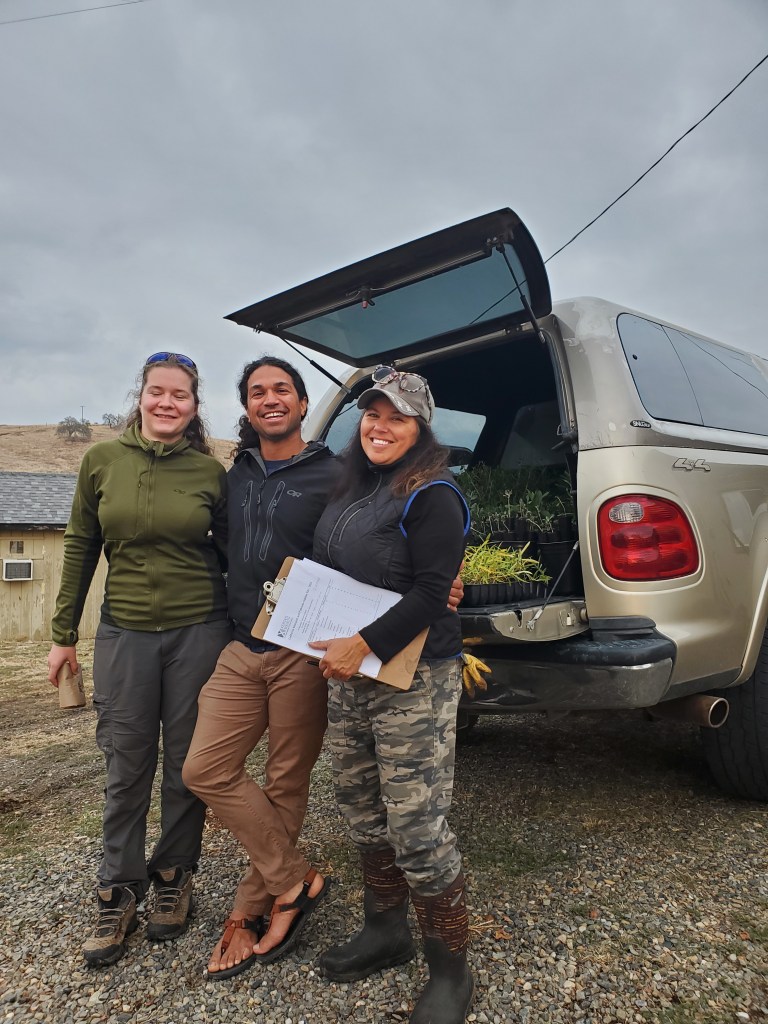
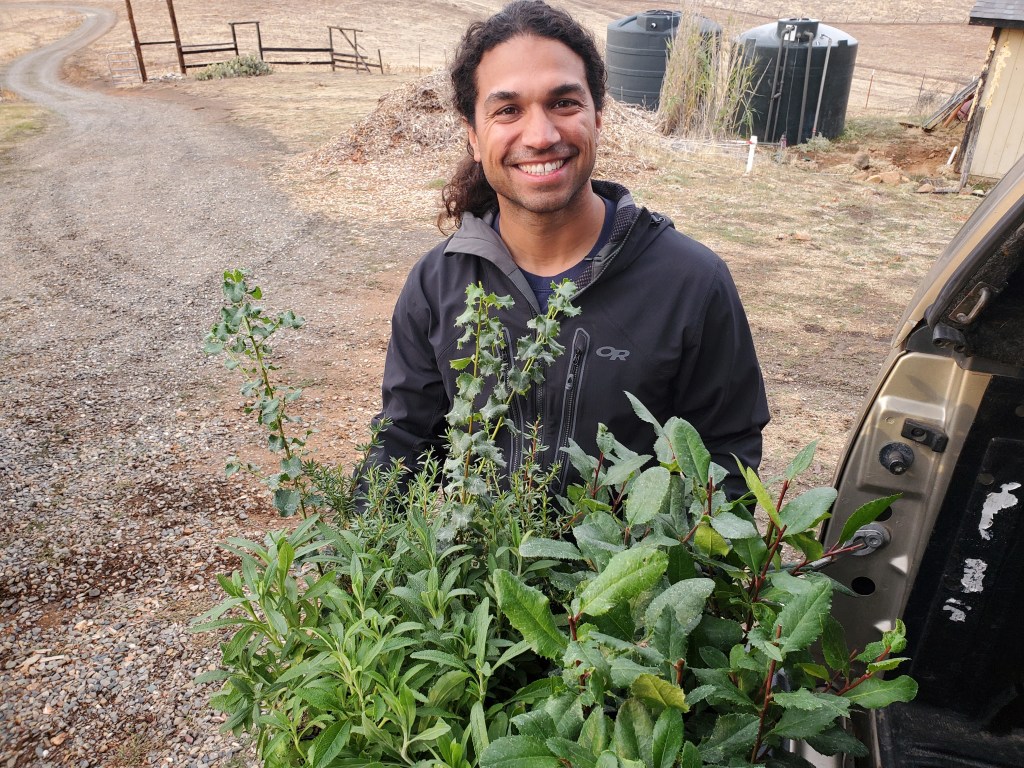
Because the pick up site is far away, I try to be helpful and offer to pick up other people’s kits near me. My young friend Ray Gutierrez called me and asked if I would pick up his kit. Absolutely! What a good guy. He and his wife Leeza are good land stewards. They live on a large parcel in eastern Fresno County. They want to make a difference and expand habitat they already have on their acreage. I met Ray many years ago when he was an Americorp staffer for Sierra Foothill Conservancy and have stayed in touch. He is a member of the Wuksachi Tribe from the Central Valley and holds similar values as me. We are connected on Facebook where he saw the information about Xerces and the kits. He wanted to make a difference for pollinators too. I guess social media is good for some things. I am grateful to him and Leeza for their efforts. I sent them home with a pile of greens and herbs from the garden and flowers for Leeza’s desk.

What a great young couple. They chose to get a grassland kit AND two hedgerow kits. Their SUV was packed! They will be planting for days and days. Chiokoe uttesia in weweriam (Thank you my relatives).

Fall Activities

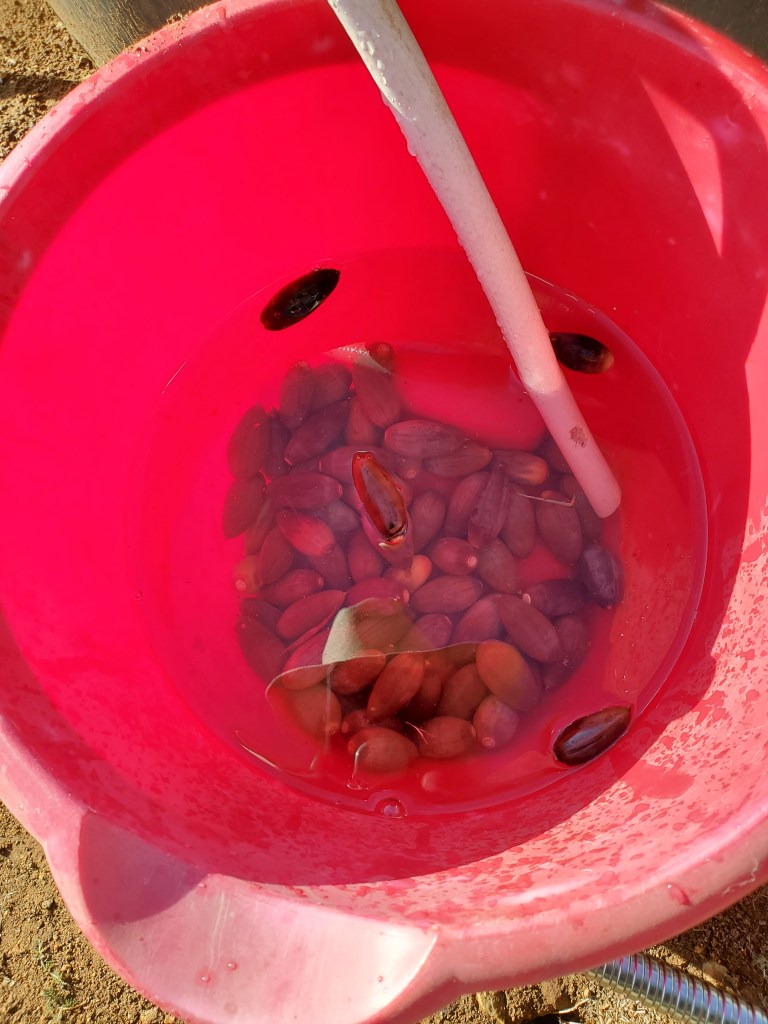
I am gathering acorn from my trees to grow the next generation of trees that are on the west side of the ranch. Those beauties in front of the house are having trouble and getting older with no next generation to take their place. We never see any seedlings up on this hill. An attempt 10ish years ago to grow more from acorn failed. So, as mentioned in my previous post, we are going to try again. This time, we have experts available to us. As I have mentioned, it is a bad acorn year in terms of size and production. There are some trees along the spring creek that have full-term acorn finally dropping . David and I were there just at the right time to collect quite a few, and many are intact enough to propagate. In other words, all but 4 passed the float test.

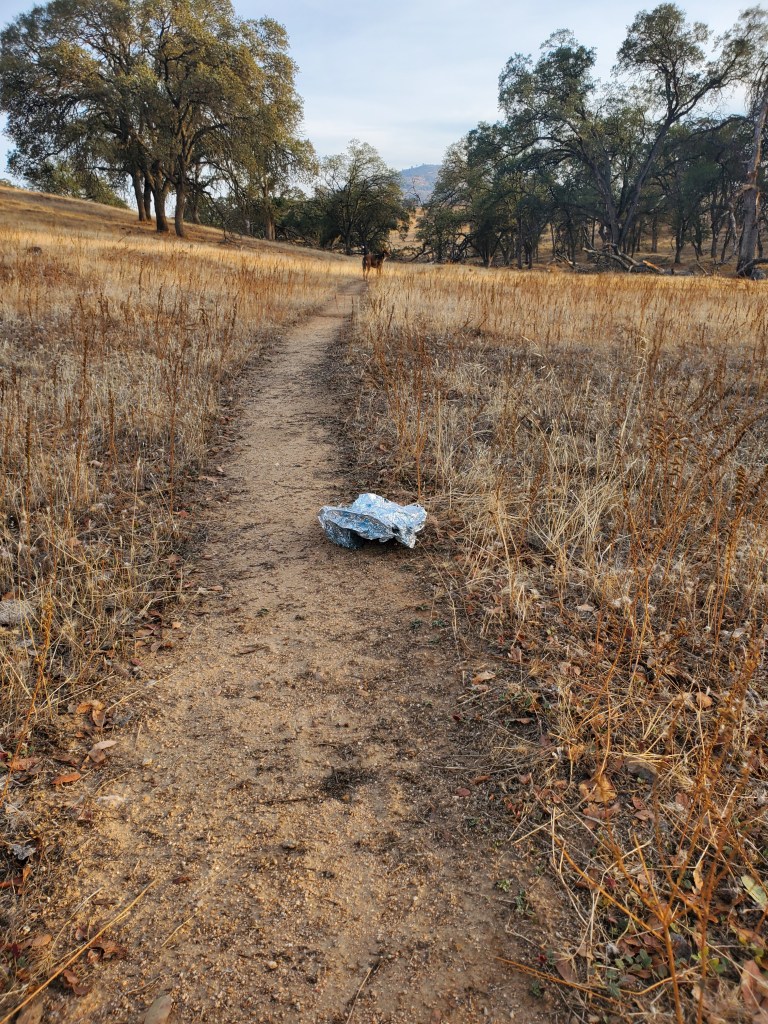
The cooler temperatures and moist soils, bark and grass make walking the ranch a physical and olfactory joy. Every walk is deliberate, even if joyful. I am always looking for changed areas, new things, human interference. This is part of stewardship. On a recent walk, I found a landed mylar balloon, otherwise known as litter. Please dear readers, don’t get mylar balloons to celebrate anything, even for children’s parties. They often get away from people and end up being trash someone else has to deal with. They are plastic and can be dangerous for cattle. Little ones exploring their world can eat them causing a very painful and unnecessary death as it blocks their digestive system.

With the drought, the neighbor’s pond is dry. This is a good time to help them out by looking for trash. It is amazing what floats down stream from others upstream. We are still finding mangled items from the 2017 major flood, which took out bridges and floated cars downstream. The other day, my good friend Chevon was visiting. We gathered trash from the pond for pick up later. We found two mangled metal drums, two tires, broken PVC pipe a metal pot from who knows when and a piece of wire fencing. Thank you Chevon for helping keep the land clean!

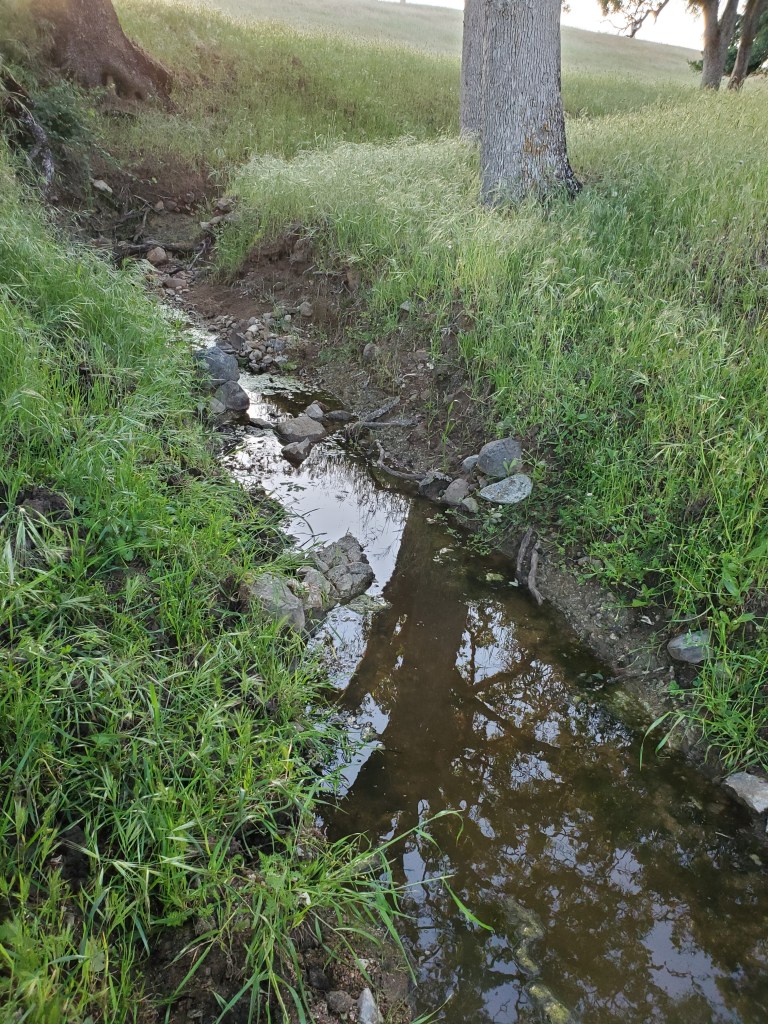
The spring in Spring Creek has been expanded slightly by the rain. Horribly, the large spring on my border with the neighbors has absolutely no standing water. The last time this happened was in the fifth year of the 5-year drought. It has always been so reliable, but I fear the pressure of everything using it doesn’t give it sufficient time to refill or perhaps there is nothing left to refill it with. The rains we are experiencing this week should help – but this is a very bad sign.
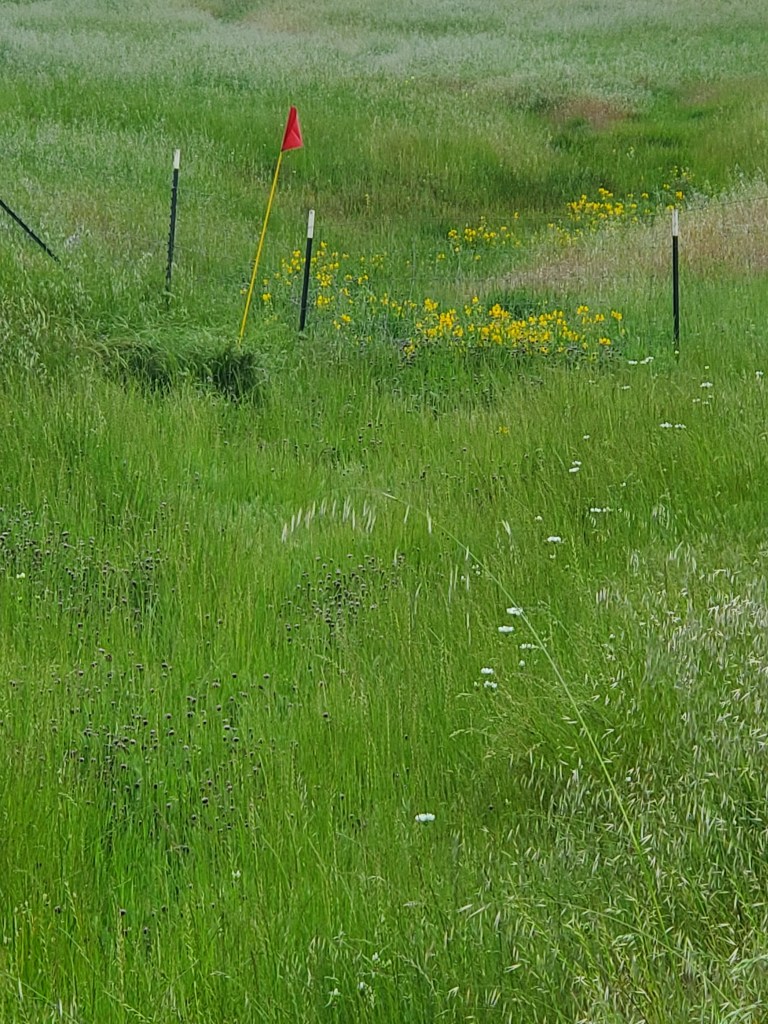
The small spring has more water and is expanding its presence slowly down stream

Here are some random photos from this past month.

Animam Mikwame/Día de los Muertos

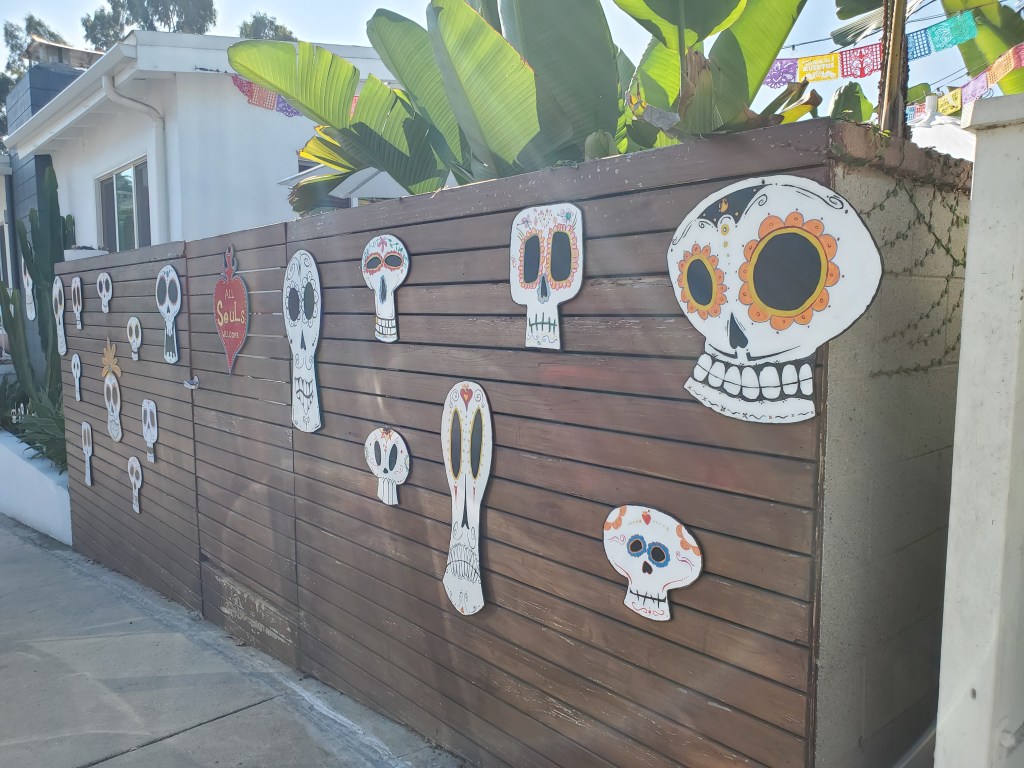
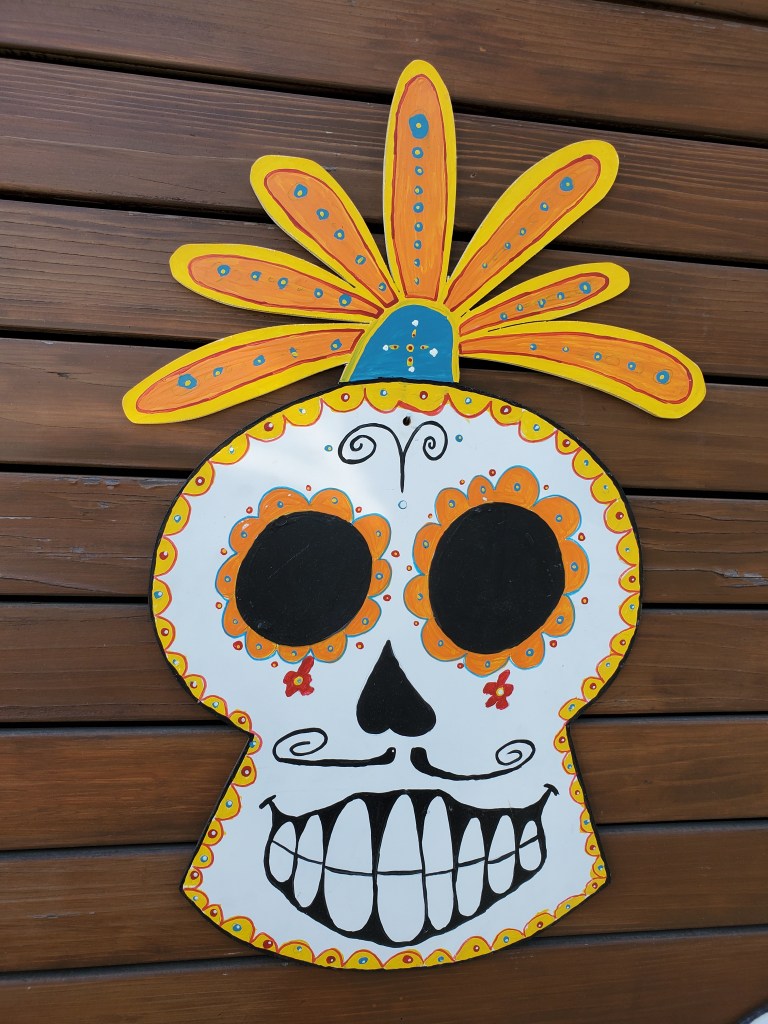
For those not aware, beginning last month and ending last week is an important time for many southwest North American Indigenous communities. In my Yoeme tradition, the holiday is called Animam Mikwame. In the colonized Latino community, the holiday is El Día de los Muertos. As the Catholics missionized my Native yo’yowam (ancestors) and all others in their path, they adopted the holiday/religious structures that existed and added Christian elements. In this way, the colonizers could more easily capture the minds, thus labor and natural resources of the Native people. The Día holiday is very much based in Indigenous culture – with Euro-religious elements added – and of course, many opportunities to merchandise and market. I am sure Hallmark has a card too!

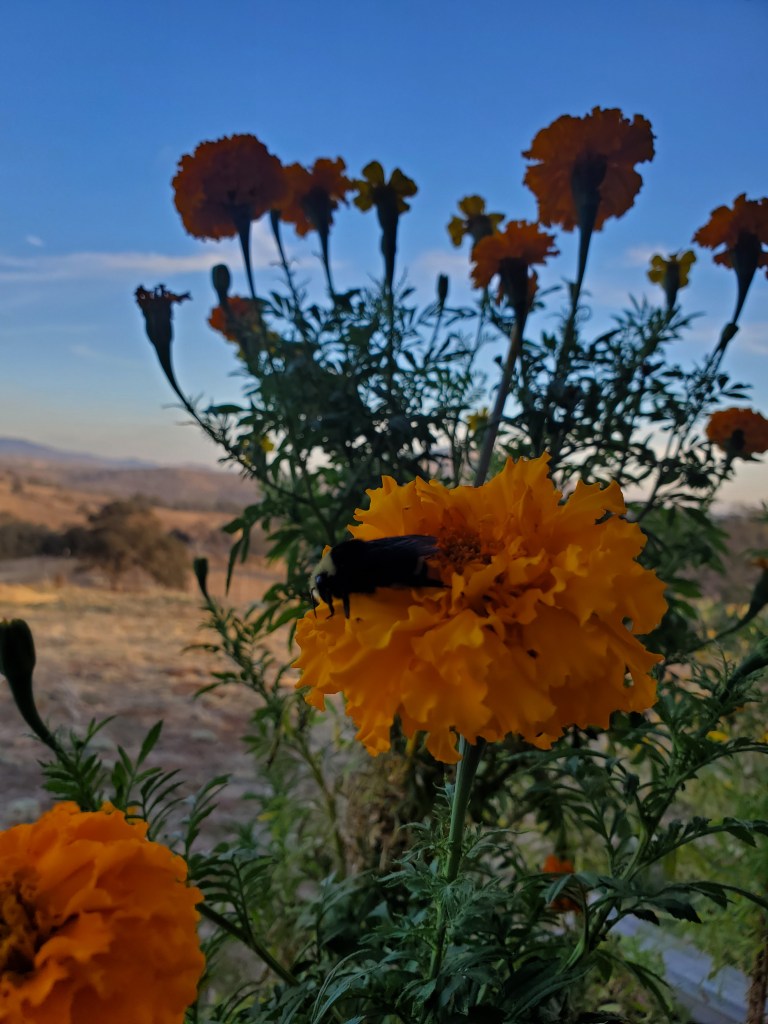
Nonetheless, it is a beautiful holiday that I hope you will embrace (if you do not already). Essentially, October is a time when the spirit world is closest to the world of the living and is at its thinnest November 1-2. It is a time to remember those that have passed, to honor them. Making offrendas, alters, tapehtim (tampancos/lofts) that include items that loved ones enjoyed in life. Marigolds have been used as sweet smelling flowers that help lead the spirits to their alters. They are still blooming at this time and are an important source of food for monarchs. It is no wonder that there is such a strong connection between monarchs and the spirit world. They are a visual representation of the spirits returning and a very real symbol of transformation from one state to another. It is a special time with food, music, conversation and families coming together. It is a time to think of others, not ourselves, to celebrate those we love who have transitioned from this world to the next.
My mother’s alter – Victoria K. (Ayala) Bernikoff

Who do you remember? What love from long ago or more recently did you lose? It can be difficult to think about – but that is the beauty of the holiday – the concept that they are always with us and closer than we think – especially in October. The purpose is healing, respect and the continuation of love.

The person who I remember always, all year long, is my mother. She was one of the most important persons in my life. Strong, yet gentle and so loving. She embodied everything the concept “mother” brings to mind. Tears are in my eyes as I write this, but they are tears that revel in the act of sharing her memory with you — because she was so important and such a fine person and someone who few really knew. She was quiet, contemplative, highly intelligent with good common sense. Importantly, she loved all her children unconditionally. There was never a moment I felt truly unloved or unsafe. I am grateful for her commitment to quality parenting. Too many people do not receive that.

I have had to struggle not to think of the bad things – the diabetes that could have been avoided in a less hateful world; the joy that could have been externalized in a less racist place; the emotional pain that need not have been if she had a more respectful spouse. I inherited her engagement ring, and when I touch the ring, I feel the happiness she had at that moment. The youthful hope she had for her future. Then, my mind moves to the hard times, the less bright reality of financial, housing, and emotional insecurities. How difficult that was and so far from the life she envisioned. — But I am getting too far in the weeds, and my mother would not have approved. She was also fiercely private.

Instead, I clutch that engagement ring and think of her being liberated from an abusive home by this strange, wild, fun, unusual man from the other end of the country. She loved to dance and so did he. I remember her smile, her glee at spinning around the dance floor. Her fulfillment by four children who she loved and took so much pride in – one who gave her grandchildren, another who gave her triumph, a third who gave her laughter and the last one who gave her music – each child with talents they contributed to make a whole to fill a hole – in my mother’s vision of her future. She loved to travel, and her wild spouse, who made her sad, also provided fulfillment. She loved to learn, read, discover, discuss. She was an intellectual, without money or degree, who learned by reading and listening, and passed along everything she had, everything she held precious, all that is good in her world, into us. I am grateful. I miss you every day, and I love you mom. I try to help where I can, to be a good person, to take care of the family and to keep what you created together as much as possible. I help children and vote for people who care about the world. I am flawed in many ways, but I have followed your lead to help with the valiant but nearly impossible task of leaving this world in better condition than when I found it despite the many powerful forces pushing the other way. I brought the monarchs you loved back to this place, protected their babies, which brought you back – from egg to caterpillar to butterfly to egg…from south to north back south again. I am as whole as I can be without you. Te tui yo’owe. Chiokoe uttesia maala.

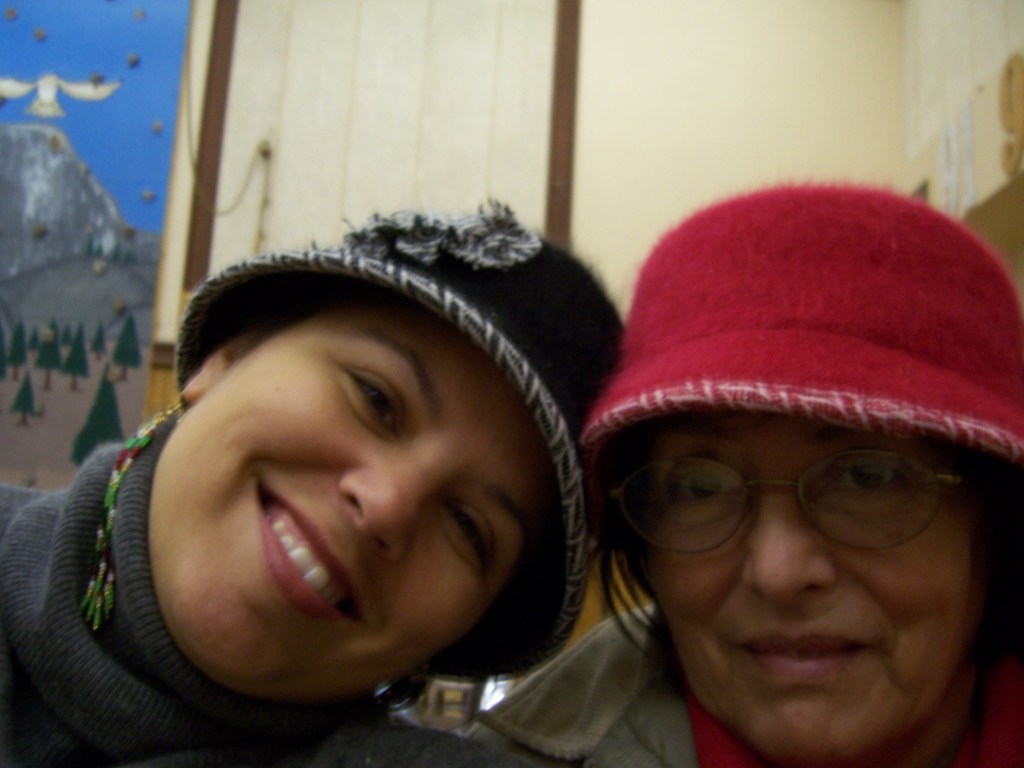
Mom and I in 2005 at school Christmas play.