
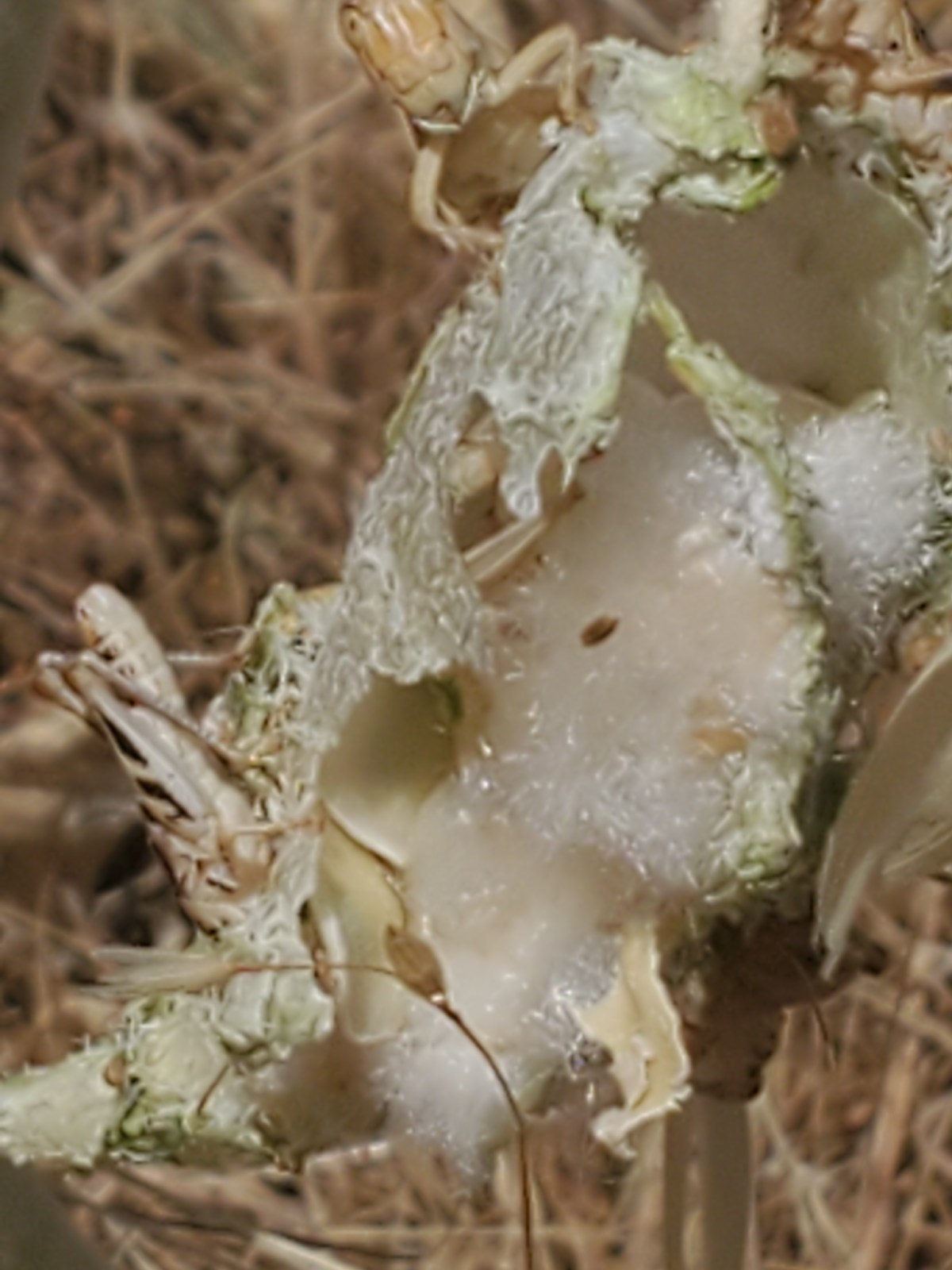
Oh yes, by the title and the time of year, I am sure you understood that the grasshoppers are back. They are eating their way up the hill. I had hoped they would not be back, that the typical cadence of boom and bust for the hoppers would return. We are due for a few years without plague levels. Alas, once again, the imbalance of what we are doing to this planet has manifest itself on Taawim Bwiapo. Essentially, almost nothing gets to live but the grasshoppers.
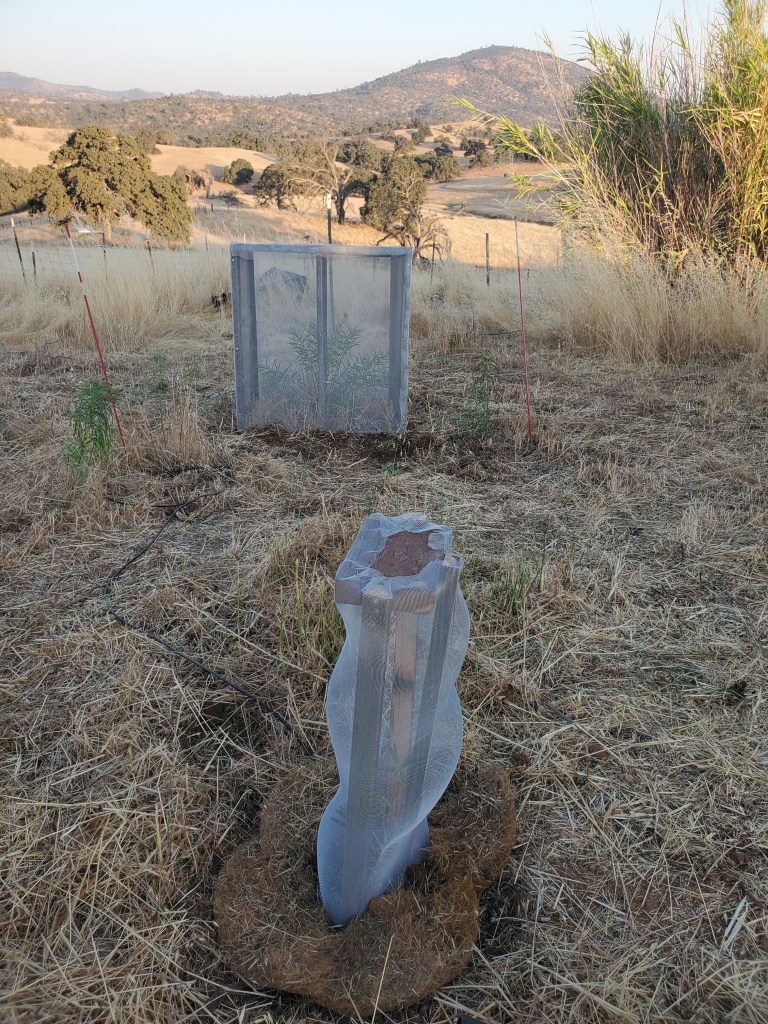
Except…this year, I am more ready – busted thumb and limpy leg and all. As soon as I saw some bites in the oak seedlings by the creek. I had David purchase aluminum screen. He began to make little screen houses to go over the gopher cages in which the oak seedlings were planted as well as other screen boxes for my pollinator plants. The poor guy. He is doing so much. I am getting better, little by little, but still cannot perform most of the ranch work I need to get done. David also has his paid work to do, which has been extremely busy of late. To enable us to get what we need done in the timeframe it needs to be done, I decided to hire someone to help us on the ranch, and to give poor David a break.
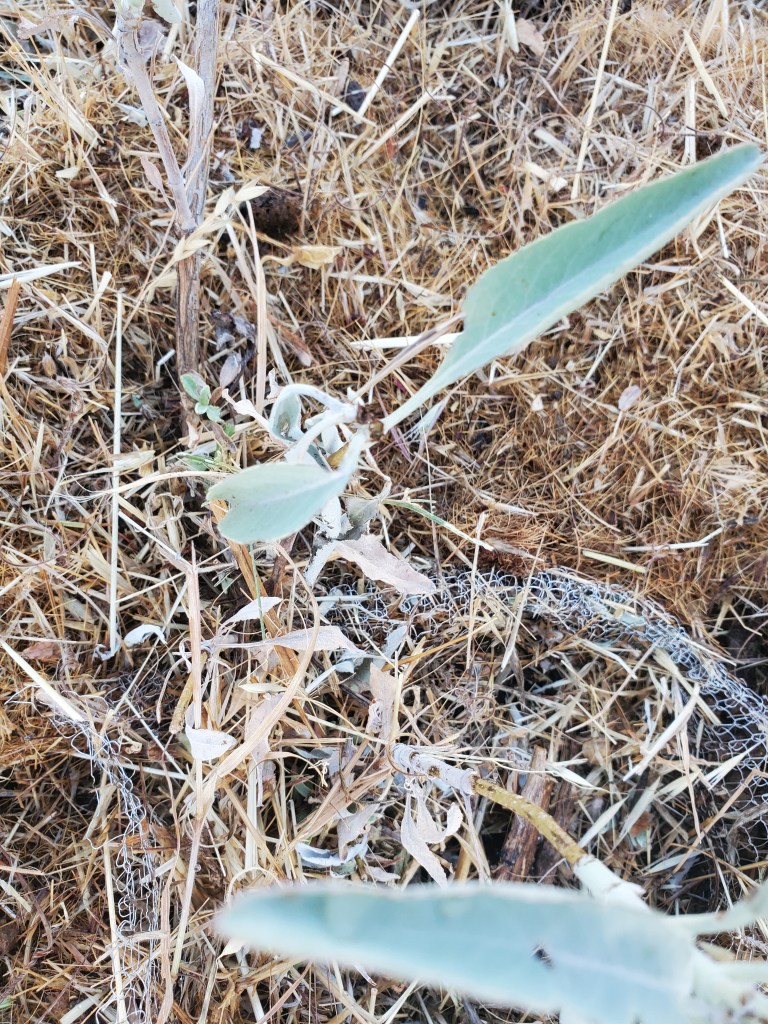
I put out the word I was looking for someone, and a friend, Jeanne Ann, said she had a grandson who was looking for work. His name is Sam. He jumped in and did weedeating freeing David to help with the oaks. We began placing his boxes and found that the two oaks at the downstream section of Spring Creek were already eaten. I lost my breath. I was horrified. When I looked closer, I saw that the bark had not yet been eaten off, like last year. Maybe there was still a chance. We covered and watered them anyway in case they were able to survive.
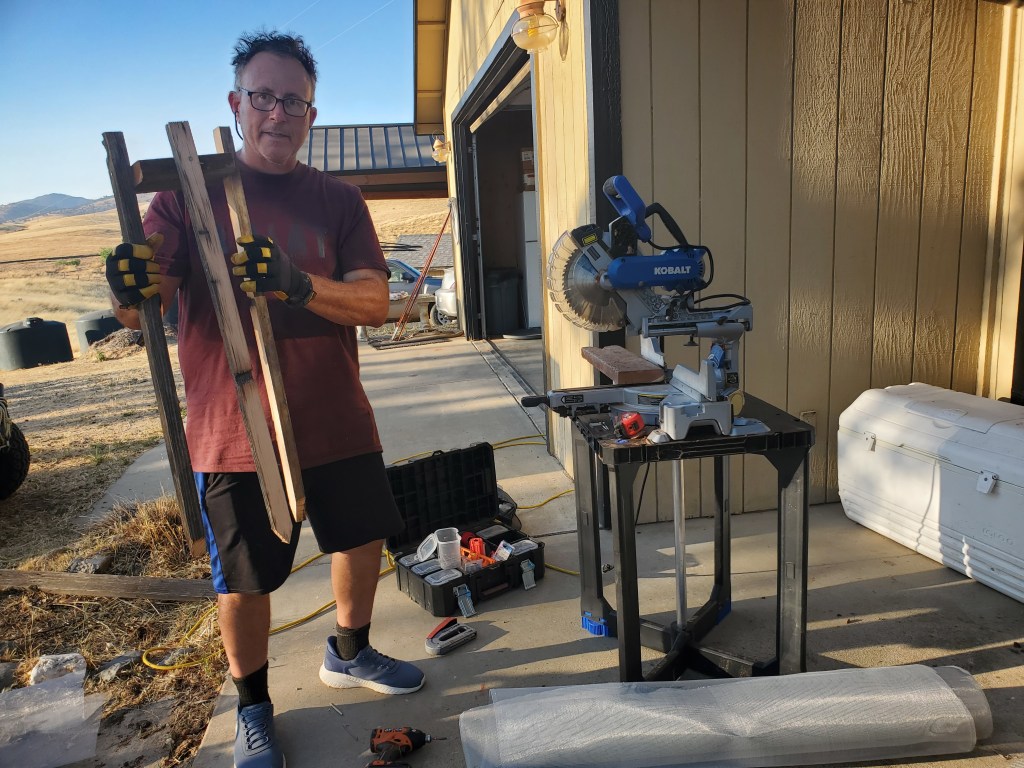
Then, a major issue happened at David’s work, and he was on a service incident for the entire day. Work stopped on my oak and plant cages. With my injuries, I was not able to do anything. I asked Sam if he knew how to build and use carpentry equipment. Turns out, he has done building before -so he had knowledge. He jumped in and innovated on David’s design and began pumping out screen boxes. Thank you Sam!!
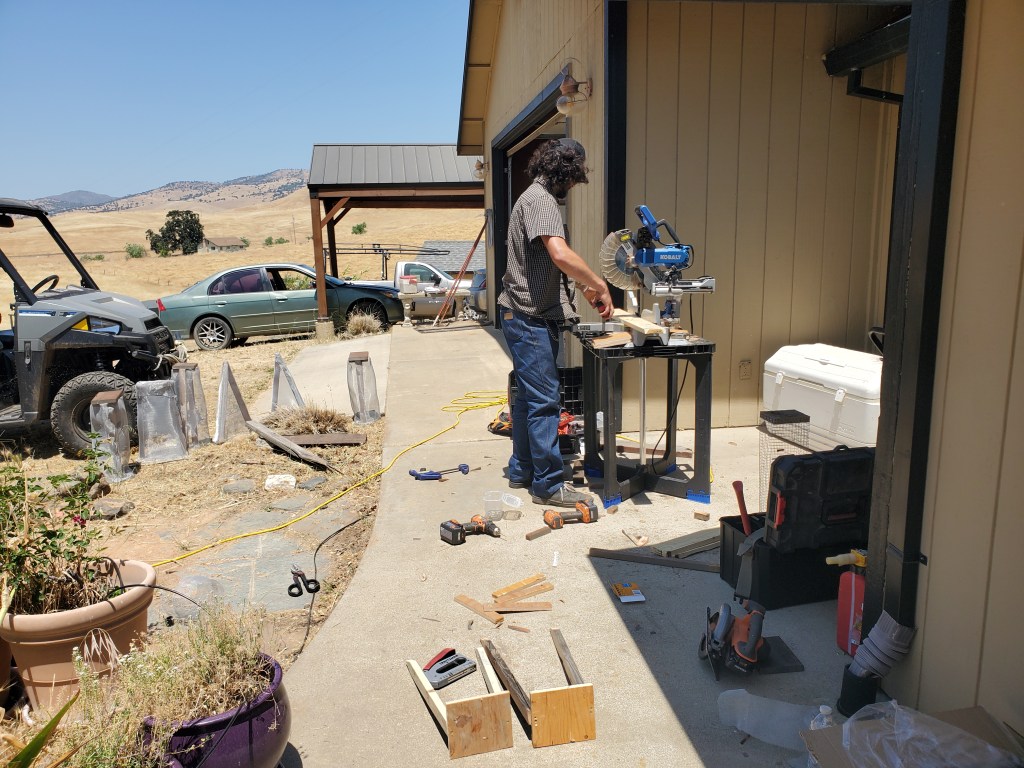
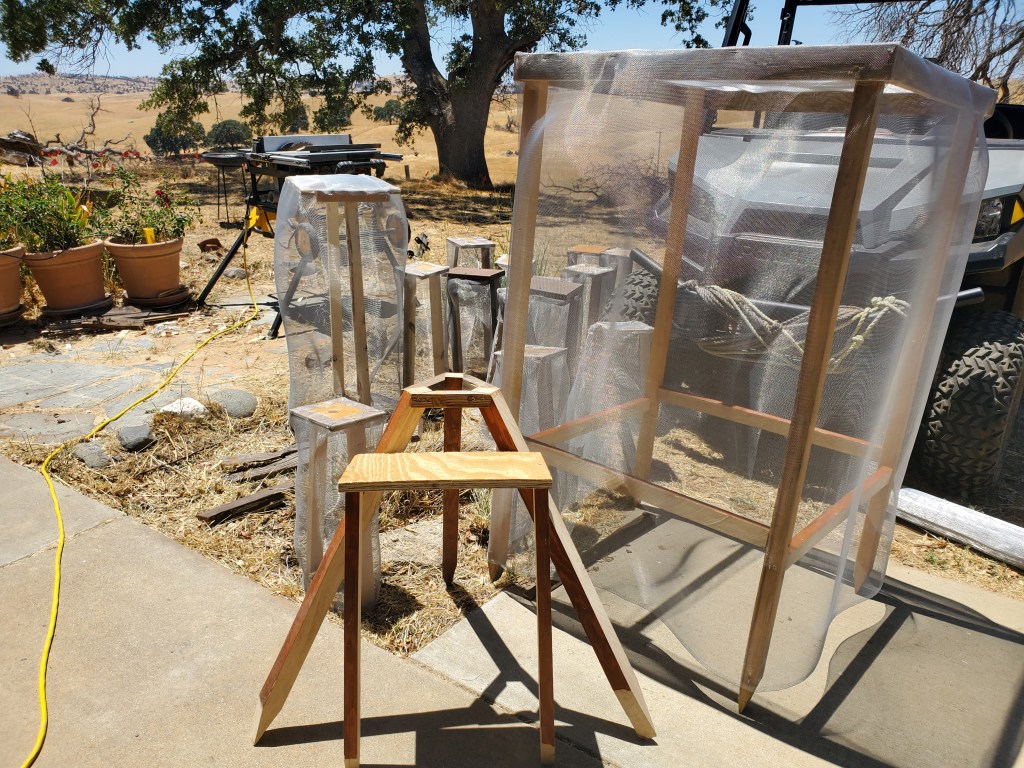
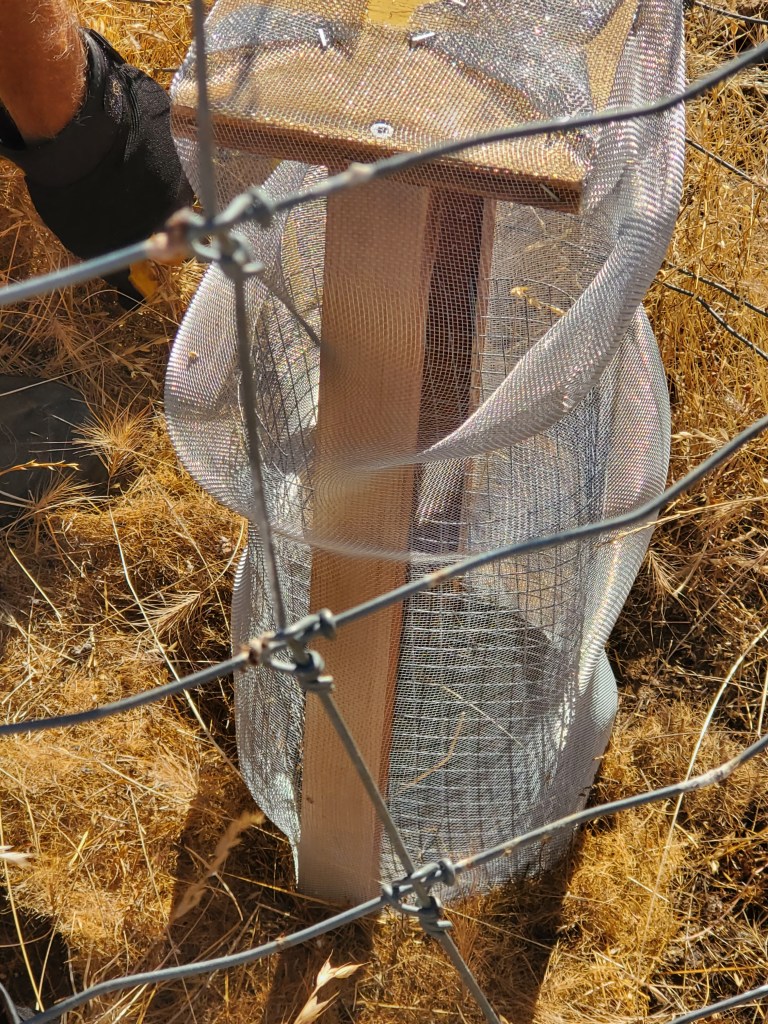
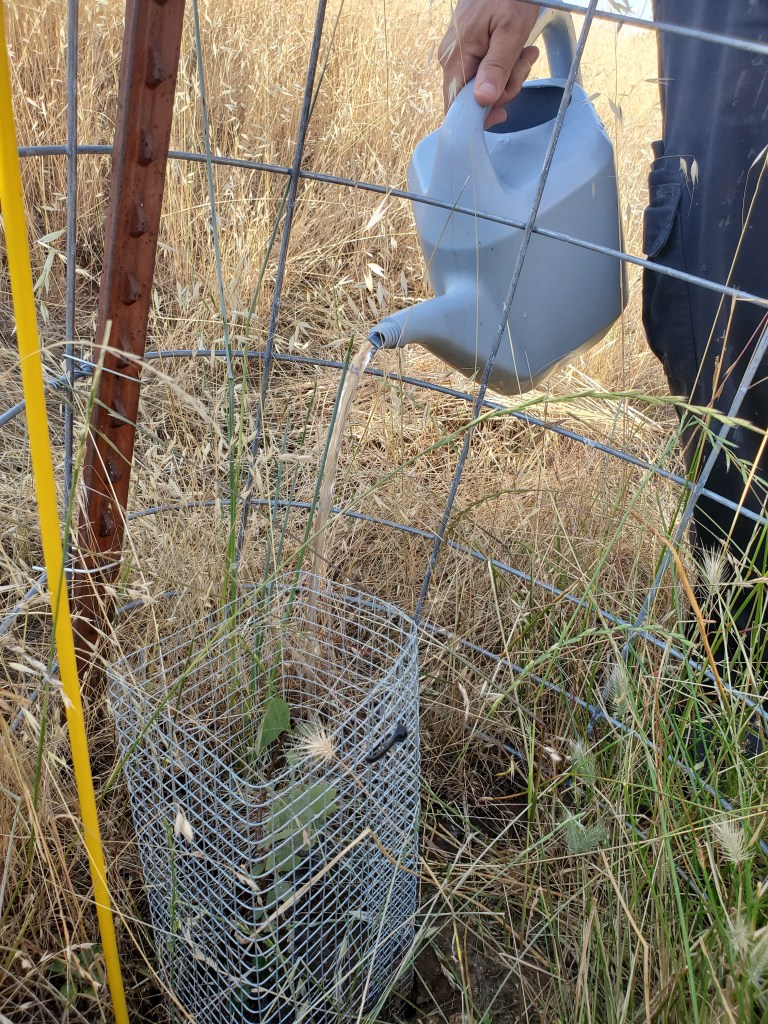
They are designed to have a wooden top to give it weight and an attachment point. There are two stakes (cut on the table saw from scrap wood) attached to the wooden top. They are nailed in at an angle to help with going over the cage shaft. Screen is measured to just fit around the gopher cage shaft. The screen is wrapped around the wooden structure and stapled.
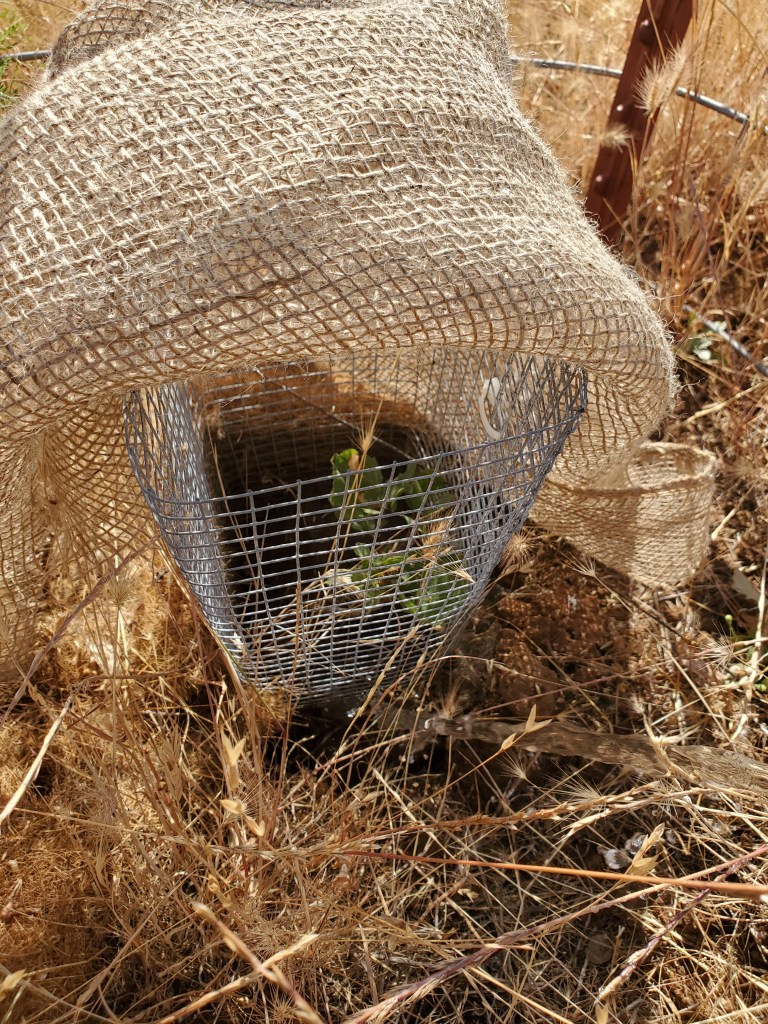
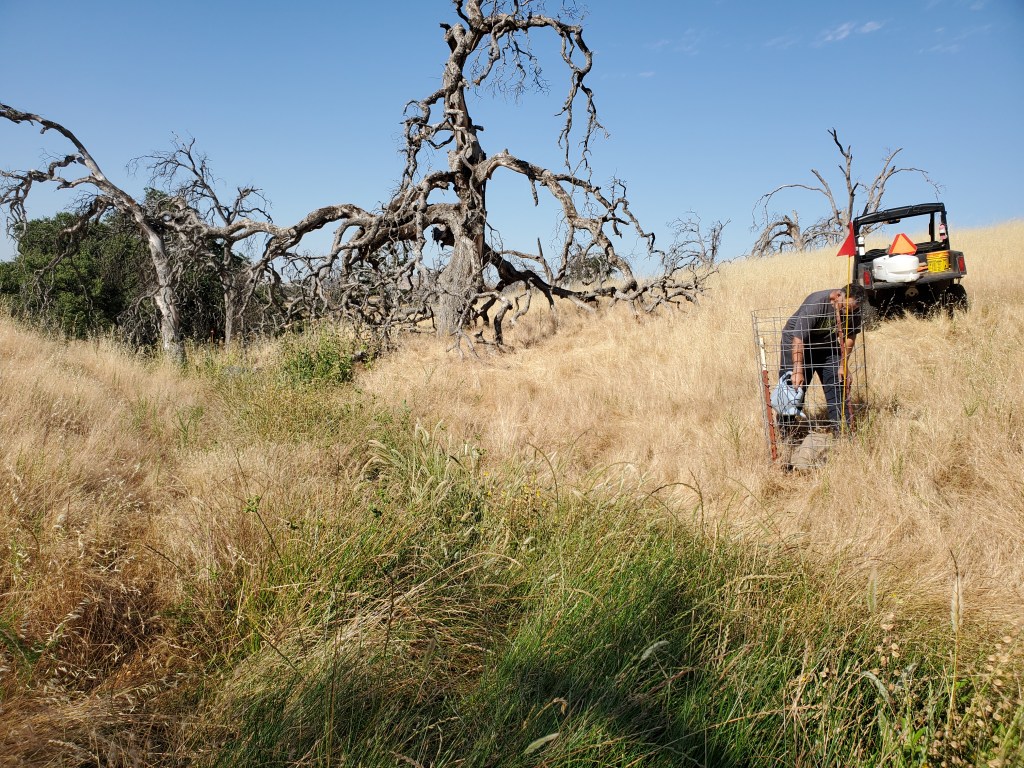
To do this takes time. The trees by the house got their boxes first. Then more needed to be built. Sam worked on the boxes while David and I placed what had been built. David could only work with me in short bursts because of his work schedule. It is laborious and very hand-oriented. You need to load water for the trees, load the boxes, the hammer, buckets and other tools to open cages or fix things. Then, you need to drive the polaris to the locations — no power steering. Next, you unload what you need, pull the huge, heavy tub with water toward the tailgate, unscrew the cap, hold onto the cap despite the pressure of the water in the large container, hold the watering can with the other hand or place on the ground, close the cap just right to prevent leakage (since you must have enough water for all the trees on your route.), haul the water, remove the shade burlap from the gopher cage, and water the tree. You need to pull up the coir pad so the screen box stakes can hit the dirt. Then, you go back to the cart, grab the screen box, lift it over the side of the cage. You need to alternate your hands through the openings in the cage, grabbing the screen box with one hand while placing your next hand through the next level of holes to grab the box, gently lowering it down over the oak in its gopher cage. This takes time. It is a gentle operation because you don’t want to risk dropping the screen box in the cage out of reach or breaking a branch on the seedling. Next, you carefully fit the screen over the gopher cage. They are designed to just fit. You don’t want to be too strong with it or the screen may pull off the staples or wood crack. You pull it over the gopher cage like a condom, then take your hammer and pound the wood stakes into the moist ground with the hammer. You then squish dirt up against the screen so there is no entry point for the hoppers. You place the coir pad back around the blended unit, grab the discarded hammer, walk back to the polaris and do it all again. Ideally, you don’t want to have to open the cage. That takes much more time – so you have to be careful.

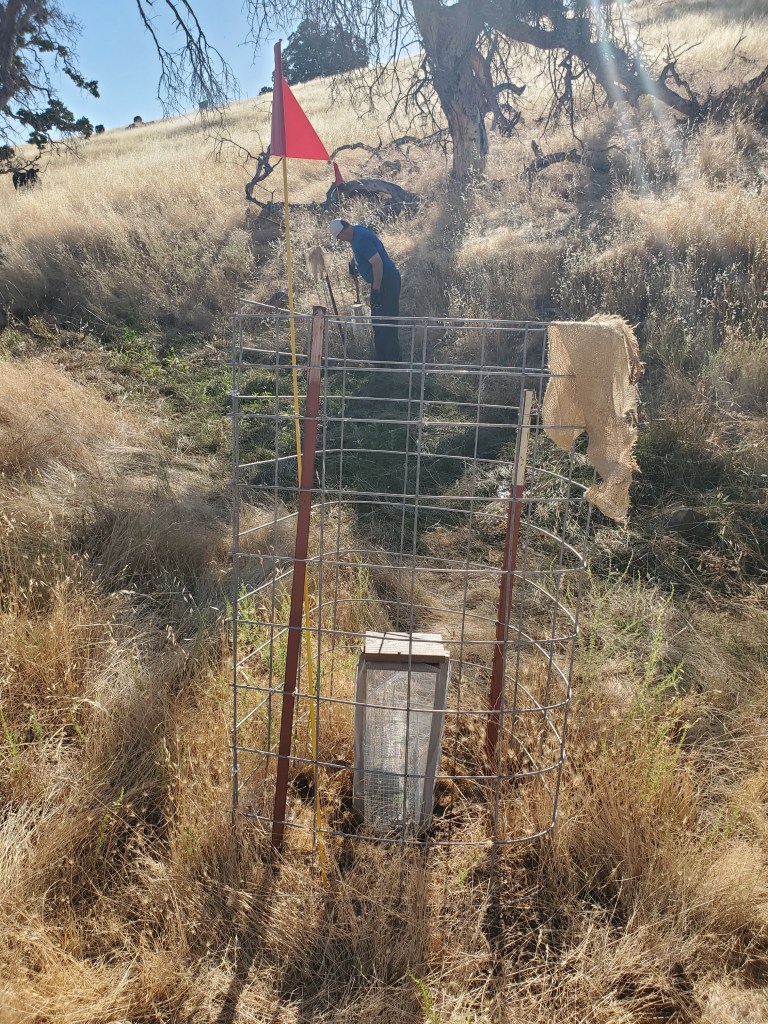
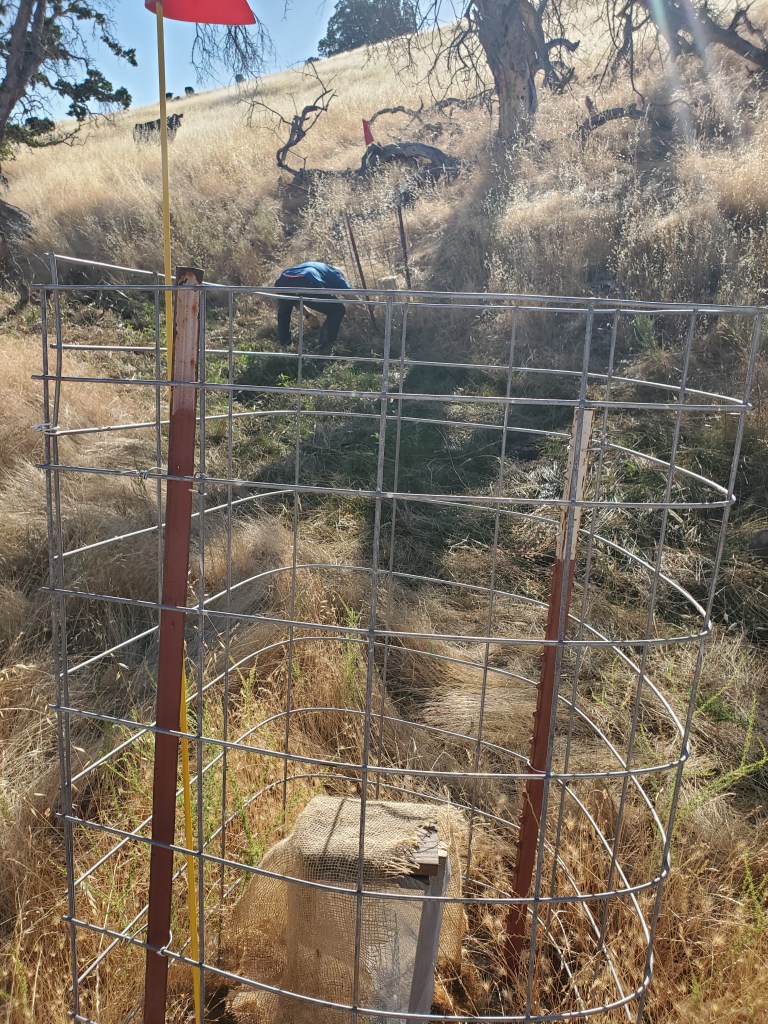
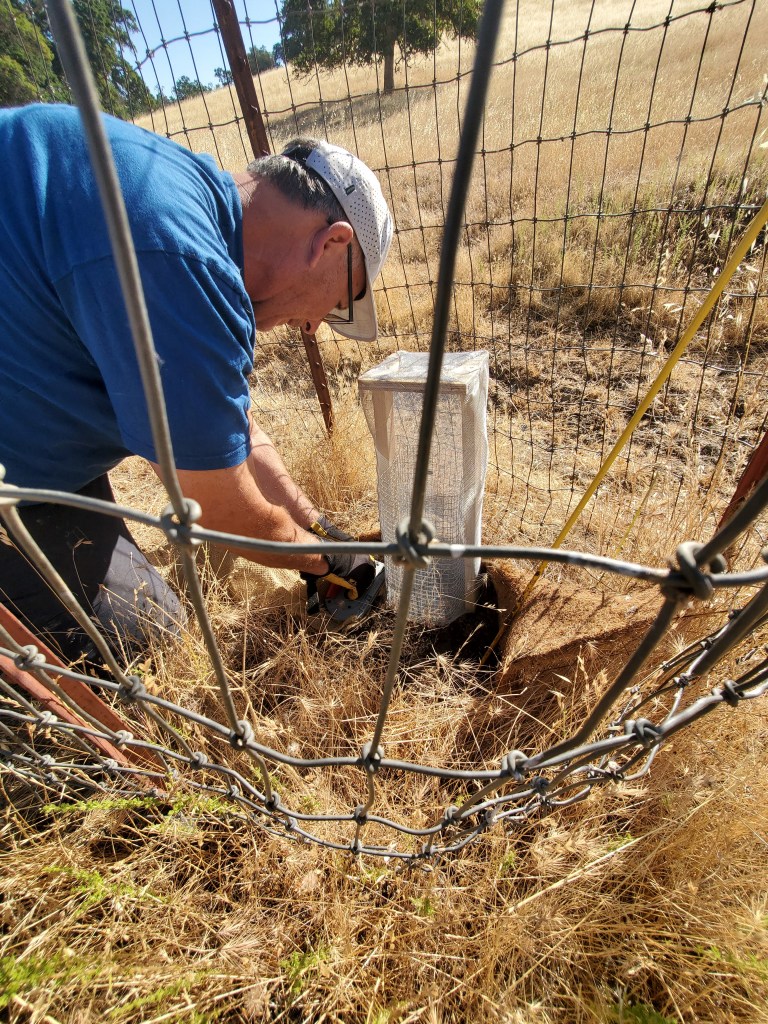
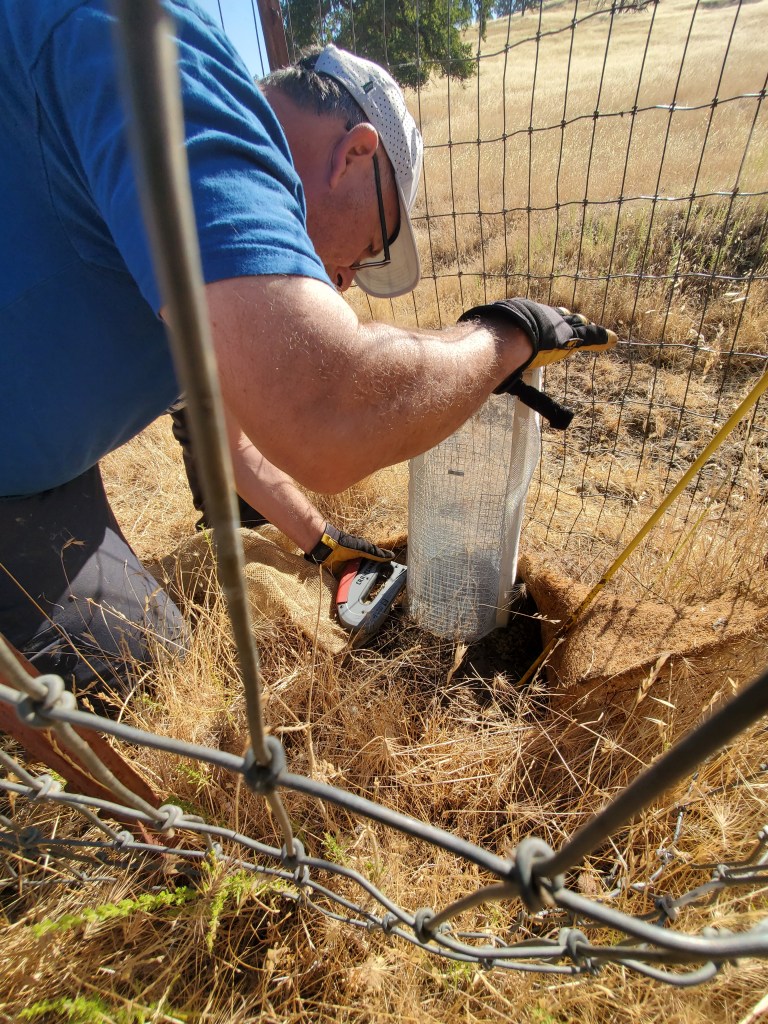
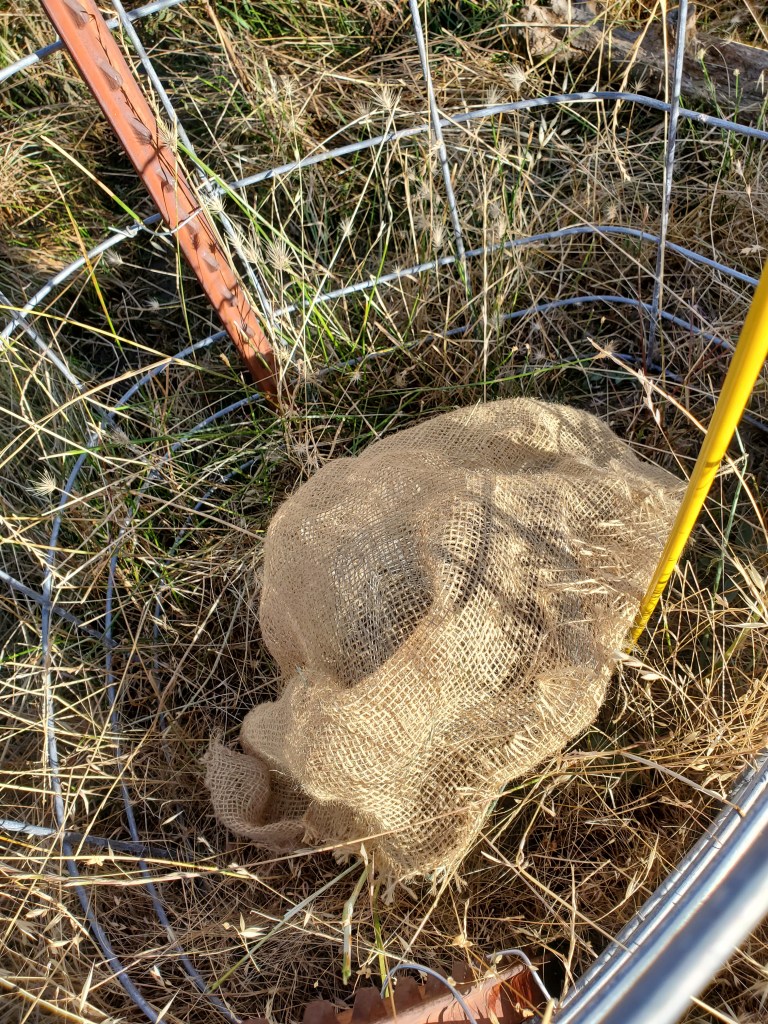
With my thumb still busted, wrist, knuckles and ankles still sprained, my job has been copilot, holding the water bucket with my good hand, carefully walking over to the tree, watering and removing the burlap and coir pad. David was doing everything else. As we went to each tree, I held my breath as I lifted the burlap shade cover, hoping I would see the healthy seedlings I had watered just 6 days prior. The two upstream on the Spring Creek…they looked great. I breathed out. The one by the lower pastures planted into the old dead oak, I lifted the cover, mostly eaten. There was one green leaf left. I’ll take it. Watered and screened. The discovery was unsettling. I became nervous for the others.
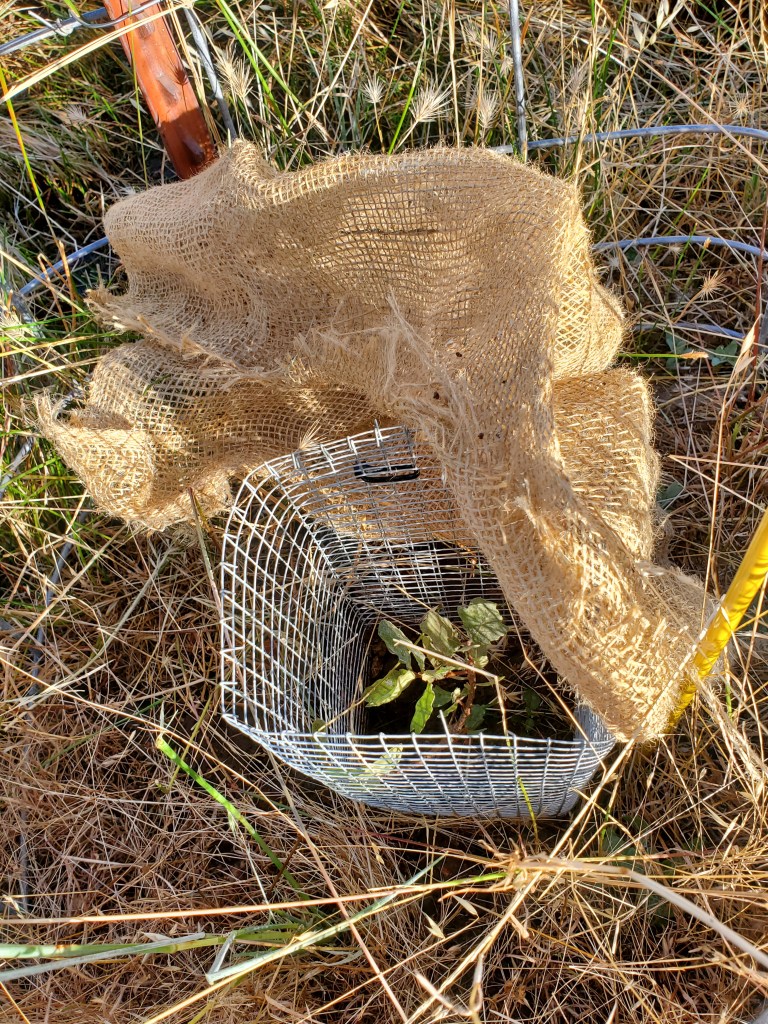
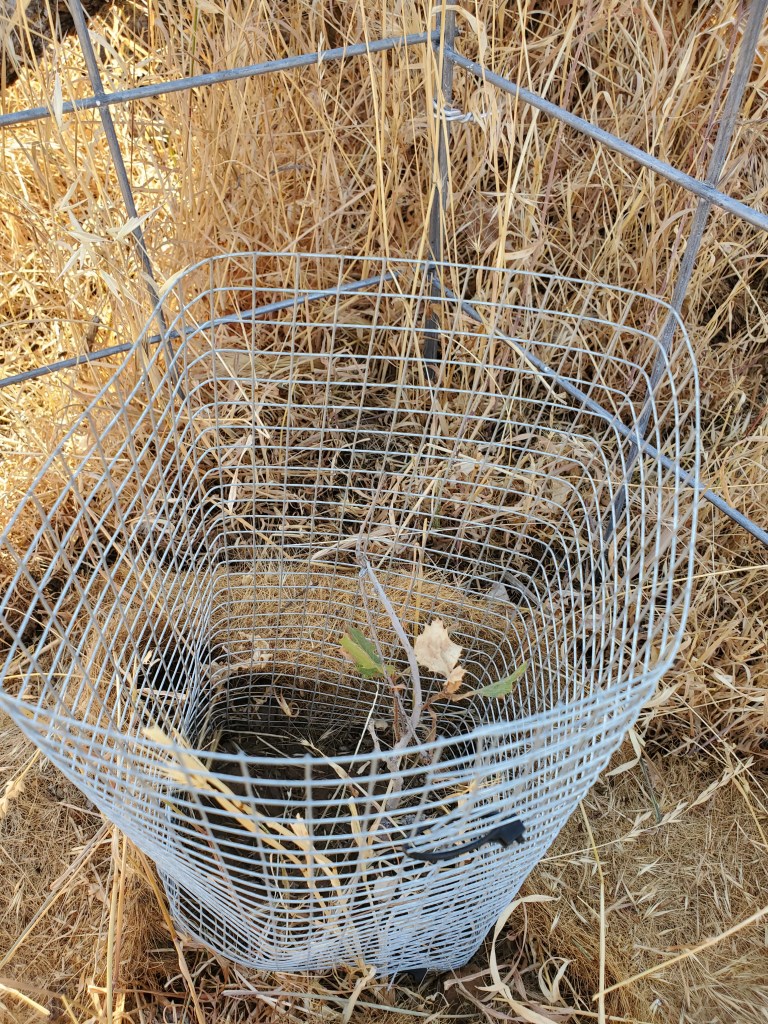
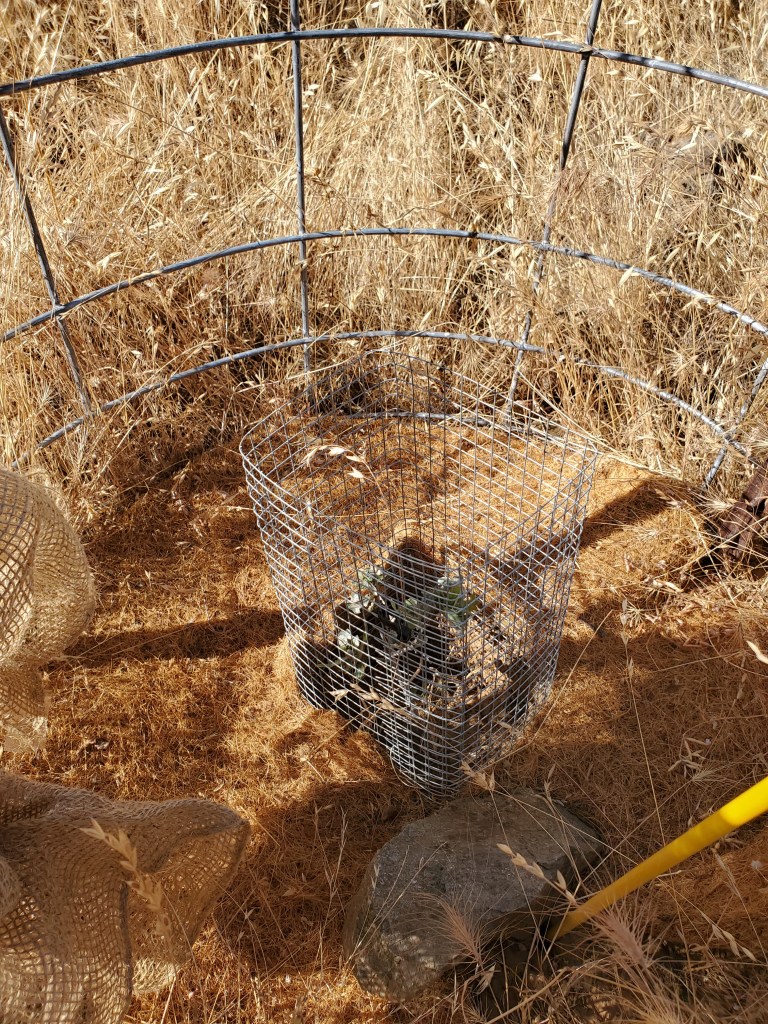
Then, David received a message that there was another major issue at work. He had to help save the day for a different type of situation. Secretly, I deflated. We needed to complete the work or there might not be any other trees to screen. I felt nearly useless and very dependent upon David. Shoulders slumped, I helped pack up the polaris and got into the passenger’s seat. We had been out since 6:30am working. It was almost 9am. David had given me plenty.
As we drove toward the house, I resolved that I would do as much as I could with one hand. There could be no more delays. We already lost the two oaks down stream. I had to do something. We got home; David jumped out and quickly went inside. I went over to the pile of screen boxes, loaded up for the remainder of the oaks, got behind the driver’s seat for the first time in 5 weeks and carefully backed up and went back out.
The first tree was the oak by the guzzler. Hopefully, I lifted the burlap. She was gone. I went to my knees, gripping the cage, lay my head on the fencing and let out a scream and started to cry. Another one so healthy just days ago –gone. I pulled it together, and with renewed determination, I set about doing what David did, slowly and steadily. I was able to use my right arm, instead of the hand, as a bolster to hold things against my body and my left hand to do everything else. It was not ideal, but it was the only tool I had.
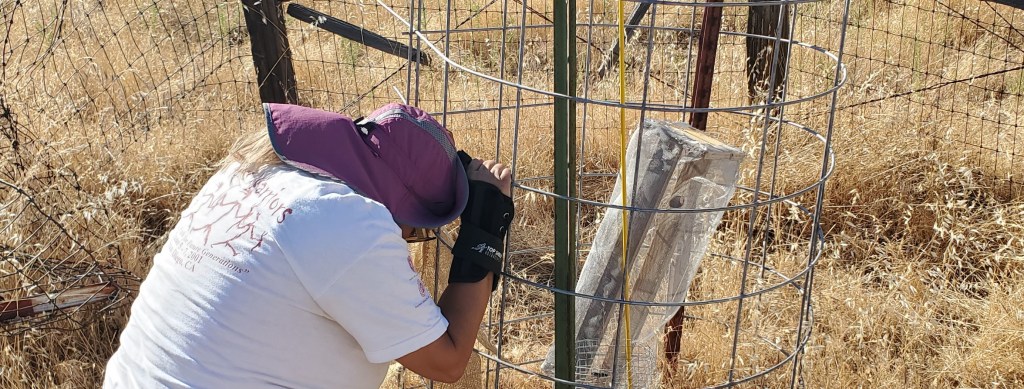
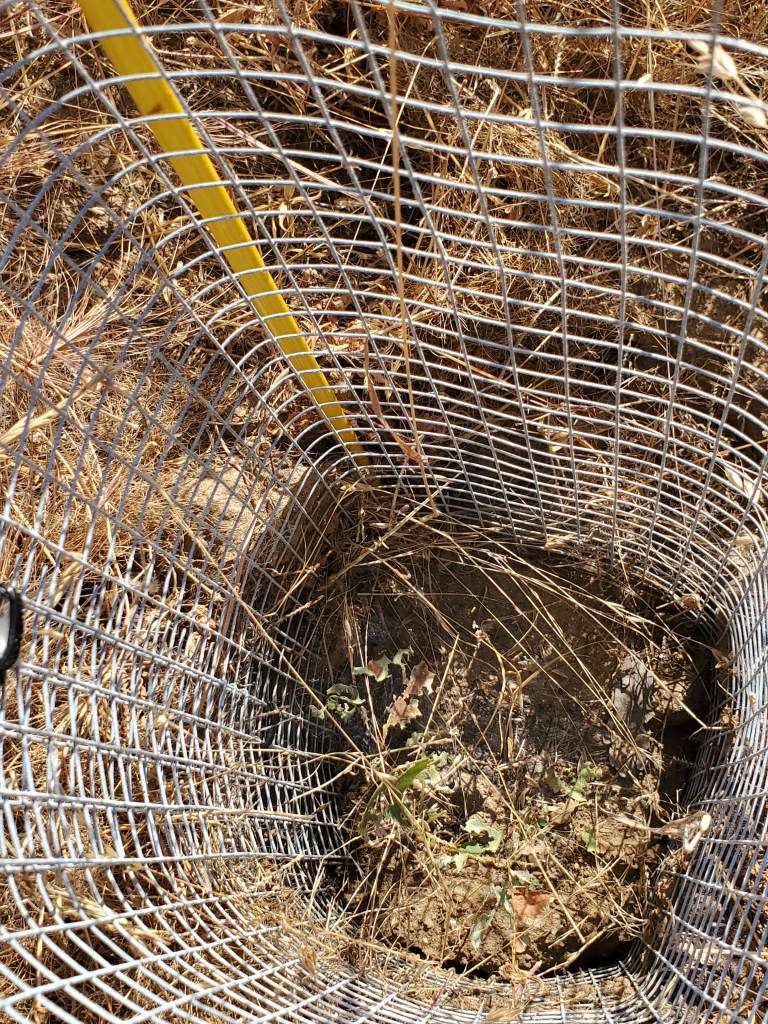
Like the other eaten oaks, the bark was still intact. I watered her, screened her, shaded her, and then moved on. The oak near the perimeter fence on the southeast was gone too. Instead of getting mad, I did the same thing… water, screen, cover. I went to the next tree. She was gone. My stomach started twisting. Hatred for myself for not being on it sooner crept in. Remember, every tree that does not survive, I must wait another year before I can try again. It is another year wasted. Water, screen, cover. I drove to the tree due west of our old, dying grove, lifted the burlap and — she was super healthy, full of leaves! The hoppers had not found her yet. I watered, screened and covered. Of the nineteen seedlings, six were stripped and ten had survived. The other three failed to thrive. They were lost around the time of the May heat wave.
Two Weeks Prior
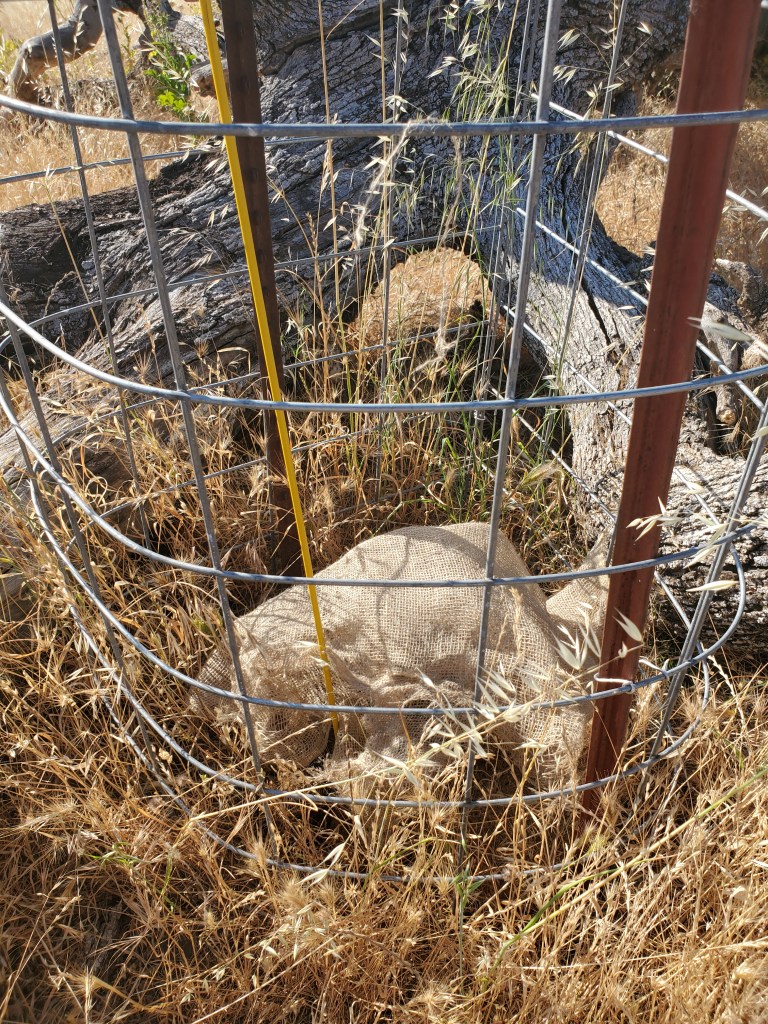
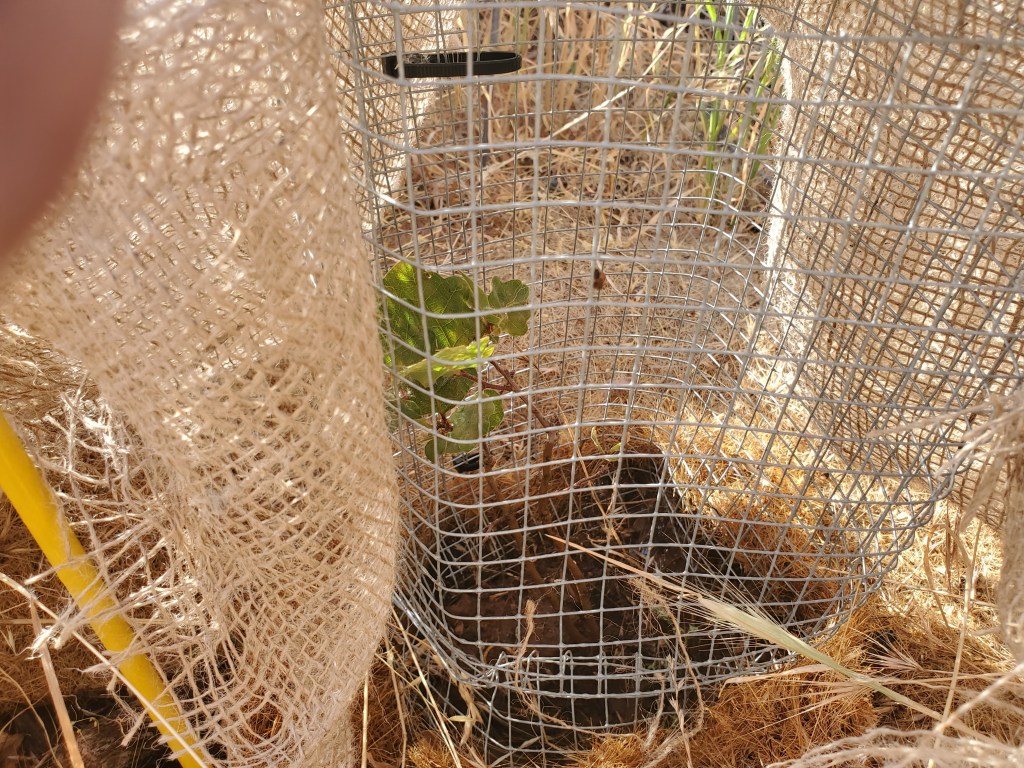
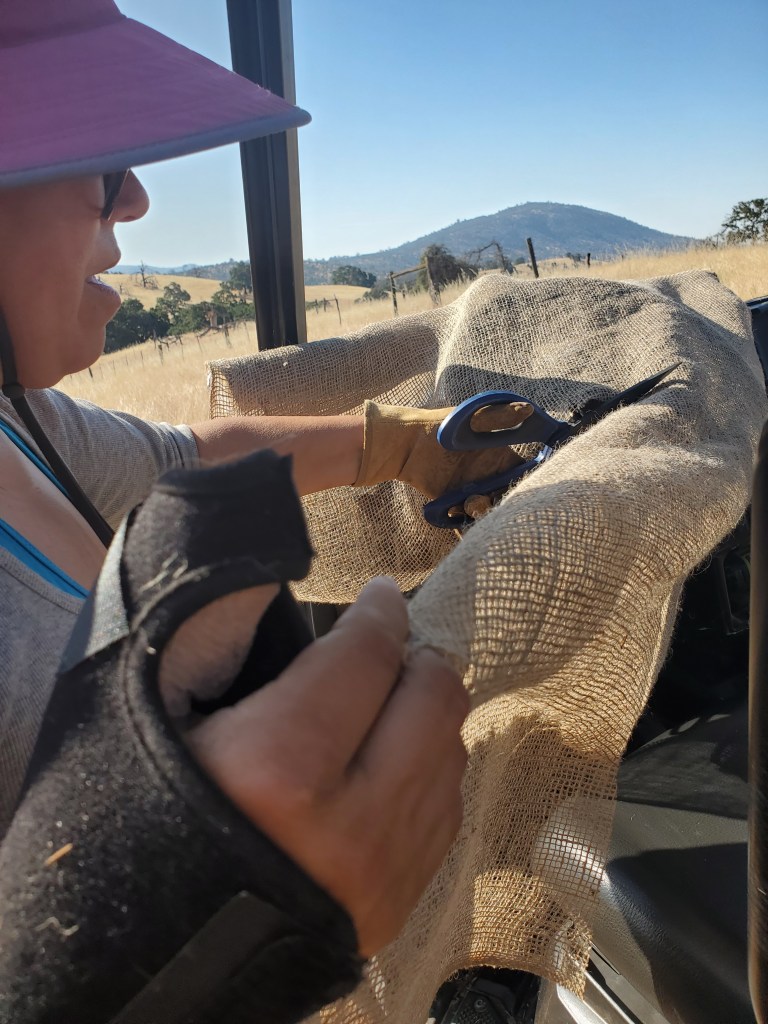
Just like in the movies, I will now take you to a flashback two weeks before the hoppers ramped up. David and I have been maintaining a strict watering schedule of every 5 days for the oaks. In anticipation of the mini heatwave, we also cut sections of burlap to lay over the gopher cages to shade the oaks. Sadly, two oaks appear to not have made it through the heat, the one in the exclosure and one of the driveway oaks. We continue to water them just in case the roots are still alive.

Milkweeds Gone
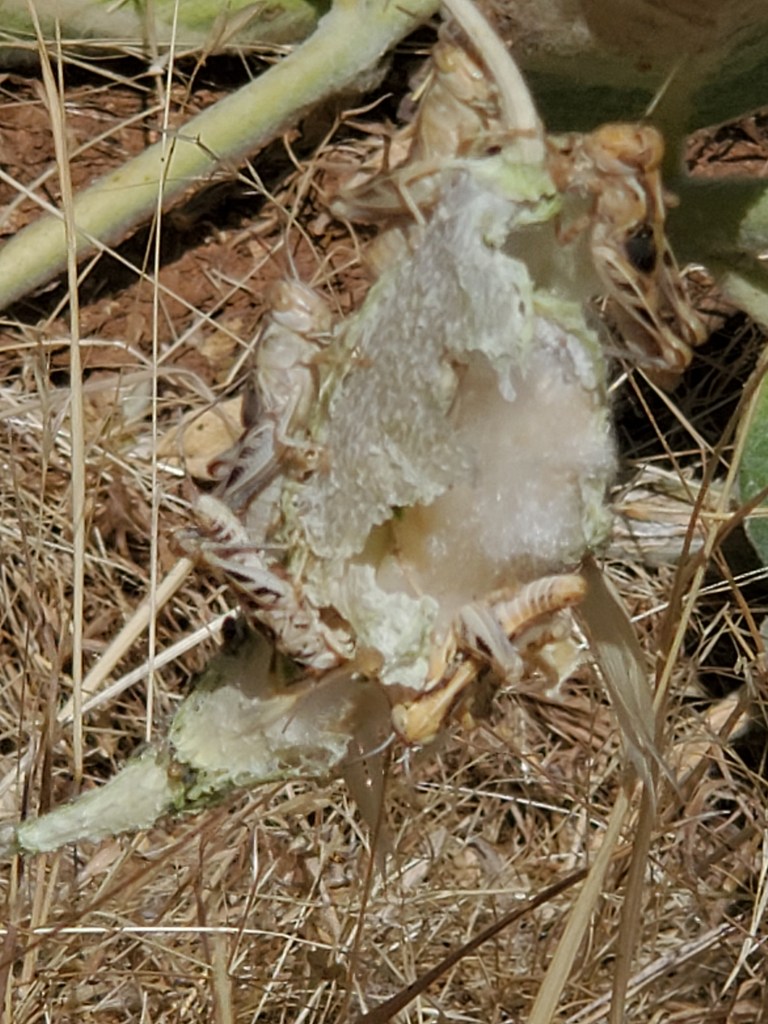
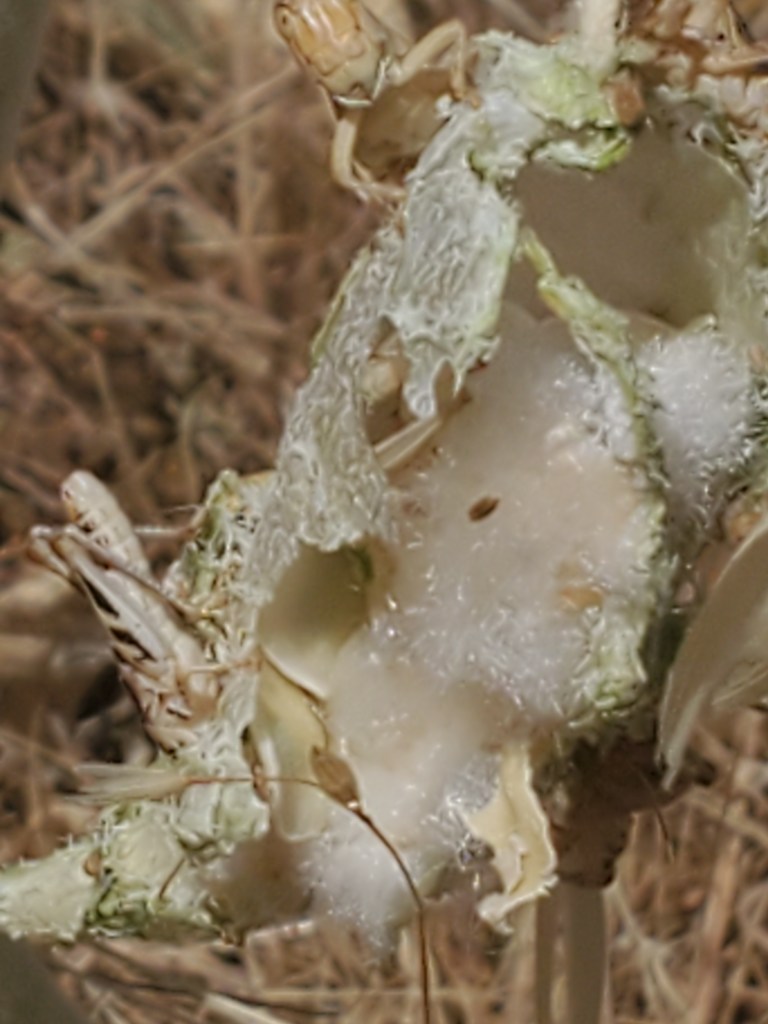
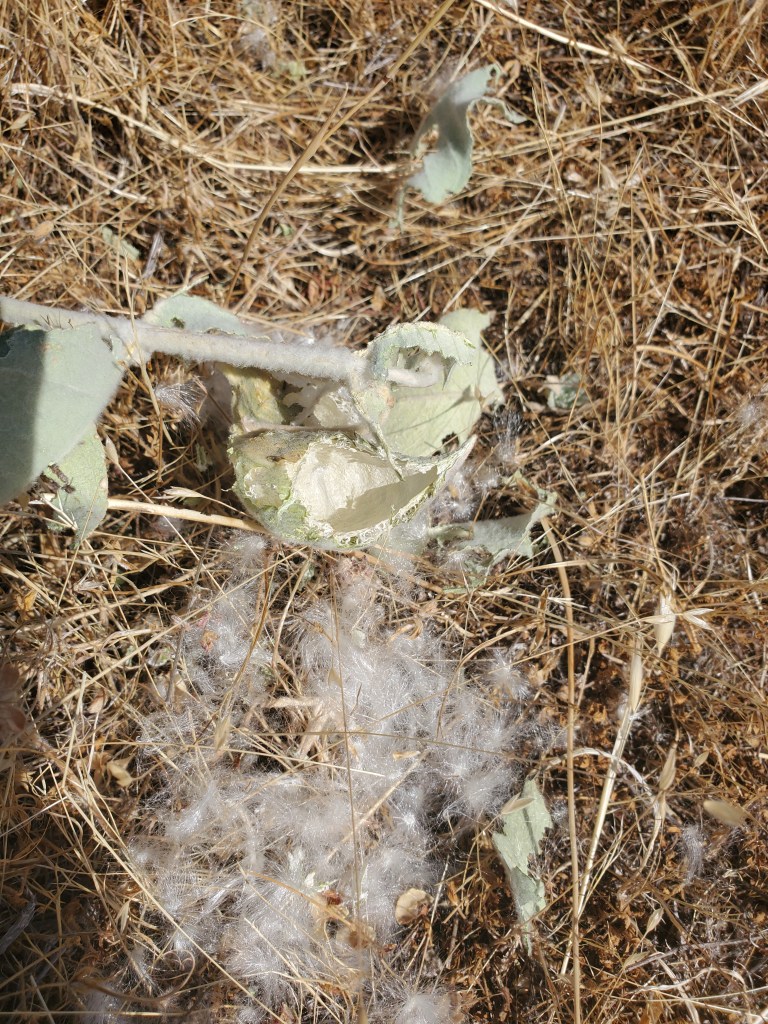
Similar to the oaks, the grasshoppers are all over the California milkweed. The only difference from last year is that the hoppers came later giving the milkweed more time to set seedpods. With the accident, I have not been able to monitor the sites. Last Sunday, I felt strong enough to walk up the hill, slowly and carefully. I found every milkweed at one stage or another of being eaten. On the more intact ones, there was still no sign of monarch activity. I am officially designating this spring a no monarch spring. Add that to the no monarch fall. It is beginning to feel very depressing.
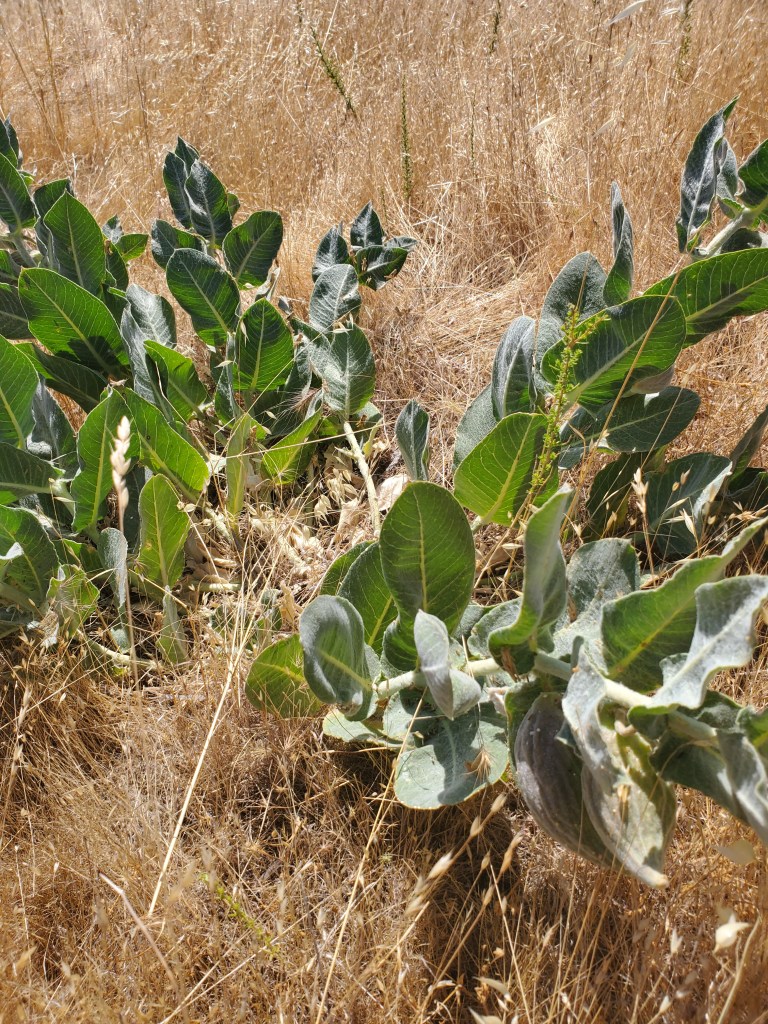
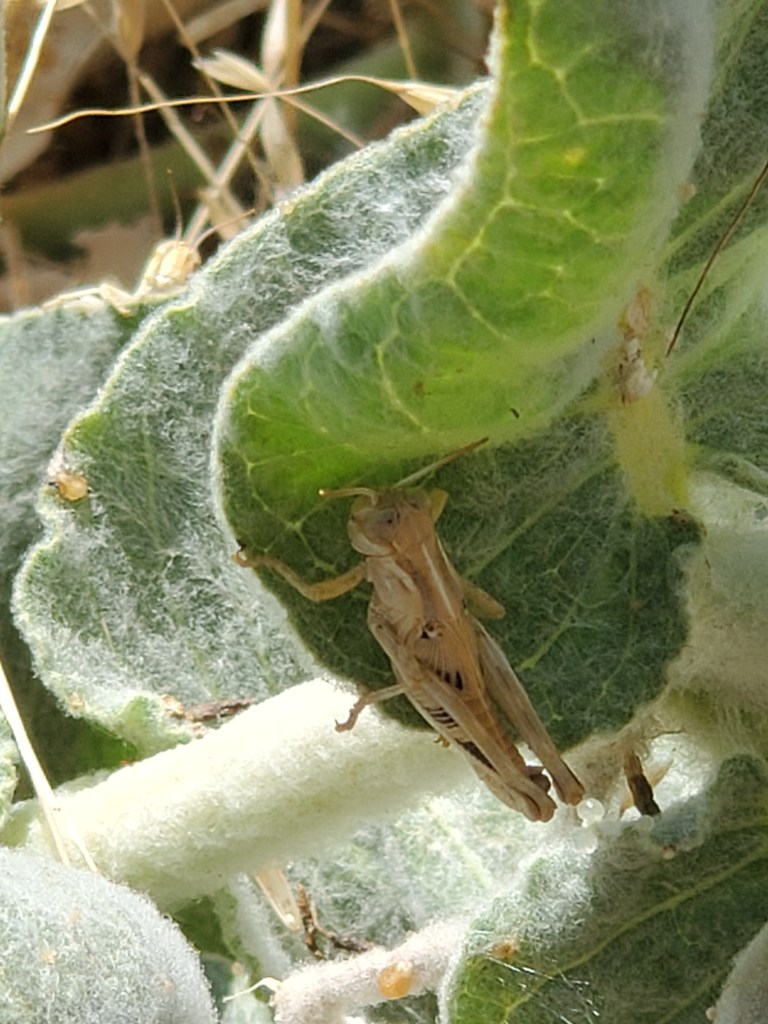
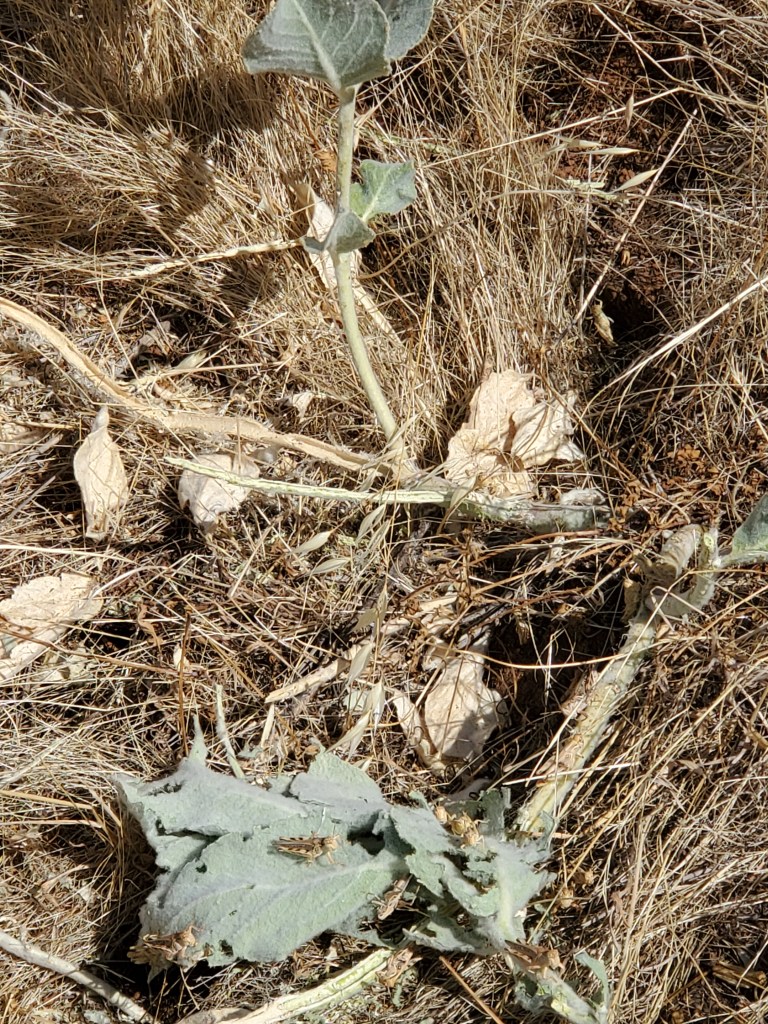
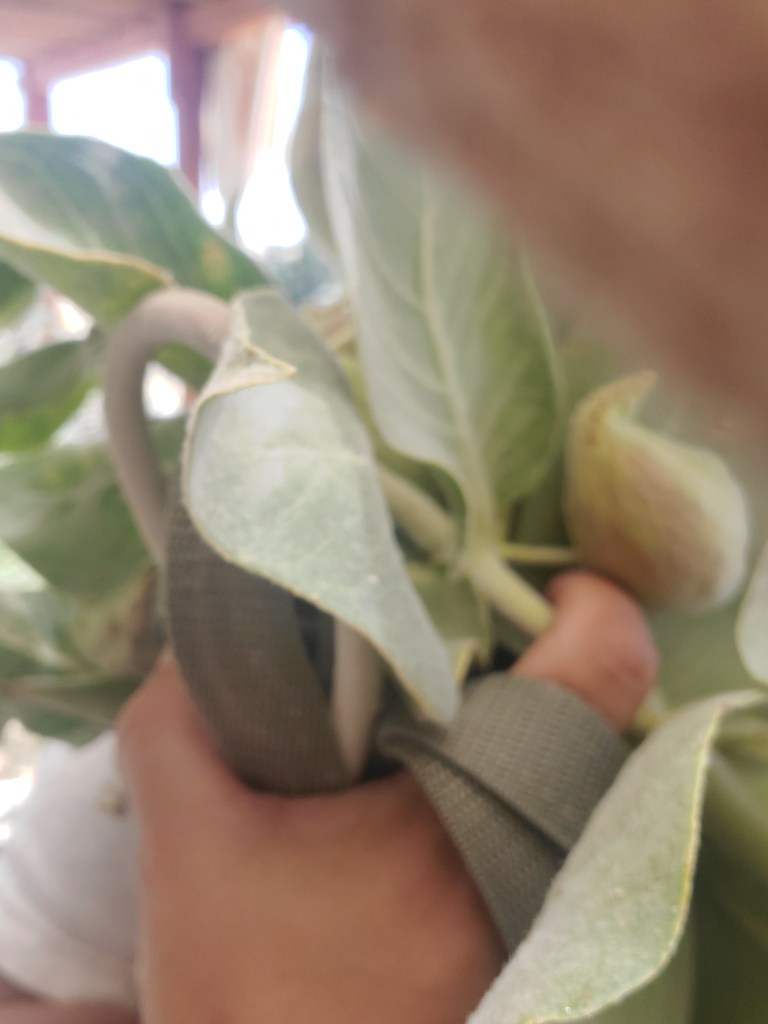
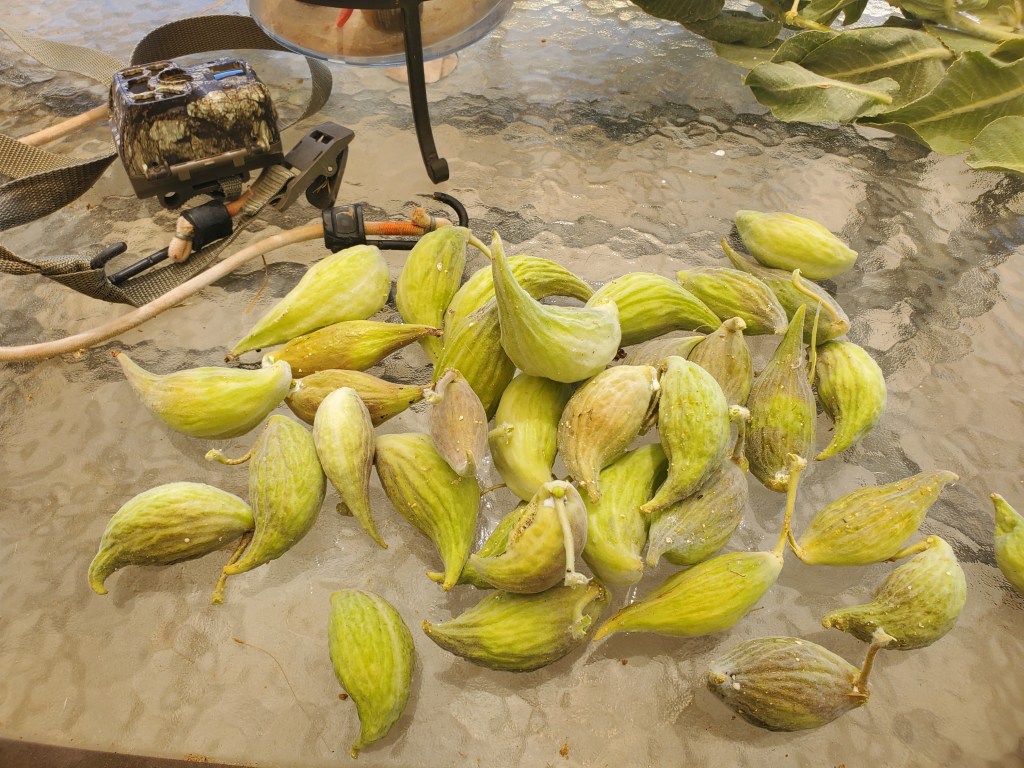
The plants on the south-facing slope were mostly eaten. There was evidence of seedpod destruction. Although not prepared with clippers and a bag, I began to harvest the pods. If I waited much longer, they would all be gone. Because I was pulling them off the stem early, the white “milk” ran onto my hand making my fingers and palm sticky. I continued, but could only find six seed pods remaining at the site. I moved to the north-facing site. More plants were intact, but were rapidly being eaten. There was a bumper crop of seed pods, including four massive ones. Normally, I would never harvest more than 10% of the pods and allow them to drop and open naturally. In this case, with sure death ahead of them, I went about my business of disconnecting the children from the umbilical cord, they, still holding tight for the nourishment it brings, and me, covered in mom’s milk grabbing her treasure for the possibility of life down the road.
With no bag, I placed them in my pockets, held a bunch in my arm and finally, made a pouch with my tee shirt. Several branches, with seedpods still attached, had been dismembered from the plant by the hoppers. I used those as a base for piling on the loose pods. It worked. I was able to slowly navigate back across the hills, pregnant with A. Californica seed, to the patio without dropping a pod. After the danger has passed, I will release these seeds back into the areas from which I harvested them – probably September.

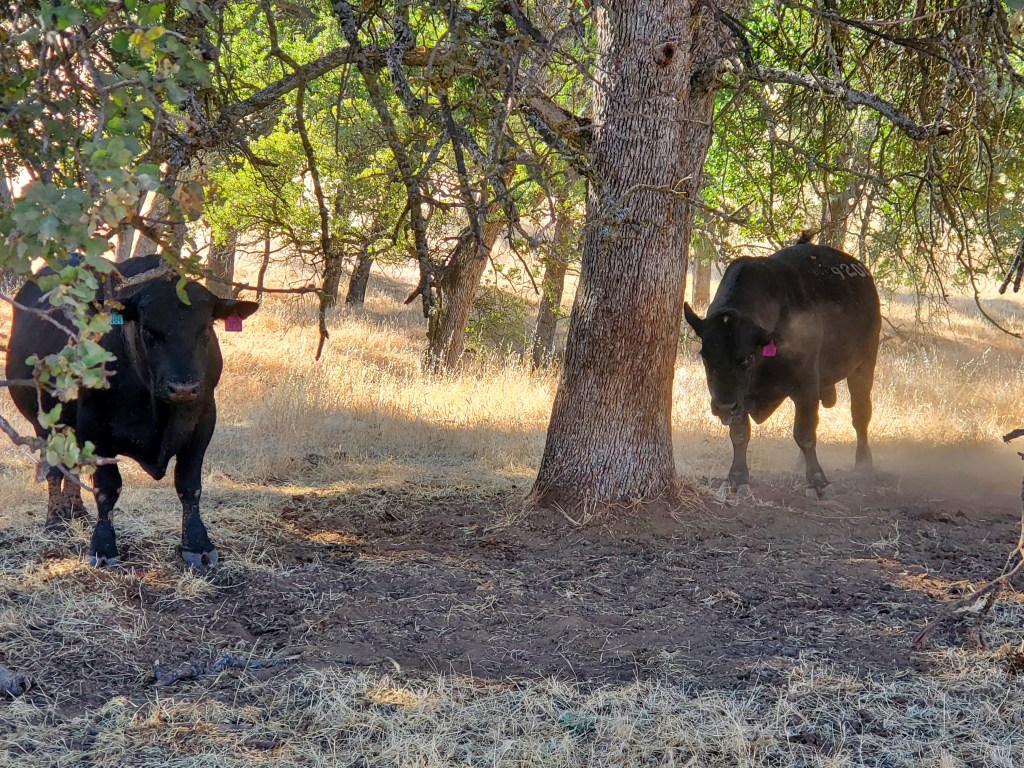
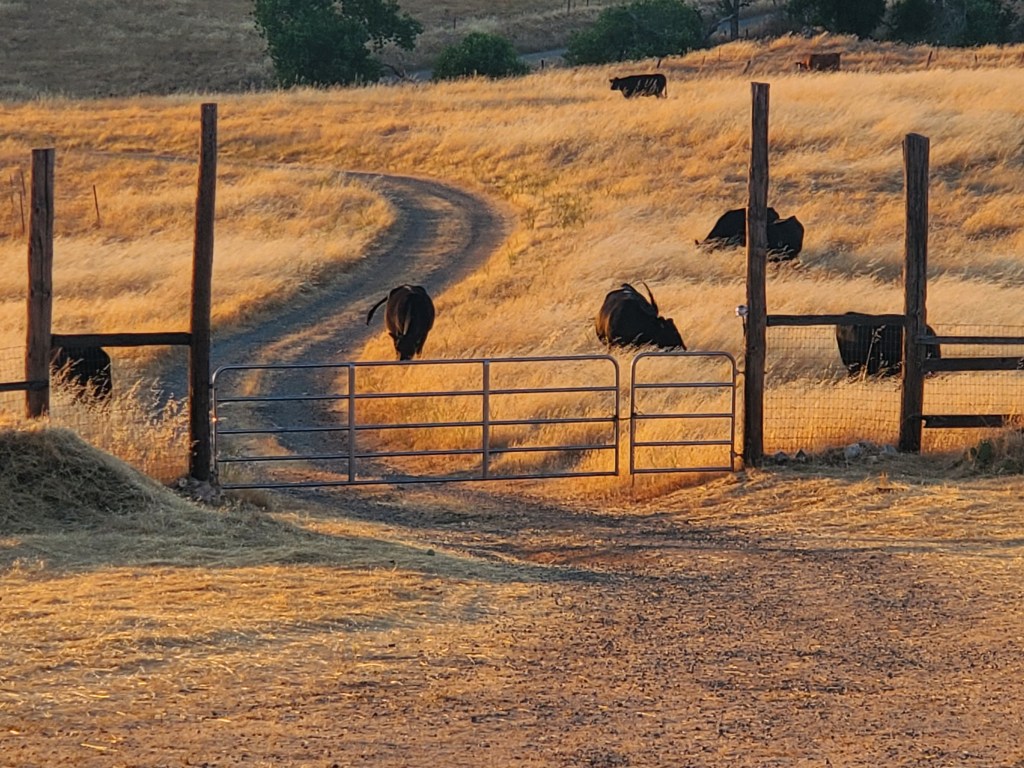
With the milkweeds done for the year, the cows still remaining on the ranch and the grasses nearly 4′ tall, I opened the gates to the far north field. The cattle have made their way into the field munching on the buffet of tall grass and thick green grass and flowers in the riparian areas that have been, as yet, untouched by cattle. Within the first day, those green patches were eaten down to dirt. My feelings are mixed. While I want to preserve the flowers I have left in the riparian areas, I also would like the tall grass to be grazed off a bit. Fire danger is always top of mind. All needs must be balanced, habitat for birds, pollinators while not trying to overstock too much on grass.
Wildlife
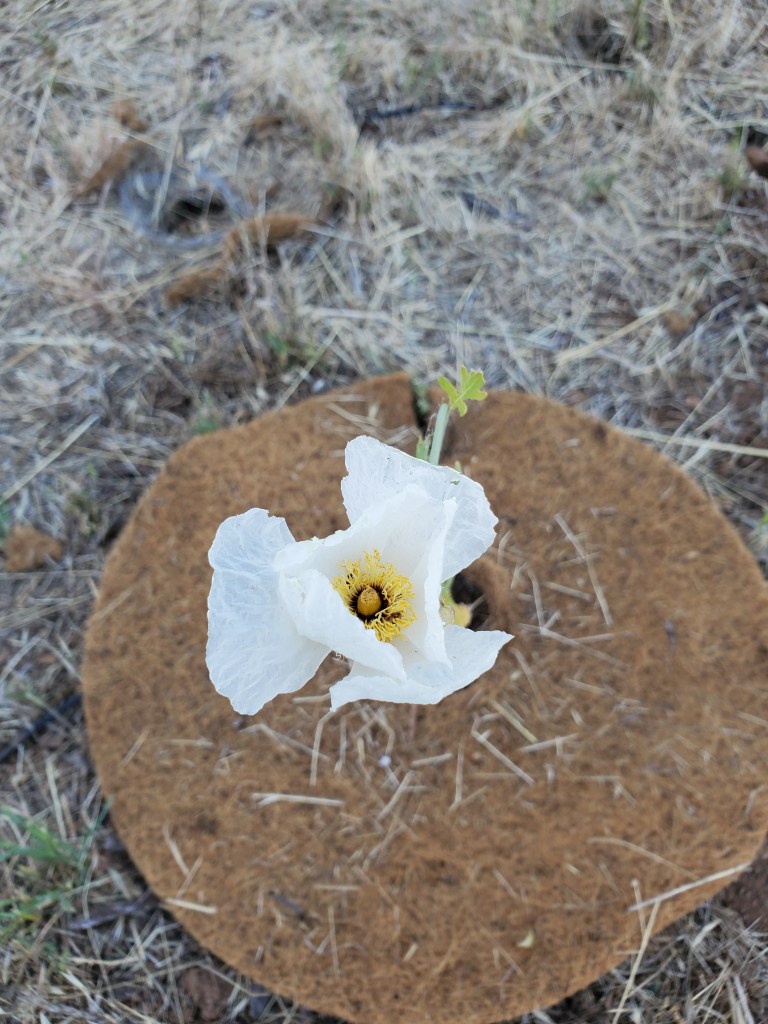
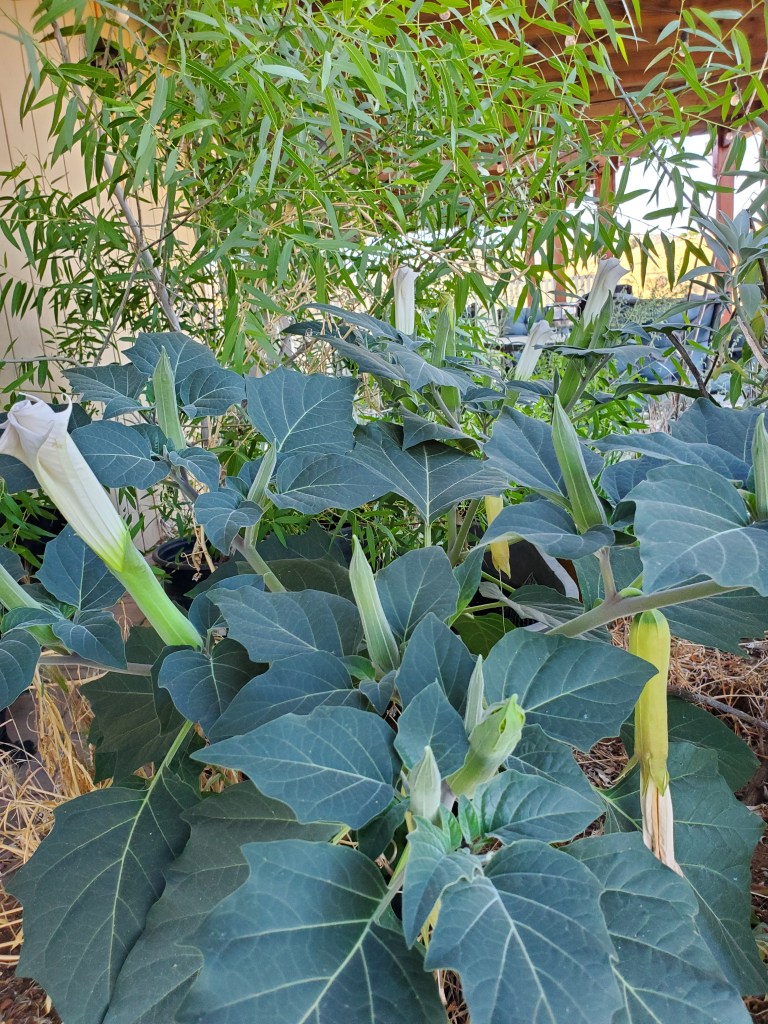
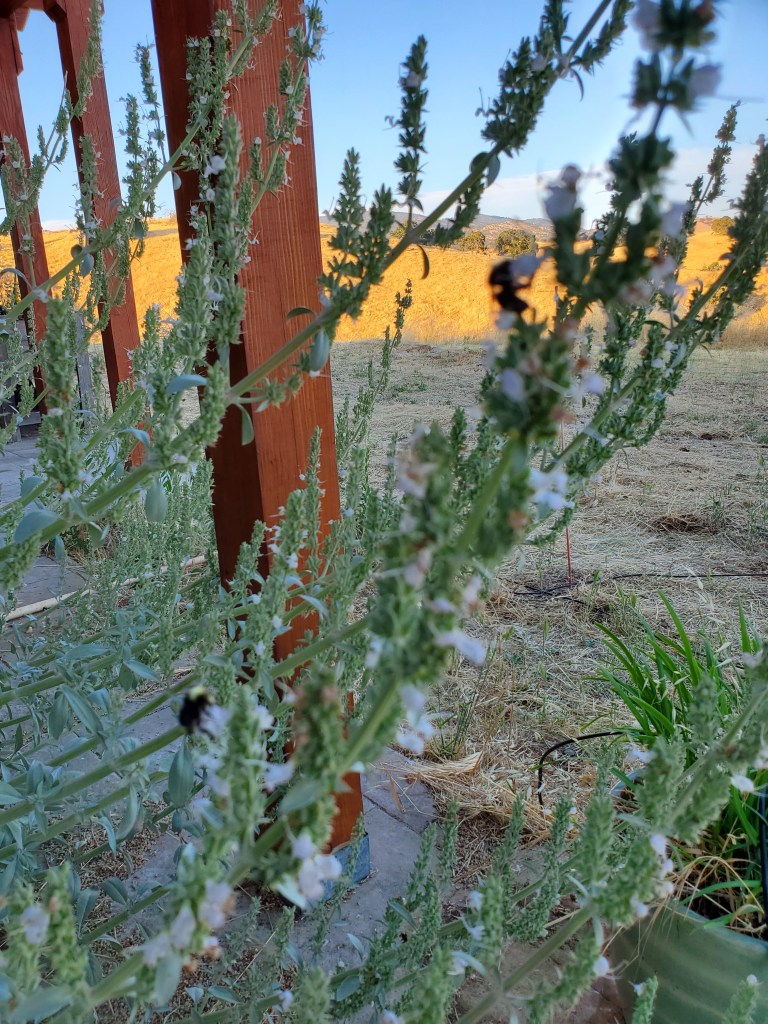
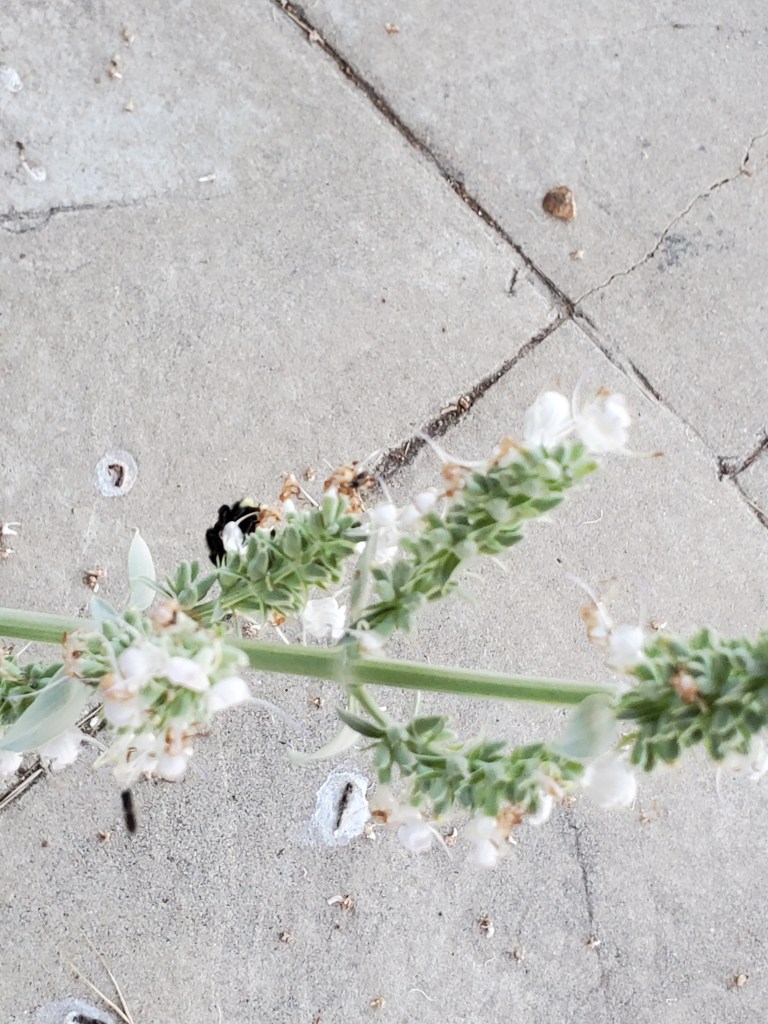
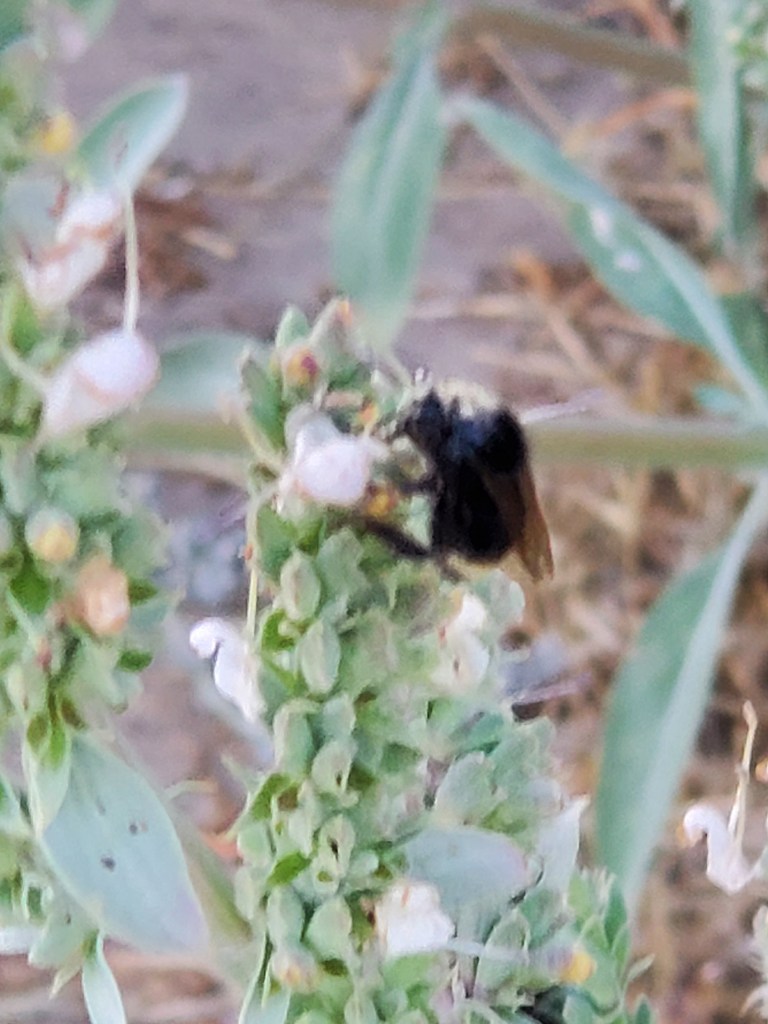
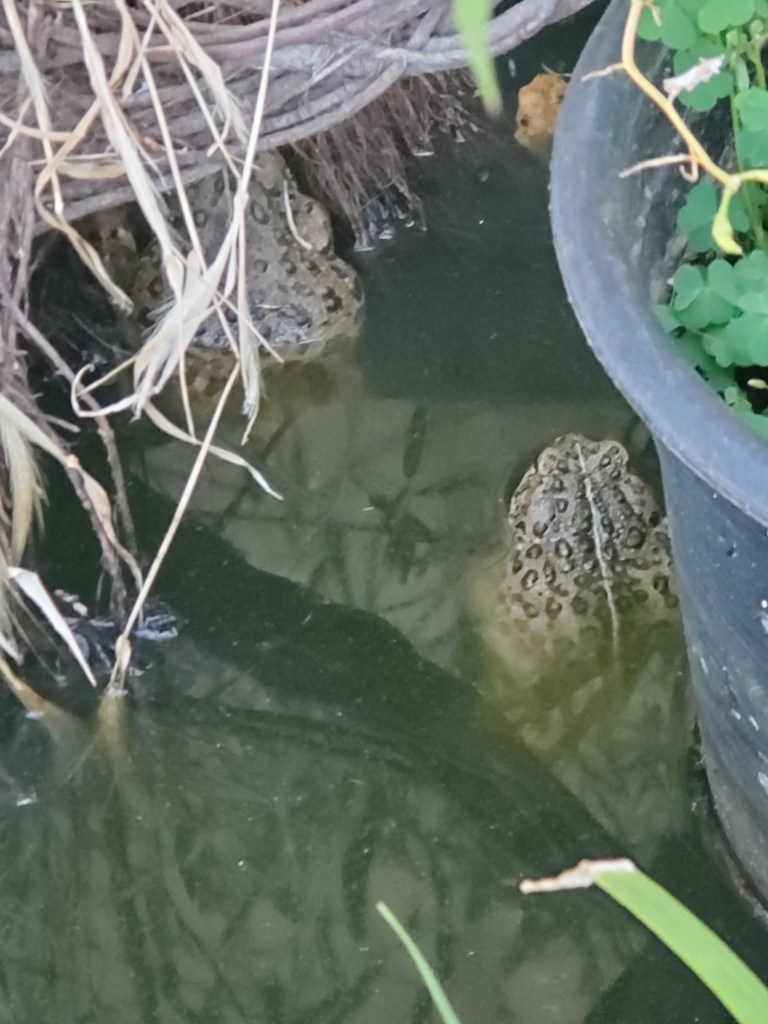
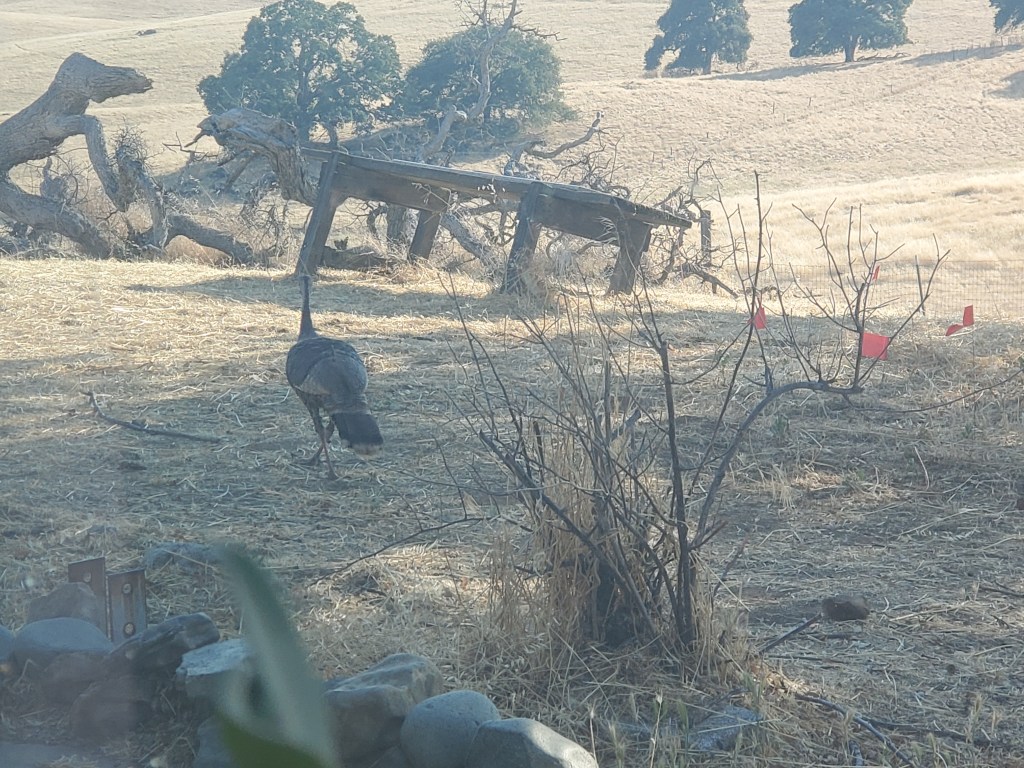
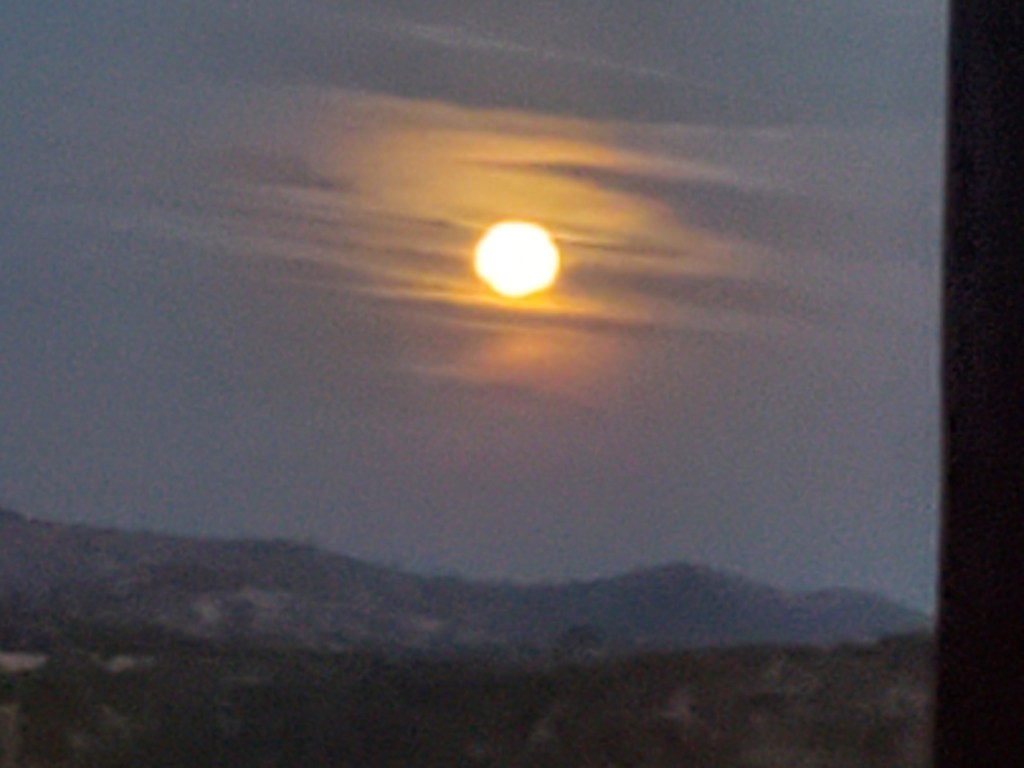
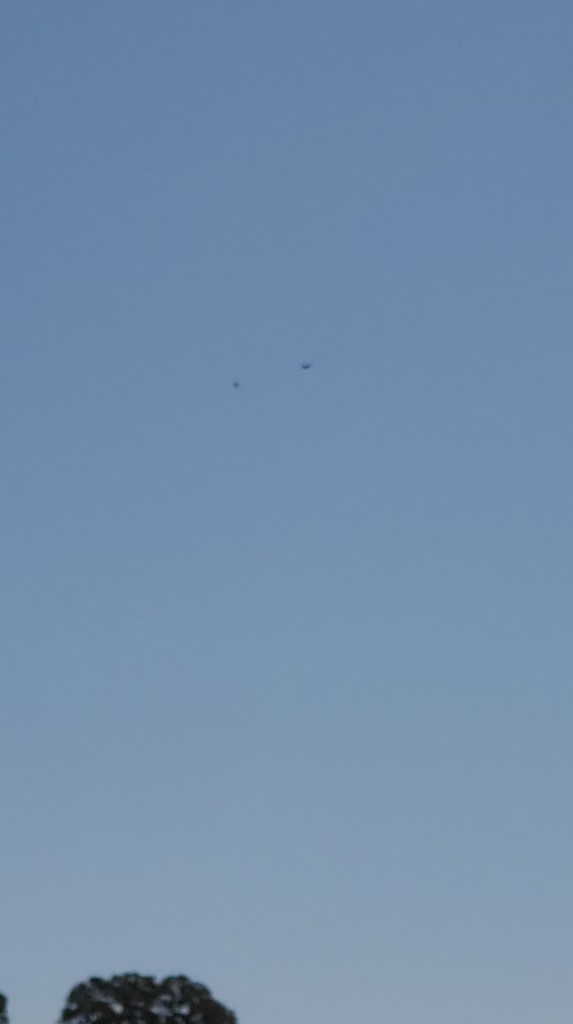
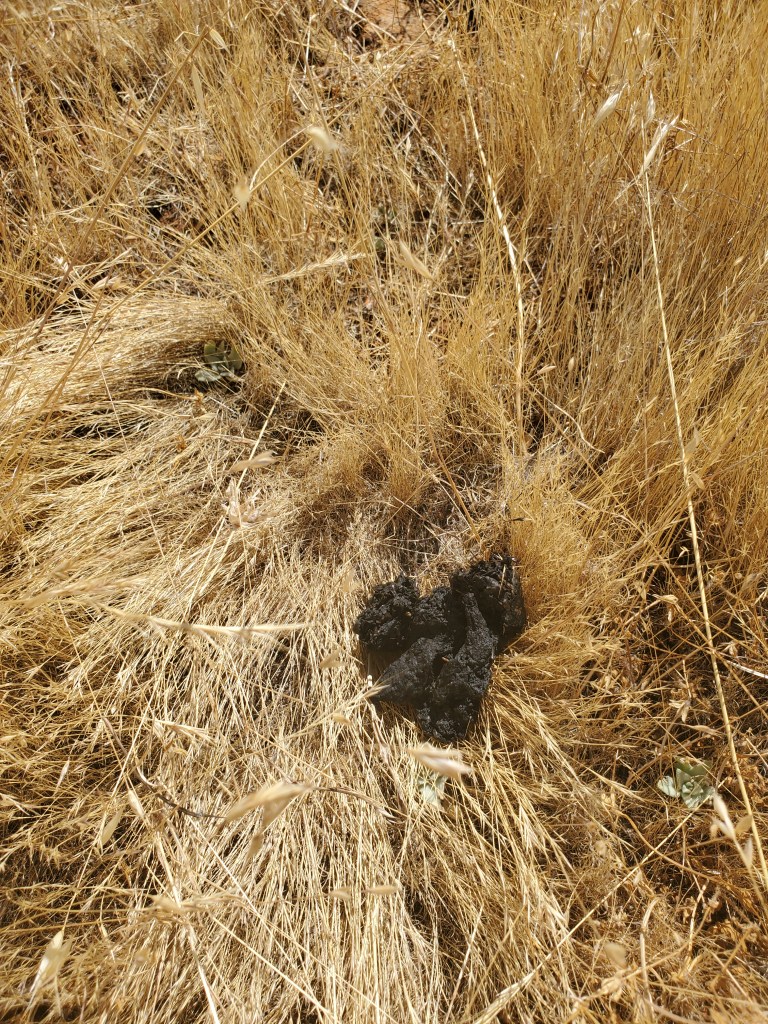
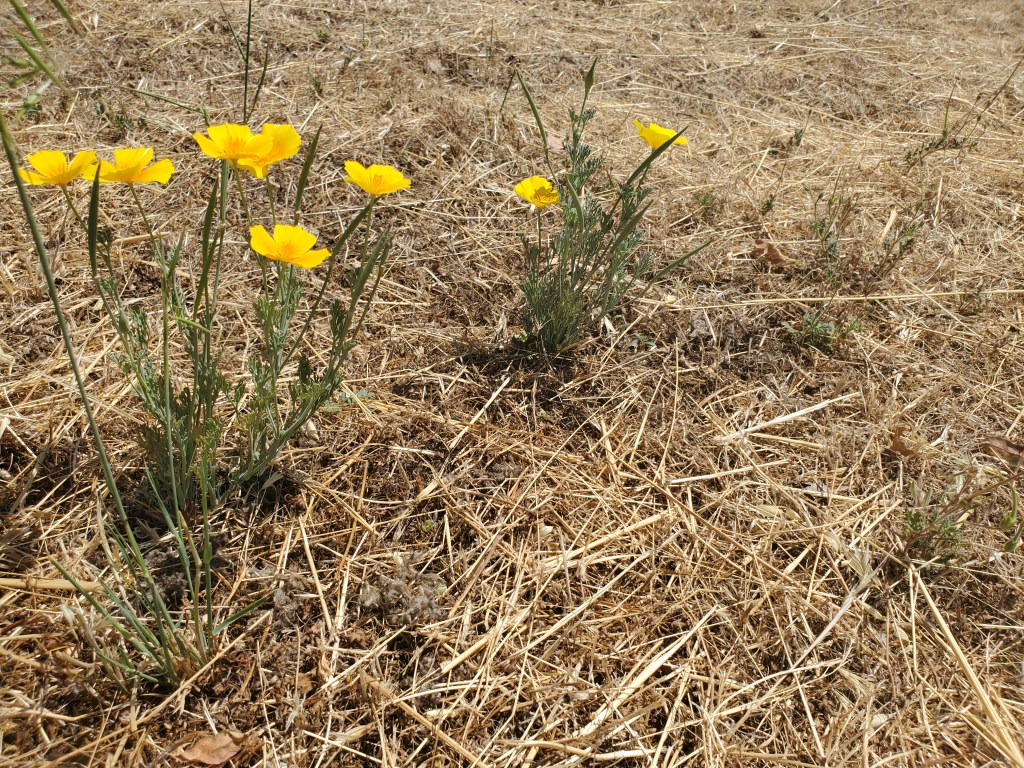
Even as the temperatures heat up, there are blooms, and I still see glimpses and/or evidence of wildlife. The guzzler has continued to be a center point for racoon and bird activity.

Wanderings
What horrors we are seeing. There are so many tragedies happening; I can feel the energy of the earth listing. There is only one healthy way to be, and that is in balance. You don’t take more than you need. You don’t give more than you can. My dear friend had a very ill wife. He cared for her for over 20 years. He was unbelievable, one of the finest caregivers I have ever seen. Lifting, bathing, feeding, driving, monitoring – he was her spirit moving her through life, so that she could live well and with dignity. She passed last month. My friend, with nothing left for himself, died three and a half days later. He gave more than he could.
With so much loss and sadness, it has been difficult to focus on writing. The unrest, murders, bombs and abuses of power, have caused me and so many others emotional distress. This is not living in a good way. I see it on the ranch, the imbalances. It is unhealthy, and things are mixed up here. There are only two entities that can move us back into balance – us, or Maala Bwia (Mother Nature). Given all the human greed and climate horror of the last century to today, I don’t have much hope that it will be us that leads the shift back. But, if it is itom Maala/our Mother, it will not end well for many of us. So let’s get more of us working toward finding our equilibrium.
Amid the depravity and cruelty, there is always light. This is something so lovely it will fill your heart – true heroes from the Resource Conservation District of Santa Monica Mountains racing to save gobbie fish and trout from sure death after the catastrophic Palisades Fire in Southern California. This is the type of character that will shift us – respect, dedication and reciprocity to all life no matter its popularity, size or their ability to be commercialized for humans.
Here is the article in the LA Times.
Here is a brief YouTube film the organization made.
Here is a link to a larger documentary about humans fulfilling their obligations to the Huya Ania (Wilderness/Natural World). It is just a trailer, but please, try to organize a viewing at your location if you have the capacity.
Goodness exists all around us. Grab hold of it instead of the negative. Cling. Never let go. Eventually, its light wraps you, moves through you, becomes who you are. Let’s all bring more light.
 PolliNative