Water | Oaks | Tornado Warning!

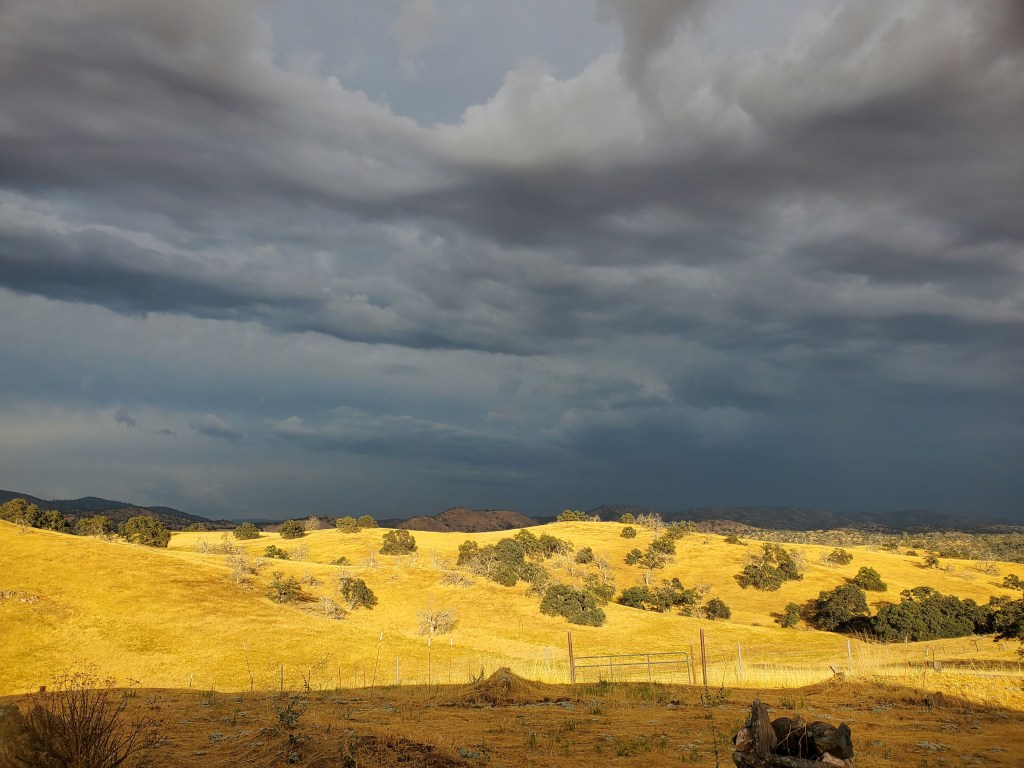
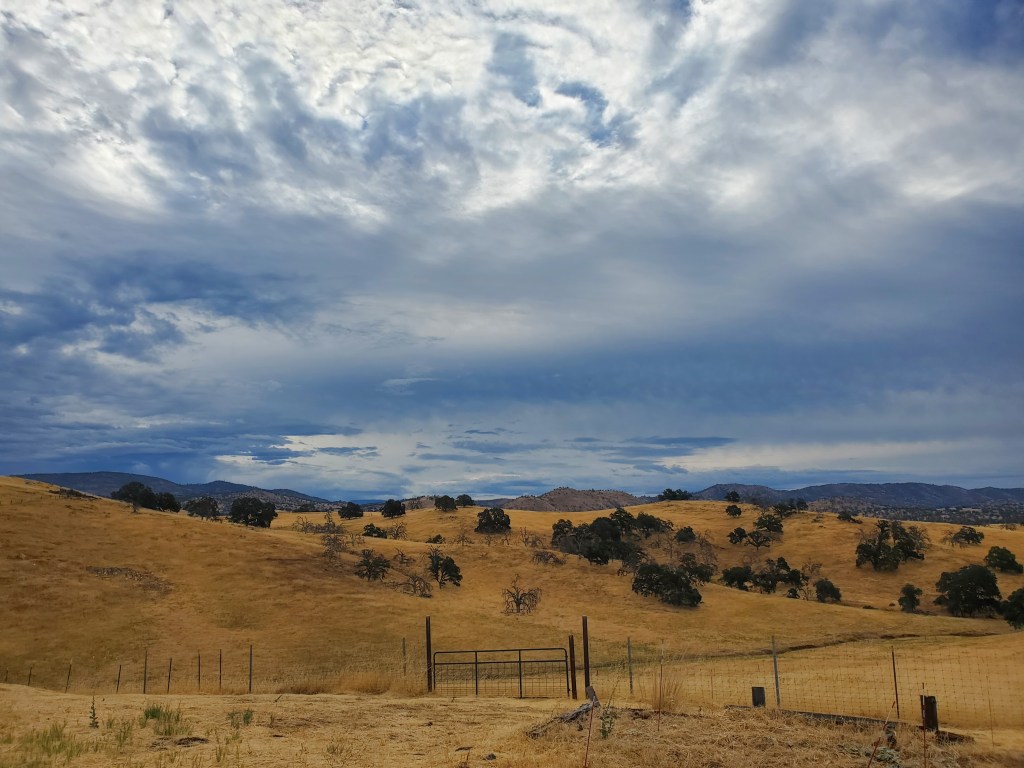
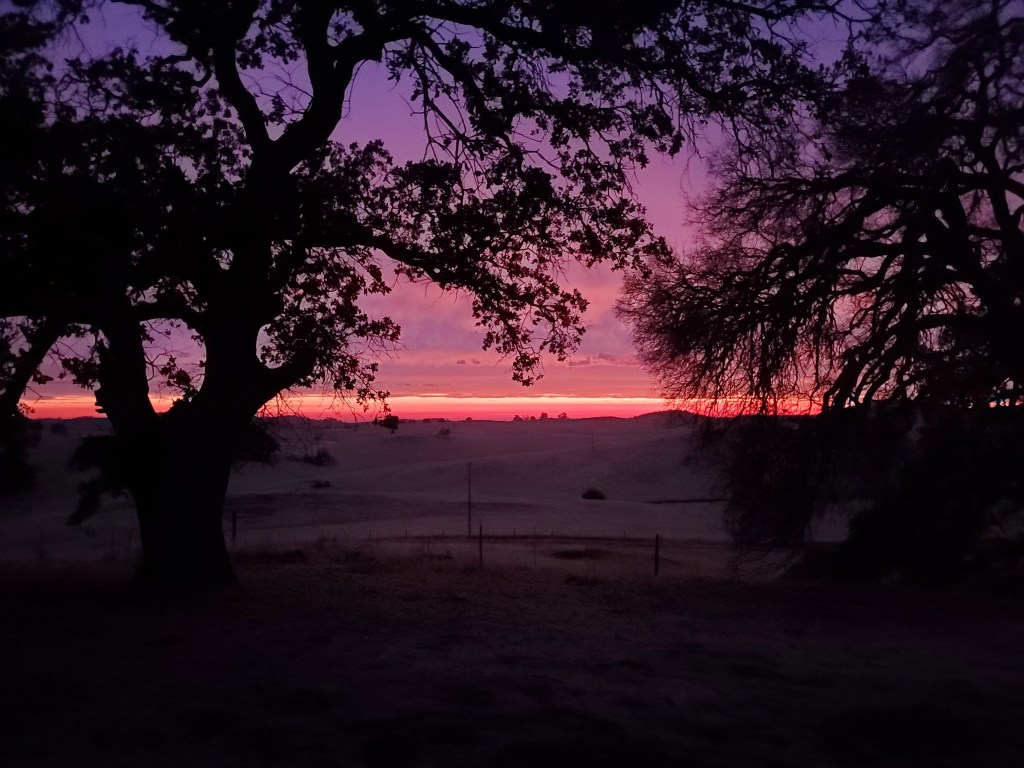
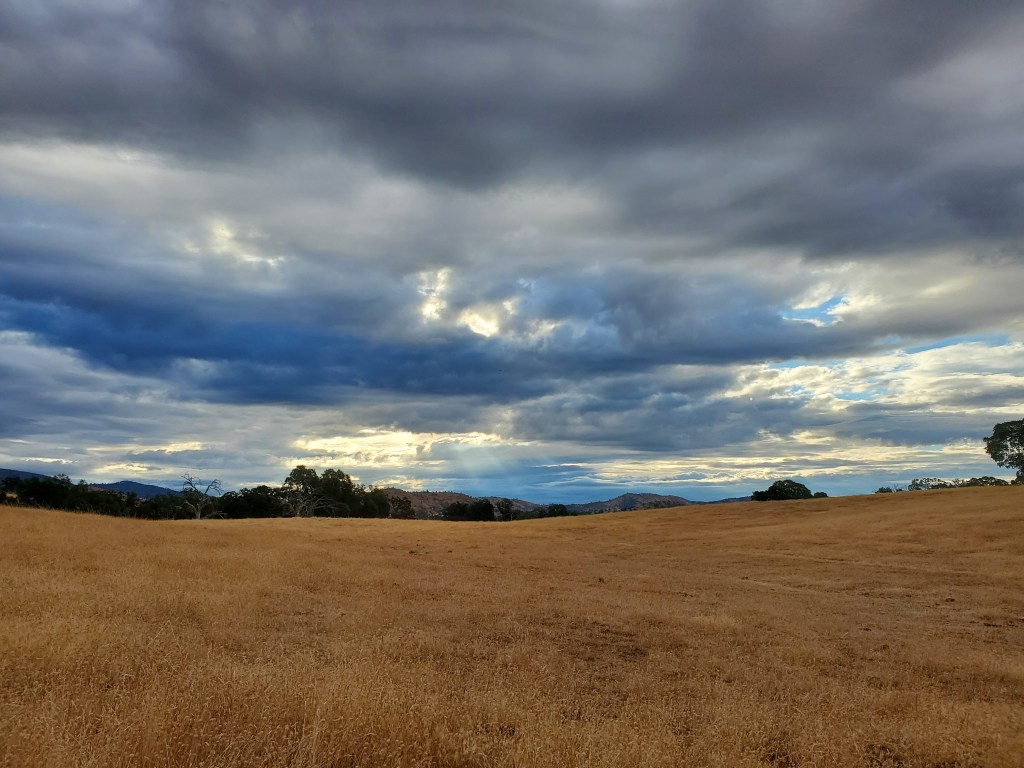
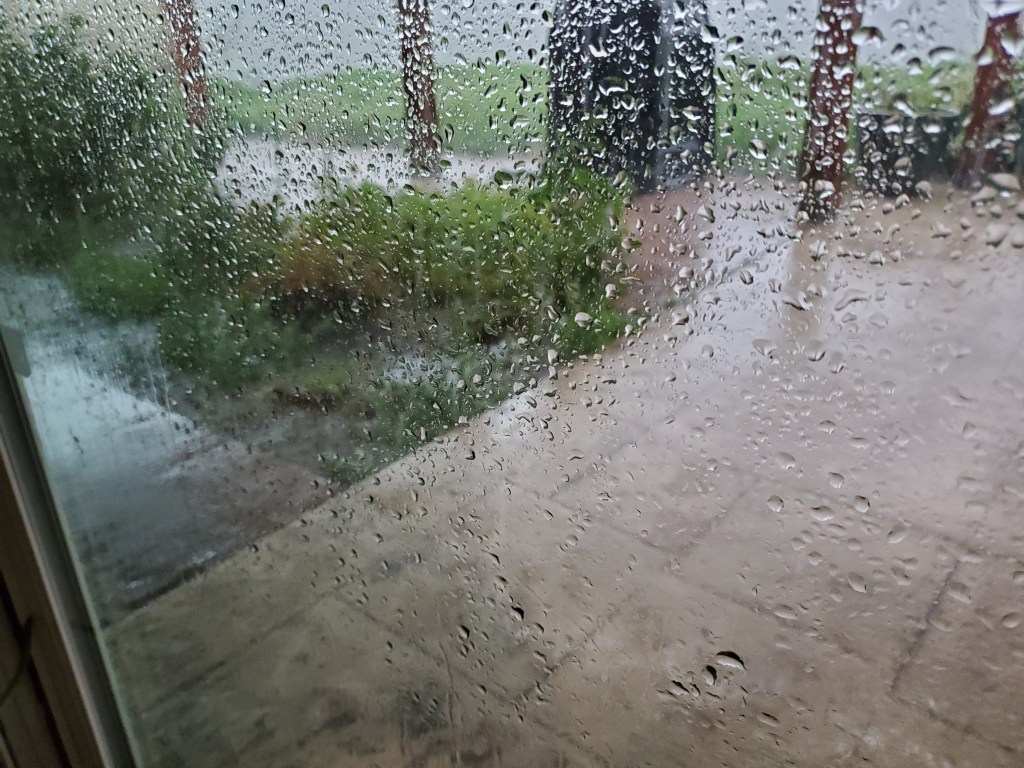
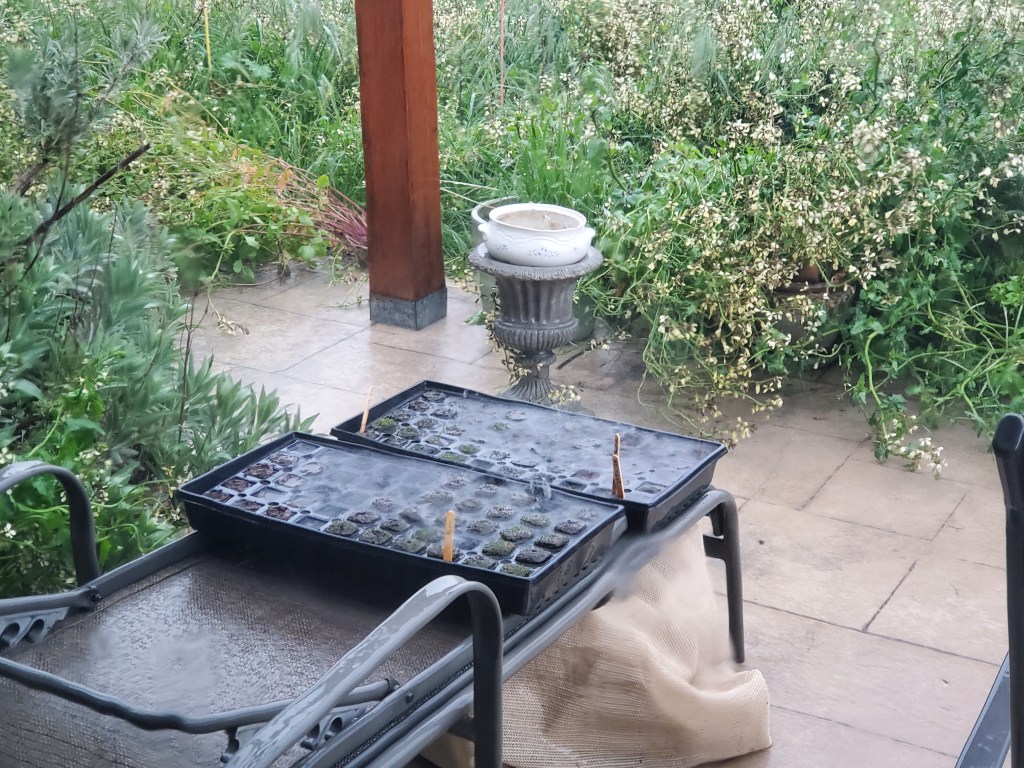
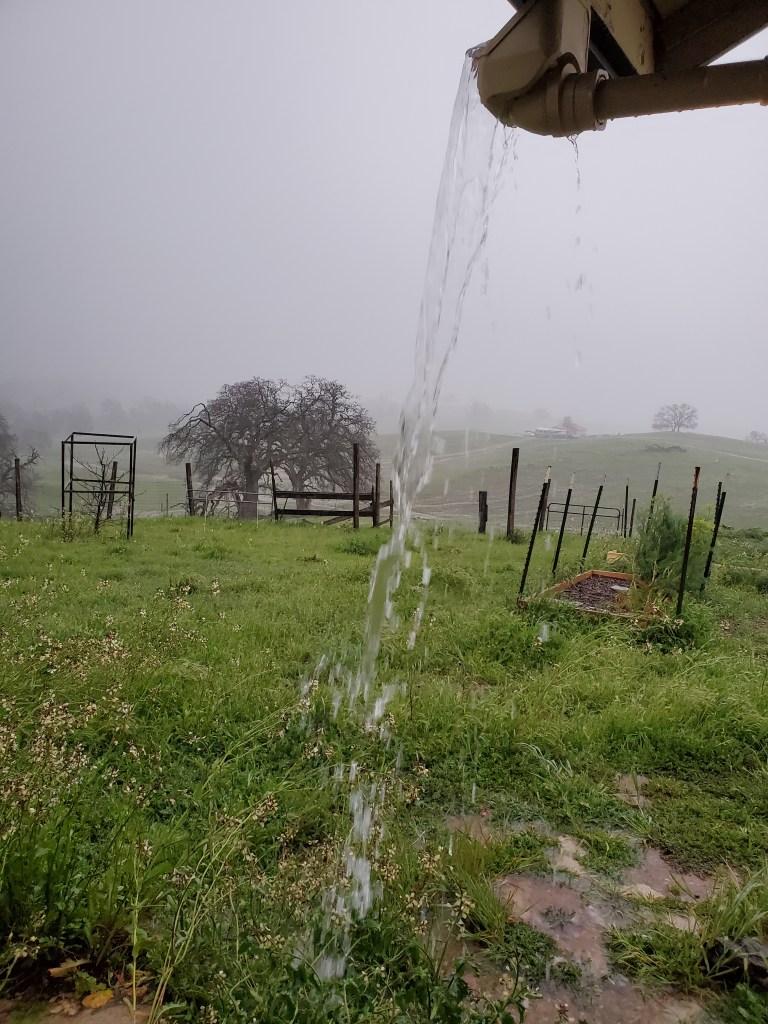
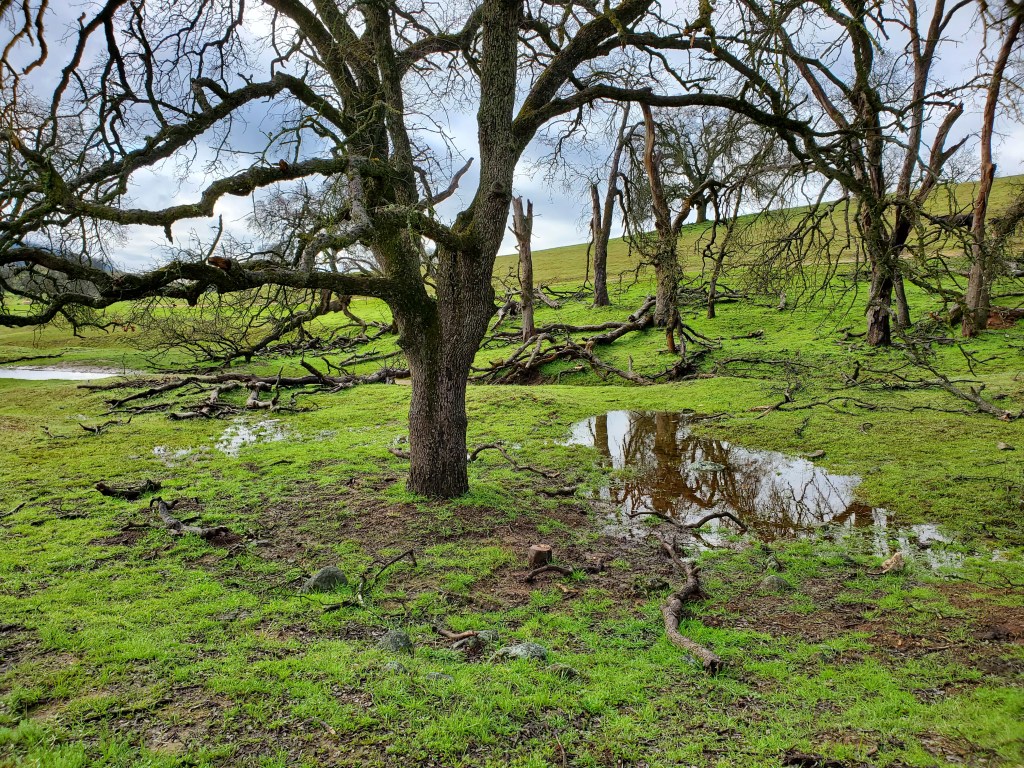
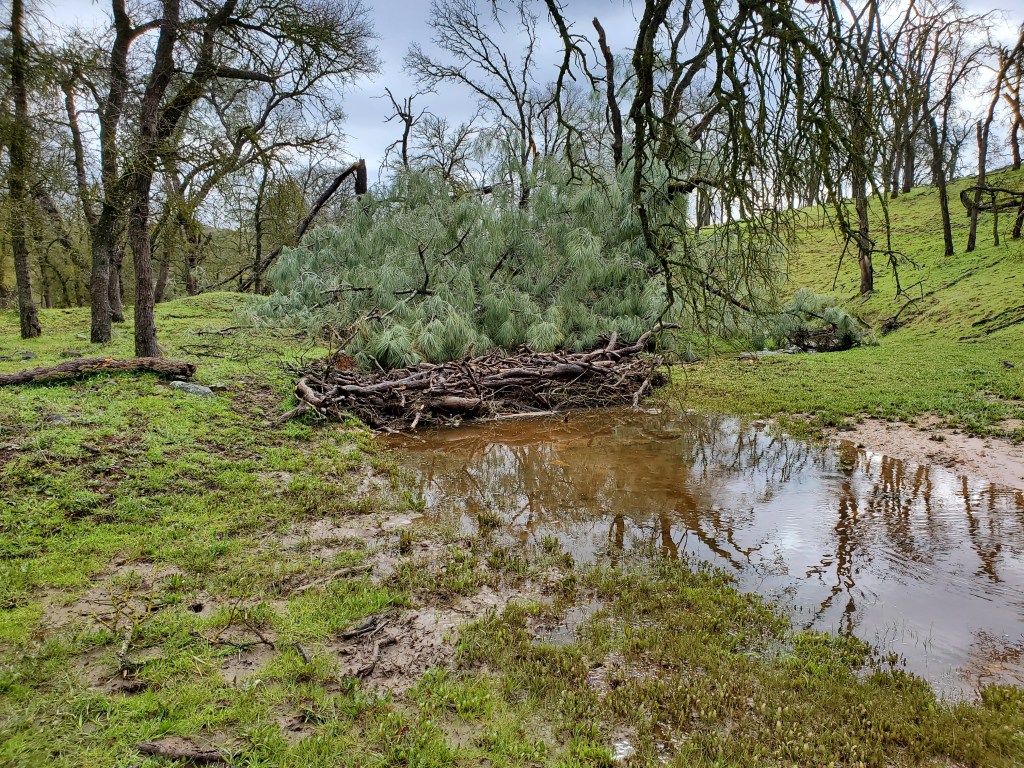
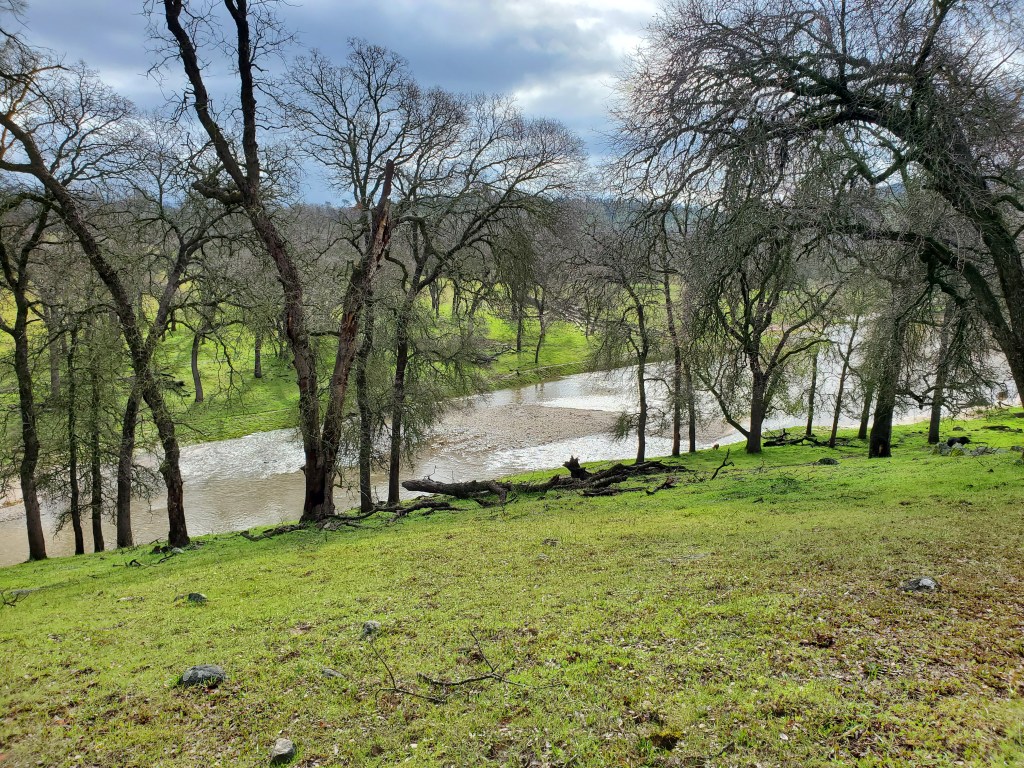
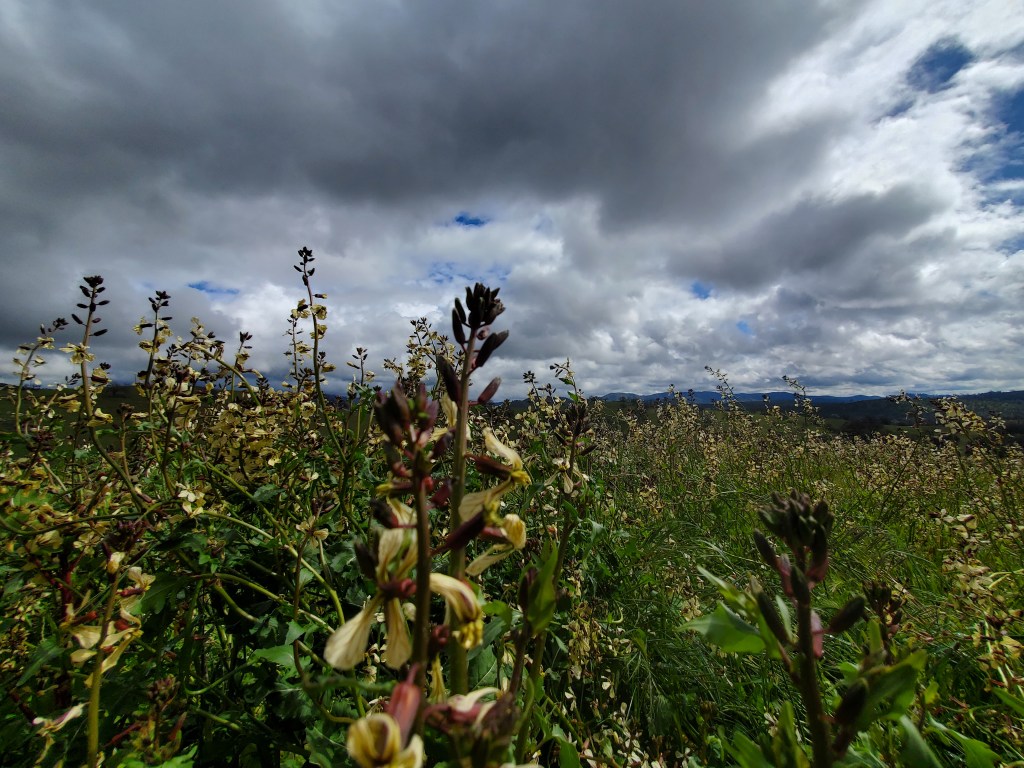
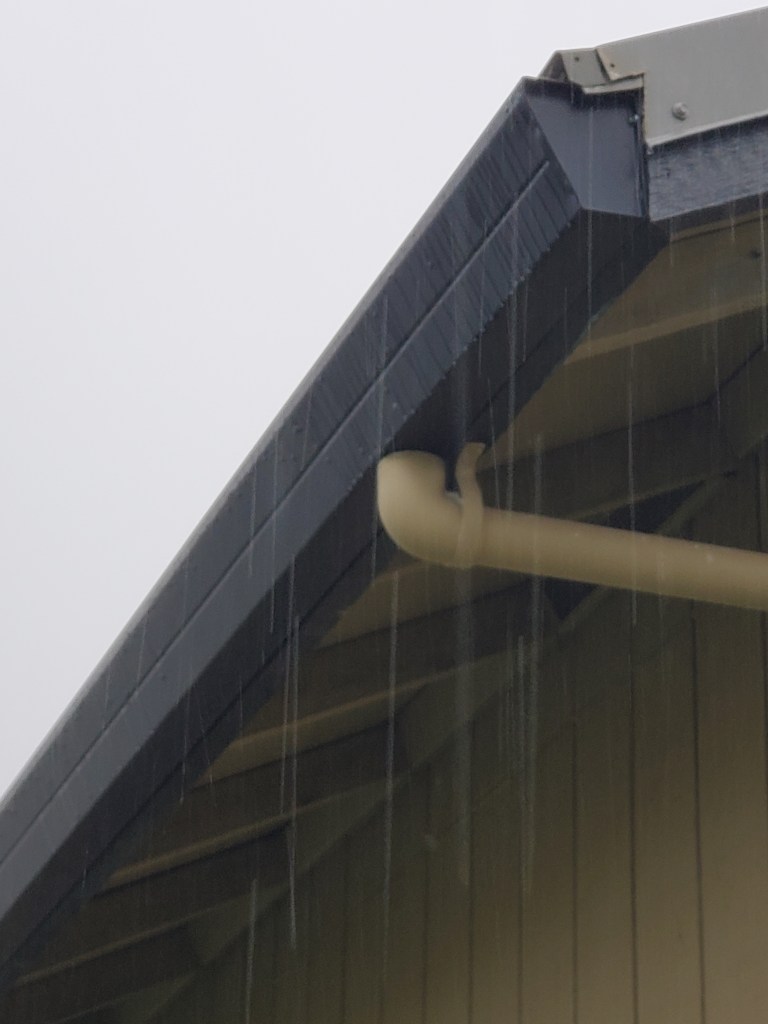
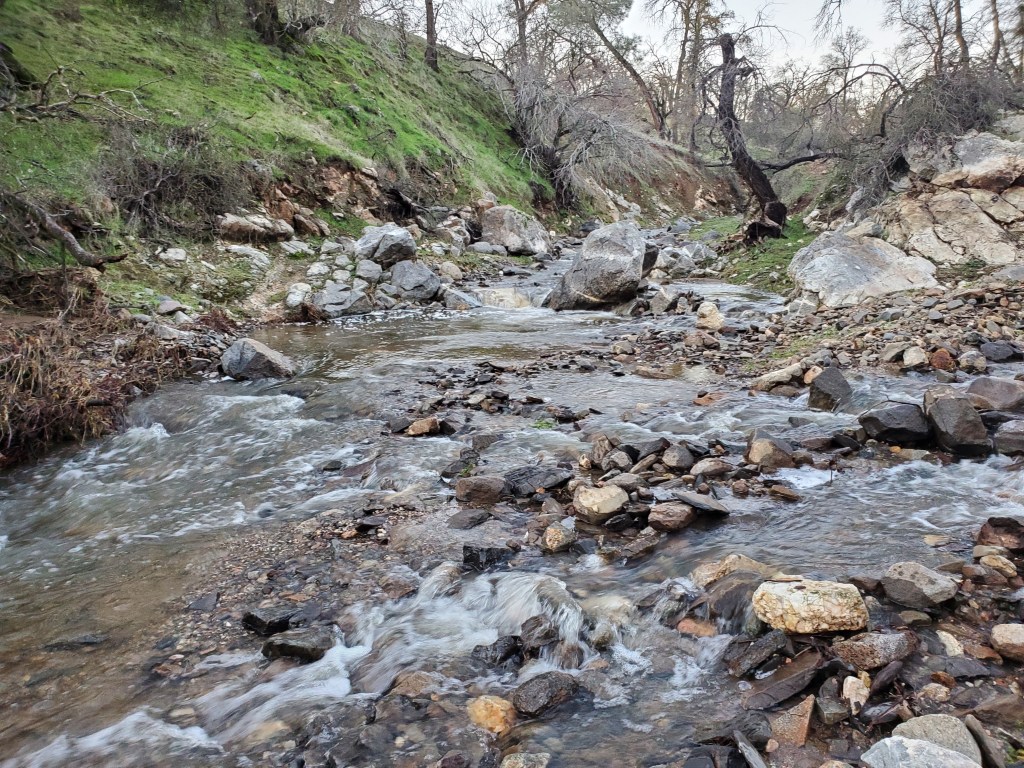
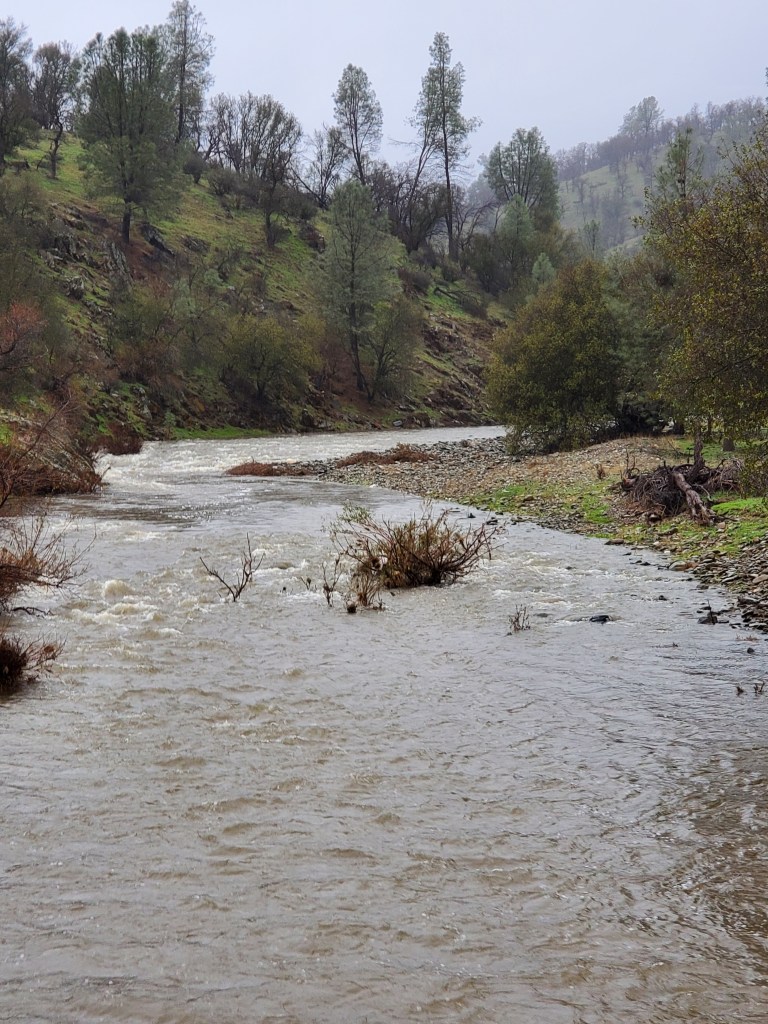
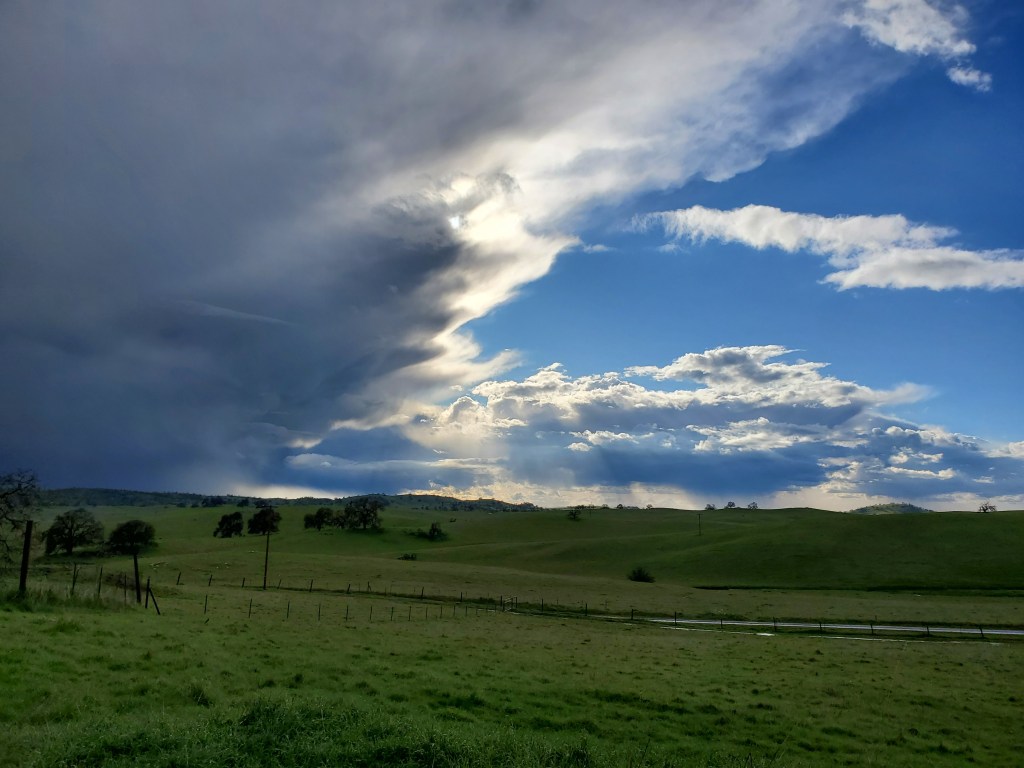
Another storm brings much needed water

I ate two bars of chocolate for breakfast, and I was lit. No one said I was perfect – eggs, oatmeal, too hard for me to think about preparing that day, and I succumbed to the ease of – go to the fridge, grab a bar, open a wrapper, and eat. Then, again. Not proud, but true.

Lately, the intense investment of time, energy, thought and emotion over the last 12 months are catching up with me. My dad is improving; though there are still back-slides, he can do more for himself. As a result, I collapse into a heap of less usefulness and find myself tired all the time, getting out of routine, or filling those moments of routine with non-dad items long ago neglected.

This transition period is messy. Some days my brain is so out of sync I cannot put two words together thoughtfully. My diet of chocolate, peanuts and jam and, if I had some energy earlier in the week, basic salad, is not the finest to promote optimal brain function. Some days my husband will take pity on me and make me a smoothy, or an egg. This day, I am up earliest and on my own. Chocolate it is. Caffeine and I do not mix. I know this. I am hungry, lazy and just love the taste. Jitters take hold, and my plan to plant more oaks just got an accelerant.

Oak Planting Nearly Done

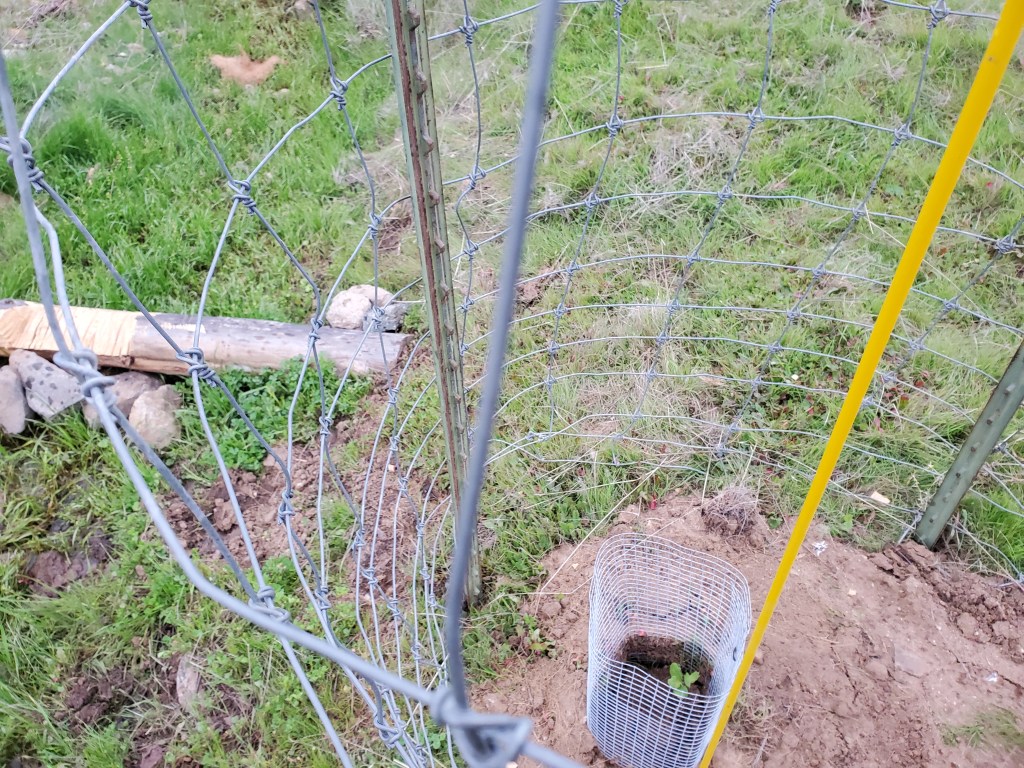
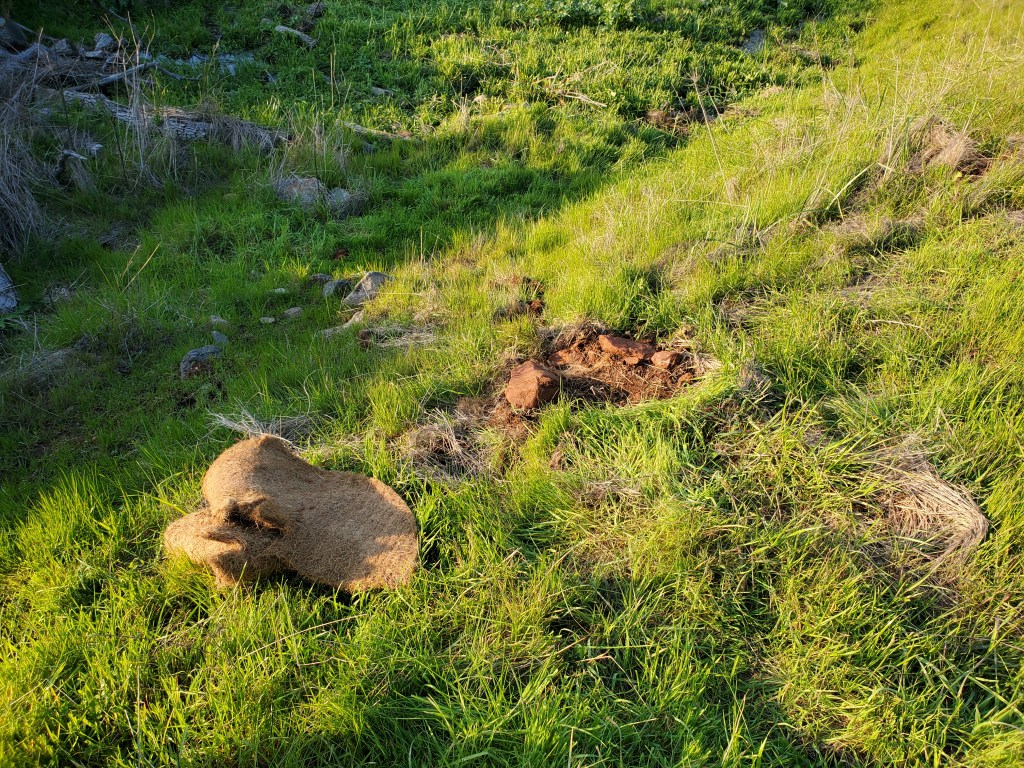
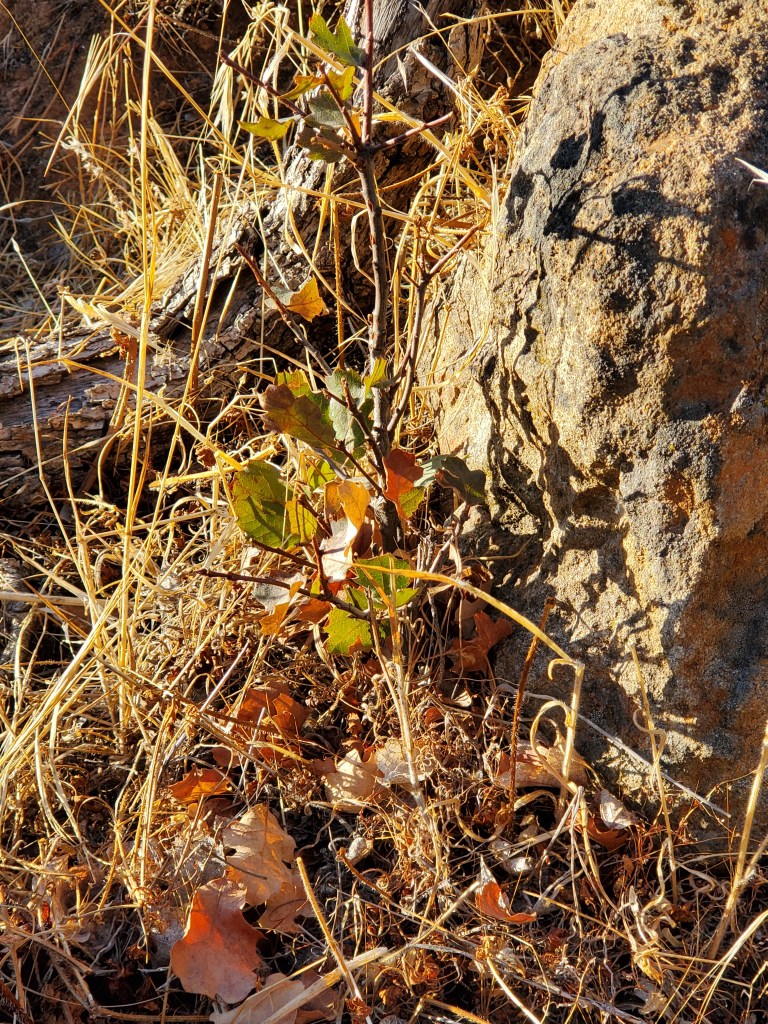
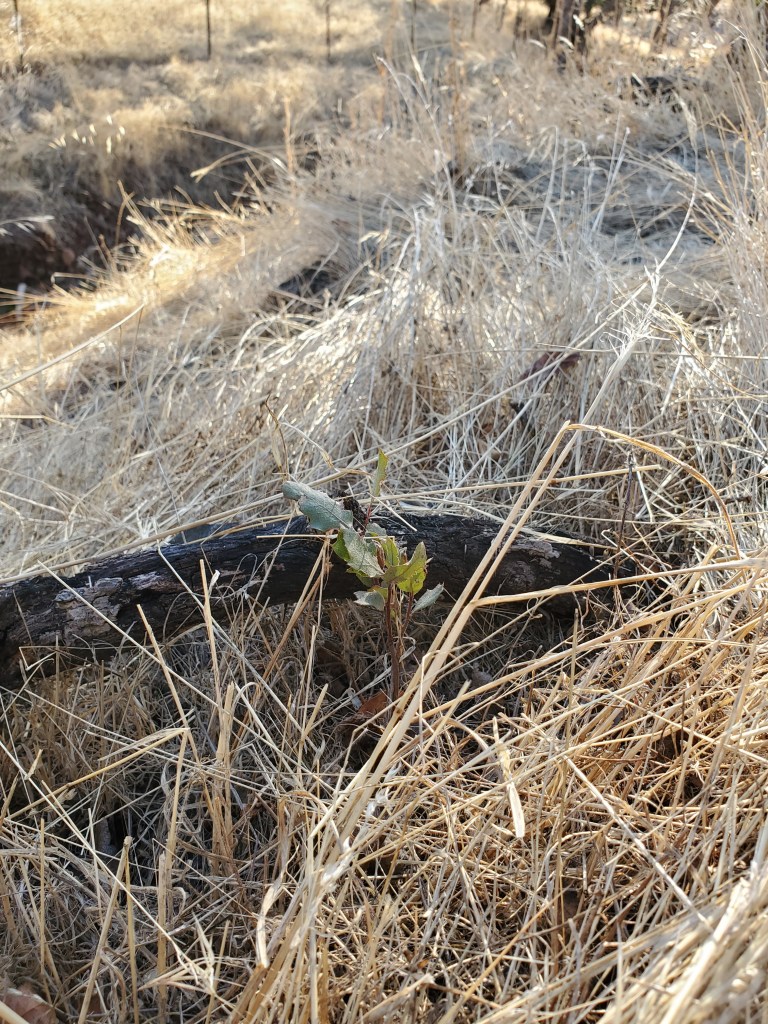
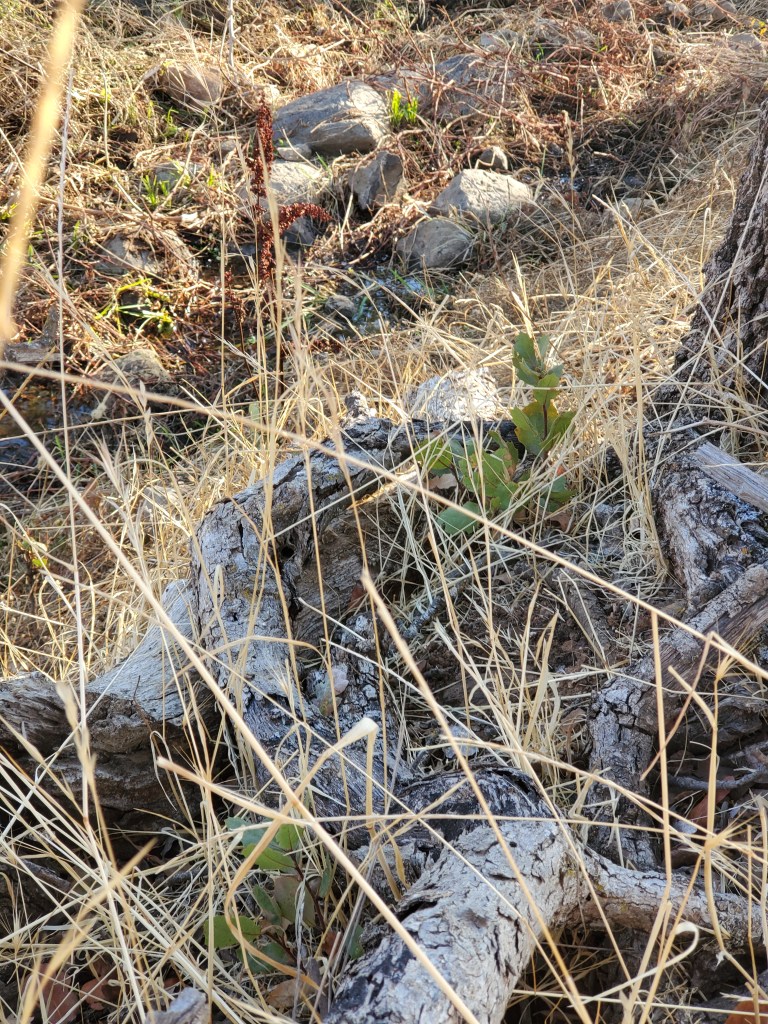
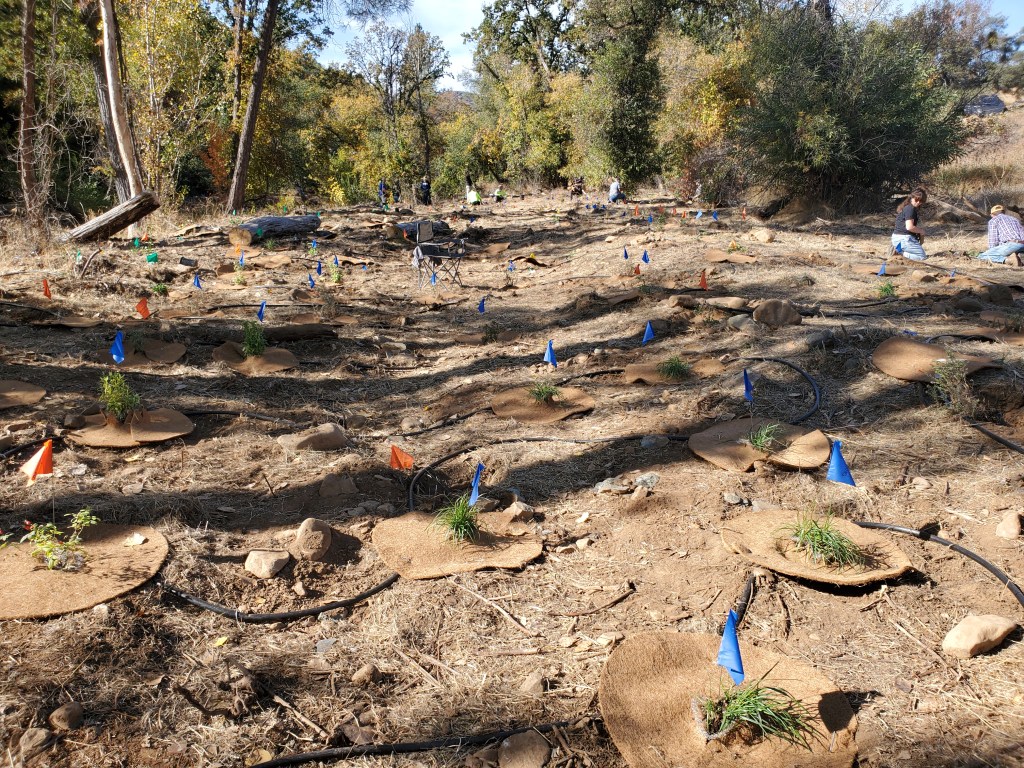
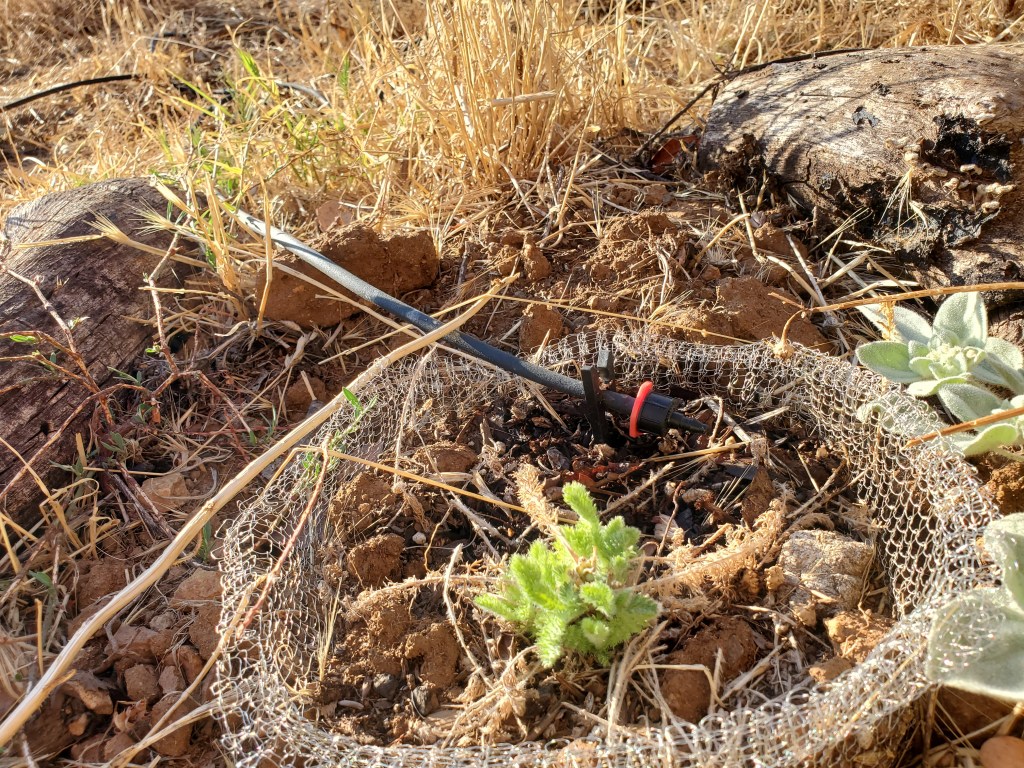
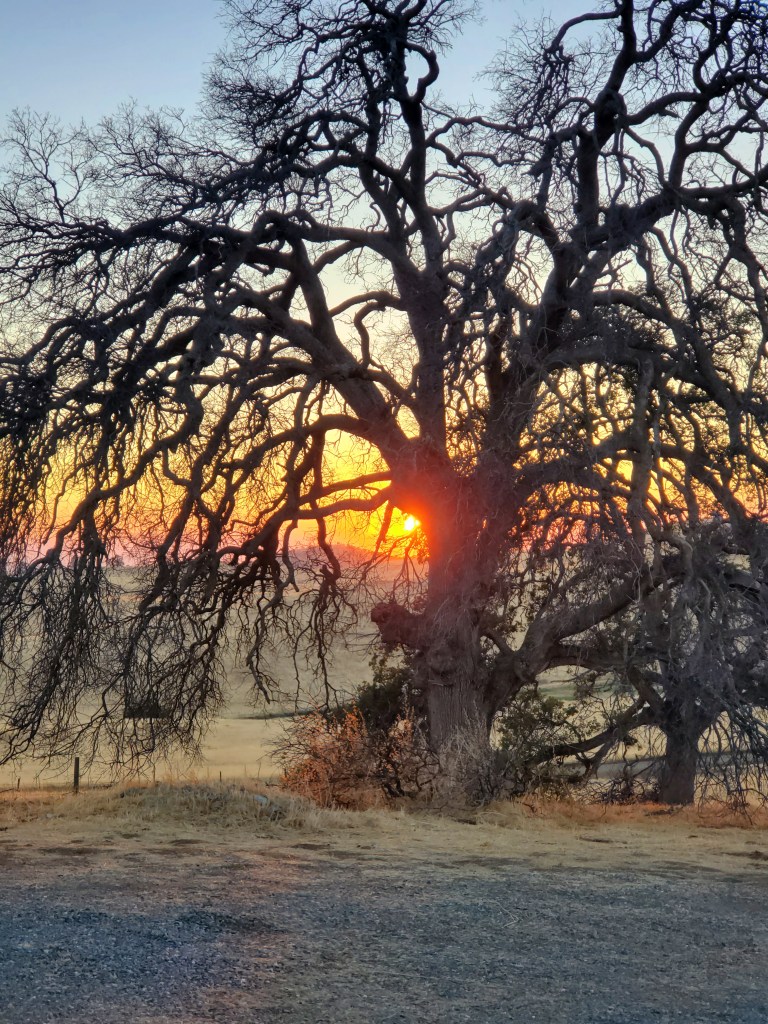
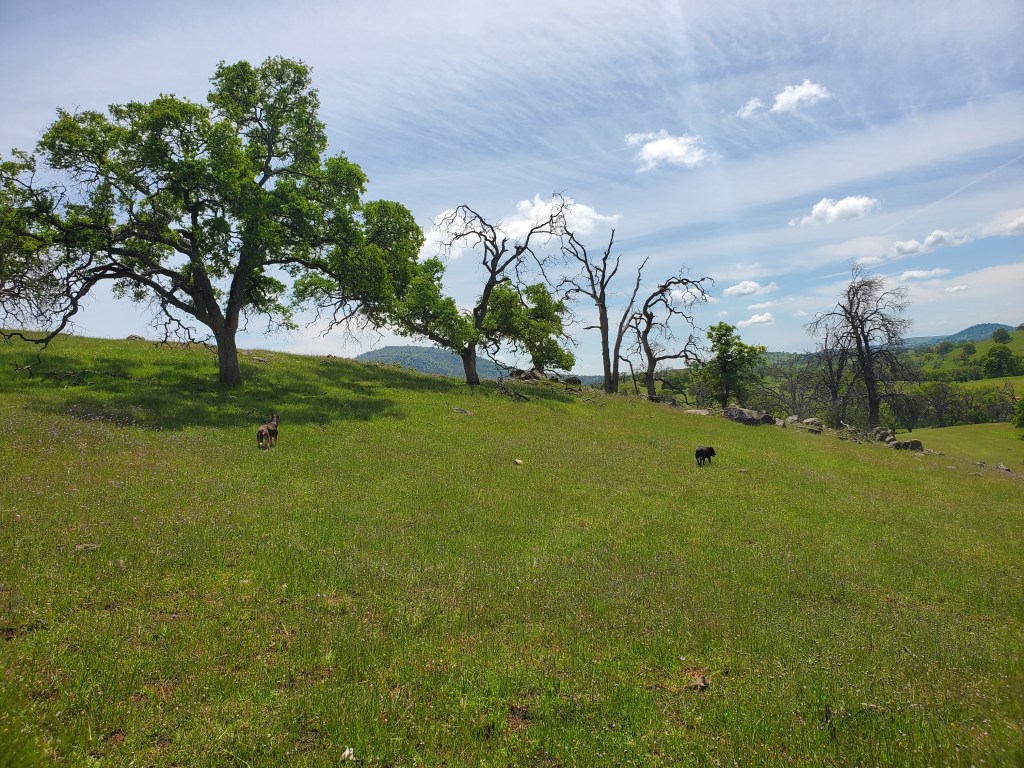
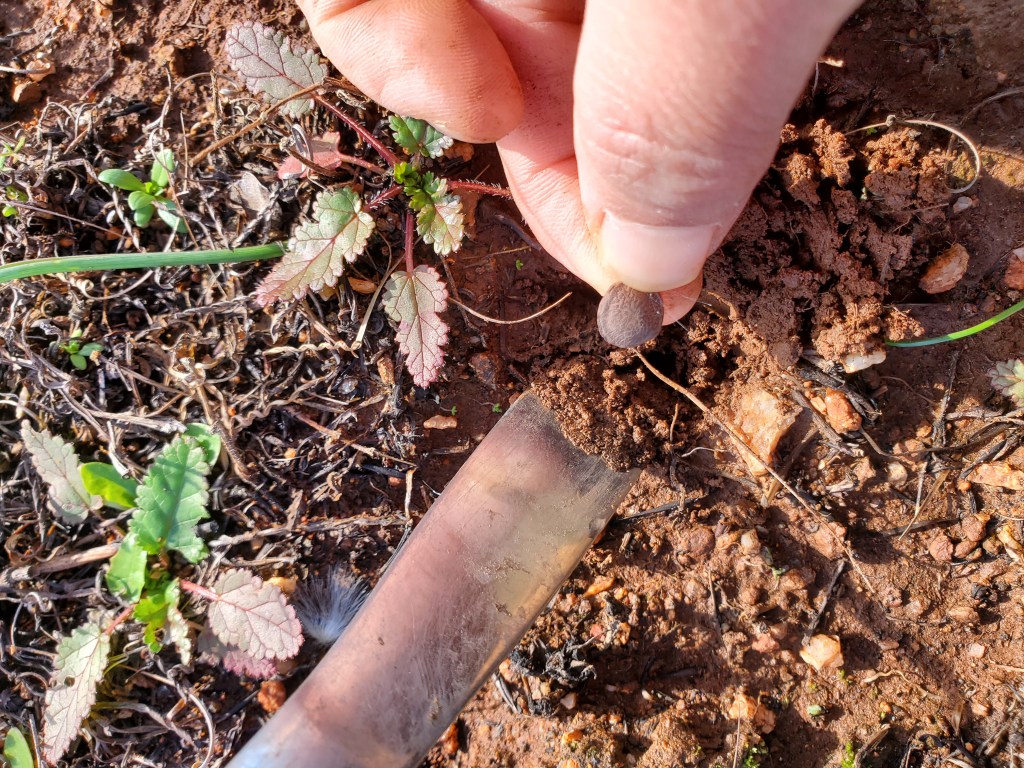
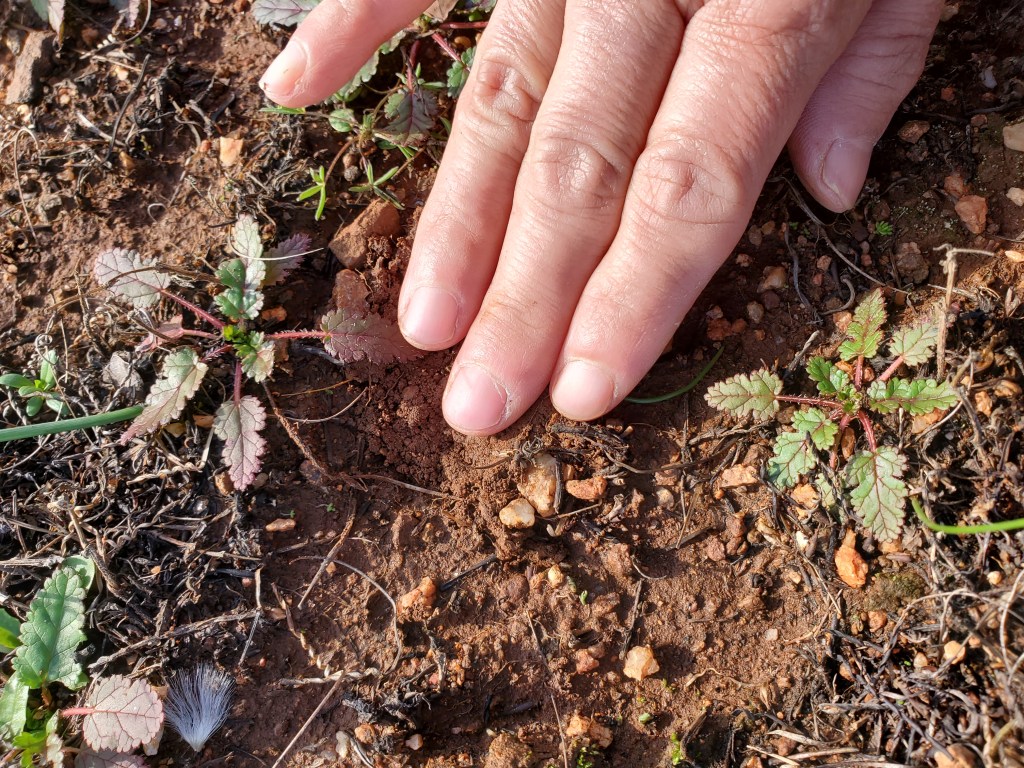
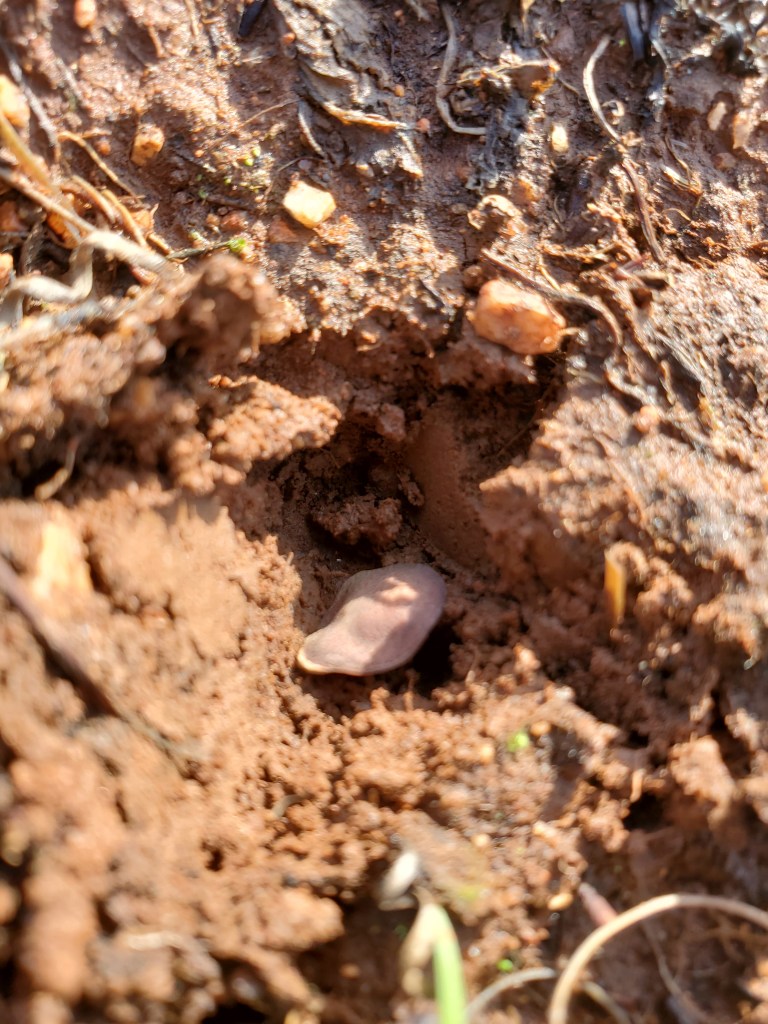
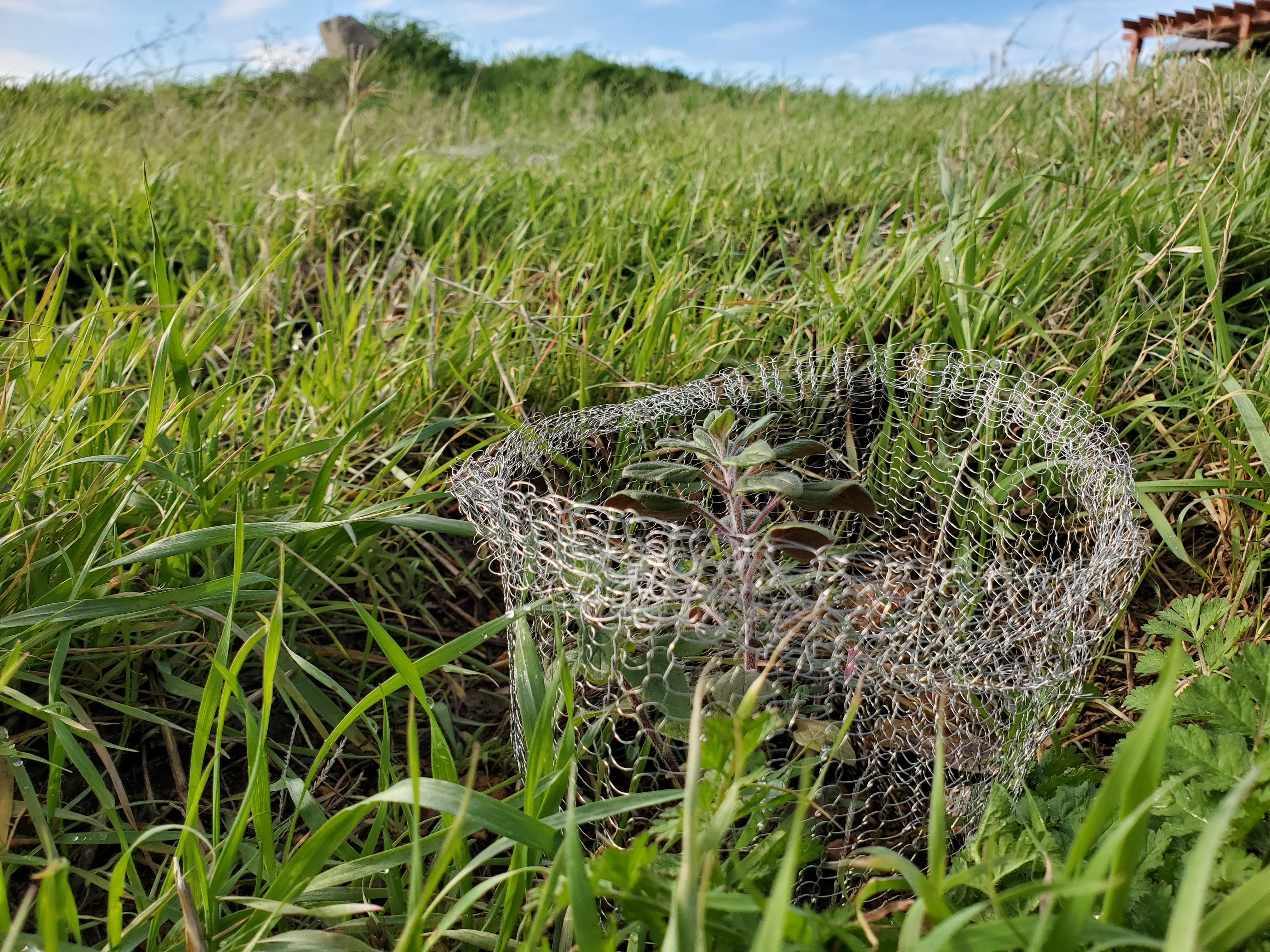
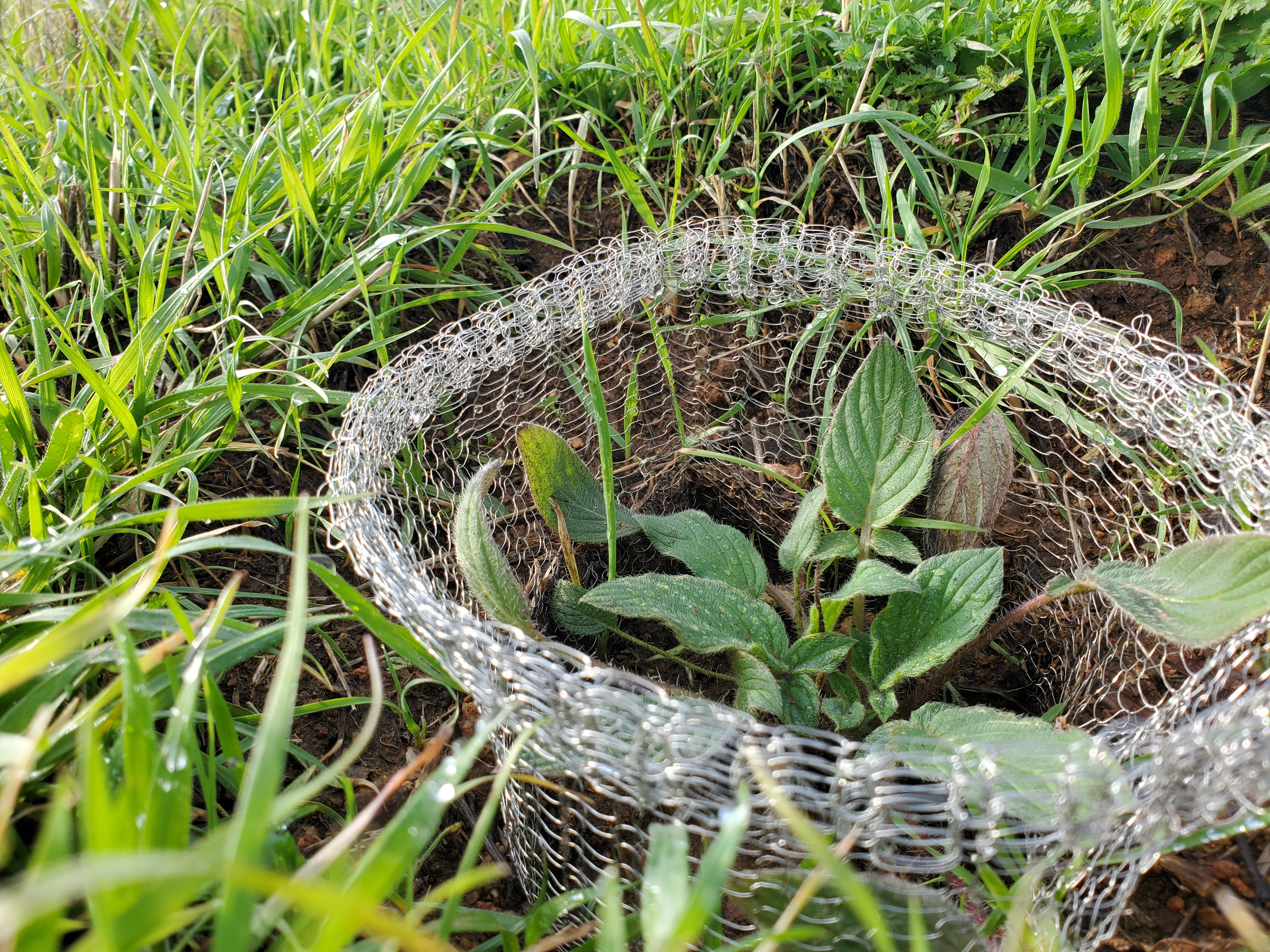
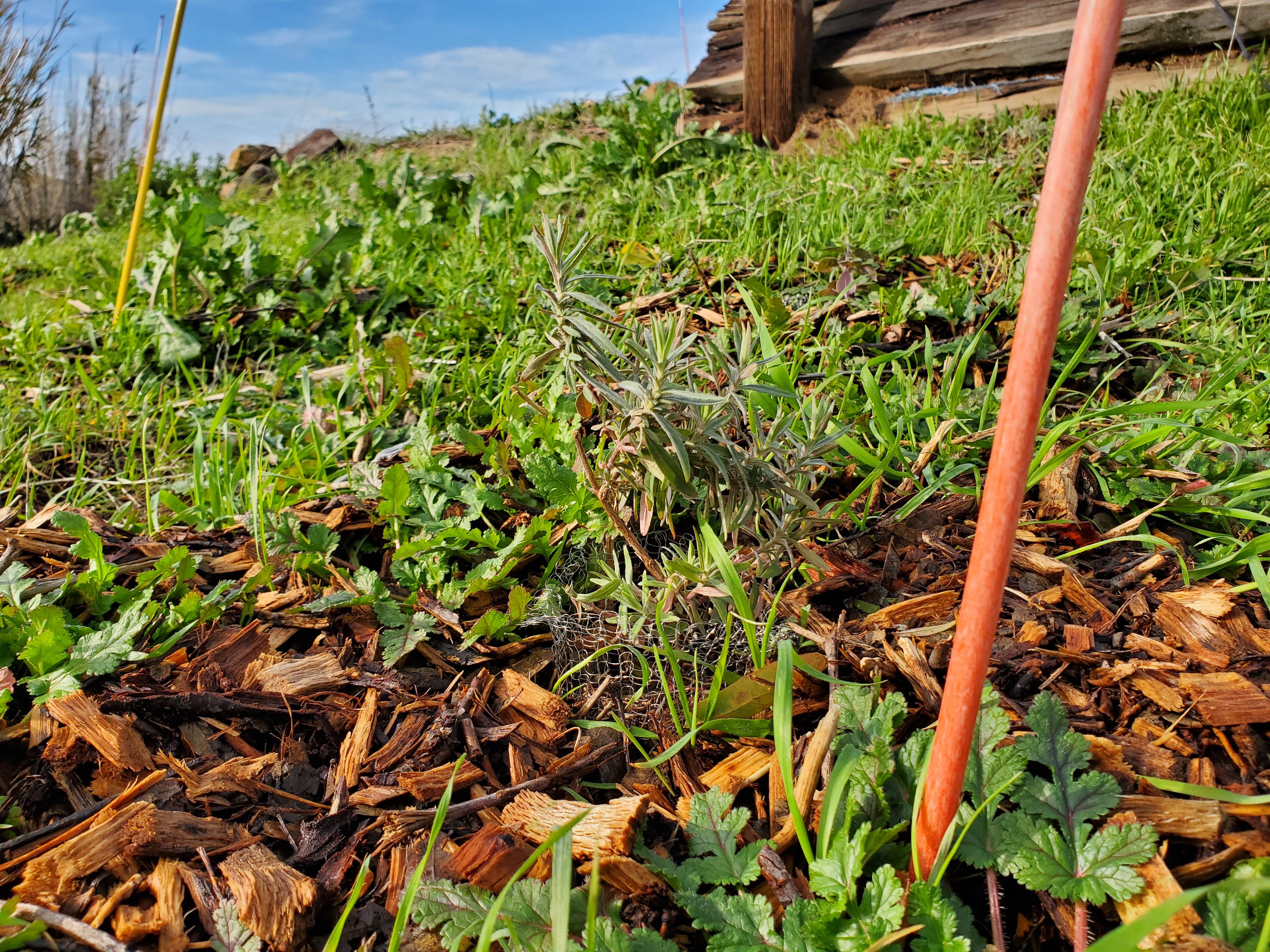
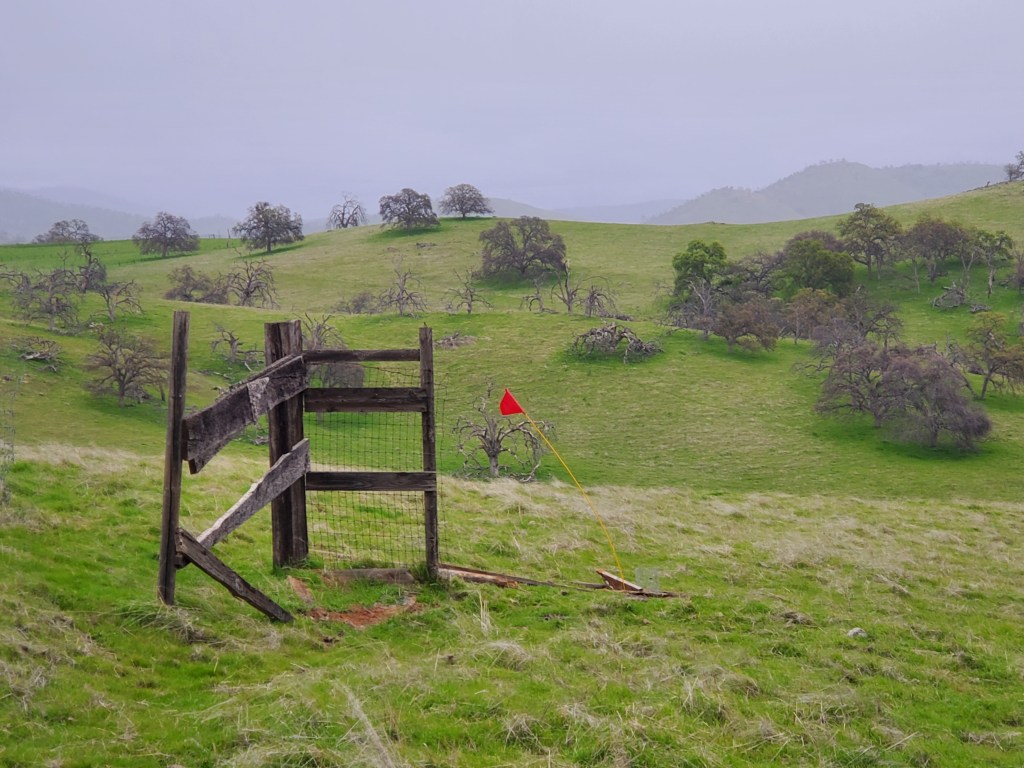
I planted all of the oak seedlings except one, planted all of the riparian oak acorns, and planted half of the elder oak acorn. The rest of the elder oak acorn I saved for acorn flour. I checked the plantings done earlier in the month and February. The cows got their snouts through the fencing on one and pulled the coconut coir. I put it back. Some of the flags were askew. I straightened them. I placed flags on others. I weeded away from new growth in the already enclosed plantings. Maintenance is important to ensure better outcomes.
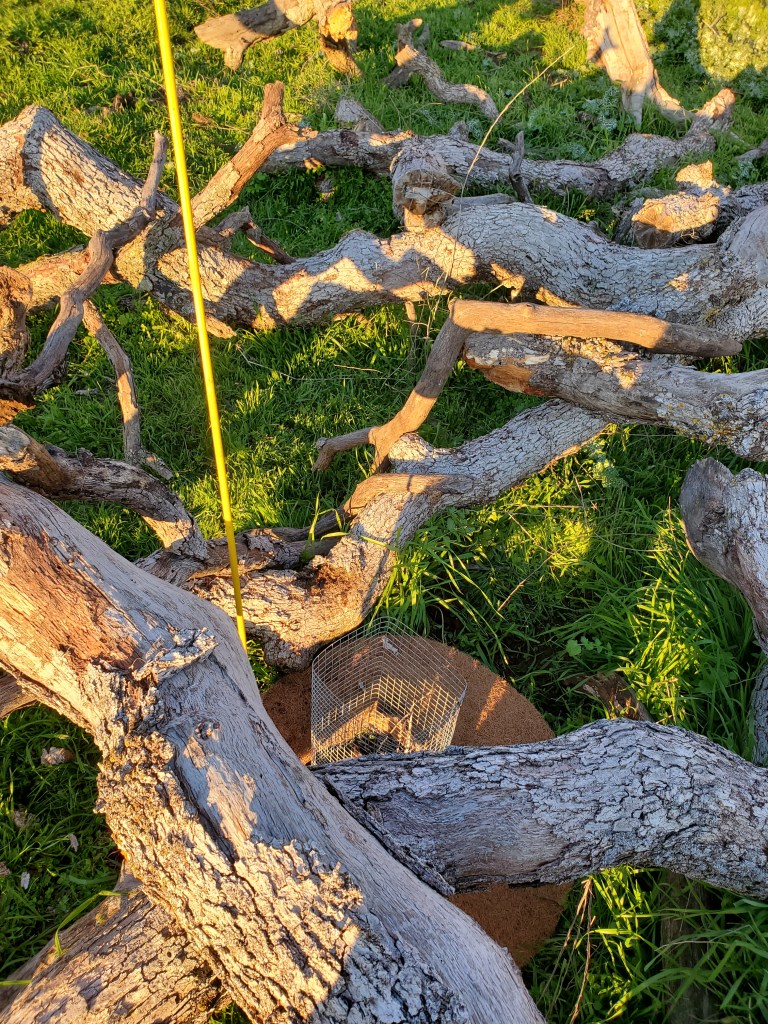
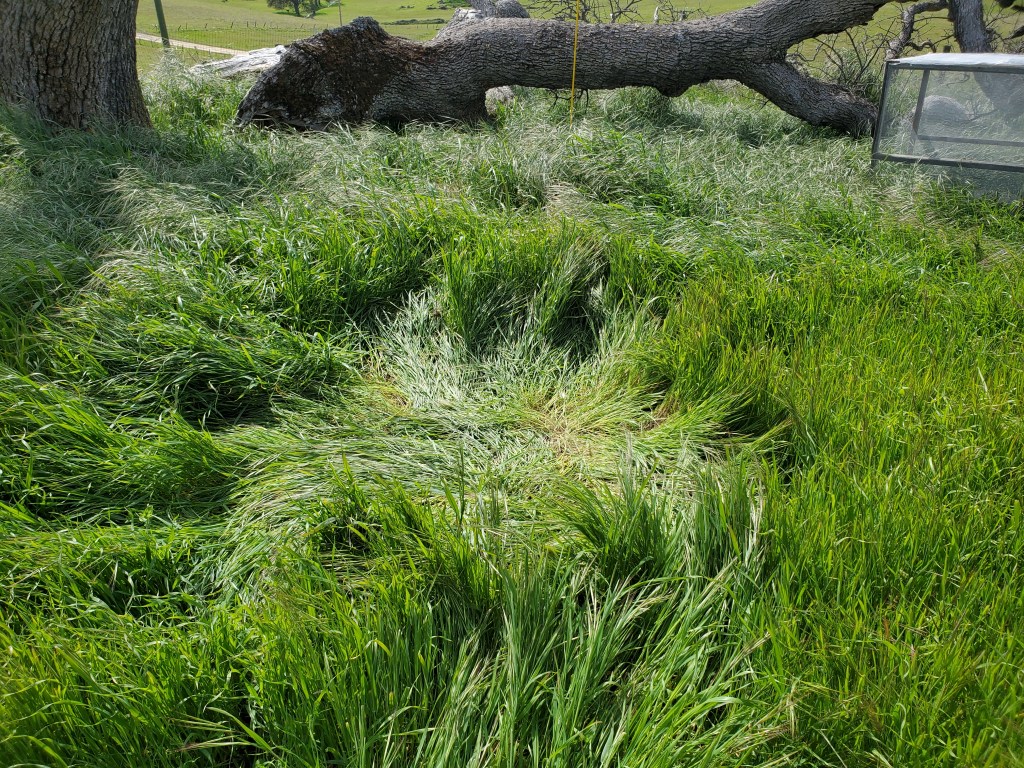
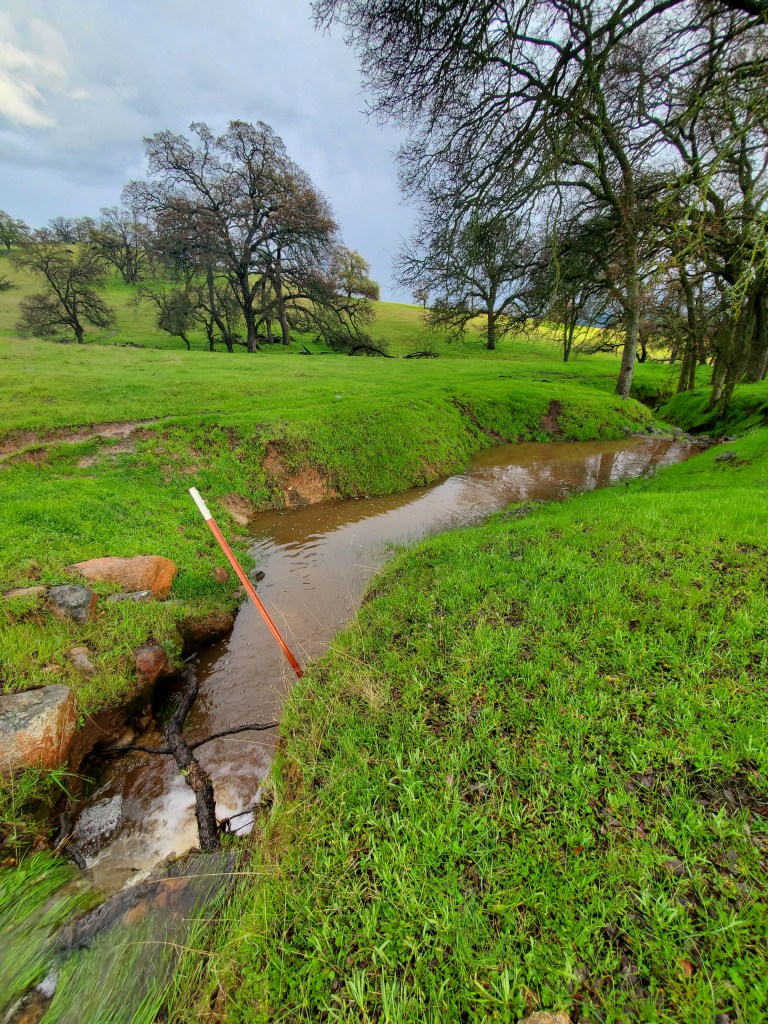
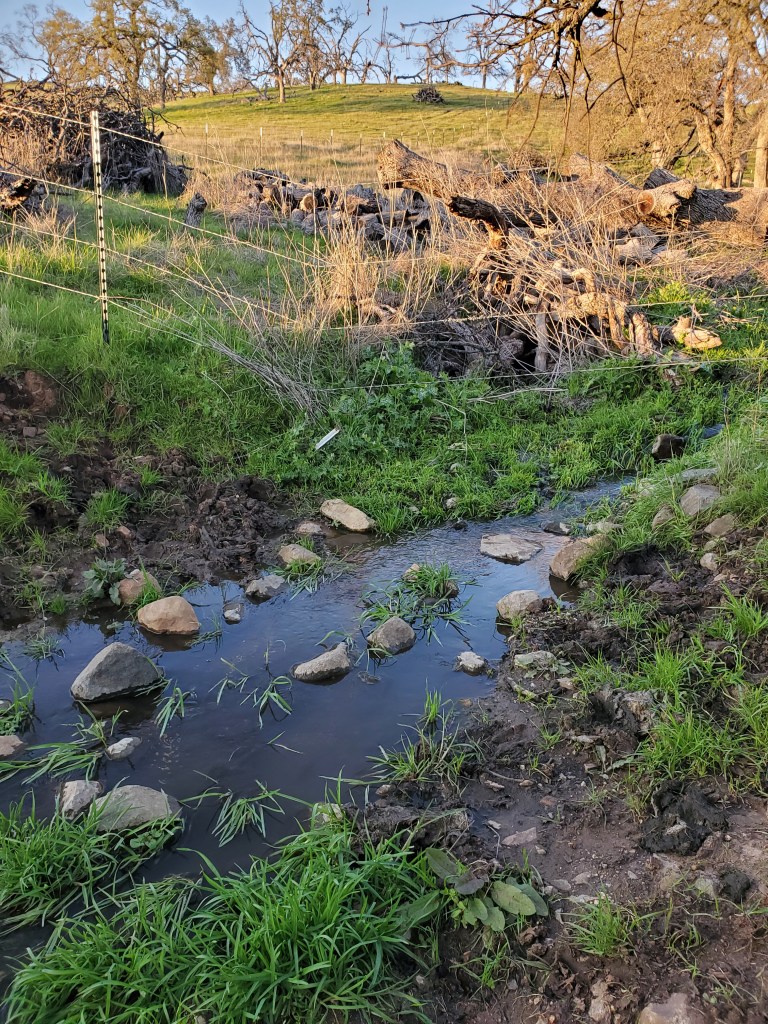
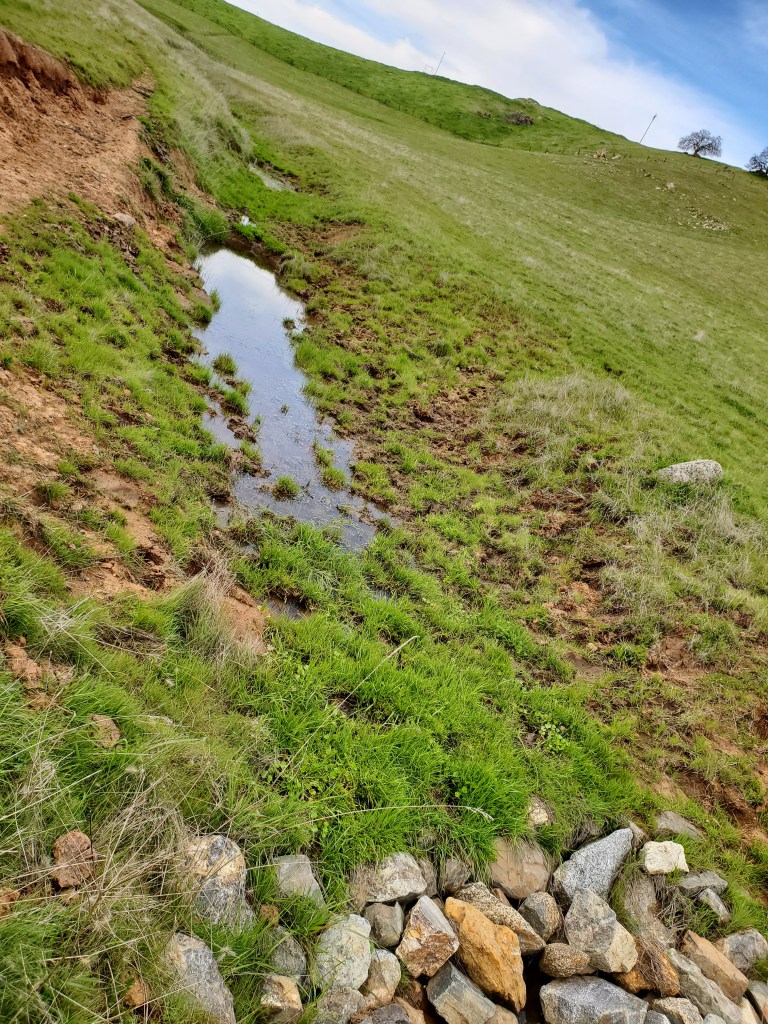
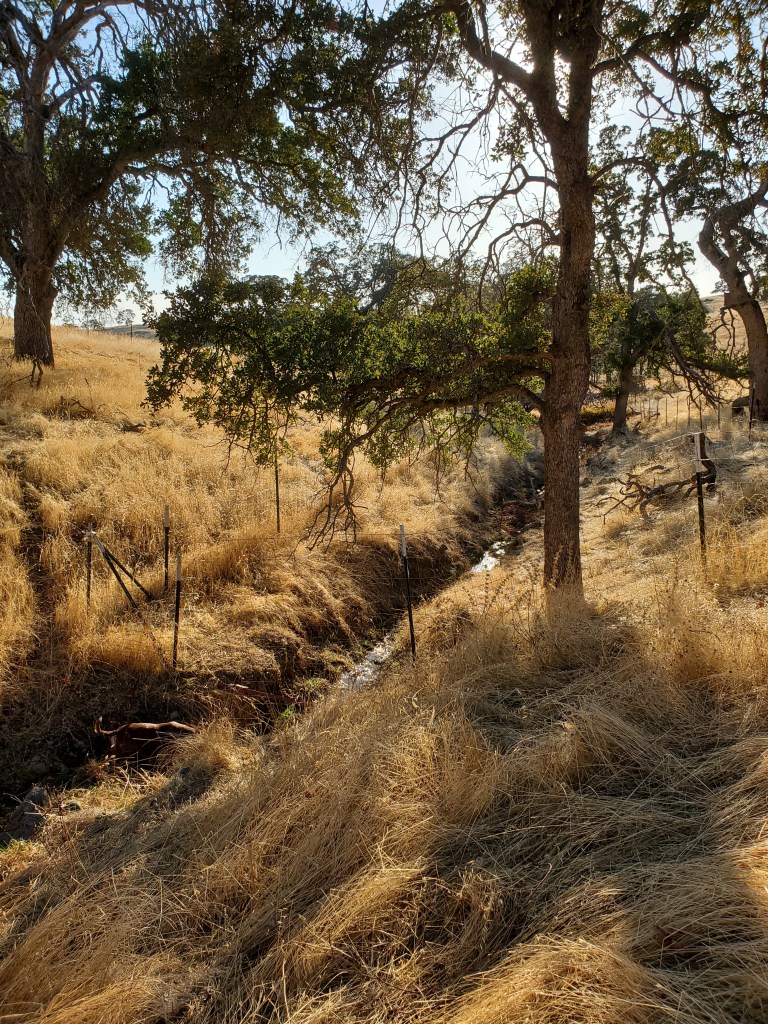
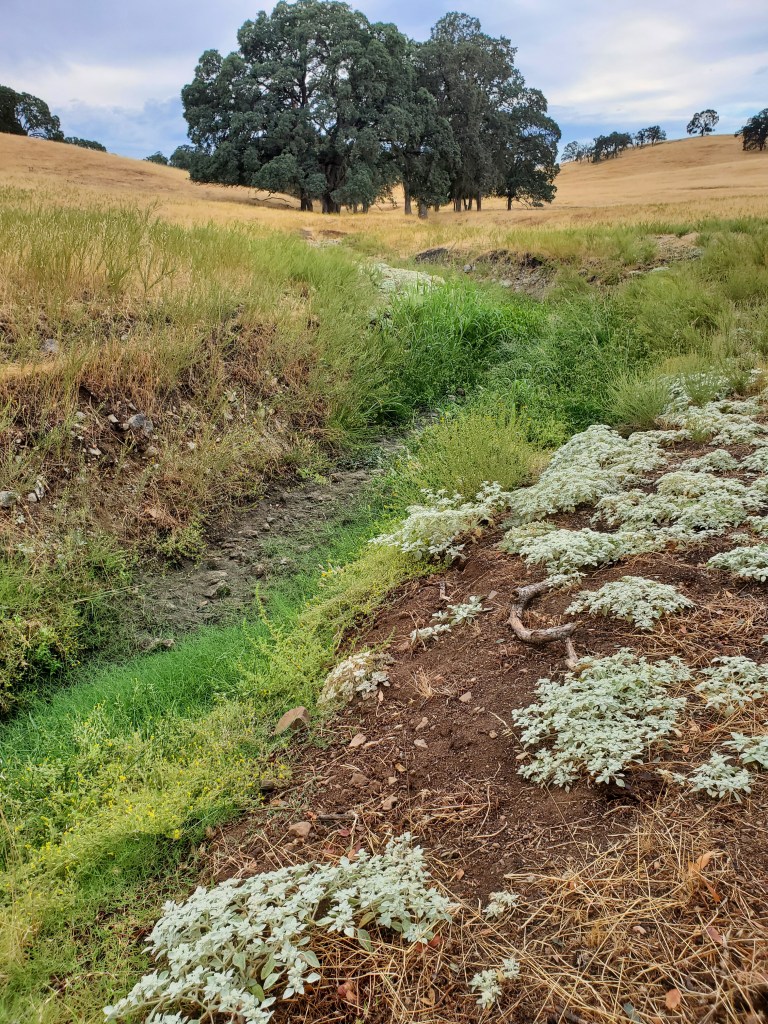
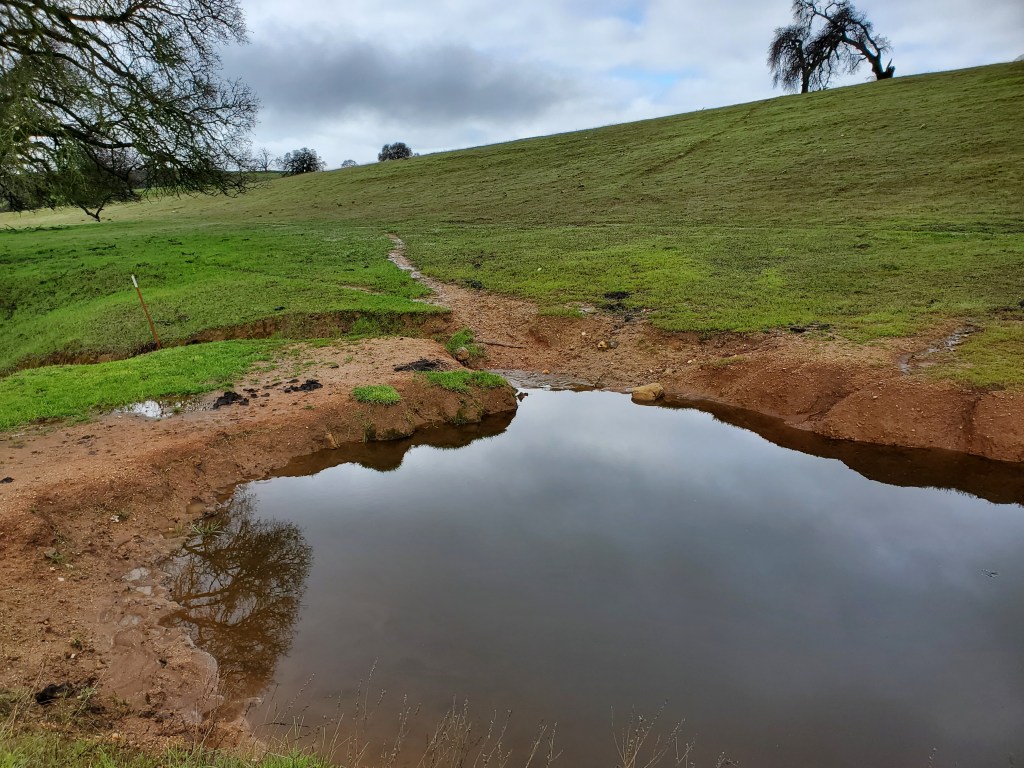
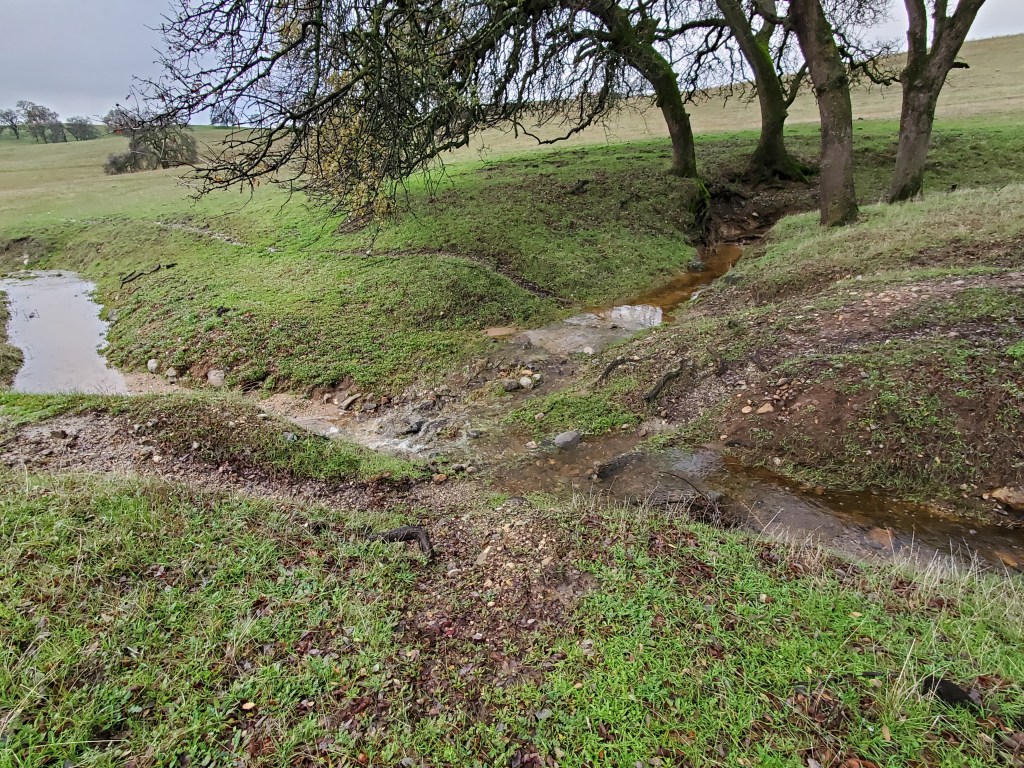
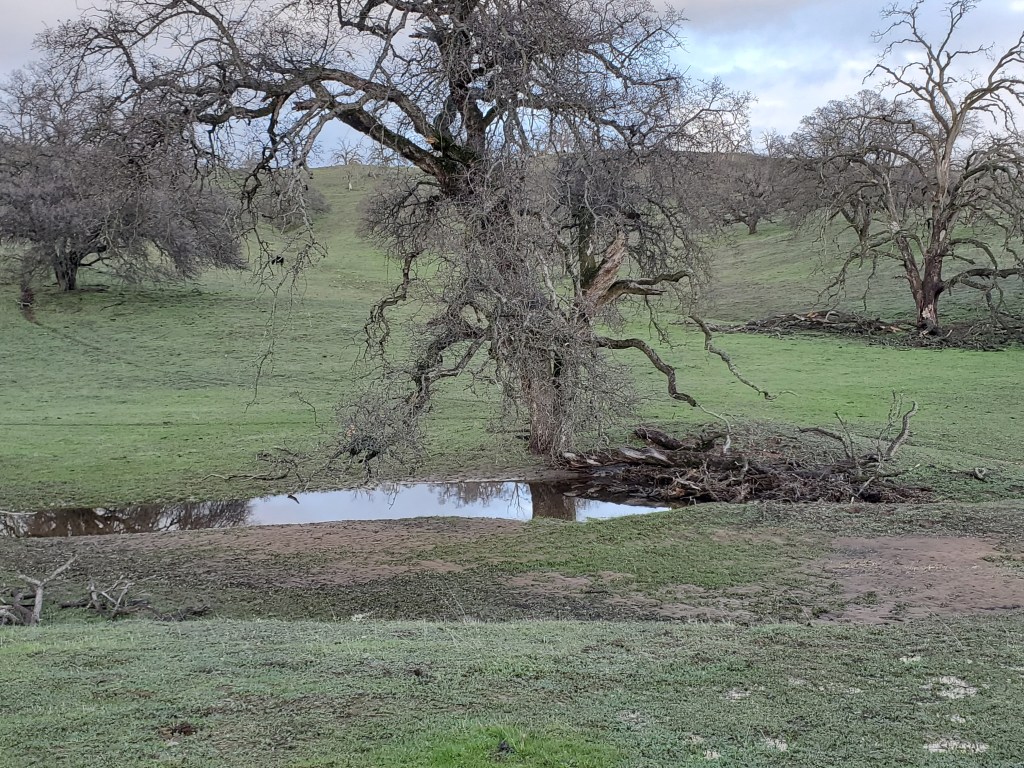
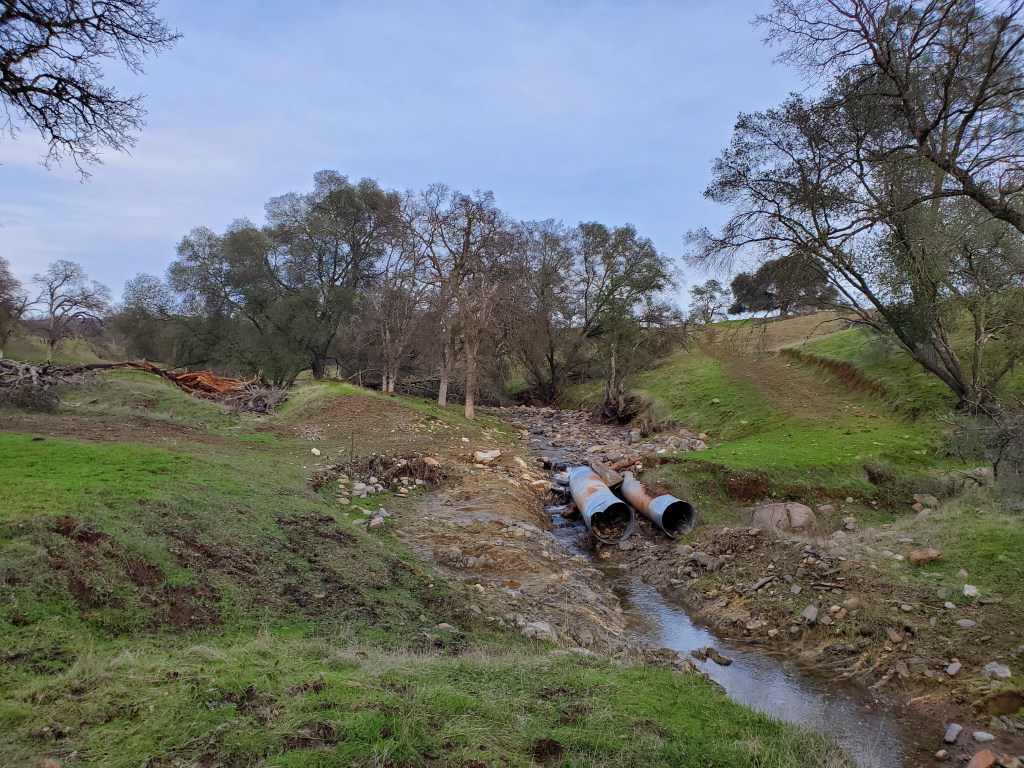
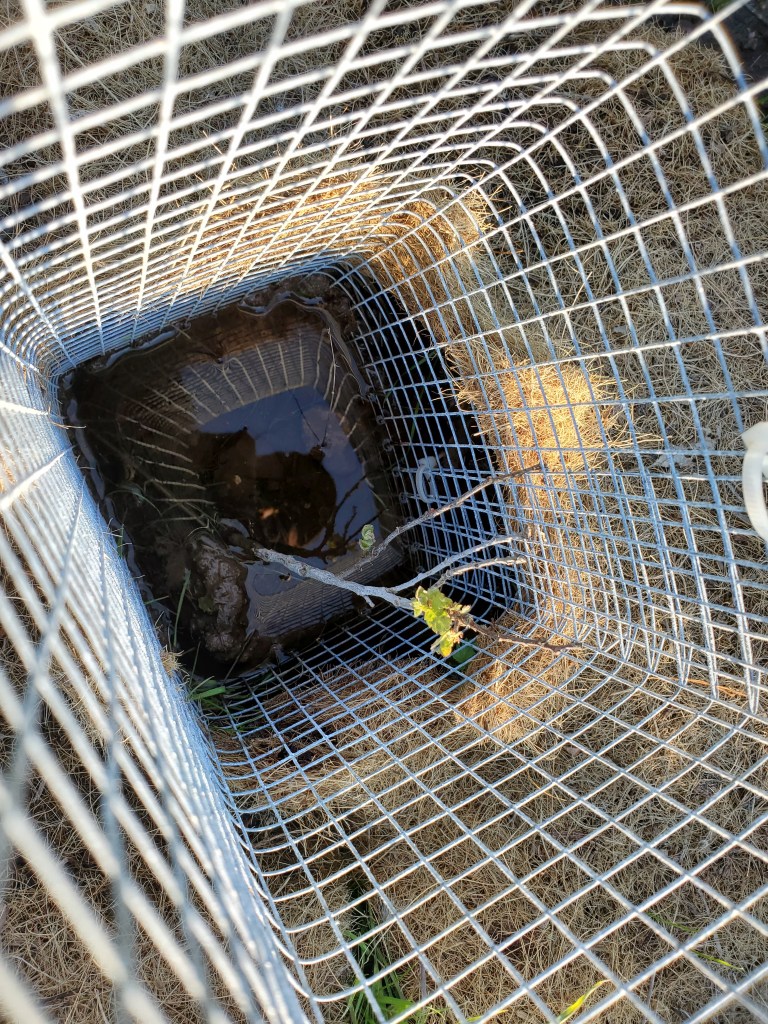
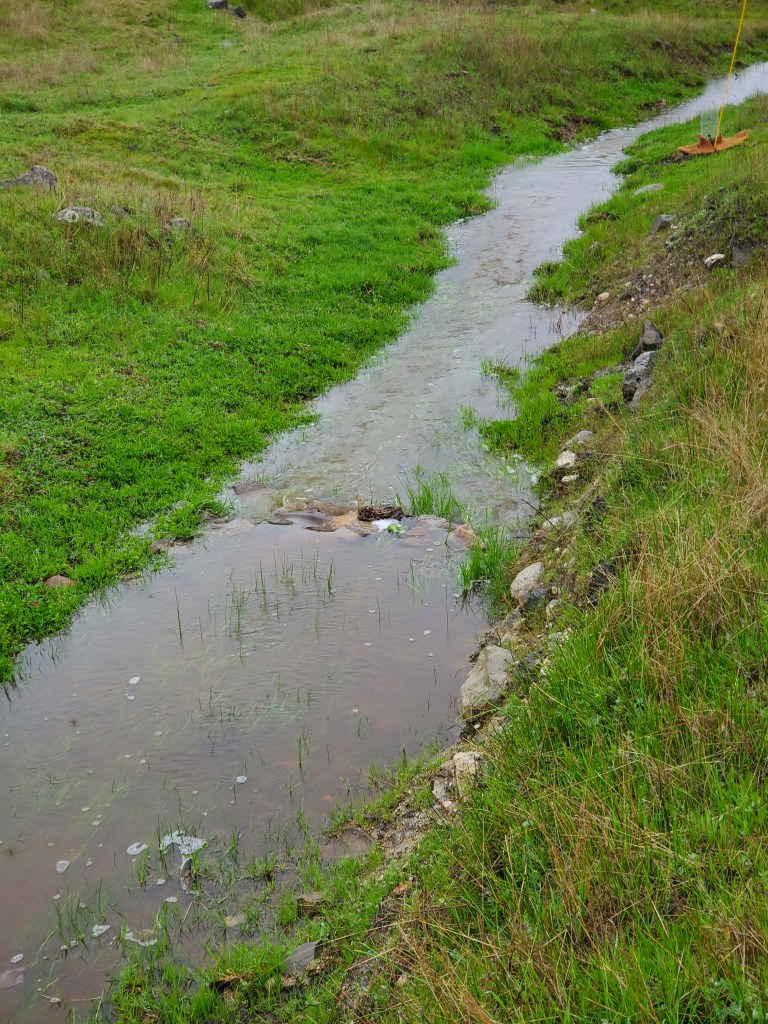
After one of the storms, I saw one of the seedlings I planted had its basin filled with standing water. Too much water, and oak roots can rot. One of the challenges of selecting a site is that I am considering access to water over the long term. As such, I have been planting near the creek or near a spring flow. One of the upstream oaks on Spring Creek is planted in a flow. It is west facing with other oak shade. The soil is predominantly clay. Excellent conditions for water accumulation.

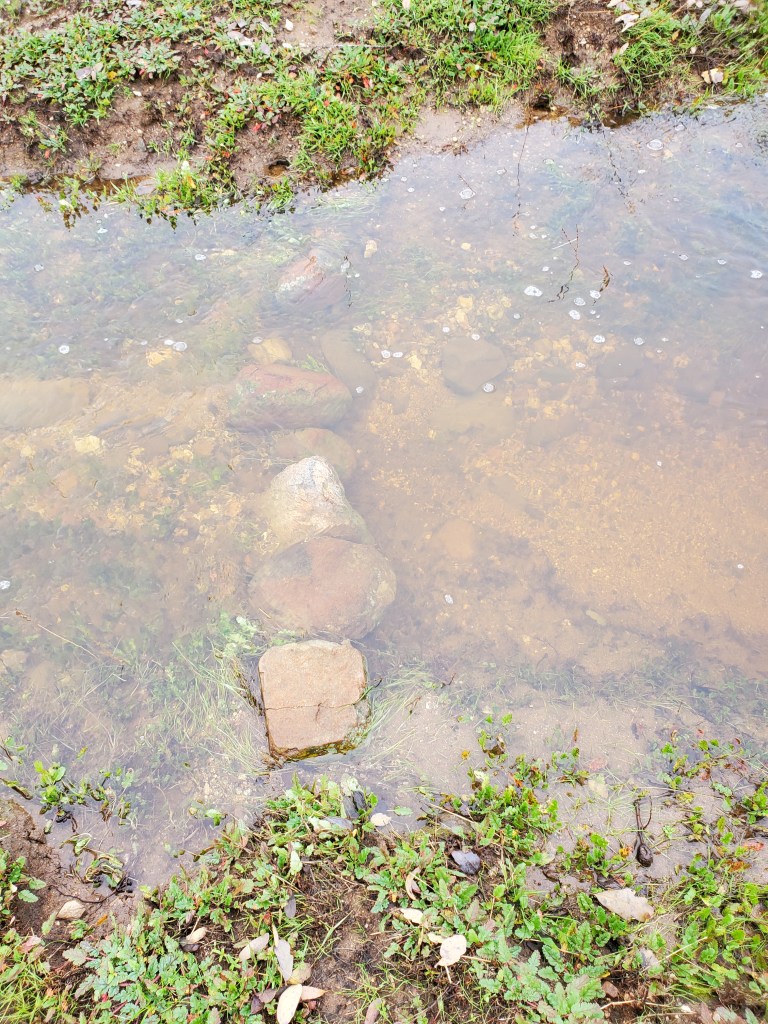
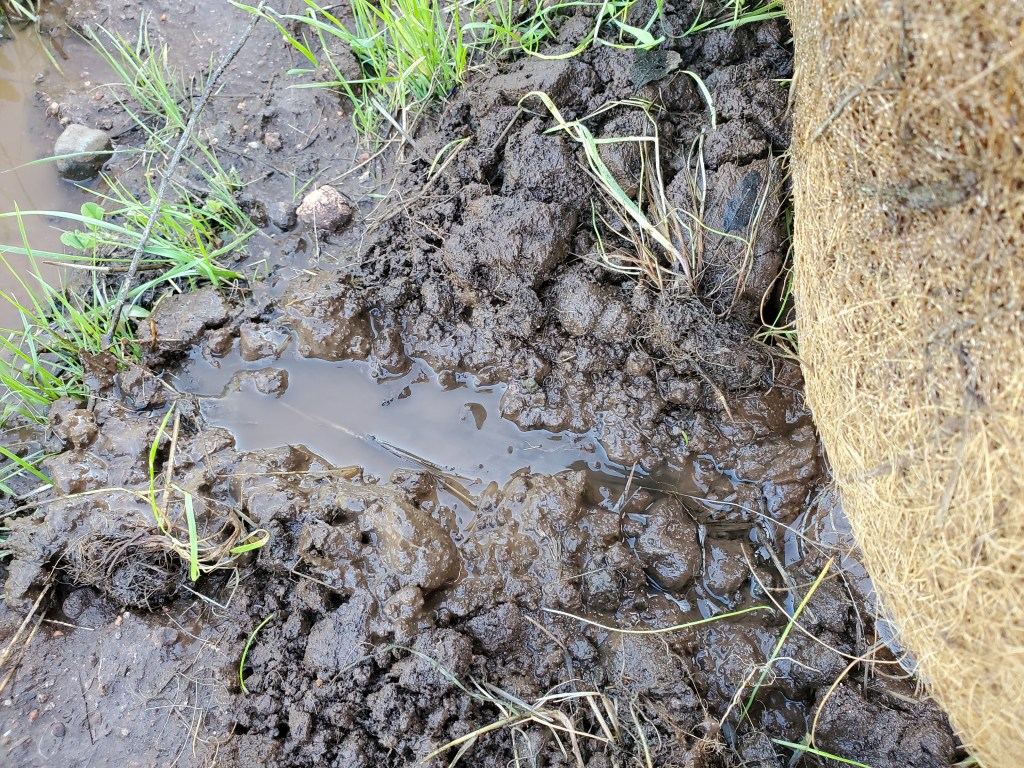
I lifted the coir pad, stuck my finger in the mud and created a channel to allow the standing water to flow out of the small basin I try to place around each planting. It mostly worked to alleviate the stand. Water is everywhere, and that section, because of the flow, is already saturated. However, I was able to get the water down low enough so it was not submerging part of the trunk. The weather will be dry this week, and I anticipate the remaining standing water will be gone within 24 hours. I will go back and recreate the basin wall for the next rain event.
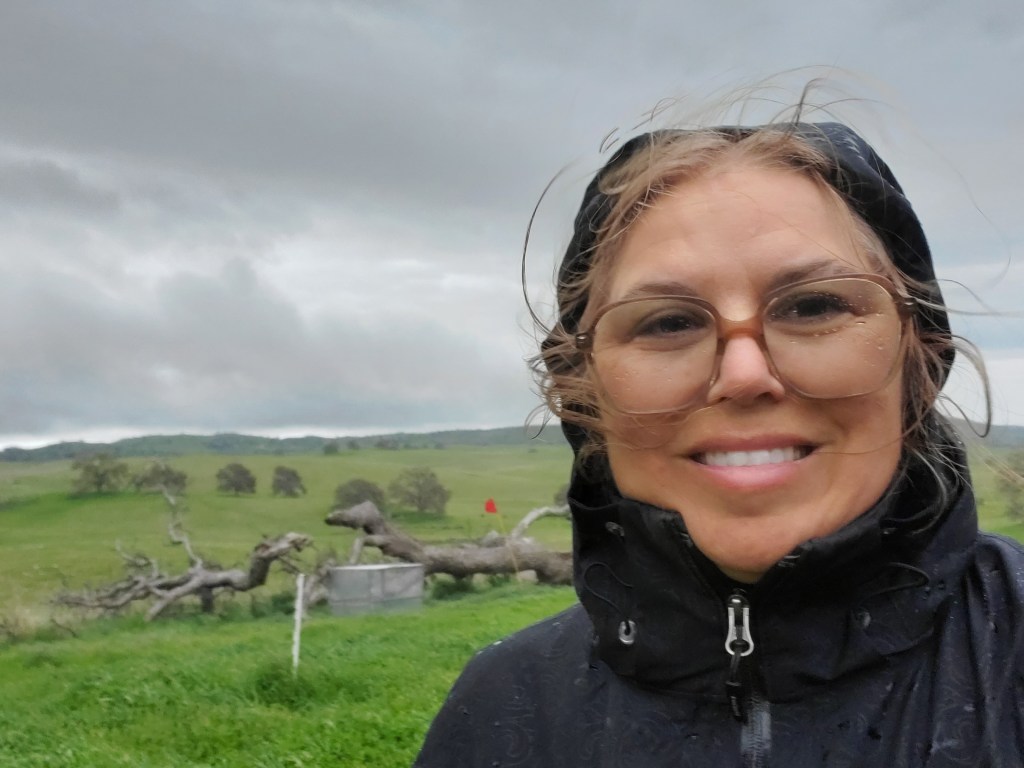
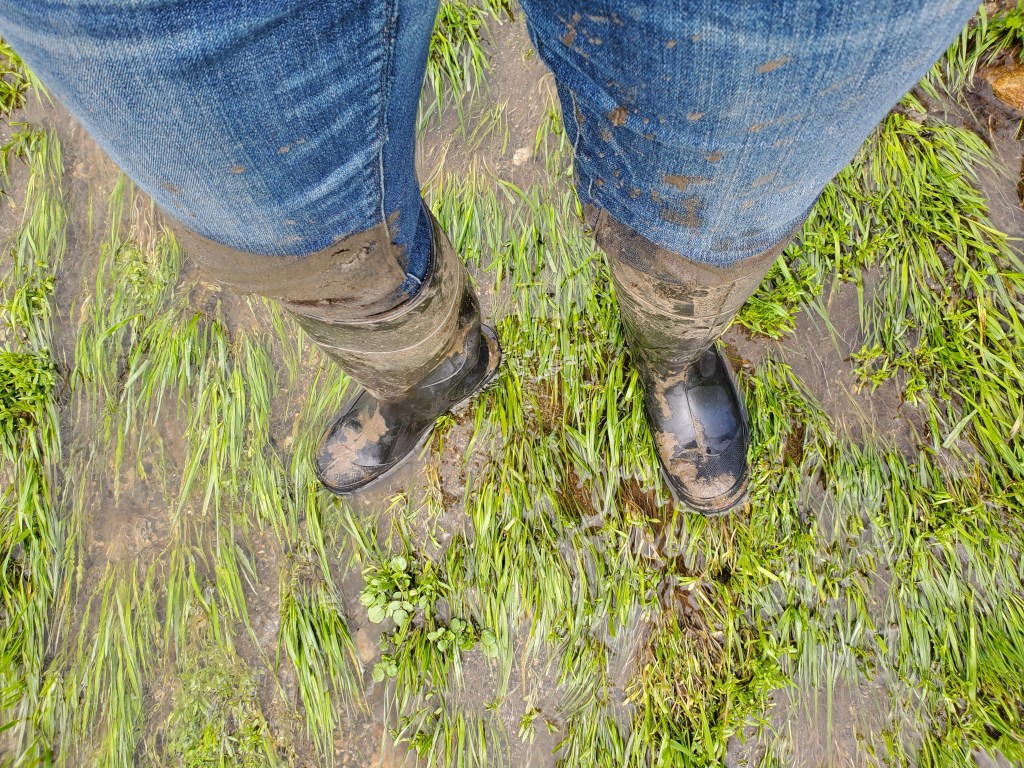
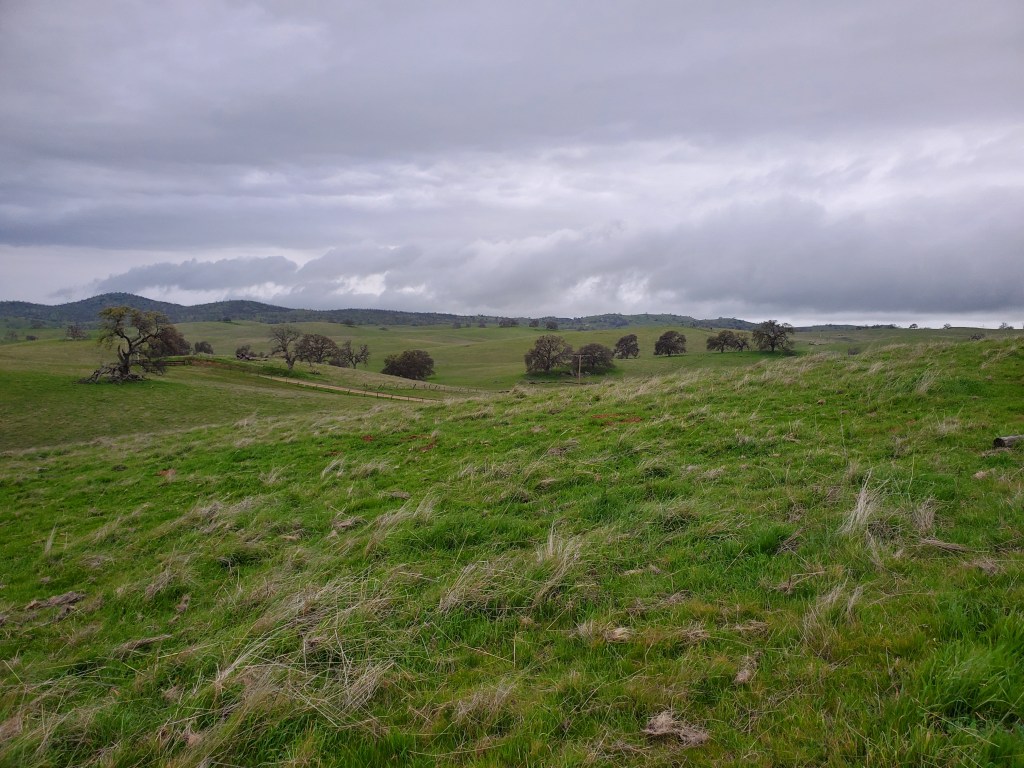
While out checking the oaks and maintaining their planted areas, I was quickly caught up in a storm. The wind was ferocious, bending the oak marking flags to almost 90 degrees. Fortunately, I was in my final section, which happened to be nearest the house. The rain started to pour. While I had a jacket on, I was wearing shorts (I know. I’m crazy). The wind whipped at my exposed legs, and then it started to pour. I typically traverse the ranch on foot to limit soil impacts from the quad or truck. I finished with the oak I was working on and bolted up the hill, through the gate, around to the front of the house, sloshing in mud (I had my muck boots on), mud splattering across my legs. Finally, I got to the front door – a soaked, muddy mess. Although I was almost denied entry to the house by my family, it was ok. I love this life.
Checking New Log Check Dam

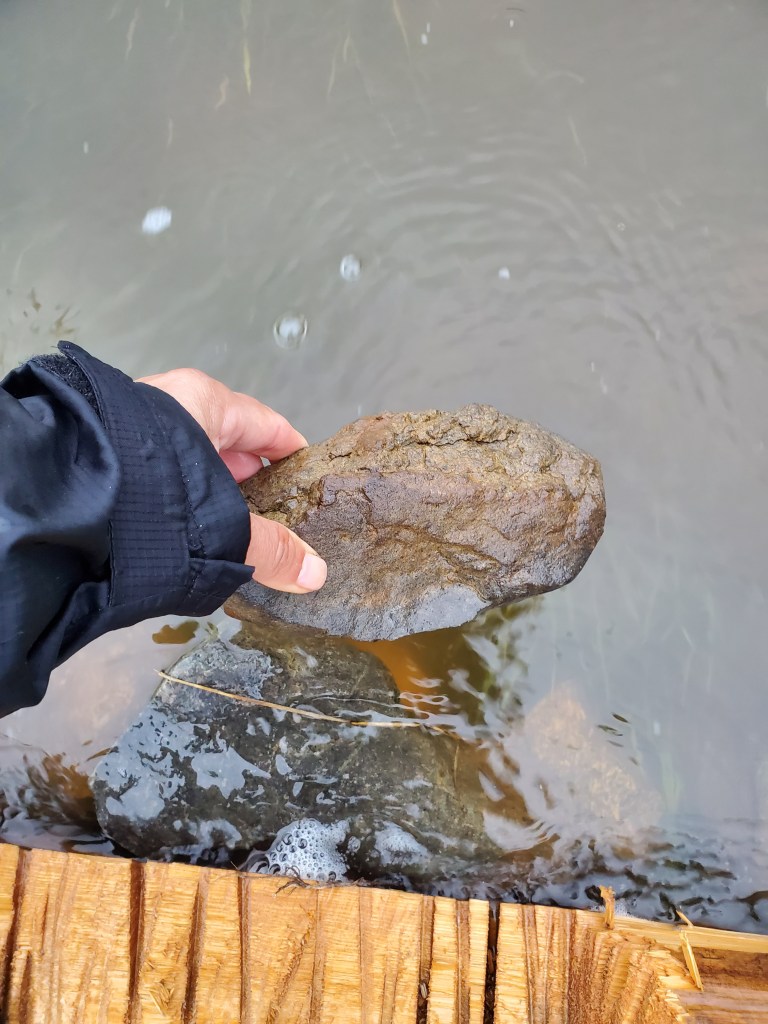
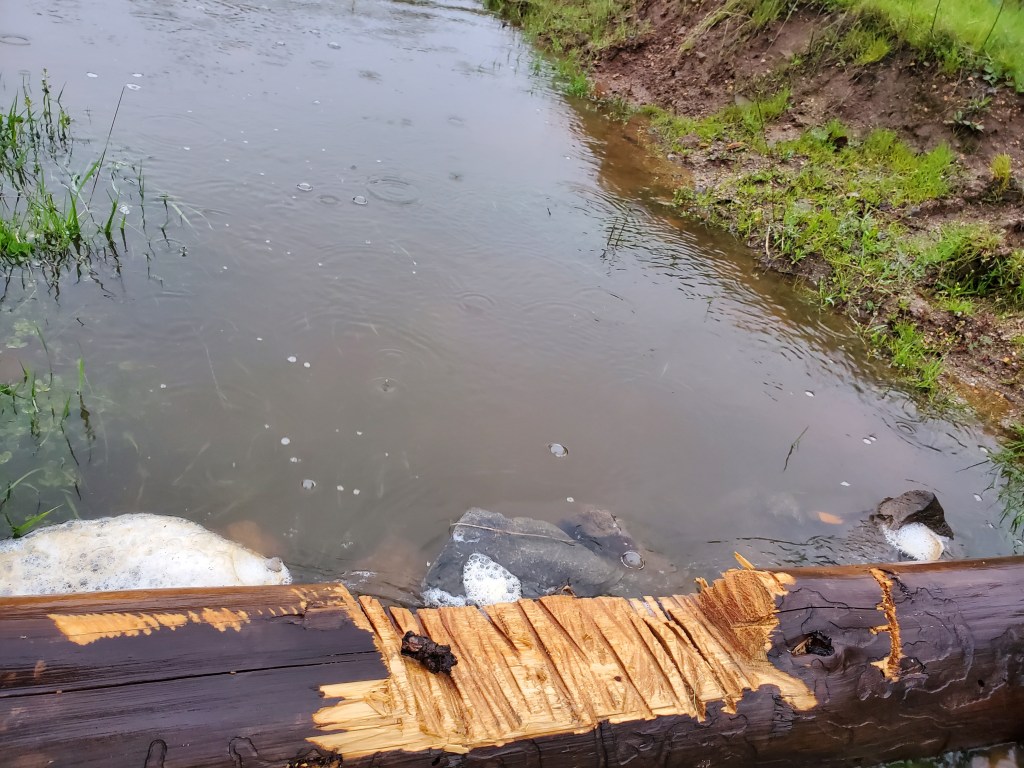
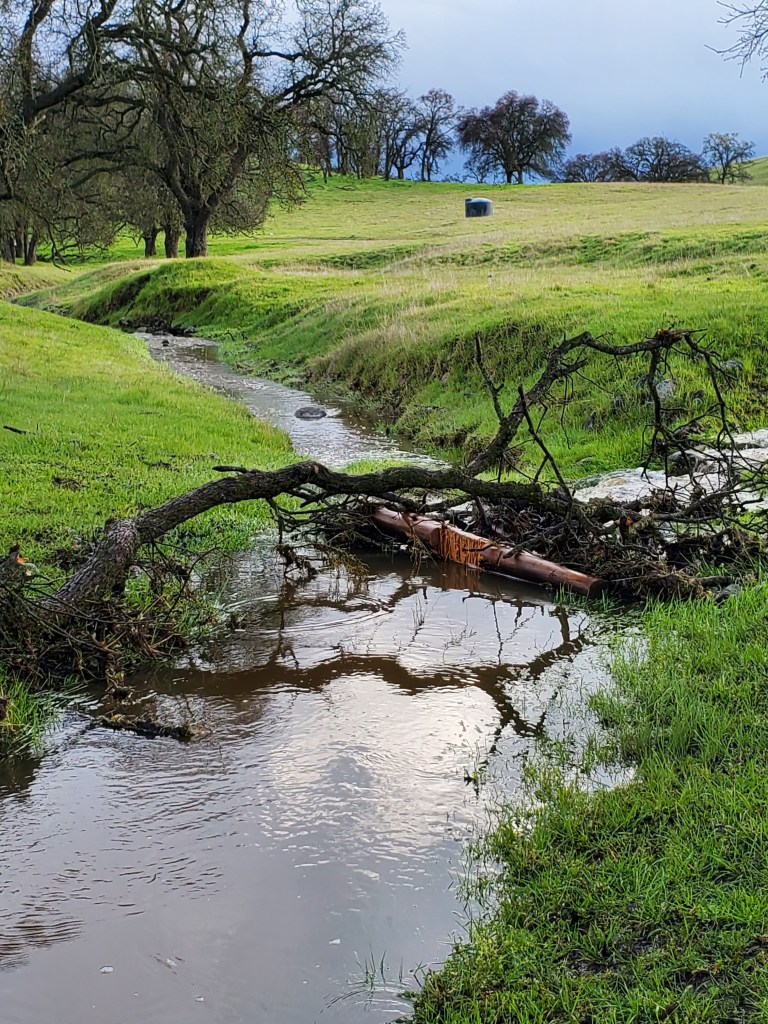
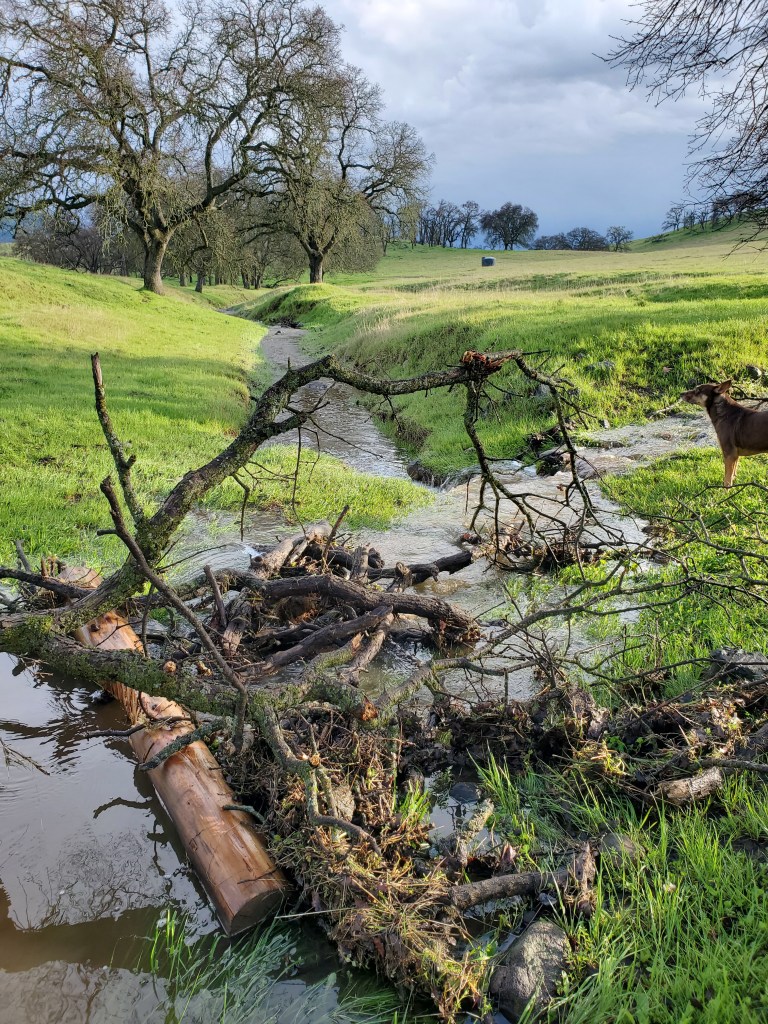
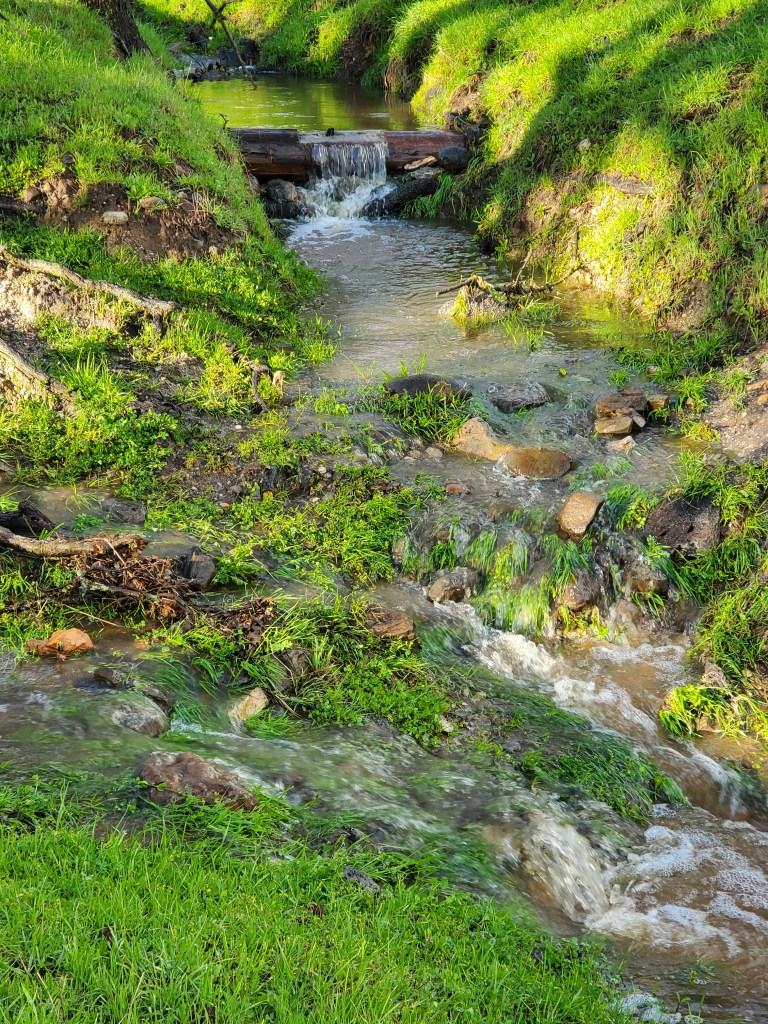
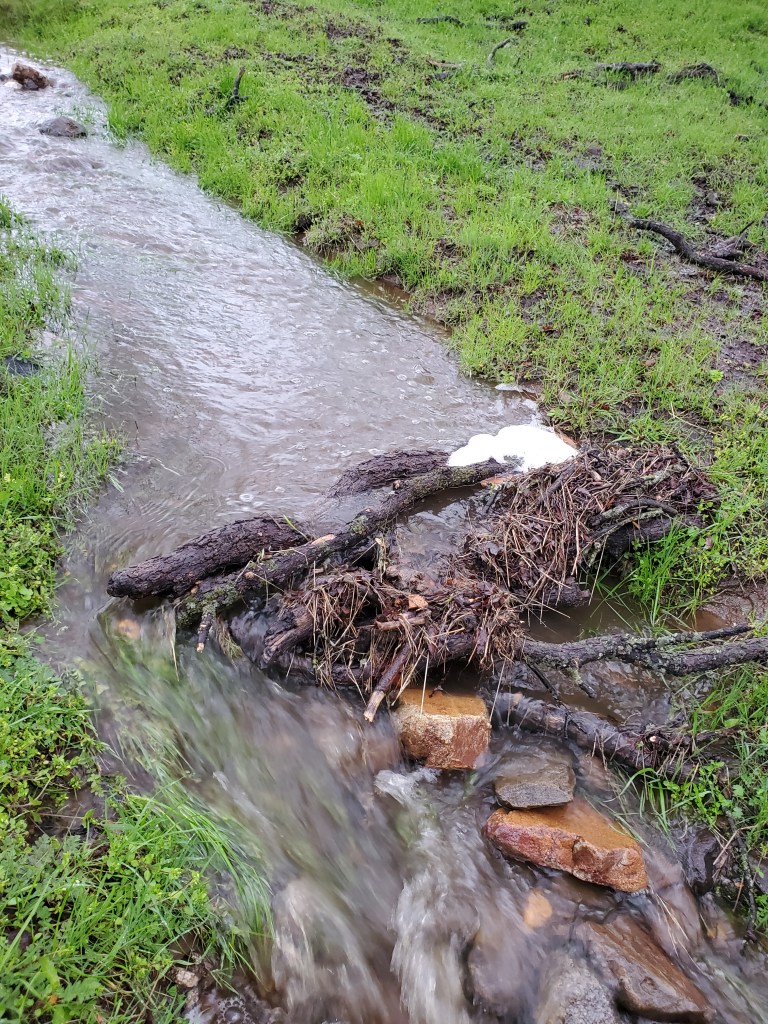
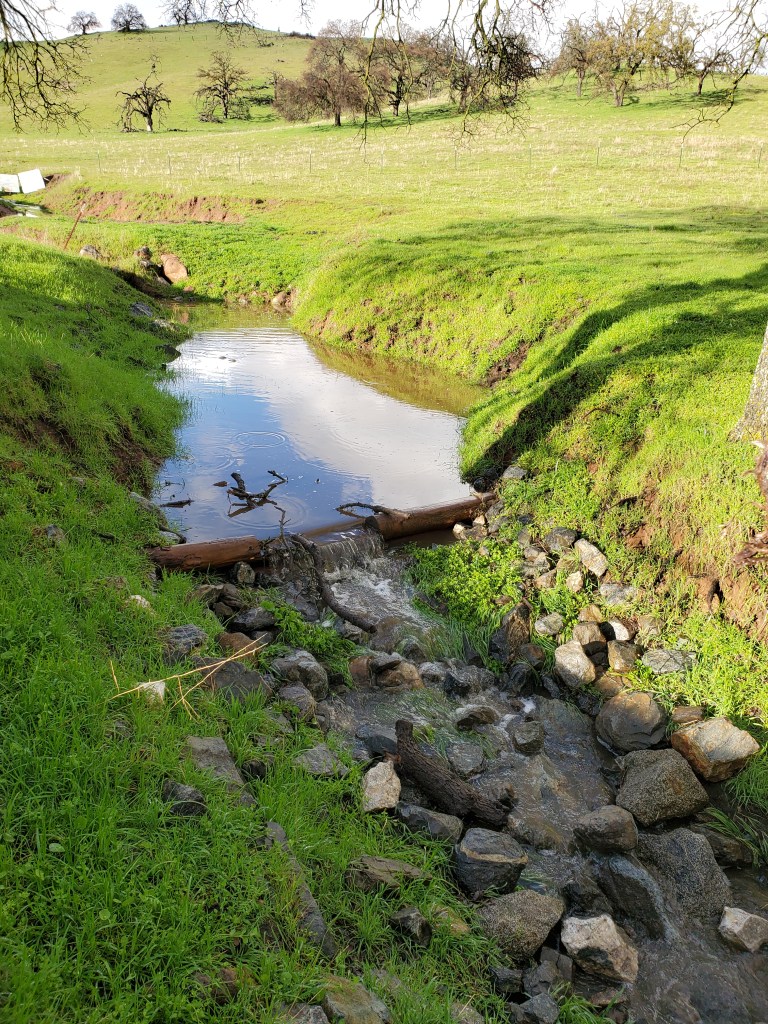
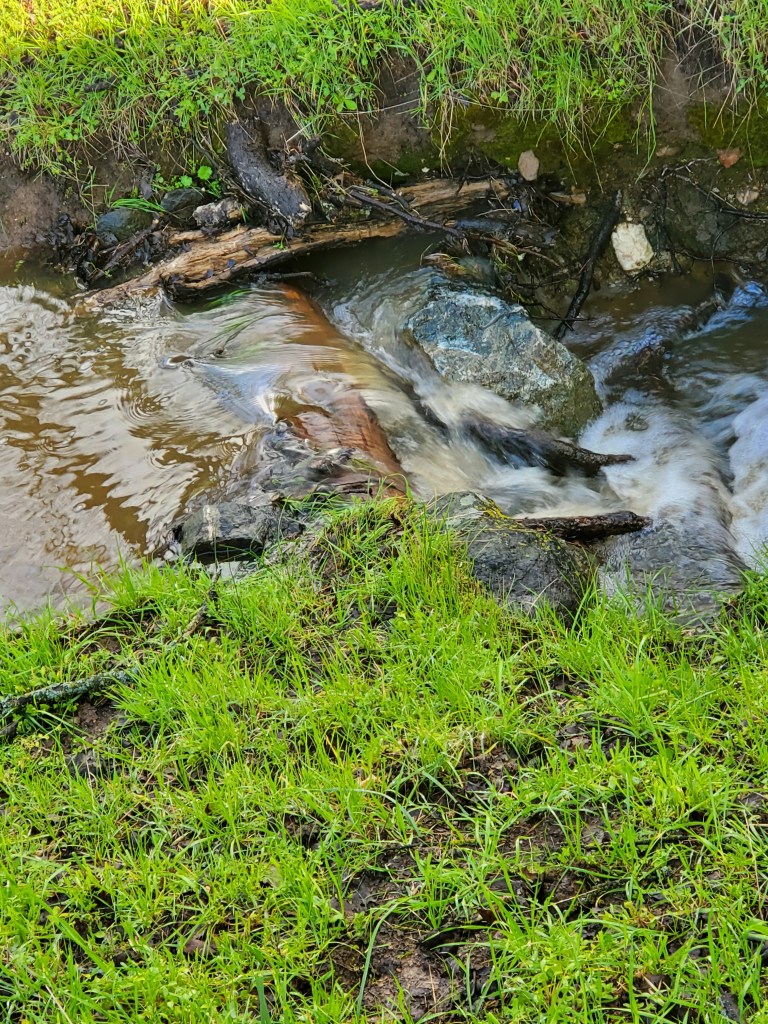
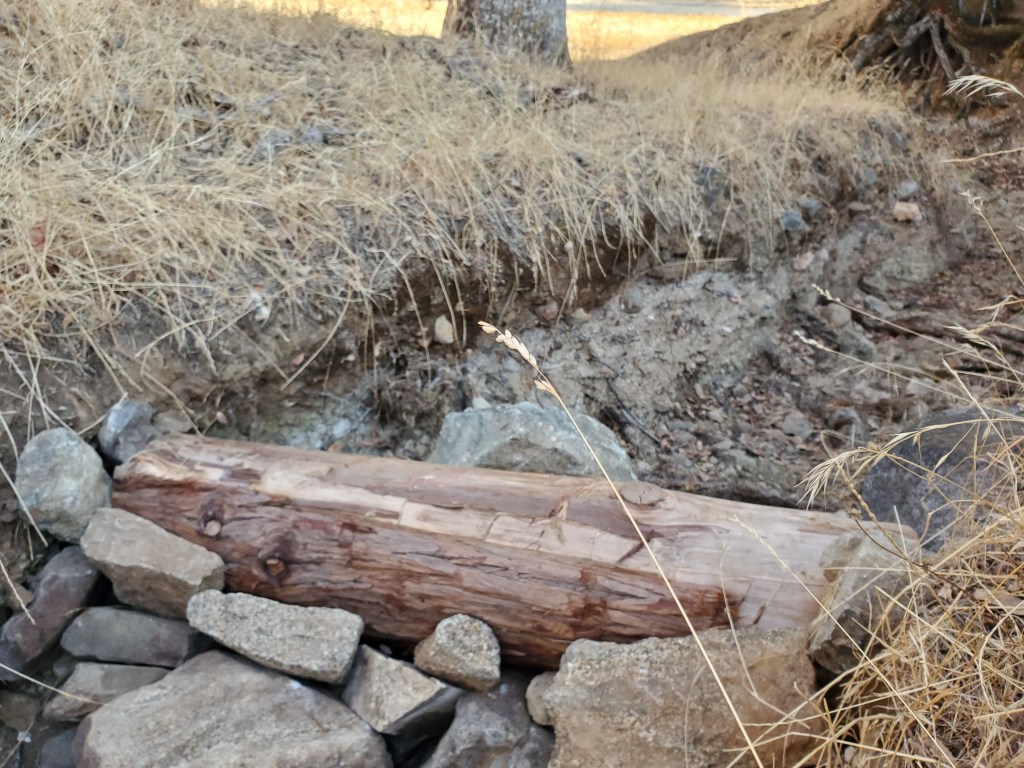
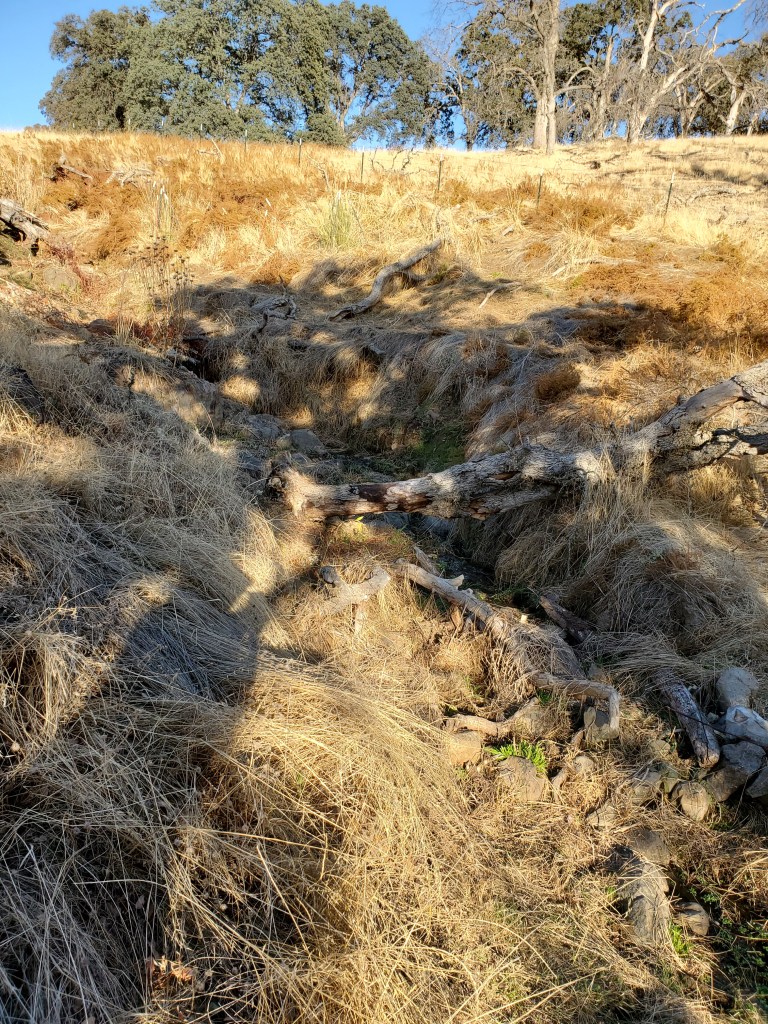
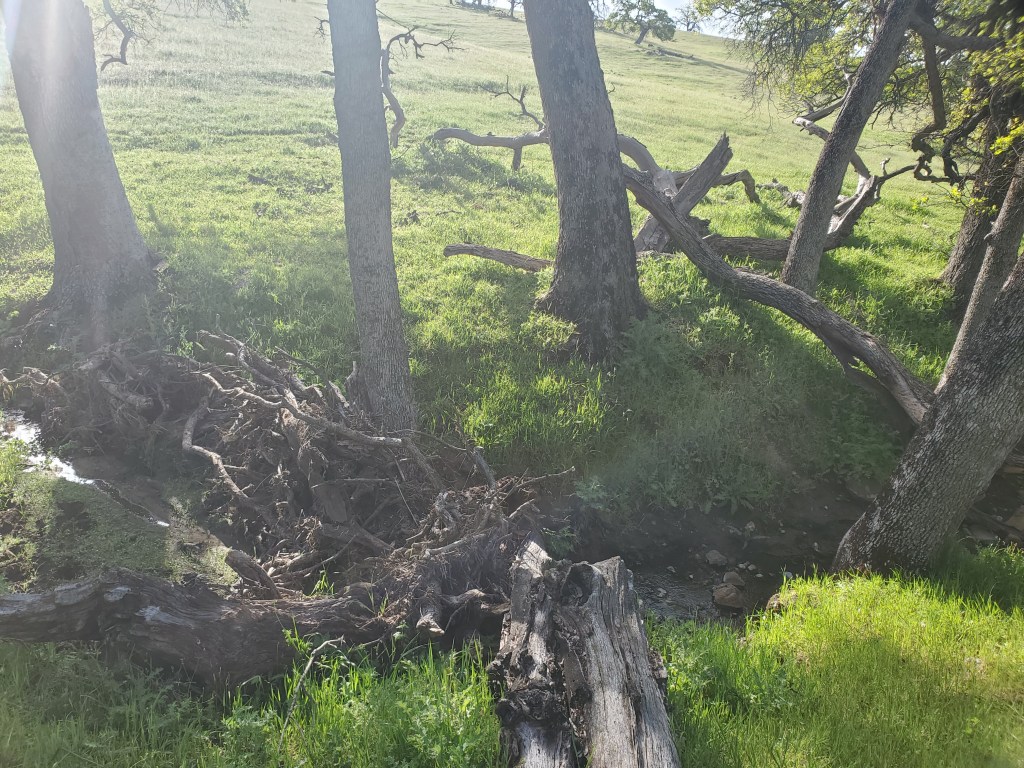
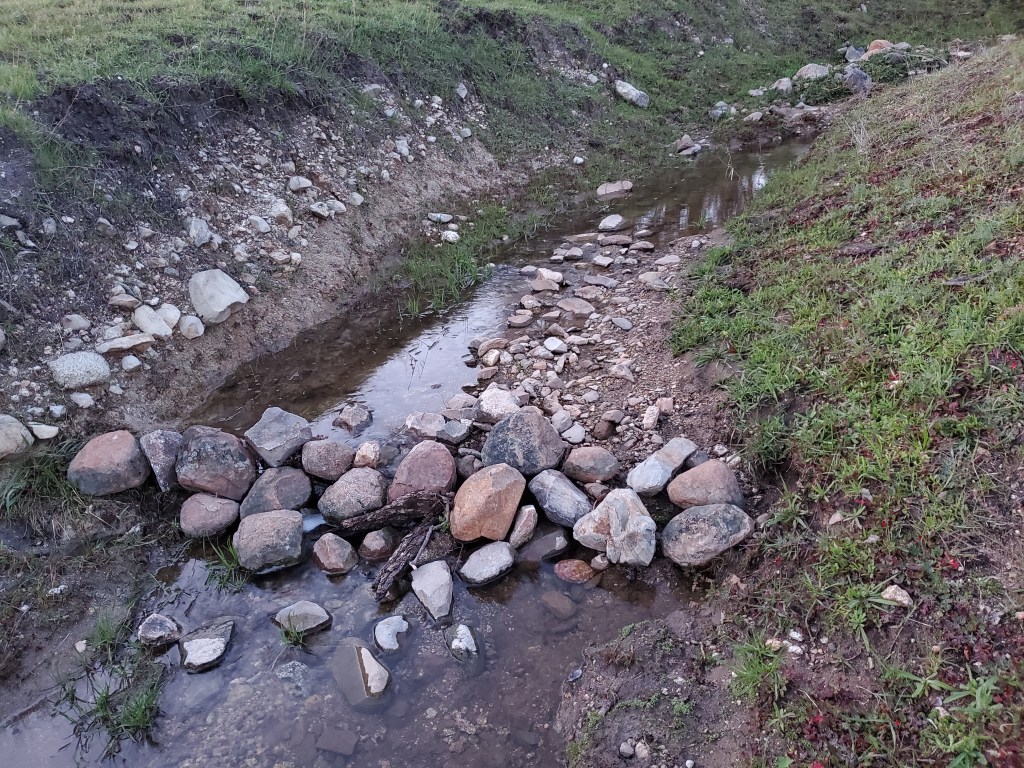
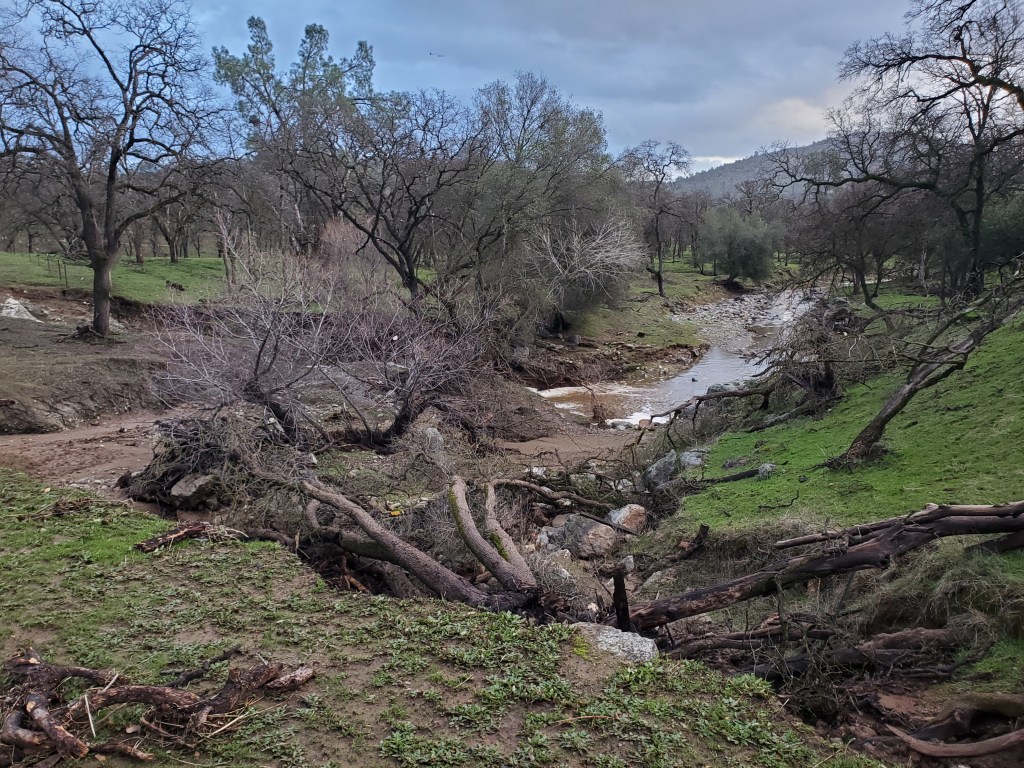
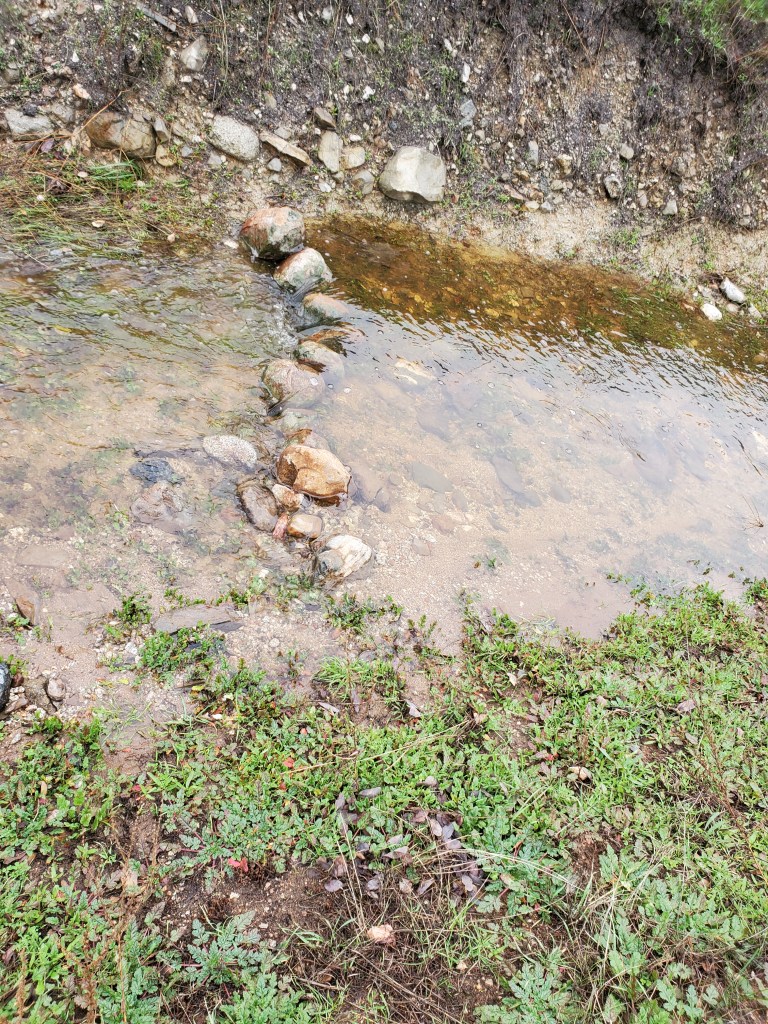
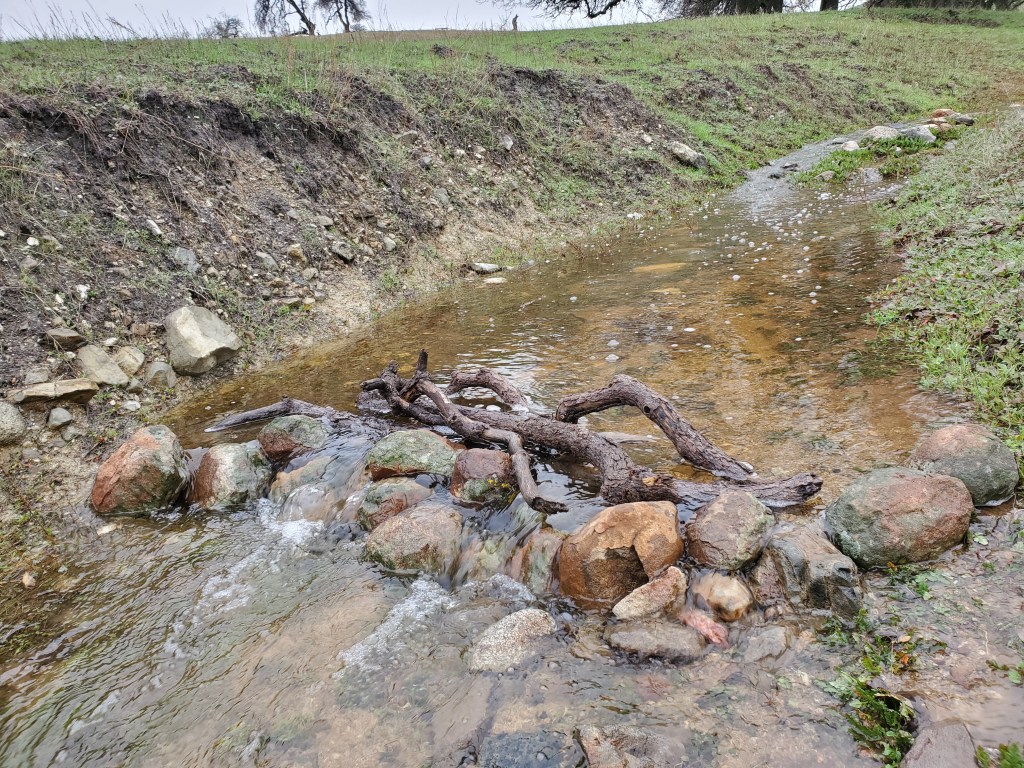
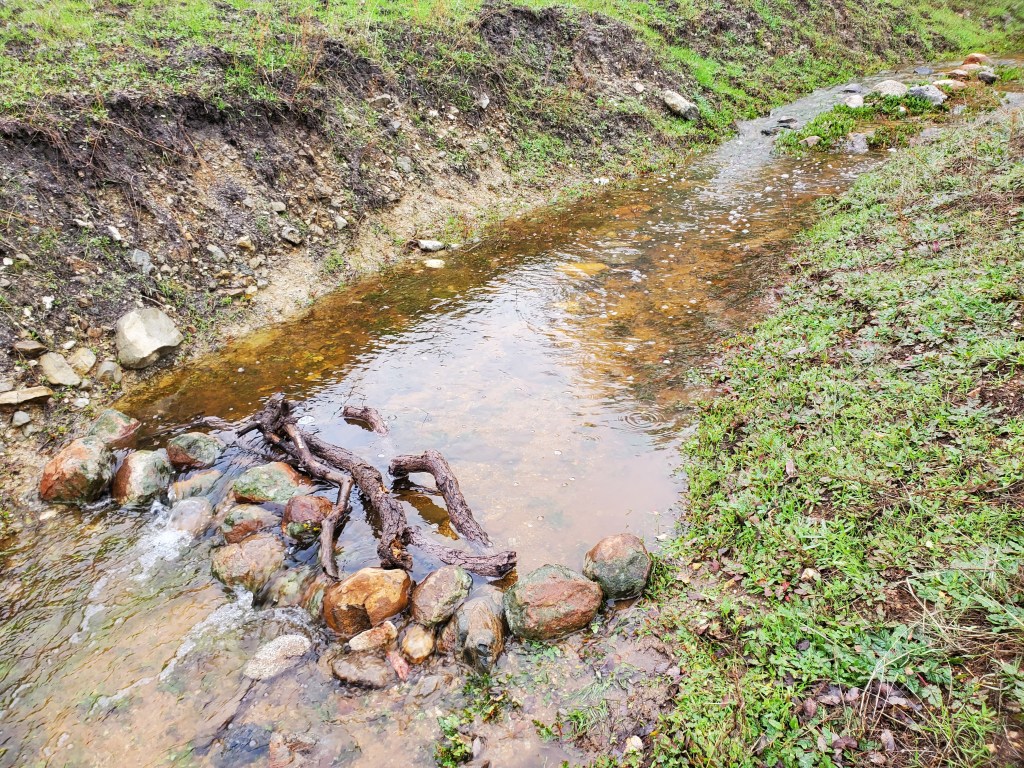
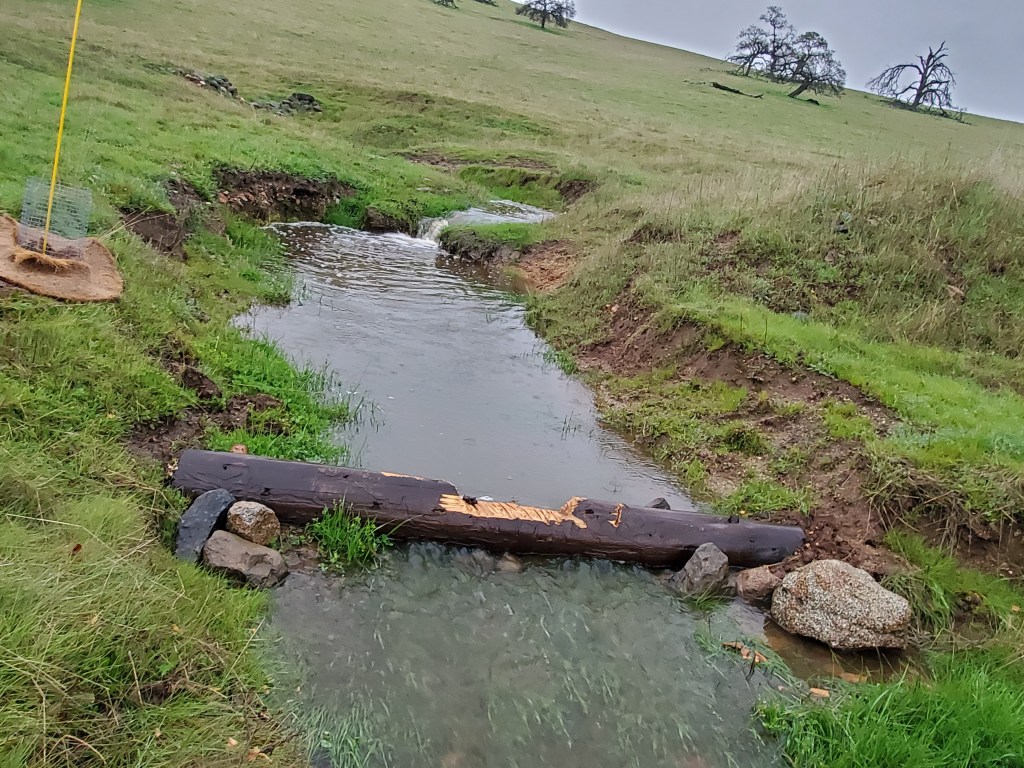
I was excited to see that the new, poorly connected log check dam was still in place after one of the storms. It was doing its job, pooling water behind it, slowing the runoff just enough to really soak the soil. Then, the large storm came with 2.25″ of rainfall. I checked the dam again. It was not there. The rocks I put in place to help the log were still there acting as a smaller check dam and pooling some water. I walked down stream and found the log. It was caught up in a tangle of branches, leaves and gunk about 60 feet downstream. Not to be deterred, I pulled it out from the makeshift dam and began to pull it toward its original location. The cedar log, typically lightweight, was heavy with absorbed water. David, who was walking with me then, took pity on me and picked up the log with the flick of his wrist, to show off, and returned it to its place. We will need to secure it much better in the coming days.

Gates Shut. North Field Belongs to the Milkweed Now

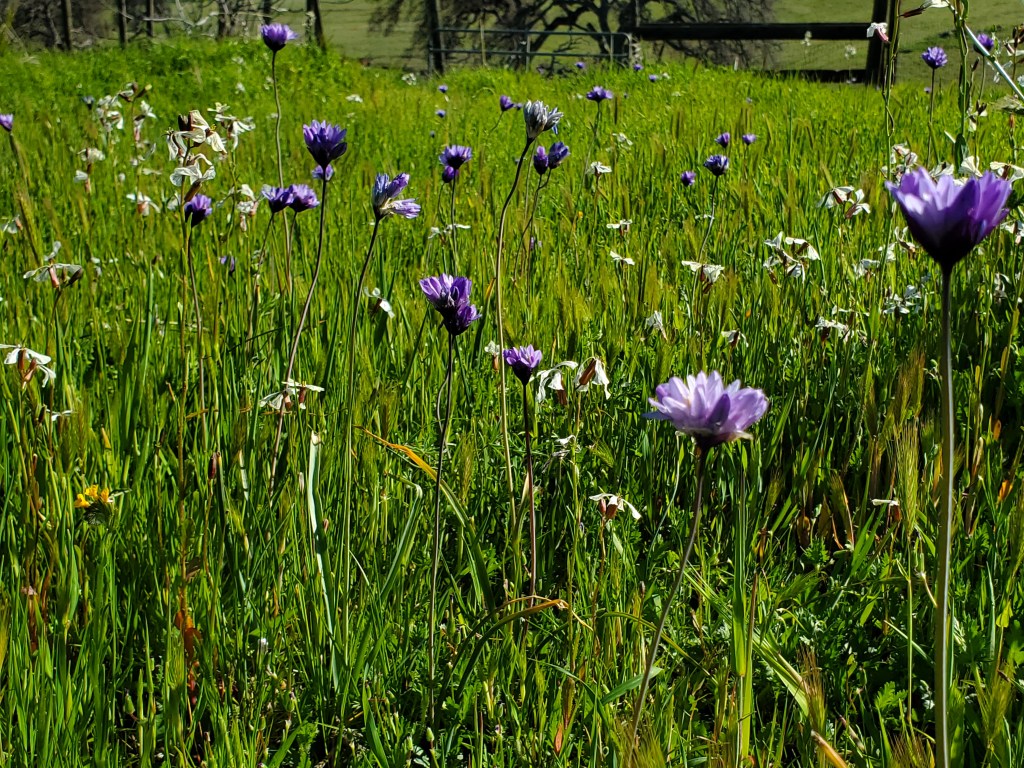
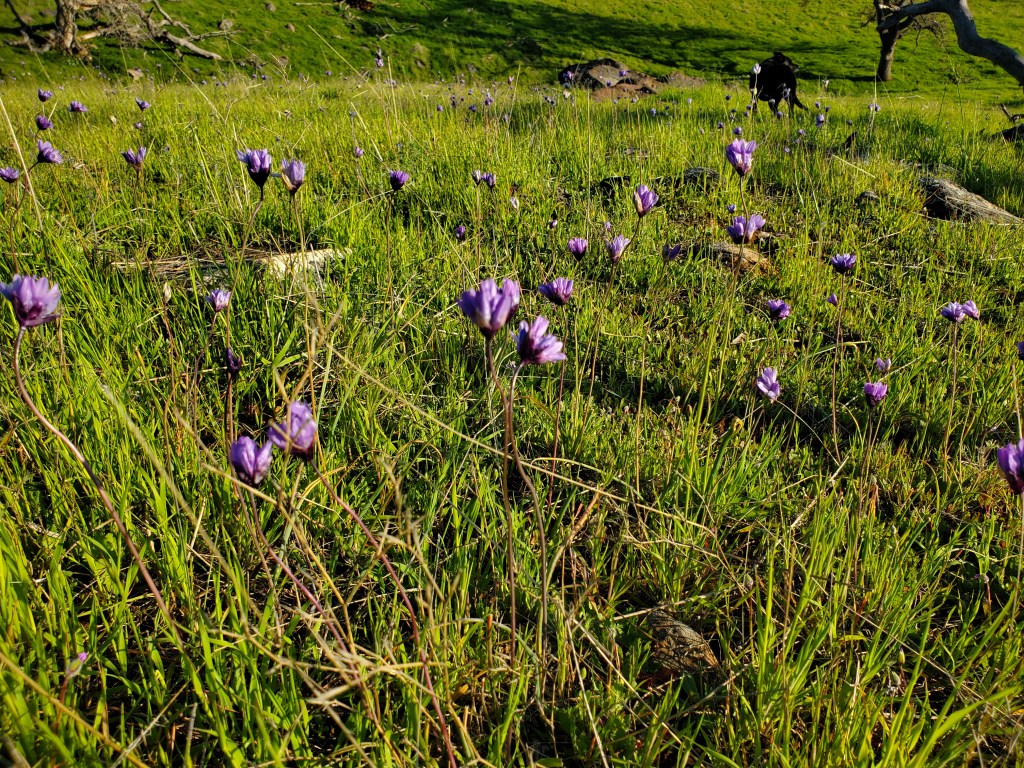
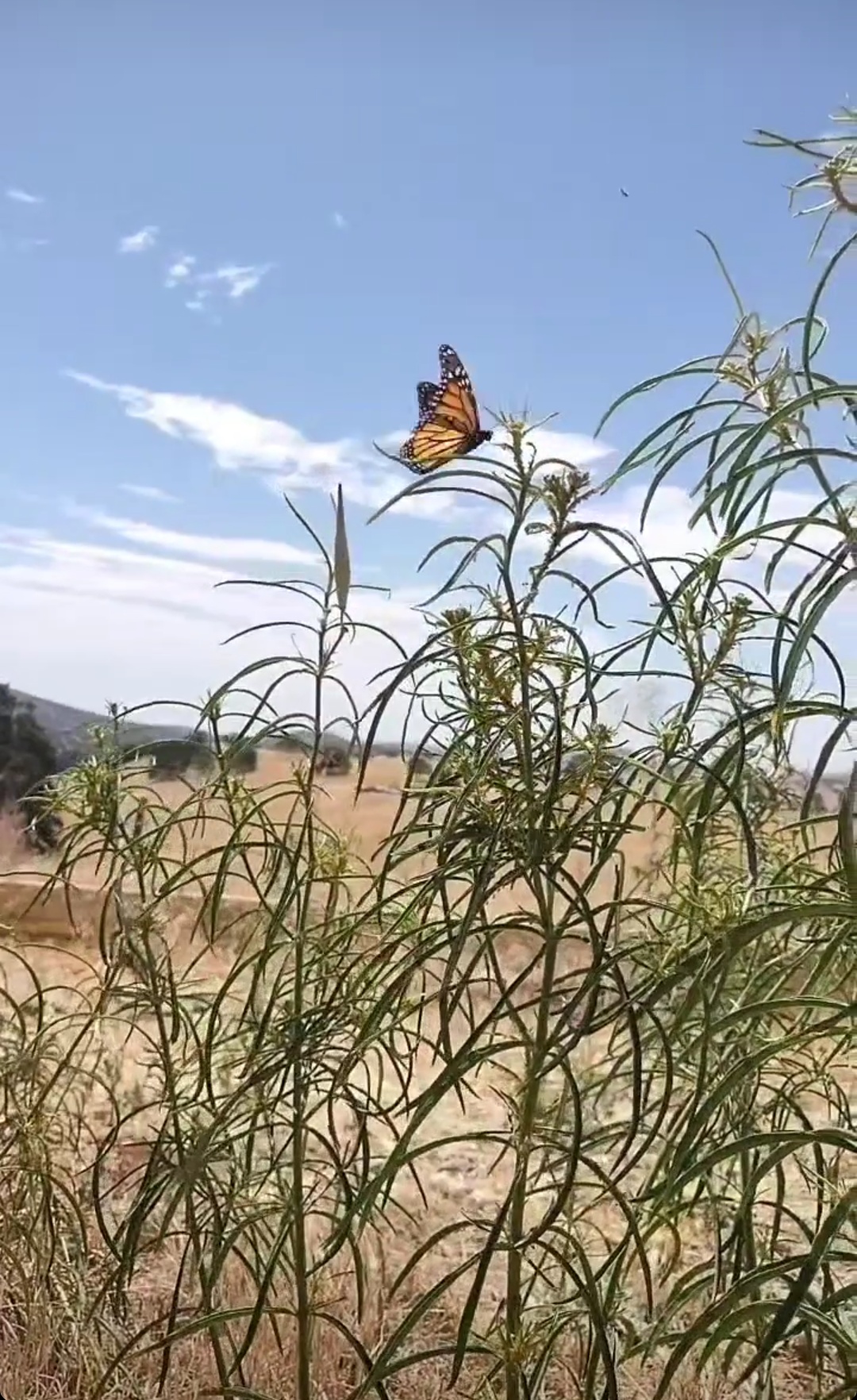
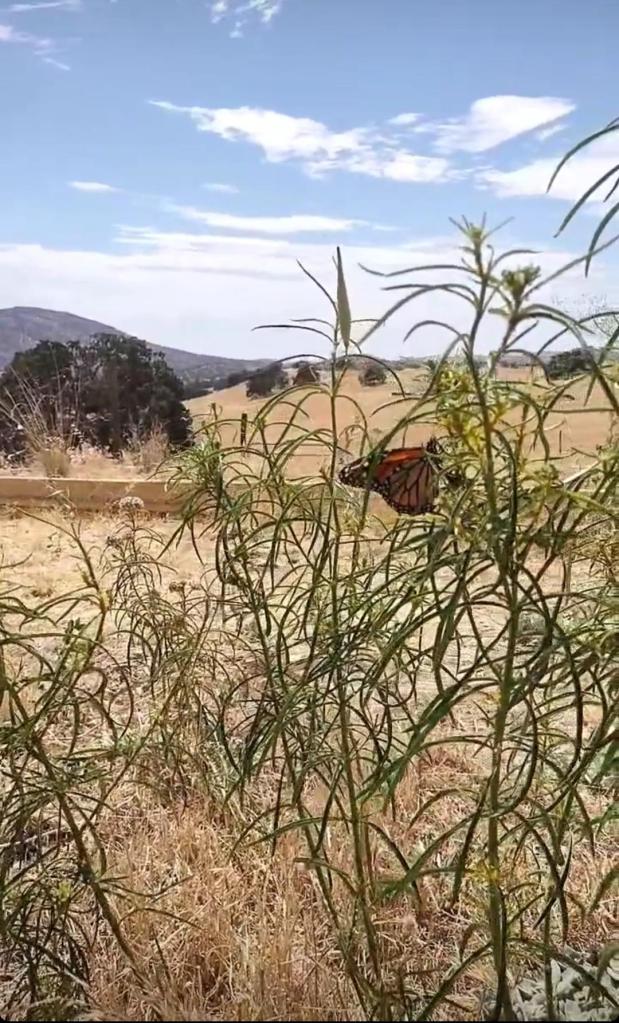
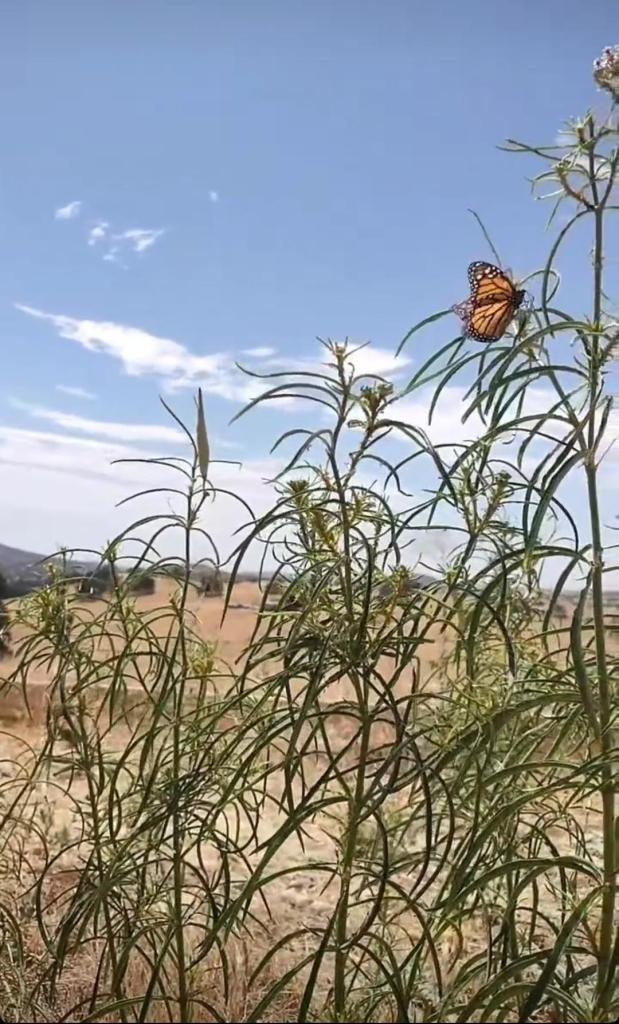
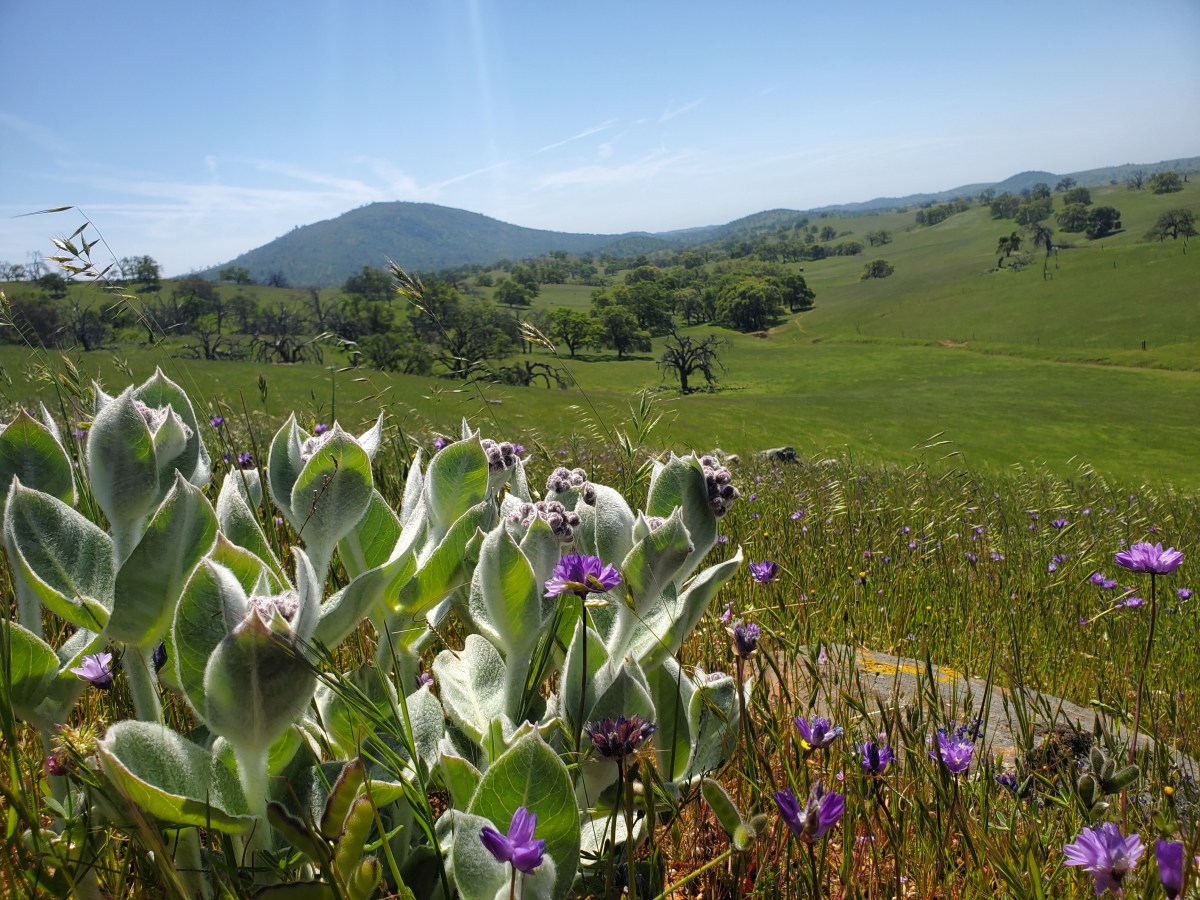
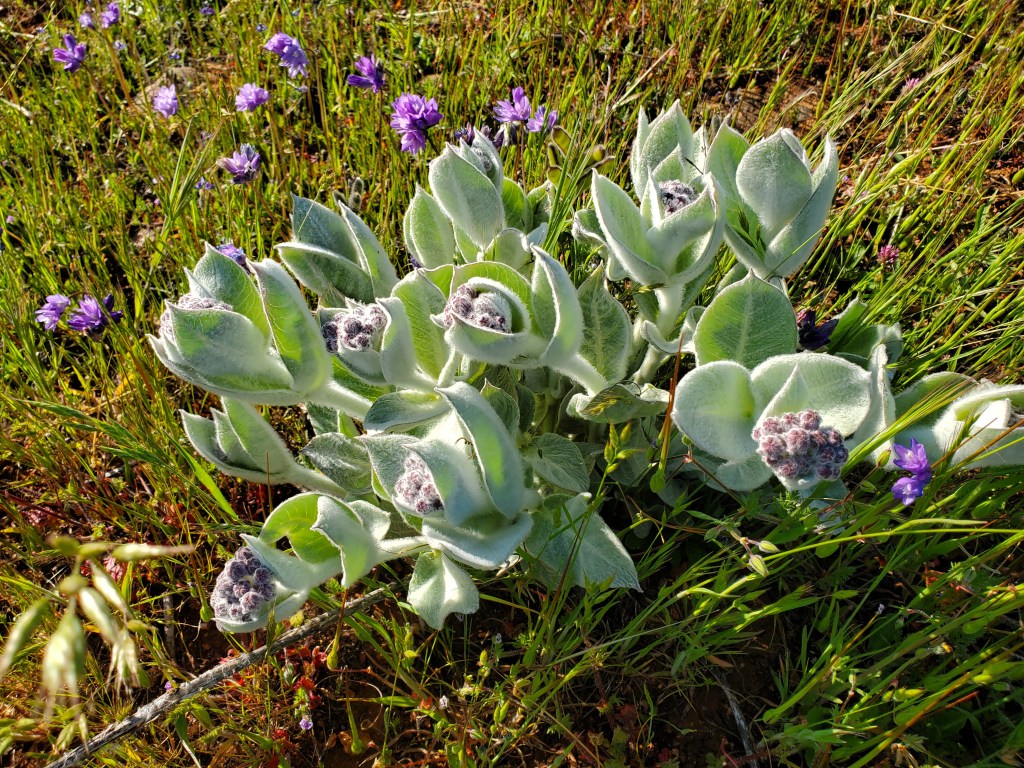
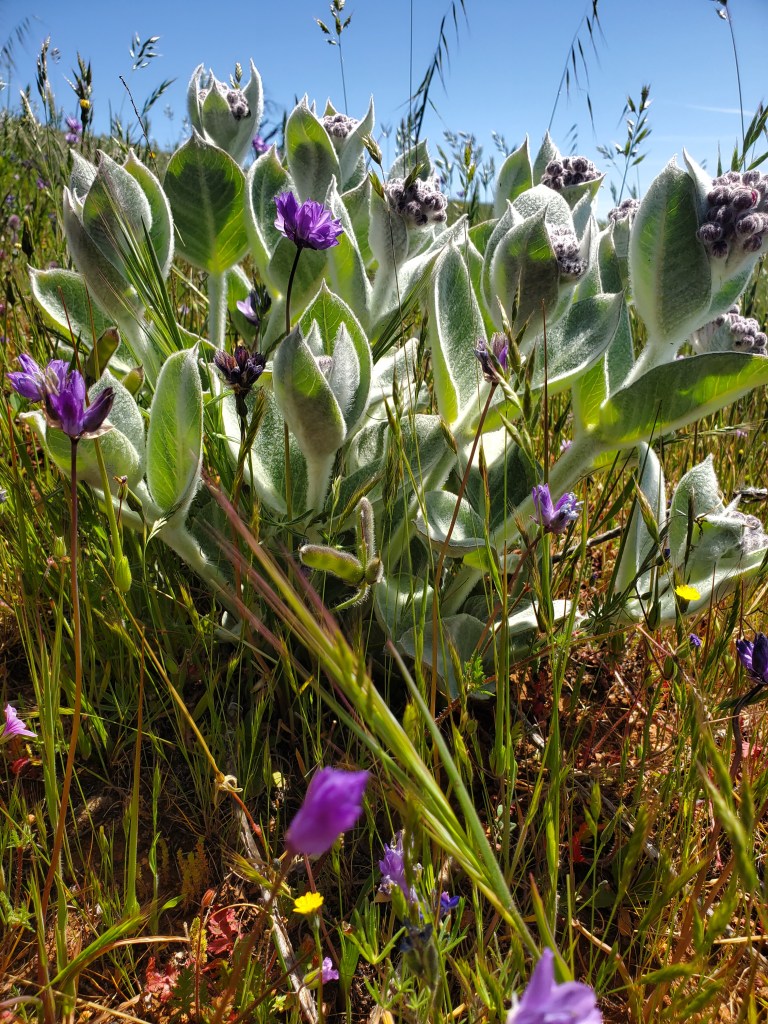
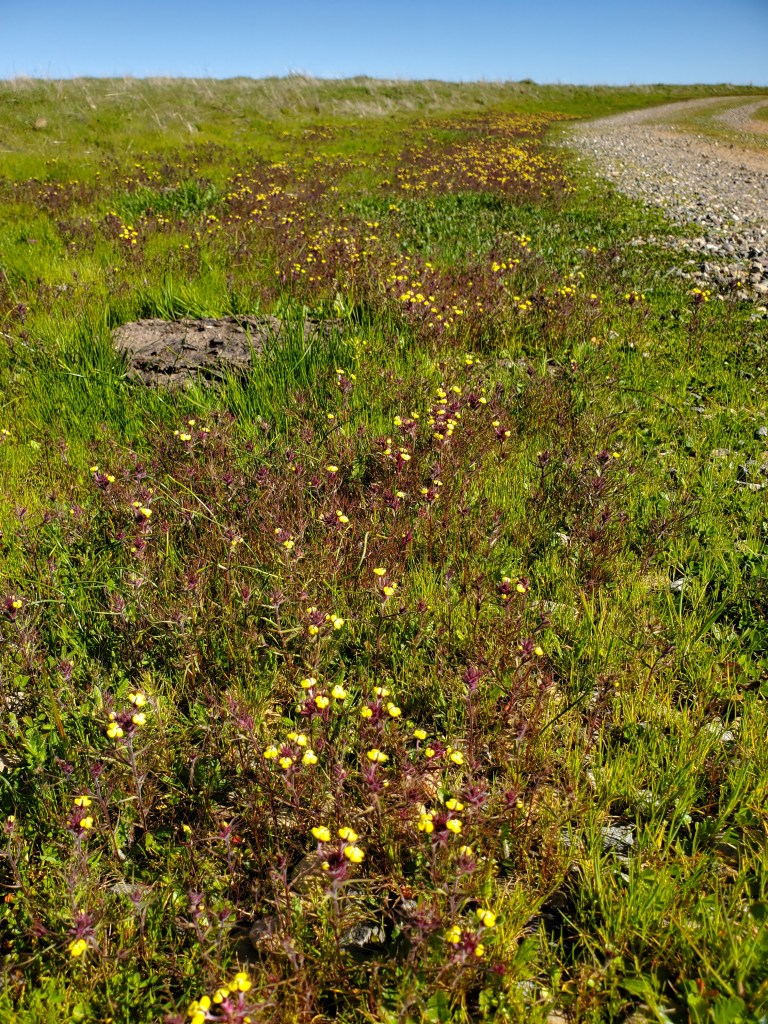
One of the best investments I’ve made in the last couple years is the cross fence to protect the California Milkweed. It is a critical, early emerging plant essential for post-overwintering monarch survival. Three of the four communities of plants are protected by this fence. In addition to protection of the California Milkweed, excluding the cattle during prime wildflower season has resulted in 40 acres filled with wildflowers of all types, sizes and colors. This means I have unbelievable amounts of nectar without having to plant another plant across a huge swath of land. Not only are the colors dazzling, the smell hangs in the air. It is like drinking perfume.

I think because of the weather whiplash, the California Milkweed is stunted. They are not their normal size for this time of year and are already producing flowers that will bloom in about a week. As of 3/20/2025, there are only four of the possible 21 emerged. Given that this past overwintering count of monarchs has been the second lowest on record, perhaps there will be fewer butterflies floating this way, and the stunted plants will be sufficient. I have not had an opportunity to place a camera up on the hill. The last time I tried, there was no signal for my special game cameras. I think I will use it in analog mode and grab the photos off later. This way, there is something up there as soon as possible.

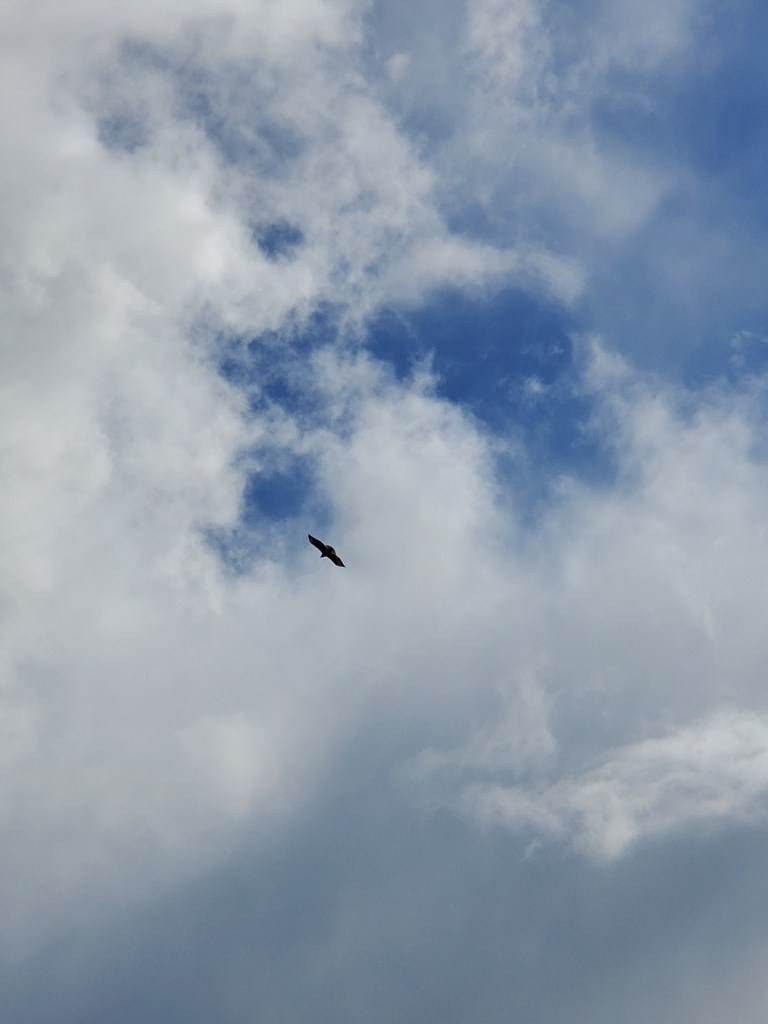
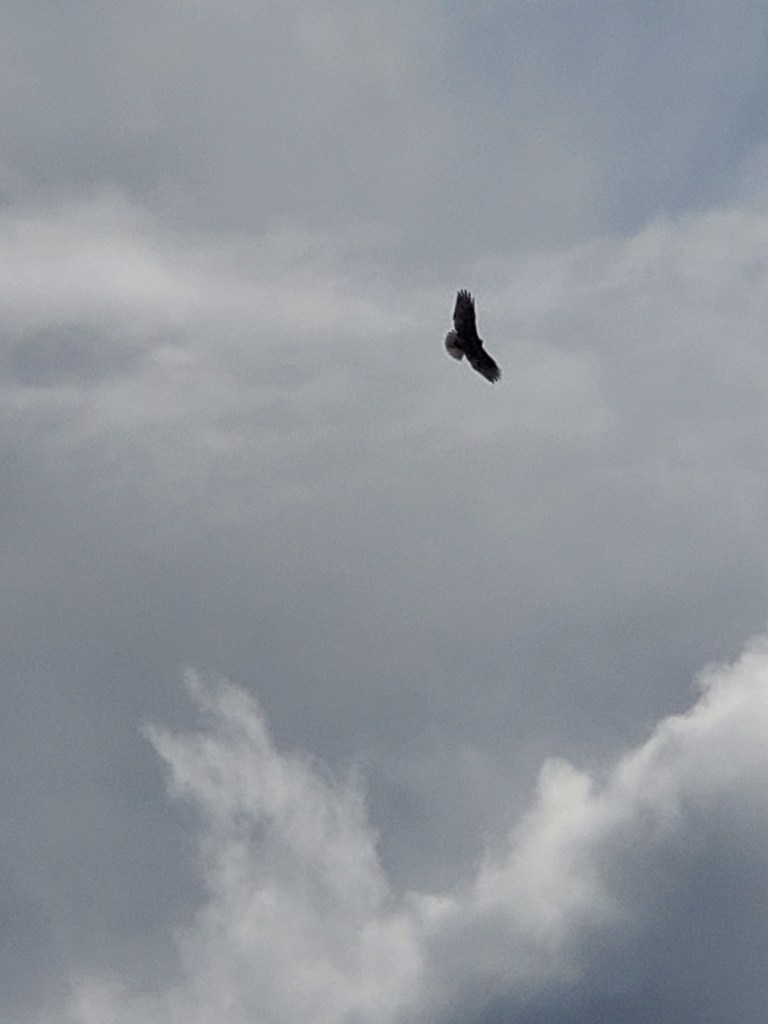
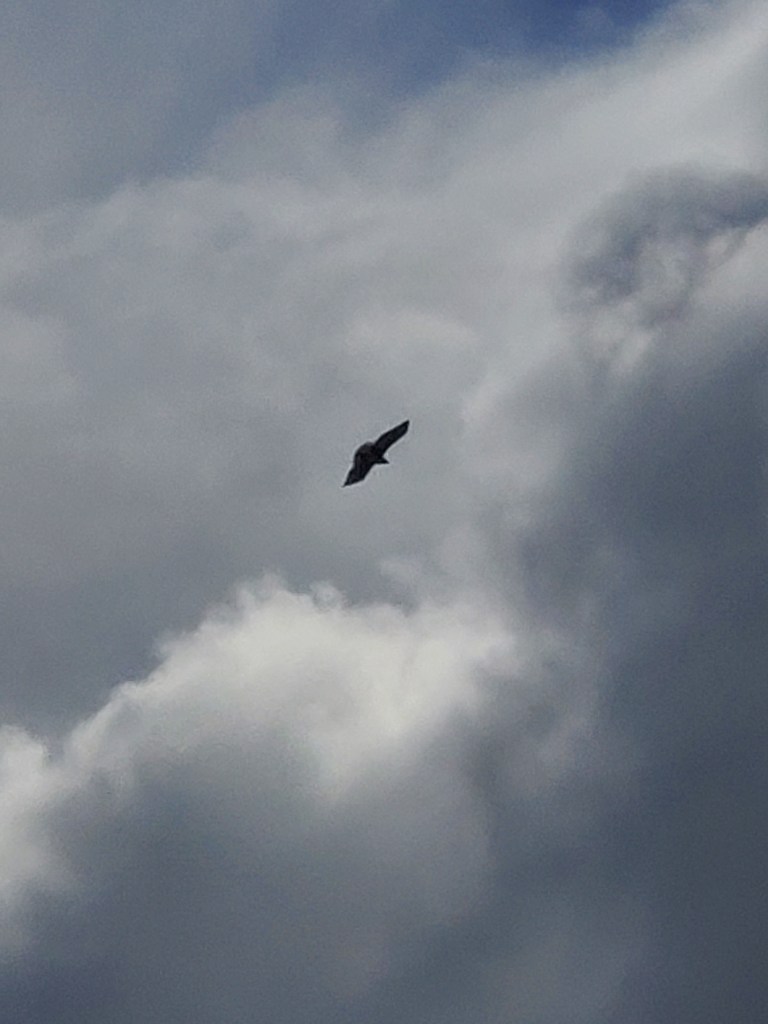
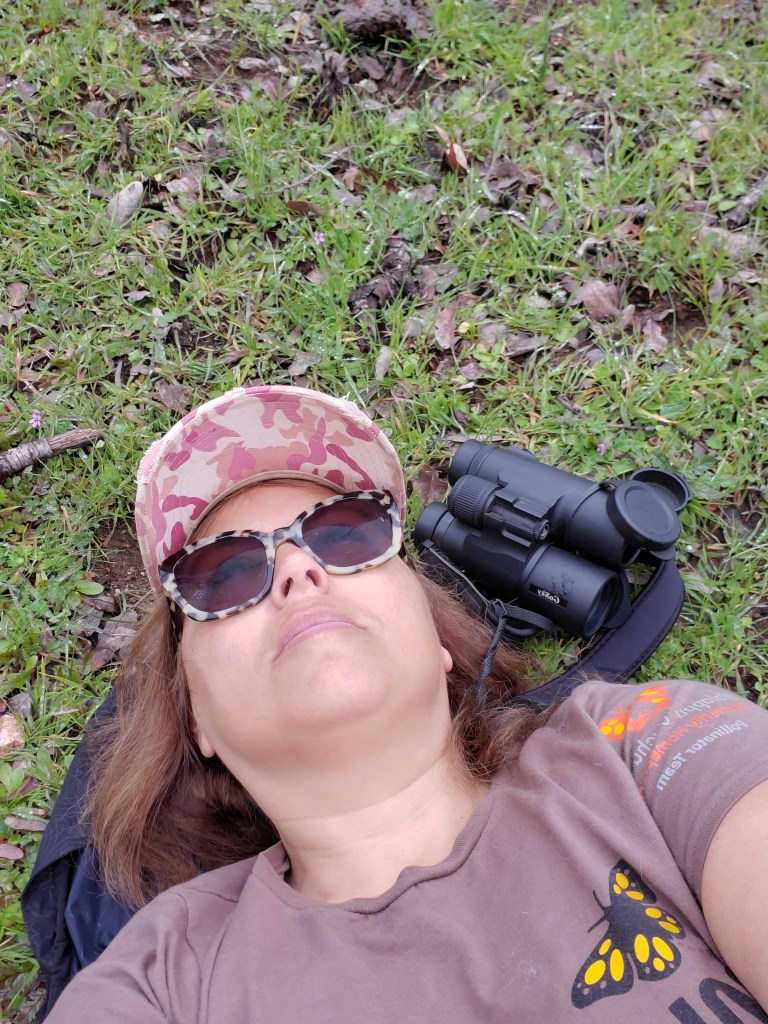
While I am on the hill checking each milkweed and looking for more emerging, I decide to take a break and sit, contemplate things. Out of nowhere comes Taawe (Hawk). They decide to come for a visit, flying close and low. Taawe is close enough to hear me, so I speak in my language. It’s an original language of this continent, co-evolved with the many relatives from this soil. We’ve all shifted around following a cycle of movement south to north, west to east, and back again. Taawe understands me; it circles, flits, plays with elevation, but always above me. It circles away. I call to it. Taawe circles back. We play this game for a few circles, then I lay back down on the cool grass, the smell of soil and moisture in my nose. It flies to the east, and I say “Chiokoe uttesia in weweria. Ito te vitne.” “Thank you my relative. See you soon.”
Guzzler Install Complete

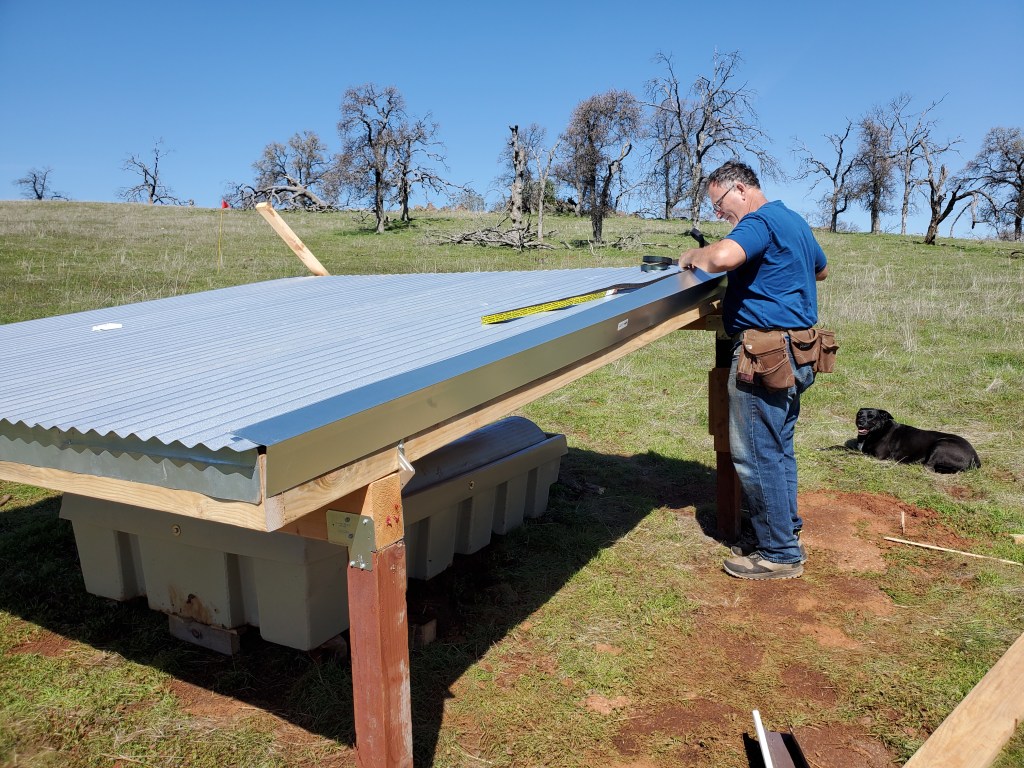
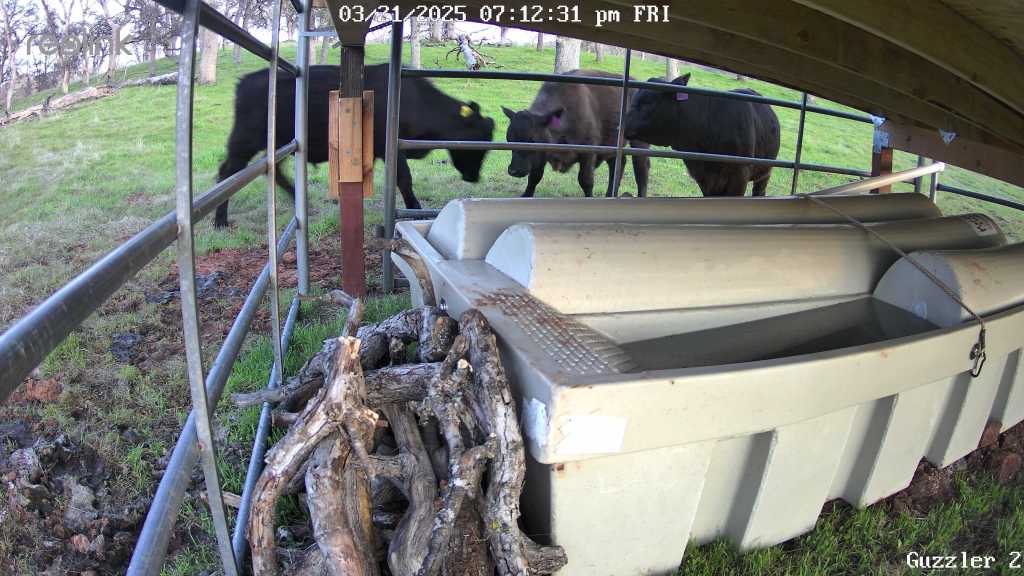
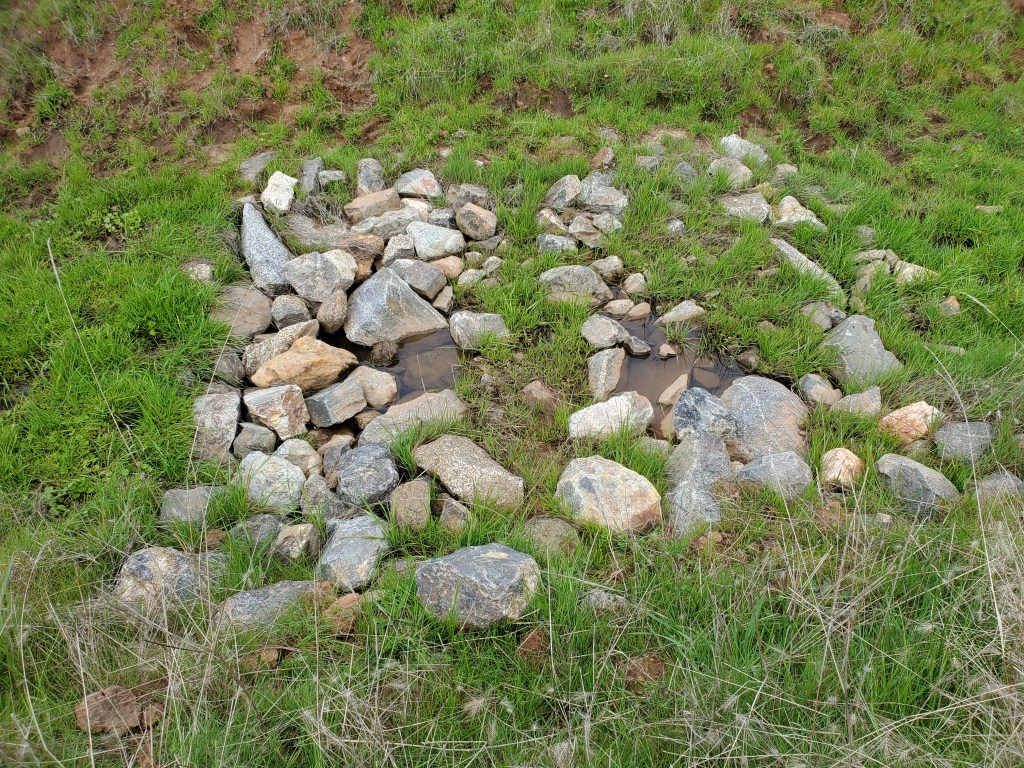
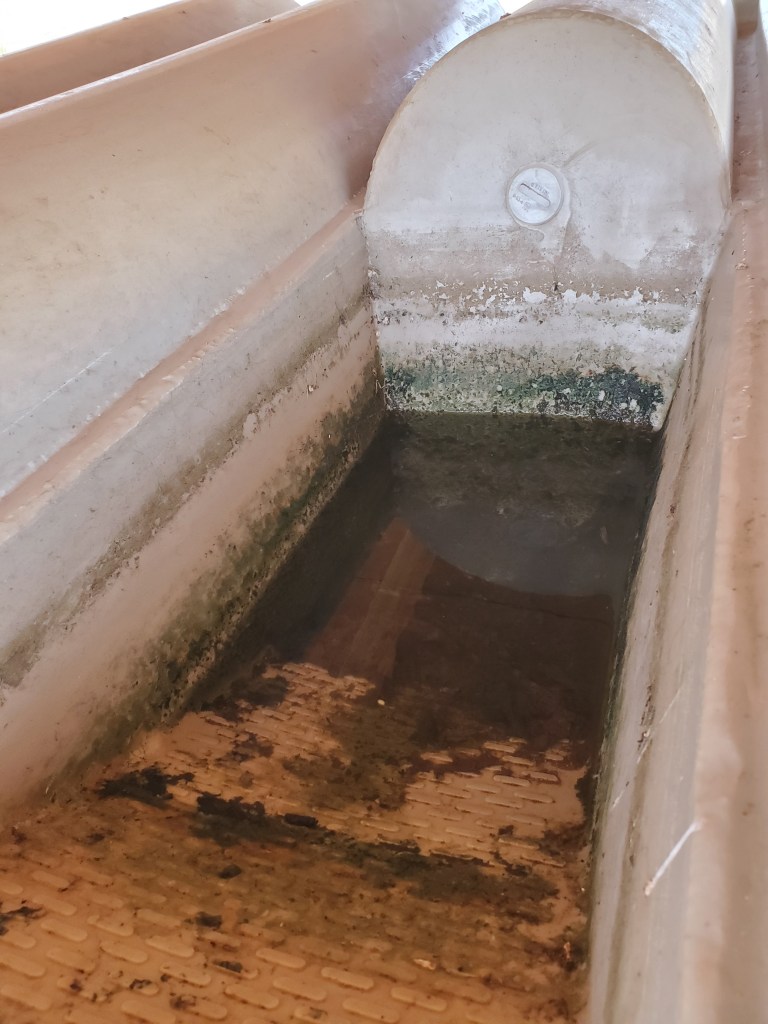
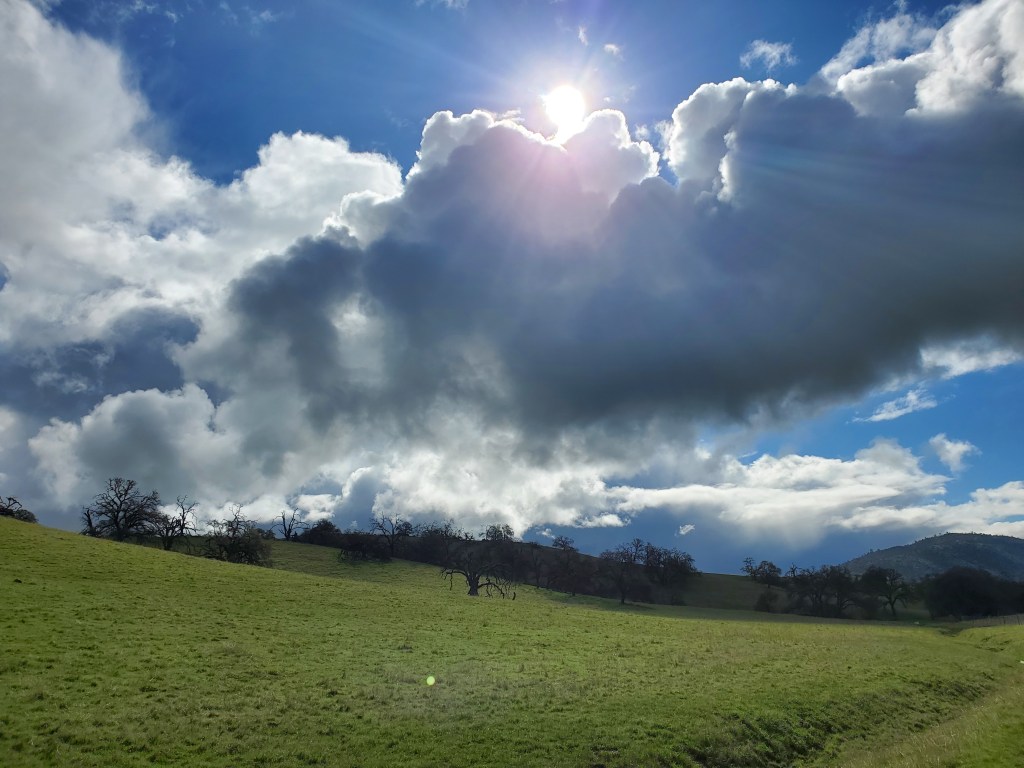
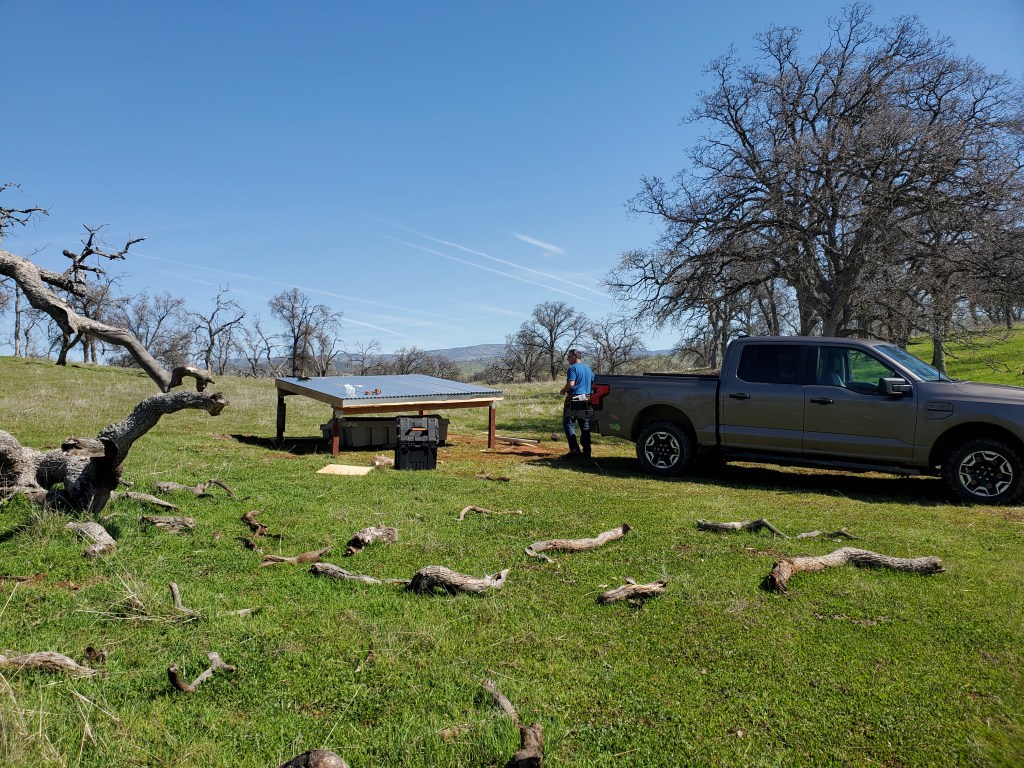
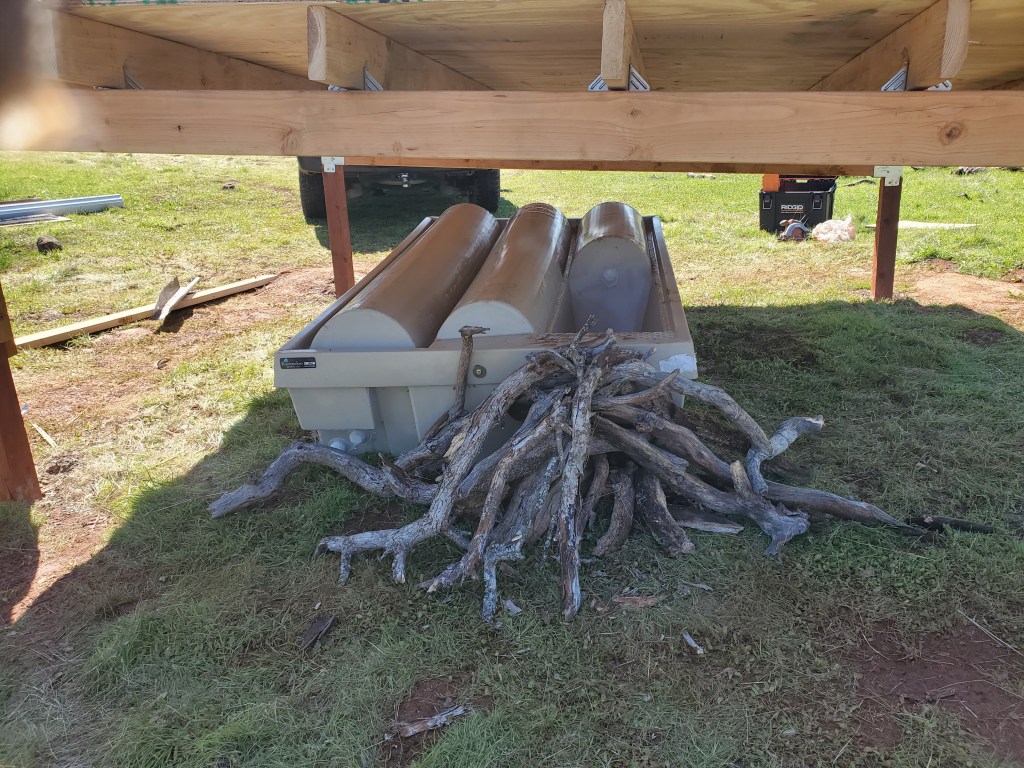
It took David nearly six days over two and a half weeks, but the guzzler is finally complete. We still need to build a fence around it to exclude the cows and build out the tank portion of the system to feed more clean water to the unit over time. Currently, there are stock panels attached to the overhang structure to keep the cow away from it as best as possible. Panels are ok since the gaps in them are large enough for most animals to move through. They are too small though for larger animals like deer. It is a priority for me to complete that fence to maximize its utility. The storms have filled the unit, and it is ready for wildlife to drink from. THANK YOU David!!
Dangers Realized

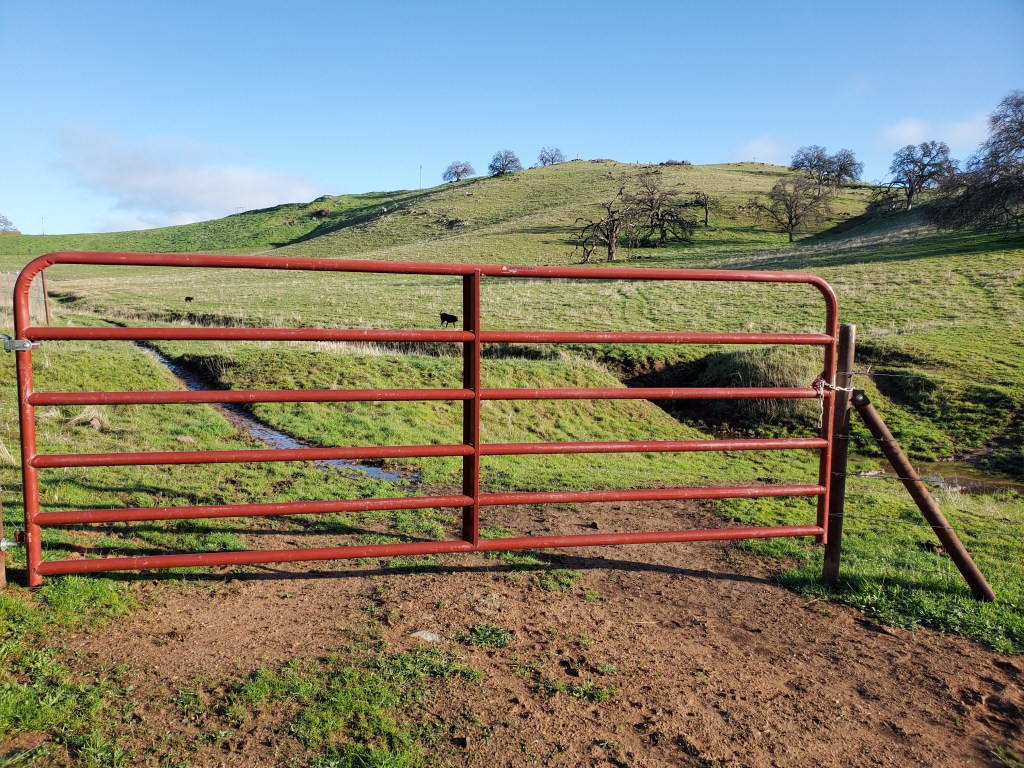
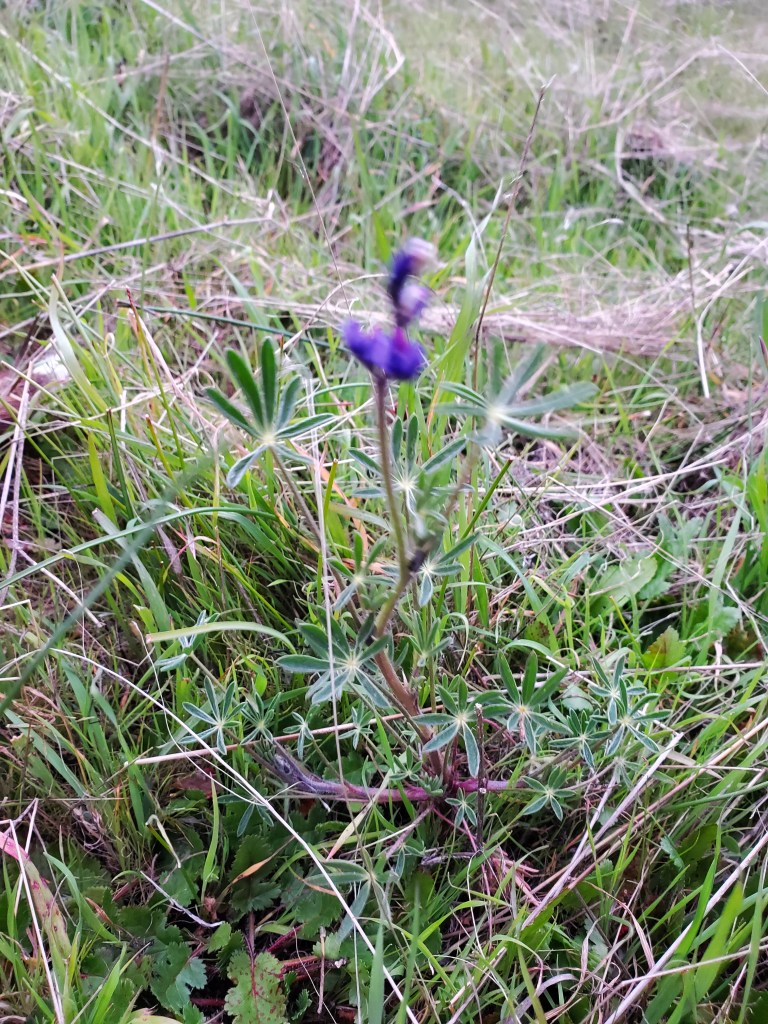
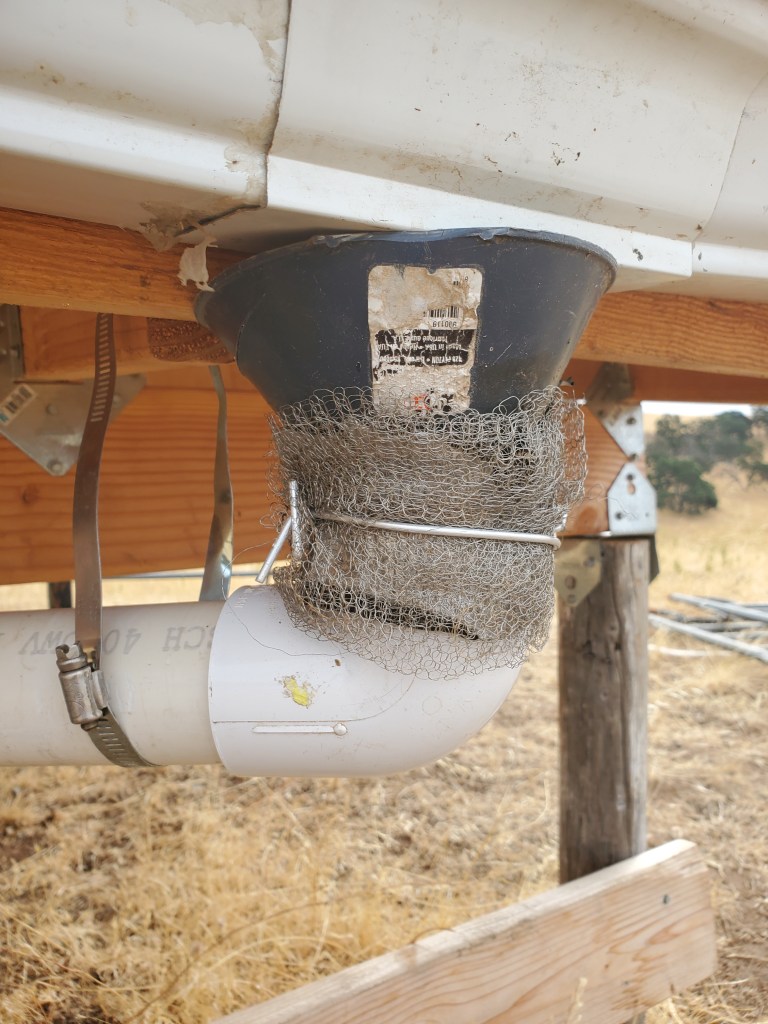
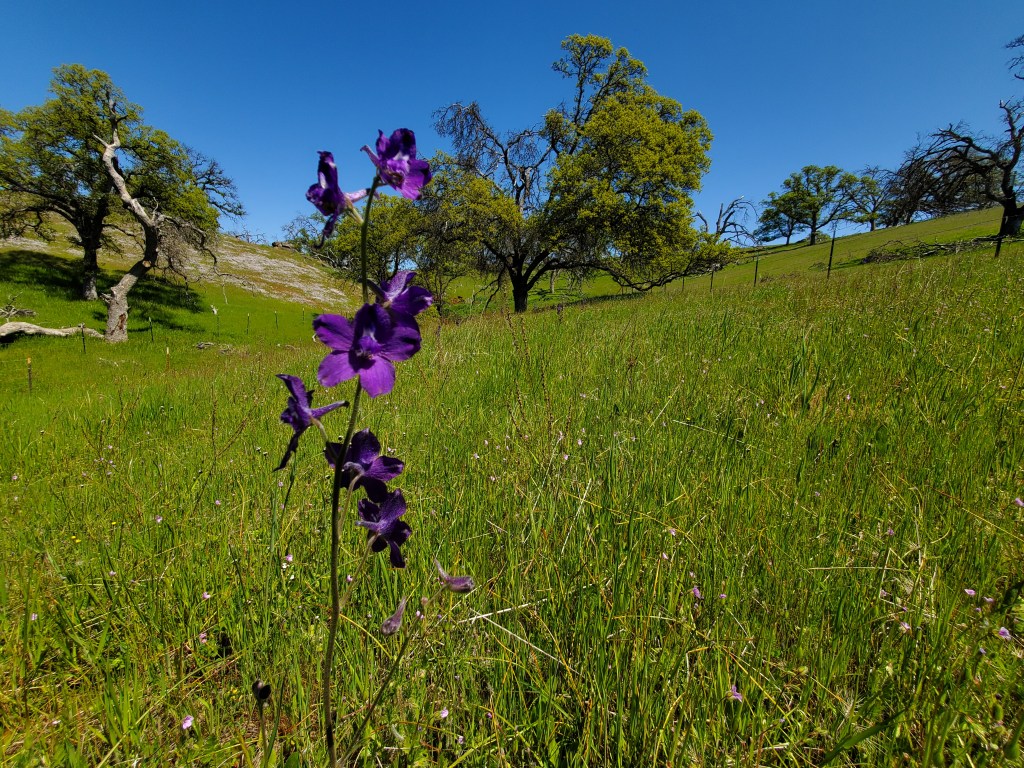
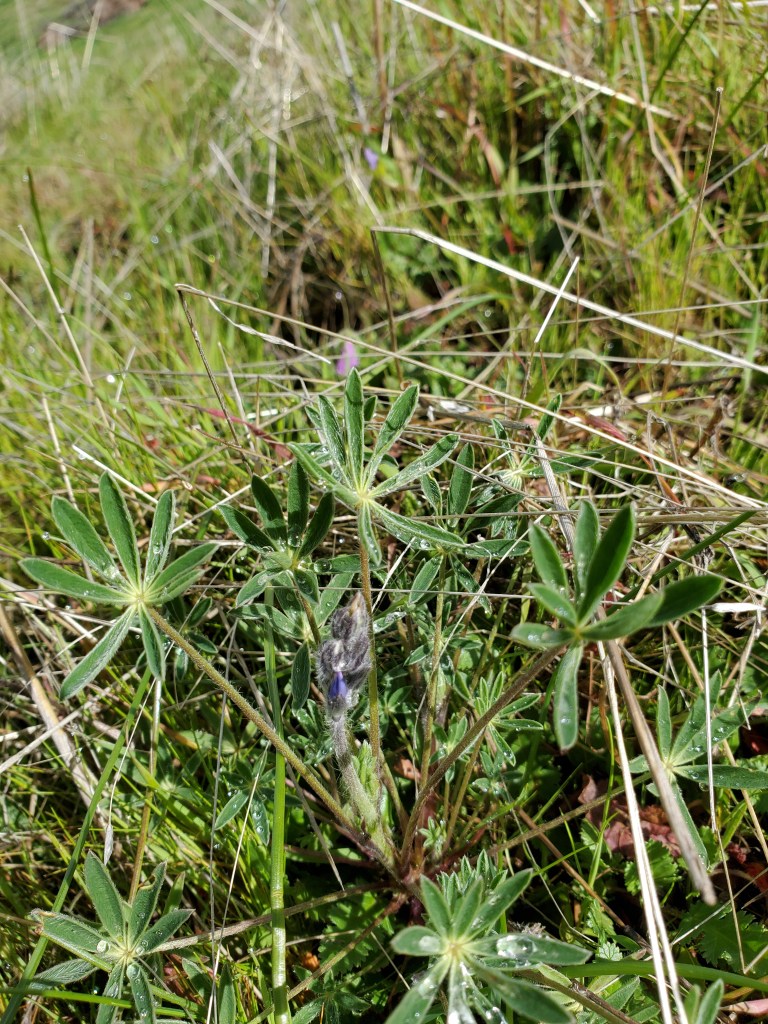
Although I have relaxed more with the fencing in place, catastrophes can still happen. Three times now I have gone outside to find cows where they shouldn’t be. Once, they jostled the gate open to the far north field. They jostled the gate open to guzzler 1, and yesterday I found them in the Spring Creek exclusion area. The wire gate had been squished down. In all cases, my heart sunk with concern that all I worked for could be lost in one accident with a poorly structured gate lock. Things were ok with the far north field. The Ca Milkweed was fine, and not too many of the blooms were up to be eaten. Guzzler one sustained significant damage. The solar panel connected to the game camera was severed. The wire had been snipped and stomped on. The stainless steel mesh over the gutter was folded up on both ends in tortuous fashion. Fortunately, we have an extra panel with wire and more gutter screen. We can fix that. I have yet to assess the damage to the exclusion area where large lupines, oak seedlings and larkspur are all just getting ready to develop blooms. It would be a catastrophe of large proportion if much of that was destroyed. In all cases, I secured the gate locks with a carabiner (cannot be licked open), twisted wire (cannot be jostled open), and a second loop securing the wire gate.

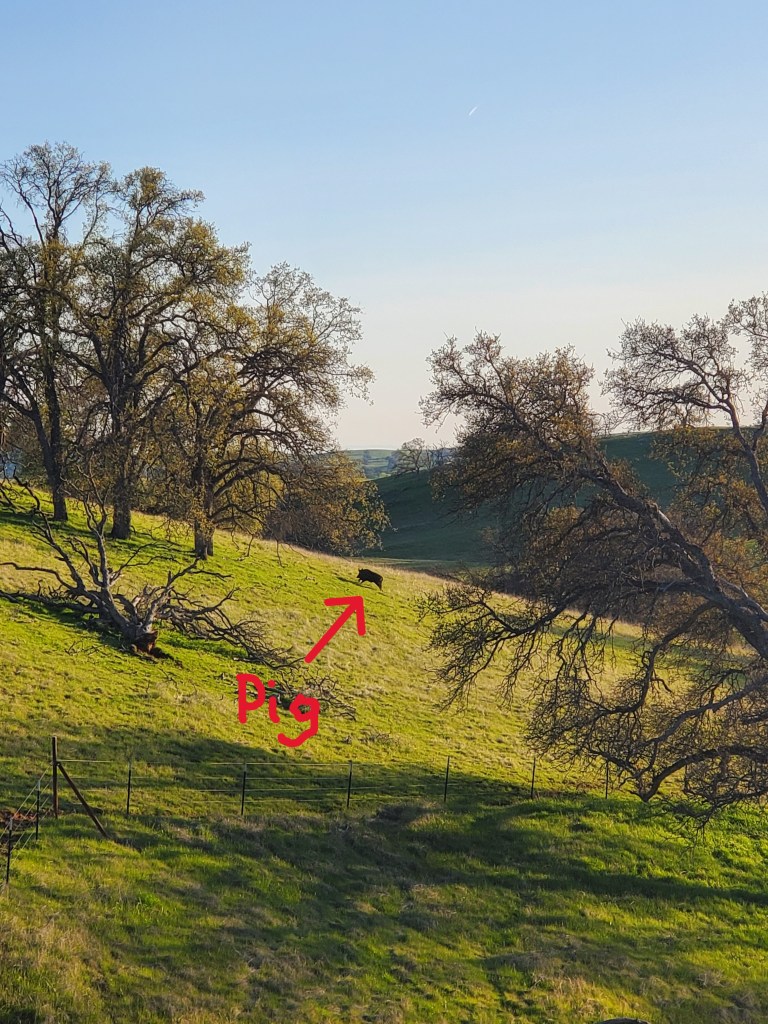
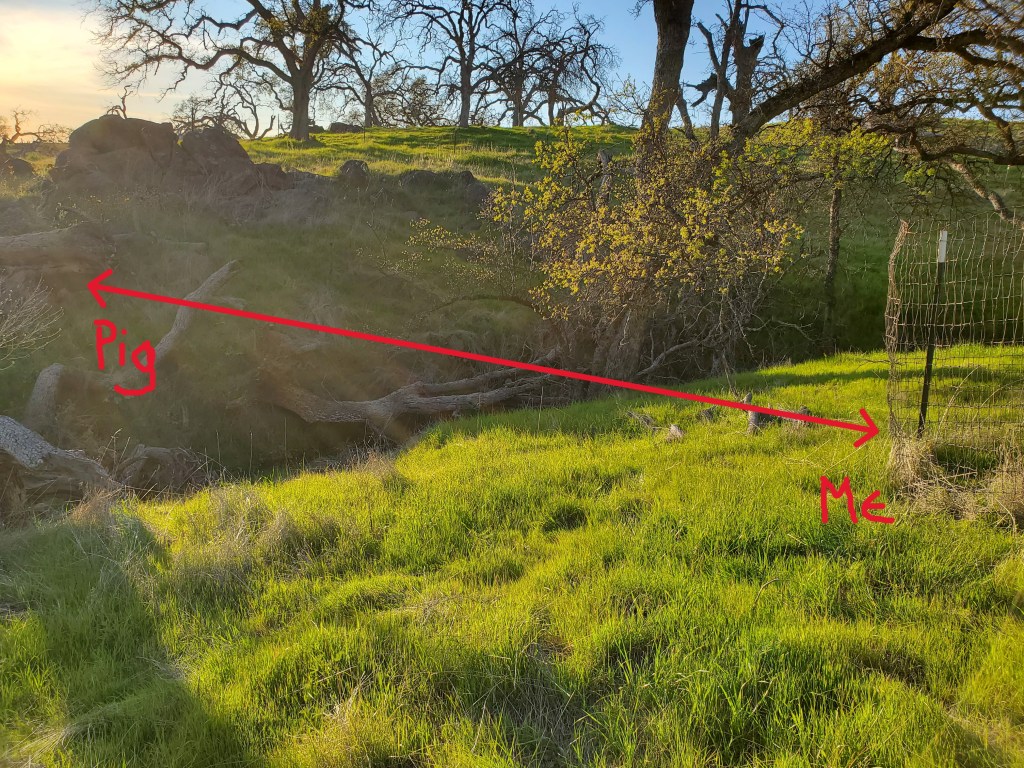
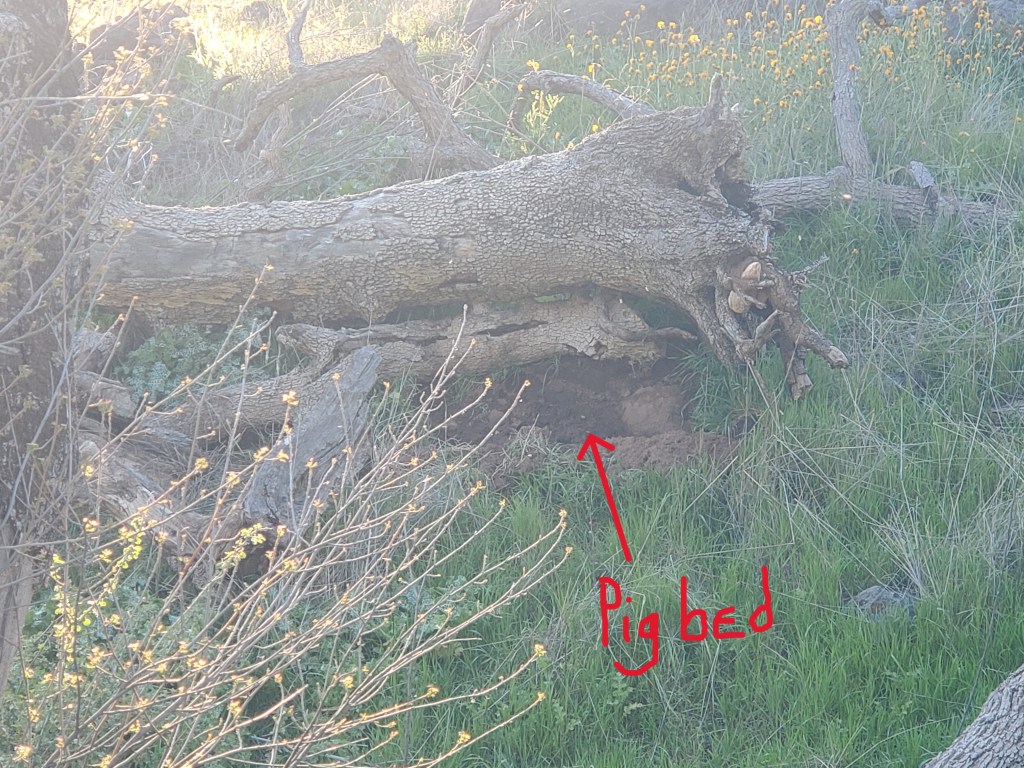
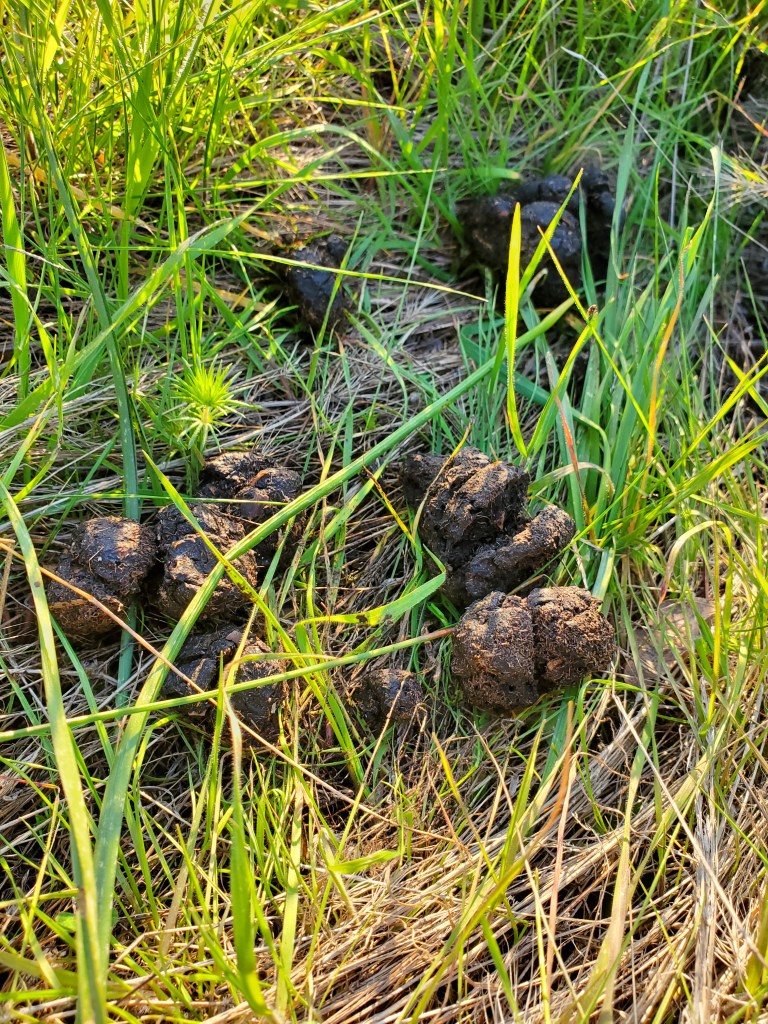
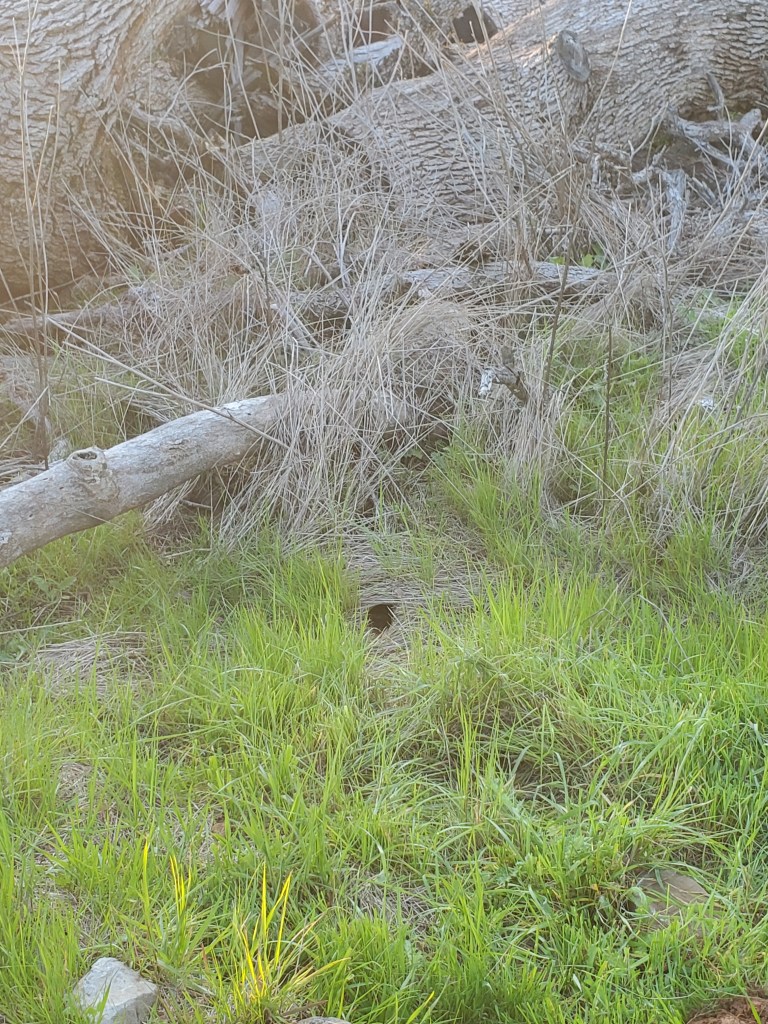
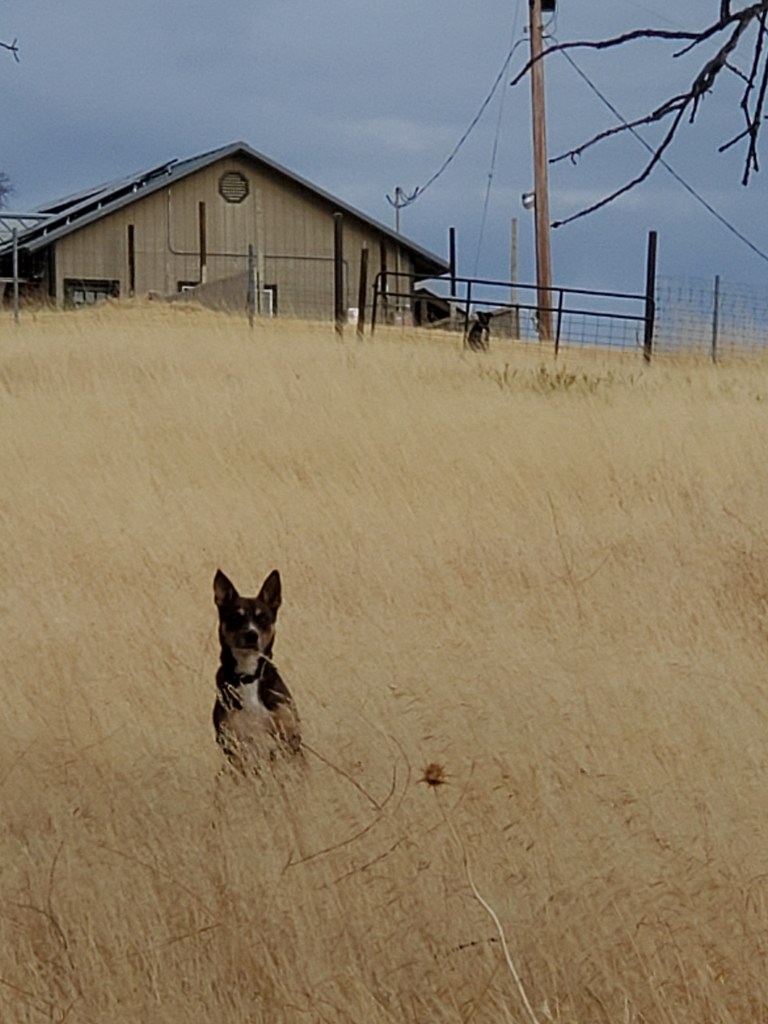
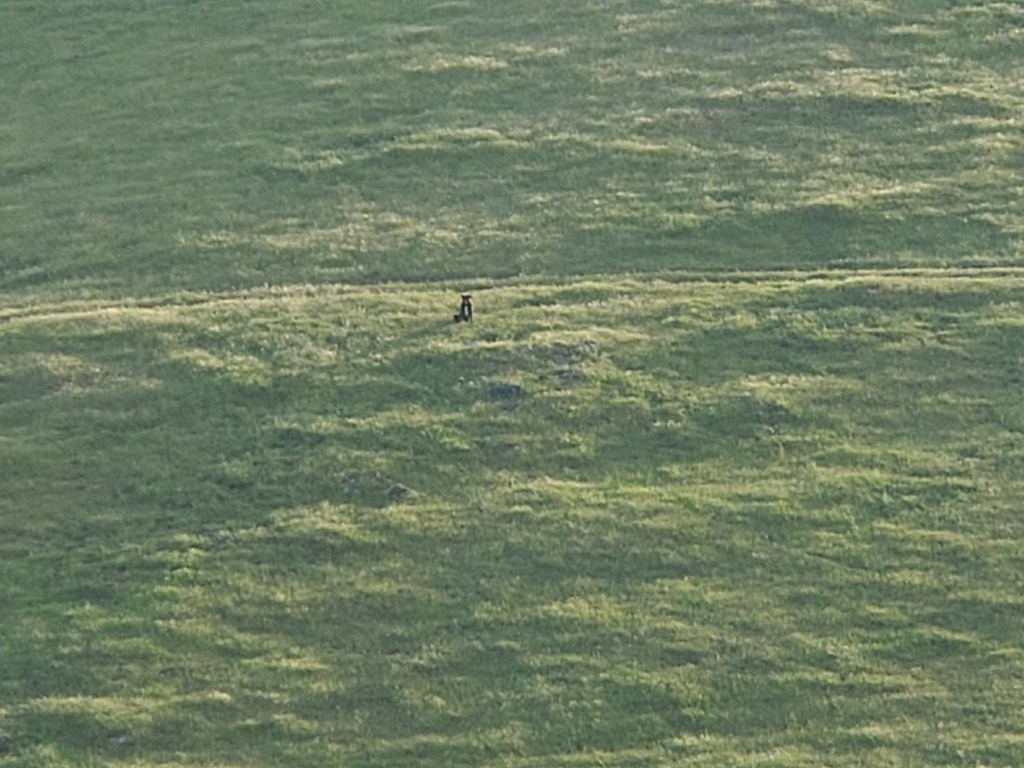
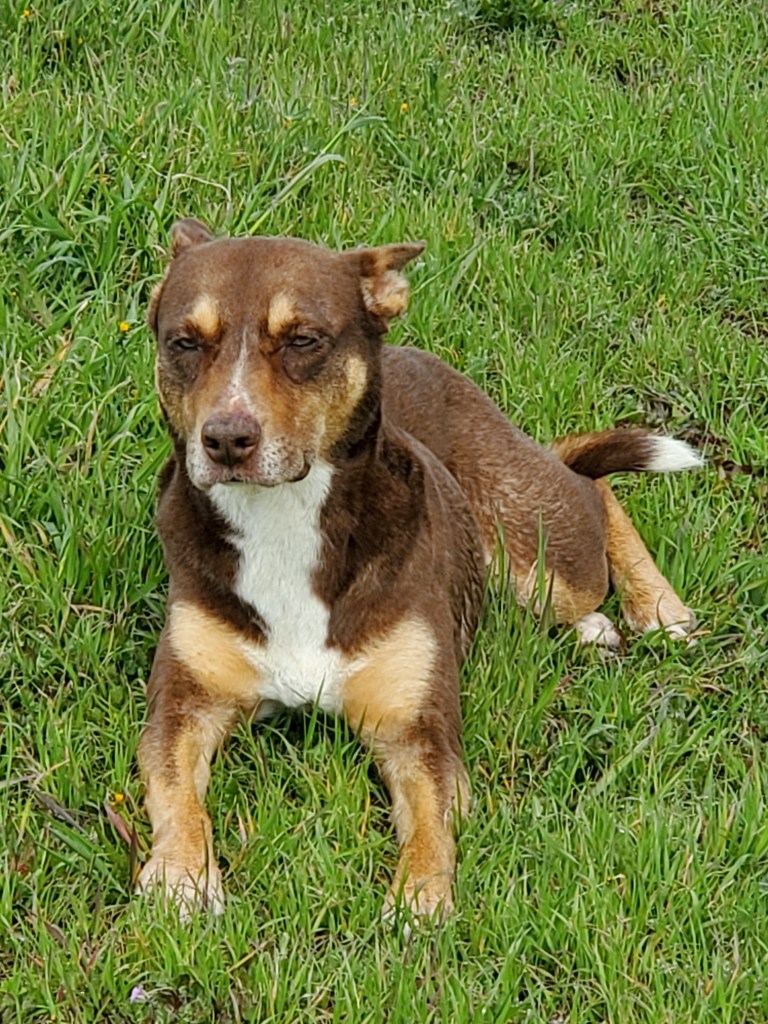
Cows are not my only problem. The other day when I was assessing the Spring Creek planting areas, I opened the caging of a small oak to thin grass that had grown around it. I was on my knees peacefully pulling the grass away from the oak when I heard a thrash across the creek. It was a single wild pig. She was small, about 250 lbs, and had been laying in a hollow between downed tree limbs. She must have been assessing me for a while. There were at least 15 minutes that transpired as I walked, dogs at my feet, into the area, then to the caged oak, and then the time it took to open the cage and sit there for a while pulling grasses.

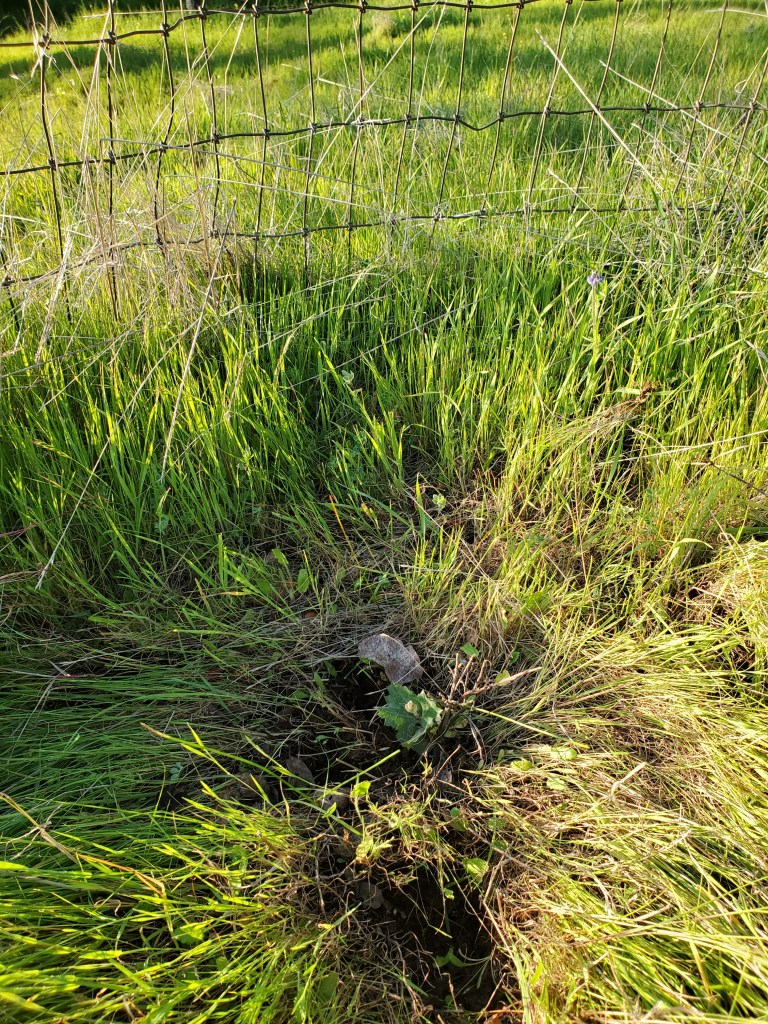
I immediately got to my feet and watched her run downstream, then across the creek, under the fence, up and over the hill. I didn’t think much of it until I followed downstream and found upturned soil from pig rooting, hoof marks sliding down the creek banks, a missing seedling from the slide, and then I worried about all the acorn I planted. Could she have rooted them out and eaten them? All that hard work for nothing? Pigs are non-Native and are very destructive. As a lover of all life, I have long pondered what to do about this issue. I hate the idea of killing them, but I may need to seriously consider that. With them in this area as often as they are, I may not ever be able to make headway on habitat. The survival of my Native relatives, monarchs, bumble bees, grasses, oaks and milkweed are paramount to me.

Wildlife and Flowers Abound

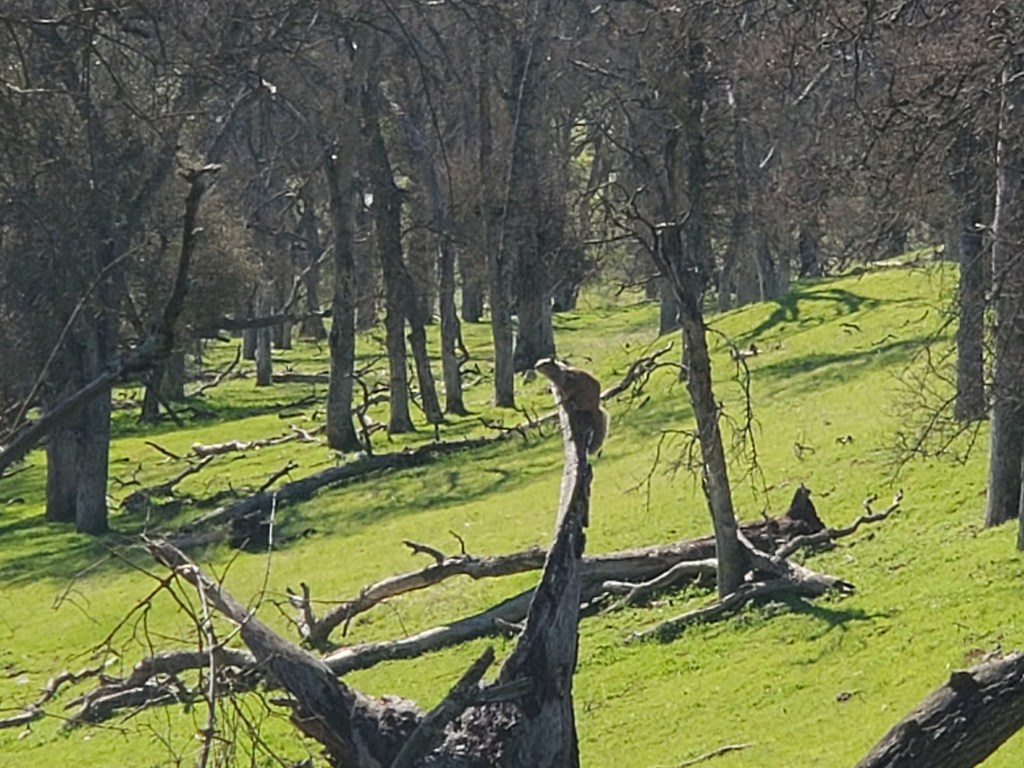
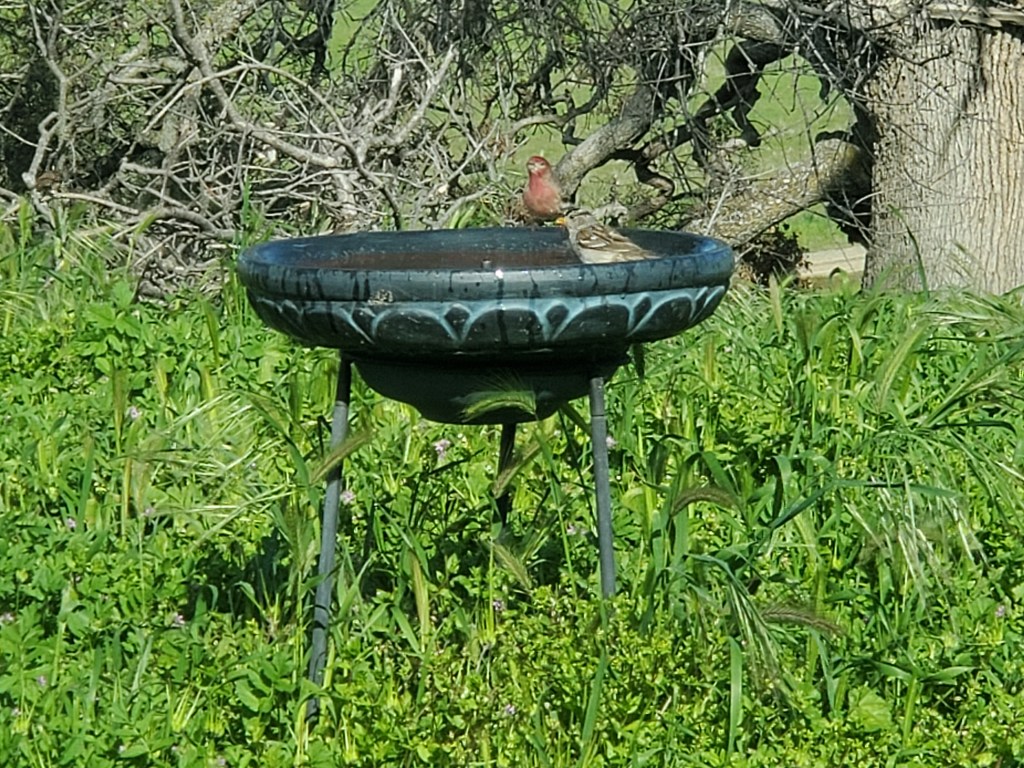
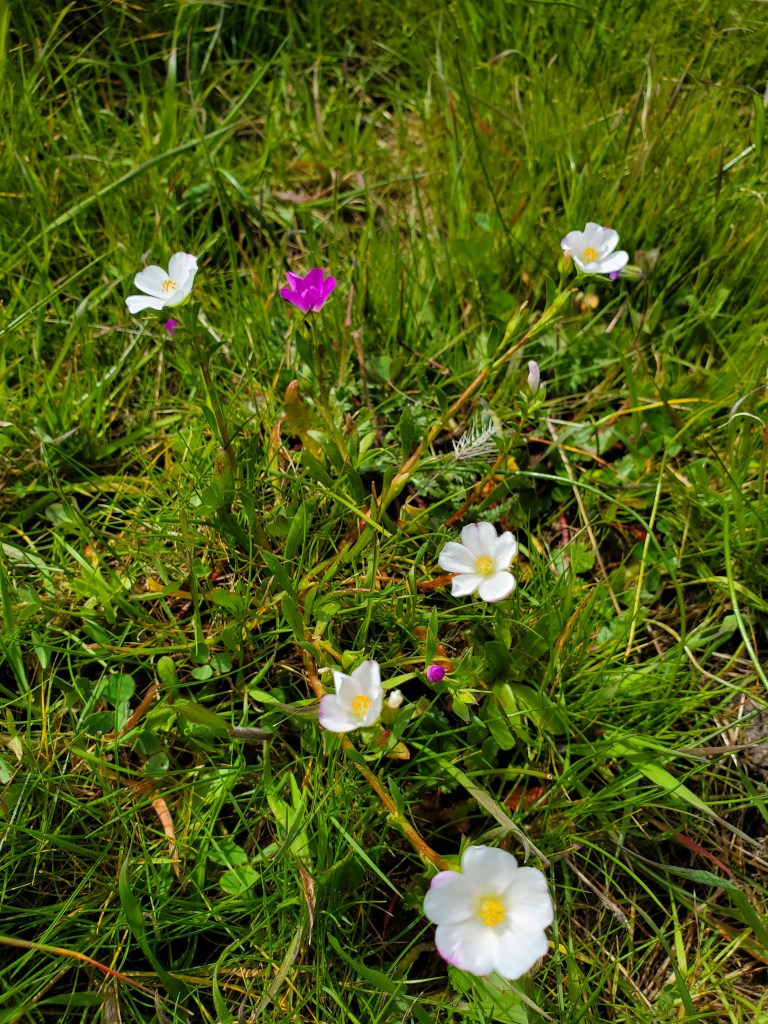
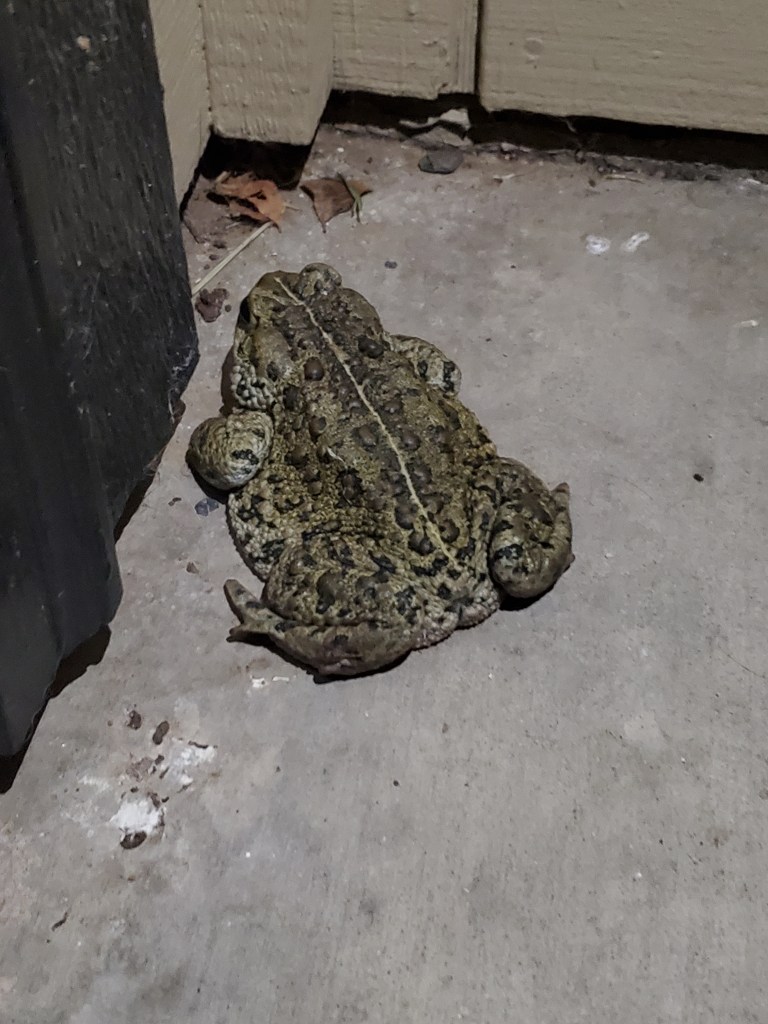
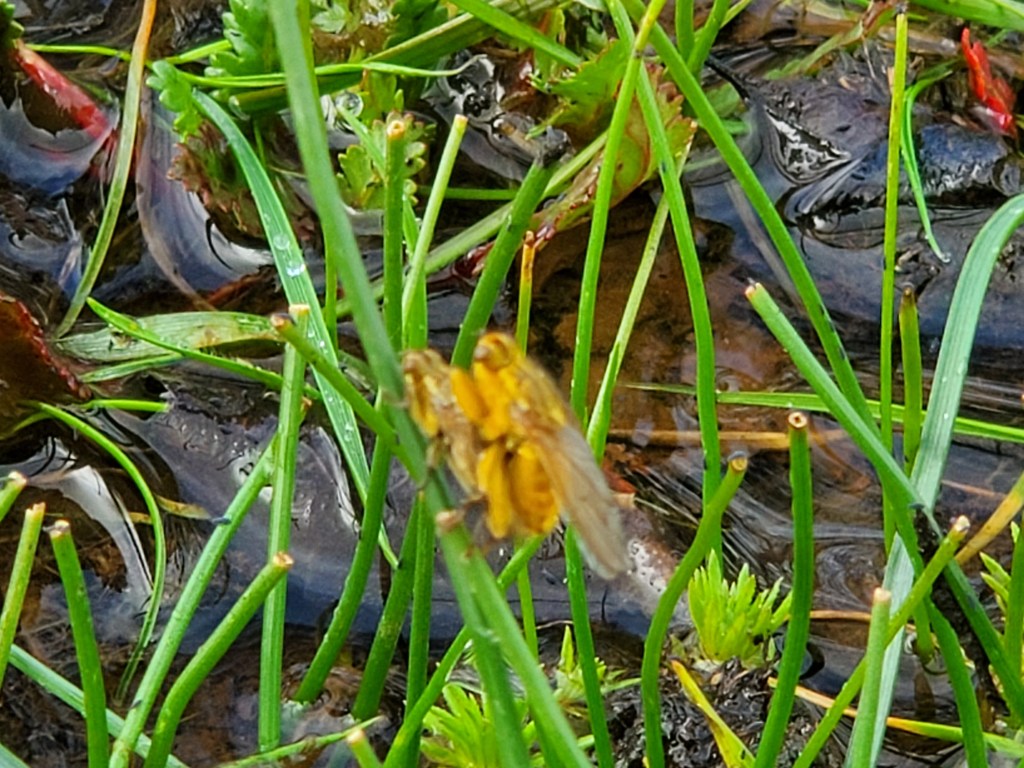
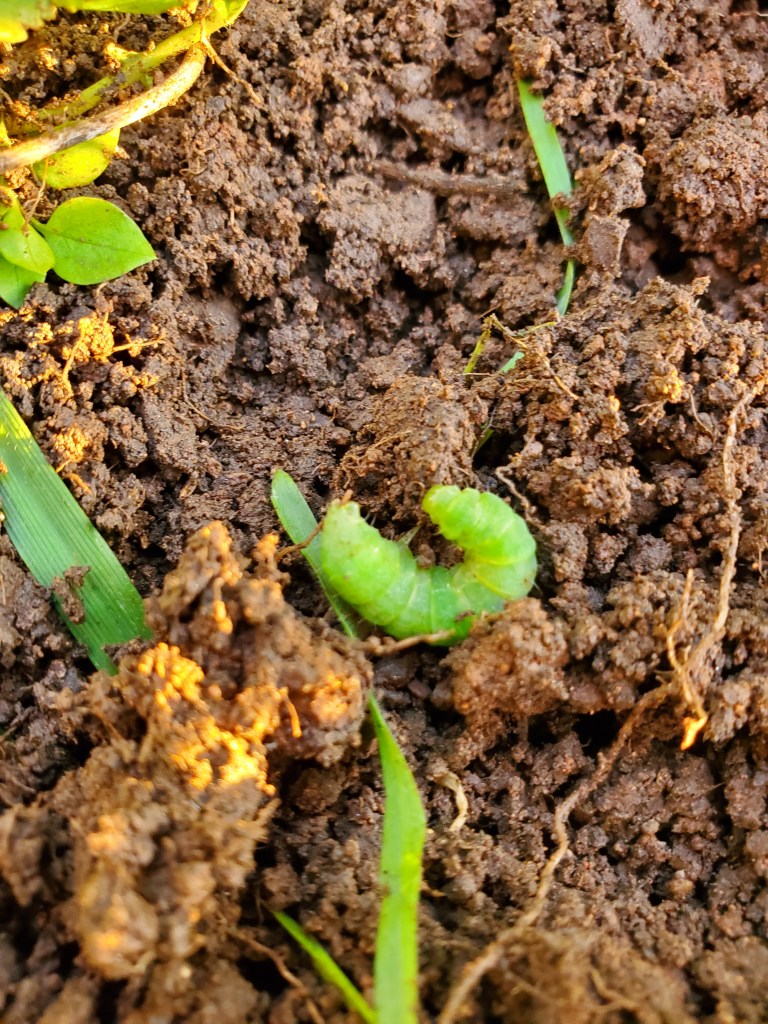
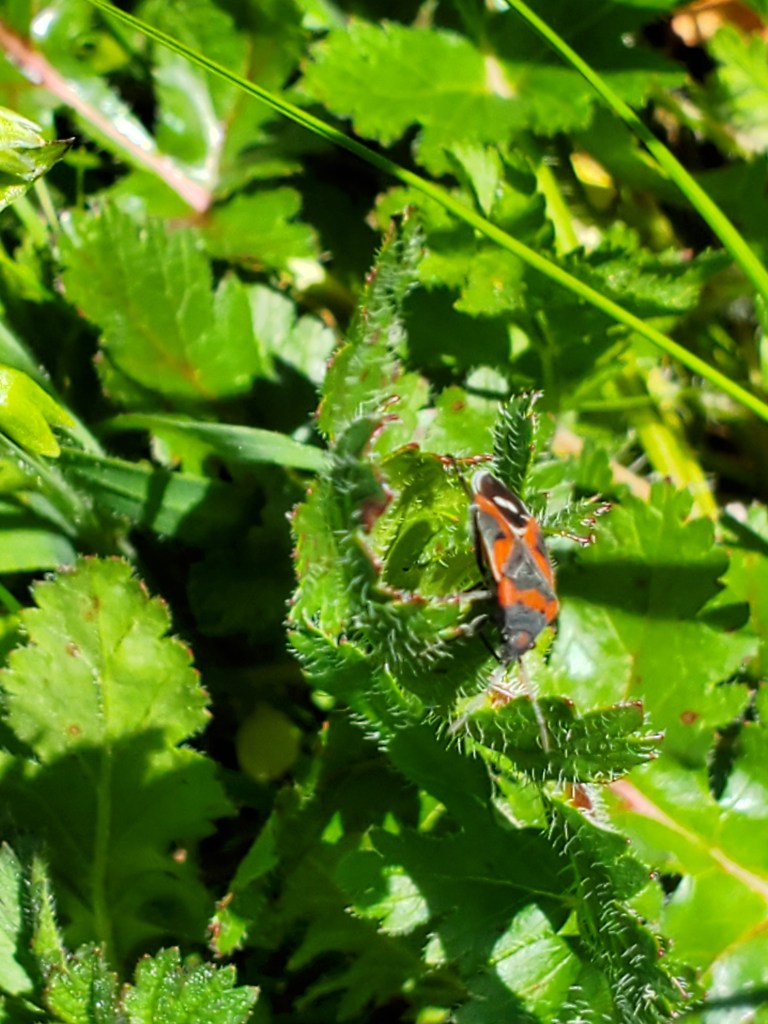
In addition to the pig and worms, I have seen interesting bugs, a ground squirrel, lots of various types of song birds and raptors, frogs, a silver bee, and most excitingly a couple swallowtail butterflies. I did not get a photo of them, but they are beautiful. It flew over me when I was lounging in the garden.
Water Everywhere

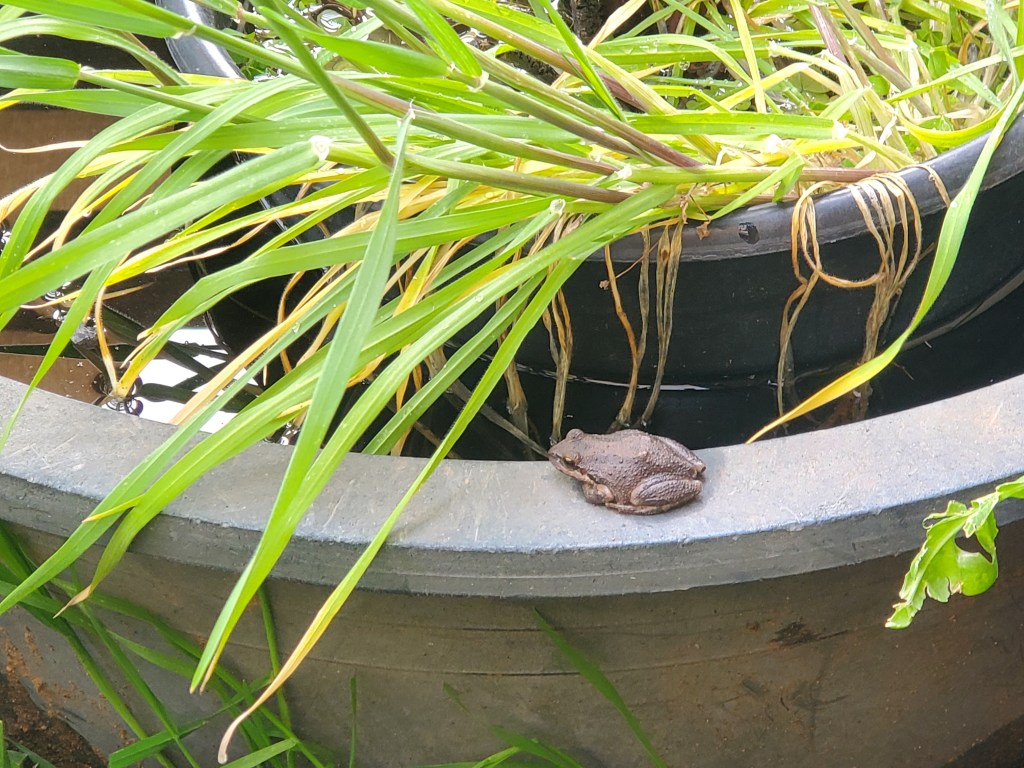
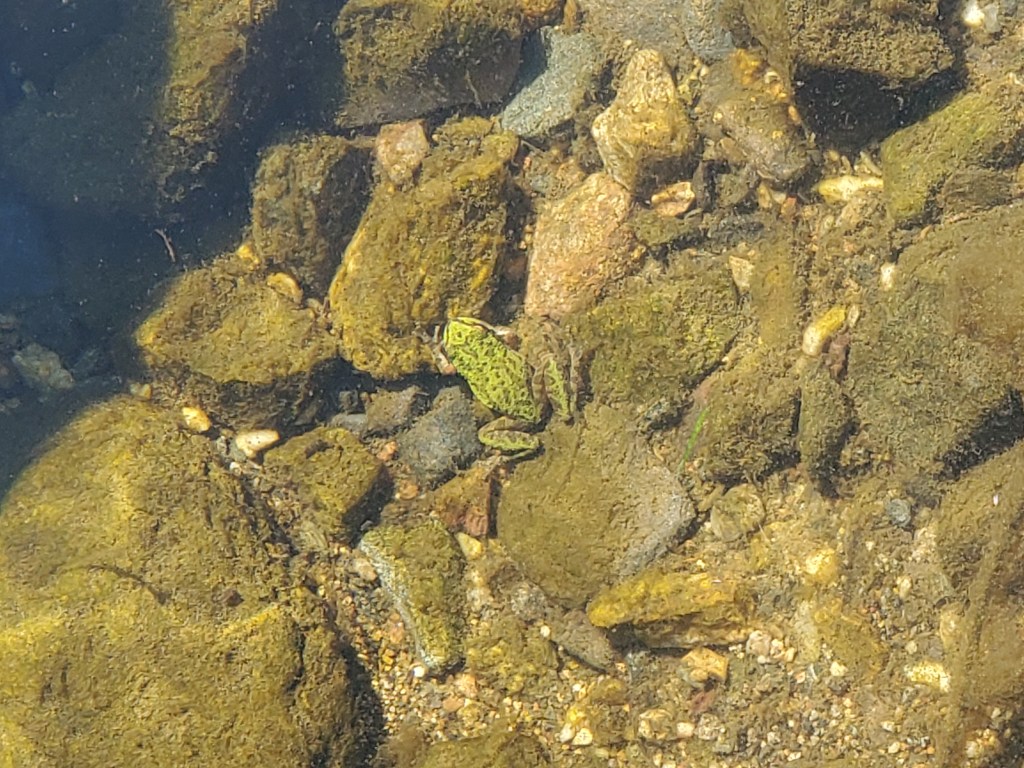
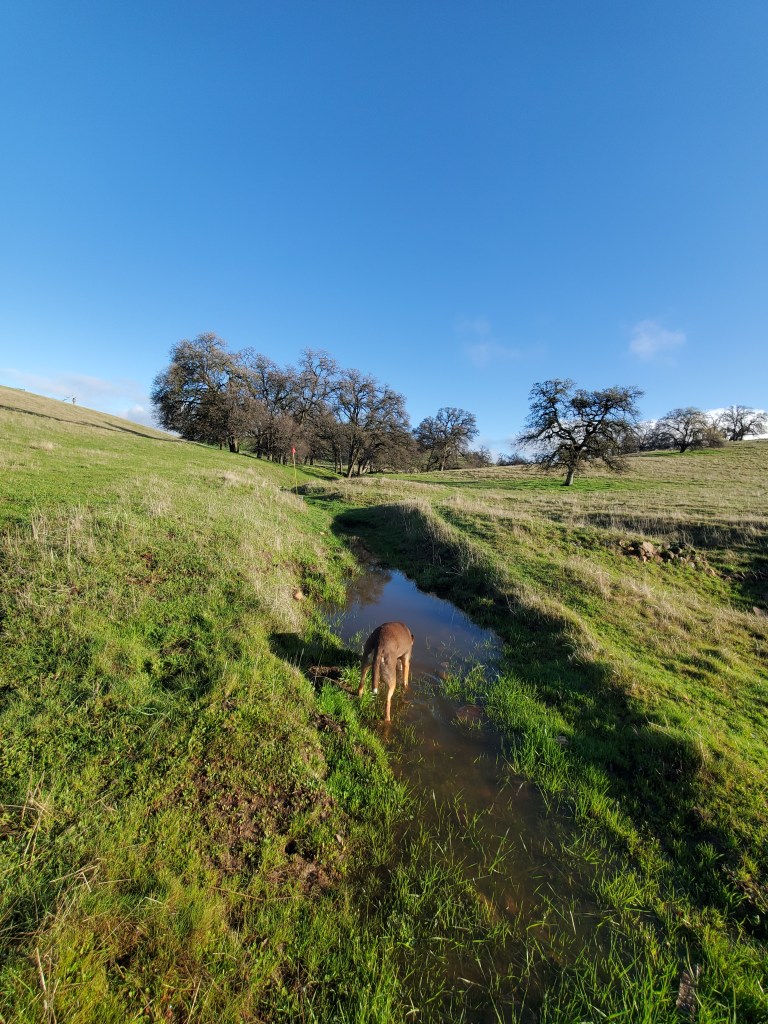
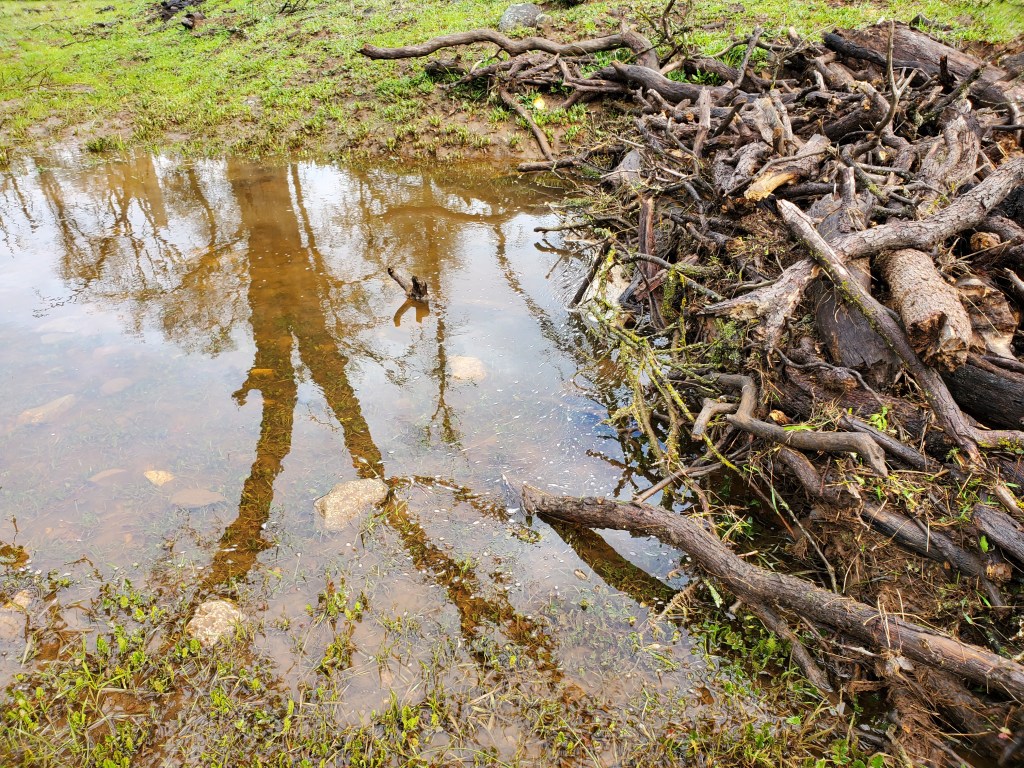
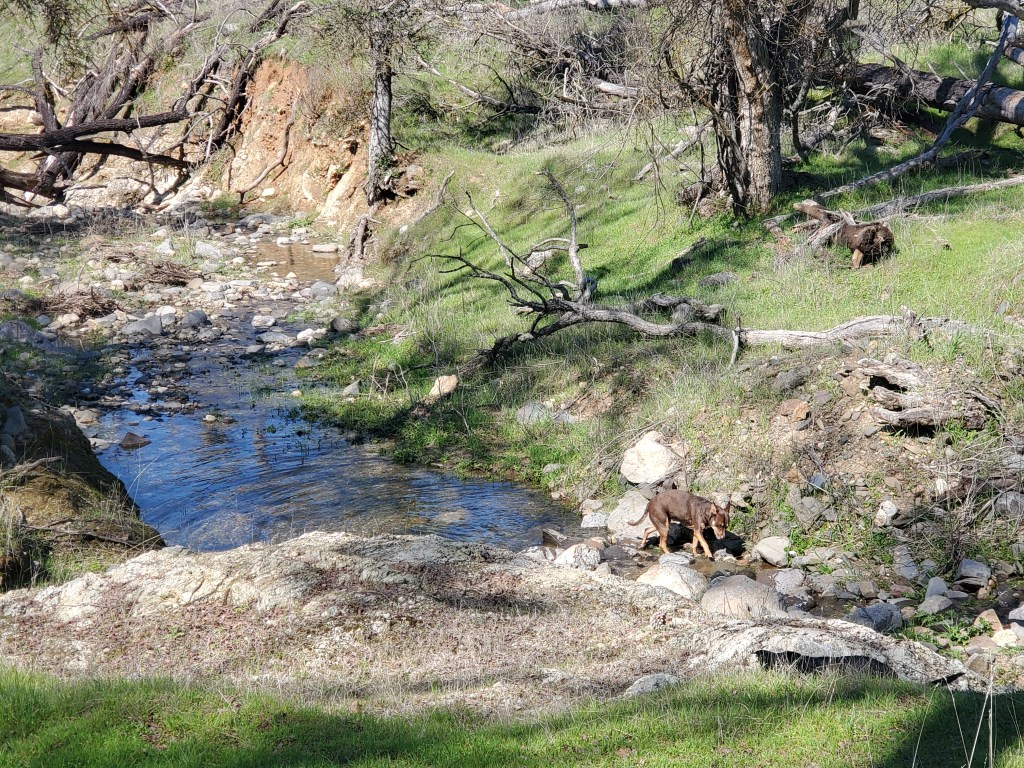
My neighbor said to me the other day that she has never heard so many frog songs in her entire time owning her ranch, which has been longer than me. They have been loud, joyful and seemingly from every direction. She thought it was due to my work. I don’t know if that is true, but I cannot help feel a sense of happiness that perhaps I contributed at least a little by creating lots of eddies, moist areas and long lasting puddles with the check dams. Thank you Kim for noticing that something was different.
Tornado Warning

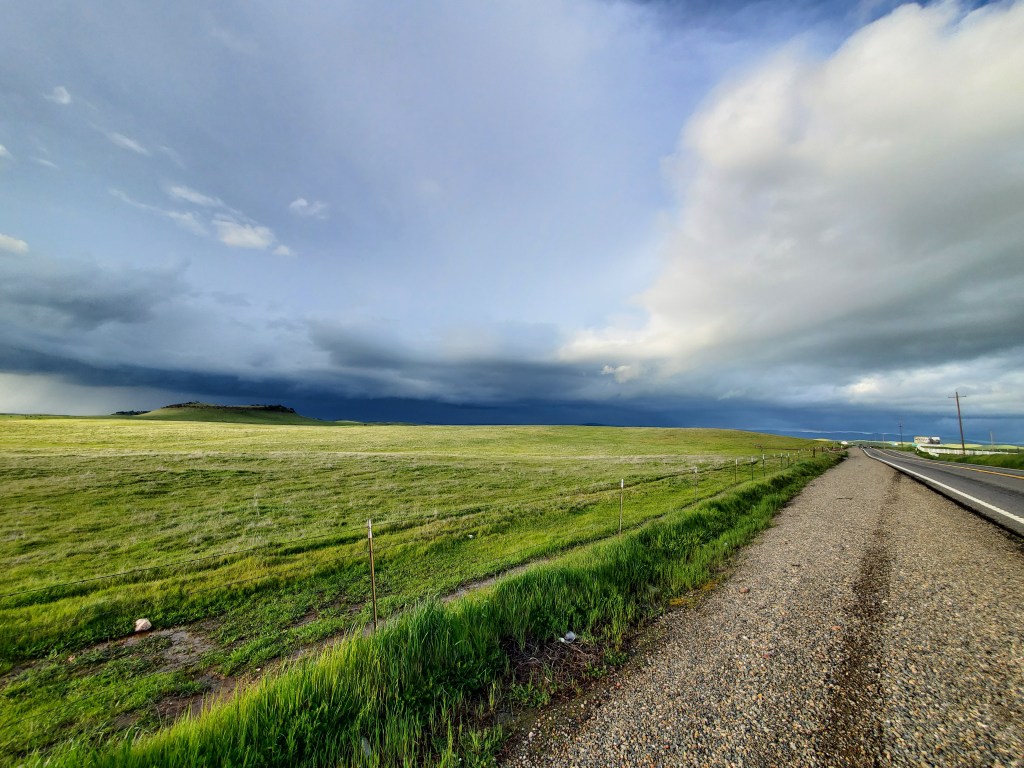
Tornadoes have never been a California staple. For all my cognitive years, I’ve not heard of anything like this until the early 2000s when there was a funnel cloud sighting in Livermore. In the last three years, we have had a real tornado in Santa Cruz, a warning in San Francisco, a warning in south Mariposa, one for some other counties in the Valley, and now, on Tuesday, March 17, 2025, two in one afternoon, both in my vicinity. This is not normal.

David looked at the radar and saw the first cell would be well north of us. He said not to worry. I was of course still worried and making a plan in my head – a California girl with no tornado experience except The Wizard of Oz, Day After Tomorrow and some documentaries I watched a million years ago. I remembered that you should take shelter in a room without a window, or a place with the most framing, or possibly in the middle of the house. Who remembered? Like most Californians, we don’t have a basement — and we are on the top of the hill to boot.

I had just started to calm down when I heard my phone beep loudly again. It was another tornado warning. David was home by then and looked at the radar. It appeared that the severe storm cell was going to be headed straight for us. I ordered everyone in the house to shelter in the laundry room, and to bring the cats and dogs. I called my neighbor to encourage her to move from her RV into her home.

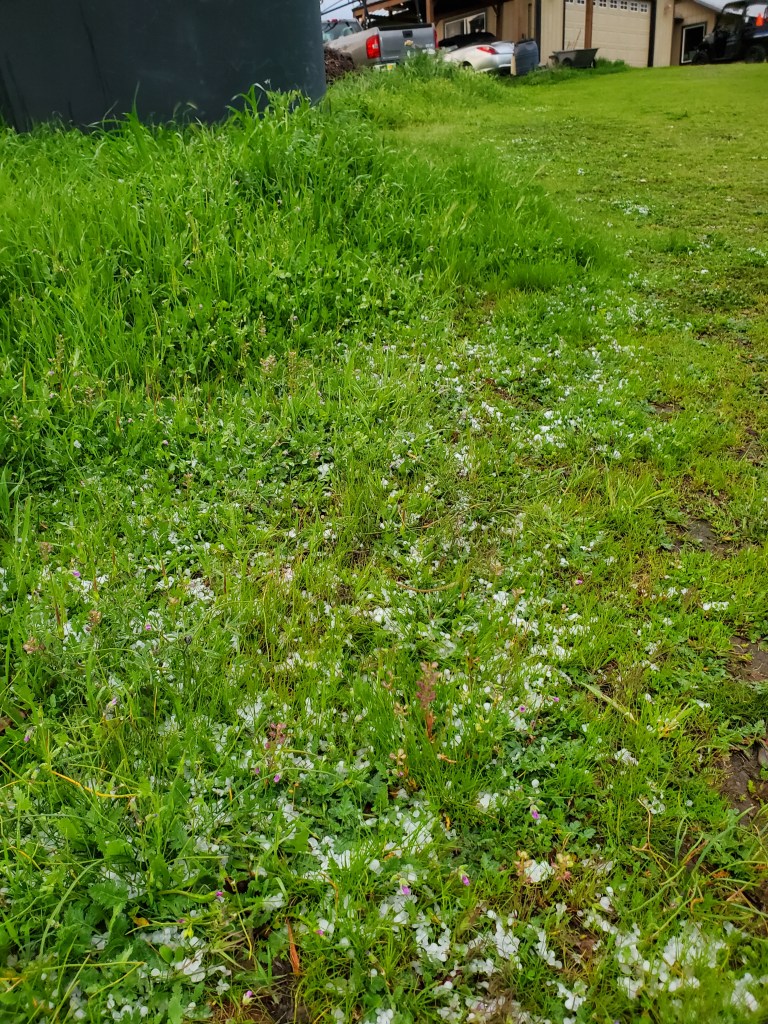
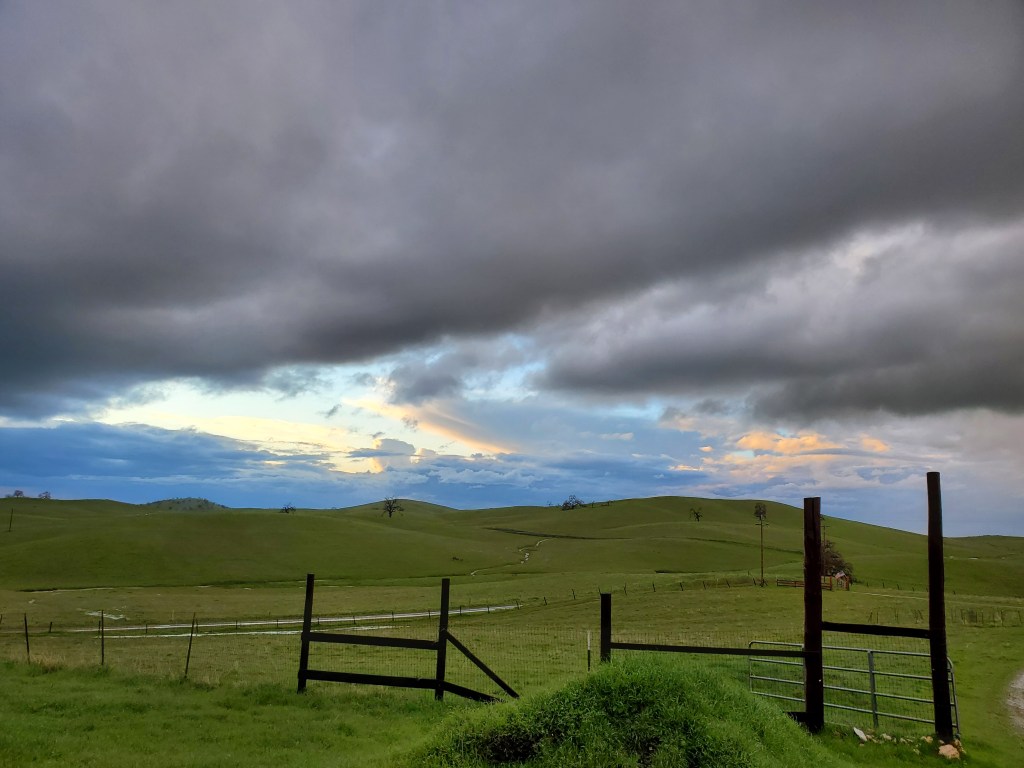
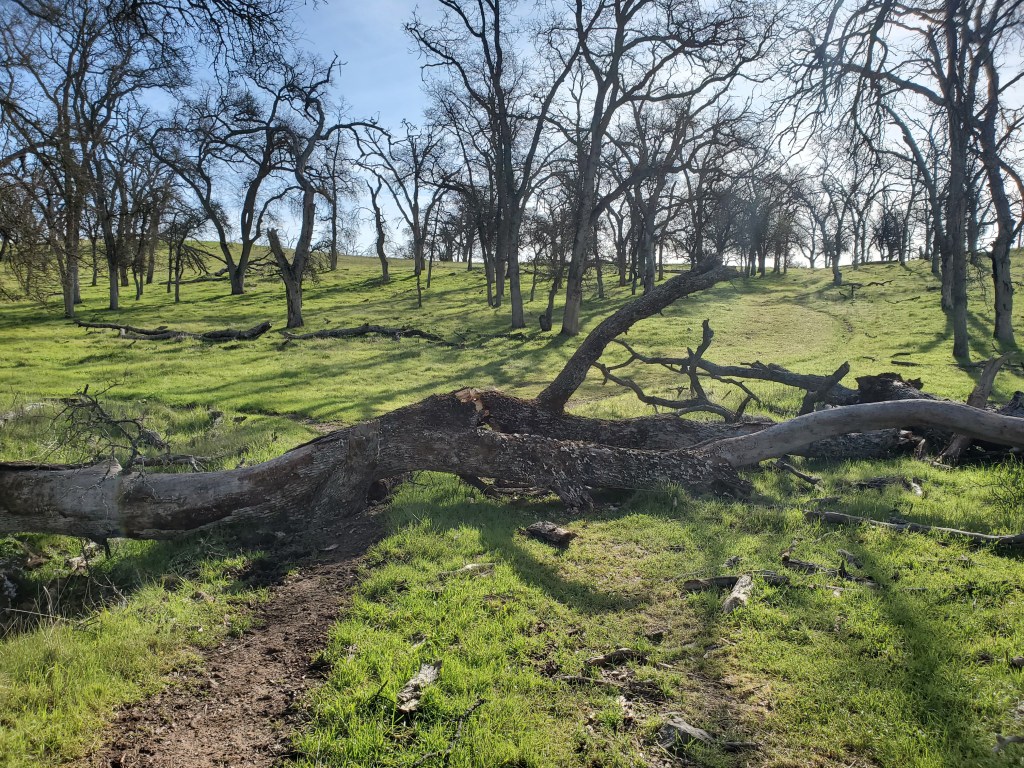
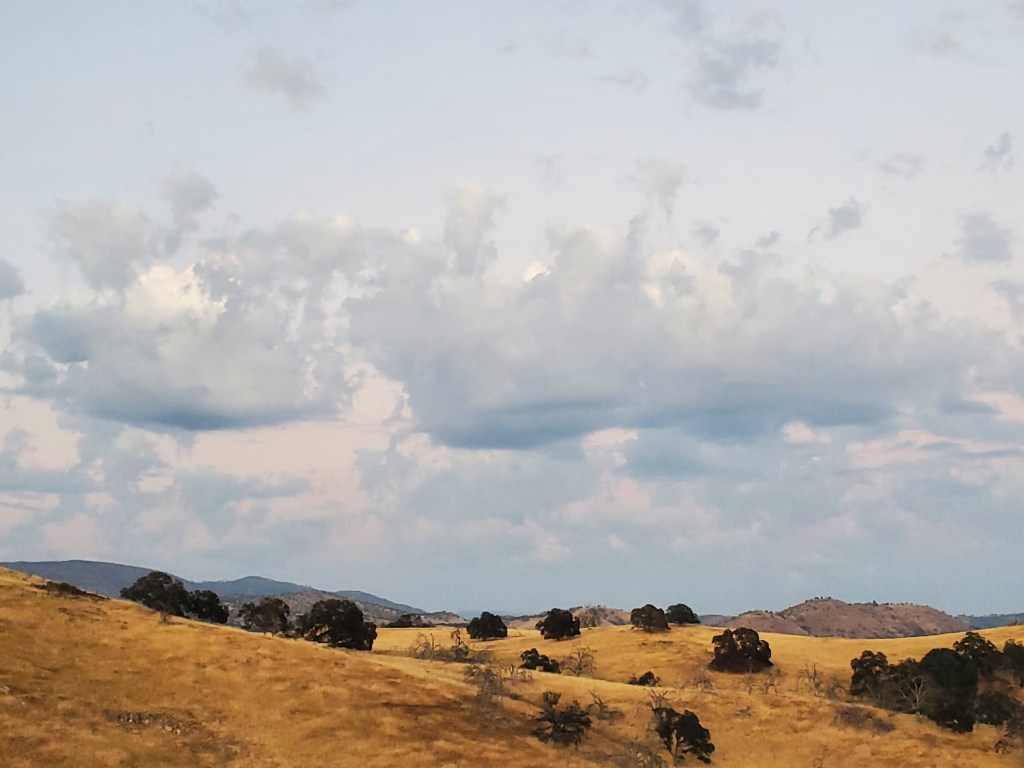
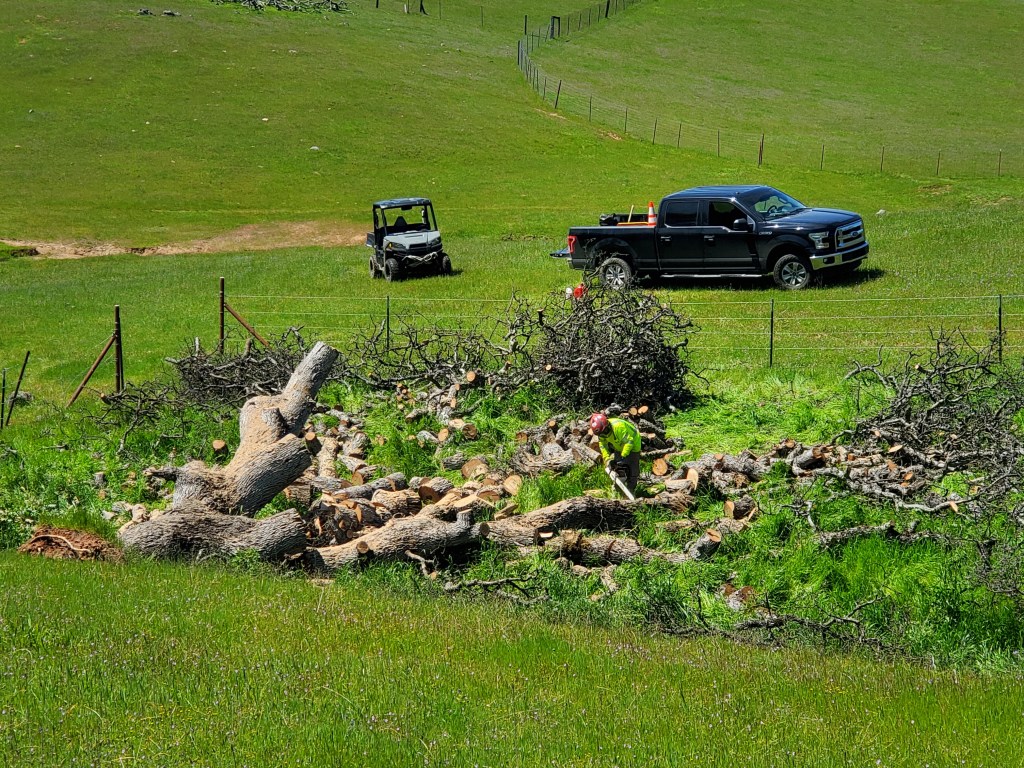
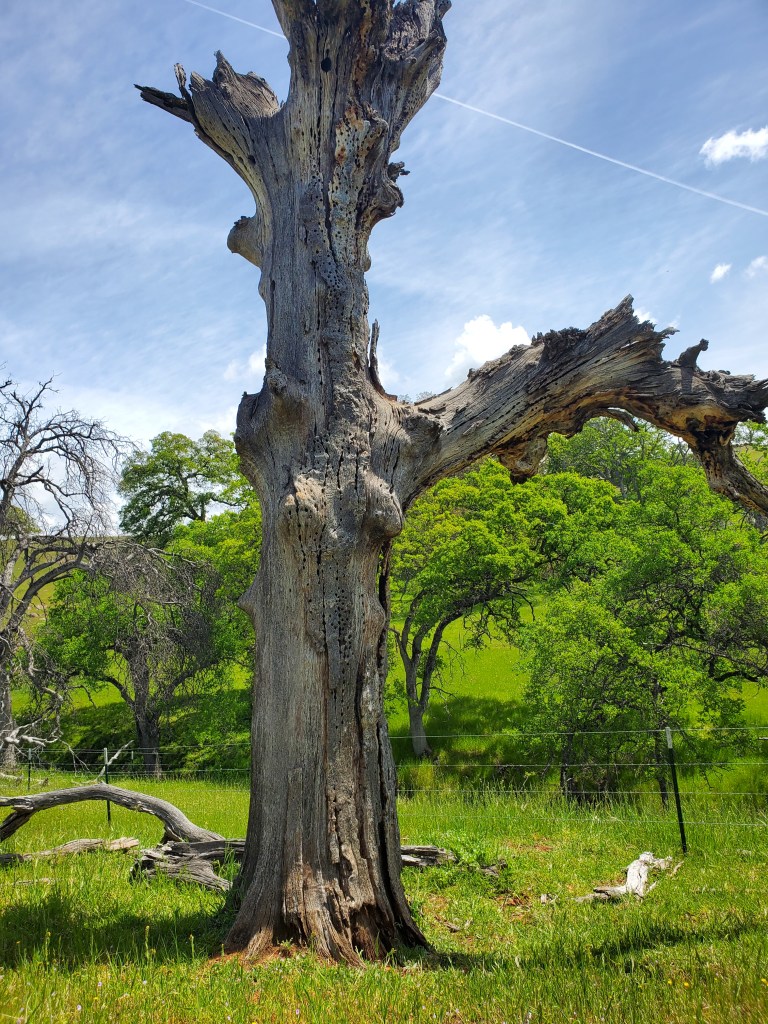
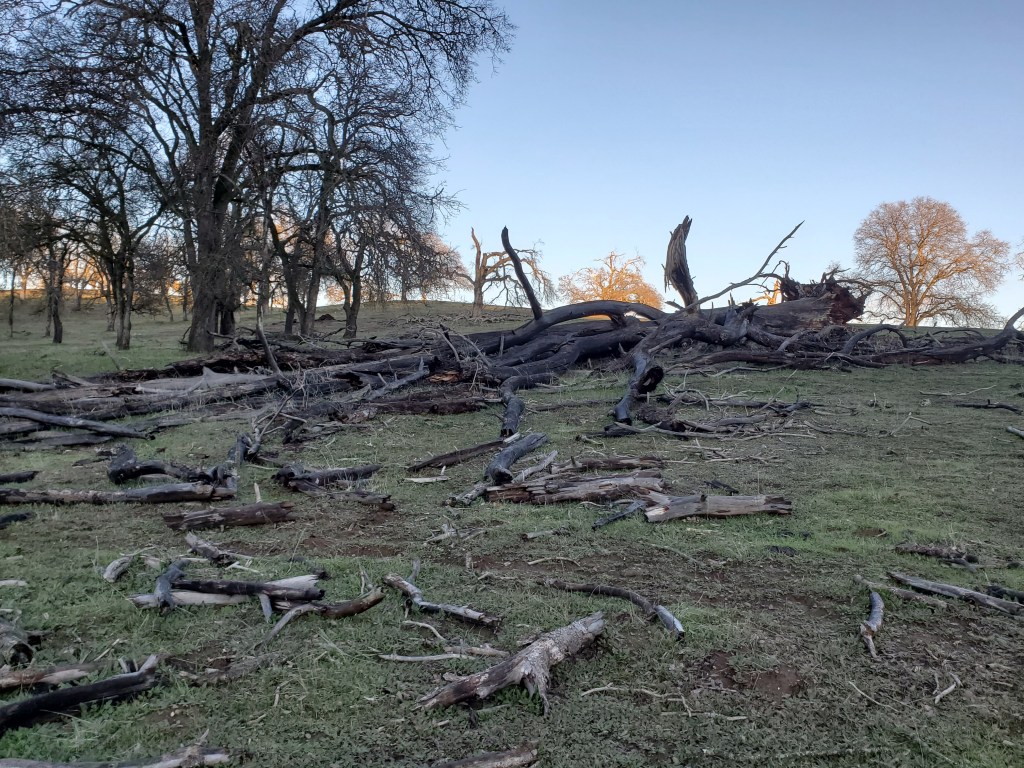
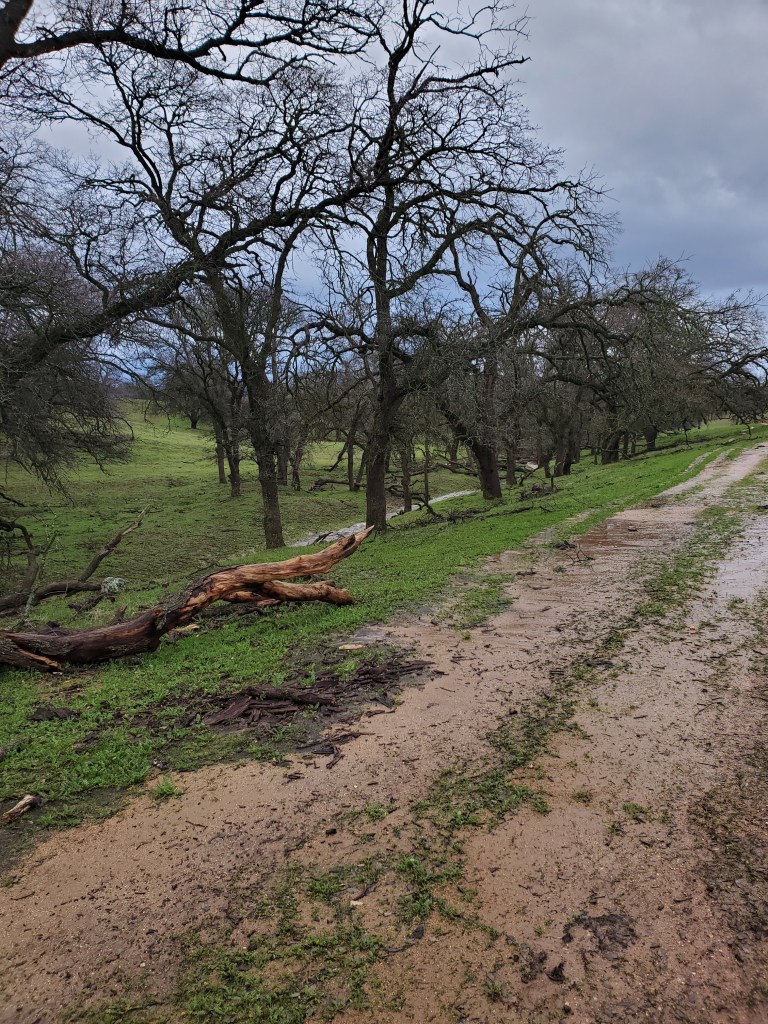
The cell reached the house 15 minutes later. The thunder was remarkable, booming so loud overhead and shaking the house. Then, the hail fell, hitting our metal roof like an angry teenager slamming a million doors over and over. In just 10 minutes, the storm had moved on. Light filtered through the clouds once more. Besides the ground being littered with hail stones, several of the long dead oak trees toppled. I found one across the cattle road a day later. Chainsaw work is in my future for sure.
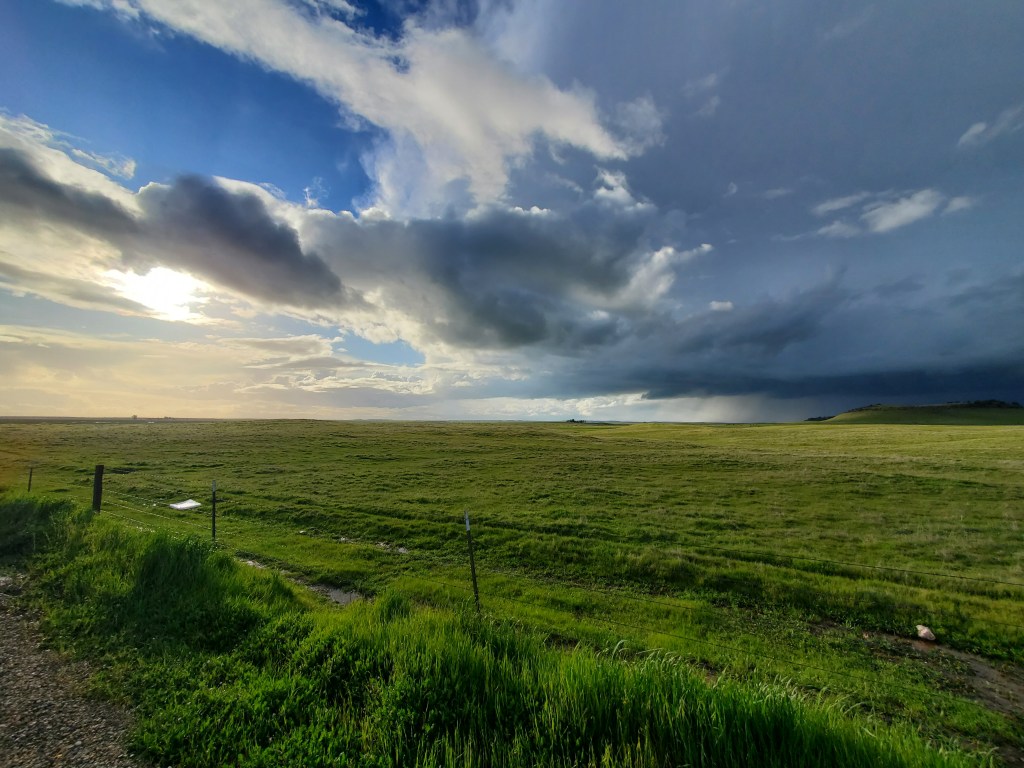
I feel grateful that mother nature is warning us instead of simply squishing us. We have an opportunity to act, to care, to show respect for all living things – to change the course of our life and be in greater balance. “How can I respond even more than I am already doing?” is the question I ask myself regularly. Two tornado warnings in one afternoon? What will it take to wake people up to care? For me, I am going to double down on milkweed, consume less, choose even less packaging, fly less, walk more … and … look into building a basement.
Warm November Means More Butterflies, Bees and Blooms

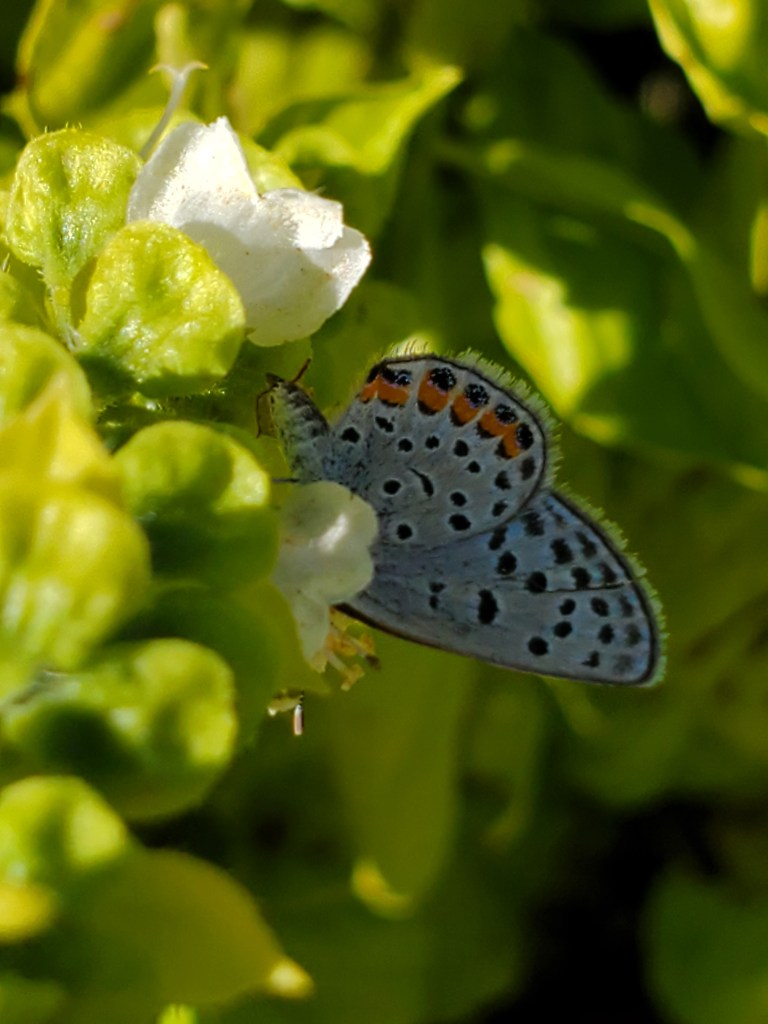
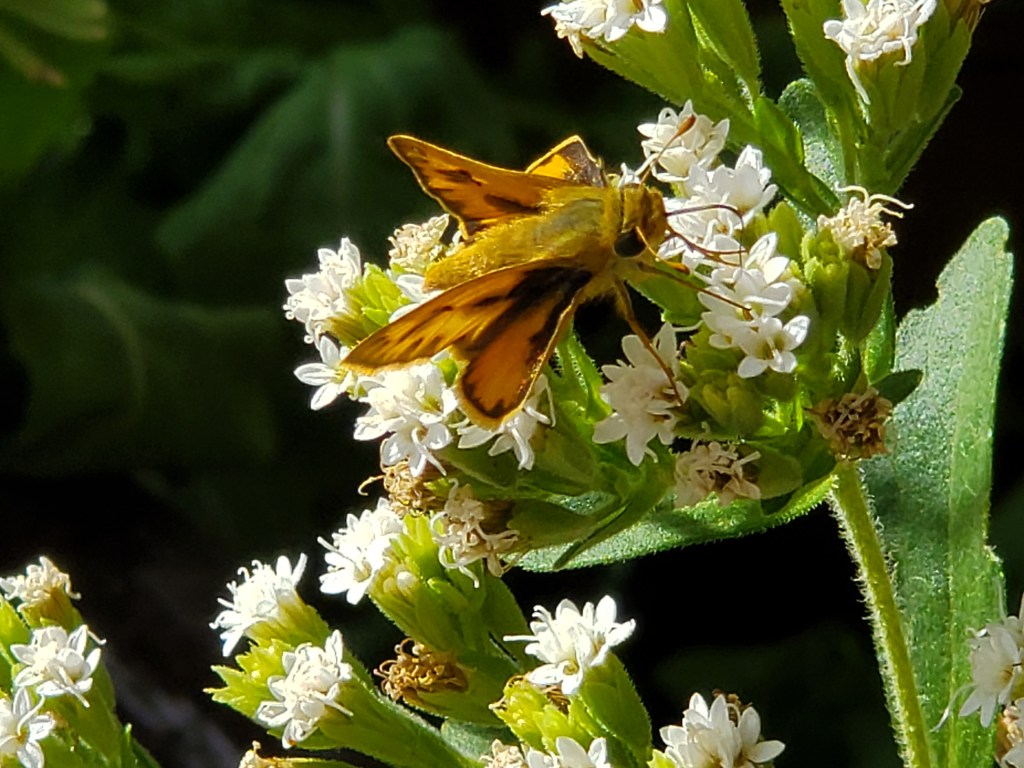
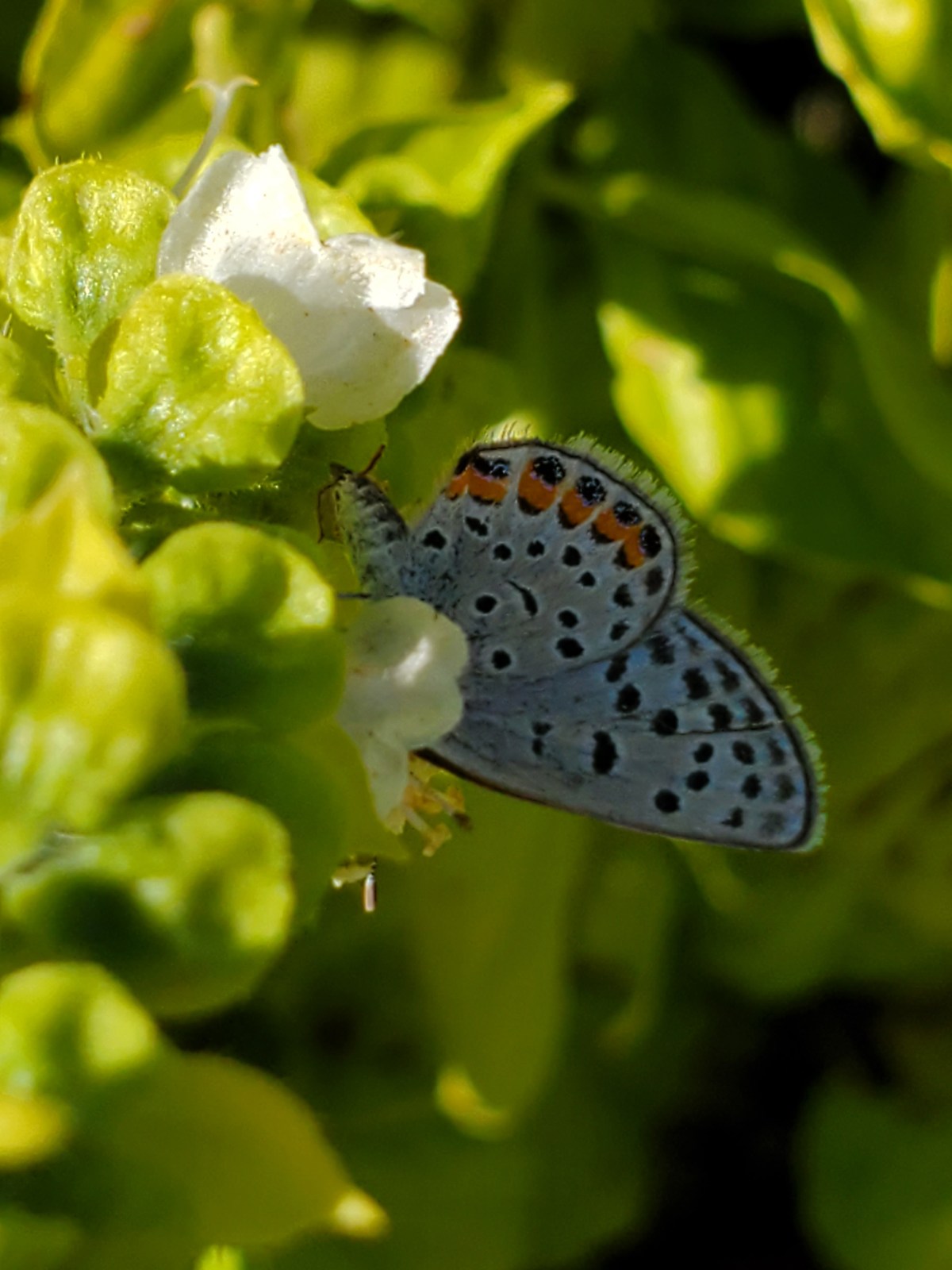
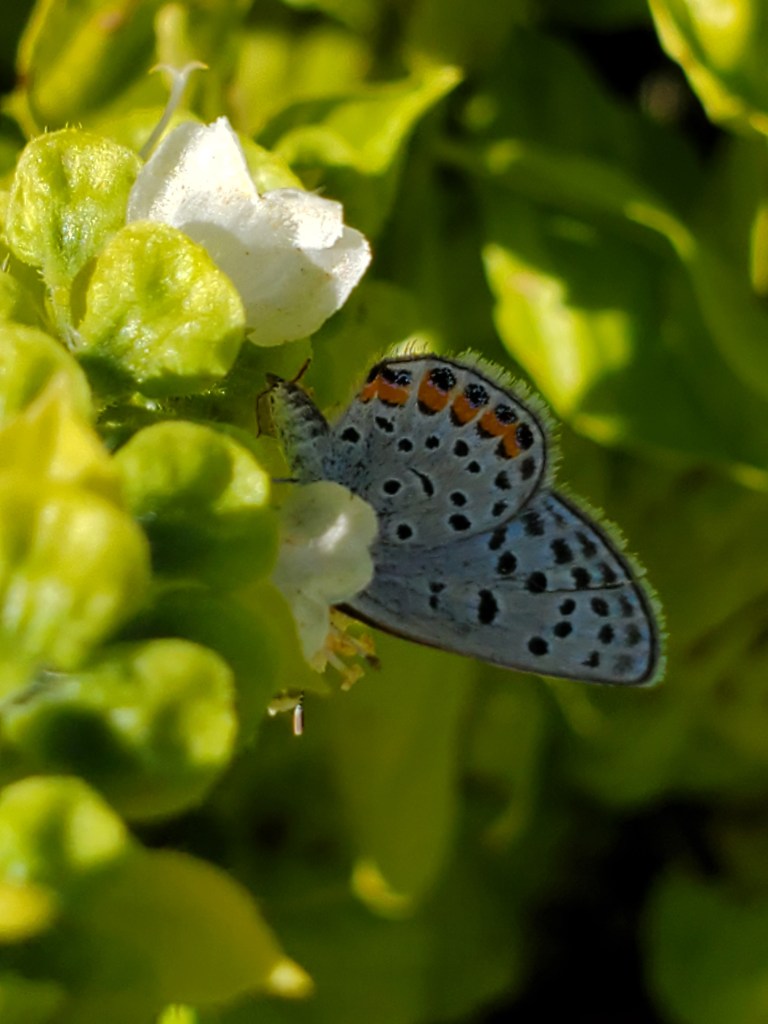
California Hairstreak nectars on a basil flower

It should be much colder than it is. We are in the 70s every day with overnight lows in the 50s. It feels like Southern California weather. The storm that came in overnight was warm with very little actual water. There were only a few drips in the rain gauge – not even enough to make a 1/16th.

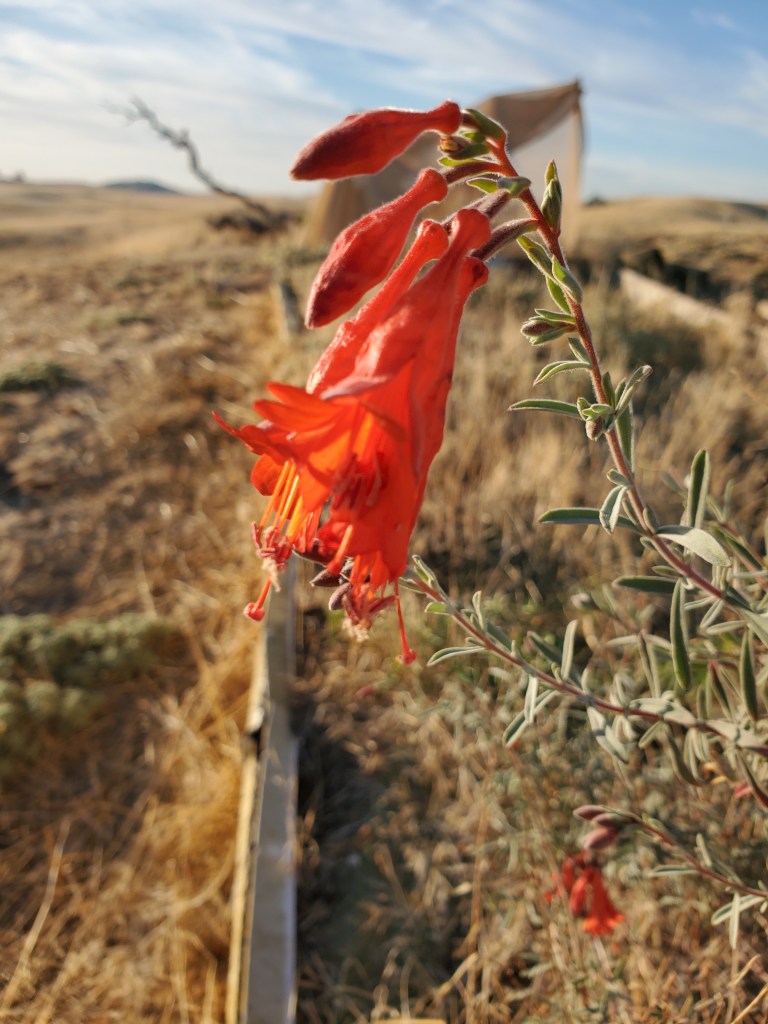
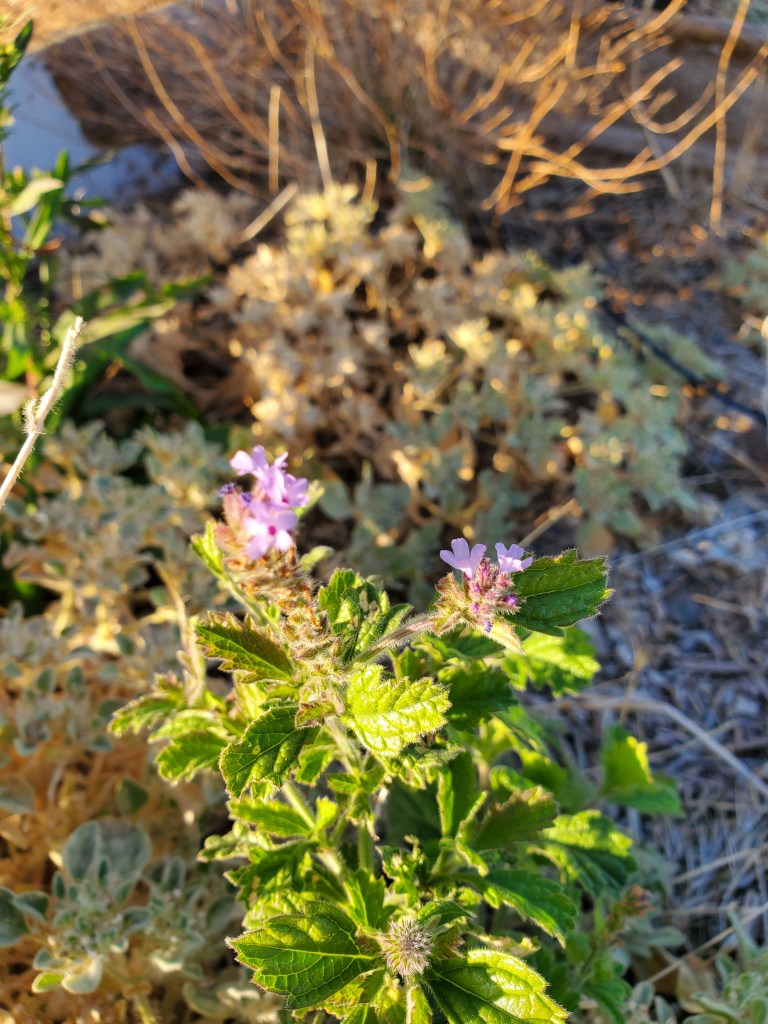
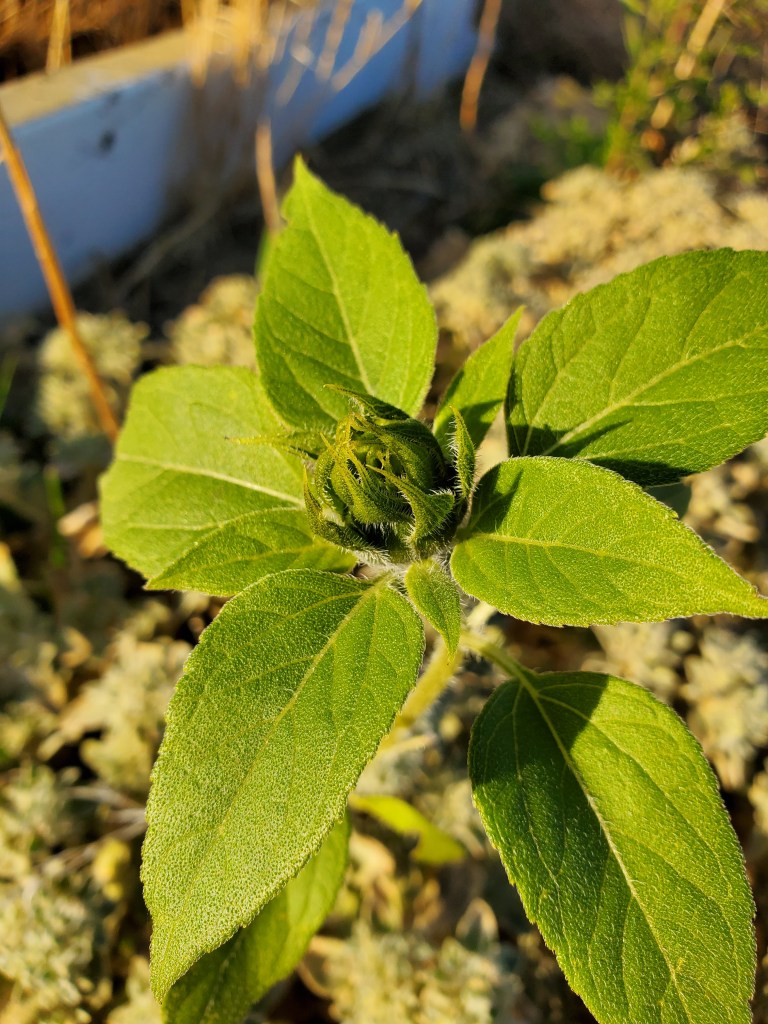
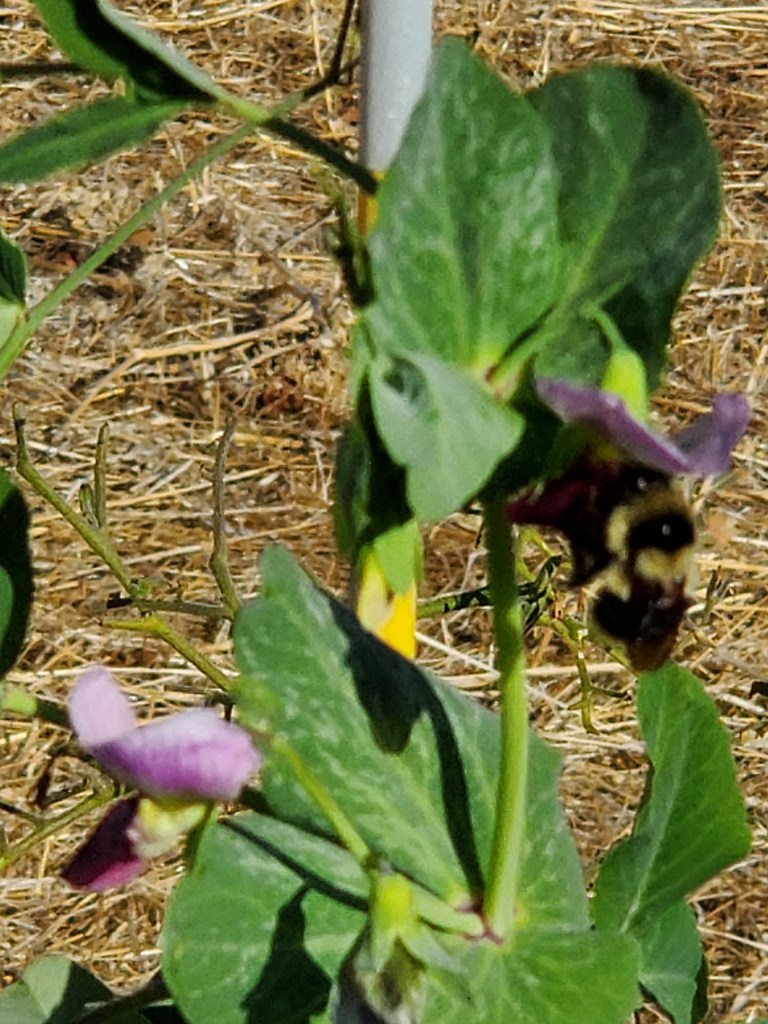
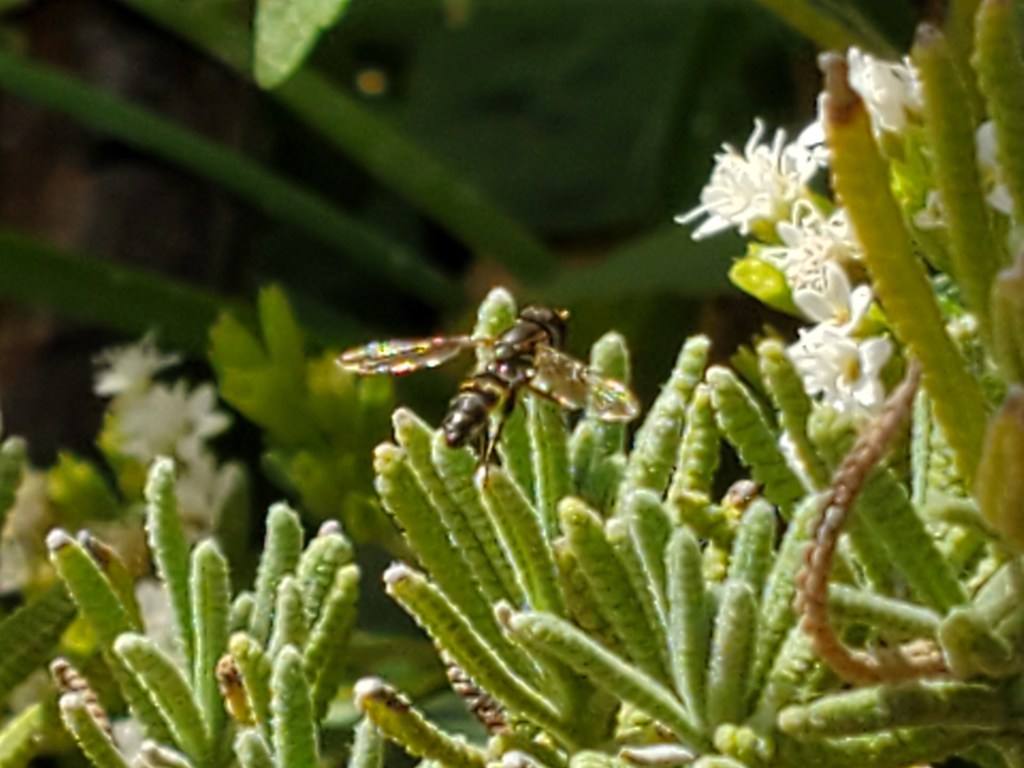
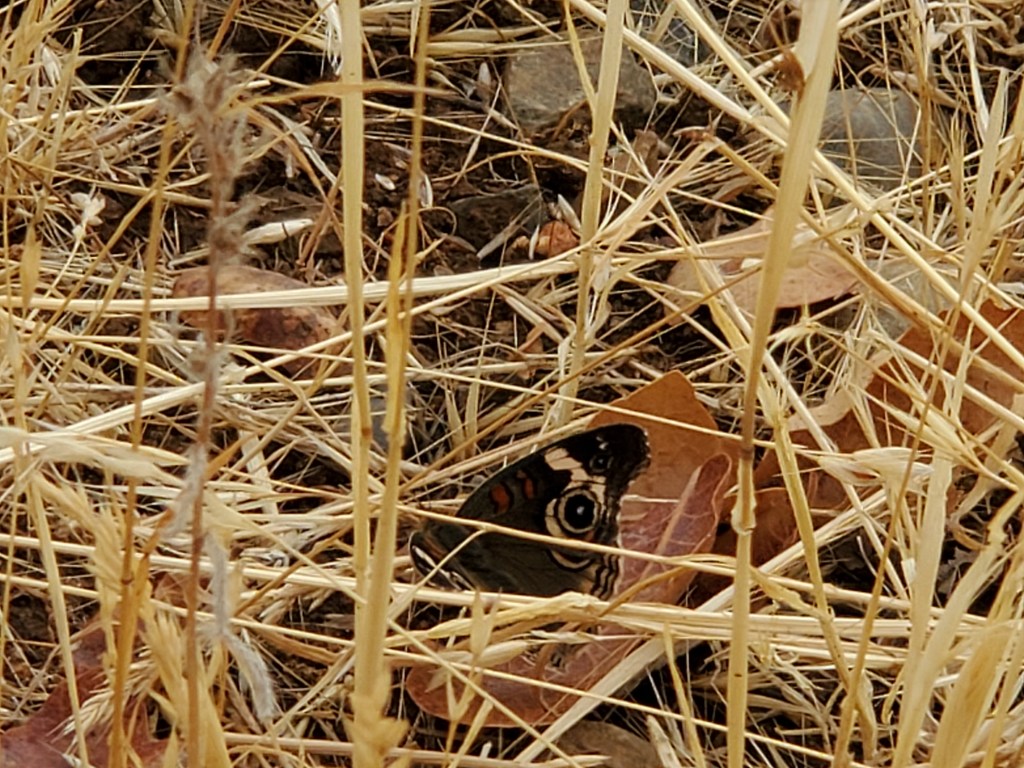
Butterflies, a wide variety, continue to visit. Yesterday, we had a large bumble bee and several silver native bees. They were attacking the poor bumble to get it to leave the flower. The bumble persisted though and got its nectar. Fortunately, there is nectar for all these creatures. The basil continues to have flowers, albeit many less. There are pacific asters, california fuchsia, verbena, black-eyed susans, a little bit of tarweed and dove weed left, marigolds (now that the life sucking beetles have moved on), peas, pumpkin, goldenrod, stevia herb, a few arugula, and one sunflower about ready to bloom, believe it or not. Lots to eat, so there is much activity including honeybees and small native bees and pollinating flies.

More Check Dams

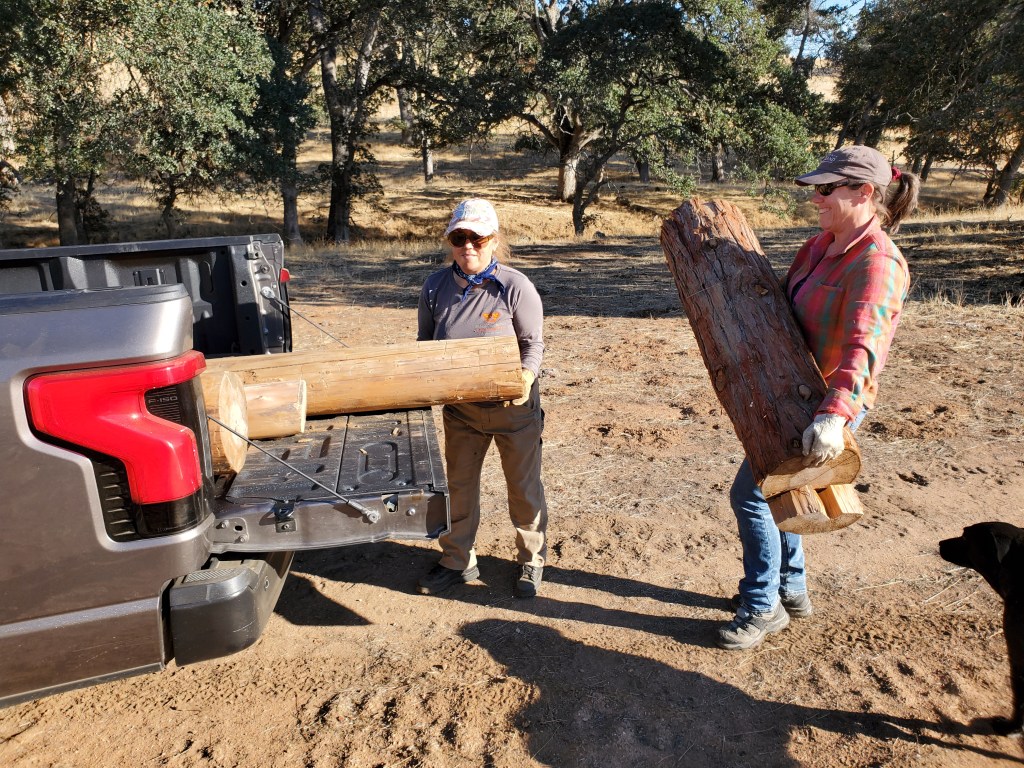
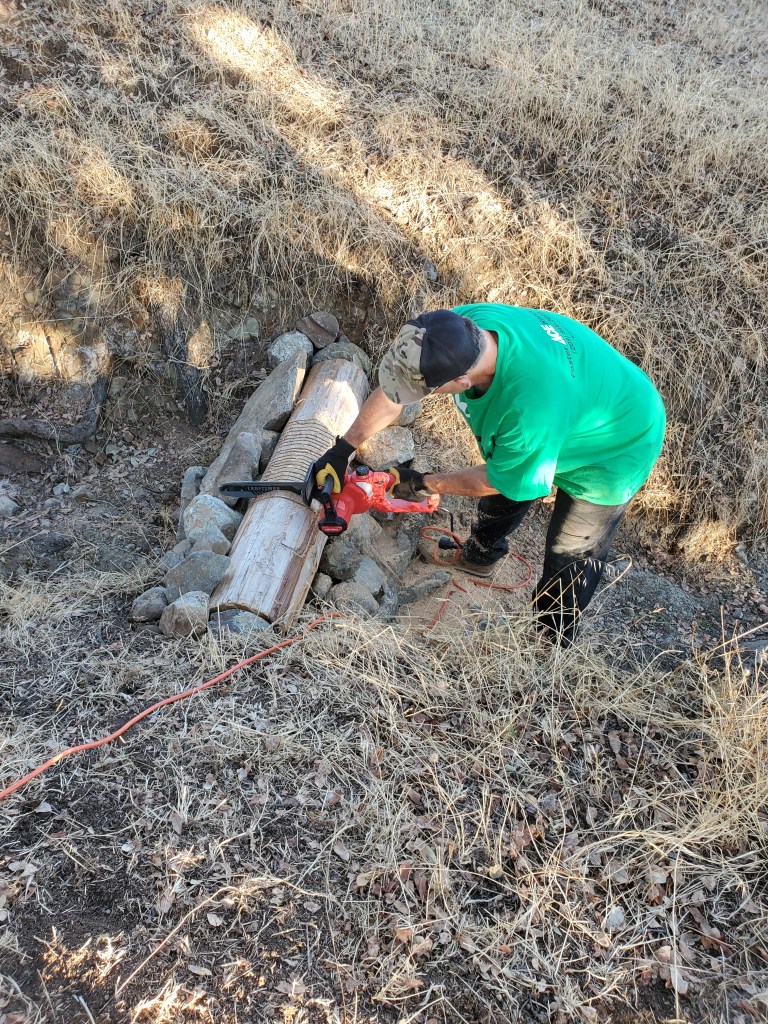
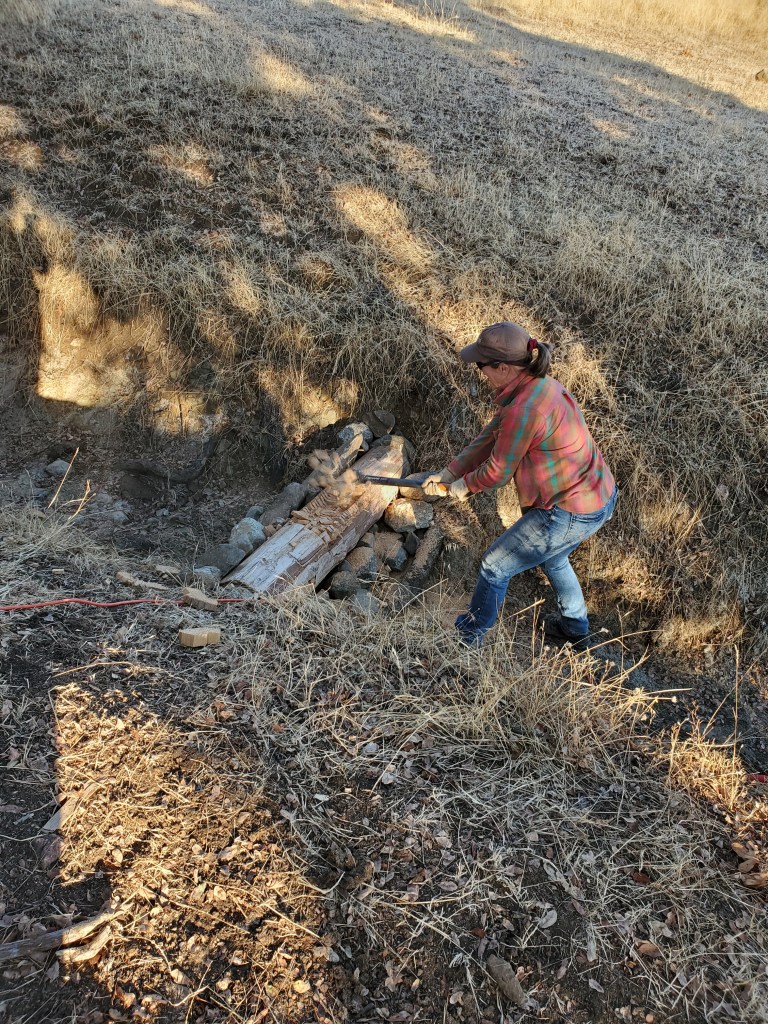
We have used the cooler weather to build and shore up more check dams. We had rock and logs left over from the rock and log drop structures we put in last month. Fortunately, I had a very able-bodied and willing friend visiting last week. Jen is a total country girl who lives in a city. She has worked on a variety of natural resources projects including riparian restorations. Lucky me! Jen was able to provide additional guidance on the much more informal installation of the latest check dams. They are my hurried, poor girl’s version of the real thing, but they will work to slow water run-off. Don’t be scared to visit; I don’t put all my friends to work here. Jen was super excited about slinging a pick ax and using the chainsaw. My kind of woman!

While in this section of the ranch, I also checked on the Spring Creek. I opened the gate after a year to the riparian exclusion area to let the cattle graze. The flowers were almost gone, and there was plenty of feed to distract the cows from the oak seedlings. The cockle burrs and thistle were high, grass abounded, and the creek filled with water plants. After just a week with the gate open and only a few pairs (cow calve pairs), the area was grazed well with the thistle and cockle burr stands knocked down. The creek was opened up, and water was more exposed. The oak seedlings were all doing well and brush piles still standing. This is range management – timing grazing where it will do good for both cows and the ecosystem.

Working in Reciprocity

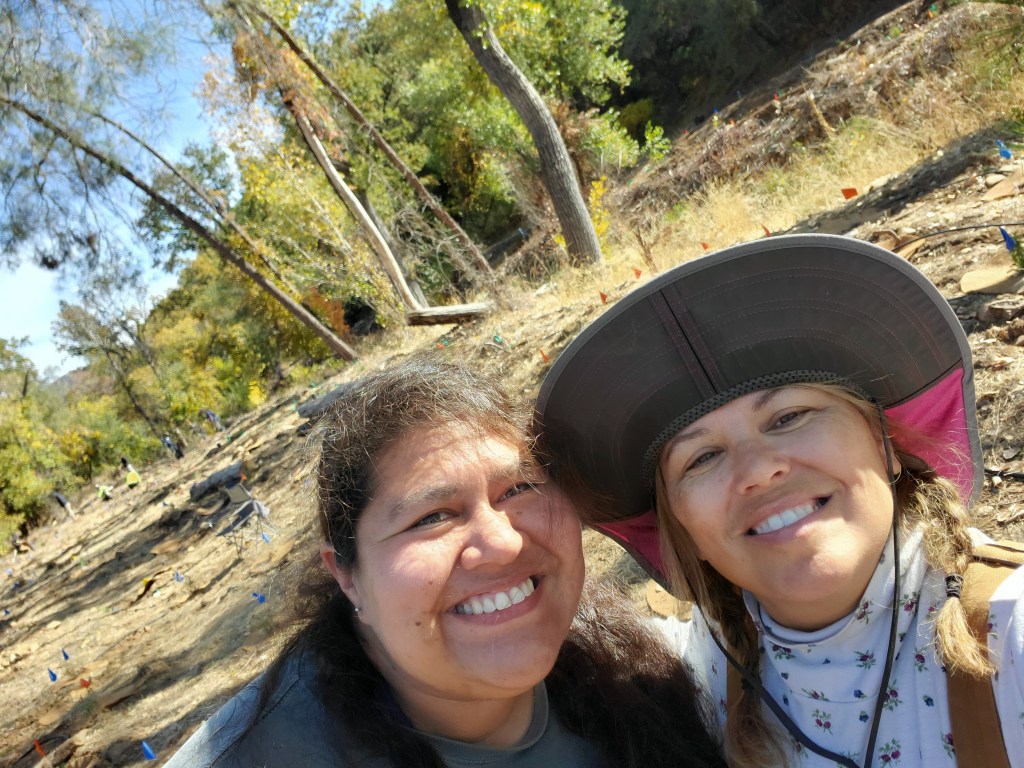
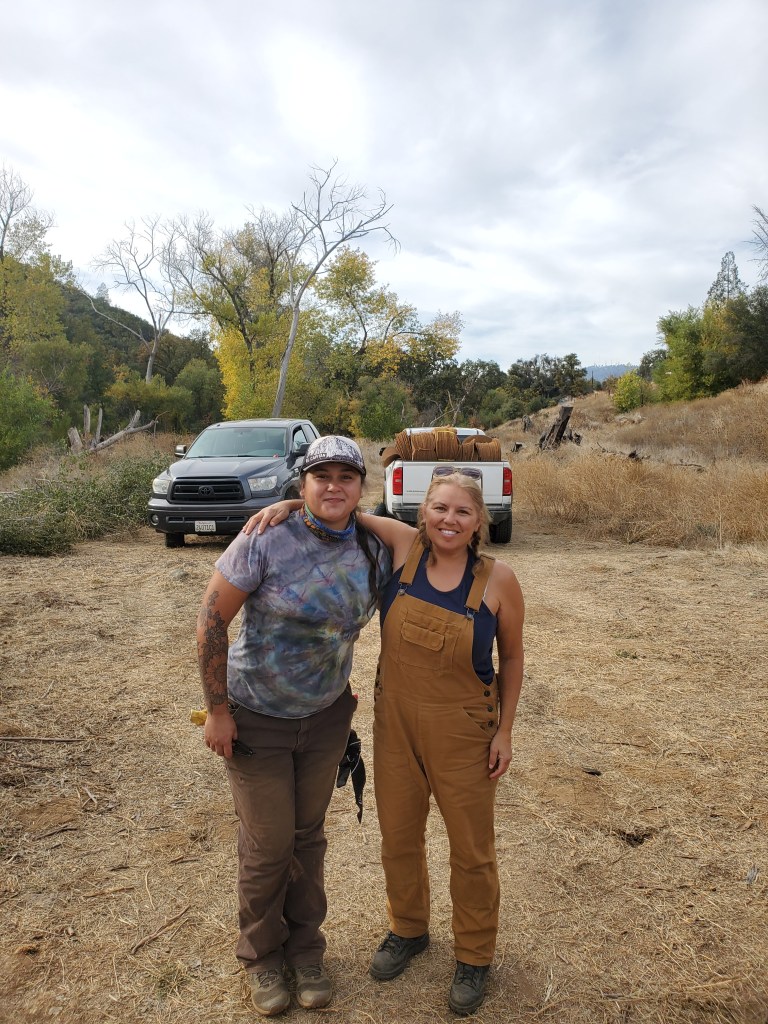
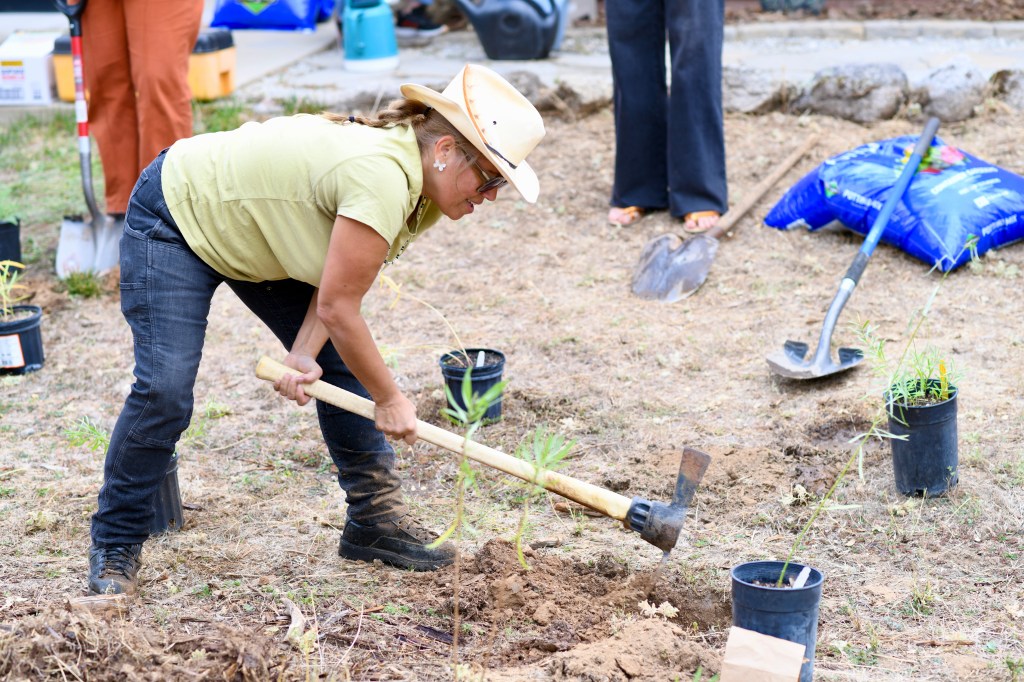
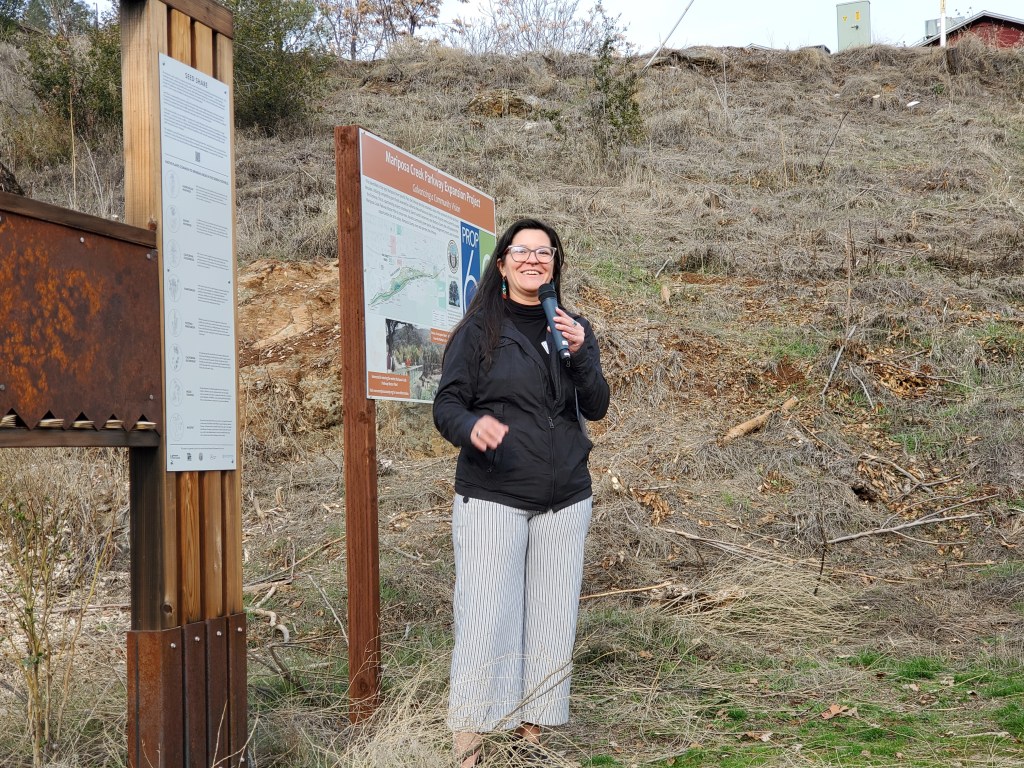
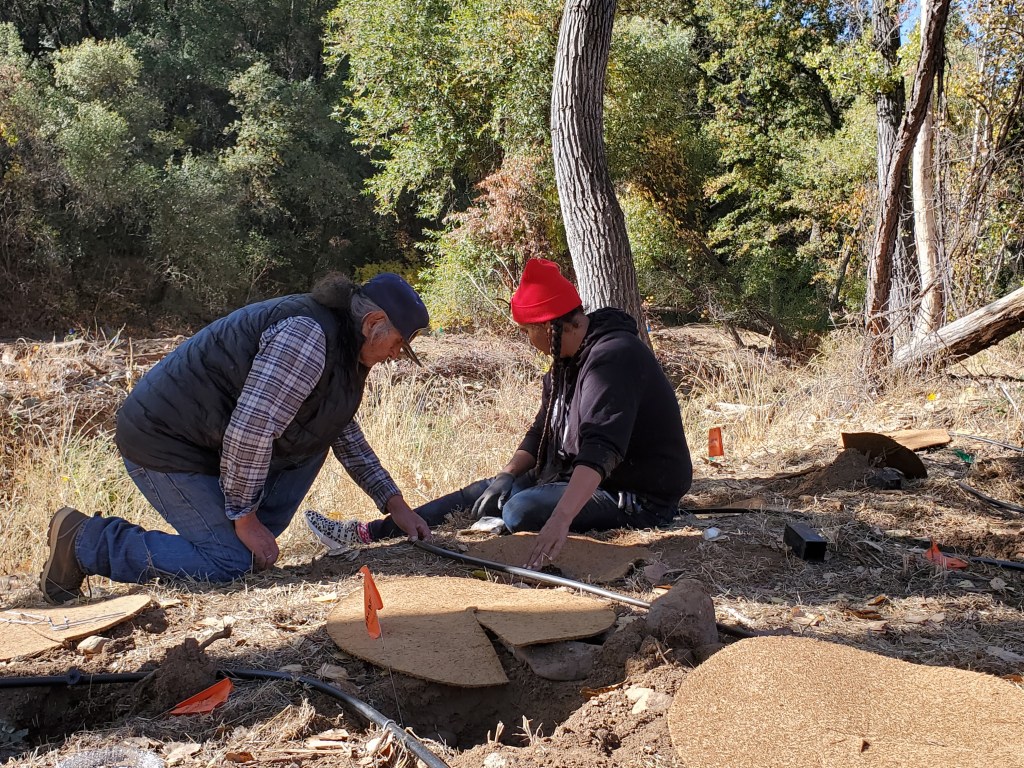
In addition to work on the ranch, I have had other opportunities to expand habitat. The Southern Sierra Miwuk Nation (SSMN) has a wonderful project in partnership with Sierra Foothill Conservancy and the Mariposa Arts Council to restore a large segment of Mariposa Creek in downtown Mariposa. It is a gorgeous section of creek front that had trash and an overgrowth of invasive plants, like Himalayan blackberry. They have cleaned up the property with fire and litter removal to prepare the site for adding back native plants. I appreciate all the work SSMN is doing to be good stewards in keeping with their values, and the opportunity it provides me to give back. This past week was the planting, and I was so excited to participate. Being in community with so many good people and friends is healing. I even got to work with Shana Saucido the Tribe’s new Pollinator Program Coordinator.

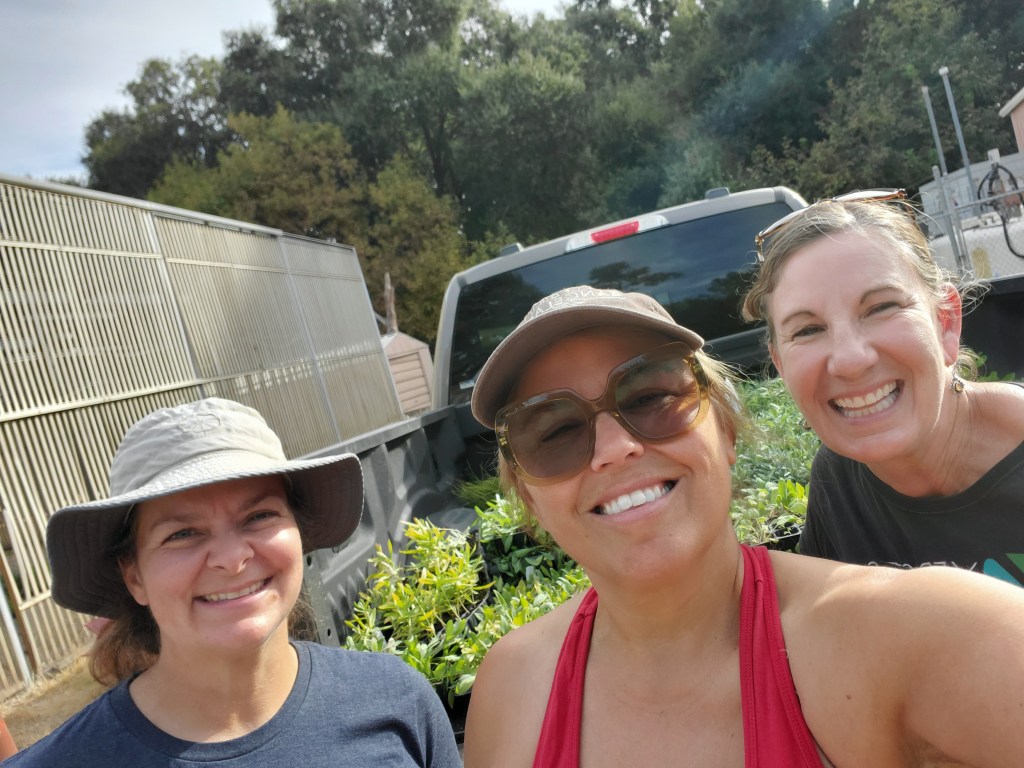
I picked up the SSMN’s Xerces habitat kits in Lockeford the other week. I was able to fit all of them in my truck (Whew!). Now Shana has about 1,000 plants to get into the ground! Thanks to Andrew Gliken of Raw Roots Farms for picking up all the hedge row kits the day before. All of it would not have fit without his help!

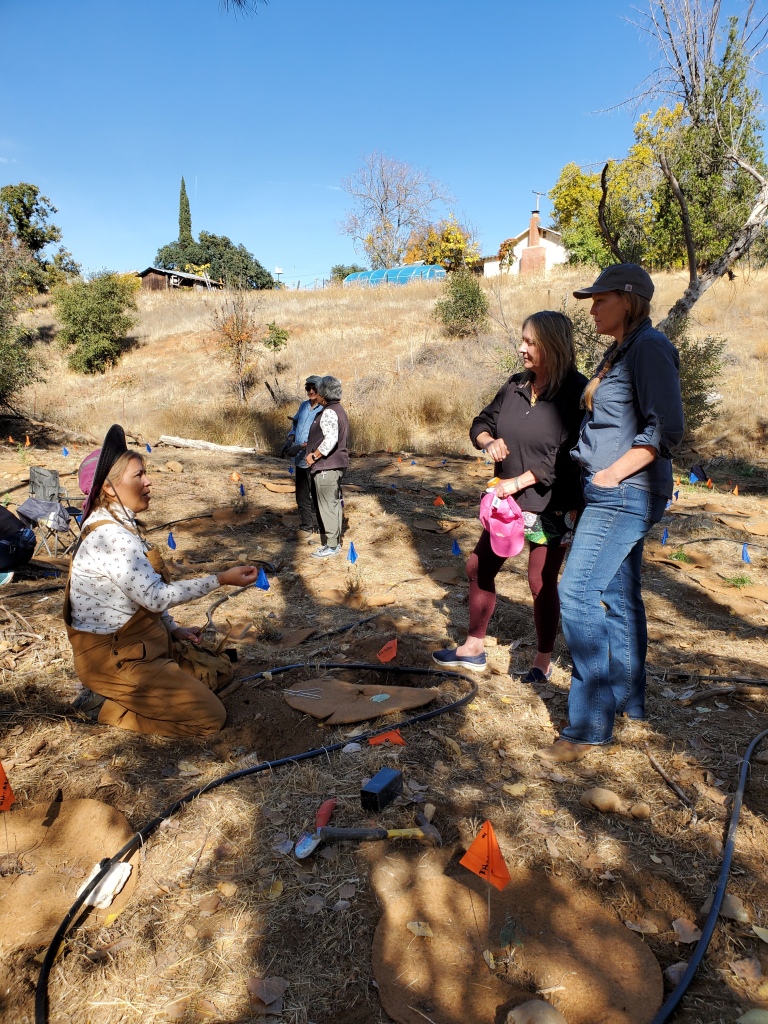
I also had the honor of being asked to teach at the Oka Uuchum – Ancestral Teachings gathering on native plants and pollinators. I partnered with Deedee Soto from Xerces and Kristie Martin, one of the previous Pollinator Program Coordinators, to provide an hour and a half walk, learn and plant circle. We had one of the largest turnouts of the gathering, and, in reciprocity with the land that was hosting us, we planted a pollinator garden. As I began my portion of the talk, a monarch flew through the crowd. I am not making this up. I almost began to cry and quickly had to compose myself. I said “Amand te tevote base’eboli weweria! Chiokoe uttesia (Acknowledging you butterfly relative. Thank you.)”. We do this work for all relatives, especially the children and the wild creatures. The monarch came through to remind us of its beauty, its importance, its magic – and it is worth fighting for. Keep building habitat y’all!

Gratitudes

The last few weeks have been rough. Everything came to a head. Major projects for work, the ranch and volunteering were all due around the same time, plus life changes in family situations with a cousin, a sister, a parent. On top of all of this, my dear friend Pando passed away. I had been visiting her in her care home since February. I know she was not happy. Almost overnight, she went from alert to dying. It took her almost 4 days to “get her wings” as she would say. As we all know, death is part of the bargain in life. Still, it leaves a hole and moves you to contemplate your own life. What I realized is how happy I am. It is the joy of digging in the dirt, helping the planet in some small way, meeting people with the same love, living in the Sierras, having work with clear and direct purpose, being in love with the person I live with, having people who love me, having animals to care for, and working with people who value my contributions. The media tries to sell you despair, envy, greed, copious consumption; don’t buy it. We each have choices, so choose to make a difference in some small way. Tell someone you love them. Hold hands. Say “yes” to that friend or family member you’ve been rescheduling. Rescue and care for an animal. Plant milkweed and watch it grow.
Monarchs Stop By and Re-Emergence

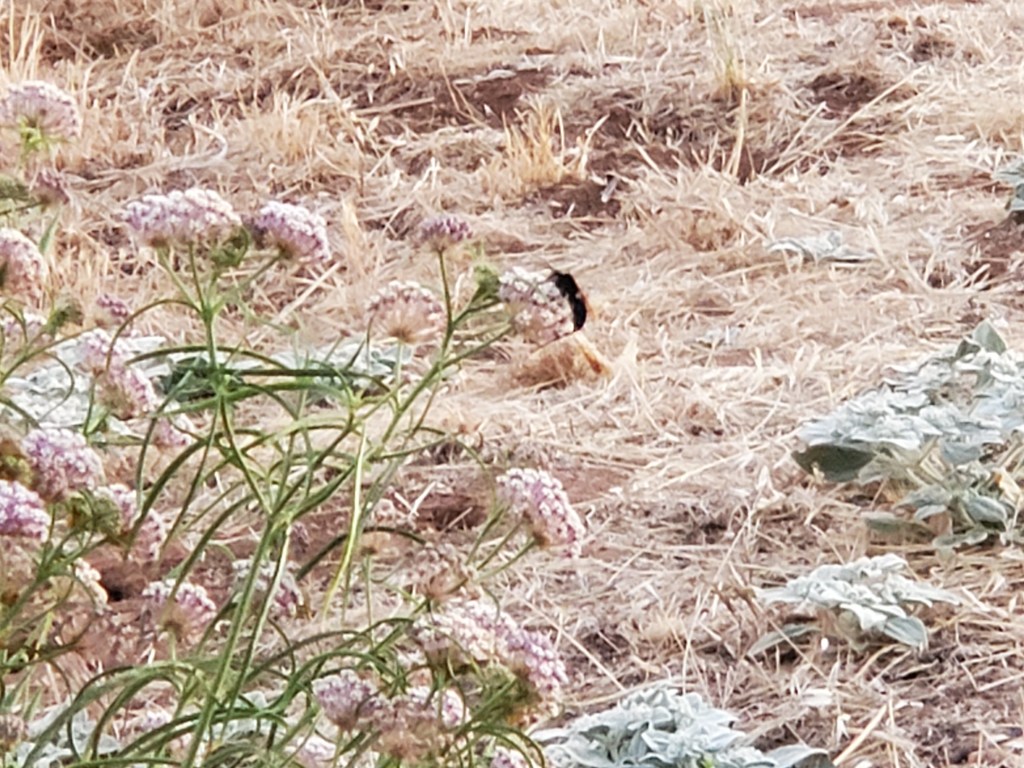
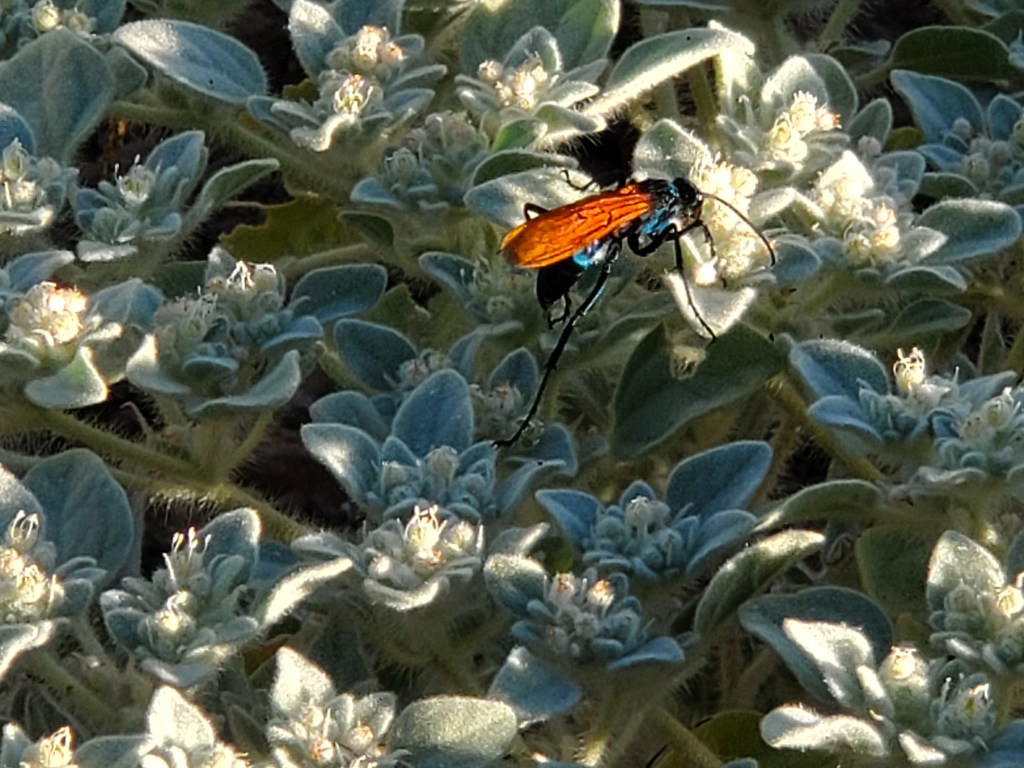
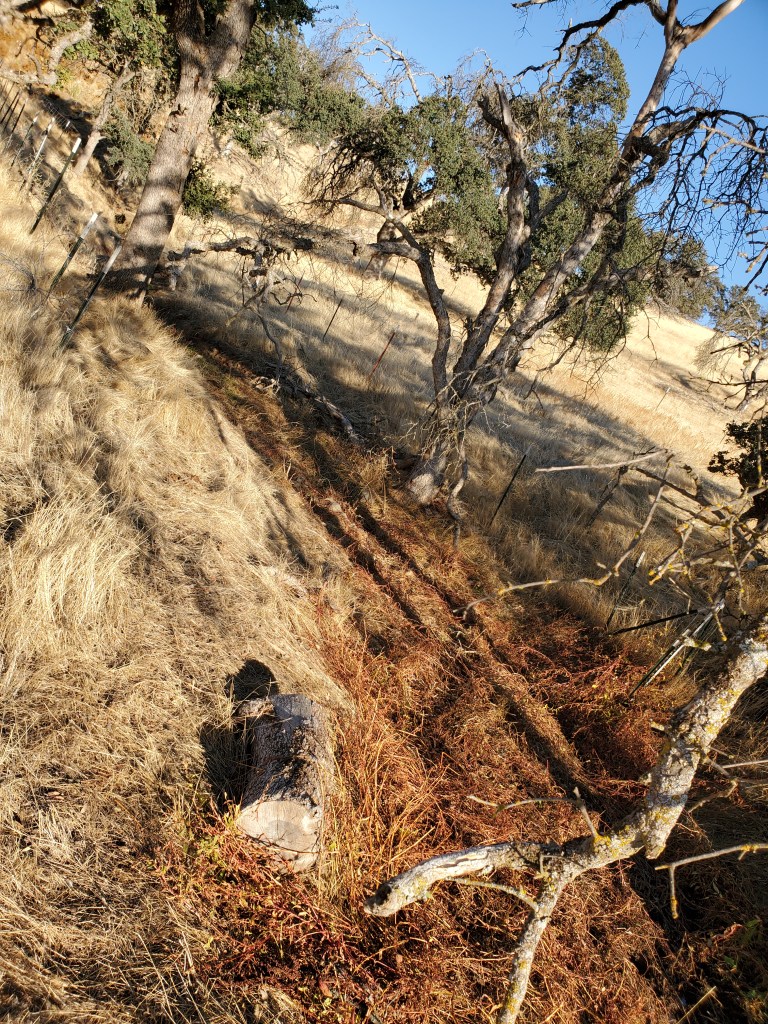
I had wondered if monarchs would just pass me by this year because there was so little left for them. In fact, I was sure they would. Well, I was wrong (add that to the very long list!). On Friday, August 11, a mama monarch came by and decided to lay her eggs on the only intact milkweed remaining on the hilltop habitat. As you may recall from my previous post, the tarantula hawks had been nectaring on this one large narrowleaf milkweed. This, essentially, saved it from being eaten to a stick by the grasshoppers.

The monarch stayed around for about a week and laid more eggs on a couple other broadleaf (showy) milkweeds that had reemerged and were small. From what I learned, monarchs typically choose more mature plants for their eggs. In this case, she had limited options given the grasshopper incursion and chose smaller plants as well.

I wish I could say that I had a massive number of caterpillars, but I don’t. I am not sure what happened with the eggs. We got a very small impact from tropical storm Hilary, which dumped just under a quarter inch of rain in a short time. We’ve had swarms of dragonflies, a natural predator of butterflies. Ultimately, I don’t know why there are not multiple caterpillars. I look at the plants for evidence of eating and pooing, but daily, I see none.

I always appreciate people sharing their monarch sightings with me. There have been many more on their way back to the coast than there were heading northeast. There were 16 monarchs sighted in Catheys Valley off Highway 140. There were a couple more in the Mormon Bar area of Mariposa, one off Ben Hur Road and another near Midpines. I heard of several from Nellie in Yosemite this year as well. I always ask people to upload their sightings to westernmonarchmilkweedmapper.org. When I look at the map, I don’t see everyone’s entries, but it is possible they marked them to be private. When I find and upload california milkweed sightings, I mark those as private to prevent poaching. Believe it or not, some jerk took a California milkweed several years ago from a county trail area. Since that incident was reported by a friend, I have been very cautious.

Plants Come Back

Pacific aster re-emerges after grasshopper onslaught

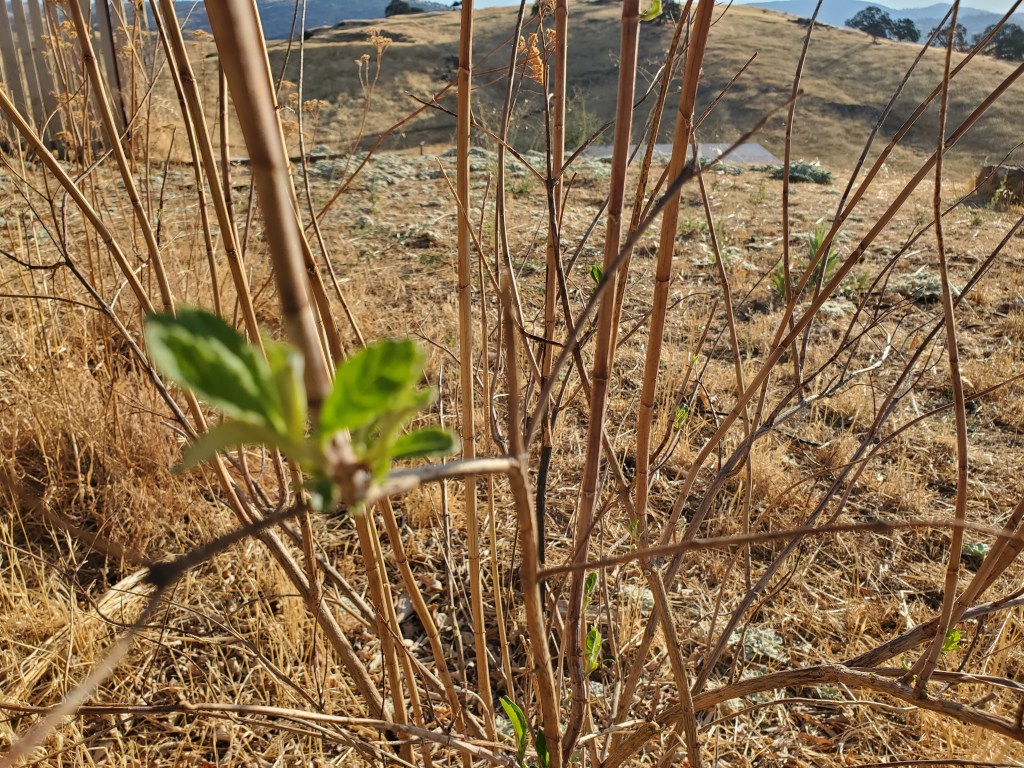
Most people do not think of the end of summer as a time of plant growth. Here, at the ranch, regrowth is all around. While it still looks like a fire went through, with all the stripped, empty sticks that were once full, bushy plants, small sprouts of green along a branch or at the base are becoming visible. Close to 80% of the habitat has some regrowth. I am still waiting to see a spot of green in several other areas, but need to be prepared that those plants may not have been mature enough to withstand the grasshopper binge eating.

For now, the hoppers are mostly gone from the top of the hill where the largest habitat installations are. They continue to be profuse in patches of ground downhill on the west end of the ranch.

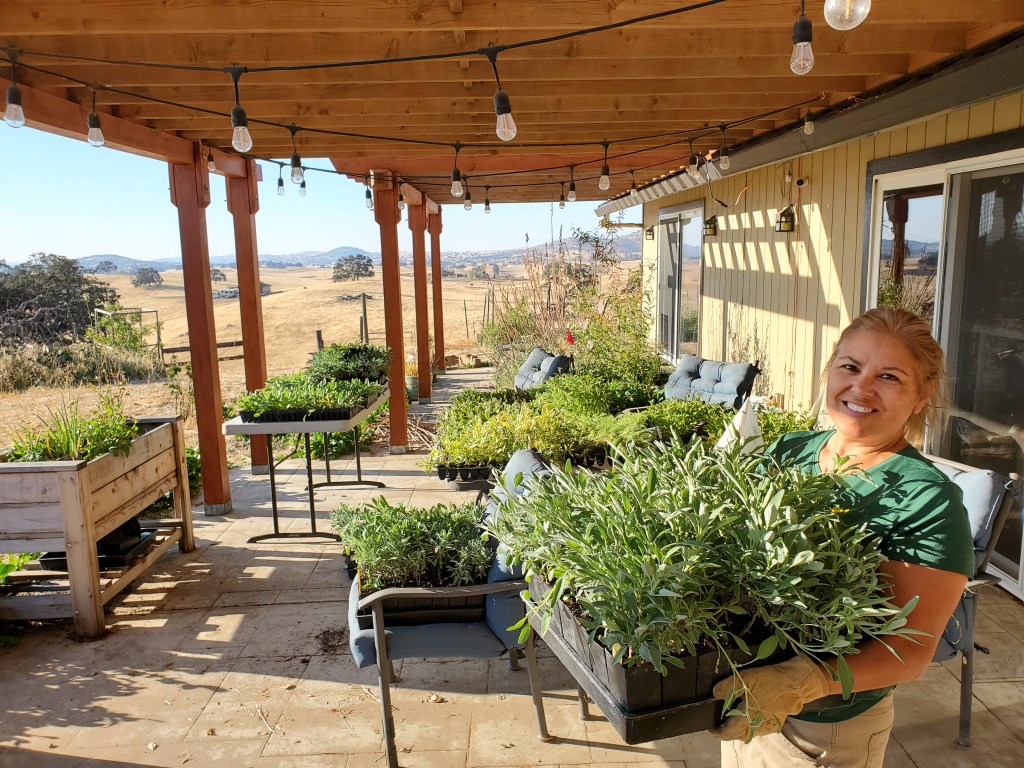
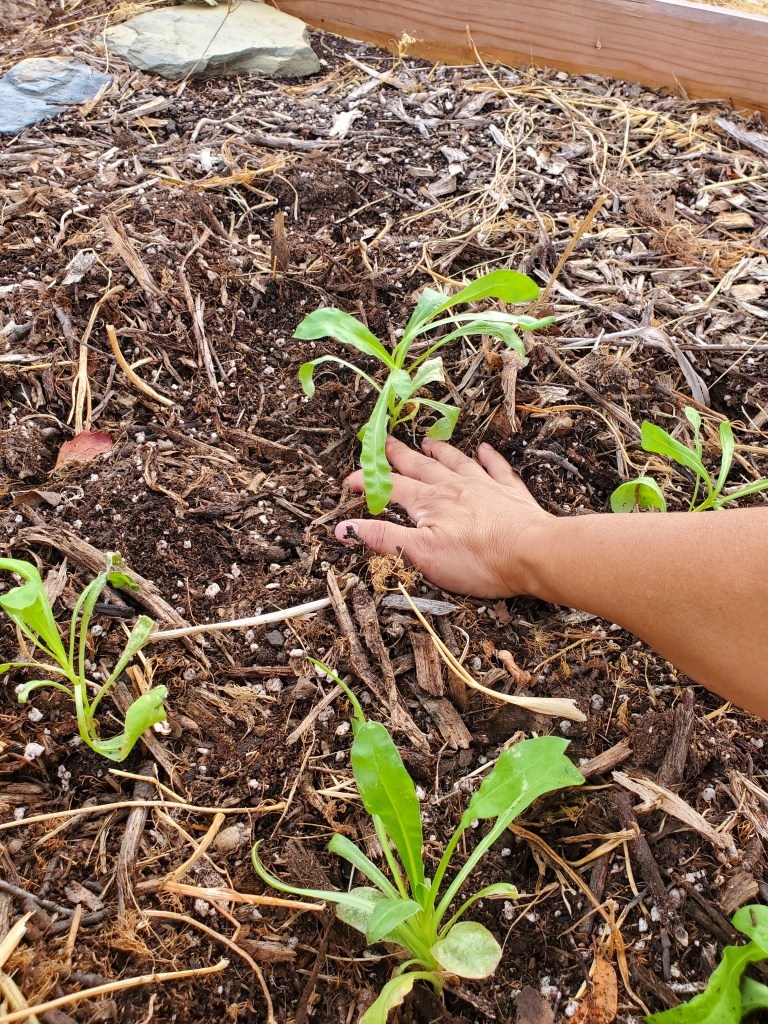
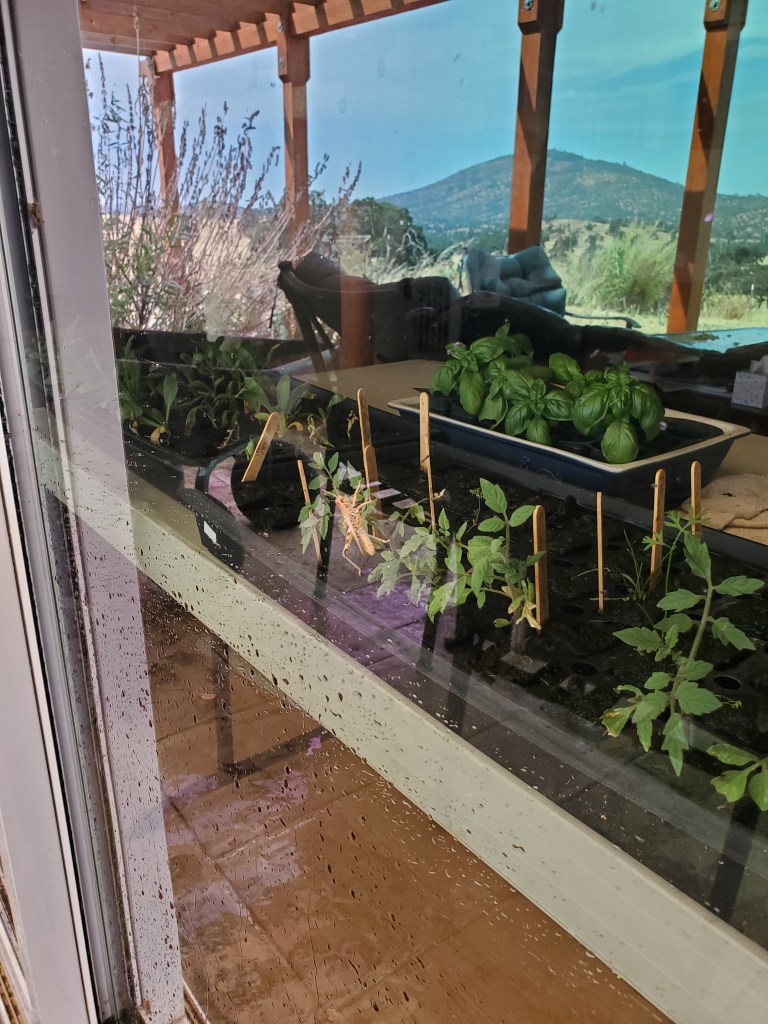
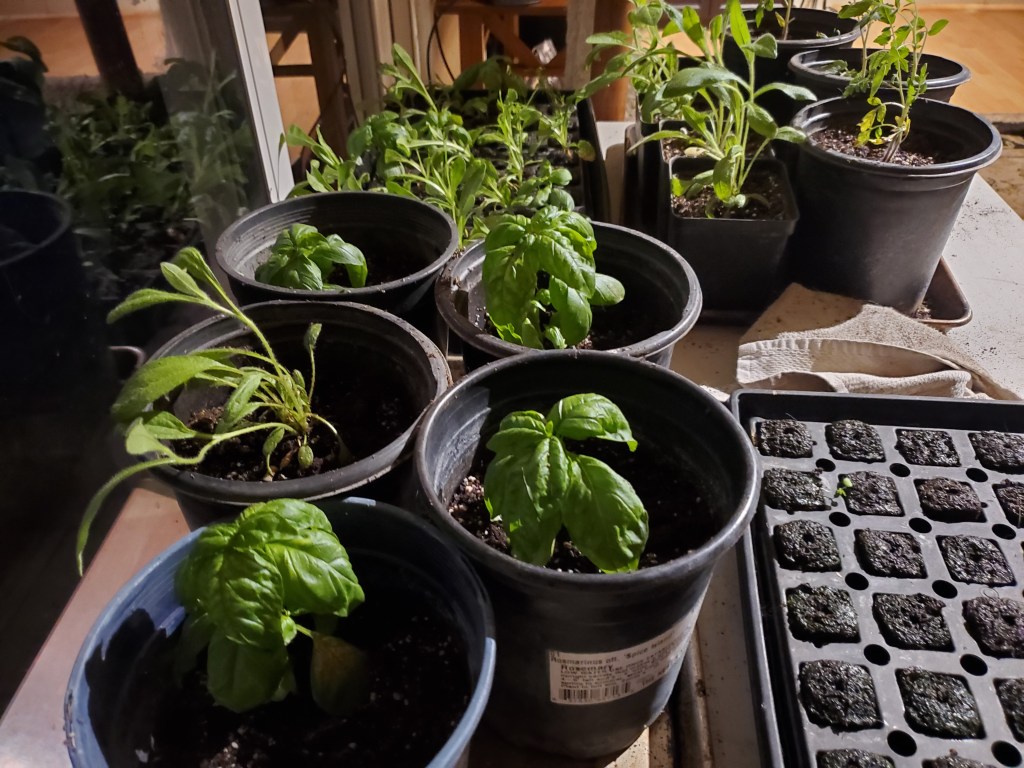
Many of the seedlings I raised have grown large now. I had to re-pot them as I waited for the hopper incursion to abate. Now, I feel comfortable planting them in the garden bed. Still, I am keeping my fingers crossed that the hoppers will not recirculate back here.

New Habitat Endures

Playing in the creek has paid off. I didn’t think the small rock check dam would be that helpful, but it has promoted sediment and moisture retention. There are spots further upstream that may have retained water given the significant rain (versus my check dam). What is exciting is that the span of these areas have connected and have created a lovely ecosystem with wildflowers that stayed through the summer, puddles, grasses, and other plants. It has allowed for a cool area with ongoing nutrients for a variety of life. I saw large, gorgeous dragonflies there, with stripped wings and some with stripped bodies and black and white wings. I also came upon a small bevvy of quail living in the roots of trees in the grove at the north end of this area. They undoubtedly use the standing water and consume the bugs this area attracts. It is all really beautiful. I am so proud.

Creatures Make a Home Everywhere

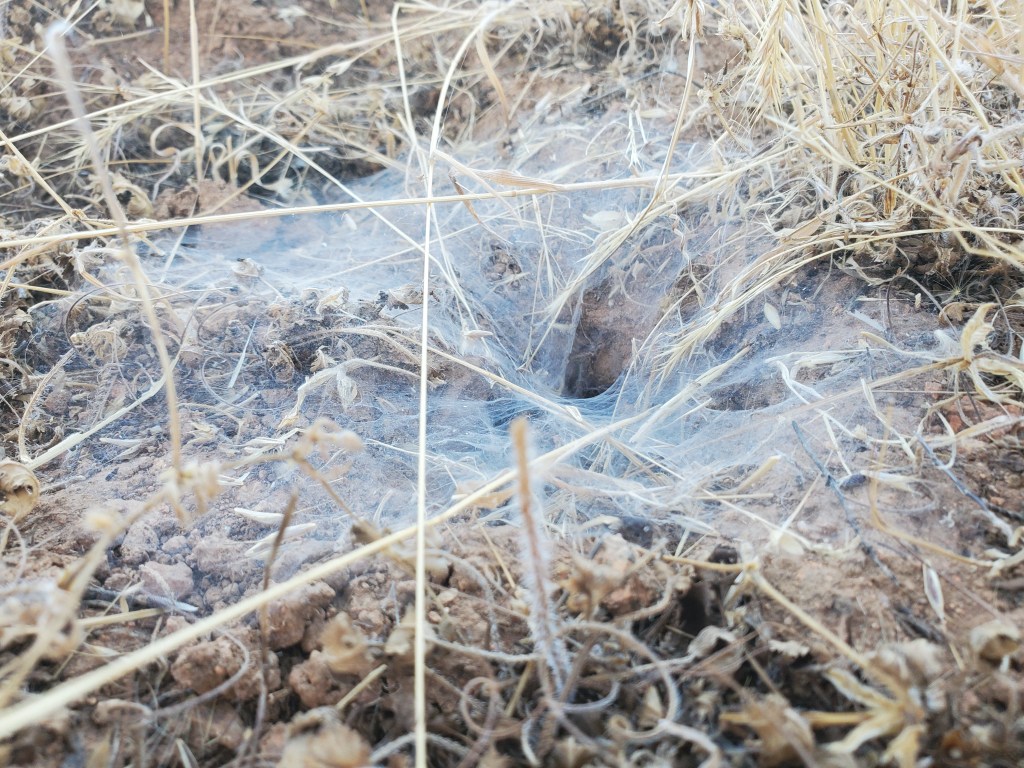
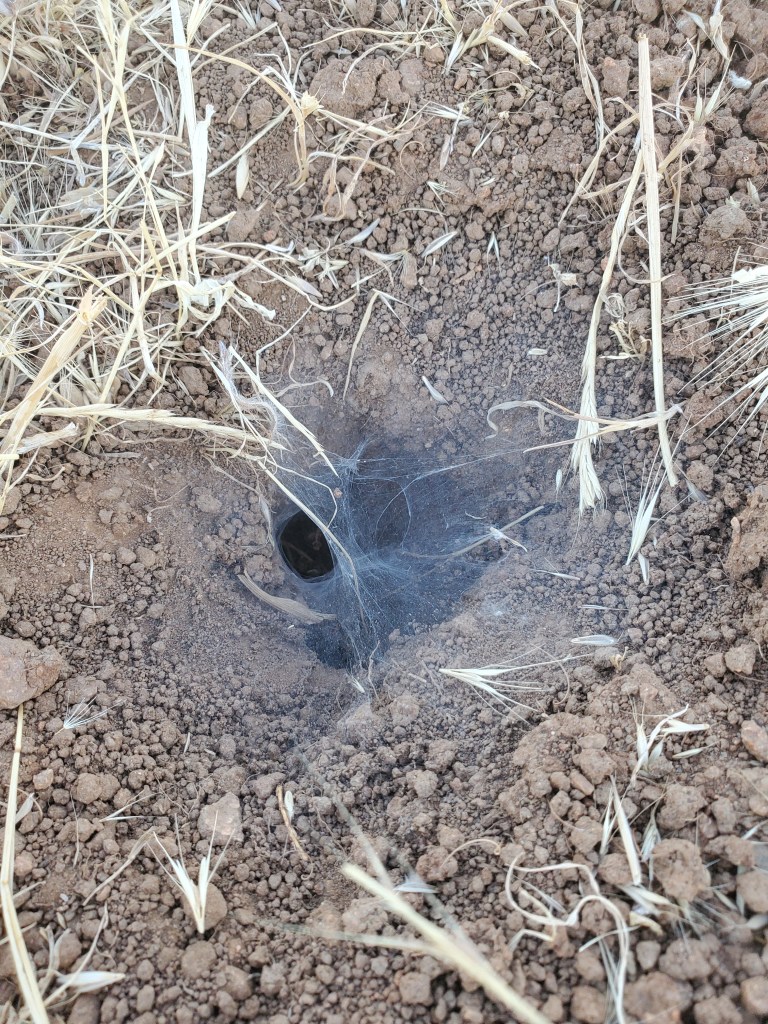
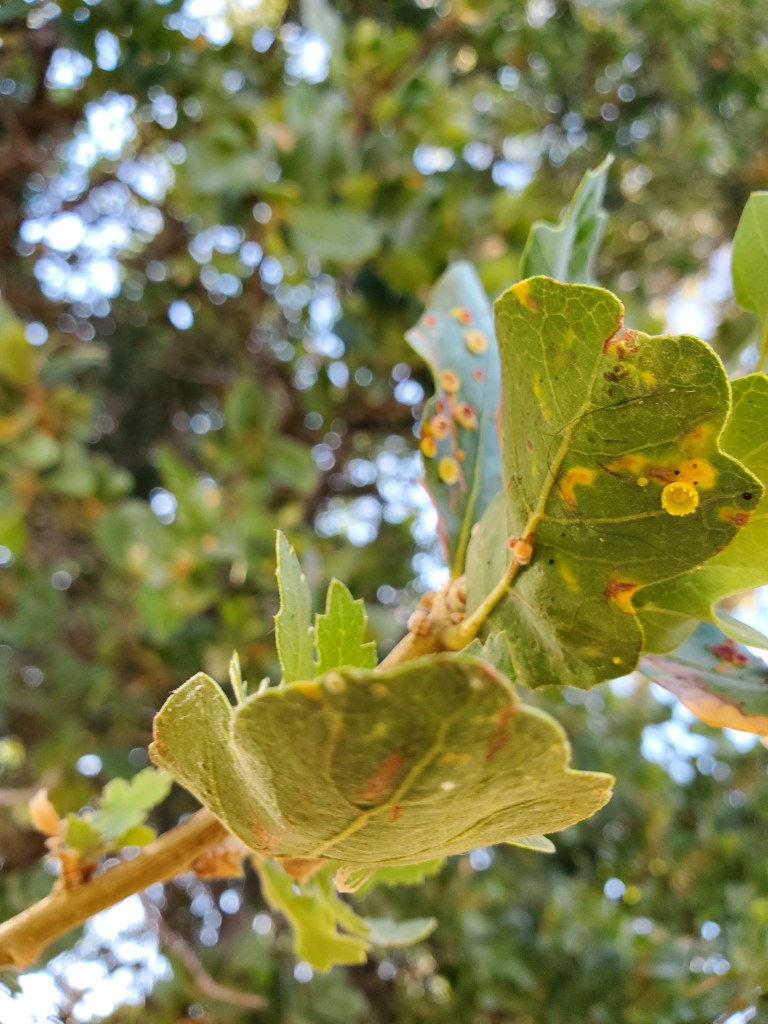
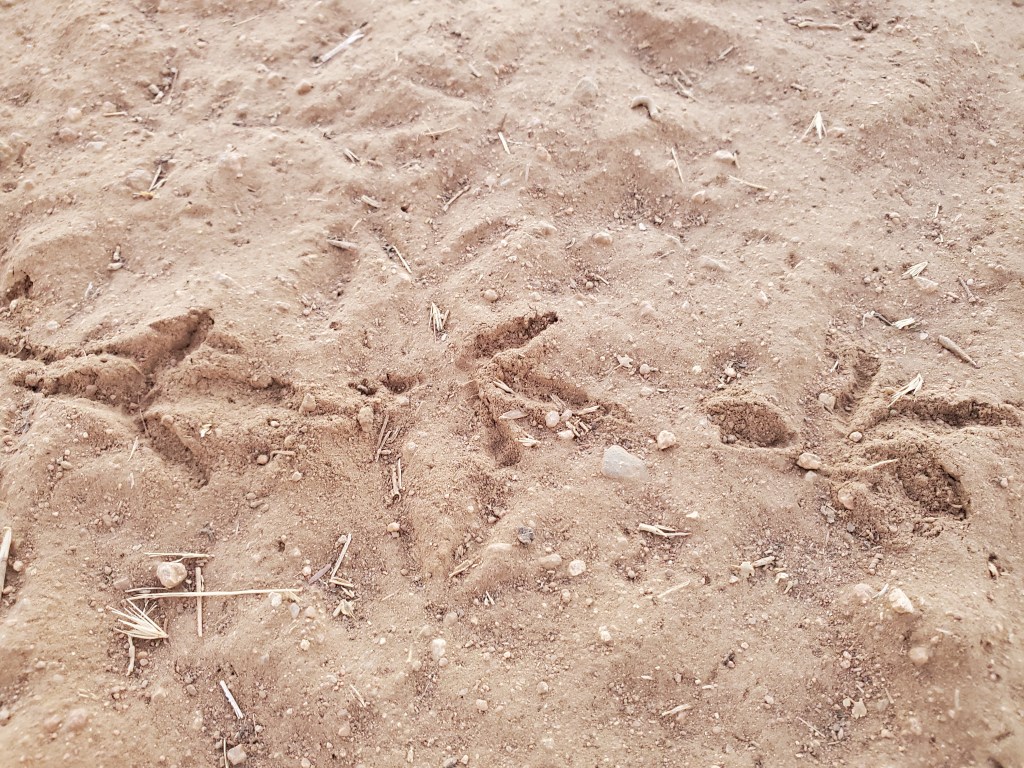
When I used to travel for work, I remember sometimes feeling very alone as I returned to my hotel room. It would cheer me up to see an insect that made it through the cleaning process. A spider handing in a corner or another small bug climbing around a basin would bring me such peace. I know that may sound strange, but to know that there is another life there with you, it is comforting. There is certainly not a lack of life on the ranch. Everywhere you look, there is something making a home, passing through or chattering for turf. Lately, I see a proliferation of gall wasp eggs, seemingly on every oak , webbed holes in the ground, bird tracks, coyote scat. The dragonfly population is large this year. I am seeing swarms of approximately 80+ whipping around the sky above me. It is no wonder I am so comfortable here and make this place my home.

General Monitoring and Planning

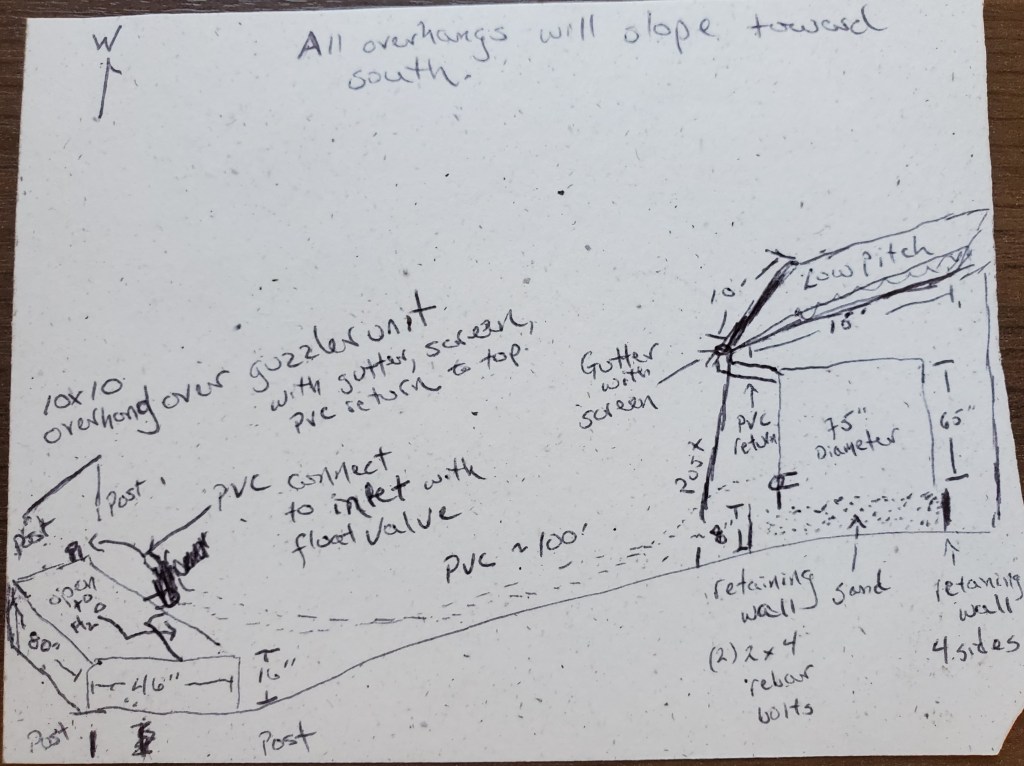
I keep an eye on things, make repairs, maintain planting areas, pick up litter that blows here and all else I need to do to ensure a clean, healthy place for all creatures. I check the wildlife guzzler regularly to make sure there is water available for all. I check the brush piles and add branches to them to keep them full and safe for pile-nesting birds. I look for damage, changes, use. It is one of the fun parts of this work – especially when it is cooler. I still venture out in the heat, but only in the early morning or before dusk. Needs pop up no matter the temperature, and I have a responsibility to this place. The time inside during high heat days give me the opportunity to plan for my next projects. Currently, I am working on a self-watering guzzler. The idea is to capture rain from a structure and gravity feed it into a guzzler. Parts of the ranch are more remote and not easily accessed by vehicle. Bringing water to those locations would be difficult and require more monitoring of water levels, the hauling of water. If I had a system that self-watered and self-regulated, that would save time and decrease the need for me to disturb areas.

Next Items

Up next in September/October/November/December:

  1. cross fencing to protect california milkweed during grazing times
  2. self-watering guzzler build
  3. seeding disturbed areas from rock and log drop structure installation
  4. install two more log drops/check dams
  5. Help Tribe plant Xerces kits
  6. Help three friends convert their lawns/yard into pollinator habitats

Wanderings

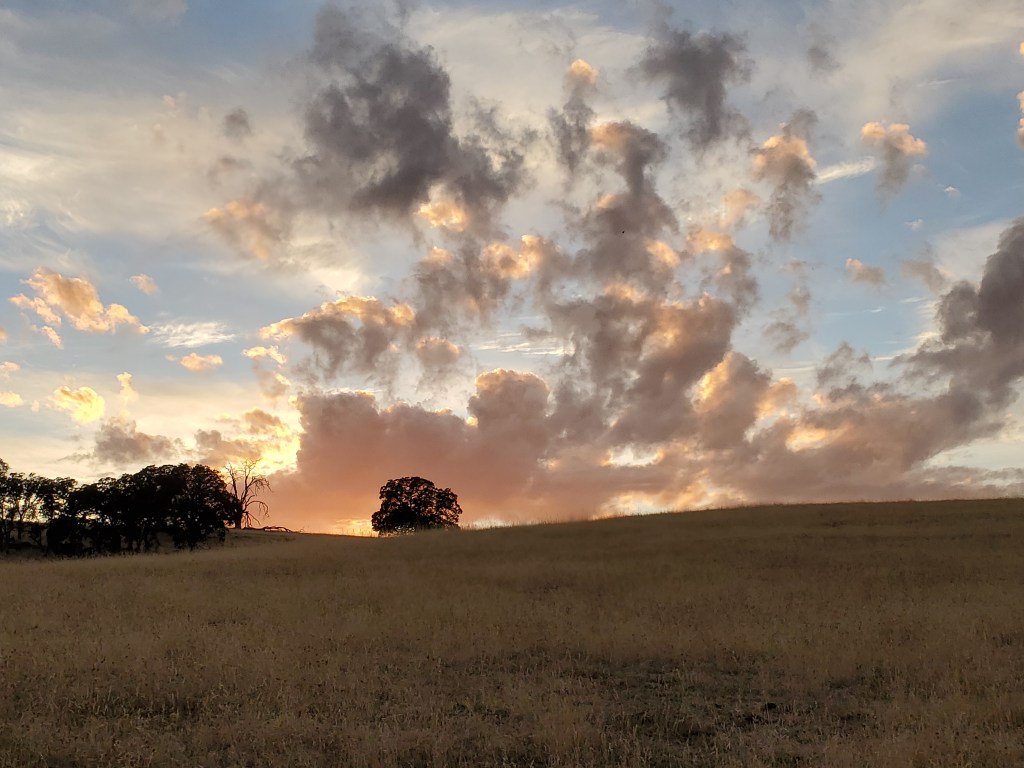
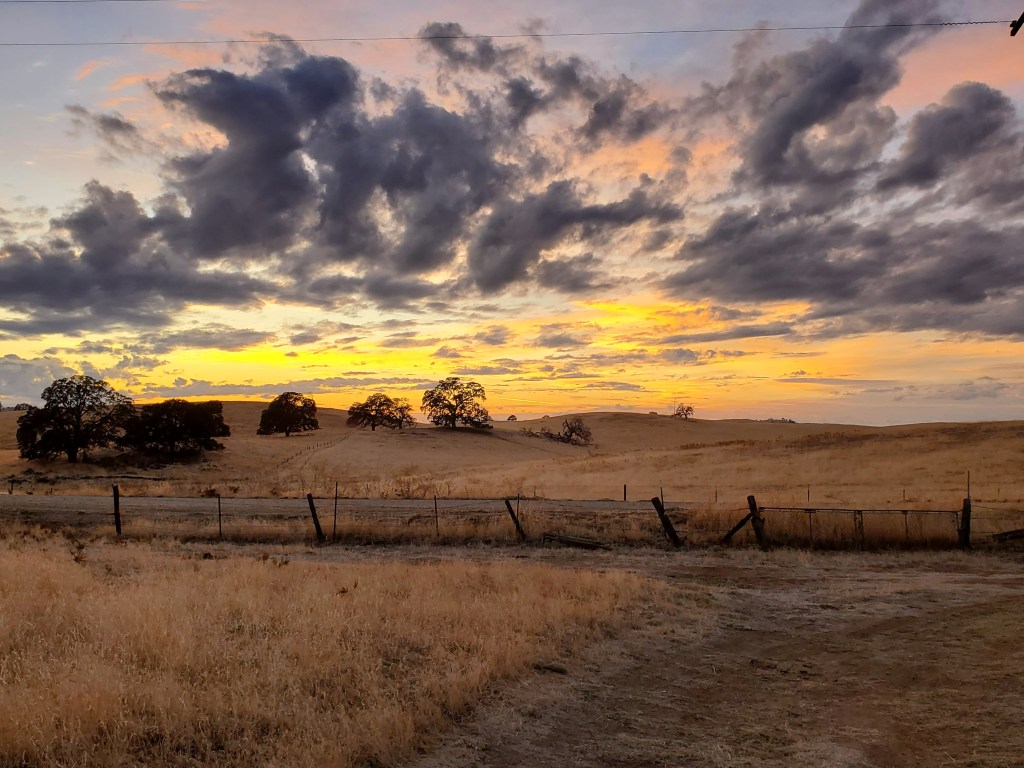
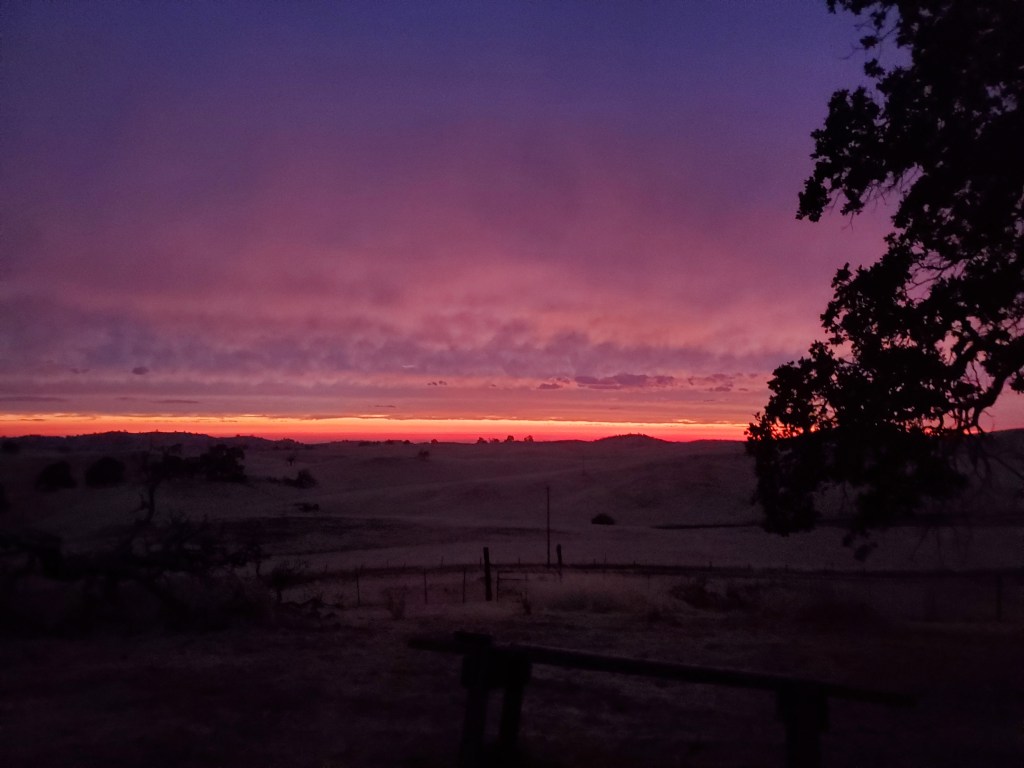
The skies have changed from heated blue to gray clouds and night purples and then back to blue. Light is beginning to recede at both ends of the day. A few people I care about have gone with the daylight, but in mother earth’s endless cycle of days, nights, seasons, abundance and scarcity, three have left and three are soon to arrive. Pain converts to joy and then to acceptance of the world and all its comings and goings. Memorials and baby showers. Winters and Springs. Milkeed and monarchs. Beauty is everywhere, especially in the love which undergirds both loss and gain in the spectrum that is life.

Waiting For Monarchs. More California Milkweed and Visitors.

Blooms begin to emerge on the California Milkweed

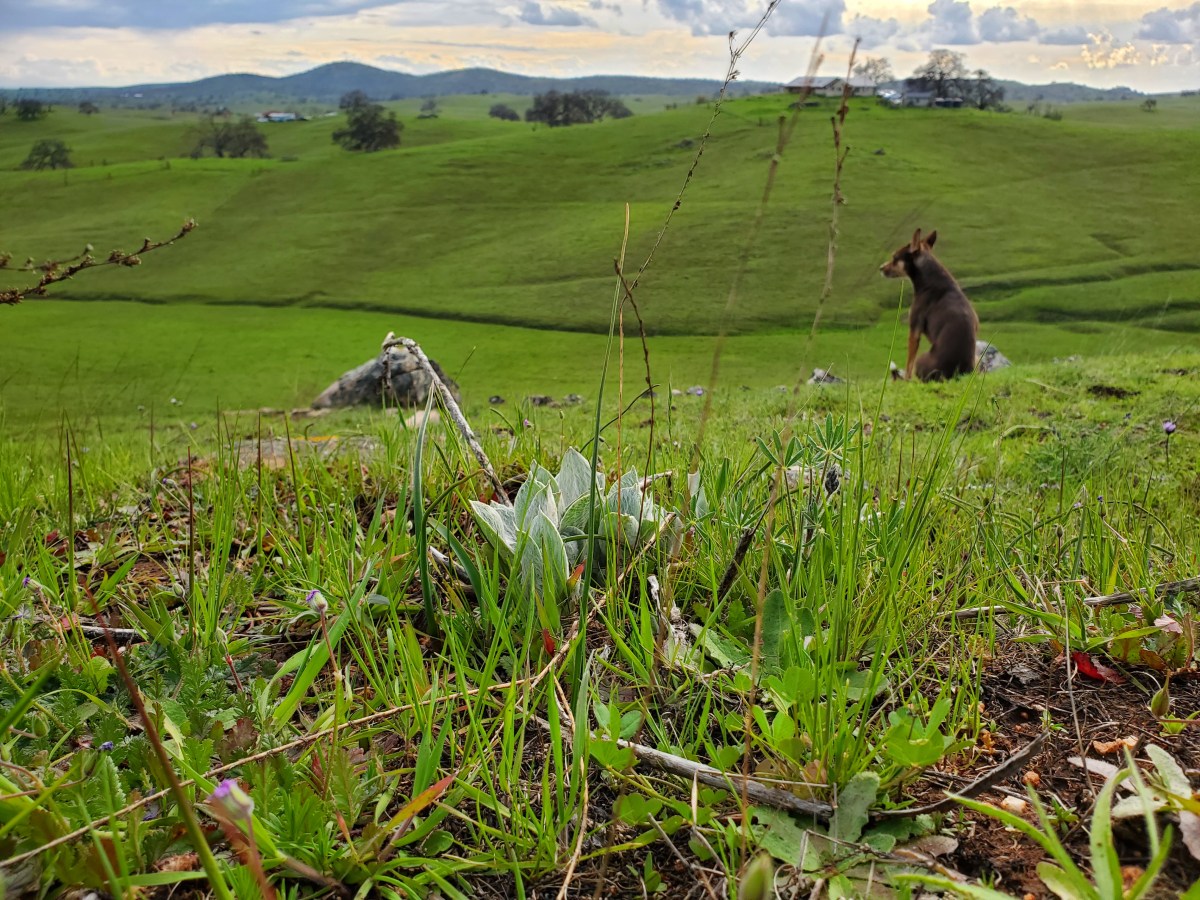
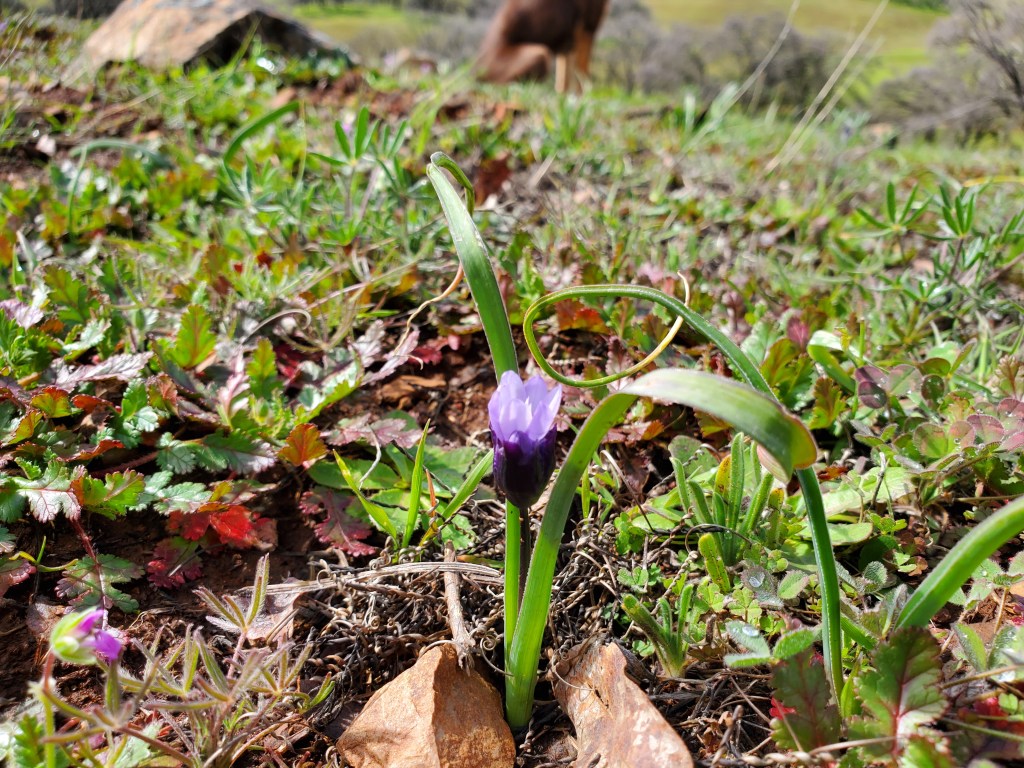
It is breathtakingly gorgeous in the foothills right now. Between the calm temperatures, billions of wildflowers, nectar-laced scents, and avian concerts, it is magic. There continues to be water running in the lesser creeks and drainage’s, and the soil moisture content is high. With the increasing heat, the grass has grown a foot in a few days obscuring some of the native plants that were just inching out. Fortunately, some of the milkweeds got started before the recent warm-up, but, at least for the milkweeds, grazing has continued to give them a chance.

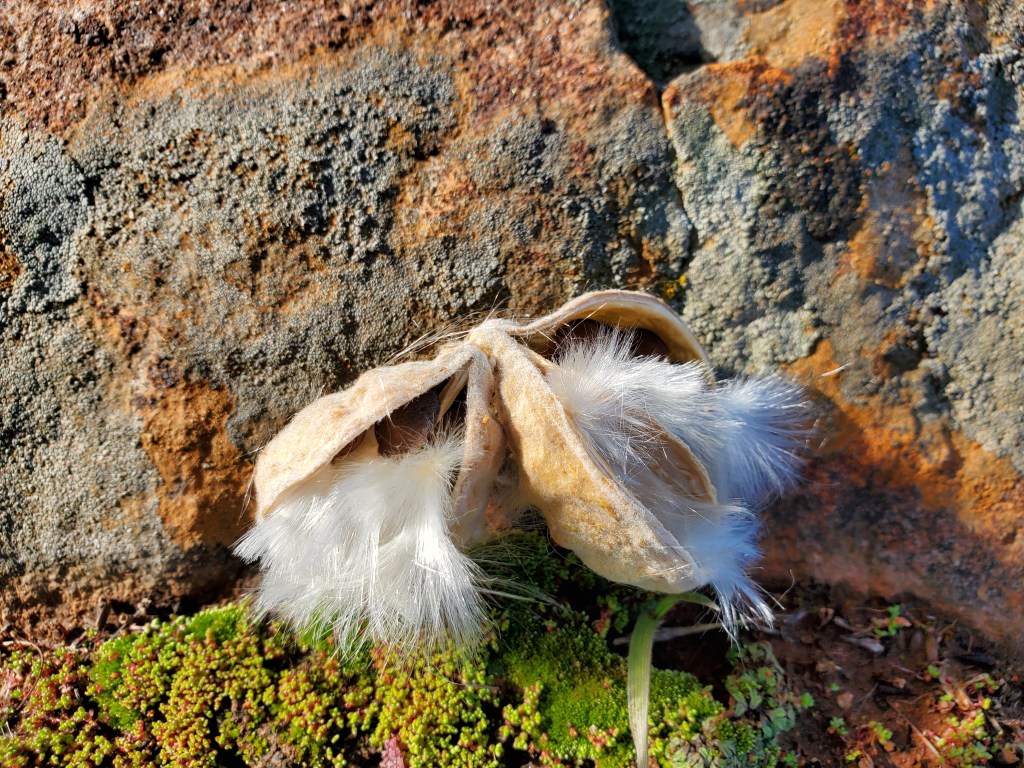
I walk up the steep slope to the largest A. Californica (California Milkweed) patch daily to count the plants and monitor them for caterpillars. Two days ago, I saw an orange-ish butterfly large enough to be seen by my limited eyesight. It was too far away to see if it was a monarch. I also did not have my glasses on. I waited for some time, but it did not return. Consequently, I am no longer leaving the house without my glasses and binoculars. As of today, I counted 16 individual plants. Just yesterday it was 14, and a couple days before that 13 and 9. So far, no emergence in the next largest site near the house. However, the one plant in the SW facing site has emerged and the west facing site has one of the two plants emerged. Unfortunately, the locations where I installed the Xerces plugs or 2021 collected seeds are not emerged. I imagine they may take a couple years to establish.

Tree Work

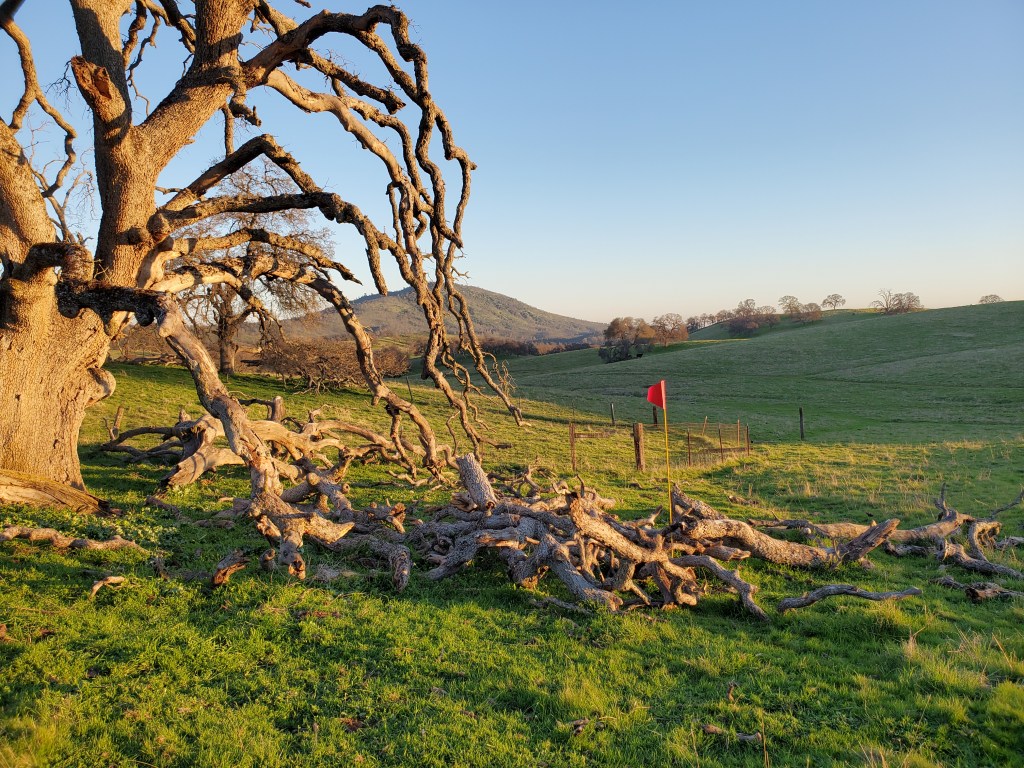
It is an emotional moment to see a grand tree cut up. If you are a regular reader, you will recall that a beautiful, healthy oak tree that was growing at an angle toppled over in the Spring Creek this past January. Between the angle, the saturated soil, wind and freeze of water on the branches, the weight became too great, and the grand tree pulled up by her root ball. It was also a reminder to me to be extremely careful as I walk among the oaks. I had just passed under her the day before.

When the tree fell, her weight was propped up on its branches and near my riparian fence gate. The smaller branches could give way releasing her massive bulk onto anything under it. It was a dangerous situation. I had no choice but to remove her.

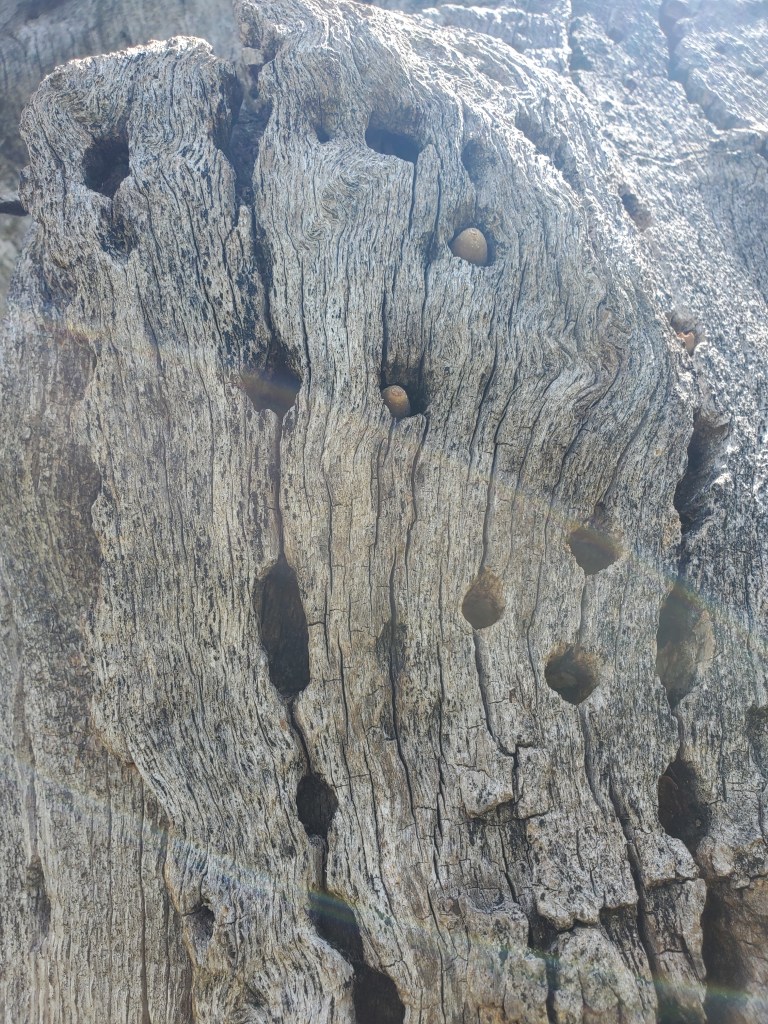
These trees are ancestor relatives. Their lives have spanned 4 or 5 generations of my human family. Imagine their perspective of us always coming and going, building then tearing down, seeking and finding, singing and sleeping. We must be so peculiar to them. I love trees deeply. I appreciate their shade, smell, cavities breeding life, branches for singing birds, the food they provide, their moist soil under the canopy and how their roots are deep and connected. They have so much to teach us.

It is within this context and within the sensitivity of my soul, that a small piece of my heart breaks when the saw goes through my fallen relative. For such a solemn moment, the right sawyer is needed. I was grateful that Nick Brochini was available. Nick is Miwuk and understands the gift of the tree. He does not take it for granted. I don’t have to explain myself when I need to touch her and say a prayer of gratitude for her magnificence.

Nick was a young teen when I first met him. I was a tutor in the Indian Education program at the high school. He would come to the room, always a big, happy smile and carrying a turtle back pack. It was so cool; he really pulled that look off. It set him apart. Nick was a nice kid. Not a regular student in need of tutoring, he was mostly in need of community. We always enjoyed seeing him when he came through and loved hearing the tales of his school day.

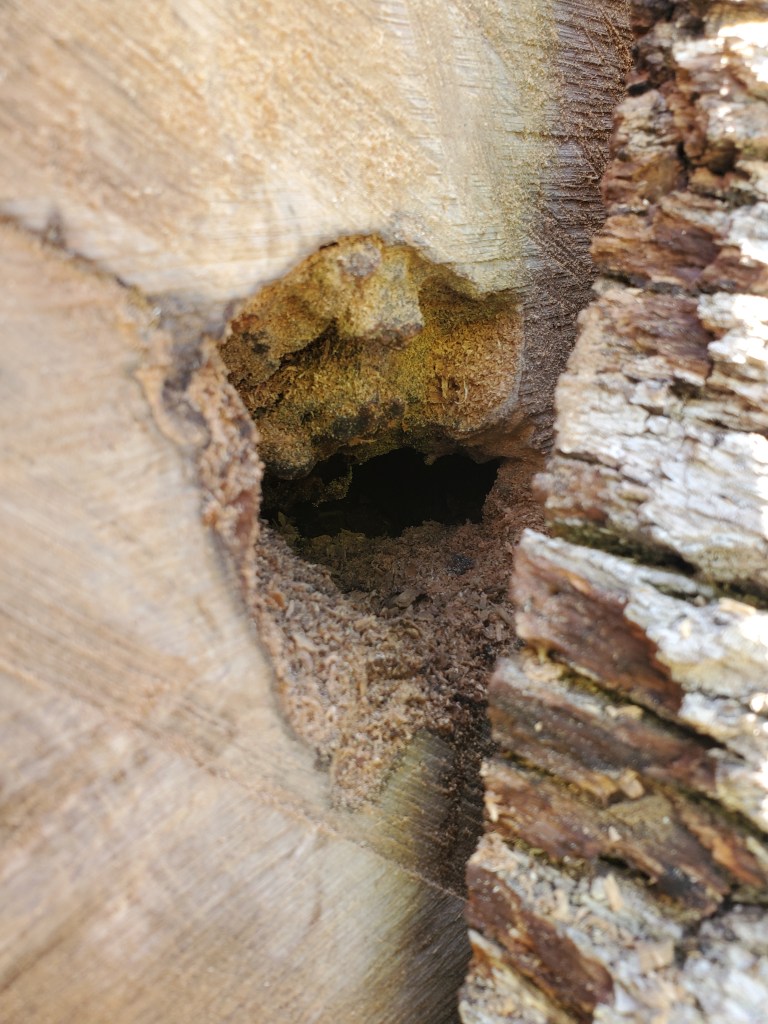
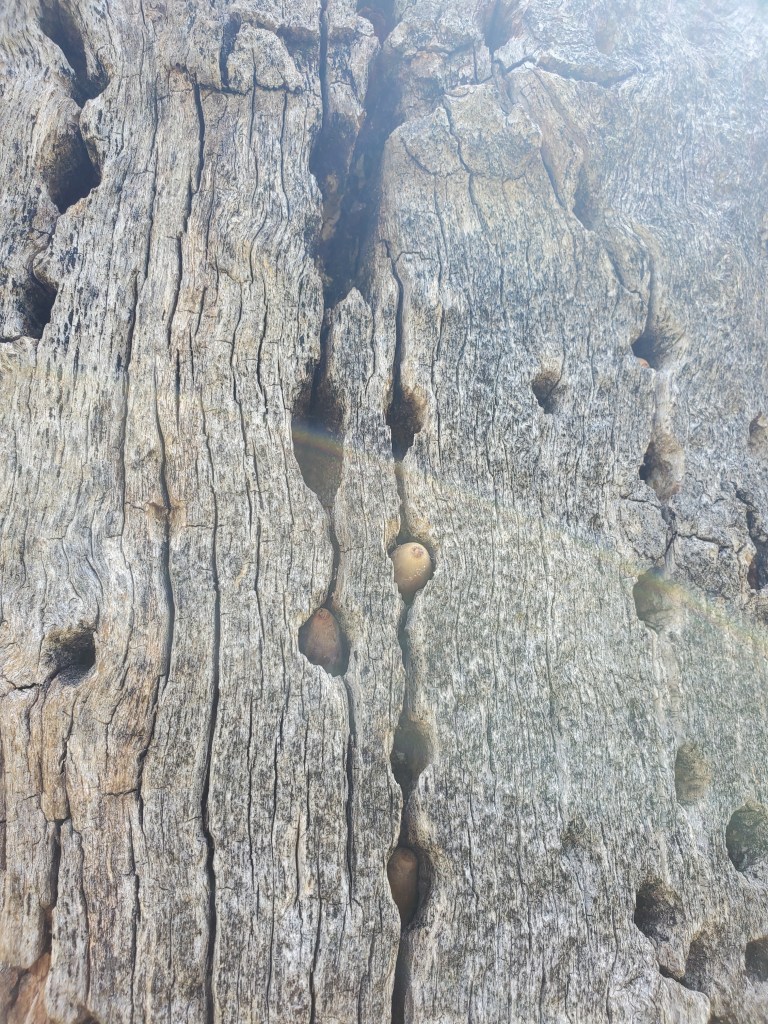
Nick grew into an adult, a husband and a father over the years. His children are beautiful. I see them at the community Pow Wow from year to year. I hope they are proud of their dad. He is an expert with the saw. He knows trees and shares helpful information. He showed me the gaping hole in the tree, the rot from within. He told me all the oak trees have this. Just like humans, they develop healthcare issues as they age. He showed the start of interior rot in a smaller branch as well. What a lesson. At least some creature will have a good home.

I left a large section of her main trunk as a monument to her. Part of it will act as a check dam and the other will extend beyond the creek banks. She is beautiful even in death. The rest of the material will be used for brush piles and fire wood. Her flesh will keep my nephew and his family warm next winter. Chiokoe uttesia Huya into Nick weweriam (Thank you relatives – Tree and Nick).

After Nick left, David and I sprung into action building brush piles and stacking wood. Within one second of me stepping away, a bird landed on the pile to check it out for a new home. That made me happy. My work is worth something.

More Visitors

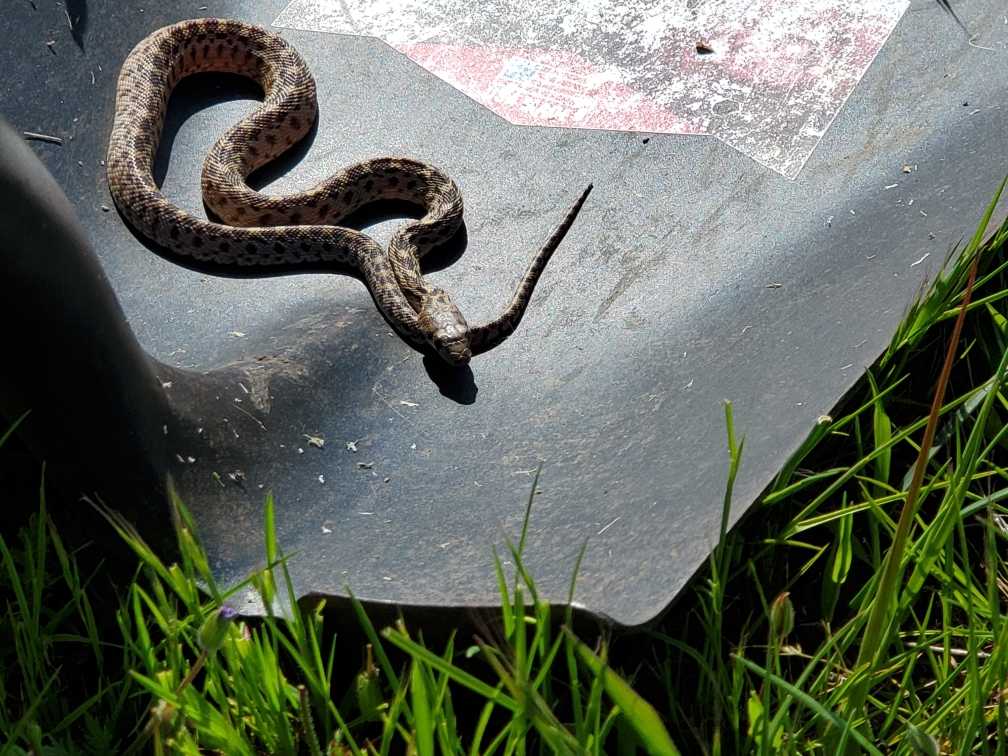
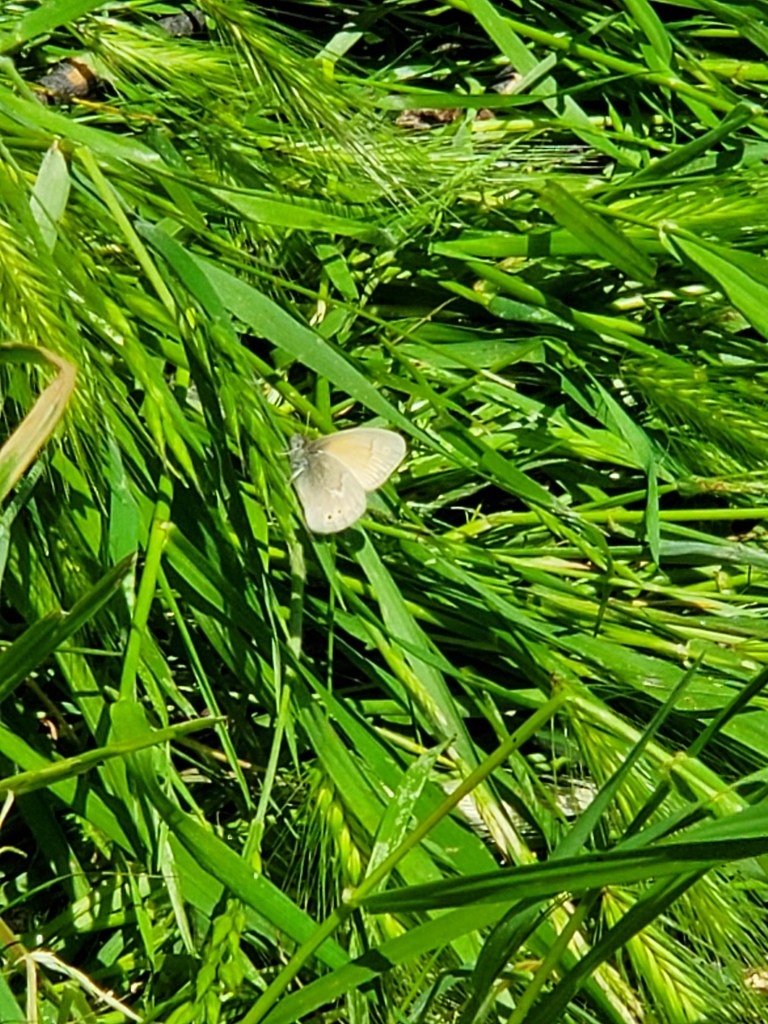
Life on the ranch is a joy I cannot adequately explain. I am the kind of girl that loves spiders, snakes and frogs. I like the smell of manure and don’t mind getting it on my boots. Not everyone is into this kind of life. For me, it is heaven. Here are some recent visitor to the house:

Check Dams Working

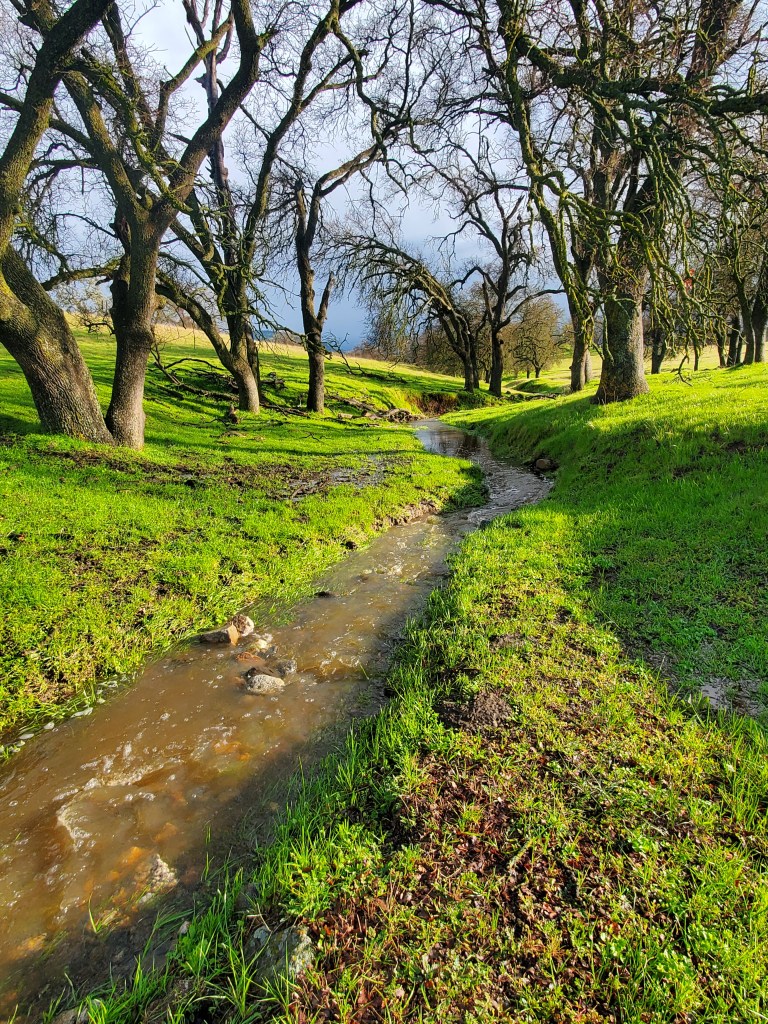
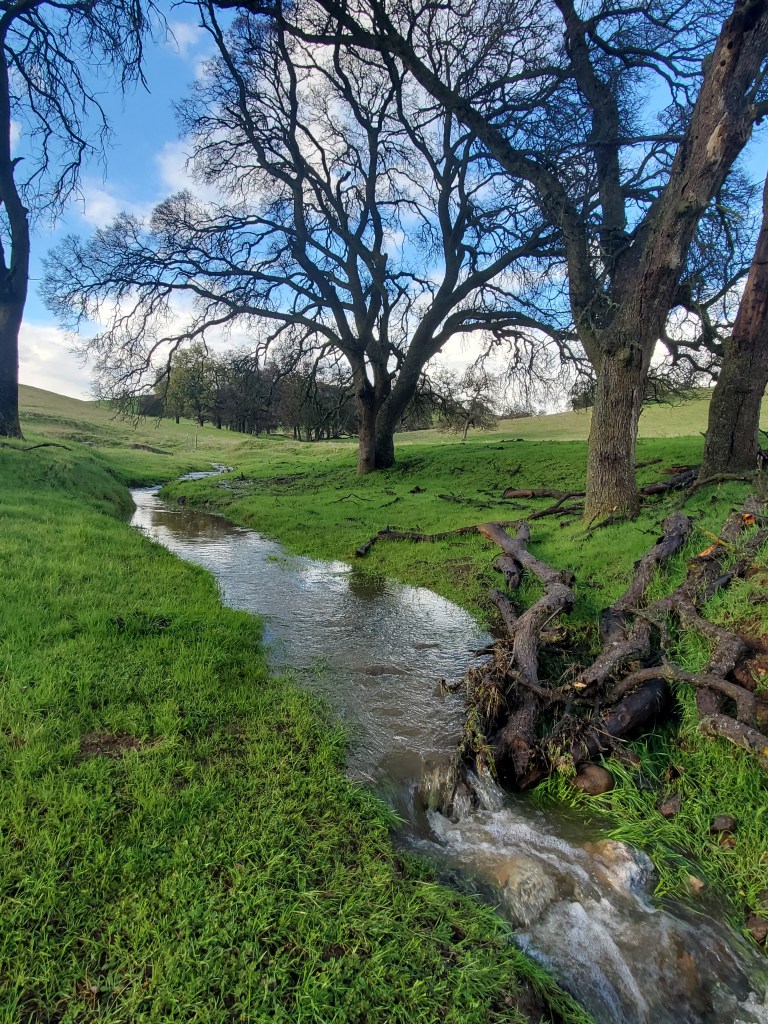
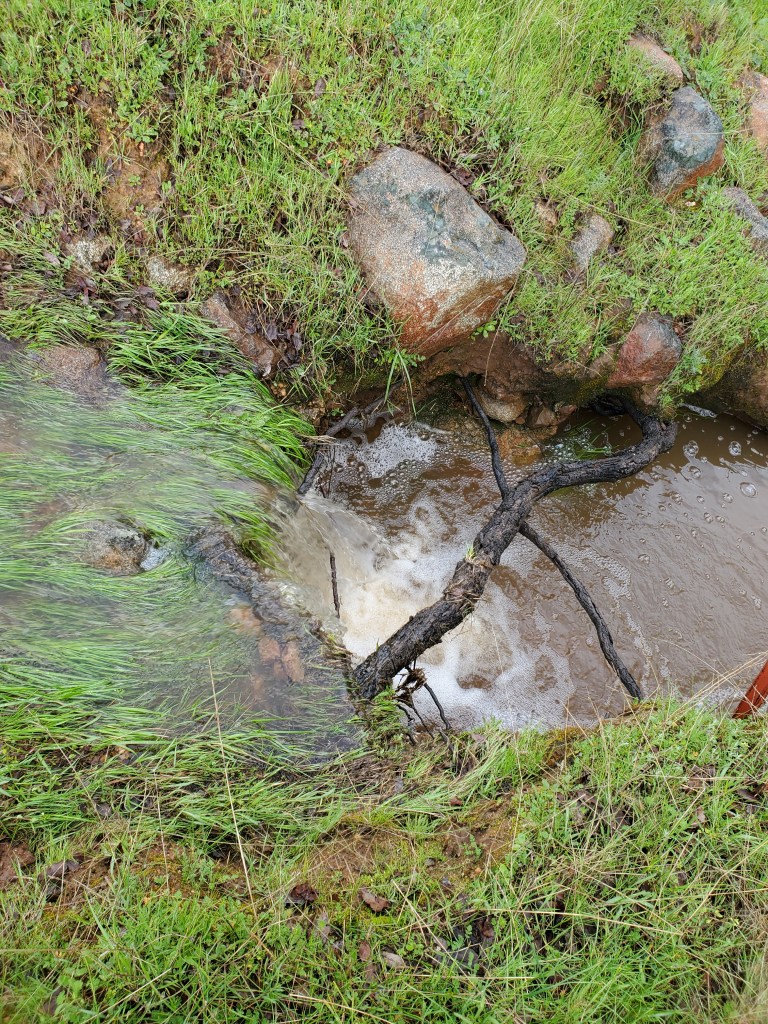
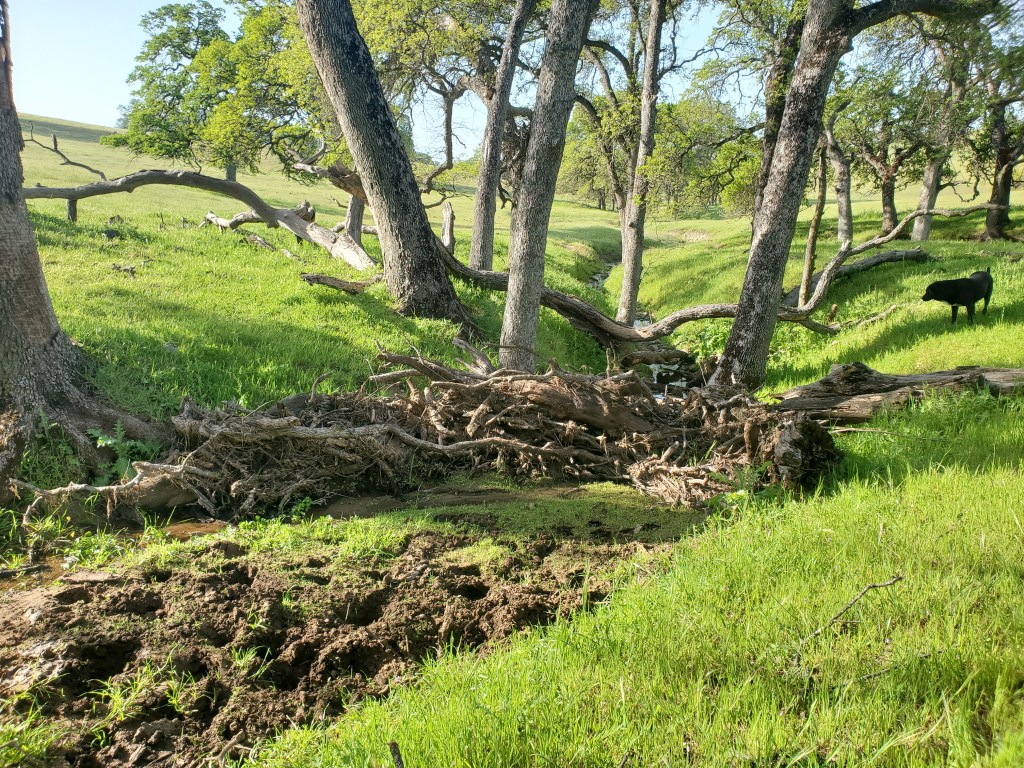
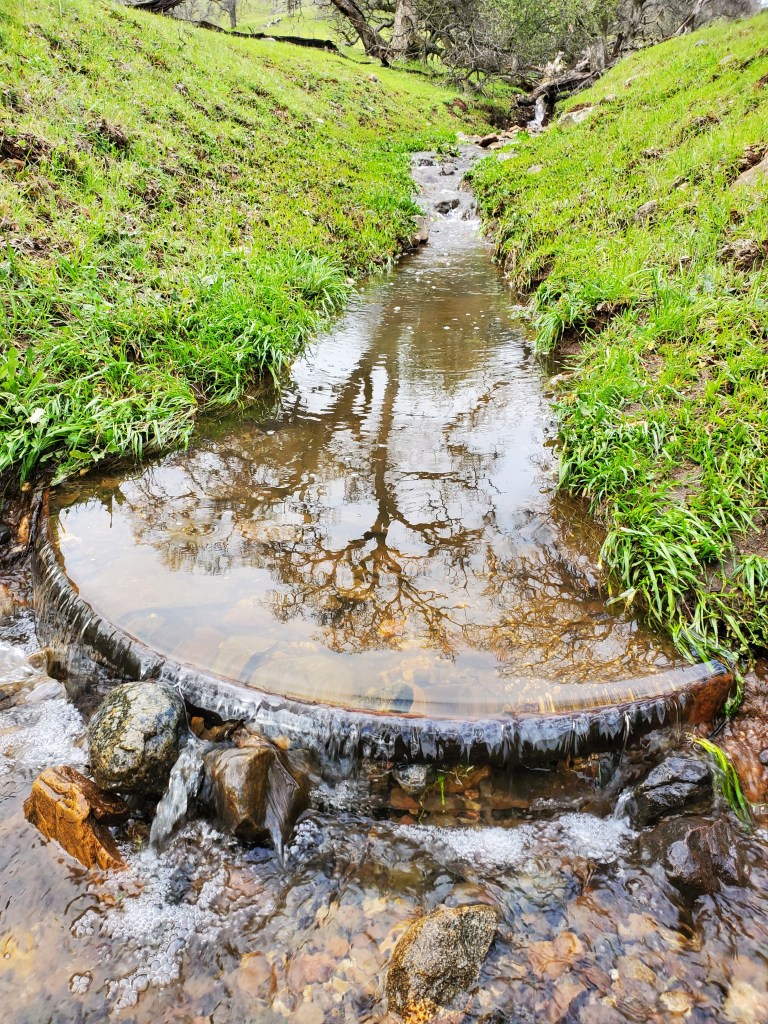
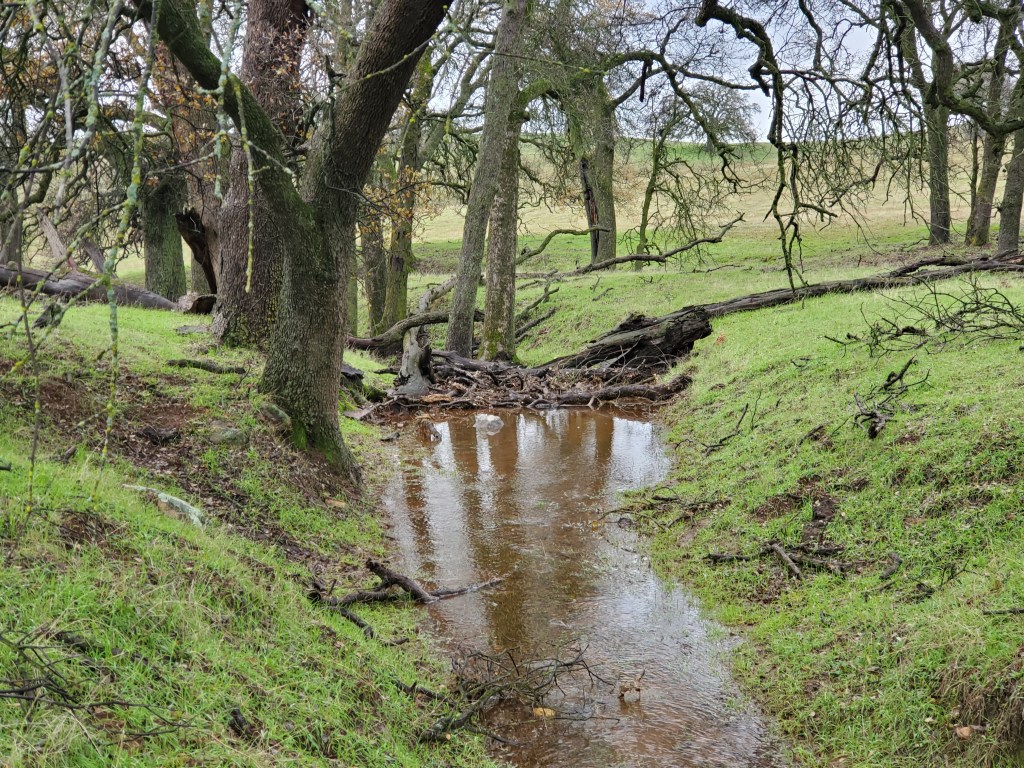
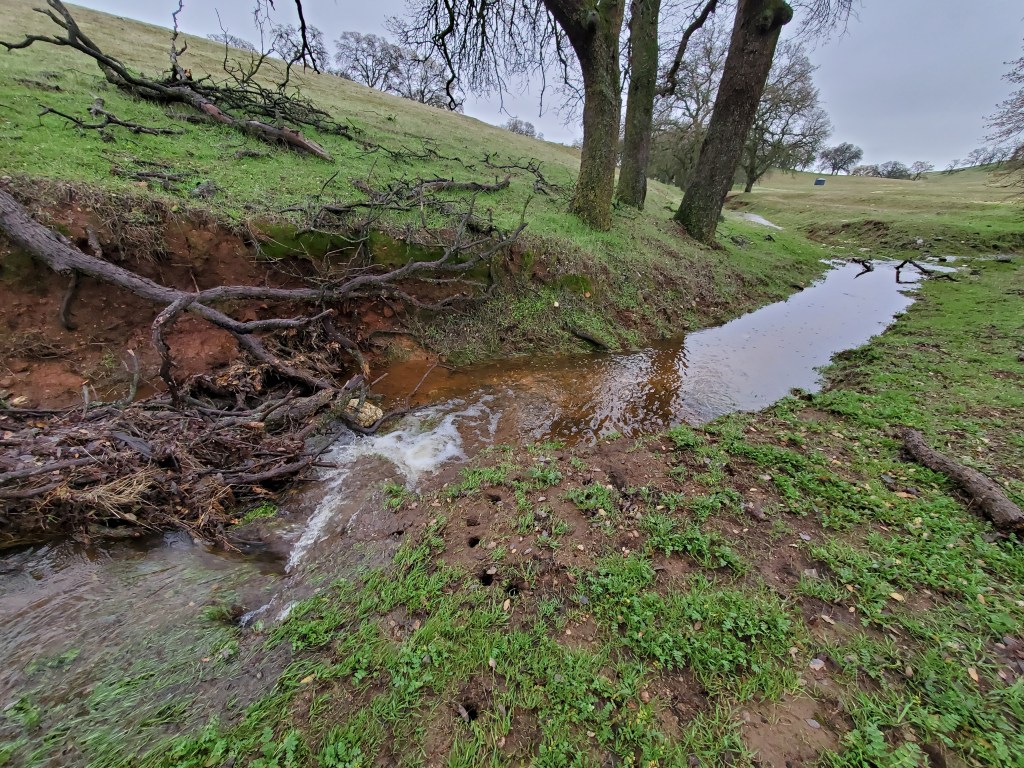
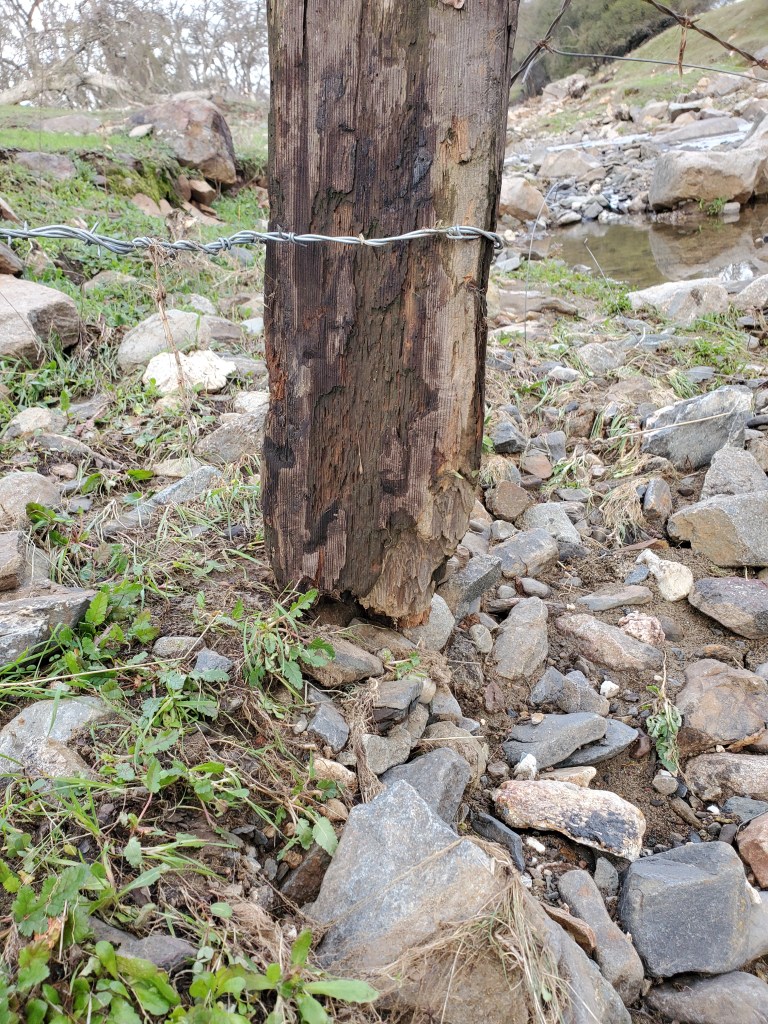
Nature gave me some help this year in building check dams. The photos below show one that nature built with wood that fell into the creek. Note the sediment upstream has accrued and is nearly at the height of the land, and note that downstream is still carved deeply. Holding the sediment back achieves a number of goals, 1) to increase water quality, 2) make the access to the creek more usable by wildlife, 3) build back wetland type soil, and 4) slow water runoff to retain it for flora, fauna and groundwater recharge.

Wanderings

I left David weedeating around the monarch plots and went to check on the California milkweed sites. I love to walk, even on this cool, windy day, so I decided to walk further looking for more milkweed. One can only hope. While out, I found so many other beautiful things. We live on a remarkable planet. Love it. Cherish it. Protect it.

California Milkweed Emerges: Freakout Mode -> Engaged!

The first California Milkweed emerges and she is a beauty!

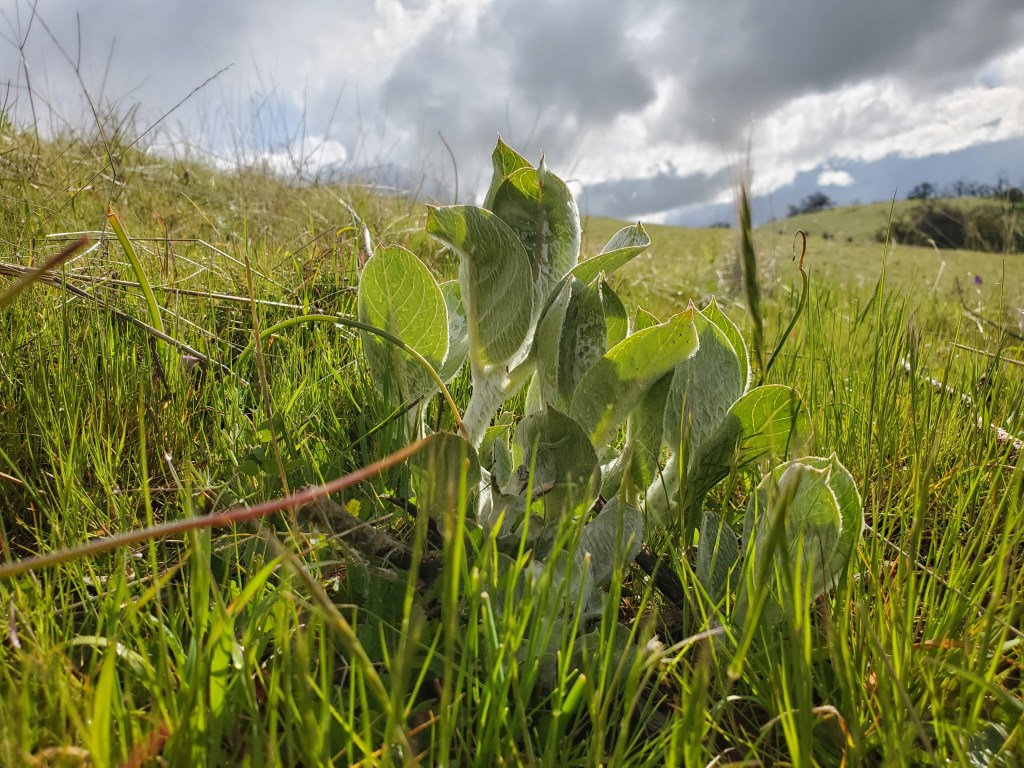
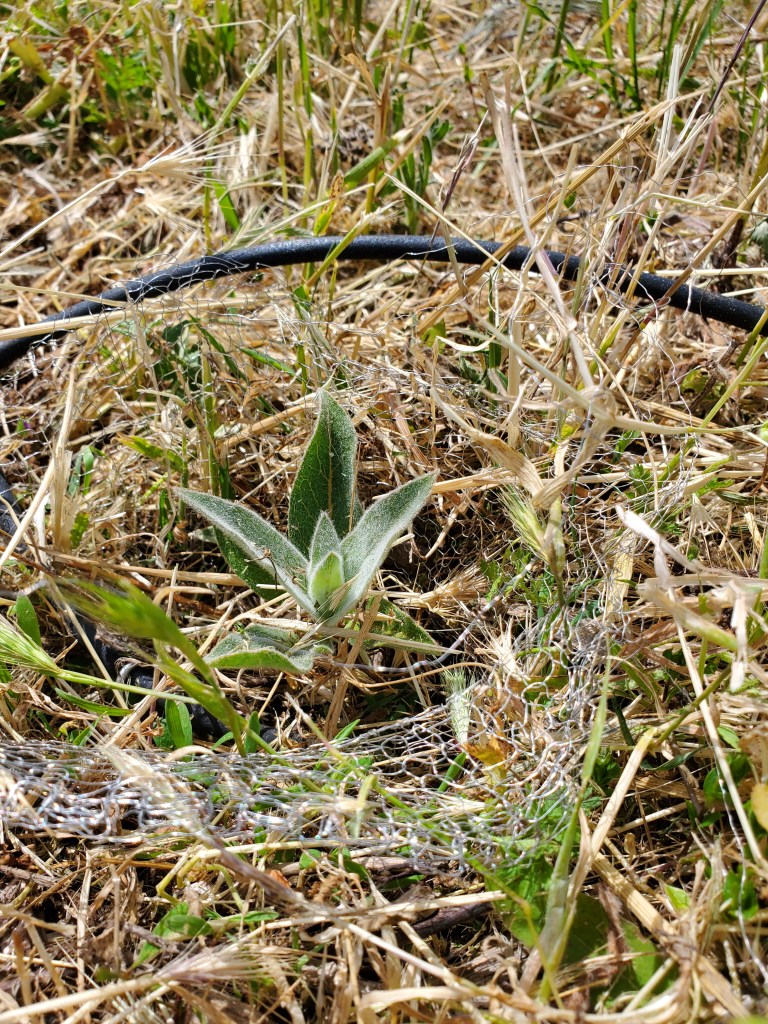
I have been checking the A. Californica sites for a week now. The benefit of documenting my work on a blog is how easy it is to see when something bloomed, emerged, went to seed, etc. You have an idea of when to expect things if you cannot quite remember. At this time last year, we had California Milkweed emerged. I figured with the cold, snow and copious rain, the California Milkweed may be delayed. Like a reliable friend who knows just when to call to cheer you up, there she was on March 15 – her beautiful furry leaves emerging from the dirt – A. Californica. Ahh, but there was not just one, there were two. I think these are the two great grandmothers of the milkweed patch. They are the first to emerge, the largest and get the caterpillars on them first. There is another large sized one as well. I went to look for her, but she was not there. It was not until a couple days later I found her. Those milkweeds are tricky. One moment they are not there, the next, they are.

I have always been a “chill” girl, never anxious, always planning ahead and under control. However, now that I have met California Milkweed, I am like a helicopter mom. I check on the plants almost daily. I worry when I see too many cows near the patch. After the atmospheric river that dumped an inch of rain in 20 minutes and made a hundreds of impromptu creeks along the hills, I had to trudge up the steep hill to make sure the plants were alright, that they were not swept away by the temporary torrent. They are built for weather of course, and I was just being ridiculous.
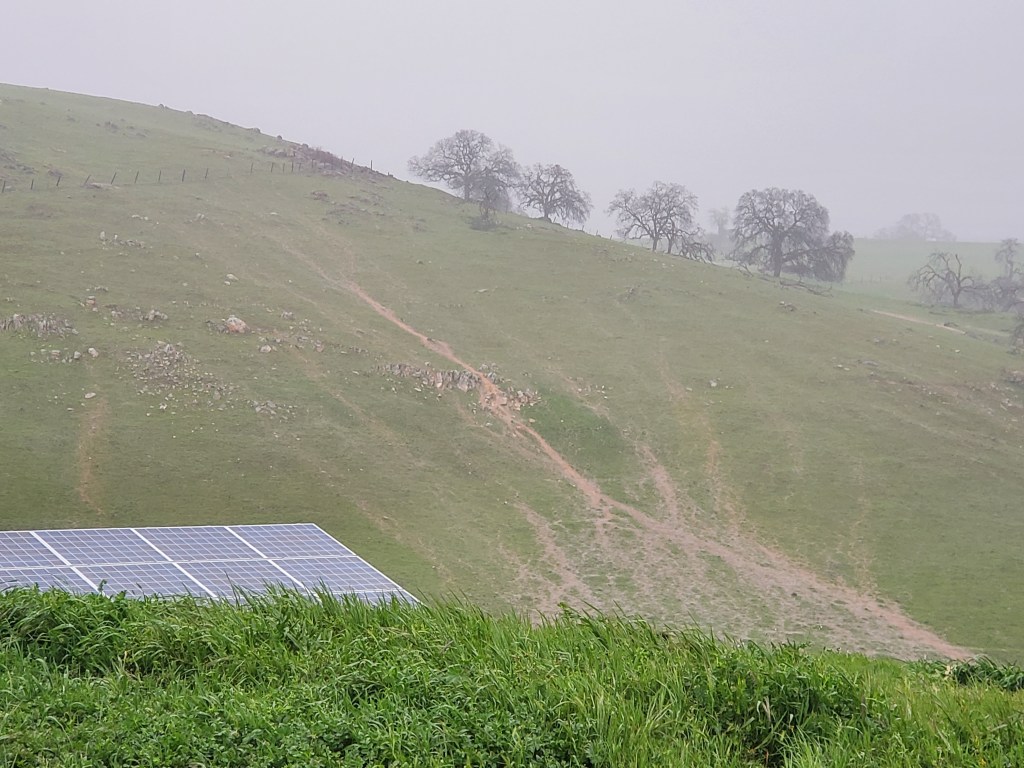
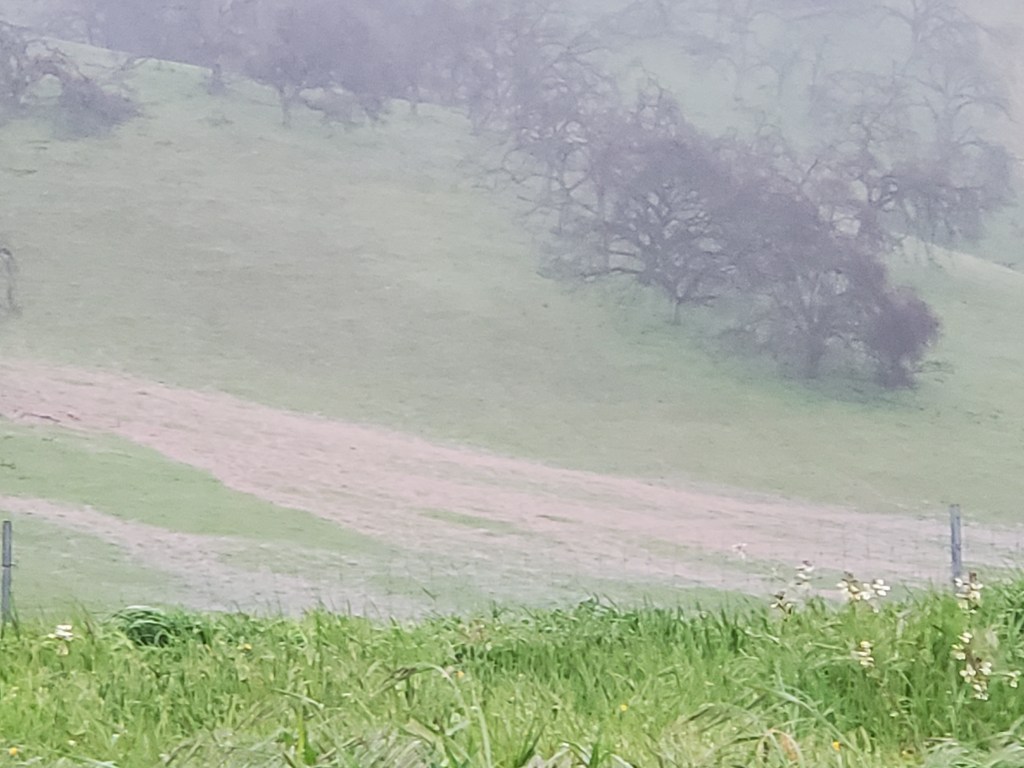
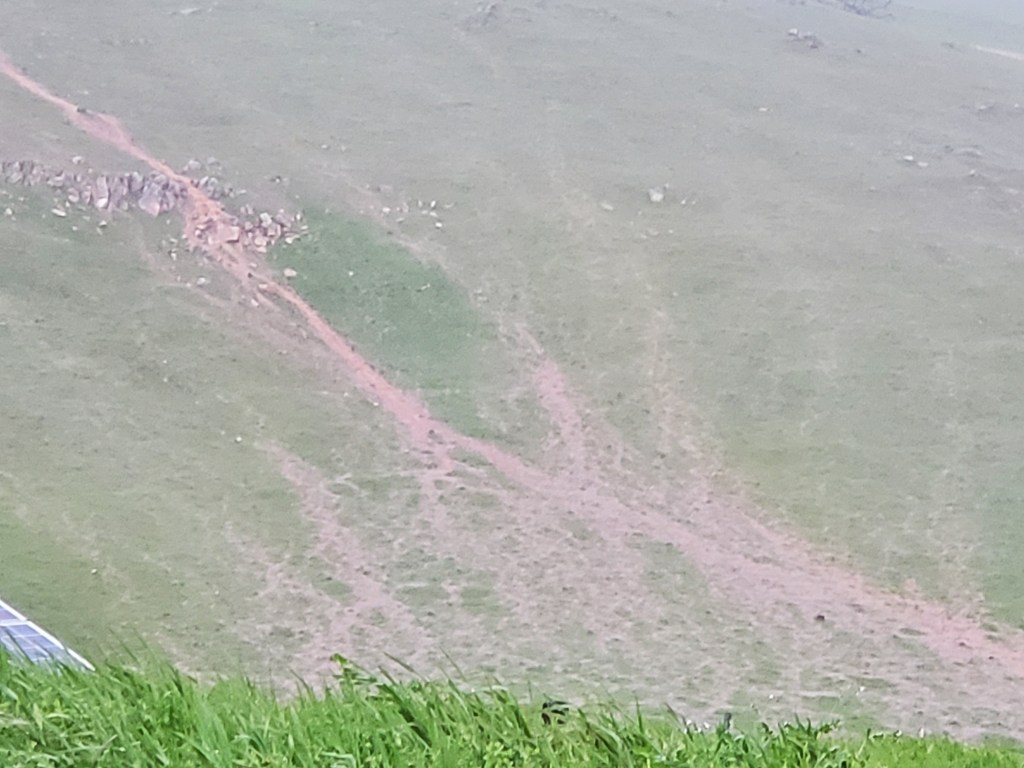
The storm was ferocious. Streams of water that were too much for the ground to absorb rushed down the steep slopes and into the drainages and creeks. I was only able to see it because the clouds were high. It was incredible. Upon closer inspection using binoculars, you could actually see rapids created by rocks and undulations on the surface of the slope. Mother Nature is a badass lady. It also struck me how so many patterns in nature are replicated. The shape of the impromptu water system was like a neuron. It makes sense; human neurons deliver electro-chemical impulses to make our body go, feel, be. This “neuron” is part of an overall structure delivering a life-giving substance that also alters, through the movement of sediment, the structure of the Earth’s body. Water is the Earth’s go, feel, be.

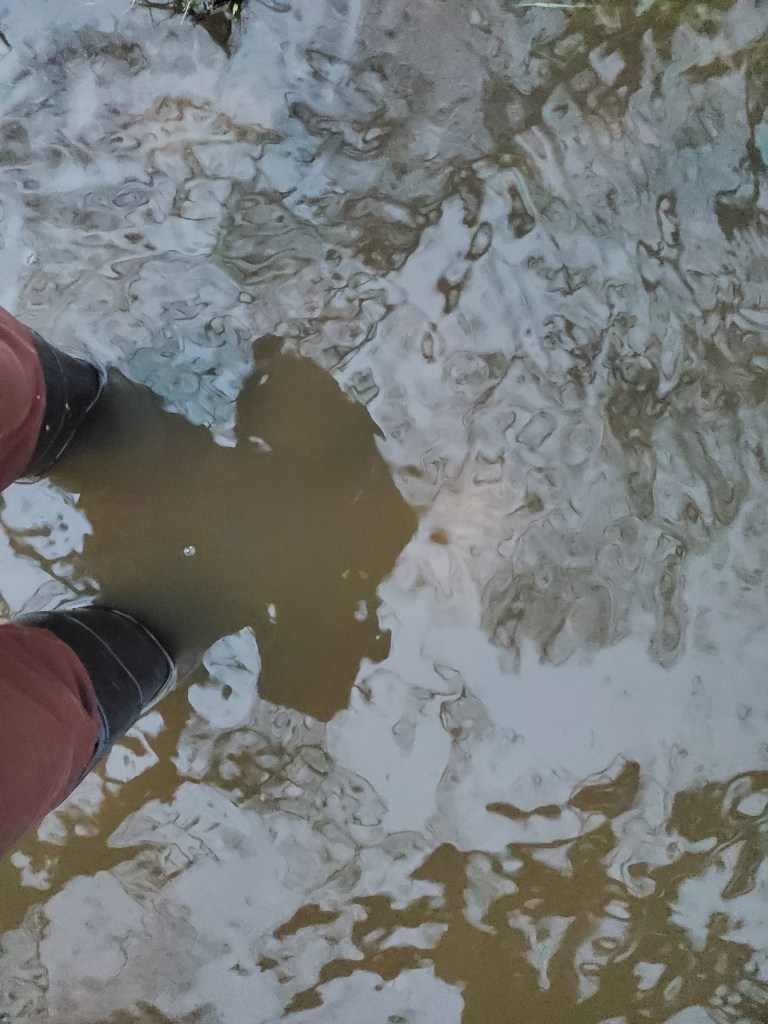
As soon as the rain cleared, I made my way from the house to the patch to check on the plants. I believe in my trusty rain boots and wear them in every season. It was probably not the best decision to head out, rain boots or not, before the water had a chance to drain a little bit more. As I headed for the hill, I had to cross the arroyo/drainage. That was no problem; however, a soggy, muck of mud was on the other side. This is a spongy area that catches water and retains it longer than other areas. I made the wrong decision to cross in this area. My boots, with feet inside, sunk deep into the mud, and then mud closed in on them. I was stuck.

Back in my big city days, I remember going into a large furniture store that also sold interesting knick-knacks. There was a survival book opportunely set on the counter of the check stand for the impulse buy. Well, that worked. It looked interesting, and I bought it. Now, this might be too much information, but I know all of us humans share the same proclivities for restroom reading – so I will share… I had many enjoyable moments on the toilet reading through that book. It is the kind you leave in the bathroom for intermittent engagement and not a cover to cover read. Fortunately, one section of the book dealt with what to do if you were caught in quicksand. I decided quicksand, mud you sink into — same thing.
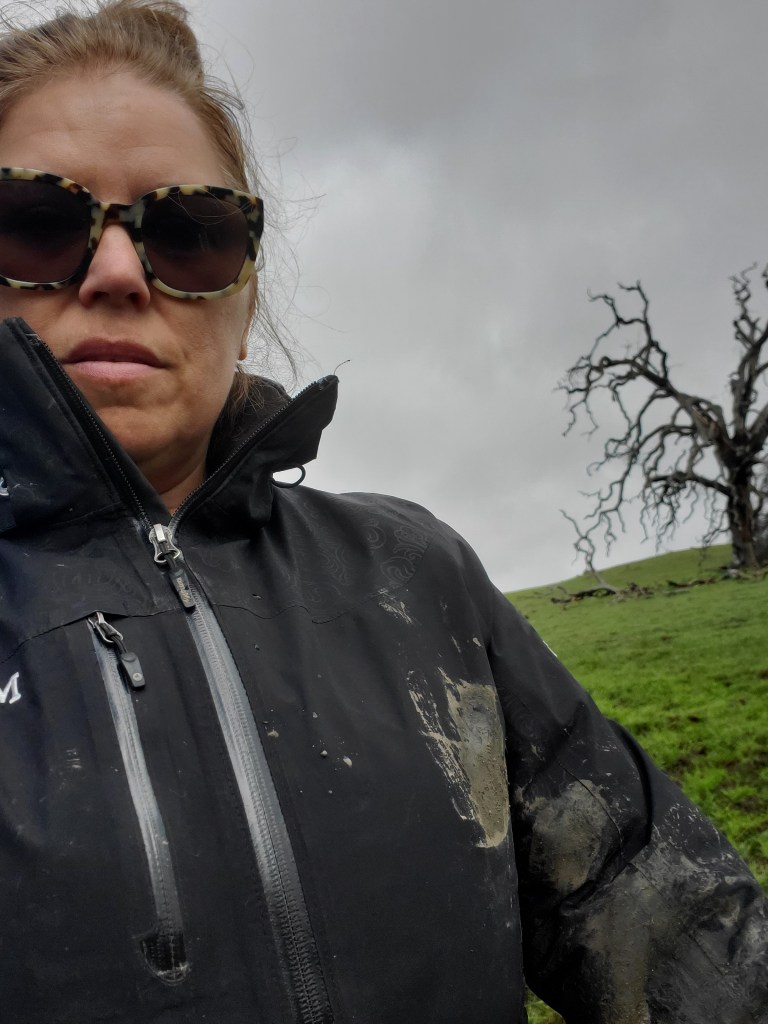
The author said to escape, you needed to move at a 45 degree angle. If you tried, like one normally would, to climb out vertically, you sink more. I had already tried that, and indeed, I just got stuck more. So, now I squatted with my right leg and leaned 45 degrees to pull out my left leg trying to stay upright and not become a mud-pie. I heard a sucking sound. An air pocket! That was good. I pulled with more energy. My booted foot began to move -left, right, left, right. Yes, it is working! Finally, I pulled it free. My excitement quickly turned as the extra energy I applied began to twist me. Remember, my right booted foot was still firmly stuck in the muck. My body twisted. I tried to stay upright, but I fell. My right foot pulled out of the boot, and I landed face forward into the mud. As much as I carefully tried to avoid it, I became a mud pie after all.
Undaunted, I still continued on my quest. I reversed course, followed the arroyo, now a rapidly flowing creek, found a spot to cross without the sponge and began my trek up the steep slope. The plants were there, unaltered, built for this eventuality. I just hoped that all the seed and plugs I planted in December remained in place. I have been checking those areas too. Nothing emerging so far.

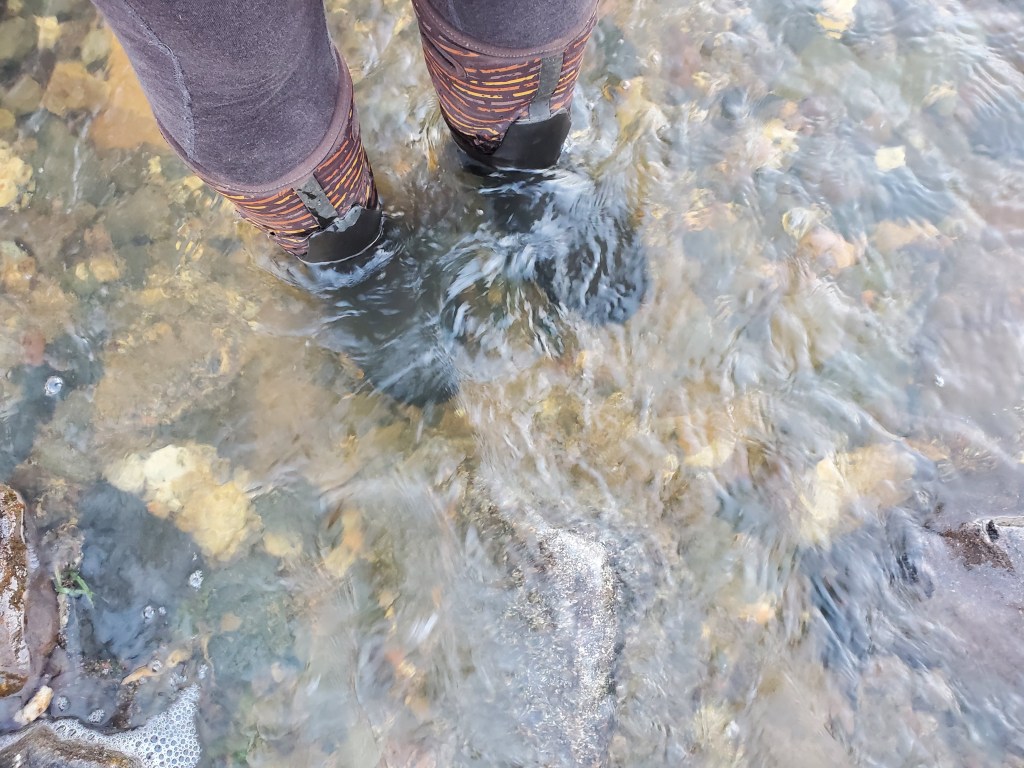
I continued to walk the ranch, covered in mud and wet through my knees, thighs and one sock. My boots and jacket protected my other layers, so I was still warm. I stopped in the creek to cup the water and wash off my jacket, boots and pants. That mud is sticky. The majority of it washed off, but still left a streak. I will need to wash the jacket with a cloth later at home. All the dams held and there were no blockages in the gaps between fencing and creeks. Just some dirty clothes and a sore right foot from the twist. All in all, a good day.

Regular Monitoring

One of the activities I perform most is monitoring the condition of the ranch. This includes assessing water levels, fence condition, check dam integrity, plant health and a general look to see what is new or identifying things that could be a problem, like all the downed trees and limbs. I love to walk and be in nature – so monitoring is one of the most enjoyable things about being a land steward.

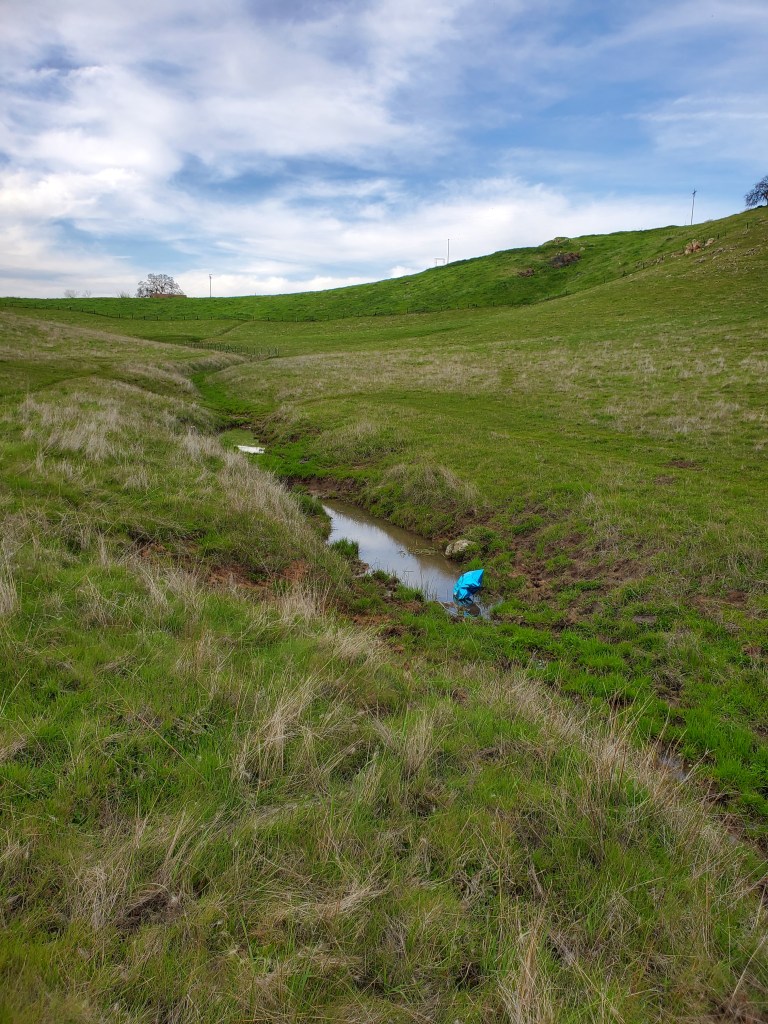
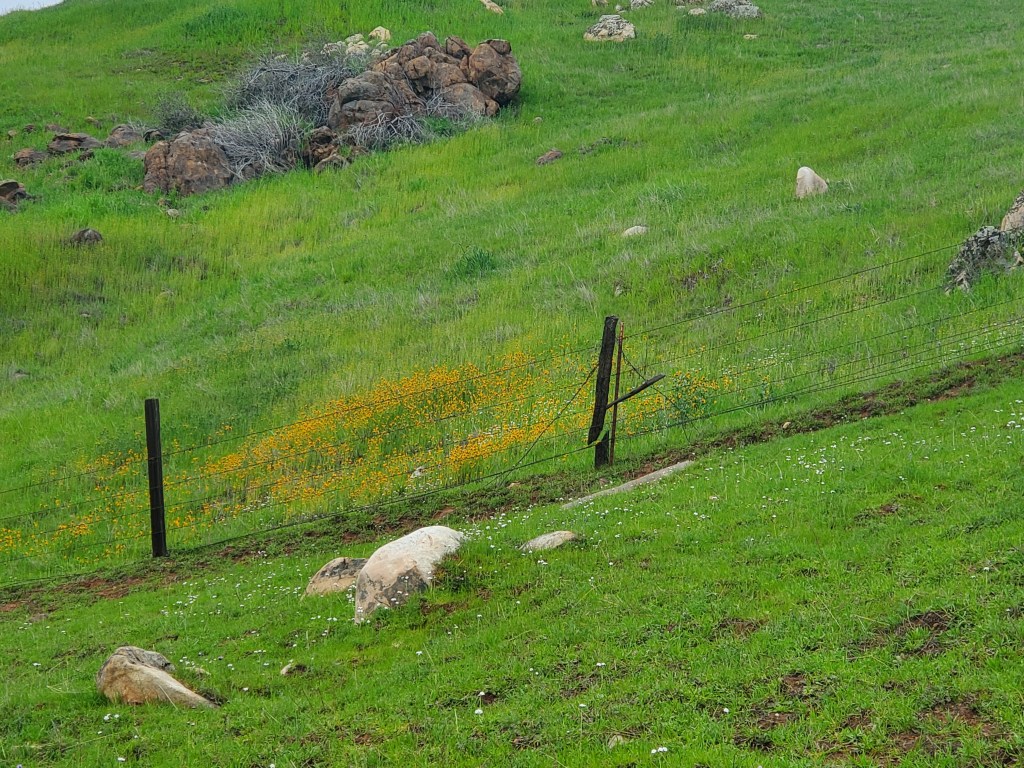
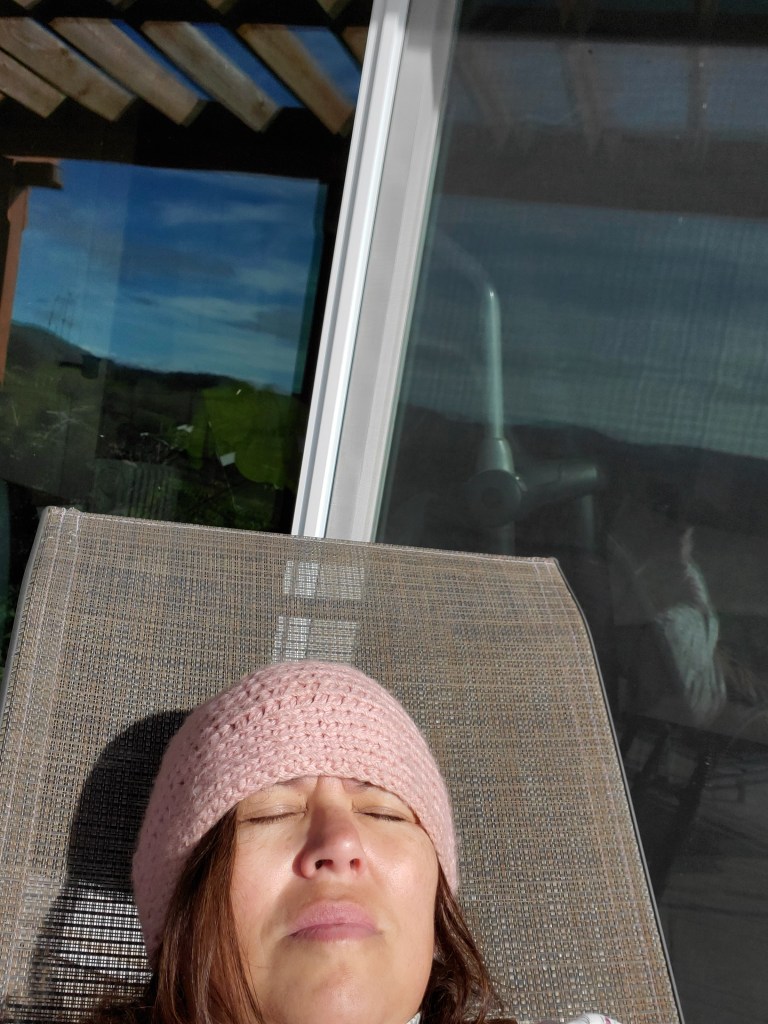
The weather has been tricky. Between damaging storms have been joyous spring-like days. It can be hard to stay focused on work. Eventually, I extricate myself from behind my computer and head out onto the land. Last week was gorgeous weather. I even opened the windows to exchange the air in the house one day. The smell of millions of wildflowers entered. It was incredible. It was also warm enough to be in short sleeves, so I sat in the sun a little enjoying the quiet natural noises of my surroundings. As I did, I thought to myself, “Why don’t I do this more?” Life has become so much work. There is always plenty to do. I think people are finally waking up to the realization that, even if you love what you do (and I do), you need to find moments of nothing, to sit quietly, to just be and be without deadlines, dramas, and to-dos. Below are some photos from a recent monitoring expedition.

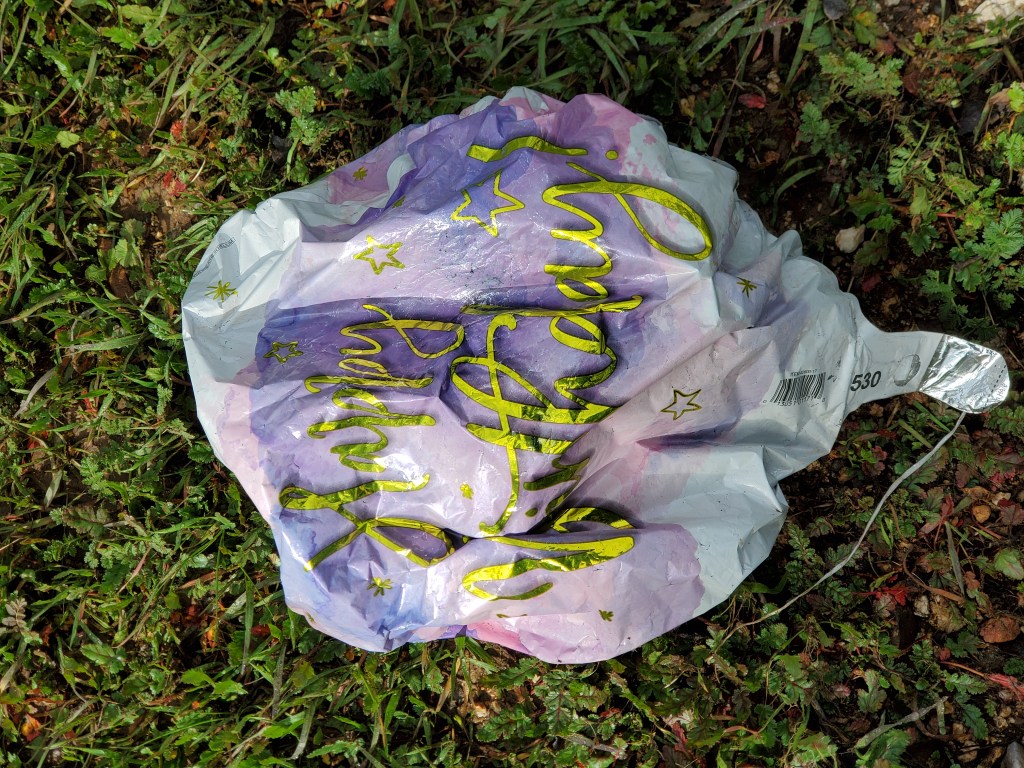
Now is a good time to remind folks about mylar balloons since I found yet another one on my monitoring expedition. Please don’t use them. I know they seem like a festive way to say, “Congratulations”, “Happy Birthday” and everything else. They often get let go by children, and some adults, and end up as dangerous trash others have to clean up. They are dangerous because calves, who are just learning to explore their world, can eat them, blocking their digestion and result in a very painful death. I pick up almost a hundred a year. We seem to be on the right wind pattern for dying balloons.

The Garden

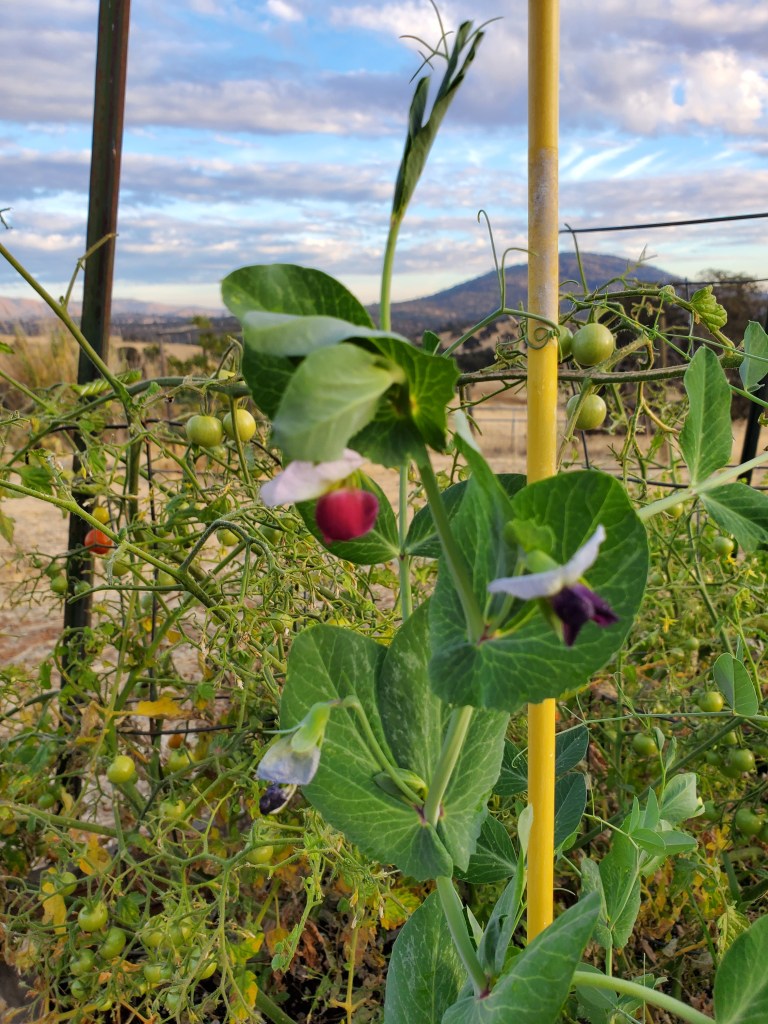
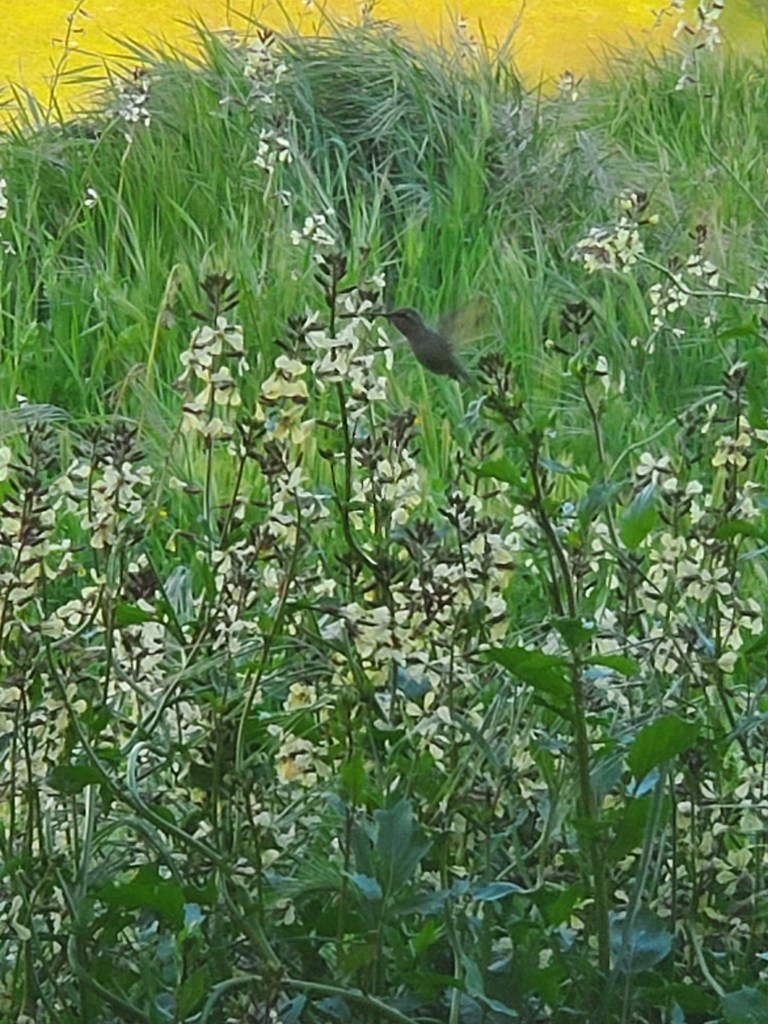
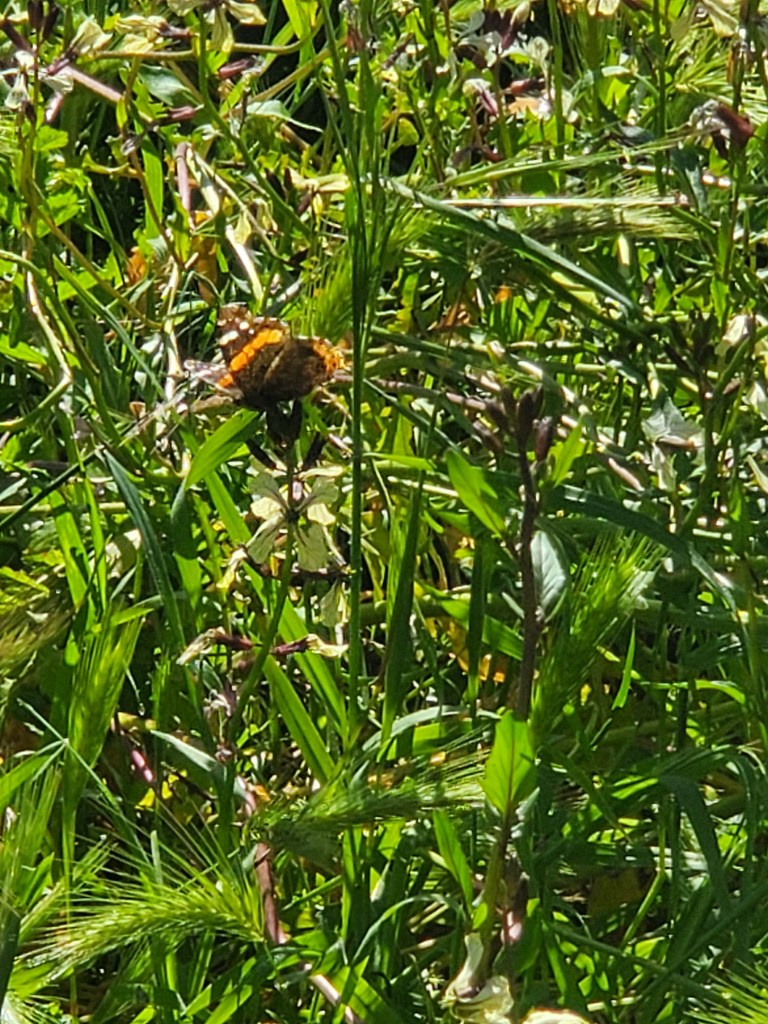
I sowed peas and oats to build nitrogen in the soil and as a cover crop. With the cold temps and frequent cloud cover, they have not grown as much. I also placed some in my seed starting tray. Some seedlings sprouted when there was a longer beak between storms, and I am placing them in open areas in my raised beds. Maybe the sowed seeds will catch up at the next break. I did see some initial growth out of the seeds. The arugula that my dear friend Caroline Korn gave me many years ago has really taken off. We have fields full of it. It has been so crucial for bees, butterflies and even hummingbirds. I sighted a red admiral butterfly. It will likely freeze or get too wet to survive with the next storm cycle. The weather has been alternating between spring-like and winter. Well, I hope it will survive long enough to procreate.

Wanderings

Exhaustion can be good for the body and mind if done intermittently and not often. The dogs and I come back from our adventures tired, but happy. I am continuing with my Pollinator Steward Certification. I don’t know if I will change careers, but it is good to always be learning so you can do what you do better.

I had a wonderful email from my friend Marian back in January. She was sharing an old mutual friend’s (Chris’) self-made book about a close encounter with a monarch last year. The three of us shared an office back in the day when we were all young healthcare professionals serving the public. Now Chris and Marian are retired (not yet for me) and onto other things. One of the many things Chris does is being a Master Gardener. Chris, was so inspired and transformed by her encounter with a monarch that she wrote a children’s book about her experience. She did an outstanding job researching monarchs and telling the story. You can check out the charming video of her reading the book here. Thanks so much to Chris for allowing me to share her work.

Planting Seeds for the Future

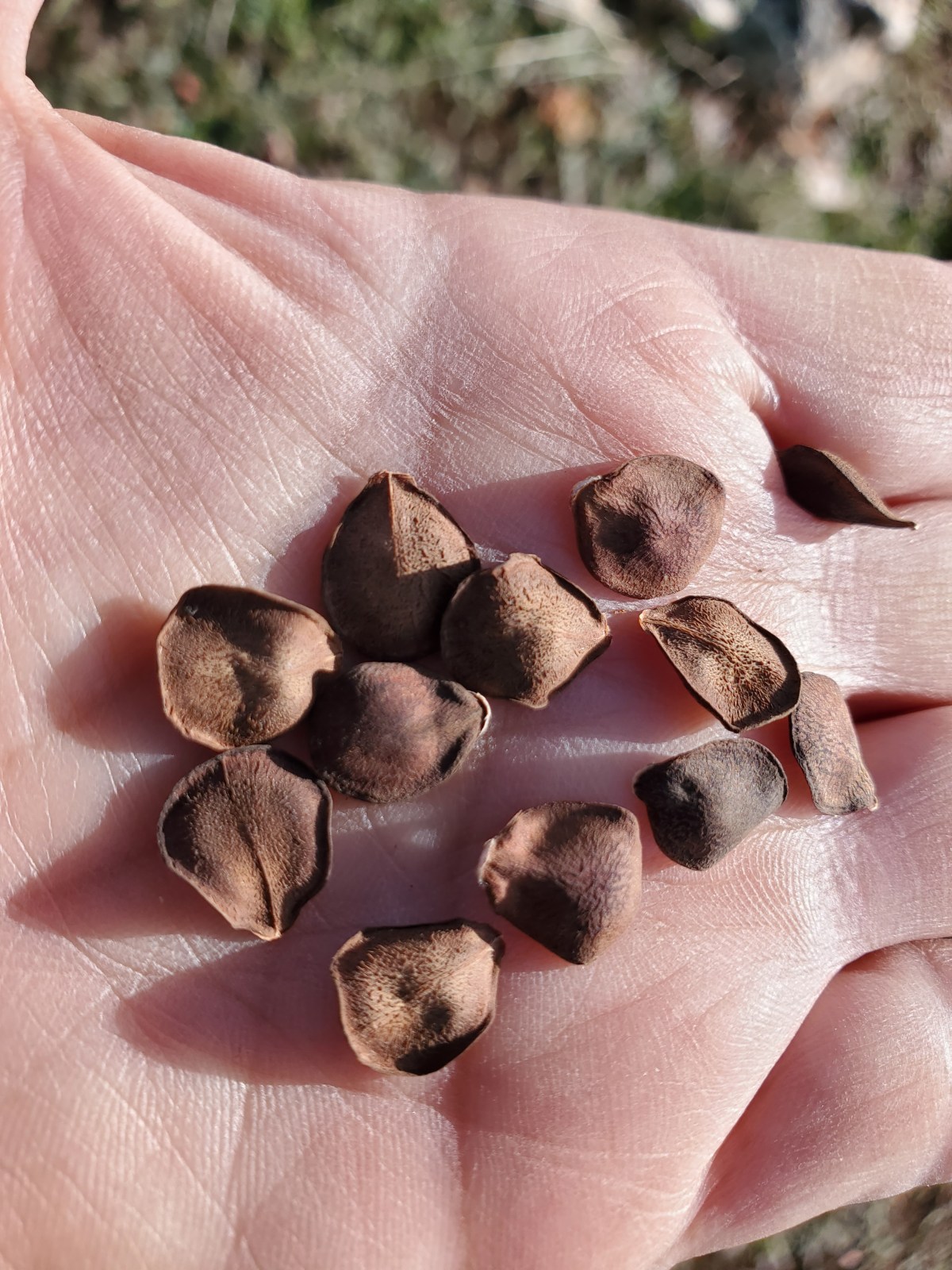
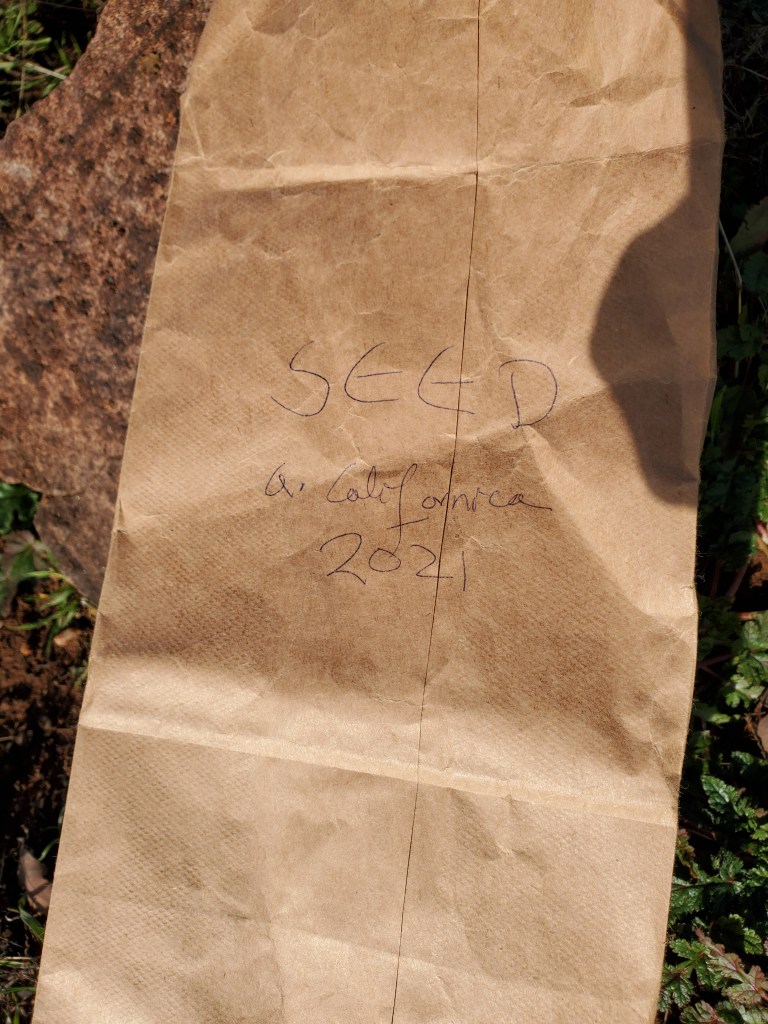
A. Californica seeds from 2021 ready to go into the ground

Cold nights and winter rains provide a nice rest from the typical pace and scale of stewardship work. It is very pleasant to sit with my mug of tea staring out the east facing window while still in my pajamas. I am in no rush, as I am in the spring, summer and fall. I can lounge a little and contemplate the future I am attempting to create for monarchs, pollinators – really, all living things. At some point, reverie must turn into action, so I pull on my overalls, turtleneck with flower embellishments, slowly bend to pull one wool sock on, then the other. No searing sun in recent weeks, so choose to warm my ears instead of protect my skin. The best choice is the knit cap my mother made – a pink crocheted masterpiece. Finally, I put my rubber muck boots on. I prefer to work in these – easy on, easy off and waterproof. It has been wet, and soggy ground is everywhere, even between storms.

The past few weeks, I’ve been working on impromptu, small check-dam structures to slow storm run off, A. Californica seed planting, infrastructure checks and garden clean up. Soon, I will find the energy to deepen troughs dug two months ago and create more mini swales.

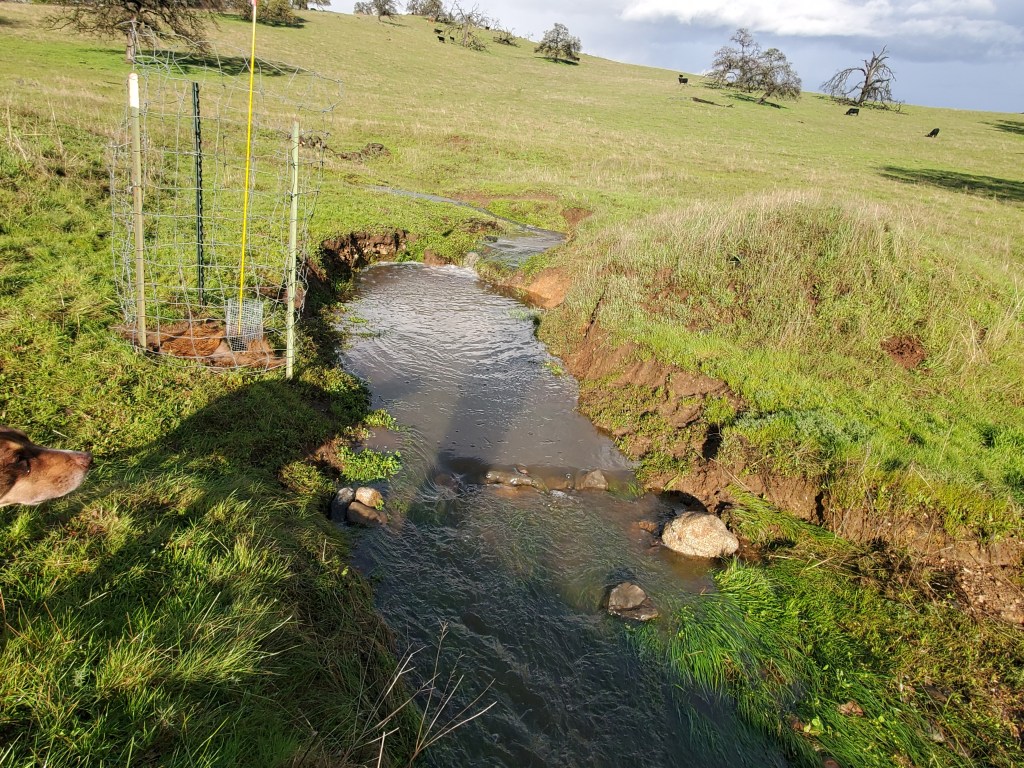
Playing in the water is fun. The next gallery shows my work building a mini check dam across the bottom of Spring Creek. The concept of the check dam is to slow water runoff to prevent down stream erosion, and give water an opportunity to sink in to recharge ground water stores. Another benefit is to build up sediment behind it, which helps decrease the depth of a section of creek that may be unnaturally steep.

Rain (Destruction + Rebirth) Continues

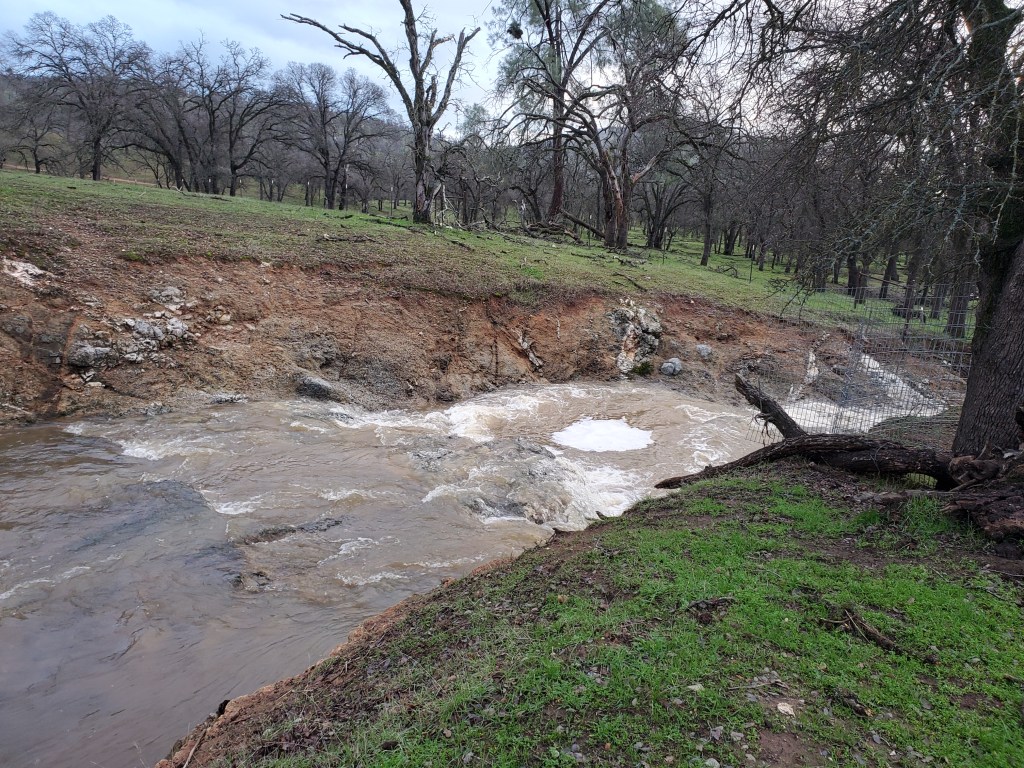
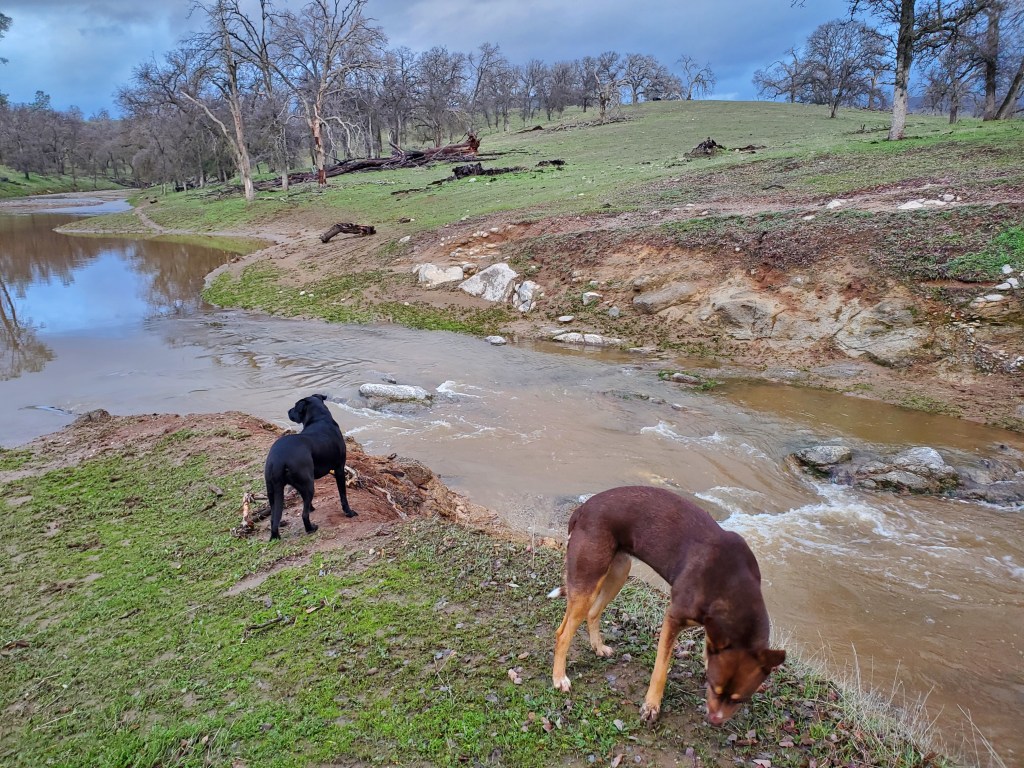
Water is both a destructive and a life-giving force. The recent series of storms have required the evacuation of towns, soiled water sources, torn up creeks and rivers, and resulted in loss of life. However, this water will also help start seeds, fill up low reservoirs, clean up debris in stream beds, and bring life to many a creature just waiting for the right amount moisture, like frogs. We have not had an abundance of frogs for several years. The ground has been too dry and standing water too warm. As you can imagine, with all the water across thousands of open acres, the frogs sing an amphibian anthem to life and water. Oh how I love hearing their cacophony of croaks and chirps.

The rain has also filled my rainwater tanks, which will keep new pollinator plants alive when temperatures soar past 100 degrees later this year. Although it is a soggy, muddy mess out here, I am filled with gratitude and joy. Chiokoe uttesia va’am (Thank you water).

The Xerces plants are doing extremely well with all the rain. Some of the mature plants are looking over watered, but still very healthy.

Stewardship: More Than Just Brawn

There are many types of “seeds” one must plant to produce a better future for our non-human relatives. Last week, Tara (Southern Sierra Miwuk Nation) and I provided comments at the California Wildlife Conservation Board meeting in support of a grant opportunity that would benefit Mariposa County and fund the Pollinator Team for another five years (The Board voted “Yes”!!). I have written and co-written grants, sent written comments on policy changes and tried to work with my county on pesticide/herbicide use reform. I also continue to learn so that I can be more effective as a habitat restorer and as an advocate. In December, I attended the Intertribal Agricultural Council conference – very cool. In February, I will attend the Community Alliance with Family Farmers (CAFF) Small Farms Conference. I am also thinking about getting certified as a Pollinator Steward. It is a little expensive and not entirely in my career area, but it is something I enjoy. Thinking about it.