
We need each other.
As the monarch needs the milkweed, and the milkweed needs the soil, and the soil needs the rain, we rely on systems that work together so that we may live.
Recently, I was hit by a car. I was riding a rental bike, like I’ve done for years in nearly every city to which I travel, and a distracted motorist saw me too late, hit the breaks, but still made impact with the bike sending me into the gutter of the road. I don’t remember from impact to lifting my head up from the ground, but as I lifted my head, the breath knocked out of me, the sting of air making contact with my insides, the smell of blood, I was in disbelief. How could this happen to me? I am so careful.
To walk across a street, to ride a bike with traffic, to drive through an intersection, these are all acts of trust, a dependency on others, a relationship where you rely on others to understand the gravity of responsibility and a determination that laws will be followed. Sometimes our relationships break down, rules not followed, predictable patterns altered, one side exploits the other taking more than is given – the balance that makes life possible can begin to shift.
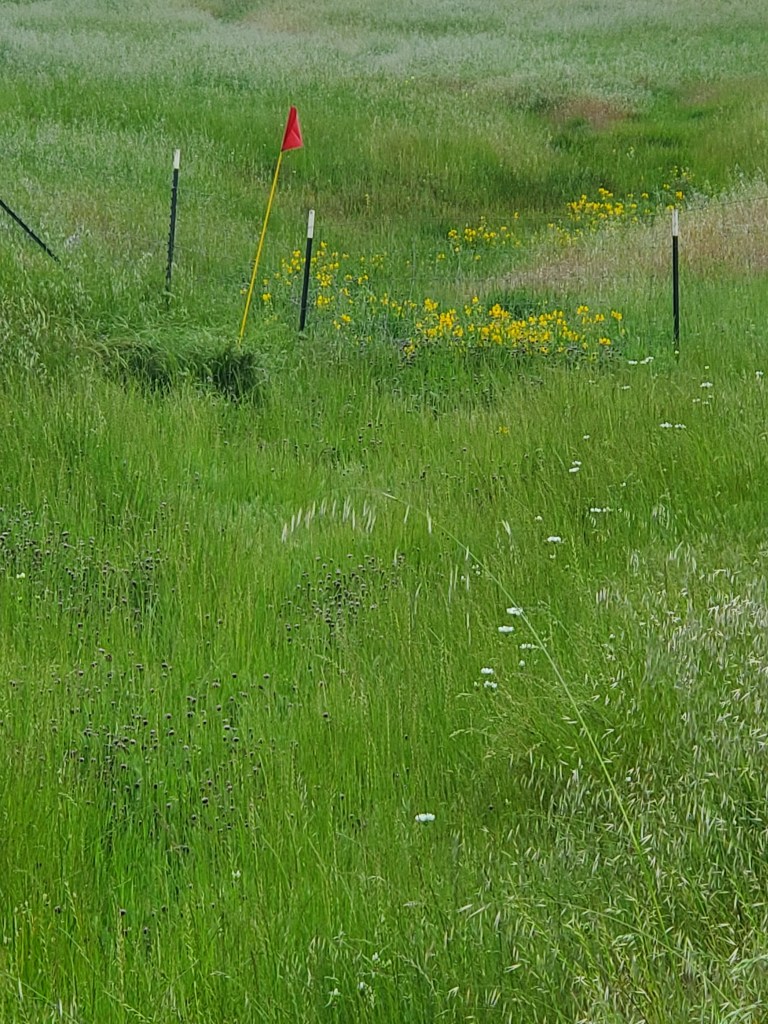
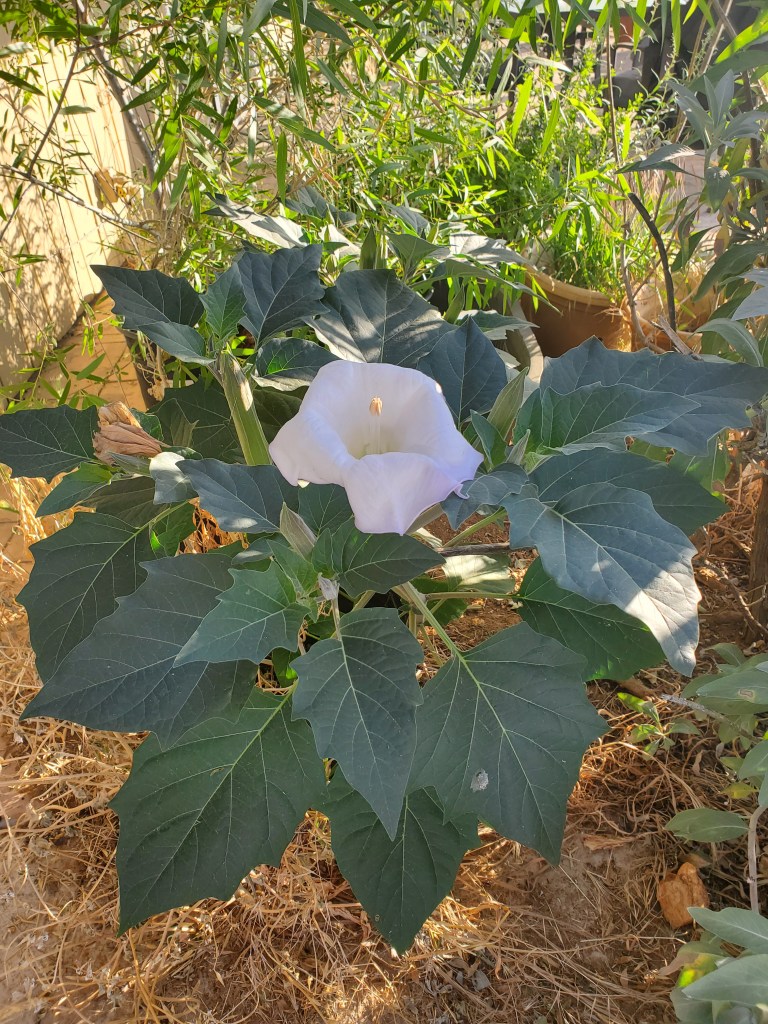
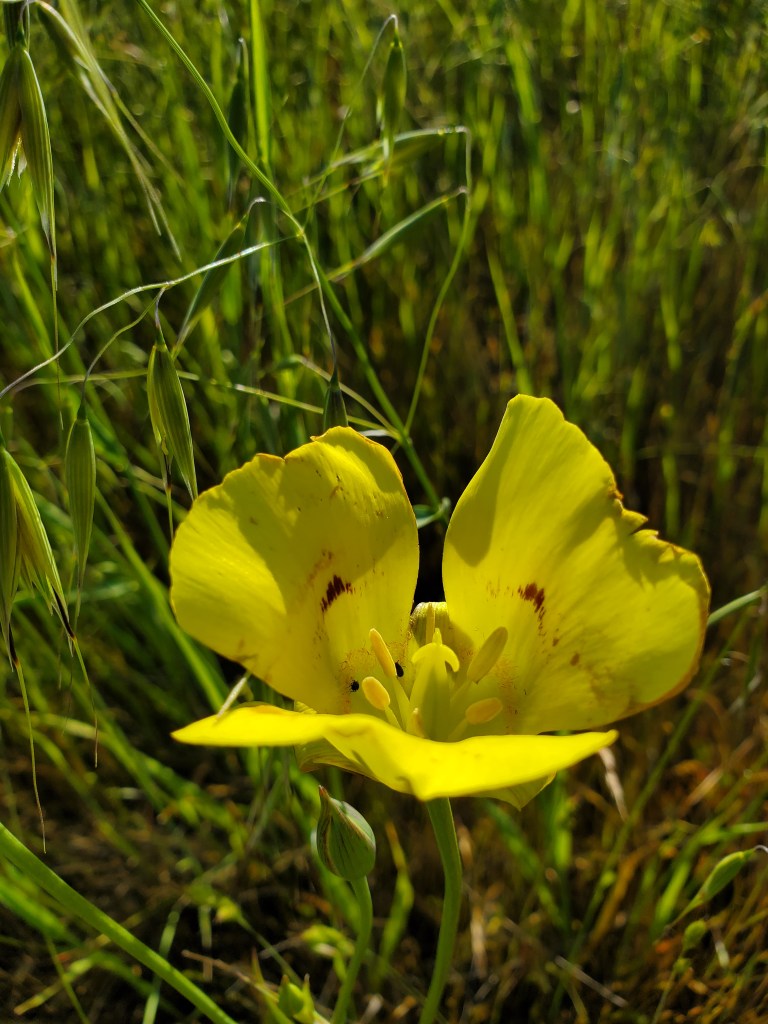
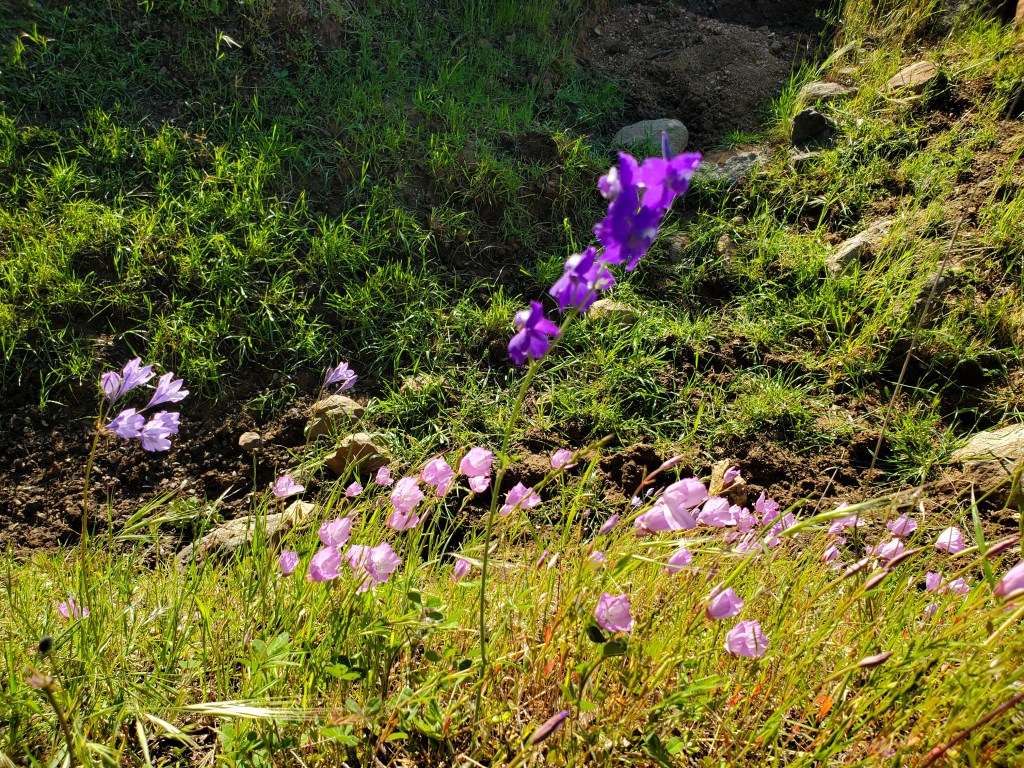
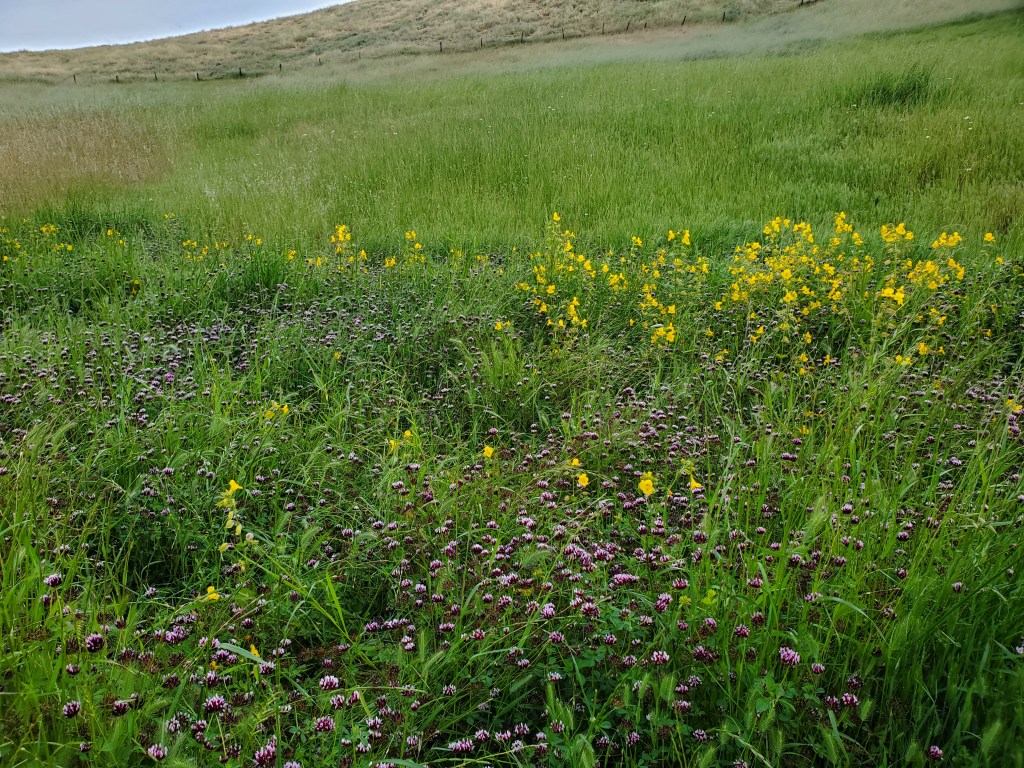
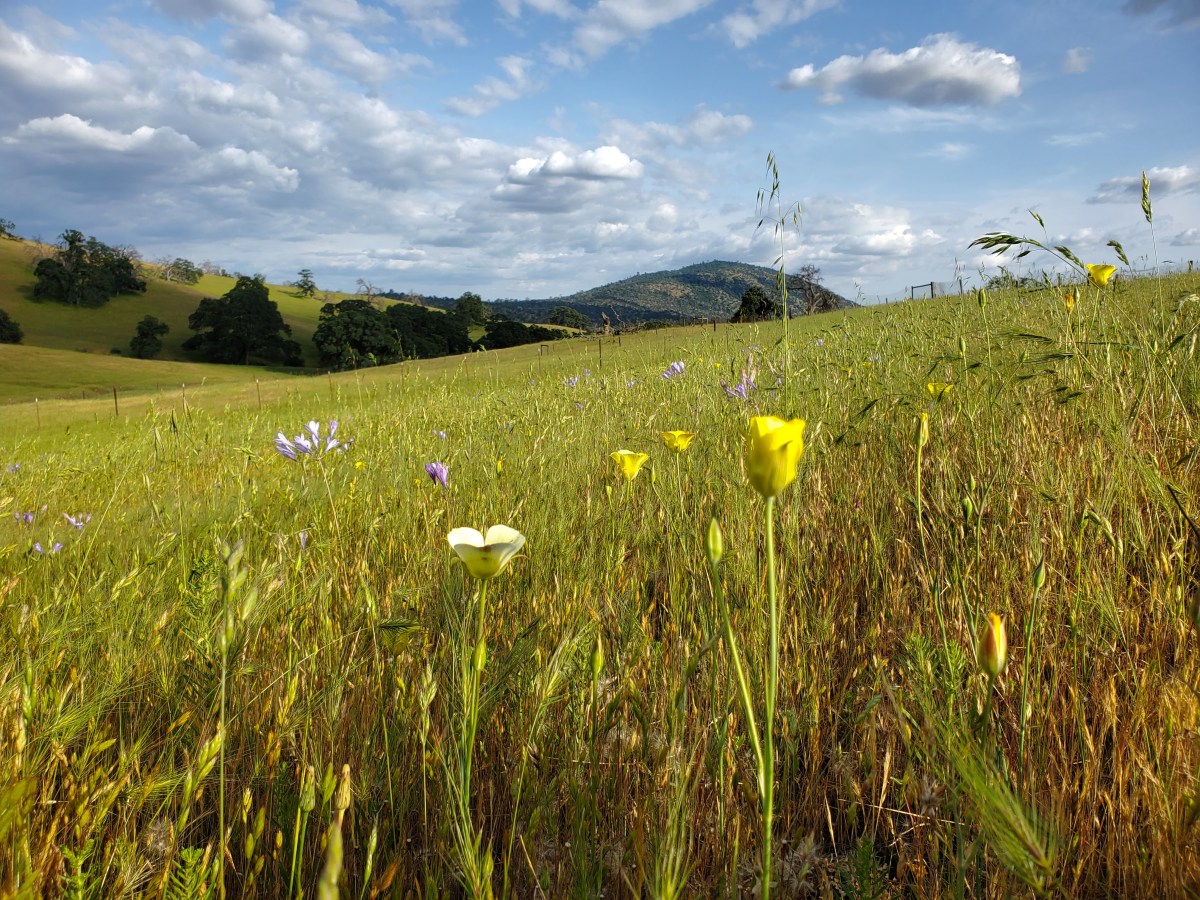
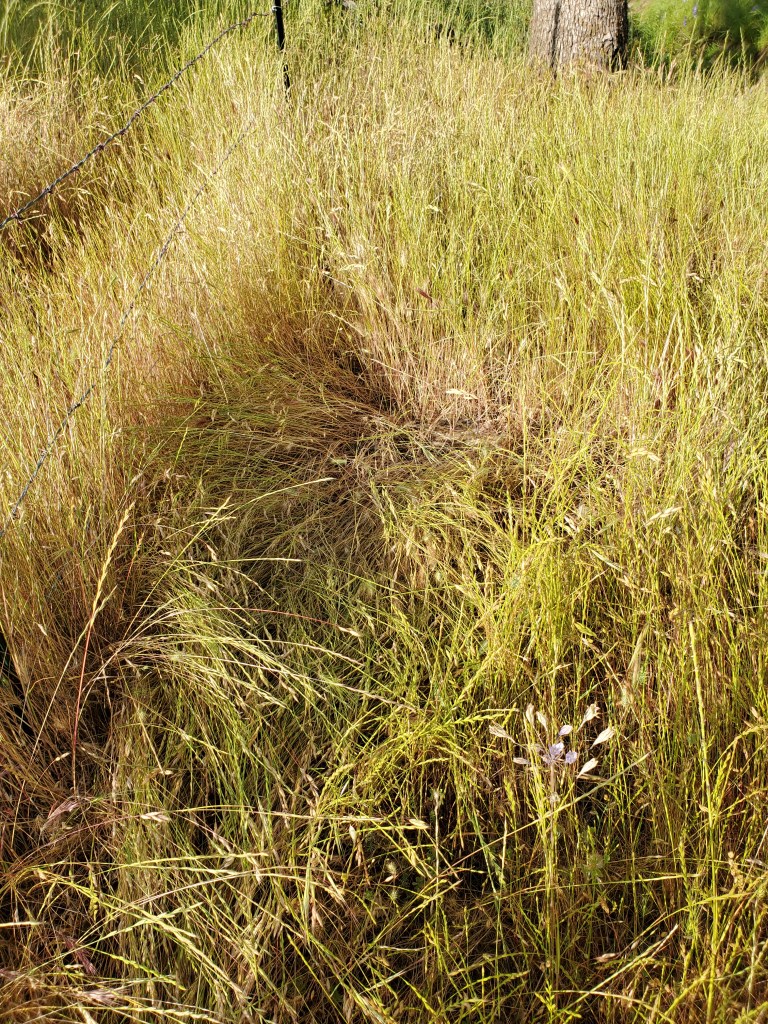
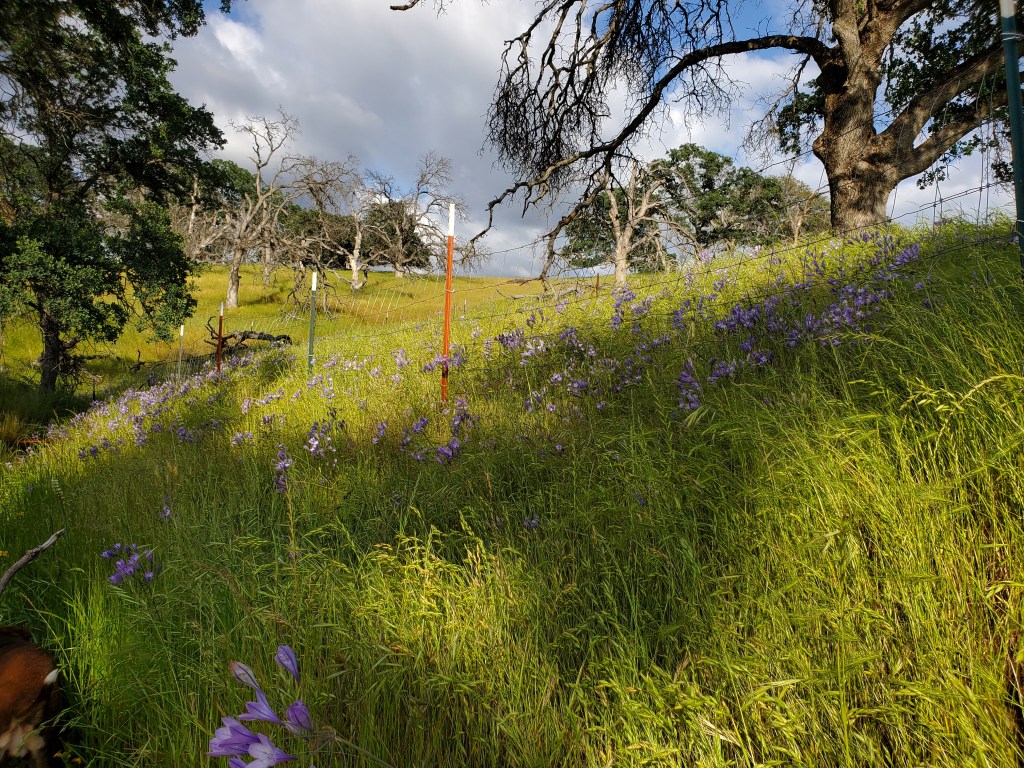
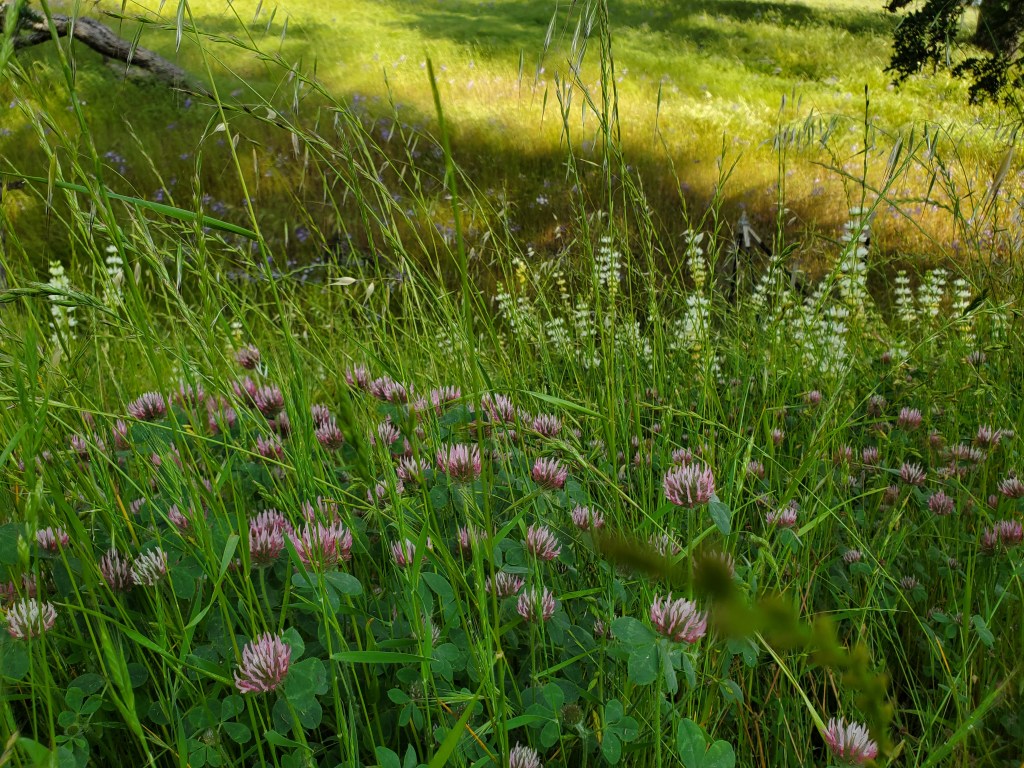
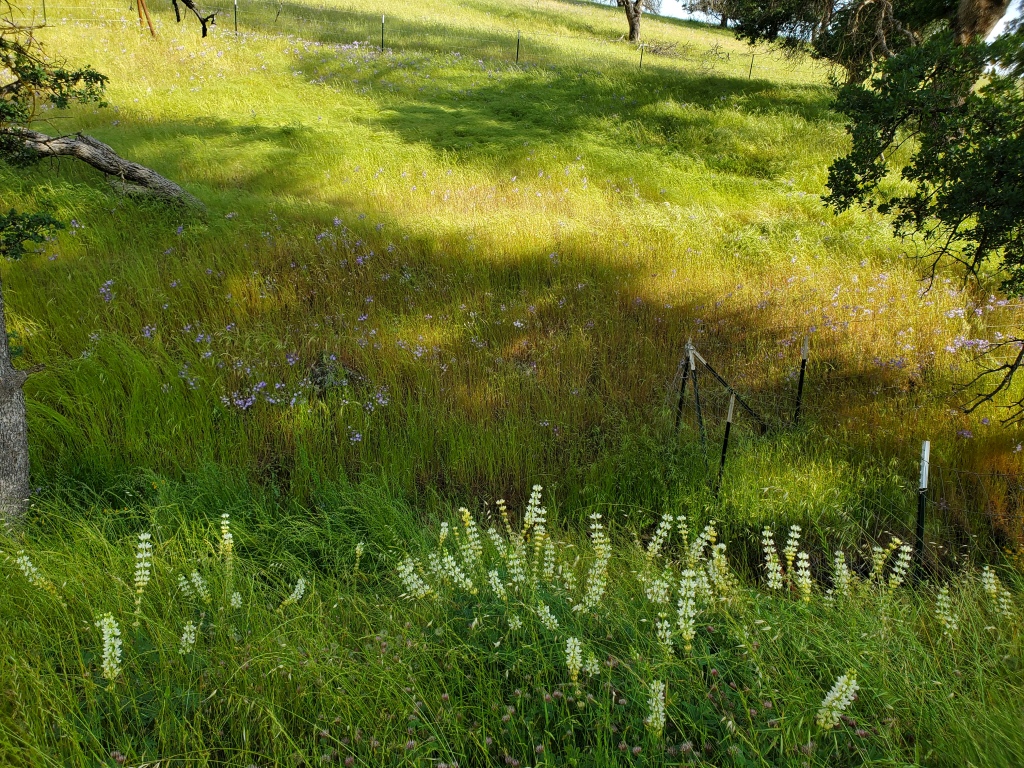
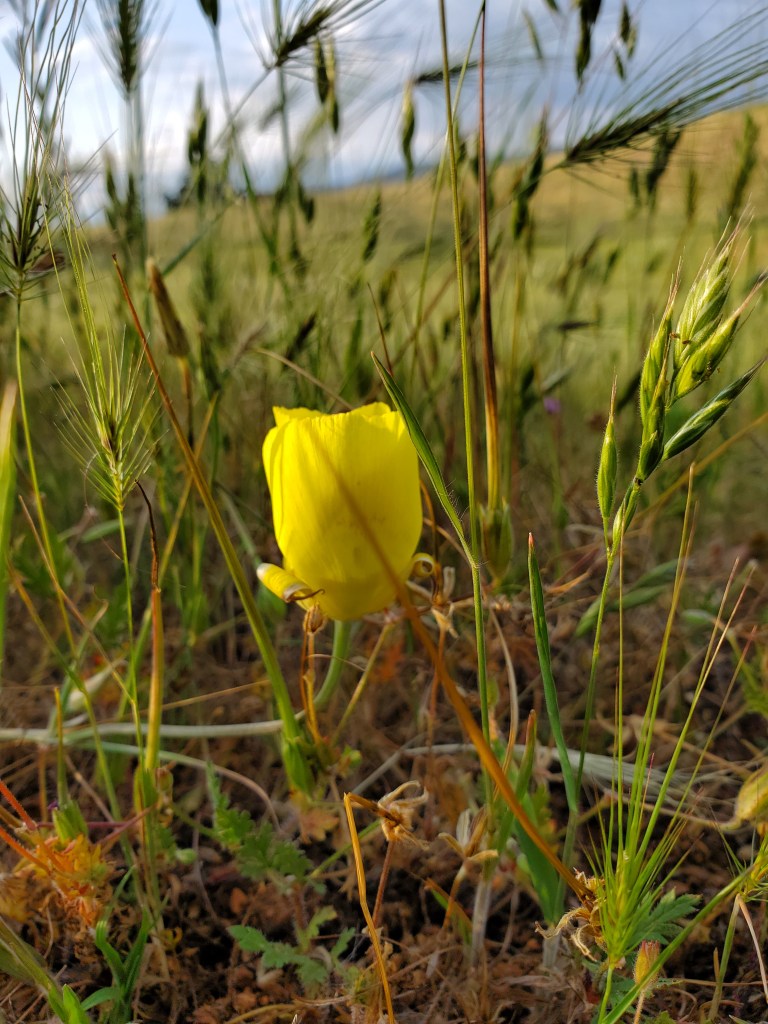
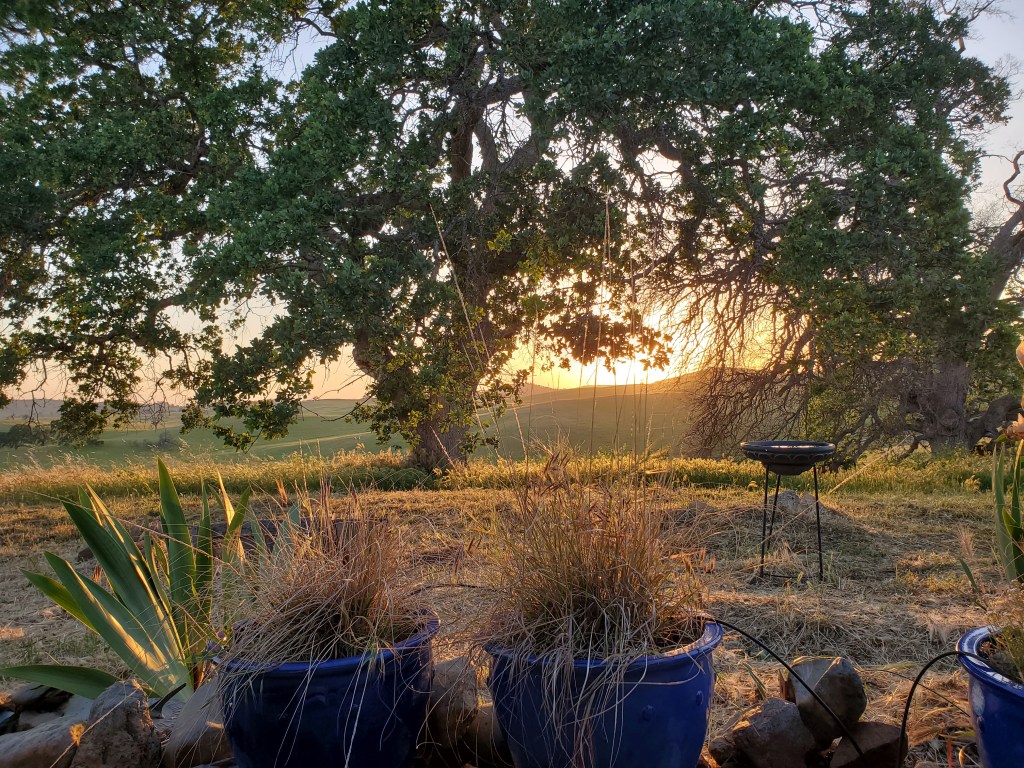
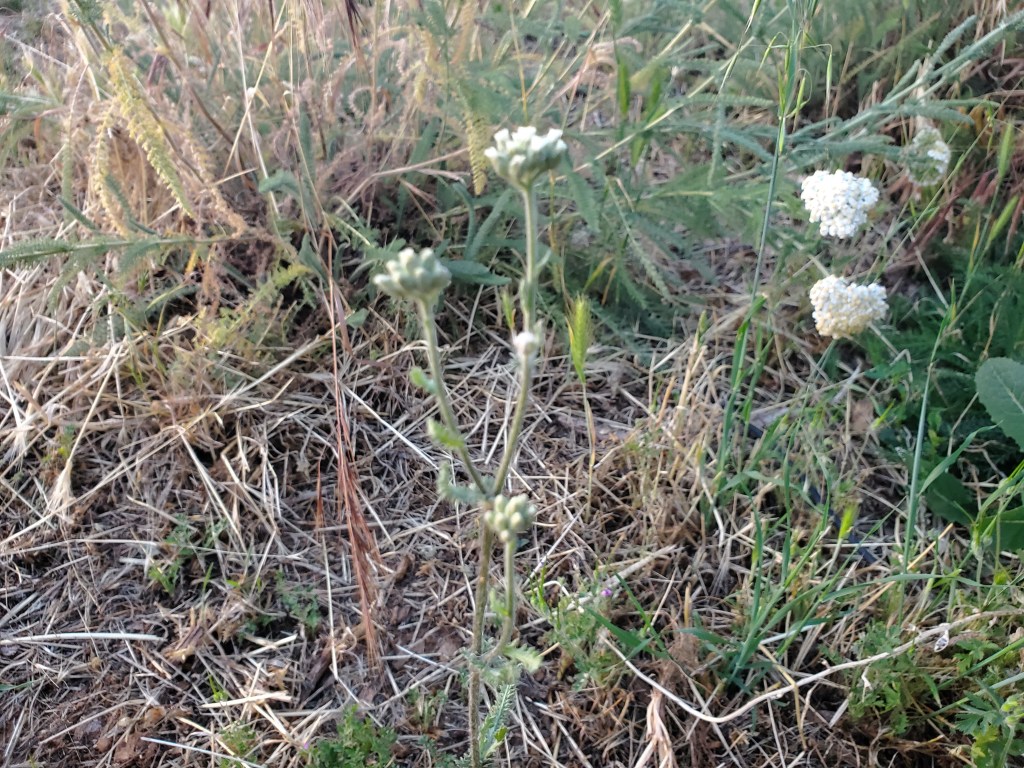
While there is beauty across the ranch, nectar in all colors, shapes and sizes, there are not many insects using them, particularly butterflies. There were mostly cabbage butterflies this year nectaring on the wildflowers. I saw two yellow swallowtails. David saw one orange butterfly (He couldn’t identify it, though I hoped it was a monarch.). And, just the other day, I saw a checkerspot. Not much of a list compared to years past – especially when there is so much nectar around. Last year, I understand; we were decimated by grasshoppers. There was nothing – but this year – there is so much.
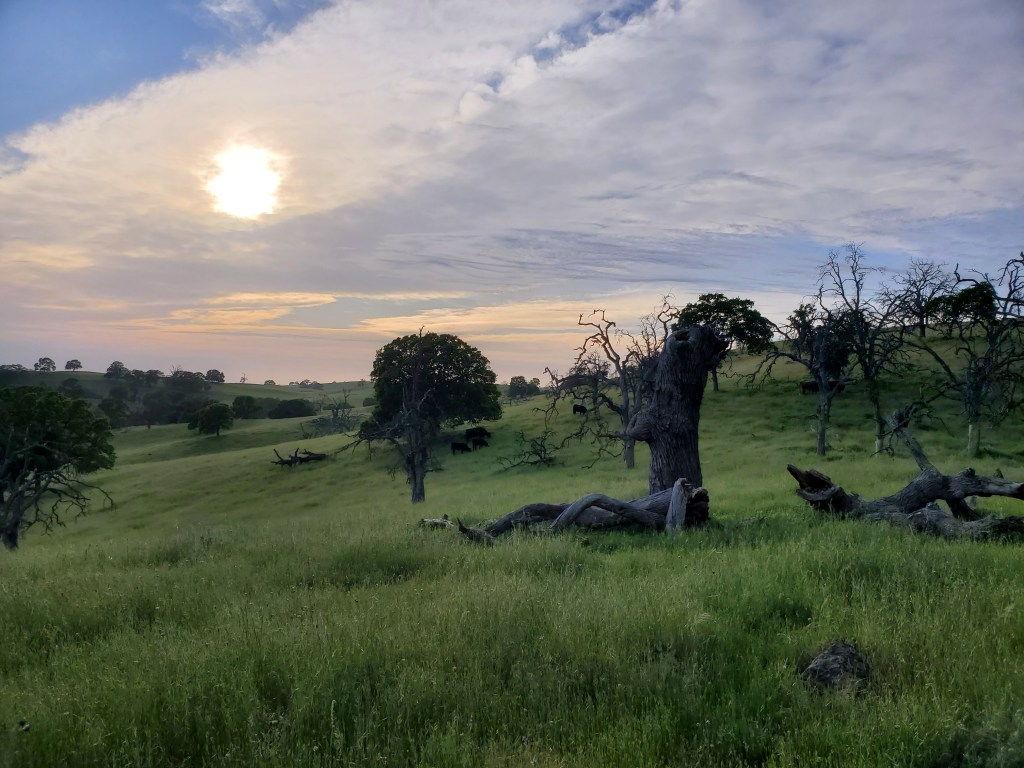
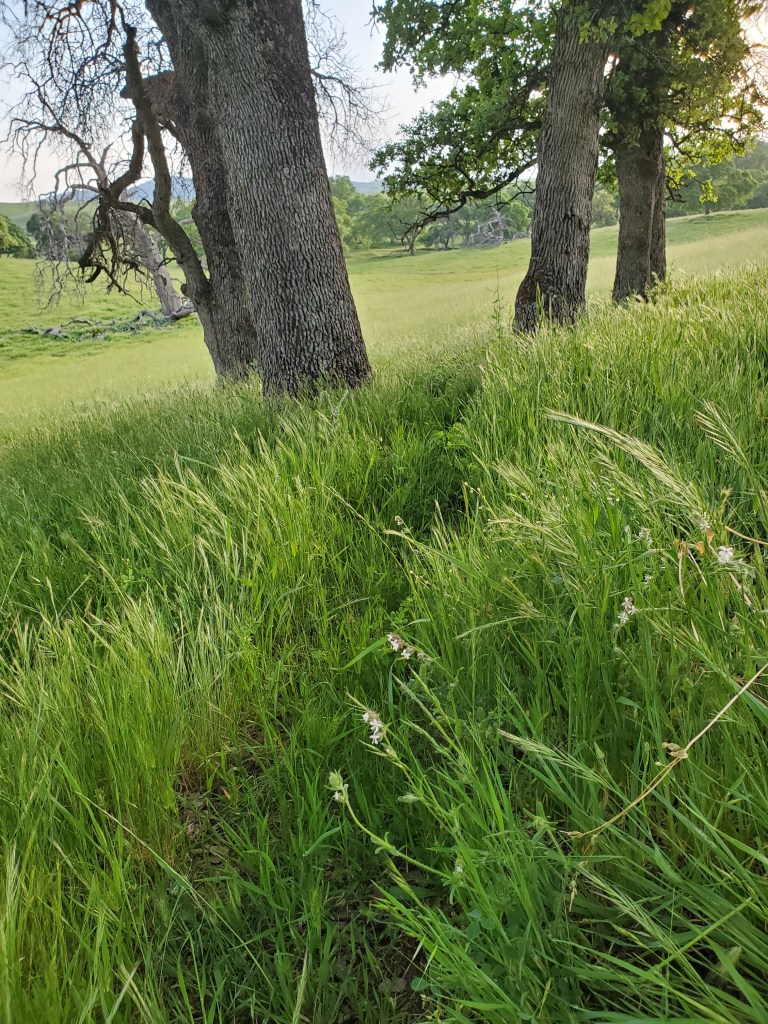
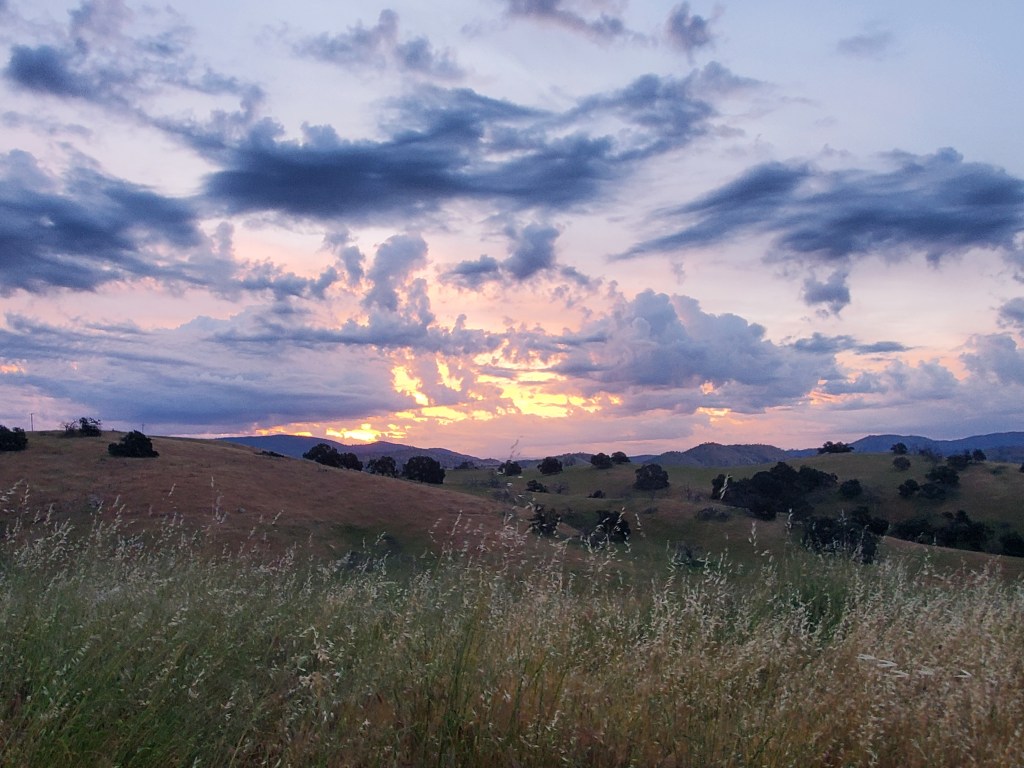
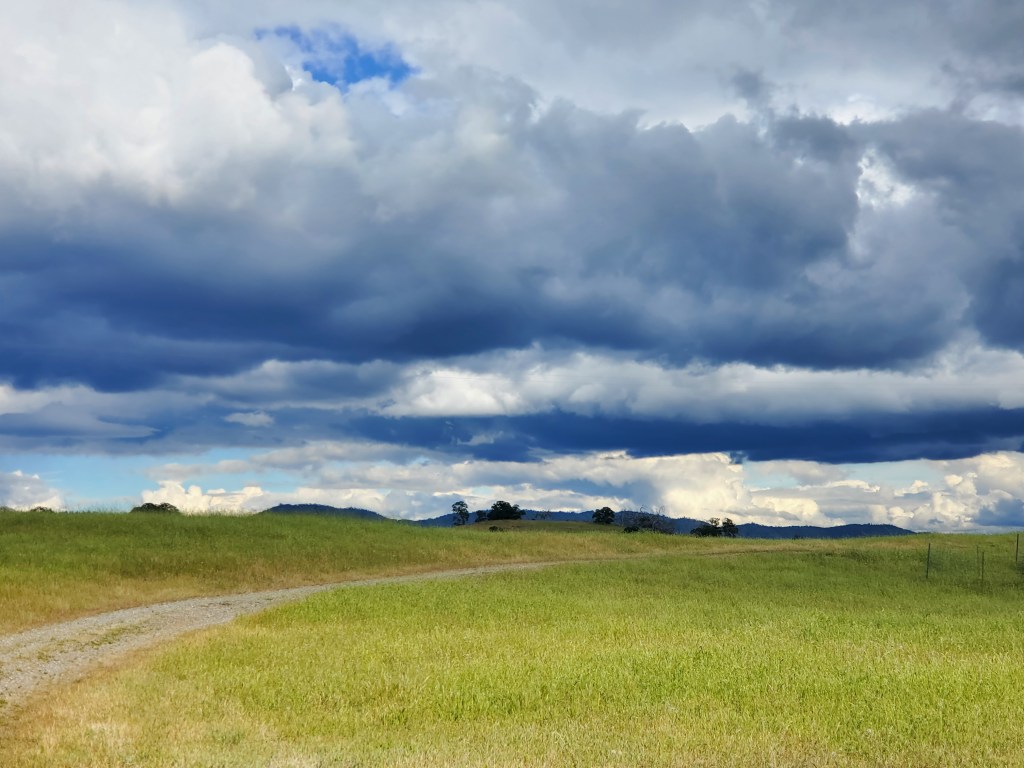
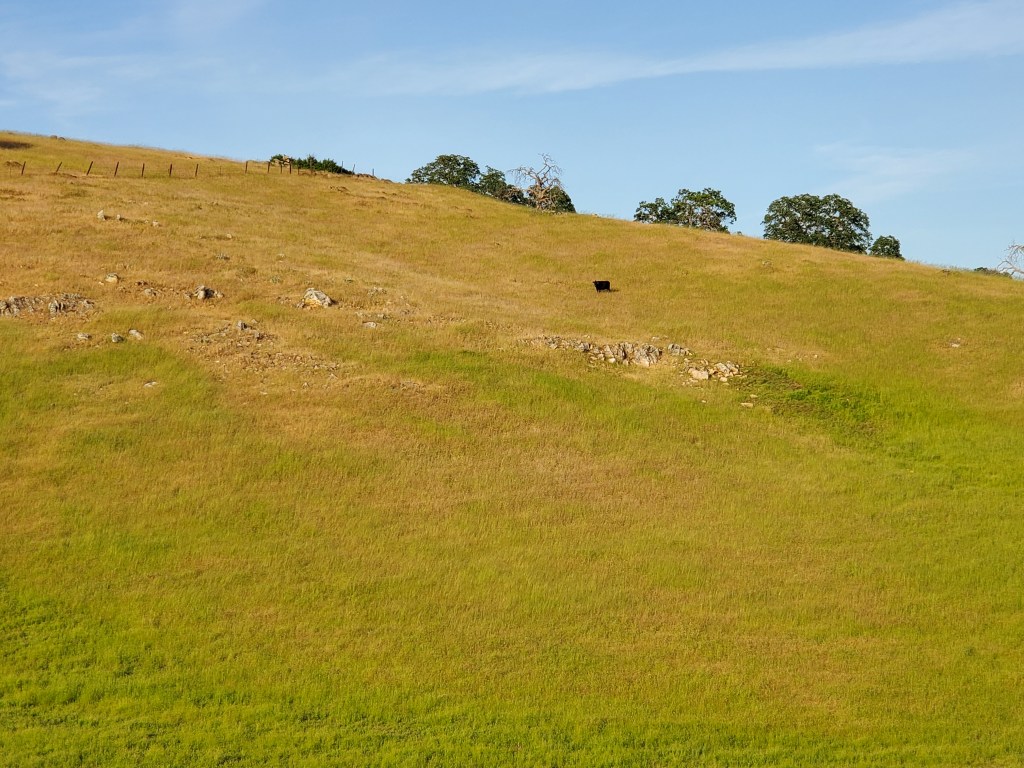
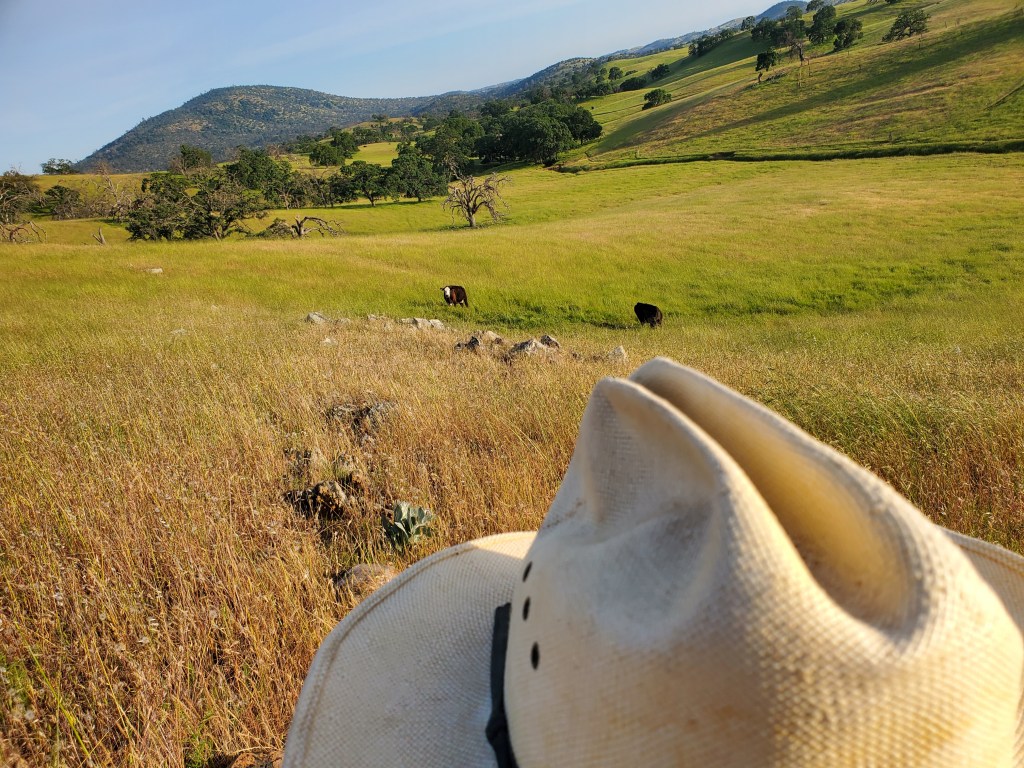
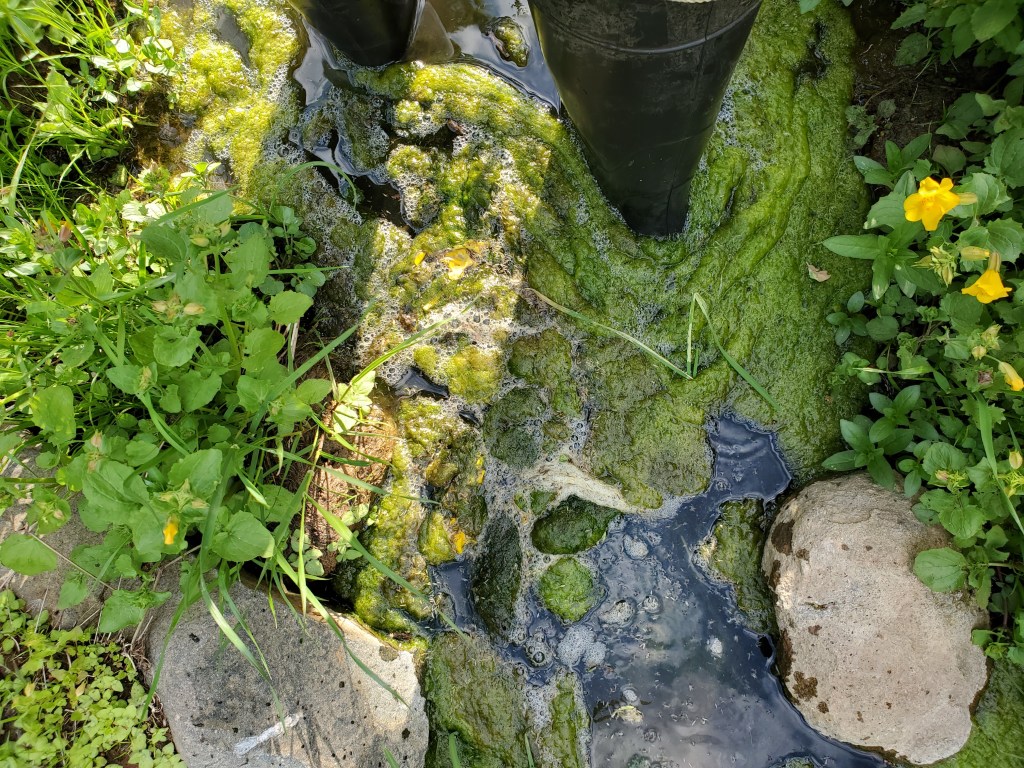
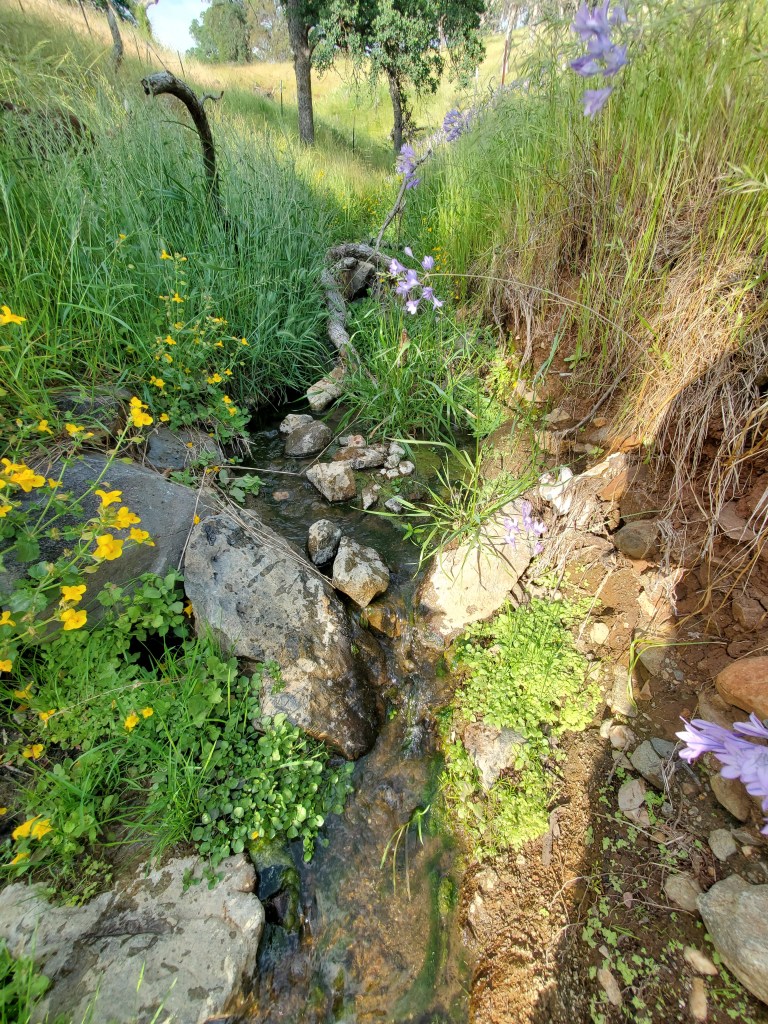
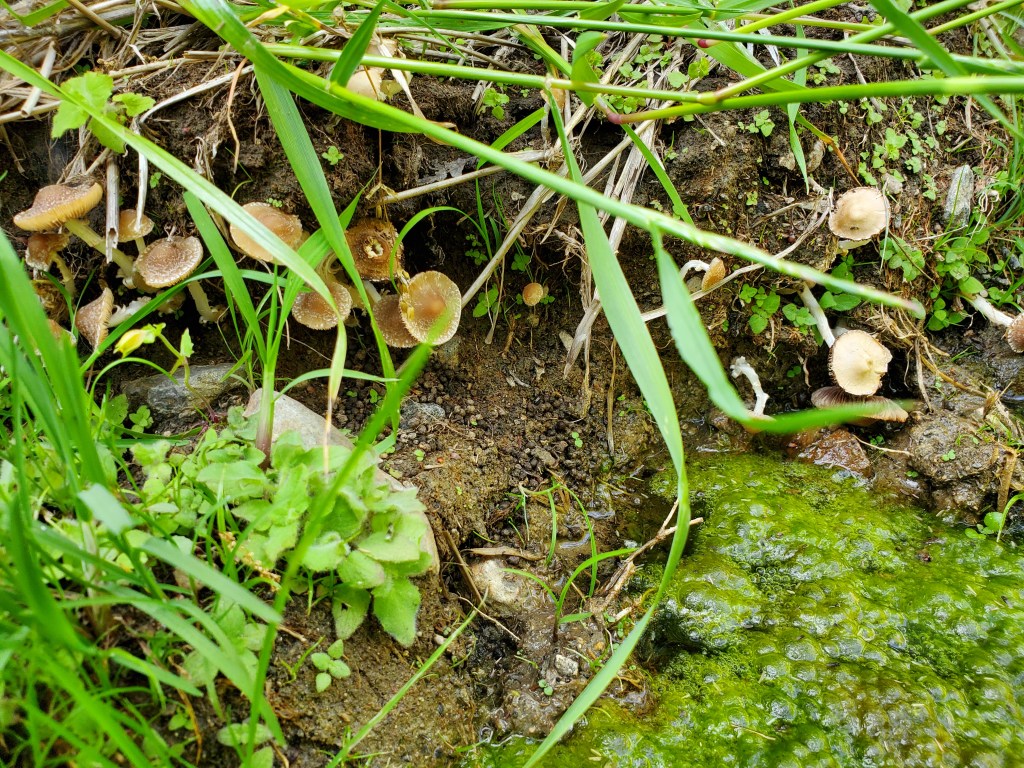
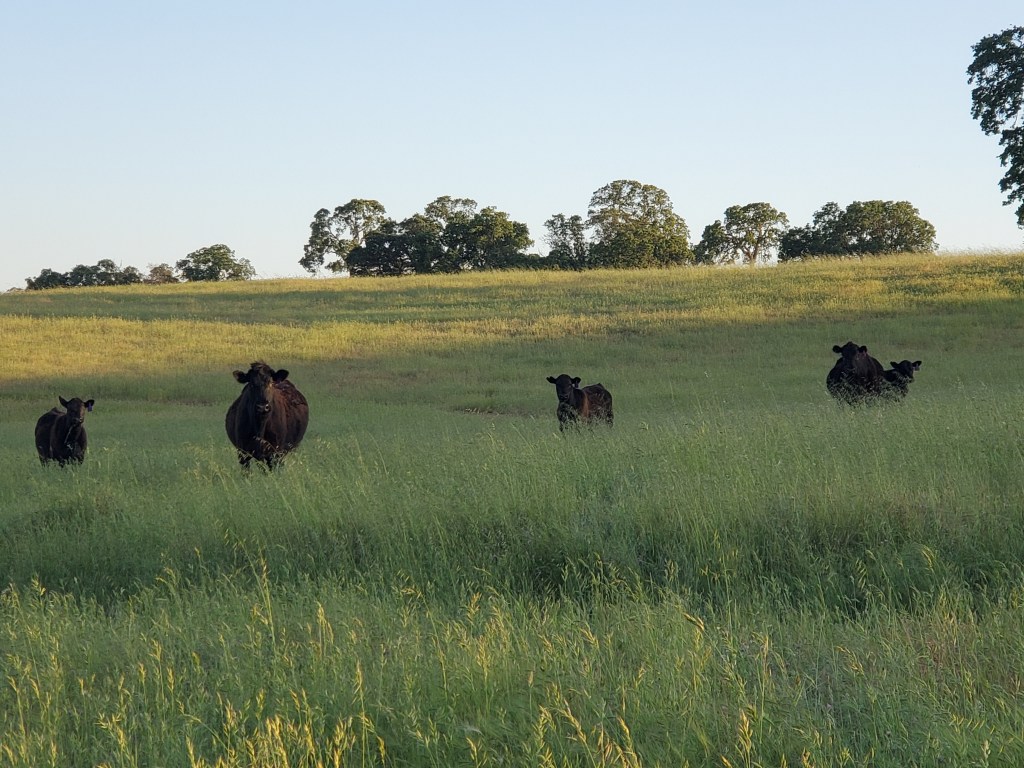
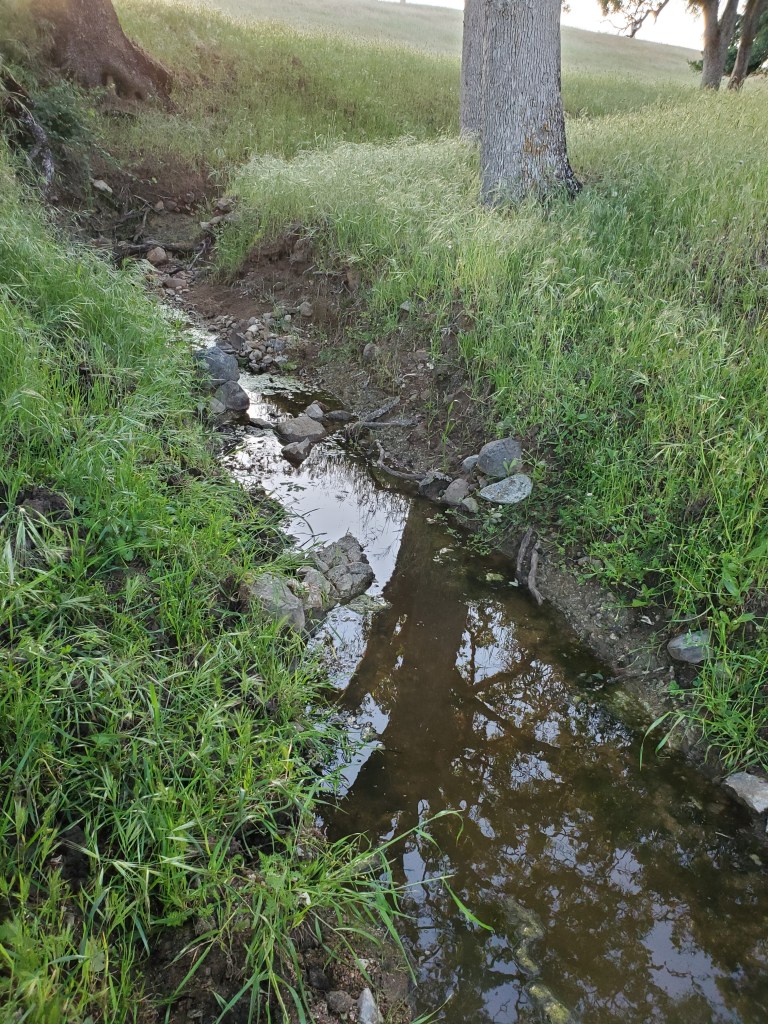
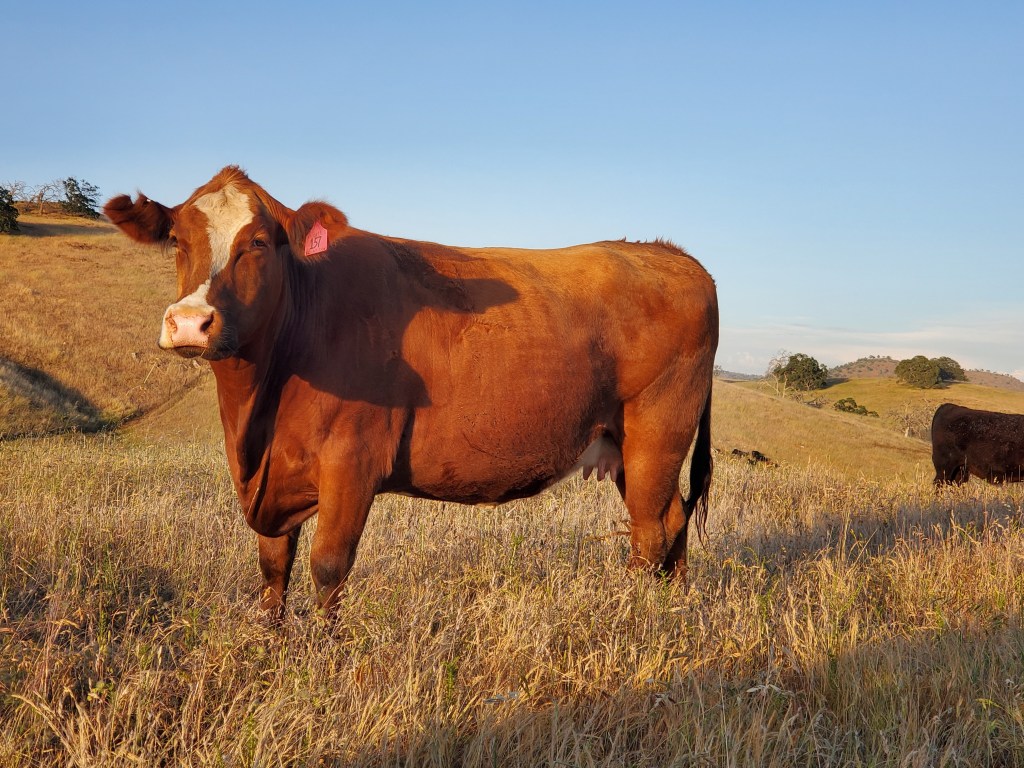
The following photos were taken largely in late April and early May when the grass was still green – and when I still had full use of my legs and hands. At this time, late May, the hillsides are yellow from young grass turned to hay and the water ways have shrunken and drainages dried. I am healing, but poor David is having to do my work and his.
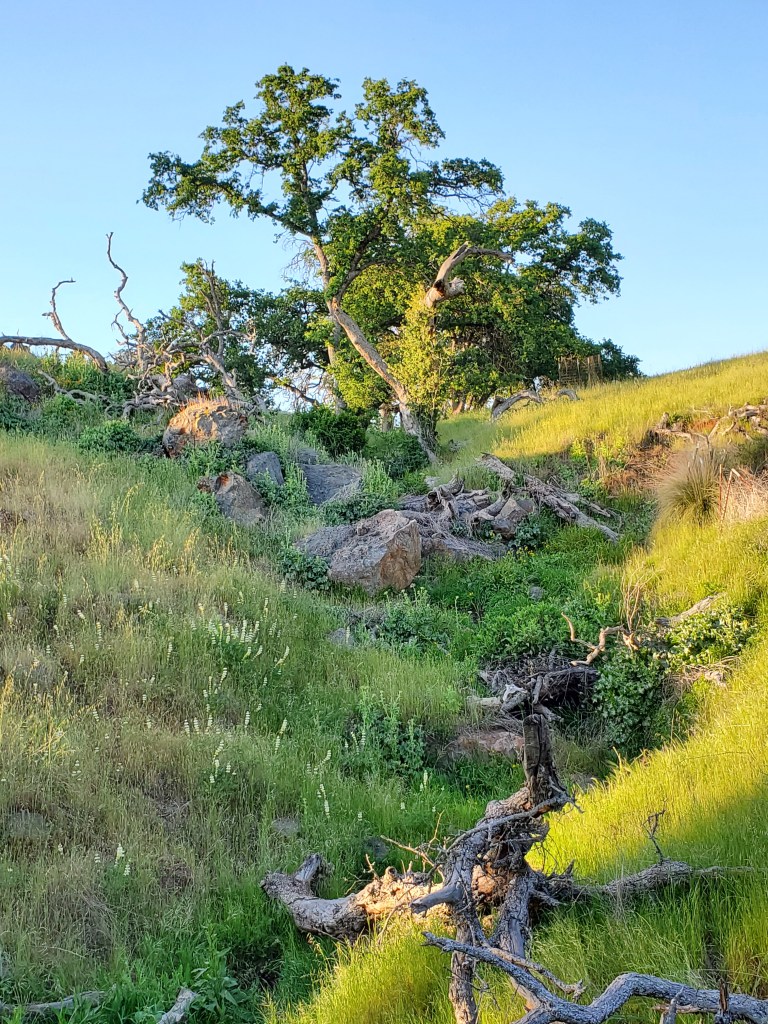
Oaks Surviving
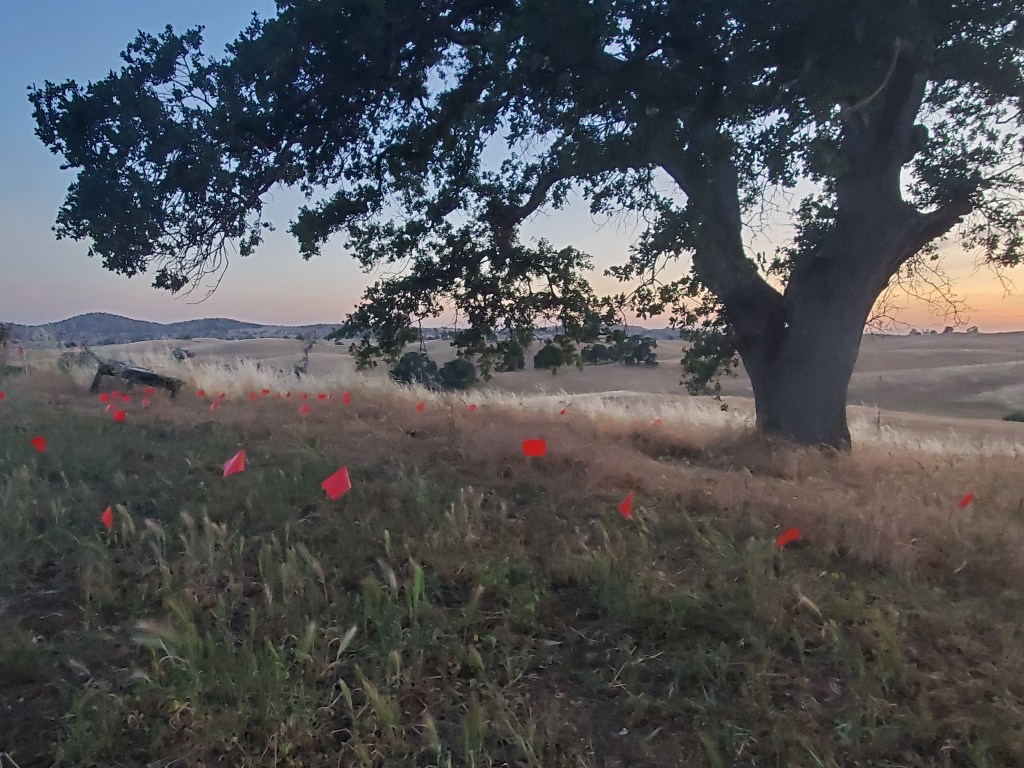
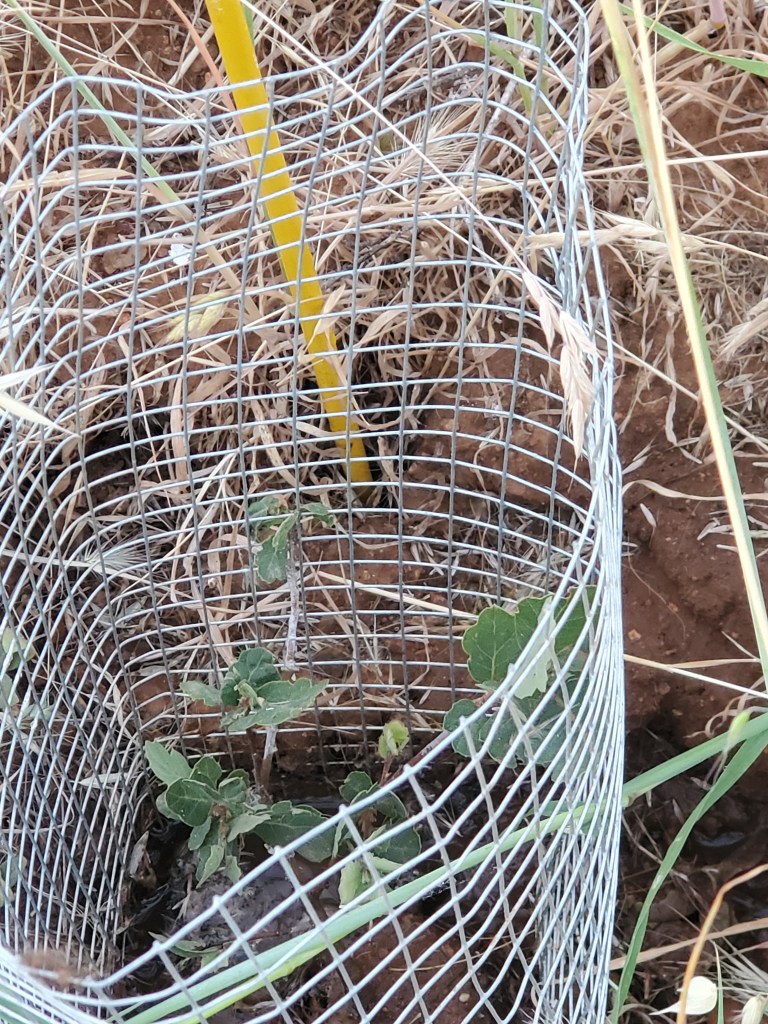
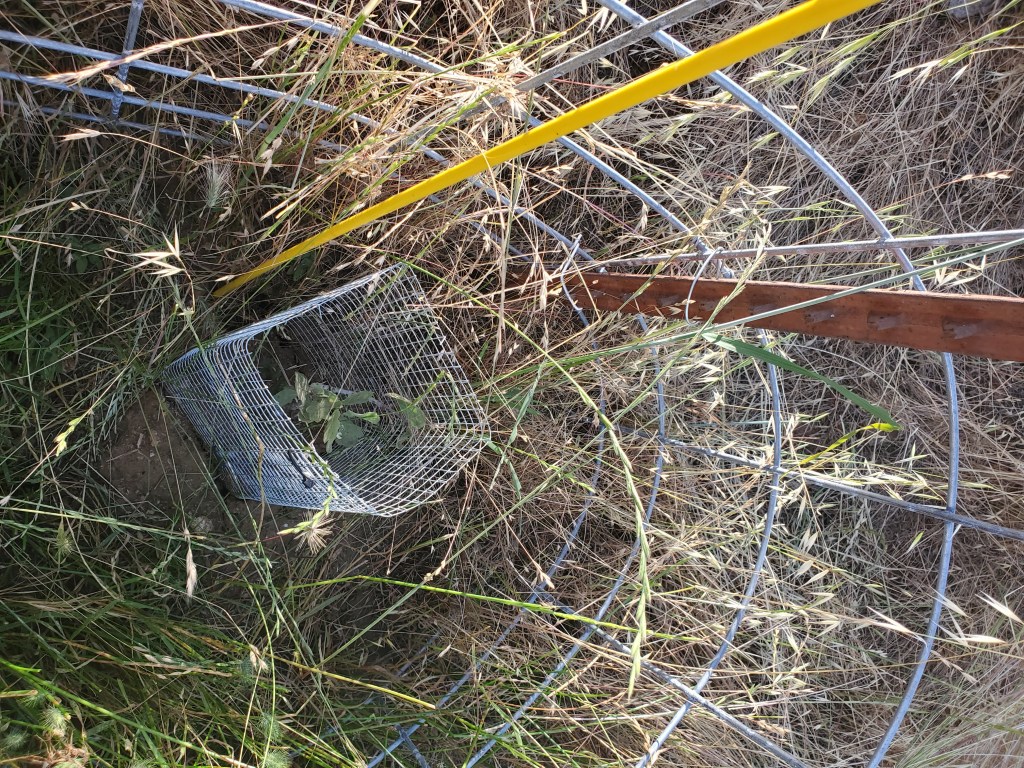
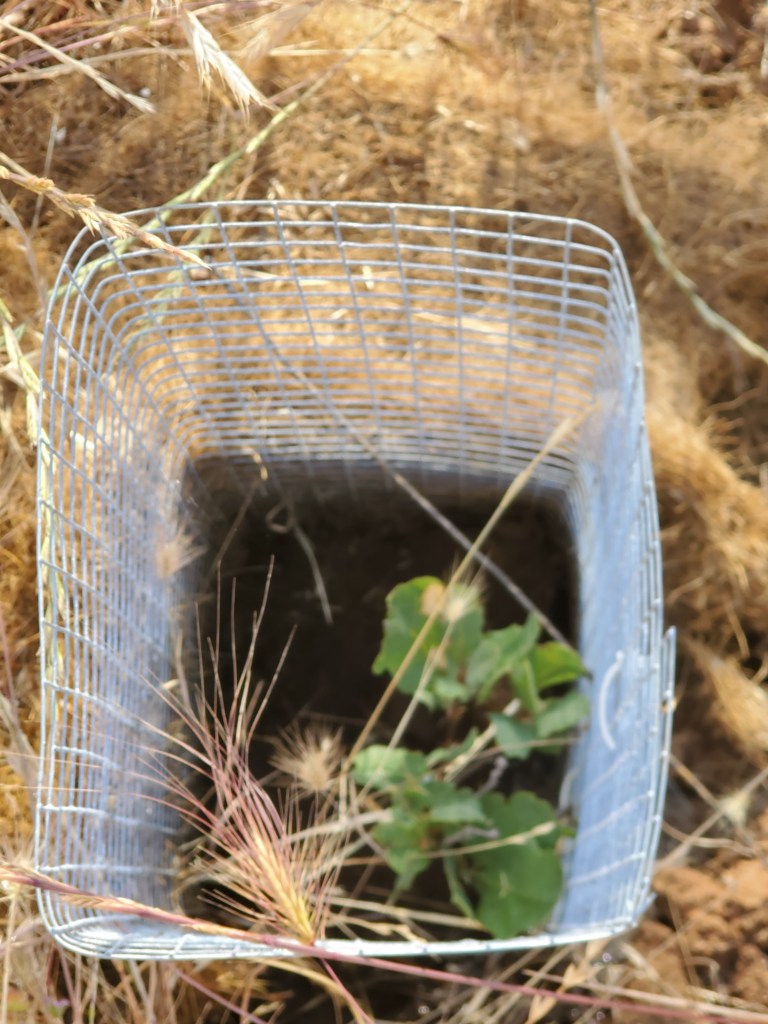
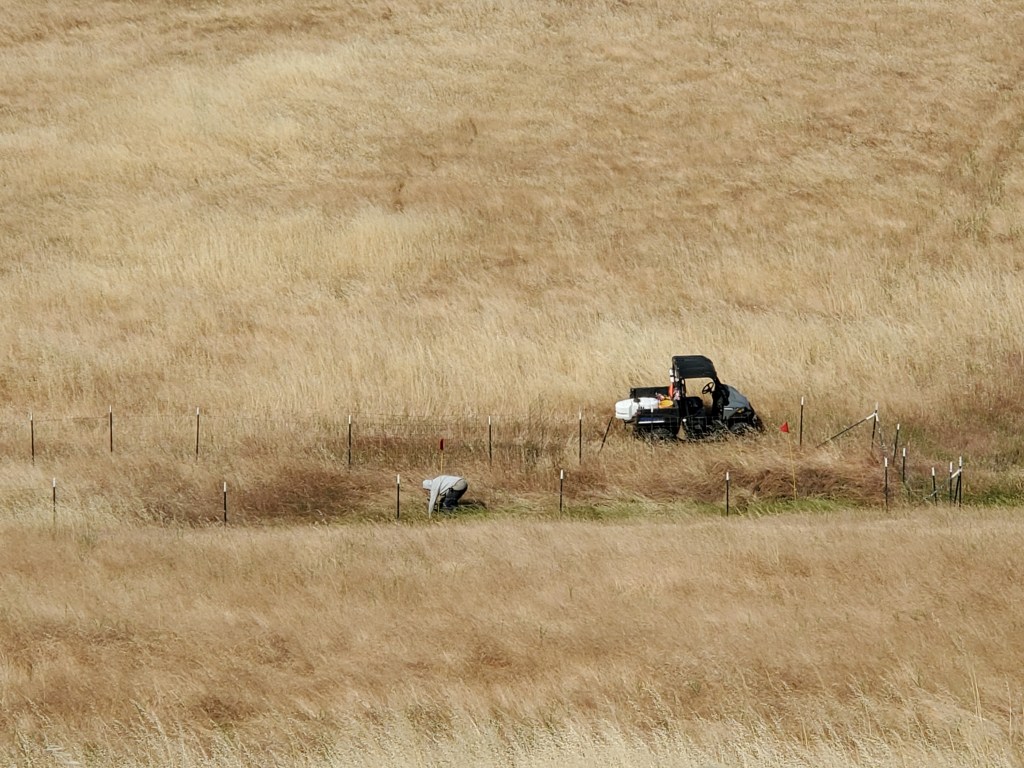
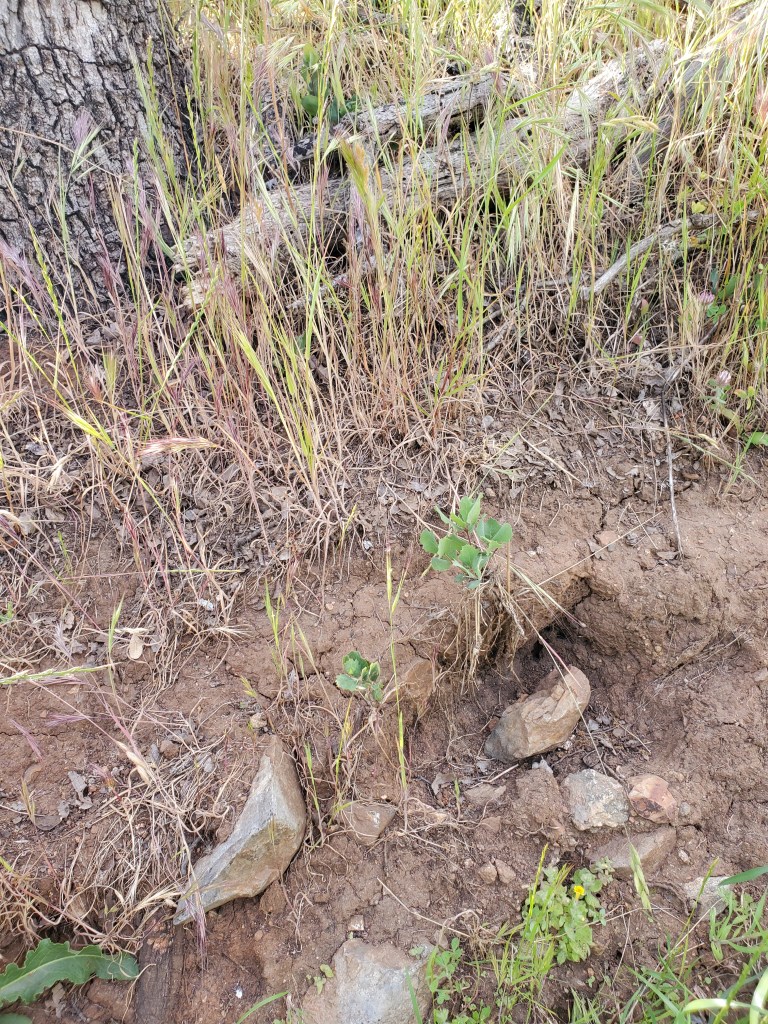
Most of the planted oaks are surviving. We lost two of the 19 seedlings. The areas with acorn plantings – none of them came up. The acorns were all taken. However, there has been a blockbuster of natural recruitment (oaks emerging naturally from acorn). While weed eating, David found one hundred emerged oaks around one of the grandmother blue oak trees. We have looked at other nearby oaks and found more seedlings. Evidently, there is the right combination of moisture, acorn and soil conditions to allow for massive propagation. Don’t get too excited. Most of those babes will get eaten. With vigor, David flagged the seedlings so he could keep an eye on them and continue to pull grass as new shoots grew, but he quickly saw that these seedlings were also delicious meals for gophers. We are going to try to cage some of them and water them – especially outside of the enclosure where the cattle graze.
No Monarchs – Again. But, Bumbles Return
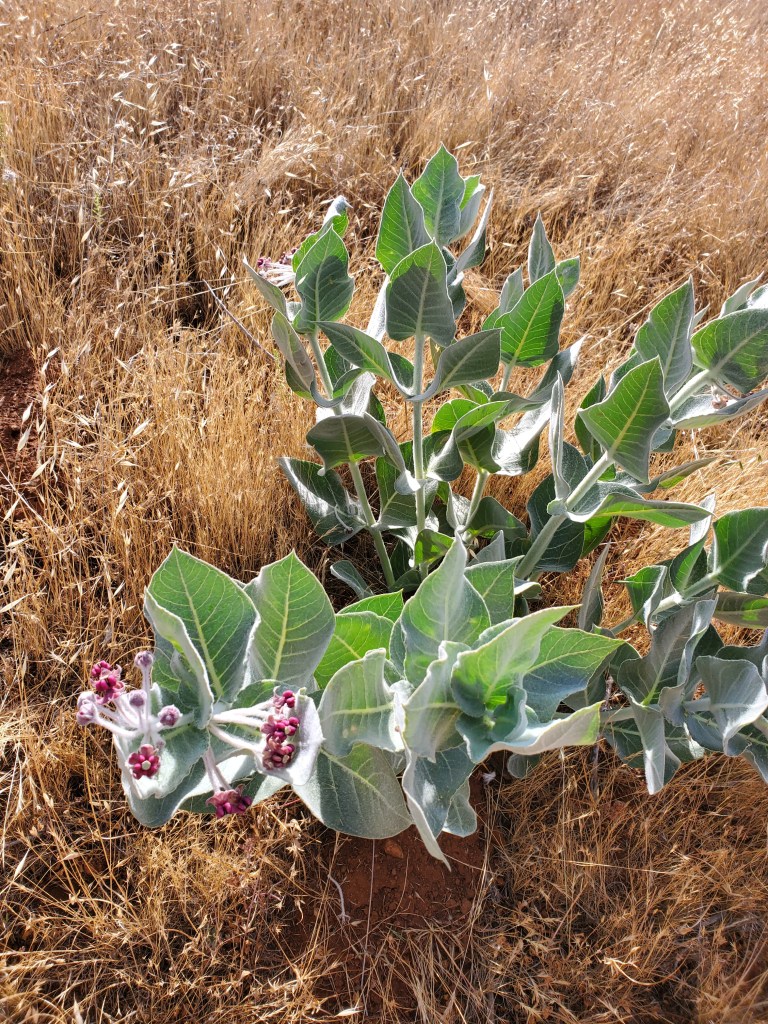
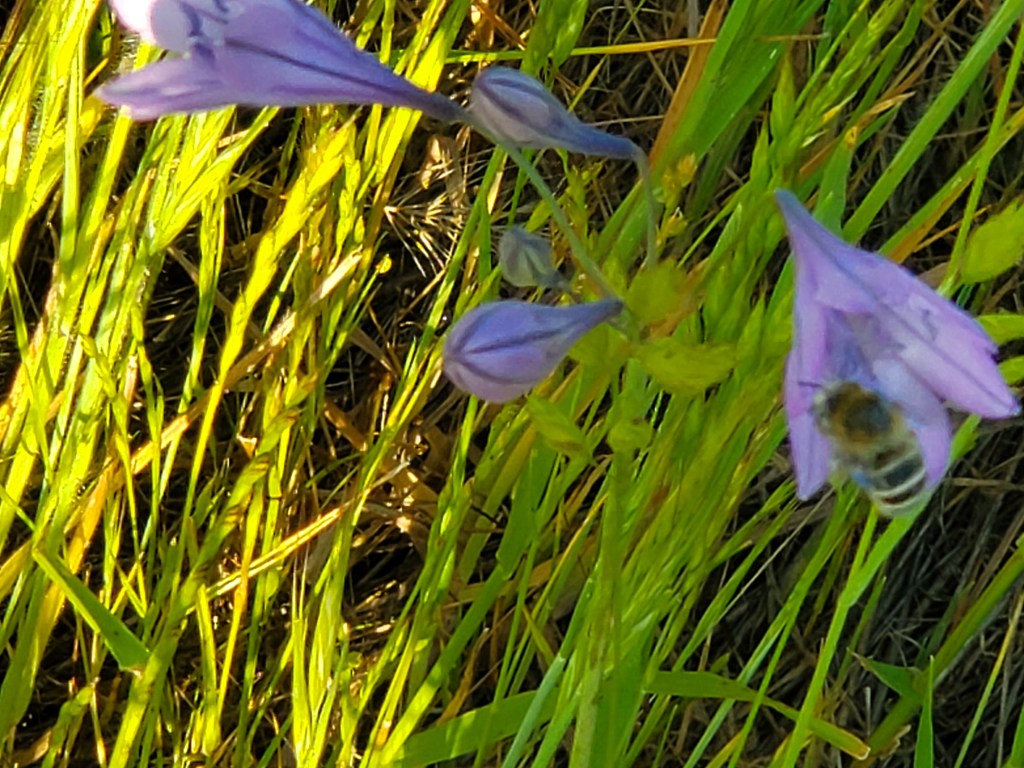
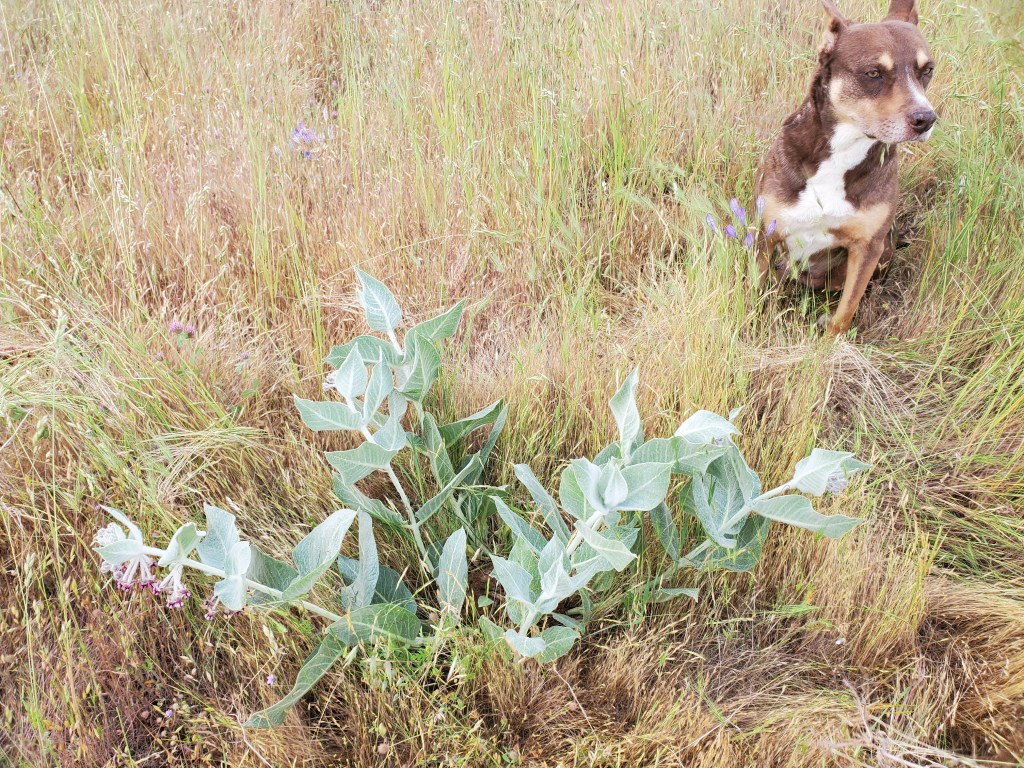
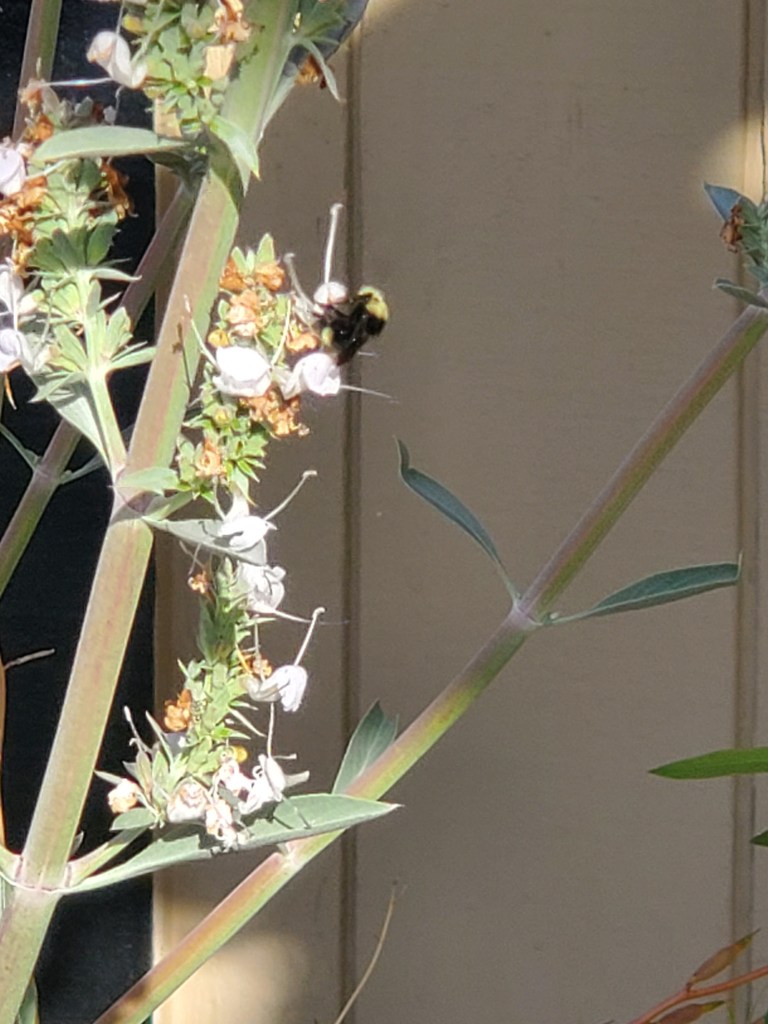
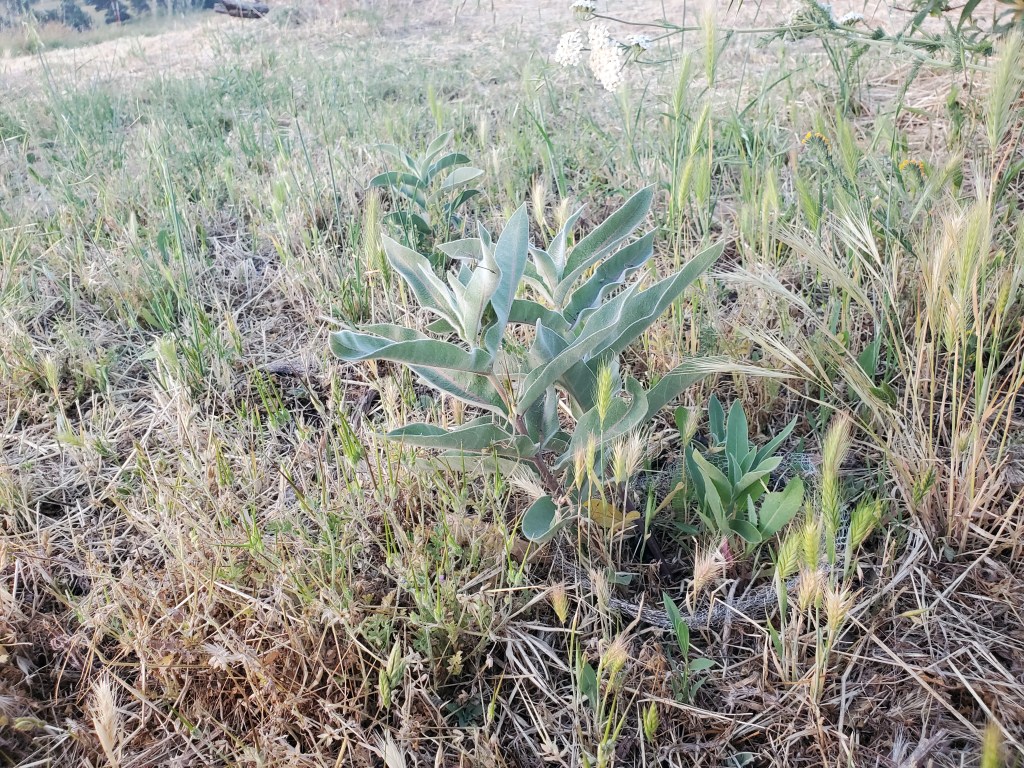
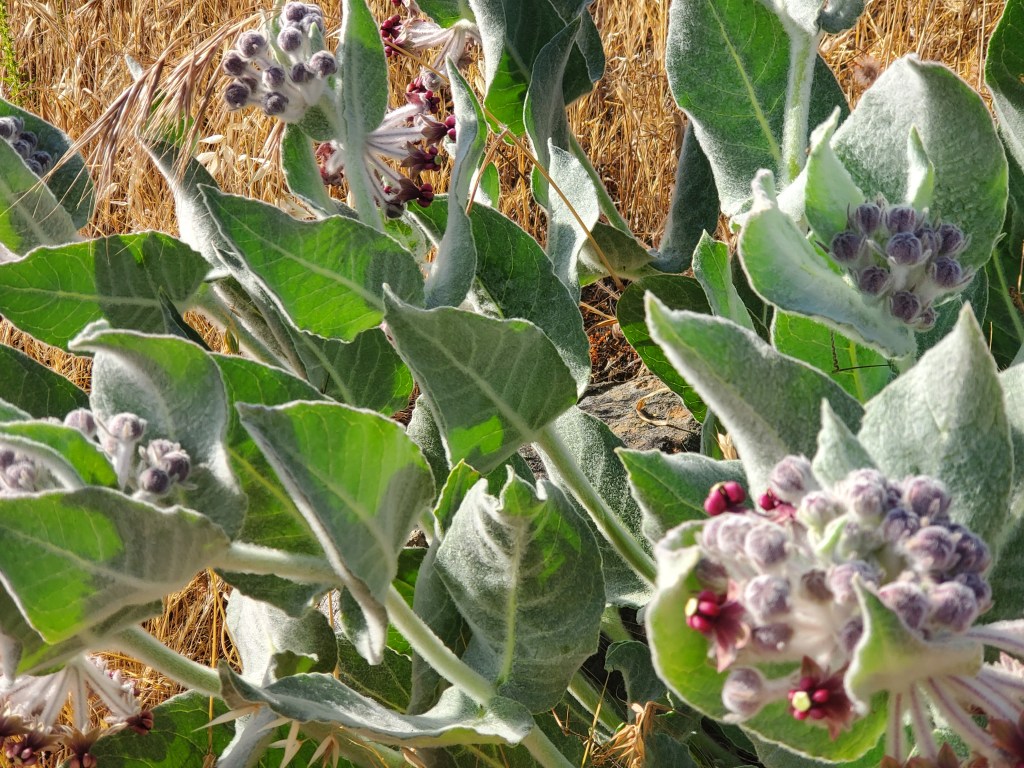
Sadly, the California Milkweed has remained pristine, no telltale bite marks, yellow stain or caterpillar poop. The north facing plants are still blooming with just a few beginning to set seed pods. The south facing plants, reliable hosts for traveling monarchs, are fully spent and well into setting seed pods. The only reason my spirit is not completely crushed is that the crotch bumble bees still reigned supreme on the hill in the milkweed plots. I even saw some down the hill near the cow clover. They seem to be increasing in number slightly.

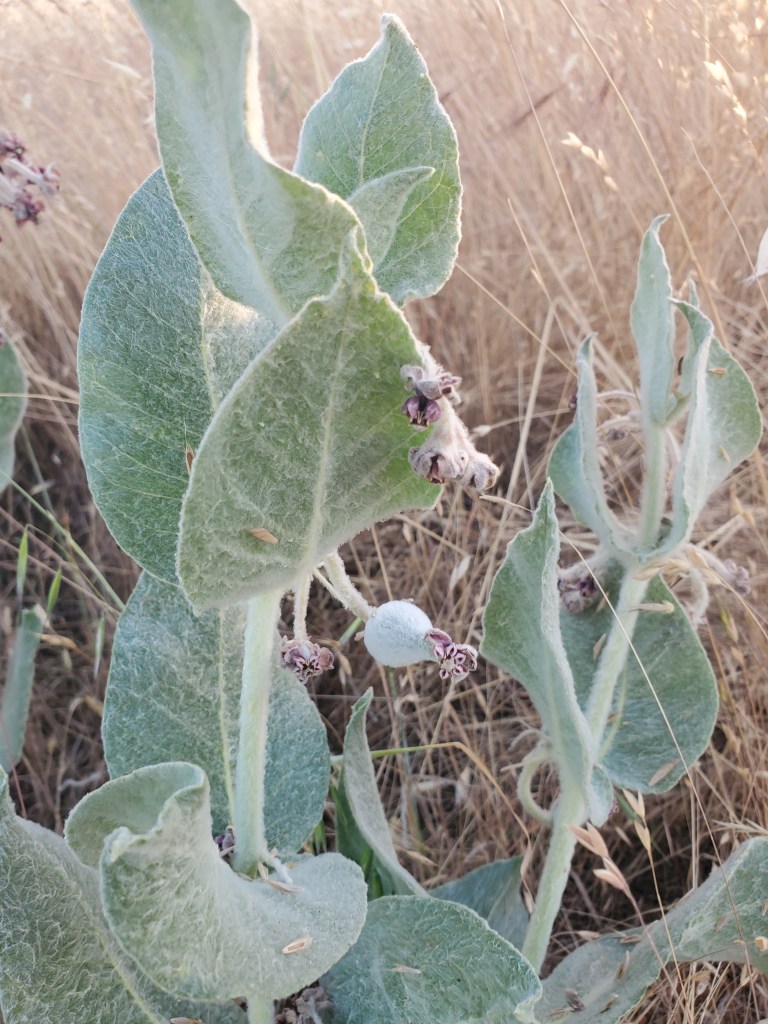
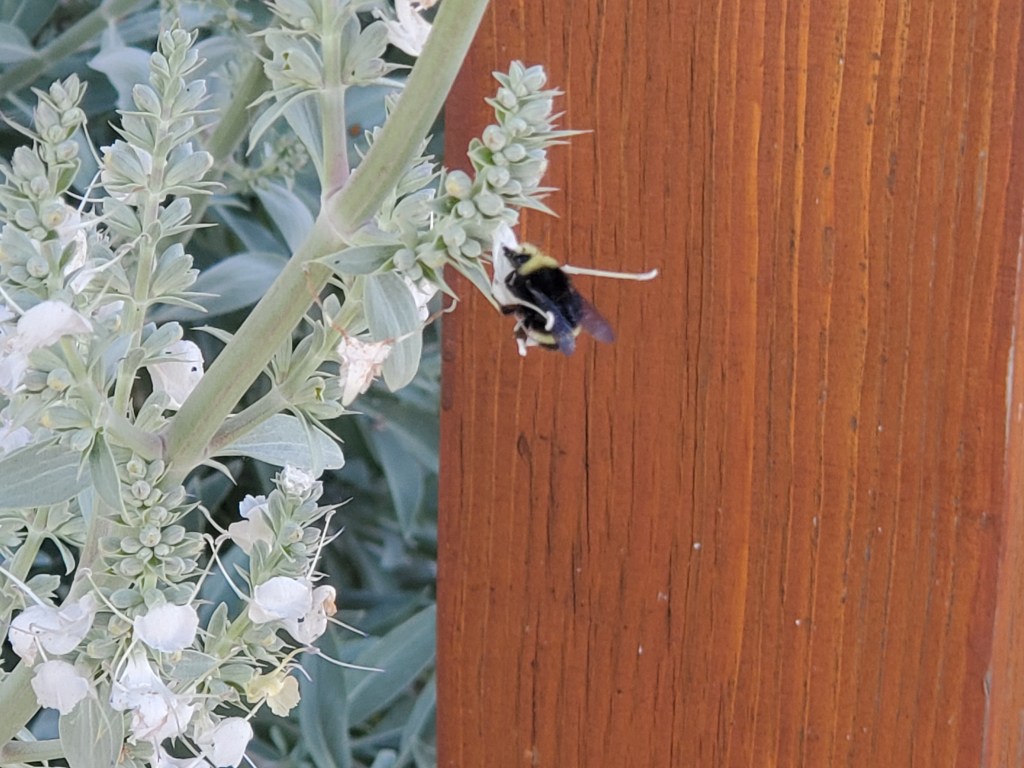
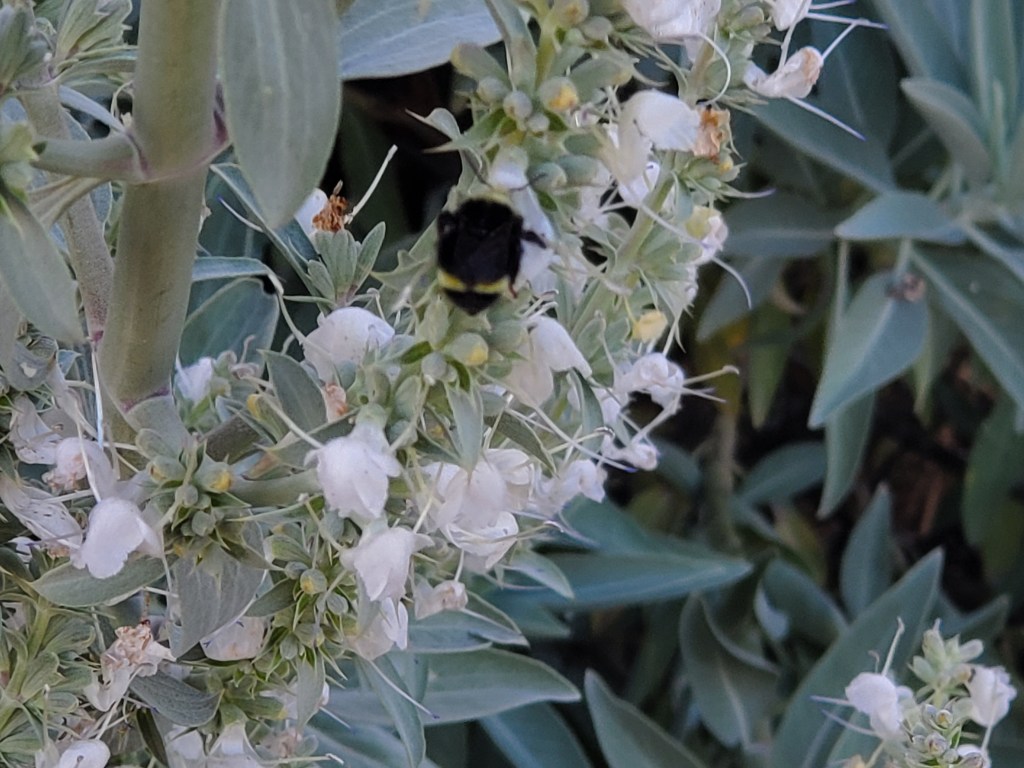
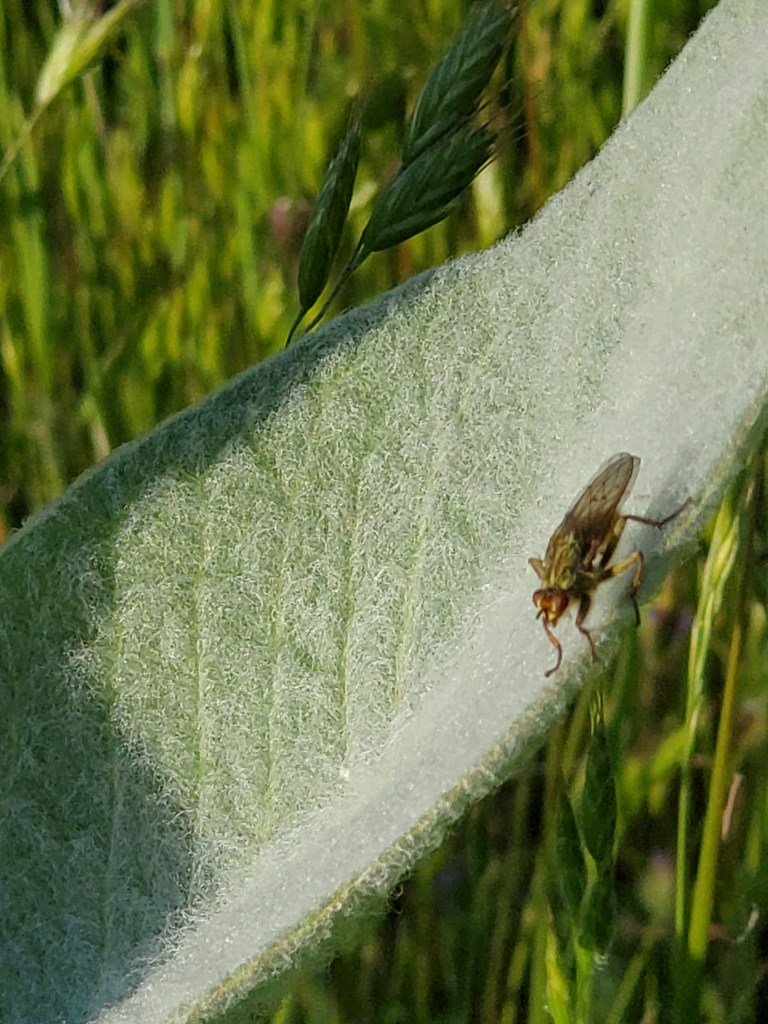
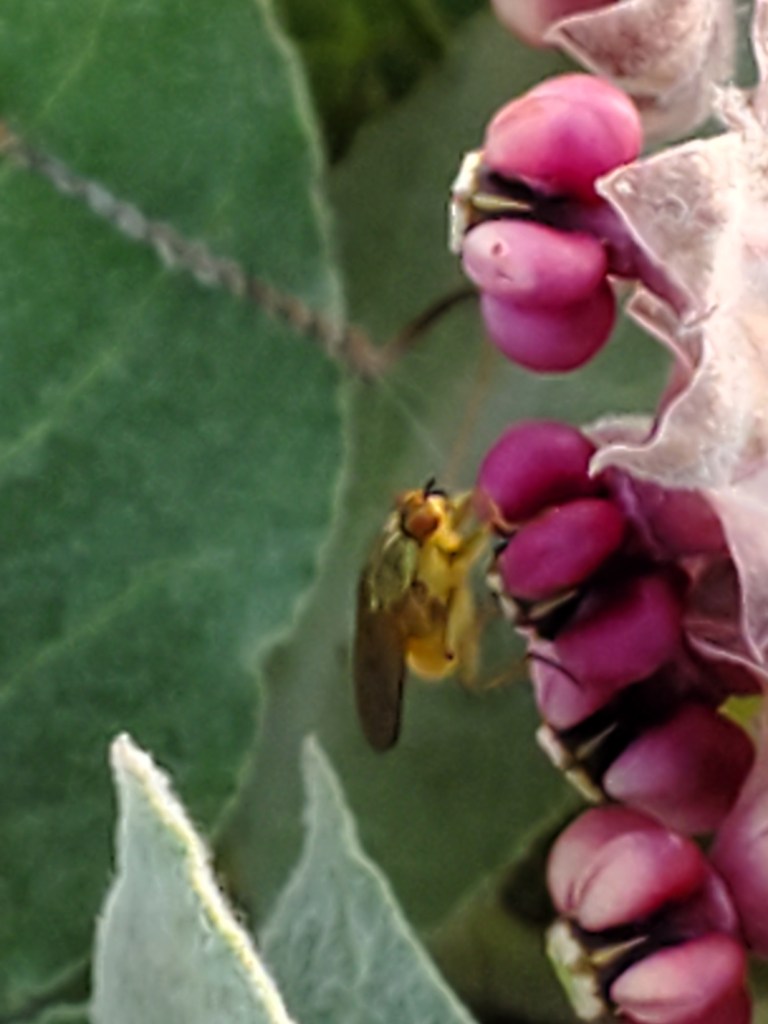
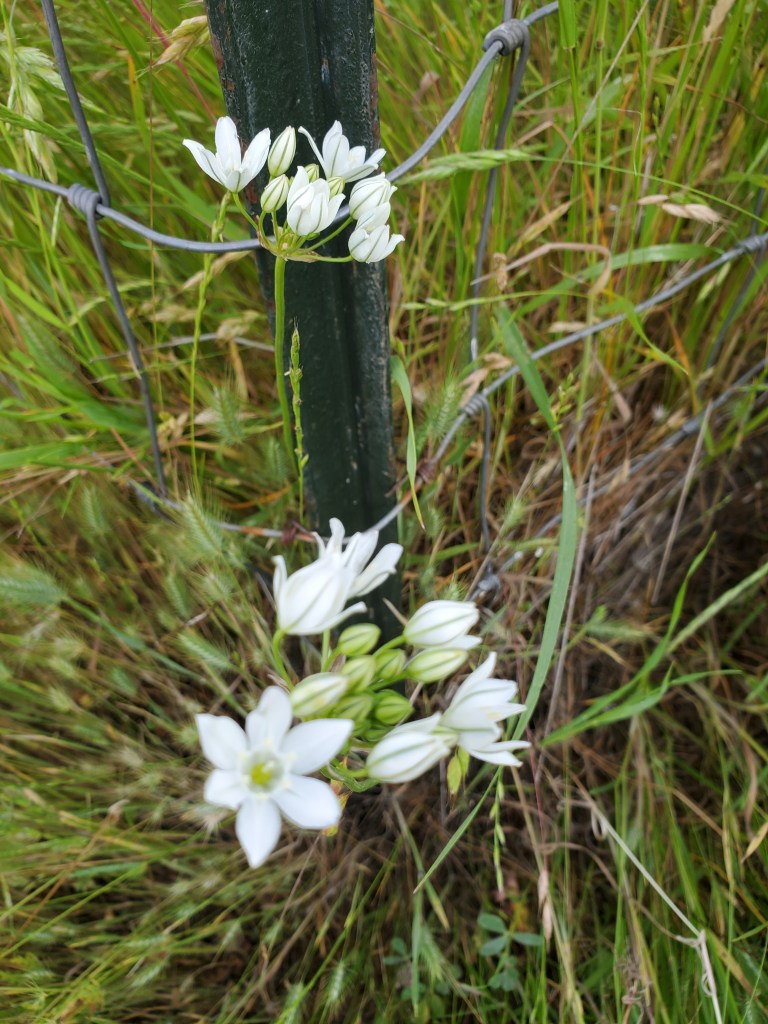
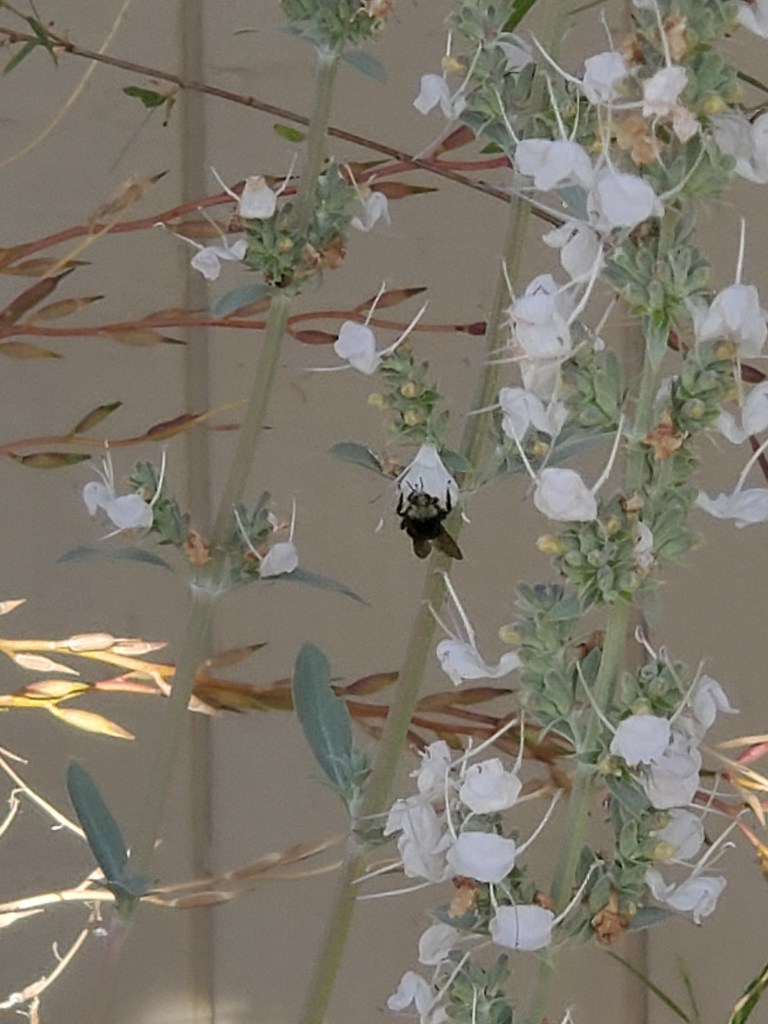
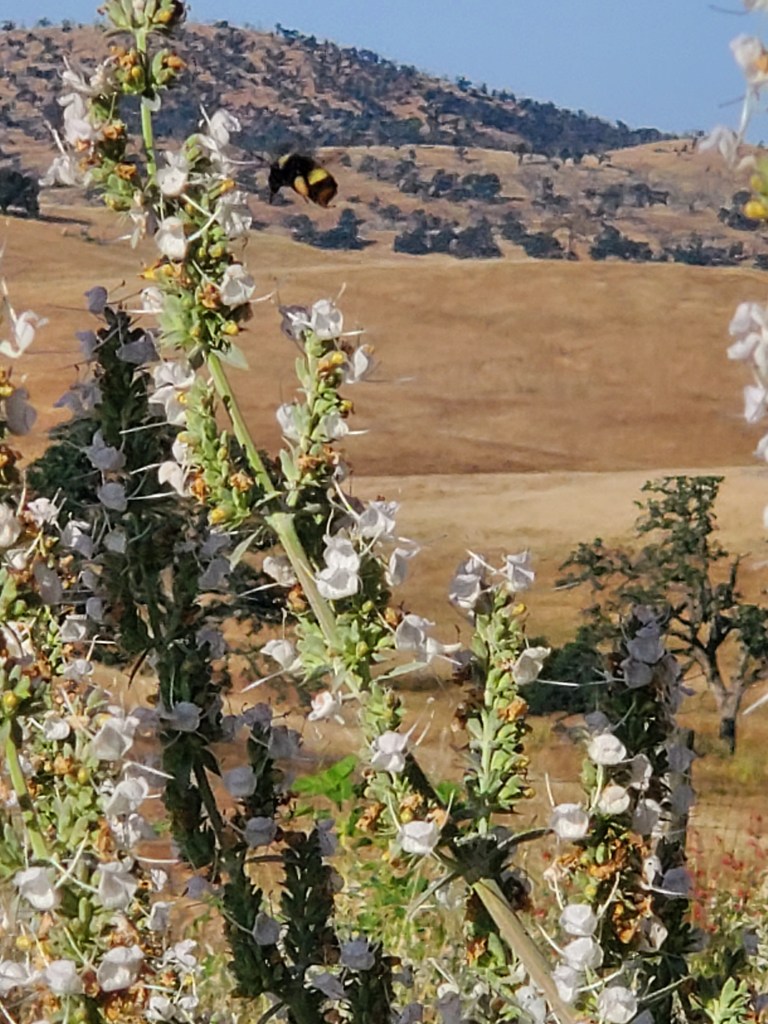
With the survival of my old white sage plant from the grasshopper incursion, its blooms have brought back a myriad of bumble bees and small pollinating flies. The onions are blooming as well and have encouraged micro pollinators into the yard. I love seeing those very small, hard-working insects. More lady beetles have been around, but not in numbers I’ve seen before. Of course, house flies seem to be abundant every year, and this year is no exception.
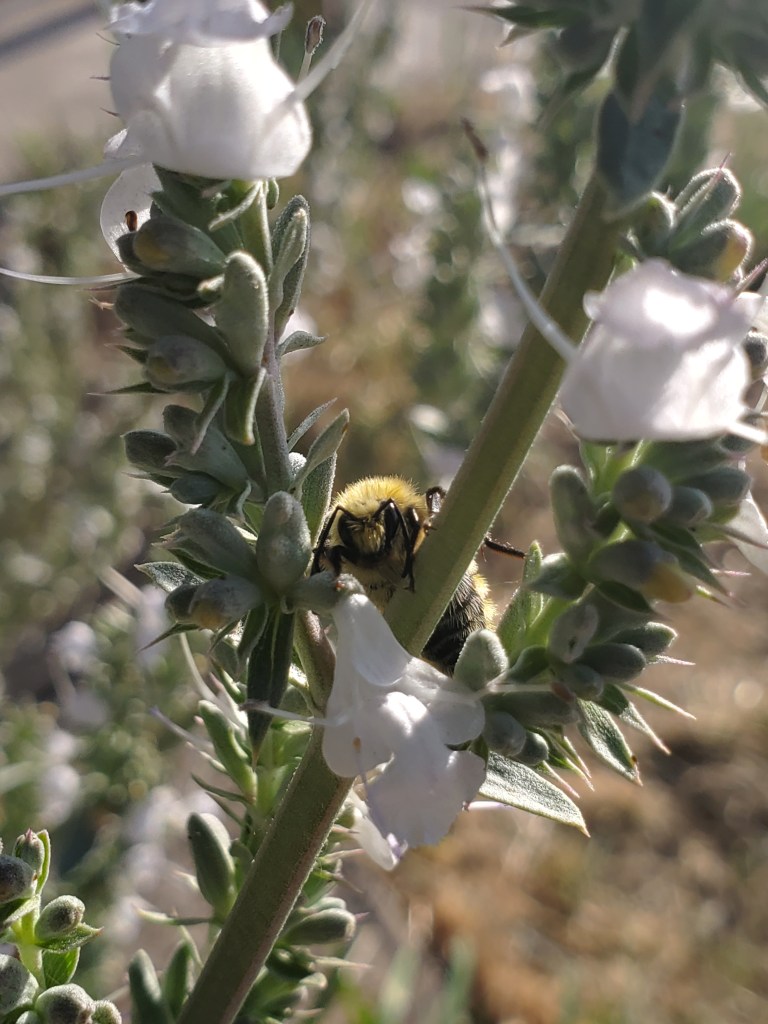
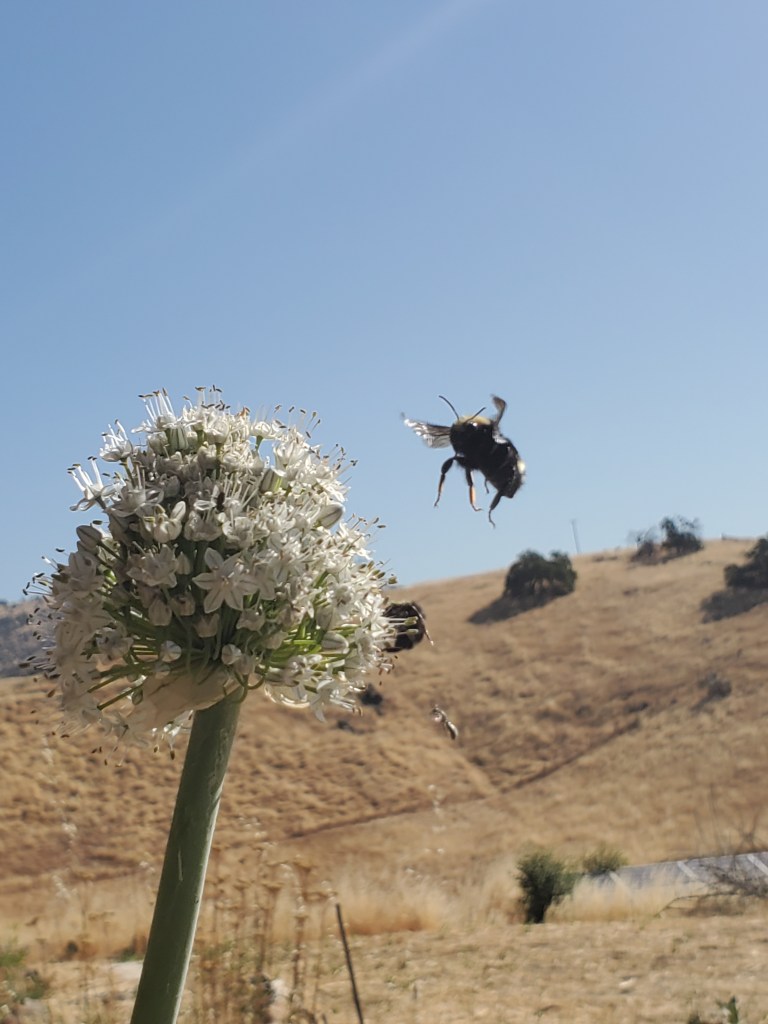

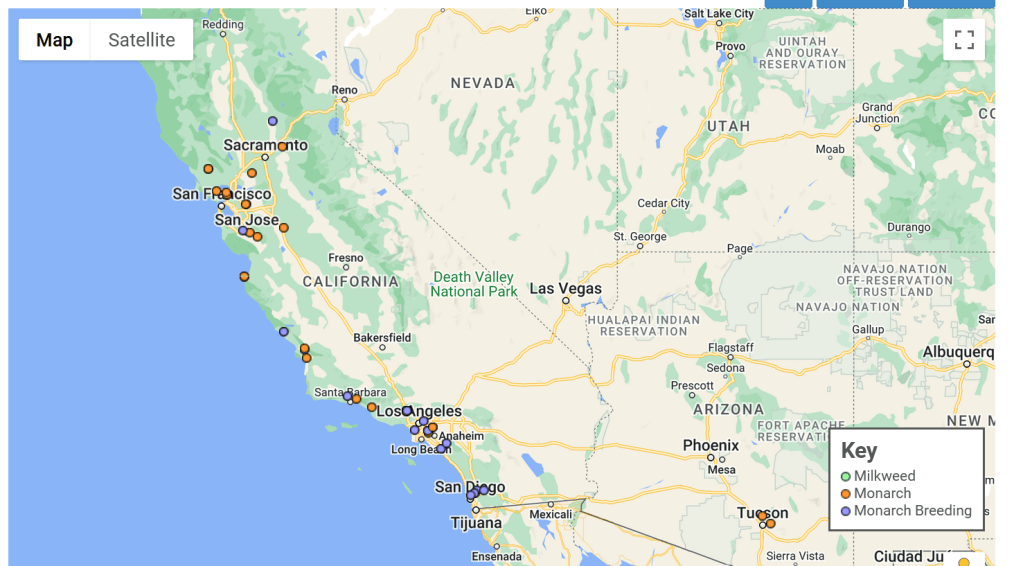
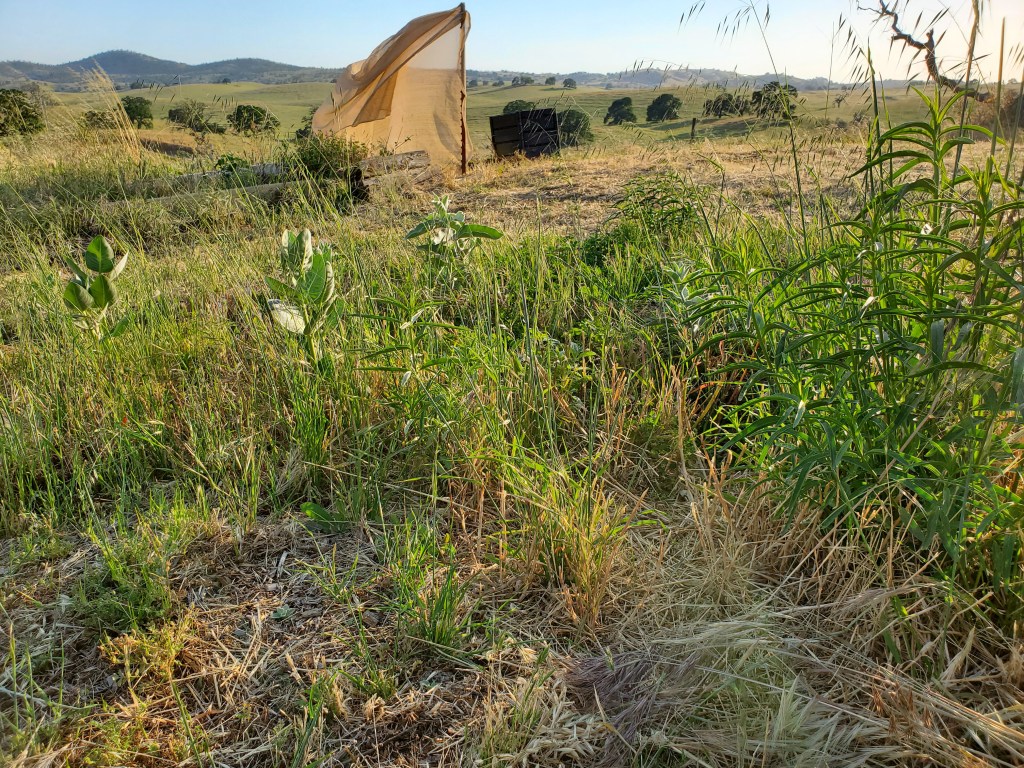
With the second lowest count of monarch adults since the history of the overwintering count, I perhaps should not have hoped for a visit. This would be the second time in a row monarchs have bypassed the ranch. I understood skipping us last fall on their way back. Truthfully, I didn’t want to be here. All the stripped and murdered plants, grasshoppers shifting around like flakes in a snow globe, it was all too sad. But, I stayed. I had saved one large narrowleaf milkweed with a screen box my husband made. I kept watch on that plant for the entire summer to make sure it was still available should the monarchs stop back on their way to overwinter. Like a child at Christmas, I waited for an orange, black and white Santa to come, gifting their eggs to hatch and a sense of fulfilled purpose and hope. But, Monarch Santa never came, and I questioned my work. How could I do better? How can I make the habitat more resilient?
Birds and Other Wildlife
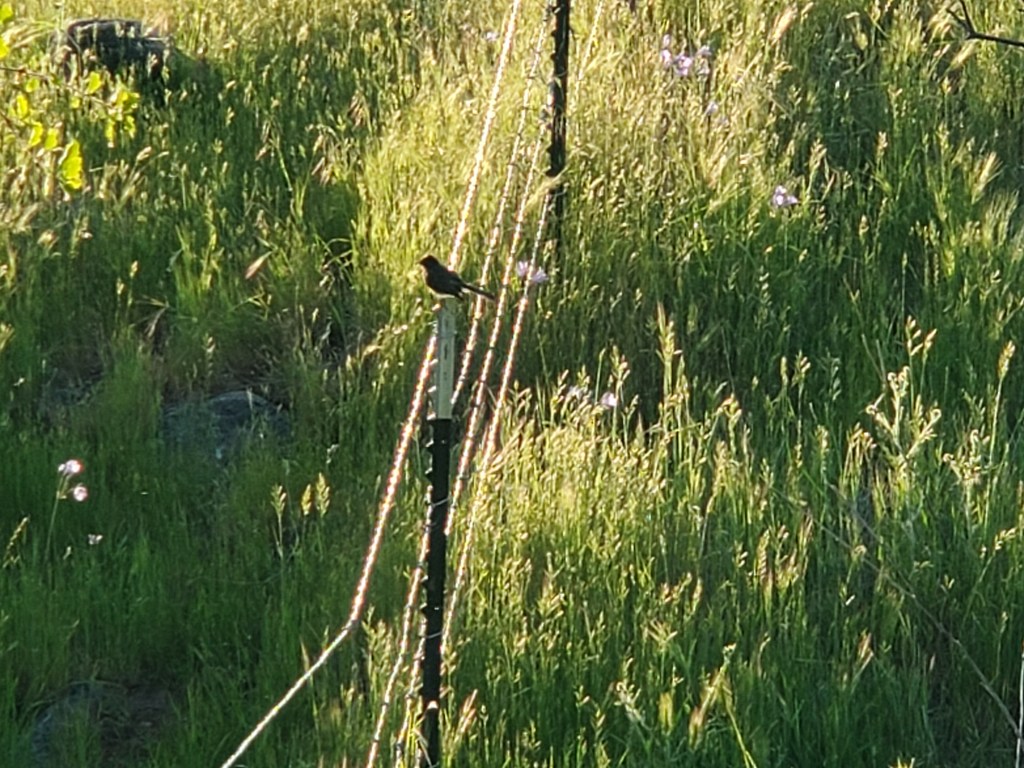
The bird songs have been incredible this spring. I finally set up my hammock, and when I have time, lay in it and listen. There are audio devices available now to hang in trees, record and send back to the vendor for a list of birds present based on the songs. Very cool. I want to do that.
Even though I don’t have a value-added product I sell from the ranch, I decided I wanted to become an Audubon Certified ranch. This is a badge that tells consumers that your ranch adheres to a set of protocols that promote more sustainable ranching practices – and certainly promote better habitat for birds. I already follow and perform many of the practices they outline, so I think we will be a good fit. I applied to do this because I want access to more expertise on bird habitat and become a better birder. One of the things I am really excited to work on is improvement of quail habitat. They are so cute. I want them to thrive here.
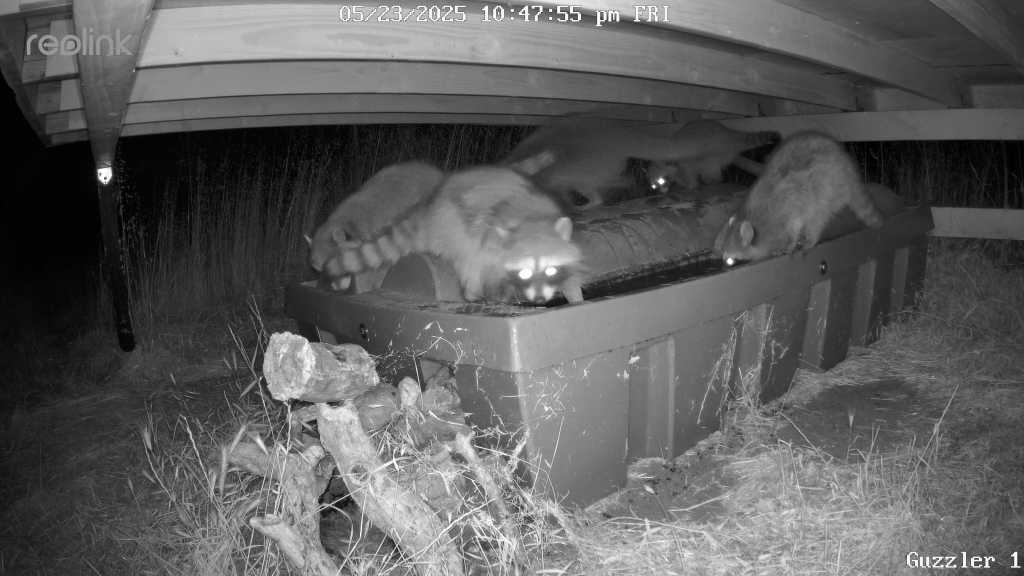
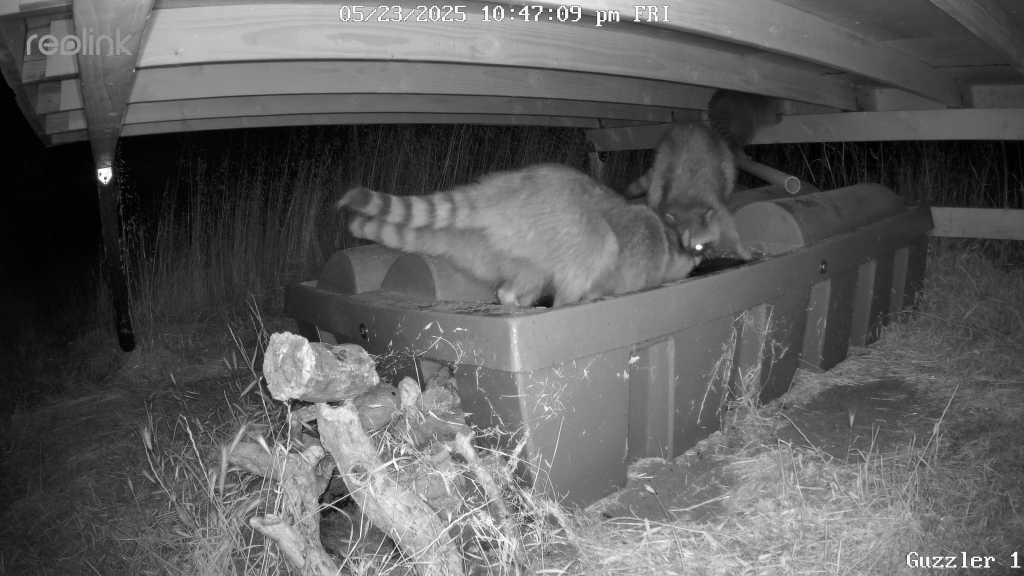
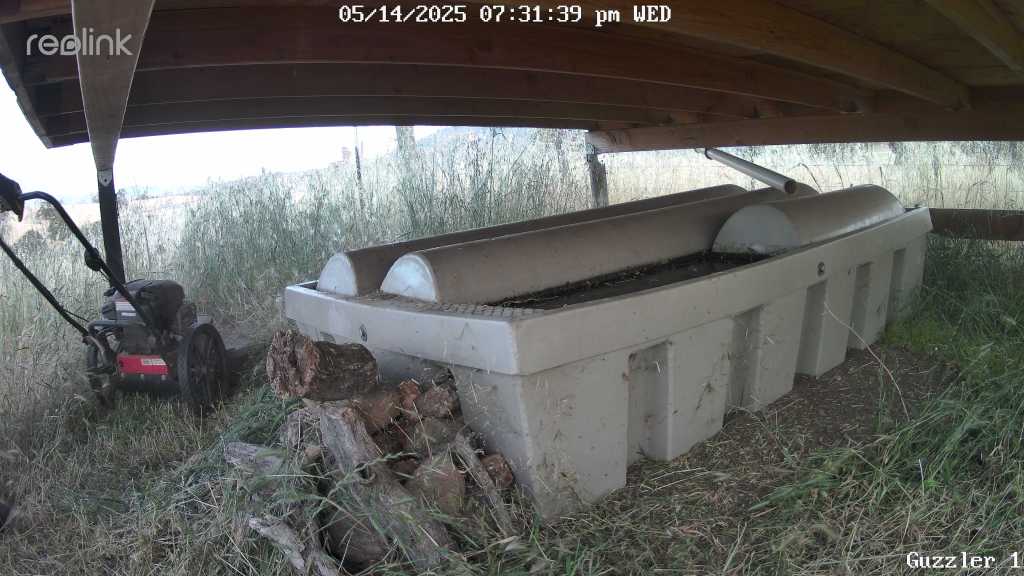
There has been quite a bit of action around the wildlife guzzlers. Raccoons at both Guzzler 1 and 2, and birds at Guzzler 1. There was even a family of five raccoons that visited. Check out the photos below to see who stopped by.
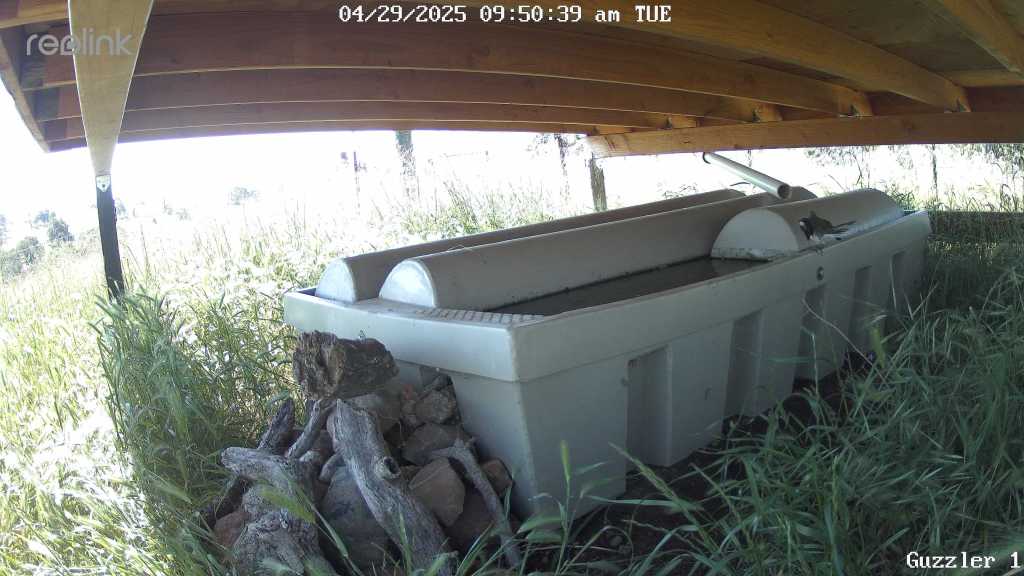
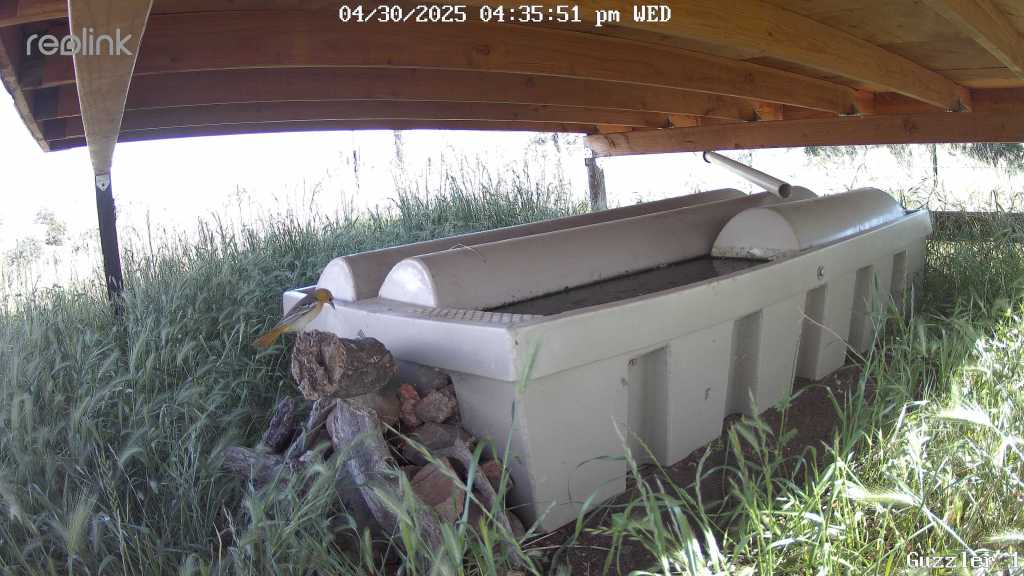
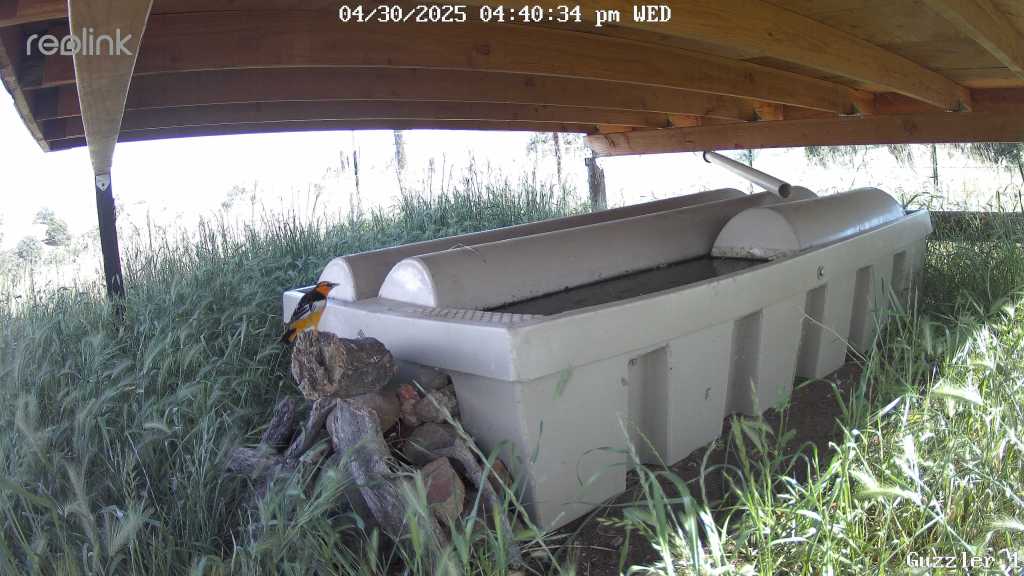
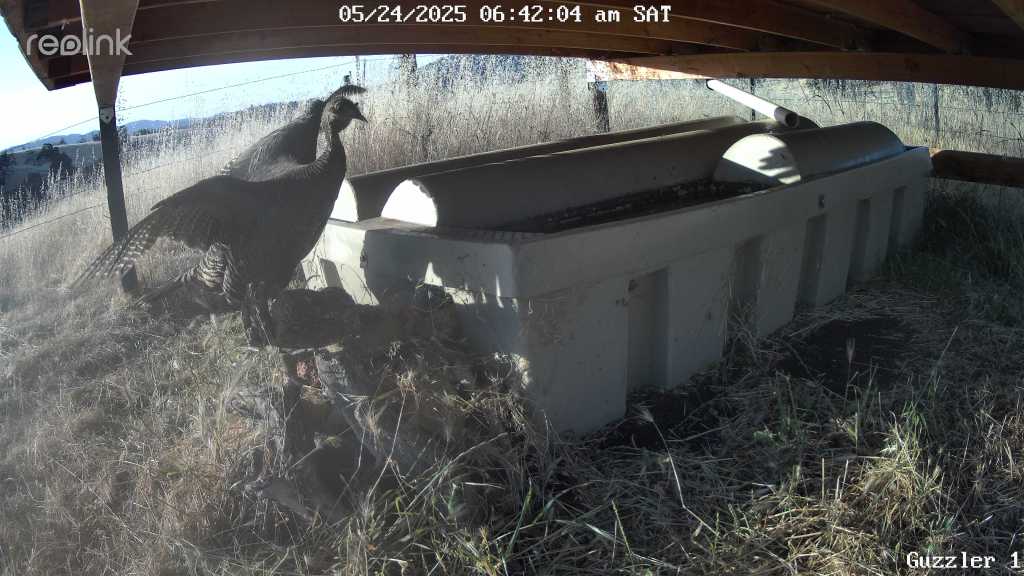
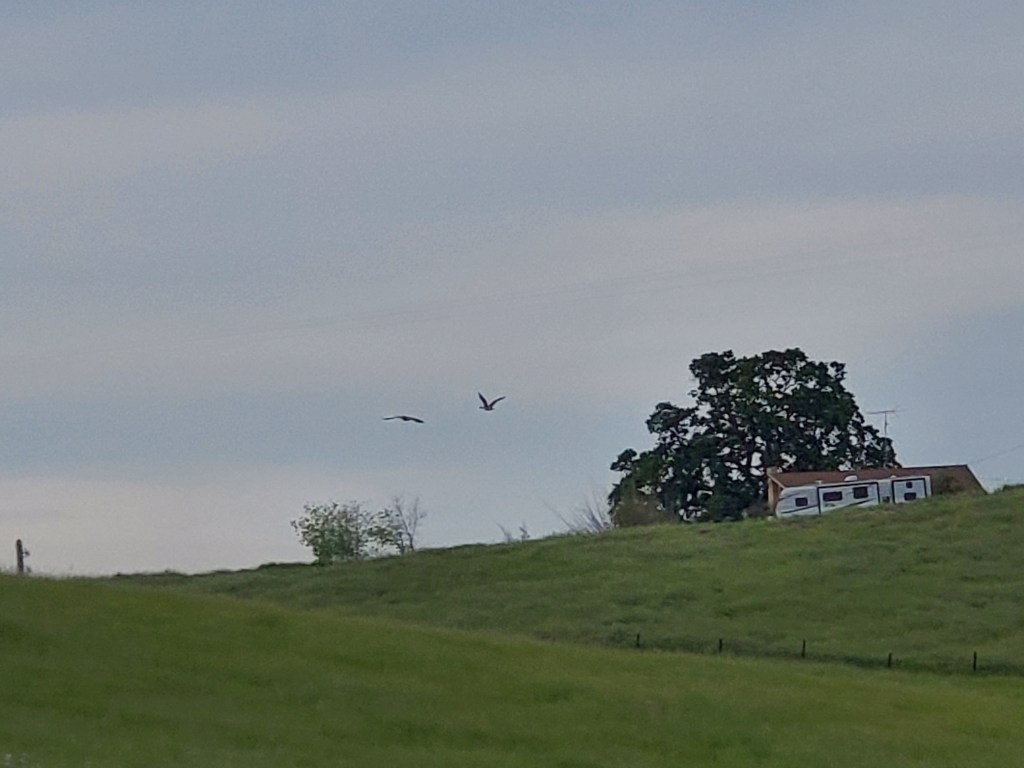
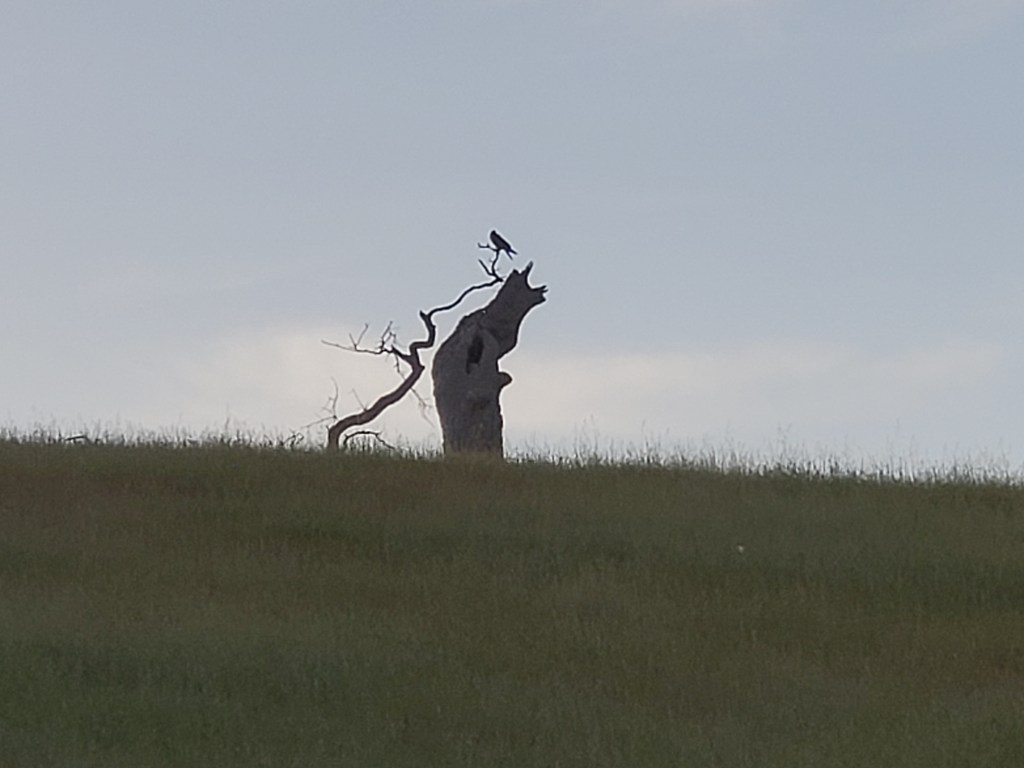
I also had a wonderful encounter with a hawk. I called to him, and he came. I talked to him as he circled me 8 times. Wow, was he a beauty.

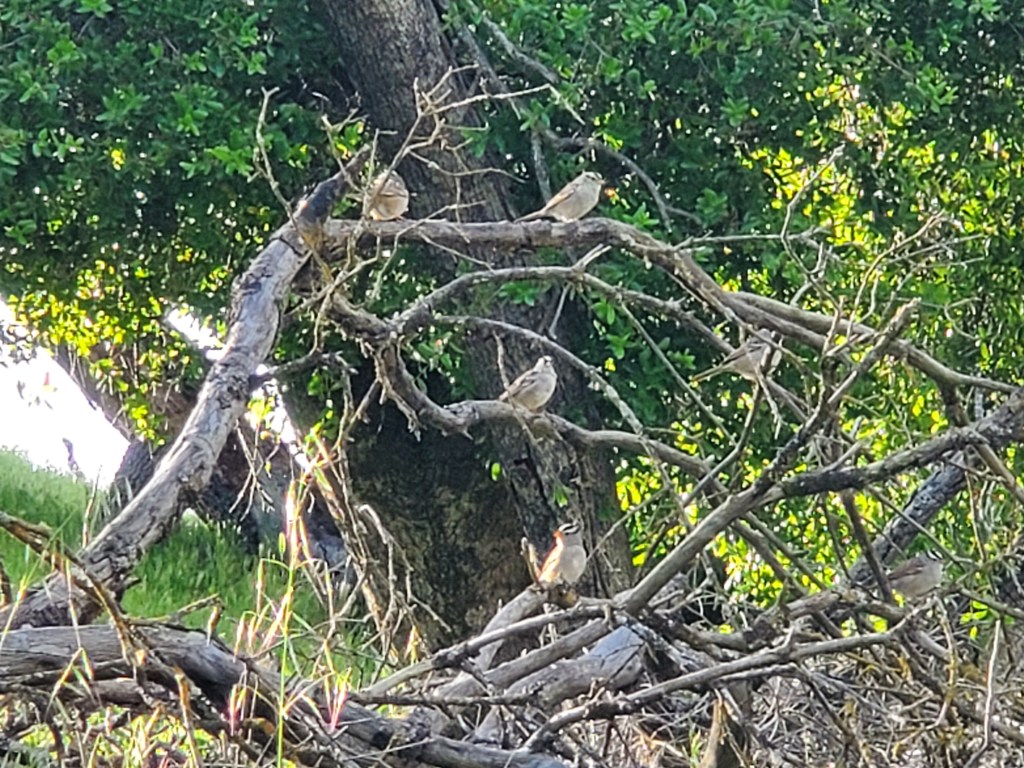
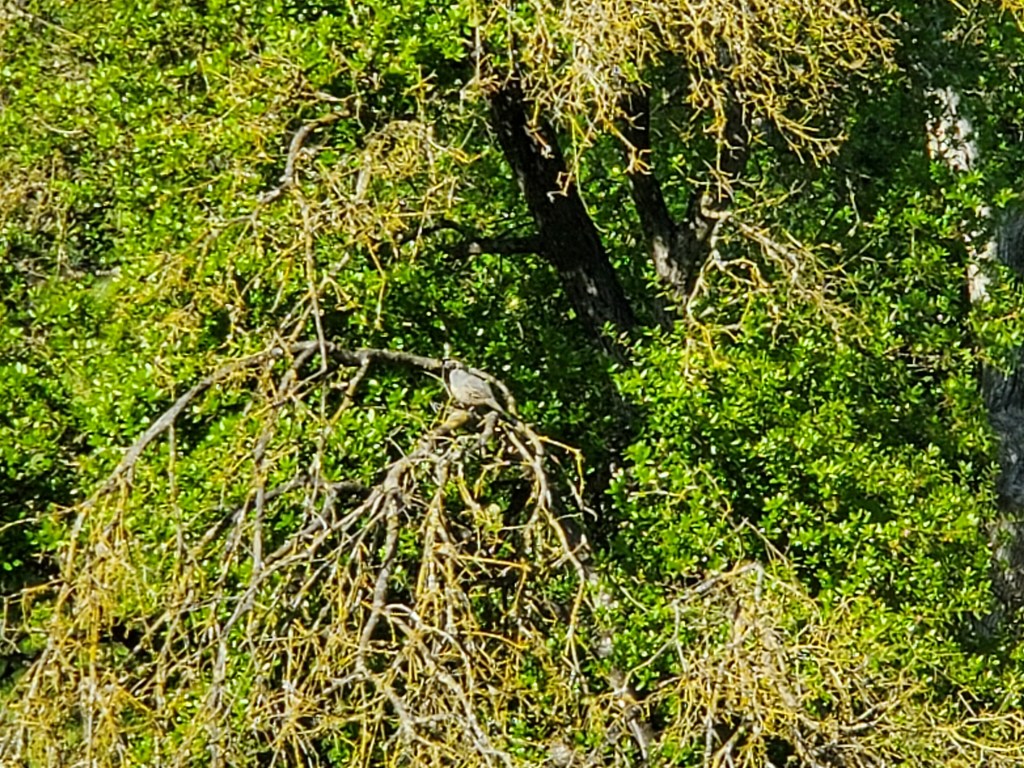
While walking in the grove, I saw a large bird in a tree. I tried to get good photos, but by this time, you know that is not my best skill. After showing them to a friend who knows much more than me, he thought it was a lewis woodpecker. I know we have those, so I believe him!


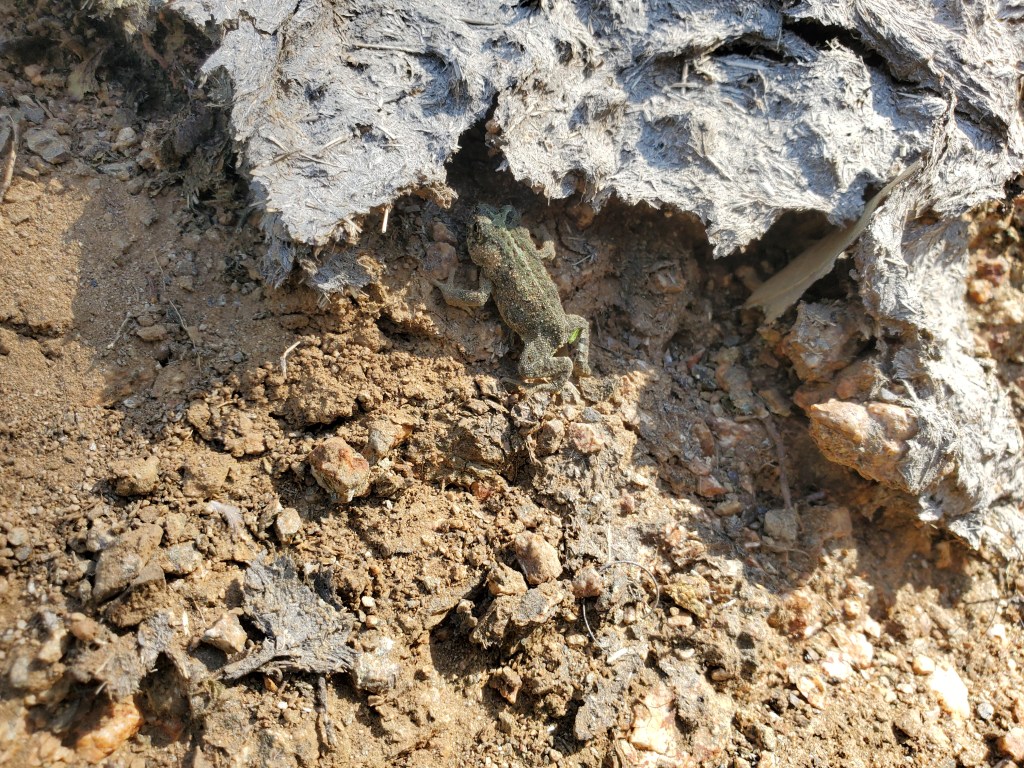
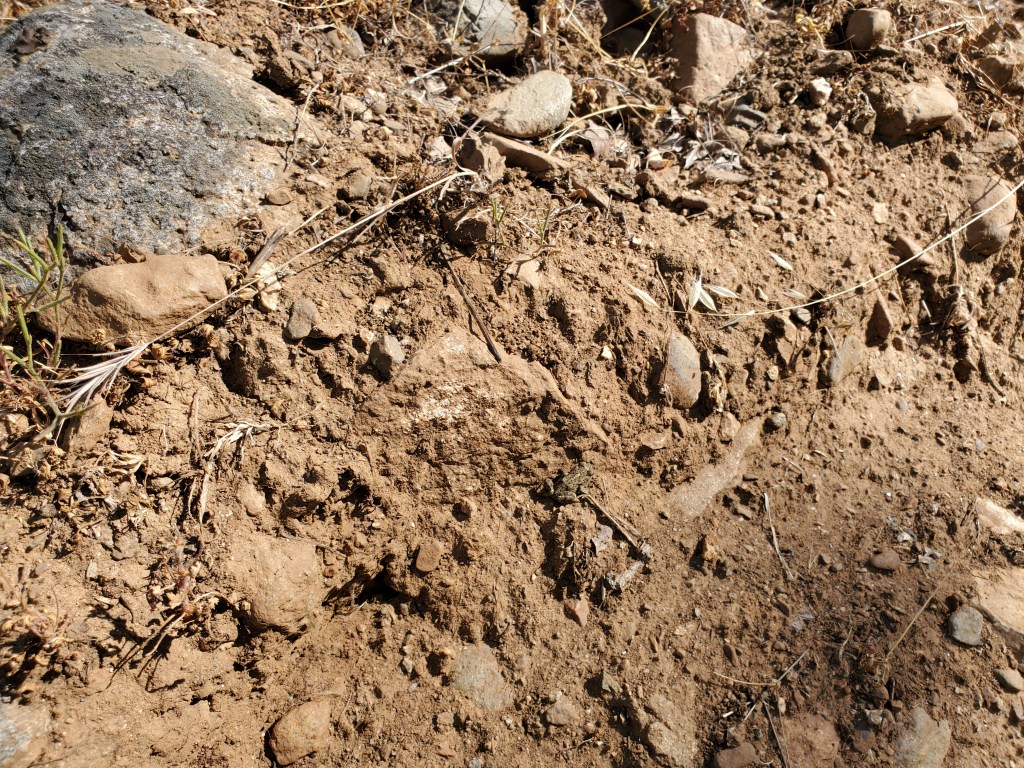
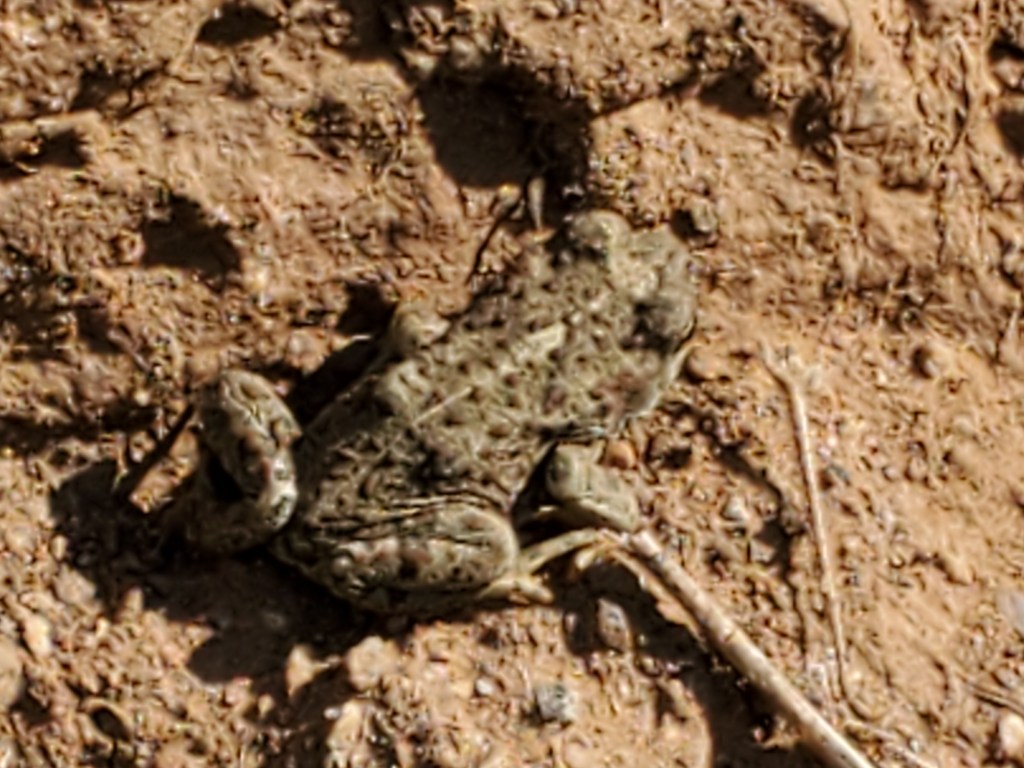
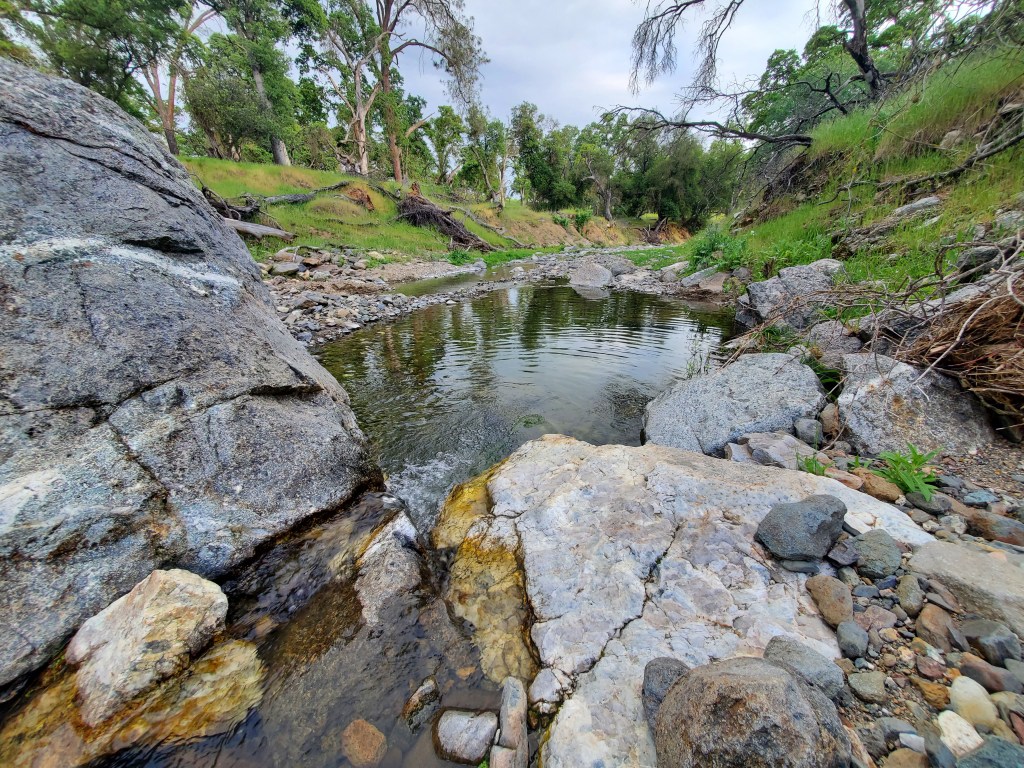
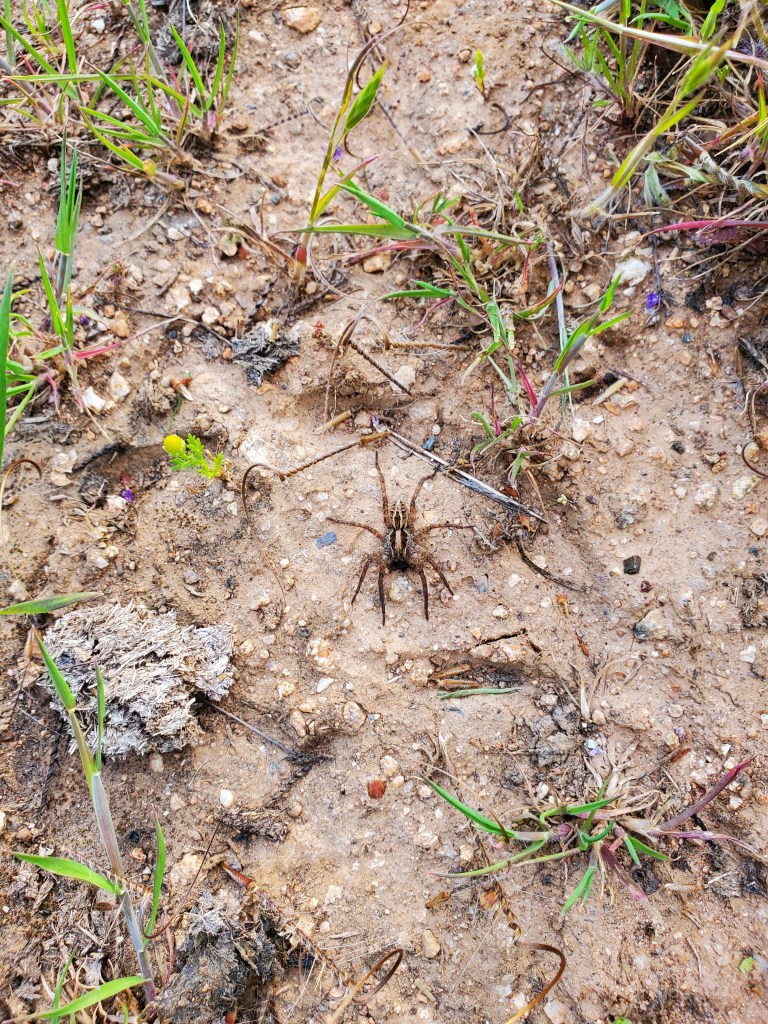
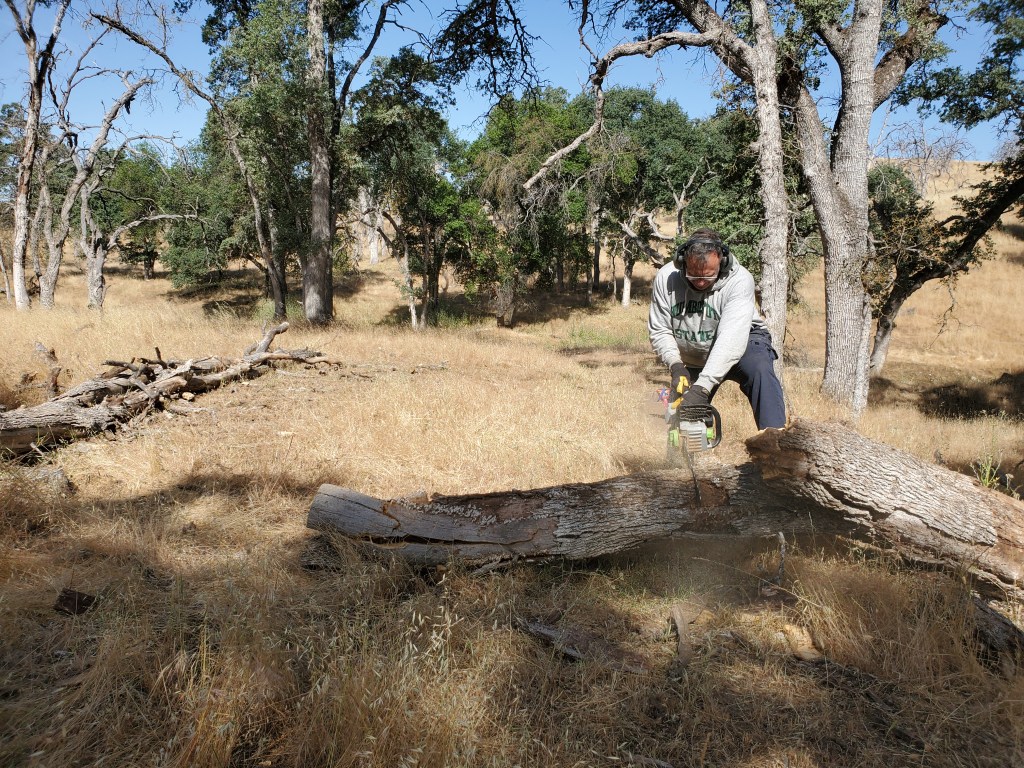
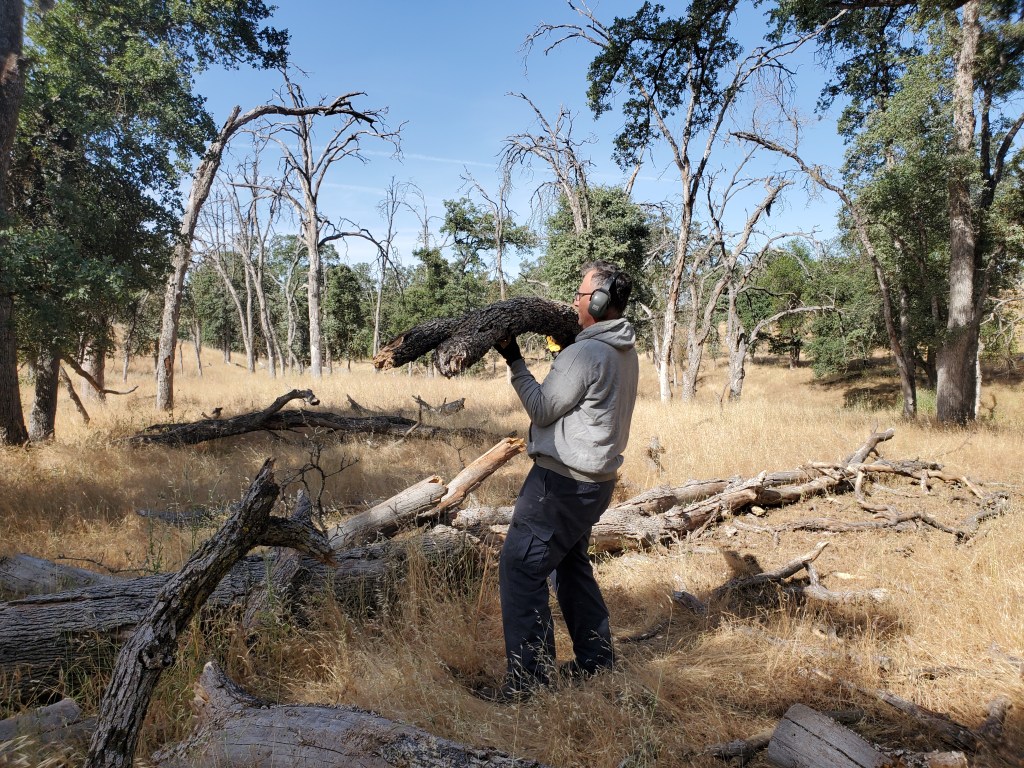
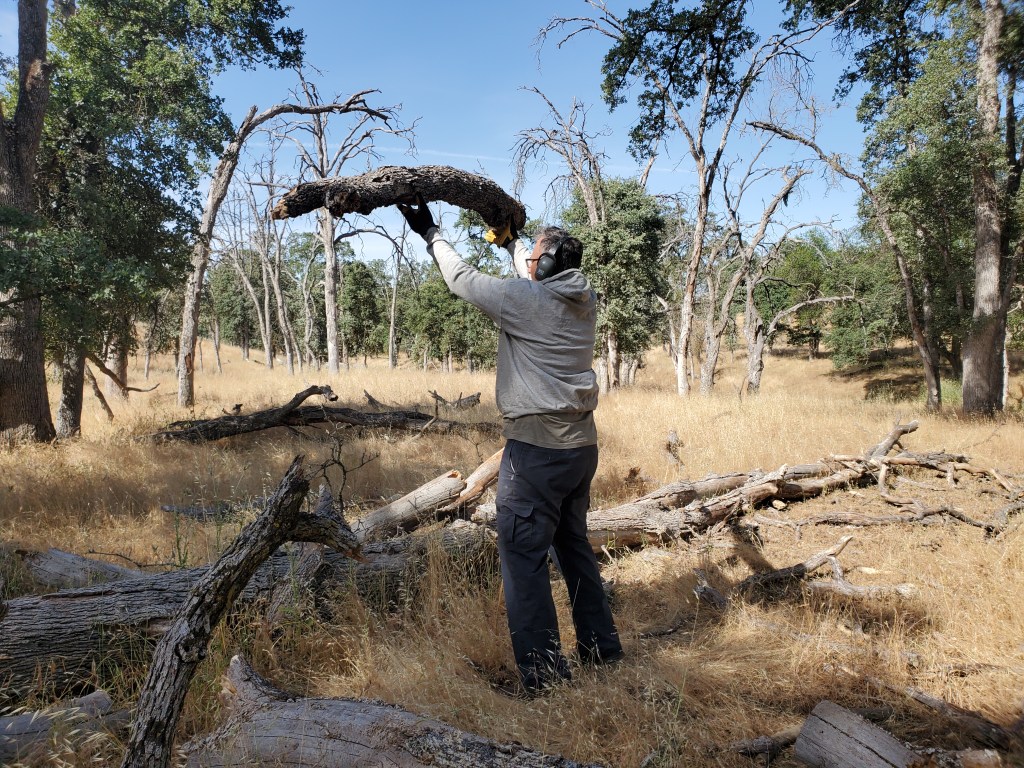
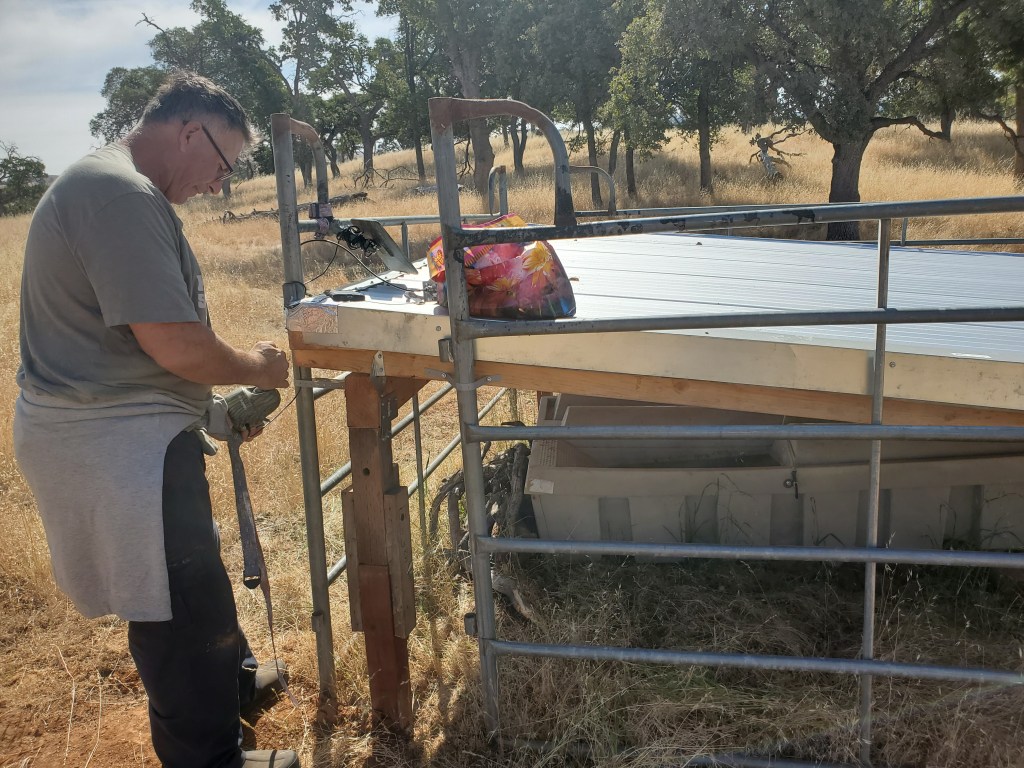
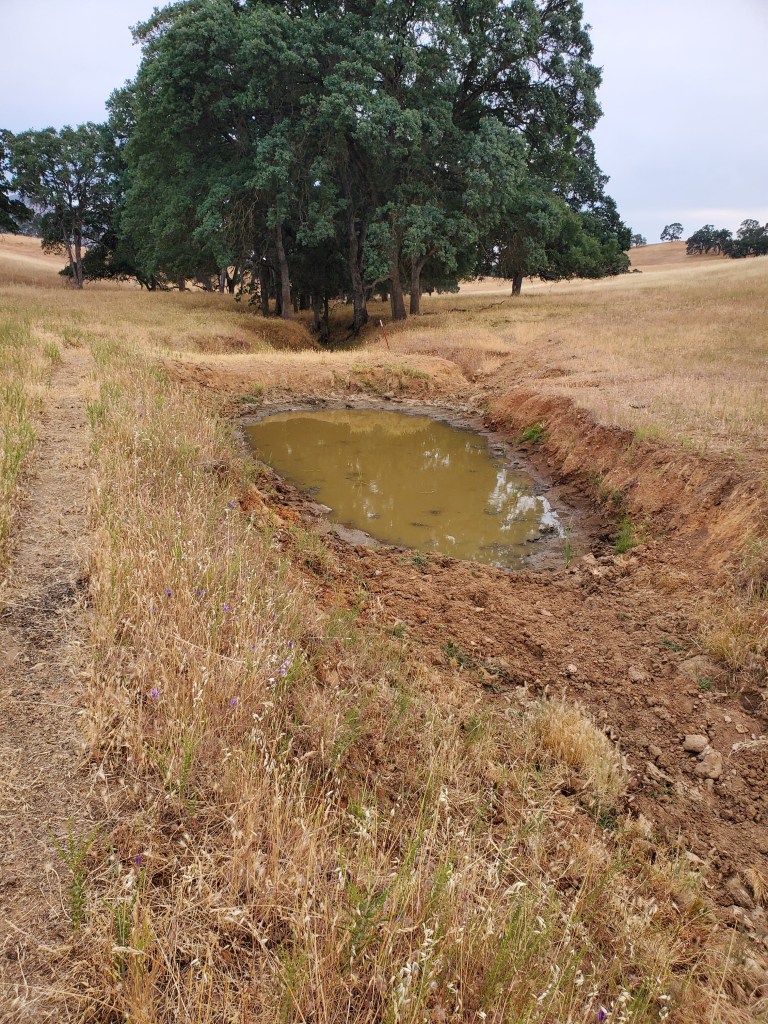
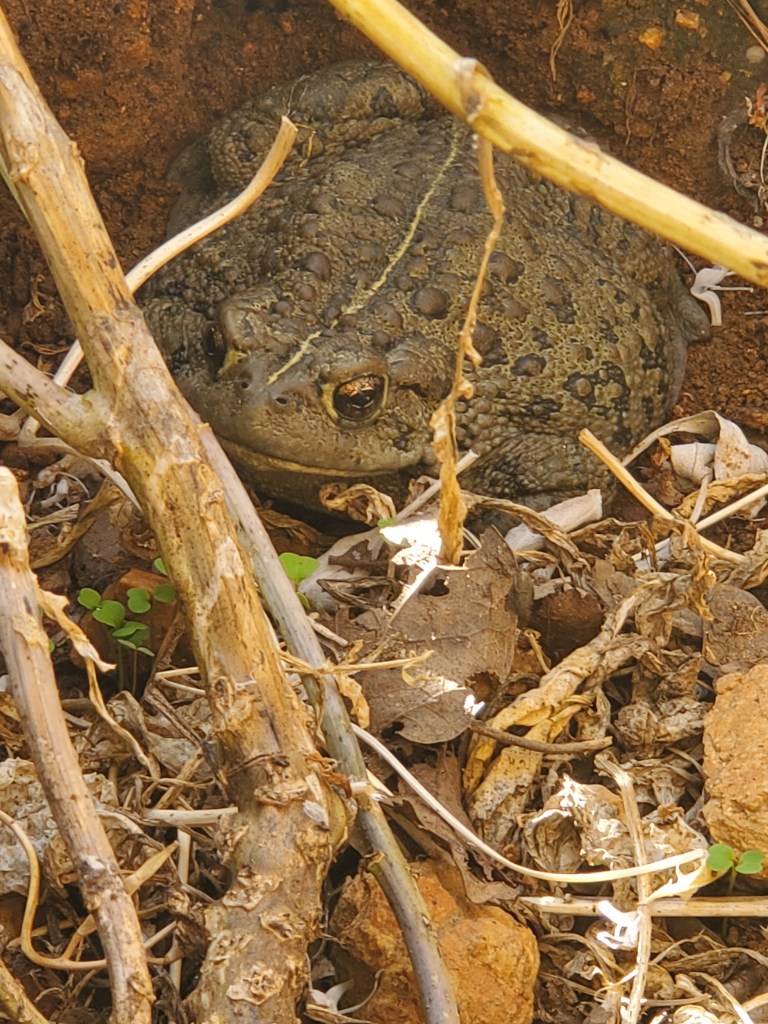
When David and I went to check on Guzzler 2 and cut up the downed tree across the road, we noticed that there were hundreds of what looked like little baby toads hopping around the Odom Creek riparian area. I had Dave stop the Polaris and keep it parked at the top of the hill, so we didn’t impact (read: squish) this incredible hatchery of hundreds of amphibians. We had to haul all the equipment by hand across the creek and up the other side, deal with the tree, then move on to the Guzzler 2 to troubleshoot the camera and weed around the guzzler. Fortunately, David is incredibly strong. He hauled all the chainsaw equipment, and I, with my bum leg and bum right hand, carefully carried the bag of game cam equipment.
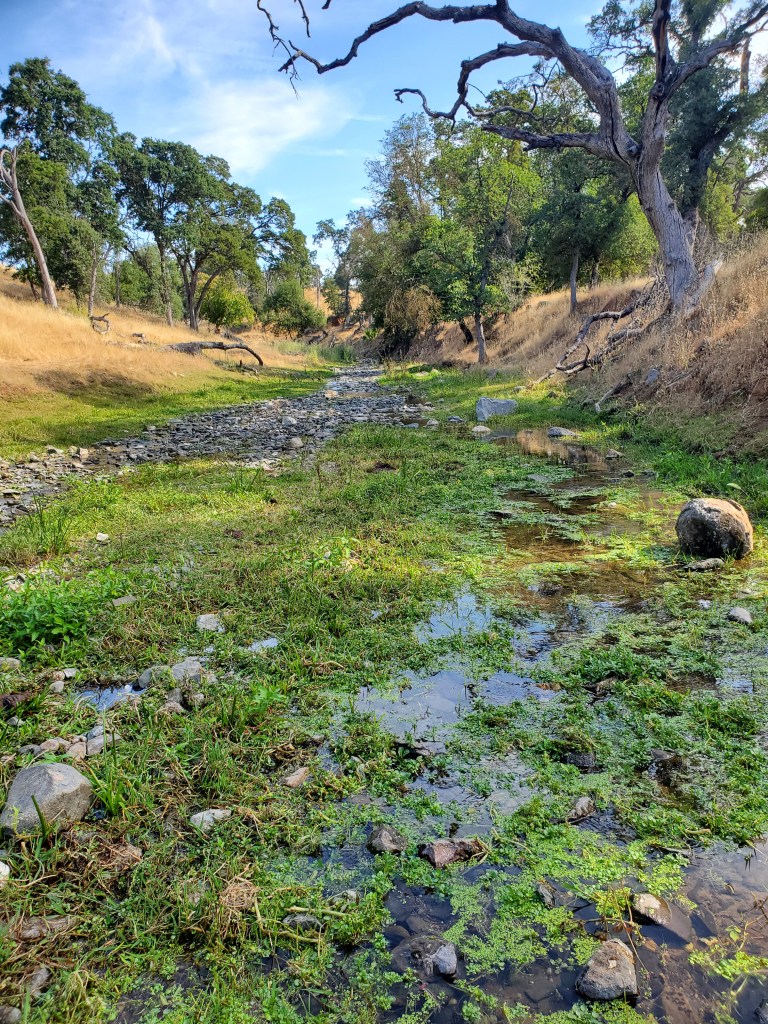
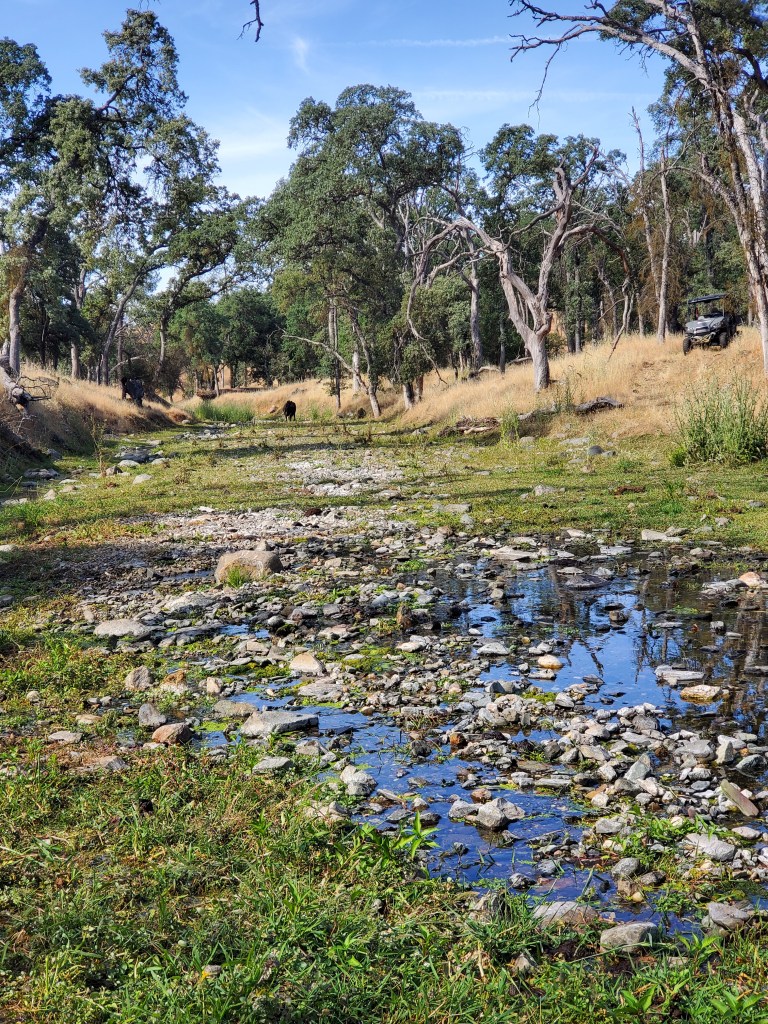
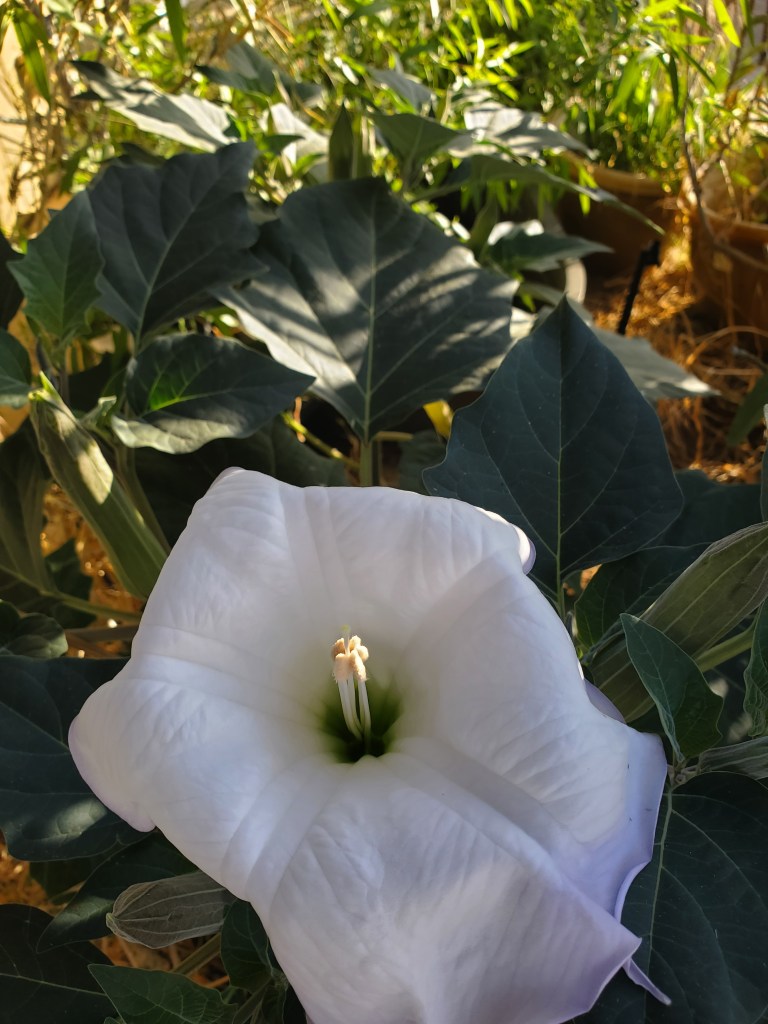
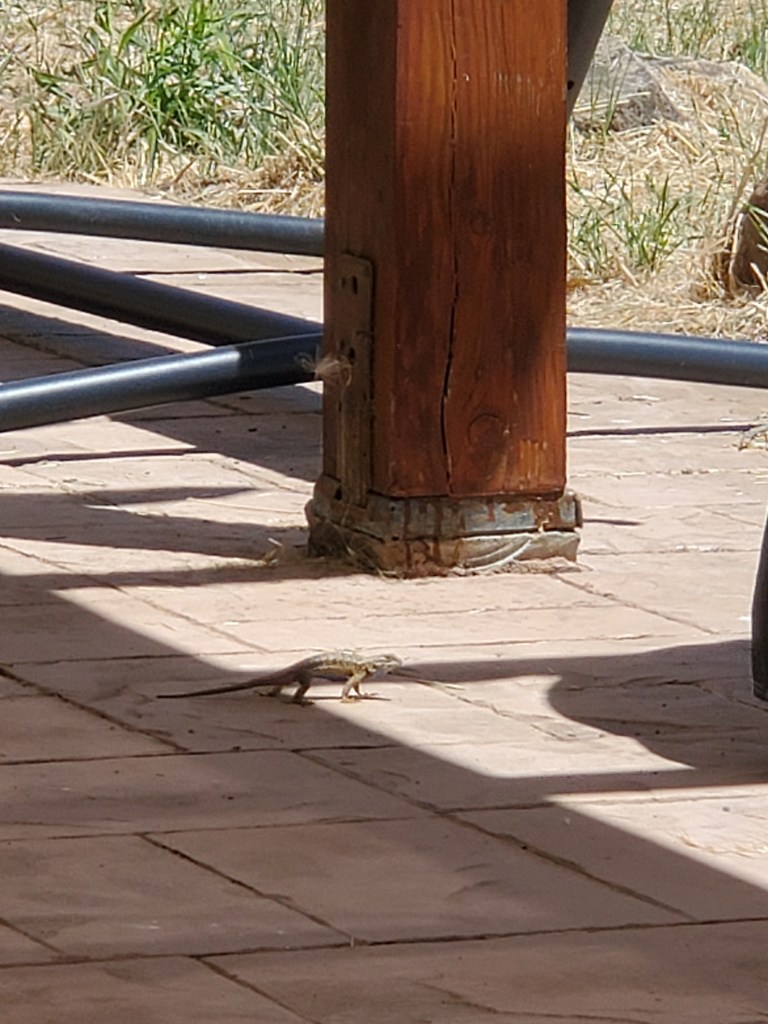
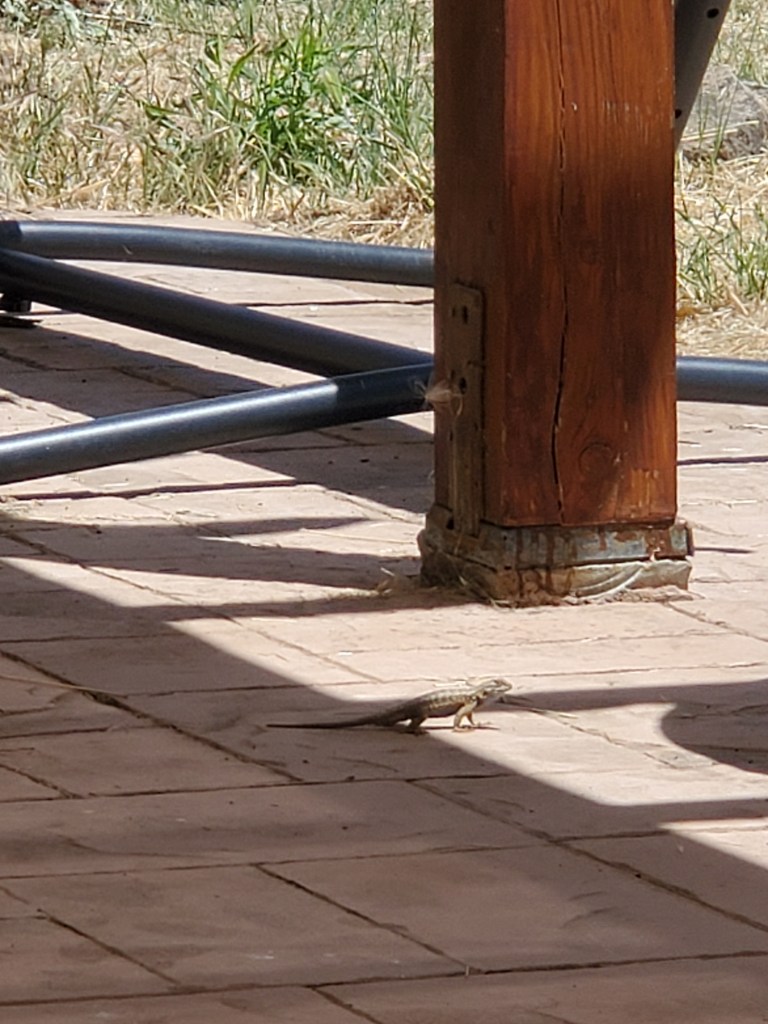
Lots of beauty all around us.

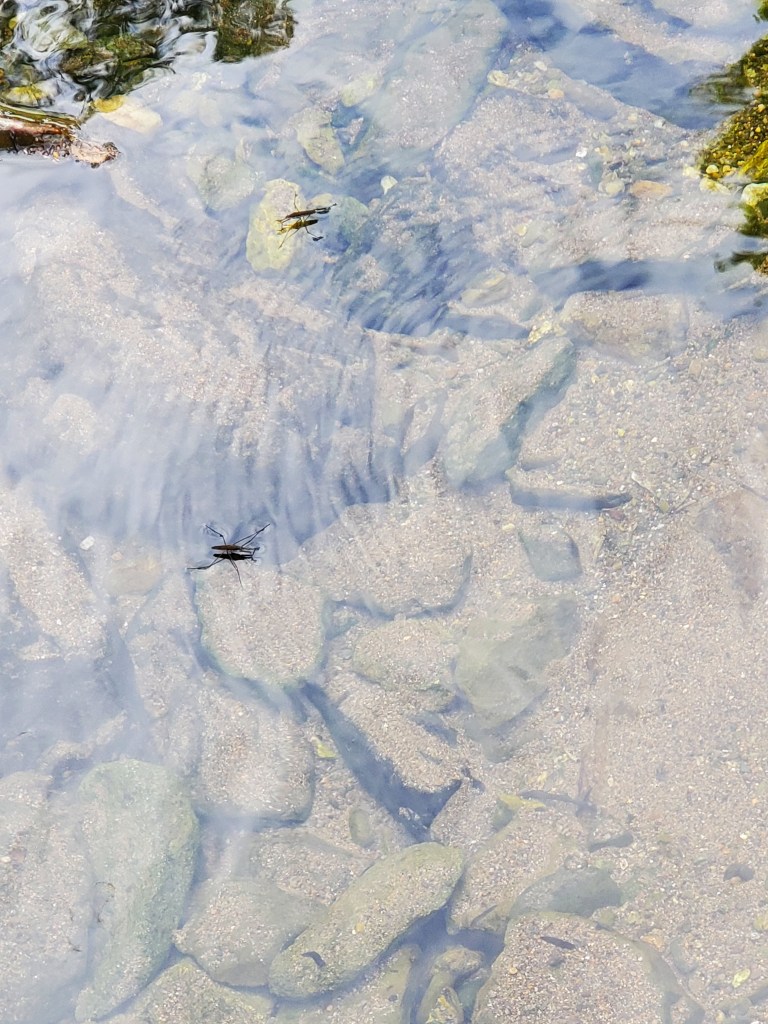
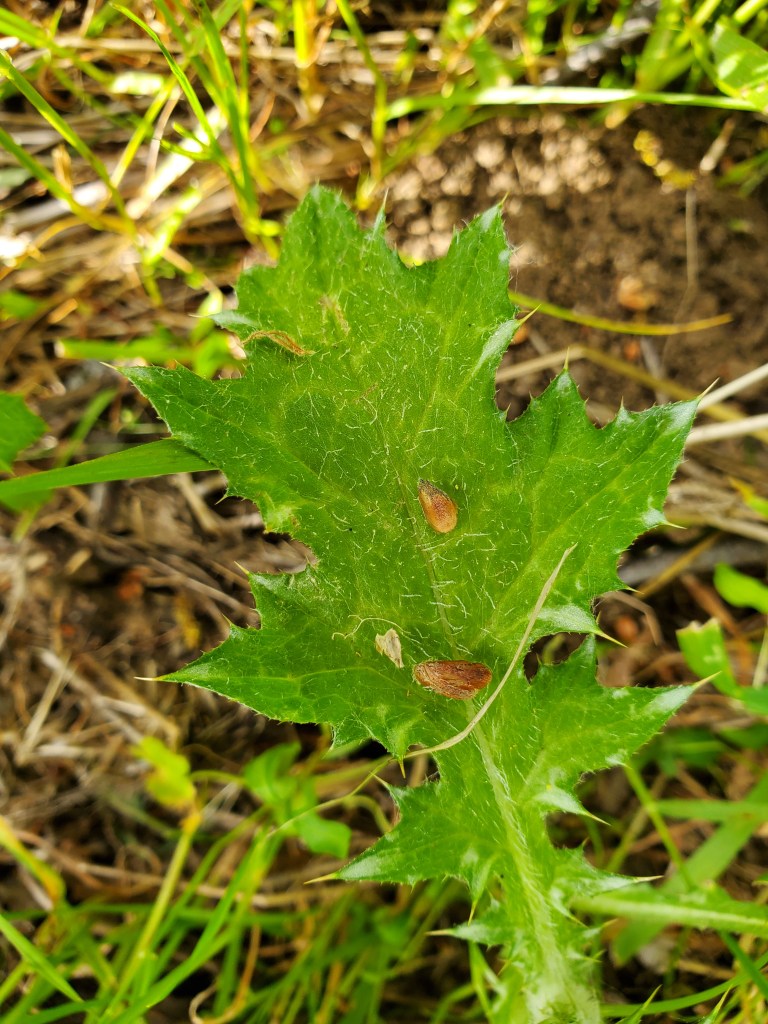

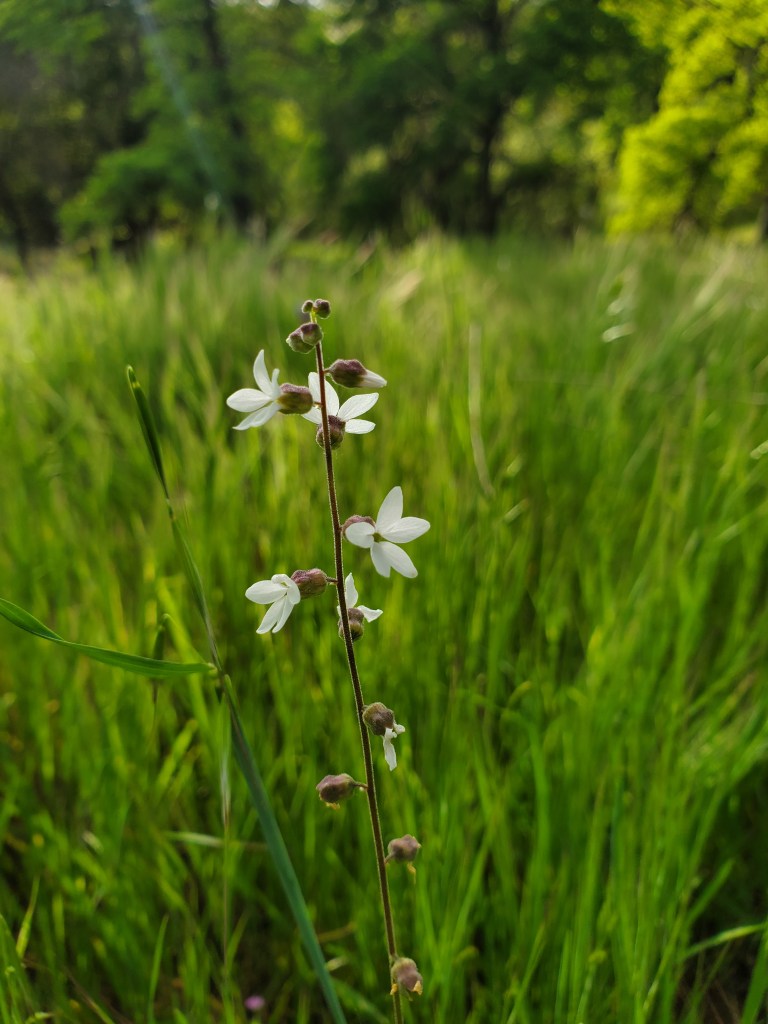
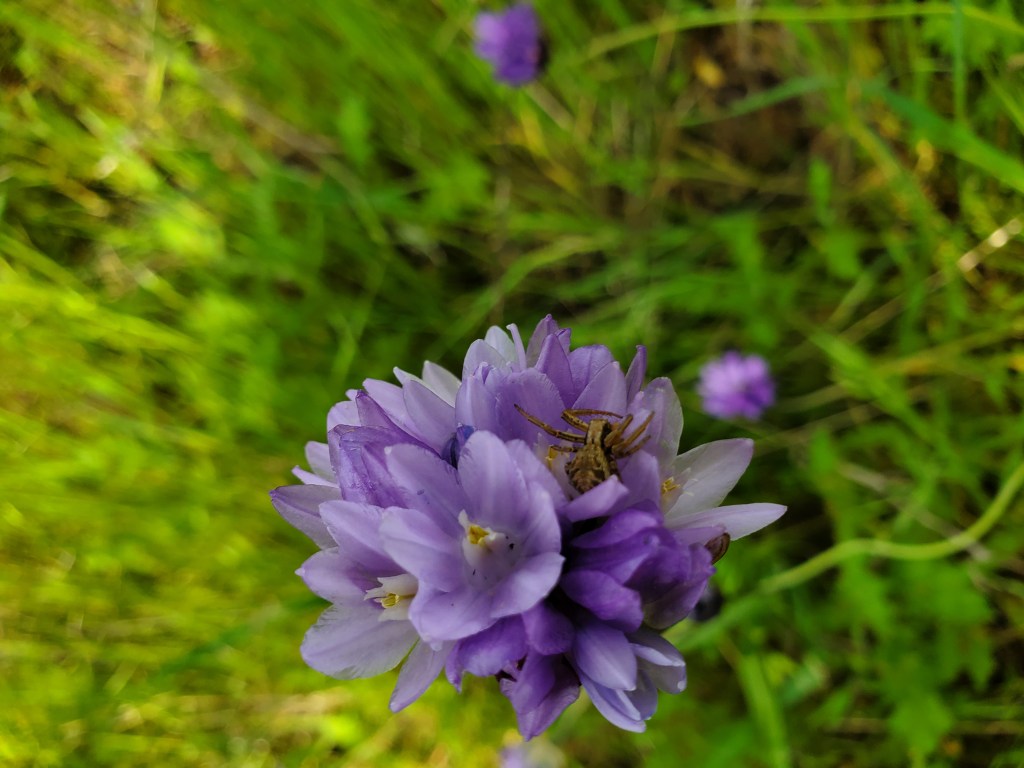



Land Stewardship
Work on the land is never done. Type A folks and list makers, don’t feel panic. Feel joy. Ours is an ongoing relationship of commitment and love. What a sense of accomplishment you feel when you see the land around you look healthier, smell wonderful, and host so much more wildlife. You did that; you are fulfilling your responsibilities as a species with your particular brain, hands, food needs and knowledge. Chiokoe uttesia weweria. Thank you relative.
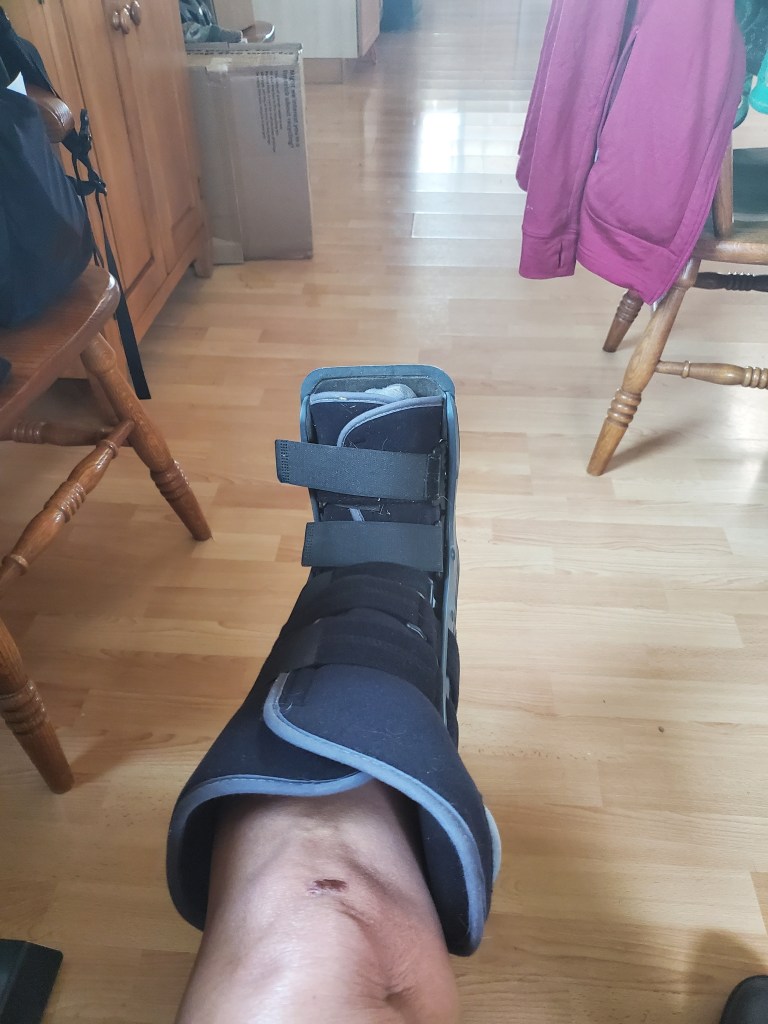
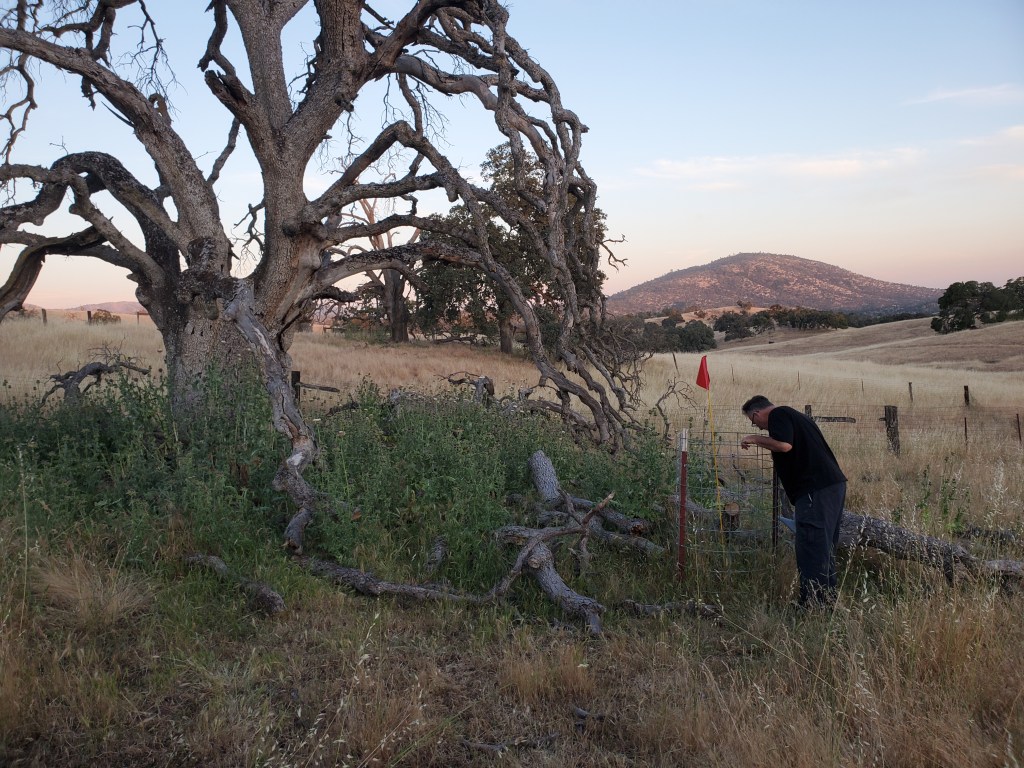
It has been difficult to fulfill these responsibilities for me as of late due to the accident. But, prior to that, there was considerable weed pulling and whacking, monitoring milkweed, watering the planted oaks, and watering native plants to give them a good start.

Wanderings
You just keep moving. There is always so much to do, so much to accomplish and commitments to fulfill. There can be little time to reflect on the “what wases” and “what could have beens”. Walking is where I reflect, and that has temporarily been taken from me. Sitting in my hammock, my bum hand, ankles and leg in sight, unable to perform some of the simplest of tasks, learning to use my left hand for more than is typical, my emotions stir. They shift, float round and round, then settle in to a simmer. What emerges is the knowledge, clearer than ever, that we are all part of one larger whole. In Indigenous circles, we talk about “All one nation.” or “All one people.” How many times I’ve used that statement believing it from a scientific point of view, not the philosophical or the practical. Sitting, as I was, not useless, not helpless, but more in need – not as useful as I’d like, the thought of how much help I have already needed and would continue to need was acid simmering, a dull pain then realization – “all one people”.
I thought about the man that hit me, the man that helped me, the first responders, the unconcerned officers, the hotel staff most of whom were kind, our friends that came to the rescue (Carol, Sean and Ernest, then Josh to check my wounds), my boss Nancy whose compassion and understanding is simply inspiring – and blindingly effervescent, my husband’s love for me. How remarkable a life is it to see such consideration and care. It is not that I think I don’t deserve the kindness of others; it is simply uncomfortable for me to cause any imposition. I know everyone has challenges they are dealing with, and I don’t want to be one more weight. But, how I cried at the love shown to me and to David. How I sobbed feeling David’s arm reach around me to provide support when my leg didn’t want to work, and the care with which he changes my bandages, ignoring the blood, goo and scabs as he navigates the myriad of bruises to delicately place a clean pad with antimicrobial cream over the broken skin he has always loved to touch. We are all one people not just in DNA ways, but in the need we have for one another – not just to receive care, but to provide it.
My accident could very easily have resulted in a worse outcome, as the left temporal lobe area of the helmet, scraped and cracked, would indicate. So, the bandage changes, the leg support, the running around watering oak trees, pulling weeds, planting plants – they are all a joy for him because it could have been so different, something that is too dark to think of, but close enough to see the shadows of what could have been.
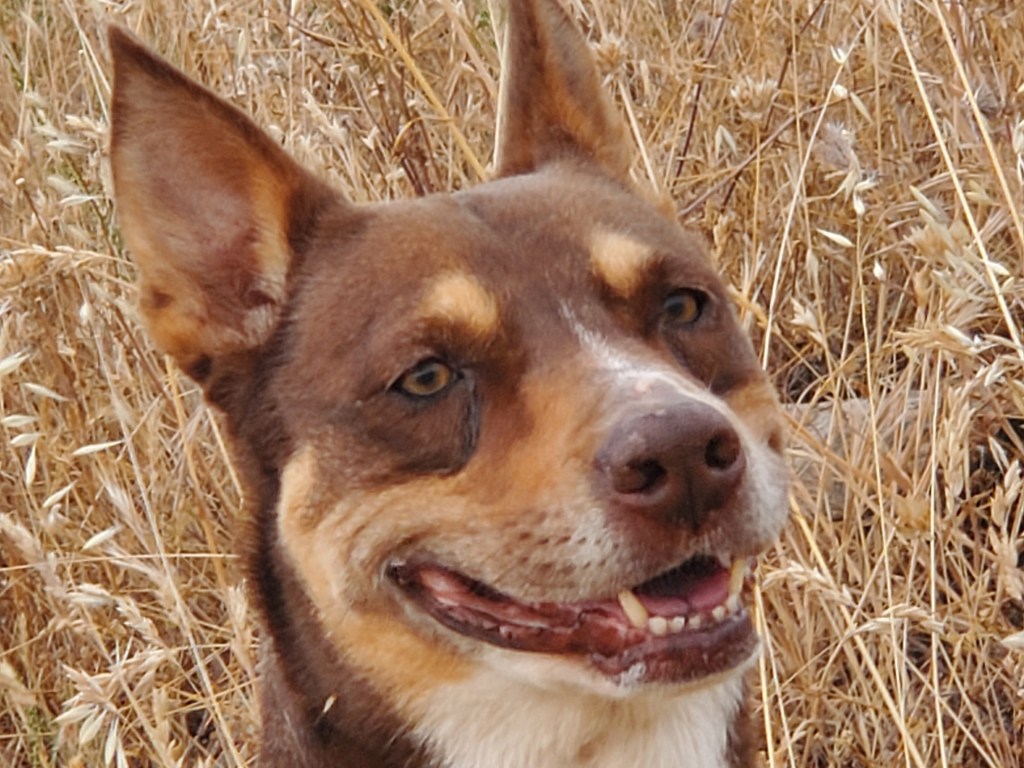
As with everything in my life, I see it as a metaphor or a parallel with the life of the monarchs. There are so many who care. They see the changes, the damage, the need for help, and they jump in, an ocean of people whose relationship with this beautiful insect leaves a trail of life in the form of habitat, improved policy, and human relationships that bring joy. We all need each other because we are all one living organism – all of us – monarchs, bees, dogs and trees. We are all relations. We see the shadows too dark to contemplate, and thankfully, some refuse to imagine a life without monarchs – and so we work, together, caring for one another, healing and hopefully, leaving what is broken more intact, enough to support millions of butterflies, and every life, once again.
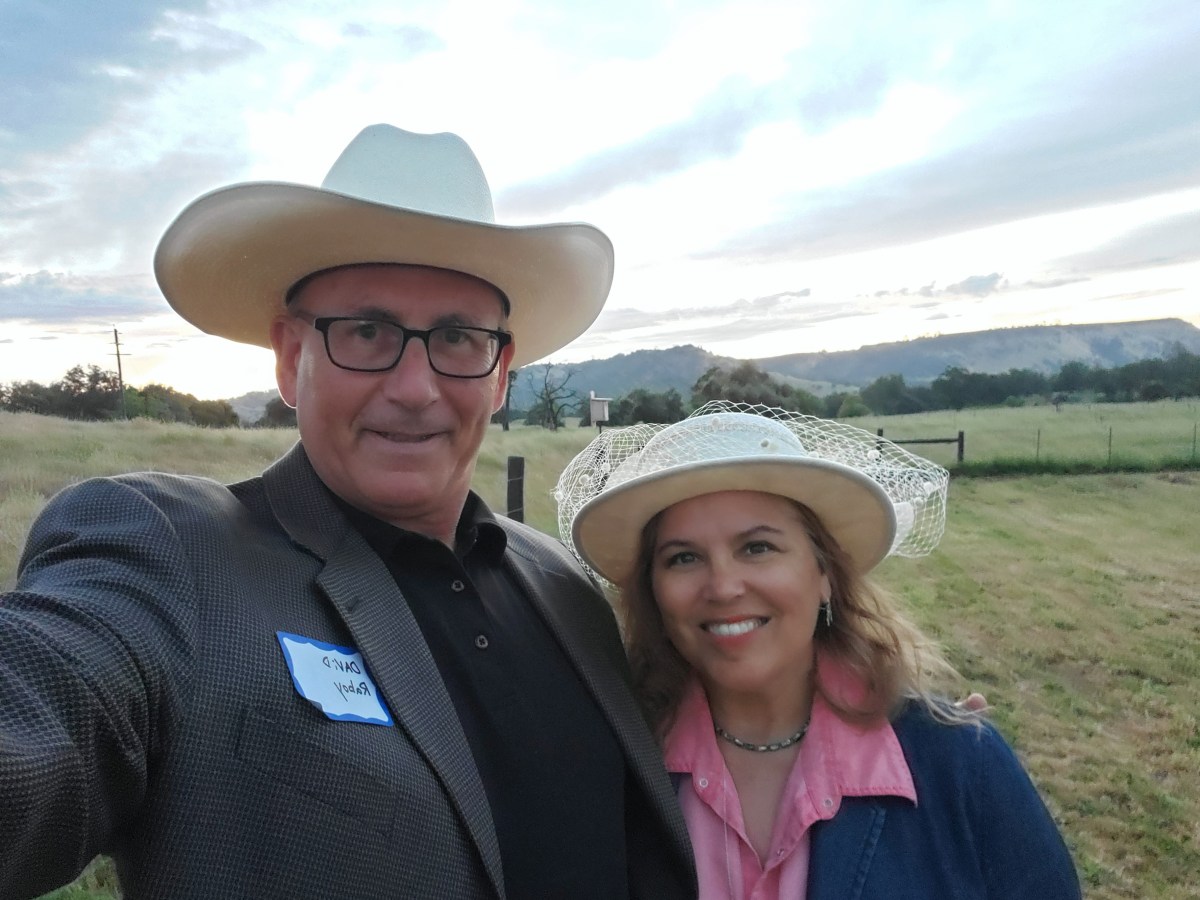
I started this blog post with a photo of David and I. This relationship is my skeleton, my skin, my connective tissue, supporting everything I do. The center of my story, however, is the land – in bwia ania, my land universe. It is my heart, one of my deepest relationships. This beautiful planet, with all its environs, is the reason we are all here. It gives us food, air and water. Let’s be a good relation, in good relation, with her and one another.











 PolliNative