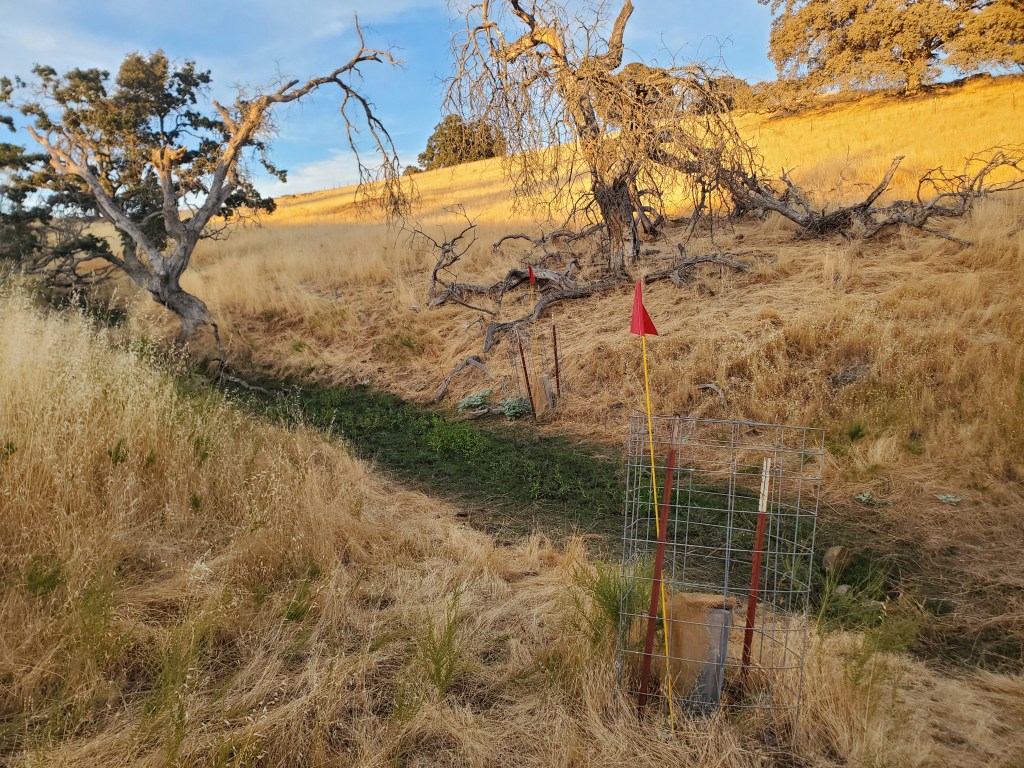
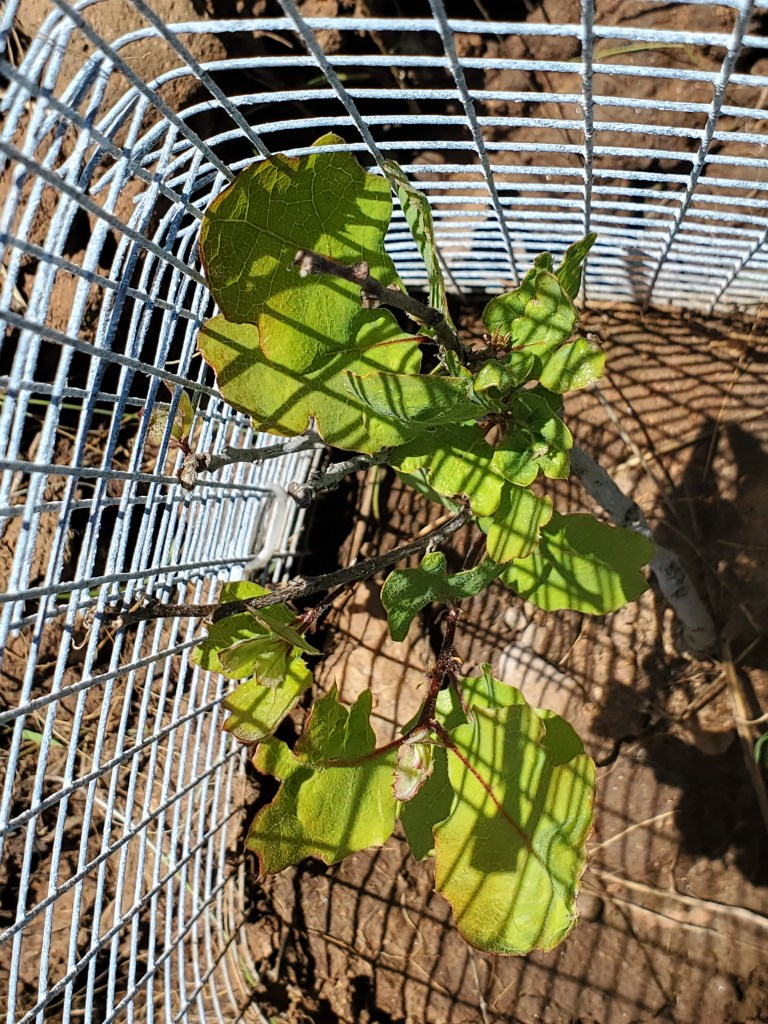
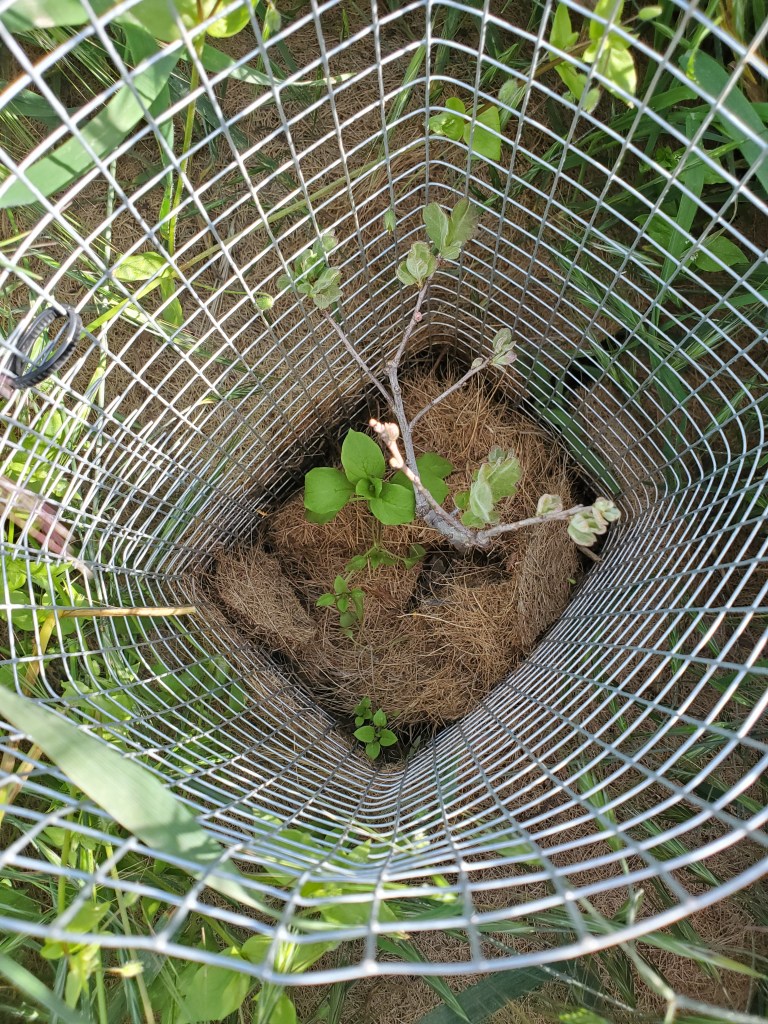
We have gotten lucky. The grasshoppers have not stripped everything. Their population exploded, especially near the riparian areas, then, all of the sudden, they abated. The hoppers had started eating their way up the hill. They hit some of my outlying plots hard, but then stayed away from the habitat closer to the hilltop. The oaks planted on the lower Spring Creek area and those down hill from the hilltop were not so fortunate. They were eaten, but quick action with screen boxes saved some. Several have come back and are leafing out again. I gave out a loud yip when I saw that. I had felt so dejected. I still lament the loss of the other trees. It is difficult to get a blue oak to grow under my specific conditions – heat, grasshoppers, gophers. Every year lost is one year less with young trees. I have to do better.
Since my last post, I have been focused on watering the oaks every five days. Having this cadence seems to be a recipe for success. It helps me not only keep them hydrated, but to trouble shoot any issues they may be having. The remarkably cool weather, for a July, has been helping give these trees a chance. I love them so much, and want them to thrive.
Lower Spring Creek: Bottom center right, oak comes back from hoppersLower Spring Creek: Other tree upstream 10′ has not come back. Still watering thoughHoping to see leaves come backOaks in the upper Spring Creek doing well. Got these screened before hoppers got to them plus moist area. Made a huge difference. Plants in the creek begin growing back after cows trim it all to nothing
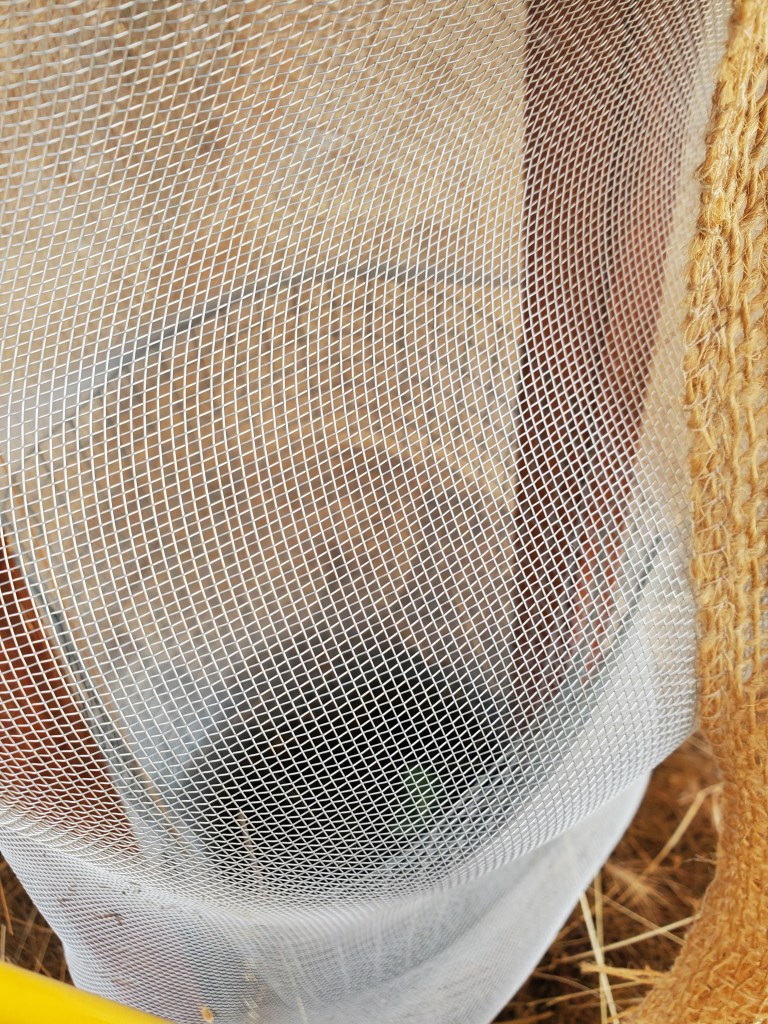
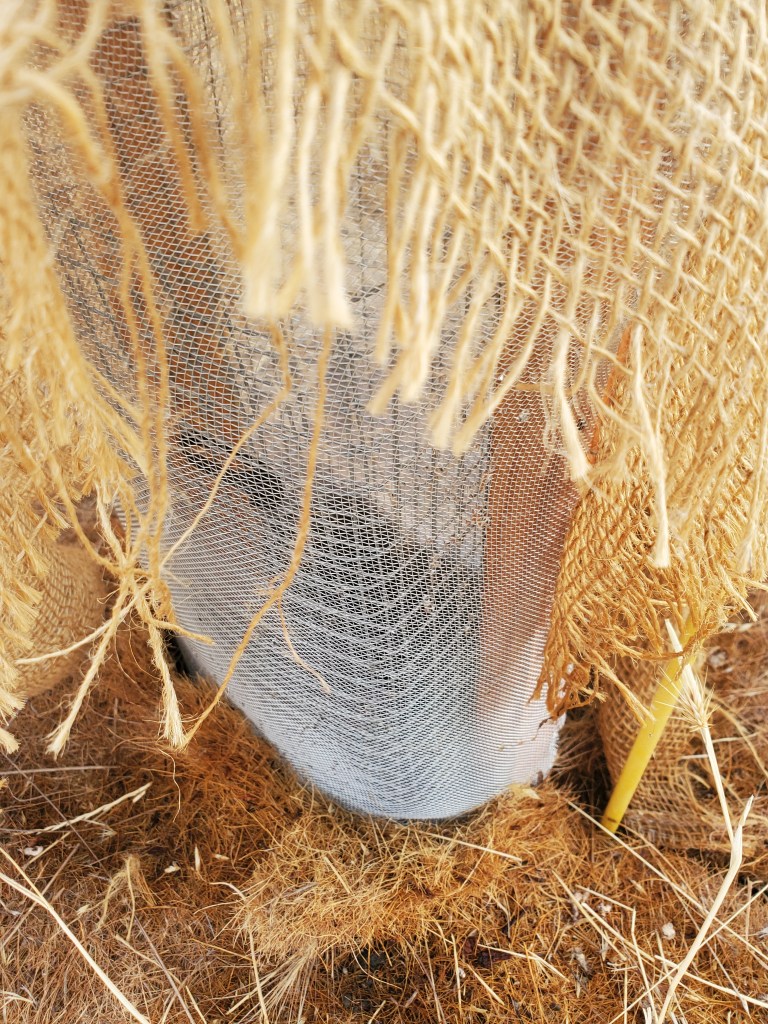
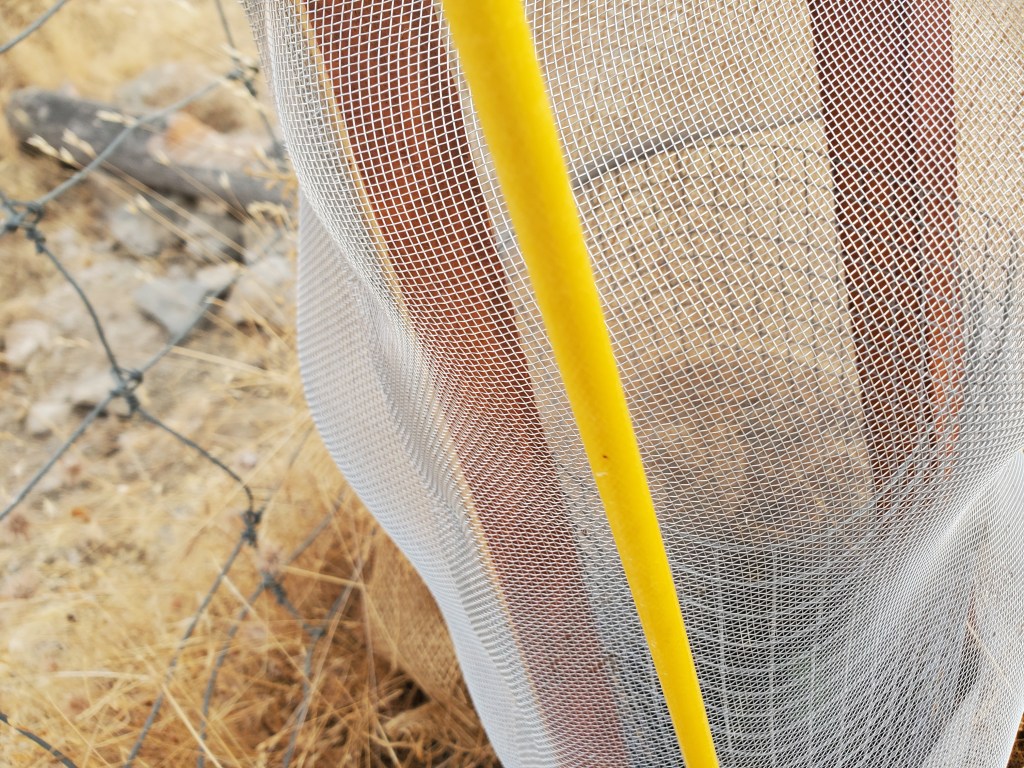
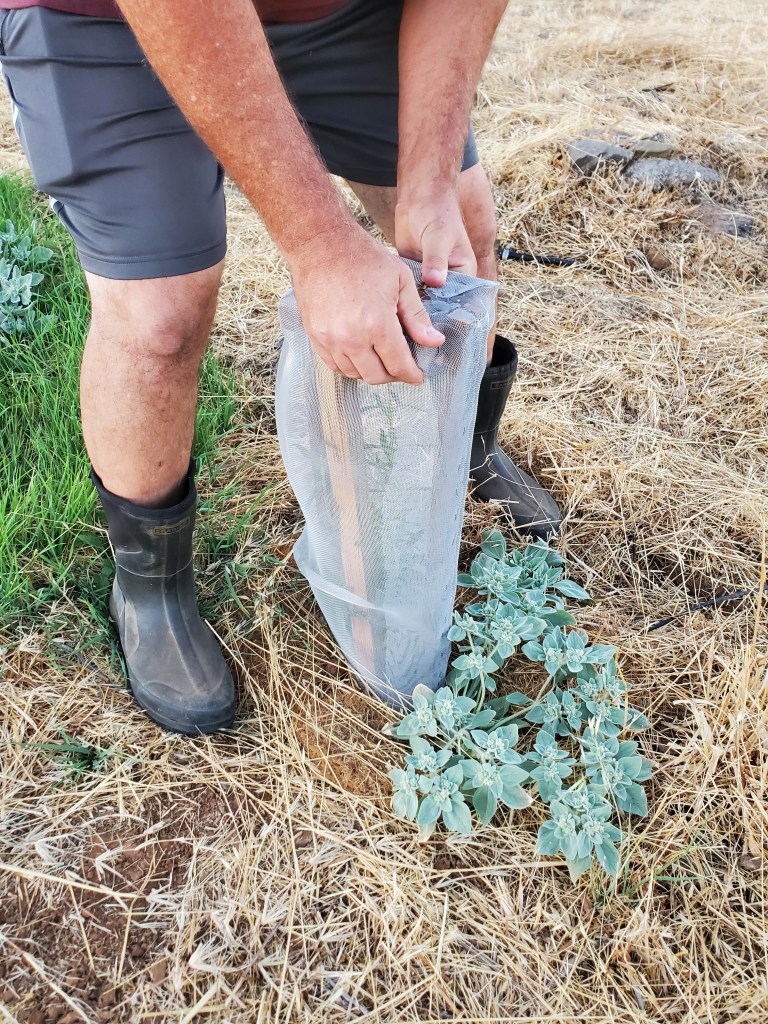
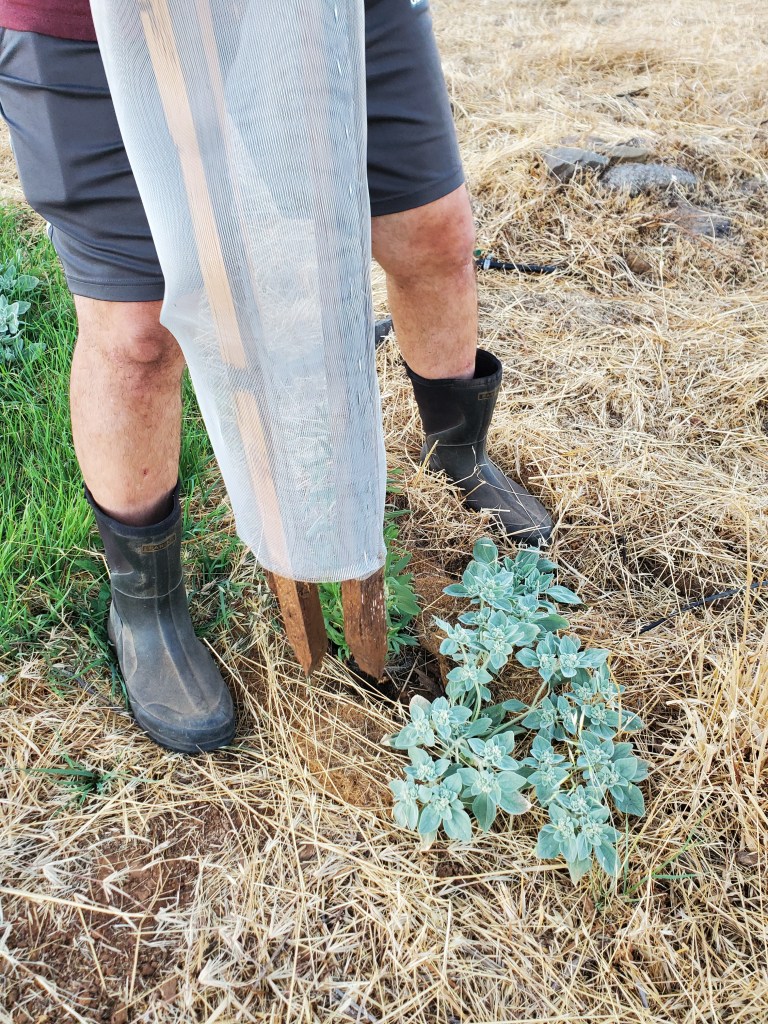
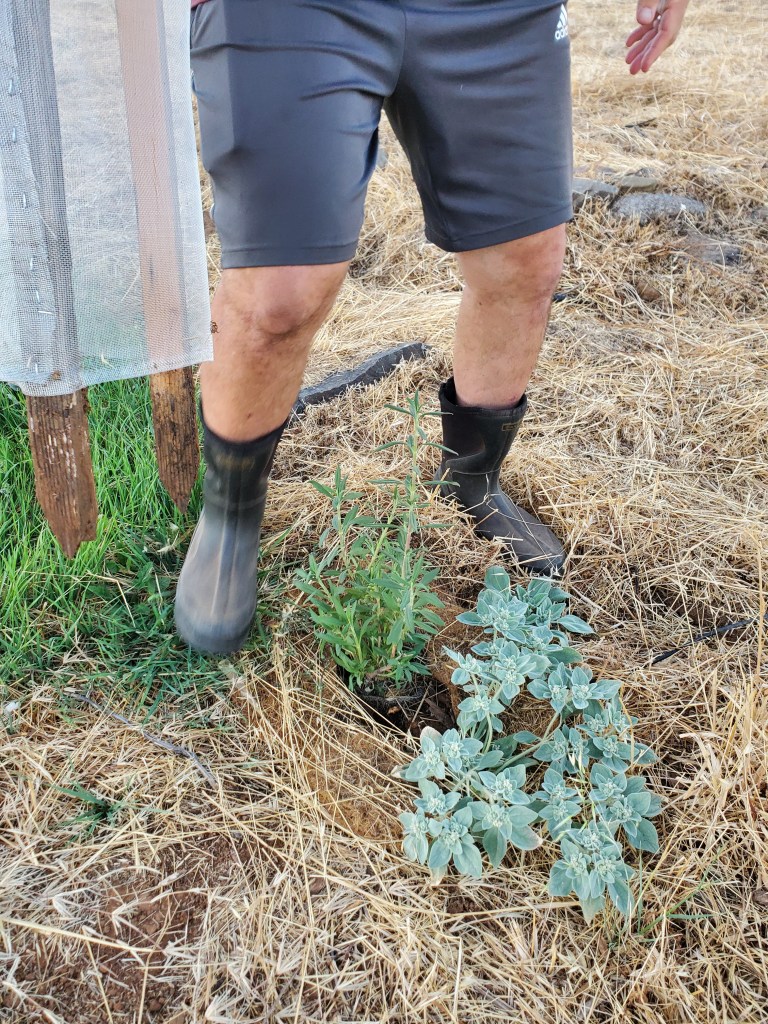
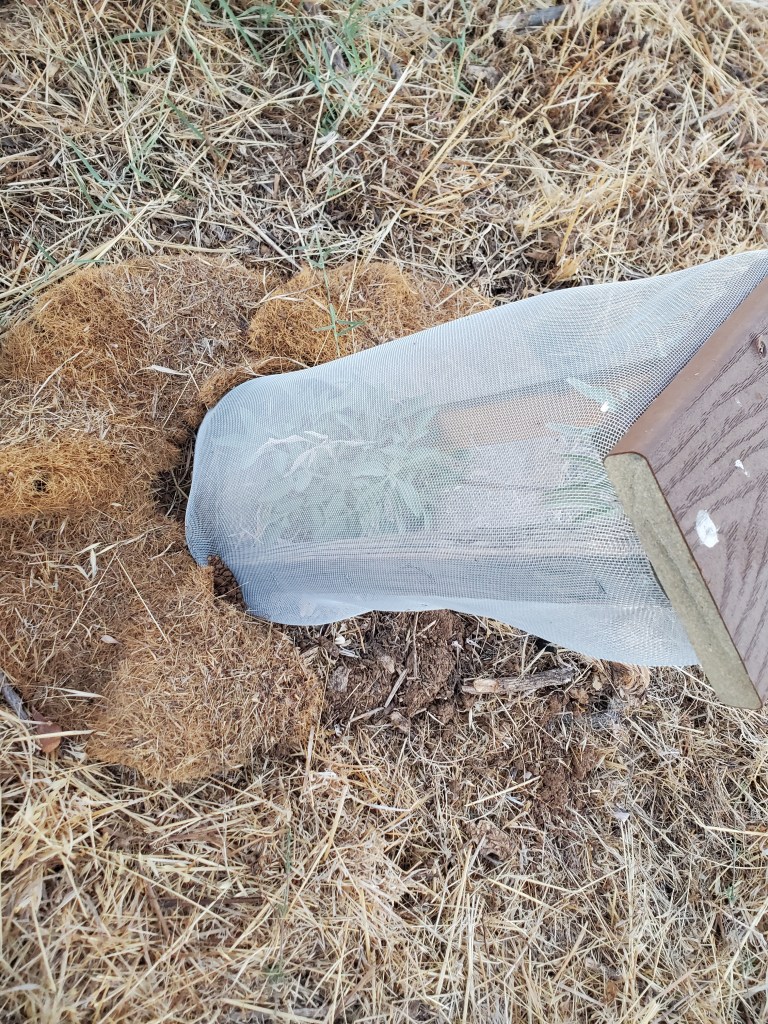
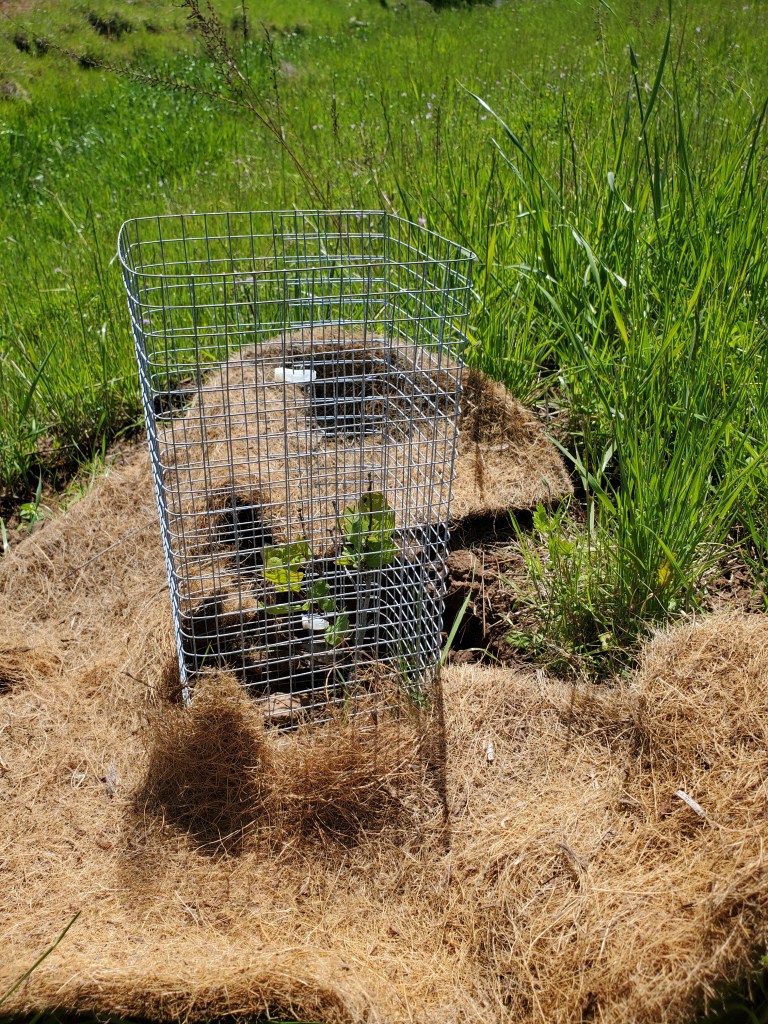
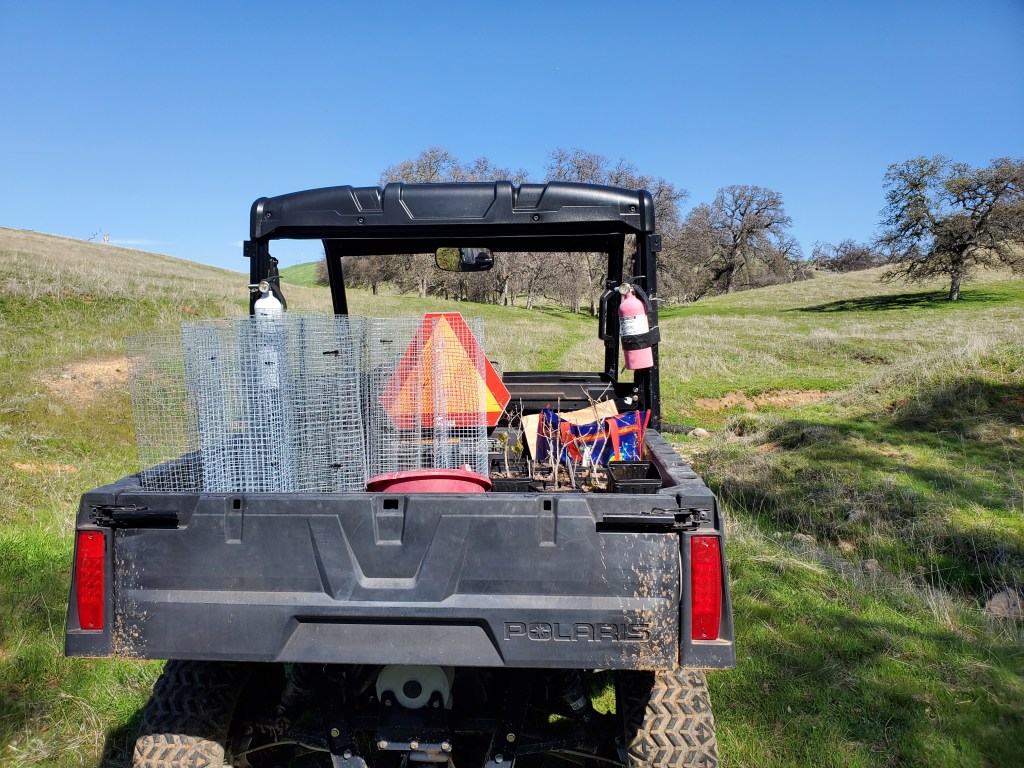
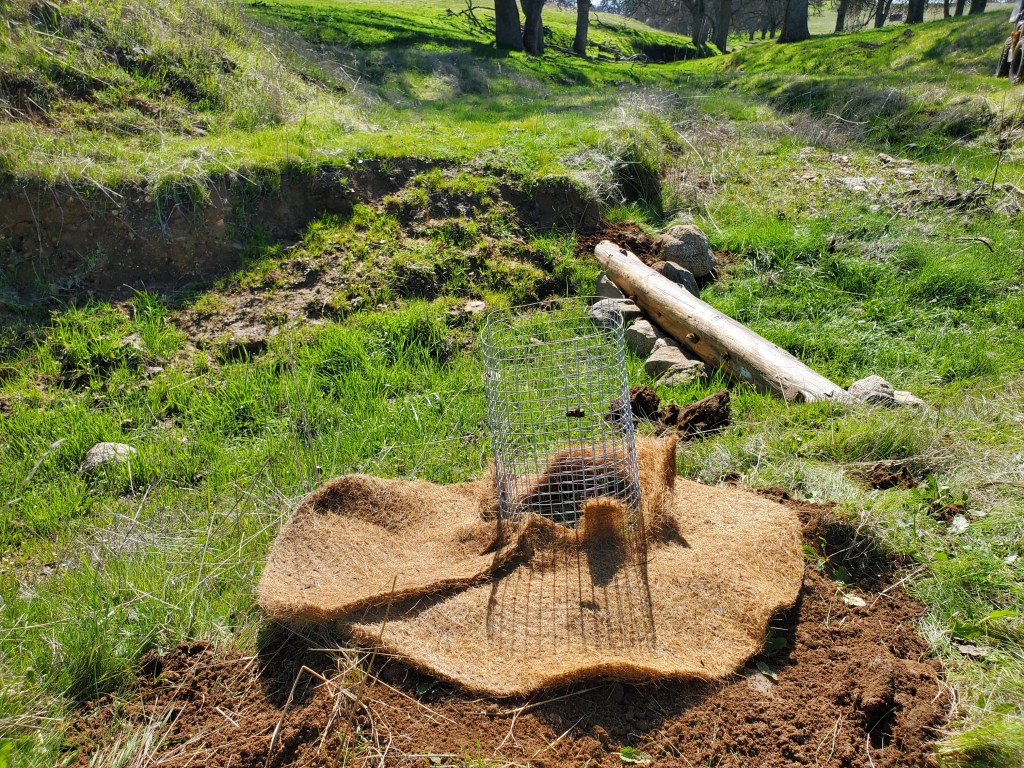
With the hoppers having abated, David and I have been slowly releasing the plants we covered in screen boxes. They have done very well. We are keeping the oaks in screen boxes just in case. I will plan to lift those in September. Thank you again to David and Sam for making those so quickly!
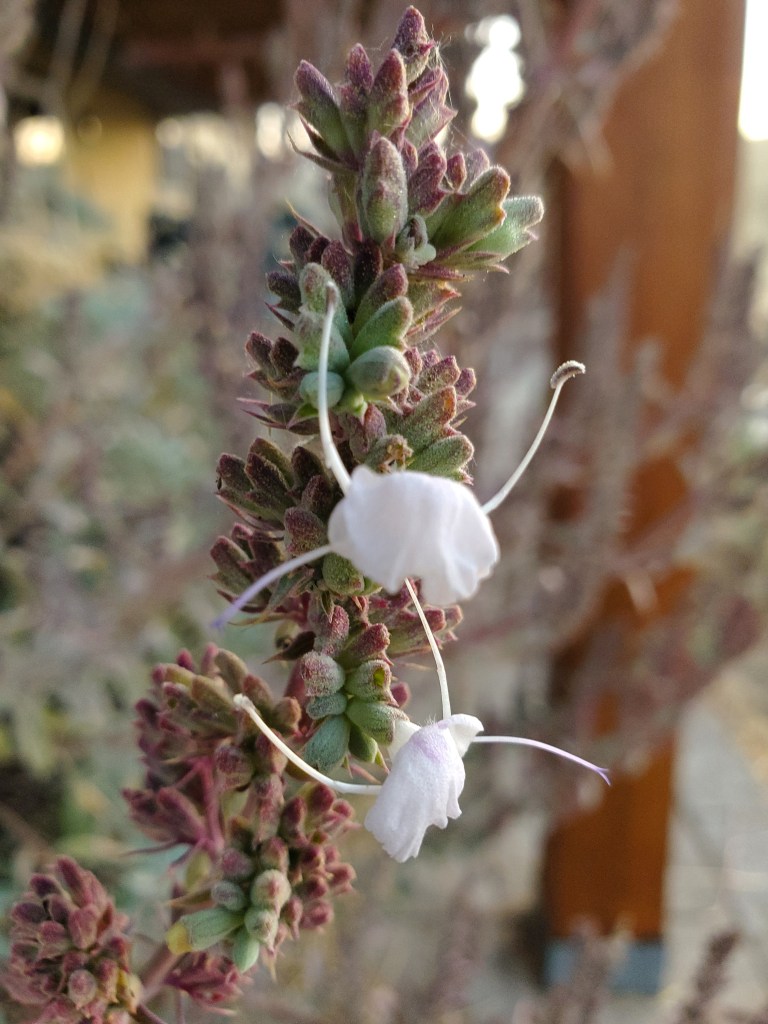
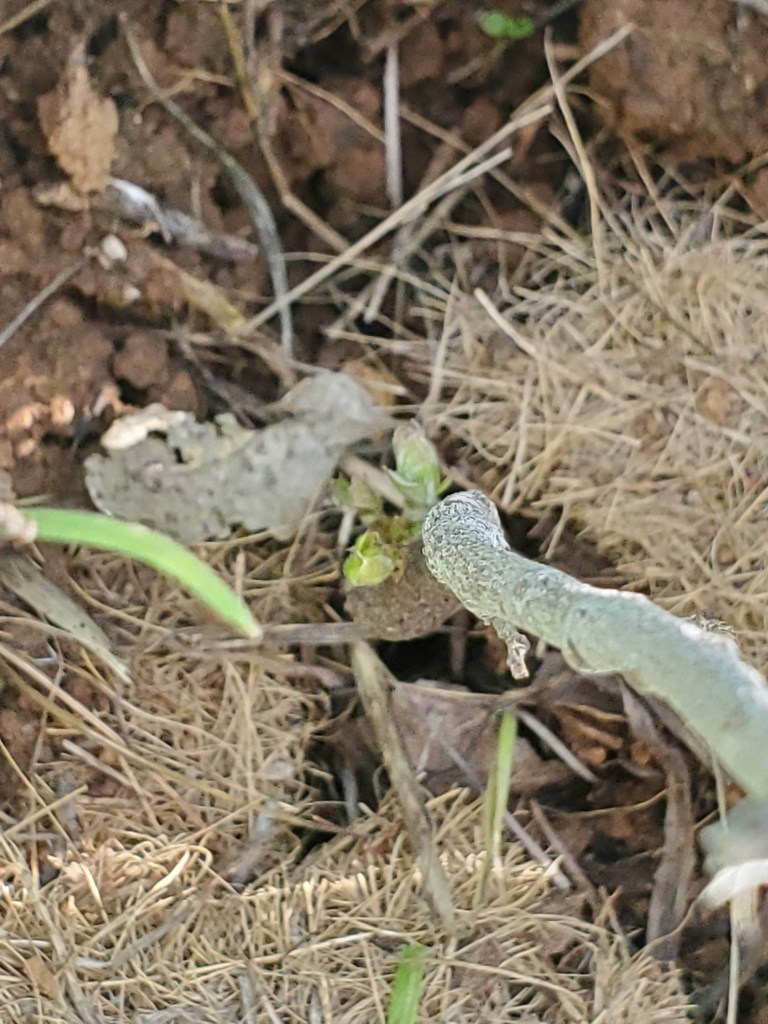
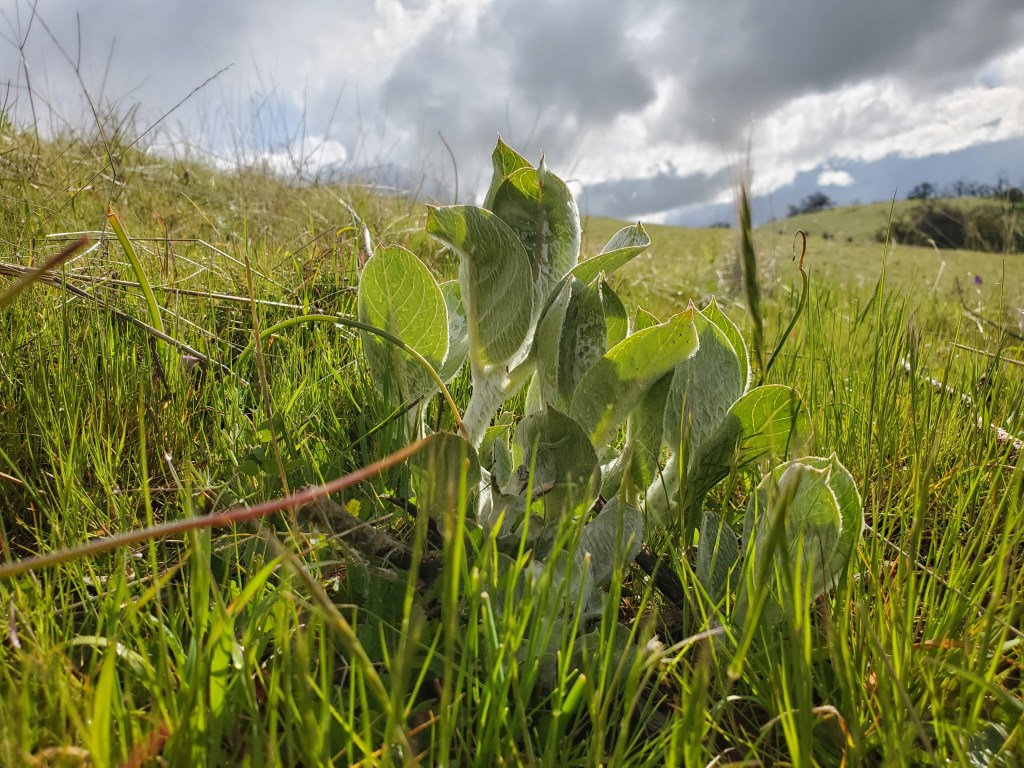
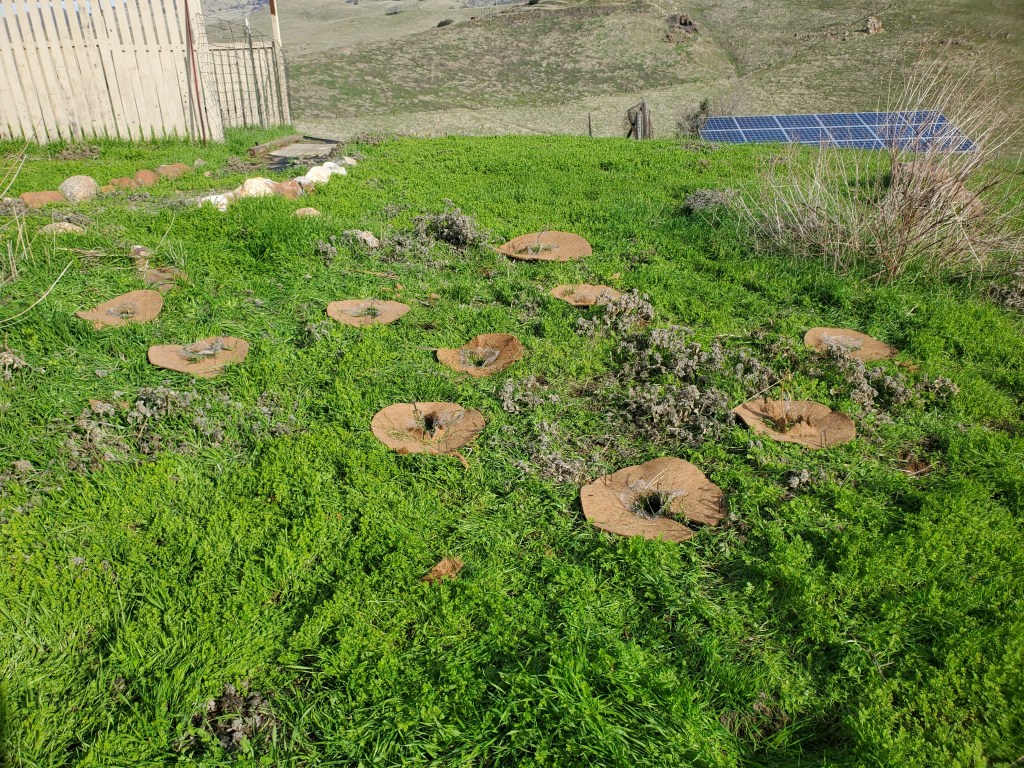
Black sage…time to…be free!This white sage was hammered with nearly all leaves eatenIt got a break from the hoppers and came back with gusto
Blooms
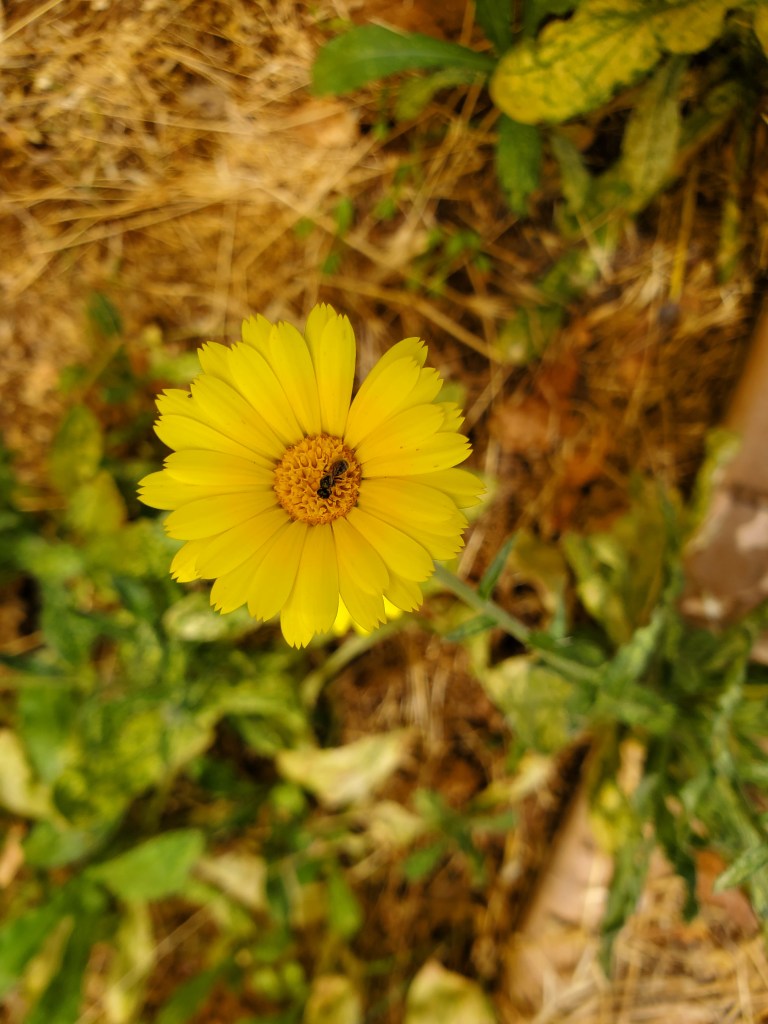
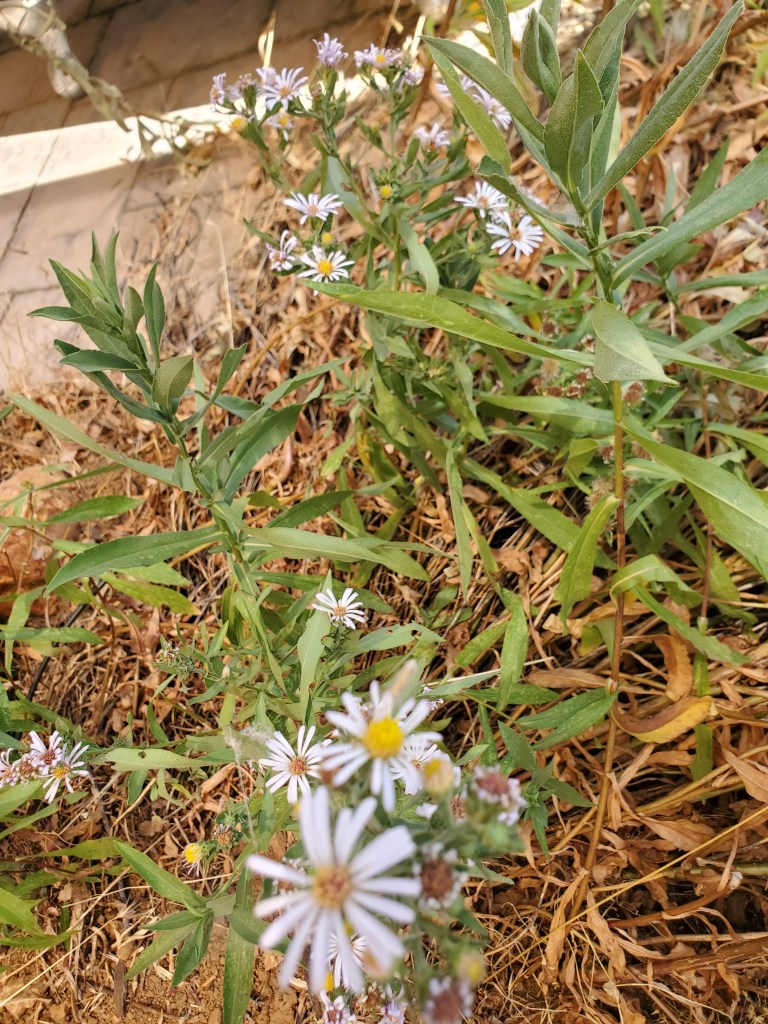
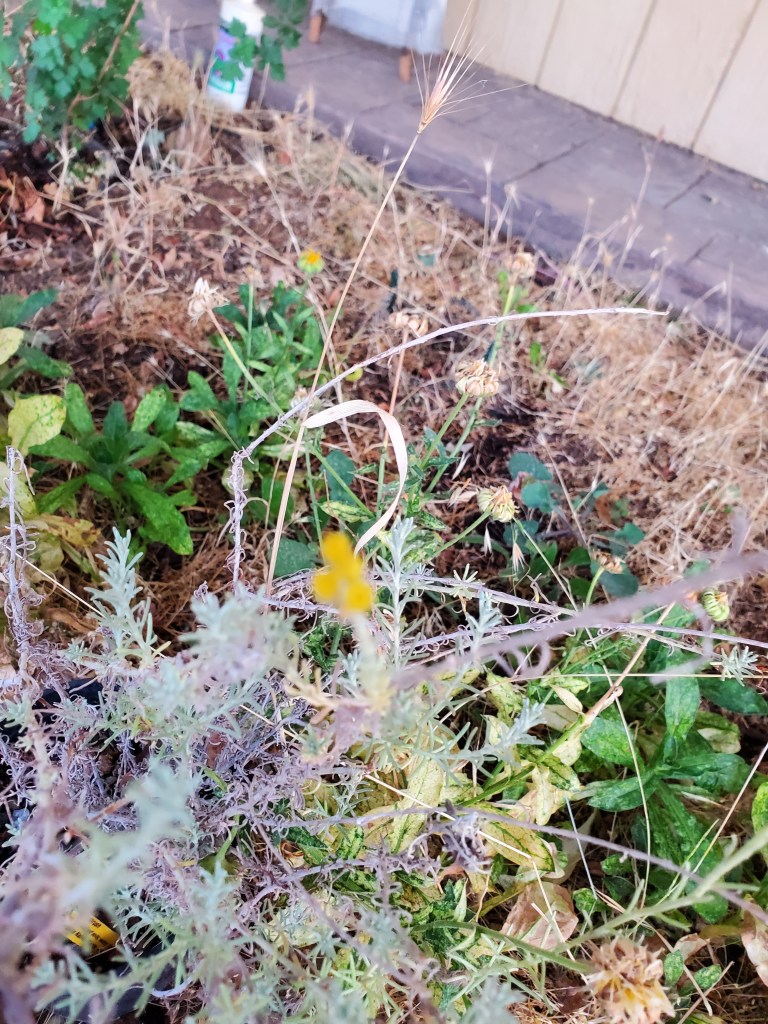
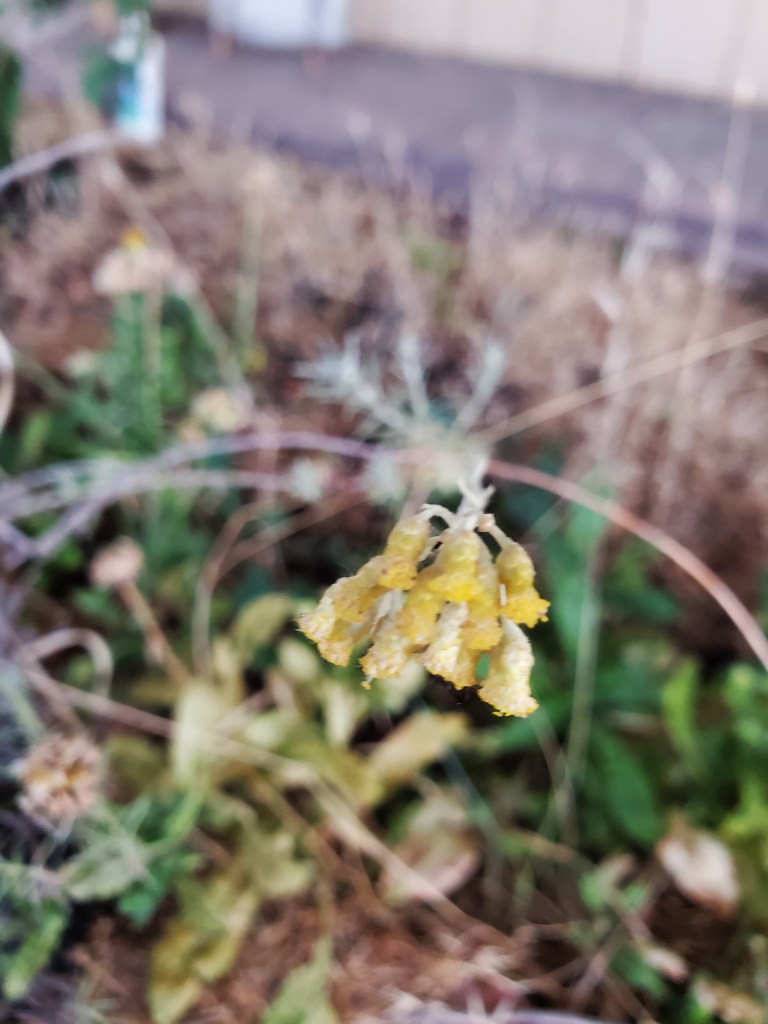
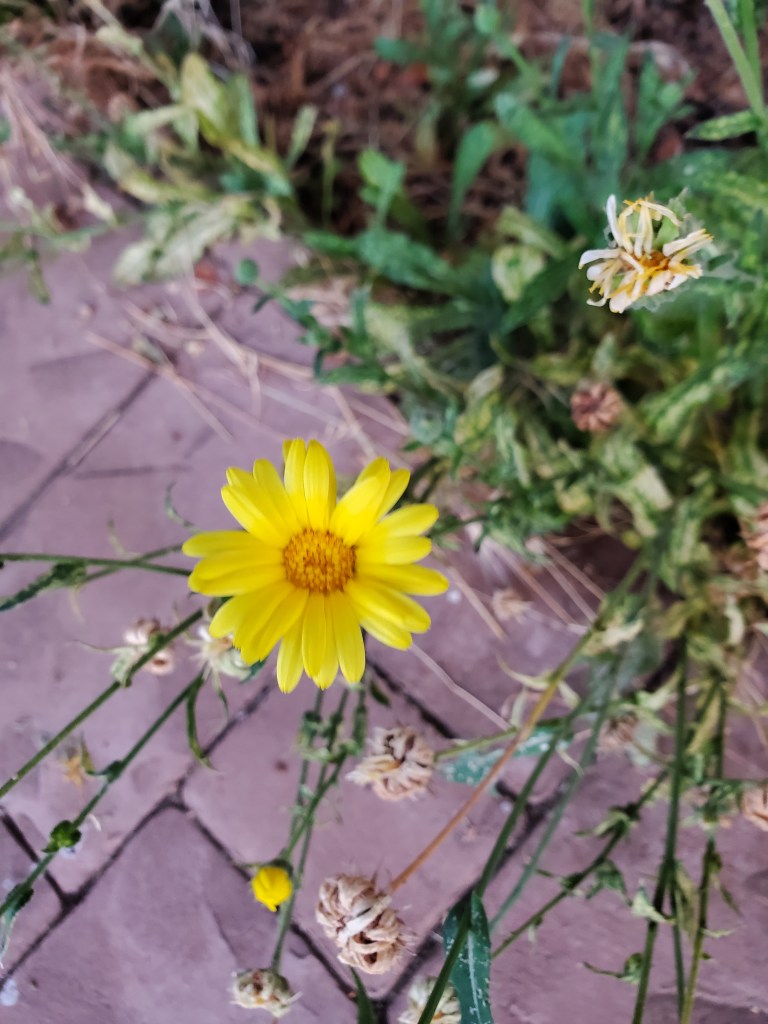
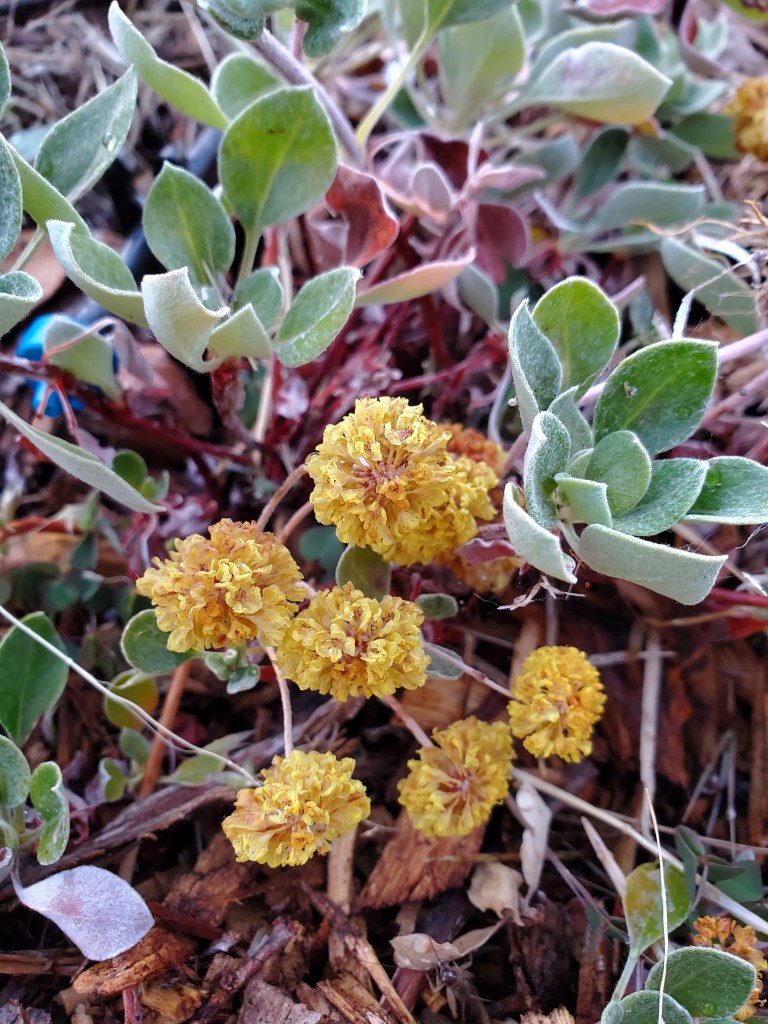
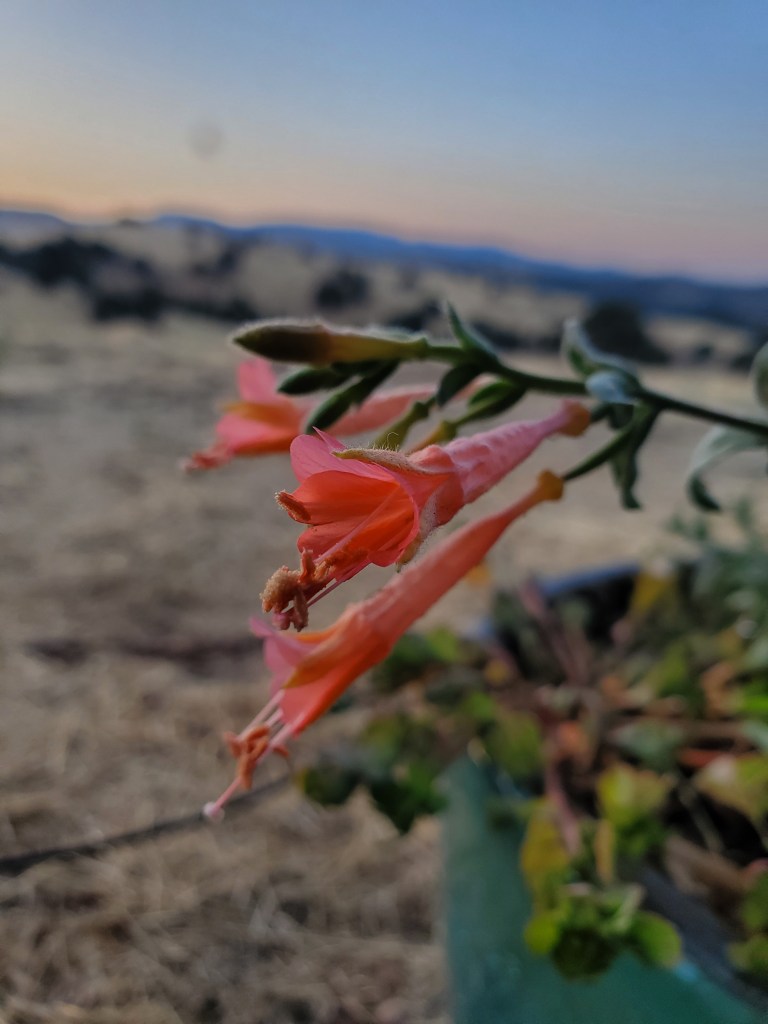
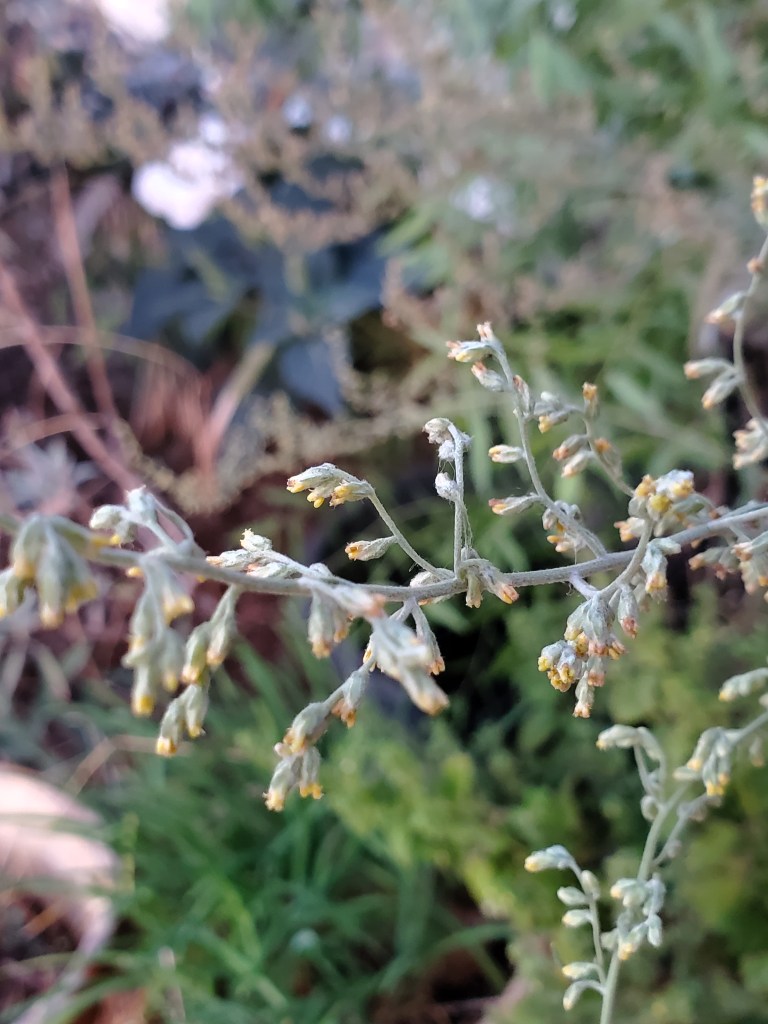
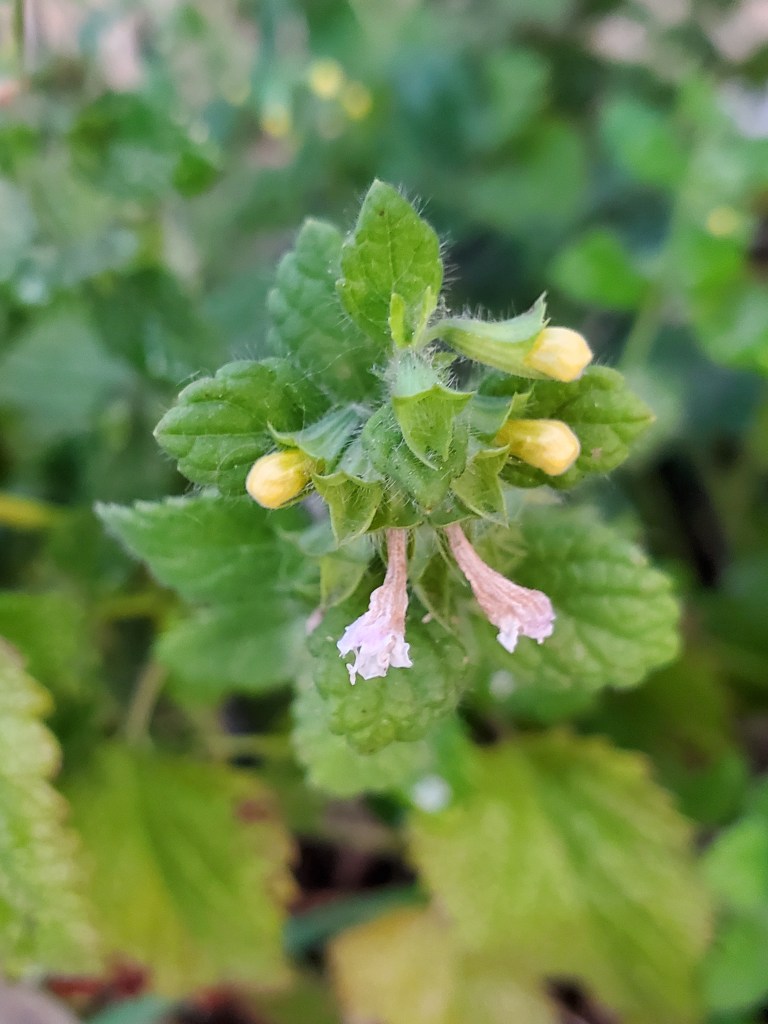
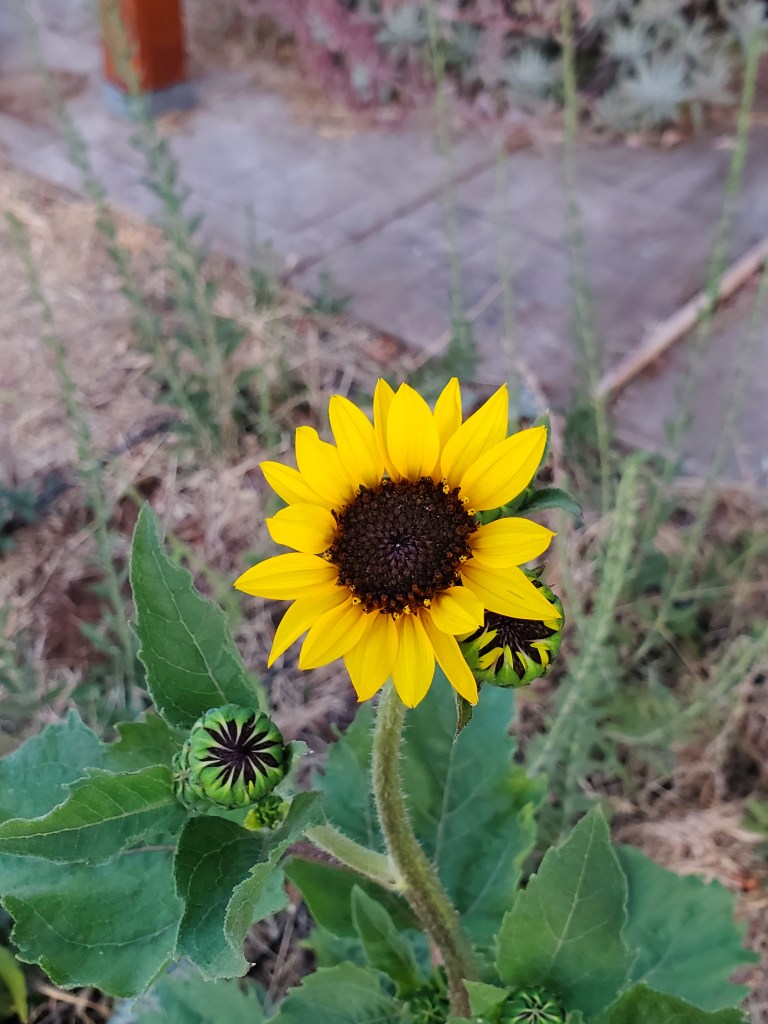
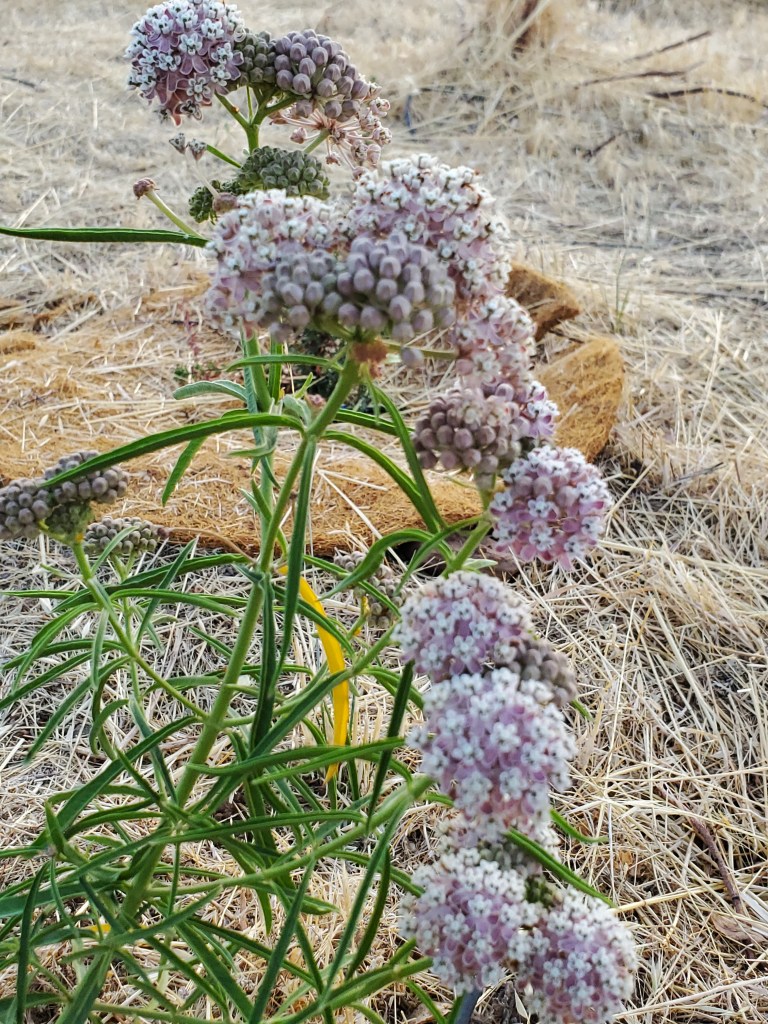
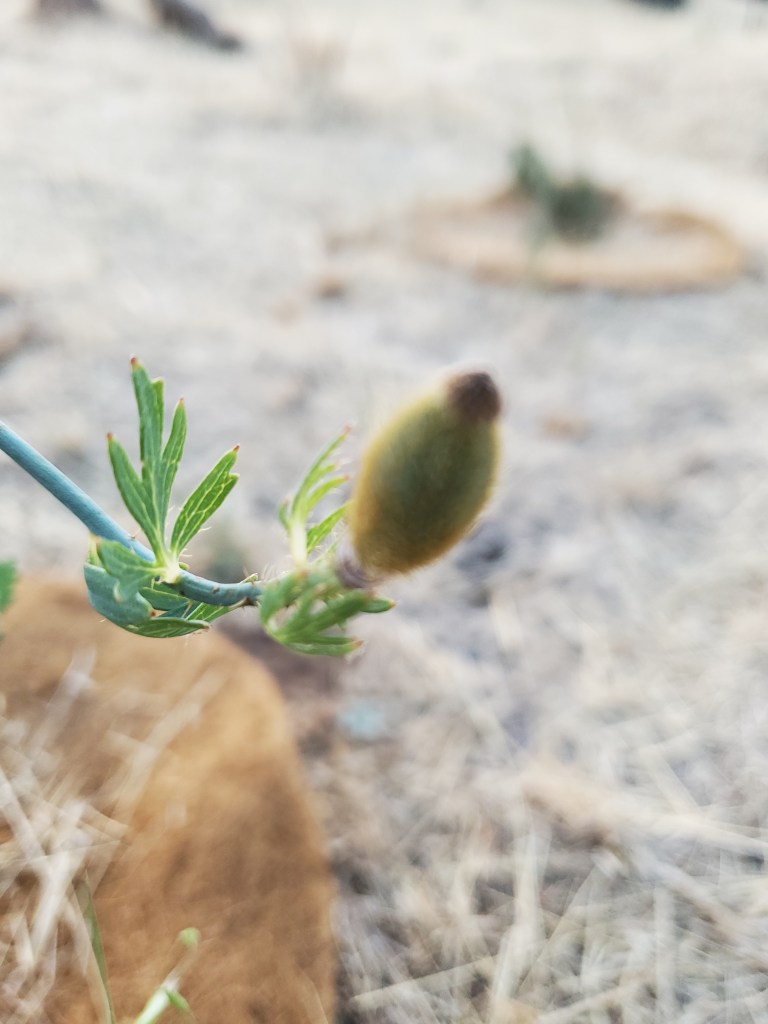
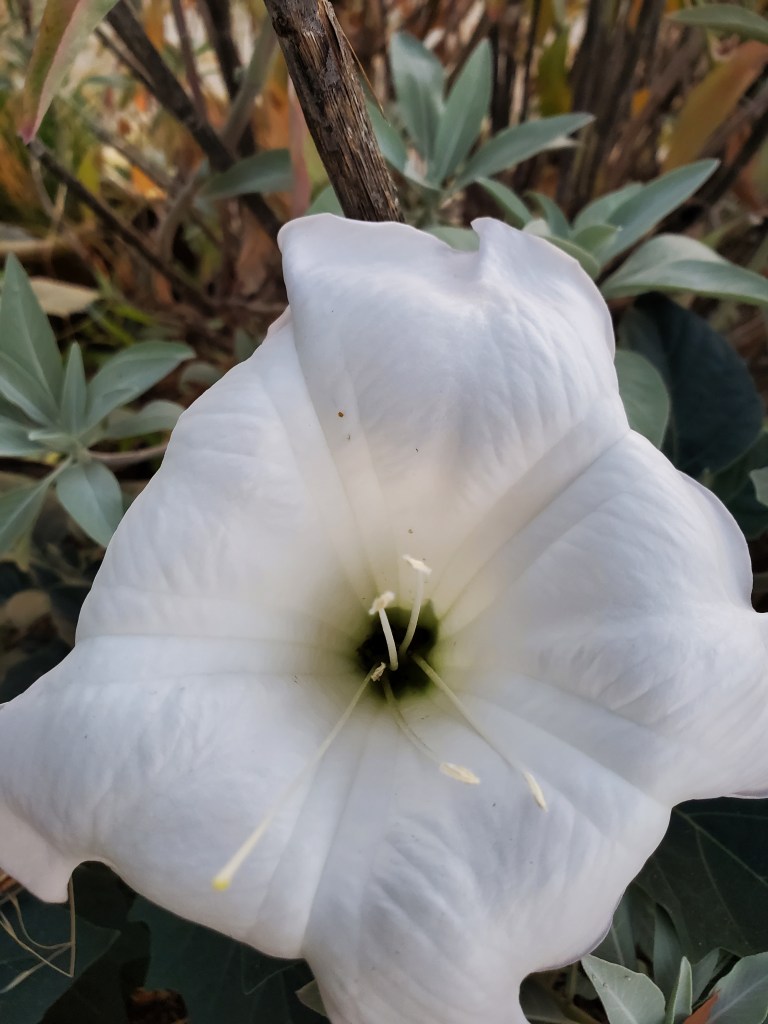
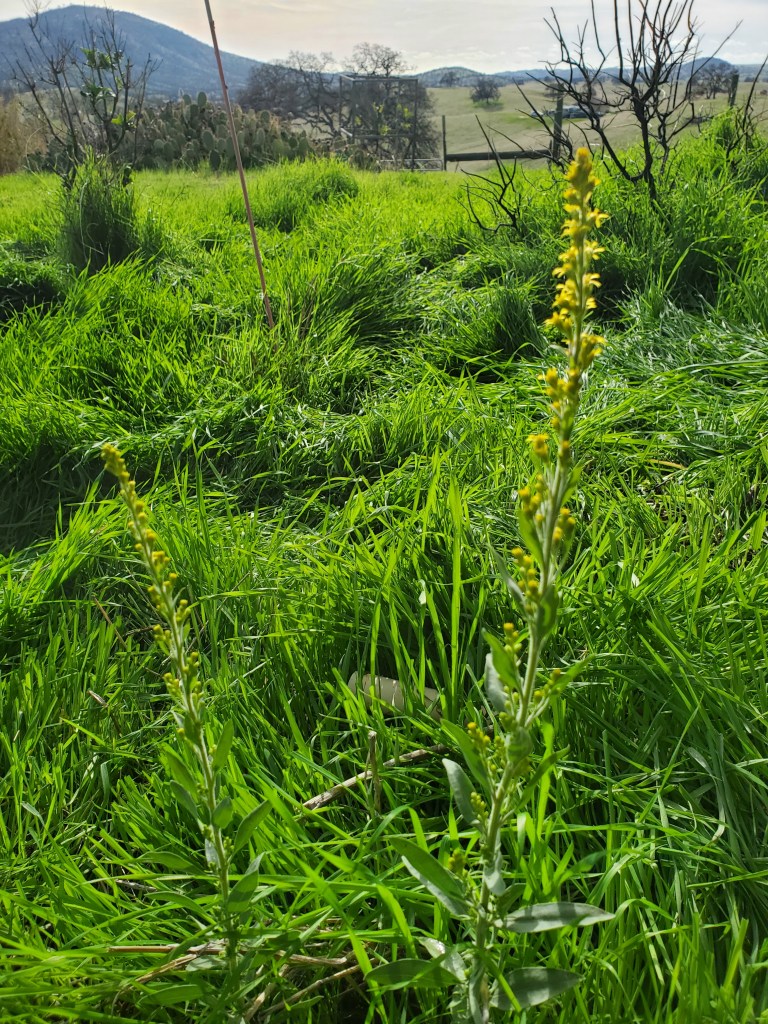
Blooming on July 13 when I began this post and mostly still blooming now are pacific asters, datura, sunflowers, matilla poppy, California poppy, narrowleaf milkweed, California fuchsia rabbit brush, black-eyed susan, marigold, sulfur buckeye, and worm wood. There were a couple small blooms on the white sage, basil and other garden items.
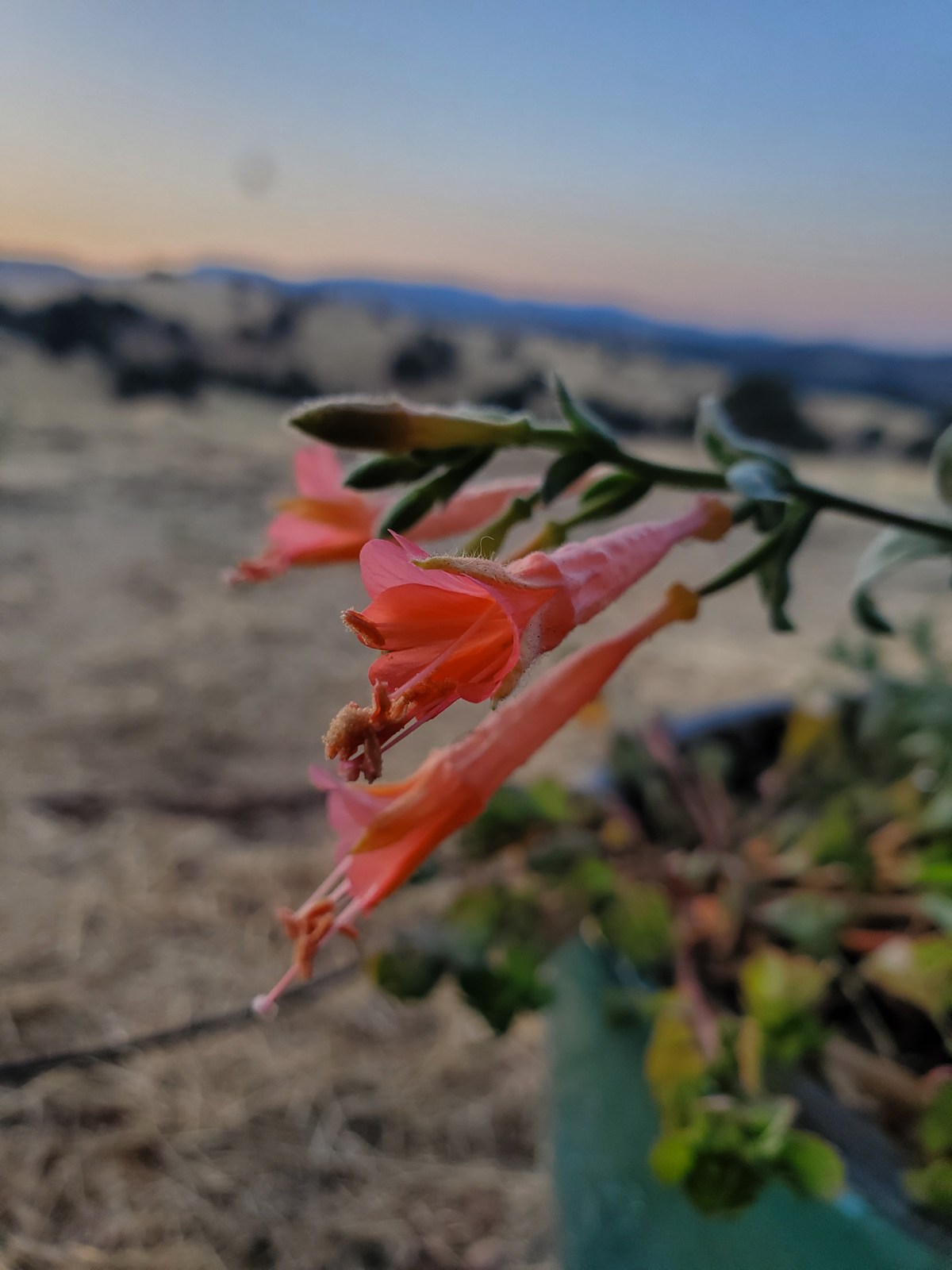
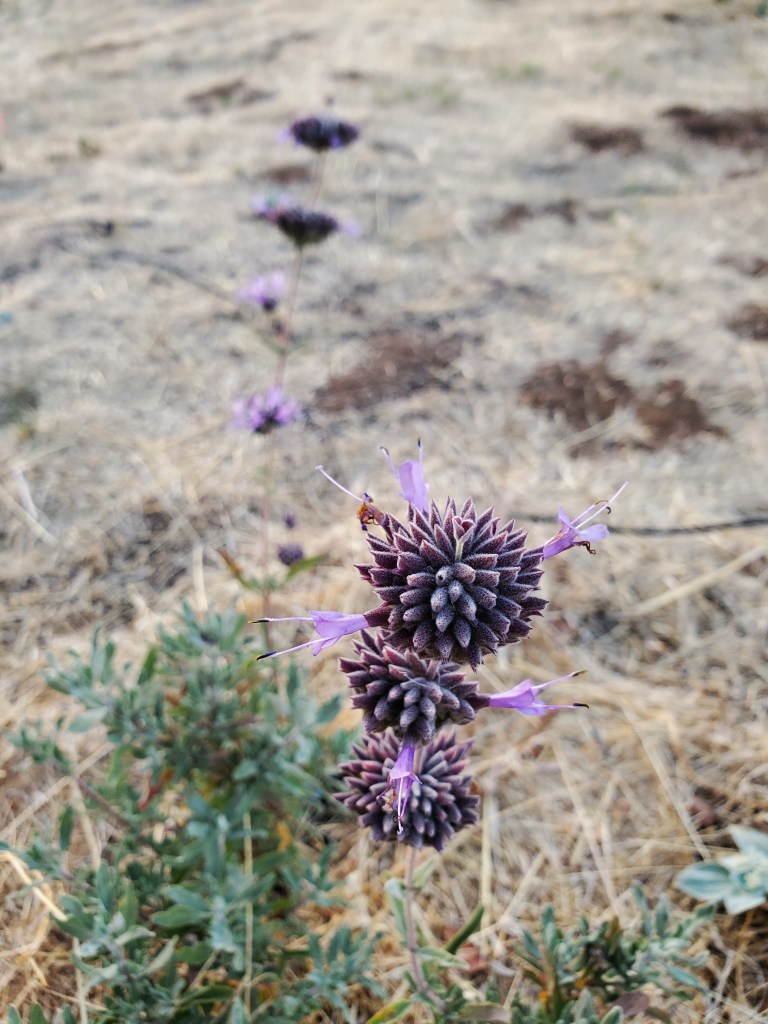
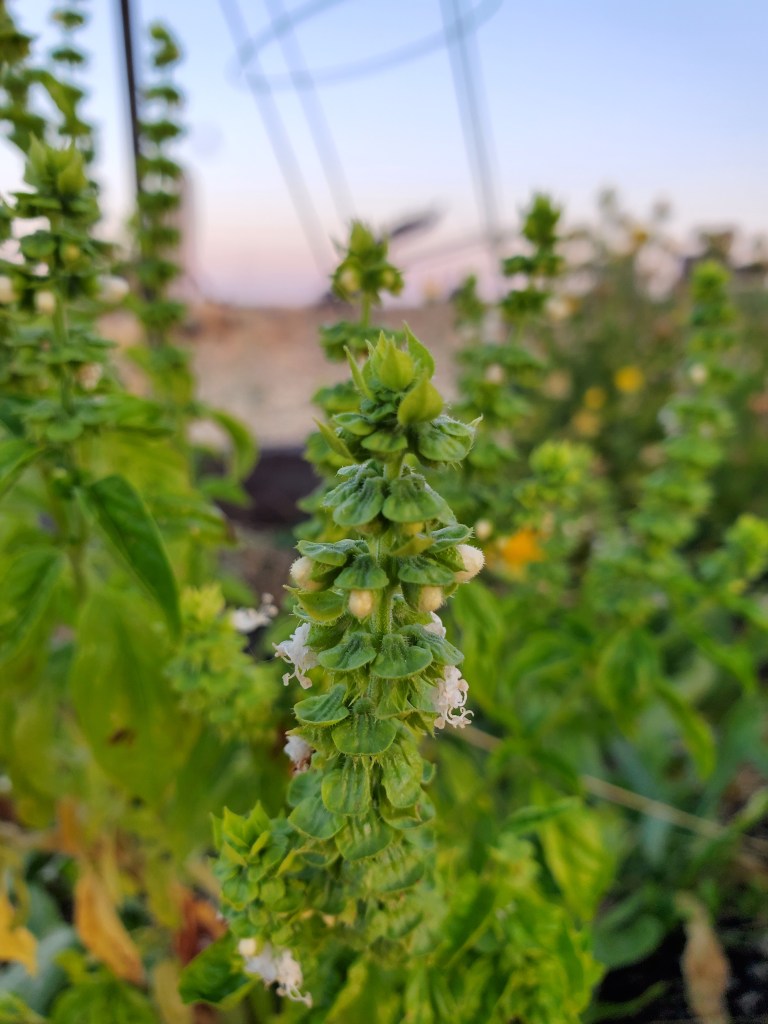
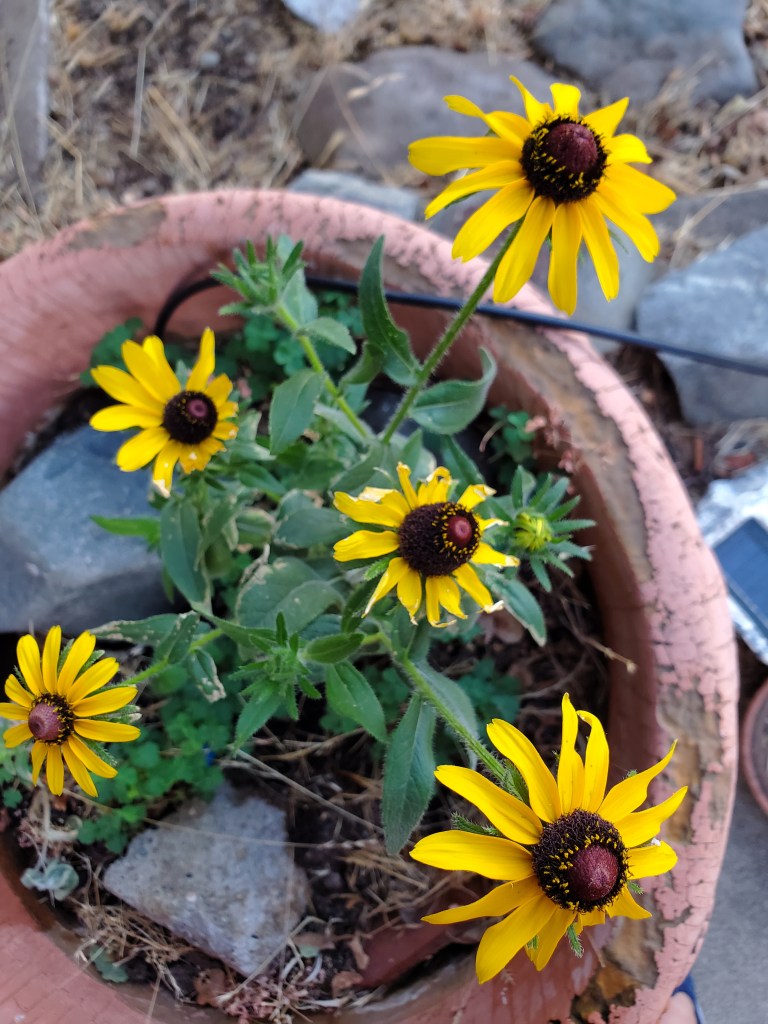
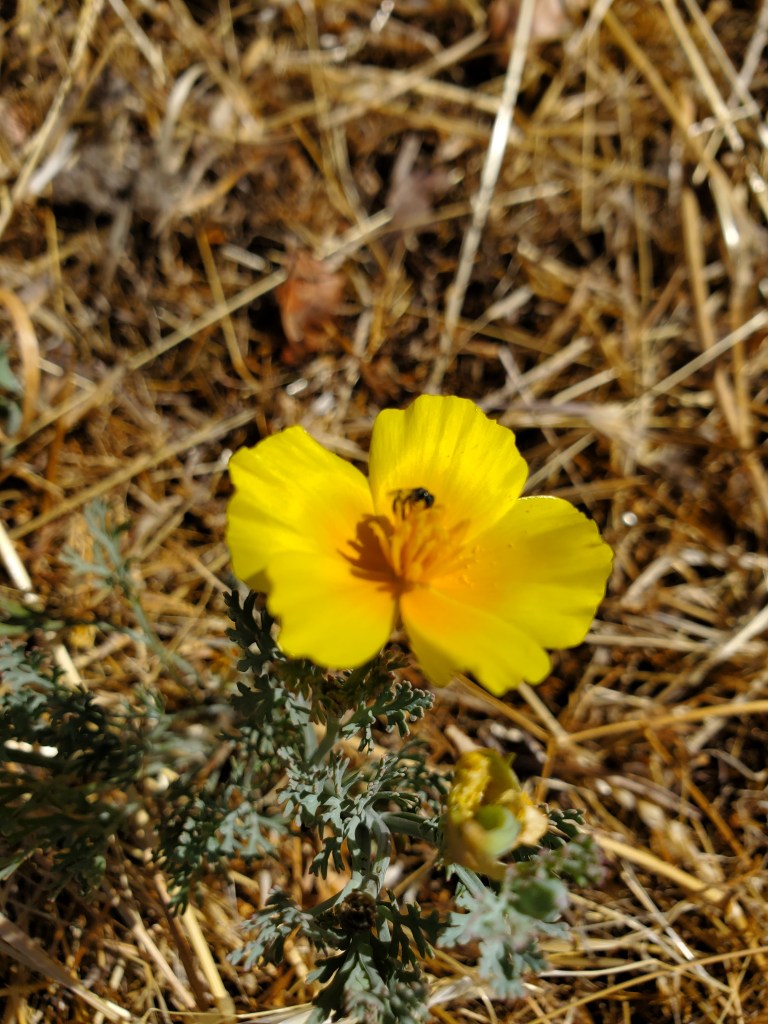
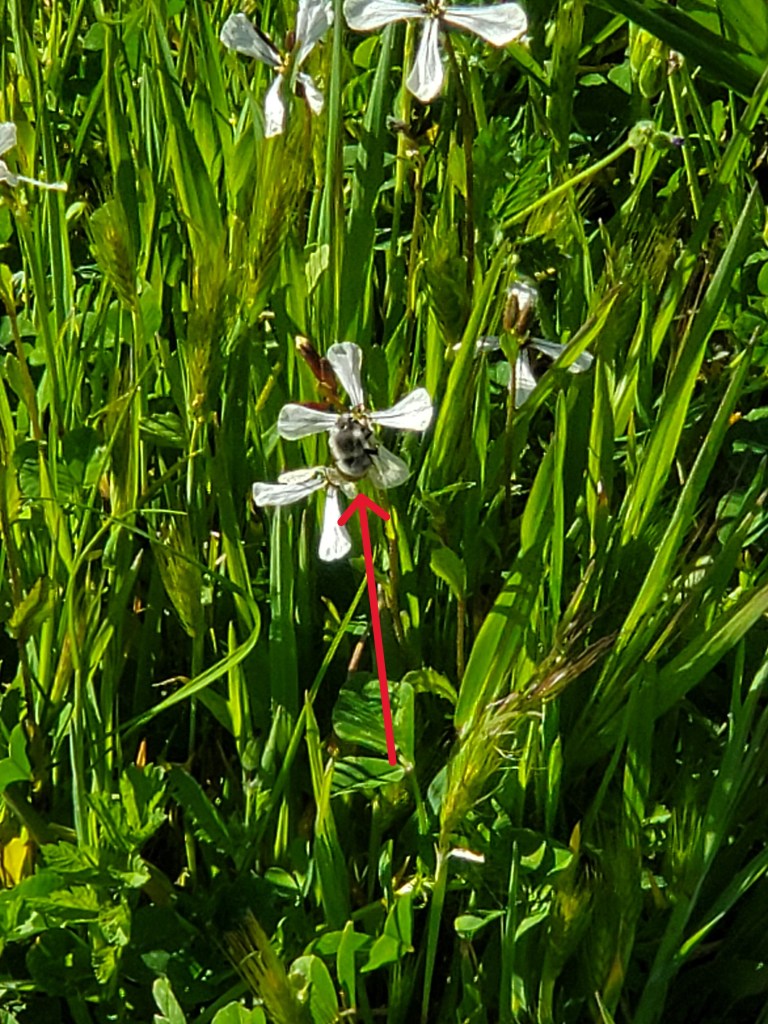
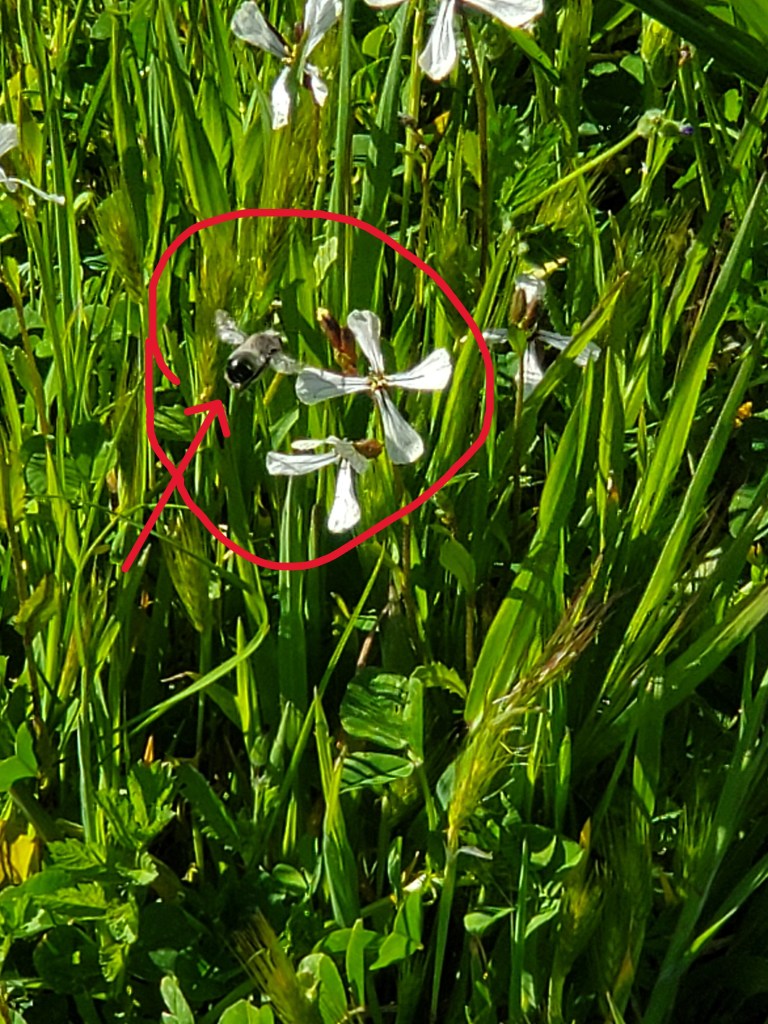
Yellow flower is a magnet for fly type pollinatorsPacific asterRabbit brushWormwoodMore yellow flowersSulphur buckwheatCA fuschiaWormwood – view 2Lemon balmMy favorite – sunflowerNarrowlead milkweedMatilla poppyFinal white sage bloomsDaturaCleveland sageBasilNon-native sweet alyssumBlack-eyed susanCA poppy with bee friend pollinating
Ranch Maintenance
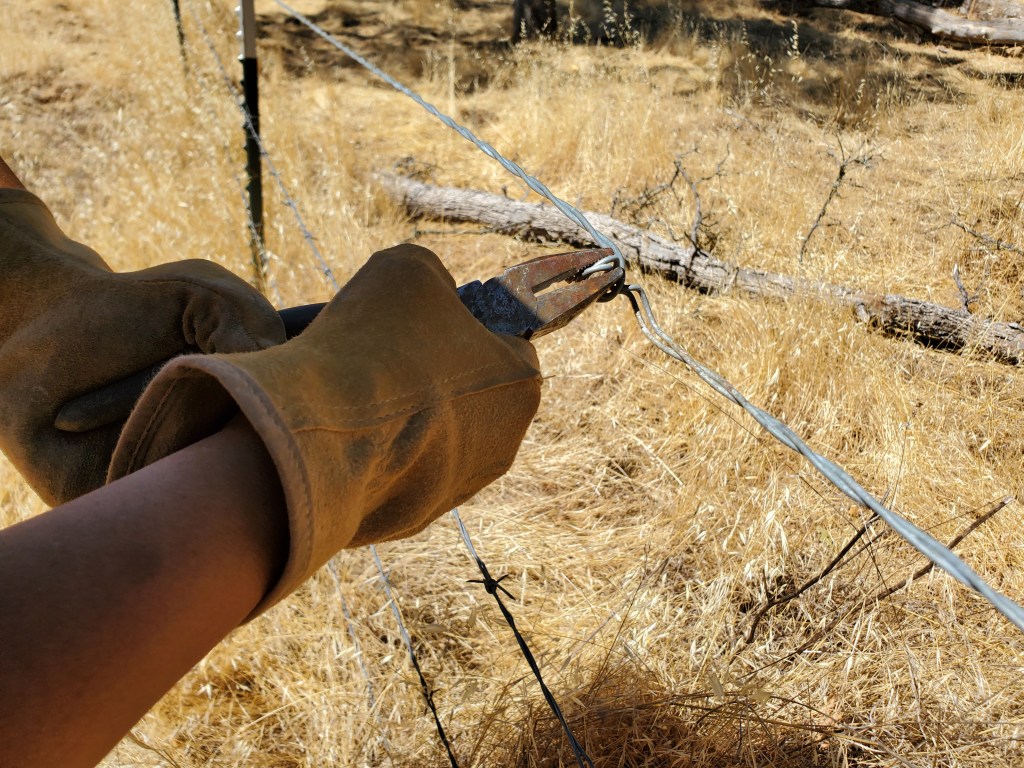
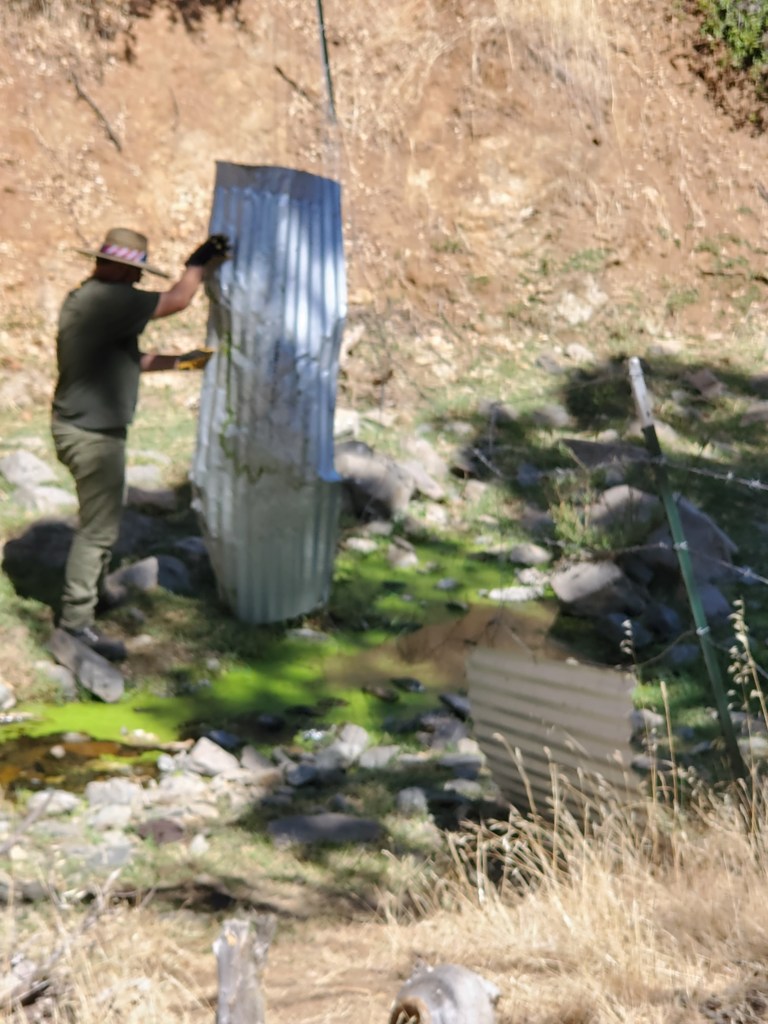
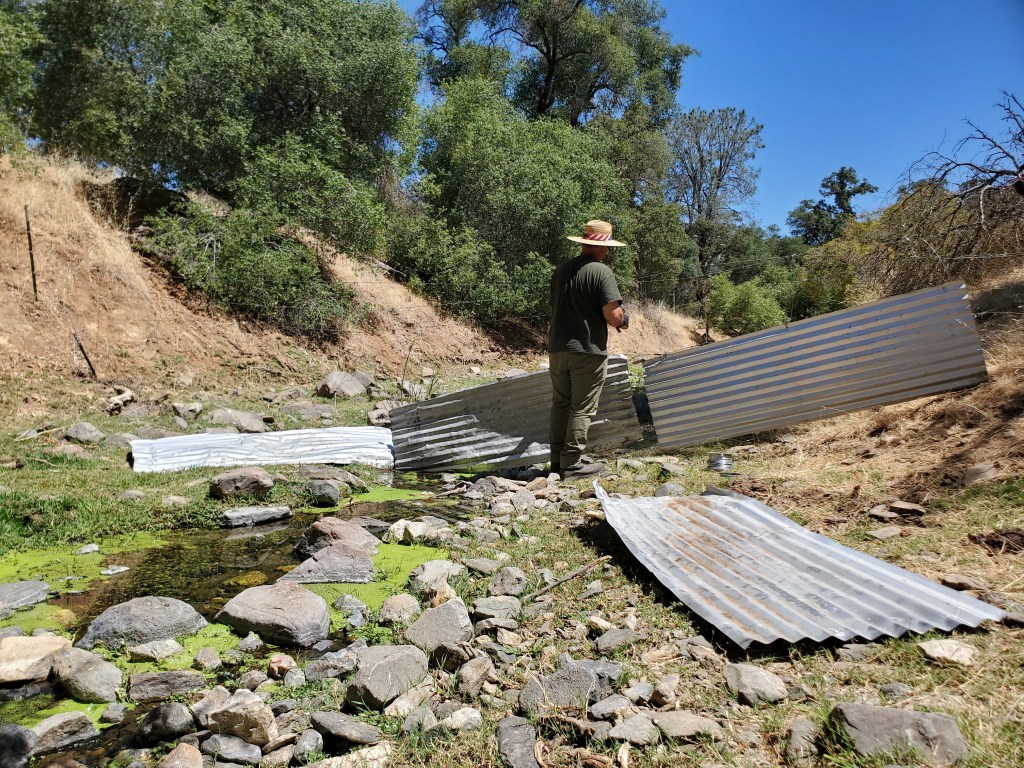
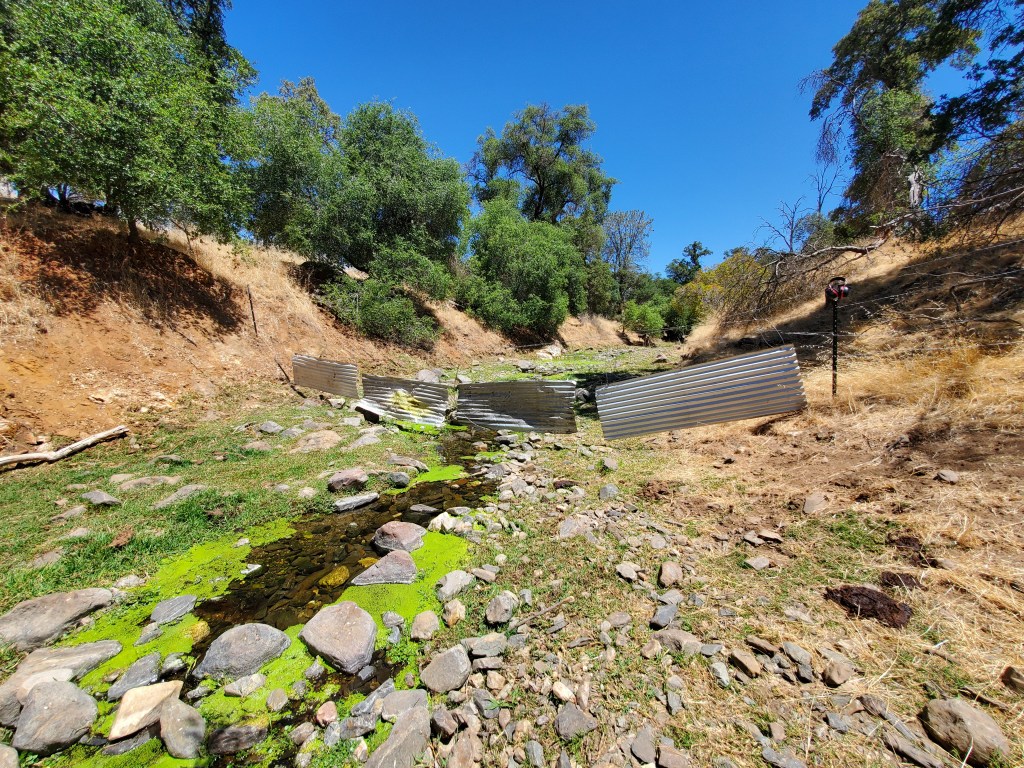
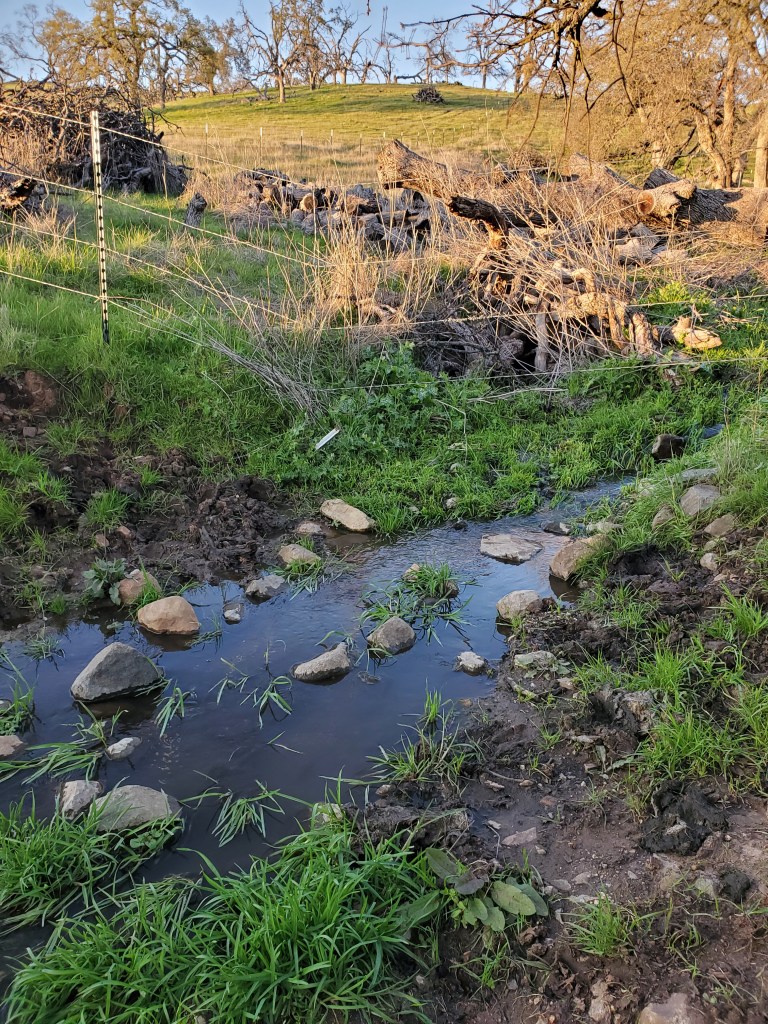
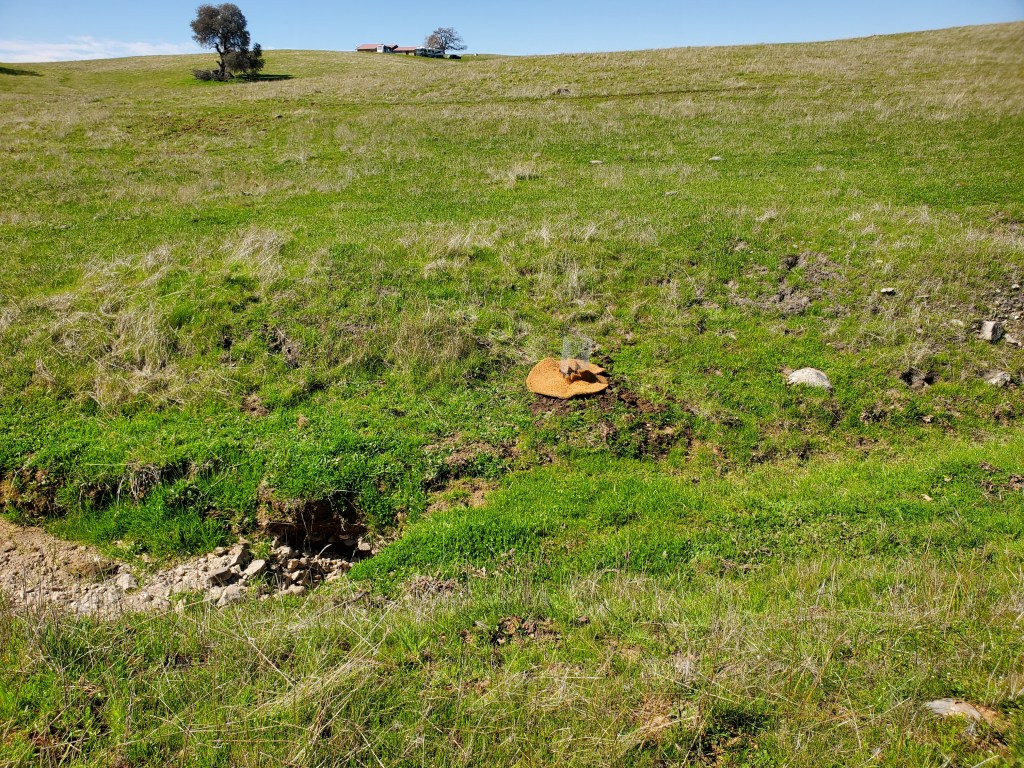
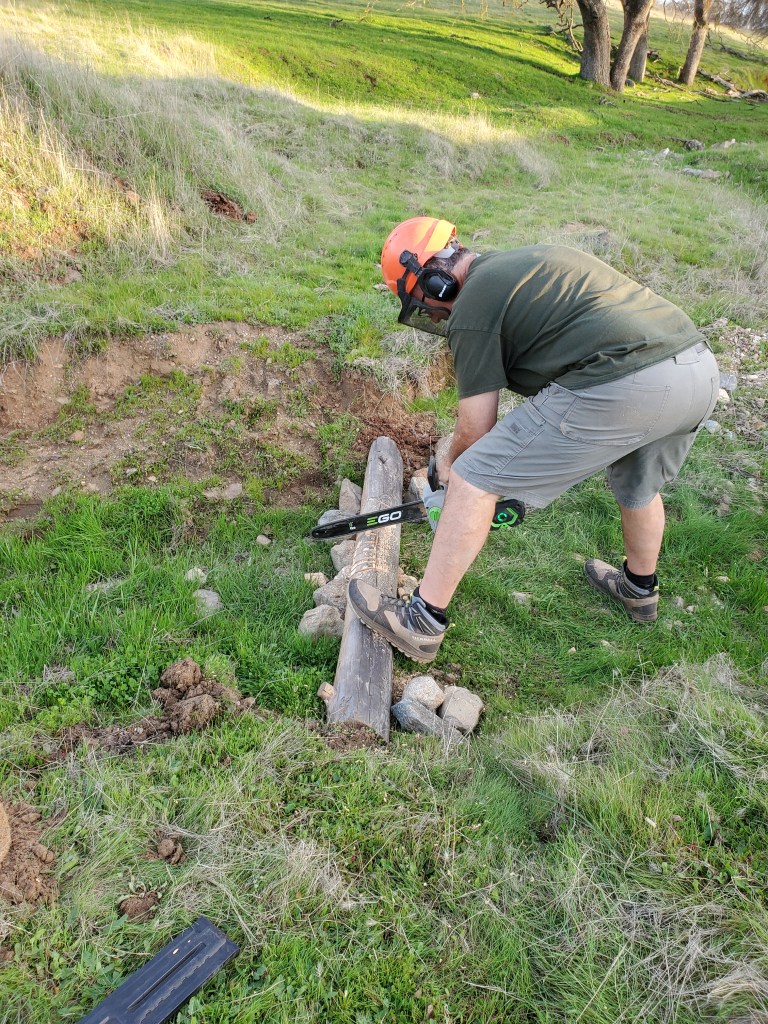
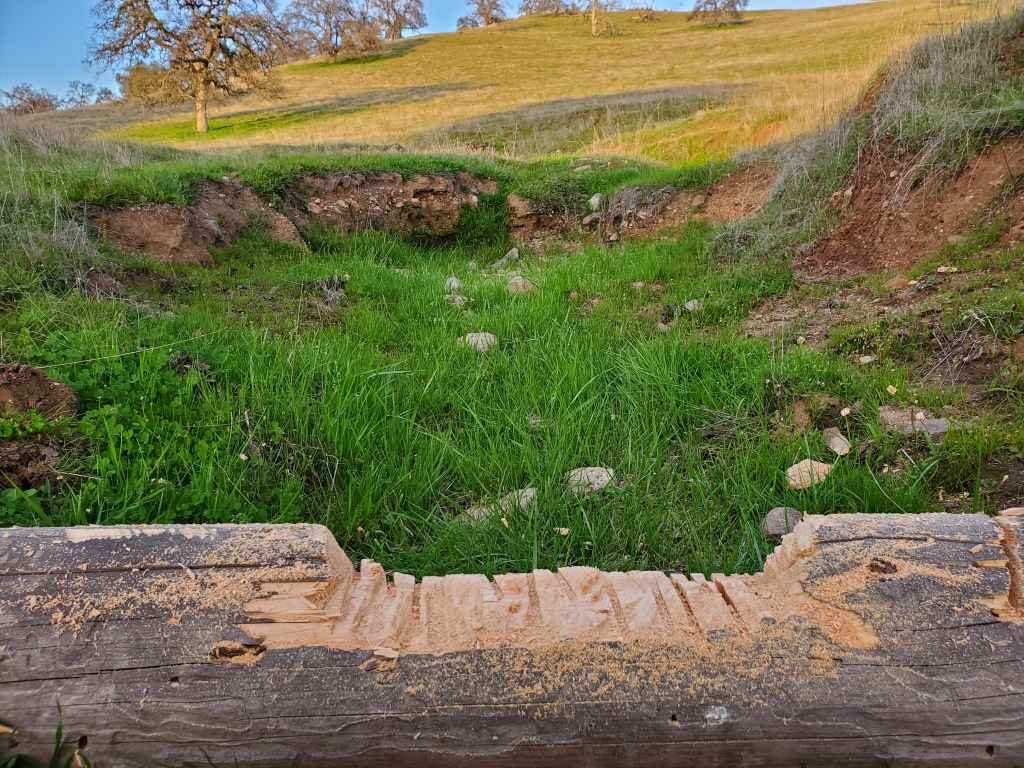
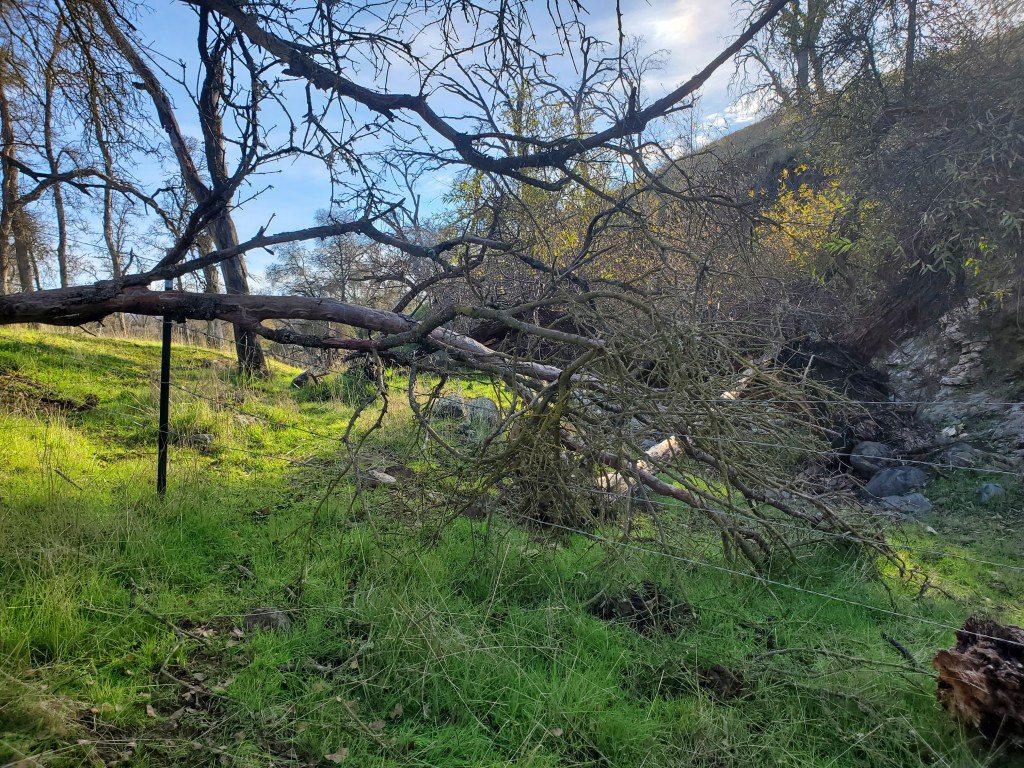
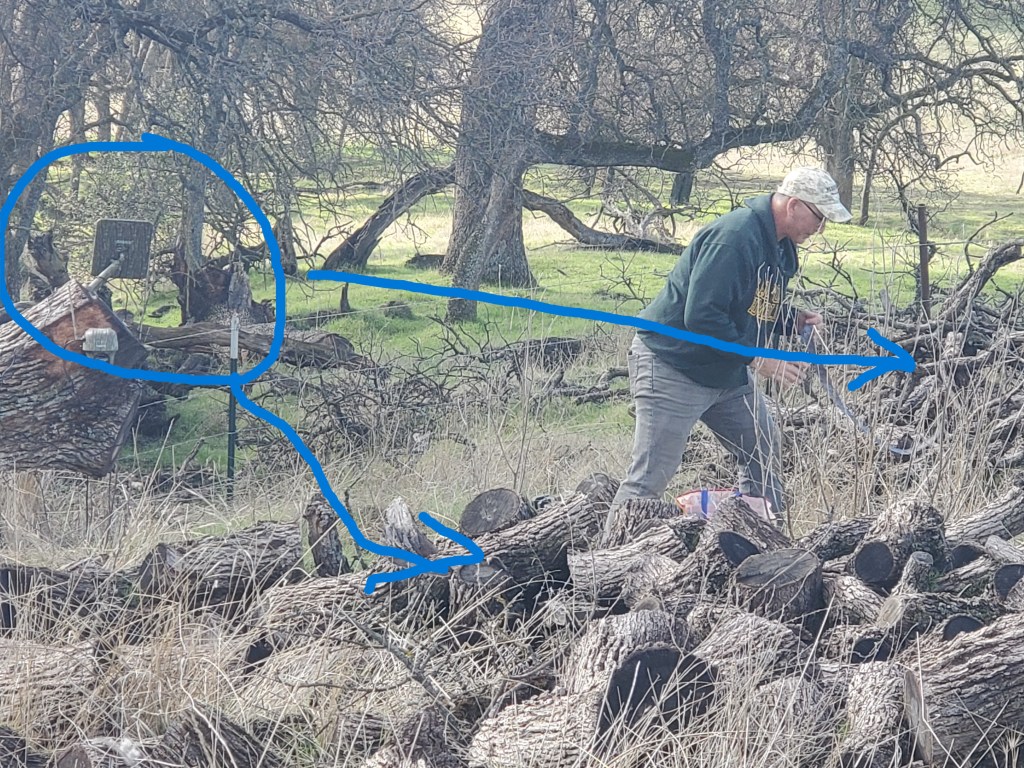
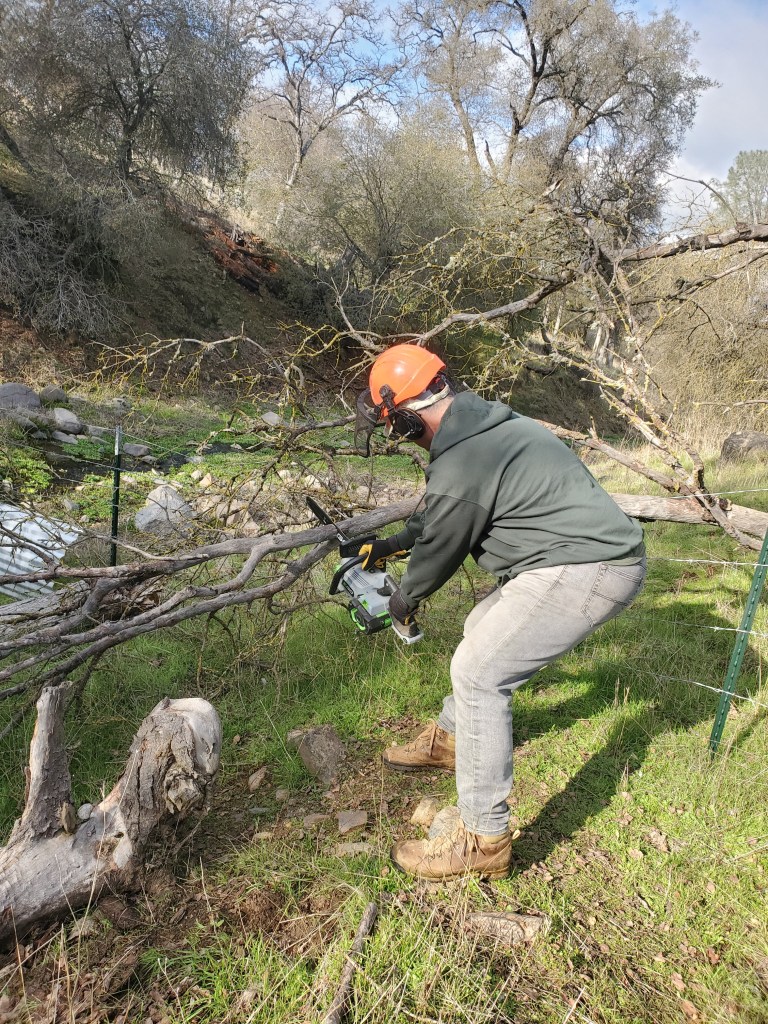
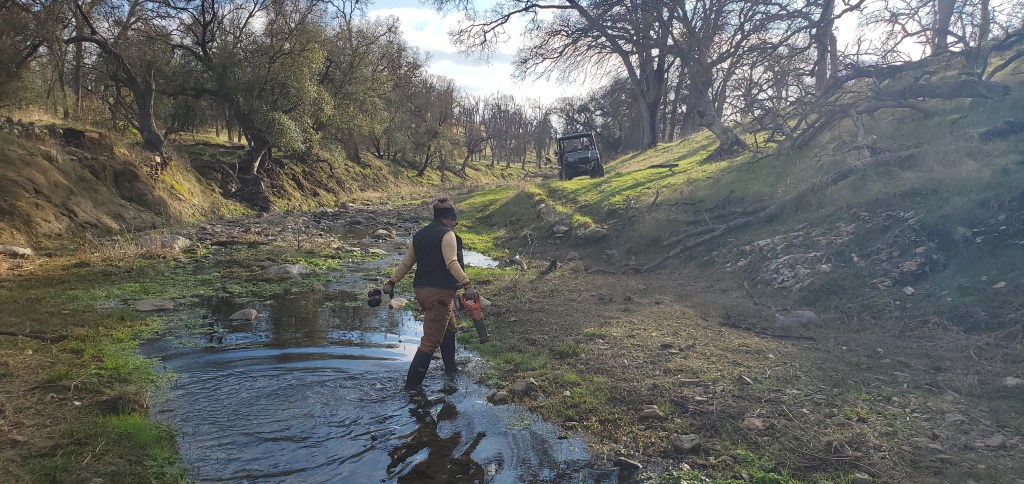
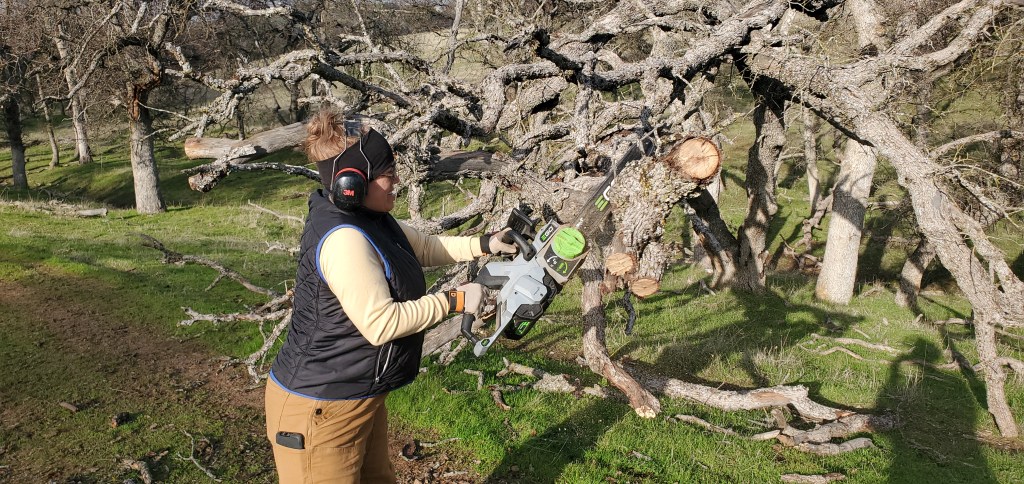
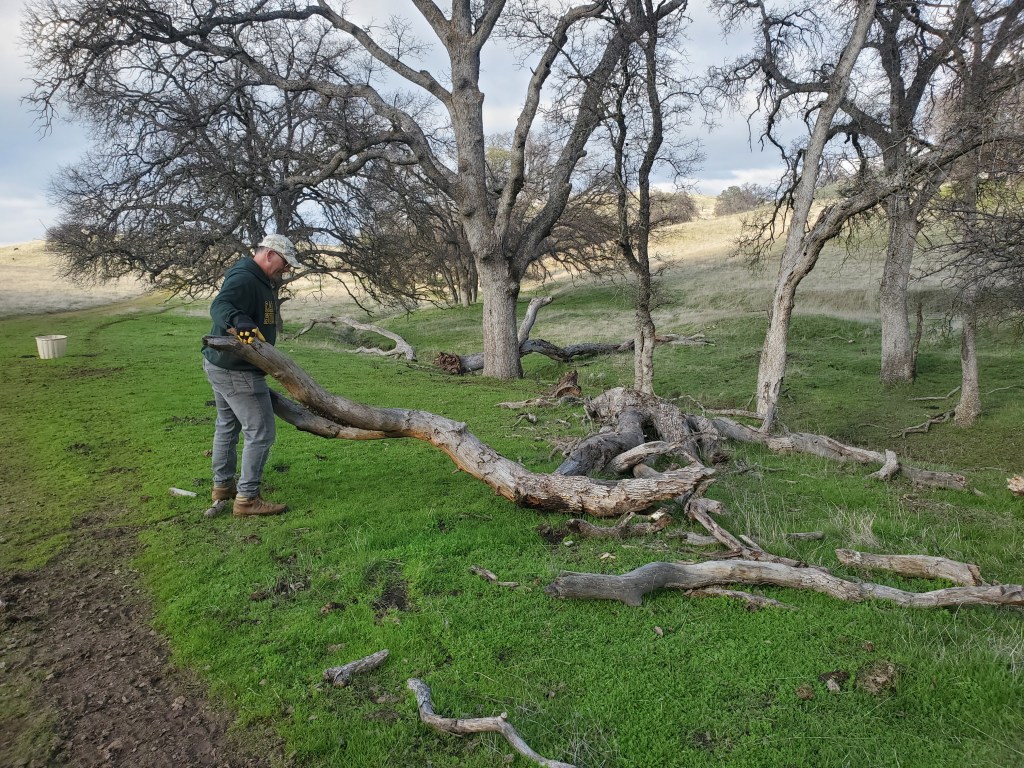
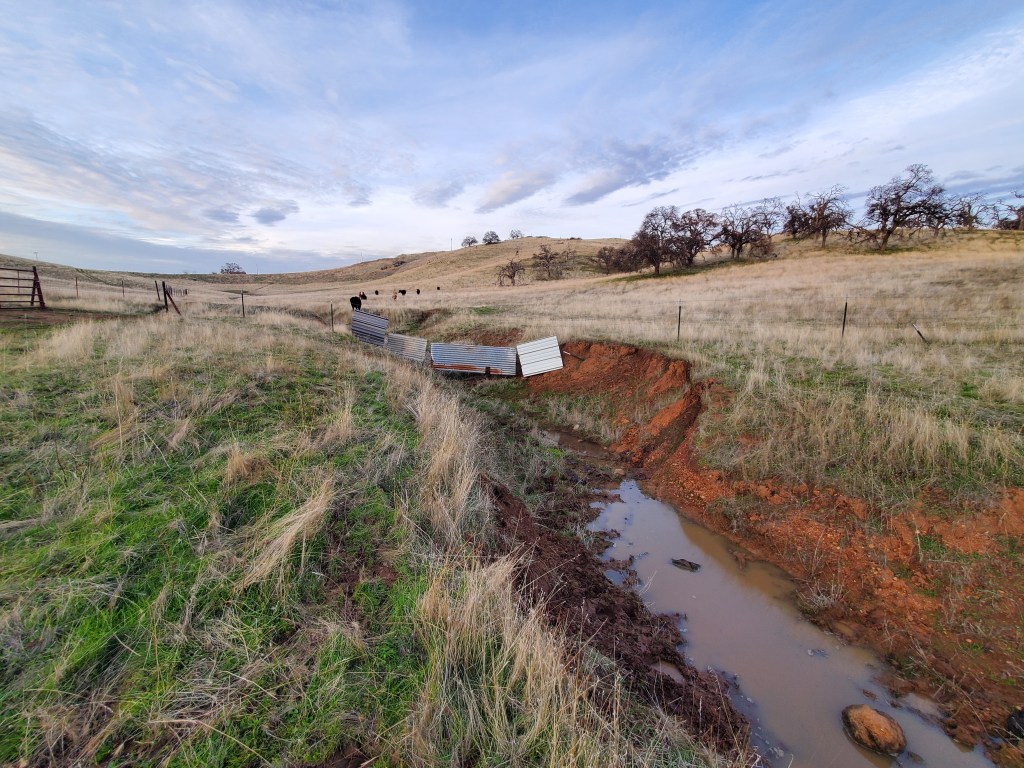
One of the things I love about living on a ranch is that there is always something to do. David and I finally got to the fallen trees and water gaps on Odom Creek. After one of the last major storms this past winter, high winds blew down several branches and dead trees. Two fell on the Odom Creek riparian exclusion fence, making the fence slack. High waters from a rain event took the tin blocking cattle access through the water gaps (areas where the creek flows through between two stream banks under a fence crossing the creek) and deposited them downstream. I retrieved them soon after the storm but did not replace them until several months later due to other issues requiring my attention.
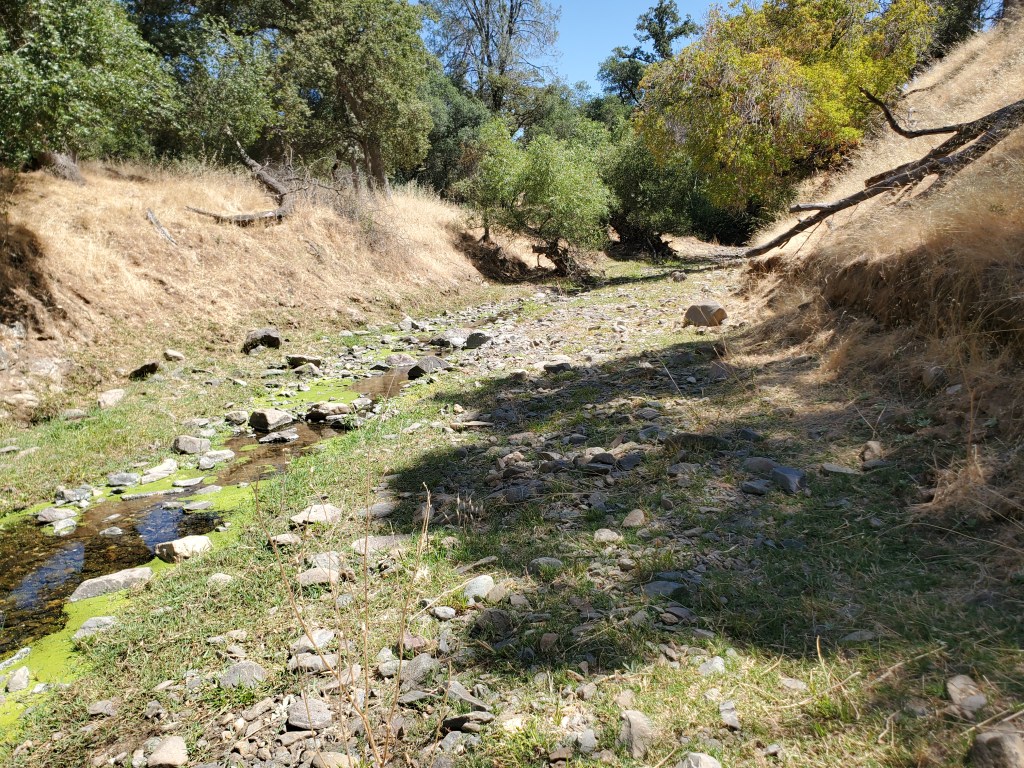
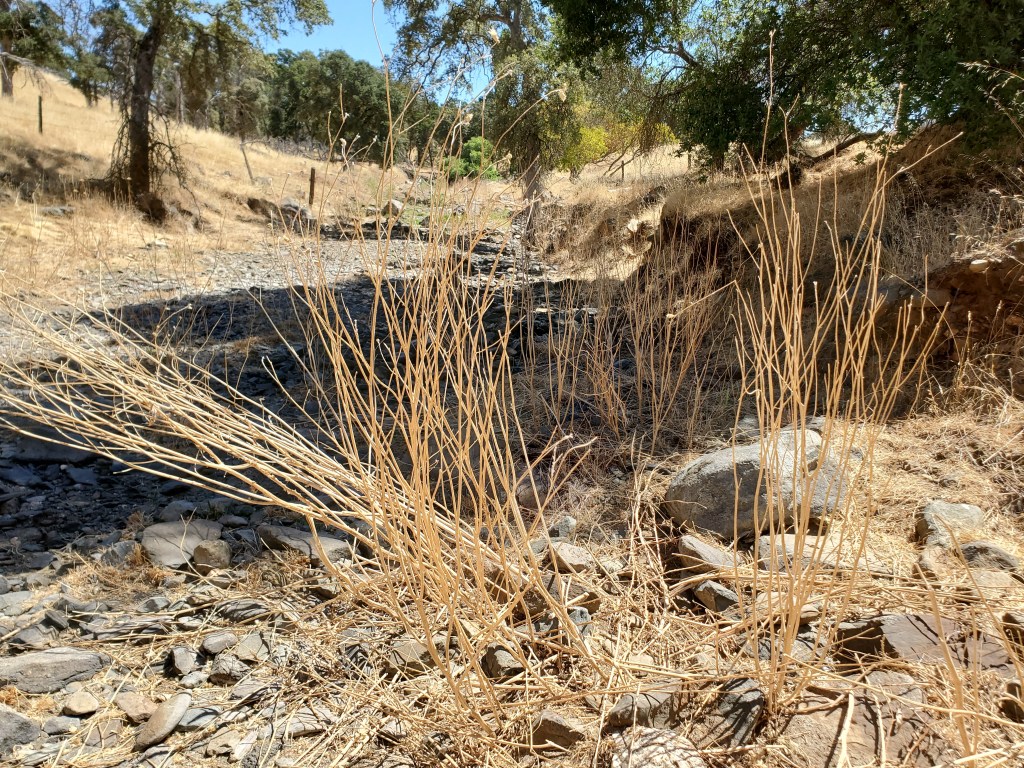
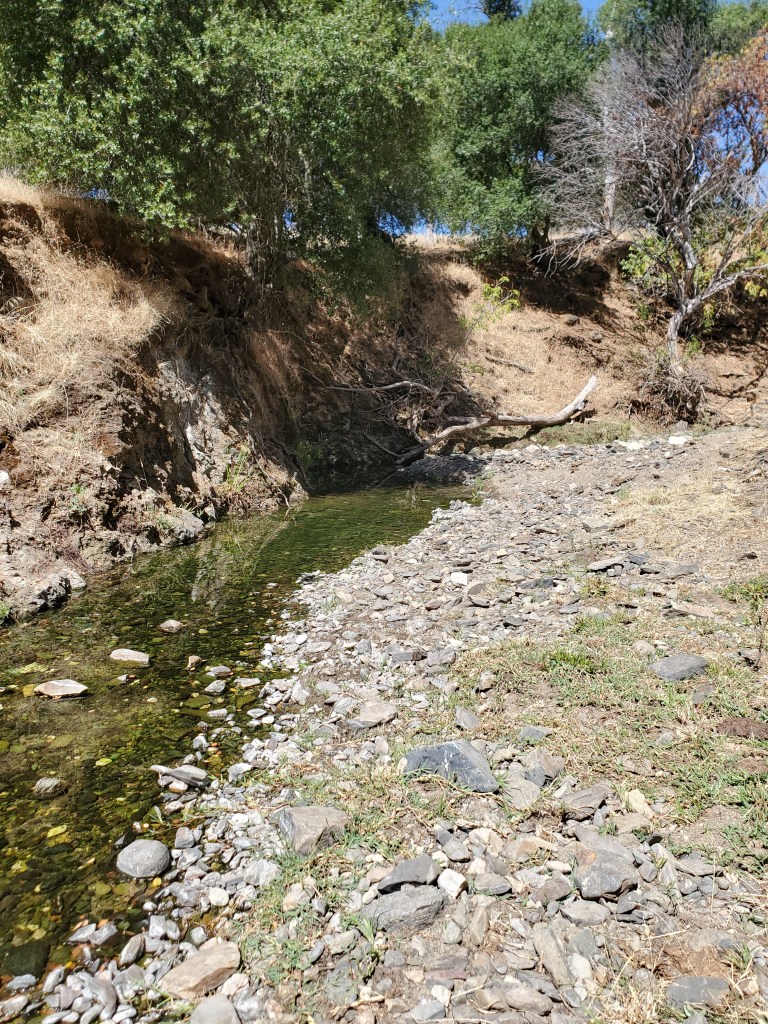
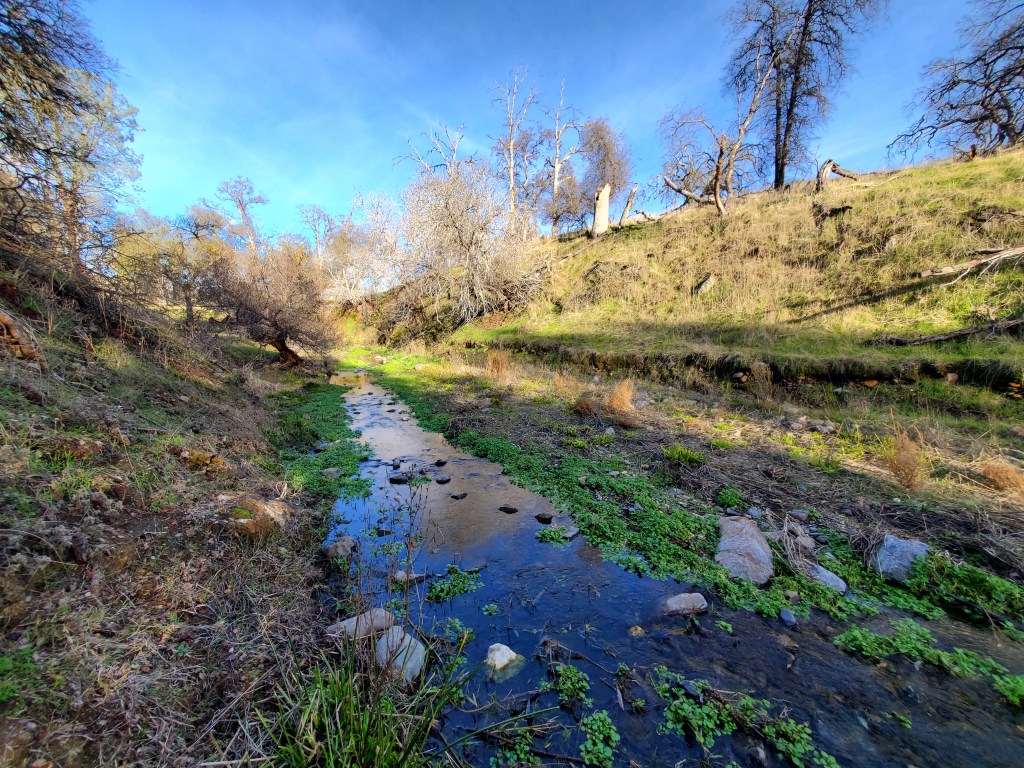
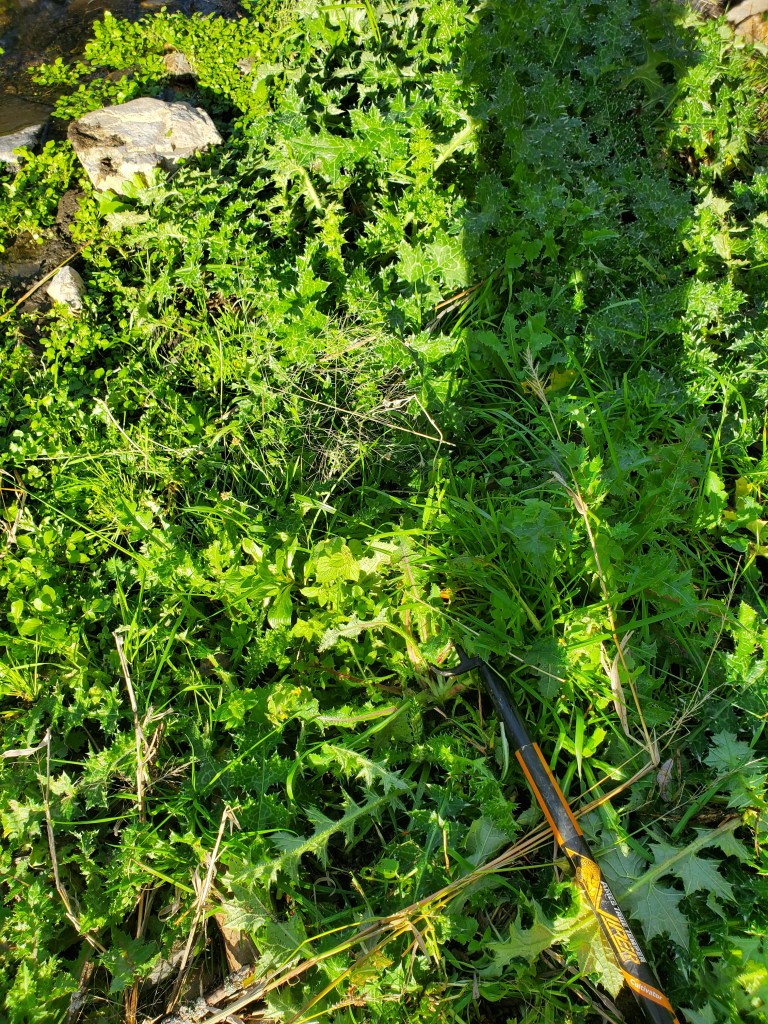
With the tin down, it opened a small pathway for cattle to get into the exclusion. Grass and creek plants that typically grow inside the exclusion area were nowhere to be found. Adding to this was the large number of grasshoppers near the riparian areas this year. Thistle, which the cattle normally leave alone due to their spiky, tough exterior, were stripped to skeletons. Both contributed to no vinegar weed (another favorite), less watercress, no milkweed and no thistle nectar.
David chainsaws fallen tree branchI add tension back into the stretched smooth wireDavid hauls the tin back to the water gapCreek devoid of bushy growth in the streambedThistle stripped bare!Reattaching the tin to the fence to block cattle from accessingNice deep hole at the bend in the creek. Lots of tadpoles and insects using the cool spaceFinished product!
Wildlife
Although I’ve not see as much wildlife as I have in the past, there have still been some beautiful encounters. Running across the road in the near area, and sadly no photos, I have seen coyote, a bobcat and bunnies. Below are other friends.
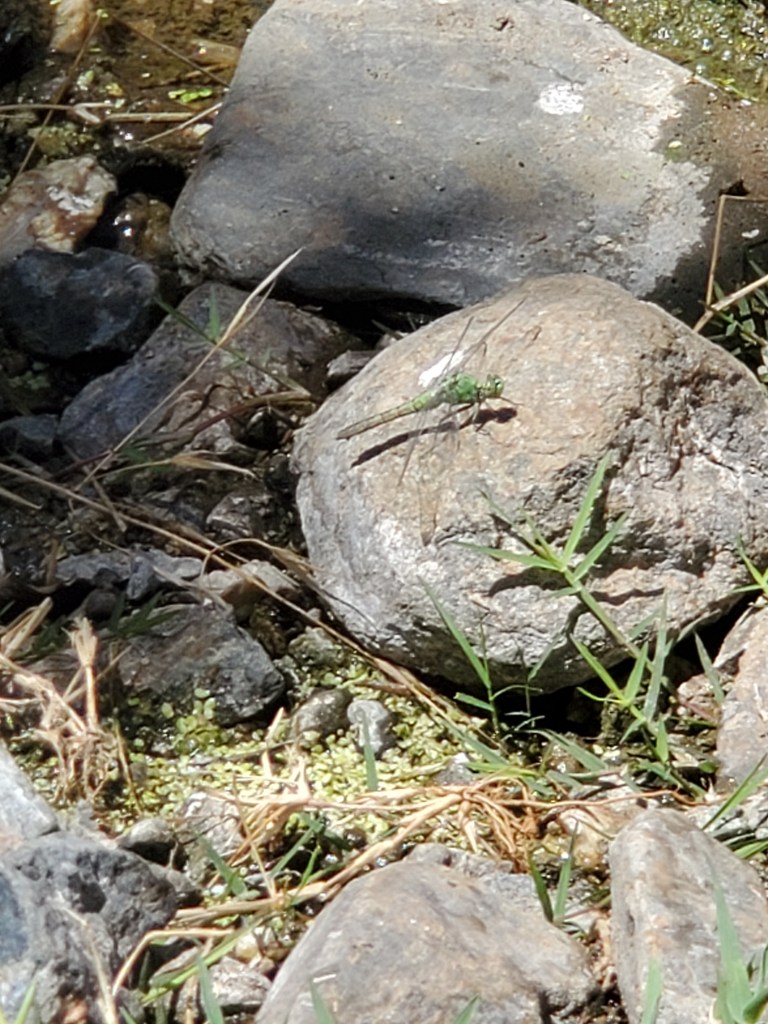
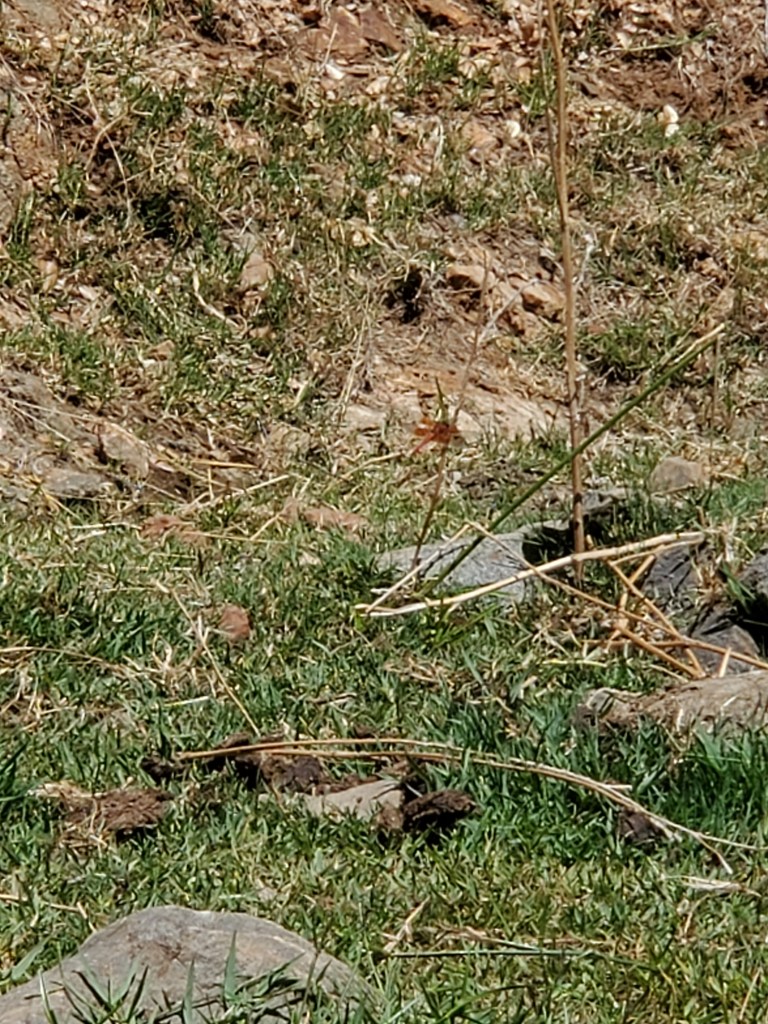
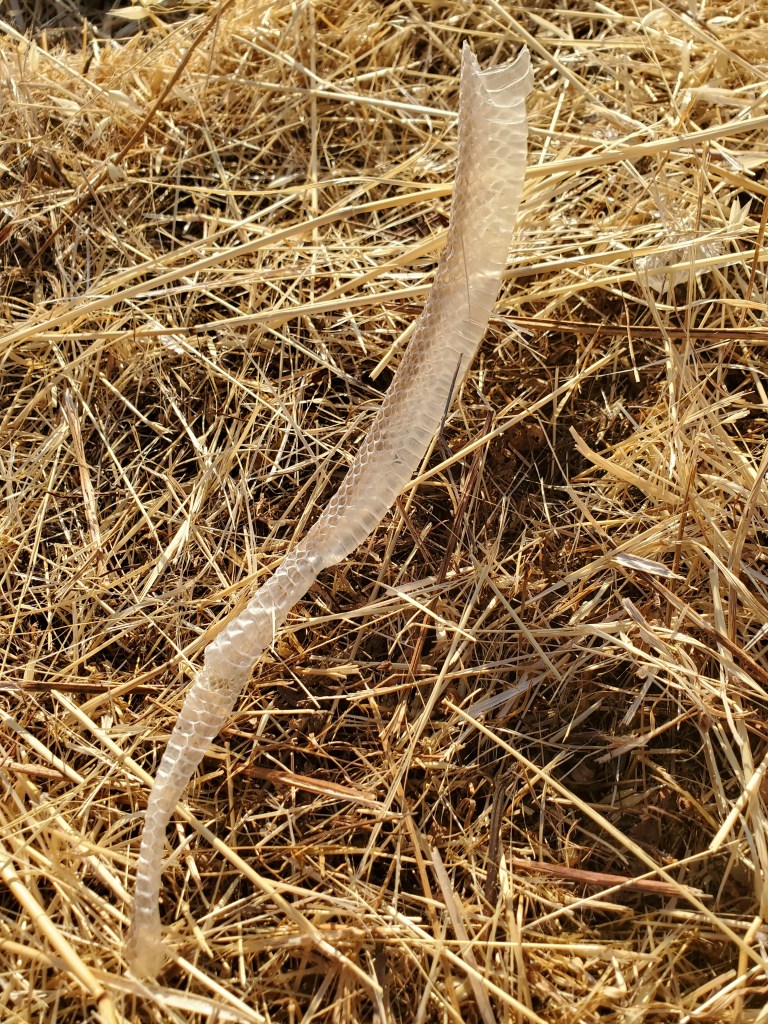
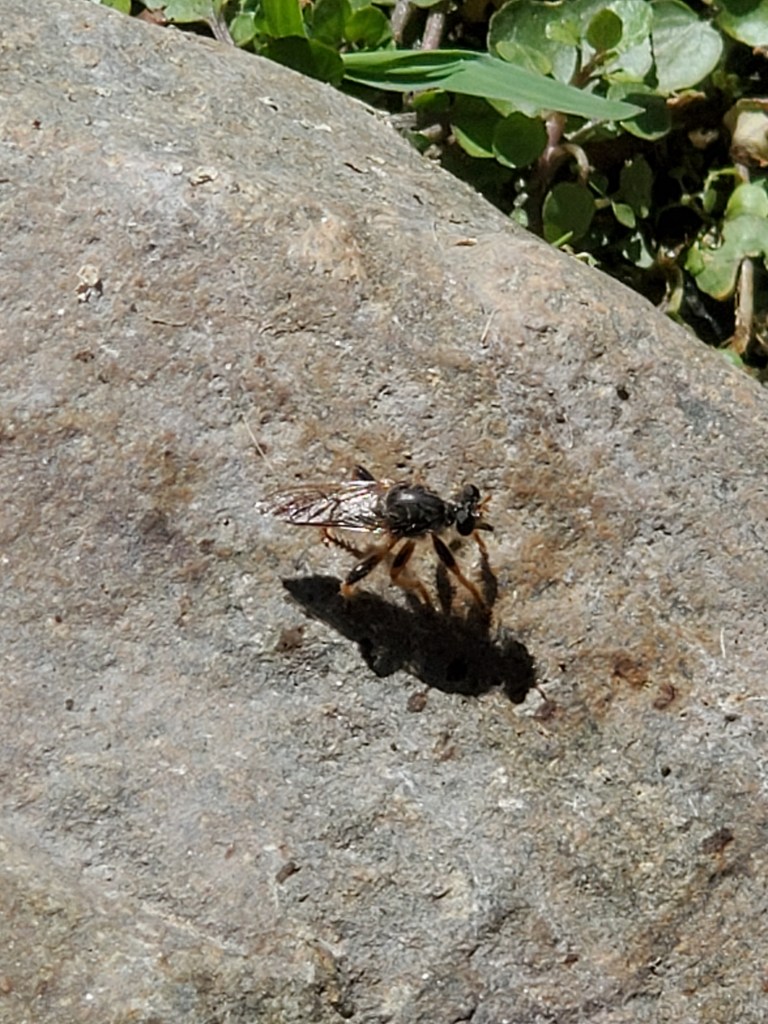
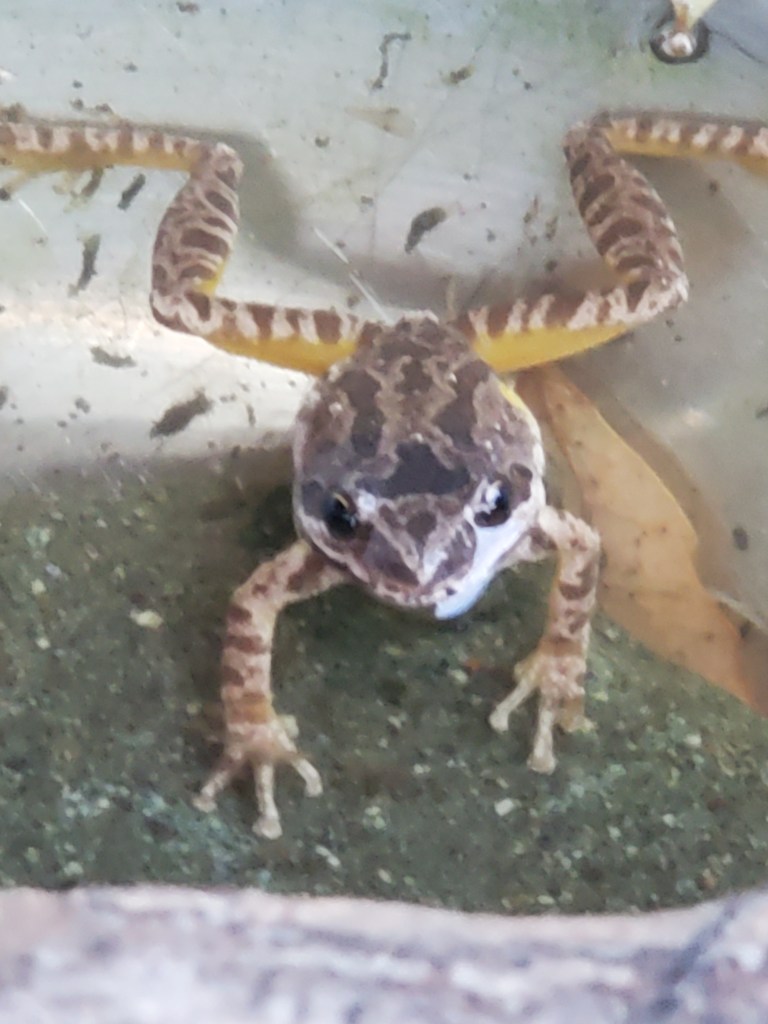
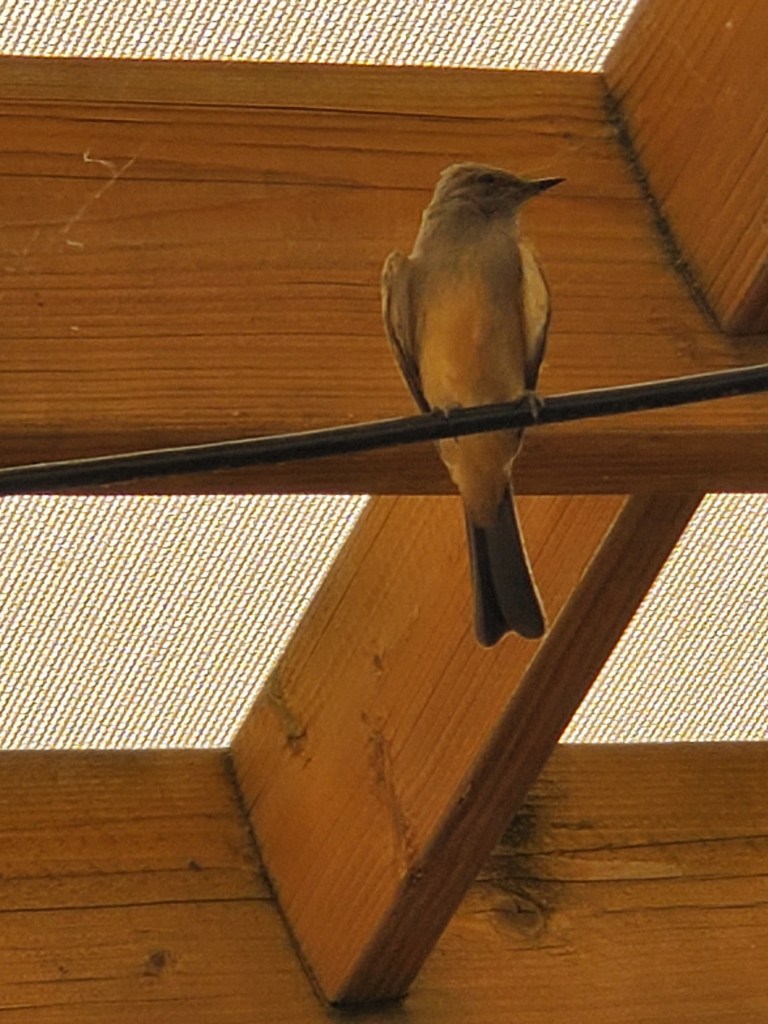
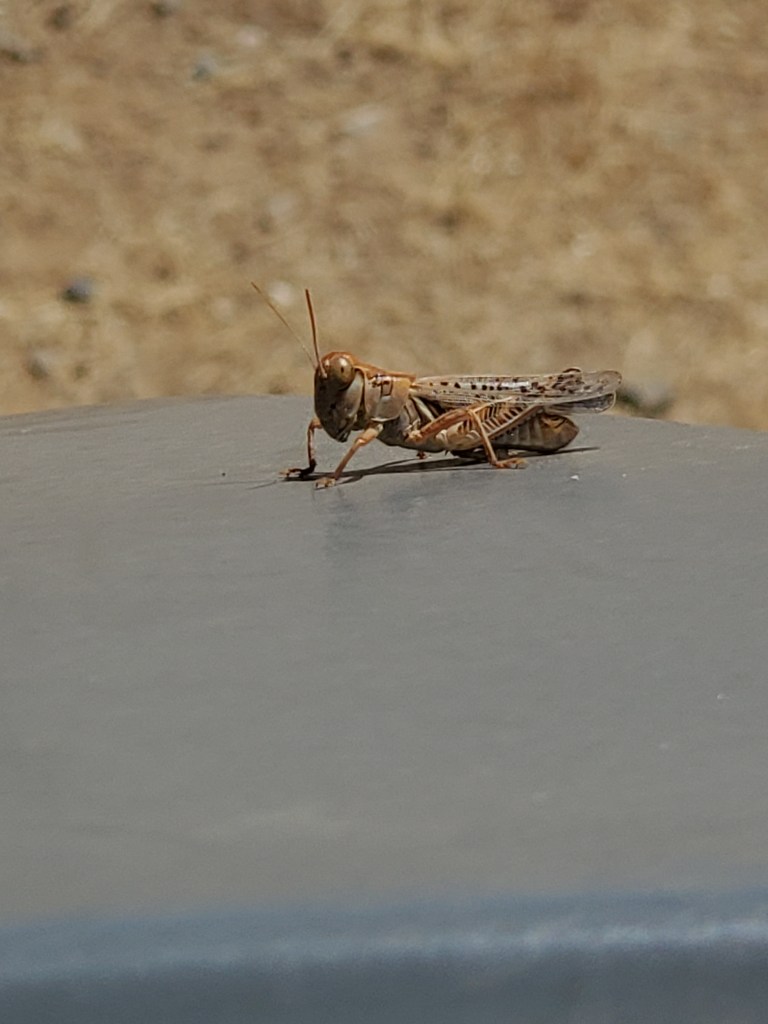
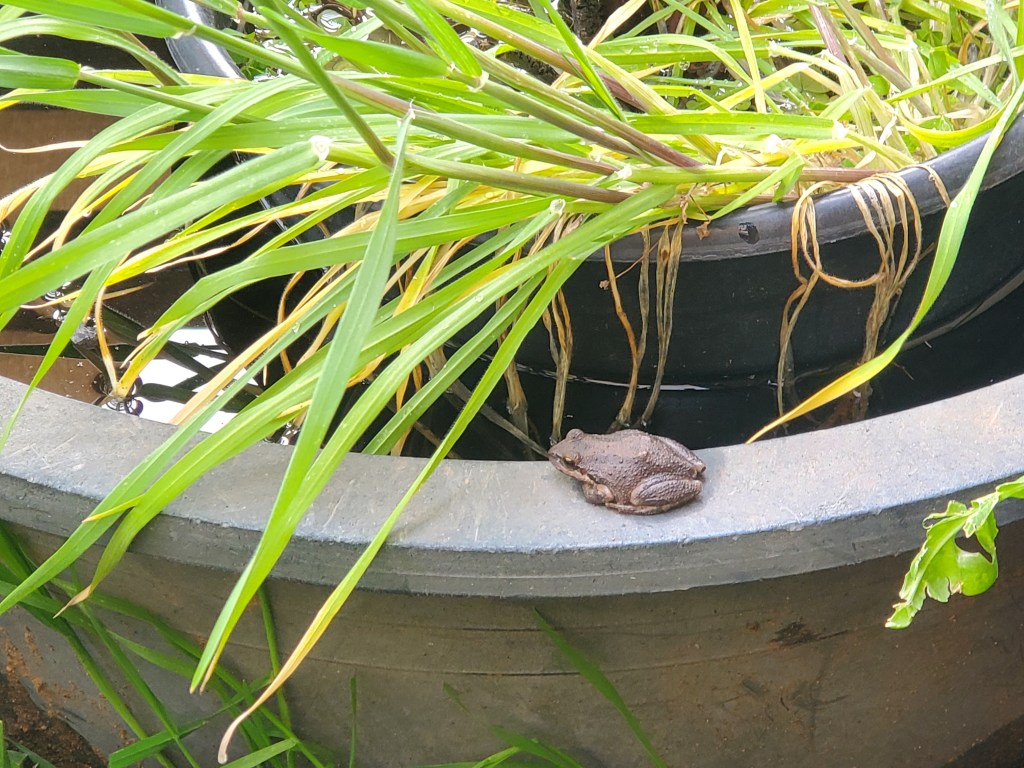
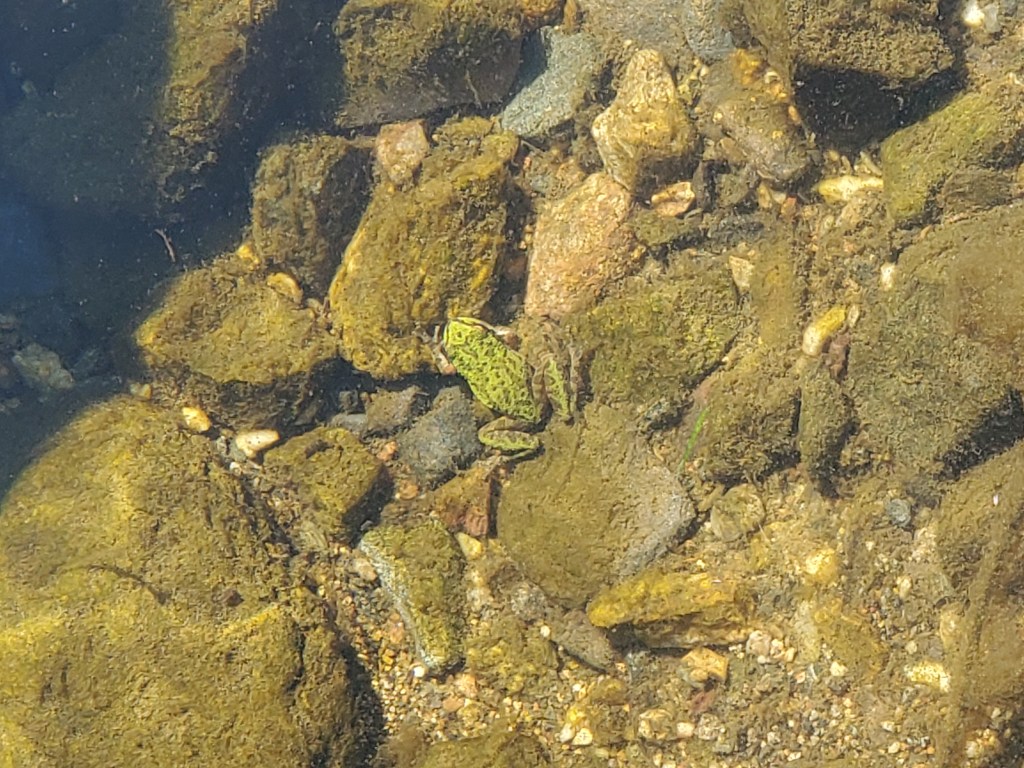
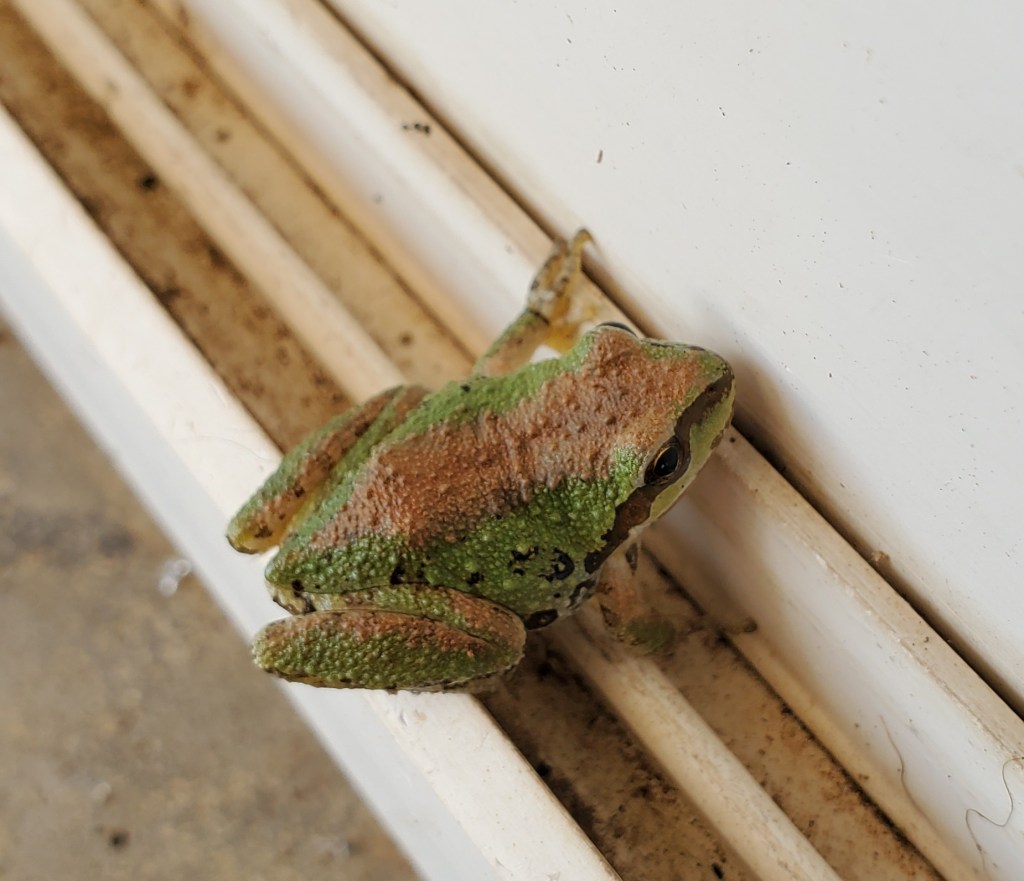
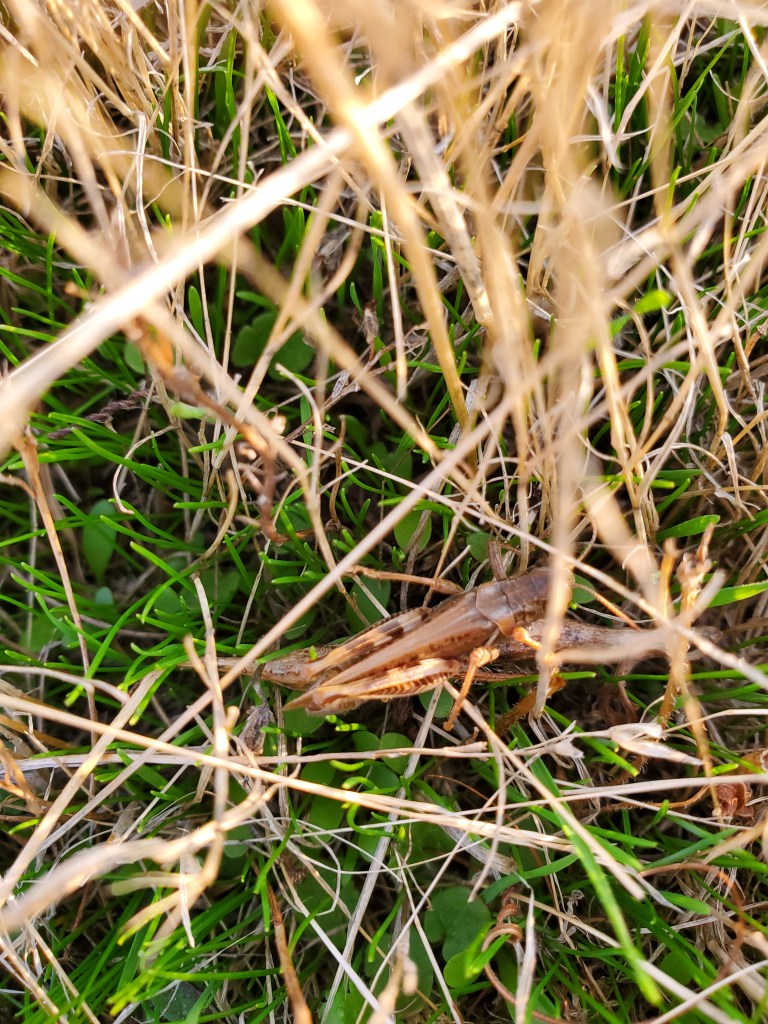
Green dragonfly on rockHard to see – red dragonfly center image on vertical stick Three of the covey of 20 quailSnake skinCool looking flySierra chorus frog – I’ve seen quite a few around the houseMeadowlarkMy respected nemesis, Grasshopper. Truly a remarkable creature
Seed Collection
As plants begin to die back and set their seeds, I have been out collecting. I never collect more than 10% of what is available. I share with the birds as well as leaving plenty to grow the next generation.
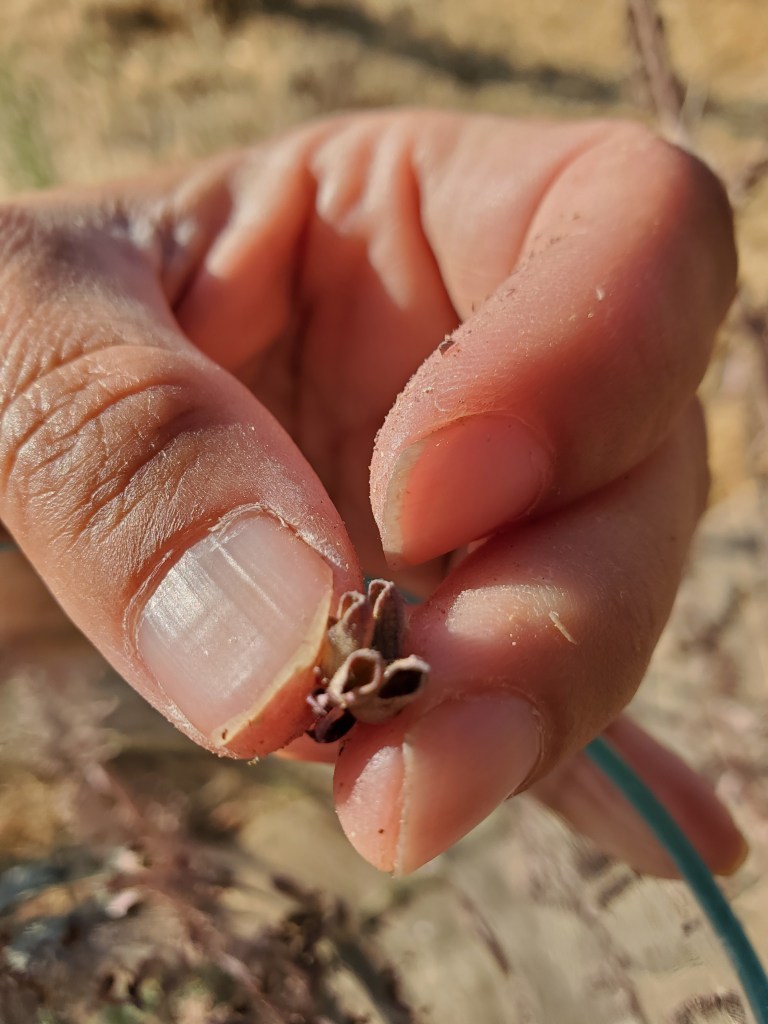
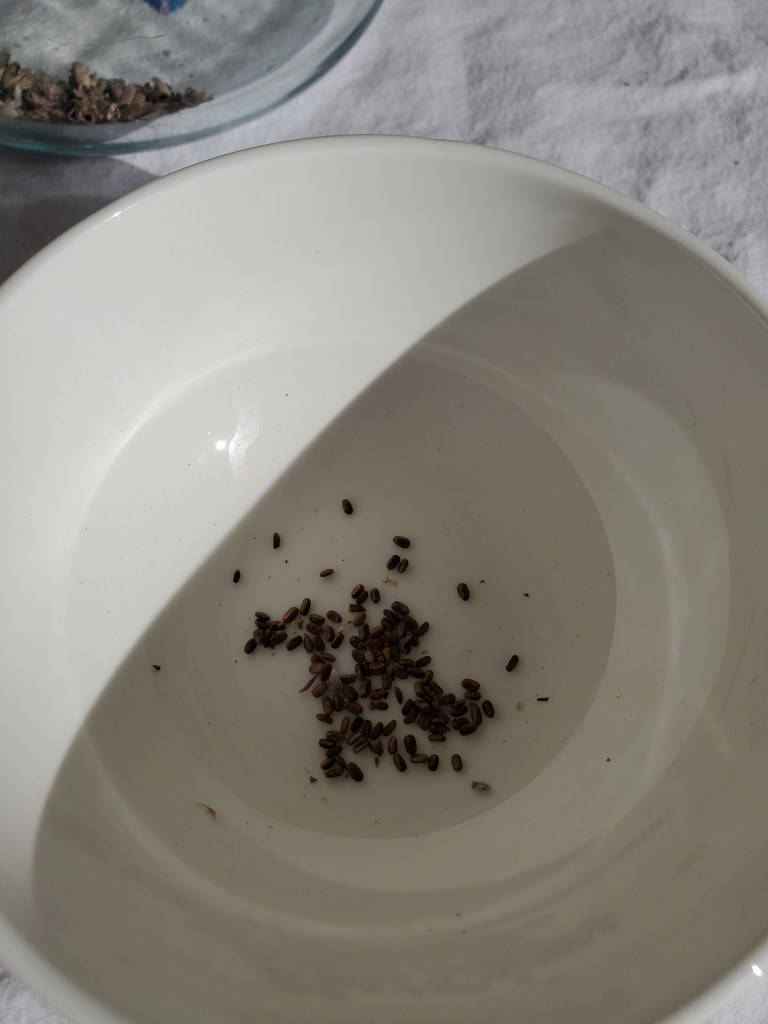
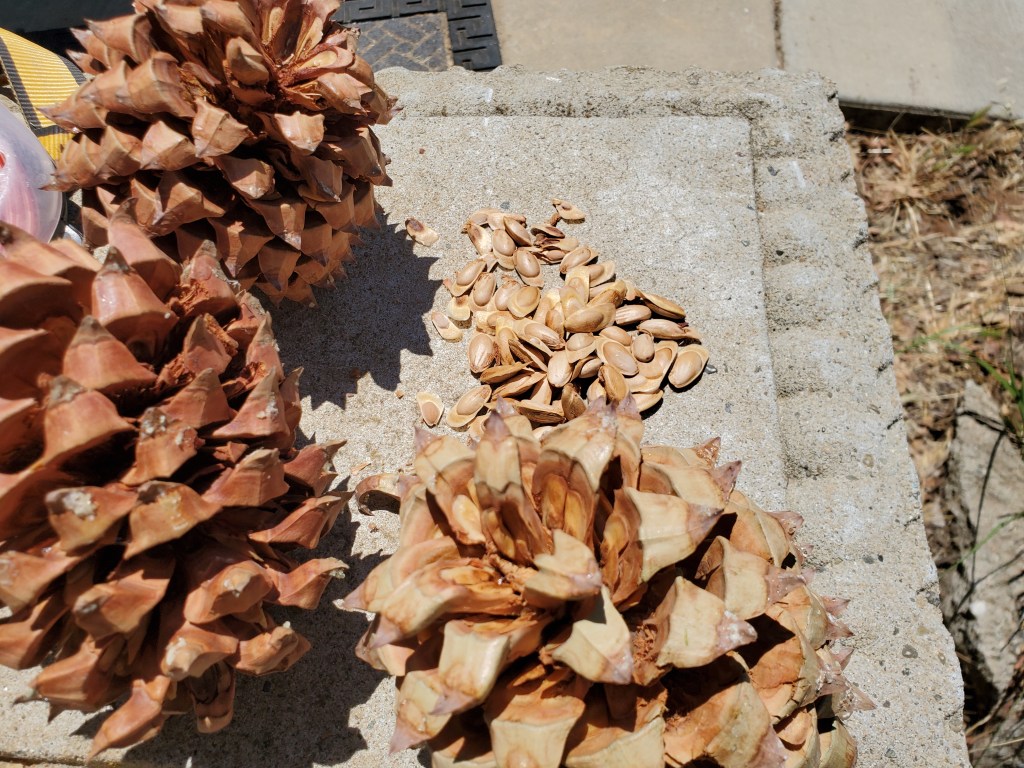
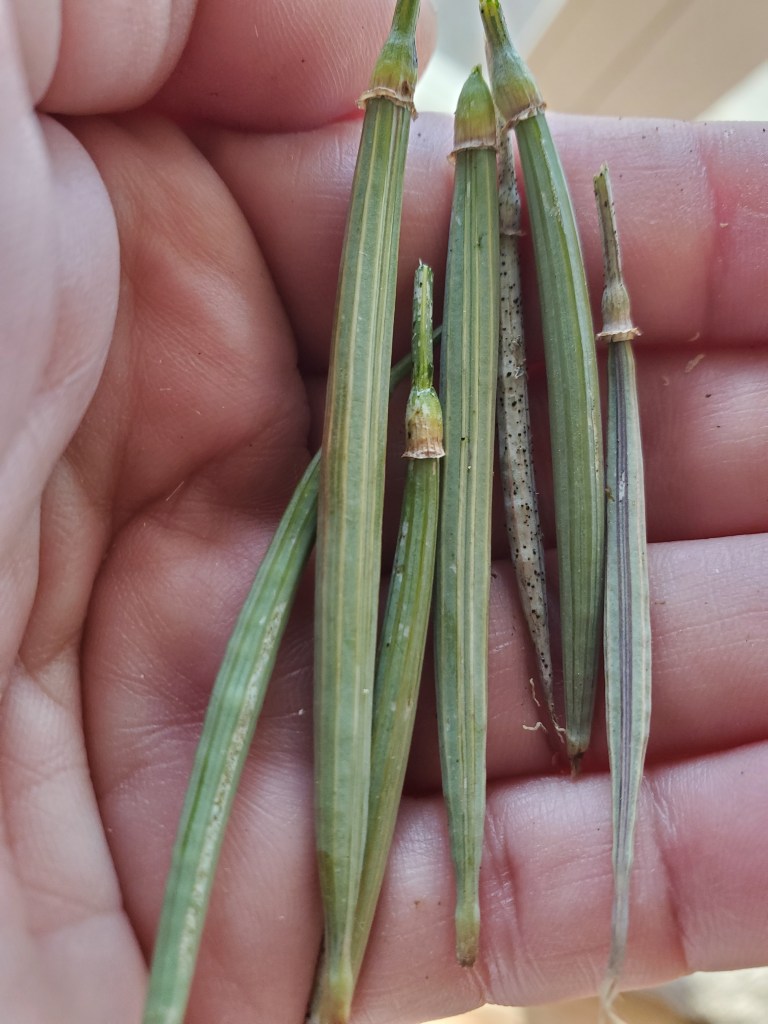
White sage seed vesselsGathering the white sage seed vesselsTiny white sage seedsPine nuts from the trees in the middle of the ranchCA poppy seed pods. Once they are dry, the slightest touch pops the pods open dumping their seed
Rainwater Catchment Building Continues
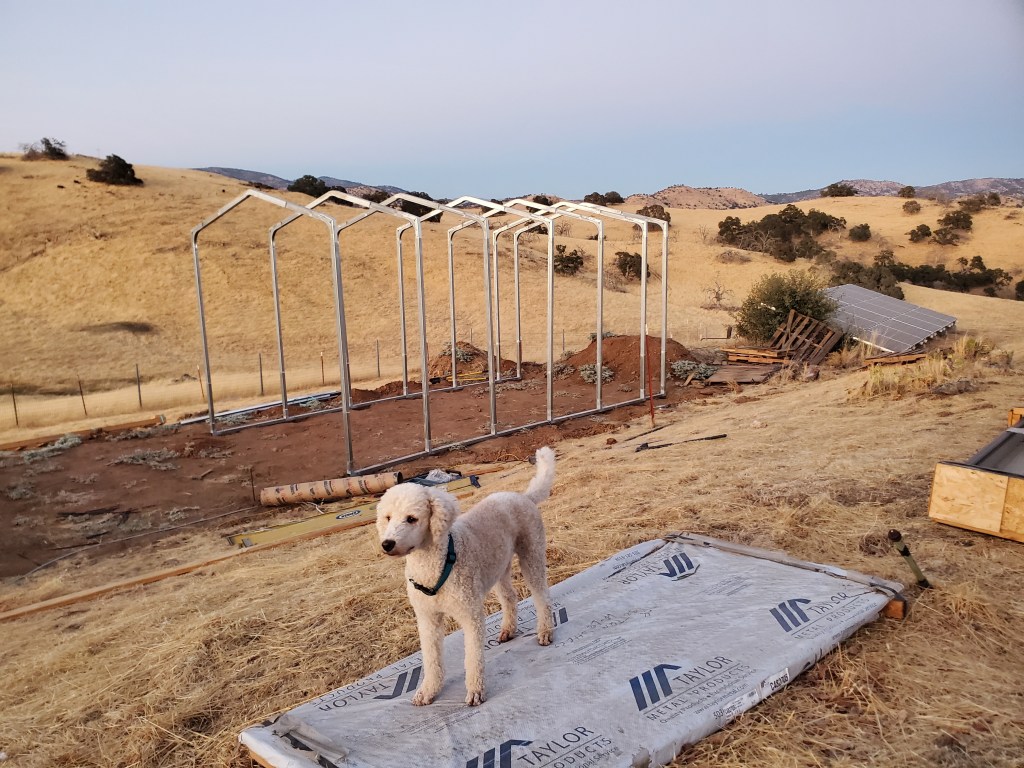
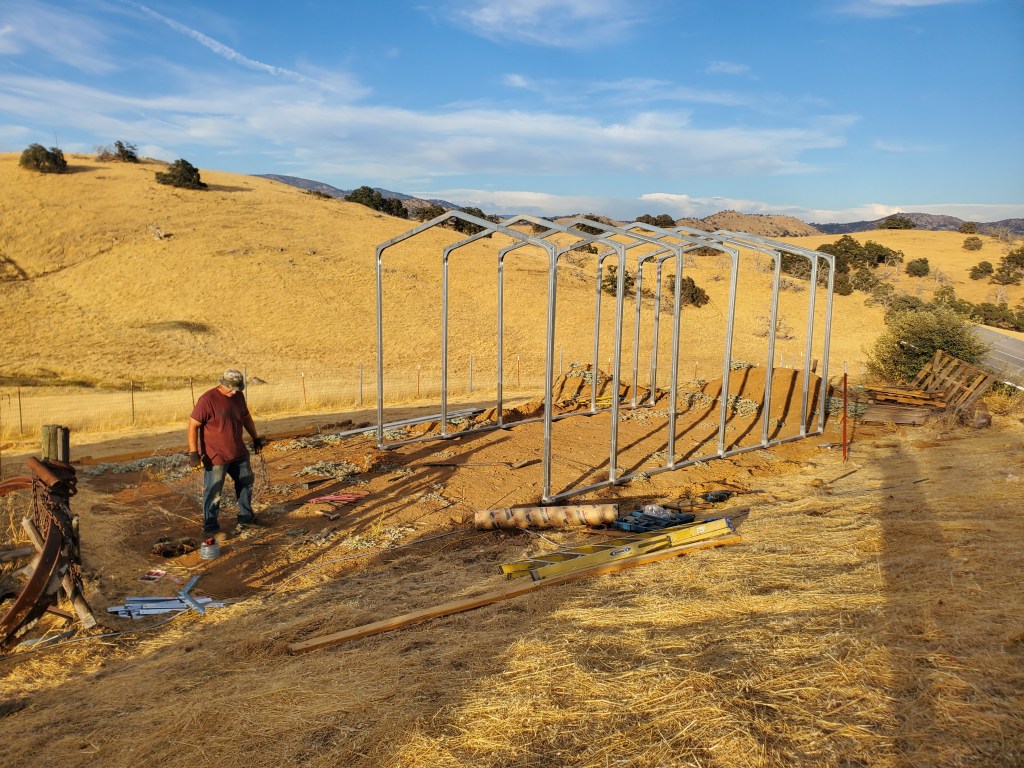
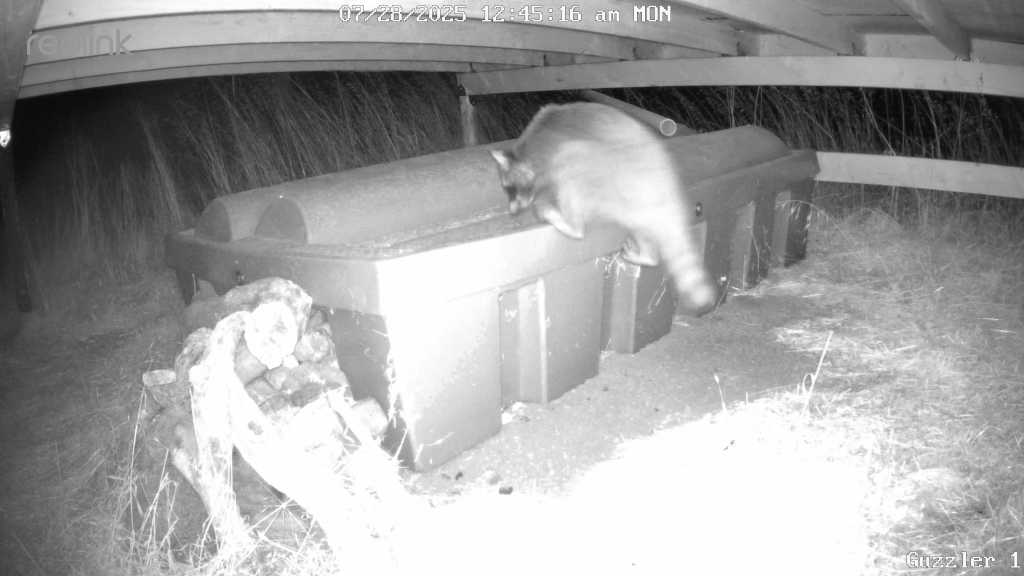
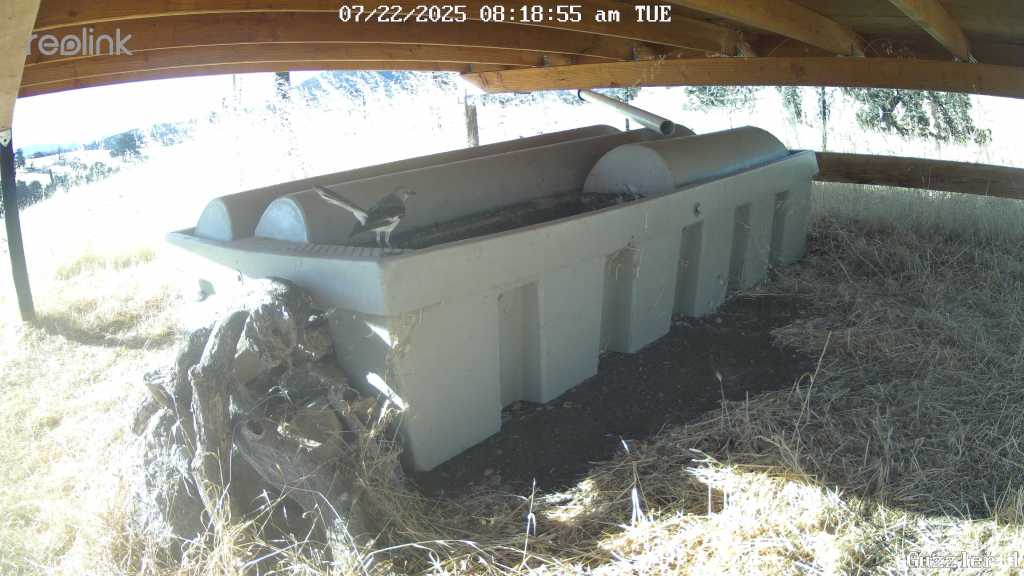
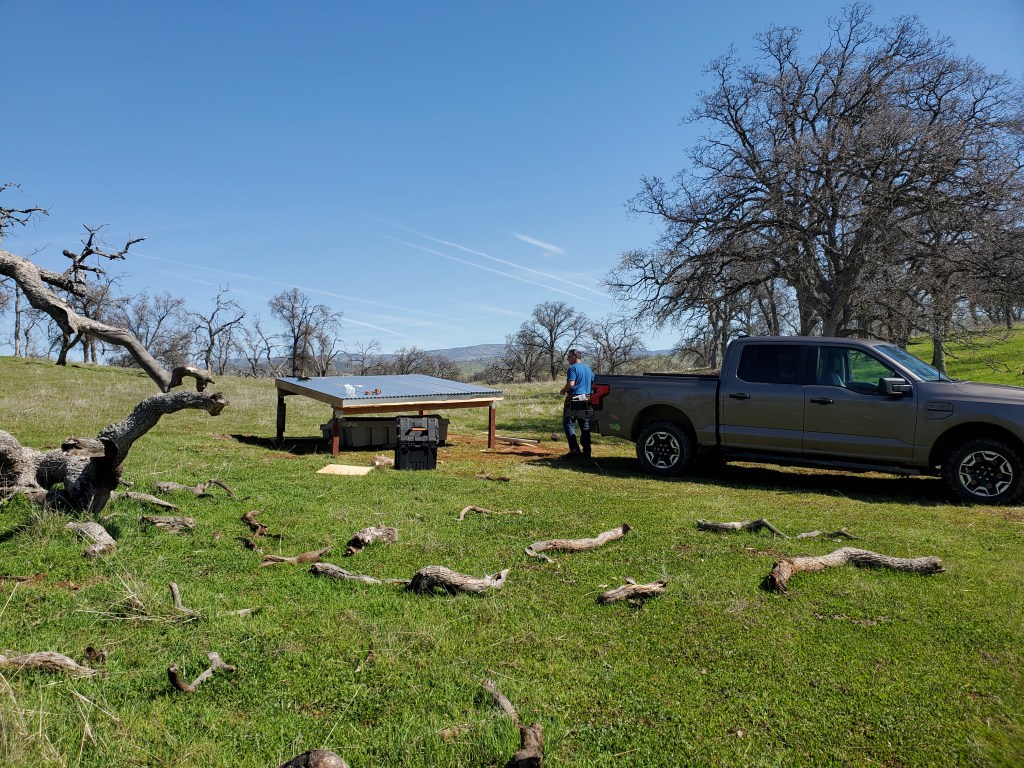
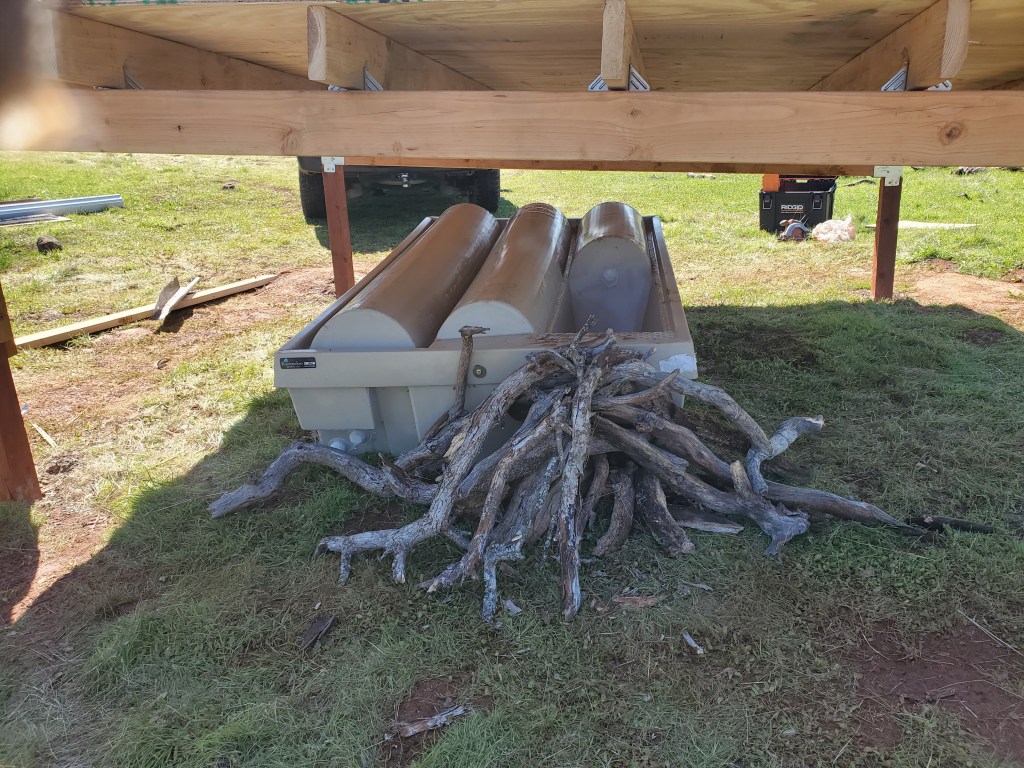
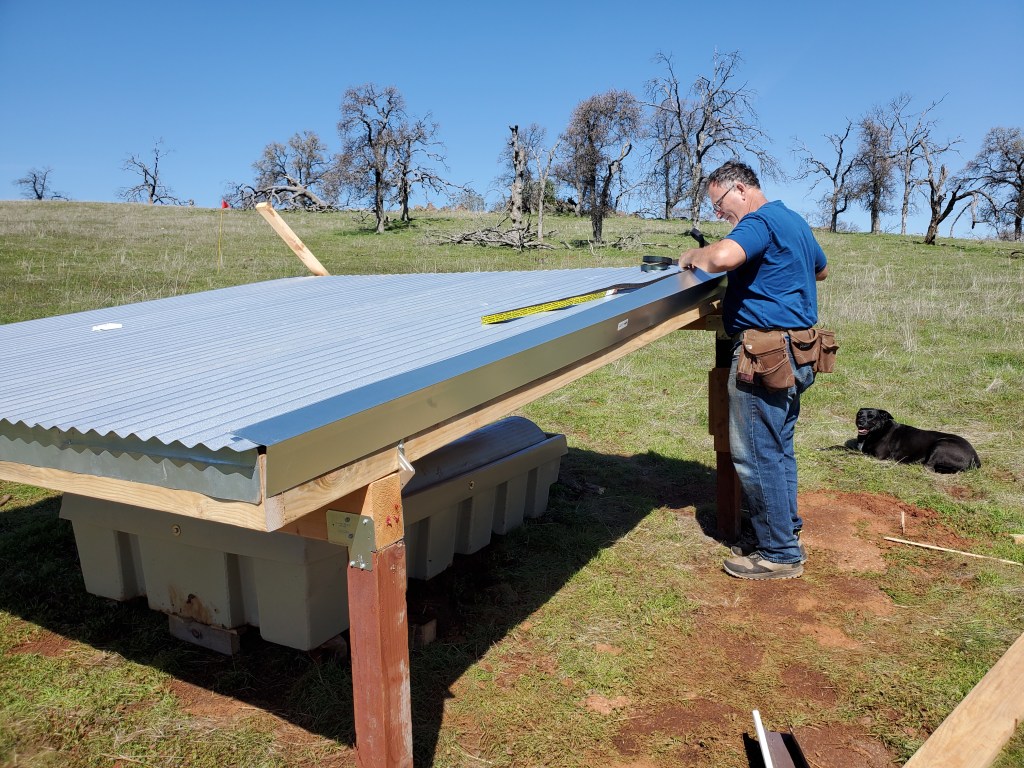
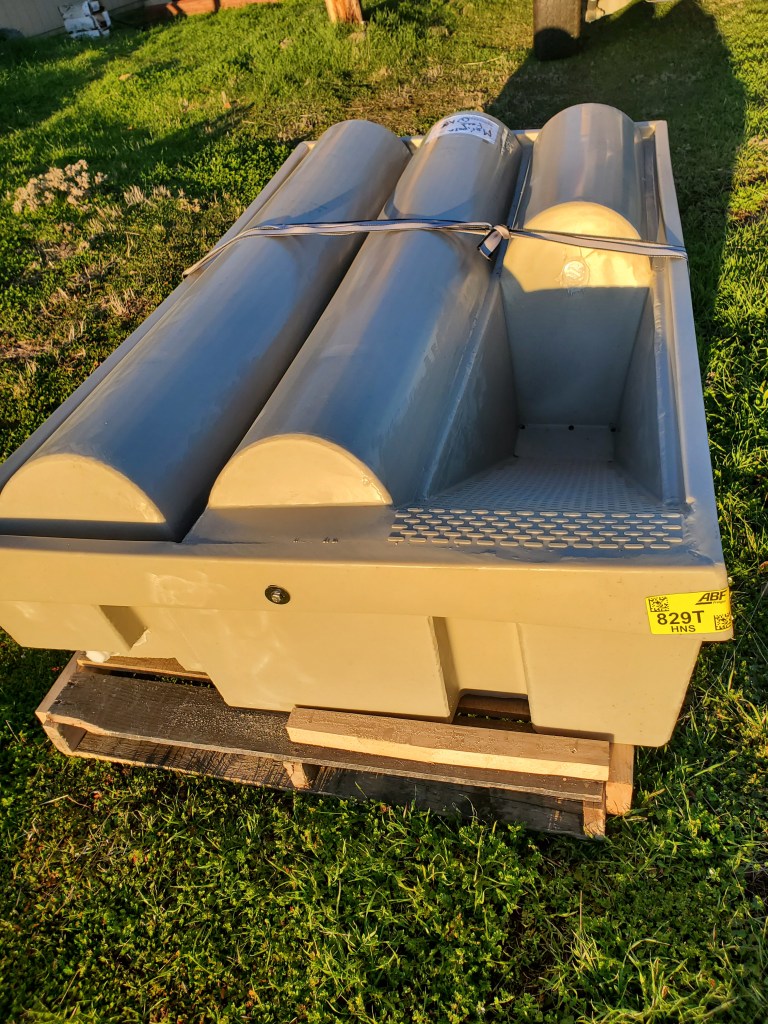
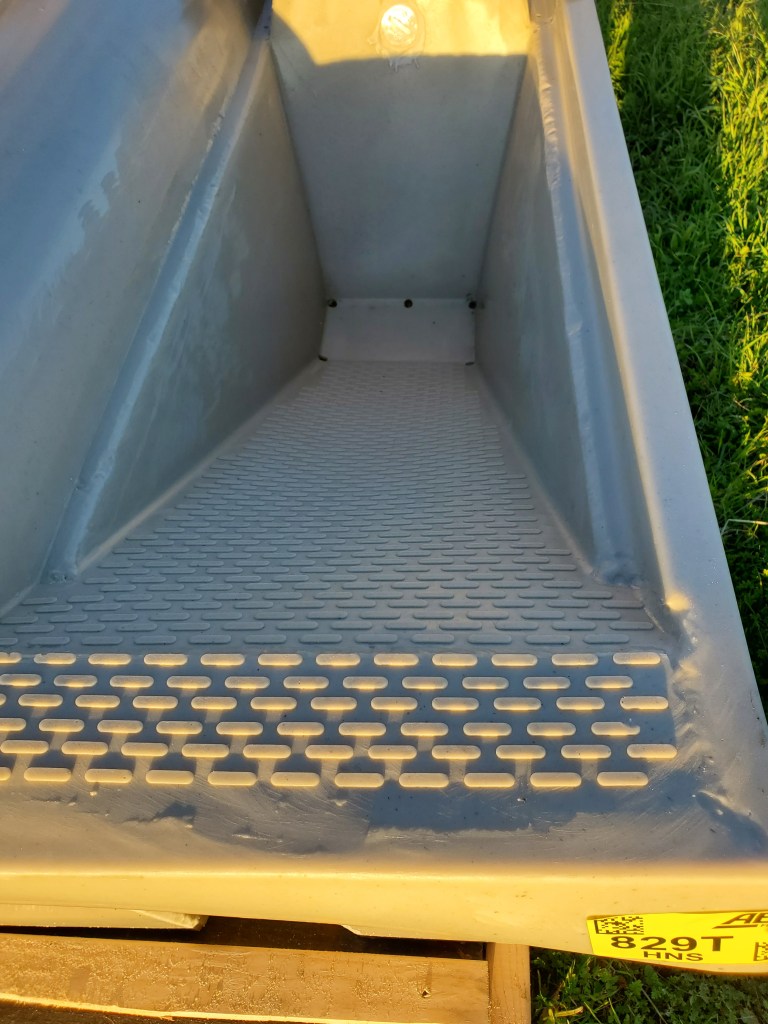
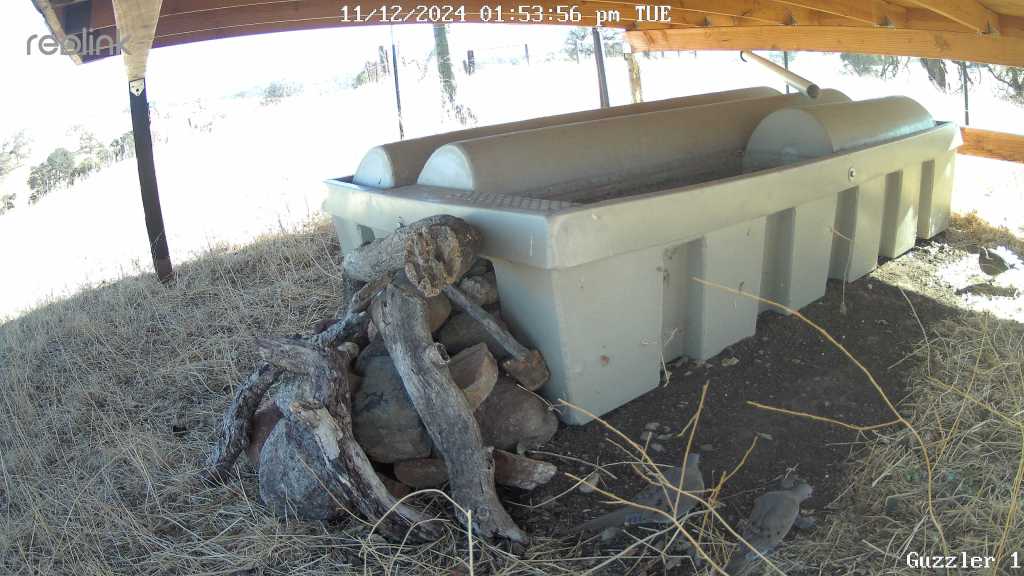
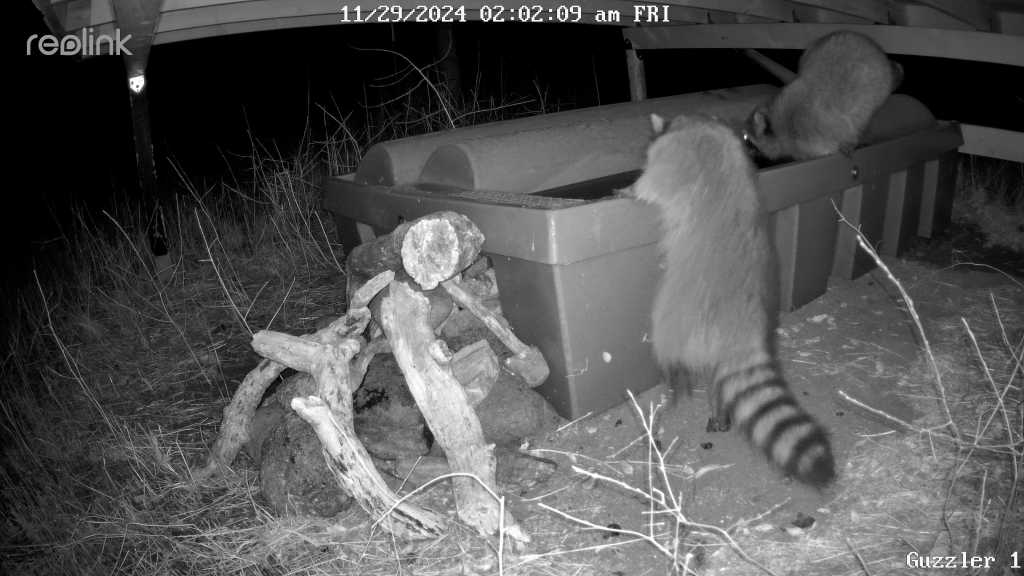
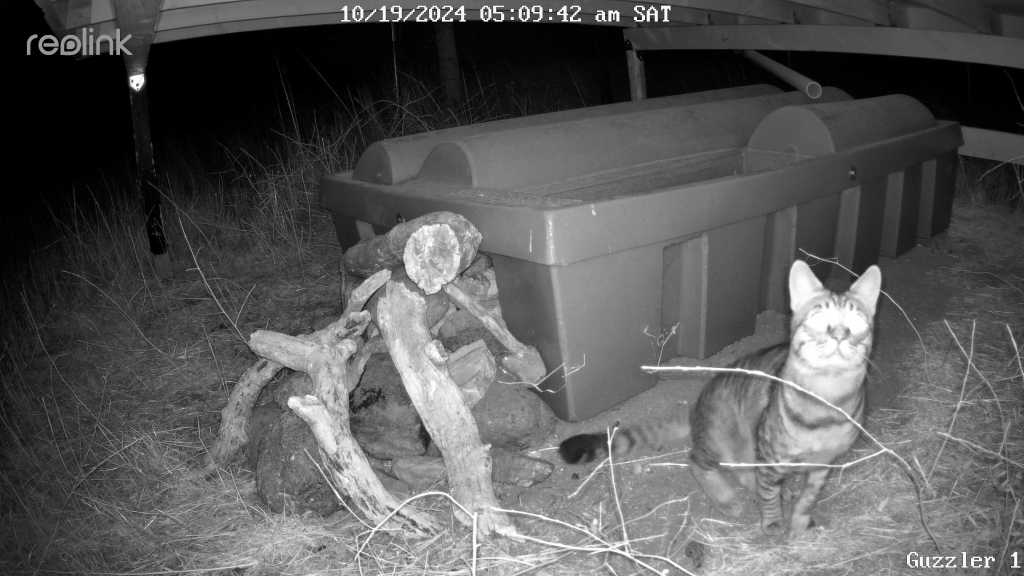
One of our ongoing projects has been to create a fresh, ongoing supply of water to the wildlife guzzlers. Recall, we built a small overhang over the guzzlers to catch more rainwater than if they were left out on their own with their beveled tops. The overhang also acts as shade to decrease evaporation from the unit. Some years, the water captured lasts the entire year. During droughts, the water has run out by late August. To prevent running out, but to also inflow more fresh water, we are building a larger rainwater catchment up hill to gravity feed into the guzzler. The tank is 1500 gallons and will be under a metal building to protect it from sun exposure and heat gain. David has been working on it and will likely be done a week from this post. I am very excited to keep water flowing throughout the hot months. The guzzler has become a very busy place with ground and song birds, raccoons and one feisty feral cat. Thank you to the Natural Resources Conservation Service (NRCS) EQUIP program, US Fish and Wildlife Partners Program and Point Blue Roots Program for believing in this work and supporting it.
Ranch poodle Pongie plays on the suppliesDavid gets trusses erectedPrepping the holes for cementRacoon visits guzzler for a slurpMockingbird hops in for a drink
Fire Danger Ever Present
Living in the new norm of ever present fire danger feels unsettling. When I was a child growing up in the Sierras, fires were part of life, but rarely major conflagrations. There was more water then and less people. I never worried, and I don’t recall my parents worrying the way I do now.
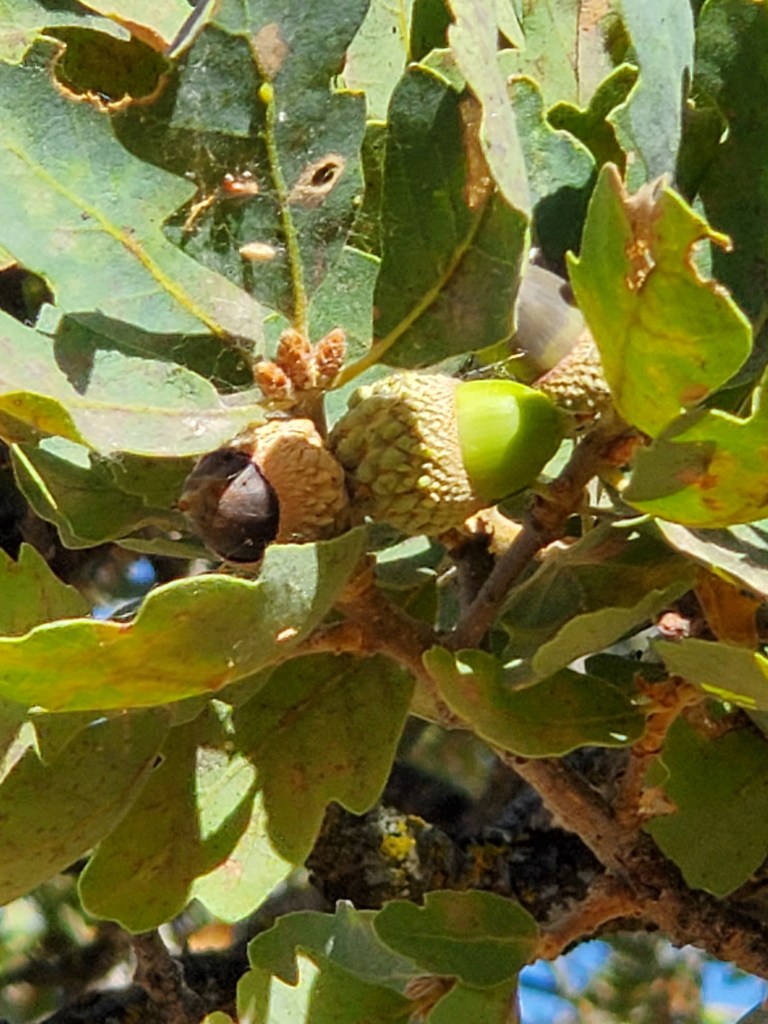
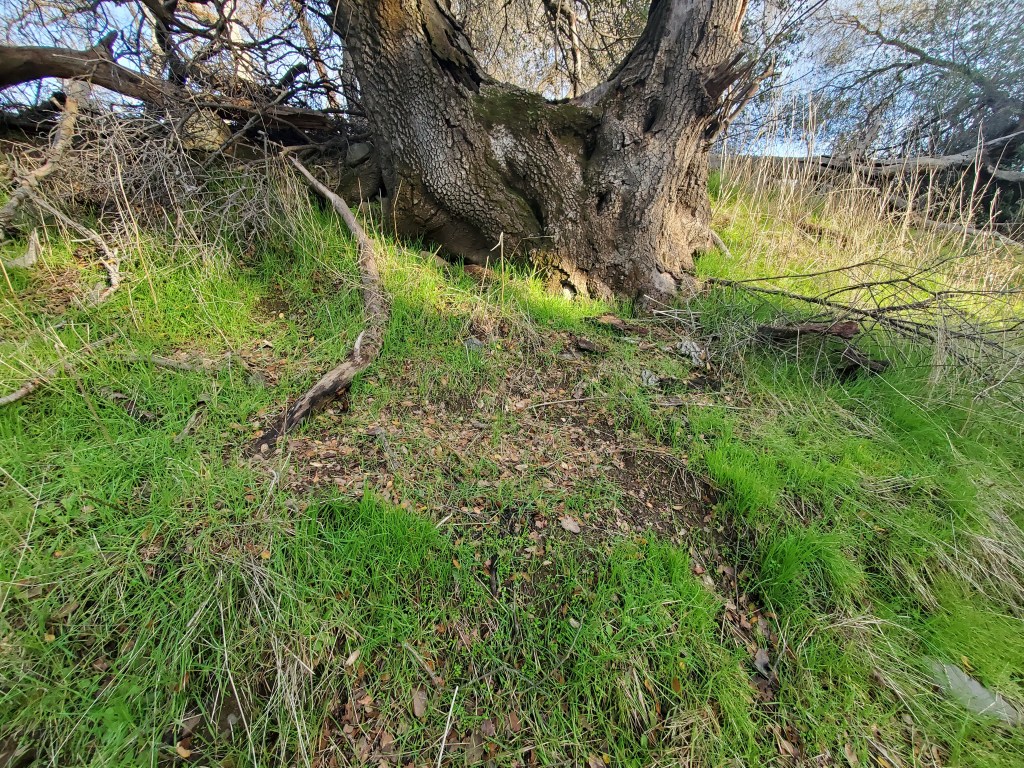
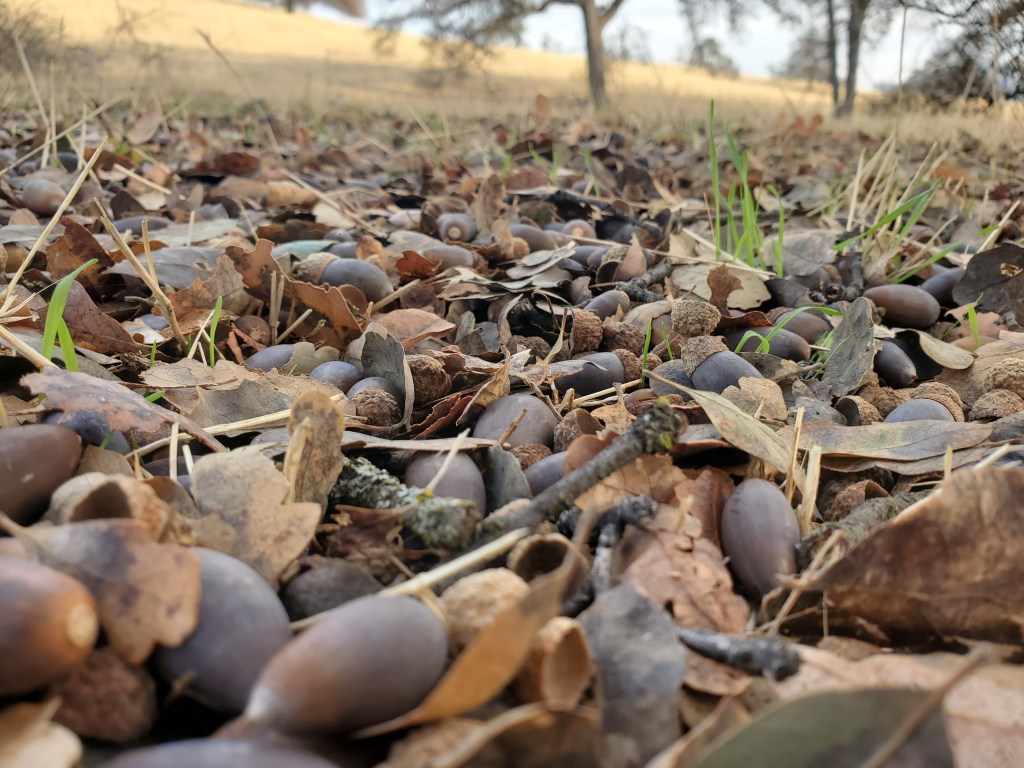
This year and last, we had a nice, steady stream of rain events that kept the soil moist longer into the summer. This year, in fact, David and I both noticed that all the oaks look healthy and happy. Their leaves have stayed on and are a vibrant green. Fresh, well-formed acorns are setting now. July has been much cooler, and that has helped the mature trees too.
Even with these positive signs, I still cross my fingers that a major fire will not rip through the land. Through my work in natural resources, I can see the massive investments by the state in fuels reduction and stewardship. Communities are working hard, year-round to be better care-takers of the land. The problems of over 100 years of fire suppression, population growth in wildland areas, more efficient ag tech to suck water from the land and climate change shifting temps into record levels are all massive issues to overcome. The pace and scale needs to be even greater – and as importantly, if we do not tackle the root causes, we will be constantly fighting an uphill battle. Stewardship, care for the land, being in good relation is not work; it is life. It is an ongoing relationship where a thoughtful existence results in abundance and health in an environment where we can all live – nature relatives, humans – and thrive.
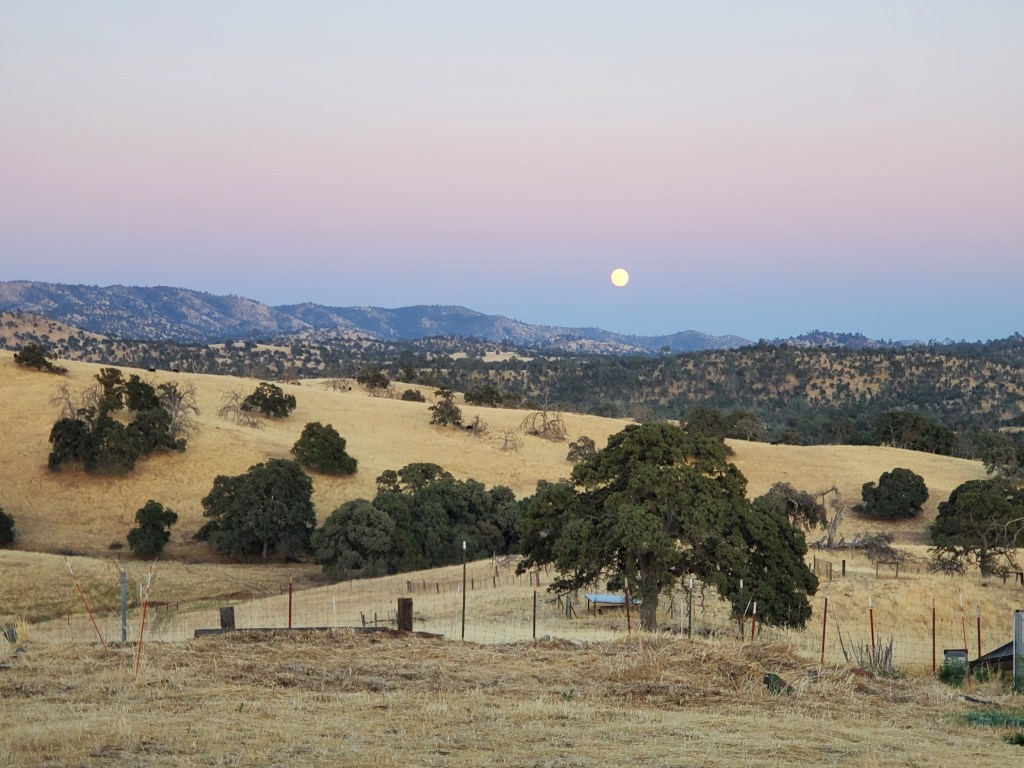
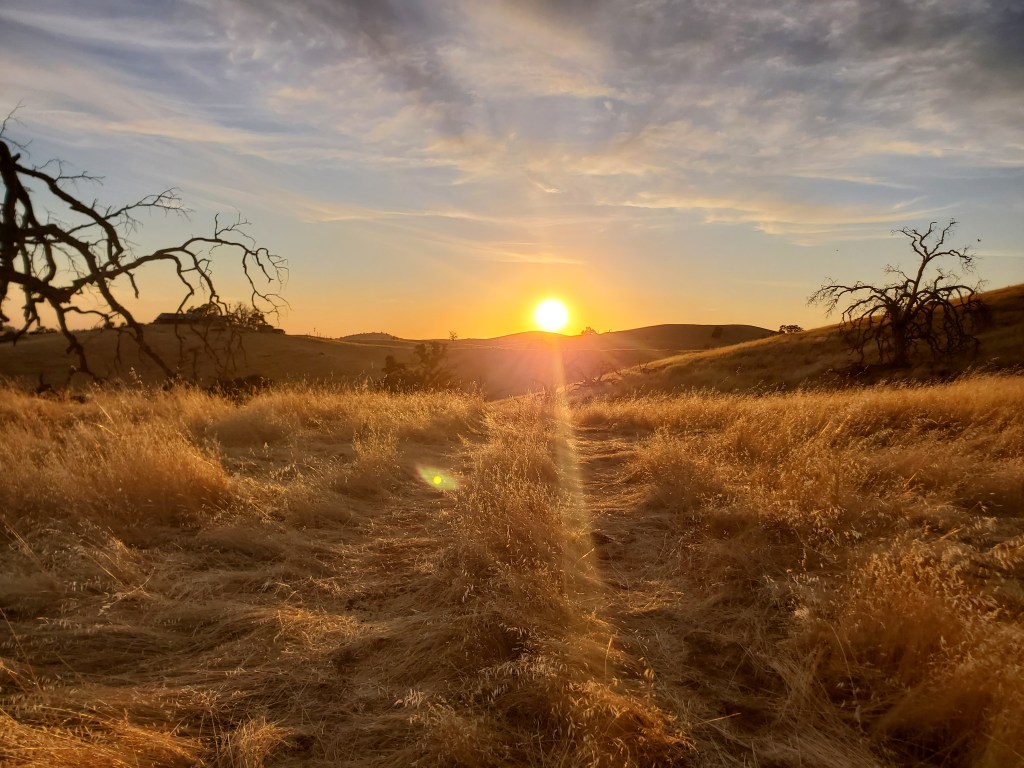
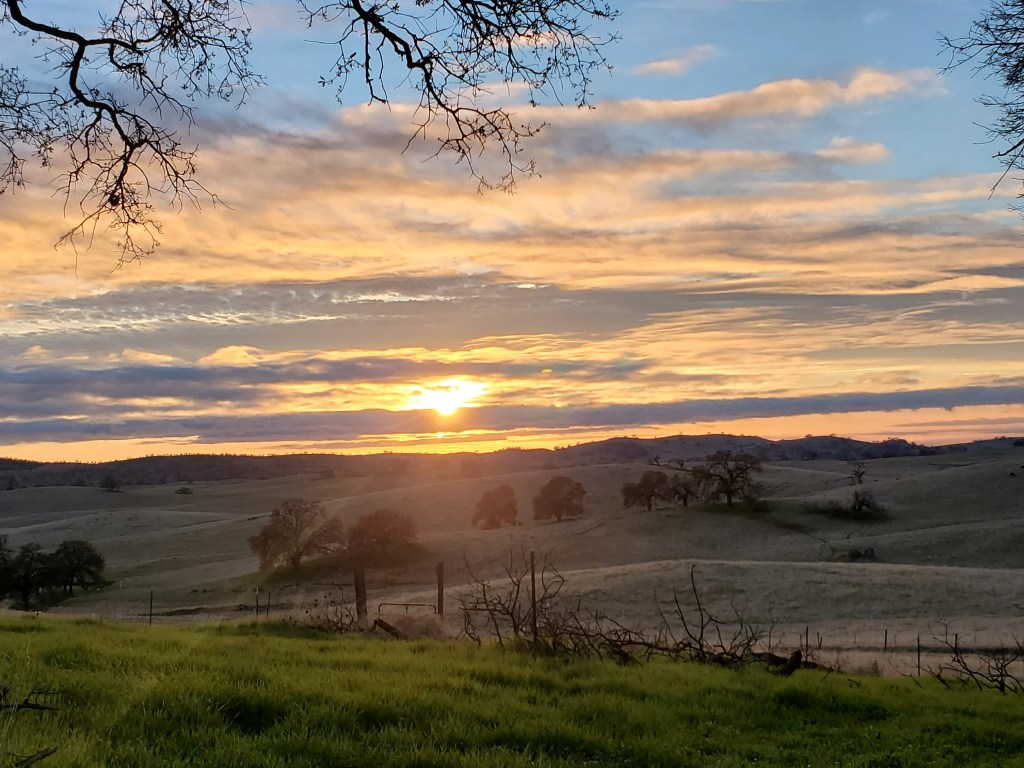
Moon over HornitosAcorns beginning to setBoneyard fire in the north part of the countySunset on my way back from watering oaks
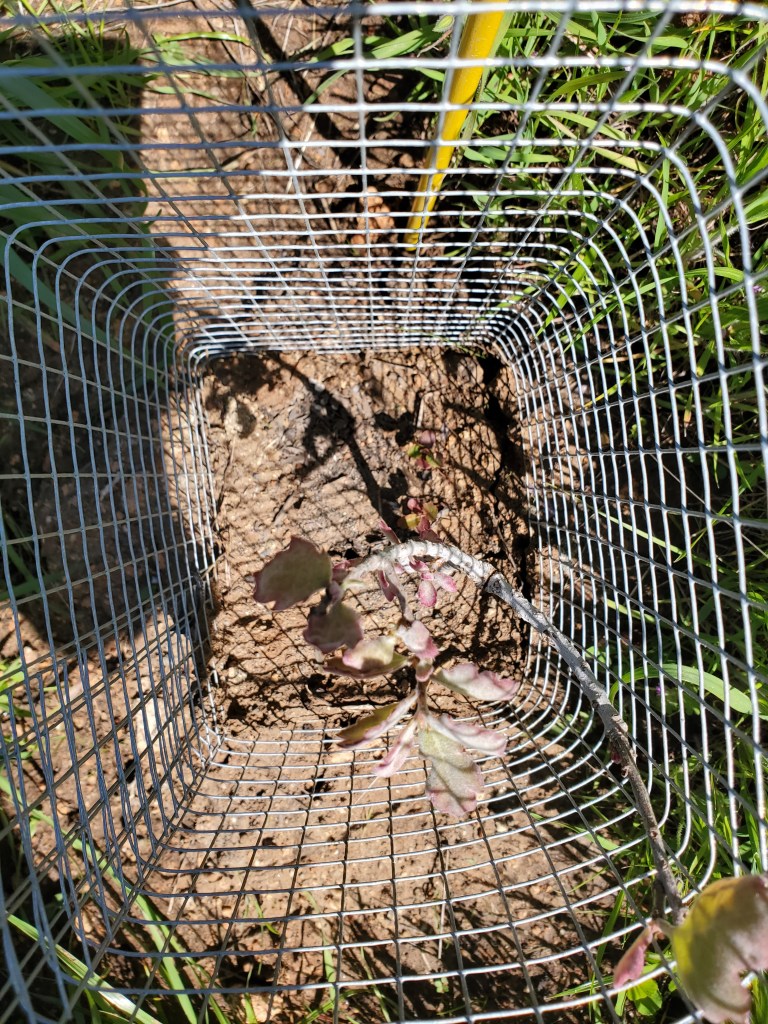
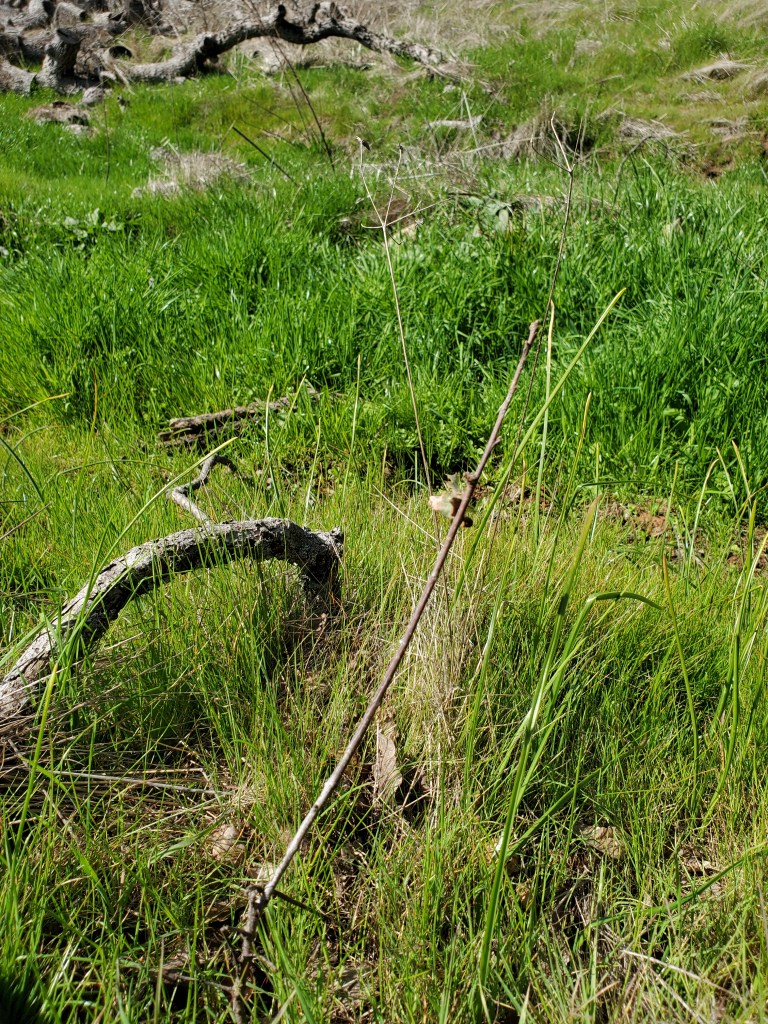
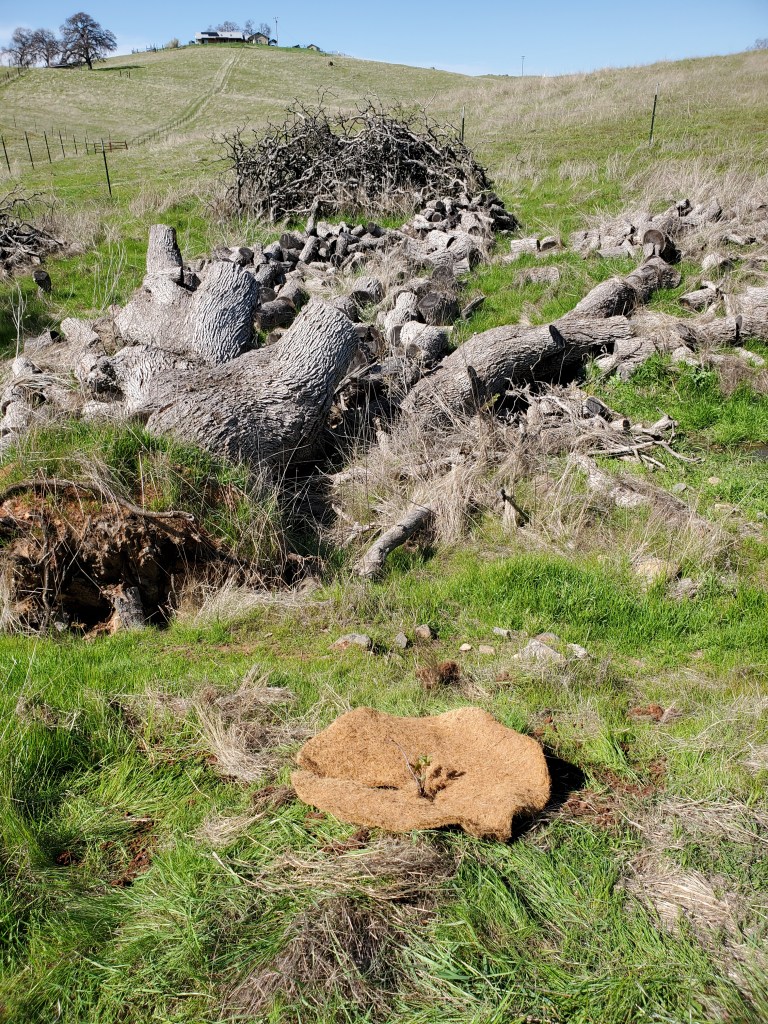
It is probably overstated about “miracles happening every day” – a bird making a nest, the bloom of a flower, someone loving you unconditionally, bridges holding millions of tons and planes staying in the air – all seem like miracles. Something I’ve not seen is an oak seedling come back from the devastation of plague level grasshoppers stripping everything, even the bark, from the plant… but now I have. The very first oak seedling I planted last year, shockingly, has re-sprouted leaves.
When I went around to reuse the baskets I had painstakingly planted in winter 2023-24, I carefully examined each little seedling hoping against the odds that there were survivors. They never got to grow much. Their inner layers had been exposed, stripped bare of anything that looked like a plant. In addition, the summer was long and with brutal heat.
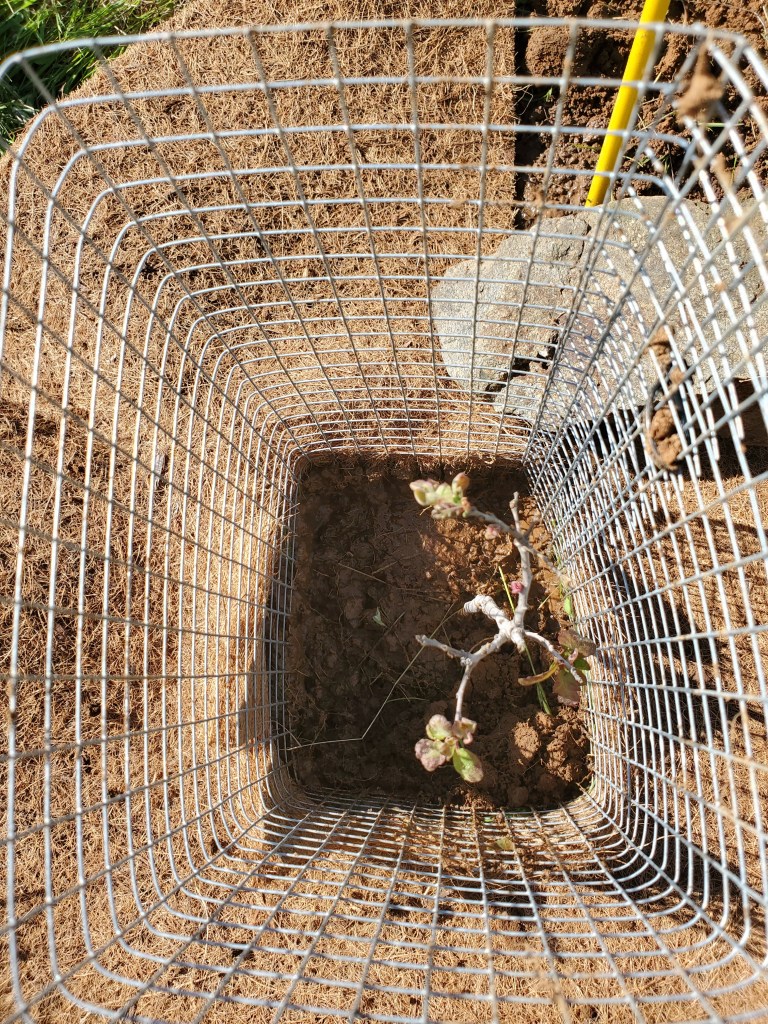
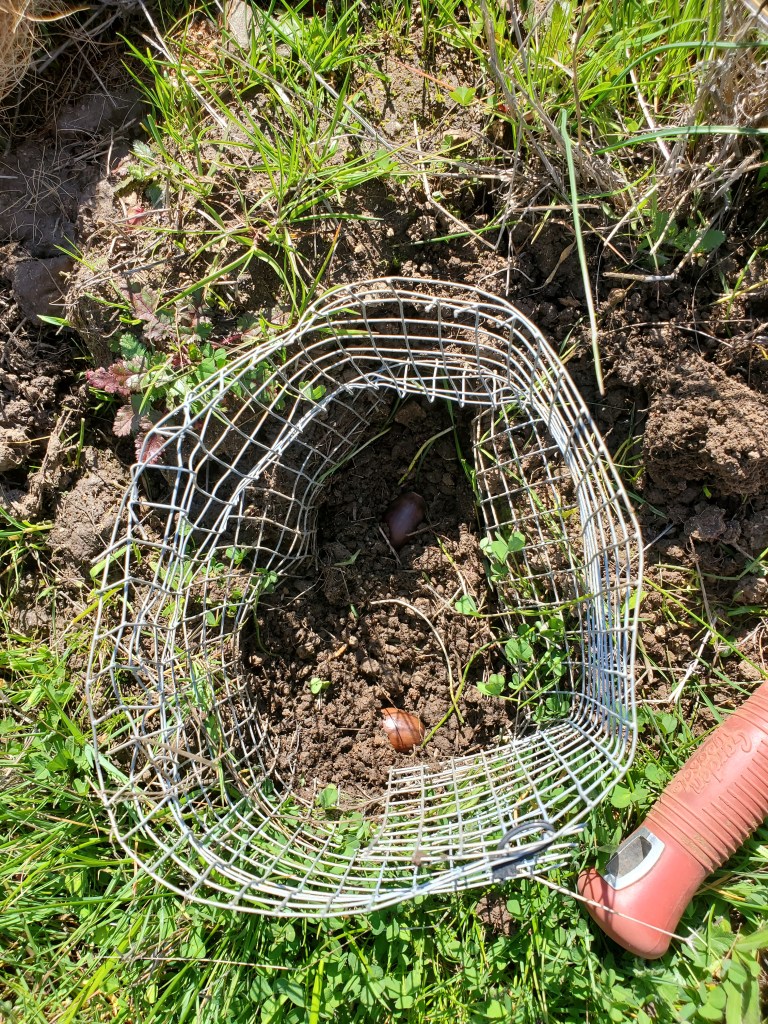
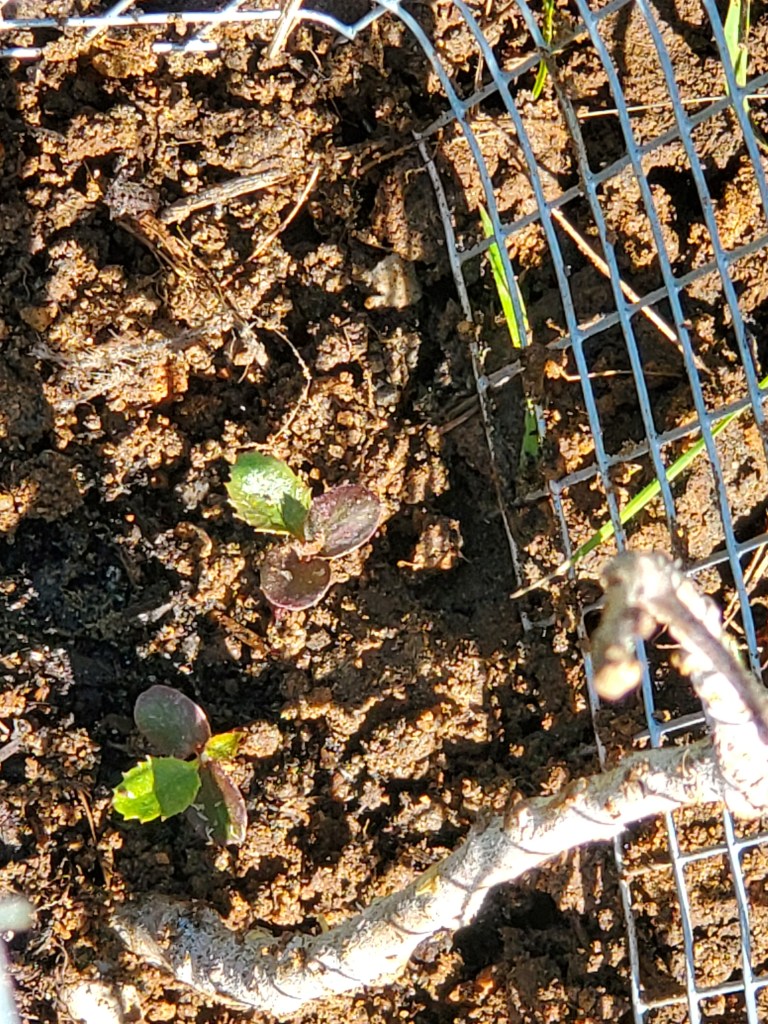
Like a careful pediatrician, I would gently bend their tiny branches to see if there was any moisture and life remaining. All of their little limbs broke off. I would gently tug their trunk to see if there was any give. Sadly, most of them pulled right out of the ground, gone from the strain. There were a few that refused to give, and I left them there. This year, in those baskets, instead of placing a new seedling, I lightly covered an acorn. I thought, maybe they needed a friend to share the energy for one life. When I got to the seedling I planted at the base of my beloved now dead oak, I saw what looked like a couple green and red buds on the trunk. I took my glasses off and wiped them thinking maybe I had some gunk on them. I put them back on, looked closer, almost putting my face up against the basket. Oh my goodness, YES!! Resiliency!! She was alive and producing some leaves. A miracle for sure!
I have also been monitoring the other oaks closely. So far, they all appear to be doing well. They all have leaves. The baskets where I only placed acorn have not sprouted anything. One site, it was clear that the acorn was taken. I replaced that one acorn with two, and will hope one of them makes it to germination.
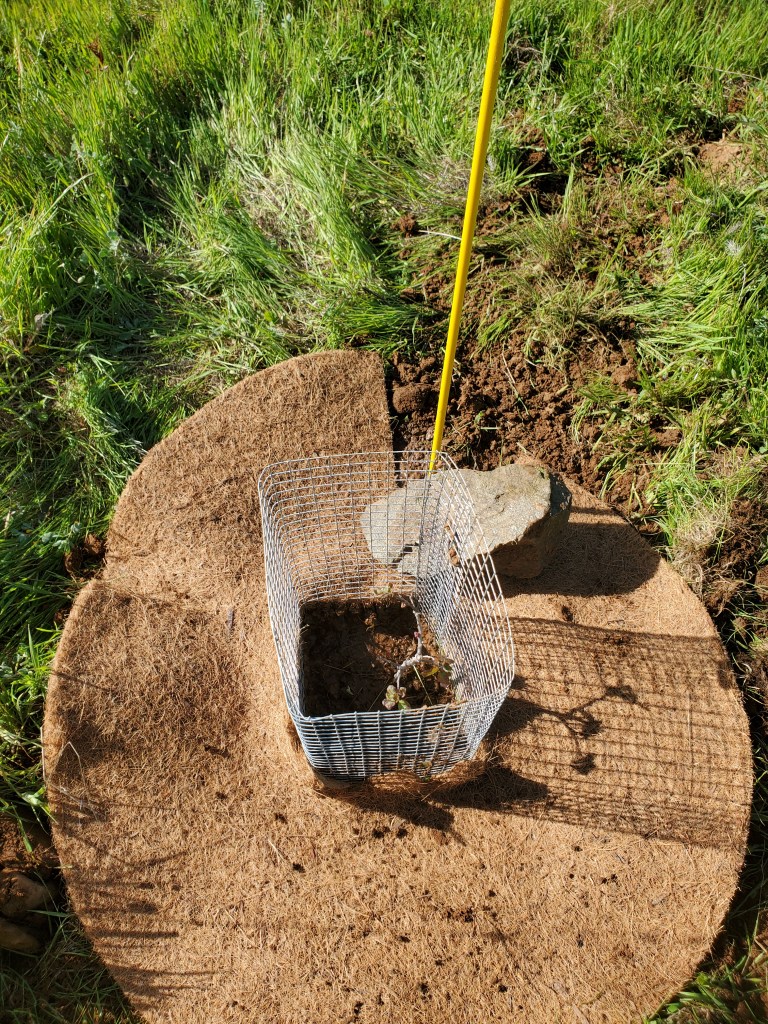
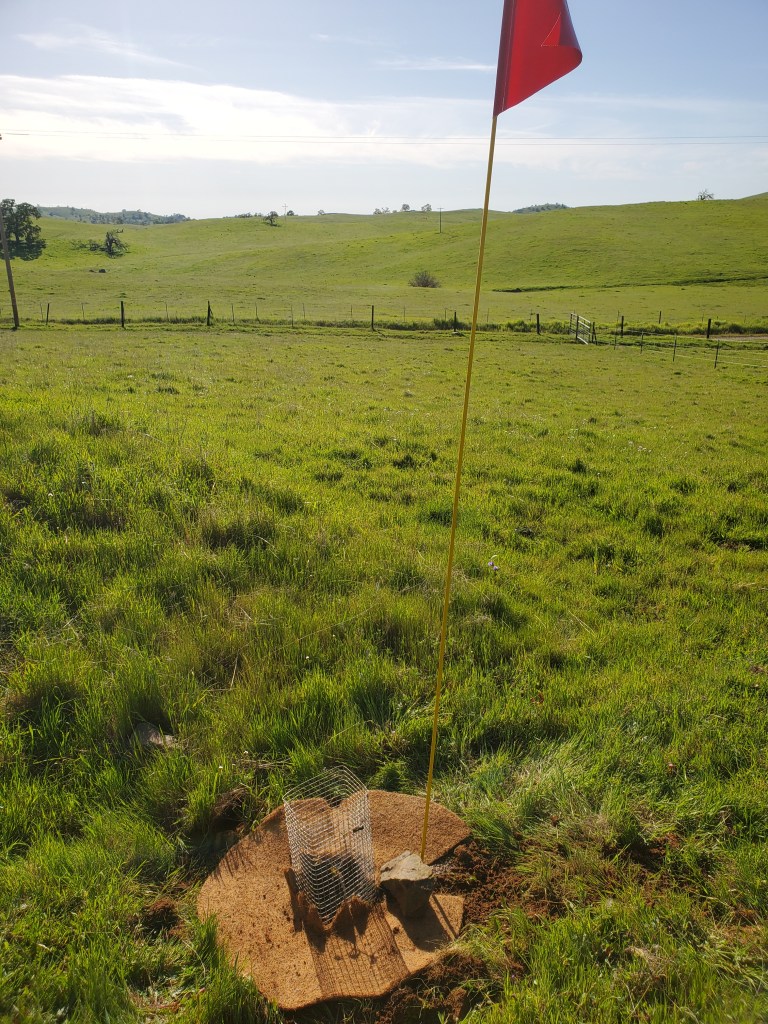
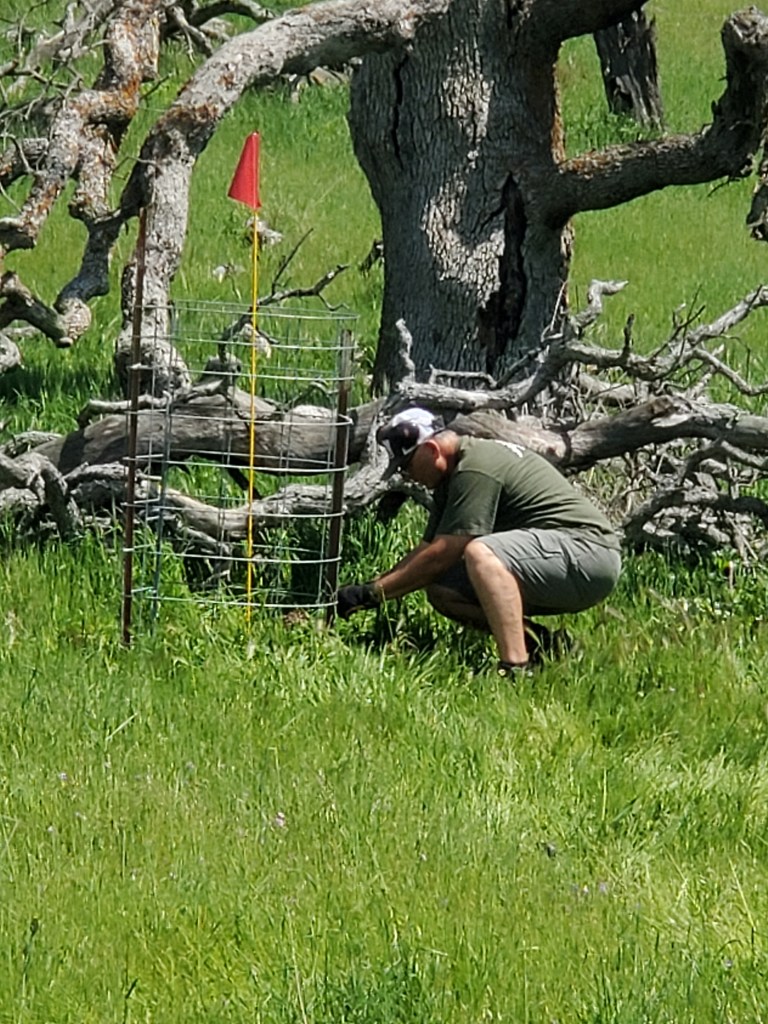
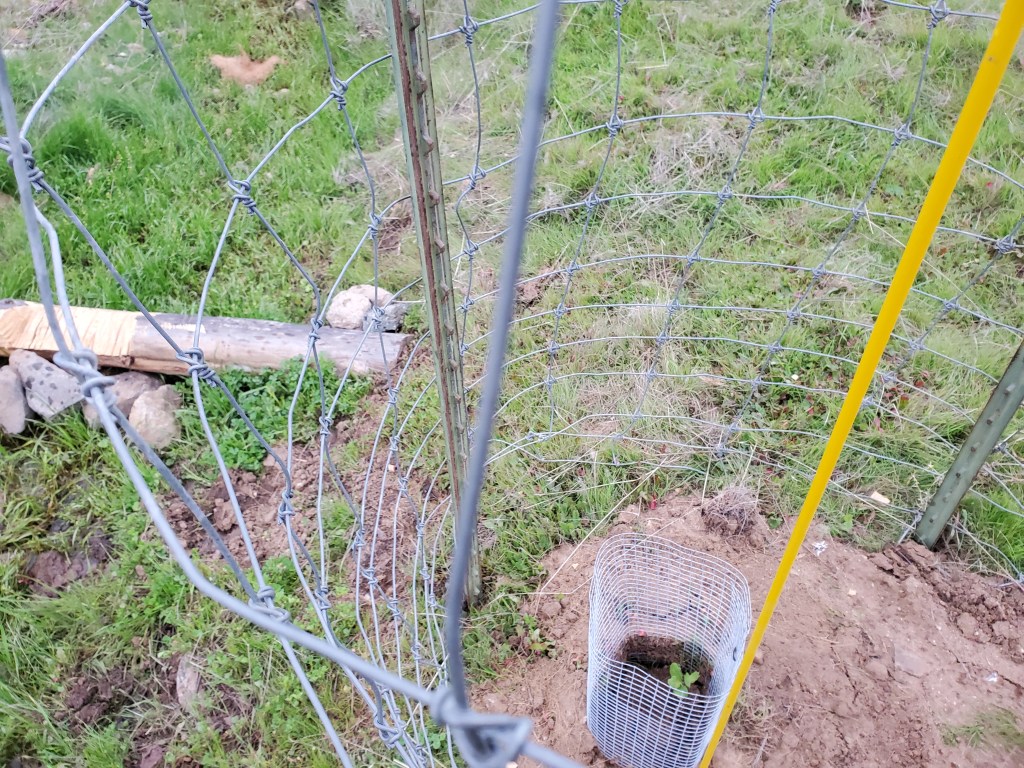
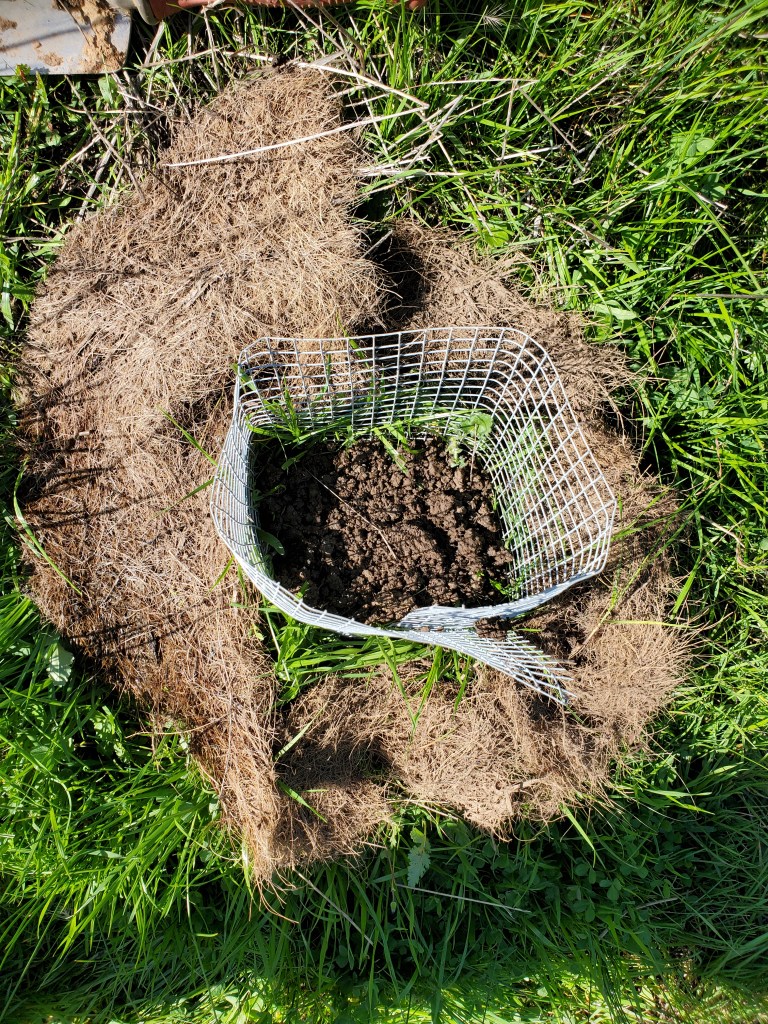
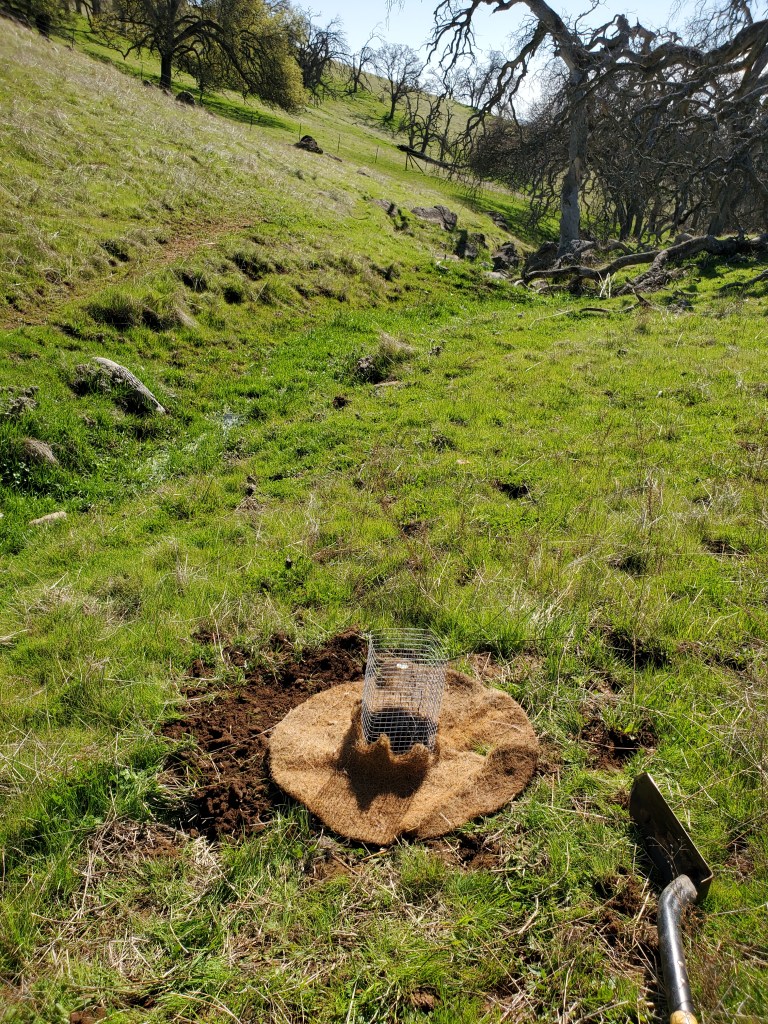
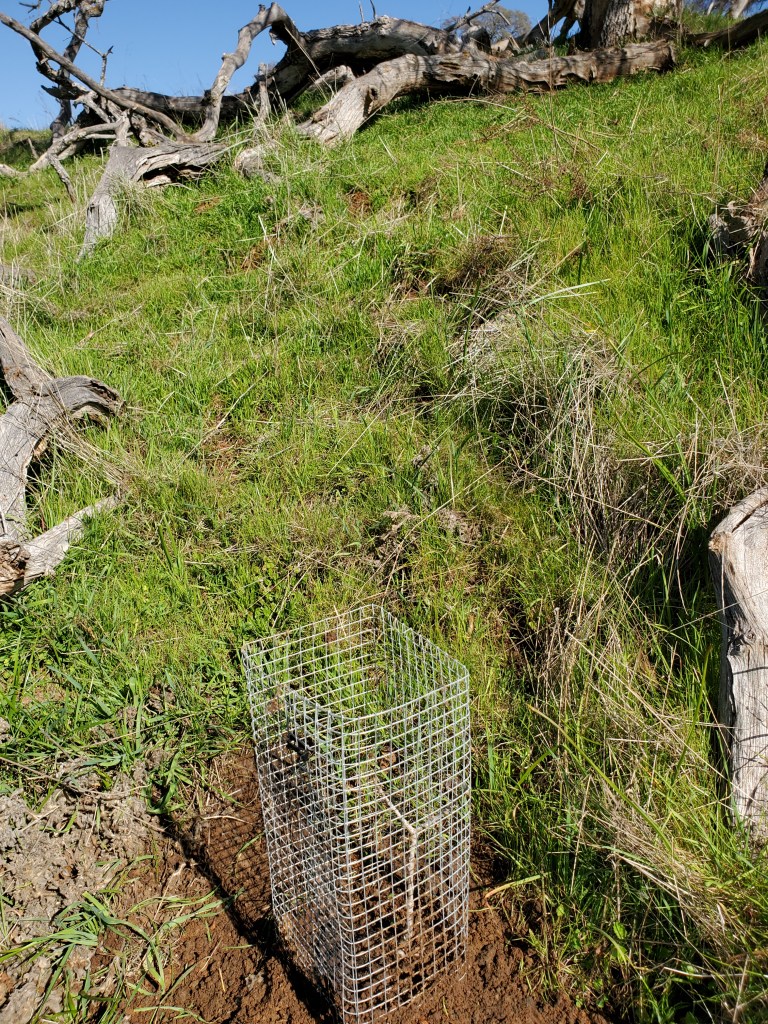
David and I have finally got all of the oaks caged. When the cows return from the south end of the ranch, the oaks are now protected. I had planted them well before the caging was done, and some of them had been stepped on or bent from hungry cow heads exploring their ability to access the tasty acorn and tree. The trees are small enough that the tallness of the basket protected them. That said, I needed to do a bit of reshaping before caging the area around the plant. We followed a new protocol for caging that Alex Palmerlee, an oak expert in Butte County follows. We used much stiffer cow panel fencing at at length of 8′ and a height of 50″ secured to two t-posts. Previously, we used no-climb fencing at a thinner gauge with a much larger diameter. The thinness required three t-posts to secure. I think this new method will require less resources and be more resistant to pushing in from the cows, thus OK to have a shorter diameter. Thank you to my long-suffering husband for doing the major share of the caging work. After I maintained the oak planting site by weeding, re-situating coir pads and “fluffing” the baskets back to their original shape, David would follow with the caging. I had already set out the t-posts for him, and he brought the panels. We make a pretty good team.
Straightening oak basket from cow step-onDavid taking the panelsDave securing the panels
The weather is beginning to warm. There is still water running in all the creeks and drainage’s. The soil is still moist. However, soon I will need to follow a watering regime to ensure oak the survival of these babies. Fortunately, I have not see any grasshopper nymphs like last year. Crossing my fingers that hoppers will not be a problem and that these trees will have time to become established.
CA Milkweed Shockers
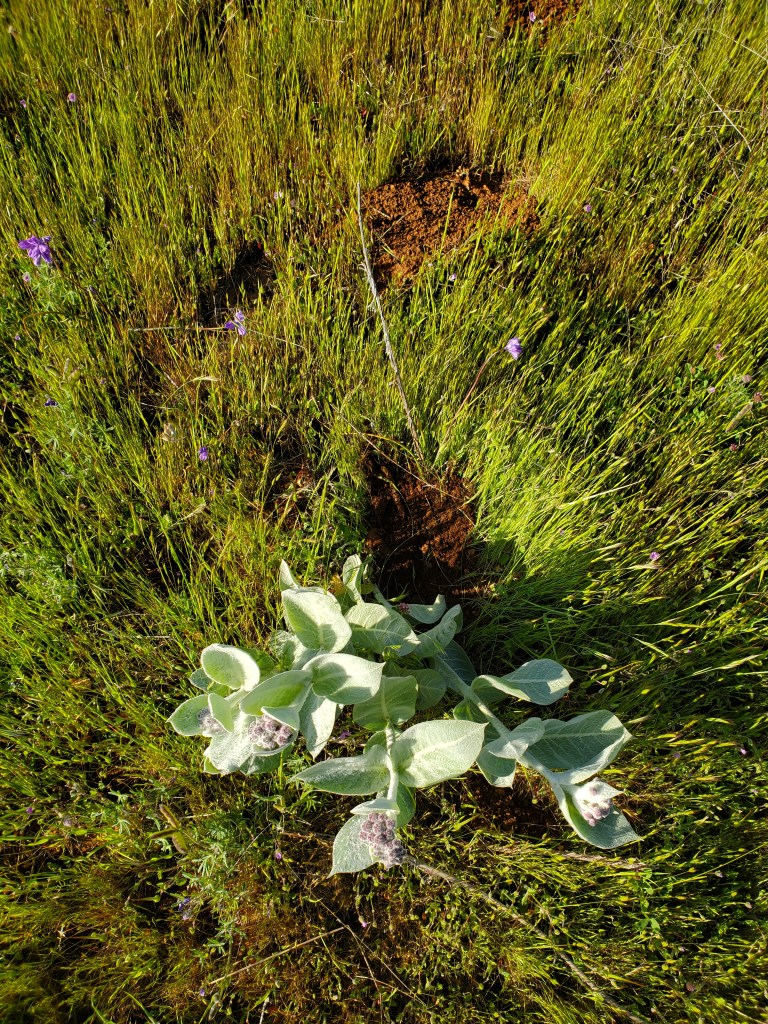
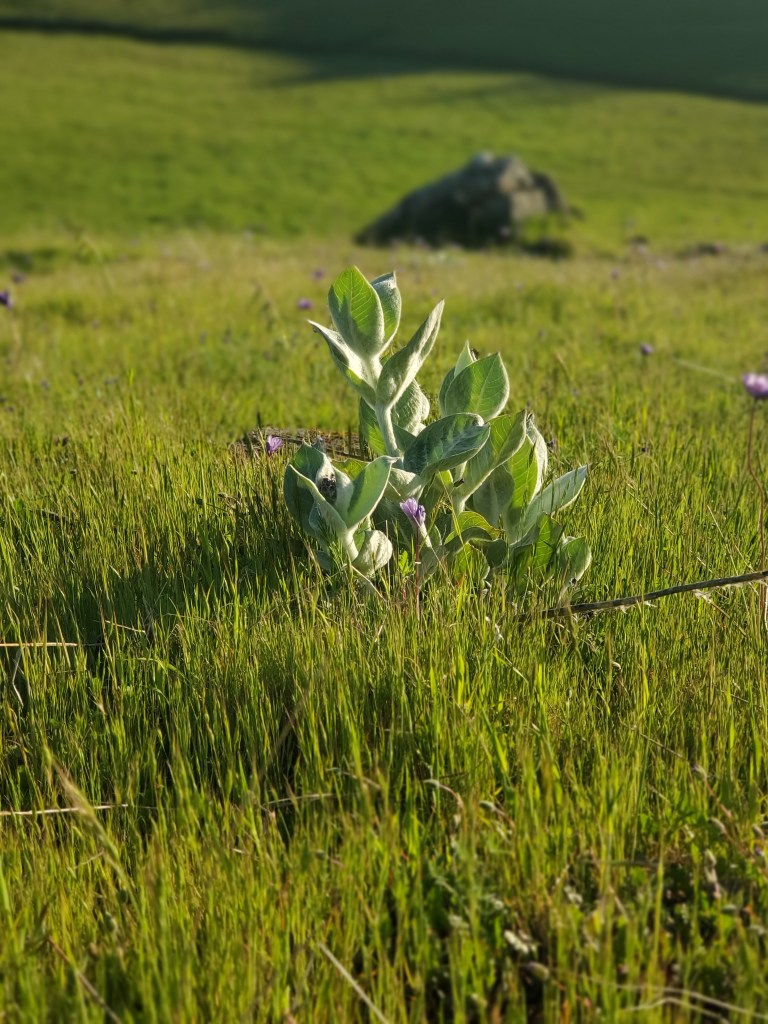
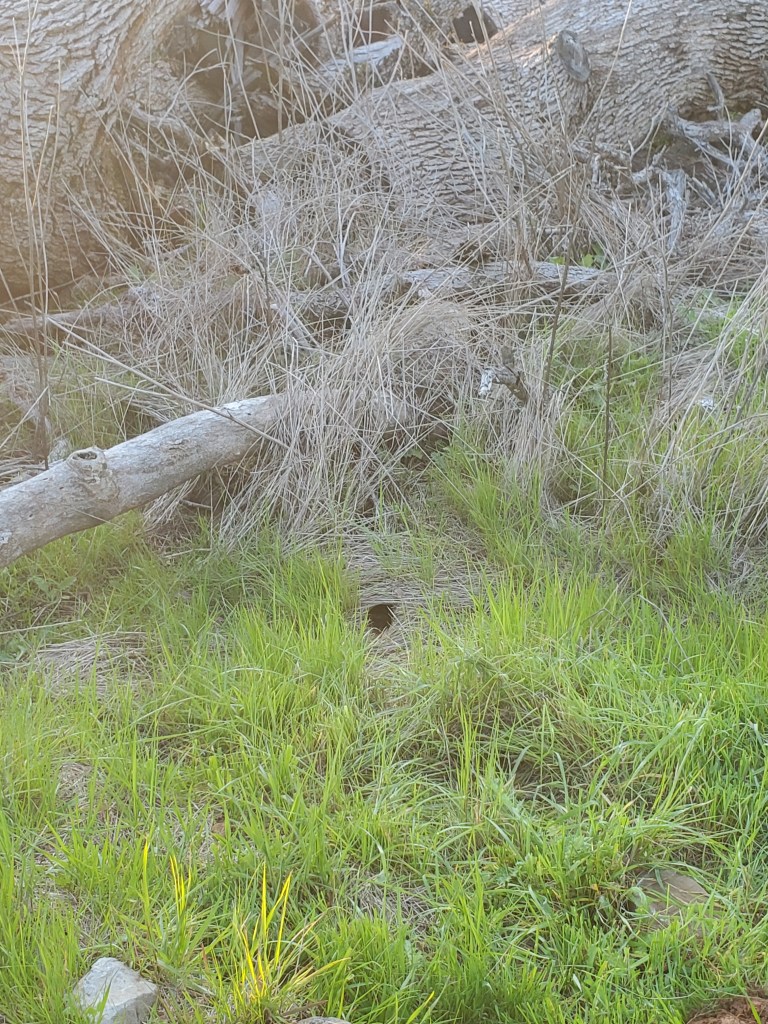
Monitoring the Ca Milkweed patches is a good workout. Walking up the super steep grade ensures my legs and heart are getting the blood and movement they need. So, I was not sure if it was the workout or that when I got near the top of the hill a milkweed was missing, that was the cause of my heart was racing over 100 beats per minute. I was panicked. After seeing the pile of loose dirt mounded up where my gorgeous mature milkweed always is, I began looking for all the other ones. Visions of gopher mounds clouded my mind as I frantically ran from one location to the next. Most of the others were intact. Another small one was missing, but another one popped up on the other side of the patch. For the mature, large milkweed, I think the gophers had been gnawing on it for a while. That is probably why it was so small this year. Then poof — gone.
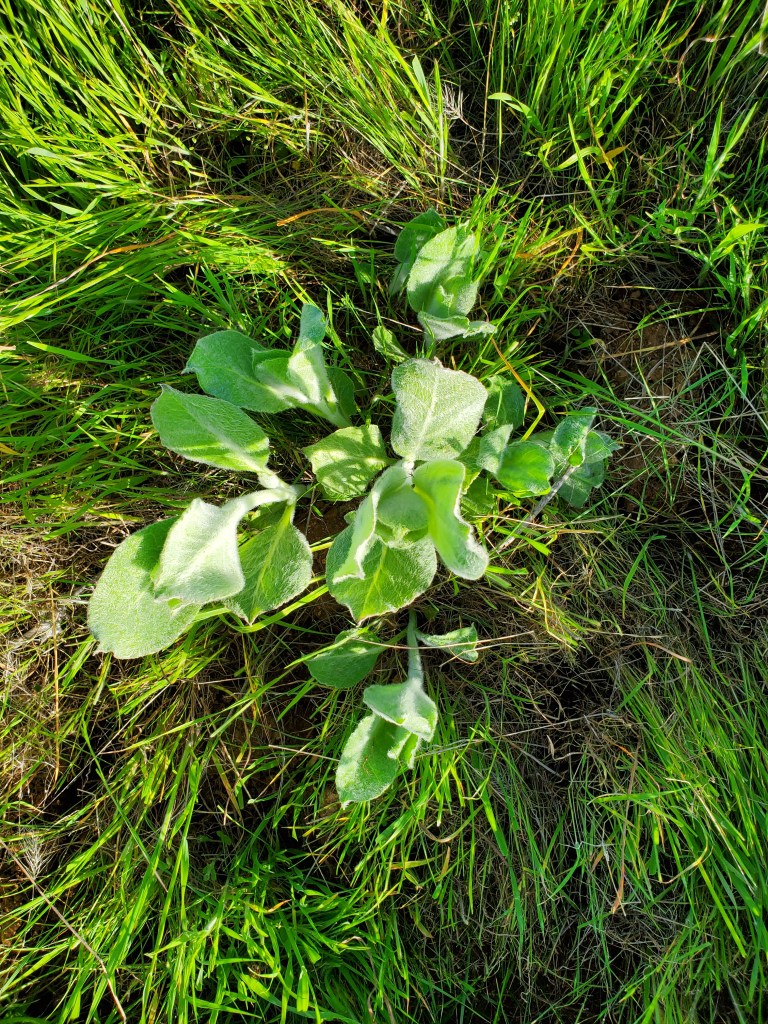
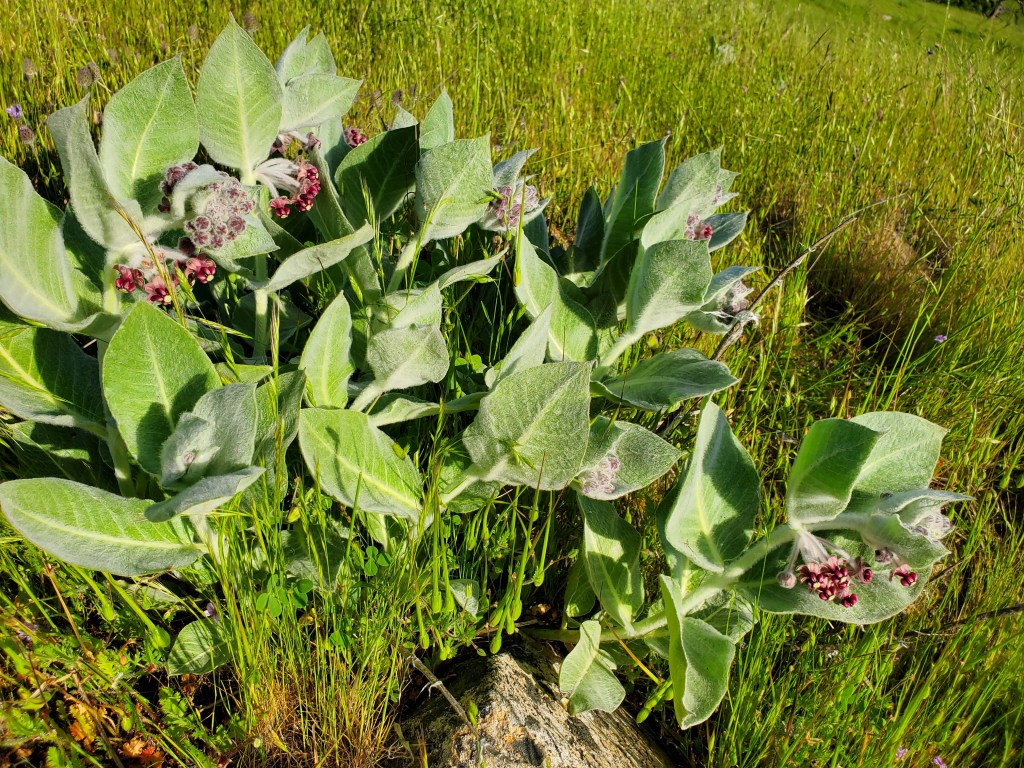
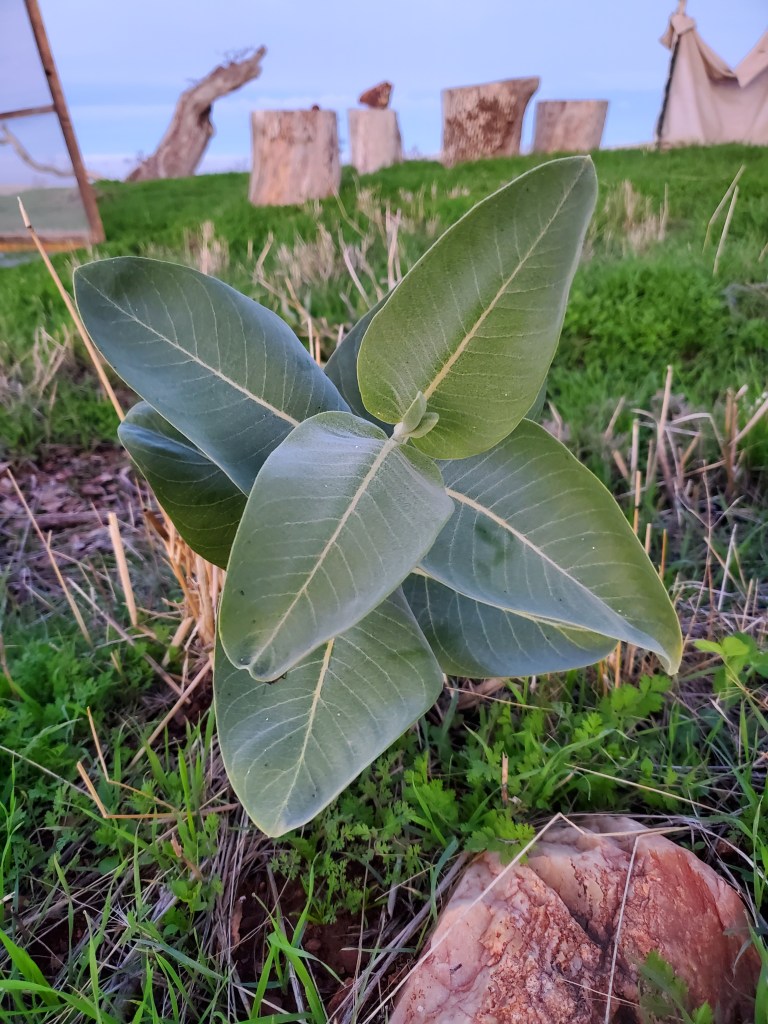
Something else remarkable has happened this year. The CA Milkweed on the north facing slope has emerged only 10 days after the south facing slope. For the past several years, there has been between 3 weeks to 1.5 months between emergence’s. I counted five on the north facing slope and only seven on the south facing slope. As I look for them, I weed around them. The grass is a lot of rye this year, and it is really tight against the milkweed. Hopefully, giving them some space will help and enable to monarchs to feel their eggs will be more protected. Perhaps it will not be a big year for milkweed, and we will need both sides available for the monarchs.
I installed a game camera up on the south facing slope looking at (now) one milkweed. I am hopeful to catch a monarch landing on the milkweed. I installed it over the last weekend, and went up the next day to check the card to make sure it was capturing images and pointed in the right direction. It somehow got shifted and was only catching a piece of the milkweed on the very left side of the frame. I fixed that. Hope it stays.
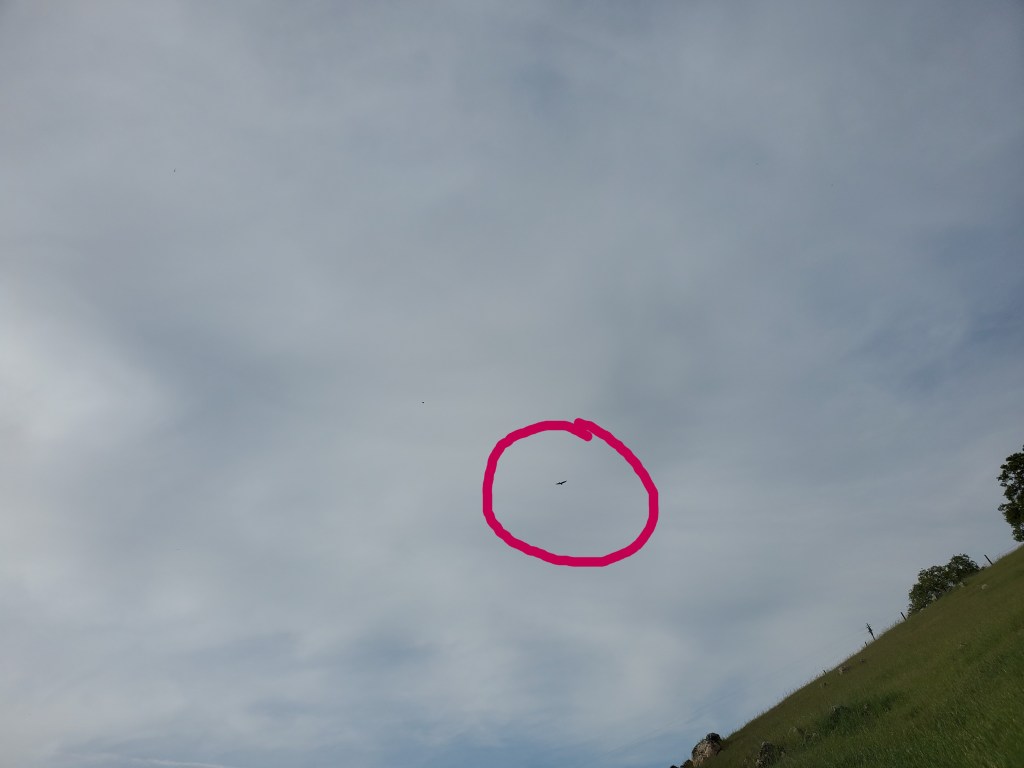
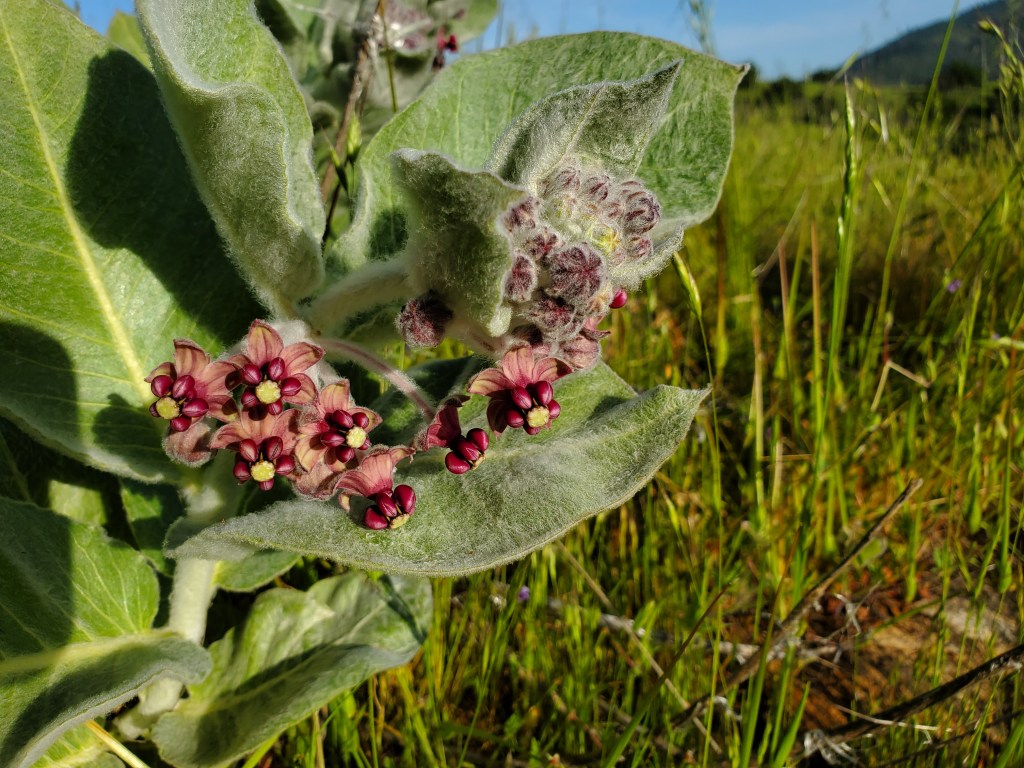
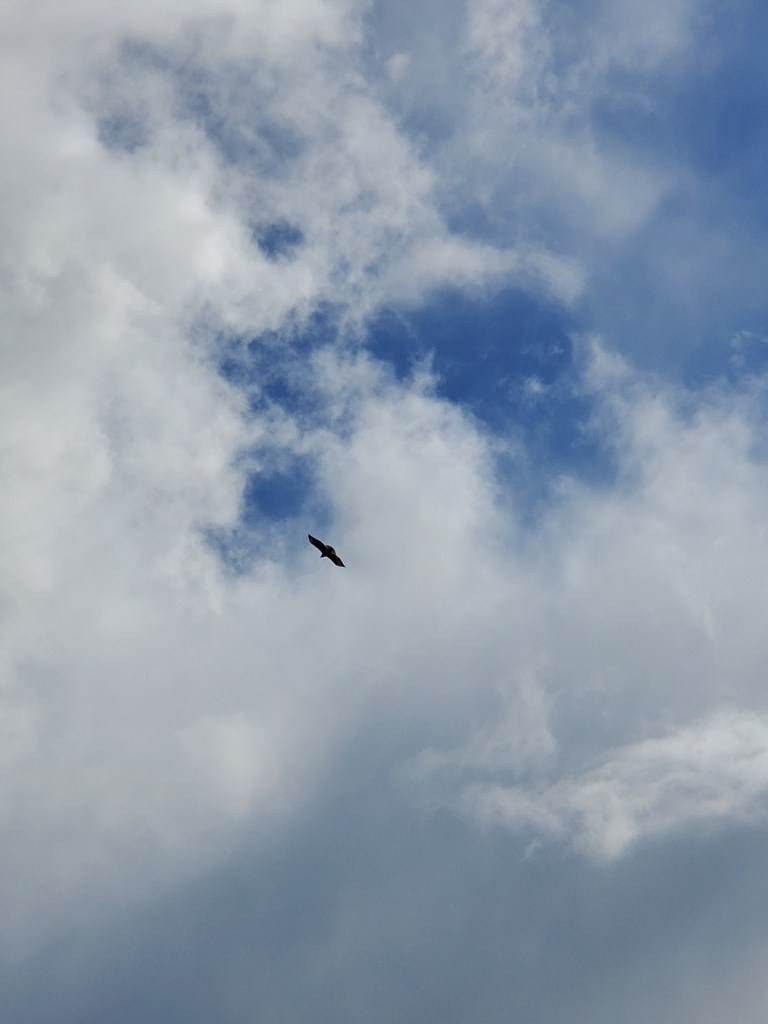
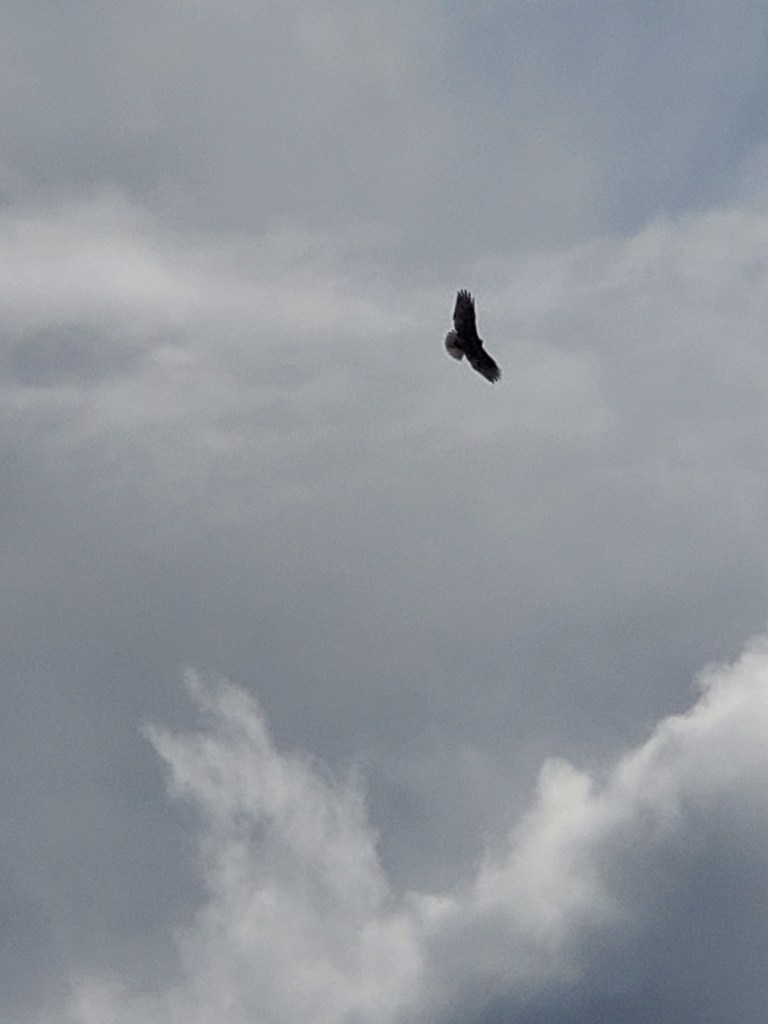
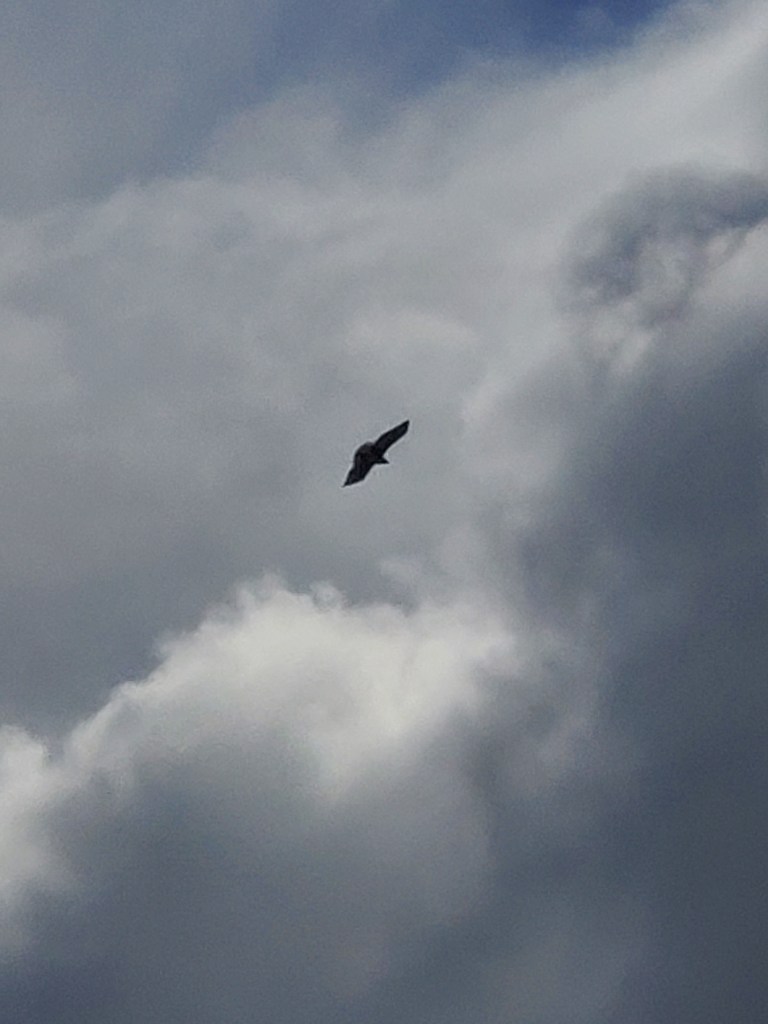
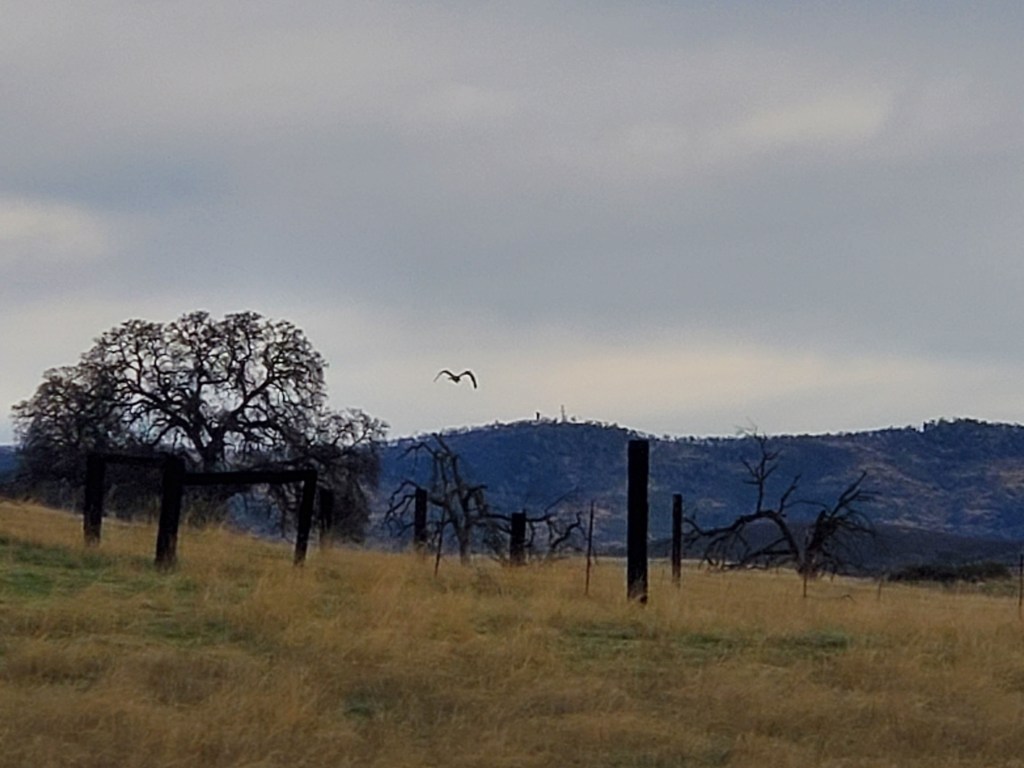
While up there on Sunday 4/6, I was treated to some amazing things. First, the scent of the cow clover and all the vetch. Second, two or three large crotch bumble bees buzzed me and then went about their business nectaring. They let me know who is in charge. Finally, a gorgeous, large harrier was floating across the surface of the ranch looking for dinner. Just incredible. Currently, only a few of the Calif Milkweed blooms have emerged from they duff protection. As more get released, they will add to the extraordinary perfume, a siren song, to all pollinators.
Gopher activityACA beautyNo milkweed here. Right arrows gopher mounds. Left Arrows the old milkweed stems from last year. Weeding around a milkweed on the north-facing slopeHarrierCrotch bumble beeHarrier againThe flowers are exiting the duffLike delicate berries, the blooms are active
Wildflowers at Massive Scale
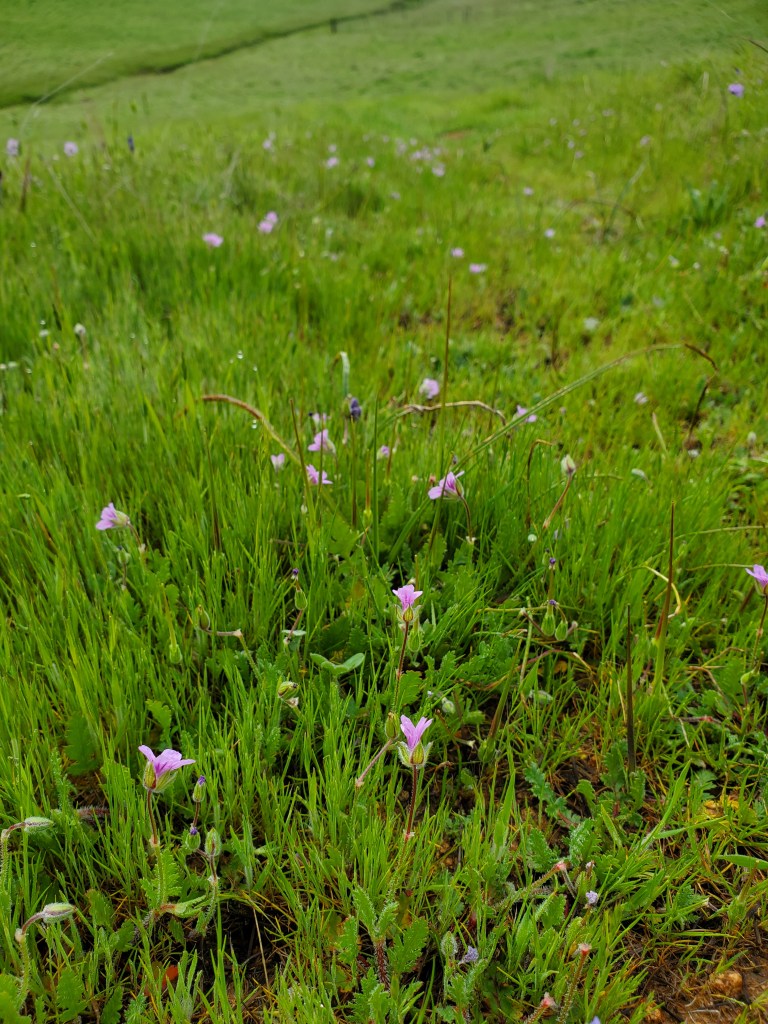
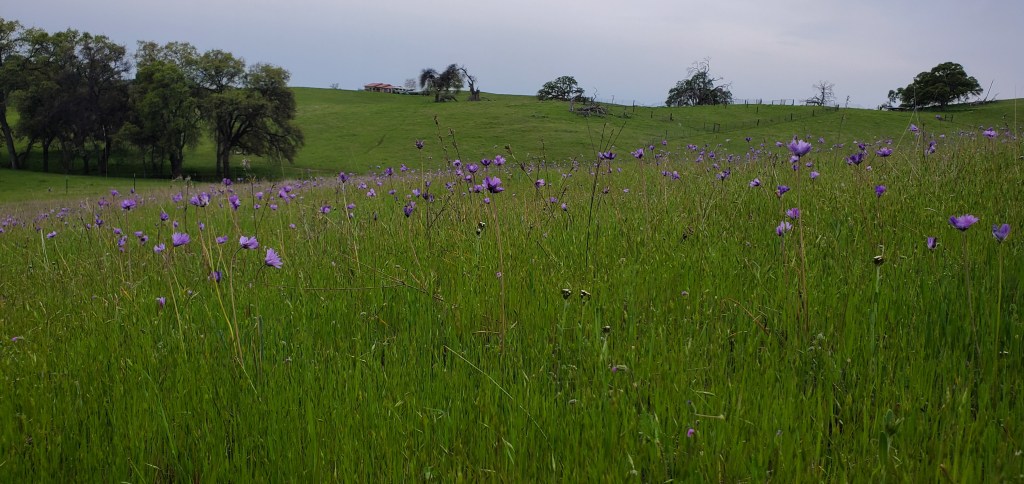
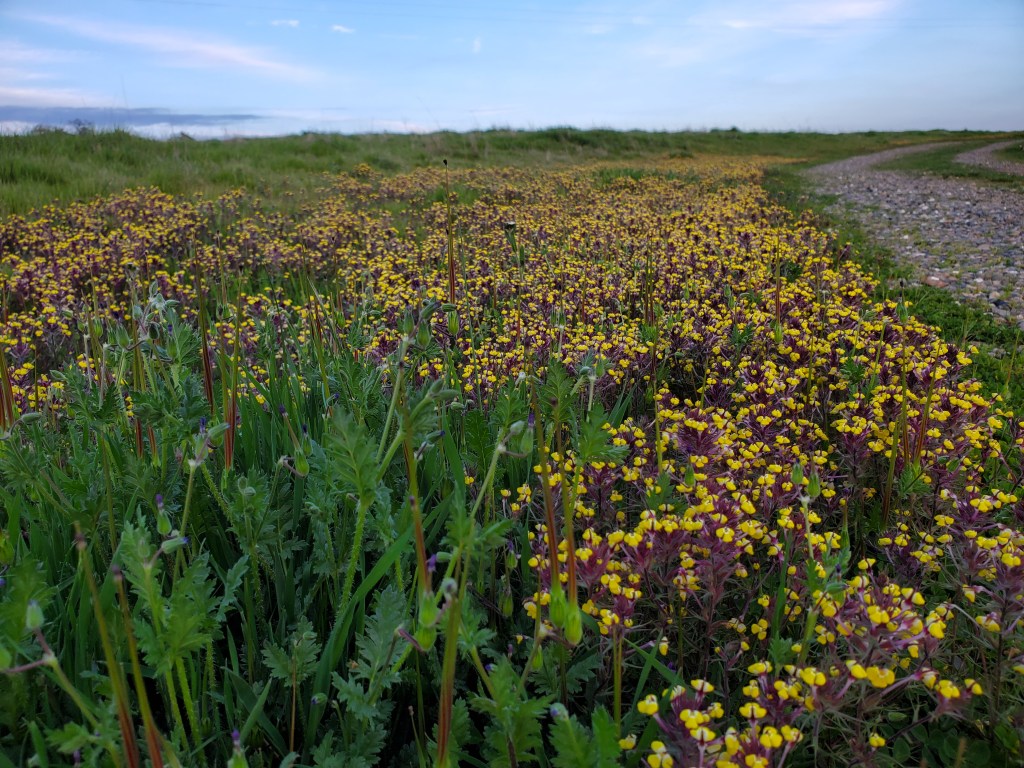
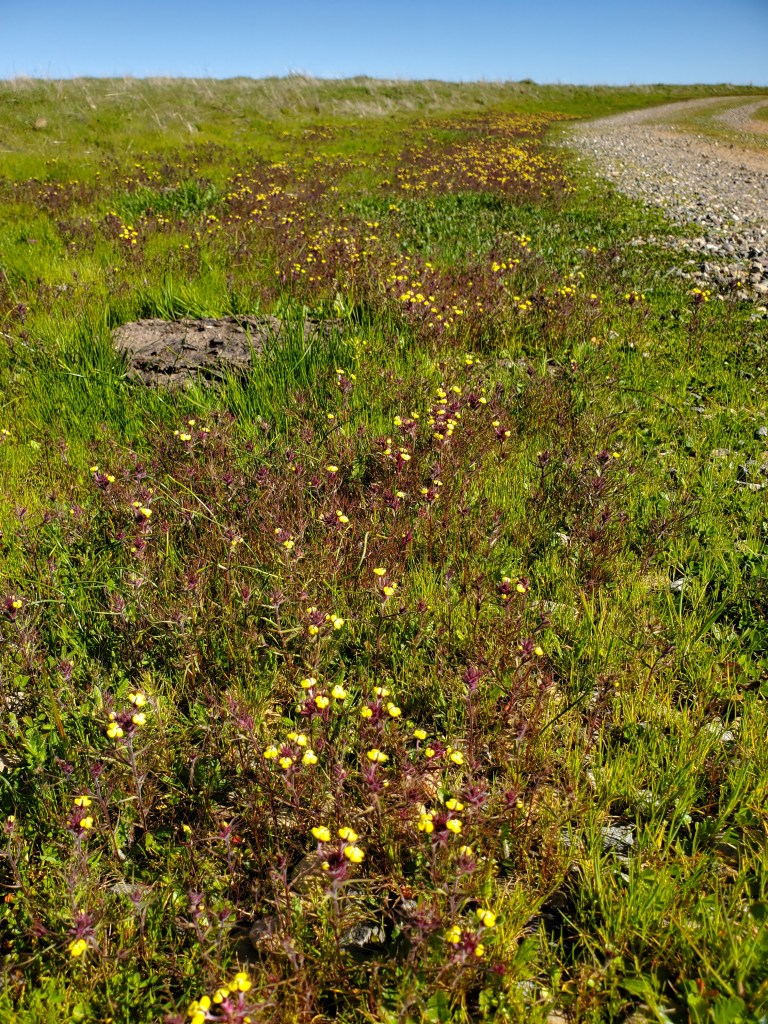
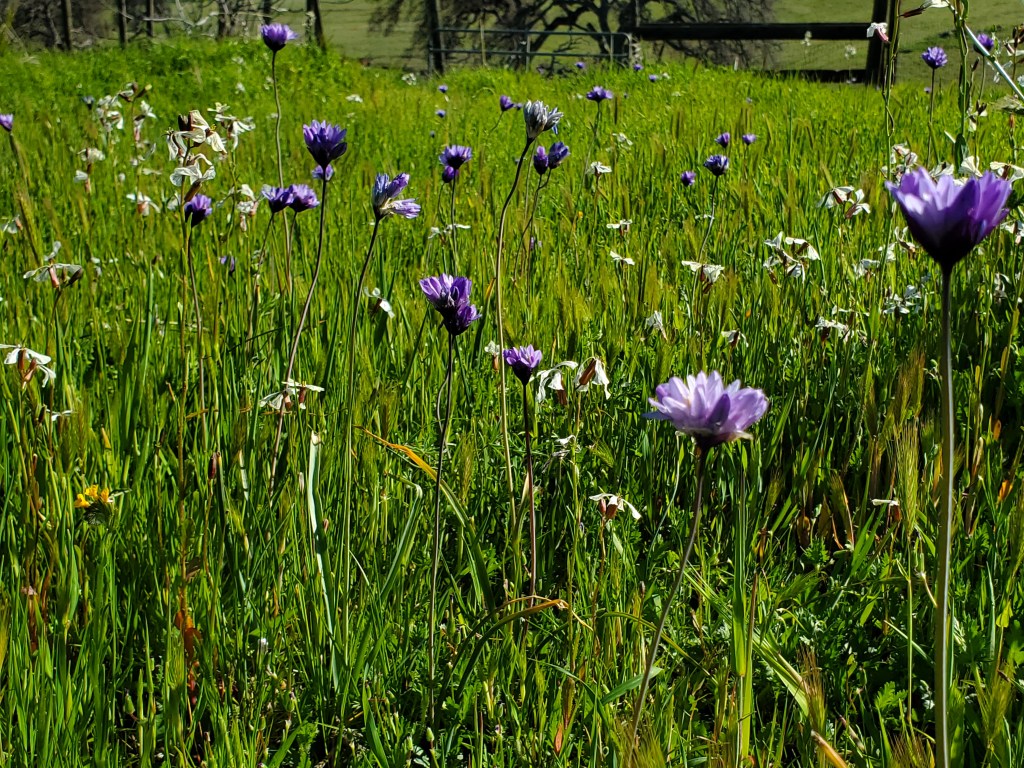
Wildflowers never disappoint. They are up and at a massive scale. The air is thick with nectar, especially when you walk through a cow clover patch. So sweet! With the flowers come the insect relatives. I love them so much.
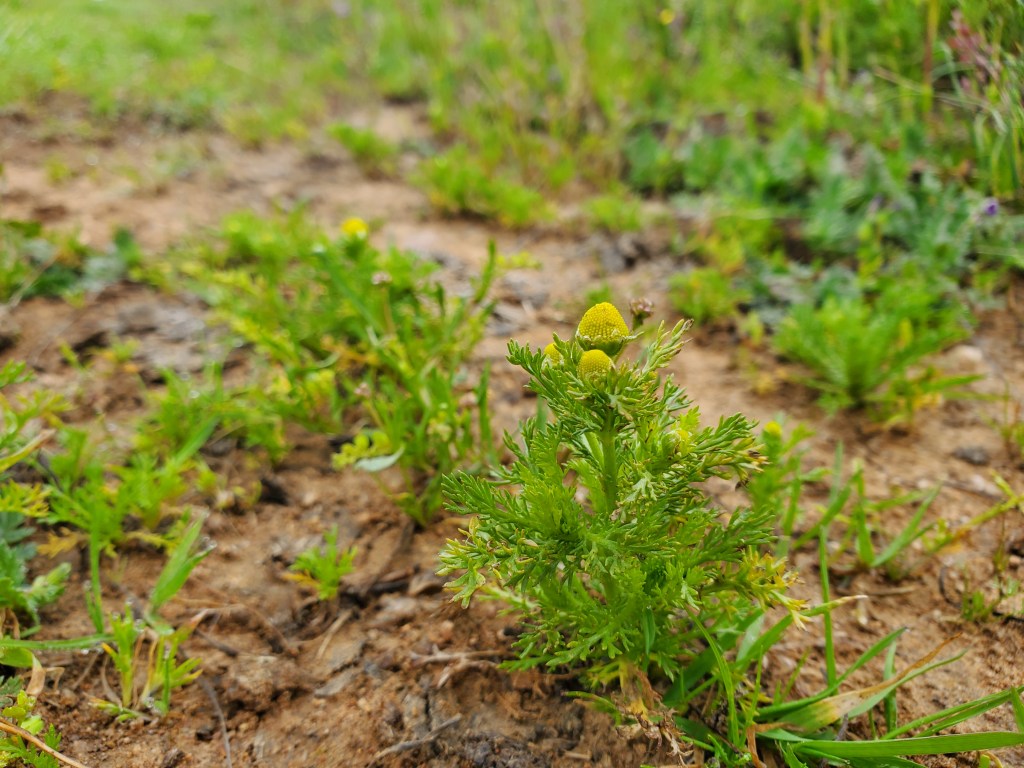
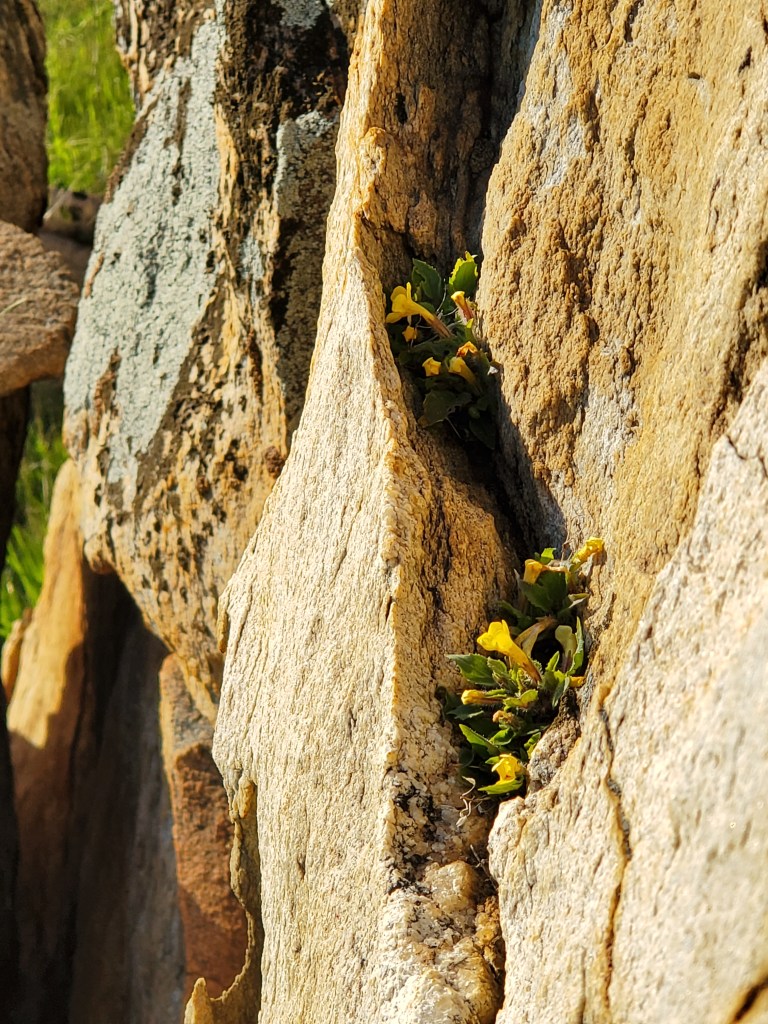
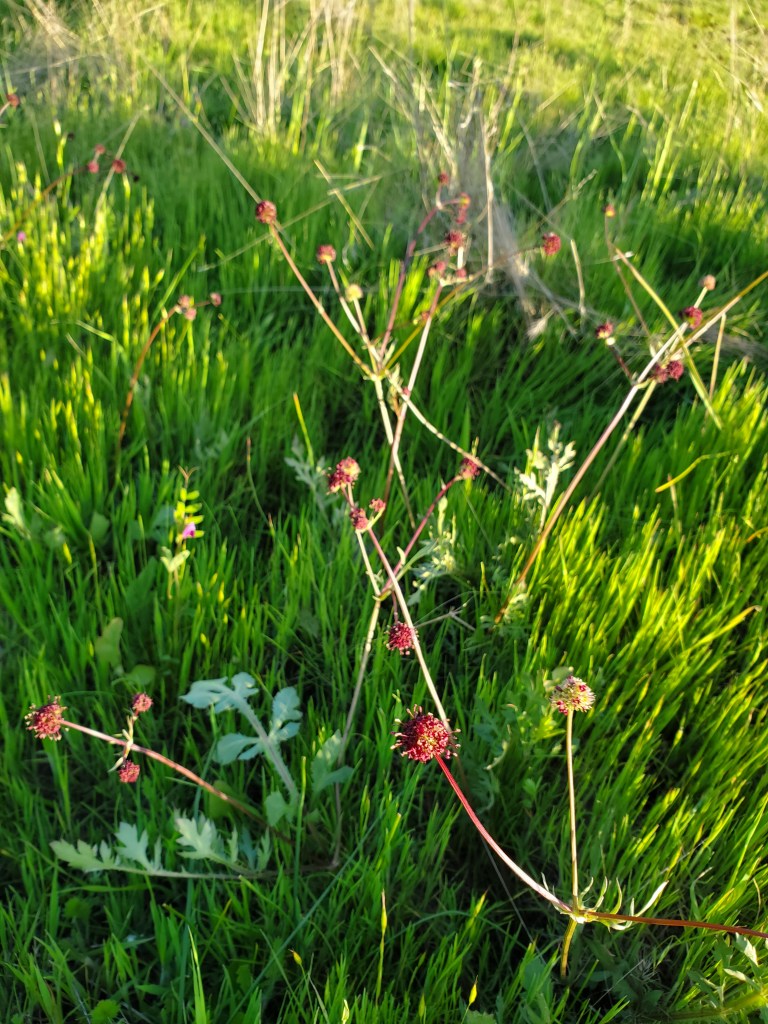
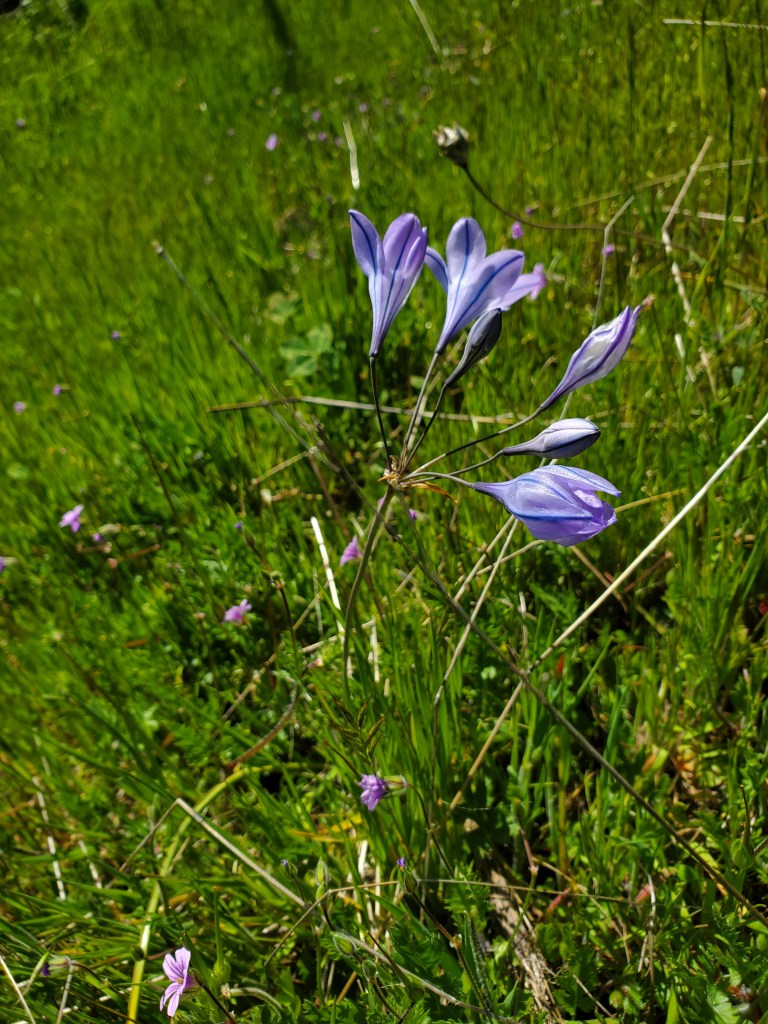
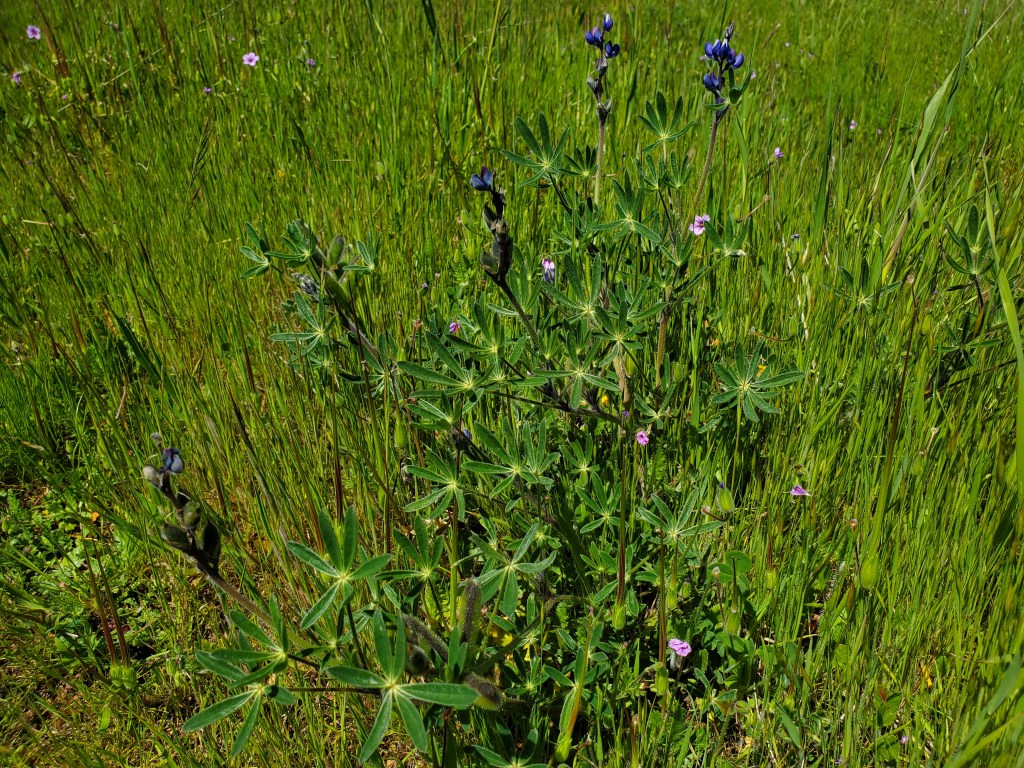
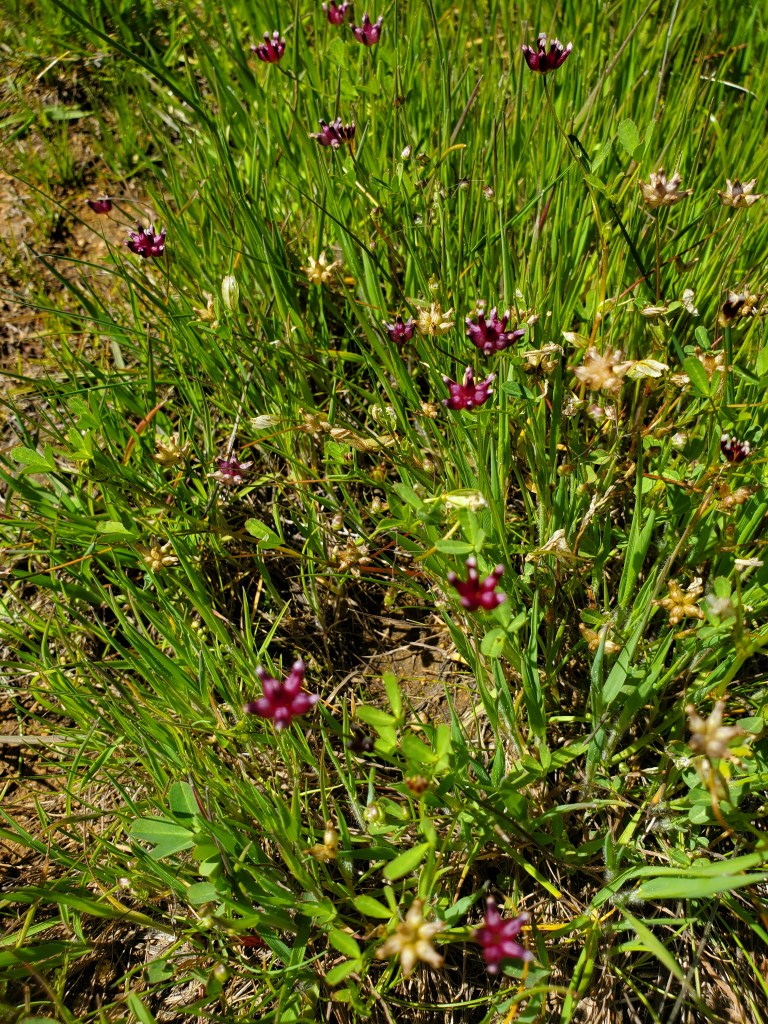
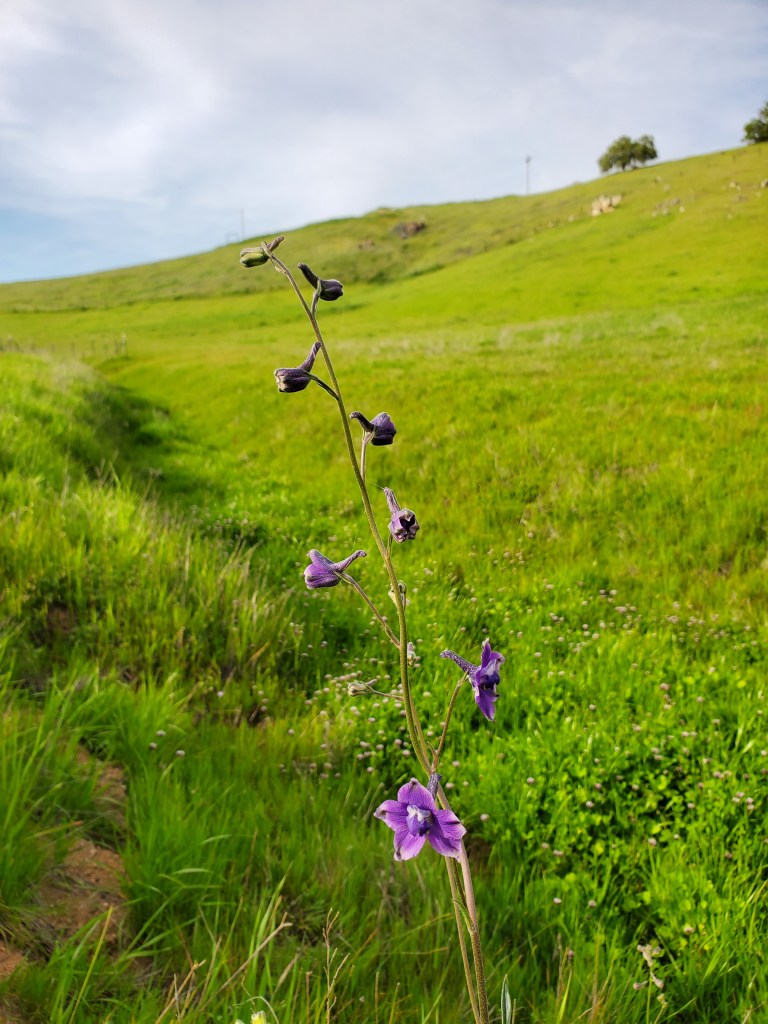
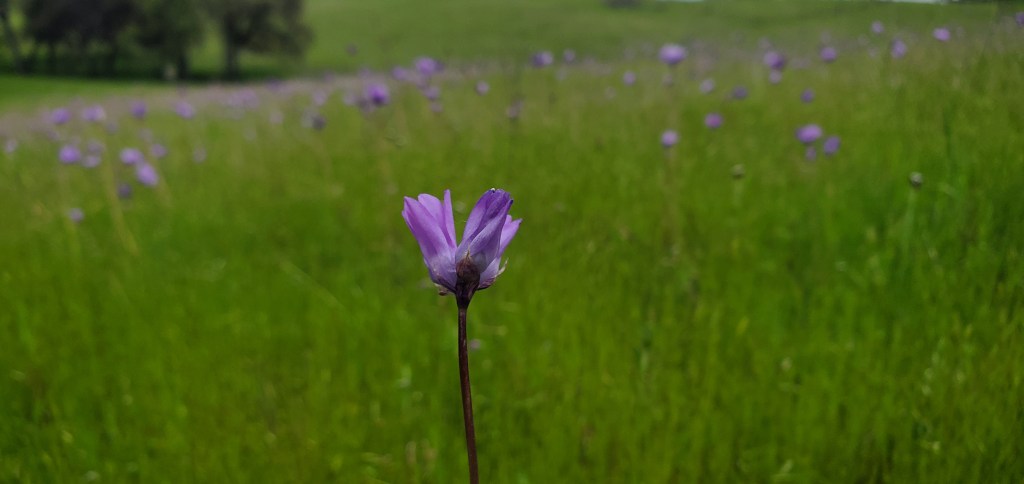
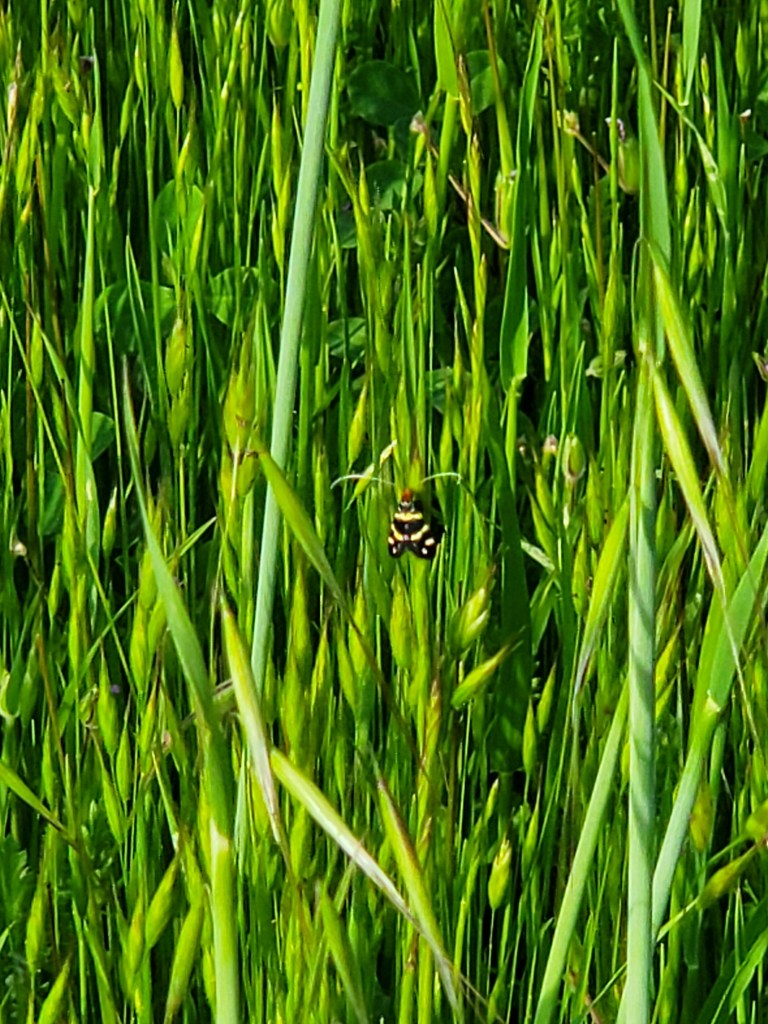
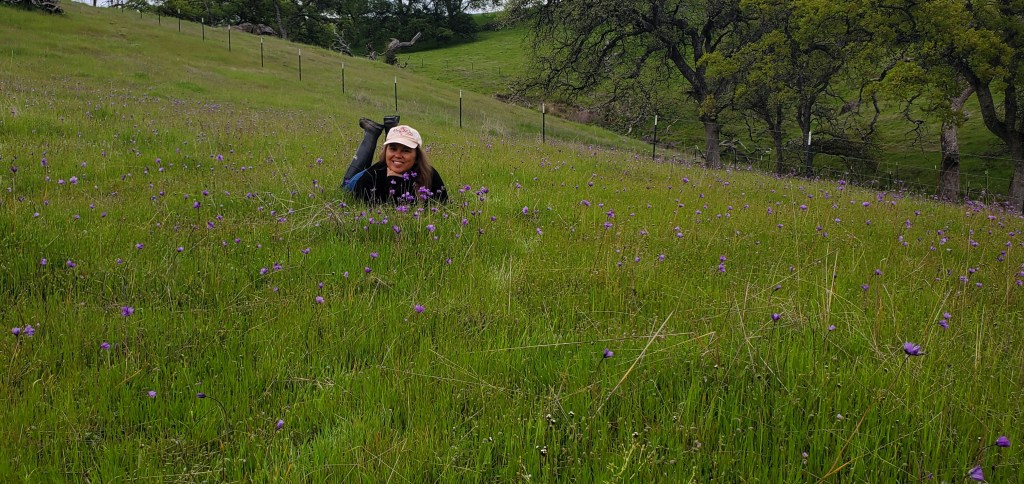
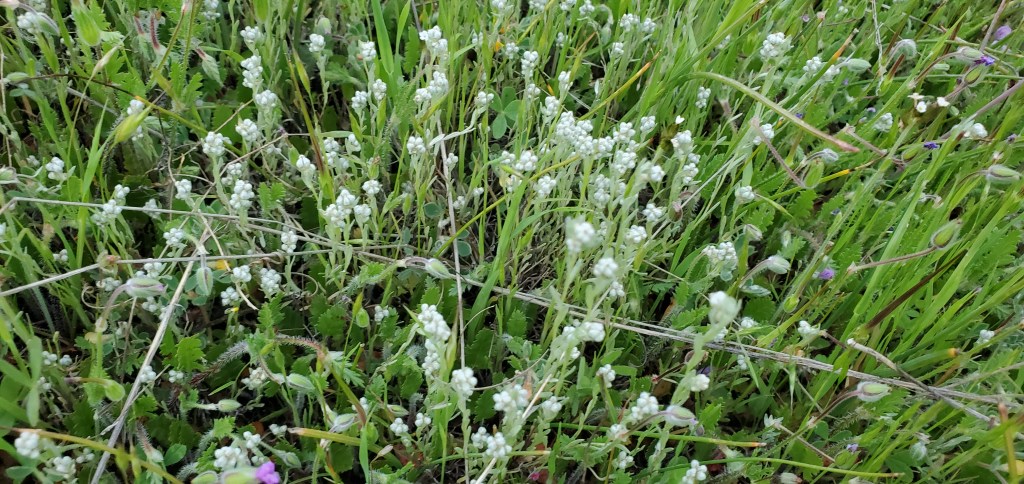
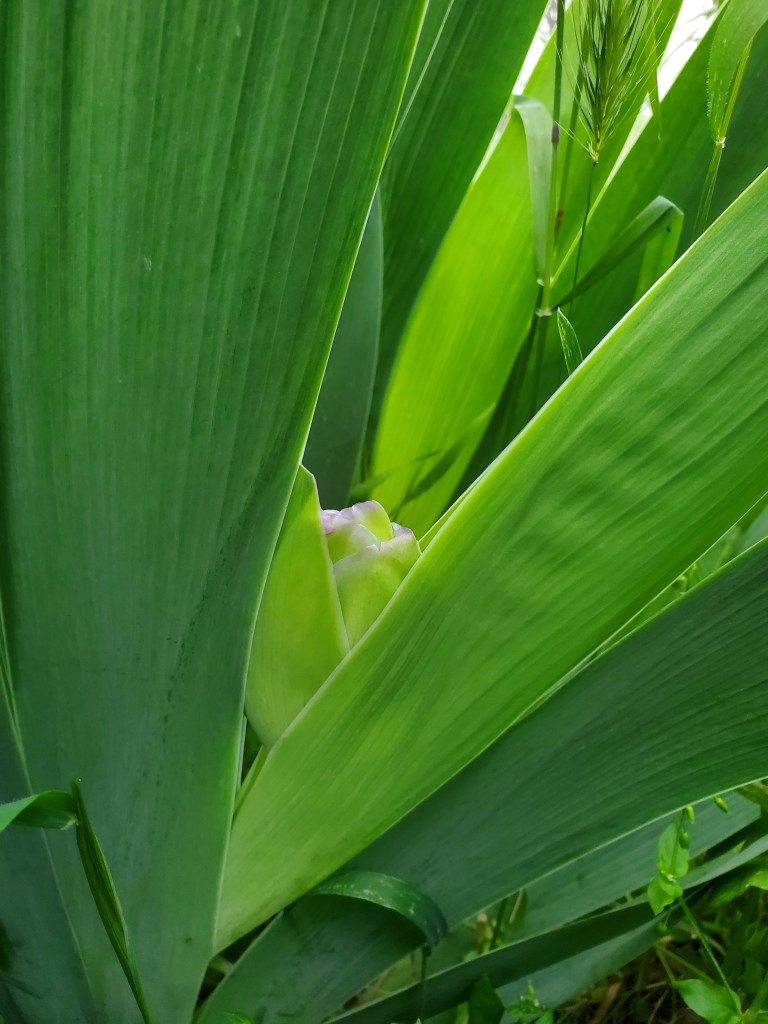
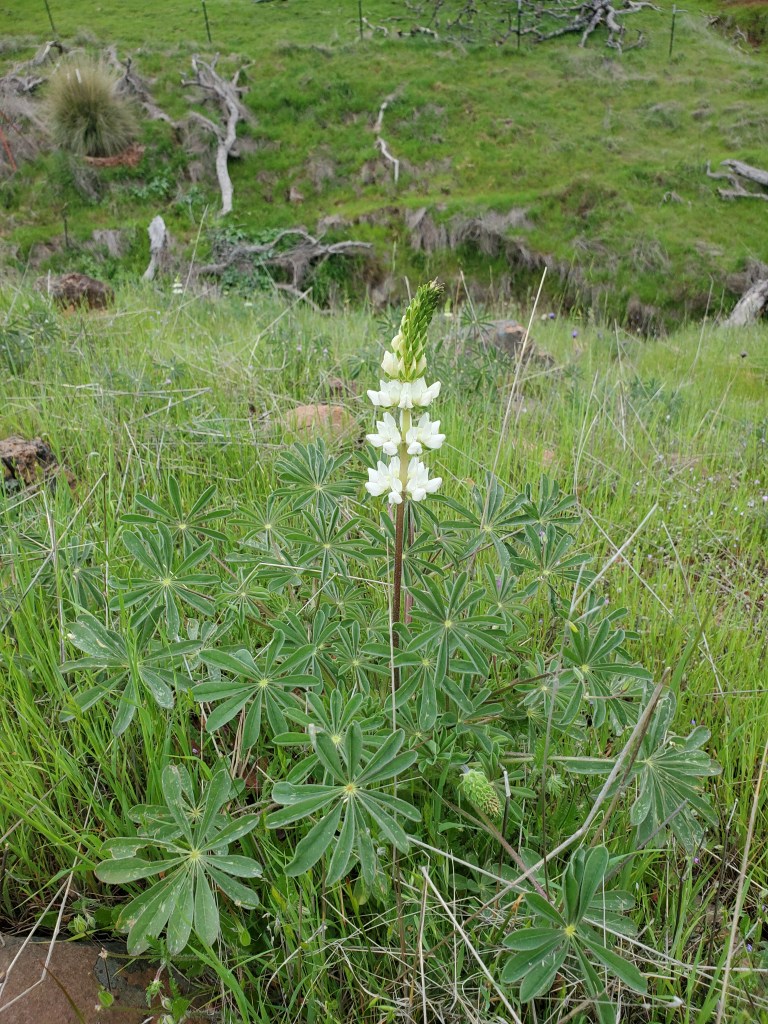
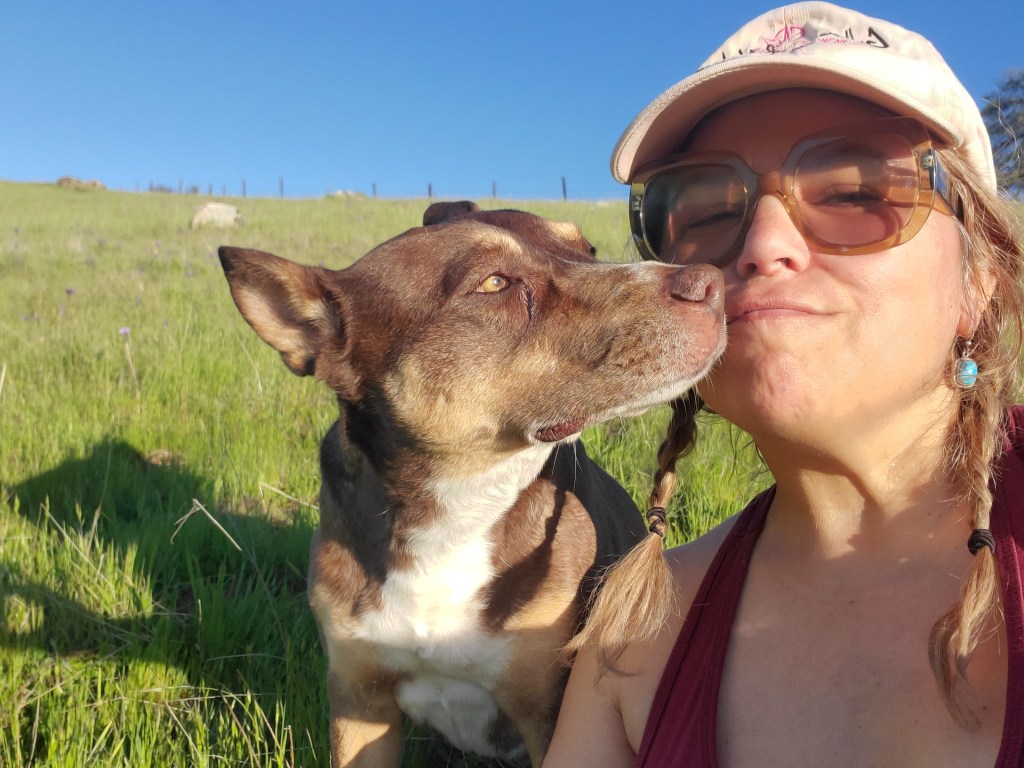
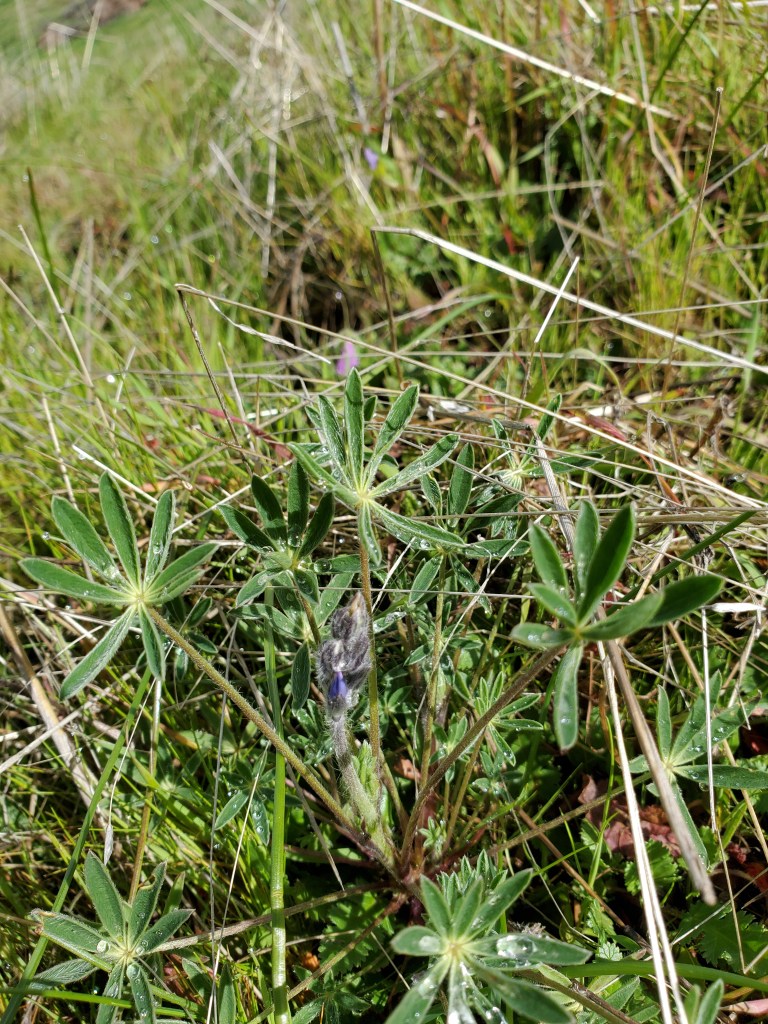
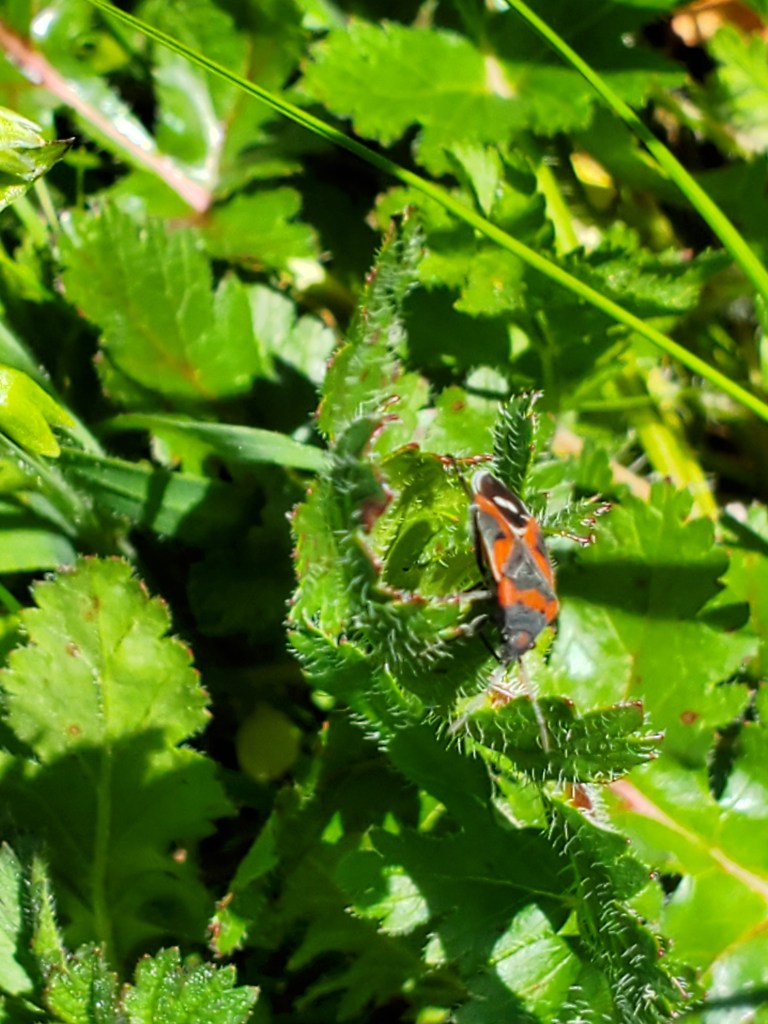
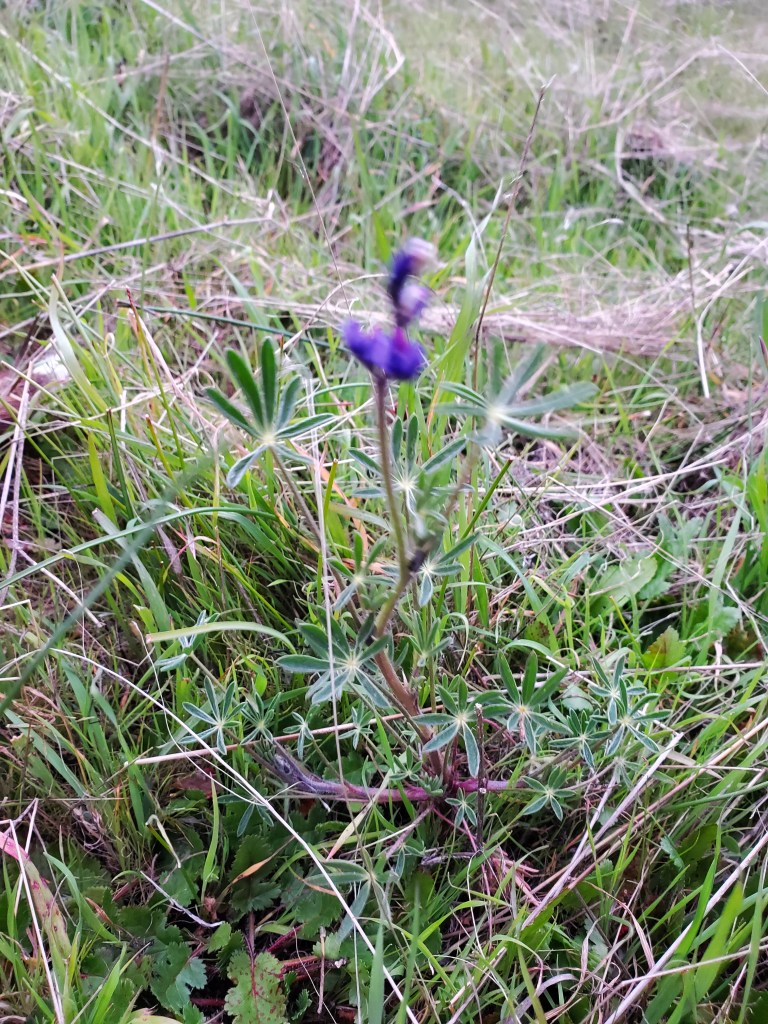
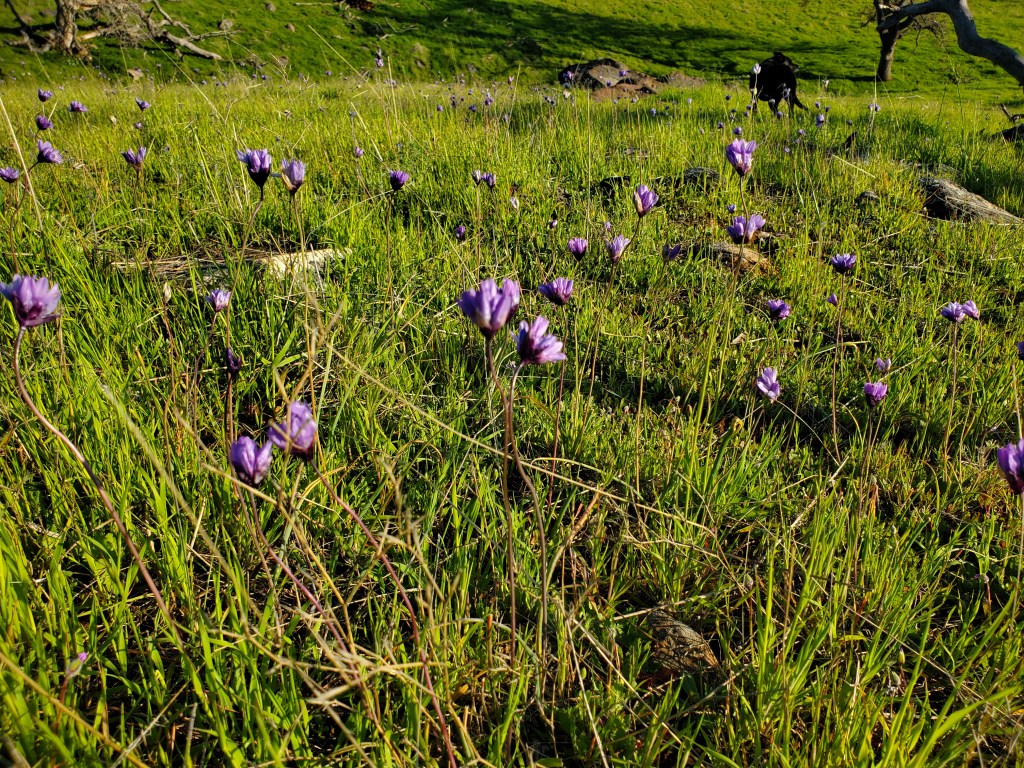
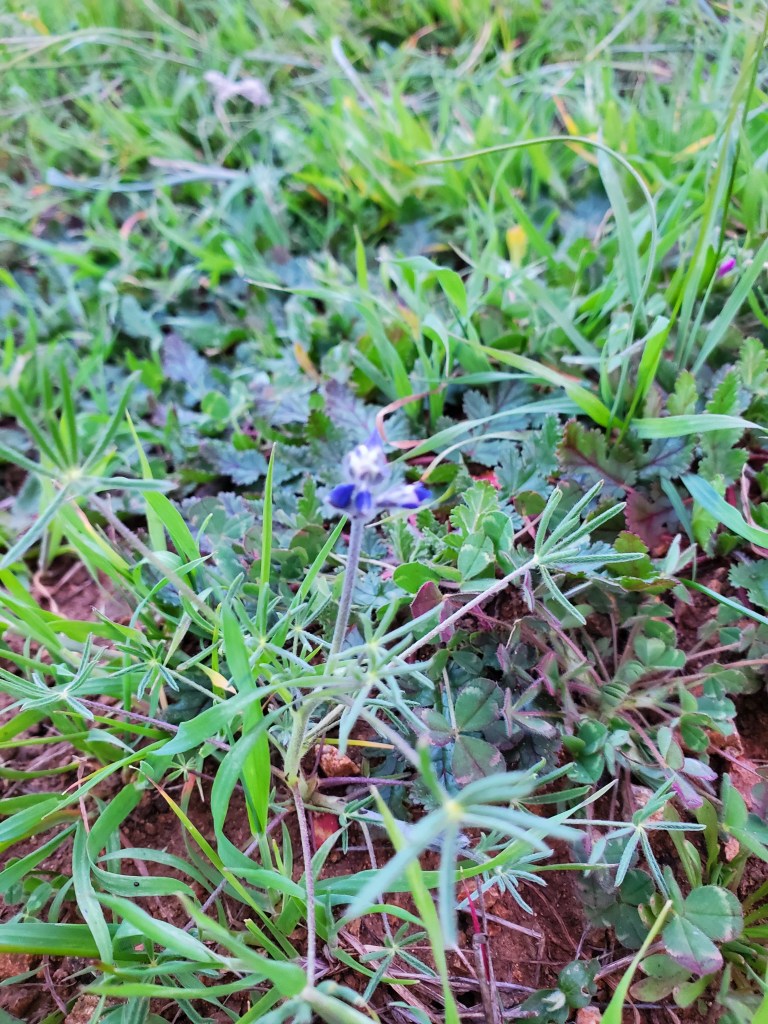
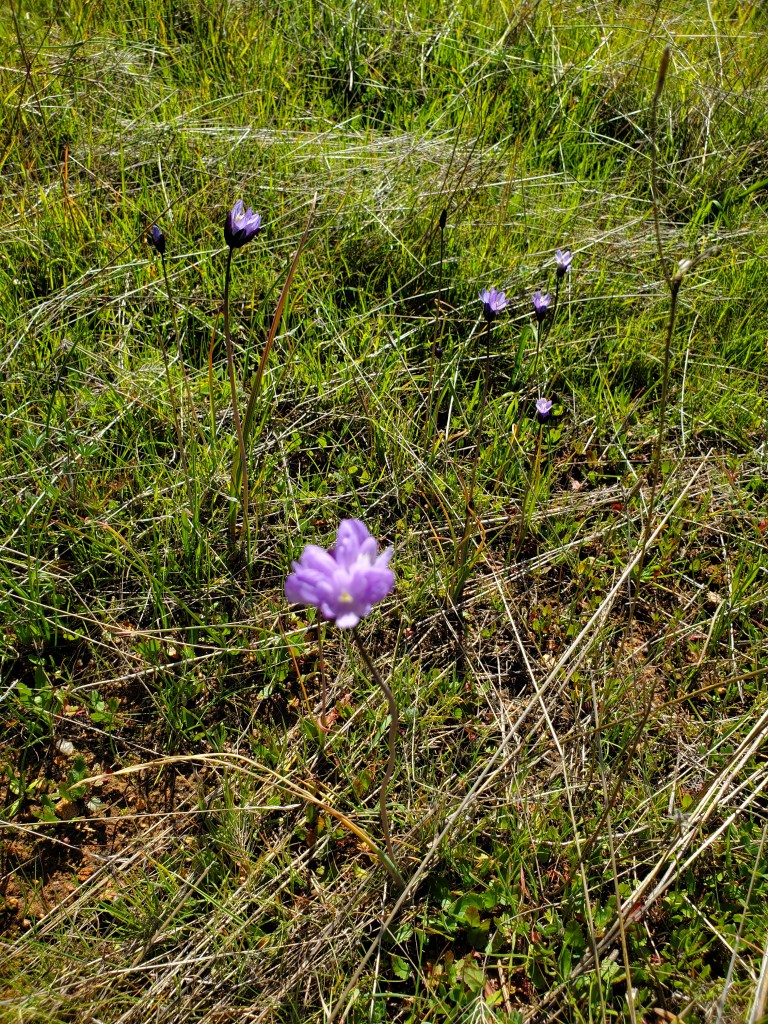
Blue dick close-upPineapple weedMusk monkeyflowerSo cool how the monkeyflower finds a way to survive even in the craig of a rockCabbage butterflyCool bugNut flowerLupineCloverLarkspurCow cloverPopcornPopcornFairy mothMe in the field of flowers (photo credit: David)Que tipsIris emergingLarge white lupine
Time
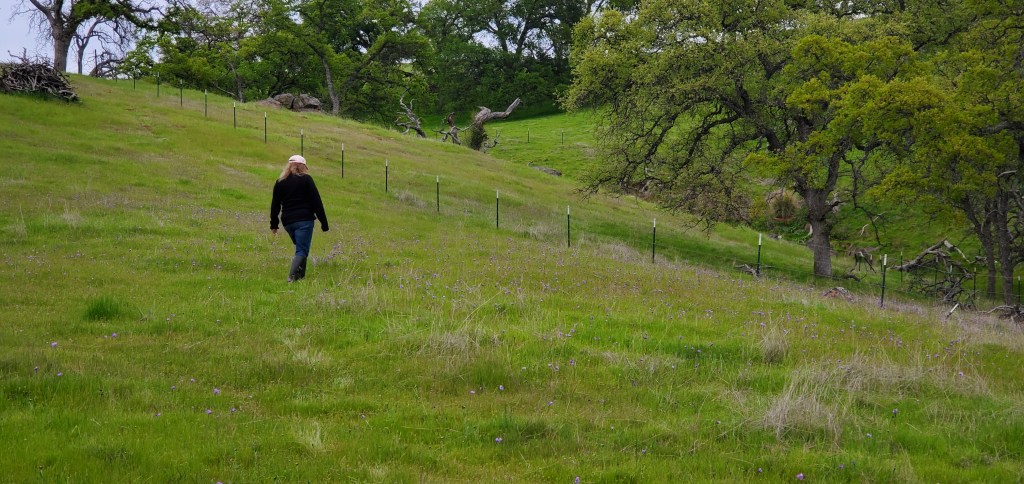
Each day, I try to make it to the top of the hill to check the Ca milkweeds. The girls are aging and sometimes stay at the bottom of the hill. They are my joy. Along the way, I straighten baskets, fix twisted screens, weed around milkweeds, and pick up trash, like Mylar balloons. There is always something to do here that can help. When I eventually sit down to write this blog and share the things I have seen, done or learned, it takes time. I started this post over a week ago, and the land has changed significantly since then. Water has soaked into the ground leaving puddles behind. Some flowers have finished their bloom and others emerged to replace them. Small pollinators are out in droves, and were not out just a week ago. Even in the photos, you can see my clothing move from jackets, to sweaters to tank tops. I will try to move these out more quickly, and perhaps it will help me make these posts shorter and more current. Do I say that each time? We began this blog discussing miracles.
It is a goal anyway.
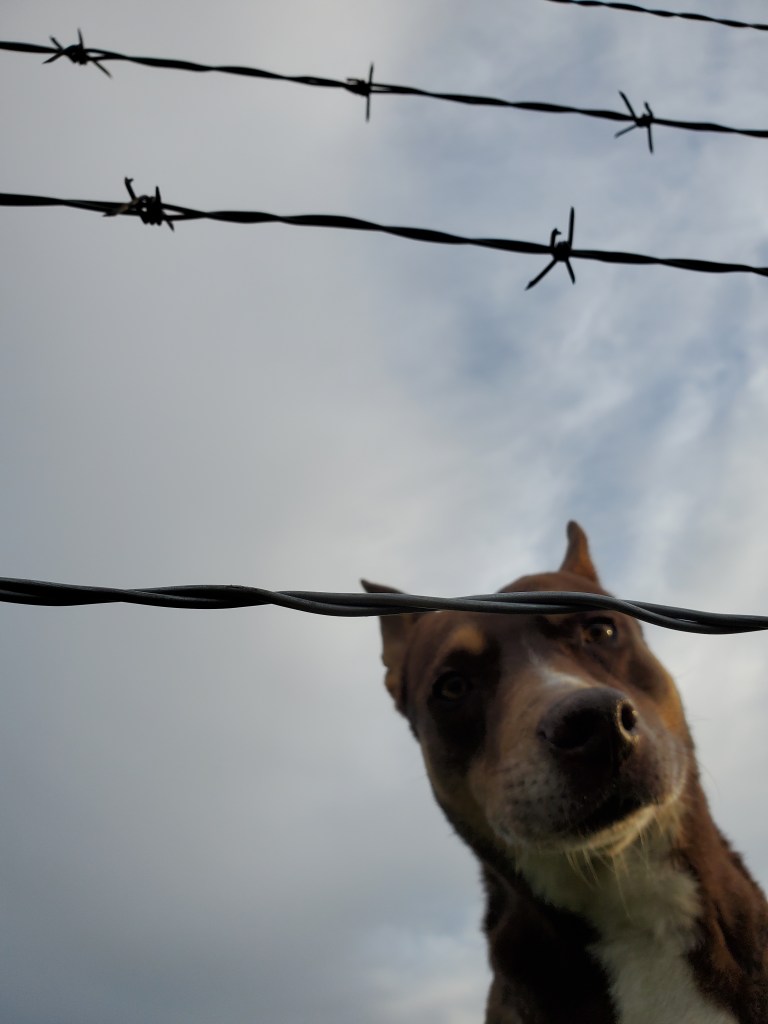
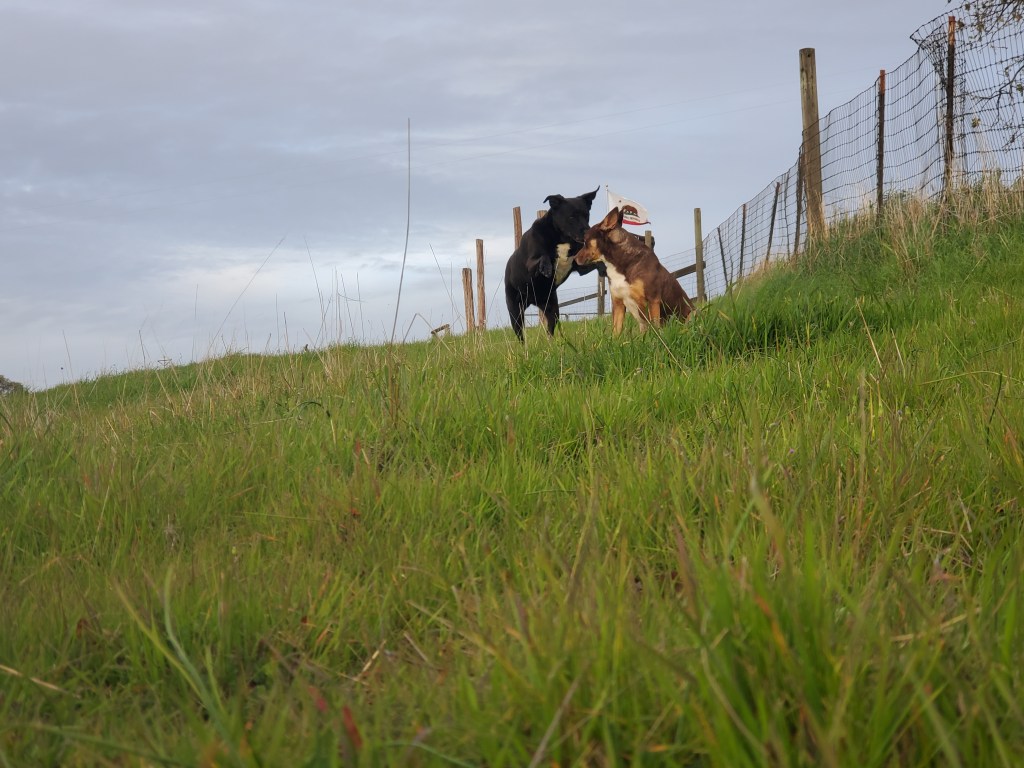
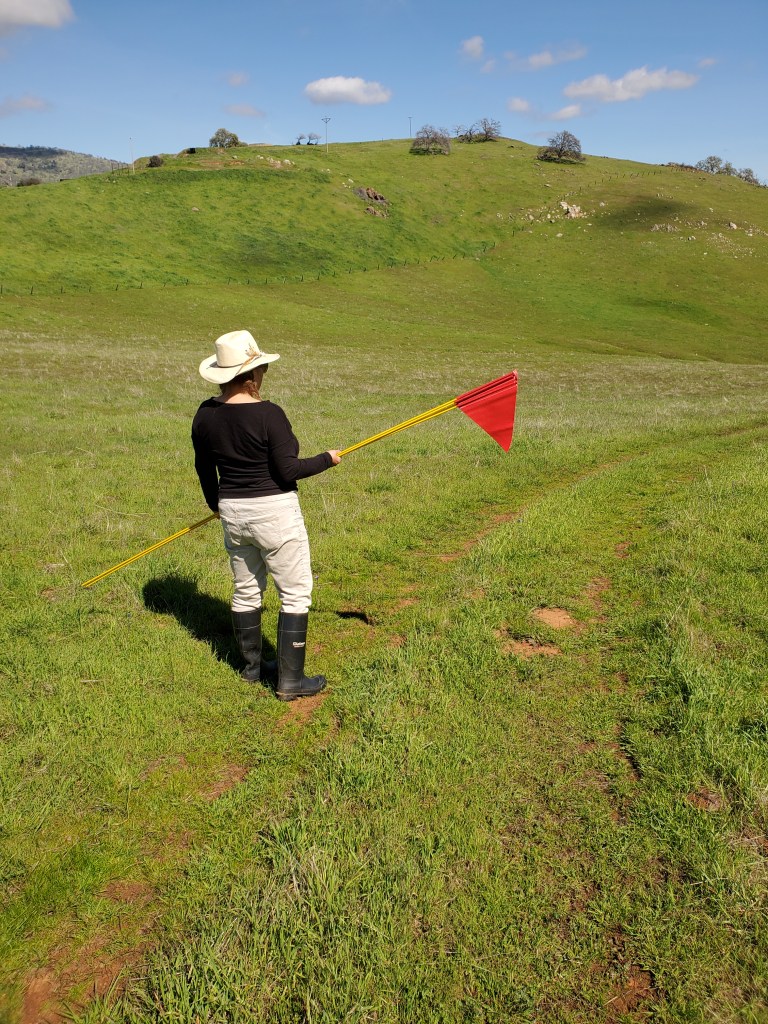
Love BibiNew natural damMom is on the ground – cool!Rolling under the wildlife friendly fencesGirls playFlagging the oak plantingsFixing gutter screen after a cow break in at Guzzler 1Healthy, happy Ca milkweedLove from MillsBibi waits patiently for us to come back down the hillHealthy oaks. I think the check dams are working#NOmylarChecking on the oak seedlings in the riparian exclusion area
I ate two bars of chocolate for breakfast, and I was lit. No one said I was perfect – eggs, oatmeal, too hard for me to think about preparing that day, and I succumbed to the ease of – go to the fridge, grab a bar, open a wrapper, and eat. Then, again. Not proud, but true.
Lately, the intense investment of time, energy, thought and emotion over the last 12 months are catching up with me. My dad is improving; though there are still back-slides, he can do more for himself. As a result, I collapse into a heap of less usefulness and find myself tired all the time, getting out of routine, or filling those moments of routine with non-dad items long ago neglected.
This transition period is messy. Some days my brain is so out of sync I cannot put two words together thoughtfully. My diet of chocolate, peanuts and jam and, if I had some energy earlier in the week, basic salad, is not the finest to promote optimal brain function. Some days my husband will take pity on me and make me a smoothy, or an egg. This day, I am up earliest and on my own. Chocolate it is. Caffeine and I do not mix. I know this. I am hungry, lazy and just love the taste. Jitters take hold, and my plan to plant more oaks just got an accelerant.
Oak Planting Nearly Done
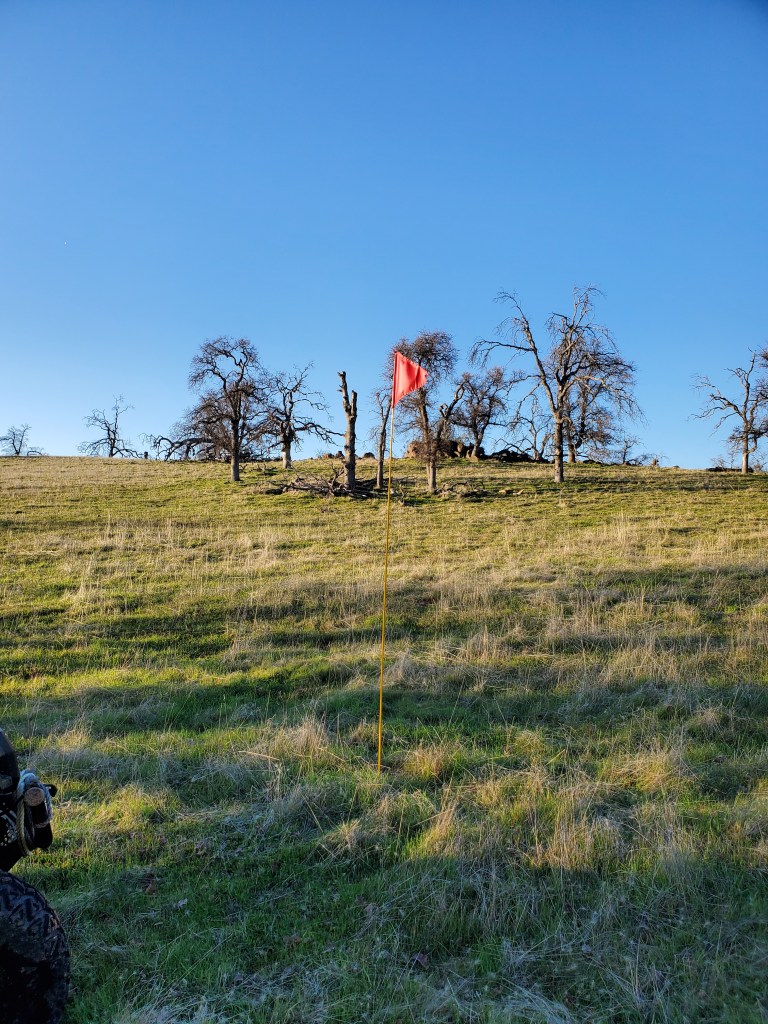
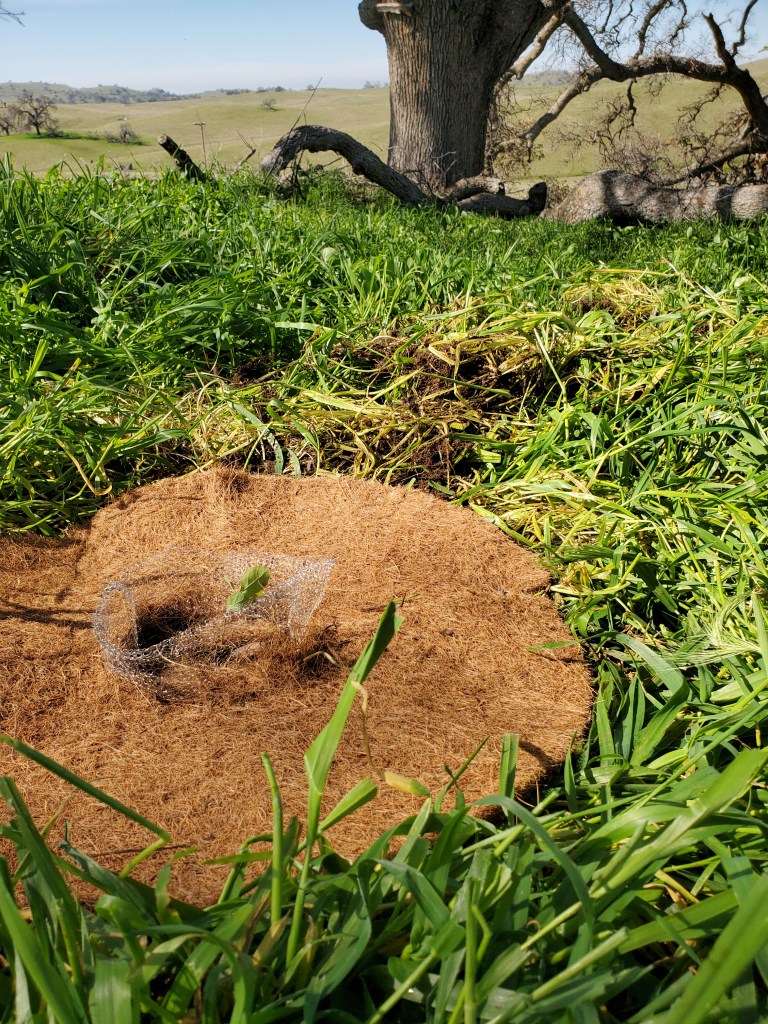
I planted all of the oak seedlings except one, planted all of the riparian oak acorns, and planted half of the elder oak acorn. The rest of the elder oak acorn I saved for acorn flour. I checked the plantings done earlier in the month and February. The cows got their snouts through the fencing on one and pulled the coconut coir. I put it back. Some of the flags were askew. I straightened them. I placed flags on others. I weeded away from new growth in the already enclosed plantings. Maintenance is important to ensure better outcomes.
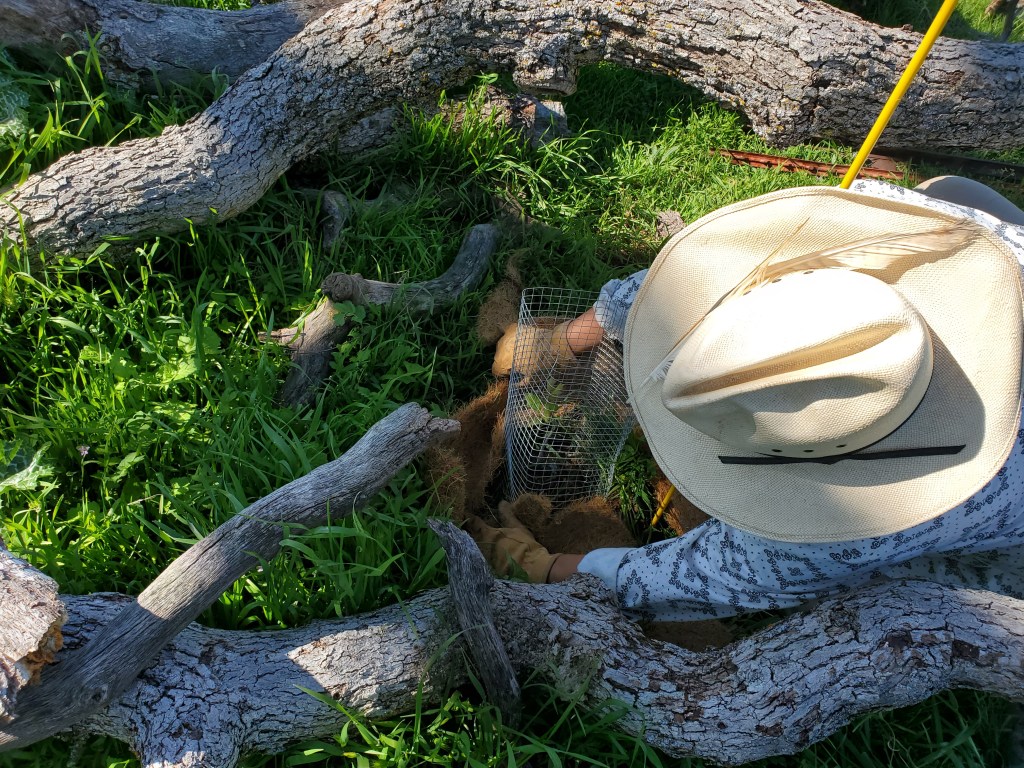
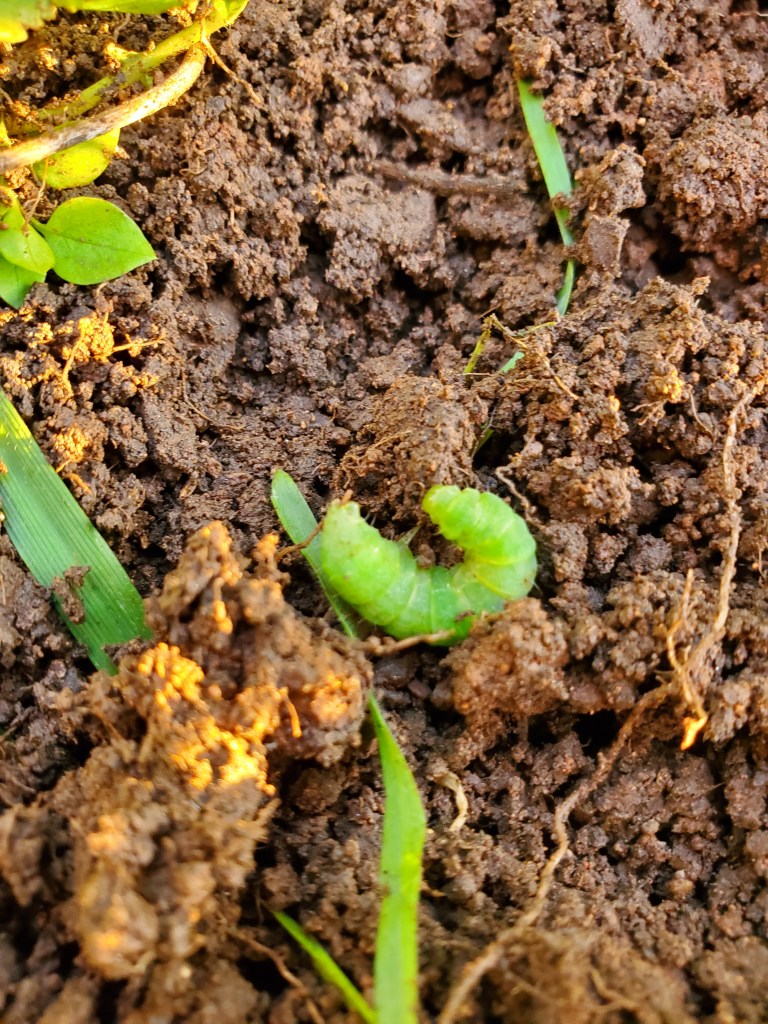
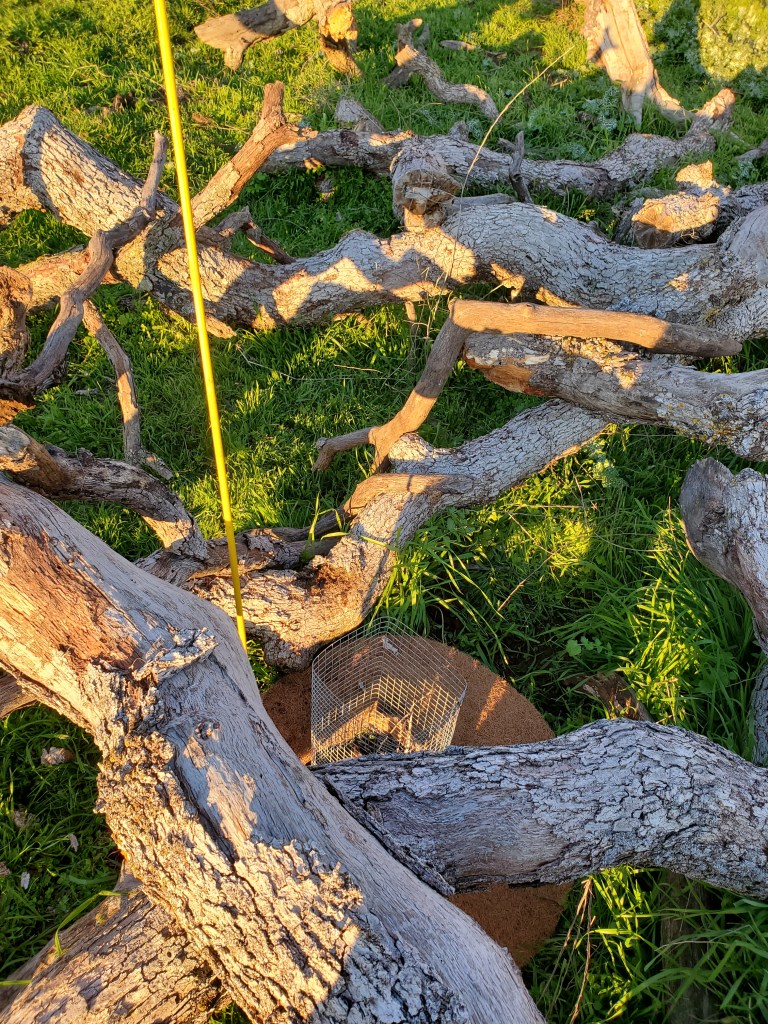
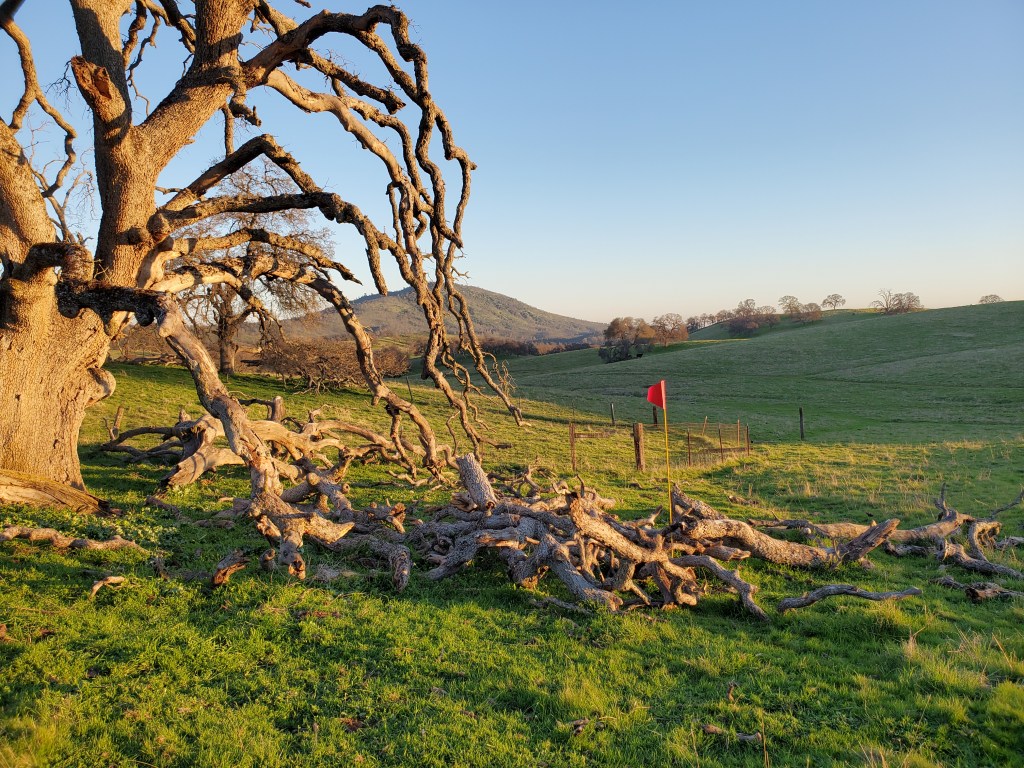
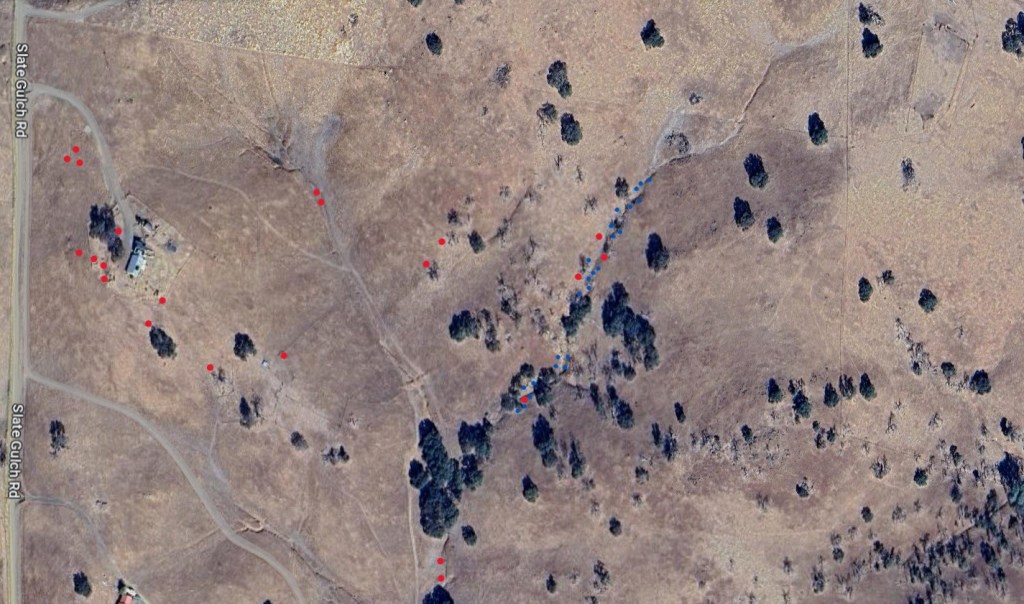
Lots of worms in the dirt. This was the only larval oneHiding seedlings in between dead tree branchesAdding flags to find them easilyAnother one near the house before being cagedAll tucked awayOak doing well. Cow got to the coir pad (see upper left corner). I put it back!Red are oak seedlings. Blue dots are acorn plantings
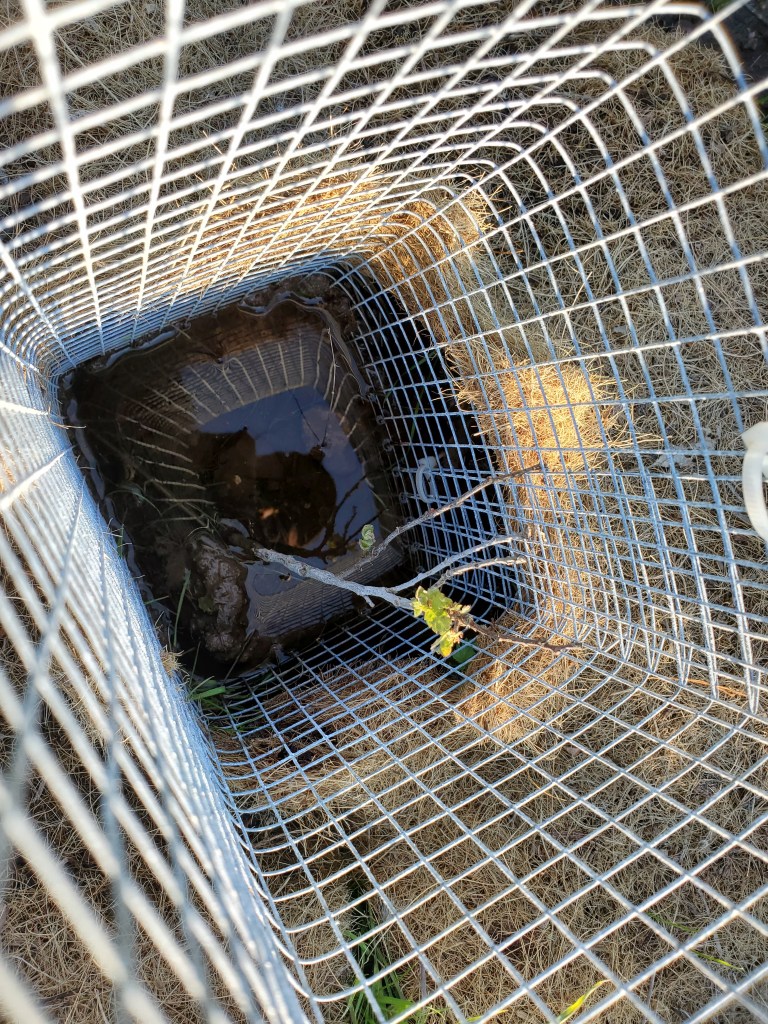
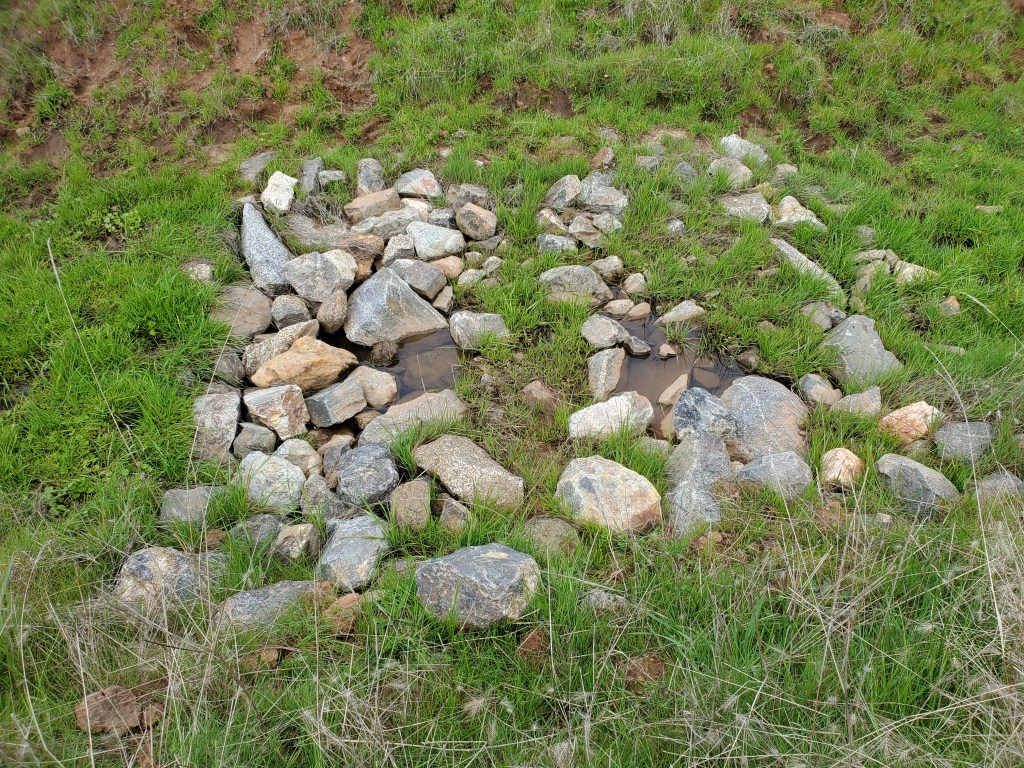
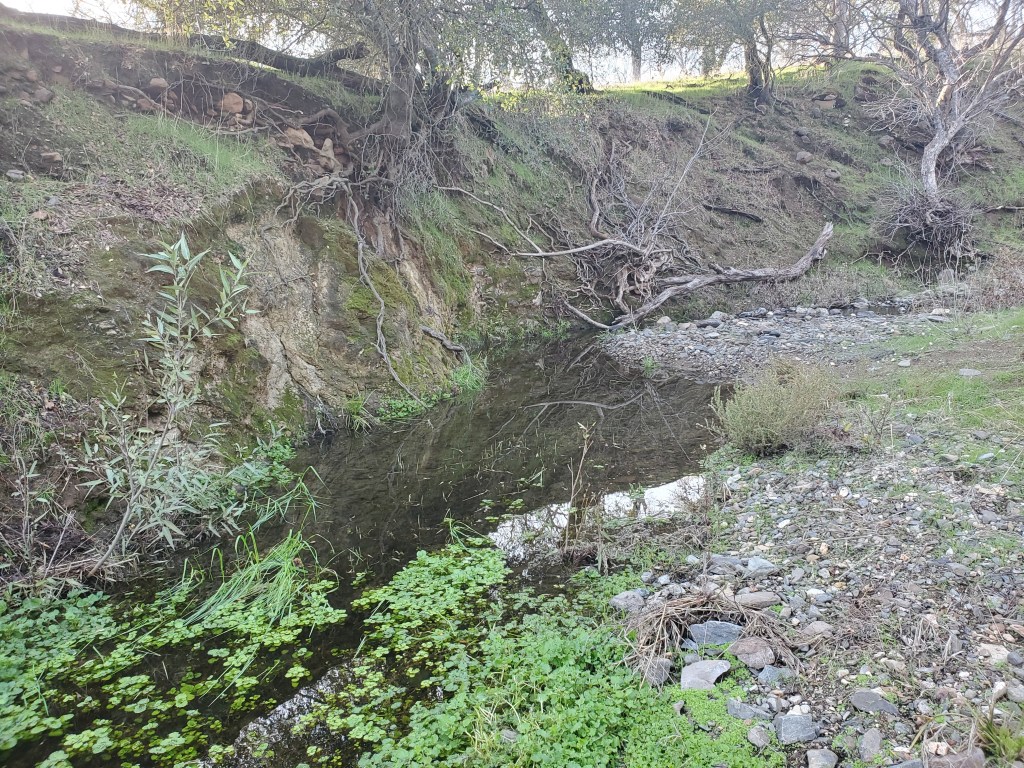
After one of the storms, I saw one of the seedlings I planted had its basin filled with standing water. Too much water, and oak roots can rot. One of the challenges of selecting a site is that I am considering access to water over the long term. As such, I have been planting near the creek or near a spring flow. One of the upstream oaks on Spring Creek is planted in a flow. It is west facing with other oak shade. The soil is predominantly clay. Excellent conditions for water accumulation.
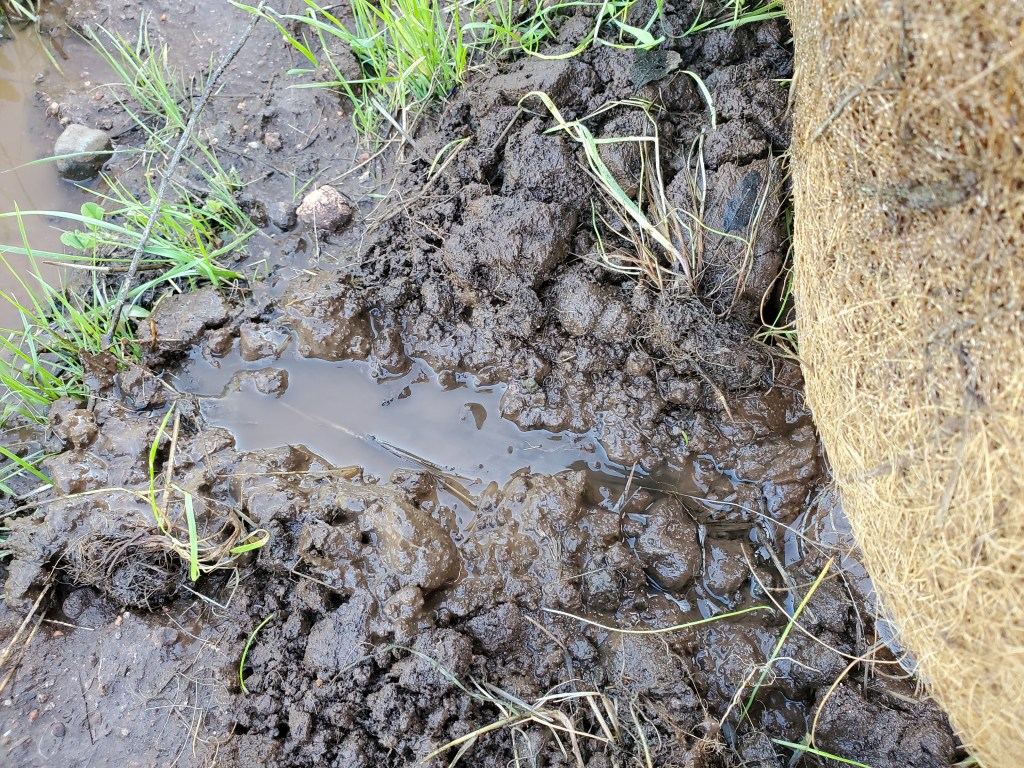
I lifted the coir pad, stuck my finger in the mud and created a channel to allow the standing water to flow out of the small basin I try to place around each planting. It mostly worked to alleviate the stand. Water is everywhere, and that section, because of the flow, is already saturated. However, I was able to get the water down low enough so it was not submerging part of the trunk. The weather will be dry this week, and I anticipate the remaining standing water will be gone within 24 hours. I will go back and recreate the basin wall for the next rain event.
Waterlogged oak seedlingFinger channel with water running from oak basin
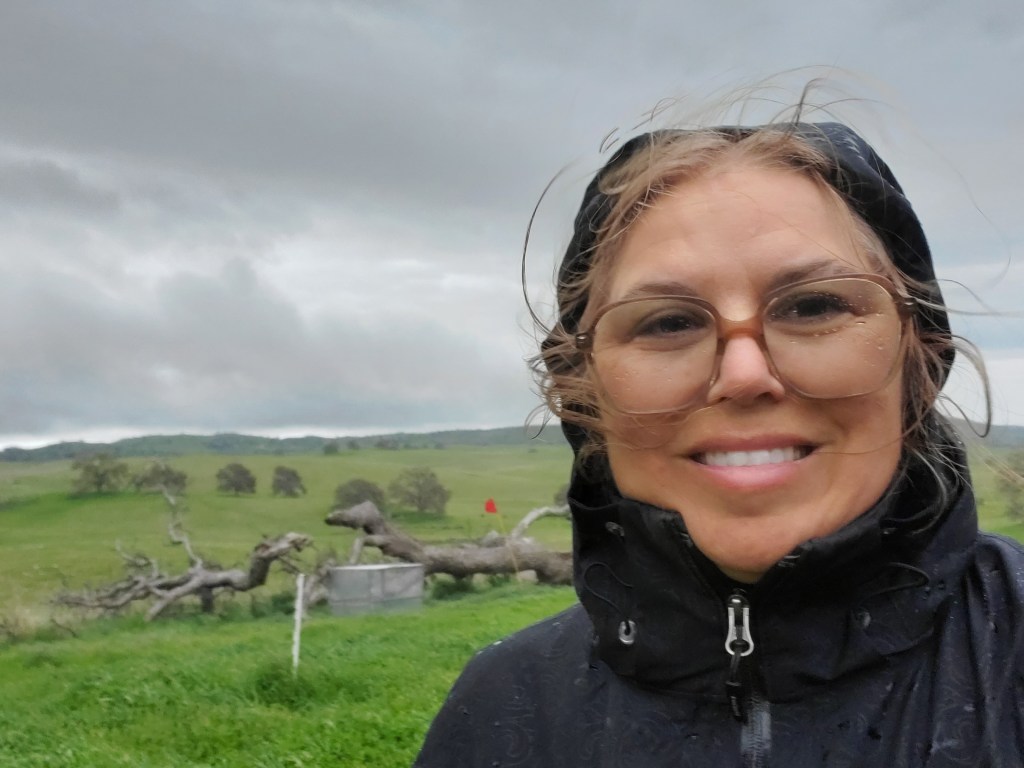
While out checking the oaks and maintaining their planted areas, I was quickly caught up in a storm. The wind was ferocious, bending the oak marking flags to almost 90 degrees. Fortunately, I was in my final section, which happened to be nearest the house. The rain started to pour. While I had a jacket on, I was wearing shorts (I know. I’m crazy). The wind whipped at my exposed legs, and then it started to pour. I typically traverse the ranch on foot to limit soil impacts from the quad or truck. I finished with the oak I was working on and bolted up the hill, through the gate, around to the front of the house, sloshing in mud (I had my muck boots on), mud splattering across my legs. Finally, I got to the front door – a soaked, muddy mess. Although I was almost denied entry to the house by my family, it was ok. I love this life.
Clouds ready to pourFlag being pushed to nearly 90 degreesRain-soaked and happy
Checking New Log Check Dam
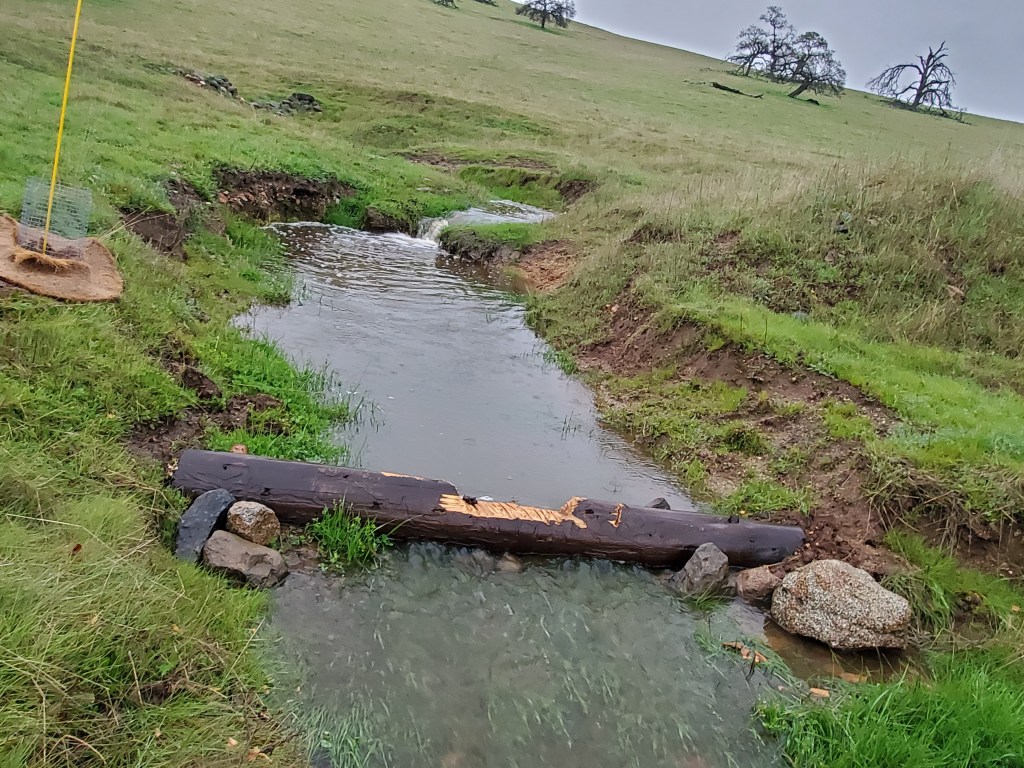
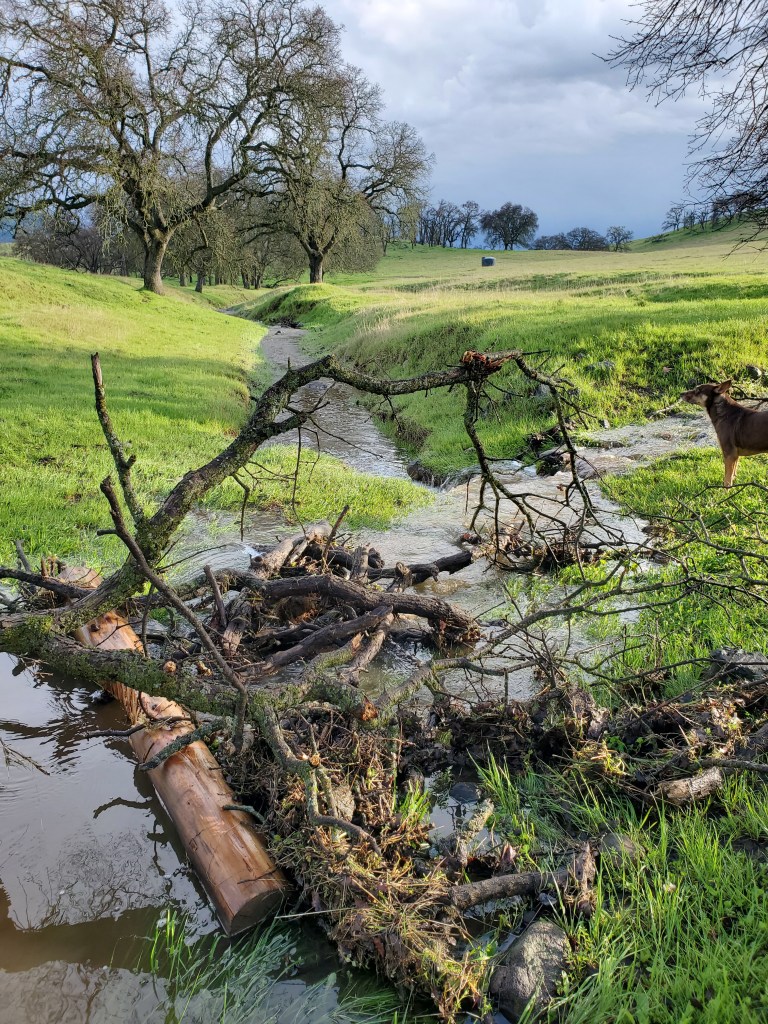
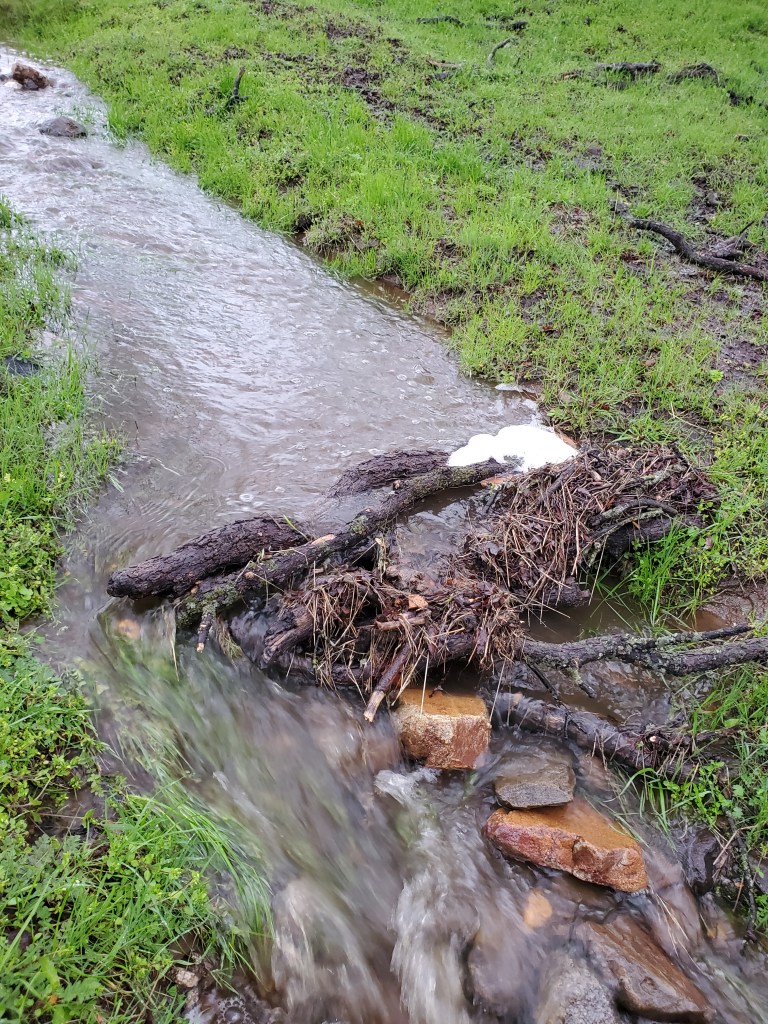
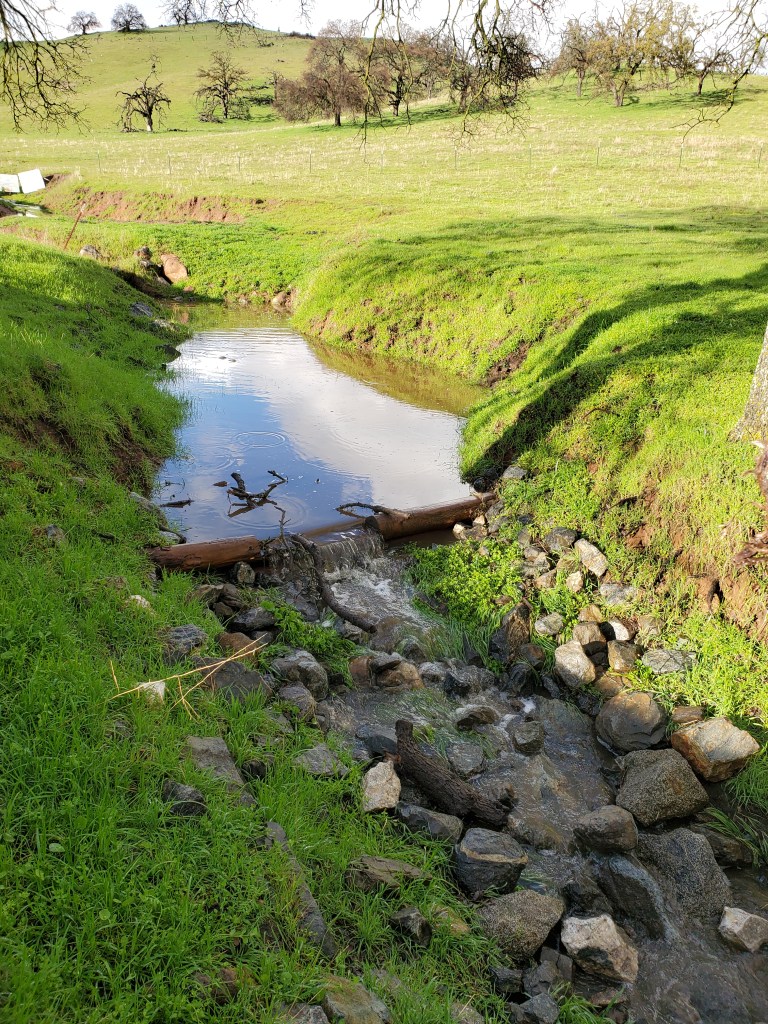
I was excited to see that the new, poorly connected log check dam was still in place after one of the storms. It was doing its job, pooling water behind it, slowing the runoff just enough to really soak the soil. Then, the large storm came with 2.25″ of rainfall. I checked the dam again. It was not there. The rocks I put in place to help the log were still there acting as a smaller check dam and pooling some water. I walked down stream and found the log. It was caught up in a tangle of branches, leaves and gunk about 60 feet downstream. Not to be deterred, I pulled it out from the makeshift dam and began to pull it toward its original location. The cedar log, typically lightweight, was heavy with absorbed water. David, who was walking with me then, took pity on me and picked up the log with the flick of his wrist, to show off, and returned it to its place. We will need to secure it much better in the coming days.
After the first storm: doing goodAfter the second higher volume storm: doing real goodAdding another rock to back the water up moreThe rock is working to back up water slightly moreWhoops. Where did it go?Is that it, way down there past the next grove?YepNice tangleBack in its original location. Thanks Big D!
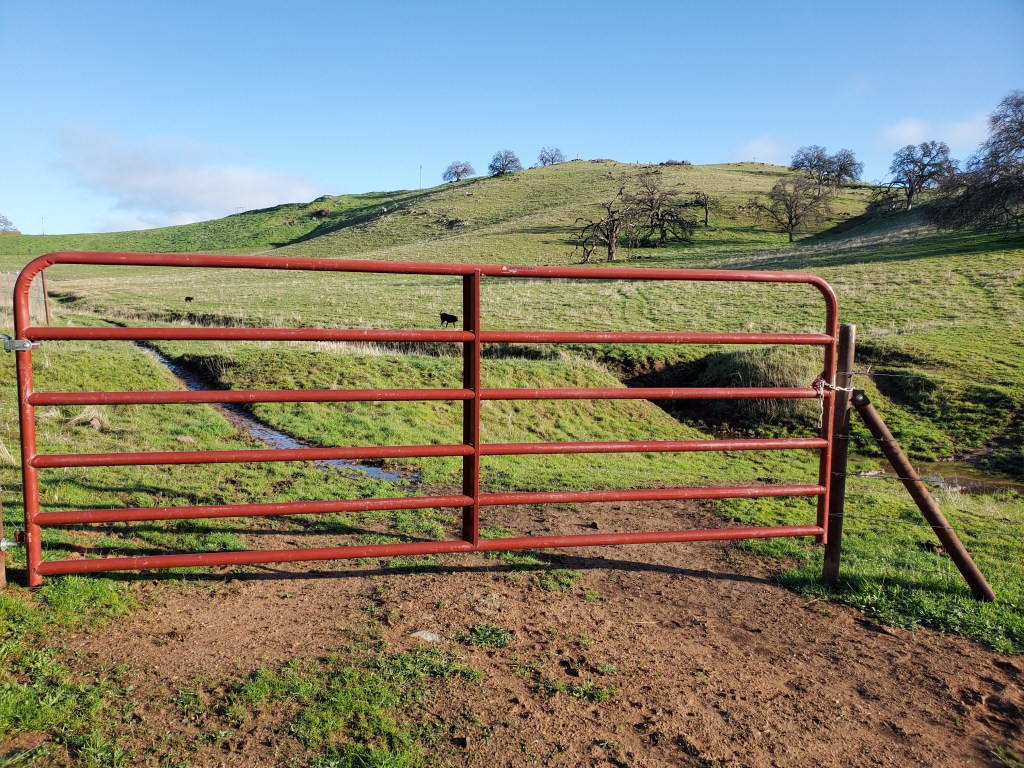
Gates Shut. North Field Belongs to the Milkweed Now
One of the best investments I’ve made in the last couple years is the cross fence to protect the California Milkweed. It is a critical, early emerging plant essential for post-overwintering monarch survival. Three of the four communities of plants are protected by this fence. In addition to protection of the California Milkweed, excluding the cattle during prime wildflower season has resulted in 40 acres filled with wildflowers of all types, sizes and colors. This means I have unbelievable amounts of nectar without having to plant another plant across a huge swath of land. Not only are the colors dazzling, the smell hangs in the air. It is like drinking perfume.
I think because of the weather whiplash, the California Milkweed is stunted. They are not their normal size for this time of year and are already producing flowers that will bloom in about a week. As of 3/20/2025, there are only four of the possible 21 emerged. Given that this past overwintering count of monarchs has been the second lowest on record, perhaps there will be fewer butterflies floating this way, and the stunted plants will be sufficient. I have not had an opportunity to place a camera up on the hill. The last time I tried, there was no signal for my special game cameras. I think I will use it in analog mode and grab the photos off later. This way, there is something up there as soon as possible.
While I am on the hill checking each milkweed and looking for more emerging, I decide to take a break and sit, contemplate things. Out of nowhere comes Taawe (Hawk). They decide to come for a visit, flying close and low. Taawe is close enough to hear me, so I speak in my language. It’s an original language of this continent, co-evolved with the many relatives from this soil. We’ve all shifted around following a cycle of movement south to north, west to east, and back again. Taawe understands me; it circles, flits, plays with elevation, but always above me. It circles away. I call to it. Taawe circles back. We play this game for a few circles, then I lay back down on the cool grass, the smell of soil and moisture in my nose. It flies to the east, and I say “Chiokoe uttesia in weweria. Ito te vitne.” “Thank you my relative. See you soon.”
Beautiful day to check the milkweedLots of lupine on the hillThe milkweed is doing well. No new nibblesNot as big as last year, but still stunningA hawk relative comes to visitFlies closerThen closer still“Hisewa weweria!”“Ito te vitne Taawe, in weweria.”Blooms just coming together almost ready to shed their fluffGates are shut. The far north field is now off-limits to cows
Guzzler Install Complete
It took David nearly six days over two and a half weeks, but the guzzler is finally complete. We still need to build a fence around it to exclude the cows and build out the tank portion of the system to feed more clean water to the unit over time. Currently, there are stock panels attached to the overhang structure to keep the cow away from it as best as possible. Panels are ok since the gaps in them are large enough for most animals to move through. They are too small though for larger animals like deer. It is a priority for me to complete that fence to maximize its utility. The storms have filled the unit, and it is ready for wildlife to drink from. THANK YOU David!!
Almost last day of workI build a branch ramp to the topD working on the flashingMillie is excited tooFinished and filled. Panels keep cows out
Dangers Realized
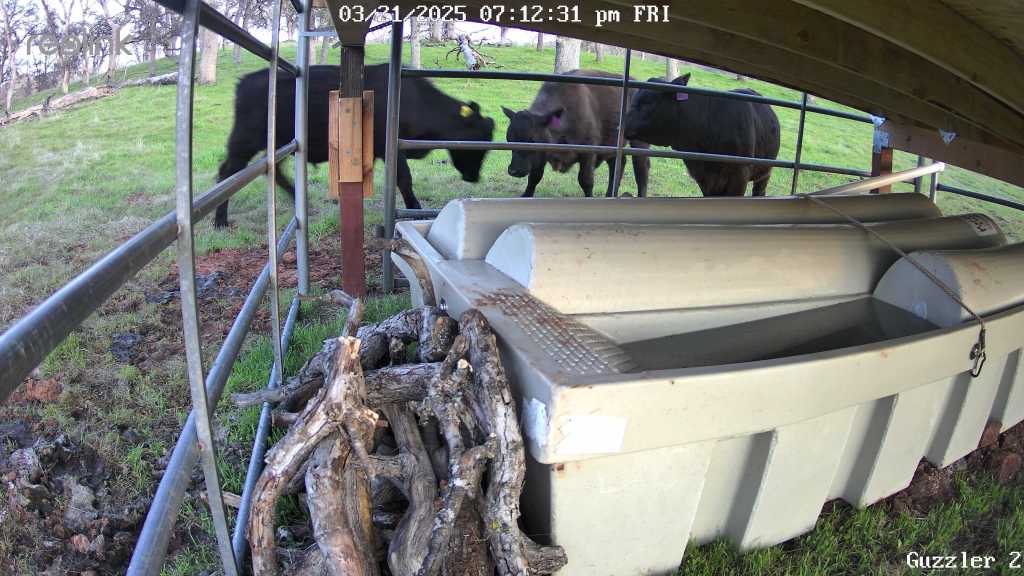
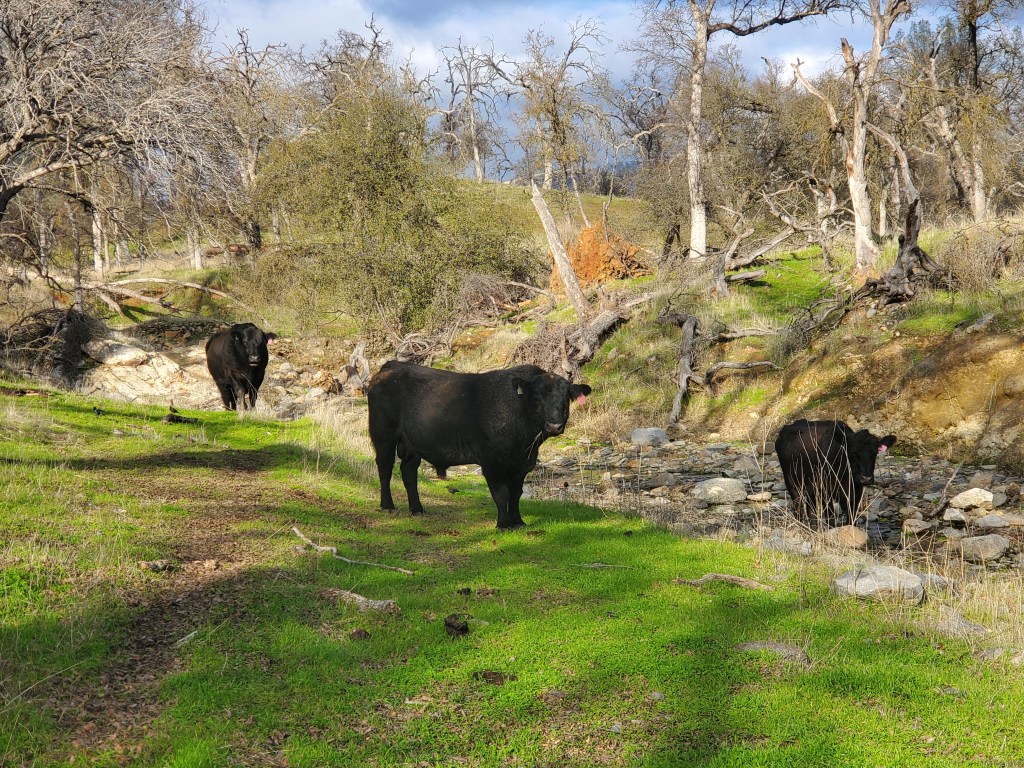
Although I have relaxed more with the fencing in place, catastrophes can still happen. Three times now I have gone outside to find cows where they shouldn’t be. Once, they jostled the gate open to the far north field. They jostled the gate open to guzzler 1, and yesterday I found them in the Spring Creek exclusion area. The wire gate had been squished down. In all cases, my heart sunk with concern that all I worked for could be lost in one accident with a poorly structured gate lock. Things were ok with the far north field. The Ca Milkweed was fine, and not too many of the blooms were up to be eaten. Guzzler one sustained significant damage. The solar panel connected to the game camera was severed. The wire had been snipped and stomped on. The stainless steel mesh over the gutter was folded up on both ends in tortuous fashion. Fortunately, we have an extra panel with wire and more gutter screen. We can fix that. I have yet to assess the damage to the exclusion area where large lupines, oak seedlings and larkspur are all just getting ready to develop blooms. It would be a catastrophe of large proportion if much of that was destroyed. In all cases, I secured the gate locks with a carabiner (cannot be licked open), twisted wire (cannot be jostled open), and a second loop securing the wire gate.
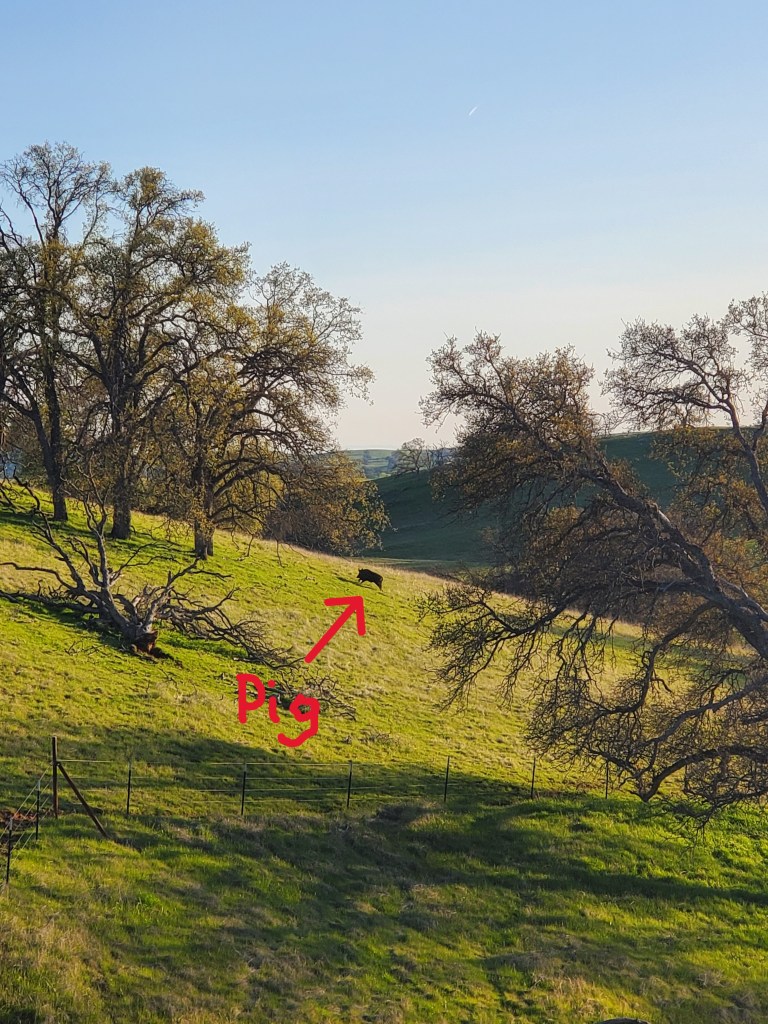
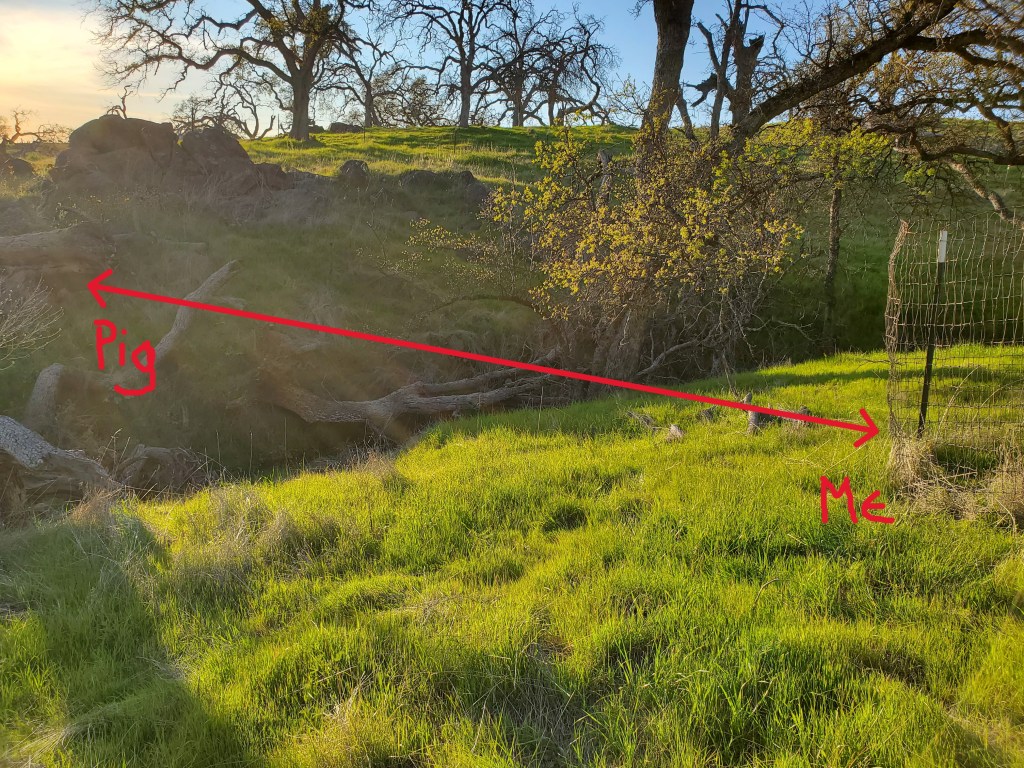
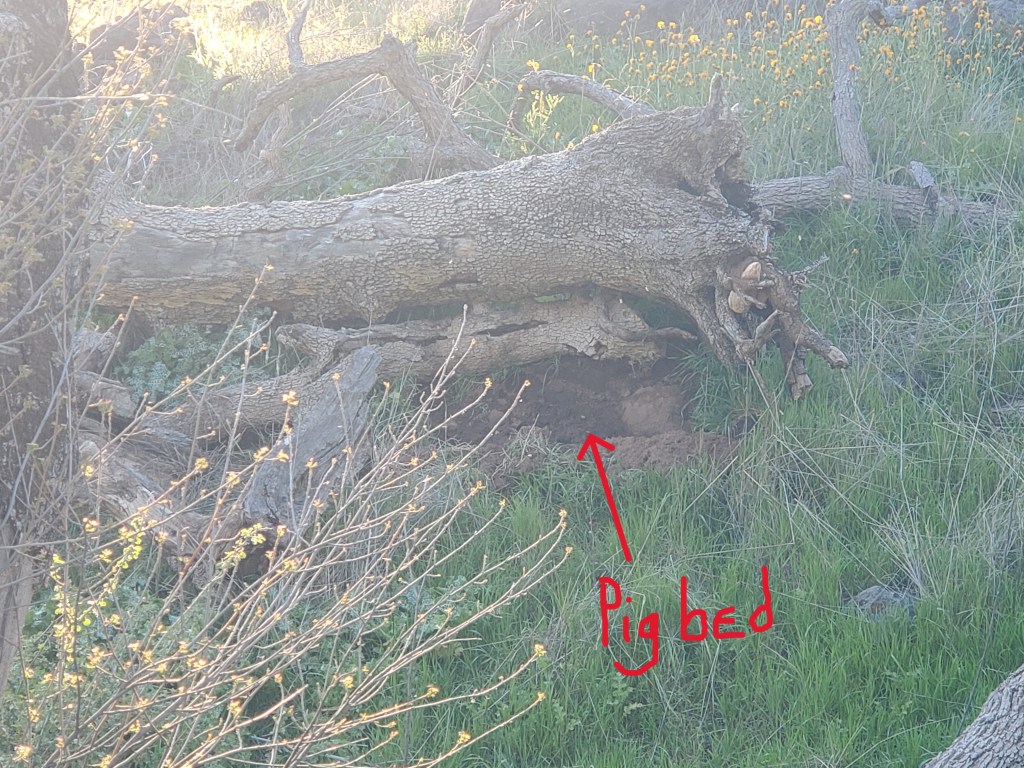
Cows are not my only problem. The other day when I was assessing the Spring Creek planting areas, I opened the caging of a small oak to thin grass that had grown around it. I was on my knees peacefully pulling the grass away from the oak when I heard a thrash across the creek. It was a single wild pig. She was small, about 250 lbs, and had been laying in a hollow between downed tree limbs. She must have been assessing me for a while. There were at least 15 minutes that transpired as I walked, dogs at my feet, into the area, then to the caged oak, and then the time it took to open the cage and sit there for a while pulling grasses.
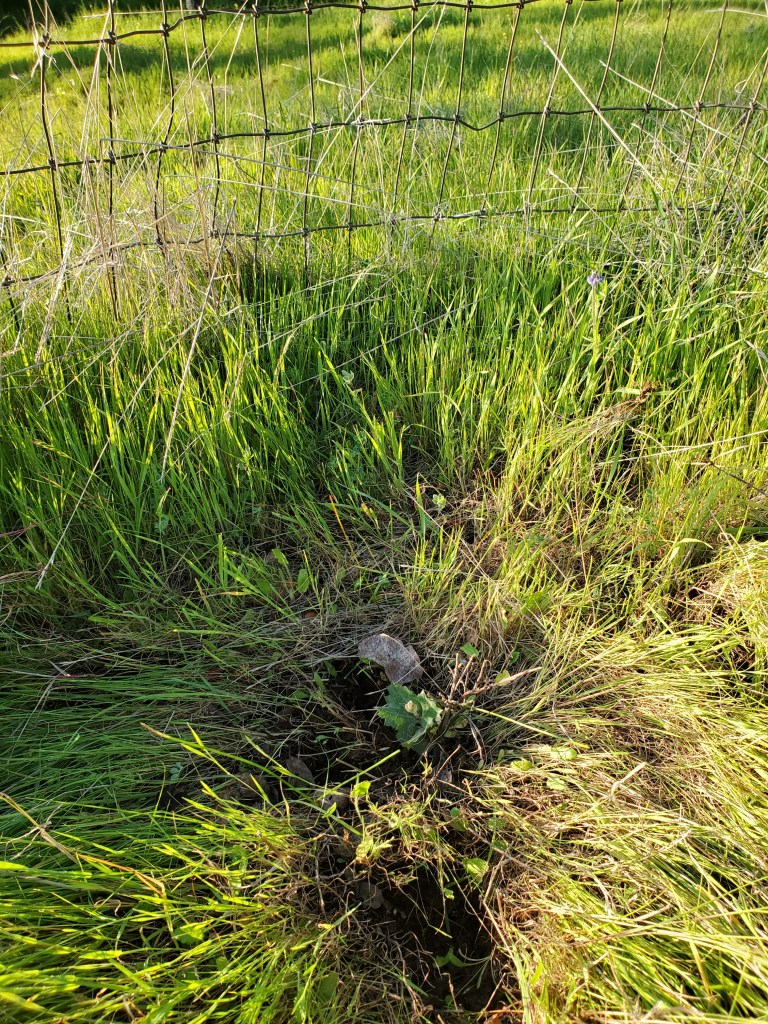
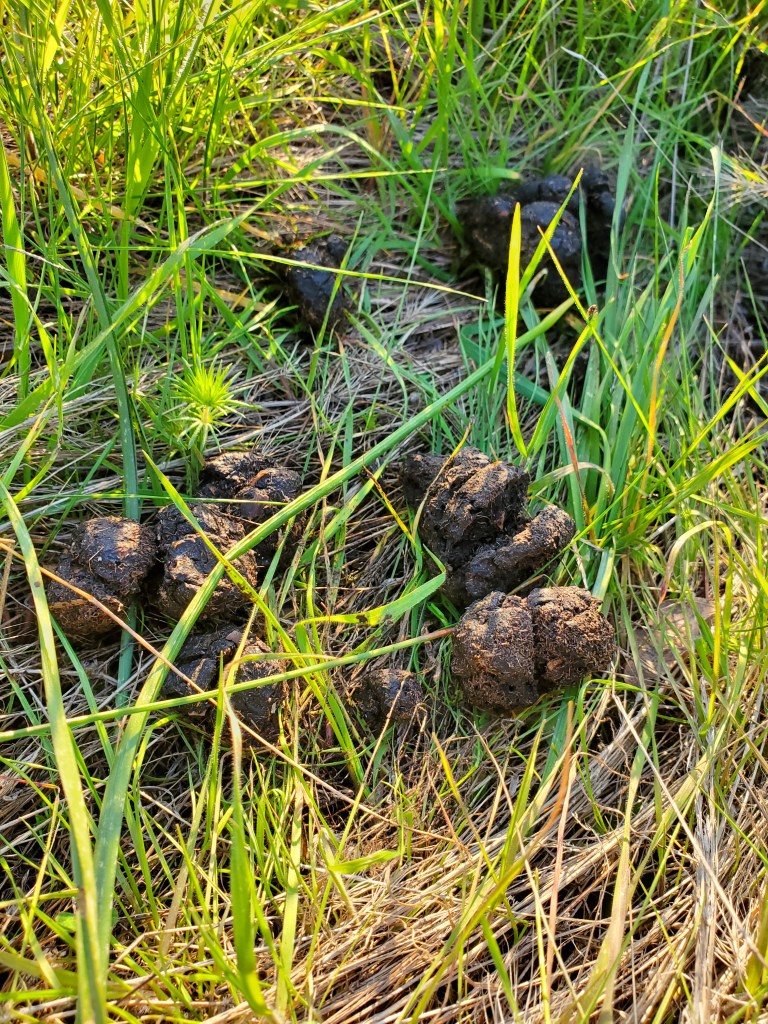
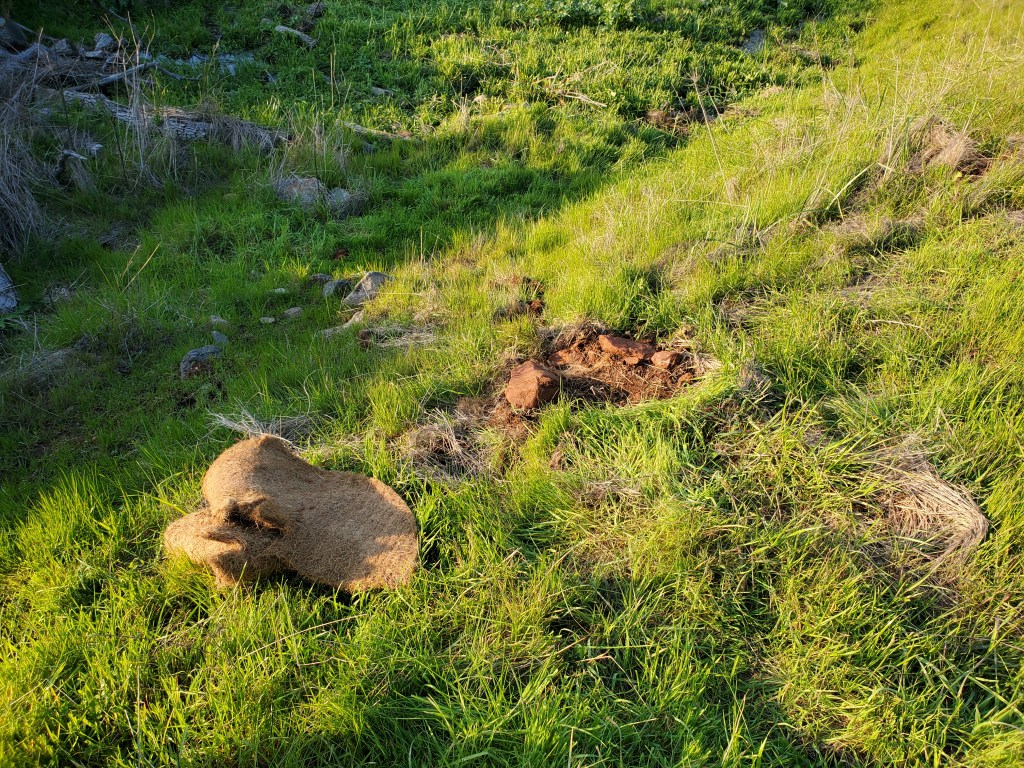
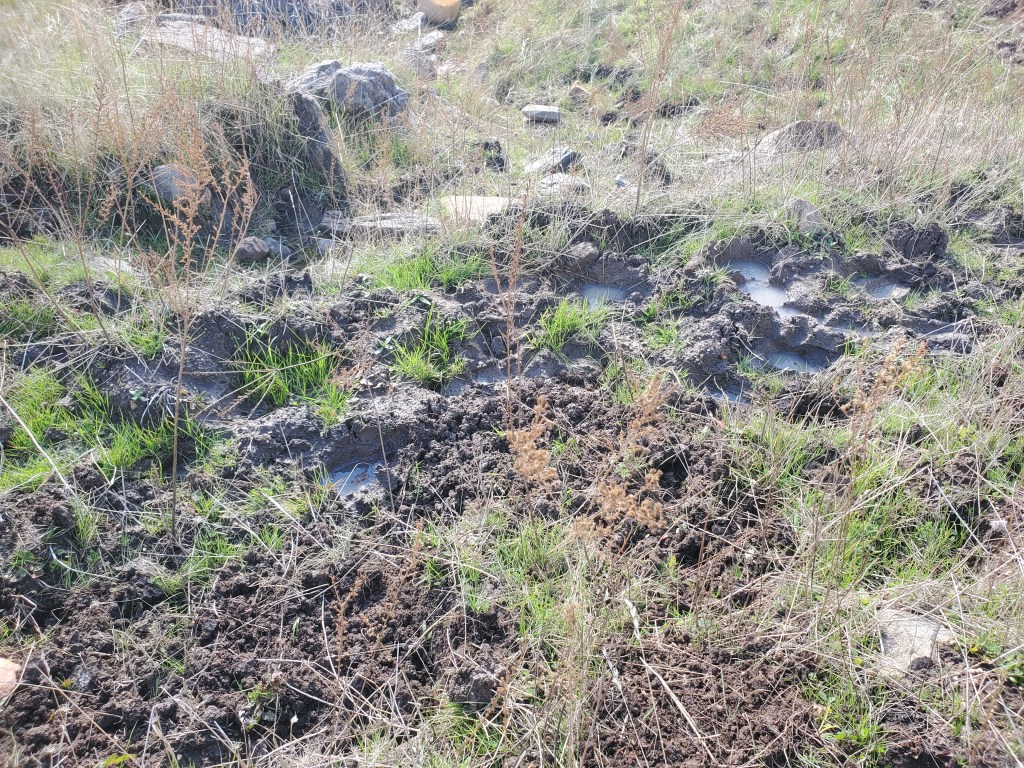
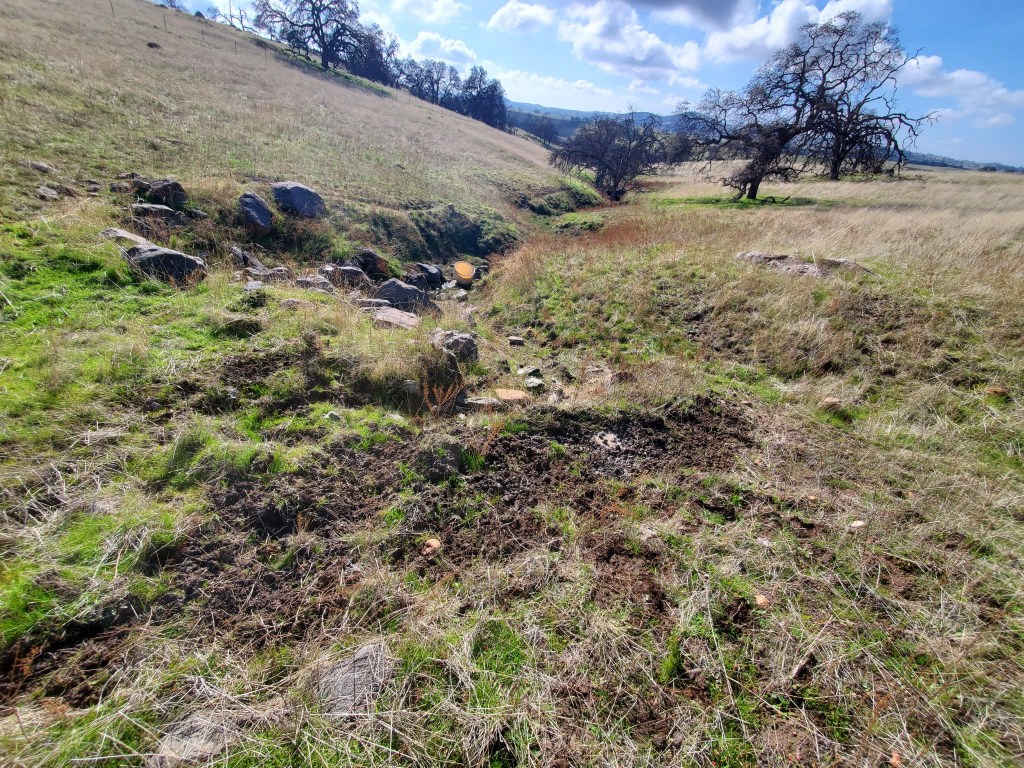
I immediately got to my feet and watched her run downstream, then across the creek, under the fence, up and over the hill. I didn’t think much of it until I followed downstream and found upturned soil from pig rooting, hoof marks sliding down the creek banks, a missing seedling from the slide, and then I worried about all the acorn I planted. Could she have rooted them out and eaten them? All that hard work for nothing? Pigs are non-Native and are very destructive. As a lover of all life, I have long pondered what to do about this issue. I hate the idea of killing them, but I may need to seriously consider that. With them in this area as often as they are, I may not ever be able to make headway on habitat. The survival of my Native relatives, monarchs, bumble bees, grasses, oaks and milkweed are paramount to me.
Oak close-upWeeding around oakPig running up the hillWe were fairly close for a timeClose-up of pig bedNoting animal trailPoopsRootingSeedling still there, but site attackedWhat lives here in the creek thatchCloser lookFound another seedling
Wildlife and Flowers Abound
In addition to the pig and worms, I have seen interesting bugs, a ground squirrel, lots of various types of song birds and raptors, frogs, a silver bee, and most excitingly a couple swallowtail butterflies. I did not get a photo of them, but they are beautiful. It flew over me when I was lounging in the garden.
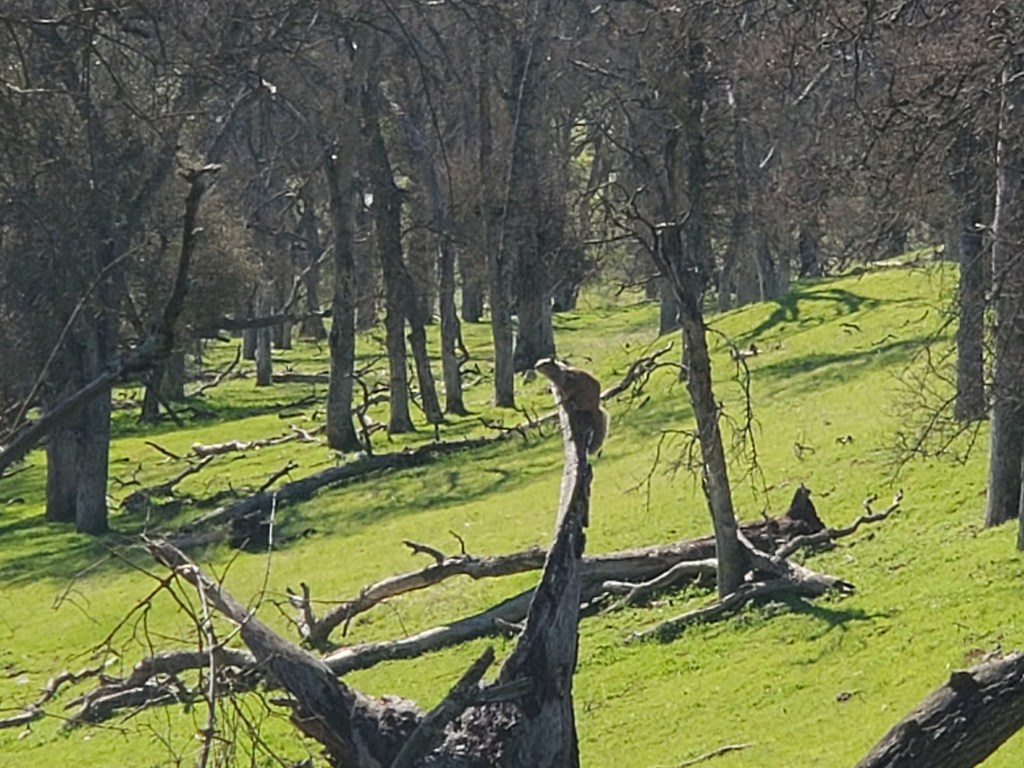
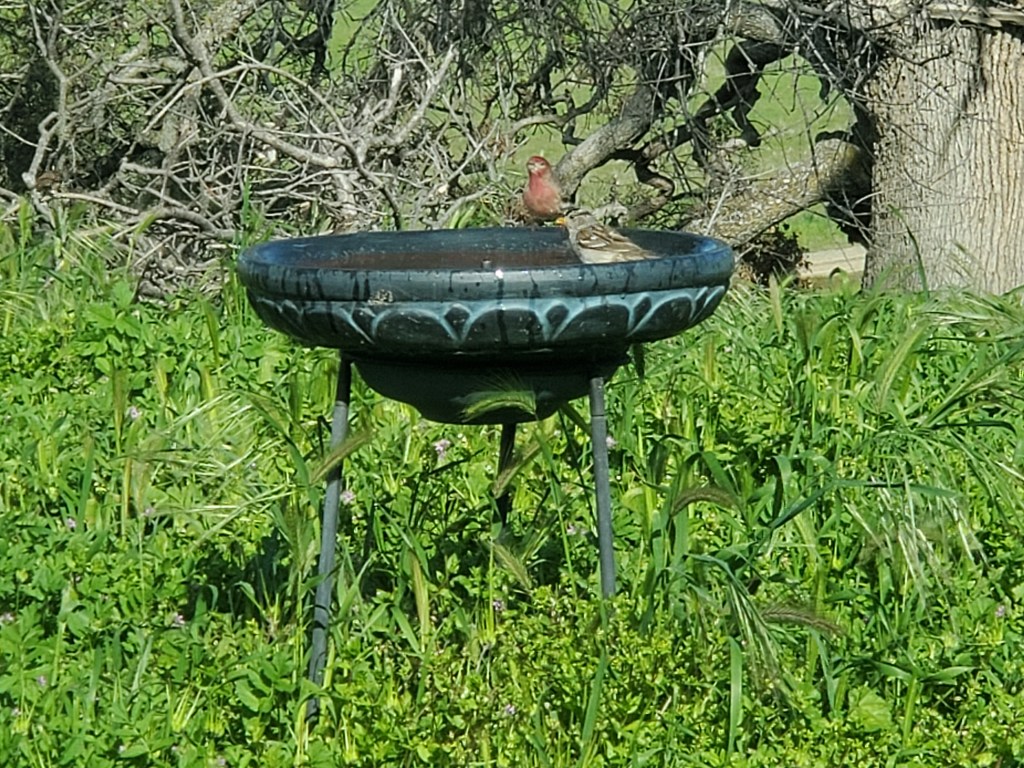
Ground squirrelMale and female finchesWhat was sleeping here near the house???In the toad habitatLarkspur pre bloomSilver beeSilver bee in flightYummy! Virginia pepperweedFrog taking a swim
Water Everywhere
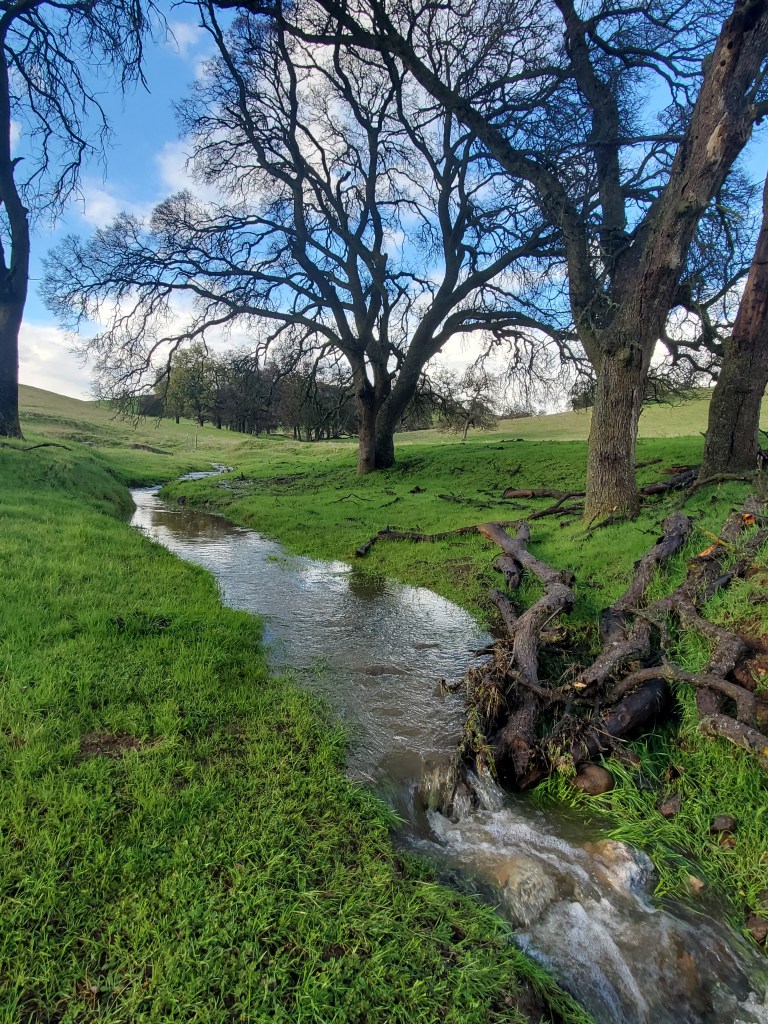
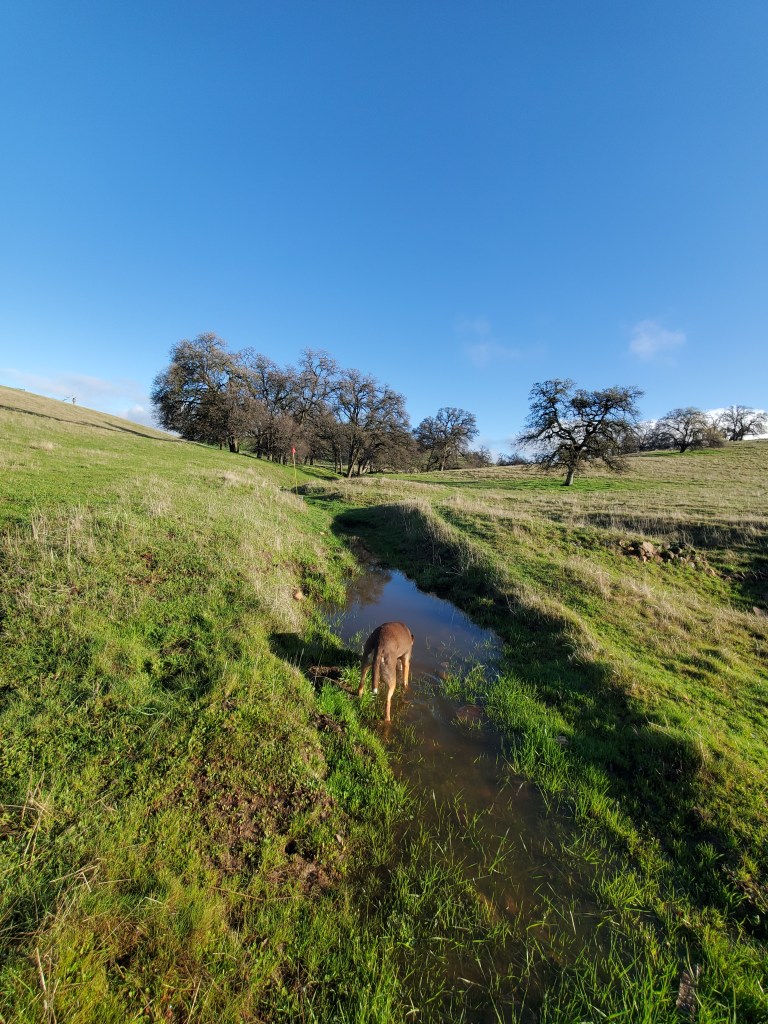
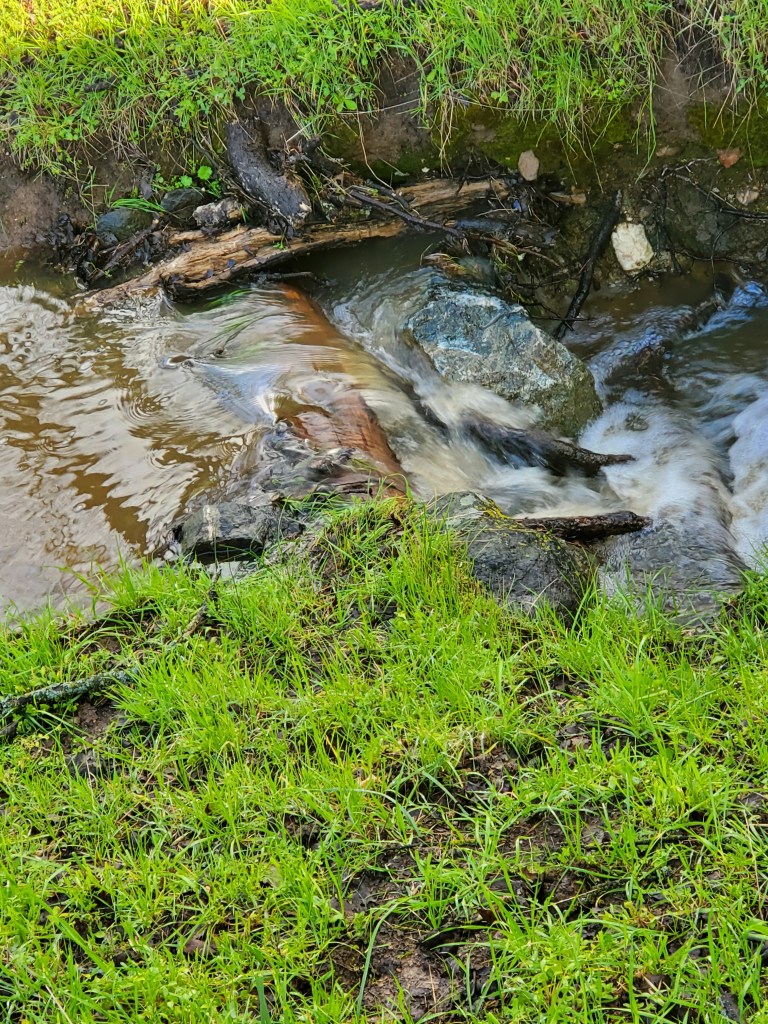
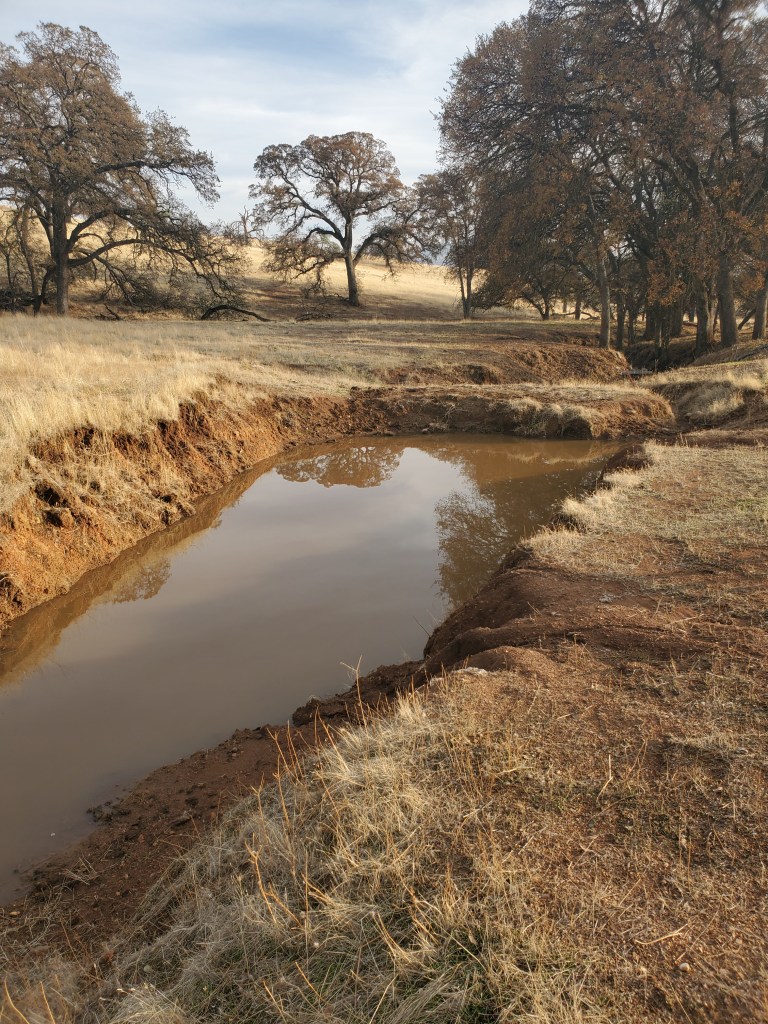
My neighbor said to me the other day that she has never heard so many frog songs in her entire time owning her ranch, which has been longer than me. They have been loud, joyful and seemingly from every direction. She thought it was due to my work. I don’t know if that is true, but I cannot help feel a sense of happiness that perhaps I contributed at least a little by creating lots of eddies, moist areas and long lasting puddles with the check dams. Thank you Kim for noticing that something was different.
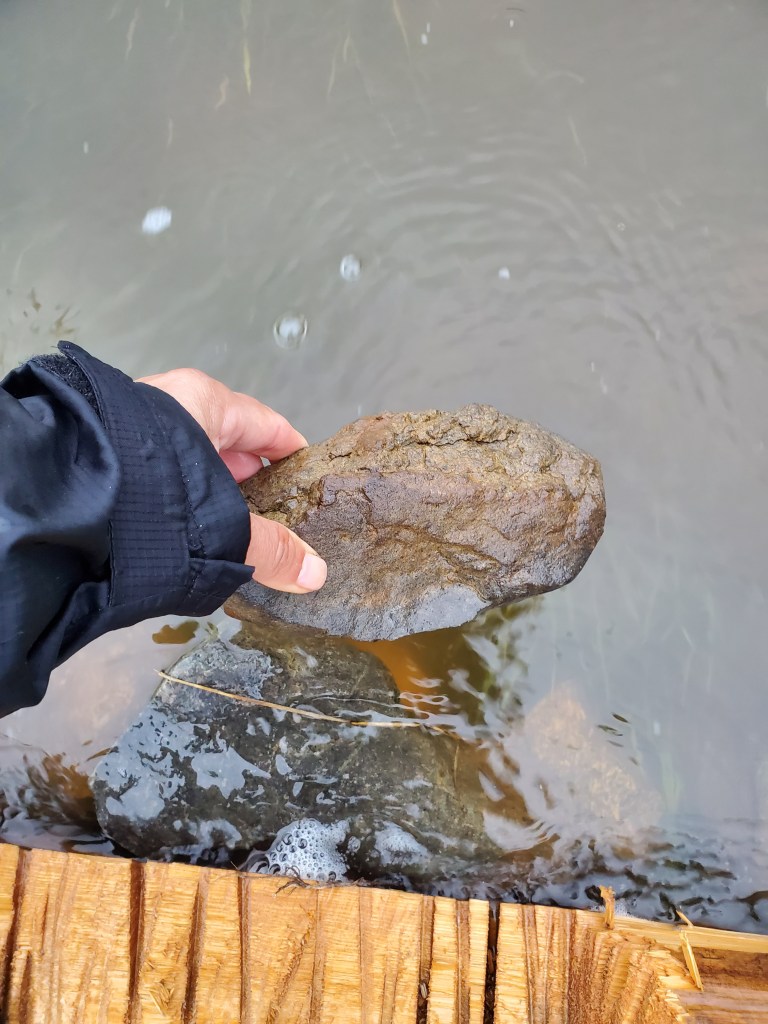
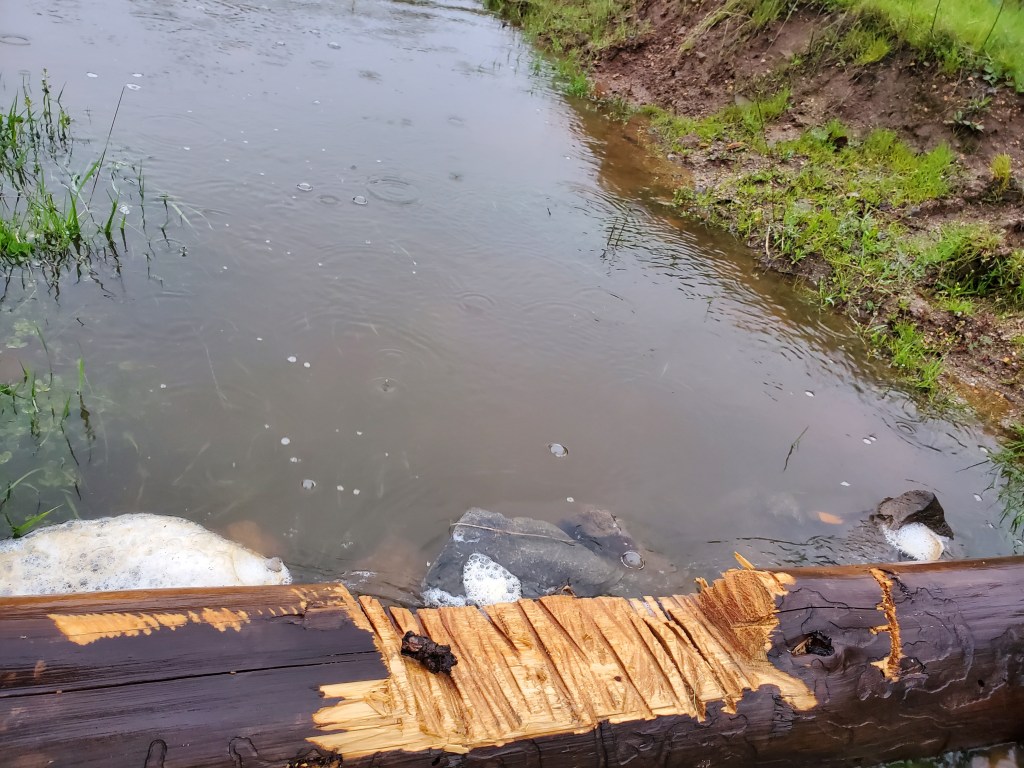
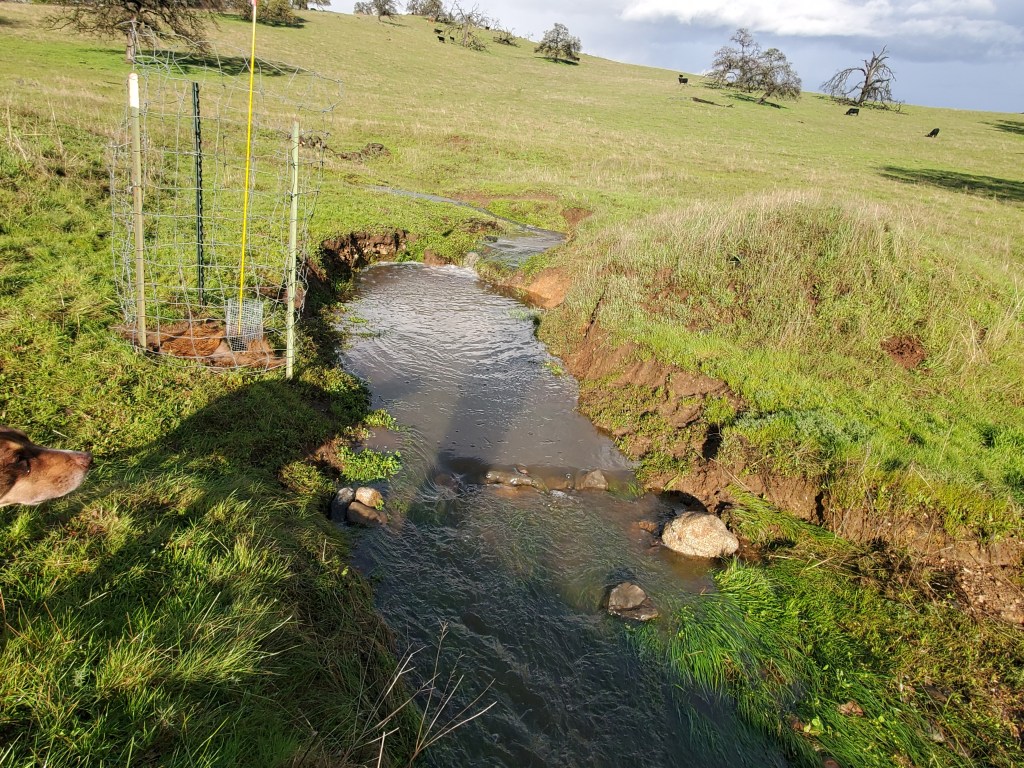
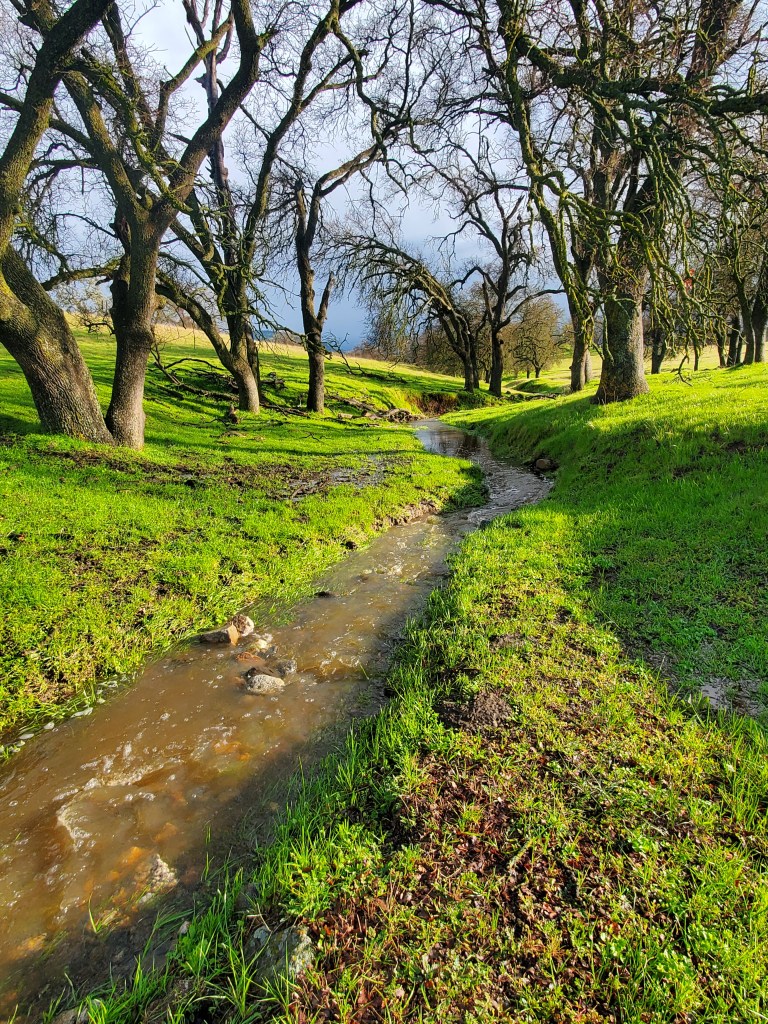
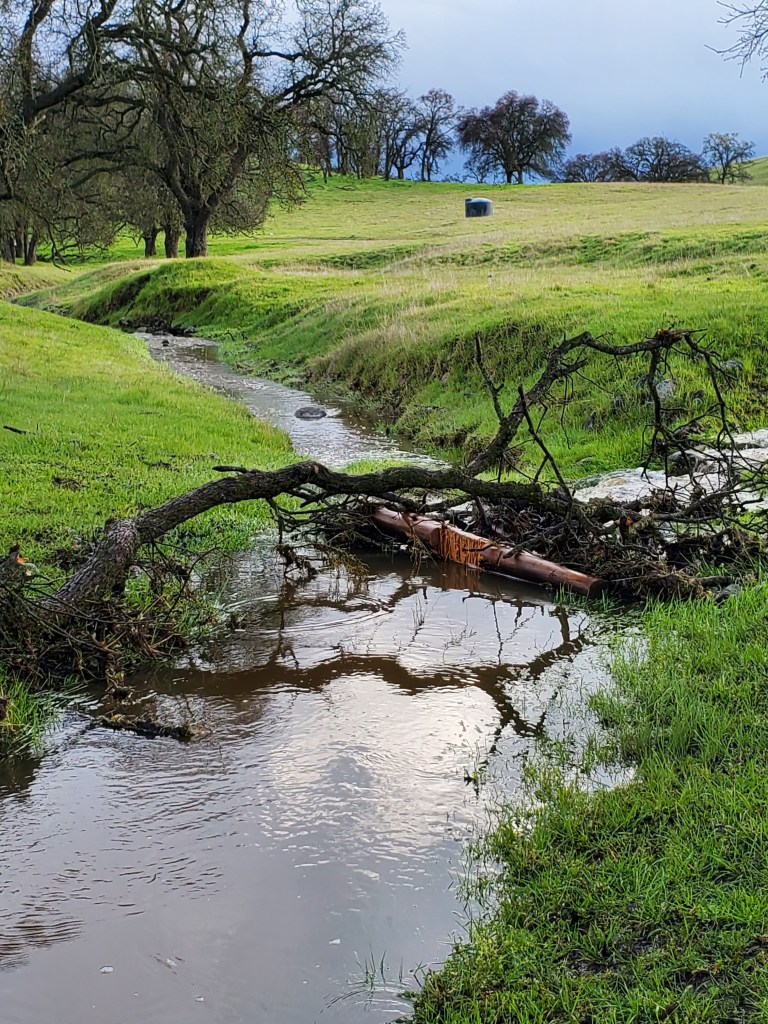
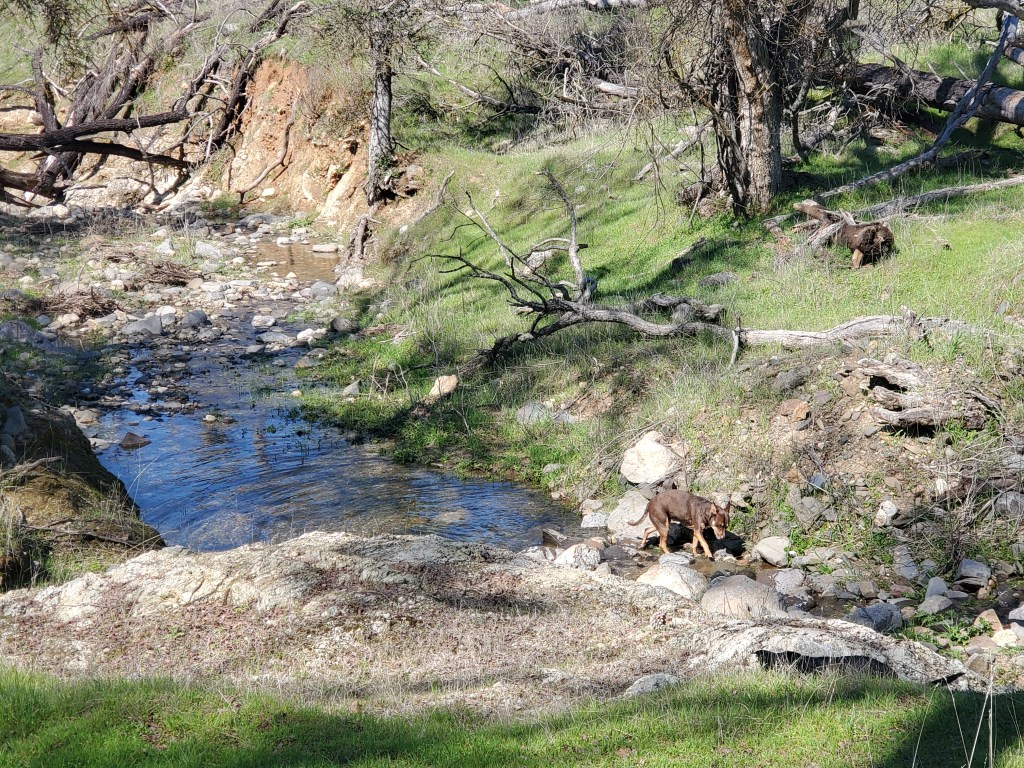
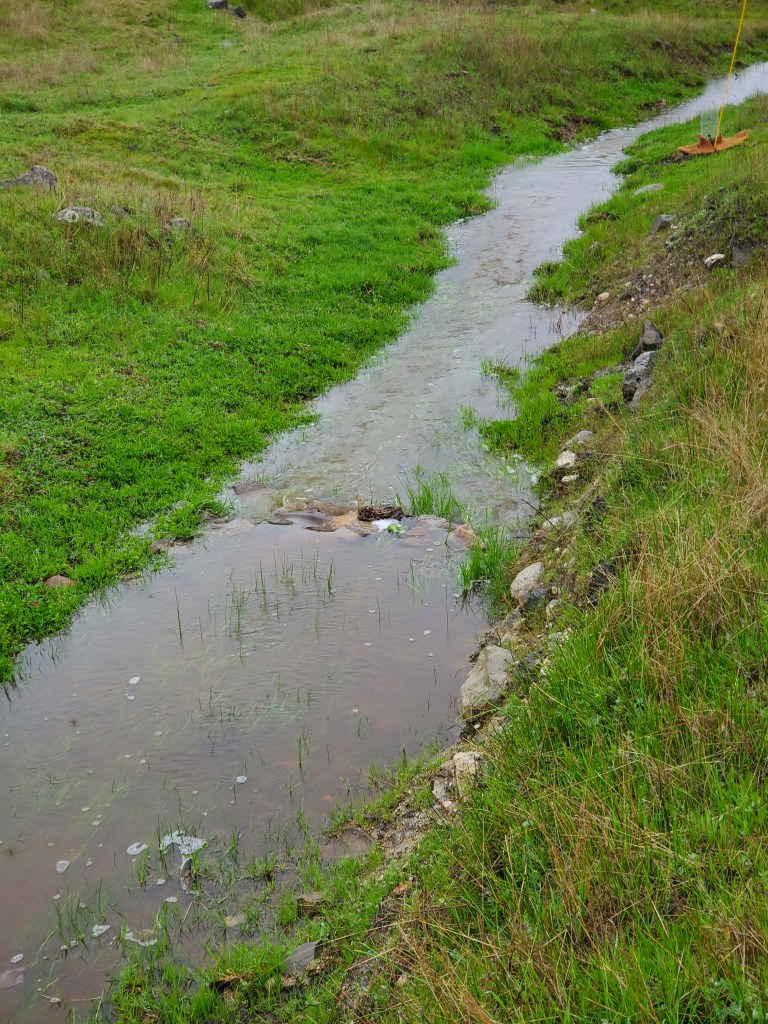
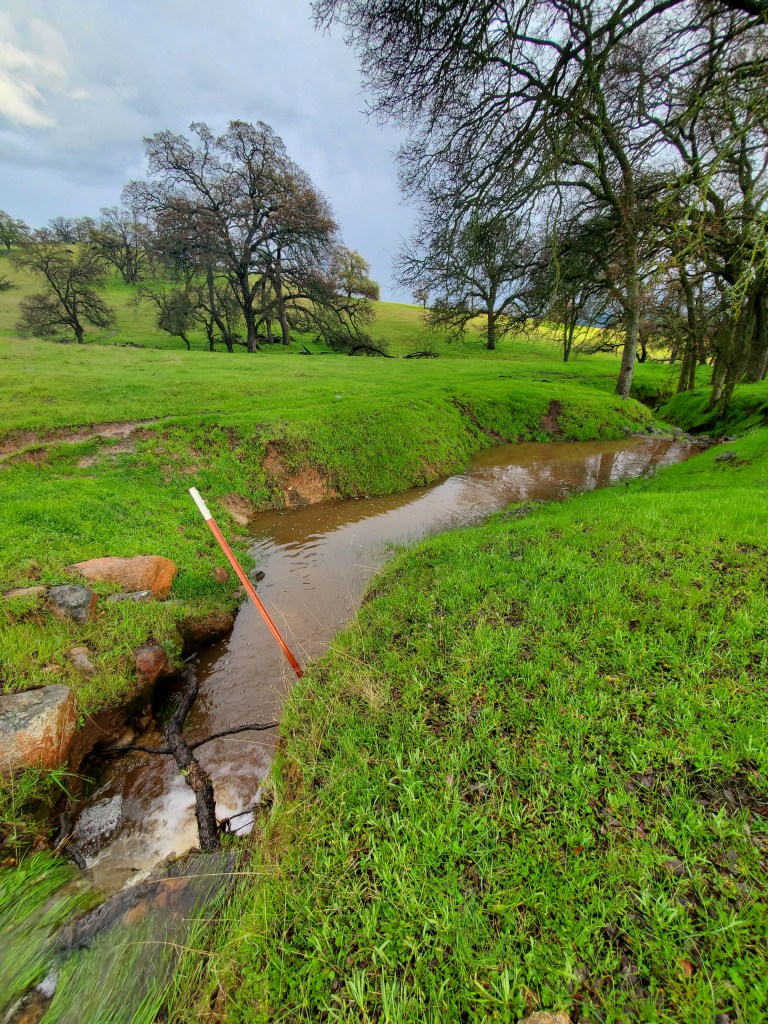
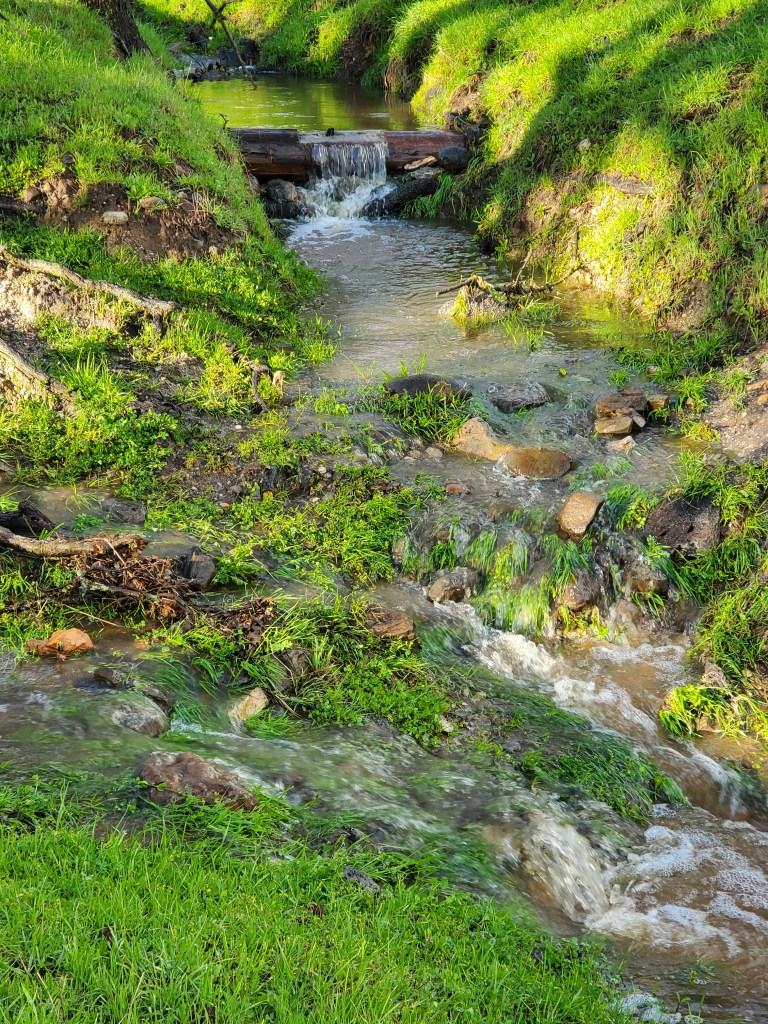
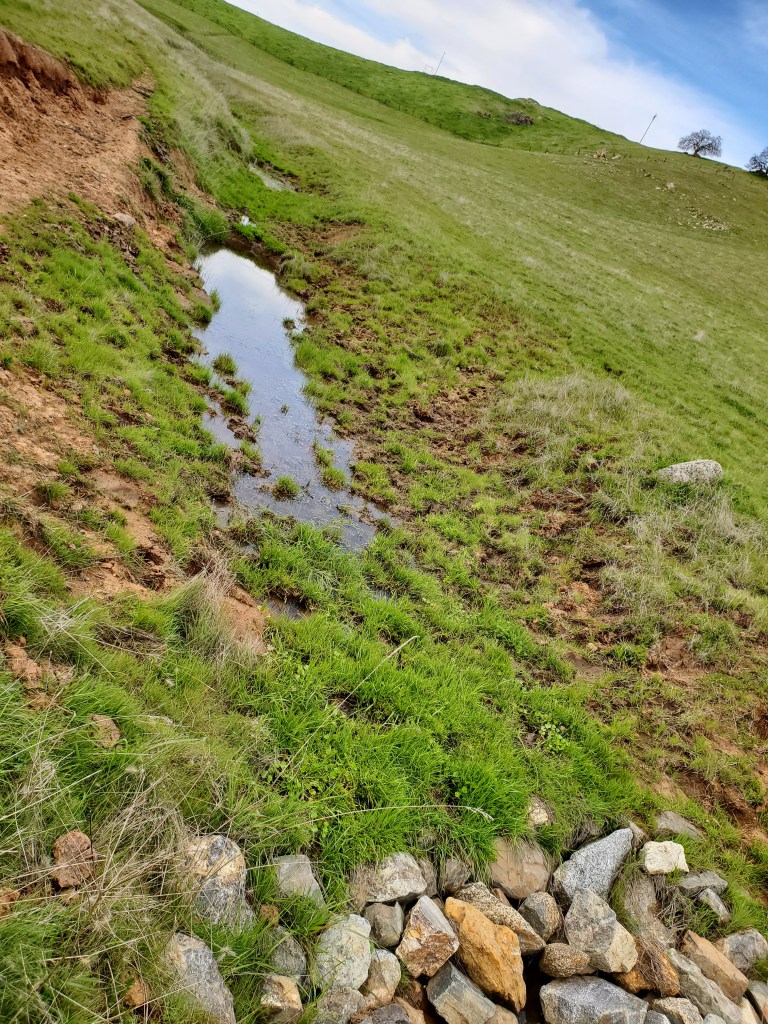
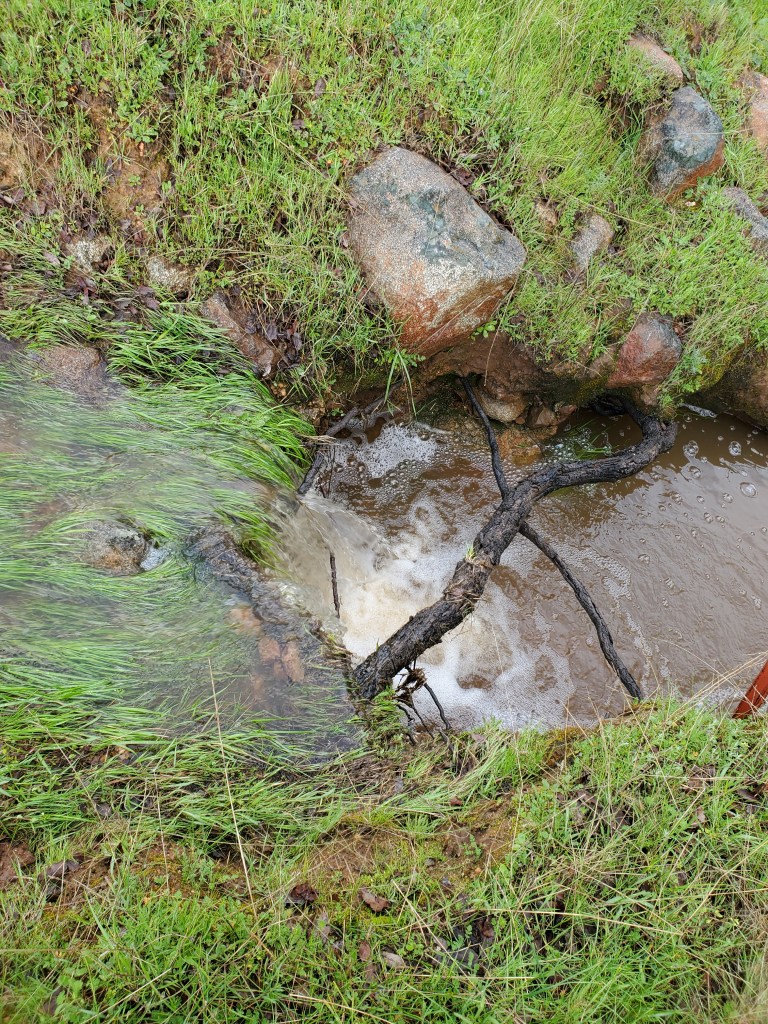
Small rock check dam doing its job. Note the wider size upstream (foreground)Main log drop doing greatLog drop doing goodNatural dams slow water too and shift flowsNice flow on the Spring CreekSwale Pond still spilling overRock drops doing their job – slowing and retaining waterMore water held back from rock dropAnother mylar balloon comes to die. #NoMoreMylarWater on the rangeFront of main log dropSecondary log drop doing great
Tornado Warning
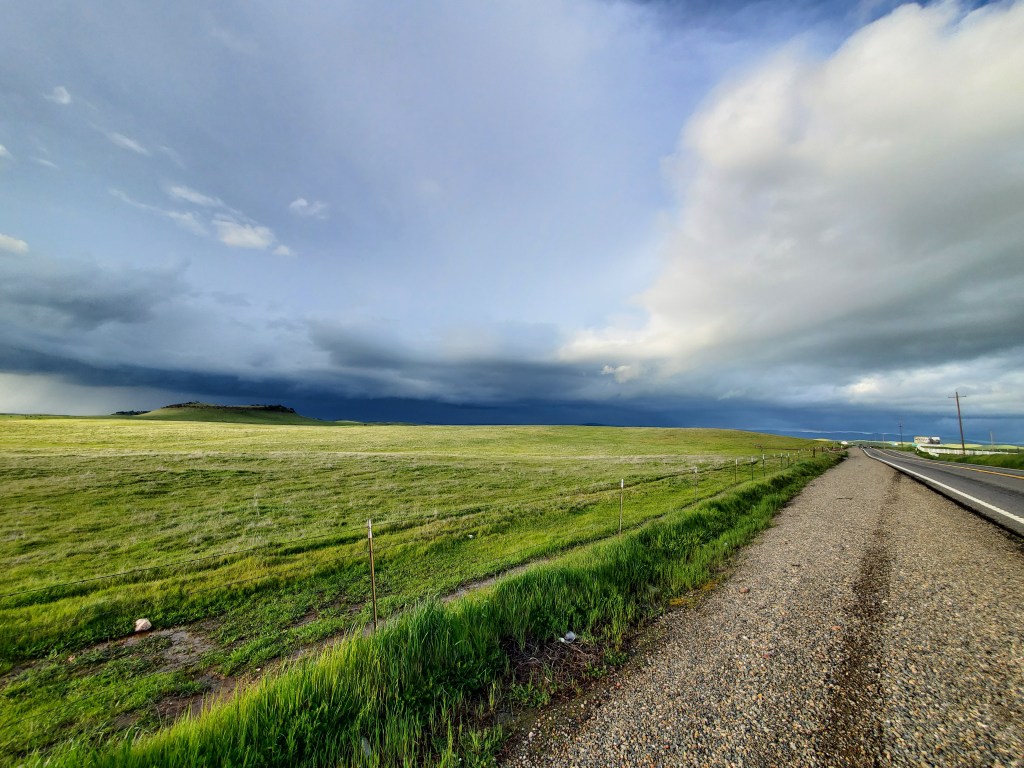
Tornadoes have never been a California staple. For all my cognitive years, I’ve not heard of anything like this until the early 2000s when there was a funnel cloud sighting in Livermore. In the lastthree years, we have had a real tornado in Santa Cruz, a warning in San Francisco, a warning in south Mariposa, one for some other counties in the Valley, and now, on Tuesday, March 17, 2025, two in one afternoon, both in my vicinity. This is not normal.
David looked at the radar and saw the first cell would be well north of us. He said not to worry. I was of course still worried and making a plan in my head – a California girl with no tornado experience except The Wizard of Oz, Day After Tomorrow and some documentaries I watched a million years ago. I remembered that you should take shelter in a room without a window, or a place with the most framing, or possibly in the middle of the house. Who remembered? Like most Californians, we don’t have a basement — and we are on the top of the hill to boot.
I had just started to calm down when I heard my phone beep loudly again. It was another tornado warning. David was home by then and looked at the radar. It appeared that the severe storm cell was going to be headed straight for us. I ordered everyone in the house to shelter in the laundry room, and to bring the cats and dogs. I called my neighbor to encourage her to move from her RV into her home.
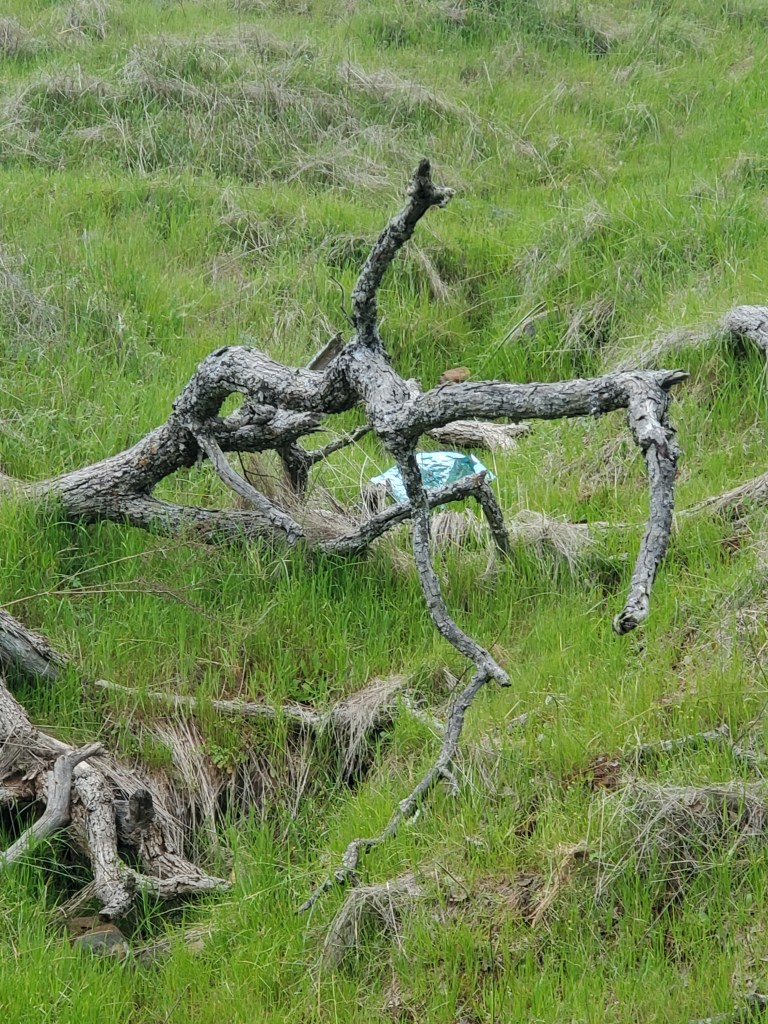
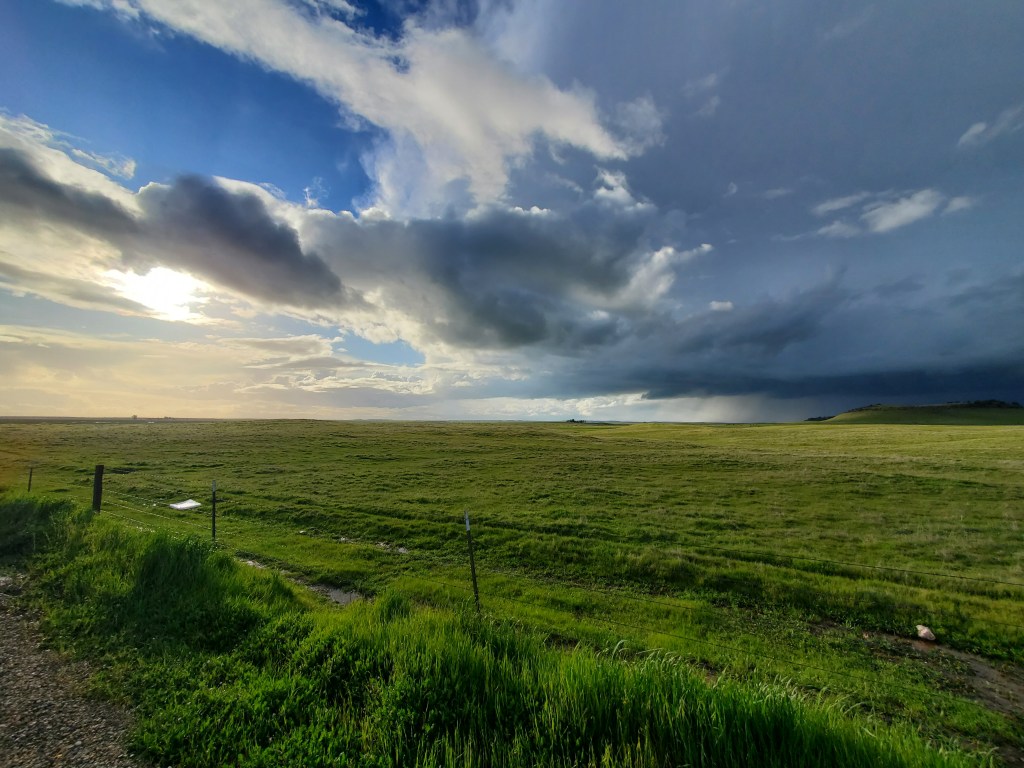
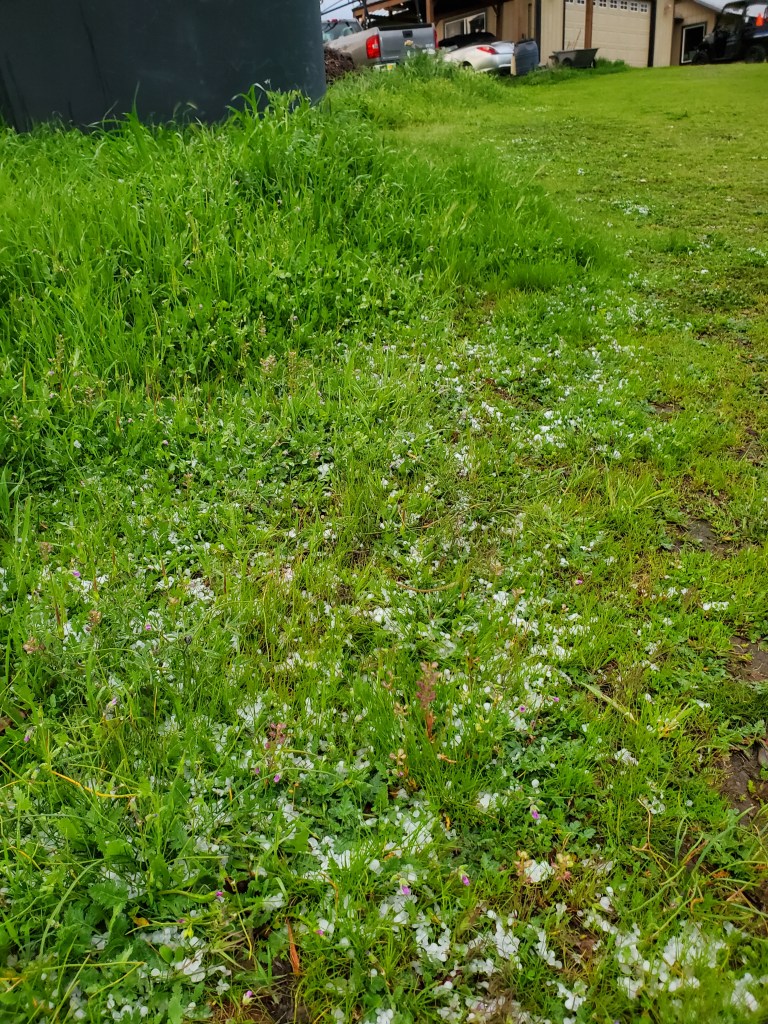
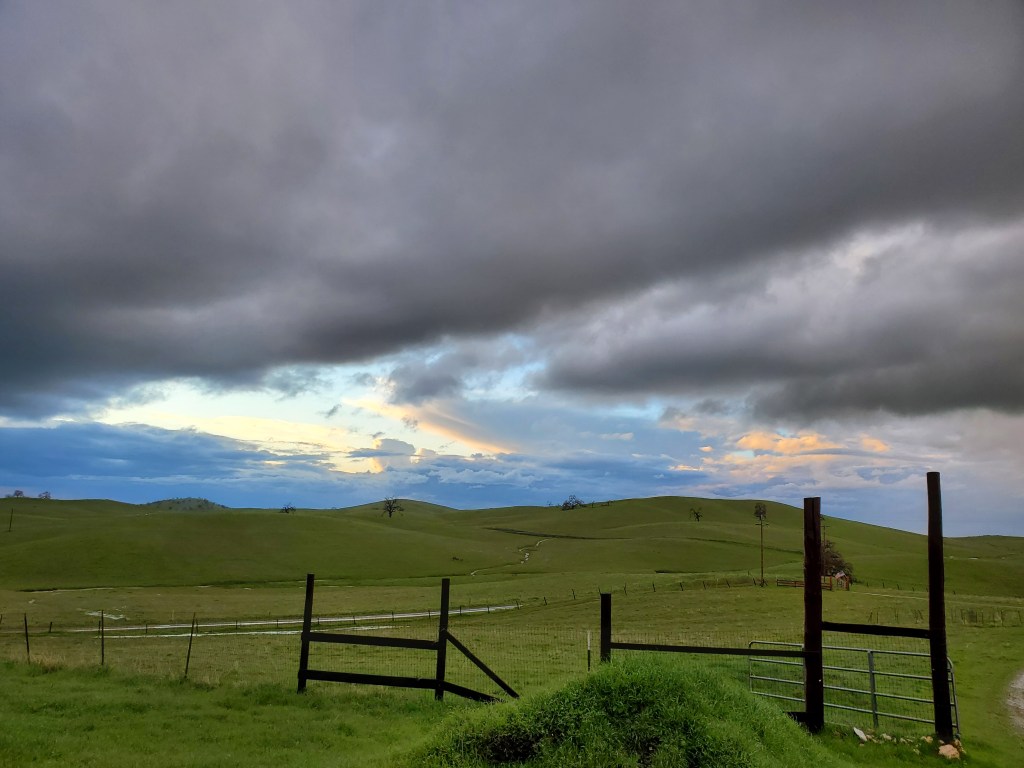
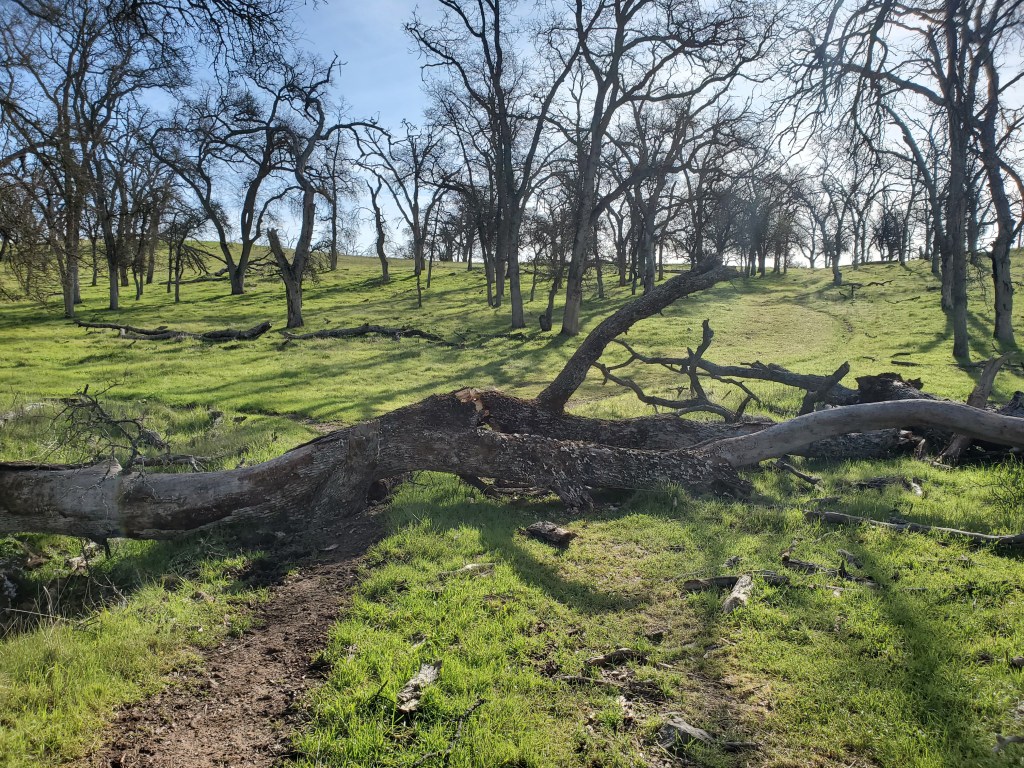
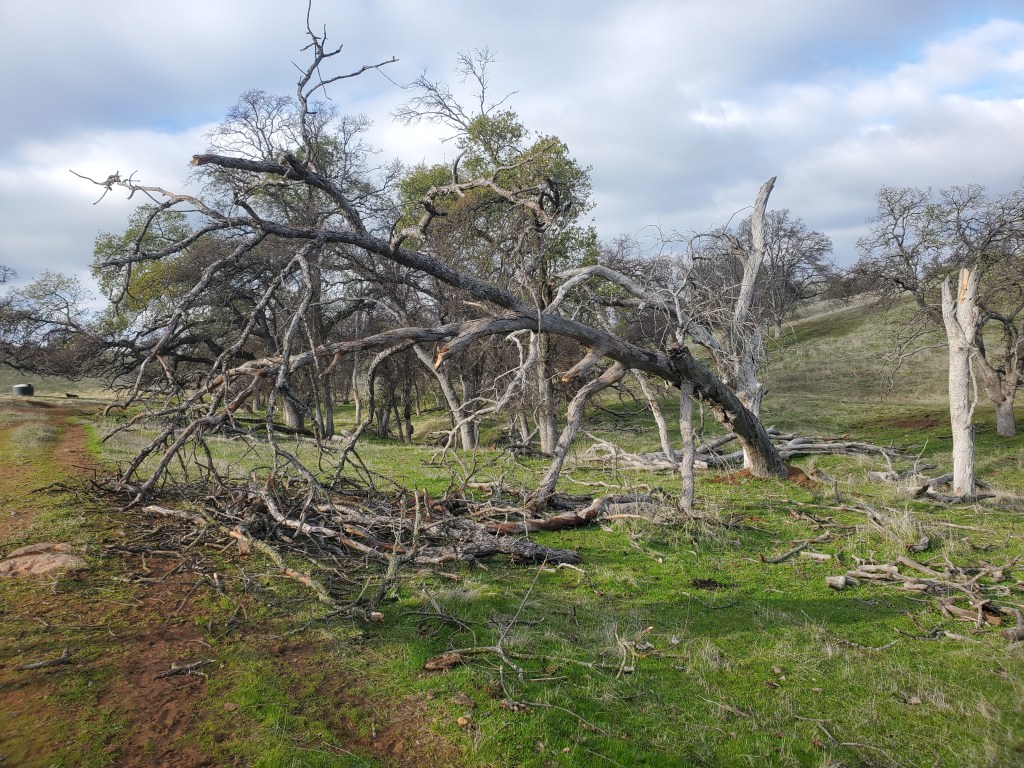
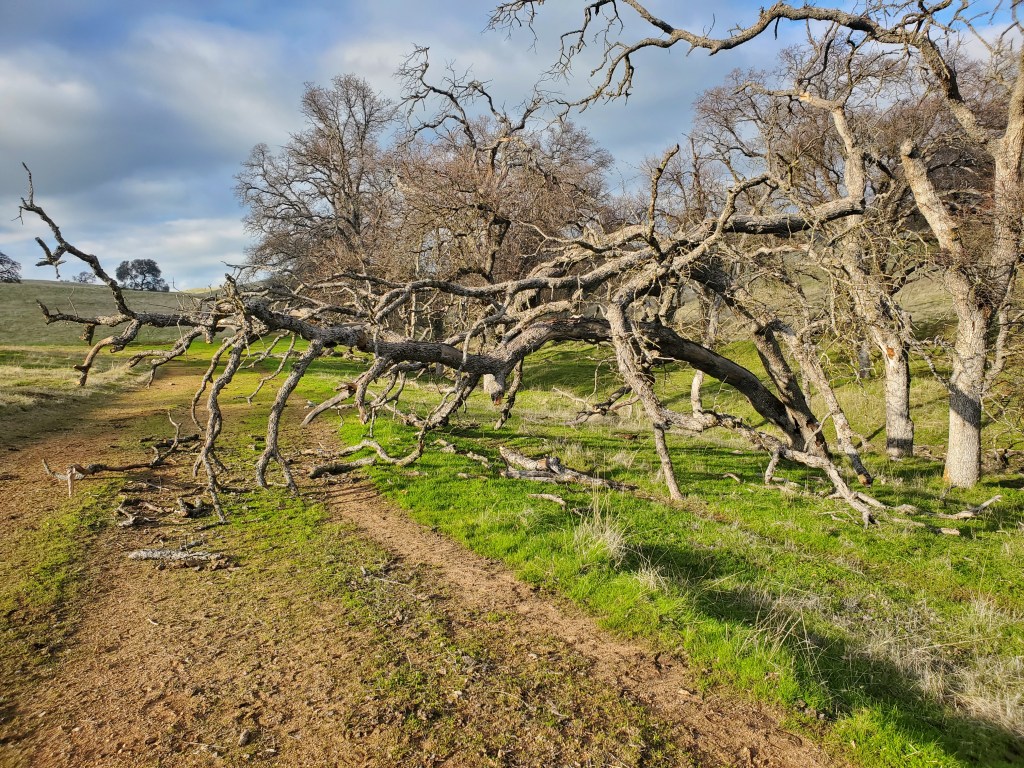
The cell reached the house 15 minutes later. The thunder was remarkable, booming so loud overhead and shaking the house. Then, the hail fell, hitting our metal roof like an angry teenager slamming a million doors over and over. In just 10 minutes, the storm had moved on. Light filtered through the clouds once more. Besides the ground being littered with hail stones, several of the long dead oak trees toppled. I found one across the cattle road a day later. Chainsaw work is in my future for sure.
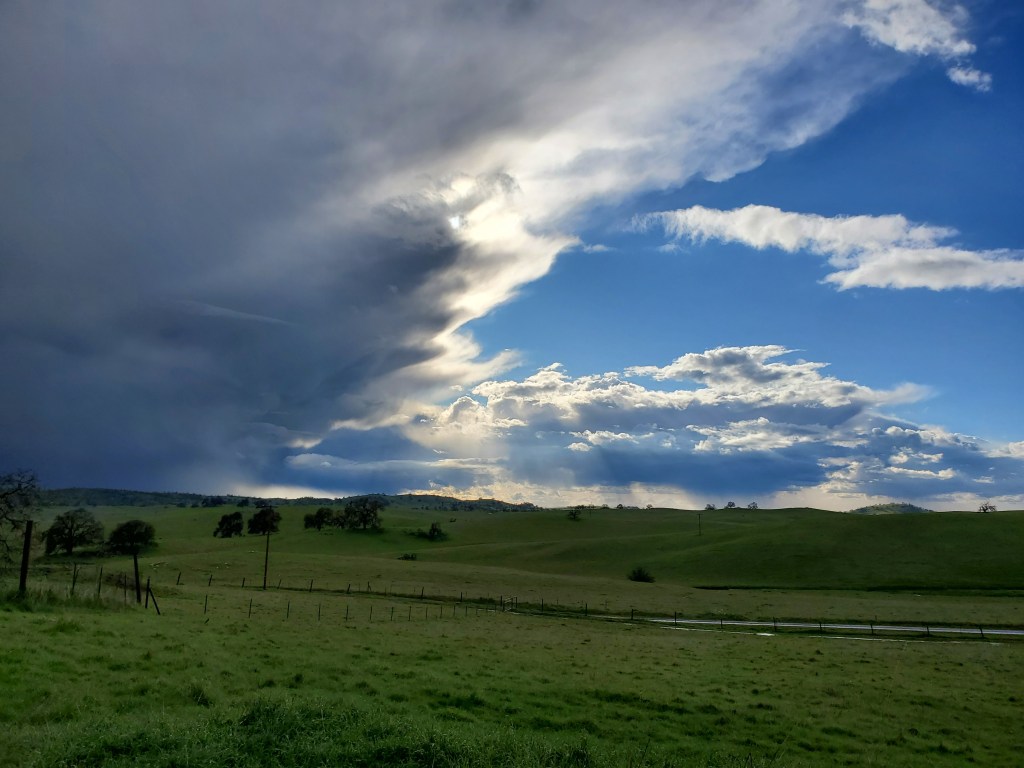
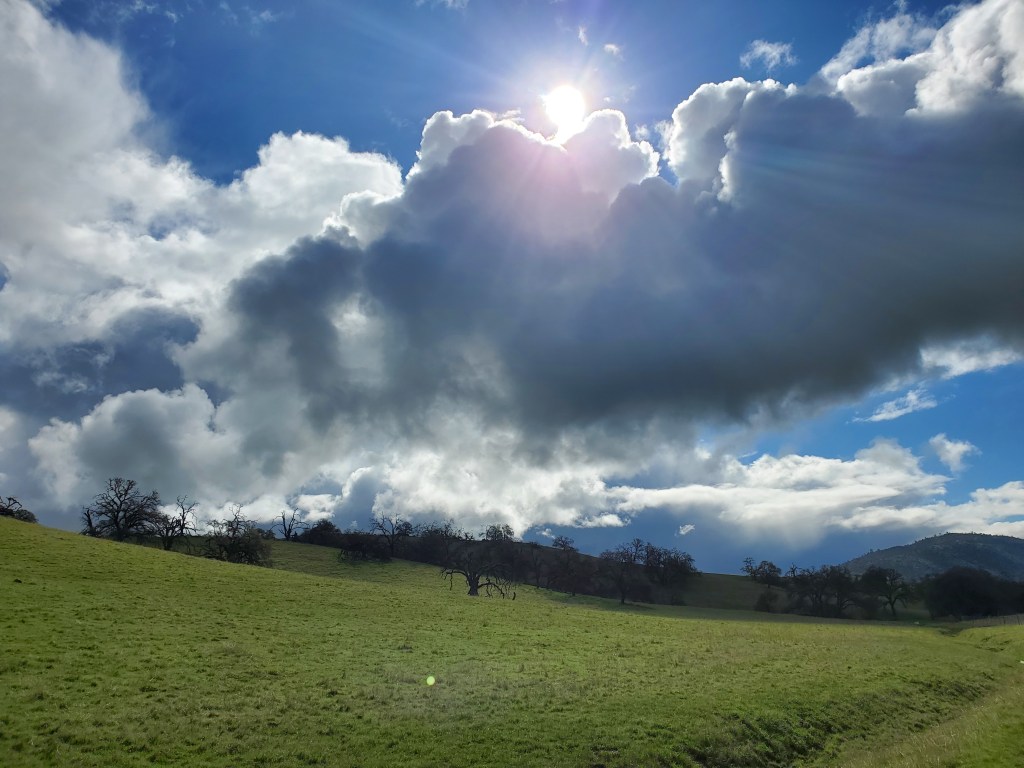
Dark, heavy cloudsDark clouds sat on top of fluffy white clouds looking very unstableHailDramatic skyFerocious windHail on the truckDowned tree on the road we’ve been traversing to build the guzzler
I feel grateful that mother nature is warning us instead of simply squishing us. We have an opportunity to act, to care, to show respect for all living things – to change the course of our life and be in greater balance. “How can I respond even more than I am already doing?” is the question I ask myself regularly. Two tornado warnings in one afternoon? What will it take to wake people up to care? For me, I am going to double down on milkweed, consume less, choose even less packaging, fly less, walk more … and … look into building a basement.
Sierra Tree Frog thinking about climbing the sliding door
Every day, I am treated to a symphony orchestra of such precise, crisp quality that I am moved emotionally. Each diverse player is always in-tune, and the music is in stereo. No, I’ve not traveled to San Francisco or Los Angeles. I step out on my front porch to a noisy, bustling world — first the rushing creeks after the rain, then chorus frogs with their undulations in 360 degree splendor. The coyotes cannot be left out. They join from far distances and close, their songs carrying across arroyos and hills. A mourning dove enters the symphonic experience just at the right time, then a muted tink of the rustle as a light breeze moves through the oak branches, playing the leaves like keys of a piano. Like a horn, a screech owl hoots, or a barn owl screeches. California toads croak, then trill. Finally, my own heart plays a role keeping time, threading through this musical soup, a genius blend, warming and nourishing, rich and whole.
Guzzler Project
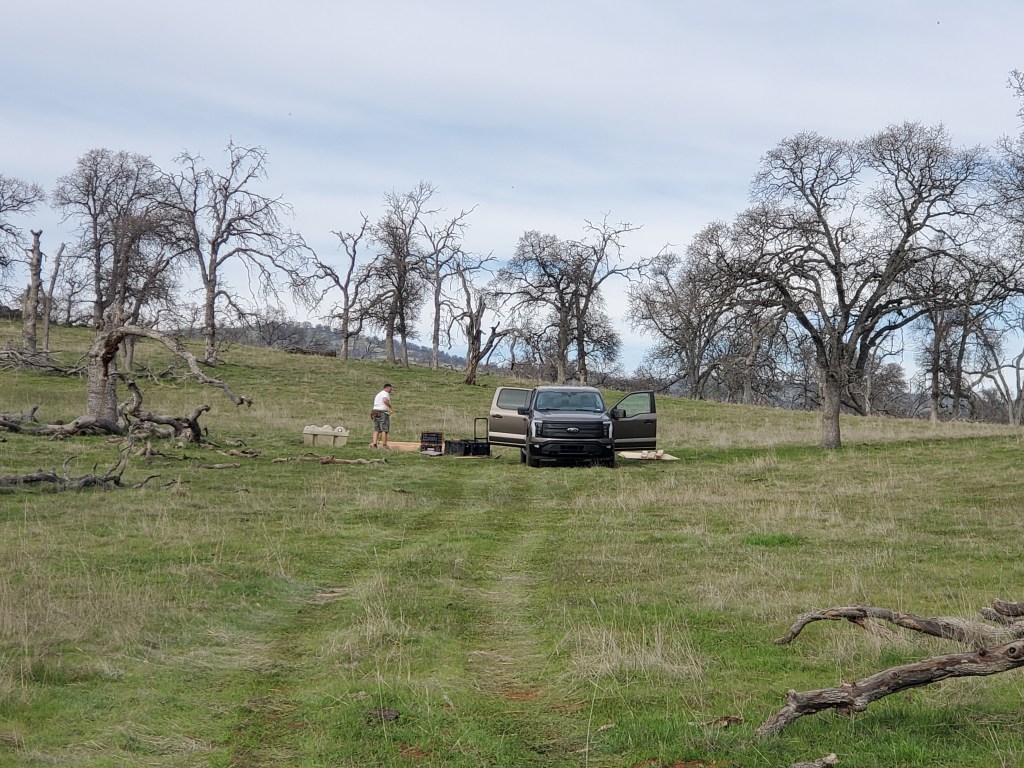
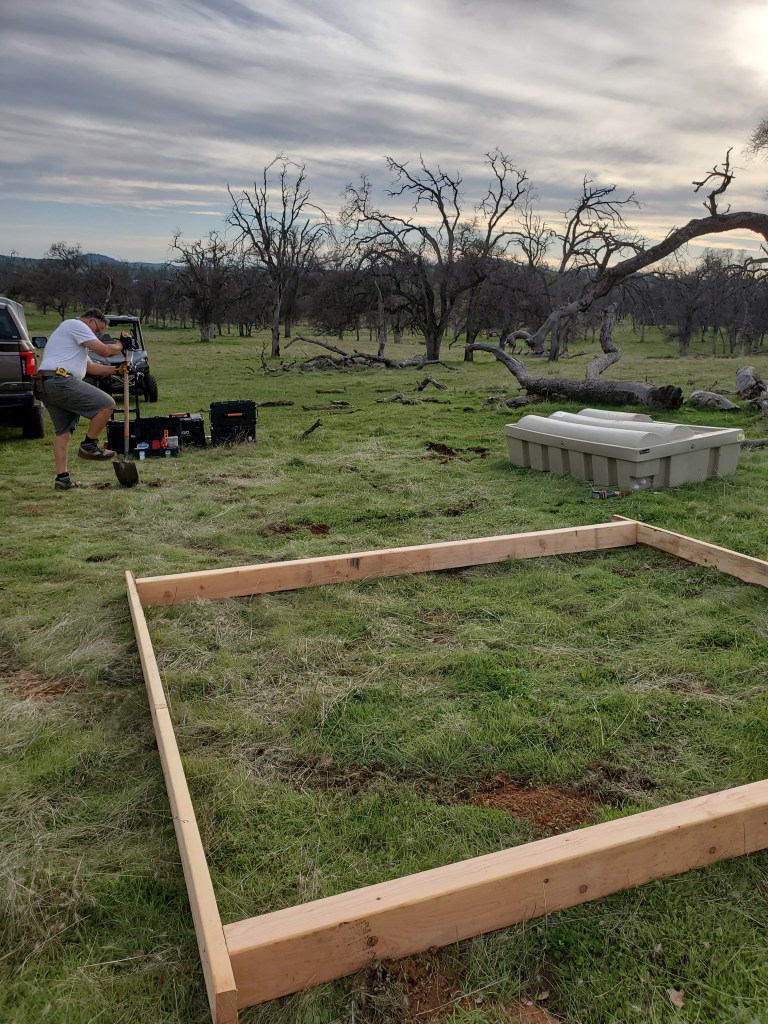
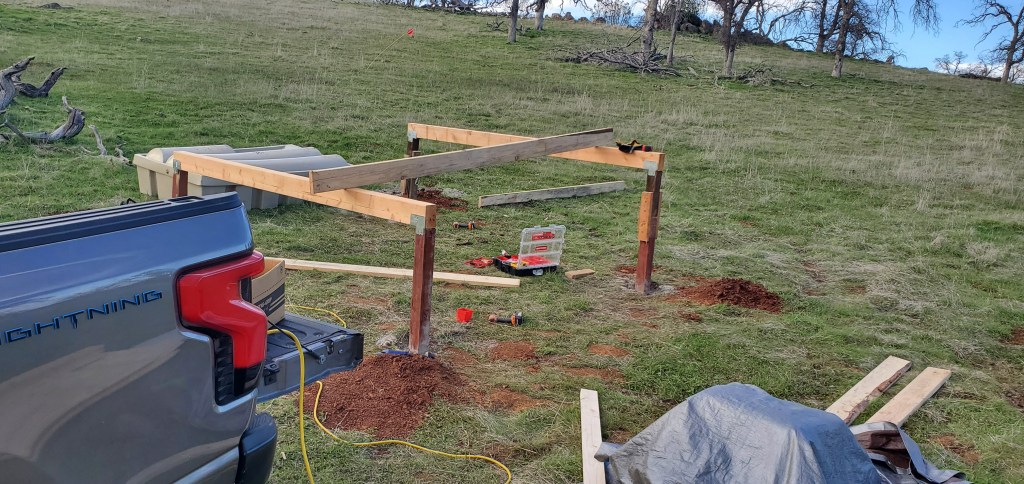
Construction of Guzzler Two, which is located on the east section of the ranch, has begun. David made a mistake early on in the dimensions. Although he fixed it, we lost half a day putting us behind timeline and up against the recent rain storm. He got the posts sunk and cemented and the headers on, but was not able to get the rest of the joists, roof and gutter on. It was disappointing, since we have a week of rain. However, I have to give us both a break. Life has been challenging. There was no time to start earlier. We have so many projects, medical appointments for dad, work and catch up for work from the last several months as well as other volunteer responsibilities. I remind myself that we just can’t do it all.
I am grateful for the time we can dedicate. At least the guzzler is up, and has a beveled lid that is designed for rainwater catchment. There is a ramp built in, so we will get some water in and have a working unit for animals.
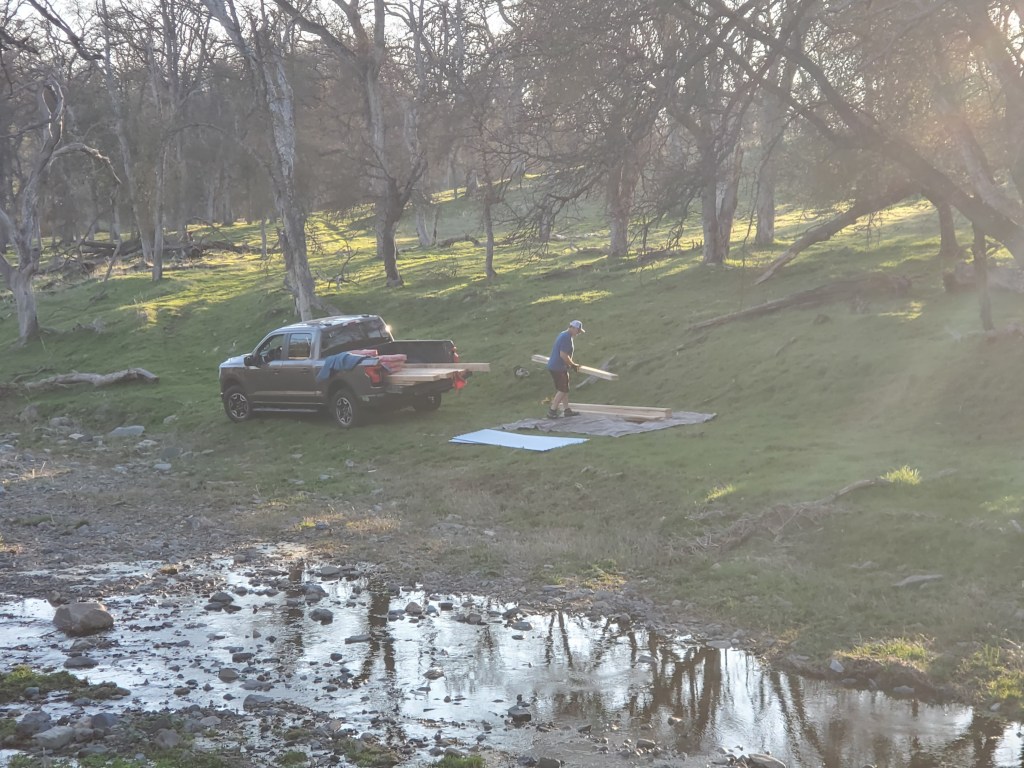
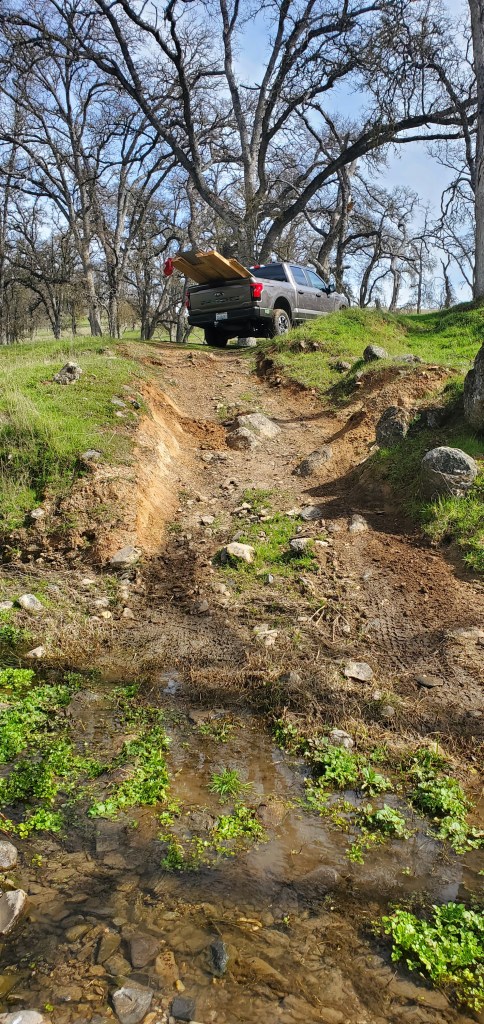
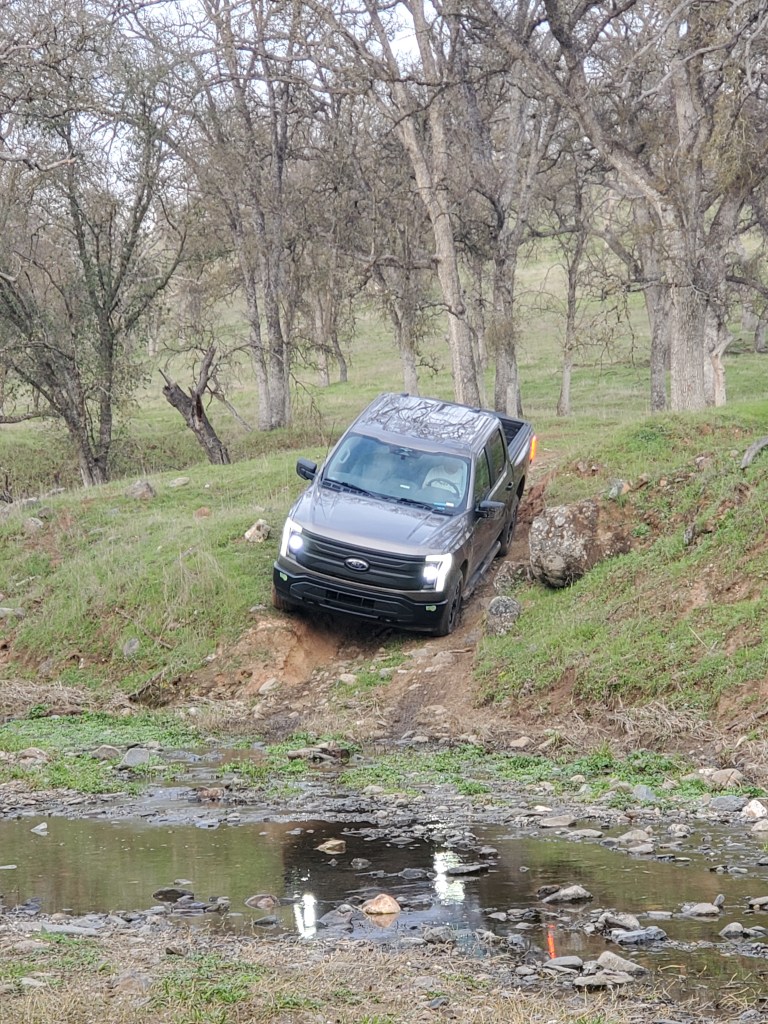
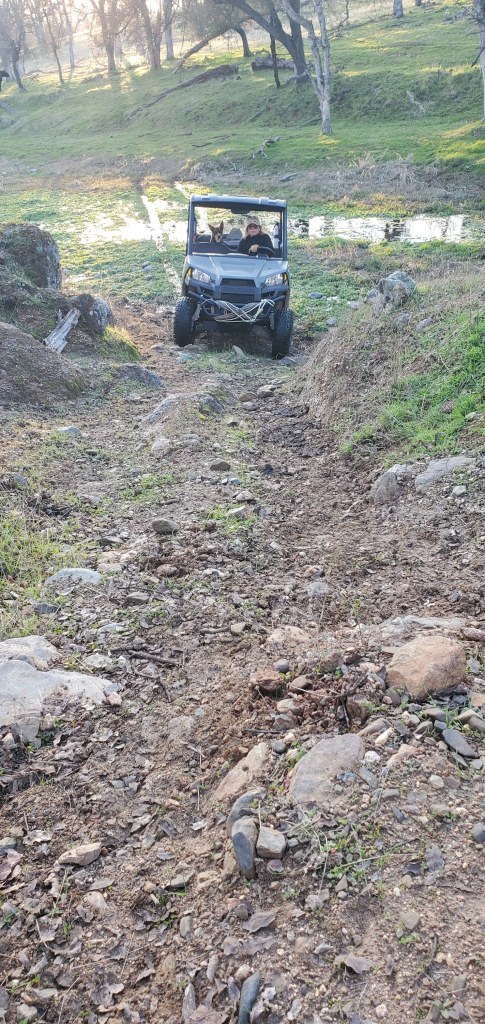
In 2015, the big flood year, the road to the area east of Odom Creek on the ranch was washed out. I would access via foot or ATV. We initially began to stage the materials on the west side of Odom Creek, but David had a feeling he could make it in the truck. I thought this should be a big “no”. Besides the fact that this is a newer truck David uses to commute with, I try to limit motorized vehicles on the ranch simply because their impact on the soil. Everything we have is electric, so I am not concerned about emissions or oil leaks. The weight and act of rolling across the ground over and over has consequences. This is why I stay in my tracks as much as possible when servicing plantings.
Well, when I left to plant oaks, David measured the area, measured the truck, measured the area, measured the truck and decided to go for it. He texted me some photos, and I was shocked. The truck made it. I thought that perhaps making one trip with the truck instead of five with the ATV might be better. I walked the route first trying to make sure there were no frogs or other wildlife, then I allowed myself and/or David to roll through the water and on the bank again. I am trying to do what I can to mitigate damage and hoping the guzzler will make up for any damage we may be causing rolling our vehicles back and forth.
Planning our pathwayLoaded and ready to goBeginning to stage west of the creekI begin to take suppliesDavid gets a bright ideaTank site flaggedDavid unloadsSetting up a frame to gague where to put the post holesInitial frame upHappy as a clam from his 4-wheeling success, David returns for the evening
Blue Oaks Continue to be Planted
I have accelerated my work getting seedlings and acorns in the ground. With the challenges of life, I’ve not had enough time to spend. Fortunately, the ground was still soft from prior rains. It was easier to work with. Most seedlings required gopher protection. This means digging 18″ +/- holes in which to place specially designed cages with soft wooden bottoms that are long enough to allow the lengthy oak taproot to grow. The wood bottoms have holes for drainage and root movement. Conceptually, the soft wood bottom will rot in a year or two, opening up more space for the roots to thicken and become resilient.
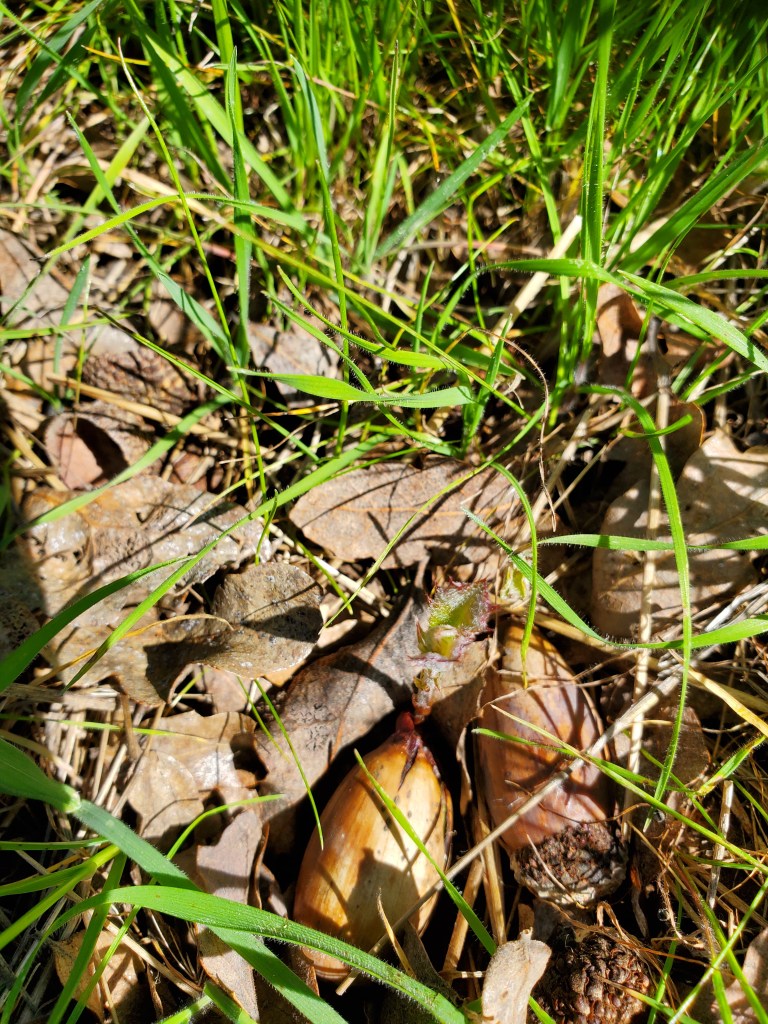
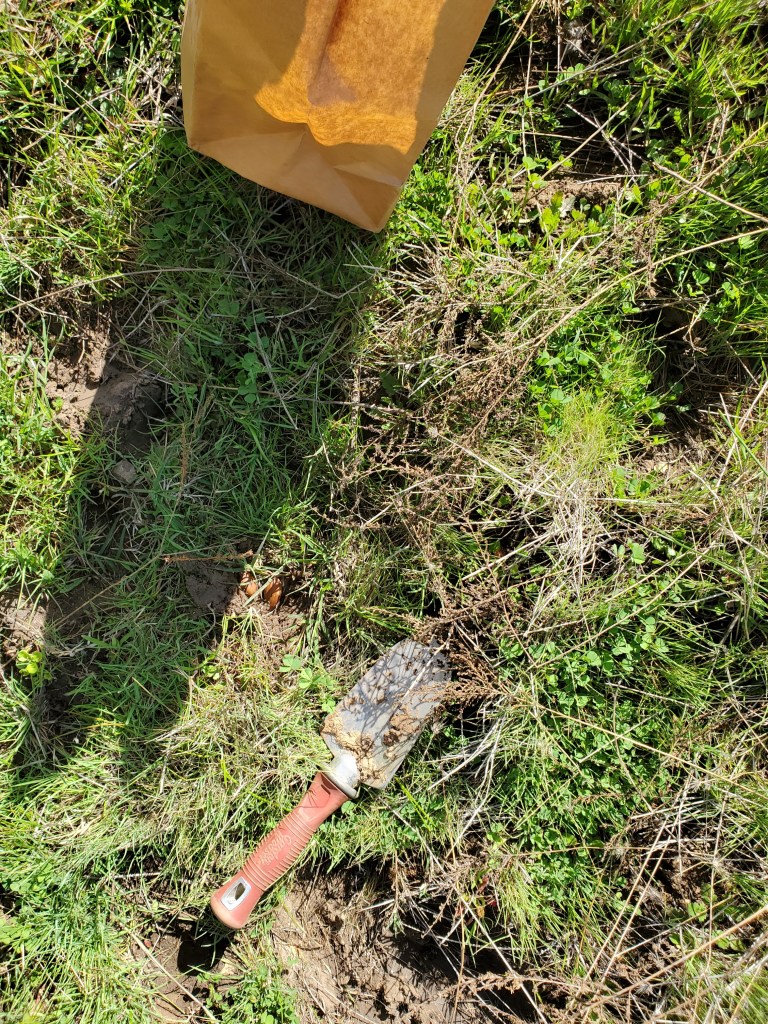
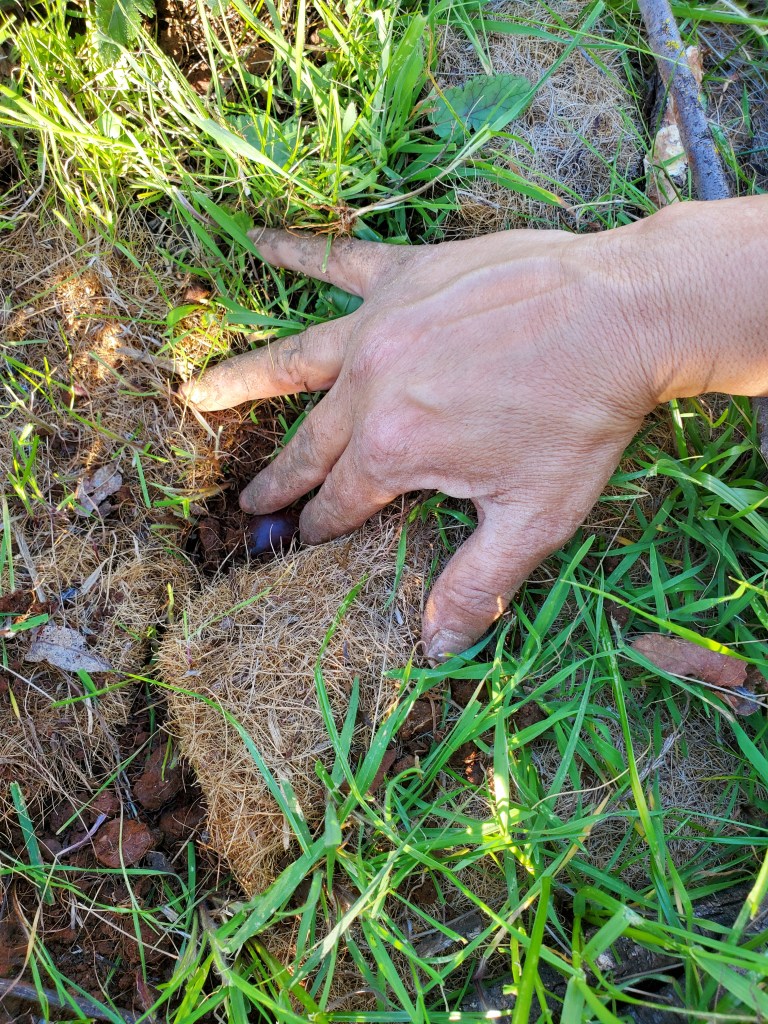
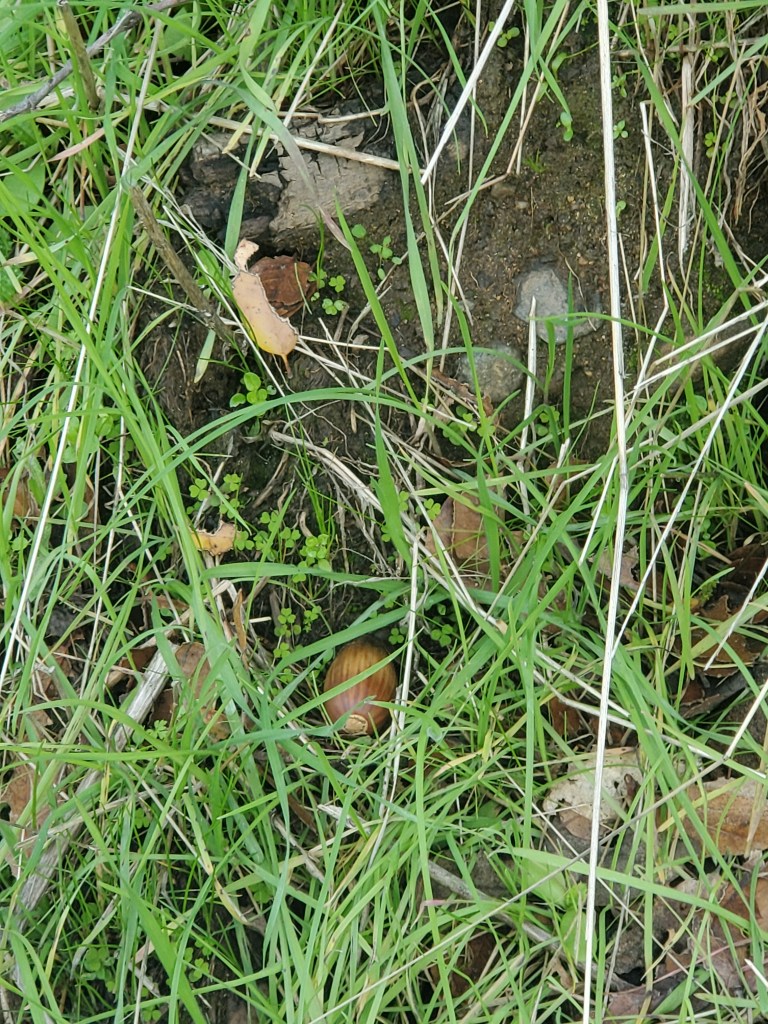
Placing acorn in last year’s cageAcorn covered lightly with soil and coir wrapped around the base for moisture retention and weed preventionMy bog bag of fall acorn harvested from the heritage oaks by the houseMini branch fence around a cage. They help me find the sitesLoaded up and ready to goA seedling planted along the Spring Creek bankFound a lanky oak seedling that I did not plantJust emerged oak baby from an acorn I did not plantSeedling planted inside cattle exclusion areaSeedling planted in treeless area of Spring Creek. Next step is building a fenceTwo spouts from seedlingAnother oak seedling planted upstreamExample acorn planting along the creek. Look at 11 o’clock from the hand shovel. There is a brown acorn. I will cover it lightly after the photoAnother acorn planted in a site from last year
In all, I planted close to 60 acorn along the creek and in five cages left over from last year. For the seedlings, I planted three along the Spring Creek, three in the new grove near the driveway, and four near the house. I will be planting five more down slope from the house in an effort to repopulate two areas with oak die-offs. Those will take a little more time since I will be creating a trench above and below each seedling to capture more rainwater. This will help increase soil moisture near where the roots can access it. I still have a pile of local oak bark to fill the trenches and absorb more water. The next step for all of the oaks outside the exclusion zone will be to build a fence.
New Log Drop
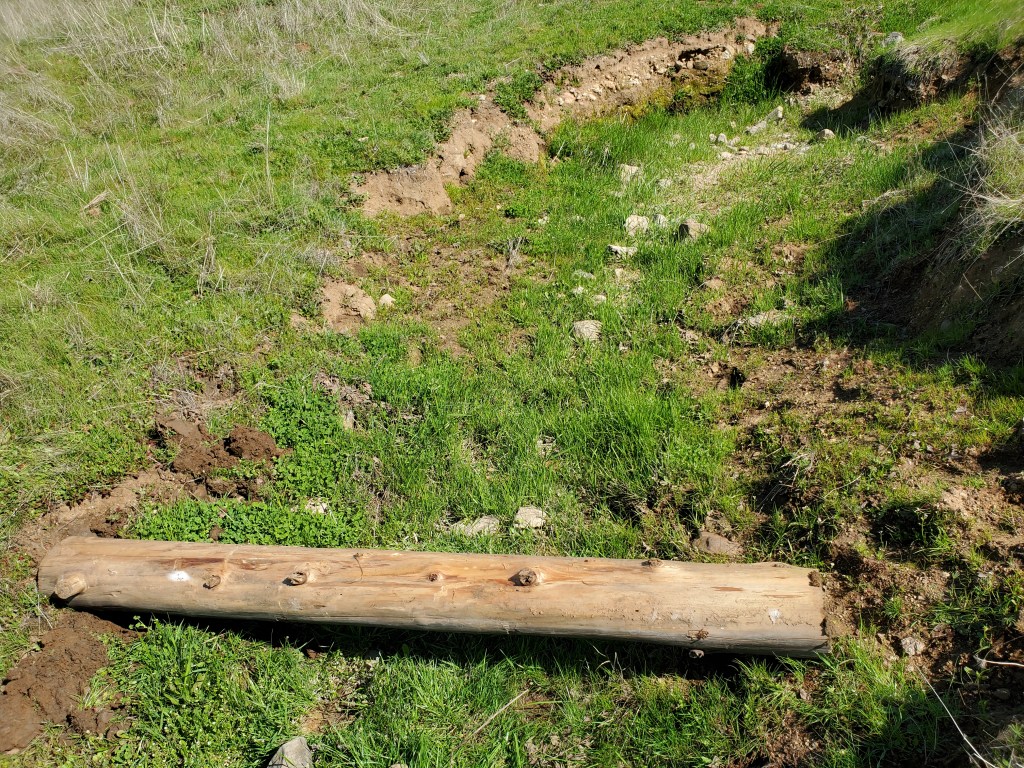
I created a very informal log drop further down stream on the Spring Creek. Again, the goal is to slow the rushing water from increasingly aggressive storms to try to retain the soil moisture and give the land more of a chance to recharge ground water. I also placed an oak behind the log drop to, hopefully, provide more moisture for the oak to thrive longer in dry conditions. The soil has a lot of clay, which retains moisture. There are groves up and down stream from the oak planting area, so I think the soil can work for these oaks.
Cedar log placementBeginning to rough it in and then set rocks to dissipate the water energyArea of the oak plantings and log dropNo trees in this sectionDavid stop on his way back from the guzzler project to help. I scored the channel and he made lateral cutsCompleted spillover channel. This helps take the pressure off the log
Wildflowers are Up
The wildflowers are in full display, with more blooming each day. There are so many colors – blue, purple, orange, white, and of diverse variety. I also saw my first butterflies on March 1 (possibly buckeyes. They were brown) and heard a large bee. Spring is happening whether I am ready or not…I’m not. The air is smelling like nectar. In another few days it will be heavy with the perfume of a million flowers.
Odds and Ends
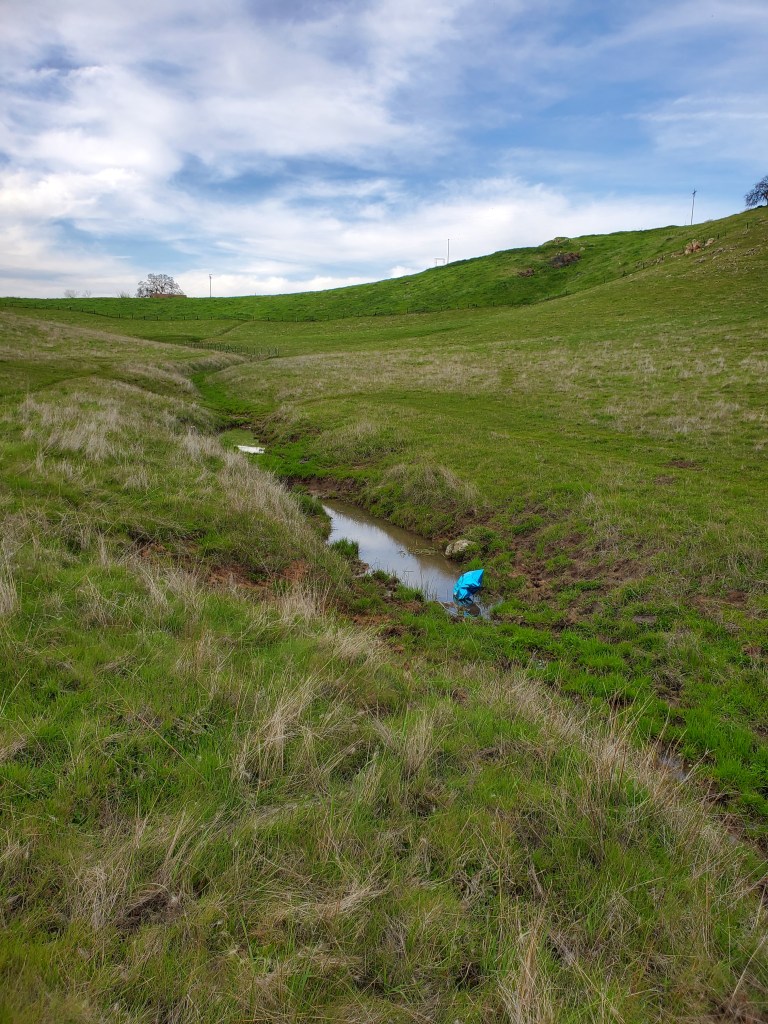
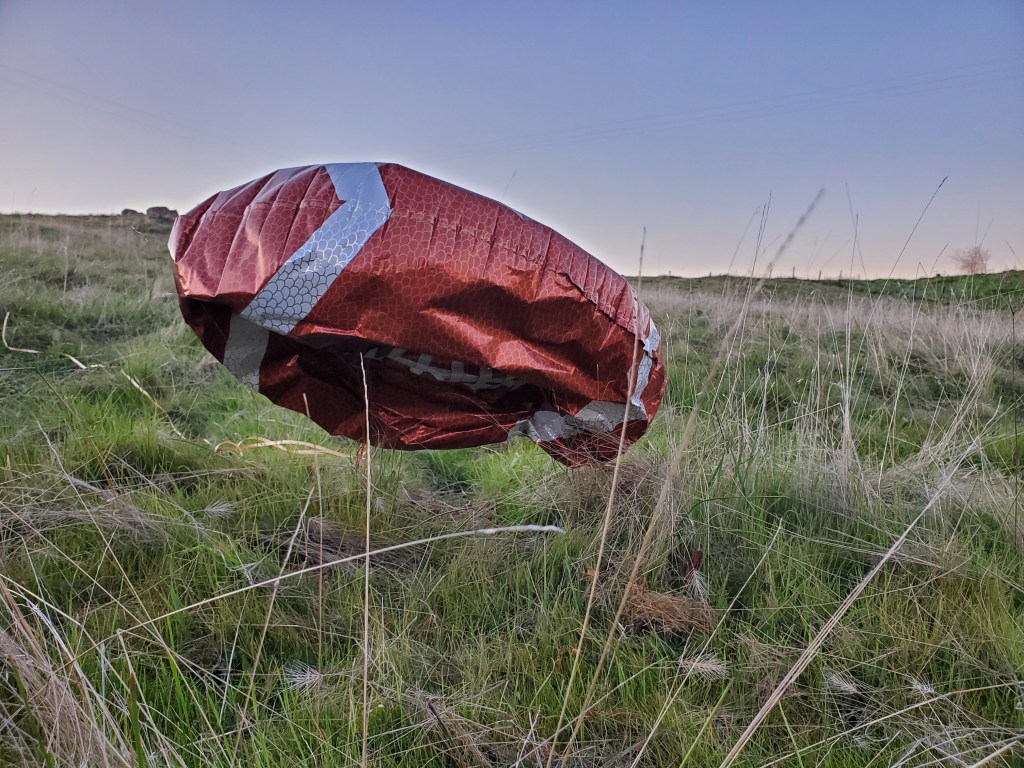
The joy of living here and caring for the land is immense. There is always so much to see and experience, even 22 years later. I pick up garbage that floats through the creek, blows down the hill or floats in the air. It seems we are always finding mylar balloons. Please don’t purchase them. They are trash and end up at my place. They can kill calves who do not know what they are and eat them.
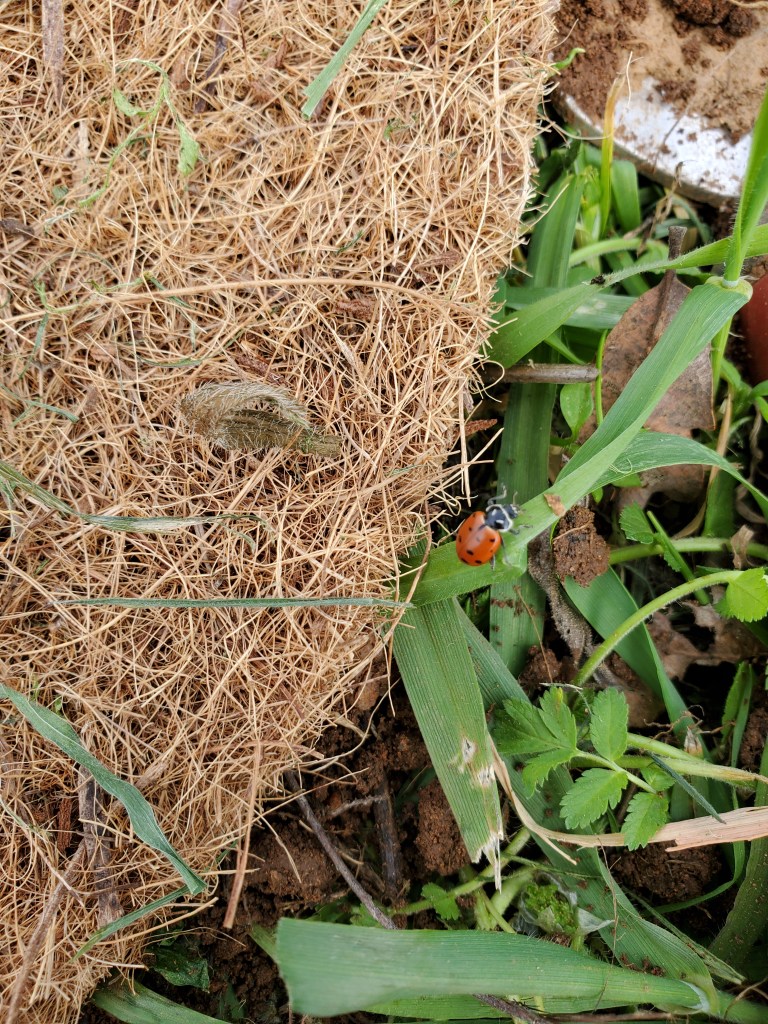
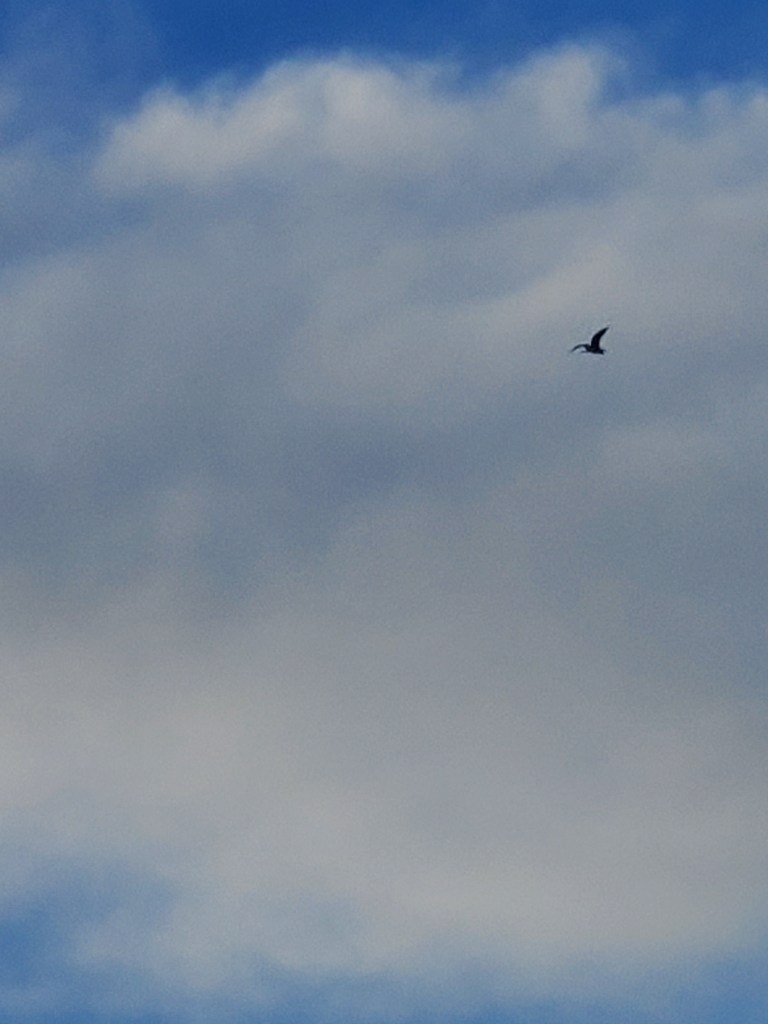
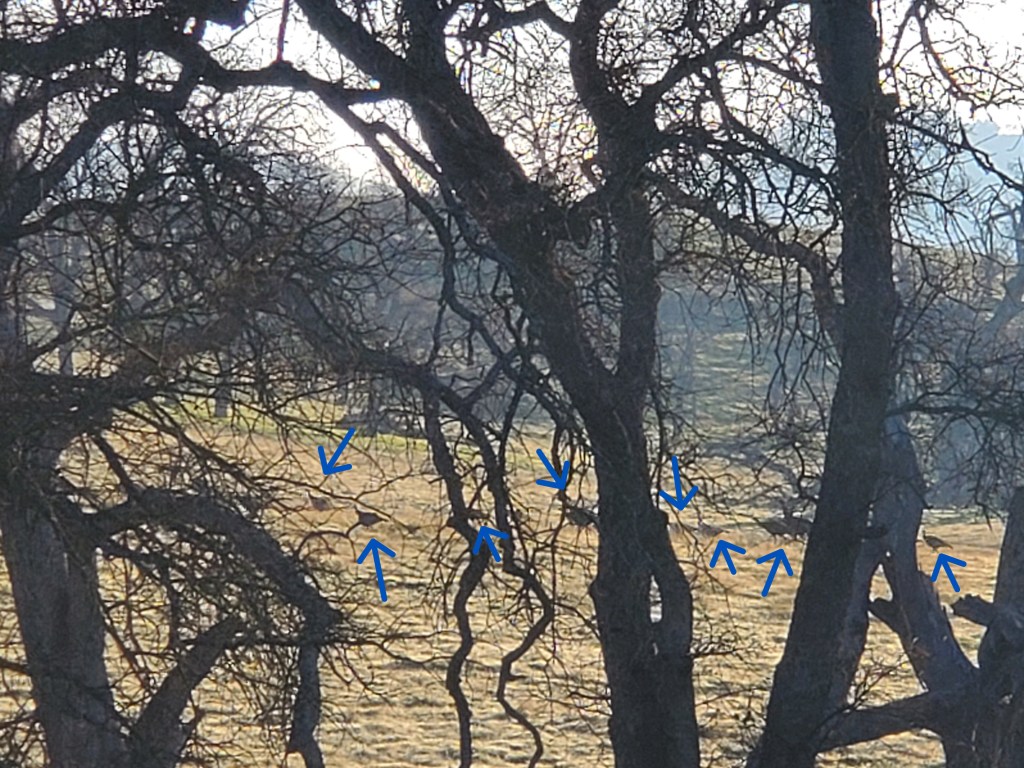
While planting oaks, I heard a whoosh near my head. Two redtail hawks in their mating ritual, dove and sped back up high near where I was working. It was incredible to see and hear them so close. Getting an early start to the day allows us to see so much wildlife. We saw a huge group of turkeys. They are large and interesting, though they are not native. They eat the eggs of quail, harming their populations. I wish a bobcat would control their population more. People think they are cute and feed them just a few miles down the road, but they are very destructive. I would rather see quail than turkey any day. The lady beetles are out. They are really beautiful. I used to see them incubate in tree bark as a child. We had so much abundance then. The other evening at dusk, as David and I were finishing our work, we saw a great blue heron flying to the east. I hope it stopped at the neighbor’s pond and decided to stay a while. We used to have a mating pair that would return each year. They had their nest in a tall bull pine on the neighbor’s property. It fell one winter. When the couple returned the next year, they did not stay. The male would come back year after year with no mate. What a loss.
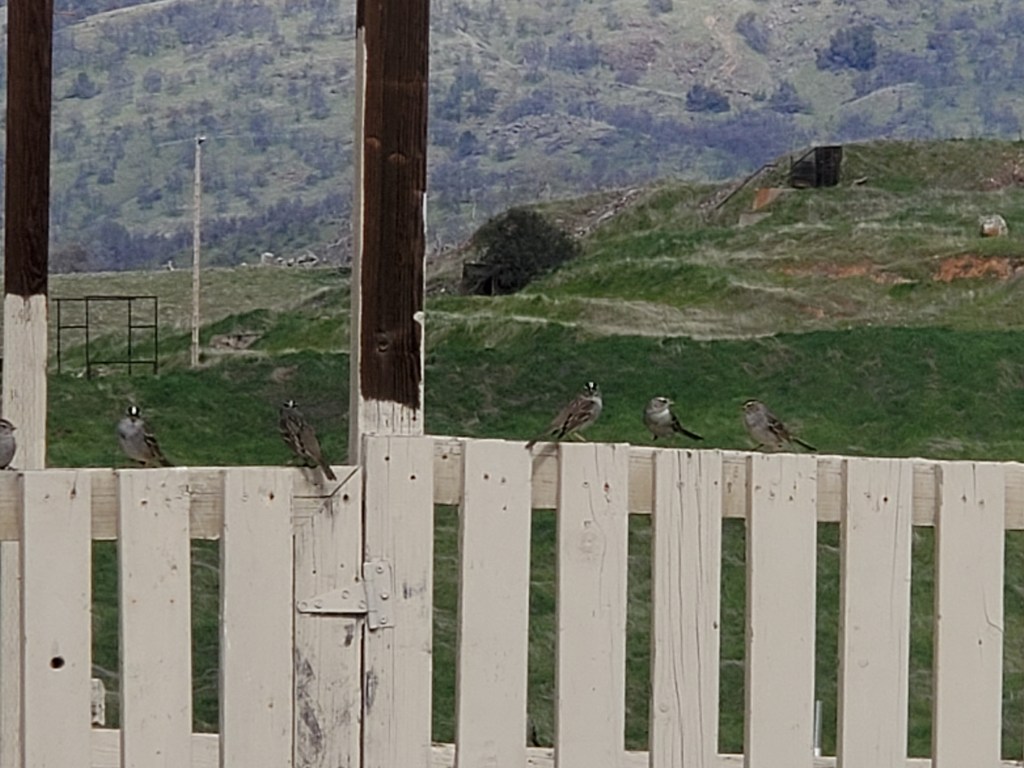
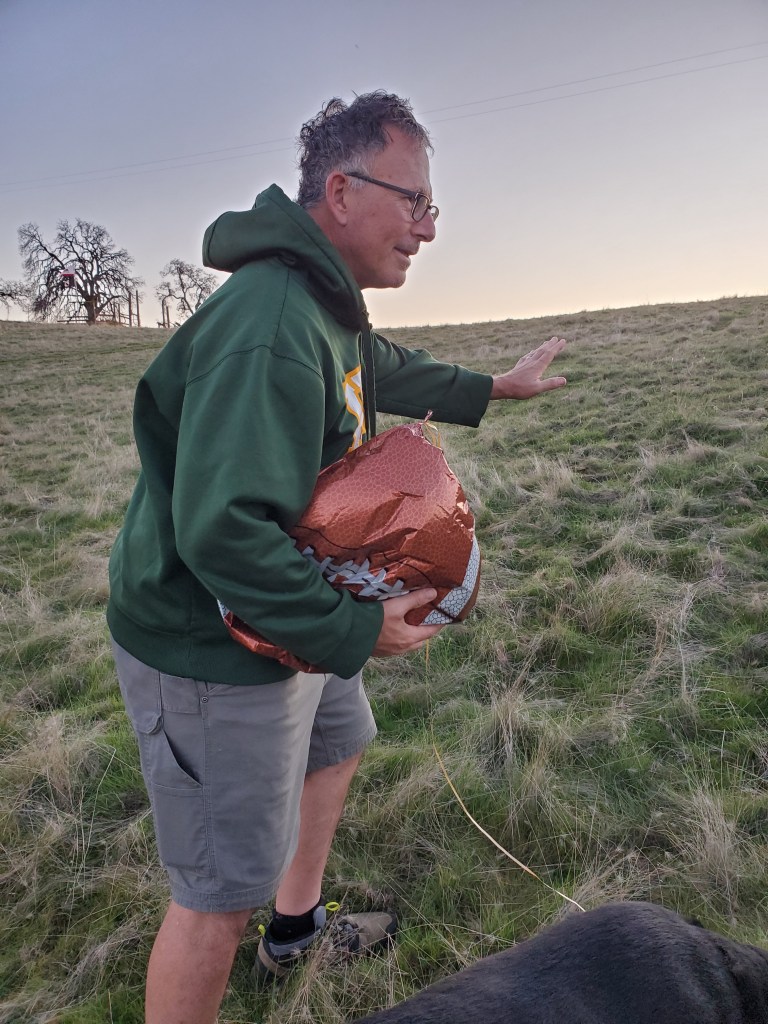
Planted an oak I found among my nectar plantsWhite crowned sparrows hanging outLady BeetleCalifornia Sunflower. Planting nectar plants in addition to oaksMylar football balloon in the far north fieldDavid goofing aroundGreatBlueHeronMass of turkeysHawks in love
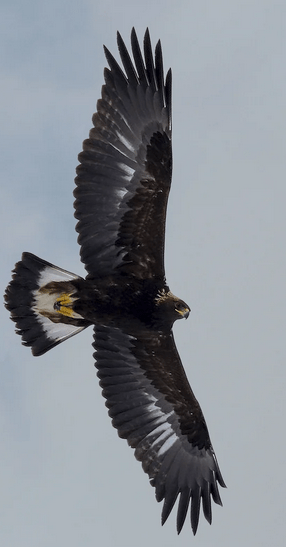
Probably the most exciting thing I have seen in a long time was a golden eagle. It honored me with its presence on February 27. I was looking out the living room windows, which look to the east. I saw a massive bird fly down the hill. It circled the tree near guzzler 1 then flew back over the house. I dropped what I was doing and flew outside. It was about over the house then, so I rushed around the side of the house to get another glimpse. It was massive with long, dark fingered wings and gorgeous white patches underneath. It flew north west, presumably to the Merced River, which is close by.
I screamed. David thought I was crazy. I couldn’t stop telling him about it. My goodness, it was gorgeous. David finally protested after the third retelling, and I said, “Now you know what it feels like when you tell me constant ‘bug in the compiler’ stories about your tech issues.” “Touché.” he said.
We are doing something right when an eagle comes to visit. We work hard to be good stewards and good ancestors. Thank you eagle for letting us know.
This is what it looked like, but it all happened too fast to get a picture. Photo credit: RaptorResources.org
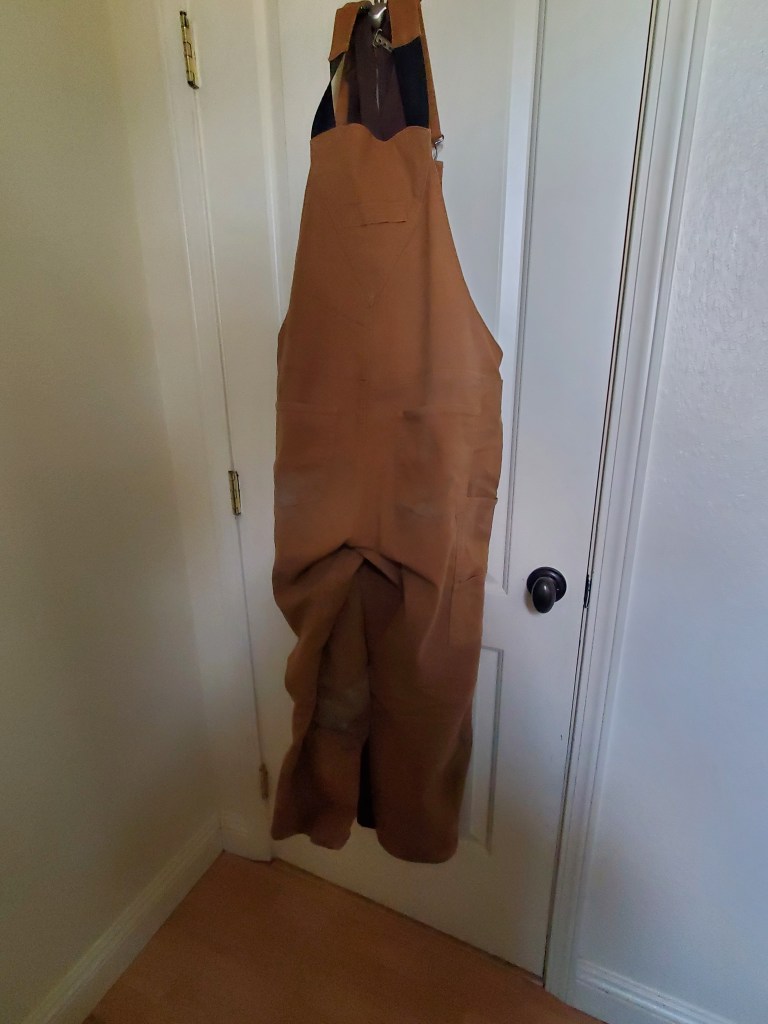
It has been a rough ten months months, especially the last few. My father’s illness has become nearly all consuming, now an irregular regular part of my life. For months, my overalls have hung in the guest bathroom, a reminder that I still have other commitments, patiently waiting for me to have time to really dig into work.
Fortunately, at the end of December, life was a little more stable, and I got to slip on my beautiful overalls once again. Ooooo, they felt so good – worn in cotton canvas covering my skin, enveloping me like a human sized garden glove. Those overalls are my absolute favorite piece of clothing.
California Milkweed Seeds Planted
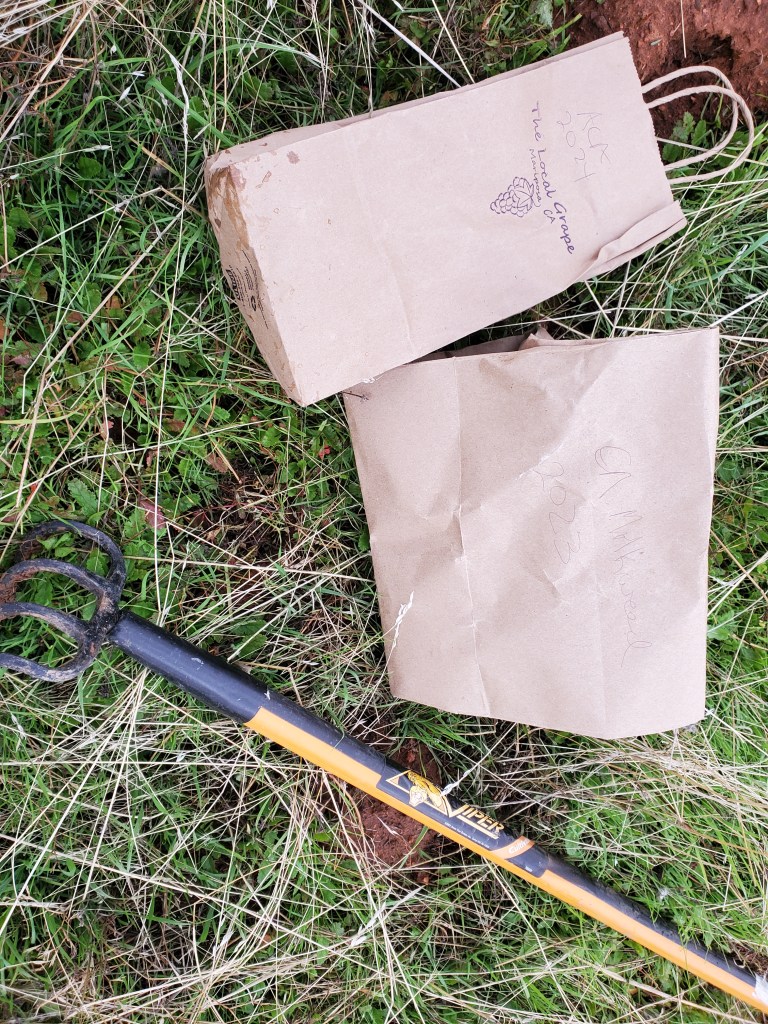
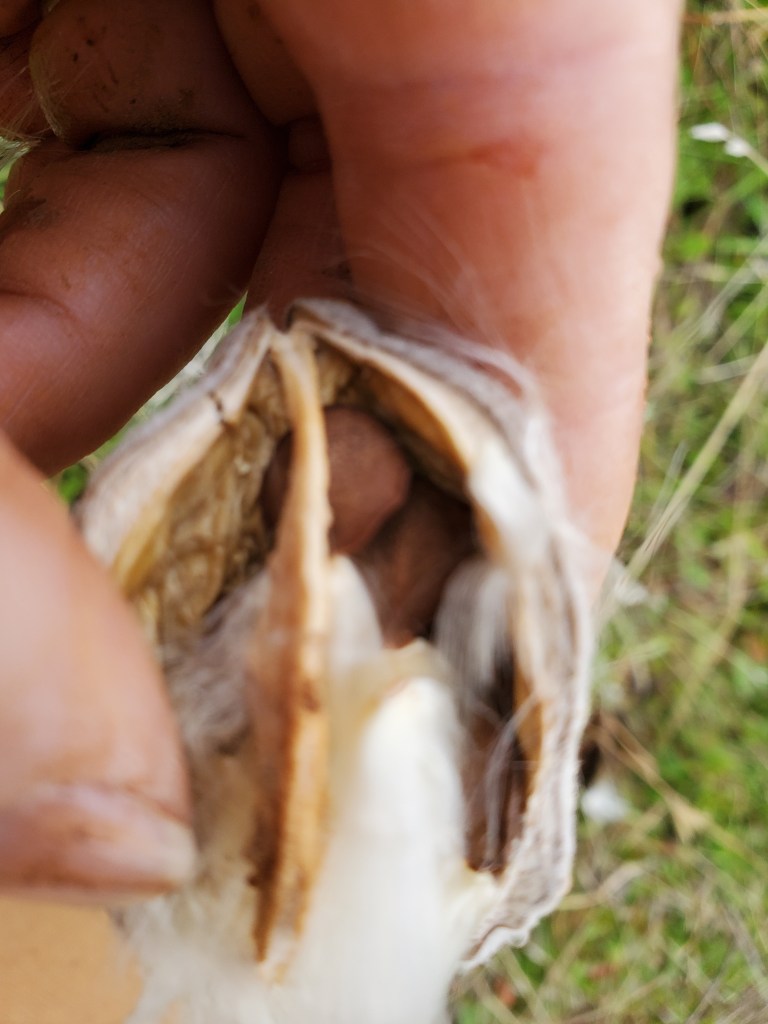
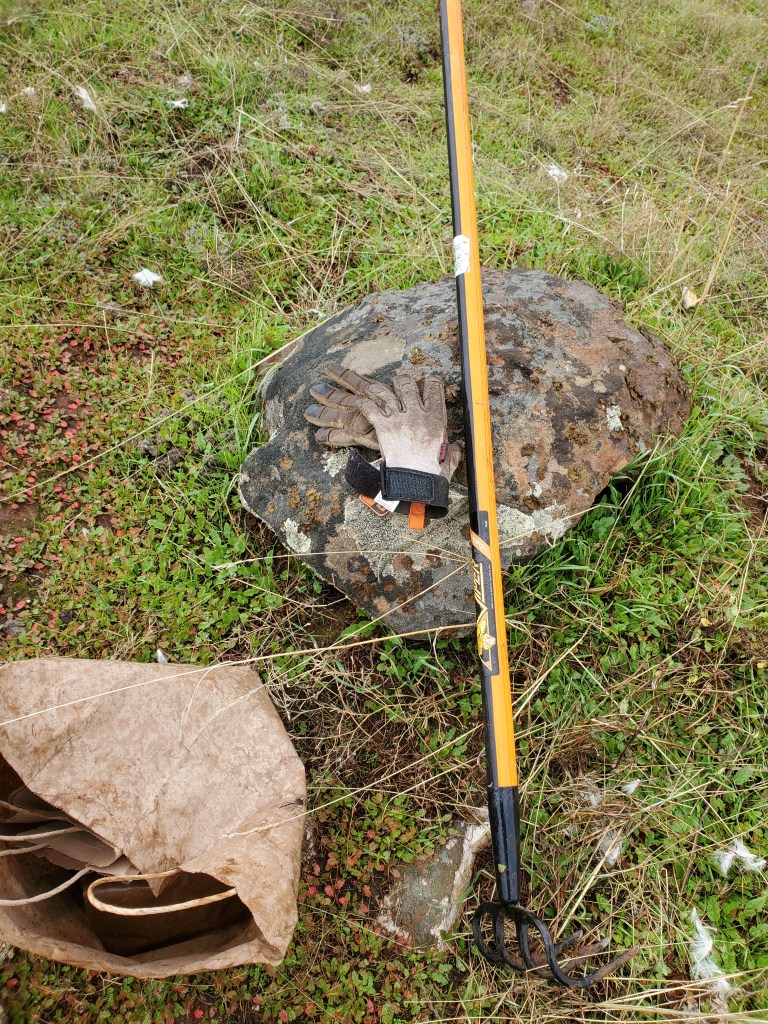
I shuttered with delight as I walked out into the cold air, overalls on, before the sun came up and with all intent to finish planting before the rain began. At a time in the past, one of the biologists told me that there was some evidence that 2 to 3 year old California milkweed seed had higher germination rates. In 2023 and 2024, the seed pods I saved from the ravages of the grasshoppers were intended for planting a year or two or three later. The 2023’s were maintained in a cool, dry, dark place for a nearly 2 years. The 2024’s were were maintained the same, but for just two seasons. I brought them both with me, including my trusty small rake.
I made my way up the steep slope to the California milkweed site to plant seeds. My goal is to expand the number of California Milkweed plants. I want them to spread all the way across the hillside acting as a welcome roadside respite for monarchs, a first or second stop on their great migration. I looked for new spots to plant. Last year, I planted the 2022 California milkweed seeds, and I wanted to avoid those locations. I chose the area of the single plant community near the dead oak. There were many spots near rocks, and along the same belt as the existing plants. I try to emulate what I see in nature hoping it provides a better chance for the seed to establish.
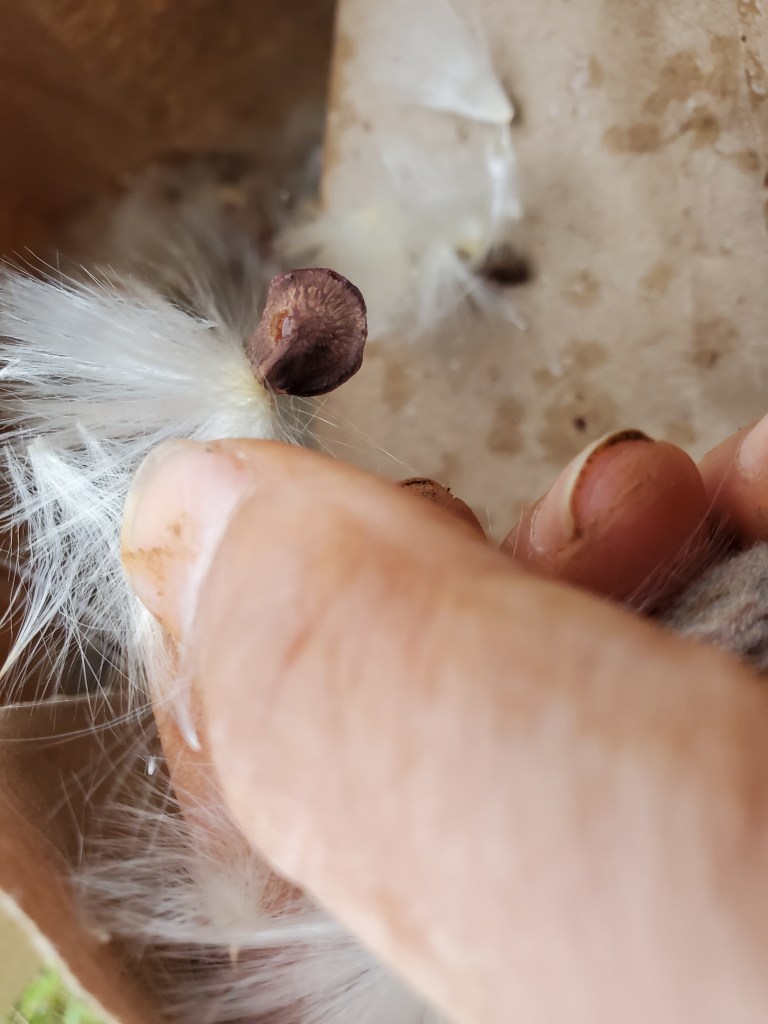
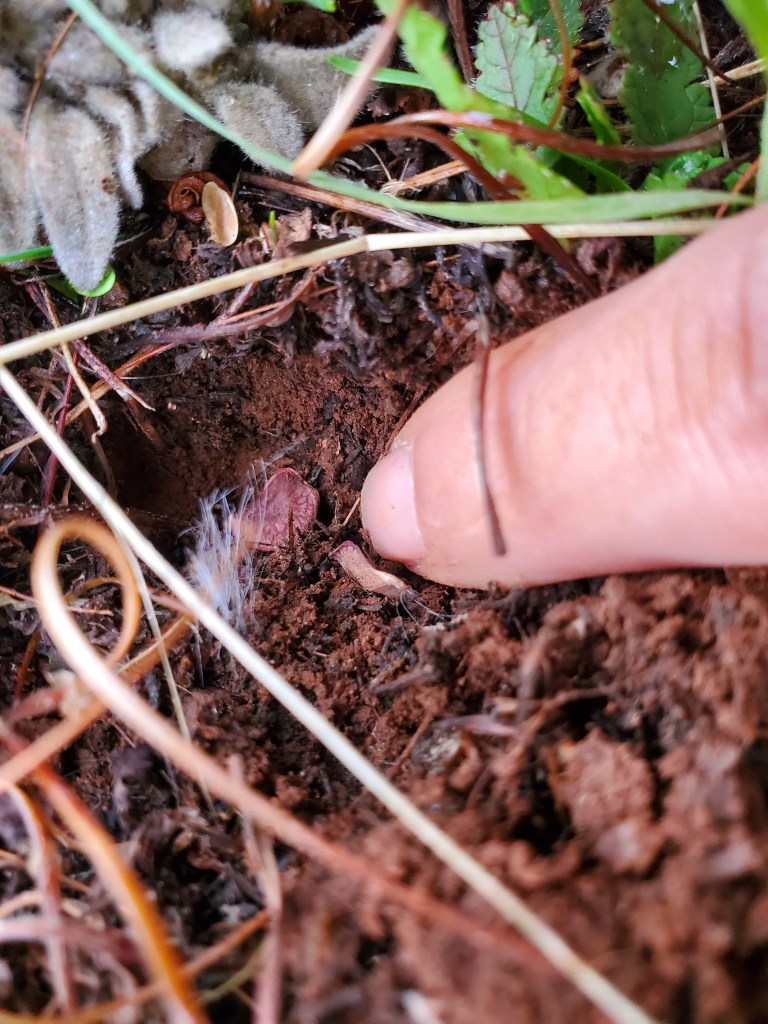
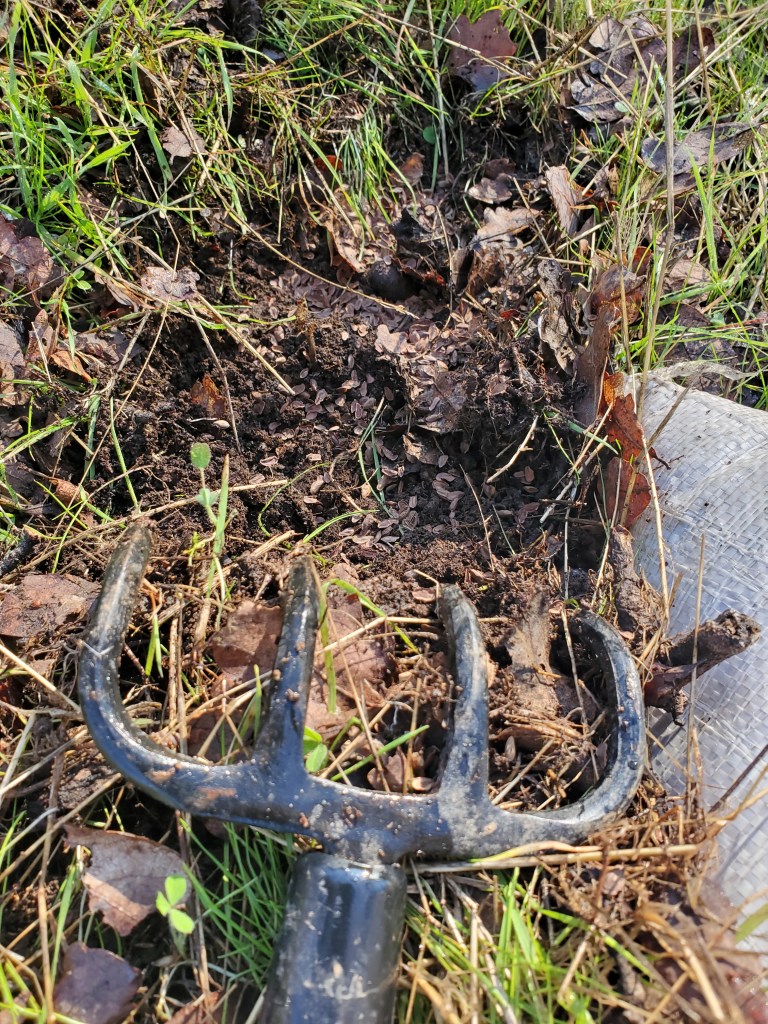
I started out raking the ground open, but quickly decided I needed to get more personal with my work. The gloves came off and the rake set down. It was me and about 300 seeds, many still connected to the fluff they are born with, meant to sail on the wind to spots further from their home. And, further from home they were — about 100 feet. I took off the fluff, made a hole with my finger and planted three to ten seeds per hole – depending on size.
It was so nice to see them after so much time. By this time, they are good friends – family, companions to me inside my home. Every seed is a treasure, embodying the past, present and future all at the same time. We all depend on this seed. When they grow, they will feed bees, flies, beetles, spiders, and yes, monarchs. Those animals will cause their own shift in the ecosystem, ending up causing my and your food to be produced. You cannot avoid being humble in the presence of such importance. All you can do is say, “Chiokoe uttesia weweria. Ne enchi nake.” “Thank you relative. I appreciate you” – and tuck them into the soil that will be their forever home, if we are lucky.
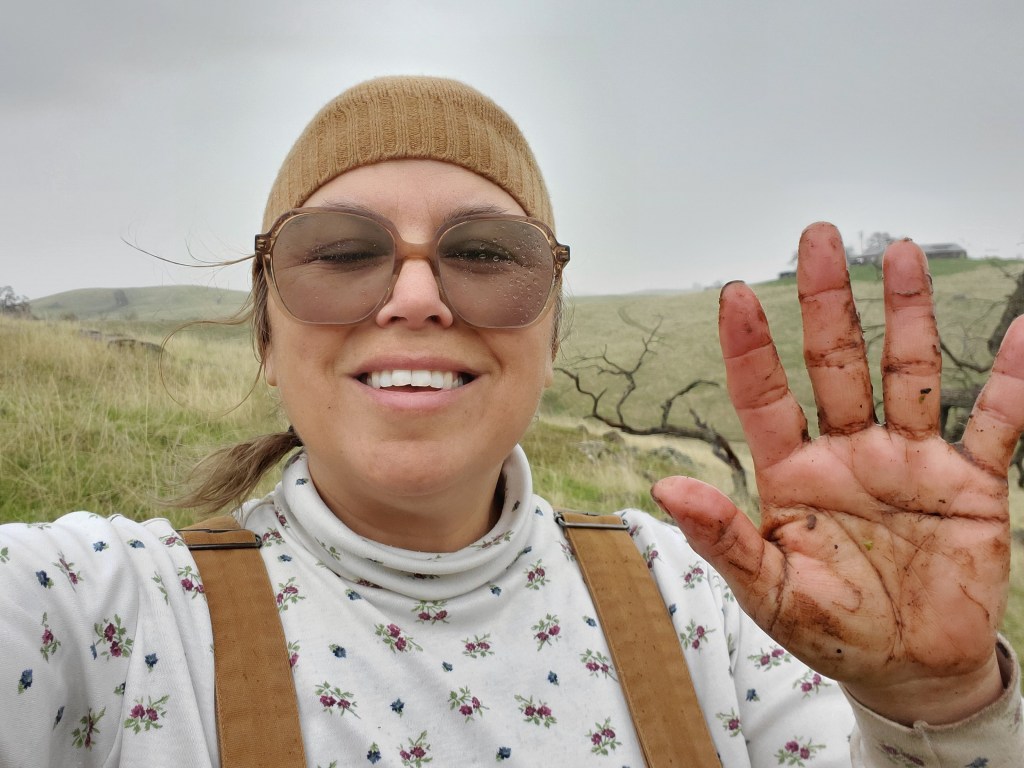
Beautiful sunriseRain is comingBags of seeds and my abandoned rakeThe treasure!Rain beginsSeed with its headdress of fluffBull sniffs Cow. Cow ignores BullOld pod of CA milkweed seed with its treasurePlanting the seeds, a little fluff made it inRake and gloves abandoned. Time to get the hands real dirtyDirty hands – happy girl
It is a joy to be out on the range in cold weather a light wind blowing. I came without the dogs this day, but I was not alone. The low growl and then pant of the bulls on the ranch, like teenage boys, following the ladies around, trying to get their attention. What entertainment – watching a bull make such a ruckus! The story unfolded down the hill from me. I watched him lower his head and call out. The ladies ignored him and began to slowly walk away. He followed behind them, hoping for some attention. The hill got too steep I think, because he stopped and she kept on going. Oh so sad. The next time I looked up he was standing alone looking up the hill wondering where the ladies went and why they were not totally impressed. Don’t feel bad; they will eventually get together and a new tranche of babies will dot the hillside.
The birds also keep me company. Their songs are beautiful, but they also serve as an alarm for me. I know when they stop singing the weather is about to get bad. I am, after all, racing against the weather to plant these seeds. I want them to be in moist soil so they have what they need to begin to grow when the weather gets warmer and the soil heats. I start to see drops on my leg and on the bags. The drops come and go. It isn’t until the birds stop singing that I decide it is time to go. The rain is coming down steadily. The seed bags are soaked. I didn’t get a chance to plant the 2024s, but all the 2023s are safely tucked in. Mission accomplished. I head back home.
Narrowleaf Milkweed Planted
Since early 2024, I’ve had a 40lb bag of narrowleaf milkweed seeds. My intent was to plant them all last winter. I was was able to get about 1/3rd into the ground, but I ran out of time. With the rains taking a break in late December 2024, I made plans to seed the riparian exclosure areas. It had been some time since I was in the mid-section of the ranch. It was a joy to be out there on the creek. Over two days, rake in hand, I was able to plant the entire stretch of Spring Creek, even beyond the exclosure, and the entire stretch of Odom Creek inside the exclosure. Fun, but I now have a stiff neck!
I changed the type of planting sites to, hopefully, give the seeds different opportunities to establish. The existing milkweed on Odom Creek I have found just off the main area of the water flow, but in the creek bed. I have also seen the showy milkweed I planted thrive up higher on the creek bank. With this observational experience, I chose a variety of locations up and down the stream, closer and further away from the water, uphill and downhill, in disturbed areas and in areas with existing grass growth, next to rocks, away from rocks, in sandy soil, in clay and in loam. I hope something will establish!
I also tried a couple new things in the Spring Creek site. There was an area where the cattle had trampled wet earth, many wet holes, ridges and the like. I used the holes in the disturbed ground as moist areas to plant in, then I raked the area smooth again with the seeds within the soil. We will see…
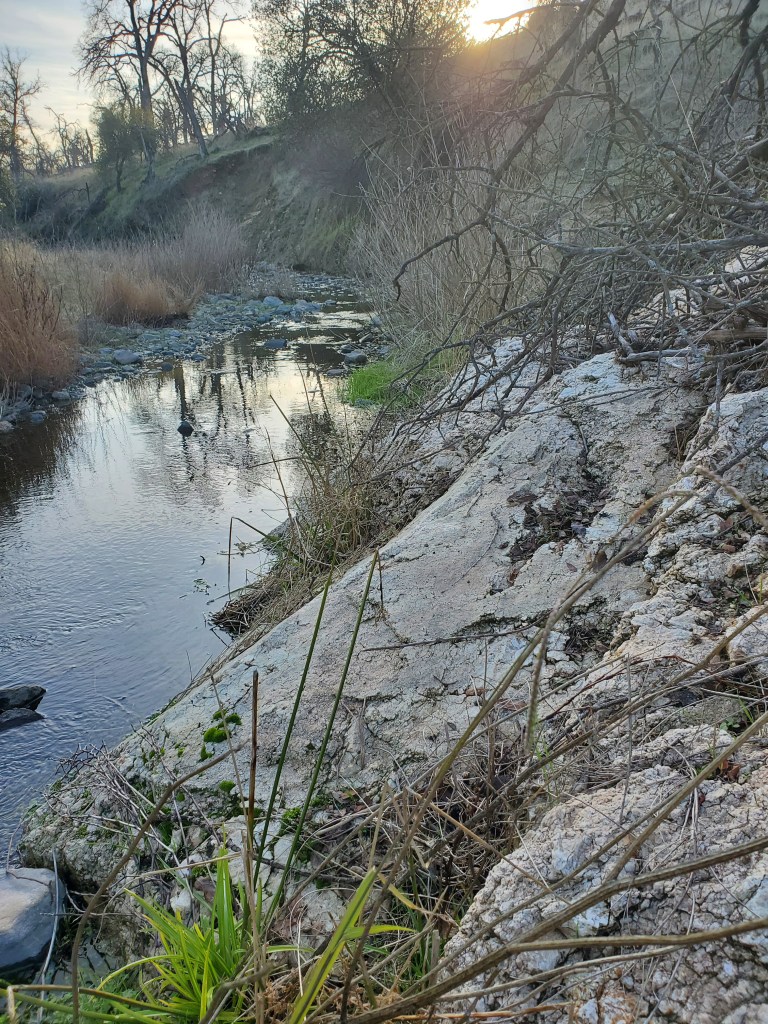
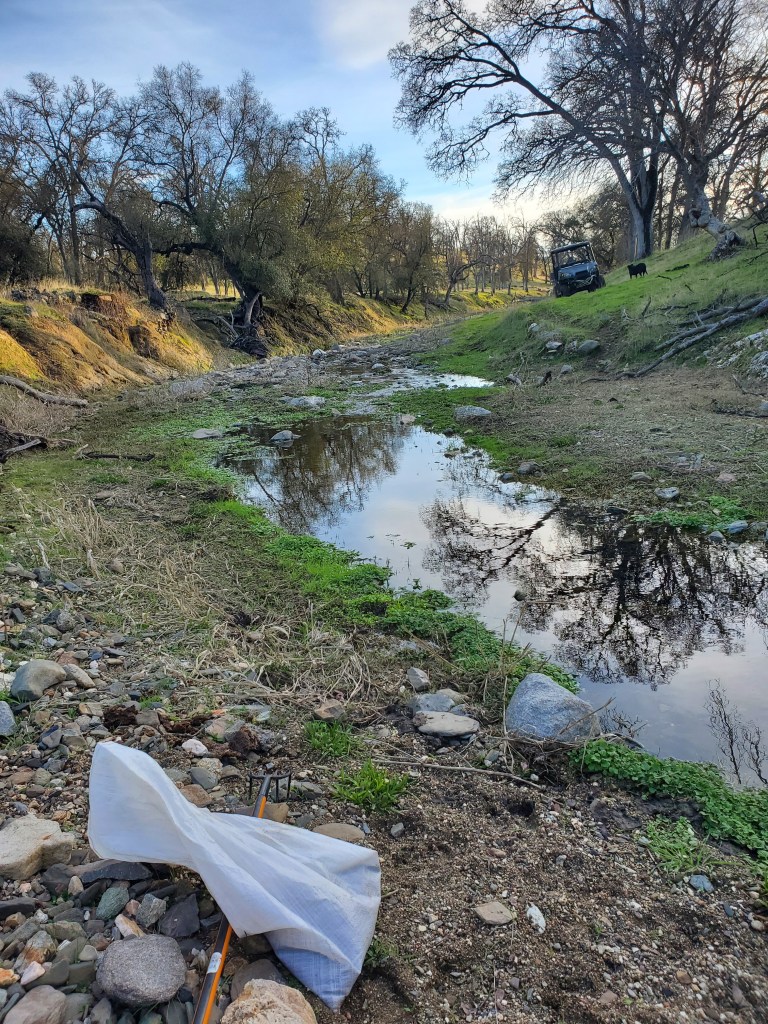
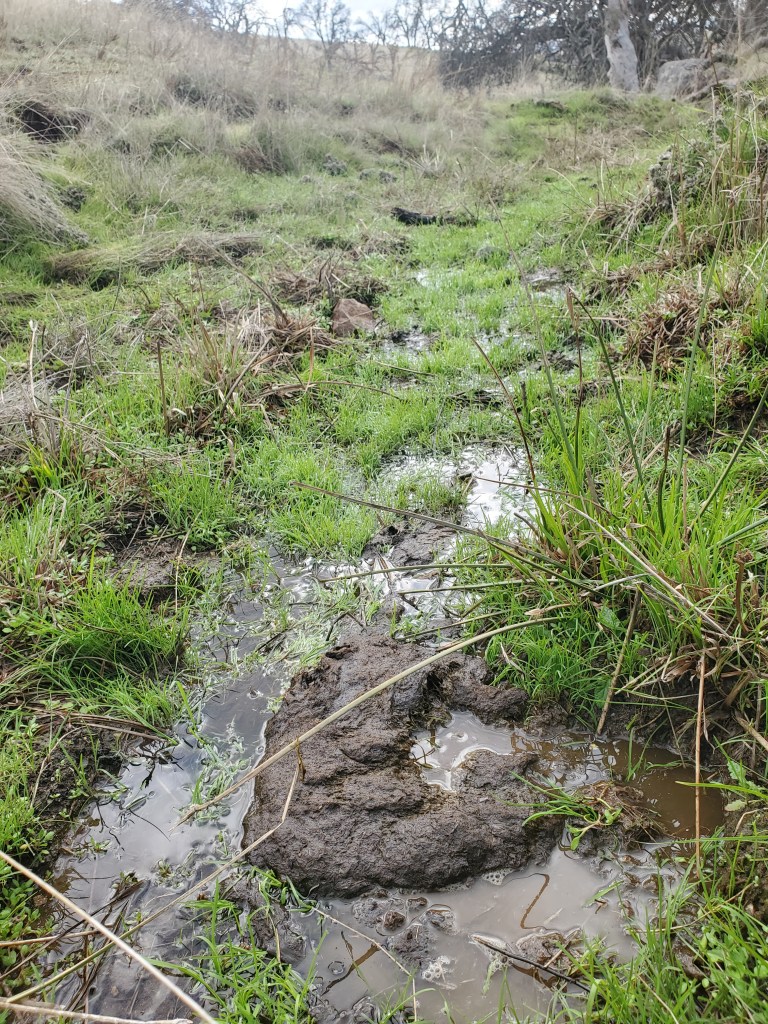
On my walk up stream, I found a few cowpies in the creek. This is not good. It adds significant organic matter/nutrients into the water, which promotes algae blooms when the temperatures warm, diminishing the water quality. I scraped some earth up the bank, put seed in, covered it lightly, then took the cow pie out of the water and placed it on top of the seeds. I got this idea from a California Association of Resource Conservation District conference session in December. It was a session on oak recruitment on rangeland with Kurt Vaughn and Alex Palmerlee. One of the tools they used in providing nutrients to acorn plantings was a slurry of cowpie and water. The audience could not stifle their amusement as the guys discussed the delight they had in mixing cow poo with water to make a mulch. Definitely gross to some. If it works better, what an abundant resource on ranches.
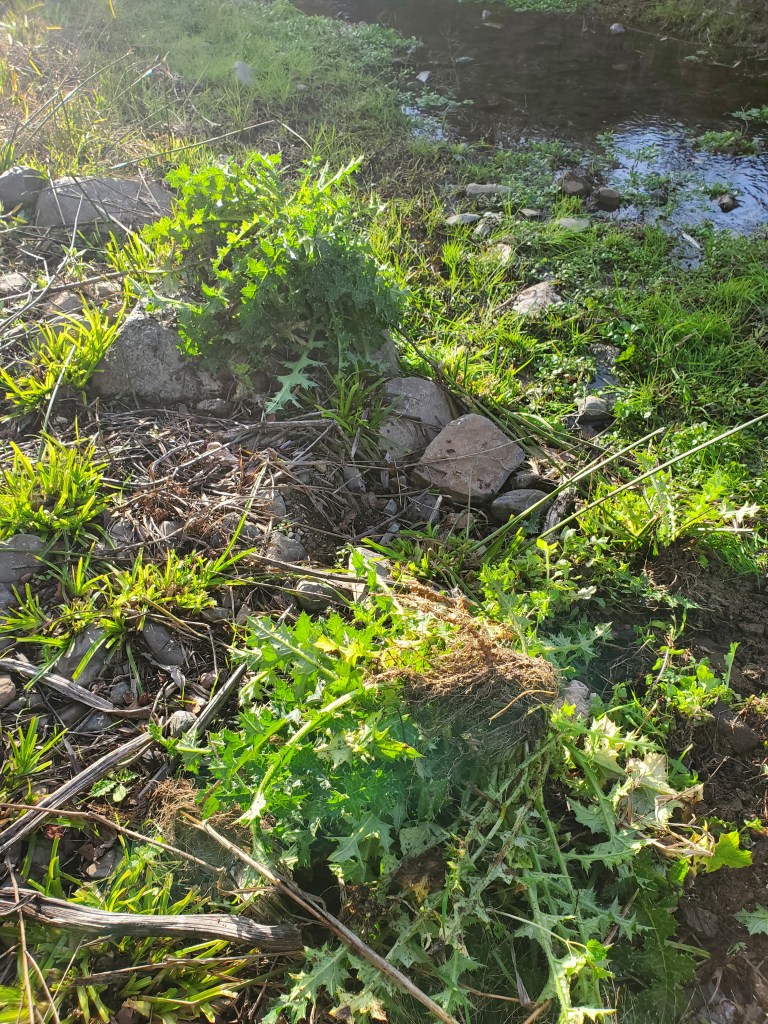
Beatrix along for the rideYikes! Oak branch fell on riparian fencingBranch weighting the tin lower against the groundBeautiful – Odom CreekSeep monkey flower revealed after pulling out thistleTook some time to thin the thistlePulled thistleGorgeous mushrooms all overPretty creek poolPlanting high and lowAn acorn making its way into the dirt. Hope it becomes a tree!Planting seed on the ridge above the creekSun shining throughAnother poolPlanting a large swath of creek bankScraping the soil, seeding, then raking the dirt overSeeding up hillSeeding down lowTried something new. Used cow foot holes to plant the seeds then rake them smoothRaked over cow foot holes with seeds plantedLupine leaves already emergedMy wonderful old oak friend who grew x3 since excluding the cattleCowpie in the streamUsed cowpie to cover seeds. Maybe they will grow better?Seeding in the Spring Creek moist soil areaA taawe weweria (hawk relative) flies over to check out my work.
Acorn Gathered for Tree Planting
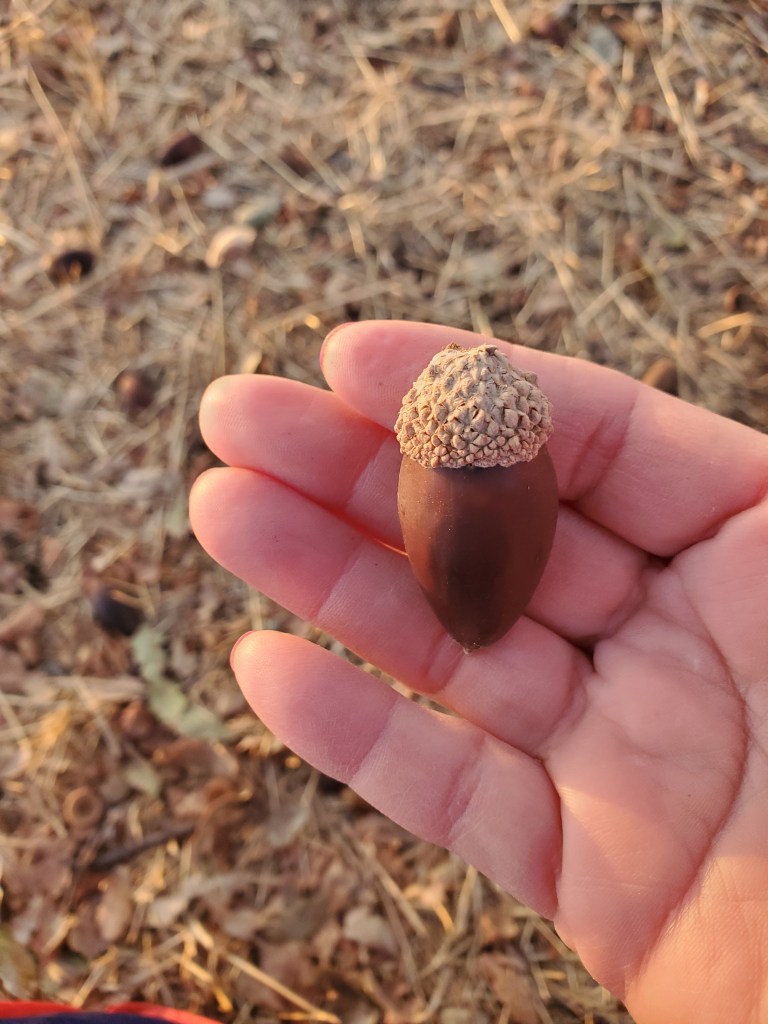
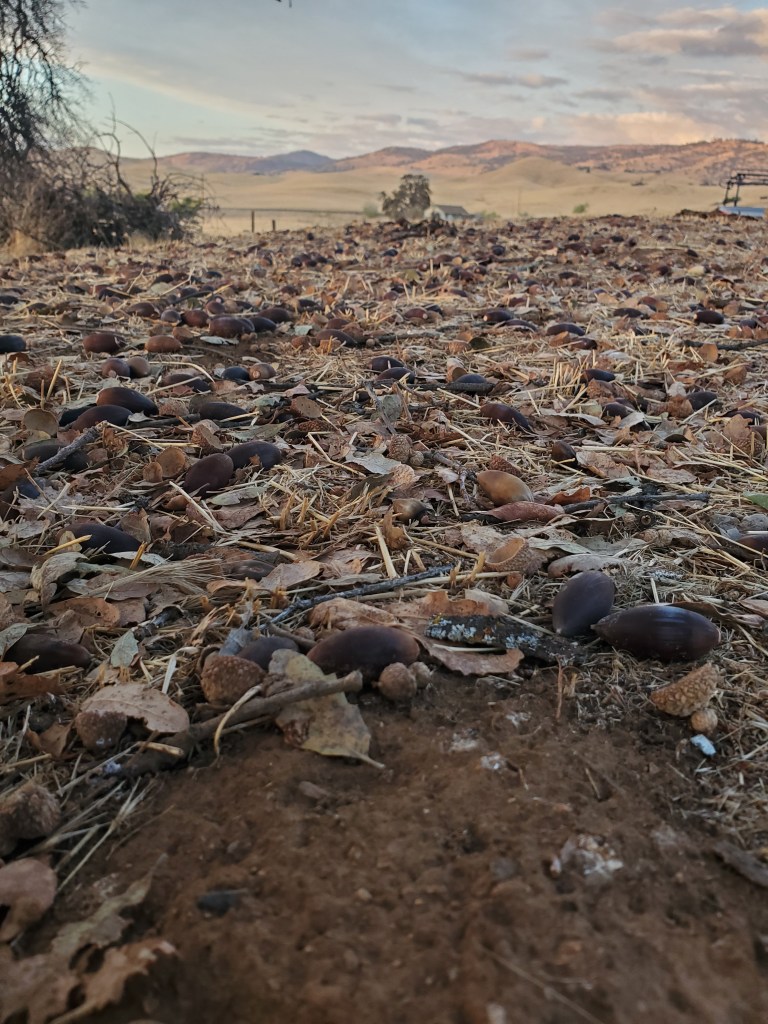
While I did not have time to gather acorn for flour making, I did have a chance to gather about 200 for planting across the ranch. I harvested from the grand old oak near the house and the smaller oaks in the Spring Creek riparian area. I am planning to do a combination of seedlings (16), and the rest will be plantings of acorn. I do not want a repeat of last year when the grasshoppers ate all my back-breaking work.
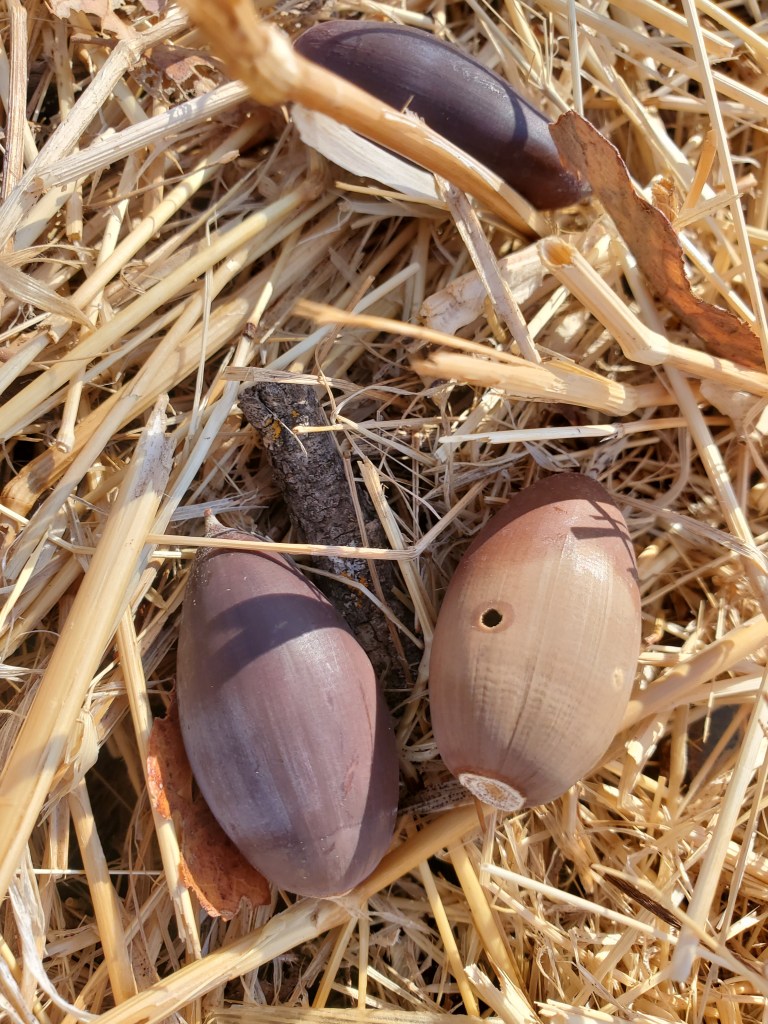
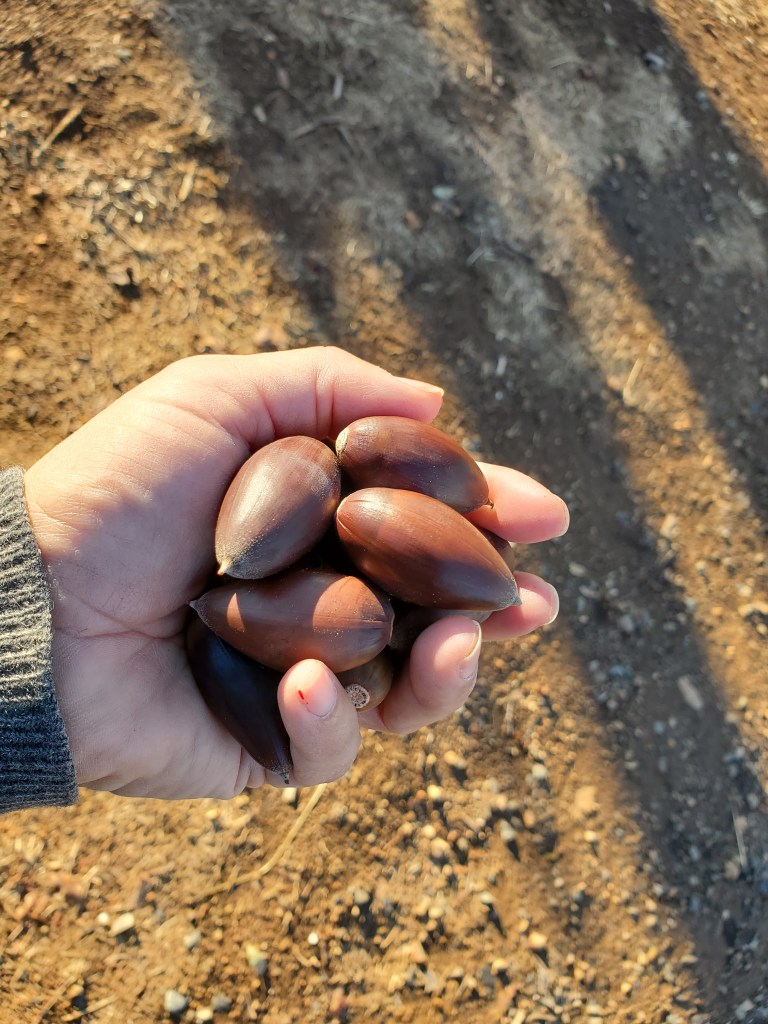
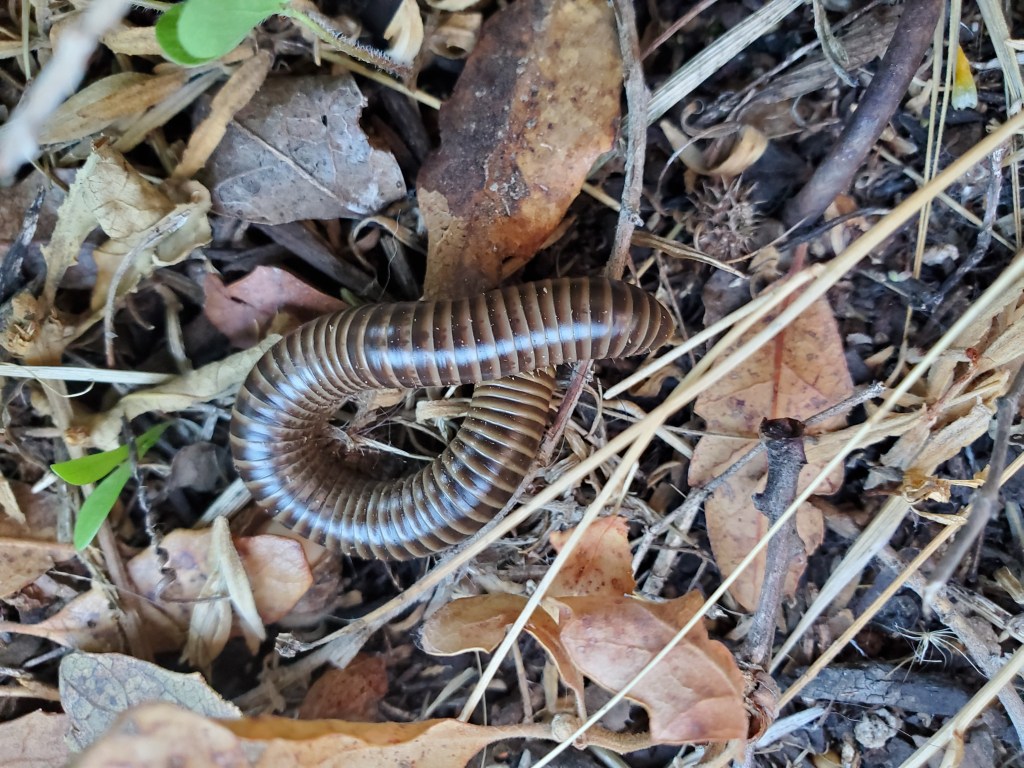
Perfect acornMast year. Thousands of acorn everywhereMillie and Beatrix help collect acornAn example of what you do not want when gathering for plantingHealthy, dense acornA worm friend I found along the wayLots of acorn to chose from
Storms Bring a New Guest
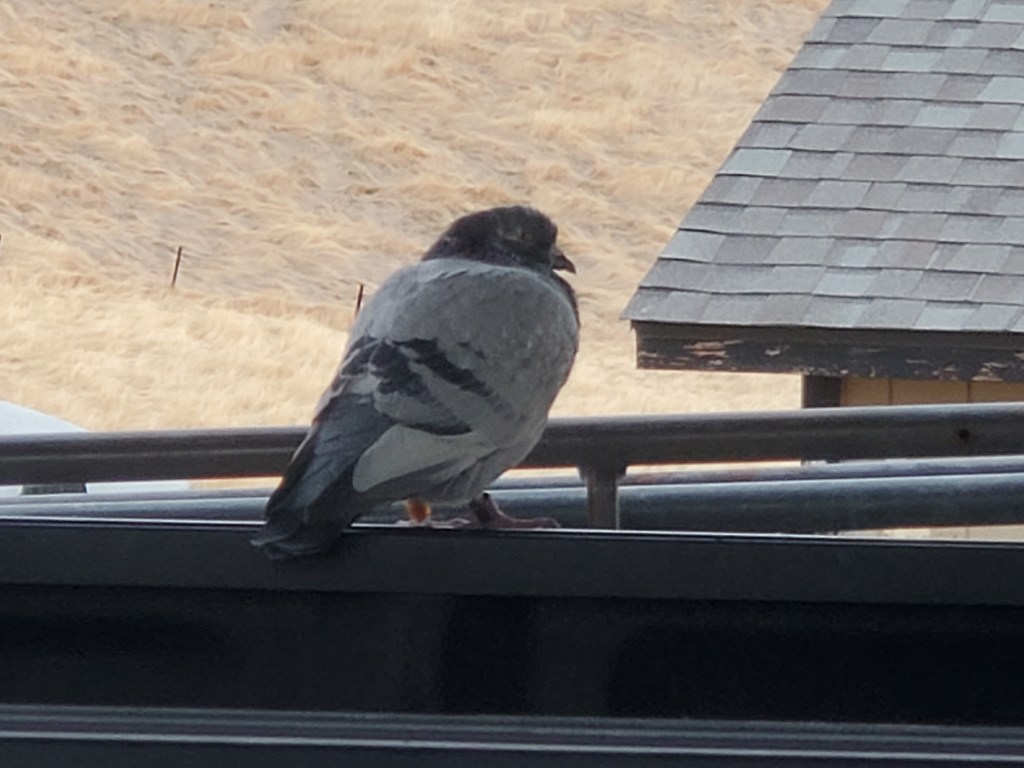
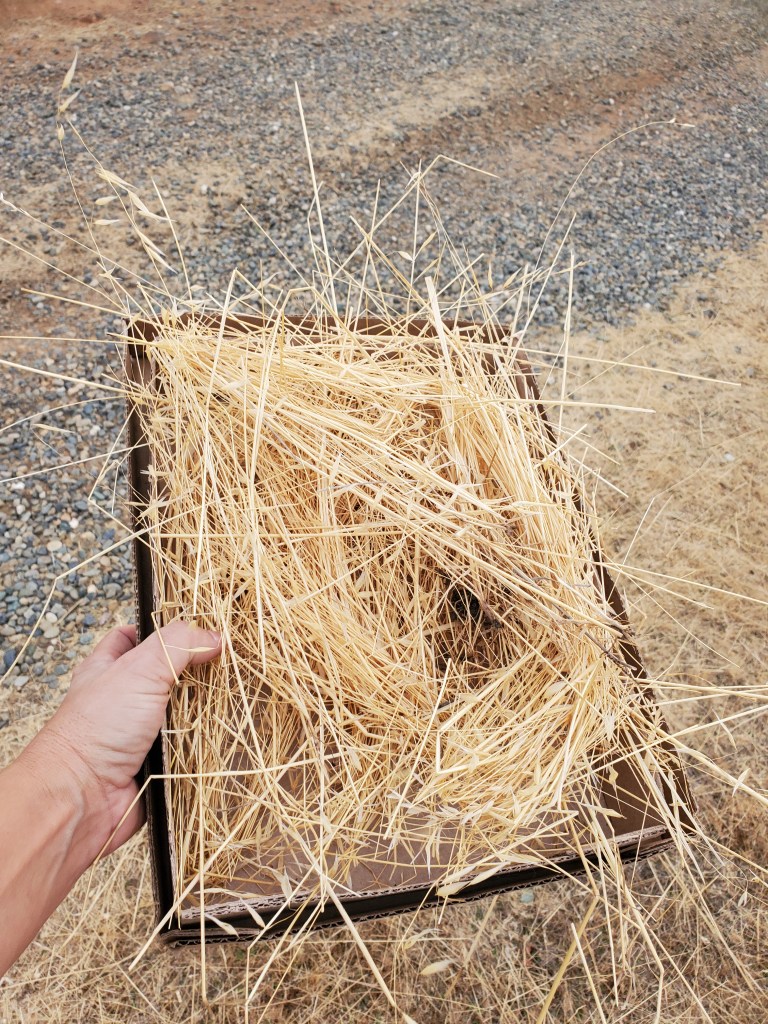
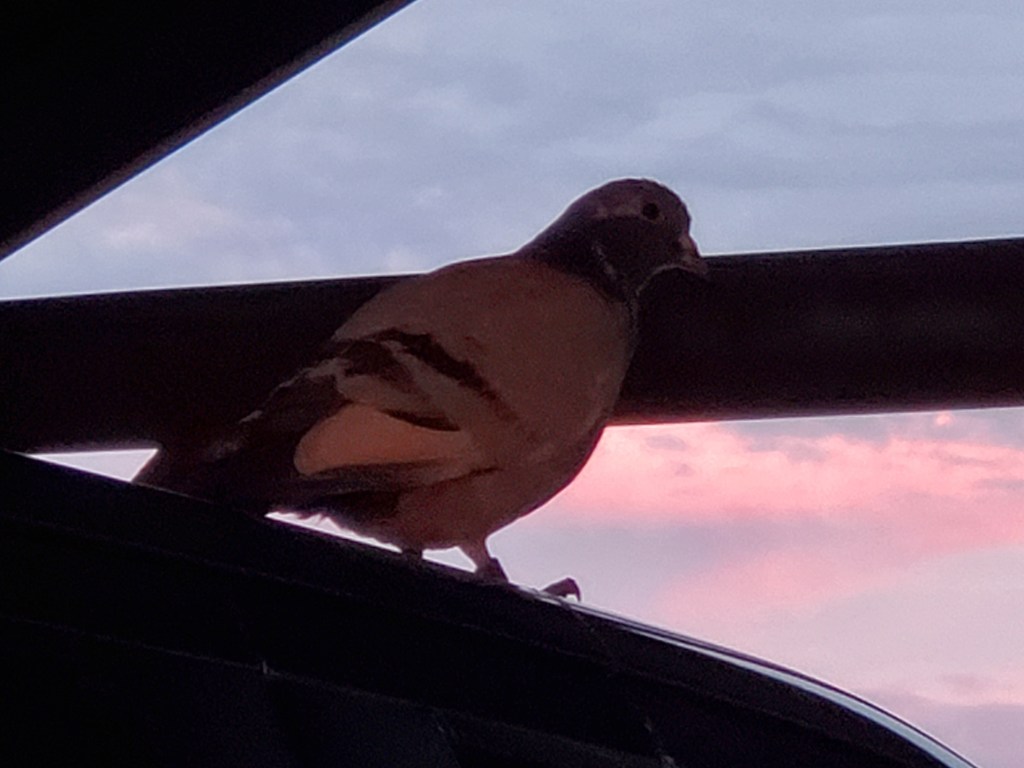
During the December storms, a new guest showed up that I’ve never seen here before. It was a pigeon. The pigeon had bands on its legs, so we knew it belonged to someone. Every time we tried to get close to look at the bands, it would fly away from us. David built it a roosting box and attached it to the underside of the carport. I made it a little bed. It stayed with us a week. At first, it roosted on the truck under the carport. Then, when we were working outside and had the garage open, it decided the garage was better and roosted on the ceiling beams. At dusk, the bird would perch on the gutter outside my office window and stare at me. I would come outside, and it would fly to in front of the garage door. It was saying, “Hey lady! Open the door so I can roost for the night.” It was really neat at first, but then we saw the piles and piles of poop on the vehicles, patio and in the garage. After the bird stayed several days after the storms were over, David felt it was getting too comfortable. He hatched a plan to see if it really wanted to stay or if it was just being a bit slow going back home. The plan was to prevent it from roosting inside to see if it went back to roosting under the carport. The pigeon didn’t stay. It decided to go home – or find another temporary housing situation. We are definitely suckers for animals, so it is probably good it didn’t stay.
Catching Up – So Much More Accomplished
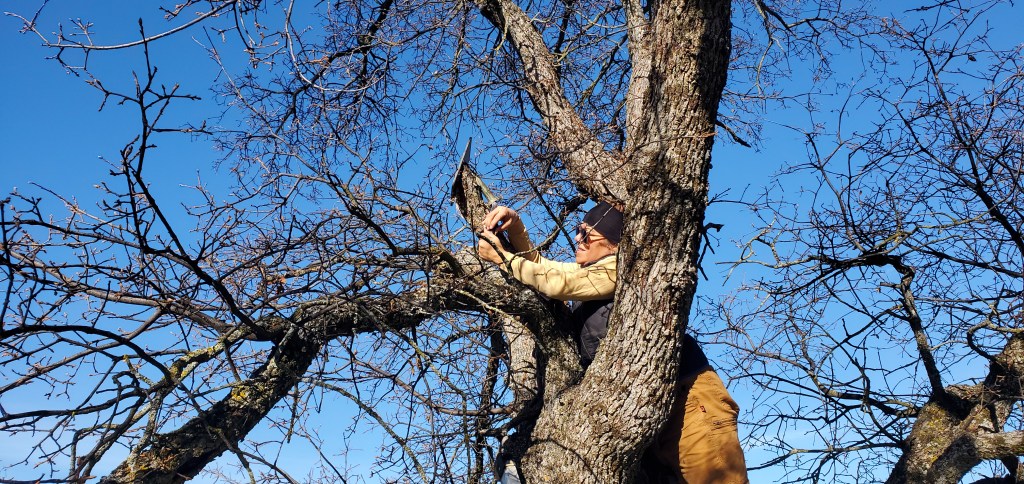
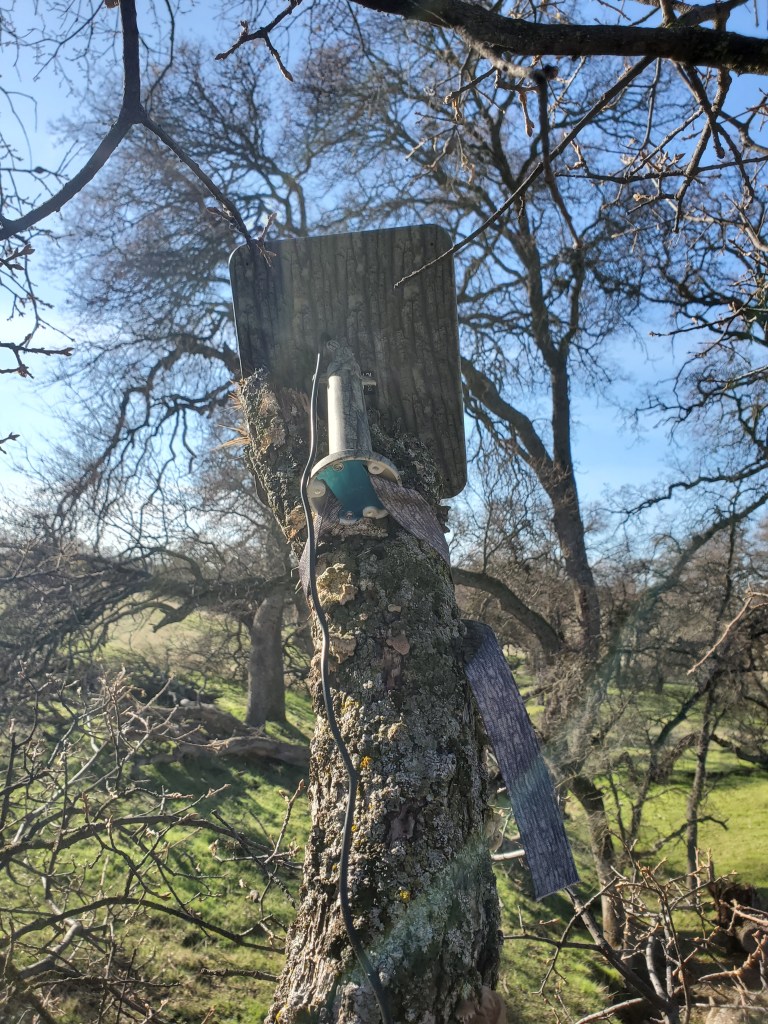
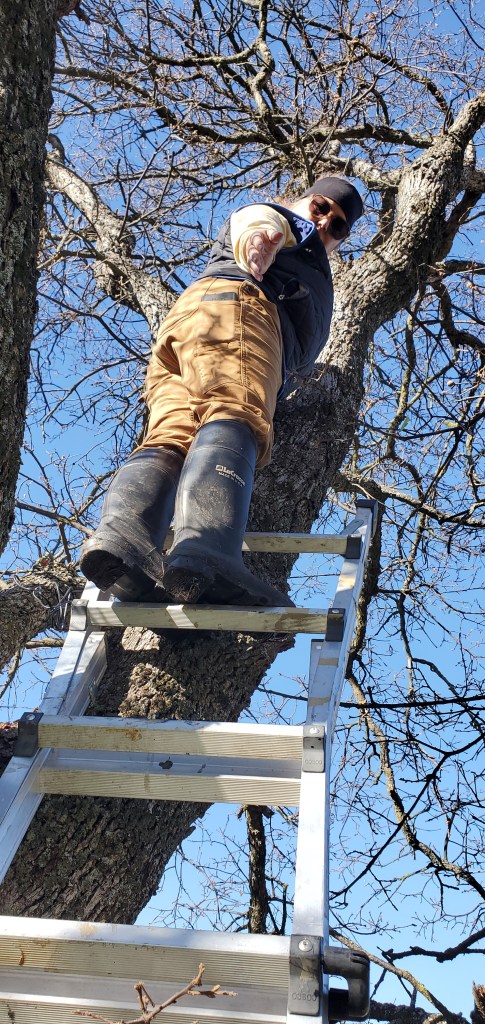
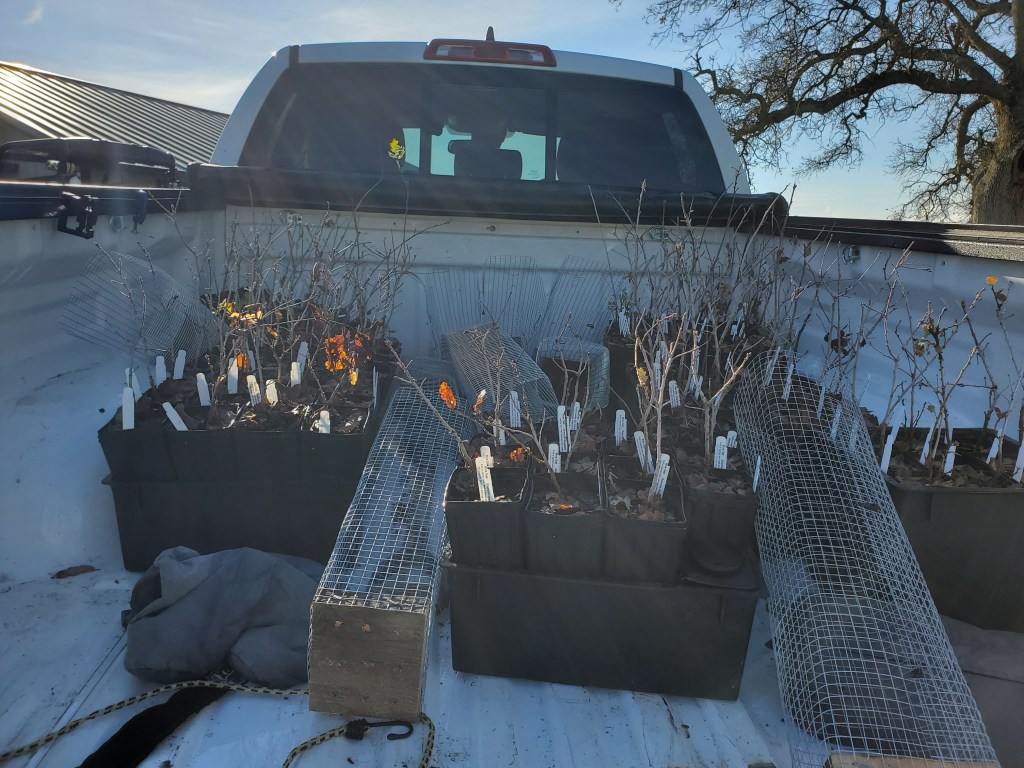
In addition to the seed planting, I have also gotten more plants from Ron Allen at Mariposa Native Plant to install. With the help of David, we set up another game camera. It was super fun to climb a tree. In the end, we decided a fallen tree trunk was the better view. The cell signal is not the best there, so we may yet move it again.
The new guzzler for the back of the ranch also arrived last week. It will help make water available to wildlife when/if the creeks run dry. They have been extremely helpful to wildlife during the late summer and early fall times when water is not as plentiful. We have gotten some fun photos of visitors to the guzzler. My favorite design element is the built in ramp. This way, no one drowns.
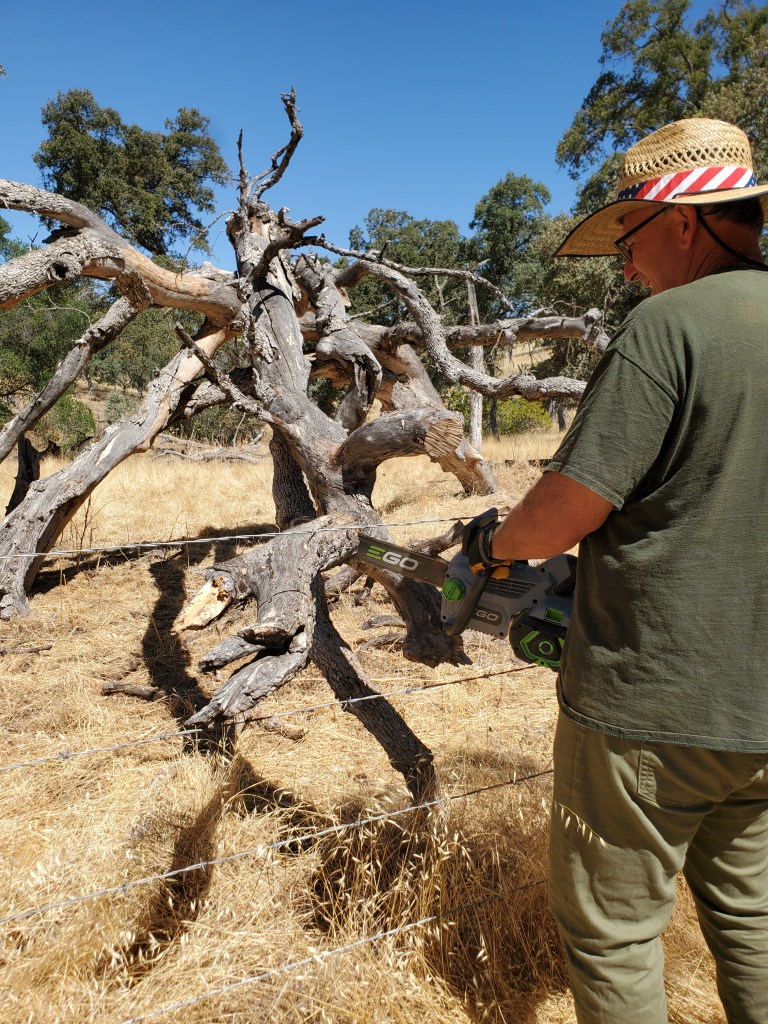
As noted in the passage above about narrowleaf planting, an oak branch had fallen on my exclusion fencing. The storm had also knocked down some branches and trees across the neighbor’s section of the cattle road. David and I ended up doing a bit of chainsaw work too.
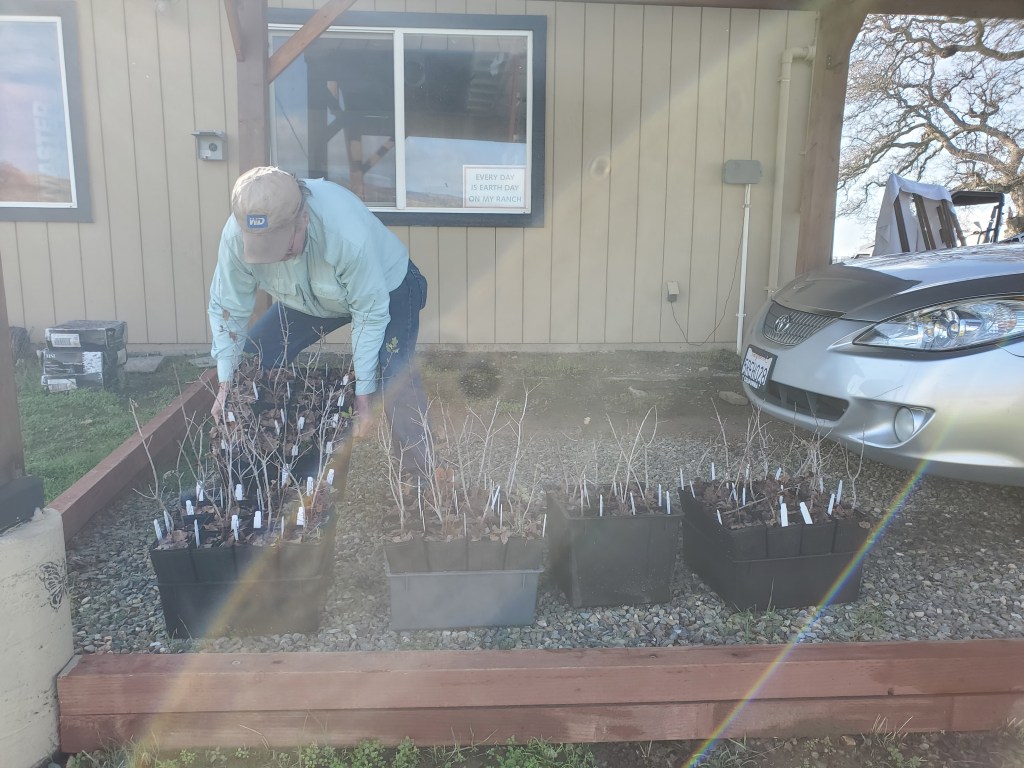
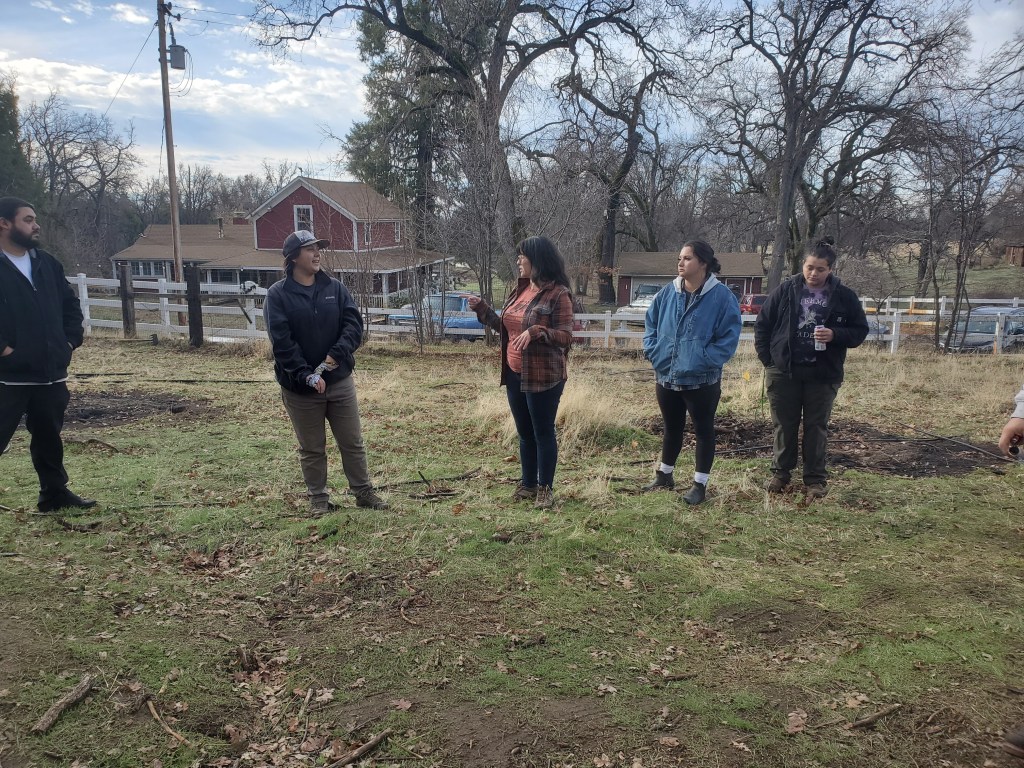
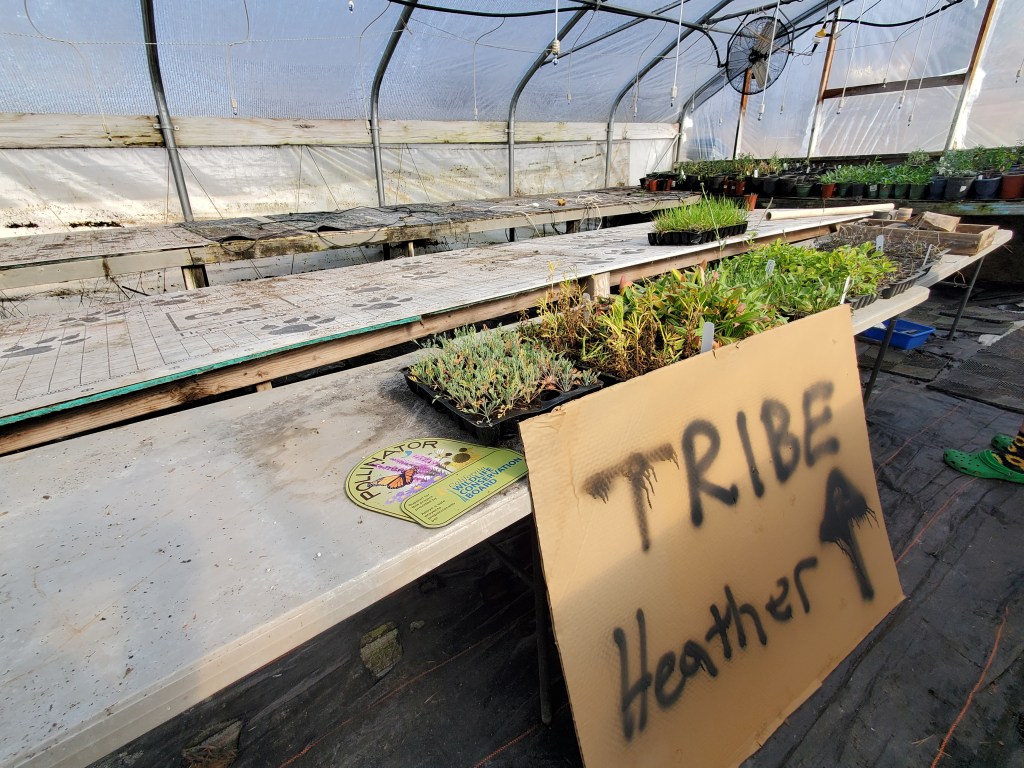
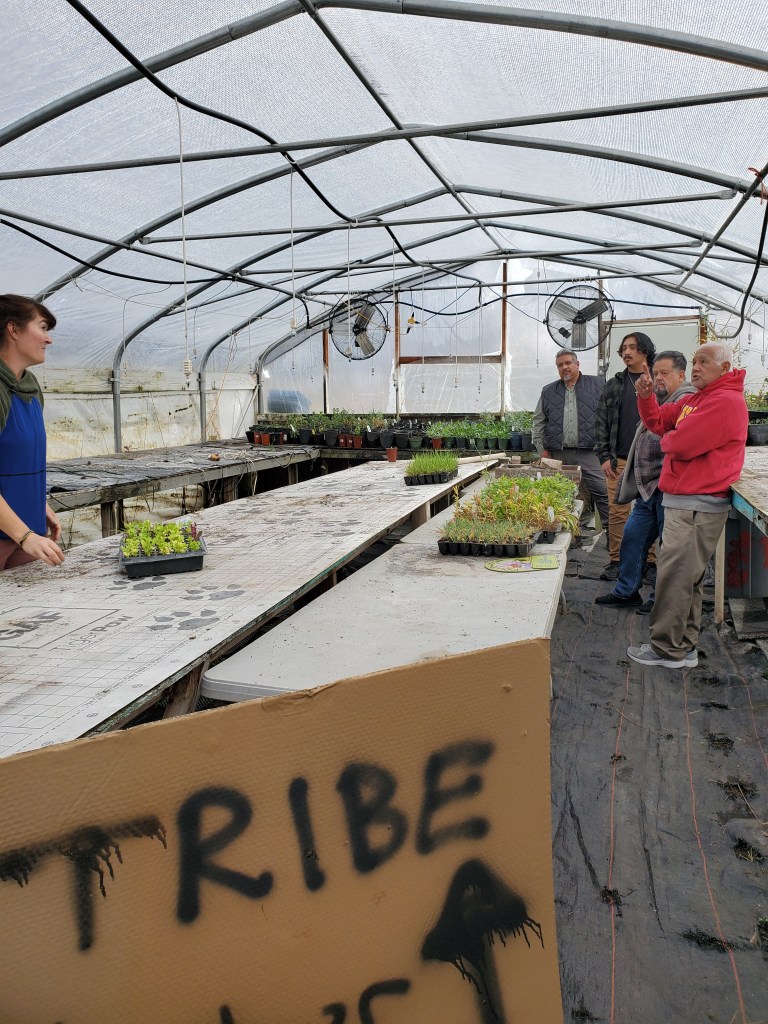
I worked with a few Tribes and Indigenous led organizations over the last month. I volunteered with the Southern Sierra Miwuk Nation to install plants for their massive restoration work on a village site. In November, members of the Tubatulabal Tribe (Eastern Kern), including Tribal Chairman Robert Gomez came to Catheys Valley to pick up their Xerces Habitat Kits. The kits were generously picked up and stored at a friend’s farm, Raw Roots Farm, so the Tribe did not have to drive so far north to pick them up. The Tribe is undertaking a major restoration effort themselves and wanting to start a farm to feed their people.
Finally, the 108 blue oaks from Butte County acorn arrived for California Open Lands, a nonprofit led by Mechoopda Tribe member Ali Menders-Knight. I had ordered them last year for my restoration efforts, but when a catastrophic fire burned through their lands in Butte County, I knew that those seedlings were for them. The acorn came from grandmother trees in that area, and would now need to head home to heal the land. How serendipitous.
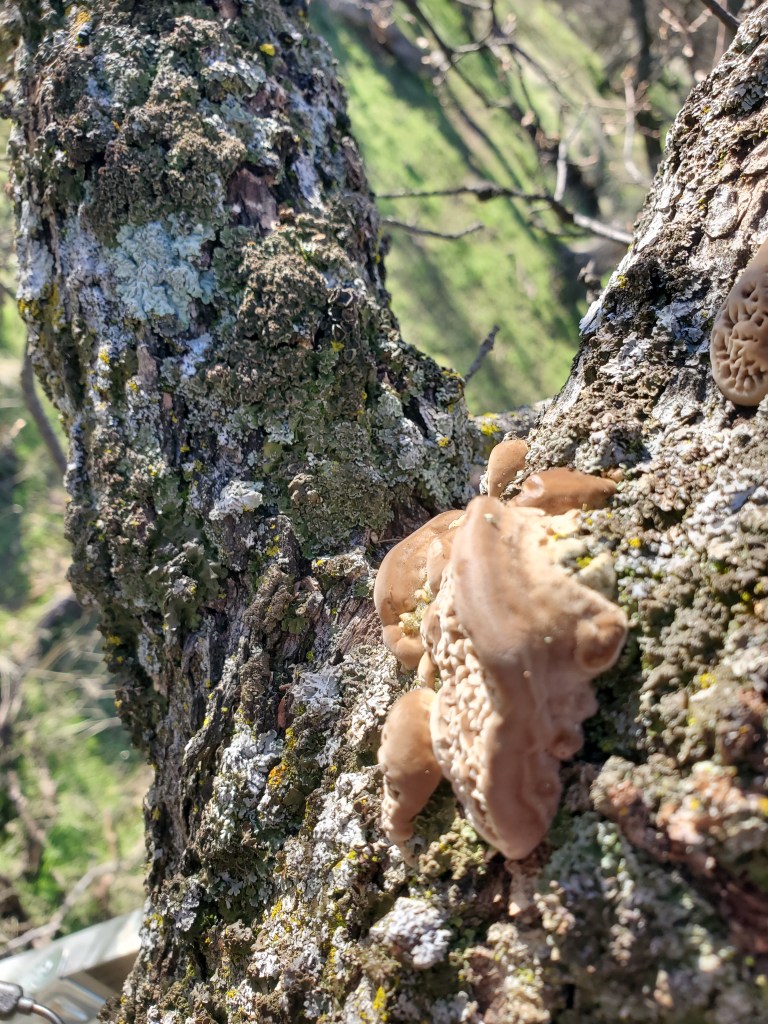
David places a later to help me get into the treeAttaching the solar panel that will keep the camera chargedFungal growth on the treeThe solar panel fit snugly on the end of a branchDavid hands me the camera nextBeautiful weatherCam moved to straight view towards the brush pile and creekRon delivers more oak seedlings and cagesThese 108 seedlings will go to Ca Open Lands to reforest their Tribal lands burned in the Butte County fire last yearDavid chops up the branch that fell across the exclusion fenceReturning from chainsaw workDead trees impacted by the stormAcross the roadGetting busy with the sawStrong man moves tree branch. They are heavier than they look!Bulls not happy about our need to cross the pathRestoration leadership giving instruction (Tara, Shana, Nellie) – SSMNOver a thousand plants and treesBringing the oak cagesDeedee and I at the planting site with the Southern Sierra MiwukRaw Roots stores the Xerces seedlings safely. Thank you Glikens!Farm caretaker answers questions with Tubatulabal Tribe membersChairman Gomez finds the perfect veggieWalk and talkDavid fixed the tin the storms disconnected upstream of the swale pondSwale pond is filled with water backed upNectar plants ready to be plantedGuzzler arrives!Built in ramp is a life saver
Tending the Monarch Habitat Plots
Every year, I think I am going to trim grasses early and place coir pads around the monarch plants so that I can find them in spring and not mow over the baskets. I never do. BUT, this year is different. I got to at least one plot already, and I am staged up to do the others. For the plants whose roots run, like milkweed, I will remove the coir pads close to emergence time to allow for more plant material to emerge.
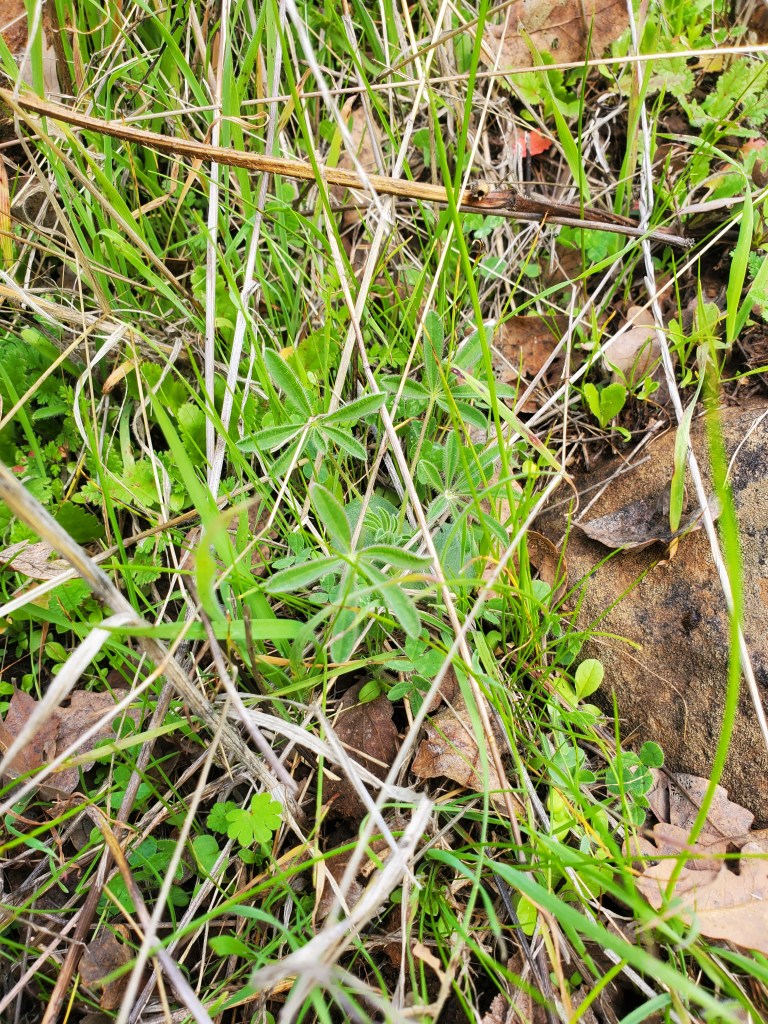
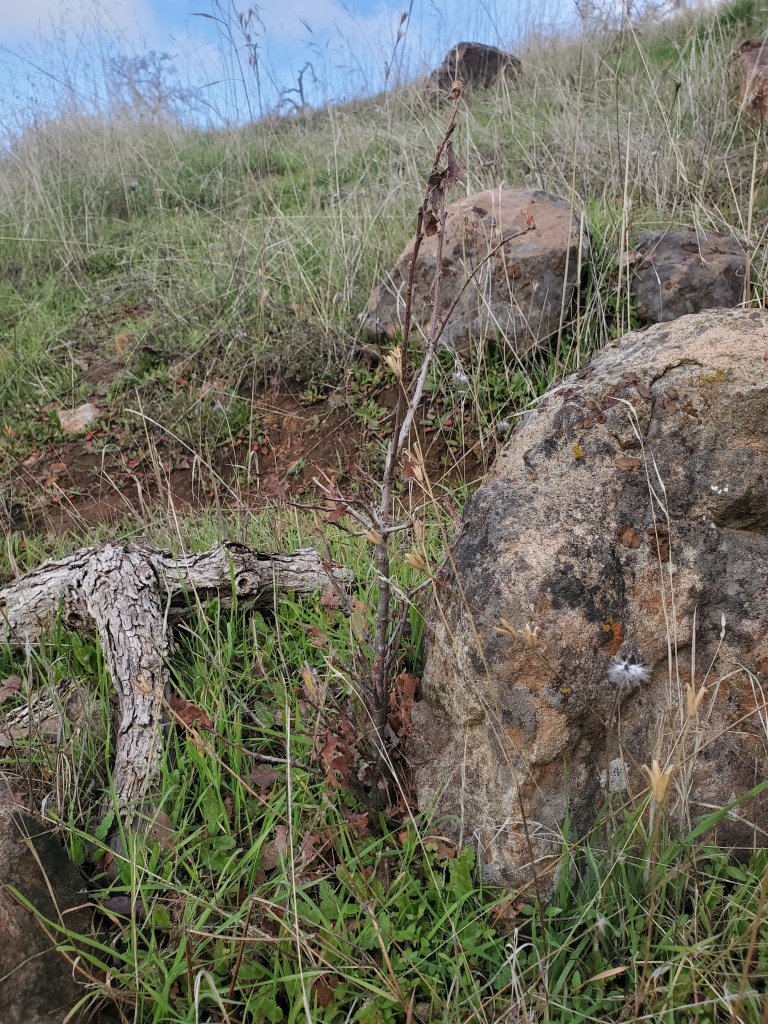
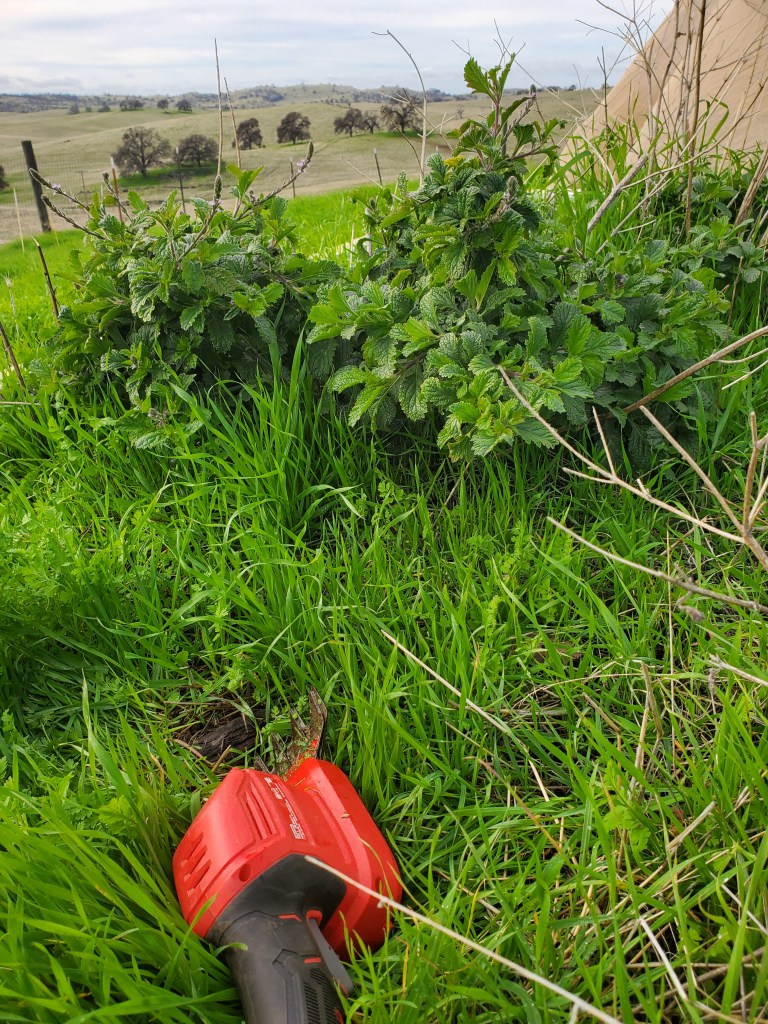
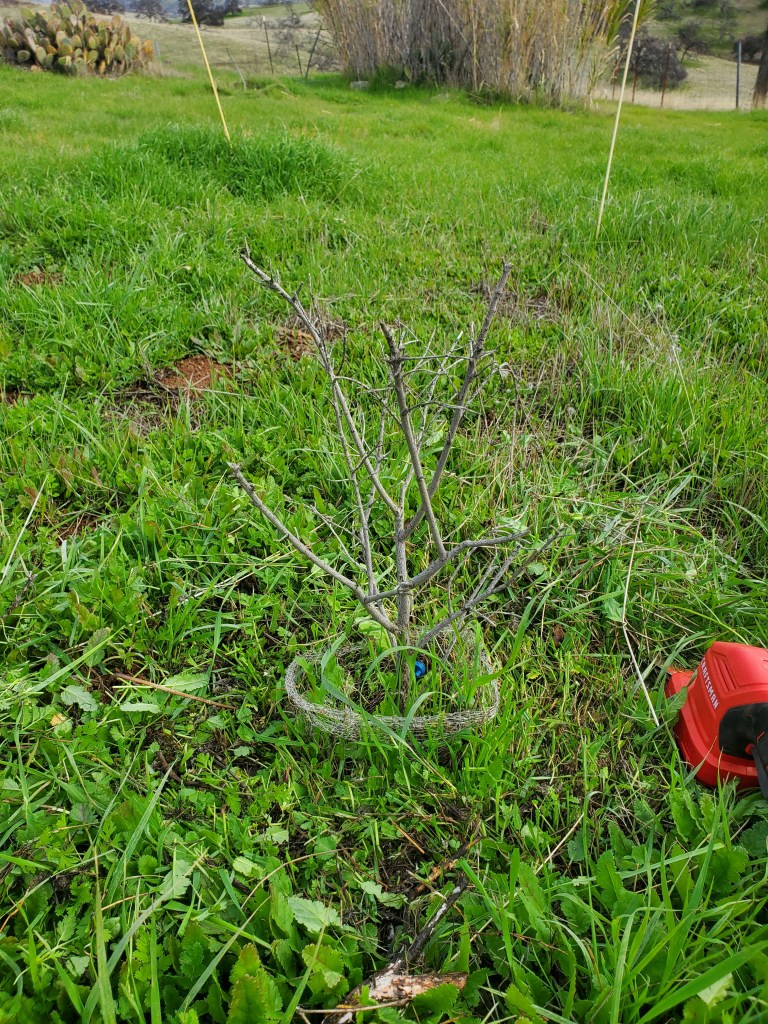
In working in the plots, I am finding that many of the plants are dead. The grasshopper killed them, and my hopes that there may be some vestige of life are dashed. I am seeing some come back, but the majority, so far, are gone.
Using my trimming tool to cut the grass from around the basketsAll done. Nice and open!This guy did not make itA completed coir pad installation on one monarch habitat plotStaging the materials and tools for the work
Weather is Too Warm
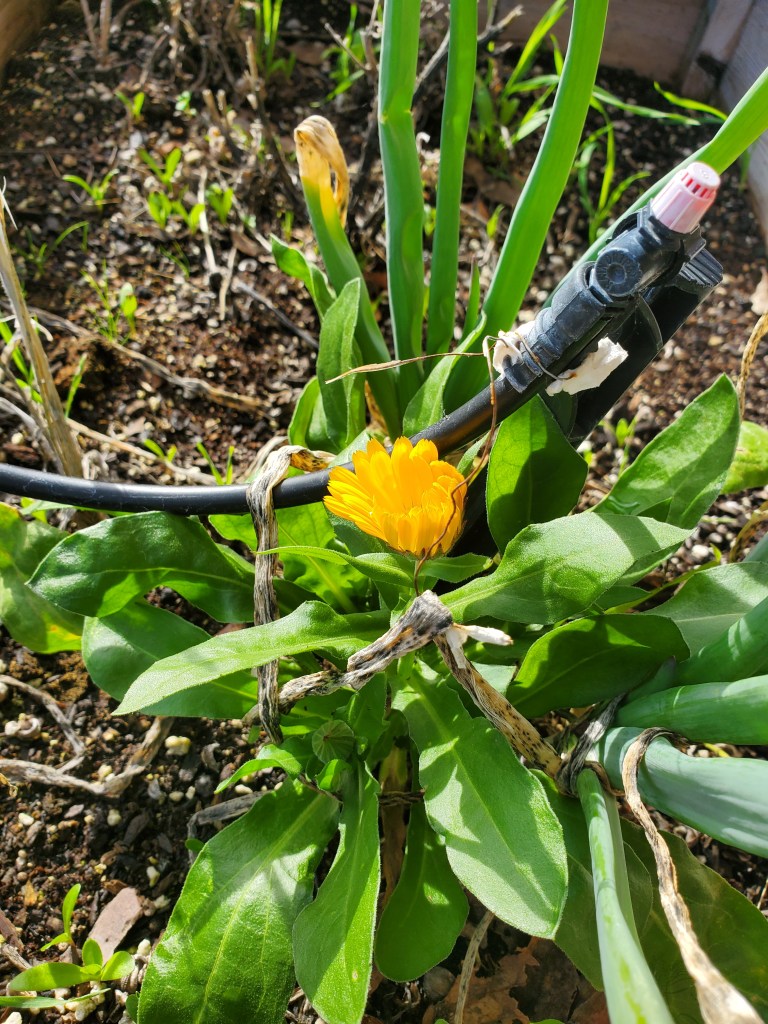
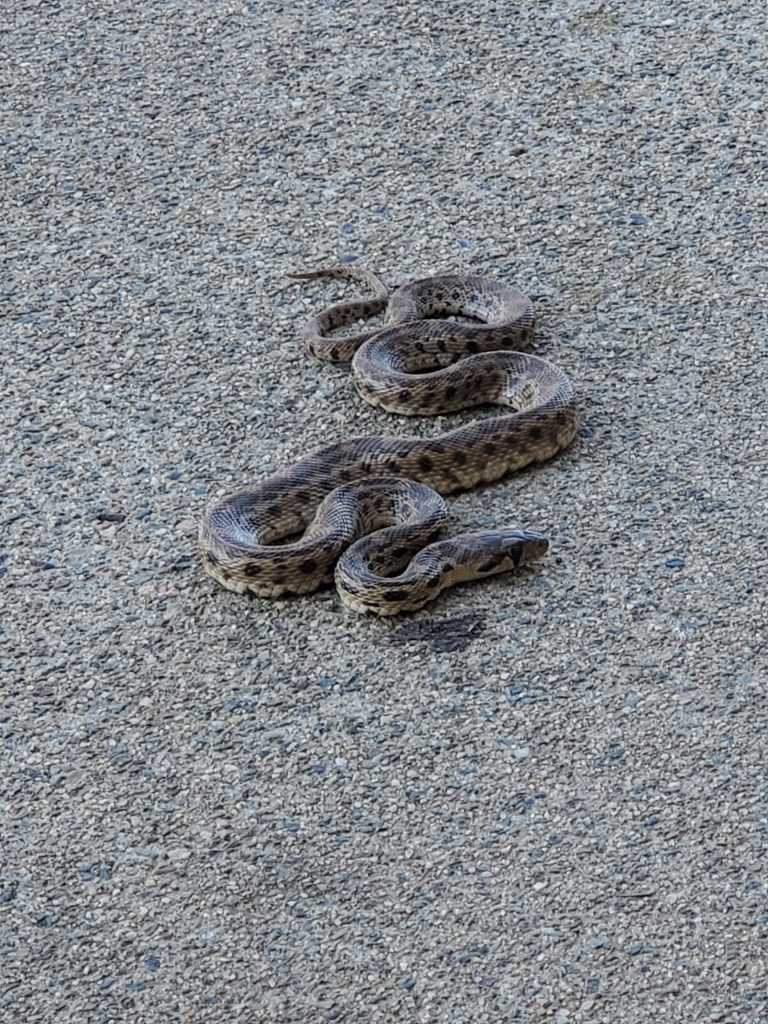
It may seem wonderful to some, but the weather is far too warm. After part of December had rain and cold temperatures, the weather shifted to warm days, cold nights and no rain. This is extremely concerning. Things I have never seen are occurring. I found a gopher snake on the patio. It is usually too cold for them to ambulate. Flies are in the house. A marigold, verbena plant and goldenrod are in bloom. They are fall weather flowers. A broad leaf milkweed is still alive. The lupine are already up. I am used to them emerging in February or March. There has been almost no frost on the ground. We need that to kill some bugs, like grasshopper larvae, to maintain balance. I saw an adult grasshopper in December. Terrifying. Life needs to sleep, and the deep cold helps facilitate that. We need winter.
For every hour I spend outside, I am inside two. Not only do I spend hours at my computer writing this blog, I have to work on ag reports for the county, water rights reports for the state. I am so behind in implementing grants I have for water storage and tree planting projects, and I need to get the materials and supplies together for those. David and I went to check on the site of the second guzzler. We had to go through a forest of downed branches to get there, which made me remember I also wanted to plan a prescribed fire in my enclosed areas. There is so much planning, research and writing.
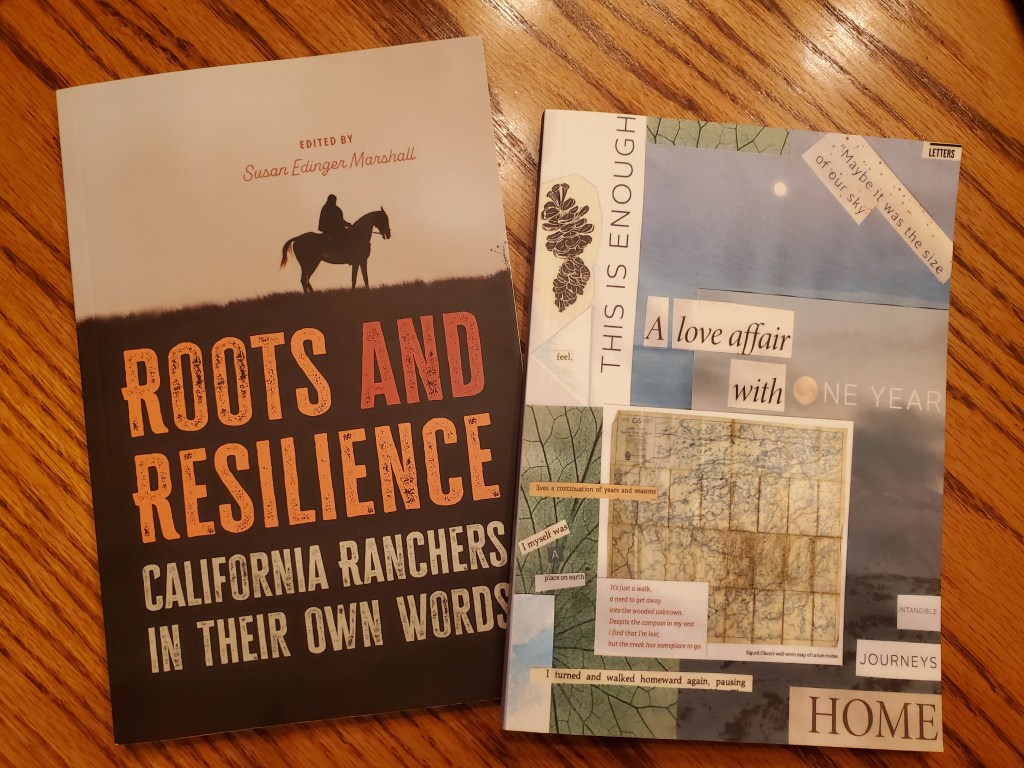
As I always say, I am not complaining. It is an honor to be a land steward and to get to work on this land every day. It is such emotional and sacred work for me that I often write about my feelings, or stories of something that happened. It was a tremendous honor to be asked to write an essay for the new book, Roots and Resilience: California Ranchers in Their Own Words (Nevada Press). I also submitted a piece that was accepted for inclusion in Zine Magazine, a publication of the Women, Food and Agriculture Network. Both are available for sale. For those that love to read, or love stories of nature, these are really wonderful books filled with good stories and creative writing. Full disclosure, I receive no financial benefit from the sale of these books. I am recommending them to you because they truly are good and interesting reads.
Working on a report to the countyHeaded to the back of the ranch to scope guzzler sitesA shock and joy to be published
Wanderings
My thoughts have turned to Los Angeles County every day – the people, animals, the land, sky and water. David and I have many friends who live in the area, and some are evacuated. My heart breaks for the entire situation.
It has long perplexed me why as a species we are so willing to trade the beauty of this land, the health of the water and air we need to live, the songs of birds, animals and insects that bring us joy, and even the very lives of our children for extreme convenience, to preserve the ability to amass wealth and power for a handful of humans. Where is it that the values our grandparents taught us were lost? Why is it we are so willing to be sick? Where did we lose site of the real treasure, of what is truly important?
As I care for my father, and see him struggle to be well, it makes so clear the importance of how one lives life and the joy we find in the most simple things. I was raised in a good way by parents who wanted to be better than their parents, who themselves wanted to be better than their parents. I am grateful for their teachings and those of my grandfather. Low consumption, care for all things, no waste, fight for what is right, simple is ok, you don’t have to be conventional, dancing is joy and many others.
Let’s each of us do our part to help all of our relatives – the two legged, the winged, the ones with fins, the four-legged, everyone. They need us; we need them. We all need one another.
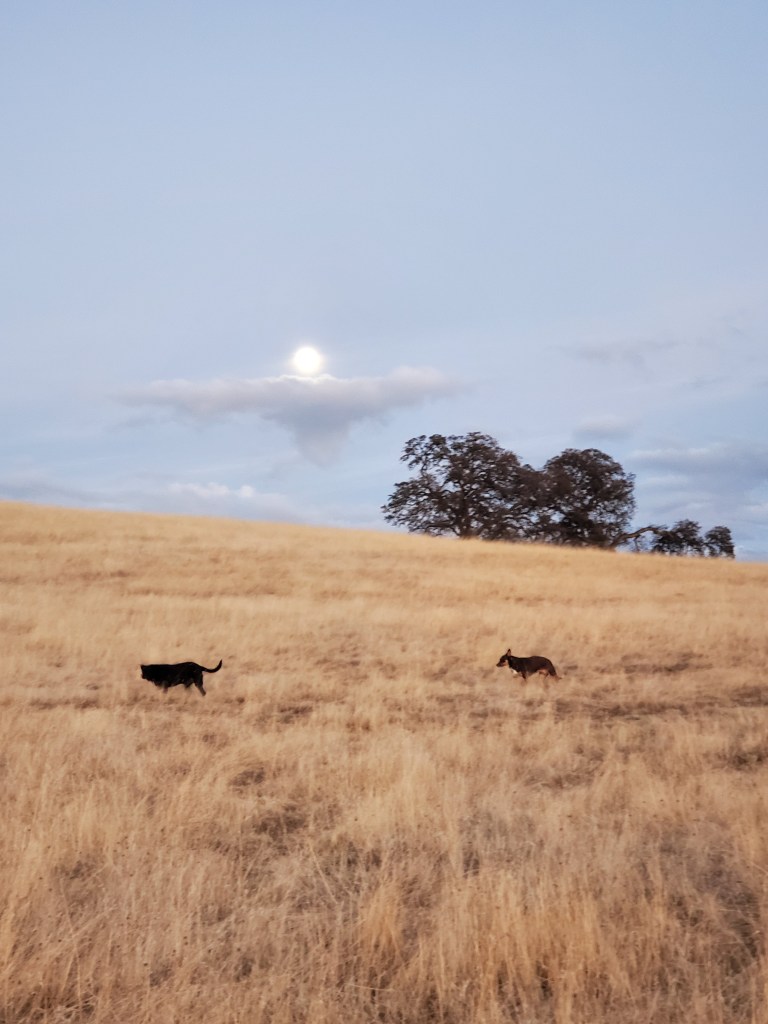
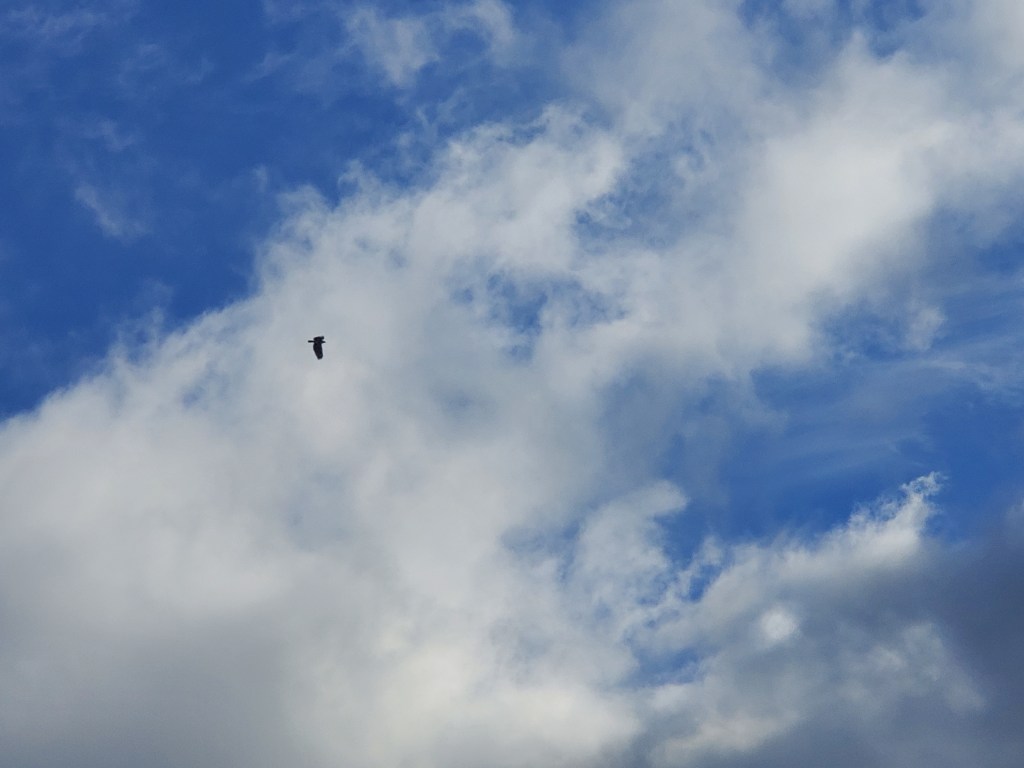
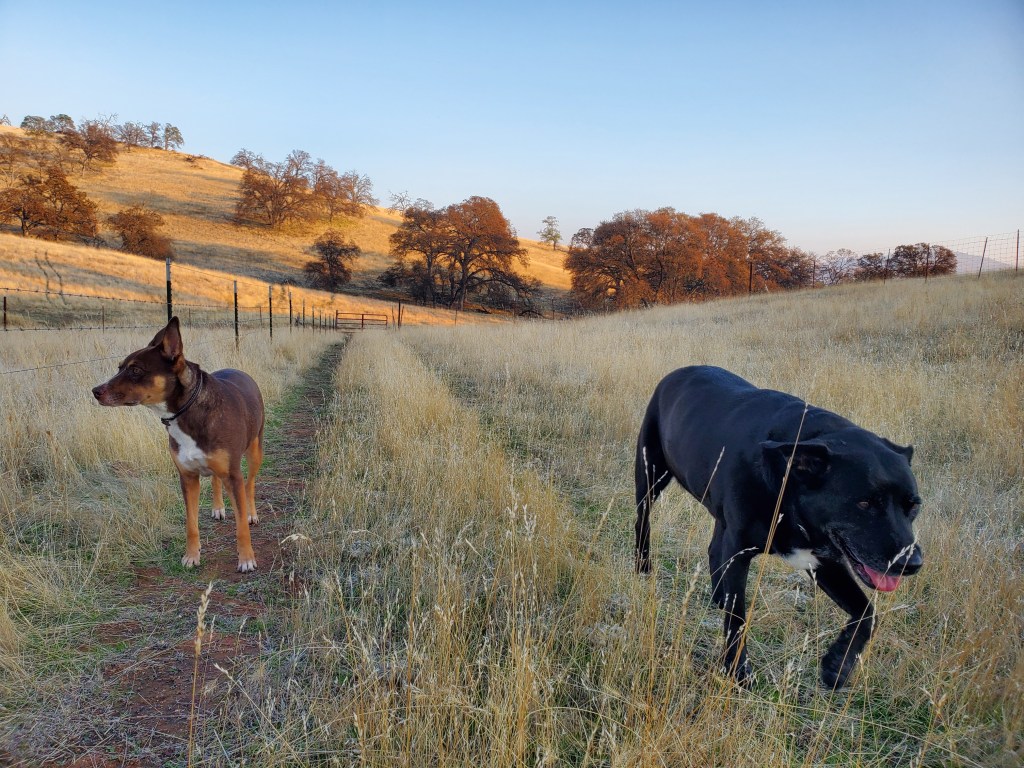
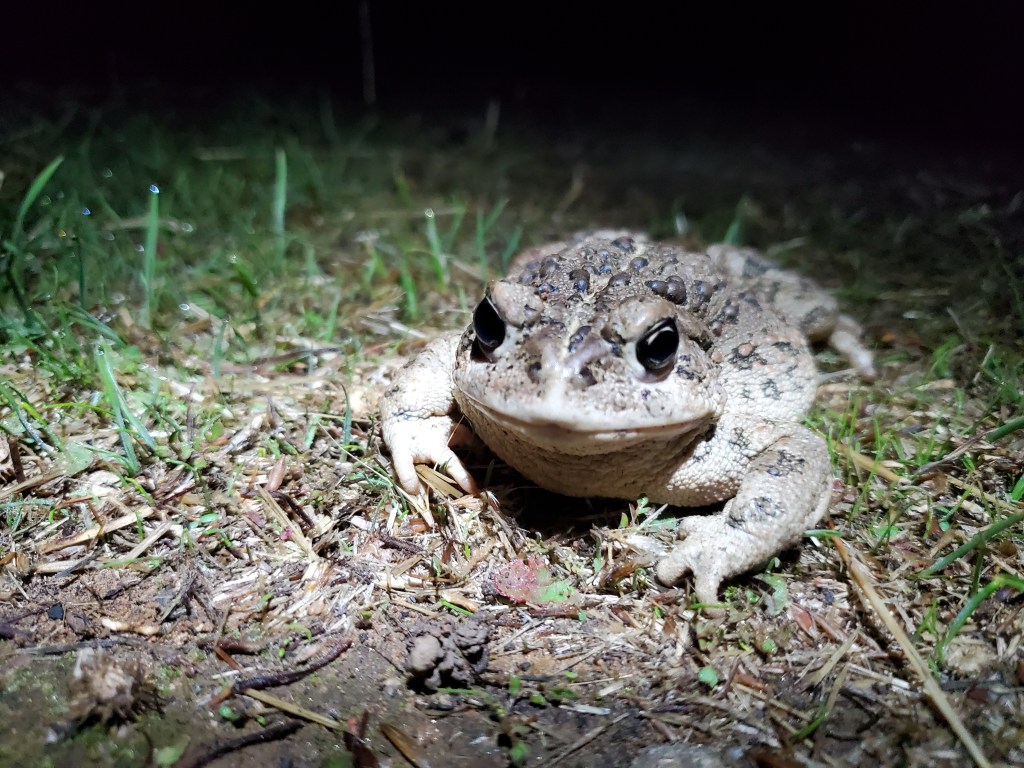
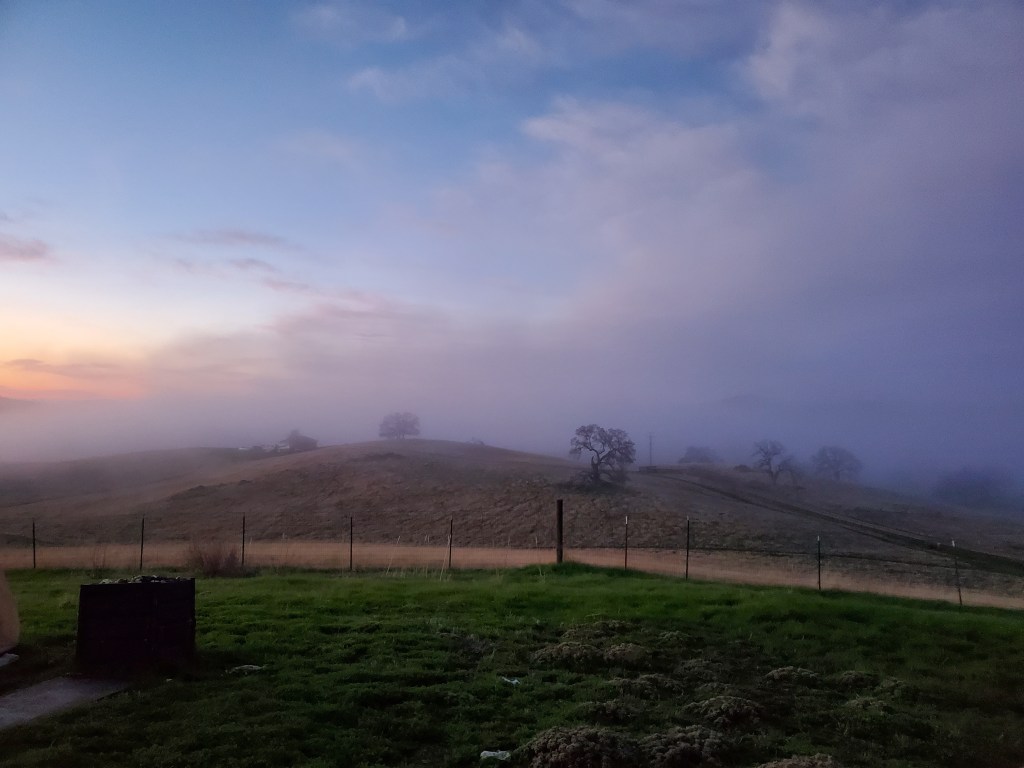
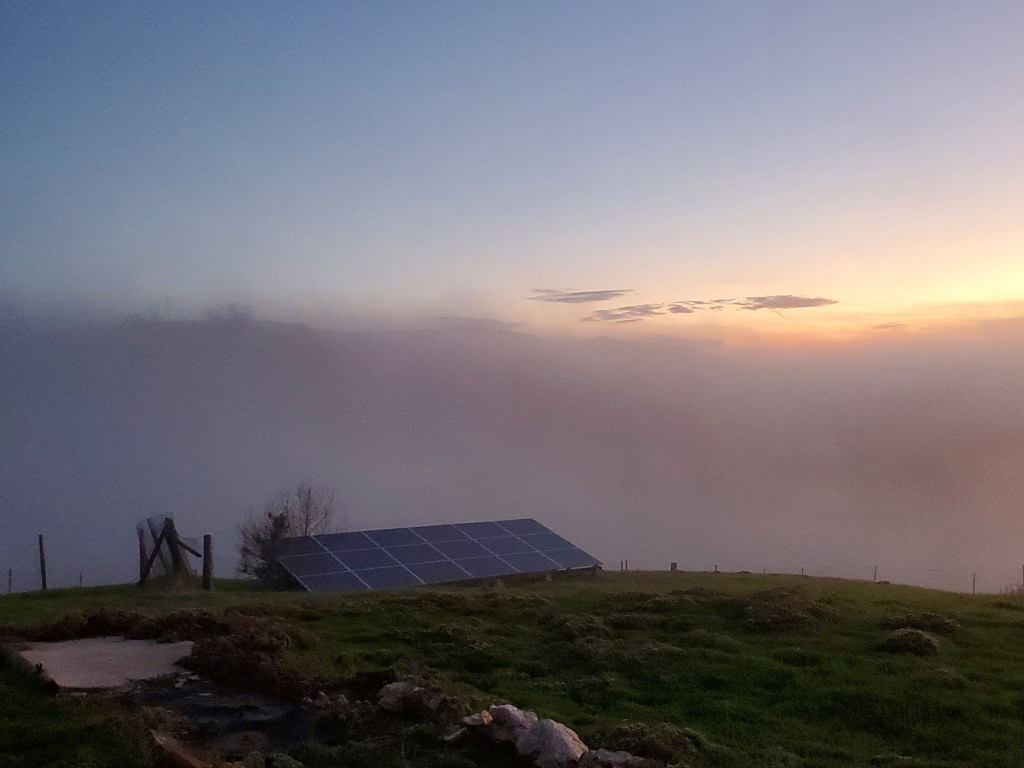
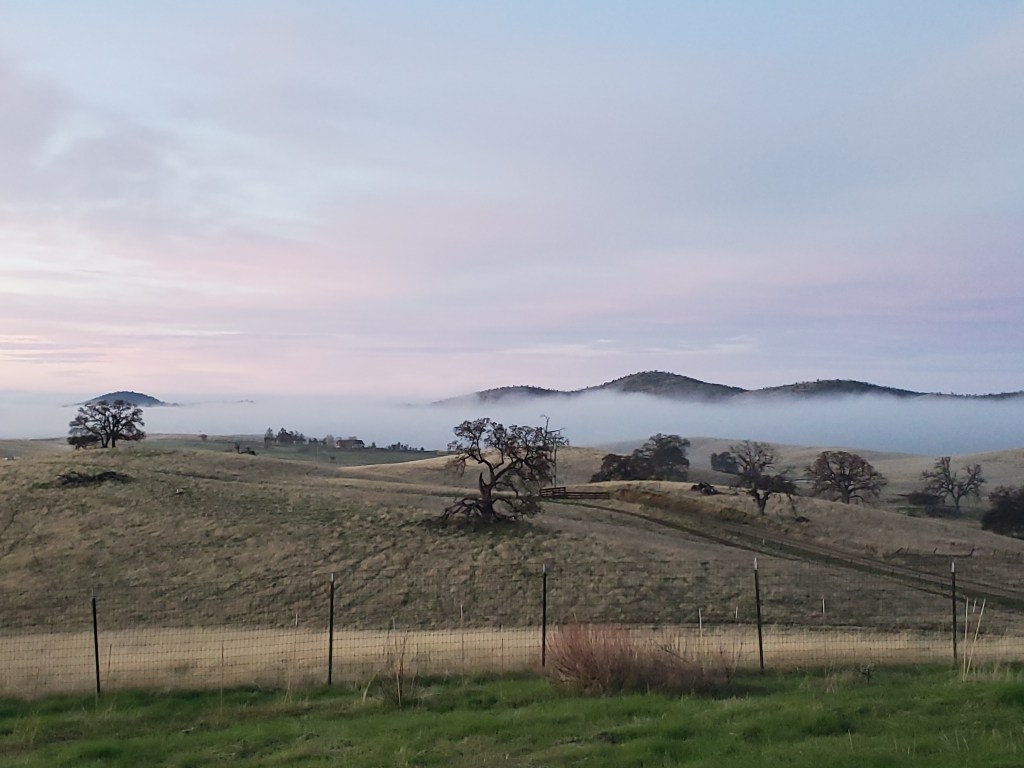
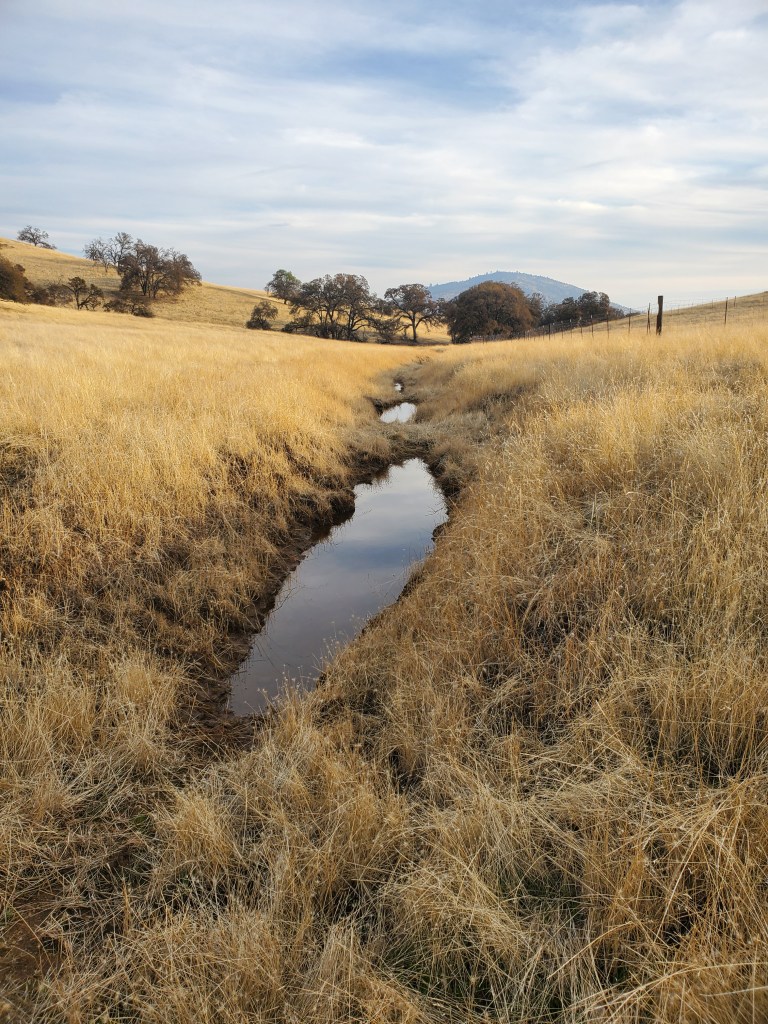
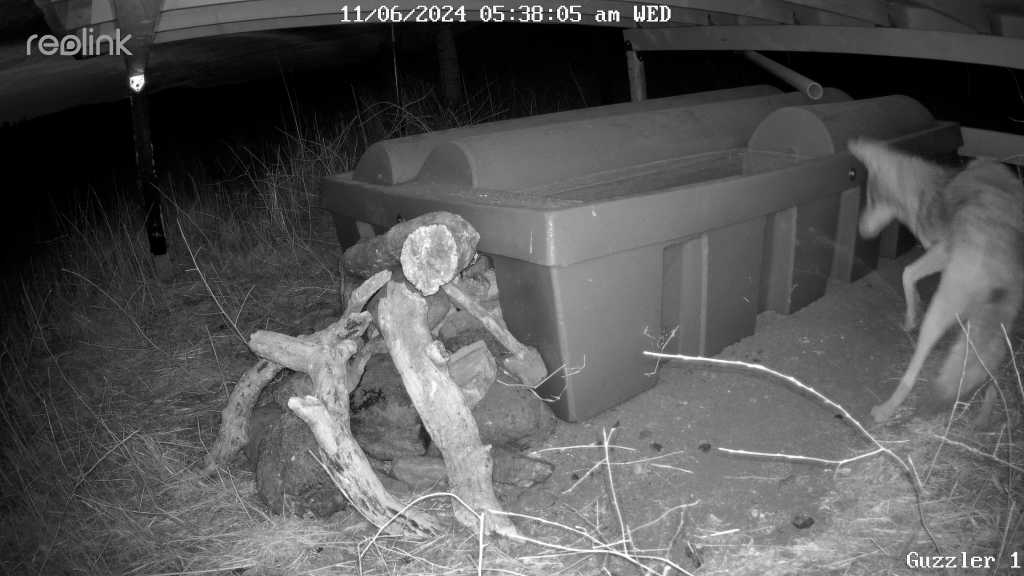
Red tail above meSunriseFull moon over the ranchMy girlsI love toads!FogFog rolls inFog recedesMoisture on the landSunsetWater is lifeWhite collared dovesCoyoteTwo fat raccoonsFeral kittyGreat blue heron flies over the ranch with a mate just out of view



































































 PolliNative