Life Returns

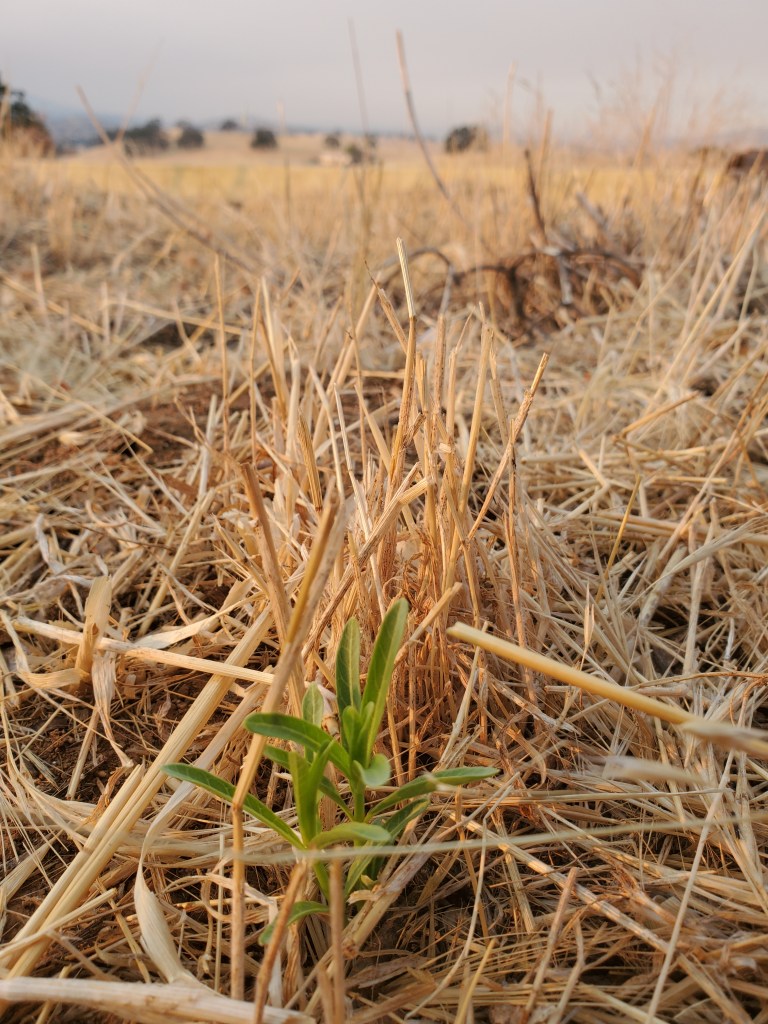
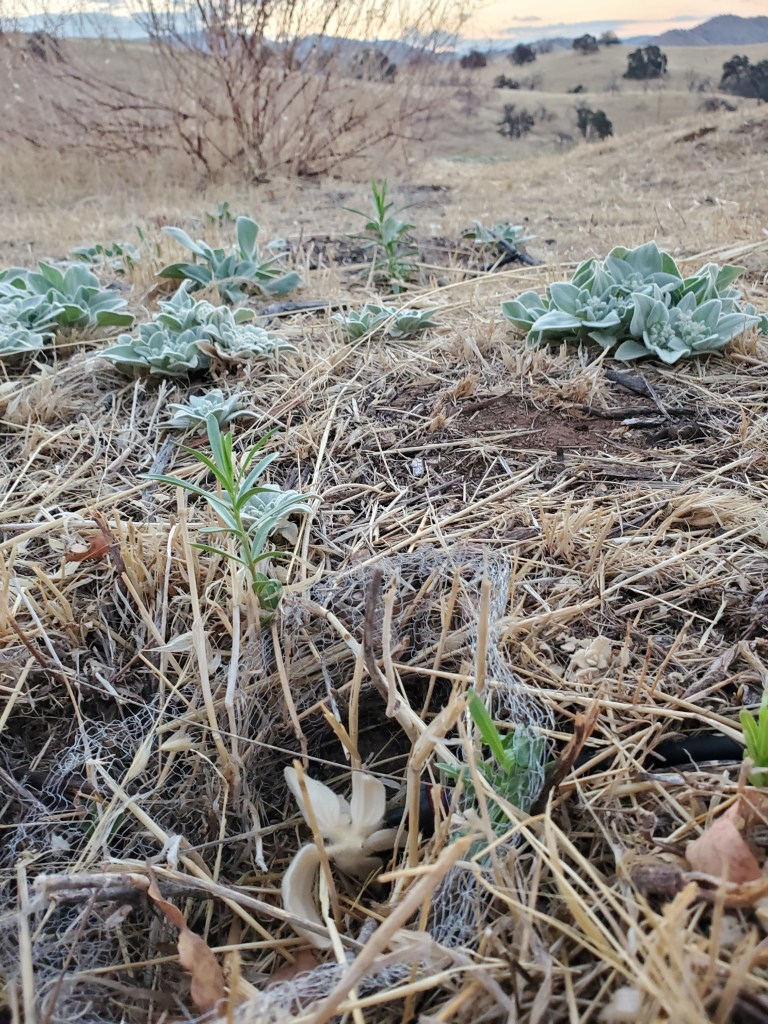
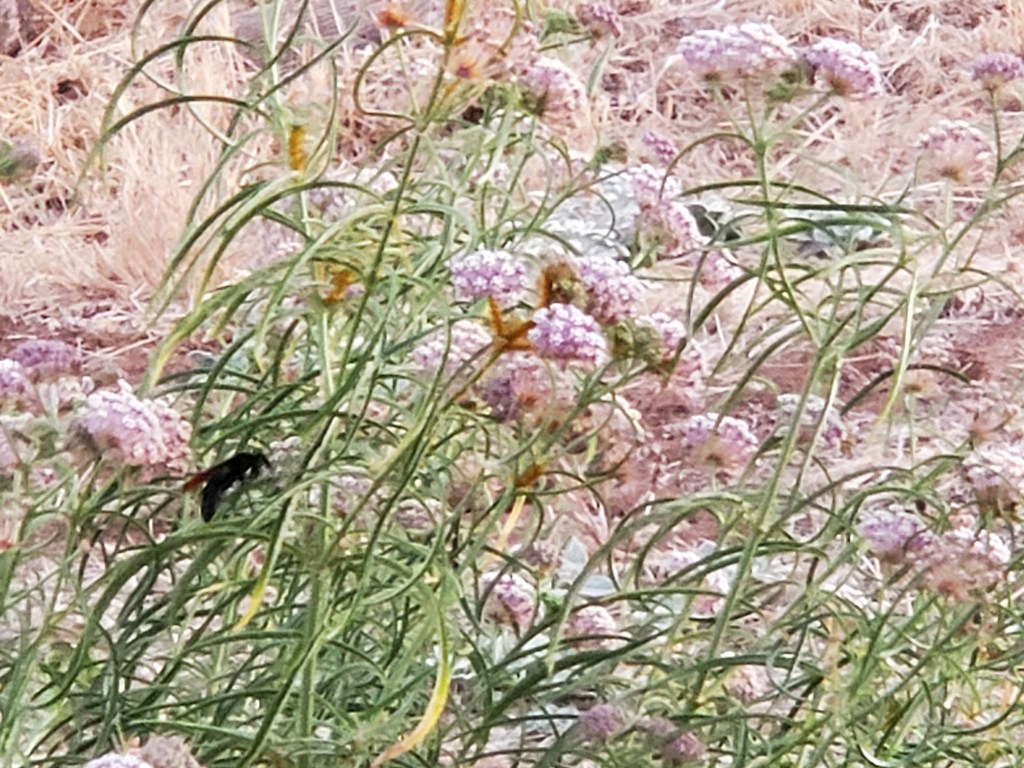
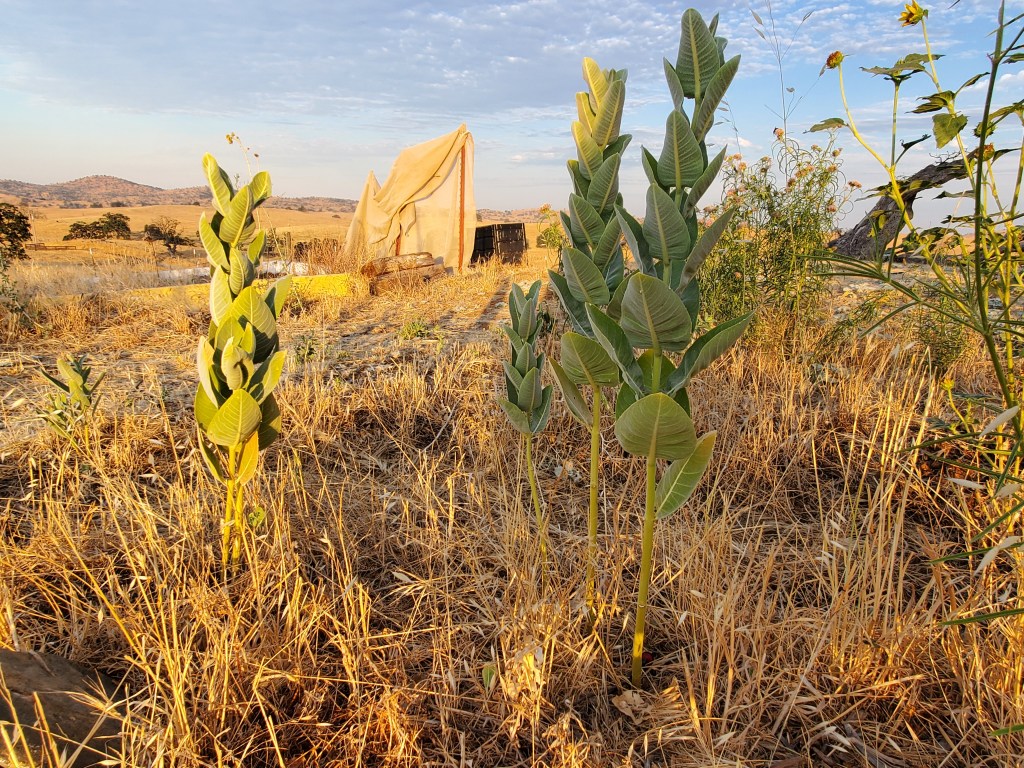
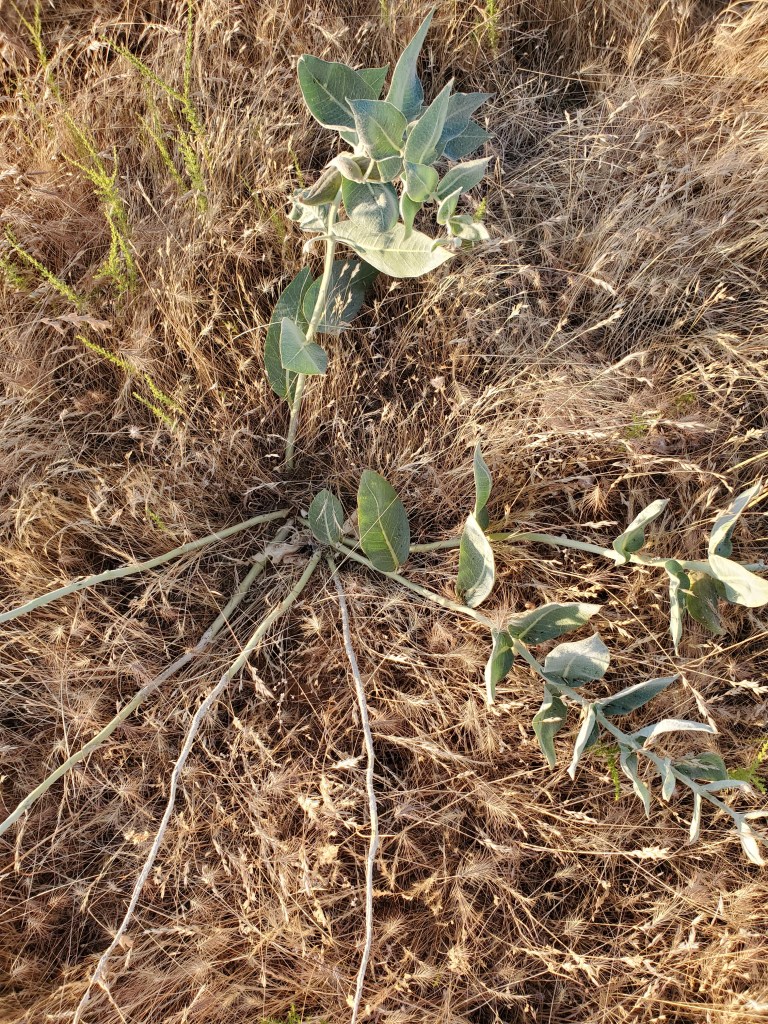
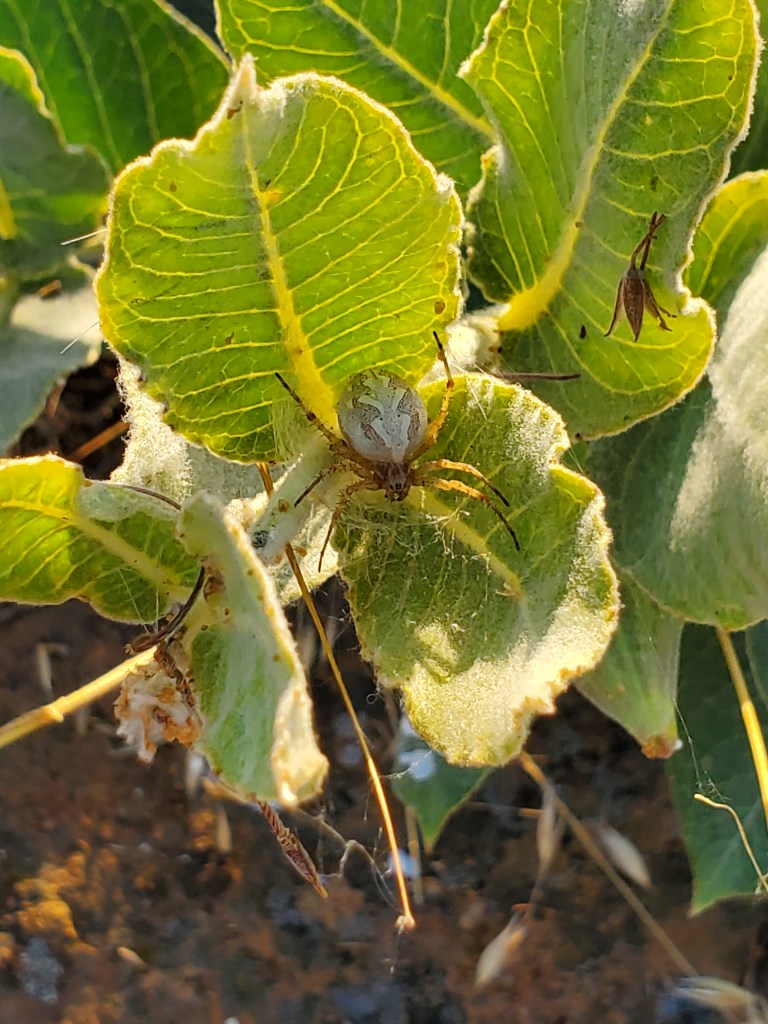
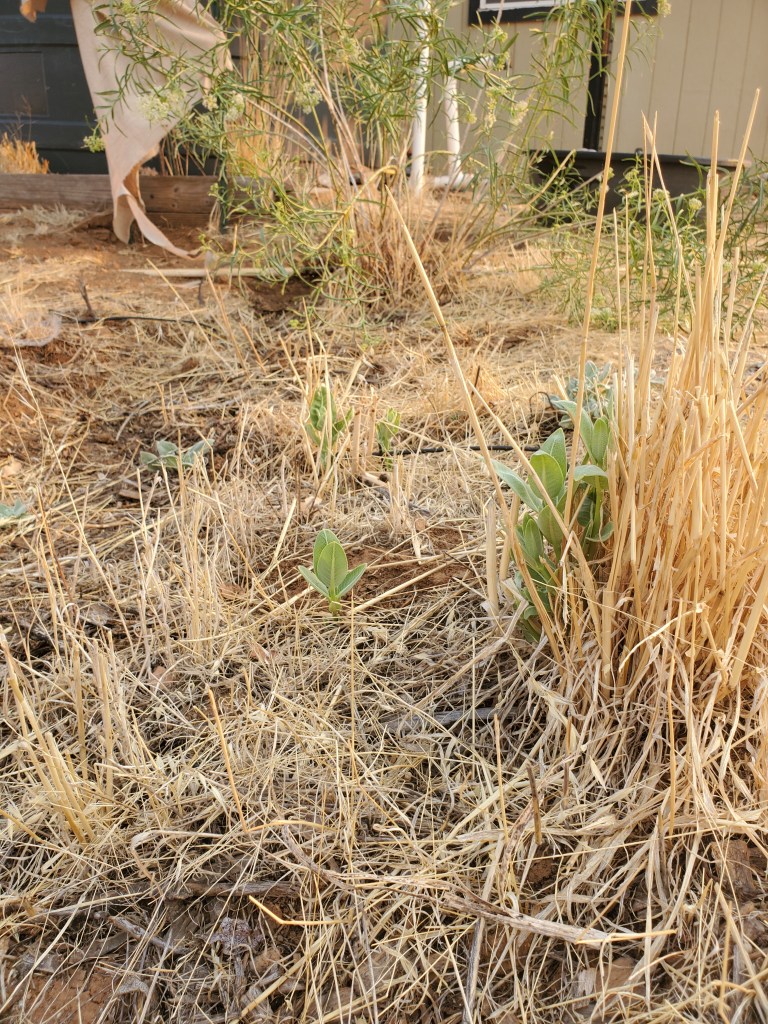
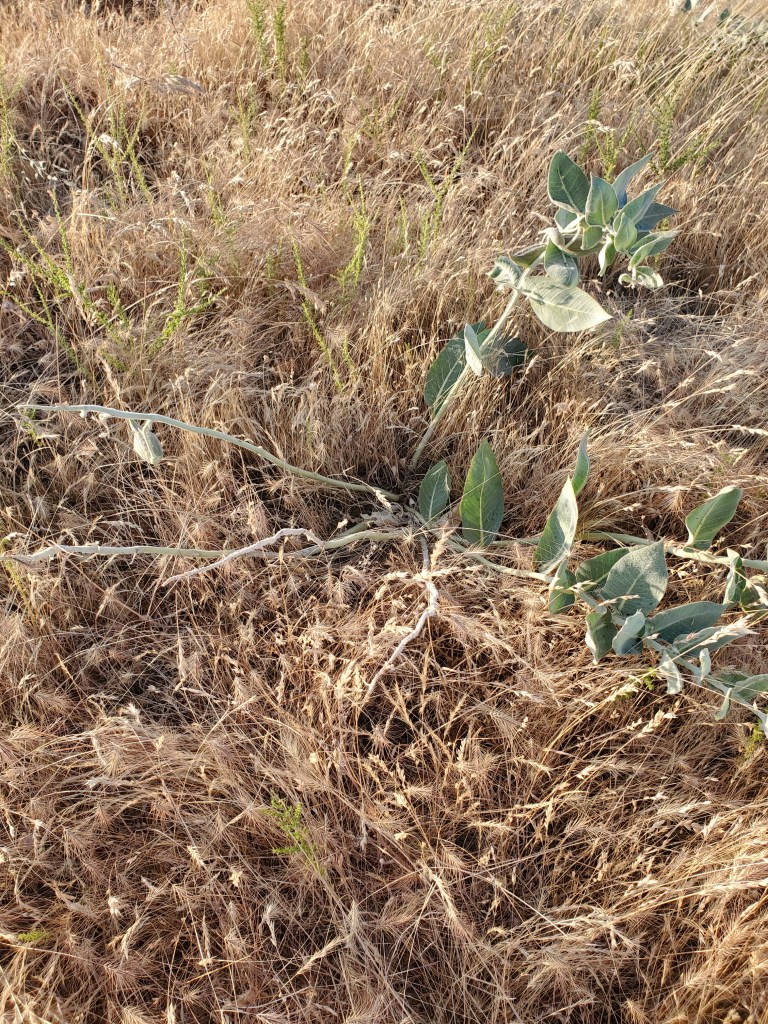
Broadleaf milkweed begins to emerge with a now freed narrowleaf milkweed in the background

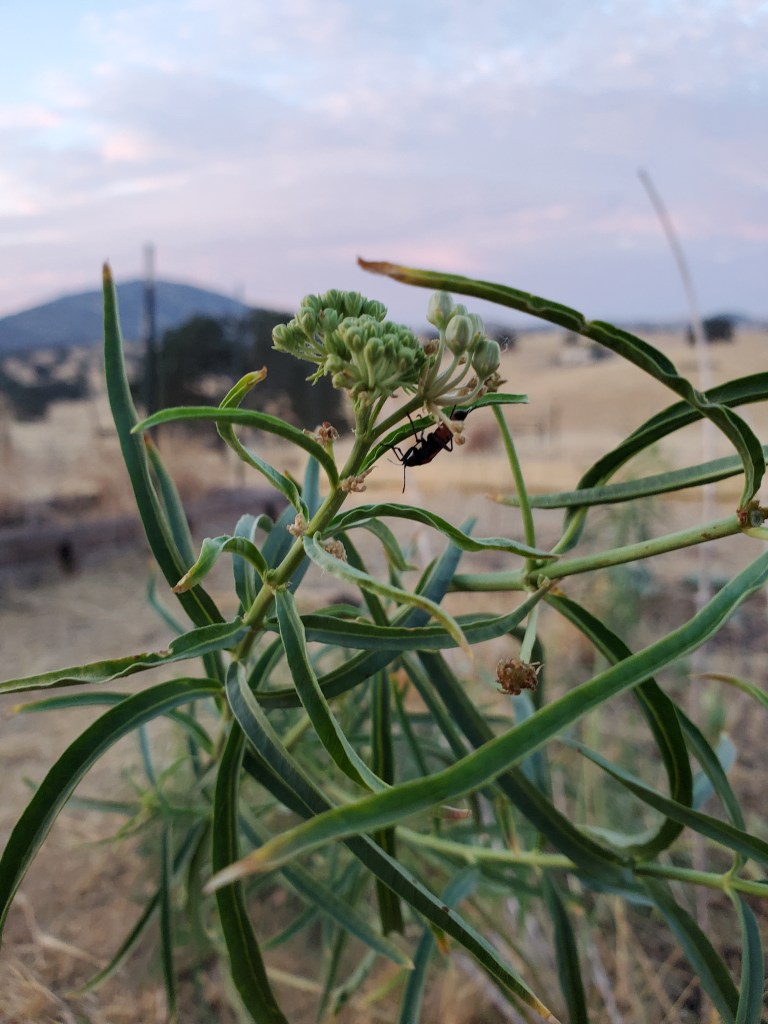
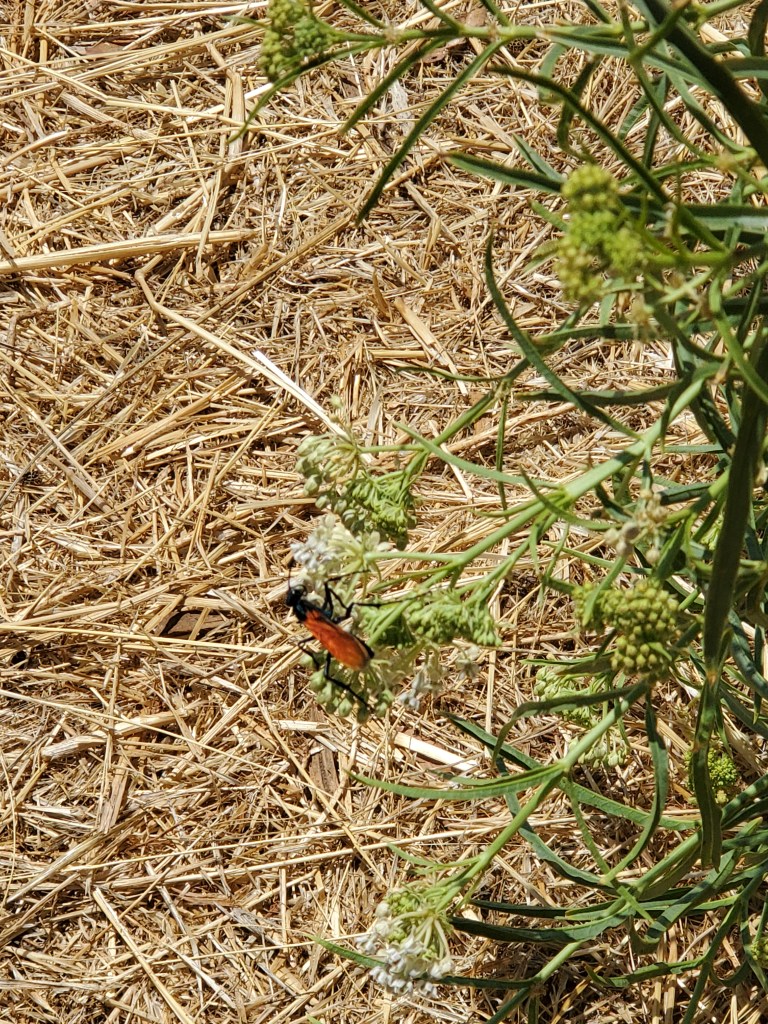
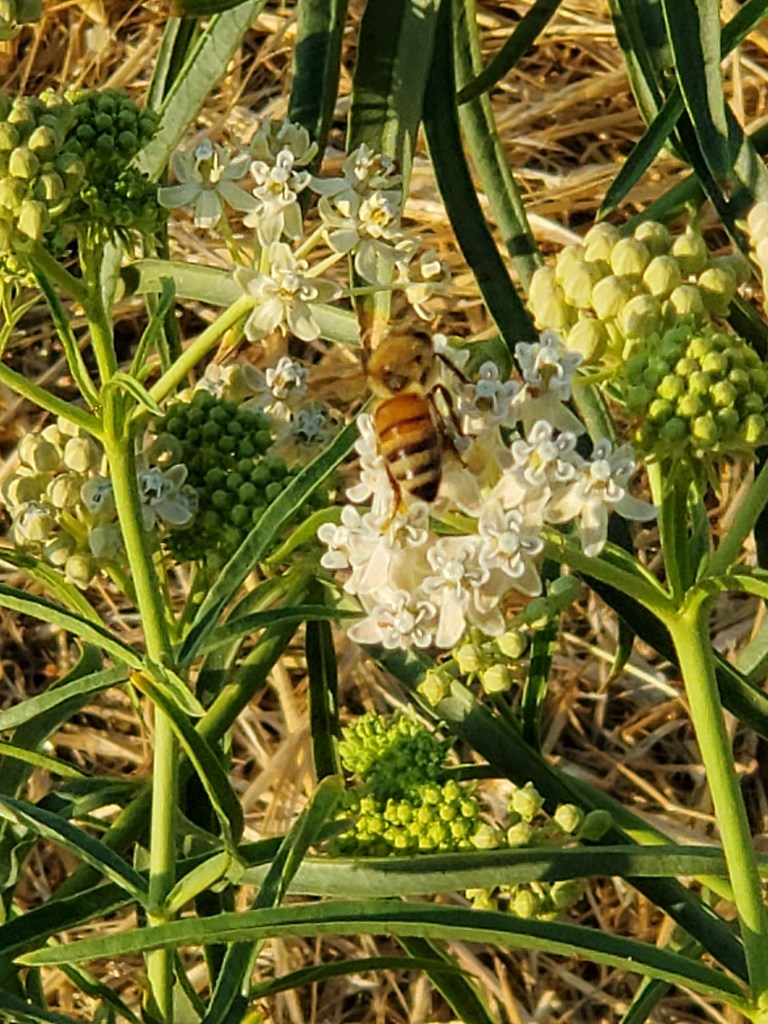
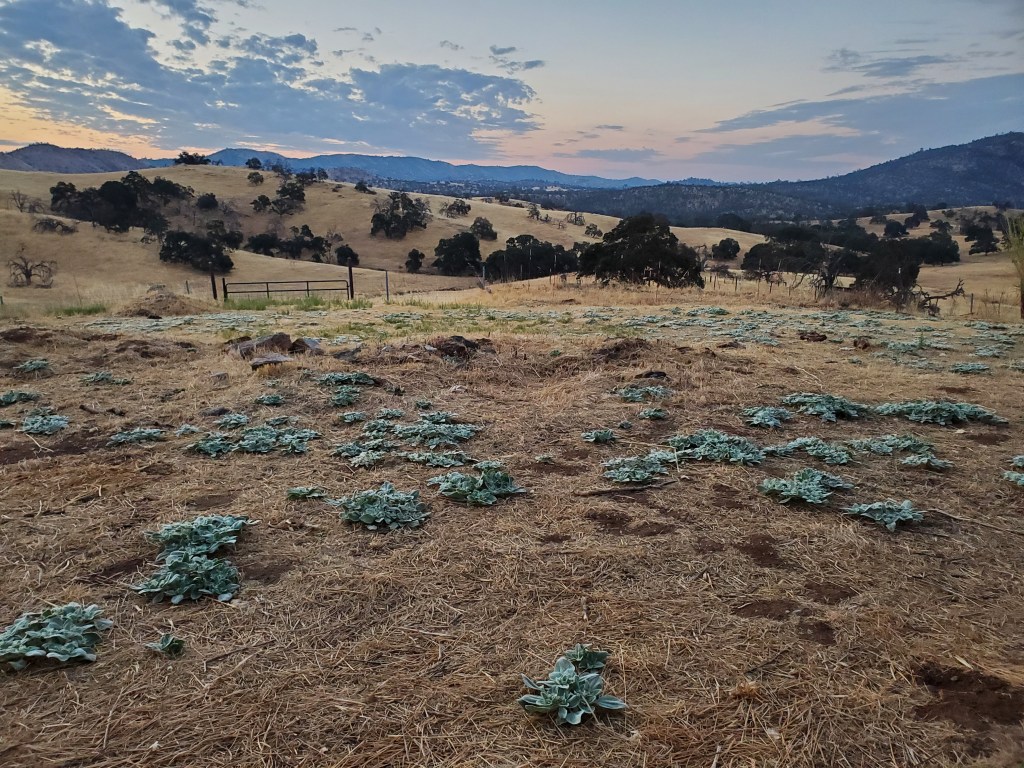
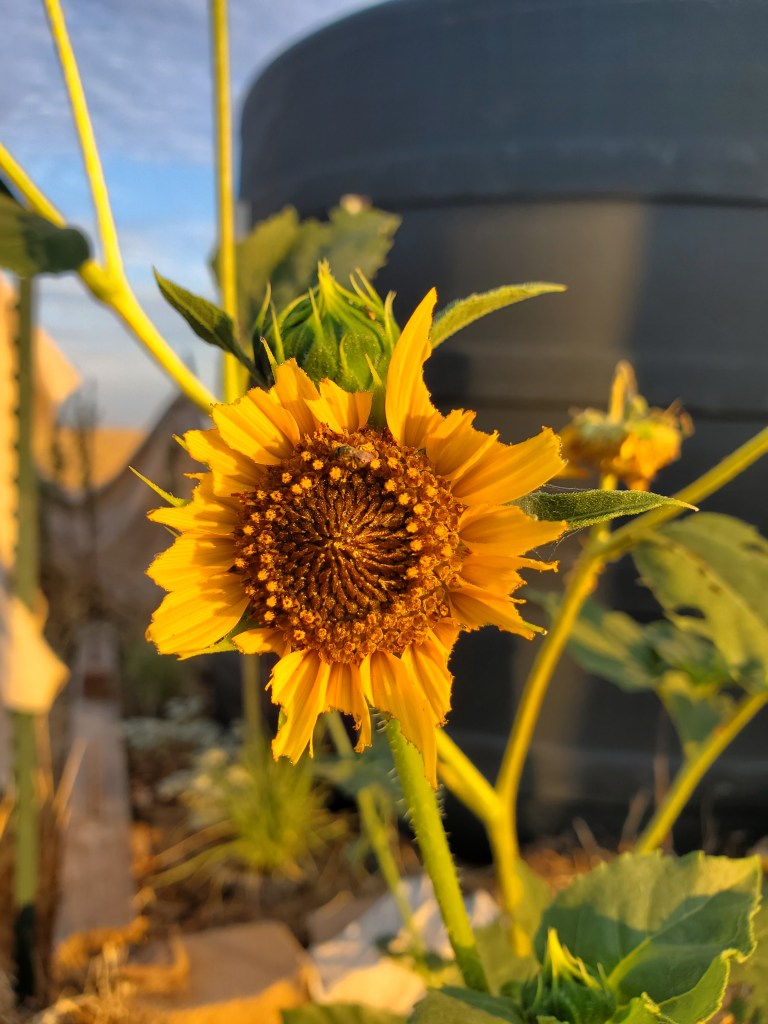
Last week I freed my narrowleaf lone survivor. The screen had no grasshoppers on it for three days, and the overall number has decreased sufficient for me to feel comfortable removing the protective screen box. Oh, it was like a reunion! To see her fully open to the elements, branches swaying in the breeze, flowers open to the sun, filled me with a love and joy that is difficult to express. Standing, as I was, amid the carnage that used to be a busy, scent-filled, native plant hilltop, with the only nectar/milkweed plant now remaining, I suppose I felt a sense of elation that we survived this together and that there was an opportunity to provide food and incubation to the pollinators that remain and maybe – just maybe – monarchs on their way back to the coast. I squealed with joy and gave her a light, long hug, talking to her, thanking her for her patience and for her survival. As I released her from my arms, immediately, she was supporting life. Tarantula hawks and a bee were the first to find her blooms. I am so happy.
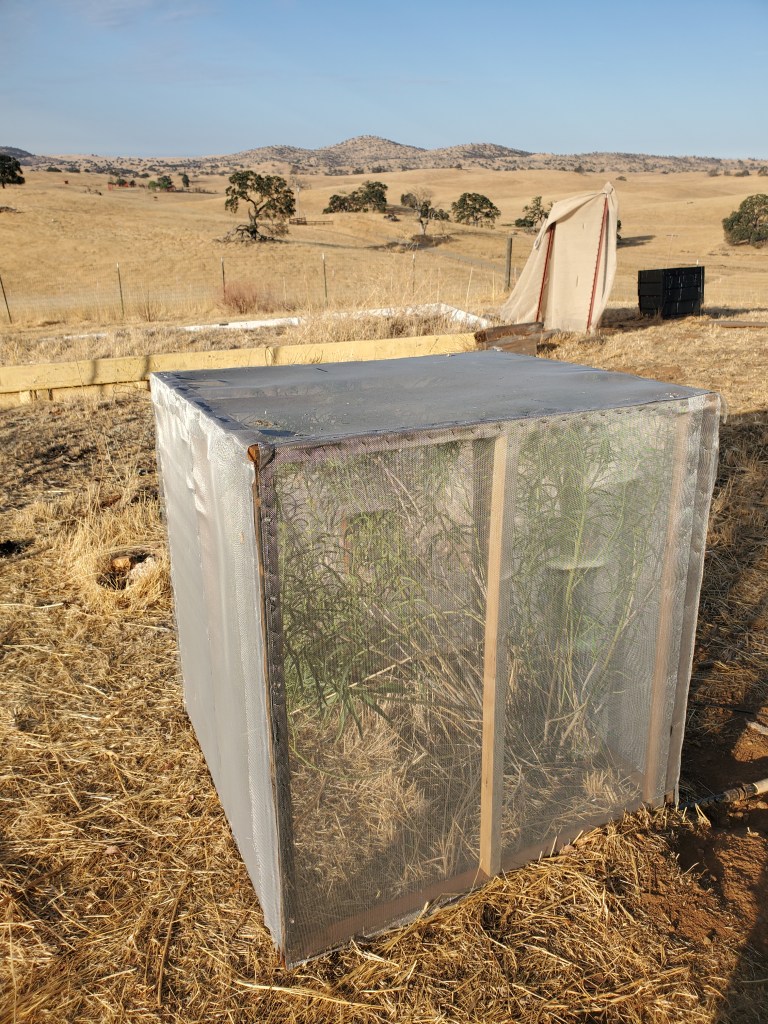
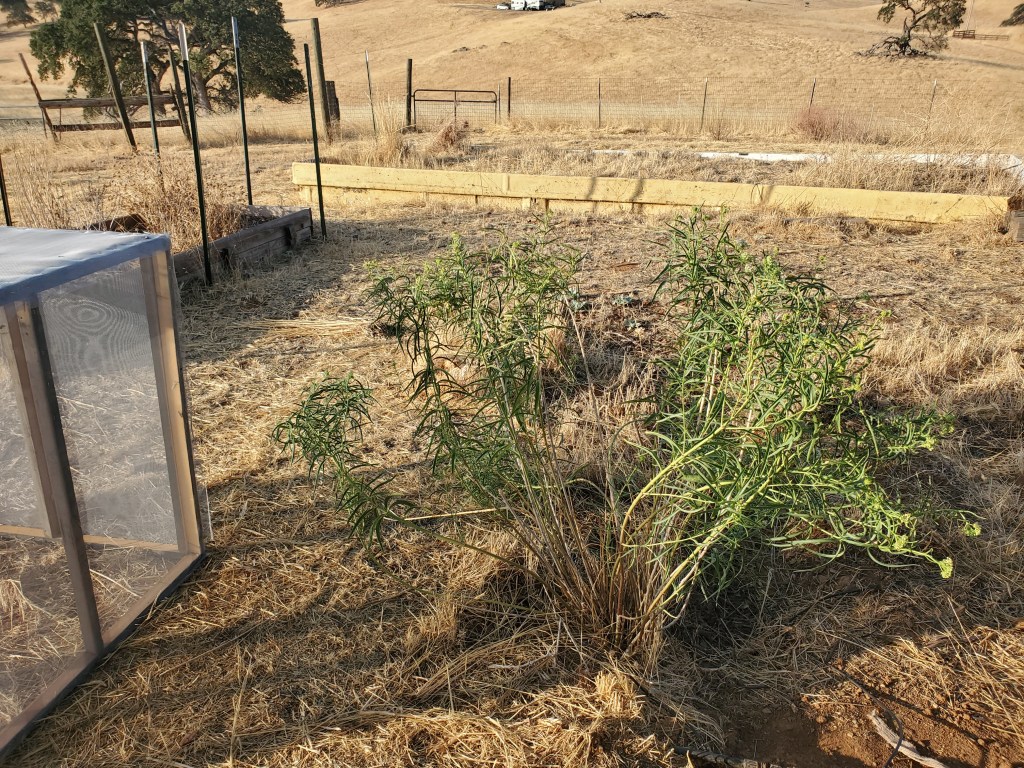
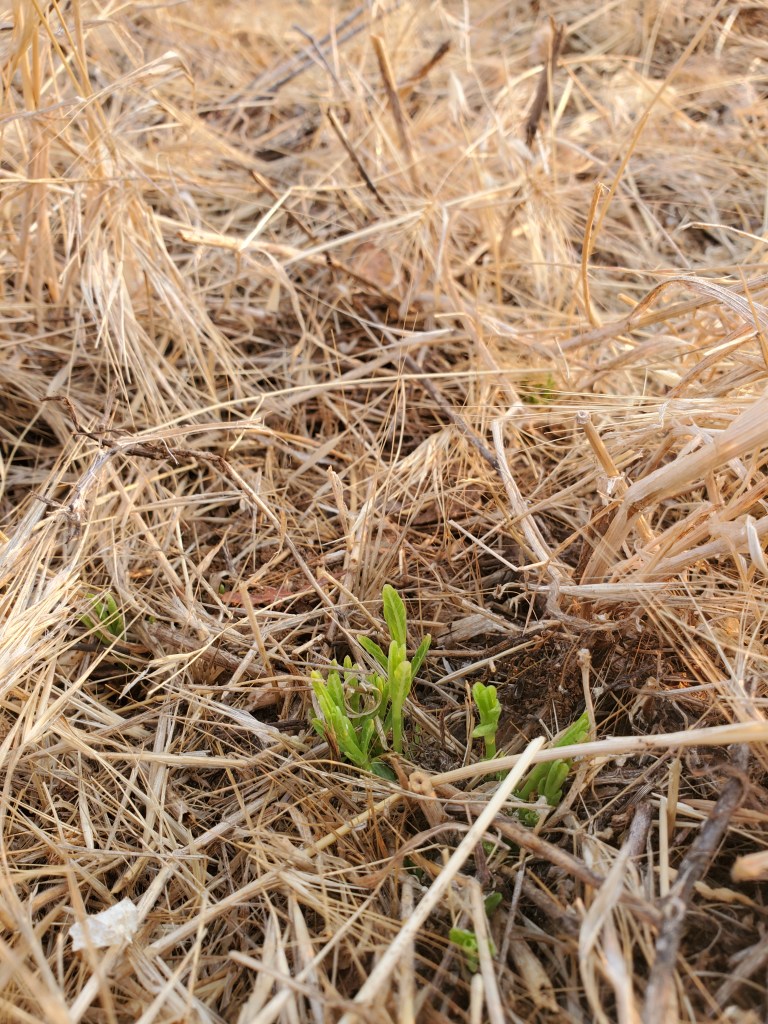
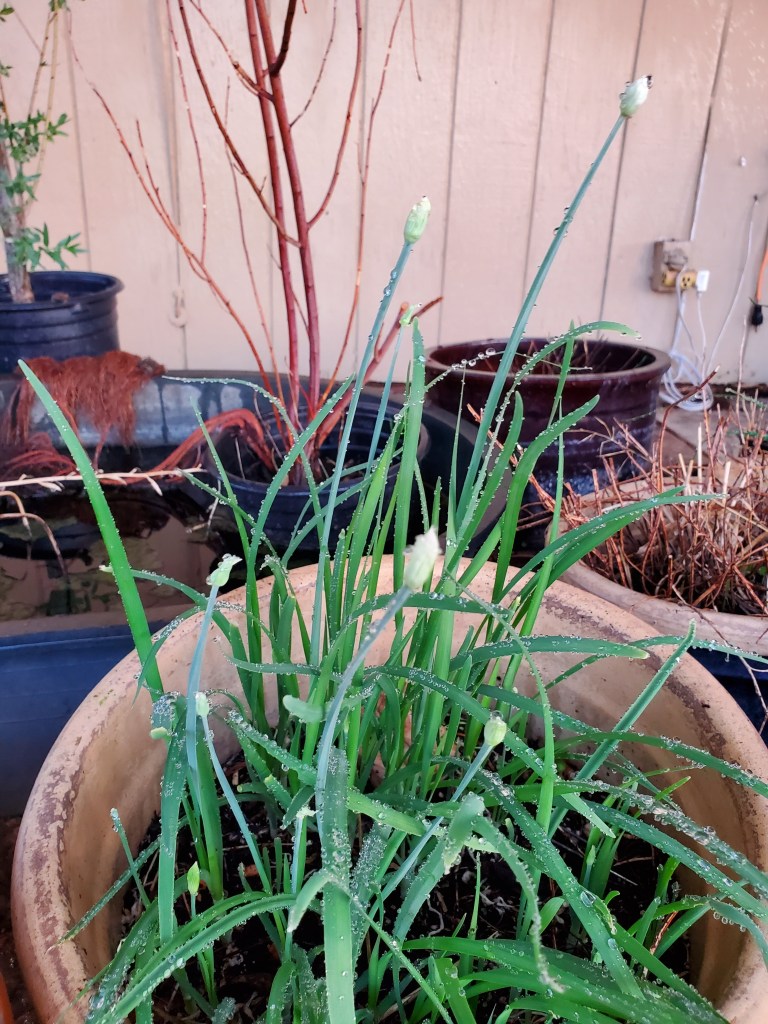
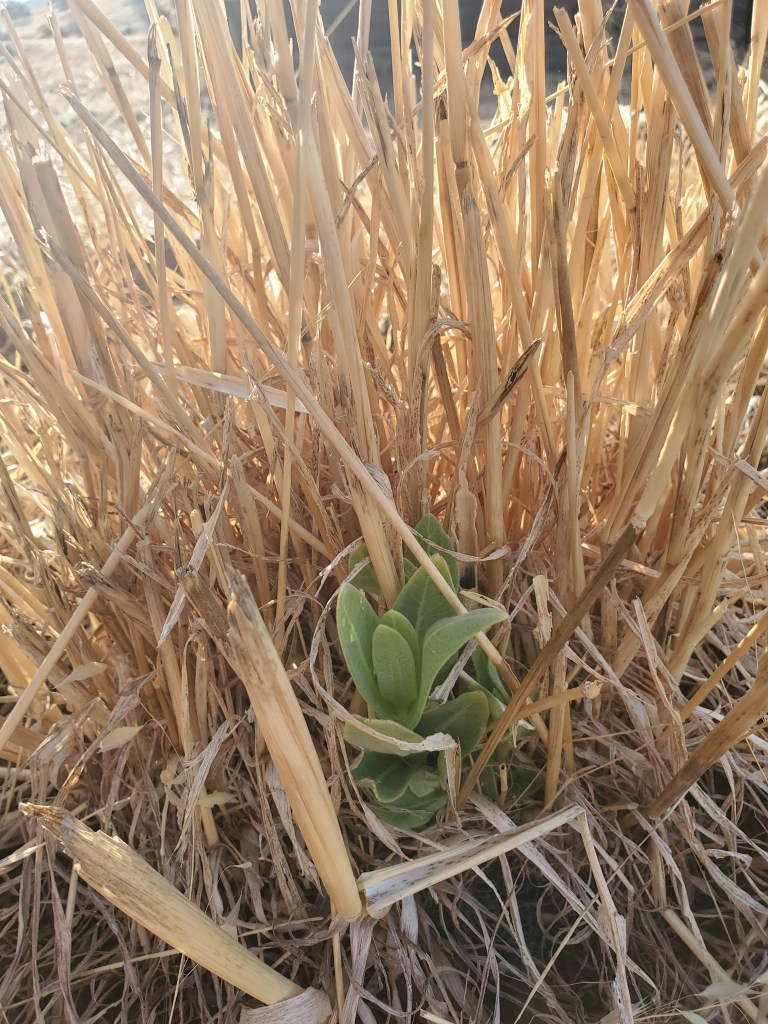
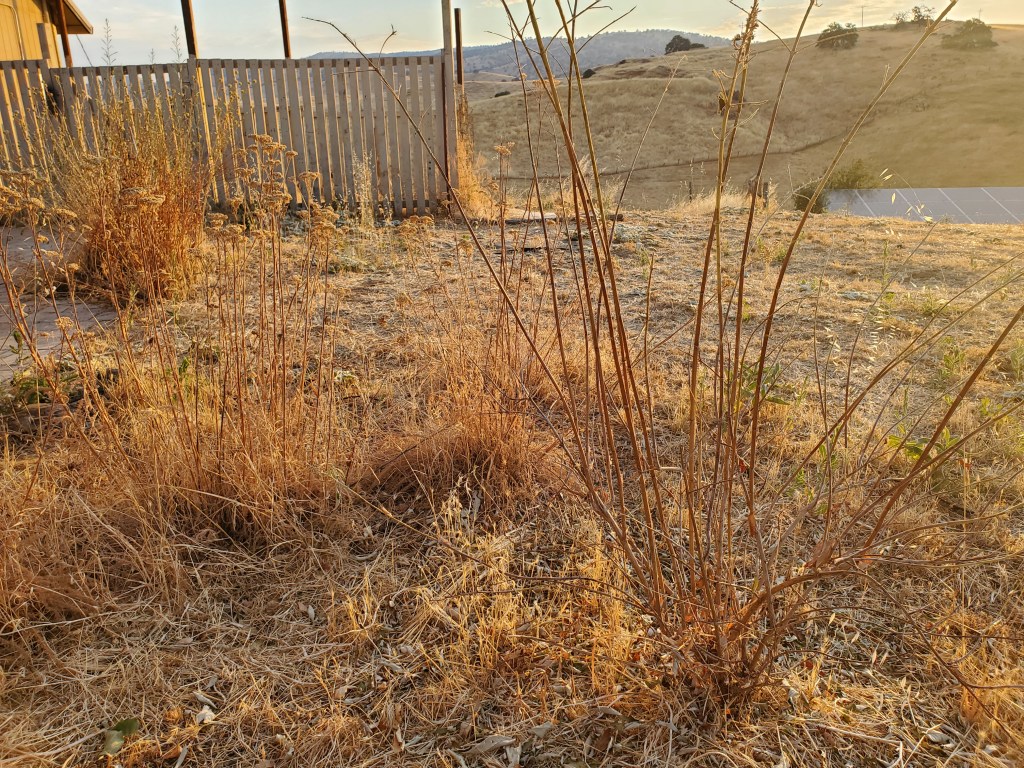
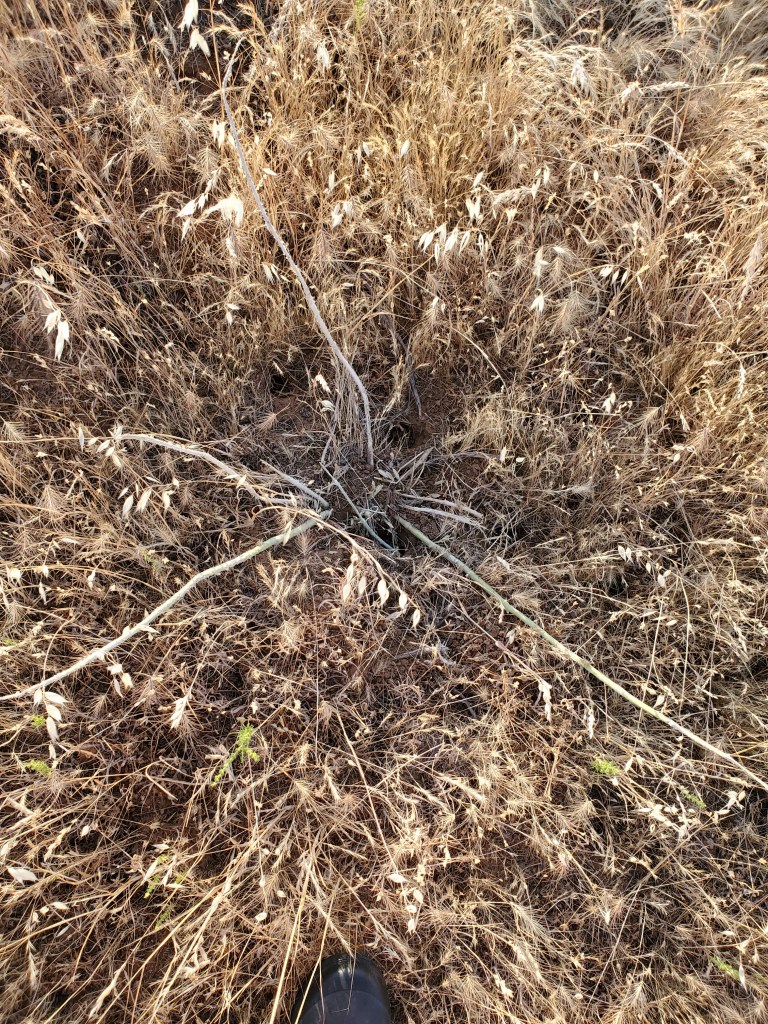
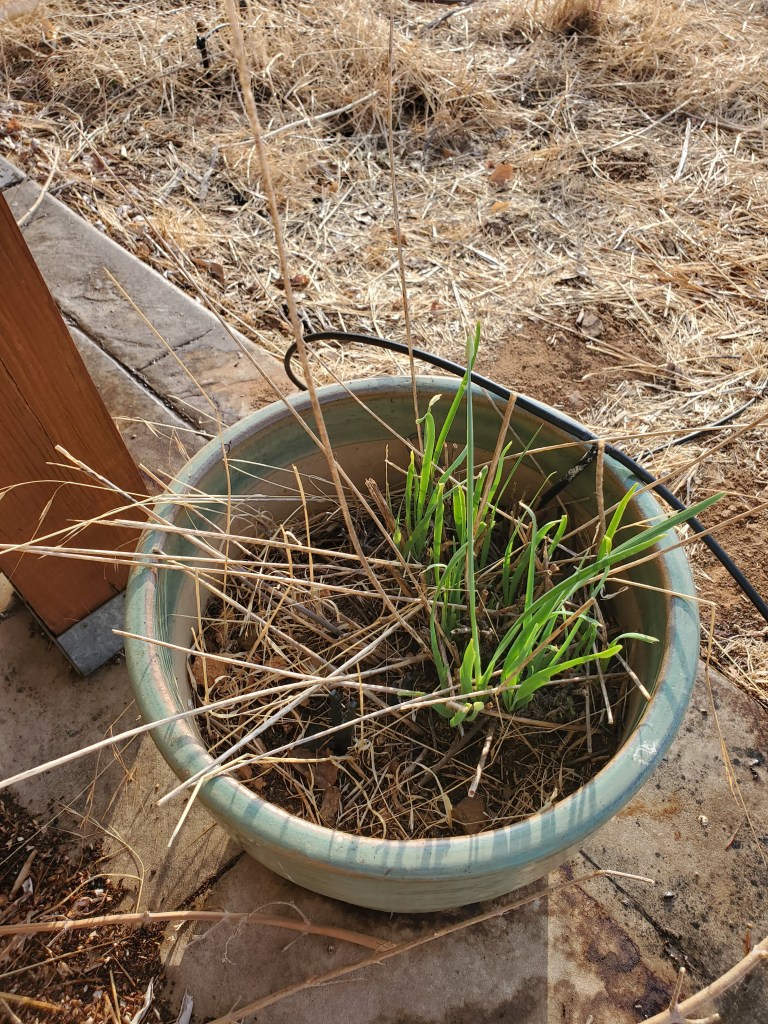
After the narrowleaf’s freedom (and the major decrease of hoppers), very quickly I began to see new signs of life. Onions started to reemerge and now have buds. The willow began to leaf-out. Most exciting, there was one stem of a broadleaf milkweed I found at the base of a bunch grass long ago eaten by the hoppers. Two days after that find, there were more. As I write this, there are ten reemerging narrowleaf milkweeds and six broadleaf. I am hoping to find more in the coming days. Maybe they will get big enough in time for the monarchs to find and choose to use them. There is still hope.
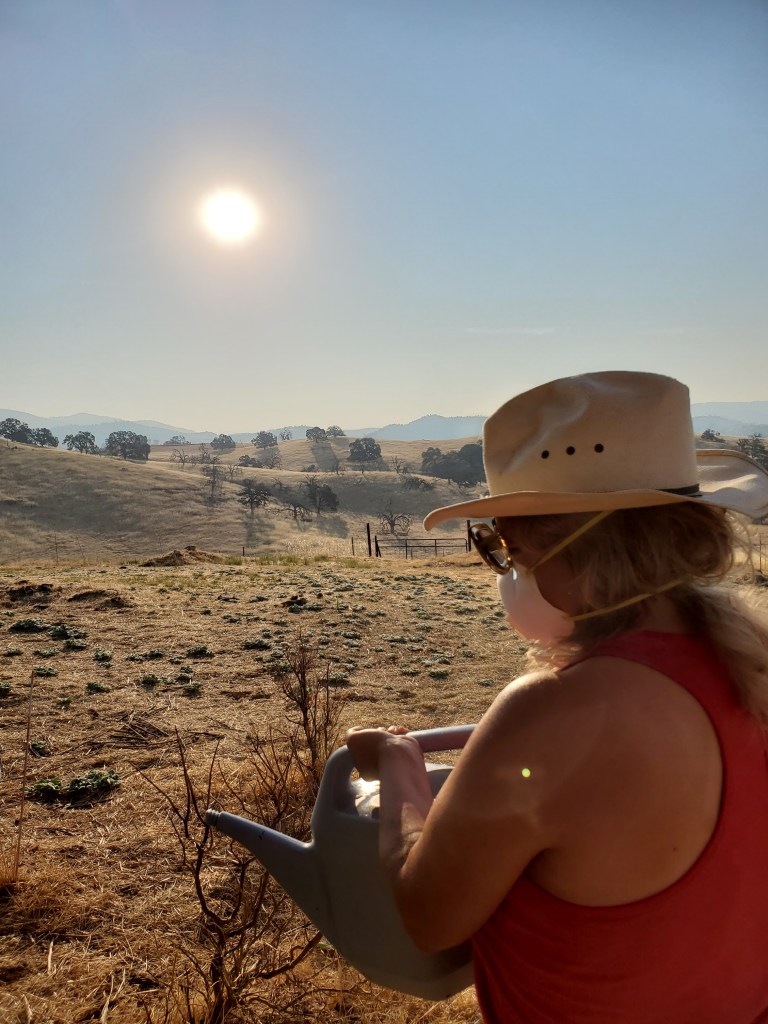
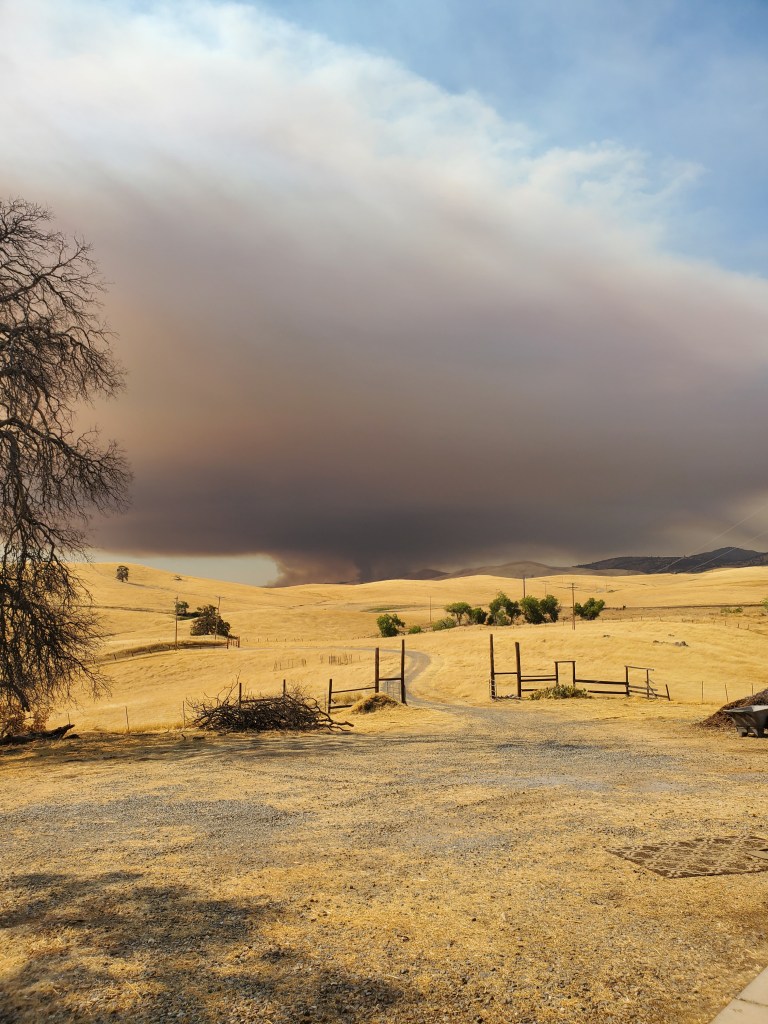
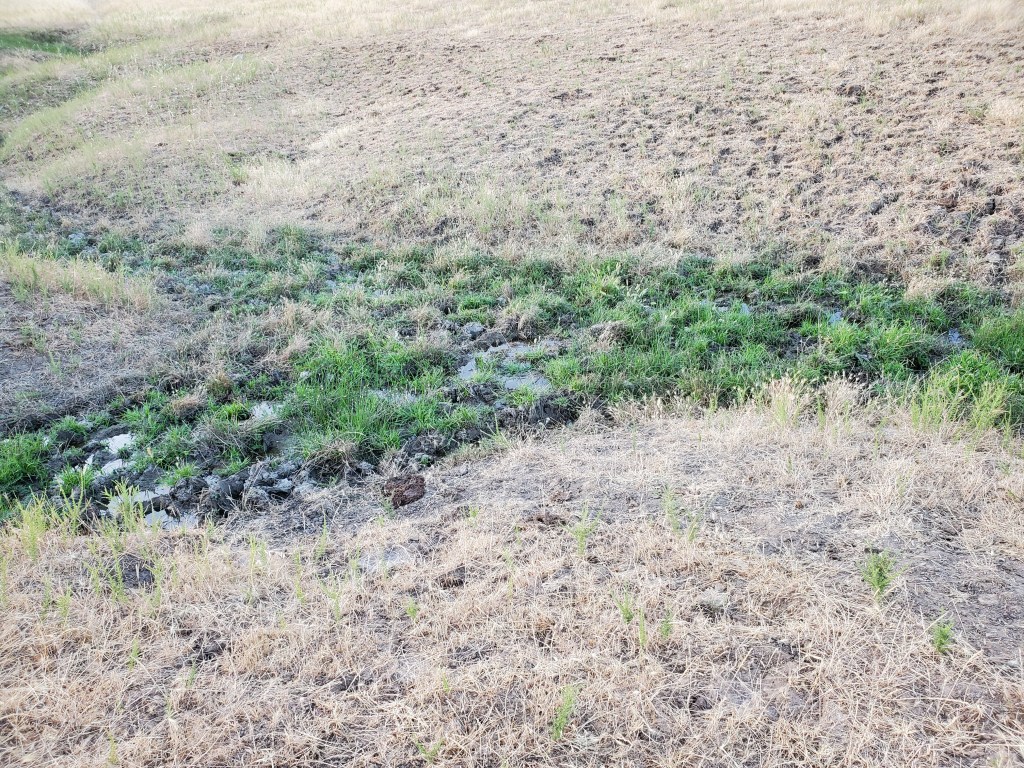
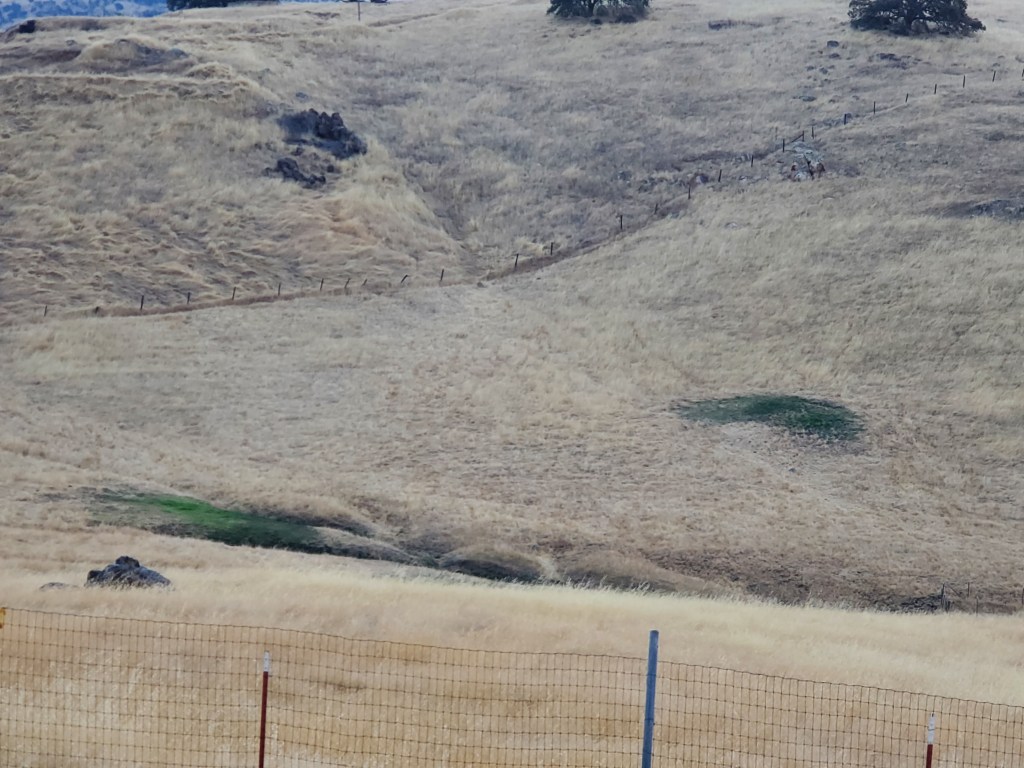
To get pollinator life back will be an ongoing struggle. There are still grasshoppers. We’ve had more fires, and the smoke very much diminishes animal and insect activity, even among birds. The heat is another factor too. That certainly diminishes activity, and it also dries the soil. Remarkably, the wet zones in the drainage are still wet and green, and the small springs continue to produce. Typically, the drainage and small seep on the hillside are dry by August. I ascribe this to the lingering effects of two good rain years in a row. There is no plant life around my rock and log dams, and no sign of milkweed. I have noticed milkweed seed can take two to three years to emerge above ground. I will hope for some more plant life next year.
Acorns Abound

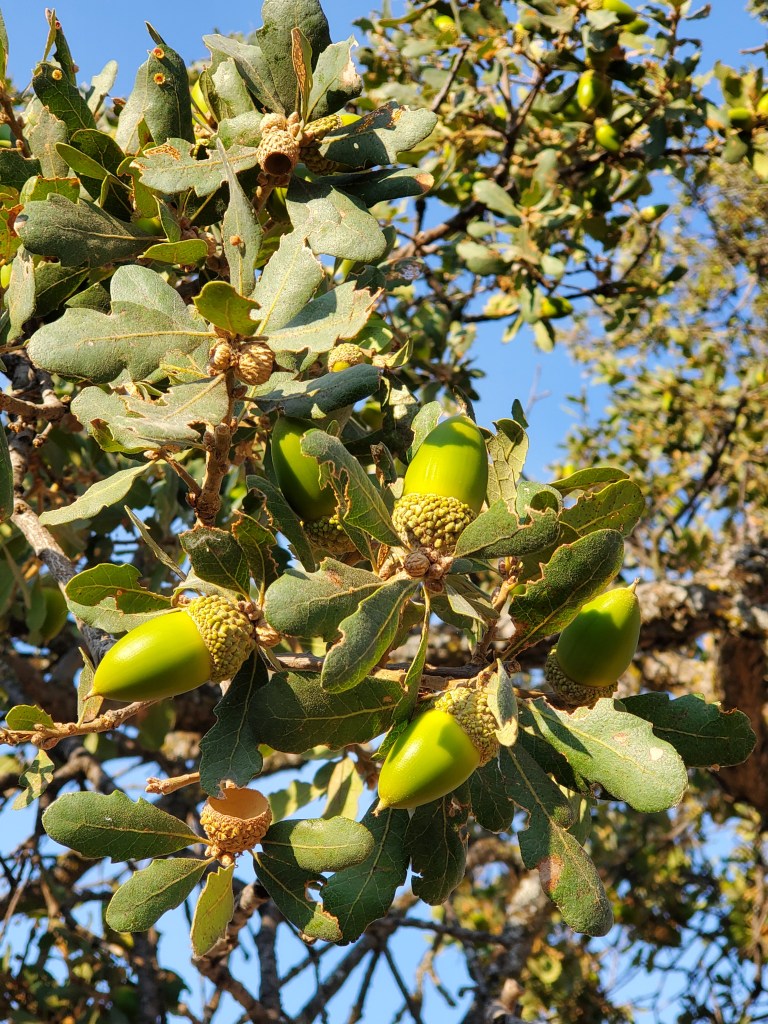
The oaks continue to grow their acorns. They are also shedding many small acorns, which are all over on the ground. As long as there is a healthy crop of fat acorns, I can understand shedding the smaller ones. I plan to harvest this year and make some acorn mush. There will be plenty for me and for the animals that feed on them too.
Water Pains

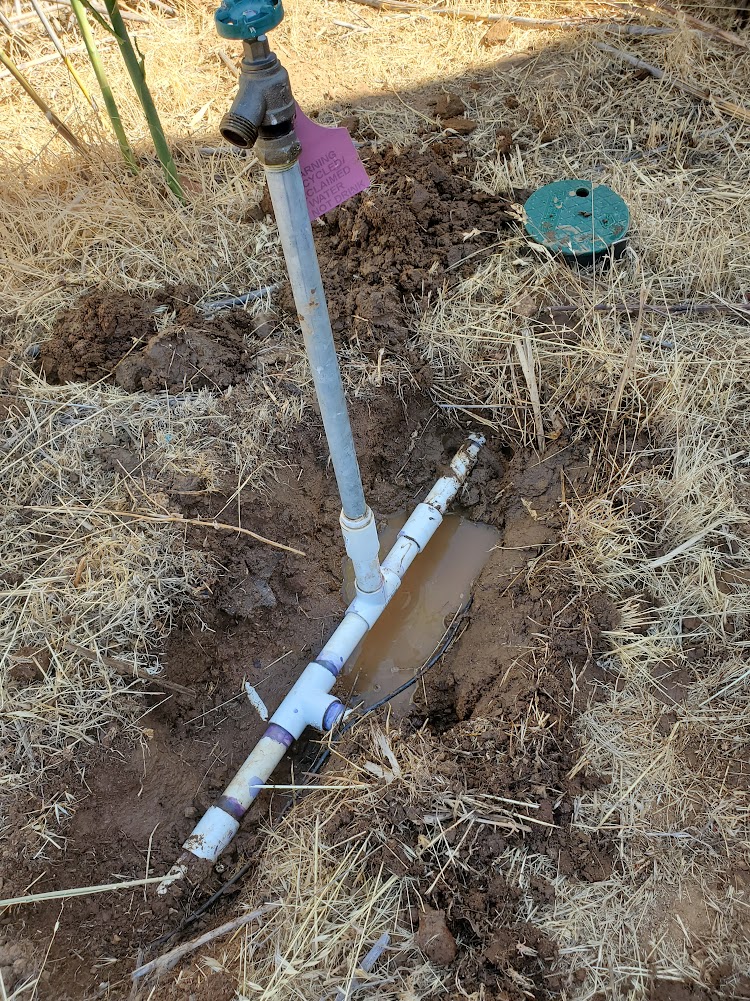
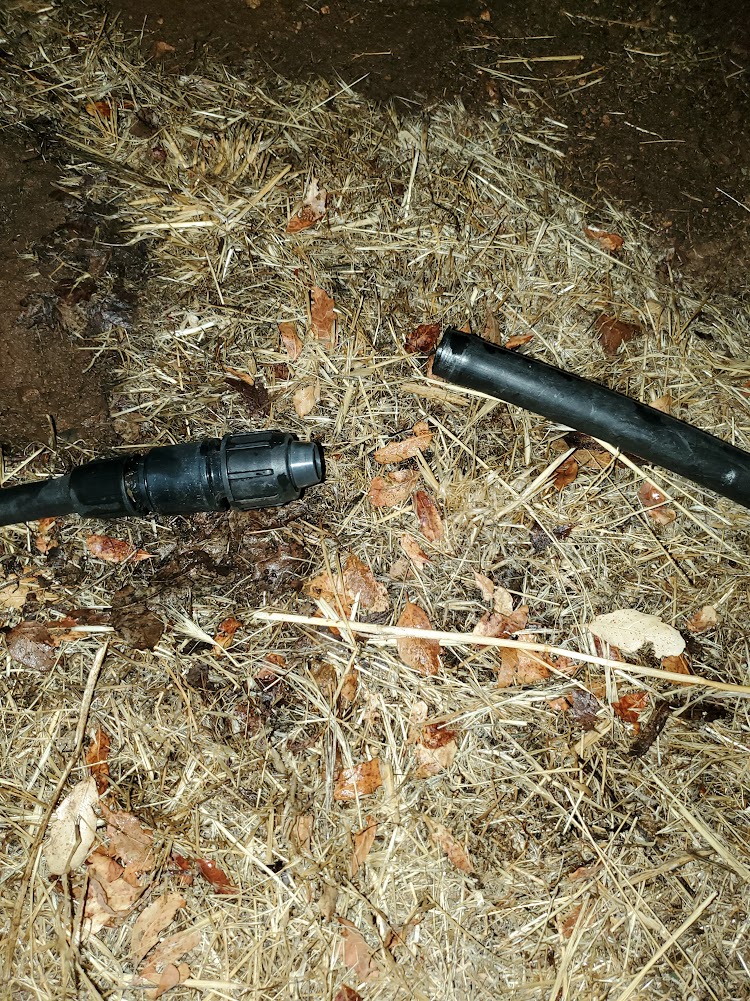
In June, the irrigation system broke. There was a leak in one of the main lines, and the pump kept putting pressure in the line further pushing more water into and then out of the leaking pipe. As a result, the tanks were empty and the pump stopped working. David fixed the leak, and got the pump working. Horribly, all the rainwater I had gathered for the summer was now gone. What a disaster. We had to purchase two 3,000 gallon loads to fill the tanks.

We have had at least one leak each season of a main PVC pipe along with some other small 3/4″ or 1/2″ tubing leaks. It is frustrating since we spent considerable money to move from my poor girl’s system to a professionally installed system. I know things will fail over time, but it has been excessive.

In July, we had another issue and another several leaks of secondary mains. We were out of town, of course (That is when all water issues happens). The pump kept tripping the circuit and could not pump water. Fortunately, we have a very kind neighbor, Ric, who was willing to go over and do some problem solving. It turned out the breakers were bad, and he replaced the one breaker the pump was connected to. He then saw that there were several breaks in the main line. Water spewed out each time the pump was on thereby not being able to deliver any water to the plant roots I was trying to keep alive. He fixed them! What a hero! That was above and beyond. We brought him and his wife back some yummy foods from our travels. Thankfully, I had left the three tanks closed off from one another when I had the replacement water delivered after the last leak. With the three water line breaks, this meant that only one of the tanks, with the newly purchased water, was lost. With only 5,000 gallons, that will not be sufficient to get me through the summer. I will have to buy another delivery before the end of the month.

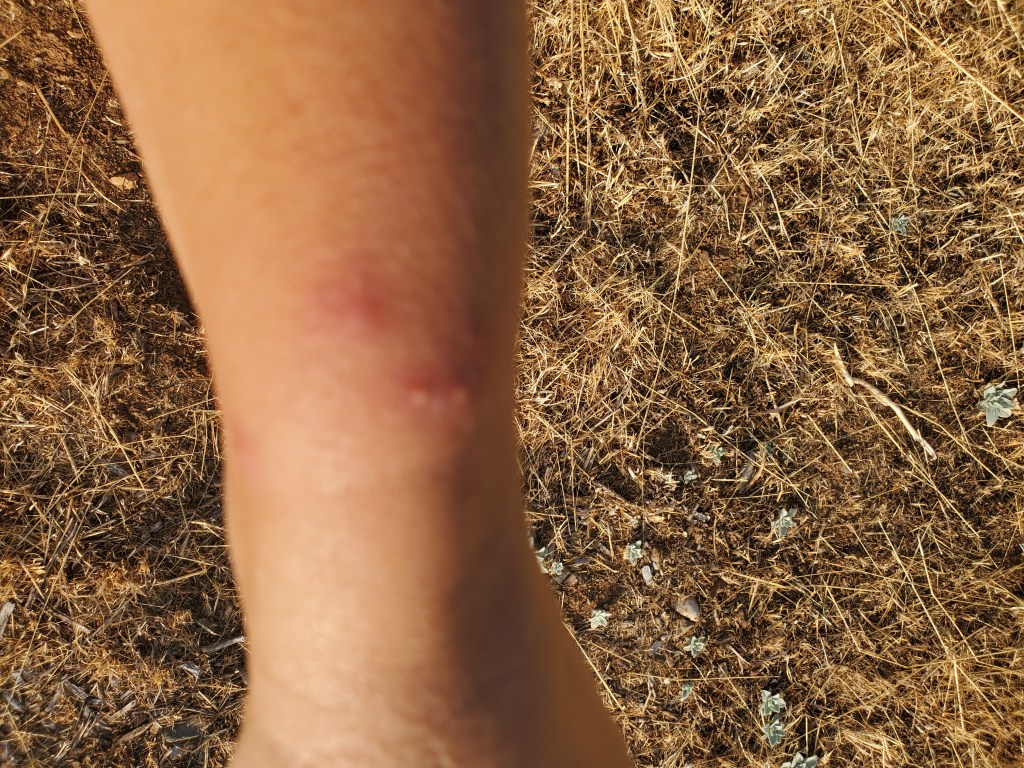
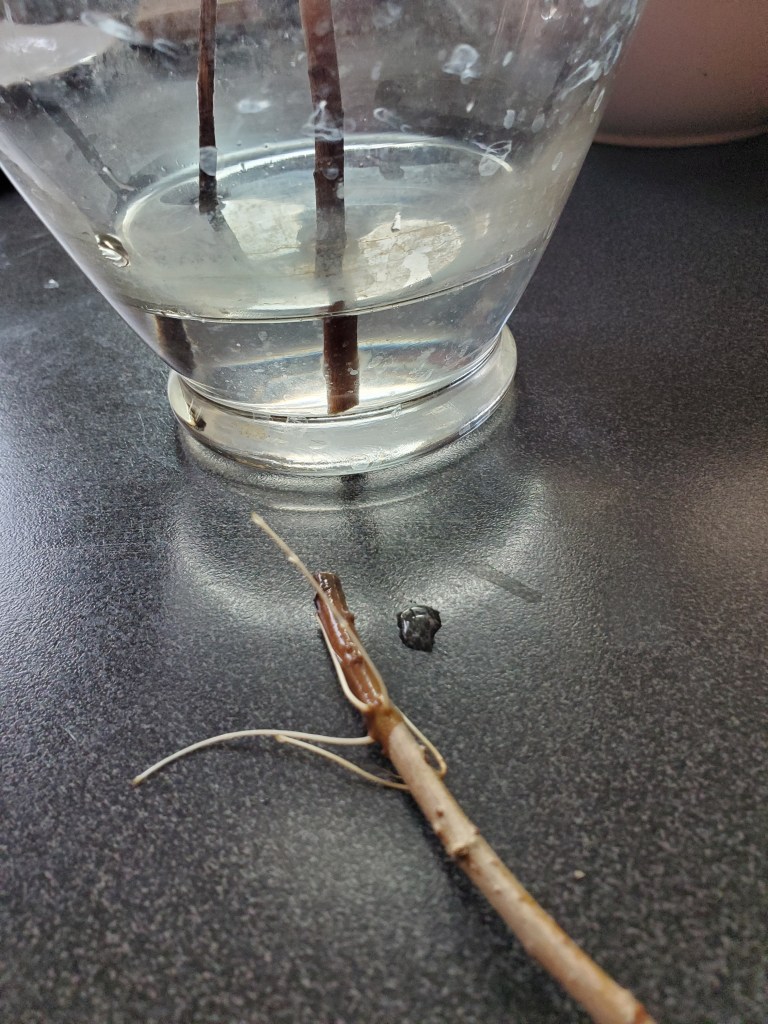
During this time of heat and no water, it appears that one of the willow trees did not make it. She was still in a container, and her roots probably cooked in it. The other larger willow survived. I took several cuttings of the dead willow to see if I could get it to sprout. One did, and I will plant her in about two weeks. Also during this time, I was hand watering and had the audacity to pull old grass remnants from one of the deer grass pots – to unchoke it. Yikes, did that create a stir of mean ants. Before I knew it, they were up the deer grass stalks, then onto the watering can, then up onto my hand where they chewed me up. That hurt. I put mud on the wounds, which helped tremendously.
Wanderings

I thought I was going to decelerate my work, but the monarchs are still on the brink. I read the Western Association of Fish & Wildlife Agencies 50 year plan for monarchs and saw the graphs showing the precipitous decline over time and saw the same graphs showing the inverse relationship with use of two types of pesticide/herbicide. I know we think we have to feed the world and therefore think we need to use a plethora of artificial tools to increase yield, but at what expense? I am not sure many of the scientists and industry leaders stop to think about the consequences of an increased battle with the natural elements, already made more virulent by our continuing effort to tame it into submission. That lack of full-spectrum thinking casts a wide shadow, for a world with no insects, is a world in which we cannot survive.

After reading that report, I emailed Ron Allen at Mariposa Native Plants and ordered more nectar plants to replace those I know I’ve lost from the grasshopper incursion. Combined with what I was able to salvage and grow for myself, it may be enough to ensure that I don’t lose a generation of bees and butterflies, a population grown through habitat expansion for the past 4 years. I need to continue to do my part. I can’t decelerate now.
Toad-a-palooza. Forward Progress Despite Carnage All Around.

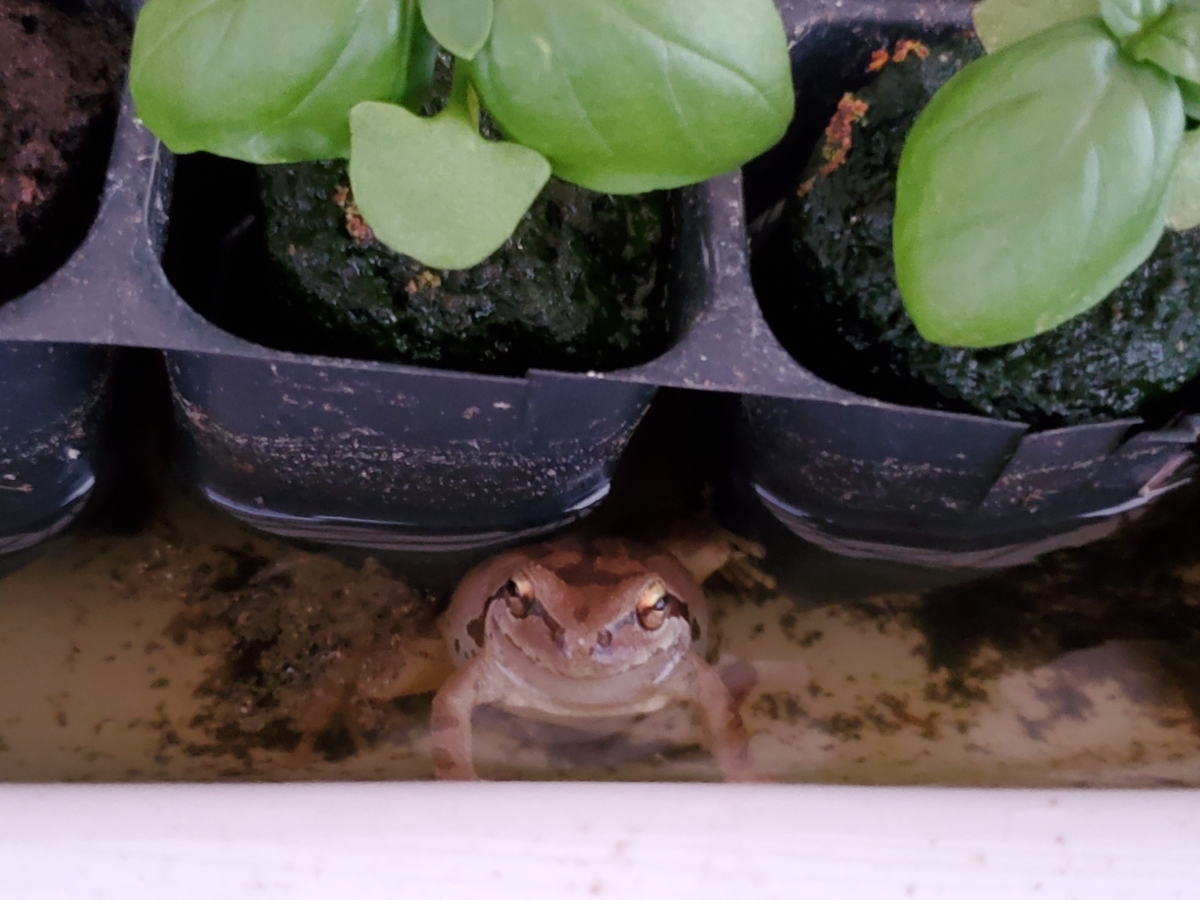
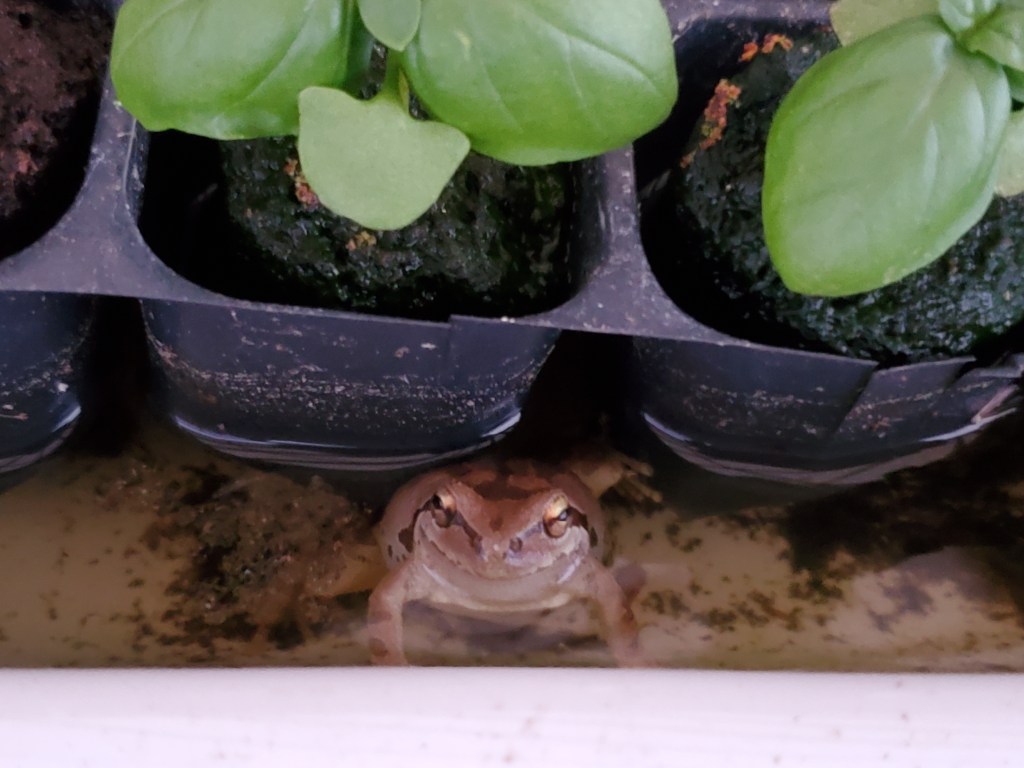
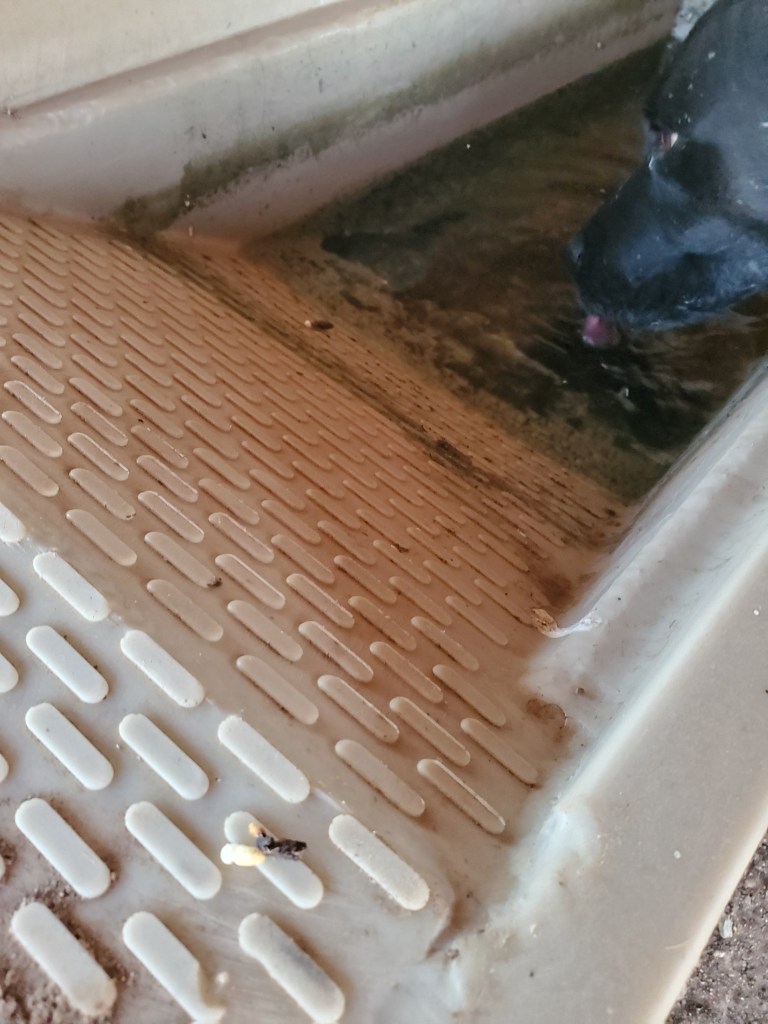
A good friend floats in the basil seedling basin

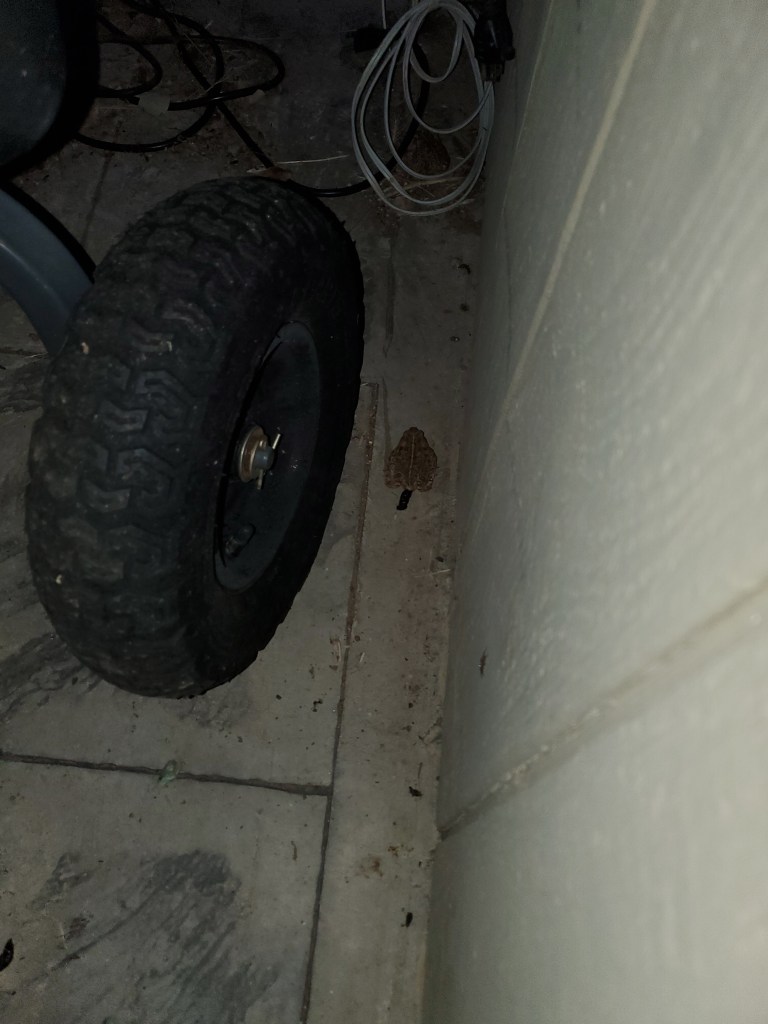
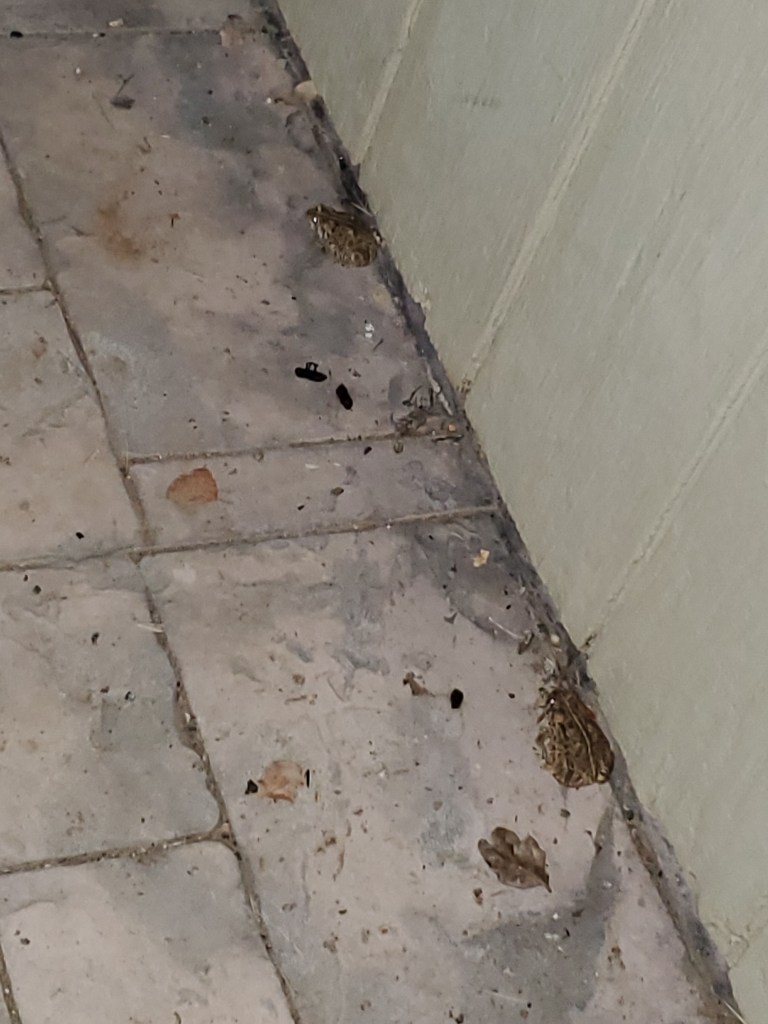
Despite the ongoing carnage wrought by the grasshoppers, I try to focus on the good things, like the myriad of frogs and toads in the garden. They are so cute to watch, and I know they are eating the grasshoppers. Although there are not enough of them to make a dent in the population of billions, I think the reason the willows and potted plants near the trough are only partially eaten is because Erma and her children live there. Yes, I said children. Guess what I saw…small toads hopping around! Our dear Erma is a mama. Before we get too sentimental, it is important to know that toads eat frogs and that they each eat their own. But…let’s hope each one of them focus on eating the abundant hoppers.

Rock and Log Drops Installed

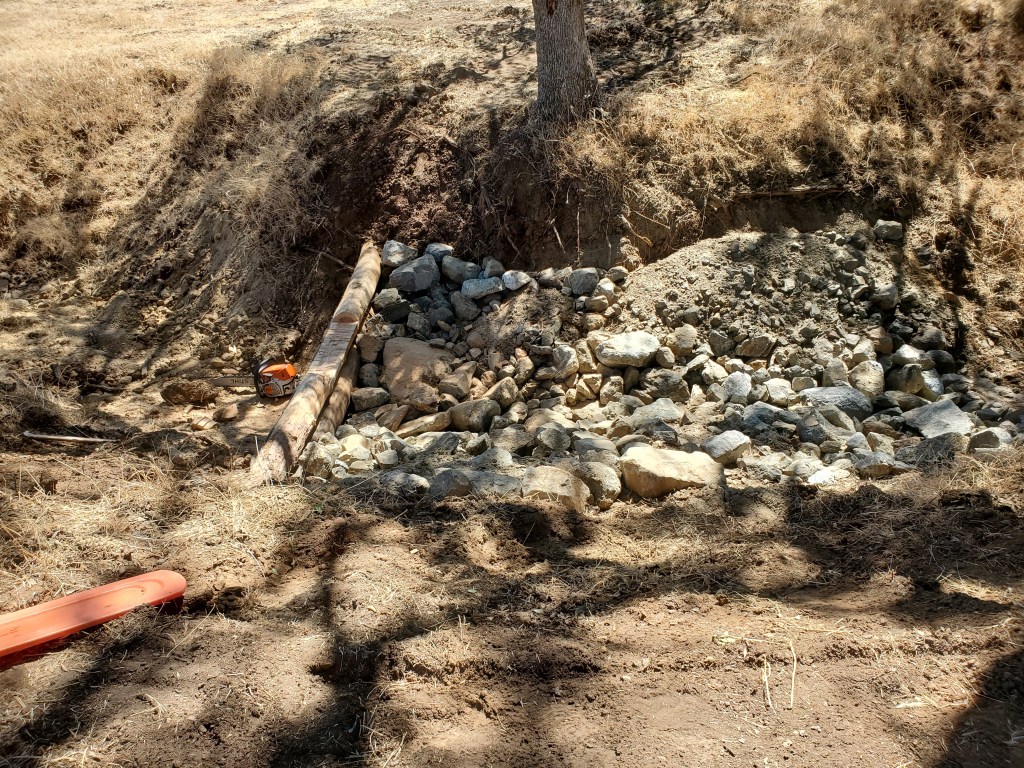
I am so grateful that the log drop and rock drop structures were finally installed. They were planned in 2021, approved for install in 2022 and finally done in 2023. It took so long, but they are in, and I love them. The idea is to slow runoff from storms so that more moisture seeps into the ground water fractures and stays deep instead of in the first few inches. Secondarily, the rocks will capture sediment to build up to the level of the creek banks over time and become a more lush location for plant life. Keeping sediment from washing downstream also helps to keep the water clean as well as eroding the banks more. There are many benefits, and I am excited to see what they do in next year’s storms.

RCD and Fish & Wildlife Visit

l-r: Me, Melinda and Rosie

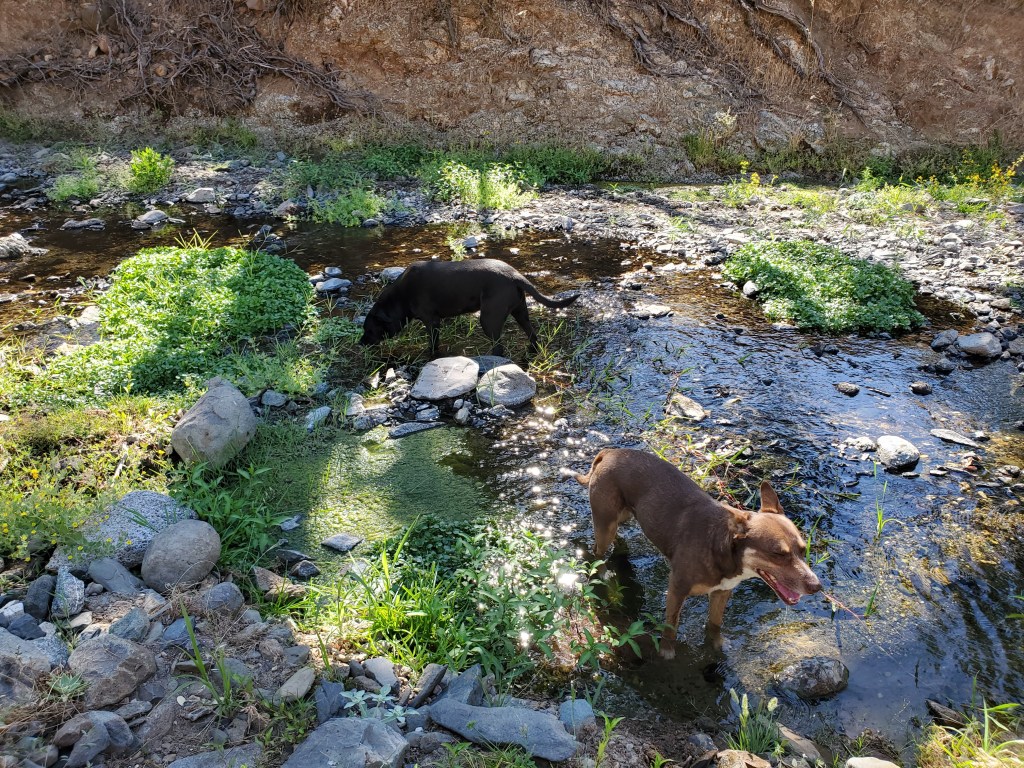
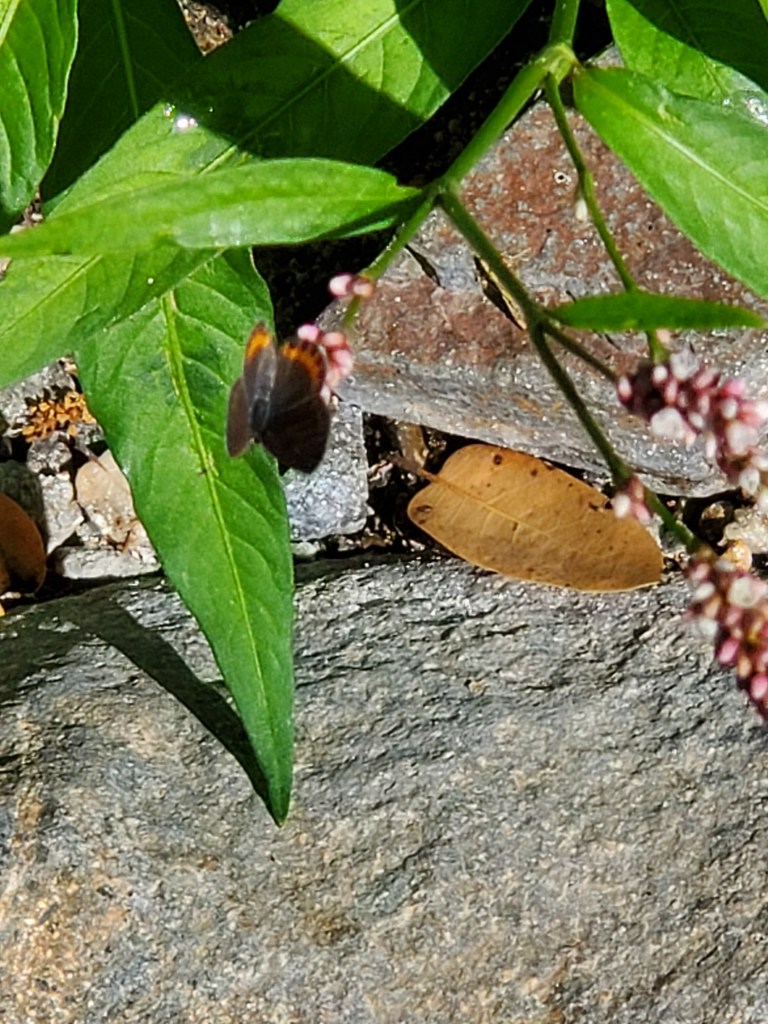
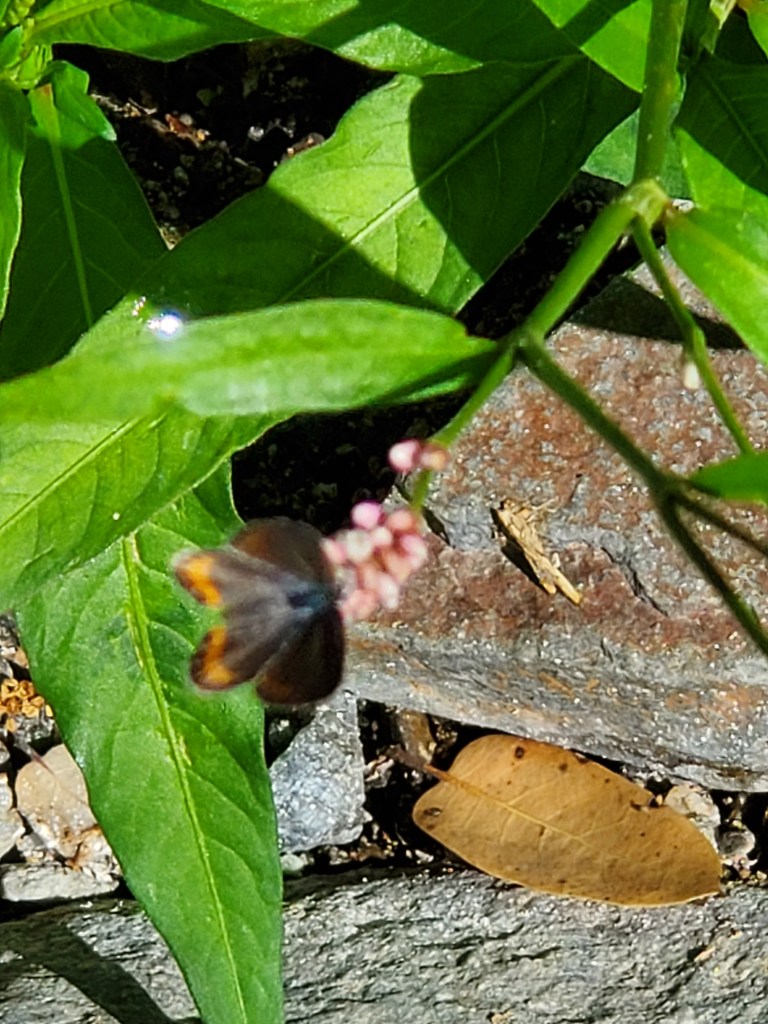
Some of my favorite people came to look at the log and rock drop structures and some of the other projects I have on the ranch. Melinda Barrett from Mariposa County Resource Conservation District and Rosie Gonzalez from Fish & Wildlife were pleased to see the progress being made and some of the benefits of the riparian fencing. After checking out the structures, we explored Odom Creek, Spring Creek and some downstream check dams. I really appreciate their extensive knowledge, so was grateful they were interested in seeing the status and outcomes of some of the practices I have been doing. Flora and fauna are thriving in Odom Creek. There are no grasshoppers in that area of the ranch and plants are still in bloom. We saw abundant California Hairstreak butterflies, Buckeye butterflies, some Red Admiral butterflies and native bees. We saw a doe on the hillside, which is rare even in the more forested midsection of the ranch. I found a narrowleaf milkweed covered by expended thistle that seems to be doing well. I was wrong about what I thought were black oaks. It turns out they were fig trees. They were next to a willow seedling. There was even one fruit on the young tree. We walked to the property line and found abundant watercress. Yum! The water in the creek is still running well. There are many deep pools for animals to propagate, water and soak.

Wanderings

The Pain of Loss

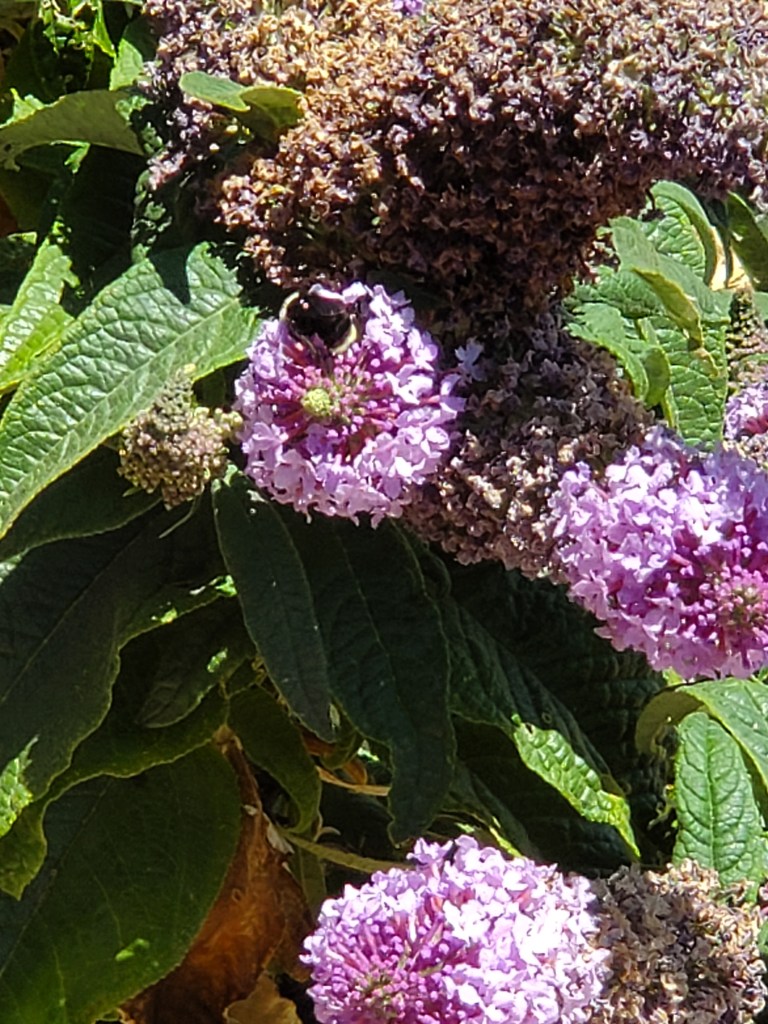
I keep telling everyone that I have turned a corner in my emotionality, that I am not as broken as in years past when the hoppers have brought their deadly visits. I say I have finally put these losses in the category in which they belong, the one that says, “That’s the cycle of life.” In some ways, I have. However, the more I walk amongst the skeletal remains of plants, who were, only a week ago, strong, vibrant and filled with foliage, the more I feel that knot in my stomach. No, I am not crying, but it is because I have shed all the tears I can. The loss of my great grandmother oak in December took all the tears from my body, which has made me numb to all the other sadness that prevails here lately. It is my nature to be happy, so my psyche automatically attempts to buoy itself with the goodness I see – the mass of bumbles, native bees, abundance of toads, frogs, the cooler June, the still flowing water, the running of milkweeds and other native plants. But I also see the back-breaking work, the expense and the hope of help for monarchs all going down the esophagus of the grasshoppers. It isn’t just the plants that are now shriveled sticks, no leaves to turn the sun into energy and joy, that is me too for now.
Grasshoppers Decimate Plants

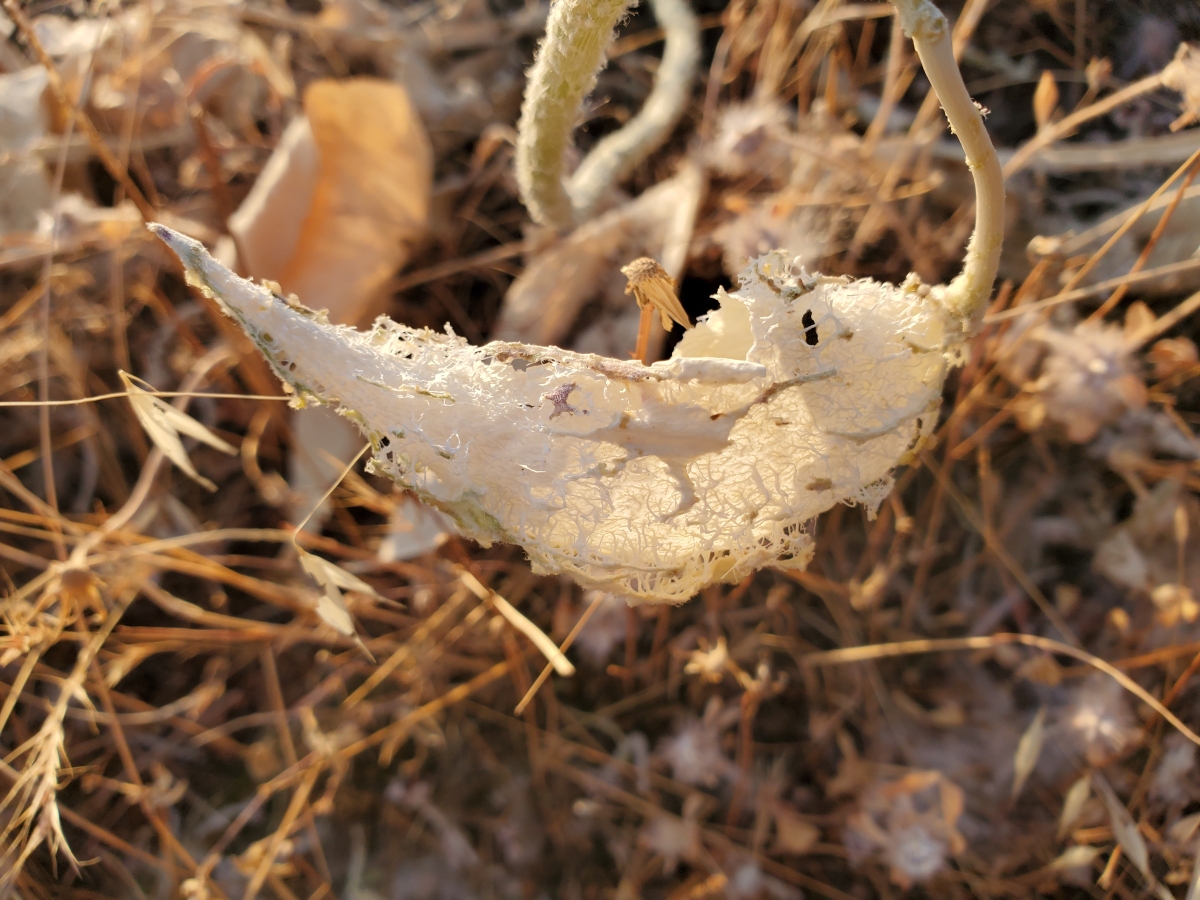
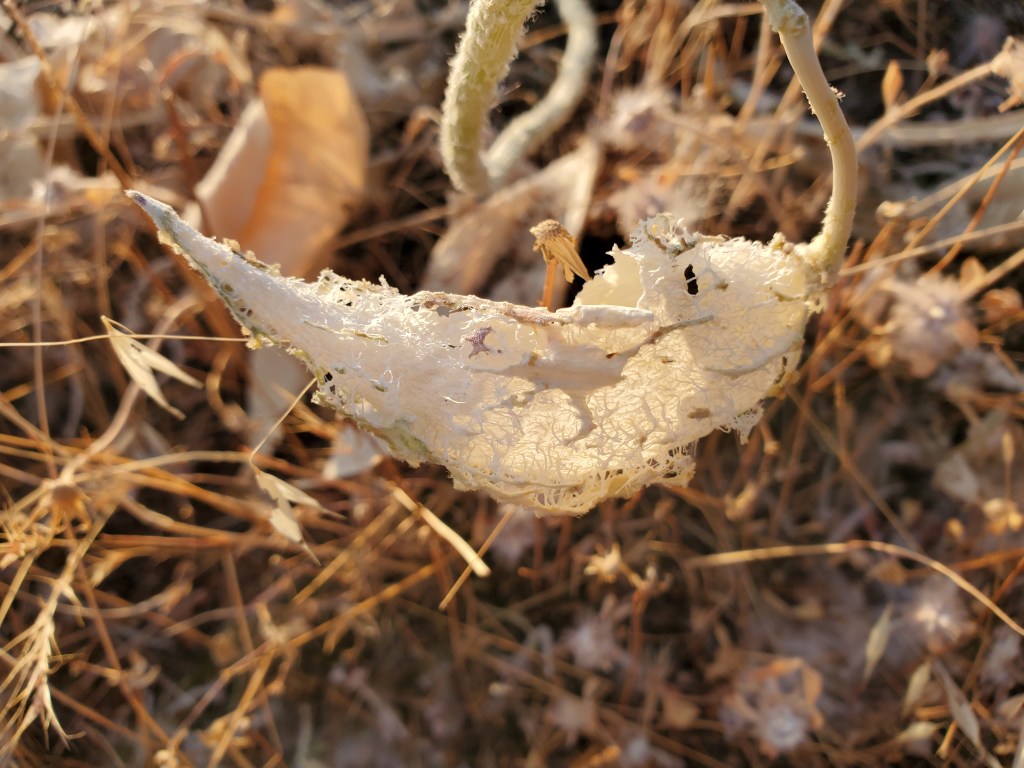
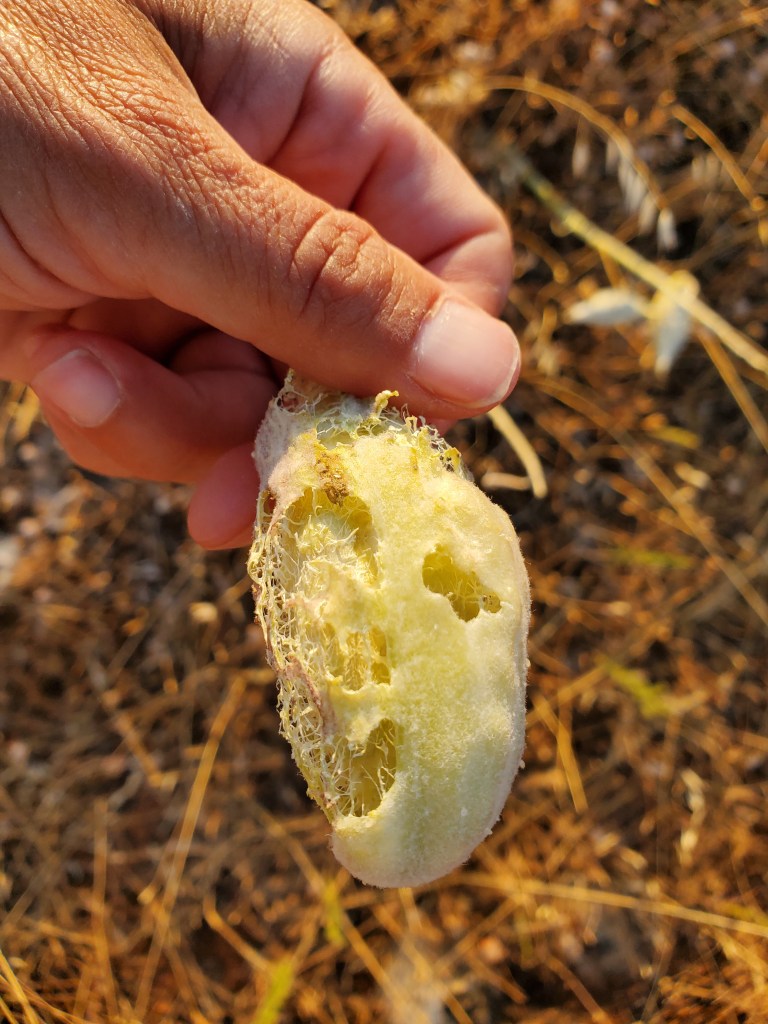
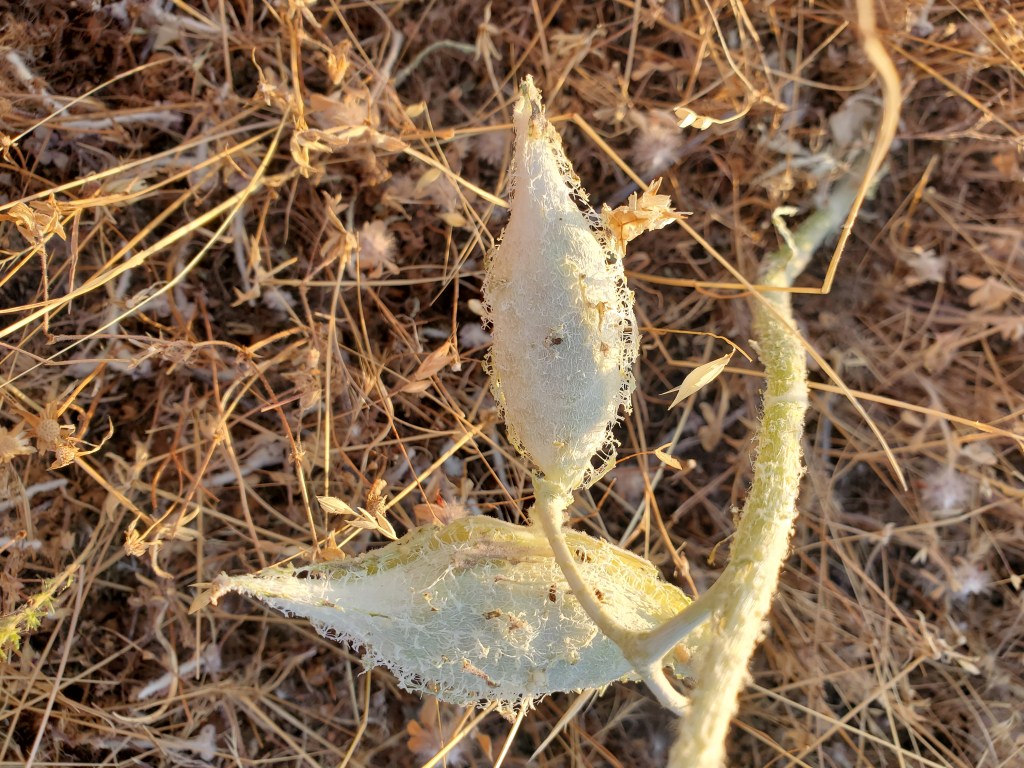
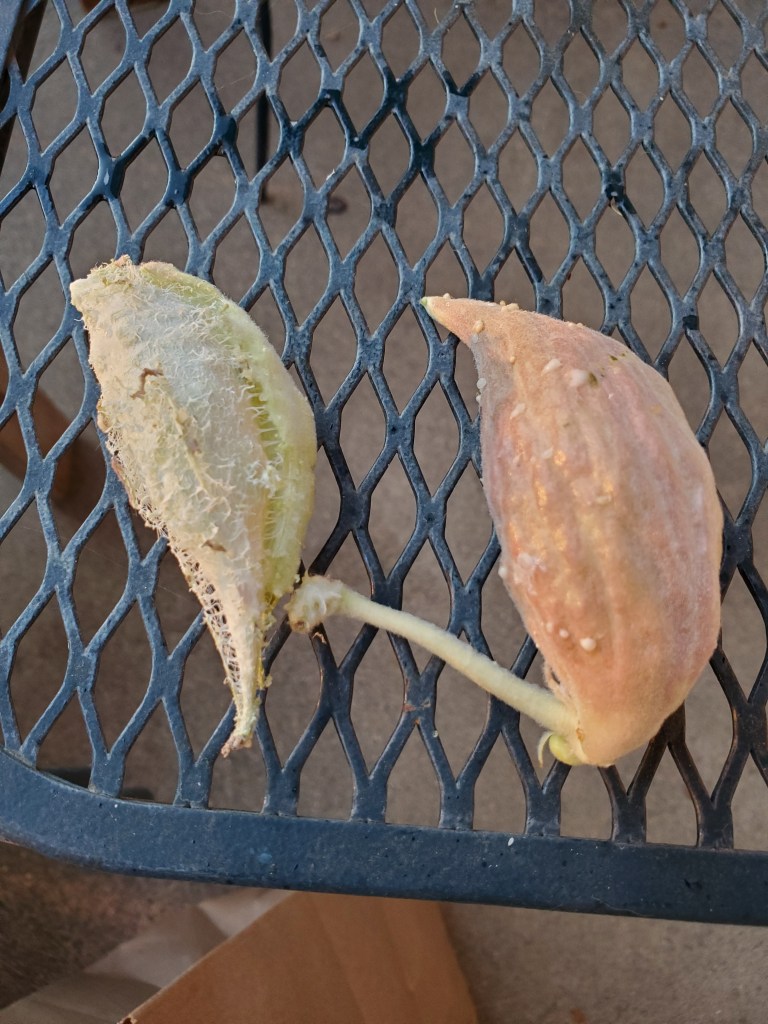
California Milkweed seedpod eaten through by grasshoppers

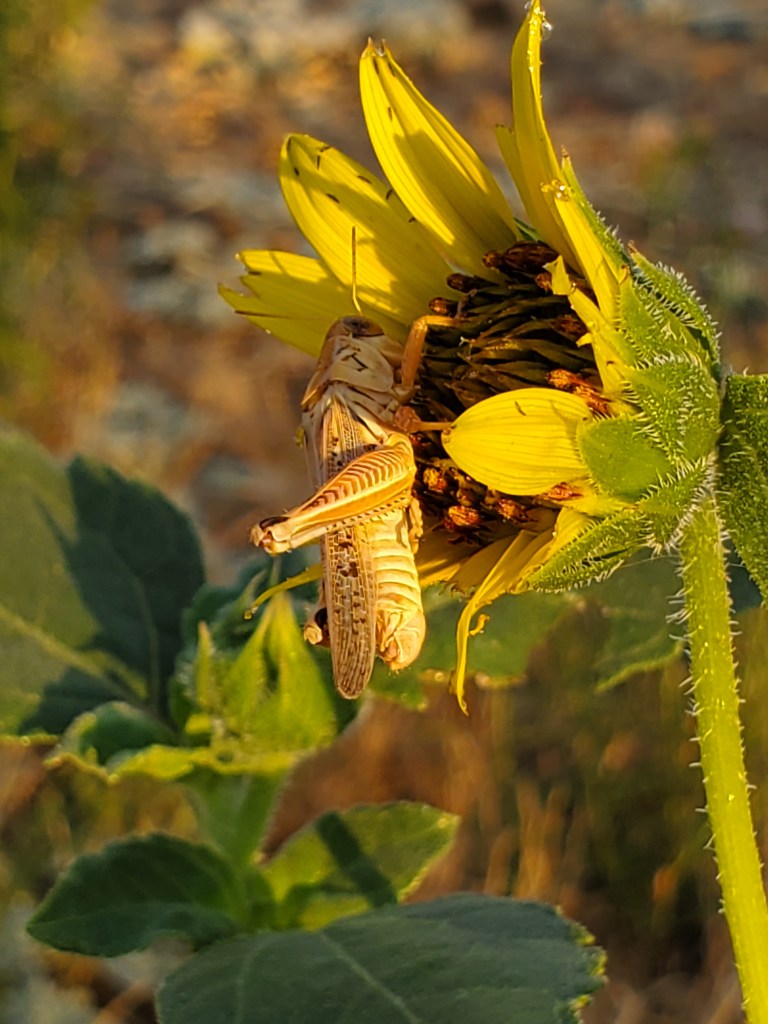
This year is bad for grasshoppers. Even after 21 years, I cannot discern a pattern to which years will be plague-level. They can be bad in drought years and in water years, hot weather or cool weather. If someone knows more or has a theory, please share.

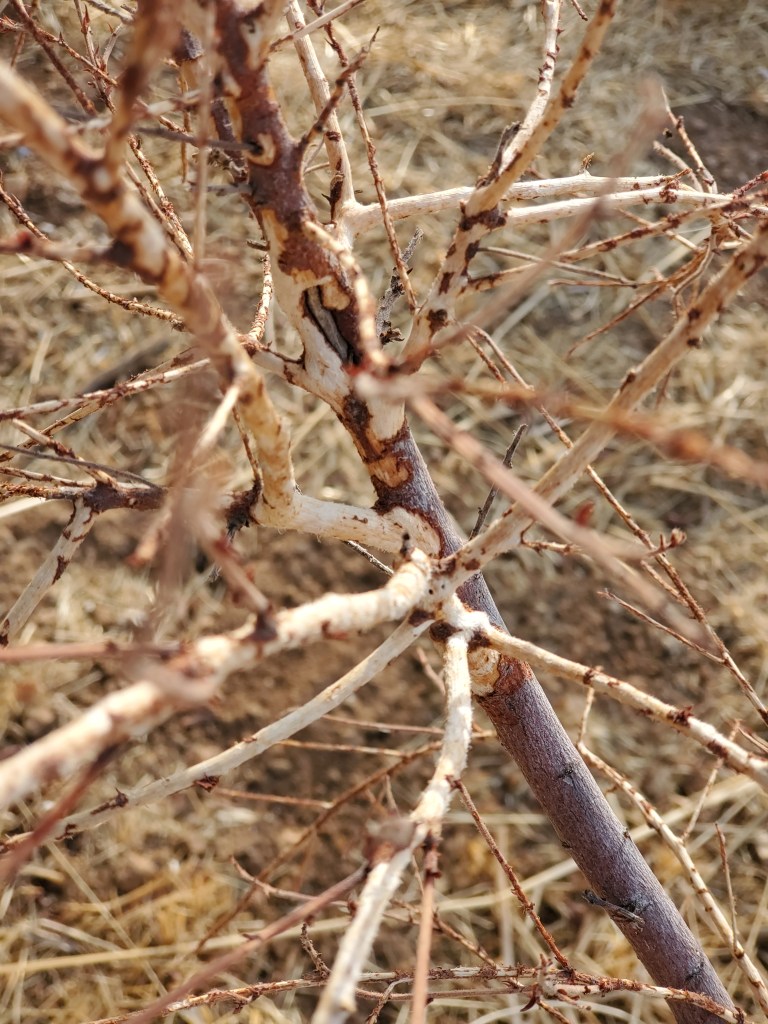
All new plants and many mature plants are eaten. Even sage, with its gorgeous fragrant secretion, have been consumed. Some of the Xerces hedgerow bushes and most of the plants closest to the house are still surviving – but it may only be a matter of time. Perhaps Erma, my toad friend, is keeping some of the hoppers at bay. Most of the plants in her section are still intact. Sadly, the sage and wormwood are being consumed. It is near complete devastation. In years past, this level of destruction would crush me – since so much time and work has been spent in making a healthy, full-spectrum native plant habitat. However, I have seen the plants reemerge in subsequent years. Perhaps not all survive, but most come back, and this level of sustainability is exactly what I want to see. This reemergence of milkweeds and nectar plants demonstrates establishment, which is a huge success.

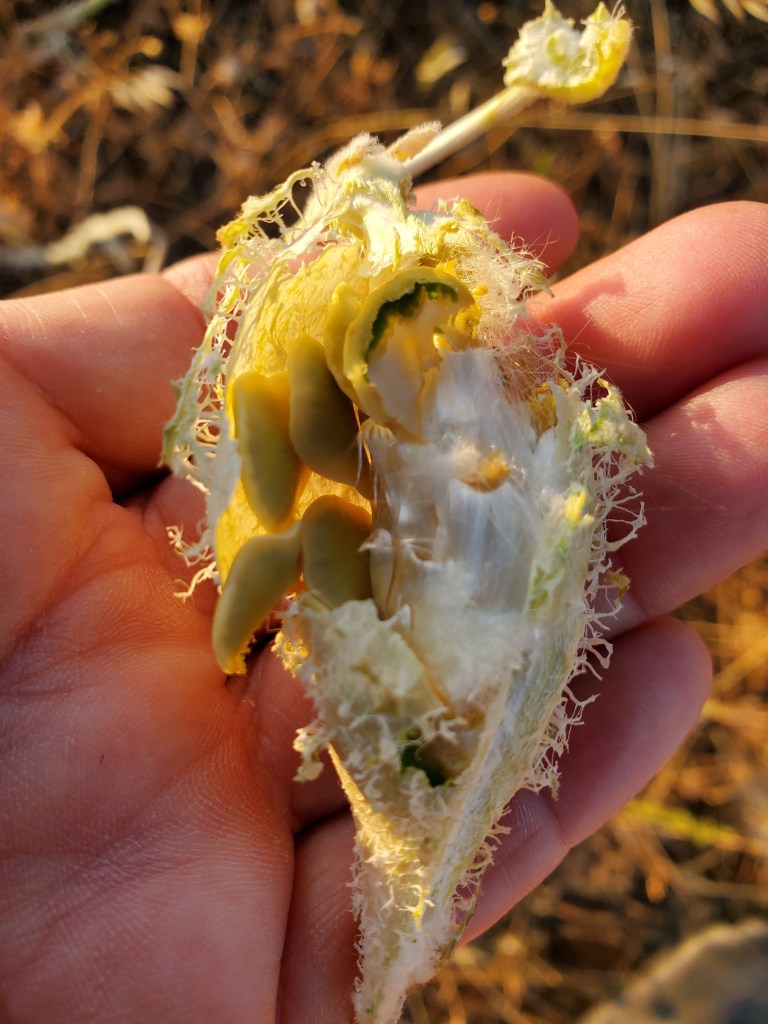
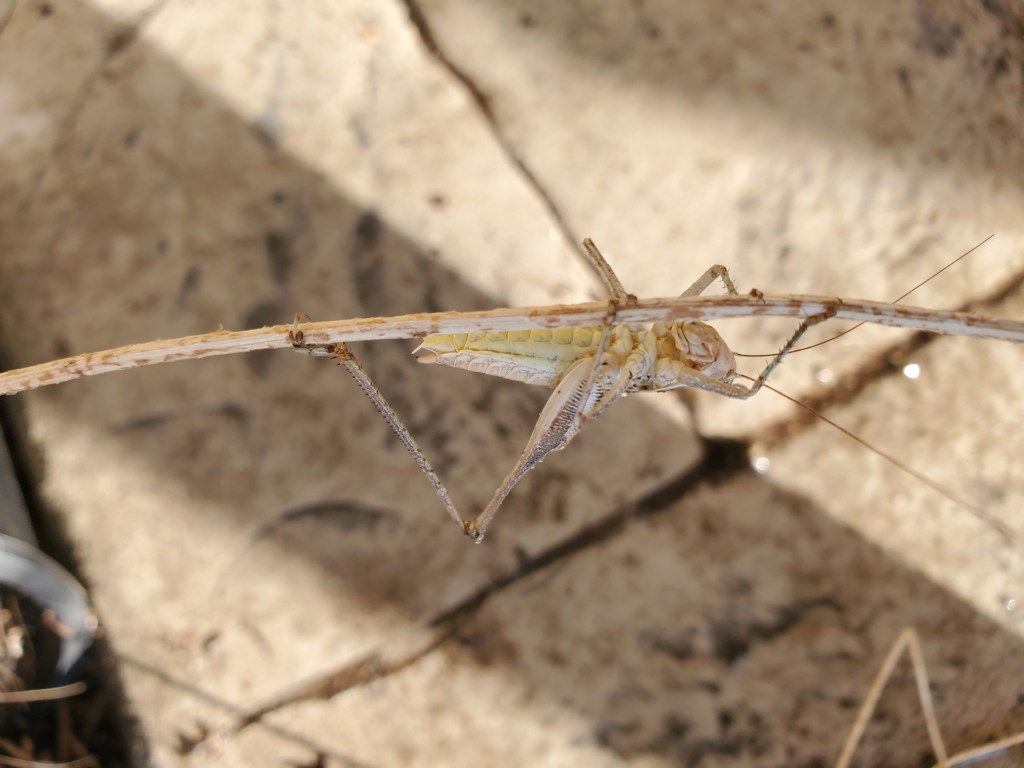
Even so, I still need to intervene to give native plants the advantage. The grasshoppers are so bad that they are eating the seedpods of the crucial California Milkweed — before they are ready to open and disburse. I took a closer look to understand how complete the decimation was, and found that they are eating the seeds as well.

Immature seeds that have been partially consumed. Seeds should be a dark brown

In late June, I went to the large plots searching for pods to save. I had to act fast; many plants had been consumed already.

I trudged up the hill finding intact pods on plants. Some were still small. The cooler temperatures delayed milkweed growth resulting in some plants emerging later and not having as much time to mature, develop flowers and seedpods. I picked pods knowing they were not quite mature. Since it is this late in the season, I know they will continue to dry in the bag and produce fully mature seeds. I did this in other years when grasshoppers were bad. When I pulled, most pods had limited resistance, but still secreted the “milk” from the plant. It felt as if I was detaching a baby from its mother’s umbilical cord – separating it from its nutrients. I promised the plants I would return the seed when it was safe.

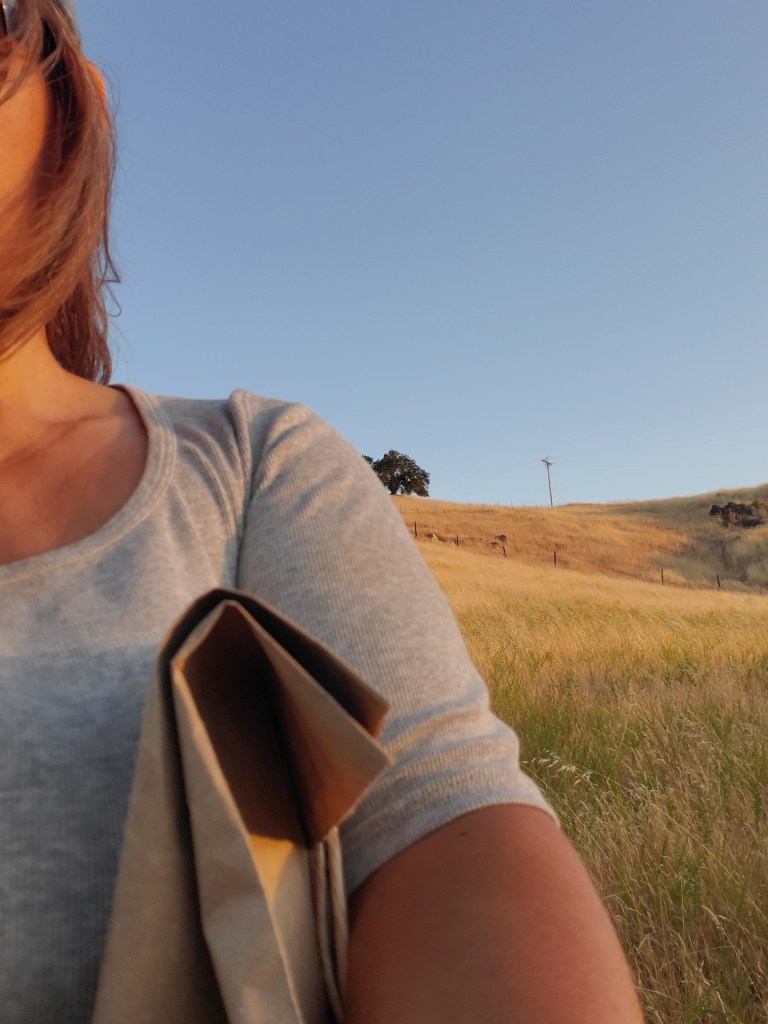
In total, I collected 24 pods. With approximately 8 seeds per pod, I will be able to distribute up to 192 seeds back to their locations. I will fulfill the promise to the mother plants probably in October when the hopper danger has passed. As I went back down the hill, wind whipping around, I ensured the bag was folded tightly, and placed under my arm. The wind had tried to take the bag from my hands several times already. The lightweight treasure is easy to roust. Today, at least, I could claim victory.

June Bumbles

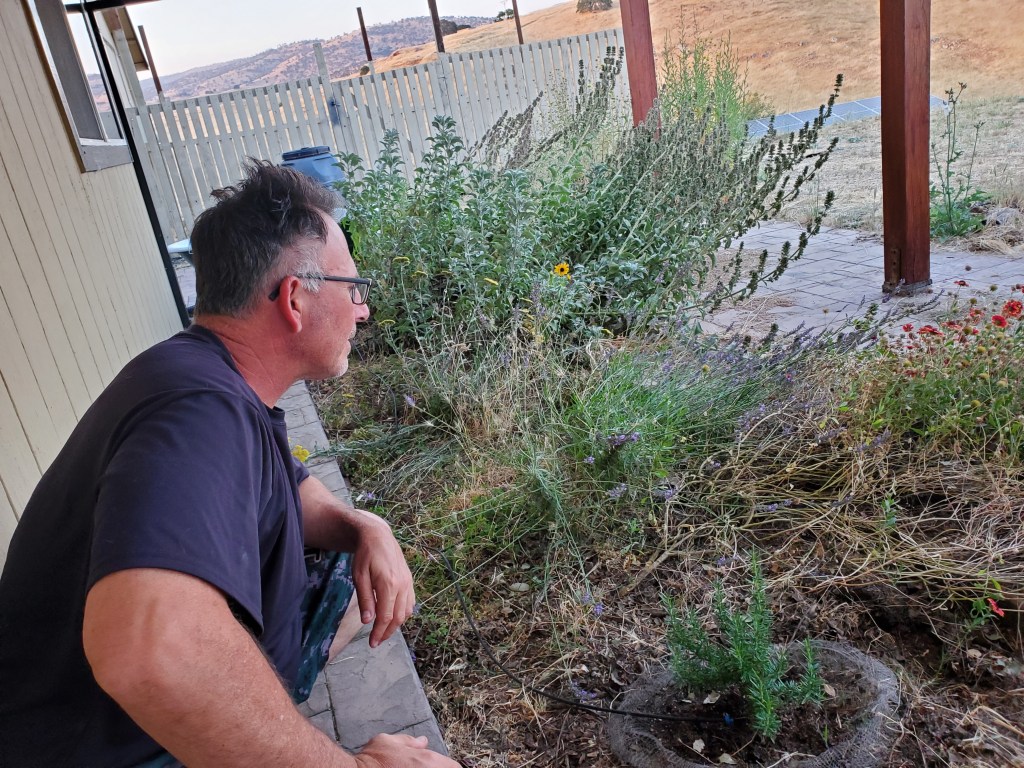
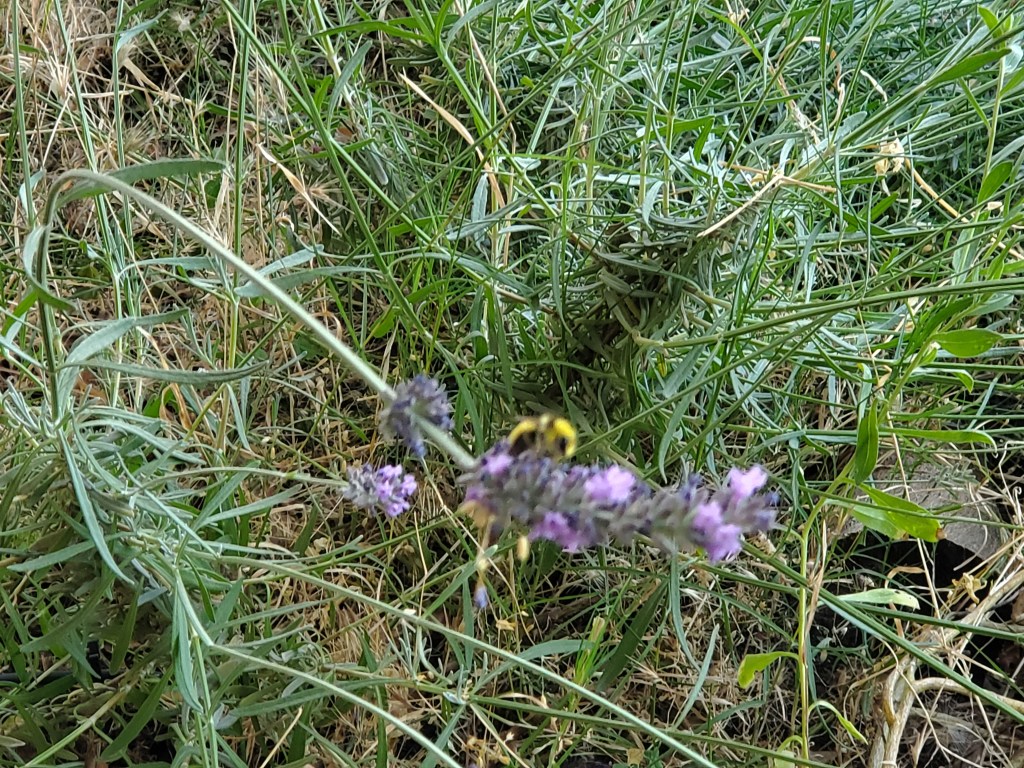
June was a great month for bumble bees. I had many sightings to add to the citizen science project Bumble Bee Watch. If you want to make a difference for bumble bees, besides ensuring habitat and nectar, you can also help scientists track them. Set up an account today and upload images as you find these critical, fuzzy friends doing good work in your garden.

Wanderings

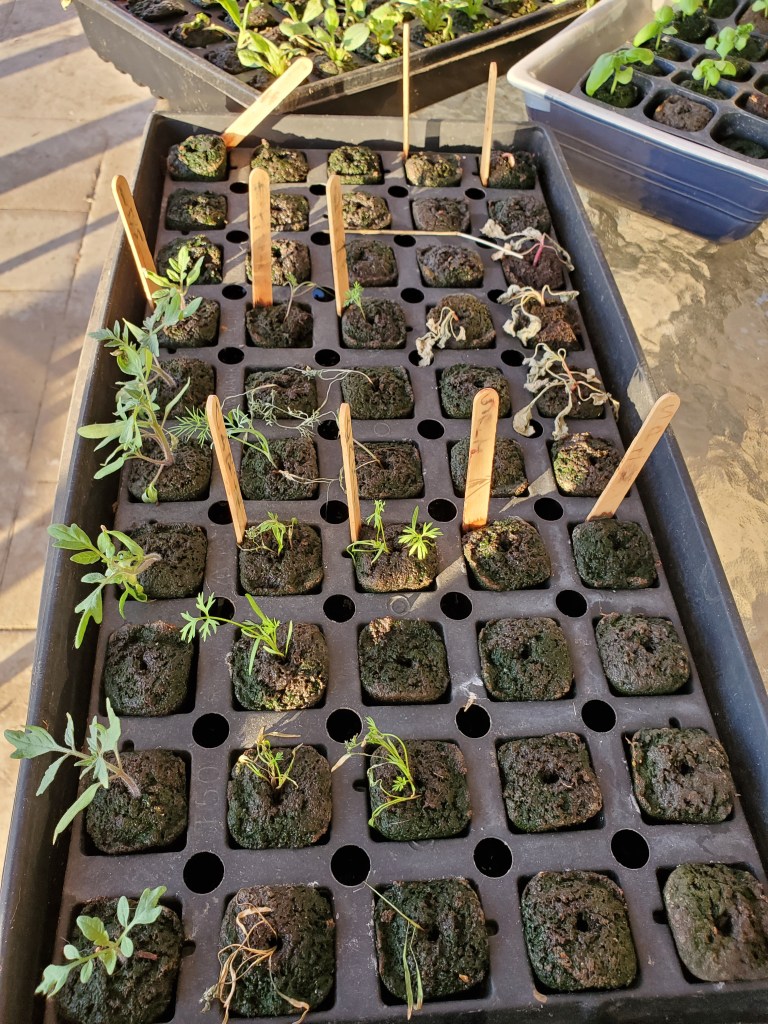
It is remarkable how a place can change in just two weeks. I was gone on vacation and came back to more skeletal plants and even brighter yellow grass. As dry as the grass is, the soil continues to hold moisture. I placed my hands in the dirt as soon as I got home just to check in with the land. Springs are still flowing and areas with a high water level are still green. There was a horrific 110 degree day while I was gone, and David made one fatal mistake. He did not double check the seedling trays. The water can evaporate rapidly from the shallow basins drying out the media in the same day. With the temp so high and no additional infusion of water, the seedling media dried out. I lost half of the seedlings that were sprouted. Fortunately, several still made it though. Life on the ranch can be tough especially if you are not always monitoring.

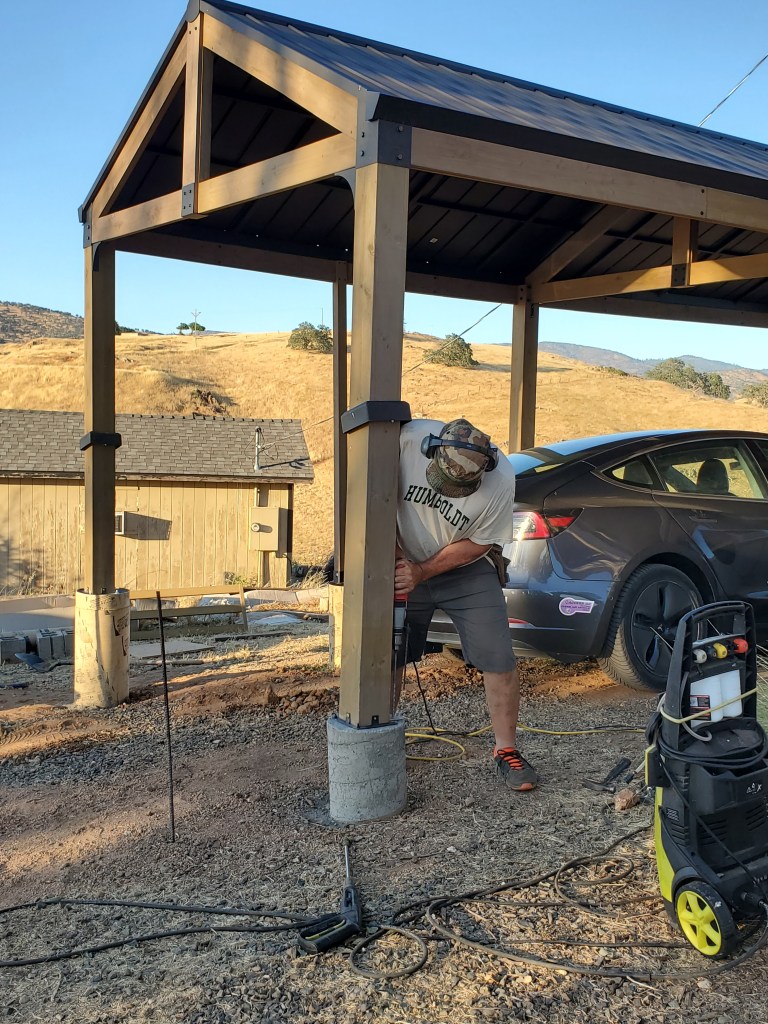
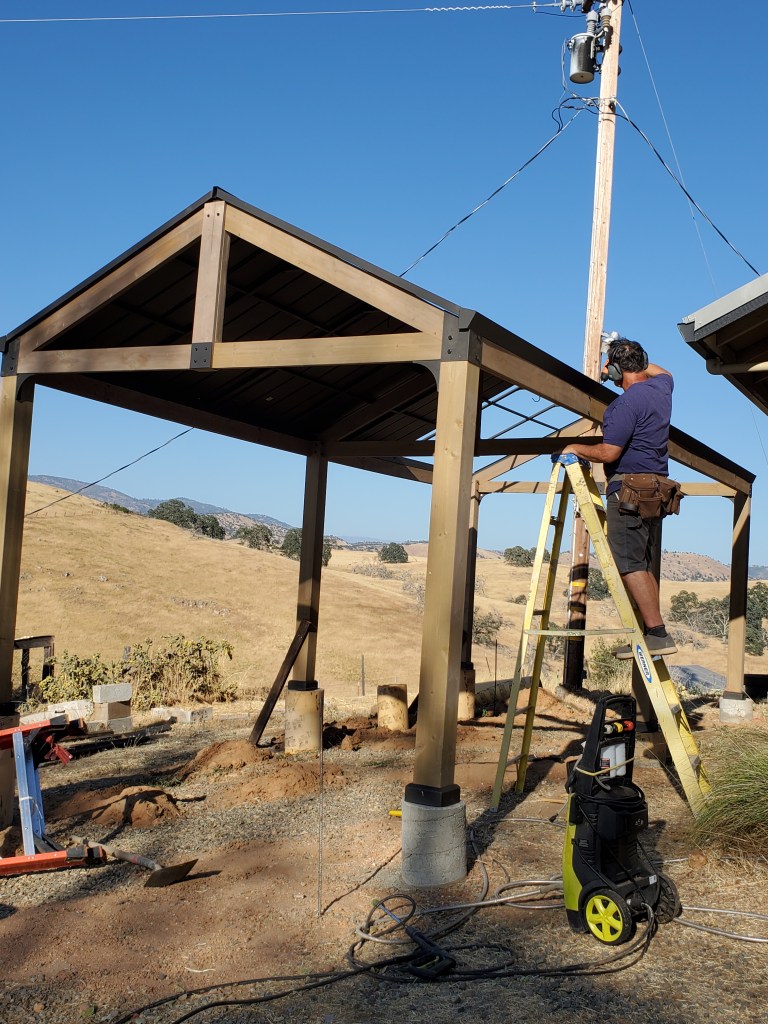
David has been building a carport, which is another opportunity for rainwater catchment. We will add some screens, PVC pipes and tanks in the coming months. This week, hopefully, my log and rock drop structures will be put in the arroyo to slow runoff in storms. This will preserve soil moisture and build the channel back up. We will be prepared for next year.

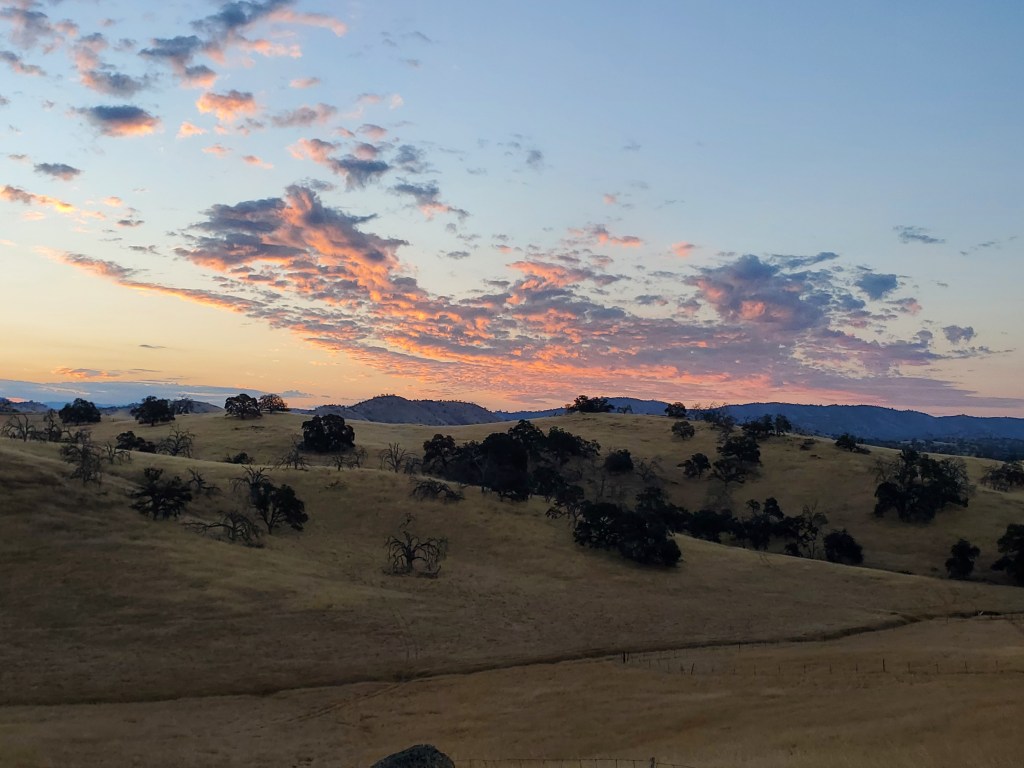
As I write this early in the morning, the birds are beginning to sing. The coyotes just finished their morning chorus. The young ones have now joined in. Another generation will take their place on this land, helping the ecosystem by eating rodents, rabbits and other fare to keep populations in balance. If only they ate grasshoppers too.