Everything is Gone

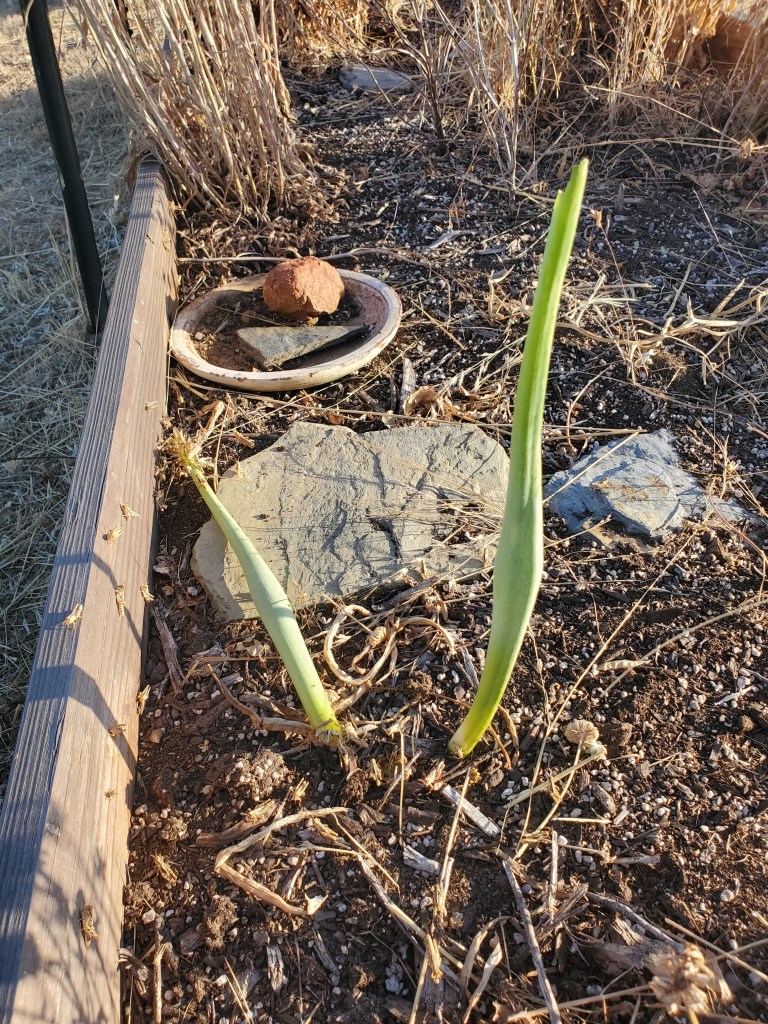
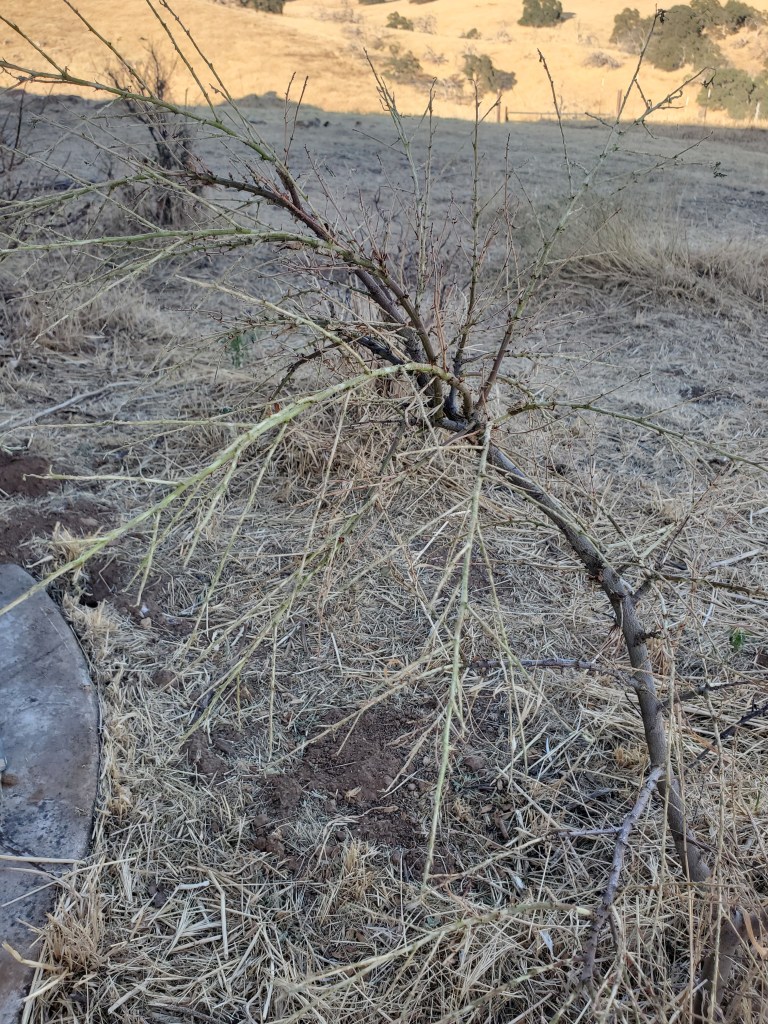
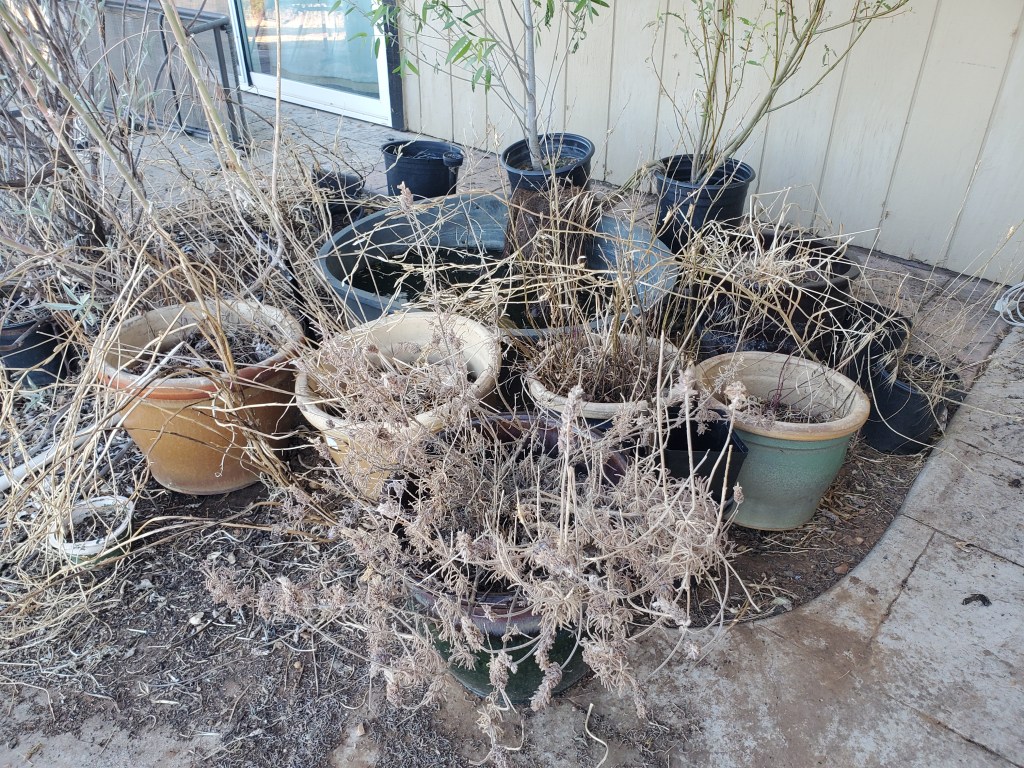
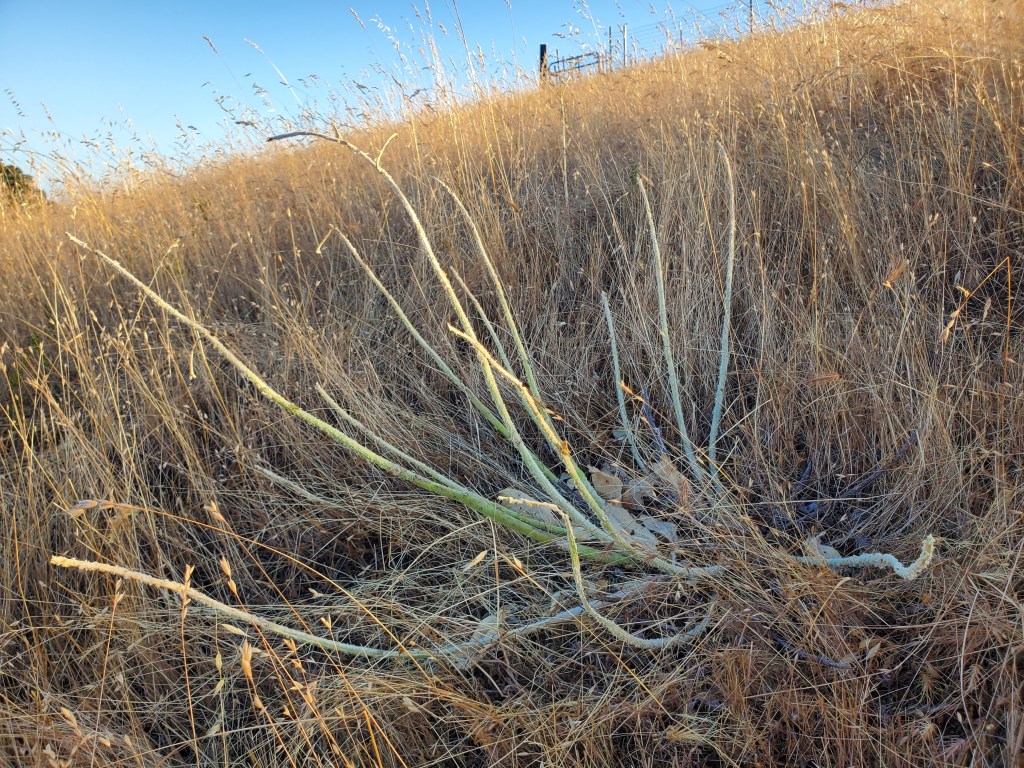
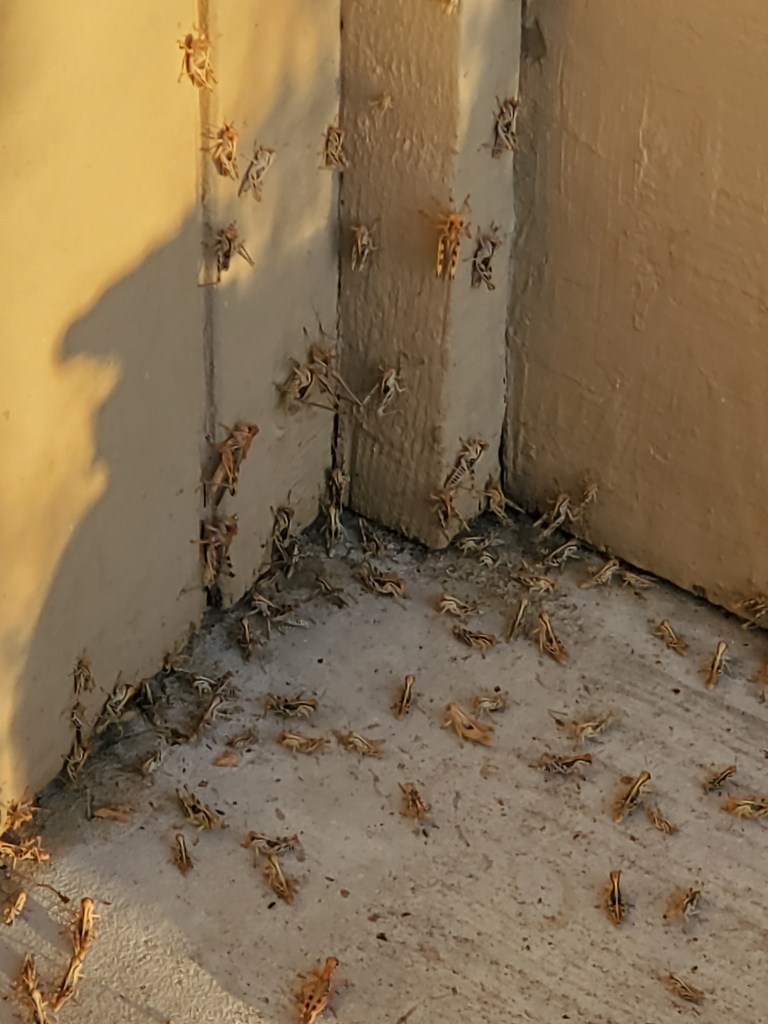
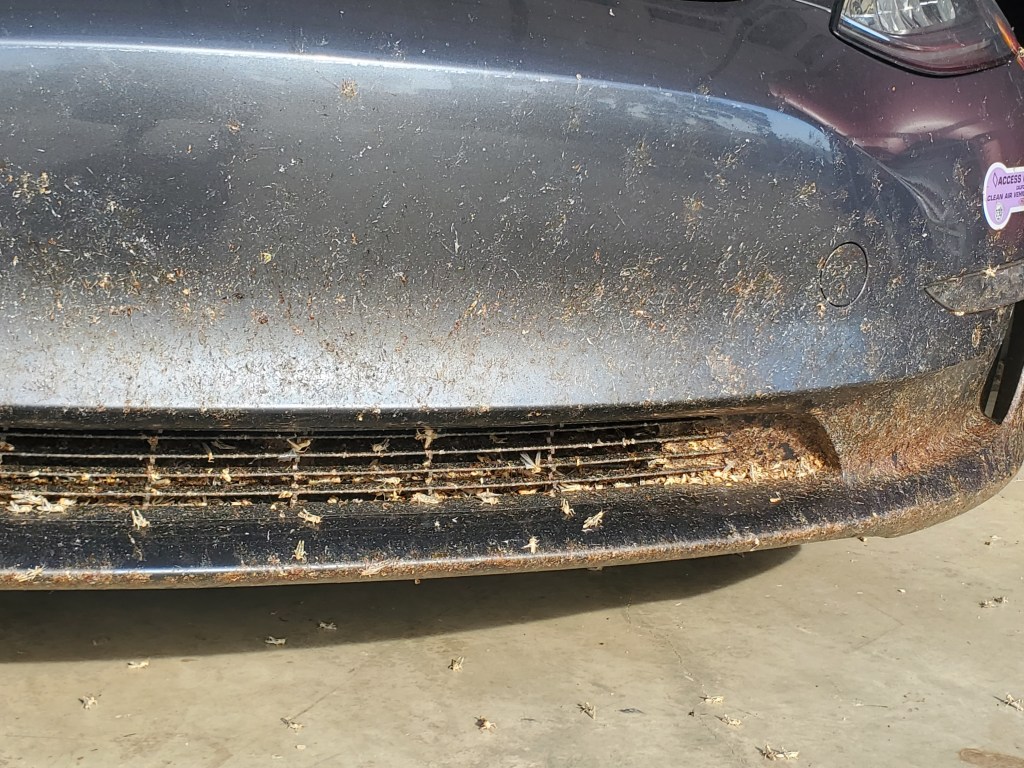
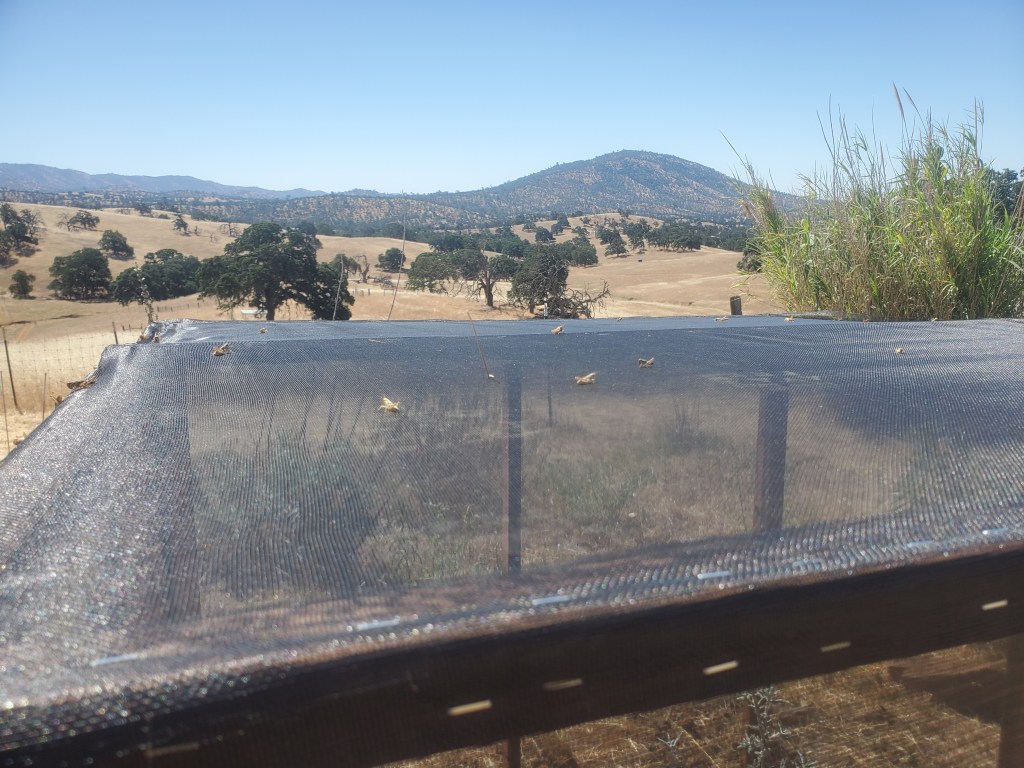
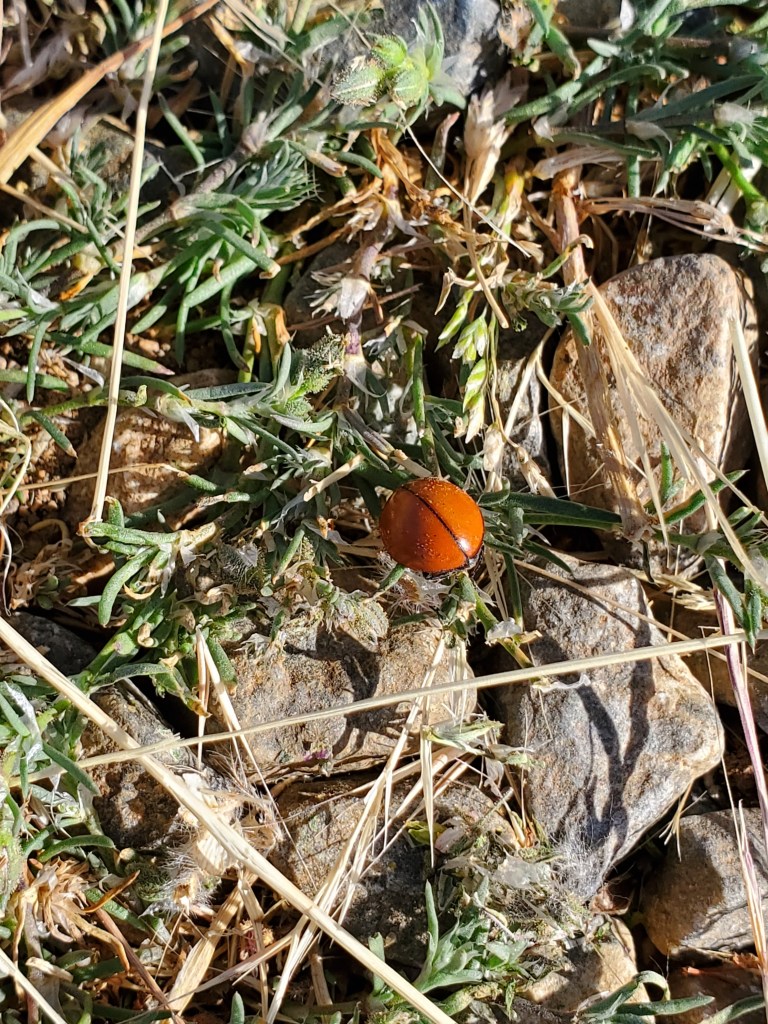
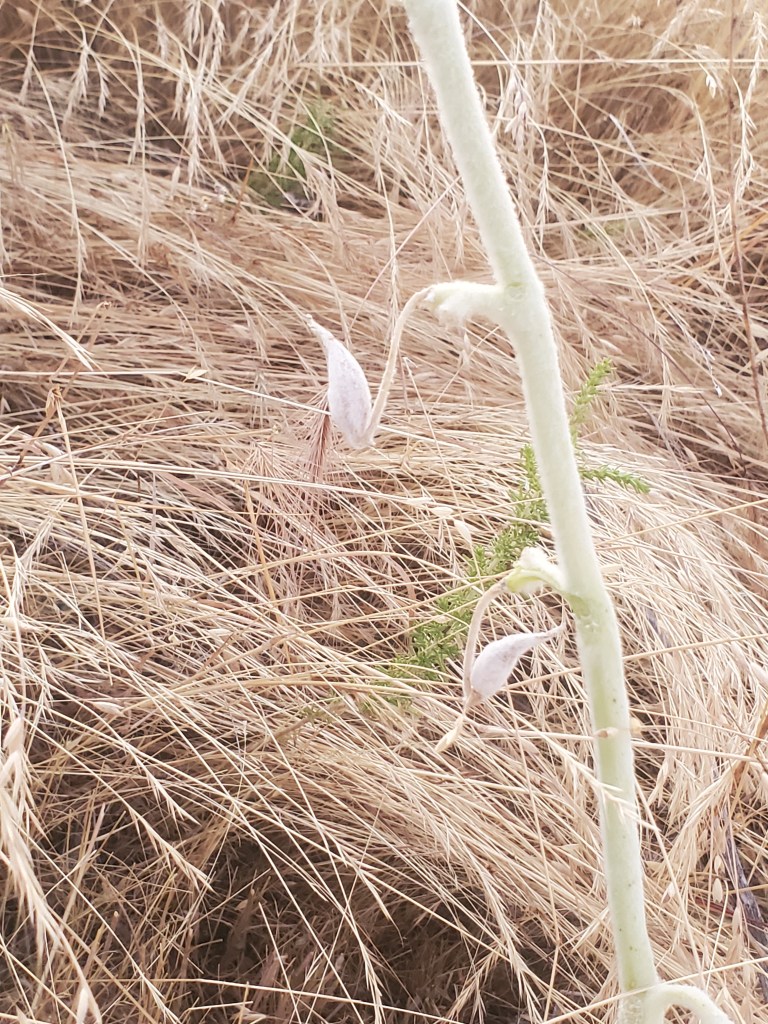
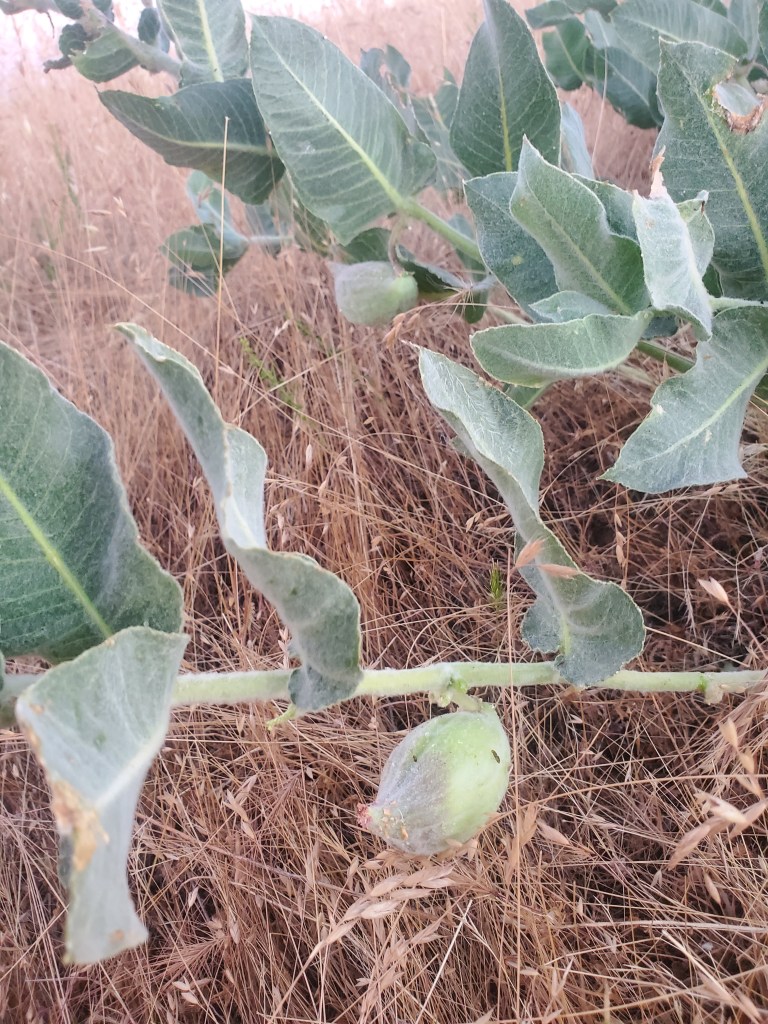
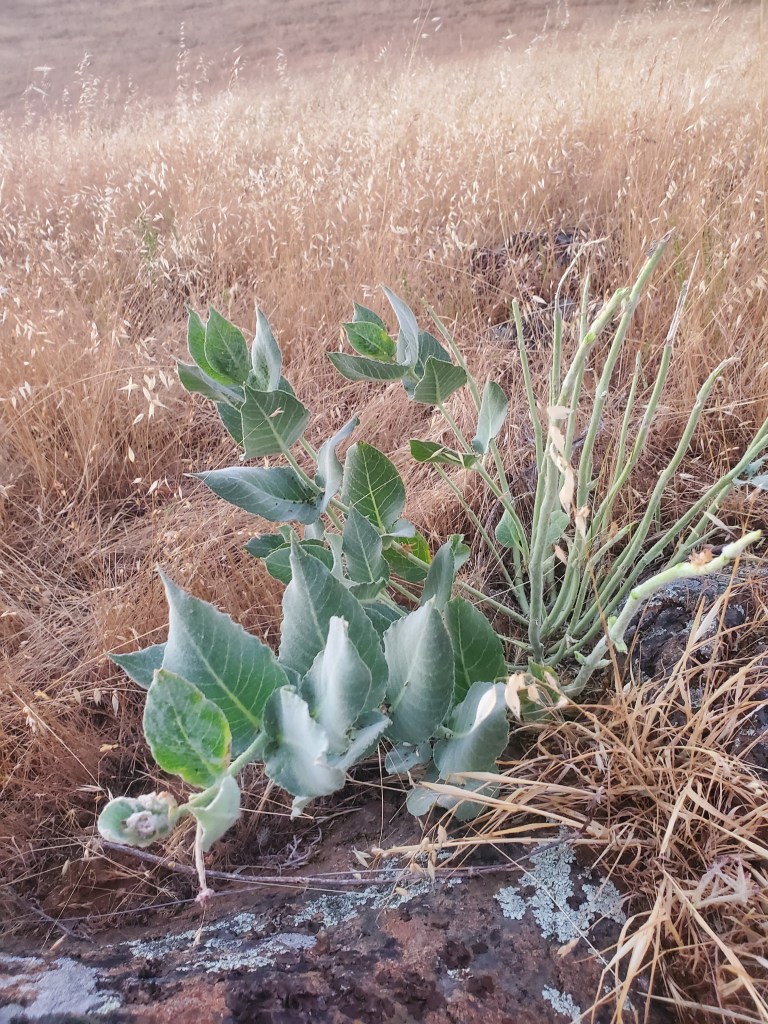
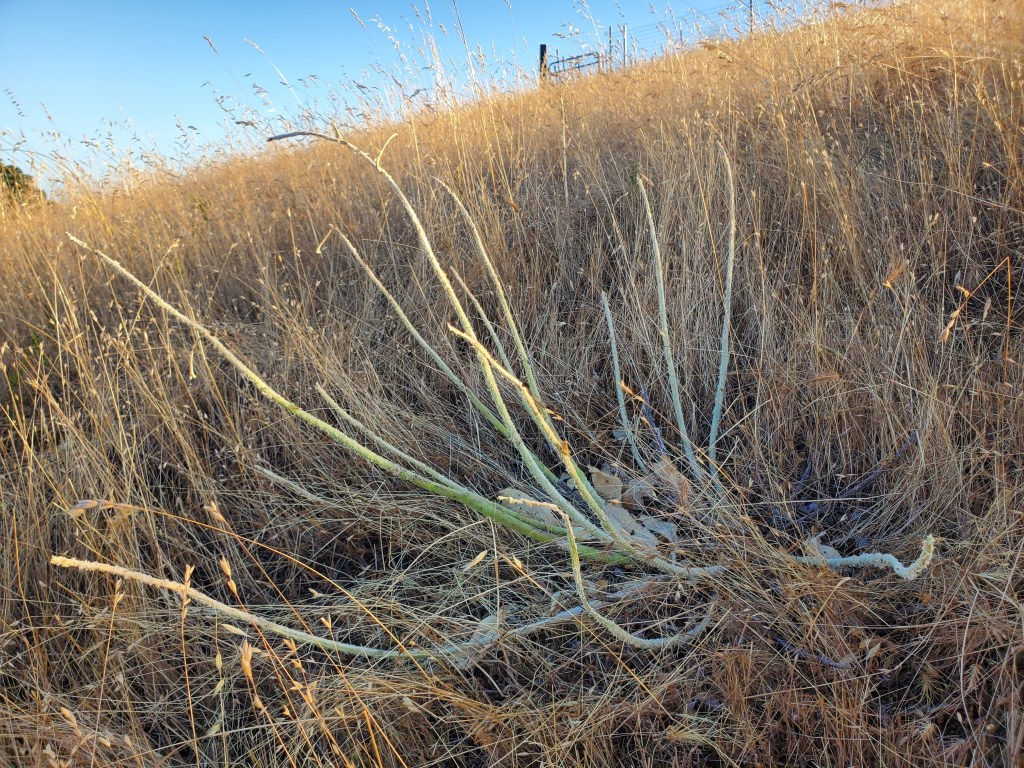
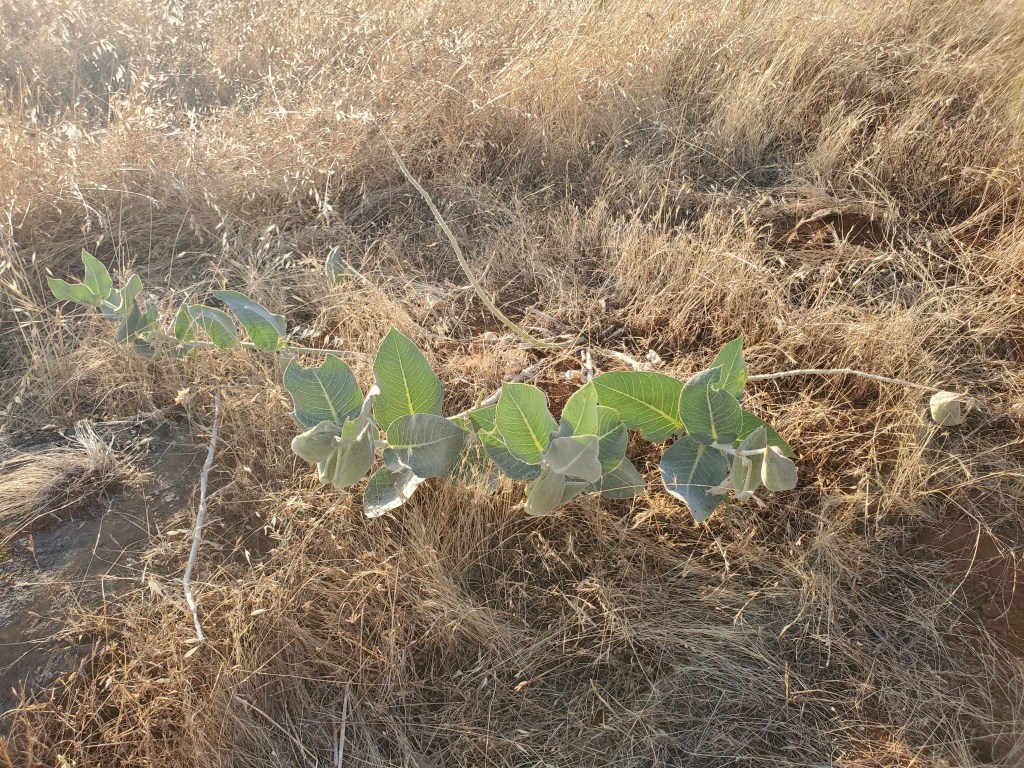
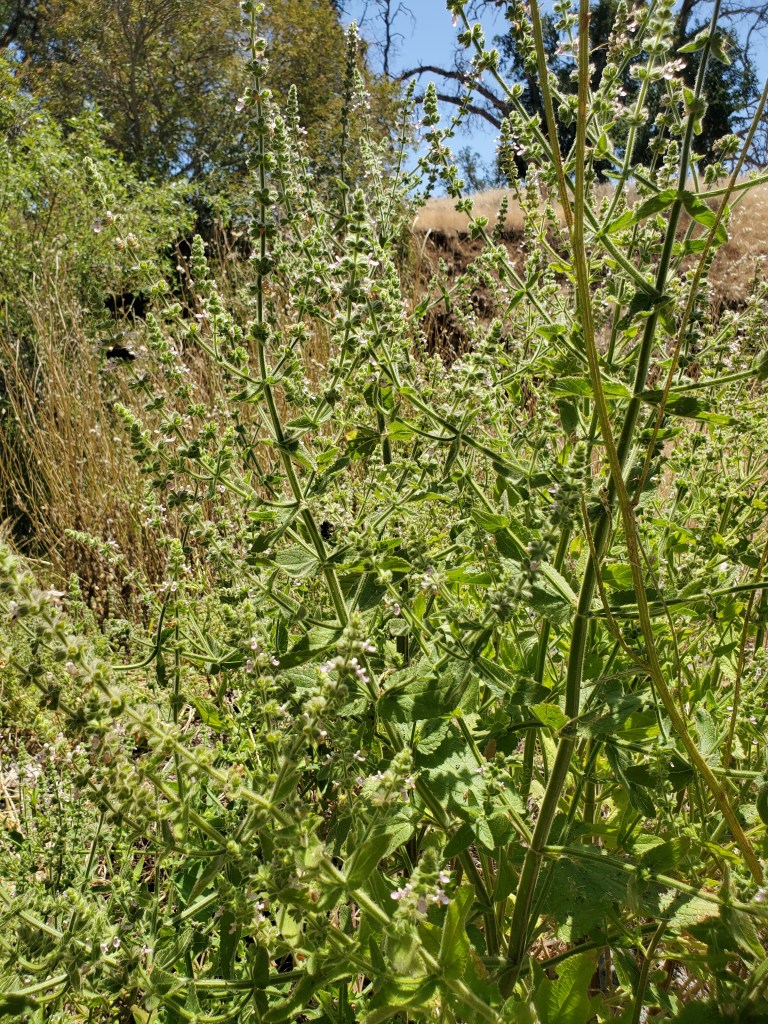
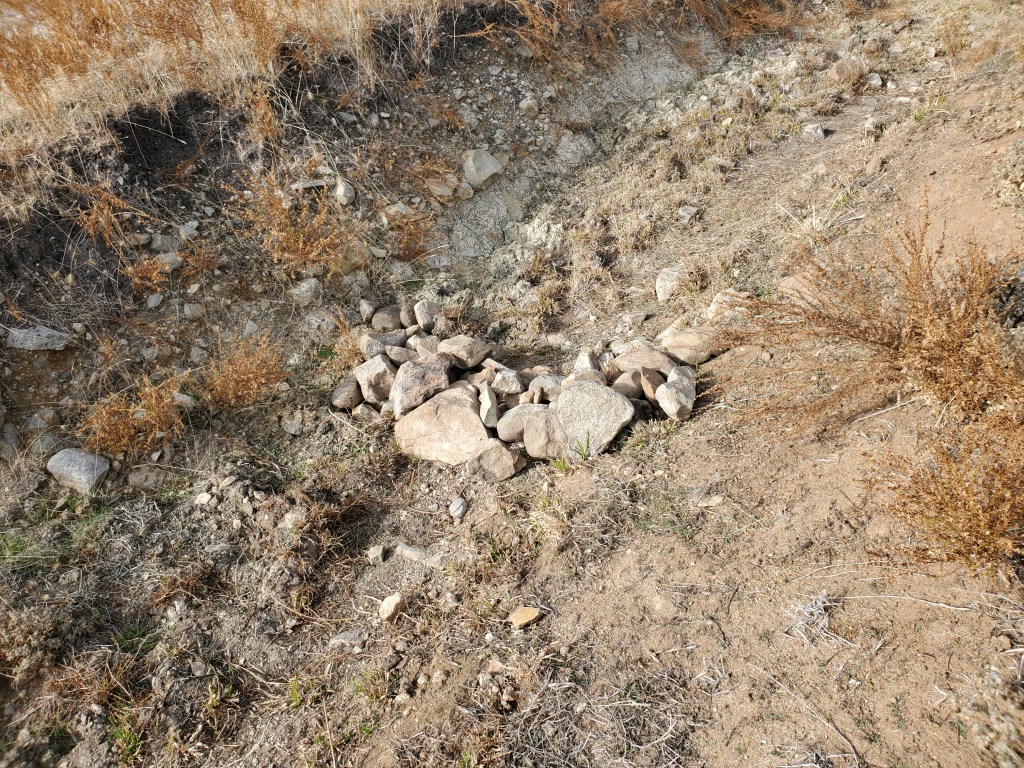
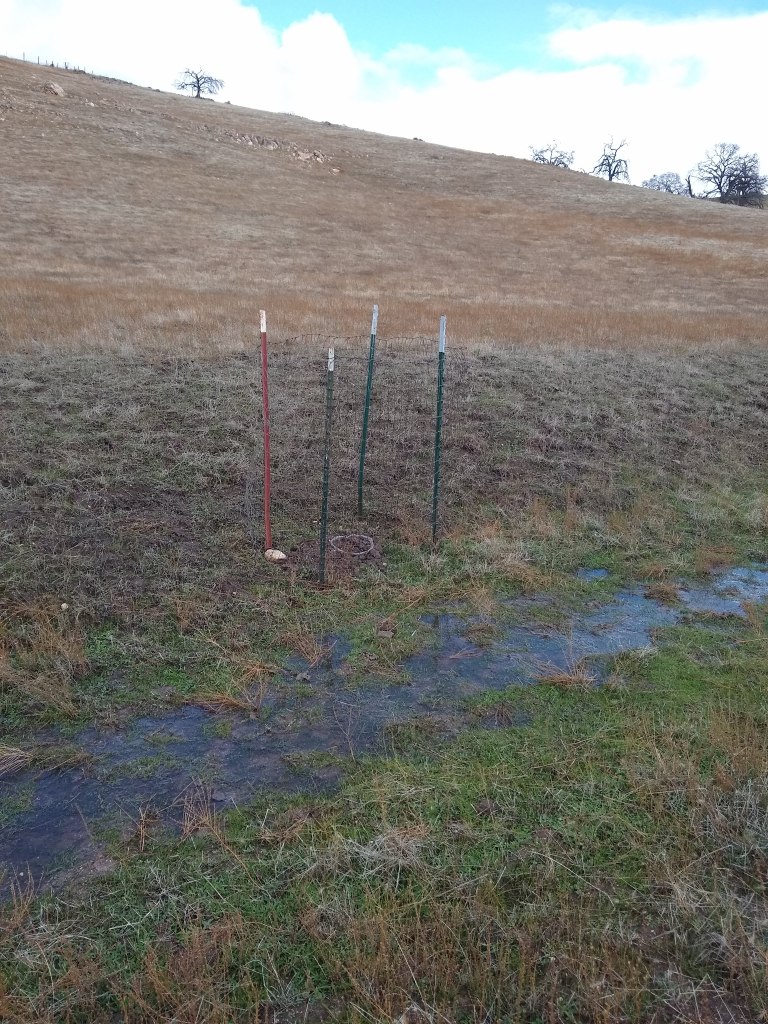
Grasshoppers eat woolly pod milkweed

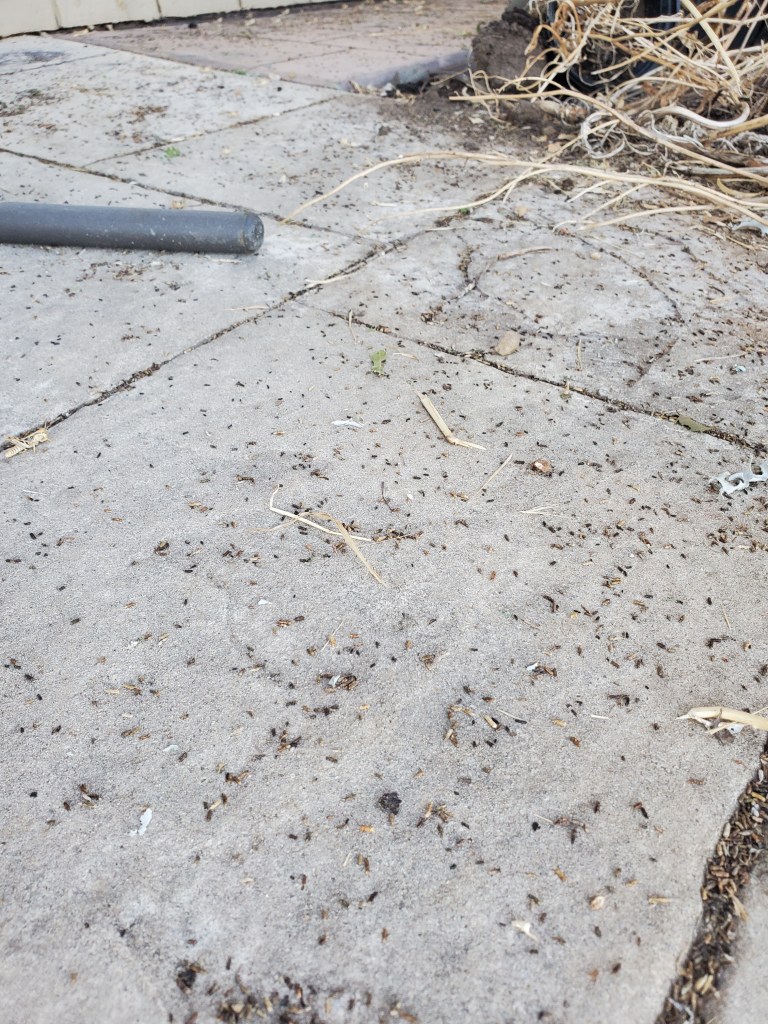
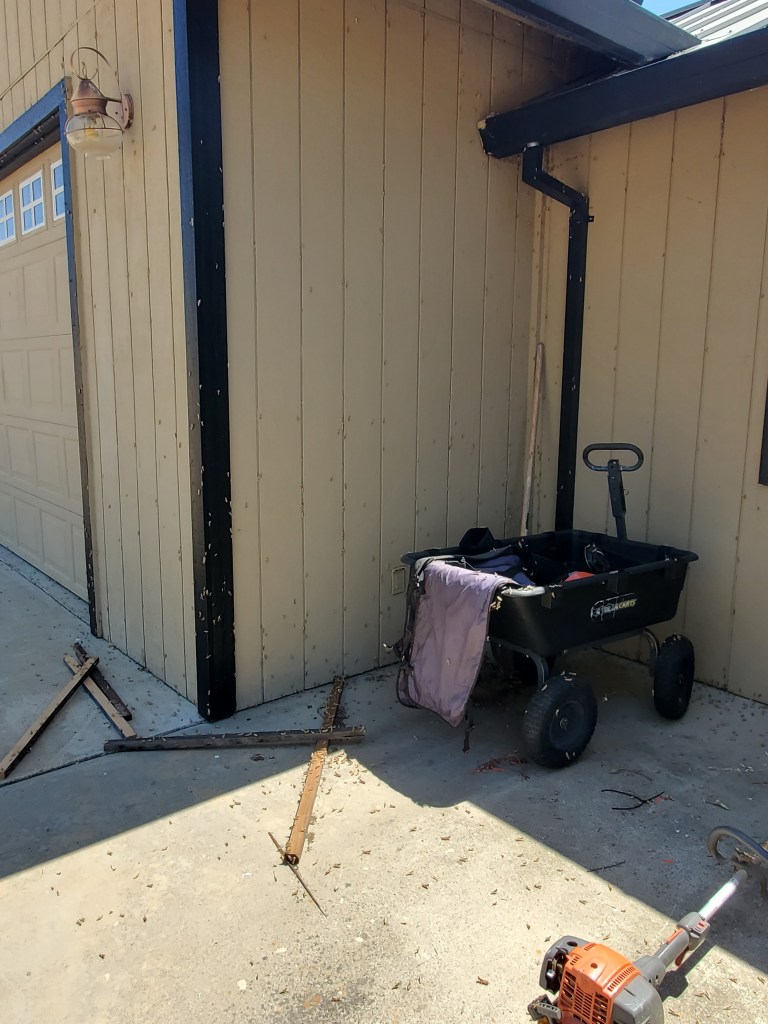
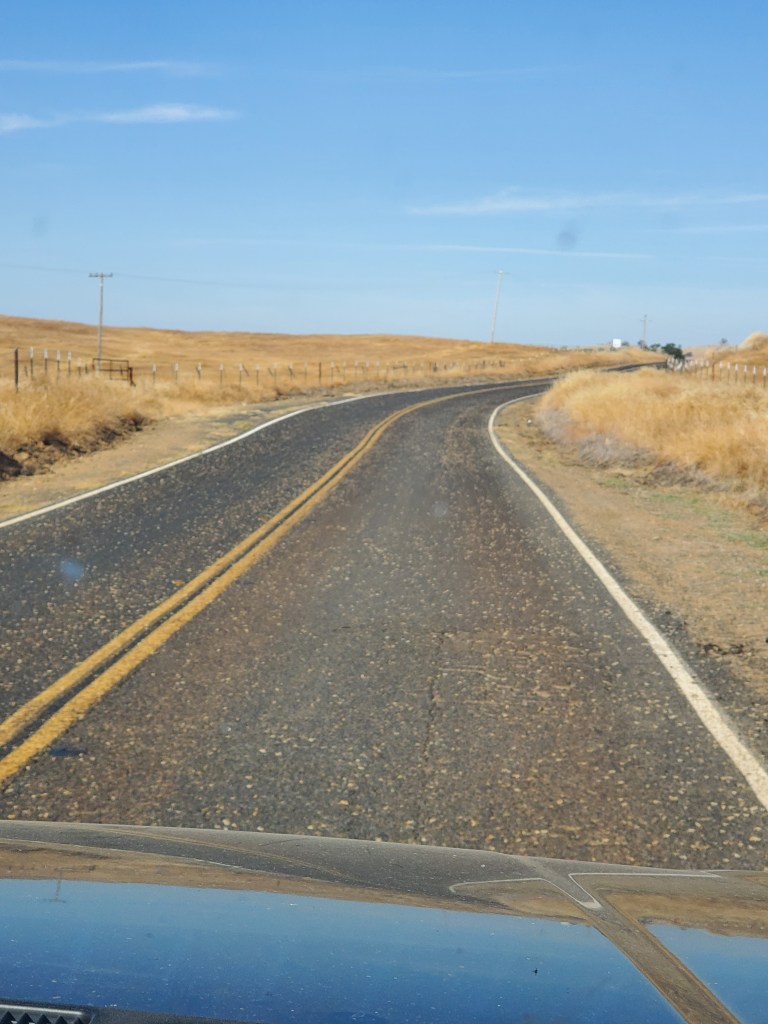
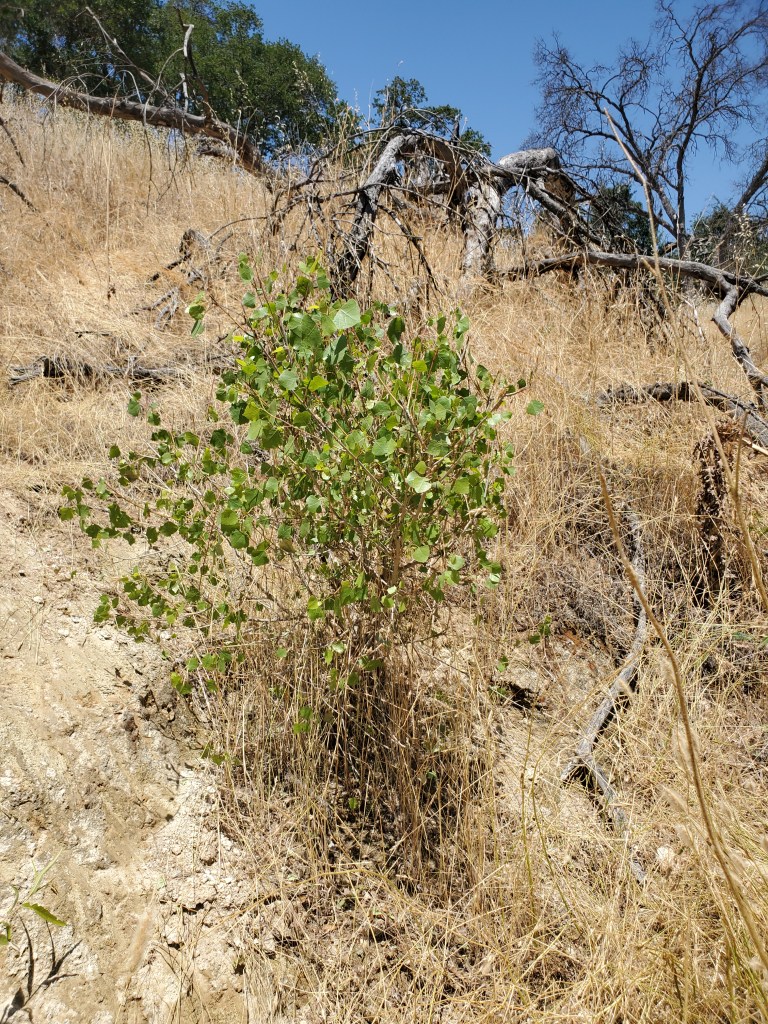
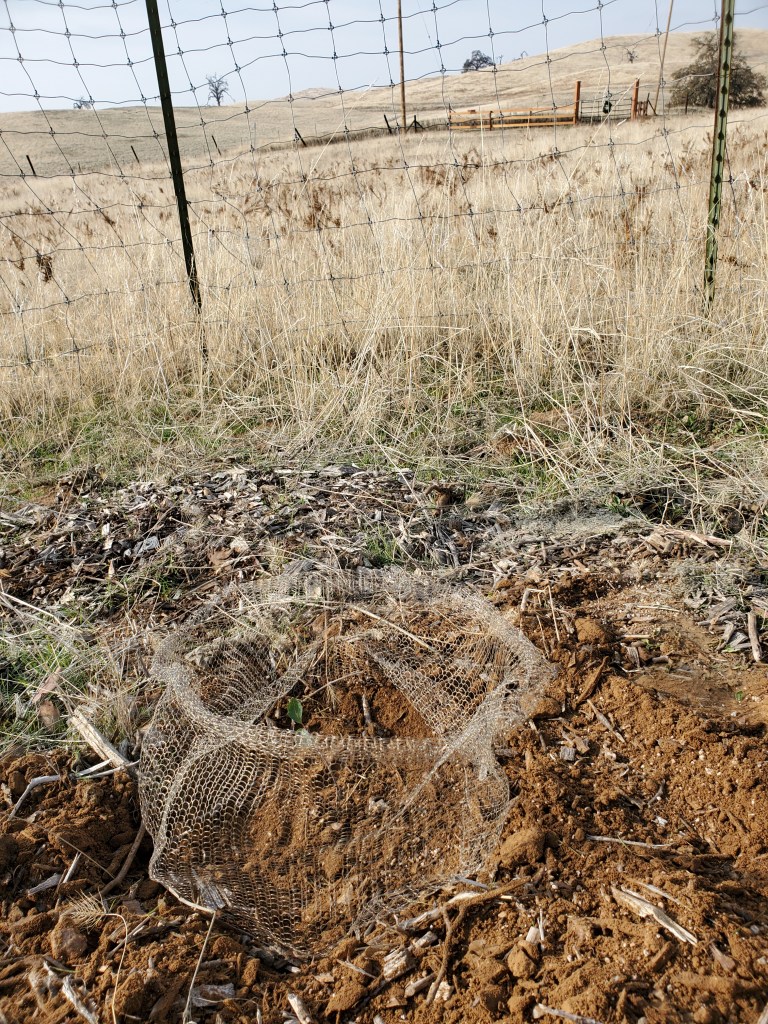
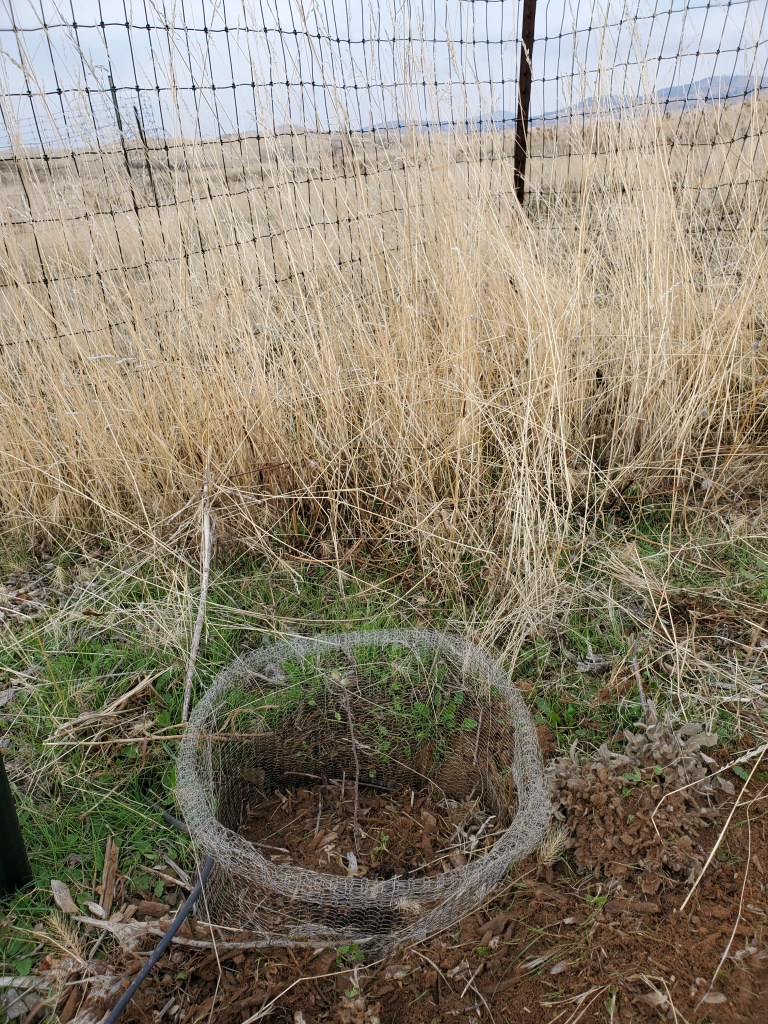
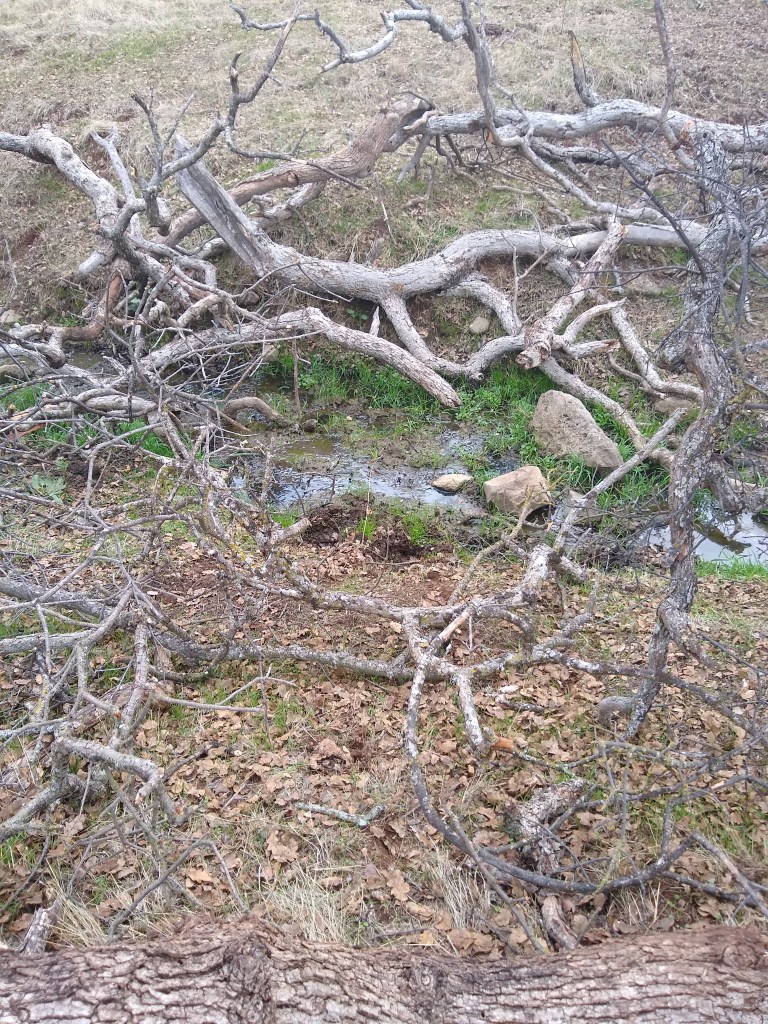
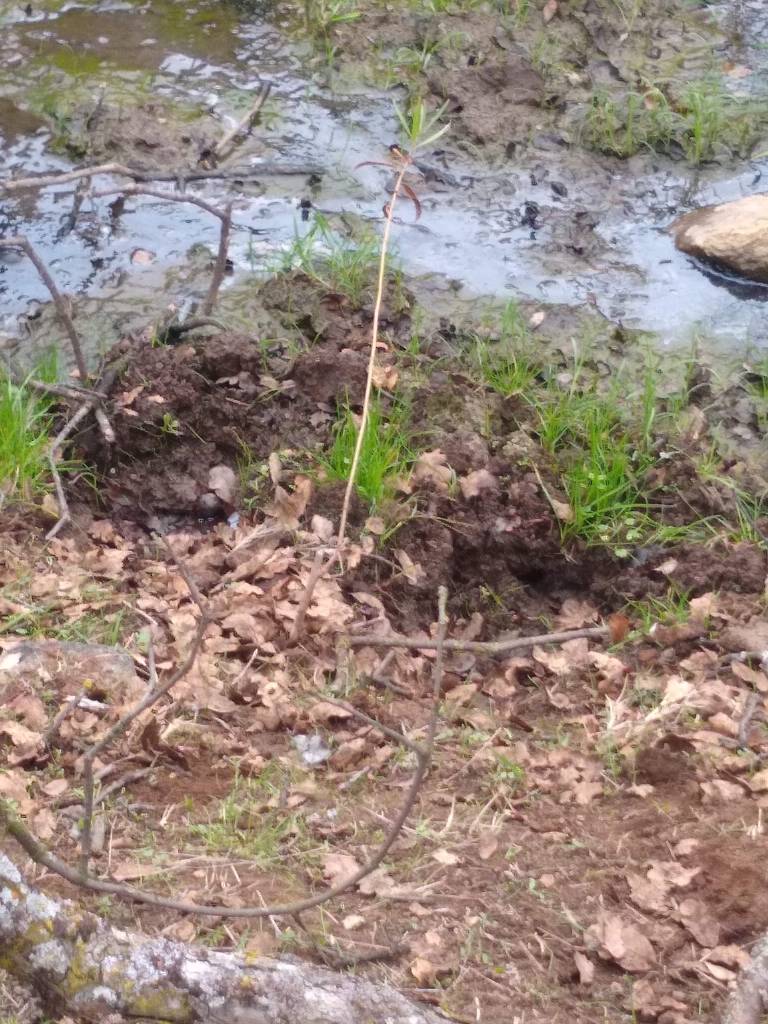
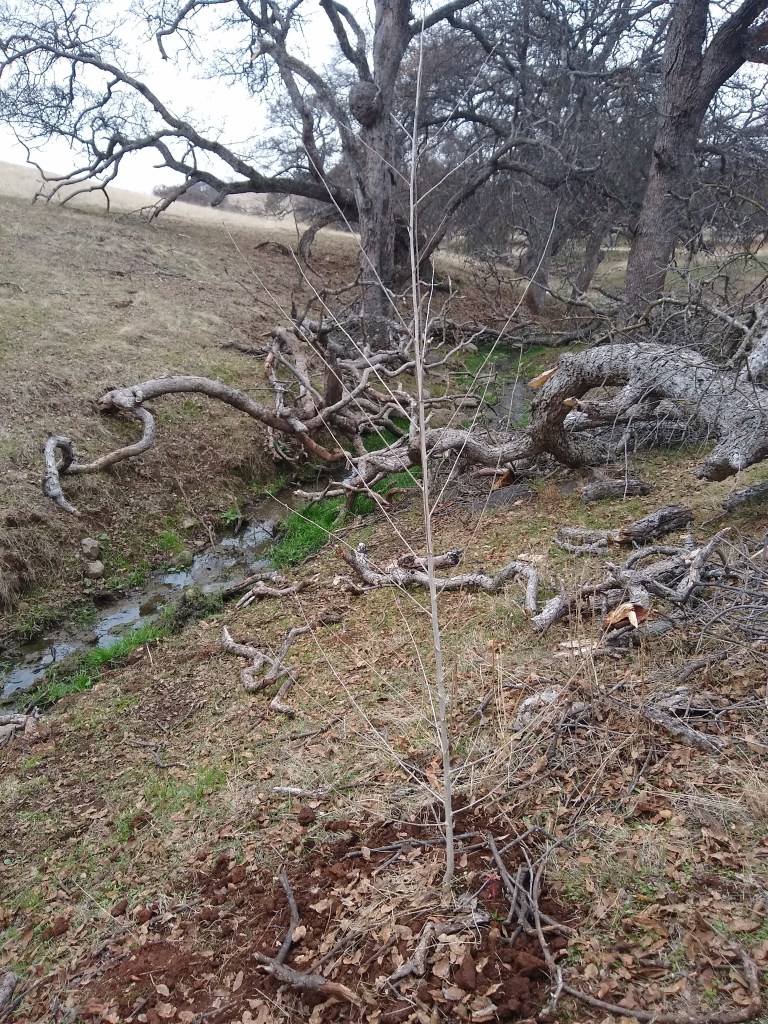
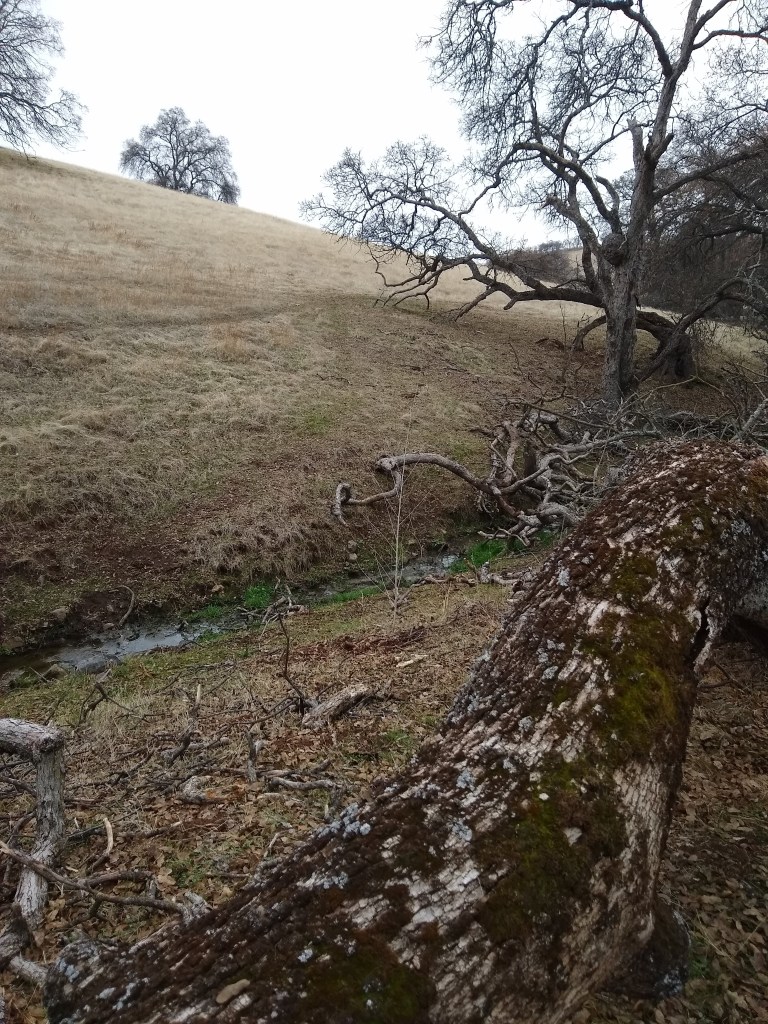
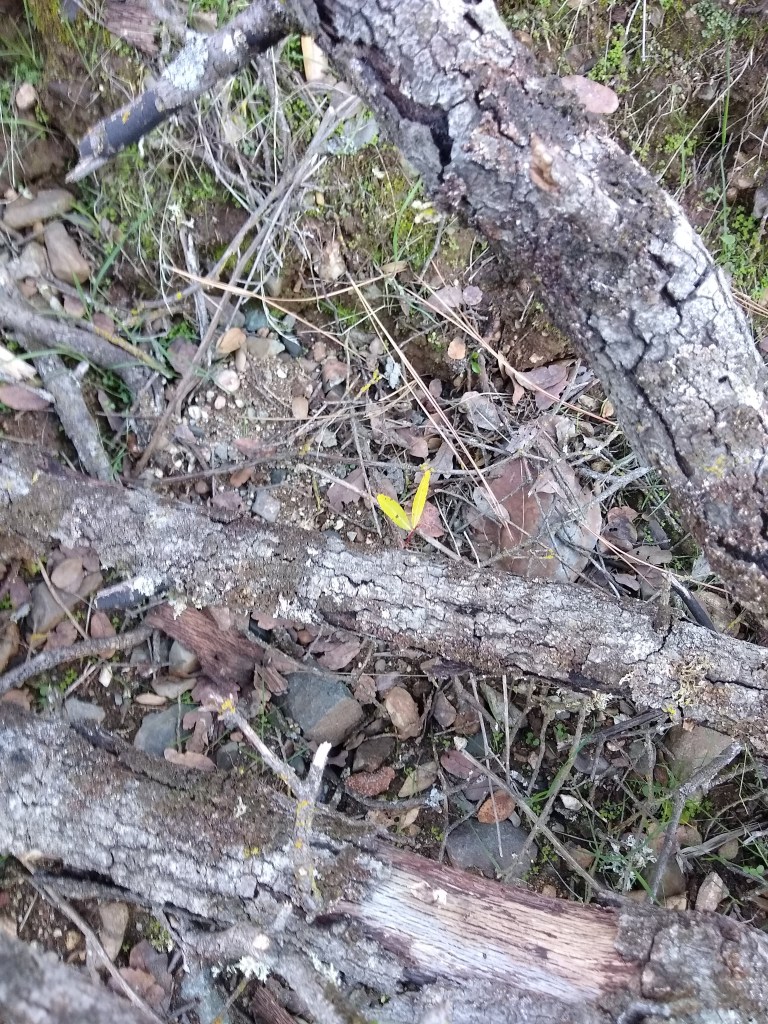
We knew it was going to be a bad year this year when the grasshopper nymphs would bounce up like a solid wave with each step across the fields. There are billions of them, and I am powerless to do anything about it. The time to plan was several months ago, but I didn’t. I didn’t have time or energy to build screen houses and boxes. It is not an insignificant task – so I resigned myself to the possibility that my beautiful pollinator gardens throughout the ranch would be no more. What I did not expect is that they would also consume the oak seedlings that I painstakingly planted across the front of the ranch. That made me crumple inside.

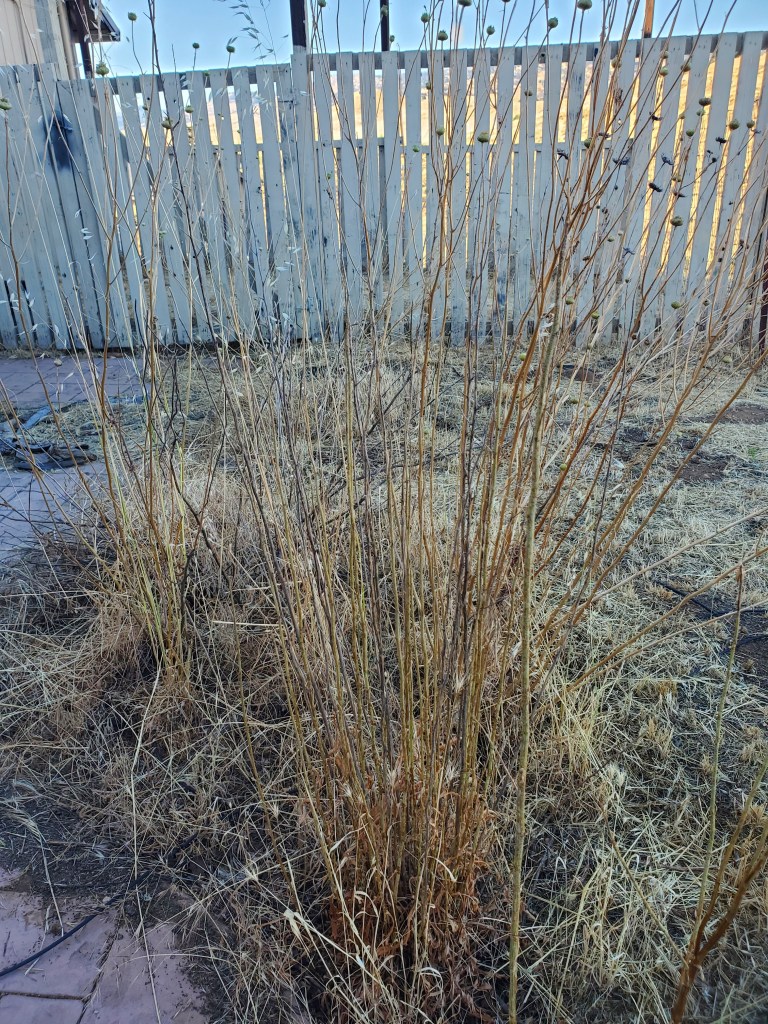
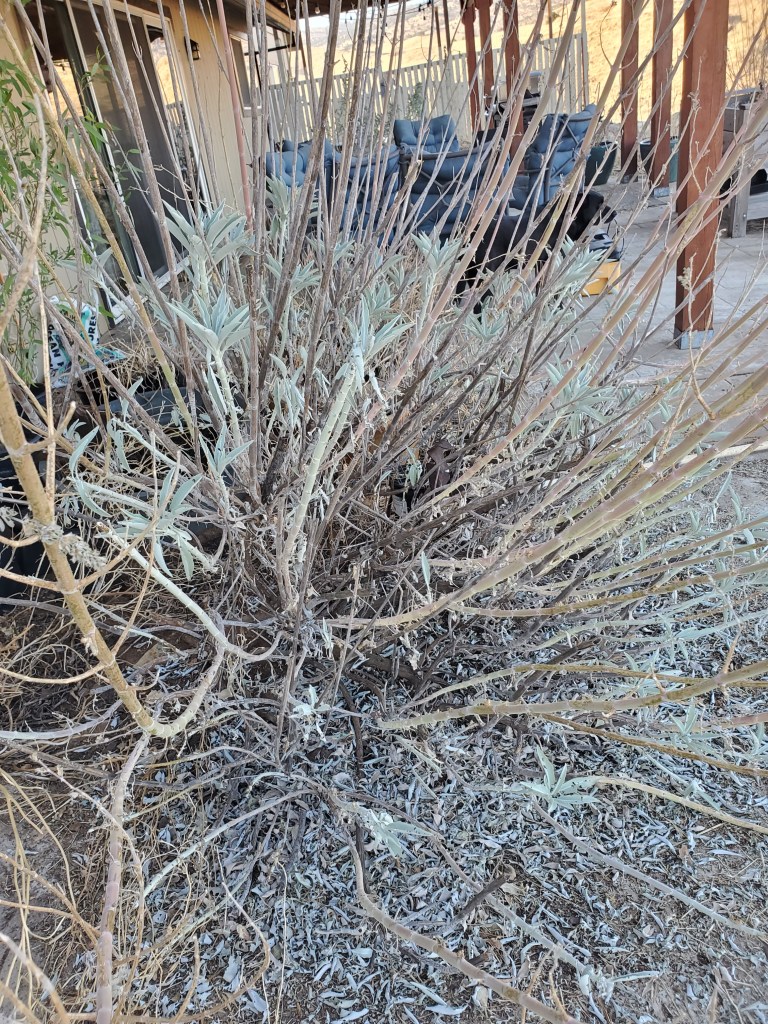
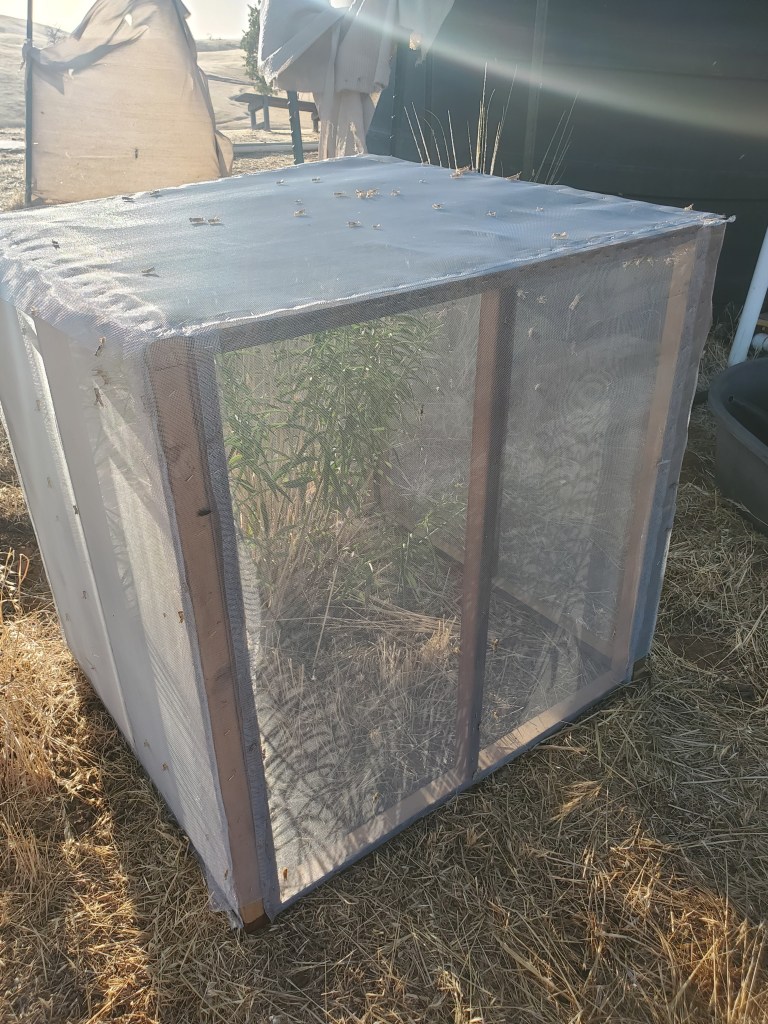
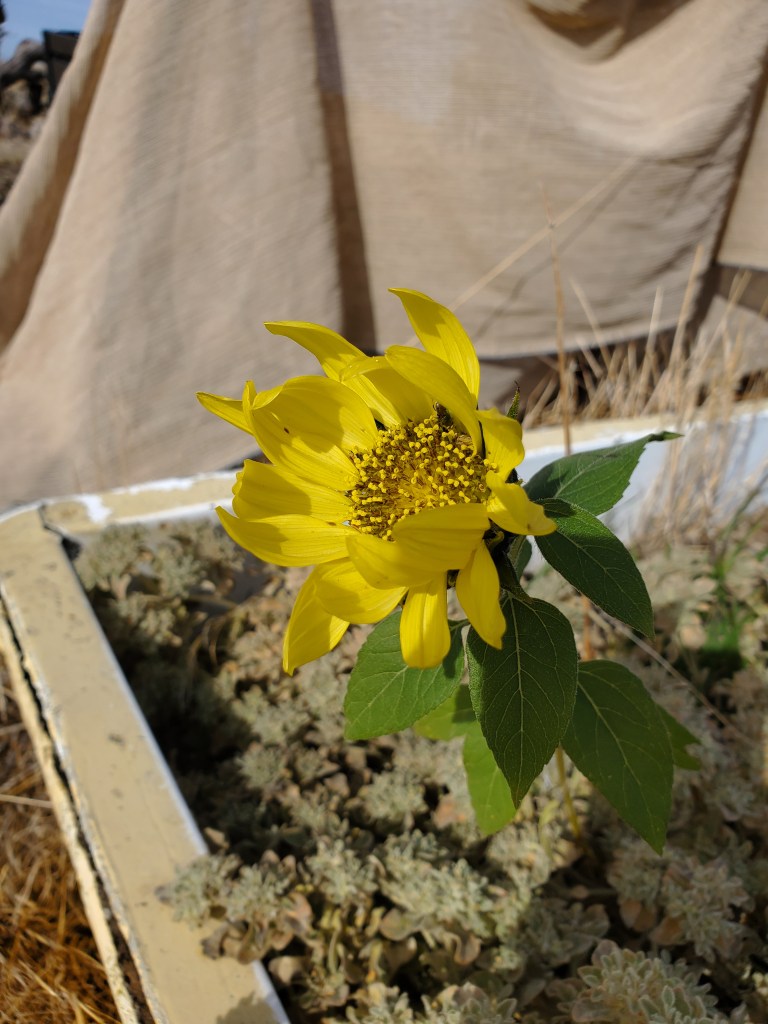
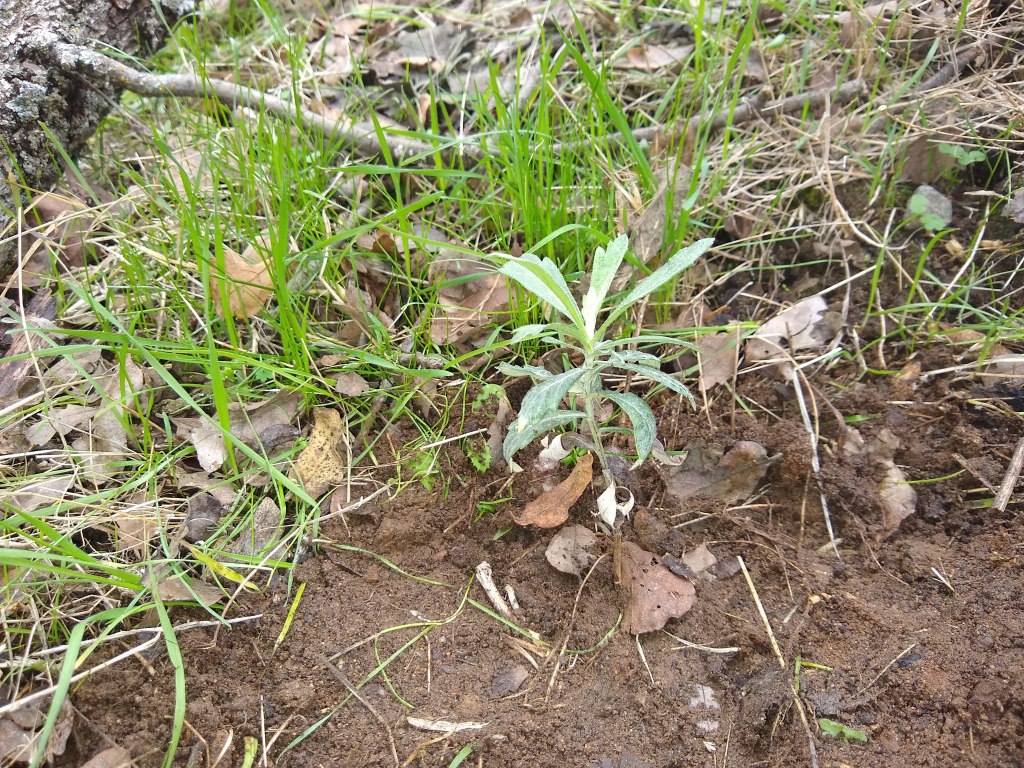
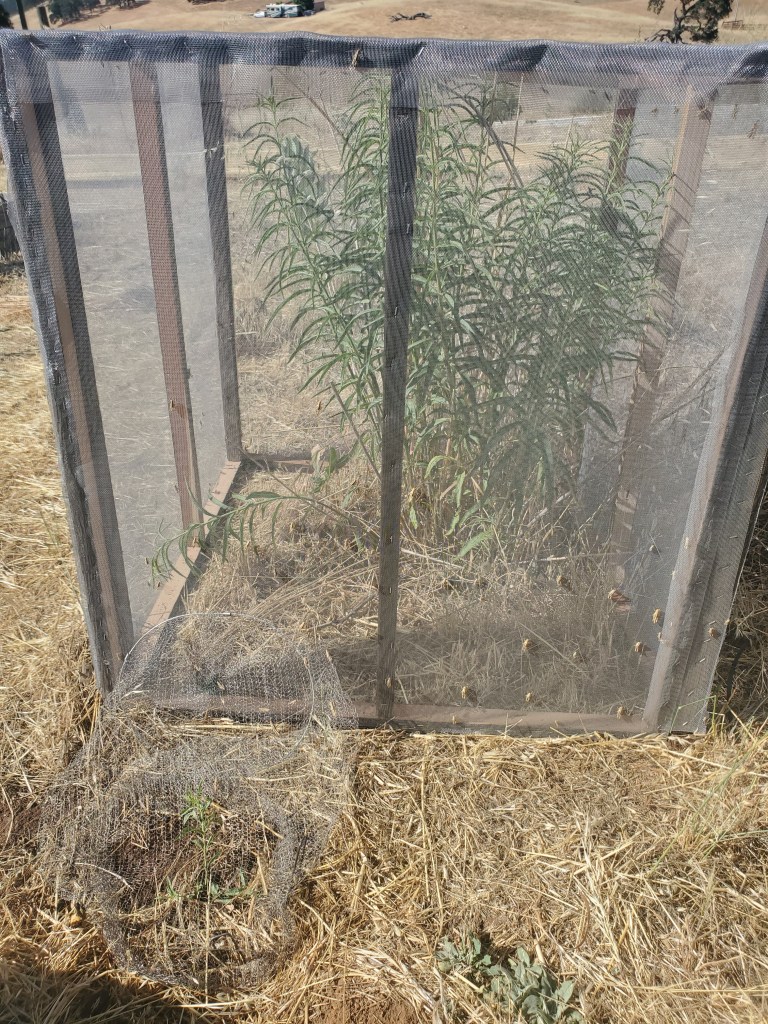
David raced to build me a few screen boxes last week. For him, they take about 3 hours each – much too long to build enough to save plants. In the end, he built two – one with plastic screen and one with metal screen. He used what we had for the window screens. Unfortunately, as you can see in the image above, the plastic is not durable. The hoppers can eat through them. We tried to save a sage, a narrowleaf and two other nectar plants. The purple sage nearly died last year. I figured if it was not covered, it might not live through another ravenous incursion. The narrow leaf is the largest, most mature. Last year, the monarchs chose this one and a few others on which to lay their eggs. I am trying to have something for the monarchs when they come back. The other two nectar plants will likely get eaten. There is no box to hold the structure. The screens are pinned around the plants and thus, open to being shifted by the hoppers. It will likely just slow down the inevitable. I am not sure what I will have by September for monarchs to feed on — maybe tarweed and seep monkey flower if I am lucky.
We are still watering. The roots are alive, and will need strength to make it through this onslaught.

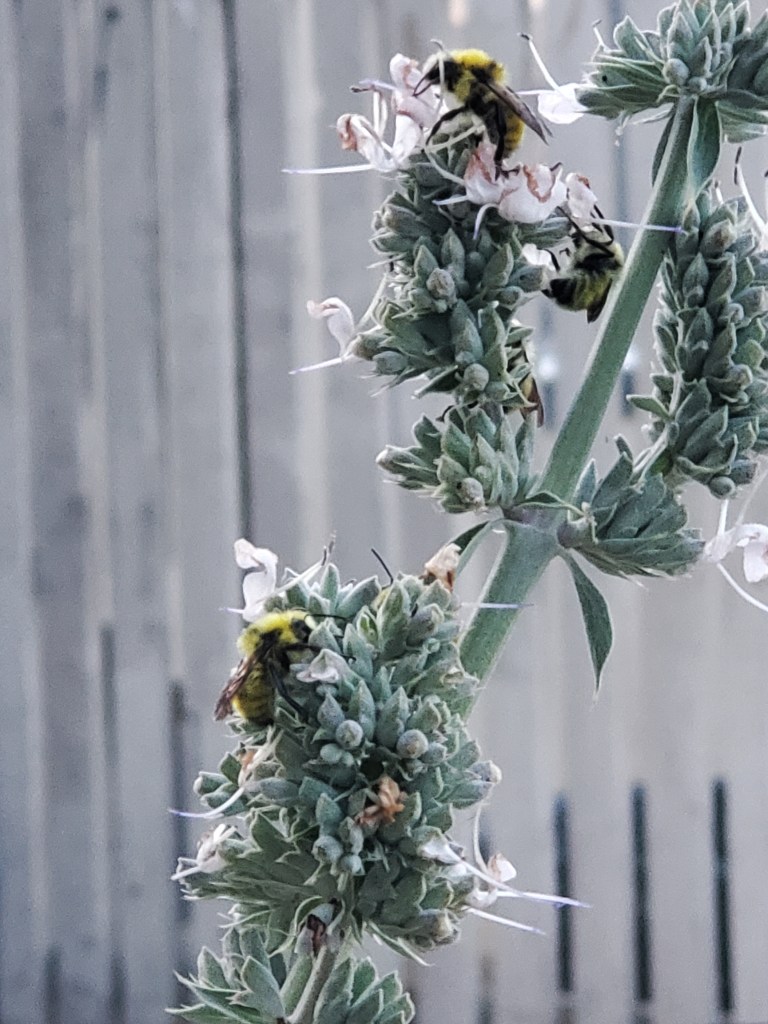
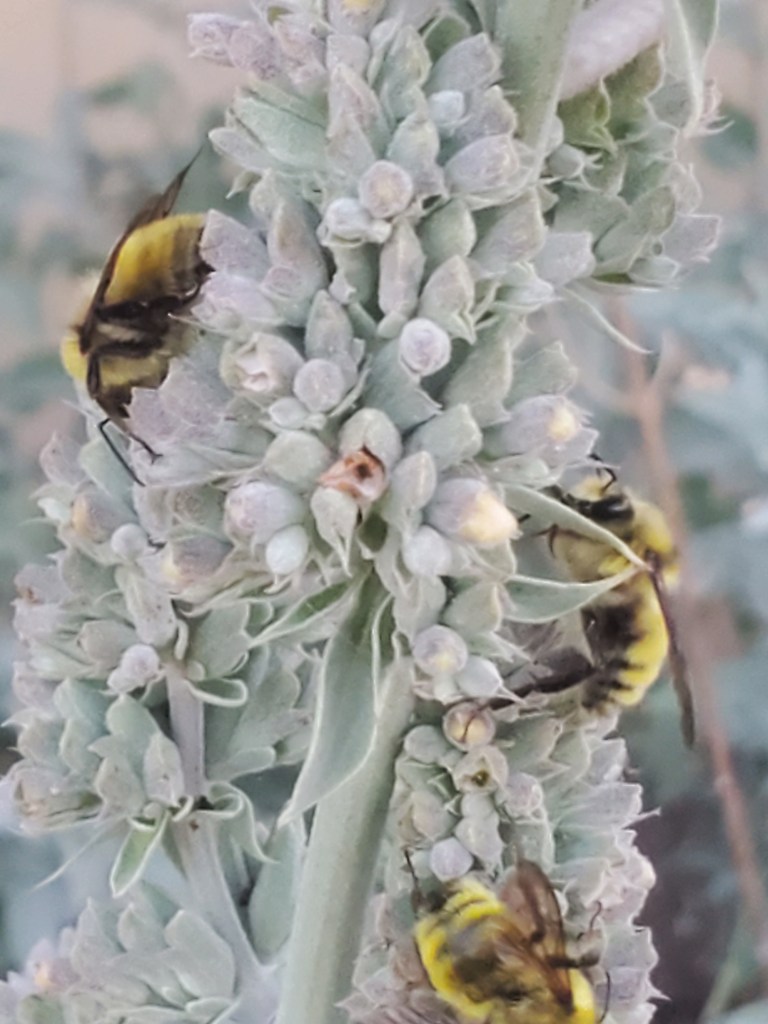
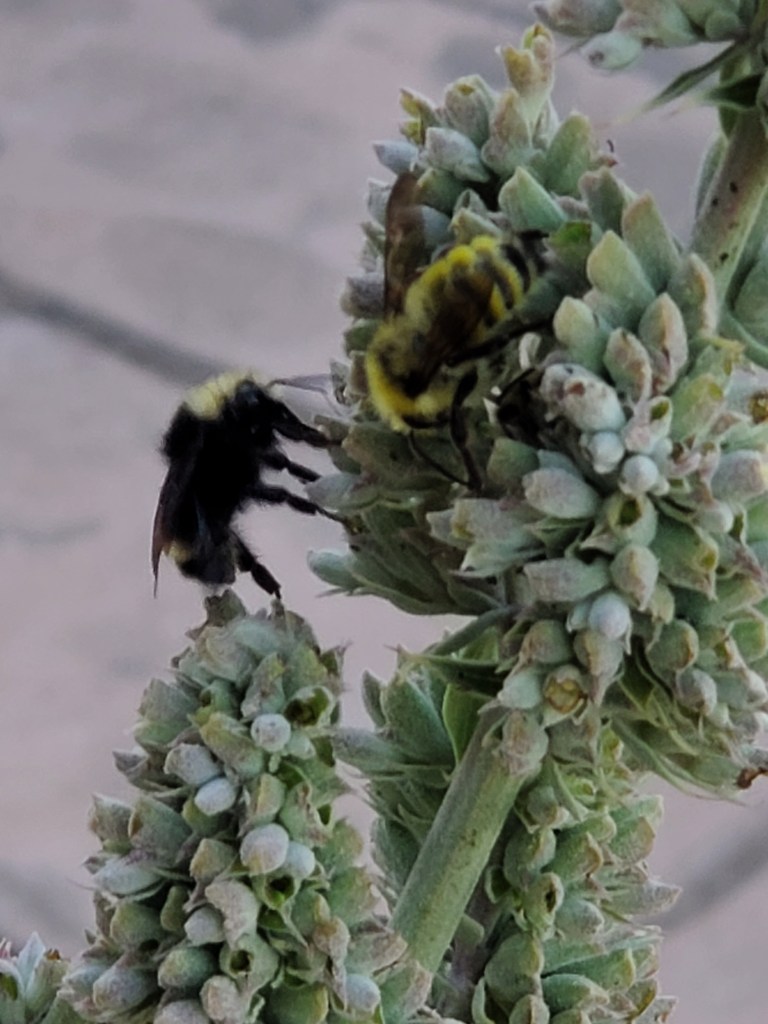
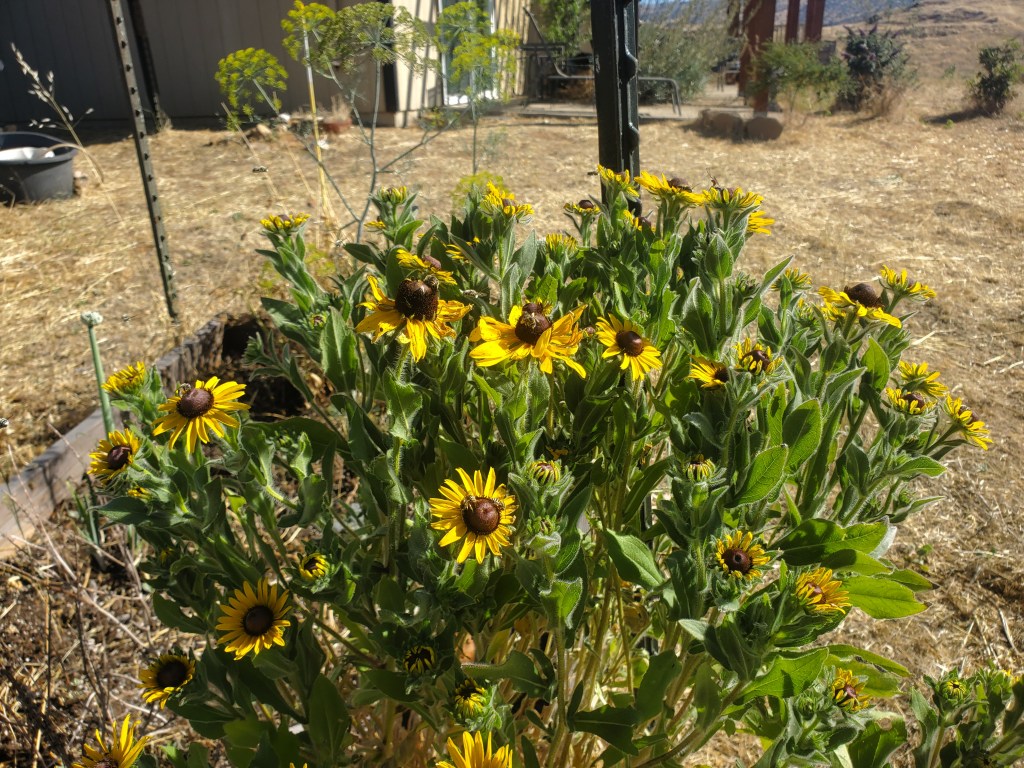
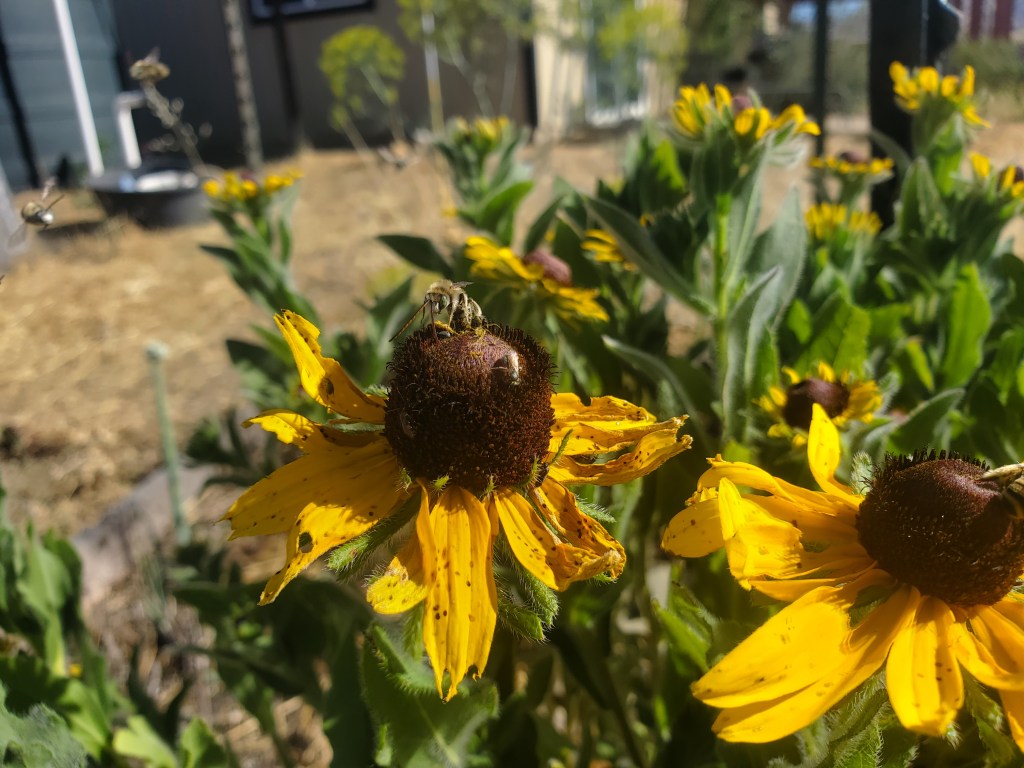
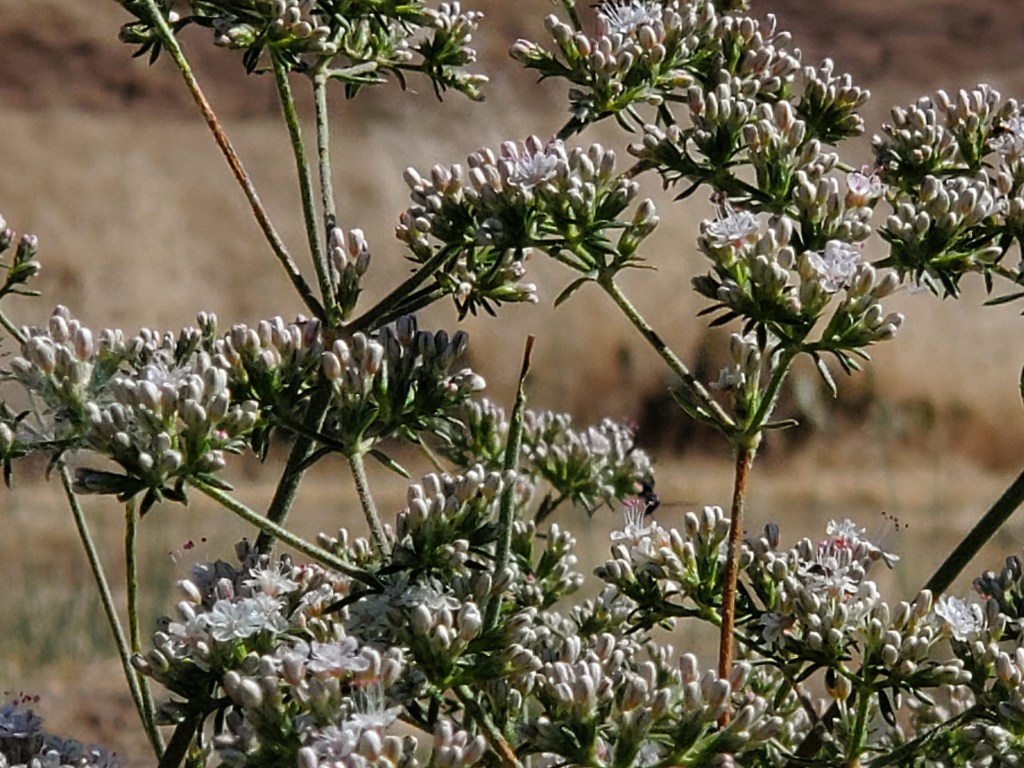
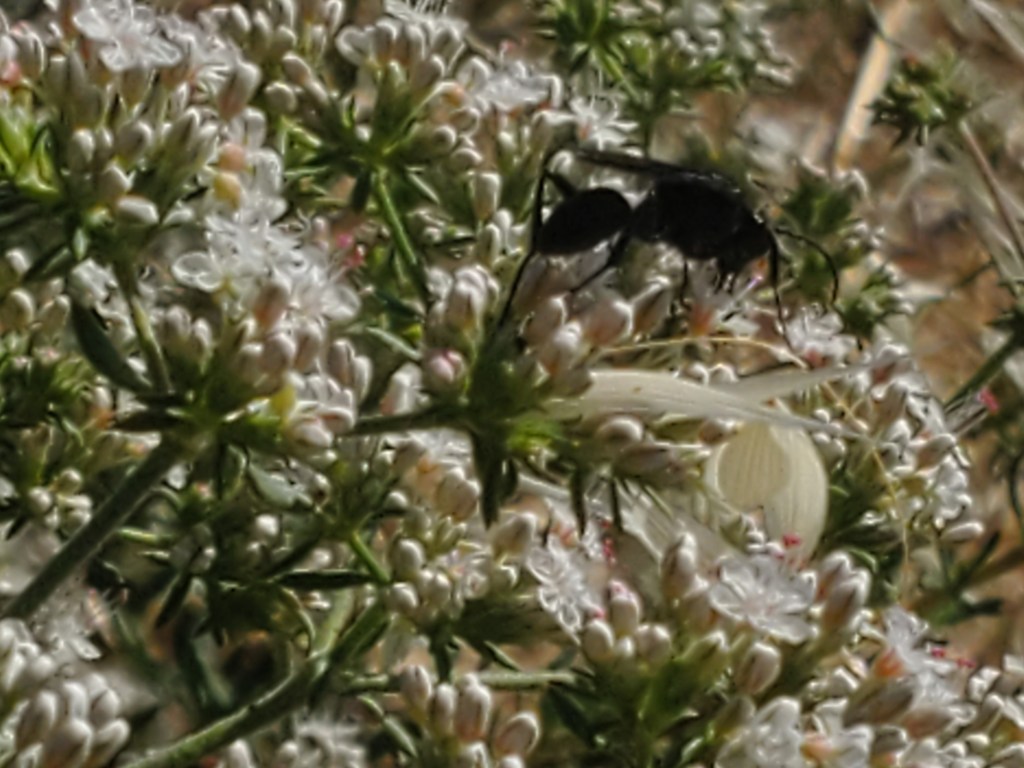
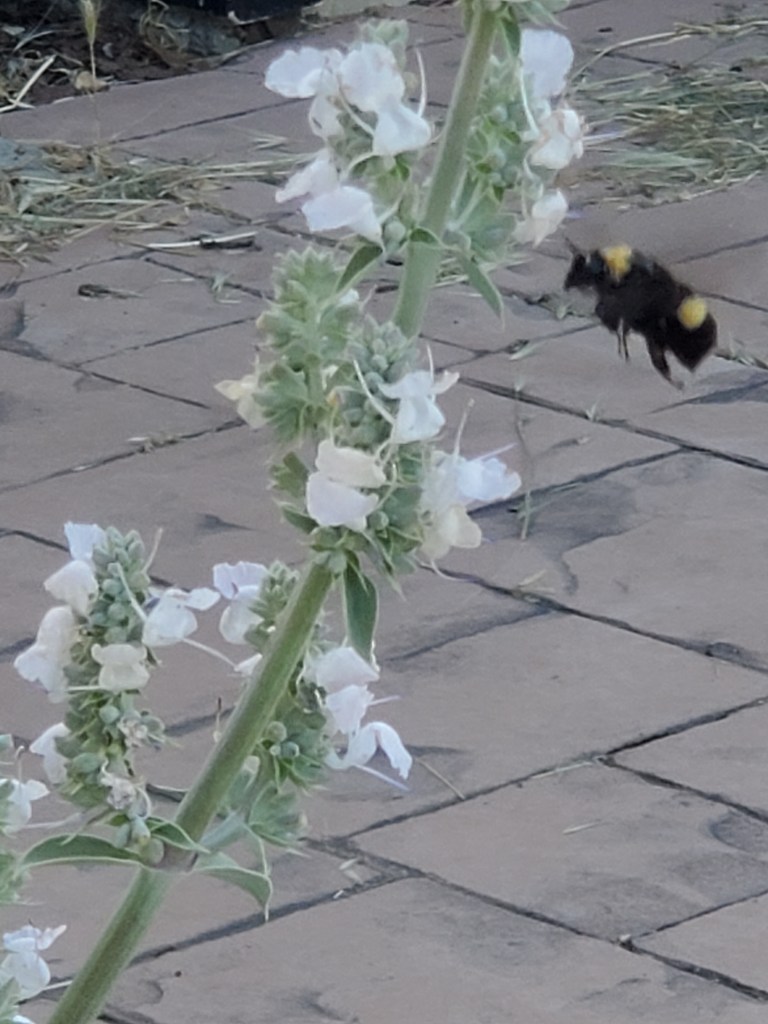
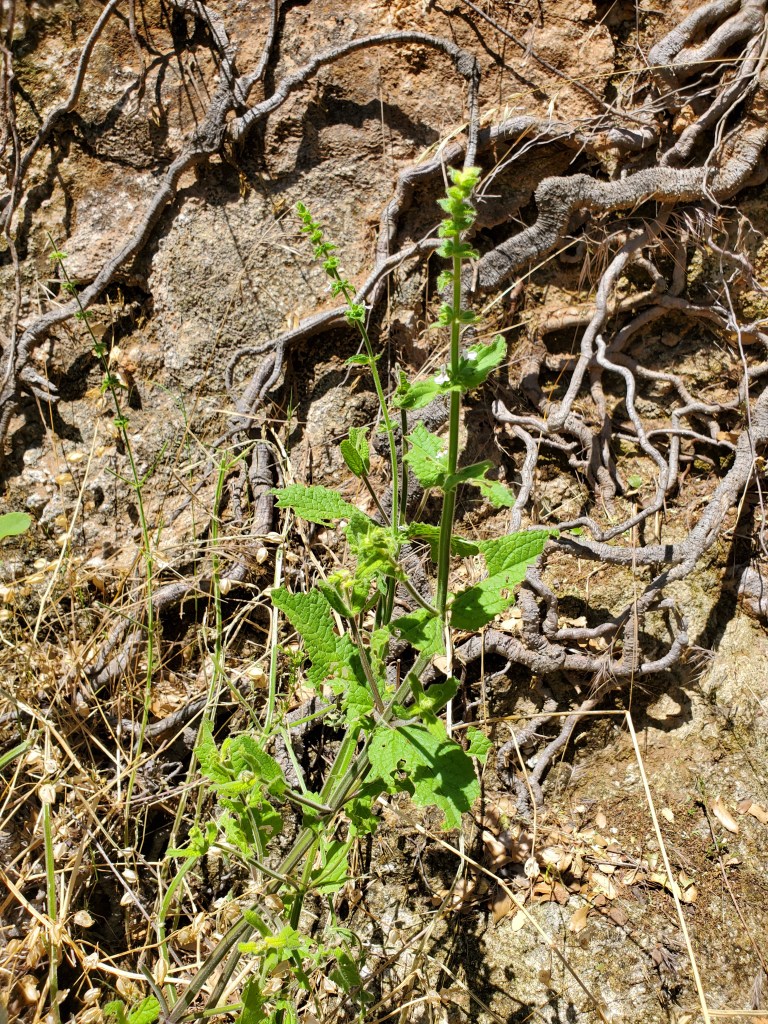
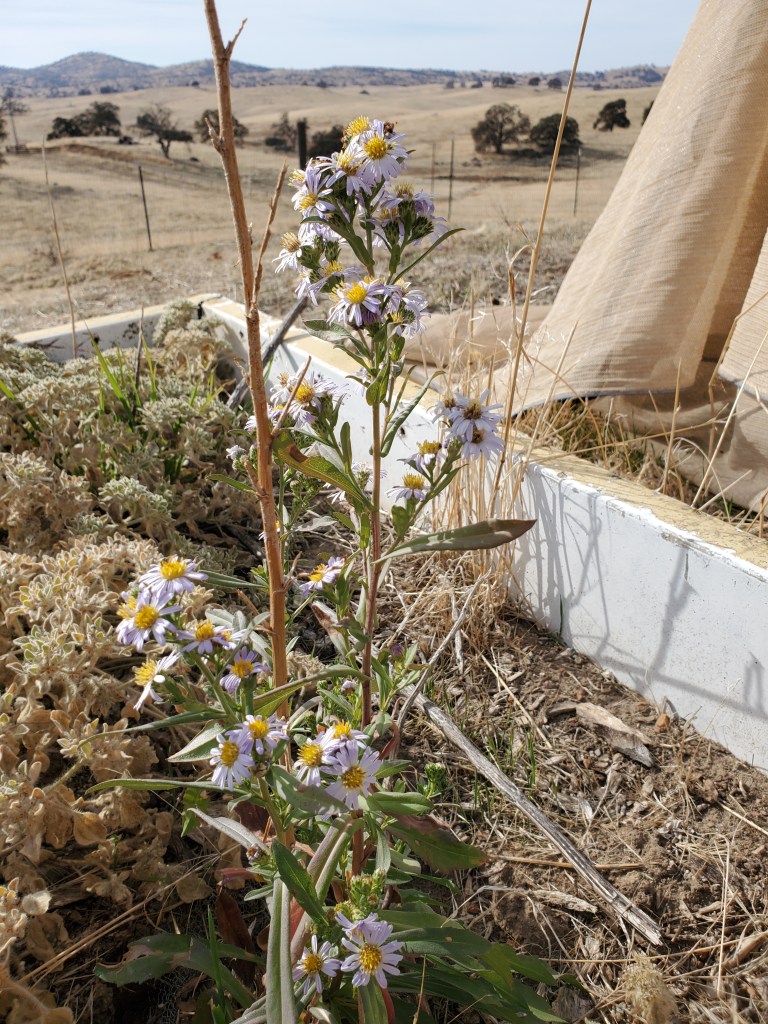
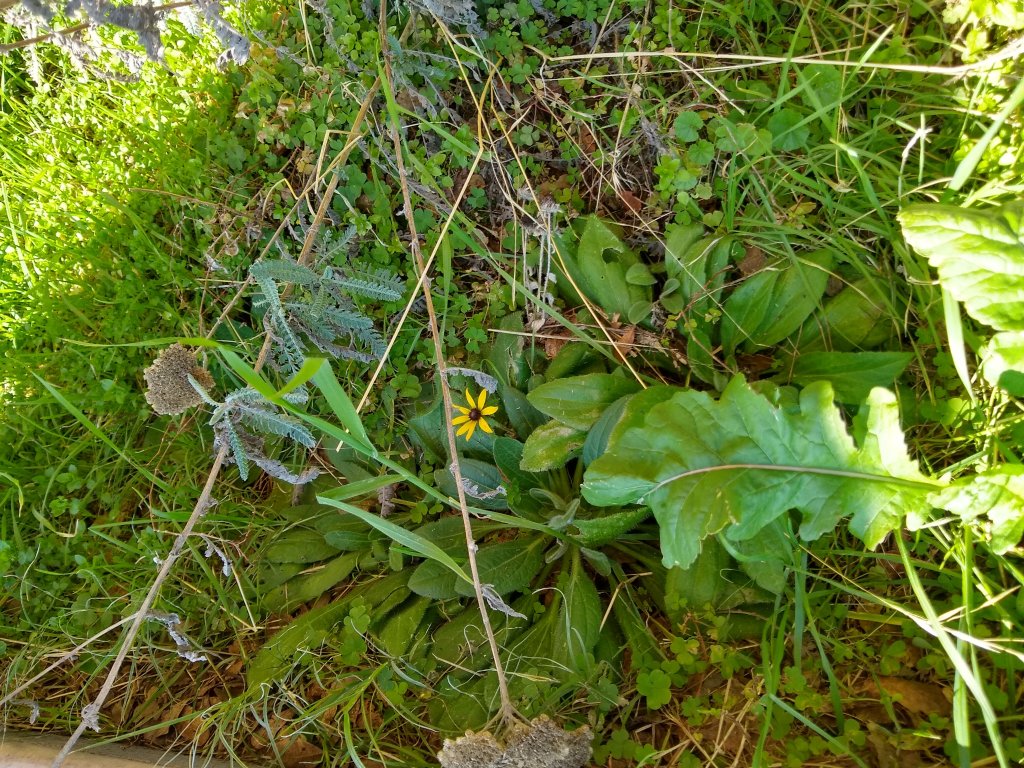
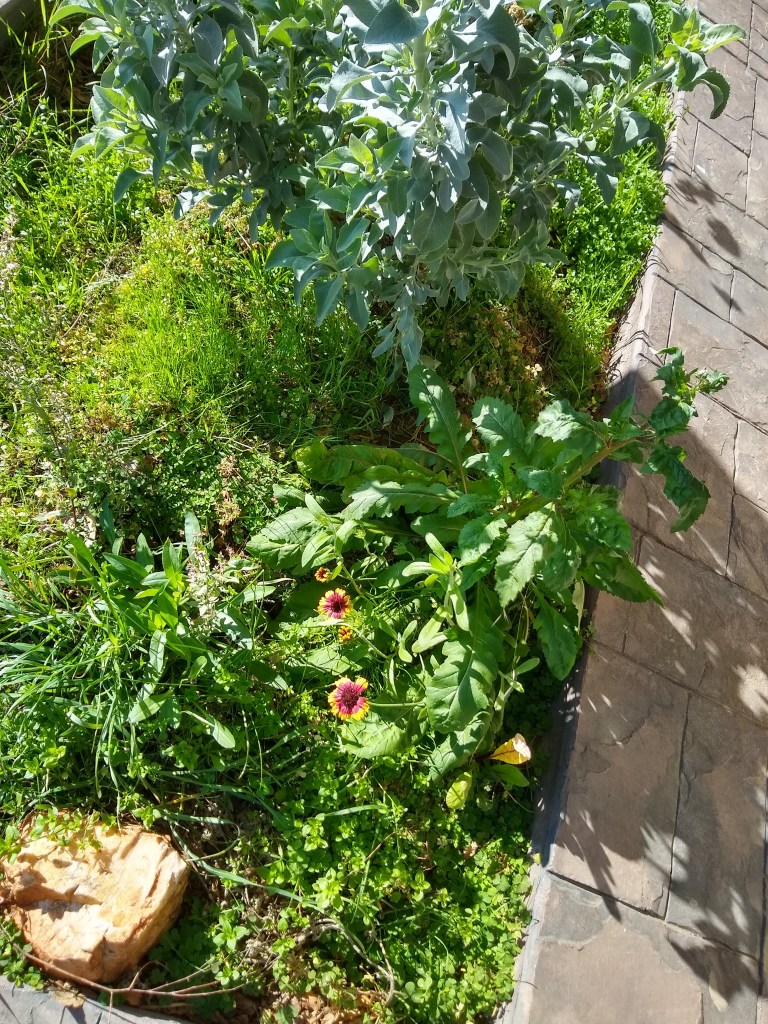
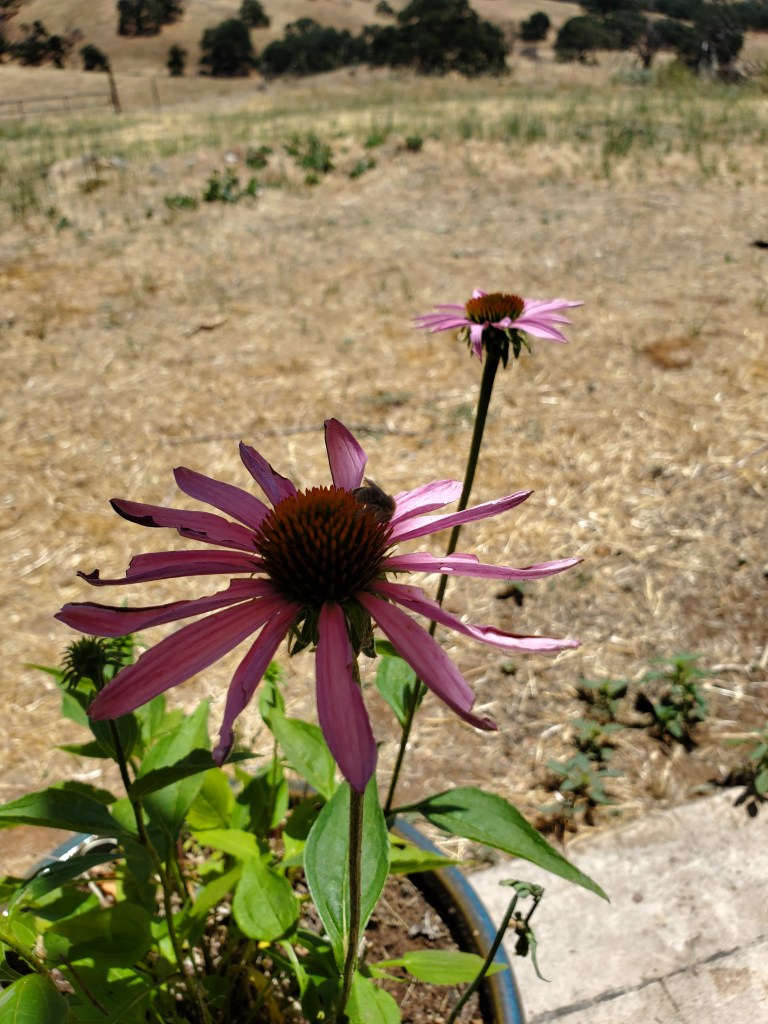
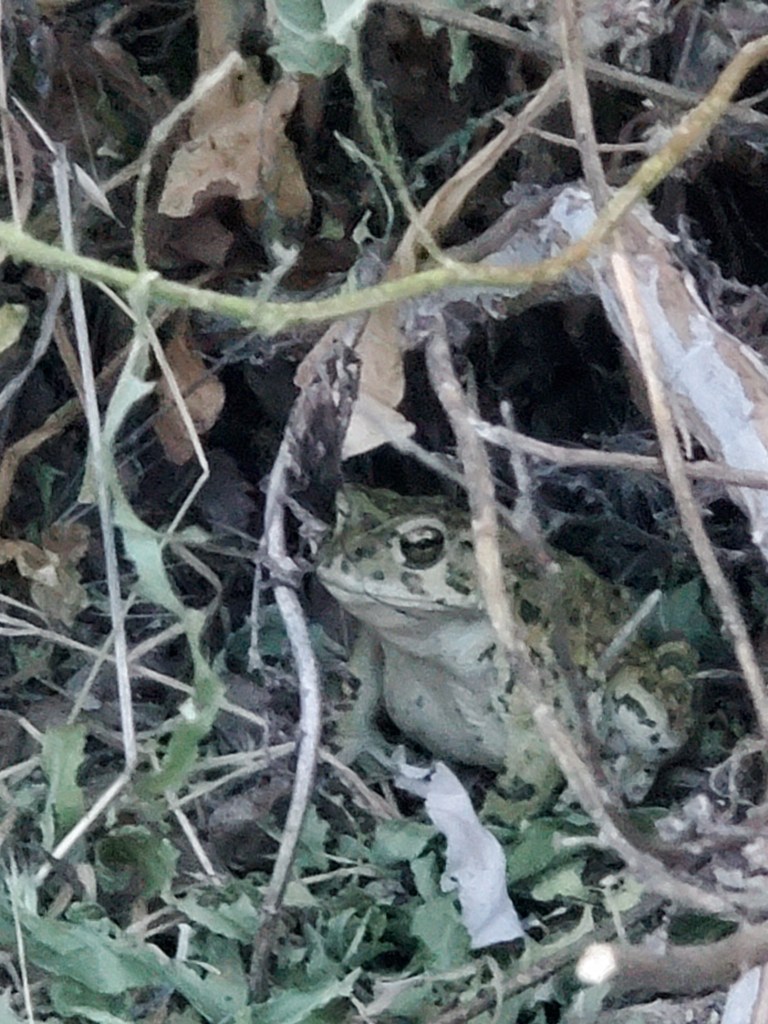
I am loathe to post photos of before this plague. It hurts to see the beauty of this place. I worry about all the bees that used these plants for food and lodging. What will become of them? It is important to see all the life these plants supported before they were ripped to shreds. Again – all of the plants below are now gone.
Milkweed – a Race to Save the Seed Pods

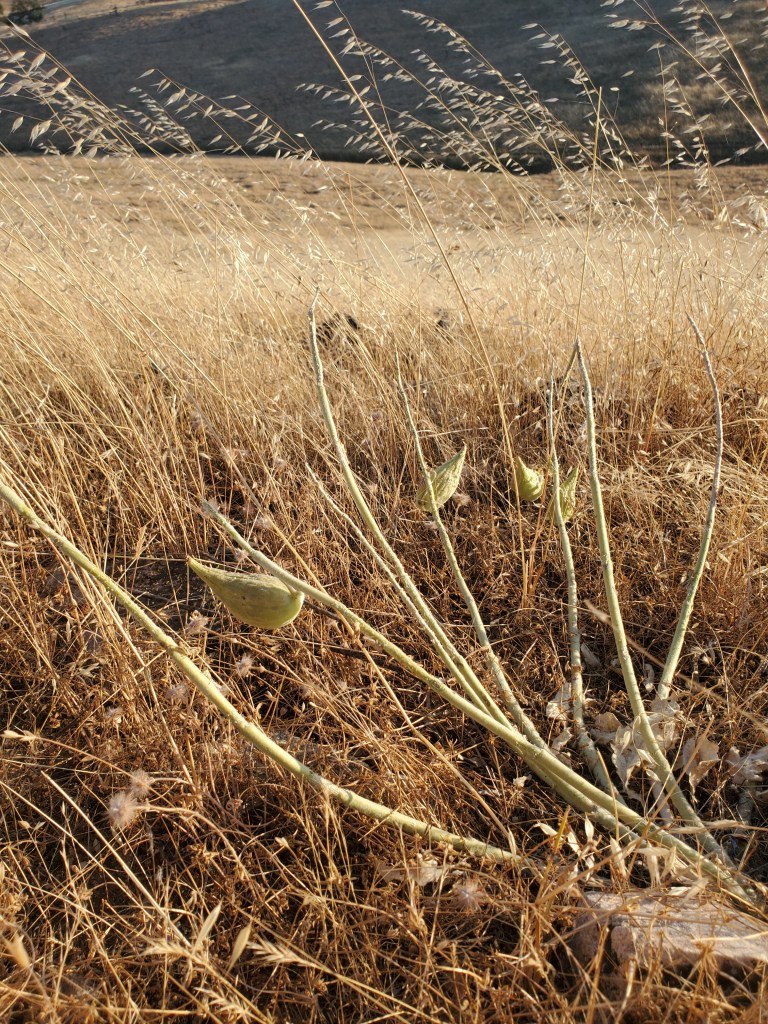
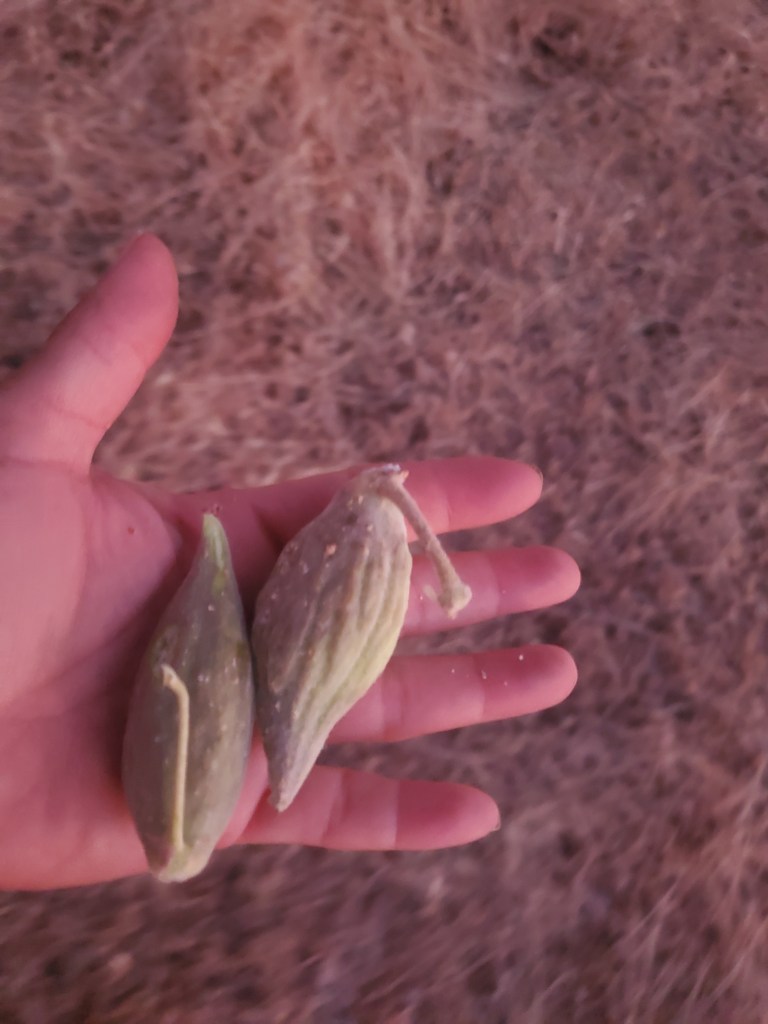
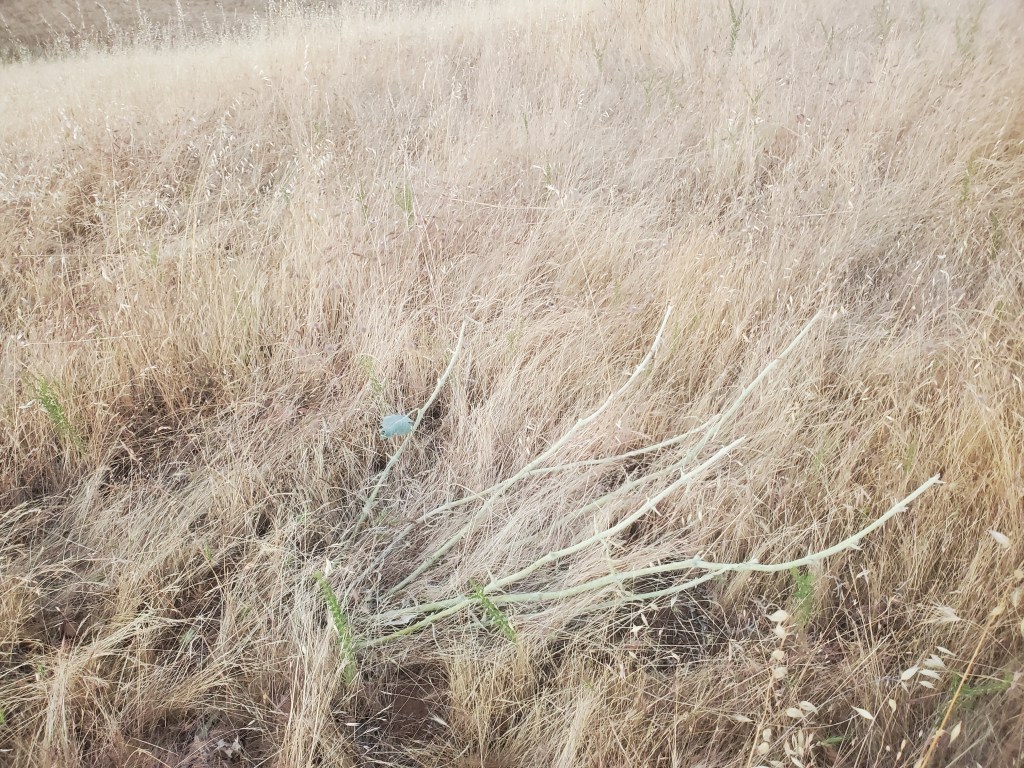
I have been traveling for work much of April and May. As the hoppers continued their death march, all I could do was hope from afar that it would not be as bad as I thought. Over the phone, David would prepare me for the worst. “Hey HB”, he would say. “Don’t freak out, ok? The grasshoppers are taking everything down. Expect that when you get home.” Guilt would creep into my dreams. I was not around to protect the California Milkweed seed pods. When I returned in early June, I ran to the close plot to gather seedpods. To my horror, most of the plants, seedpods and all, were completely gone. Stems were stripped. Please understand that this is early. Last year and the year before, the hoppers did not decimate things until late June and July when the pods were more mature. I thought I had time. Operating off this data, it shocked me to see the California Milkweed like this. My stomach sank as I ran from corpse to corpse looking for any sign of seedpods. I was going off location memory as some places only the absolute bottom of the stems were left. Luckily, I found a few with pods remaining.

It was getting hot, and I was running over the unshaded hillsides. I moved as quick as I could up the steep slope to the large section of California Milkweed. I did not expect to find much – but – to my joy and surprise, several of the older large plants were still intact. And…two had a large number of seed pods. With relief, I harvested them to continue my work of spreading their seed when it was safe.
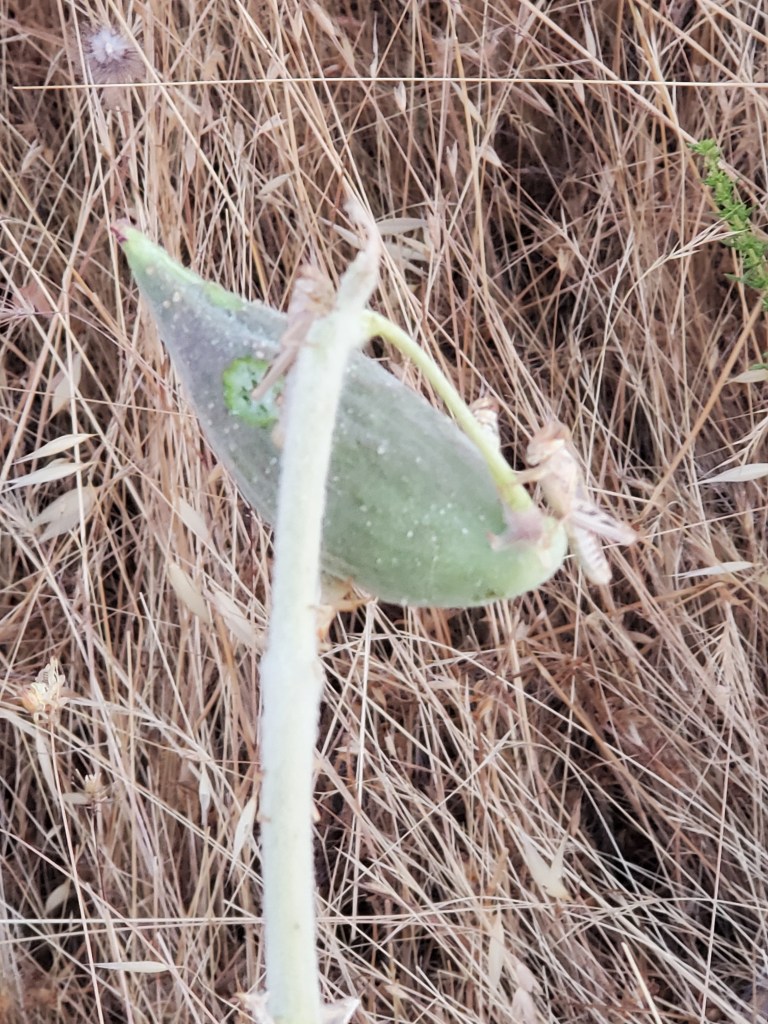
In all, I gathered 13 pods. I left three immature pods on one stem, and will go back for them in a few days. They might have a chance – but they really were not ready to be pulled off.

Abundance in the Creeks

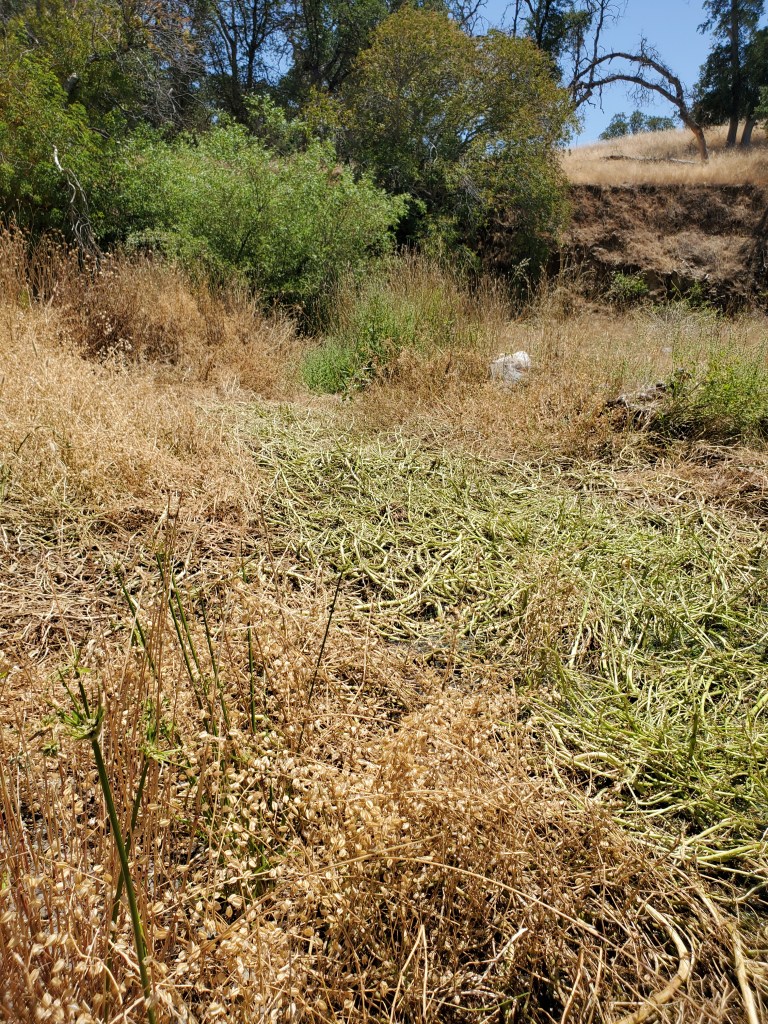
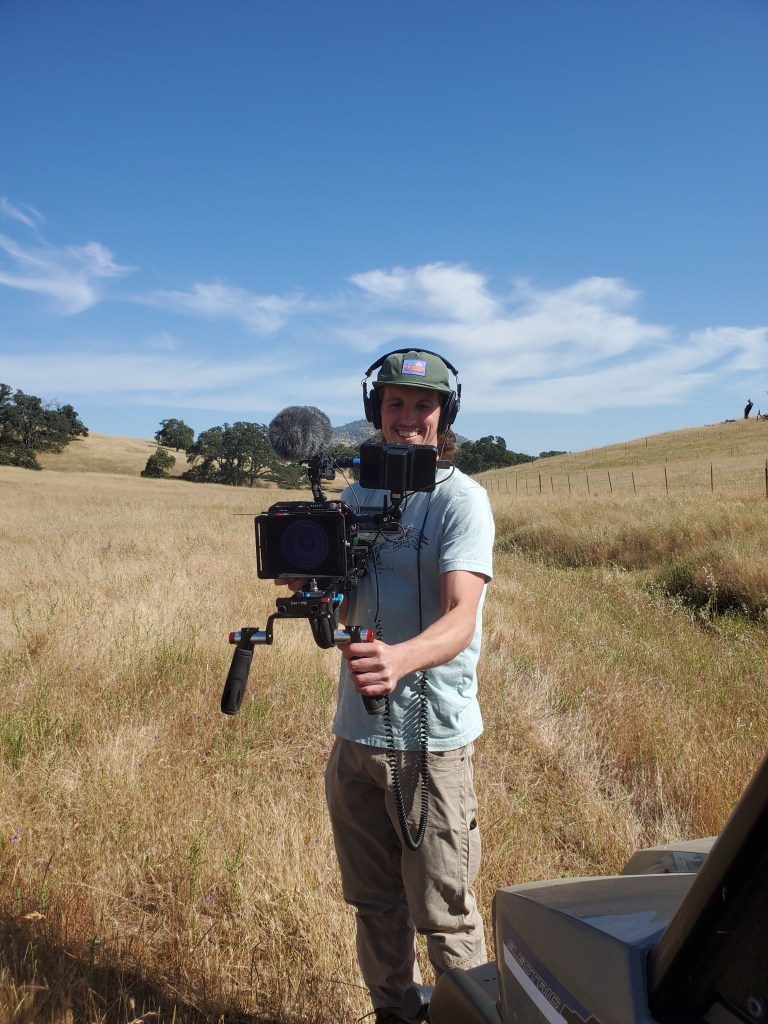
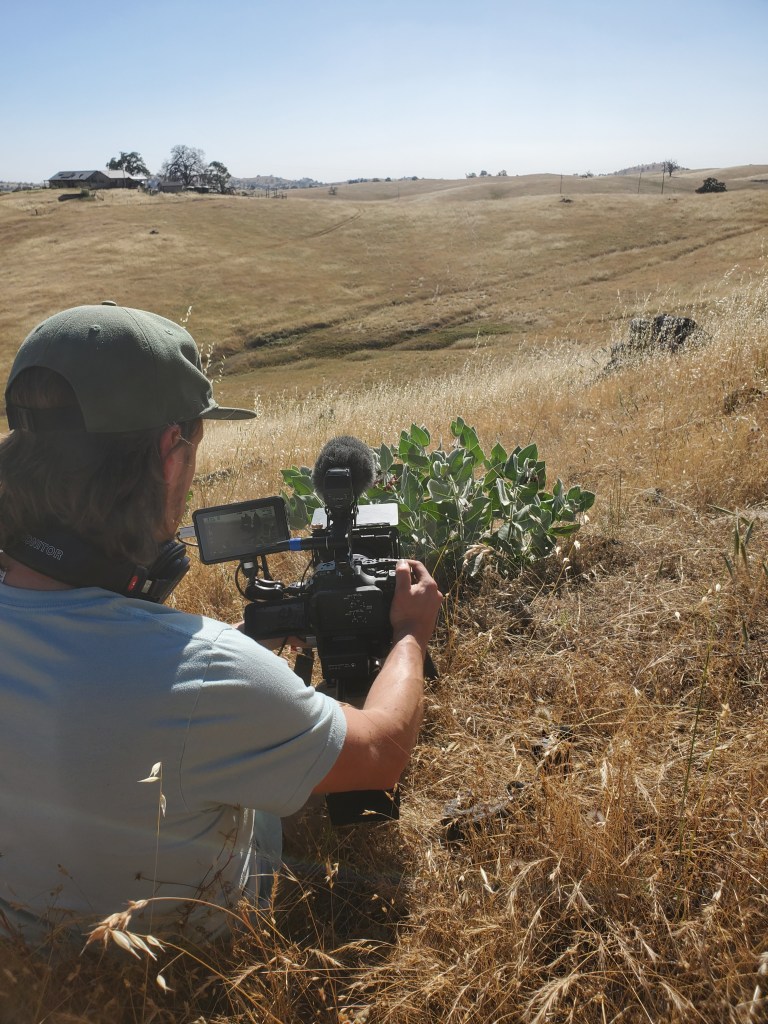
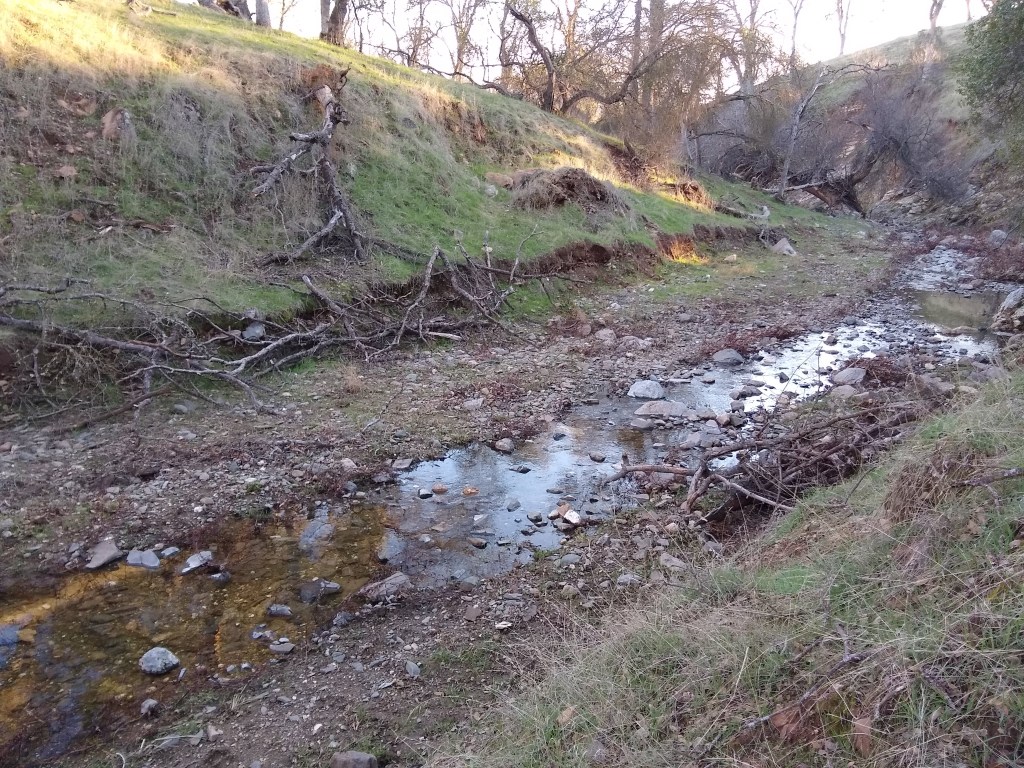
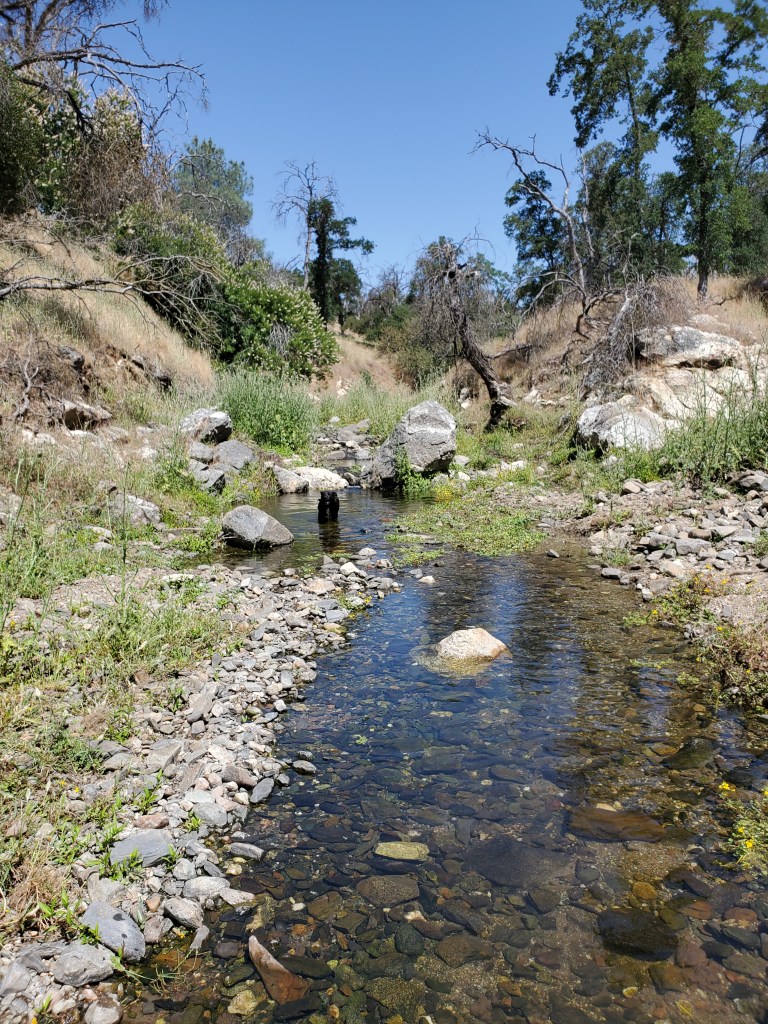
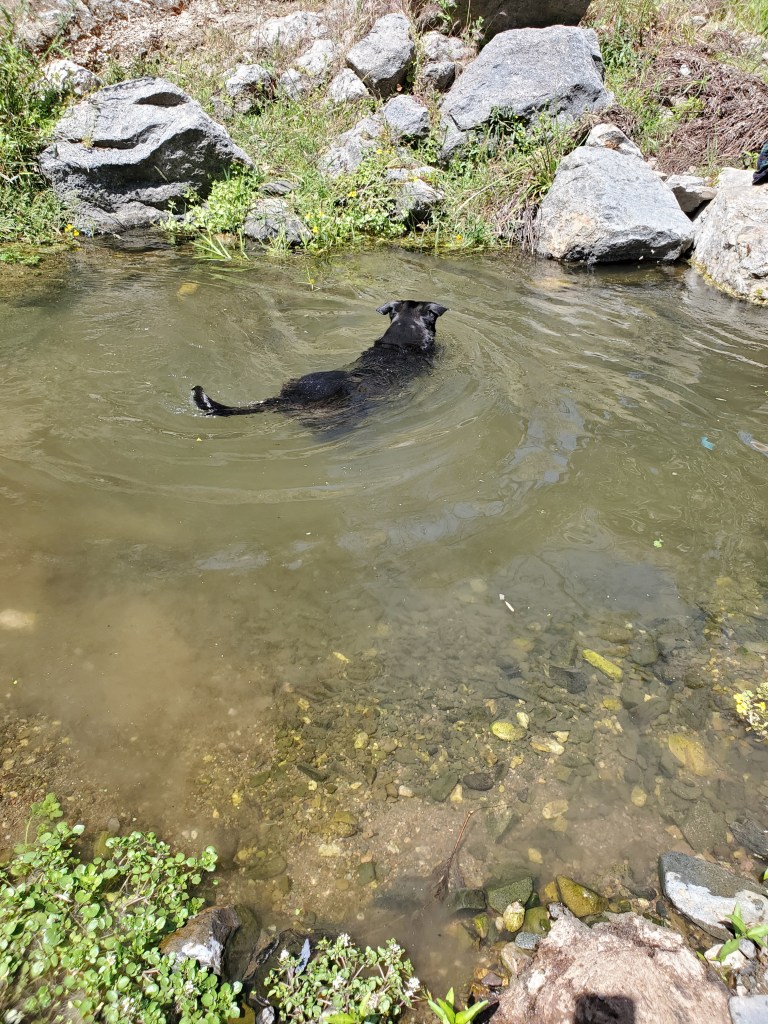
The last few weeks I took several biologists and a documentary filmmaker (Ian Nelson) across the ranch to showcase some of the stewardship work we have been doing. While in the riparian areas, we were able to witness an abundance of buckeye butterflies, great nectar plants, and a new cottonwood seedling. Shockingly, however, the grasshoppers are in the creeks as well. This is highly unusual. They tend to avoid wet places, and the creeks are still flowing with plenty of water. One biologist thought cattle got into the exclusion areas and ate the plants in the creek. I said, “No, this is grasshopper devastation.” She looked closer and saw the filigree in leaves and stems from a billion little mouths taking bites. She was shocked. As such, even in the excluded areas, there is no seep monkey flower, datura, or other riparian broadleaves. Even the thistle is eaten. Fortunately, the buckeye trees were still in bloom and a few other species had blossoms. As we approached some intact plants, we saw a diversity of native bees, including bumbles. My heart swelled. Now I knew that the bumbles had a place to find food. Phew!
Beautiful Reciprocity

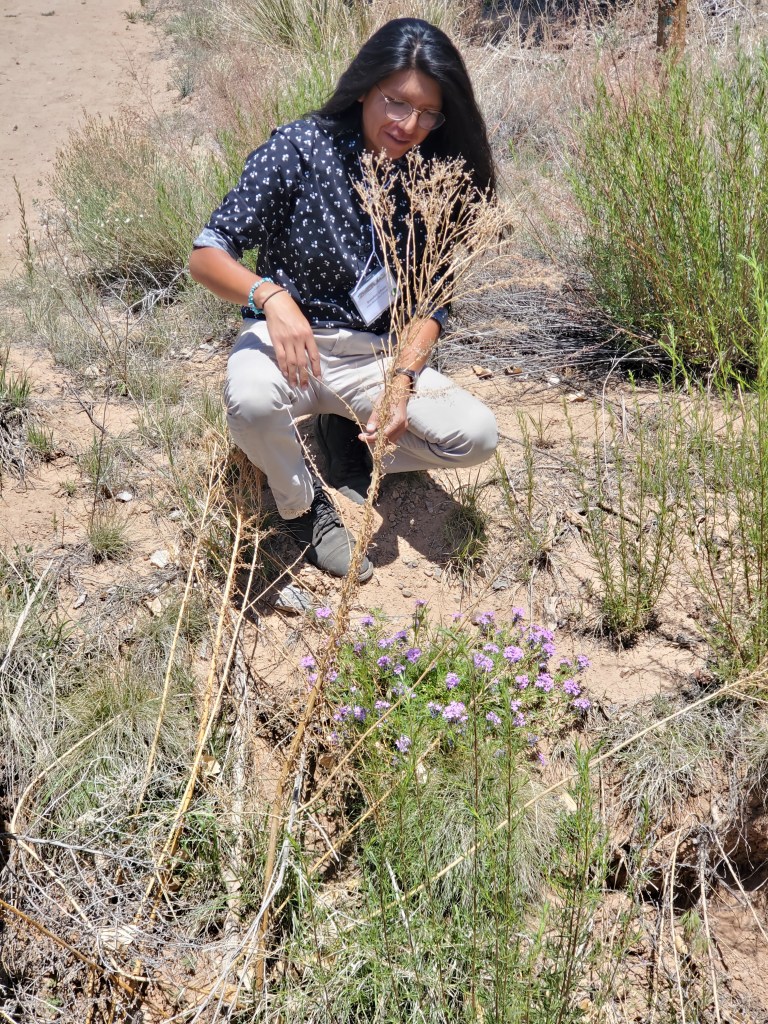
Prior to the destruction, I had the honor to go to New Mexico twice for tribal events. The first time, I went to learn about riparian restoration at the Santa Clara Pueblo – the Poeh. We planted 100 trees and plants on their tribal lands after learning from their work.

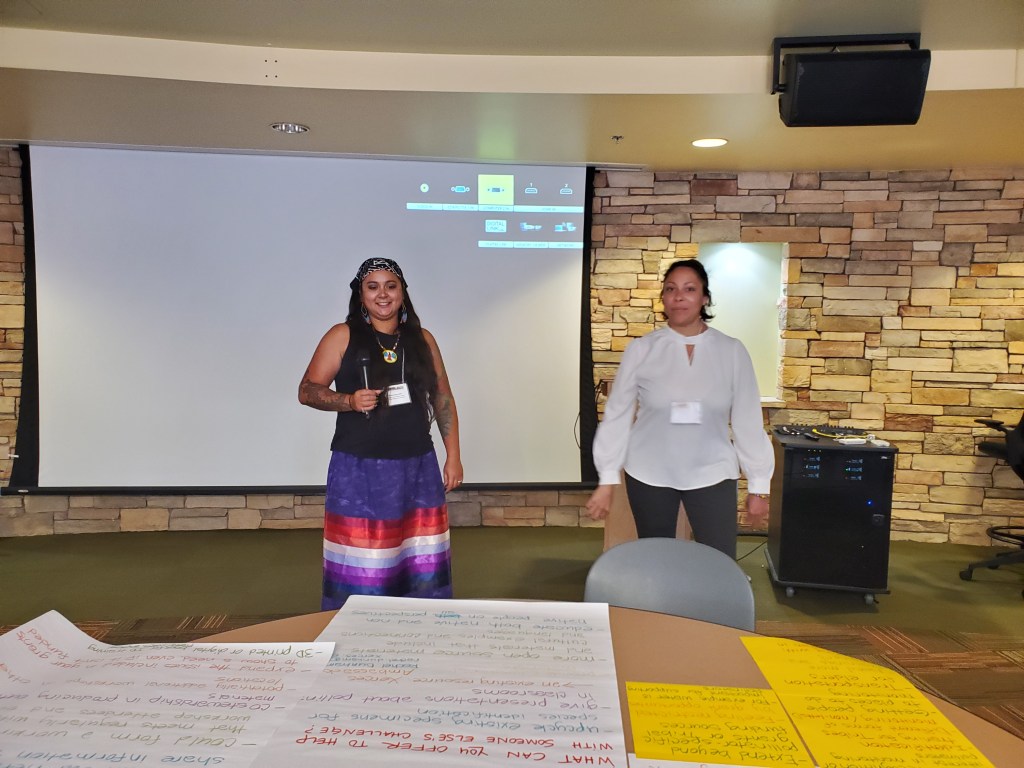
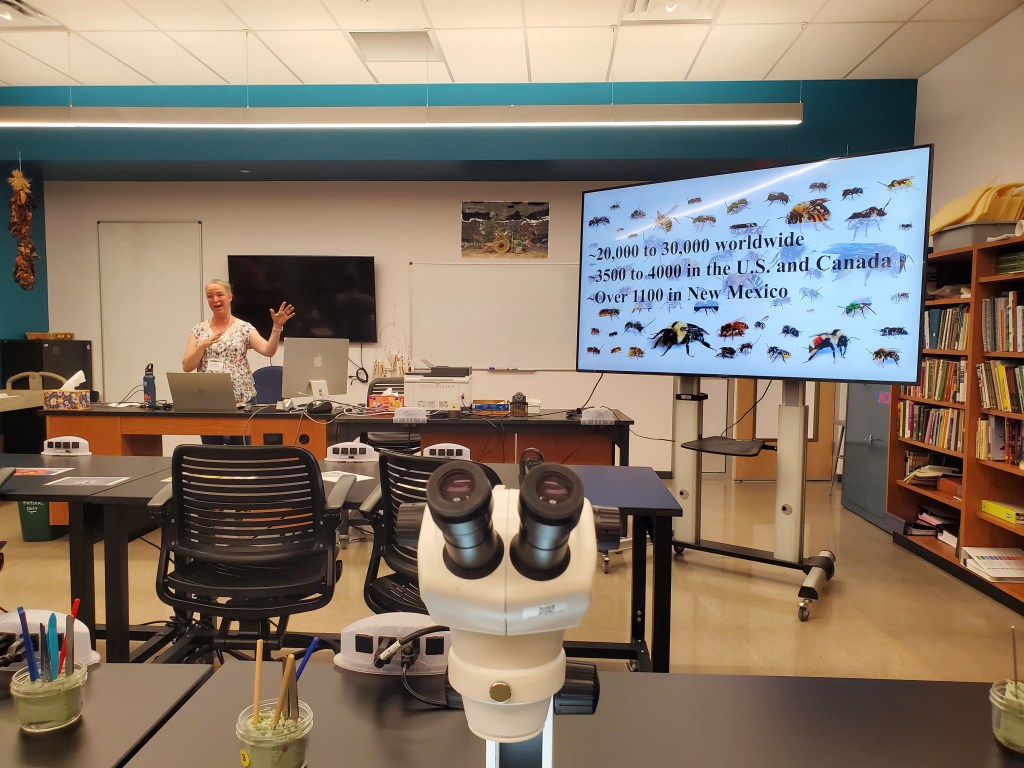
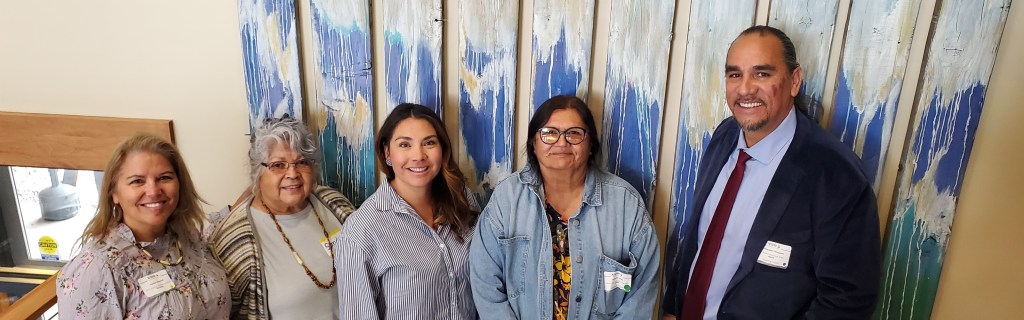
My second trip was incredible, having been invited to present a case study on my pollinator work to a pollinator tribal summit at the campus of the Insititute of American Indian Arts (IAIA). Shana, the Southern Sierra Miwuk Nation Pollinator Coordinator, was invited as well. She presented and did an excellent job. There were US government agency leaders and over 15 tribes working on or wanting to start some type of pollinator habitat work. It was an incredible opportunity and experience. I met so many passionate people and enjoyed the beautiful weather of Santa Fe.

I also attended a ceremony of remembrance for the ancestors slaughtered at the Tubatulabal Tribe on their recently returned lands in April. It was moving. They are working to restore the lands to traditional uses. They want the ducks back, which is the meaning of their name – people of the mud duck. To bring ducks back you need water and insects. I helped them complete their application for a Xerces riparian habitat kit and learned in May that they had been awarded the grant. So grateful to Xerces for this habitat kit program and to the Tutbatulabal Tribe for everything they are doing to live in right relationship with the land.

I am also involved in the California Jobs First initiative and was recently appointed to the California State Fair Board. In all places, I am hoping to ensure an Indigenous perspective is at the table informing decisions – and hopefully, helping resources move to Indian Country, which has, for far too long, suffered from significant under-investment.

To be given guidance, opportunity, learning – they are gifts. They help advance my ability to be of service in this climate changing world. As such, I need to ensure I use these gifts to provide a benefit, to be helpful in a meaningful way – not a way that just I want, but a way that serves a greater good. This is reciprocity.
Don’t Get Down – Get Planting

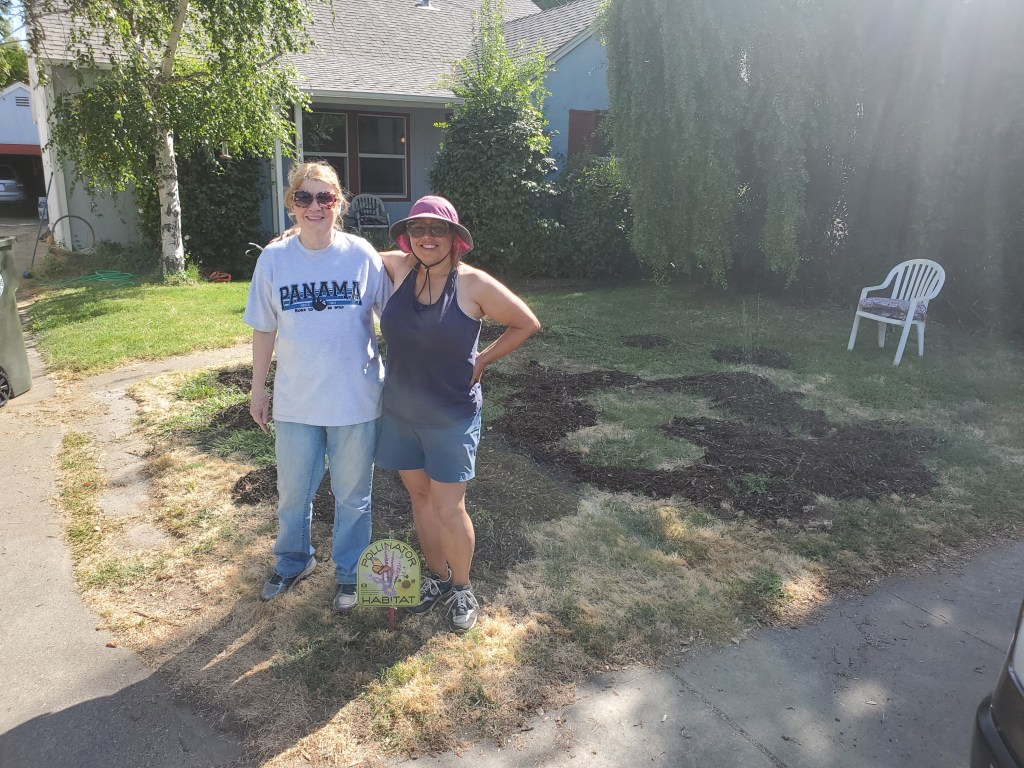
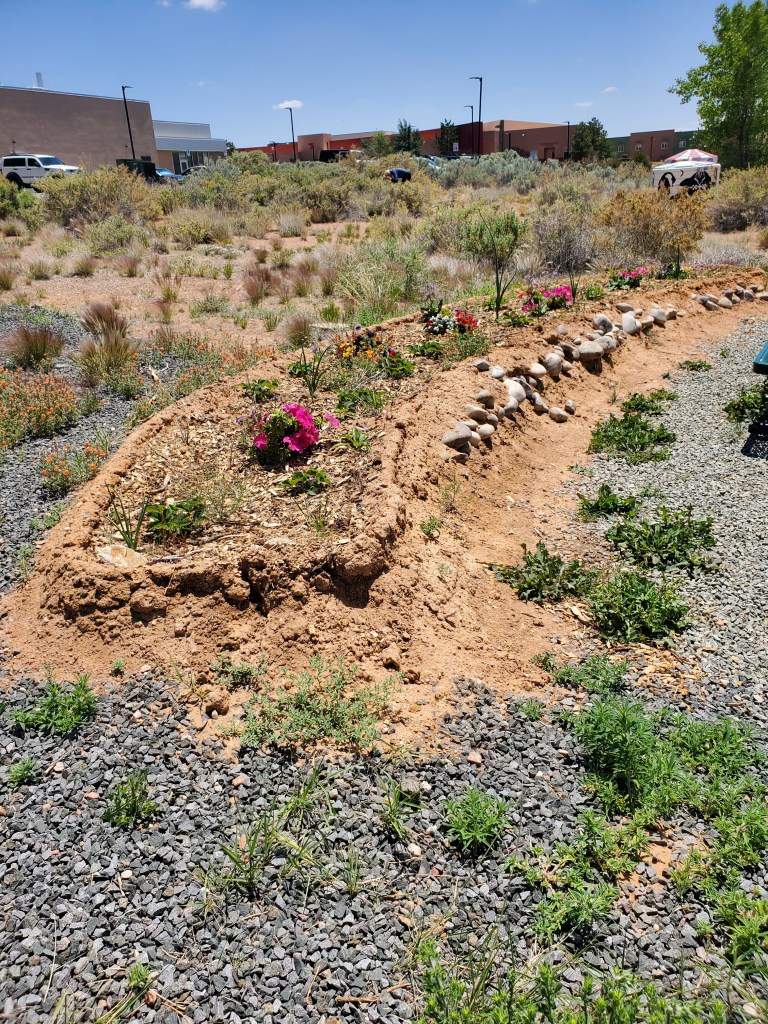
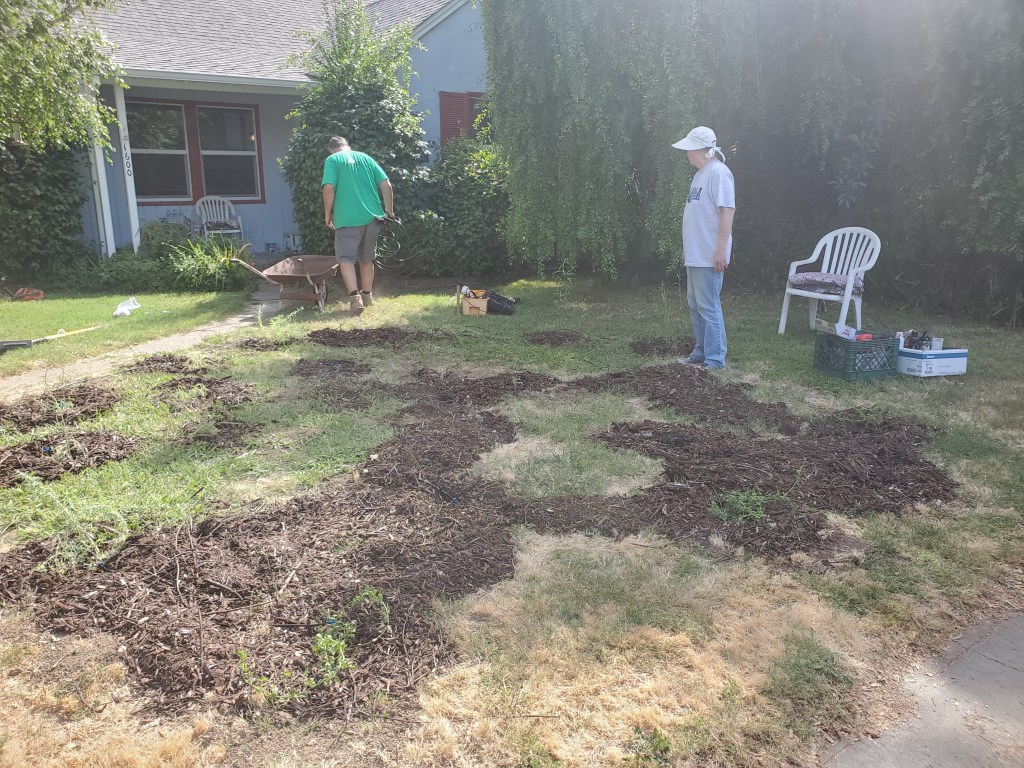
As the landscape around the house is converted from blooms to straw, I made plans to continue to build habitat in Sacramento. While on a trip, I met Brenda Marsh. As people do, we discussed our work and involvements. When she learned about the severe decline in insects and pollinators, she asked if I would help her make a pollinator garden at her home. Of course I said yes! She lives in Sacramento. Since she is busy working and travels quite a bit, she does not have much landscaping – mostly an unwatered crabgrass lawn and some beautiful trees.

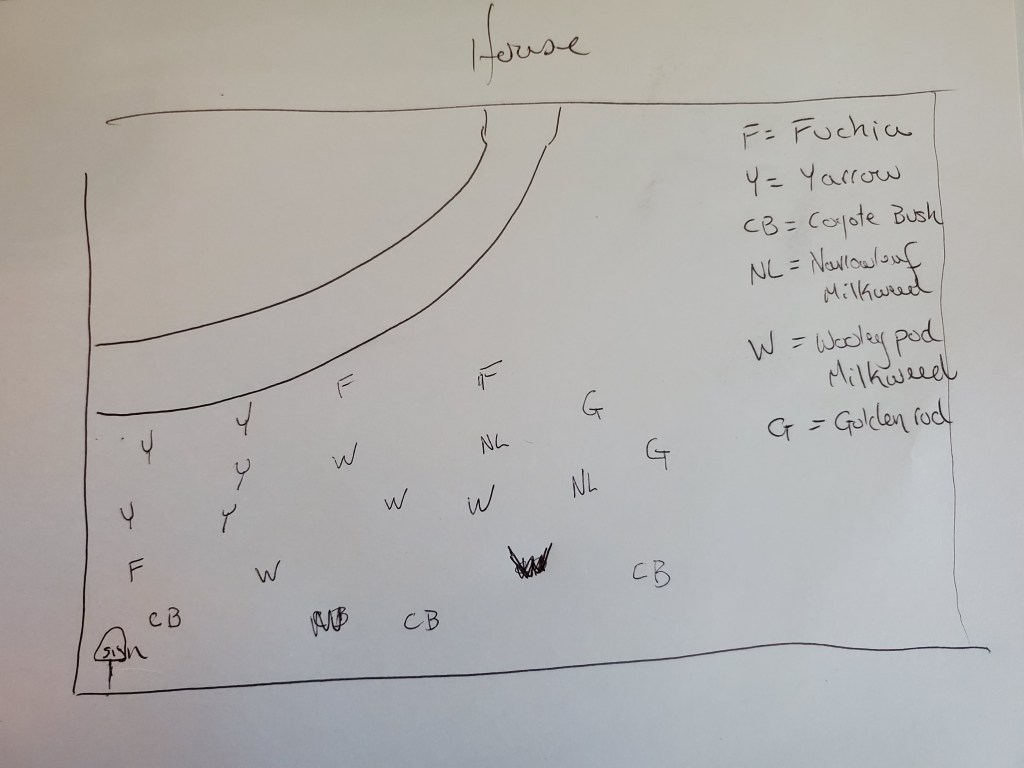
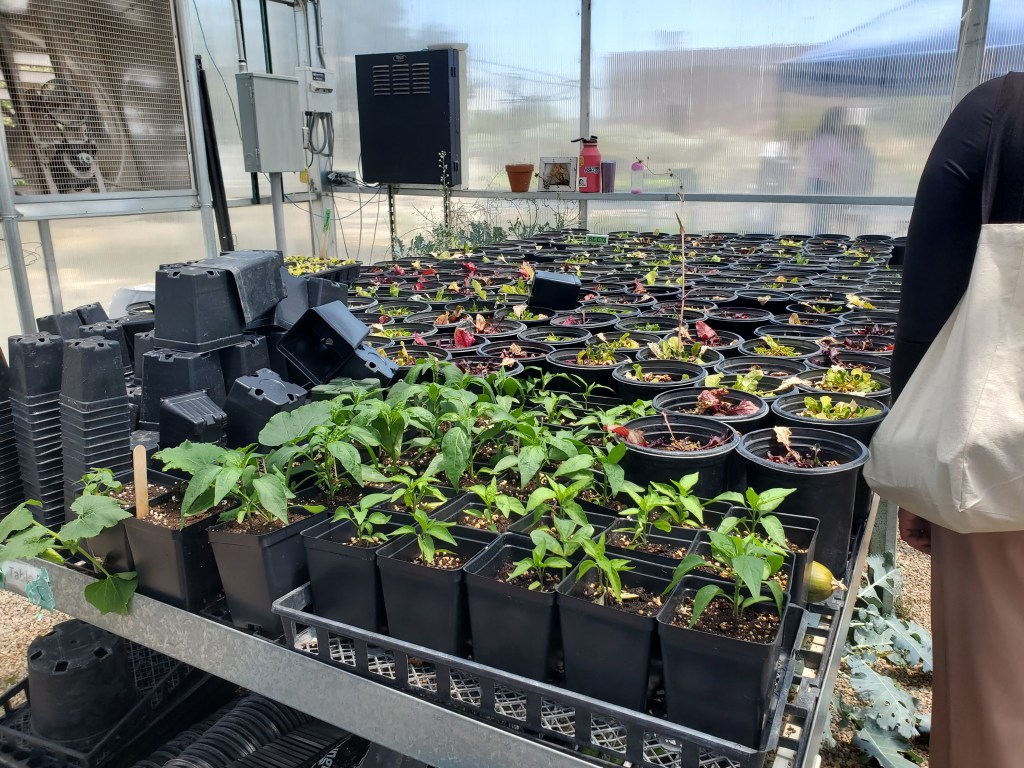
I did a little planning figuring out where the plants would go and in what configuration, and then I asked Ron Allen at Mariposa Native Plants what he had available. In the end, we got 20 plants, seven milkweeds and thirteen nectar plants. I convinced David to help me (I told him there was a great lunch in the deal for him). He is great with irrigation systems. David pulled together some irrigation supplies and off we went.

Much of Brenda’s neighborhood is sterile with lush green lawns and some exotic nectar plants. Still, while we were working there, we saw a big yellow swallowtail butterfly and a white sulfur fly by. Two blocks up and around the corner, there is a house with a wonderful native plant garden. It was bursting with life. This meant that there would be some nice islands pollinators could hop to without fear of pesticide and herbicide use. In all, it took about 4 and a half hours, not counting travel time. Thanks to Brenda for being part of the solution!

My next plan is to help a lady in Clovis plant a large pollinator garden within her nine acres. I met her on the plane on my way back from Santa Fe. She had no idea about the horrific decline in pollinators and was anxious to do something. These are examples of why we need to be talking about this work, what is happening in the world and that there are solutions people can be a part of. Media is great, but the person to person connection is most effective. Those relationships are durable treasures that can spark incredible change. We need to be connected to one another and in reciprocal relationship with the earth now more than ever.

Adding a New Initiative

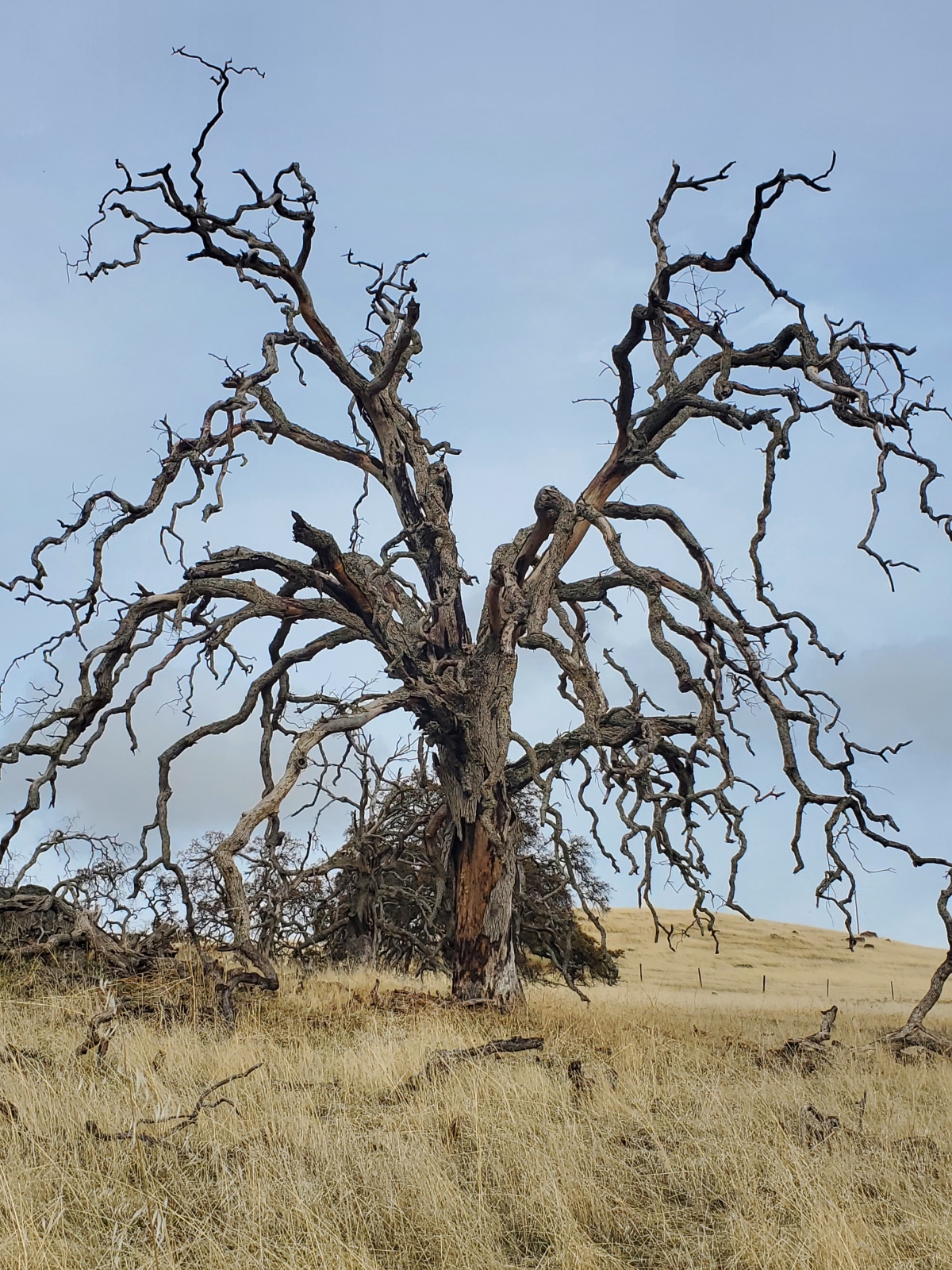
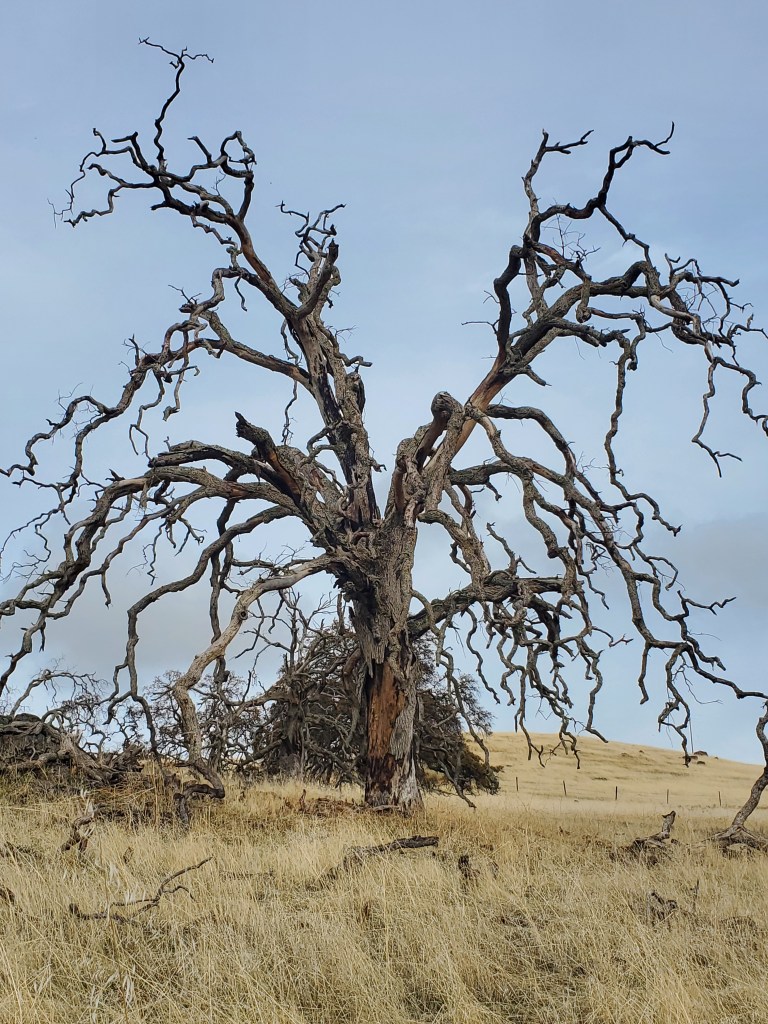
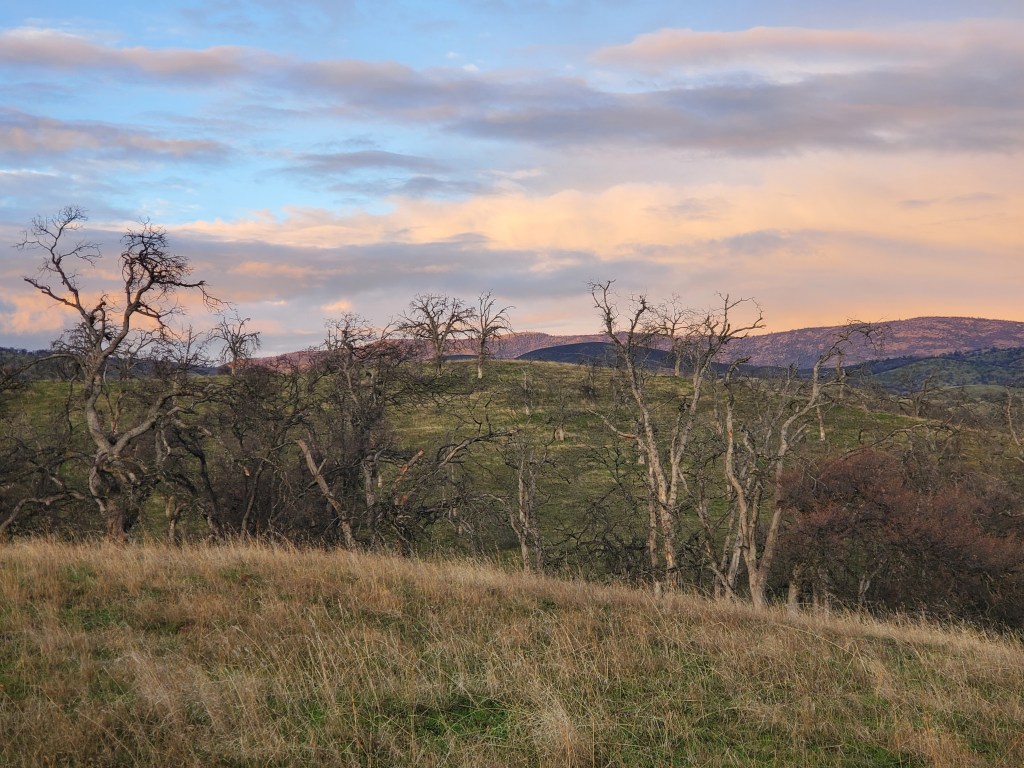
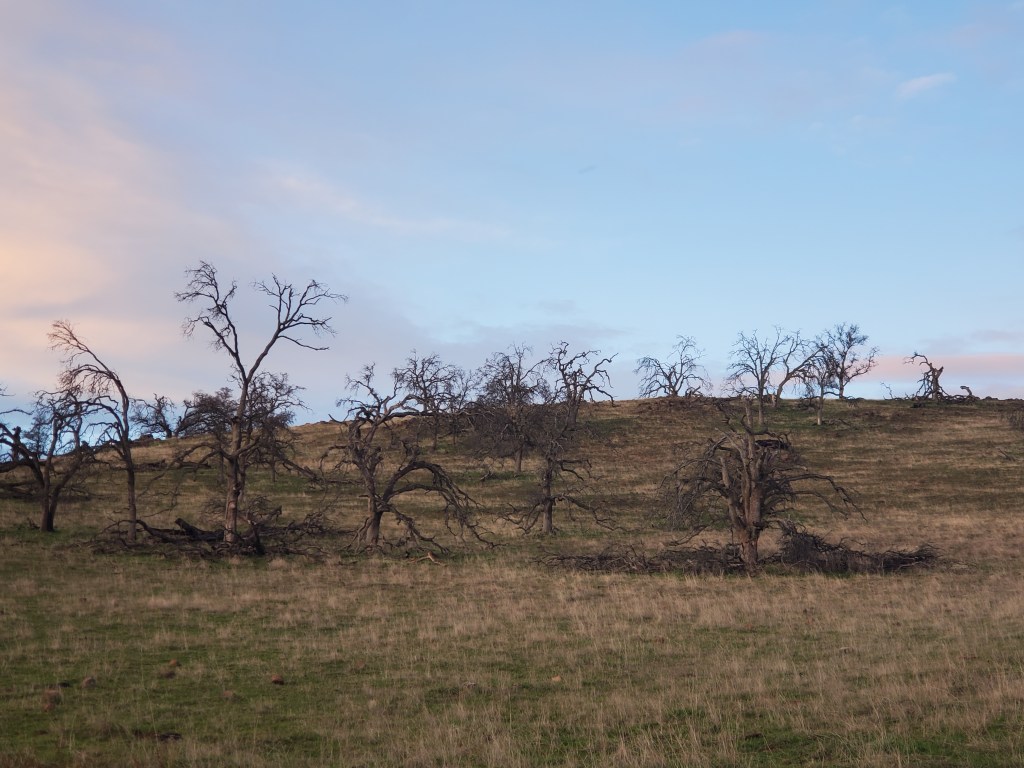
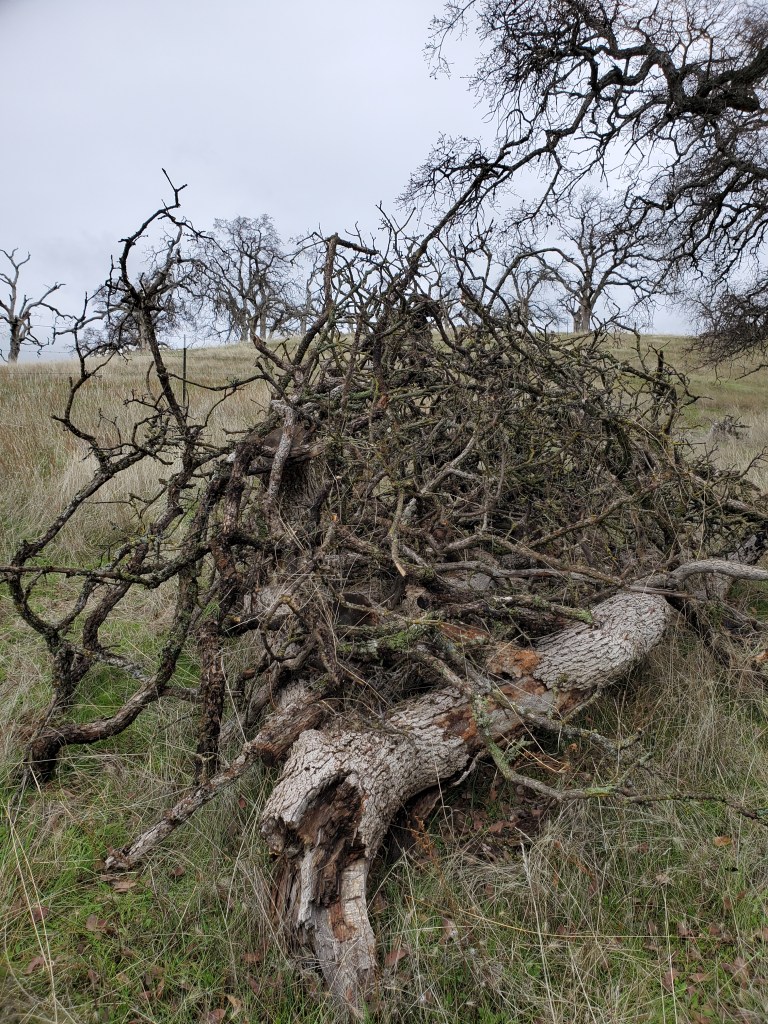
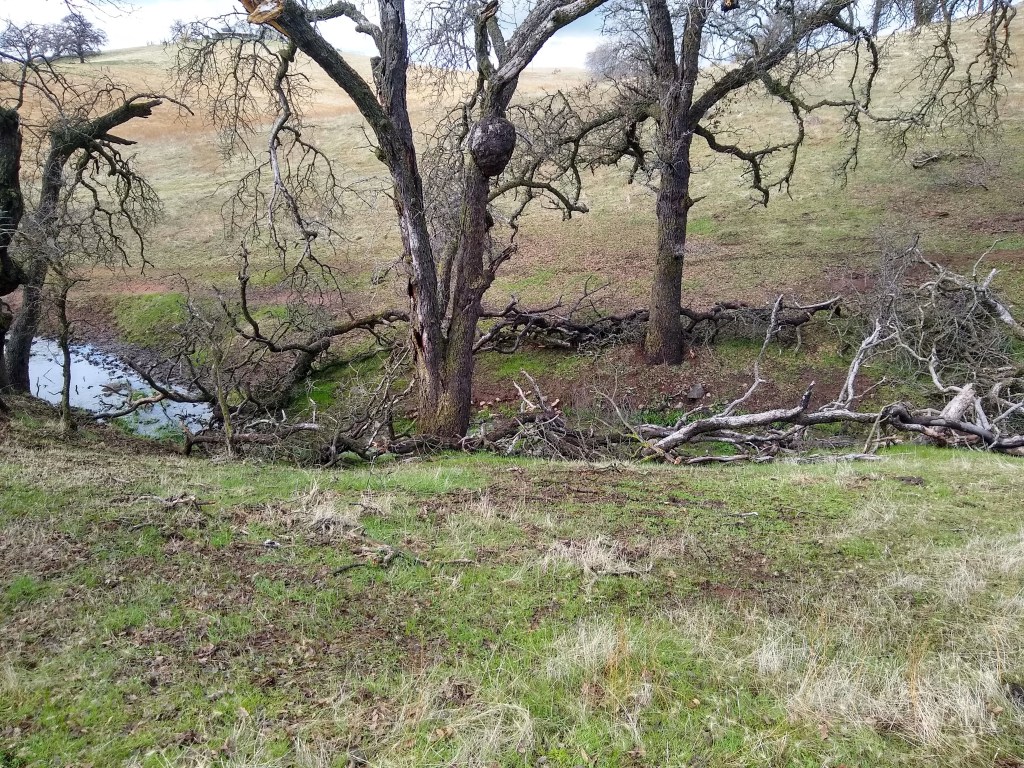
Dead blue oak tree and great habitat for bats, birds and many other species

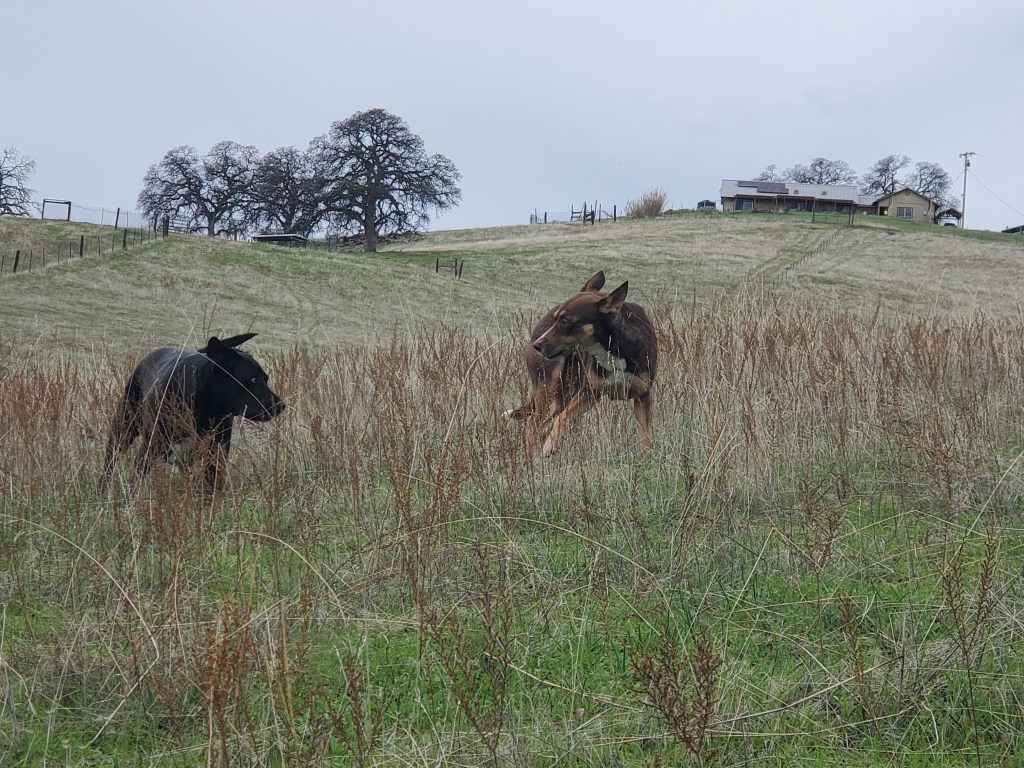
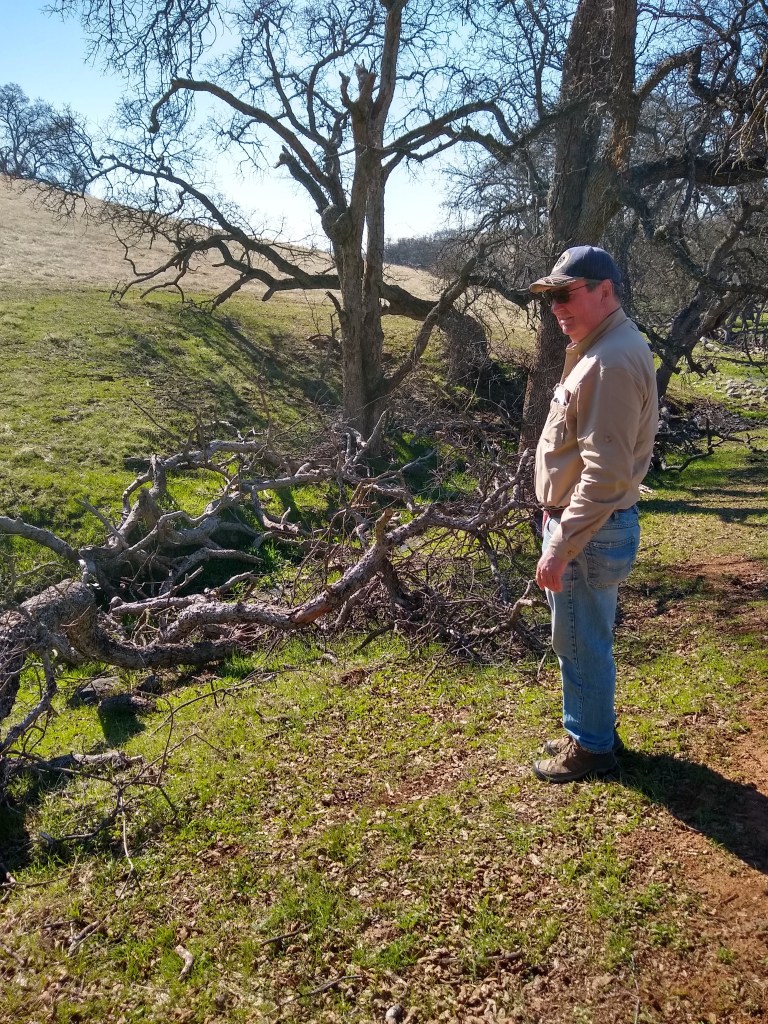
It happened on Thursday, and I saw it too. I was walking my route checking all the log and rock dams when there was a popping sound. The dogs looked to the northeast, so I did too. I didn’t see anything. The sound was not immediately identifiable, and I continued walking. When I was at the edge of the grove, the sound came down the drainages. It was a loud crack. Oh shit. Fear sent adrenaline through every channel in my body all at once. The dogs looked back in the direction from which we came and took off running full speed to investigate. It was clear the sound was well behind me. My body eased. I swung around just in time to hear another crack, and then thud. I caught sight of the branch of a long dead, once magnificent, tall blue oak drop to the ground. The dogs realized the seriousness, and ran even faster back to me. It was a jolting reminder for me to be extremely careful and vigilant as I walk the range, reading the trees and never going under branches that are angled down towards the ground.

We had a doozie of a storm four nights ago, with .75″ of rain and wind so ferocious, my kelpie Millie was trembling against my body, unable to sleep. With the rain and wind, it is almost guaranteed that the trees will be impacted. Branches loosened from bark and trunk through death and drought are vulnerable to the moisture and wind. Gravity then finishes the job, dropping the large, tortuous branches, and sometimes entire trees, to the ground. It can be very dangerous.

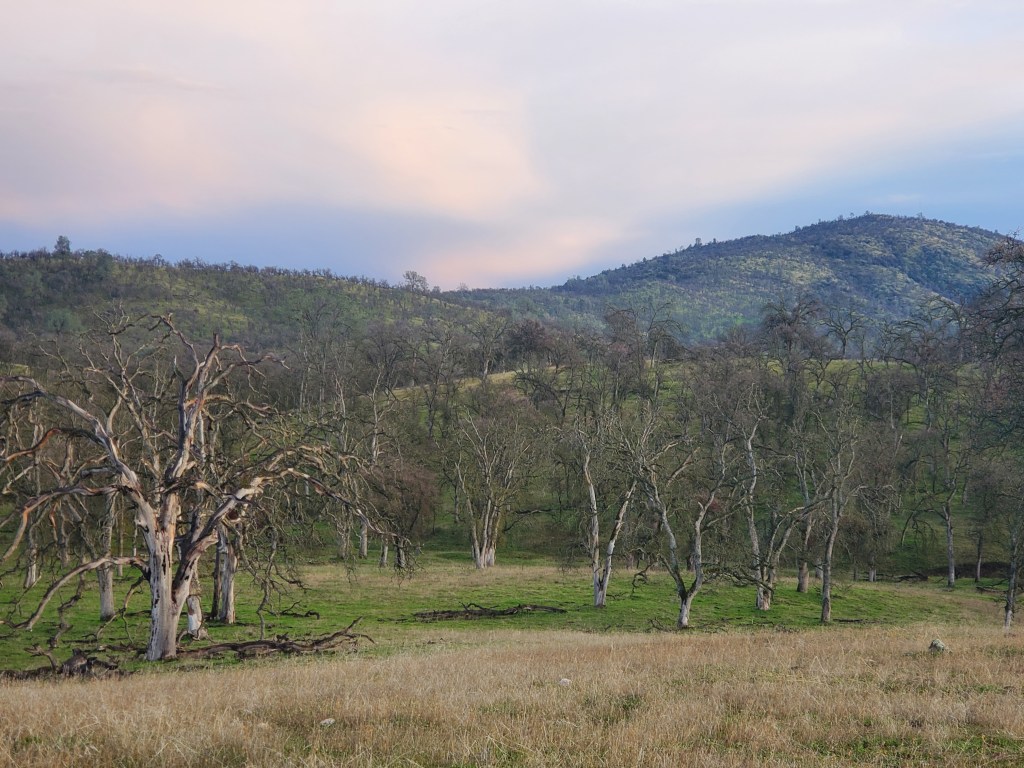
How did the ranch get this way? I try not to take it personally. I have lived on this land for 21 years. Since that time, we have lost almost 300 blue oaks. Some, I think, were at their expiration date, but most have been pressured by drought. Leading up to the 5-year drought that began in 2011, I noticed the loss of several grand old trees down slope from the house. However, it was not until 2016, the year just after the 5-year drought that entire hillsides, ridges and even some near the creek died. It was a horror. I did not know what to do. I called experts, who looked for signs of disease. There was none. They were perplexed, but they were just learning as well that this was happening all over California. It brought me some small bit of comfort to know it was not something I was doing to cause their deaths. Still, I was distraught at their loss and anxious to learn more about what could be done.

A New Passionate Work

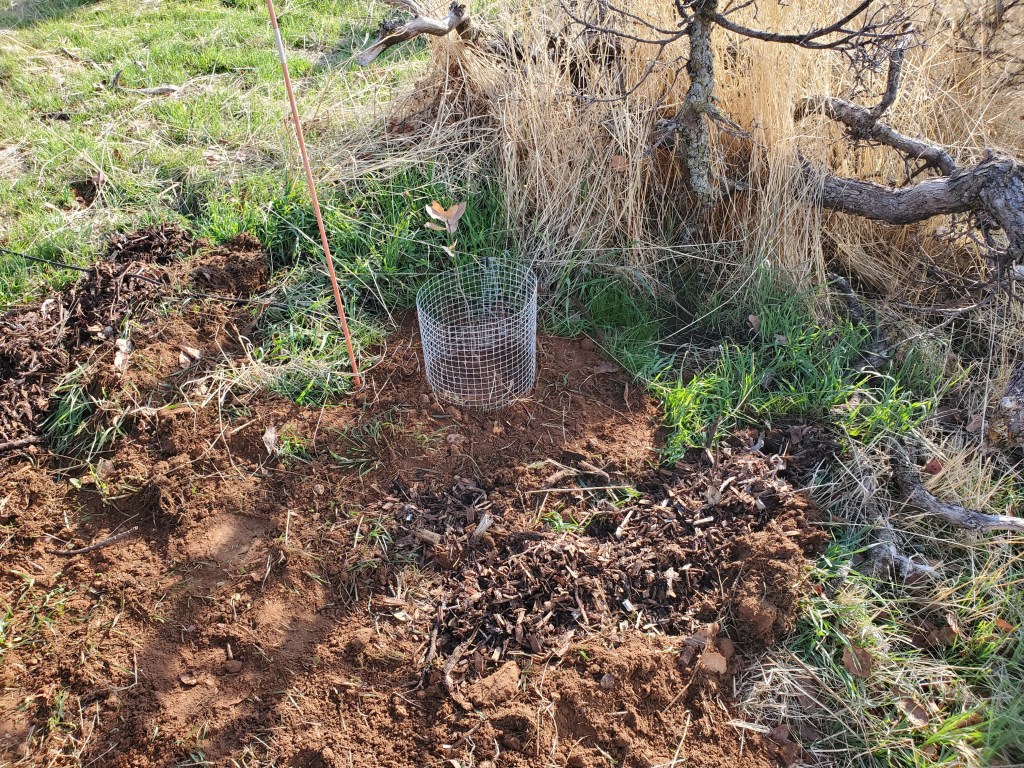
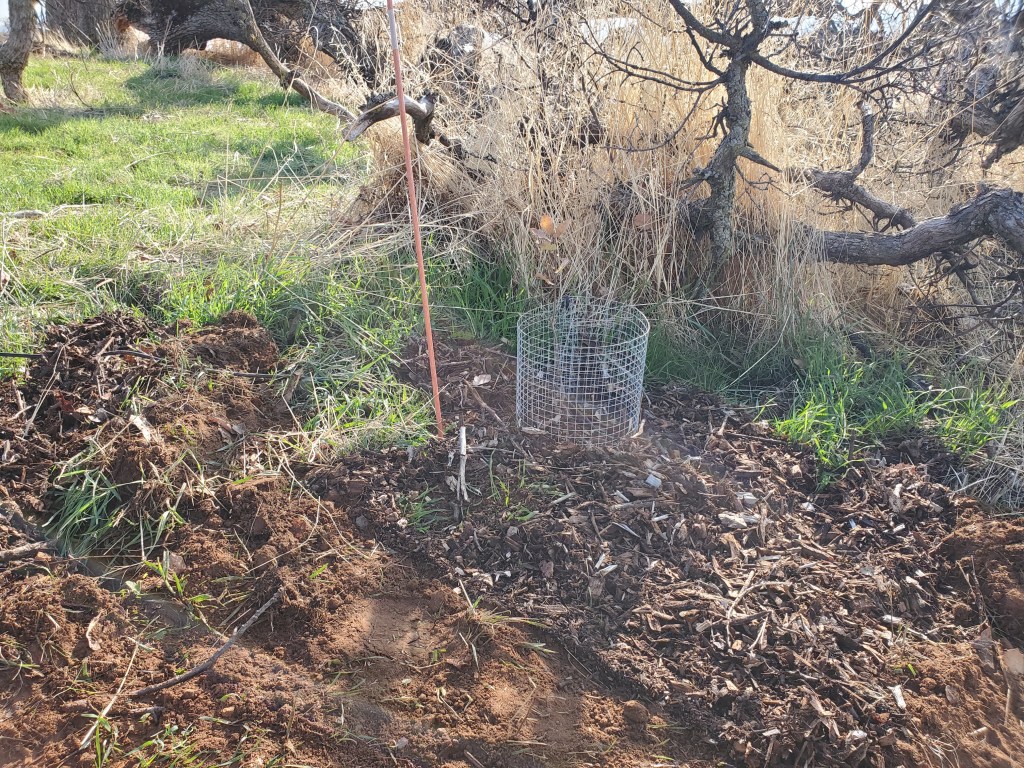
Given the recent blue oak die-off, I am committing to now work hard toward restoring some of the population of blue oaks that died. I understand that there is not sufficient moisture to sustain replacing the oaks 1:1. I am proposing to restore a portion of them, probably close to 1/3rd of the lost oaks. This means I will need to plant at least 120 seedlings, anticipating that some will not make it. I will need to continue to protect the seedlings in the creek banks – hoping they will grow more. As I have reported in this blog, three I’ve been protecting for 10 years, before the riparian exclusion fence, have stayed nearly the same size all those years. With the groundwater recharge work I am doing and adding some trenching work around oak planting areas, I am hoping that I can retain enough moisture to help bring some baby blue oaks to maturity.

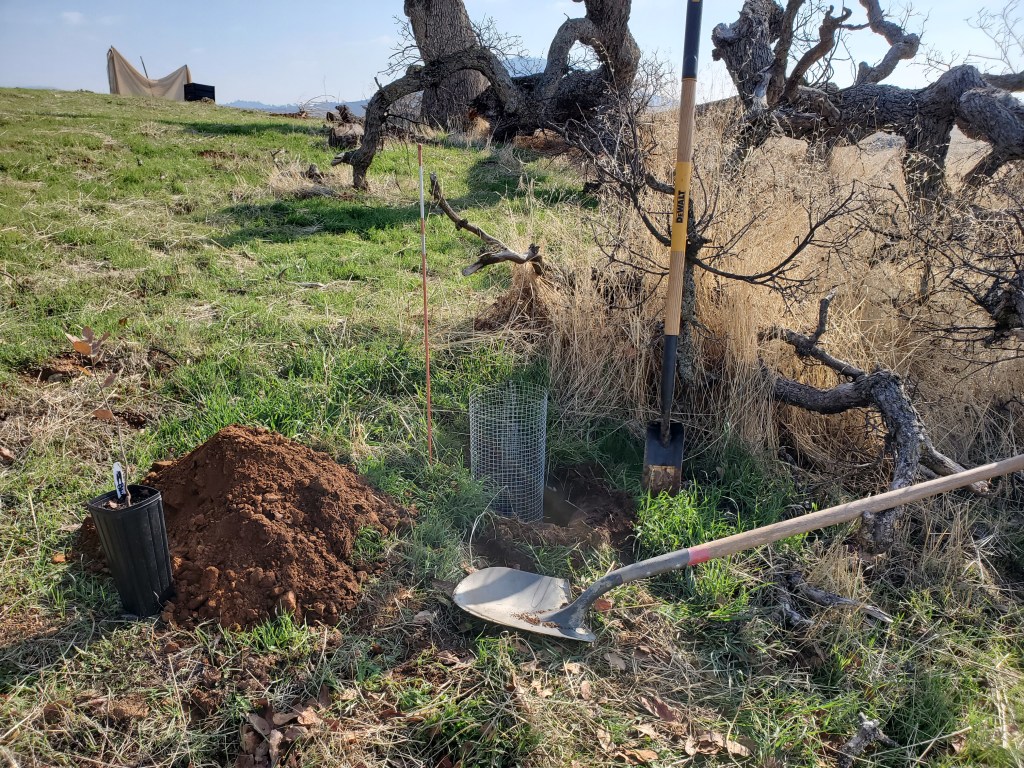
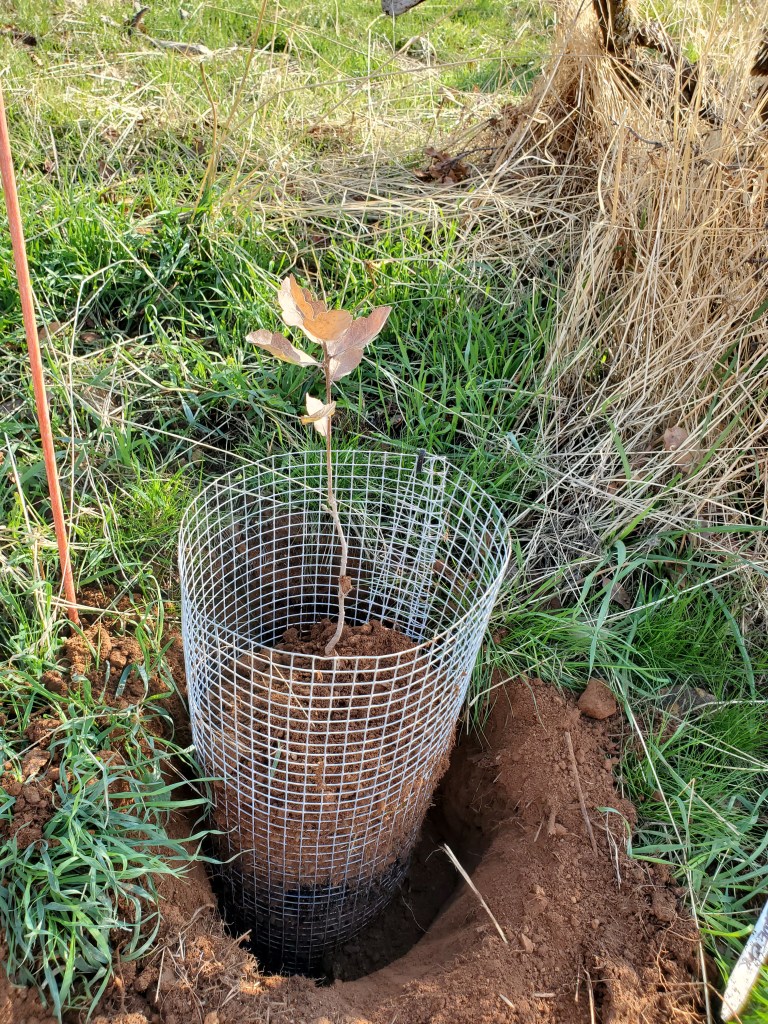
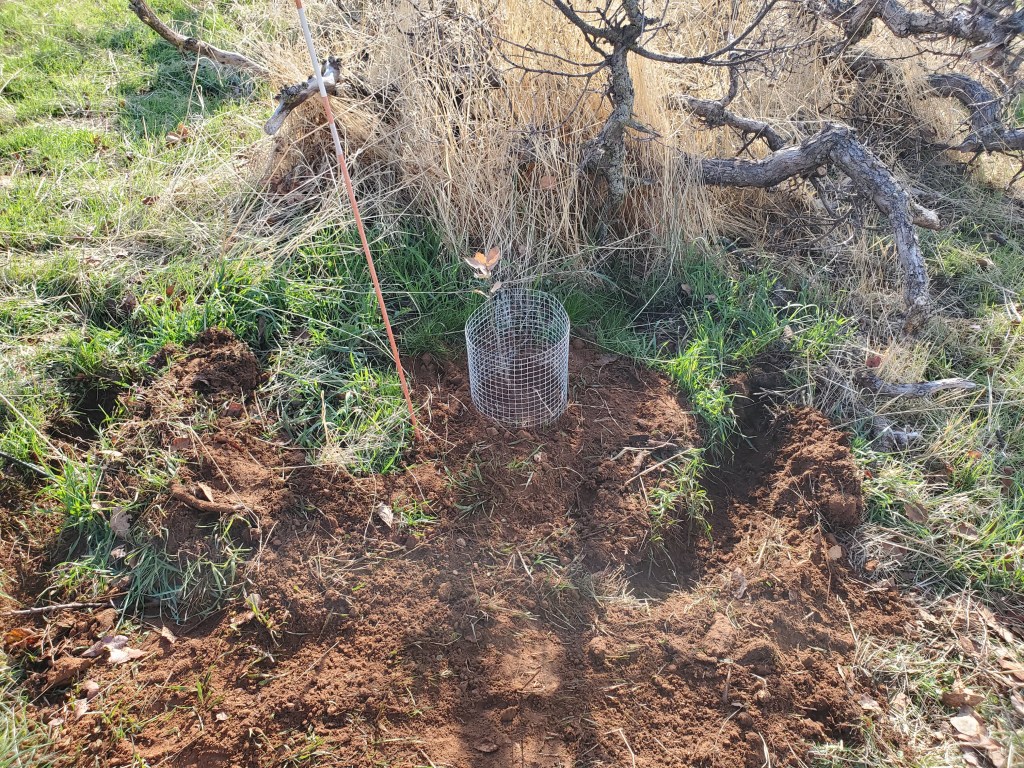
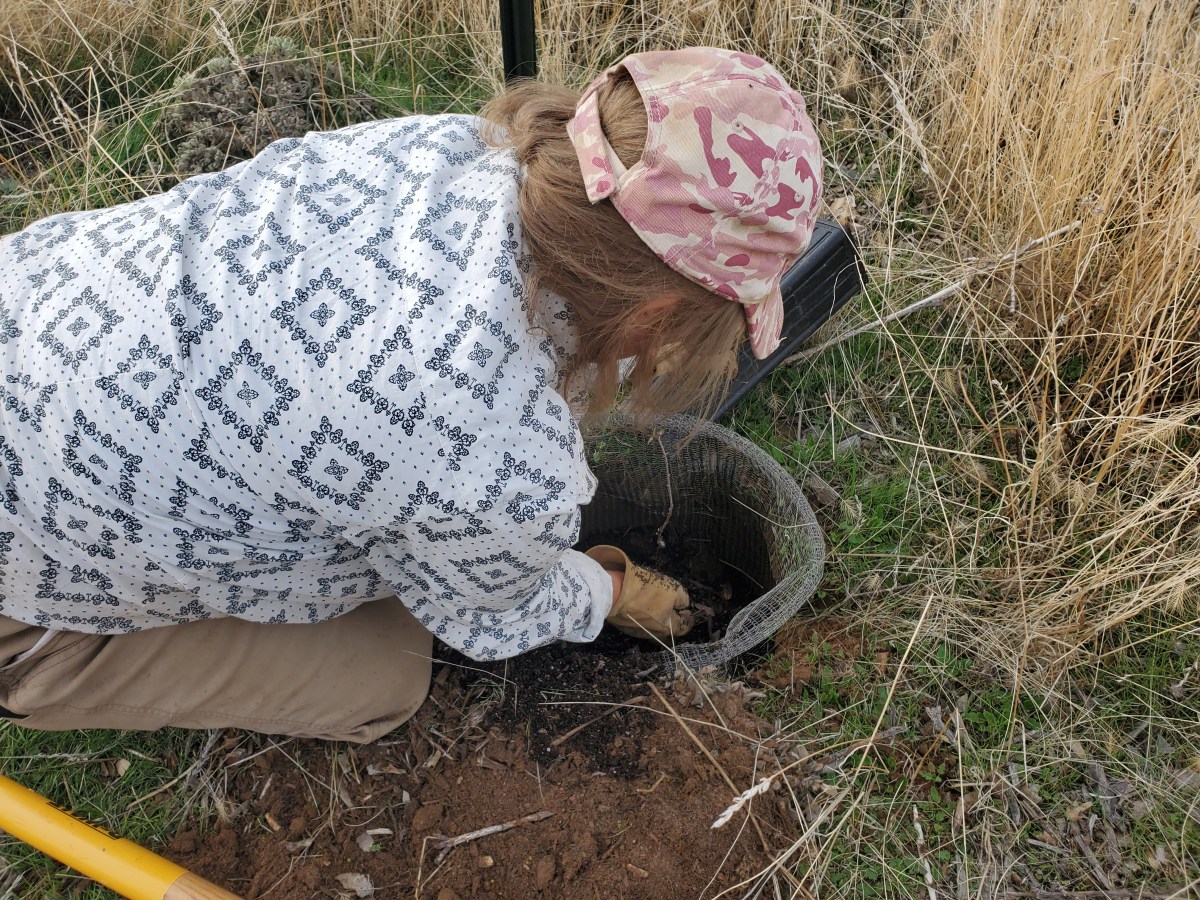
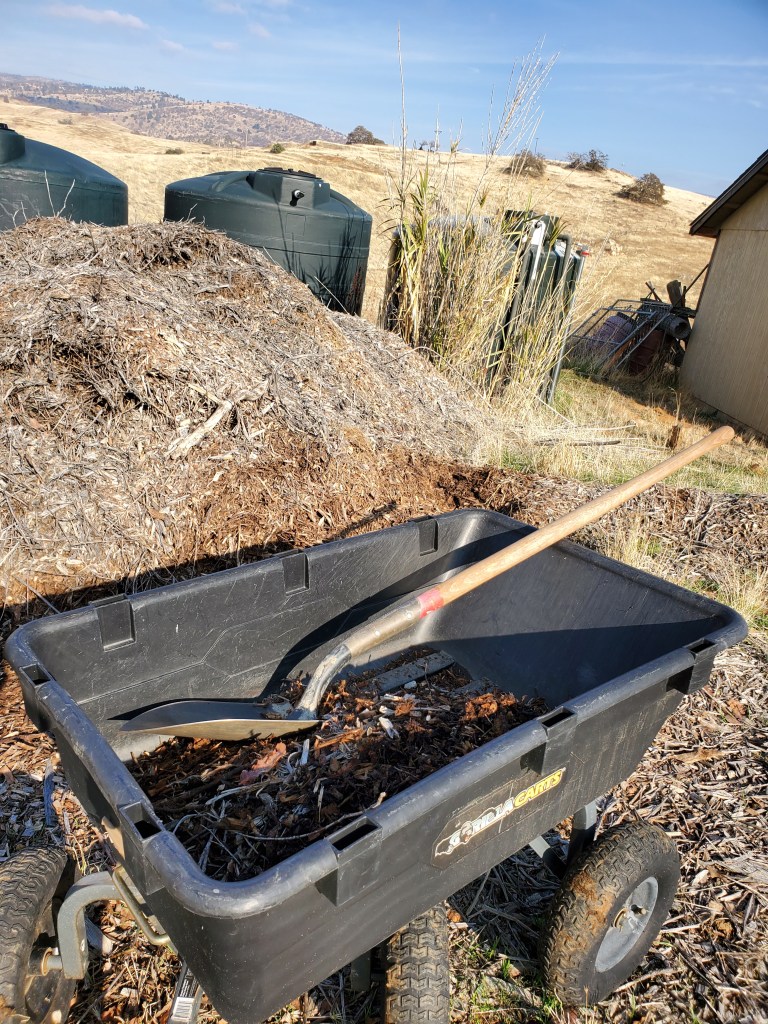
My plan: I have already ordered 103 oaks for next year, and have received 22 to plant for this year. Holes will need to be dug close to 18″ deep to loosen the soil and make space for the 18″ cages, with 6″ of the 18″ of cage being above ground to deter overland gophers, etc. About 92 of the seedlings will be planted in special cages. Ron Allen of Mariposa Native Plants conceived of a stiff gauge cage with a soft pine base that has small holes in it. The holes allow for water flow but mostly for oak roots to penetrate. The soft pine will degrade quickly allowing for the tap root to get bigger without any pressure. The cages will be able to be removed after a few years or will degrade over time. The other 28 seedlings will be planted either near the creeks where there are less gophers or using 15 gallon mesh shields. New seedlings outside the exclosure area will get 3×4 fencing around them to protect from cattle and a coconut pad around the planting site to discourage grass competition. Inside the exclosure will be coconut pads, some cages depending on proximity to the creek, but no extra fencing. Those planted outside the exclosure area will have some trenching dirt work done to help contain run off and retain moisture.

Fortunately, I have some NRCS funding that will help cover the costs. There will likely be significant cost overage with the dirt work, which I will need to cover. I also have a Partners grant through Fish and Wildlife, but it is limited. Because all of these government funds pay you after the work is done, I will need to float this project from my personal money for a year. I almost always need to cover planning, reporting and labor costs personally despite any grant funds. This is why, when I work at a large scale, it has to be a passion project. I have to be willing to spend my own money.

It is important to share how all of this work gets funded, because it is part of the challenge but also shows the changing nature of the Farm Bill and other government policies that have been trending more and more to support of these critical efforts. We need support for butterflies, trees, groundwater recharge and so much more to build resilient ecosystems in the face of climate change. We need to pay people for their time to do this work. It produces jobs, connects people with one another, protects communities and puts money into local businesses. What I do on my ranch impacts my community, my region and beyond. What you do in your yard, on your patio, what you buy, how you travel, what you wear, it all matters. You make a difference. Work like this is worth our time and money.

Running Water

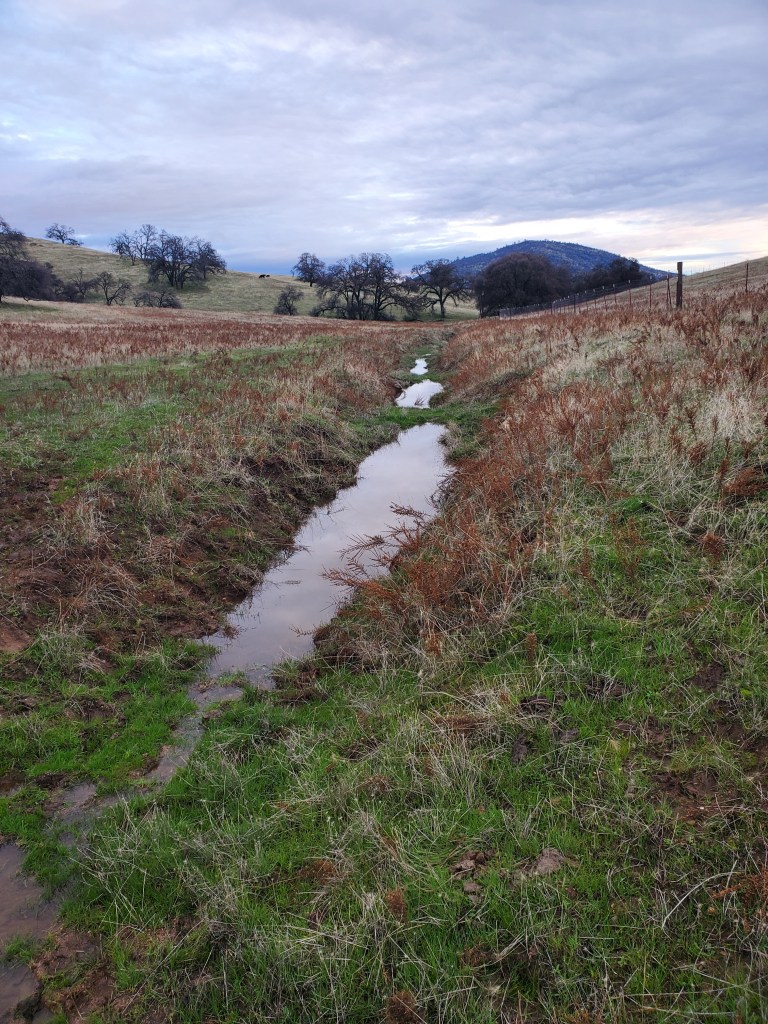
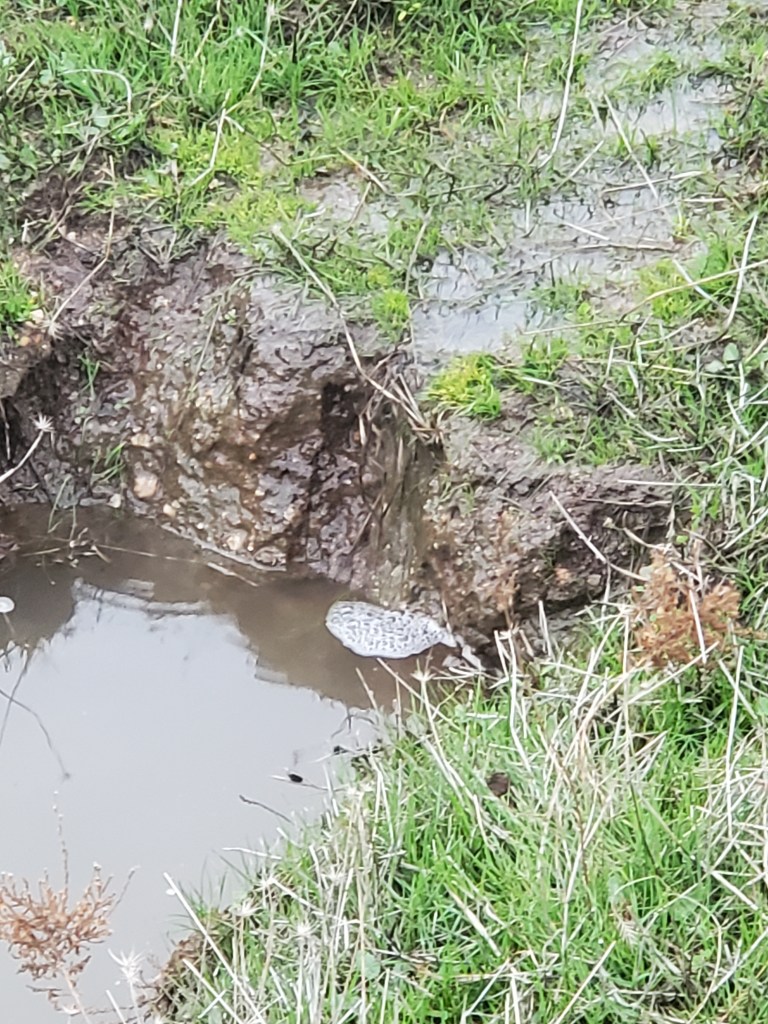
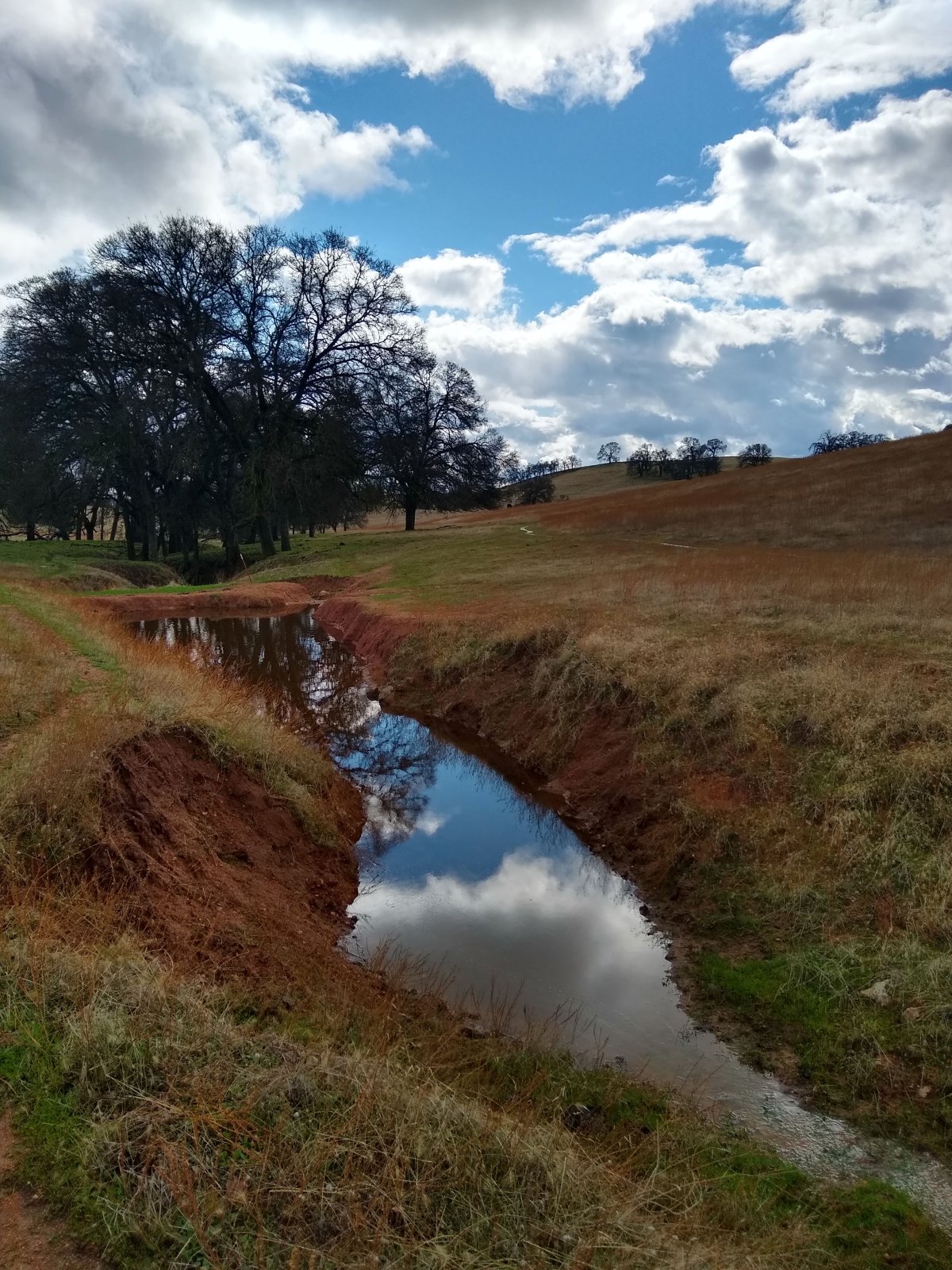
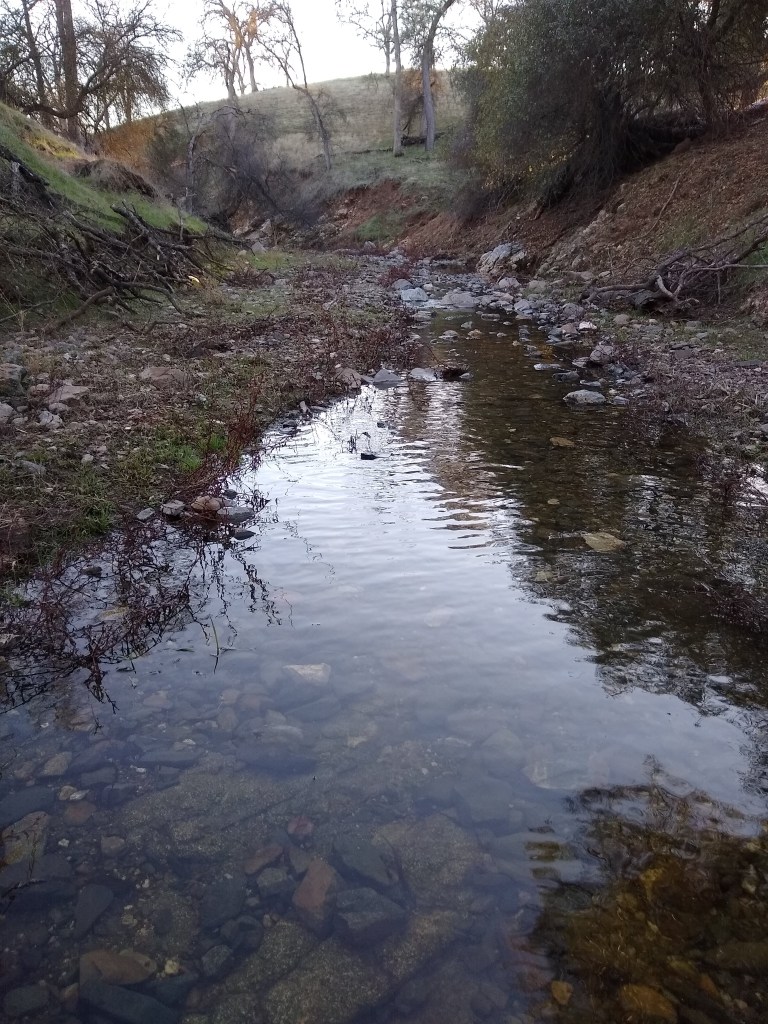
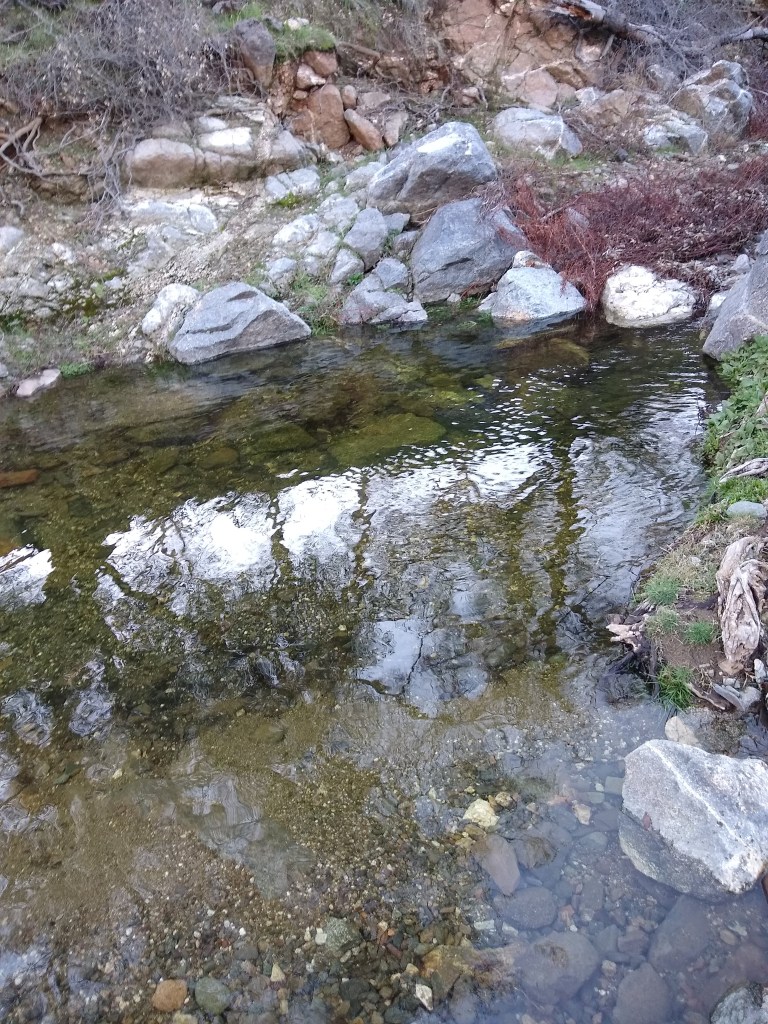
With the consistent and productive rain storms, all of the drainages and creeks are fully running. Although we had water all year in Odom Creek and Spring Creek, the water was not running the full length of the creek. It would run from the springs and then stop 50′-100′ or so downstream. Now, everything, including the arroyos, are running. The air is wet and the smell is green, life-filled. There has been a boom of Sierra Chorus frogs, which I’ve not heard in large volume in a few years. This year, it is an incredible performance each day and night. I love it. I hear the toads too, with their deeper, slower chirp. I have seen more blue herons around the area with their easy to spook nature, 6′ wing-span, and dinosaur look. I hear flocks of birds before I see them, 20 to 50 birds flapping in unison overhead. There have been flocks of over 100 birds in the last several months too, weary travelers on their way south, stopping for a good rest, meal and shelter. That they choose this place, that they can find what they need here, makes my heart swell with joy and puts more smile lines on my face, the sign of a life well-lived.
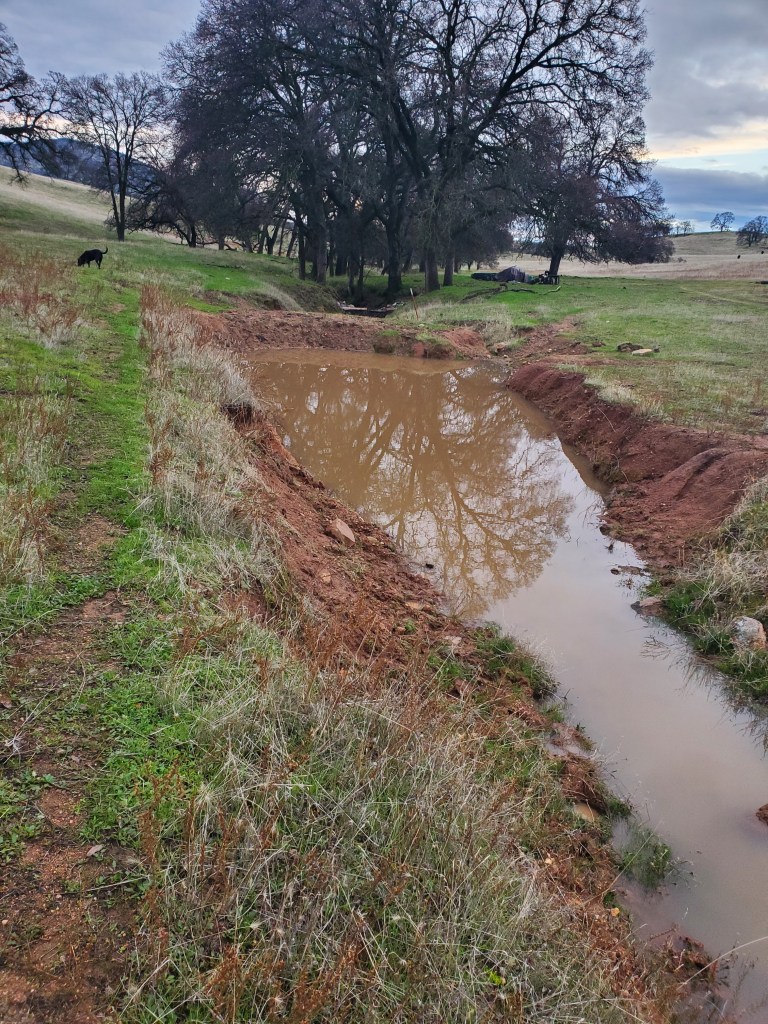
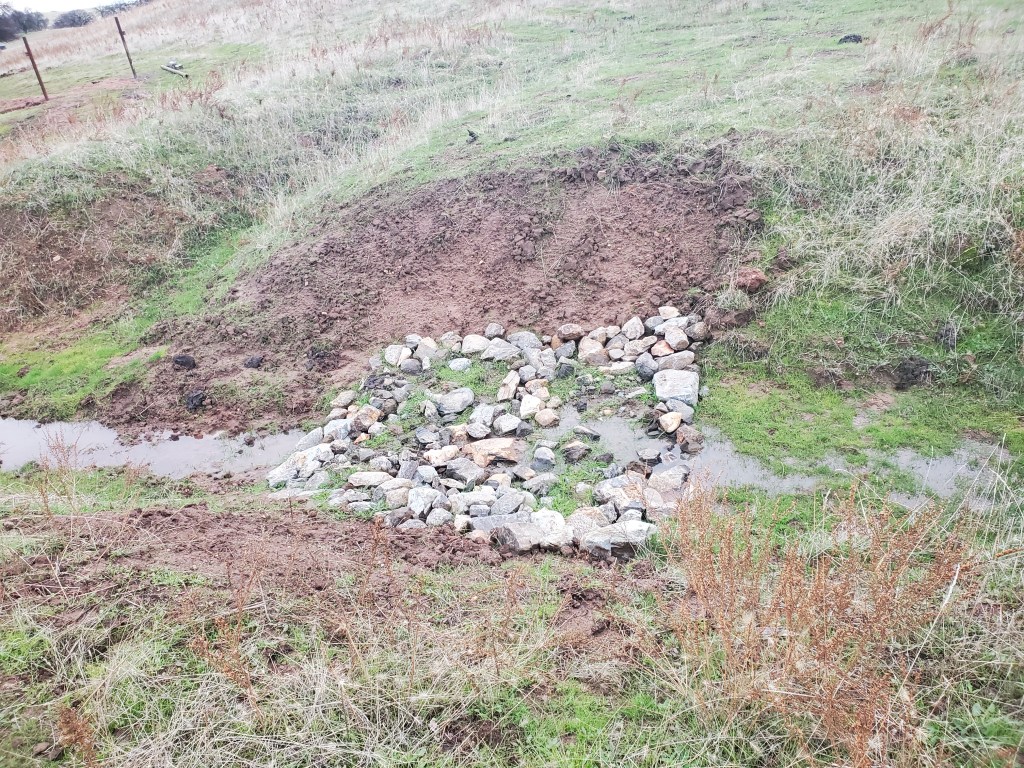
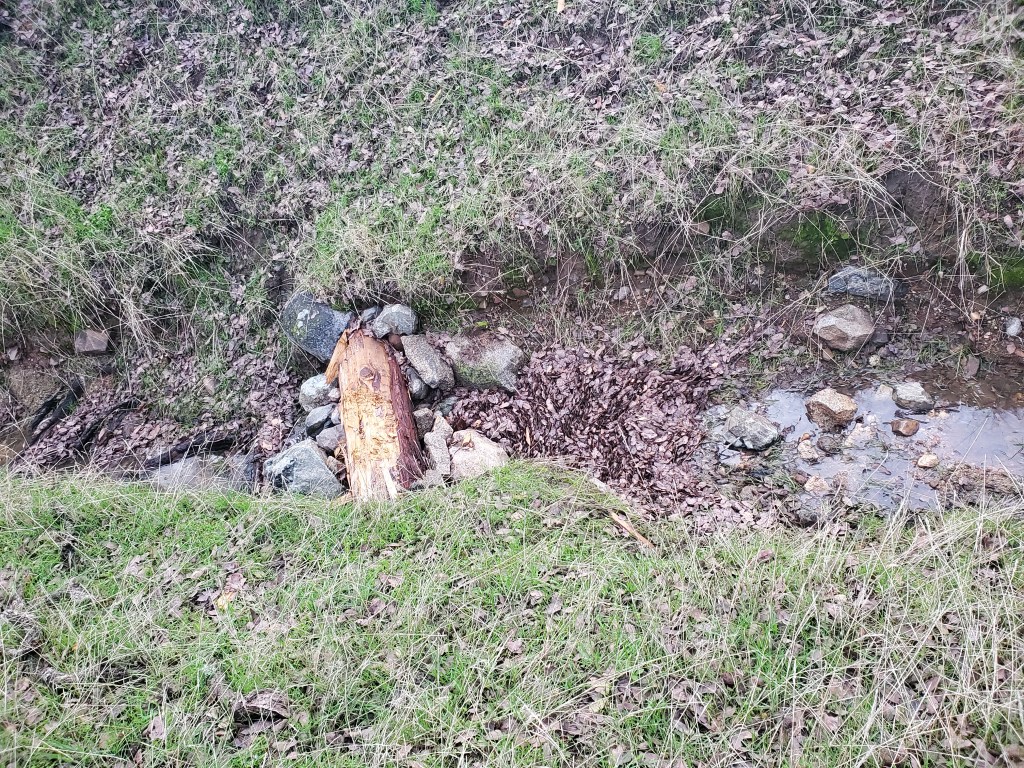
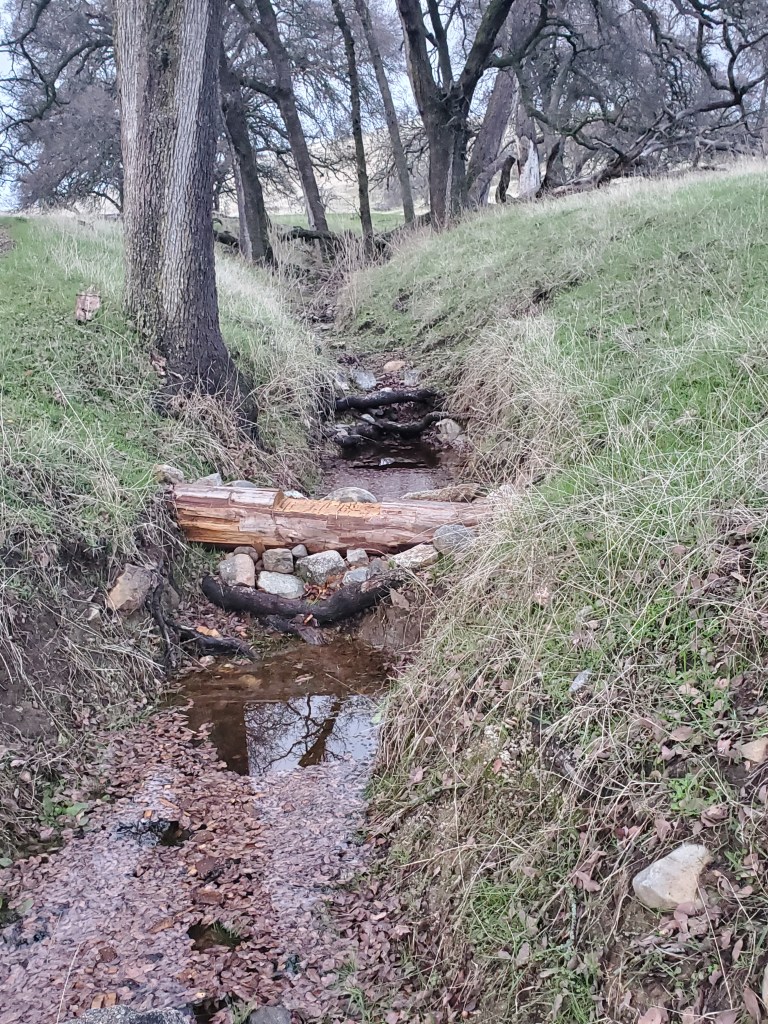
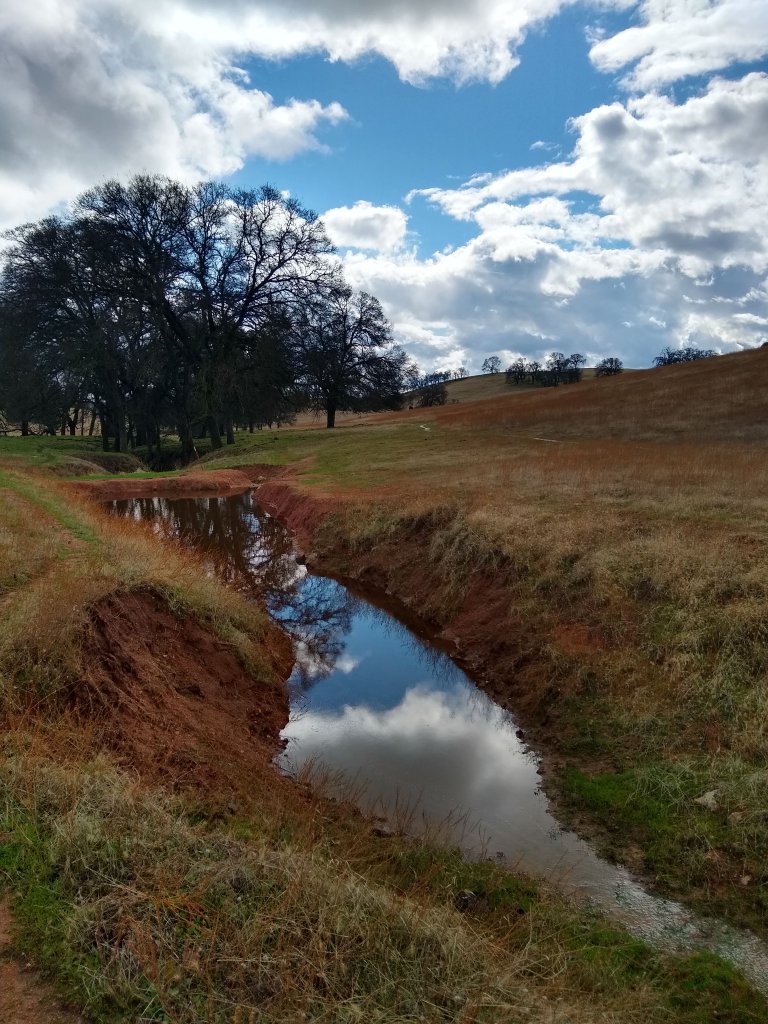
With the running water, I am able to see how the log and rock drop structures are doing. They are working as designed! I am seeing sediment and water pooling up behind the barriers. Yet, the barriers are permeable enough to allow water to more slowly flow downstream. Water is backing up and pooling even well upstream. The longer the water stays back, the more time it has to soak into the soil and the fissures underground. I am so proud of this work. I know the swale pond moisture resulted in the nearest oak having a bumper crop of acorns two years ago when all the other oak trees nearby, or not near a more prolific water source, had less. I will be putting game cameras nearby to see who uses the water source, but I need to figure out more ways to document the impact of this work.

Monitoring and Managing

When projects are done, they still need to be monitored and maintained. The guzzler continues to work as designed. I ensure that the rock and branch pile for small animals to access it is solidly in place. Every now and then I find the pile altered, so I build it back up. With all the rain, the guzzler is more than full. It has been overflowing, which will provide another year of fresh water for wildlife.

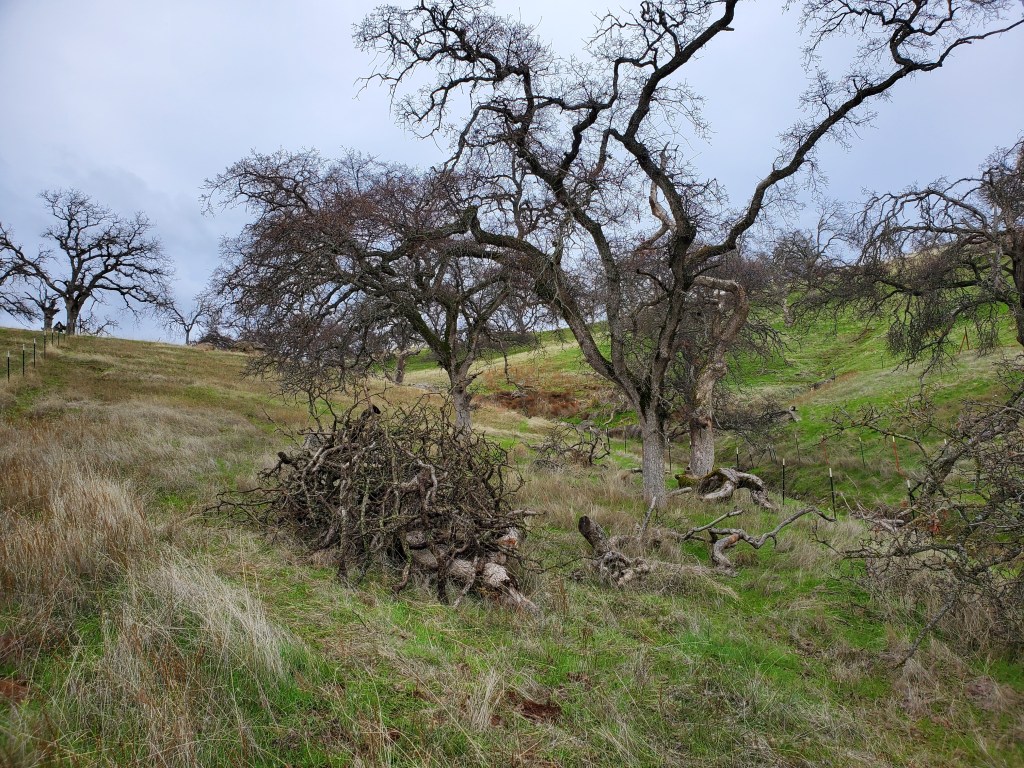
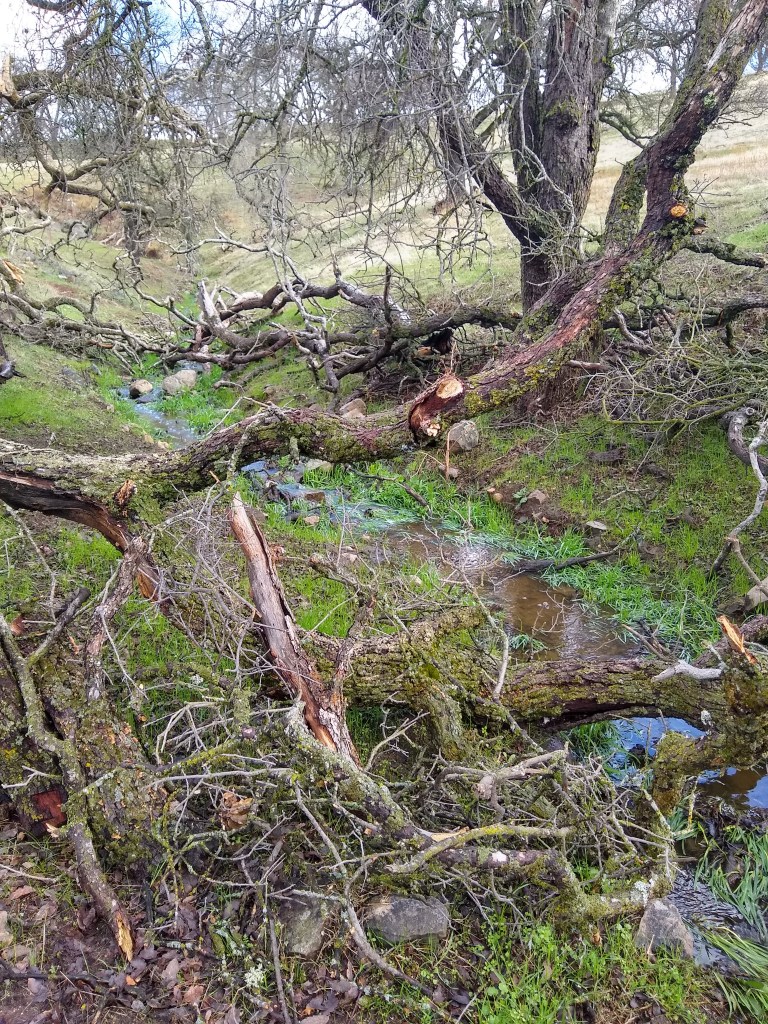
Yesterday, I was adding to the brush piles David and I built last year. As wood degrades, small branches need to be added to maintain size and a safe harbor for the animals that make them their home. I quickly built another pile as well. With the large storm coming, I did not want all the smaller oak branches left over from the large oak tree that fell in the creek last winter to be swept downstream. They were perfect for a brush pile; I just did not have time to build one the past few months.
Back and forth, I carried or dragged the branches from the spread pile 40 steps in each direction. It was a great workout. Even in the coolness of this weather, I began to sweat. At the beginning, I looked at the large, spread out pile of branches and wished I had a crew of two more people to help. “Many hands makes light work,” I thought to myself. I greedily looked at my dogs, lounging in the grass, happy, staring out at the beauty. I wondered if I could fashion a harness and have them help me drag the branches. Well, too little thought too late. It was just me there – so I started. An hour later, the entire space was cleared, and the beginning of a brush pile had been started. I felt good for finally getting the work done to make yet another space for birds to make a home.

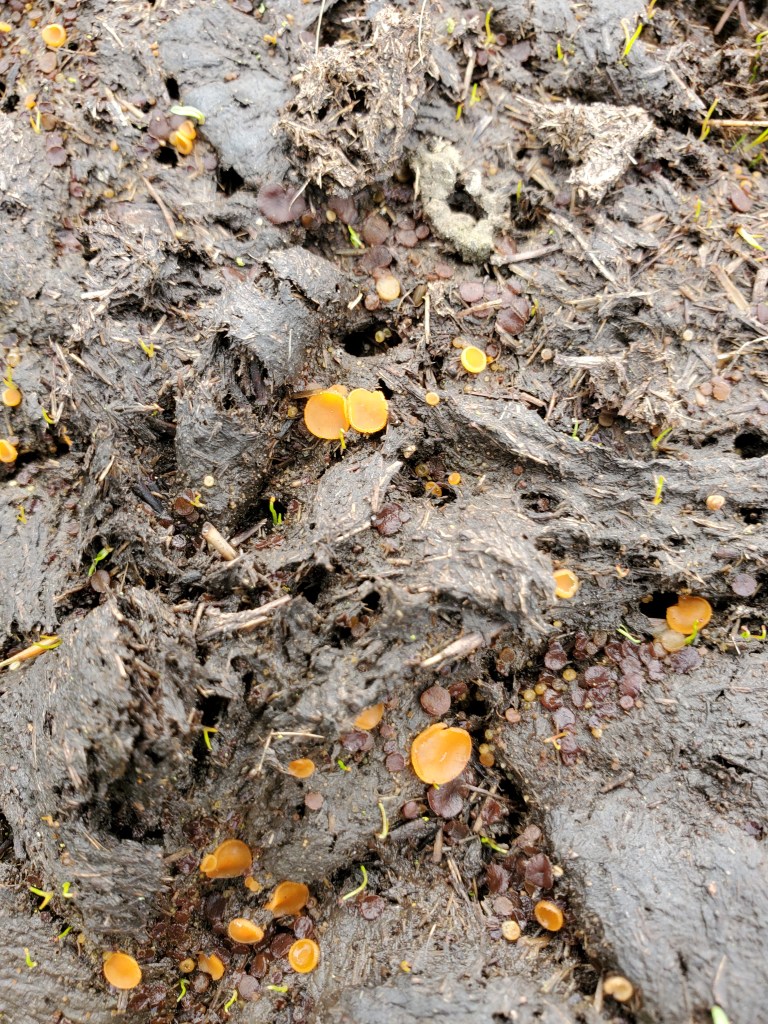
David is staying on top of mowing the grass this year. Last year, keeping the grass short resulted in many more wildflowers. It also helped with managing the planted areas. This year, we are going to be even more vigilant with weeding and mowing. It is certainly a lot easier to see the plants and straighten the baskets with the grass lower. I also love seeing the diversity of mushrooms that emerge with the moisture. They are such remarkable living things.
It continually shocks me how early the wildflowers arrive. Winters keep getting shorter. There were a few days in January where the temperature went to 71 degrees. Although my cattleman loved it for the grass growth potential, I was horrified. It needs to be cold now so everything can rest. The grass grew, wildflower buds emerged, and there were a large number of bumble bees, native bees and european honey bees.
Cross Fence Complete

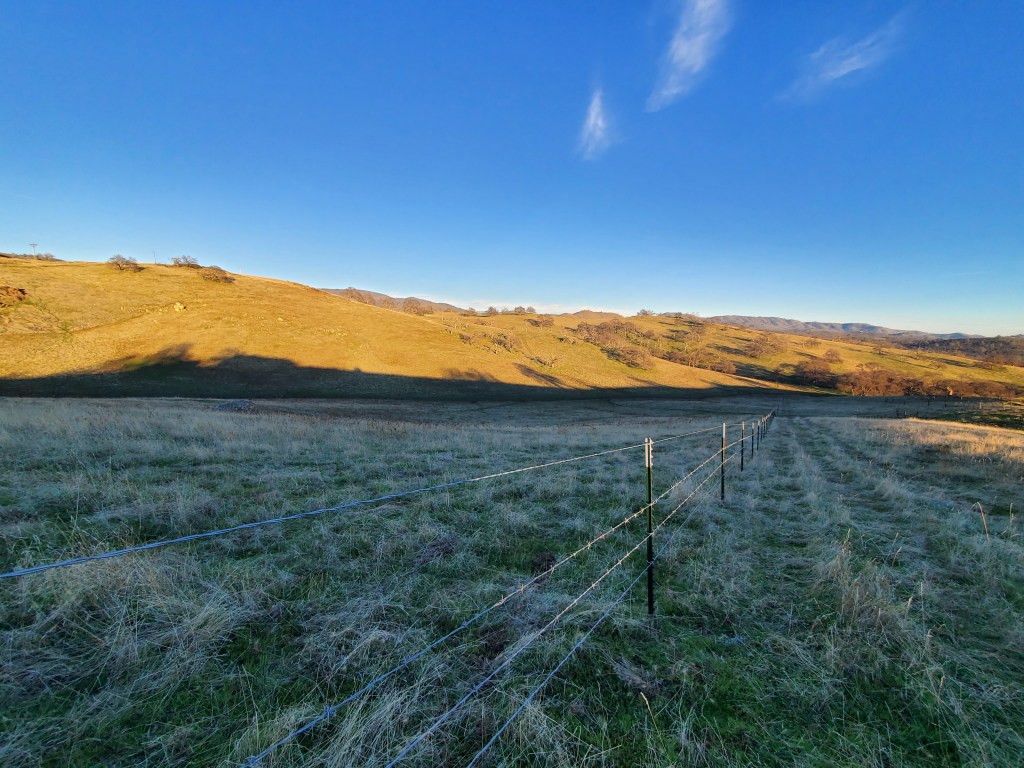
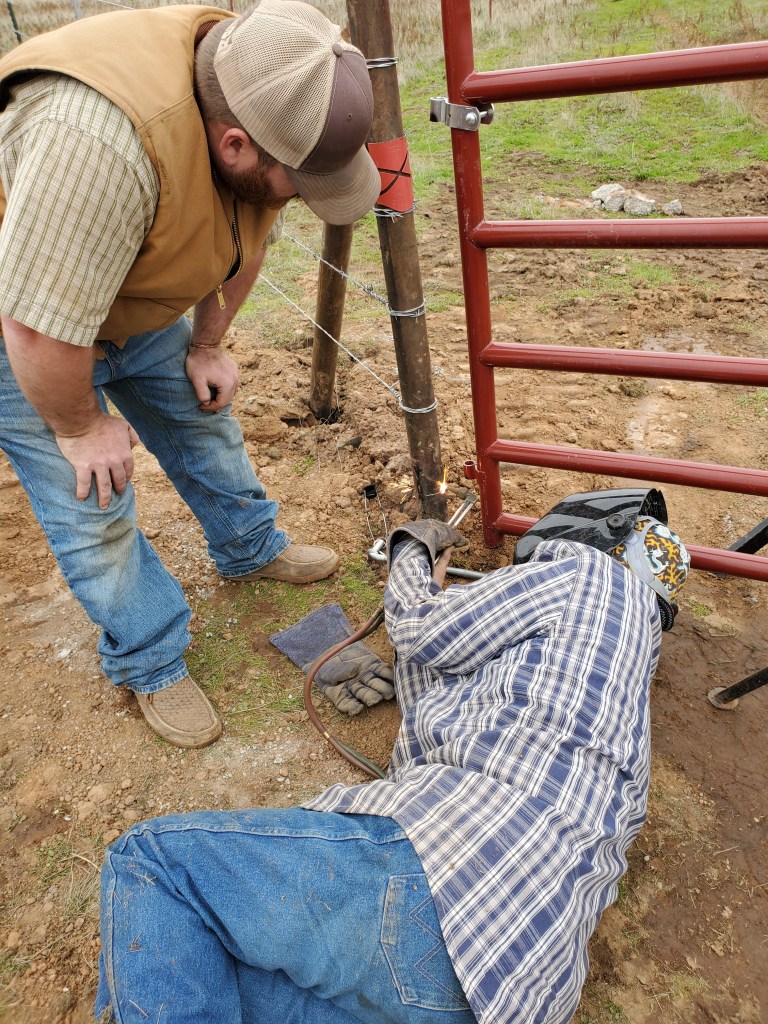
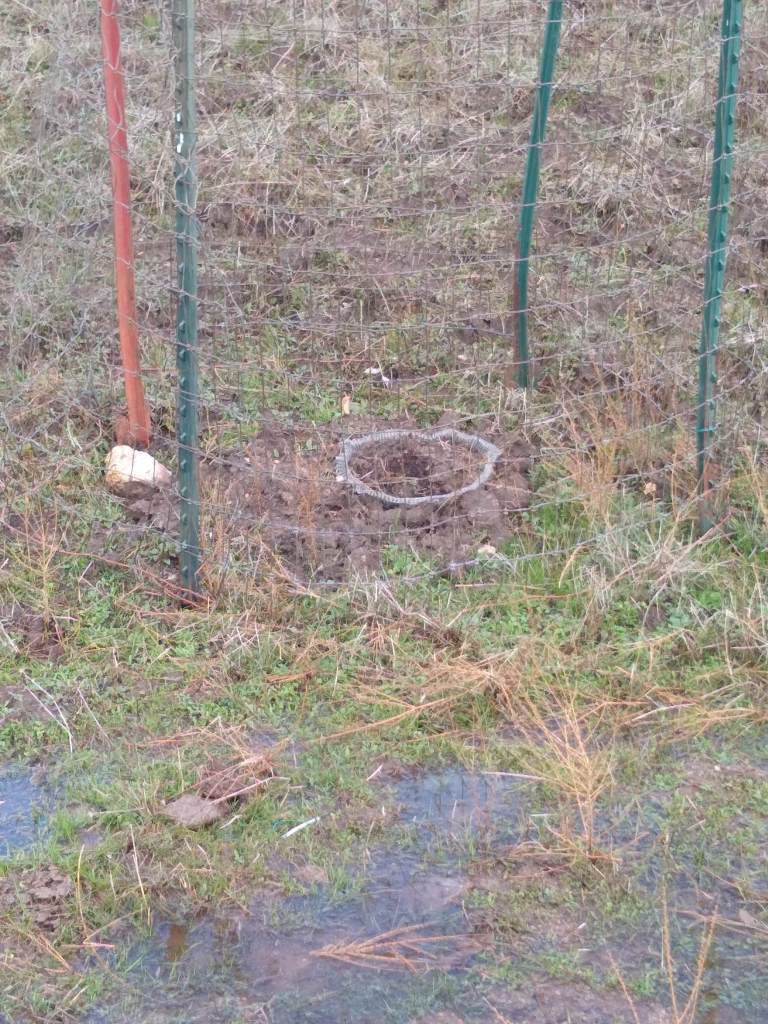
After two years of protecting the california milkweed with my body, I finally got the cross fence installed. It has been a huge goal to get this section of the ranch fenced off so that we can manage the grazing more closely. I worked with my cattlemen to determine how we would use the new field, what made sense for his grazing schedule and what my needs were. He had mentioned cross fences several years ago, and that stayed in my memory. If the amount of acreage and timing were right, it could be helpful to his operation and keep the monarchs with their host plants safe from trampling or taste testing. The new field will be very helpful with his aggressive grazing rotation. We will close the gates sometime in March, depending on milkweed and butterfly schedules, and keep them closed until the plants seed in July. He pulls most of the cows off the ranch anyway in May or June to bring them to high country pastures. Ideally, the field will have good quality and quantity of feed for the cattle to return to later in the year. Like anything, we will monitor the situation and adapt the plan as nature and human needs dictate.

Up Next

I will be installing a second guzzler on the east side of the ranch. Both guzzlers will have a larger rainwater catchment system attached to the guzzler tub. Essentially, it is a tank under an overhang with a gutter system and return for water to access the tank. There will be a pipe connected to the guzzler with a float valve to ensure that there is always water available in the guzzler for wildlife. In this way, I am able to provide year-round water without creating a more extensive infrastructure or depending on myself to transport water from tanks at the house all the way to the far side of the ranch.

Of course, planting blue oaks will be a focus this month and next. The planting season for blue oaks is December through April. I hope to get the remaining 19 seedlings into the ground no later than early March. However, those 103 seedlings will be arriving in December 2024. I think I am going to plan a fun tree planting party for December or January 2025 – with good work, food and music. Maybe you will consider joining me? Keep an eye on this blog for more details about how to participate if you are interested.

This is the 97th blog post since I started a large scale focus on habitat. Only three more posts, and it will be the 100th. Admittedly, I look back on the body of work, both physical and written, and am astounded. I can’t believe how much has been accomplished since the start. The work has been transformative – for both plants and person. There will be a celebration and some readers will win organic cotton Pollinative t-shirts. More details on this as we get closer. I hope you will celebrate with me.

Gifts

Gifts come in many forms, and it is often wonderful to receive them. I certainly hope the lovely readers of this blog have had a holiday season filled with pleasant surprises. For me, there have been more than a few thoughtful arrivals in my mailbox and at holiday gatherings. My favorite gifts, however, are not purchased – with the possible exceptions of Milky the Cow and Hoppity Horse when I was 8 years old.

Gift of Purpose

One of my favorite gifts is the opportunity to steward this land. Every day, I consider my time here precious. On Christmas, I was given the gift of being able to plant what (I hope) will be iconic sentinels on the hill – blue oaks. If you are a regular reader, you will know that, last year, I lost two 200 year old oaks from a combination of drought and age, and that their loss tore my heart into a million small pieces.

If you know anything about blue oaks, you know they grow slow. This is why, at least in California, there are rules to protect these majestic beauties from being cut down in a thoughtless moment of caprice. To look at them, to be present within their sphere, is to be transformed. They are majestic with their large size, accommodation of a complex ecosystem and tortuous branches reaching out wide from their trunk decorating the air with smell and statement…this is my place; I am here.

I have attempted to plant blue oaks over the years – acorns carefully placed into the ground, tubes to prevent predation of roots and delicate branches, seedlings in root balls of ancient, dead trees. All were eaten by gophers, stepped on by cows, or never germinated. Now, I am planting seedlings in baskets and protecting them further by an external fence. They will be watered regularly in the first one or two years. Maybe this will work. I have lost years with these set-backs.

There is an urgency because many blue oak woodlands are in decline. Even on my ranch there are few young trees. You can find seedlings in the creek banks and many adults, but there are very few young trees to take the place of the old. How horrible to live in a community with no young. I feel sad for the adult blue oaks with no youth to mentor, to raise and watch grow. I want to be sure there are forests of blue oaks for the young of my species, so together they can breathe, marvel at one another’s beauty and rely on the common sense and decency built into each of us for respect – knowing that we need one another.

Gift of Life

Cattle also provide us gifts, perhaps not of their own free will, but by their lot in life. In this passage, I will be honest with you about our food system. If your heart cannot handle this information or you do not want to be sad at this time of joy, please skip to the next section. I won’t judge you. I get it. Living with it, as I do every day, it is impossible for me to avoid. Having a break can be helpful for the empathic soul.

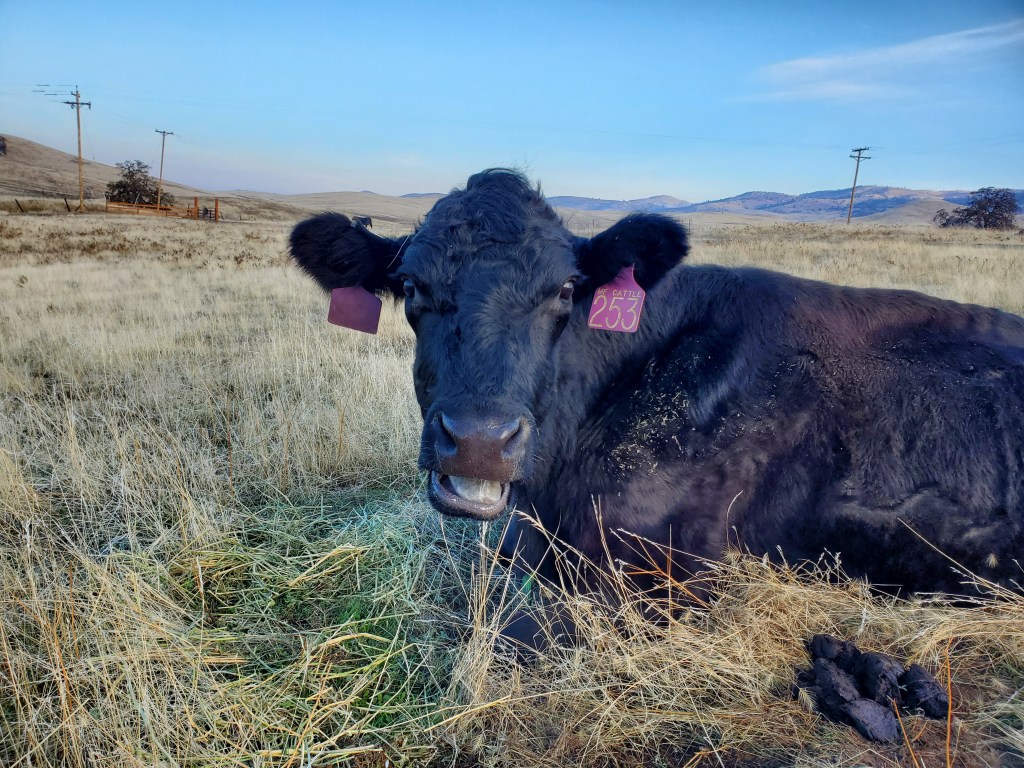
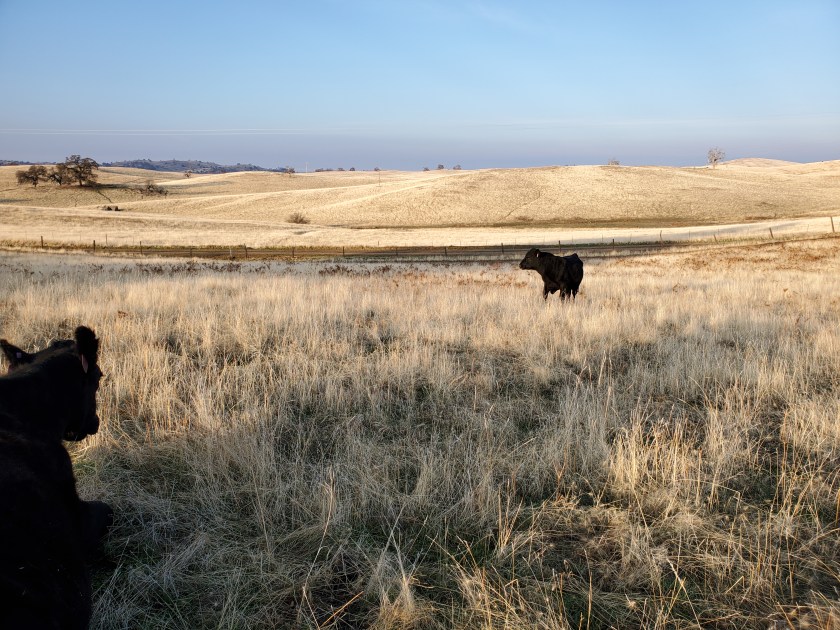
This Christmas, my heart has been split, one side celebratory of the season and the other focused on a downed cow. While I was gone visiting family, evidently bulls were rough with Cow #253 as they attempted to breed. According to my cattleman, this is not a rare occurrence. Cows can be harmed in the process, and can have injuries. Most convalesce and recover in a brief time. Unfortunately for Cow #253, her injury appears more severe. It has been preventing her from being able to stand. She has been laying near my upper gate for days.

She was not there when I left for a party at a friend’s last week, but she was there when I returned the next day in the evening. Cows bed down at night, and I did not think much of it except that she was by herself – which is not usual. I made a mental note. She was there the next morning still laying down. Very unusual. I had talked to my cattleman several days before. There had been respiratory illness in some of the calves. I thought, maybe she was sick. I took a photo, sent it and called him. He came out that day to take a look and bring some hay to her. She was healthy, but unable to stand – hence the botched breeding theory. He would give her pain meds and other medical help and would wait a few day to see if she would be able to stand.

In my comings and goings, I kept him informed. He came back another couple times I think. Christmas was the first day I have been fully home, and it gave me the opportunity to keep a closer eye on the situation.

I woke early Christmas morning and looked for her. Sadly, she was still there laying nearly helpless on the ground. To my horror, a bull was there too, sniffing her rear and eating the hay that had been brought for her. I put my jacket and boots on, dogs at my side, and strided quickly toward the pair yelling at him to get away from her. He stood his ground, but I was undeterred. She had suffered, presumably due to his clumsy greed, and I would not have that again. He was stubborn, but retreated, remaining in visual contact. As I began to climb back up the hill, he headed back toward her. It was a dance I was uninterested in dancing. I went full force back toward him, yelling, dogs pushing him away. Finally, he surrendered and headed east away from us.

El Toro looks at us longing to return – Not while I am here!

I approached her. Oh my, she was a beauty. Large, healthy coat, big beautiful engaged eyes. My presence was viewed with suspicion. Cows get handled so much in their lives, and these encounters are often painful, such as branding, doctoring or emotionally, when their calves are taken from them to be fattened by another operation then sold to the feedlot before they become food and fiber products. If a cow does not become pregnant within a couple breeding cycles, she herself is sold off to the feedlot and joins her many calves before her as hamburger, steaks, dog chews, shoes and car seats. While there is diversity in the timing, methods, inputs and level of respect, fundamentally, cattle is a business. A cow’s only value is in calve production. That is the honest long and short of it.

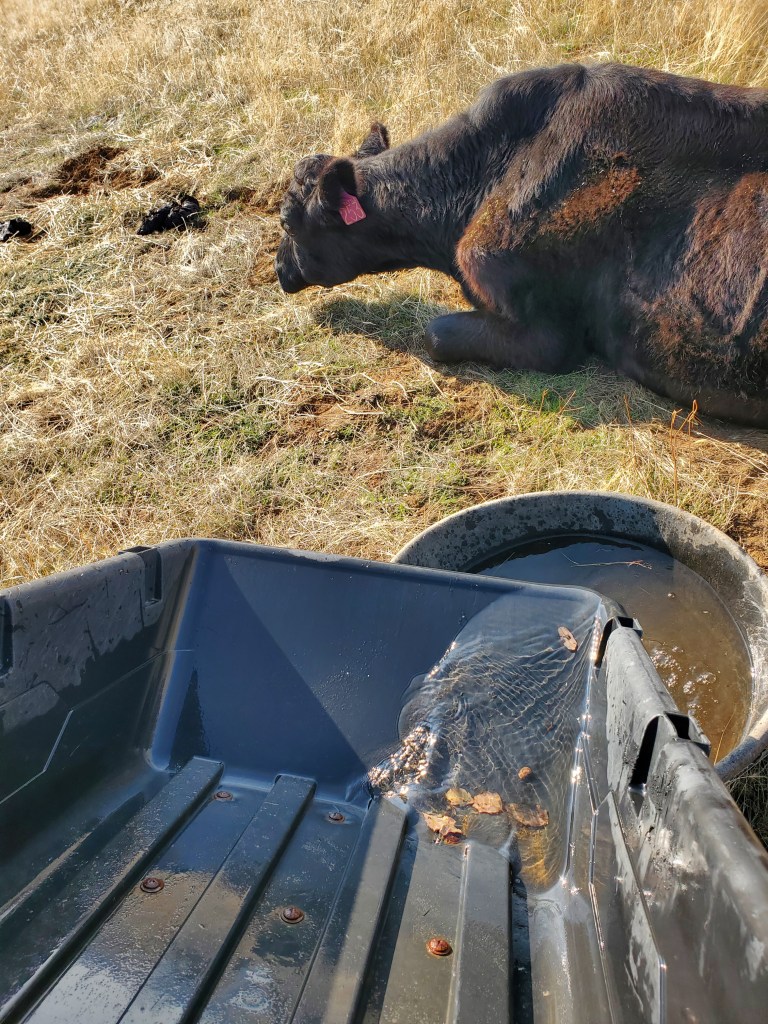
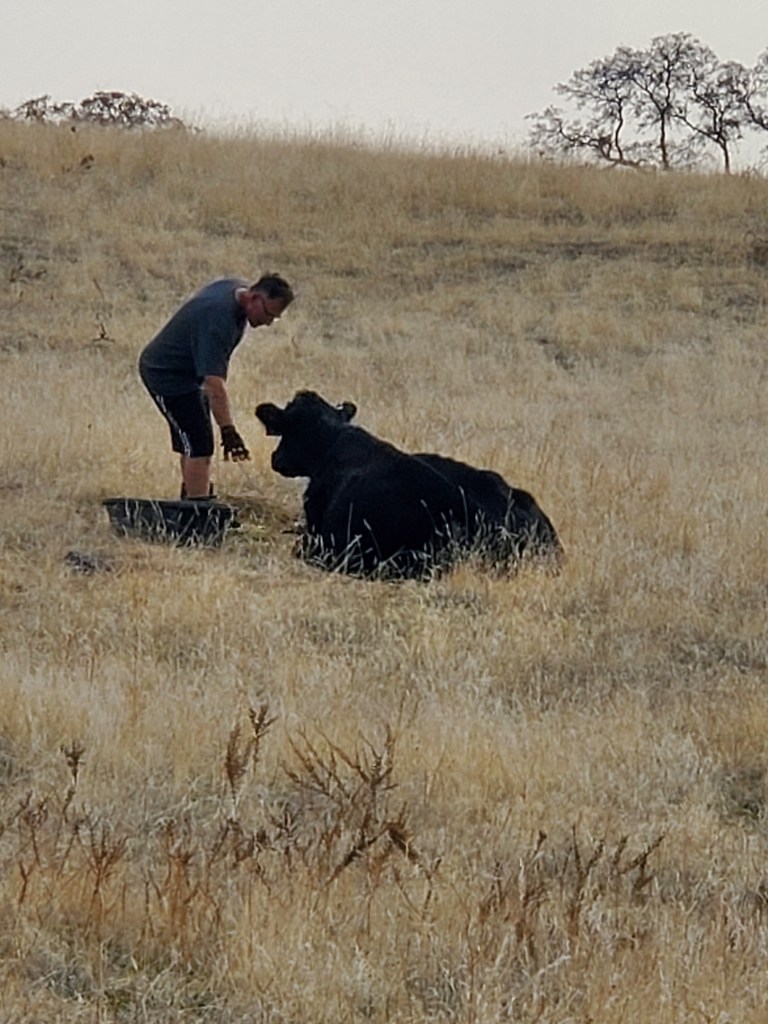
So Cow #253 tolerated me. She flinched as I approached her even closer, inspecting her on all sides. I cooed to her, talking sweet and telling her how sorry I was that she was in this situation. How could I help her? I was wishing I had a hoyer lift to help her stand and see what malfunction was hidden underneath. She mooed at me as she tried to stand. Pain? Frustration? I saw how much she was trying and trying to stand, to move from me and continue her life of grazing, and calve raising. But no, she could only drag herself a few feet one direction or another; I could tell by the patterns on the ground, the absence of grass, the splattering of feces. All I could do was keep her company a little at a time, fill her water vessel that the cattlemen had left, but was now empty, and hand her hay that was well out of her reach. I encouraged her every time she tried to stand.

By the end of the day, I was convinced that the only help would come in the form of a bullet. As much as I hoped she would miraculously get better, that nothing was fractured or broken, I began to theorize that those rough bulls crushed part of her. In the business of cattle, there is no financial incentive to heal fractures or breaks. Often, those types of injuries are difficult to heal even if it was desired, and with no guarantee the animal would have a pain-free life. She is less costly dead than putting more time and money into her. This realization, as I texted my cattleman the words “She is still down and is frustrated. It’s been 4 days.”, placed a deep weight in my stomach.

I hear the gunshot. It is done. She is no longer suffering.

Last night, a small group of cows laid near her, and it probably brought her comfort. She is being dragged to the south part of the ranch as I write this – part to spare me the sight and smell of rotting flesh and part to keep things clean for the public lest they see the cost of their beef.

Even though cattle are foreigners on this native landscape, brought as familiar food and fiber by colonizing forces, they are sentient creatures and deserve respect. I love them because they are alive. Cow #253 and I communicated. I tried to meet her needs, to help her; I will mourn her passing. As a person who uses leather products, takes medication with bovine ingredients, and feeds a small amount of beef products to my dogs, I am part of the demand for her meat, bones and skin – and am always grateful for her gifts. After death, her body will nourish countless wildlife – coyotes, vultures, eagles and worms. It will give me a great show in the air, as I watch for who has caught the smell of carrion and dives down to feast. Chiokoe uttesia (Thank you) Cow #253 for feeding my relatives, may you graze peacefully somewhere in the energetic unknown.

Gift of Friendship and Labor

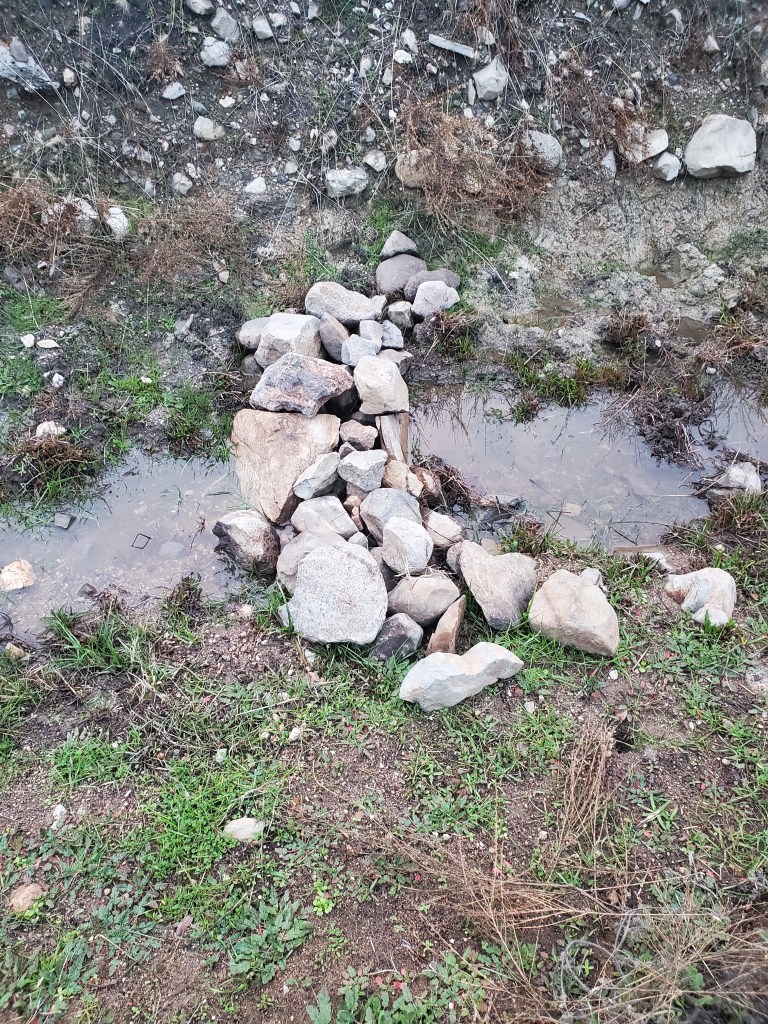
We have had a total of 1.7 inches since Oct 1. There is no standing water, but the springs and creek are still running from the remarkable last rain year. When the rain comes, we are ready. In November, my college best friend and her daughter visited. It was joyous. Among many fun things we did on the ranch, we built up last year’s successful rock check dam hoping for more sediment gain and soil moisture retention. Last year, the benefit was incredible with standing water and flowers in the typically dry arroyo through September. Dry areas 20 feet up stream (above the grass and flowers) and just below the rock check dam told me what I had done worked.

Gift of Beauty and Food

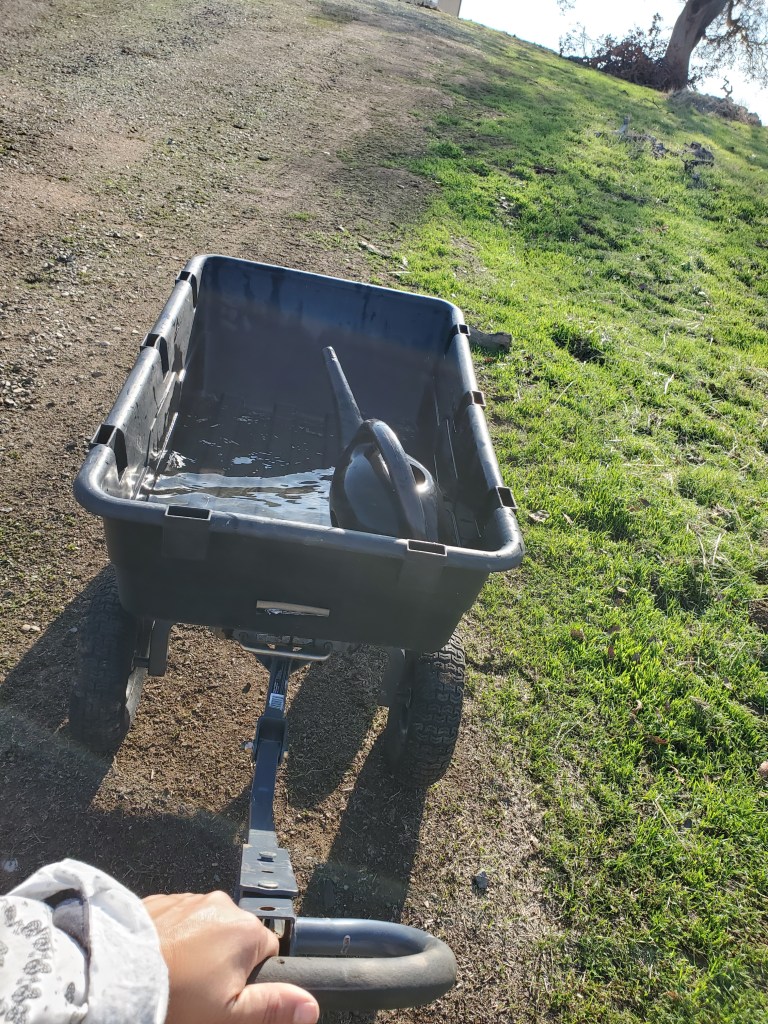
The weather is still temperate. Although it has finally gotten cold, there has been no frost on the hilltop. We still have a variety of blooms, one or two butterflies, a small number of bees and tomatoes! Yesterday, I saw a very large painted lady butterfly. A little pink throated hummingbird balanced on the edge of the tomato cage watching me as I filled the cart with water for the downed cow. I was able to see it clearly and had time to observe it closely. It was beautiful. So many small things bring joy.

Gift of Service to Community

In November, I joined the Southern Sierra Miwuk (SSMW) in helping at their cultural burn on the Mariposa Creek Parkway project. I helped Ray Gutierrez start the fire traditionally using air and friction between soft and hard woods. That was exciting! There were many agencies helping and so many friends to catch up with. One of my favorite people of all time, elder Bill Tucker, was there. As usual, he lead me on a hike through some dicey territory looking for grinding stones. We found many. I love him!

The plants we planted the month before looked healthy. I took this opportunity to straighten out the gopher baskets and coir discs. I have also been helping Shana Saucido, the SSMW Pollinator Coordinator, plant the Xerces habitat kits in the Oak Fire burn scar. No photos of this yet, but we still have many plants to plant. I am very grateful for the opportunity to serve my relatives and the local First Nations.

Gift of Knowledge Through Art

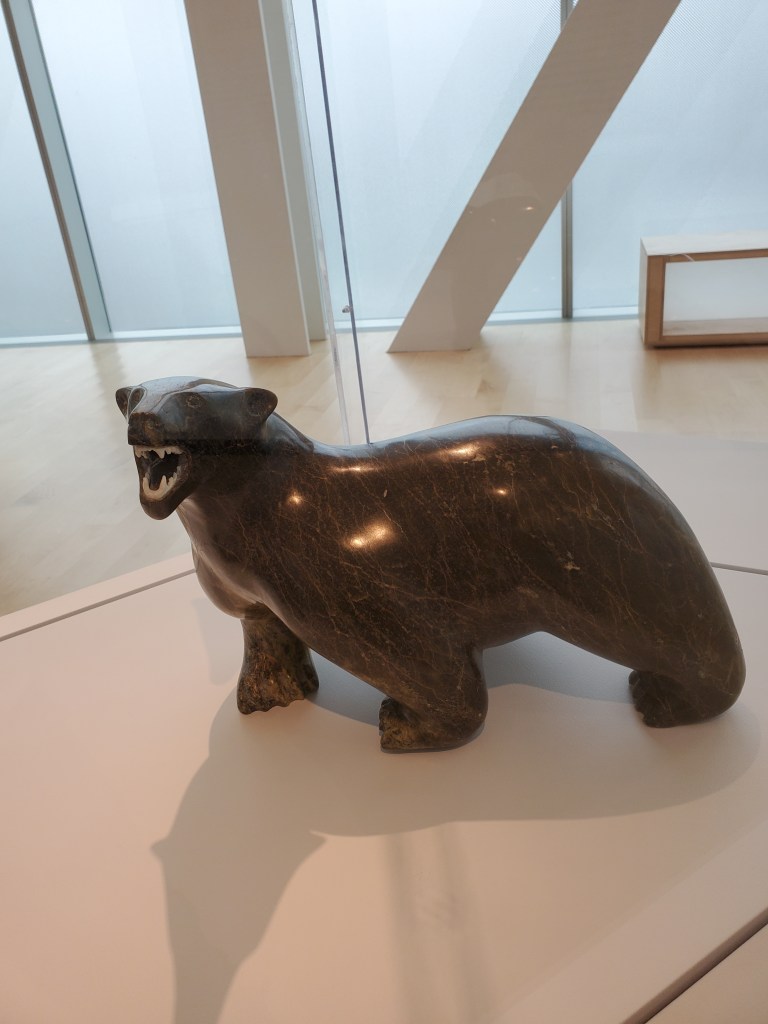
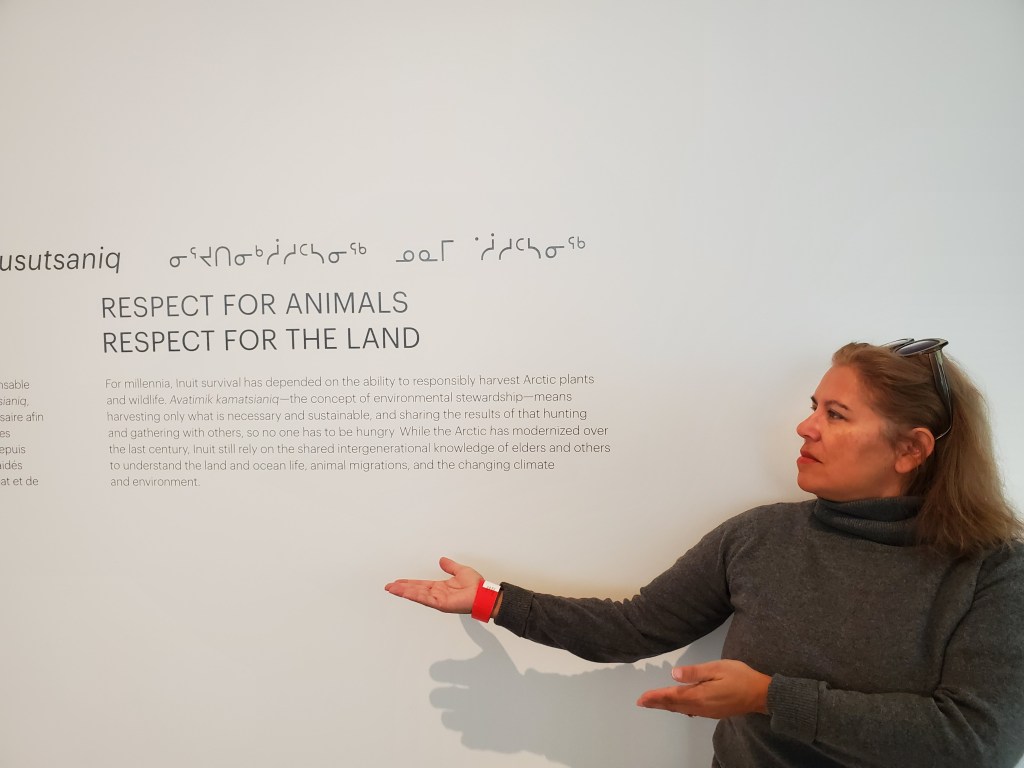
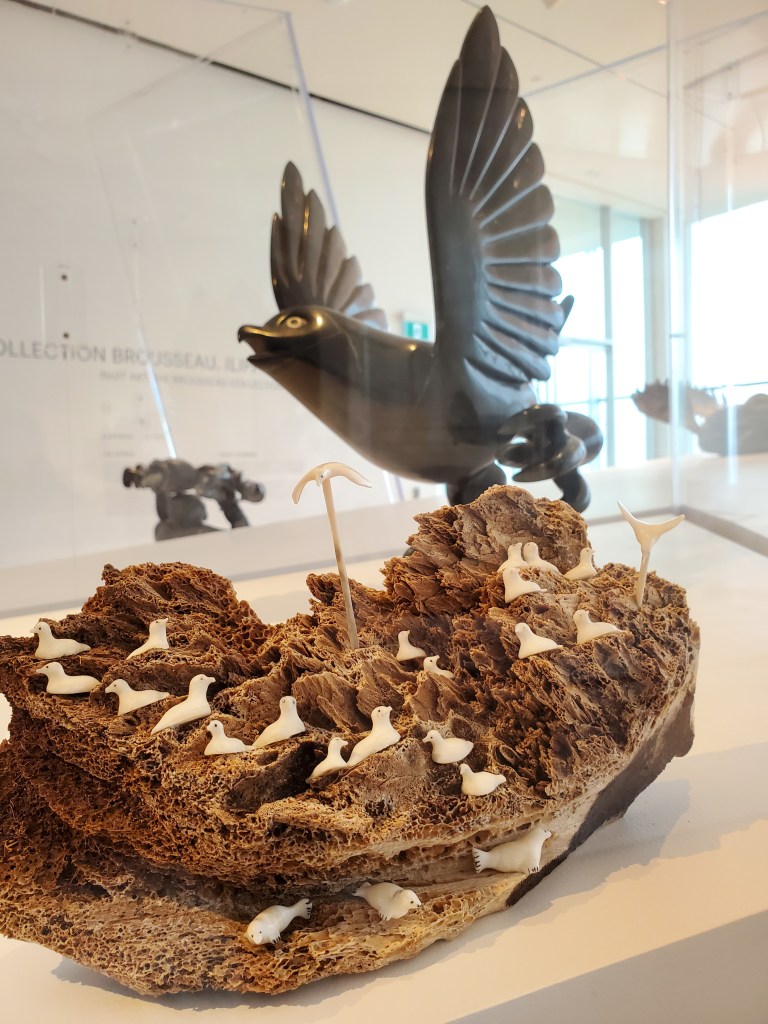
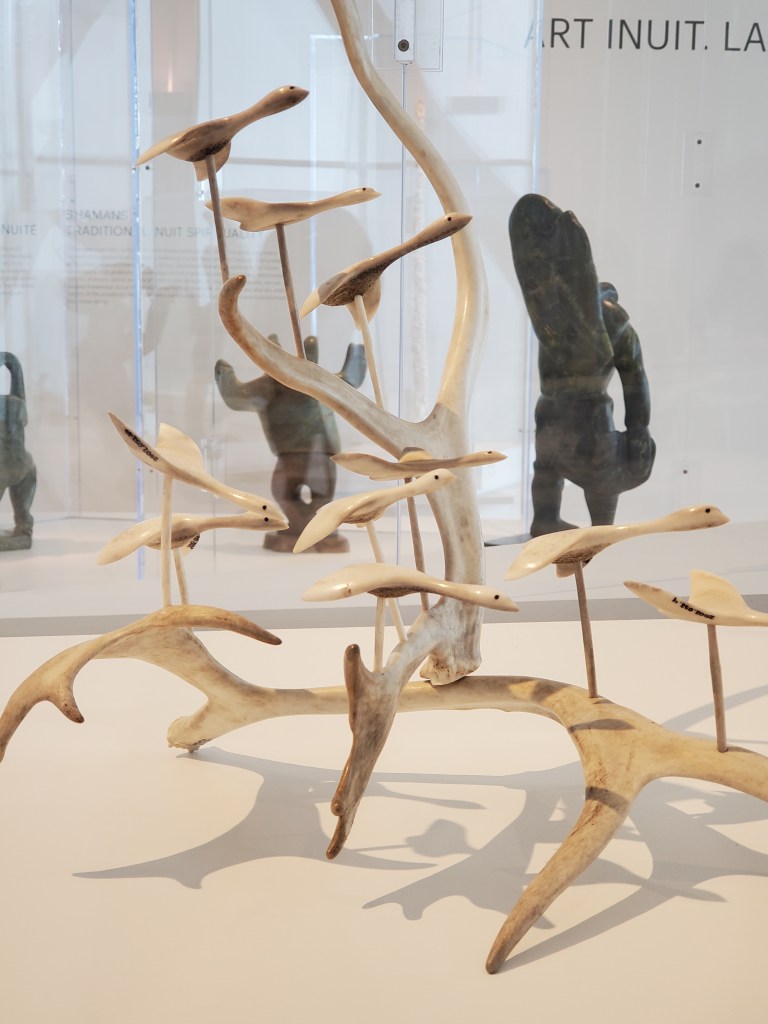
November and early December, David and I traveled to Quebec City. There was a powerful exhibit of Indigenous art at the Fine Arts Museum (Musée des Beaux Arts). We don’t take large trips often, but when we do, I always like to learn about the places we go and whatever knowledge First Nations people want to share. The fine art Native people produce is extraordinary and the specific stewardship stories are inspirational.

Gift of Time for Reflection

I have had some very nice blocks of down-time over the holiday season to reflect on this work and what is next. Seventeen monarchs last Fall, more crotch bumble bees than before, enough toads to populate a pond – all from having the right native plants. As long as the plants, butterflies and bees continue to show up, the work will be a success. Shana from the Tribe has taken this project and scaled it up with an effervescence and zeal only possible through a deep love of this work. What a gift for me to see even more habitat installed as yet another Indigenous young woman is inspired by a small but remarkable orange, black and white life. Life is full, wondrous and leaving me thinking about what is next.

Although I am still working out the details on my next step, I will be sure to share it here. One thing is for sure, it will involve a drawing for free t-shirts at the time of the 100th post. More information soon. Thank you for going on this journey with me, for sticking with the project during sad times and joyful. Thanks for reading, providing feedback and encouragement. It is unlike me to share so deeply, but I have found that I learn so much from you when I do. Chiokoe uttesiavu (Thank you all).

Rain Comes – More Needed

Swale Pond full at last

There were several days of rain over the last two weeks, with two continuous days of rain last week that were the real soakers. In those two days, we received 4.5 inches. It has been much needed. We are still in drought though, with a dry year predicted. Rain years are calculated beginning on October 1. So far, this rain year we have had 7.625 inches of rain. According to historic documentation, the average precipitation is 14 inches in Hornitos. We still have a way to go, and hopefully we go beyond that. The worse year of the five year drought this past decade was 9 inches. I don’t want to see that again. It was horribly dry, and that was the year the large spring on the mid section of the ranch finally dried up. I never thought I would see that. Our cattleman even had to haul in water.

Heather reconnects pipe that had become disconnected

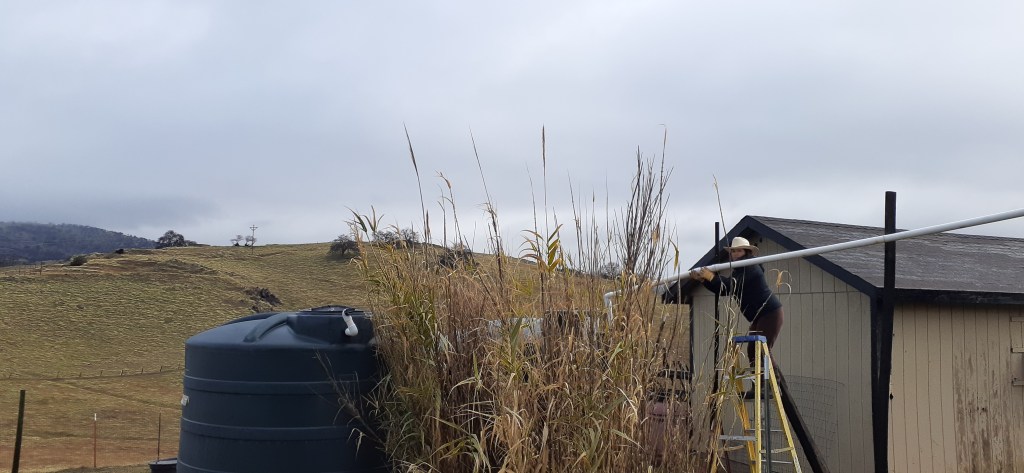
The winds were so terrible that my rain water catchment system failed. My husband and I went out three times to fix it. In a storm where the tank should have been full, it is only at half its capacity. So disappointing! The first occasion, the pipe had split in its mid section. The second occasion, the pipe had blown away from the downspout in one place and had disconnected in the mid section again. The third time, I found that the tank exit pipe had somehow gotten unglued and had been leaking the entire time. When I banged on it, it came completely off and the precious water collected began gushing out. I re-nested the pipe back over the other with all my strength. I got soaked in the process. Fortunately, my husband was out there with me that time, and ran to get the wet glue, which can still stick pipe together even when wet. He ultimately fixed it. The ground was soggy, and it was difficult to balance the ladder on the decline, especially in the wind. I almost fell off one time. I was able to keep the ladder upright as I followed the inertia and “walked” it down hill to a solid place before getting off. I got soaked on that one too. All I can do is hope that we get more rain without ferocious winds to fill the tank. I will need this water to keep the plants alive through the long, dry time.

Cottonwood and cage still there

After the storm, I hiked around the property to check on the plantings. With the two straight days of rain and wind, I wanted to be sure the cottonwood and cage were alright as well as the plantings and branch fence and Odom Creek plantings with brush pile protections. I planted most of the plants close enough to the creek bed to get a soaking during high water, but not so close that the roots were in water all the time in the winter. I looked at the neighbor’s cottonwoods and my own buckeyes to see where they were successful in relation to the creek bed and followed that example.

Fortunately, the two days of rain did not flood the spring creek and take the branch fence with it. There were a couple filler branches that moved downstream with the flow. I ended up replacing only three branches to fill a couple bare spots in the fence. Overall, I was really happy with the outcome. There are a few bulls on the ranch now along with the cows (It is that time of year for love.), and I have some concerns that the bulls will just push through it to get to the long blades of grass on the other side. I will keep watching.

I also checked Odom Creek. There, I thought the flow would be greater with more of a chance that the brush piles over the willows would be washed away. To my surprise, it did not look as though the water reached the plants on the east side. Although the ground was wet, the dirt did not look dark as if the water line reached them. The water clearly soaked the willow on the west side. Each brush pile was intact. All plants were present and accounted for – four willows and one mule fat.

Other Monitoring

Looking for a. California sprouts with Andy and Bibi

I have also been checking the a. Californica site closest to the house for sprouts. Last year, there was no rain in February, which I am thinking stunted grass grown allowing the a. California milkweed to get a head start on growing. This year, with rains in February, I am concerned that the grass may grow faster than the milkweed. I want to watch for its remarkable leaves and trim the grass in that area to give it a chance. That early milkweed will be important for the monarchs.

Planning for Spring Planting

Ron Allen, UC Master Gardener and Co-Owner of Mariposa Native Plants

Ron came over to discuss the next plant order. I asked for his guidance on my plan and showed him the areas where I was thinking of focusing this Spring. He also got a chance to see what was doing well, and what didn’t make it. Overall, things looked good. I placed an order for 89 plants. We are continuing to go big for the monarchs.

Already wildflowers have bloomed. I see blue dick stems and poppy leaves sprouted. The primrose never stopped blooming. Spring is around the corner. I am going to plant anything I can for February. The milkweeds won’t be ready, but there should be some nectar plants available then.

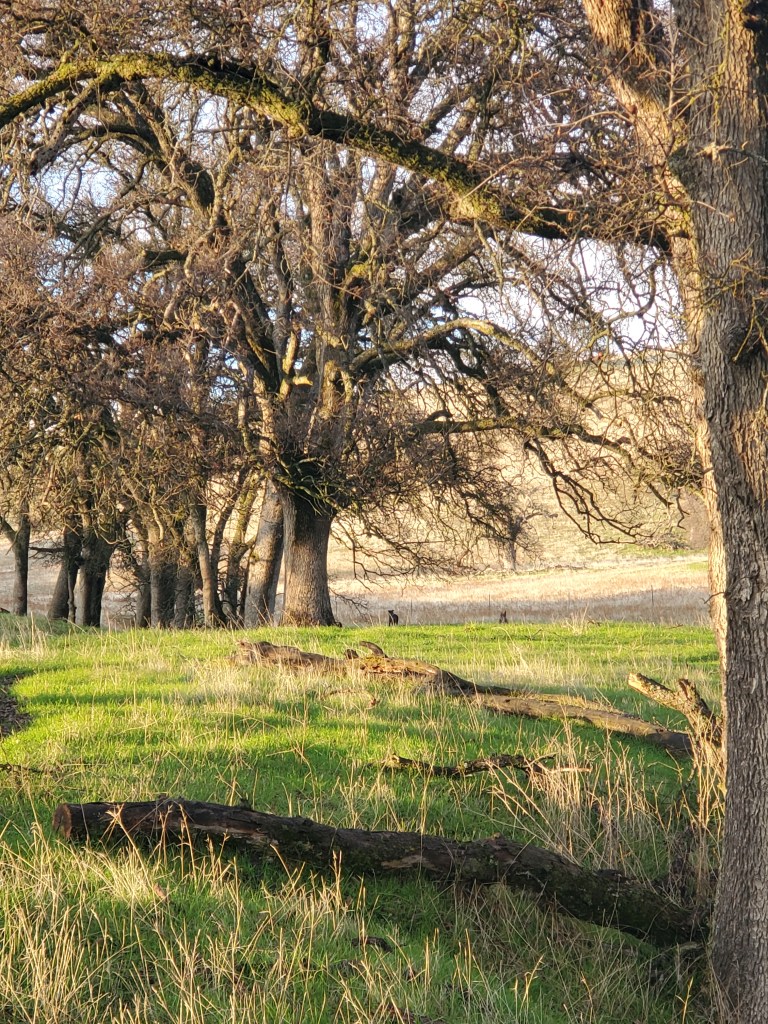
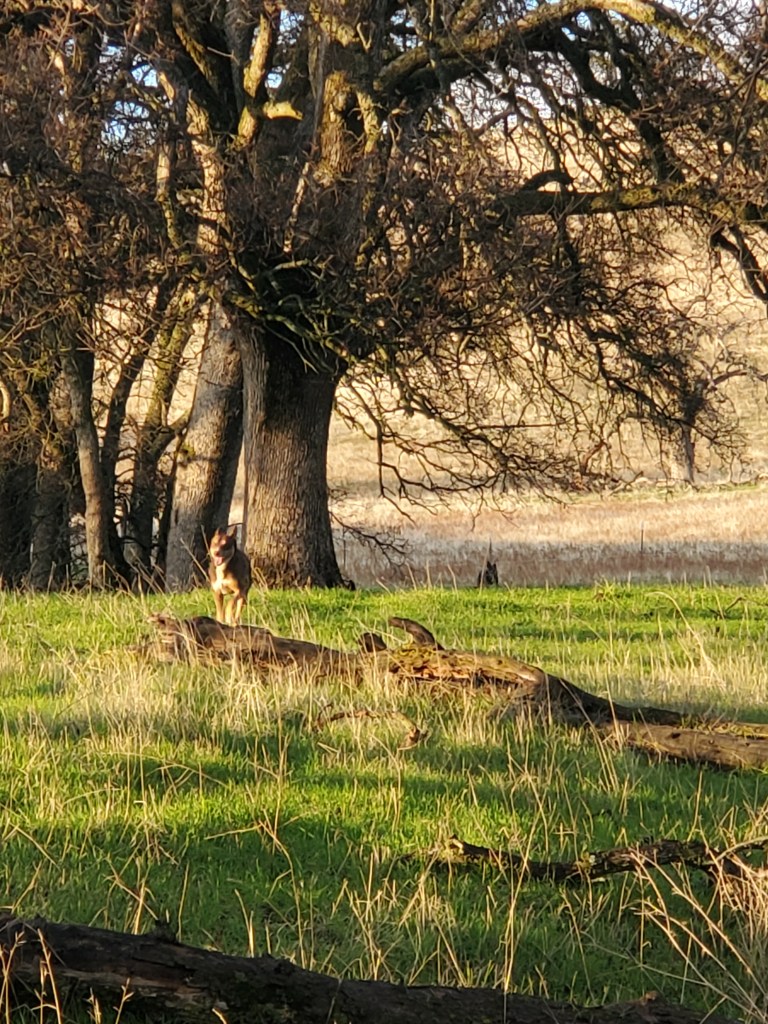
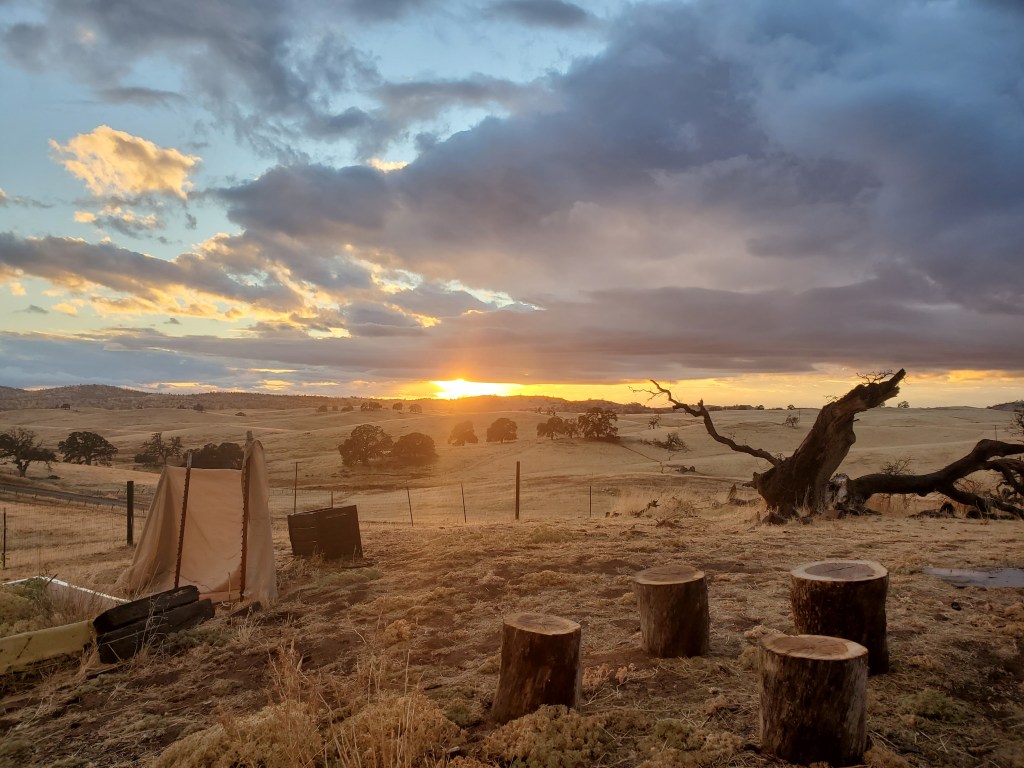
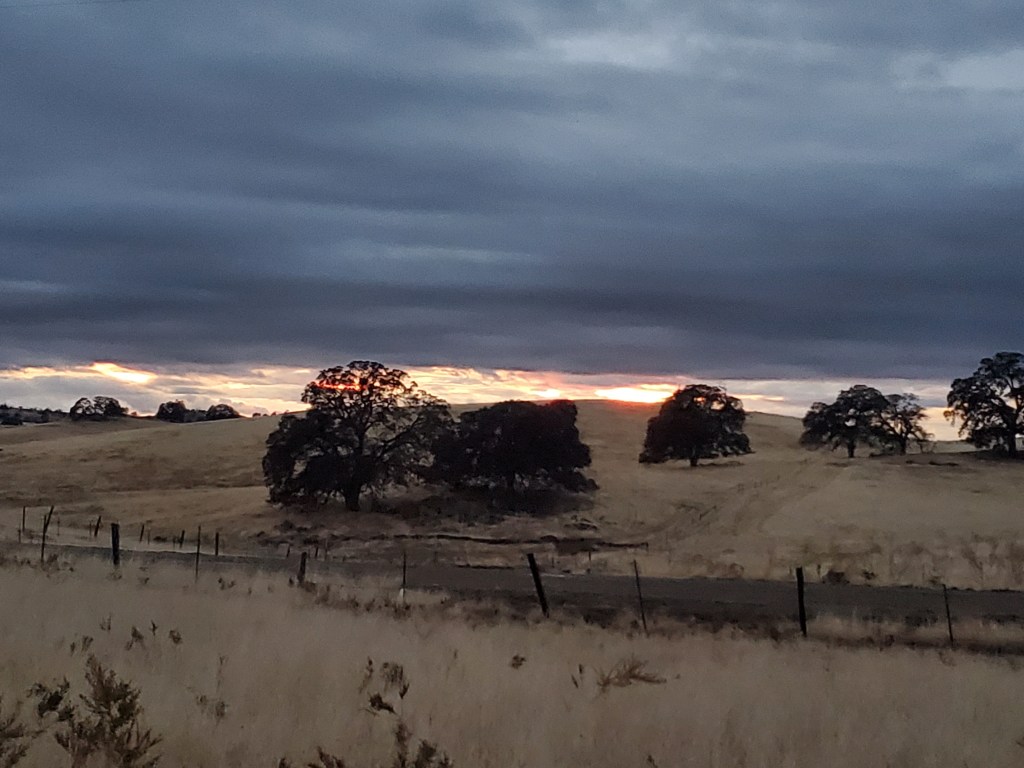
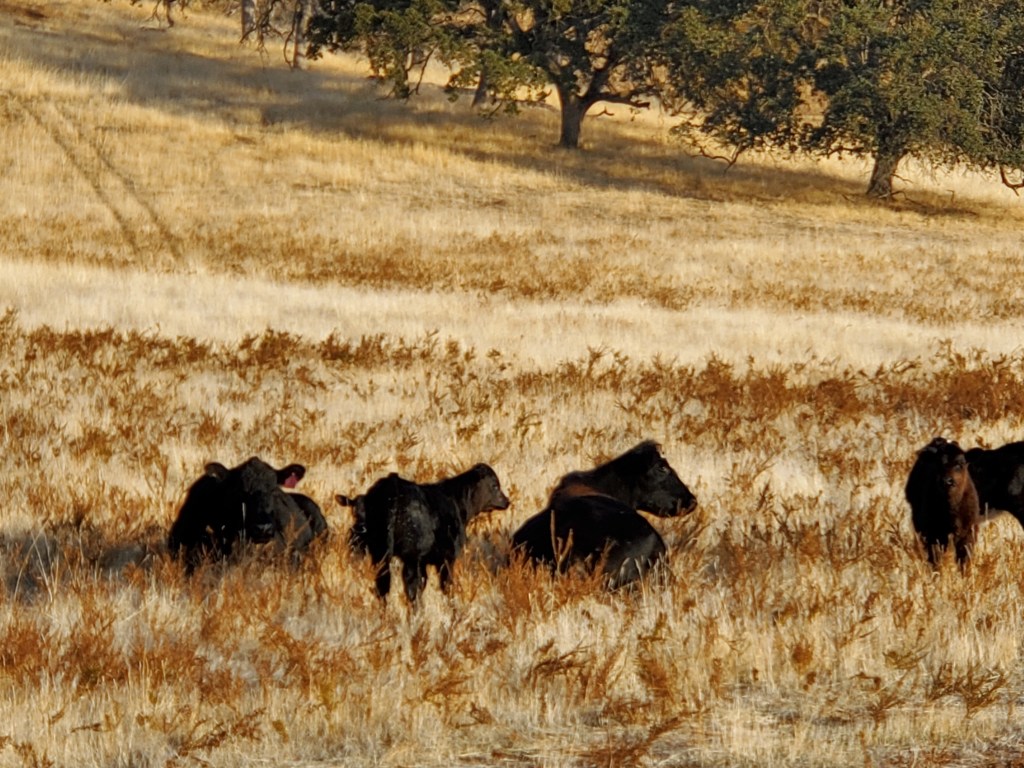
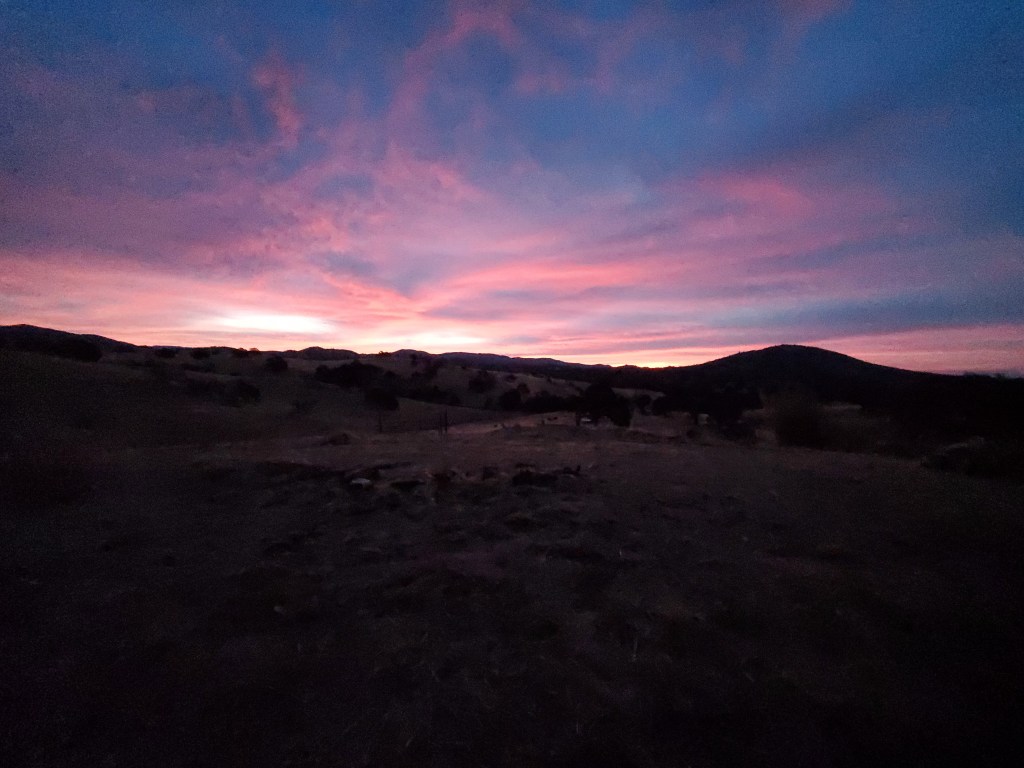
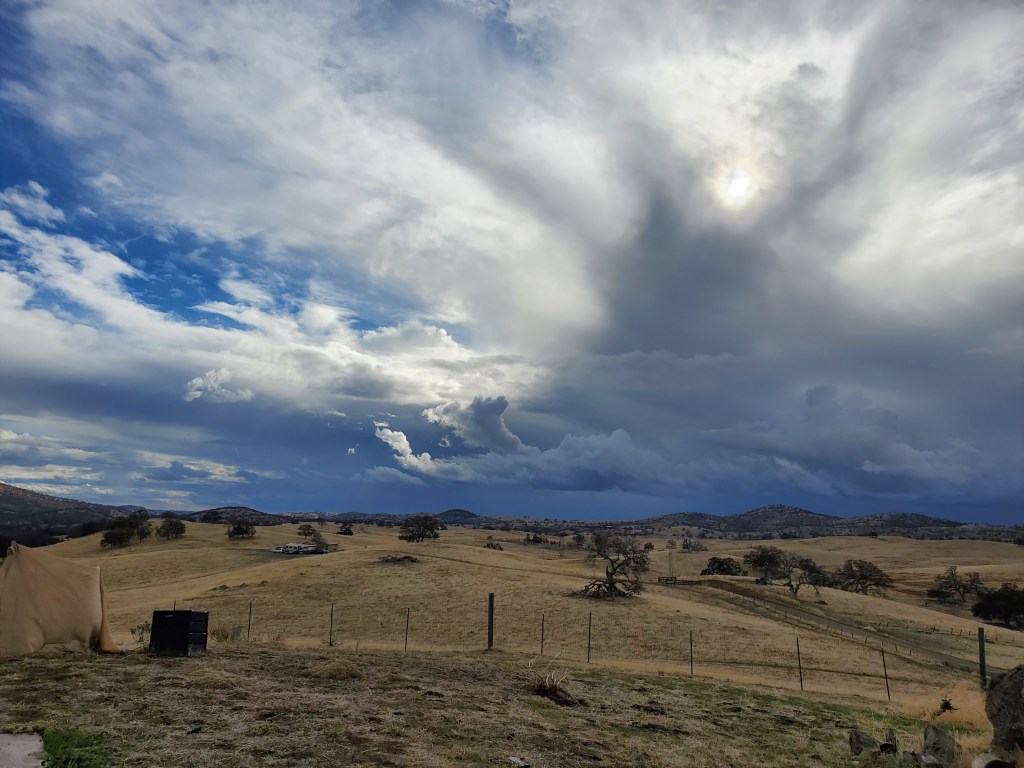
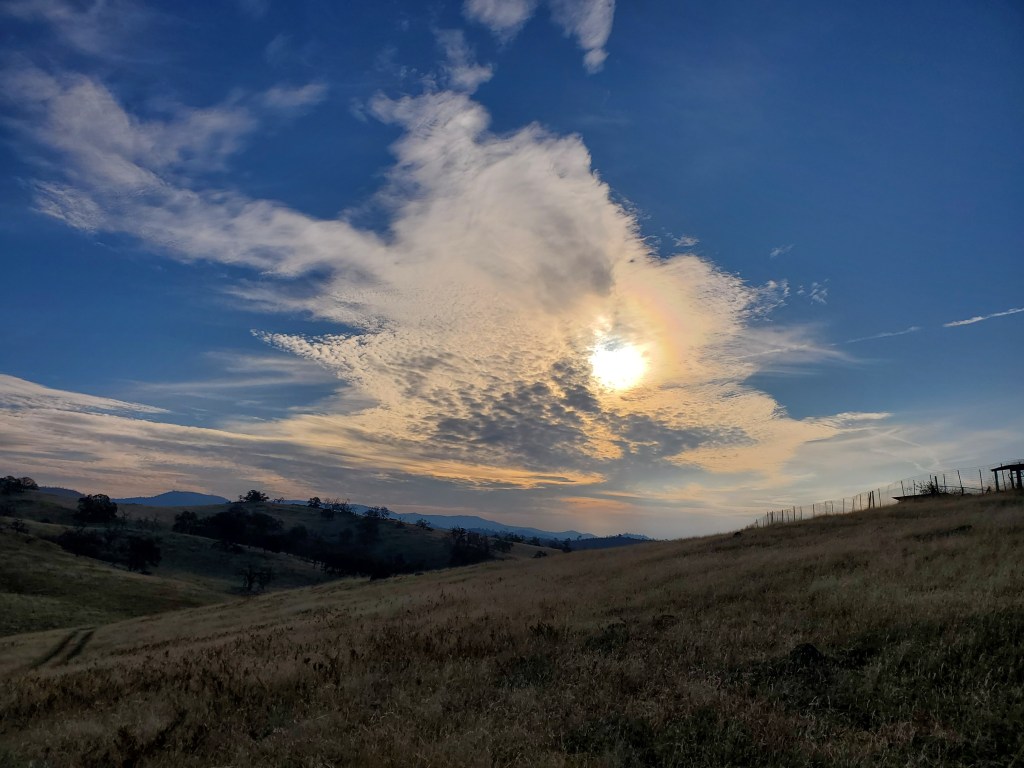
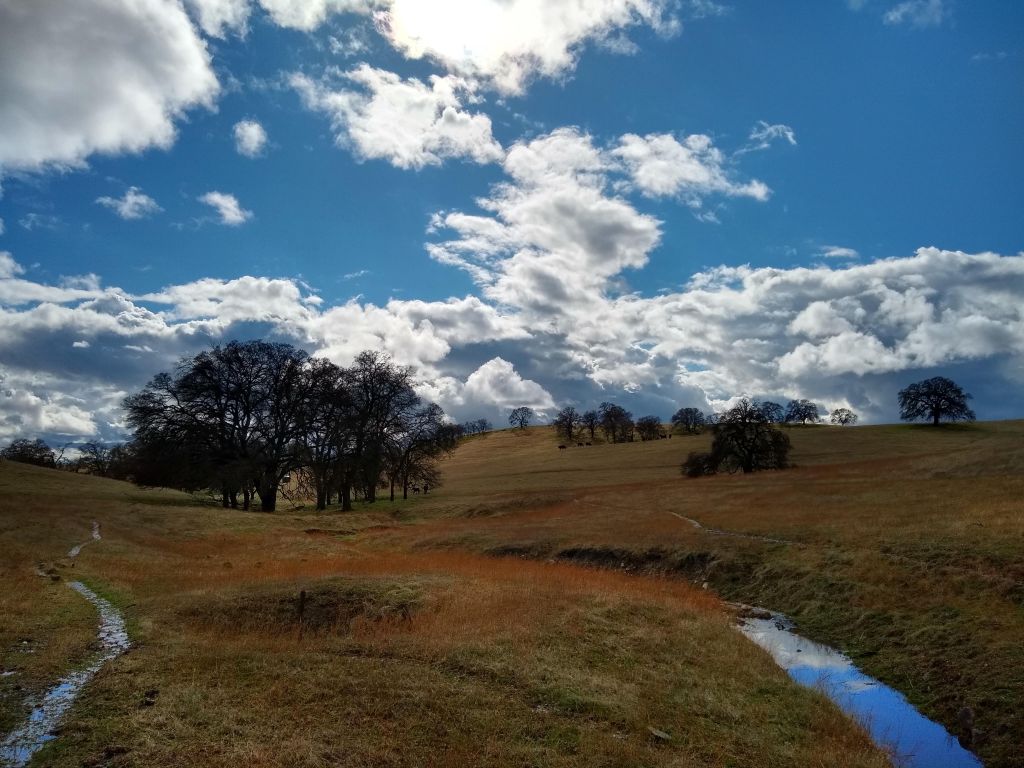
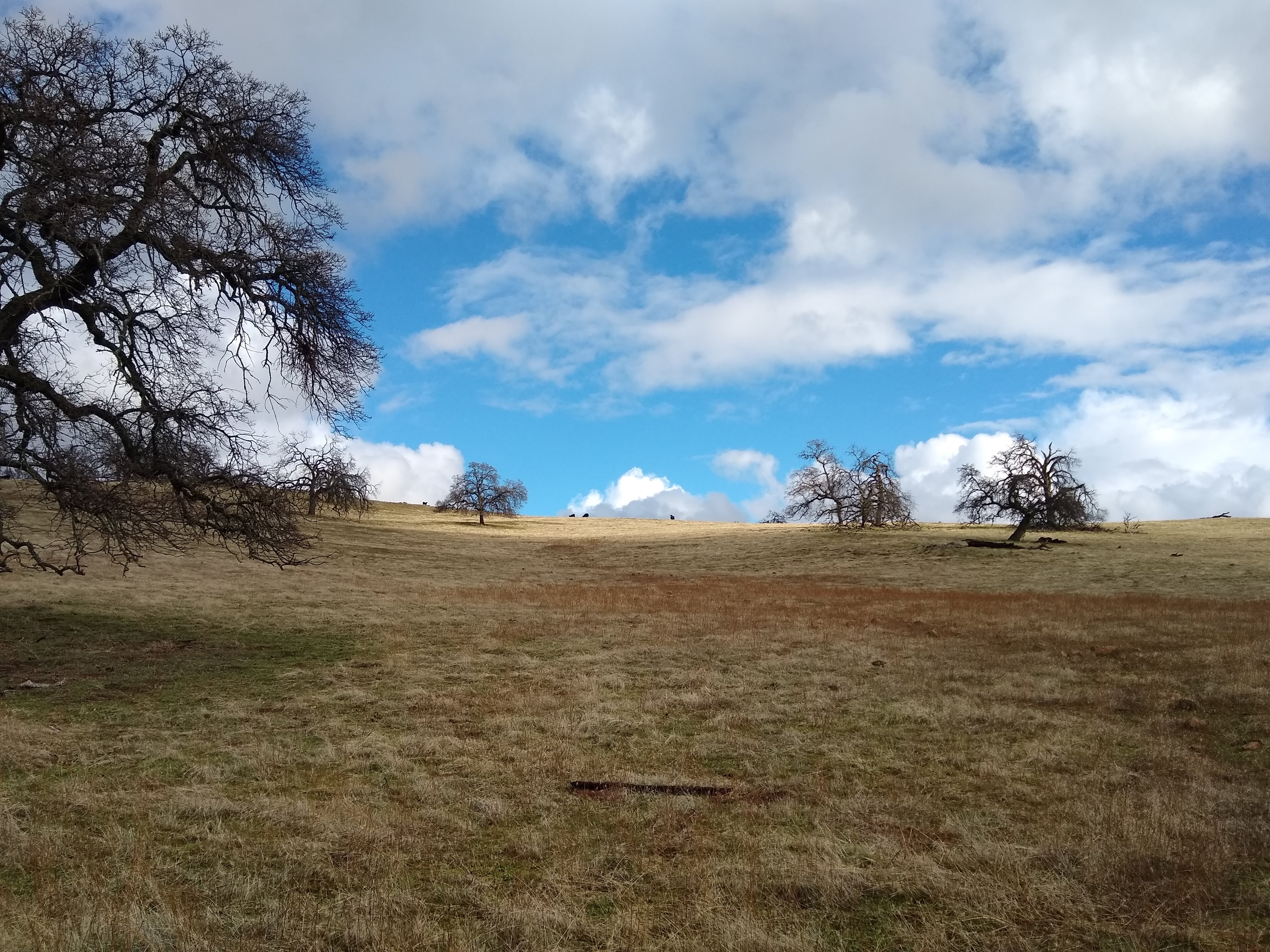
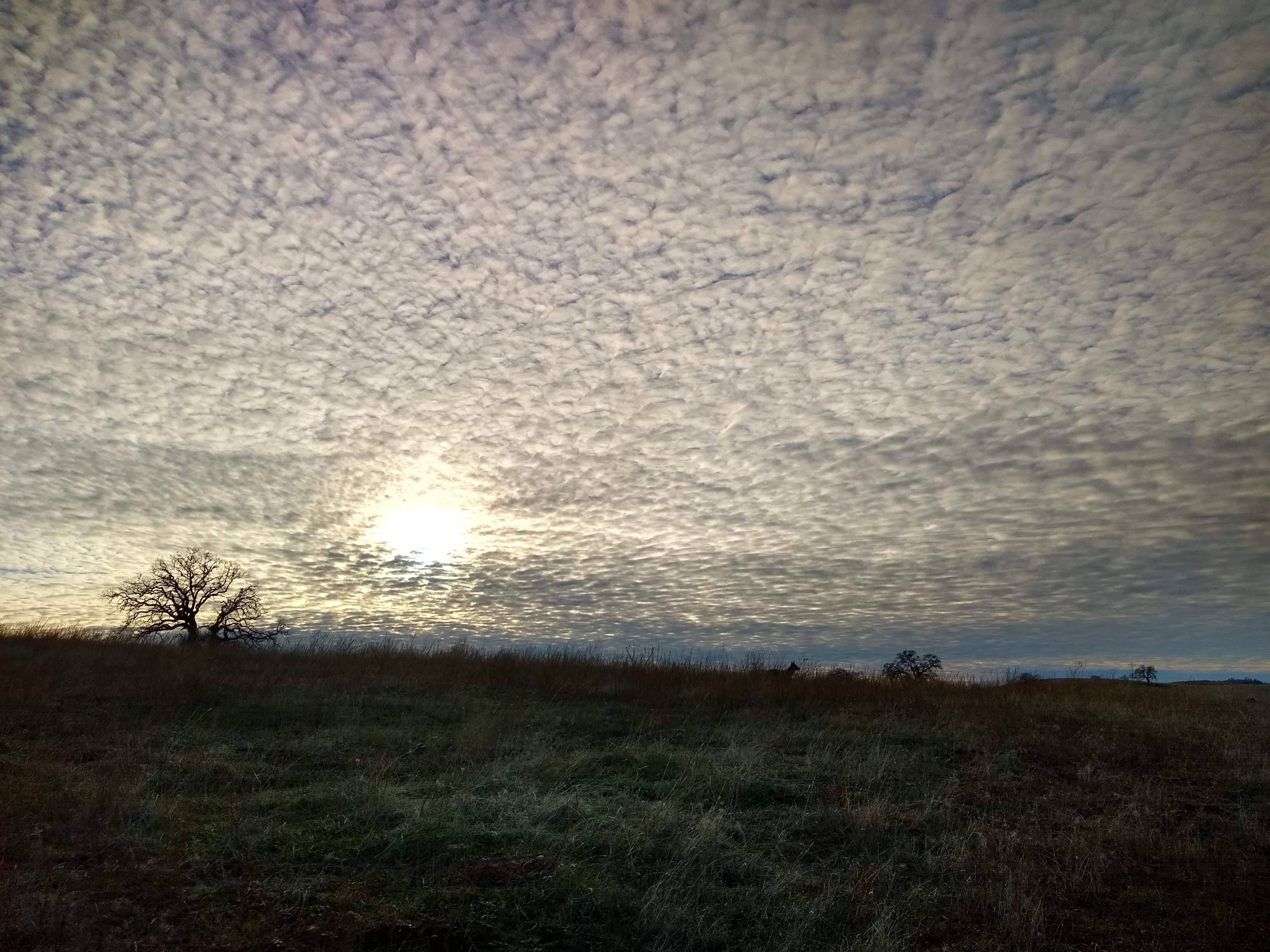
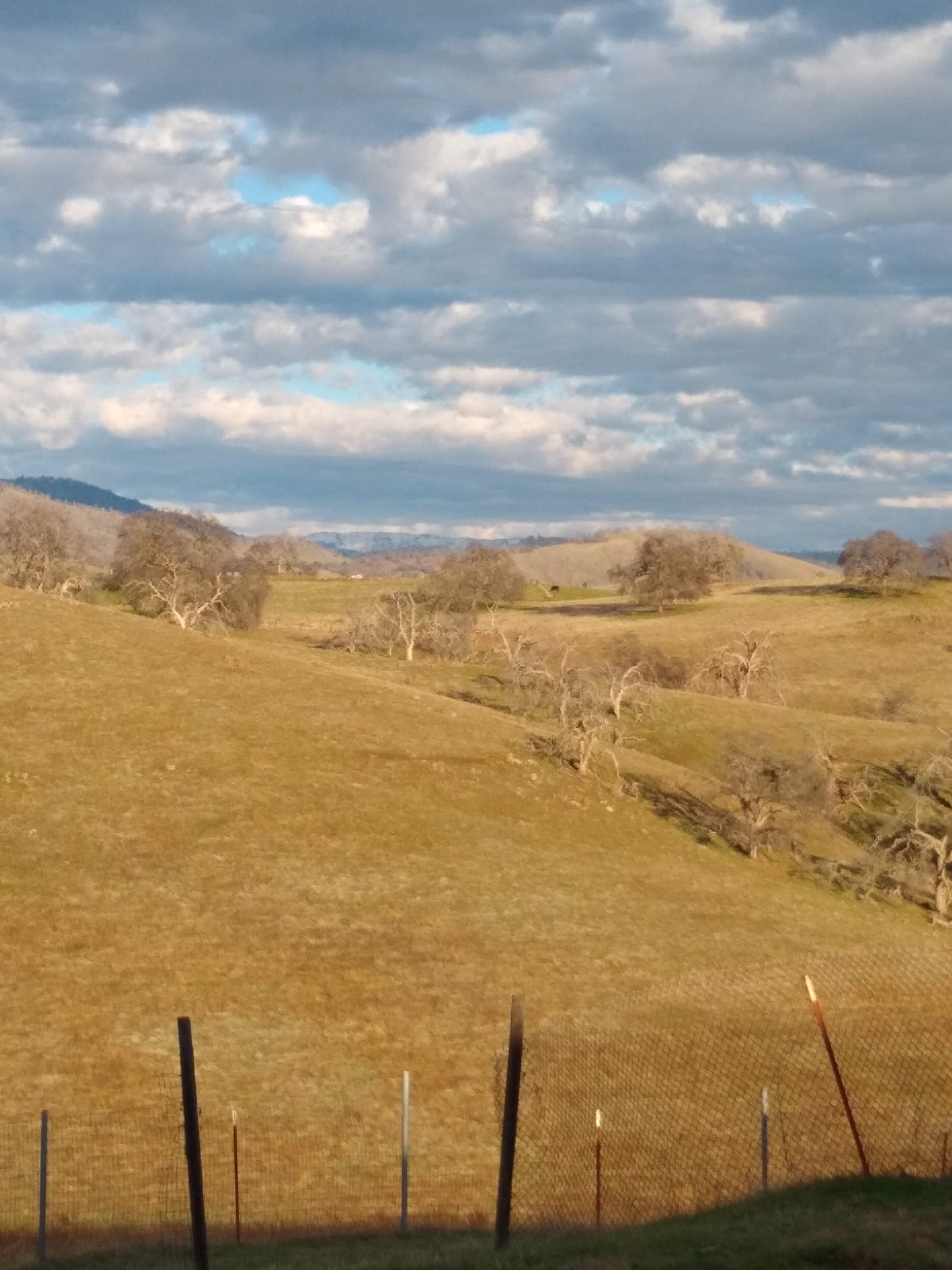
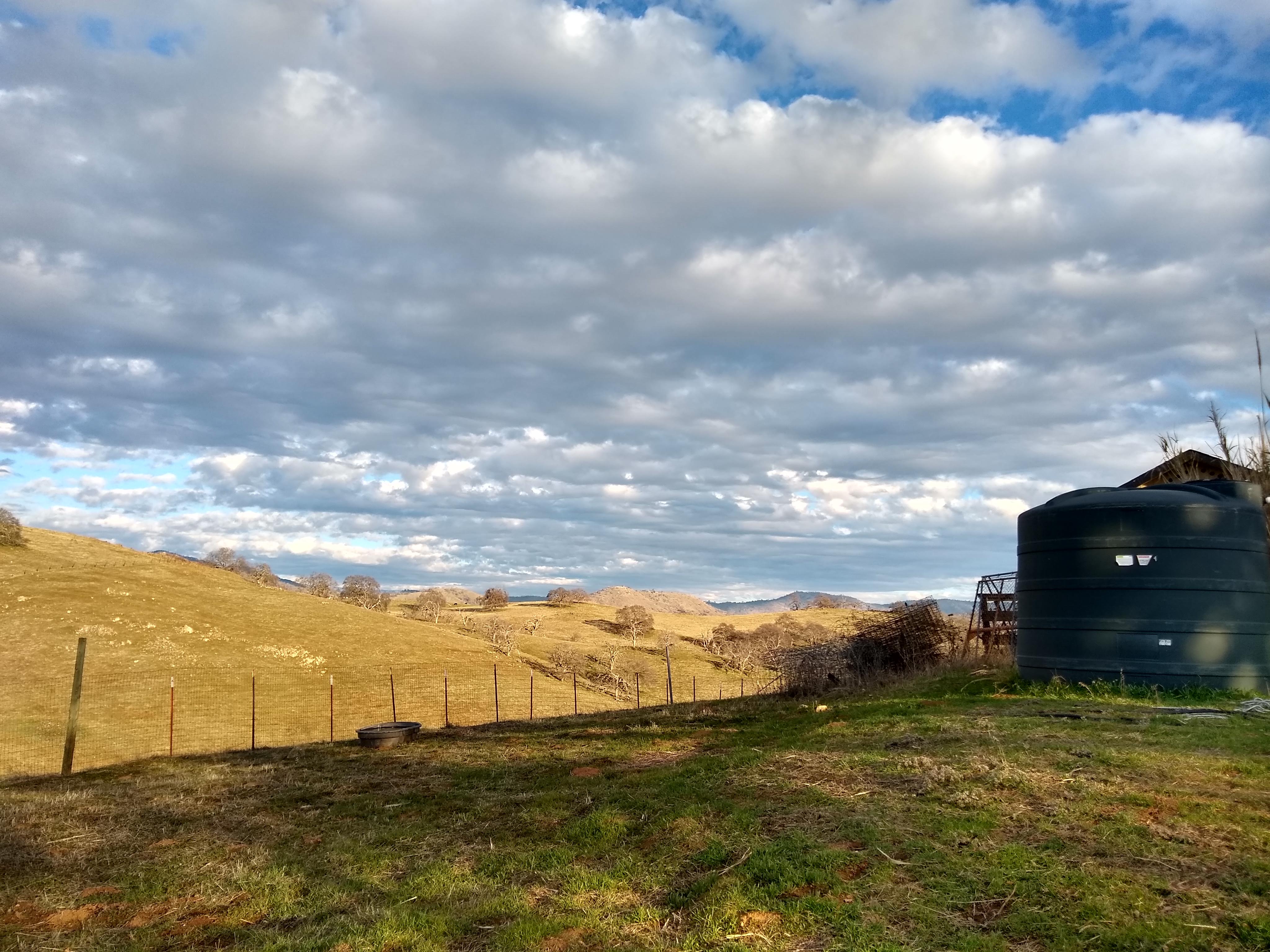
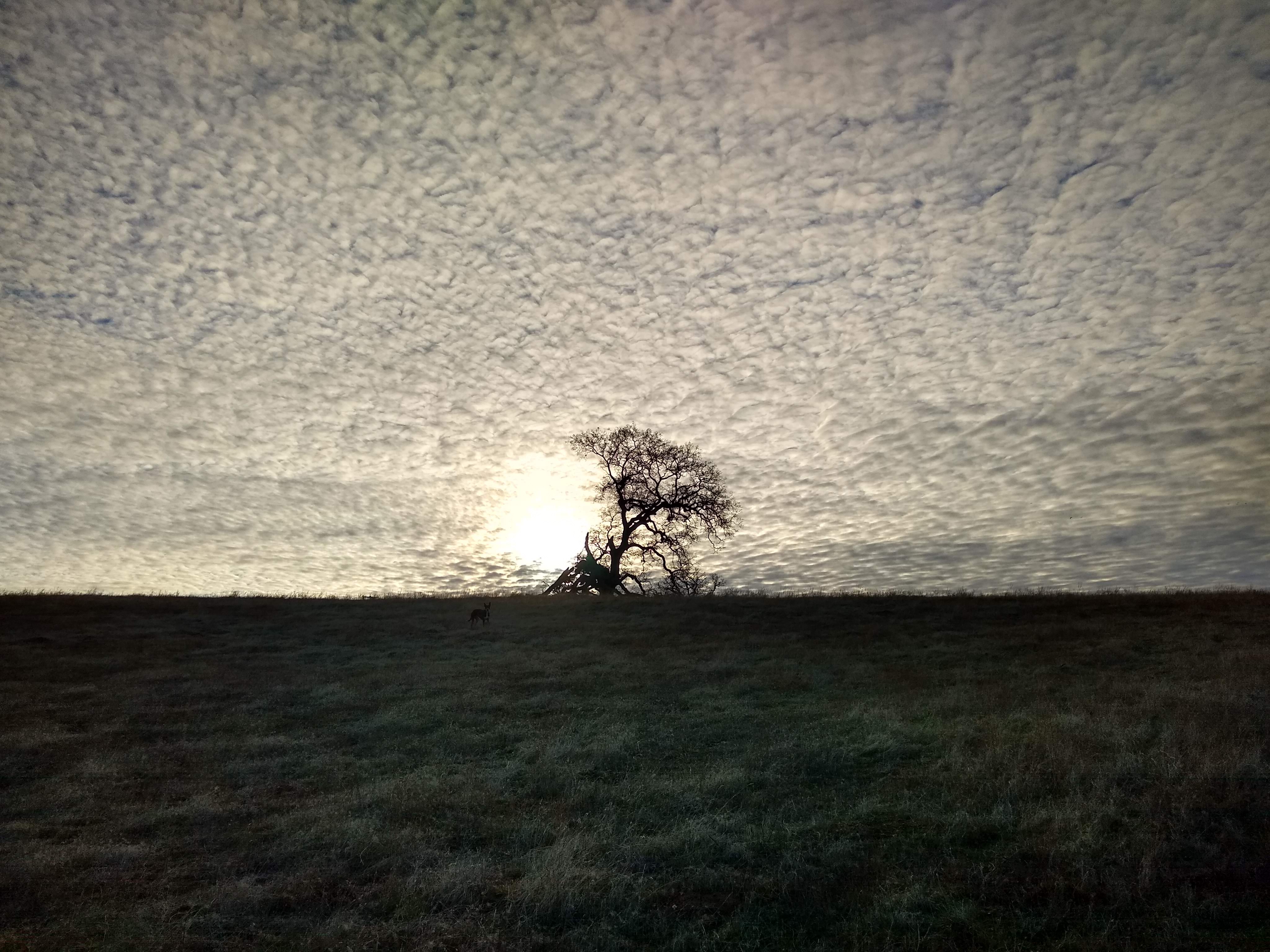
The storm made for some dramatic photos and clouds. I end my blog with some select shots that I hope you enjoy.