It is going to be a bad fire year. We have already had three fires near the house and the French Fire burning right up to the edge of town. I have more air traffic than normal – big planes and helicopters – flying to one fire or another. There are so many all around the region and state. It has been stressful to say the least – and hot. Even if you are in air conditioning, the heat weighs on you. What I have found is that when there are many contiguous days of temperatures over 100 degrees F, the heat just stays. Nothing has a chance to cool down. This includes the human body. There is only so much it can take before you begin to see changes, and that tolerance level is different for everyone. For me, it gets to be too much after a couple weeks, again, even when I am in air conditioning.
Fire up the road a few miles awayAir support with fire retardantFrench Fire near Mariposa town (photo credit: Patti Hughes)
I notice it in people all around me as well. Some guy took the time to yell at my mother-in-law and I, for example, for standing too near a crosswalk. It seems we inconvenienced him by 5 seconds in that he had to decide if he should stop to let us cross or not. The heat is getting to people, and they are acting crazy.
The heat is bad enough, but when you look out your window and see sticks where lush plants and happy flowers used to be, it is can be depressing. The grasshoppers have receded from their population of billions, but they are still here in the 1000s. I won’t be able to release my lone milkweed survivor until there are nearly none. Yesterday, I counted 9 on the cage, but there are thousands still in the grass all around. I feel badly for her gorgeous, nectar-rich flowers that have bloomed with no butterfly, bee, fly or moth to use it. Even if pollinators were near, the flowers are behind screen, only able to bloom because they were imprisoned. What a great day it will be when I release her stems, leaves and petals.
Hoppers catching a break from the sun under a rock holding the screen box in placeSuch a beauty in a prisonThe screens used to be covered with hoppers. Now there are 9
I am seeding more plants now, a little too late in the season for some, in the hope that I will have some more life out there, even if I have to plant it myself. My goodness — seeds are a miracle in this life. I am so grateful for their puny-sized, packaged progeny, patient and planning their emergence. Seeds, I love you.
As I lament, I must also recognize the resilience of the life that is left. Acorns are emerging. The songbirds continue to stay. Large raptors and vultures soar. Lizards dart from one location to the next, while the California Toads move at night, leaving their poop behind. Small frogs have begun to show themselves, emerging from the tendrils of willow roots and debris in potted plants. Dragonflies have been more visible at the house, and not just in the creek where there is still running water. A beautiful green snake took up residence near the toad pond (presumably because dinner is very near and fat). Even a cool hopping insect that looks like a leaf was hanging around on the Polaris. Life is all around and abundant – and some that were eaten will return.
Leaf like hopping bugLizard on the screen doorRed tail hawk pairSwainson hawkDoveAcorn emerges!Close-up of acornChewed up doveweedShredded white sageQuailRed dragonfly on an empty buddleiaFrogA nest in a stripped walnut treePreying mantis on the screen door
Water Still Running
The creeks are still running. They are providing much needed water access and sustenance for the plant life adjacent to the creeks.
Unfortunately, the amount of nutrients in the water from cattle dung and the heat are causing algae to bloom. Algae is an interesting life form. It can be toxic. Its decomposition can suffocate life in the water, but it also provides a significant portion of oxygen on the planet, much like forests.
Algae in a trough
I don’t know if the green algae on the creek is harmful, but I don’t mess with it – – except to throw rocks into the spring and puddles to break up its thickness, and open some holes to the water underneath. This is in part some of the reason I fence out cattle, to decrease the amount of excess nutrients going into the water. I cannot help upstream, but I can decrease the overall amount as it moves through my ranch at least.
Riparian Oak Seedlings Still Alive
I am overjoyed to report that the oak seedlings in the riparian areas still have leaves. I did see some damage to the leaves, but that is all. The grasshoppers did not fully destroy them as they did the very young plants I planted.
I learned recently that what looks to be like a young oak can actually be decades old. This was mind blowing. Given this, perhaps the small oaks in the riparian area have developed a more mature protective element to their leaves and bark that prevented more predation. I know that what I call seedlings are actually many years old since I’ve been protecting them for over a decade with downed branches when the area was open to grazing. Their smallness is a product of grazing and drought. It has been a huge relief to see them grow last year and this year in response to more water and protection.
Cow eating low leavesBlue oak seedlingSome (grasshopper) bites taken out of the leavesMy precious, favorite blue oak friend who I have been tending for 15 years
This success is all the more important as I continue to see decline among the adults on the hillsides. On my walk yesterday, I heard a horrible loud crack. I looked in the direction of the noise and saw movement in one of the grand oaks on the south hillside slope from the house. Then, I saw an entire branch fall. It continued to crack then crash down.
I was horrified, sad, angry- oh, how I grieve for these crucial lives. I keep thinking, “What can I do better?” I don’t use much water at the house. I put water back into the ground. I am slowing water. I guess I need to do more dirt work and create little moats below and above groves of trees, outside their drip lines, to capture water as it runs down hill during rain events. The work cannot begin until the soil is moist again. The metal edges of tractor buckets can cause a spark, and this whole place is filled with dried out, tall, European Grasses. Another year going by; the clock ticking on what can be done and if it will be too late to help. And, the cost – it will be all on me to cover with no program to help.
Breathe. Deep in. Full out. Repeat…Repeat. Reminder: you can only do what you can do. Much is out of your control and so much larger than you. You are not absolved of responsibility, but the full responsibility is not yours and yours alone. Stay healthy. Keep your joy and continue working at a pace you can sustain.
Extreme Heat is Not an Acceptable Norm
I know the extreme heat is a key factor in the death, piece by piece, of my oak relatives. It causes the death of thousands of people per year in the United States, and that is increasing. We cannot accept this as normal. If we love this incredible land, ocean, waterways and sky, if we love our children, then we must be intentional in our actions. I know this issue, like the oaks falling apart, is larger than one person. If we each contribute something, then things can get better. We have seen this happen already with the butterflies. Acting together, many planting milkweed and more nectar plants, have helped bring the monarchs back from the brink of extinction on the west. Although we have more to do to stabilize the population, we are on the right track.
Every choice we make as individuals makes an impact. You don’t have to deprive yourself at every turn; what I am suggesting is that we have to understand that our individual choices have consequences. In knowing this, we can make informed choices, not let guilt-aversion act as a barrier to good action and understand that we are each important change-makers in how the future is shaped. This is big; I know. Please don’t loose your sense of hope. It is some of the most powerful medicine we have. Aho.
Sunset through oaksHawk soaringMoonrise through smokey skies
We knew it was going to be a bad year this year when the grasshopper nymphs would bounce up like a solid wave with each step across the fields. There are billions of them, and I am powerless to do anything about it. The time to plan was several months ago, but I didn’t. I didn’t have time or energy to build screen houses and boxes. It is not an insignificant task – so I resigned myself to the possibility that my beautiful pollinator gardens throughout the ranch would be no more. What I did not expect is that they would also consume the oak seedlings that I painstakingly planted across the front of the ranch. That made me crumple inside.
Oldest and strongest oak seedling strippedBlurred but still visible chewed oak seedling leavesDevastationOnions goneCeanothus clearedScreen chewed through to get at the golden rod. It’s gone now.All potted plants goneCA Milkweed strippedPlague pile upGumweed and aster goneWhite sage almost goneDetritus – Hopper poop everywhereYep – hopper gutsPile-up of horror
David raced to build me a few screen boxes last week. For him, they take about 3 hours each – much too long to build enough to save plants. In the end, he built two – one with plastic screen and one with metal screen. He used what we had for the window screens. Unfortunately, as you can see in the image above, the plastic is not durable. The hoppers can eat through them. We tried to save a sage, a narrowleaf and two other nectar plants. The purple sage nearly died last year. I figured if it was not covered, it might not live through another ravenous incursion. The narrow leaf is the largest, most mature. Last year, the monarchs chose this one and a few others on which to lay their eggs. I am trying to have something for the monarchs when they come back. The other two nectar plants will likely get eaten. There is no box to hold the structure. The screens are pinned around the plants and thus, open to being shifted by the hoppers. It will likely just slow down the inevitable. I am not sure what I will have by September for monarchs to feed on — maybe tarweed and seep monkey flower if I am lucky.
Narrowleaf is the only survivorHoppers eying the prizeGrasshopper slurry on the road – ick!Hoppers allover the boxHoppers eating through the other screenTrying to get their prize
We are still watering. The roots are alive, and will need strength to make it through this onslaught.
I am loathe to post photos of before this plague. It hurts to see the beauty of this place. I worry about all the bees that used these plants for food and lodging. What will become of them? It is important to see all the life these plants supported before they were ripped to shreds. Again – all of the plants below are now gone.
BeeToadReally cool yellow bumblesCuddlyWow!Yellow face bumbleLots of buzzing around the black-eyed susansBeeLots of life around the coffee berry bloomsWasp type bug on coffee berry bloomCool beetleCrotch bumble flying to white sageBee mimic (?) on coffee berry bloom
Milkweed – a Race to Save the Seed Pods
I have been traveling for work much of April and May. As the hoppers continued their death march, all I could do was hope from afar that it would not be as bad as I thought. Over the phone, David would prepare me for the worst. “Hey HB”, he would say. “Don’t freak out, ok? The grasshoppers are taking everything down. Expect that when you get home.” Guilt would creep into my dreams. I was not around to protect the California Milkweed seed pods. When I returned in early June, I ran to the close plot to gather seedpods. To my horror, most of the plants, seedpods and all, were completely gone. Stems were stripped. Please understand that this is early. Last year and the year before, the hoppers did not decimate things until late June and July when the pods were more mature. I thought I had time. Operating off this data, it shocked me to see the California Milkweed like this. My stomach sank as I ran from corpse to corpse looking for any sign of seedpods. I was going off location memory as some places only the absolute bottom of the stems were left. Luckily, I found a few with pods remaining.
It was getting hot, and I was running over the unshaded hillsides. I moved as quick as I could up the steep slope to the large section of California Milkweed. I did not expect to find much – but – to my joy and surprise, several of the older large plants were still intact. And…two had a large number of seed pods. With relief, I harvested them to continue my work of spreading their seed when it was safe.
Nothing but stemsAttempted murderImmature pods with no way to further developThe mother-load on the south-facing slopeHalf eatenStripped2/3rds eatenThis was it on the north-facing slopeTreasure saved!
In all, I gathered 13 pods. I left three immature pods on one stem, and will go back for them in a few days. They might have a chance – but they really were not ready to be pulled off.
Abundance in the Creeks
The last few weeks I took several biologists and a documentary filmmaker (Ian Nelson) across the ranch to showcase some of the stewardship work we have been doing. While in the riparian areas, we were able to witness an abundance of buckeye butterflies, great nectar plants, and a new cottonwood seedling. Shockingly, however, the grasshoppers are in the creeks as well. This is highly unusual. They tend to avoid wet places, and the creeks are still flowing with plenty of water. One biologist thought cattle got into the exclusion areas and ate the plants in the creek. I said, “No, this is grasshopper devastation.” She looked closer and saw the filigree in leaves and stems from a billion little mouths taking bites. She was shocked. As such, even in the excluded areas, there is no seep monkey flower, datura, or other riparian broadleaves. Even the thistle is eaten. Fortunately, the buckeye trees were still in bloom and a few other species had blossoms. As we approached some intact plants, we saw a diversity of native bees, including bumbles. My heart swelled. Now I knew that the bumbles had a place to find food. Phew!
Water is running goodDeep spring poolClear waterCottonwoodSomething in bloomGrasshopper eaten riparian plantsBumbles found nectar!Ian documentary filmmakerIan capturing the life on the CA Milkweed
Beautiful Reciprocity
Prior to the destruction, I had the honor to go to New Mexico twice for tribal events. The first time, I went to learn about riparian restoration at the Santa Clara Pueblo – the Poeh. We planted 100 trees and plants on their tribal lands after learning from their work.
My second trip was incredible, having been invited to present a case study on my pollinator work to a pollinator tribal summit at the campus of the Insititute of American Indian Arts (IAIA). Shana, the Southern Sierra Miwuk Nation Pollinator Coordinator, was invited as well. She presented and did an excellent job. There were US government agency leaders and over 15 tribes working on or wanting to start some type of pollinator habitat work. It was an incredible opportunity and experience. I met so many passionate people and enjoyed the beautiful weather of Santa Fe.
I also attended a ceremony of remembrance for the ancestors slaughtered at the Tubatulabal Tribe on their recently returned lands in April. It was moving. They are working to restore the lands to traditional uses. They want the ducks back, which is the meaning of their name – people of the mud duck. To bring ducks back you need water and insects. I helped them complete their application for a Xerces riparian habitat kit and learned in May that they had been awarded the grant. So grateful to Xerces for this habitat kit program and to the Tutbatulabal Tribe for everything they are doing to live in right relationship with the land.
I am also involved in the California Jobs First initiative and was recently appointed to the California State Fair Board. In all places, I am hoping to ensure an Indigenous perspective is at the table informing decisions – and hopefully, helping resources move to Indian Country, which has, for far too long, suffered from significant under-investment.
To be given guidance, opportunity, learning – they are gifts. They help advance my ability to be of service in this climate changing world. As such, I need to ensure I use these gifts to provide a benefit, to be helpful in a meaningful way – not a way that just I want, but a way that serves a greater good. This is reciprocity.
IAIA GreenhouseIAIA GardensBranden from the Tribal Alliance for Pollinators and Euchee Farms examines a plantGuiding star for our work togetherShana presents with Michelle from NPSRotation learning about bee IDSanta Fe landscapeTesuque heritage seed protectionTesuque storageDeedee, Rosie and I at TubatulabalChair Gomez with Shine and Will from Tule RiverTulatulabal with agency staffSanta Clara Pueblo restorationThis fire was in 2011. Landscape recovery is long and difficult when fires burn super hot. Me before a meeting in Santa FeNative voices in the California Jobs First process. r-l: Jimmy John (Death Valley Shoshone), Charlotte (Mono Lake Kutzadika’a), Meryl (Bishop Paiute), Sandy (So Sierra Miwuk), Me (Calif Yaqui)
Don’t Get Down – Get Planting
As the landscape around the house is converted from blooms to straw, I made plans to continue to build habitat in Sacramento. While on a trip, I met Brenda Marsh. As people do, we discussed our work and involvements. When she learned about the severe decline in insects and pollinators, she asked if I would help her make a pollinator garden at her home. Of course I said yes! She lives in Sacramento. Since she is busy working and travels quite a bit, she does not have much landscaping – mostly an unwatered crabgrass lawn and some beautiful trees.
I did a little planning figuring out where the plants would go and in what configuration, and then I asked Ron Allen at Mariposa Native Plants what he had available. In the end, we got 20 plants, seven milkweeds and thirteen nectar plants. I convinced David to help me (I told him there was a great lunch in the deal for him). He is great with irrigation systems. David pulled together some irrigation supplies and off we went.
Much of Brenda’s neighborhood is sterile with lush green lawns and some exotic nectar plants. Still, while we were working there, we saw a big yellow swallowtail butterfly and a white sulfur fly by. Two blocks up and around the corner, there is a house with a wonderful native plant garden. It was bursting with life. This meant that there would be some nice islands pollinators could hop to without fear of pesticide and herbicide use. In all, it took about 4 and a half hours, not counting travel time. Thanks to Brenda for being part of the solution!
My next plan is to help a lady in Clovis plant a large pollinator garden within her nine acres. I met her on the plane on my way back from Santa Fe. She had no idea about the horrific decline in pollinators and was anxious to do something. These are examples of why we need to be talking about this work, what is happening in the world and that there are solutions people can be a part of. Media is great, but the person to person connection is most effective. Those relationships are durable treasures that can spark incredible change. We need to be connected to one another and in reciprocal relationship with the earth now more than ever.
BeforeDuring: David and BrendaThe planAfter: Heather and BrendaTa-da!
It’s early Sunday morning. The sun is not up. I’ve been up doing chores, feeding animals, opening windows to allow the cool air, laden with scent, into the house. It is barely light, getting lighter. The birds start to sing. First one chirp, which leads to two then it all begins. I step into my boots, dogs at my heels and head out – pulled, then lightly pushed by the cool air now gently swirling in the house.
The ground is soaked from the dew. My boots collect the moisture along with leaves and purple pedals from the thousands of small flowers, close to the earth, lining my path. I check the milkweeds. They are stretched into the air bolstered by days of sun as they break through the invasive grasses that block the light. I examine the space to see if more are there. They are, and I breath, grateful for the resilience of these plants.
Heading down the hill with the symphony of birdsong the nectar of those thousands of flowers hits me. The grass nut flowers, tall with trumpeted light purple petals in a starburst formation cover the hillside. Among them are hints of dark purple, tall and narrow larkspur. Yellow Mariposa lilies are beginning to dot the hillside – more than I’ve ever seen here. The popcorn flower has nearly abated making room for more purples, filaree and small lupine – the large ones almost ready to burst.
As I get closer to the drainage, the temperature turns cooler, a function of the cold water that soaks the earth and continues to trickle. Walking along the drainage there is more larkspur, orange fiddle neck and now some new yellow seep monkey flower. The birdsong is penetrated by the flap of wings. A single bird flies overhead. Even though it is small, it is quiet enough to hear the displacement of the air with each flap. This is why the morning is magic.
I cross the swale pond and walk into the grove. The bullfrogs floating on the water surface dive beneath the murk, and those on the banks give a chirp as they jump into the water. The nectar scent is replaced by the sweet smell of wet bark and earthen musk. With every step, I stir up more smells of wet soil. The oaks are green, and full of leaves, which I hope portends of a mass of yummy acorn in the Fall. They look happy as I examine the check dams. The soil is still moist in the drainage fork. Good. The water is still running in the spring creek with some nice deep holes. Good. I note invasive thistle growing in my mini wetland and make a mental note to bring the weed eater down there later. With my mother-in-law, I planted milkweed seed. I am hoping to make this new sedimented area more diverse, not just a thicket of Italian thistle. Thistle is nectar rich, and the pollinators love it. There thousands of stalks allover the ranch. Taking out this little section will not impact nectar availability. I hope to get a glimpse of the quail I saw the other day, but I don’t. It is too early for some.
I exit the grove to check the open section of the spring creek. My boots are wet up to mid calf. Despite the work of the cows, the grass has grown taller with last week’s rain. The first section of creek is still running, filled with grass and small, open stands of water. More seep monkey flowers emerge. About halfway down the open section of creek the water stops. I hear the last drips into a small pool just downstream of my old, small, rock check dam. The flow is underground now. It leaves a creek bed of moist soil the rest of the way to my property line.
As I veer back to the trail, turning west now on the open grassland, the sun is up over the east mountains and hits my back. The warmth is a familiar hand across my back comforting me as I walk. I notice the humidity now, so thick. The full force of nectar is back, clinging to the water molecules in the air, which fill my lungs. I think of all those molecules that comprise this Spring cocktail of life and know that my body will know what to do with all the constituent elements as my lungs expand and contract. I breath even deeper now, filling myself with this ancient food.
There are still no raptors, ravens or vultures in the sky. This time is for the songbirds to flit and sing with less concern of being a meal or their eggs being a raven’s meal. I link up with the cattle road and make a turn north, fully surrounded by the large expanse of grassland. I hear the unmistakable song of the meadowlark, deeee, de de de deee, then as the sky brightens, coyotes begin to sing. As I get closer to the driveway, there is the distant rumble of cars on the road, which is a quarter mile away. The sun has woken humans up too. I continue the last leg of my walk, Millie by my side and Beatrix taking the short-cut through the grassy hill. I feel grounded and filled. This walk is a ceremony of connection, an acknowledgement that we are all together, living for one another.
Monarchs Are Back with Babies!
There is no more gratifying symbol of the success of the work here than the habitat being used. This is especially true when monarch caterpillars are present. On Monday, 4/22, I walked the steep hillsides to check on the California Milkweed plots. Fortunately, I had friend and biologist extraordinaire Deedee Soto at the ranch visiting. It was warm that day, even at the end of the day, so we sweated as we made our way up. The first plot, all the plants looked healthy, but there was no evidence of monarch use. We made our way down hill, crossed the drainage, still spongy with water, and then started our ascent. Again, this is a steep slope. Deedee and I walked slowly, taking breaks. Mille and Beatrix were with us, but about halfway up, I turned to say something and did not see Beatrix. Where was she? Evidently, she gave up, went back down to the spongy drainage and laid in the coolness of the grass and soil spectating our ascent. I rolled my eyes, slightly jealous, and the rest of us continued upward.
At the plot, our efforts were rewarded. Six of the 13 plants had caterpillars. I screamed with joy to Deedee. It just came out. Fortunately, she understands and doesn’t think me strange to be so excited about this tiny yellow, black and white creature. Because of Deedee’s high skill, and youthful eyes, we counted 28 caterpillars of varying ages, from the first instar to the third. Caterpillars go through five caterpillar stages, with #5 being the largest, before they transform to chrysalises. Twenty-eight is a great start! There could be more though. Caterpillars are very crafty, having the super power to hide in plain site. Two other plants had evidence of monarch use, but we could not find any caterpillars. I whoo hooed from the hilltop. The monarch mamas had found this patch of California Milkweed a hospitable home once again, trusting this place with their future.
1st instar. Look how smallA little bigger – a 2nd instarMunchingCan you find it?A 3rd instar – bigger yetNot quite 4thCan you see it?Nestled in the bloomA beautiful smelling place
All Oaks Planted
If you are a regular reader of this blog, you may remember that my neighbors, Ric and Kim, are extremely generous, allowing me to use their electric Polaris for my habitat restoration work. Those vehicles are extremely expensive, and we are so grateful for this kindness. It makes life much easier. I was reminded of this last week when Ric had his vehicle back with him for some work, and I was still engaged in blue oak planting. Undeterred, I regressed to using my cart and hand dragging around my tools and plants to continue planting. I got three more blue oaks planted, but goodness, I was sweating.
Ready to plant. Looking at the sitePlanted near the top of Spring CreekPlanted in the spring marshy area up stream on Spring CreekGorgeous place to work. Note the carpet of seep monkey flower in the backgroundI hope you thrive little beautyPlanting area in open area downstreamTwo oaks planted across but 10′ from one anotherCows disturbed oak site before fencingFollow the trails to two of the planting sites next to dead oaksAnother seedling in!Maybe we will get some back that were lostHand hauling my tools from afarDownhill is easiestUphill is harder
The good news is that two of the earlier oaks are thriving, and the seedlings I’ve been protecting in the Spring Creek area for 15 years are finally appreciably growing.
First tree planted in February thrivingExisting seedling in Spring Creek area that was half this size just last yearRed dots are planted seedlings
Wildflowers and Wildlife
Beautiful small frog on willow root thatchCool flyPatch of larkspurHillside of nut flowerHillside of nut flowerHillside of large lupine almost ready to bloomLarge lupine almost bloomedShowy milkweed up. Last one left from wild pig incursion in Spring Creek plot 3 years agoIris budNative iris from Jakki and Pete, doing wellCows clover – smells incredibleProliferation of seep monkey flowerSeep monkey flowerBald eagles visit!!Eagle!Crotch bumble beeCrotch Bumble BeeMariposa lily budMariposa lilyHover fly (bee mimic)All of the sudden these popped up all over
Fire Keeping
Nellie, the previous Pollinator Program Coordinator for the Southern Sierra Miwuk Nation, attended a traditional cultural gathering the other weekend and educated participants on pollinator plants. She gave the group a packet of milkweed seeds with tobacco and sage as part of the mix. Nellie said that when we planted the seeds we would be making an offering at the same time. I nearly cried I was so proud. I agree. Planting is a sacred act; it is bringing us closer to fulfilling our responsibilities as stewards of where we live and connecting us to place in a way that is intimate. She is keeping the fire of knowledge of traditional practices, values and connection and sharing those with others who are continuing on their road back to a reciprocal relationship with all our relations.
Nellie educating usLearning about plants on a walk
Five Years and Three Months
It has been five years and three months since I read the New York Times article about the plummeted numbers of monarch butterflies. It made me sad and angry that monarchs could very well be lost in my lifetime. I did not want to imagine a west without this beautiful and important native animal. I still remember that day in January when I read that article. I thought, “Ok, I am not willing to let that happen without a fight. What can I do about this?” So, I got to work learning as much as I could about monarchs, their migration, lifecycle, what they needed to survive. I learned who the key organizations were leading the charge and that there, gratefully, was a significant focus on this issue. I knew I had seen monarchs before, but it made me consider how long it had been since I’d seen any at the ranch, or even in town. I went back through photos. It had not been for ten years – not since before the 5-year drought.
The first people I reached out to were the Southern Sierra Miwuk tribal elders. I asked them about the monarchs and the western slope of Mariposa County and what they knew of the populations, plants and timing. I then reached out to some older ranchers to gauge how often they had seen monarchs and what they remembered from their grandparent’s stories. It was clear. The elders shared about times of abundance, with fields of butterflies, including monarchs, all over the milkweeds that particularly grew in the riparian and marshy areas. There were more flowers then and more milkweed to support hungry caterpillars and butterflies. The ranchers told me of less abundance – of having seen them as children, but not as many now. With this information, I knew this area had supported flocks of butterflies, and that it could possibly be that way again – at least Taawe Bwia, my ranch, could be an oasis.
To get plants, I reached out to Mariposa Native Plants (Ron Allen and Bev Andalora). I knew them in the community, and Ron had already been gaining a reputation as a “milkweed whisperer”. From the information I gained online, to Ron and Bev’s knowledge, we created milkweed plots. I started with two diversified plots, and both were ravaged by gophers. I started over, placing the plants in mesh baskets instead of chicken wire cages. That worked, but it was expensive. While I was committed to the project, I could never have scaled it as big as I have without the Mariposa County Resource Conservation District (Melinda Barrett). She was a wealth of knowledge, and I changed the composition and structure of the milkweed plots to “pollinator islands” based on her guidance. She was able to help because there was significant funding from the Wildlife Conservation Board, and the California Association of Resource Conservation Districts, as the intermediary administrator.
I was fortunate to have the thought partnership of Xerces Society partner biologist Deedee Soto, who shares my passion and commitment to conservation work. Truly, without her expertise, I would not have as much success. She is a genius with plants – propagation and ID. At this time, Xerces also began their very useful habitat kits (Thank you to Jessa Kay-Cruz and Angela Laws!). Not only did it provide all the plants needed for a successful pollinator island, it taught people about the plants, bloom timing and diversification. I still have the very first plant list with bloom times. It was such a great resource, and what a great idea.
I received tremendous support from the National Resource Conservation Service (NRCS) John Grimes, Jesse Baum, Prospero, and so many others in the NRCS ecosystem. Farm Advisor Fadzayi Mishari provided input on conservation issues early on in my land stewardship and organized important educational opportunities for the ag community where I was able to learn a great deal.
Point Blue Conservation partner biologist Elena Kromer wrote my first conservation plan. While it took a very long time to get done, she listened carefully to what my concerns were and designed a plan that addressed many of them. This process connected me further into Point Blue, where I was able to join their carbon sequestration and wildlife resources study project and access their Roots grant program (Cati Mong). Also of essential help were the classes and resources from Monarch Joint Venture. They offered the first online class I took that brought me from knowing almost “0” to knowing much more. I was able to take that knowledge and advance it through the Pollinator PartnershipPollinator Stewardship Certification program, where I earned my certification in Summer 2023. Most recently, I was also able to qualify for the California Department of Fish and Wildlife Partners Program with many thanks to biologist Rosie Gonzalez and her colleagues for smoothly navigating me through the process.
Last, but not least, I want to acknowledge my dear family, friends and readers of this blog. My dad, Alan, and dear friend Daniel donated funds early on that helped me purchase more plants and supplies. My mother-in-law Sheila sends me fun butterfly-themed gifts. My brother Vance, and sister Sarah, who actually read this blog early on, encouraged me. My neighbors Ric and Kim who let me borrow their Polaris, and early on Ric helped considerably with fencing labor. My nephew Ashtin and niece Desiree have helped with the branch fence early on. My other mother-in-law, Liz, has helped me work the ranch each visit, planting seeds, digging channels and holes. Dear friends Melanie, Molly and Jen have worked side by side with me to build rock and log check dams. Friends in the community and on social media, readers of this blog who have sent words of encouragement, recommendations, shared knowledge, ignored my typos, and encouraged my writing, you all kept me going especially when I had set-backs. Finally, my beloved spouse, David, who without him nothing is possible. From his emotional support to physical labor, and financial partnership, he has been there for me and this dream of changing the course of monarch survival, to create a place where they can be assured of food and shelter along their epic journey. Chiokoe uttesiavu. Si se enchinakiavu. Thank you. I appreciate you all.
Goal accomplished!
Free T-Shirts?
To commemorate my 100th post, I am having a PolliNative t-shirt giveaway. If you like what we are doing here and want to represent via a beautiful organic cotton shirt with a heartfelt message, here is how:
Make a comment on this blog with no more than three sentences sharing about what you are doing to help our pollinators thrive.
Everyone who submits a comment will be entered into a random drawing for a tee-shirt. They are expensive, so I can only give a handful away.
Comments must be in no later than May 24th.
Thank you, reader, for everything you do to make our planet a healthy place for our children and for all our relations. Si enchi nakiavu (I appreciate you all).
Popcorn flower in foreground with a kaleidoscope of color beyond
The smell of nectar – that is how I started my previous blog post. It is 10 times as intense now. As I walk, I breath deep, then deeper. I want my all the tissues in my body to remember the scent and oily feel of this sensory gift the plants are giving. They get something too of course – pollination, genetic distribution, a chance to live again next year through their progeny. A life well-lived, whether insect, flower, or mammal, is a life of reciprocity.
Almost daily I make my way up the steep hills to check on the California Milkweed. It has been raining, and I want to see how everything is impacted. I am not entirely sure why, maybe curiosity, for there is very little I can do to help them. Their lives are in nature’s interconnected tendrils, a thatch of inter-dependencies, of which I am just one piece – with agency – but not as effective as I would like.
View from Site 3Up on the mountain top with my babesWildflowers scent my ascent
Breathing deep (and labored from the grade), I finally get to my destination, the large community of plants. There are four things that become immediately clear: 1. something has been here before me. The dogs are sniffing tightly around the milkweed. I get nervous. 2. The leaves look a bit rough from moisture, the delicate, velvet-like fuzz drooped just a little, a dusting of white mildew on the body. 3. Flowers are already beginning to bud. It seems early, but what I have learned over the years is that the CA Milkweeds are truth-tellers, future-readers. I imagine them with their crystal balls beckoning me to sit nearby and listen to a reading of the future. The future they are predicting is a spring done early and longer summer. After all, we only had five days of real winter here – only 5 days the ground frosted over. 4. After my typical count, I finally see it. Plants are missing. I move around the space counting again. There were 10 of 17 at site one. Seven of 11 at site two. One of 1 at site three, and 1 of 2 at site four. There were 10 plants here the other day. I am missing two, no three plants, and I see that there is a new one that has emerged – so technically, there should now be 11. The cows were up there just a week before, but there is no sign of browsing, no trail of pulled stems and leaves remaining from an ill-conceived tasting of a bitter, toxic treat. It doesn’t make sense anyway. With all the thick, delicious, moisture-rich grass, there is no compulsion to try something that smells of bitterness. Among the missing is one of the largest, oldest plants. I get on my hands and knees to look closer. I see a hole. The gophers got them. What kind of gophers are these? They like the thick, bitter milk of the milkweed, the dense poison of the root? Before my heart sinks, I see one small leave still there. It’s adjacent leaf is bit off at the stem, but nonetheless one leaf and stem has survived.
From vibrant to almost goneClose up of the holeOne remaining leaf with bite our of its neighborAlready bloomingYellow face bumble bee. I was not fast enough to get the crotch beeAnother new plant!Looking a little rough after the rains
One thing I have learned is that these plants are resilient and fast growers when the conditions are right. There are two large mature plants that can be egg-laying sites for monarchs. Remember, monarchs are choosy. They like to lay eggs on plants that are more mature, so there is sufficient food for their brood. There are others still emerged and growing. The rain and cool temps have slowed them, but it has also slowed the migration of the monarchs. It has given special time for the crotch bumble bee to make a meal of the emerging flowers before more hungry competition arrives. Then, the other plants, impacted but not dead will bloom and sprout, replacing the leaves and stems of the earlier sprouted mature plants after they are eaten by ravenous caterpillars. There is a wonderful balance to everything, and I have, we all have, our roles.
Something has nibbledNew sproutFlowers are almost ready to scent the airA close-up of the blooms shaking off the duff. The scent, nearly indescribably, is faint, but will be incredible soon
Education
Giving and receiving is how balance is created. You learn. You try. You teach what you learn from trying. I have shared how remarkable Shana, the Southern Sierra Miwuk Nation Pollinator Program Coordinator, is. She has a natural affinity and relationship with plants. The tribe has been doing a great job of offering cultural education classes for tribal members and other Indigenous residents. A couple weeks ago, Shana was a presenter on plant propagation at an Indigenous botany class. She presented with Jeanette Acosta who discussed the uses of pine. It was an outstanding program. Shana and Jeanette did a great job, and I learned so much. It is wonderful to see her learning and teaching.
Showing where to cut plants for propagationA tour of the gardenPollinator advocates and wonderful humans – l to r: Kristie Martin (pollinator program volunteer), Deedee Soto (Xerces biologist), Shana Saulcido (Pollinator Coordinator), me
A group of us also attended a workshop at UC Davis on traditional tule stewardship and its relation with limiting bug-borne diseases. It was fascinating. The presenters were Diana Almendariz, Maidu-Wintun natural and cultural history expert, and Geoffrey M. Attardo PhD, professor at UC Davis. It was one of the best presentations I have ever been to – a Sunday well-spent!
Diana with daughter Christina demonstrating weaving a tule mat. They were incredible!
This month, Shana and I will be attending a tribal pollinator co-management workshop in Santa Fe where we will learn and share. It was a tremendous honor to be invited to contribute and connect. I am looking forward to learning and building a larger network of stewards across the land. I have an additional trip to Santa Fe for a restoration workshop. We will be learning from Santa Rosa Pueblo people and others about their stewardship work and learning through helping.
Frogs, Toads, Birds, Bumbles and Butterflies
There is so much wildlife. The small brownish-white butterflies are all over the wildflowers. I saw the first painted lady, a pair actually, yesterday. There are more large bumble bees around than I have seen in over a decade. They are flying from flower to flower and then directly at me, sending me the message that I need to leave their food zone. I try to get a photo before I heed their wishes, but they are moving too fast. I leave and go back to my office to work. The songs of hundreds of birds blend beautifully each day outside my office window. Adding to their chorus are the chirps of frogs, toads and grasshoppers. The music is joyful. Chiokoe uttesiavu weweriam (Thank you relatives)!
Abundant butterfliesSong bird nestClutch of turkey eggs. Not good. Turkeys are non-native and diminish quail populationsFrog on the patioFloating bullfrog – not good. Invasive!Open this picture to count the number of floaters! Not good!Frog on a thatch of willow roots
These flowers are a lifeline for so many creatures. They are only possible because of water. So far, we have had just over 16″ of rain, spread well over the rain year, not in a few big gushers. This is just above average precipitation for Hornitos, and follows an abundant rain year. It has been pleasant to see this “normal” distribution of moisture, growth and blooming. I was concerned the milkweed and other flowers might be damaged by last weeks cold storm. They weren’t. We did not get snow, but the snow was close to our elevation making for beautiful views. I would have loved a snow storm like last year in January or February. Snow helps slow things down and distribute water slowly.
3 miles down the road at higher elevation
More Oaks Planted
My mother-in-laws were visiting again, which provided a wonderful opportunity for another set of hands to plant the oak trees. We planted four together along the drainages. Although I use the existing pattern of oak trees as a guide for where to plant, I am concerned that the soil in one of the drainages is a little too clay-like. One of the biologists once told me that trees can change an entire system if they take root by bringing up moisture, shading soil with their canopy and bringing more types of life to an area. Everything I do is an experiment based on logic and observation. The plants and land know where they can survive, where they should be. My role is to help them survive by watering during their initial first two years of life in a changing climate. If they make it through, my role then becomes one of monitoring and maintenance.
While oak planting, I also brought dried elderberry seed to plant. Last year, I gathered elderberry from an old grove near the Tuolumne River to help the Southern Sierra Miwuk have enough stock for an elderberry syrup making class and for elders. I saved a little for me and dried some seed for planting this year. We will see if there is enough moisture to make this plant happy. I planted them near the small spring.
Mother-in-law helps plant oaksOak in gopher basketTadpolesMore tadpolesMe planting one of the oaksNot good. Invasive American Bullfrog – ack!Me planting the elderberries near the creakElderberries in the soil
My 99th Post!
Whew – 99. I am on the edge of triple digits. The next post will be a celebration and reflection. I continue to be astonished by this journey, the wonderful plants, animals, insects, amphibians and humans that I meet. It has been a huge amount of work, but I am grateful everyday for this opportunity to steward – even if my back, shoulders, feet, legs and arms are sore. It is worth every ice pack!
He looksThe wind-upAnd he throws!Post rain walkFull moon risesMillie in the sunset
Take a deep breath. Release. The air is now thick with nectar. The sweet smell is hanging on the moisture molecules of humidified air. With it, comes the scent of grass, freshly grown, and a hint of oak bark still moist from the rains. I hope you can imagine this smell of spring. It invigorates me and lets so many other nature relatives know the time to emerge is near.
Drinking with my nose, walking up the 60% grade hill to the California Milkweed plots, I begin to look down wondering if my favorite plant has made its way up from underground life. It took a little searching, but I found them early last week, the soft, velvety leaves of A. Californica. I expected to perhaps find emergence on the three most mature plants, but I found a fourth as well. In finding the fourth surprise plant this early, I am feeling like things are continuing to heal, expand, and thrive.
The cattle are toward the end of their rotation on the south side of the ranch. They will be on the north side soon for 2 weeks. If I see signs of monarch usage, I will shut the new gates to the far north field. What a relief! I won’t need to stress about protecting the plants this year. Thank you to John Grimes and the National Resource Conservation Service (NRCS)!
Monitoring Rock and Log Check Dams
We have significant sediment build up behind even the smallest of check dams. Plants are beginning to take root creating a new habitat – from running water to a marshy water filter of plants and sediment that did not exist before. I get to play in the water too, so it is not all work. I added another small rock check dam even further down the drainage to continue the slowing process and make a wide spot that may be supportive of an arroyo willow. I am still considering whether I will plant one there. The water needs of the willows are considerable, even the ones adapted to this drier climate.
Log drop overflowing rapidlyPlay time too!MonitoringRandom pile of wood beginning to create a damRaindrops like shining stars on the surface of the swale pond waterSediment build-up behind the rock check dam!Sediment build up-behind the log check damA gorgeous new marsh created behind the natural damHoping to keep this area wet and green again this yearMore sediment build-up behind the rocksNew stick dam further downstreamLook what I found in the sticks! Frogs are everywhere this year!
Planting More Oaks and Seeding
Scraping and seeding in the furrowsHandful of narrowleaf milkweed seedCrooked oak planted in the riparian exclusion areaGuest Max keeps an eye on the cows as I work on planting the oakBeatrix helps tooI don’t like to bother the cows, especially with small calves, so I walk from the Polaris to the planting siteKeeping things chillAnother oak in the ground. That makes five!Protecting the seedling outside the exclosure until I can get a fence around it. May she replace those that came before her in this field
I am continuing to plant oaks, albeit slowly. The seedlings have green sprouts, so I am going to try to hurry and get them into the ground. Of course, the day I went to plant a couple, the cows were loafing with their babies nearby. I try not to disturb them too much. They look so comfortable and peaceful when they are lying on the ground, taking in the sun or languidly chewing cud. The babies can spook easy, and that can get the entire group alerted. More than the economics of running fat off them, I simply want to respect their peace if I can. As such, it makes more sense to park the vehicle and walk my tools and plants the remaining distance.
The first seedling, I plant in the exclosure near the area where the healthy oak fell over last year. That will be a good place with ample water. I place the tree very straight slightly higher up the hill from the up-turned rootball. For the second seedling, I choose a place near the grinding rock among the skeletons of old trees but near enough to living trees. It is another area near the water with shade and light. I say a prayer for each, welcoming them home and a wish for their wellness.
Mushrooms and Wildflowers
Fungi doing their job of recycling a dead snagLupine foliageFirst brodiaea Major mushroomsLife finds a way…Gorgeous toadstoolsWhiteYellow fiddleneckMore whitesEven more white flowersBlack-eyed susans still goingBrodiaeas all aroundMarigolds still goingBig mushroomArugulaMore gorgeous ones. These like the poop!Peas still goingMore purpleMagentaPink-purplePopcorn is up!
Bees
When the sun comes out, we are seeing some significant bee action. Honeybees, a cute silver native bee taking a nap, and fuzzy silver bumble bees have presented themselves. There were some viceroy butterflies just the other day. They are large and orange, so very exciting to see. They move too fast and don’t stay long. It is rare that I get a good look at them let alone a photo.
A very special guest made an appearance twice – a rough legged hawk. They live in the arctic north and fly south for the winter. Mariposa County is near the absolute south portion of their range. According to bird resources and my Stokes bird book, it is rare to see them this far south. I am thanking all the water for staying here and making a compelling habitat for some remarkable raptors this year, including a bald eagle the other day.
Rough-legged hawk getting ready to hoverSoaring
Stewardship is Not all Outdoor Work
As much as I would like to say that stewardship work is 90% outdoors, it isn’t. I spend probably 70% of my time researching products, information, other programs, funding opportunities, reading articles, writing reports, writing grants, making connections, responding to questions (on email, blog, Facebook, Instagram, on Pollinator Partnership and Women for the Land dedicated communities), planning projects, performing data entry, sifting through photos, following up on conversations, supporting networks, ordering supplies, attending meetings/conferences, traveling to meetings/conferences and writing this blog. For this section, I will show some pictures of me out and about, which I am super uncomfortable with. I am not a selfie person (no judgement on others, just not me), but they are important to the story of this work. I’ve had to get used to it. Please bear with me.
Dave captures me first thing in the morning, cat in lap, hair a mess, at the computerMy photo “Drama Clouds” gets an Honorable Mention at the Summit photo contestExcited to see Rosie from Fish & Wildlife at the Summit. HERO!!At the rangeland summit, I finally meet in person two extraordinary women – Nancy and Susie Calhoun. With their other sister, they conserved their large family ranch in Livermore and continue to protect it and make habitat for all the life that exists there. HEROES!! I saw Fadzayi Mashiri, our Farm Advisor, at the Summit as well. We made a plan for her to visit the ranch. It had been a long time since she was last here. She provided some great recommendations to improve on what I was doing and was one of the people early, early on who helped me think through improvements to this land. HERO!!
SNC Wrap-Up: Bittersweet
My final meeting as a board member of the Sierra Nevada Conservancy (SNC) was last week. California Governor Gavin Newsom appointed me to this role in 2021. I have enjoyed being on the board, working with good people both on staff and as board colleagues. I appreciated the opportunity to learn about forest stewardship and rural community resilience. I learned about the State budget process, which is wildly complex. As the first culturally Indigenous person to sit on that board, I also appreciated the opportunity to ask questions about representation of Tribal governments and Indigenous led organizations, about how inclusive and equitable funds are being distributed, about why some projects call for herbicides, and trail safety and careful placement with regard to Indigenous needs. Safe, inclusive, carefully planned projects make the outdoor experience for all life better.
My last day was bittersweet –sweet in that I am leaving to deeply focus on natural resources, climate and tribes, bitter in that I absolutely love working with the entire staff of the SNC. The staff are so accomplished, professional, competent and devoted to their mission to restore and enhance the extraordinary natural resources and communities of California’s Sierra-Cascade region, while protecting them from wildfire and a changing climate. It has been such a privilege to serve the public, rural communities (which I love), the Newsom Administration and be a voice for my nature relatives. I will miss this work and all of the people.
A special ribbon skirt Jakki made for me to wear. It tells a story about the land I live withOne of the finest leaders of an organization I have known – Angie AveryChatting with Tribal Affairs Director Geneva ThompsonConnecting with Tubatulabal Tribal Chair Robert Gomez and getting him connected with Pollinator plants for his tribal landsMe and my homie – Rosie is at SNC meeting. Yeah!Overlapping on the board with Yosemite Superintendent Cicely Muldoon….yes, she is as cool as her name!
Wanderings
Even though I am busy every day, I never lose sight of how grateful I am for the opportunities that have come my way to serve, help, make a living, and be a land steward. To know you make a difference is a gift, and it is a gift everyone can access. Whether you plant milkweed where there is none, sit on an advisory committee or board in your community, organize with others to make good, helpful change, you make a difference. Step into life, take opportunities with good intent, be a hero for a butterfly, bumble bee, forest or community. You got this!
SunriseSunsetWindy!With guest, Pete and Jakki’s MaxThree companionsMaxDavidNephew Ashtin weedingMy love and meNiece Desiree+dogsCooper takes a plungeDog bath5 dogs + Polaris = good runArugula blooms – so pretty
Dead blue oak tree and great habitat for bats, birds and many other species
It happened on Thursday, and I saw it too. I was walking my route checking all the log and rock dams when there was a popping sound. The dogs looked to the northeast, so I did too. I didn’t see anything. The sound was not immediately identifiable, and I continued walking. When I was at the edge of the grove, the sound came down the drainages. It was a loud crack. Oh shit. Fear sent adrenaline through every channel in my body all at once. The dogs looked back in the direction from which we came and took off running full speed to investigate. It was clear the sound was well behind me. My body eased. I swung around just in time to hear another crack, and then thud. I caught sight of the branch of a long dead, once magnificent, tall blue oak drop to the ground. The dogs realized the seriousness, and ran even faster back to me. It was a jolting reminder for me to be extremely careful and vigilant as I walk the range, reading the trees and never going under branches that are angled down towards the ground.
Turning tail to head back full speed (two dots at the end of the green. Oak is the gray tree behind the dog on the right, through the branches in the foreground)Millie – record breaking speed leaving her best friend in the dust
We had a doozie of a storm four nights ago, with .75″ of rain and wind so ferocious, my kelpie Millie was trembling against my body, unable to sleep. With the rain and wind, it is almost guaranteed that the trees will be impacted. Branches loosened from bark and trunk through death and drought are vulnerable to the moisture and wind. Gravity then finishes the job, dropping the large, tortuous branches, and sometimes entire trees, to the ground. It can be very dangerous.
How did the ranch get this way? I try not to take it personally. I have lived on this land for 21 years. Since that time, we have lost almost 300 blue oaks. Some, I think, were at their expiration date, but most have been pressured by drought. Leading up to the 5-year drought that began in 2011, I noticed the loss of several grand old trees down slope from the house. However, it was not until 2016, the year just after the 5-year drought that entire hillsides, ridges and even some near the creek died. It was a horror. I did not know what to do. I called experts, who looked for signs of disease. There was none. They were perplexed, but they were just learning as well that this was happening all over California. It brought me some small bit of comfort to know it was not something I was doing to cause their deaths. Still, I was distraught at their loss and anxious to learn more about what could be done.
Fallen oak across the roadDead oaks in the flatsDead oaks on the hillMore dead oaks on the hill, near the top
A New Passionate Work
Given the recent blue oak die-off, I am committing to now work hard toward restoring some of the population of blue oaks that died. I understand that there is not sufficient moisture to sustain replacing the oaks 1:1. I am proposing to restore a portion of them, probably close to 1/3rd of the lost oaks. This means I will need to plant at least 120 seedlings, anticipating that some will not make it. I will need to continue to protect the seedlings in the creek banks – hoping they will grow more. As I have reported in this blog, three I’ve been protecting for 10 years, before the riparian exclusion fence, have stayed nearly the same size all those years. With the groundwater recharge work I am doing and adding some trenching work around oak planting areas, I am hoping that I can retain enough moisture to help bring some baby blue oaks to maturity.
My plan: I have already ordered 103 oaks for next year, and have received 22 to plant for this year. Holes will need to be dug close to 18″ deep to loosen the soil and make space for the 18″ cages, with 6″ of the 18″ of cage being above ground to deter overland gophers, etc. About 92 of the seedlings will be planted in special cages. Ron Allen of Mariposa Native Plants conceived of a stiff gauge cage with a soft pine base that has small holes in it. The holes allow for water flow but mostly for oak roots to penetrate. The soft pine will degrade quickly allowing for the tap root to get bigger without any pressure. The cages will be able to be removed after a few years or will degrade over time. The other 28 seedlings will be planted either near the creeks where there are less gophers or using 15 gallon mesh shields. New seedlings outside the exclosure area will get 3×4 fencing around them to protect from cattle and a coconut pad around the planting site to discourage grass competition. Inside the exclosure will be coconut pads, some cages depending on proximity to the creek, but no extra fencing. Those planted outside the exclosure area will have some trenching dirt work done to help contain run off and retain moisture.
Tools for the jobBlue oak nearly plantedOak seedling planted with a trench for water retention
Fortunately, I have some NRCS funding that will help cover the costs. There will likely be significant cost overage with the dirt work, which I will need to cover. I also have a Partners grant through Fish and Wildlife, but it is limited. Because all of these government funds pay you after the work is done, I will need to float this project from my personal money for a year. I almost always need to cover planning, reporting and labor costs personally despite any grant funds. This is why, when I work at a large scale, it has to be a passion project. I have to be willing to spend my own money.
It is important to share how all of this work gets funded, because it is part of the challenge but also shows the changing nature of the Farm Bill and other government policies that have been trending more and more to support of these critical efforts. We need support for butterflies, trees, groundwater recharge and so much more to build resilient ecosystems in the face of climate change. We need to pay people for their time to do this work. It produces jobs, connects people with one another, protects communities and puts money into local businesses. What I do on my ranch impacts my community, my region and beyond. What you do in your yard, on your patio, what you buy, how you travel, what you wear, it all matters. You make a difference. Work like this is worth our time and money.
Running Water
With the consistent and productive rain storms, all of the drainages and creeks are fully running. Although we had water all year in Odom Creek and Spring Creek, the water was not running the full length of the creek. It would run from the springs and then stop 50′-100′ or so downstream. Now, everything, including the arroyos, are running. The air is wet and the smell is green, life-filled. There has been a boom of Sierra Chorus frogs, which I’ve not heard in large volume in a few years. This year, it is an incredible performance each day and night. I love it. I hear the toads too, with their deeper, slower chirp. I have seen more blue herons around the area with their easy to spook nature, 6′ wing-span, and dinosaur look. I hear flocks of birds before I see them, 20 to 50 birds flapping in unison overhead. There have been flocks of over 100 birds in the last several months too, weary travelers on their way south, stopping for a good rest, meal and shelter. That they choose this place, that they can find what they need here, makes my heart swell with joy and puts more smile lines on my face, the sign of a life well-lived.
Arroyo fullNote the bubbles and mini-waterfall. It’s running!Swale Pond is full
With the running water, I am able to see how the log and rock drop structures are doing. They are working as designed! I am seeing sediment and water pooling up behind the barriers. Yet, the barriers are permeable enough to allow water to more slowly flow downstream. Water is backing up and pooling even well upstream. The longer the water stays back, the more time it has to soak into the soil and the fissures underground. I am so proud of this work. I know the swale pond moisture resulted in the nearest oak having a bumper crop of acorns two years ago when all the other oak trees nearby, or not near a more prolific water source, had less. I will be putting game cameras nearby to see who uses the water source, but I need to figure out more ways to document the impact of this work.
Rock drop with standing water behindSecond rock drop with standing waters inside the rock structureA wonderful chain of rock drops slowing water and storing moistureLeaves and other sediment accumulating upstreamLeafs and sediment accumulatingSlowed waterRock check dam holding water back and debris
Monitoring and Managing
When projects are done, they still need to be monitored and maintained. The guzzler continues to work as designed. I ensure that the rock and branch pile for small animals to access it is solidly in place. Every now and then I find the pile altered, so I build it back up. With all the rain, the guzzler is more than full. It has been overflowing, which will provide another year of fresh water for wildlife.
Yesterday, I was adding to the brush piles David and I built last year. As wood degrades, small branches need to be added to maintain size and a safe harbor for the animals that make them their home. I quickly built another pile as well. With the large storm coming, I did not want all the smaller oak branches left over from the large oak tree that fell in the creek last winter to be swept downstream. They were perfect for a brush pile; I just did not have time to build one the past few months.
Back and forth, I carried or dragged the branches from the spread pile 40 steps in each direction. It was a great workout. Even in the coolness of this weather, I began to sweat. At the beginning, I looked at the large, spread out pile of branches and wished I had a crew of two more people to help. “Many hands makes light work,” I thought to myself. I greedily looked at my dogs, lounging in the grass, happy, staring out at the beauty. I wondered if I could fashion a harness and have them help me drag the branches. Well, too little thought too late. It was just me there – so I started. An hour later, the entire space was cleared, and the beginning of a brush pile had been started. I felt good for finally getting the work done to make yet another space for birds to make a home.
Guzzler fullBrush pile smallBrush pile bigBrush pile fill a gapBranches all goneBlue oak seedling doing very well
David is staying on top of mowing the grass this year. Last year, keeping the grass short resulted in many more wildflowers. It also helped with managing the planted areas. This year, we are going to be even more vigilant with weeding and mowing. It is certainly a lot easier to see the plants and straighten the baskets with the grass lower. I also love seeing the diversity of mushrooms that emerge with the moisture. They are such remarkable living things.
Field of mushroomsCuteDavid mowingPrecipitation brings a vibrant rainbow. I could not capture the vibrancy and depth of color. It was magnificent!Fungi in cow poop
It continually shocks me how early the wildflowers arrive. Winters keep getting shorter. There were a few days in January where the temperature went to 71 degrees. Although my cattleman loved it for the grass growth potential, I was horrified. It needs to be cold now so everything can rest. The grass grew, wildflower buds emerged, and there were a large number of bumble bees, native bees and european honey bees.
Little white flowersBumble on arugulaBumble flying to flower
Cross Fence Complete
After two years of protecting the california milkweed with my body, I finally got the cross fence installed. It has been a huge goal to get this section of the ranch fenced off so that we can manage the grazing more closely. I worked with my cattlemen to determine how we would use the new field, what made sense for his grazing schedule and what my needs were. He had mentioned cross fences several years ago, and that stayed in my memory. If the amount of acreage and timing were right, it could be helpful to his operation and keep the monarchs with their host plants safe from trampling or taste testing. The new field will be very helpful with his aggressive grazing rotation. We will close the gates sometime in March, depending on milkweed and butterfly schedules, and keep them closed until the plants seed in July. He pulls most of the cows off the ranch anyway in May or June to bring them to high country pastures. Ideally, the field will have good quality and quantity of feed for the cattle to return to later in the year. Like anything, we will monitor the situation and adapt the plan as nature and human needs dictate.
Gorgeous cross fenceCattleman Tom and his son Levi weld a gate
Up Next
I will be installing a second guzzler on the east side of the ranch. Both guzzlers will have a larger rainwater catchment system attached to the guzzler tub. Essentially, it is a tank under an overhang with a gutter system and return for water to access the tank. There will be a pipe connected to the guzzler with a float valve to ensure that there is always water available in the guzzler for wildlife. In this way, I am able to provide year-round water without creating a more extensive infrastructure or depending on myself to transport water from tanks at the house all the way to the far side of the ranch.
Of course, planting blue oaks will be a focus this month and next. The planting season for blue oaks is December through April. I hope to get the remaining 19 seedlings into the ground no later than early March. However, those 103 seedlings will be arriving in December 2024. I think I am going to plan a fun tree planting party for December or January 2025 – with good work, food and music. Maybe you will consider joining me? Keep an eye on this blog for more details about how to participate if you are interested.
This is the 97th blog post since I started a large scale focus on habitat. Only three more posts, and it will be the 100th. Admittedly, I look back on the body of work, both physical and written, and am astounded. I can’t believe how much has been accomplished since the start. The work has been transformative – for both plants and person. There will be a celebration and some readers will win organic cotton Pollinative t-shirts. More details on this as we get closer. I hope you will celebrate with me.
Pollinator Program Coordinator Shana leads her team of volunteers
When people ask, “How was your holiday season?”, I reply, “Absolutely fantastic.” Not only did I have waves of family and friends, who I love, visit, but I was out with my Southern Sierra Miwuk Nation pollinator family as well. I can think of few ways more precious to spend my time than helping care for our Maala Bwia (Mother Earth) with others who care deeply about our butterfly, bee and plant relatives. I also love to watch Shana, the Pollinator Program Coordinator, work. She is so knowledgeable, organized, a terrific problem solver and hard worker.
In December, I helped her and several other volunteers plant Xerces Society Habitat Kit plants in the Oak Fire burn scar. Shana has collaborated with several property stewards whose land was burned over, and some whose entire homes burned completely, to repopulate the land with native pollinator plants. It was incredible to see the scale of the fire from the ground. We had to dig through layers of ash to plant – giving the natural world just a little head start and hungry life forms, looking for food, a place they can count on. It was also very encouraging to see so many native plants regrown, including oak seedlings sprouting. Like my people, the plants are resilient.
Shana going through plant lists and paperwork with land steward KathleenBear watering the plants post plantingShana and Kathleen discussing the plantingShana and Trisha back at the Miwumati Healing Center garden doing maintenance
This work is sacred; it is living in reciprocity… giving your time, energy, and attention to supporting the life of others – human, insect, plant, mammal or otherwise – that support you. As Indigenous people, we can feel moved to honor someone for their contributions — and, as a people, we are so talented, creative, resourceful and generous. It was in this context that one of the Pollinator Team members, Trisha, gifted a gorgeous doll to Shana, which Trisha had made. The medicine in the doll was so palpable. Like Shana, the doll is a warrior. Trisha even made a miniature spear of obsidian. Wow.
Warriors and knowledge bearersFabulous women
After taking the photo, I was talking to another volunteer, then turned around to see Trisha extending a doll to me too. I was shocked and so honored that she would gift me such a beautifully made item. The doll she gave to me was a wood gatherer. I love it. She is a powerful piece as well, with her carefully crafted wood bundle on her back, wood wrap on her front and an expertly carved miniature hatchet with a blade of stone on her hip. She is so cool. Thank you Trisha for your thought of me and being moved by the energy we all posses to make things better for our relatives. Aho.
We did this work in December, so gifting was on the mind I suppose. One of my favorite relatives, Pete, surprised me with a gourd canteen gift that he grew and prepared for carrying water. Pete (Mescalero Apache), and his wife Jakki (TX Cherokee), are close friend-family. We are probably even biologically related somewhere. My grandfather told me how Yaquis and Apaches are cousins. I found out later that indeed, my Yaqui people used to hide the children with the Apaches when we were being hunted. Likewise, when the Apaches had their fights, they stored their children with us. How sad that this was necessary, but what a beautiful act to protect one another’s future. Reciprocity again.
It is difficult to express how grateful I was to receive both these gifts; truly, it was overwhelming. Compliments are difficult for me. The work is its own reward. Fortunately, we had a lot of work to do, so I could put the energy from my heart, swollen with joy, into planting. Chiokoe uttesia Pete, in weweria. Thank you Pete, my relative.
Pete and me
The Hilltop Freezes – Finally
Ice crust on the bird bath
We need things to freeze so life can rest. Freezes also help retain balance by eliminating population overages [Think: grasshoppers]. For the last four days, there has been a crystal white coating of frost on the ground. Troughs and baths have a solid shell at the top. My breath has been visible as I go about doing my morning chores. Just a few weeks ago I could still go outside in a tank top for a little bit, but now a large jacket is required attire. The rain has come more frequently, and I am wishing for snow.
Beatrix puzzled by the solid sheet she encountersFrost on the groundMorning temps have been in the 30s and 40s
With the cold weather, I will admit that I have felt more sluggish – wanting to curl up with a blanket, book and hot cup of tea. Although the pace is slower, there is still work to be done. I have the cross fence going in to protect the California Milkweed. My cattleman’s son, Chaz, is helping me with that. He does great work. I am still planting a few native plants, and doing quite a bit of seeding. I received 10lbs of narrowleaf milkweed seed that I am sowing. I also just received my order of California seed mix for habitats and meadows, which contain native grasses and wildflower. With the rain and easy ground to work, it is a fantastic time to plant seeds.
When my mothers-in-law were visiting for the holidays, it was great. I had an extra set of hands to help. For regular readers of this blog, it will seem as though every guest to my home is put to work. I promise; they are always asking to help. Liz is a wonderful helper too. Every time she visits, she is up for working on laborious tasks. She helped dig two trenches one year for rain catchment. She helped build up brush piles and move wood another time. This time, she helped me plant milkweed seeds. It is not too intense of work, but it does take time to give the seeds a quality head start. Sometimes, you can just broadcast seeds, throw them out in the area you want them to grow. This can work, but does provide easy pickings for birds, and you are just hoping there were more seeds than bird pecks. What Liz and I decided to do was to create a small disturbance in the soil with a rake, toss the seeds in the new furrows, then rake back over the soil in the opposite direction. Using this method, the idea is to cover the seeds with soil, decreasing the possibility of “feeding the birds” primarily and planting seeds secondarily.
We did broadcast milkweed seeds in the arroyo around the rock and log drop structures given that the seeds would fall into deeper spaces between the rock into the soil – those spaces being like a deeper furrow. We chose this area because the rocks will slow runoff, and soil moisture will last longer in these spaces. This should give the milkweed roots more moisture longer to use for growth.
Picking a spotLightly disturb soil with a rakeSow seeds Seeds on the groundRake the opposite directionContinue all the way throughCover over with raked organic materialLiz finds a good spot to rake in an old planting plotLiz broadcasts seeds in the rock drop
Monitoring
Monitoring the various conservation practices and the general health of the ranch are my favorite activities. Walking the hills, valleys and cliff sides, crossing creeks and breathing in the smells of the Earth bring me happiness. I make sure the guzzler and catchment system are functioning, the rain return in place and that the rock and branch access “ladder” for small creatures is built up to the top. I look at the creek beds and banks for changes, the health of the trees, the clarity and volume of water, what animals are around, pick up any trash that has floated in (by air or water) and take note of anything else that seems interesting.
Storm clouds and cowDramatic skyOverlookWater flowingEast fork of Odom – dryLooking upstreamLooking downstream toward neighbor’s pondAfter .25″, up to middle scum lineAfter .6″, up to bottom of the top scum lineWater still dripping in from the roofMaking sure the access route is still all the way upDavid fixing the gutter after a cow uses it to scratch an itchRoamingMy boy and IResting in the grass
Wanderings
My garden is continuing to provide gifts despite the cold weather. Tomatoes, peas and arugula make for a wonderful salad in January. We still have small tomatoes beginning to grow. I don’t know how that is possible with all the leaves dropped. The peas are still blooming as well. There were two delicate purple flowers, the beginnings of pea pods. Maala Bwia is also continuing to provide a show of magnificence. Every day I am able to capture gorgeous photos.
Tomatoes, peas and an immature pumpkinPeas on the vineBountyFog rolls inRemarkable color show at sunriseUnbelievable sunset
We live in such a beautiful place, and on a beautiful planet. Daily, I am very conscious of my good luck. As with Yin and Yang, it compels me to consider the struggle, war, hatred and hard times all over the human world. At the very moment I take a deep breath and smile at seeing the sunset, on the other side of the world a woman my age is exhaling through sobs – sobbing for a life, a person, a land she loved now bombed to oblivion.
Each of us have times of suffering – some more than others. We pray, bargain, make wishes for peace. I know each time I make a wish it is for peace. In truth, peace is a difficult concept, even a fool’s errand. A favorite philosopher, Vine Deloria said “Peace is not possible”, that humans were by nature “violent and greedy”, that what we should aspire to is “respect”. If we understand the innate worth of one another and all things, how is it that we can harm or exploit? This concept was transformative for me as a young person. It aligned with my experiences, the hate that I did not understand, the hate that made me hate, which makes me less of what I could, and should, be.
Like the wood gatherer doll Trisha gave me, I would pick up memories, and experiences that would fuel me, things that I could burn to keep going – the lack of resources of my family, one stick; the desire to contribute to my people, another stick; the need to protect my nature relatives, more sticks. But, there was more – whispers from from my ancestors saying, “Never forget they made your mother go to the back door of the restaurant to purchase food to make her feel like she was nothing.” and, “Never forget they told you, as you stood holding your little brown brother next to you, that you couldn’t swim in the pool, which your parent’s rent money helped pay for.” and, “Always remember that things were taken from you – relatives, knowledge, songs, relationships, language – the things you are crying about when you don’t know why you are crying.” and…
My DNA was built both on the resilience that was necessary because of the hardship, as well as the hardship itself. Inside those helices are where the echos “Never forget” live. And, I do…I do remember everything my grandfather told me, my mother, all my other relatives. It is a warning of what’s possible as much as it is a memory. So, yes, I keep it, but I cannot let it define me. I can’t or else it would consume me. It is the kind of power that converts hate to atrocity. I don’t allow it to kill my potential, my joy, optimism and love. This is why the concept of respect is powerful. Peace is perfection, but respect is achievable. Anger is so deep, what weights it down, keeps it diluted, and allows the light inside to beam, is the knowledge that there is value to the pain and, believe it or not, in those who give it.
Respect. Without it, there would be no end to the fighting, the anger and pain — and that is no way to live. You cannot grow things when you are killing them too.
The last of the monarchs left yesterday. They are born, dry-off, test their wings and then fly away. Green to black to orange, black and white – there is now no color save yellow – yellow grass, yellow tarweed, yellow sunflowers, yellow creek flowers. Yellow is the Fall, a time of maturity, a time of harvest, filling us like a cornucopia. I harvest joy, not crops, from knowing that something as remarkable as a butterfly can exist. My project has matured attracting monarchs at their journey beginning and ending. I have witnessed flights, egg laying, caterpillars large and small, silk spinning, “J” making, chrysalises and births to flights again. I am full. Fall has filled me.
HungryFlyingYellow on yellow
In my life, I never thought I would be a midwife to monarchs. In truth, they don’t need me. They’ve been doing their thing and surviving well without me. Unimpressed with that knowledge, I monitored them daily to ensure their chrysalises were there, their foundations were intact, and that everything was a-ok. When they were born, I watched them even closer to make sure they were able to gain a strong footing.
Filming a birthBreakfast at MonarchsWatching more
Glad I was there; monarch #2, the closest chrysalis to the ground, did not have as much space between the tank to which its chrysalis was attached and the retaining wall adjacent to the tank. She rolled out of her chrysalis, then latched to it, then a move to more solid footing, and she fell. I watched her thinking she would find footing, but the space was small and the dried grass too short and flimsy. There she wiggled on her side trying to gain purchase on something, legs grasping at the air hoping to find something to cling to. Quickly, I broke off a stem from a dead sunflower and carefully held it to her, close in her vicinity, but not near her delicate, still wet wings. I did not want to chance an error. She grabbed on, and I hoisted her carefully in the air allowing her to hang her wings toward the ground so they could unfurl, expand and become strong for her impending journey. I was captivated. After my brain was released from the haze of wonder at this magnificent creature only inches from me, I realized that I now “owned” this lifeline I threw for the 3 to 4 hours it takes for the wings to dry. Didn’t think of that when I jumped to the rescue. I stood there, holding this stick with a glistening jewel at its end, contemplating what I could do to ensure her safety, and my relief. I tried to encourage her to step onto the larger dead stick of the sunflower remains. She wouldn’t have it. Fortunately, there was a soil-filled container with moist dirt that made it easy, yet sturdy, for me to plant the stick in, slowly, carefully. It worked. We both were secure.
Uhh…what do I do now?Maybe sitting. I can handle that.Nope – stuck the stick in the soil
In total, there were 11 confirmed chrysalises and caterpillars, with some other surprise monarchs I found drying off. If I add in the surprise monarchs, it brings the total to 14.
I tried to watch every birth, learning new things every time, like seeing how the chrysalis elongates two days before birth, the black color the day of birth, and the colors visible minutes before birth. I became a pro, yelling to whomever was around, usually David who was long since over all of this, “It’s going to blow!” David responding, “Cool,” and going about his business – if saying anything at all.
Gorgeous black – the caterpillars body in a transparent case ElongatedGot one leg out and splitting the back sideRolling outAlmost a half rotationAlmost there…Right side upStretch those crumpled wings toward the groundWings continue to expandDrying off still clinging to her womb
It never gets old watching the birth of a butterfly. It is a miracle every time. My friend Francisca was over one day when a chrysalis was about to open. She watched, excited like me, camera in hand, at the miracle before us. It is so nice to share this with people who care. The monarchs are great ambassadors.
At the end of the day yesterday, I watched as my final charge alighted. She circled around me well above my head, flitted here, flitted there, then flew off to the south where eventually she will make a turn toward the coast. I worry less about these babies; there is considerable habitat along her route – thanks to a clarion call for “all hands on deck” in planting milkweed and nectar plants from many organizations and individuals. It is your work, your compassion, your money donation turned to milkweed that will keep her path safer than it would have been only two years ago. The route is not without danger – cars, dragonflies, birds, pesticides, condos and golf courses instead of habitat – but there is much more habitat than there was. Thank you reader. Truly, thank you.
Oh good friend, fly high and safe. You will make it to the coast, and I will see you next year in this milkweed patch. Lay your eggs. As you transition your knowledge to the next generation of where you were born and where the good flowers are, feel secure that I will be here, taking care of your children then.
Thankfully, Deedee Soto was at the ranch when the butterfly was here and captured these great photos.
I had wondered if monarchs would just pass me by this year because there was so little left for them. In fact, I was sure they would. Well, I was wrong (add that to the very long list!). On Friday, August 11, a mama monarch came by and decided to lay her eggs on the only intact milkweed remaining on the hilltop habitat. As you may recall from my previous post, the tarantula hawks had been nectaring on this one large narrowleaf milkweed. This, essentially, saved it from being eaten to a stick by the grasshoppers.
Tarantula hawk eats nectar in JulyTarantula hawk on narrowleaf milkweed – July
The monarch stayed around for about a week and laid more eggs on a couple other broadleaf (showy) milkweeds that had reemerged and were small. From what I learned, monarchs typically choose more mature plants for their eggs. In this case, she had limited options given the grasshopper incursion and chose smaller plants as well.
I wish I could say that I had a massive number of caterpillars, but I don’t. I am not sure what happened with the eggs. We got a very small impact from tropical storm Hilary, which dumped just under a quarter inch of rain in a short time. We’ve had swarms of dragonflies, a natural predator of butterflies. Ultimately, I don’t know why there are not multiple caterpillars. I look at the plants for evidence of eating and pooing, but daily, I see none.
I always appreciate people sharing their monarch sightings with me. There have been many more on their way back to the coast than there were heading northeast. There were 16 monarchs sighted in Catheys Valley off Highway 140. There were a couple more in the Mormon Bar area of Mariposa, one off Ben Hur Road and another near Midpines. I heard of several from Nellie in Yosemite this year as well. I always ask people to upload their sightings to westernmonarchmilkweedmapper.org. When I look at the map, I don’t see everyone’s entries, but it is possible they marked them to be private. When I find and upload california milkweed sightings, I mark those as private to prevent poaching. Believe it or not, some jerk took a California milkweed several years ago from a county trail area. Since that incident was reported by a friend, I have been very cautious.
Plants Come Back
Pacific aster re-emerges after grasshopper onslaught
Most people do not think of the end of summer as a time of plant growth. Here, at the ranch, regrowth is all around. While it still looks like a fire went through, with all the stripped, empty sticks that were once full, bushy plants, small sprouts of green along a branch or at the base are becoming visible. Close to 80% of the habitat has some regrowth. I am still waiting to see a spot of green in several other areas, but need to be prepared that those plants may not have been mature enough to withstand the grasshopper binge eating.
MintChivesSunflowerLilacYarrow
For now, the hoppers are mostly gone from the top of the hill where the largest habitat installations are. They continue to be profuse in patches of ground downhill on the west end of the ranch.
Many of the seedlings I raised have grown large now. I had to re-pot them as I waited for the hopper incursion to abate. Now, I feel comfortable planting them in the garden bed. Still, I am keeping my fingers crossed that the hoppers will not recirculate back here.
Feels good to have my hands in the dirt againRaised bedElevated bedHealthy and robustHoppers trying to eat through the window to get these tender seedlingsRepotted
New Habitat Endures
Playing in the creek has paid off. I didn’t think the small rock check dam would be that helpful, but it has promoted sediment and moisture retention. There are spots further upstream that may have retained water given the significant rain (versus my check dam). What is exciting is that the span of these areas have connected and have created a lovely ecosystem with wildflowers that stayed through the summer, puddles, grasses, and other plants. It has allowed for a cool area with ongoing nutrients for a variety of life. I saw large, gorgeous dragonflies there, with stripped wings and some with stripped bodies and black and white wings. I also came upon a small bevvy of quail living in the roots of trees in the grove at the north end of this area. They undoubtedly use the standing water and consume the bugs this area attracts. It is all really beautiful. I am so proud.
Moving south. Moisture retainedCreek type plantsCheck dam area. Note now spread rocks in the foregroundStanding water upstream of the check damWildflowers still alive in this moist, partial shade areaLooking south. Check dam was just past the bend
Creatures Make a Home Everywhere
When I used to travel for work, I remember sometimes feeling very alone as I returned to my hotel room. It would cheer me up to see an insect that made it through the cleaning process. A spider handing in a corner or another small bug climbing around a basin would bring me such peace. I know that may sound strange, but to know that there is another life there with you, it is comforting. There is certainly not a lack of life on the ranch. Everywhere you look, there is something making a home, passing through or chattering for turf. Lately, I see a proliferation of gall wasp eggs, seemingly on every oak , webbed holes in the ground, bird tracks, coyote scat. The dragonfly population is large this year. I am seeing swarms of approximately 80+ whipping around the sky above me. It is no wonder I am so comfortable here and make this place my home.
Dragonfly with stripped bodyTarantula hawkSwarm of black dragonflies – may have to zoom in on this picGall wasp podwasp eggsGall wasp eggs in spiky formationBuckeye butterflyBird tracksAnt holes/mounds
General Monitoring and Planning
I keep an eye on things, make repairs, maintain planting areas, pick up litter that blows here and all else I need to do to ensure a clean, healthy place for all creatures. I check the wildlife guzzler regularly to make sure there is water available for all. I check the brush piles and add branches to them to keep them full and safe for pile-nesting birds. I look for damage, changes, use. It is one of the fun parts of this work – especially when it is cooler. I still venture out in the heat, but only in the early morning or before dusk. Needs pop up no matter the temperature, and I have a responsibility to this place. The time inside during high heat days give me the opportunity to plan for my next projects. Currently, I am working on a self-watering guzzler. The idea is to capture rain from a structure and gravity feed it into a guzzler. Parts of the ranch are more remote and not easily accessed by vehicle. Bringing water to those locations would be difficult and require more monitoring of water levels, the hauling of water. If I had a system that self-watered and self-regulated, that would save time and decrease the need for me to disturb areas.
Branch falls off living oakBranch pulls away making more habitat for owlsGood air quality. Coastal range visible to the westNew fix to rainwater return pipeGuzzler still filled, but water levels droppingTarweed bloomsMy pathetic drawing of plan for self-watering guzzlersBird using brush pileChecking fences
Next Items
Up next in September/October/November/December:
cross fencing to protect california milkweed during grazing times
self-watering guzzler build
seeding disturbed areas from rock and log drop structure installation
install two more log drops/check dams
Help Tribe plant Xerces kits
Help three friends convert their lawns/yard into pollinator habitats
Wanderings
The skies have changed from heated blue to gray clouds and night purples and then back to blue. Light is beginning to recede at both ends of the day. A few people I care about have gone with the daylight, but in mother earth’s endless cycle of days, nights, seasons, abundance and scarcity, three have left and three are soon to arrive. Pain converts to joy and then to acceptance of the world and all its comings and goings. Memorials and baby showers. Winters and Springs. Milkeed and monarchs. Beauty is everywhere, especially in the love which undergirds both loss and gain in the spectrum that is life.
California Milkweed seedpod eaten through by grasshoppers
This year is bad for grasshoppers. Even after 21 years, I cannot discern a pattern to which years will be plague-level. They can be bad in drought years and in water years, hot weather or cool weather. If someone knows more or has a theory, please share.
All new plants and many mature plants are eaten. Even sage, with its gorgeous fragrant secretion, have been consumed. Some of the Xerces hedgerow bushes and most of the plants closest to the house are still surviving – but it may only be a matter of time. Perhaps Erma, my toad friend, is keeping some of the hoppers at bay. Most of the plants in her section are still intact. Sadly, the sage and wormwood are being consumed. It is near complete devastation. In years past, this level of destruction would crush me – since so much time and work has been spent in making a healthy, full-spectrum native plant habitat. However, I have seen the plants reemerge in subsequent years. Perhaps not all survive, but most come back, and this level of sustainability is exactly what I want to see. This reemergence of milkweeds and nectar plants demonstrates establishment, which is a huge success.
Even so, I still need to intervene to give native plants the advantage. The grasshoppers are so bad that they are eating the seedpods of the crucial California Milkweed — before they are ready to open and disburse. I took a closer look to understand how complete the decimation was, and found that they are eating the seeds as well.
Immature seeds that have been partially consumed. Seeds should be a dark brown
In late June, I went to the large plots searching for pods to save. I had to act fast; many plants had been consumed already.
I trudged up the hill finding intact pods on plants. Some were still small. The cooler temperatures delayed milkweed growth resulting in some plants emerging later and not having as much time to mature, develop flowers and seedpods. I picked pods knowing they were not quite mature. Since it is this late in the season, I know they will continue to dry in the bag and produce fully mature seeds. I did this in other years when grasshoppers were bad. When I pulled, most pods had limited resistance, but still secreted the “milk” from the plant. It felt as if I was detaching a baby from its mother’s umbilical cord – separating it from its nutrients. I promised the plants I would return the seed when it was safe.
In total, I collected 24 pods. With approximately 8 seeds per pod, I will be able to distribute up to 192 seeds back to their locations. I will fulfill the promise to the mother plants probably in October when the hopper danger has passed. As I went back down the hill, wind whipping around, I ensured the bag was folded tightly, and placed under my arm. The wind had tried to take the bag from my hands several times already. The lightweight treasure is easy to roust. Today, at least, I could claim victory.
Partially eaten Ca MilkweedFully eatenCool spider on partially eaten milkweedHopper!Chewed up seedpodSeedpods with outer layer eaten, leaving the pod crispyPartially eaten immature seeds inside assaulted seedpodMother’s milk oozing from disconnected stemsLeft: pod with outer layer beginning to be stripped. Right: more mature, intact podBagged and protectedThe future
June Bumbles
David gets into bumble watching too!More sightings of our unique yellow friend
June was a great month for bumble bees. I had many sightings to add to the citizen science project Bumble Bee Watch. If you want to make a difference for bumble bees, besides ensuring habitat and nectar, you can also help scientists track them. Set up an account today and upload images as you find these critical, fuzzy friends doing good work in your garden.
Wanderings
It is remarkable how a place can change in just two weeks. I was gone on vacation and came back to more skeletal plants and even brighter yellow grass. As dry as the grass is, the soil continues to hold moisture. I placed my hands in the dirt as soon as I got home just to check in with the land. Springs are still flowing and areas with a high water level are still green. There was a horrific 110 degree day while I was gone, and David made one fatal mistake. He did not double check the seedling trays. The water can evaporate rapidly from the shallow basins drying out the media in the same day. With the temp so high and no additional infusion of water, the seedling media dried out. I lost half of the seedlings that were sprouted. Fortunately, several still made it though. Life on the ranch can be tough especially if you are not always monitoring.
Standing water in June!Still moist in JulyYet another surface on which to capture waterStripped salviaDavid did his bestI can plant more radish. They grow fastSunflower before hoppersSame sunflower two weeks later
David has been building a carport, which is another opportunity for rainwater catchment. We will add some screens, PVC pipes and tanks in the coming months. This week, hopefully, my log and rock drop structures will be put in the arroyo to slow runoff in storms. This will preserve soil moisture and build the channel back up. We will be prepared for next year.
As I write this early in the morning, the birds are beginning to sing. The coyotes just finished their morning chorus. The young ones have now joined in. Another generation will take their place on this land, helping the ecosystem by eating rodents, rabbits and other fare to keep populations in balance. If only they ate grasshoppers too.

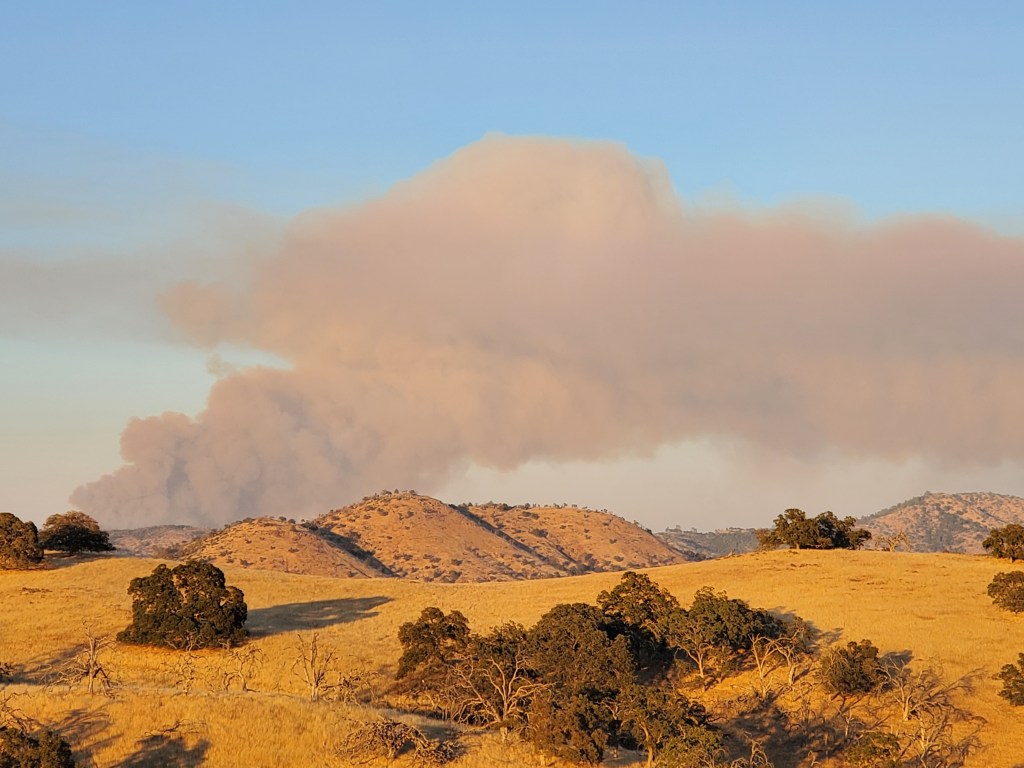
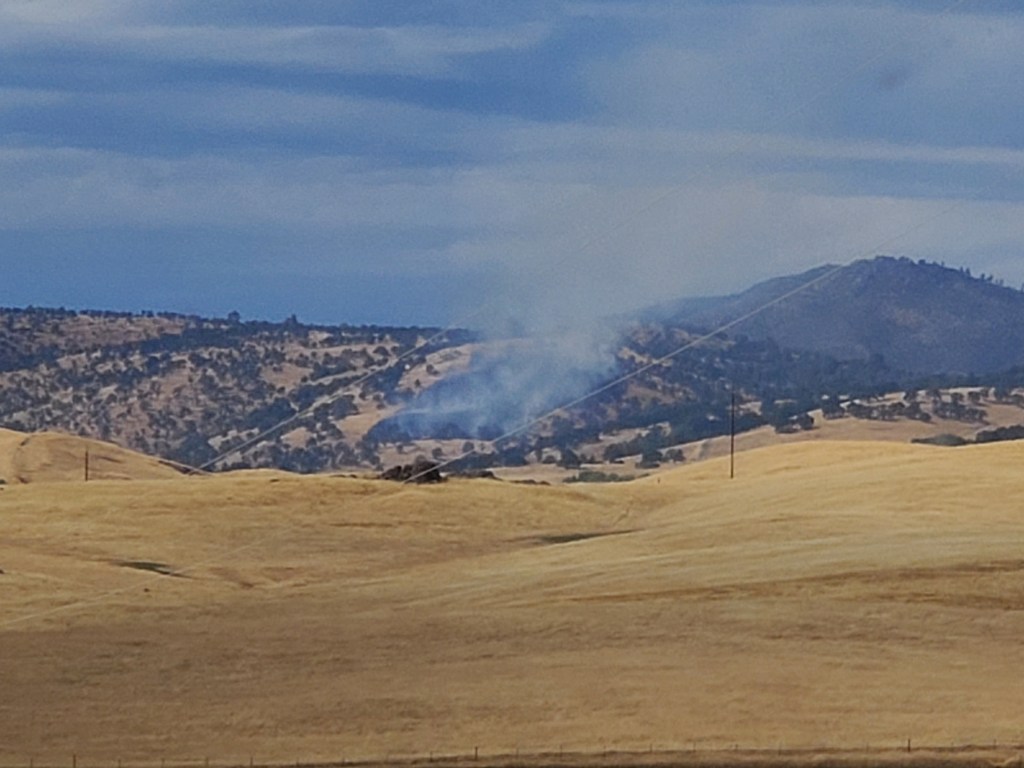
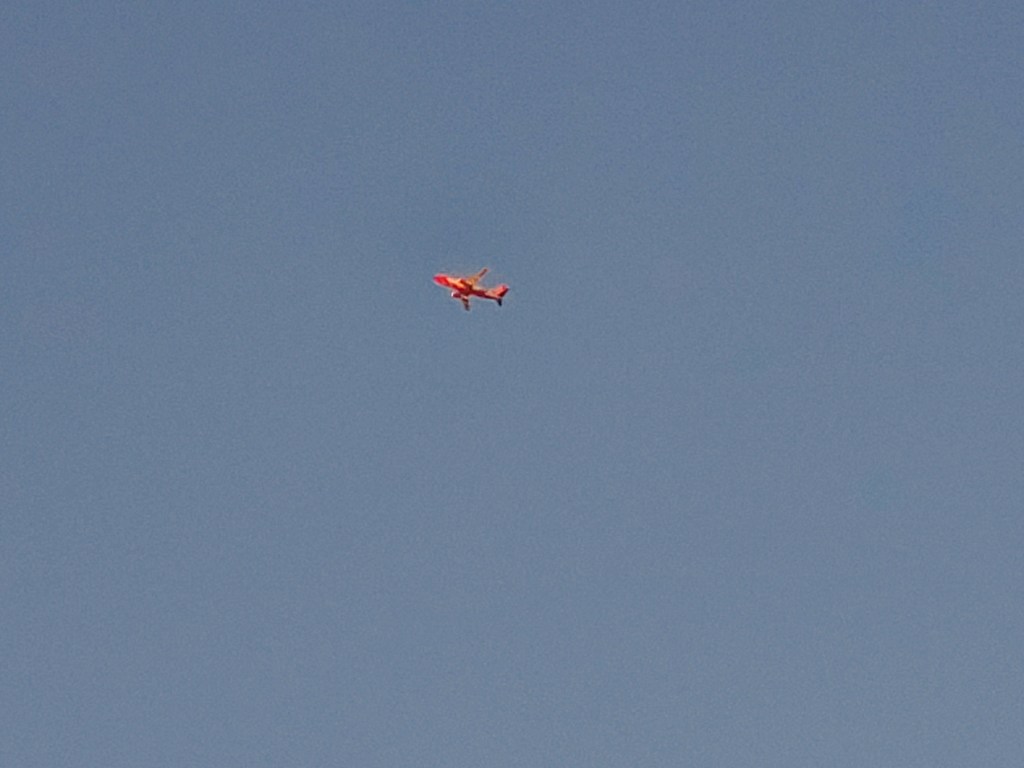
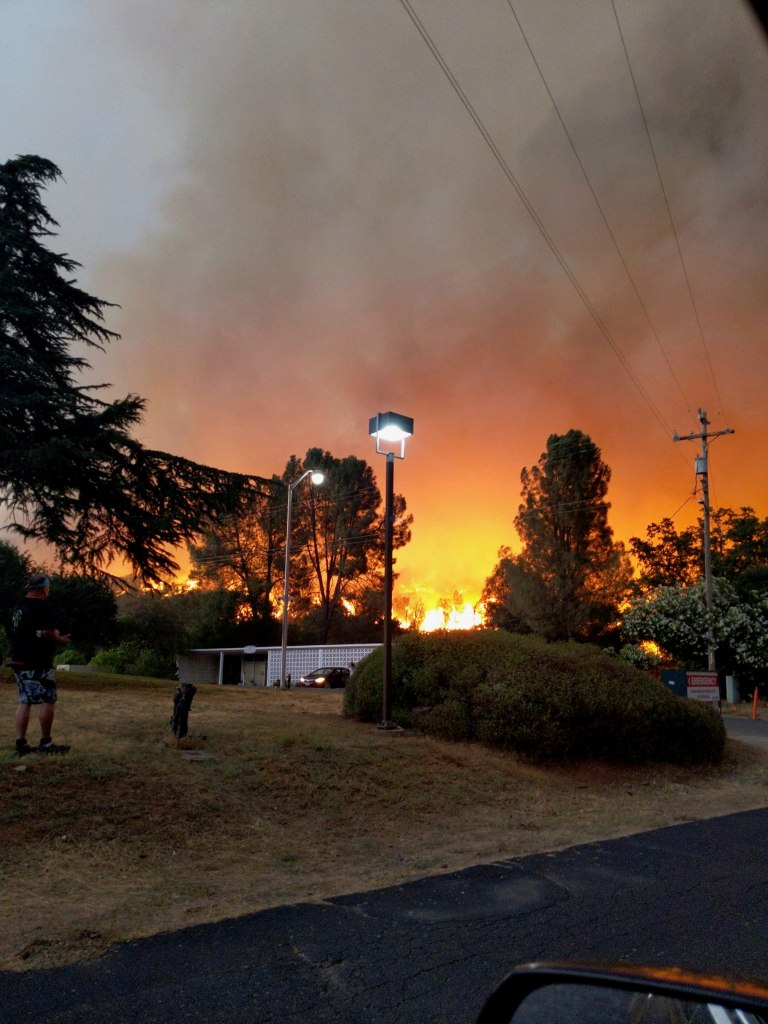
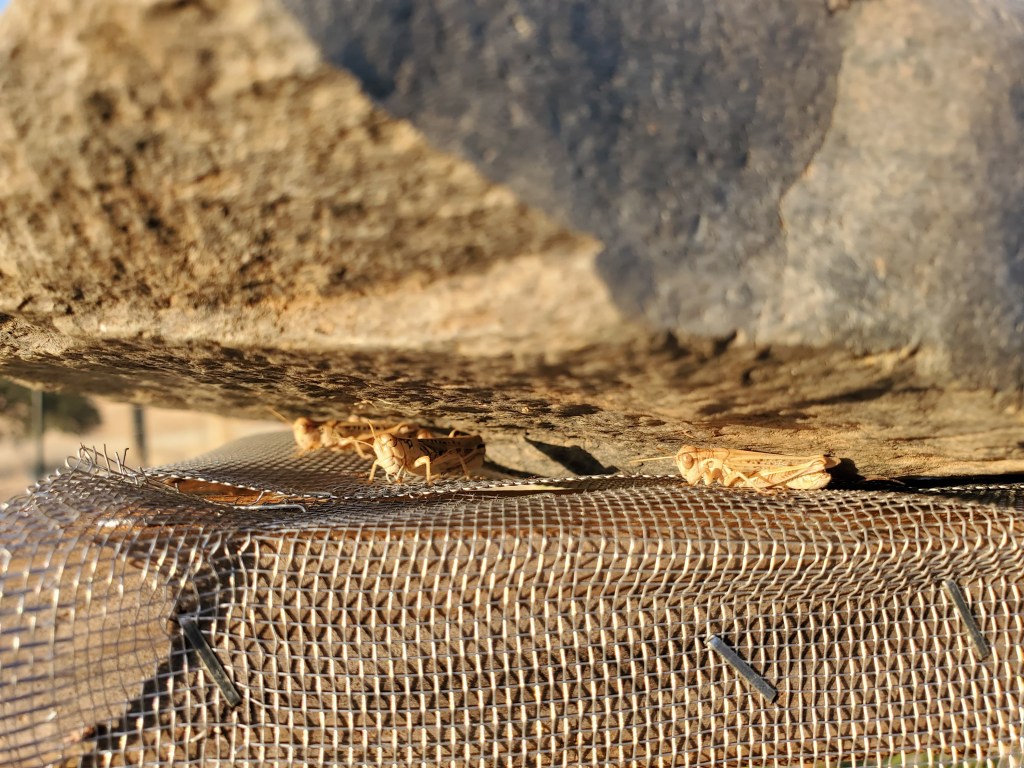

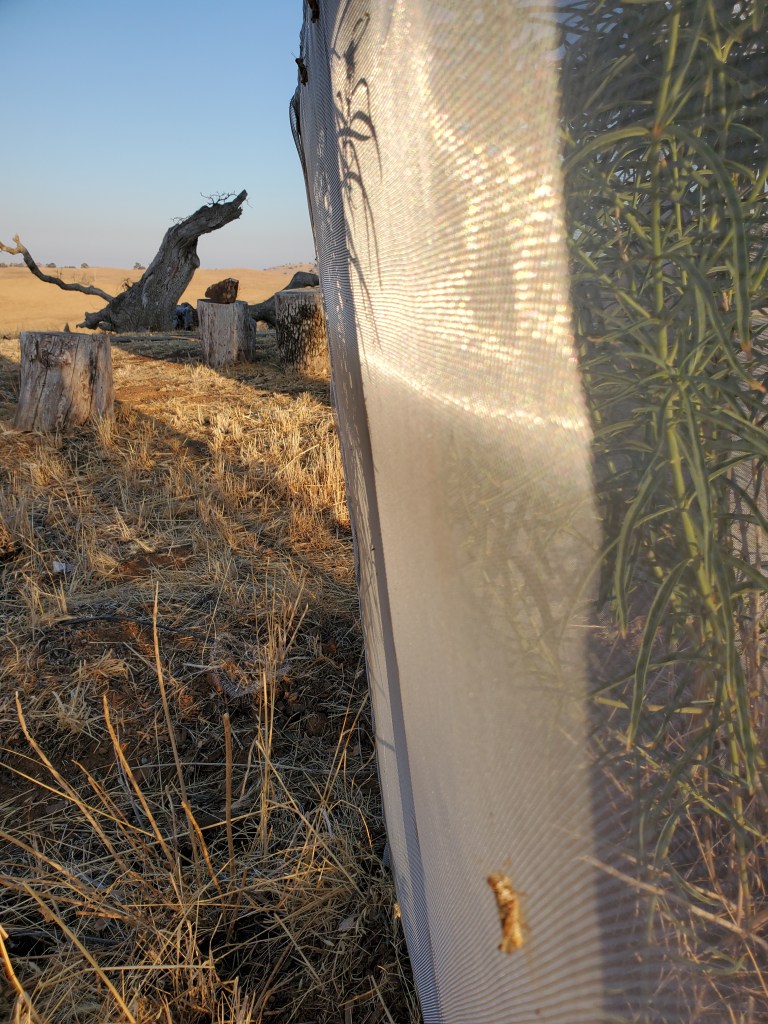
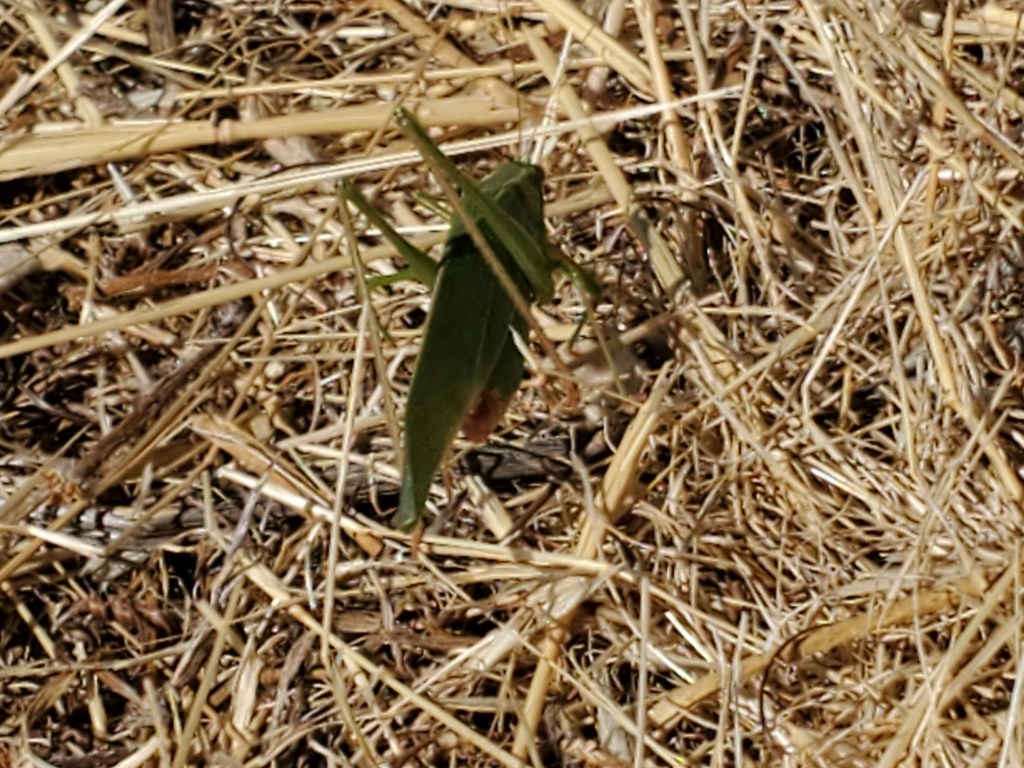

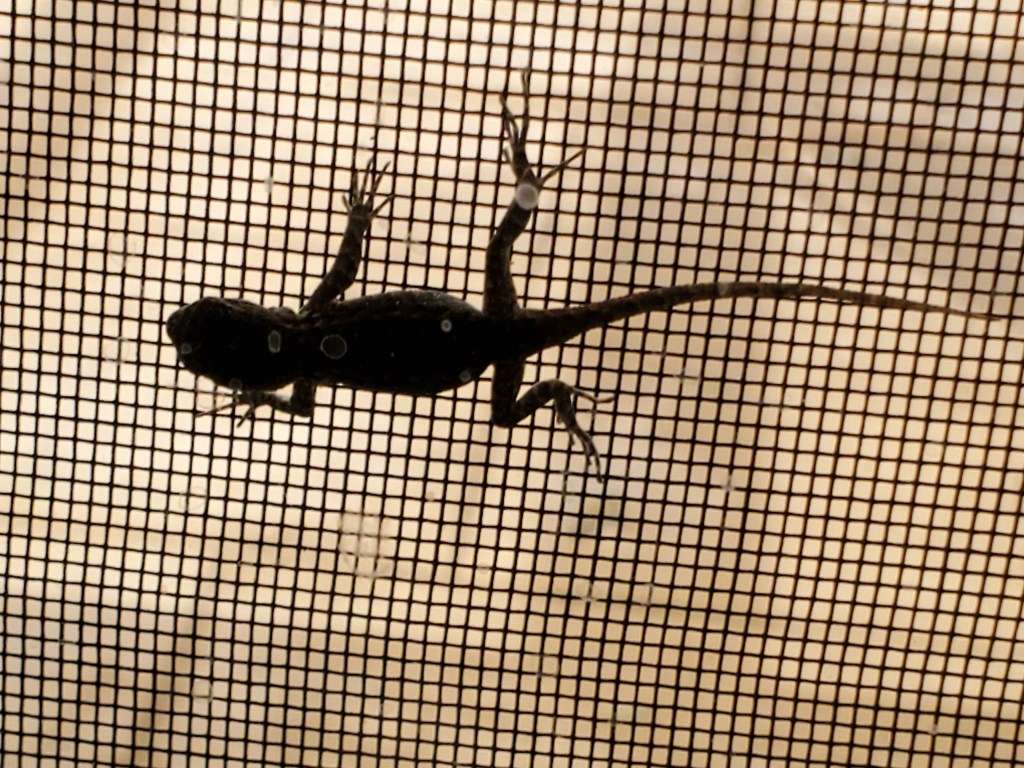
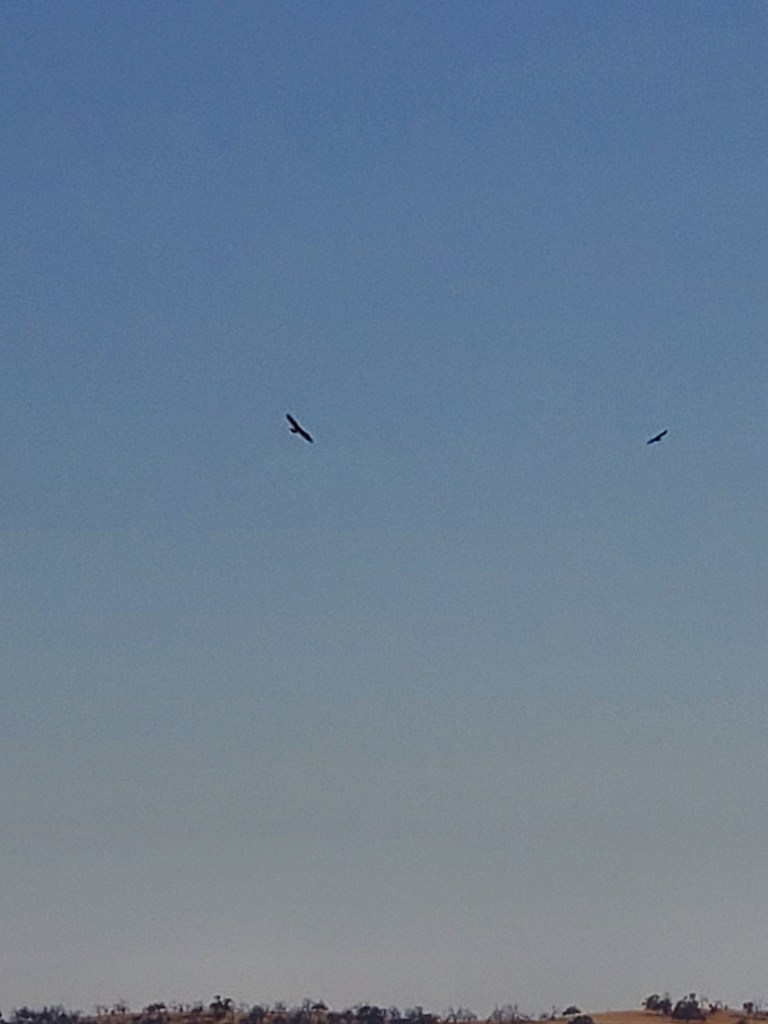
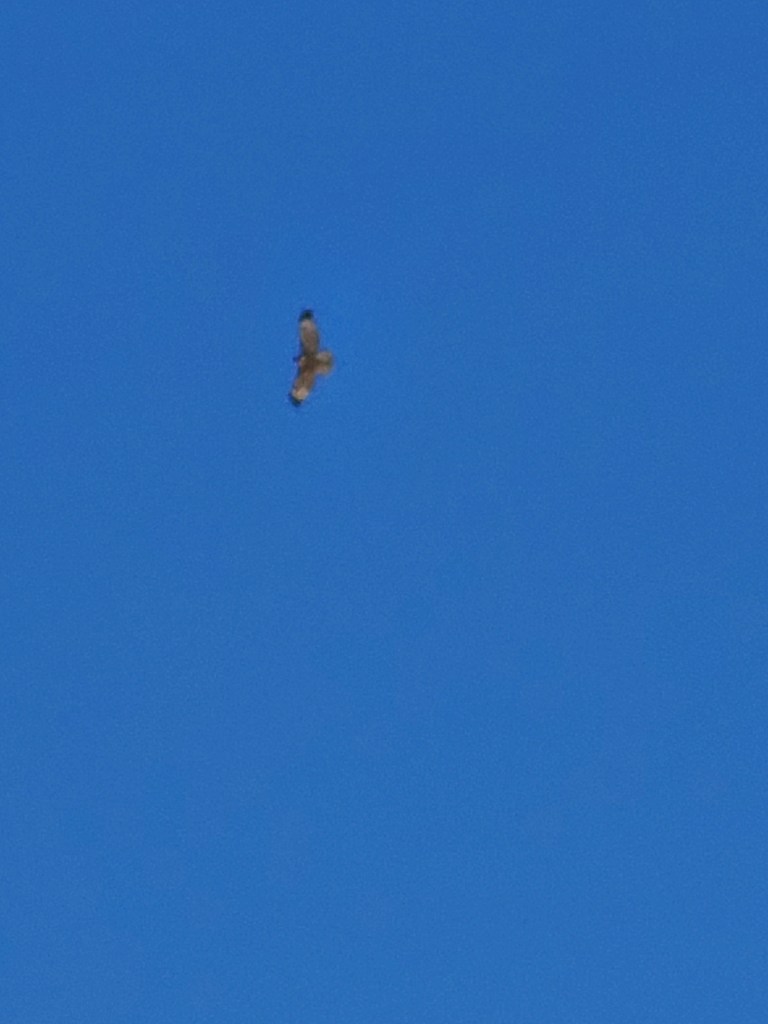
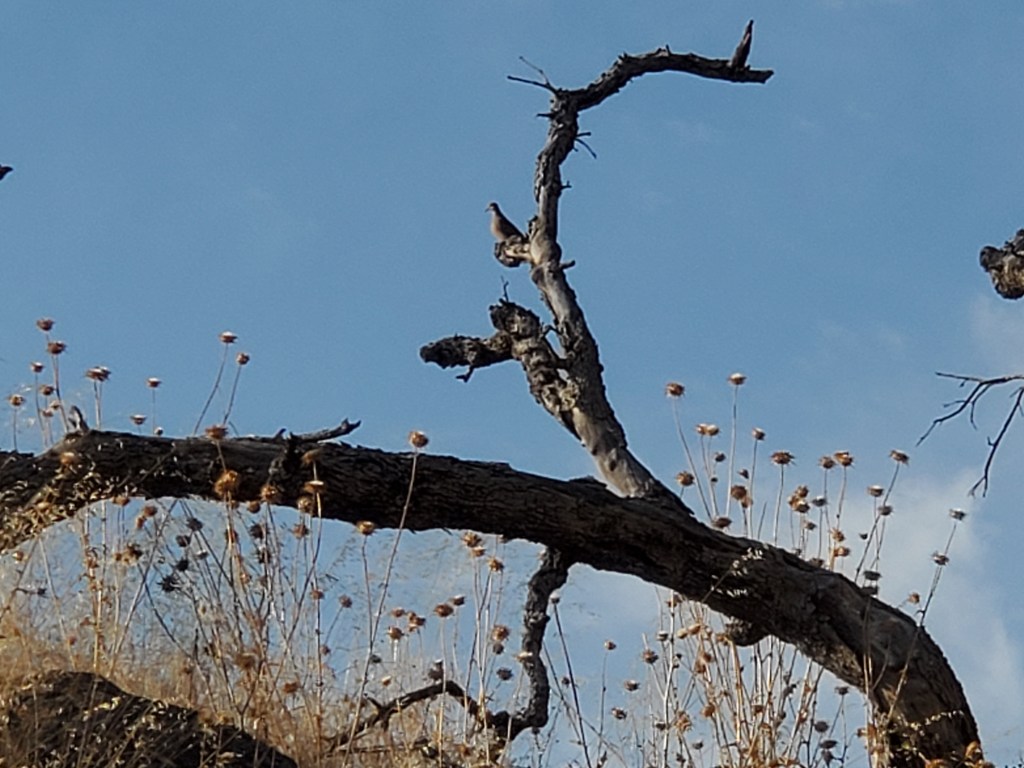
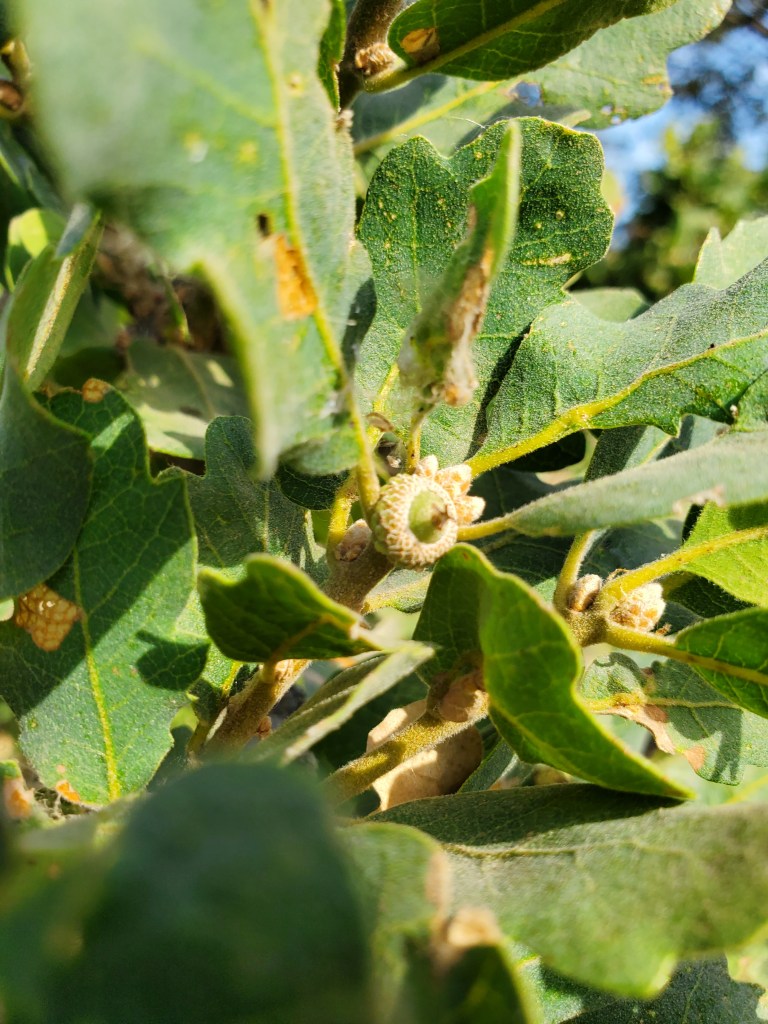
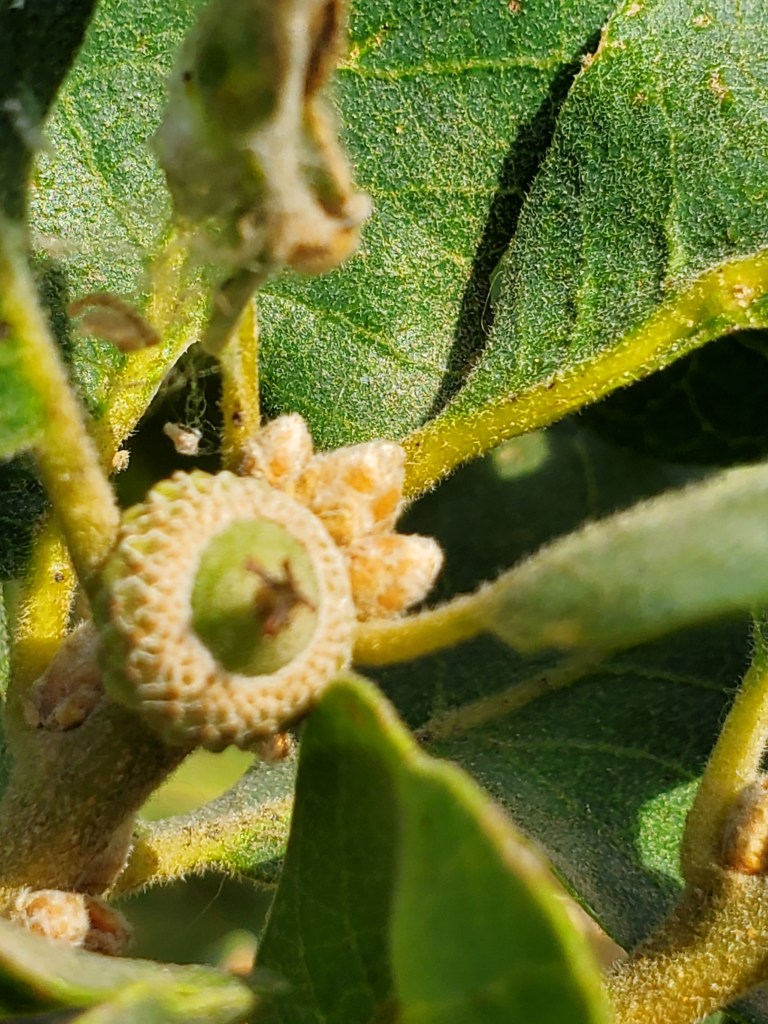
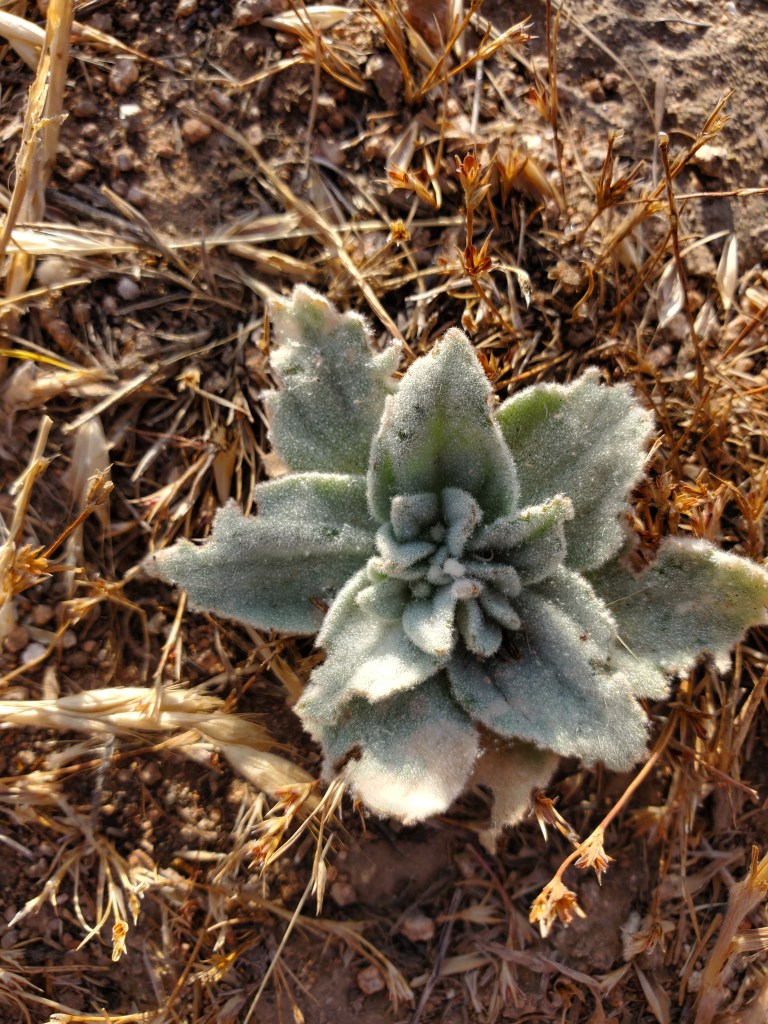
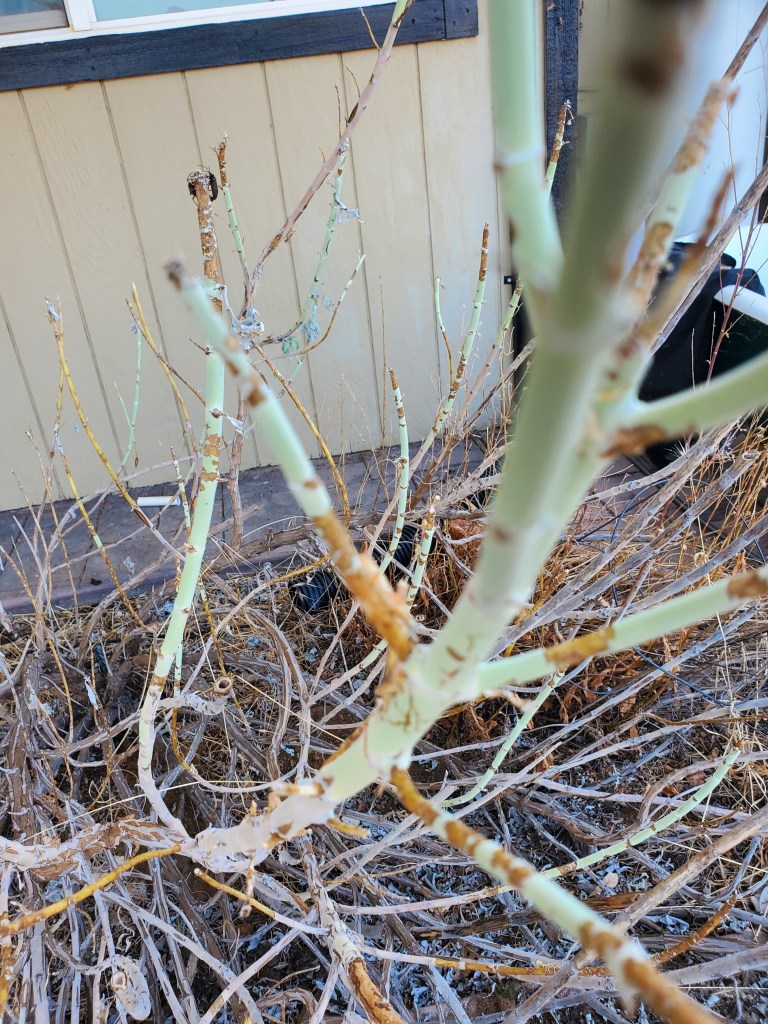
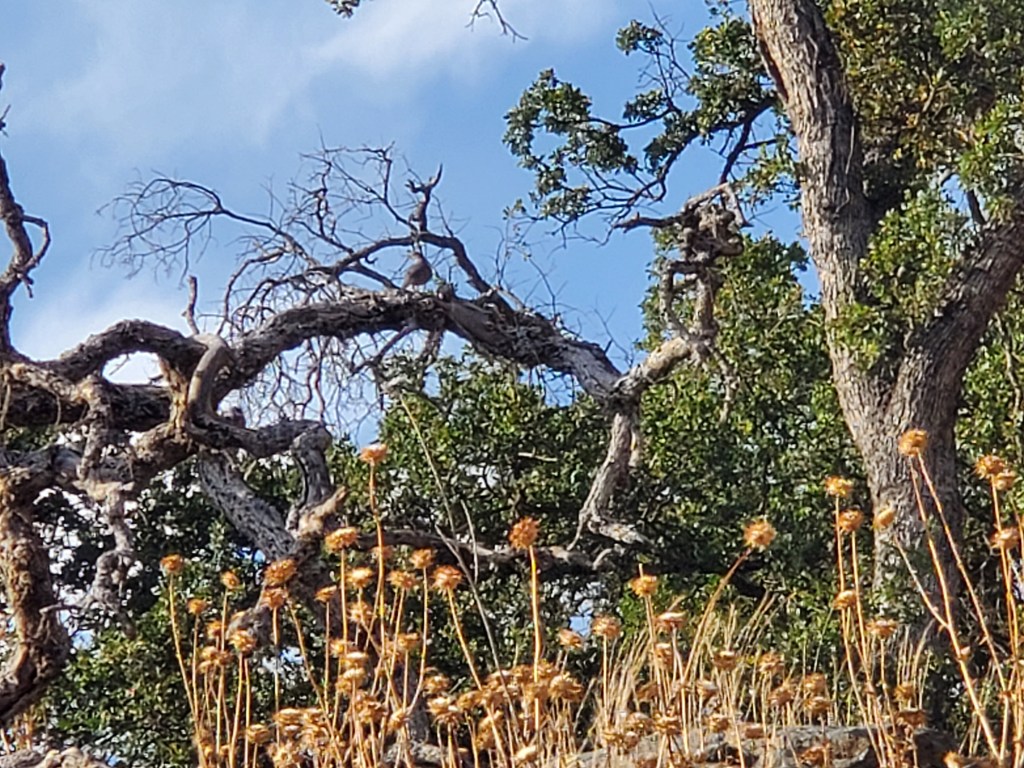
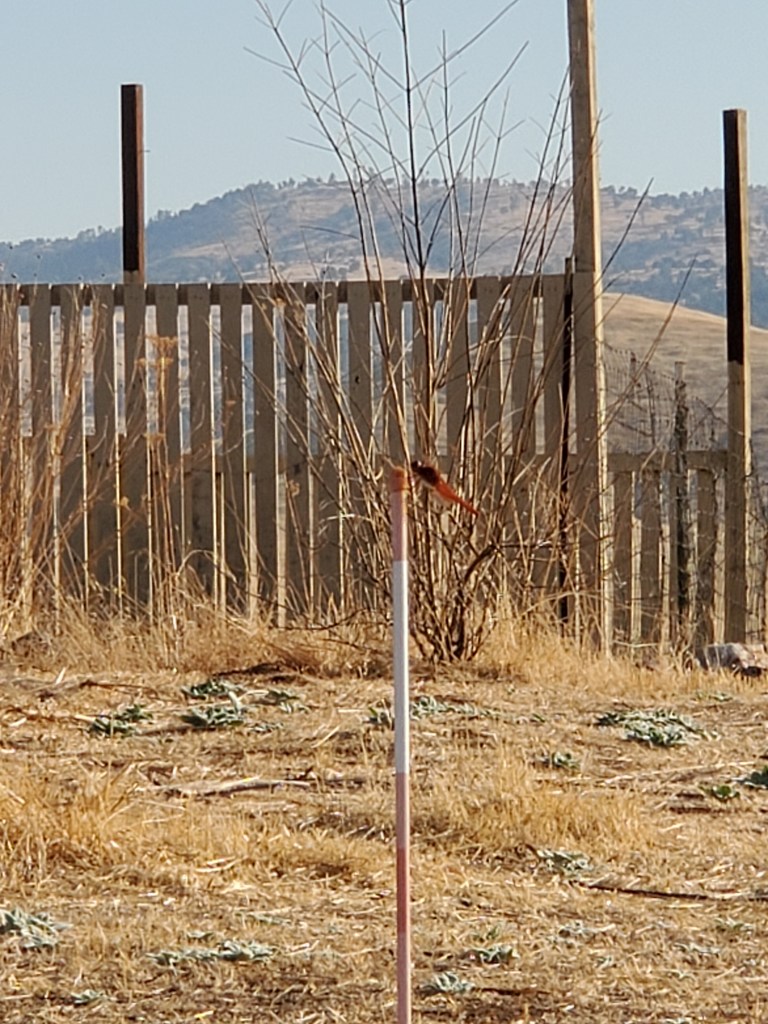
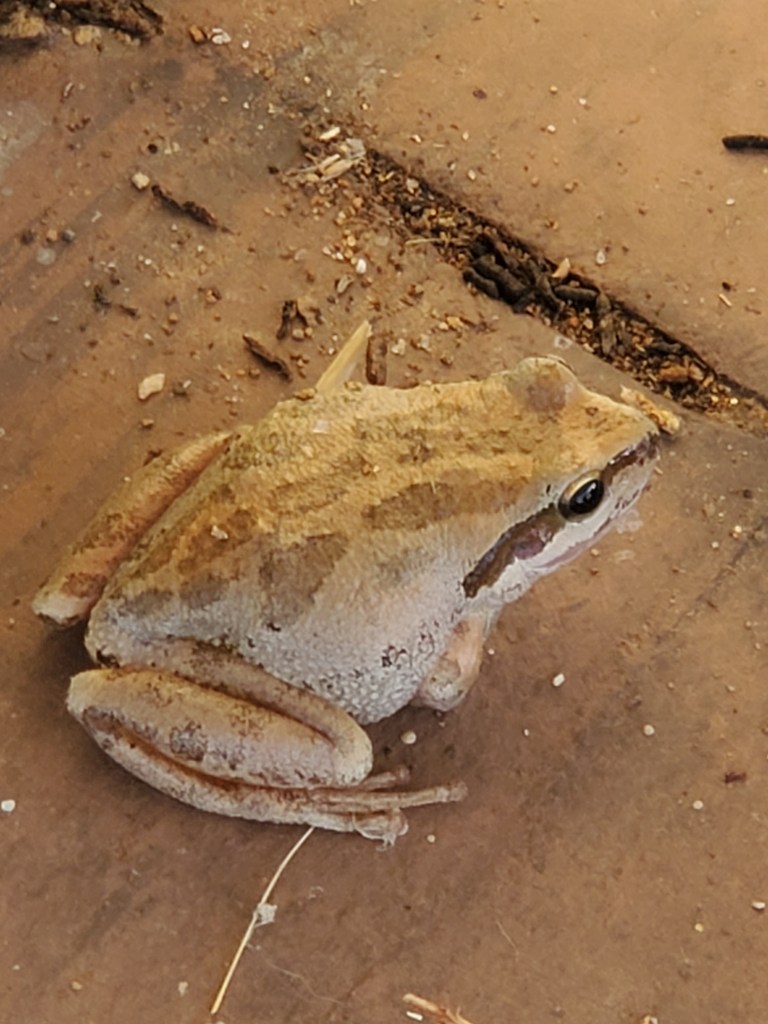
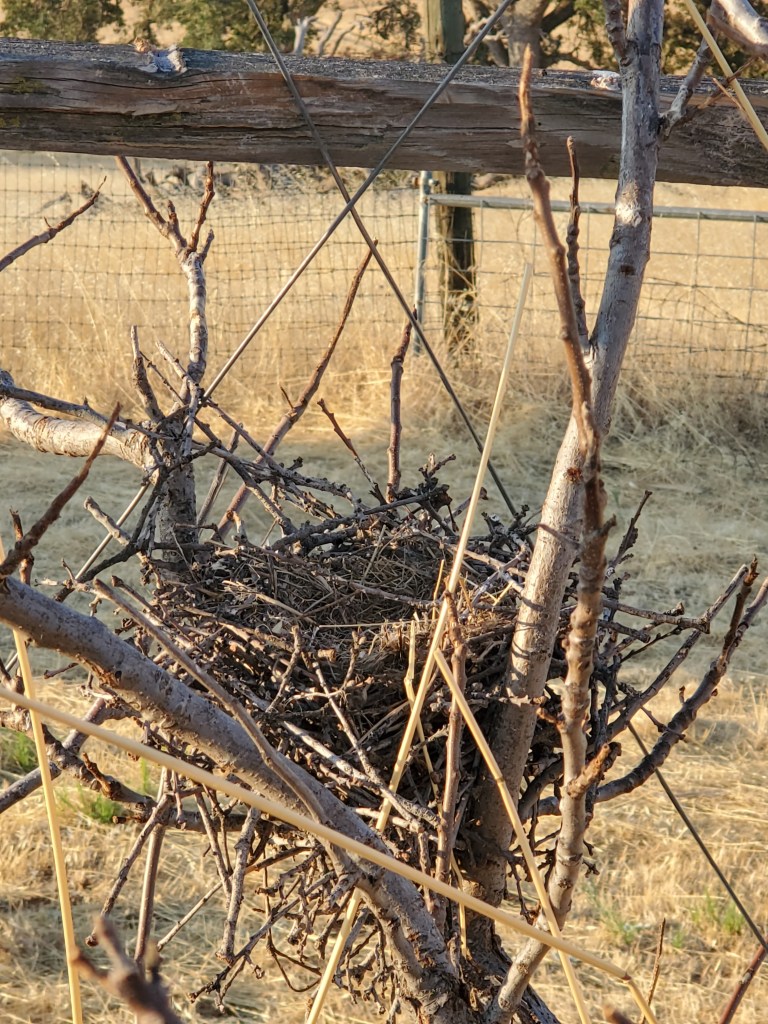
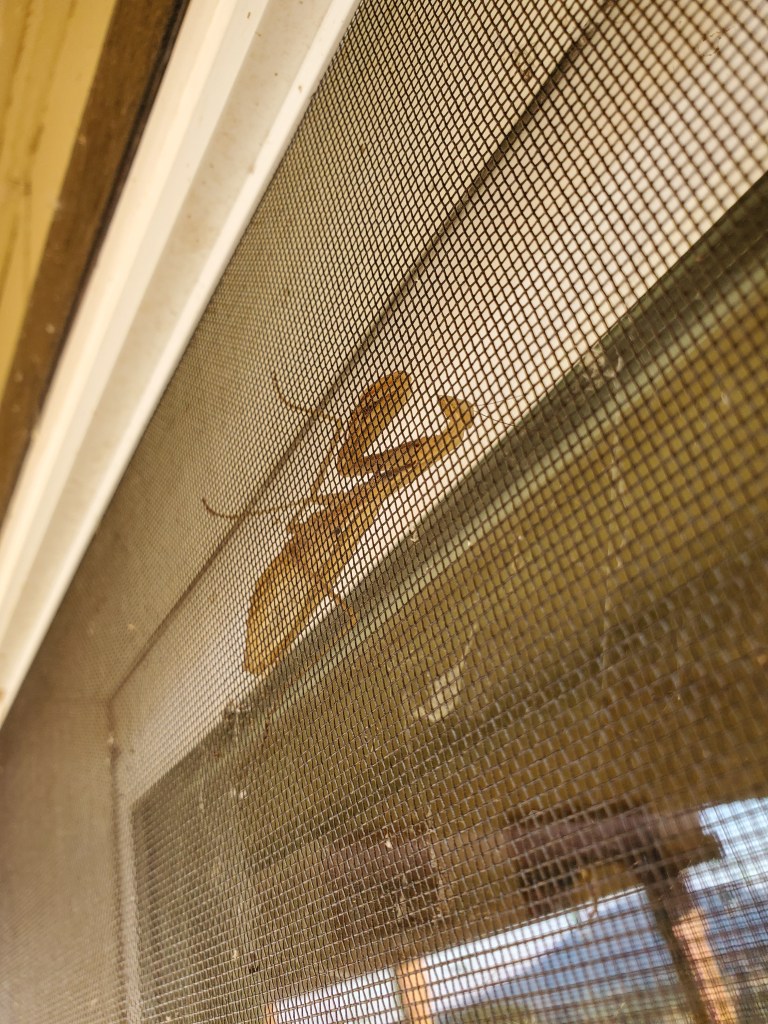
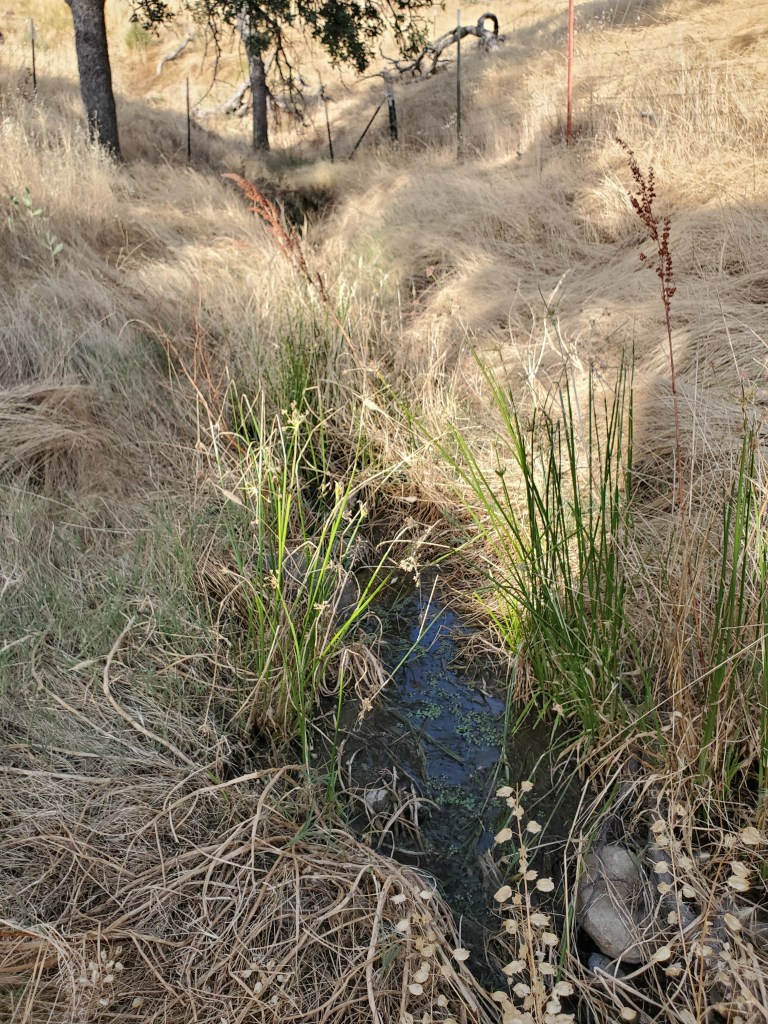
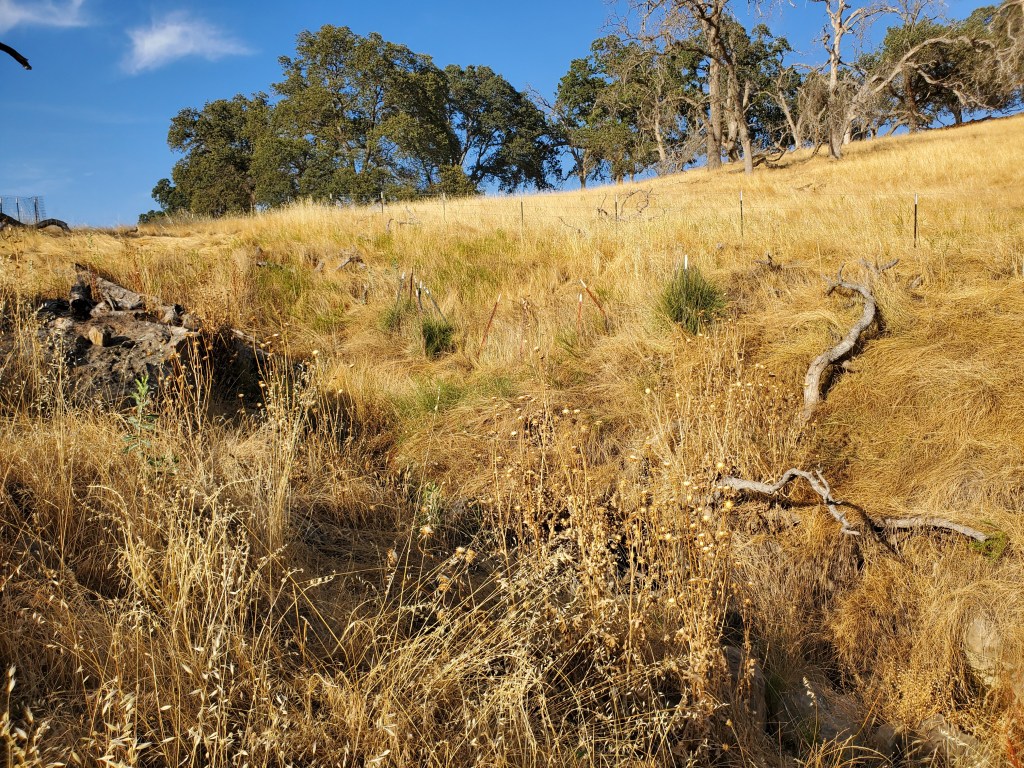
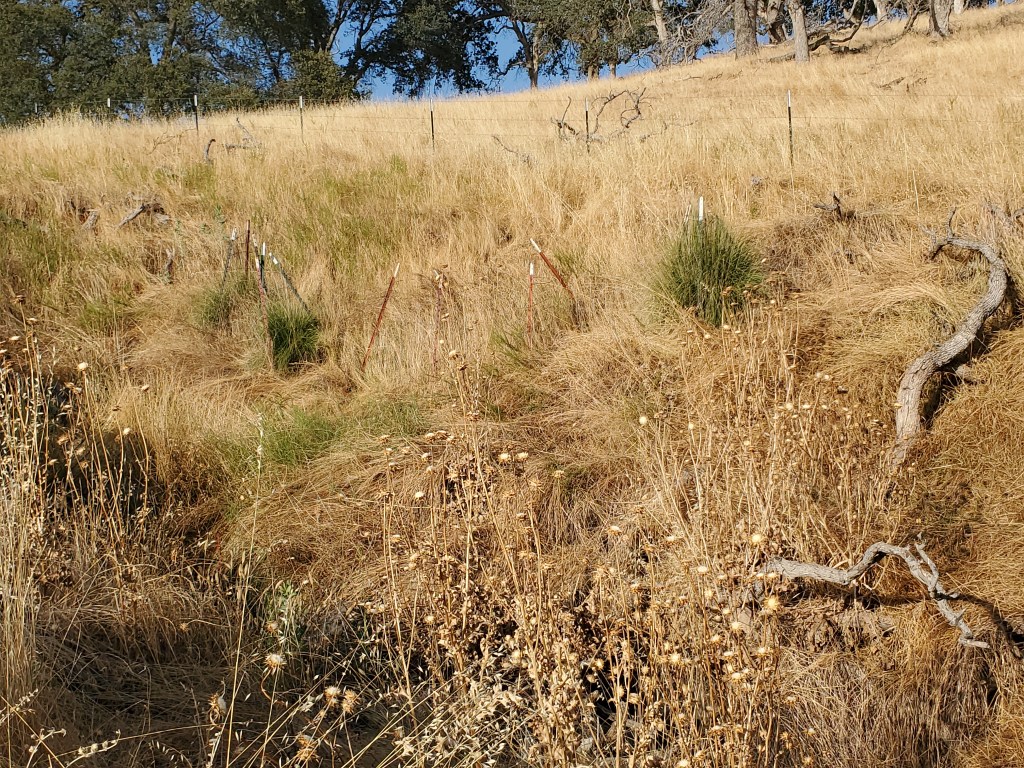
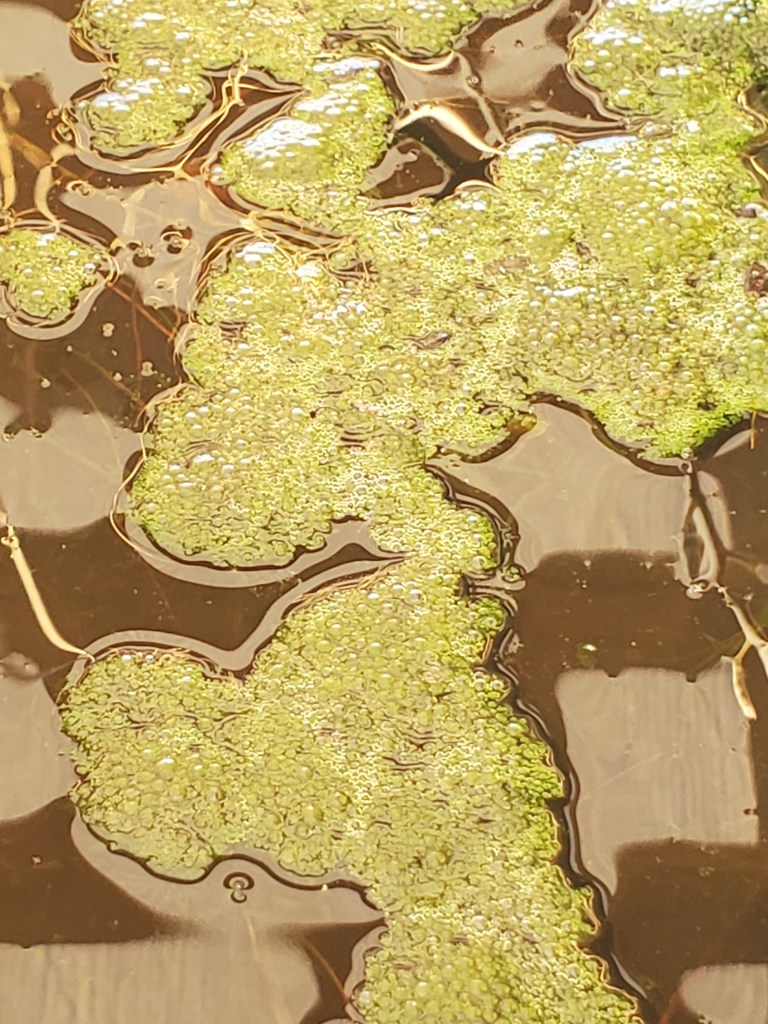
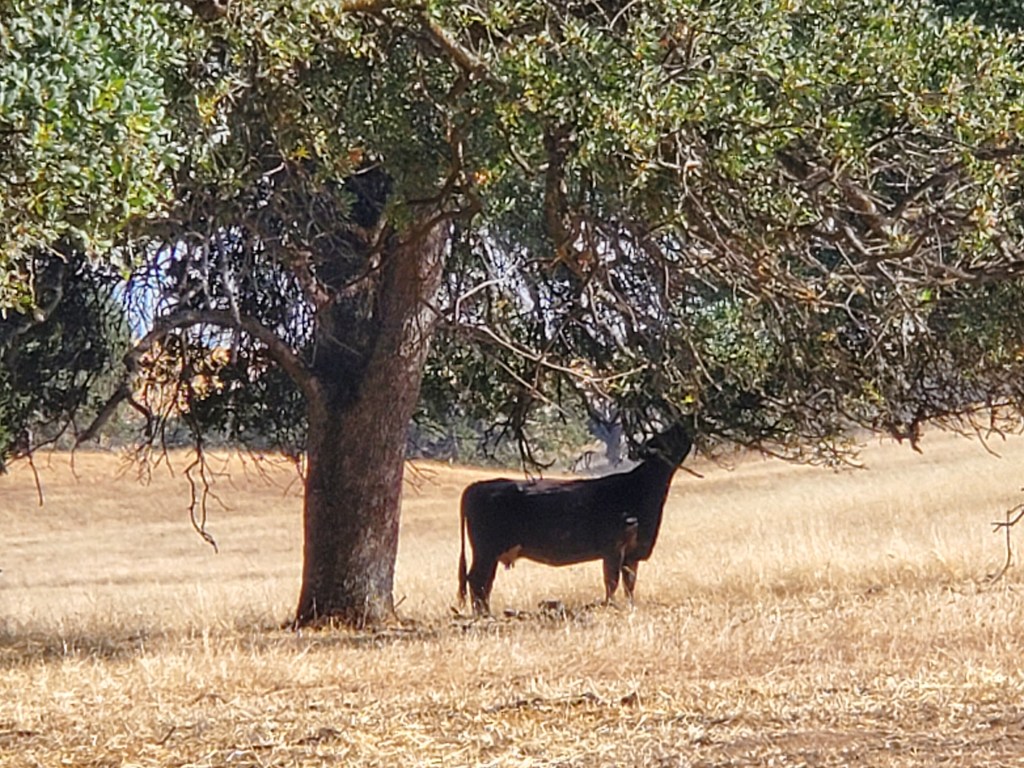
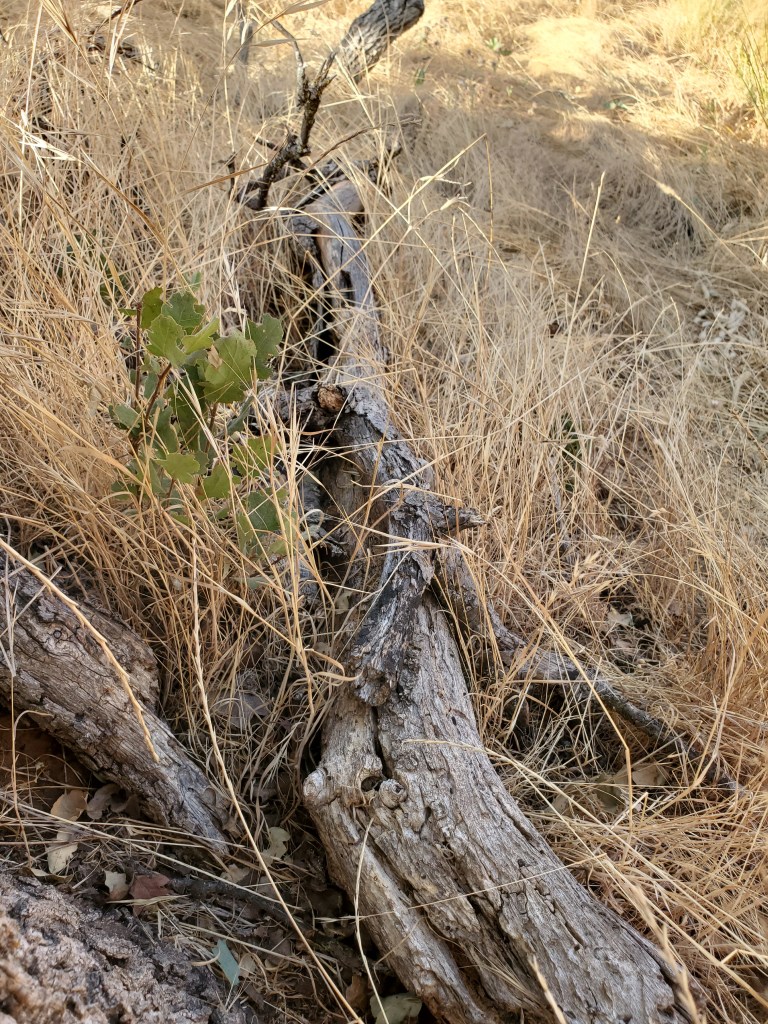

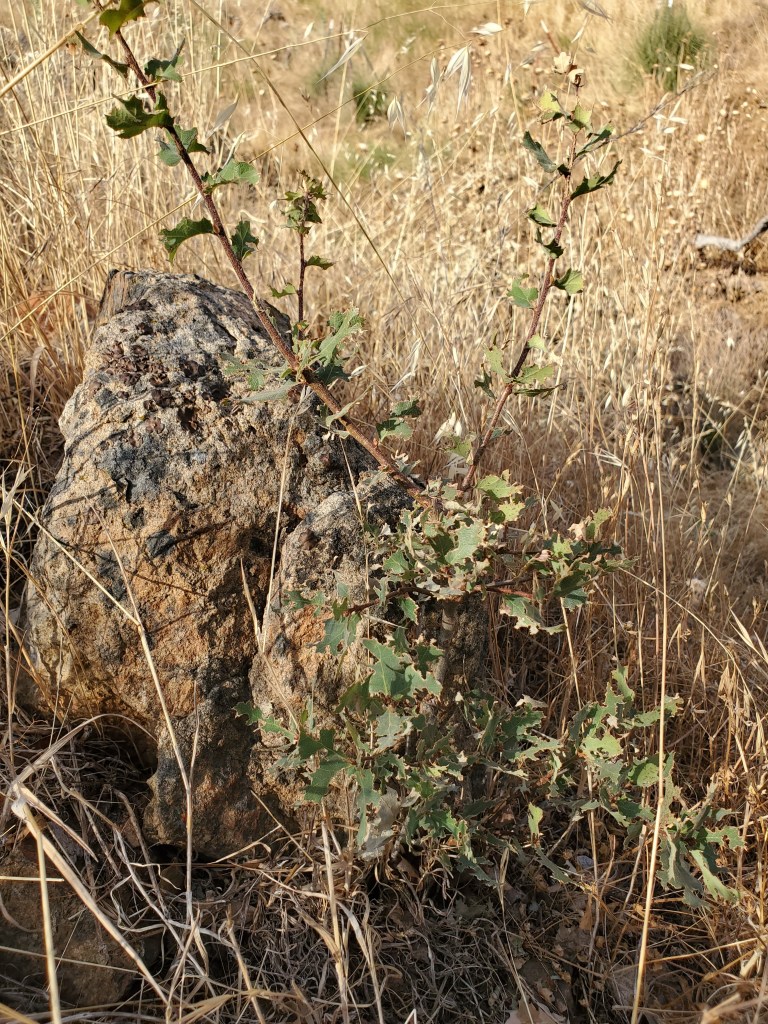
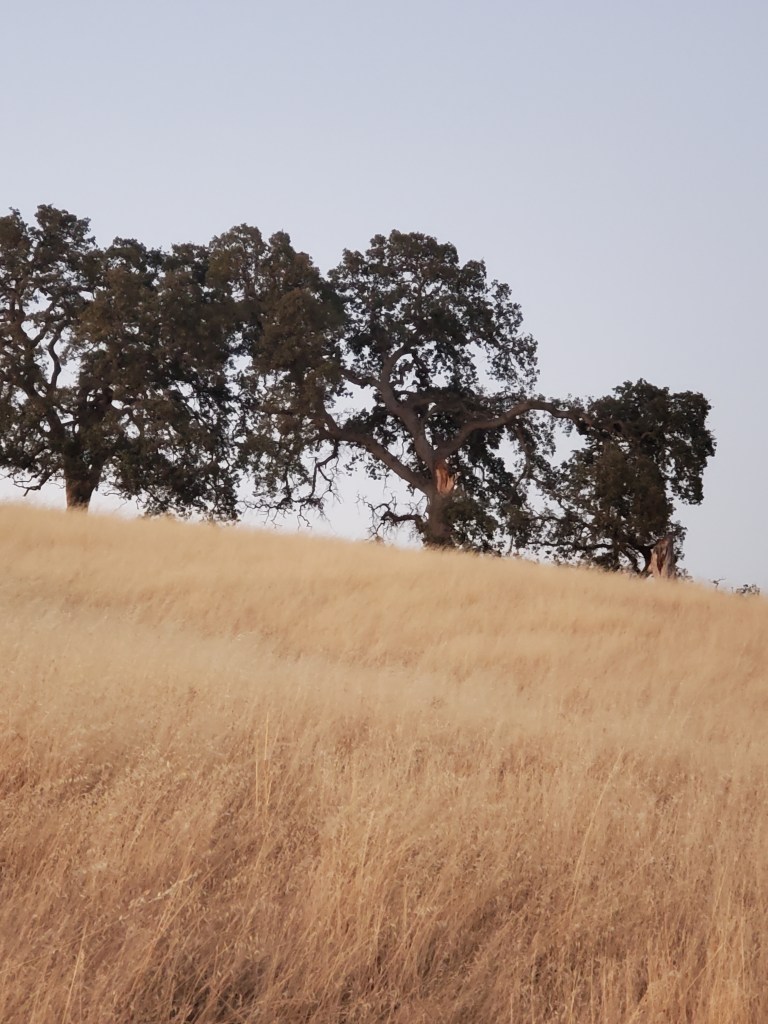
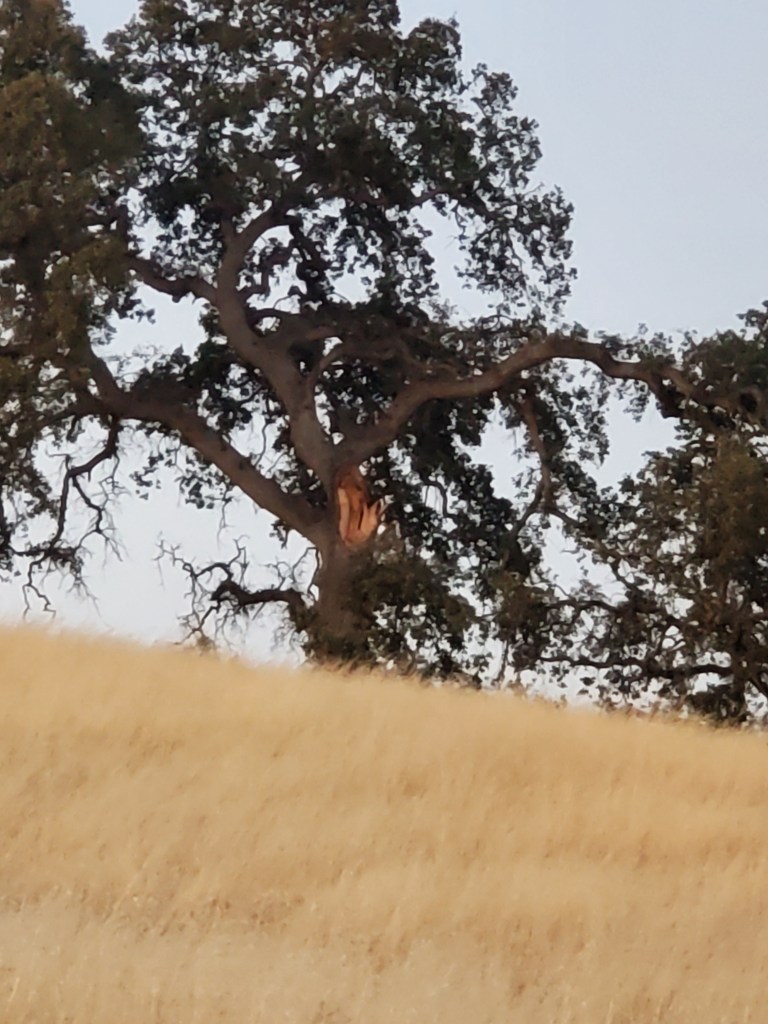
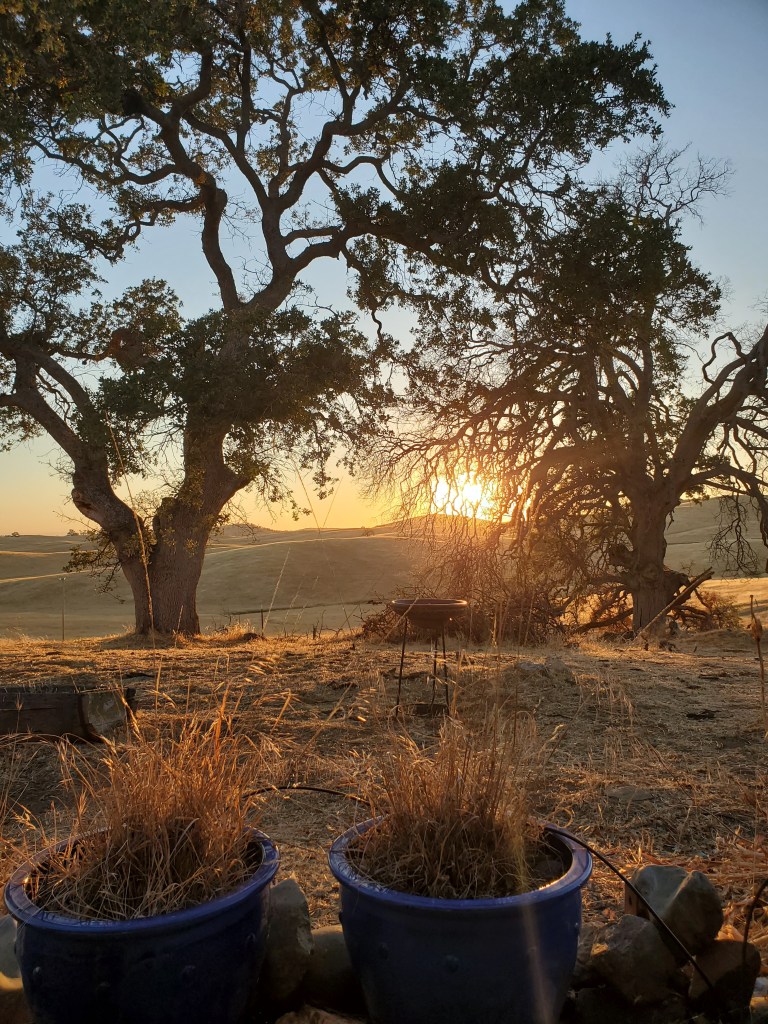
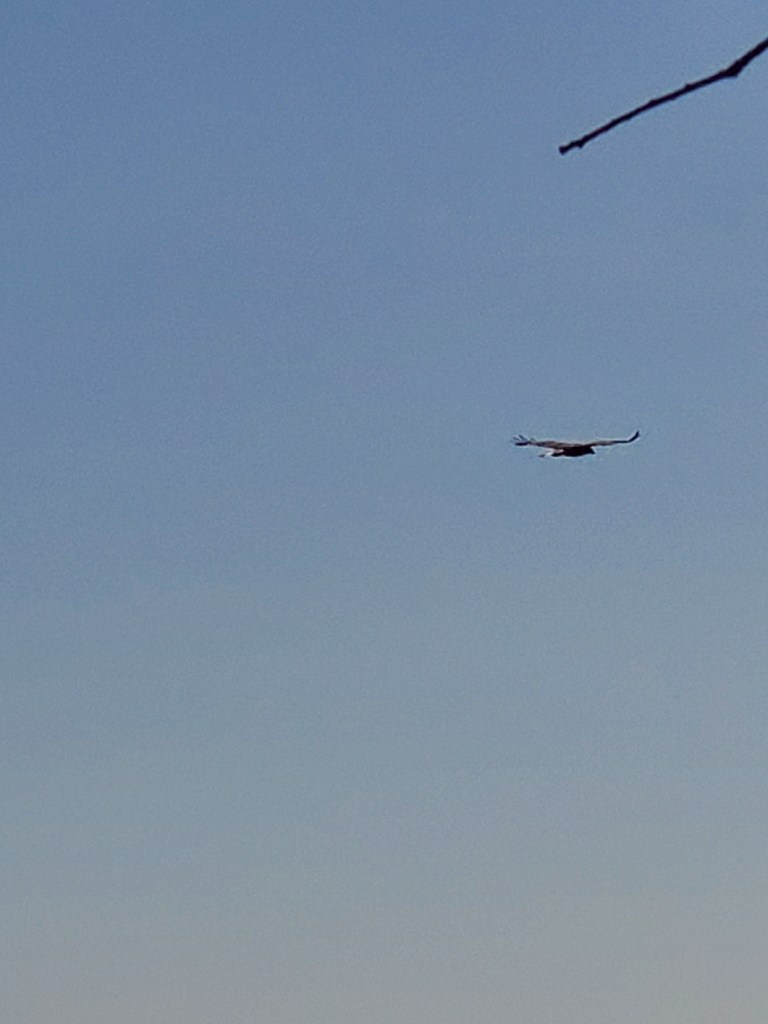
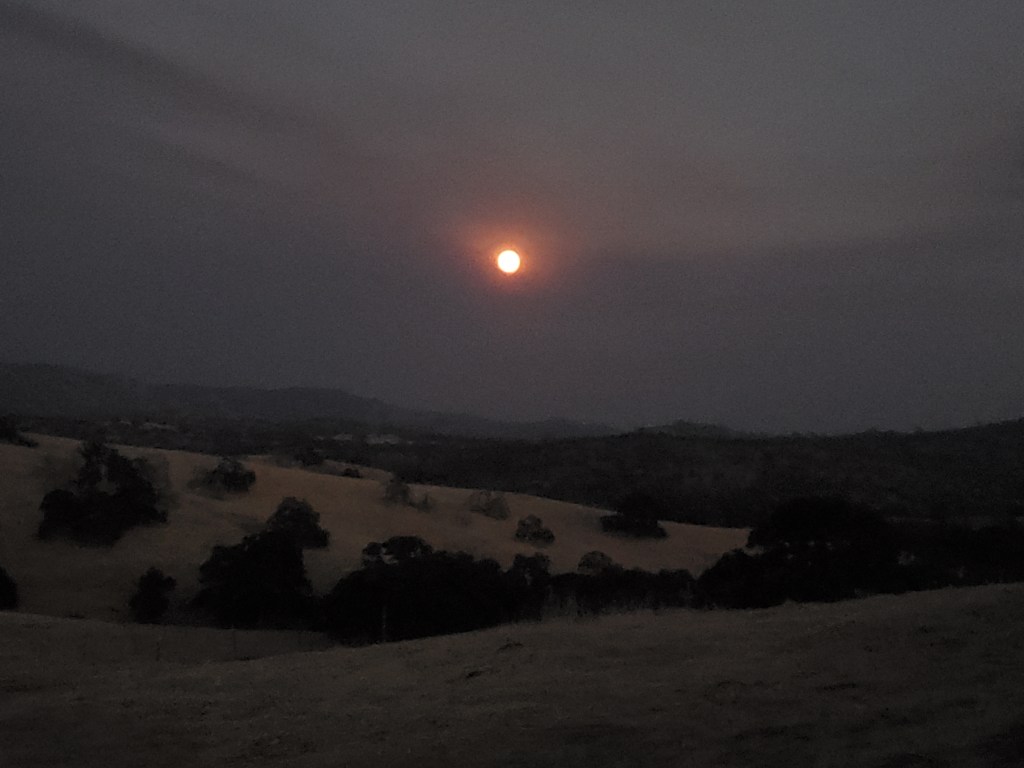


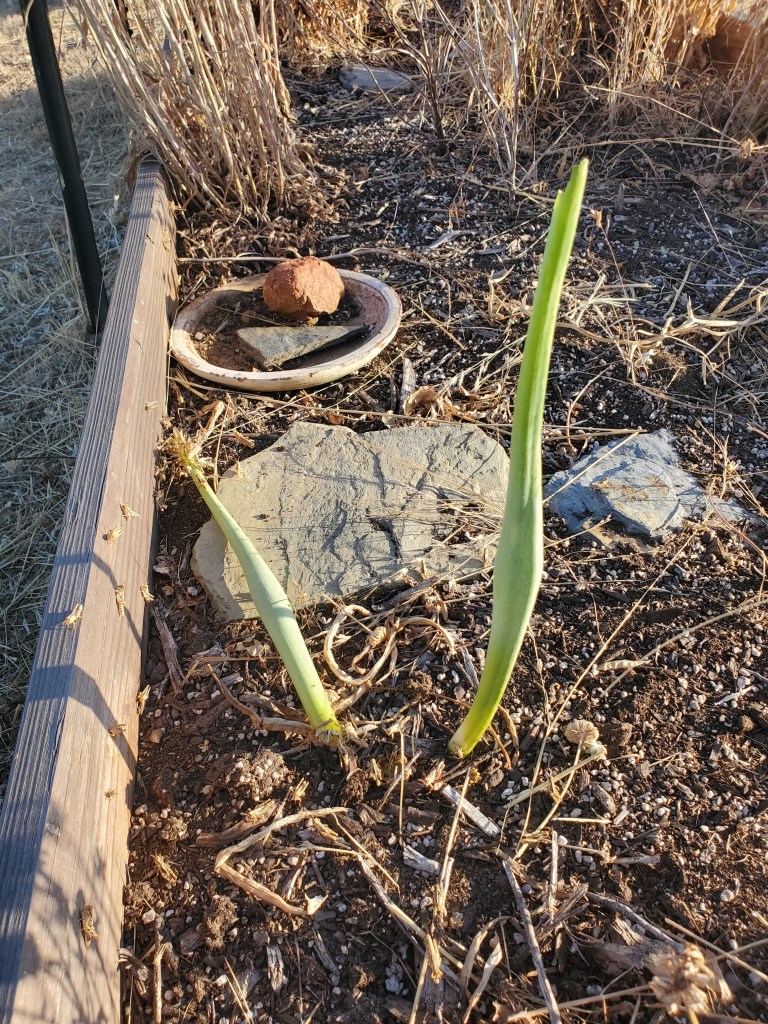
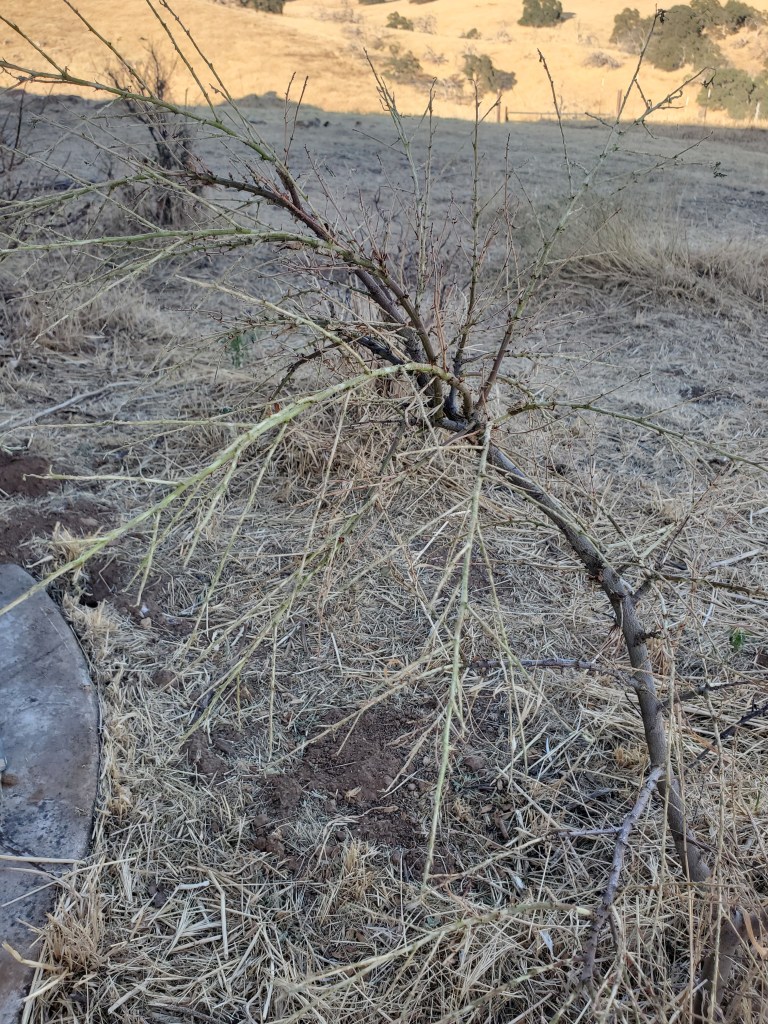

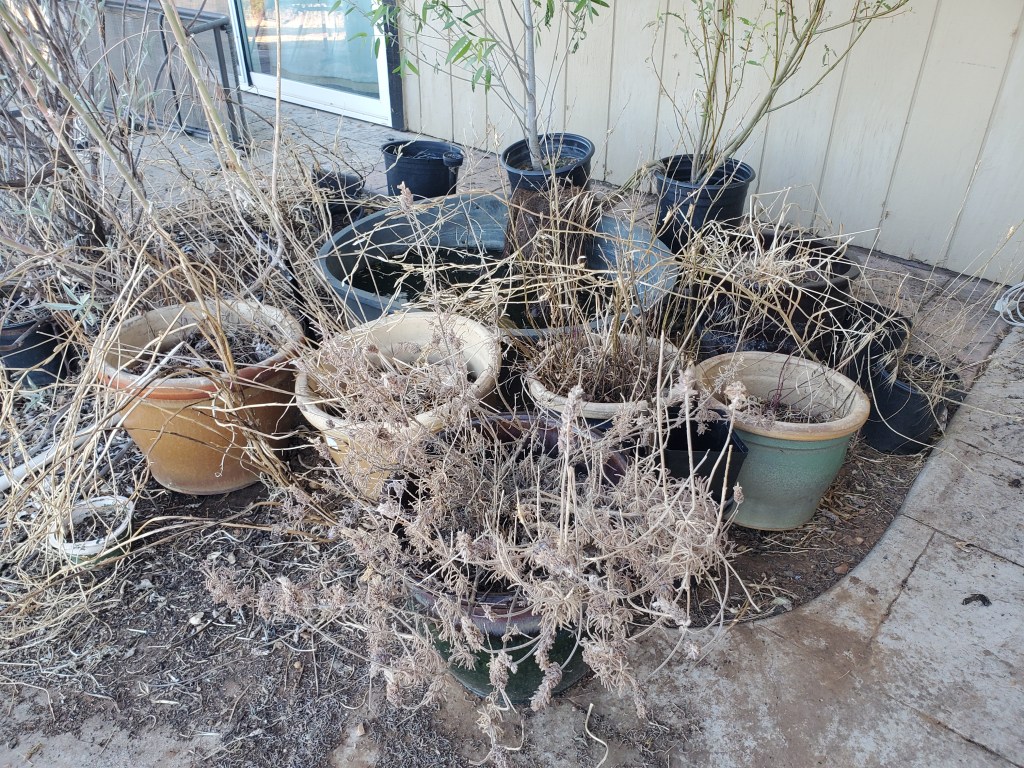
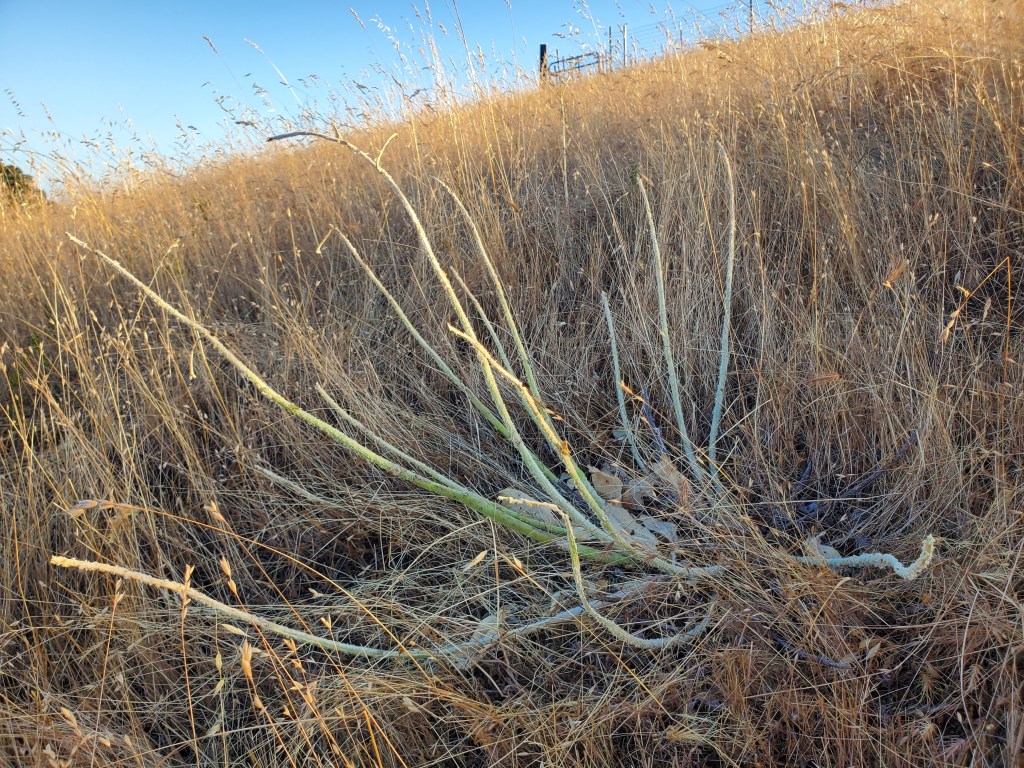
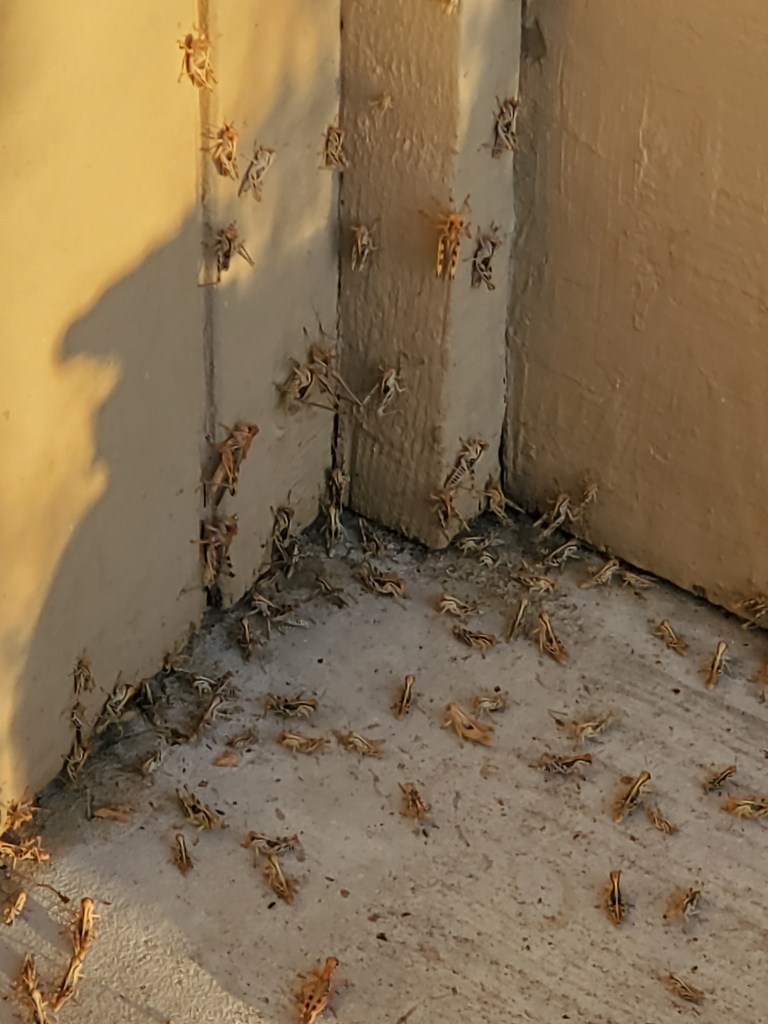
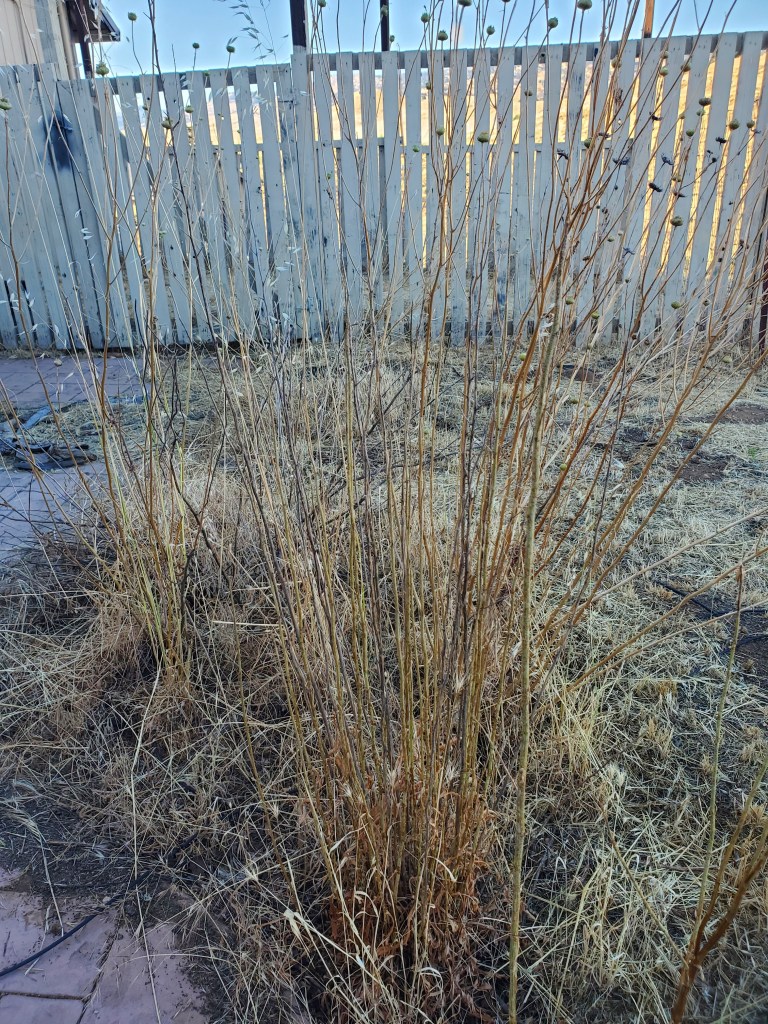
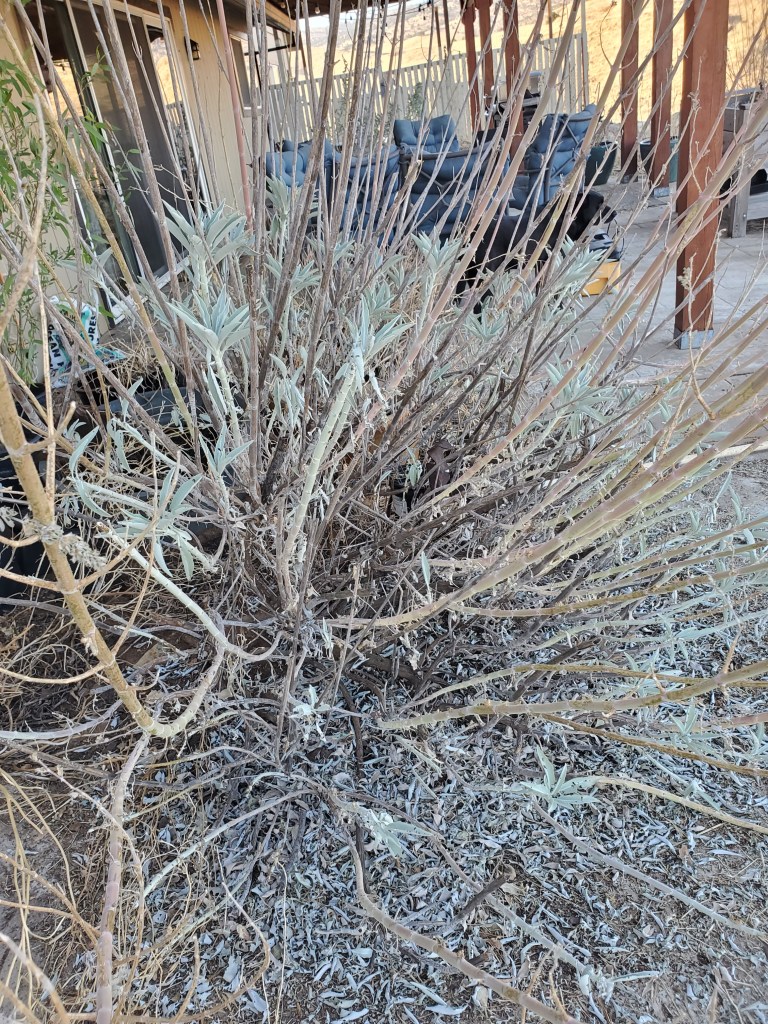
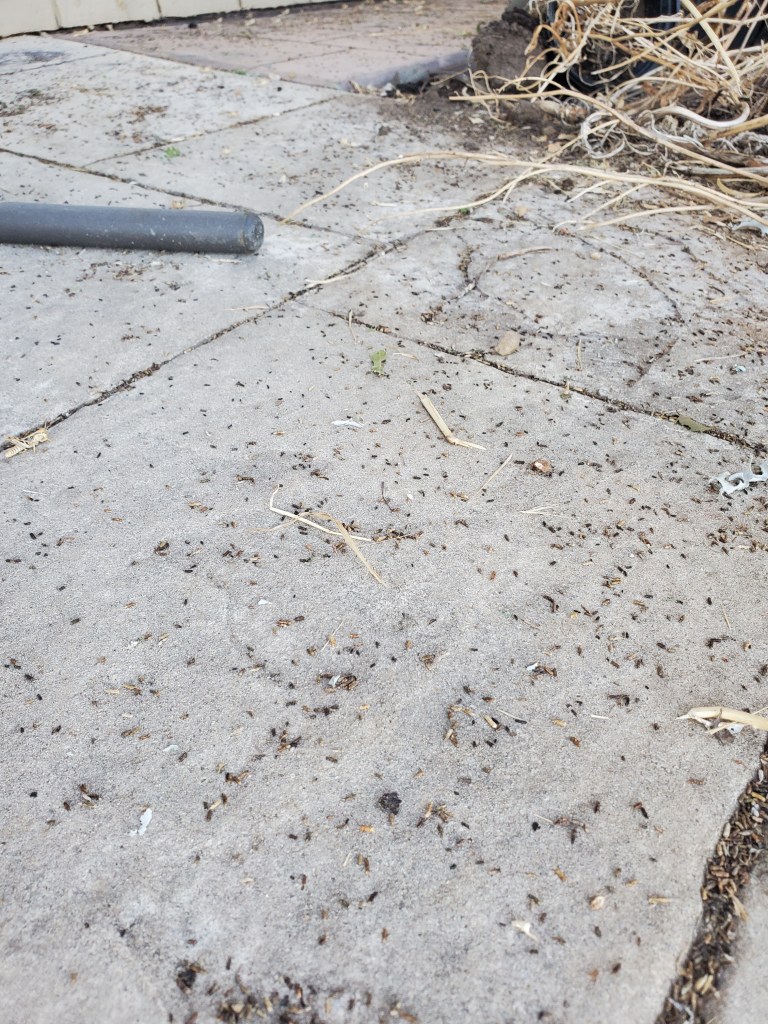
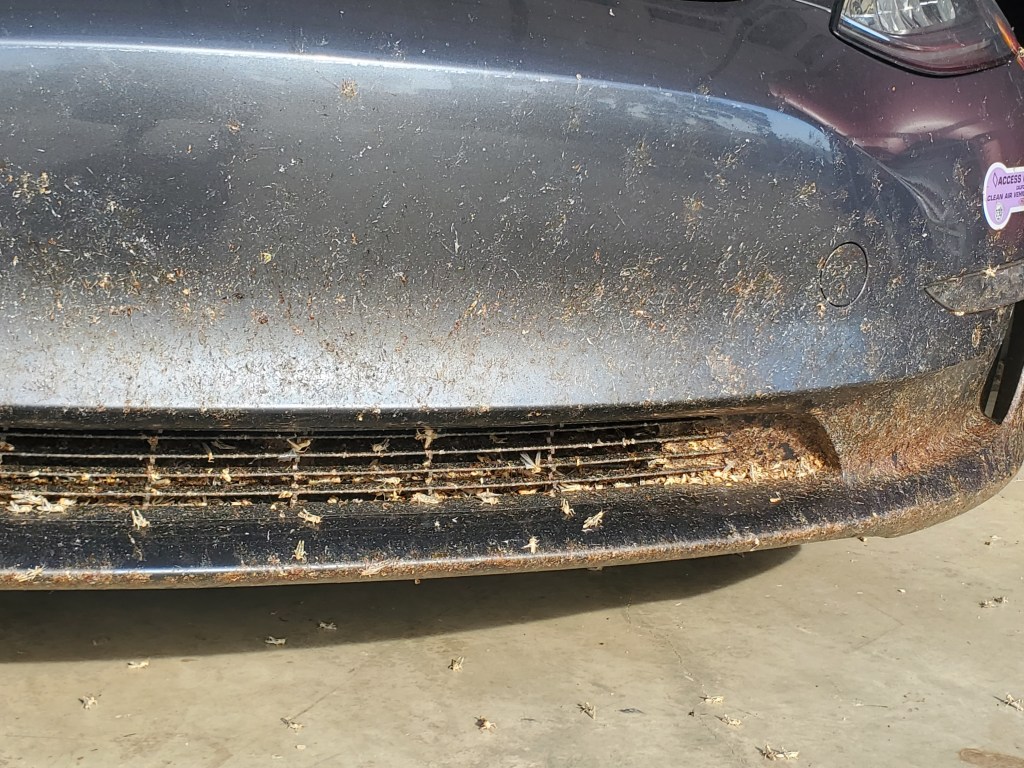
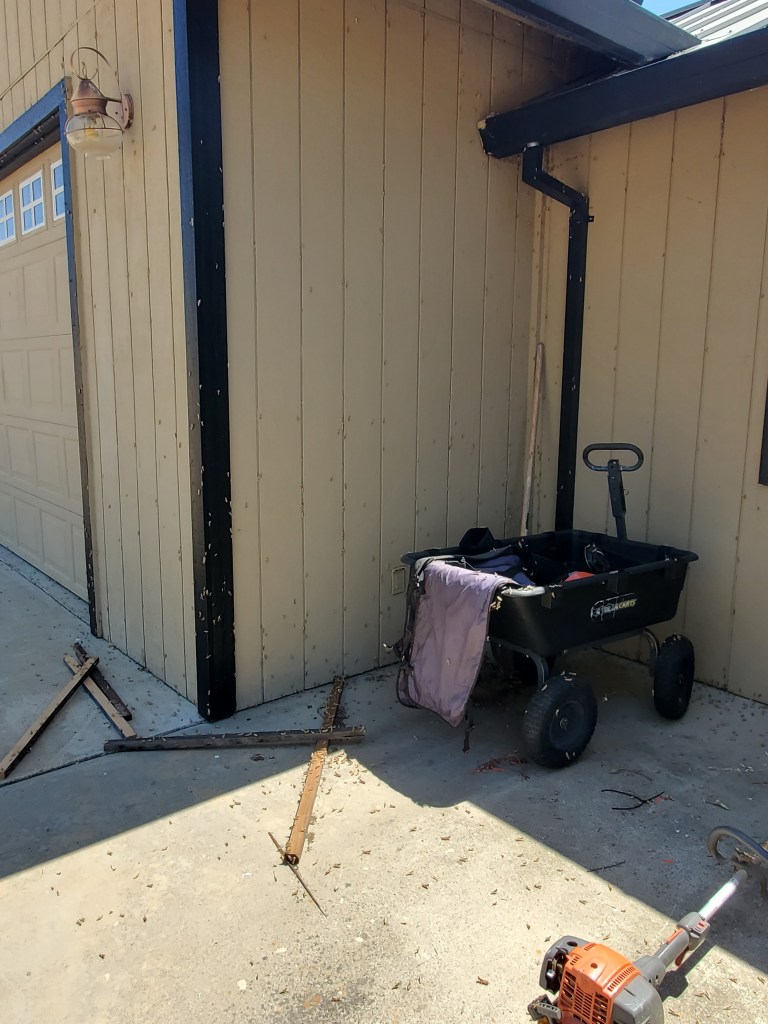
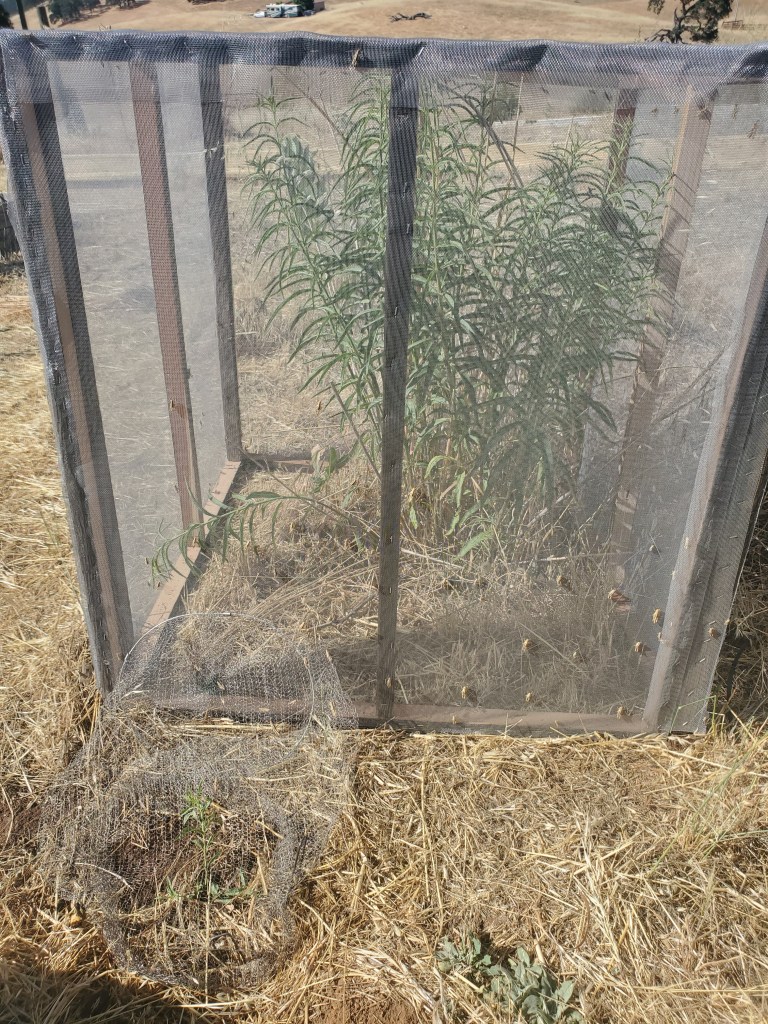

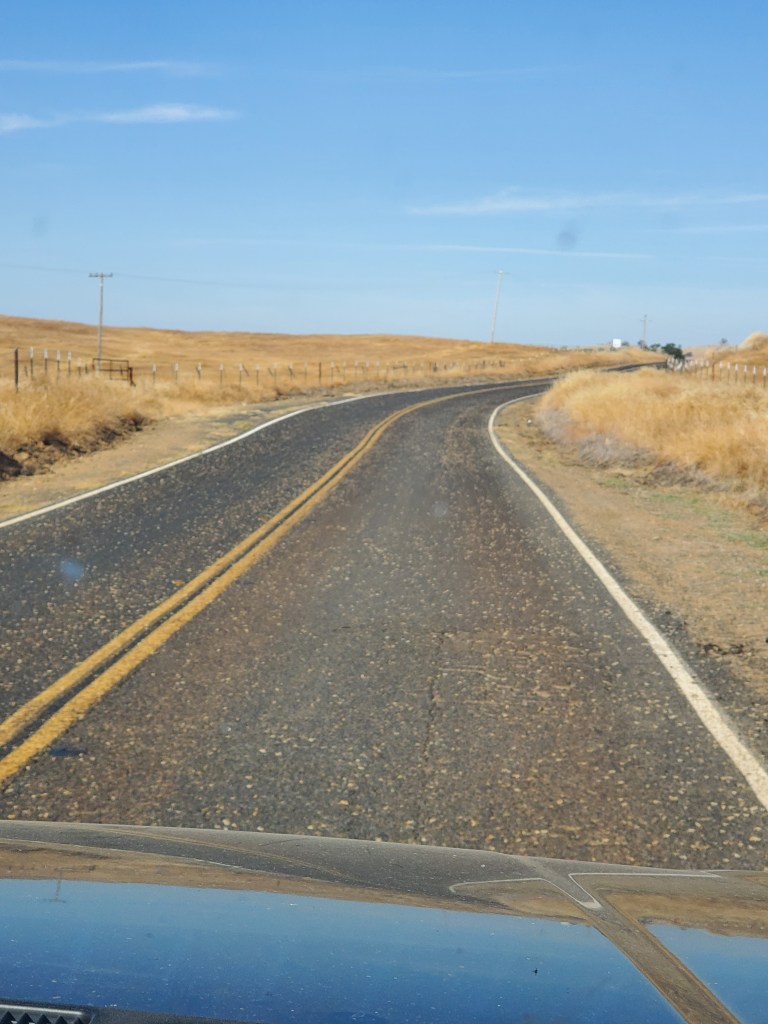
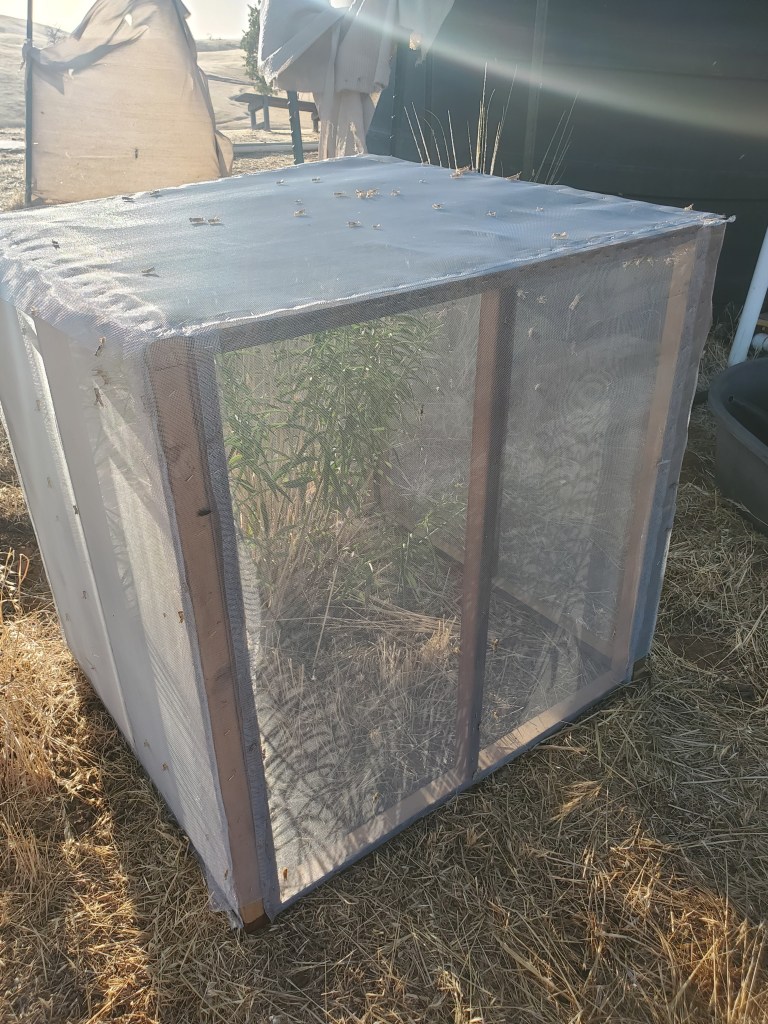
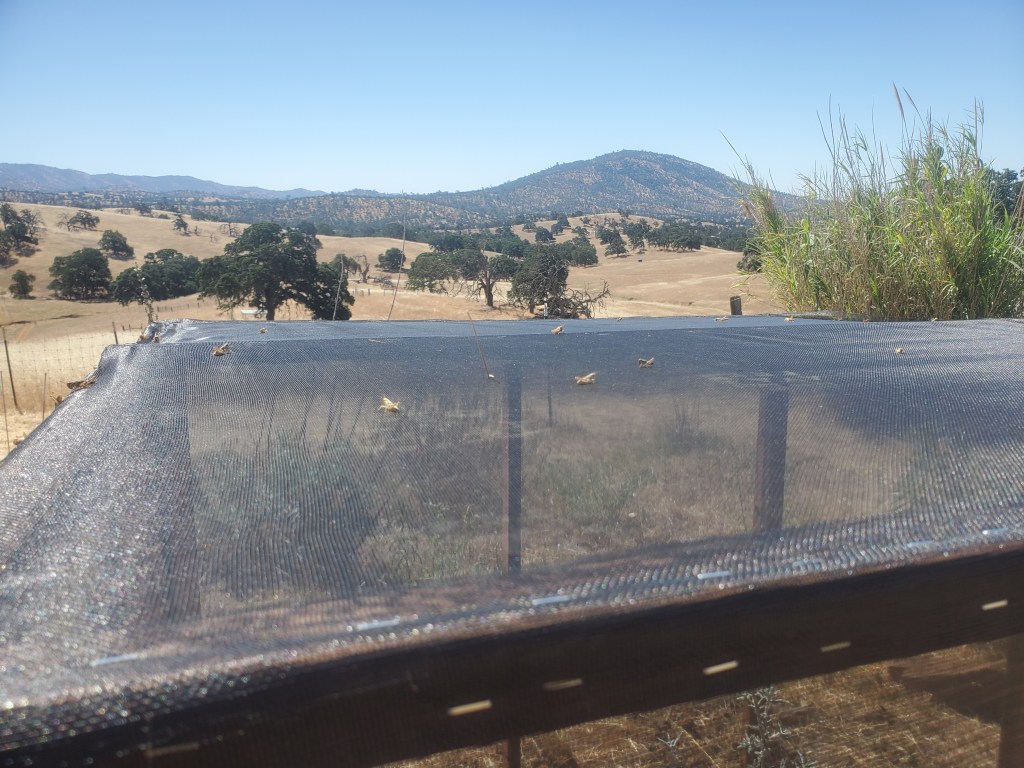

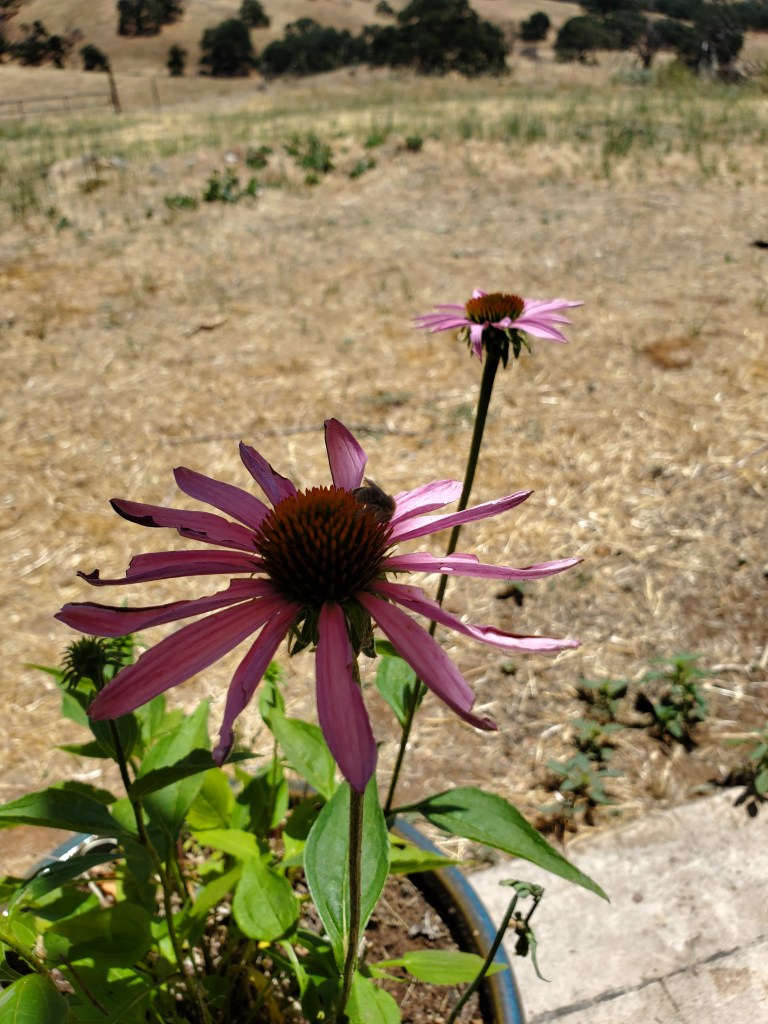
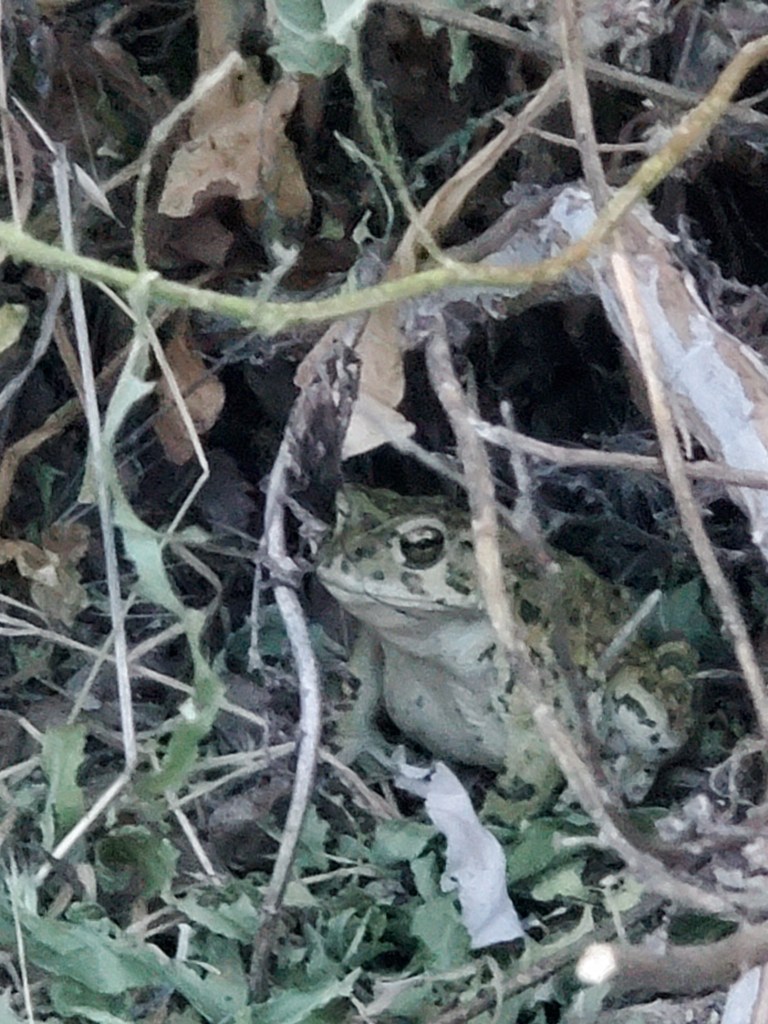
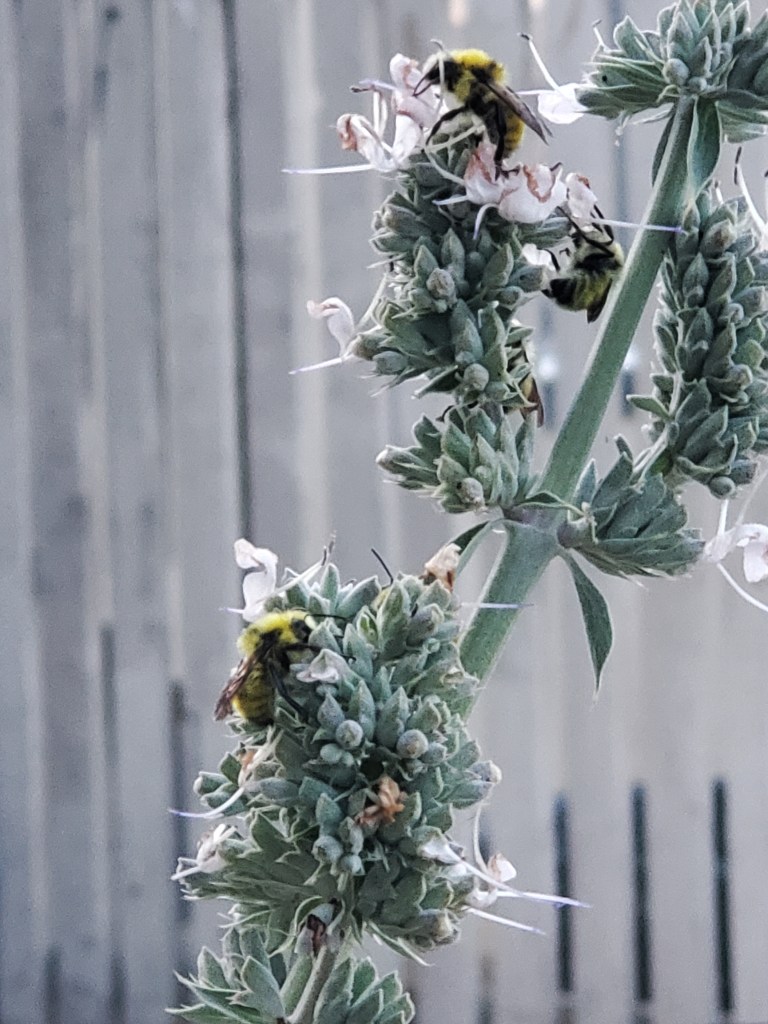

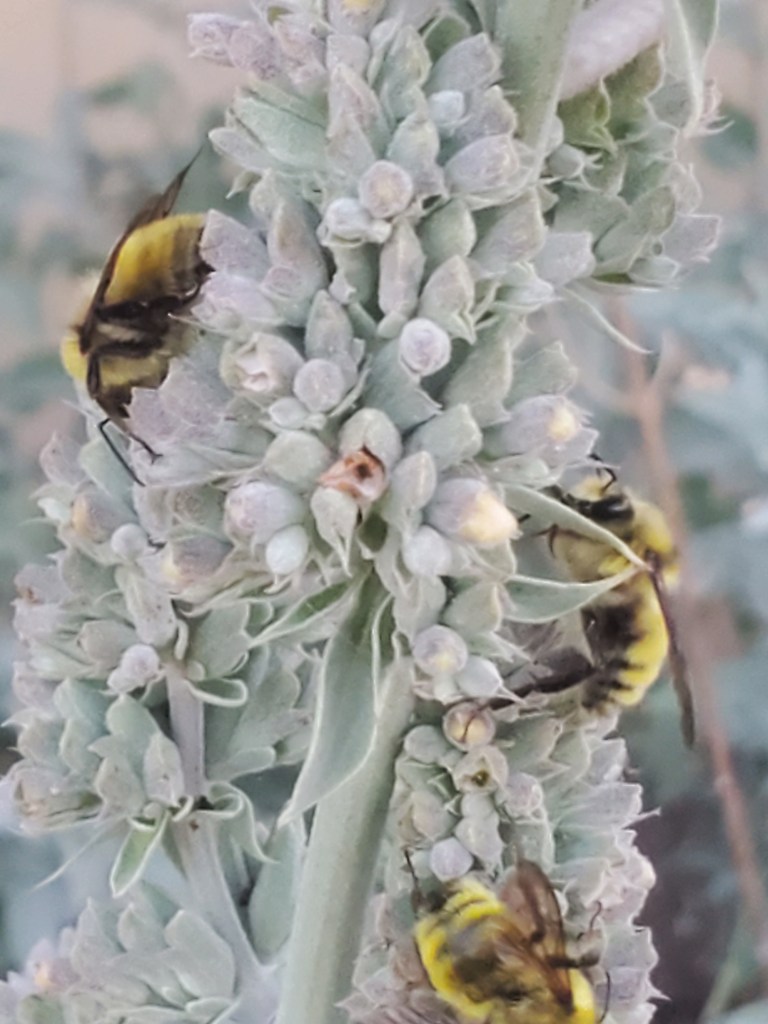
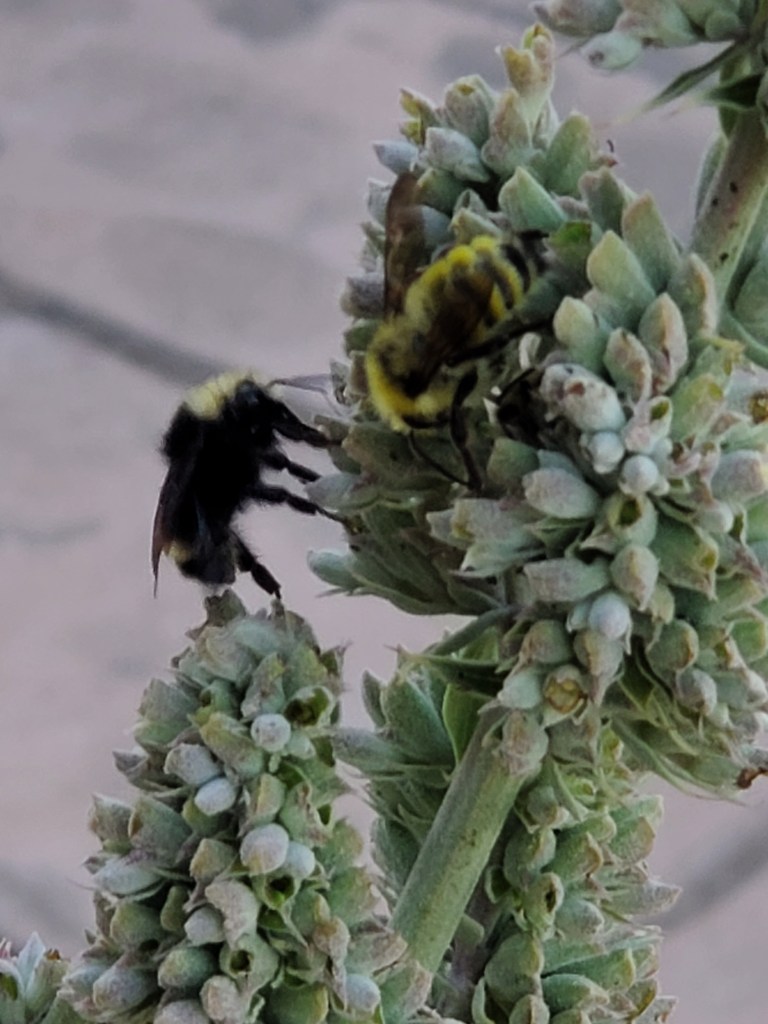
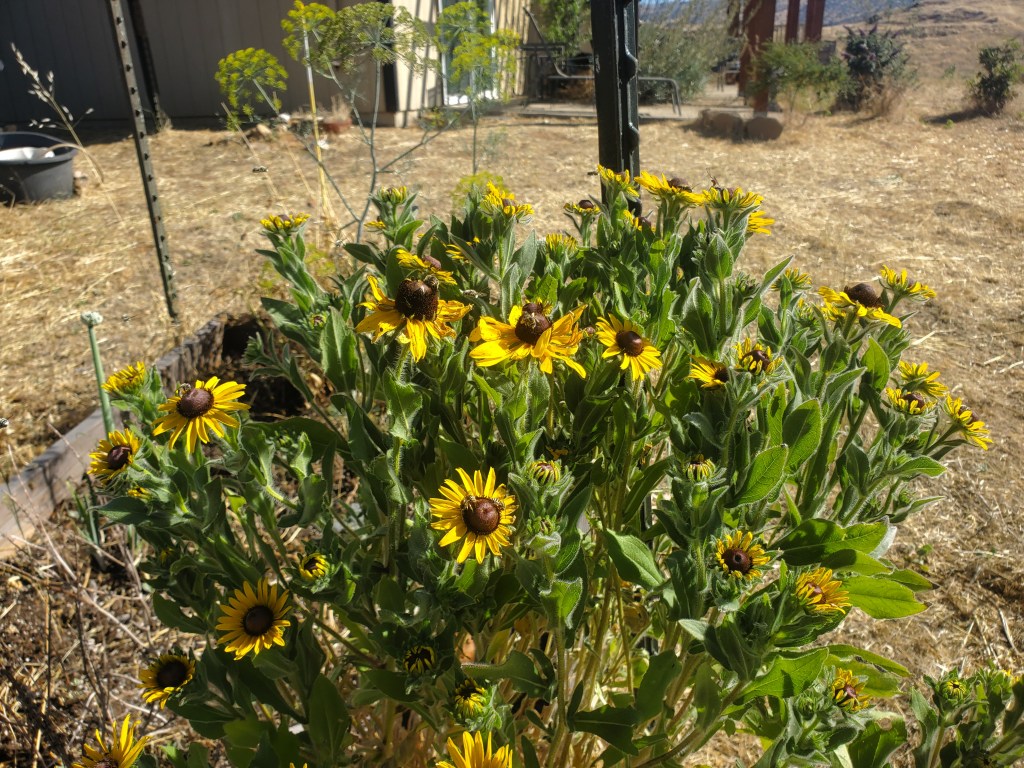
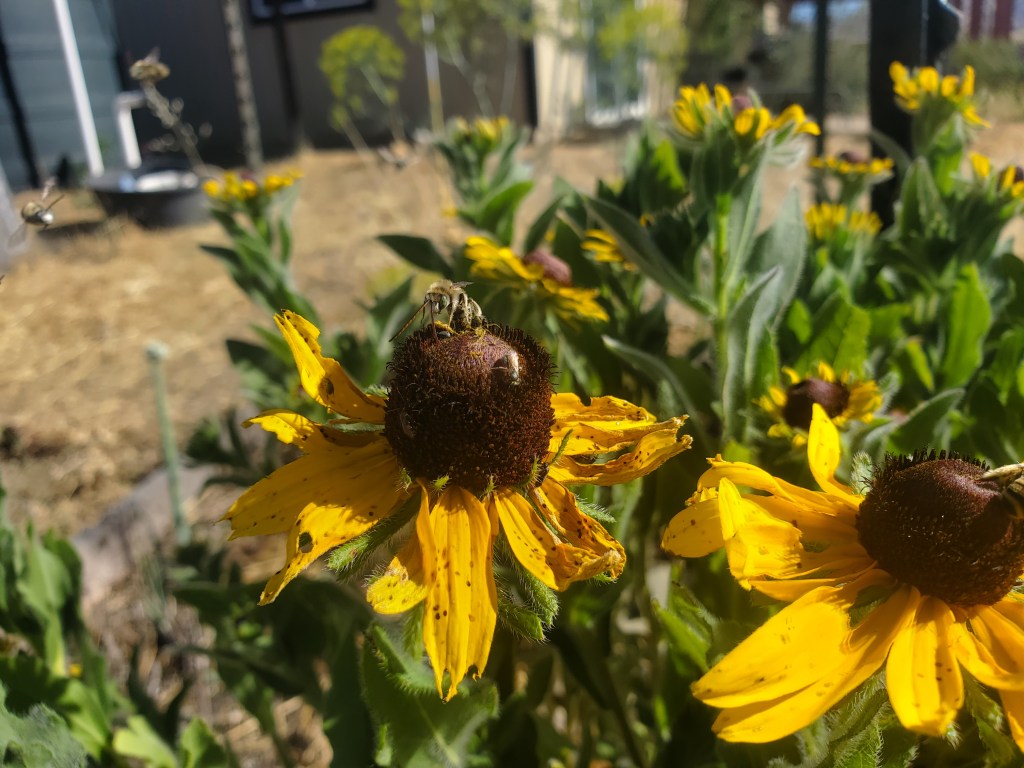
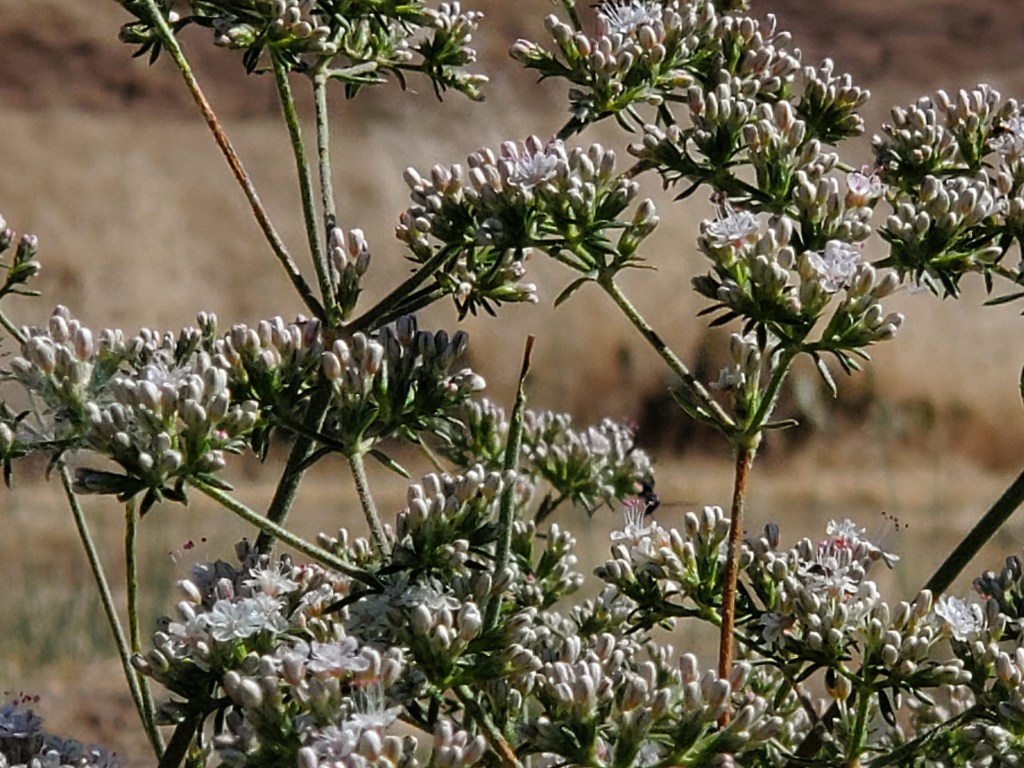
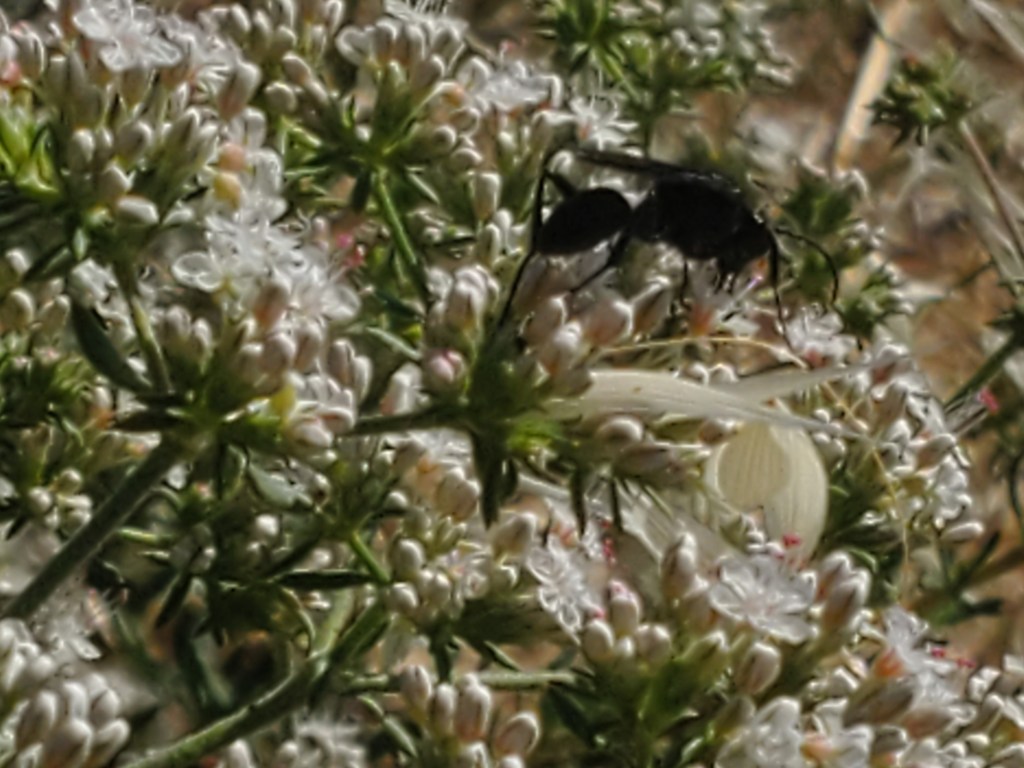
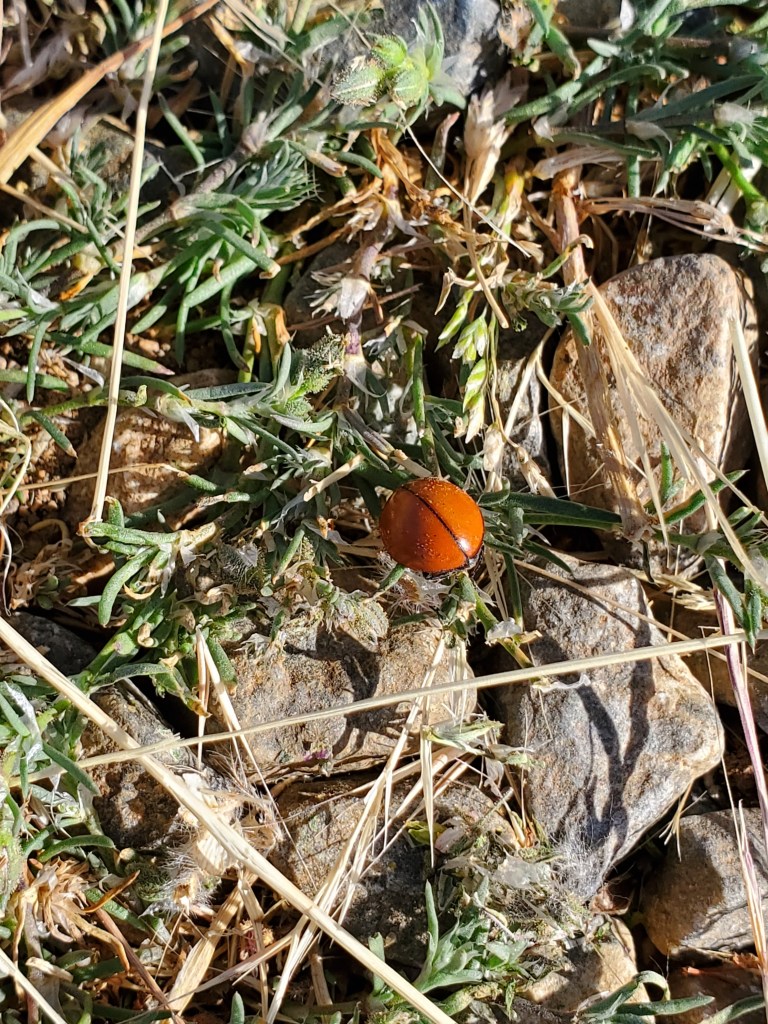
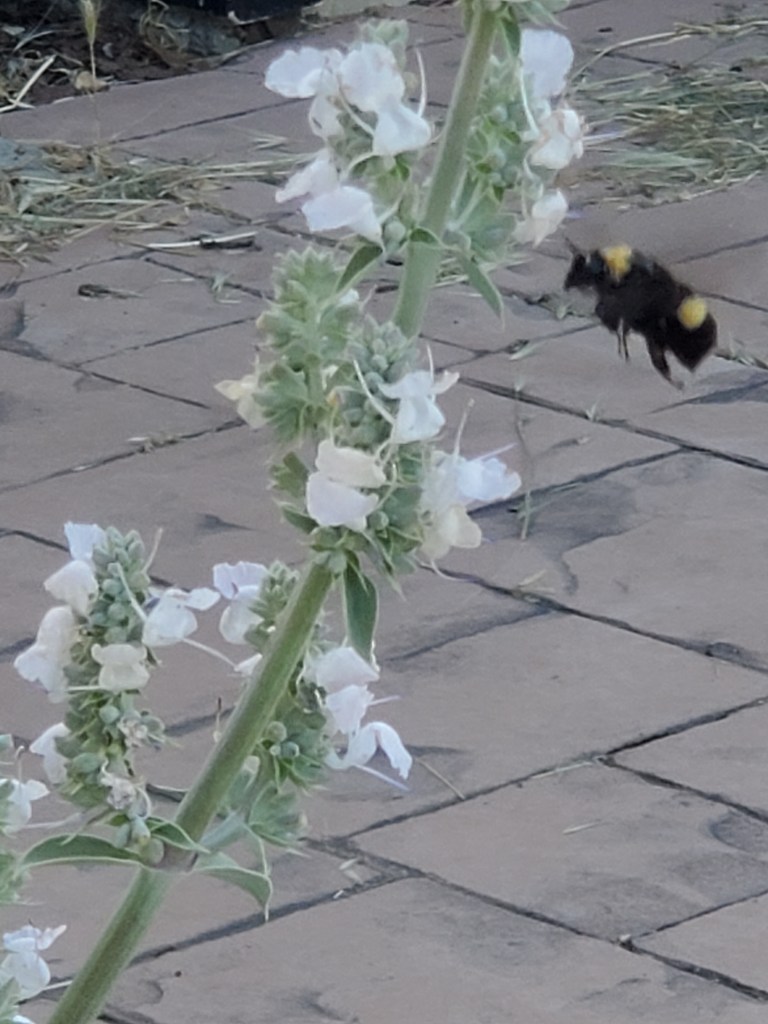

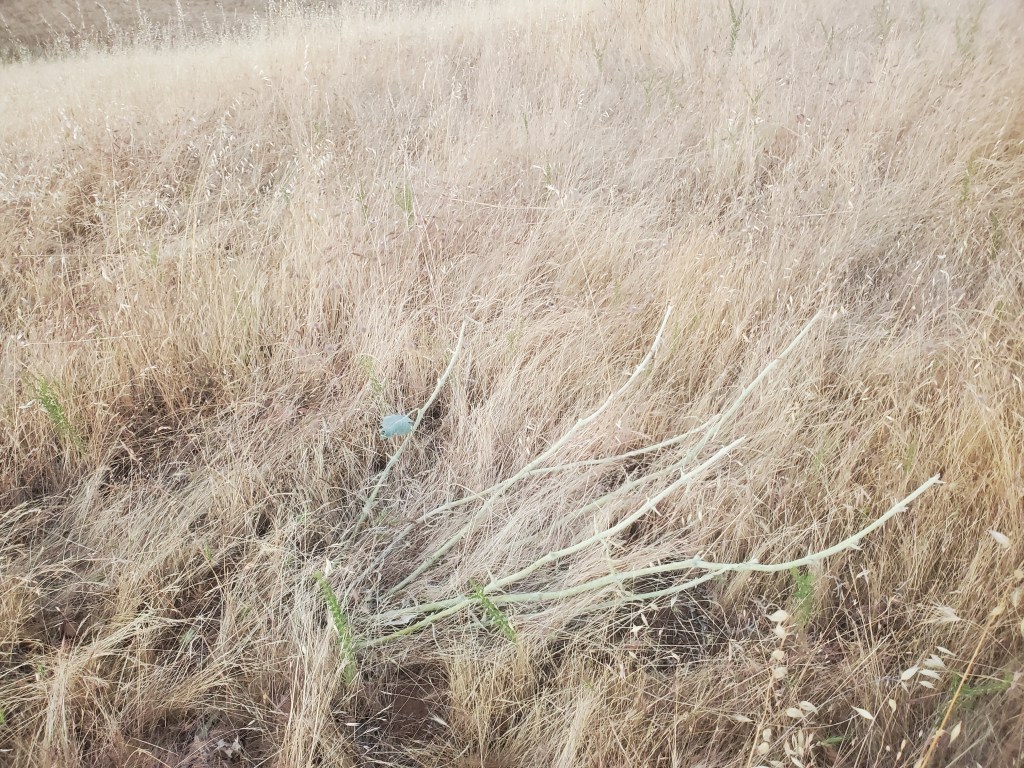
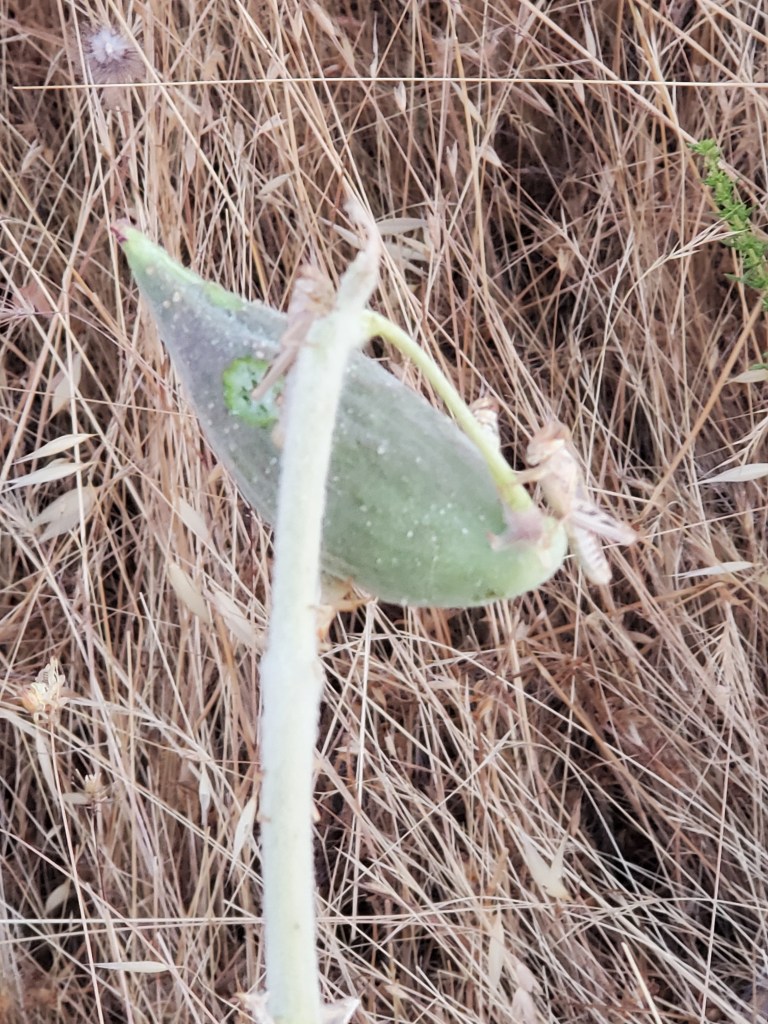
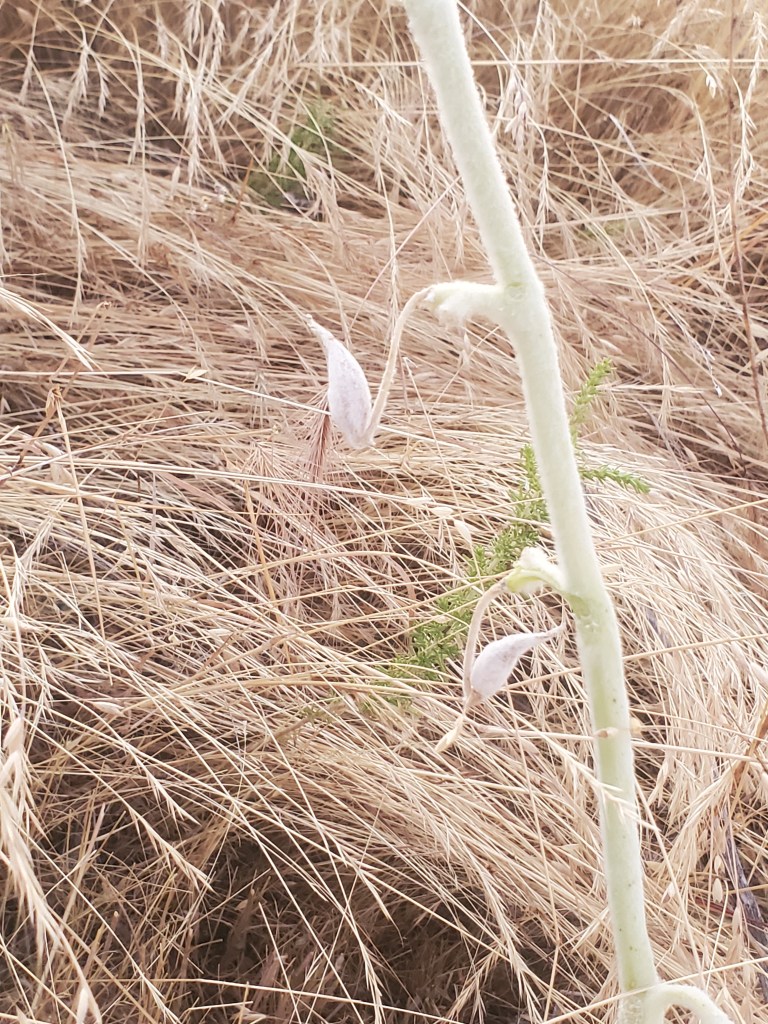
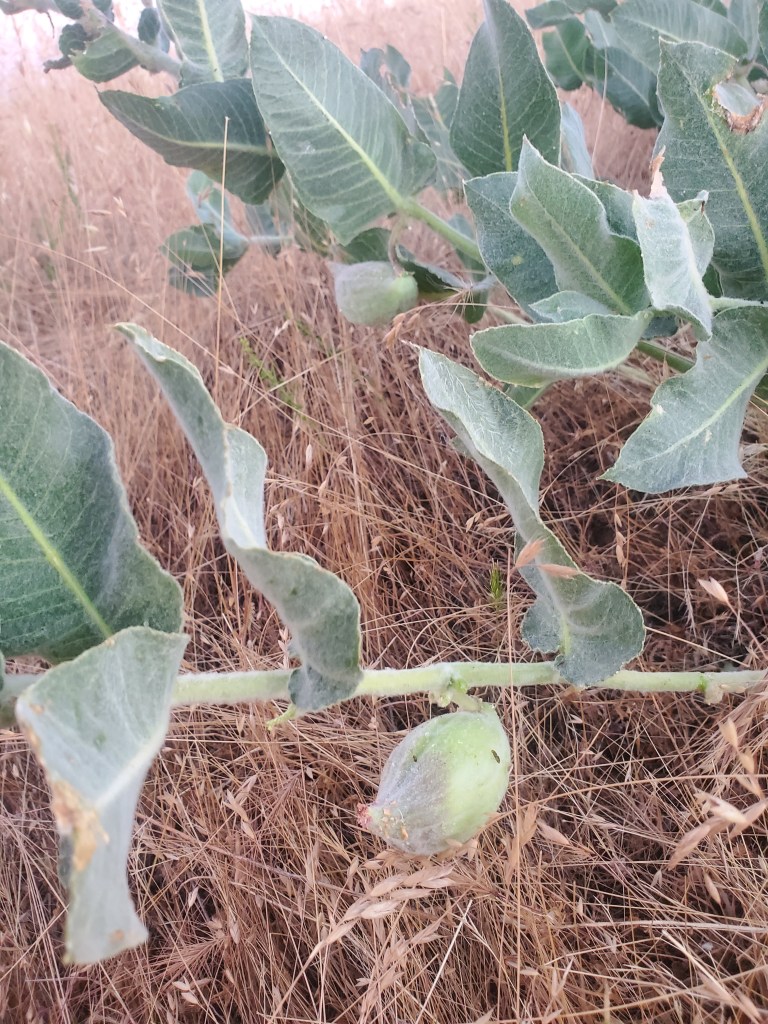
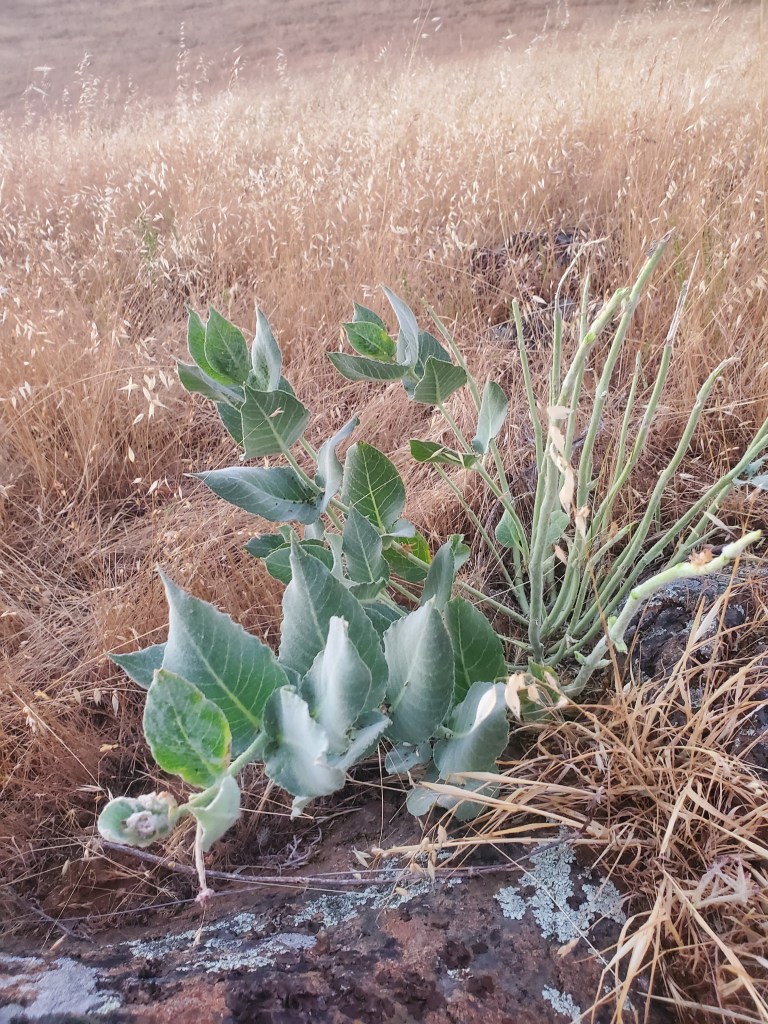
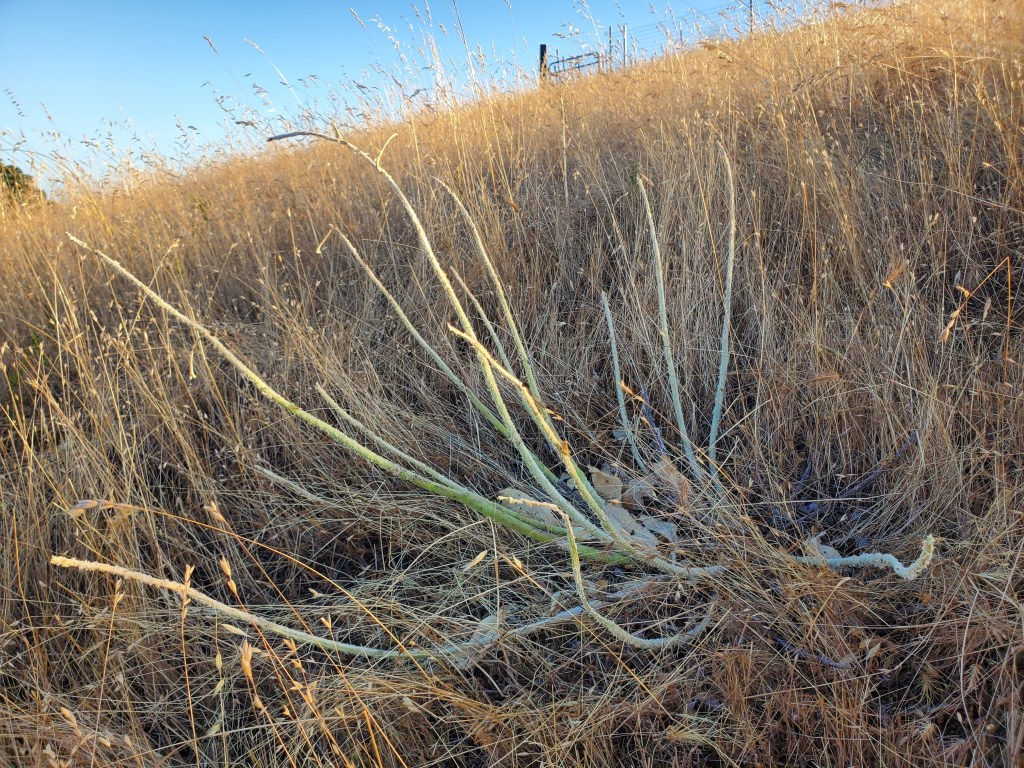
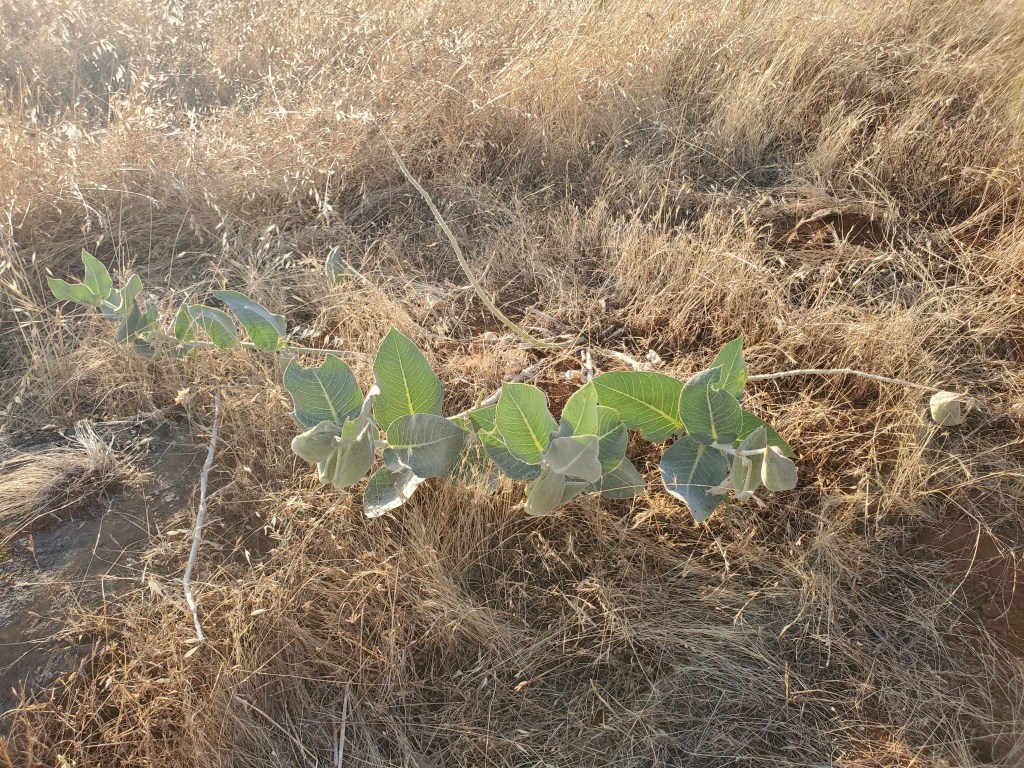
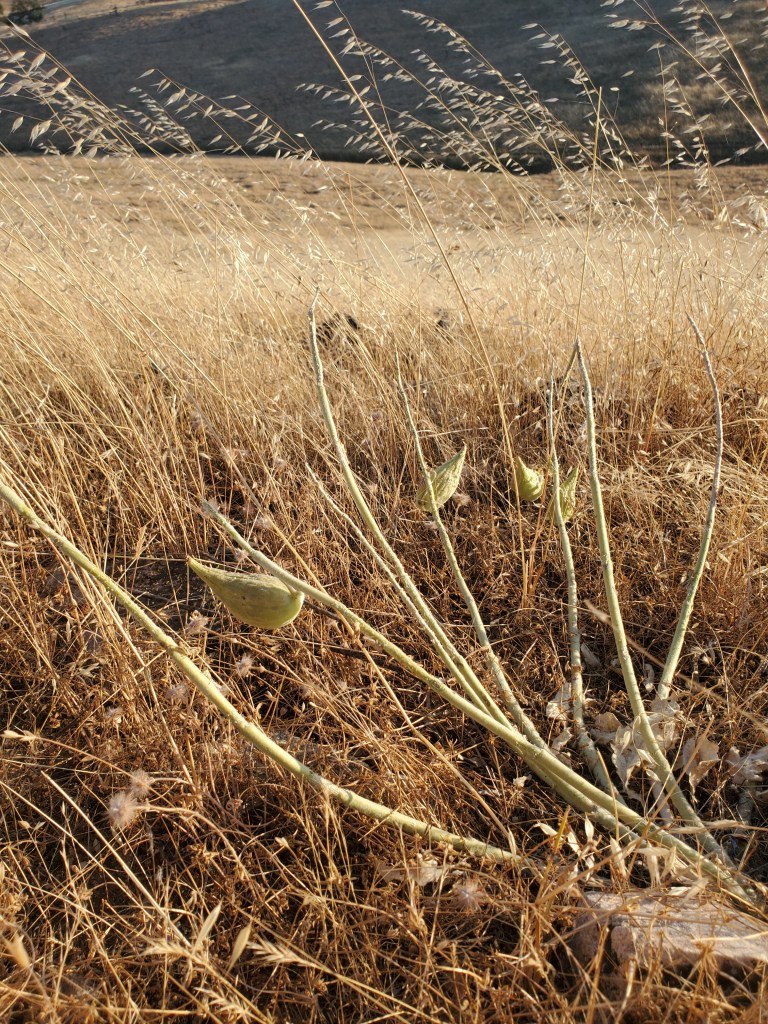
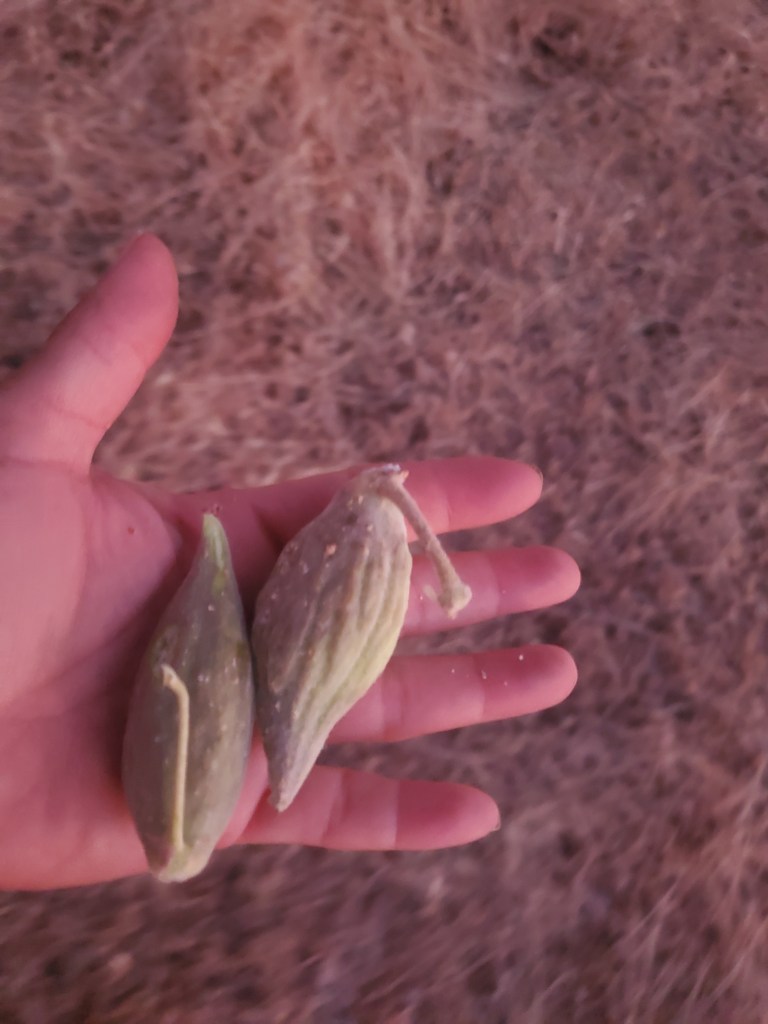
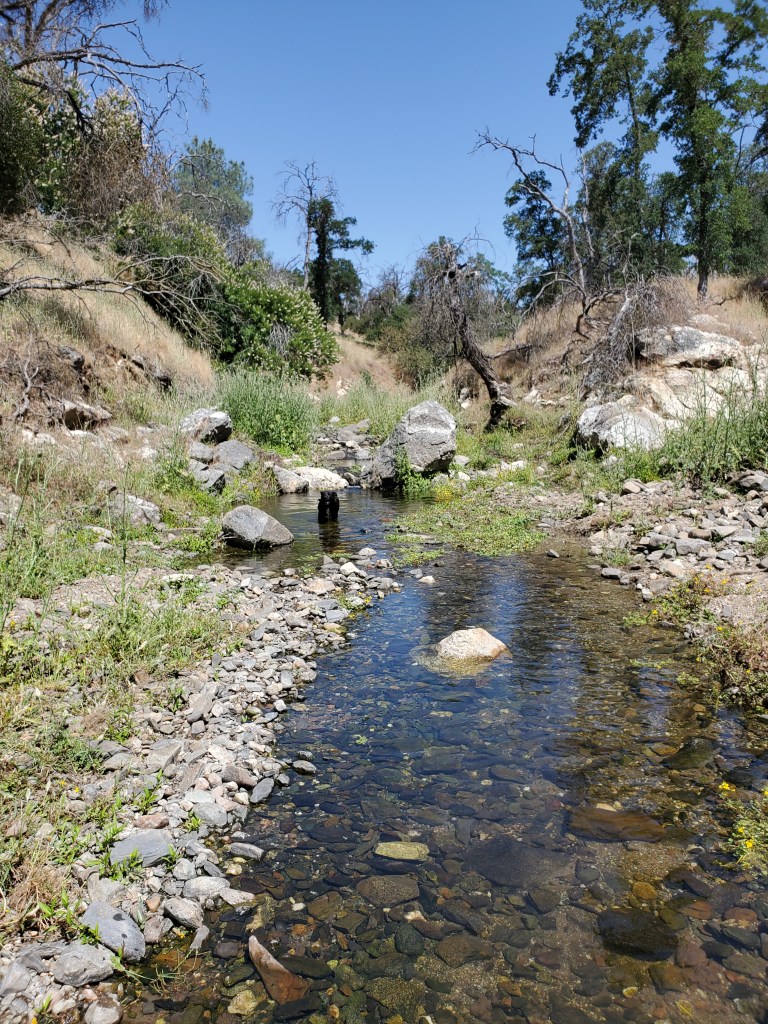
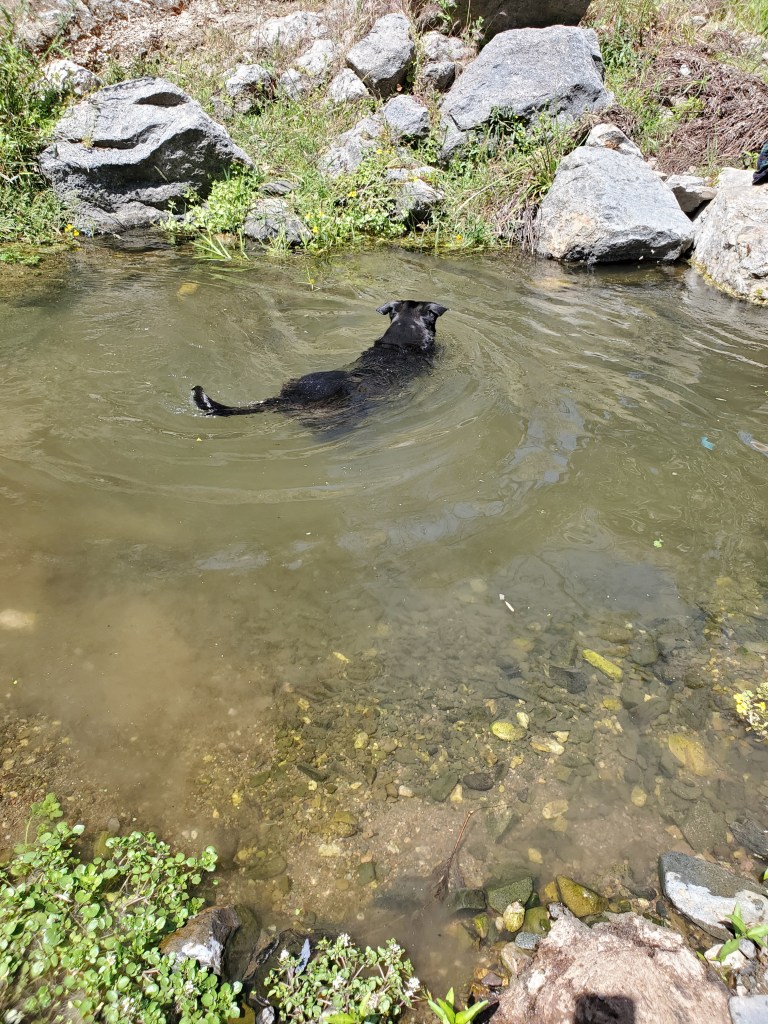

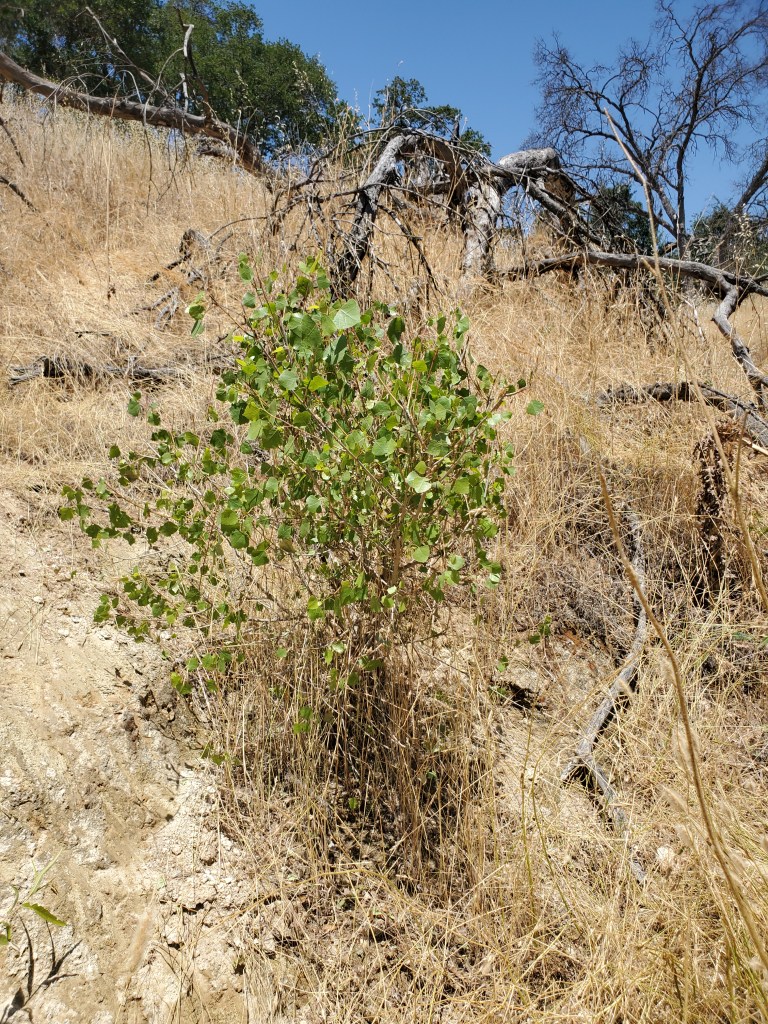
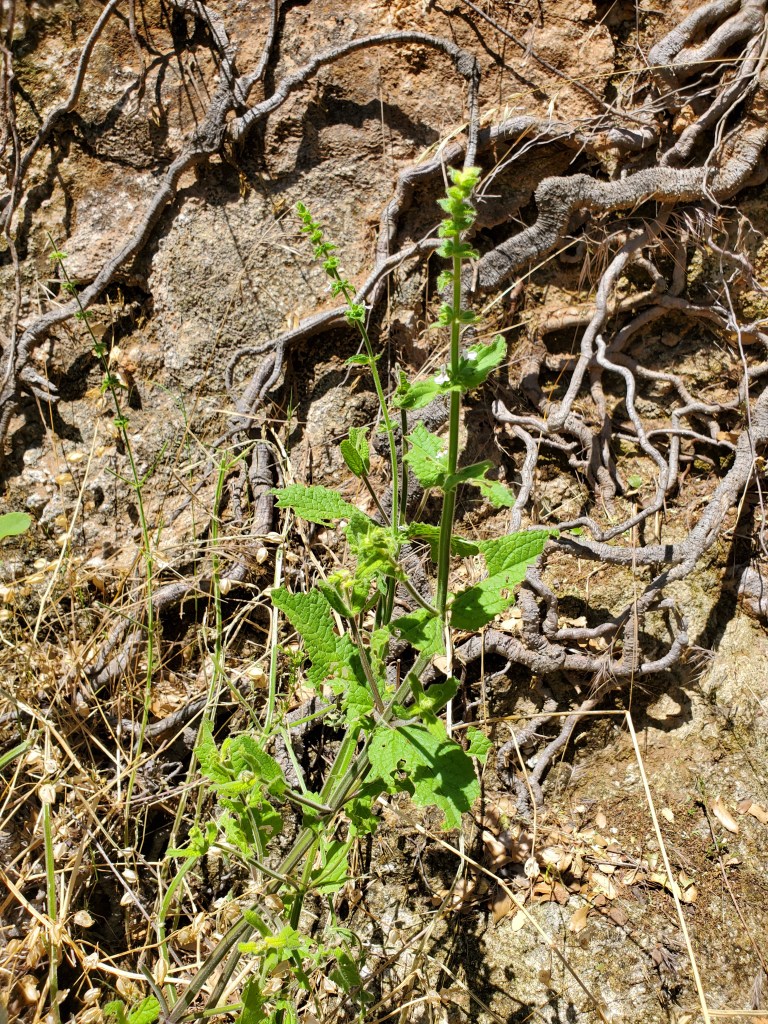
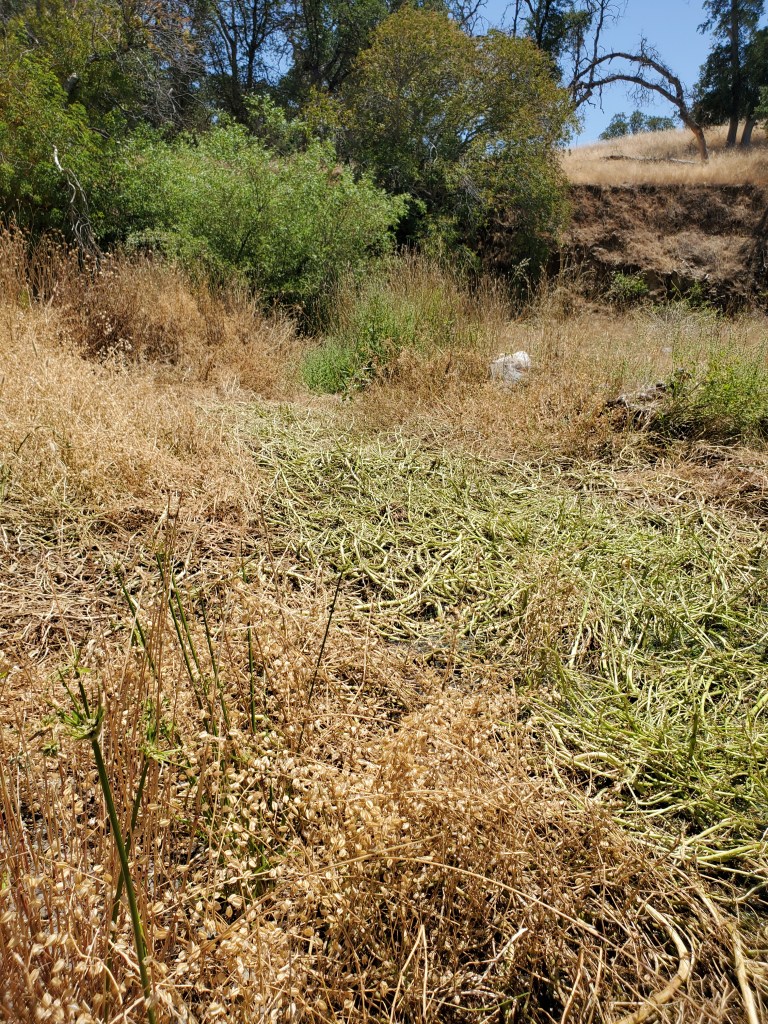
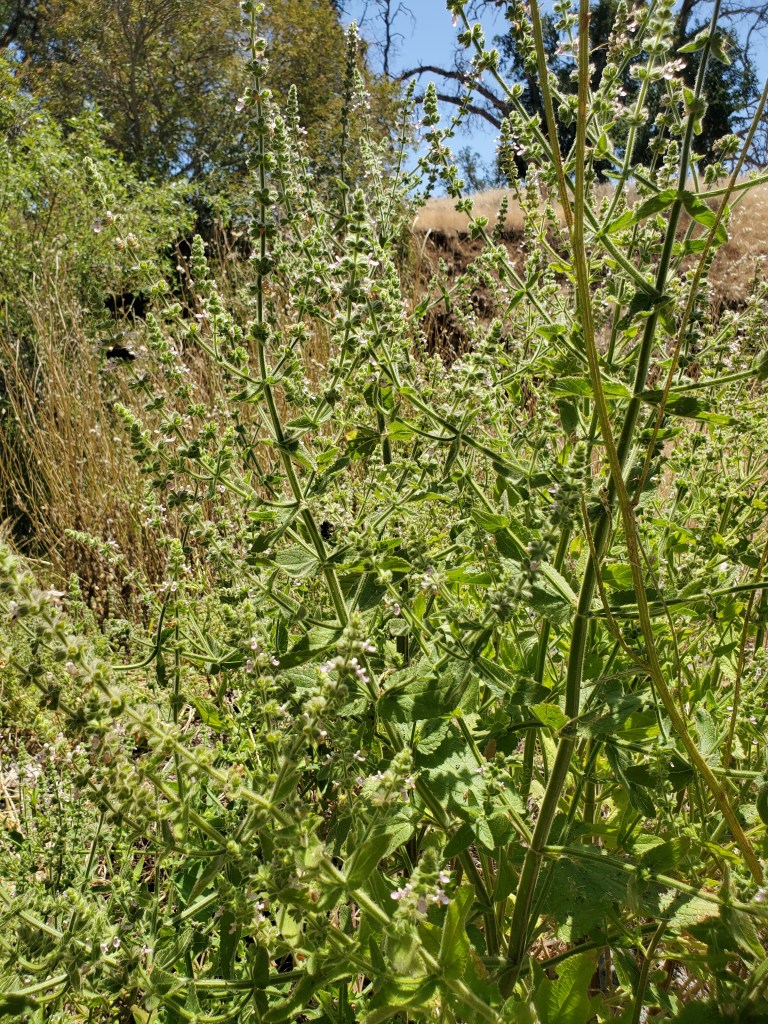
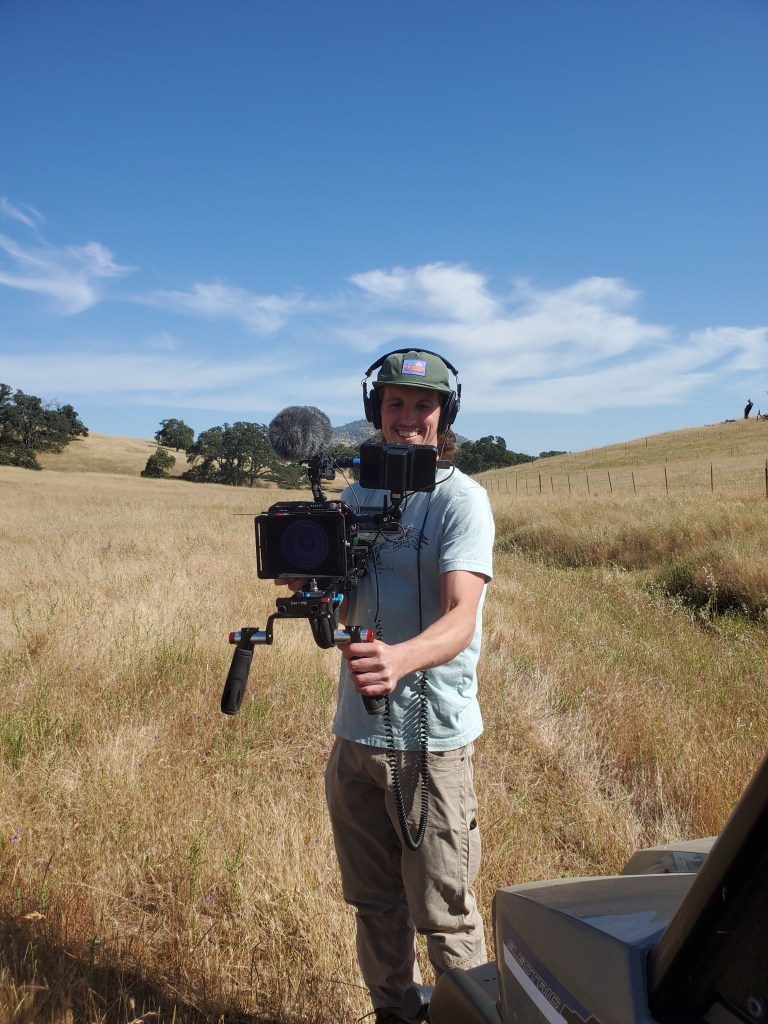
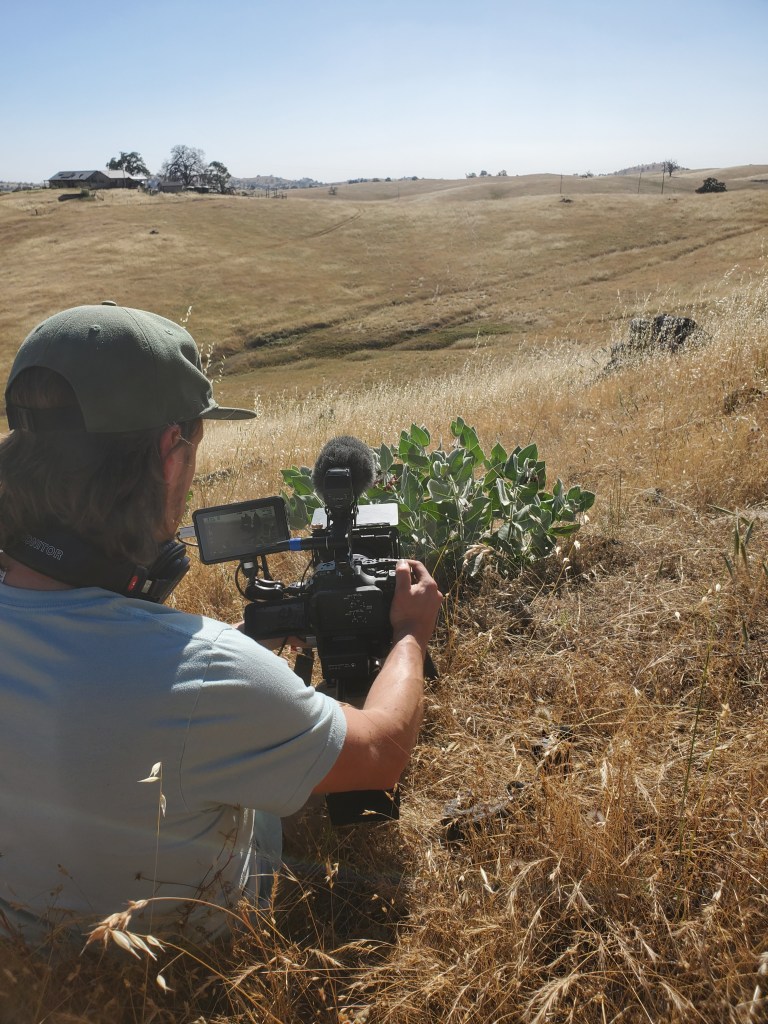
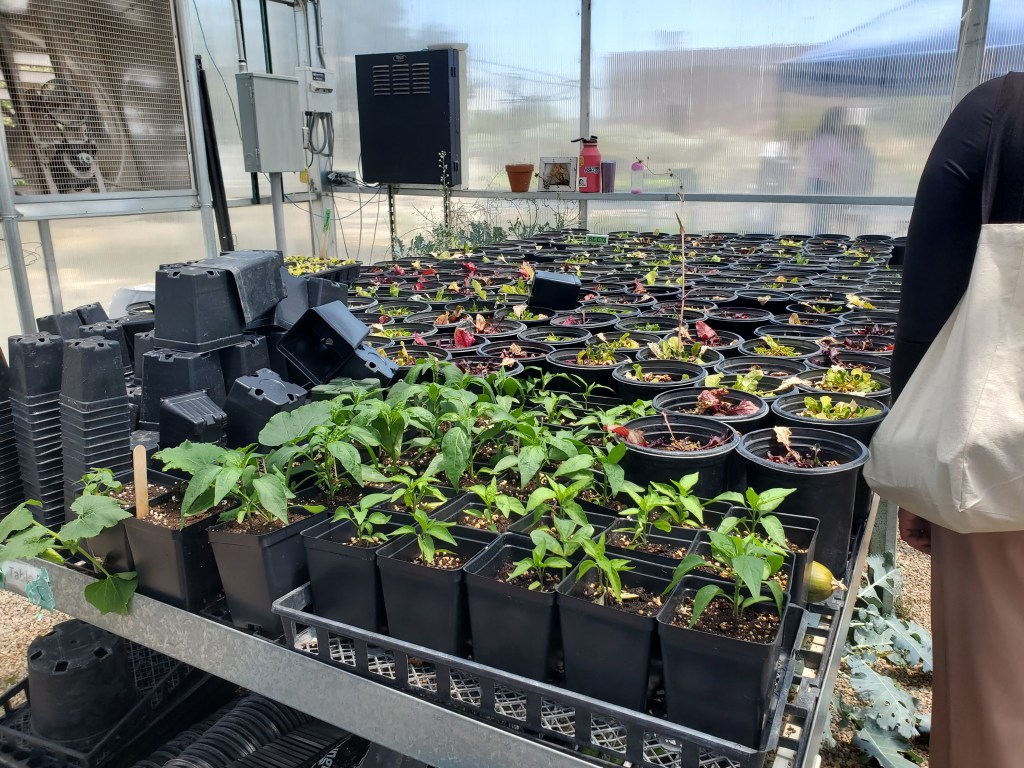
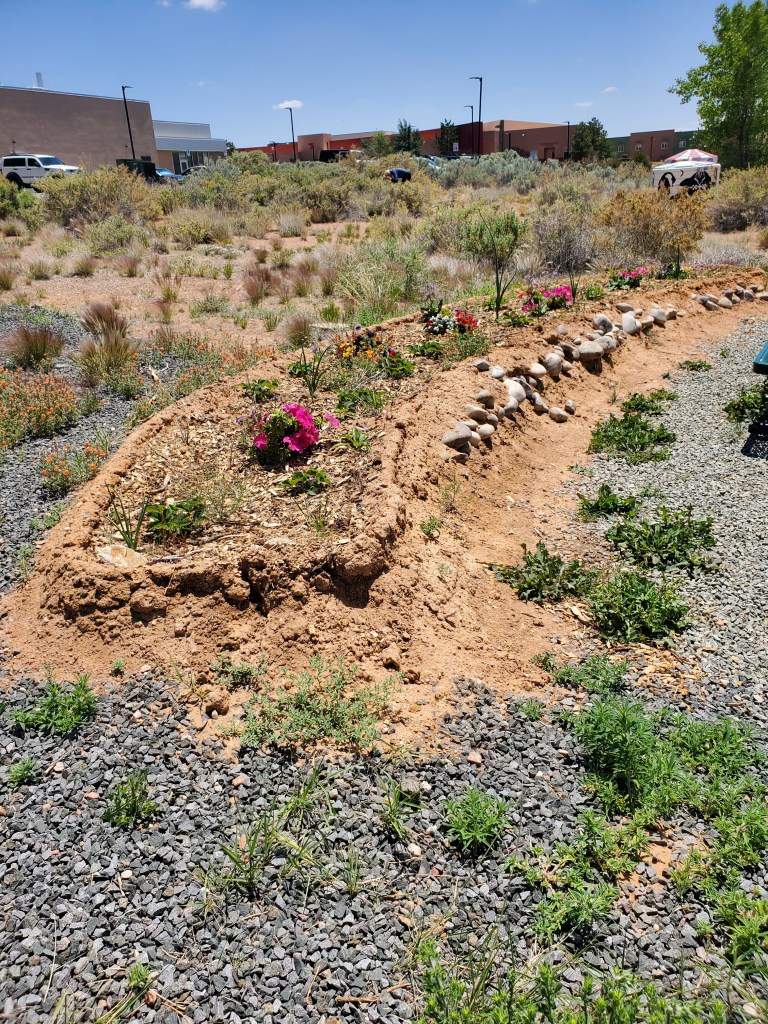
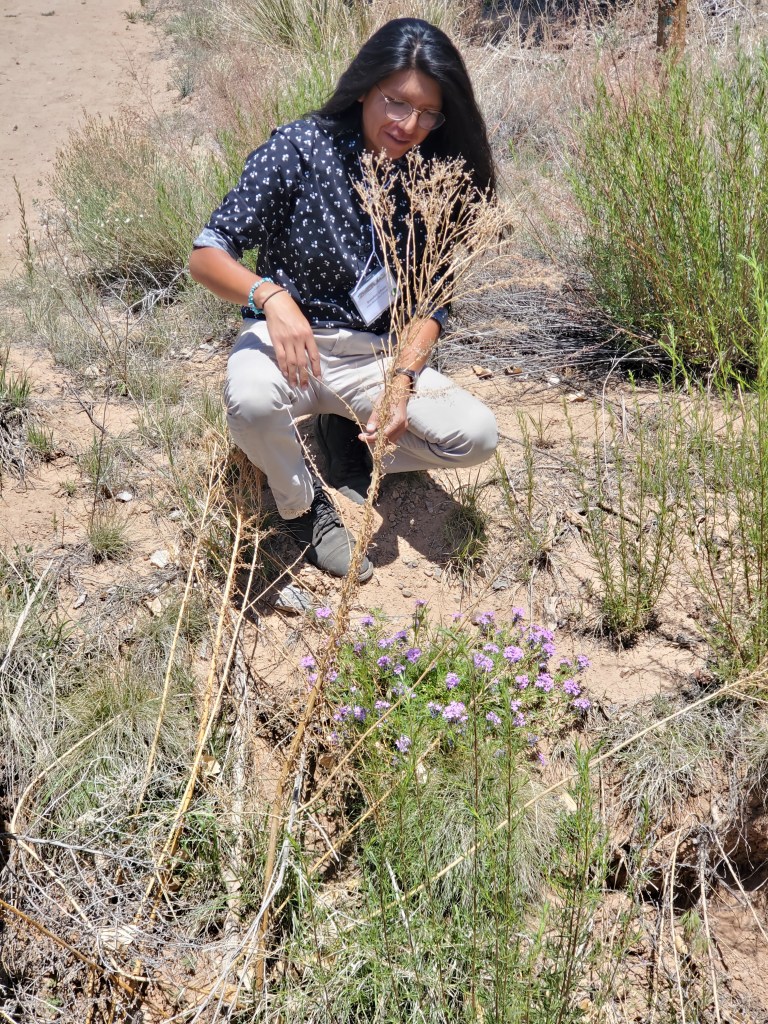
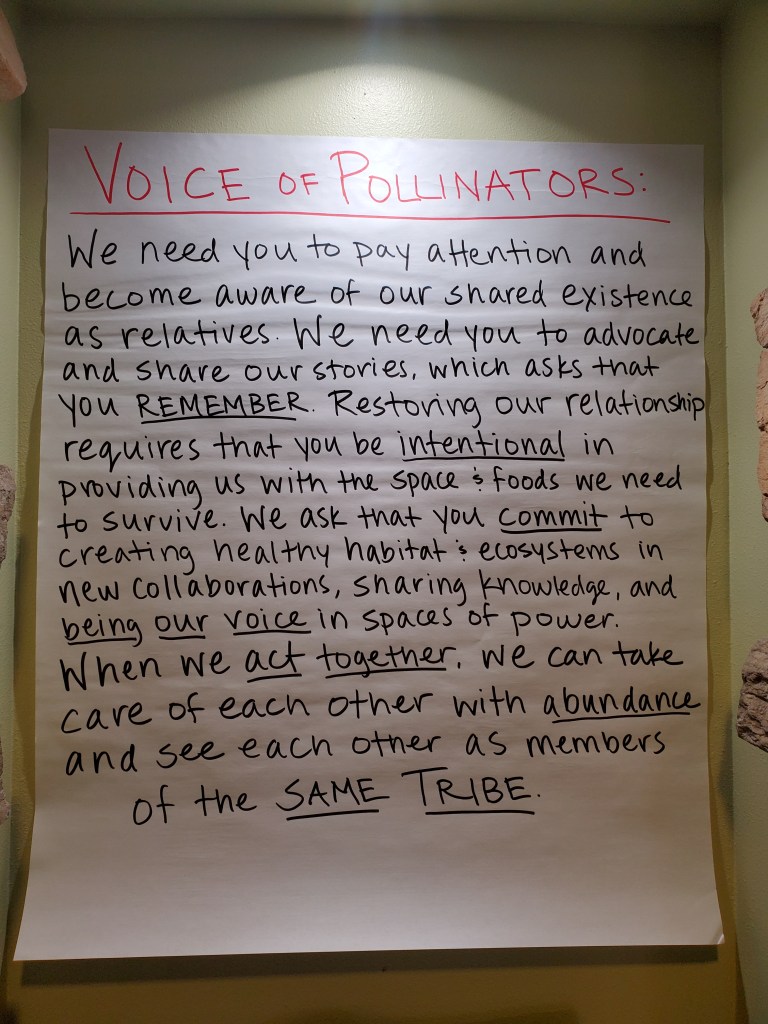
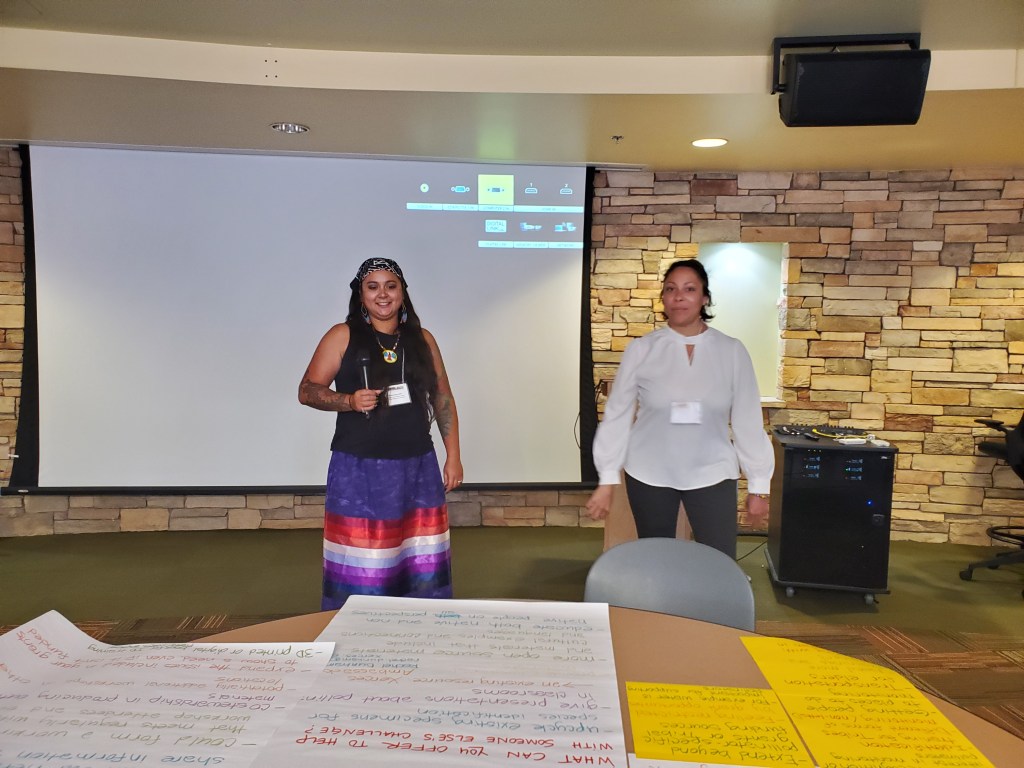
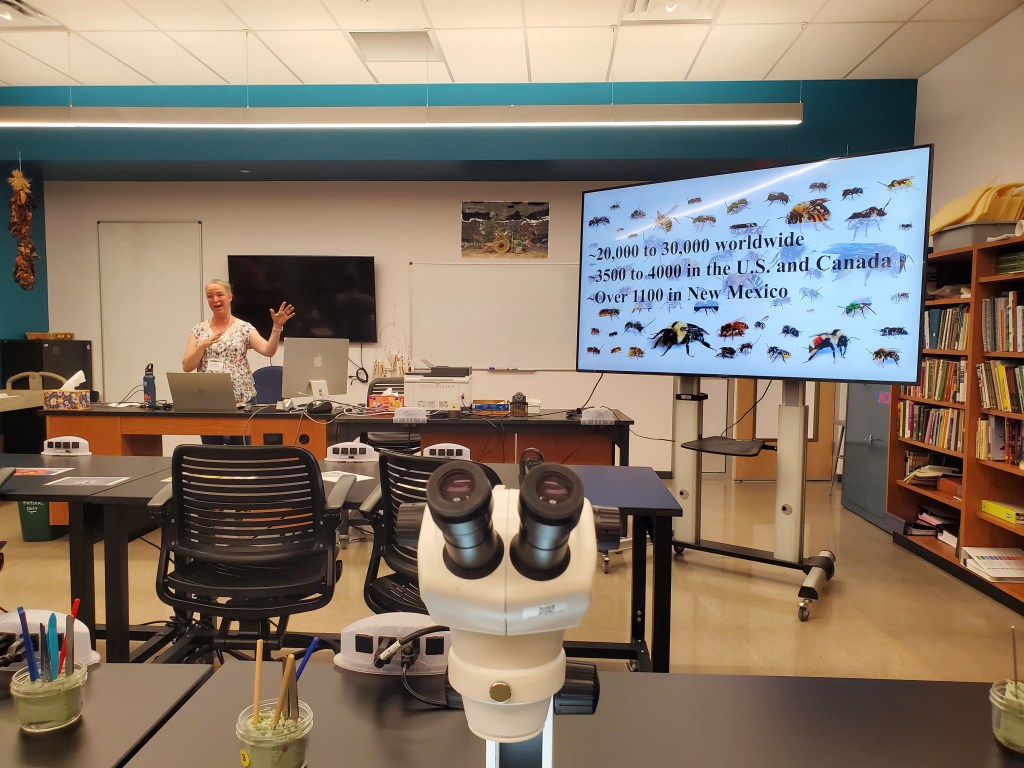
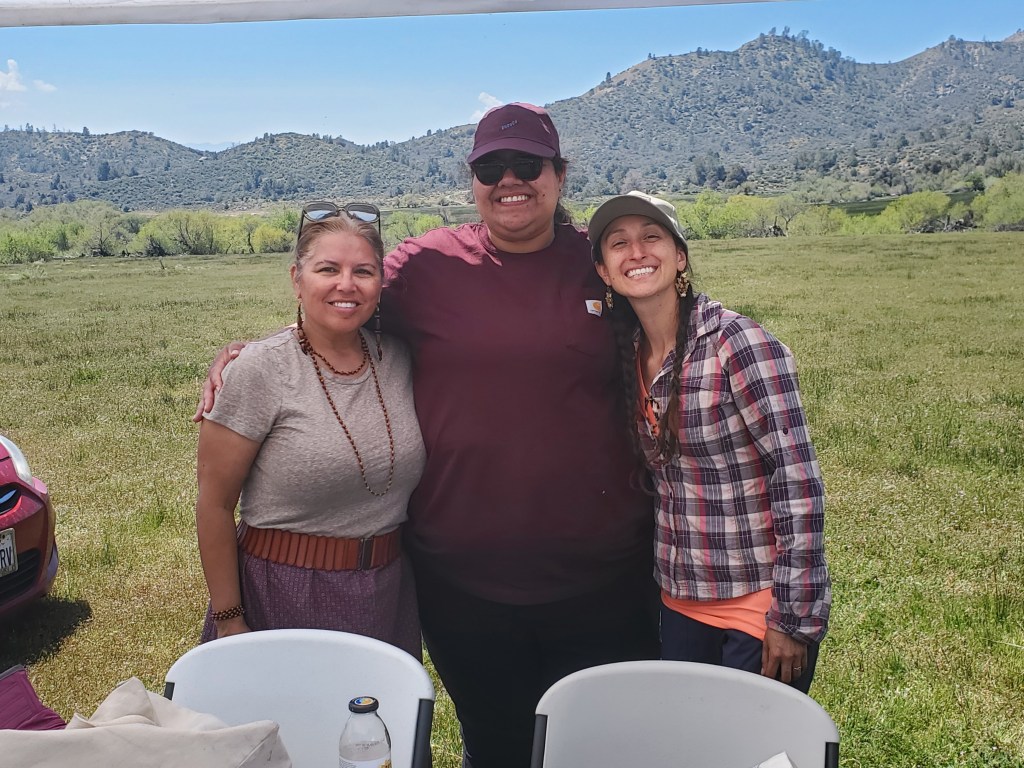
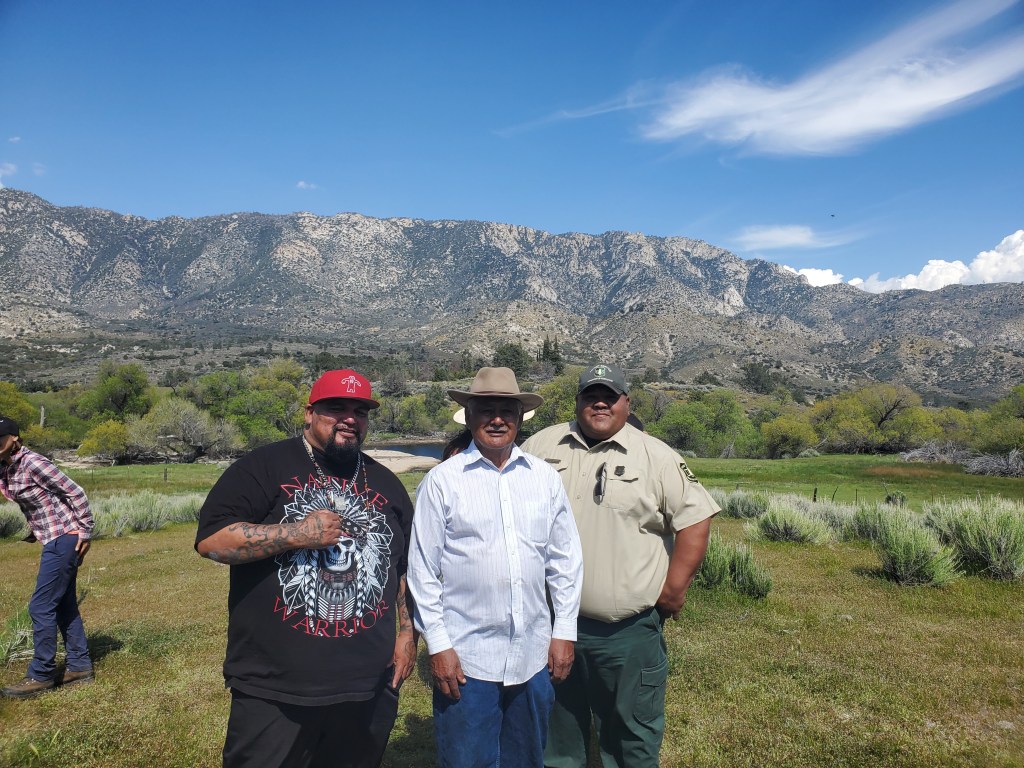
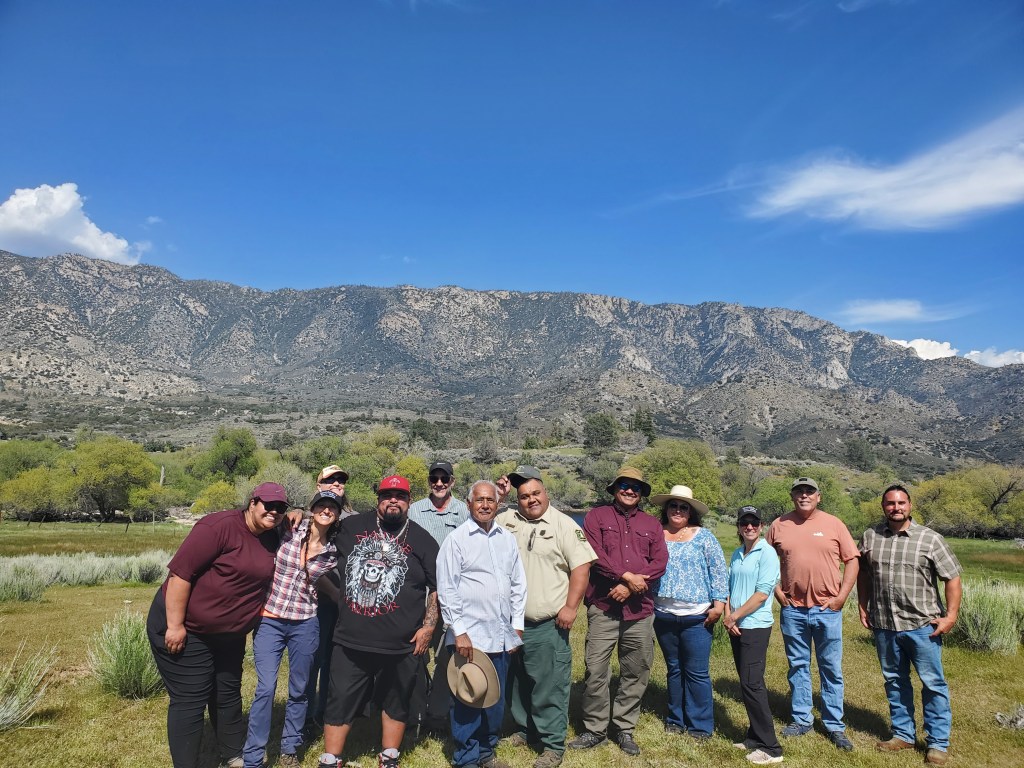
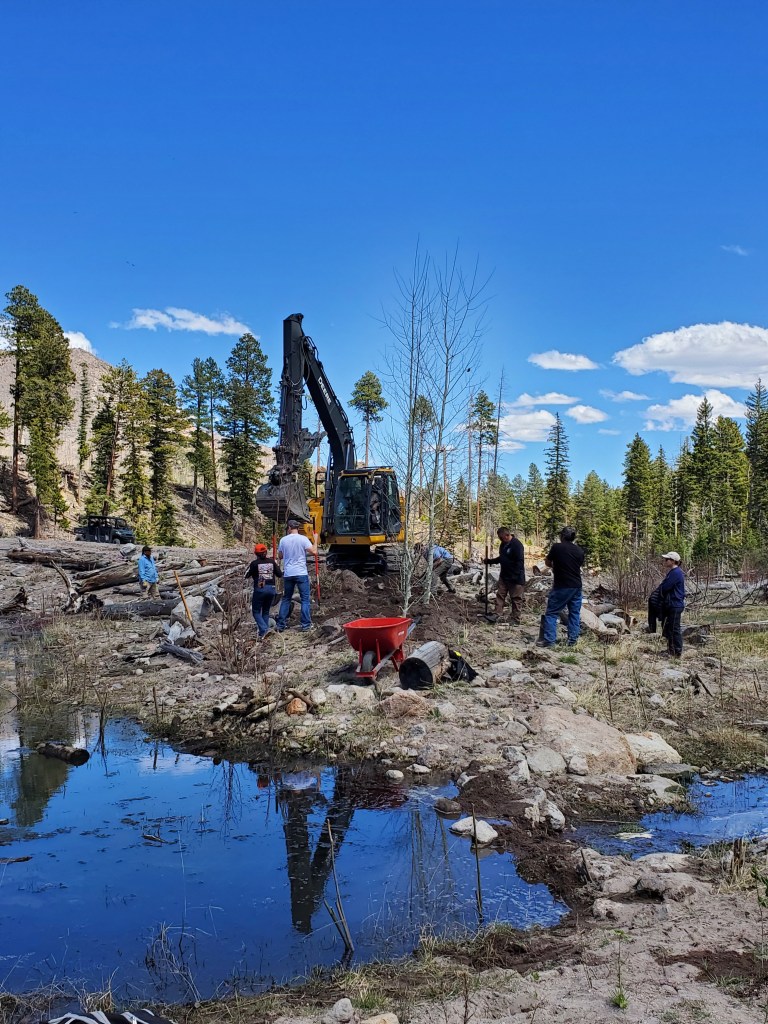
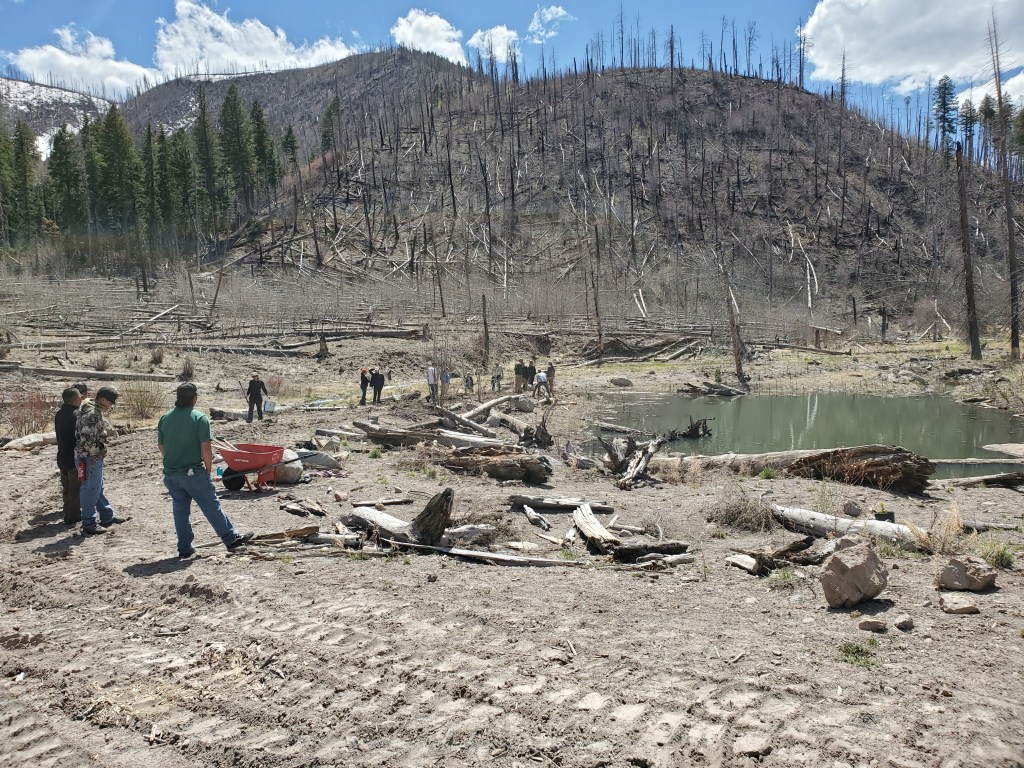
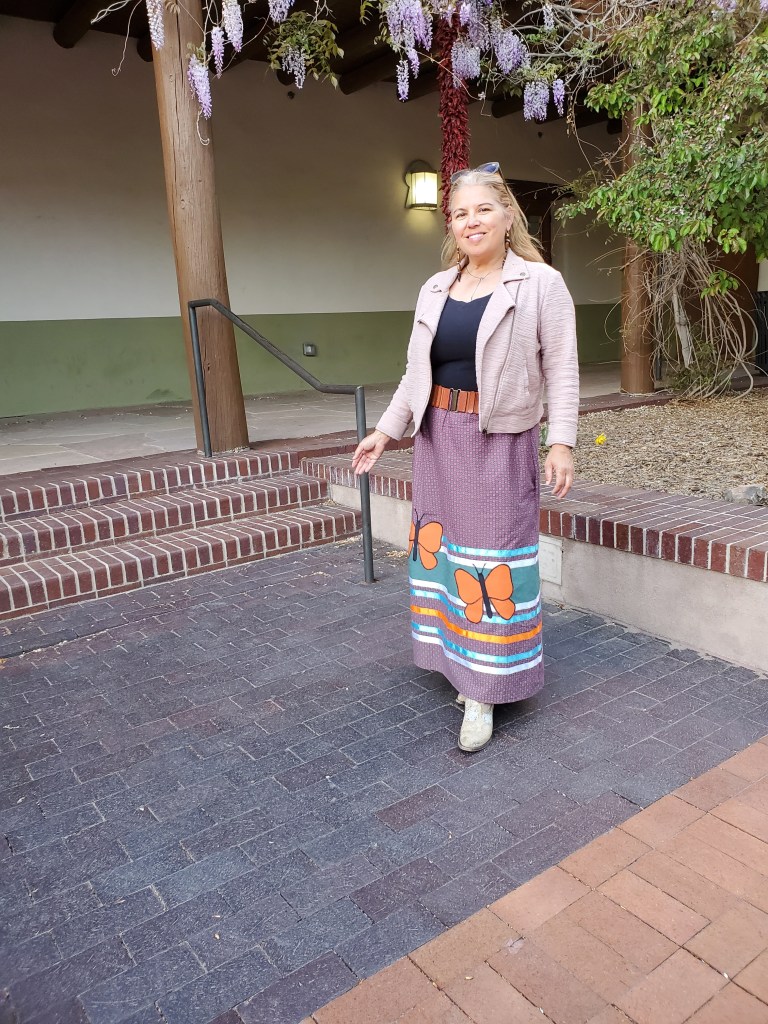
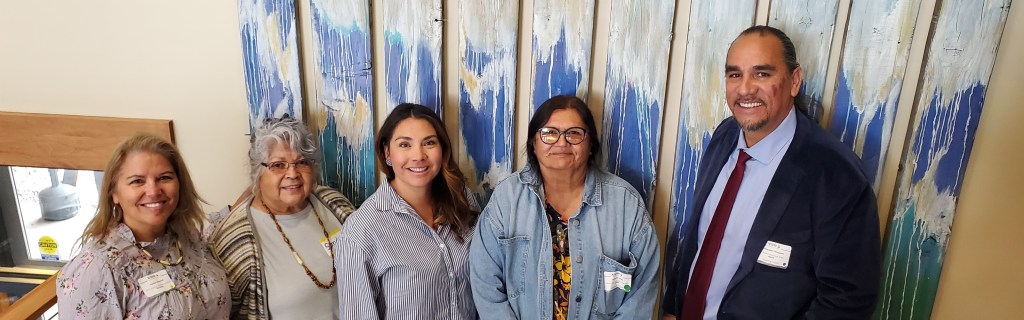

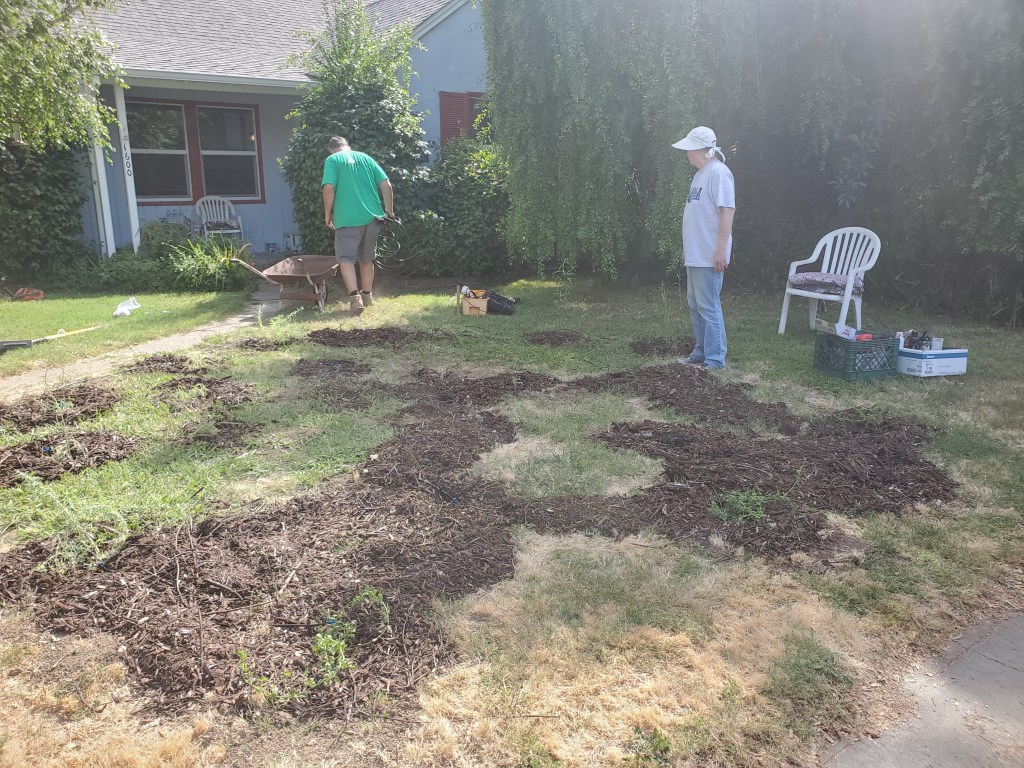
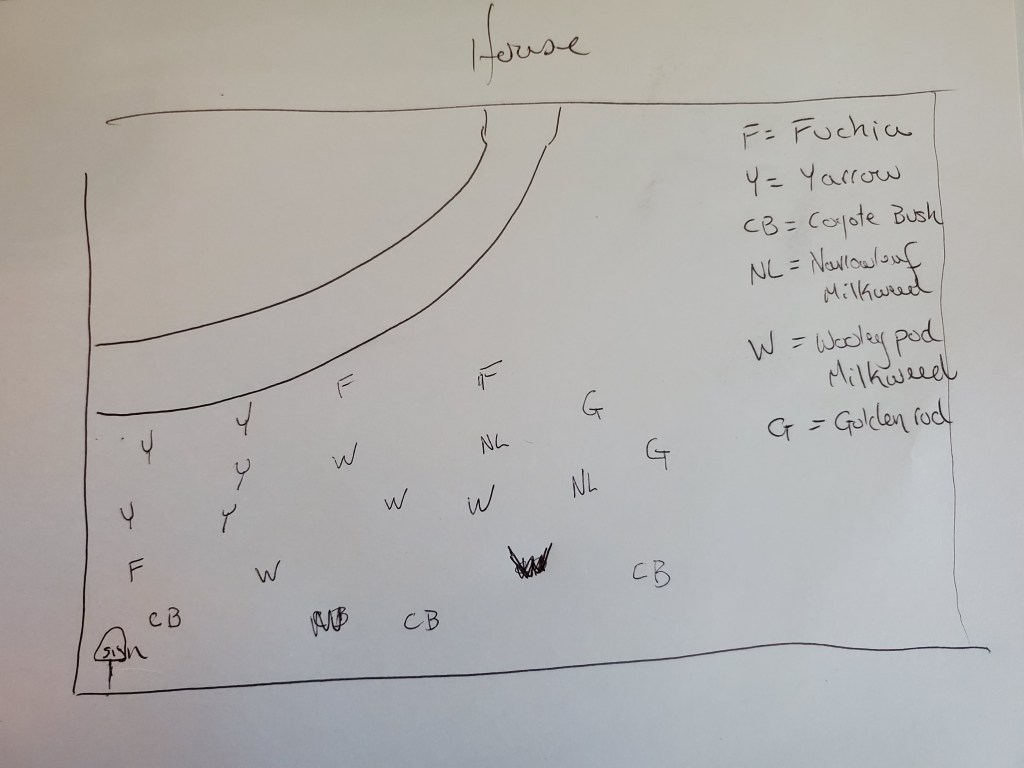
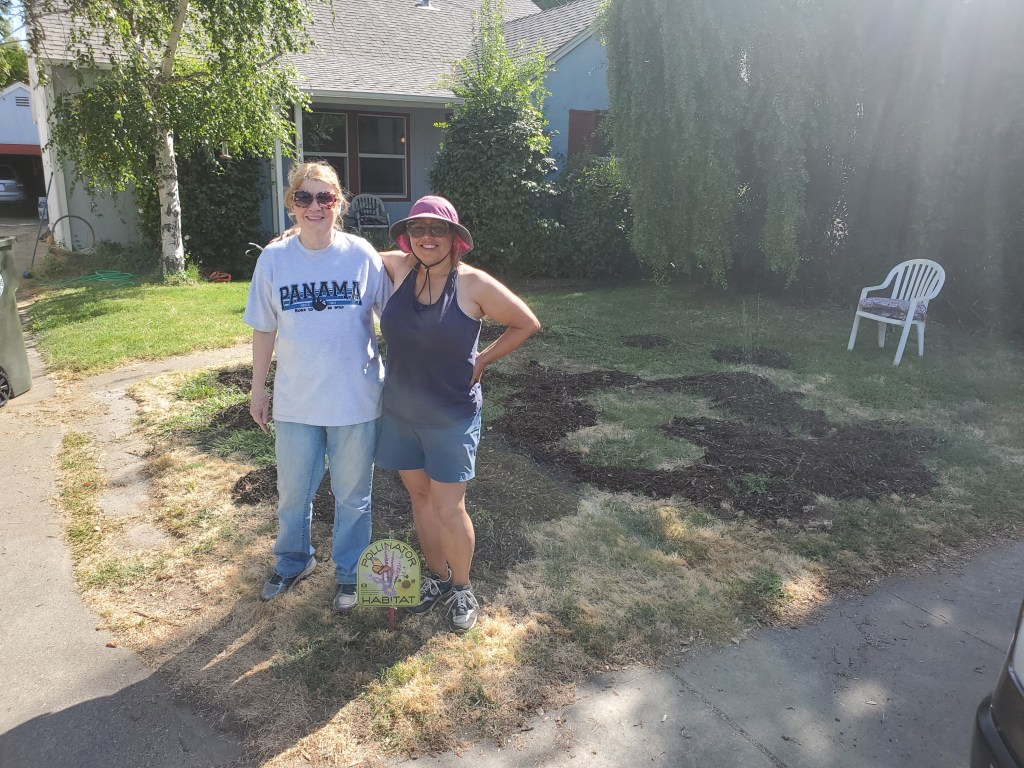


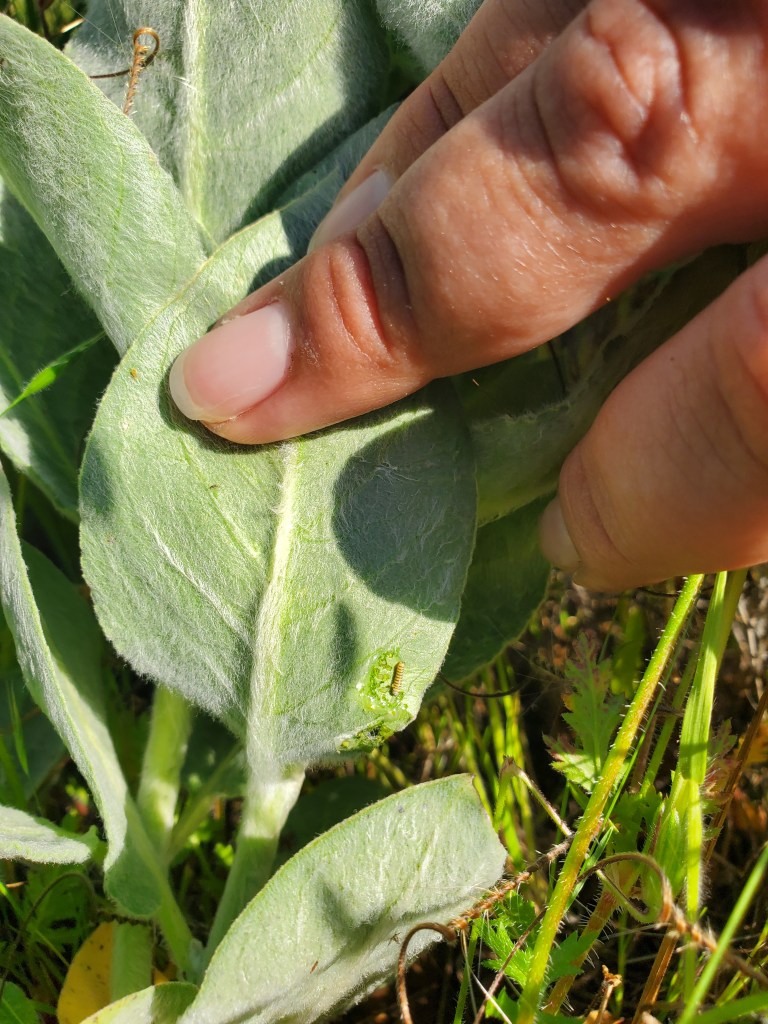
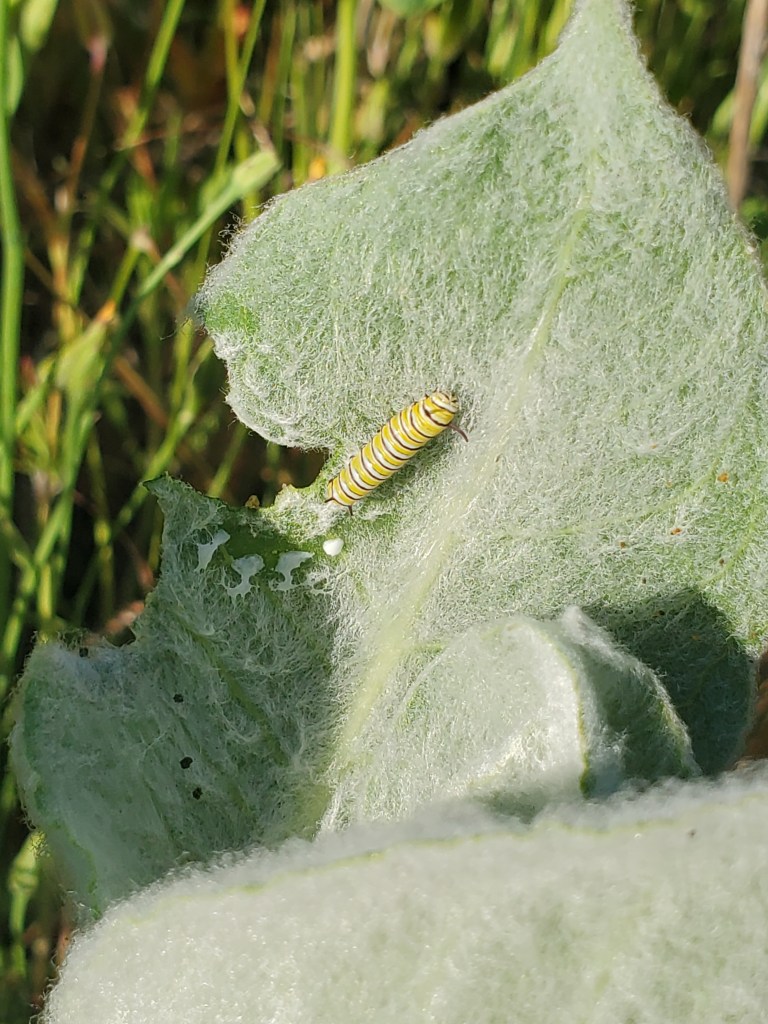
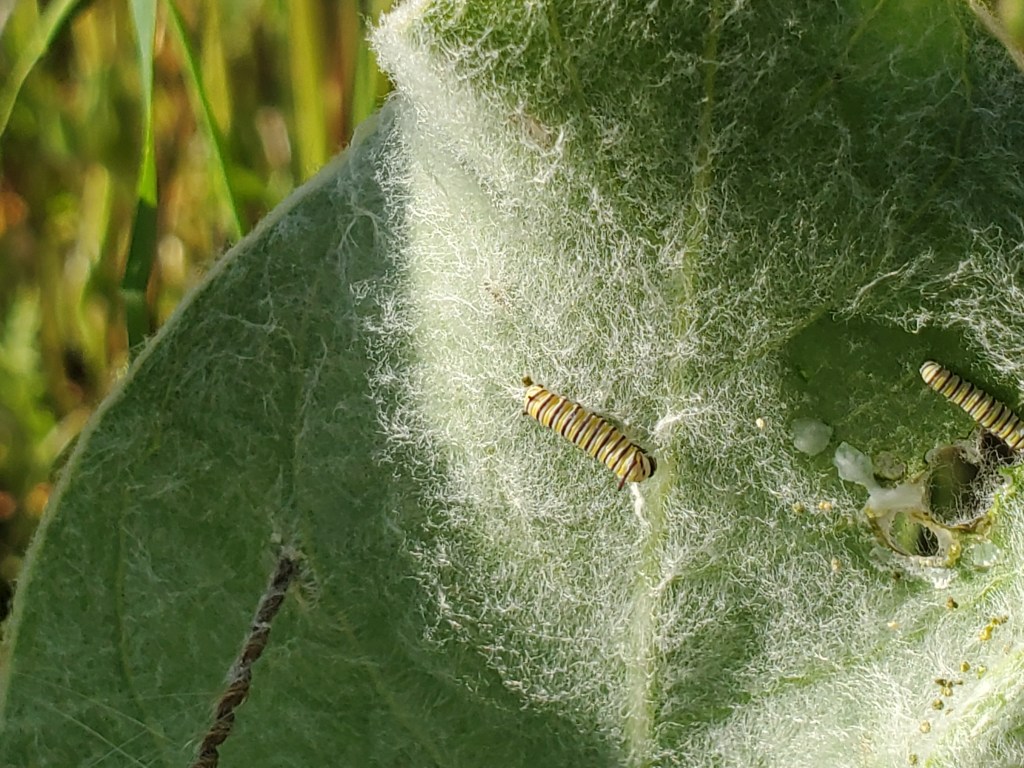
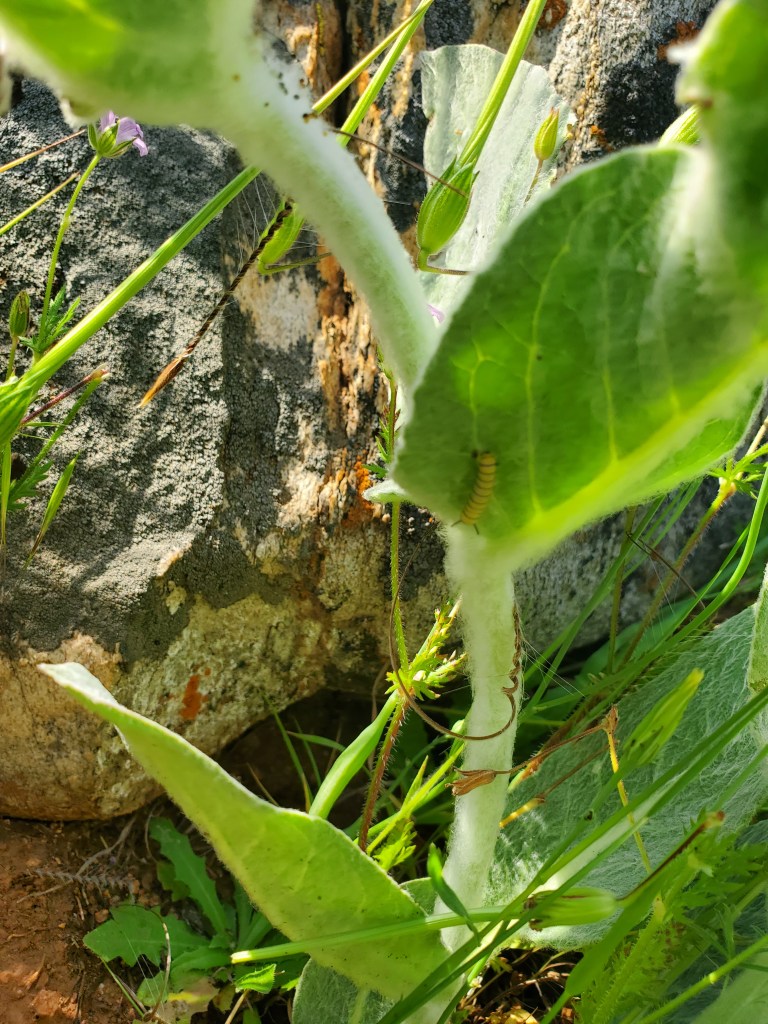

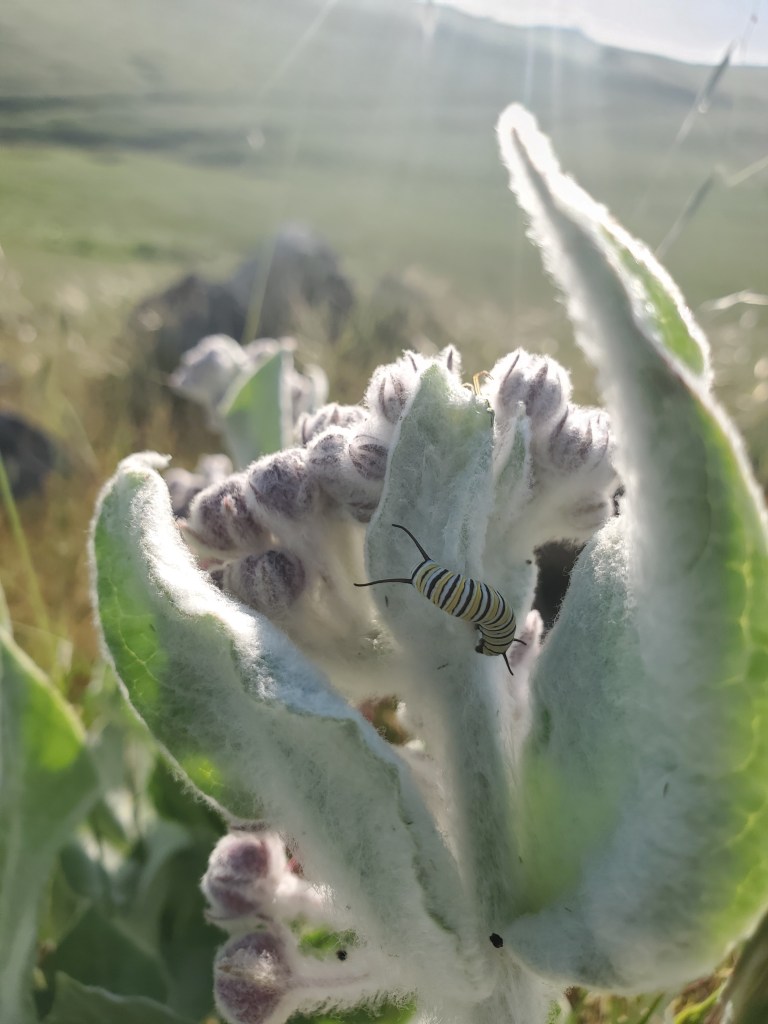

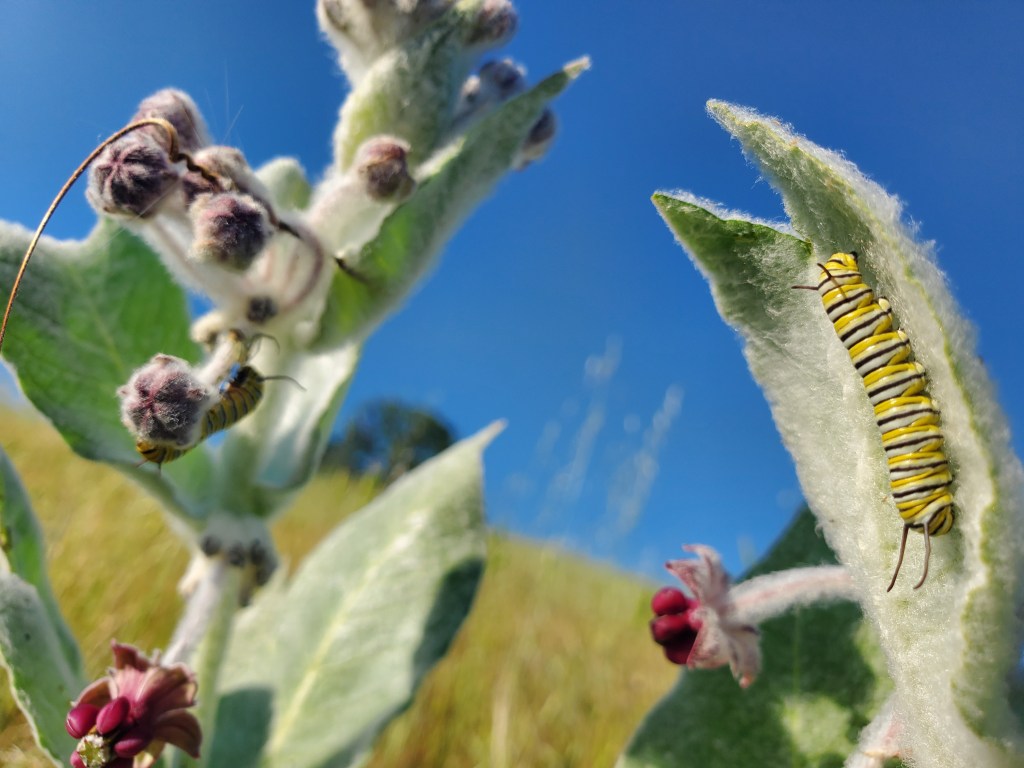
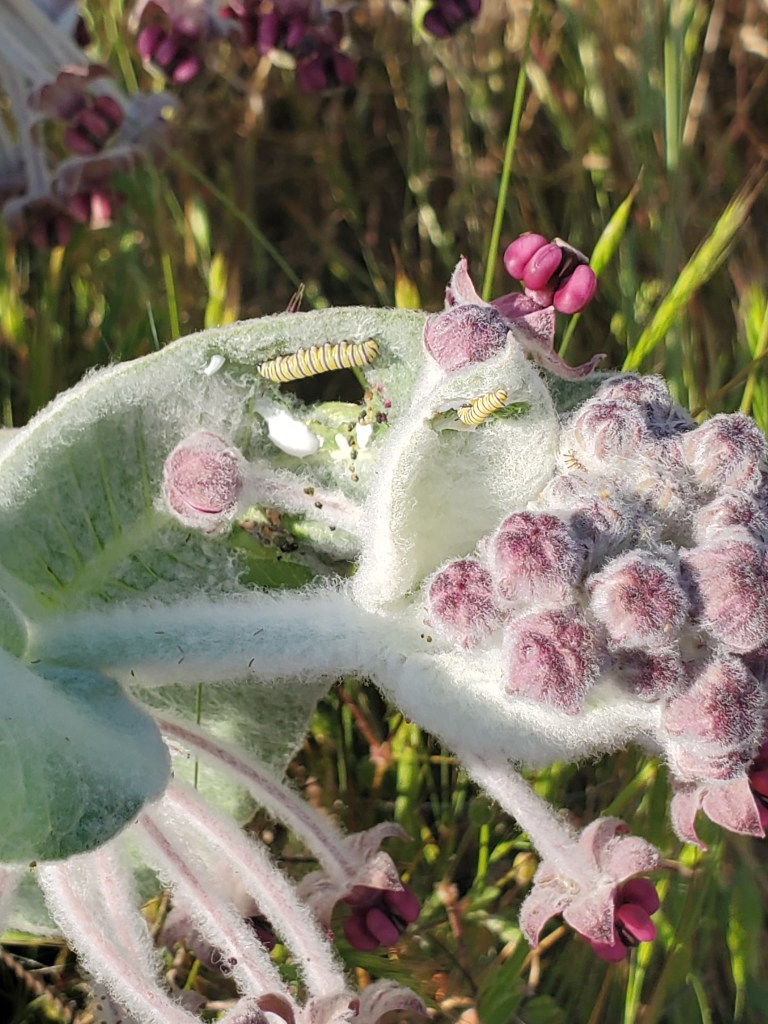
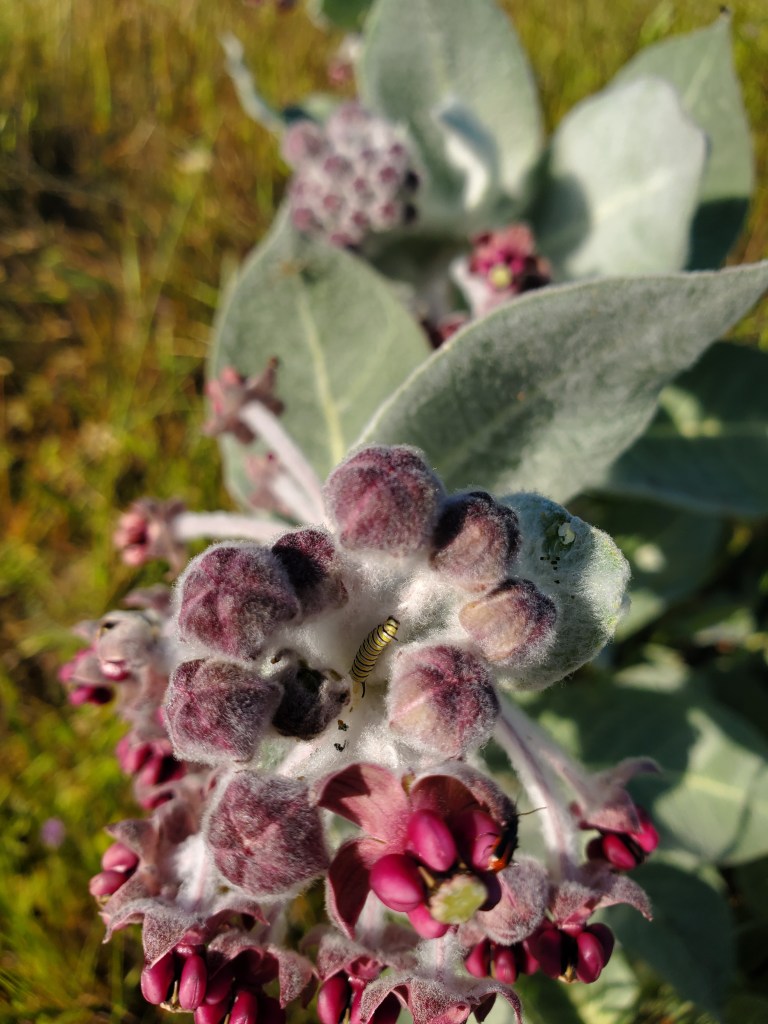


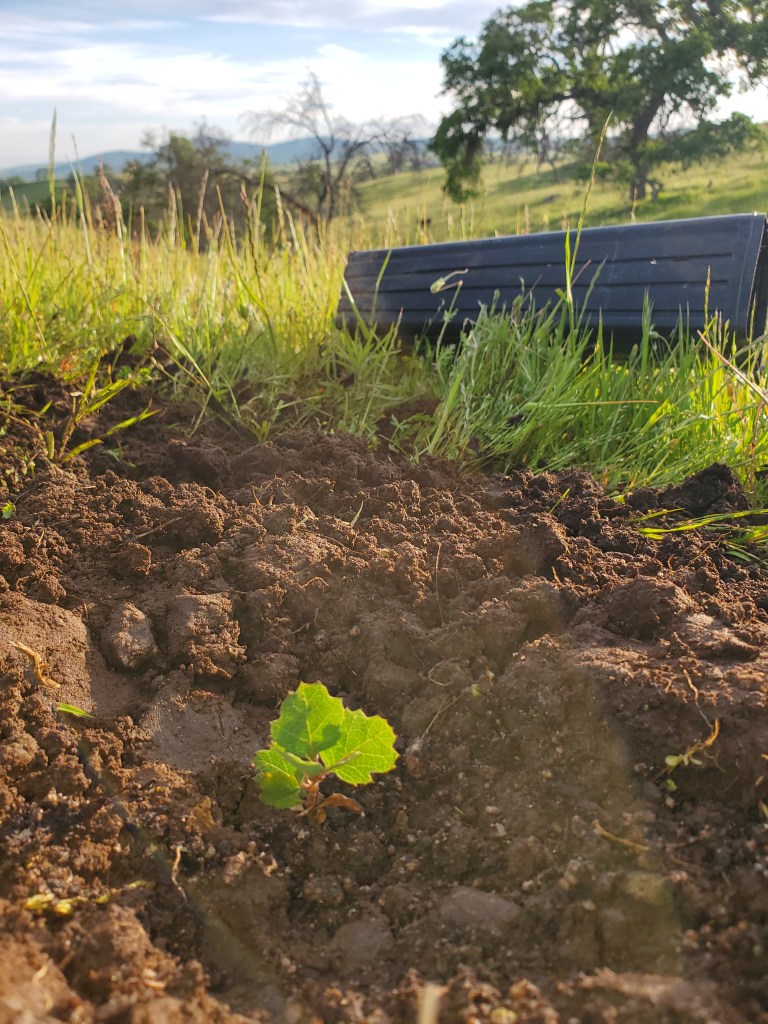
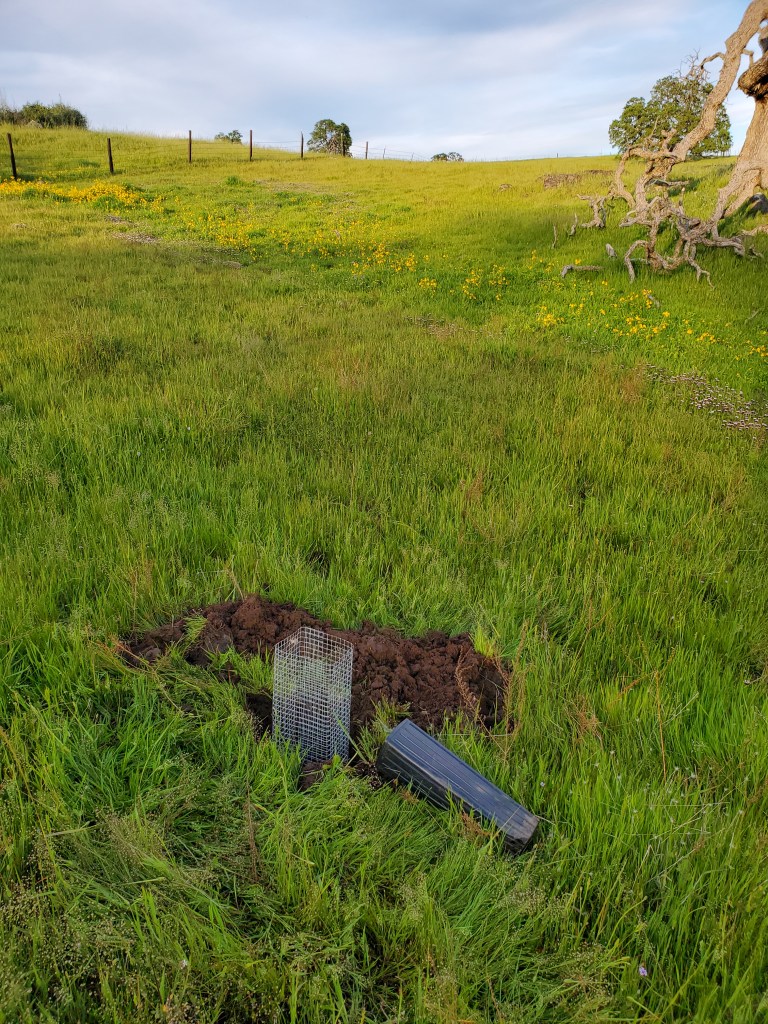
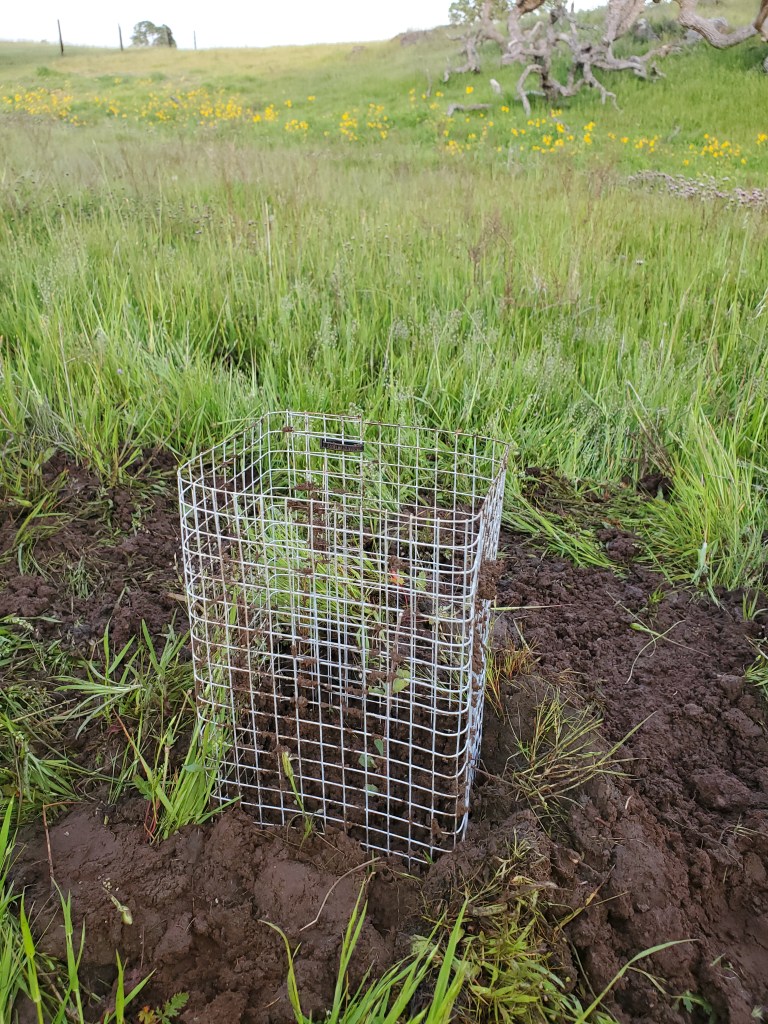


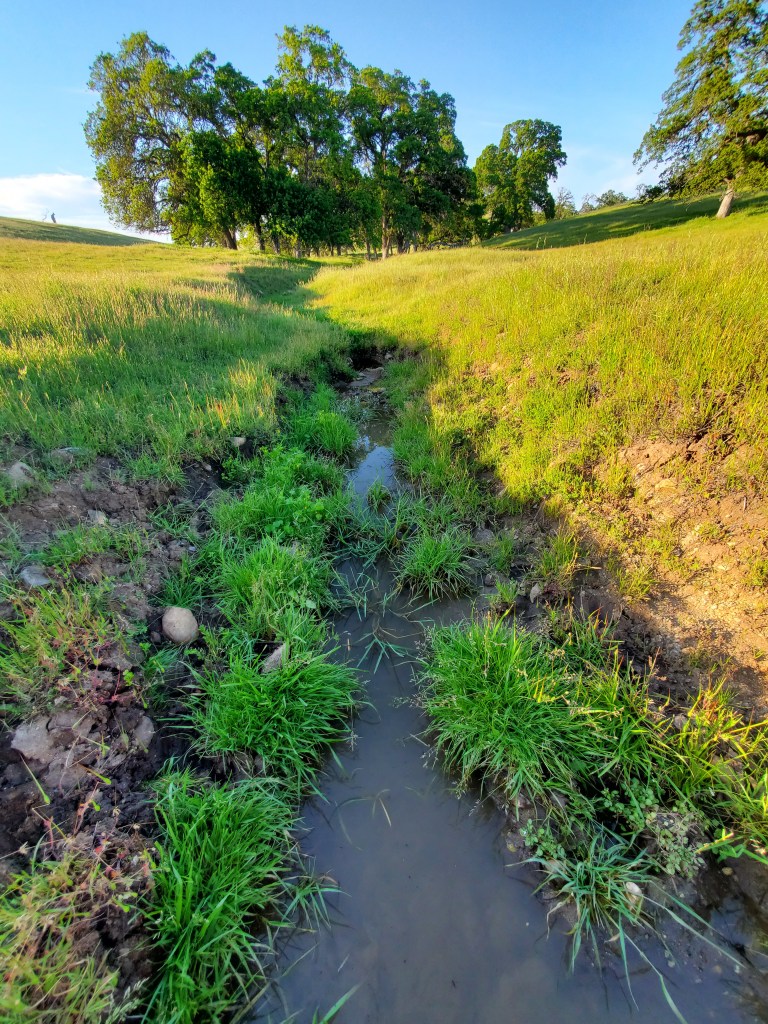
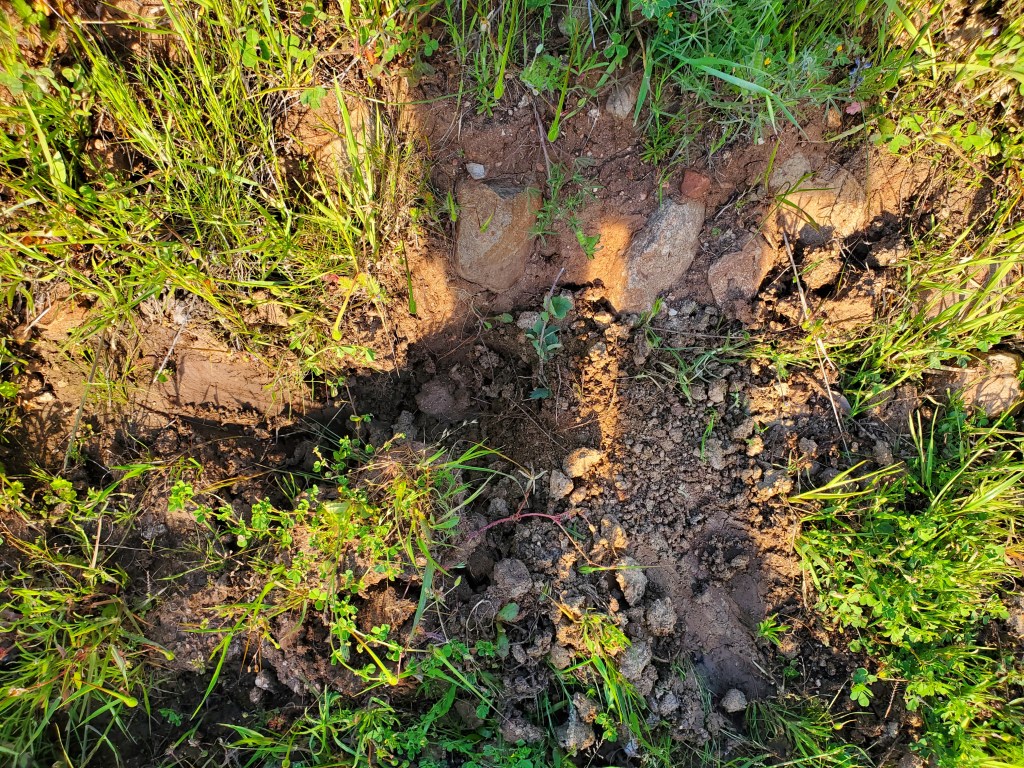

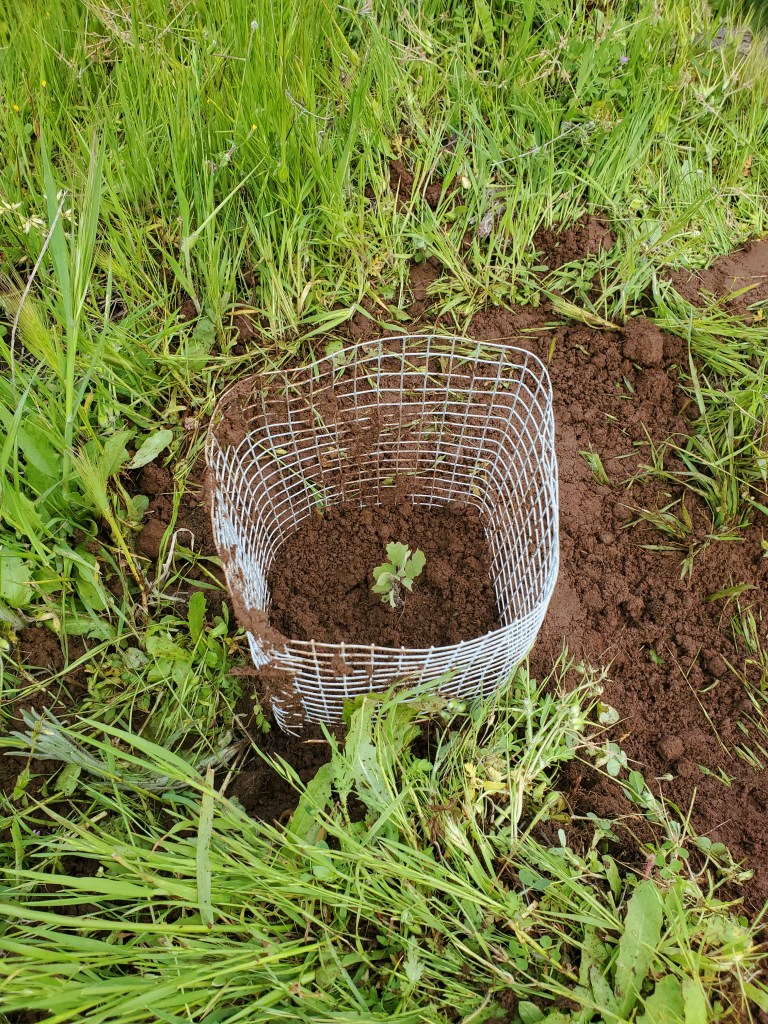
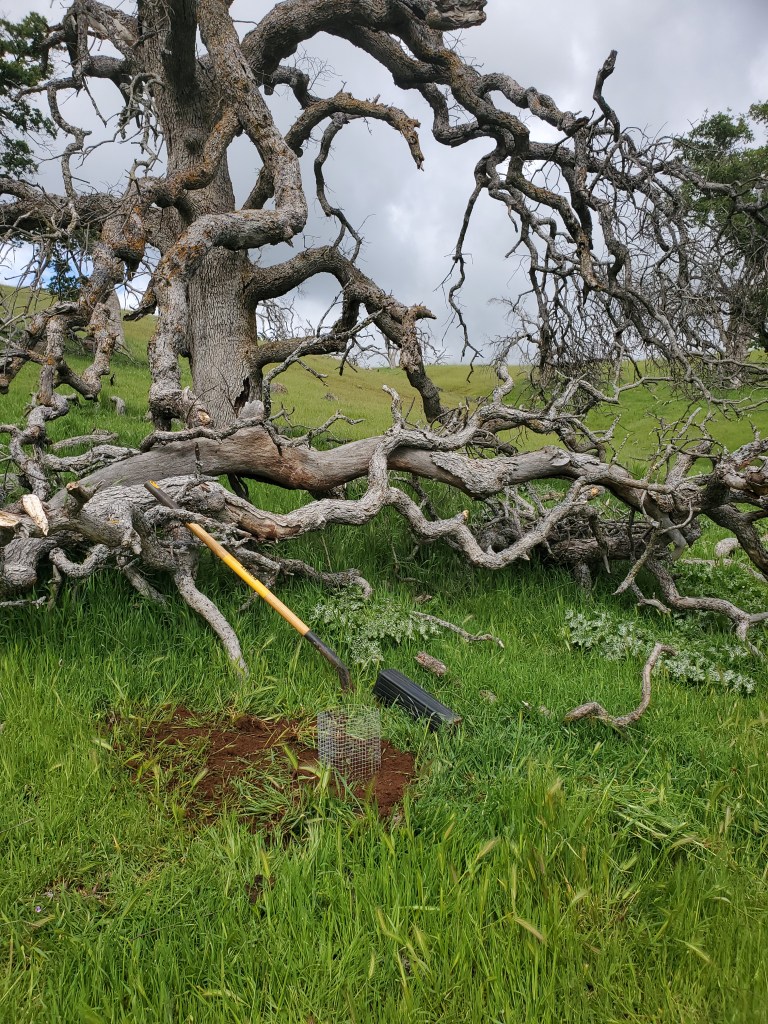

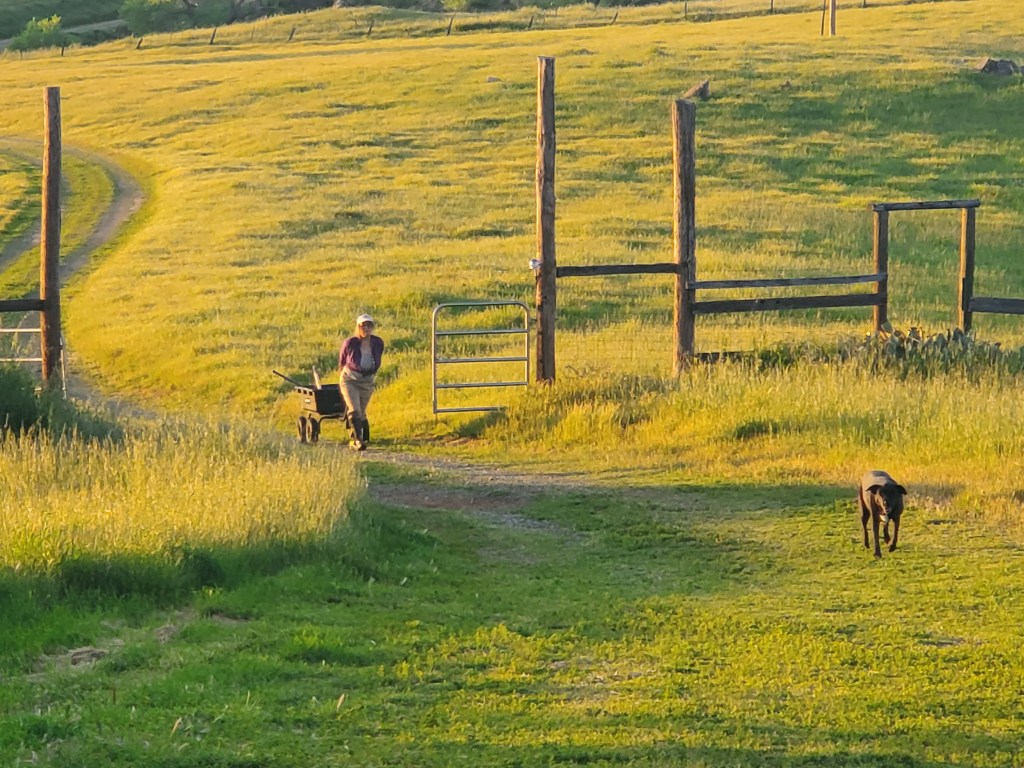
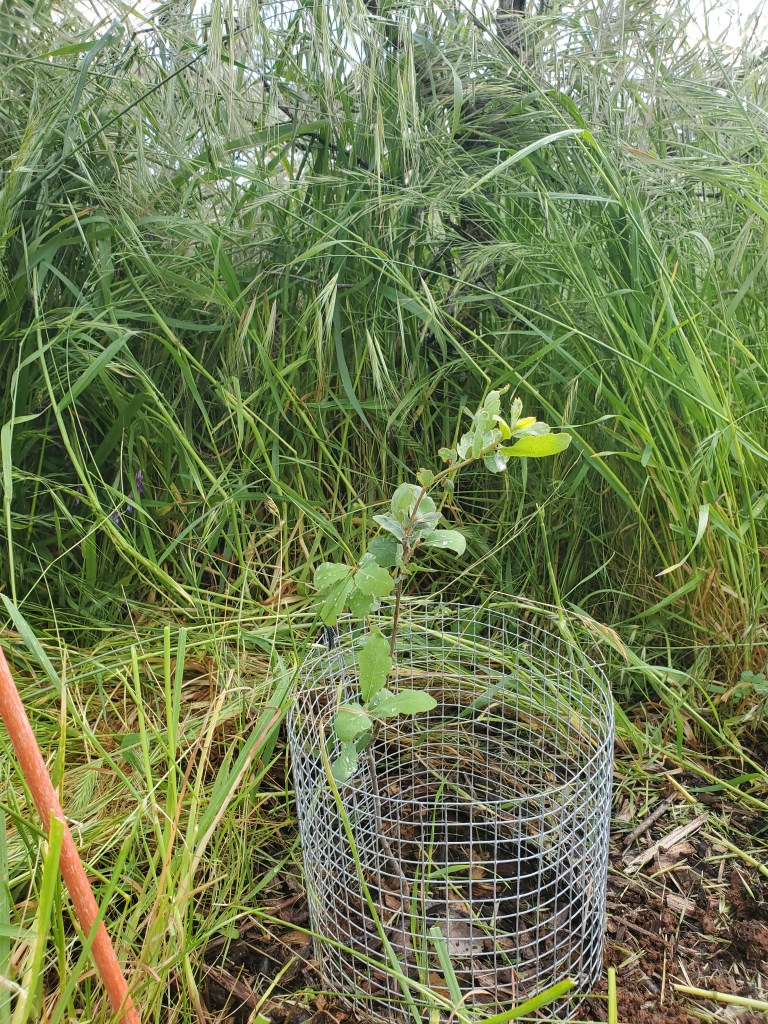

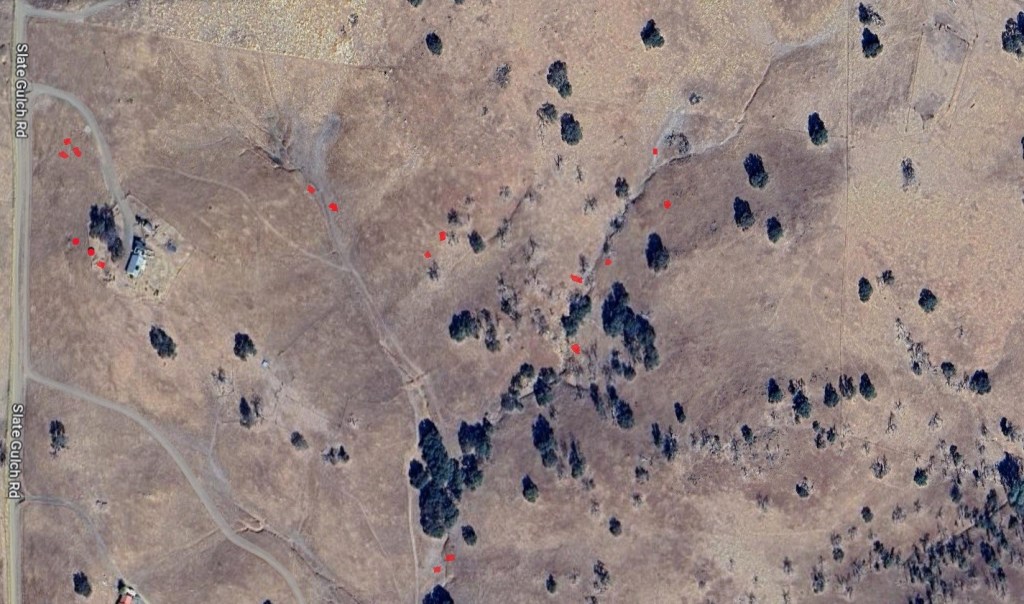
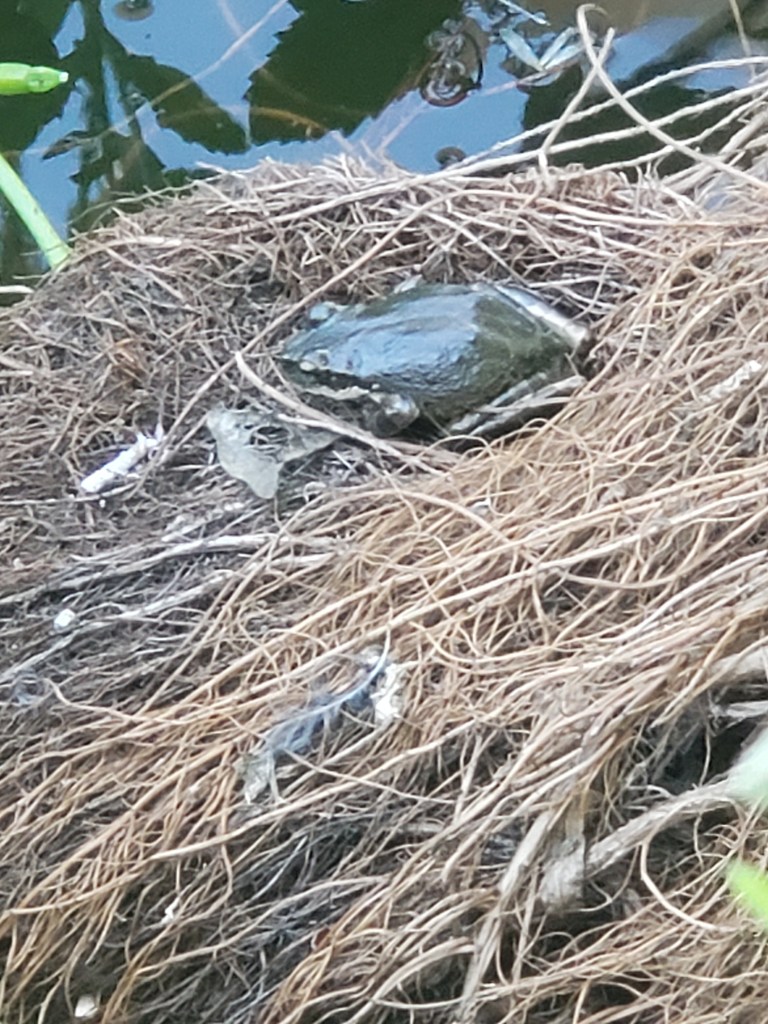
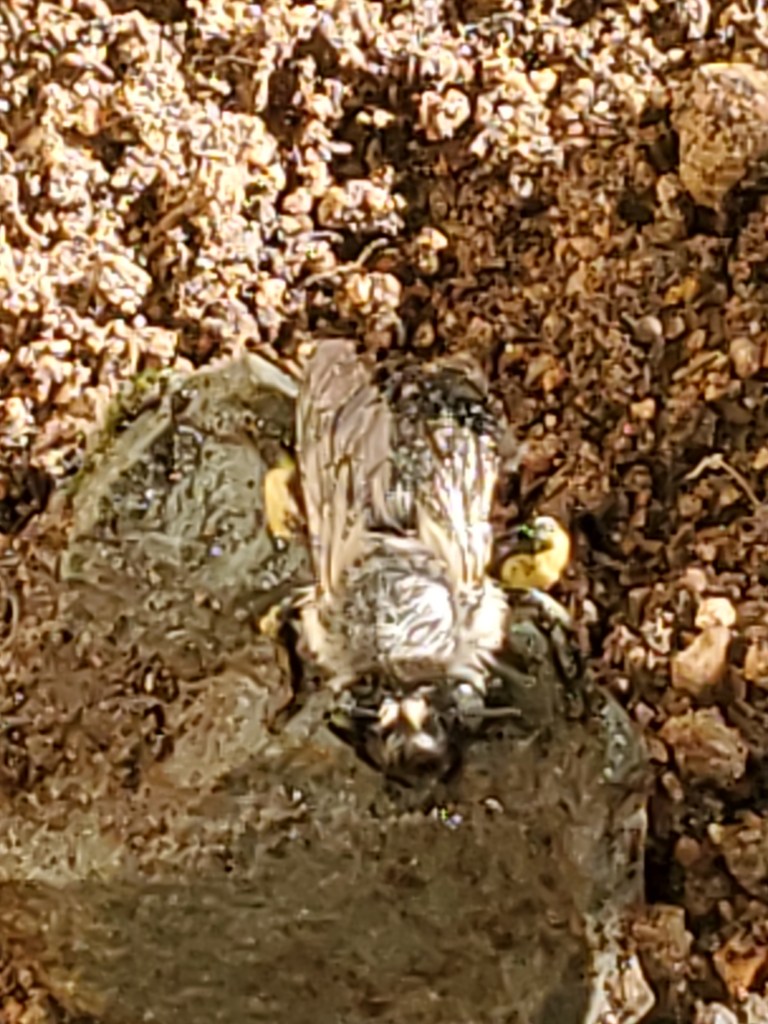
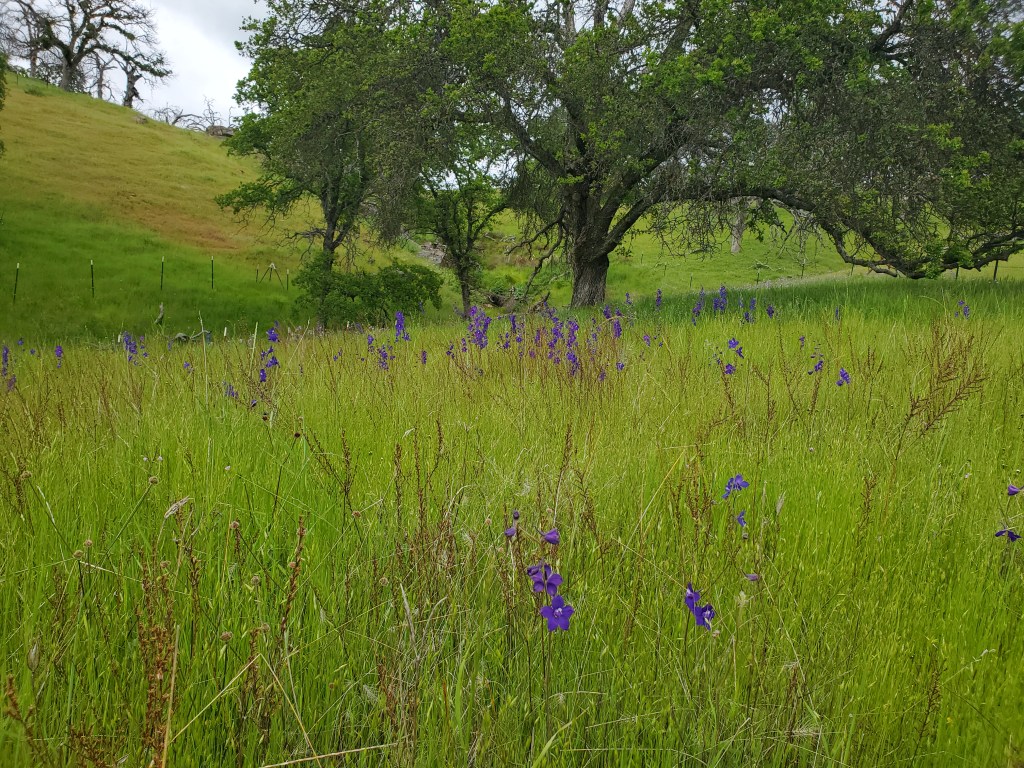
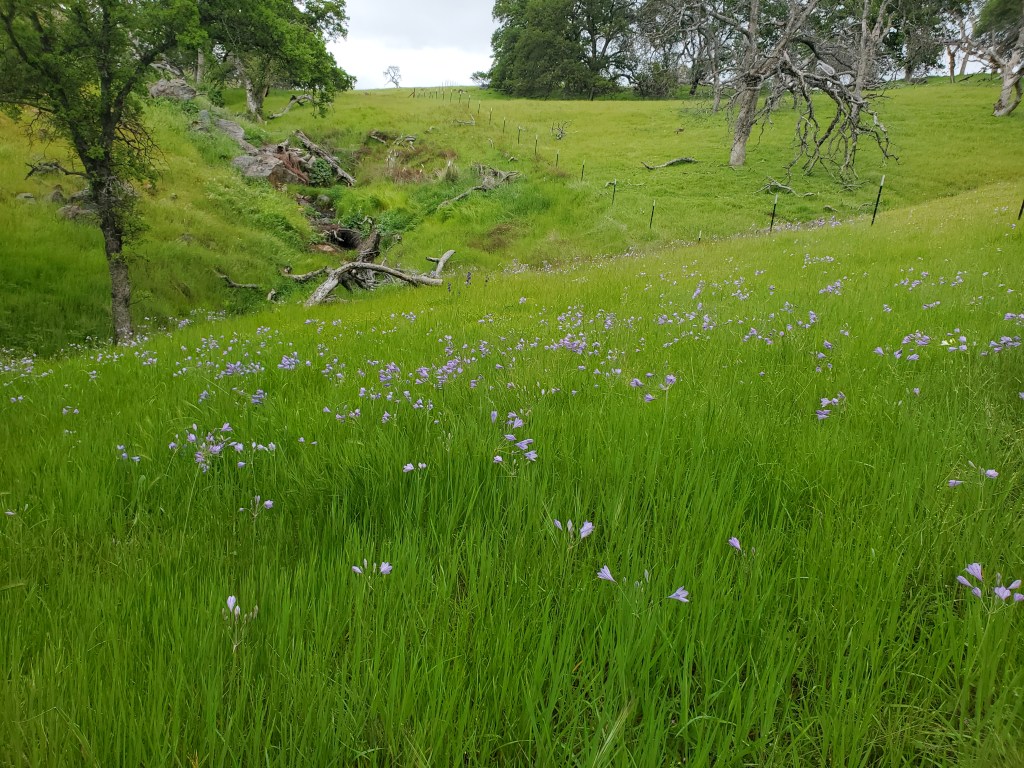
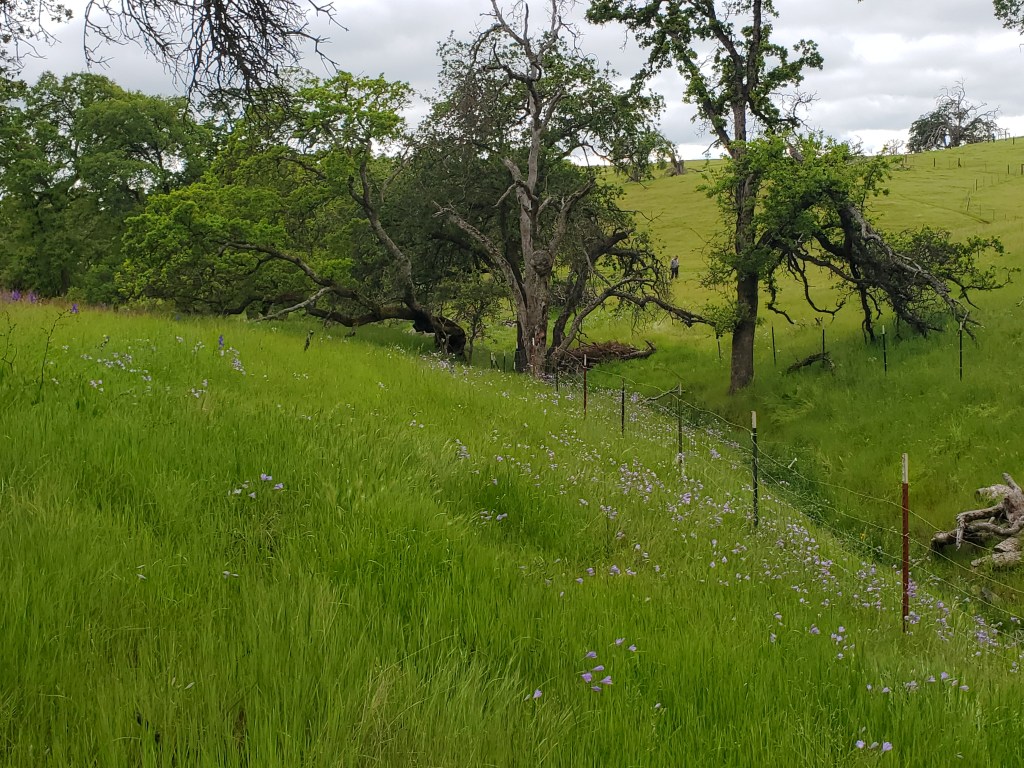


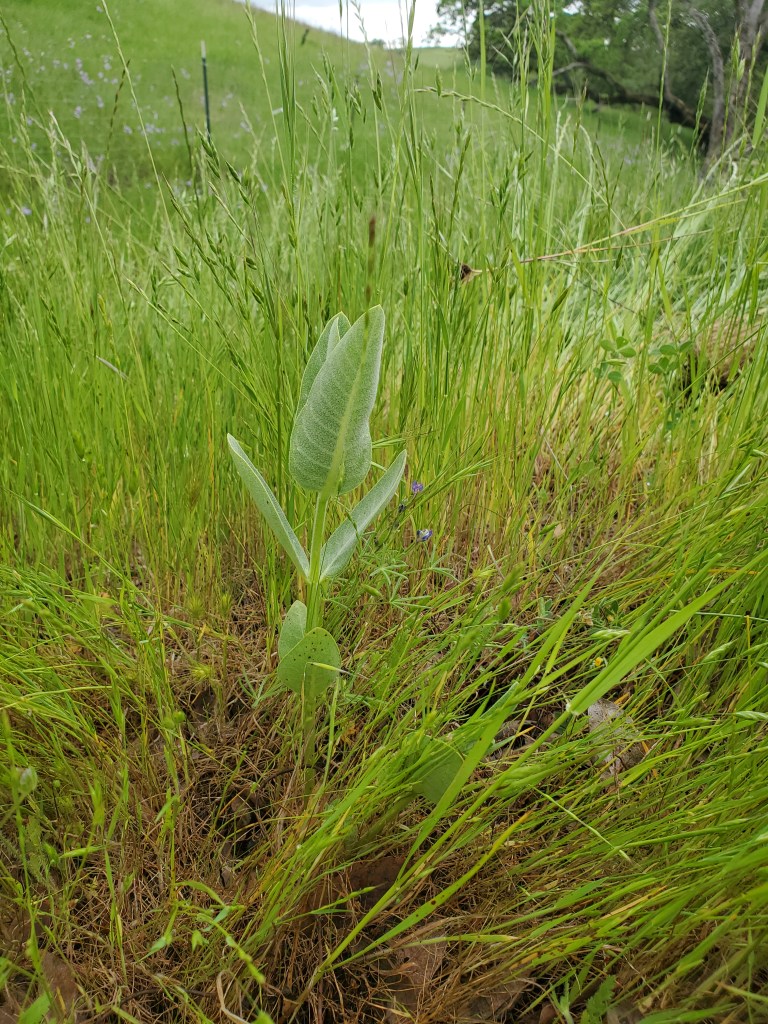

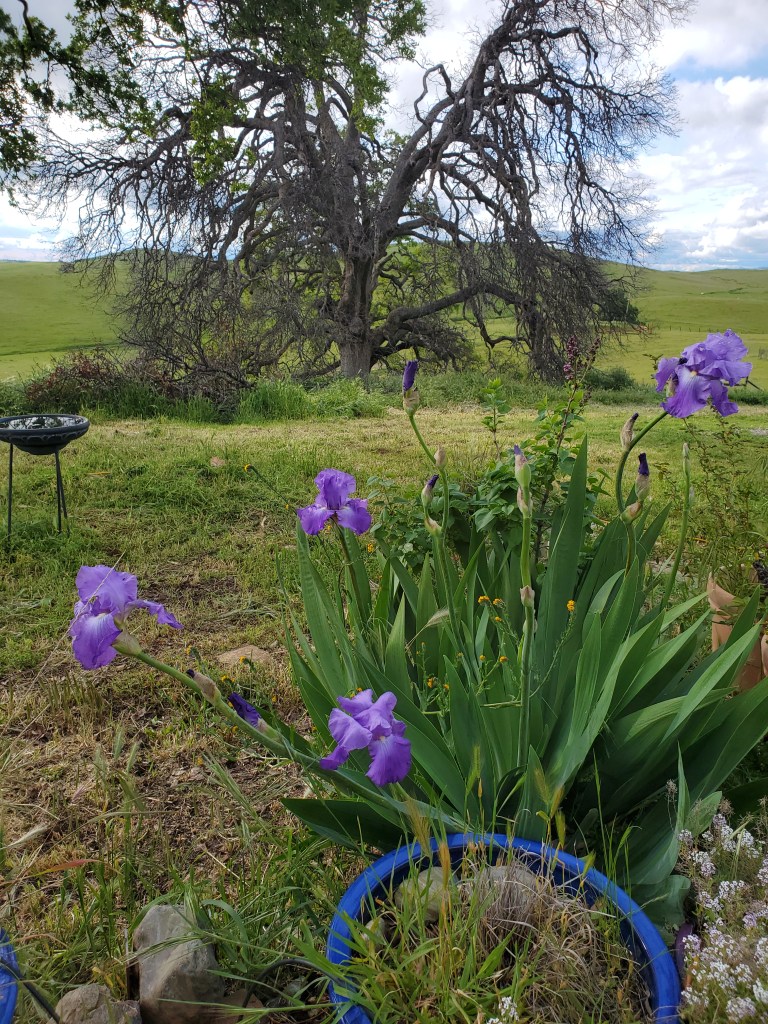


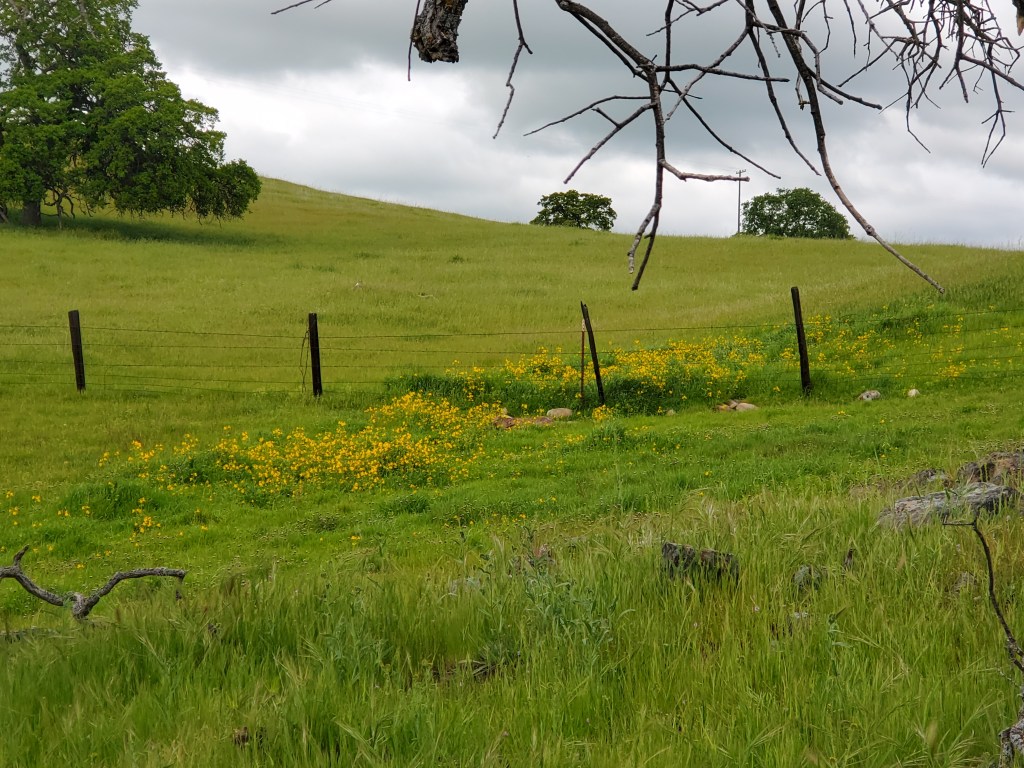
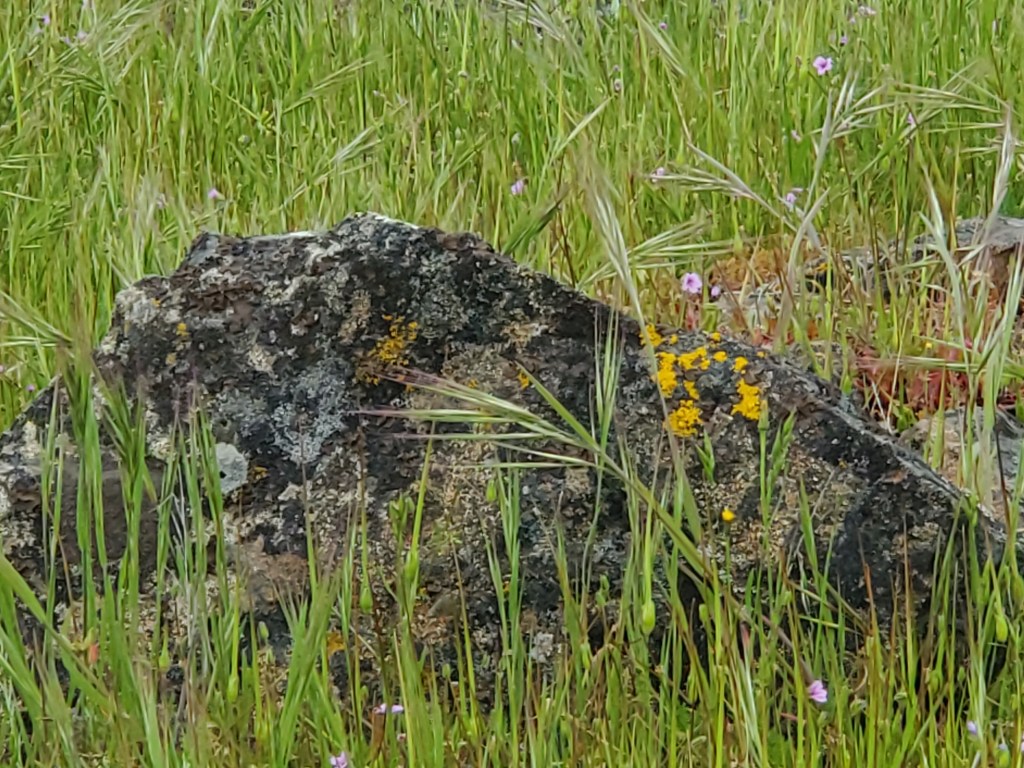
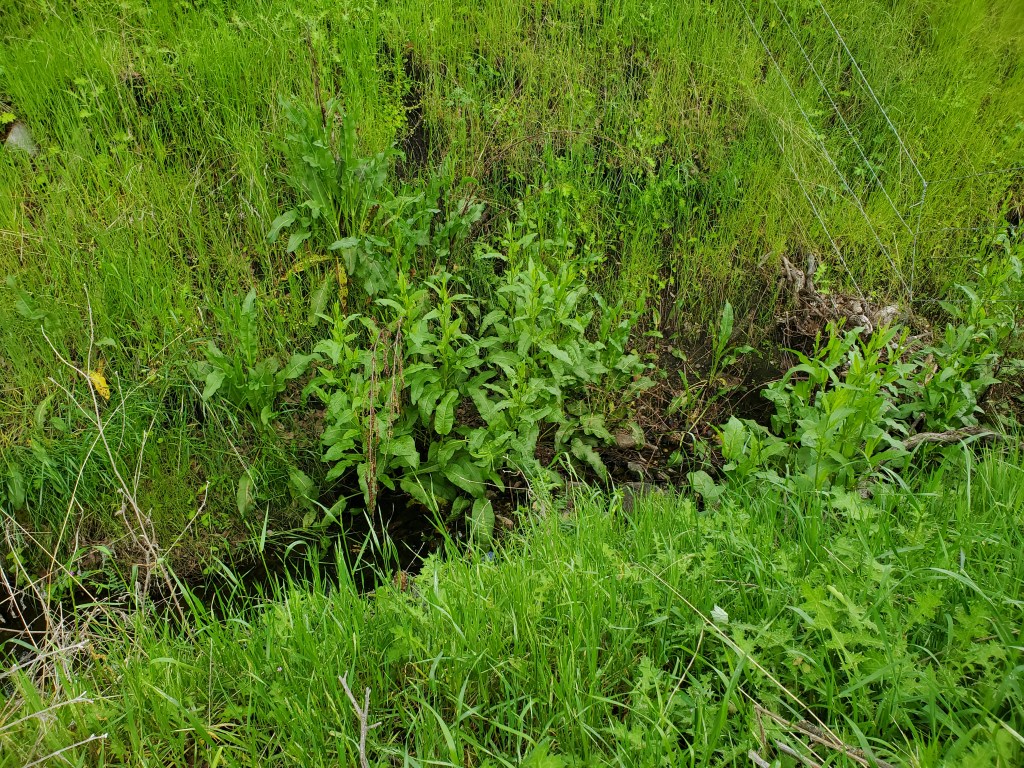

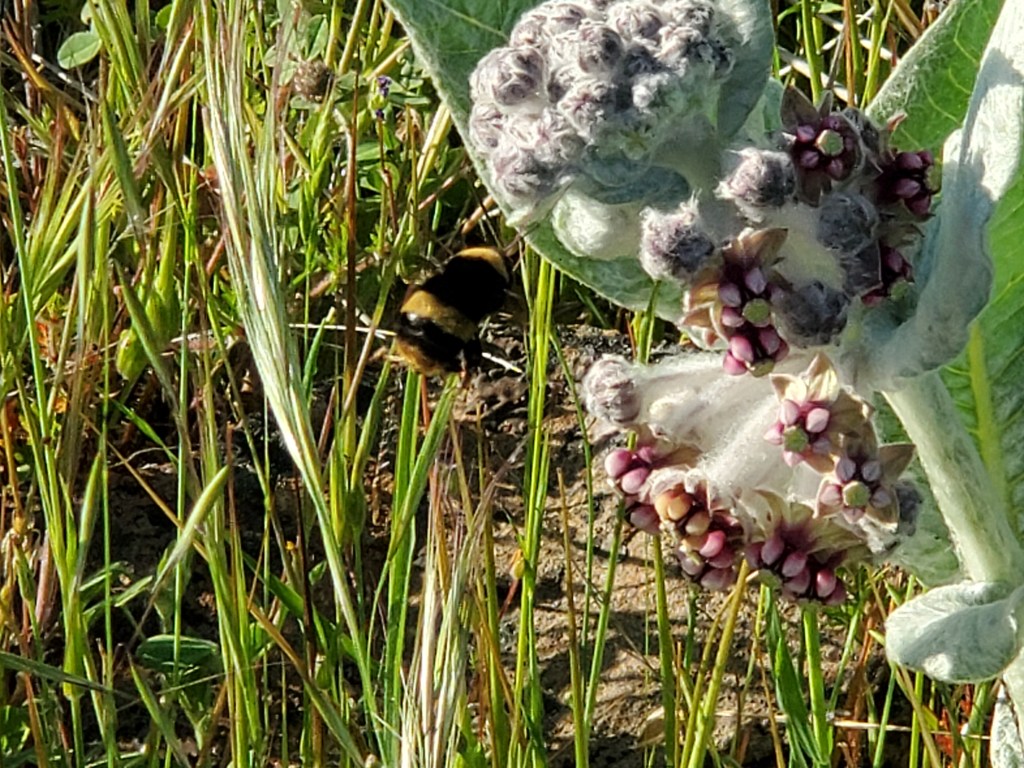
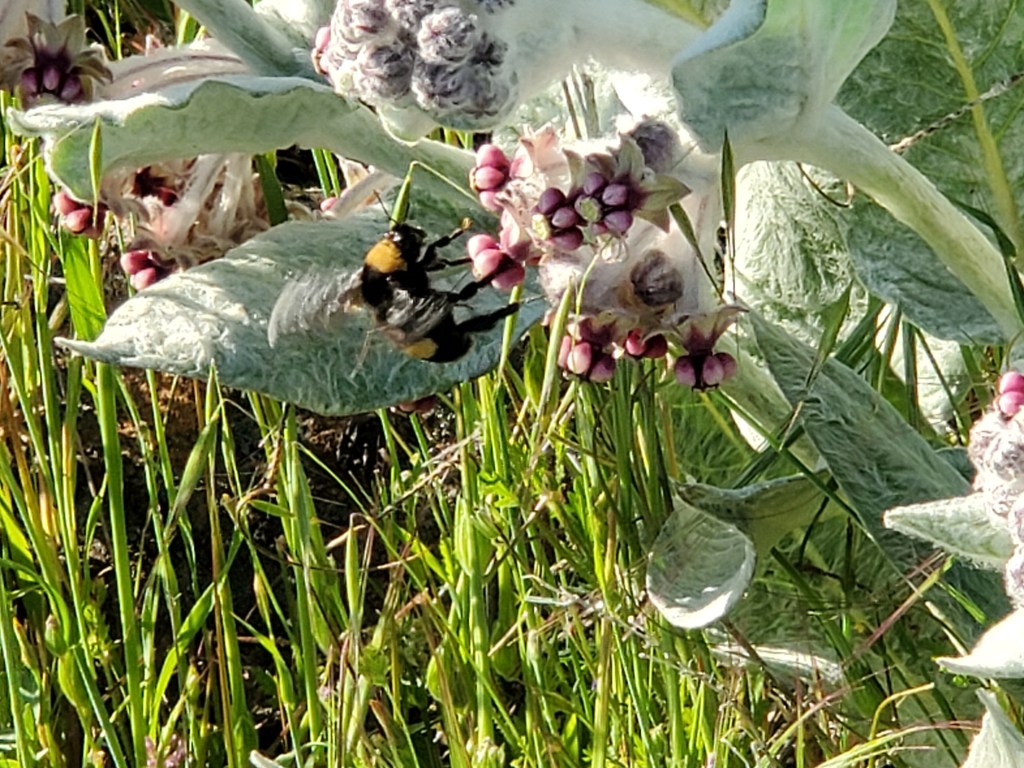

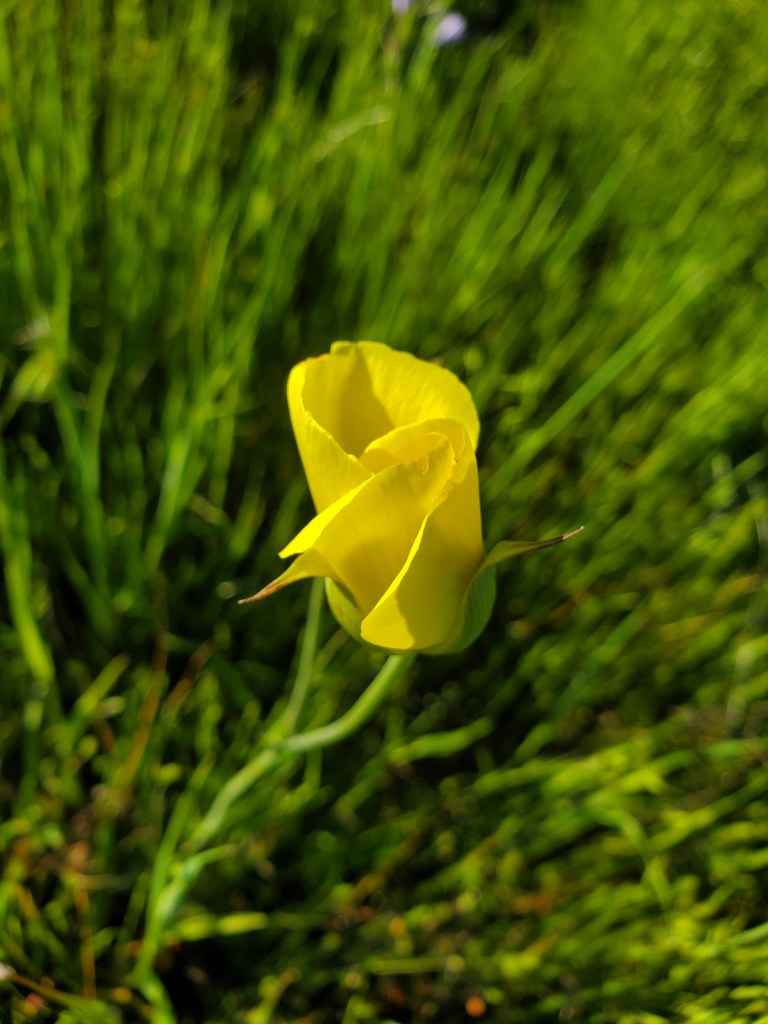

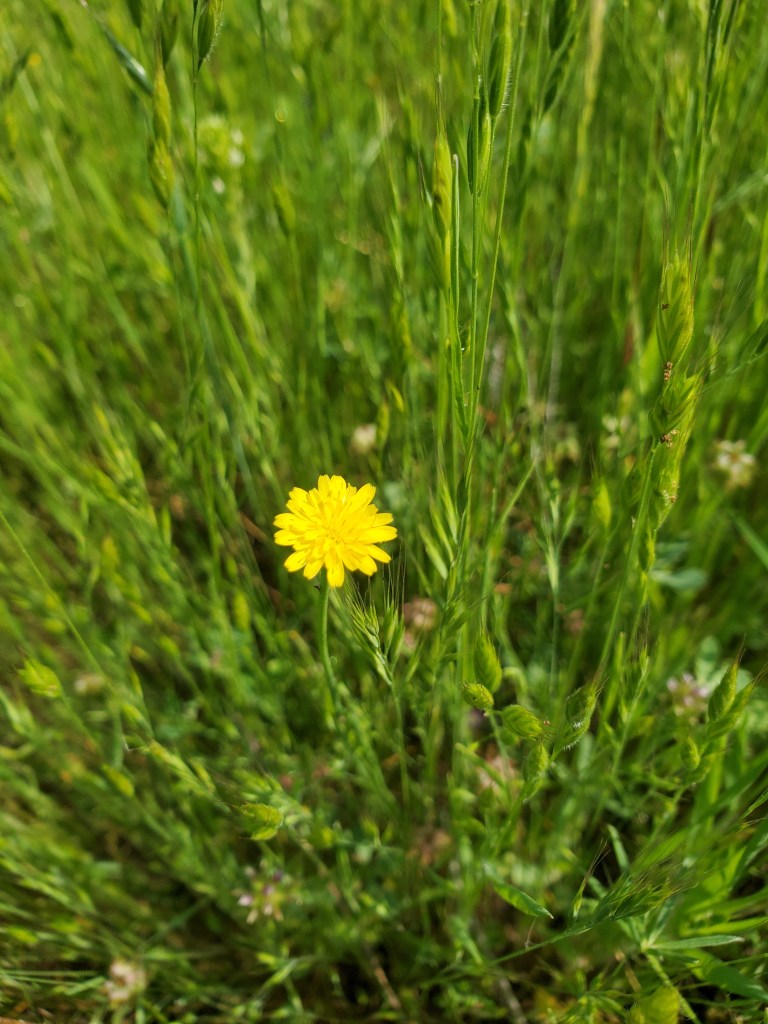

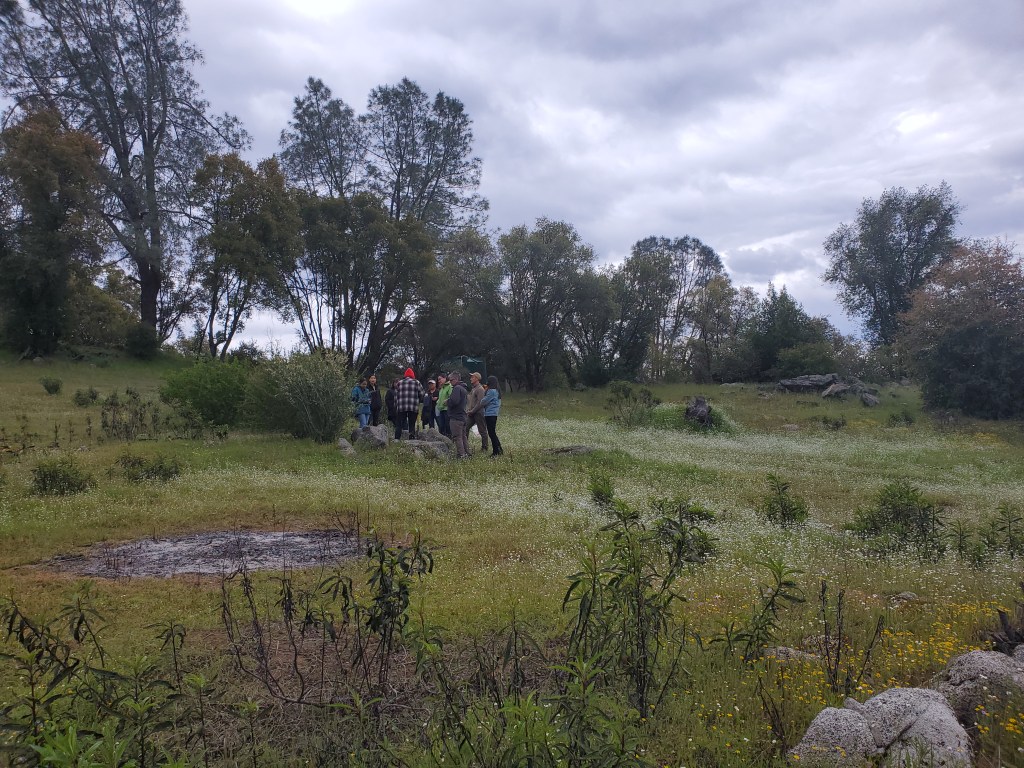
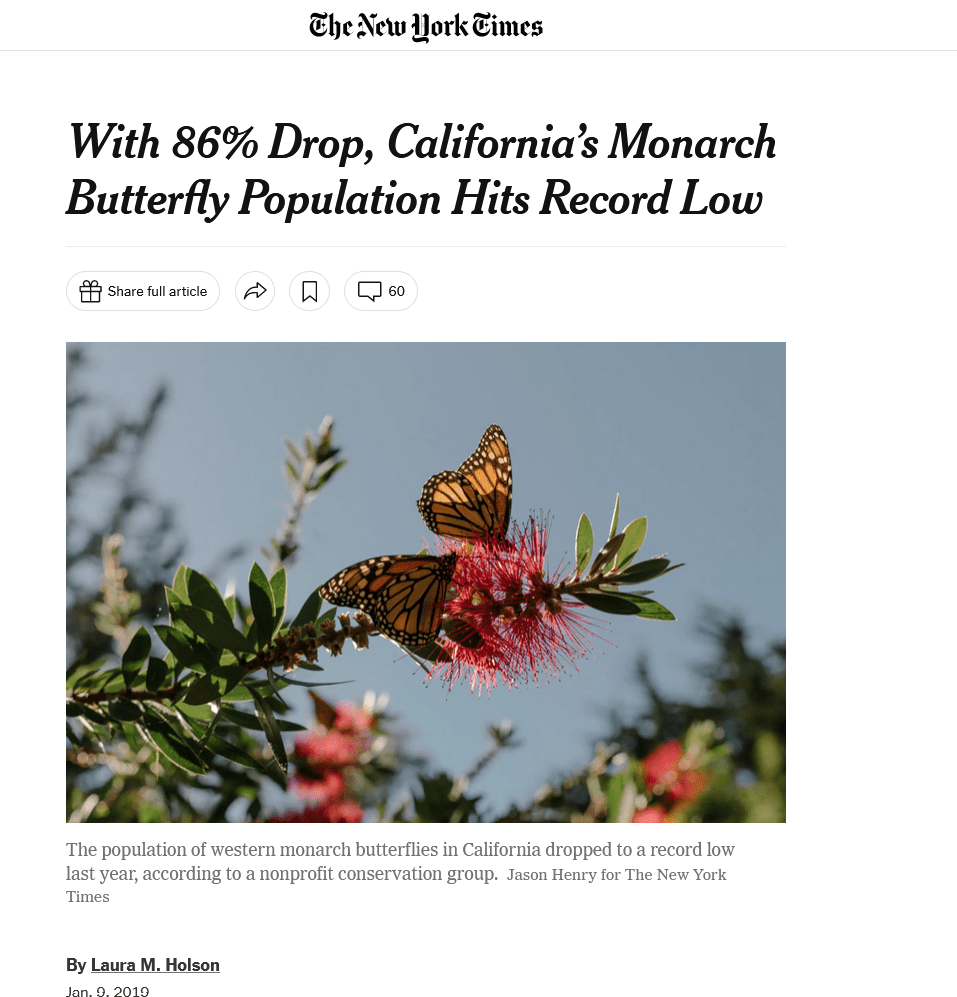
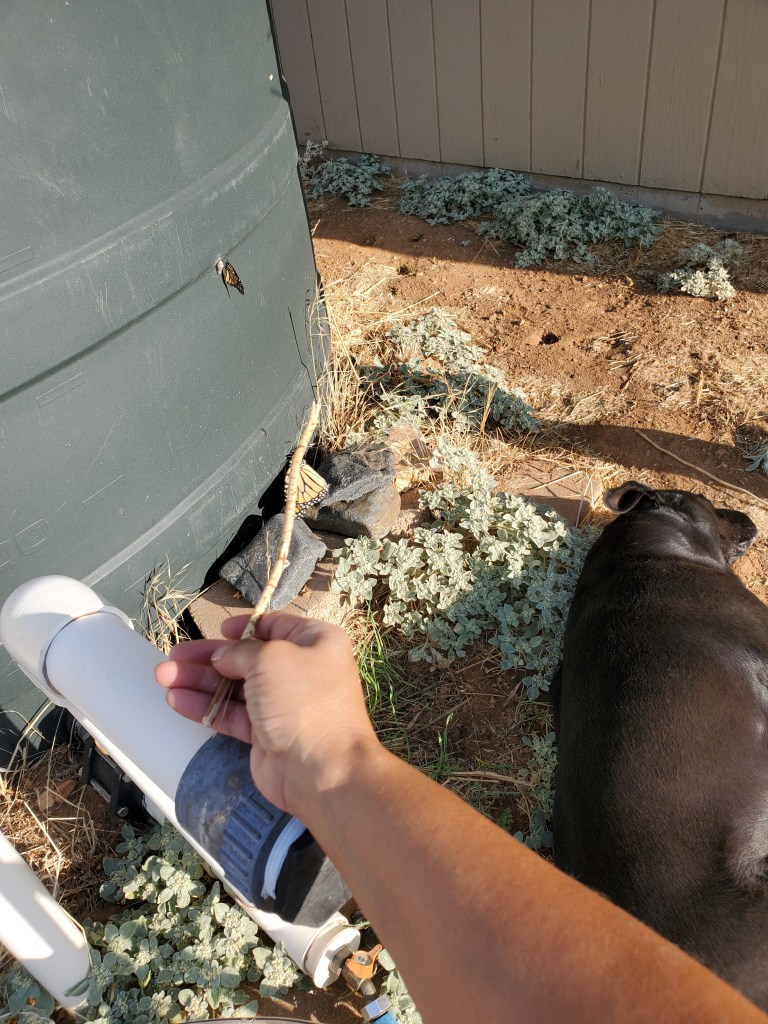

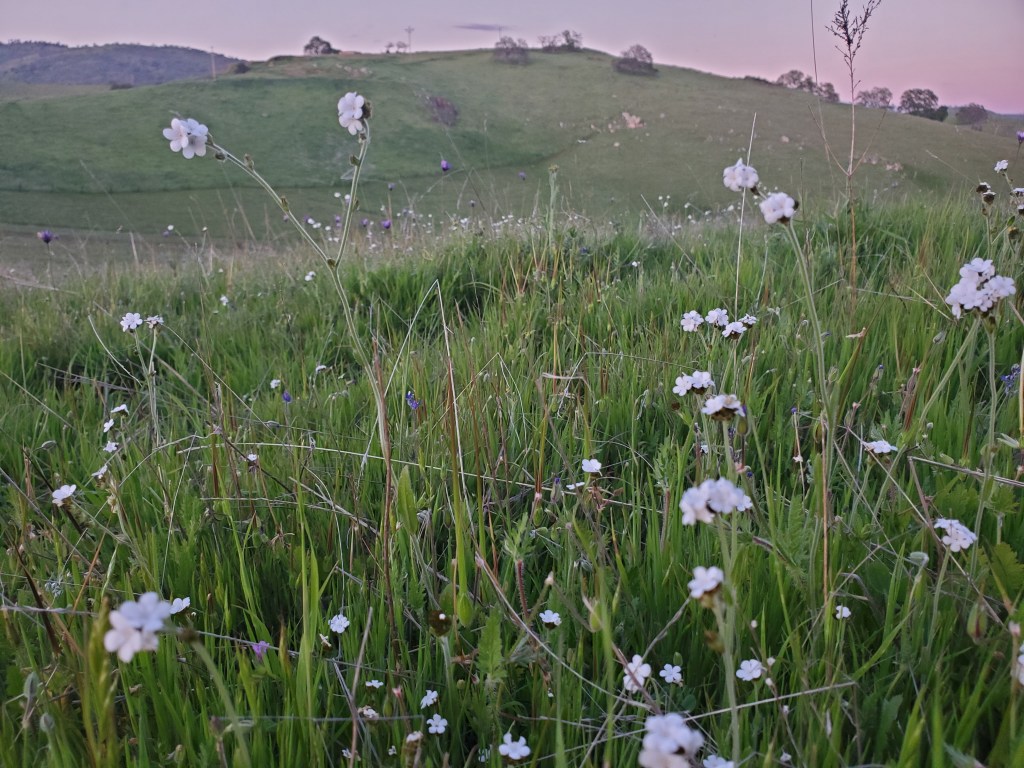

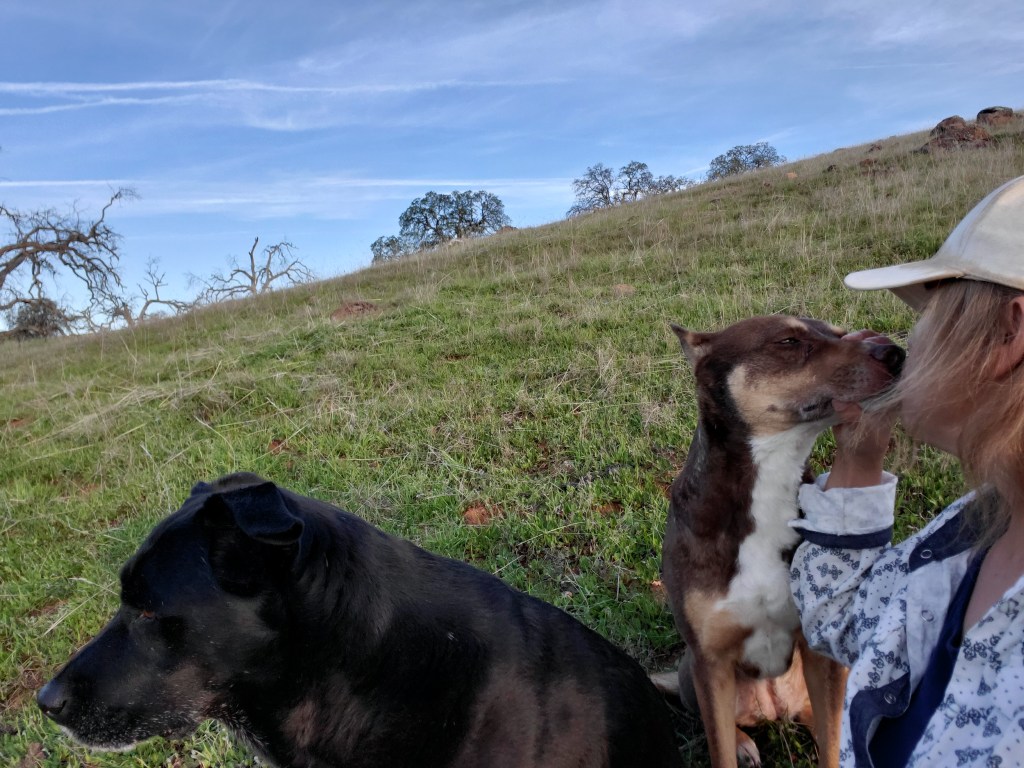
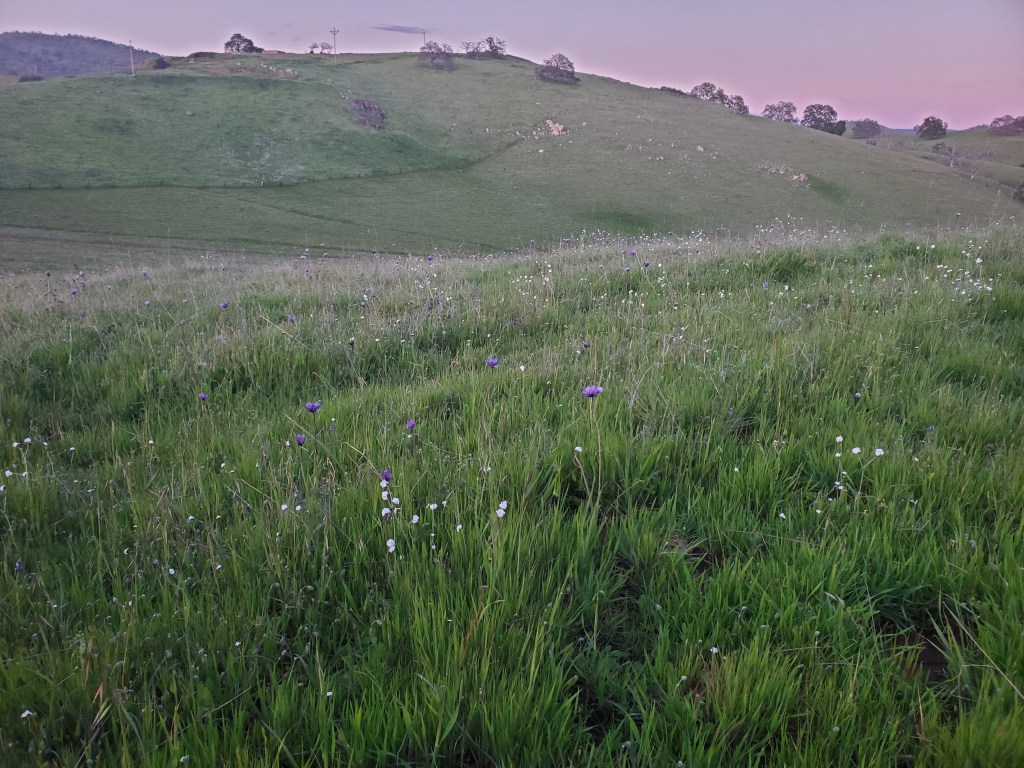
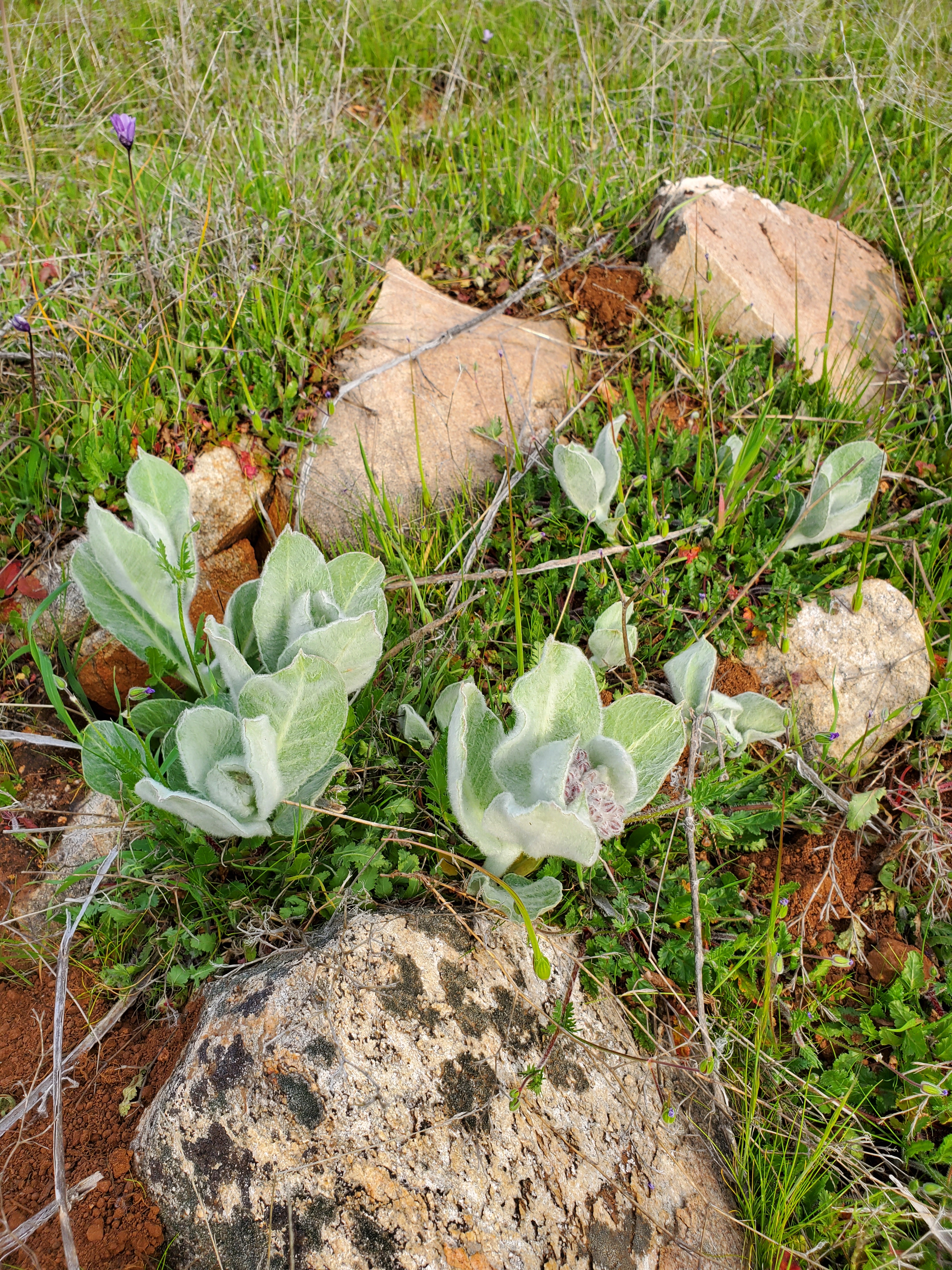

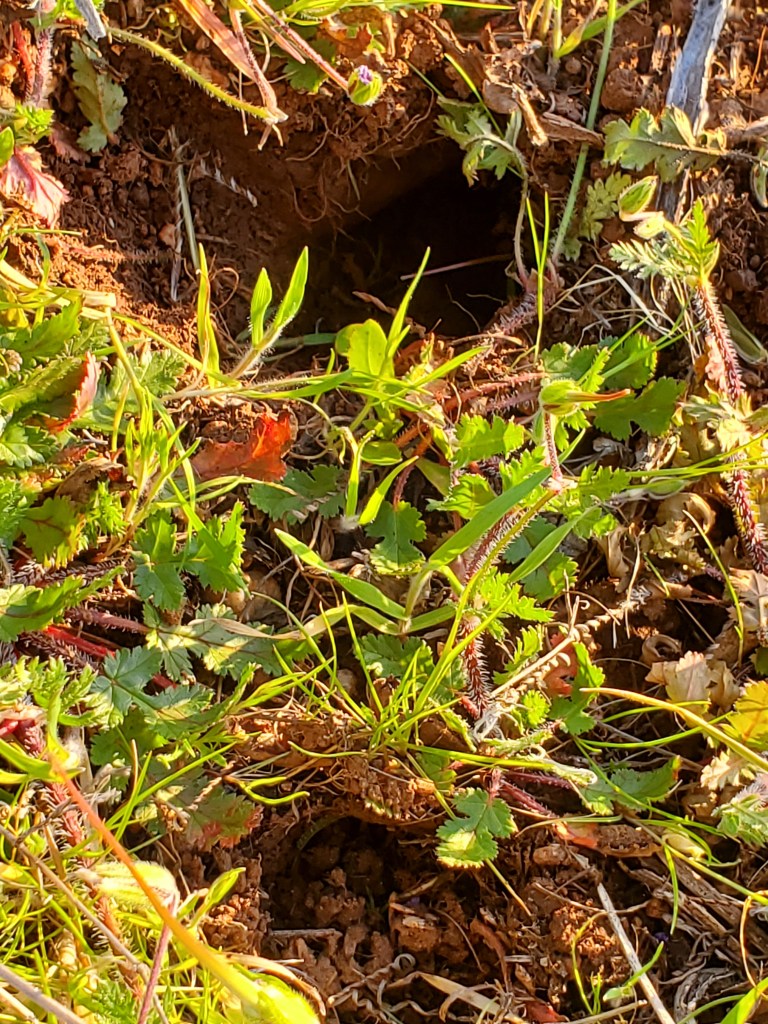

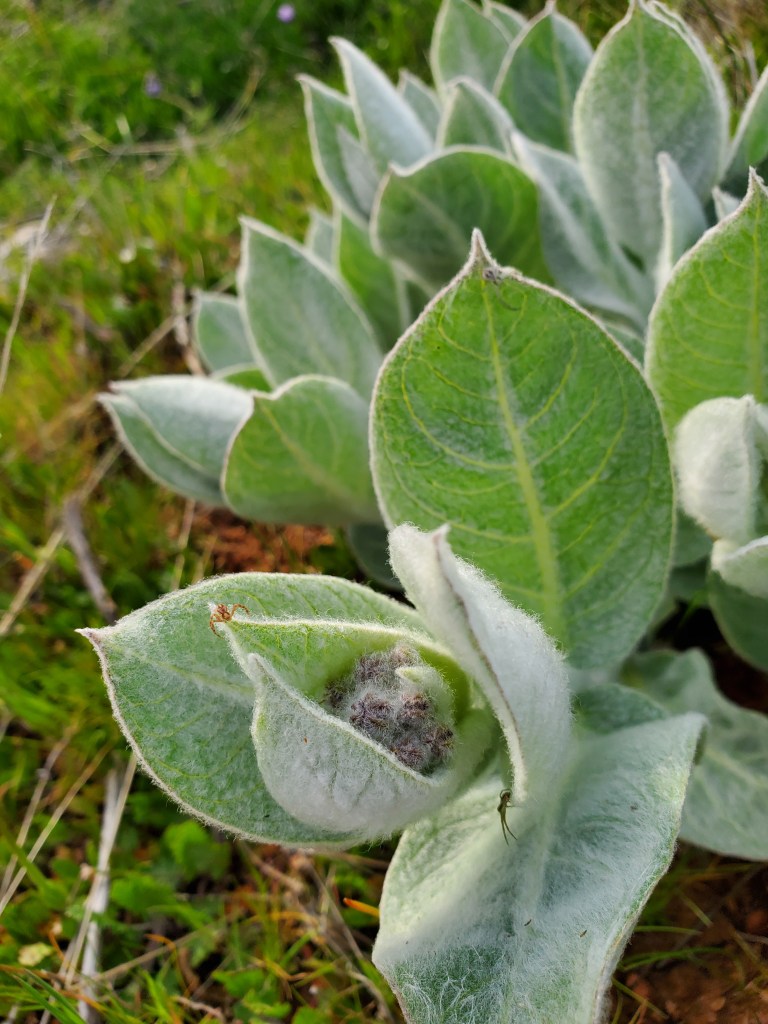
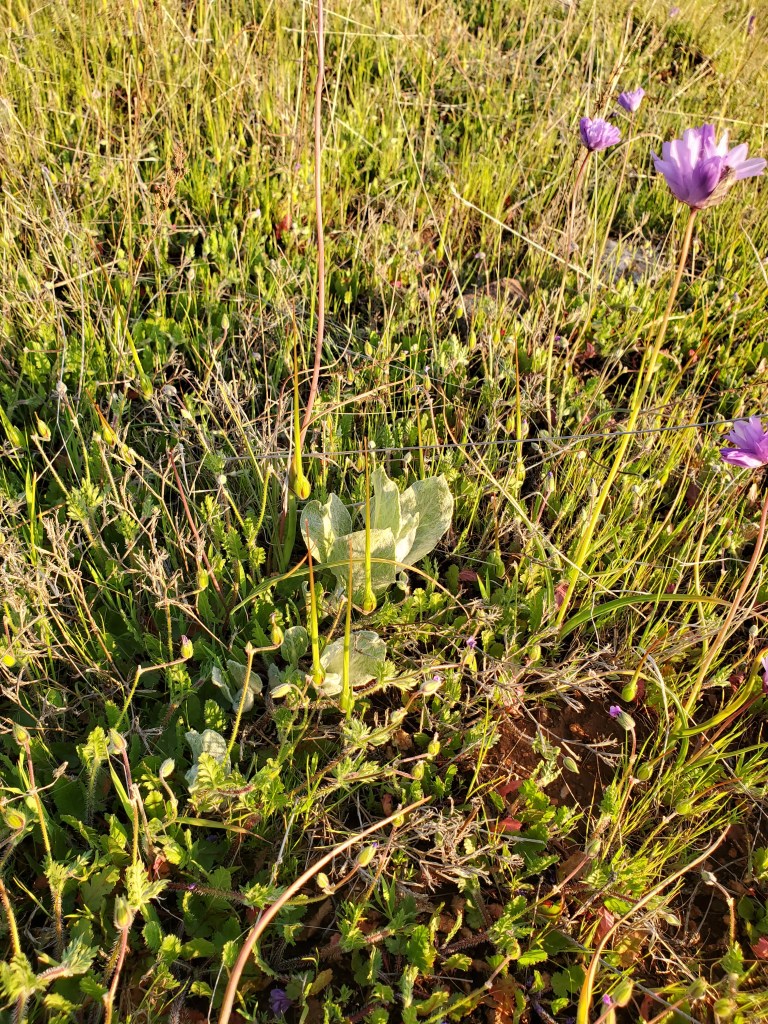
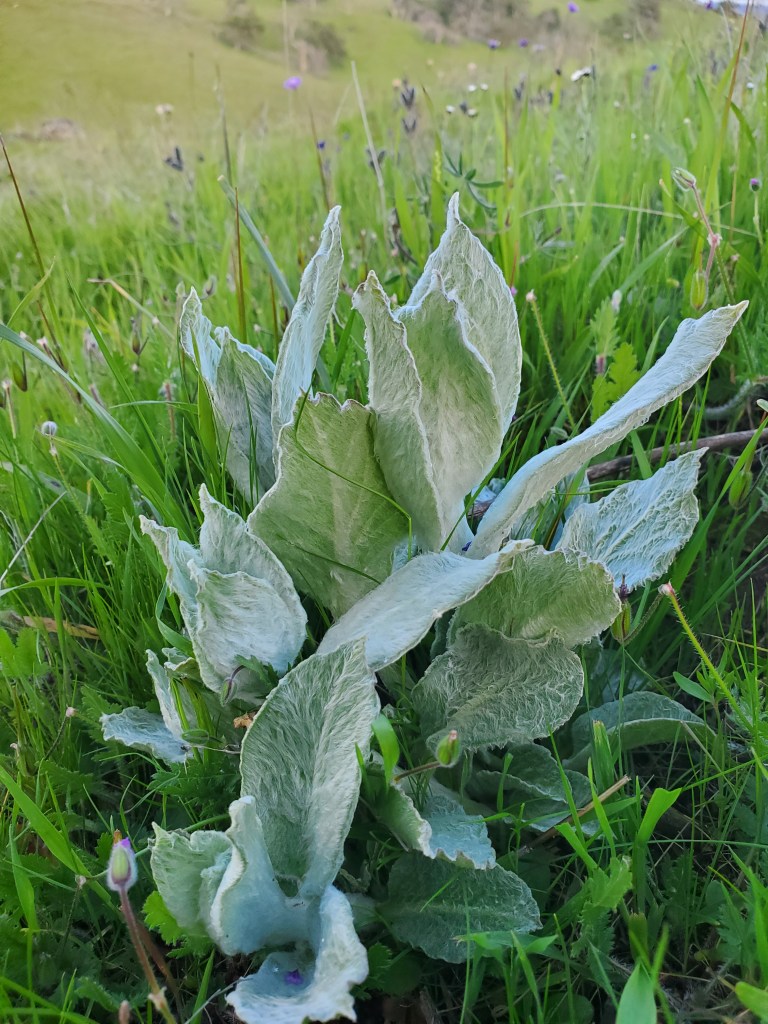


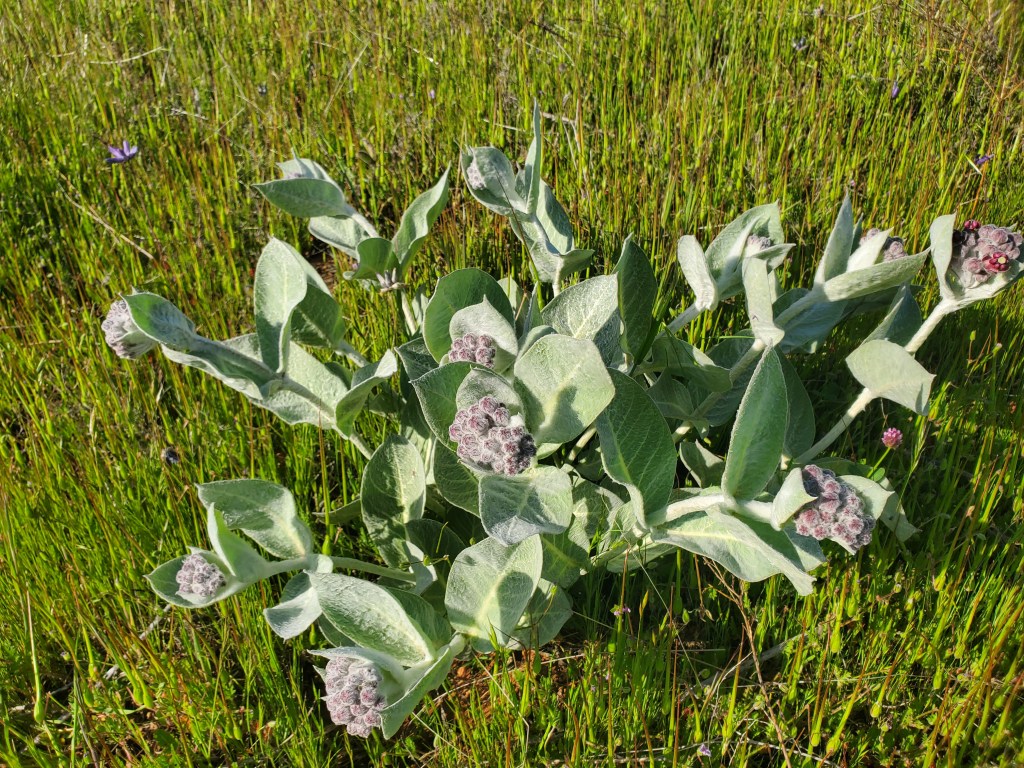
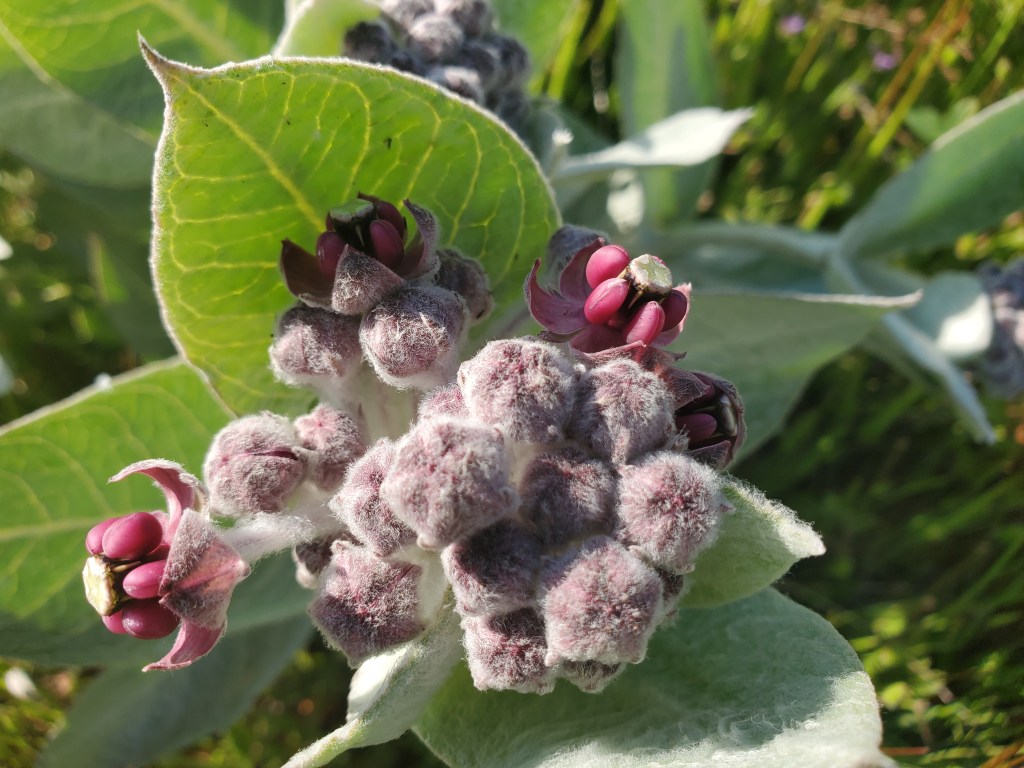


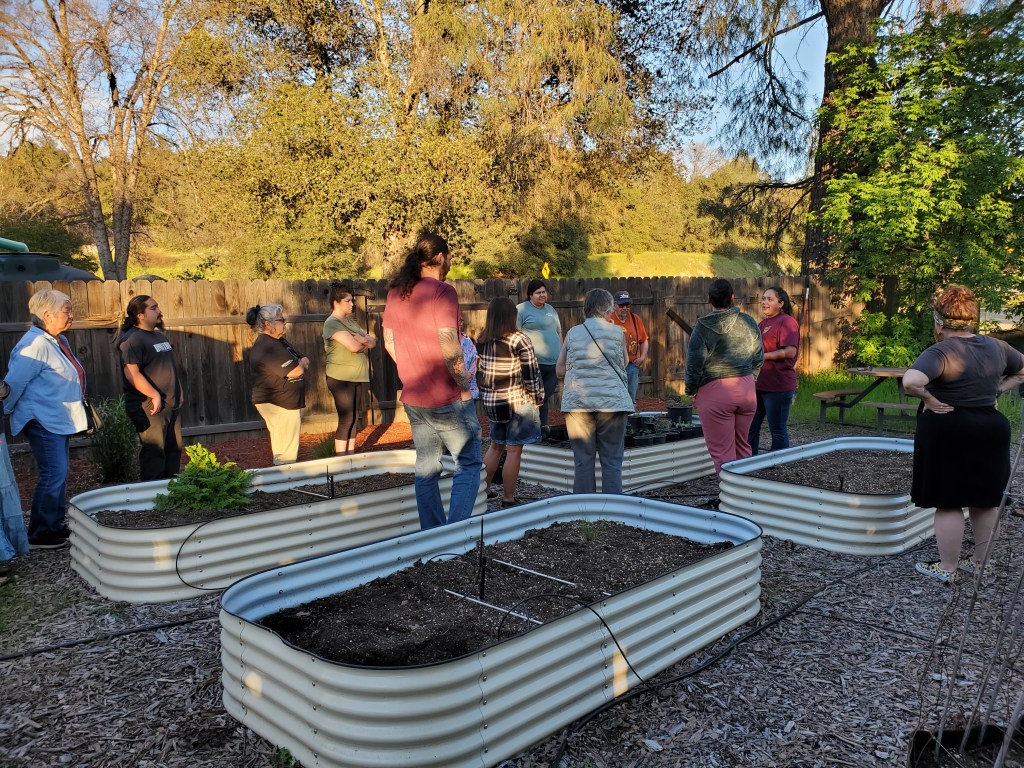
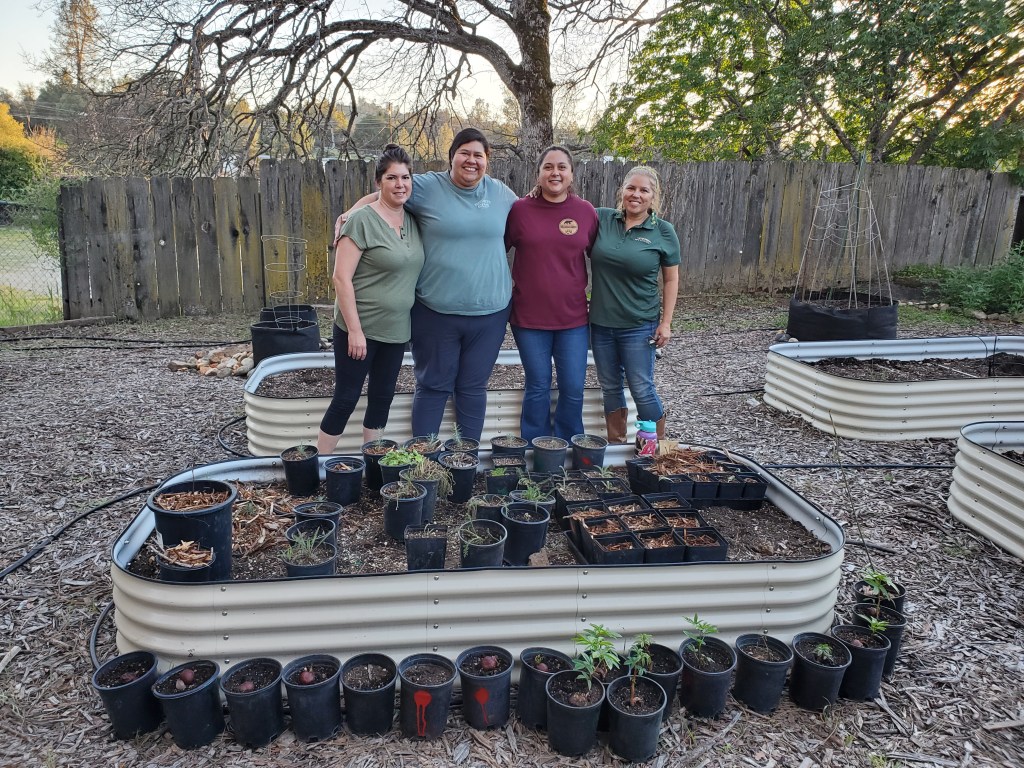
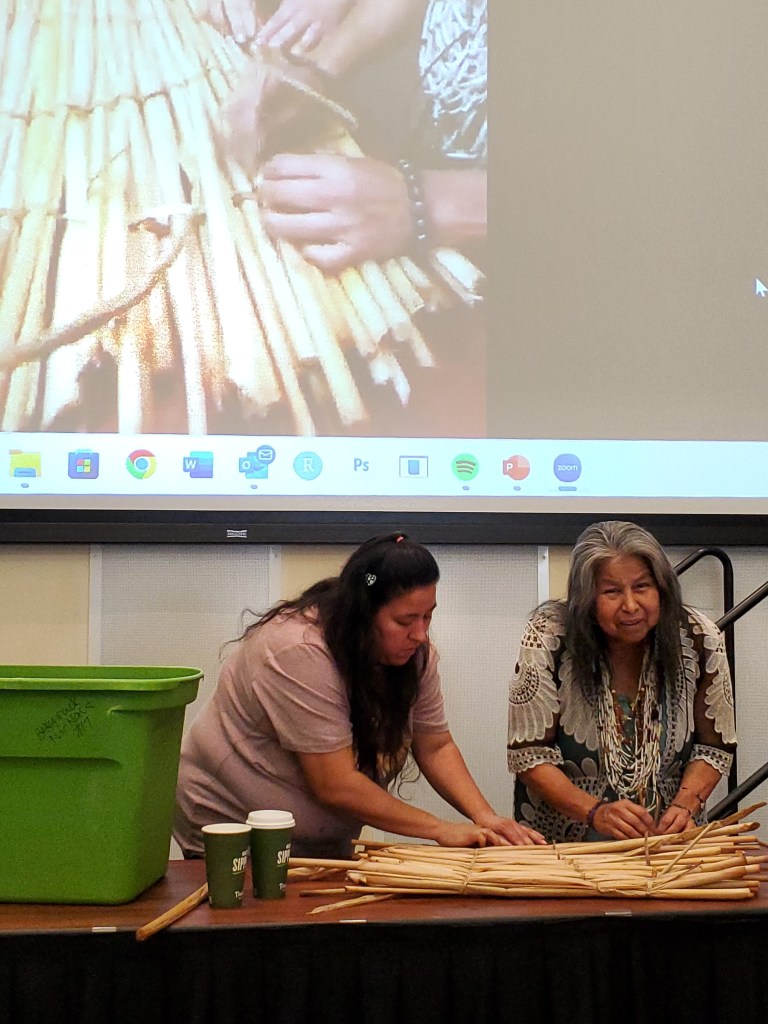
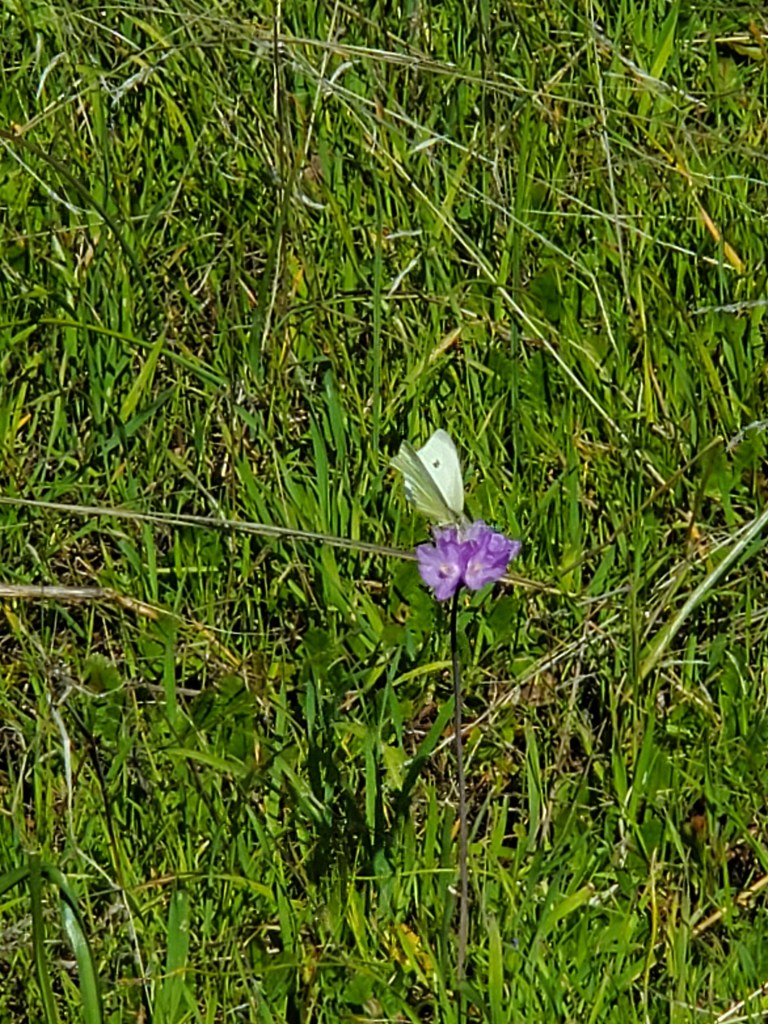
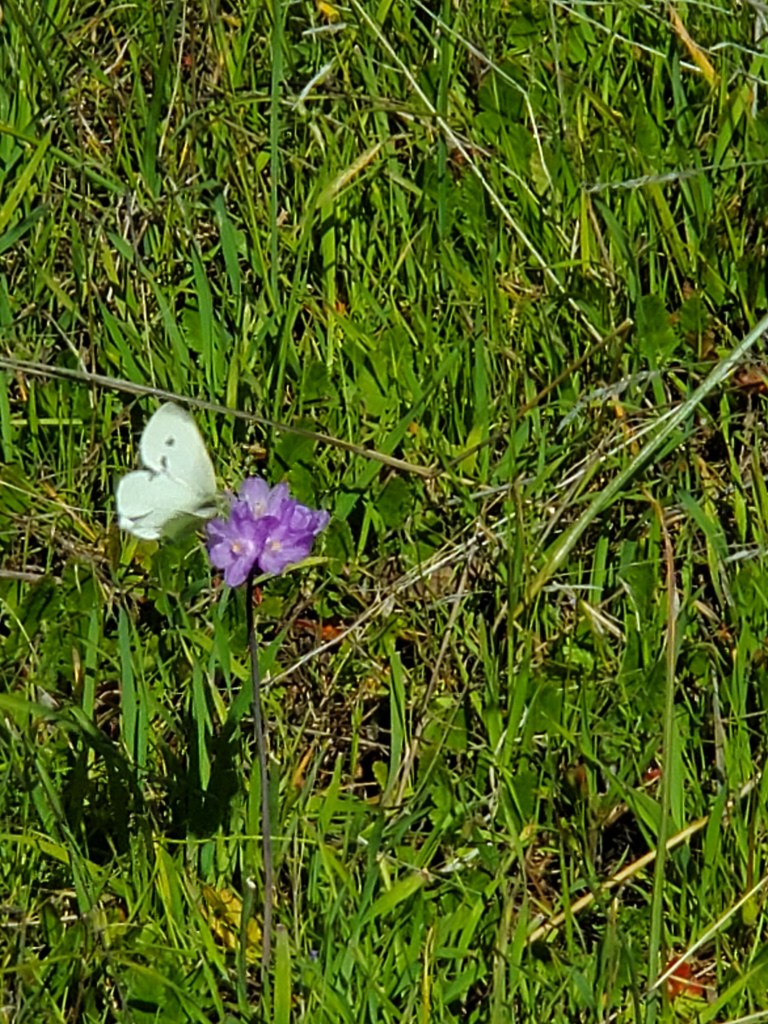

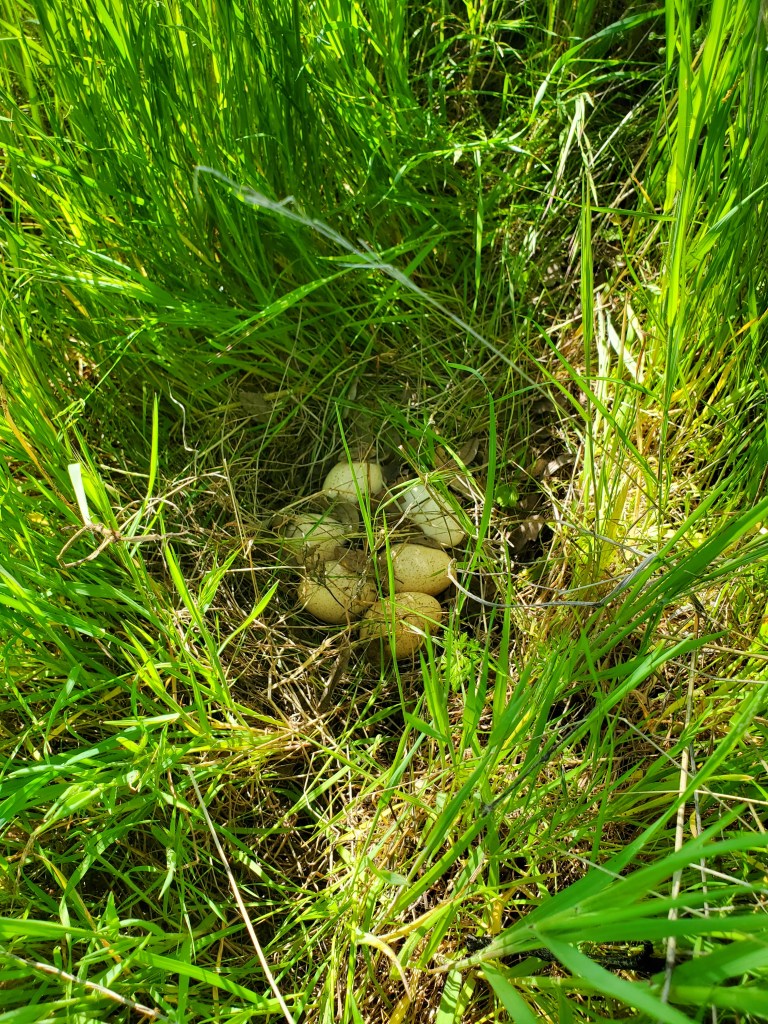


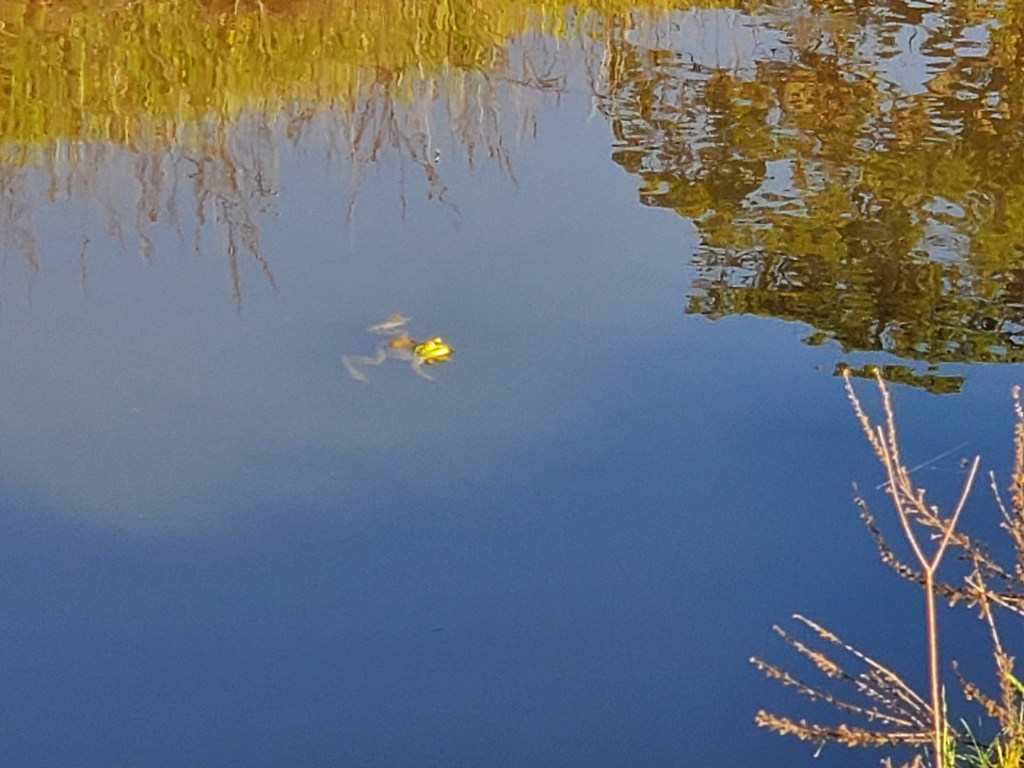

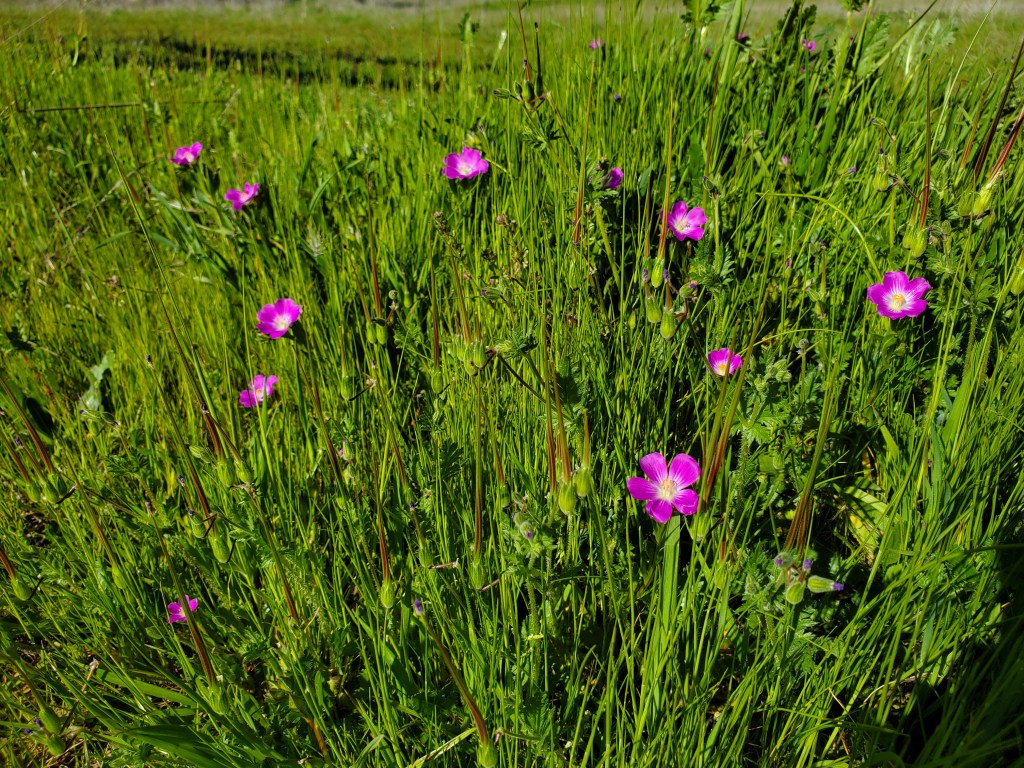


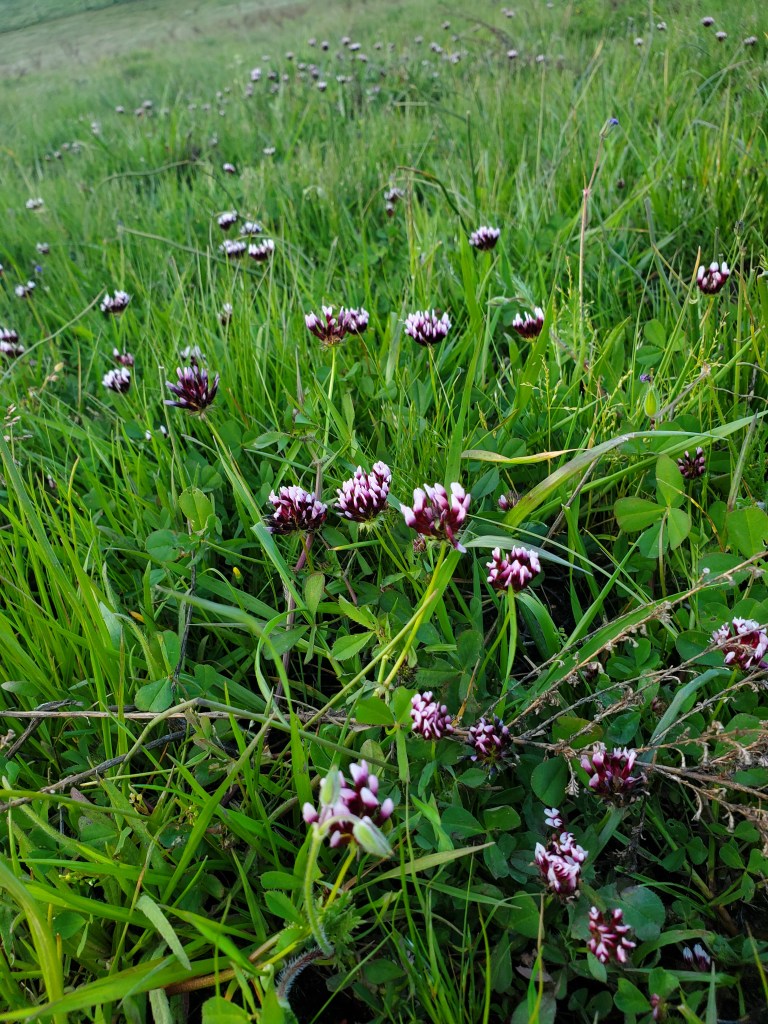
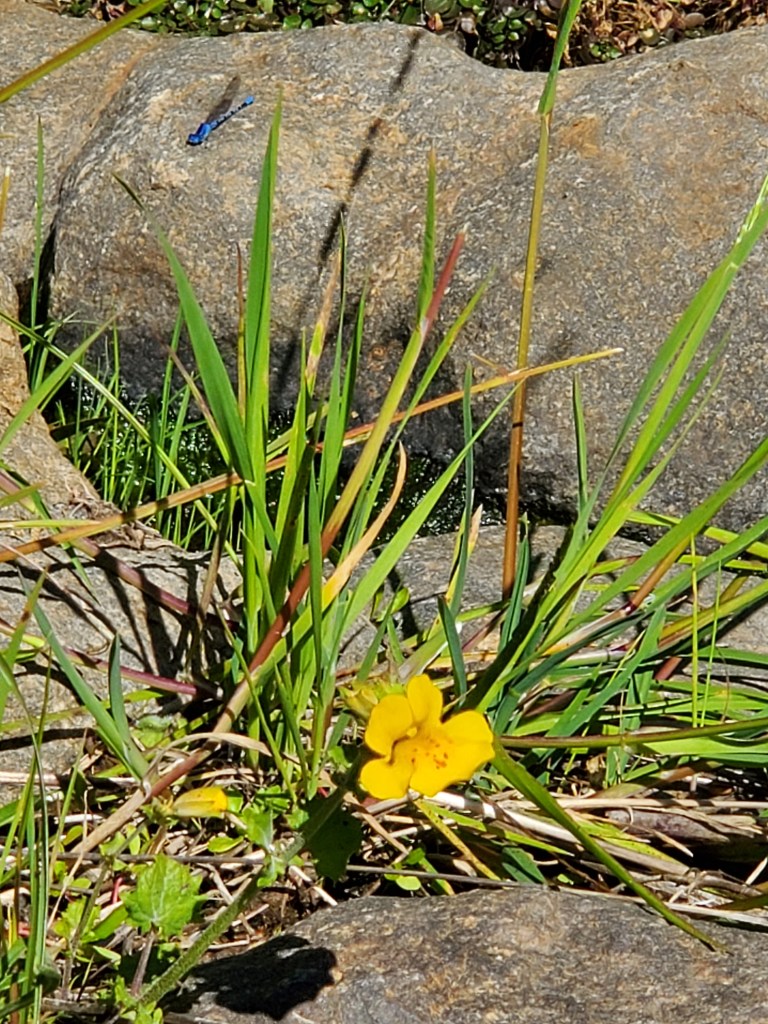


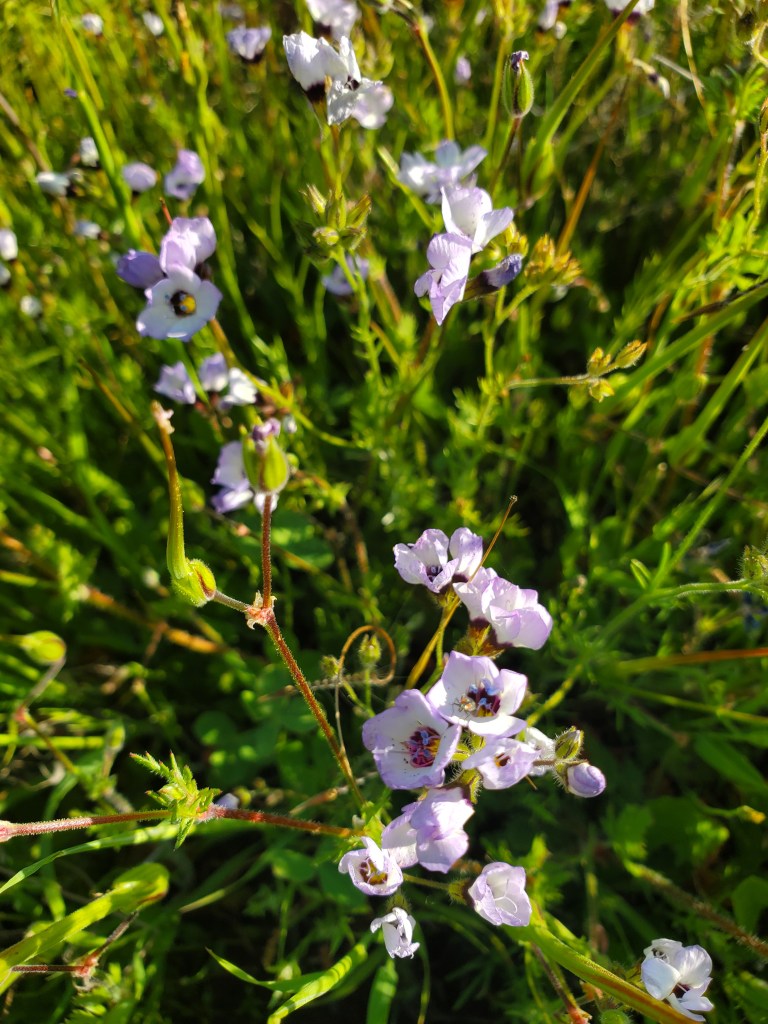

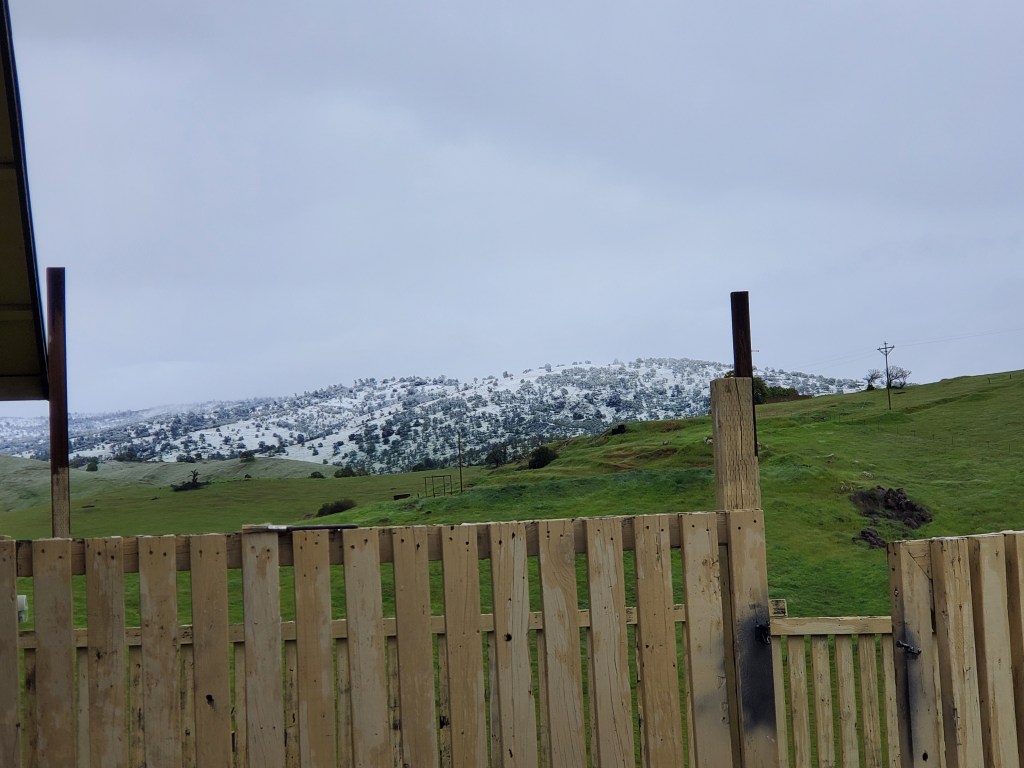
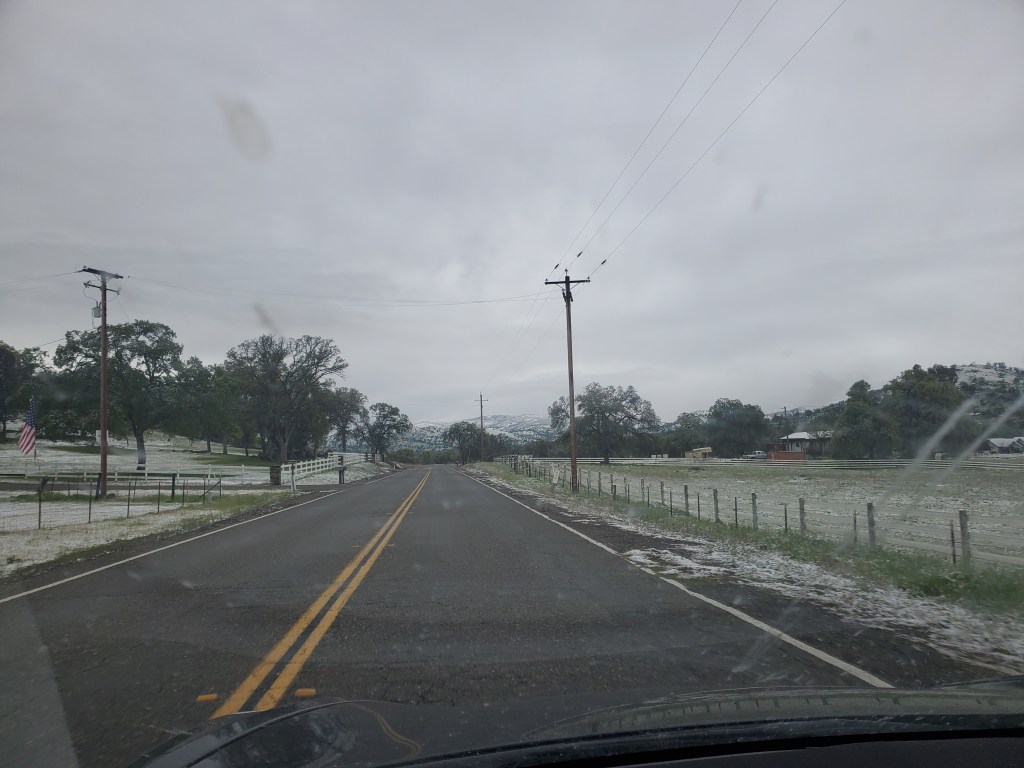


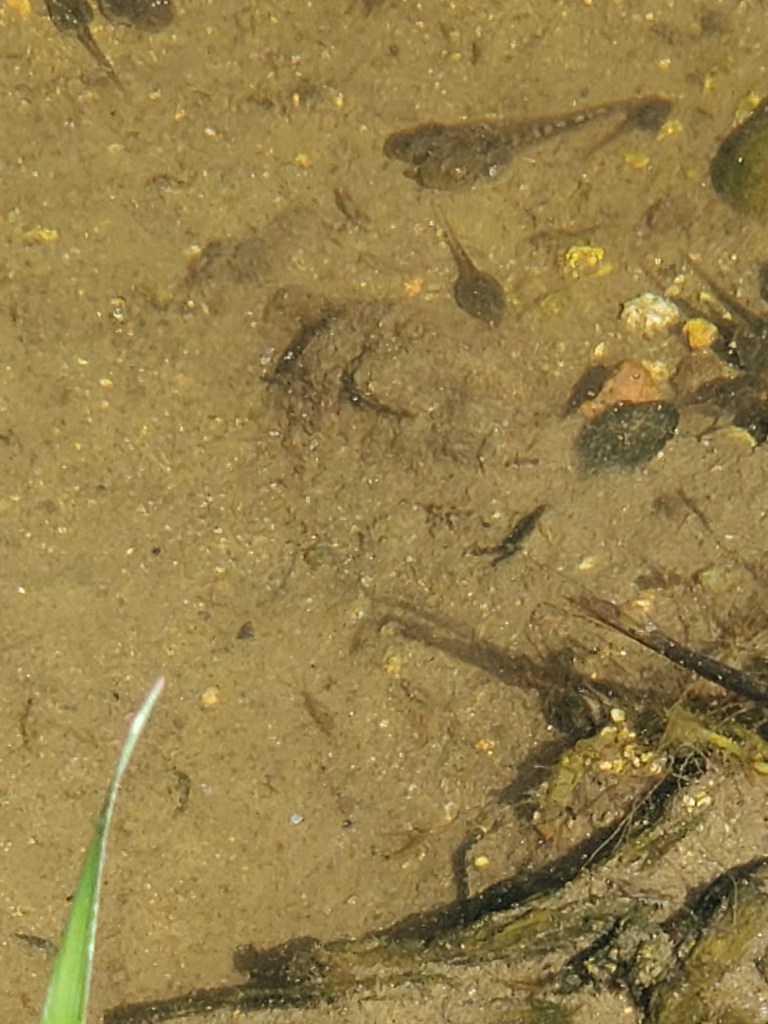
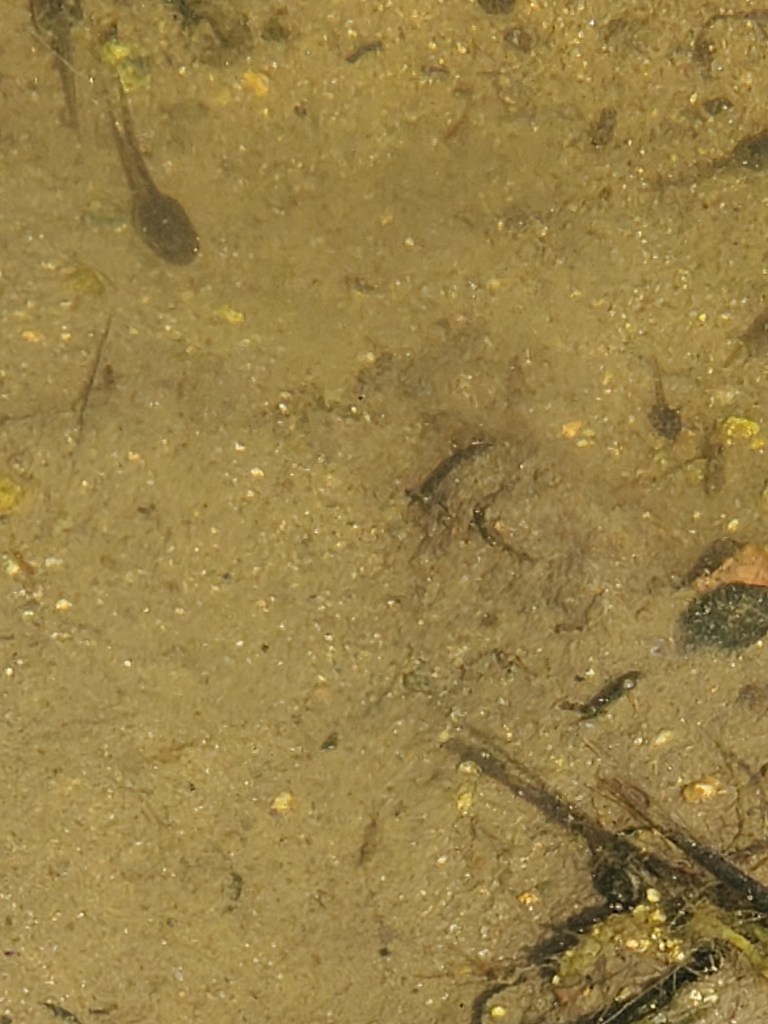

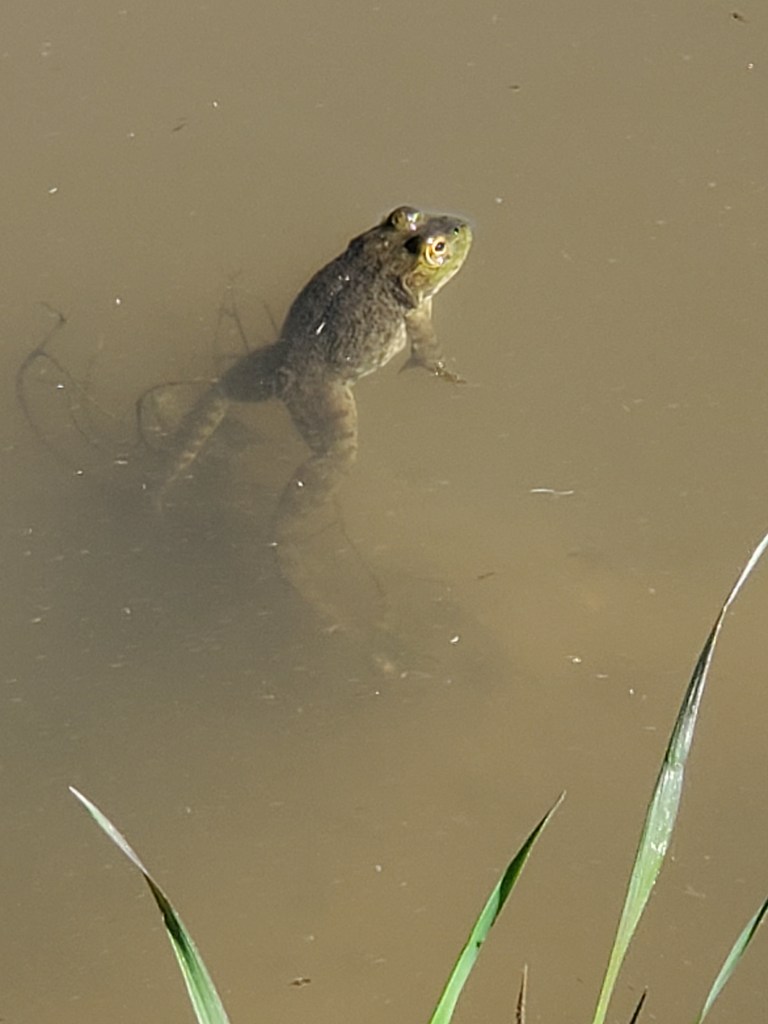


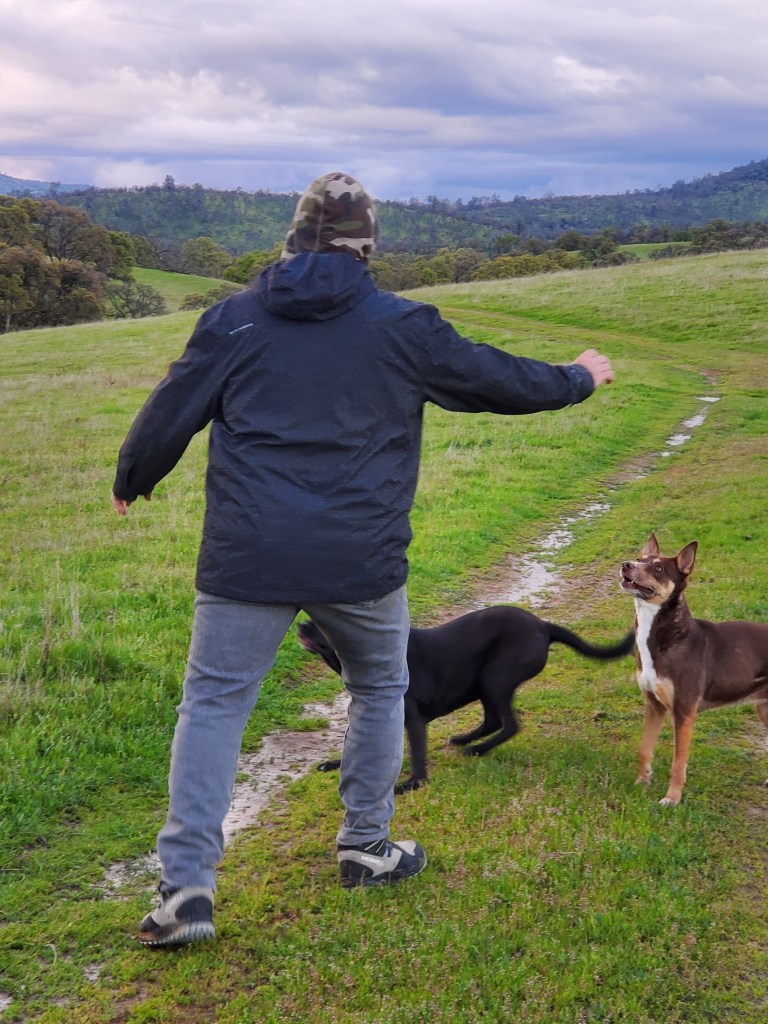


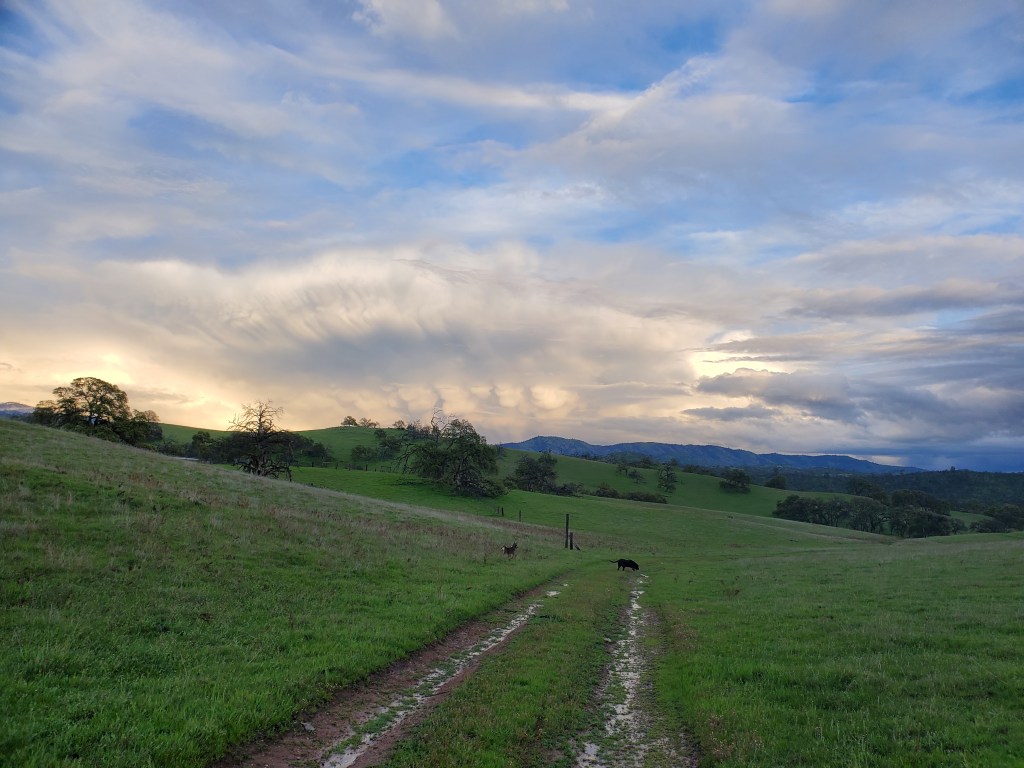
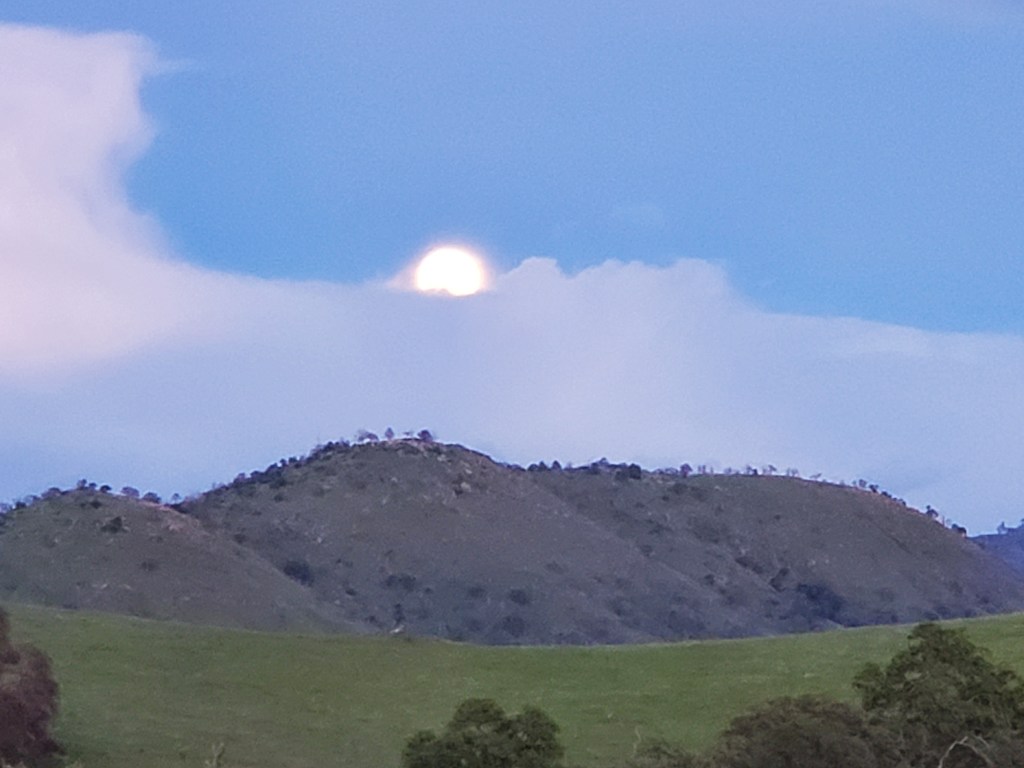
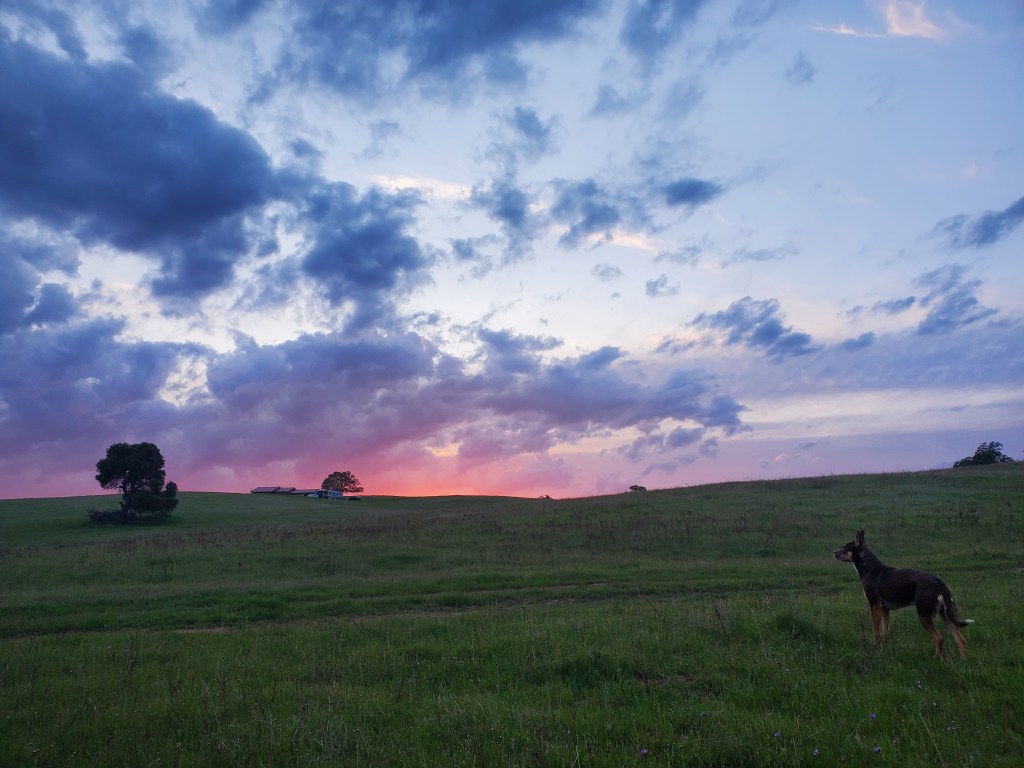
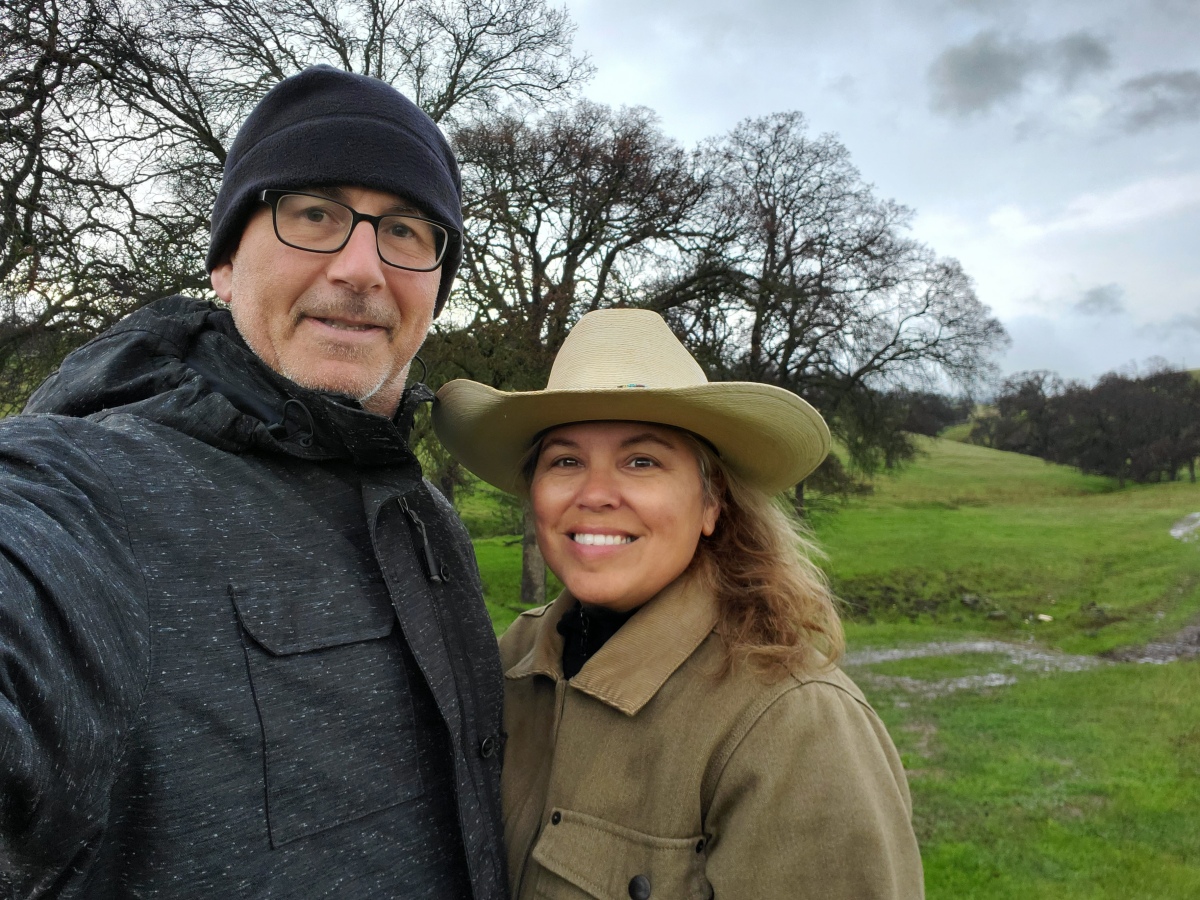


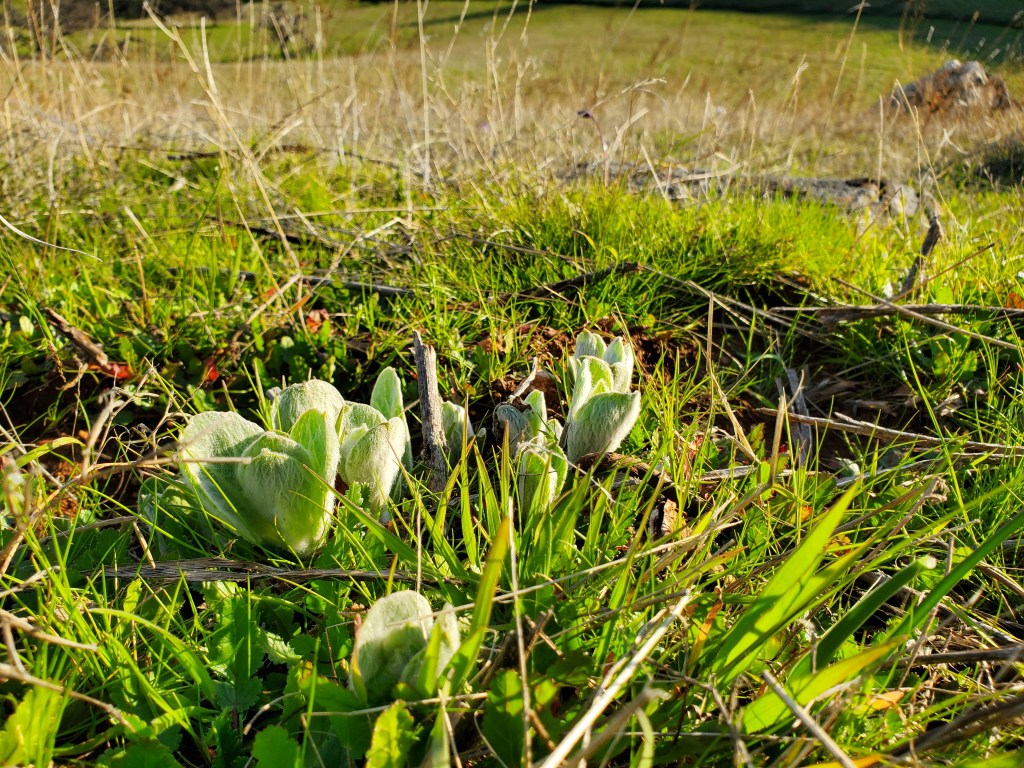

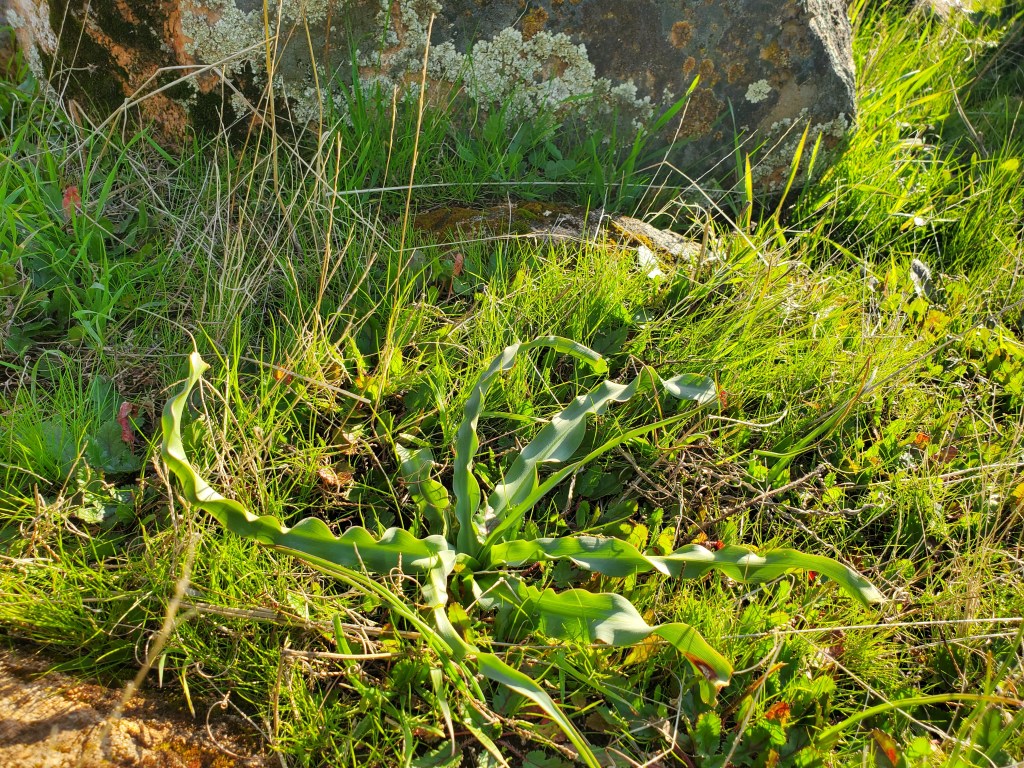

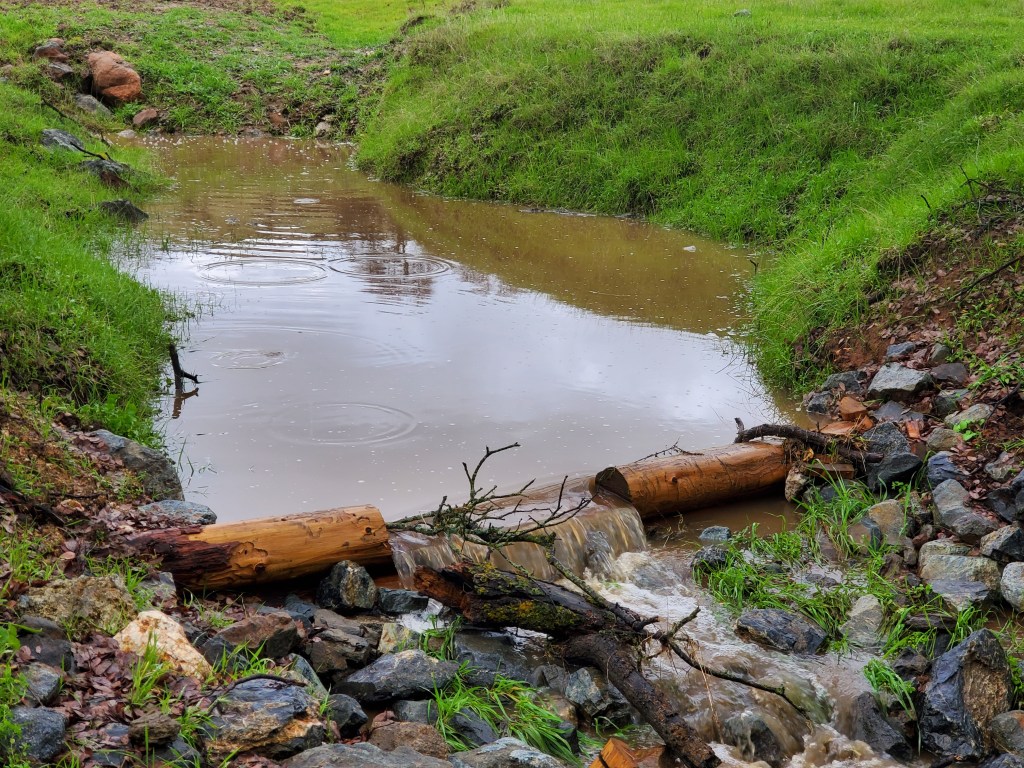
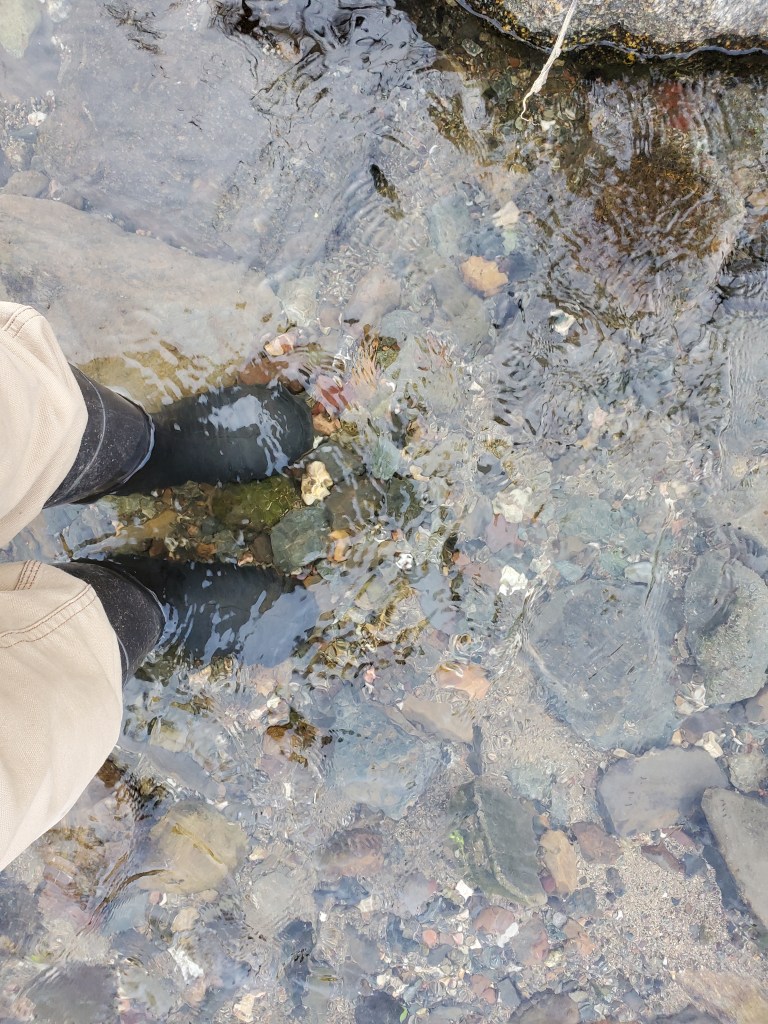
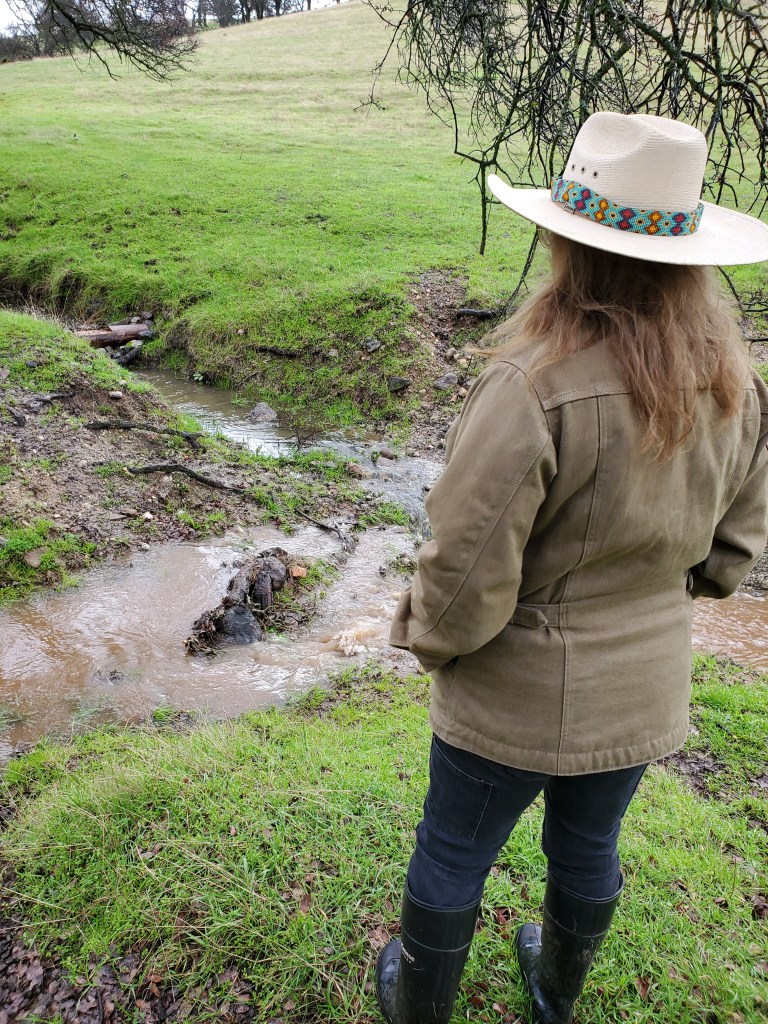
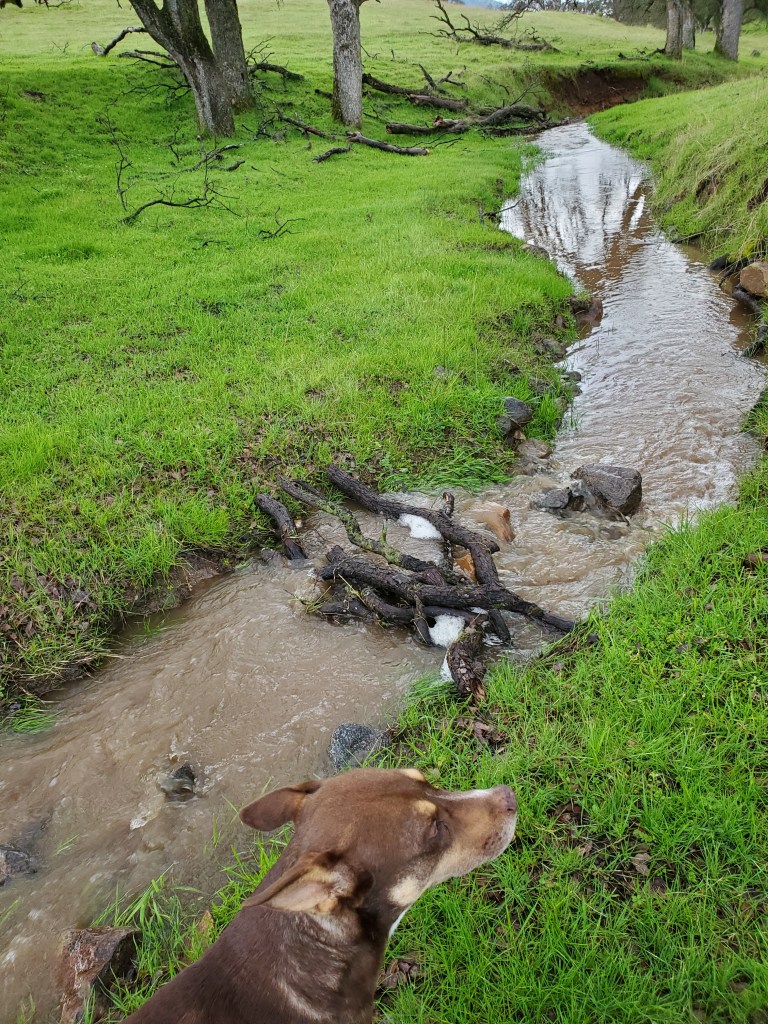
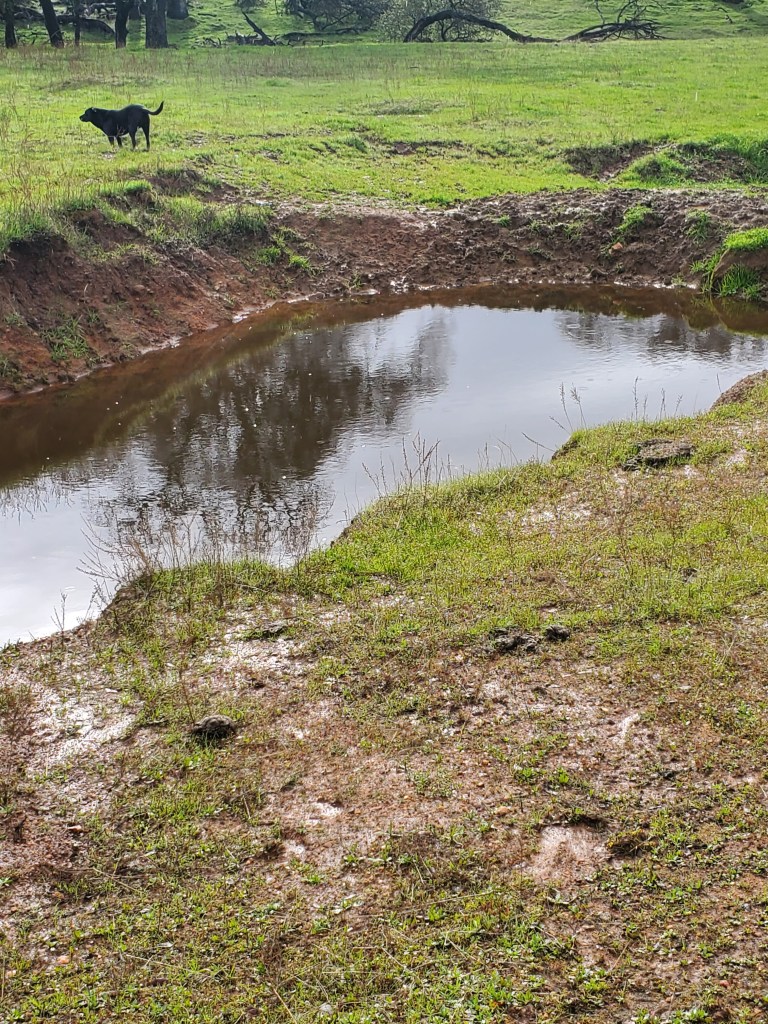


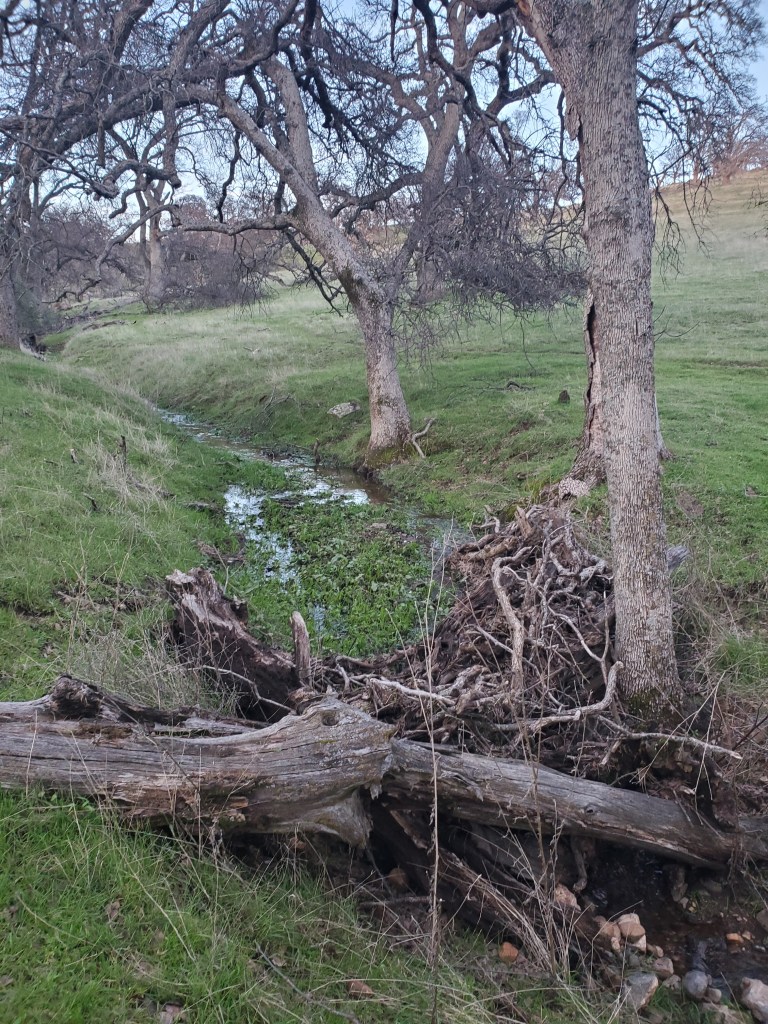


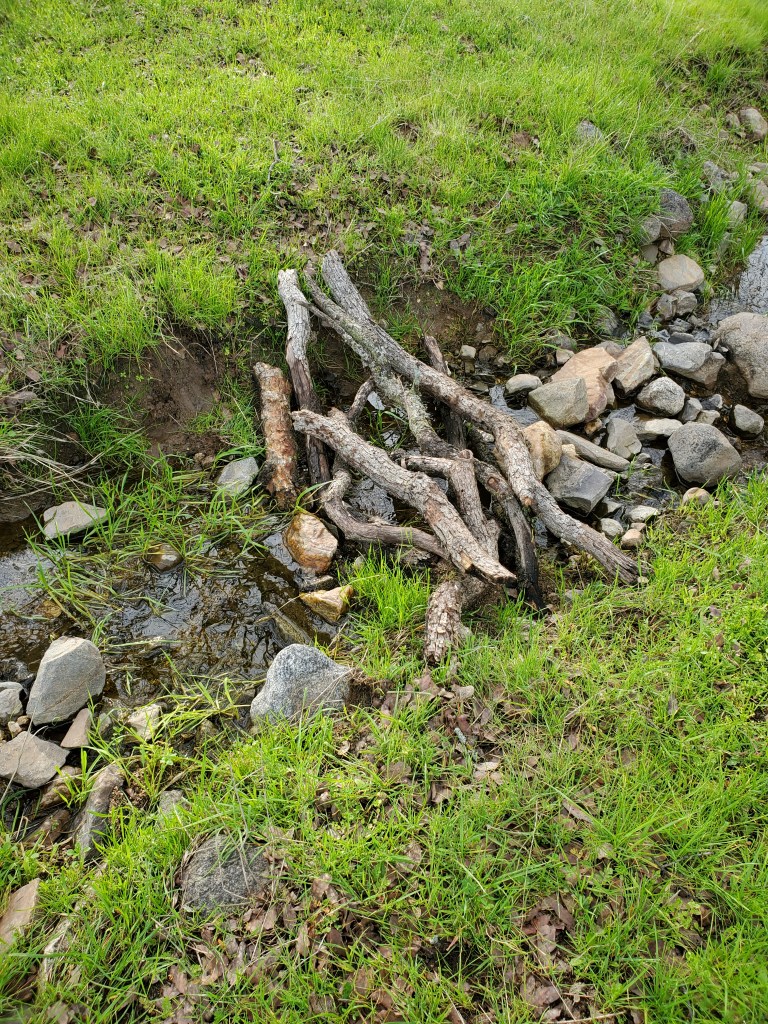
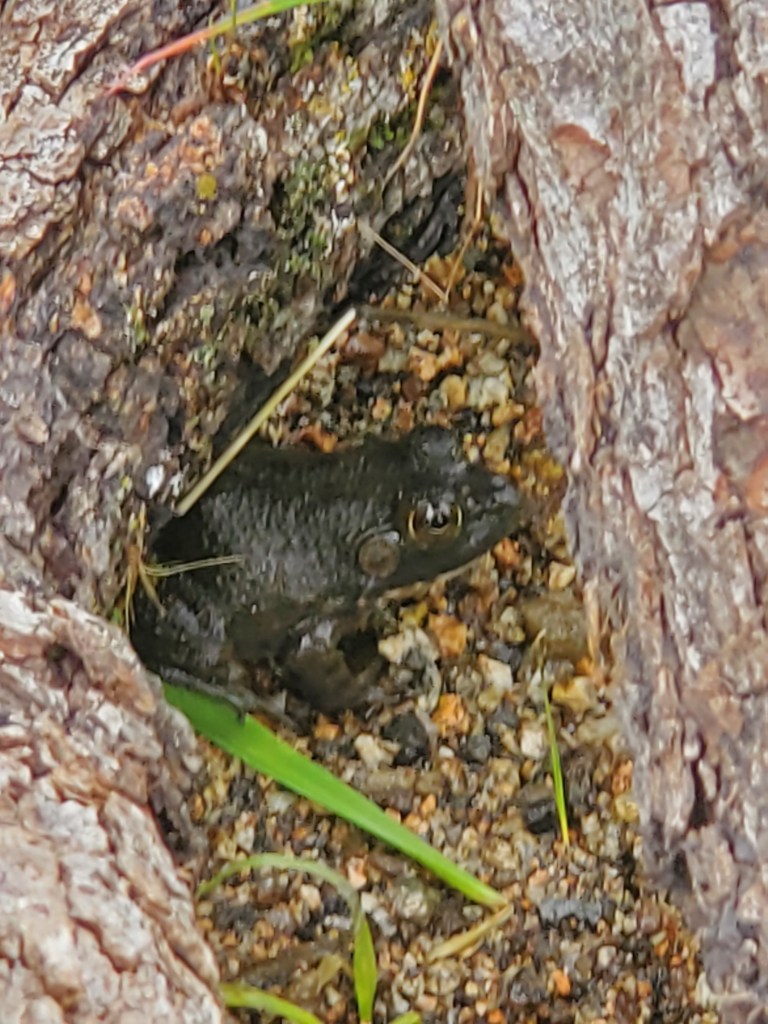

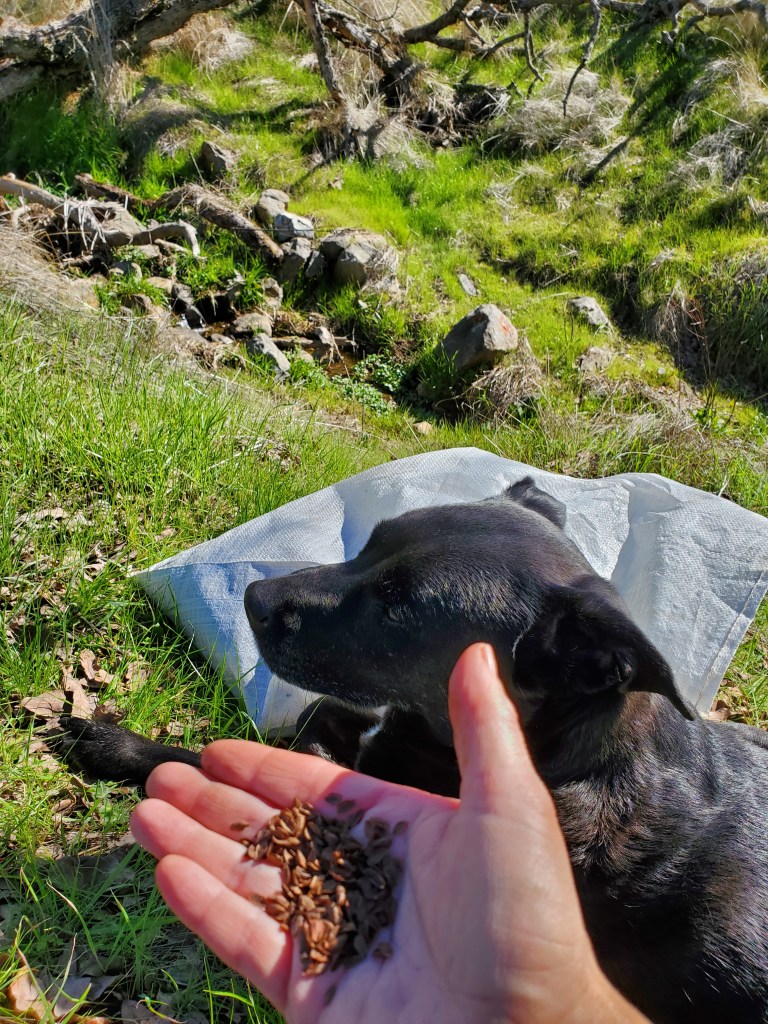
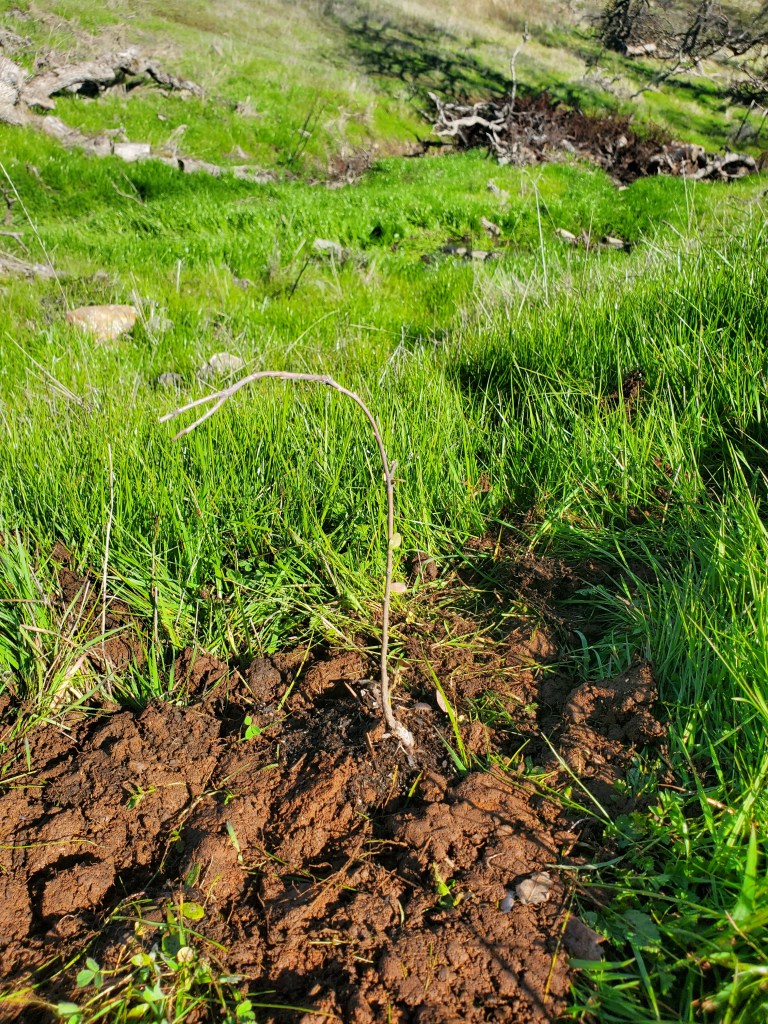
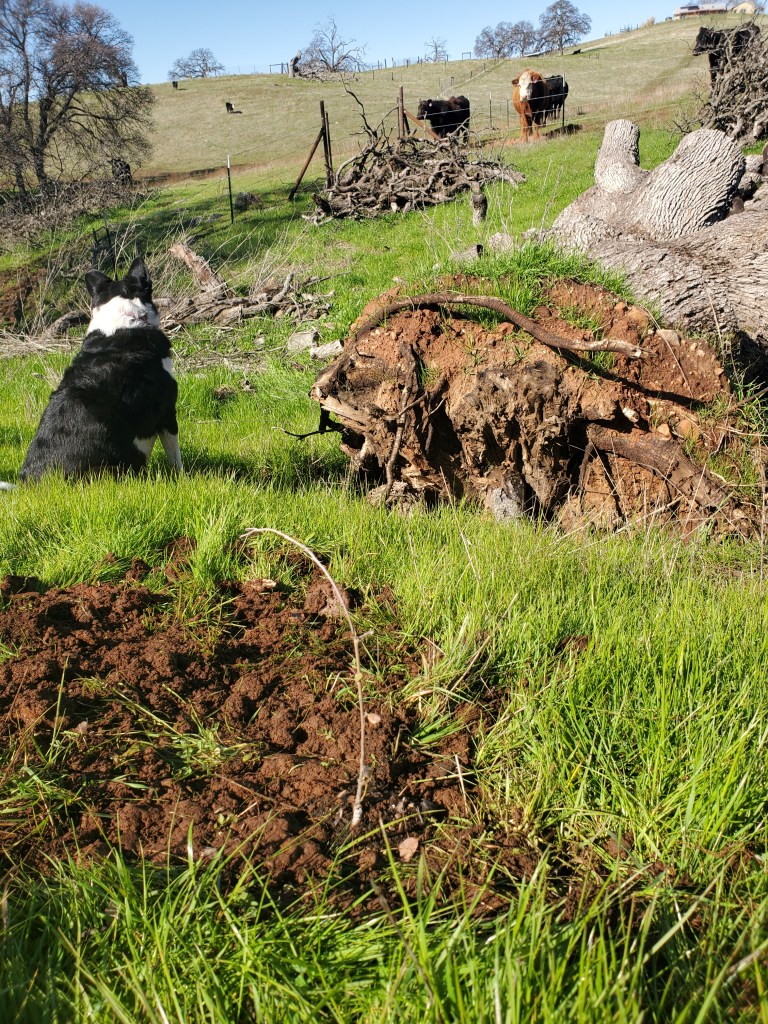
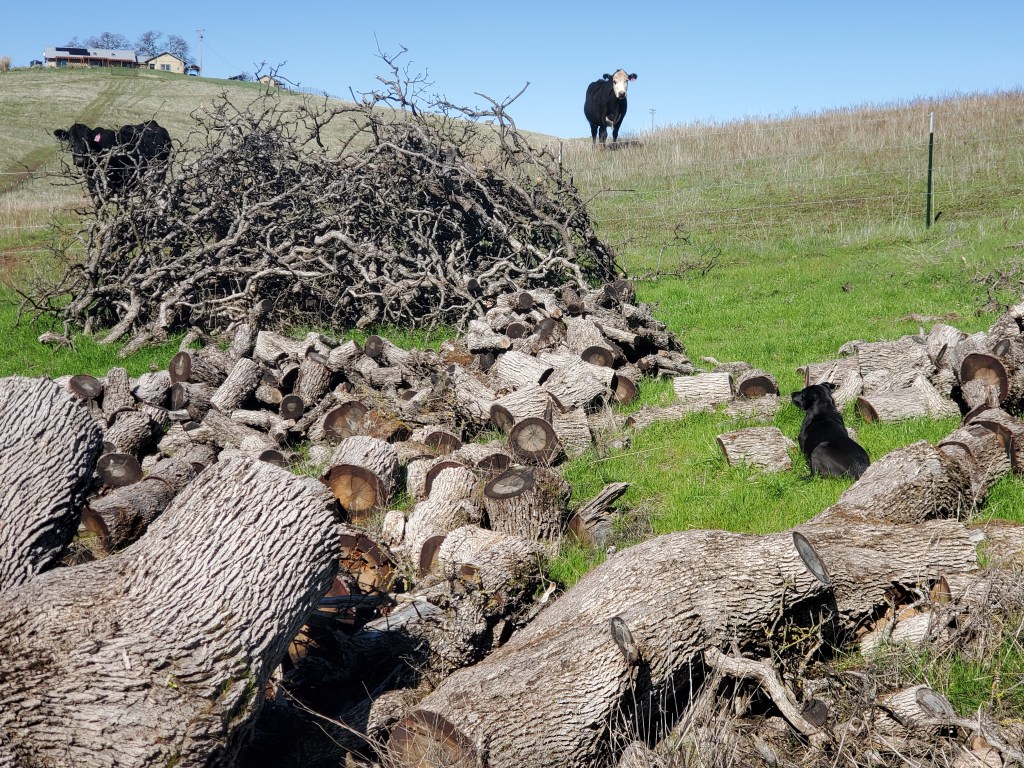
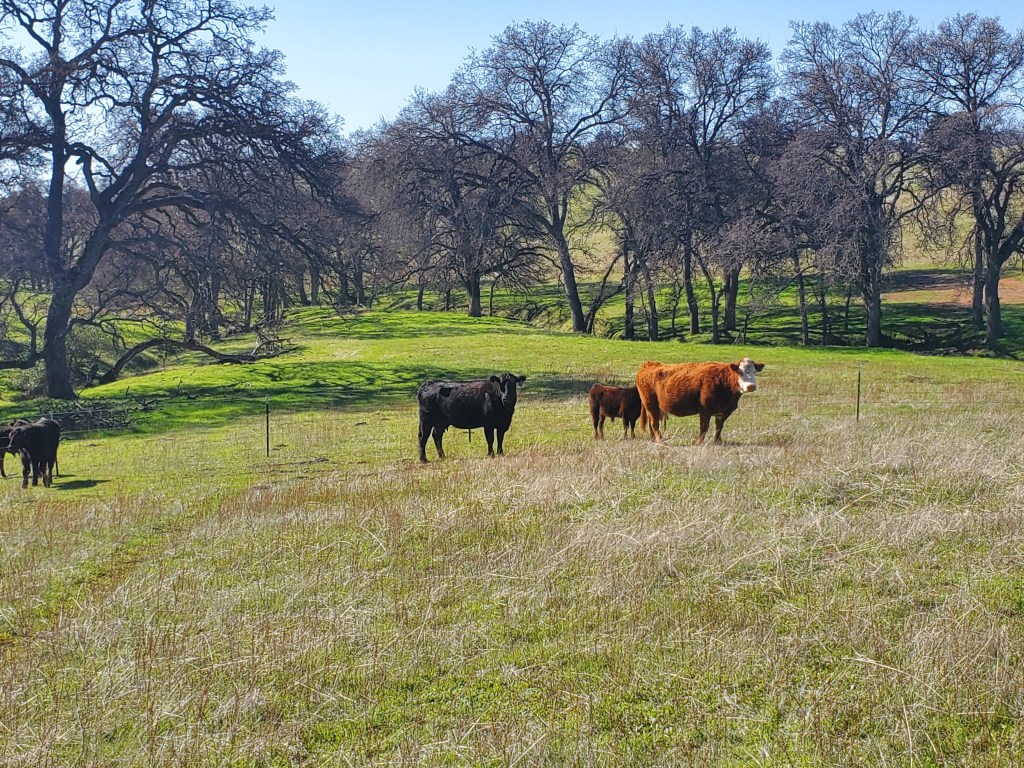
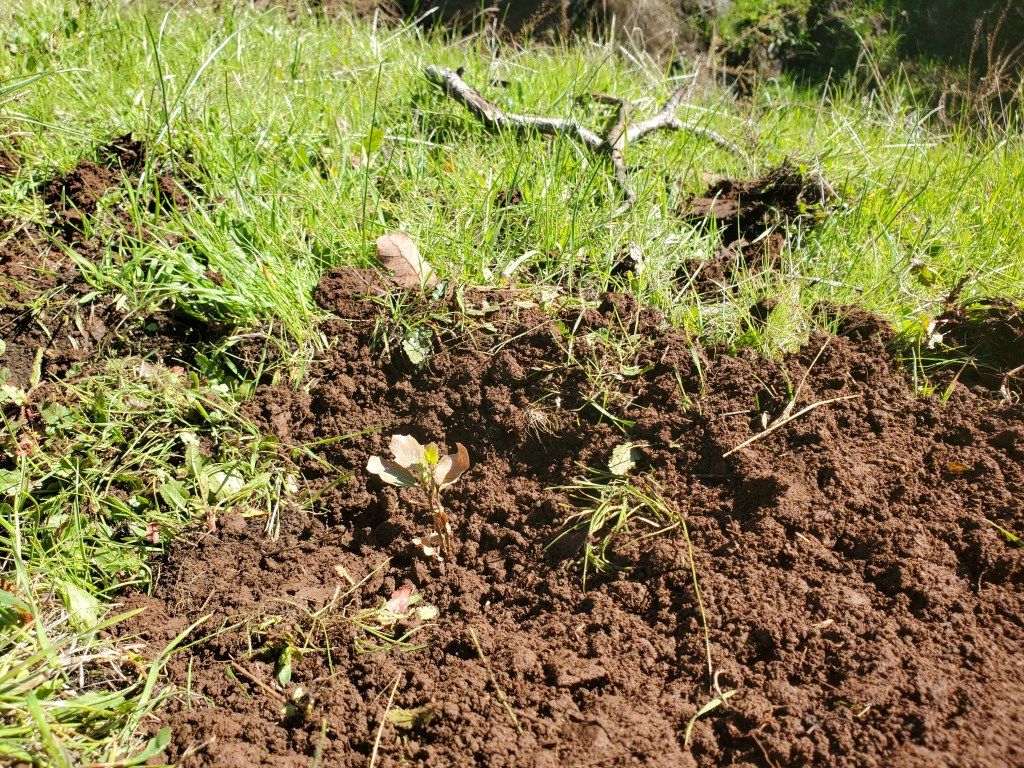

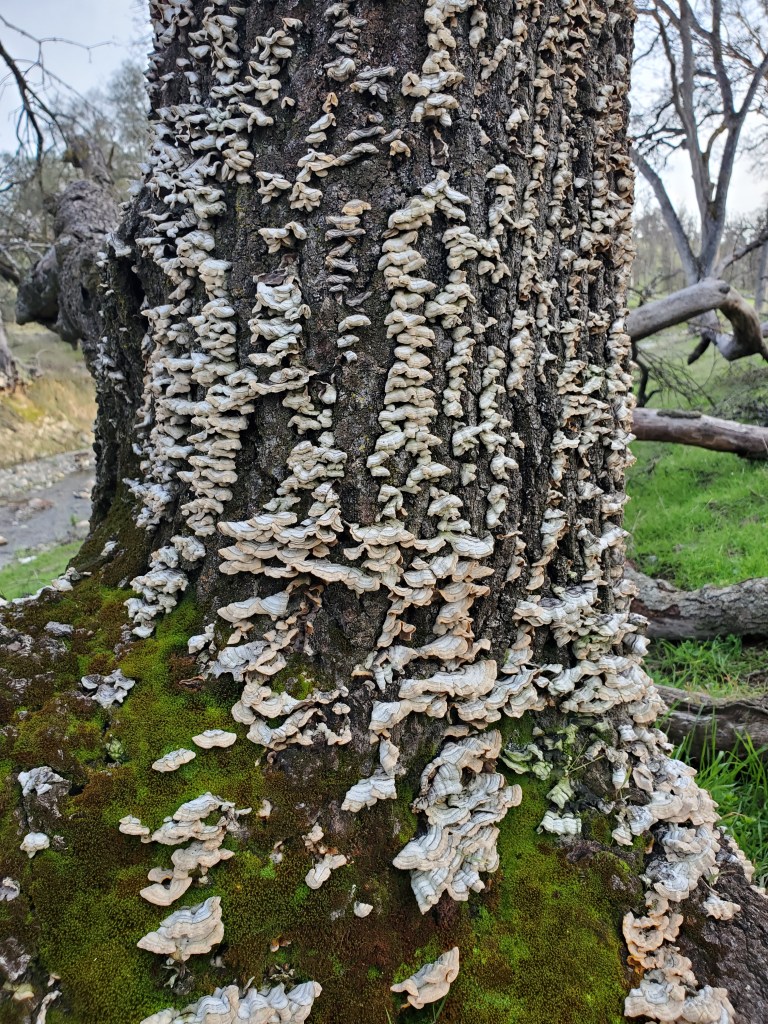
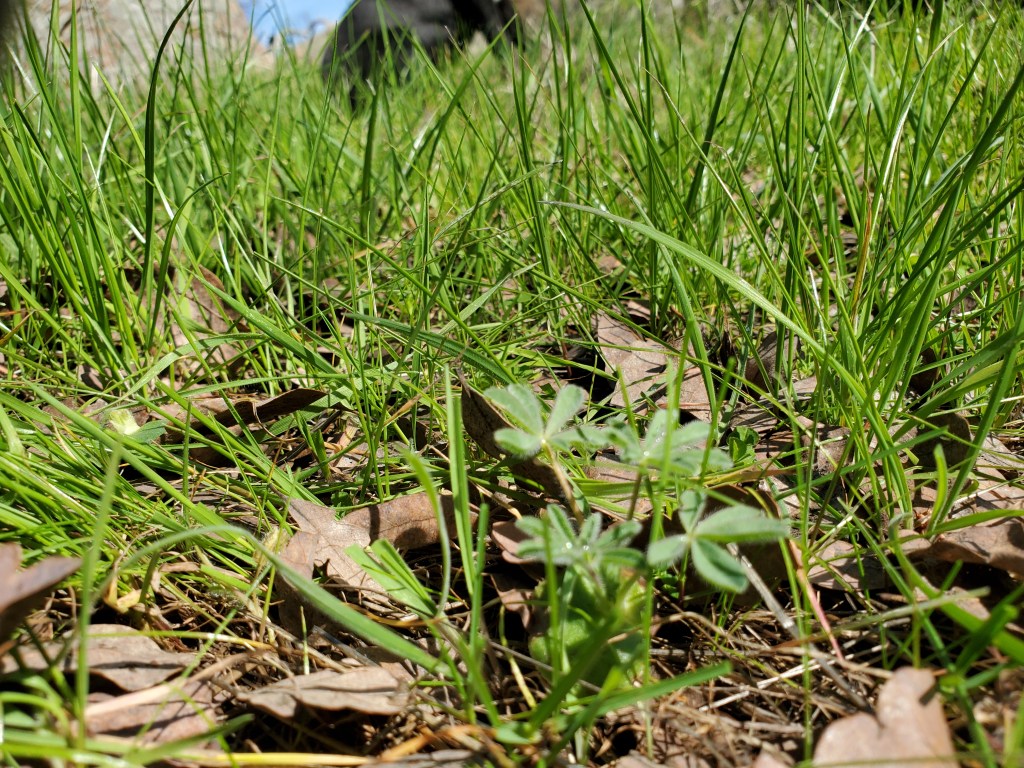

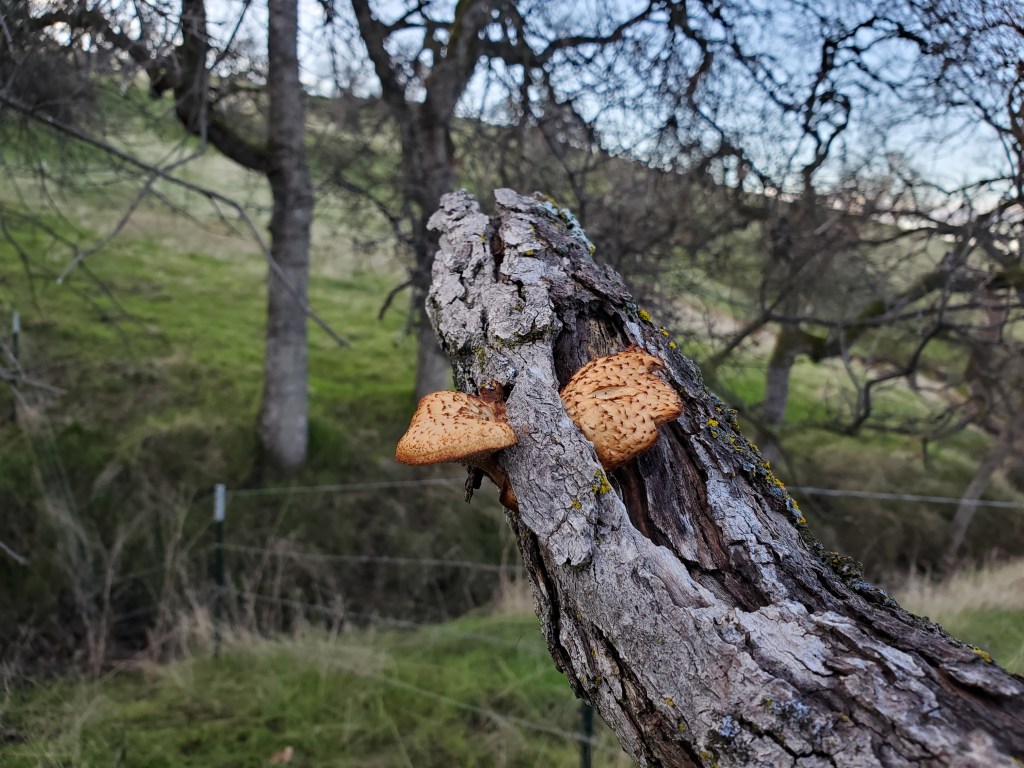
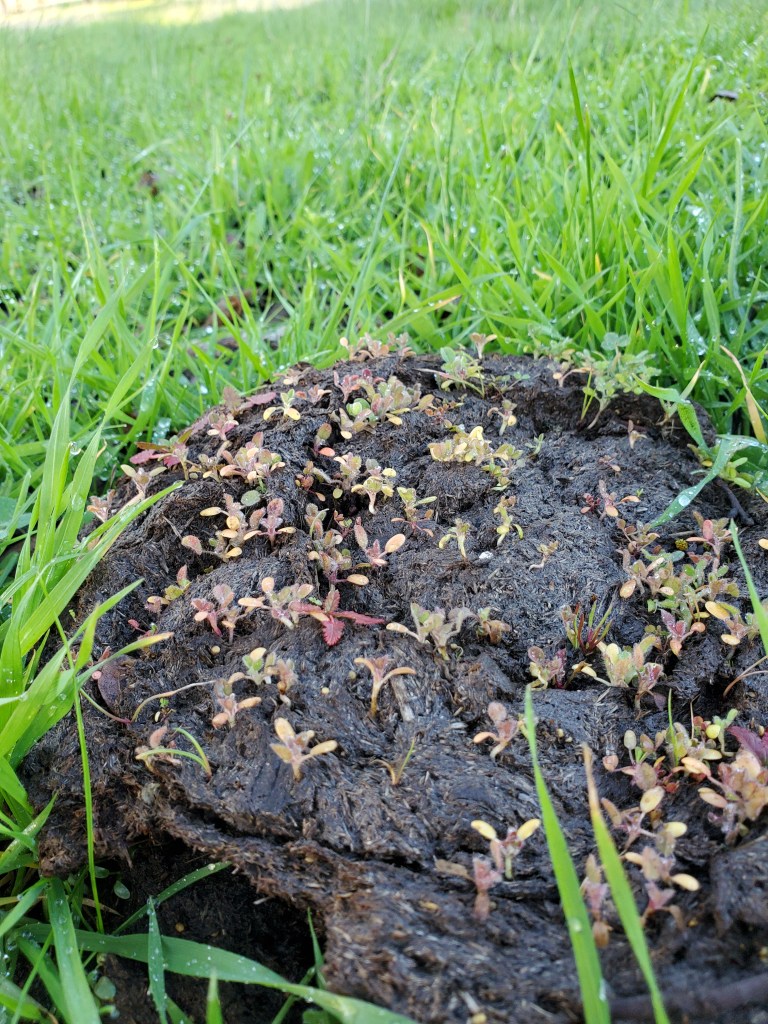
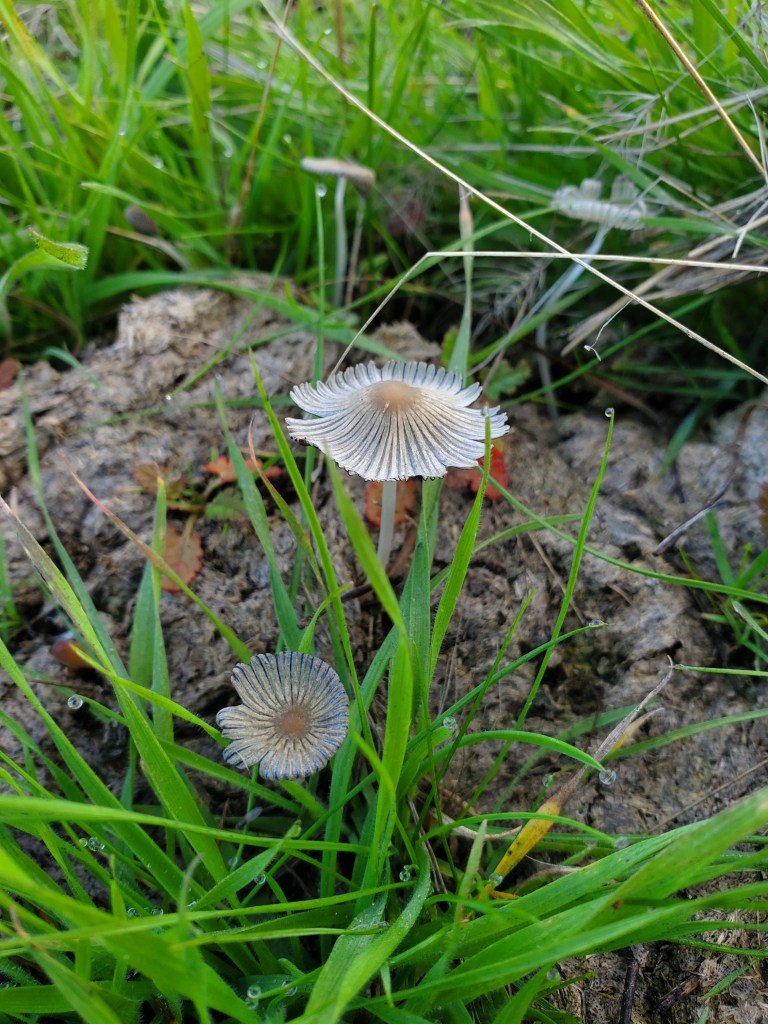
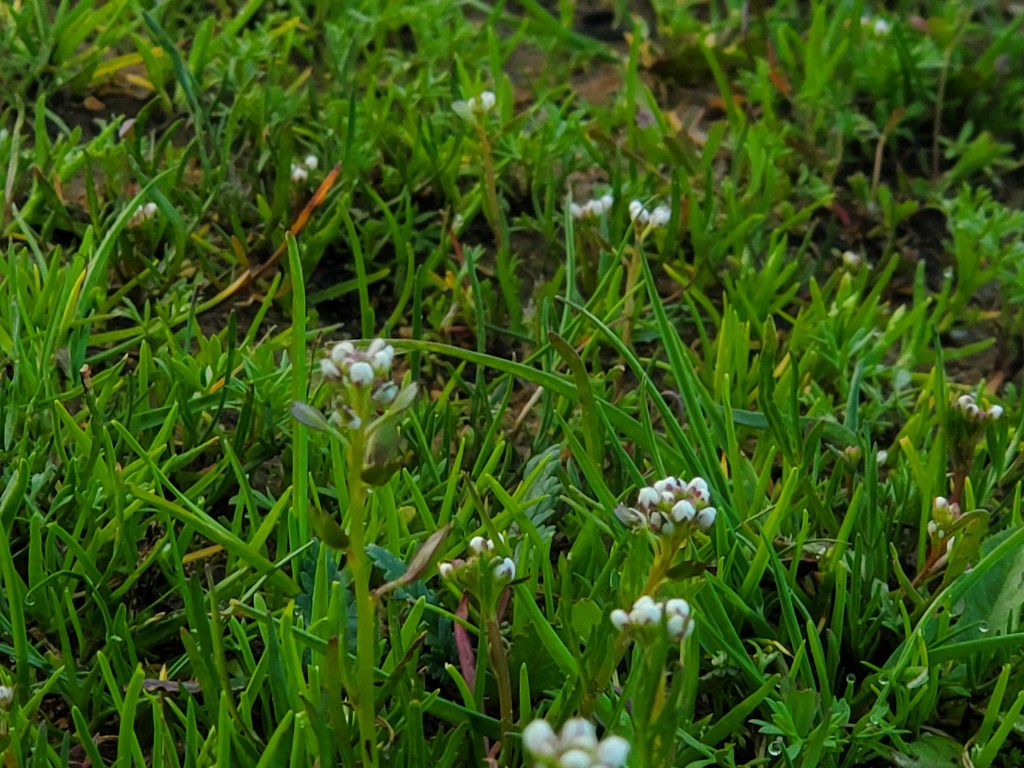
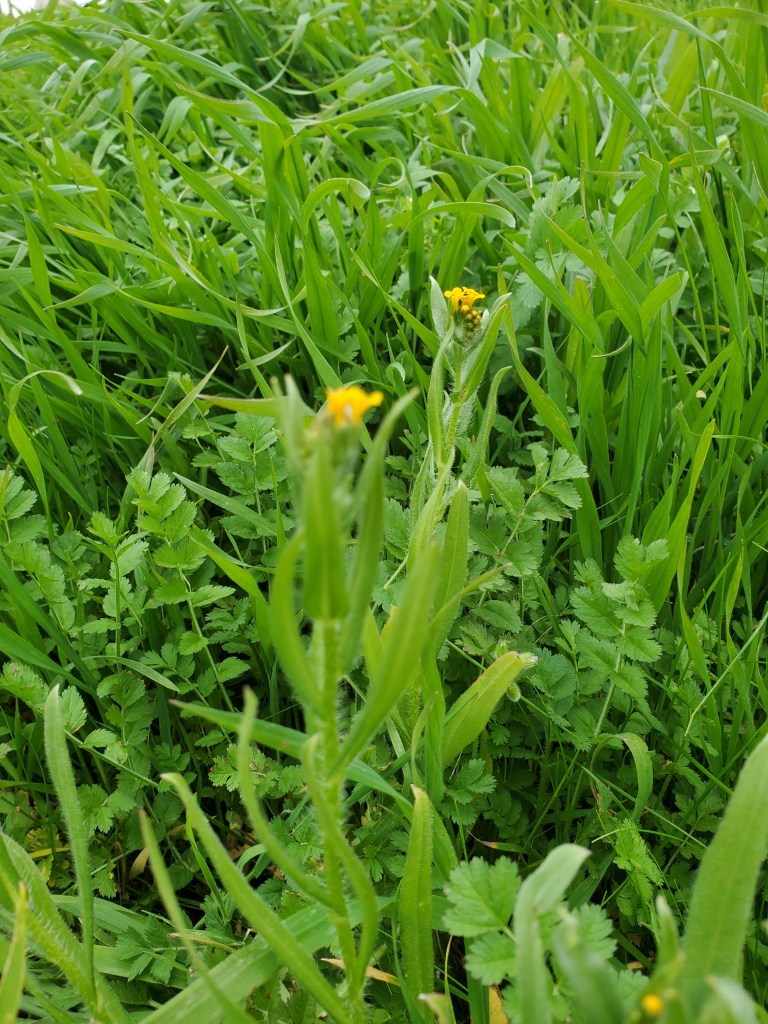

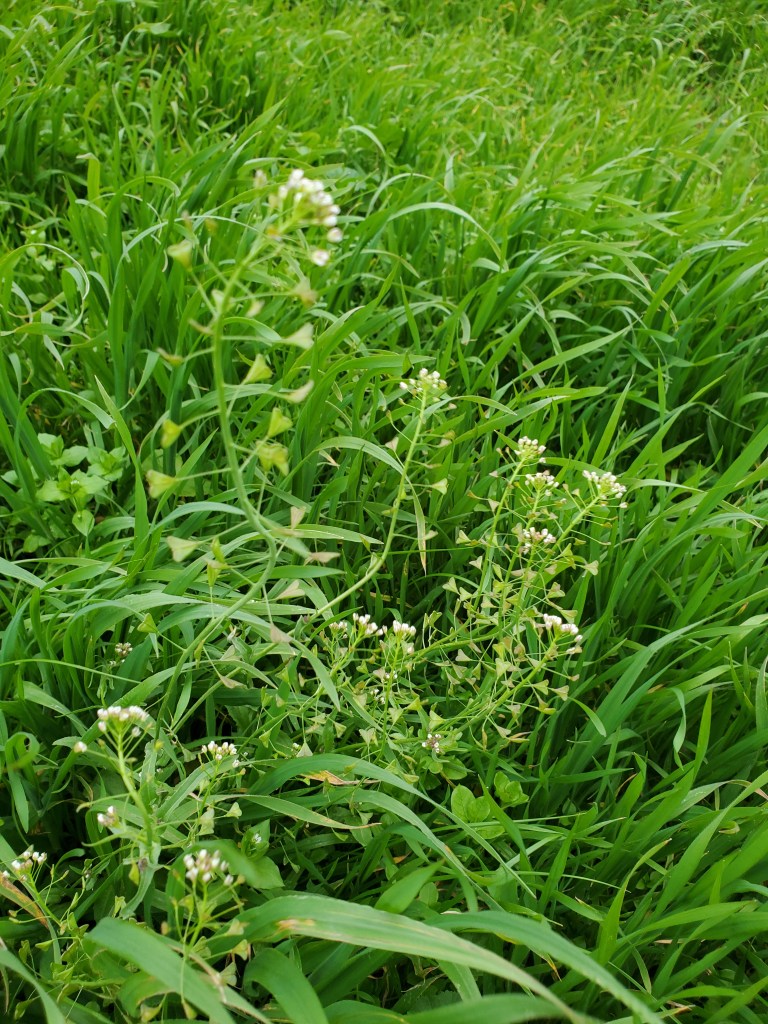
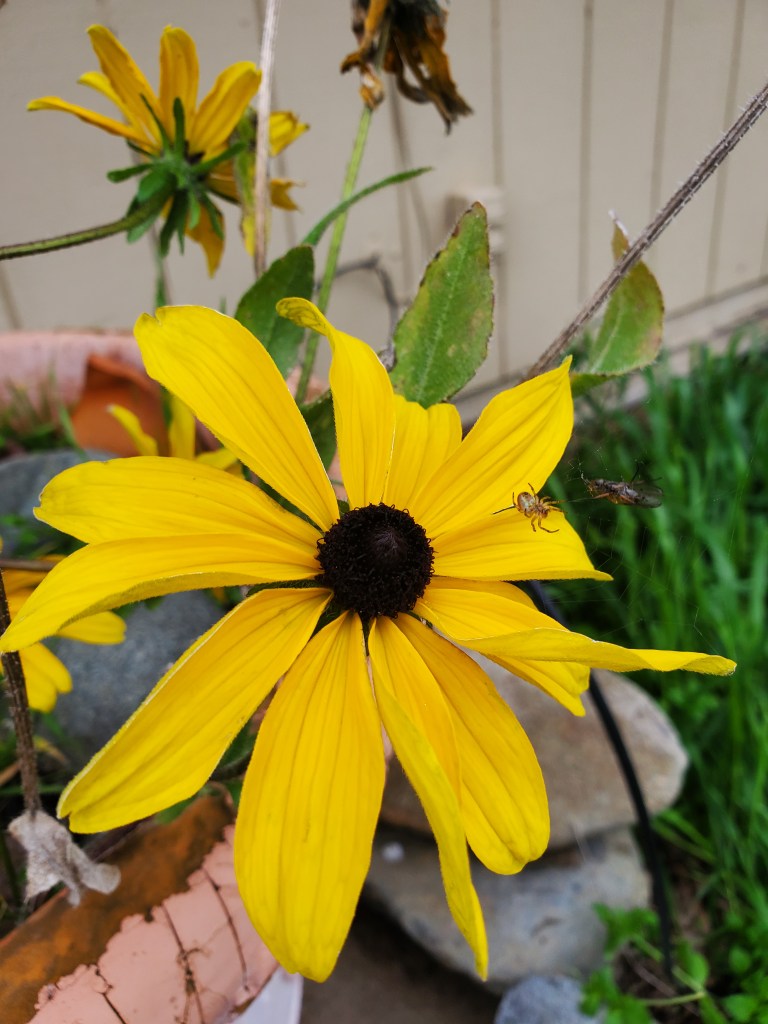
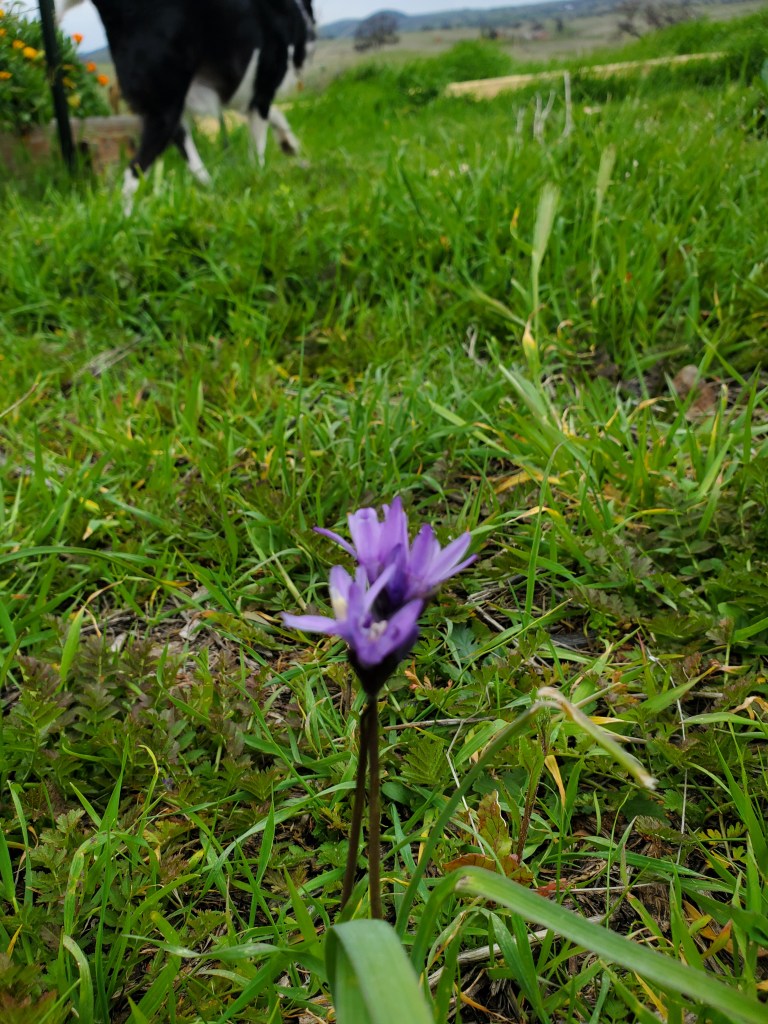
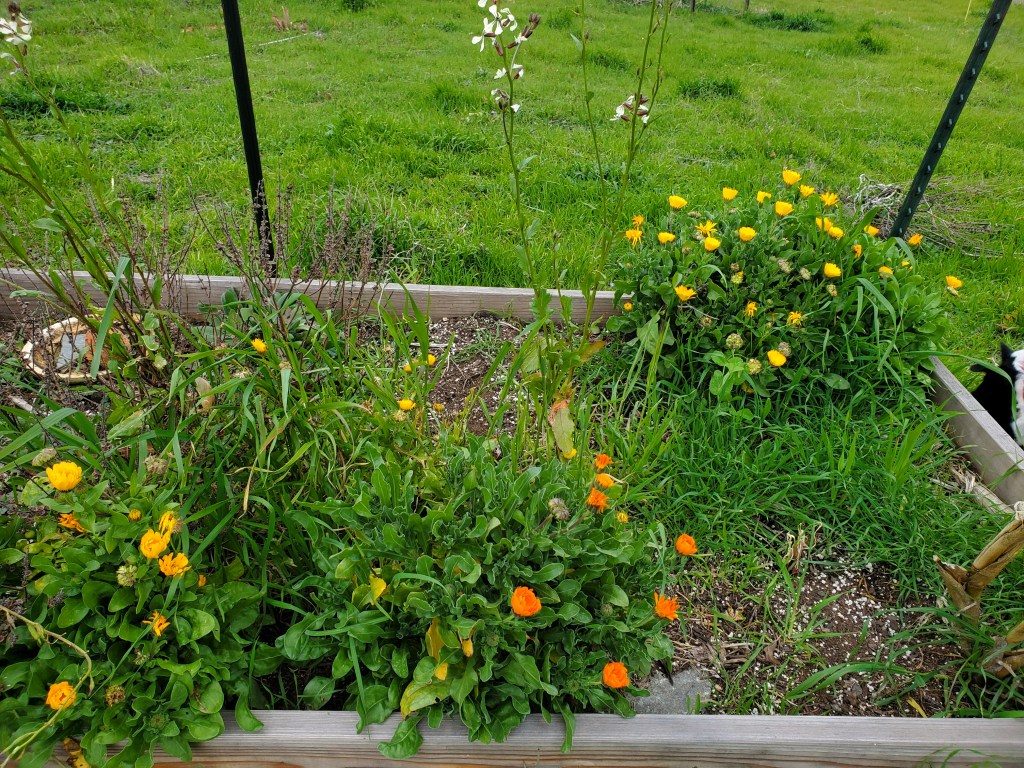

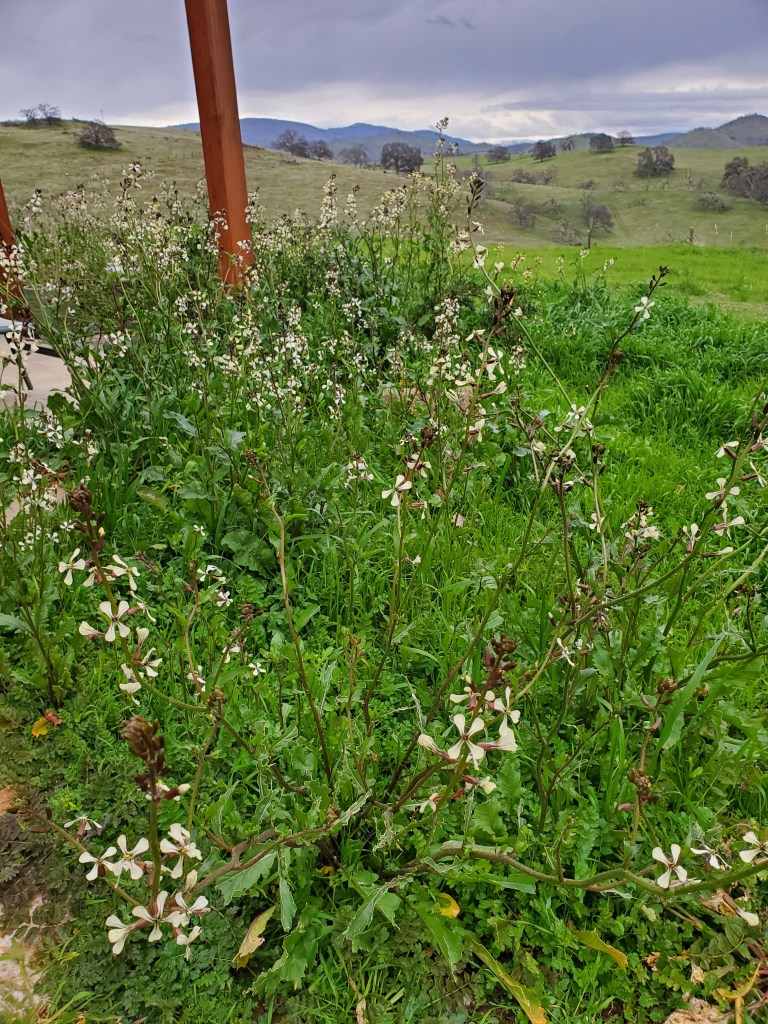


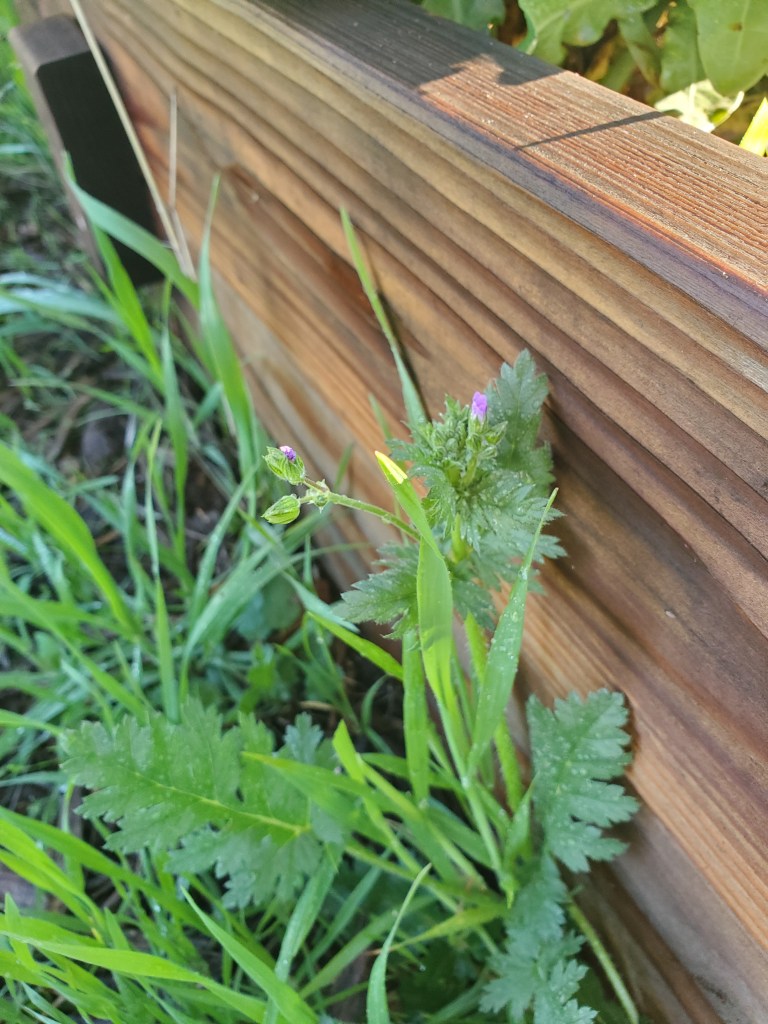
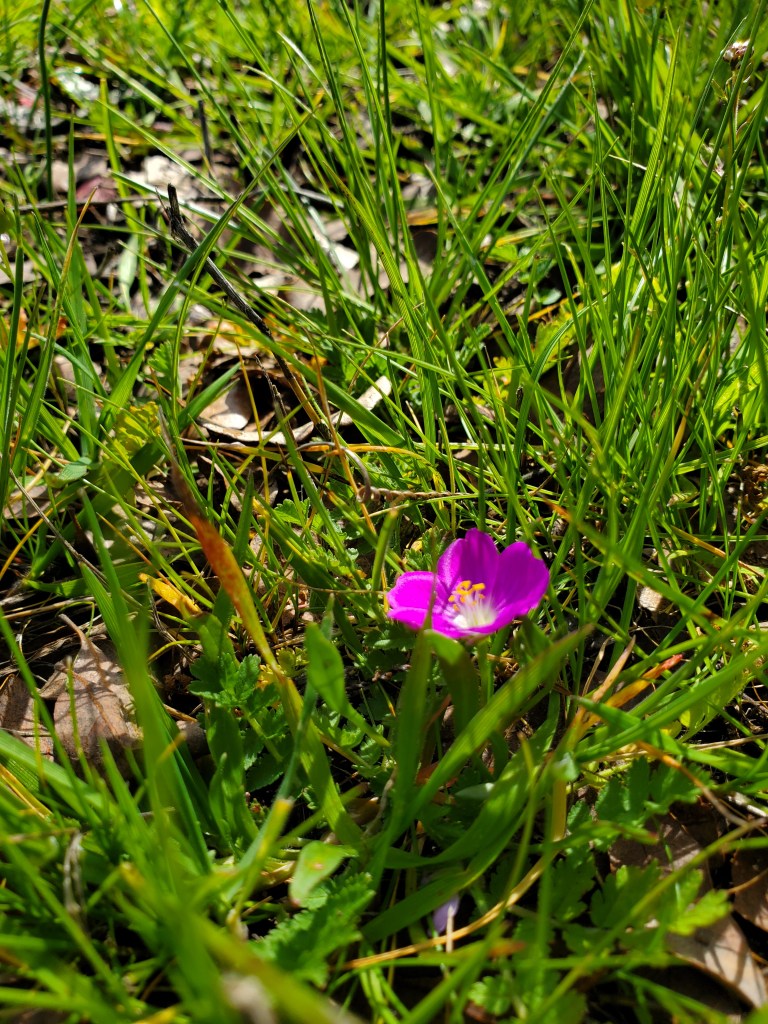


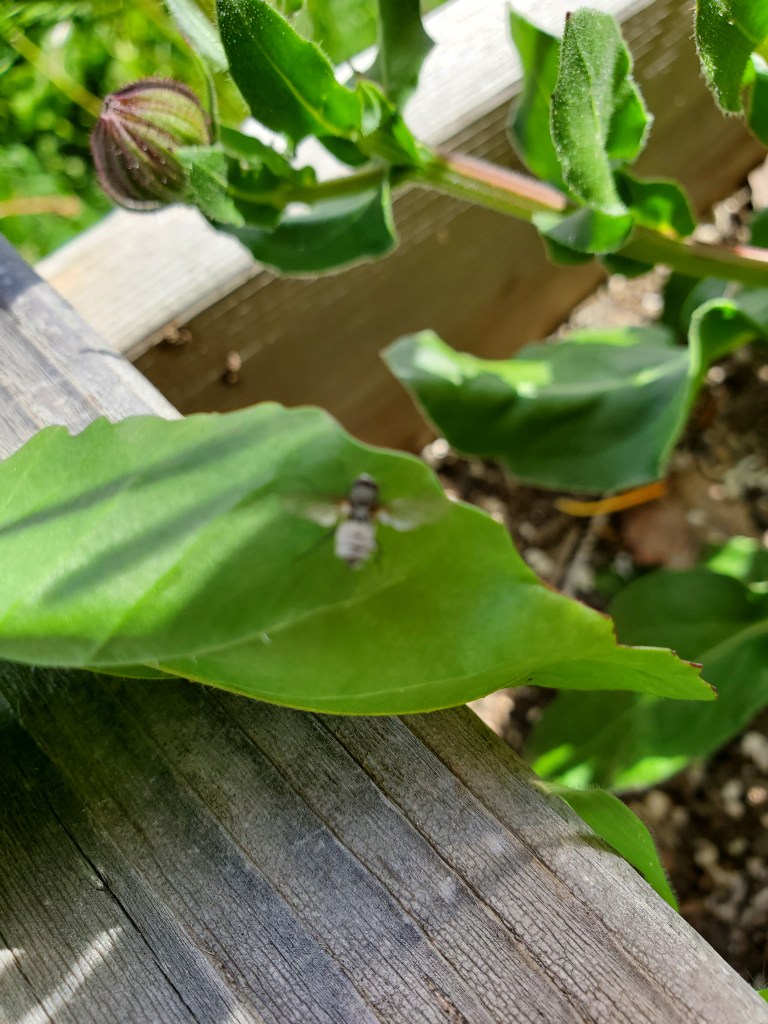
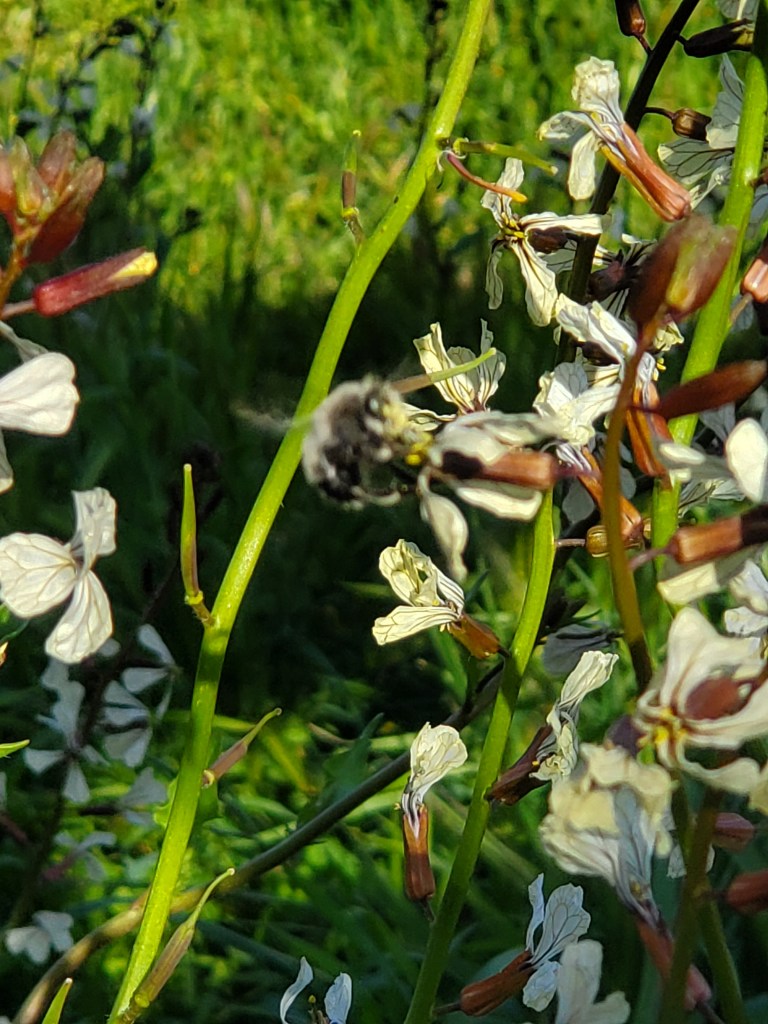


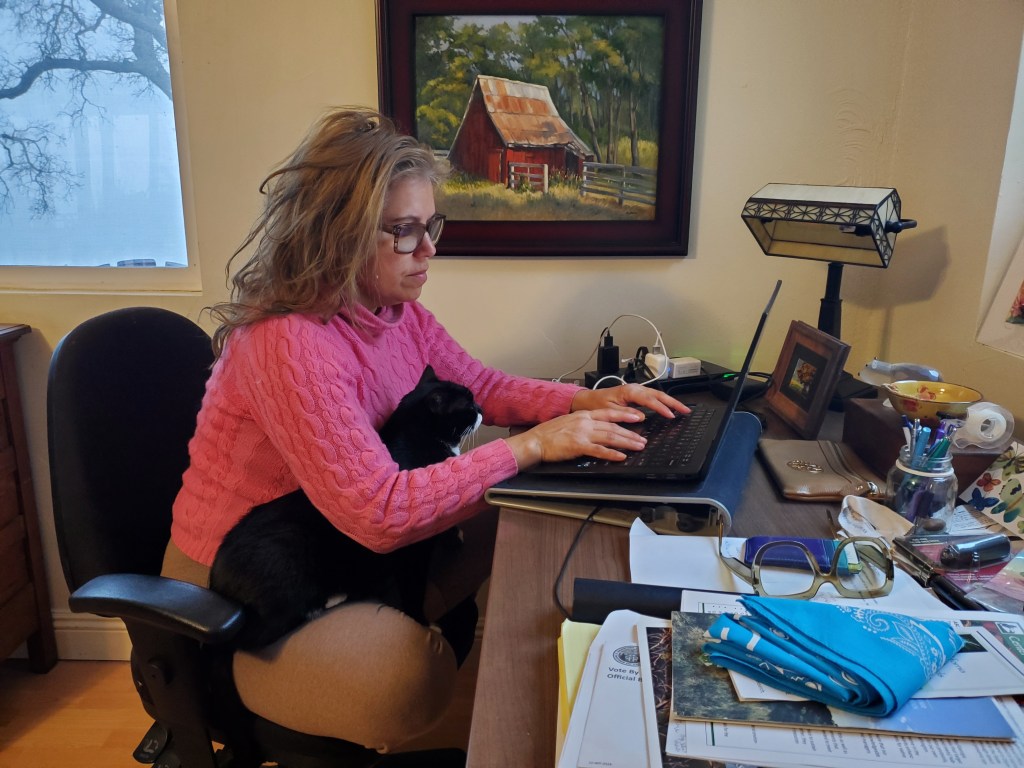


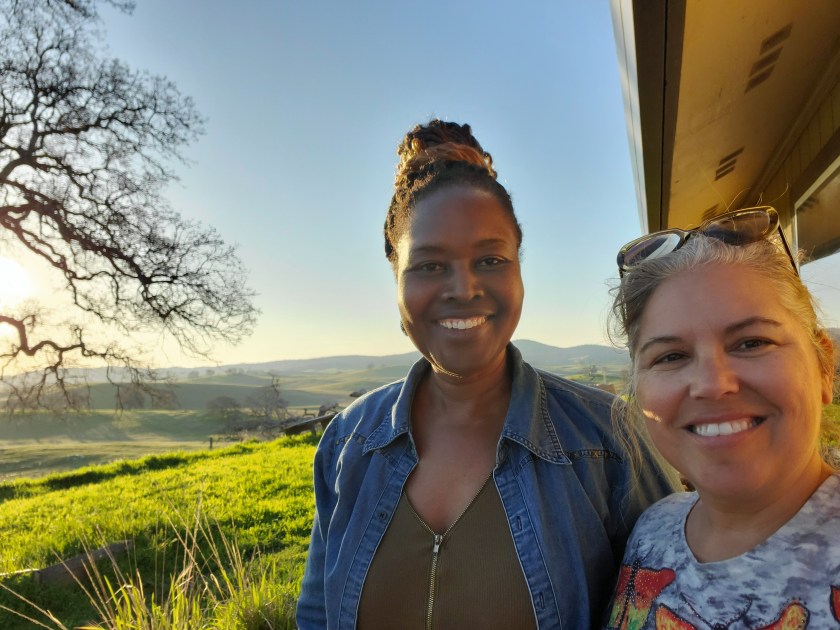
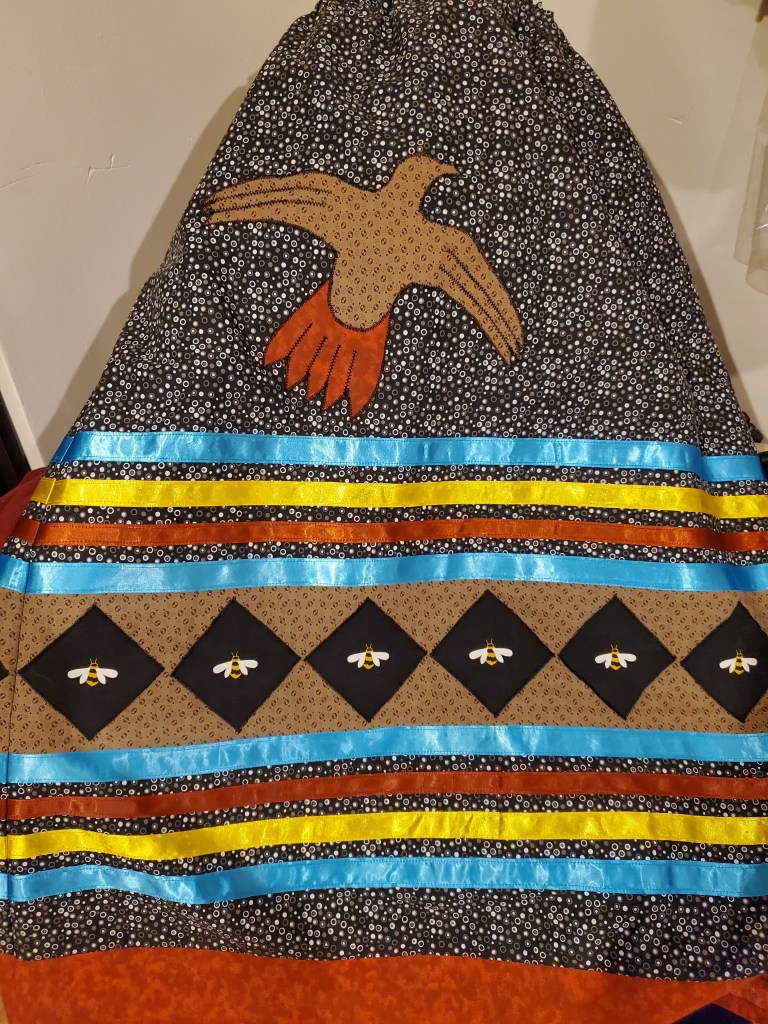
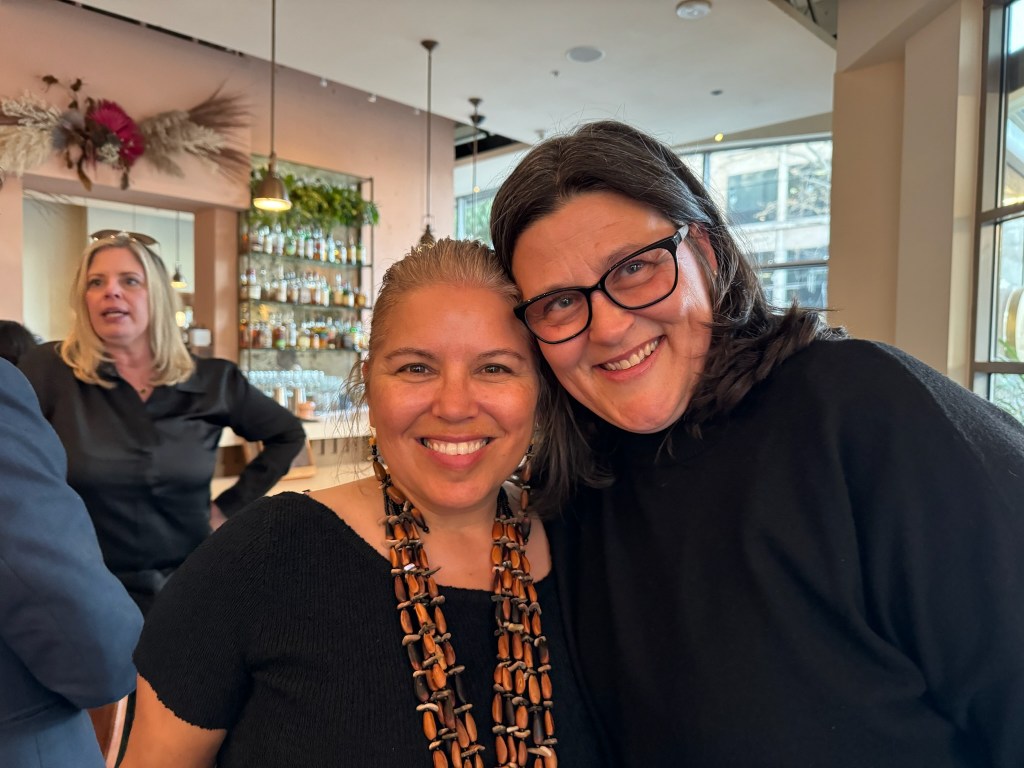
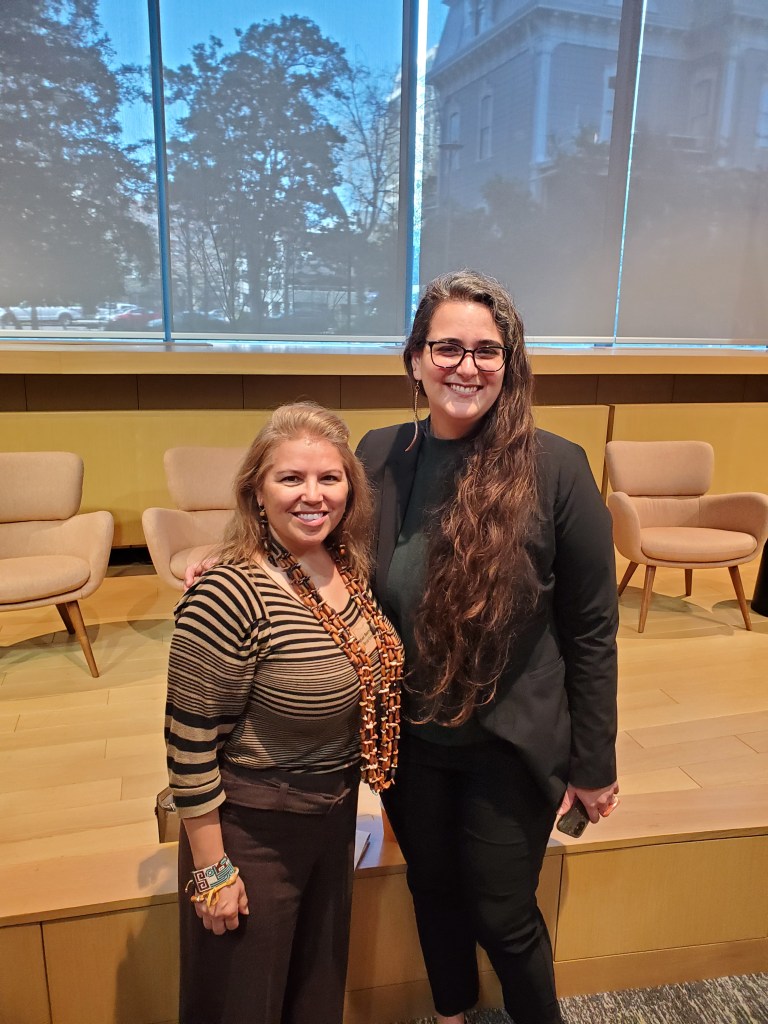

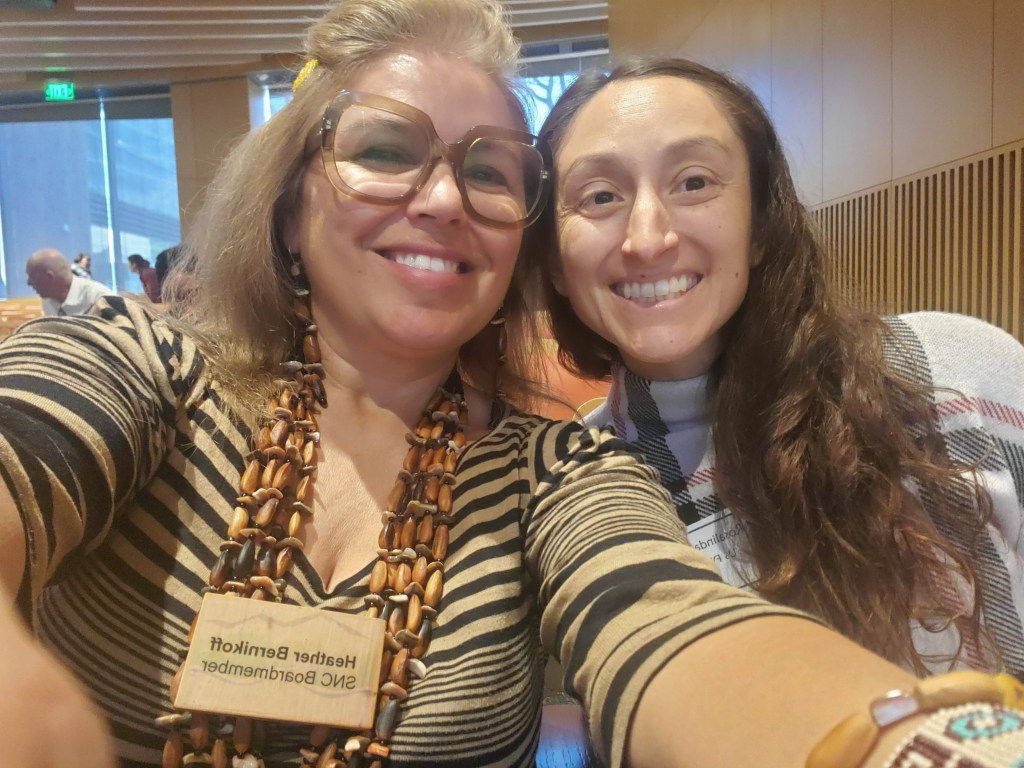
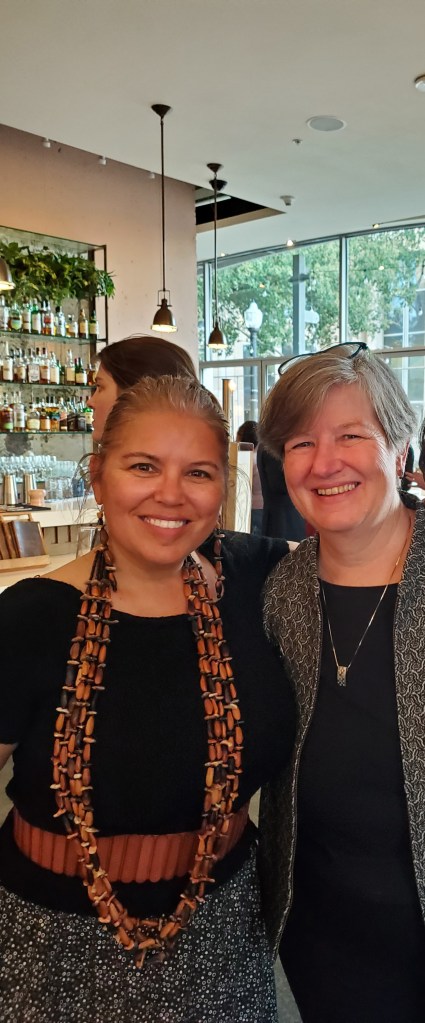
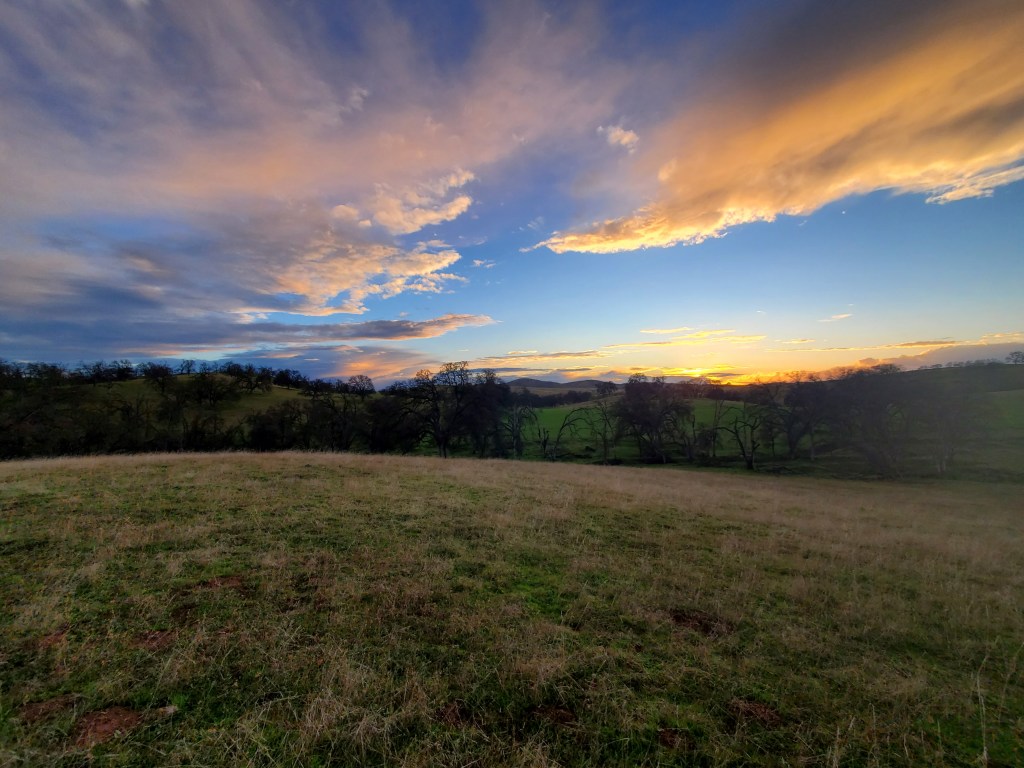
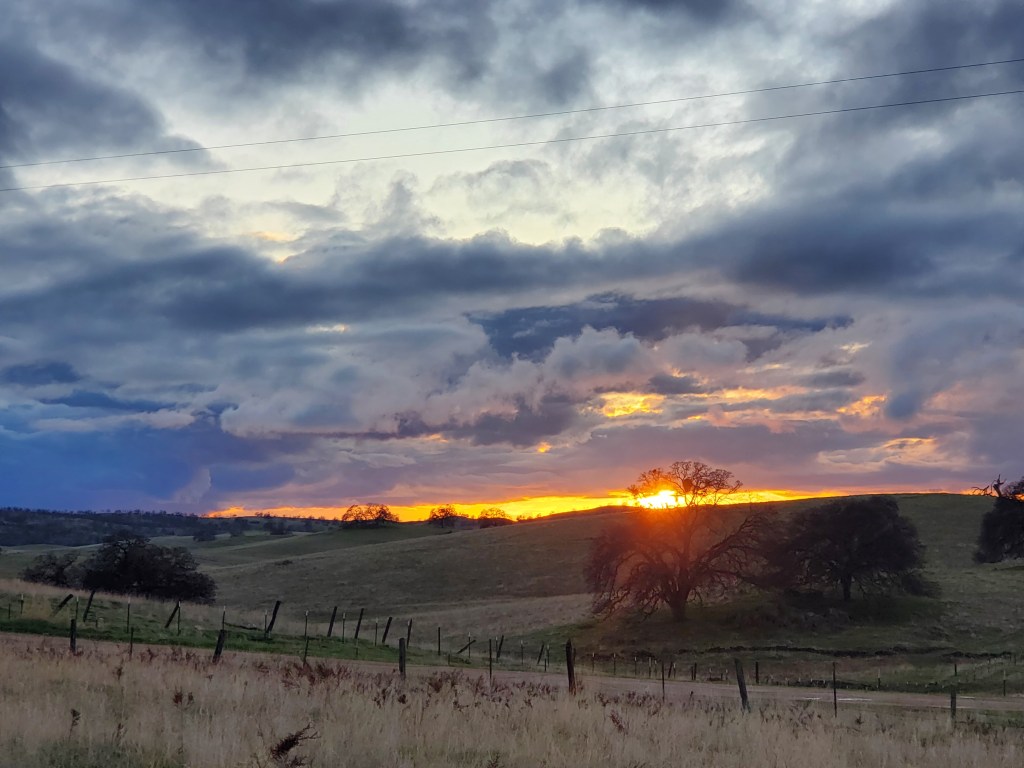
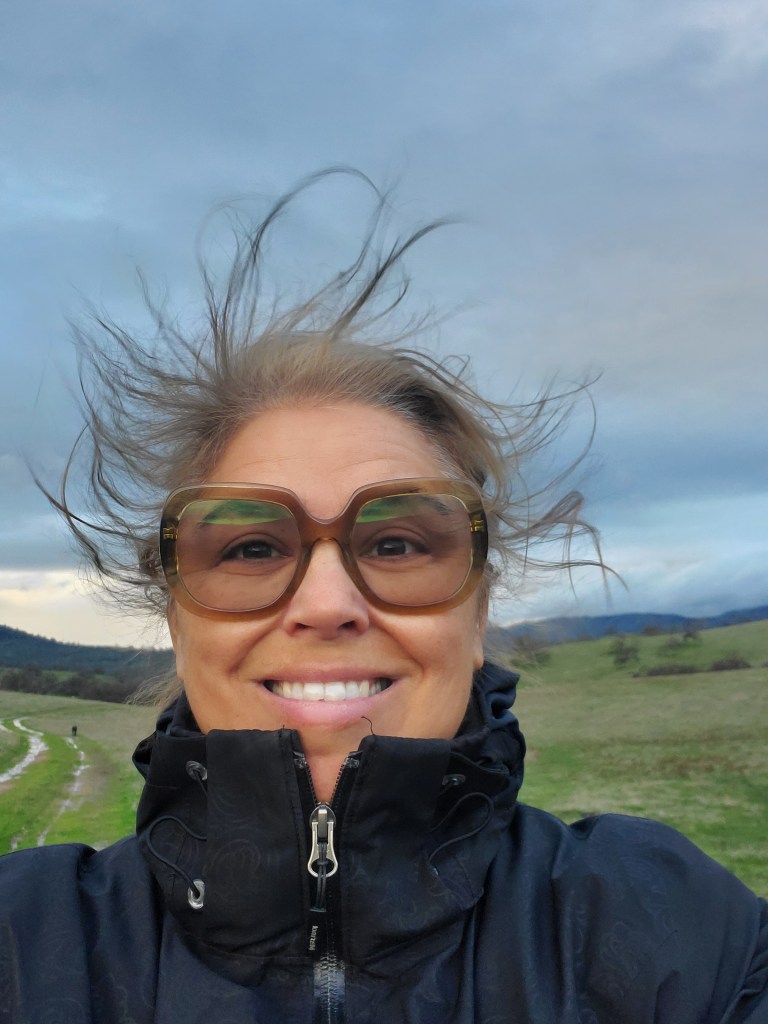

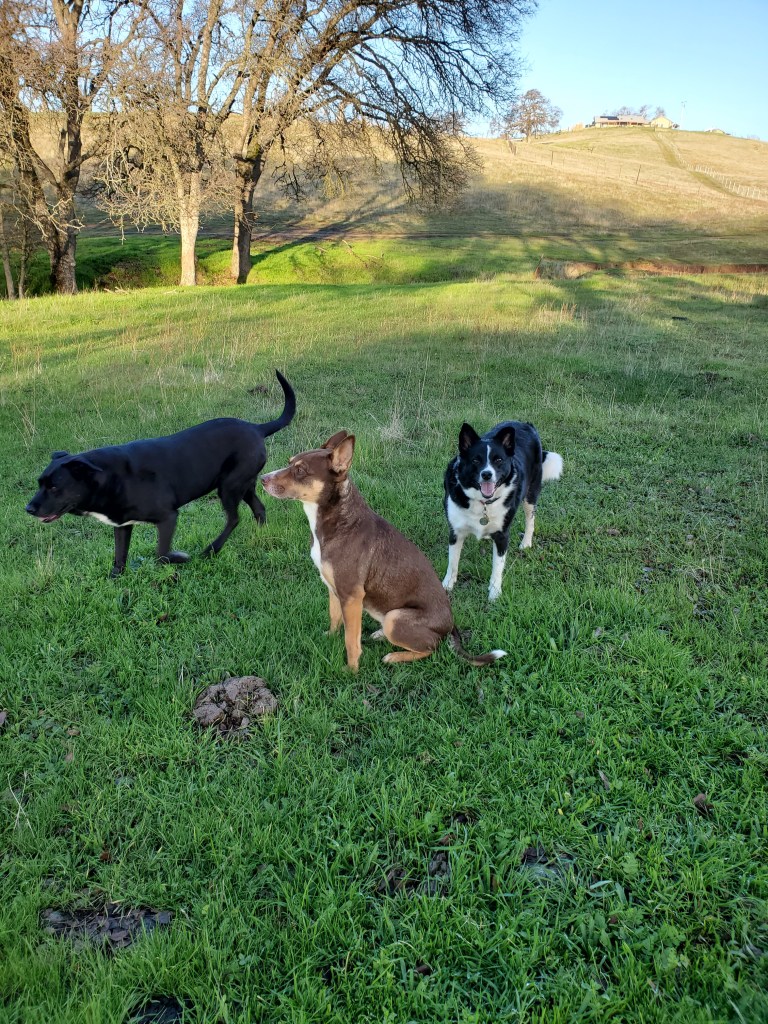

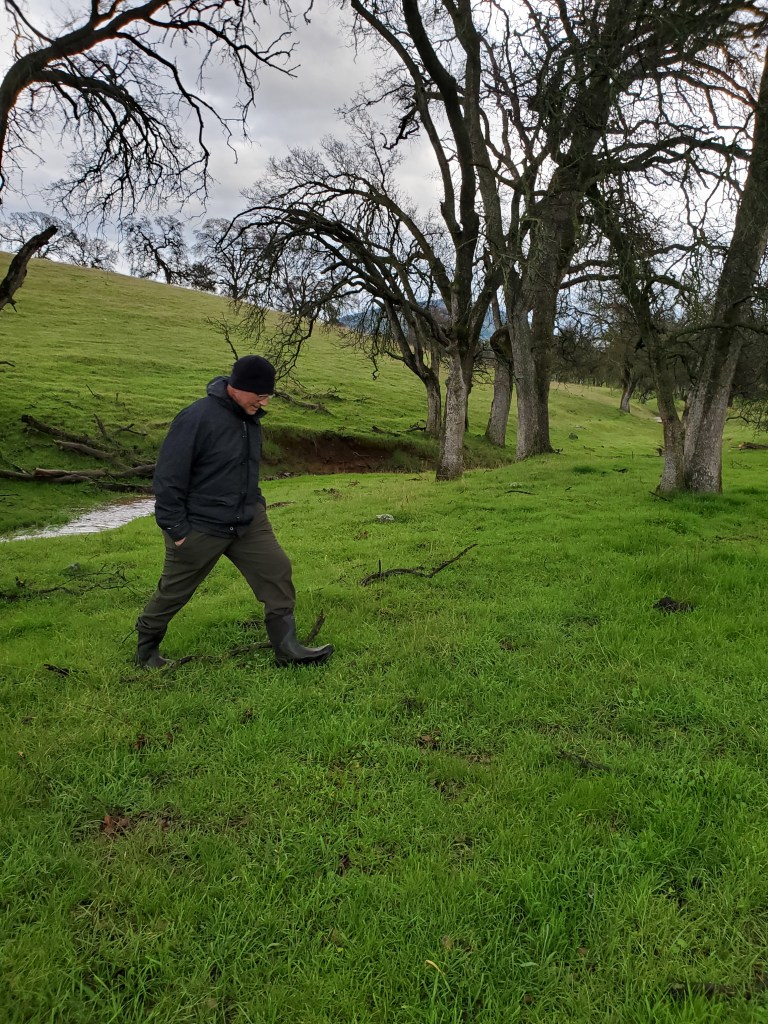
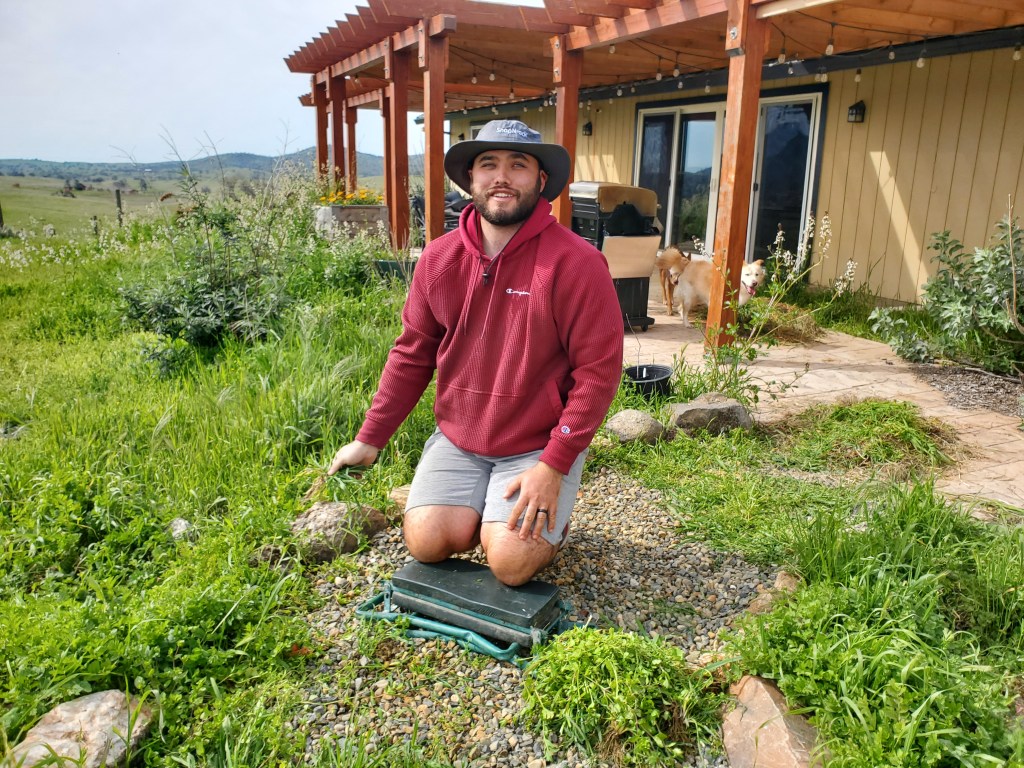
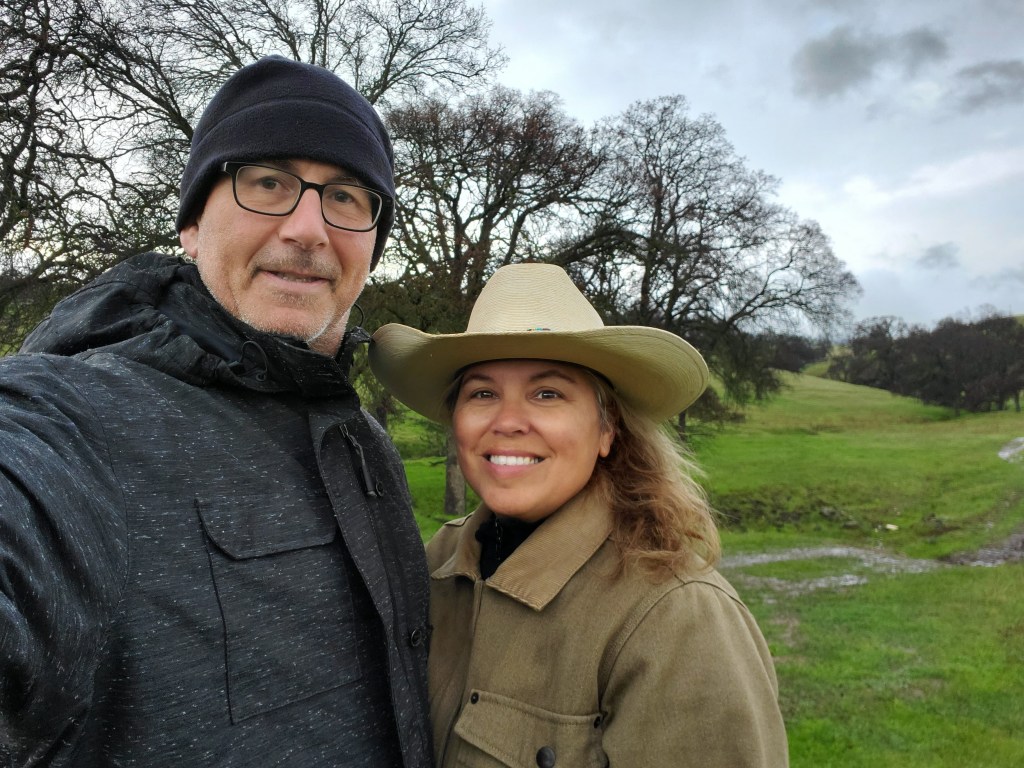
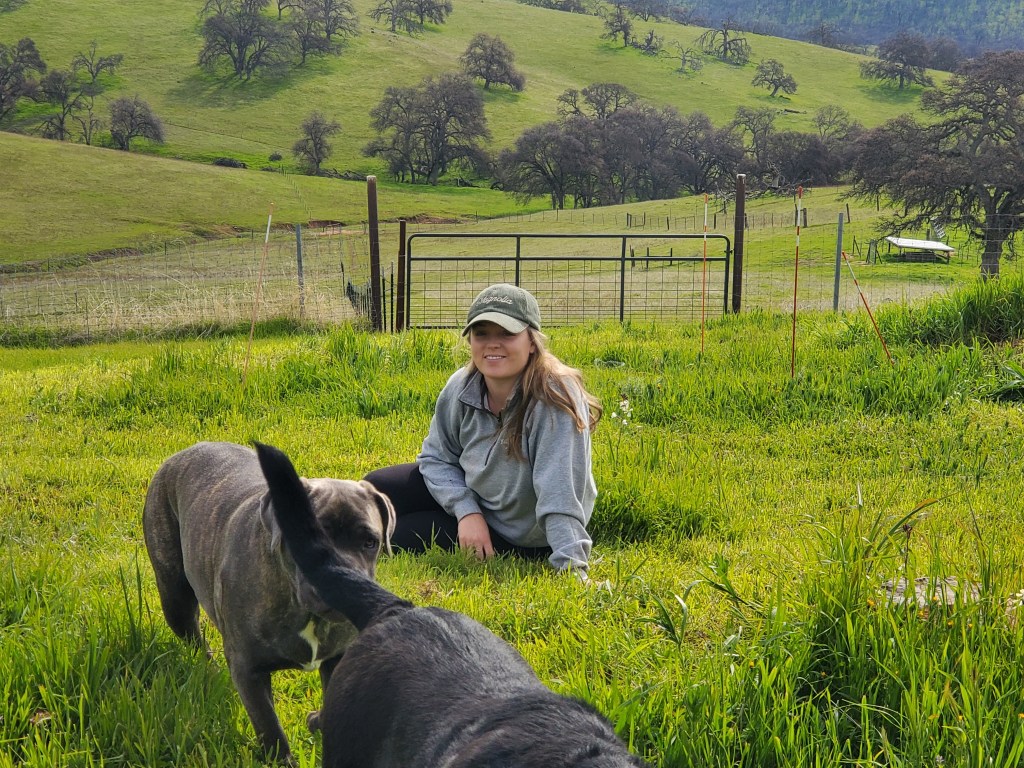
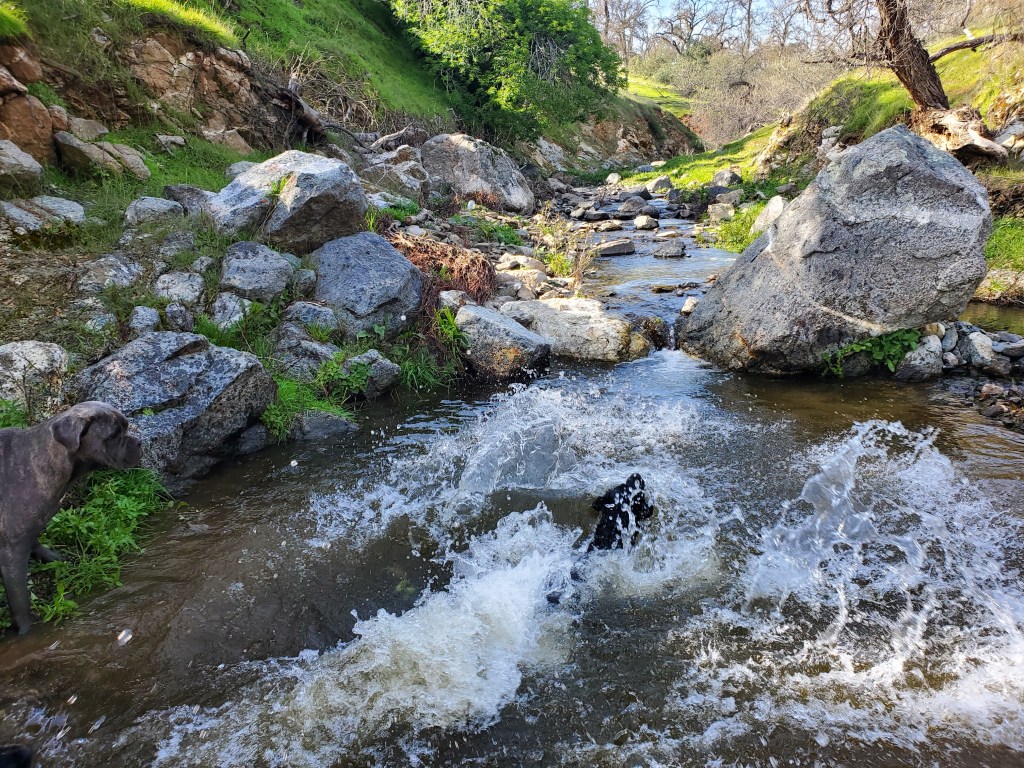
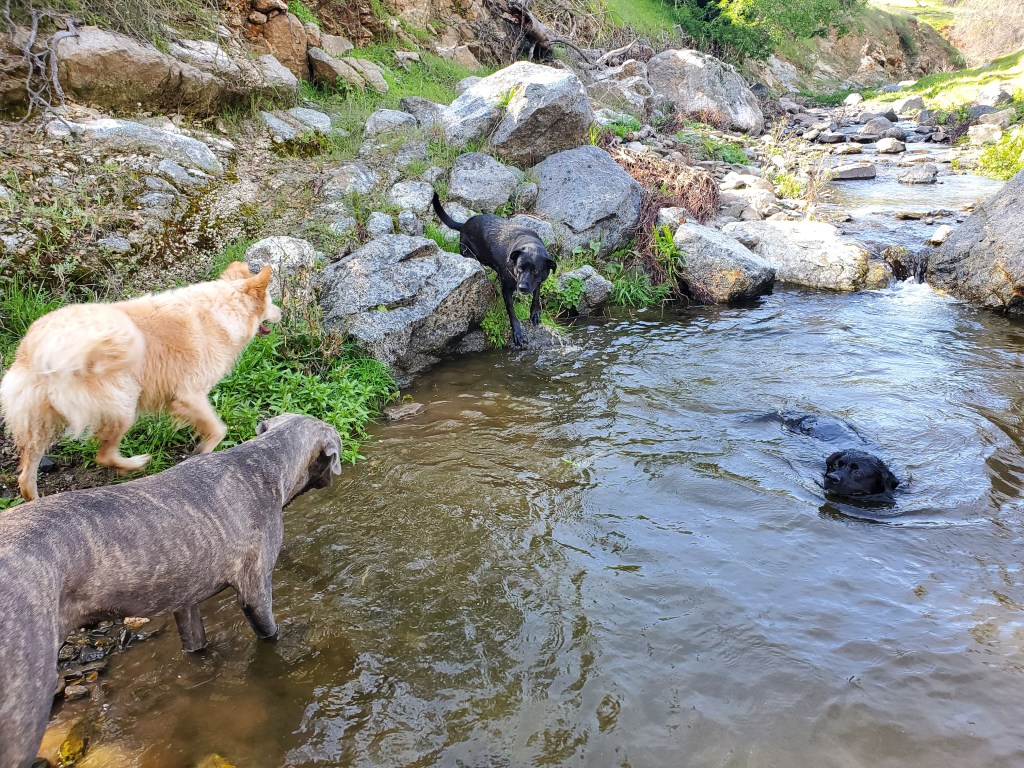
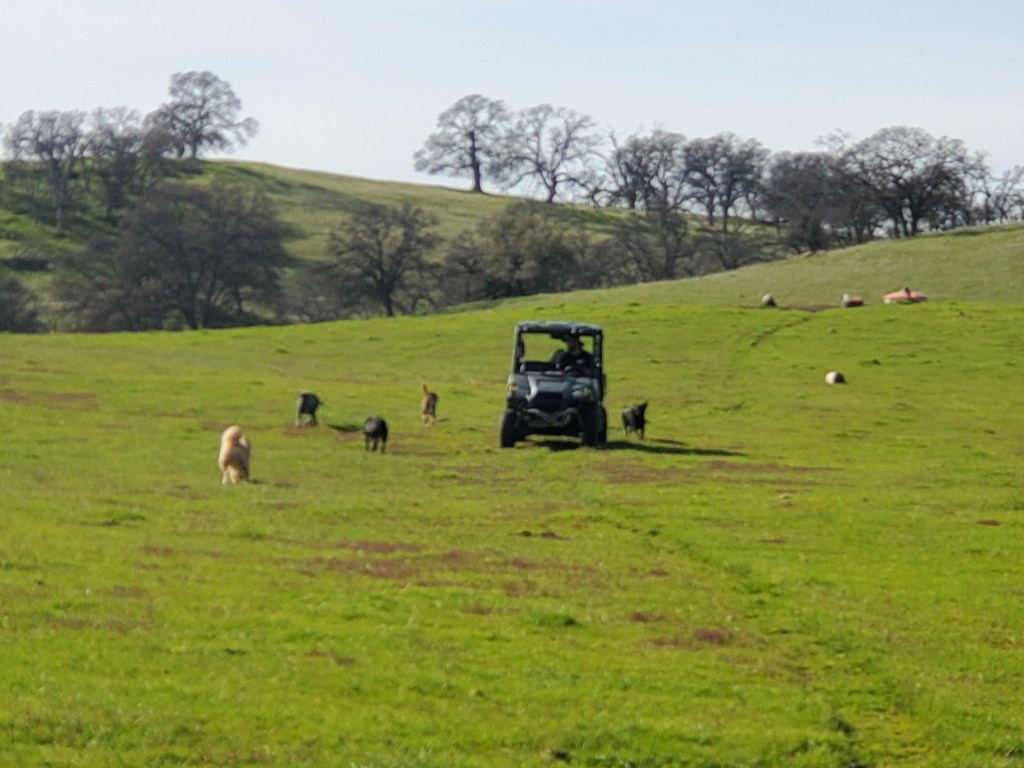

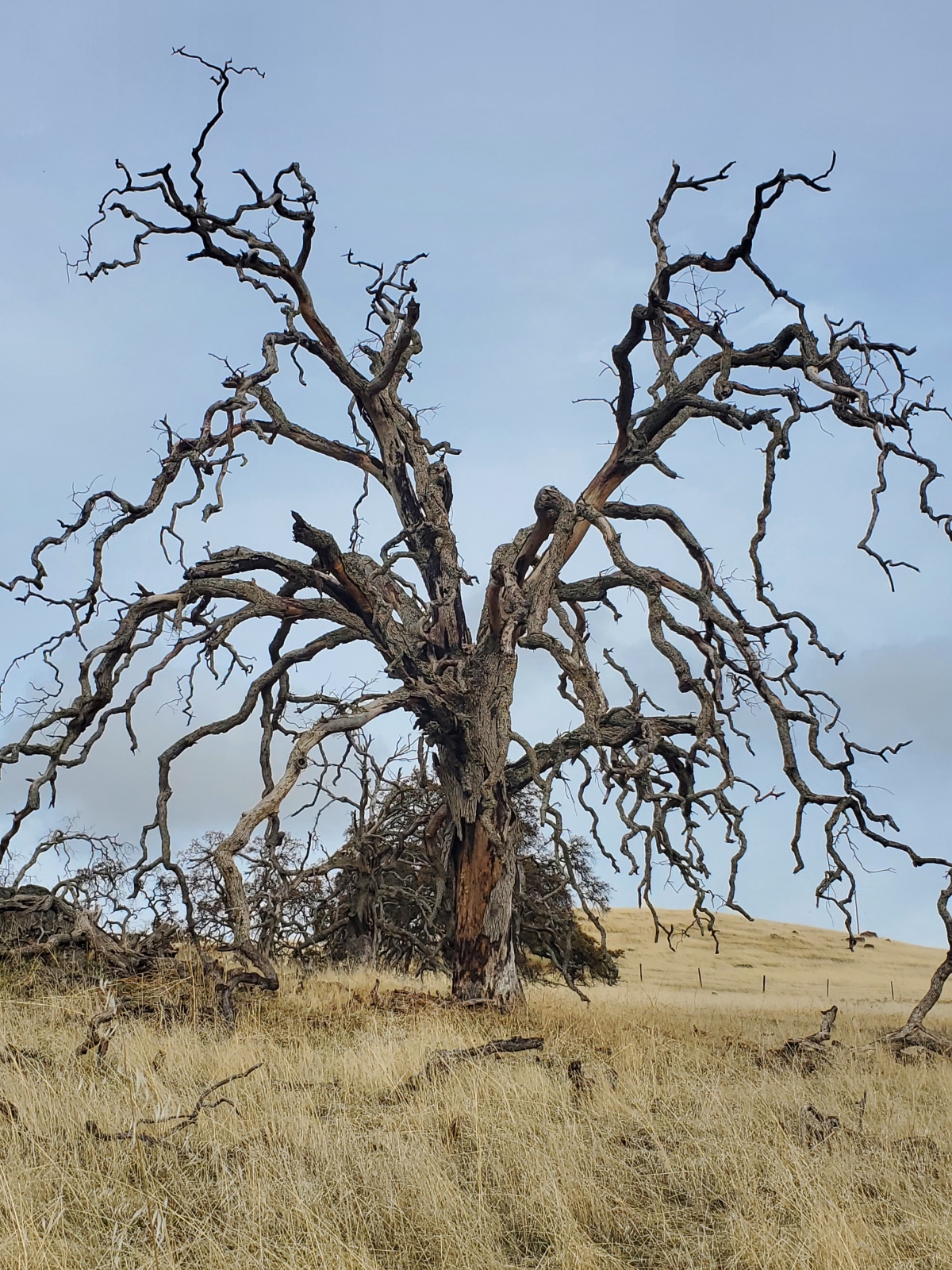
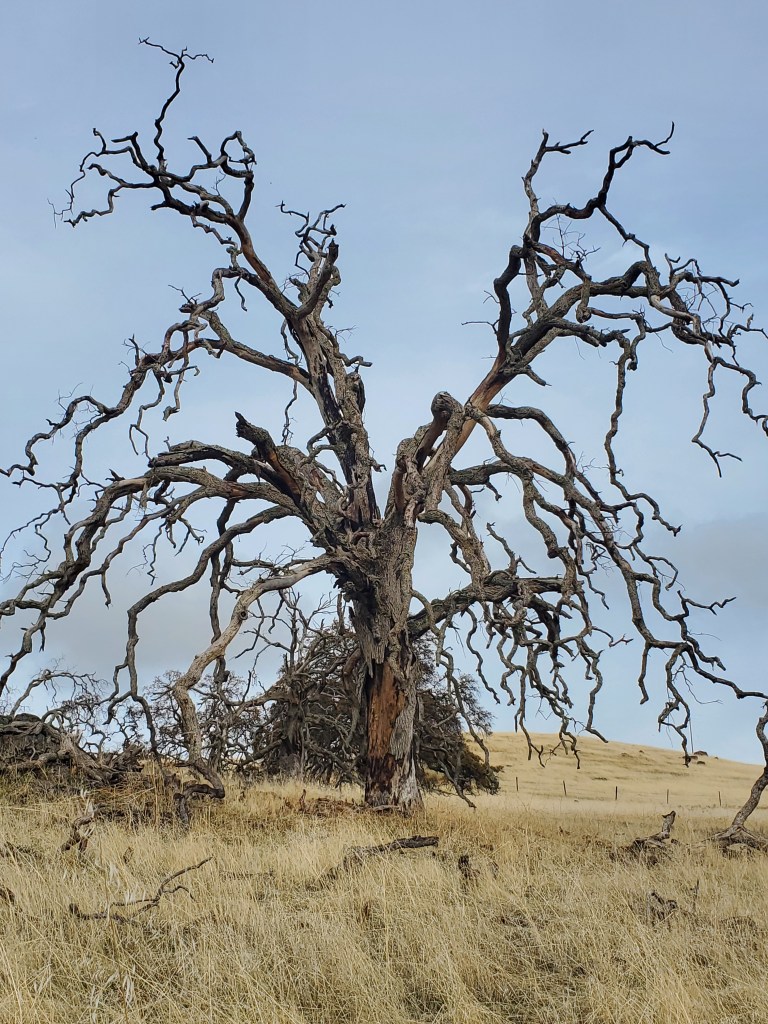
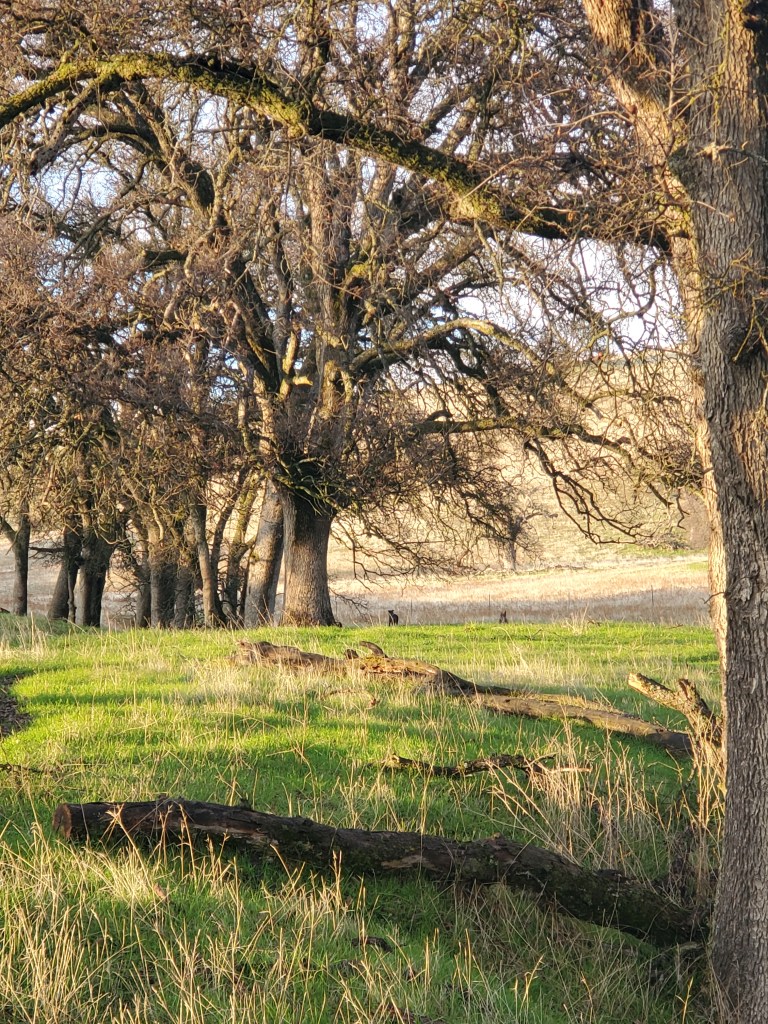
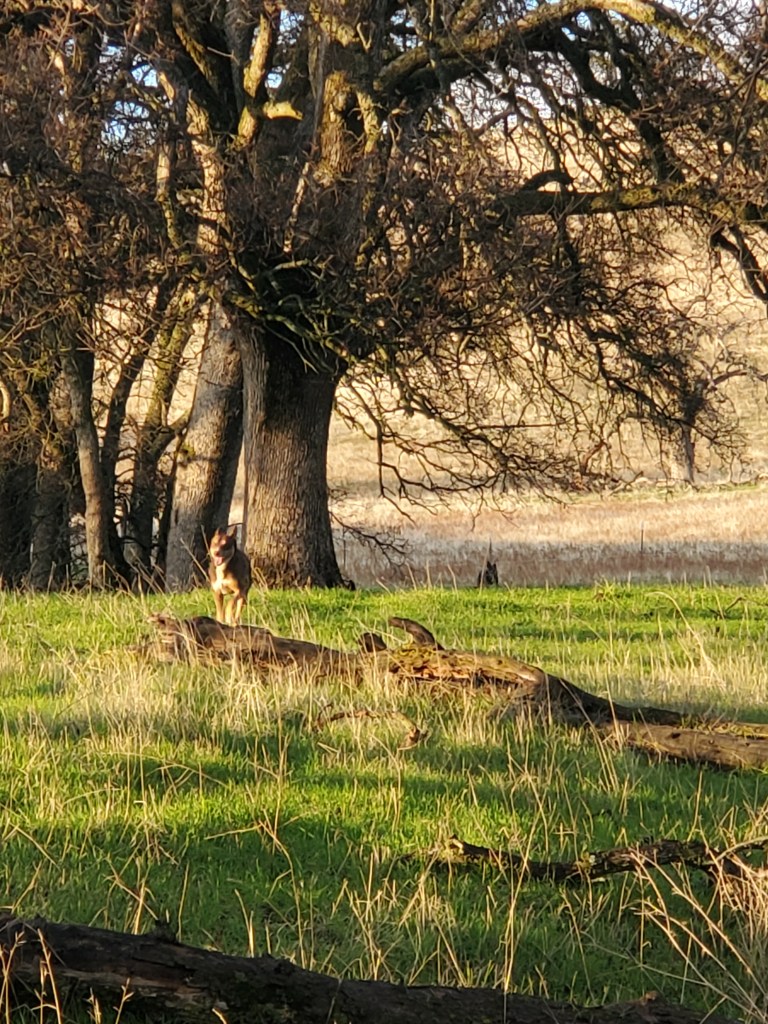

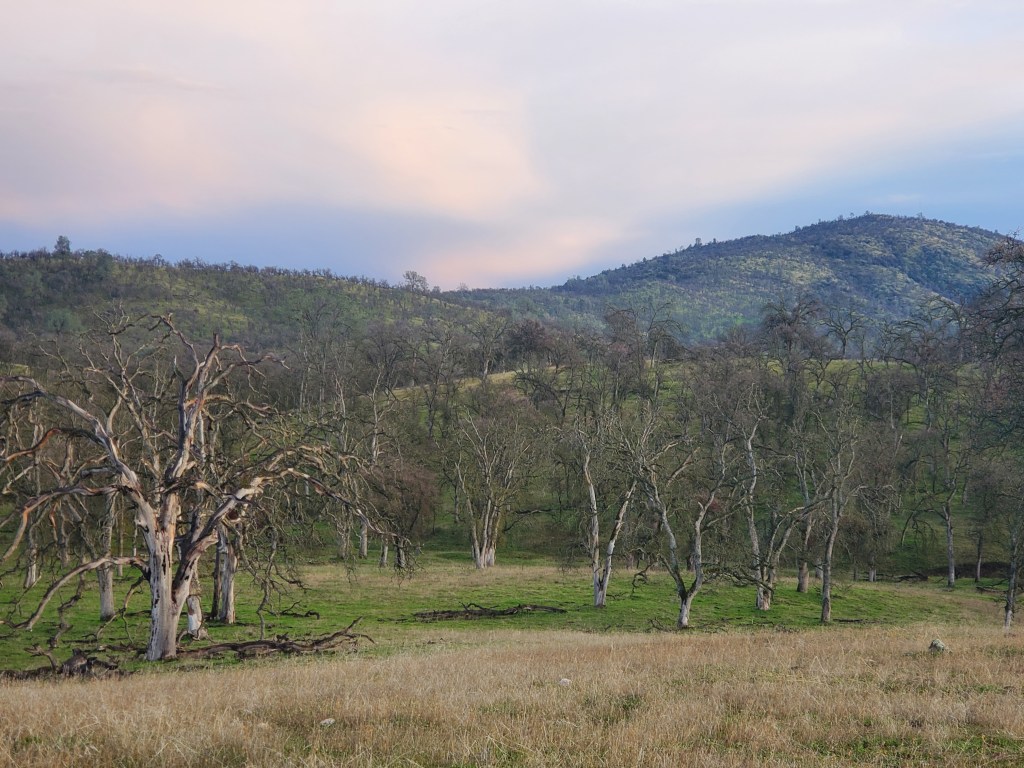
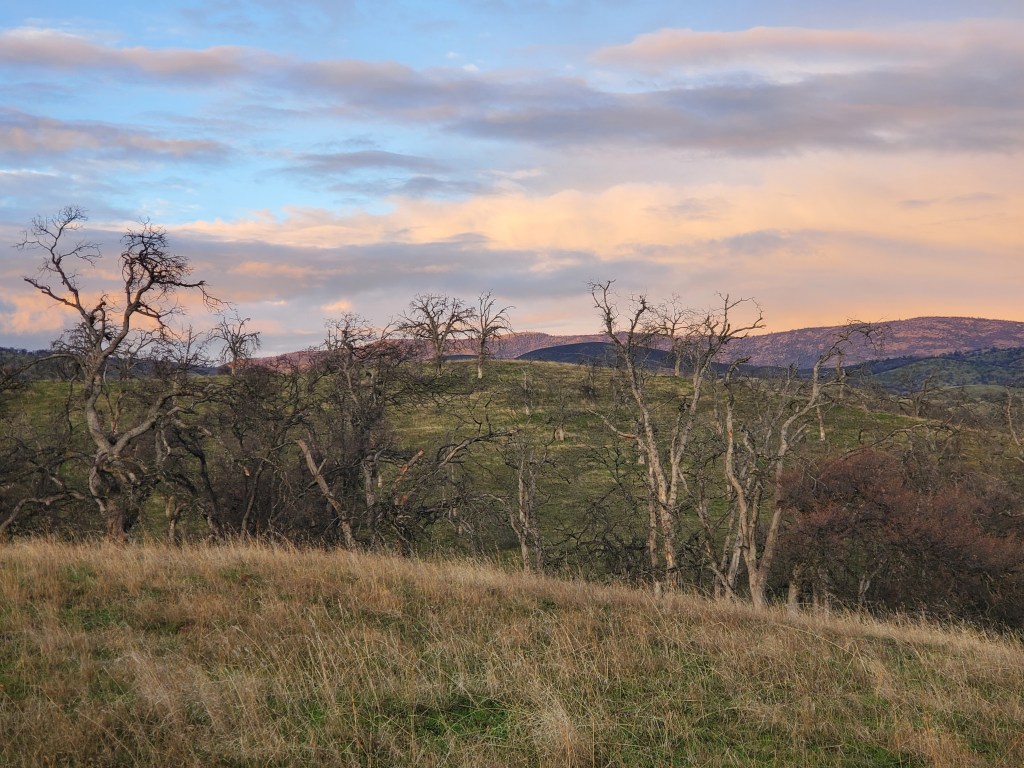
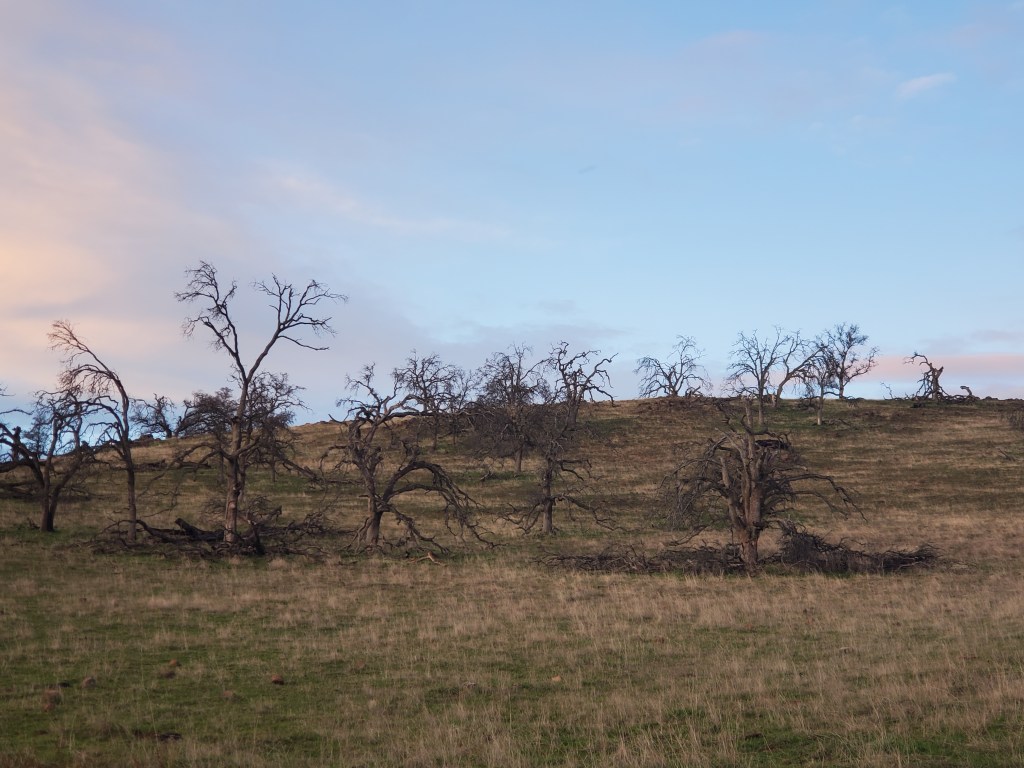
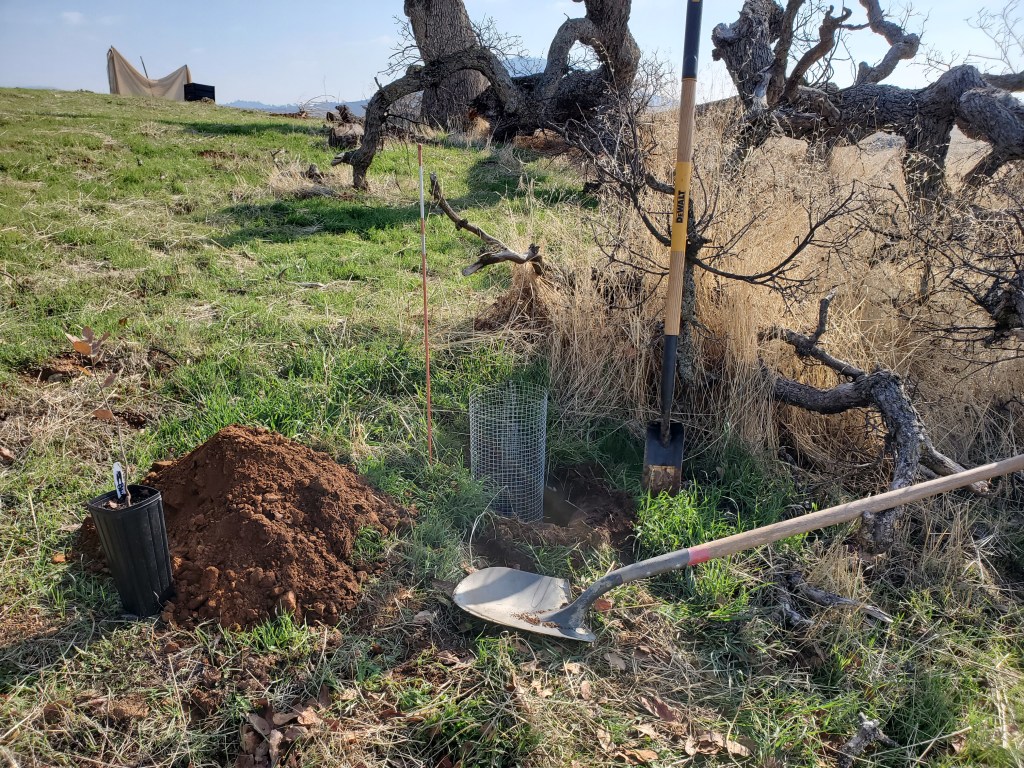
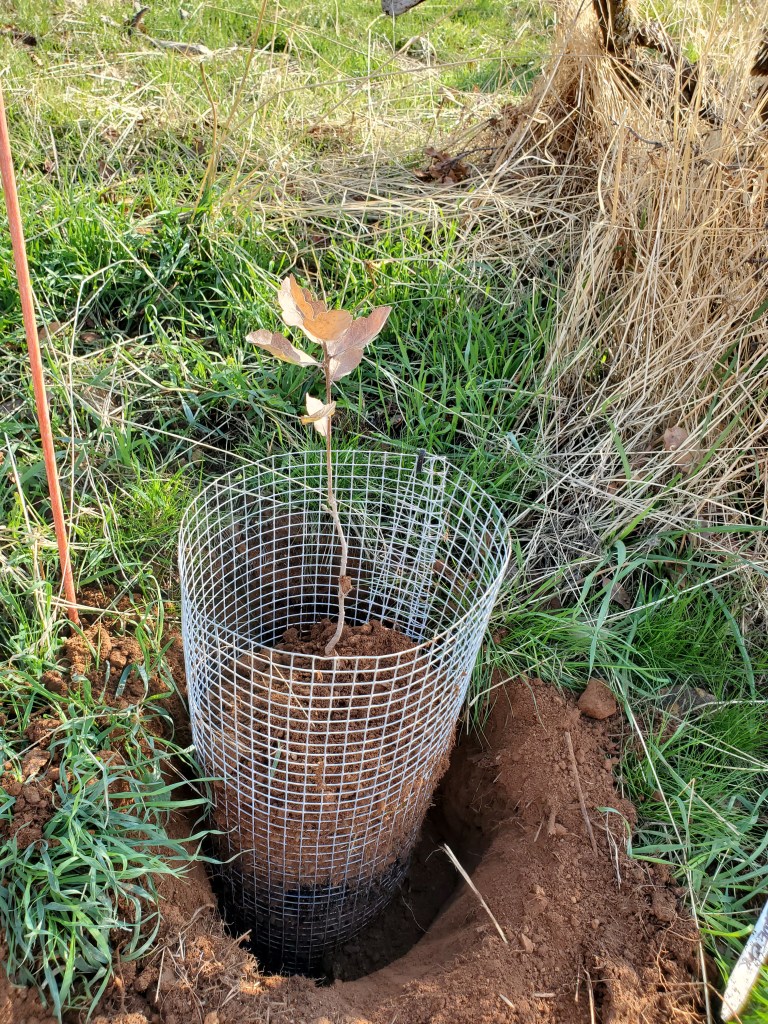
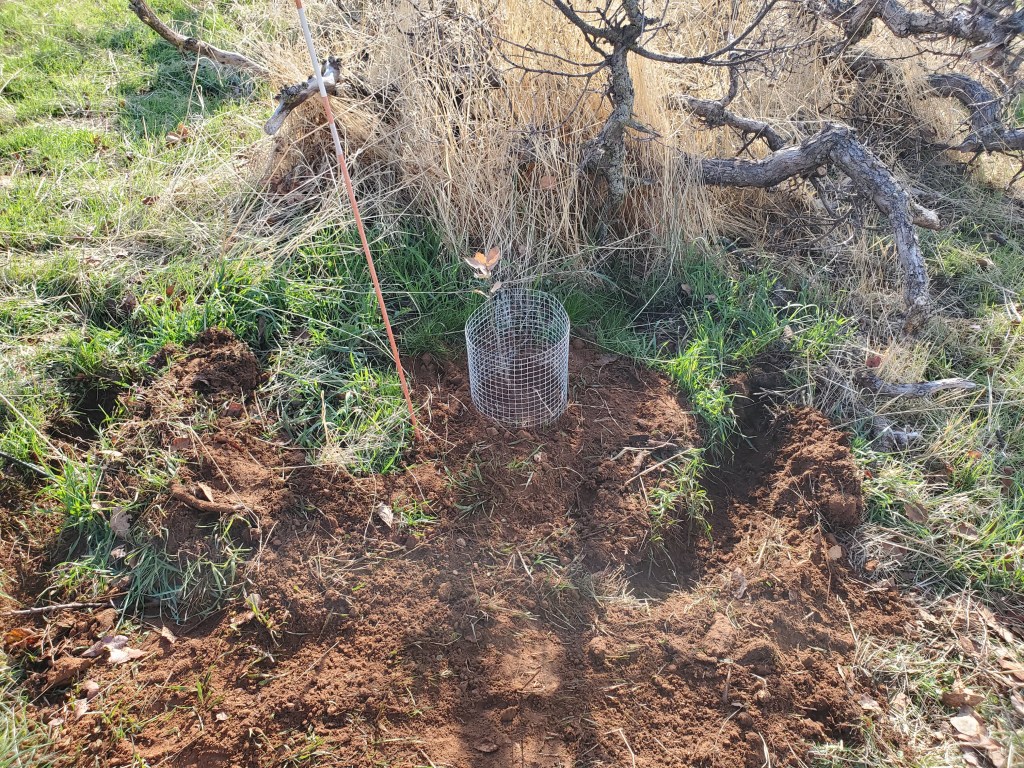
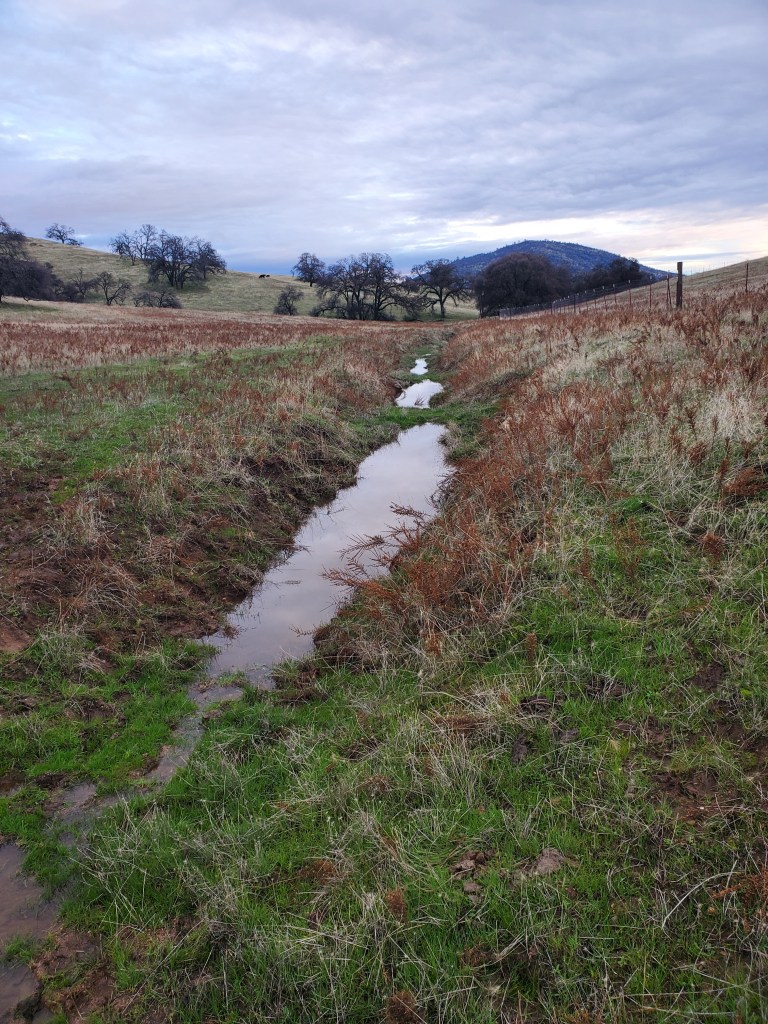
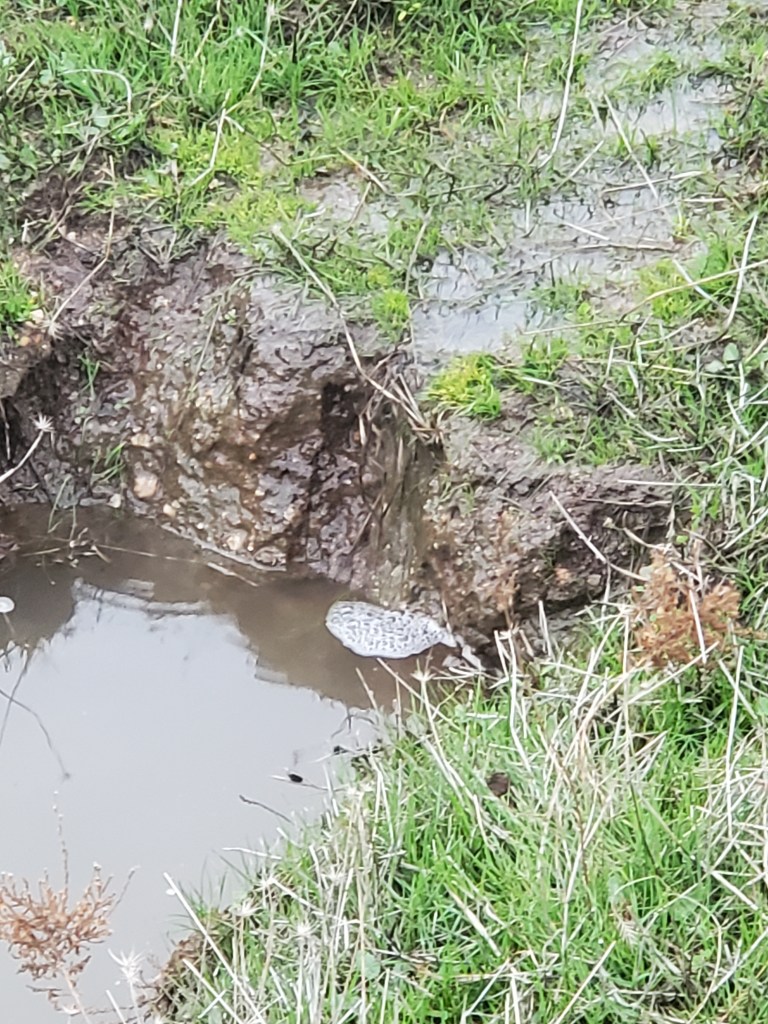
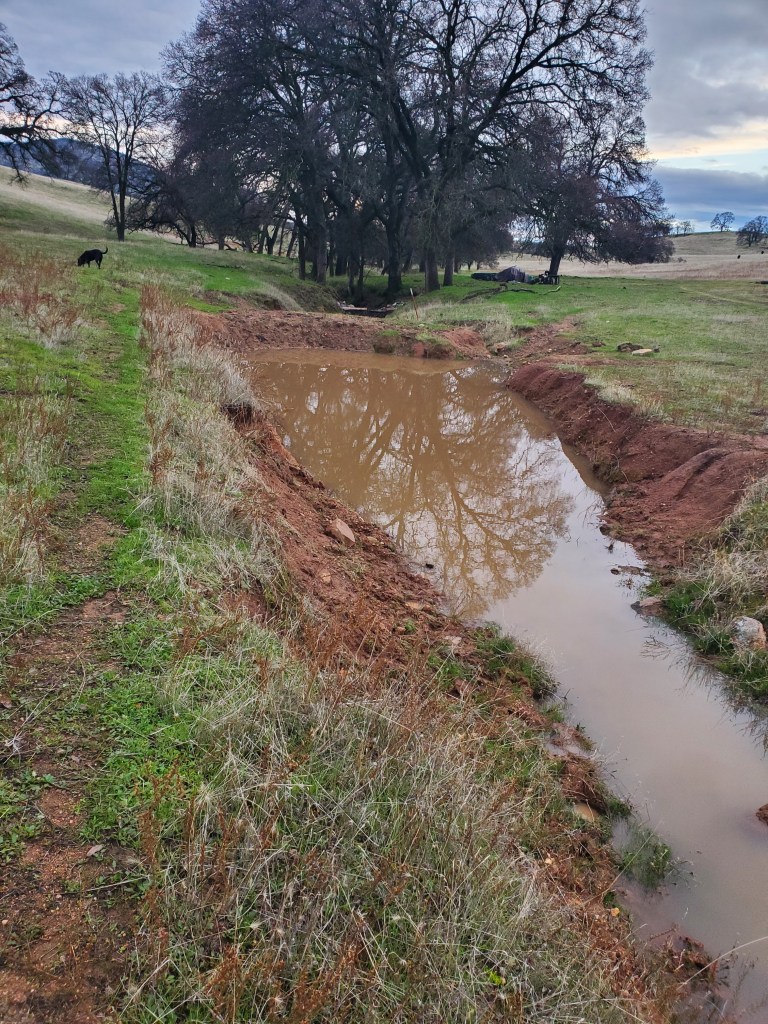

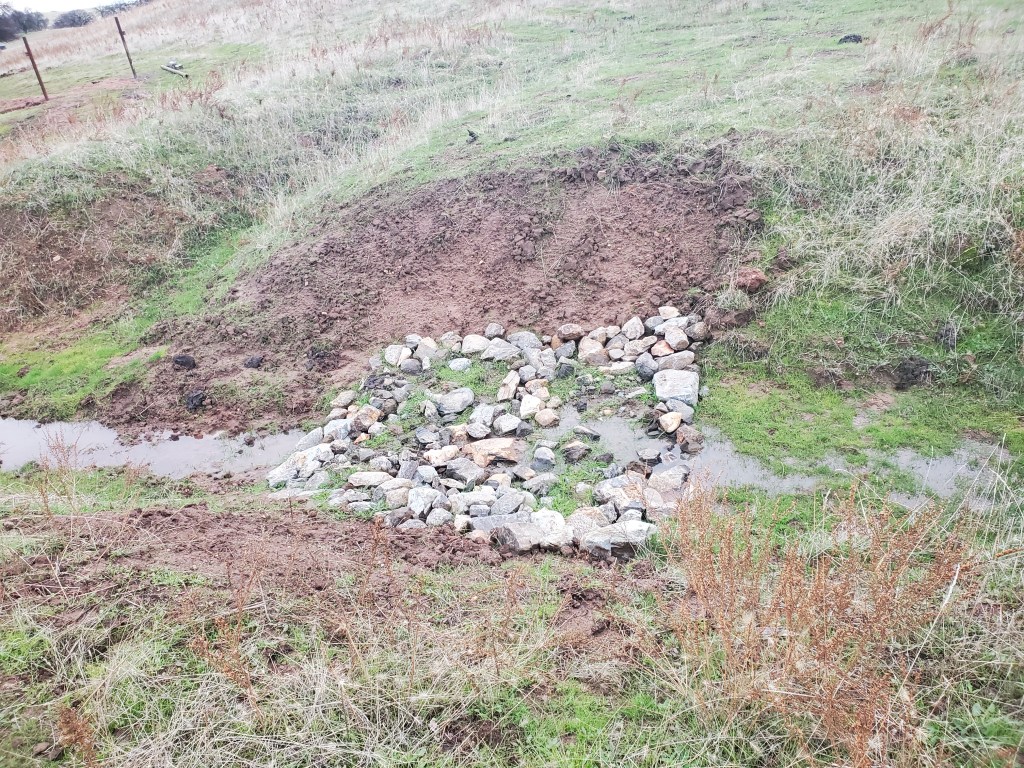

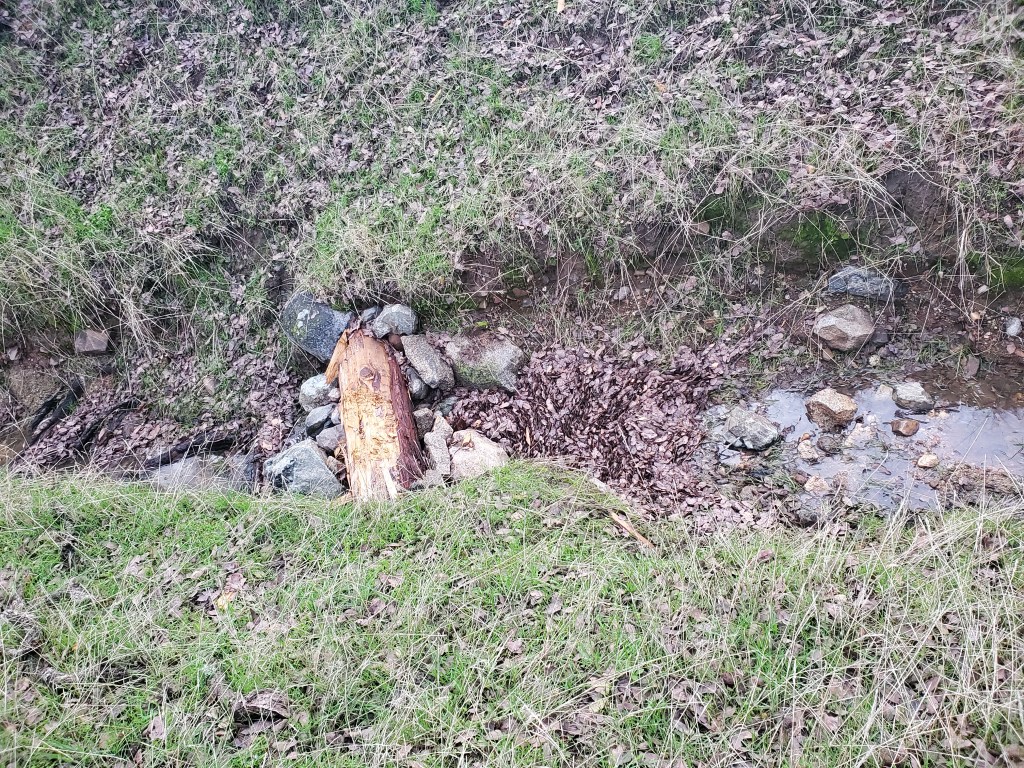

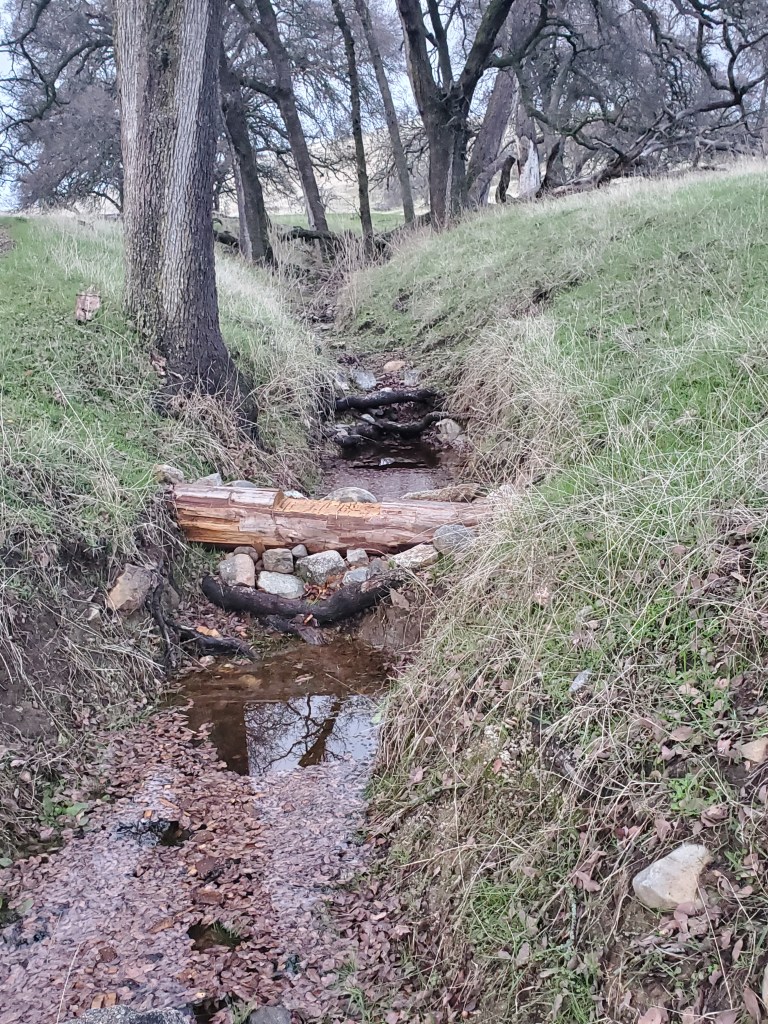
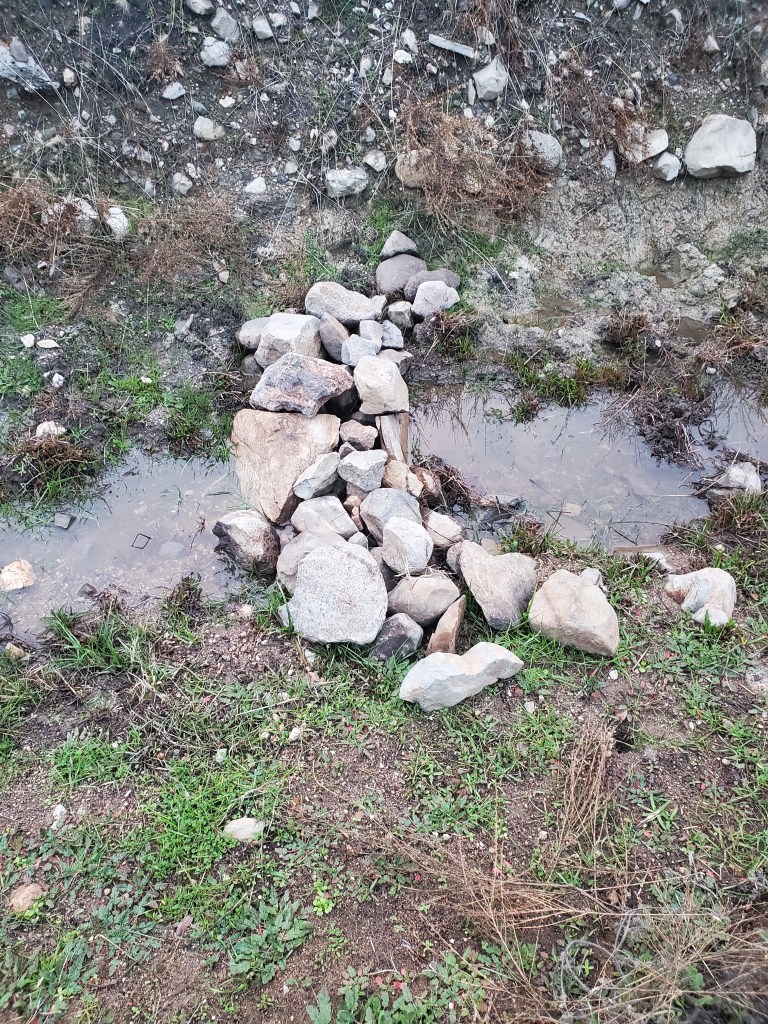


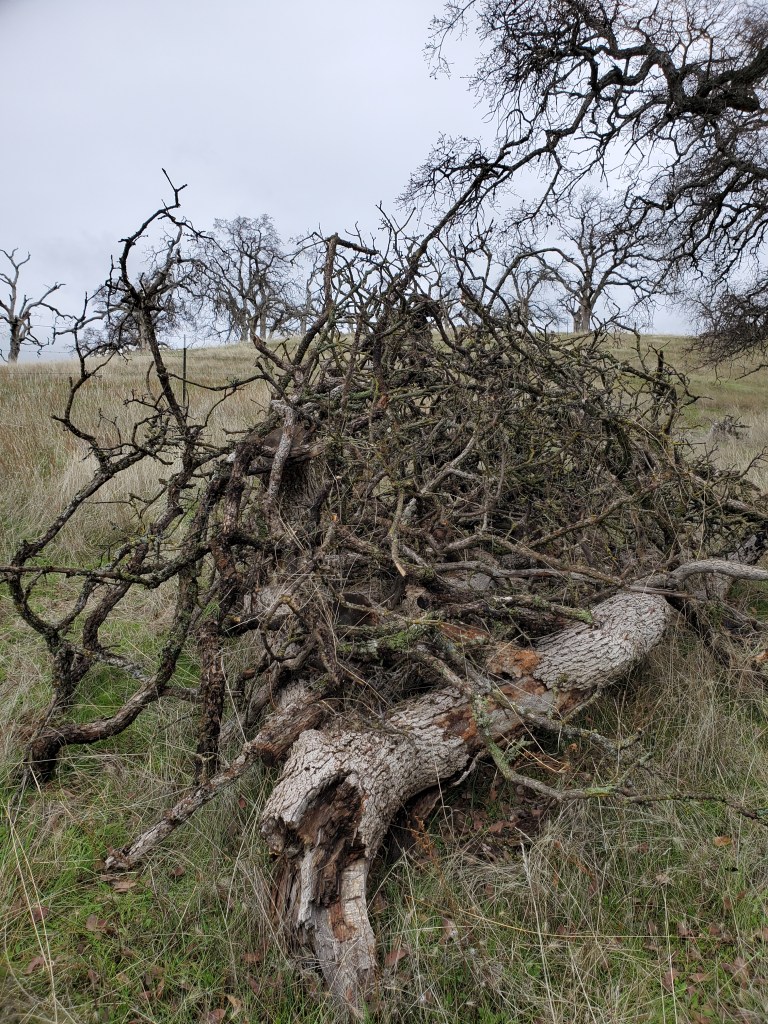
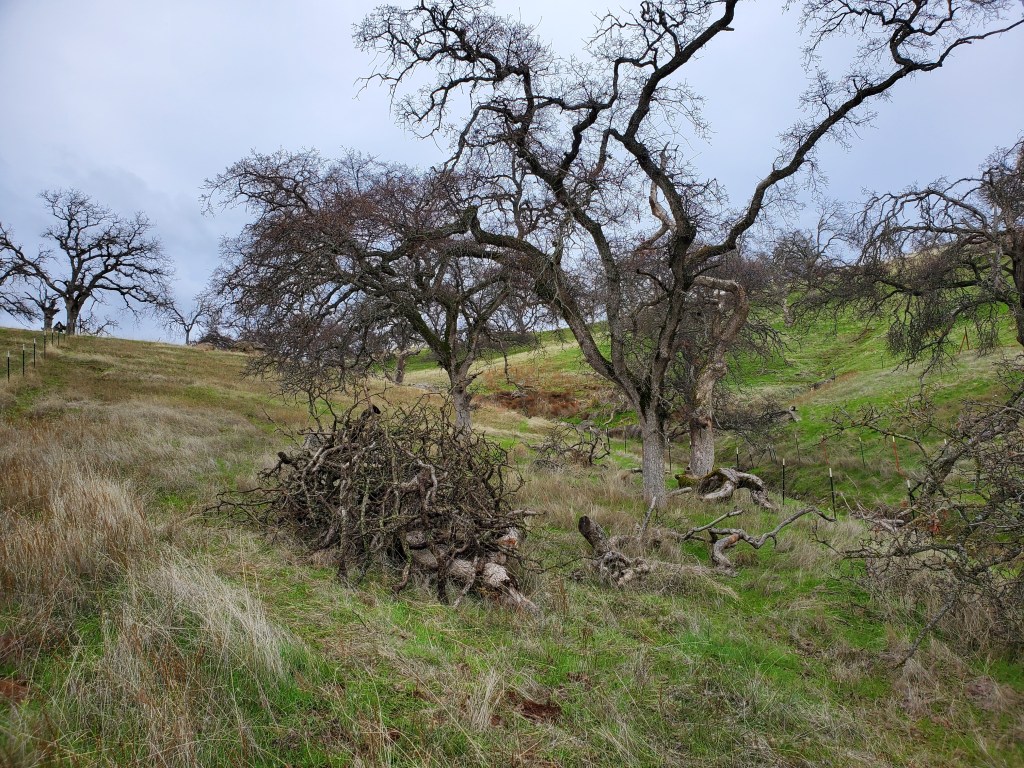


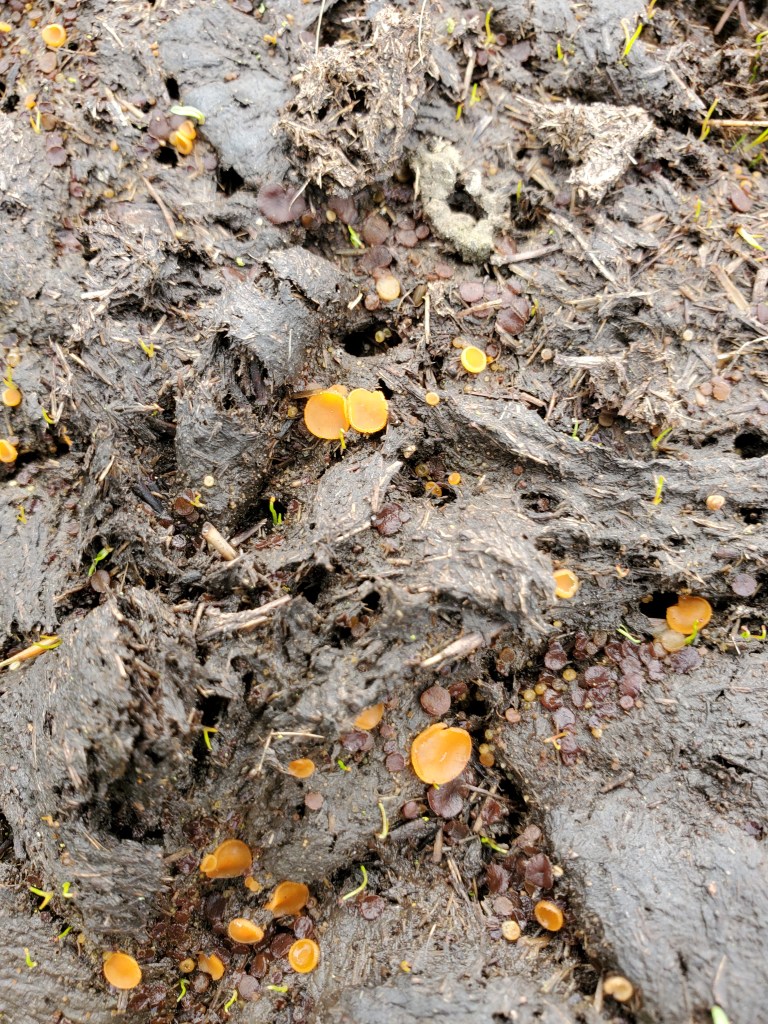


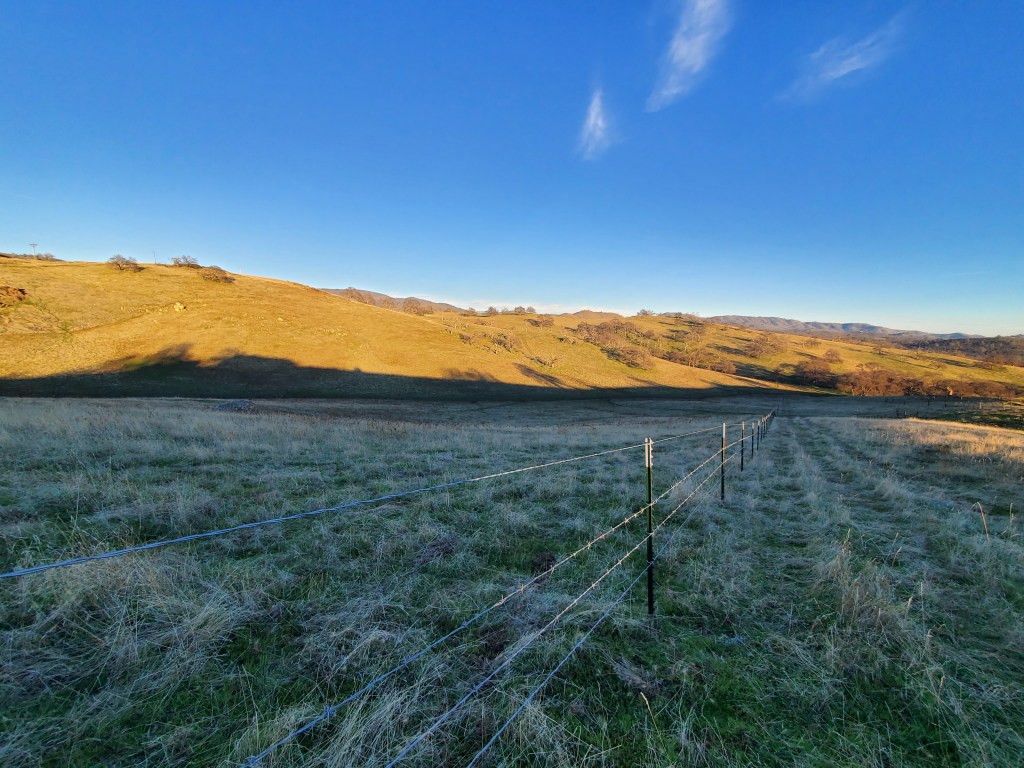
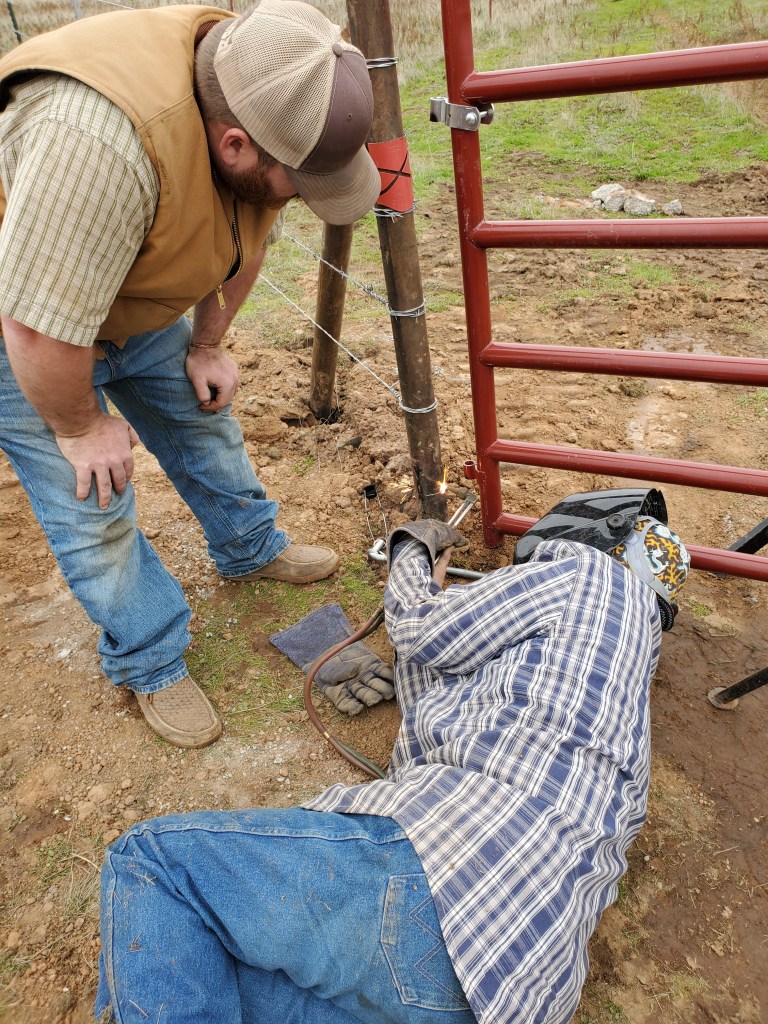


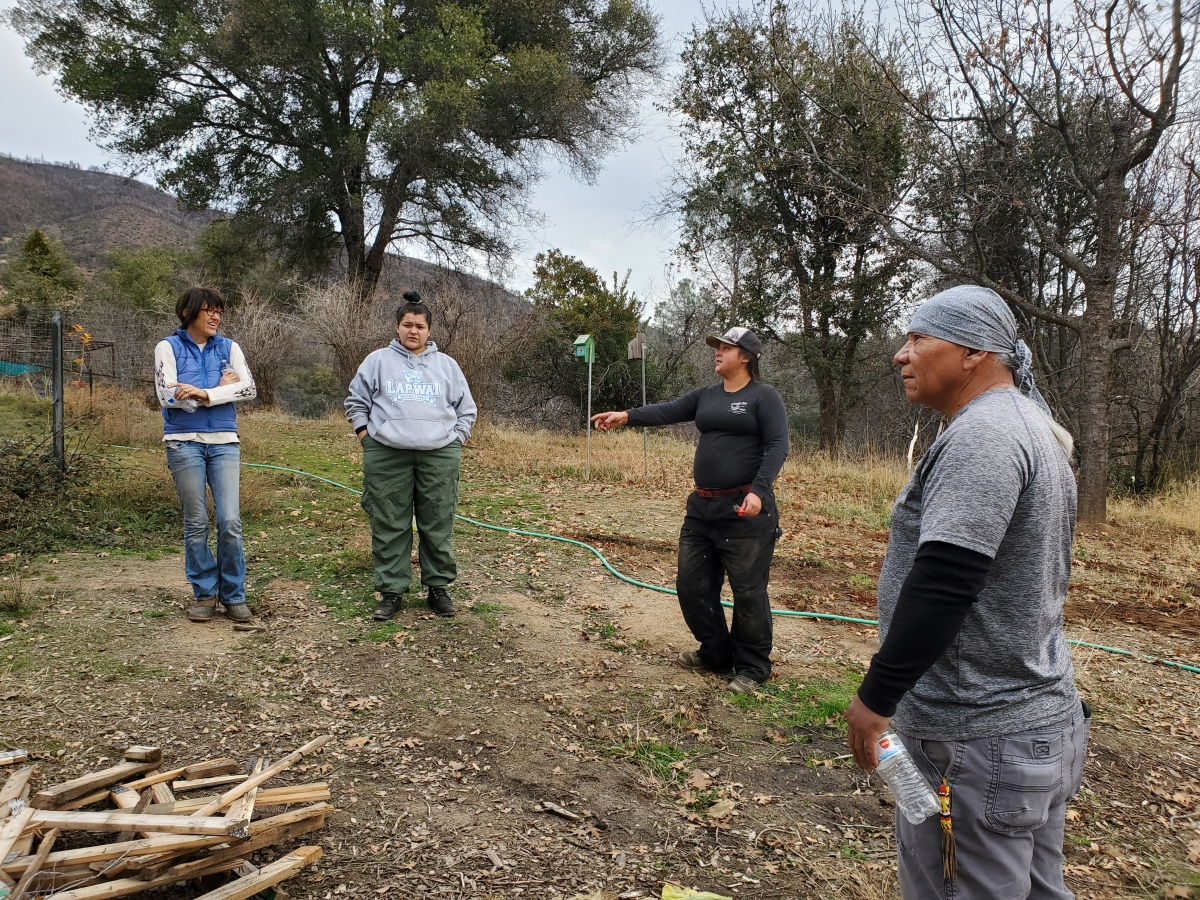
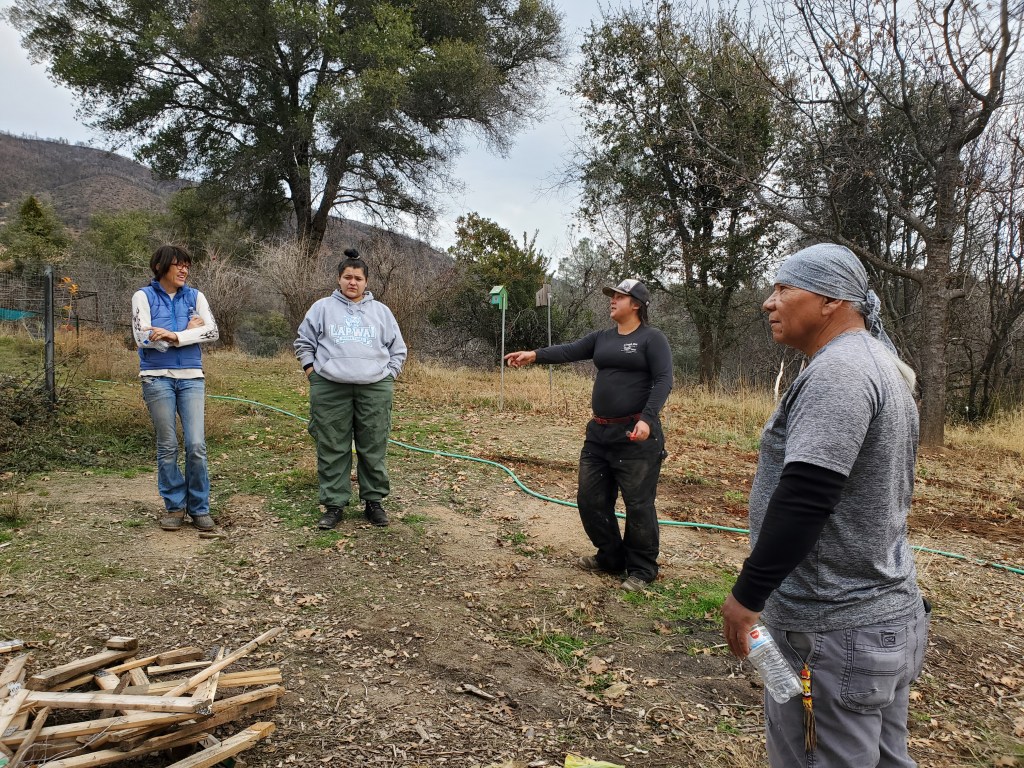


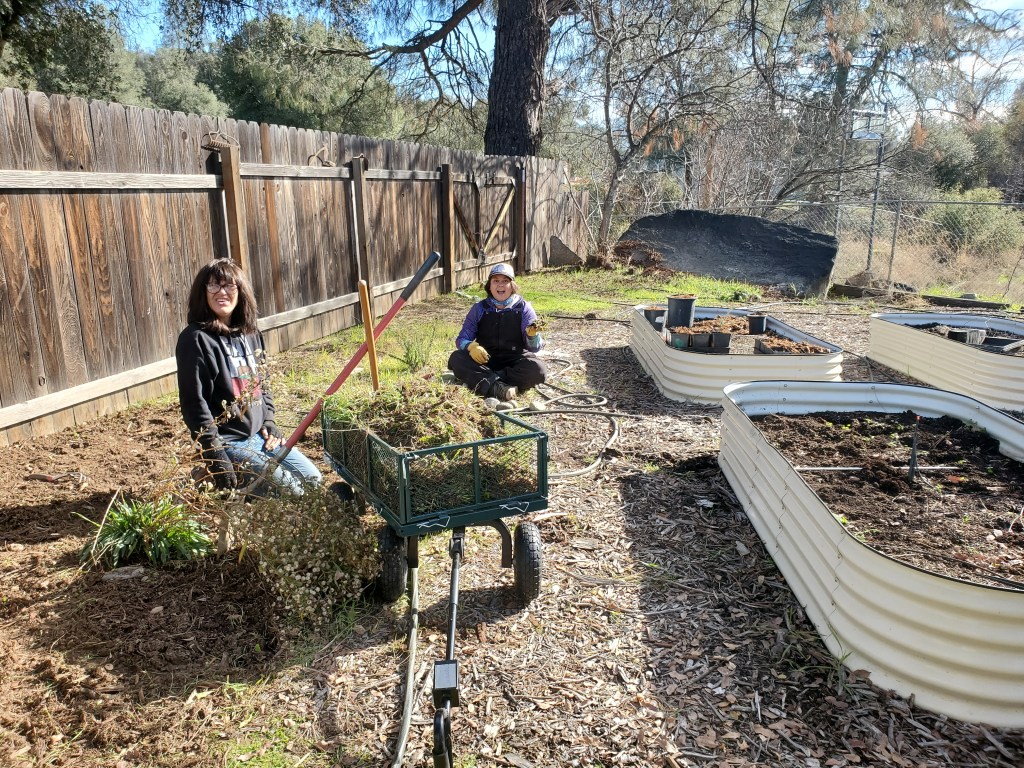
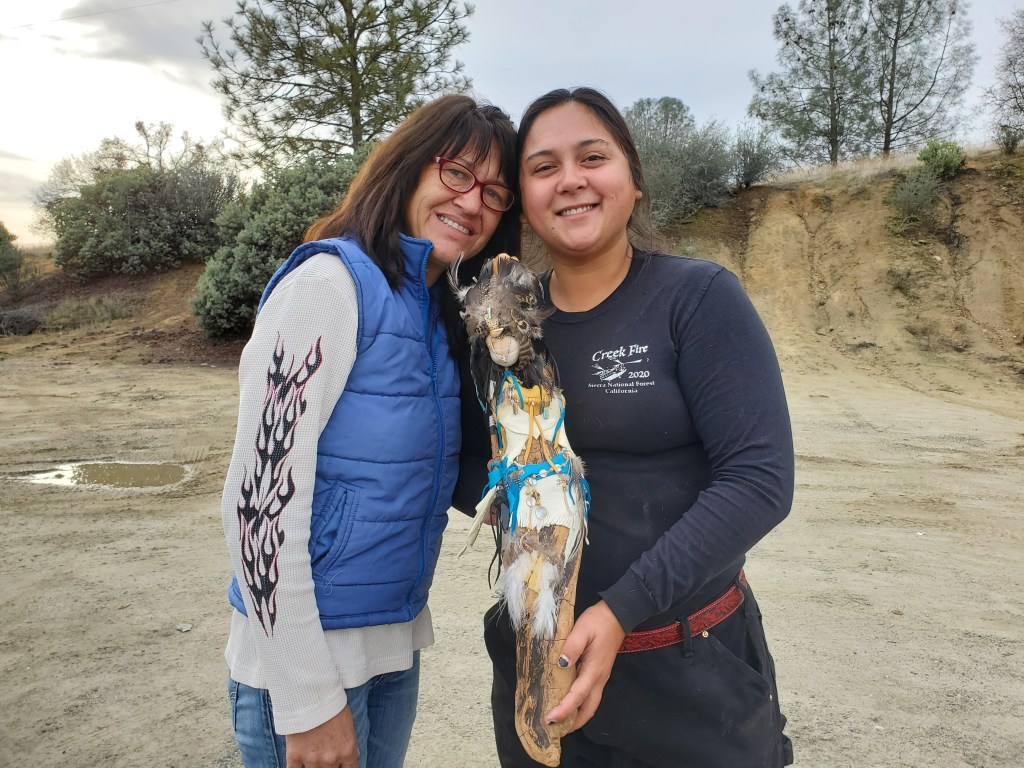
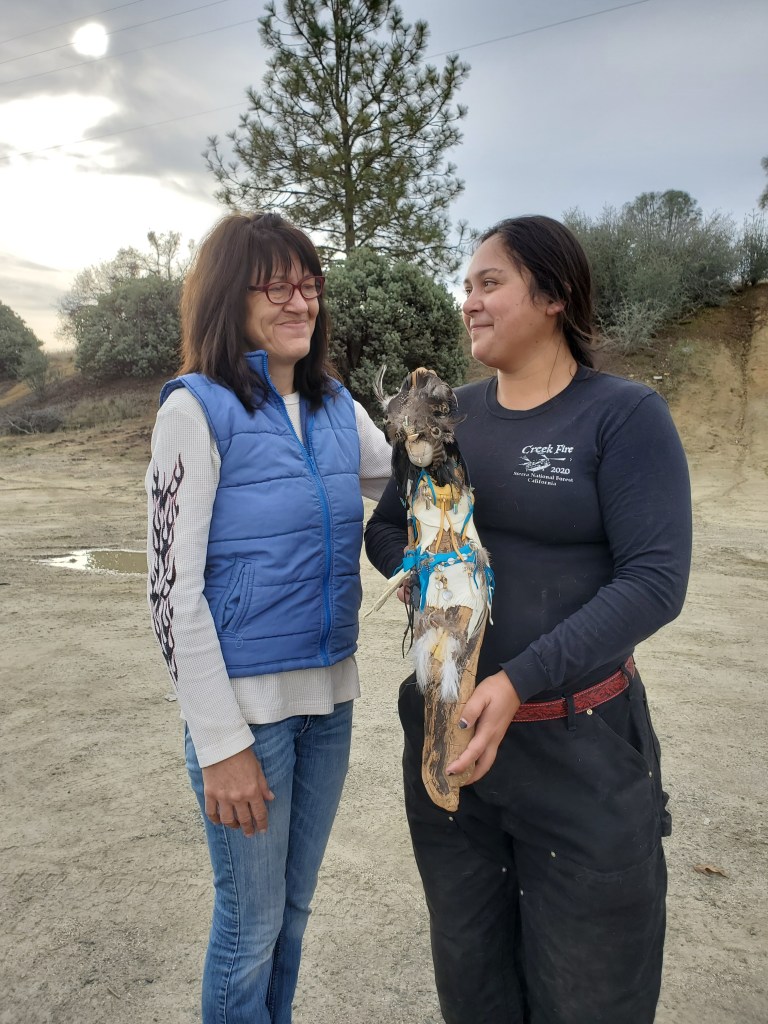
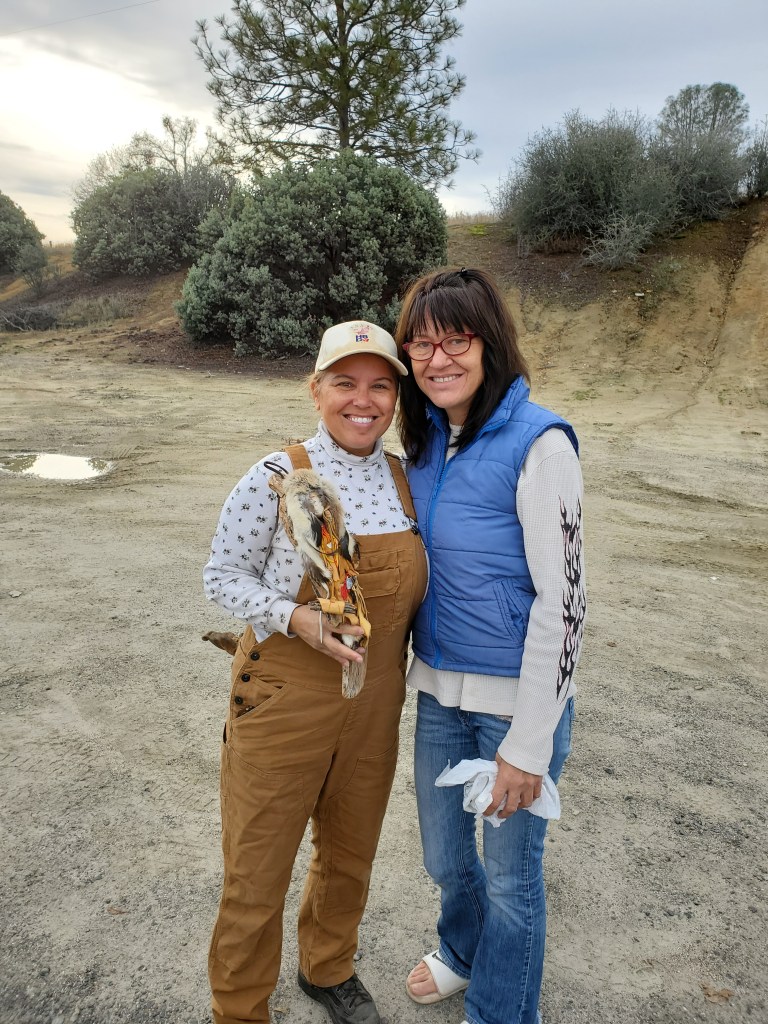
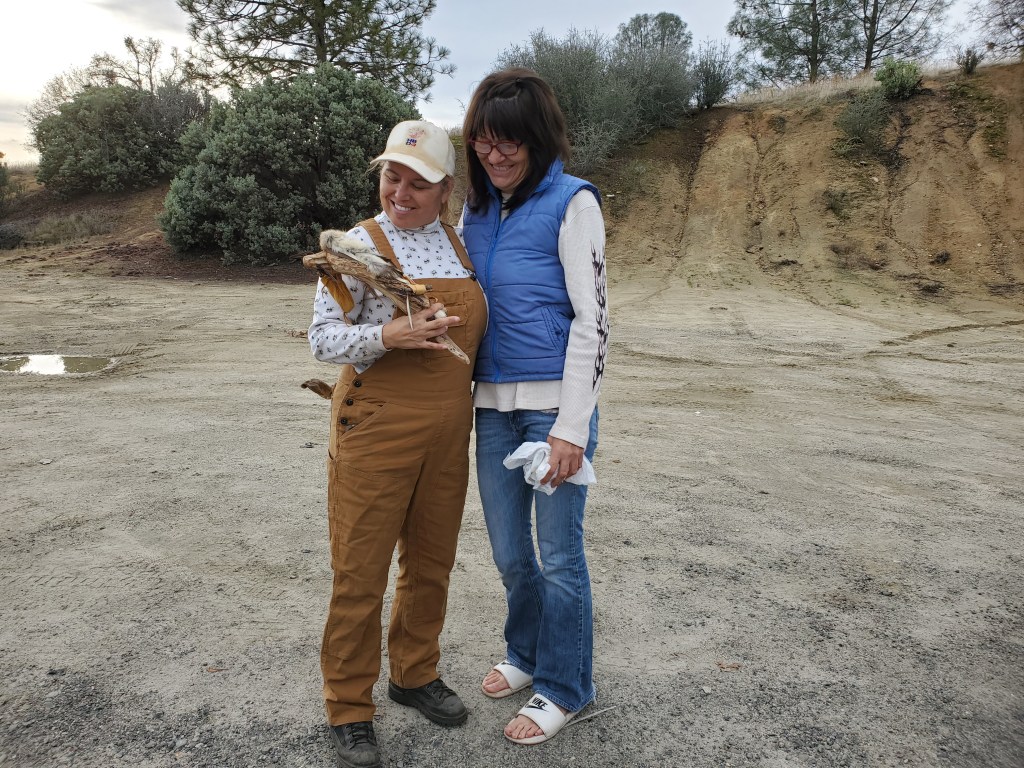
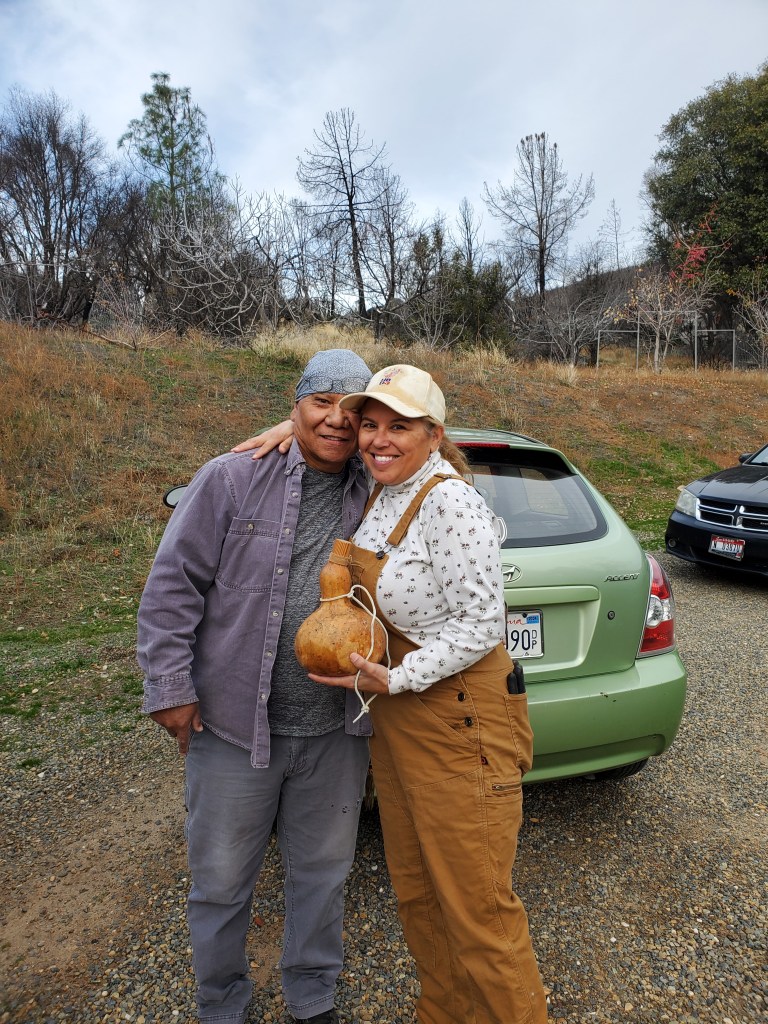
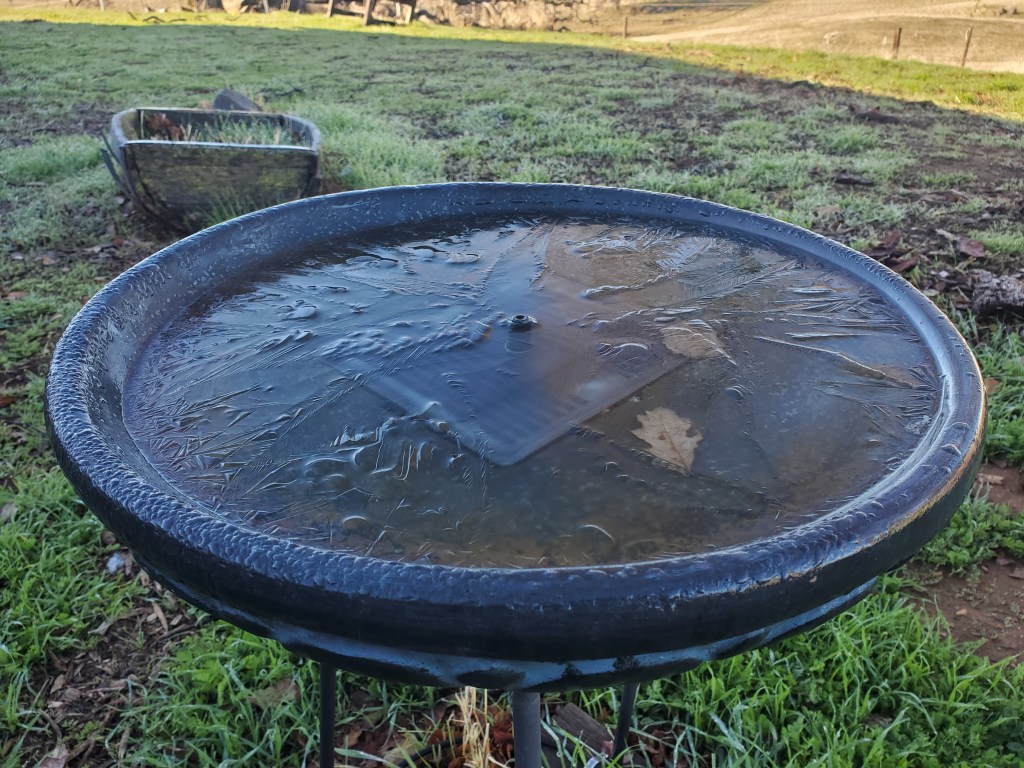
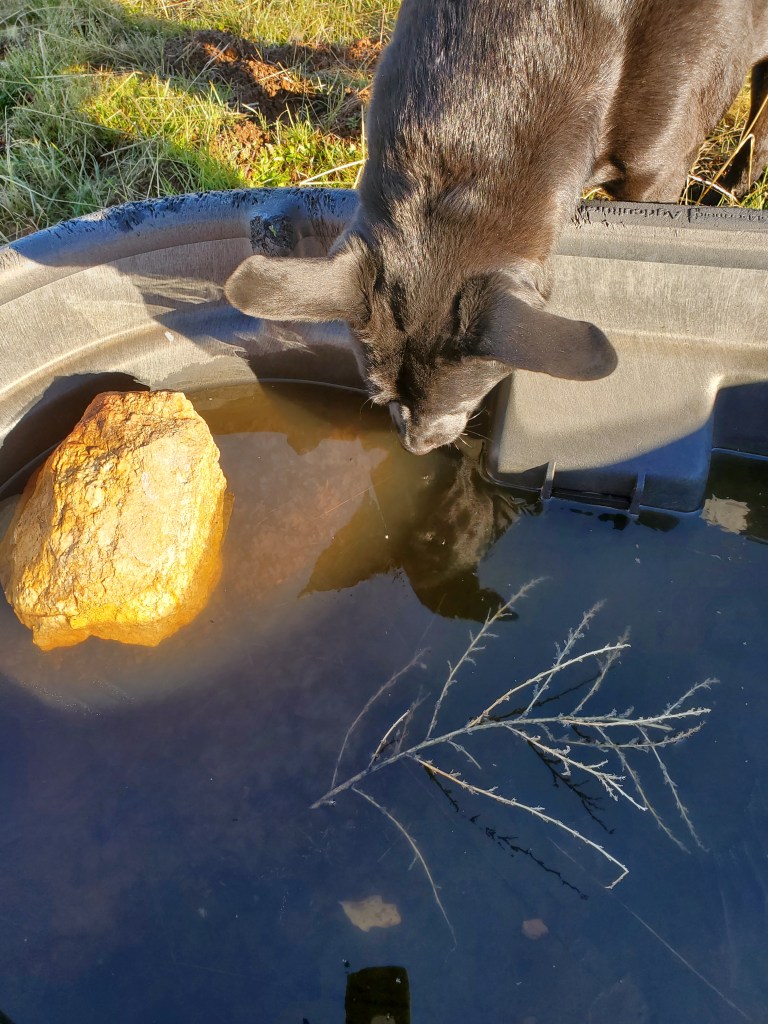
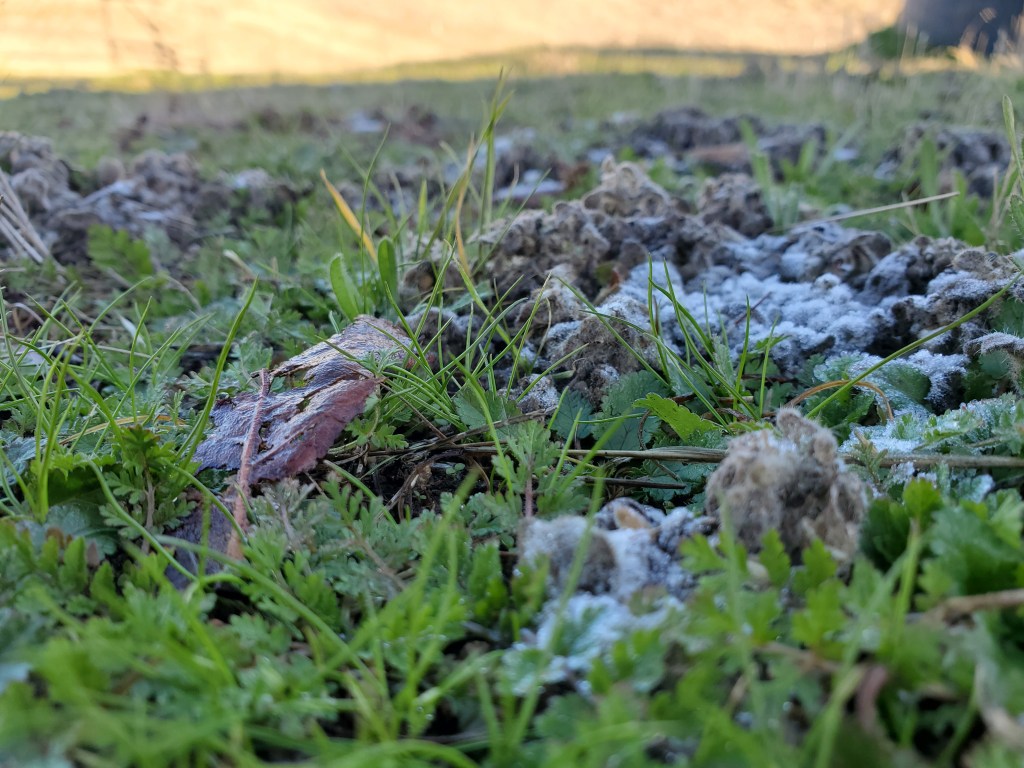
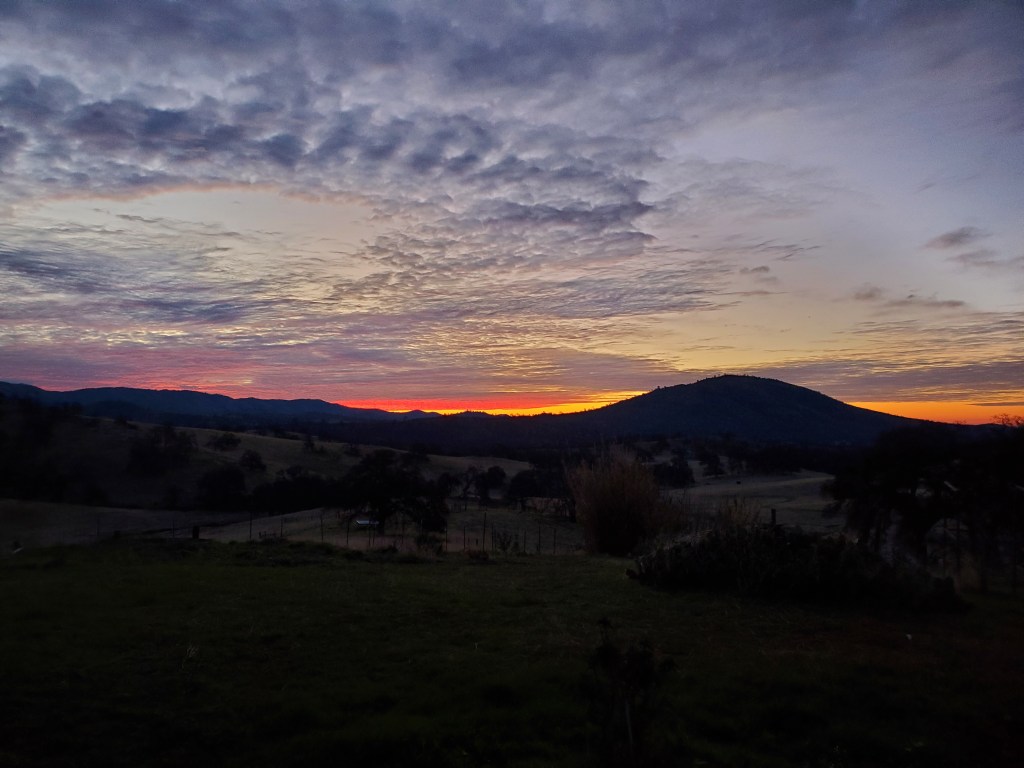
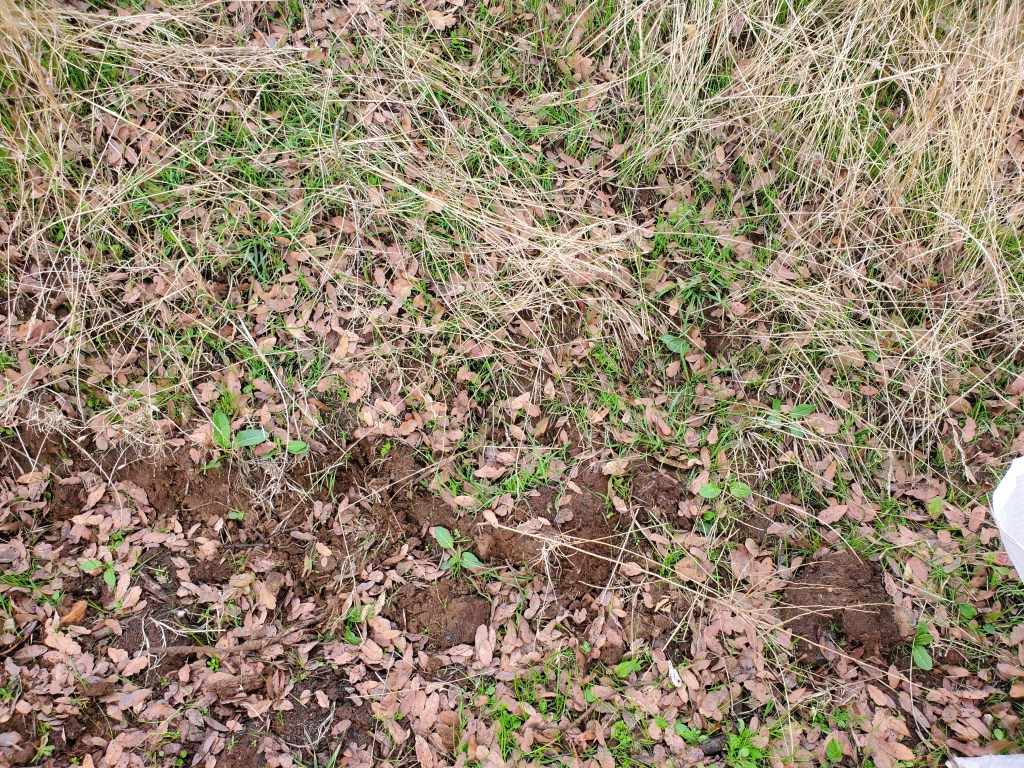
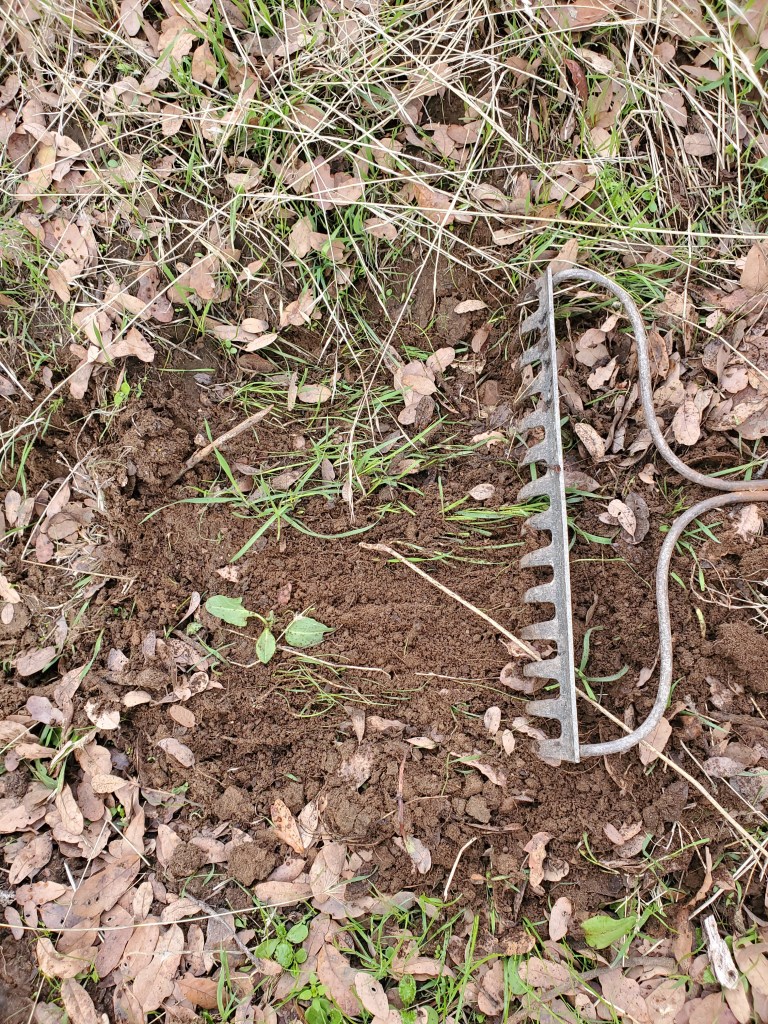
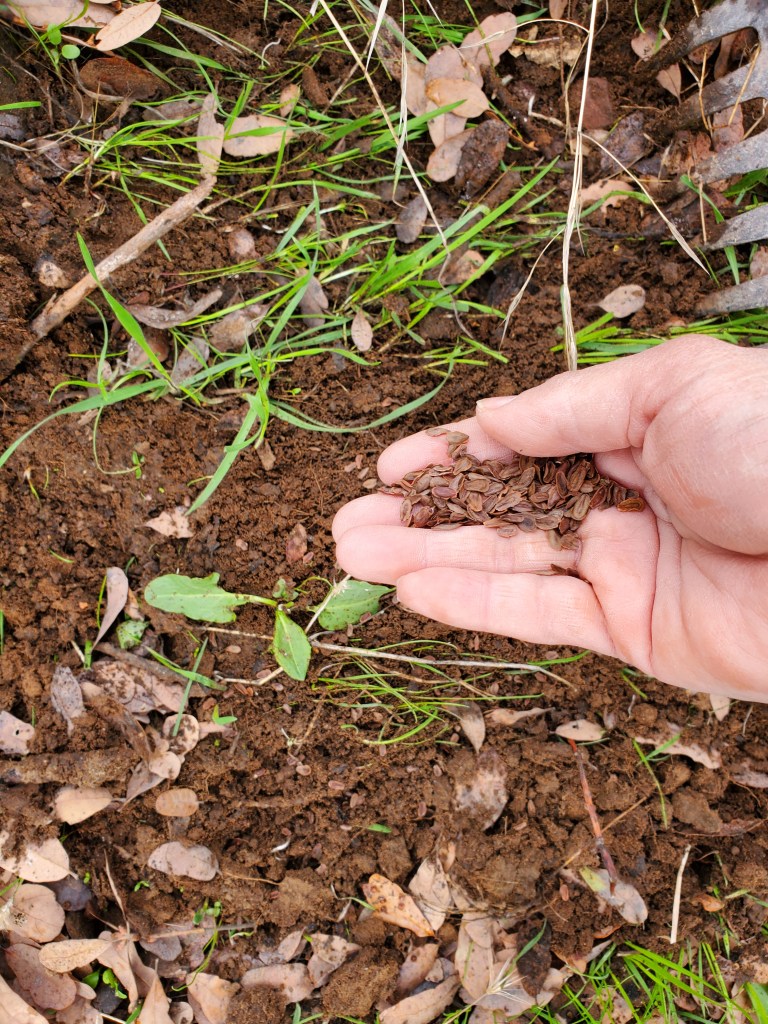


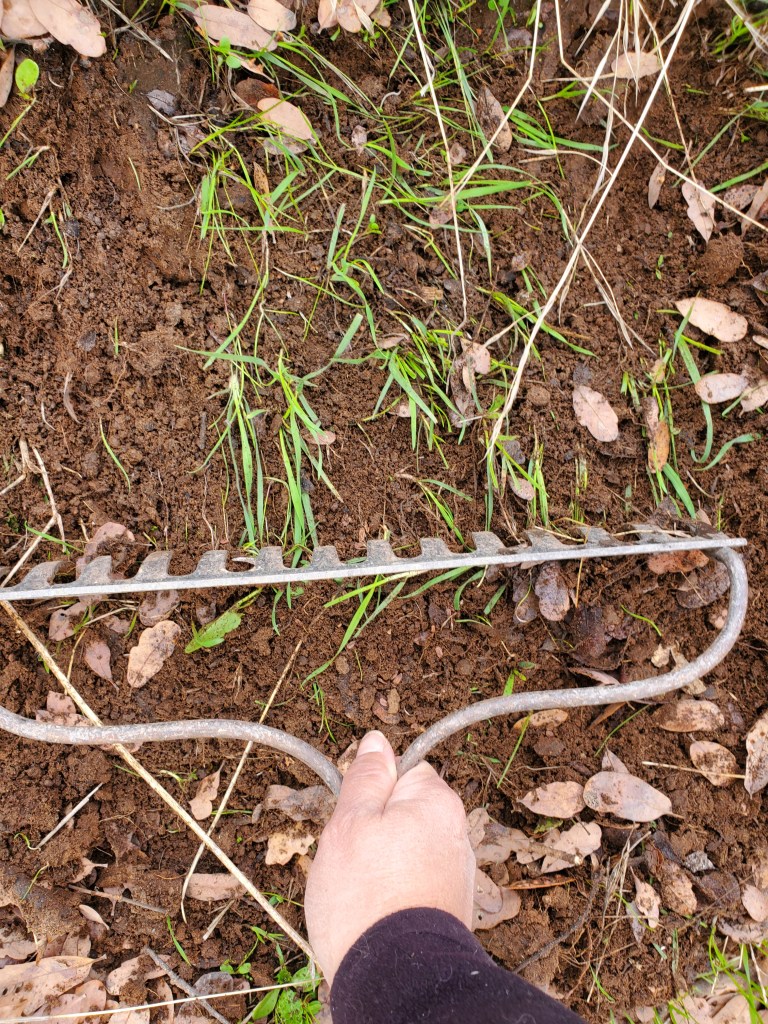
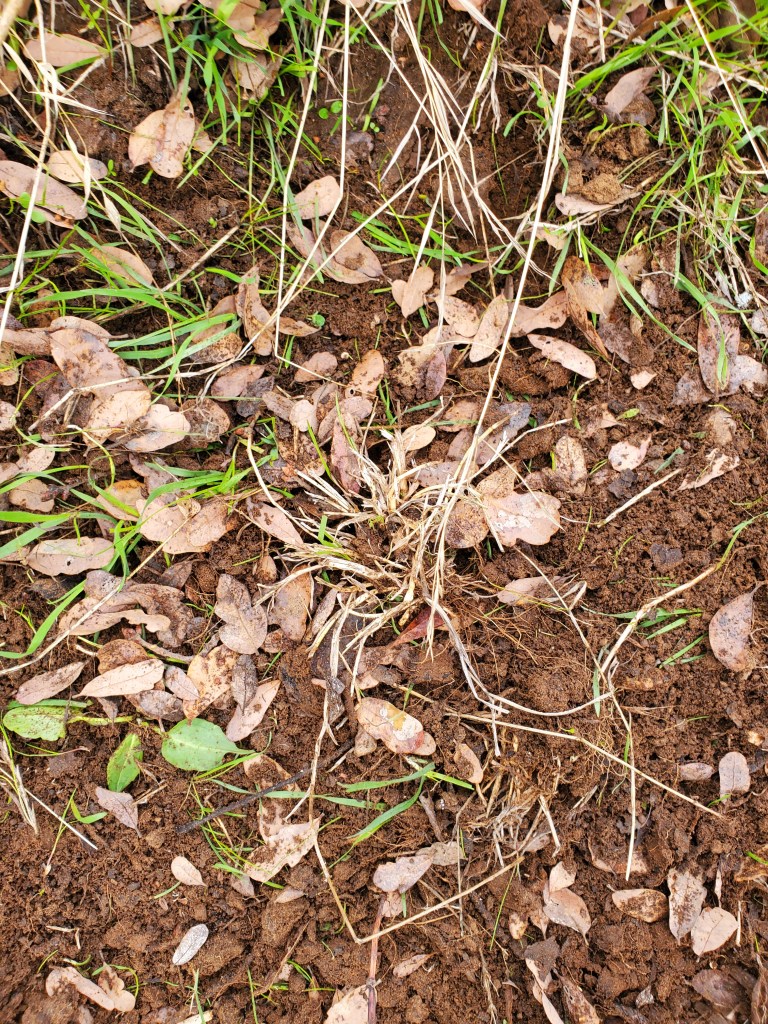
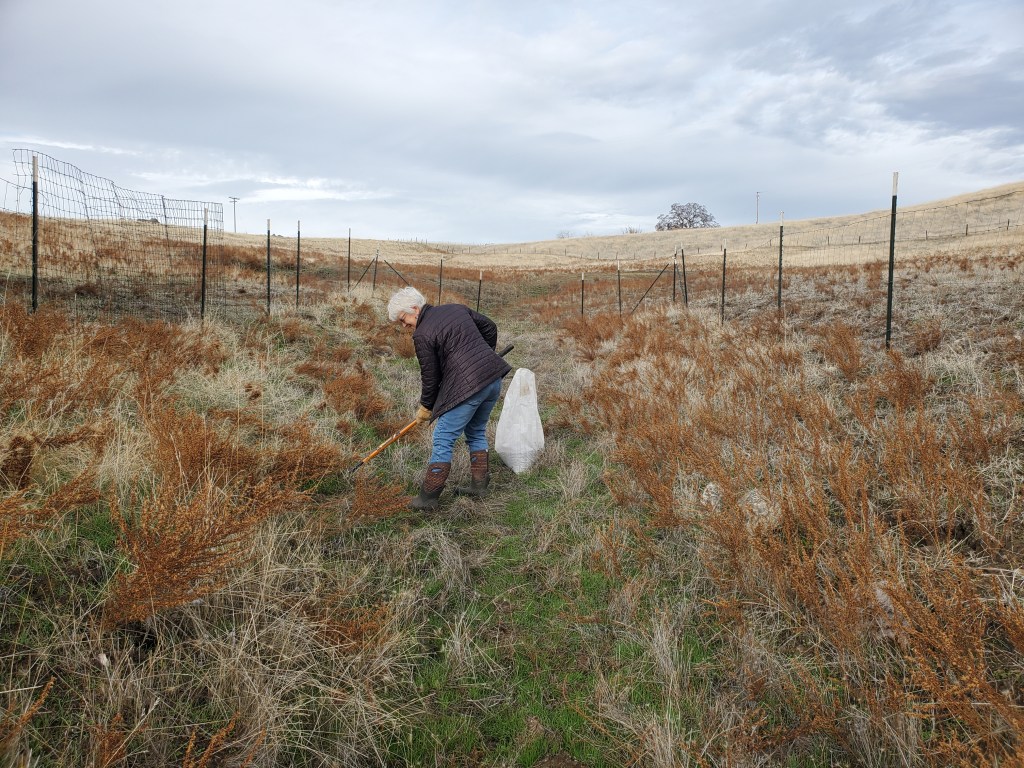
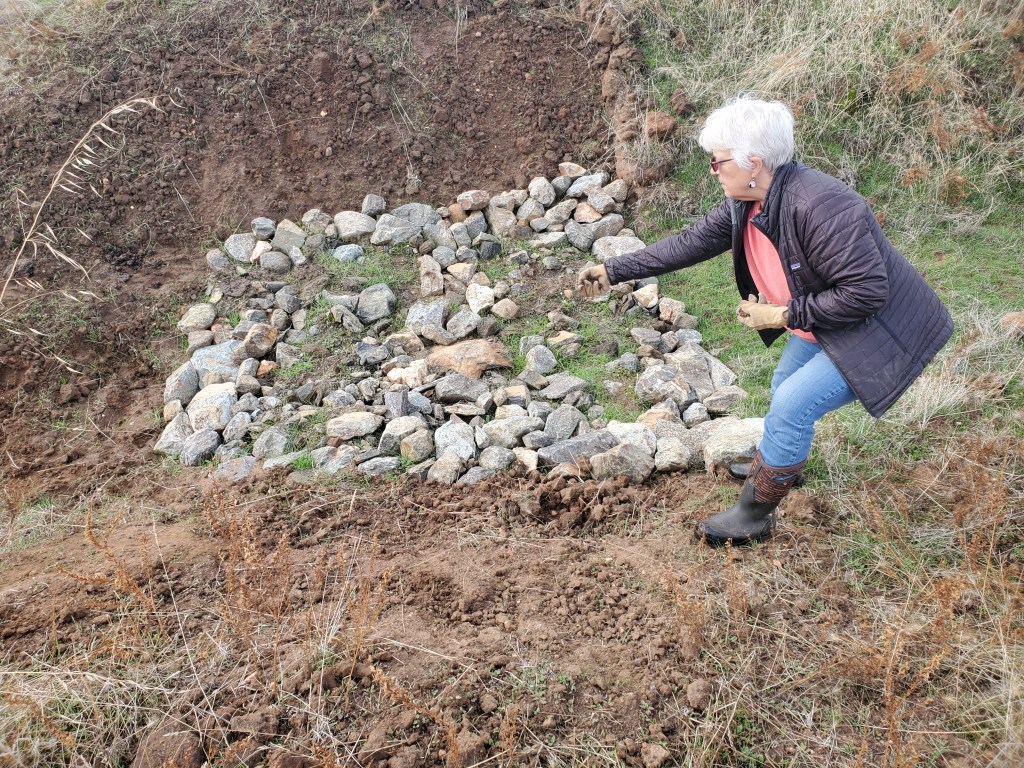
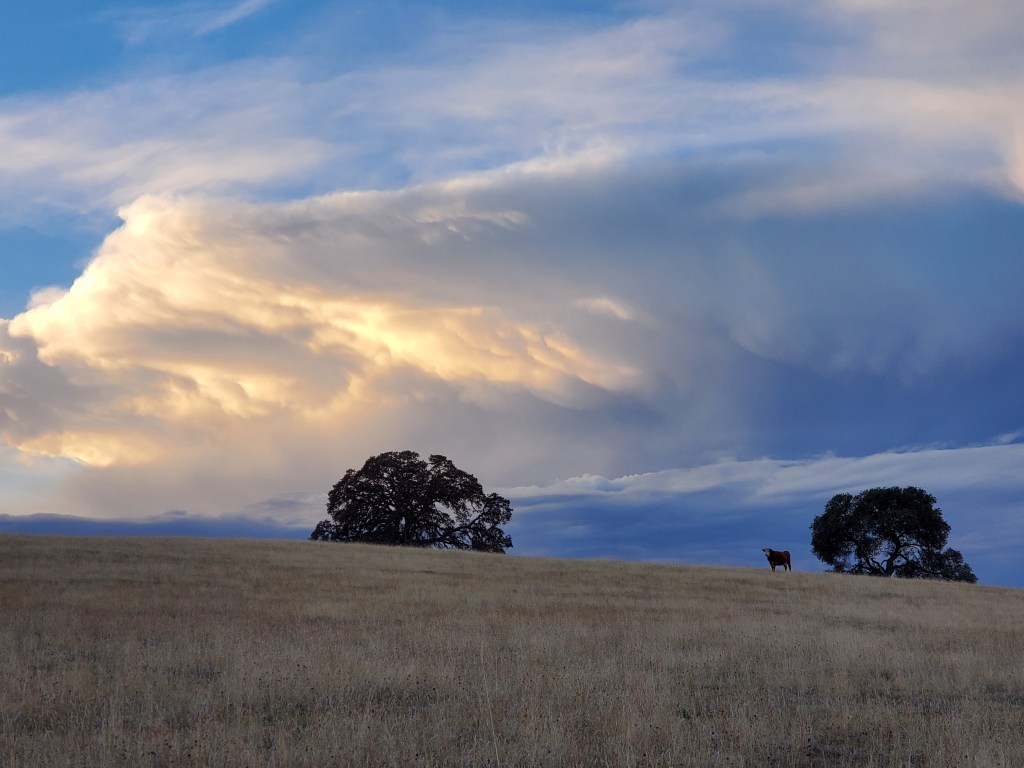


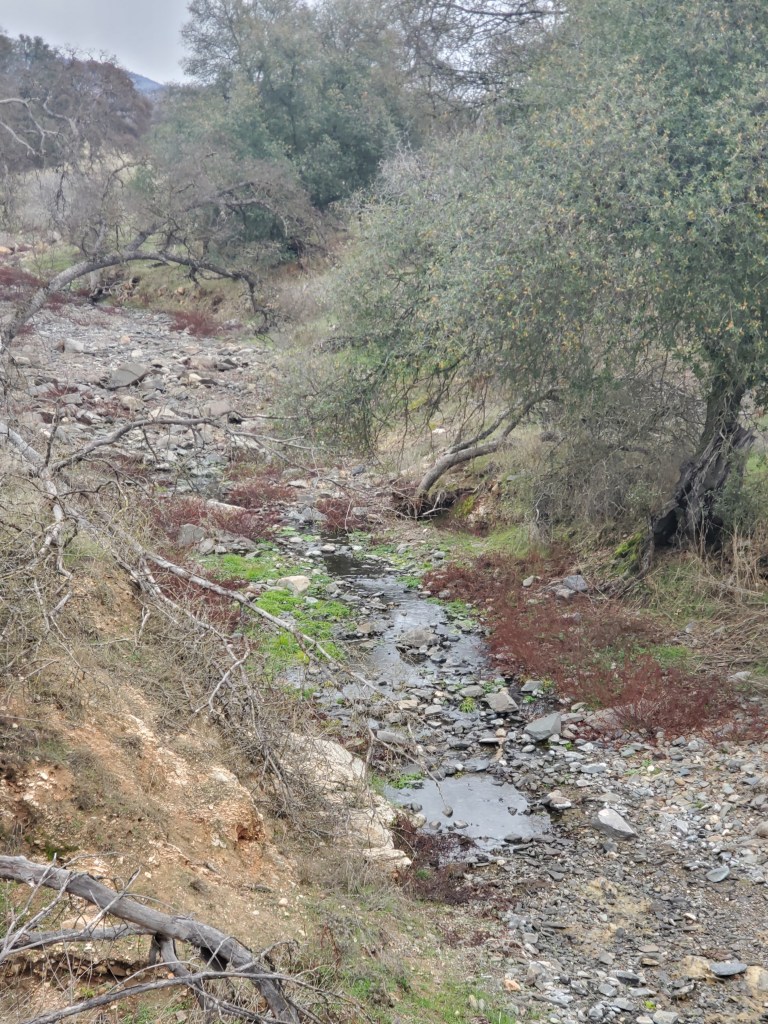
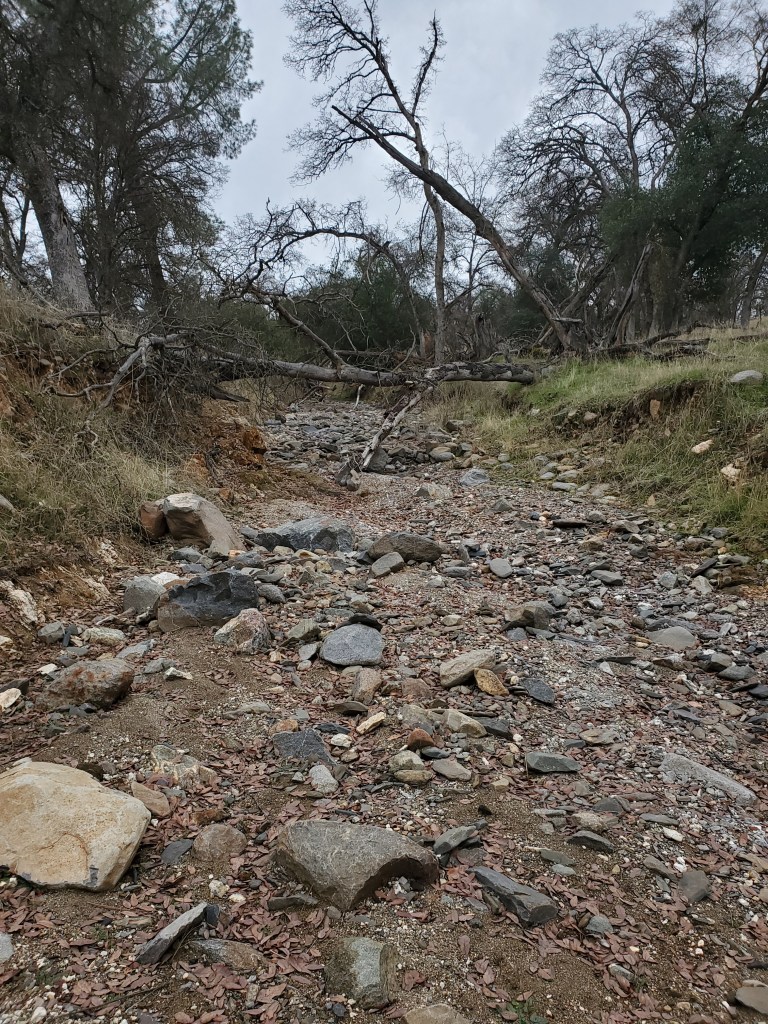
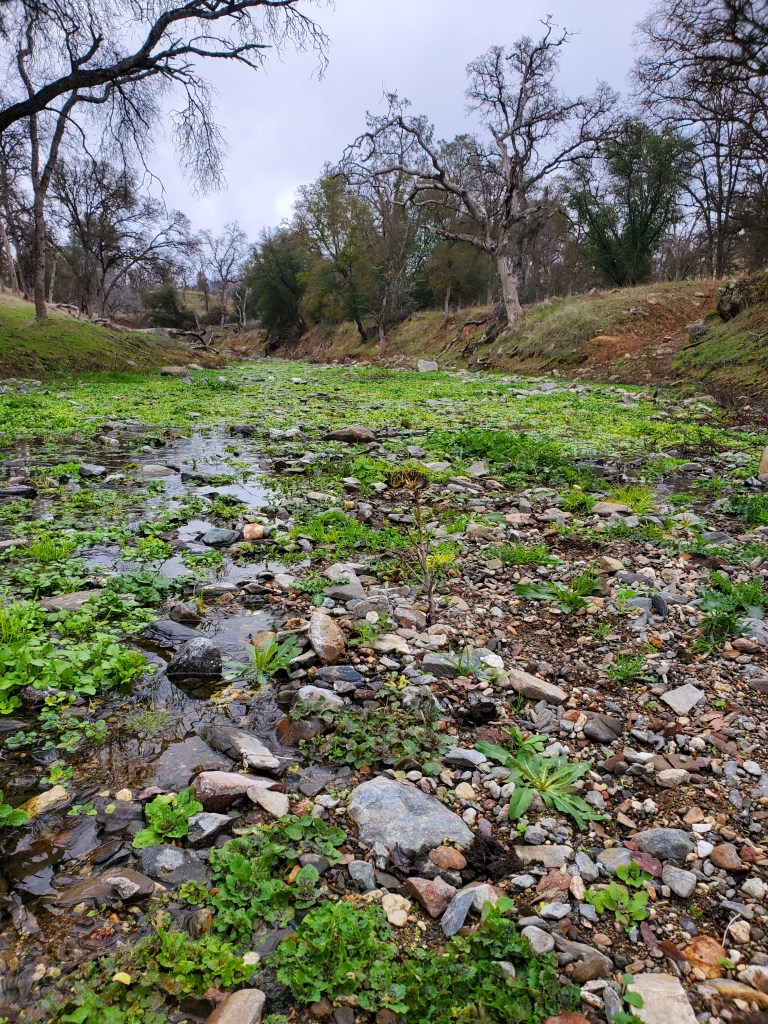
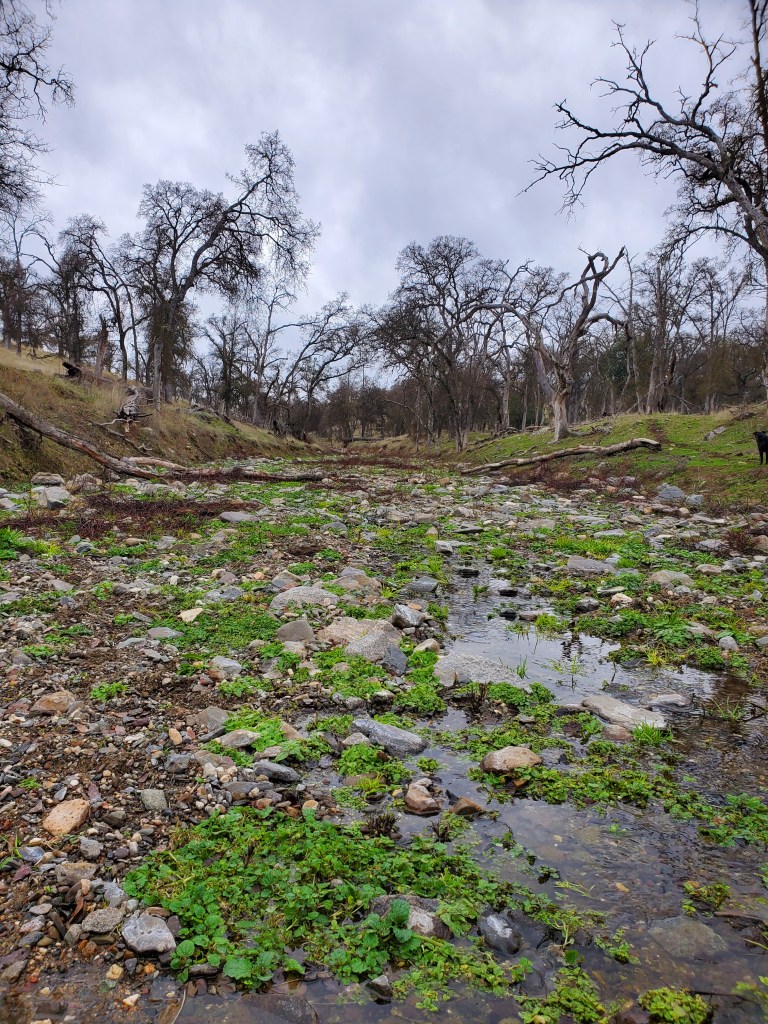
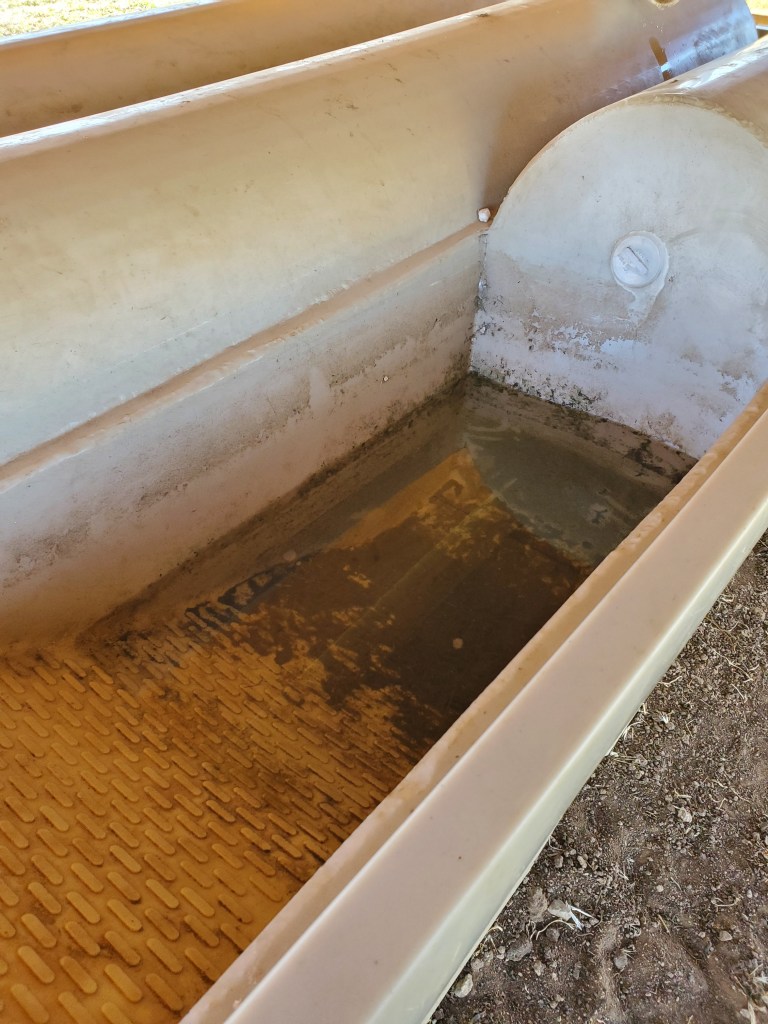


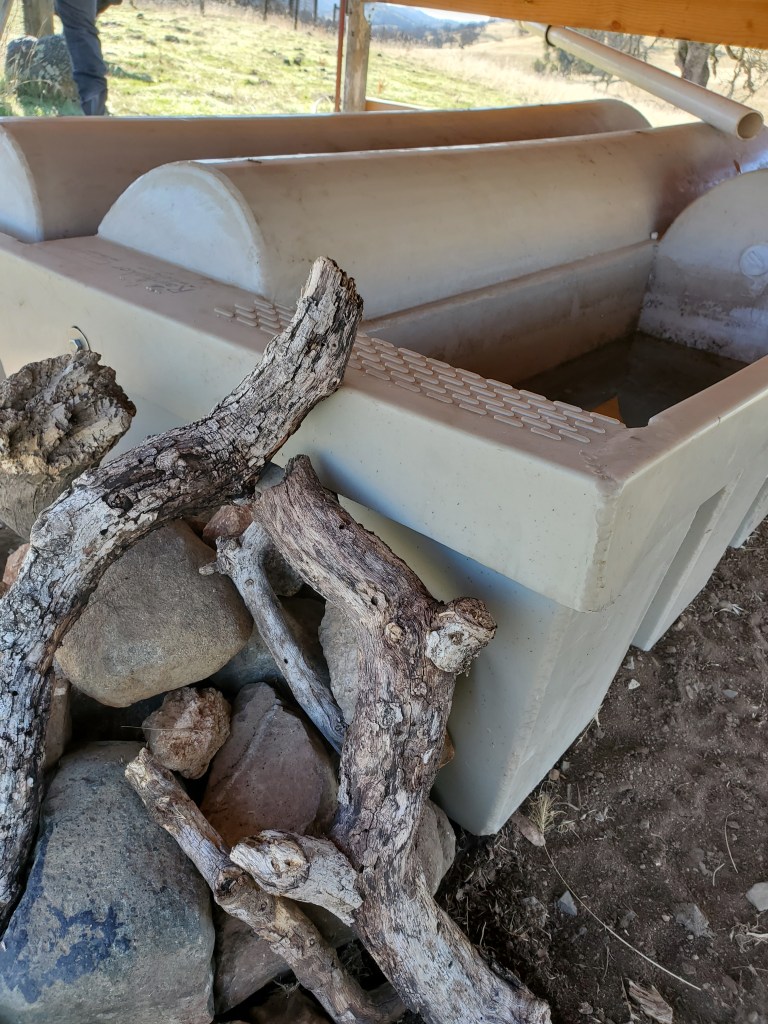
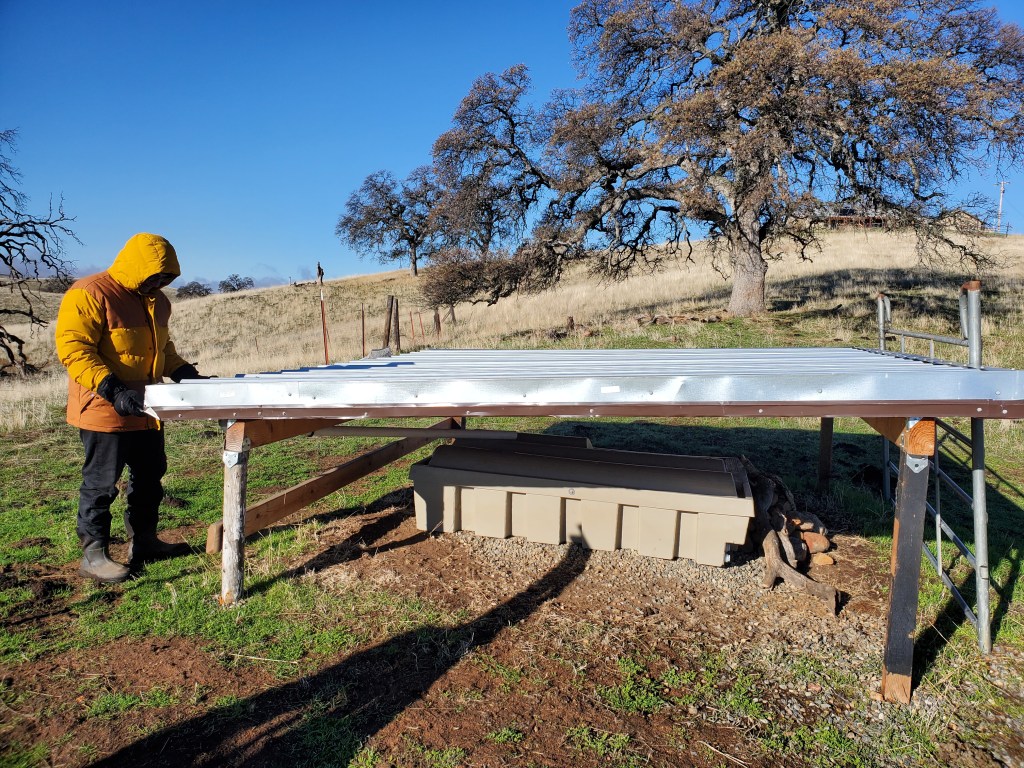
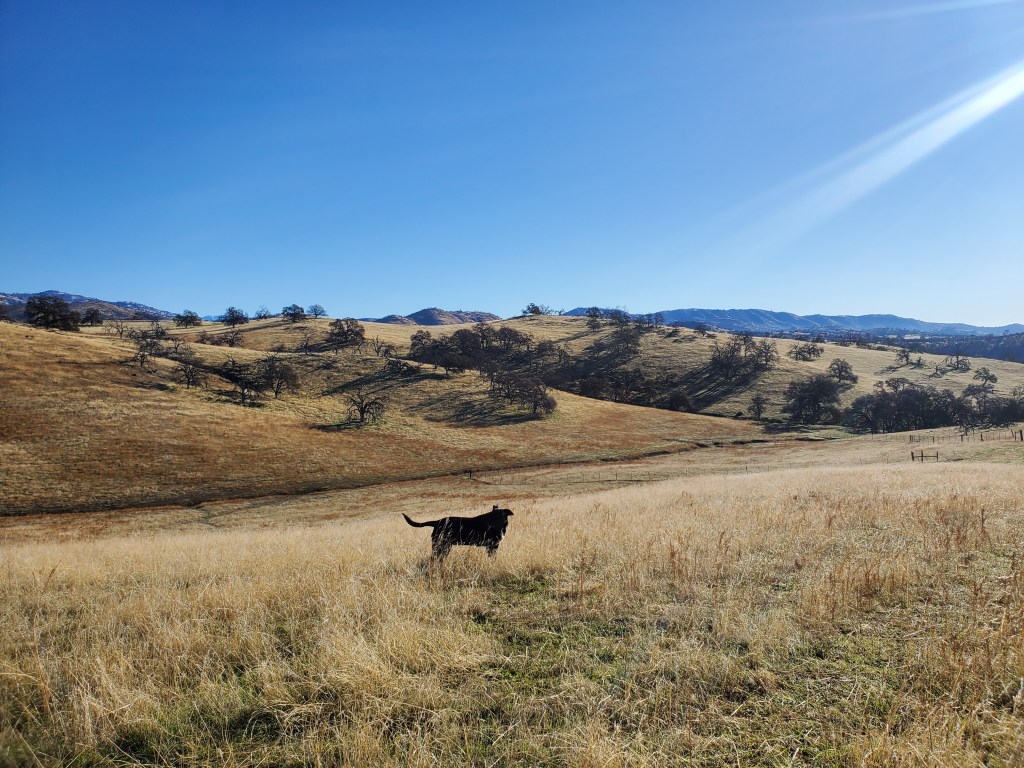
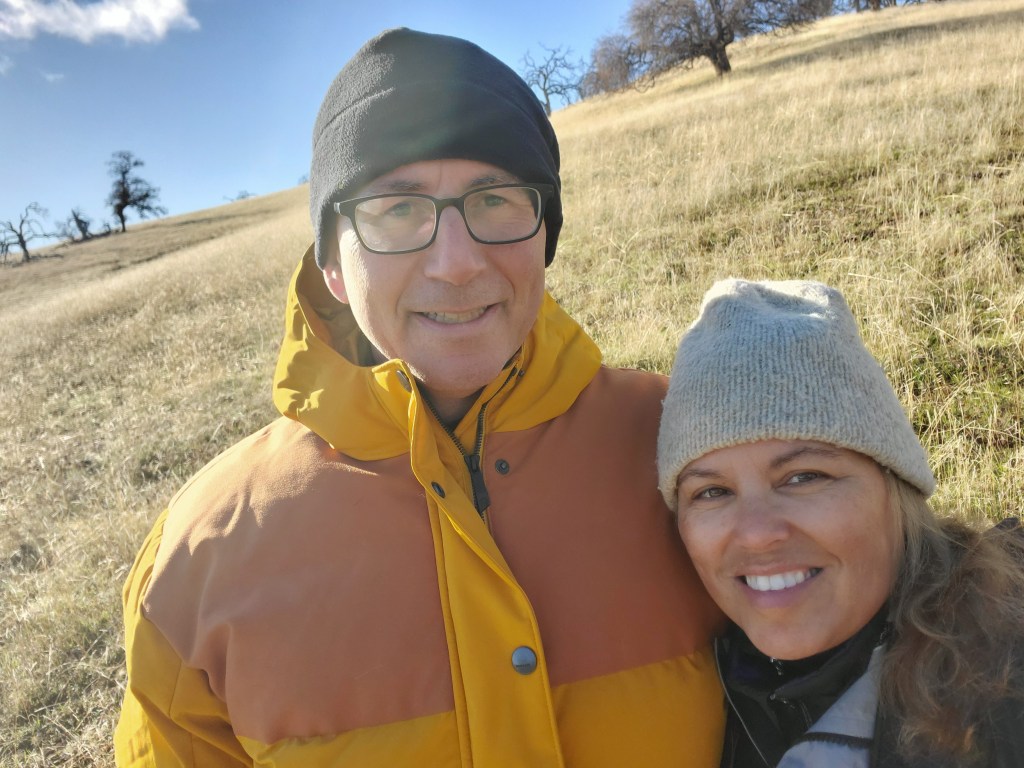

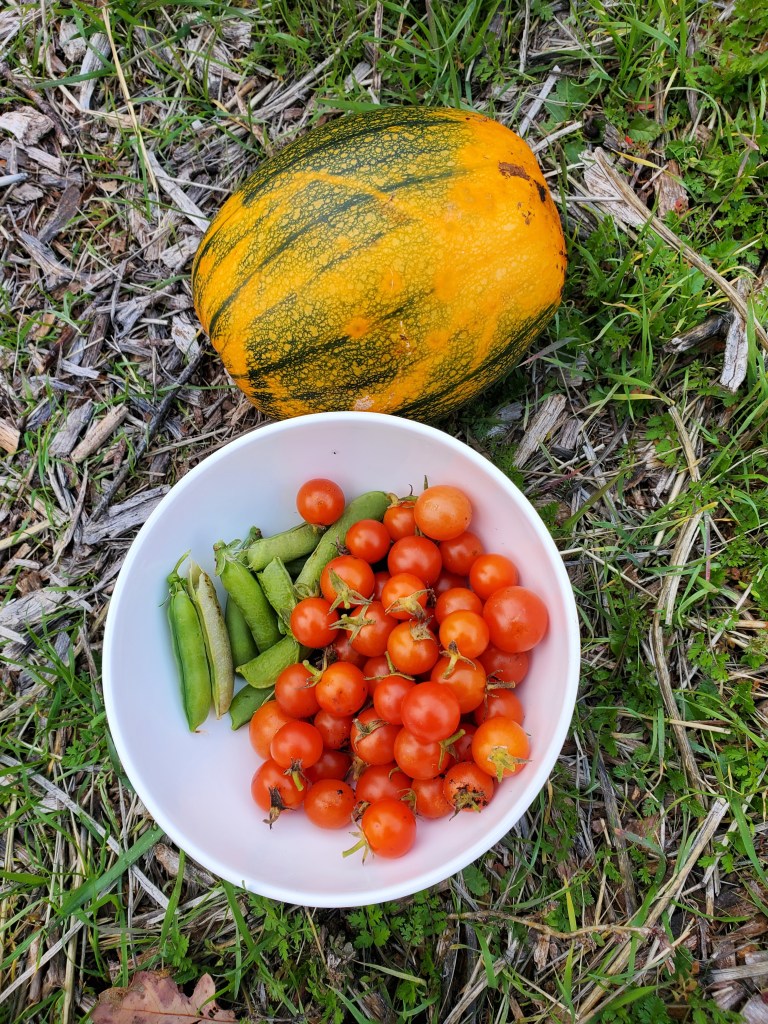


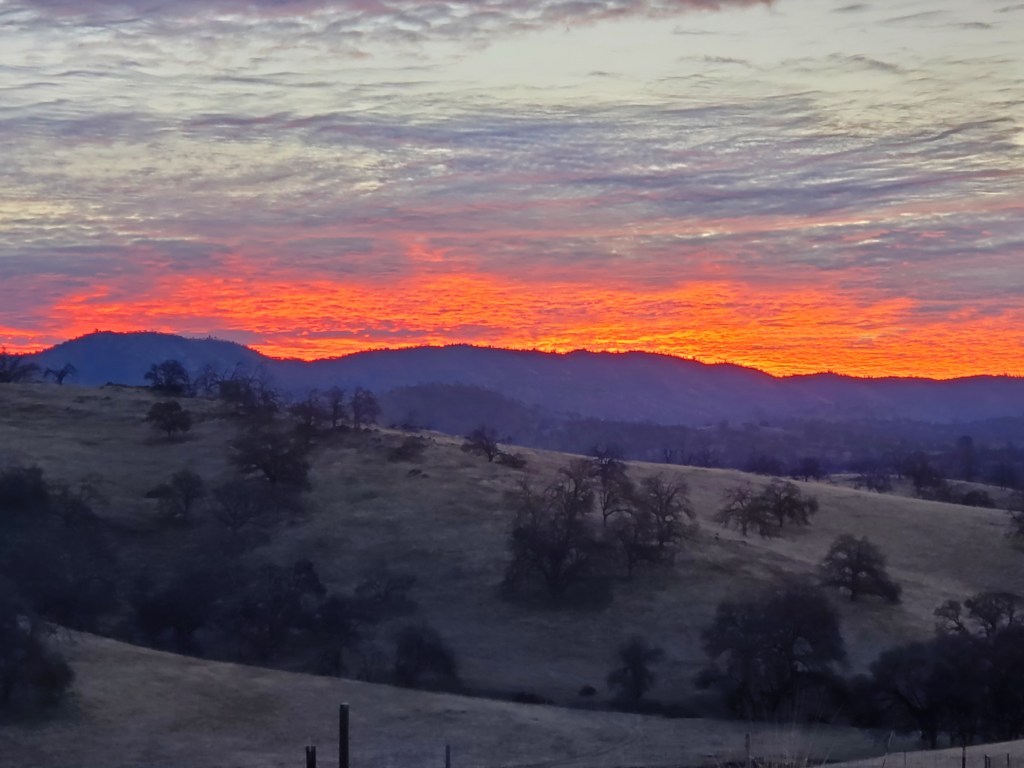
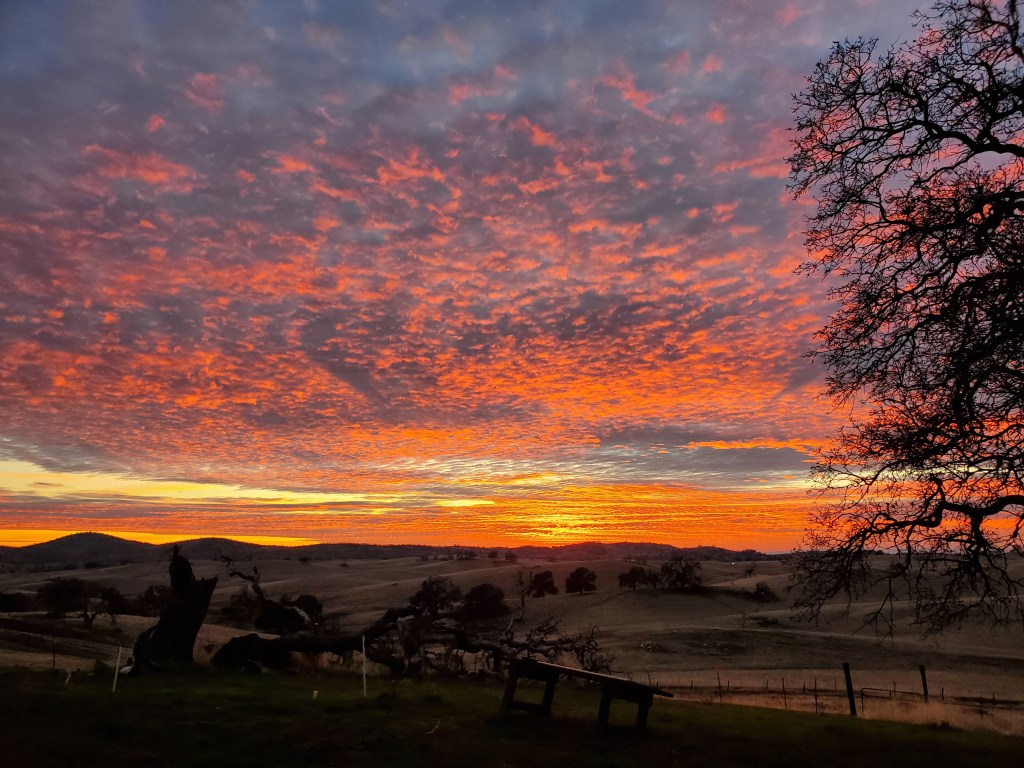
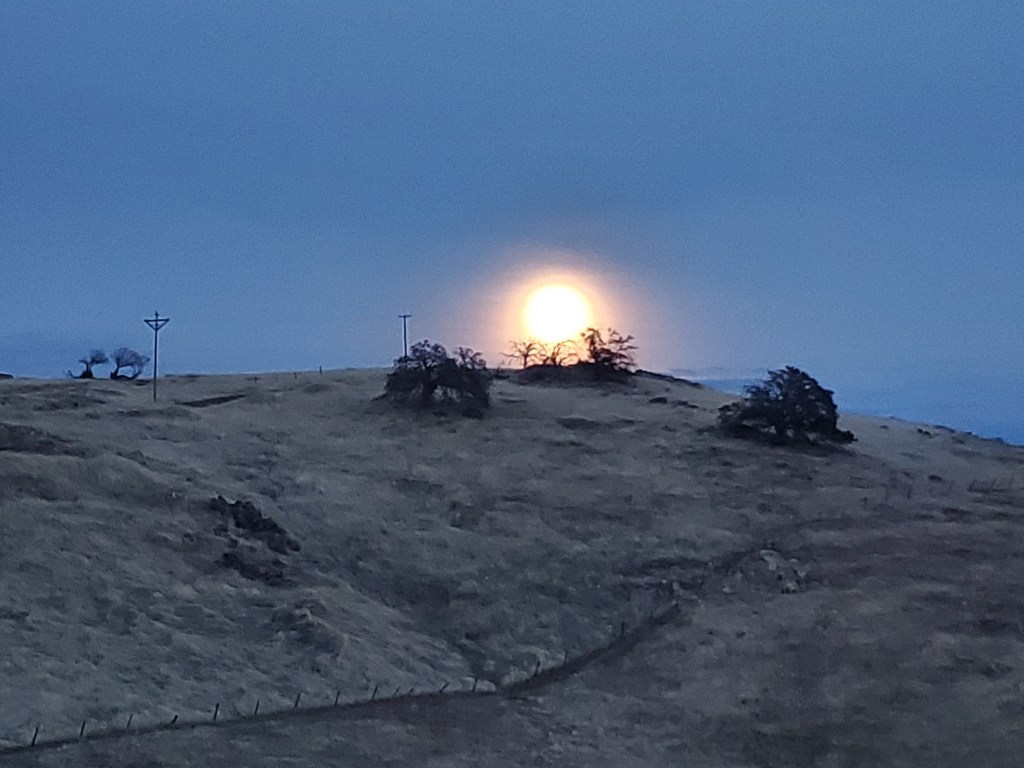
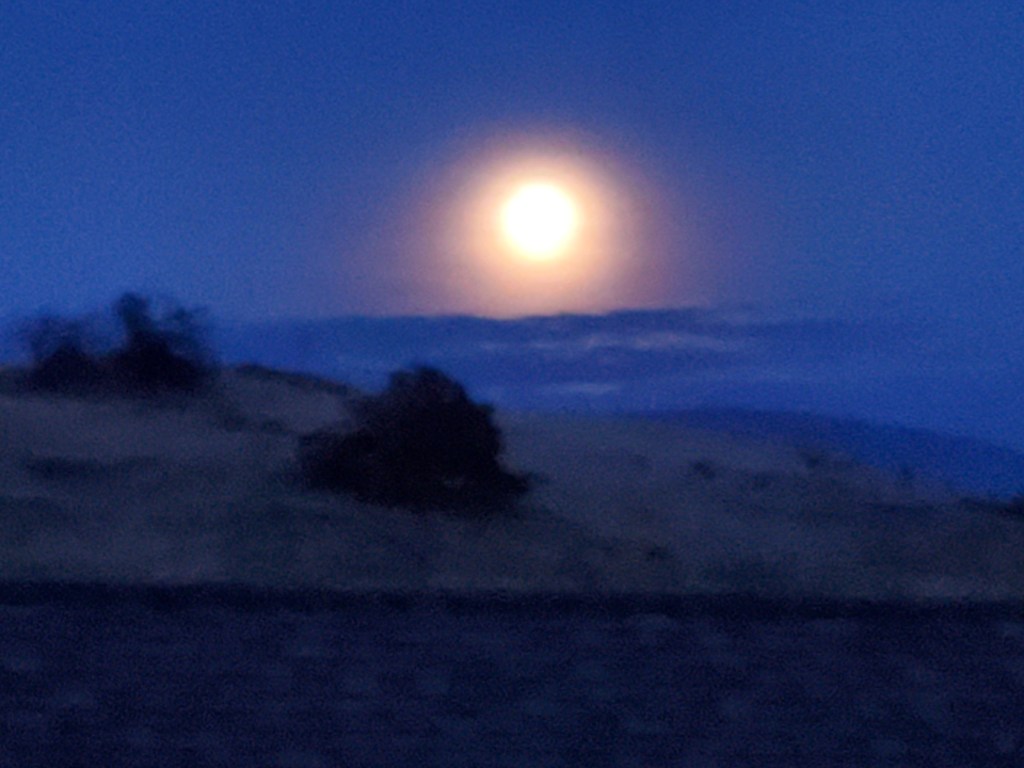

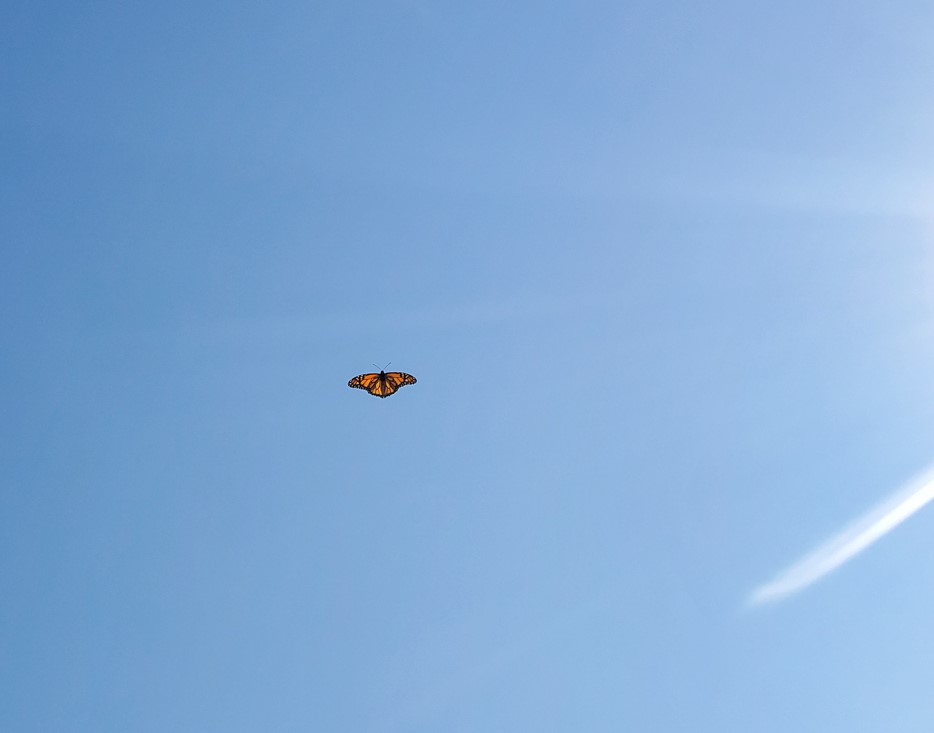


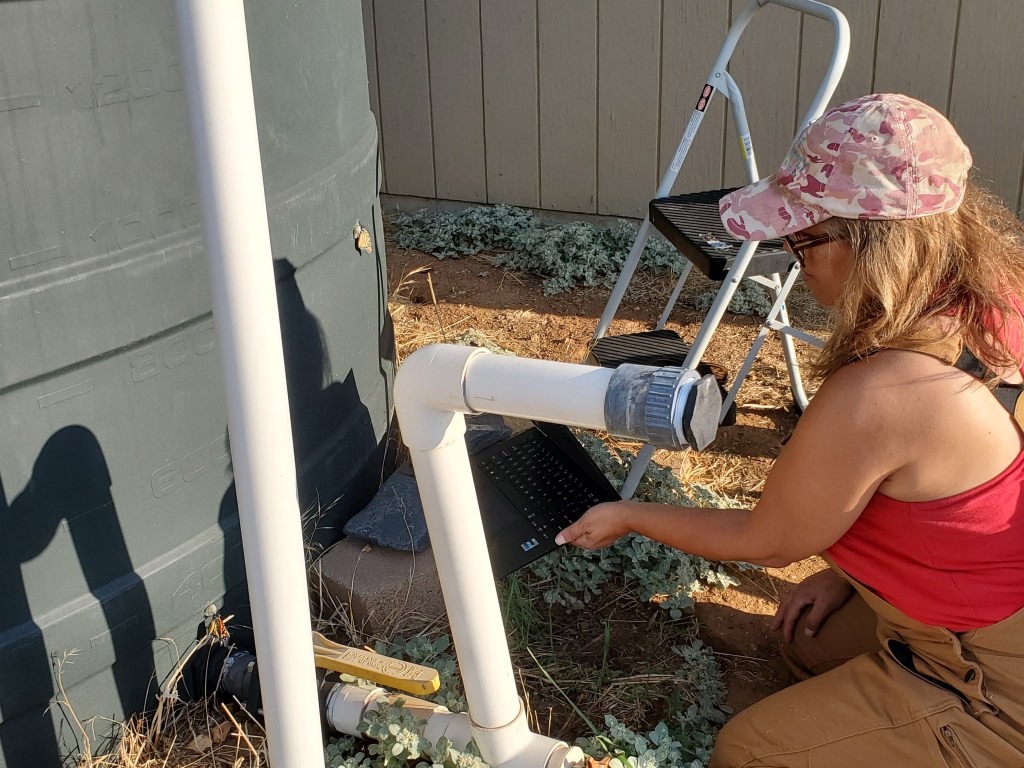
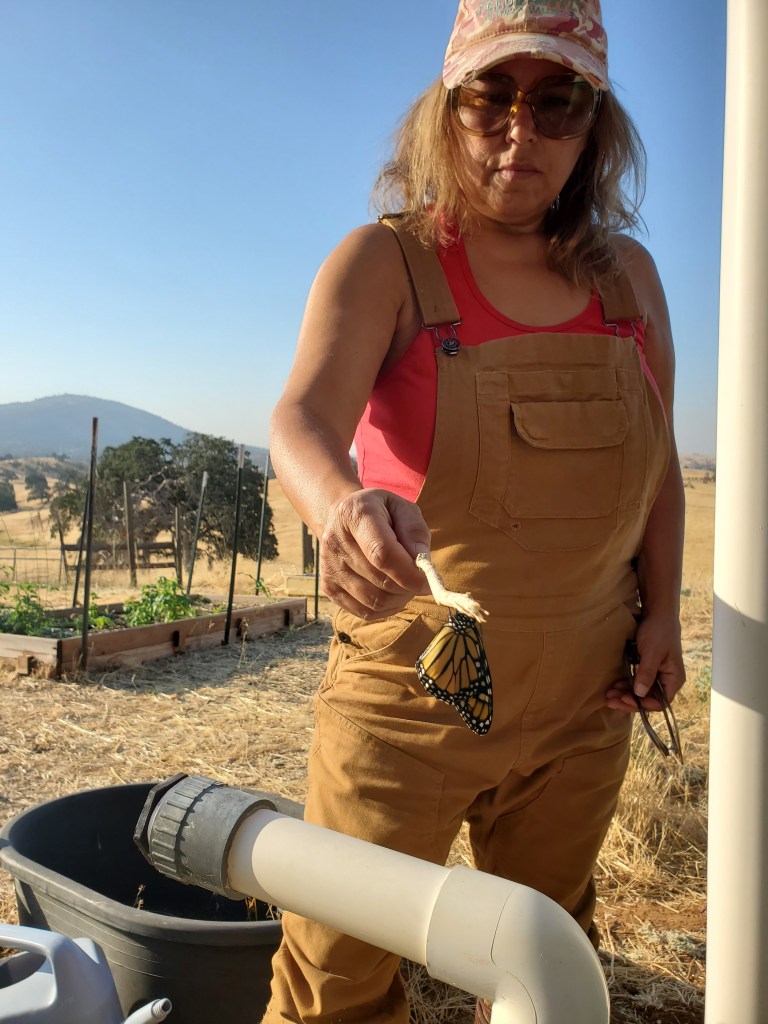

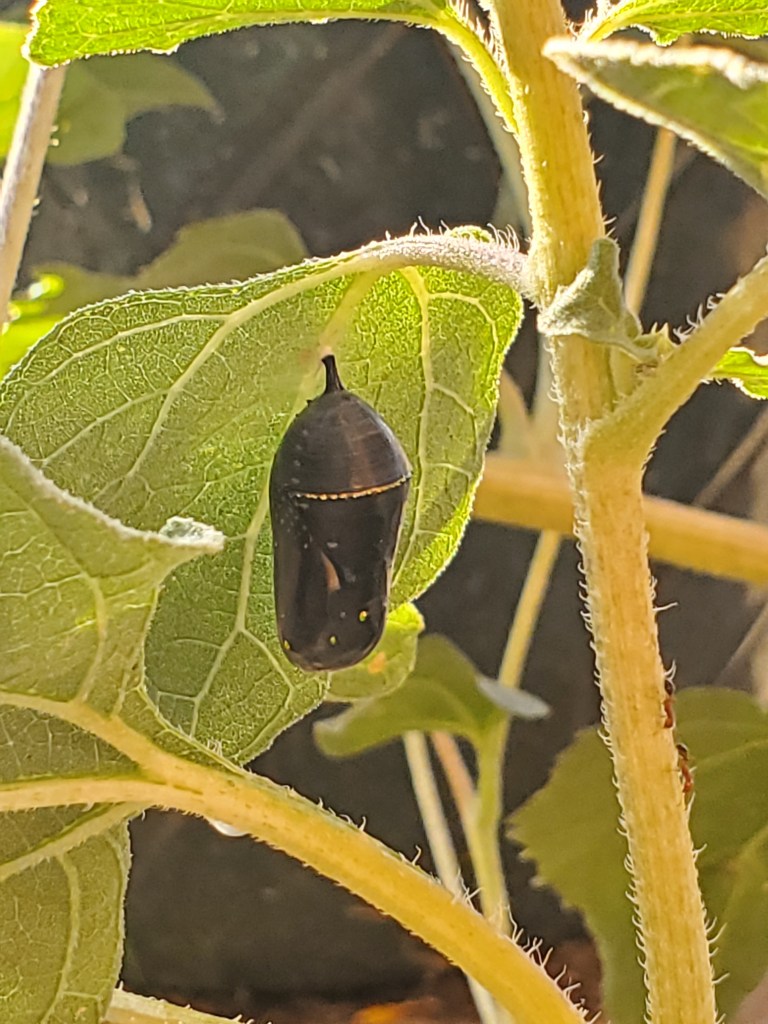

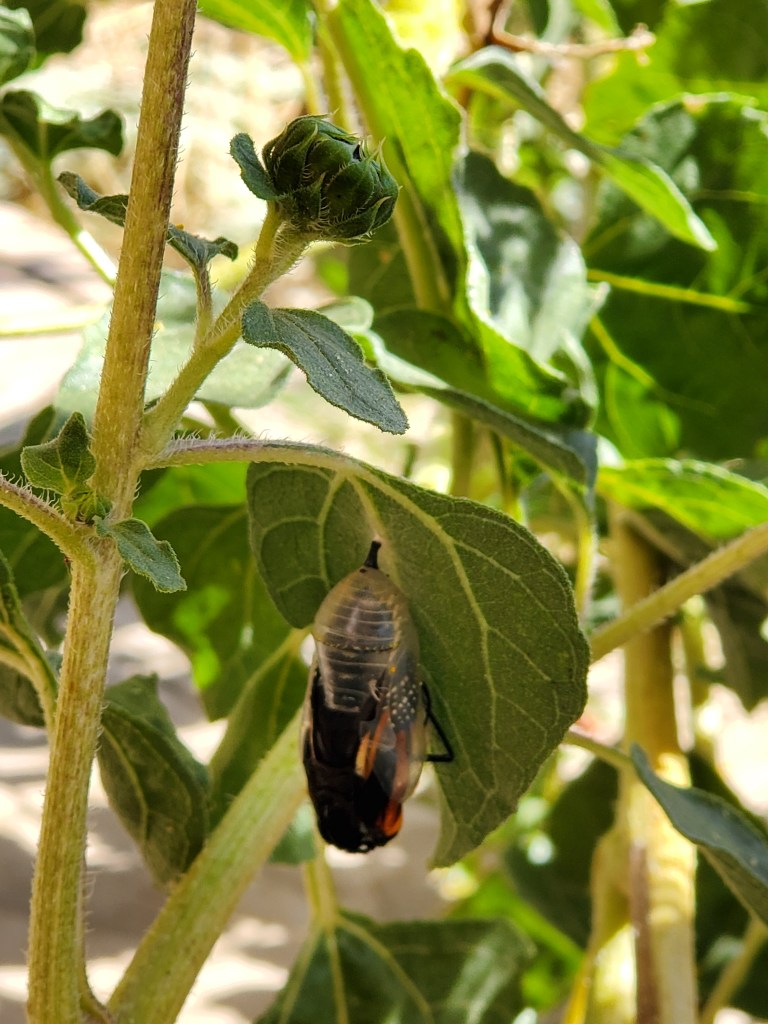
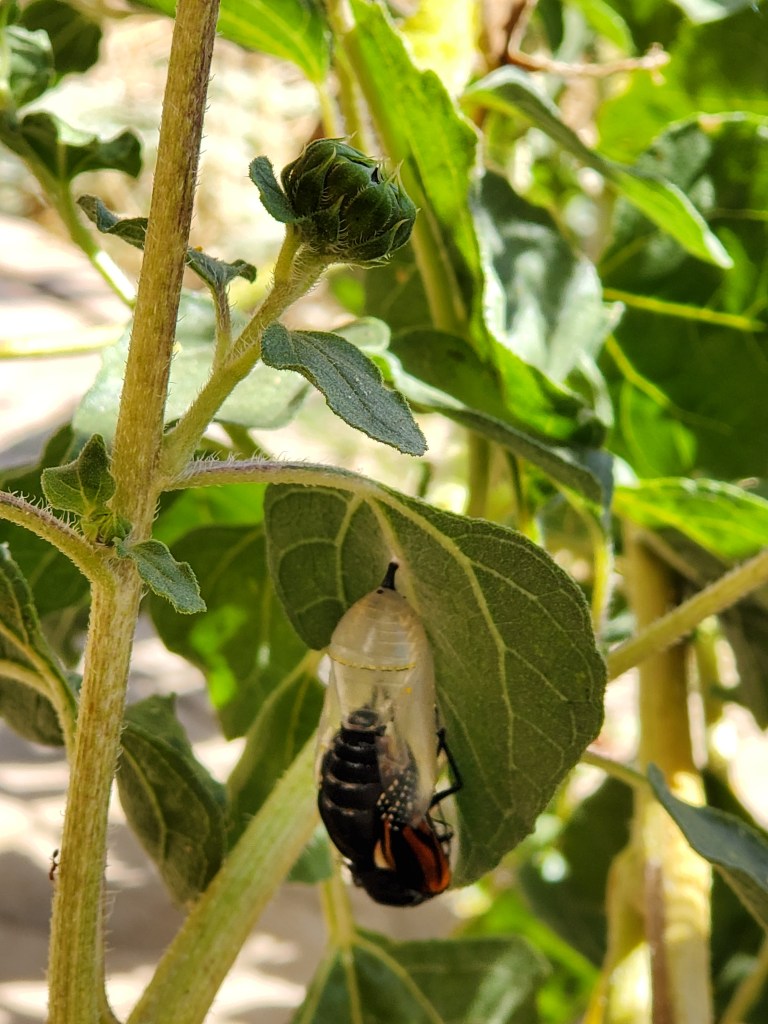


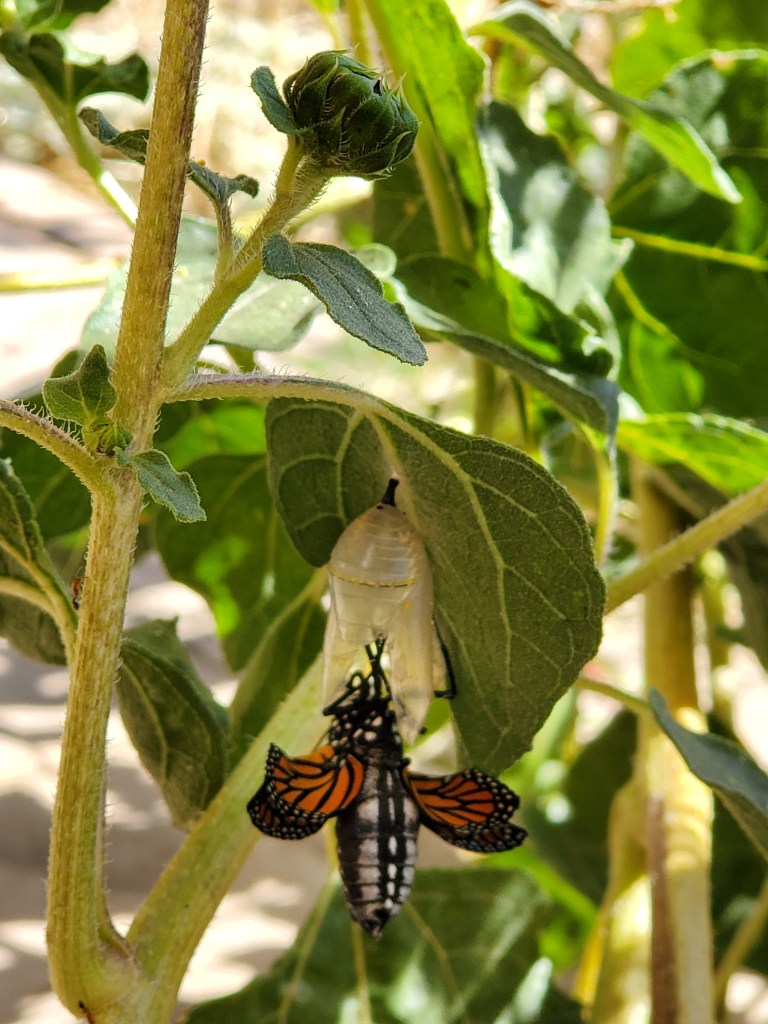
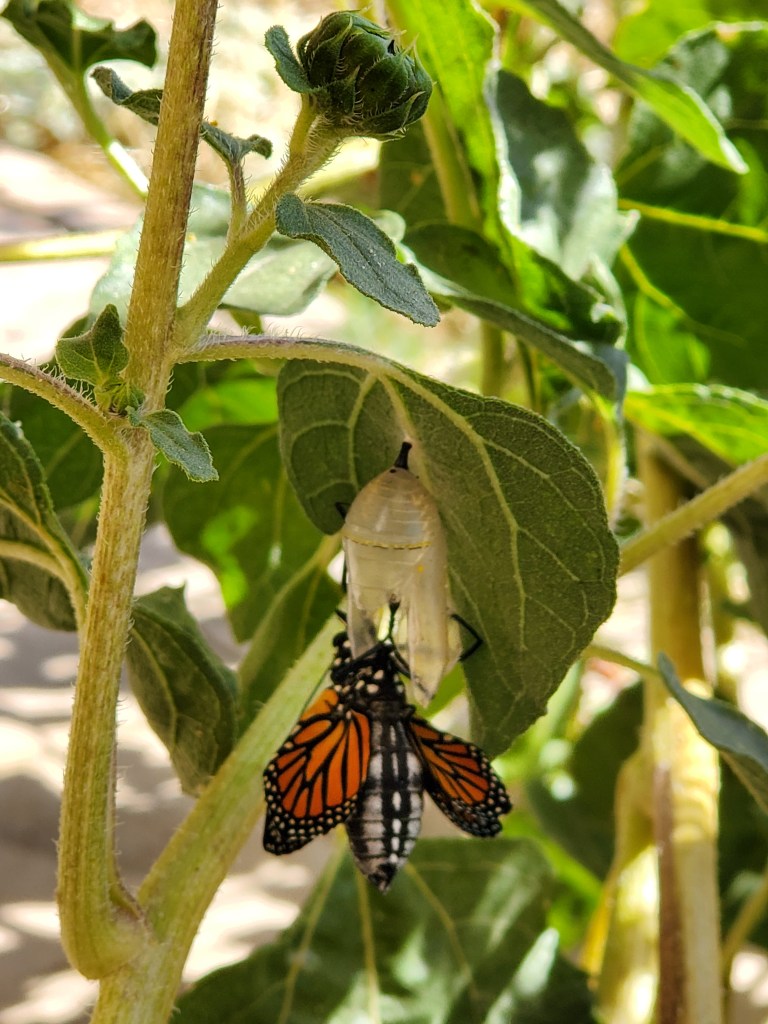
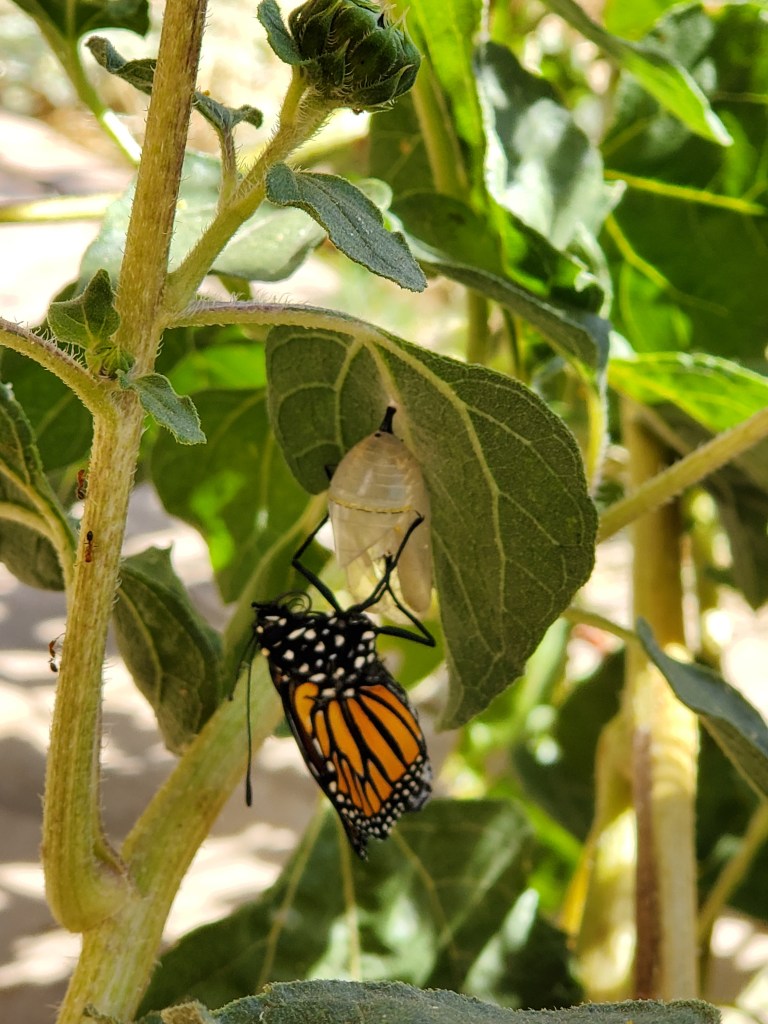
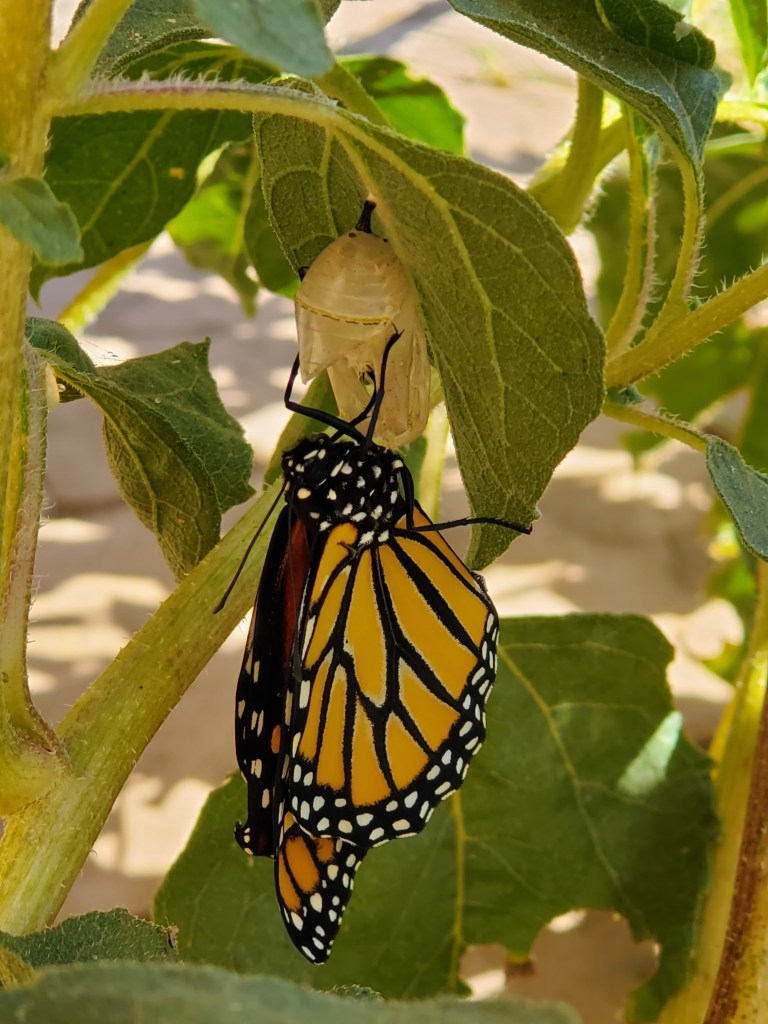
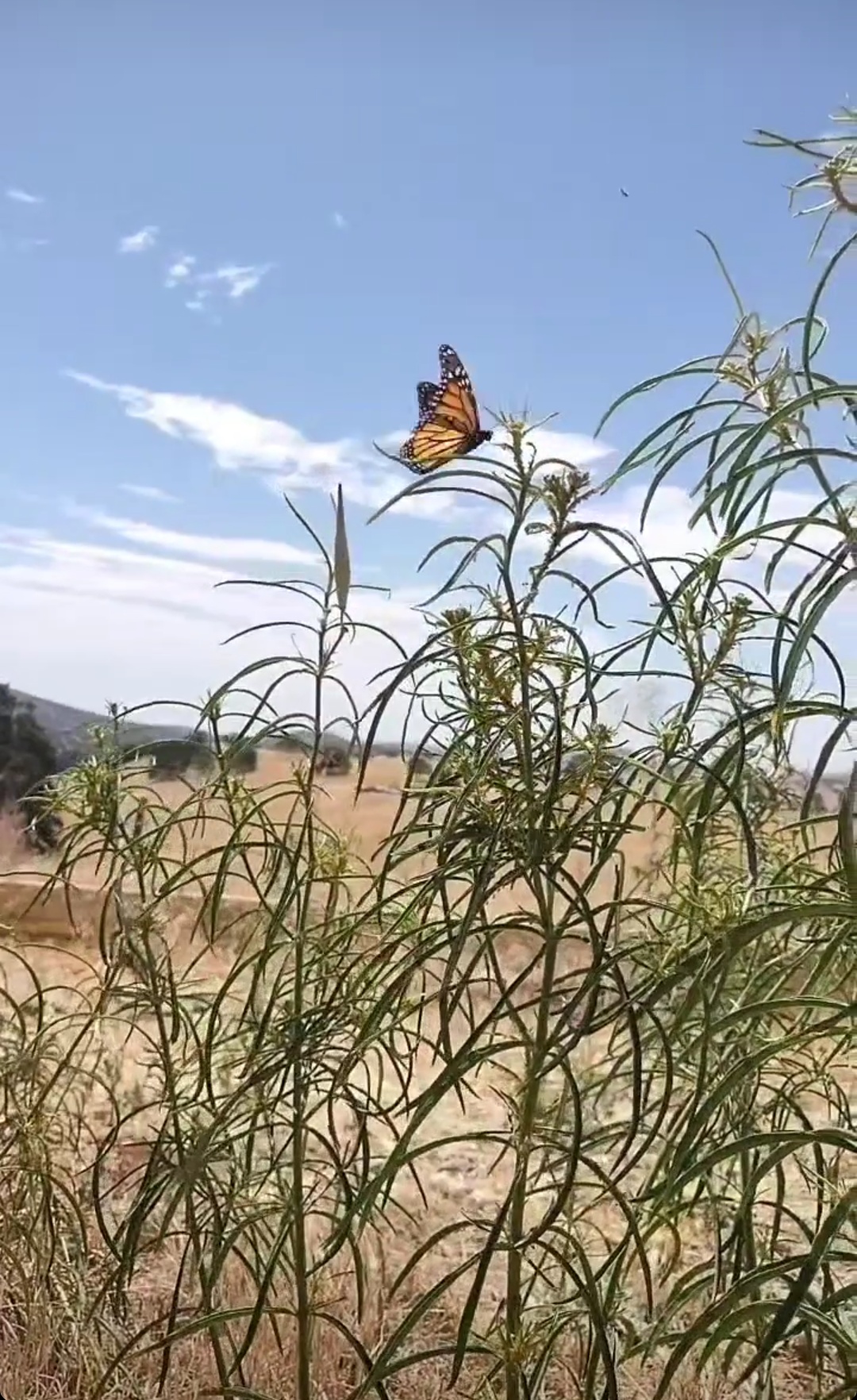
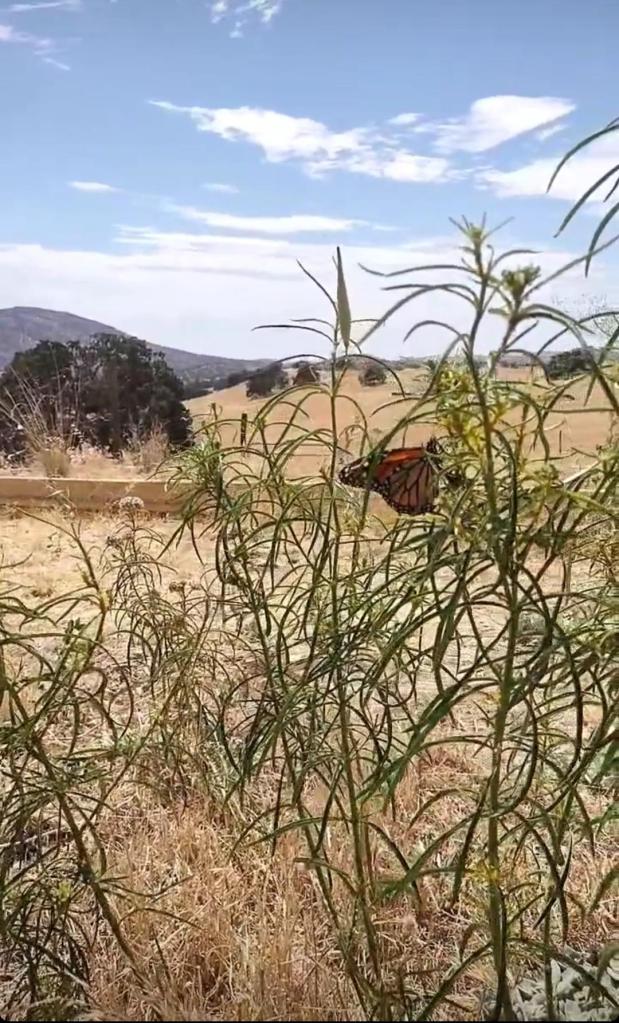


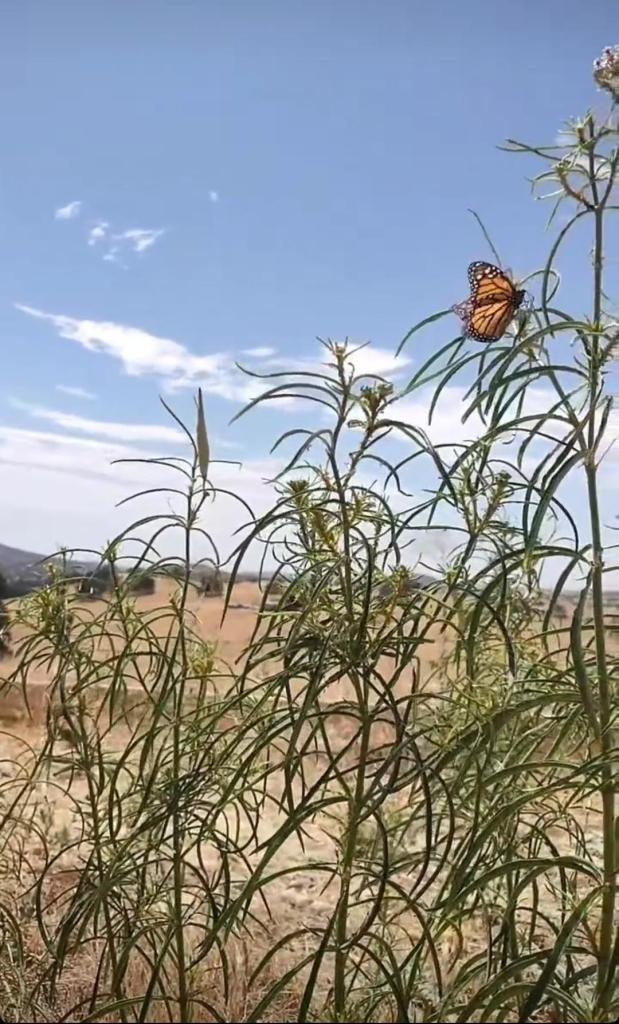


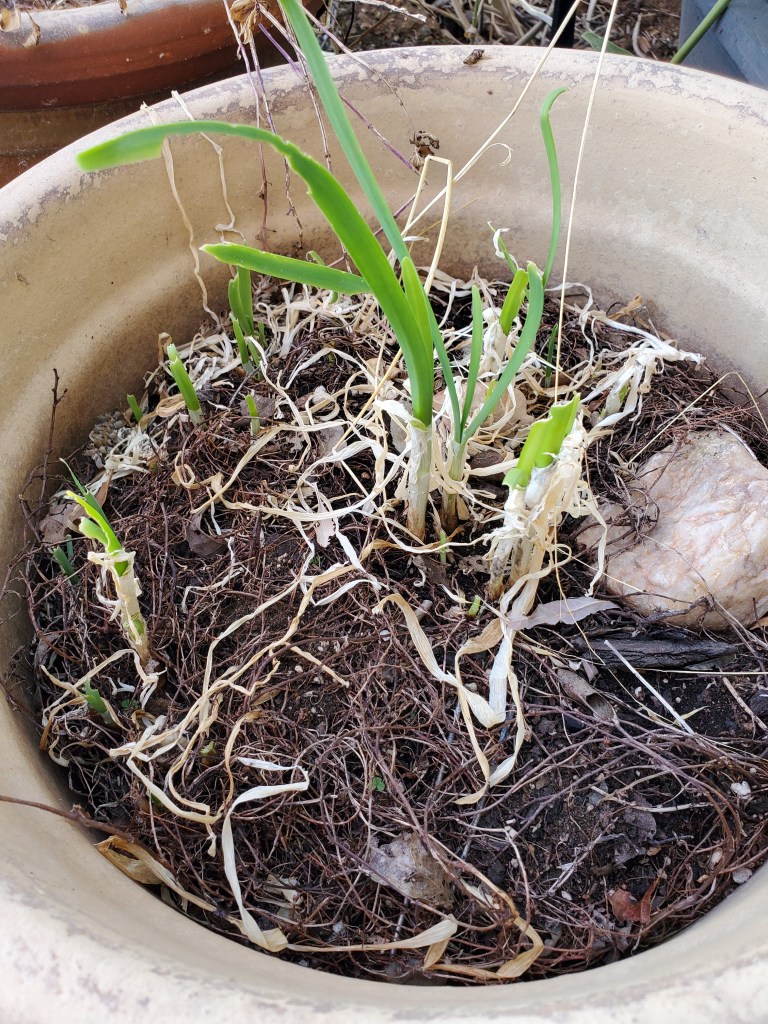

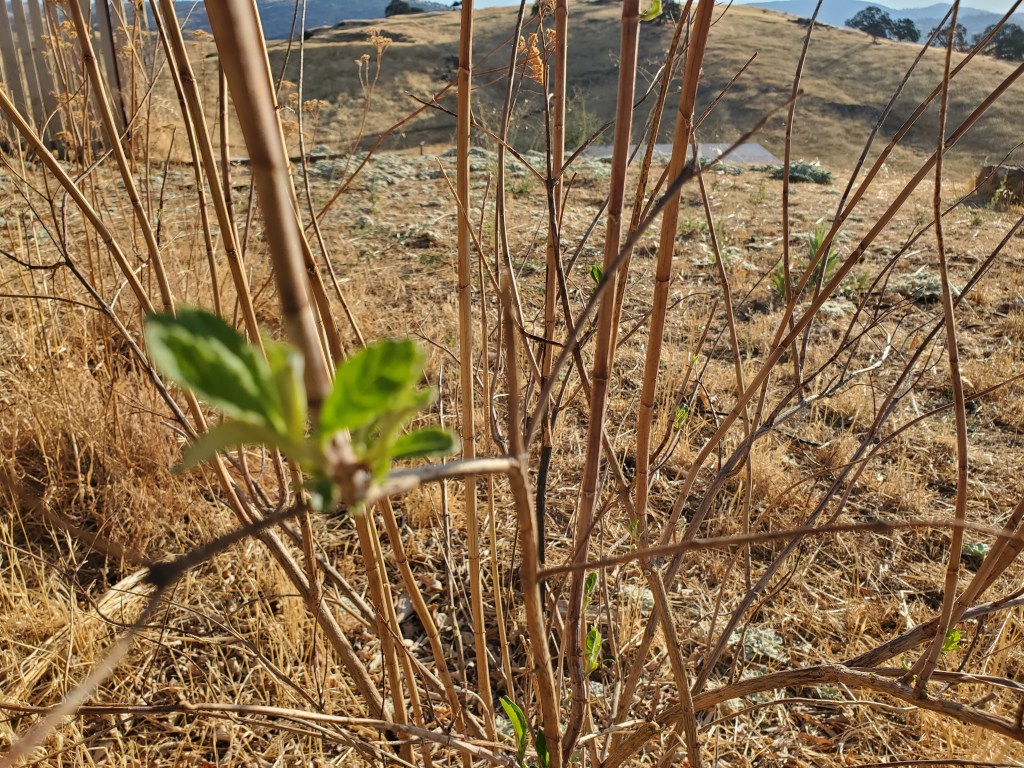
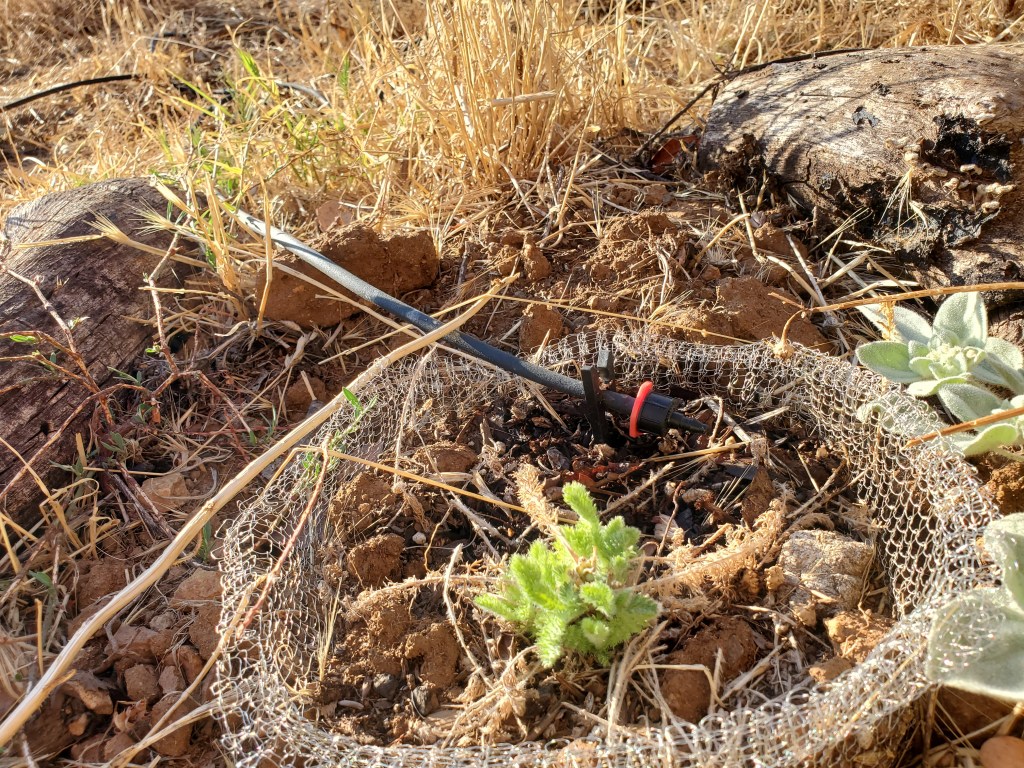
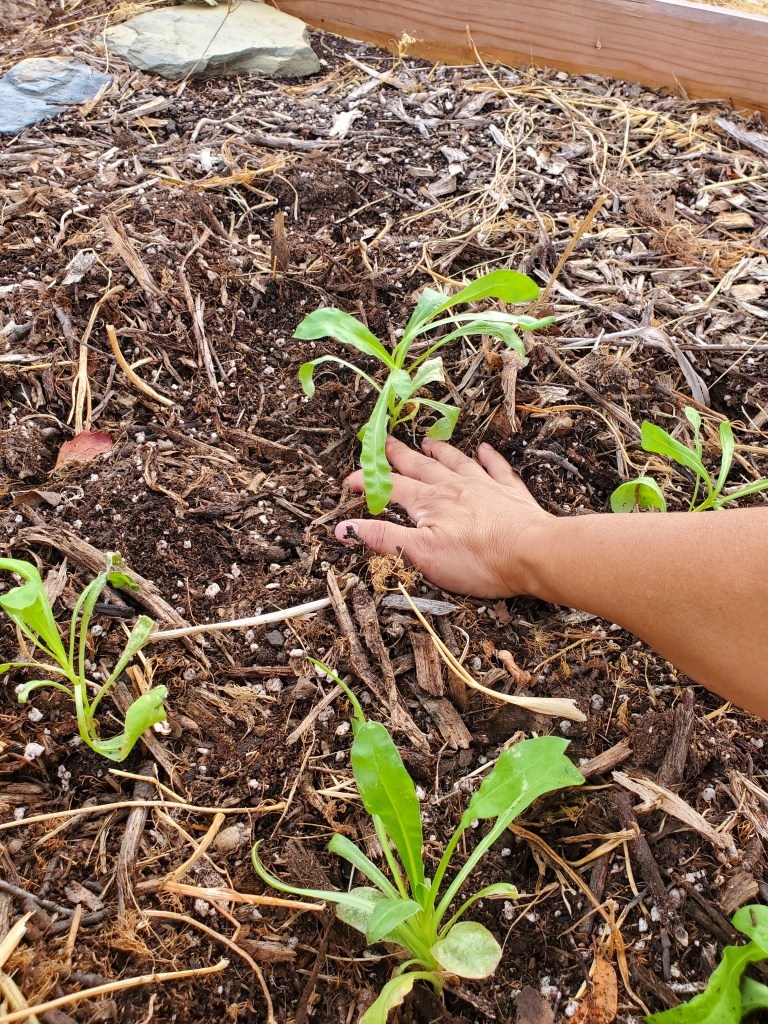


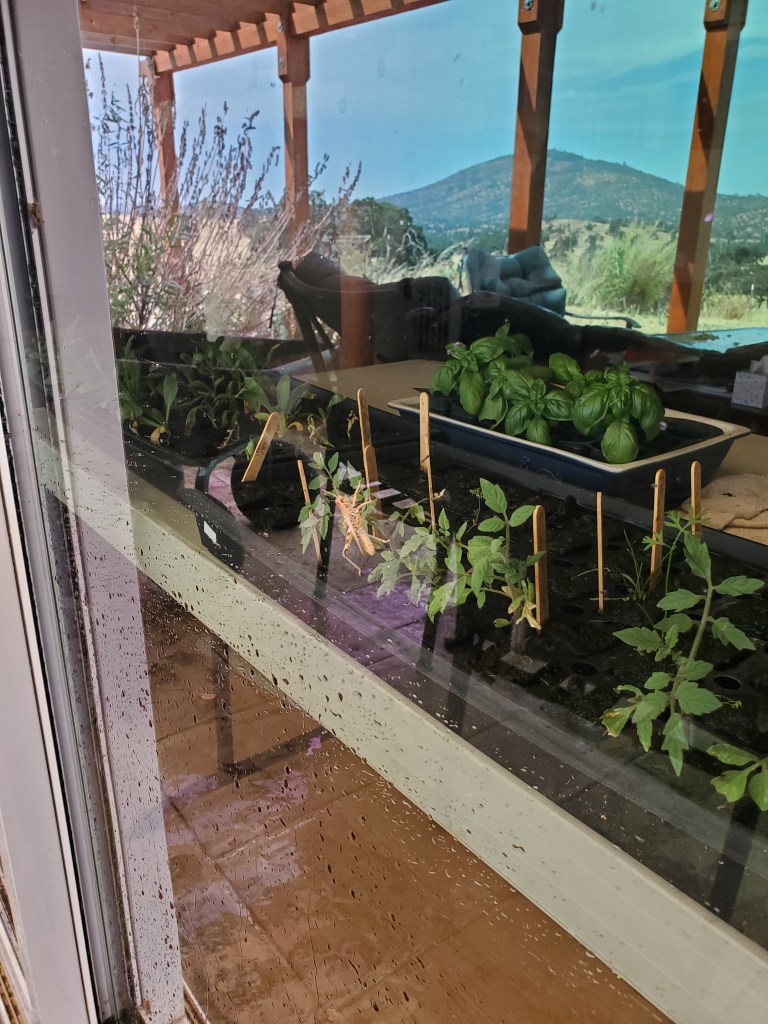
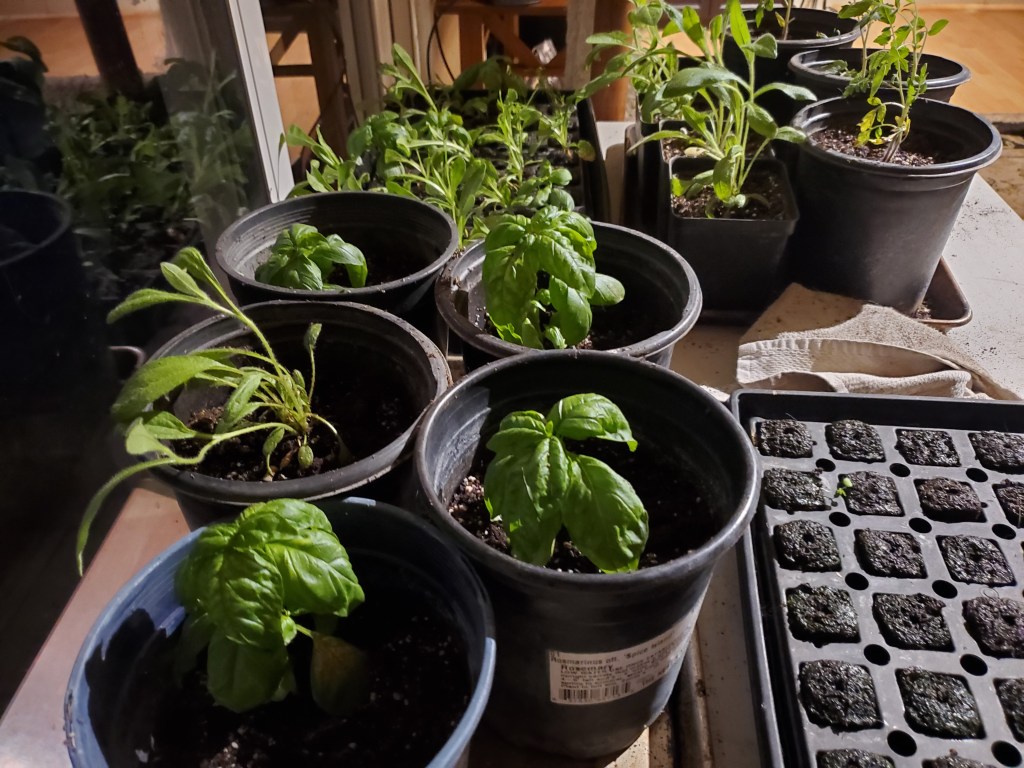
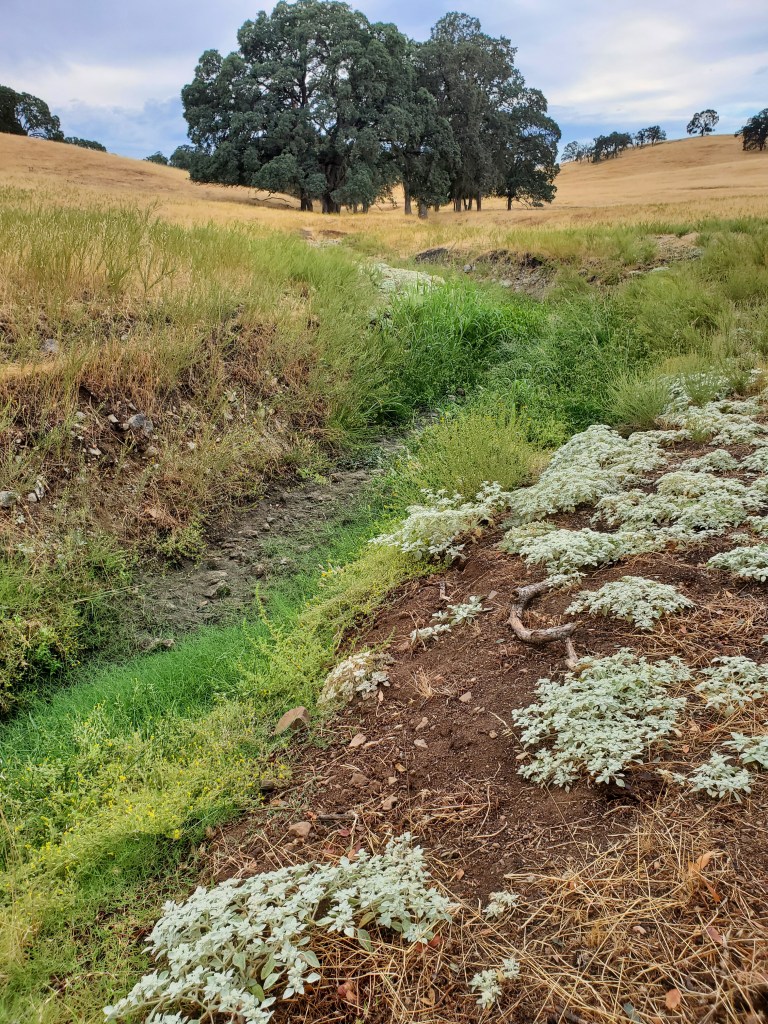


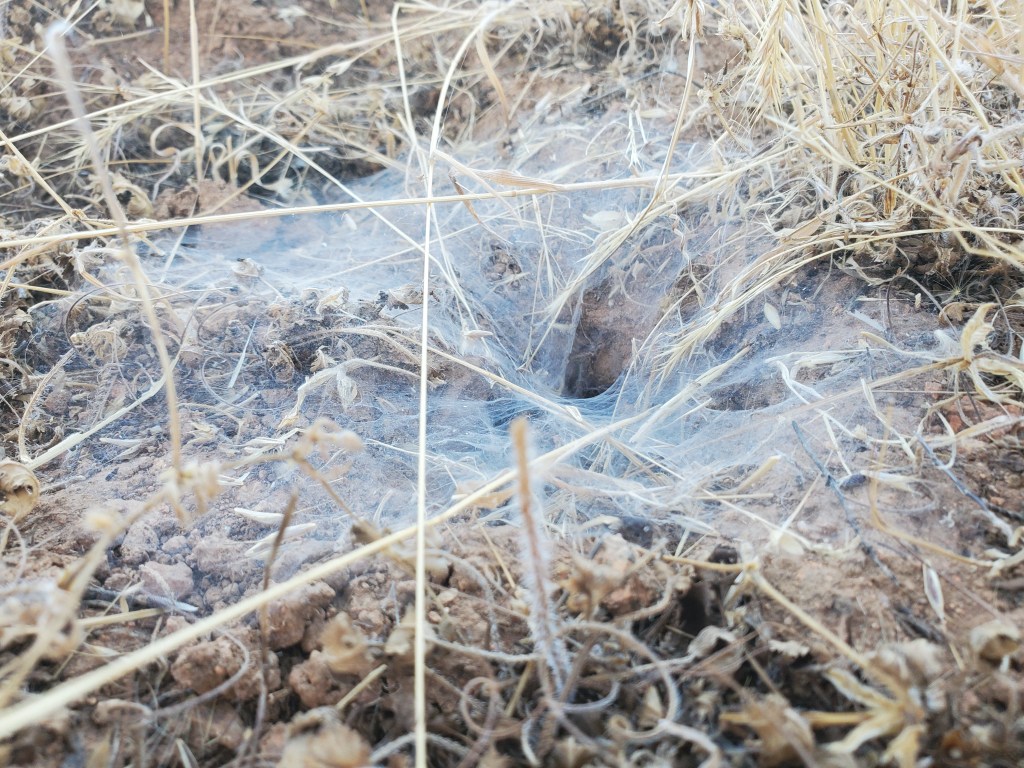

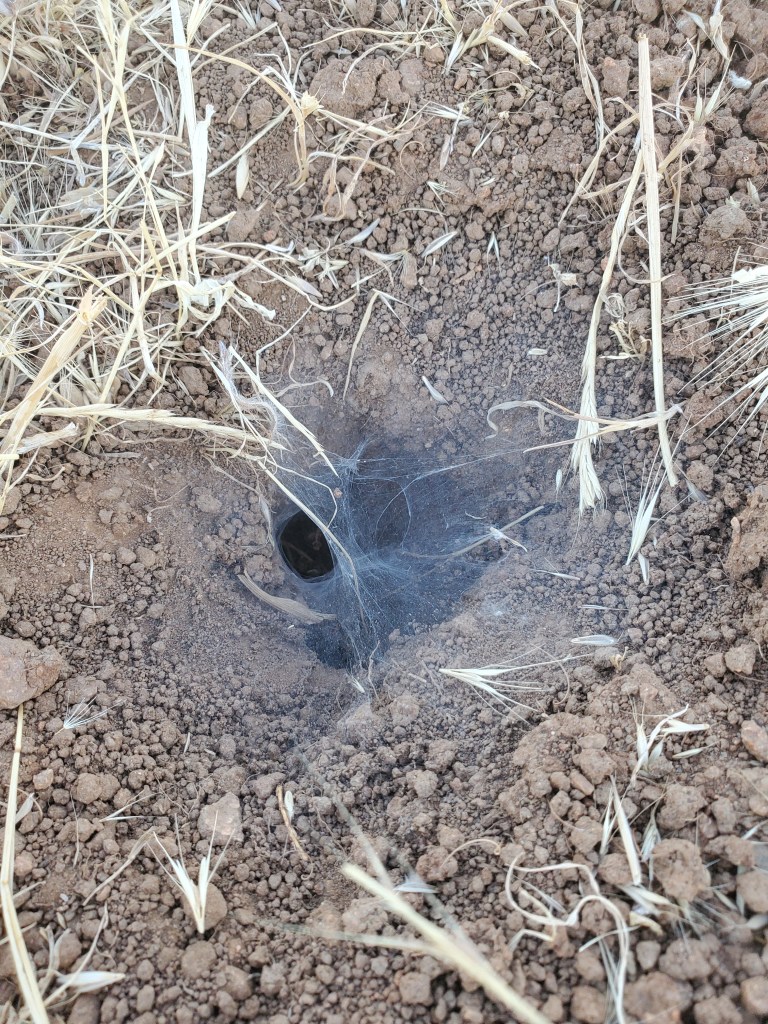

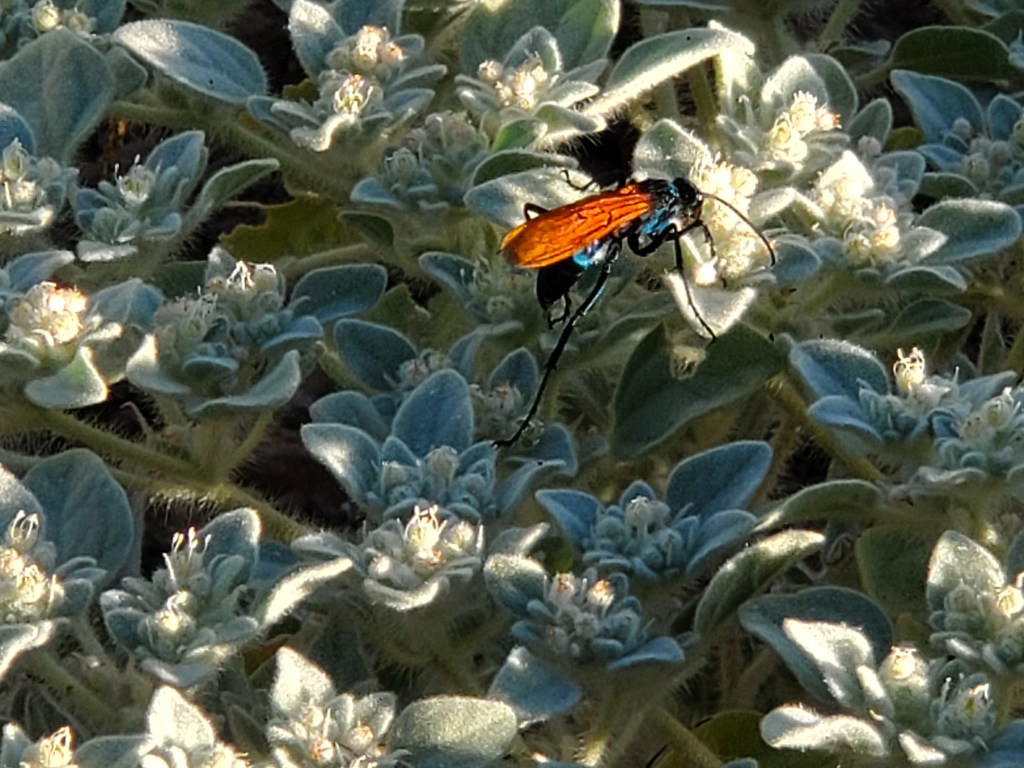


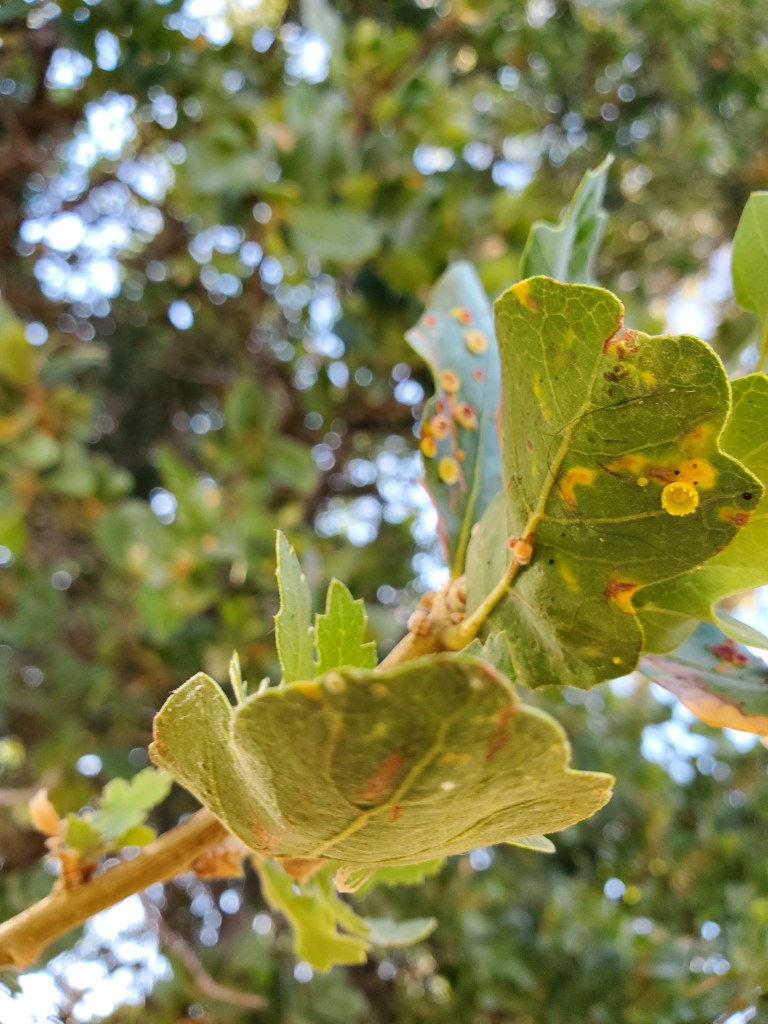

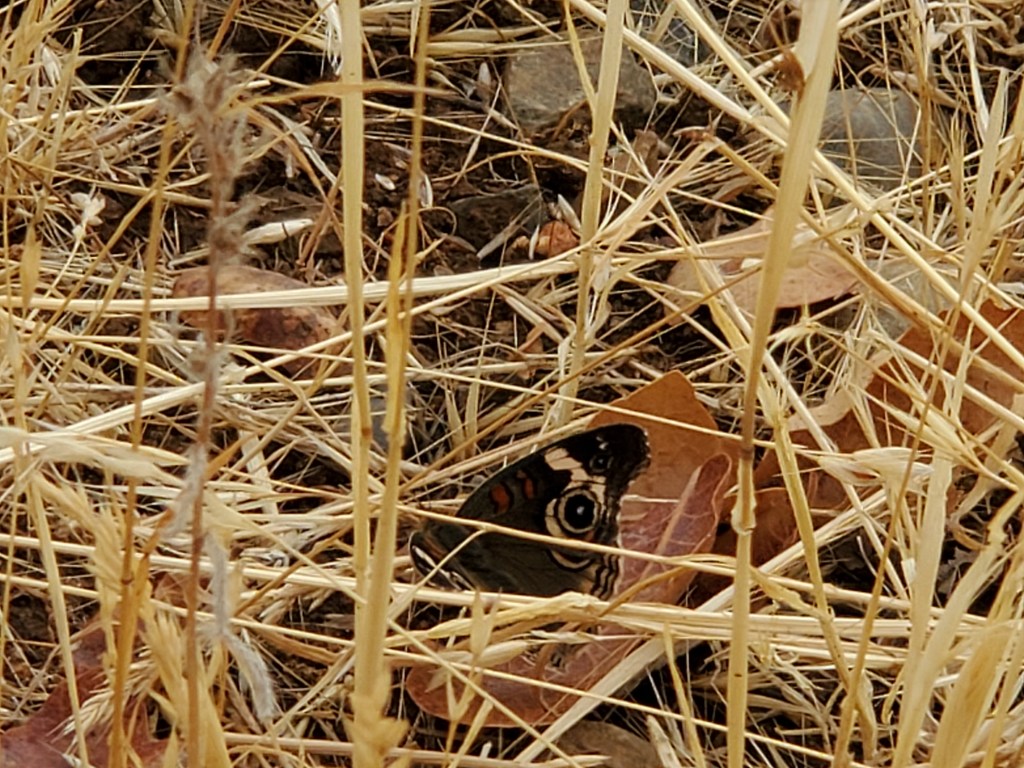
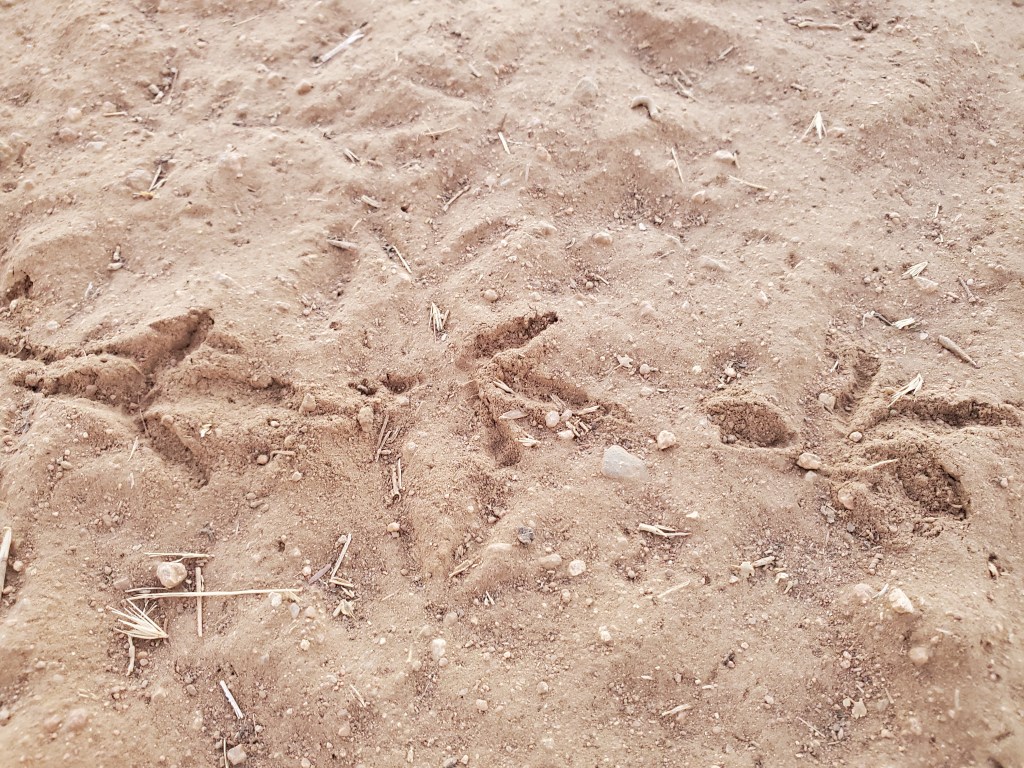
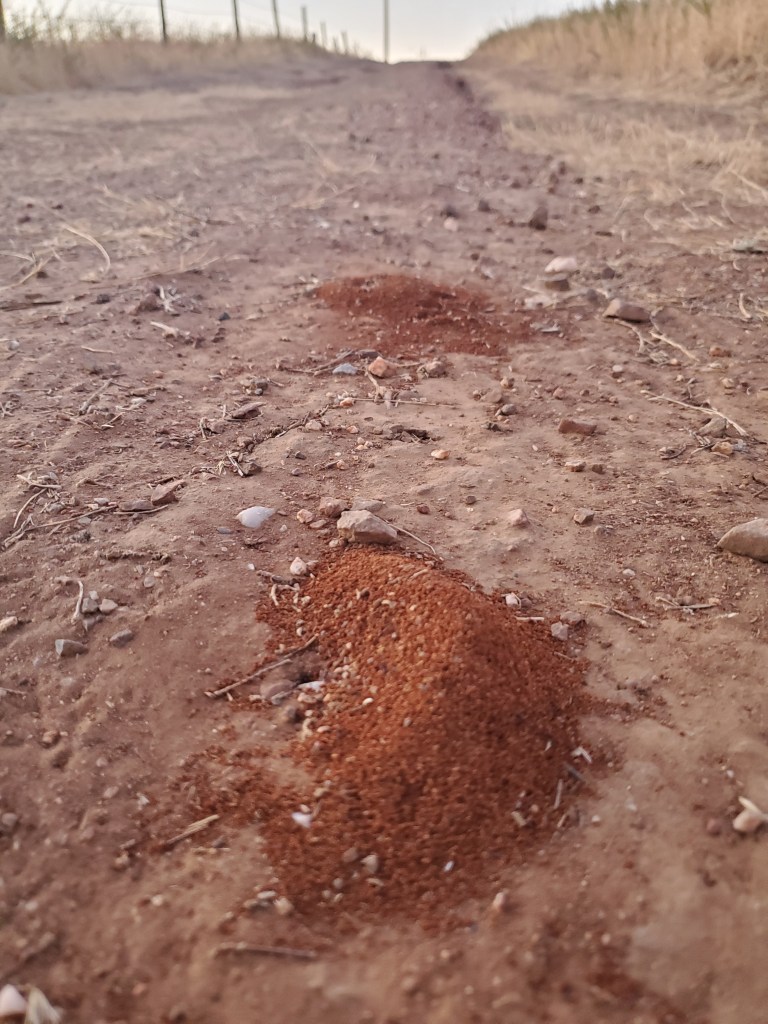


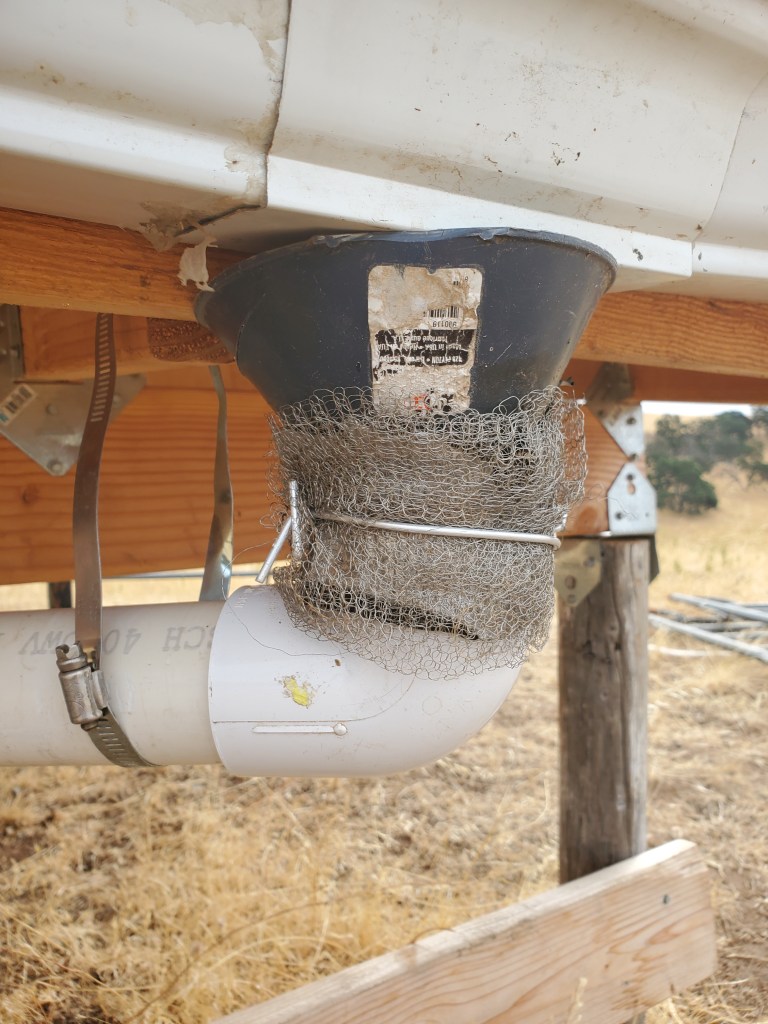
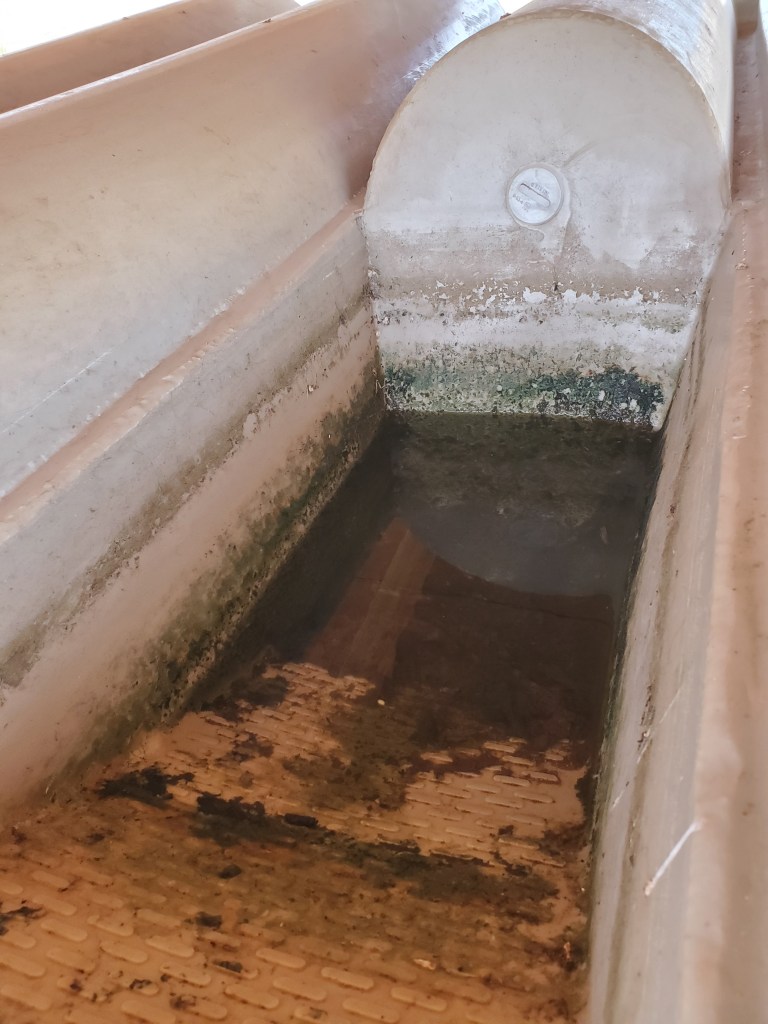
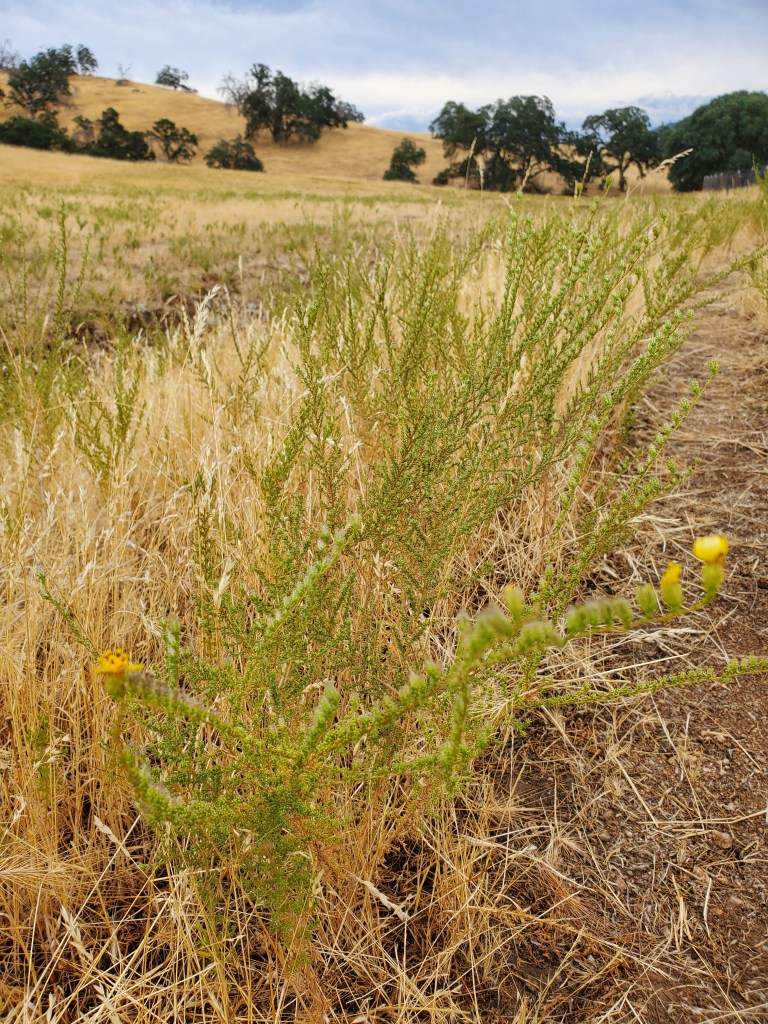
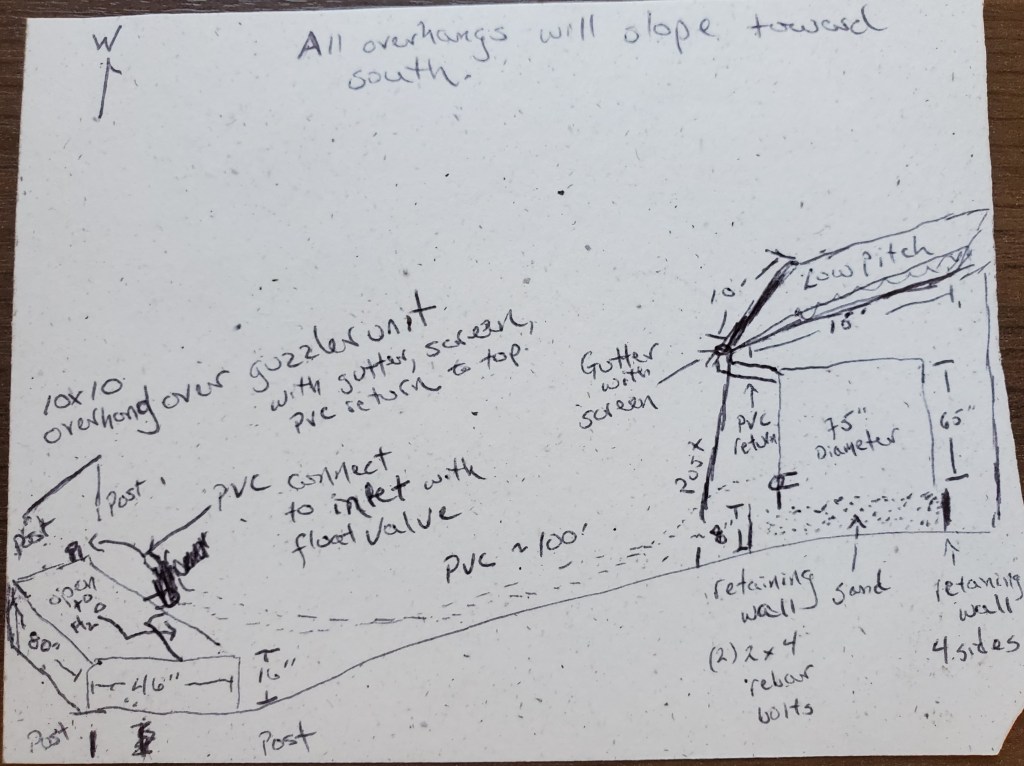

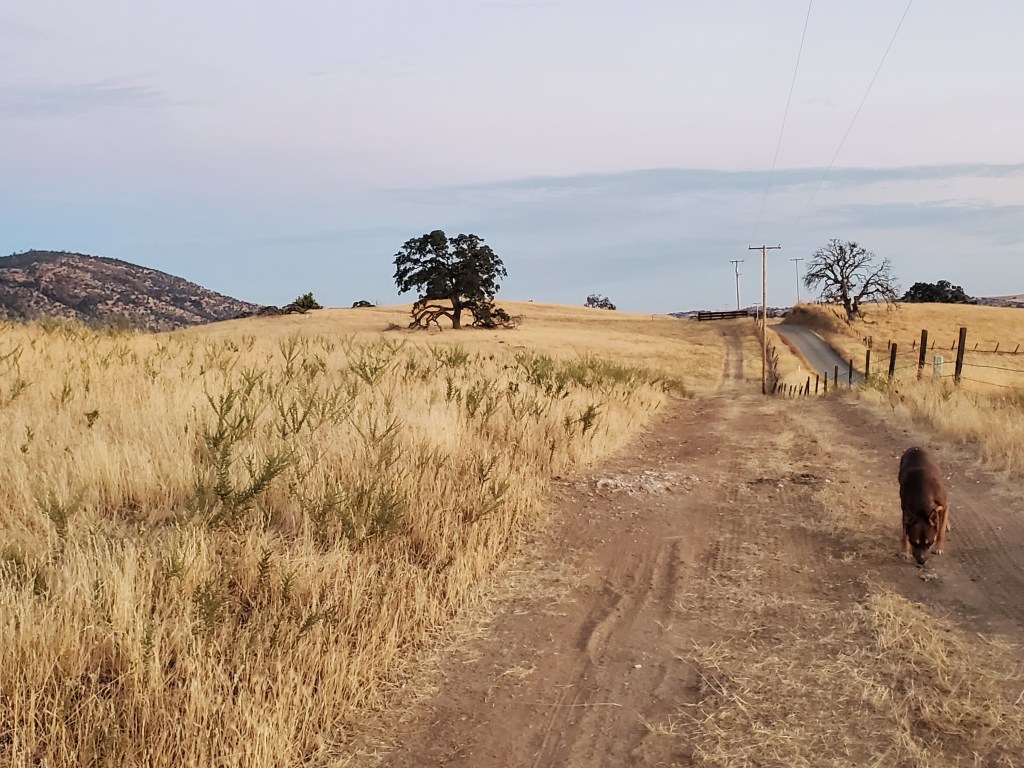
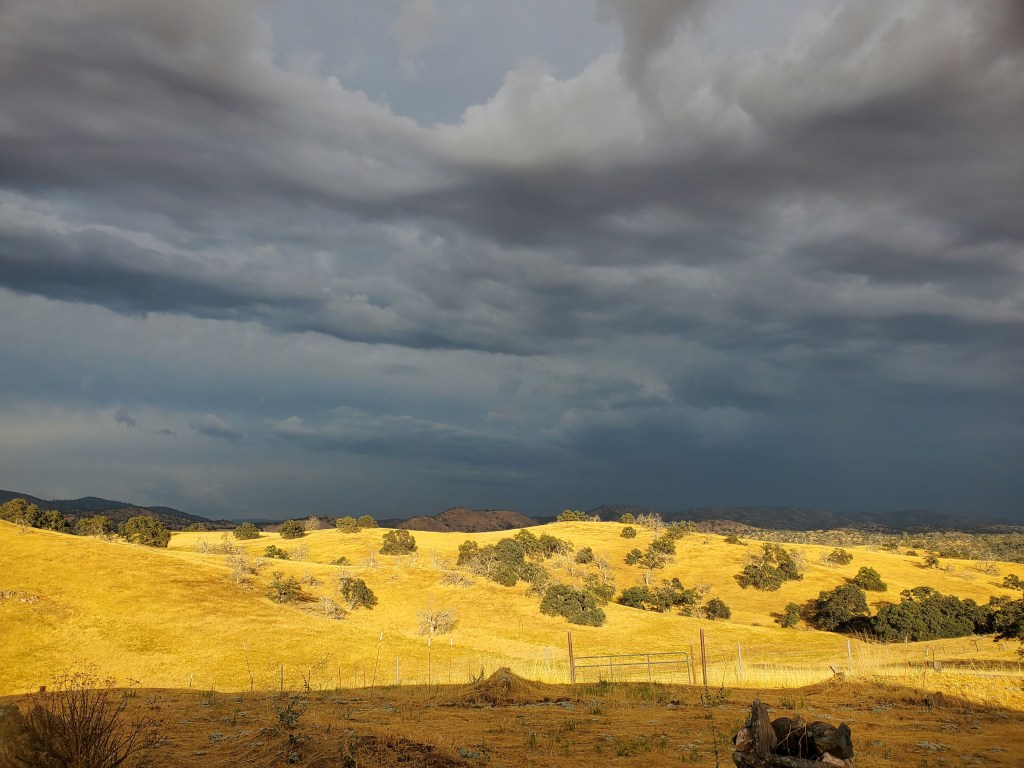

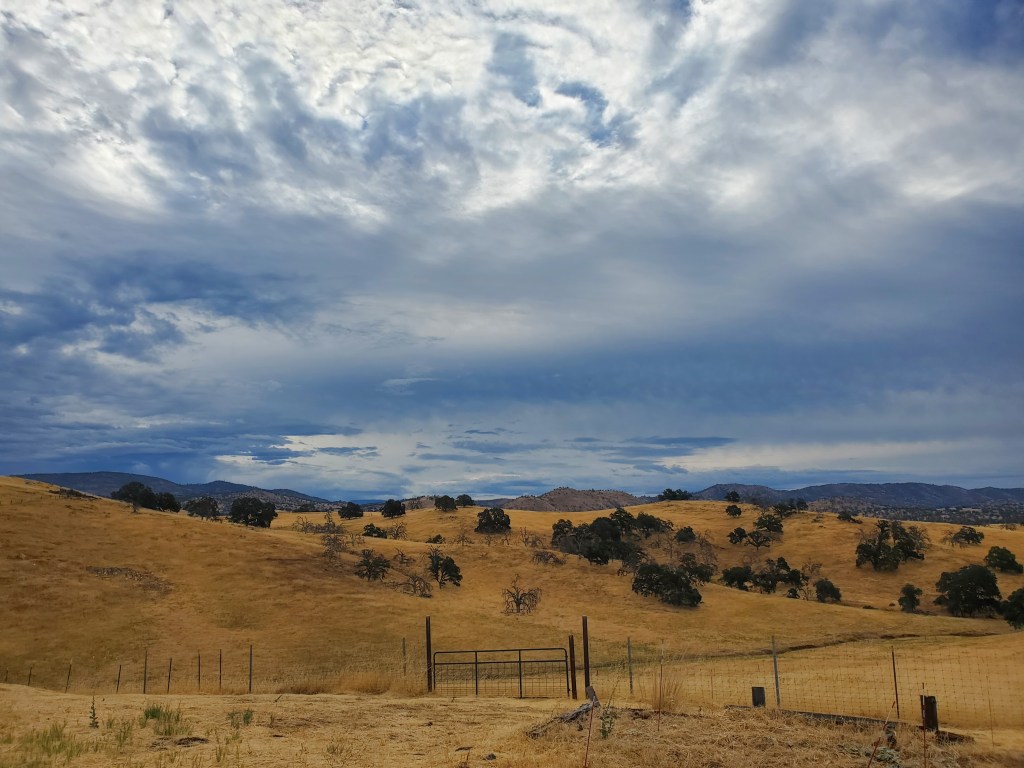
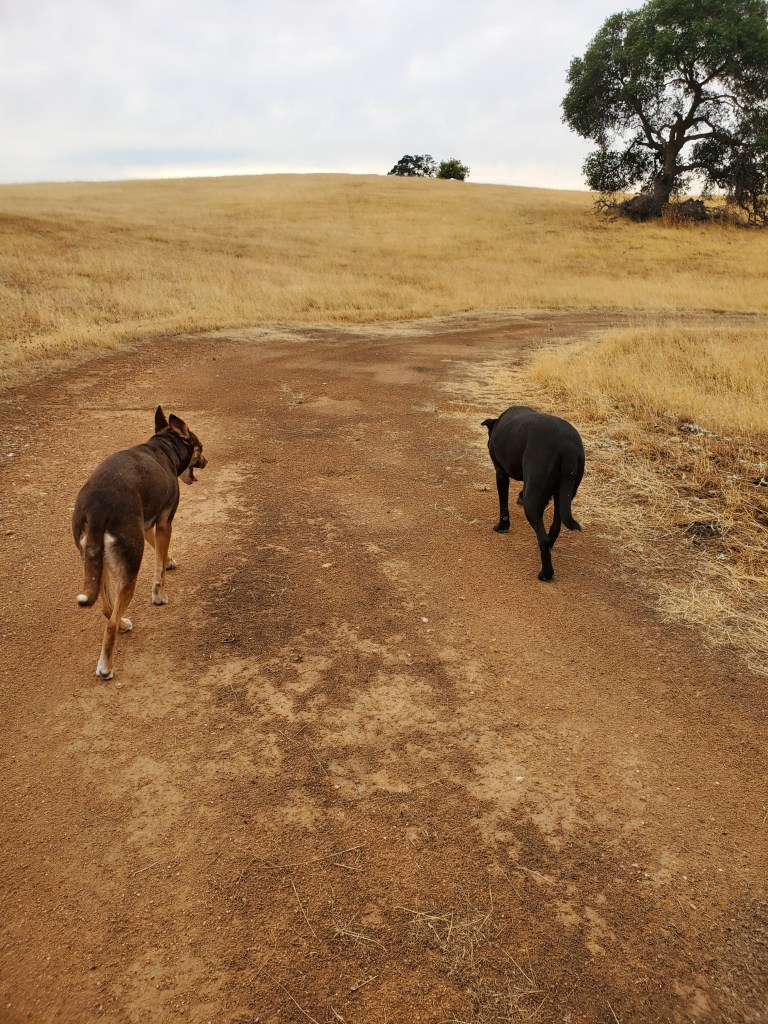
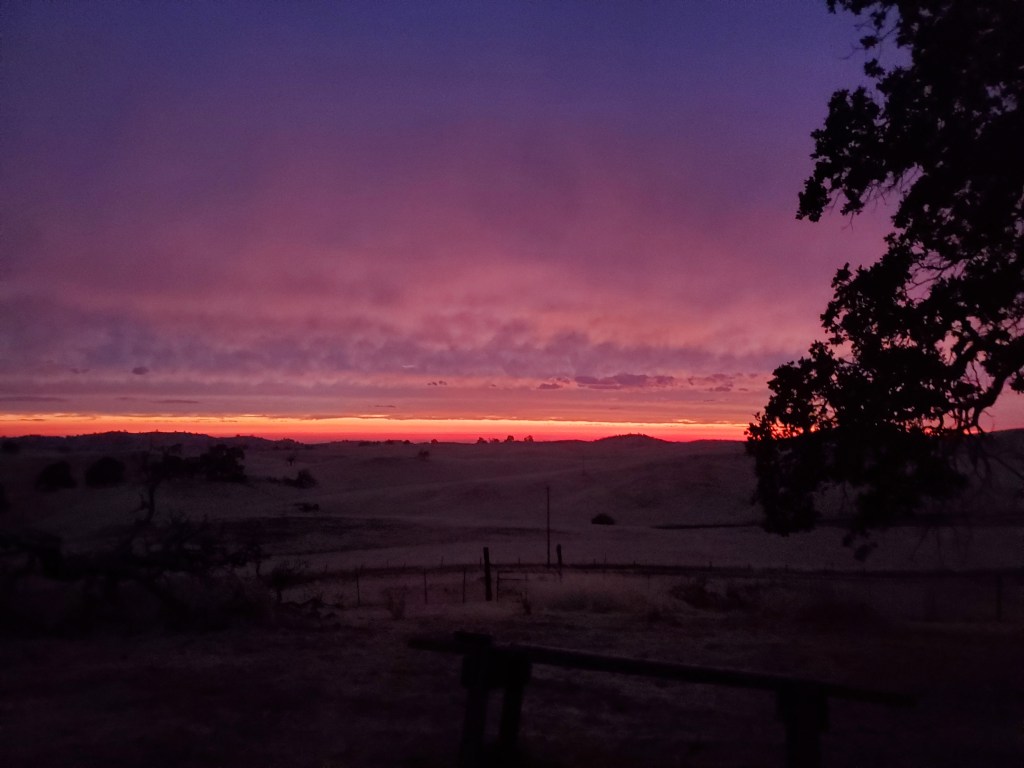
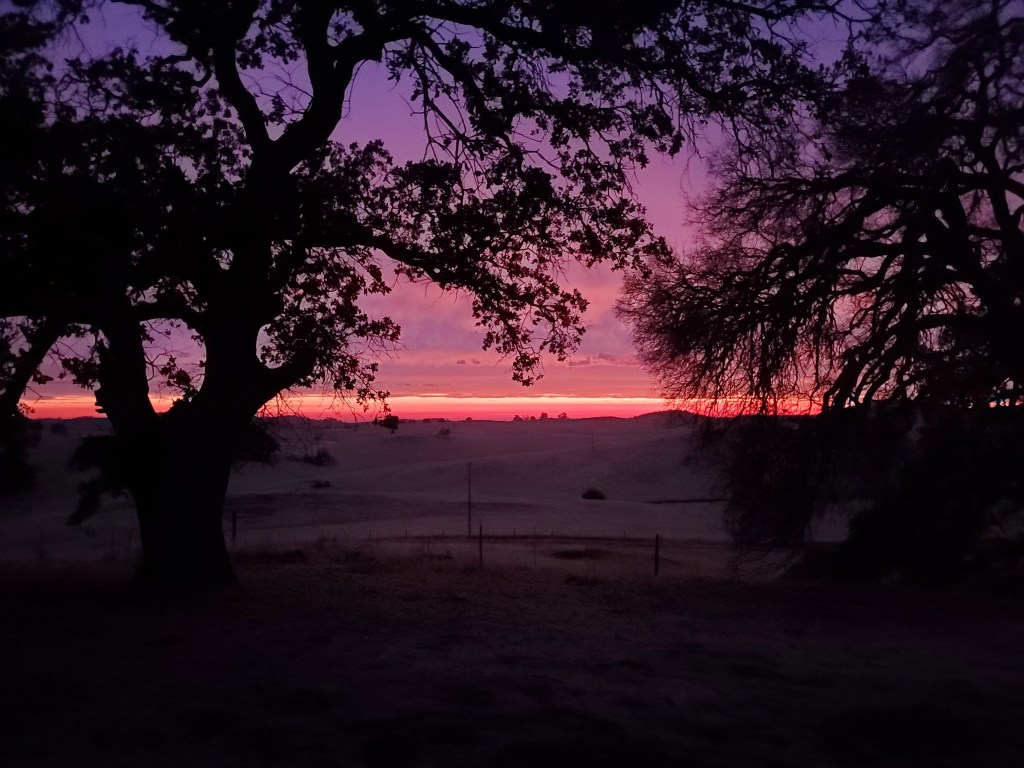

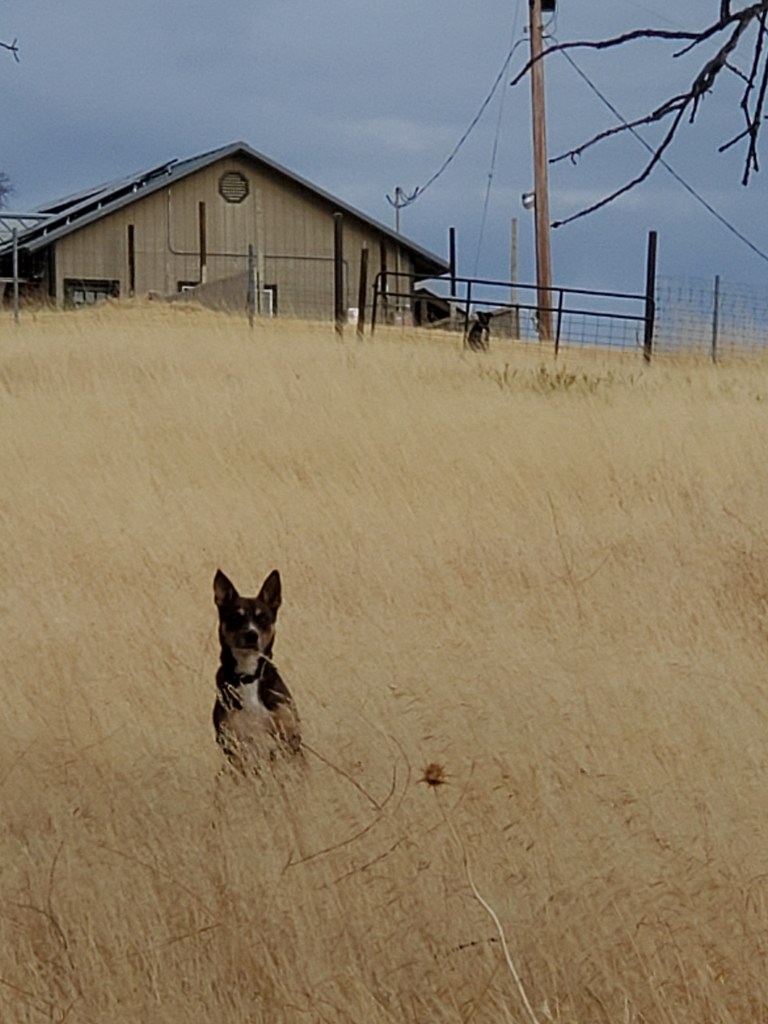

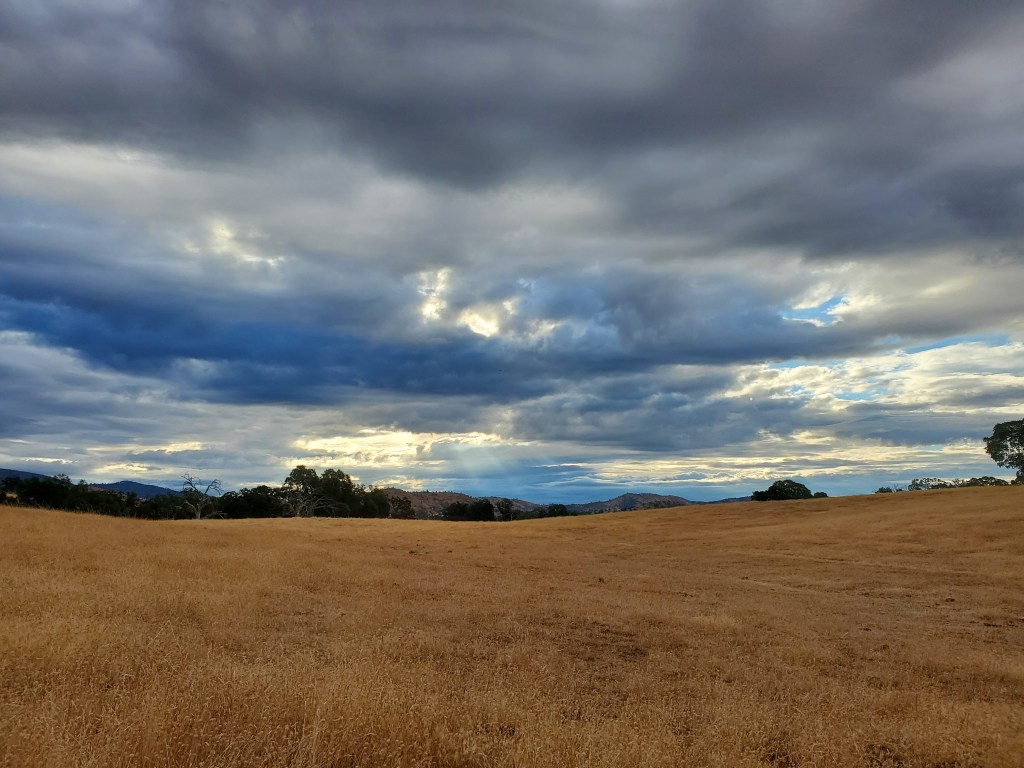


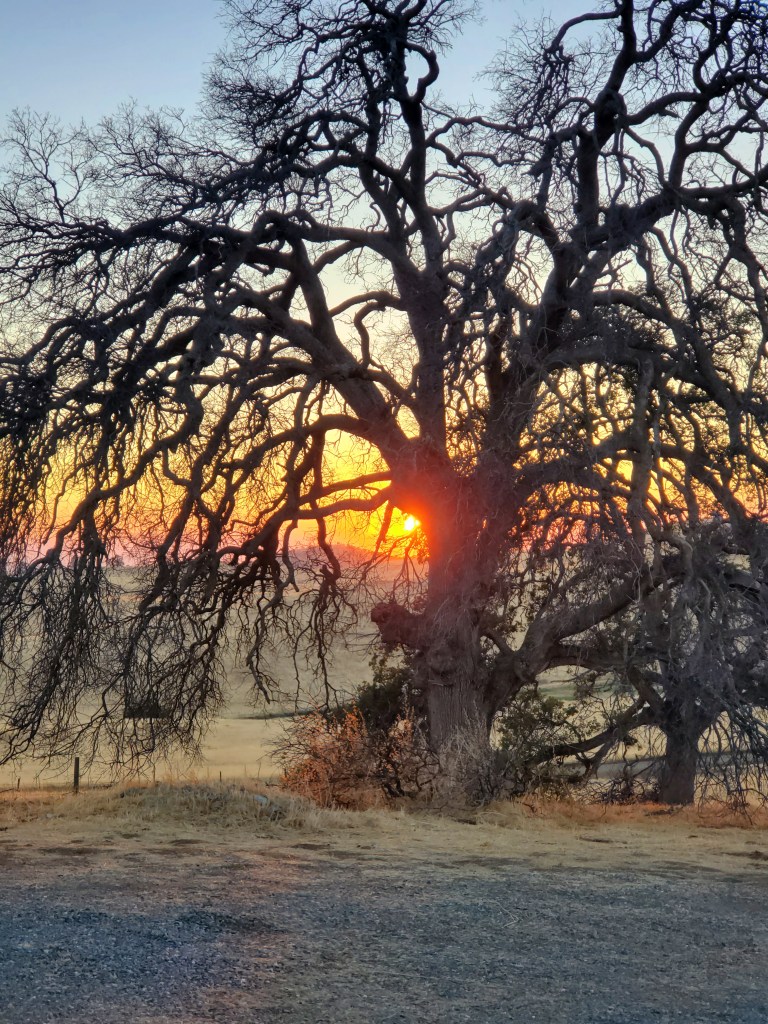
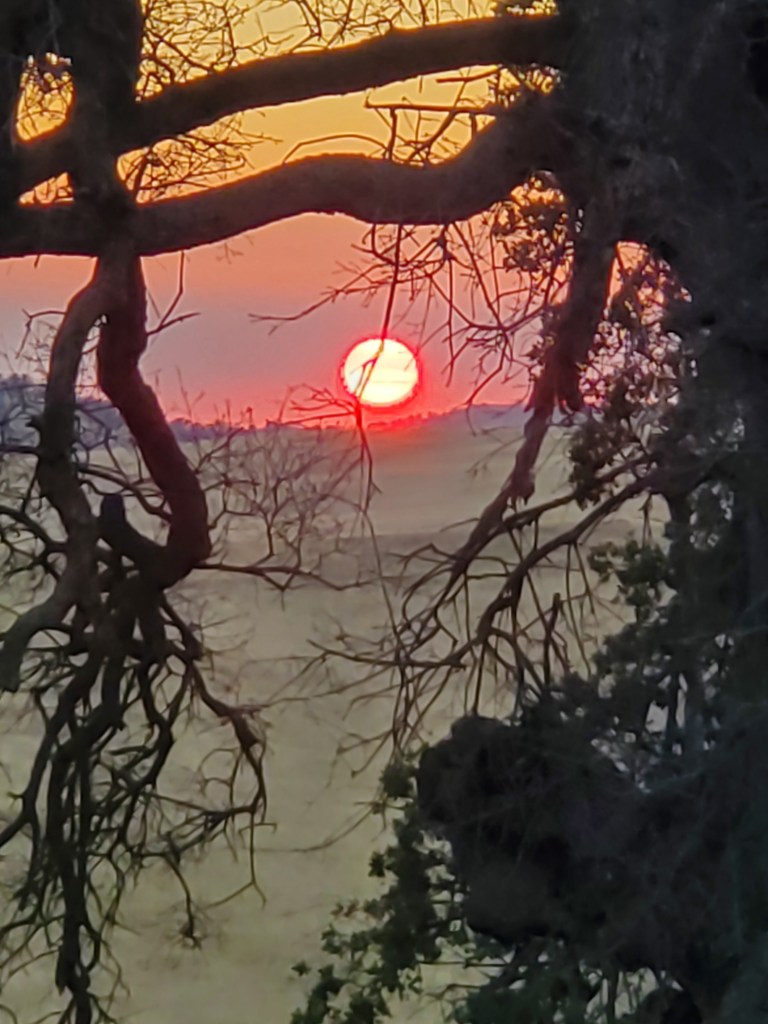
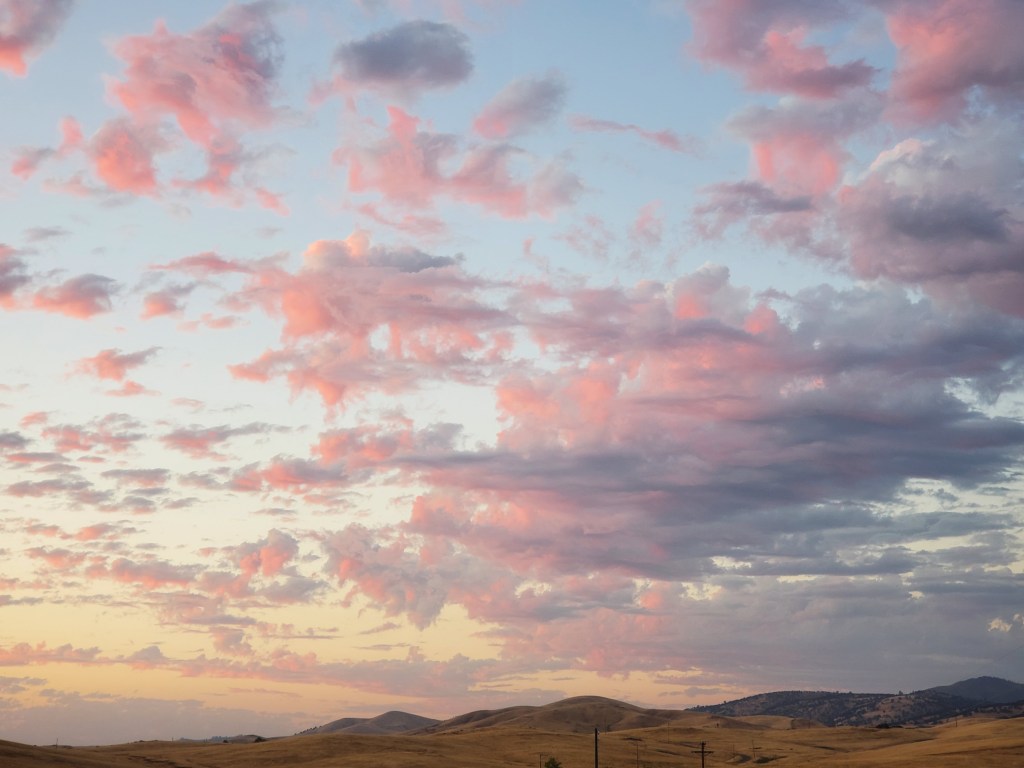
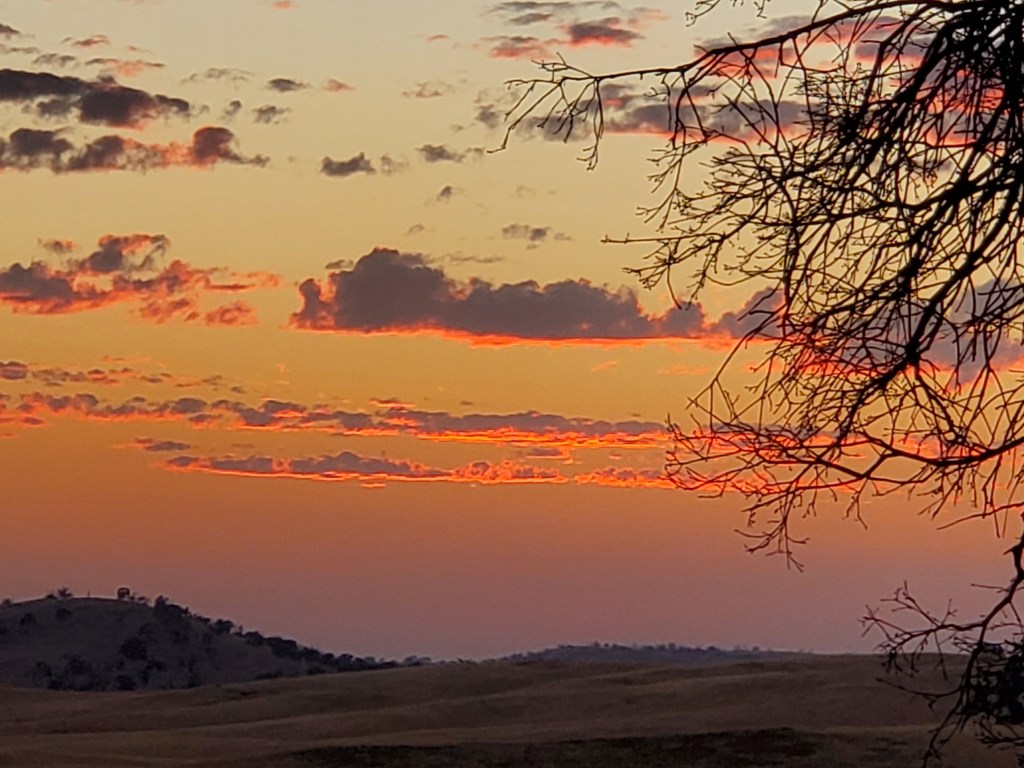
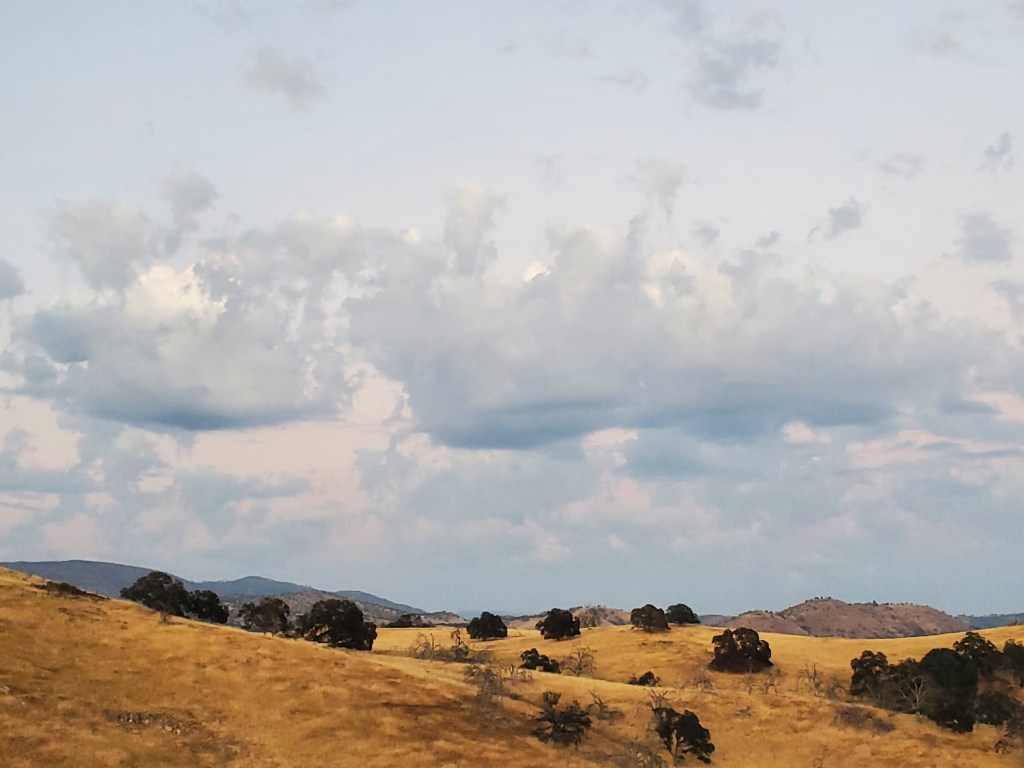

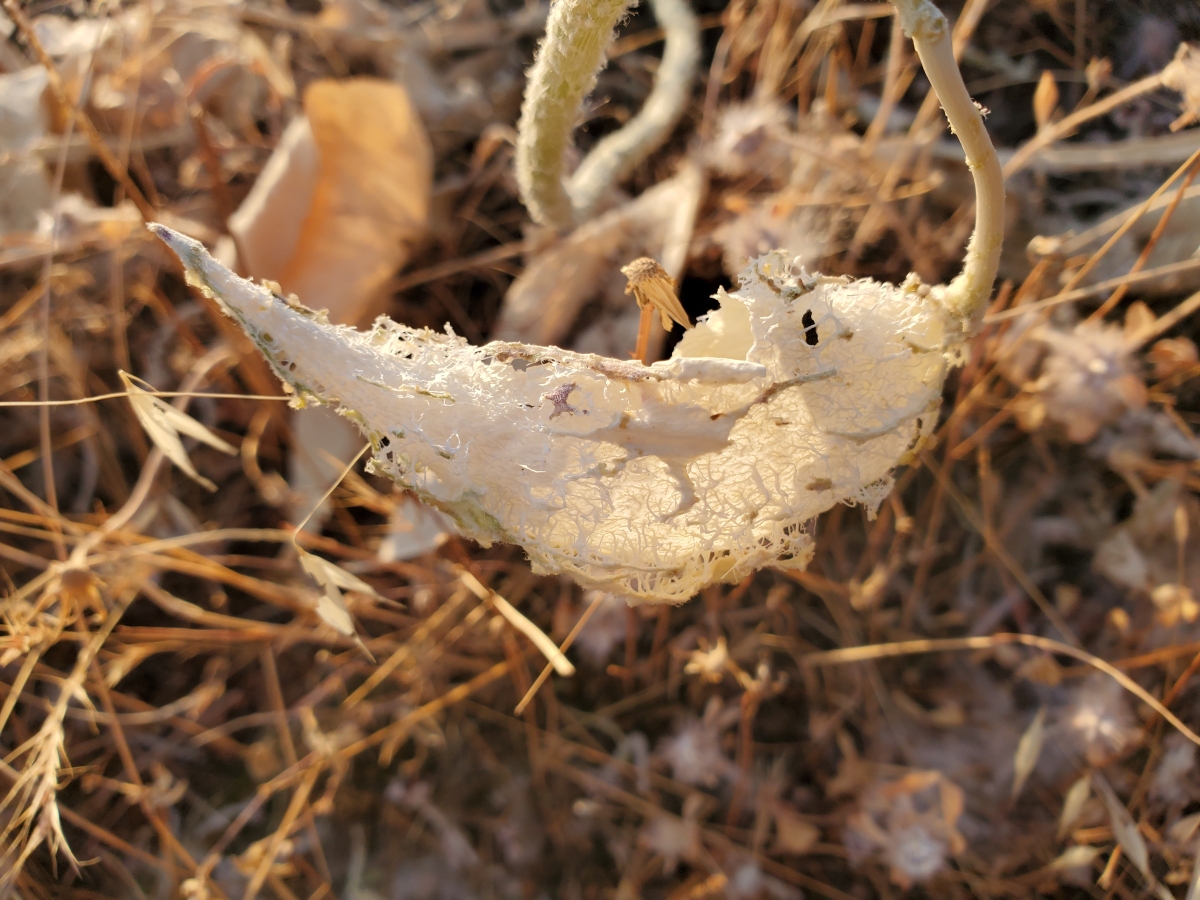
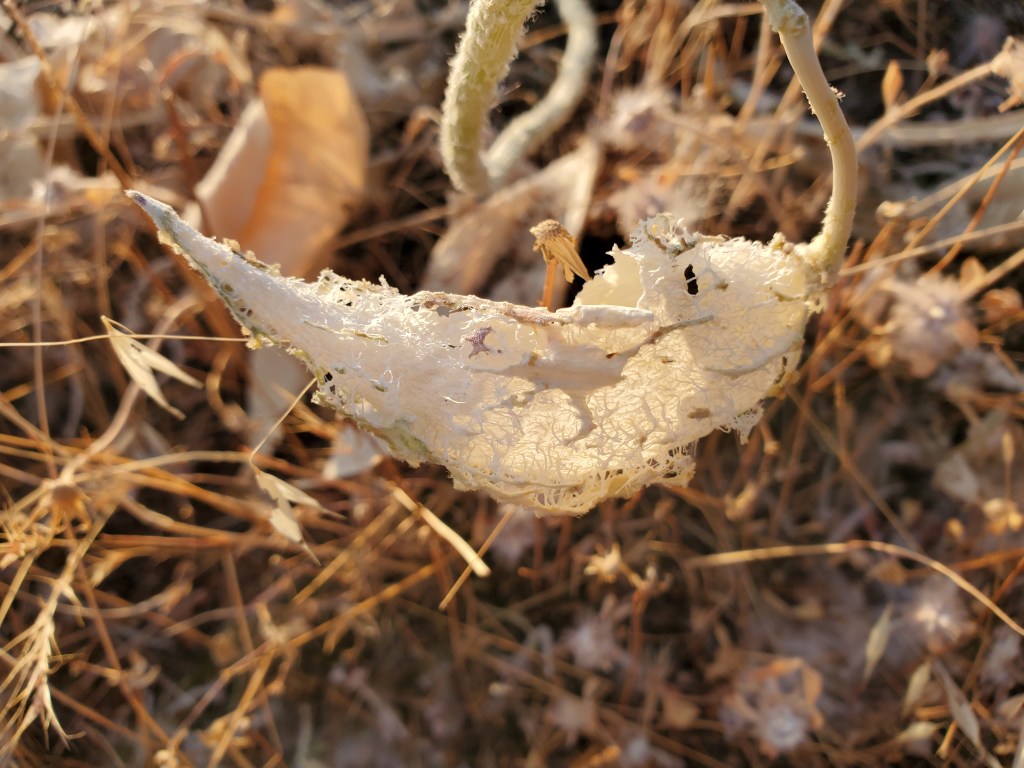

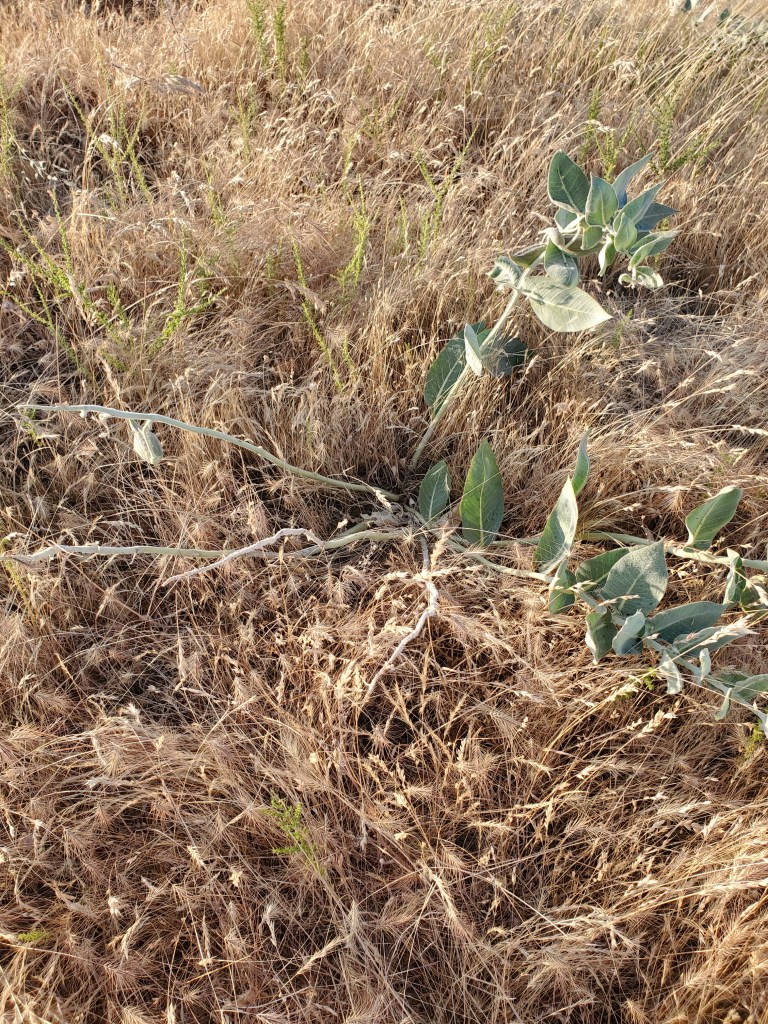
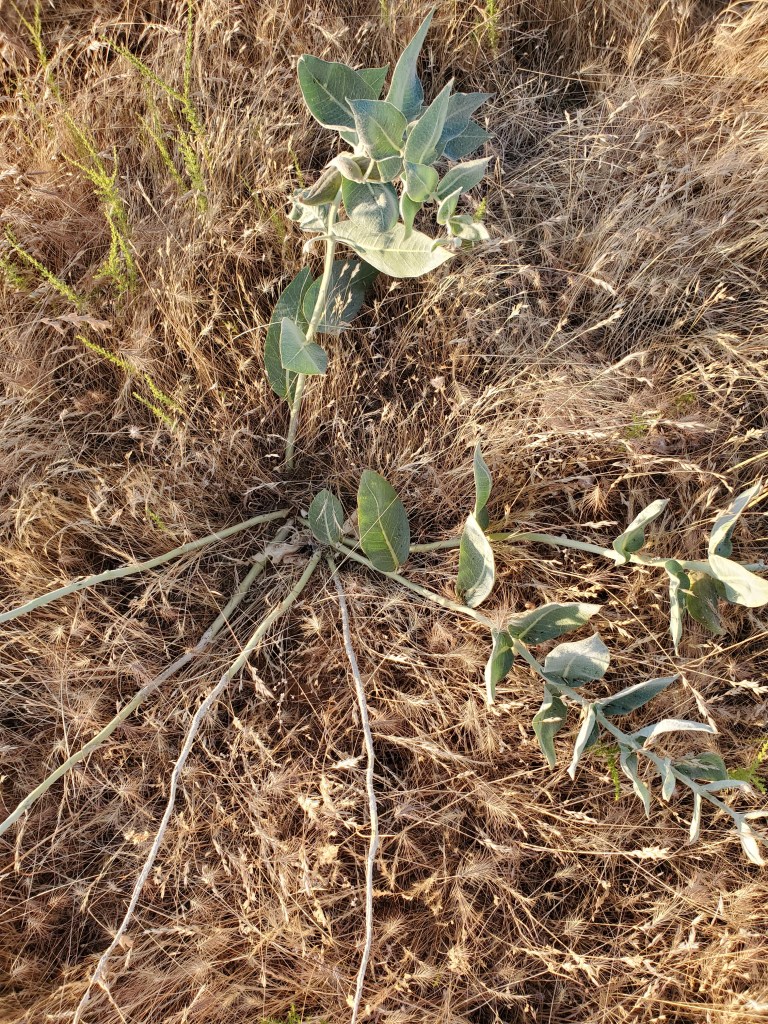
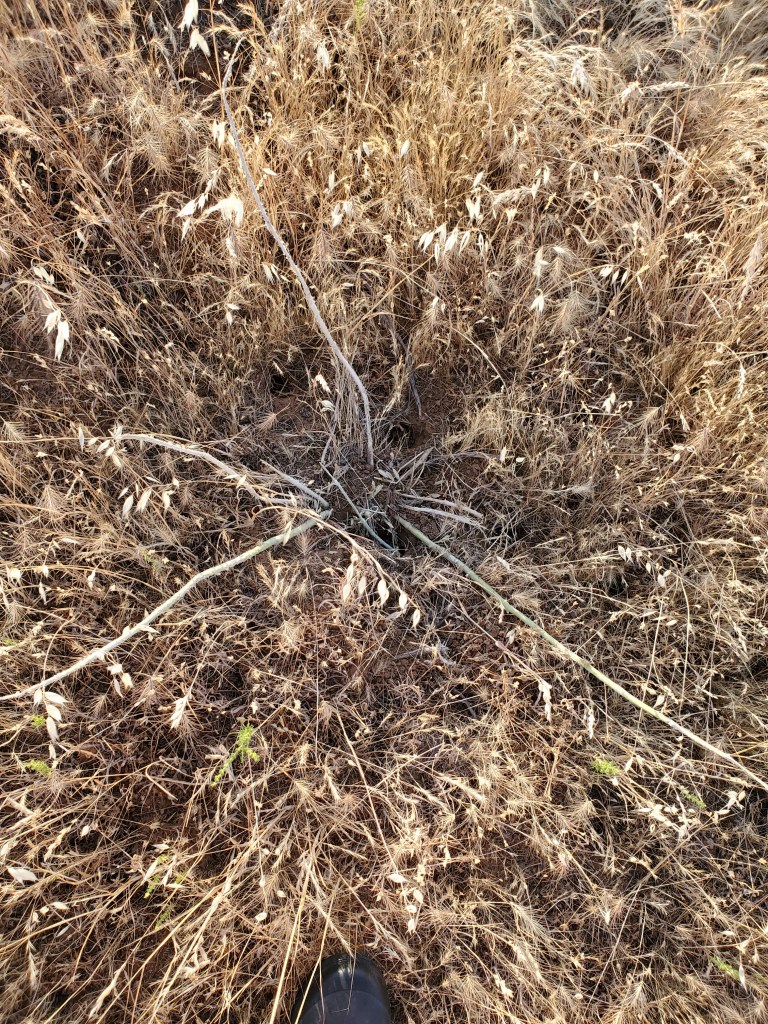
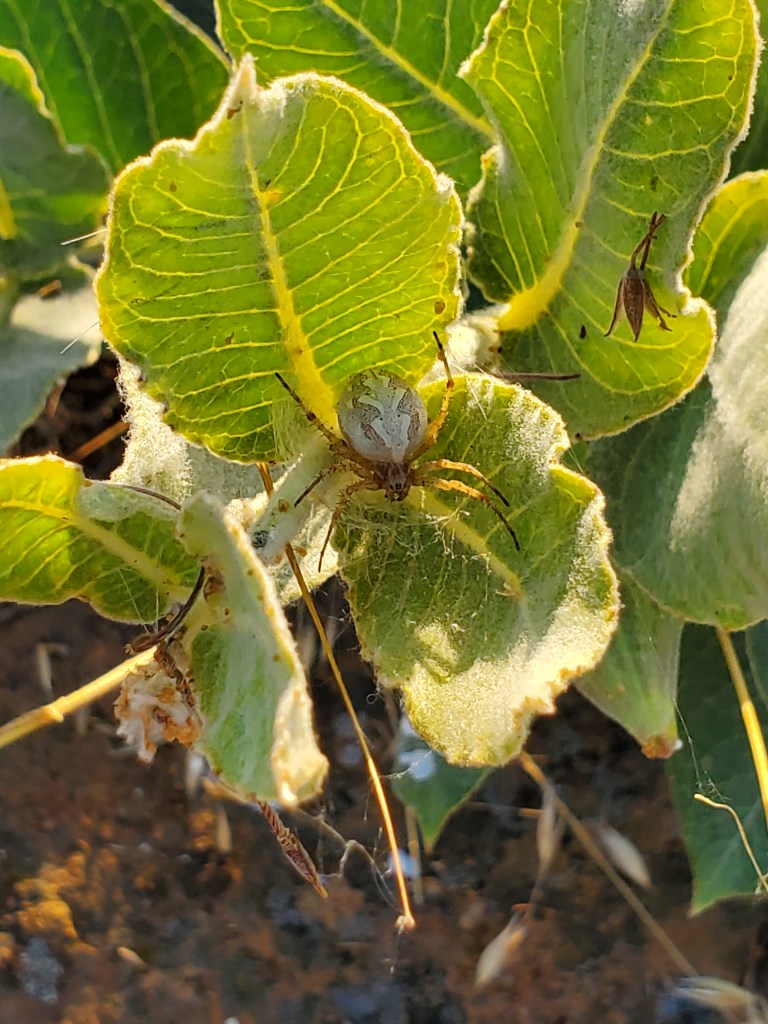

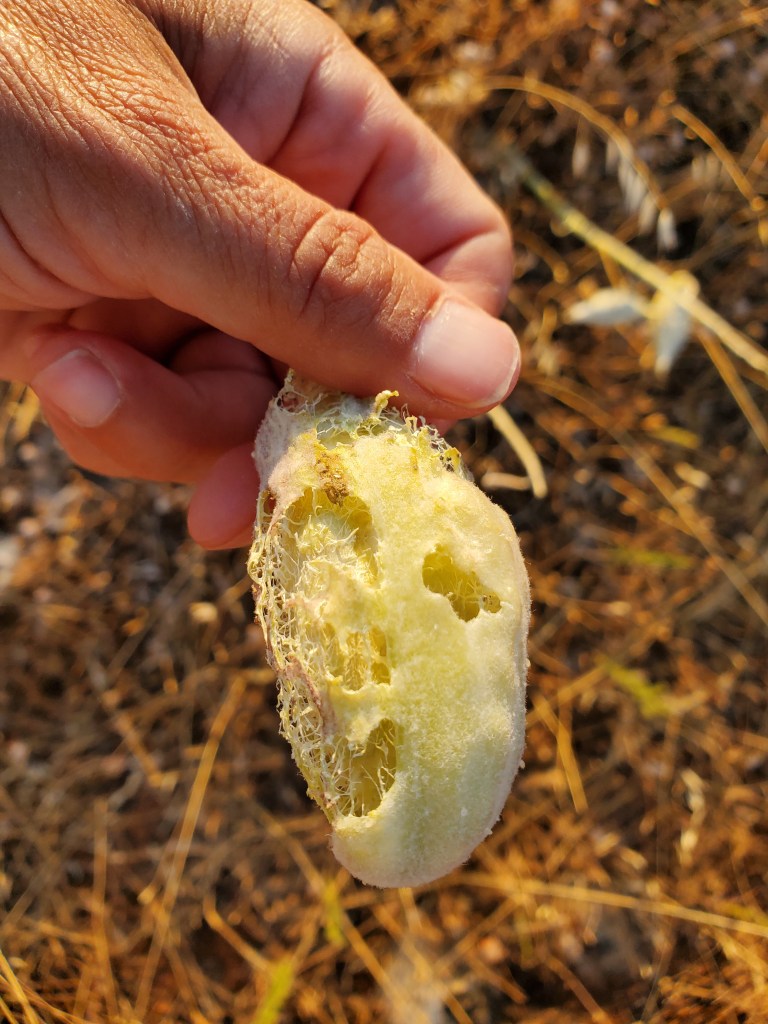
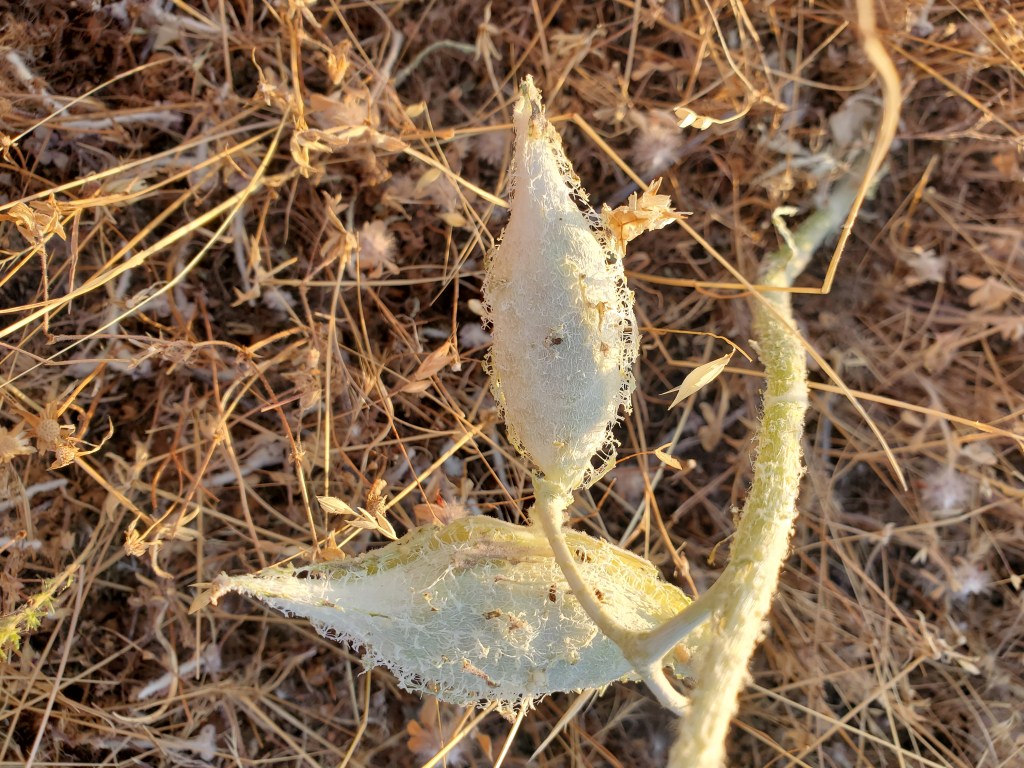
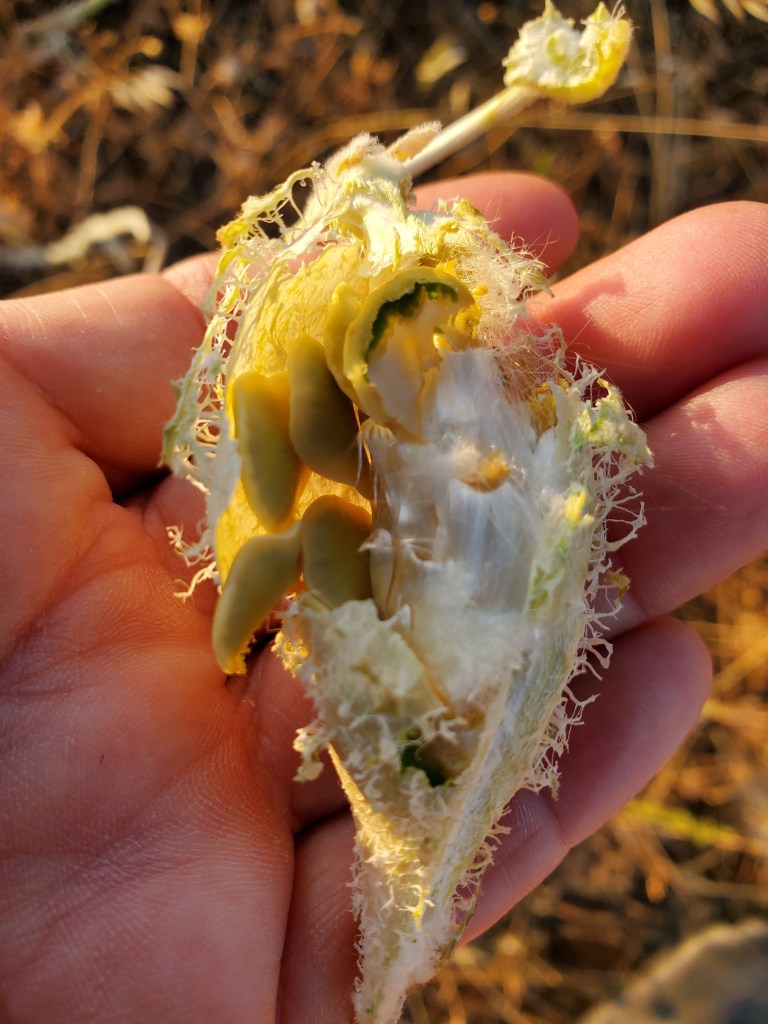

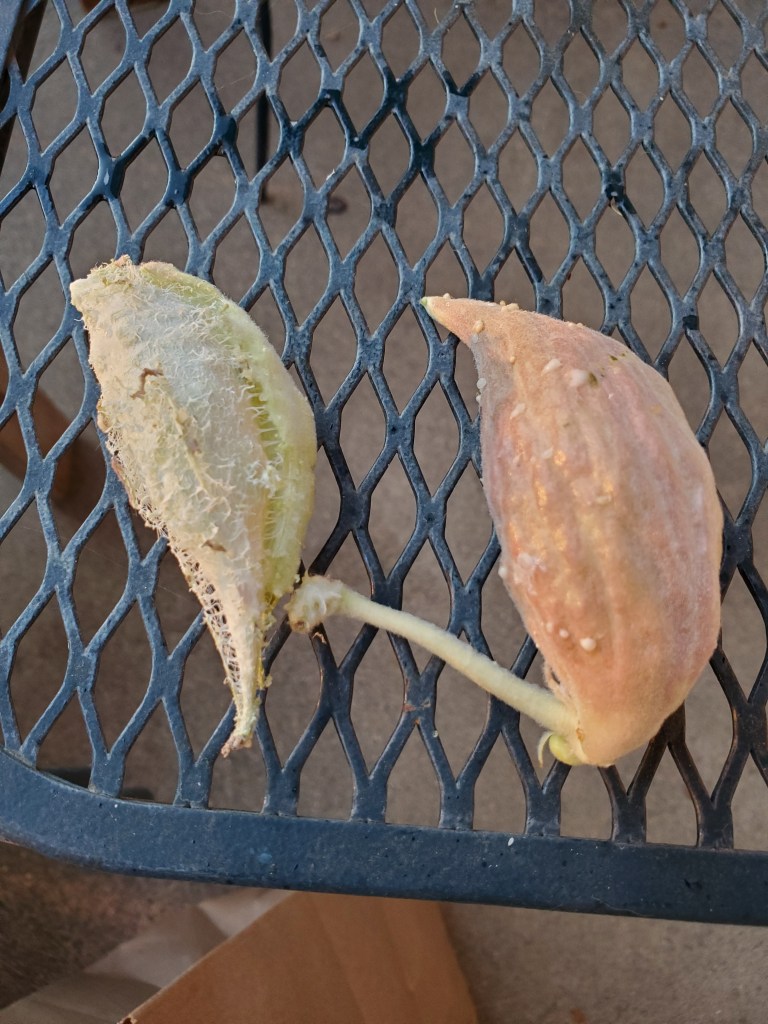

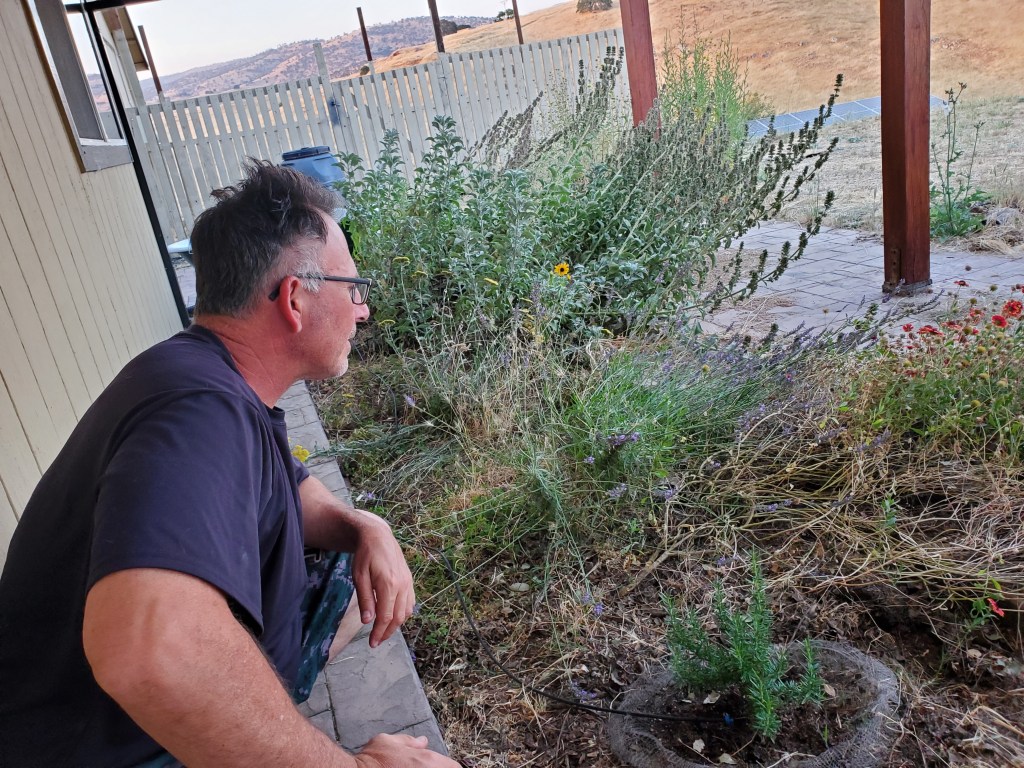
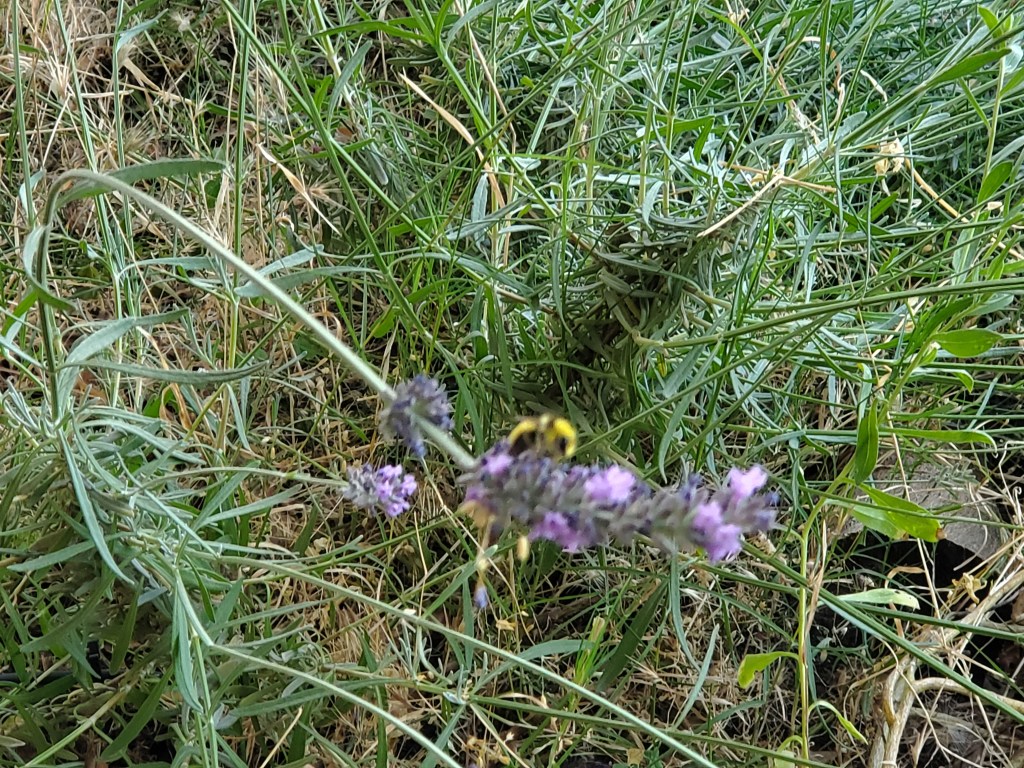
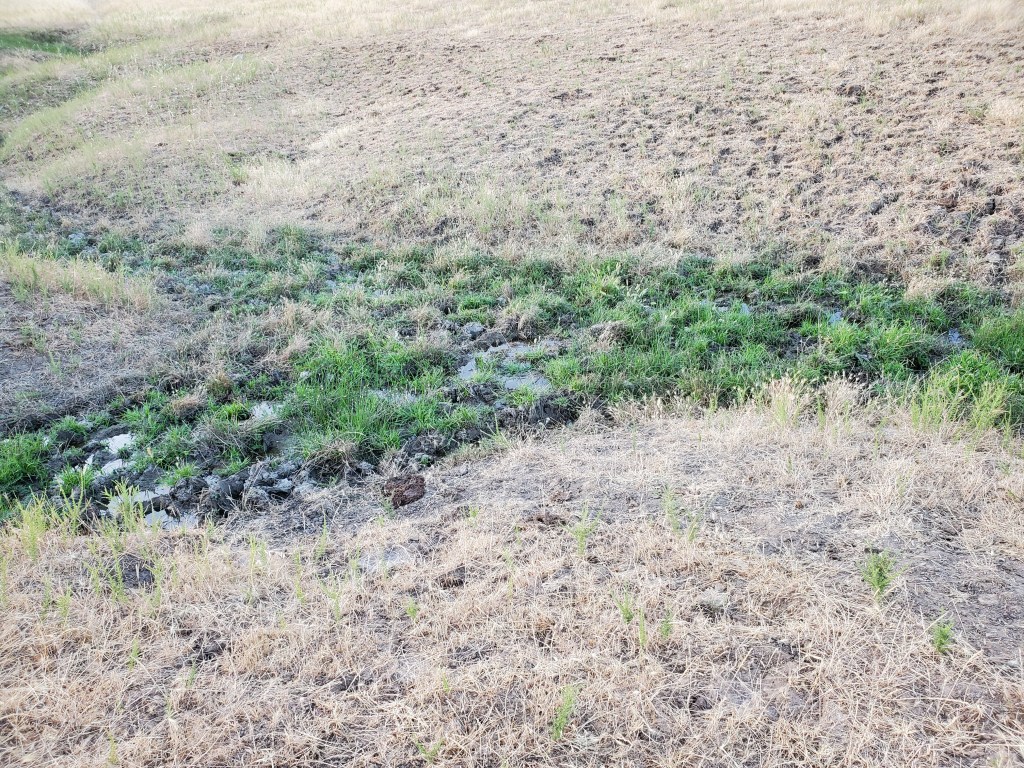

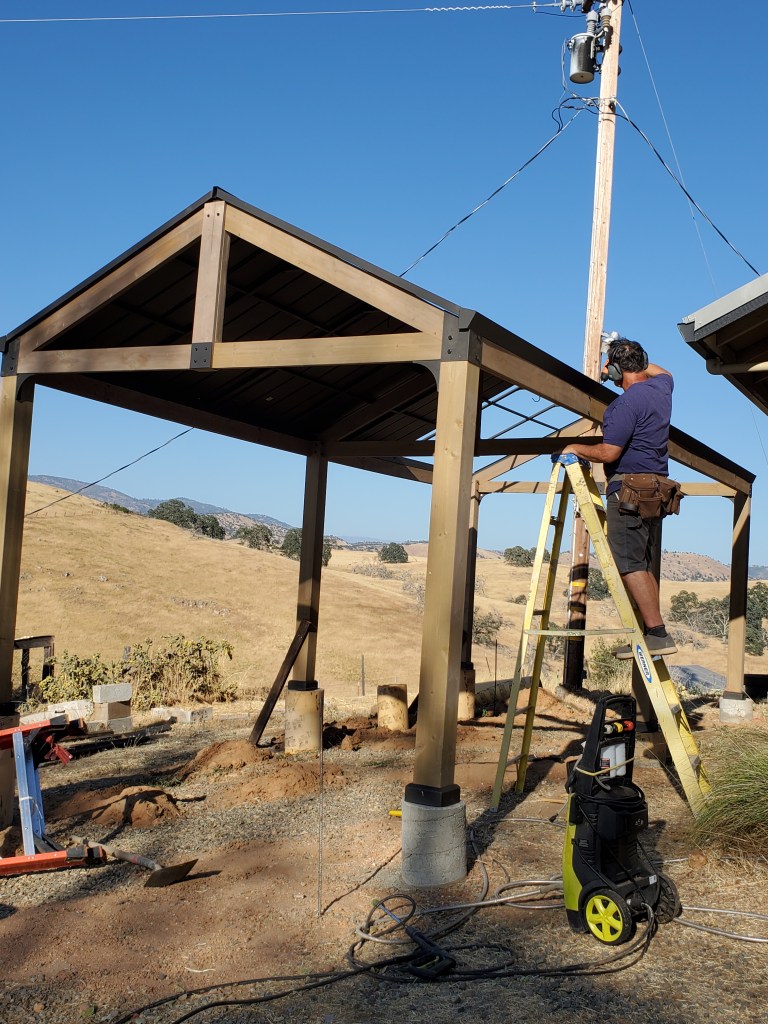


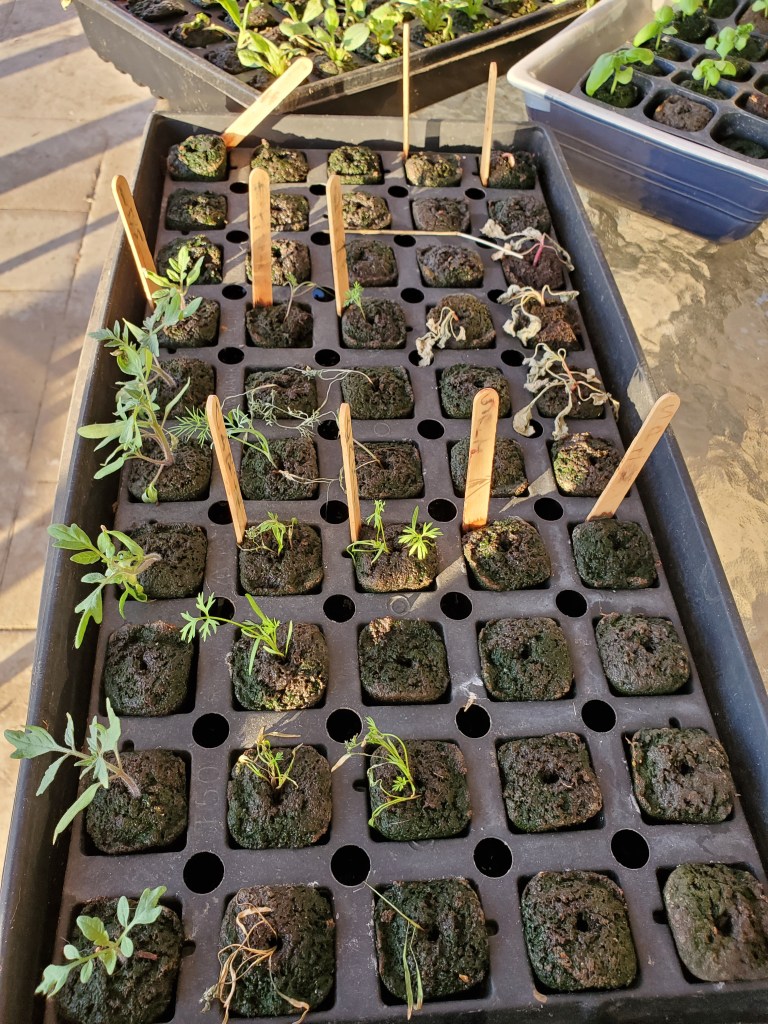

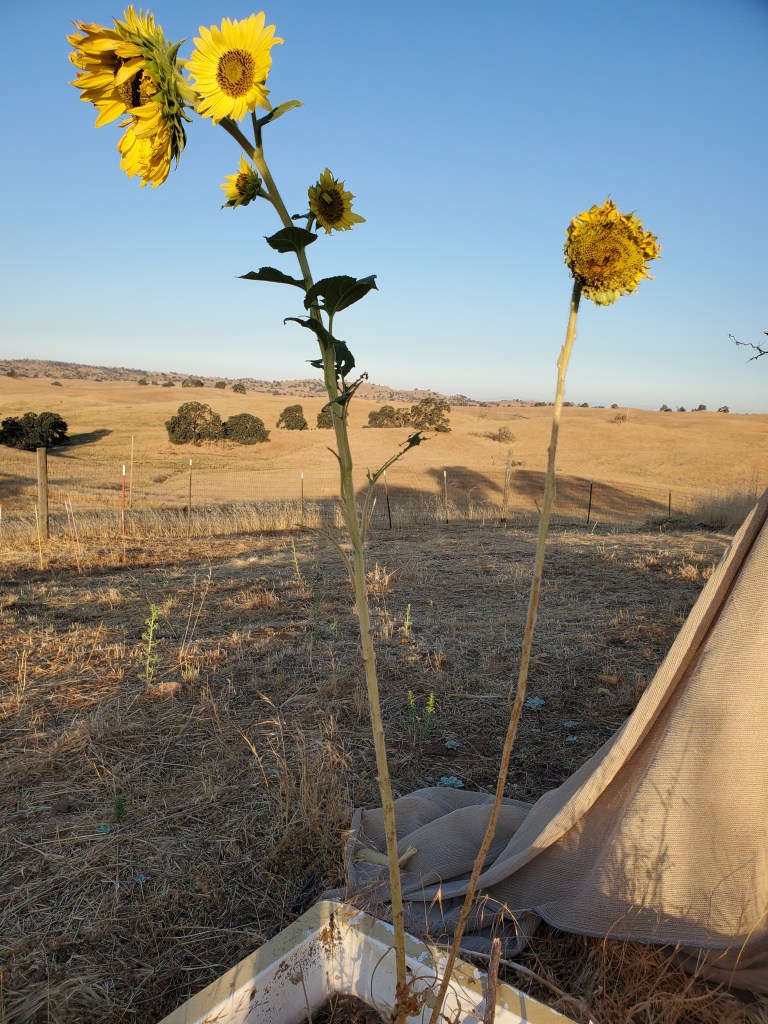
 PolliNative