
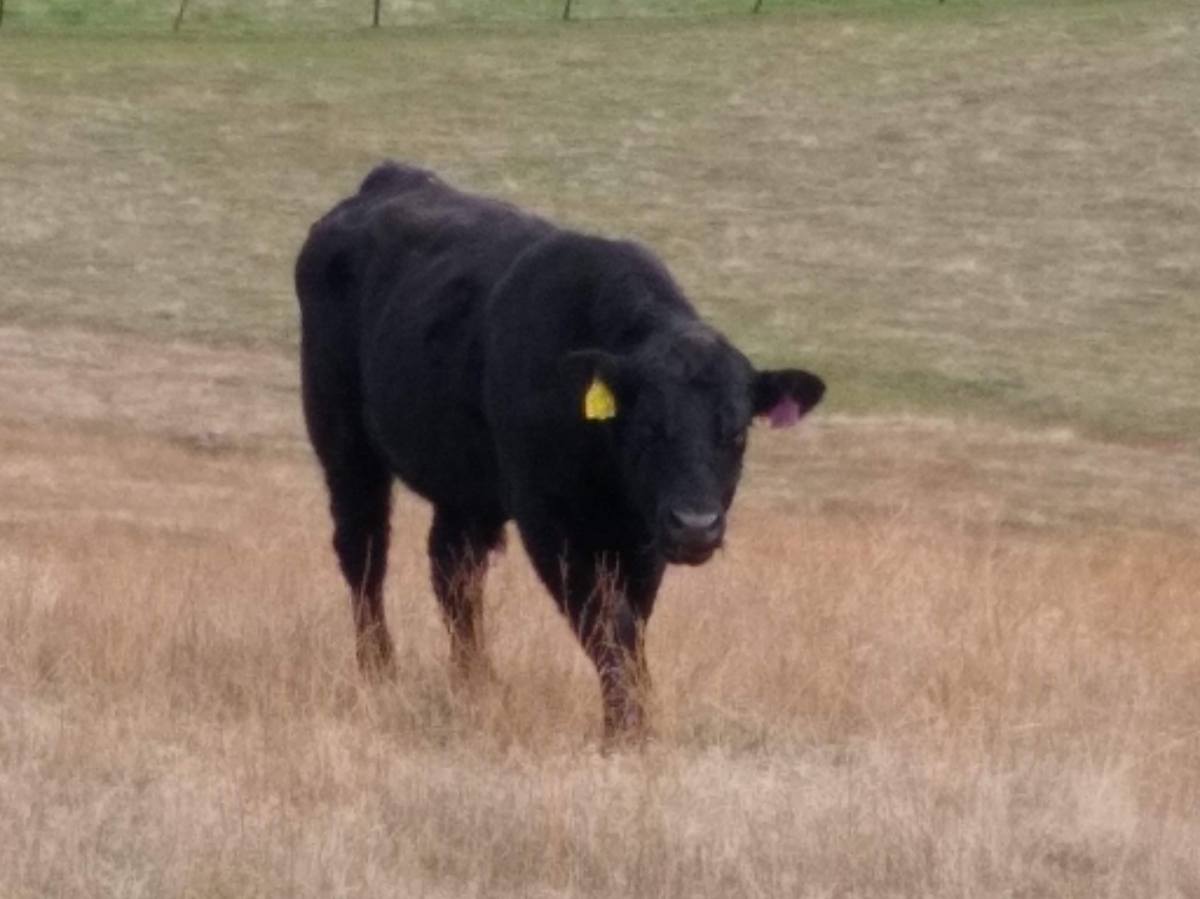
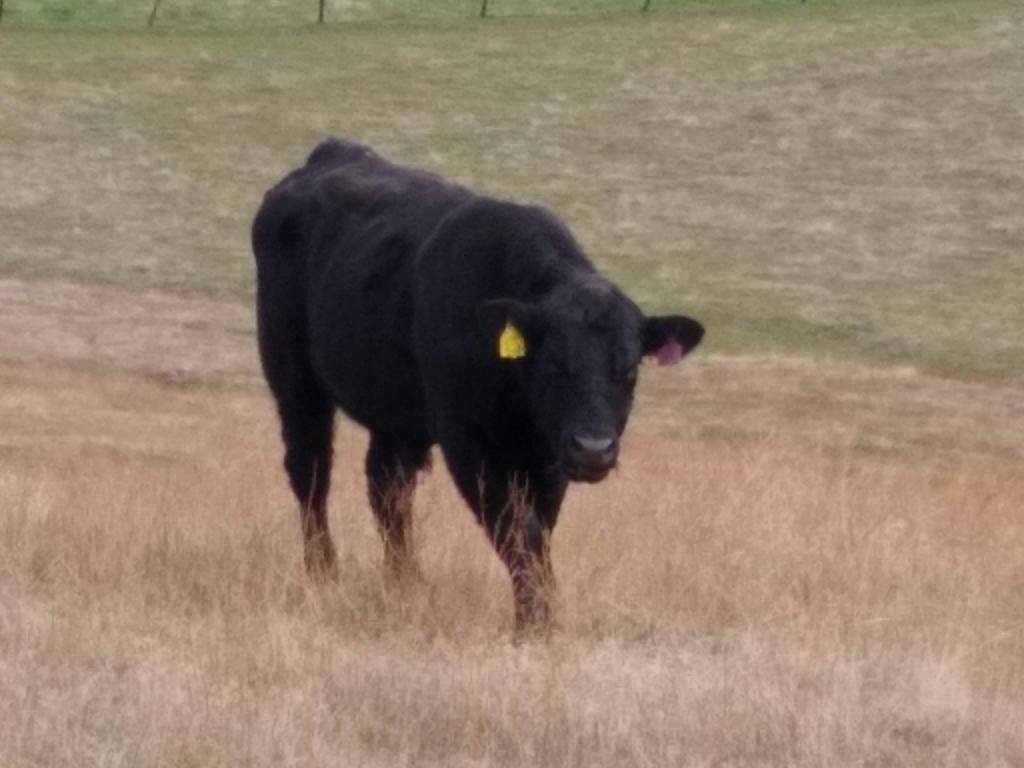
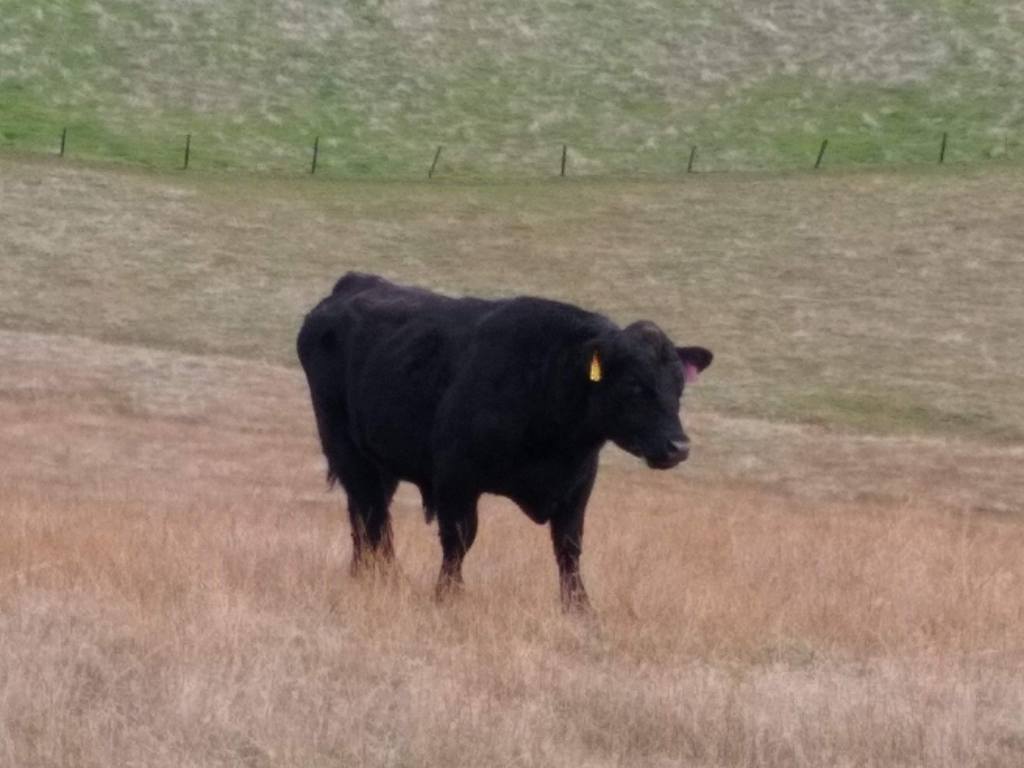
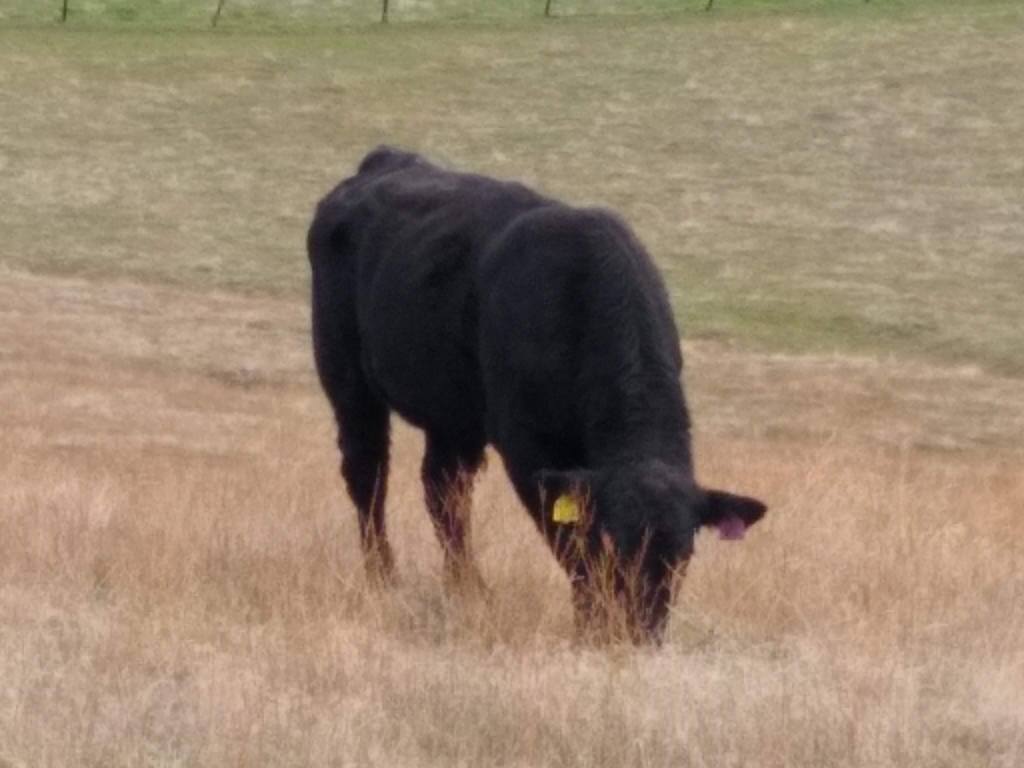
I love bulls. They are simply magic to look at with their size, muscles and intense stares. Fortunately, the bulls run by our cattleman here on the ranch are gentle. They would rather walk away than charge. Still…it is good to be real respectful of their presence – especially when they are around the ladies strutting their stuff. Remember, this is an 1,800+ lb animal. On my quad yesterday to do some watering, there was a big guy laying right in the path. I stopped. I looked at him. He looked– no he stared (intensely) — at me. After 45 seconds or so, I decided I would blaze a new trail to the northeast of him. Bull 1, Heather 0.
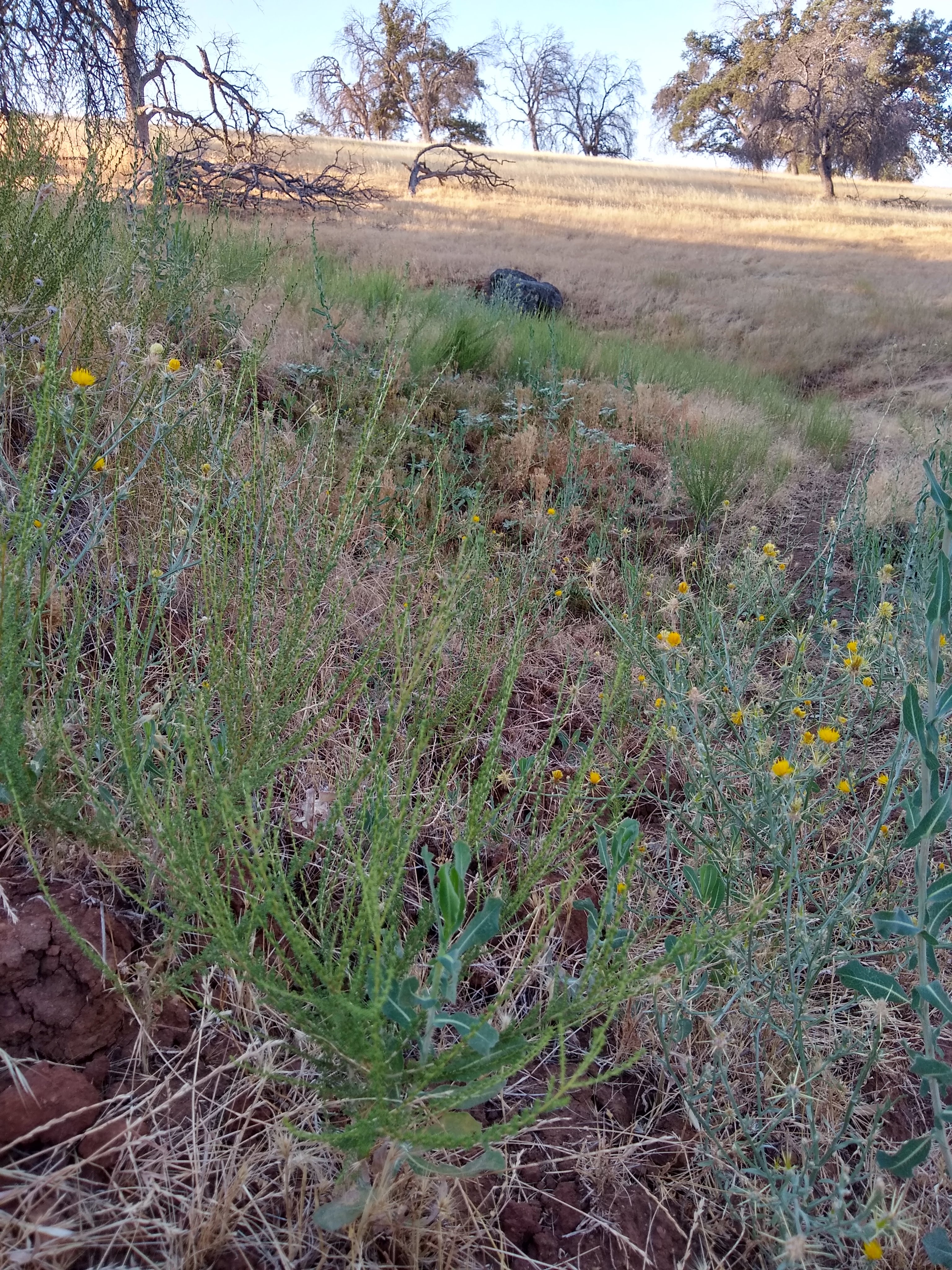
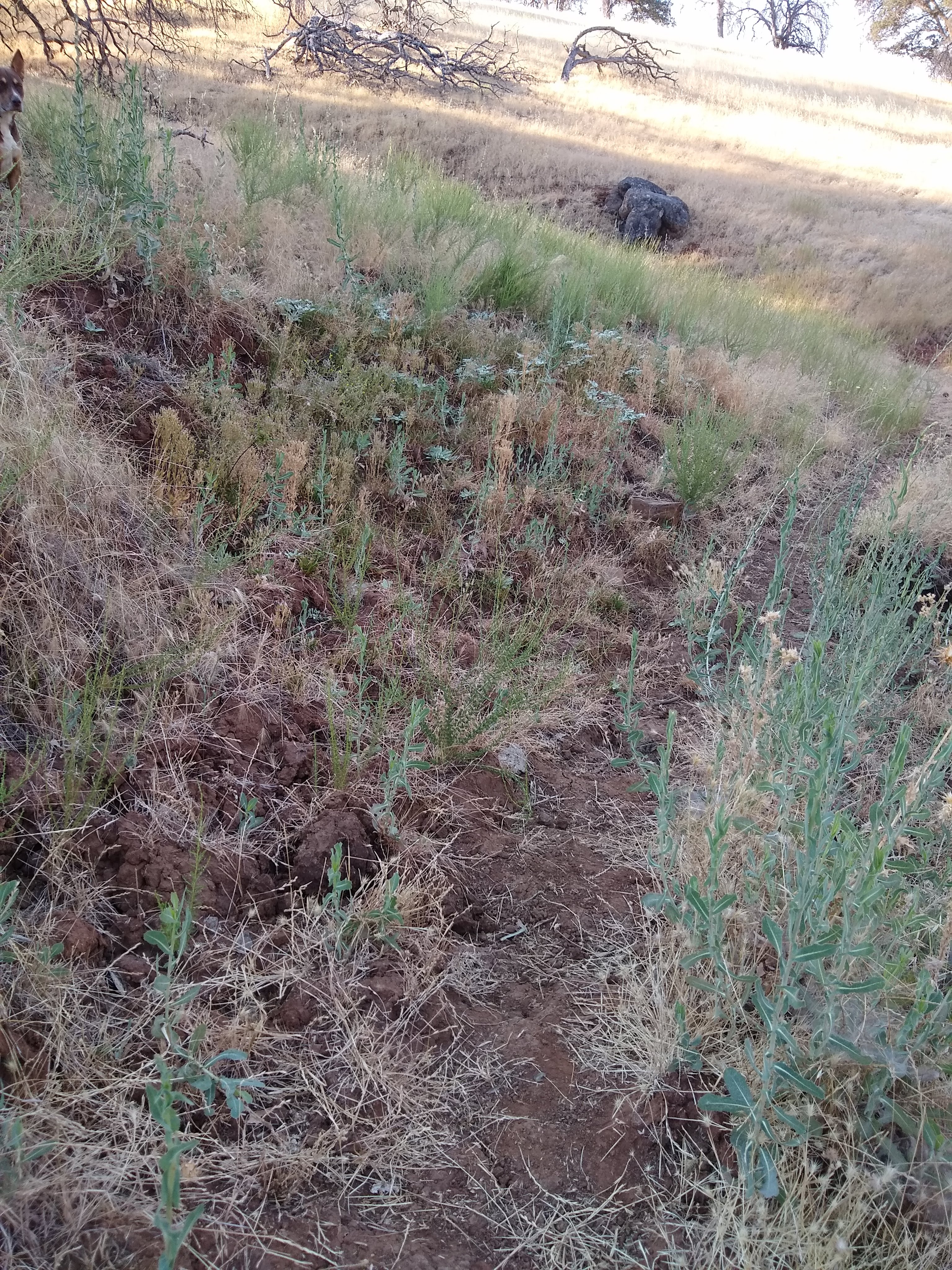
I have been checking the plantings in the branch fence (Site XR1) about every three days. Over the last six weeks, I saw that pieces of branch fence had fallen or had been tested by the cattle. The fence needed to be monitored and more branches placed every week or so. Last week, I noticed that the cattle had blazed a trail tightly alongside the enclosure. Hummm. This worried me. The fence had been tested just a week earlier resulting in me placing more branches on the east side. Now, it appeared that the cows were developing more than a passing interest. It makes sense that they would. With the limited precipitation, the grass is getting a bit thin on the ranch. By contrast, the creek beds are lush with growth. This is certainly true in the XR1 enclosure. More than grass is growing healthy and tall – quite an inducement to push in.
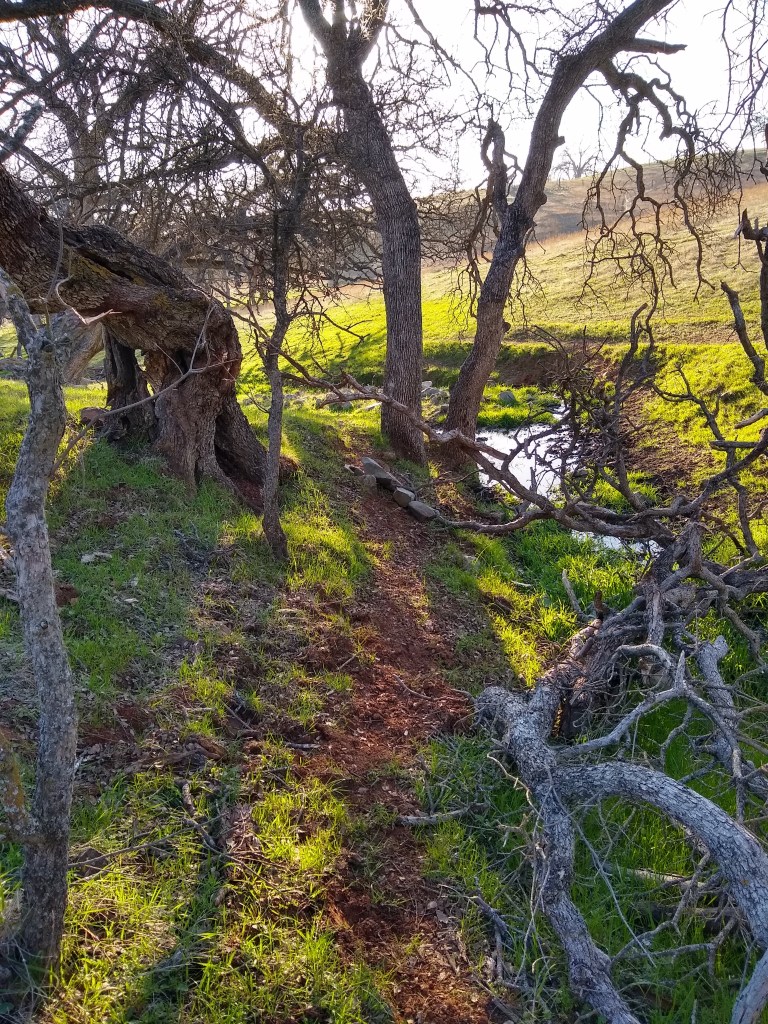
After seeing the path, I began to use rocks and other branches to block the path. Just up the hill on both sides of the creek are dead oaks with downed branches. In the last drought, we lost about 300 oaks across the ranch. It can be sad to see their ancient bodies in various states of decay. In this case, as I harvested the branches from the ground, I thanked the trees and limbs and told them that their remains will be used to promote new life so important to the health of this place. It is important to be grateful and respect all things.
I hauled the branches down from the hills, some lifted, but if they are large, dragged. Oak branches are tortuous – twisted and gnarled. This is a good thing for the fence. The twists of the branch tangle with the others. My goal is to lock them together as much as possible to promote strength. They also create width in an attempt to keep the cattle as far a distance from the planted area.
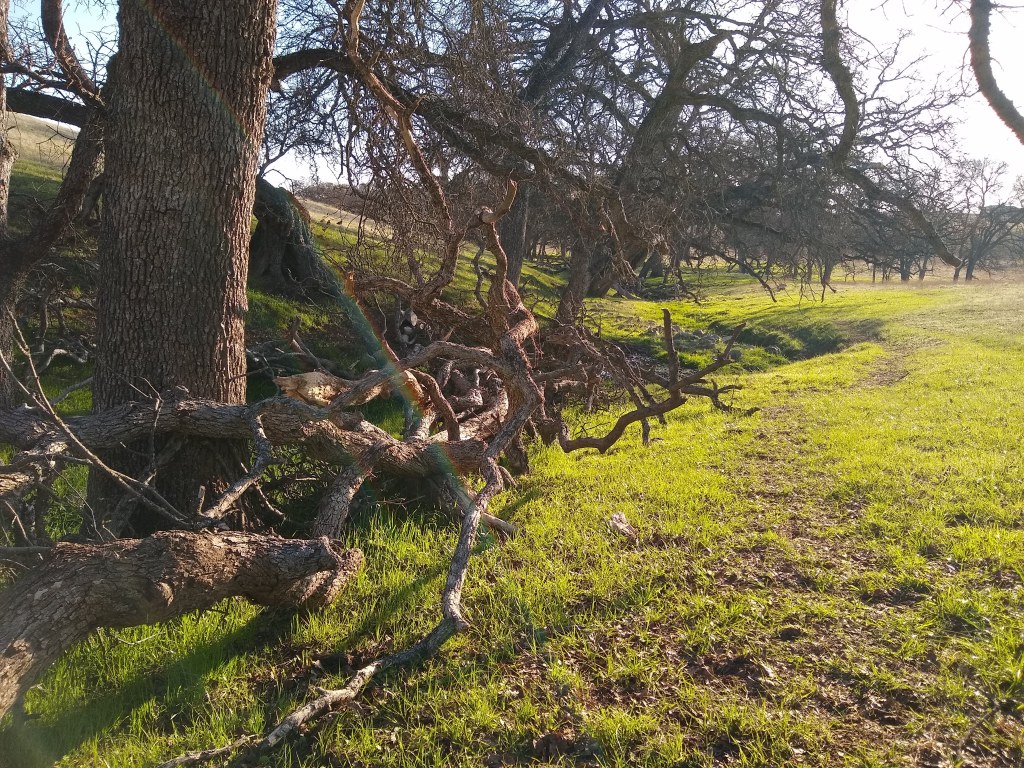
Currently, I fit my ranch work in before and after the end of my work day and on weekends. Especially in the fall and winter, when the days are shorter, I do not have much time to get things done. I did as much as I could before sunset, hoping it was enough.
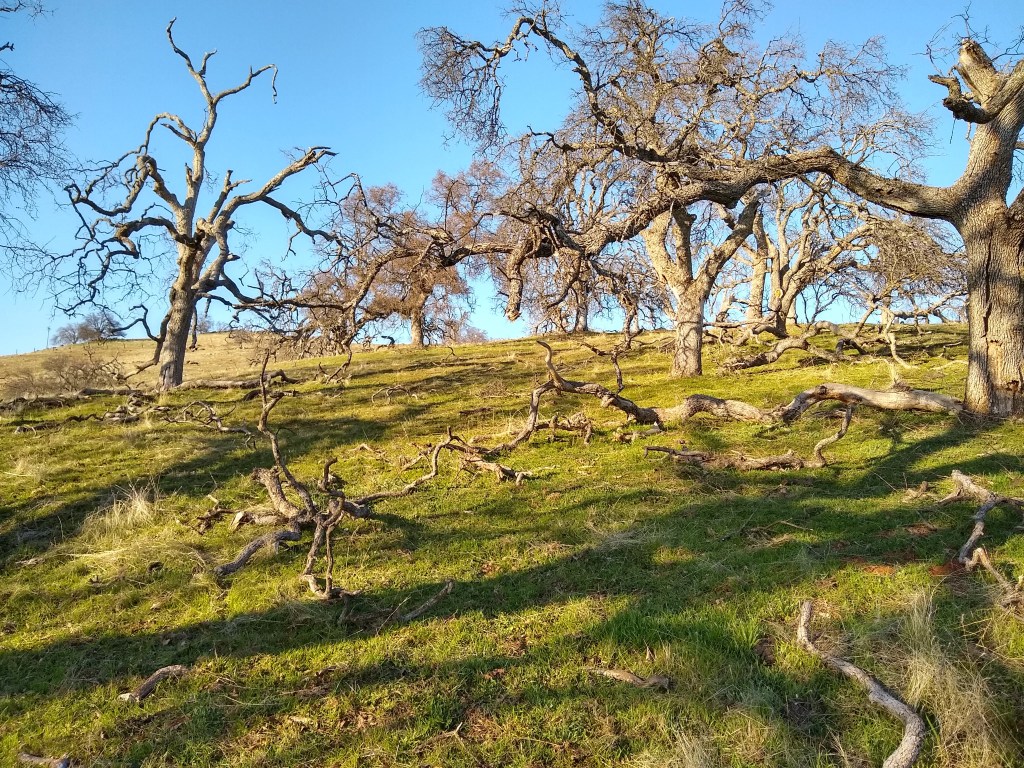
Stand of dead oaks and downed branches 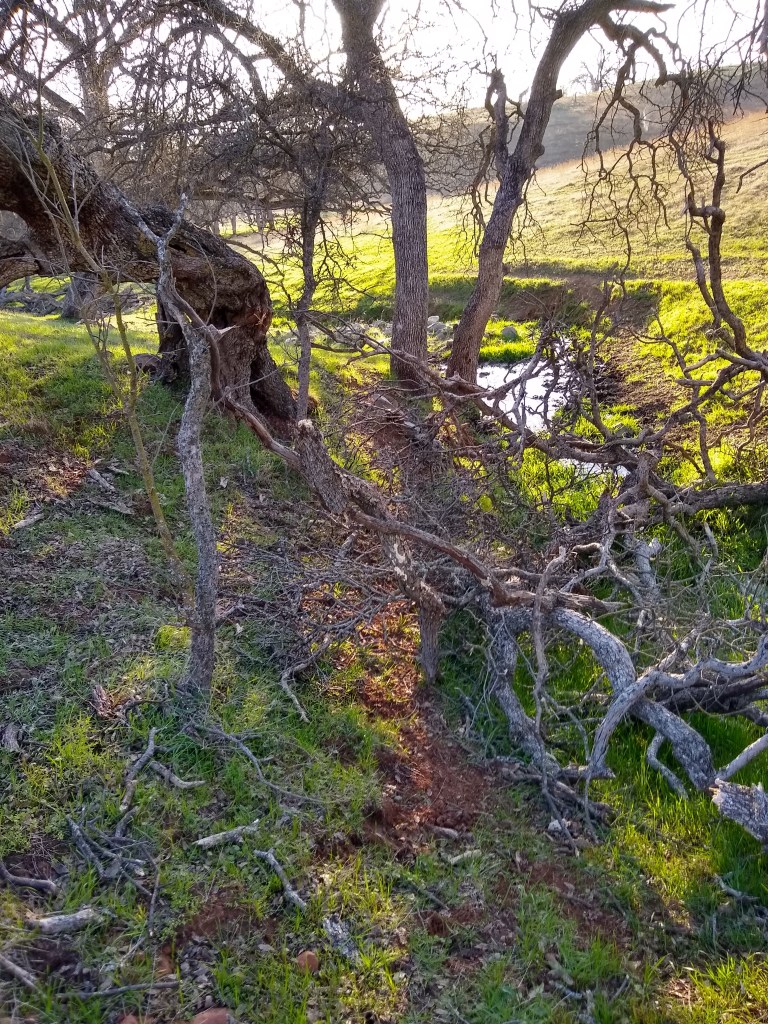
Beginning to block the path 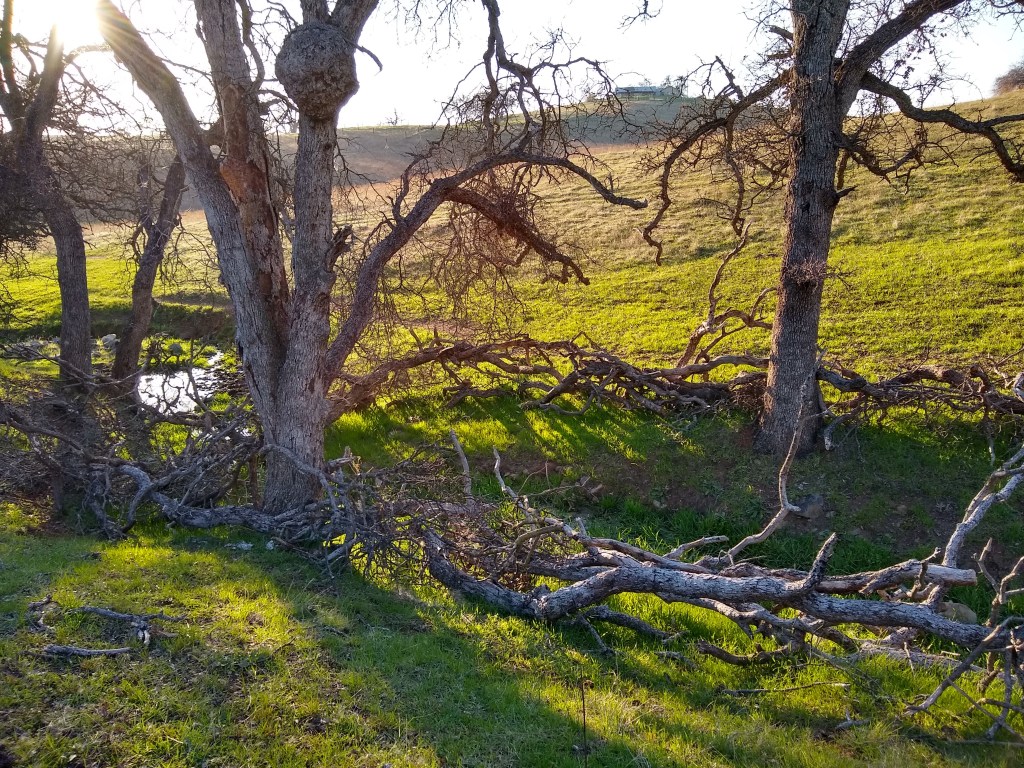
More bushy branches 
Helper 1 
Helper 2 
Worked until sunset 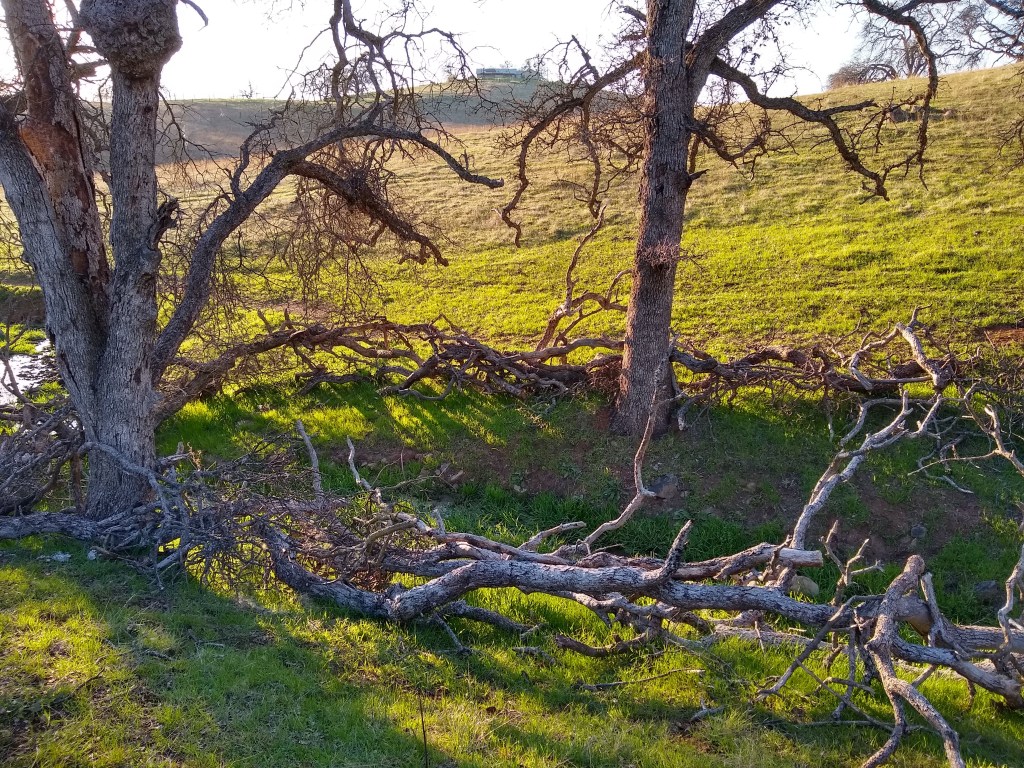
Adding even more 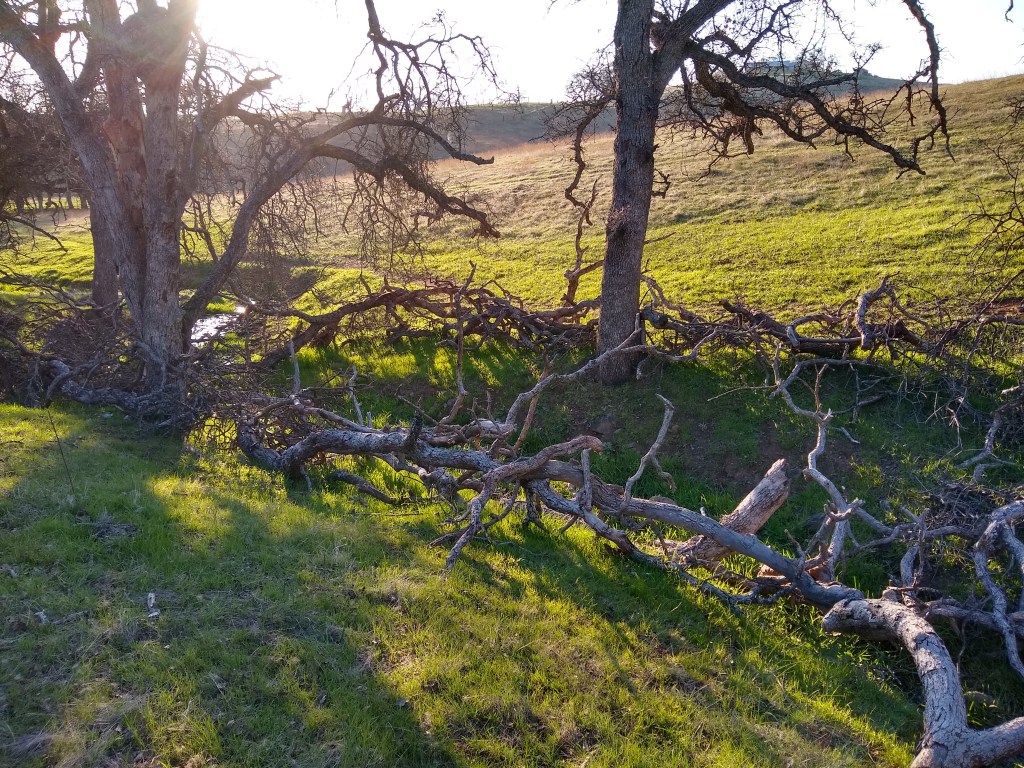
Blocked trail
Despite having spent considerable time shoring up the fence, I checked back the next day. What I saw shocked me. There was a cow pie inside the enclosure. Horror!
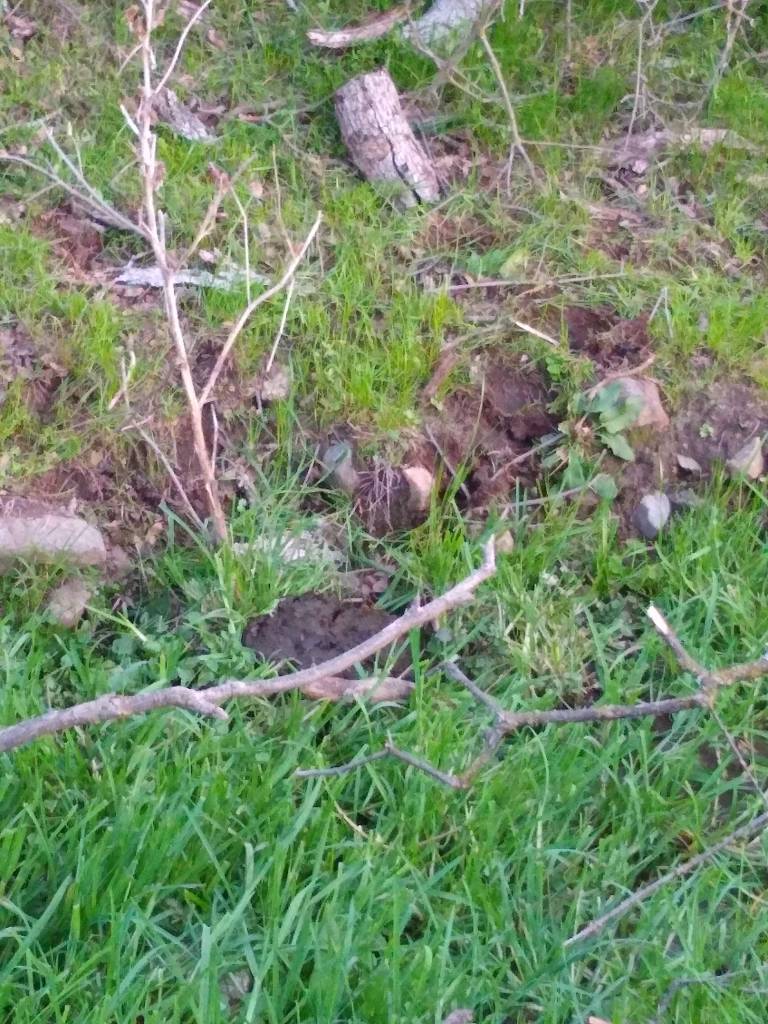
I looked around the entire fence. The breech was on the north side. I had built up the south, east and west sides, but felt the north looked fairly solid. Clearly, I was wrong. My heart was in my stomach terrified of what plants I might find gone or trampled. Luck was with me; all the butterfly plants were still there and intact. One had been pulled at, but had not been pulled out. I could breathe again! I tipped that plant back upright and patted tight the soil around its base. It looked like the intruder, enticed by the lush lengths of green, passed the currents and went right for the grass. The cow pie was smaller in size, so I guessed the interloper was an older calf or a young heffer. Usually, you can tell the difference in the poop. Calves have a slicker output since they are still taking milk, but the pie was in the water – so no telling who it was.
No matter, I began hauling branches to shore up the north side. I was not prepared with proper clothing, such was my hubris about the thicket I had installed. If anyone ever wonders why they see people working on the ranch in long sleeve shirts in the summer, it is to protect your skin. I was desperate to fix the hole immediately, so I worked despite having shorter sleeves on. My skin was scratched and bruised, but the hole was filled. Oh well. That is life on the range.

Wildflowers
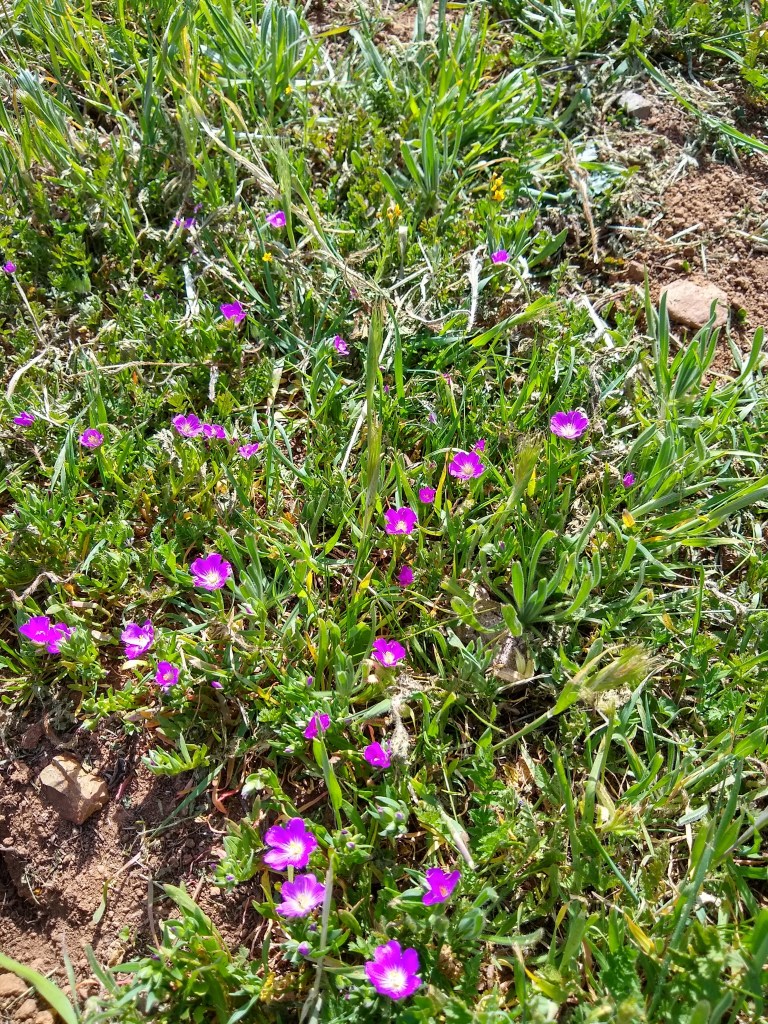
Several blog posts ago I discussed that David and I planned to cut the grass early this year to see what would grow. It was a good idea that David proposed. We typically leave the grass to grow long thinking that it would protect the top soil and help the soil retain moisture by protecting the soil from wind and shading it. We cut the grass in February and found that we had a proliferation of wildflowers.
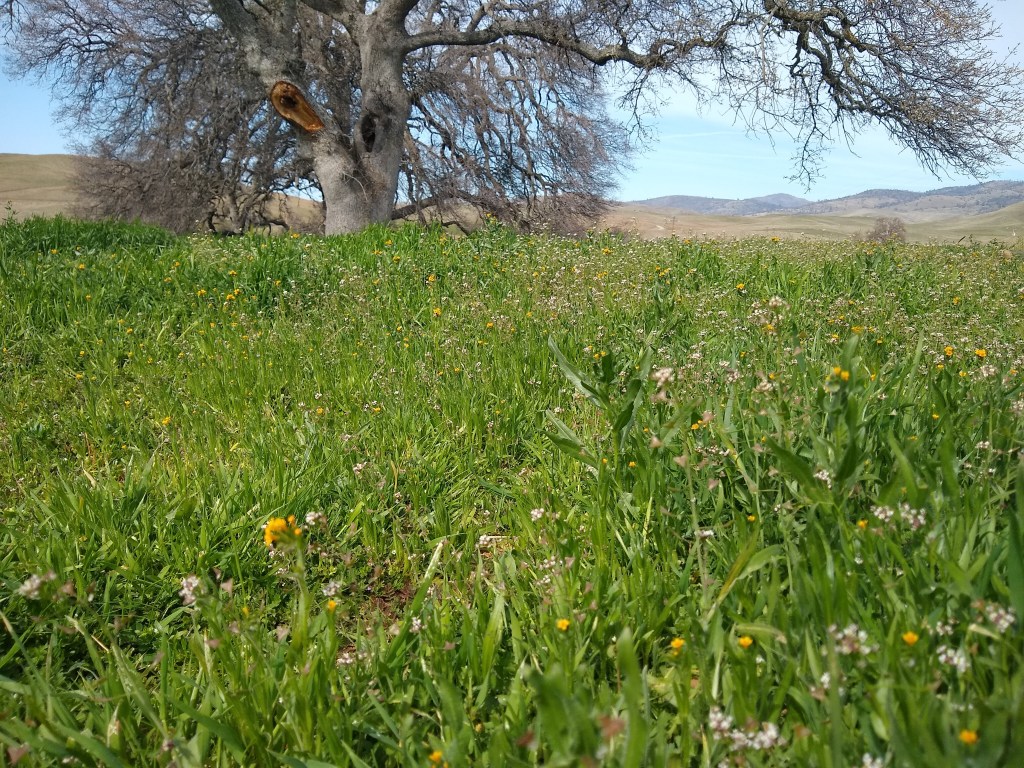
The small white flowers that popped up were the same ones that we always see on the cattle road. They are the first to bloom and fill the air with nectar. How exciting it was to have them in such large numbers near the house. The bees are loving them. We also have a proliferation of the small magenta flowers near the house, which we typically see in smaller amounts. Of course, the timing and amount of rain impacts what grows too. Shortening the grass so that the sun could hit the soil and seed significantly contributed to the larger amount of wildflowers. We will continue this practice.
The blue dicks and poppies are blooming. We get both of these regularly. It is so much fun to see the empty stems pop straight up out of nowhere knowing there will be a blanket of purple in a few short weeks. The manzanita planted last year with the Xerces hedgerow kits are blooming. What gorgeous pink blooms. The coyote mint has finally taken off. I am looking forward to their scent. The lupine is growing well, but will not bloom for a little while longer. Lady bugs are all over the plants. What a welcome site. Finally, I found a remarkable surprise – soaproot. I have seen it on the ranch here and there, but the cows always eat it before I can try to protect it. For the first time, I found it in the house enclosure. What a joy. It is a traditional plant my Mi-Wuk cousins used for grooming.
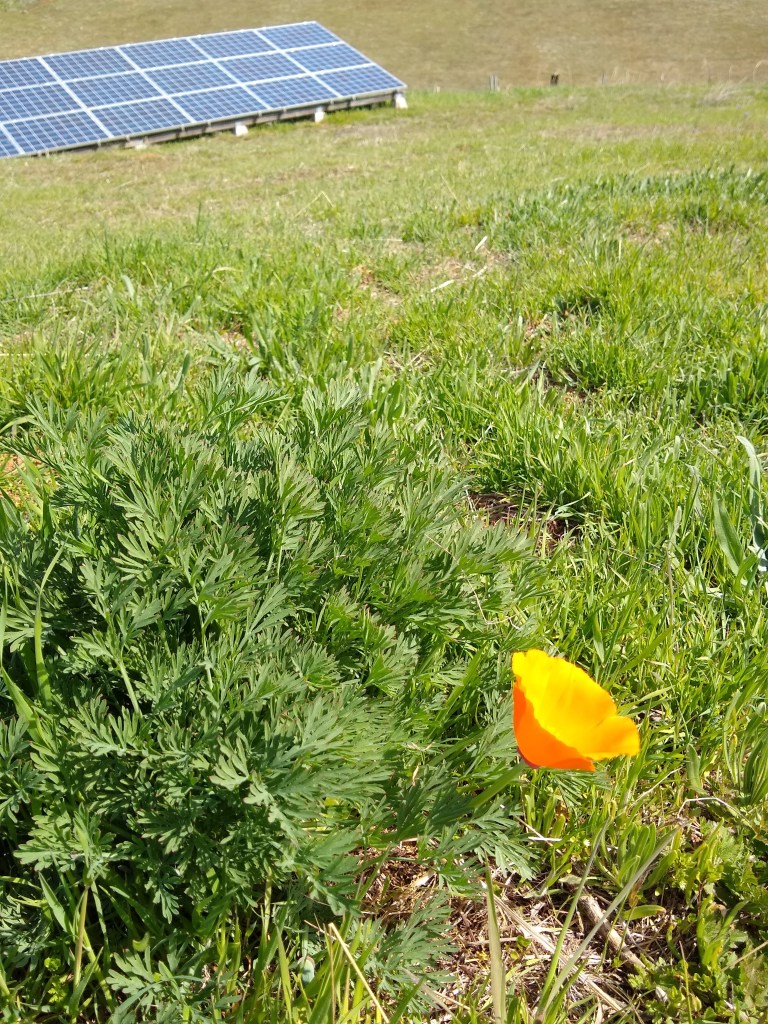
Happy poppy 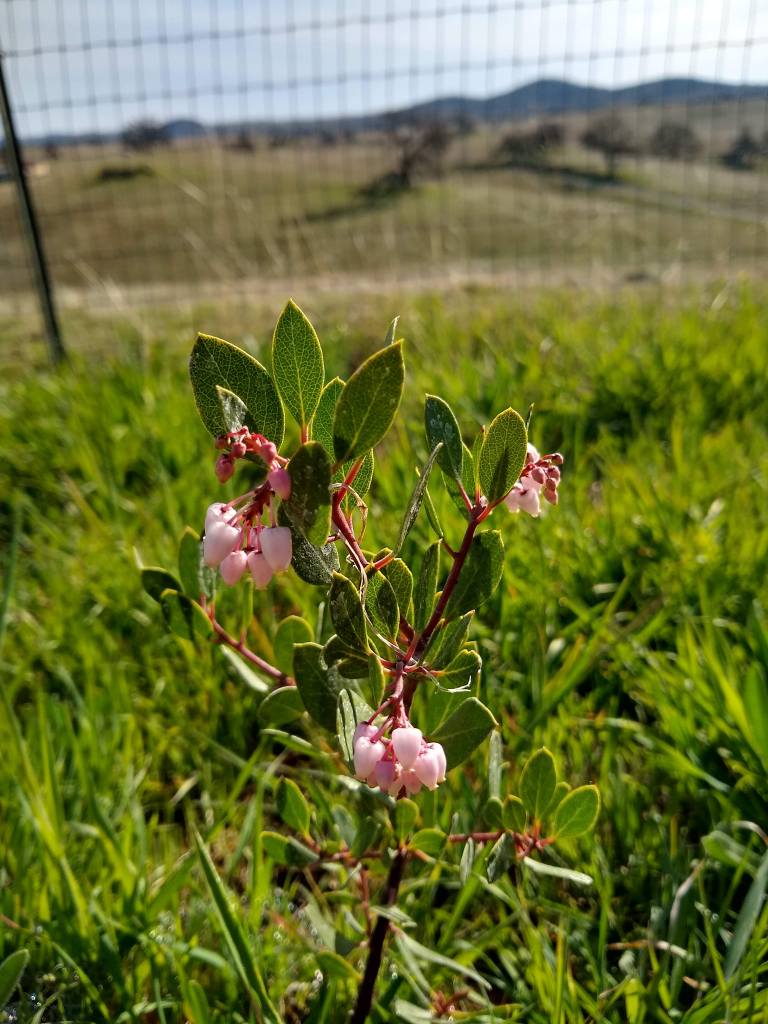
Manzanita blooms 
Soaproot! 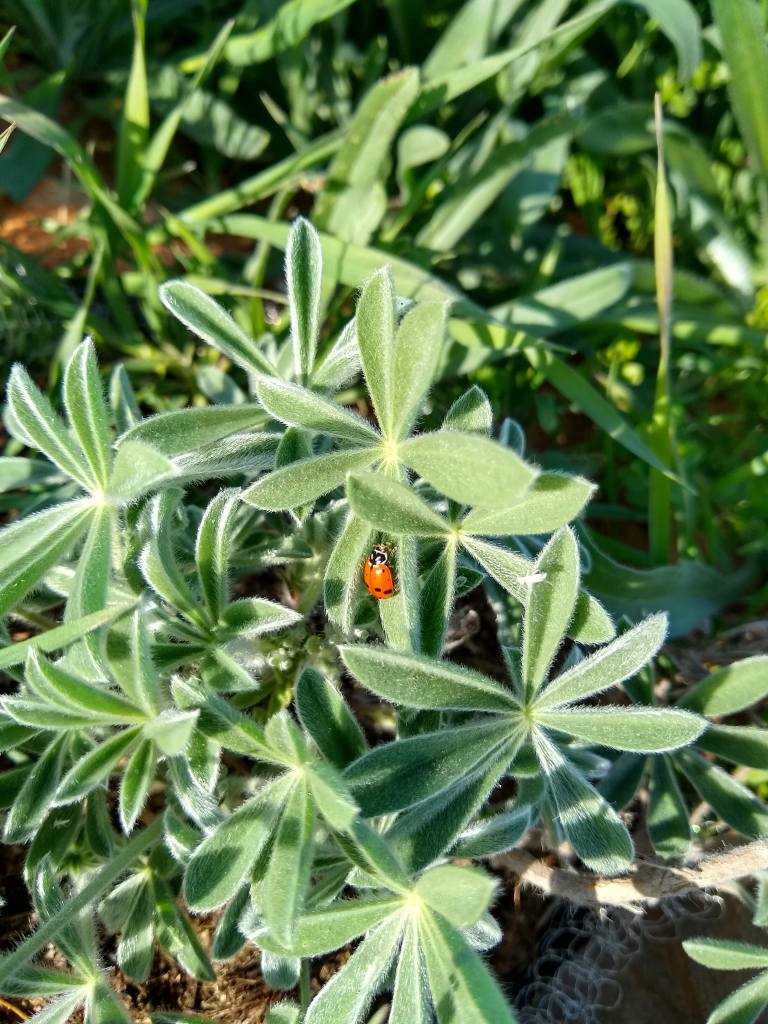
Lady bug on lupine 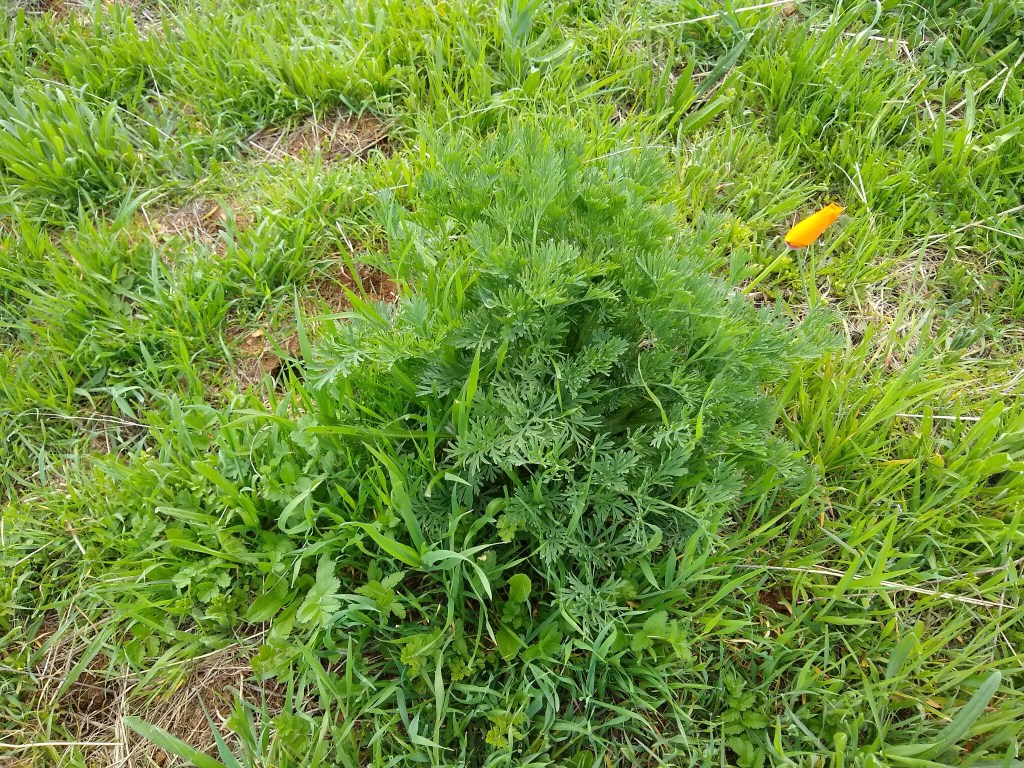
More poppies 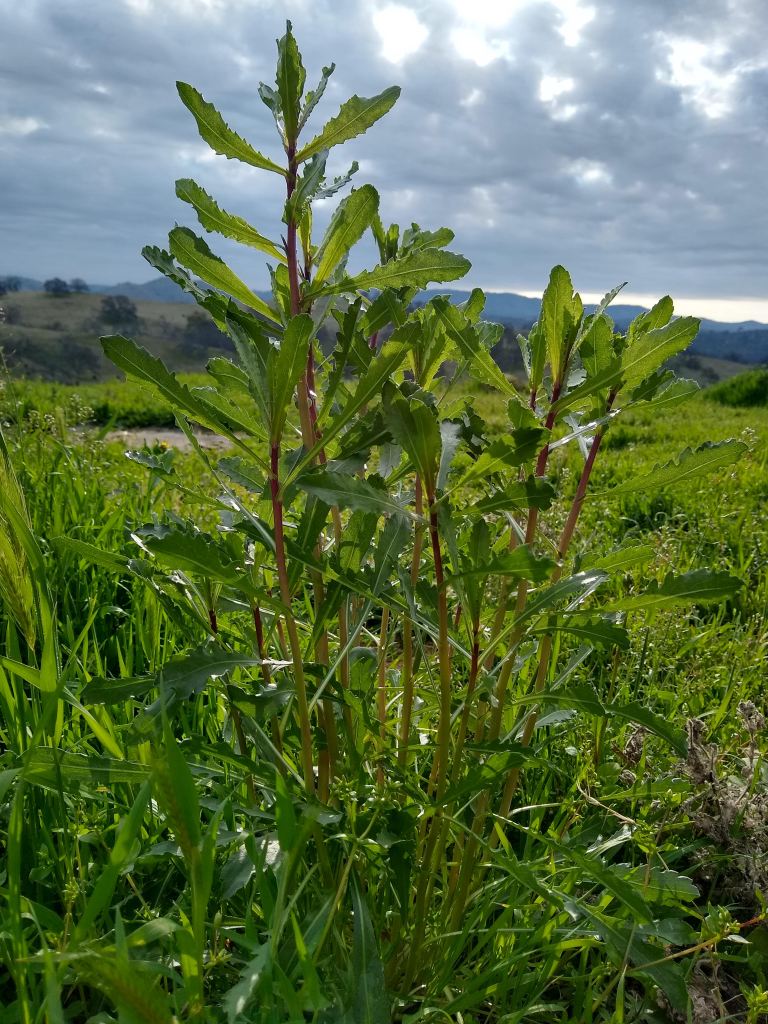
Coyote mint 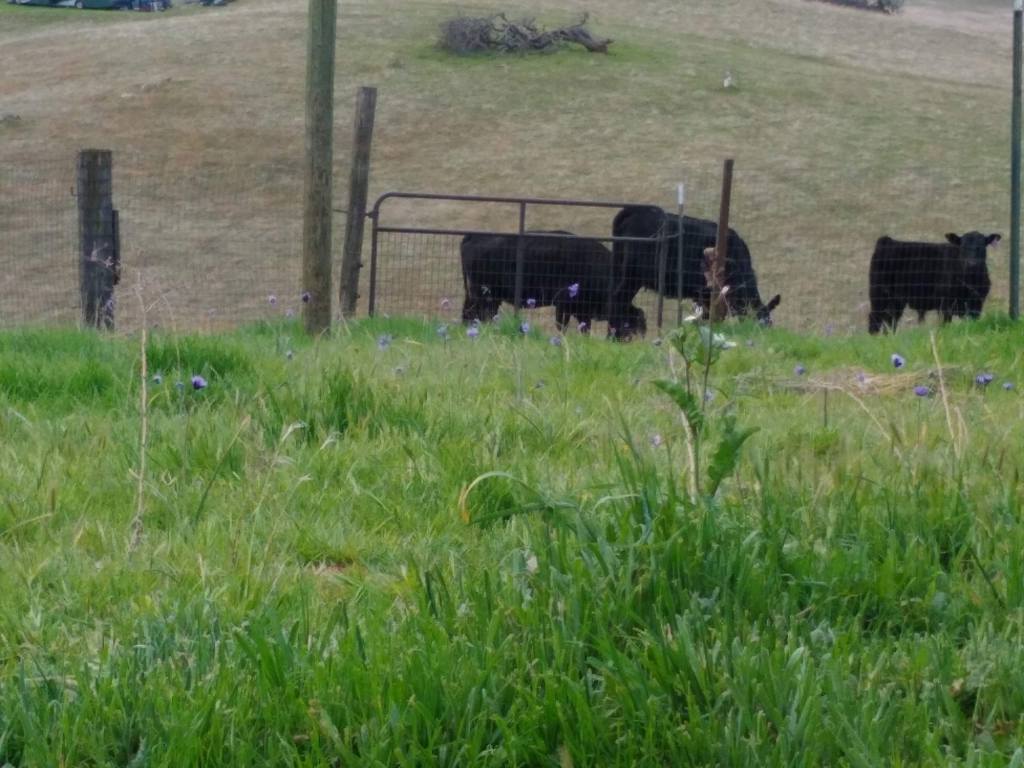
Blue dicks on the south hillside
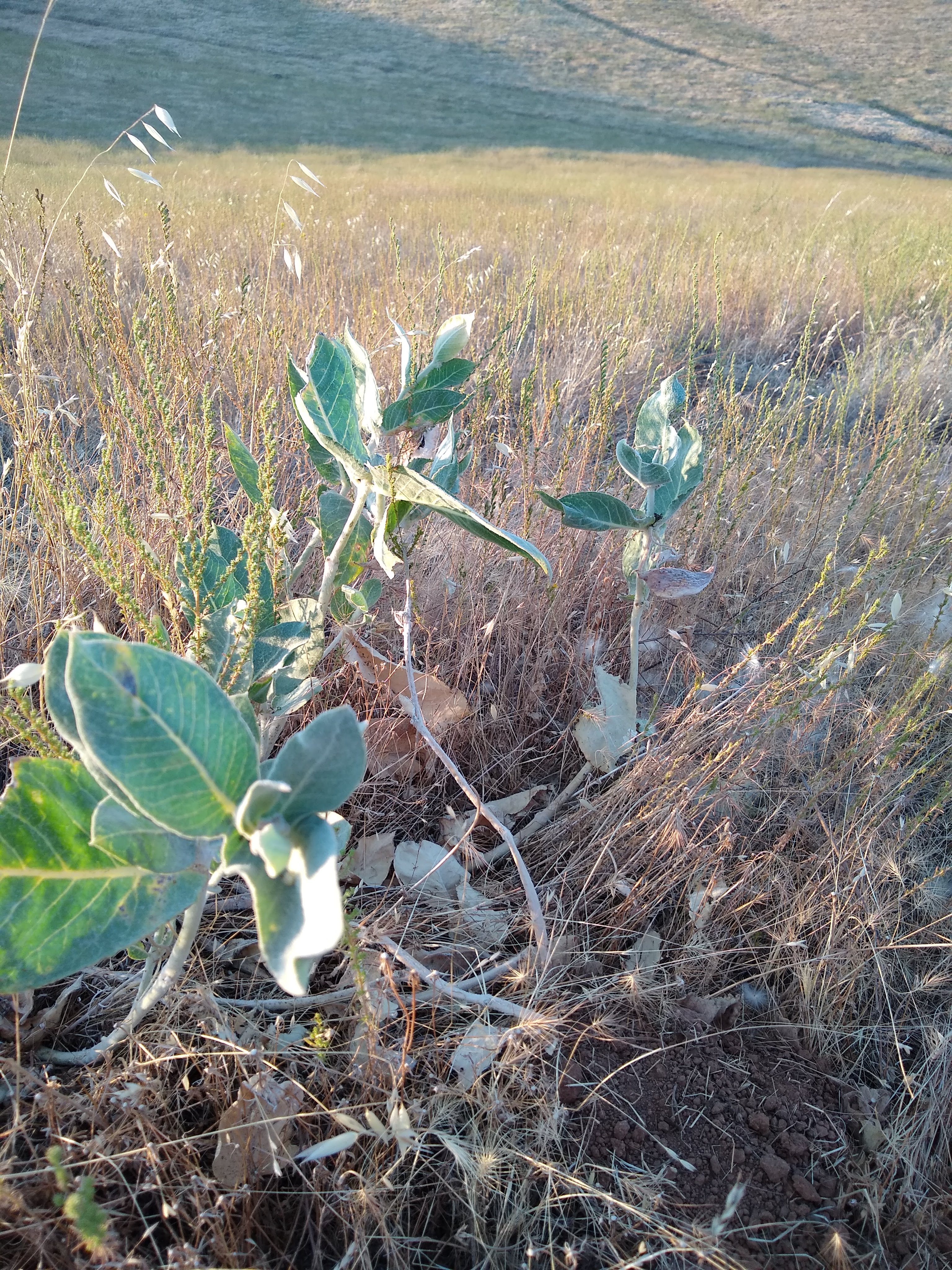
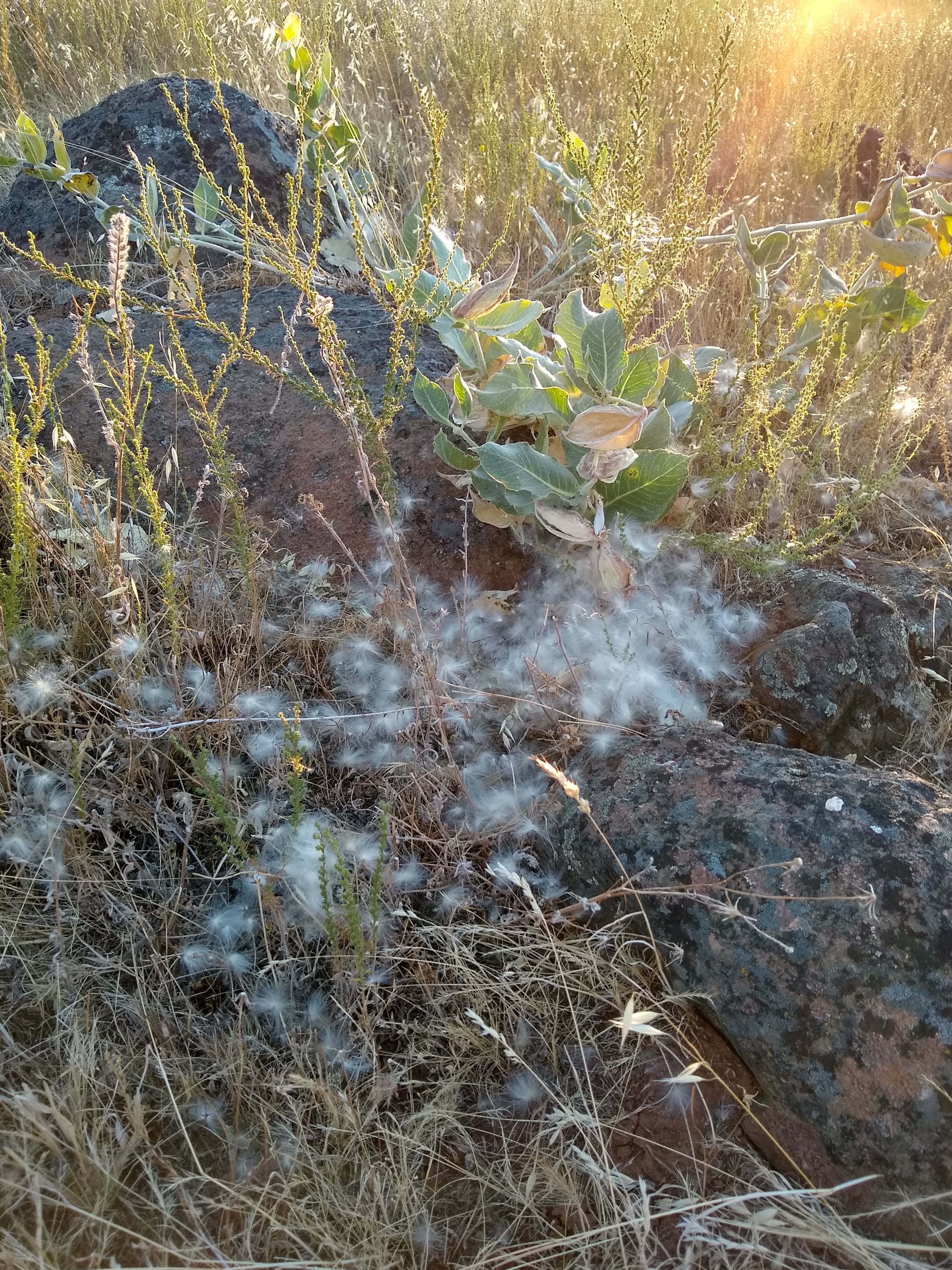
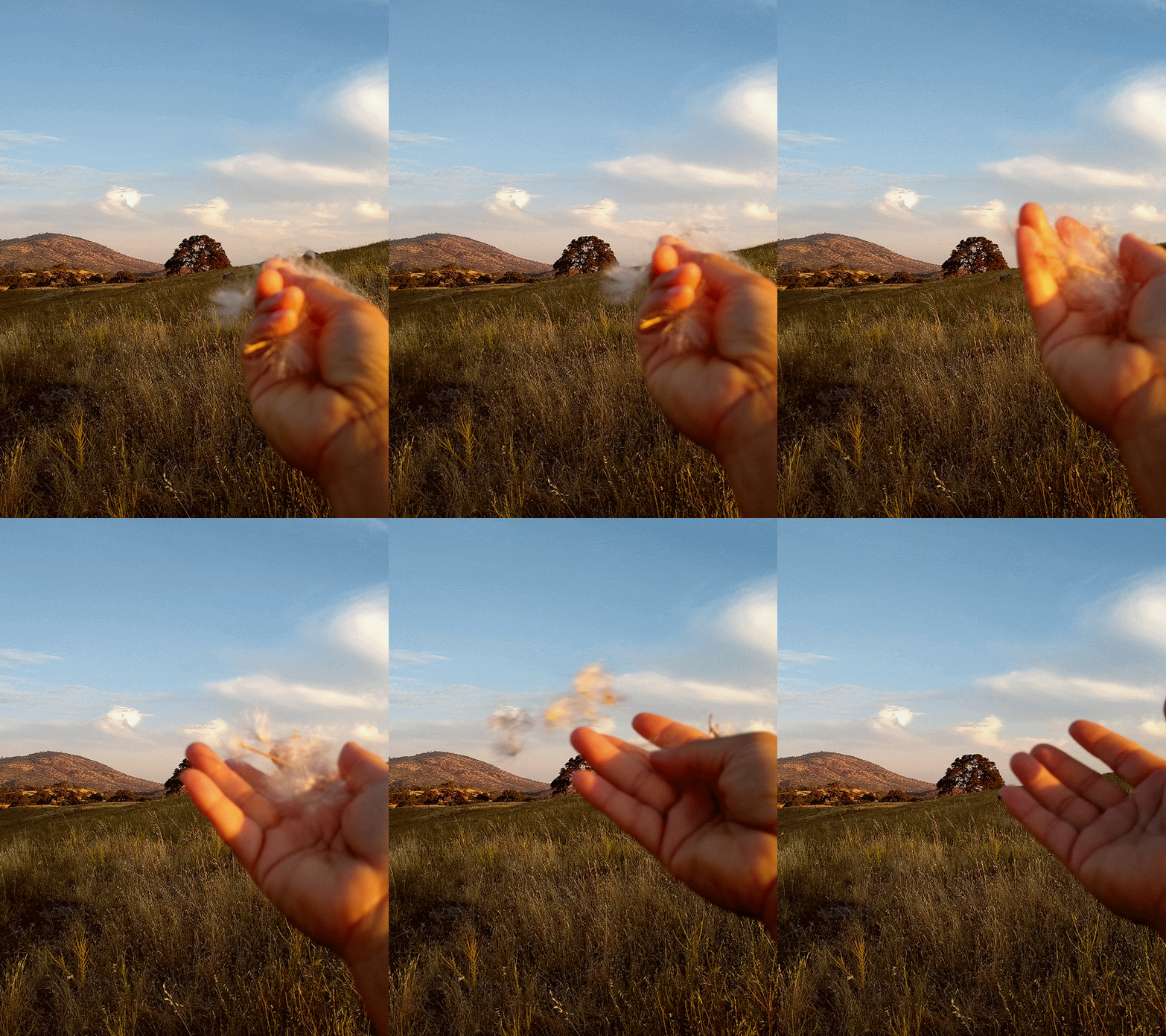
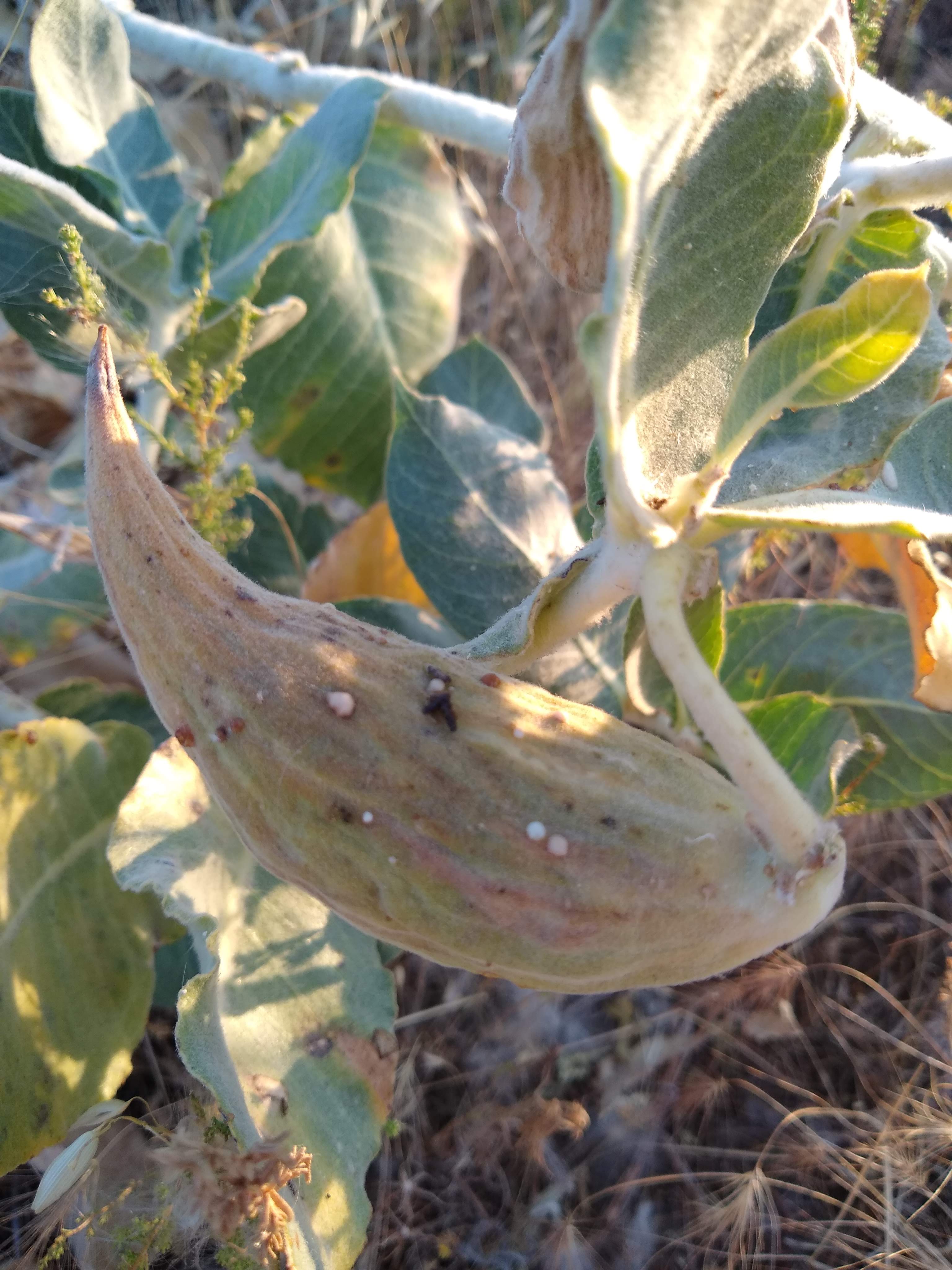
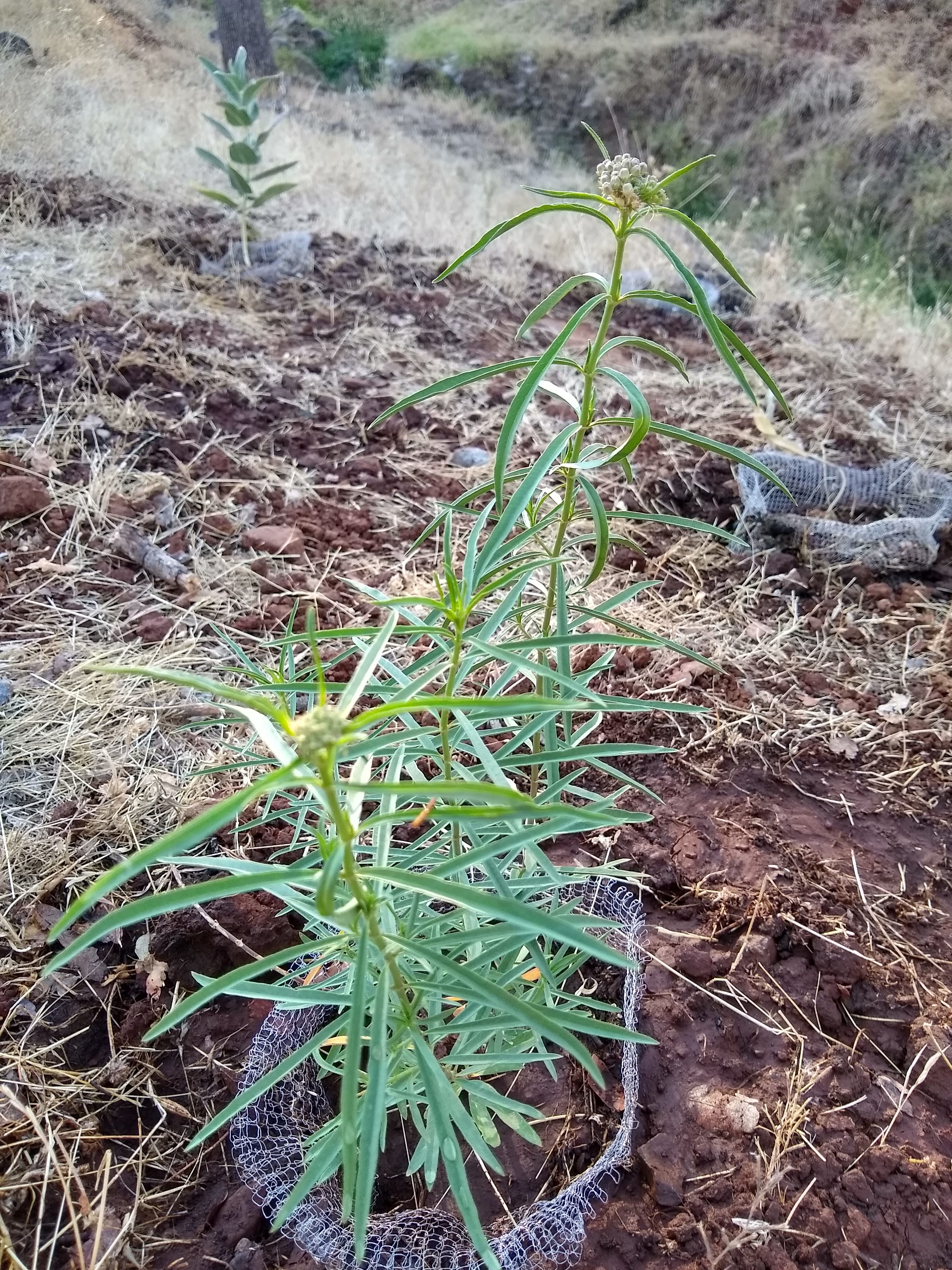
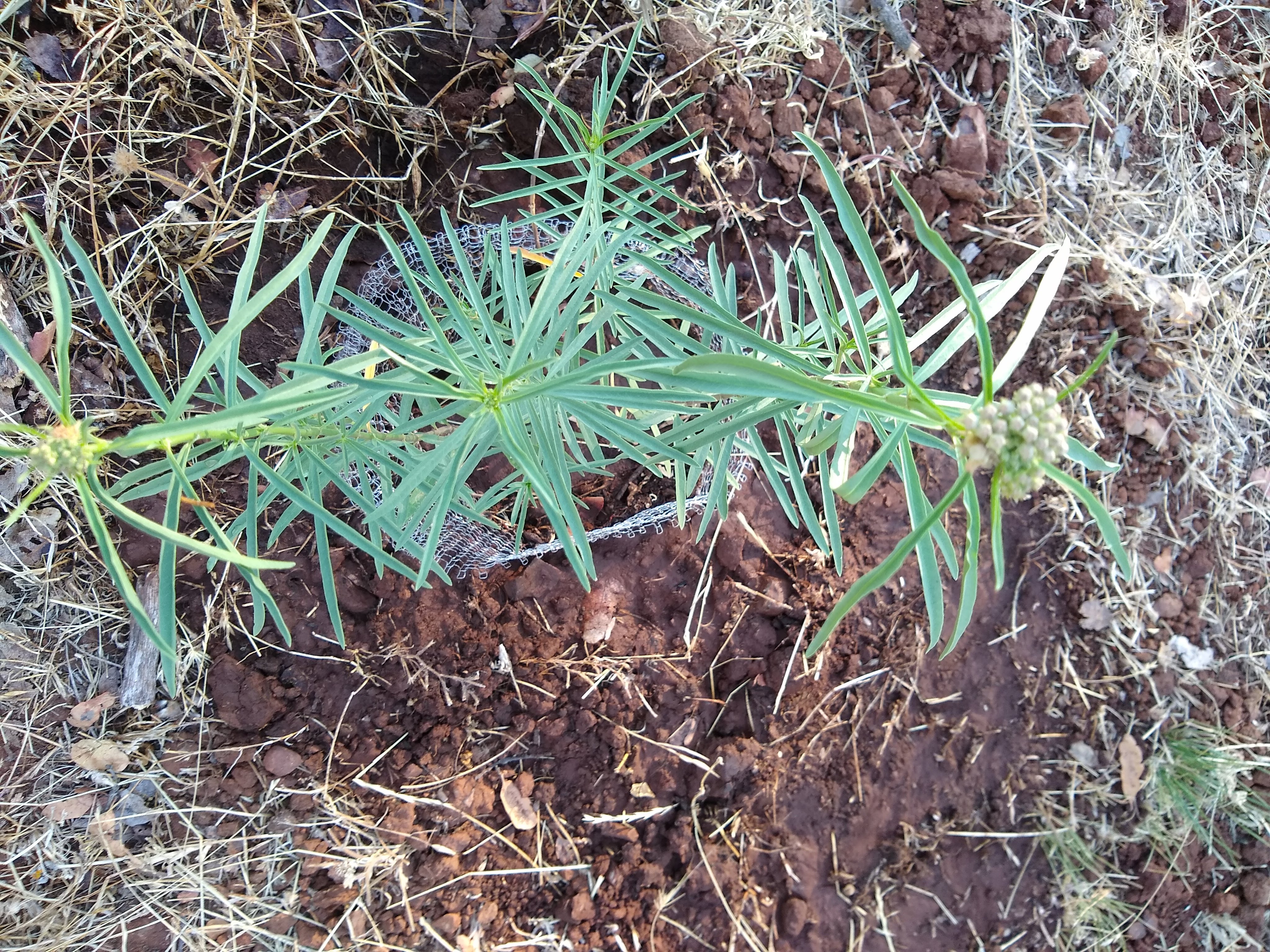
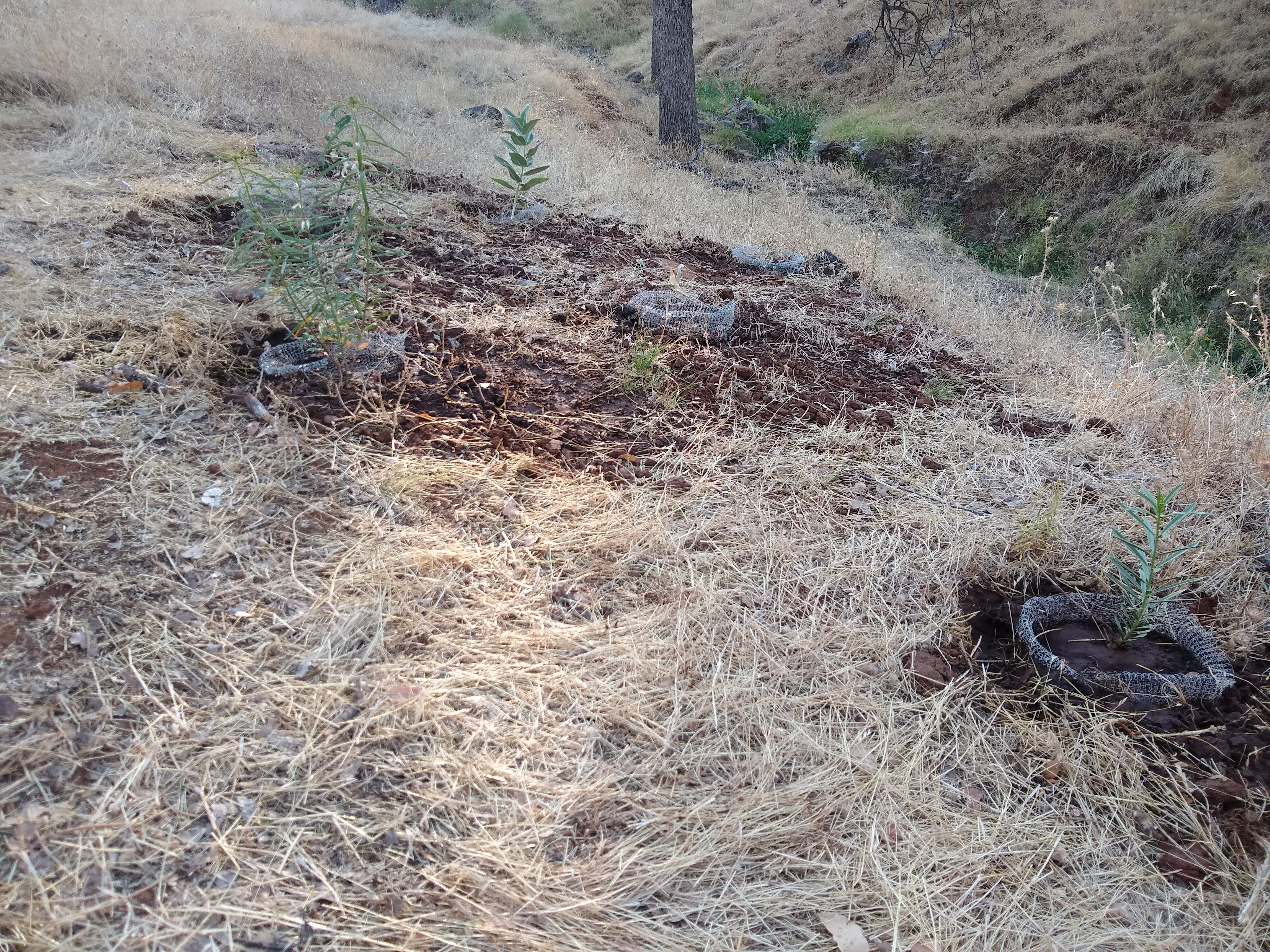
More Butterfly Plants Planted – Milkweeds are Starting to Re-Sprout
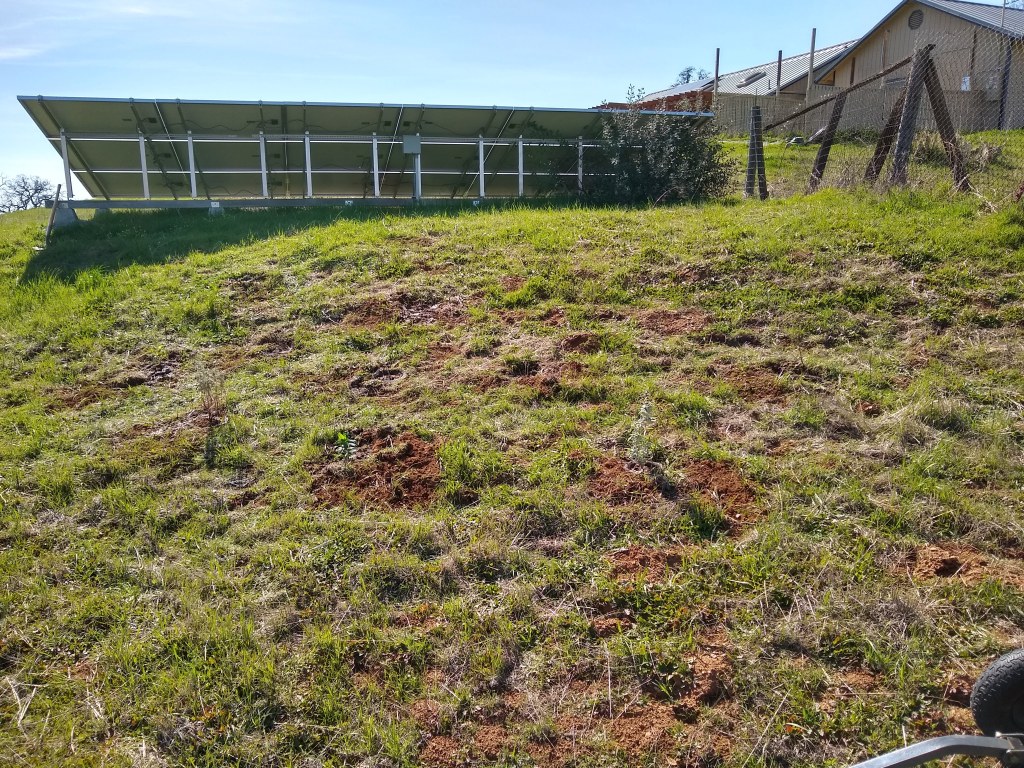
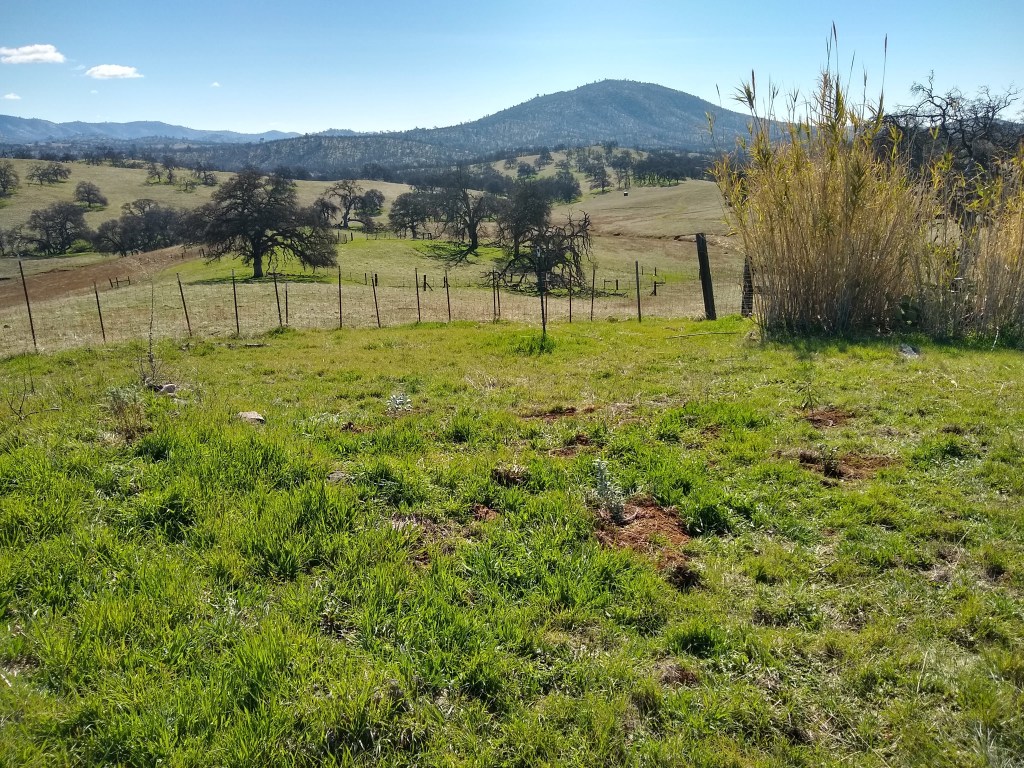
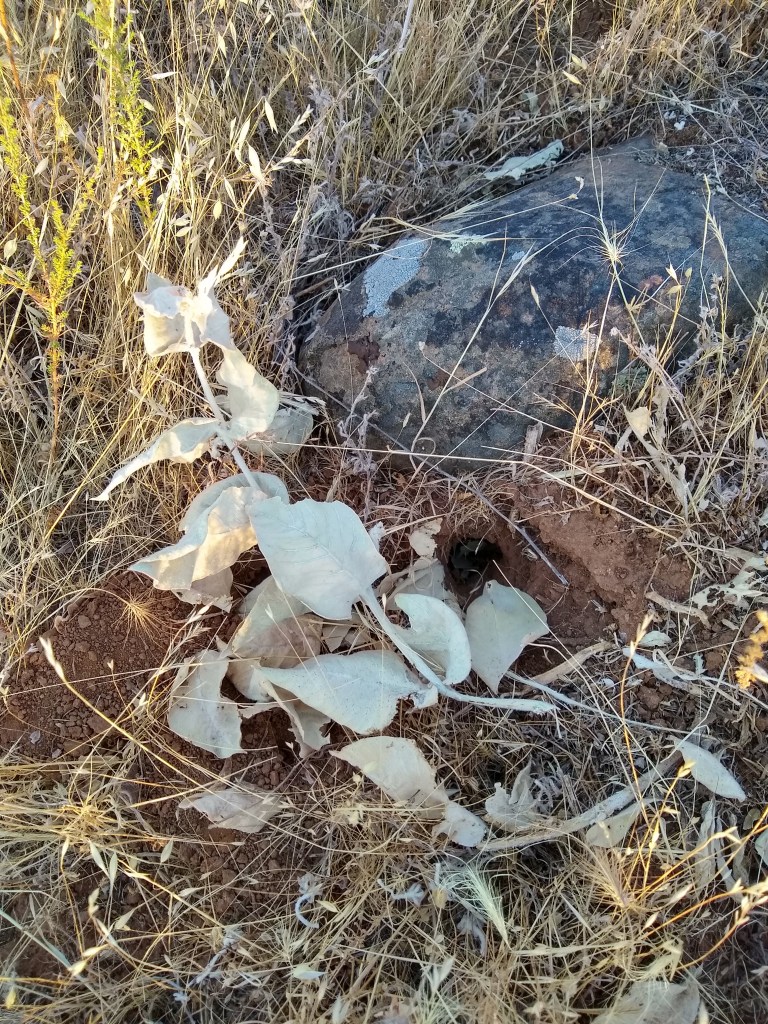
I have taken delivery of 36 butterfly plants and have planted 24 so far. The concept is to plant nectar and milkweed together in a group so that there is everything the monarchs need to live, and to plant many of those groups. I am attempting to create butterfly “oasis” or “pads” (like lily pads for frogs) for them to flit from one to the next. In the home enclosure we now have four pads, two milkweed patches, disbursed nectar throughout and two hedgerow sections with nectar plants.

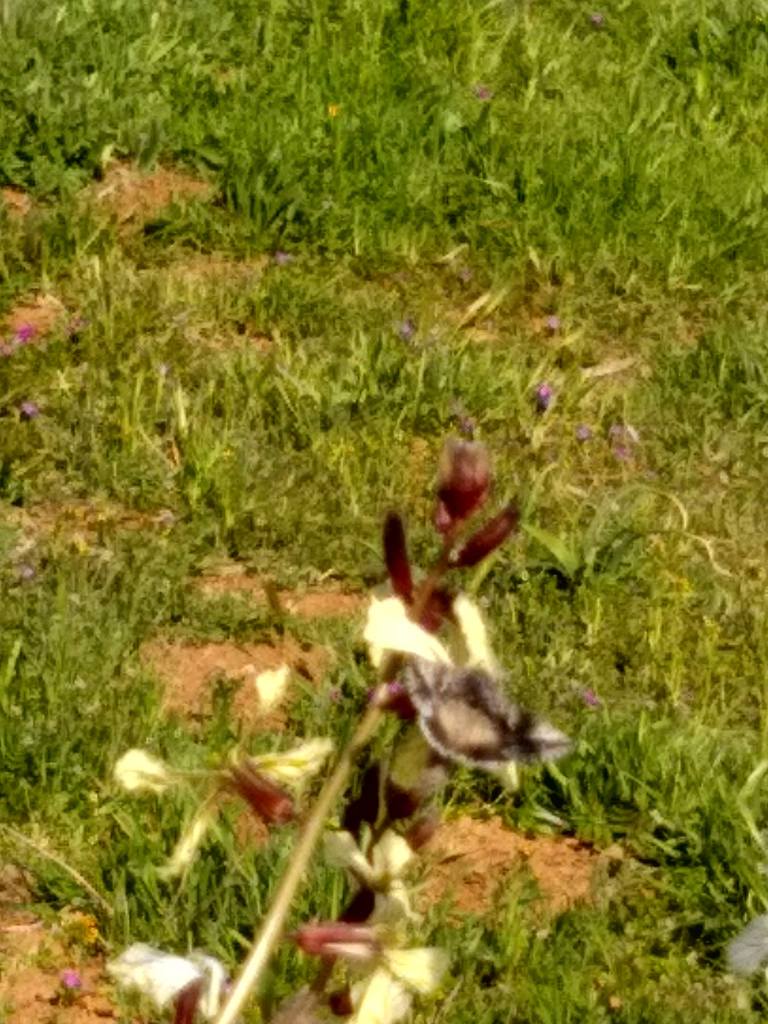
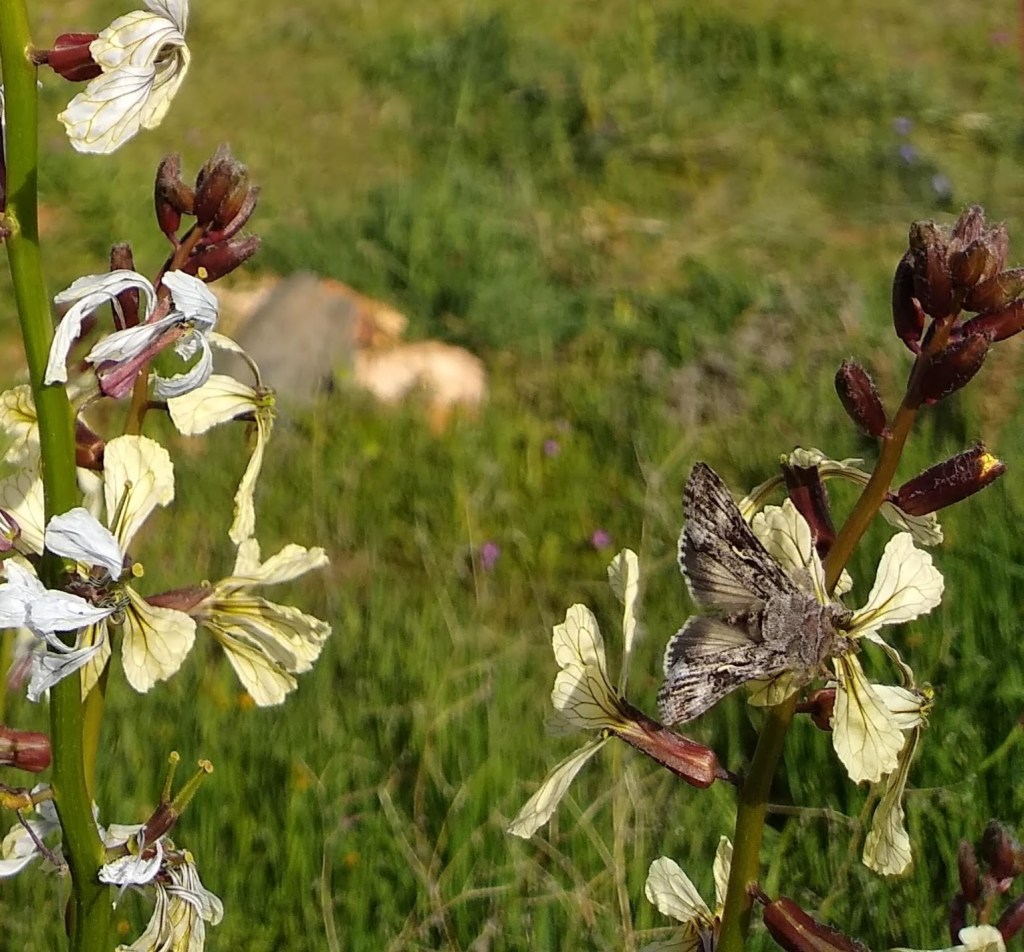
We have already seen six species of butterflies – a whitish one, a mostly black one, a viceroy, some painted ladies (we think – they move so fast), brown with some faint orange in the middle of the wing and brown moth like ones.
Other Items
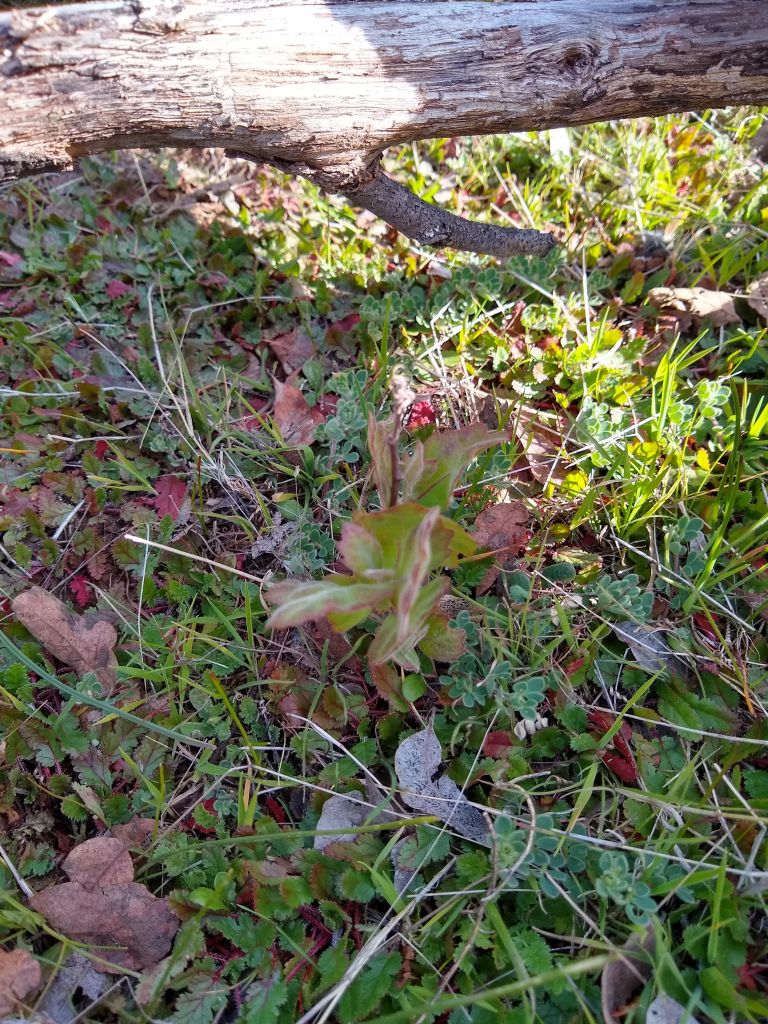
Over time, I have felt more comfortable that I know how to protect myself from the virus. With this comfort, I have had a handful of friends and family who I know follow good practices over to hike or have a meal on the patio. I was overjoyed to have my friend Maggie come over for a hike this past weekend. She has a well-trained eye and ear as a naturalist. Besides identifying blue bird calls, poison oak and a red tail, on our hike she spotted a healthy oak seedling. Somehow, it had avoided detection by the cattle. Maggie and I quickly made a brush pile to help protect it. I will go back out this weekend and build a cage around it. It is in a good spot to grow without other oak competition for light. How wonderful to have friends over again and to share the land with another person who loves it.
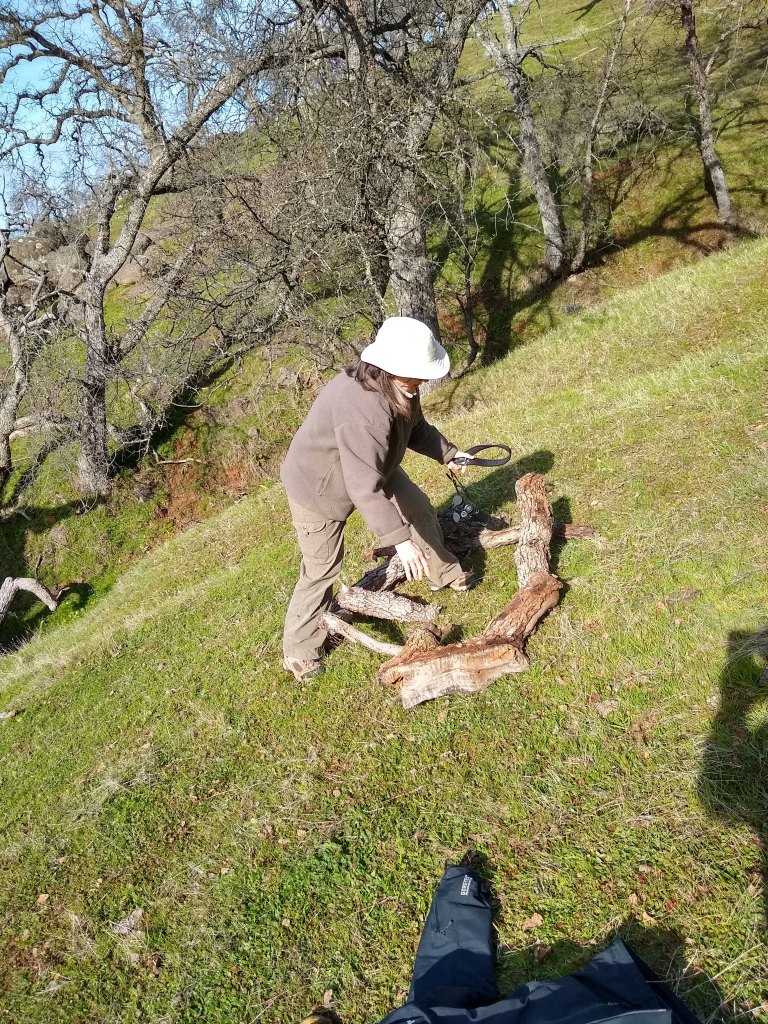
Maggie helps build a pile 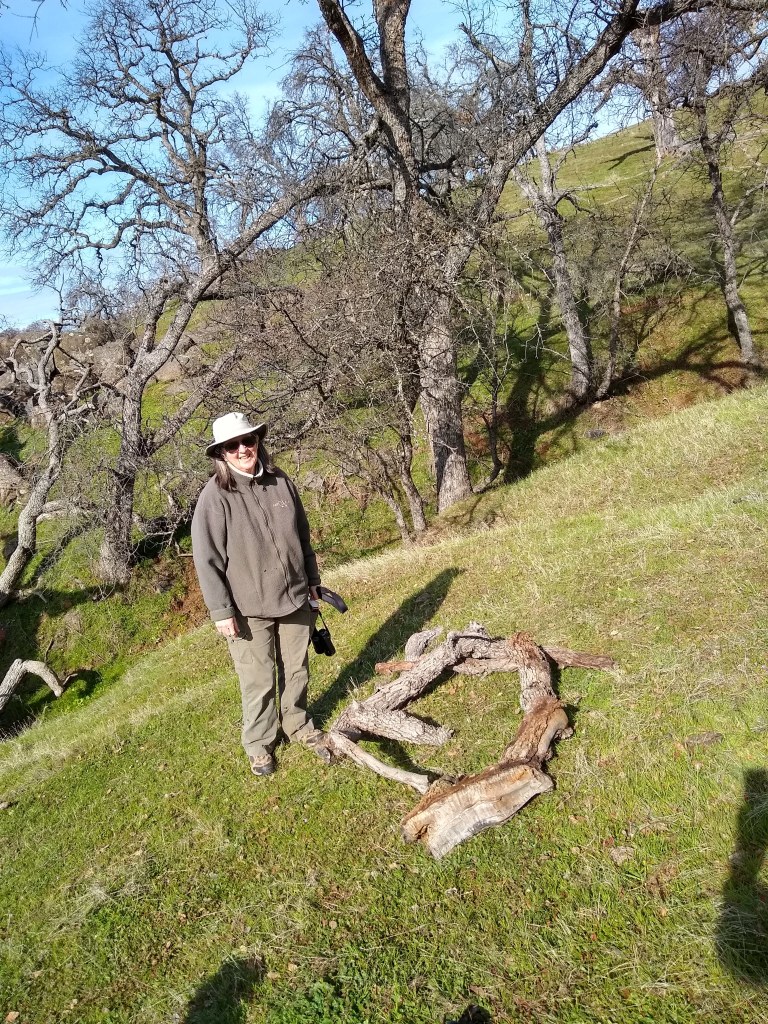
Maggie with her base started 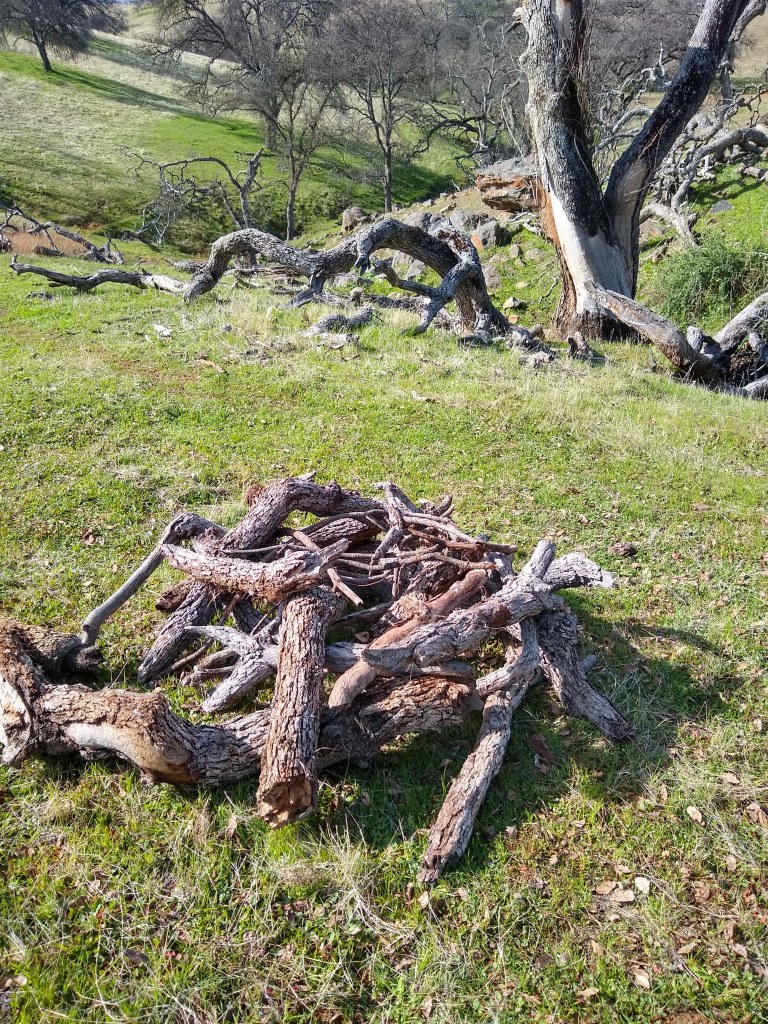
Finished pile
This brush pile is likely not enough to protect it long term. It is fairly small. It may buy me time however to build a cage around it.
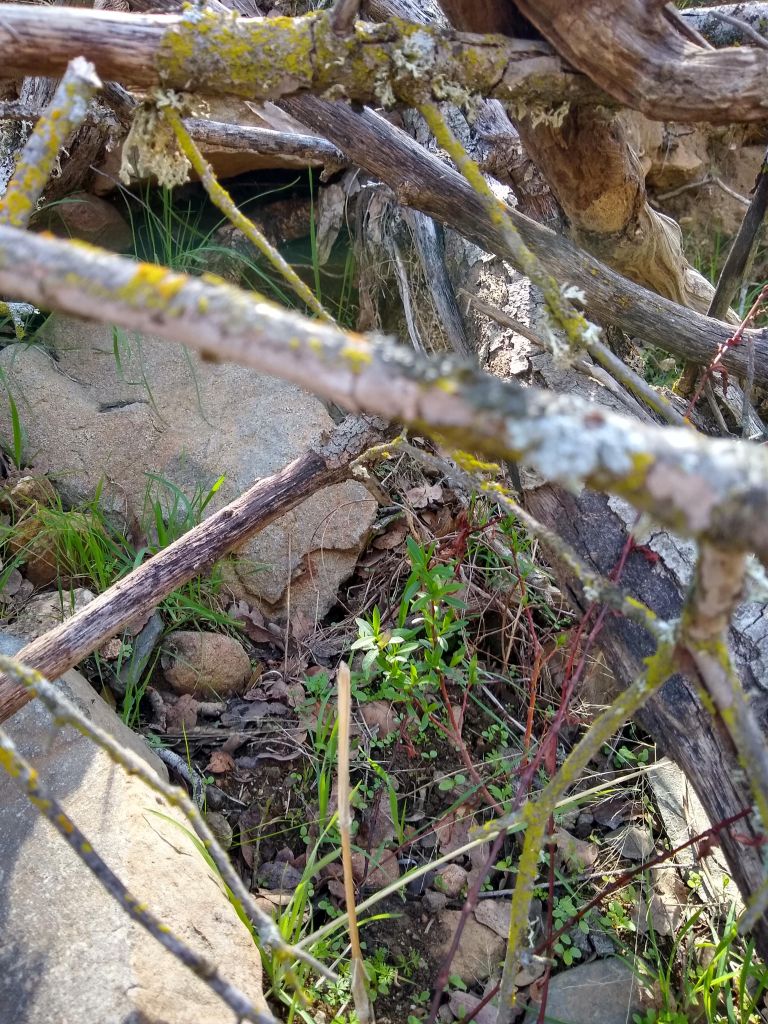
We also had the opportunity to go to Odom Creek and check on the willows and mulefat. All were still there and doing really well.
In addition to all the planting, I continue to educate myself and participate where I can possibly help. To this end, the CAFF conference was excellent. I leaned about a wide variety of topics that could be helpful to my work, such as financing. I was also asked to join a monarch and rangeland working group tasked with expanding habitat on rangeland. I am not sure what value I will be able to bring, but it was good to meet and learn from so many others. At that meeting, I met Susie Calhoun. She is another land steward building habitat on her family ranch. She and her family are doing a great job. Check out their website to learn more and see some beautiful photos. https://www.3calhounsisters.com/




 PolliNative