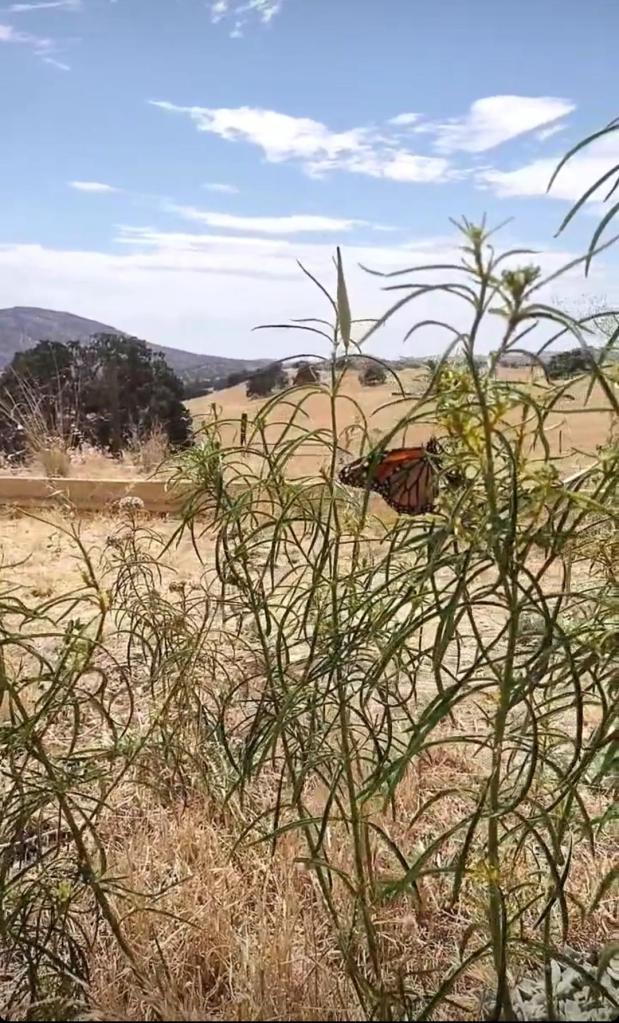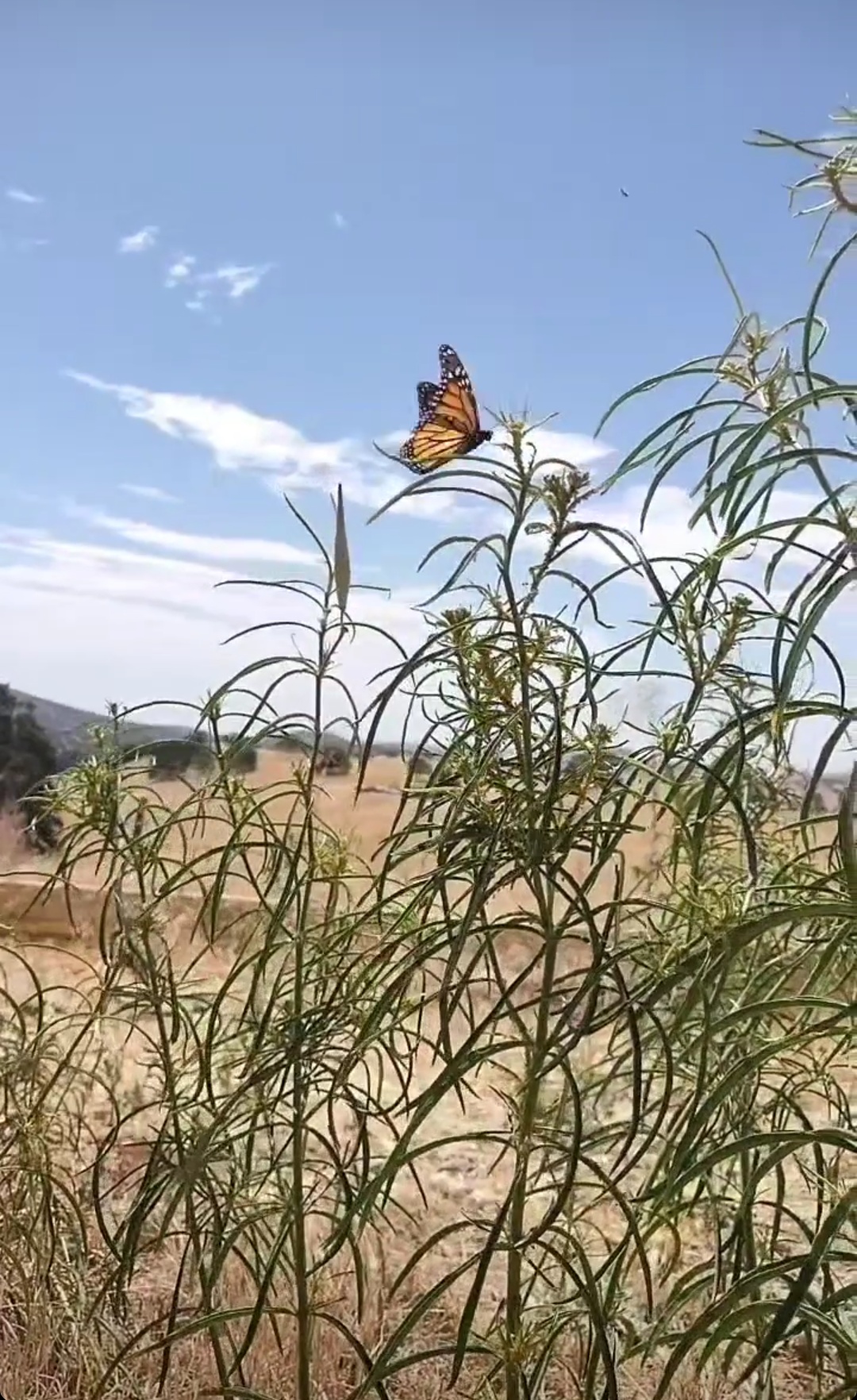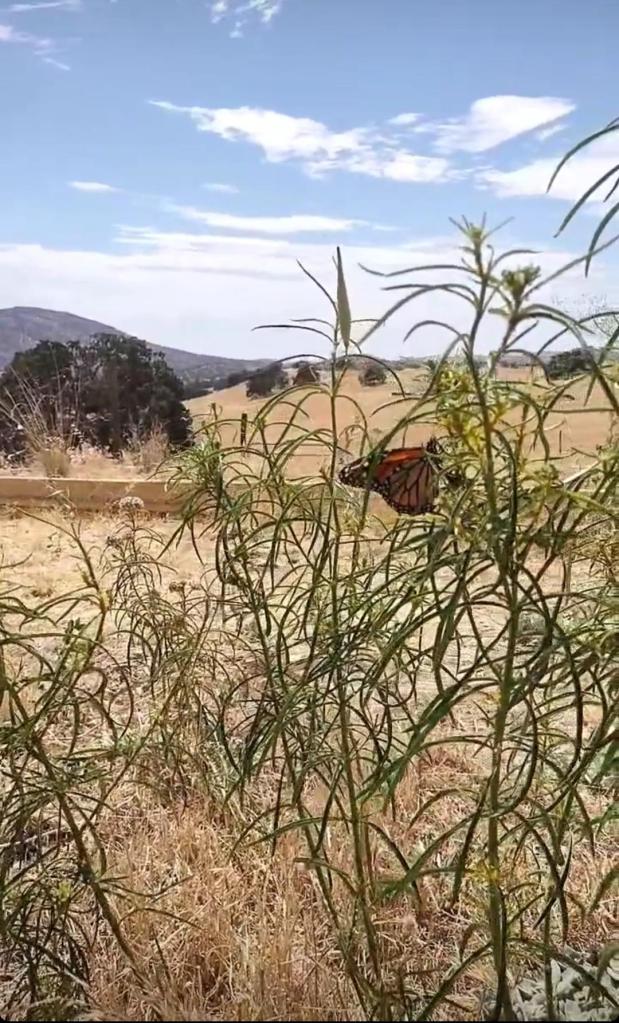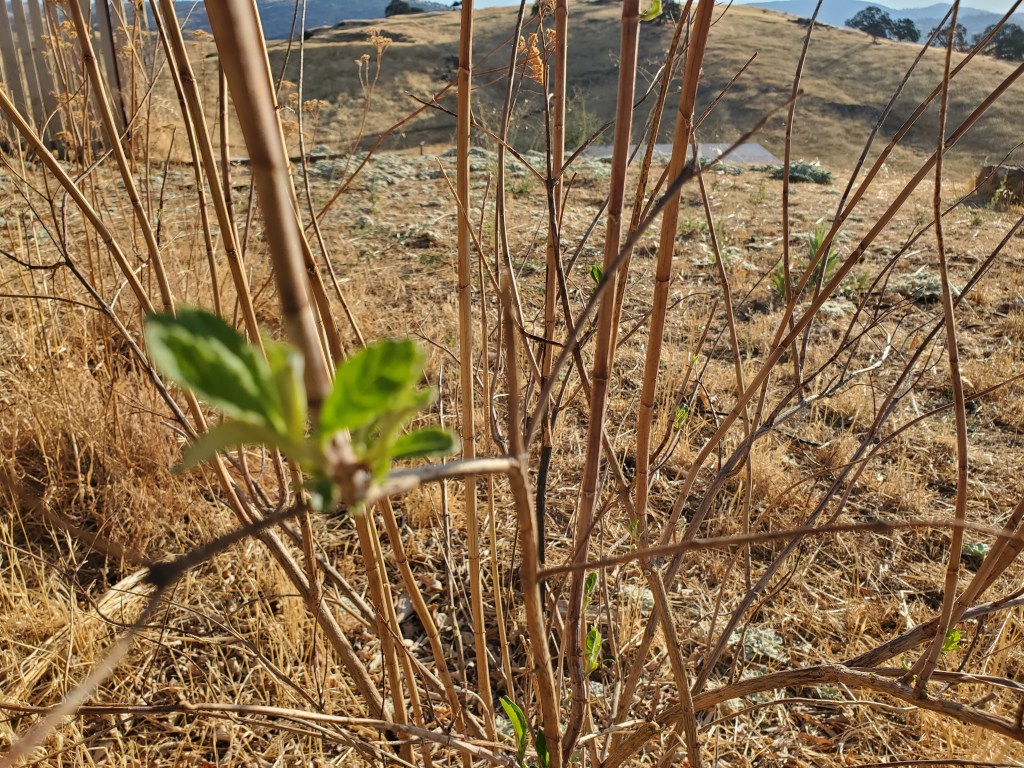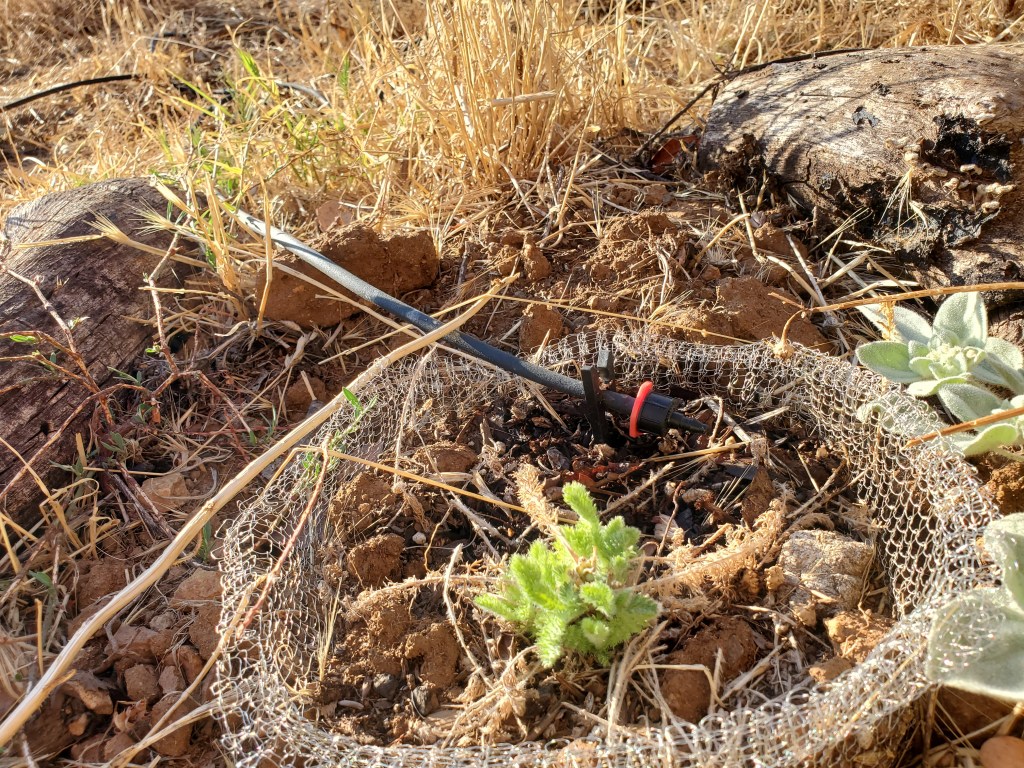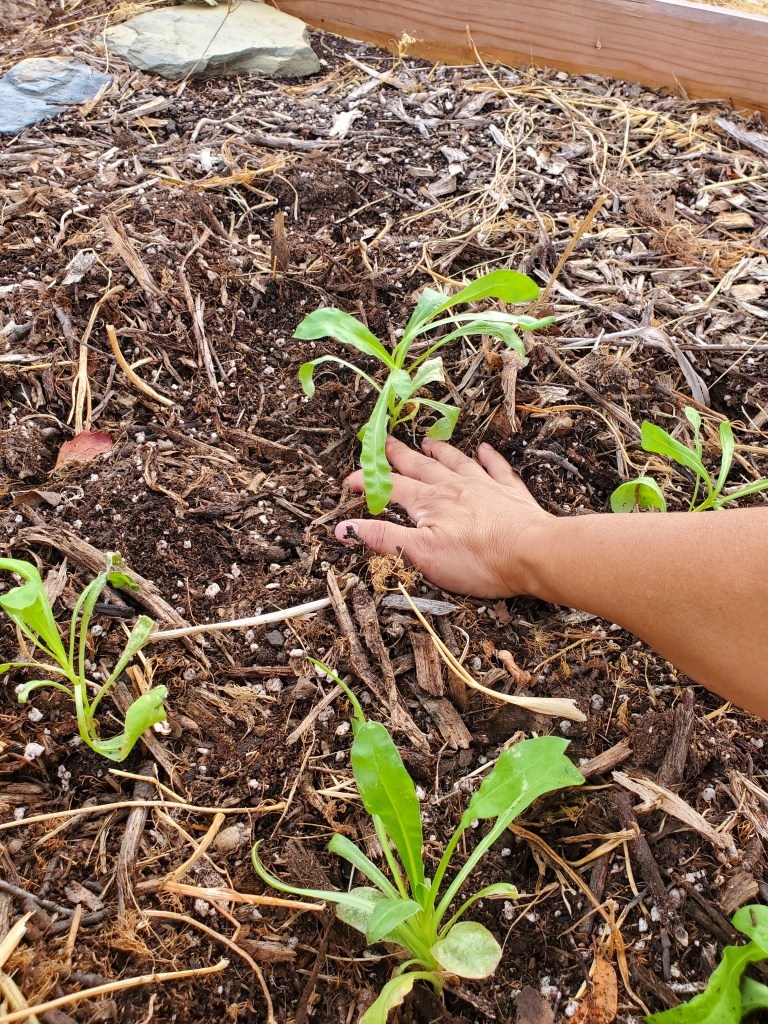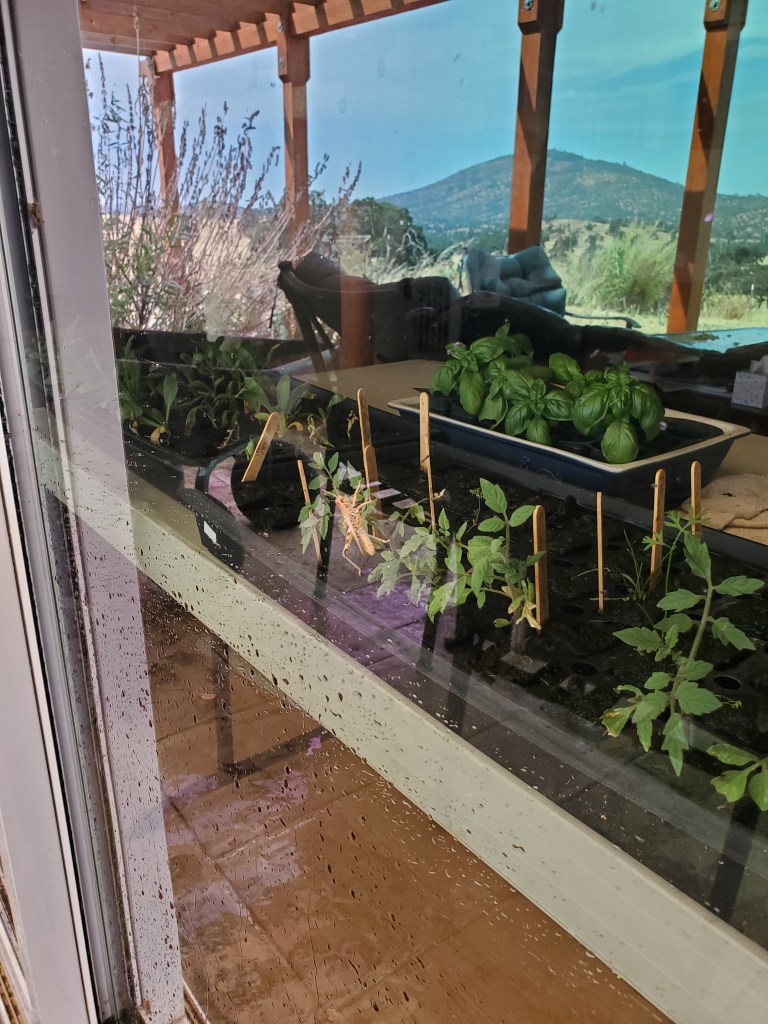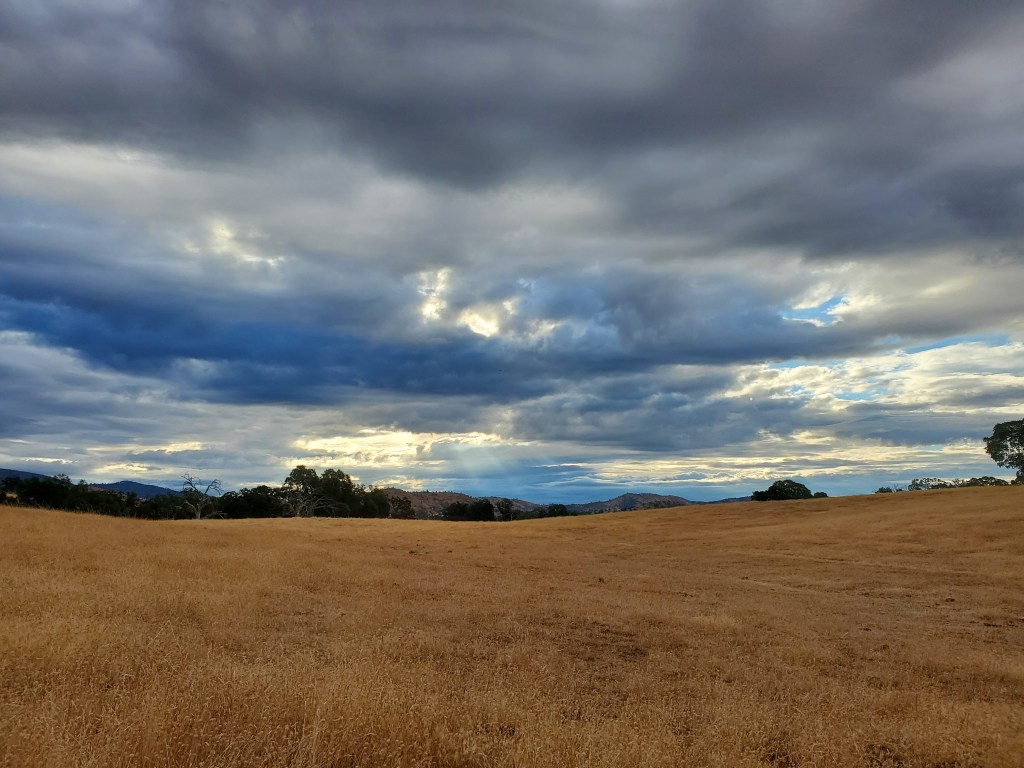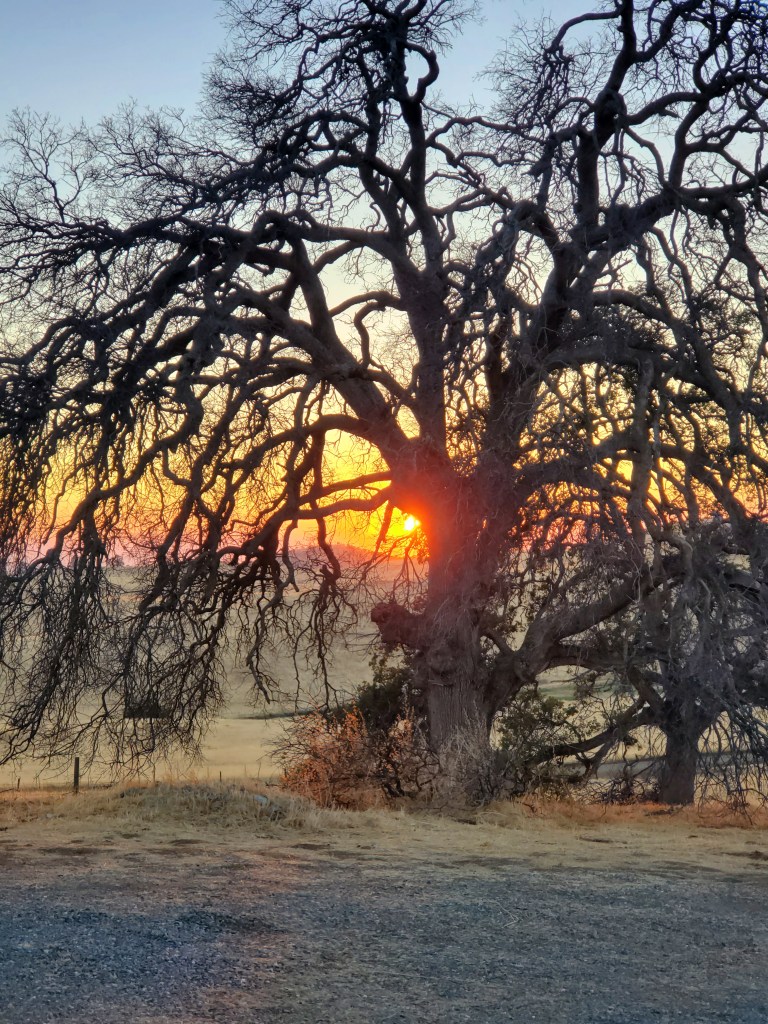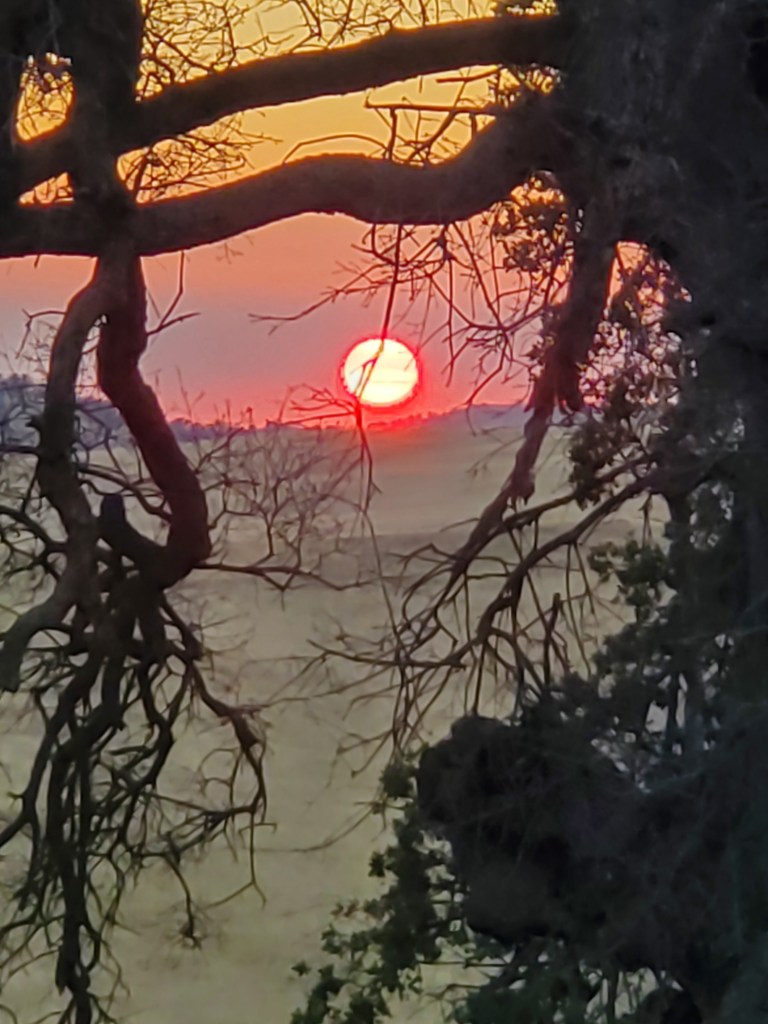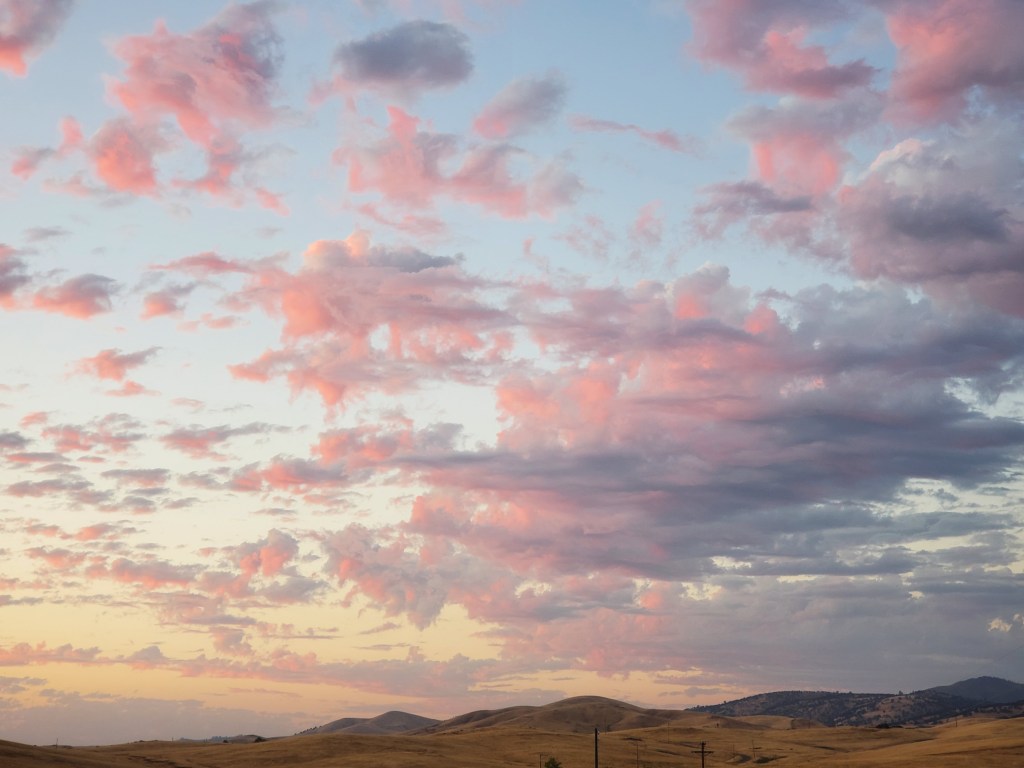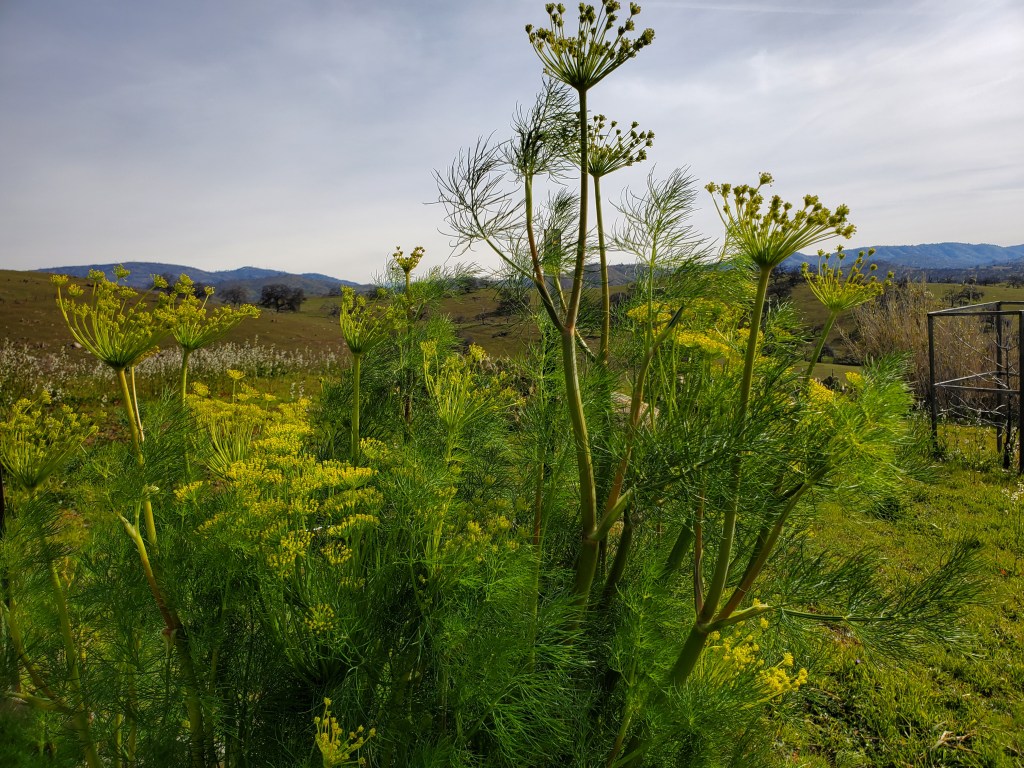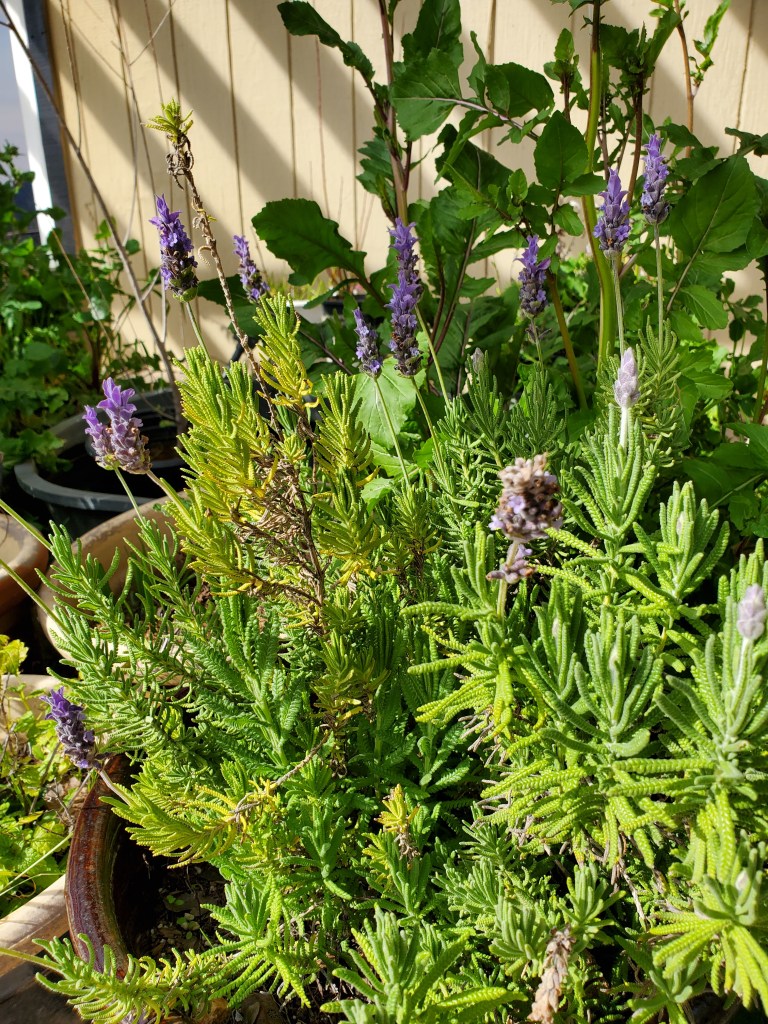
100th Post

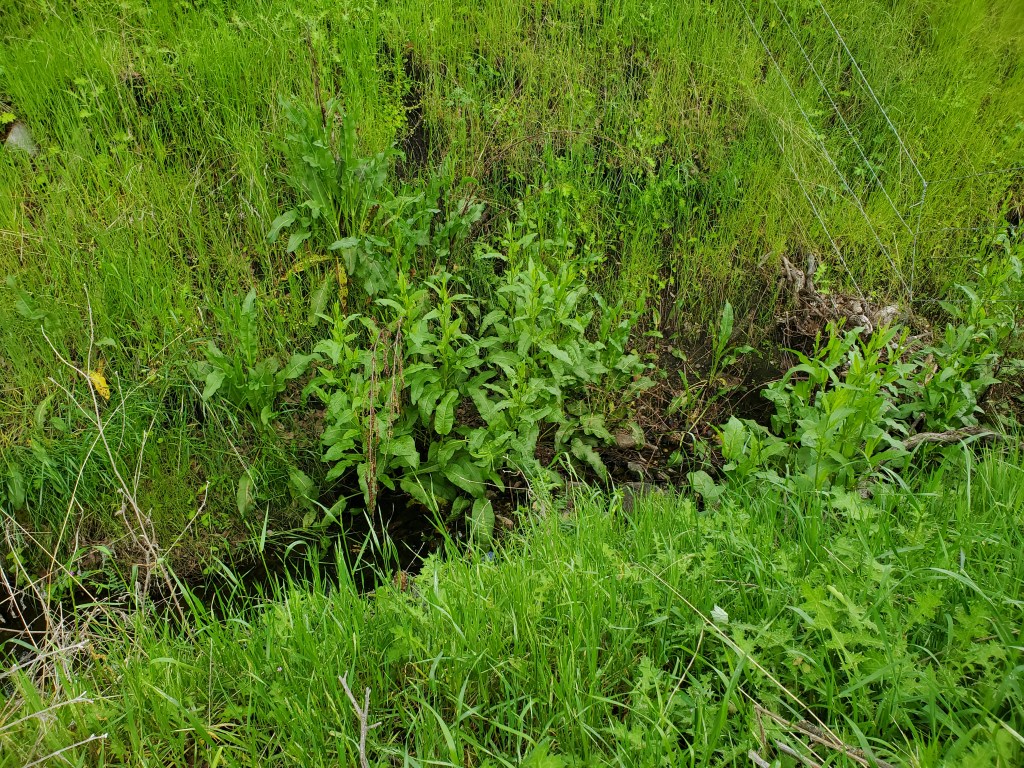
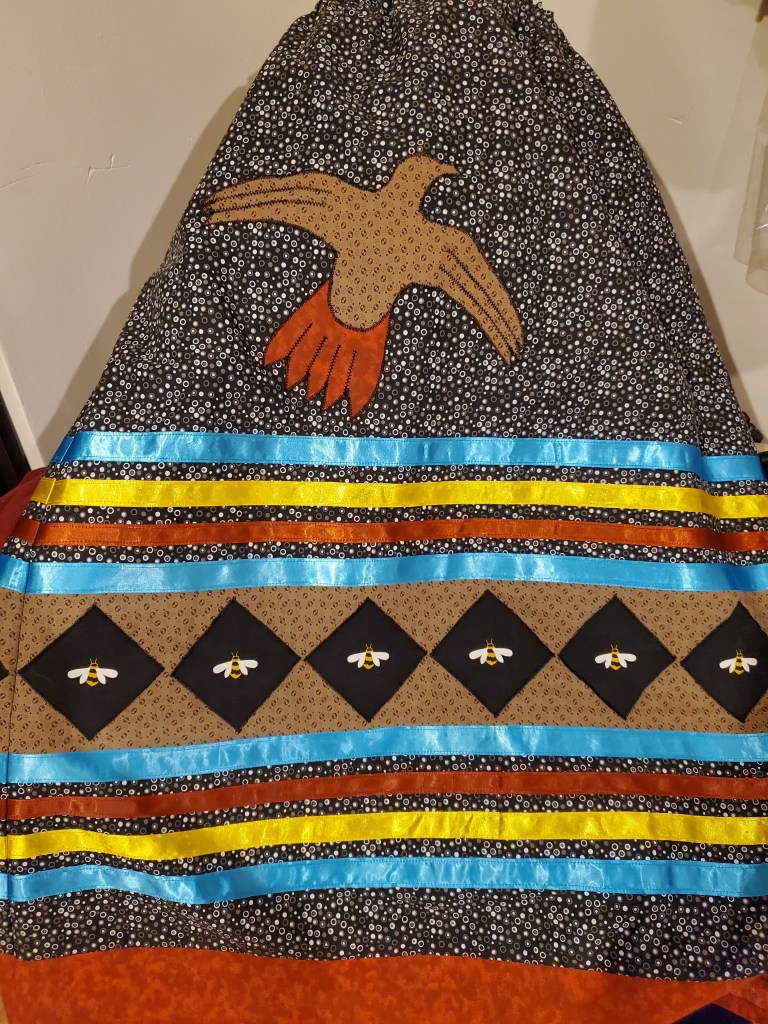
Wacky AI generated image

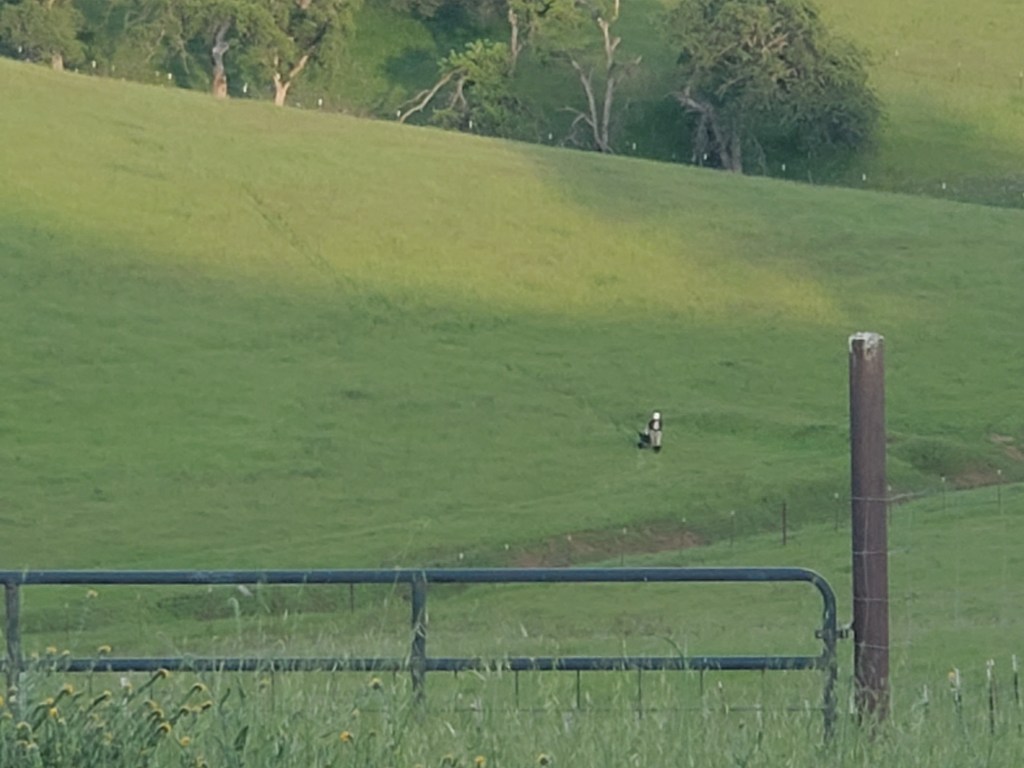
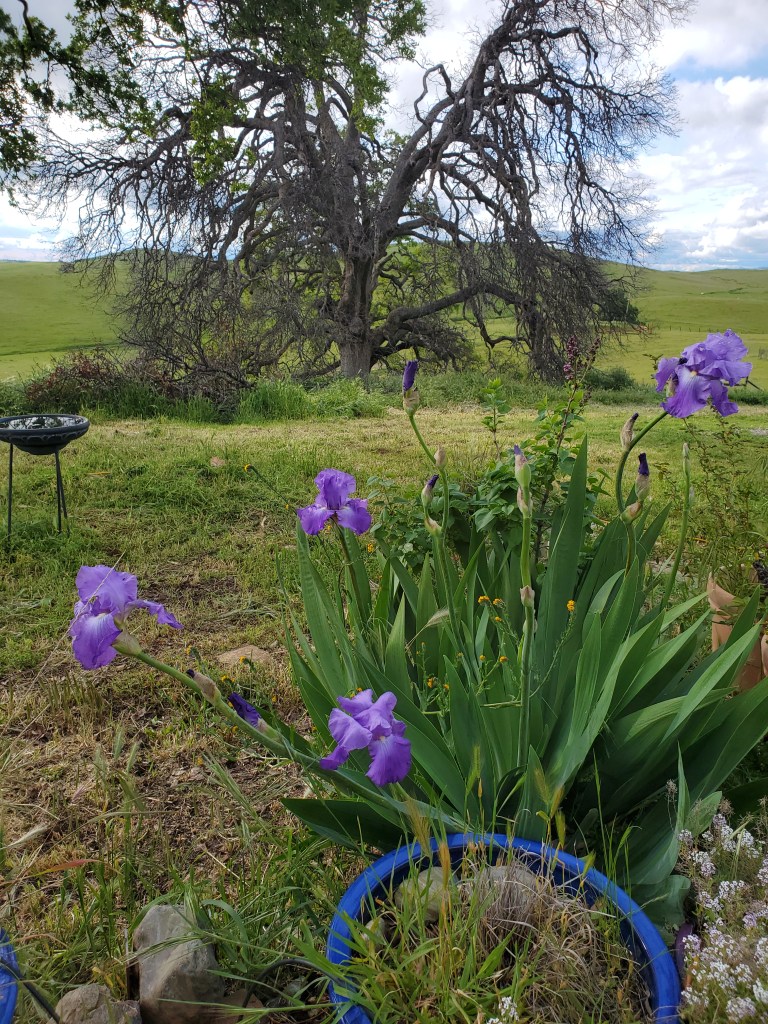
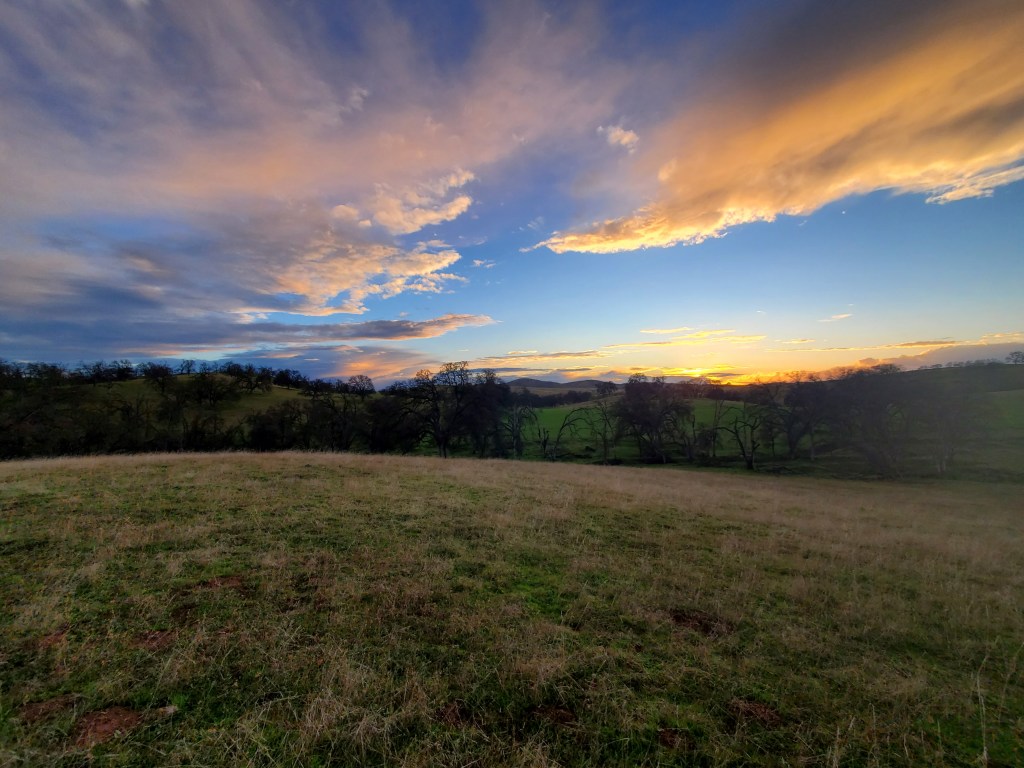
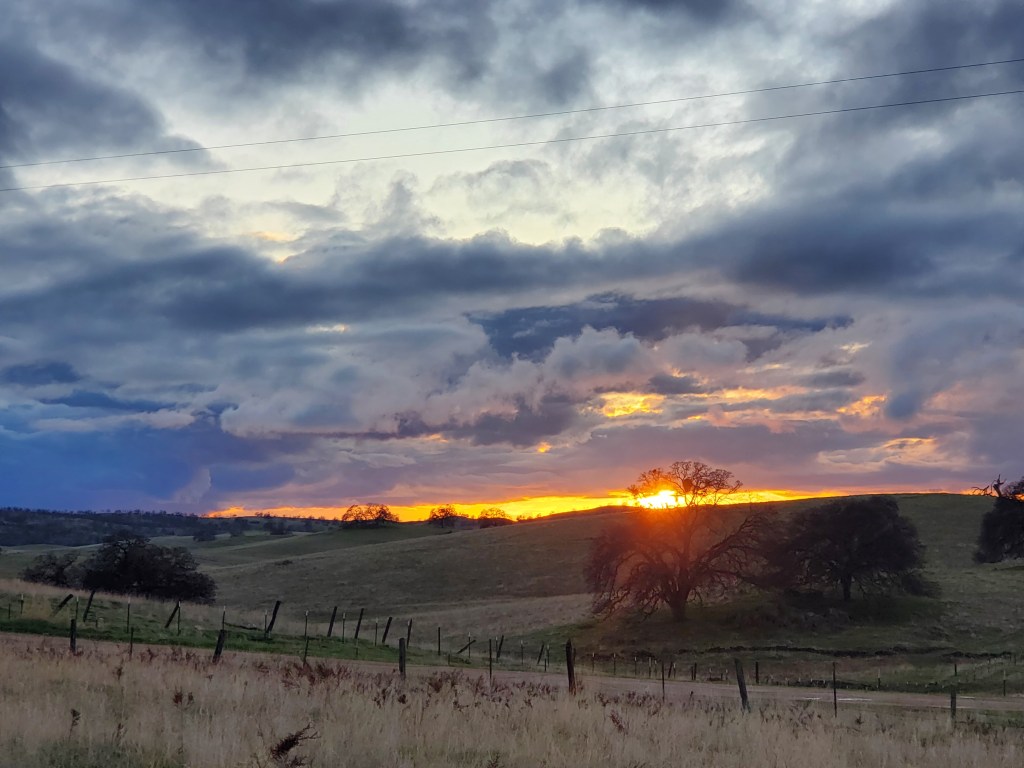
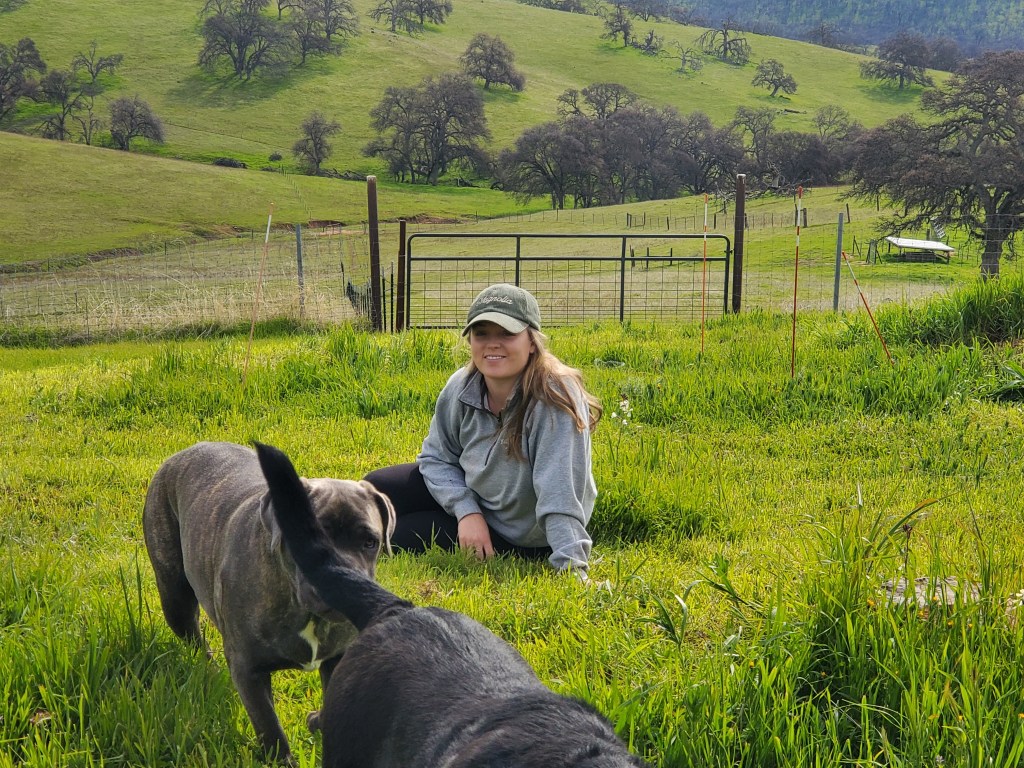
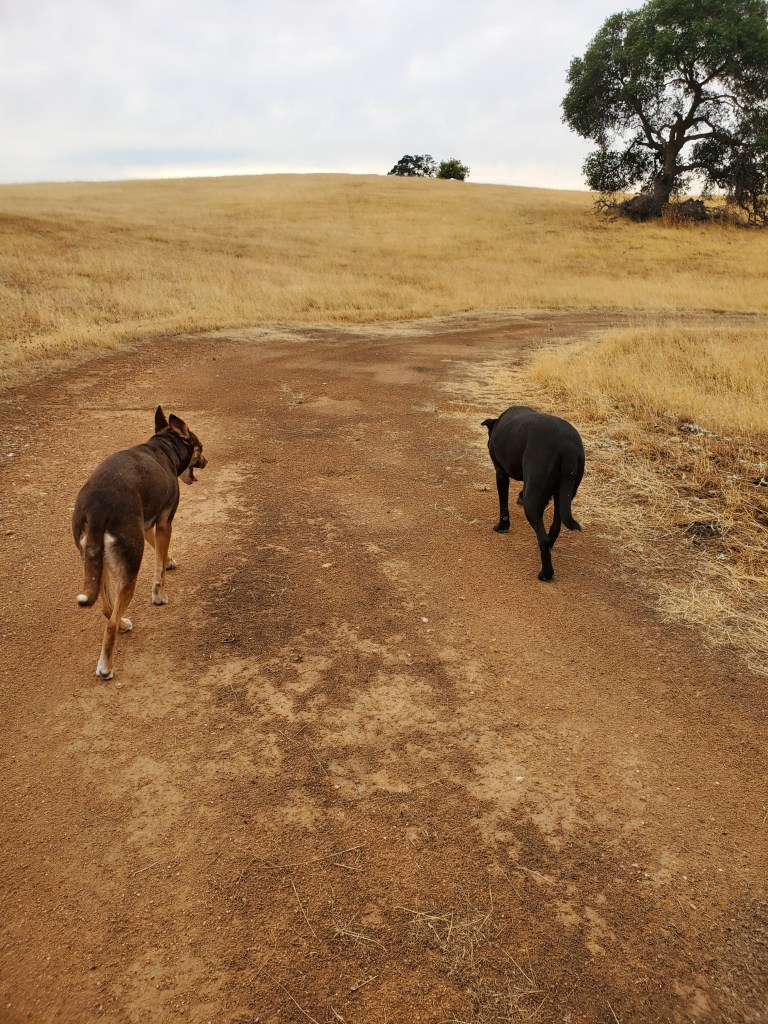
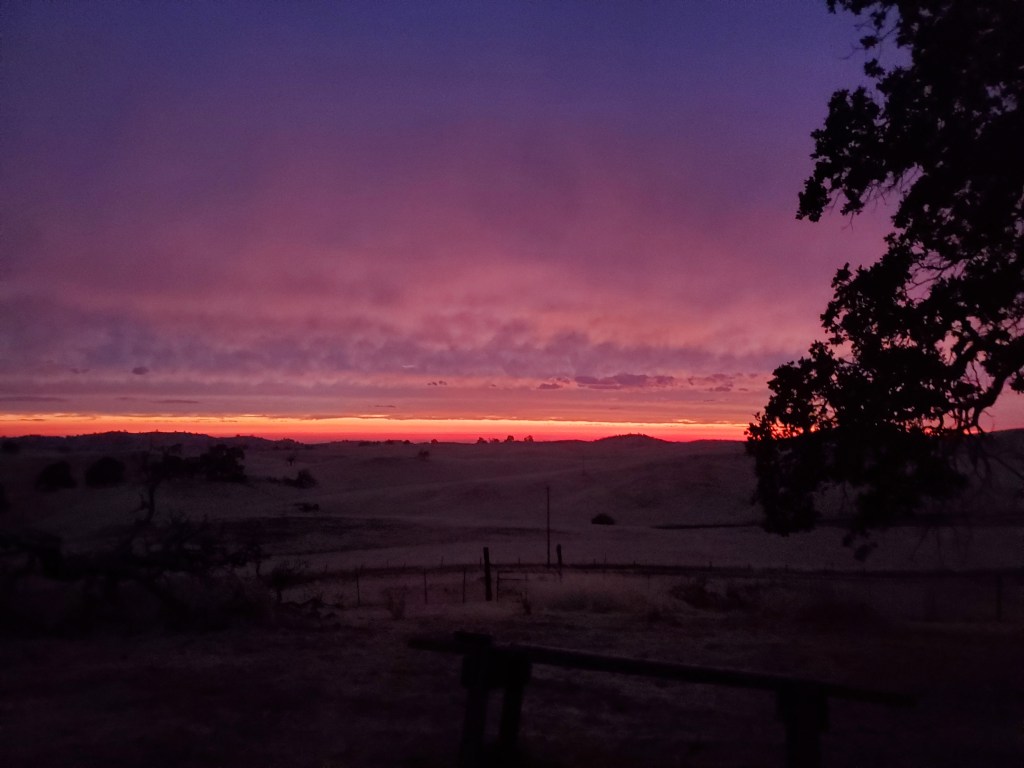
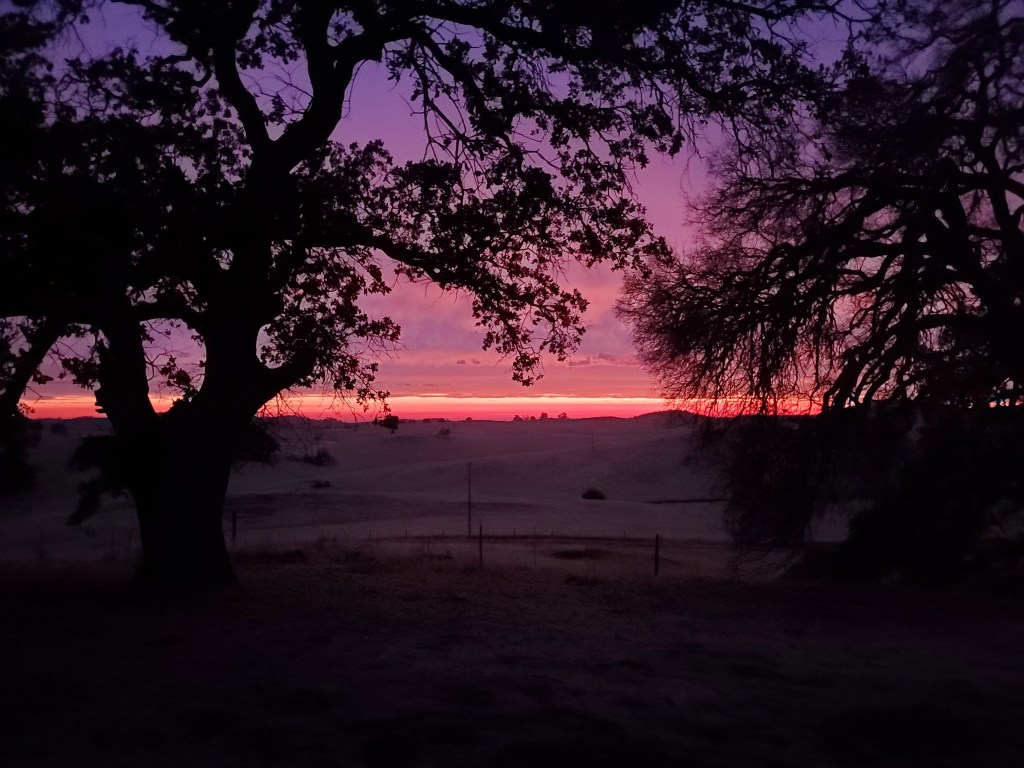
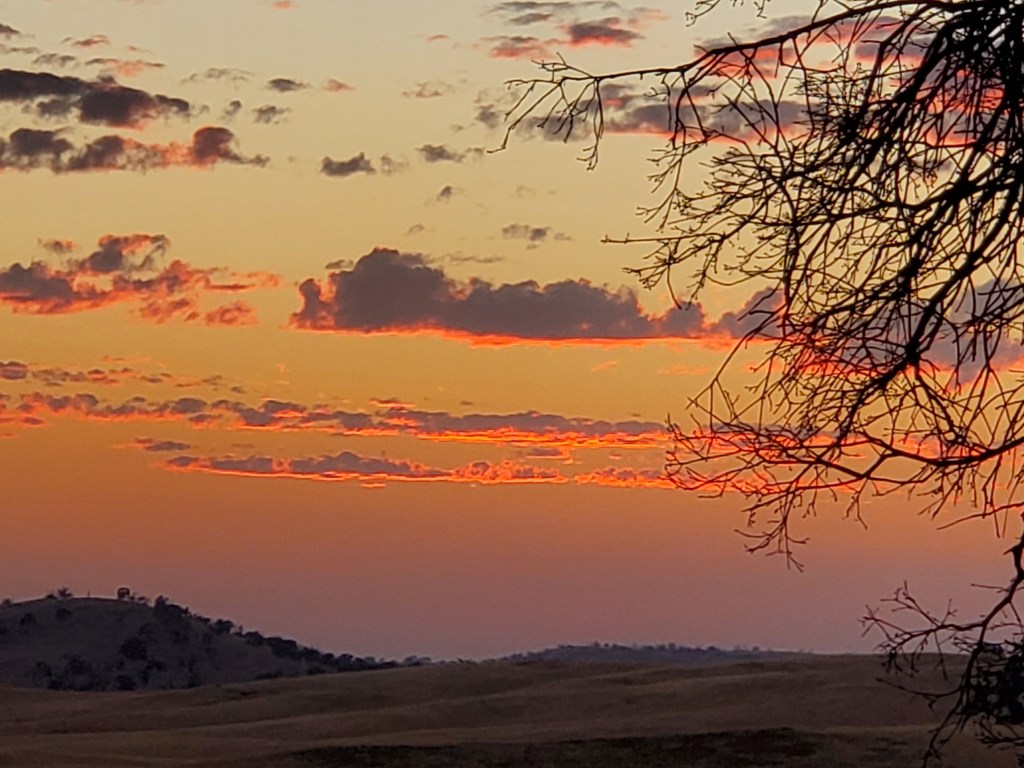
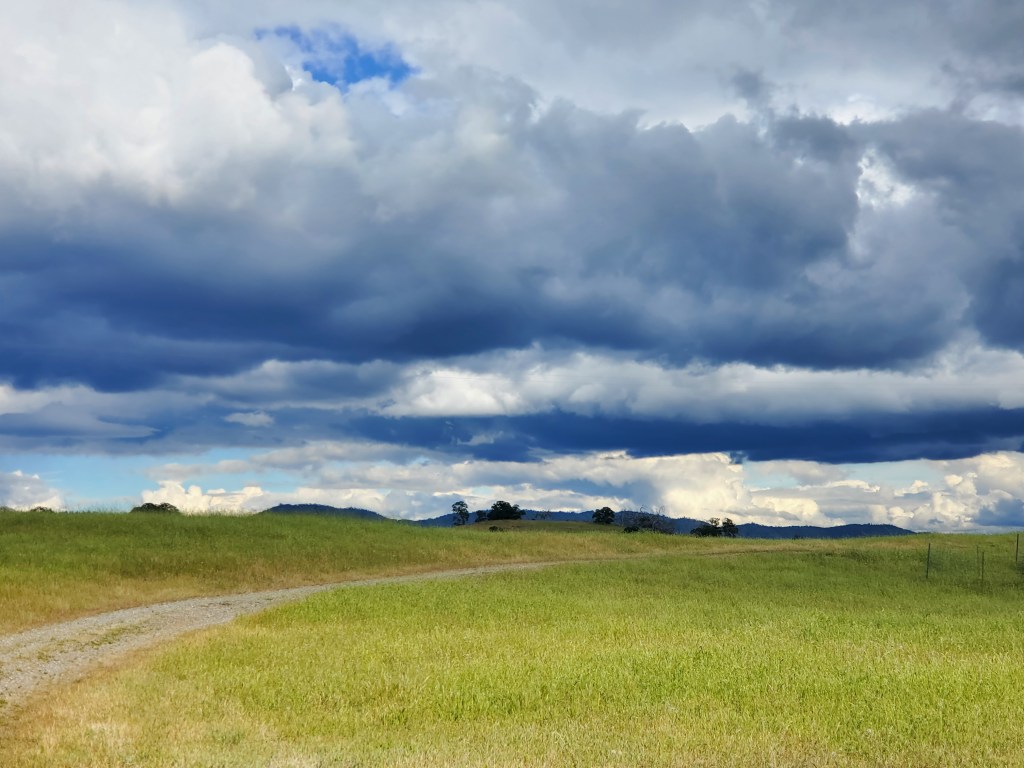
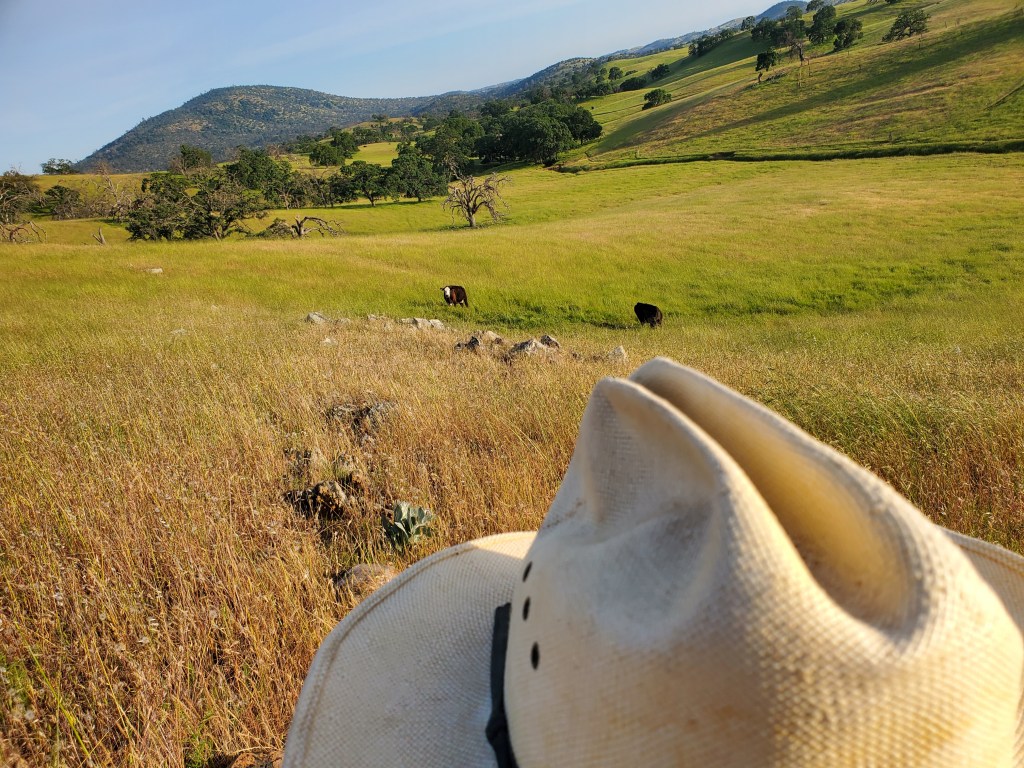
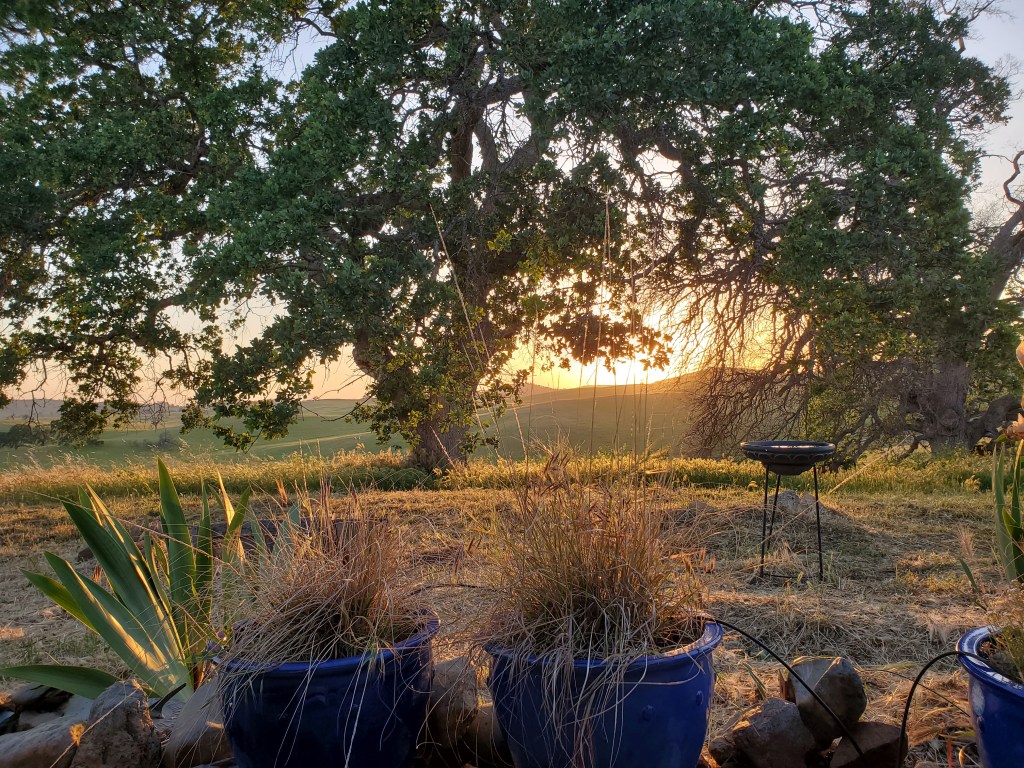
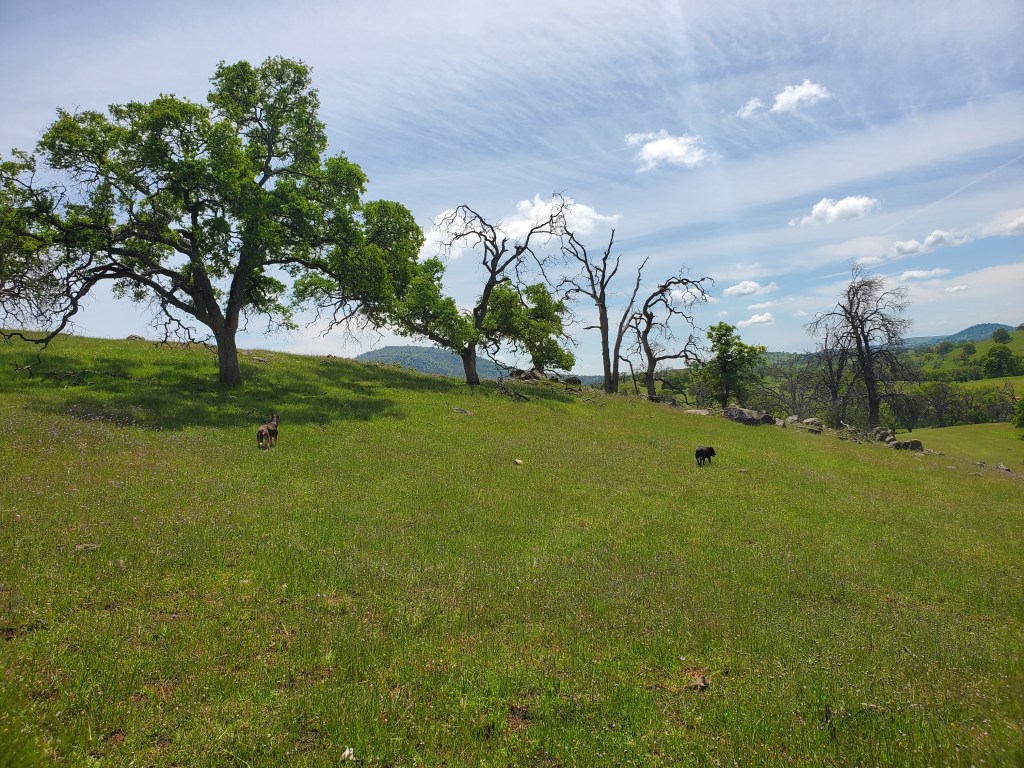
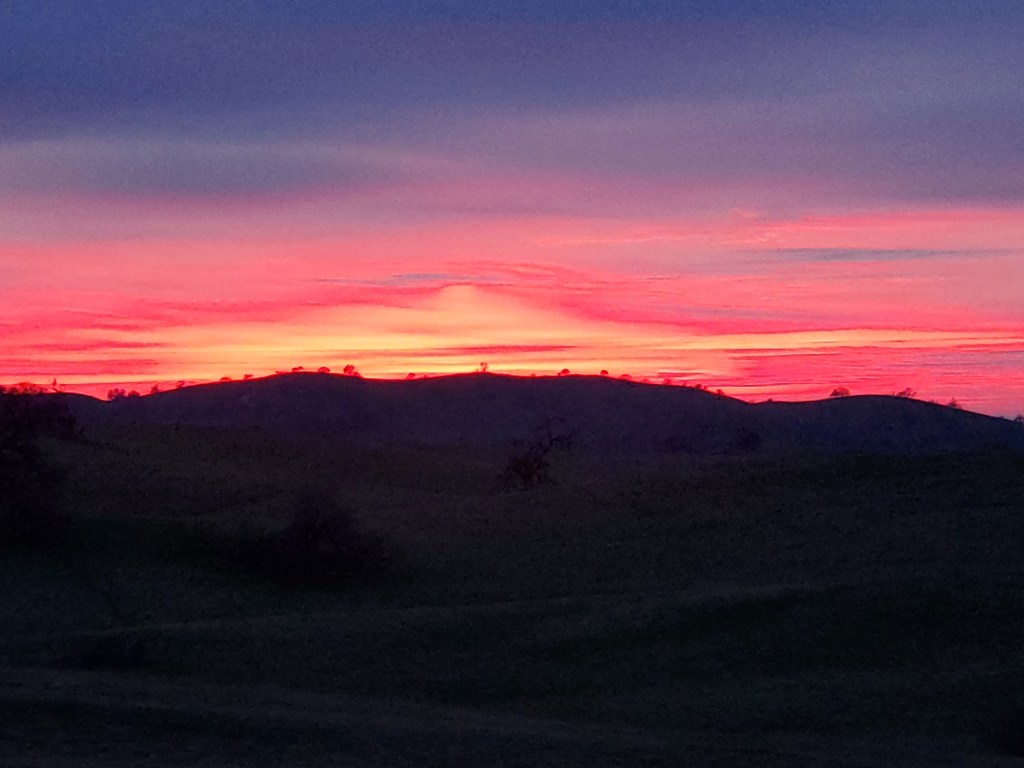
It’s early Sunday morning. The sun is not up. I’ve been up doing chores, feeding animals, opening windows to allow the cool air, laden with scent, into the house. It is barely light, getting lighter. The birds start to sing. First one chirp, which leads to two then it all begins. I step into my boots, dogs at my heels and head out – pulled, then lightly pushed by the cool air now gently swirling in the house.

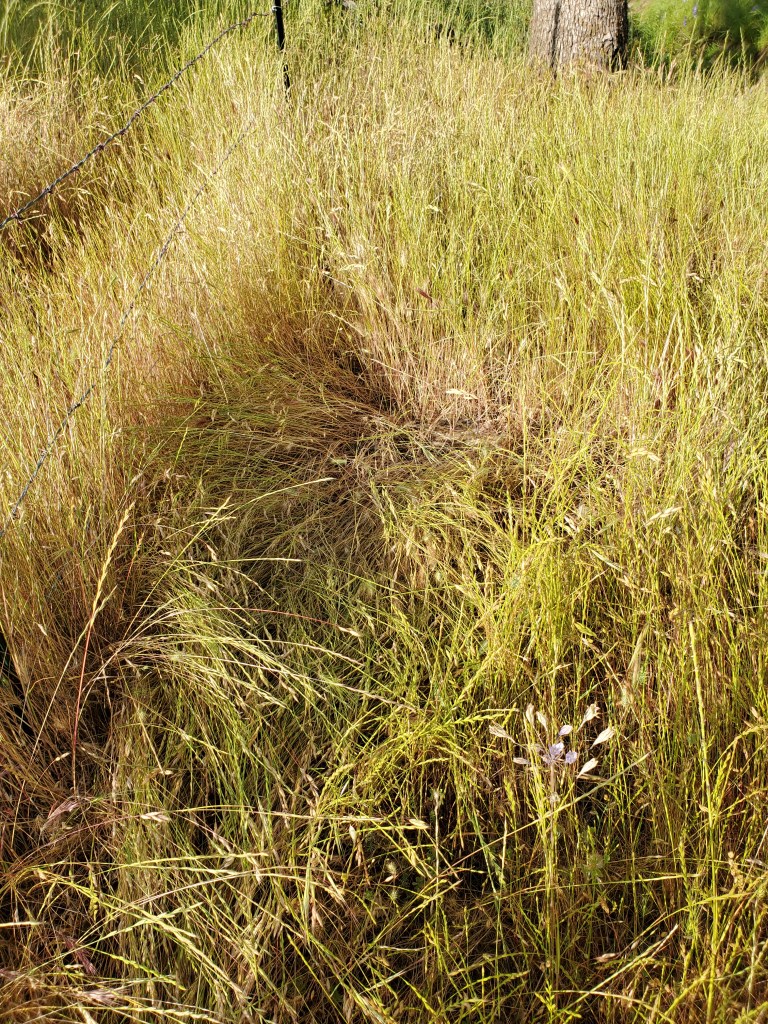
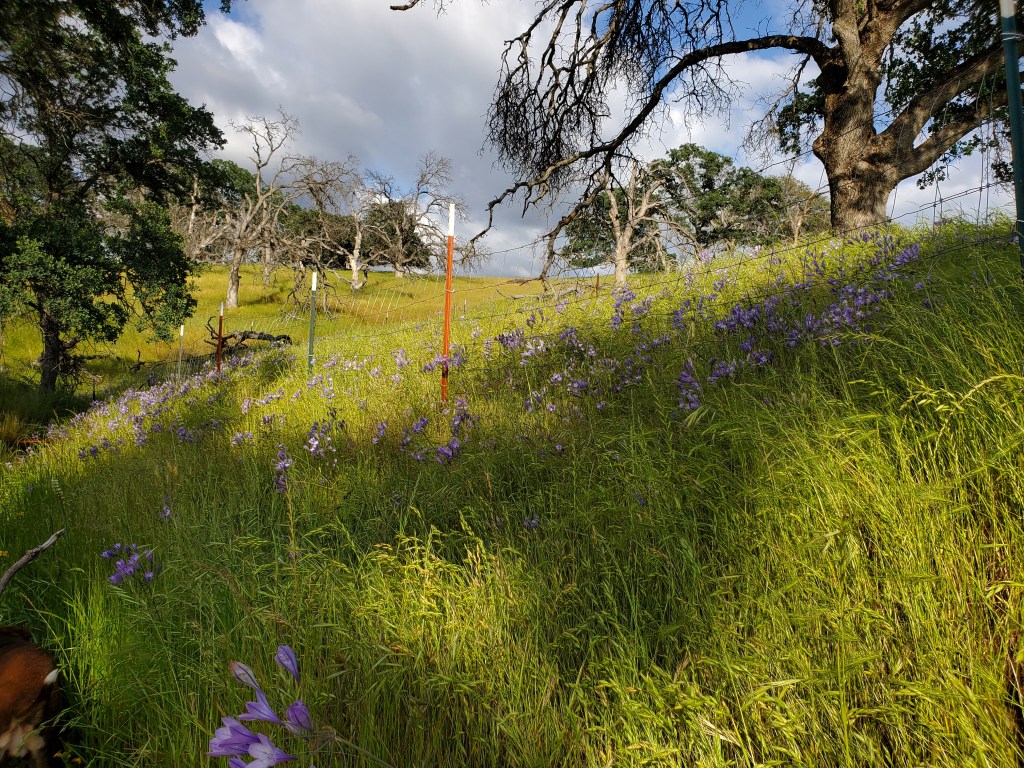
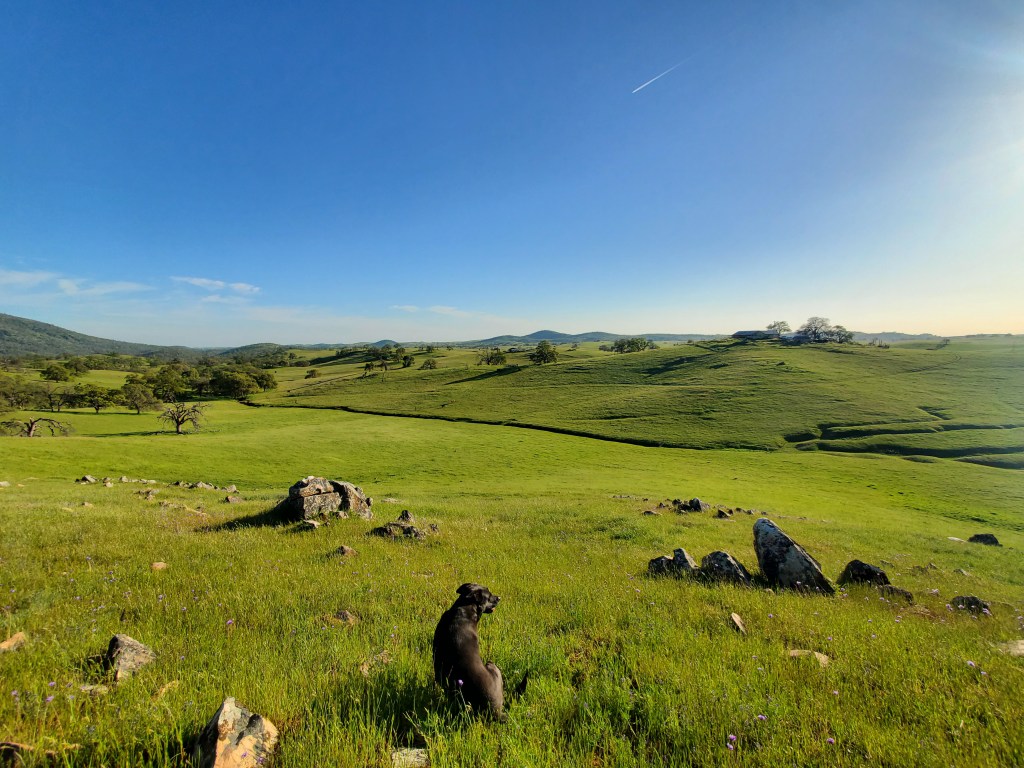
The ground is soaked from the dew. My boots collect the moisture along with leaves and purple pedals from the thousands of small flowers, close to the earth, lining my path. I check the milkweeds. They are stretched into the air bolstered by days of sun as they break through the invasive grasses that block the light. I examine the space to see if more are there. They are, and I breath, grateful for the resilience of these plants.

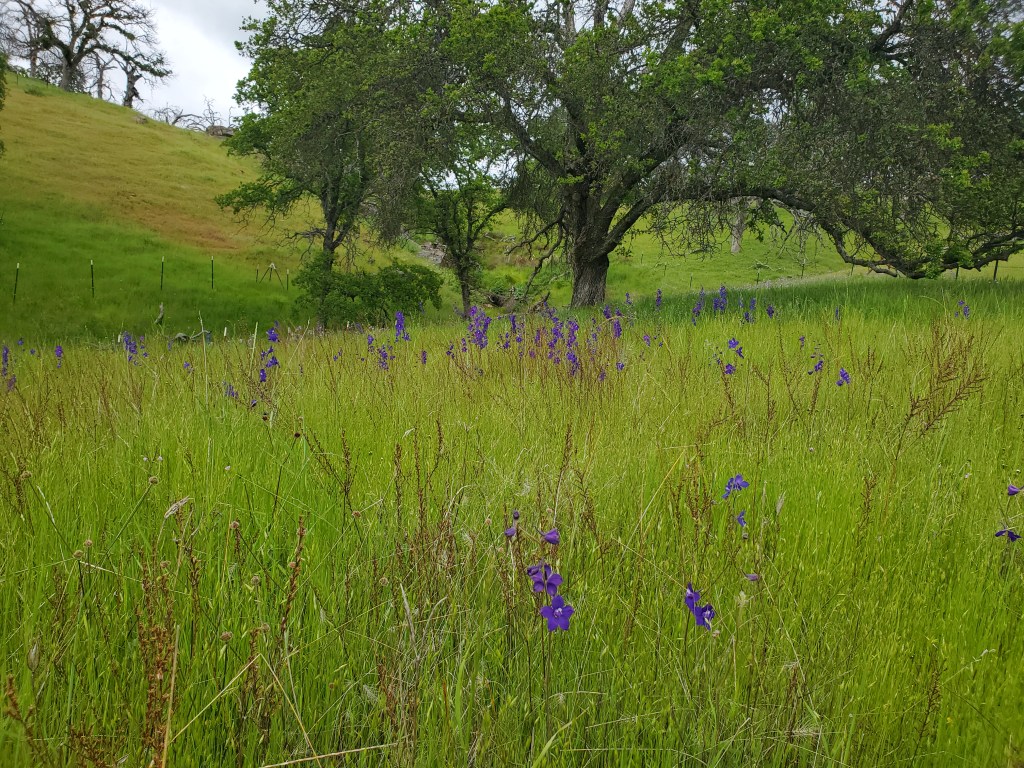
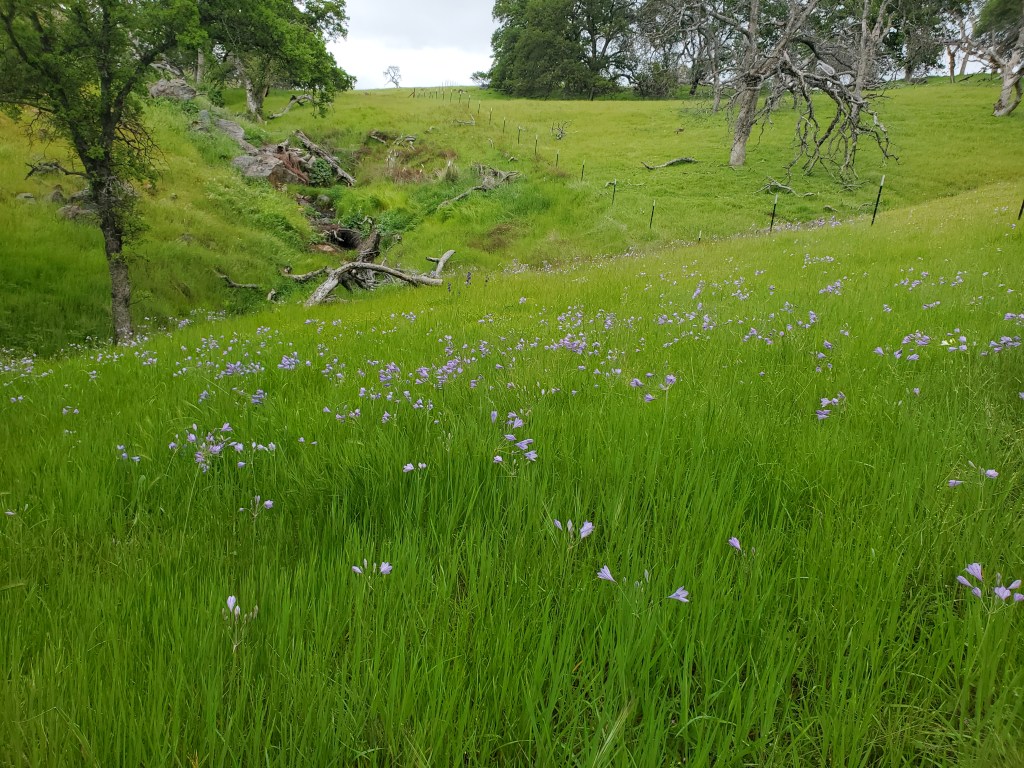
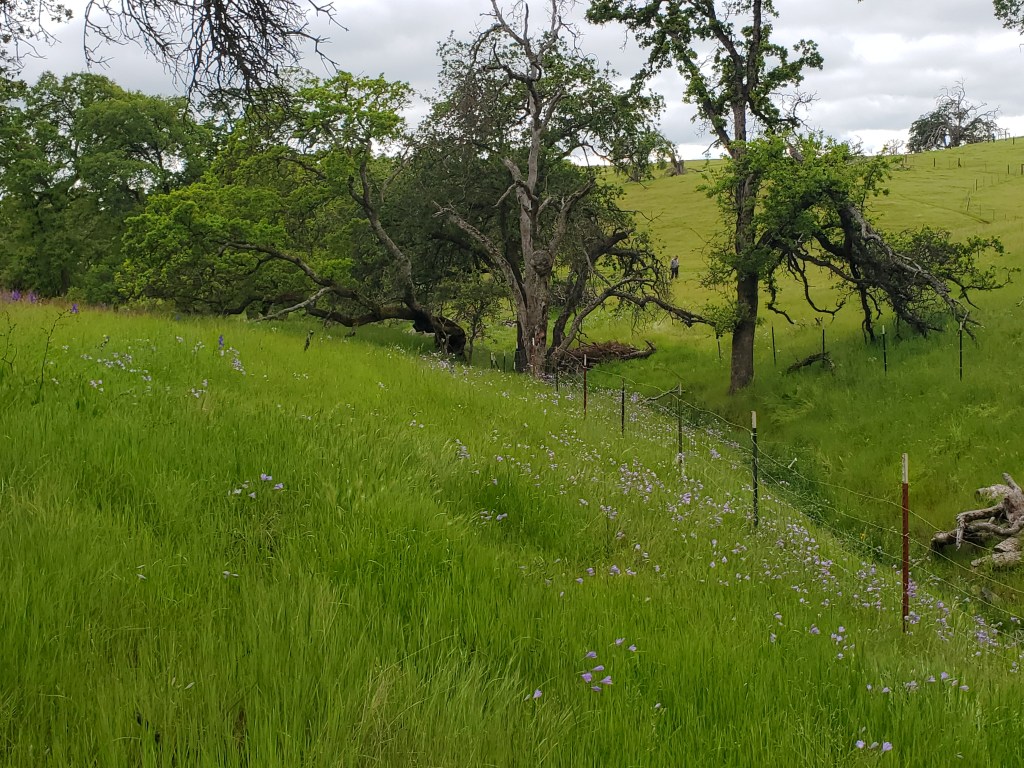
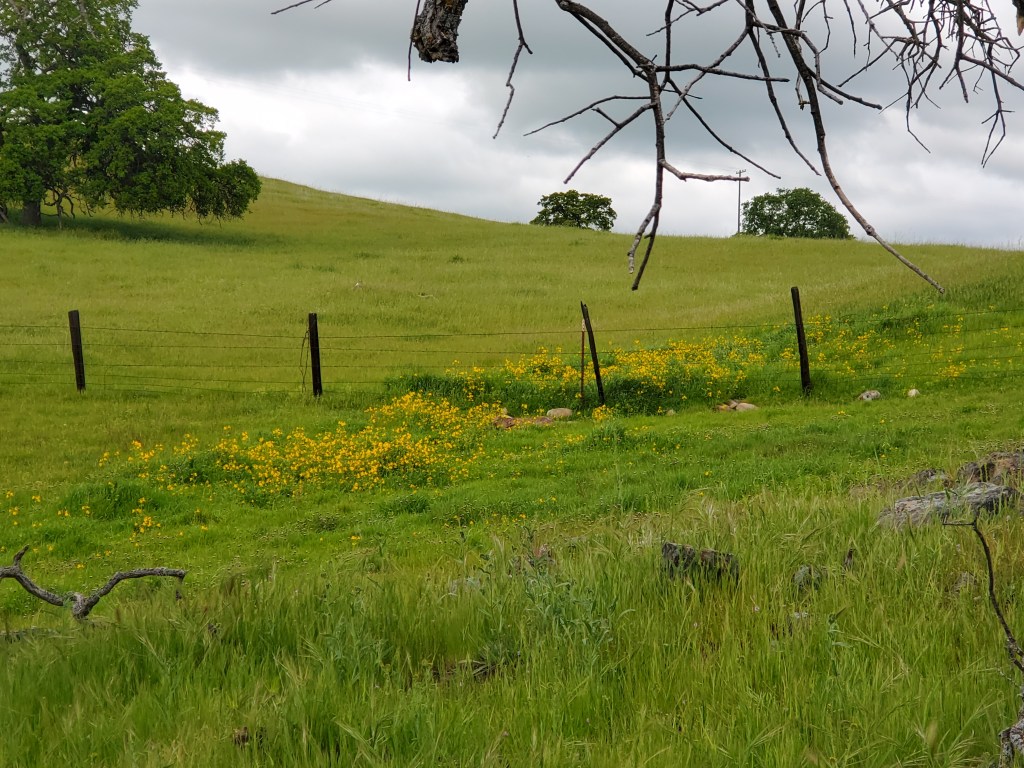
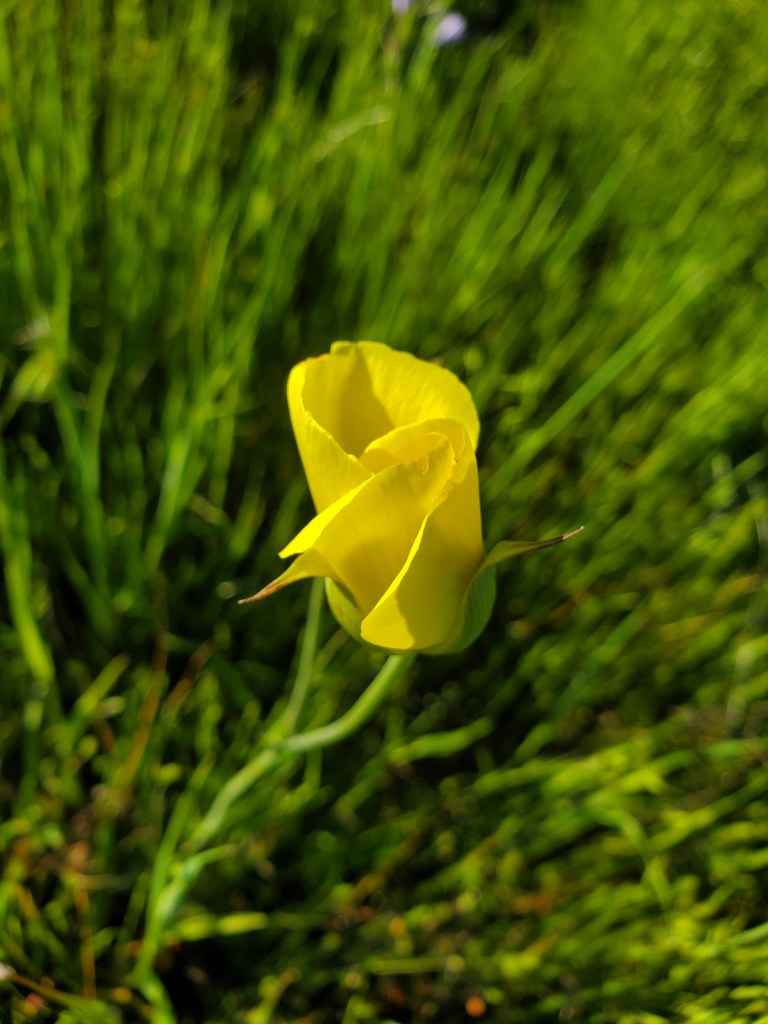
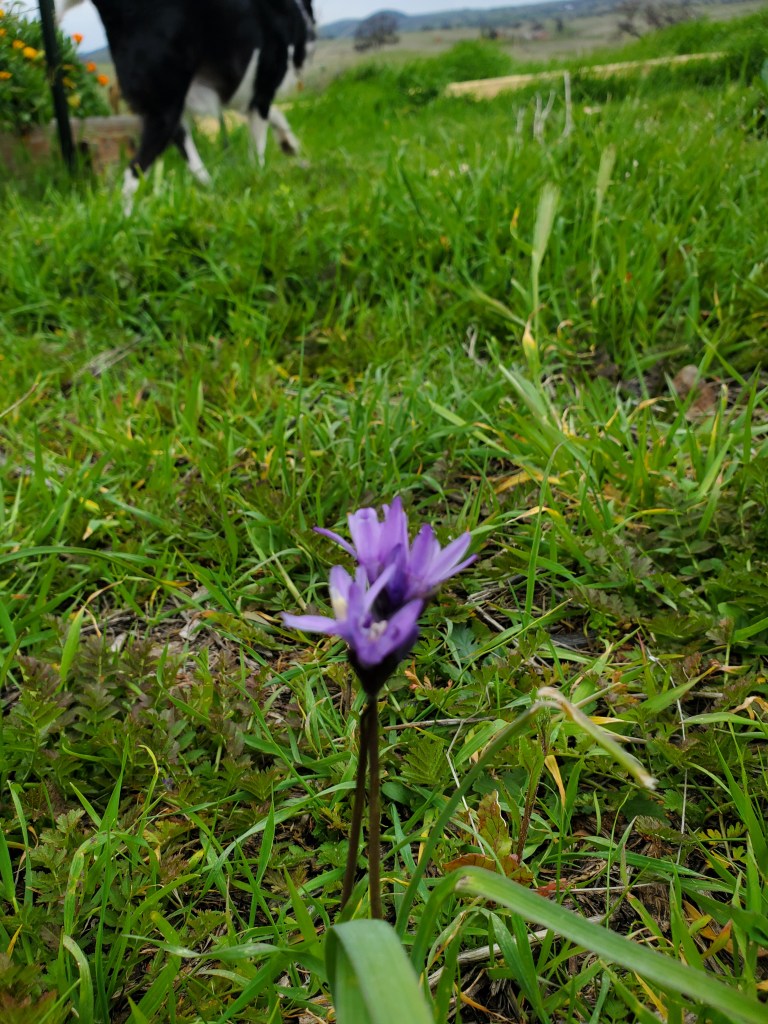
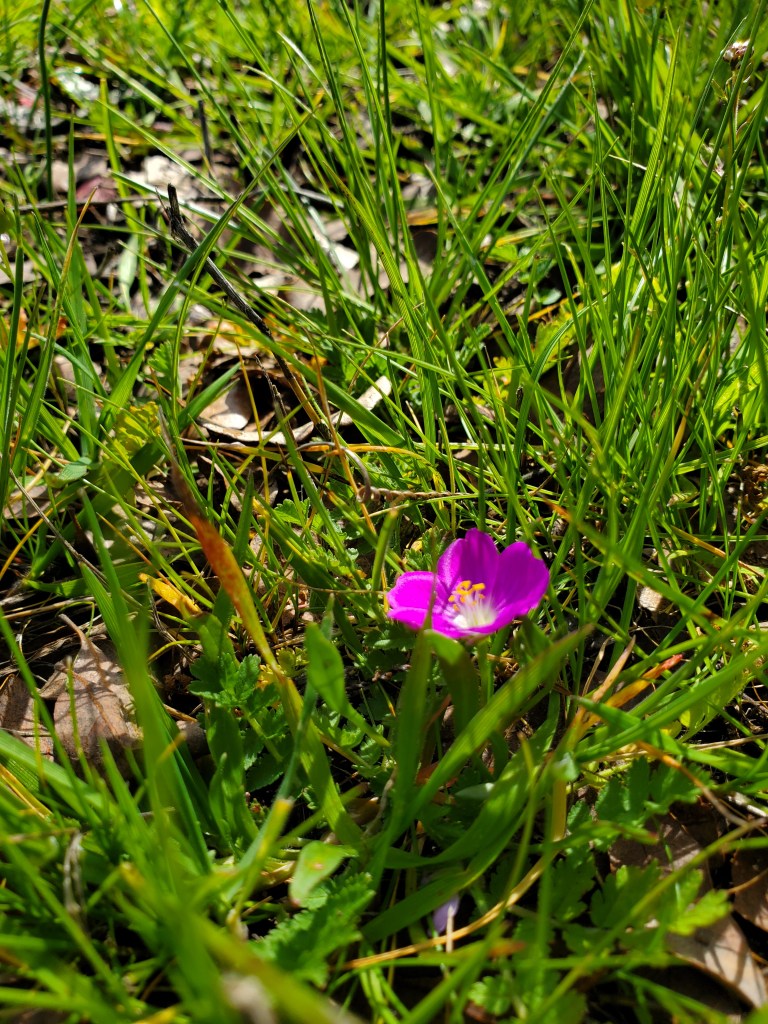
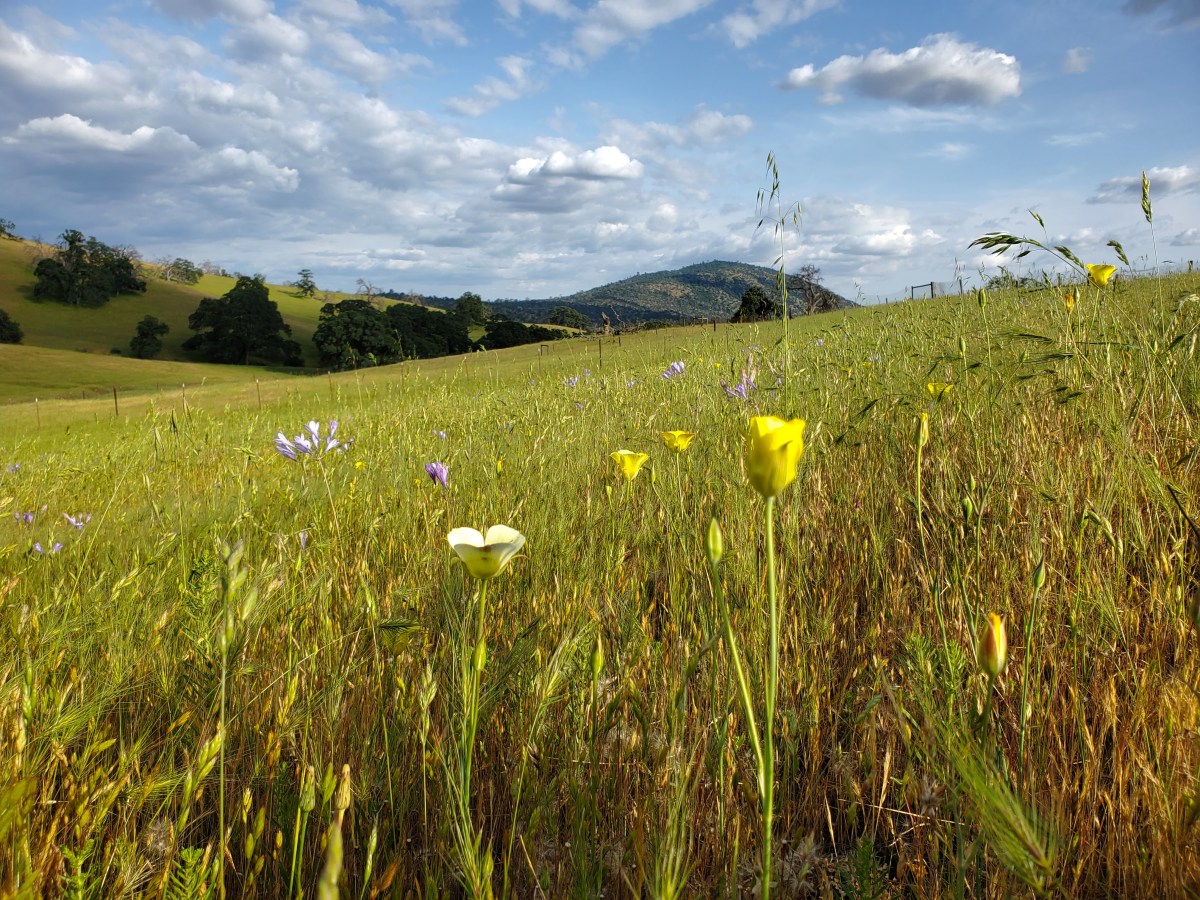
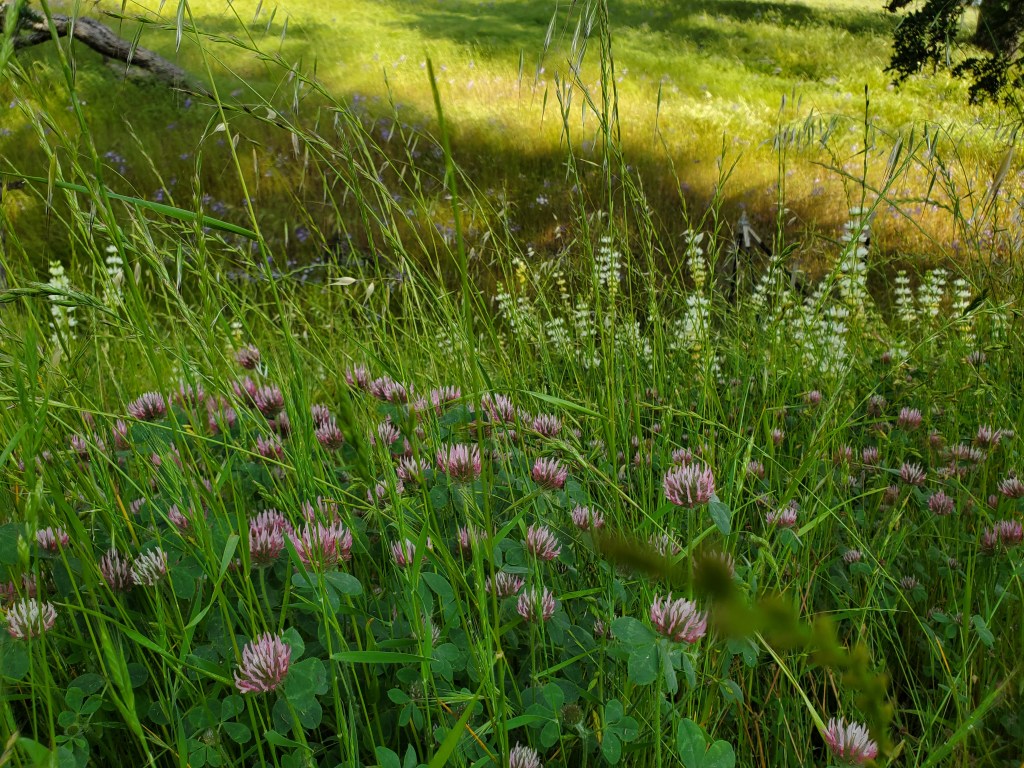
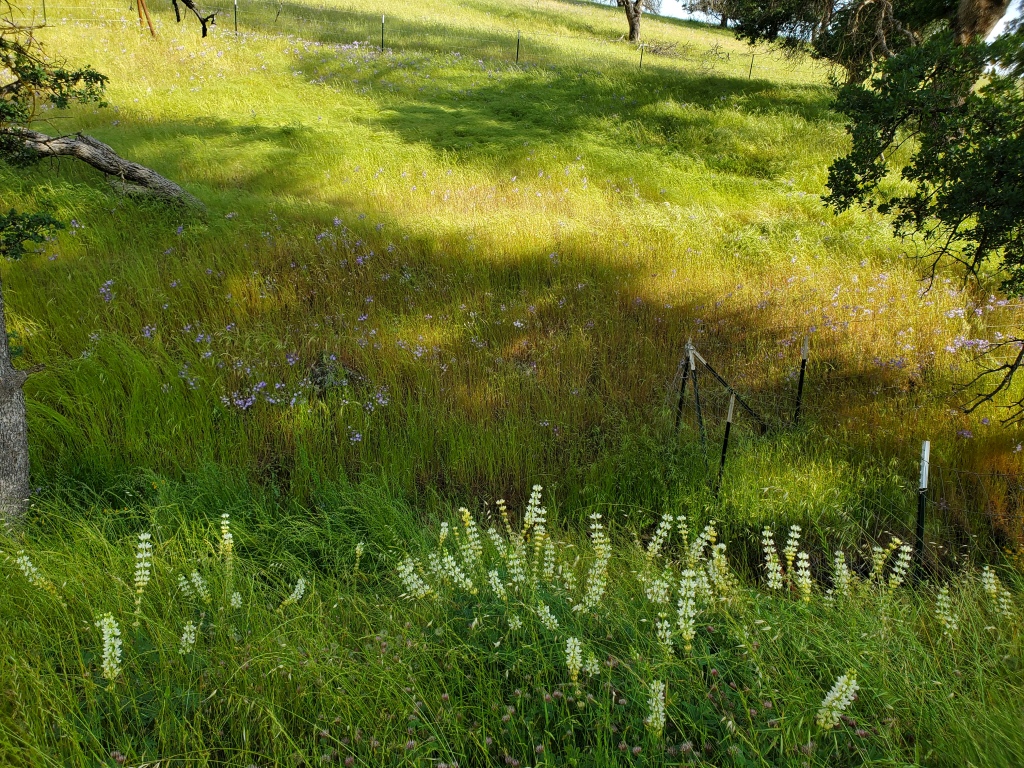
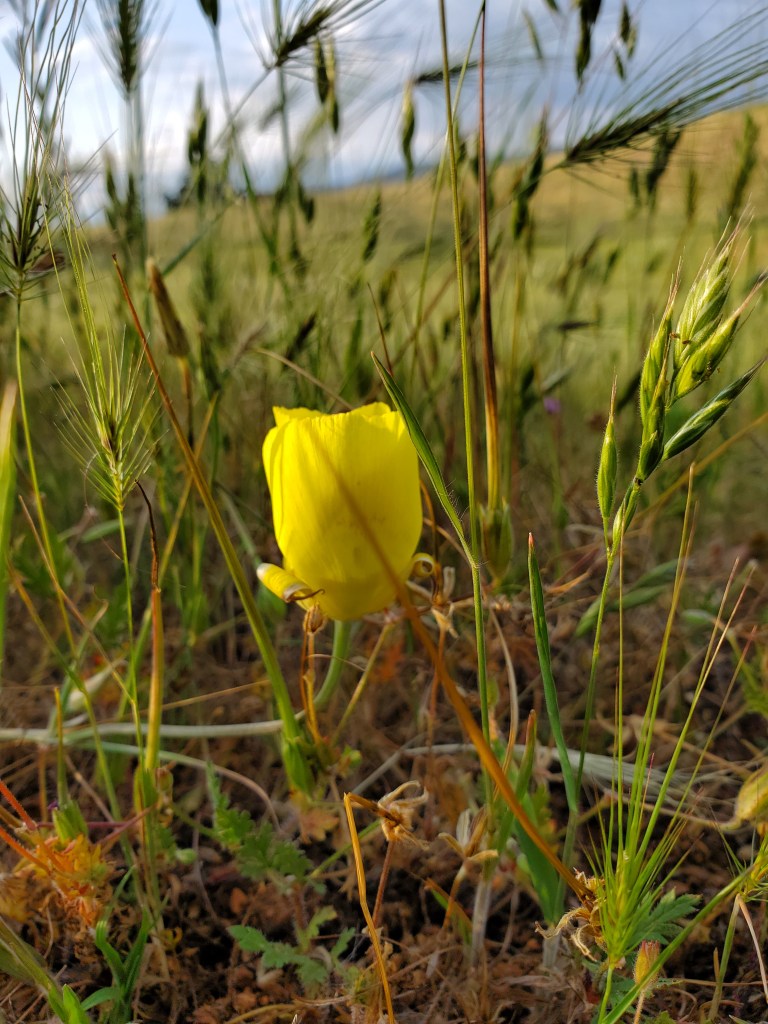
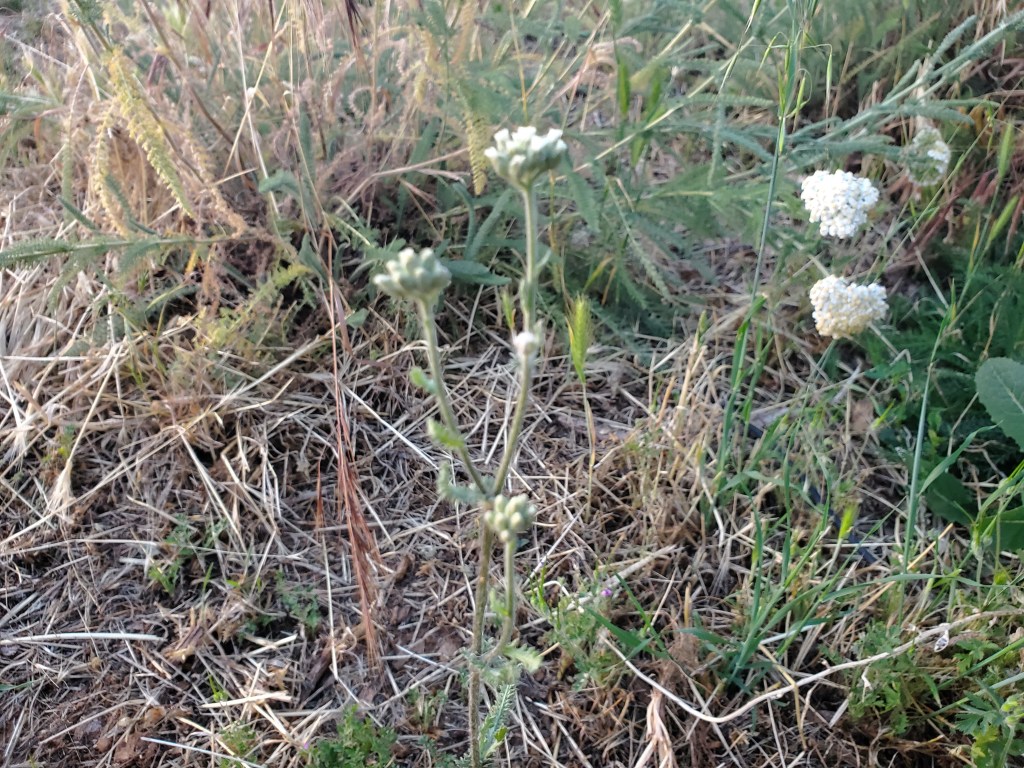
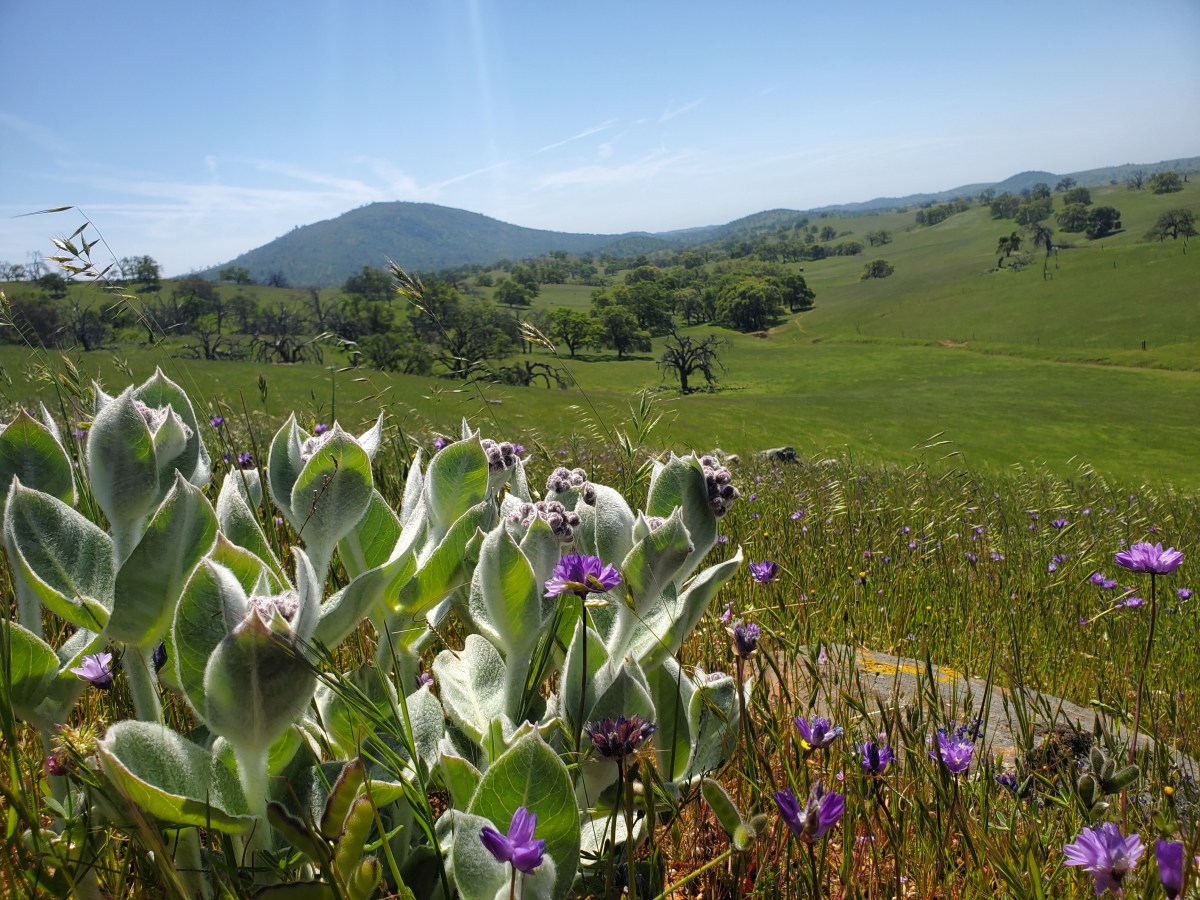
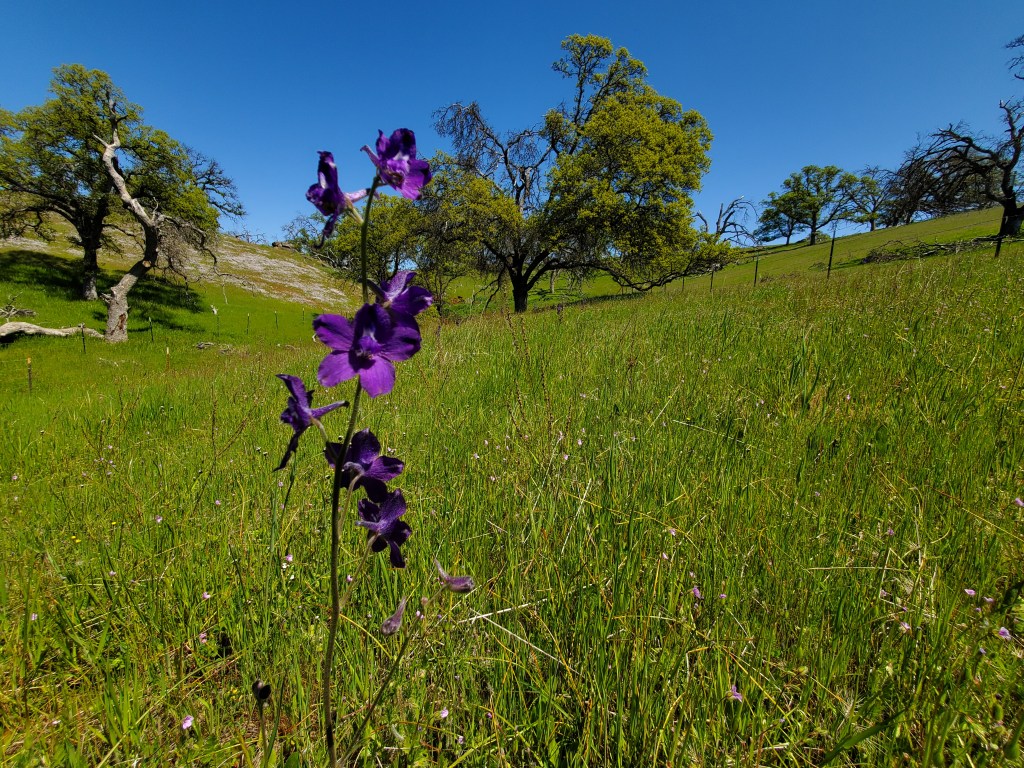
Heading down the hill with the symphony of birdsong the nectar of those thousands of flowers hits me. The grass nut flowers, tall with trumpeted light purple petals in a starburst formation cover the hillside. Among them are hints of dark purple, tall and narrow larkspur. Yellow Mariposa lilies are beginning to dot the hillside – more than I’ve ever seen here. The popcorn flower has nearly abated making room for more purples, filaree and small lupine – the large ones almost ready to burst.

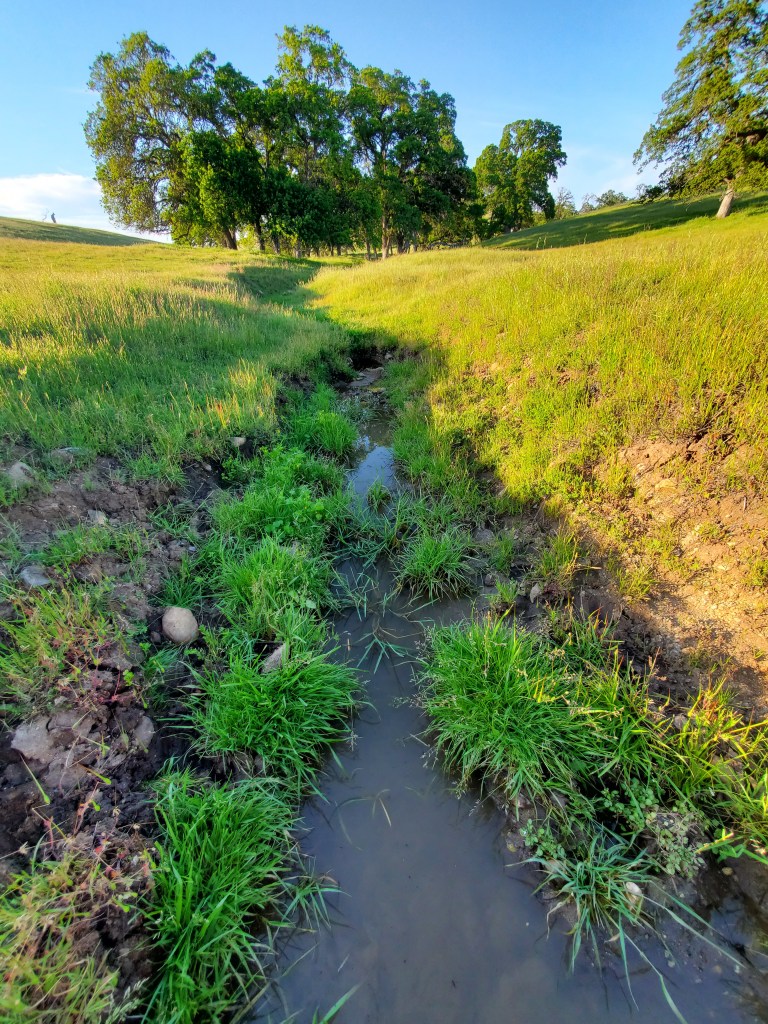
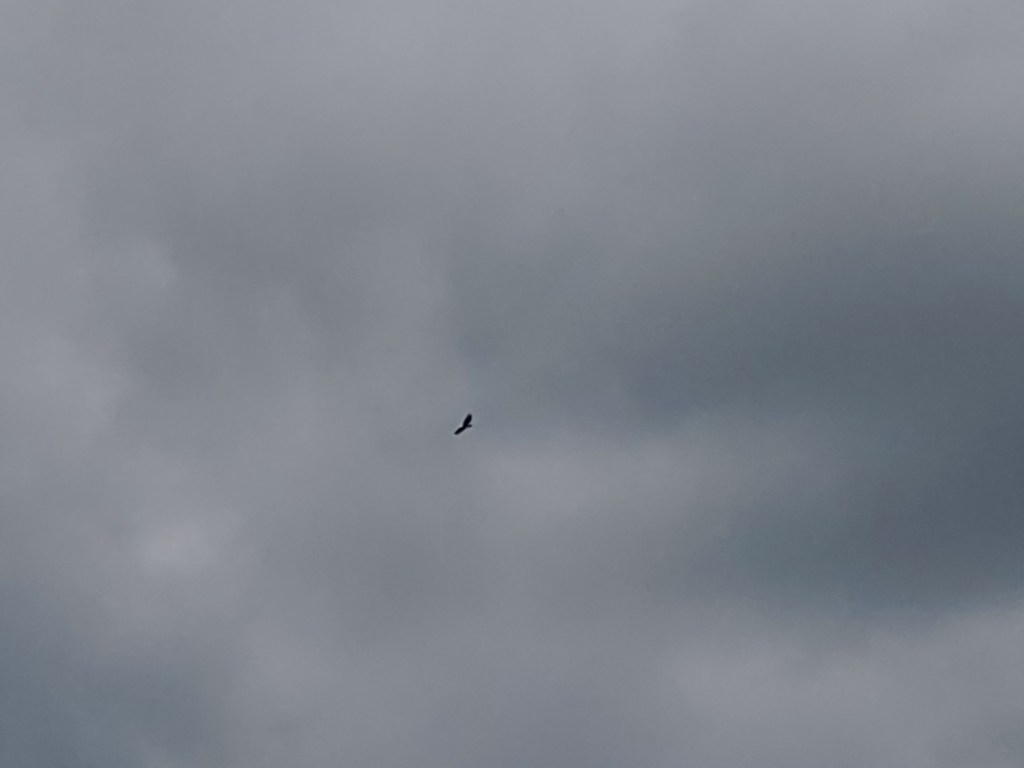
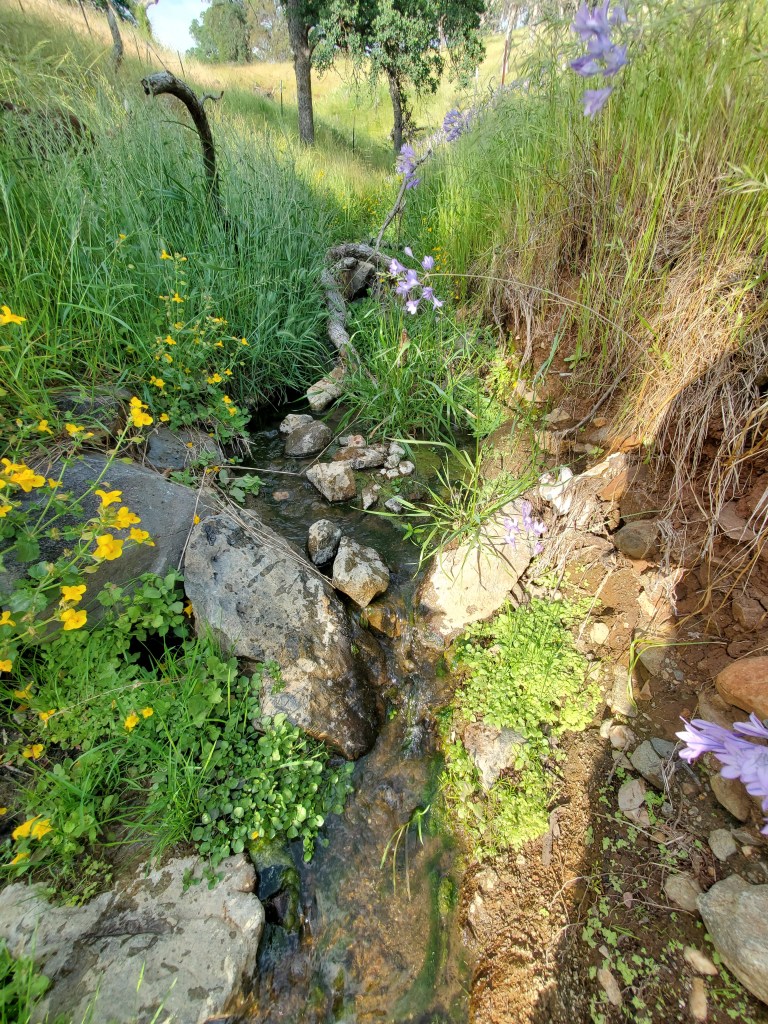
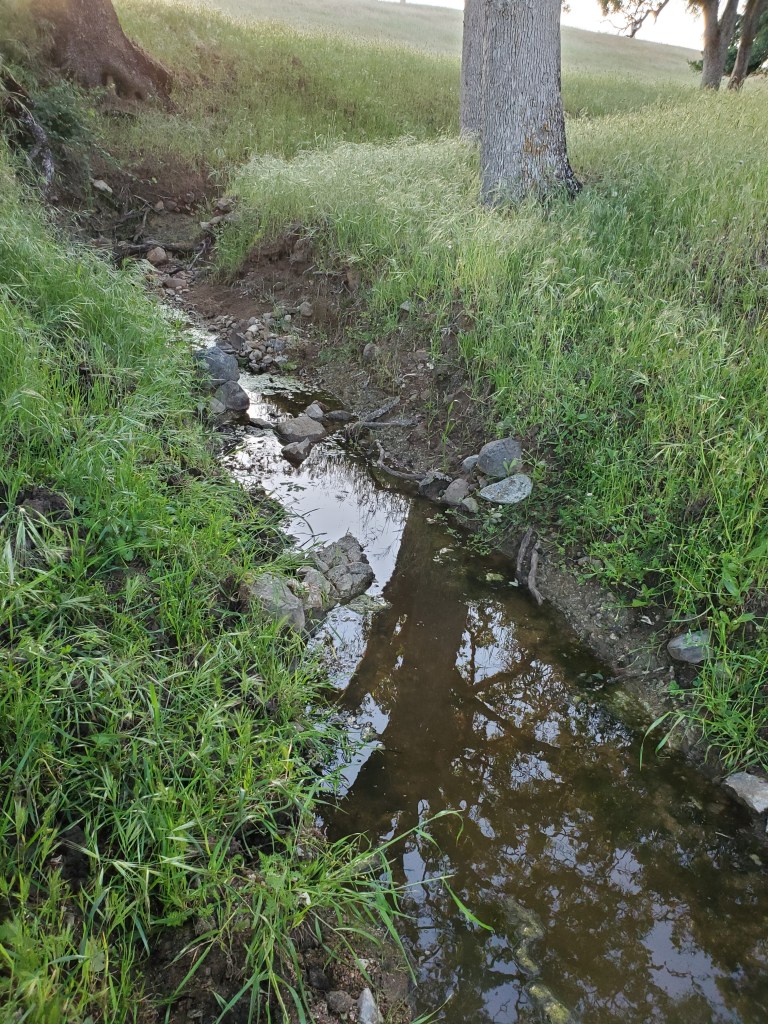
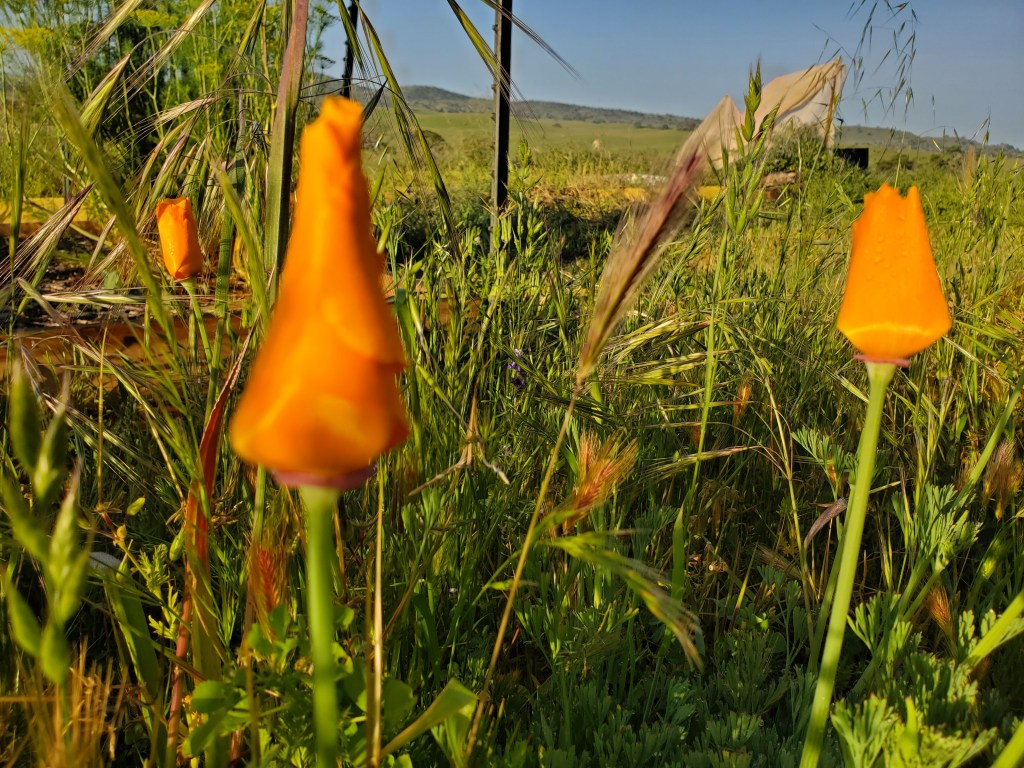
As I get closer to the drainage, the temperature turns cooler, a function of the cold water that soaks the earth and continues to trickle. Walking along the drainage there is more larkspur, orange fiddle neck and now some new yellow seep monkey flower. The birdsong is penetrated by the flap of wings. A single bird flies overhead. Even though it is small, it is quiet enough to hear the displacement of the air with each flap. This is why the morning is magic.

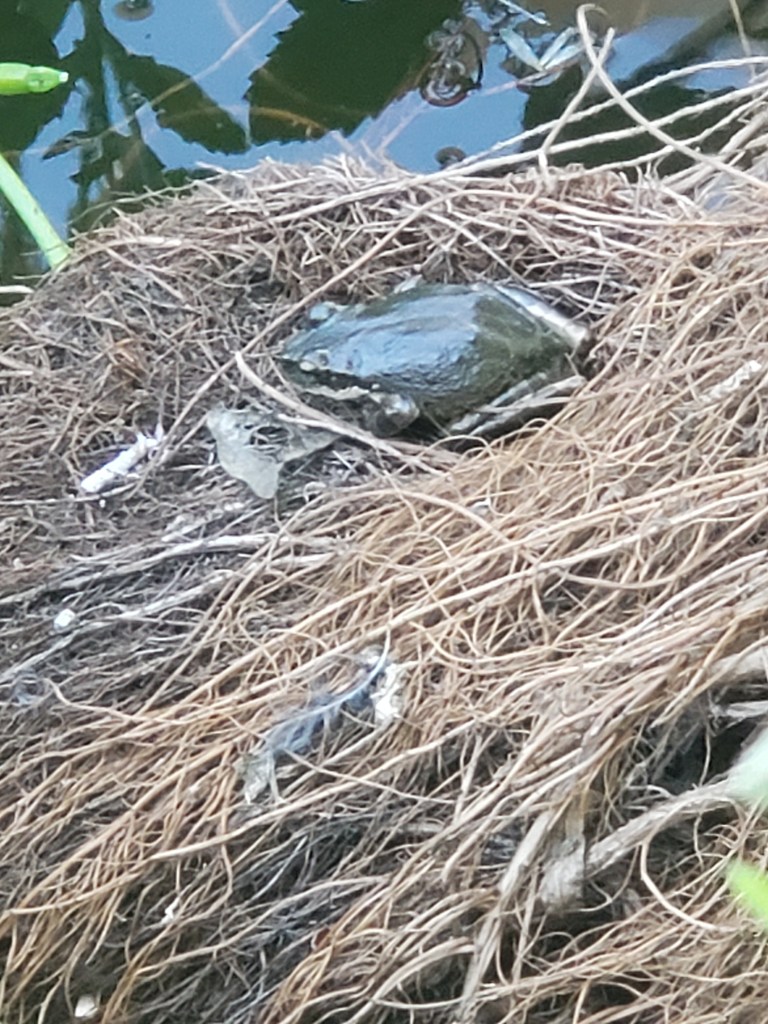
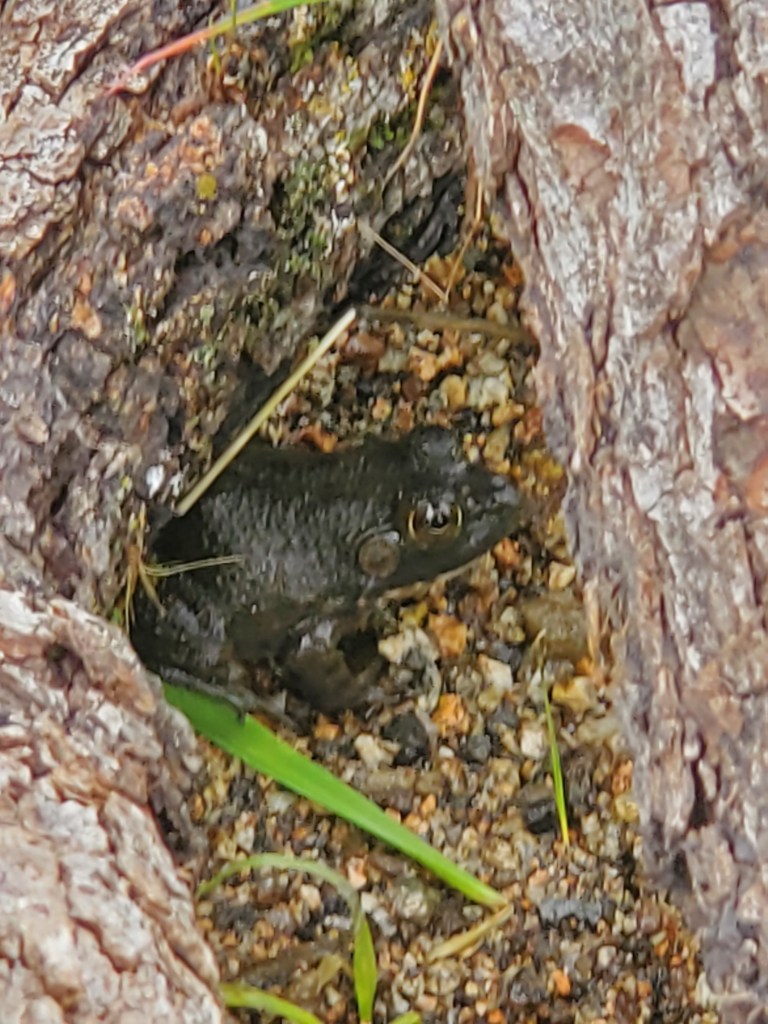
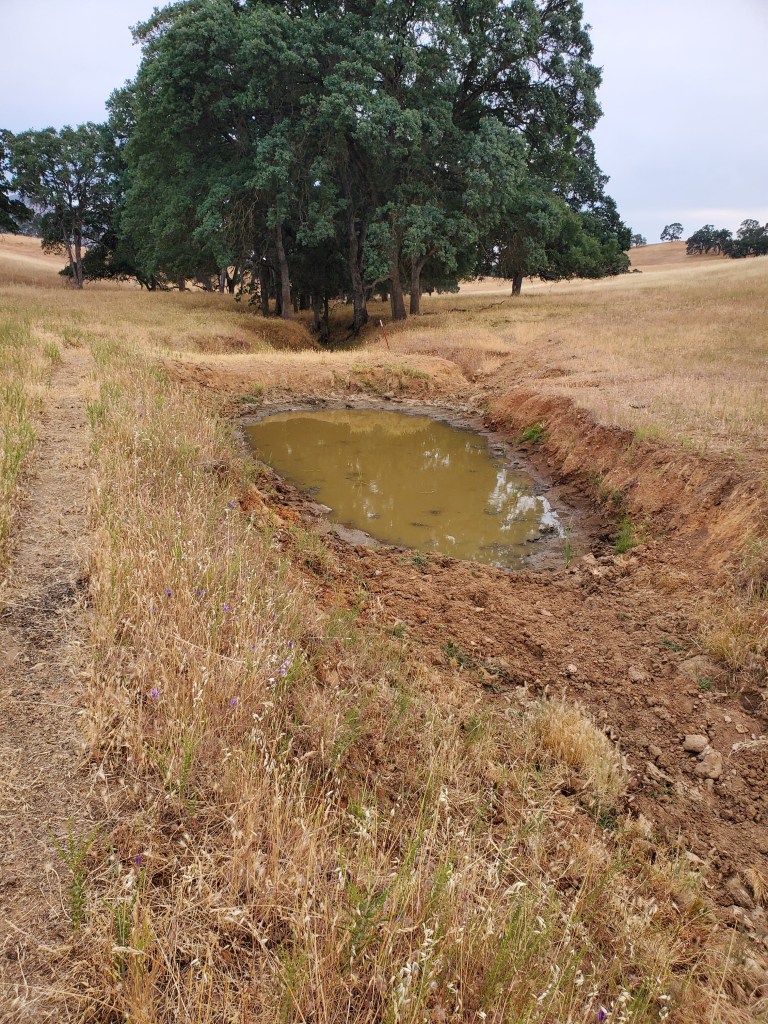
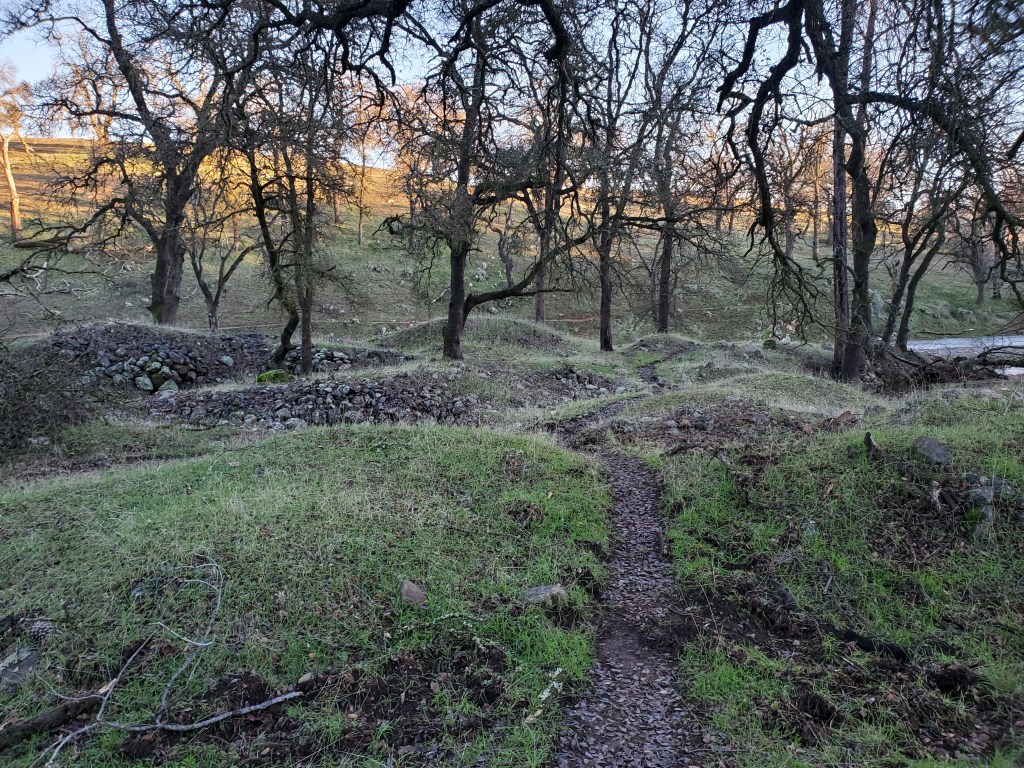
I cross the swale pond and walk into the grove. The bullfrogs floating on the water surface dive beneath the murk, and those on the banks give a chirp as they jump into the water. The nectar scent is replaced by the sweet smell of wet bark and earthen musk. With every step, I stir up more smells of wet soil. The oaks are green, and full of leaves, which I hope portends of a mass of yummy acorn in the Fall. They look happy as I examine the check dams. The soil is still moist in the drainage fork. Good. The water is still running in the spring creek with some nice deep holes. Good. I note invasive thistle growing in my mini wetland and make a mental note to bring the weed eater down there later. With my mother-in-law, I planted milkweed seed. I am hoping to make this new sedimented area more diverse, not just a thicket of Italian thistle. Thistle is nectar rich, and the pollinators love it. There thousands of stalks allover the ranch. Taking out this little section will not impact nectar availability. I hope to get a glimpse of the quail I saw the other day, but I don’t. It is too early for some.

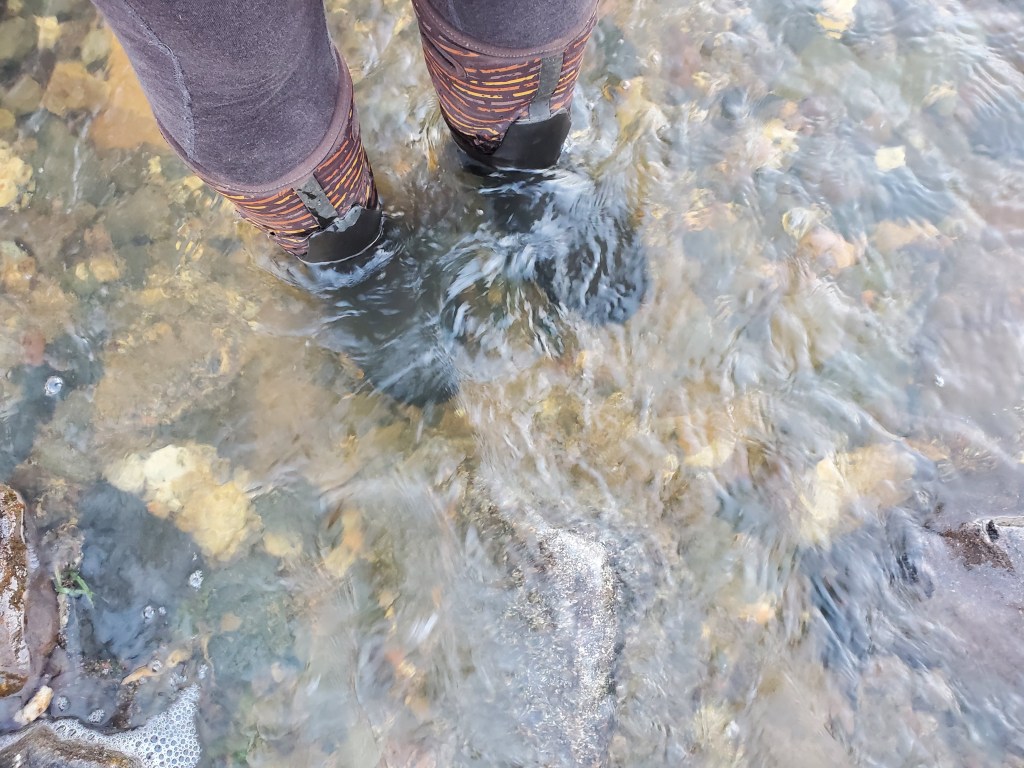
I exit the grove to check the open section of the spring creek. My boots are wet up to mid calf. Despite the work of the cows, the grass has grown taller with last week’s rain. The first section of creek is still running, filled with grass and small, open stands of water. More seep monkey flowers emerge. About halfway down the open section of creek the water stops. I hear the last drips into a small pool just downstream of my old, small, rock check dam. The flow is underground now. It leaves a creek bed of moist soil the rest of the way to my property line.

As I veer back to the trail, turning west now on the open grassland, the sun is up over the east mountains and hits my back. The warmth is a familiar hand across my back comforting me as I walk. I notice the humidity now, so thick. The full force of nectar is back, clinging to the water molecules in the air, which fill my lungs. I think of all those molecules that comprise this Spring cocktail of life and know that my body will know what to do with all the constituent elements as my lungs expand and contract. I breath even deeper now, filling myself with this ancient food.

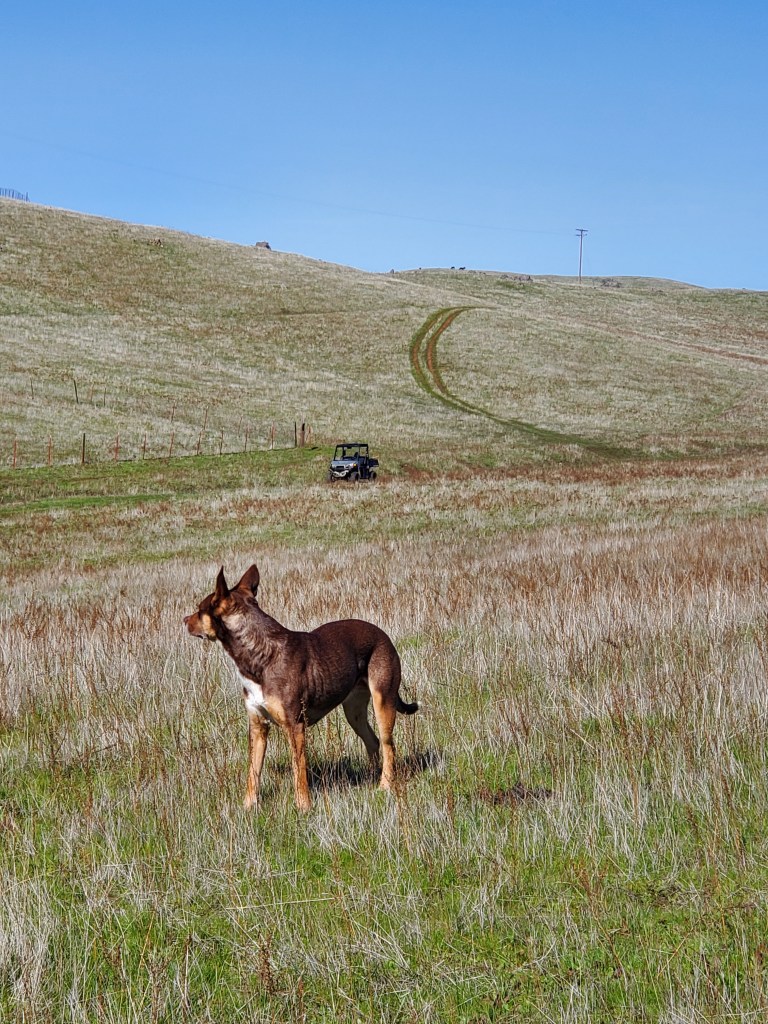
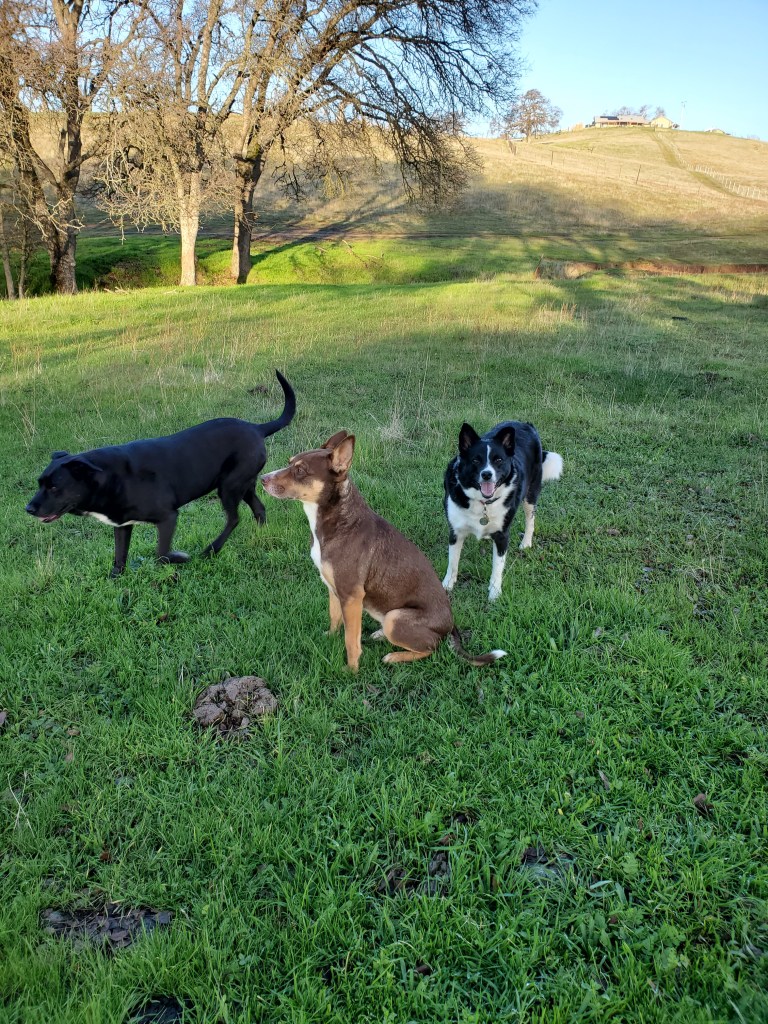
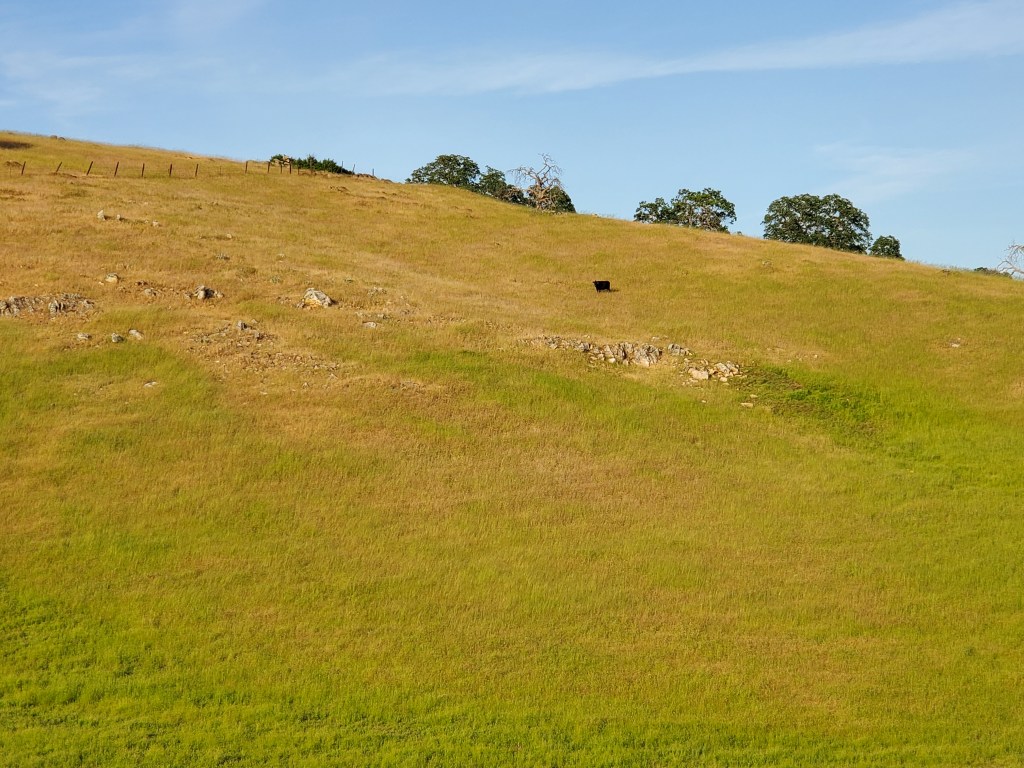
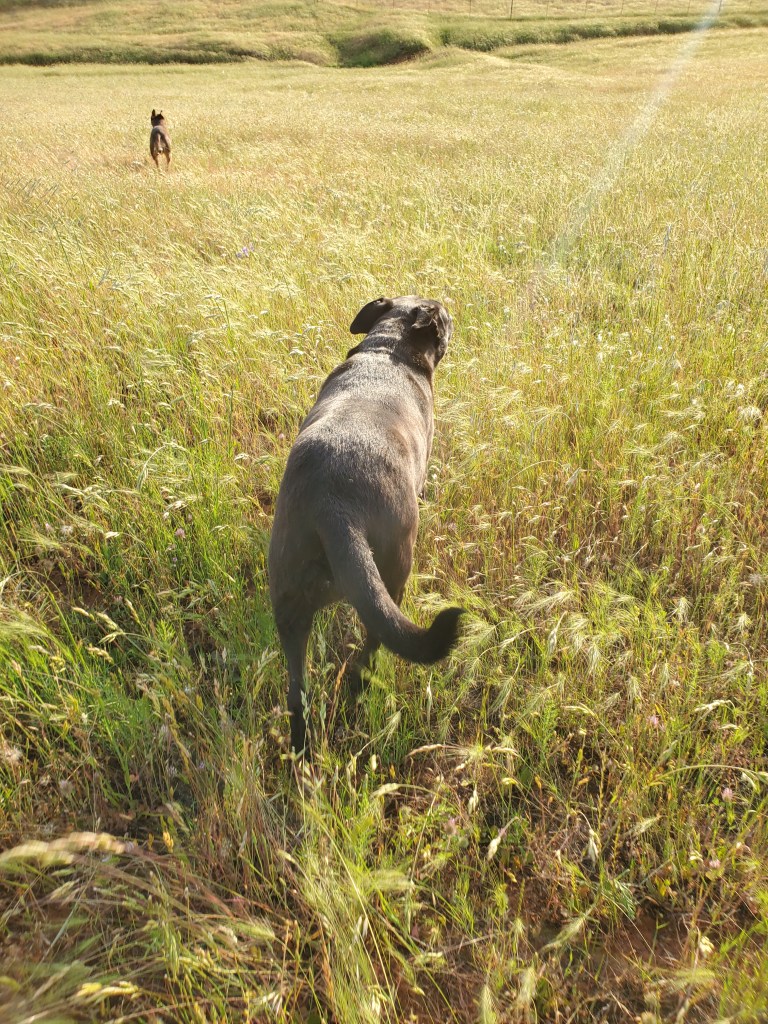
There are still no raptors, ravens or vultures in the sky. This time is for the songbirds to flit and sing with less concern of being a meal or their eggs being a raven’s meal. I link up with the cattle road and make a turn north, fully surrounded by the large expanse of grassland. I hear the unmistakable song of the meadowlark, deeee, de de de deee, then as the sky brightens, coyotes begin to sing. As I get closer to the driveway, there is the distant rumble of cars on the road, which is a quarter mile away. The sun has woken humans up too. I continue the last leg of my walk, Millie by my side and Beatrix taking the short-cut through the grassy hill. I feel grounded and filled. This walk is a ceremony of connection, an acknowledgement that we are all together, living for one another.

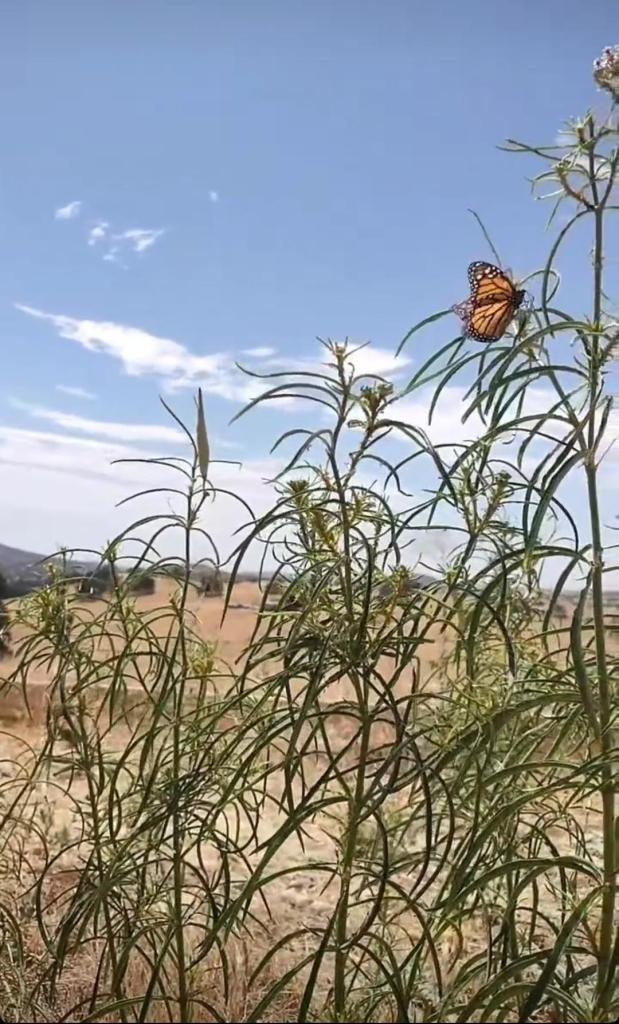
Monarchs Are Back with Babies!

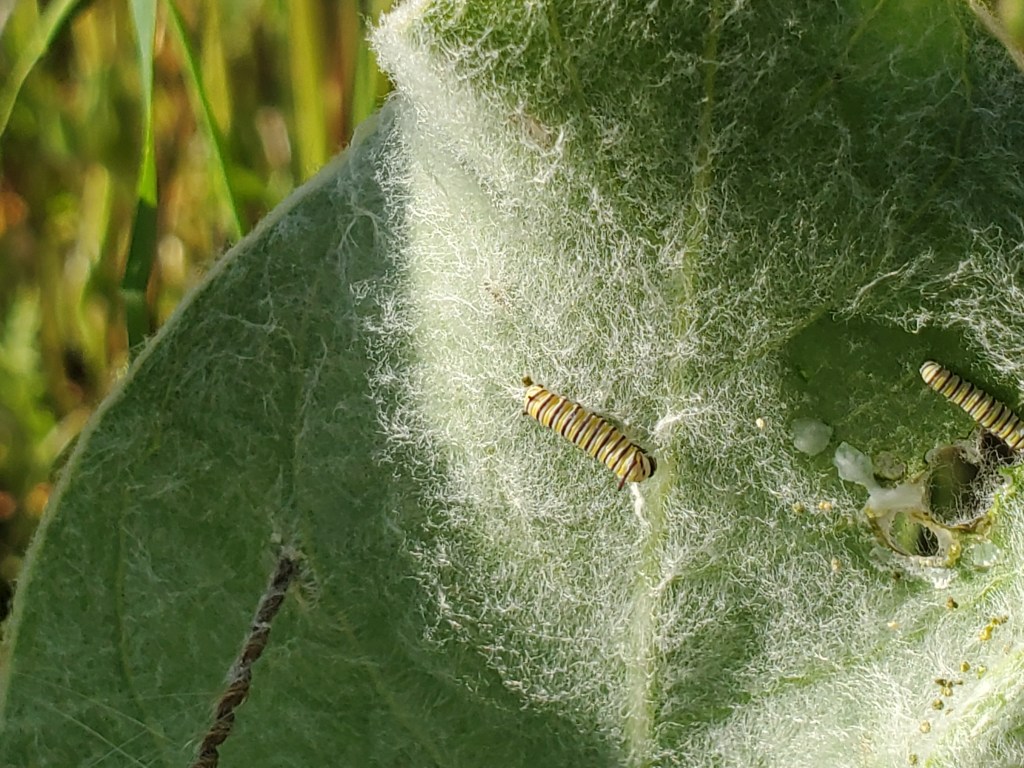
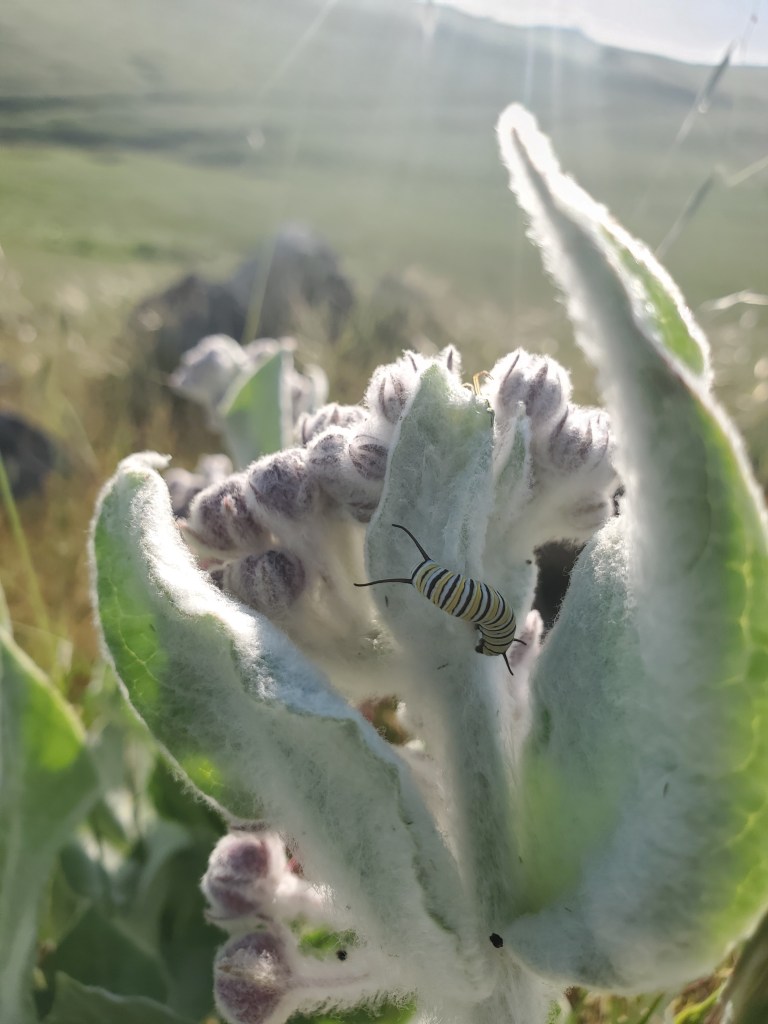
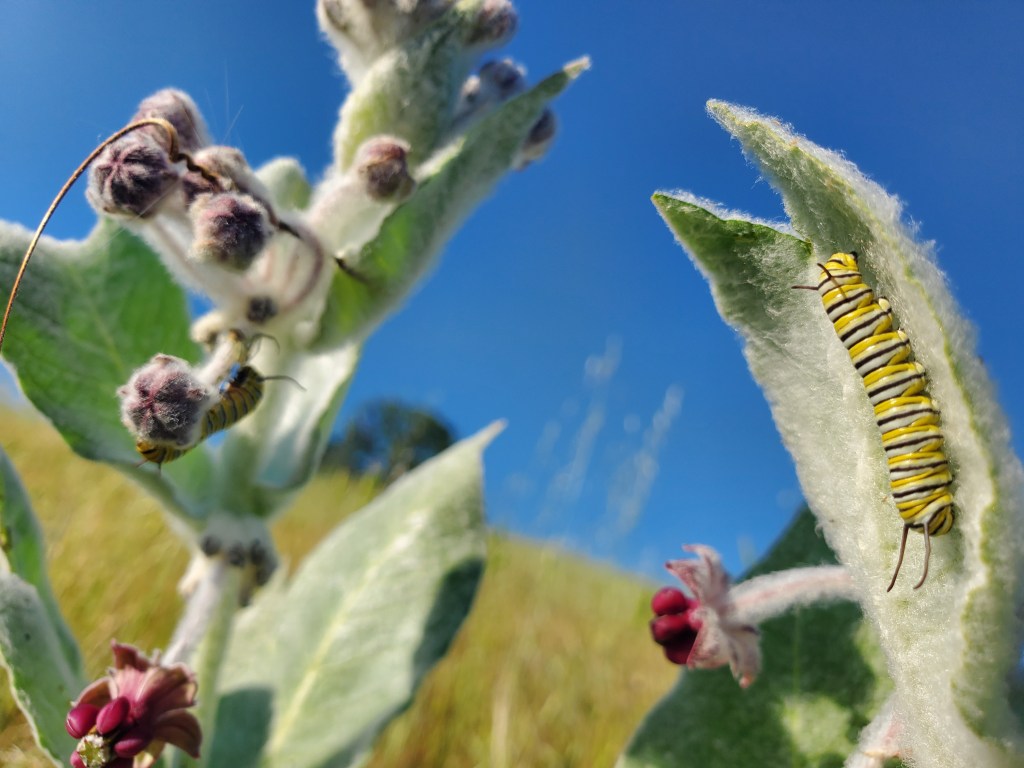
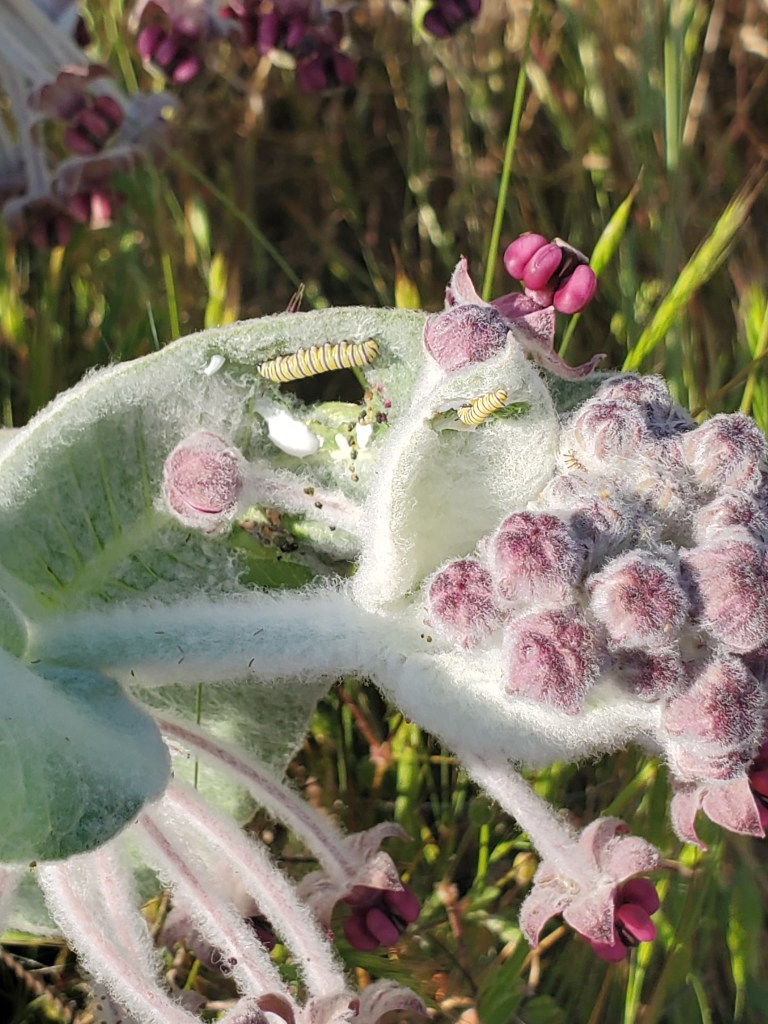
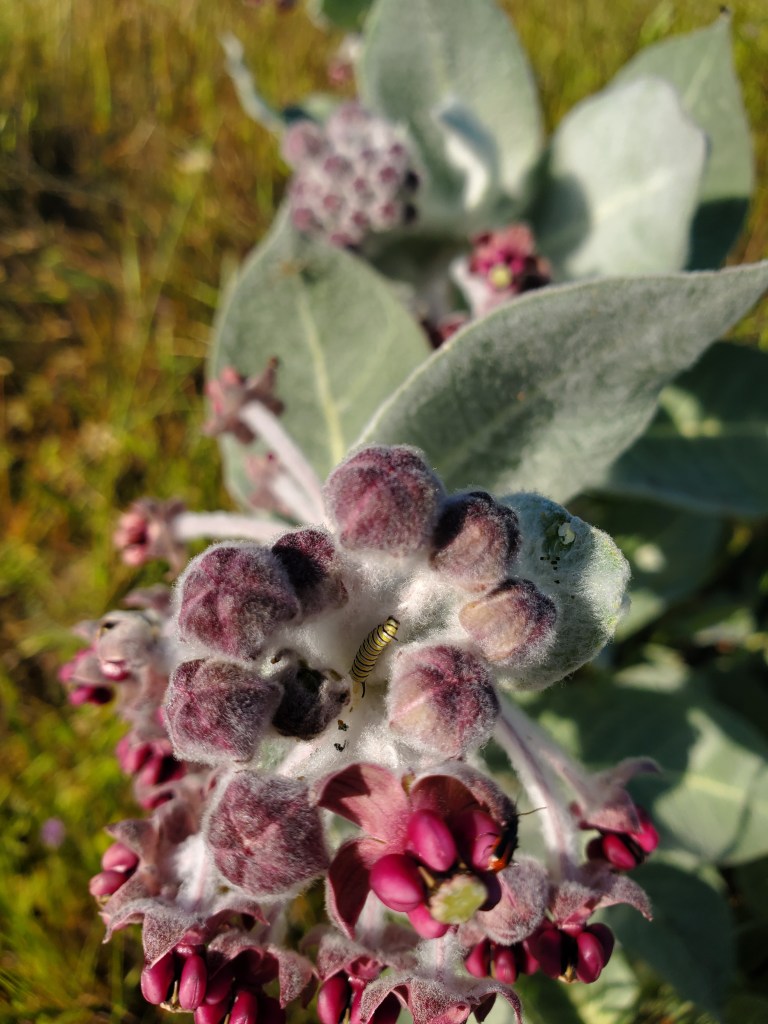
There is no more gratifying symbol of the success of the work here than the habitat being used. This is especially true when monarch caterpillars are present. On Monday, 4/22, I walked the steep hillsides to check on the California Milkweed plots. Fortunately, I had friend and biologist extraordinaire Deedee Soto at the ranch visiting. It was warm that day, even at the end of the day, so we sweated as we made our way up. The first plot, all the plants looked healthy, but there was no evidence of monarch use. We made our way down hill, crossed the drainage, still spongy with water, and then started our ascent. Again, this is a steep slope. Deedee and I walked slowly, taking breaks. Mille and Beatrix were with us, but about halfway up, I turned to say something and did not see Beatrix. Where was she? Evidently, she gave up, went back down to the spongy drainage and laid in the coolness of the grass and soil spectating our ascent. I rolled my eyes, slightly jealous, and the rest of us continued upward.

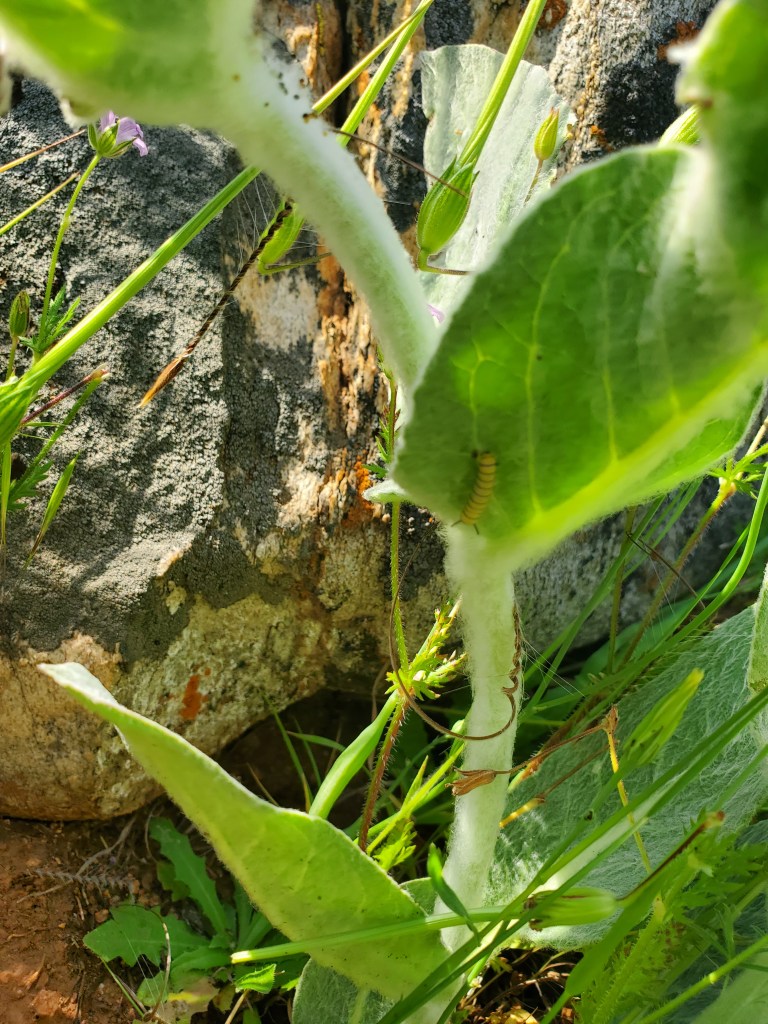
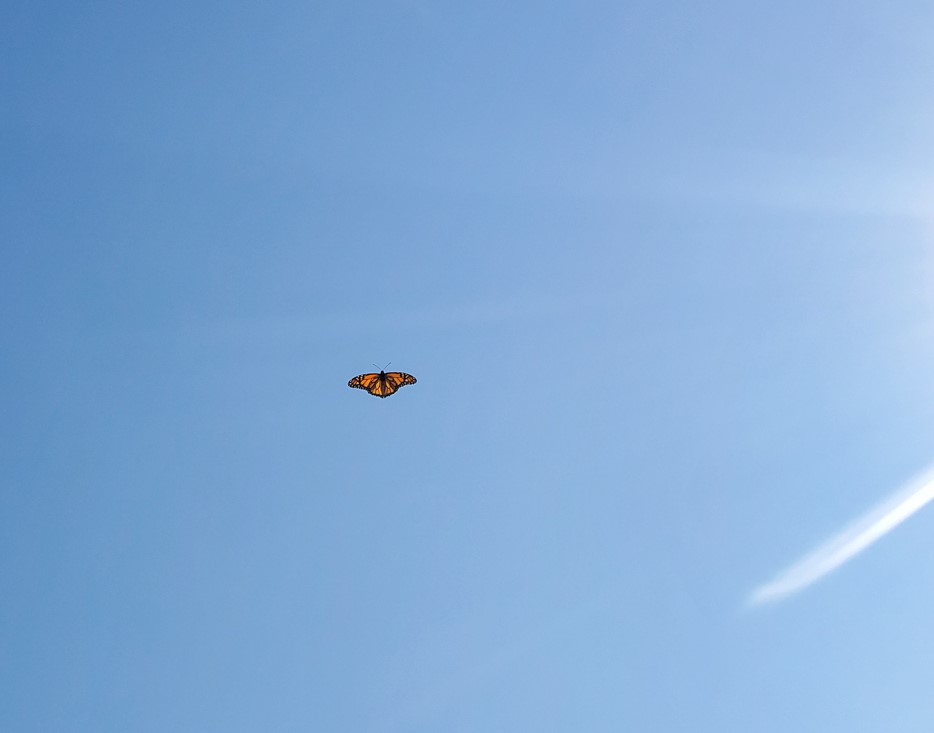
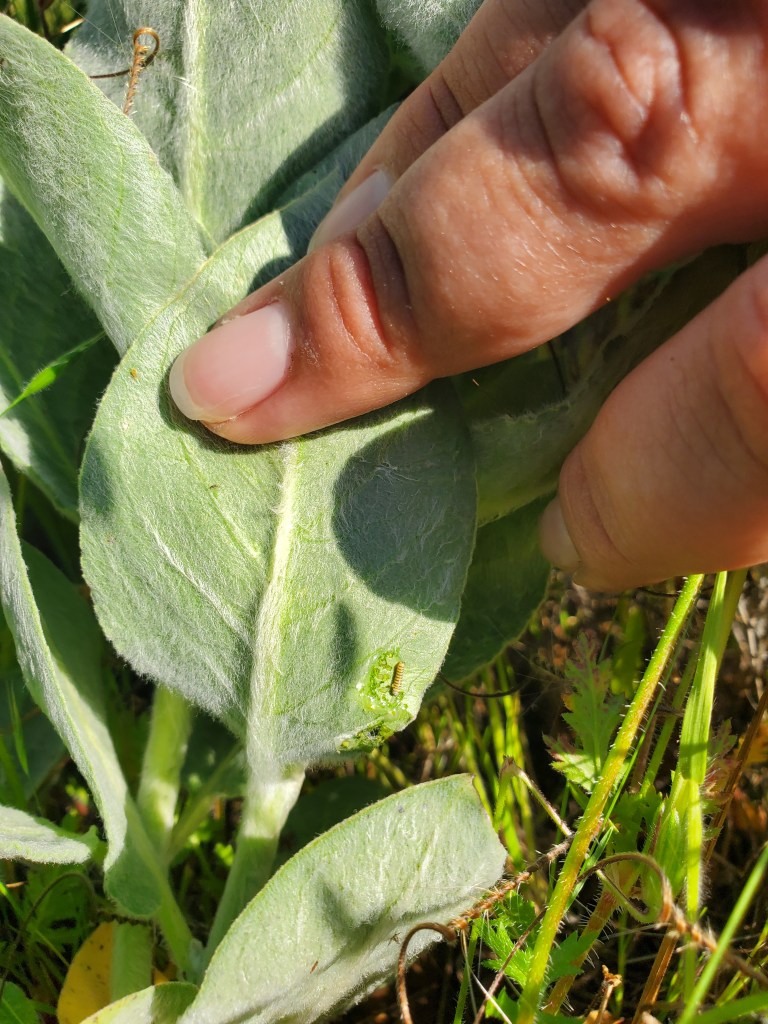
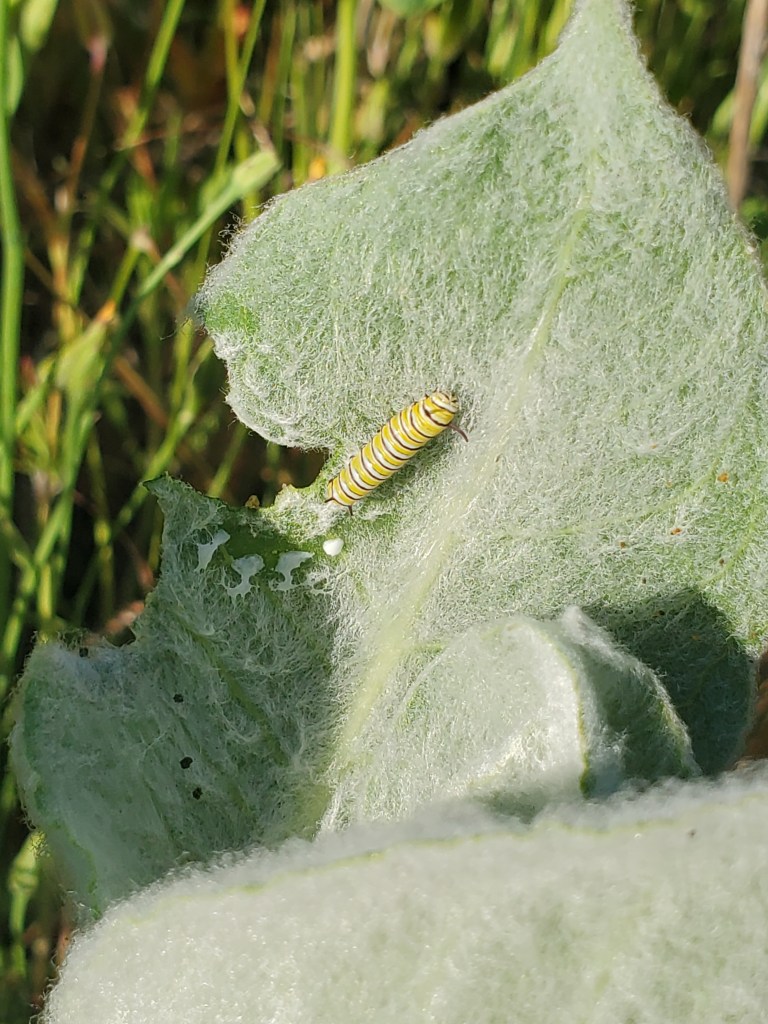
At the plot, our efforts were rewarded. Six of the 13 plants had caterpillars. I screamed with joy to Deedee. It just came out. Fortunately, she understands and doesn’t think me strange to be so excited about this tiny yellow, black and white creature. Because of Deedee’s high skill, and youthful eyes, we counted 28 caterpillars of varying ages, from the first instar to the third. Caterpillars go through five caterpillar stages, with #5 being the largest, before they transform to chrysalises. Twenty-eight is a great start! There could be more though. Caterpillars are very crafty, having the super power to hide in plain site. Two other plants had evidence of monarch use, but we could not find any caterpillars. I whoo hooed from the hilltop. The monarch mamas had found this patch of California Milkweed a hospitable home once again, trusting this place with their future.
All Oaks Planted

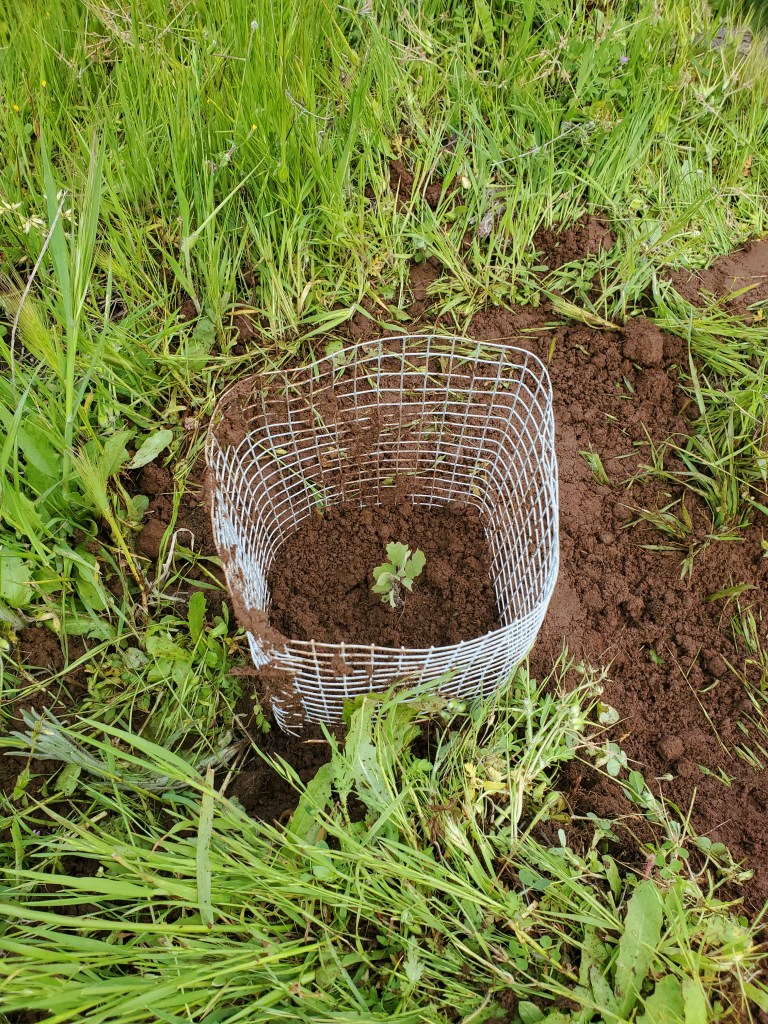
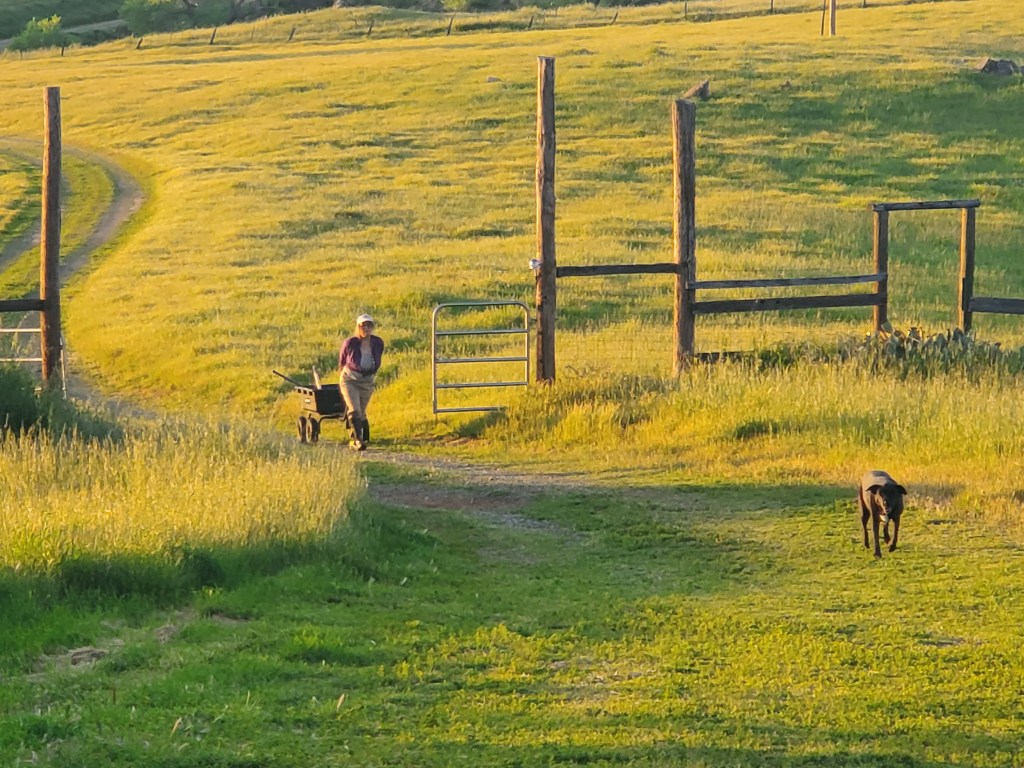
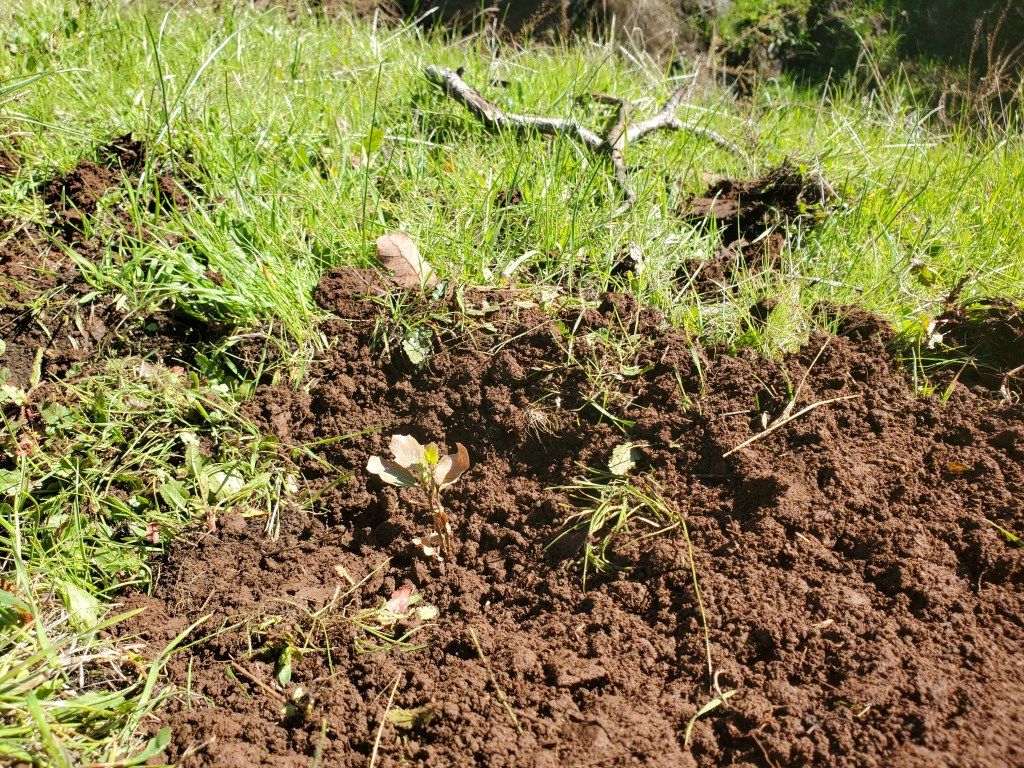
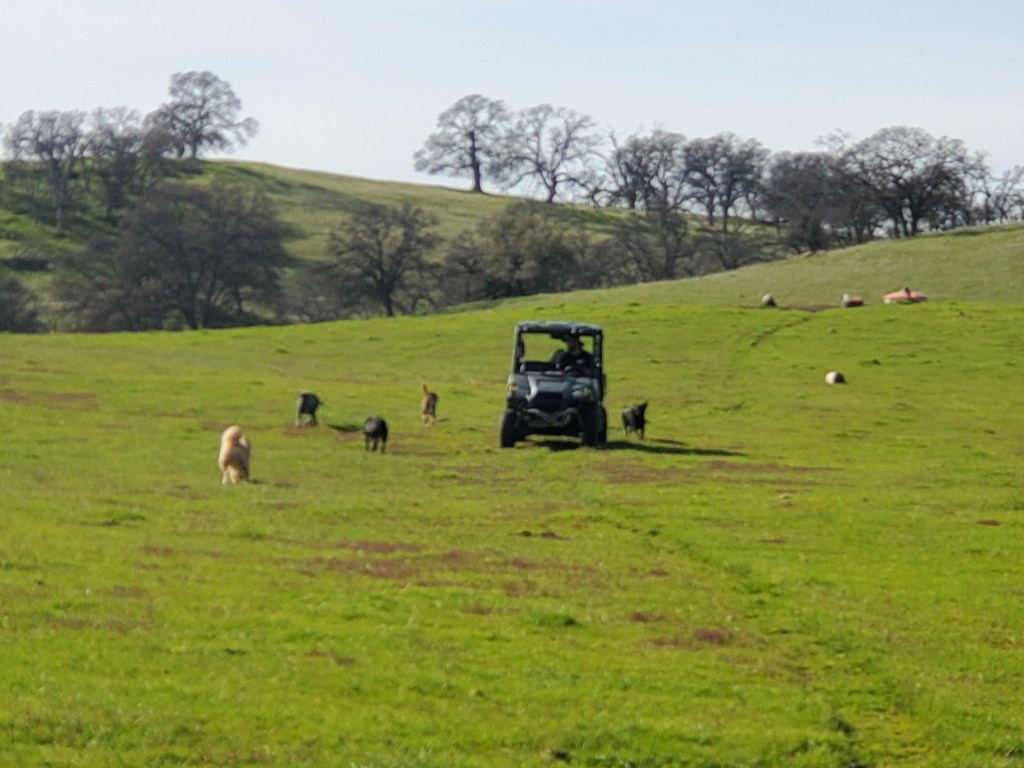
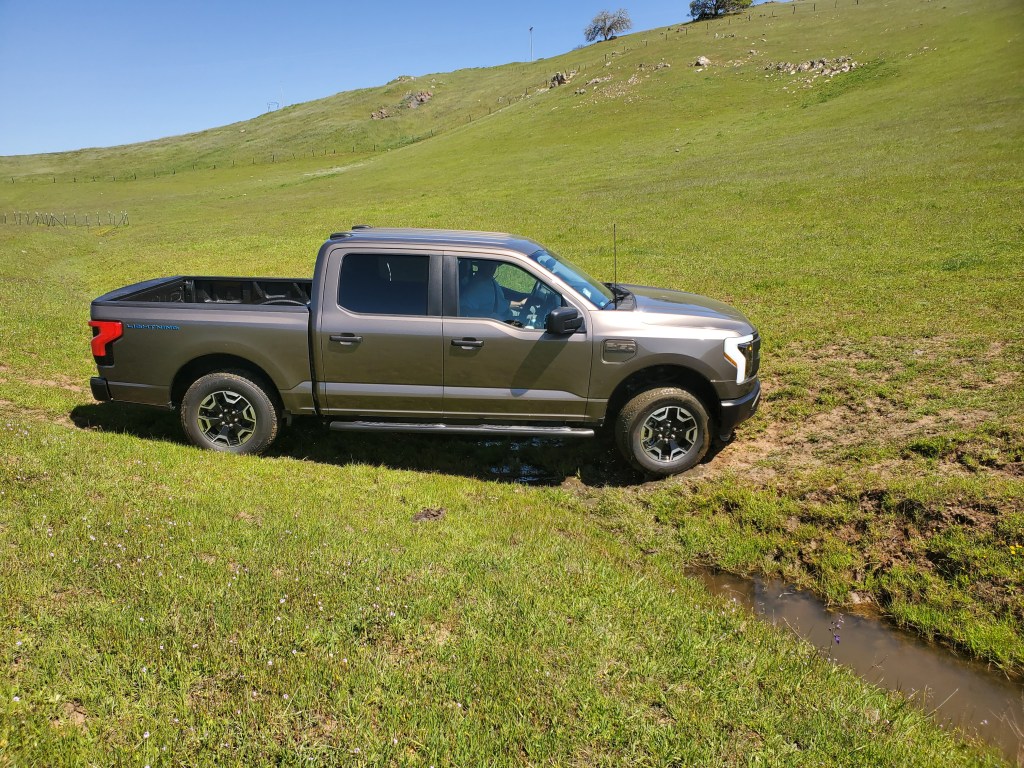
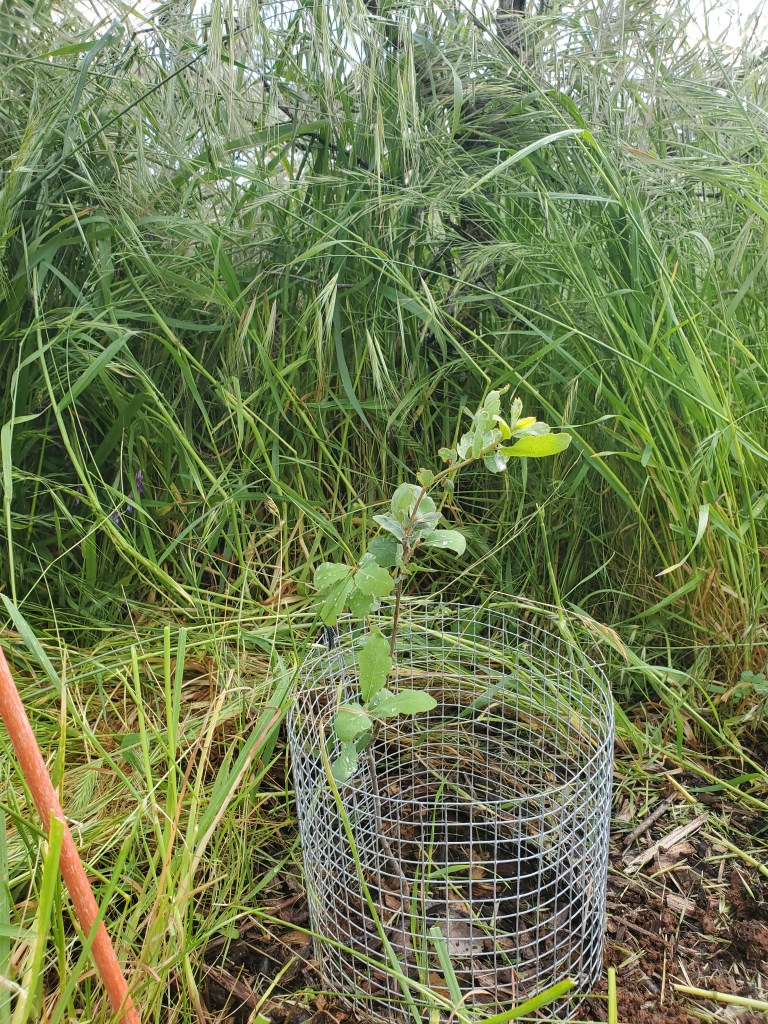
If you are a regular reader of this blog, you may remember that my neighbors, Ric and Kim, are extremely generous, allowing me to use their electric Polaris for my habitat restoration work. Those vehicles are extremely expensive, and we are so grateful for this kindness. It makes life much easier. I was reminded of this last week when Ric had his vehicle back with him for some work, and I was still engaged in blue oak planting. Undeterred, I regressed to using my cart and hand dragging around my tools and plants to continue planting. I got three more blue oaks planted, but goodness, I was sweating.

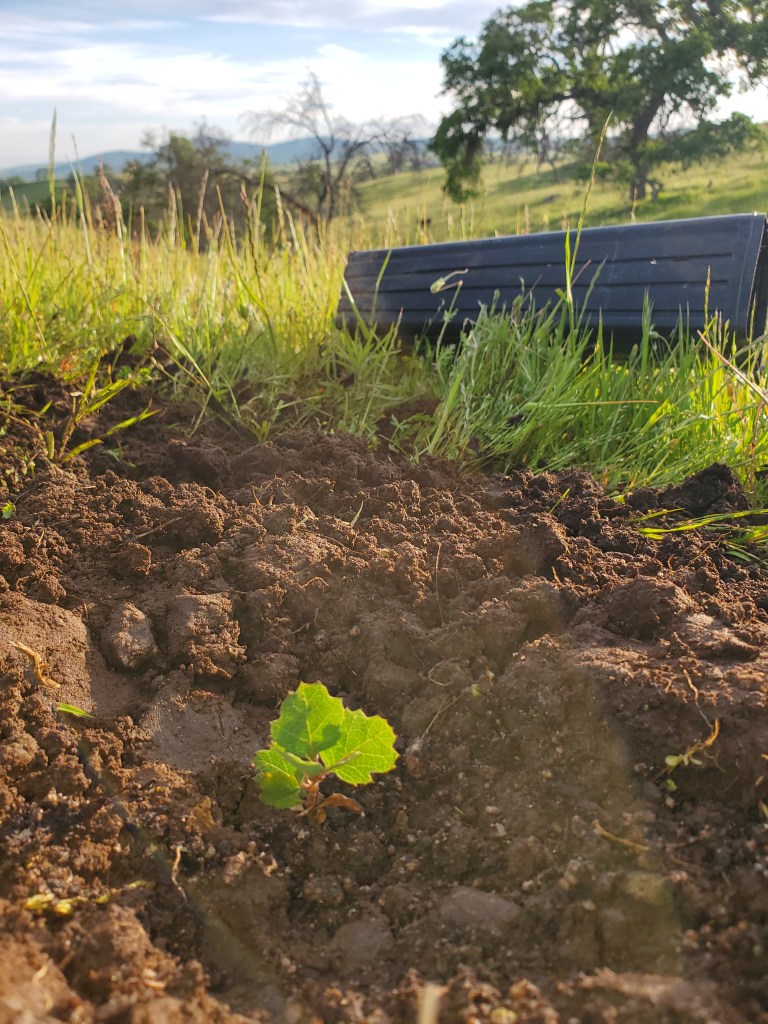
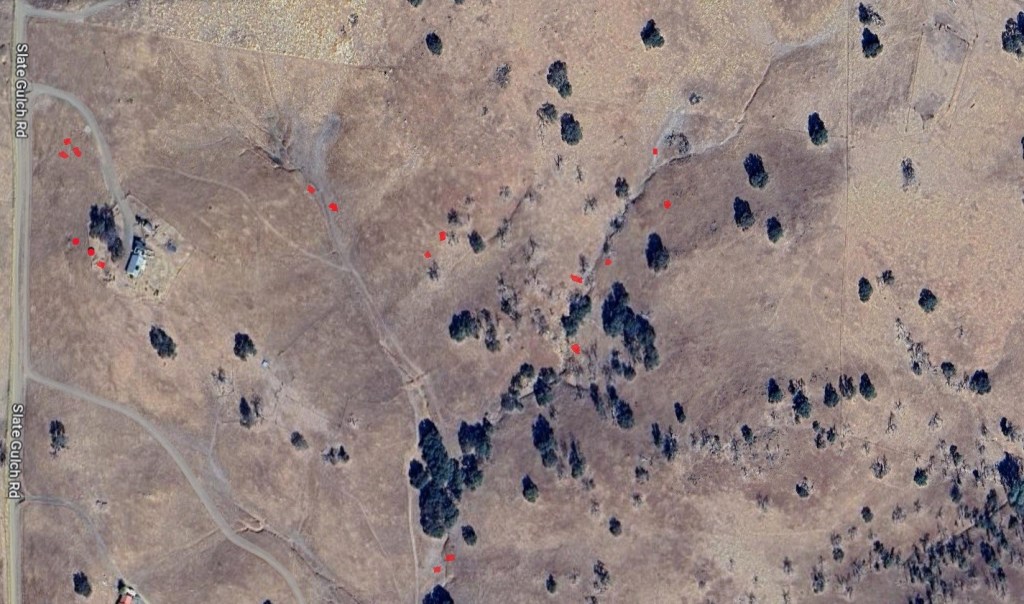
The good news is that two of the earlier oaks are thriving, and the seedlings I’ve been protecting in the Spring Creek area for 15 years are finally appreciably growing.
Red dots are planted seedlings

Wildflowers and Wildlife

Fire Keeping

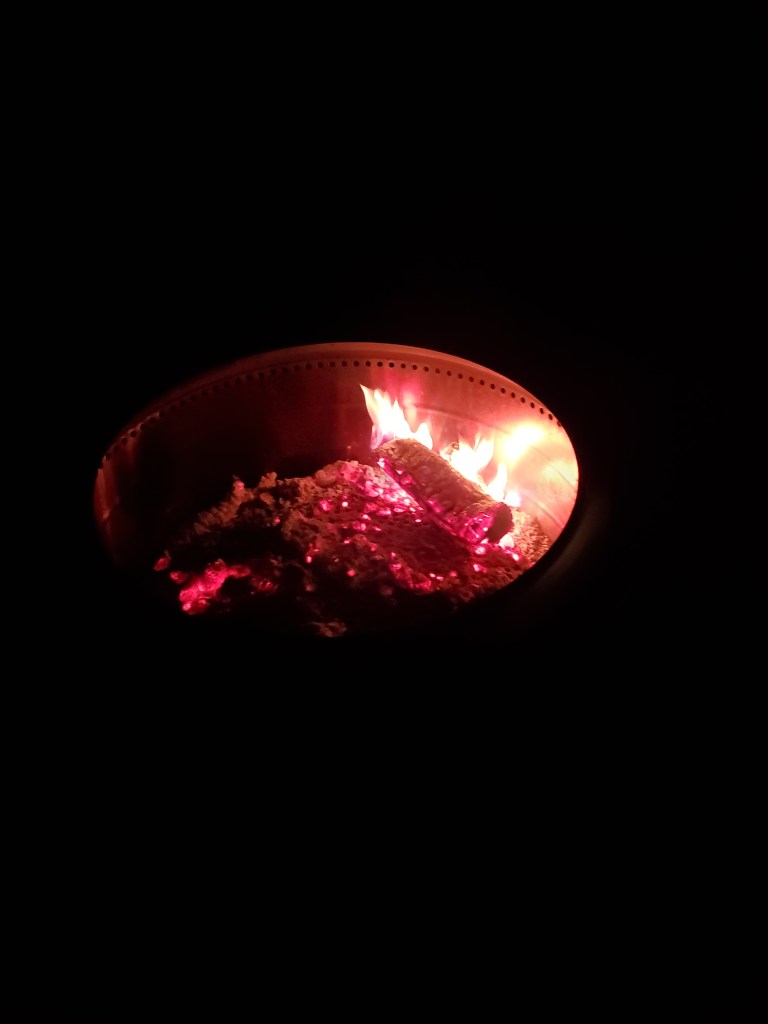
Nellie, the previous Pollinator Program Coordinator for the Southern Sierra Miwuk Nation, attended a traditional cultural gathering the other weekend and educated participants on pollinator plants. She gave the group a packet of milkweed seeds with tobacco and sage as part of the mix. Nellie said that when we planted the seeds we would be making an offering at the same time. I nearly cried I was so proud. I agree. Planting is a sacred act; it is bringing us closer to fulfilling our responsibilities as stewards of where we live and connecting us to place in a way that is intimate. She is keeping the fire of knowledge of traditional practices, values and connection and sharing those with others who are continuing on their road back to a reciprocal relationship with all our relations.

Five Years and Three Months

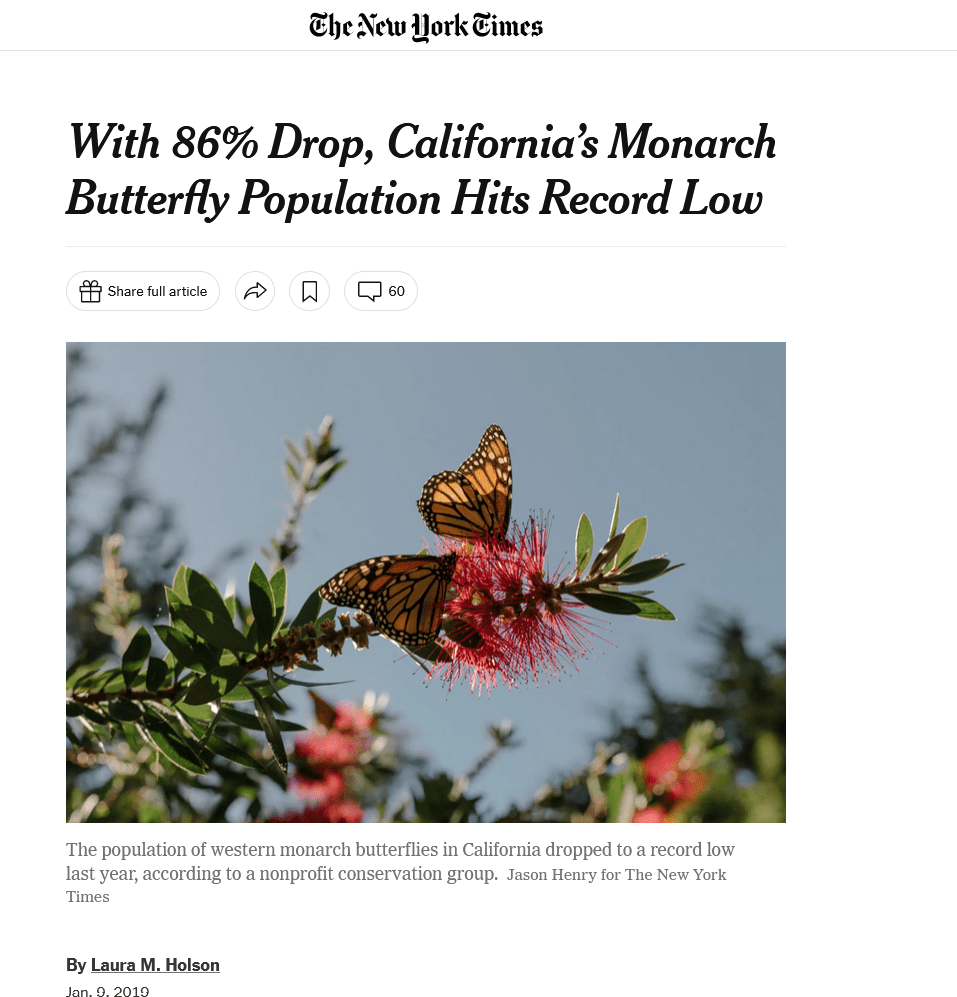
It has been five years and three months since I read the New York Times article about the plummeted numbers of monarch butterflies. It made me sad and angry that monarchs could very well be lost in my lifetime. I did not want to imagine a west without this beautiful and important native animal. I still remember that day in January when I read that article. I thought, “Ok, I am not willing to let that happen without a fight. What can I do about this?” So, I got to work learning as much as I could about monarchs, their migration, lifecycle, what they needed to survive. I learned who the key organizations were leading the charge and that there, gratefully, was a significant focus on this issue. I knew I had seen monarchs before, but it made me consider how long it had been since I’d seen any at the ranch, or even in town. I went back through photos. It had not been for ten years – not since before the 5-year drought.
The first people I reached out to were the Southern Sierra Miwuk tribal elders. I asked them about the monarchs and the western slope of Mariposa County and what they knew of the populations, plants and timing. I then reached out to some older ranchers to gauge how often they had seen monarchs and what they remembered from their grandparent’s stories. It was clear. The elders shared about times of abundance, with fields of butterflies, including monarchs, all over the milkweeds that particularly grew in the riparian and marshy areas. There were more flowers then and more milkweed to support hungry caterpillars and butterflies. The ranchers told me of less abundance – of having seen them as children, but not as many now. With this information, I knew this area had supported flocks of butterflies, and that it could possibly be that way again – at least Taawe Bwia, my ranch, could be an oasis.

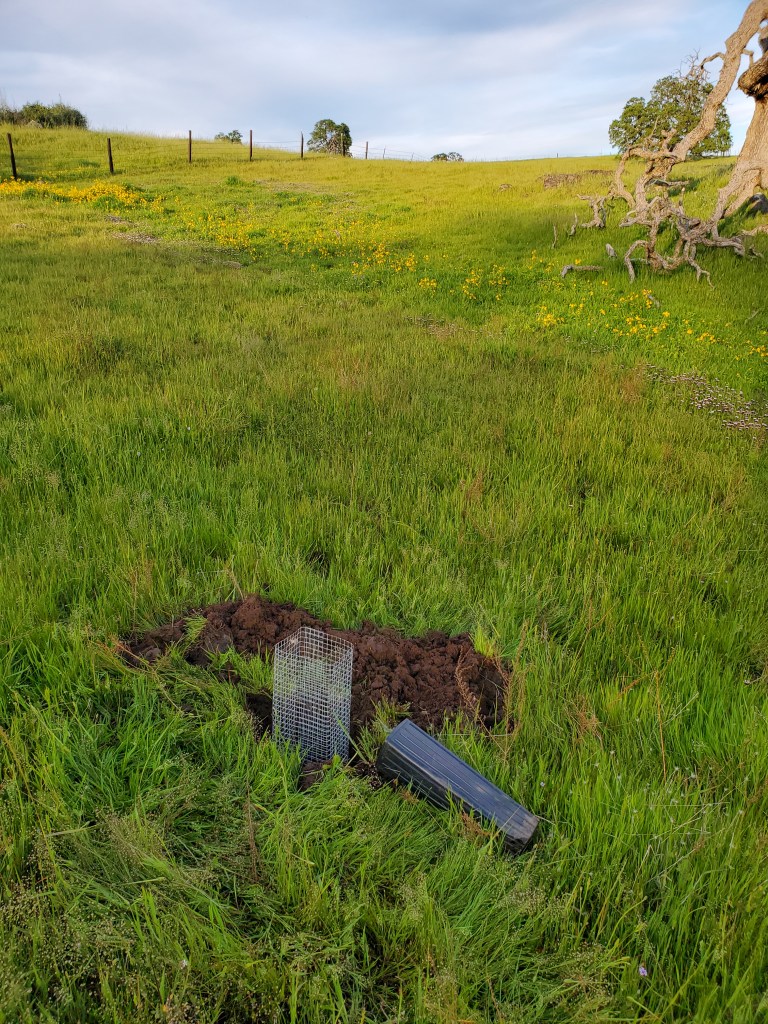
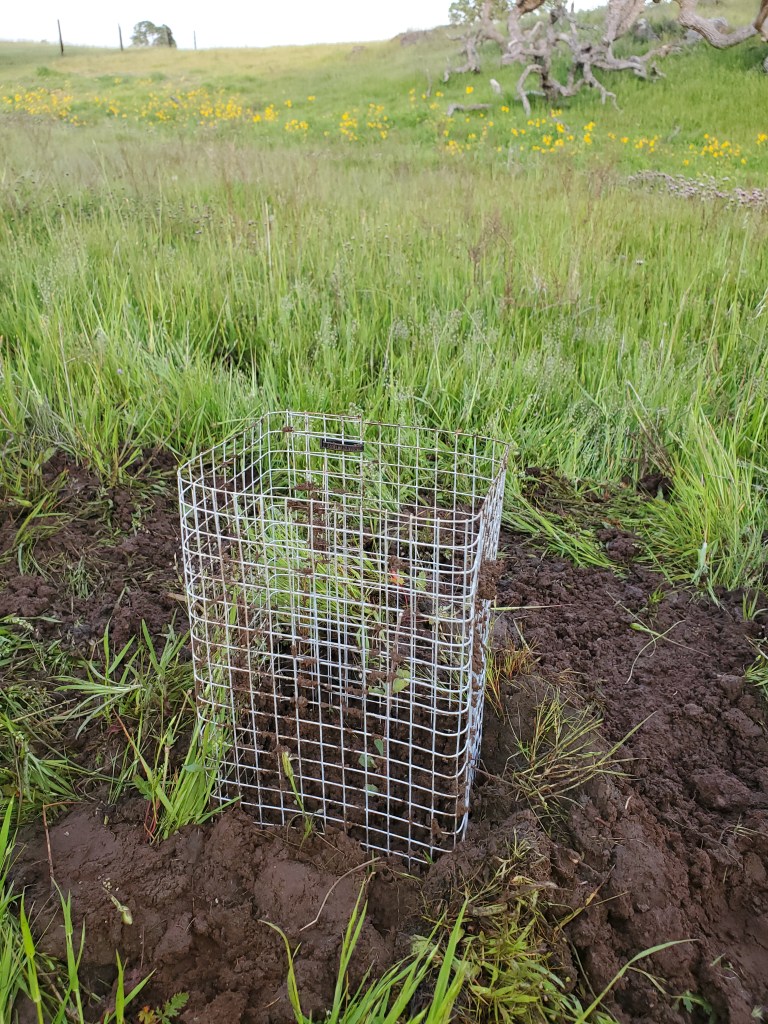
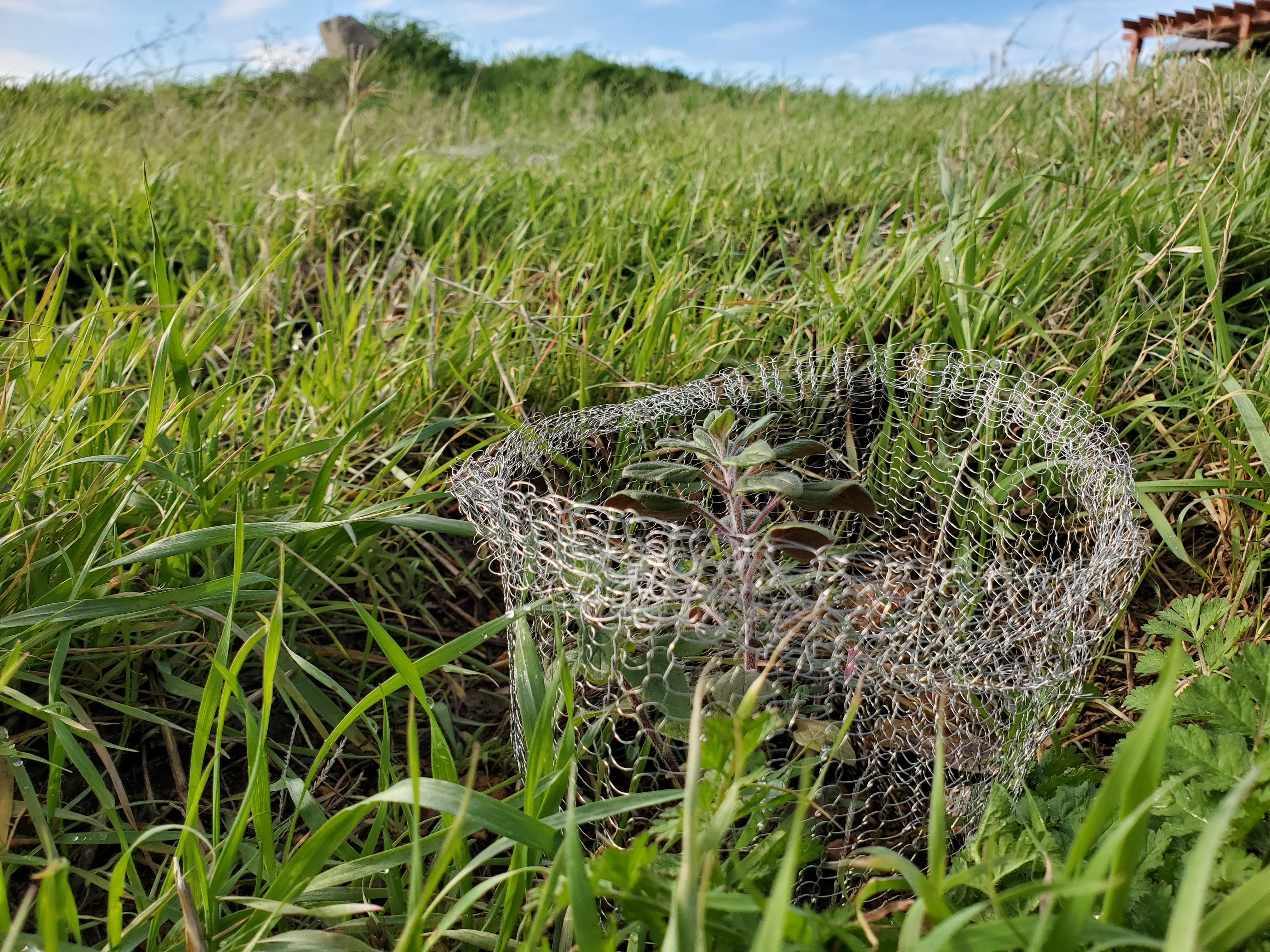
To get plants, I reached out to Mariposa Native Plants (Ron Allen and Bev Andalora). I knew them in the community, and Ron had already been gaining a reputation as a “milkweed whisperer”. From the information I gained online, to Ron and Bev’s knowledge, we created milkweed plots. I started with two diversified plots, and both were ravaged by gophers. I started over, placing the plants in mesh baskets instead of chicken wire cages. That worked, but it was expensive. While I was committed to the project, I could never have scaled it as big as I have without the Mariposa County Resource Conservation District (Melinda Barrett). She was a wealth of knowledge, and I changed the composition and structure of the milkweed plots to “pollinator islands” based on her guidance. She was able to help because there was significant funding from the Wildlife Conservation Board, and the California Association of Resource Conservation Districts, as the intermediary administrator.

I was fortunate to have the thought partnership of Xerces Society partner biologist Deedee Soto, who shares my passion and commitment to conservation work. Truly, without her expertise, I would not have as much success. She is a genius with plants – propagation and ID. At this time, Xerces also began their very useful habitat kits (Thank you to Jessa Kay-Cruz and Angela Laws!). Not only did it provide all the plants needed for a successful pollinator island, it taught people about the plants, bloom timing and diversification. I still have the very first plant list with bloom times. It was such a great resource, and what a great idea.

I received tremendous support from the National Resource Conservation Service (NRCS) John Grimes, Jesse Baum, Prospero, and so many others in the NRCS ecosystem. Farm Advisor Fadzayi Mishari provided input on conservation issues early on in my land stewardship and organized important educational opportunities for the ag community where I was able to learn a great deal.

Point Blue Conservation partner biologist Elena Kromer wrote my first conservation plan. While it took a very long time to get done, she listened carefully to what my concerns were and designed a plan that addressed many of them. This process connected me further into Point Blue, where I was able to join their carbon sequestration and wildlife resources study project and access their Roots grant program (Cati Mong). Also of essential help were the classes and resources from Monarch Joint Venture. They offered the first online class I took that brought me from knowing almost “0” to knowing much more. I was able to take that knowledge and advance it through the Pollinator Partnership Pollinator Stewardship Certification program, where I earned my certification in Summer 2023. Most recently, I was also able to qualify for the California Department of Fish and Wildlife Partners Program with many thanks to biologist Rosie Gonzalez and her colleagues for smoothly navigating me through the process.

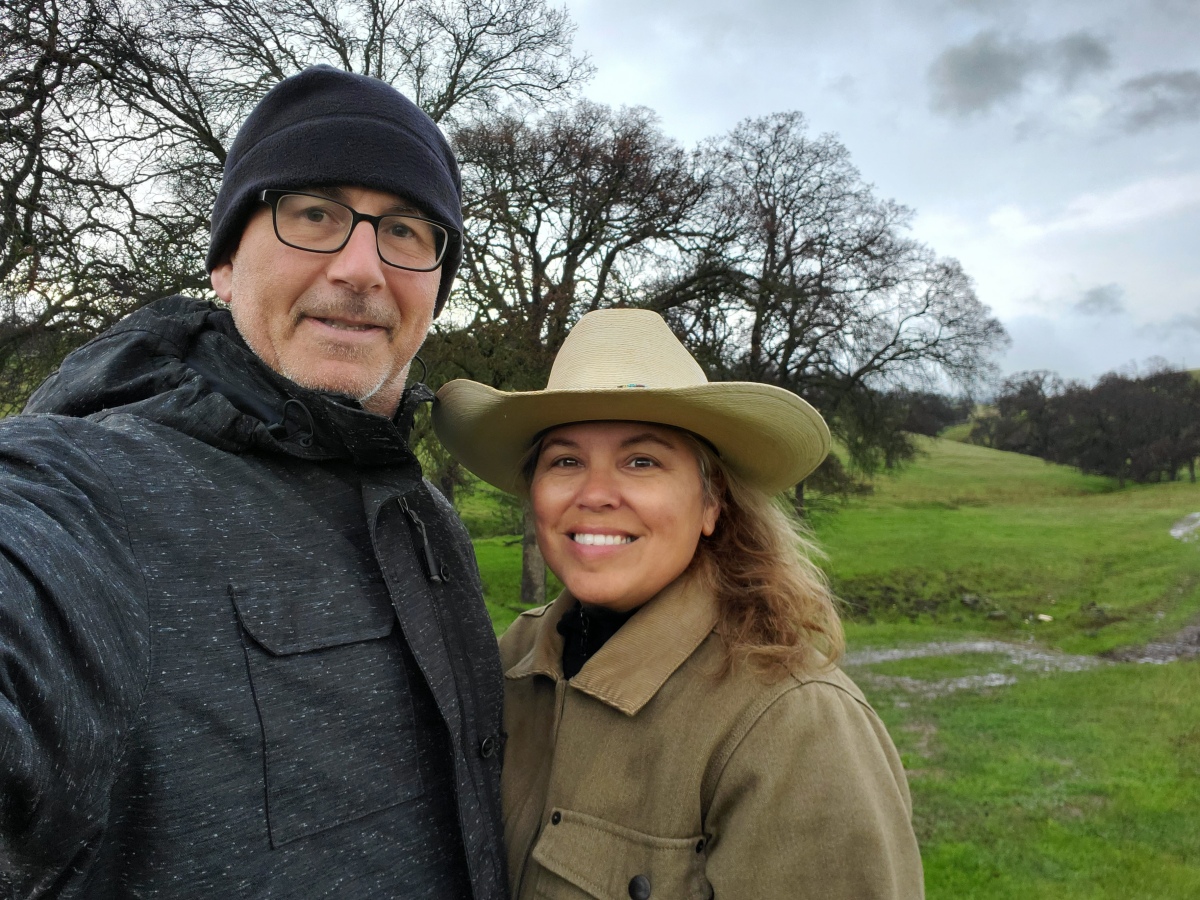
Last, but not least, I want to acknowledge my dear family, friends and readers of this blog. My dad, Alan, and dear friend Daniel donated funds early on that helped me purchase more plants and supplies. My mother-in-law Sheila sends me fun butterfly-themed gifts. My brother Vance, and sister Sarah, who actually read this blog early on, encouraged me. My neighbors Ric and Kim who let me borrow their Polaris, and early on Ric helped considerably with fencing labor. My nephew Ashtin and niece Desiree have helped with the branch fence early on. My other mother-in-law, Liz, has helped me work the ranch each visit, planting seeds, digging channels and holes. Dear friends Melanie, Molly and Jen have worked side by side with me to build rock and log check dams. Friends in the community and on social media, readers of this blog who have sent words of encouragement, recommendations, shared knowledge, ignored my typos, and encouraged my writing, you all kept me going especially when I had set-backs. Finally, my beloved spouse, David, who without him nothing is possible. From his emotional support to physical labor, and financial partnership, he has been there for me and this dream of changing the course of monarch survival, to create a place where they can be assured of food and shelter along their epic journey. Chiokoe uttesiavu. Si se enchinakiavu. Thank you. I appreciate you all.
Goal accomplished!

Free T-Shirts?

To commemorate my 100th post, I am having a PolliNative t-shirt giveaway. If you like what we are doing here and want to represent via a beautiful organic cotton shirt with a heartfelt message, here is how:

  1. Make a comment on this blog with no more than three sentences sharing about what you are doing to help our pollinators thrive.
  2. Everyone who submits a comment will be entered into a random drawing for a tee-shirt. They are expensive, so I can only give a handful away.
  3. Comments must be in no later than May 24th.

Thank you, reader, for everything you do to make our planet a healthy place for our children and for all our relations. Si enchi nakiavu (I appreciate you all).
My Fourth PolliNative Monarch Season Begins With Emergence of Ca. Milkweed

Take a deep breath. Release. The air is now thick with nectar. The sweet smell is hanging on the moisture molecules of humidified air. With it, comes the scent of grass, freshly grown, and a hint of oak bark still moist from the rains. I hope you can imagine this smell of spring. It invigorates me and lets so many other nature relatives know the time to emerge is near.

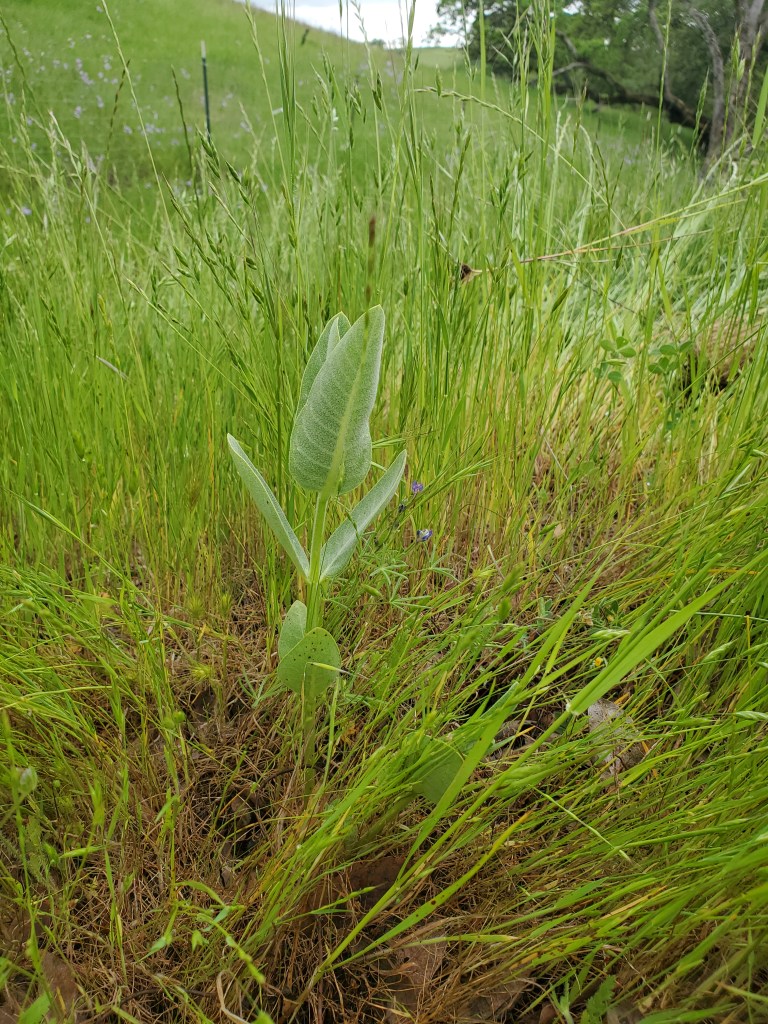
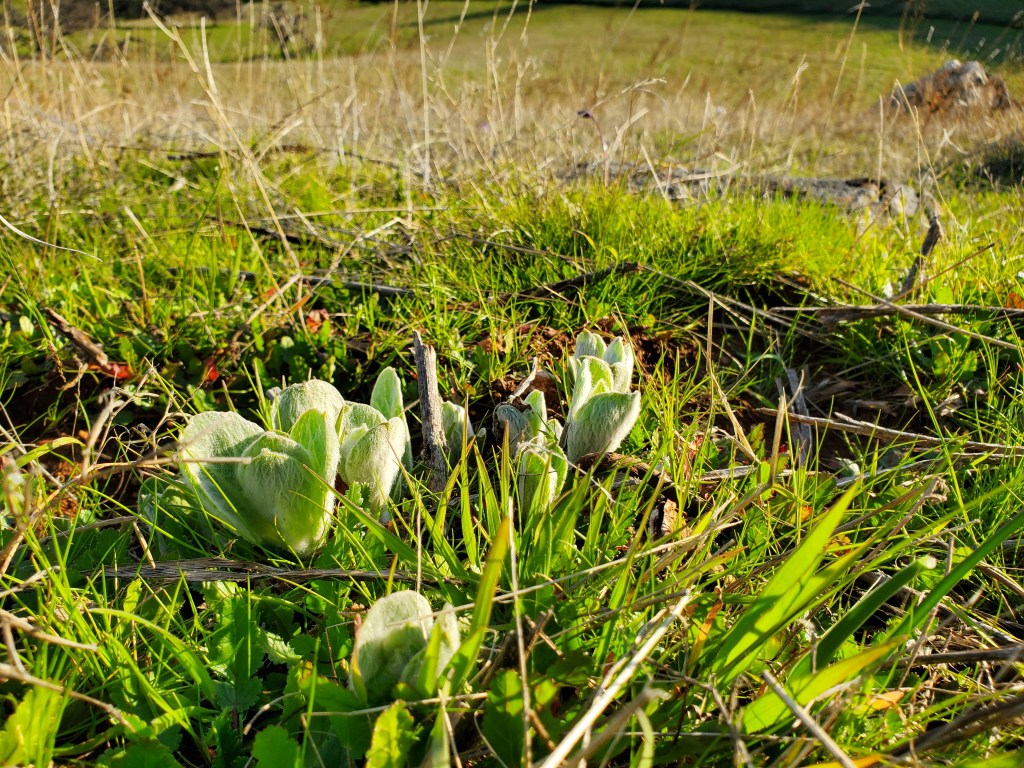
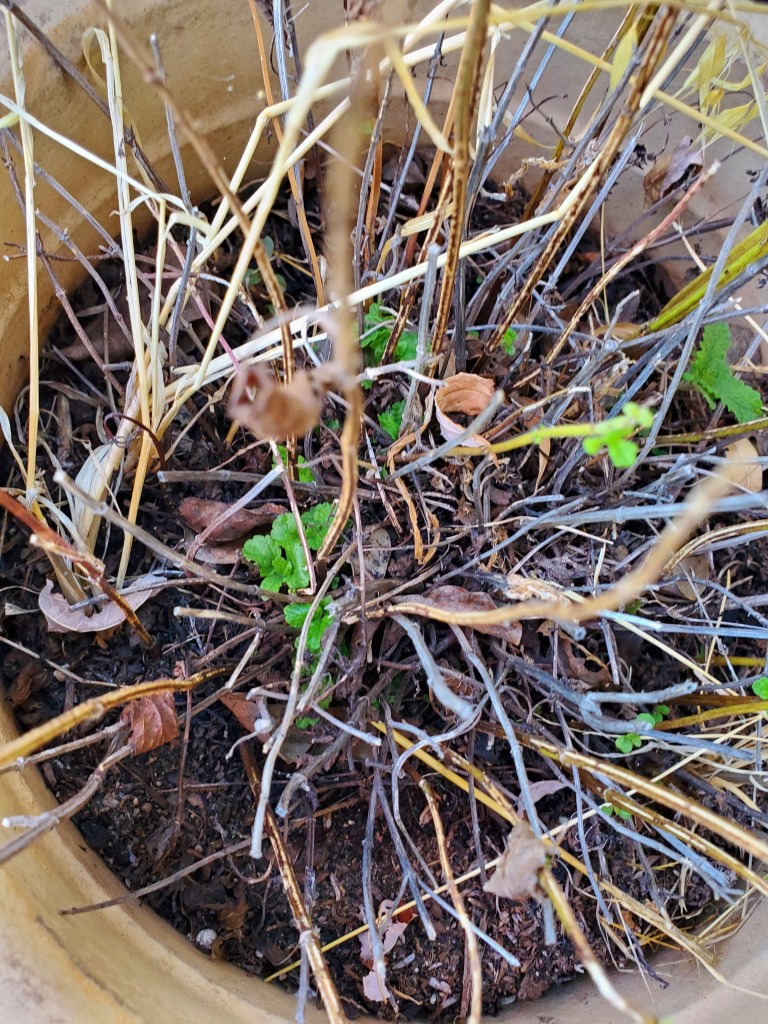
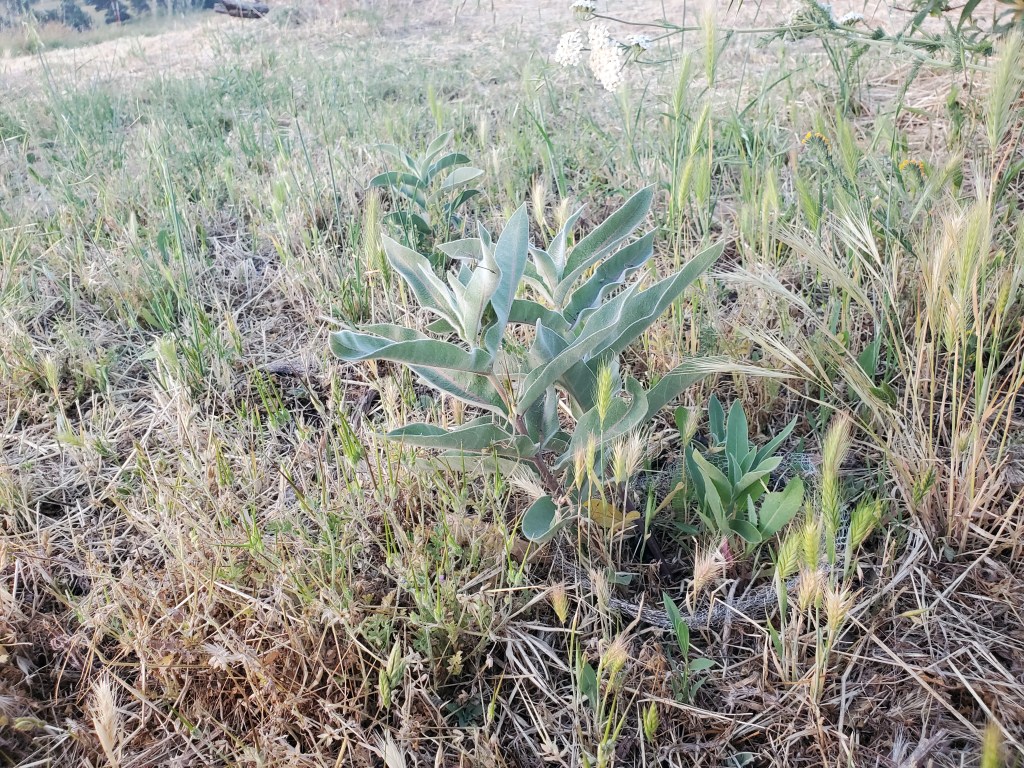
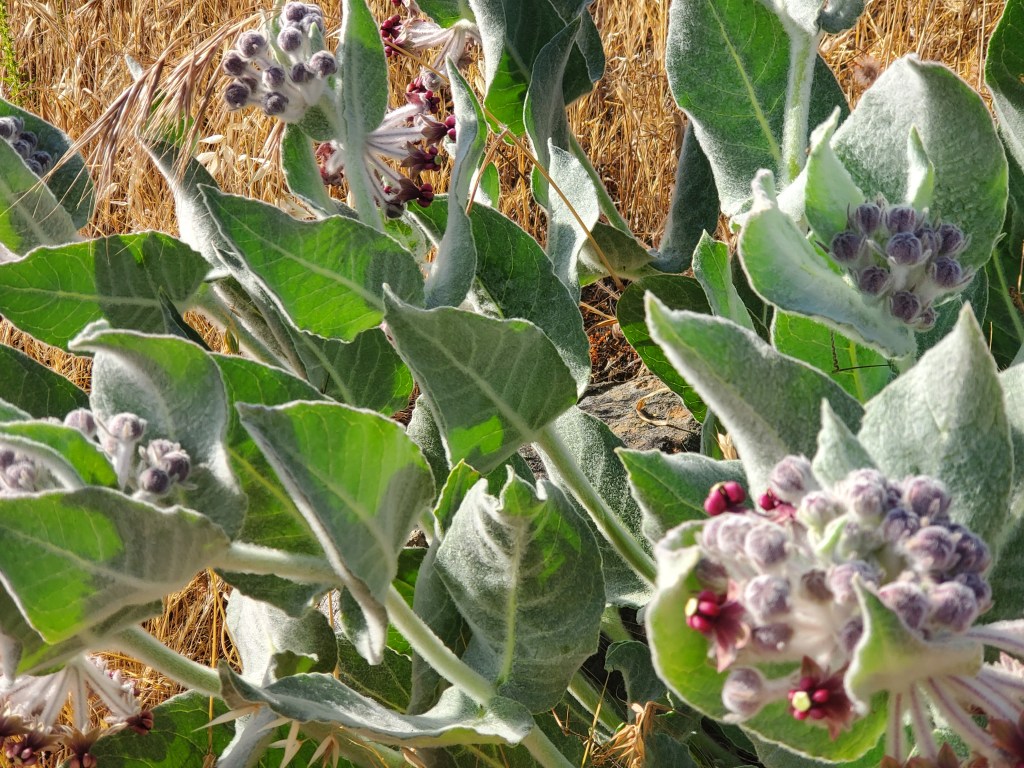
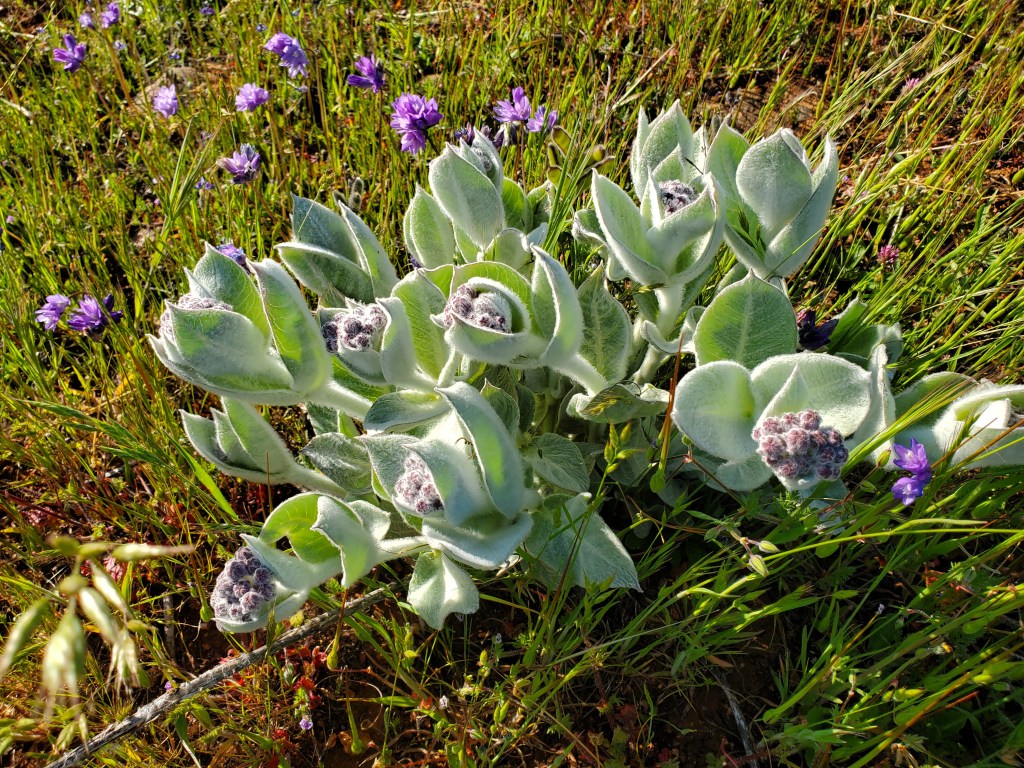
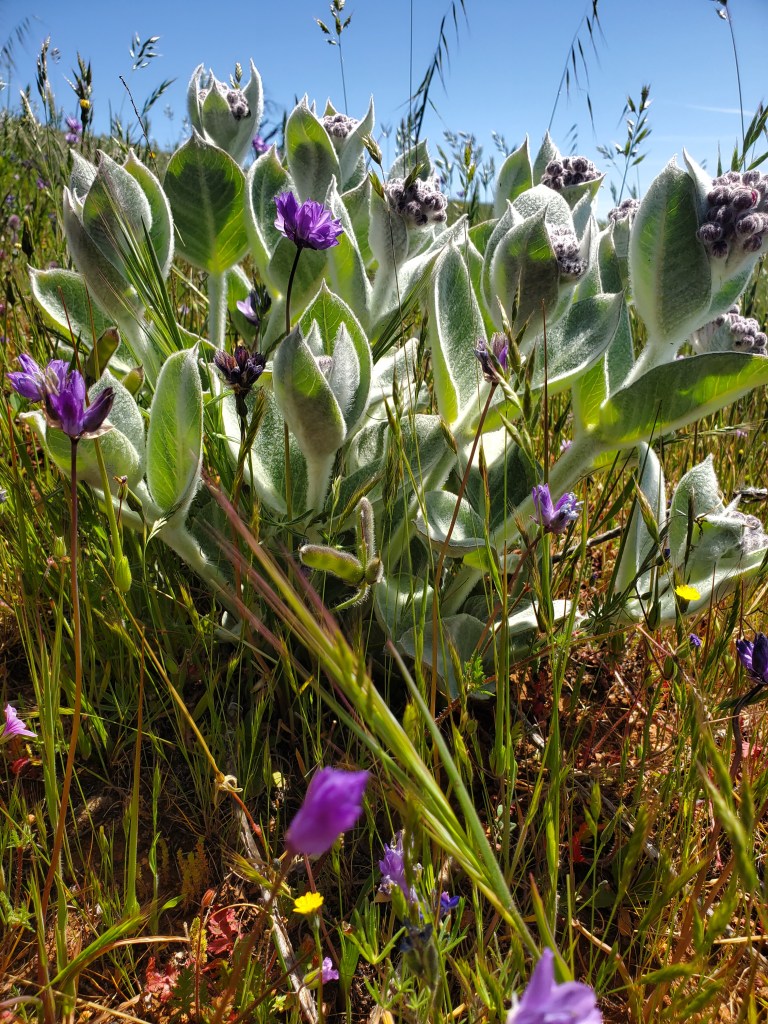
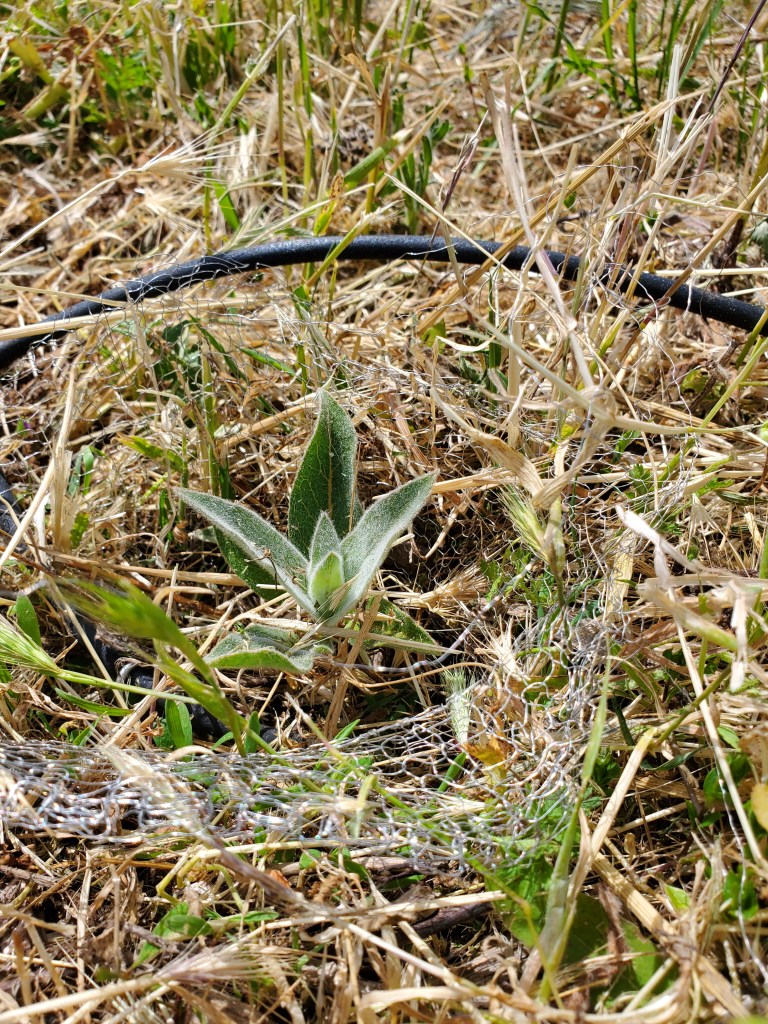
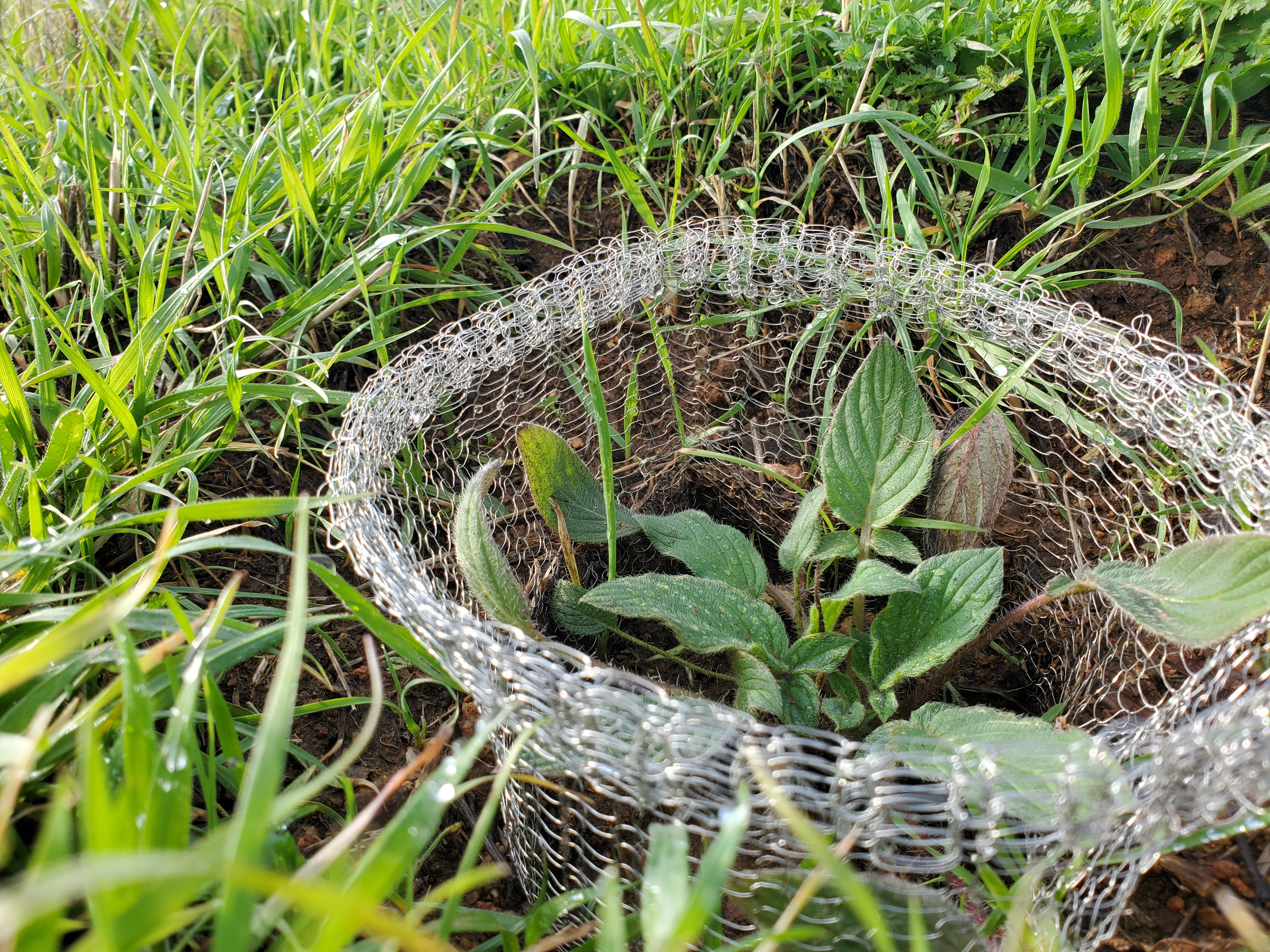
Drinking with my nose, walking up the 60% grade hill to the California Milkweed plots, I begin to look down wondering if my favorite plant has made its way up from underground life. It took a little searching, but I found them early last week, the soft, velvety leaves of A. Californica. I expected to perhaps find emergence on the three most mature plants, but I found a fourth as well. In finding the fourth surprise plant this early, I am feeling like things are continuing to heal, expand, and thrive.

The cattle are toward the end of their rotation on the south side of the ranch. They will be on the north side soon for 2 weeks. If I see signs of monarch usage, I will shut the new gates to the far north field. What a relief! I won’t need to stress about protecting the plants this year. Thank you to John Grimes and the National Resource Conservation Service (NRCS)!

Monitoring Rock and Log Check Dams

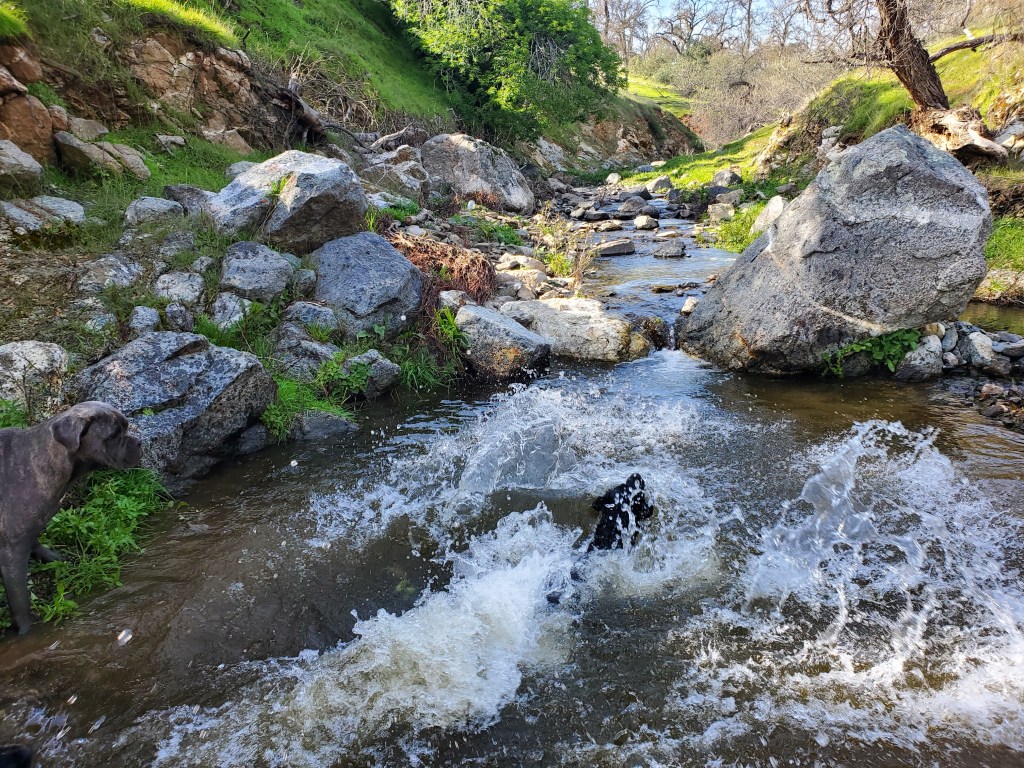
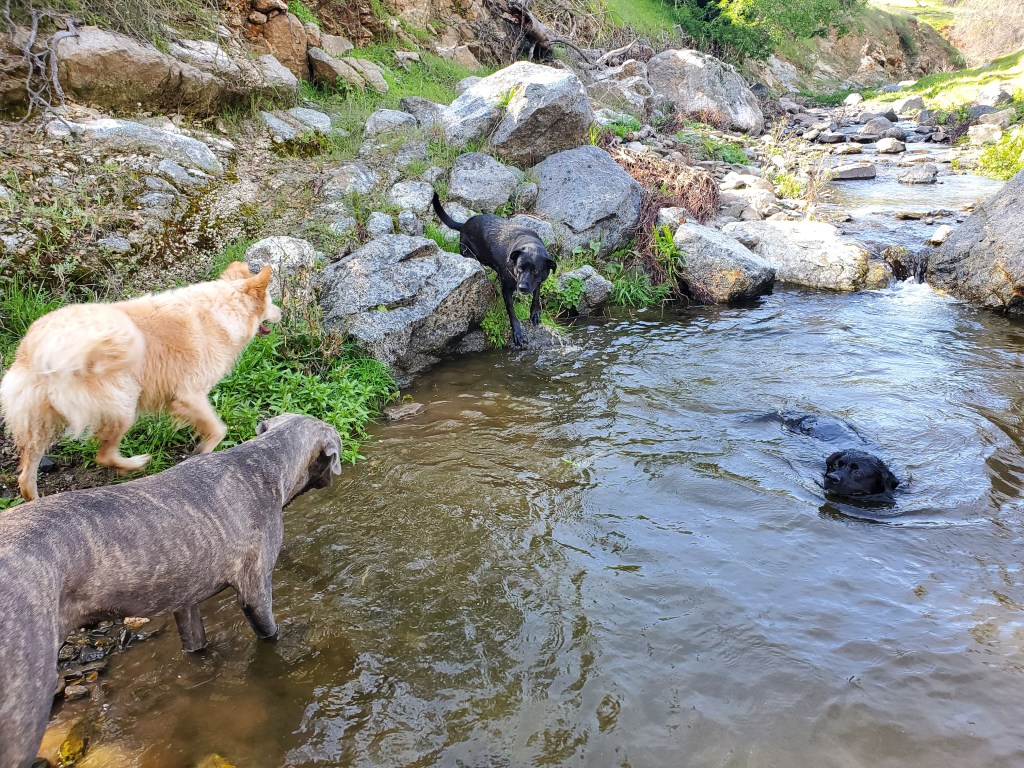
We have significant sediment build up behind even the smallest of check dams. Plants are beginning to take root creating a new habitat – from running water to a marshy water filter of plants and sediment that did not exist before. I get to play in the water too, so it is not all work. I added another small rock check dam even further down the drainage to continue the slowing process and make a wide spot that may be supportive of an arroyo willow. I am still considering whether I will plant one there. The water needs of the willows are considerable, even the ones adapted to this drier climate.

Planting More Oaks and Seeding

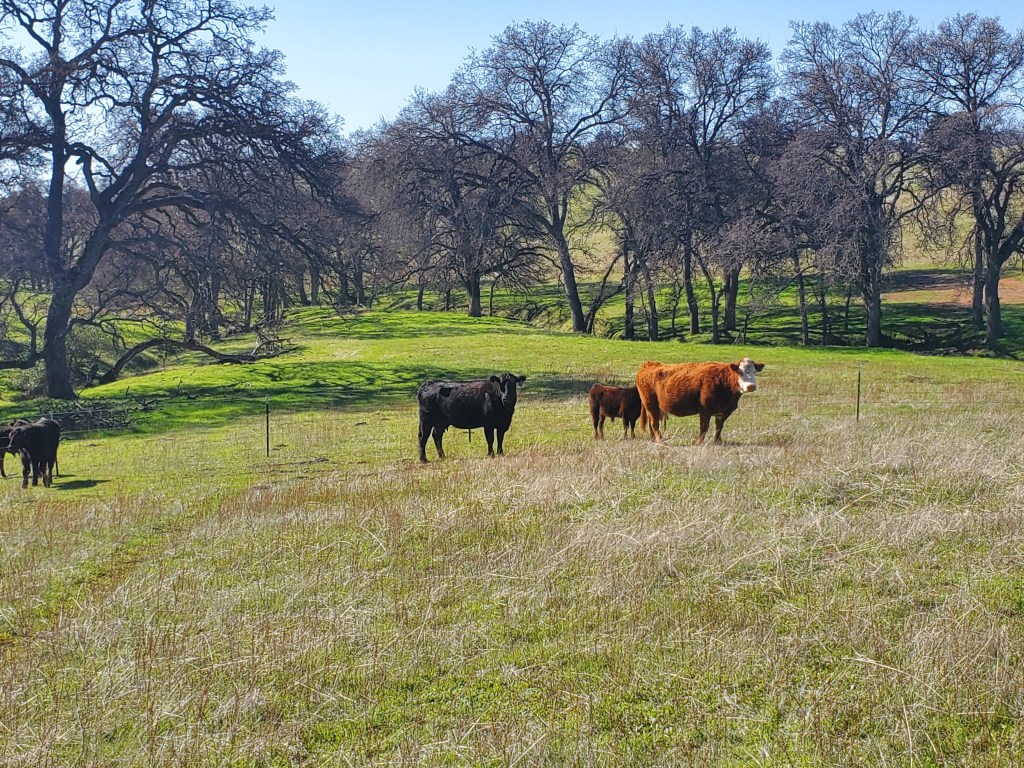
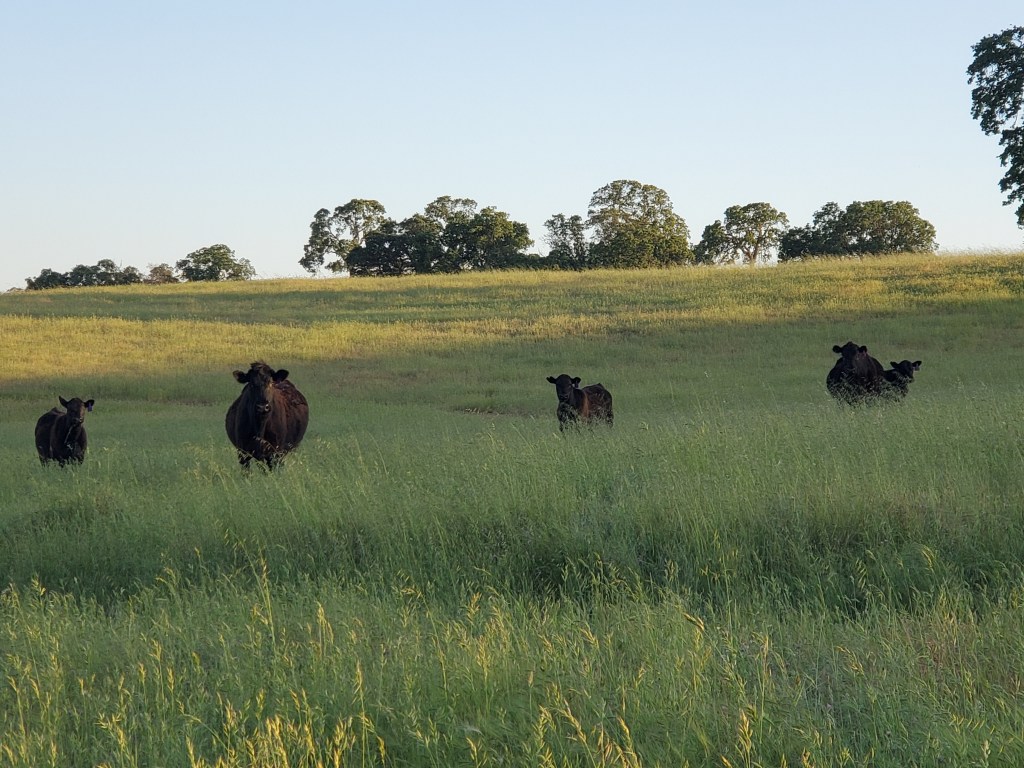
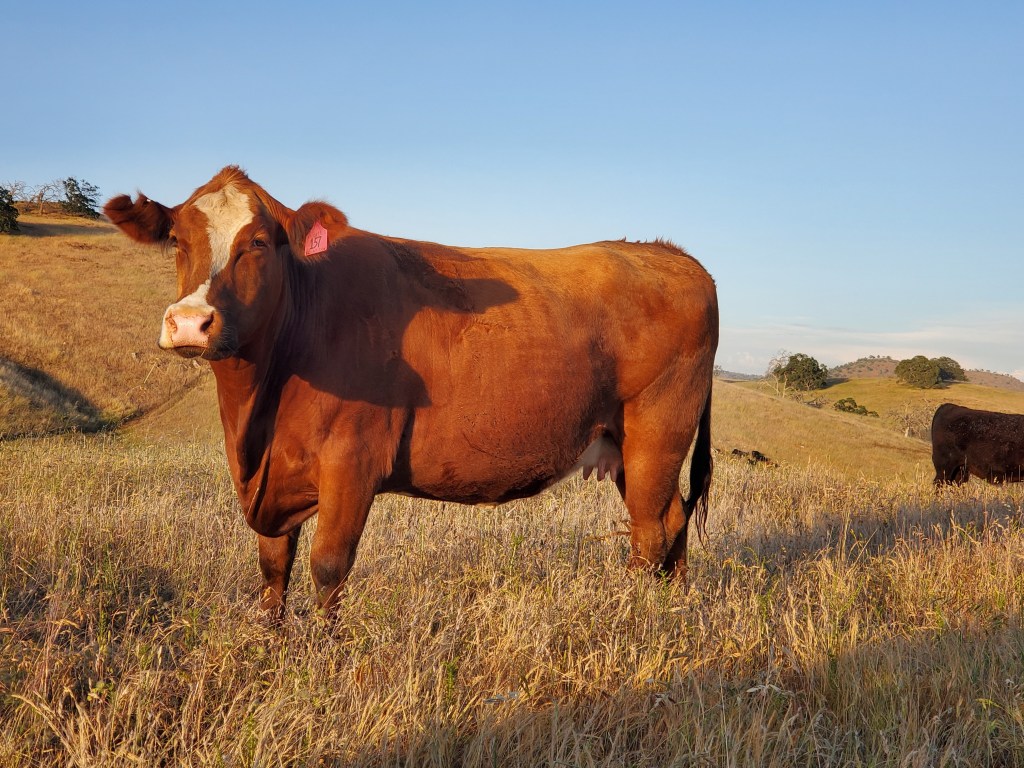
I am continuing to plant oaks, albeit slowly. The seedlings have green sprouts, so I am going to try to hurry and get them into the ground. Of course, the day I went to plant a couple, the cows were loafing with their babies nearby. I try not to disturb them too much. They look so comfortable and peaceful when they are lying on the ground, taking in the sun or languidly chewing cud. The babies can spook easy, and that can get the entire group alerted. More than the economics of running fat off them, I simply want to respect their peace if I can. As such, it makes more sense to park the vehicle and walk my tools and plants the remaining distance.

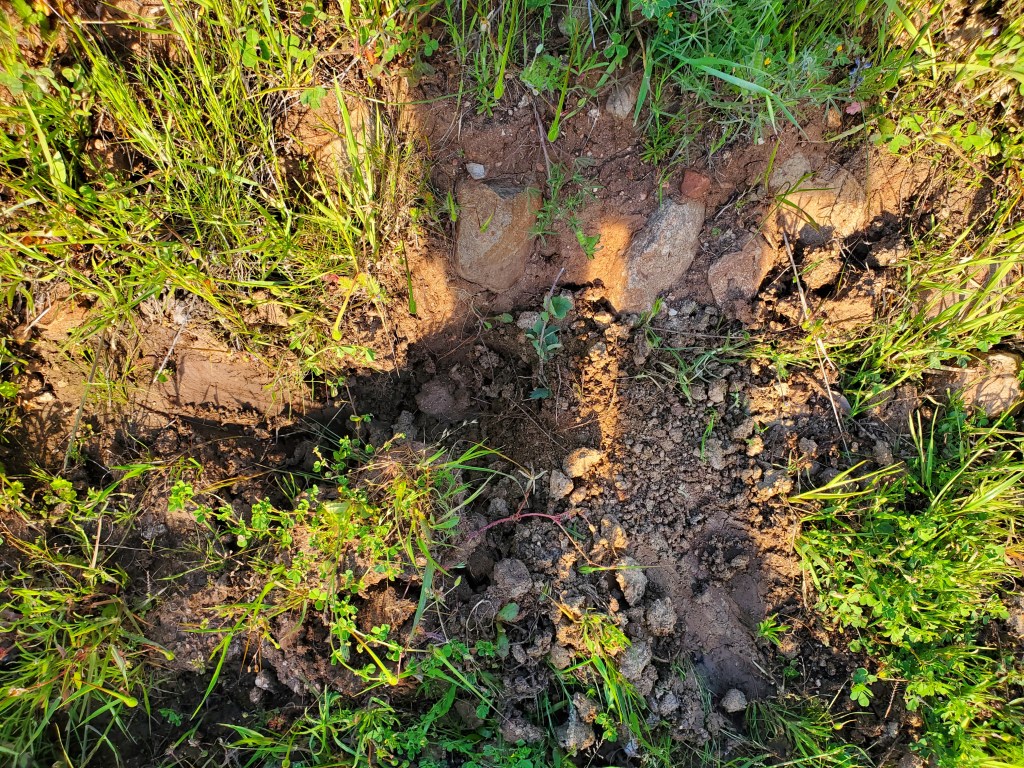
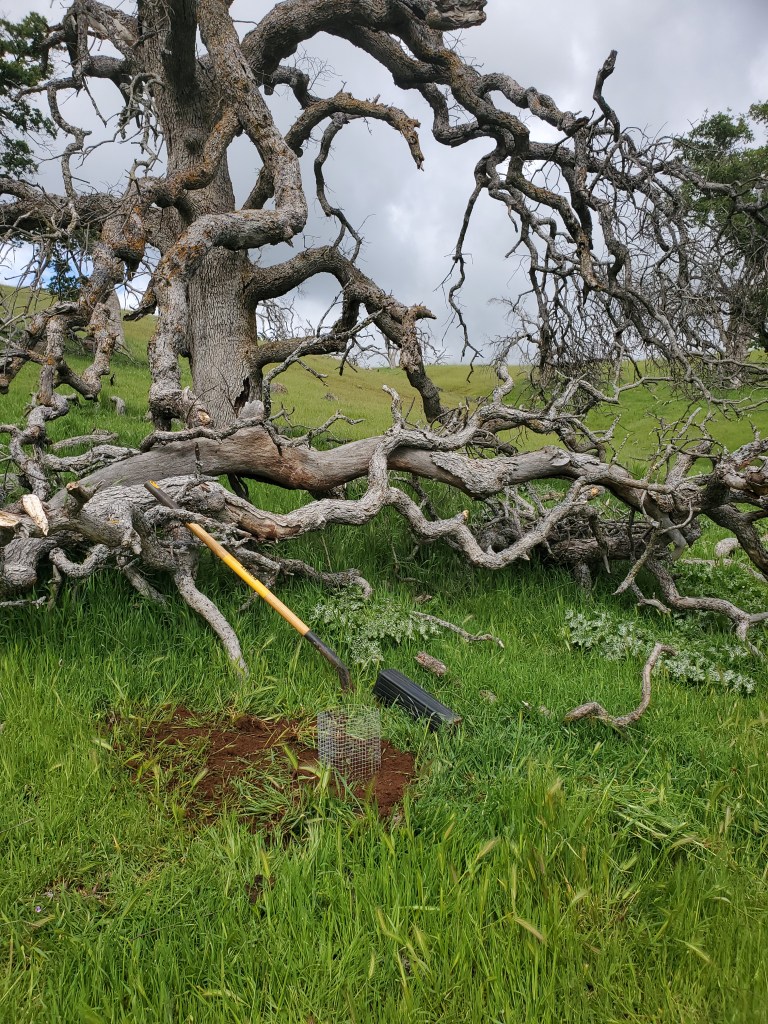
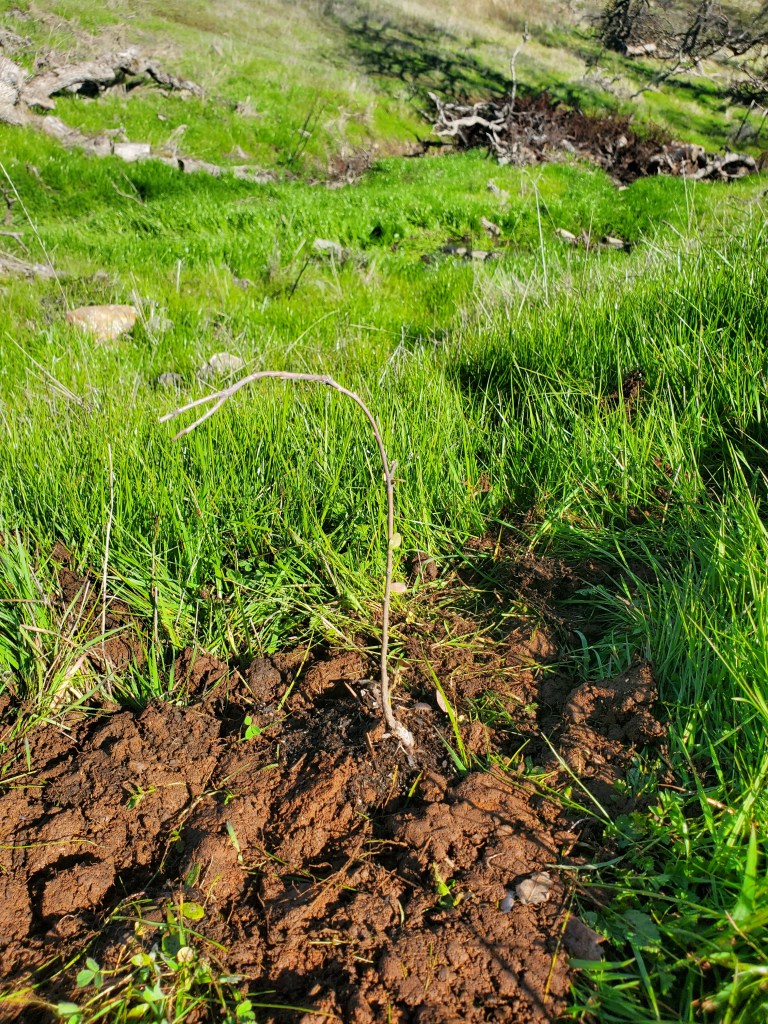
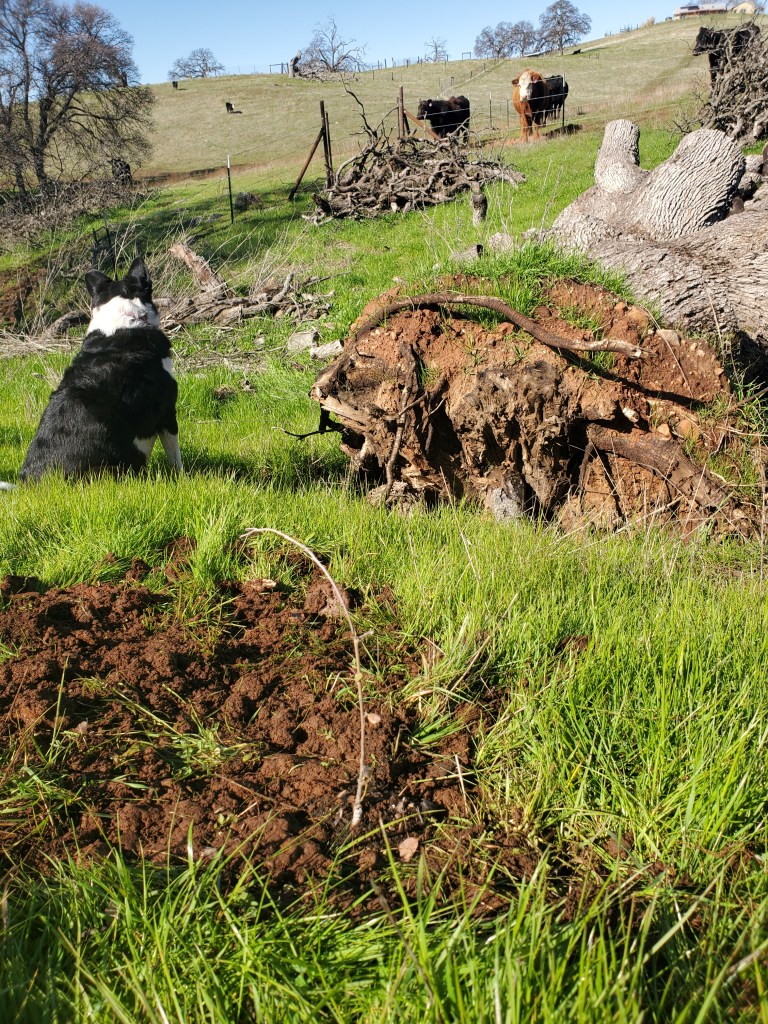
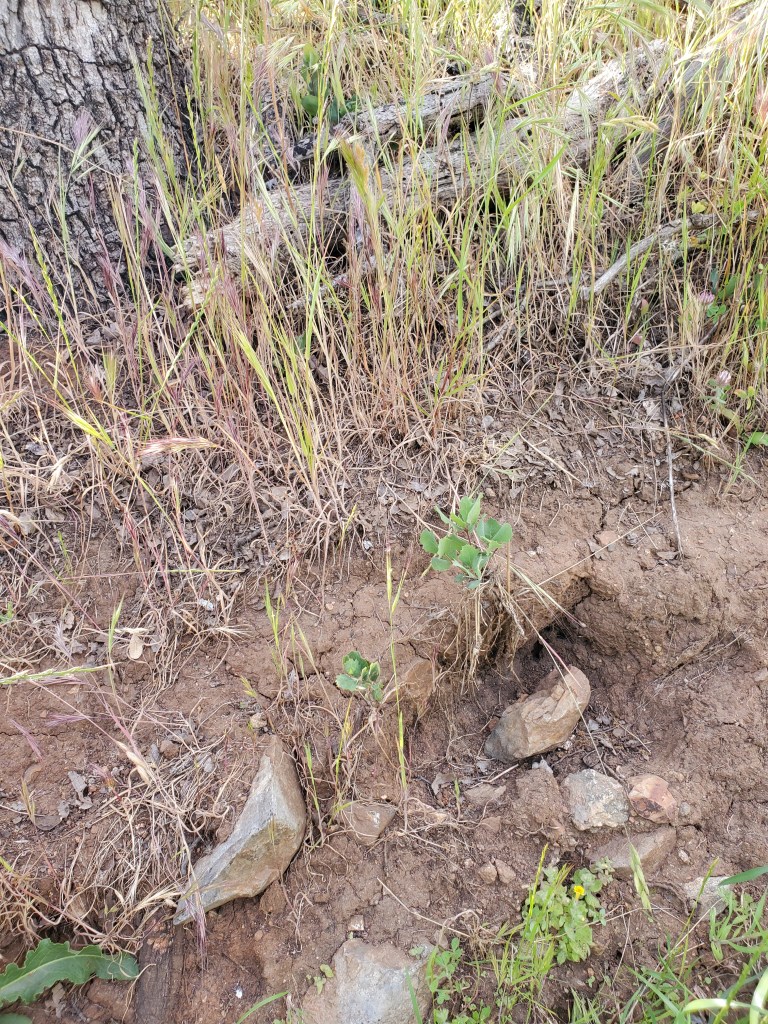
The first seedling, I plant in the exclosure near the area where the healthy oak fell over last year. That will be a good place with ample water. I place the tree very straight slightly higher up the hill from the up-turned rootball. For the second seedling, I choose a place near the grinding rock among the skeletons of old trees but near enough to living trees. It is another area near the water with shade and light. I say a prayer for each, welcoming them home and a wish for their wellness.

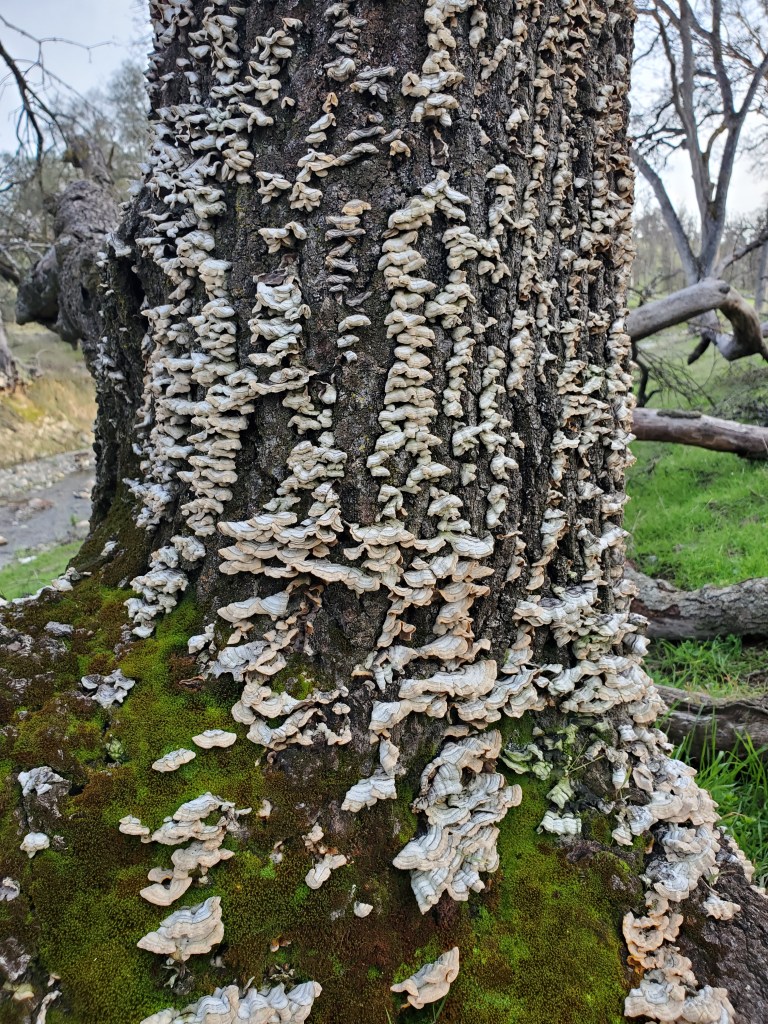
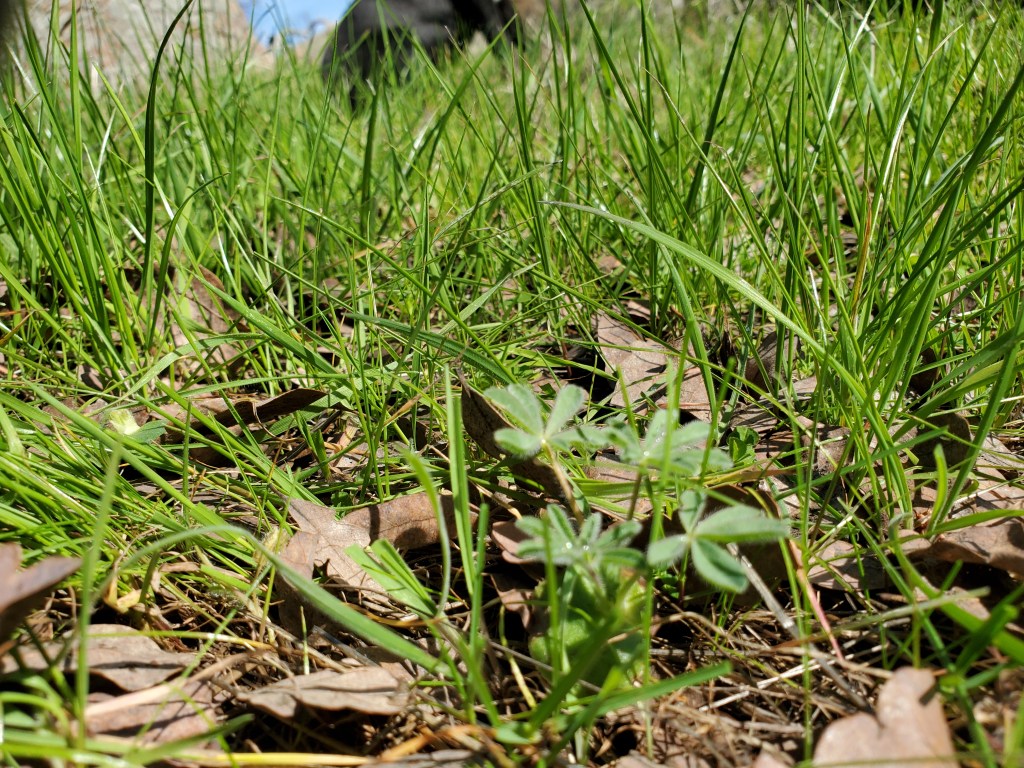
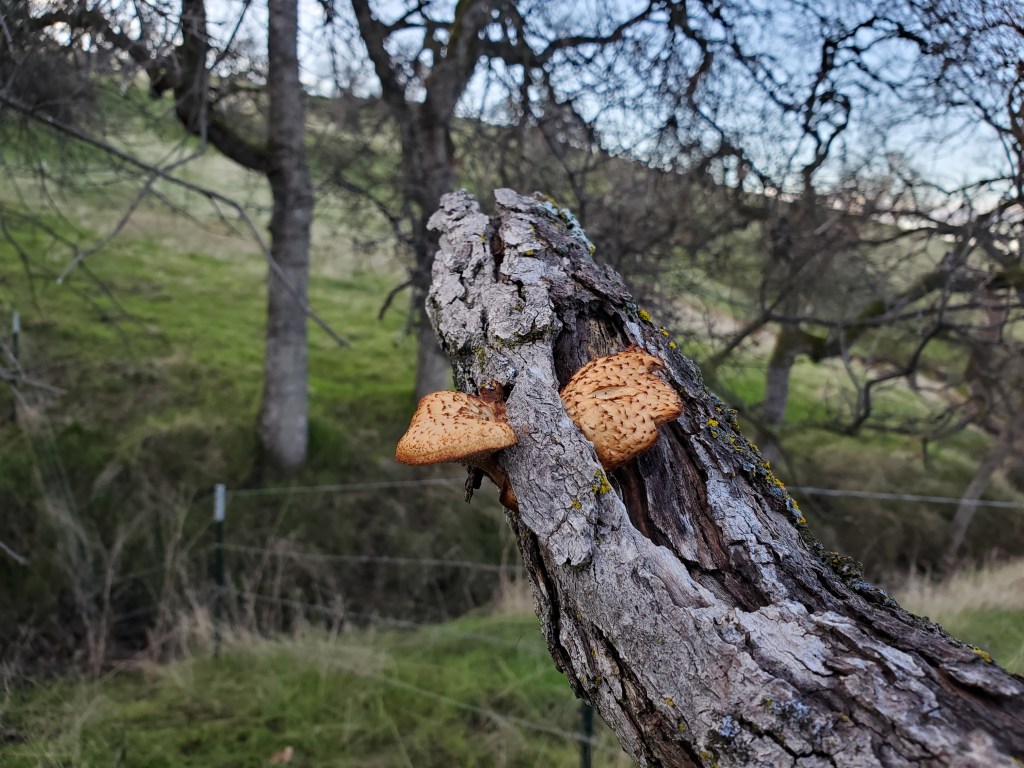
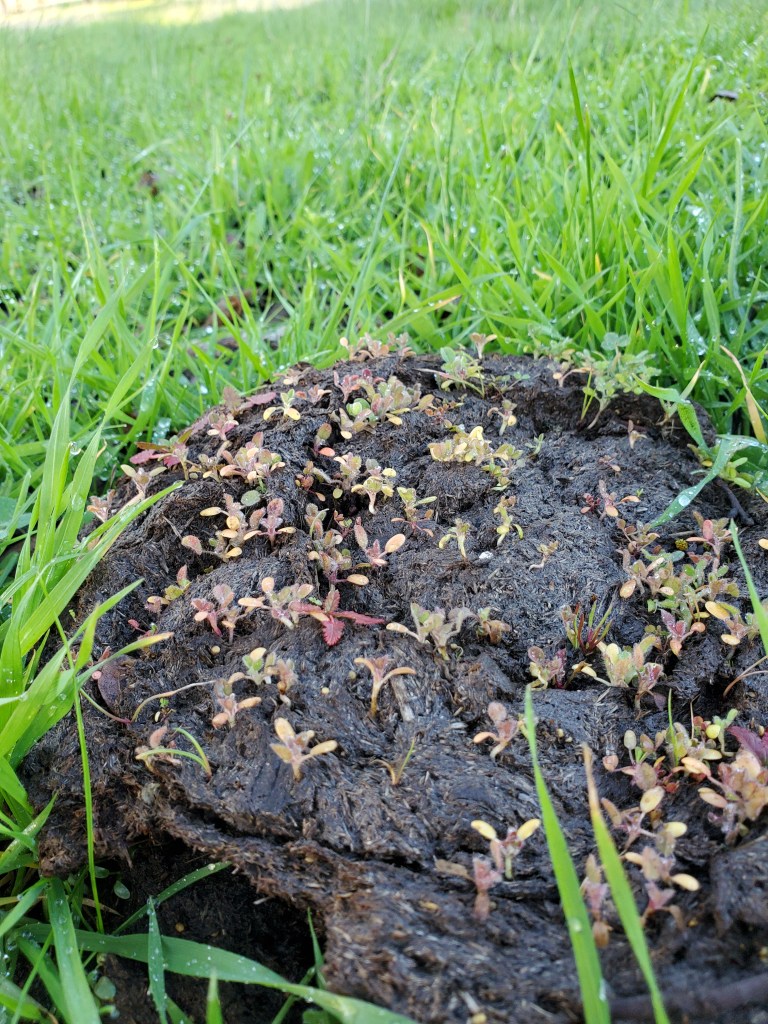
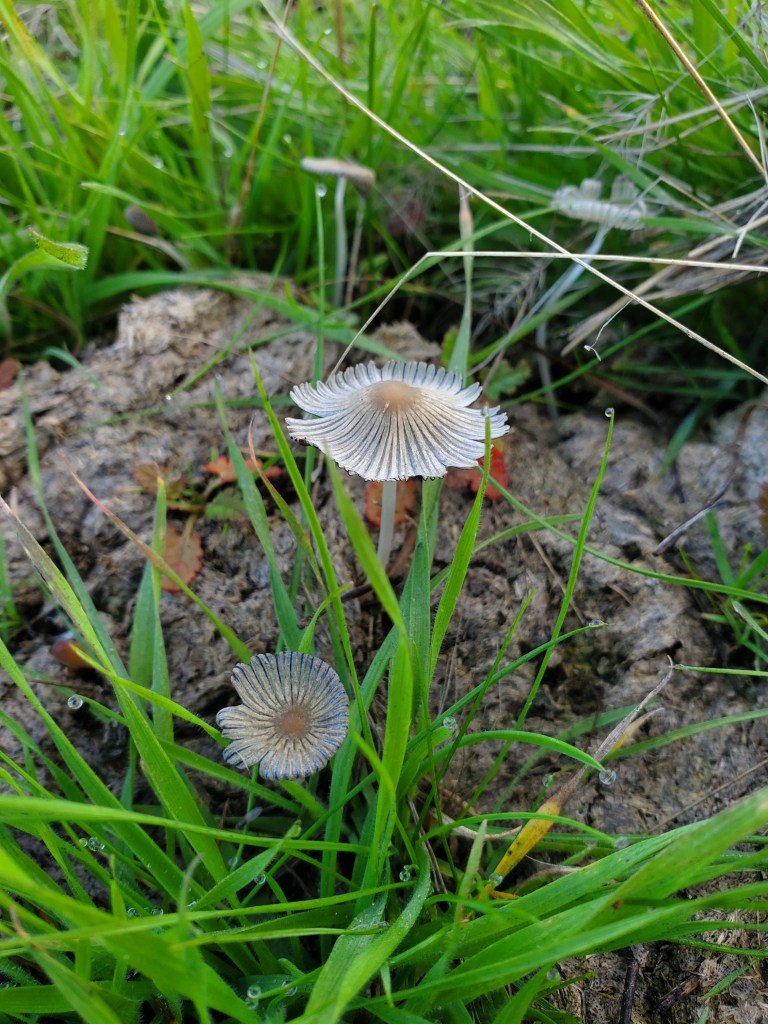
Mushrooms and Wildflowers

Bees

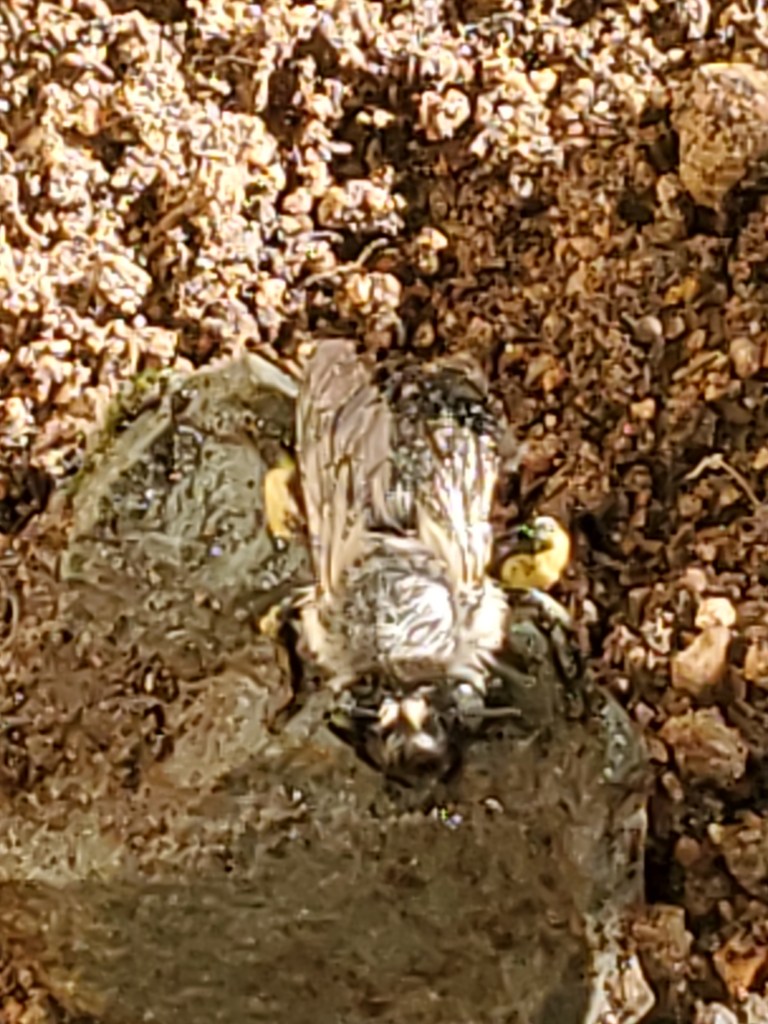
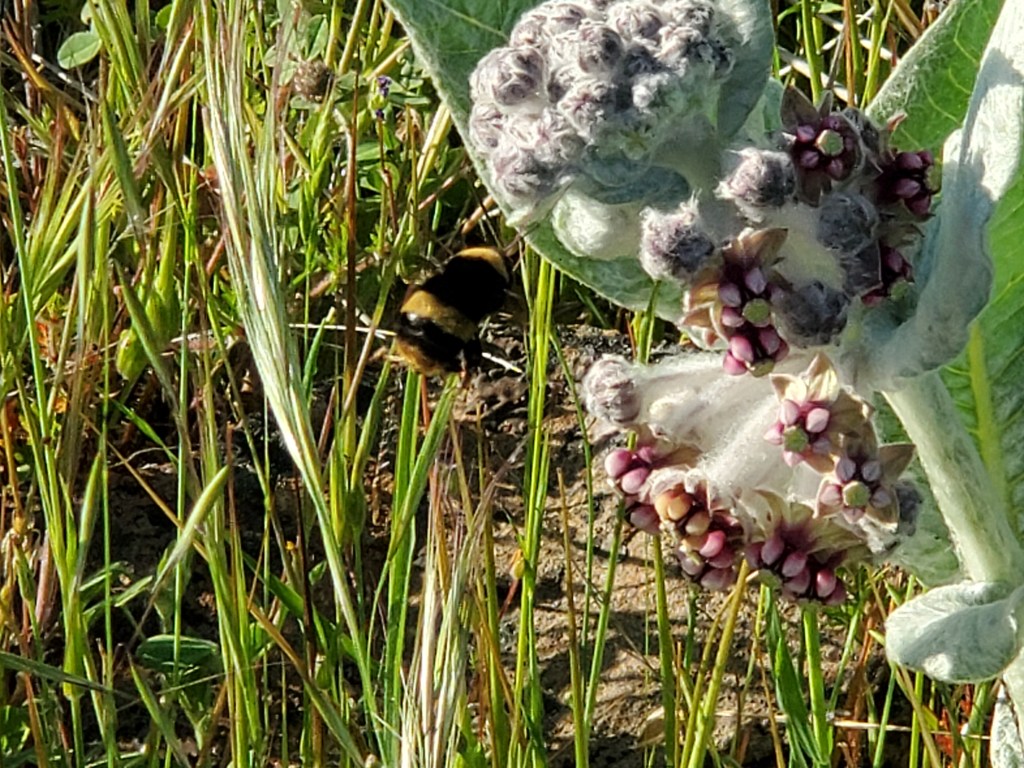
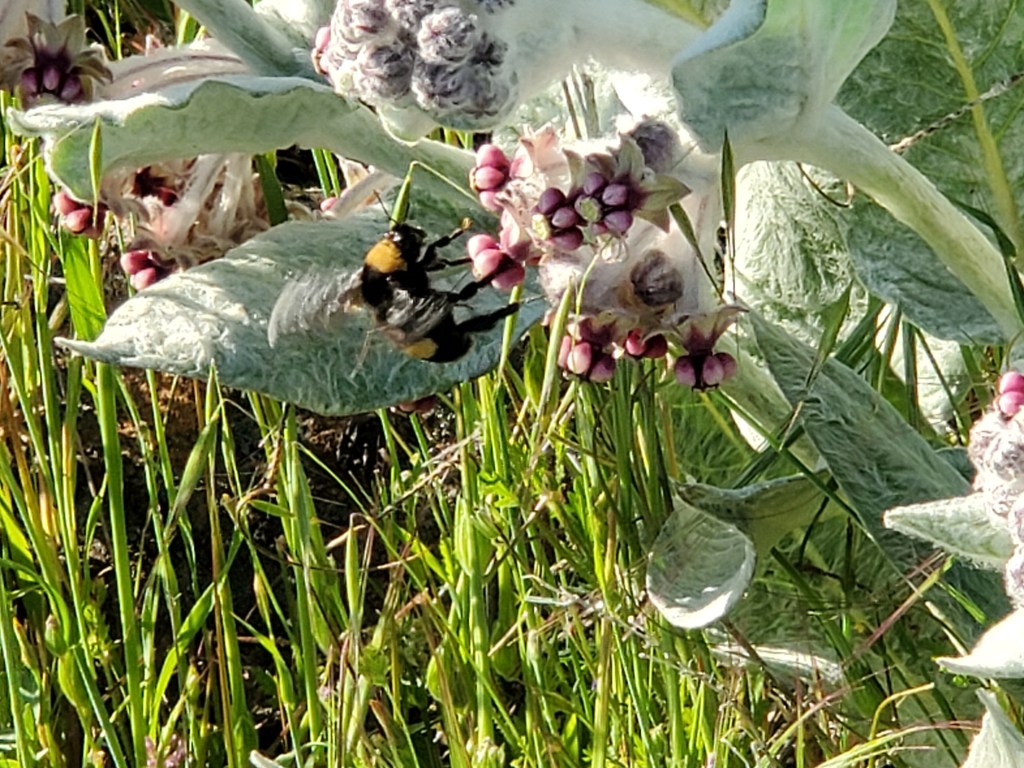
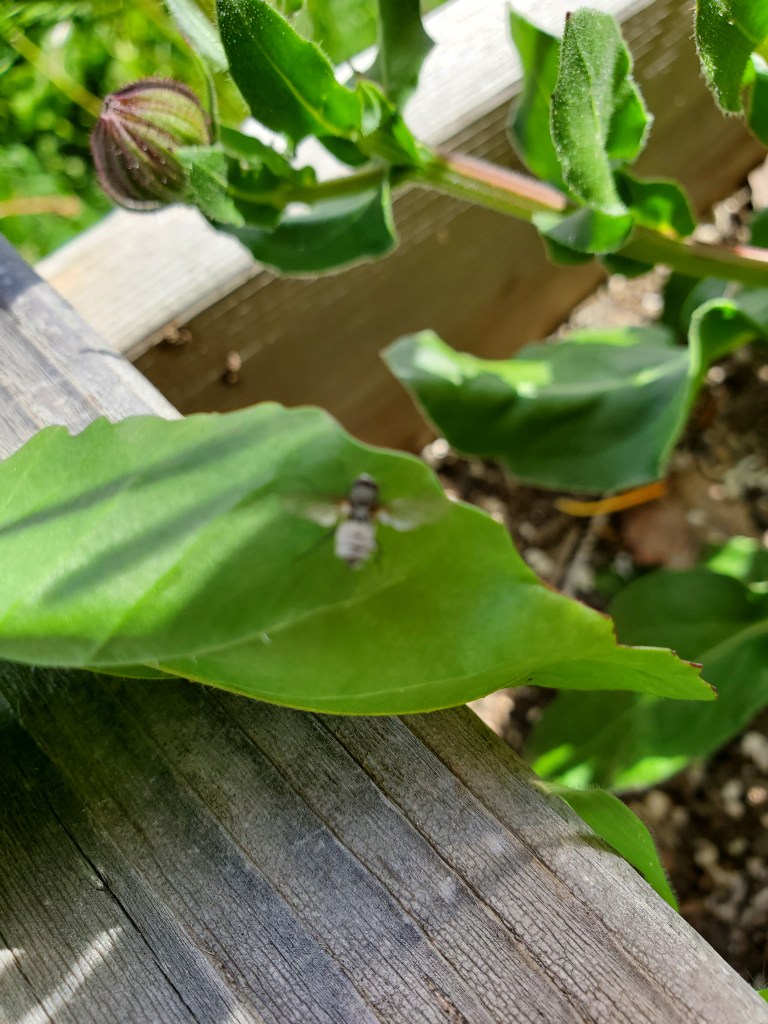
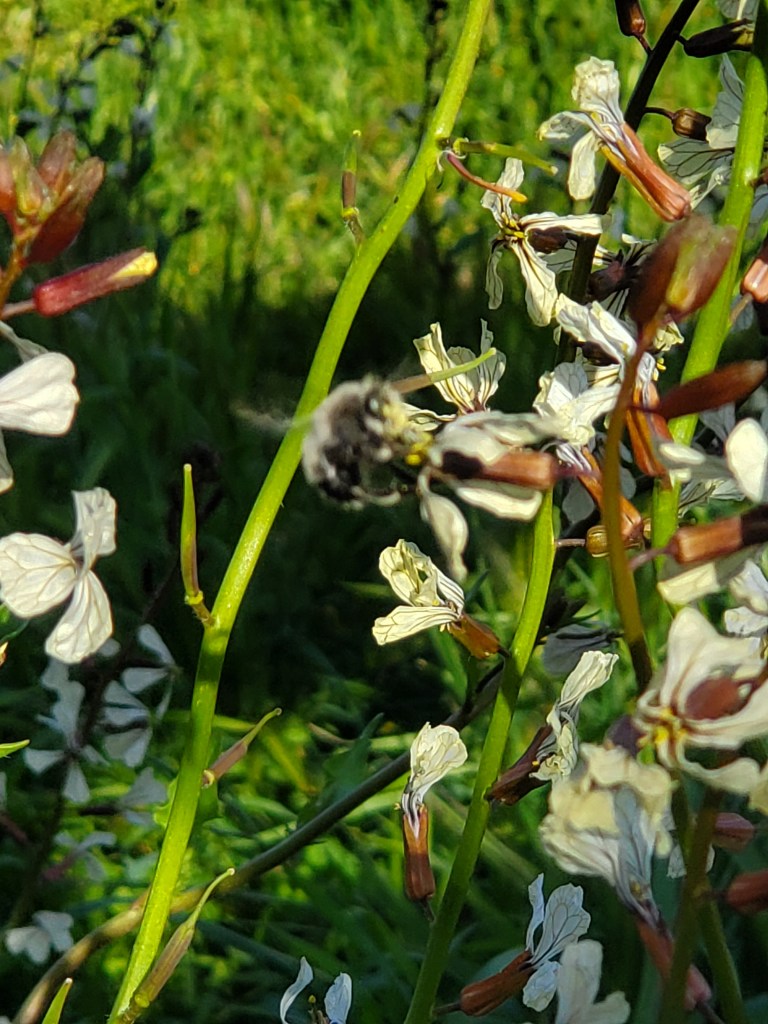
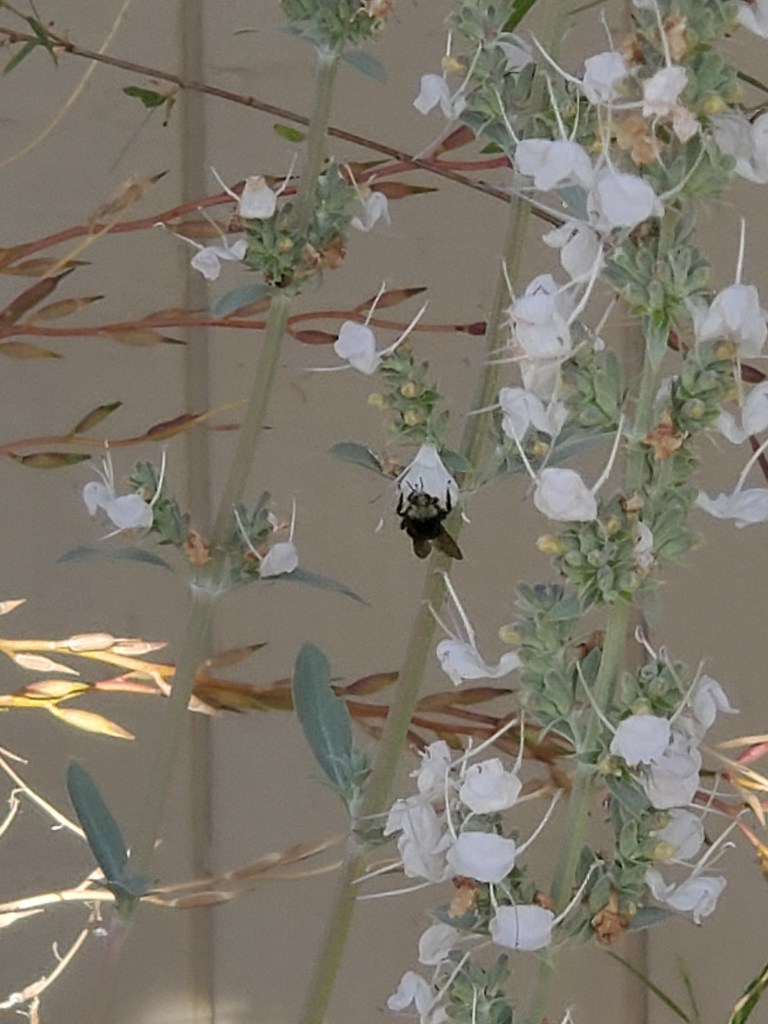
When the sun comes out, we are seeing some significant bee action. Honeybees, a cute silver native bee taking a nap, and fuzzy silver bumble bees have presented themselves. There were some viceroy butterflies just the other day. They are large and orange, so very exciting to see. They move too fast and don’t stay long. It is rare that I get a good look at them let alone a photo.

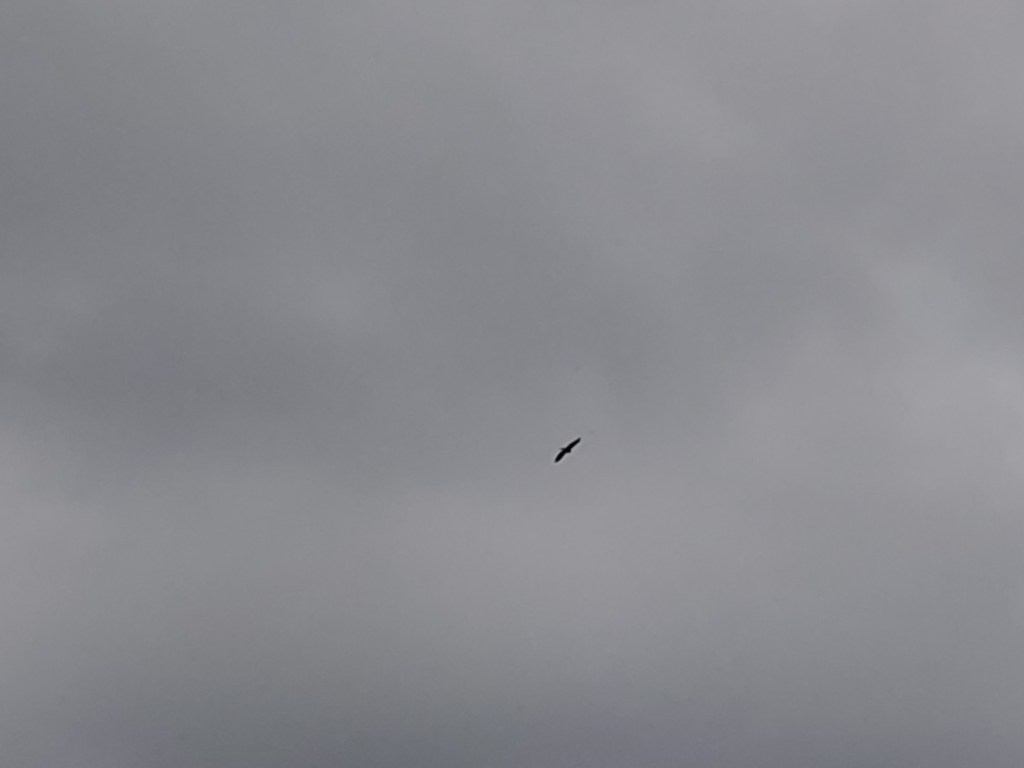
A very special guest made an appearance twice – a rough legged hawk. They live in the arctic north and fly south for the winter. Mariposa County is near the absolute south portion of their range. According to bird resources and my Stokes bird book, it is rare to see them this far south. I am thanking all the water for staying here and making a compelling habitat for some remarkable raptors this year, including a bald eagle the other day.

Stewardship is Not all Outdoor Work

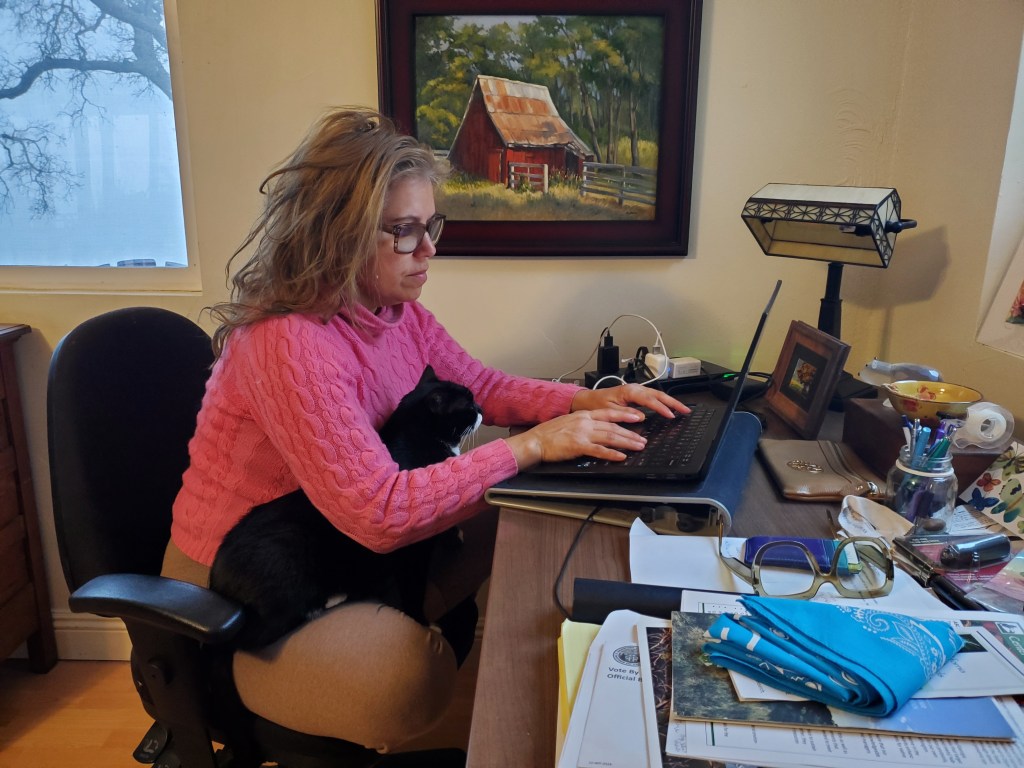
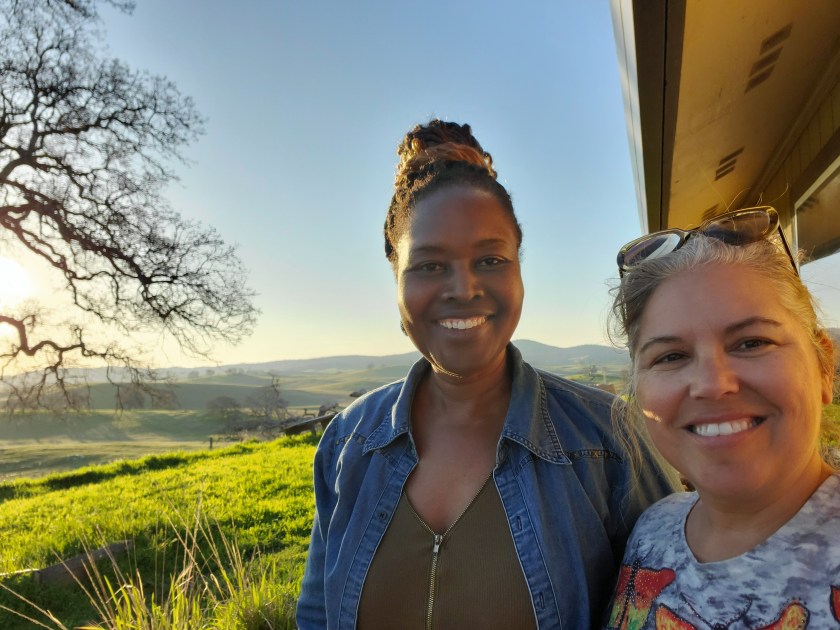
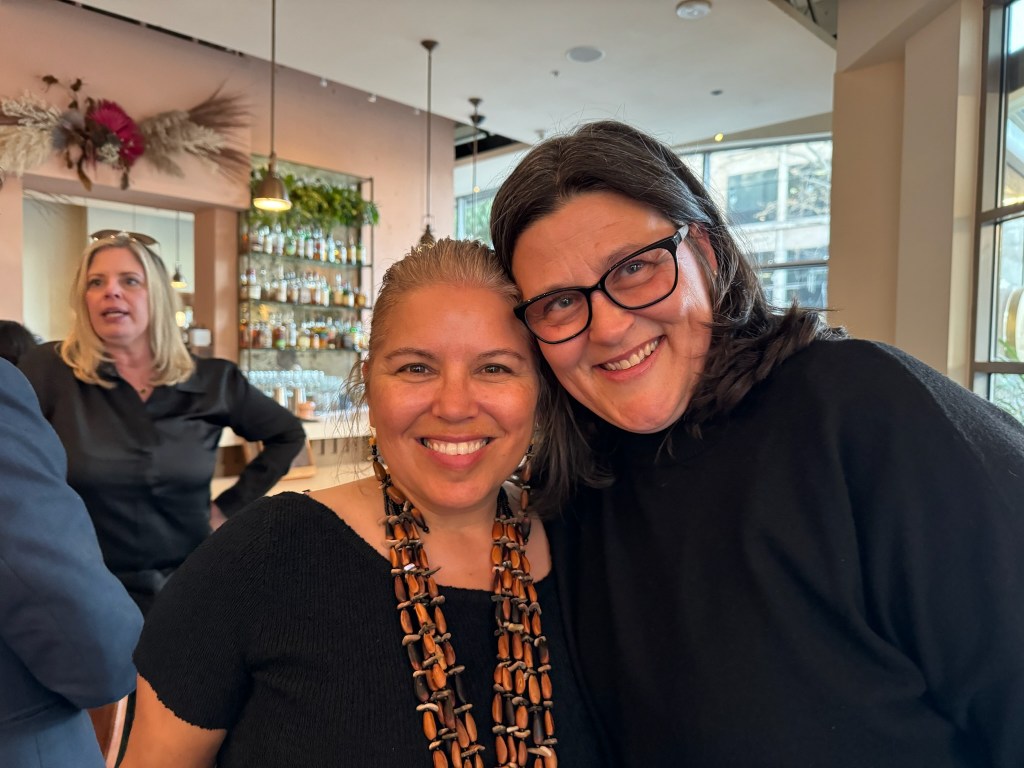
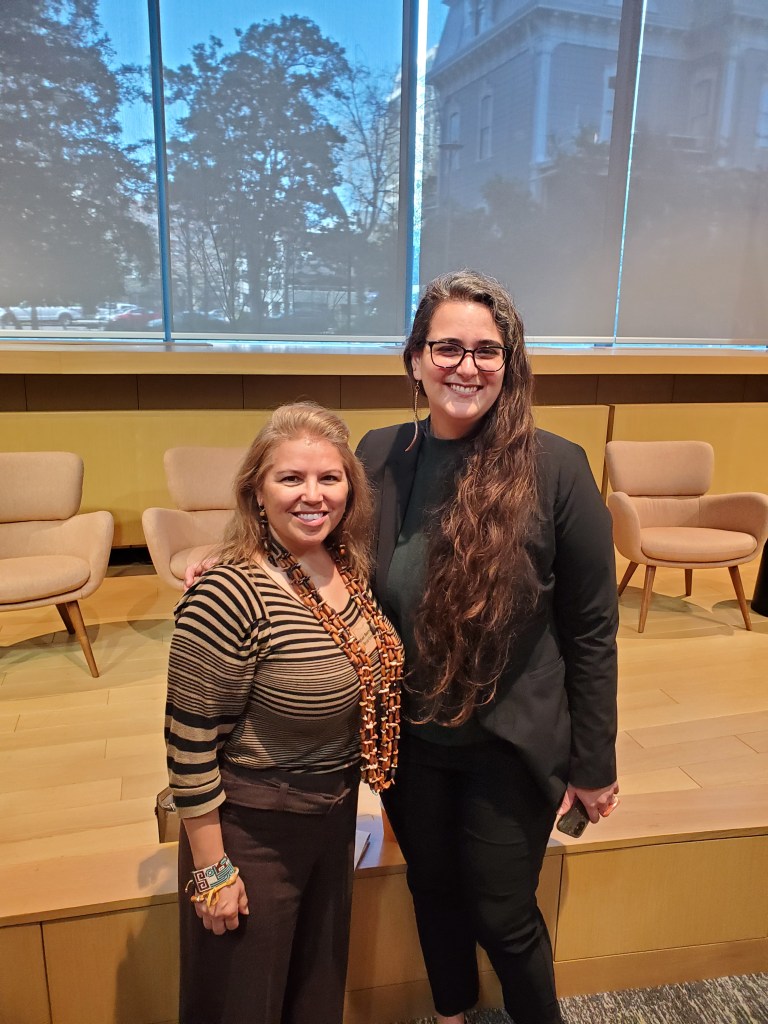
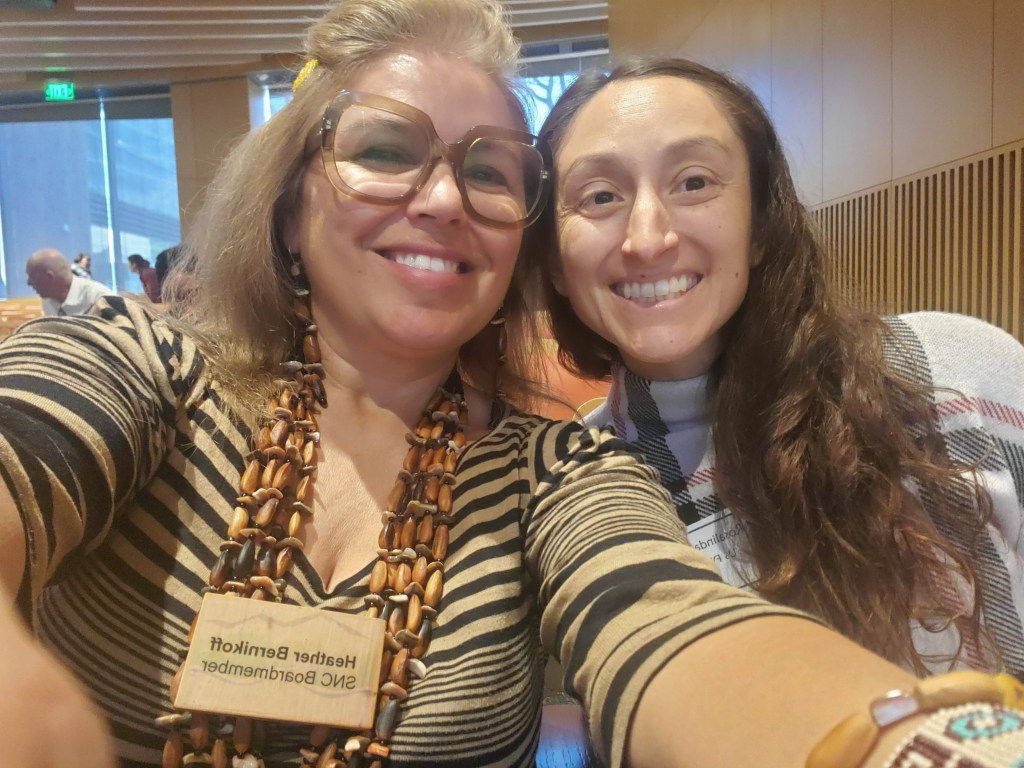
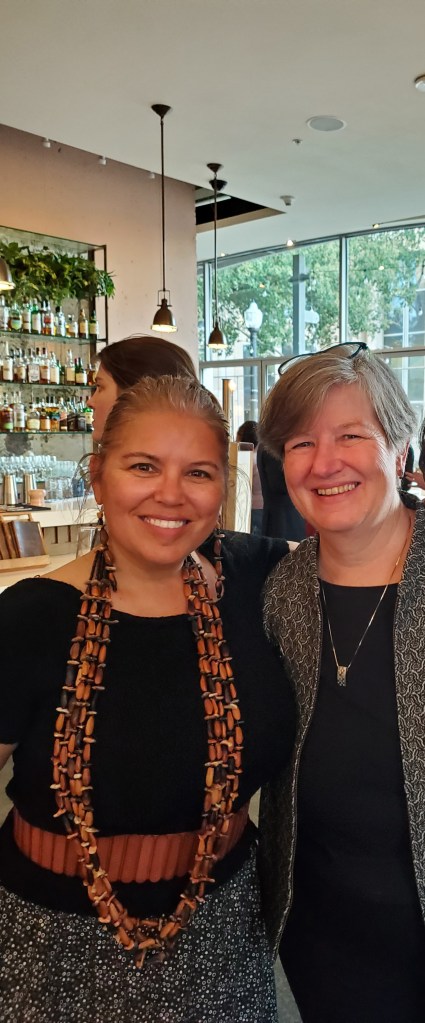
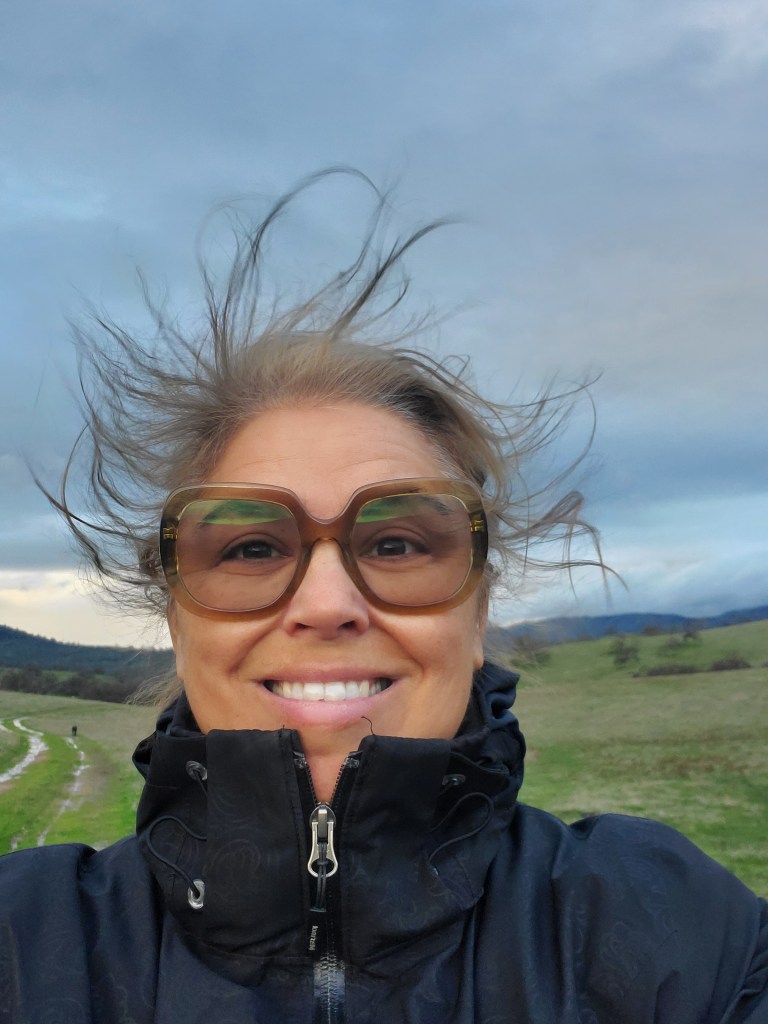
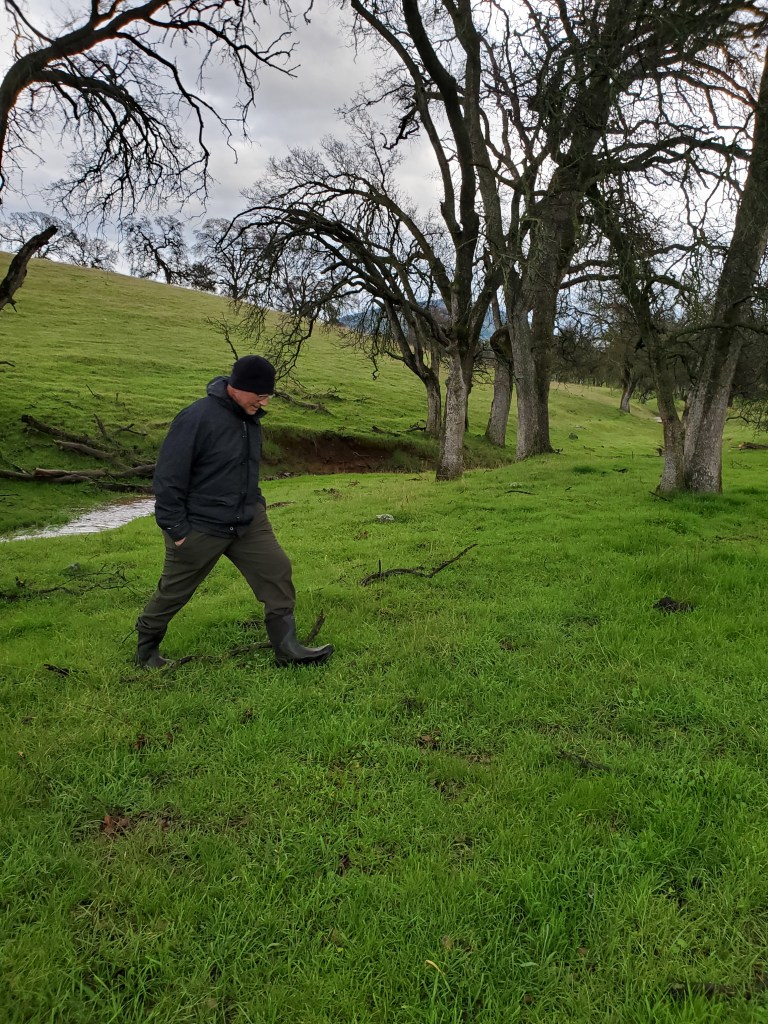
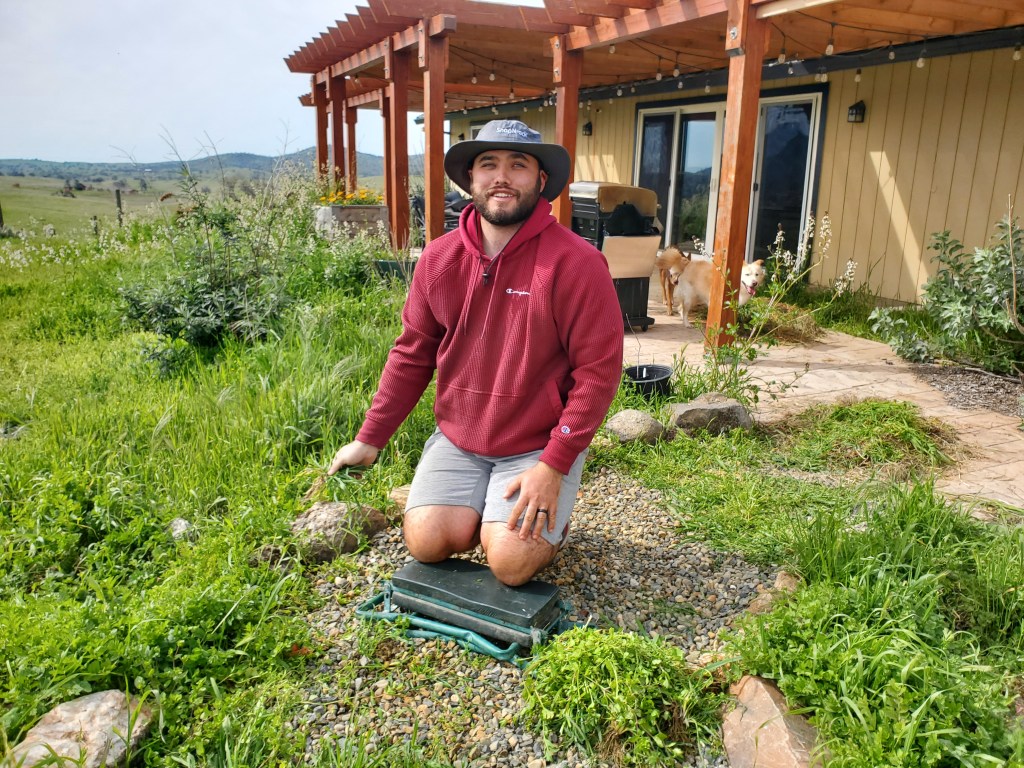
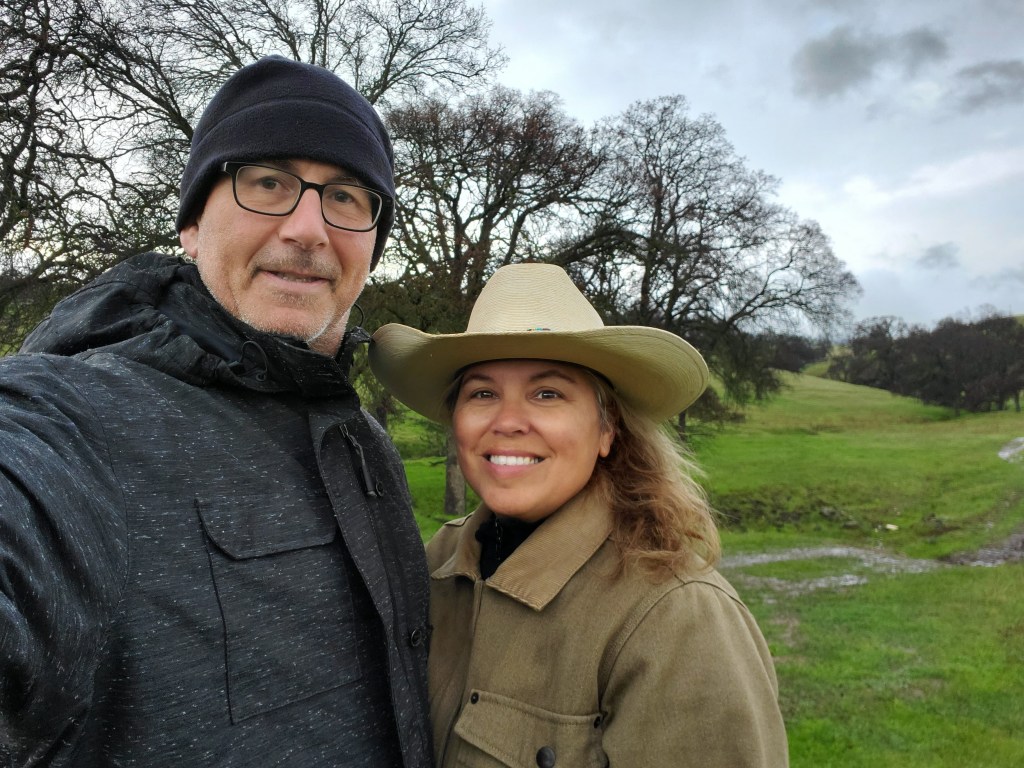
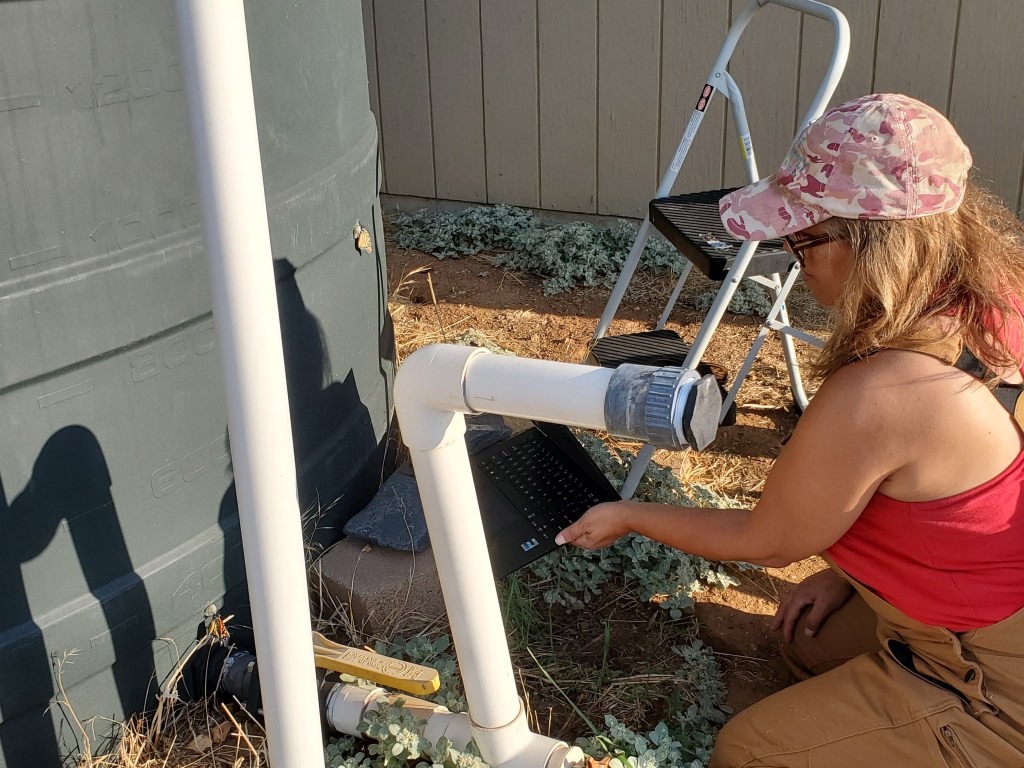
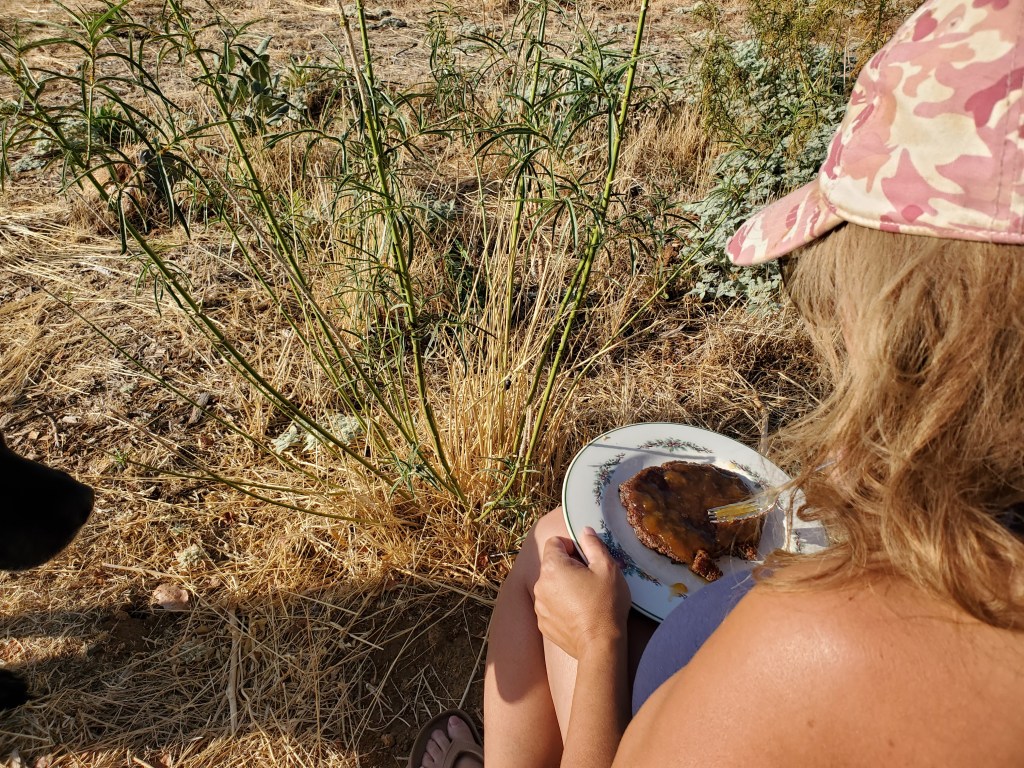
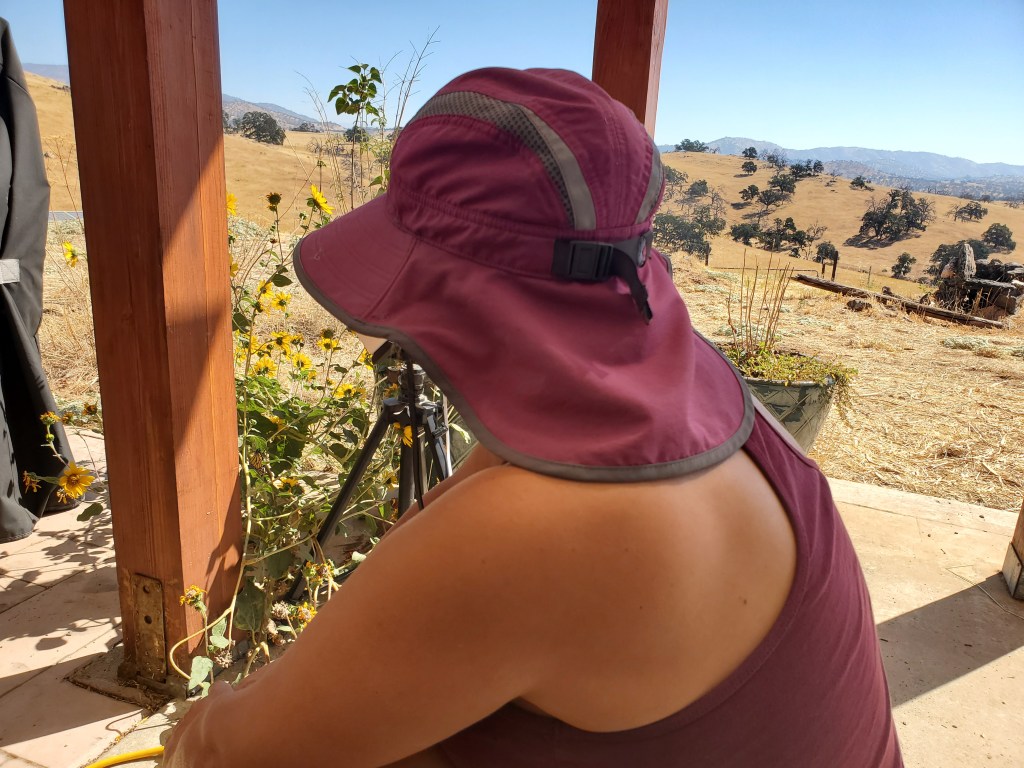
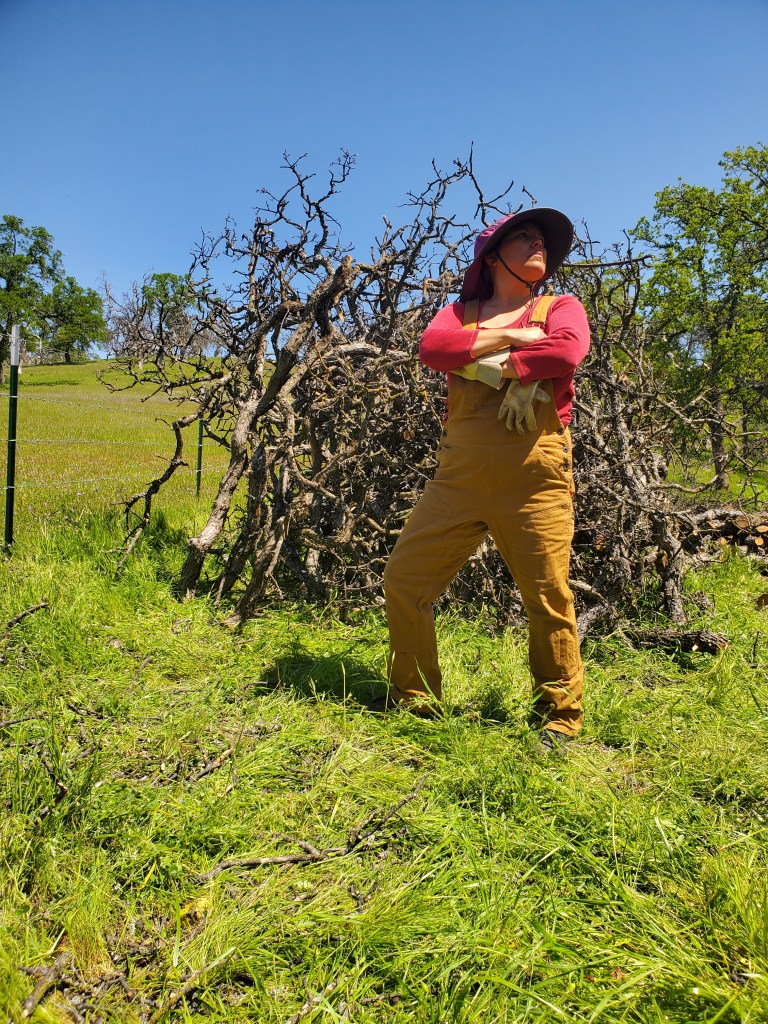
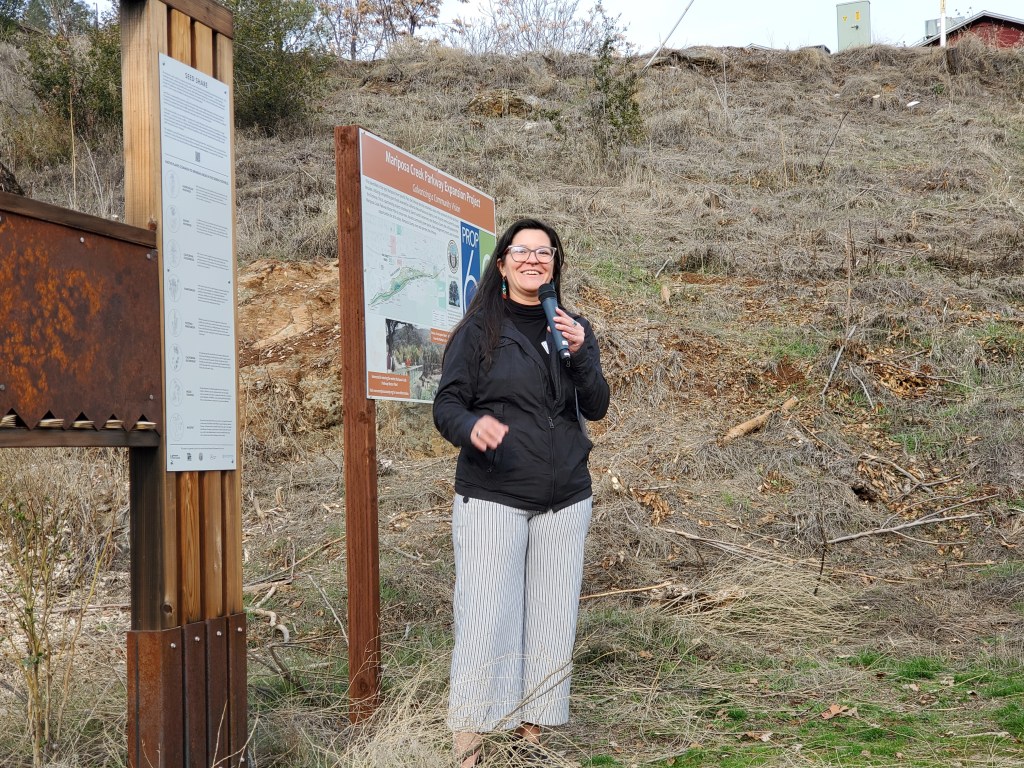
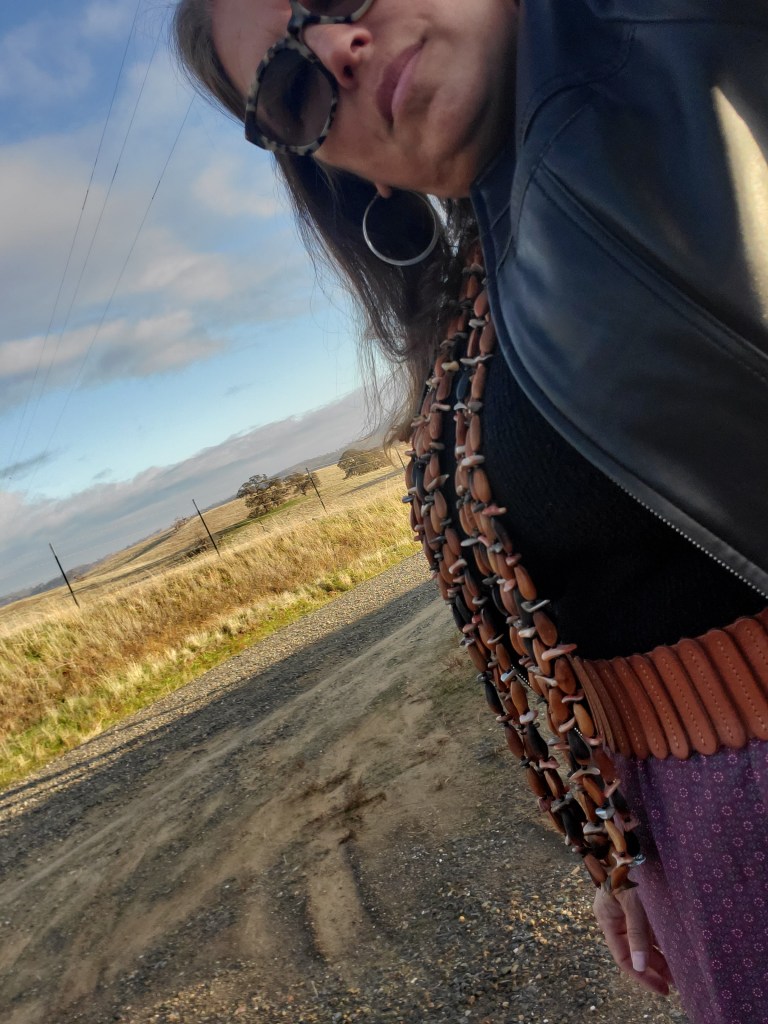
As much as I would like to say that stewardship work is 90% outdoors, it isn’t. I spend probably 70% of my time researching products, information, other programs, funding opportunities, reading articles, writing reports, writing grants, making connections, responding to questions (on email, blog, Facebook, Instagram, on Pollinator Partnership and Women for the Land dedicated communities), planning projects, performing data entry, sifting through photos, following up on conversations, supporting networks, ordering supplies, attending meetings/conferences, traveling to meetings/conferences and writing this blog. For this section, I will show some pictures of me out and about, which I am super uncomfortable with. I am not a selfie person (no judgement on others, just not me), but they are important to the story of this work. I’ve had to get used to it. Please bear with me.

In just the past three weeks, I attended the California Rangeland Conservation Coalition Summit, Community Alliance with Family Farmers Tech Expo in Madera, Xerces Pollinator Program, Native American Fish & Wildlife Society Pollinator Working Group, met with the Farm Advisor, met with NRCS, and attended my last Sierra Nevada Conservancy Board meeting as a board member. There is so much great information to know, people to see and connect with, and input (you hope is helpful) to provide. There is much more to be involved in that is worth my time; I just don’t have the time at this point. I am feeling pretty maxed out.

At the rangeland summit, I finally meet in person two extraordinary women – Nancy and Susie Calhoun. With their other sister, they conserved their large family ranch in Livermore and continue to protect it and make habitat for all the life that exists there. HEROES!!
I saw Fadzayi Mashiri, our Farm Advisor, at the Summit as well. We made a plan for her to visit the ranch. It had been a long time since she was last here. She provided some great recommendations to improve on what I was doing and was one of the people early, early on who helped me think through improvements to this land. HERO!!

SNC Wrap-Up: Bittersweet

My final meeting as a board member of the Sierra Nevada Conservancy (SNC) was last week. California Governor Gavin Newsom appointed me to this role in 2021. I have enjoyed being on the board, working with good people both on staff and as board colleagues. I appreciated the opportunity to learn about forest stewardship and rural community resilience. I learned about the State budget process, which is wildly complex. As the first culturally Indigenous person to sit on that board, I also appreciated the opportunity to ask questions about representation of Tribal governments and Indigenous led organizations, about how inclusive and equitable funds are being distributed, about why some projects call for herbicides, and trail safety and careful placement with regard to Indigenous needs. Safe, inclusive, carefully planned projects make the outdoor experience for all life better.

My last day was bittersweet –sweet in that I am leaving to deeply focus on natural resources, climate and tribes, bitter in that I absolutely love working with the entire staff of the SNC. The staff are so accomplished, professional, competent and devoted to their mission to restore and enhance the extraordinary natural resources and communities of California’s Sierra-Cascade region, while protecting them from wildfire and a changing climate. It has been such a privilege to serve the public, rural communities (which I love), the Newsom Administration and be a voice for my nature relatives. I will miss this work and all of the people.

Wanderings

Even though I am busy every day, I never lose sight of how grateful I am for the opportunities that have come my way to serve, help, make a living, and be a land steward. To know you make a difference is a gift, and it is a gift everyone can access. Whether you plant milkweed where there is none, sit on an advisory committee or board in your community, organize with others to make good, helpful change, you make a difference. Step into life, take opportunities with good intent, be a hero for a butterfly, bumble bee, forest or community. You got this!

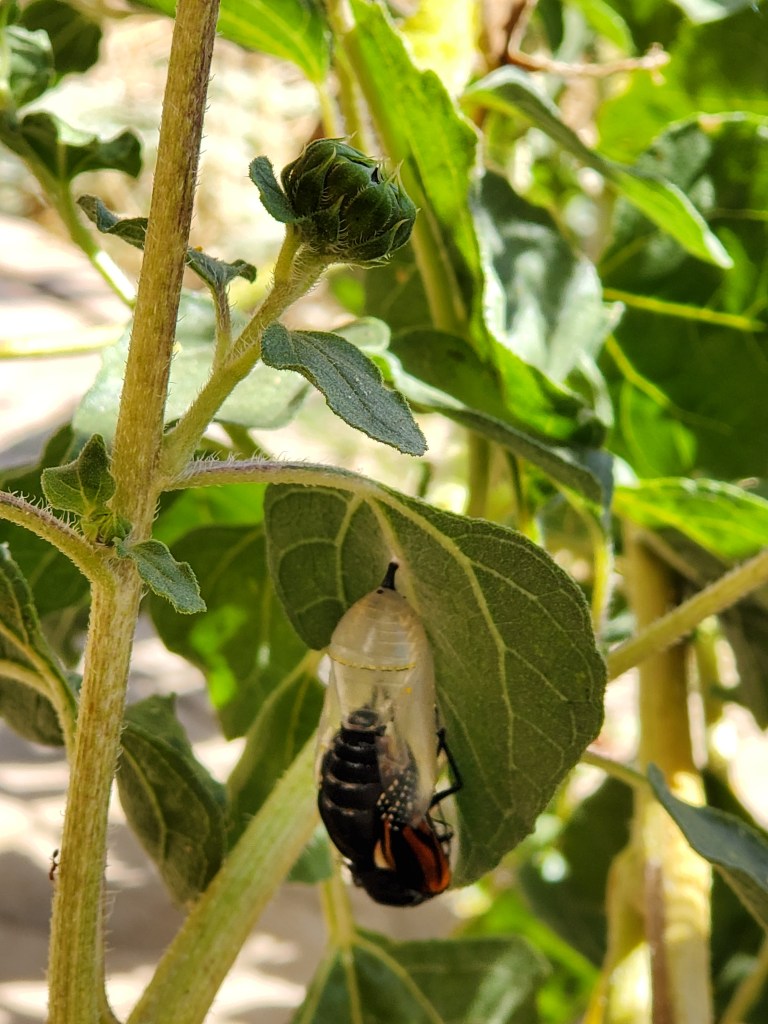
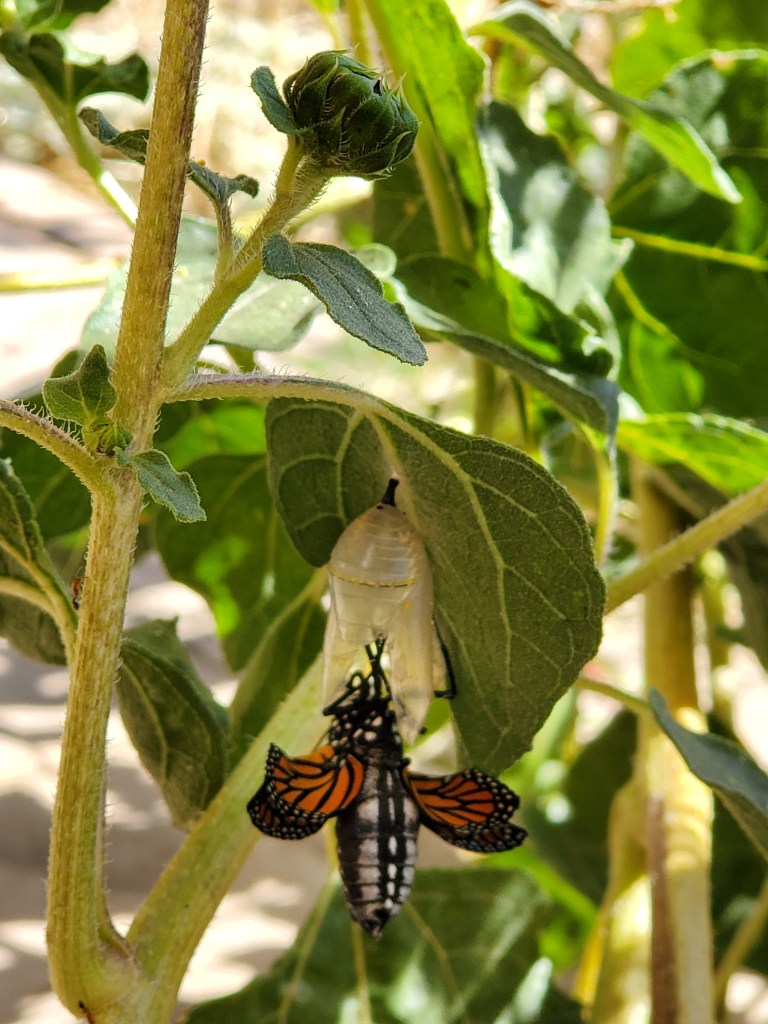
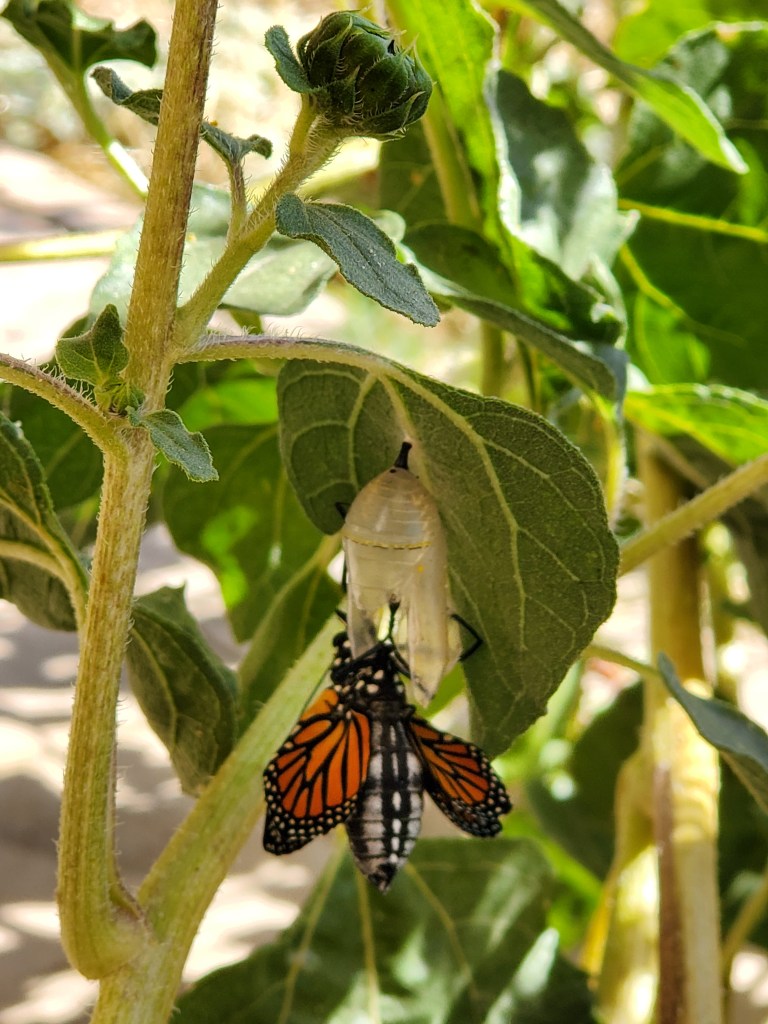
Midwife to Monarchs

The last of the monarchs left yesterday. They are born, dry-off, test their wings and then fly away. Green to black to orange, black and white – there is now no color save yellow – yellow grass, yellow tarweed, yellow sunflowers, yellow creek flowers. Yellow is the Fall, a time of maturity, a time of harvest, filling us like a cornucopia. I harvest joy, not crops, from knowing that something as remarkable as a butterfly can exist. My project has matured attracting monarchs at their journey beginning and ending. I have witnessed flights, egg laying, caterpillars large and small, silk spinning, “J” making, chrysalises and births to flights again. I am full. Fall has filled me.

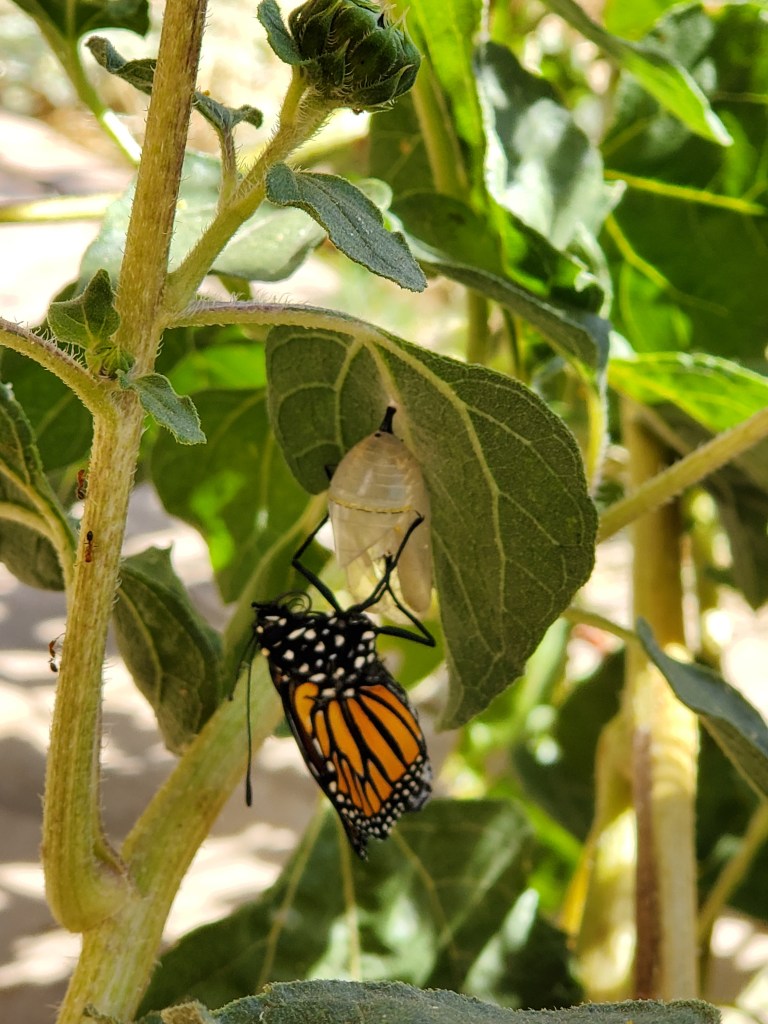
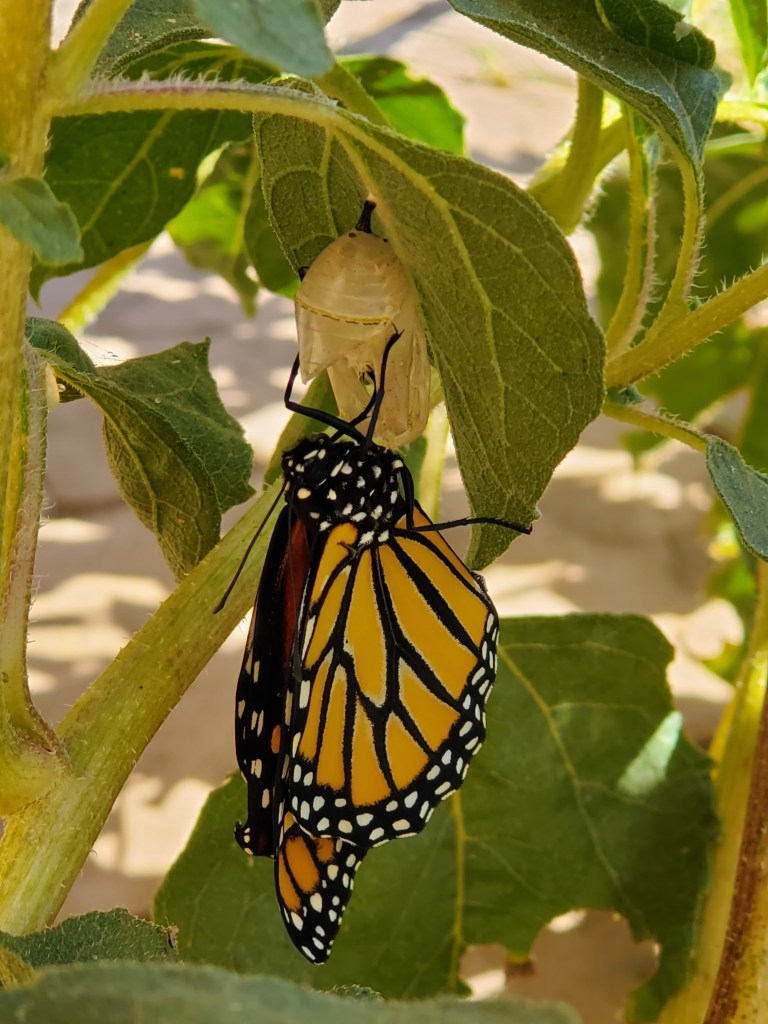
In my life, I never thought I would be a midwife to monarchs. In truth, they don’t need me. They’ve been doing their thing and surviving well without me. Unimpressed with that knowledge, I monitored them daily to ensure their chrysalises were there, their foundations were intact, and that everything was a-ok. When they were born, I watched them even closer to make sure they were able to gain a strong footing.

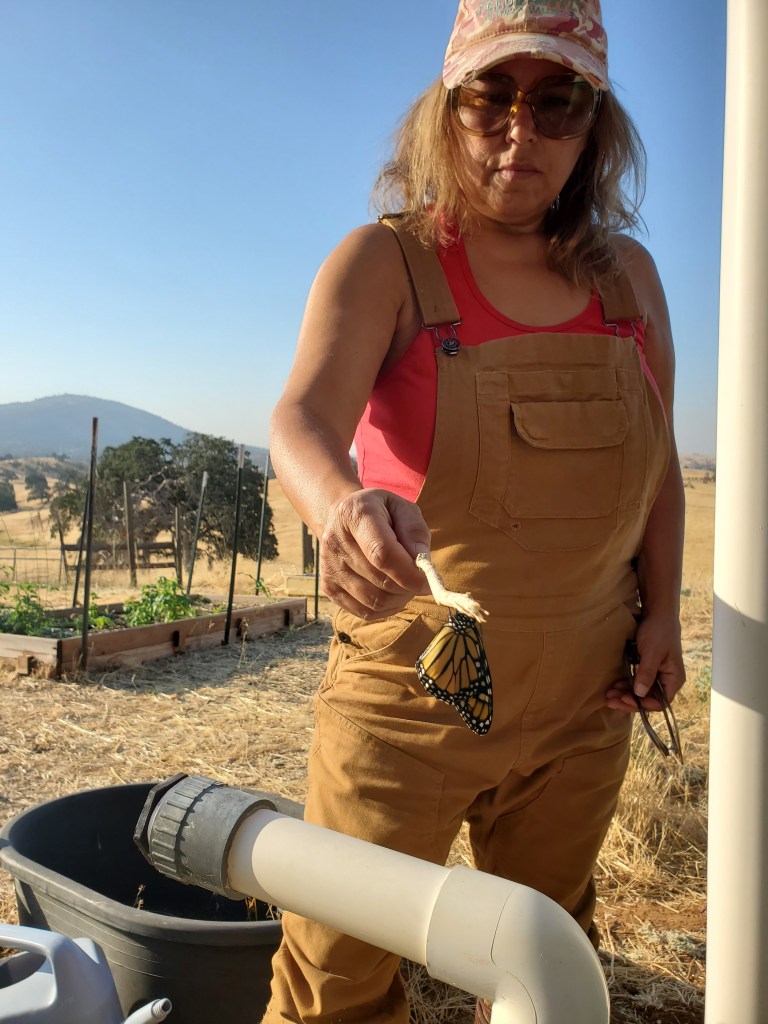
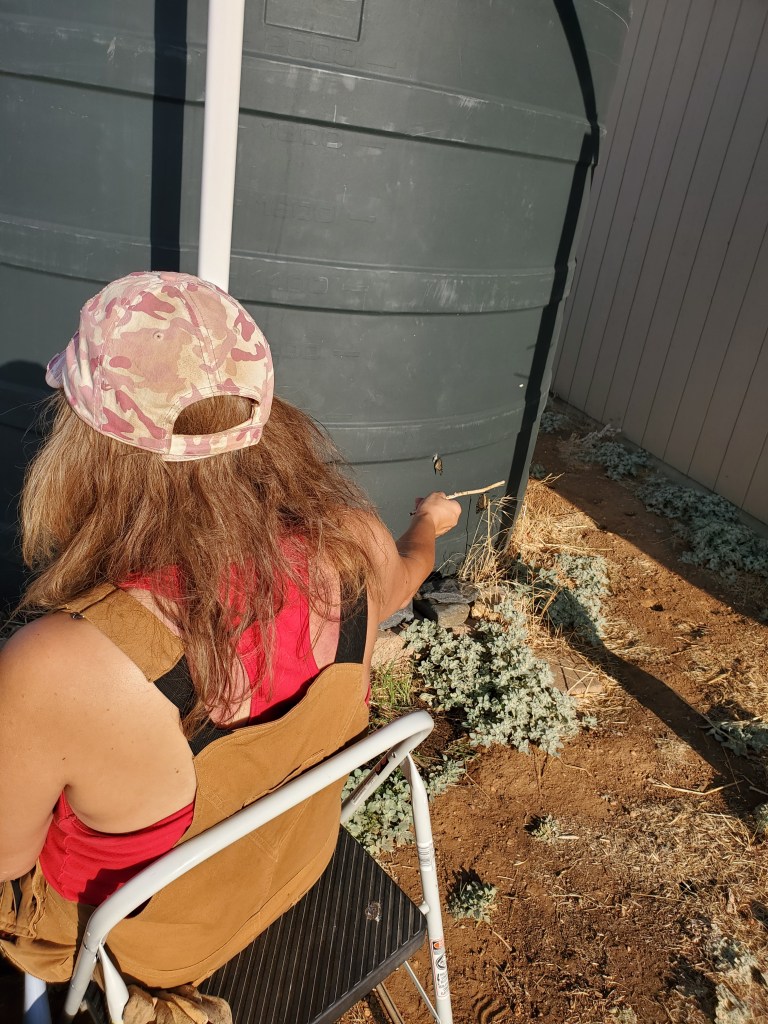
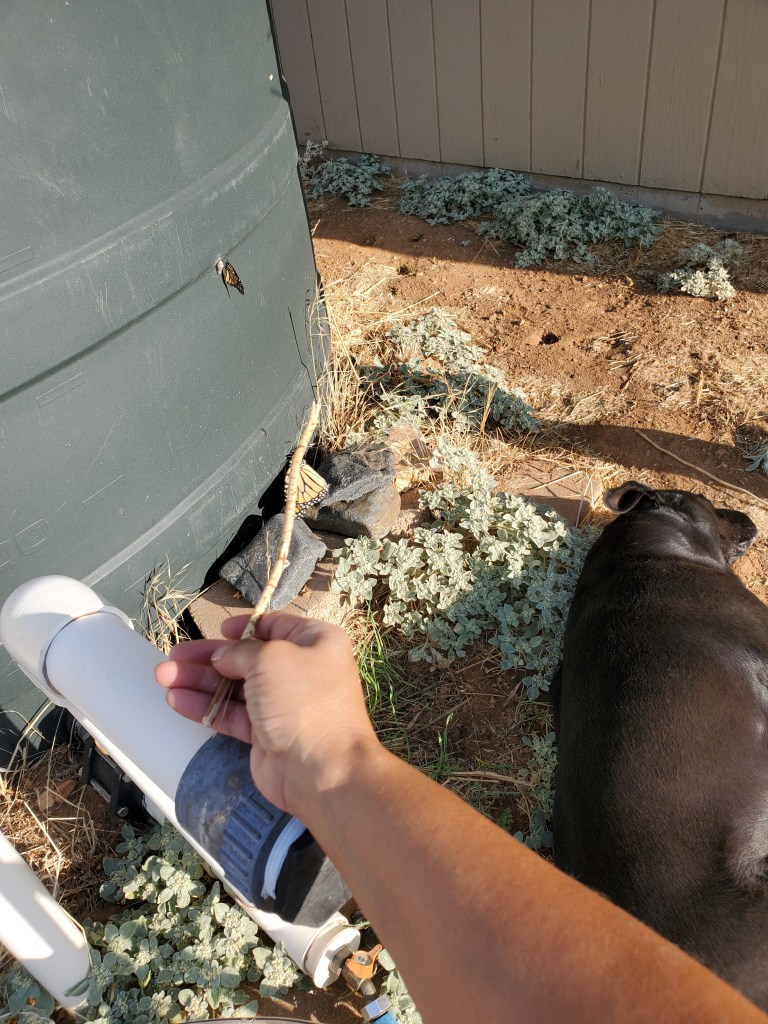
Glad I was there; monarch #2, the closest chrysalis to the ground, did not have as much space between the tank to which its chrysalis was attached and the retaining wall adjacent to the tank. She rolled out of her chrysalis, then latched to it, then a move to more solid footing, and she fell. I watched her thinking she would find footing, but the space was small and the dried grass too short and flimsy. There she wiggled on her side trying to gain purchase on something, legs grasping at the air hoping to find something to cling to. Quickly, I broke off a stem from a dead sunflower and carefully held it to her, close in her vicinity, but not near her delicate, still wet wings. I did not want to chance an error. She grabbed on, and I hoisted her carefully in the air allowing her to hang her wings toward the ground so they could unfurl, expand and become strong for her impending journey. I was captivated. After my brain was released from the haze of wonder at this magnificent creature only inches from me, I realized that I now “owned” this lifeline I threw for the 3 to 4 hours it takes for the wings to dry. Didn’t think of that when I jumped to the rescue. I stood there, holding this stick with a glistening jewel at its end, contemplating what I could do to ensure her safety, and my relief. I tried to encourage her to step onto the larger dead stick of the sunflower remains. She wouldn’t have it. Fortunately, there was a soil-filled container with moist dirt that made it easy, yet sturdy, for me to plant the stick in, slowly, carefully. It worked. We both were secure.

In total, there were 11 confirmed chrysalises and caterpillars, with some other surprise monarchs I found drying off. If I add in the surprise monarchs, it brings the total to 14.

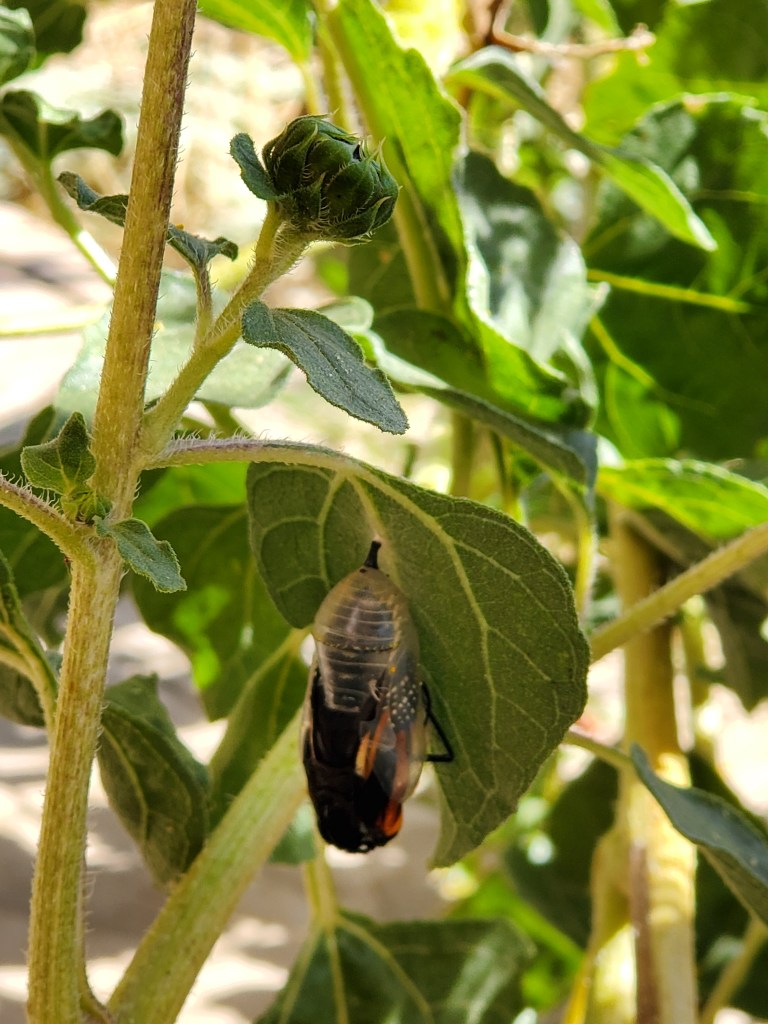
I tried to watch every birth, learning new things every time, like seeing how the chrysalis elongates two days before birth, the black color the day of birth, and the colors visible minutes before birth. I became a pro, yelling to whomever was around, usually David who was long since over all of this, “It’s going to blow!” David responding, “Cool,” and going about his business – if saying anything at all.

It never gets old watching the birth of a butterfly. It is a miracle every time. My friend Francisca was over one day when a chrysalis was about to open. She watched, excited like me, camera in hand, at the miracle before us. It is so nice to share this with people who care. The monarchs are great ambassadors.

At the end of the day yesterday, I watched as my final charge alighted. She circled around me well above my head, flitted here, flitted there, then flew off to the south where eventually she will make a turn toward the coast. I worry less about these babies; there is considerable habitat along her route – thanks to a clarion call for “all hands on deck” in planting milkweed and nectar plants from many organizations and individuals. It is your work, your compassion, your money donation turned to milkweed that will keep her path safer than it would have been only two years ago. The route is not without danger – cars, dragonflies, birds, pesticides, condos and golf courses instead of habitat – but there is much more habitat than there was. Thank you reader. Truly, thank you.

Oh good friend, fly high and safe. You will make it to the coast, and I will see you next year in this milkweed patch. Lay your eggs. As you transition your knowledge to the next generation of where you were born and where the good flowers are, feel secure that I will be here, taking care of your children then.

A Beautiful Sculpture in the Garden

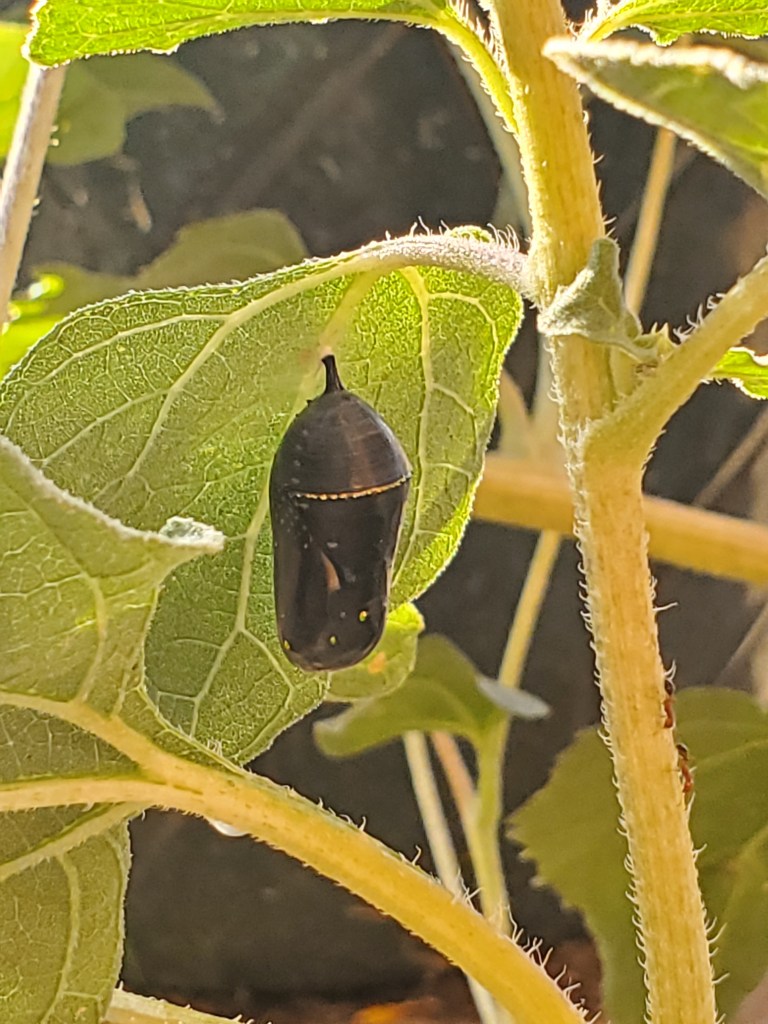
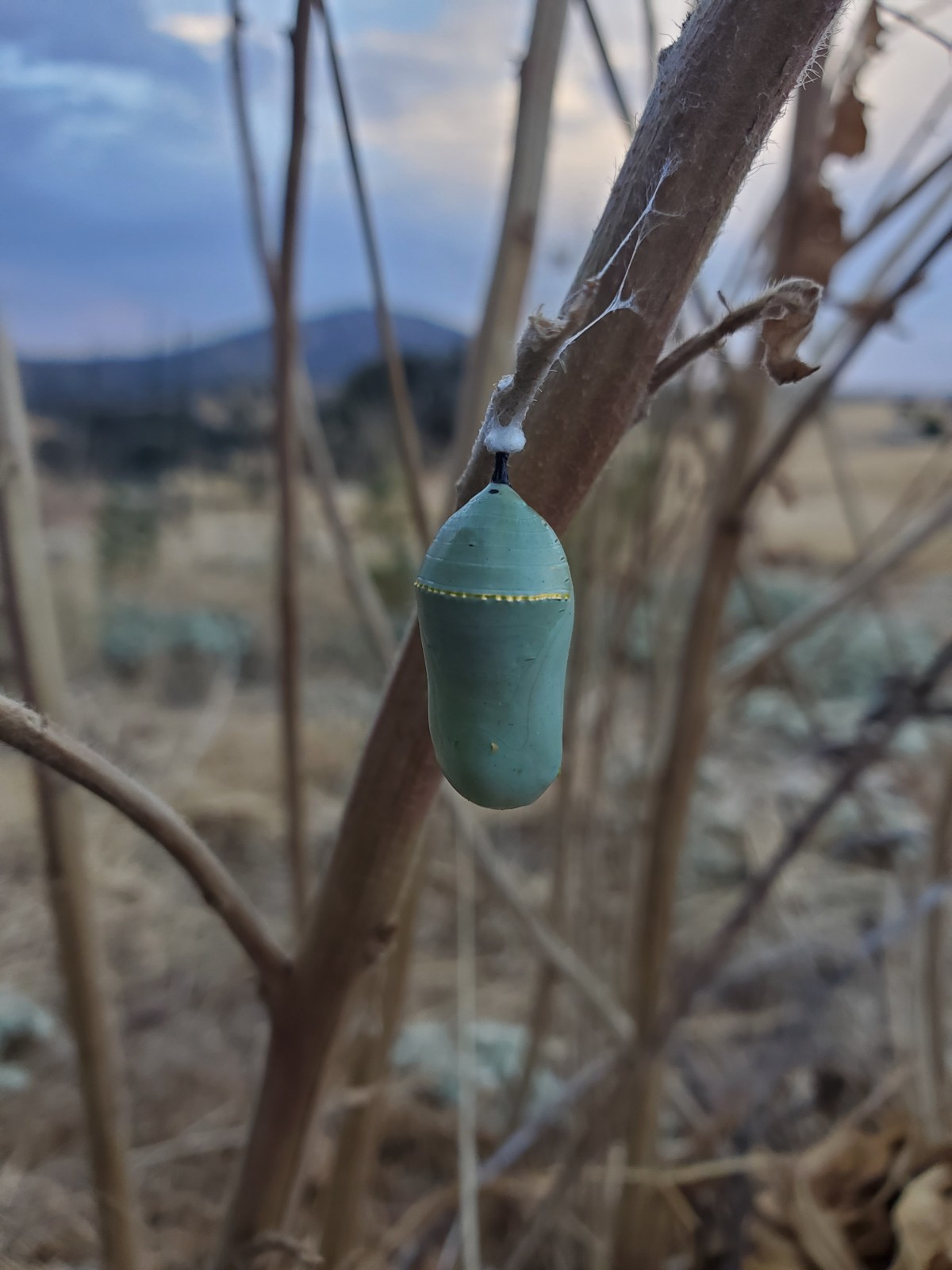
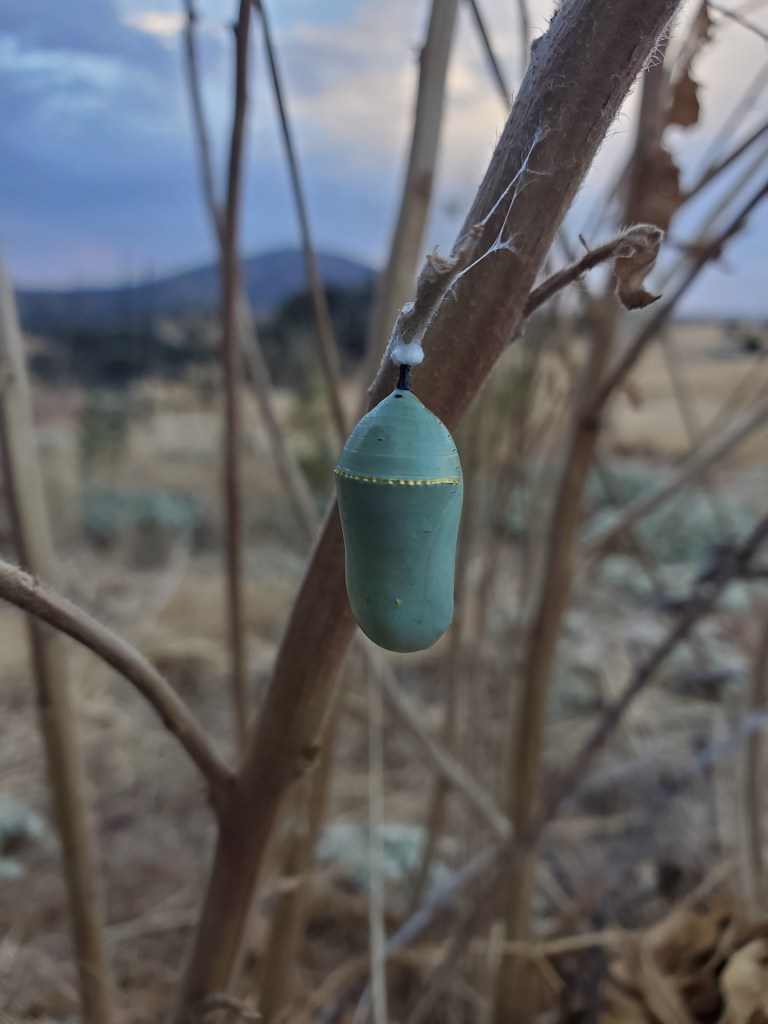
This is a very short post to share what I found in the garden. For those who don’t know what they are looking at, this is a monarch chrysalis. The identifying features are:

1. the jade like color, which is the amorphous goo of the caterpillar body liquefying and turning into a butterfly. The chrysalis is actually clear in color.

2. the yellow, pearl-like dots near the top, and

3. the large size. The monarch is among the largest butterflies in North America.

It is attached to the branch of this primrose by a silk web that the caterpillar creates specific for this purpose.

How did I miss signs and sights of caterpillars? I have been looking at the milkweed almost daily for signs of eating since the adult monarch laid her eggs. I have seen nothing. Evidently, someone survived. The monarchs are so mysterious, so difficult to find. That is a good thing though. The ability to exist hidden gives them even more tools for survival.

I am so ecstatic. The monarchs are here. They are surviving here. The habitat Maala Bwia (Mother Earth) brought back to this land, with the help of me and many, many wonderful people, is working. It is helping provide more food, roosting and nesting options for monarchs as they make their iconic migration across the west. Chiokoe uttesia te hahamevu in arapo bwe’u baise’eboli. Thank you big butterfly for coming to my home. Se enchi nake. I appreciate you.

Monarchs Stop By and Re-Emergence

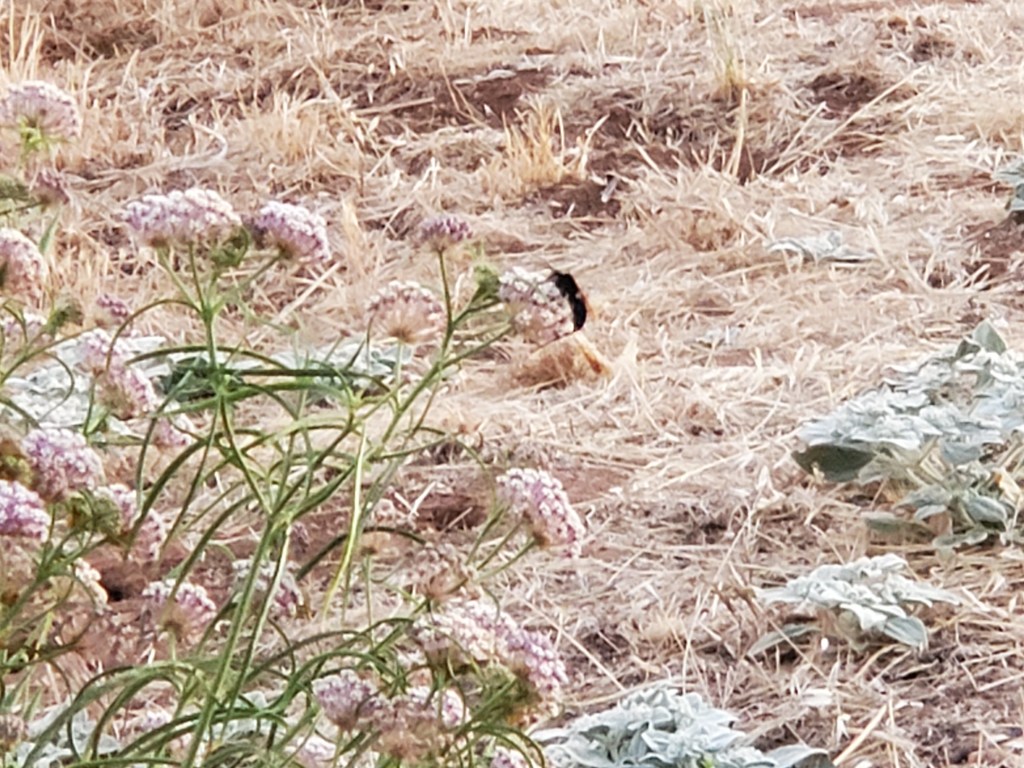
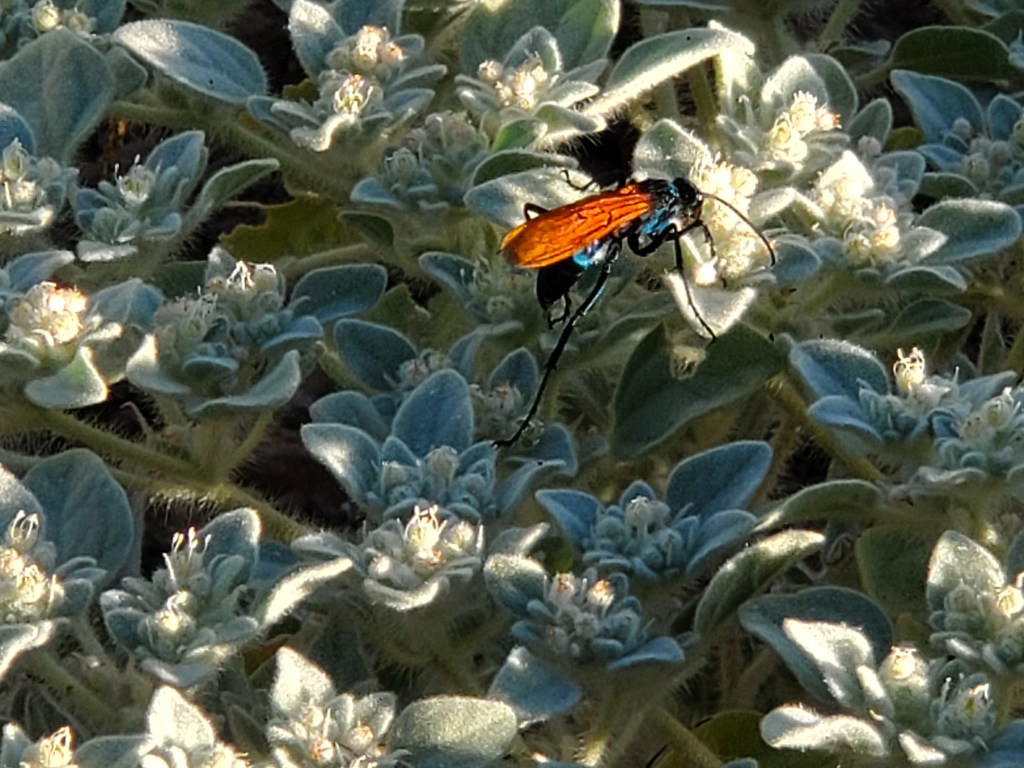
I had wondered if monarchs would just pass me by this year because there was so little left for them. In fact, I was sure they would. Well, I was wrong (add that to the very long list!). On Friday, August 11, a mama monarch came by and decided to lay her eggs on the only intact milkweed remaining on the hilltop habitat. As you may recall from my previous post, the tarantula hawks had been nectaring on this one large narrowleaf milkweed. This, essentially, saved it from being eaten to a stick by the grasshoppers.
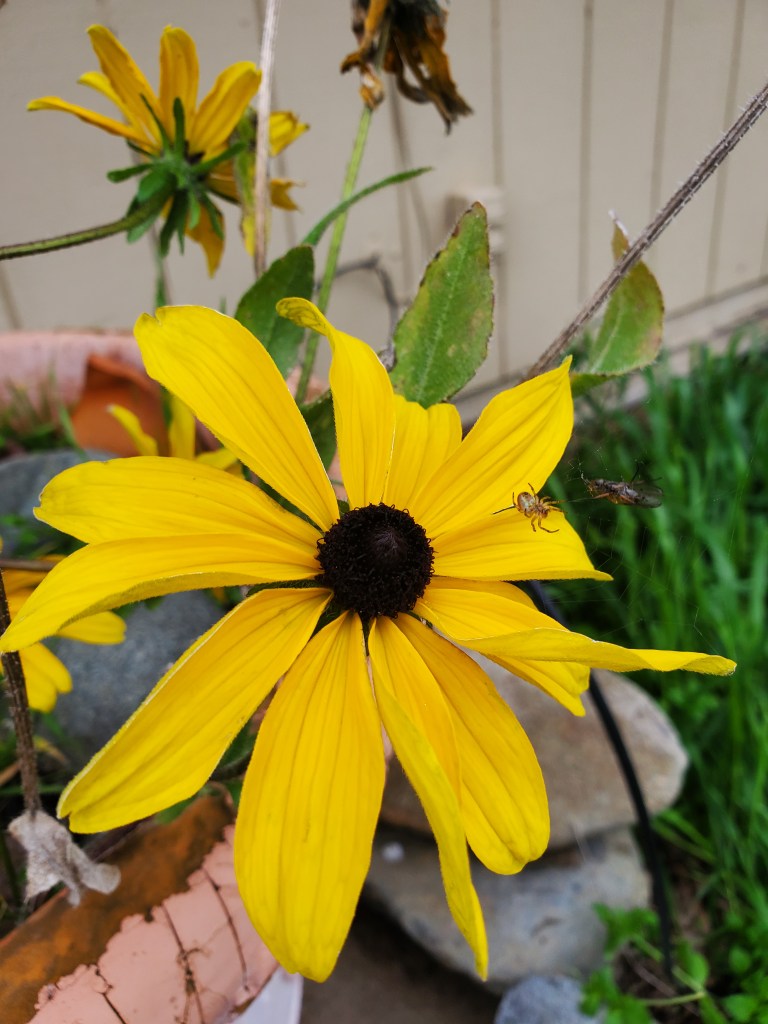
The monarch stayed around for about a week and laid more eggs on a couple other broadleaf (showy) milkweeds that had reemerged and were small. From what I learned, monarchs typically choose more mature plants for their eggs. In this case, she had limited options given the grasshopper incursion and chose smaller plants as well.

I wish I could say that I had a massive number of caterpillars, but I don’t. I am not sure what happened with the eggs. We got a very small impact from tropical storm Hilary, which dumped just under a quarter inch of rain in a short time. We’ve had swarms of dragonflies, a natural predator of butterflies. Ultimately, I don’t know why there are not multiple caterpillars. I look at the plants for evidence of eating and pooing, but daily, I see none.

I always appreciate people sharing their monarch sightings with me. There have been many more on their way back to the coast than there were heading northeast. There were 16 monarchs sighted in Catheys Valley off Highway 140. There were a couple more in the Mormon Bar area of Mariposa, one off Ben Hur Road and another near Midpines. I heard of several from Nellie in Yosemite this year as well. I always ask people to upload their sightings to westernmonarchmilkweedmapper.org. When I look at the map, I don’t see everyone’s entries, but it is possible they marked them to be private. When I find and upload california milkweed sightings, I mark those as private to prevent poaching. Believe it or not, some jerk took a California milkweed several years ago from a county trail area. Since that incident was reported by a friend, I have been very cautious.

Plants Come Back

Pacific aster re-emerges after grasshopper onslaught

Most people do not think of the end of summer as a time of plant growth. Here, at the ranch, regrowth is all around. While it still looks like a fire went through, with all the stripped, empty sticks that were once full, bushy plants, small sprouts of green along a branch or at the base are becoming visible. Close to 80% of the habitat has some regrowth. I am still waiting to see a spot of green in several other areas, but need to be prepared that those plants may not have been mature enough to withstand the grasshopper binge eating.

For now, the hoppers are mostly gone from the top of the hill where the largest habitat installations are. They continue to be profuse in patches of ground downhill on the west end of the ranch.

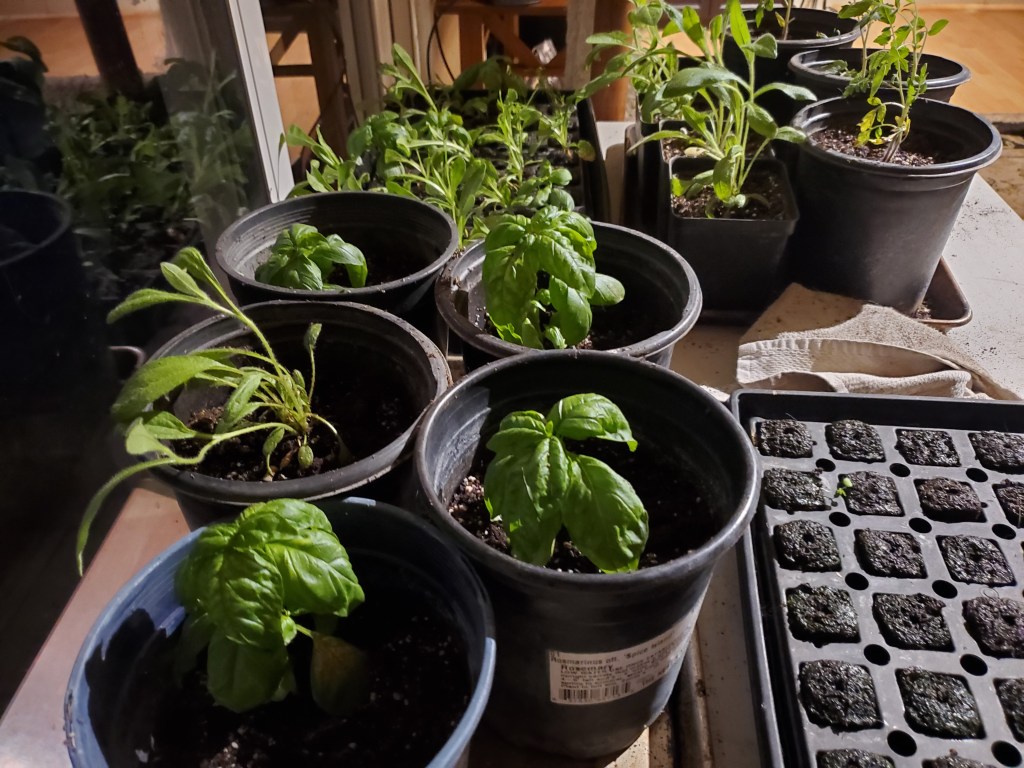
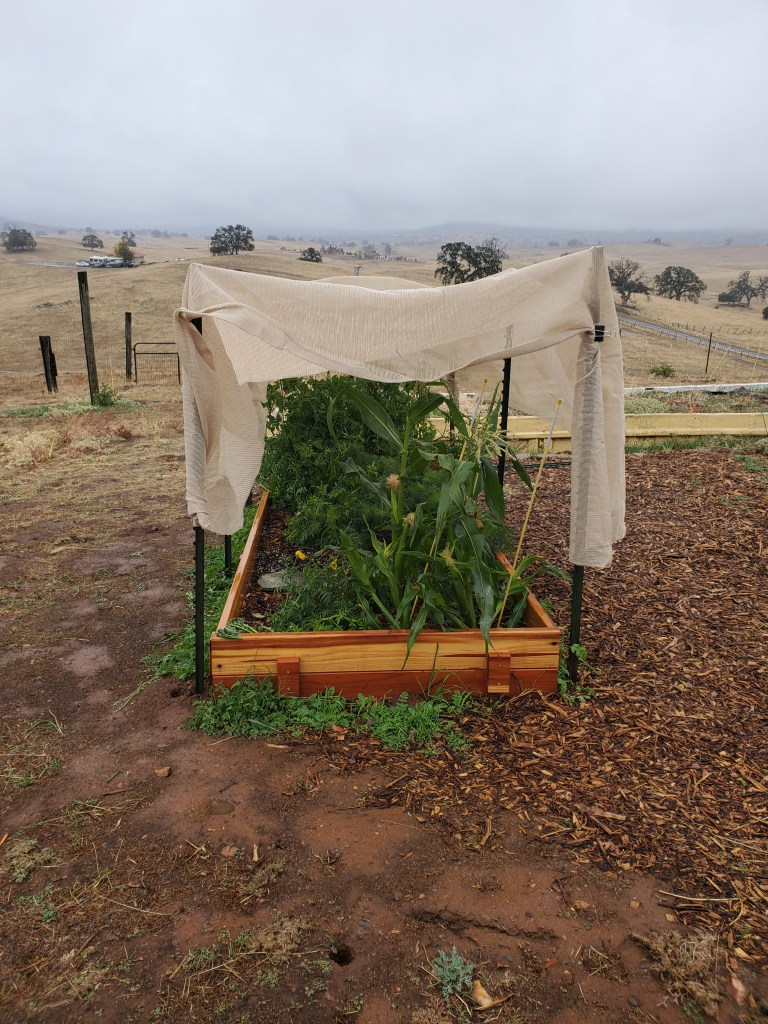
Many of the seedlings I raised have grown large now. I had to re-pot them as I waited for the hopper incursion to abate. Now, I feel comfortable planting them in the garden bed. Still, I am keeping my fingers crossed that the hoppers will not recirculate back here.

New Habitat Endures

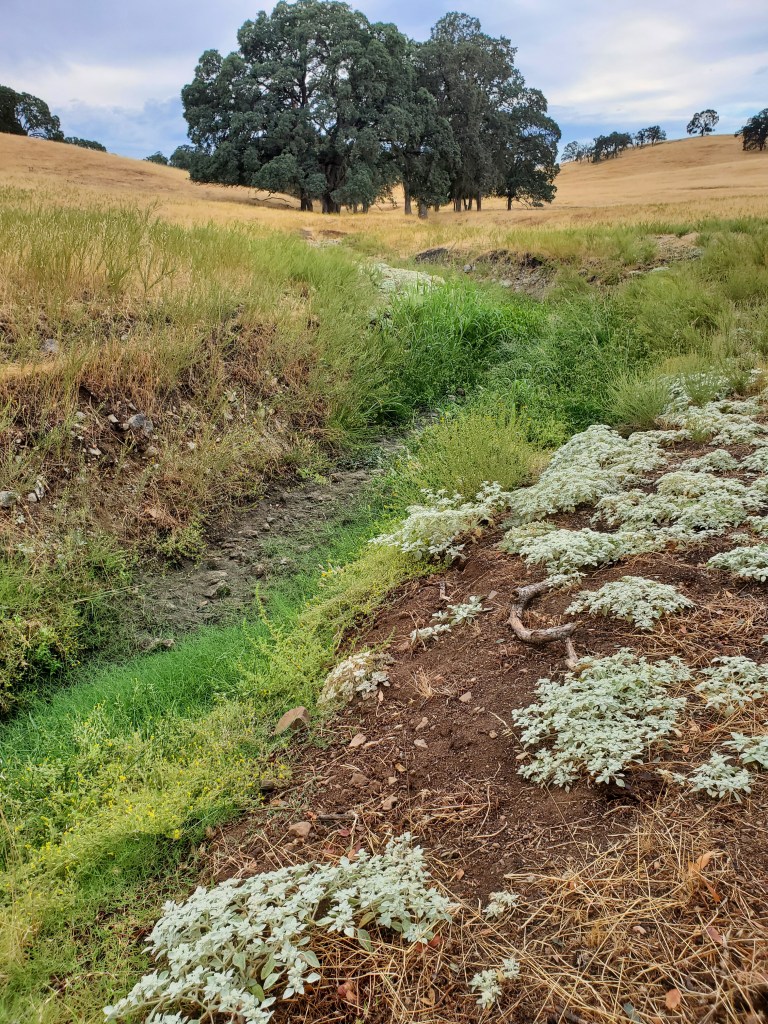
Playing in the creek has paid off. I didn’t think the small rock check dam would be that helpful, but it has promoted sediment and moisture retention. There are spots further upstream that may have retained water given the significant rain (versus my check dam). What is exciting is that the span of these areas have connected and have created a lovely ecosystem with wildflowers that stayed through the summer, puddles, grasses, and other plants. It has allowed for a cool area with ongoing nutrients for a variety of life. I saw large, gorgeous dragonflies there, with stripped wings and some with stripped bodies and black and white wings. I also came upon a small bevvy of quail living in the roots of trees in the grove at the north end of this area. They undoubtedly use the standing water and consume the bugs this area attracts. It is all really beautiful. I am so proud.
Creatures Make a Home Everywhere

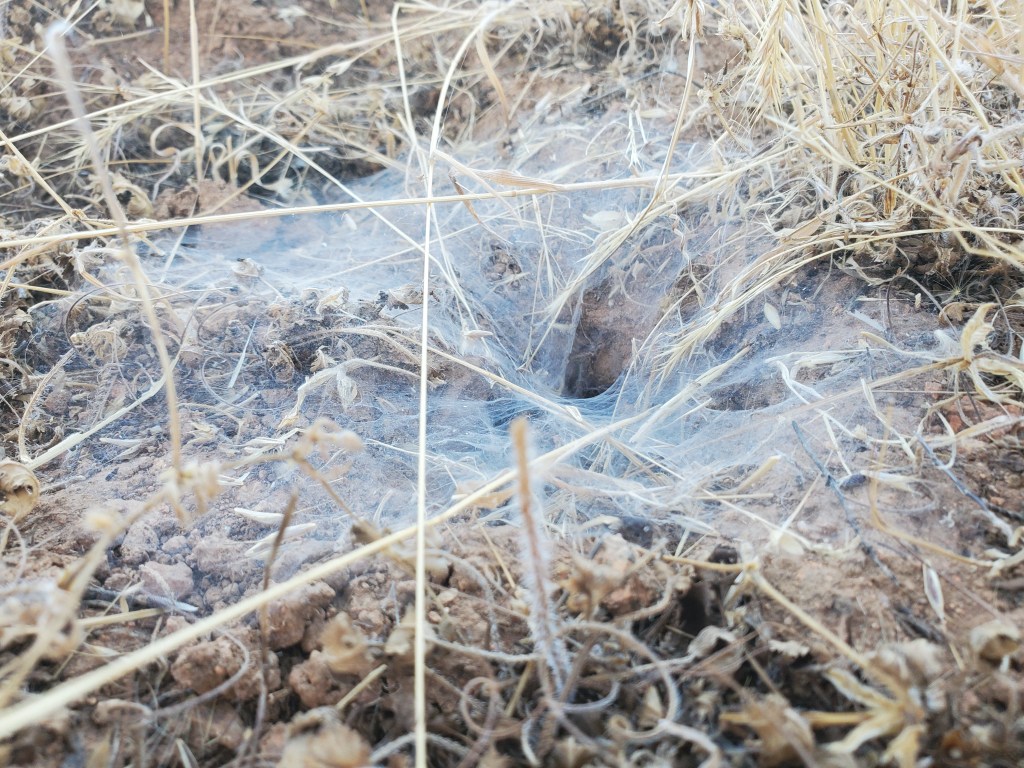
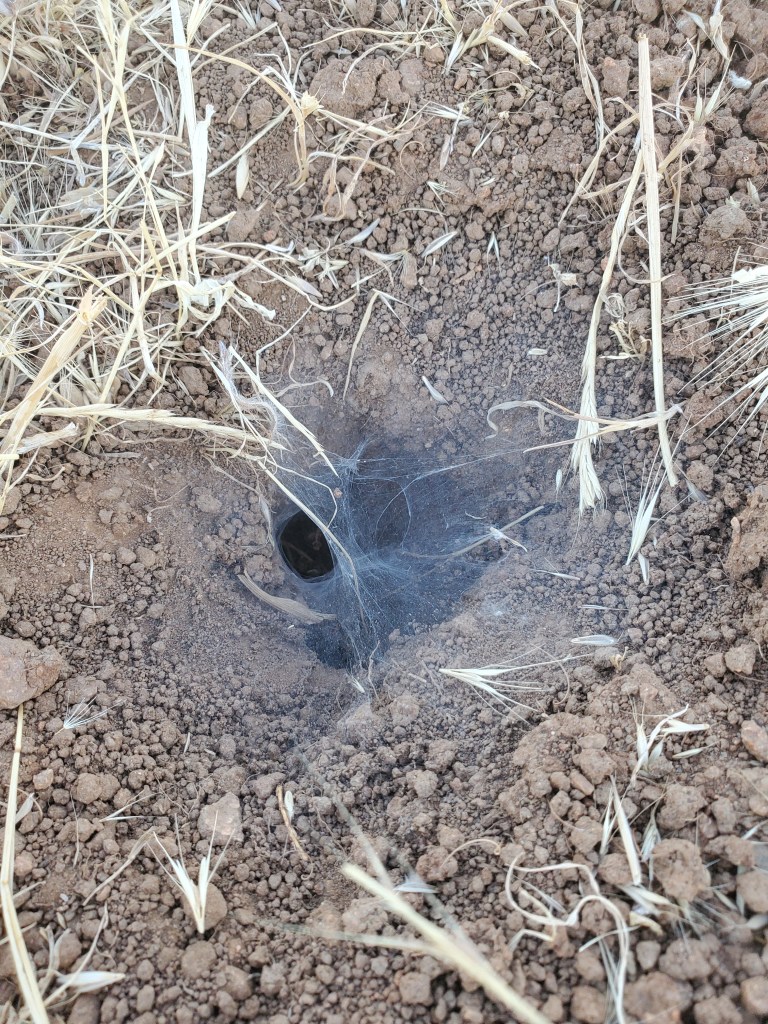
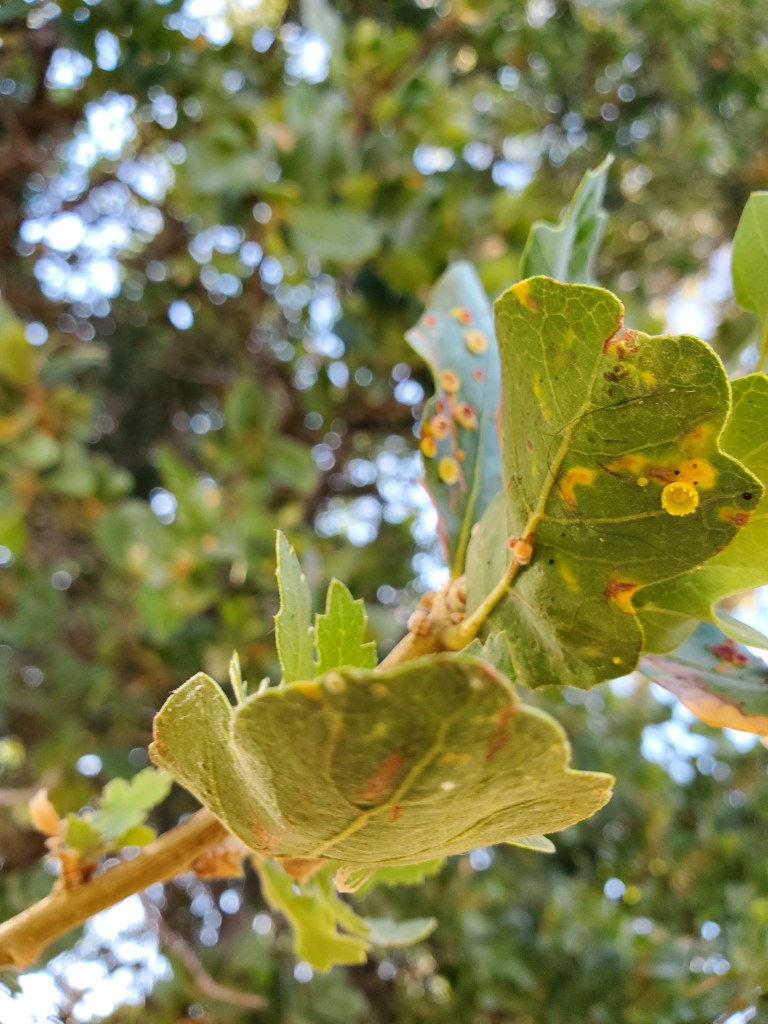
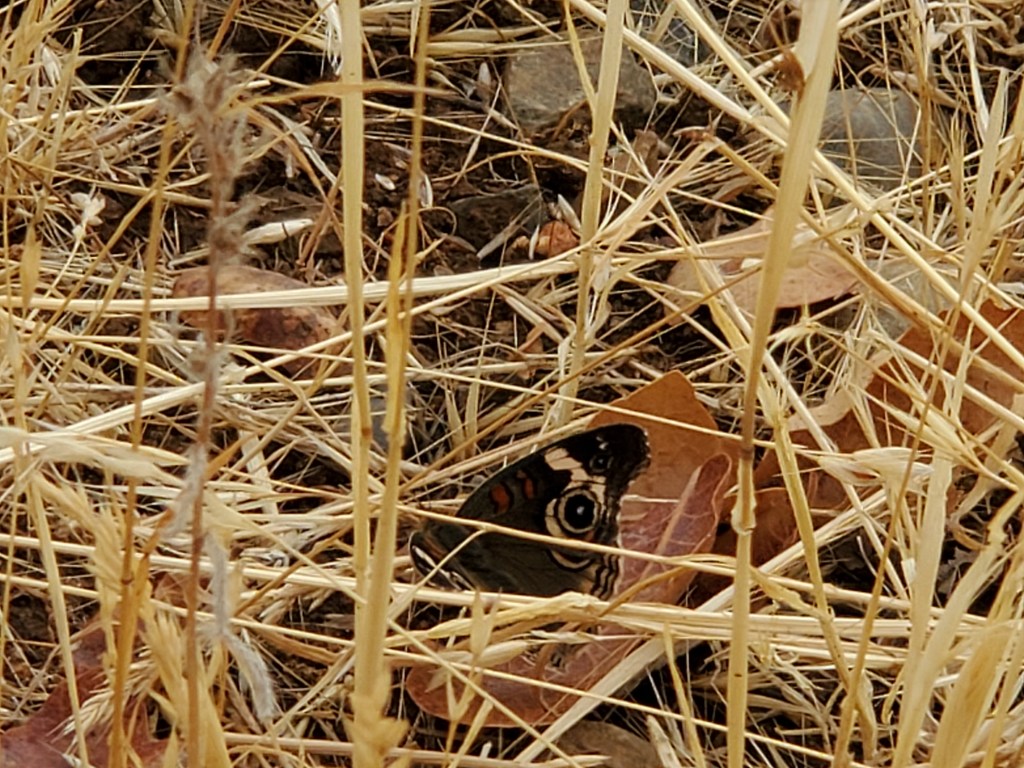
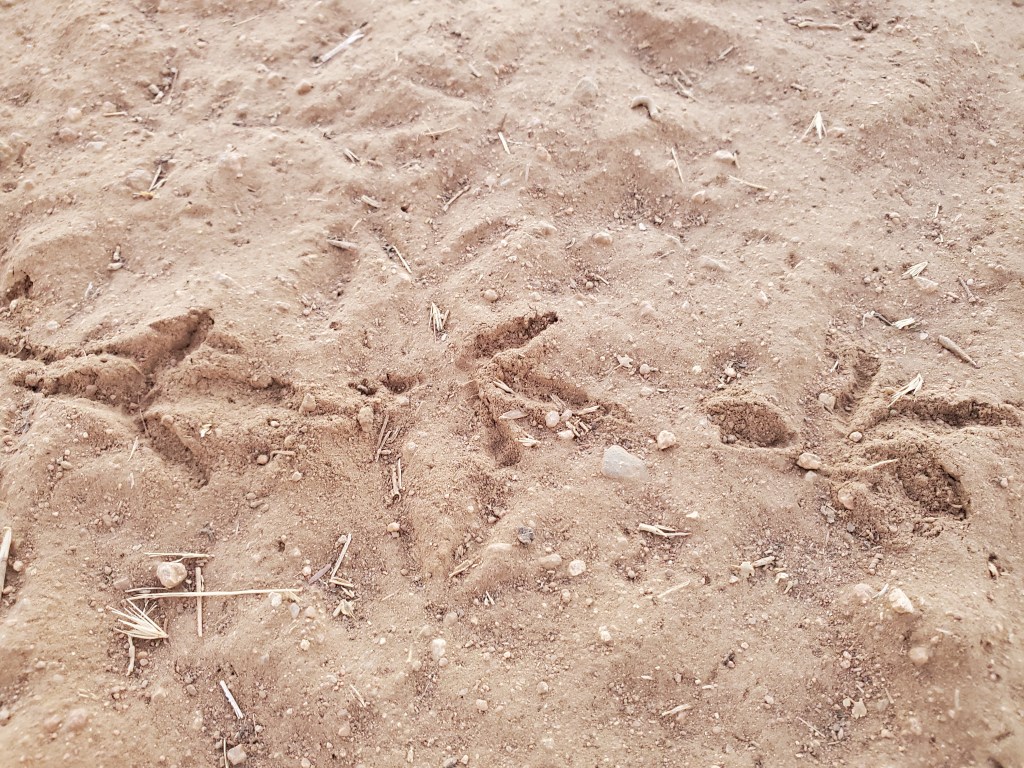
When I used to travel for work, I remember sometimes feeling very alone as I returned to my hotel room. It would cheer me up to see an insect that made it through the cleaning process. A spider handing in a corner or another small bug climbing around a basin would bring me such peace. I know that may sound strange, but to know that there is another life there with you, it is comforting. There is certainly not a lack of life on the ranch. Everywhere you look, there is something making a home, passing through or chattering for turf. Lately, I see a proliferation of gall wasp eggs, seemingly on every oak , webbed holes in the ground, bird tracks, coyote scat. The dragonfly population is large this year. I am seeing swarms of approximately 80+ whipping around the sky above me. It is no wonder I am so comfortable here and make this place my home.

General Monitoring and Planning

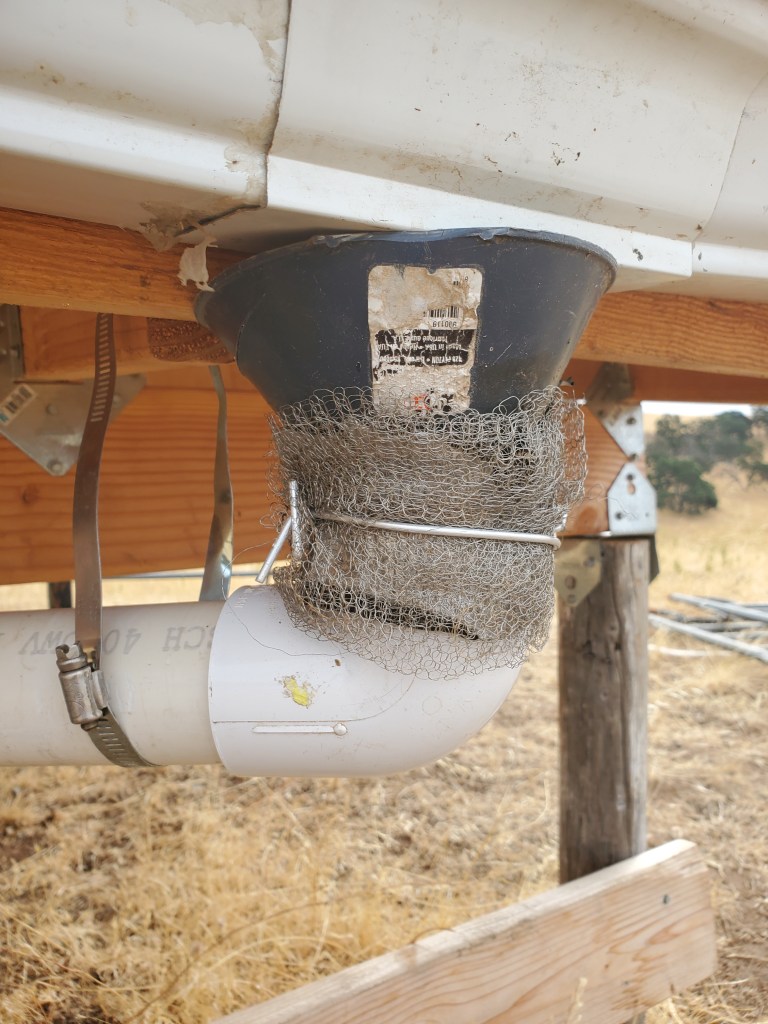
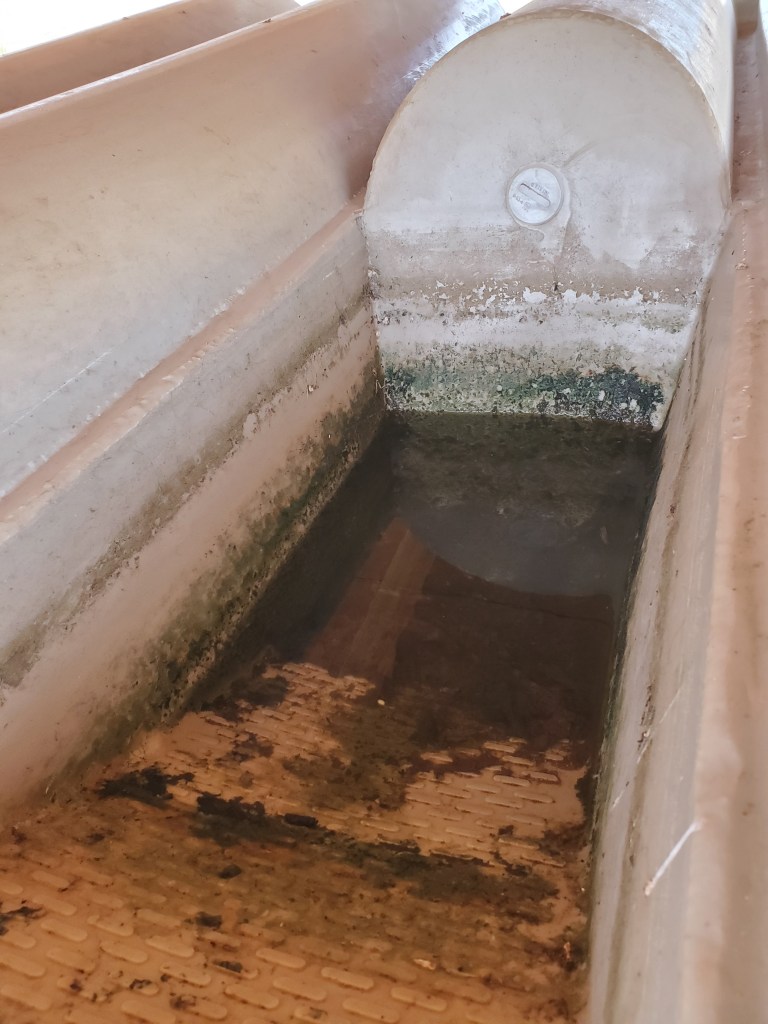
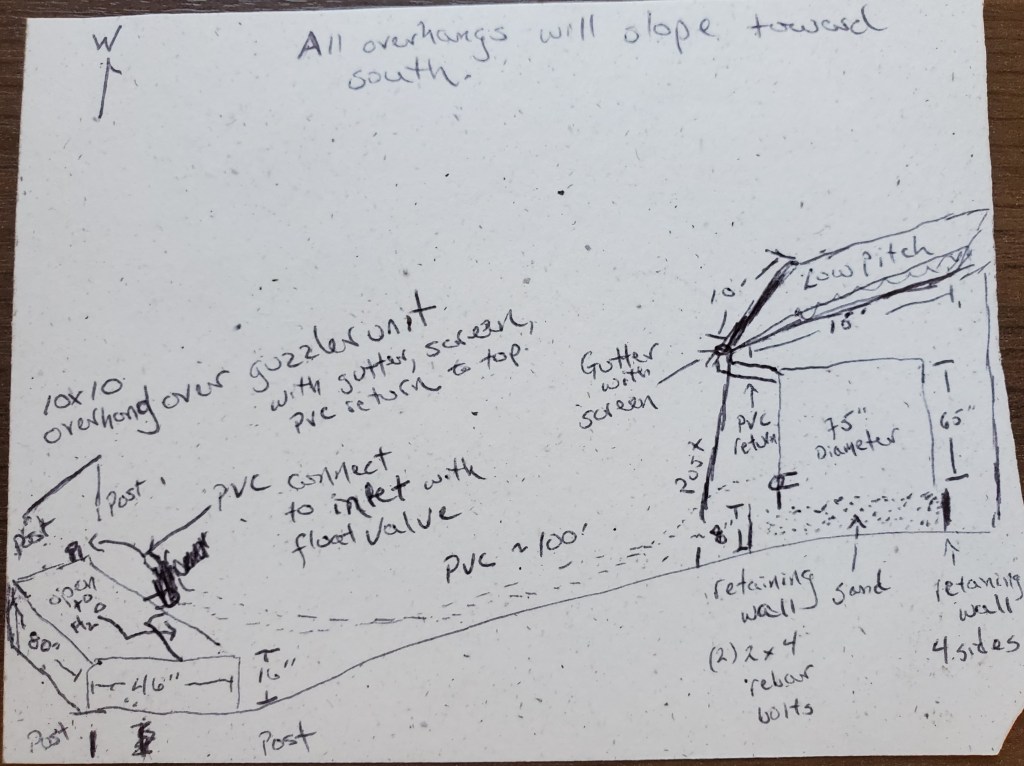
I keep an eye on things, make repairs, maintain planting areas, pick up litter that blows here and all else I need to do to ensure a clean, healthy place for all creatures. I check the wildlife guzzler regularly to make sure there is water available for all. I check the brush piles and add branches to them to keep them full and safe for pile-nesting birds. I look for damage, changes, use. It is one of the fun parts of this work – especially when it is cooler. I still venture out in the heat, but only in the early morning or before dusk. Needs pop up no matter the temperature, and I have a responsibility to this place. The time inside during high heat days give me the opportunity to plan for my next projects. Currently, I am working on a self-watering guzzler. The idea is to capture rain from a structure and gravity feed it into a guzzler. Parts of the ranch are more remote and not easily accessed by vehicle. Bringing water to those locations would be difficult and require more monitoring of water levels, the hauling of water. If I had a system that self-watered and self-regulated, that would save time and decrease the need for me to disturb areas.

Next Items

Up next in September/October/November/December:

  1. cross fencing to protect california milkweed during grazing times
  2. self-watering guzzler build
  3. seeding disturbed areas from rock and log drop structure installation
  4. install two more log drops/check dams
  5. Help Tribe plant Xerces kits
  6. Help three friends convert their lawns/yard into pollinator habitats

Wanderings

The skies have changed from heated blue to gray clouds and night purples and then back to blue. Light is beginning to recede at both ends of the day. A few people I care about have gone with the daylight, but in mother earth’s endless cycle of days, nights, seasons, abundance and scarcity, three have left and three are soon to arrive. Pain converts to joy and then to acceptance of the world and all its comings and goings. Memorials and baby showers. Winters and Springs. Milkeed and monarchs. Beauty is everywhere, especially in the love which undergirds both loss and gain in the spectrum that is life.

More Tragedy. Bumbles. No Monarchs…Yet.

The record waters of Winter 2023 came too late for my great, great grandmother tree. Last year, in this blog, I relayed how she was losing leaves in May, when they should have been growing out and green. Then, in my August 2022 post, I shared that all her leaves turned brown all at once. That must have been the moment of death. Despite the signs, I held out hope that she would recover. When all the oaks began sprouting leaves, and she did not, I deluded myself that she was just late. Eventually, I had to admit she was gone. When he was over in March, I consulted Ron Allen of Mariposa Native Plants (He is also a UC Master Gardener). He looked at the branches, chose one of the smaller ones, and it snapped right off, dry throughout. He said she was gone.

What I determined I needed to do is plant seedlings. After the loss of my favorite oak in December 2022, I resolved to collect acorn and plant them. There are no guarantees with that, and we have certainly not had any seedlings over the years with all the acorn those trees produced. This is why I had to pivot to seedlings. I got two from Ron. We discussed how the roots of the trees, even though dead above, can still be alive for some time below. Ron was telling me about how these dead trees are called nurse trees, and when planting seedlings within the crown, they have a better chance of survival because the roots protect them. There is communication and sharing of resource. There is so much being written now of what is happening below the surface of the soil, and it is magnificent. Of course, Indigenous communities knew about these connections. Many stories contain valuable information and lessons that survived colonization. I will see if I can share a story in a future post.

Bees Have Emerged

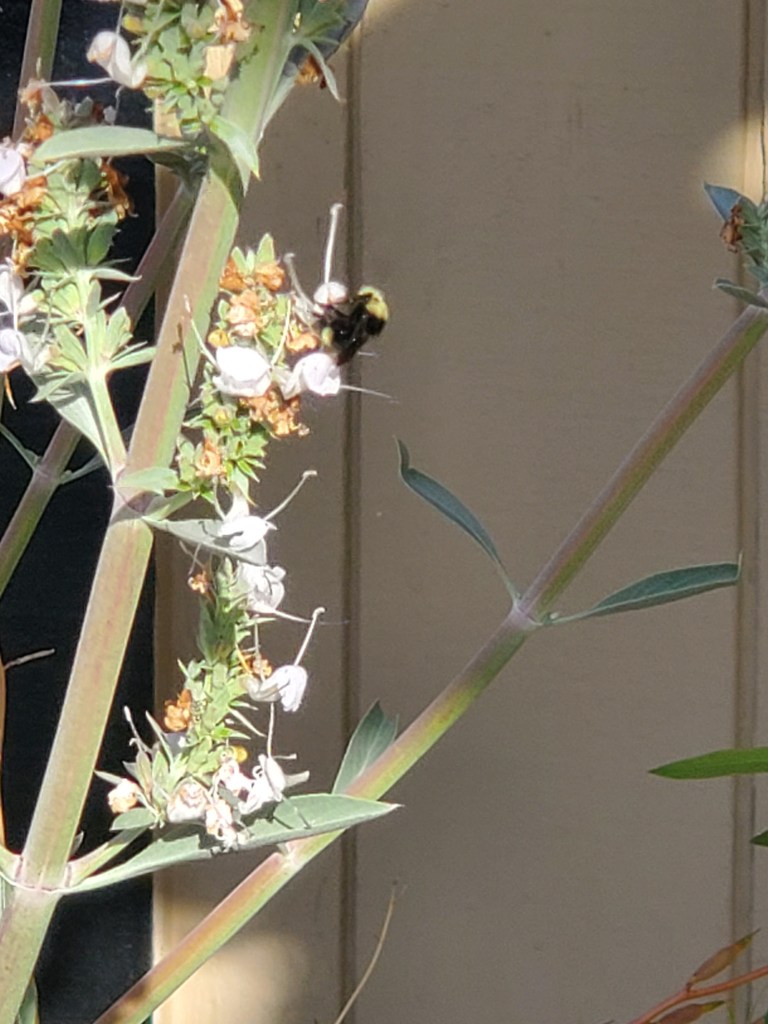
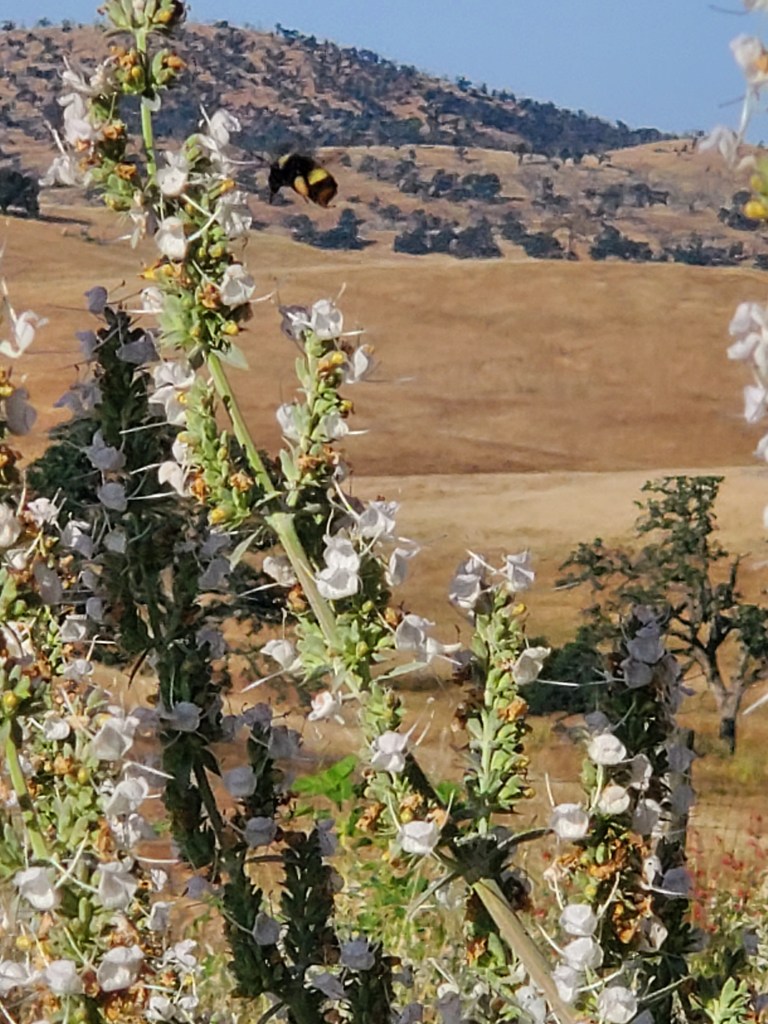
I am happy to report that the native bees have finally emerged. I have seen several semicircle, precision cuts in leaves telling me that the leaf cutter bees are out. Although I saw the female crotch bumble bee in April, I saw the majority of other native bees beginning mid May. We had several groups of smaller bumble bees. This is fantastic since they are a species in decline. In each grouping there was a larger sized bumble and two or more smaller bumbles. I wonder if the larger was the female and the smaller were males. There were many, many more European Honeybees competing with the bumbles for food. Fortunately, I have significant blooms this year and think there is enough to go around. I also saw small gray native bees with the abdomen stripes. They seemed to disappear when I got close with the camera. Although I am nearly finished with my pollinator steward certification program, I am just scratching the surface of available knowledge on native bees. There is so much to learn and so little time to dedicate.

Plenty of Nectar and Milkweed – Few Butterflies

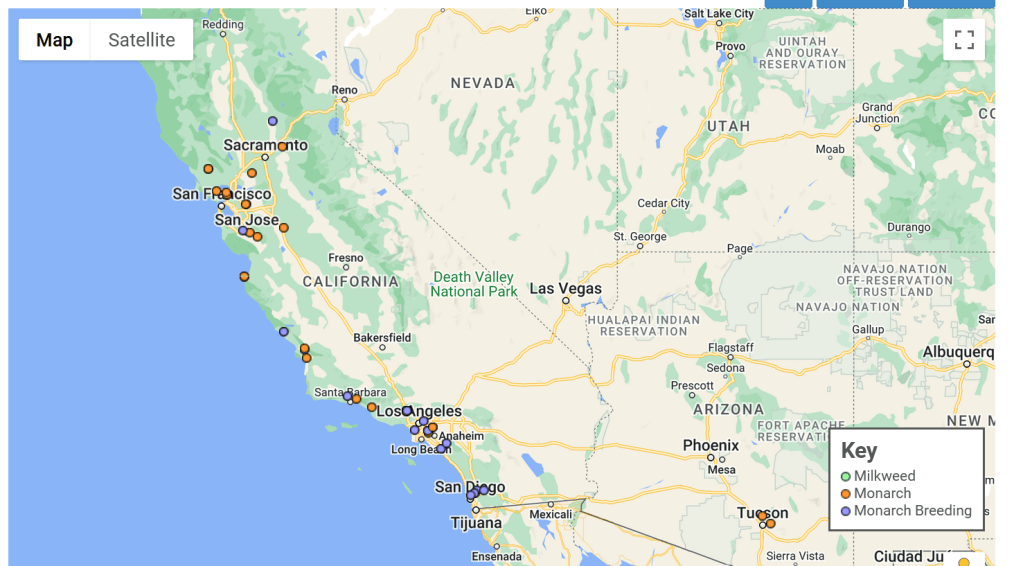
Above is a screen shot of the latest citizen data on the monarch migration. It comes from the Western Monarch Milkweed Mapper site. The cool temperatures have had them leaving the groves later than last year and possibly staying in more temperate areas longer. Far less sightings have been recorded as compared to last year. I am not sure what it all means yet. Reader, would you help? If you are in the west, please use this tool to document sightings of monarchs. I am going to ask my crowd on social media to help track them as well.

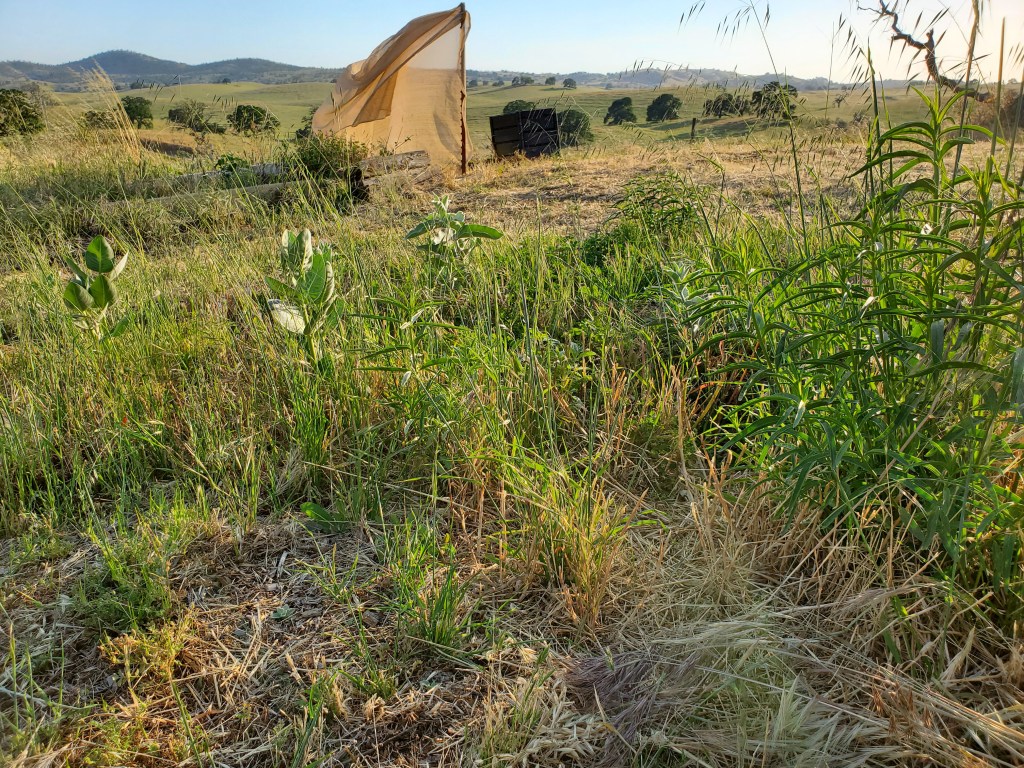
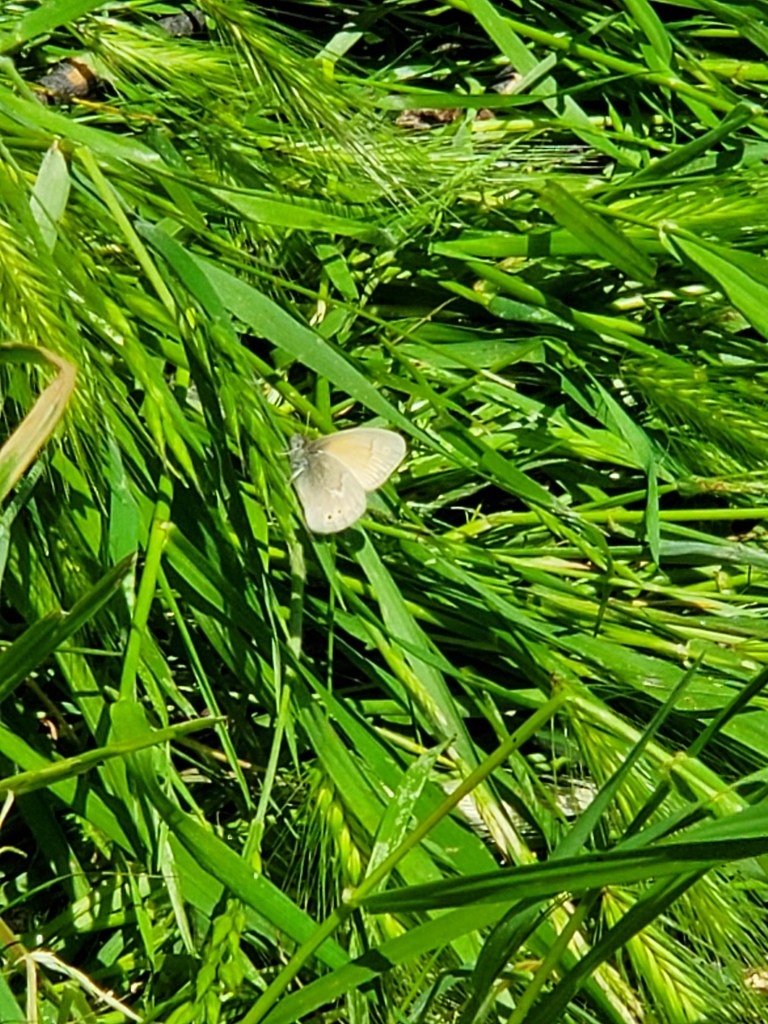
As of this writing, my many stands of mature milkweed have gone unused. There is absolutely no sign of chewing (herbivory) on the plants. I have seen only a handful of butterflies. Most were painted ladies, some cabbage and sulphur, and one red admiral.

I am still holding out hope for monarchs. Some of the California Milkweed has fresh flowers sending scent into the air. Temperatures have been erratic, which may have contributed to the butterflies being mistimed with the flowering.

From Green to Yellow

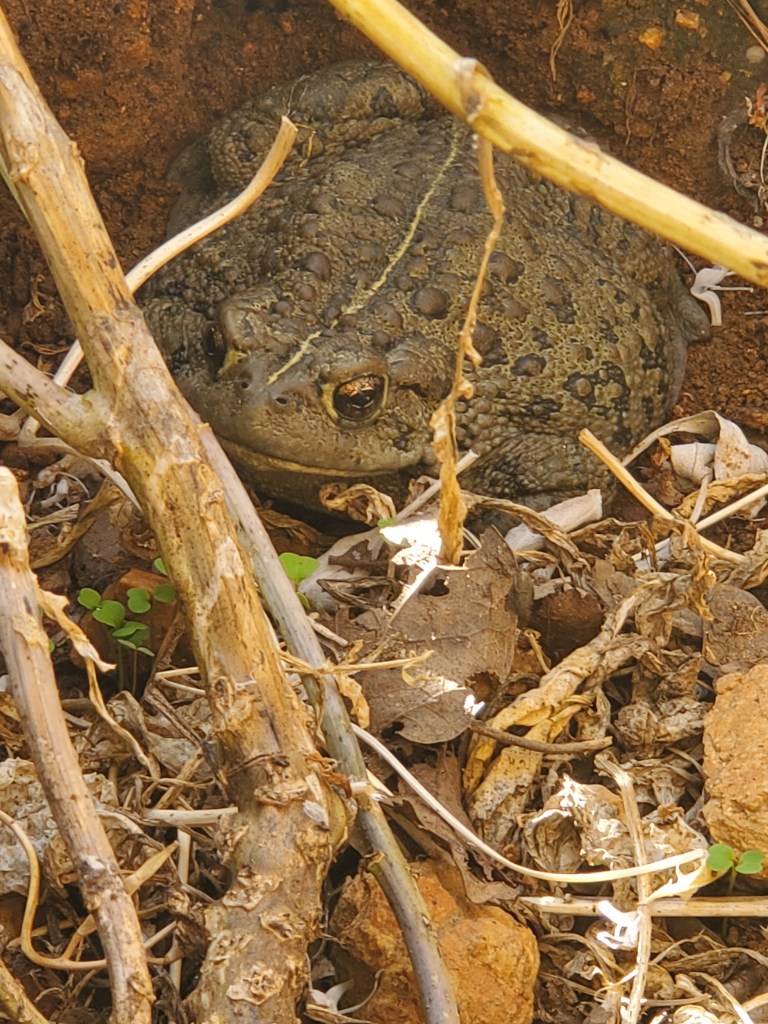
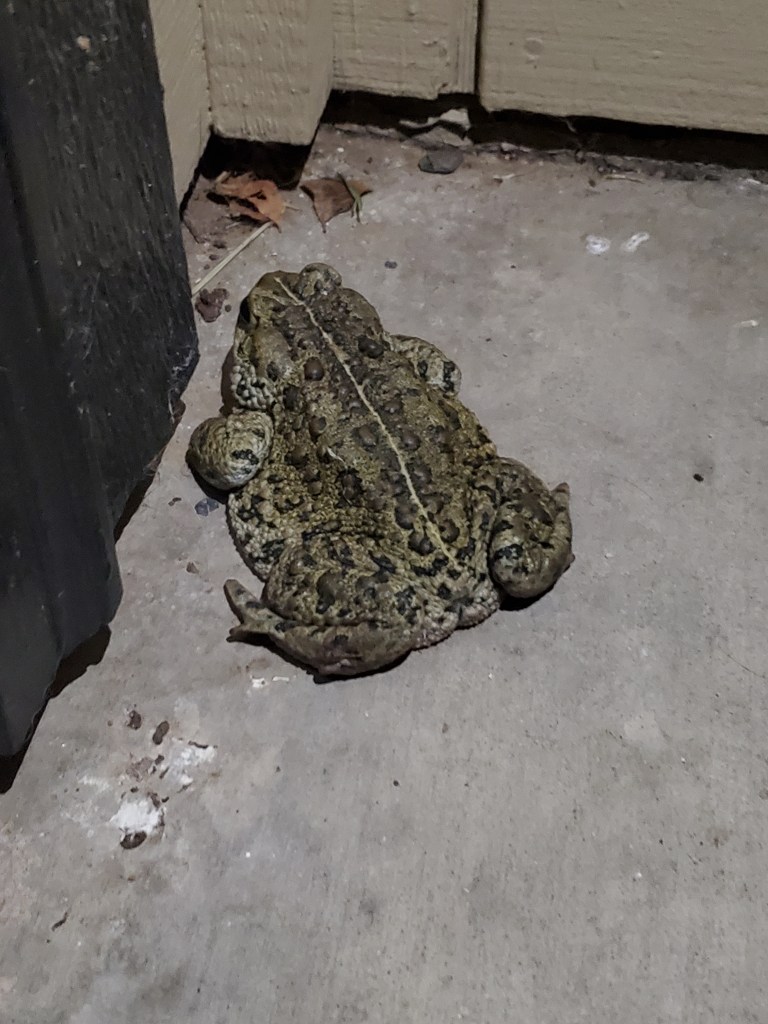
Every year I am stunned by how rapid the shift is from green grass to yellow grass. Many of the photos in this blog post were taken two to three weeks ago, so you will see things as green. By the end of May, most of the landscape turned yellow. There is still water remaining in the arroyos and the swale pond. Typically, by June, they are all dry. The springs are still green as well as the recharge areas in the arroyos. Tarweed is up and some are in a very early bloom. The doveweed has emerged and will be large by August – or possibly earlier like the tarweed. We still have a large number of wildflowers – purples, whites, yellows. A beautiful native toad is living in my patio garden area. The cows are fat and happy. This is a year of abundance of food and water, but not a very large population of insects to use them.

Waiting For Monarchs. More California Milkweed and Visitors.

Blooms begin to emerge on the California Milkweed

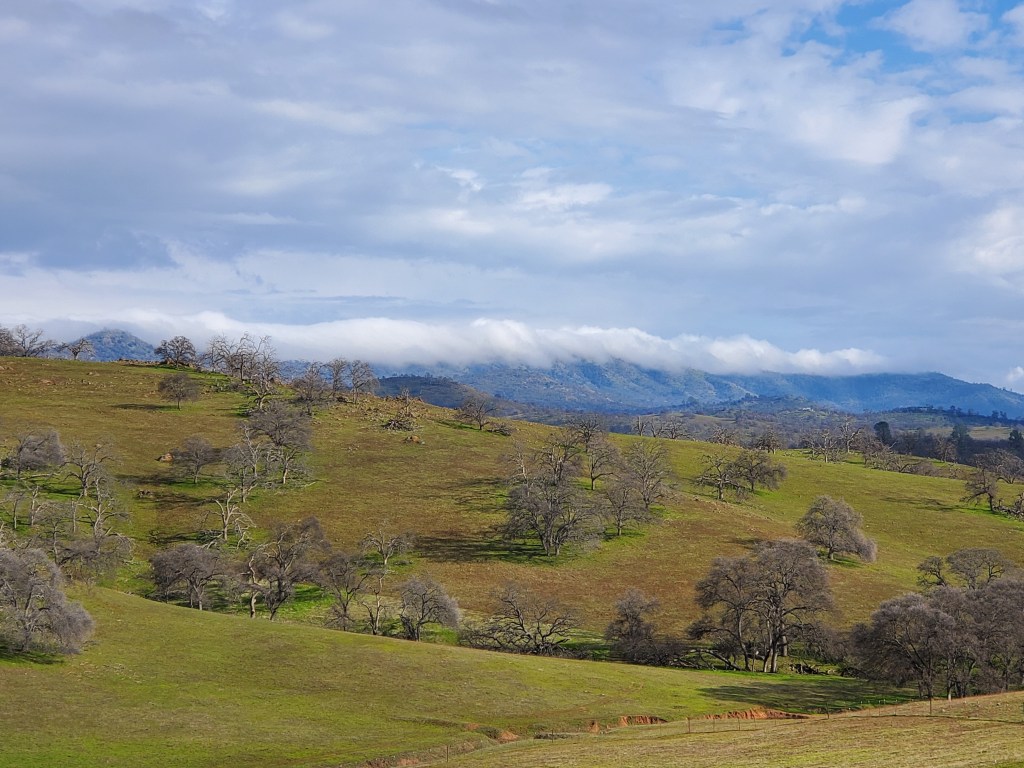
It is breathtakingly gorgeous in the foothills right now. Between the calm temperatures, billions of wildflowers, nectar-laced scents, and avian concerts, it is magic. There continues to be water running in the lesser creeks and drainage’s, and the soil moisture content is high. With the increasing heat, the grass has grown a foot in a few days obscuring some of the native plants that were just inching out. Fortunately, some of the milkweeds got started before the recent warm-up, but, at least for the milkweeds, grazing has continued to give them a chance.

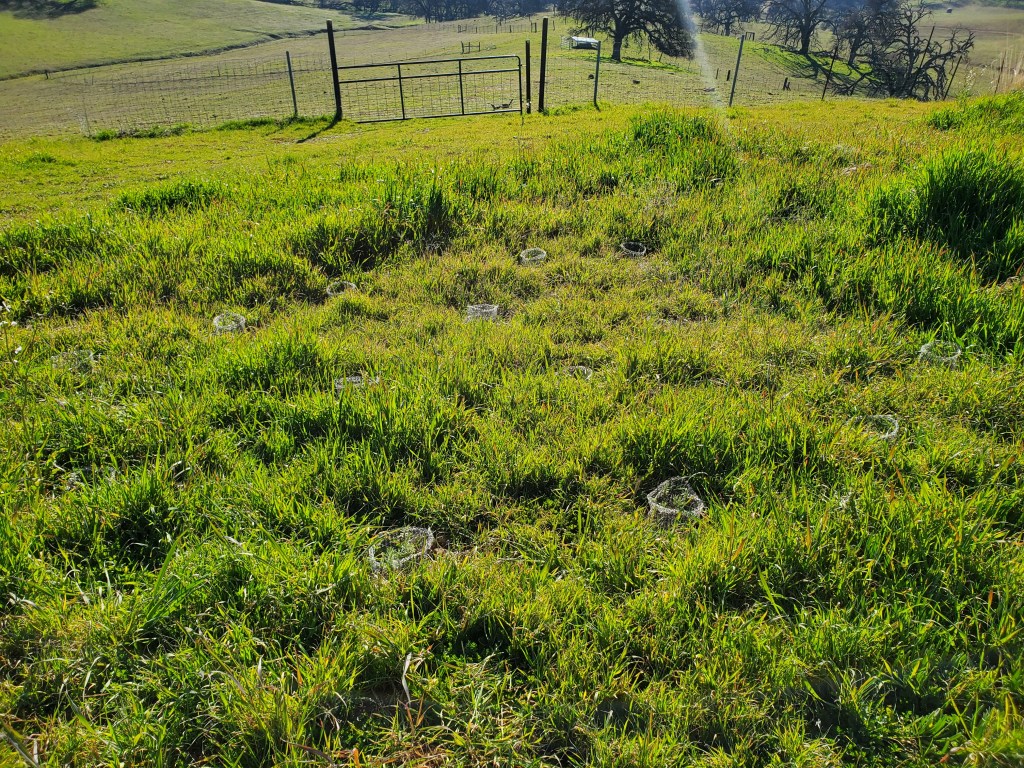
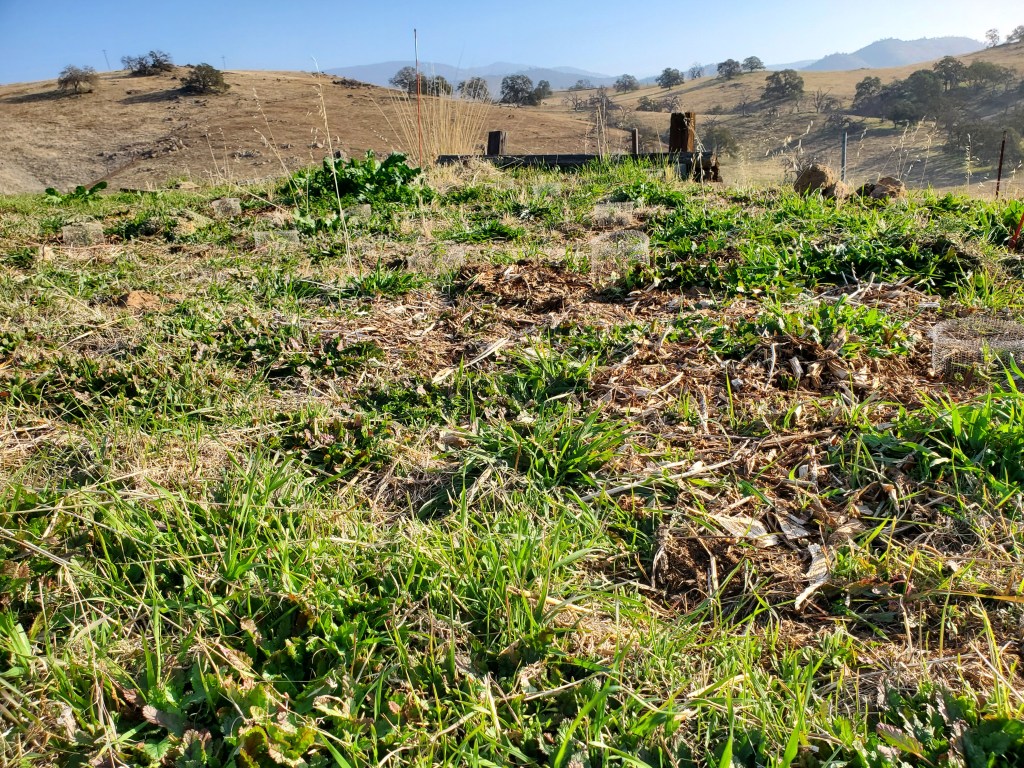
I walk up the steep slope to the largest A. Californica (California Milkweed) patch daily to count the plants and monitor them for caterpillars. Two days ago, I saw an orange-ish butterfly large enough to be seen by my limited eyesight. It was too far away to see if it was a monarch. I also did not have my glasses on. I waited for some time, but it did not return. Consequently, I am no longer leaving the house without my glasses and binoculars. As of today, I counted 16 individual plants. Just yesterday it was 14, and a couple days before that 13 and 9. So far, no emergence in the next largest site near the house. However, the one plant in the SW facing site has emerged and the west facing site has one of the two plants emerged. Unfortunately, the locations where I installed the Xerces plugs or 2021 collected seeds are not emerged. I imagine they may take a couple years to establish.

Tree Work

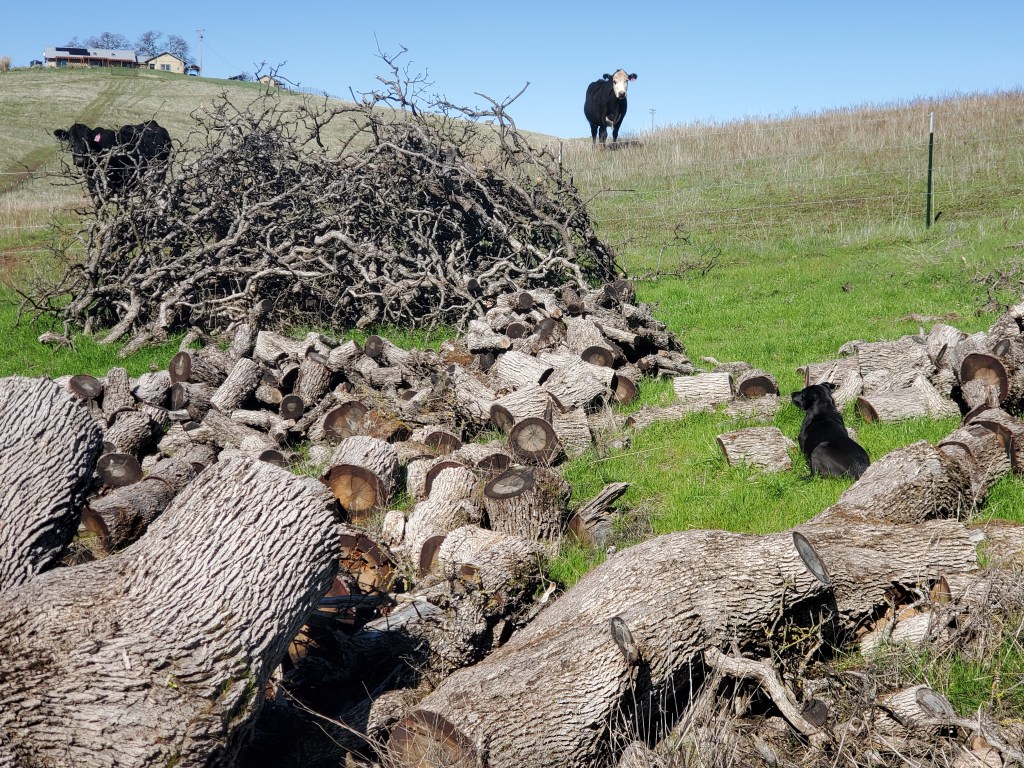
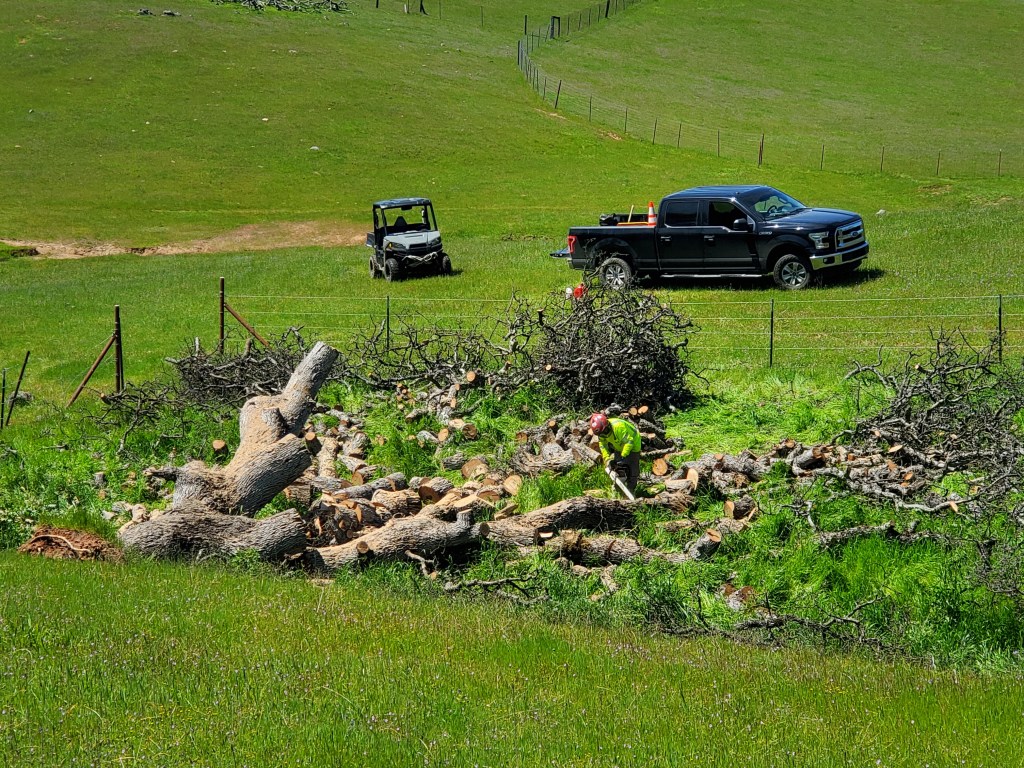
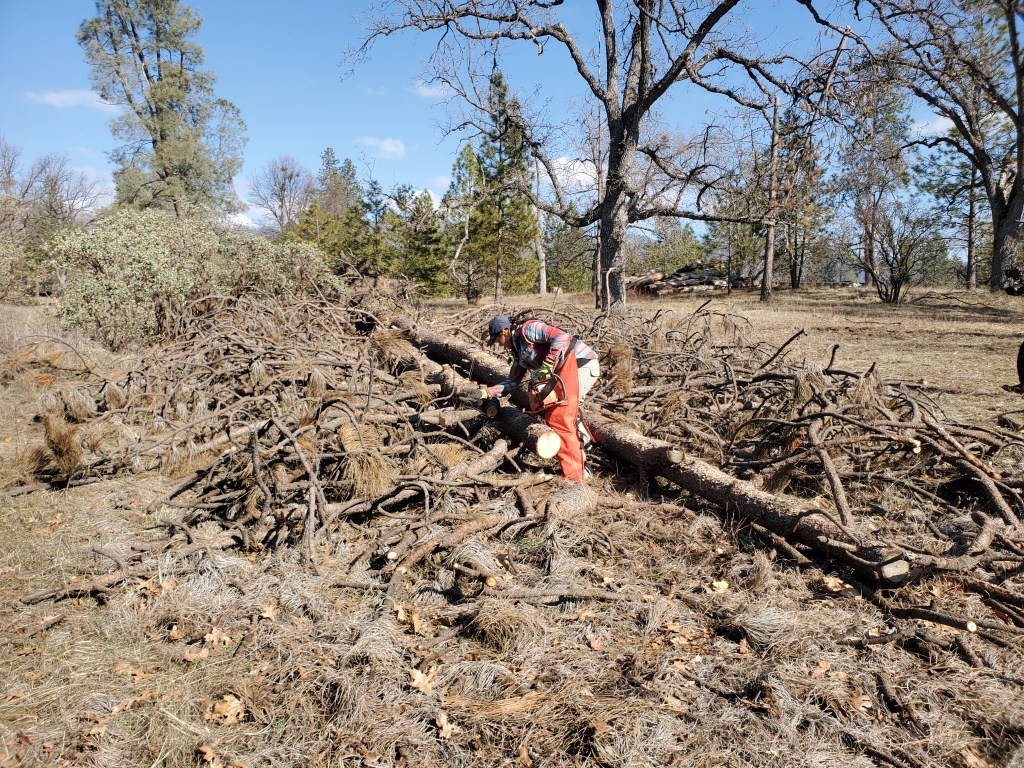
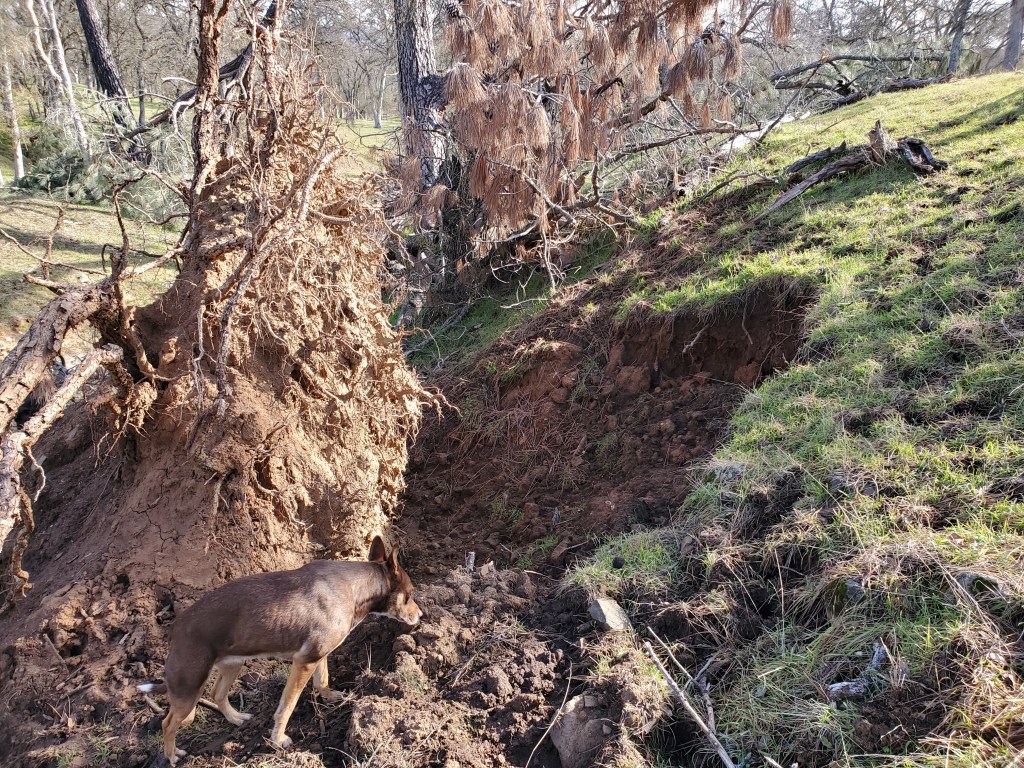
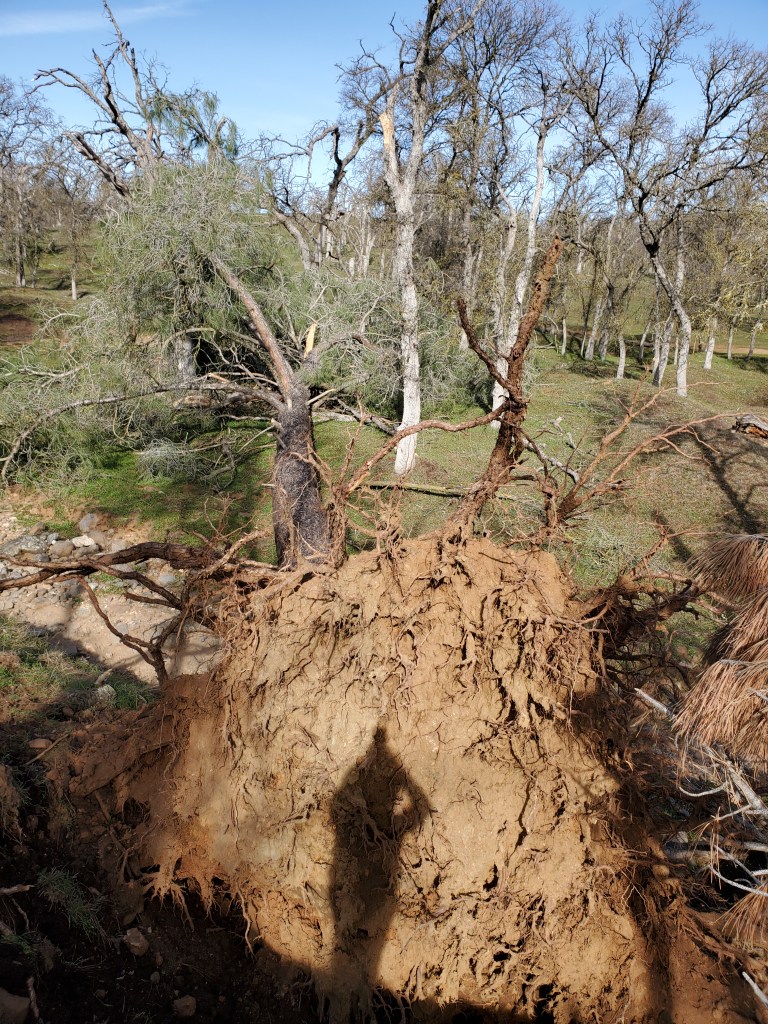
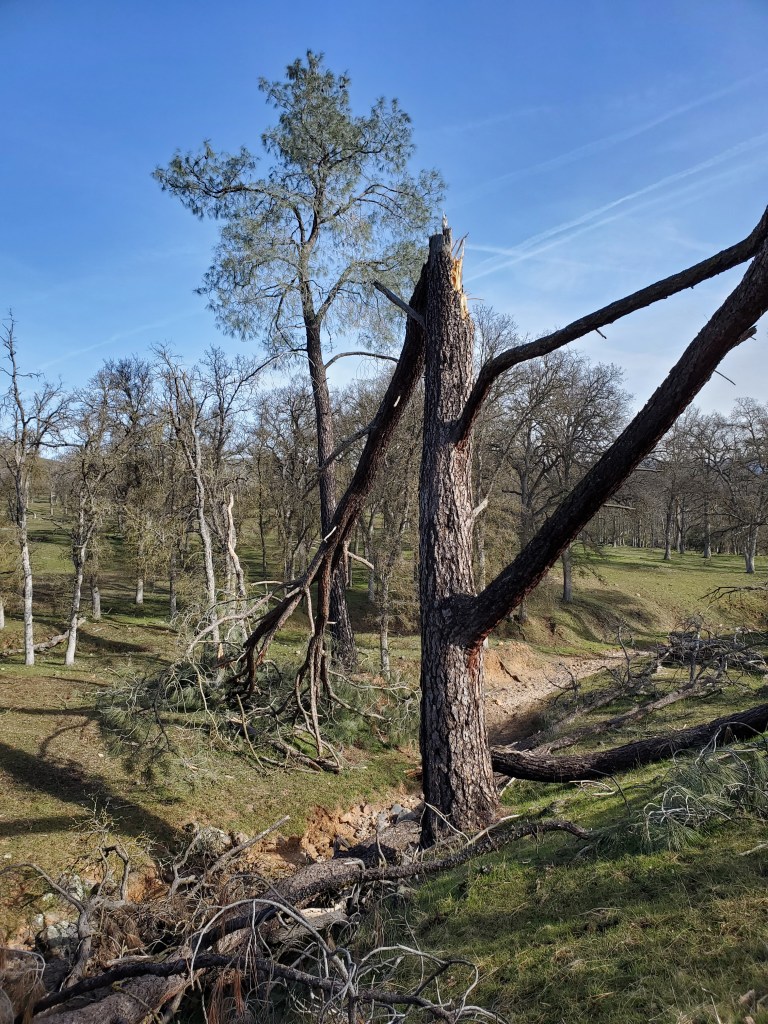
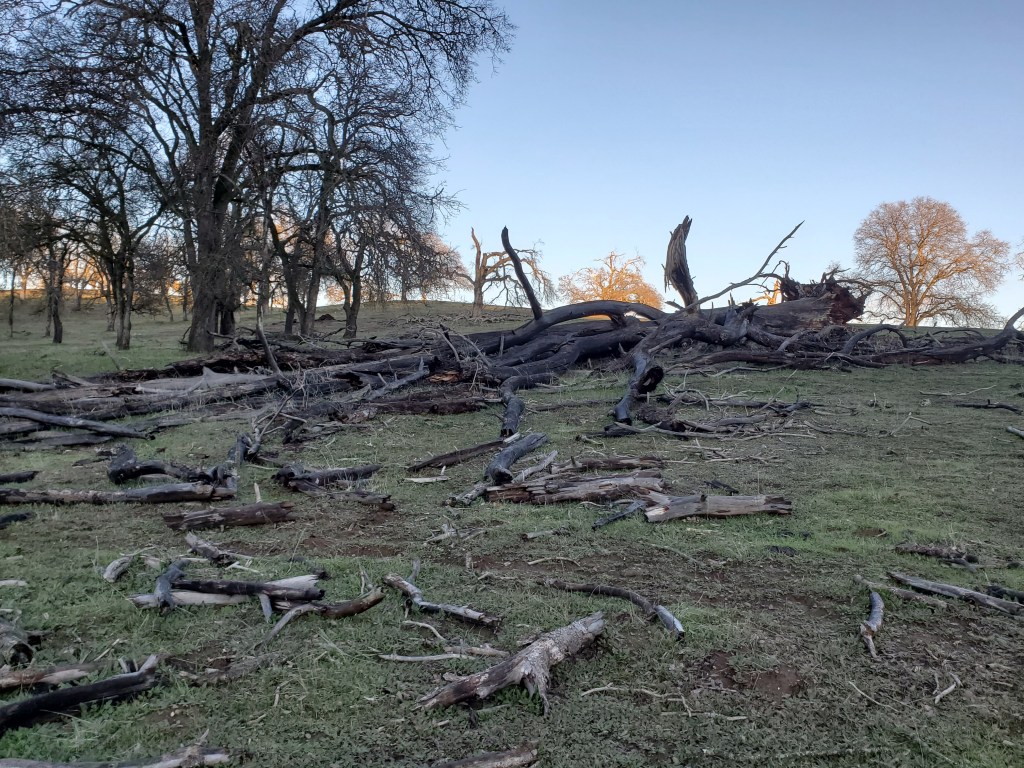
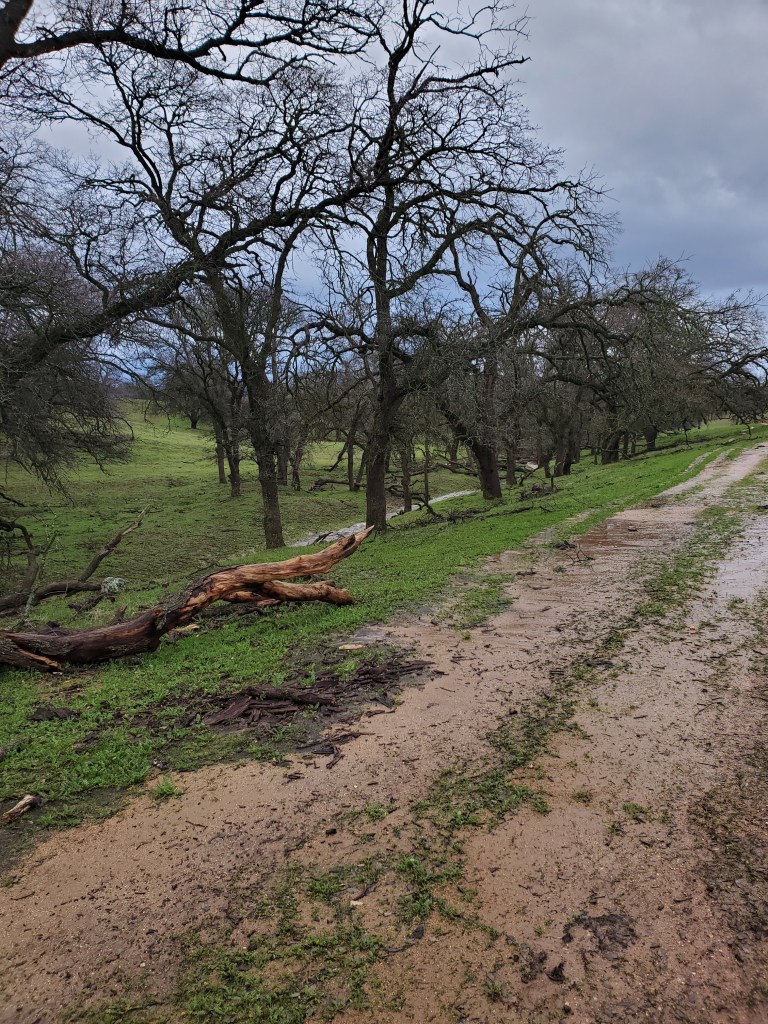
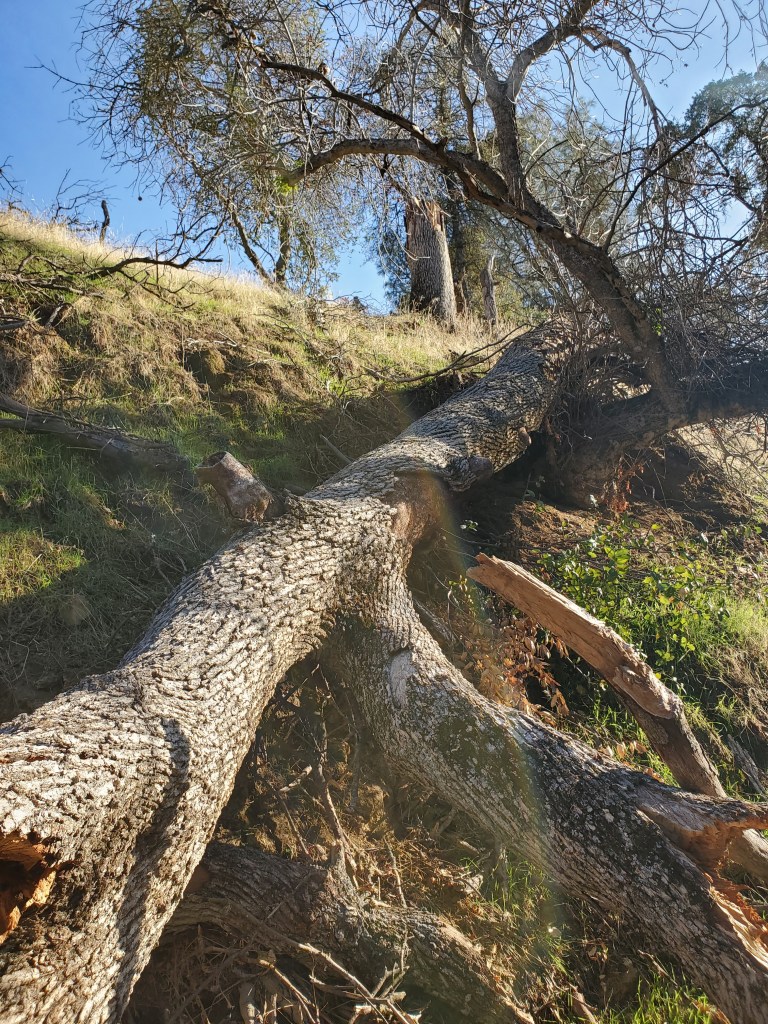
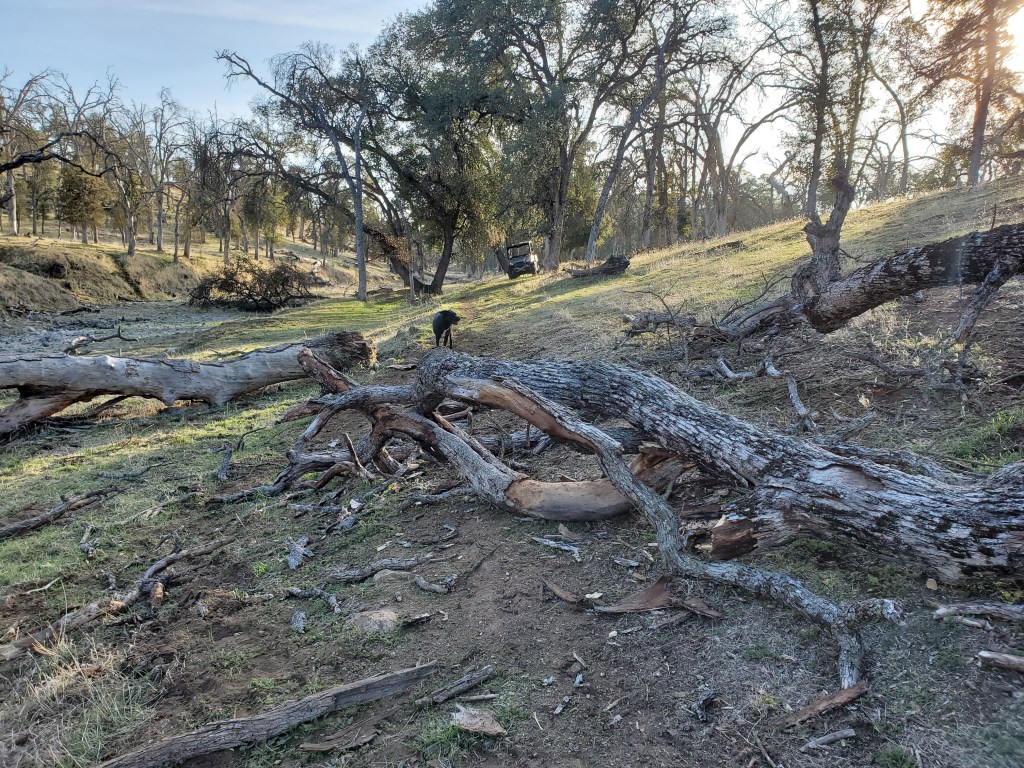
It is an emotional moment to see a grand tree cut up. If you are a regular reader, you will recall that a beautiful, healthy oak tree that was growing at an angle toppled over in the Spring Creek this past January. Between the angle, the saturated soil, wind and freeze of water on the branches, the weight became too great, and the grand tree pulled up by her root ball. It was also a reminder to me to be extremely careful as I walk among the oaks. I had just passed under her the day before.

When the tree fell, her weight was propped up on its branches and near my riparian fence gate. The smaller branches could give way releasing her massive bulk onto anything under it. It was a dangerous situation. I had no choice but to remove her.

These trees are ancestor relatives. Their lives have spanned 4 or 5 generations of my human family. Imagine their perspective of us always coming and going, building then tearing down, seeking and finding, singing and sleeping. We must be so peculiar to them. I love trees deeply. I appreciate their shade, smell, cavities breeding life, branches for singing birds, the food they provide, their moist soil under the canopy and how their roots are deep and connected. They have so much to teach us.

It is within this context and within the sensitivity of my soul, that a small piece of my heart breaks when the saw goes through my fallen relative. For such a solemn moment, the right sawyer is needed. I was grateful that Nick Brochini was available. Nick is Miwuk and understands the gift of the tree. He does not take it for granted. I don’t have to explain myself when I need to touch her and say a prayer of gratitude for her magnificence.

Nick was a young teen when I first met him. I was a tutor in the Indian Education program at the high school. He would come to the room, always a big, happy smile and carrying a turtle back pack. It was so cool; he really pulled that look off. It set him apart. Nick was a nice kid. Not a regular student in need of tutoring, he was mostly in need of community. We always enjoyed seeing him when he came through and loved hearing the tales of his school day.

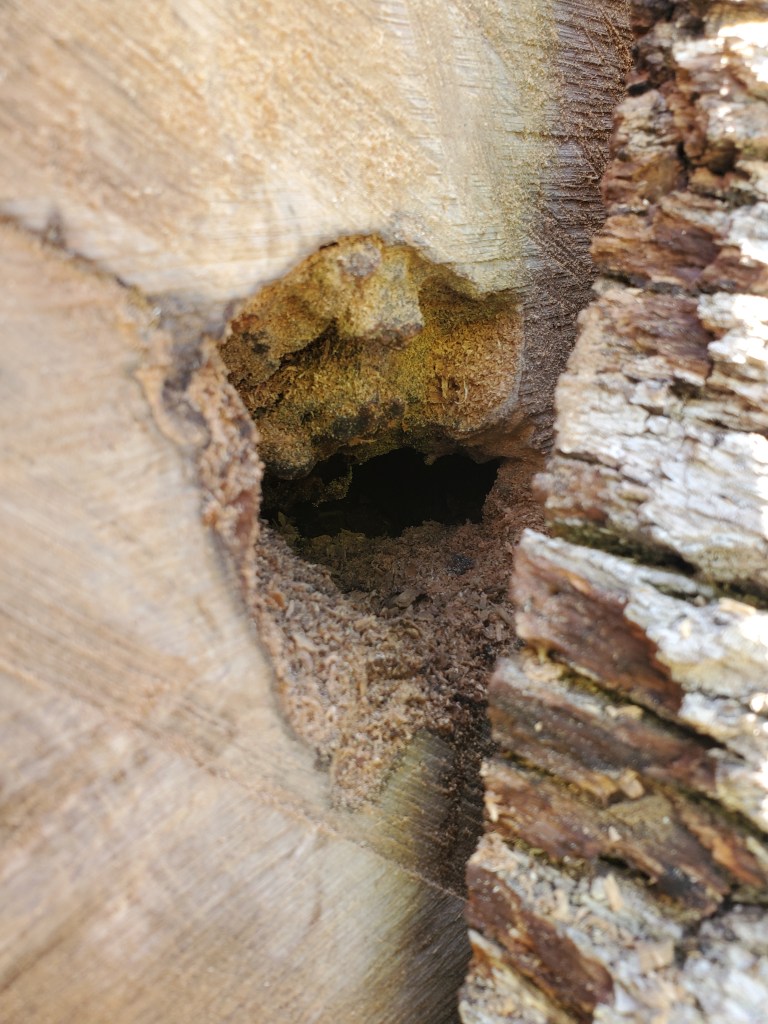
Nick grew into an adult, a husband and a father over the years. His children are beautiful. I see them at the community Pow Wow from year to year. I hope they are proud of their dad. He is an expert with the saw. He knows trees and shares helpful information. He showed me the gaping hole in the tree, the rot from within. He told me all the oak trees have this. Just like humans, they develop healthcare issues as they age. He showed the start of interior rot in a smaller branch as well. What a lesson. At least some creature will have a good home.

I left a large section of her main trunk as a monument to her. Part of it will act as a check dam and the other will extend beyond the creek banks. She is beautiful even in death. The rest of the material will be used for brush piles and fire wood. Her flesh will keep my nephew and his family warm next winter. Chiokoe uttesia Huya into Nick weweriam (Thank you relatives – Tree and Nick).

After Nick left, David and I sprung into action building brush piles and stacking wood. Within one second of me stepping away, a bird landed on the pile to check it out for a new home. That made me happy. My work is worth something.

More Visitors

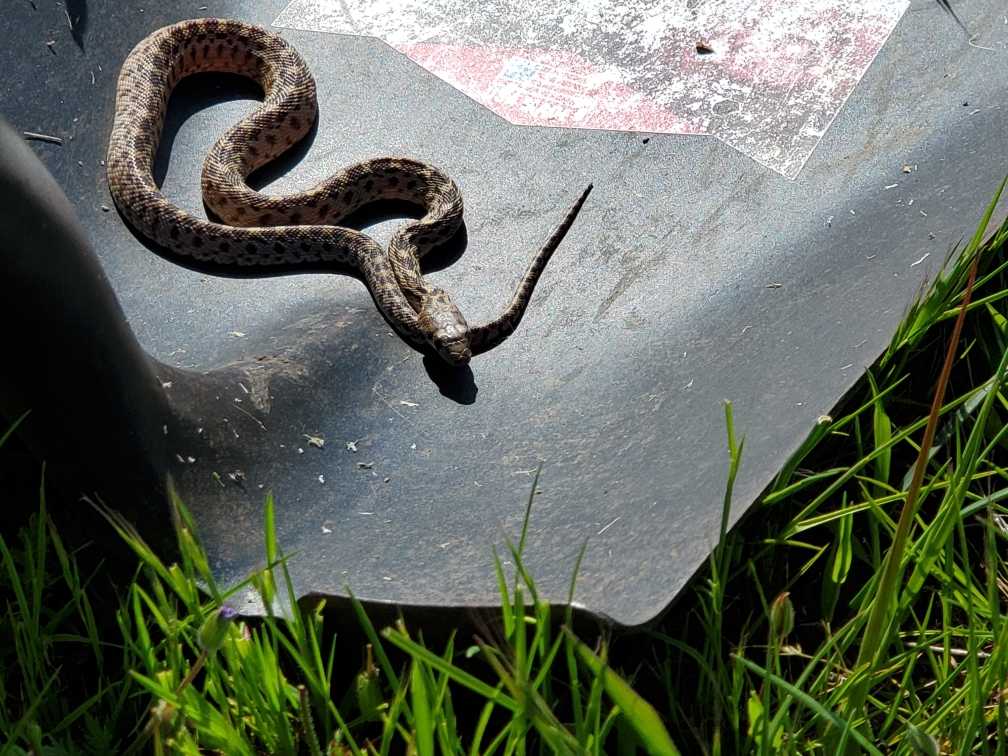
Life on the ranch is a joy I cannot adequately explain. I am the kind of girl that loves spiders, snakes and frogs. I like the smell of manure and don’t mind getting it on my boots. Not everyone is into this kind of life. For me, it is heaven. Here are some recent visitor to the house:

Check Dams Working

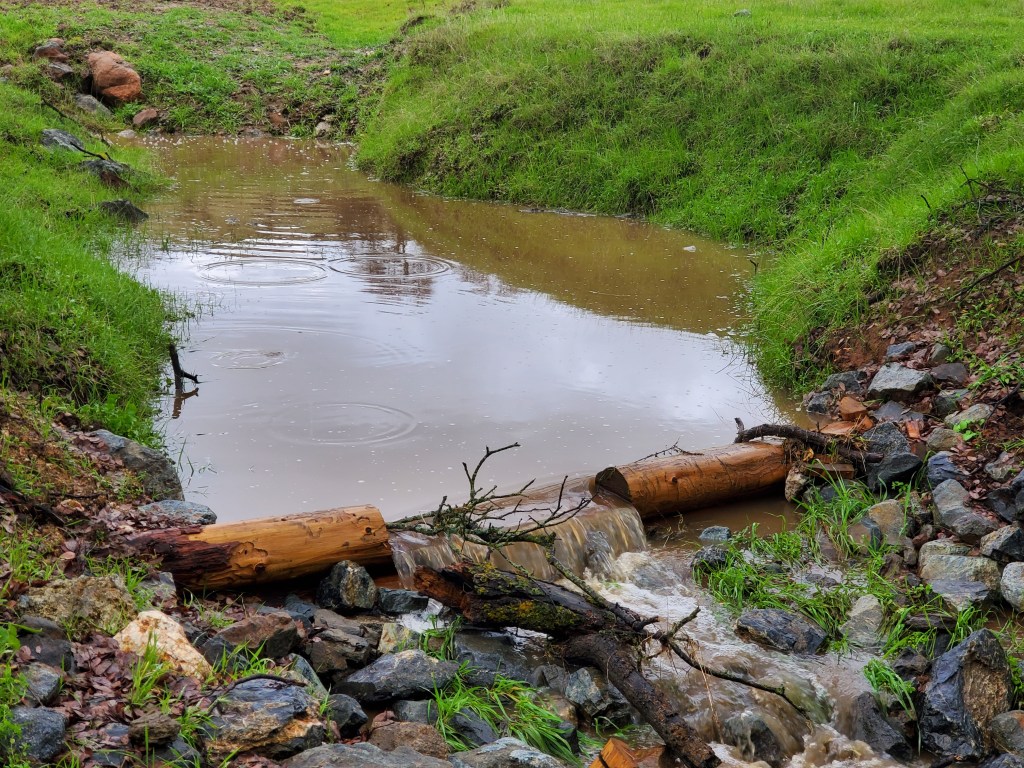
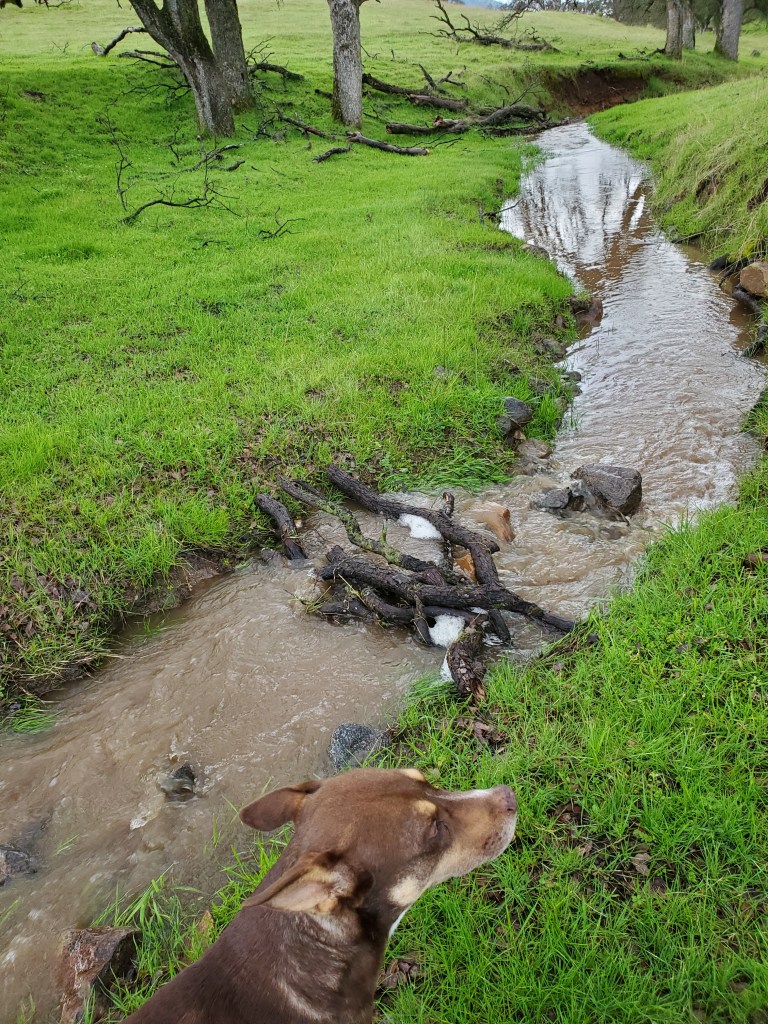
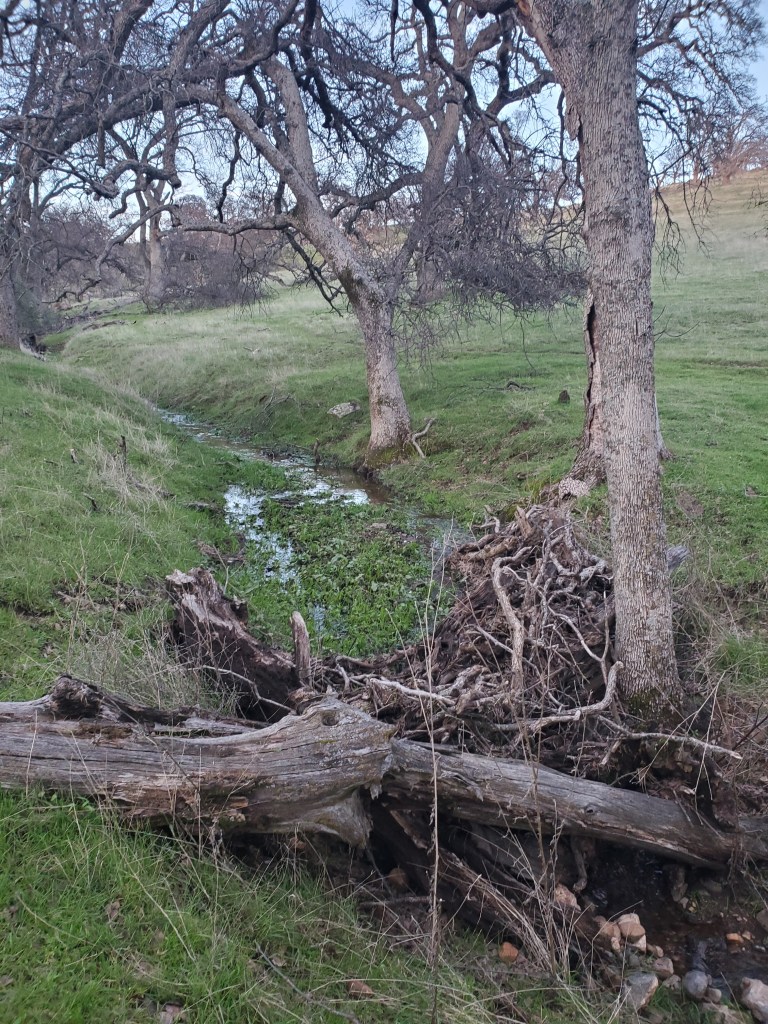
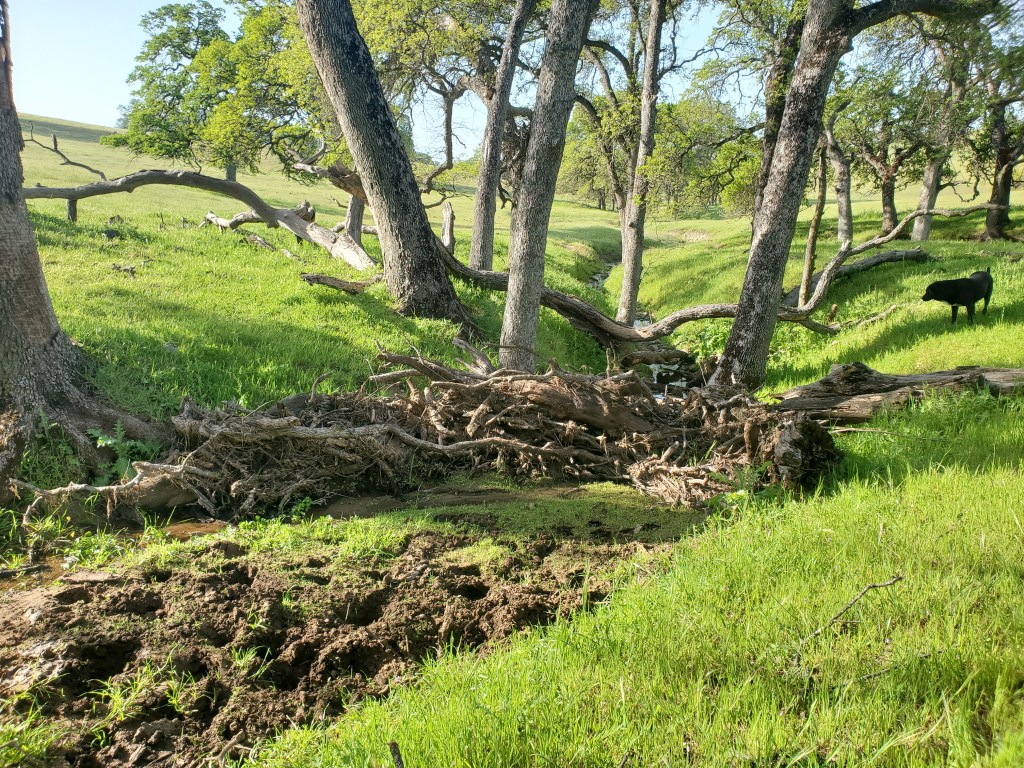
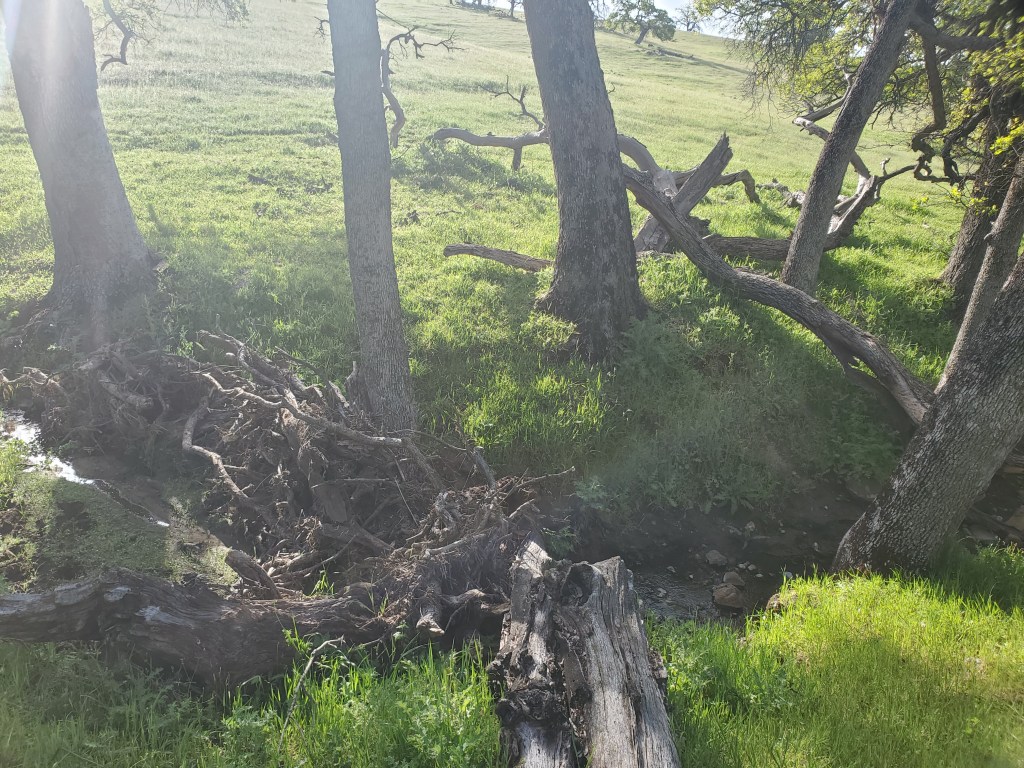
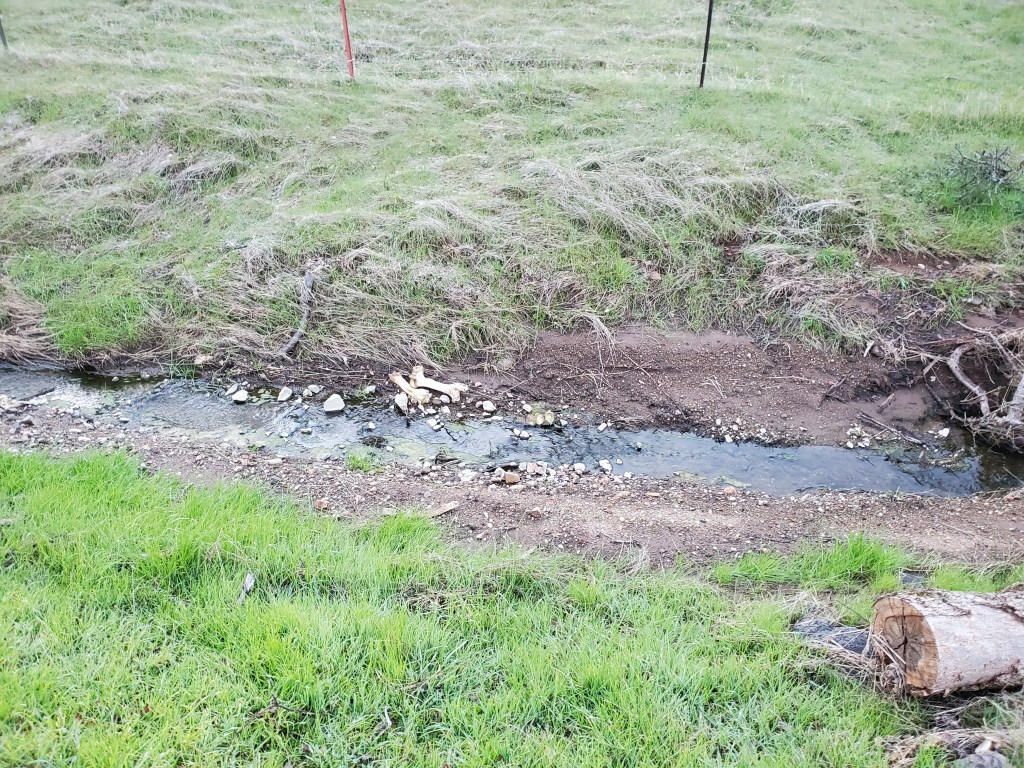
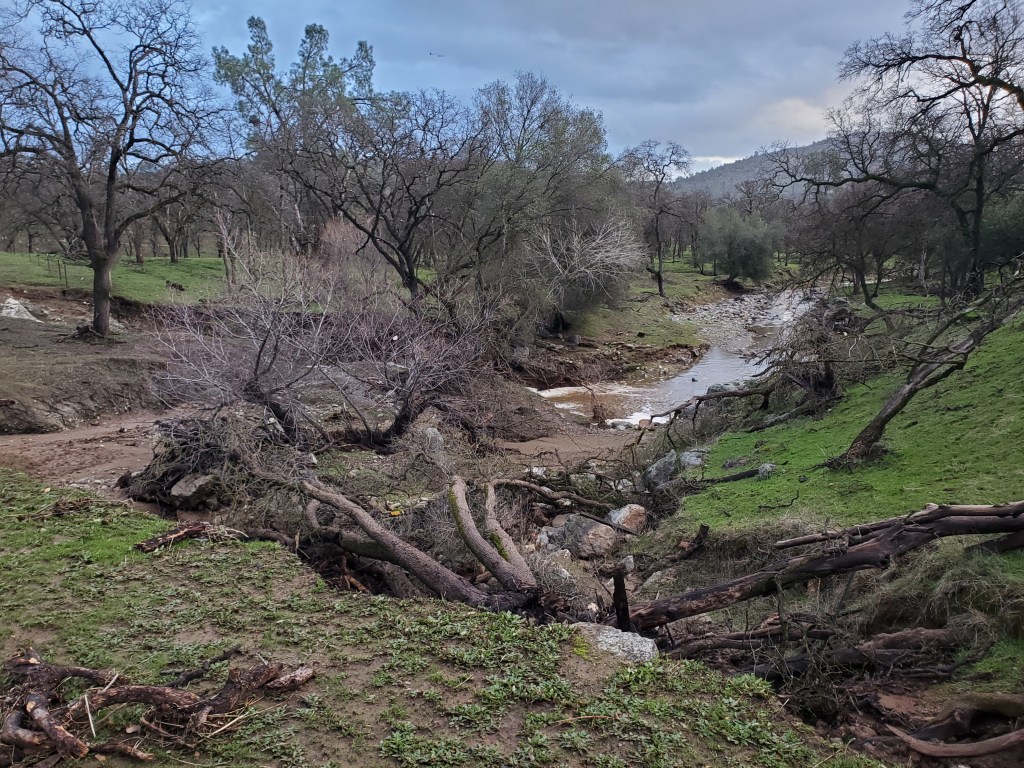
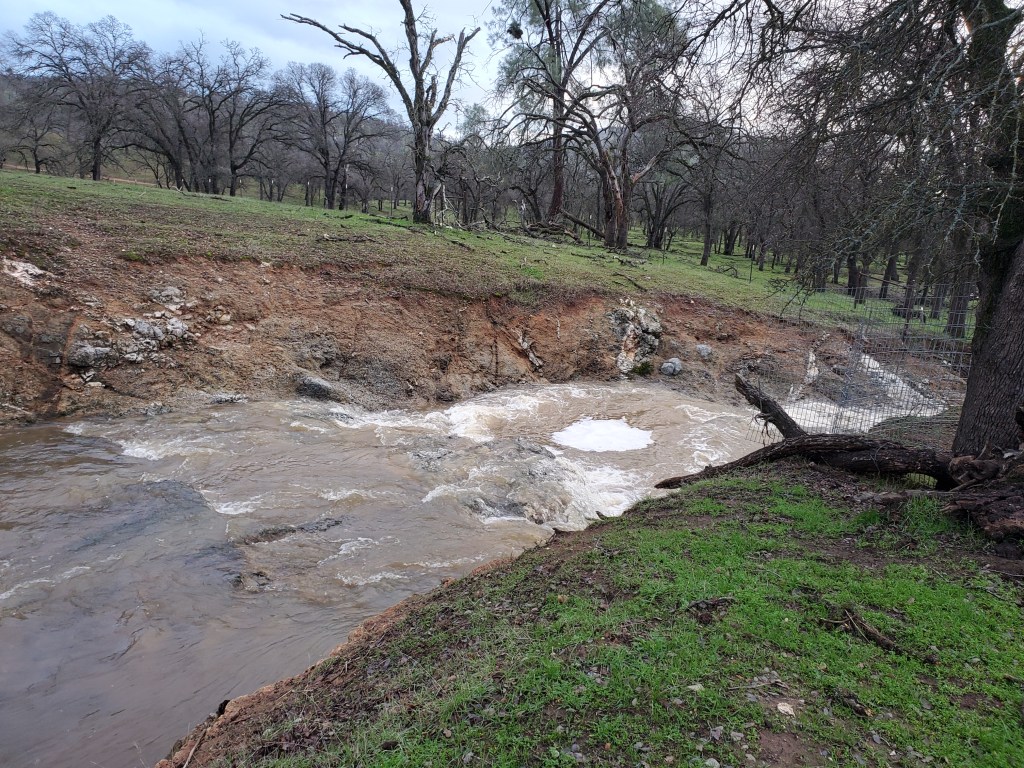
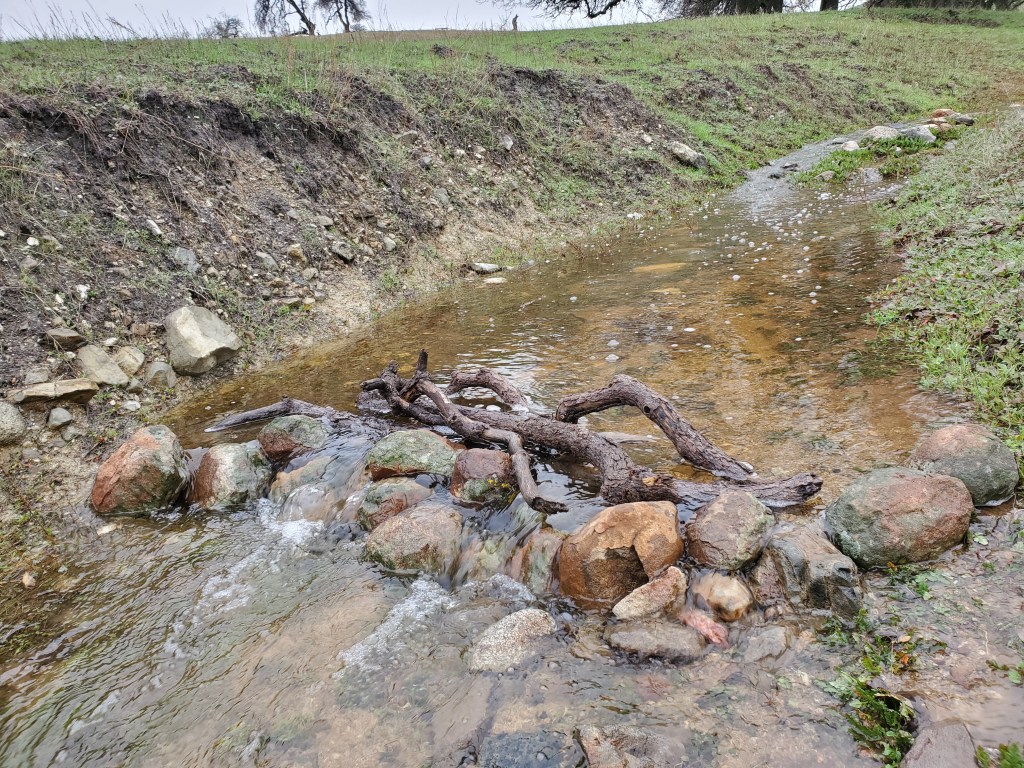
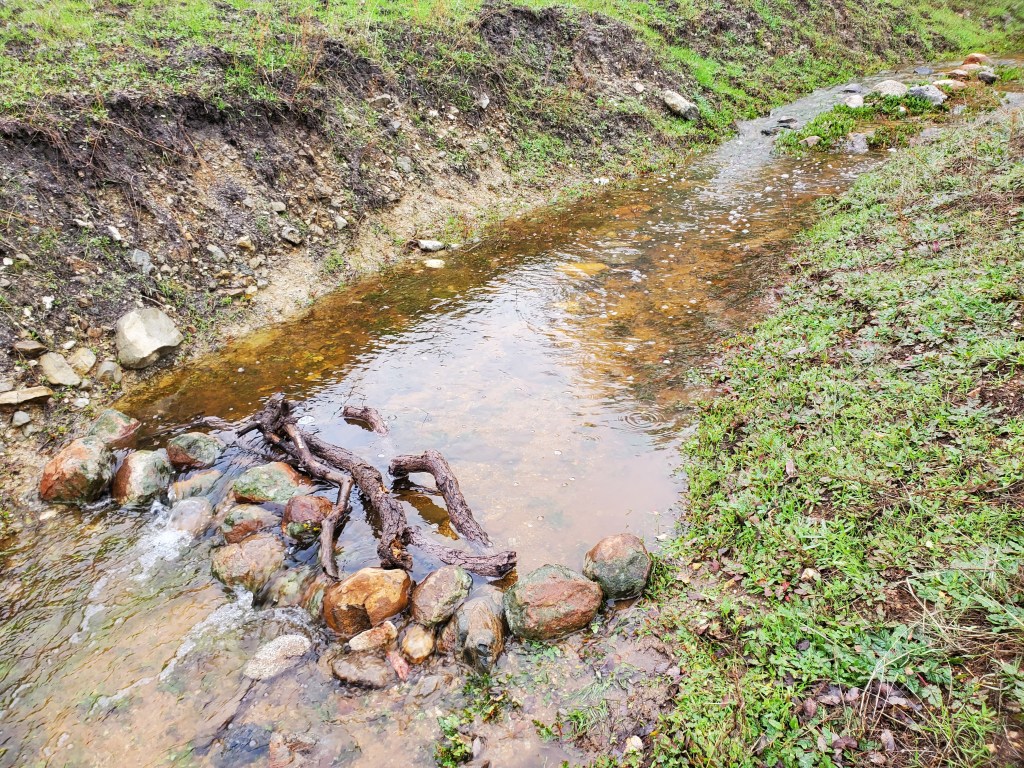
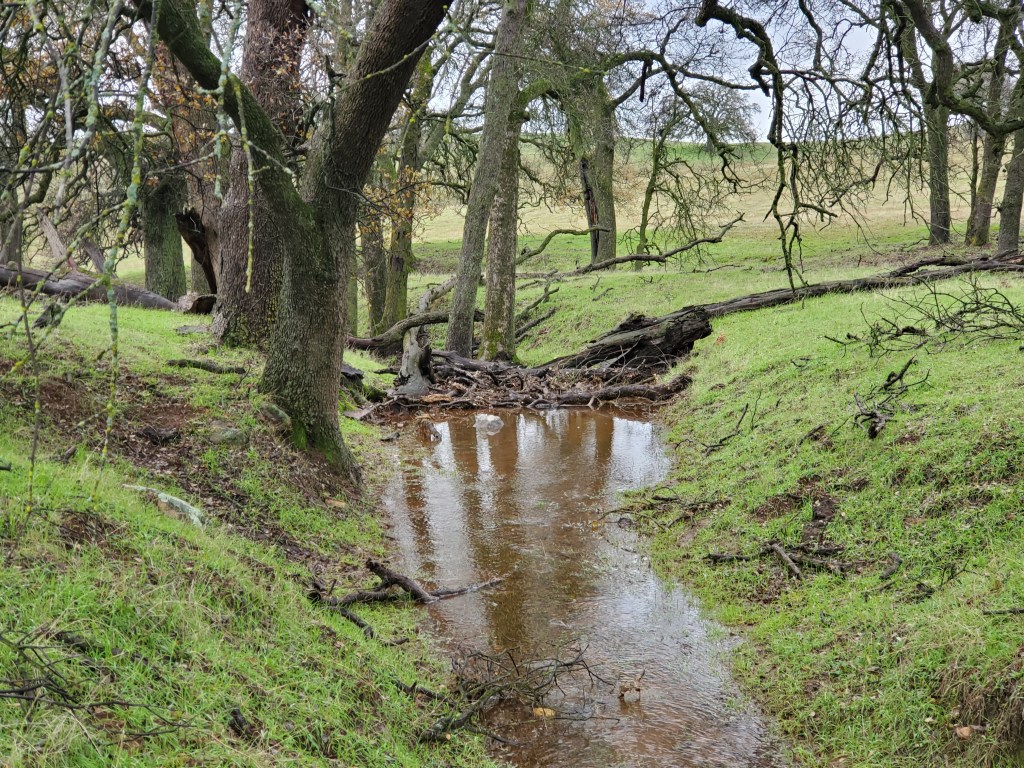
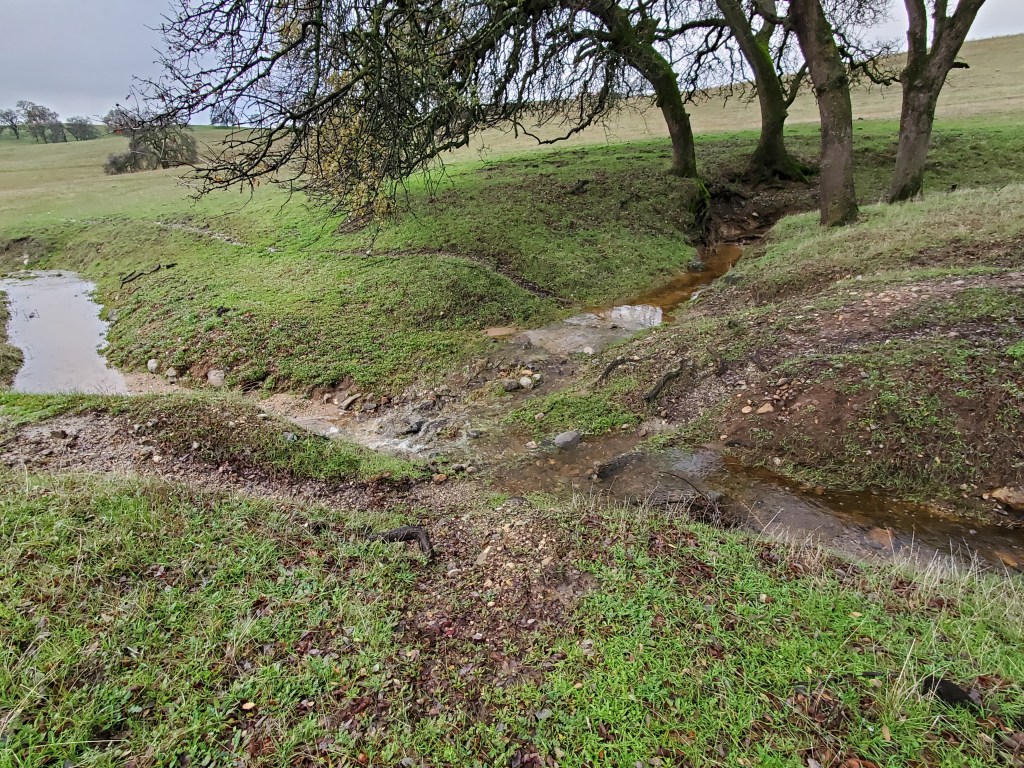
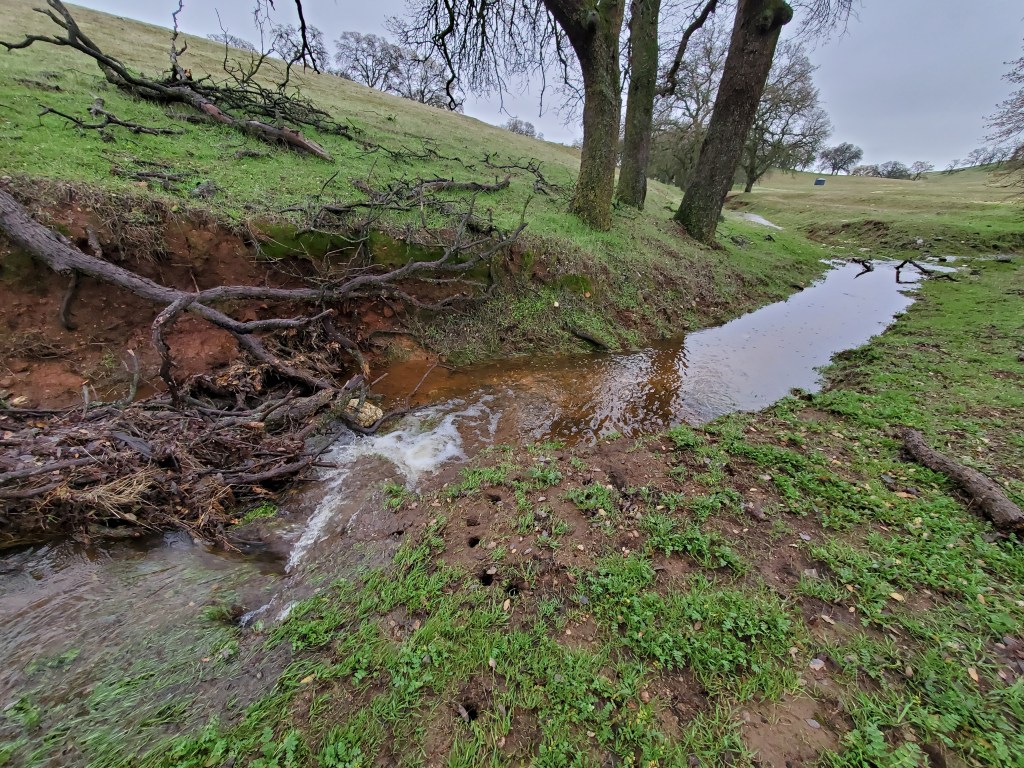
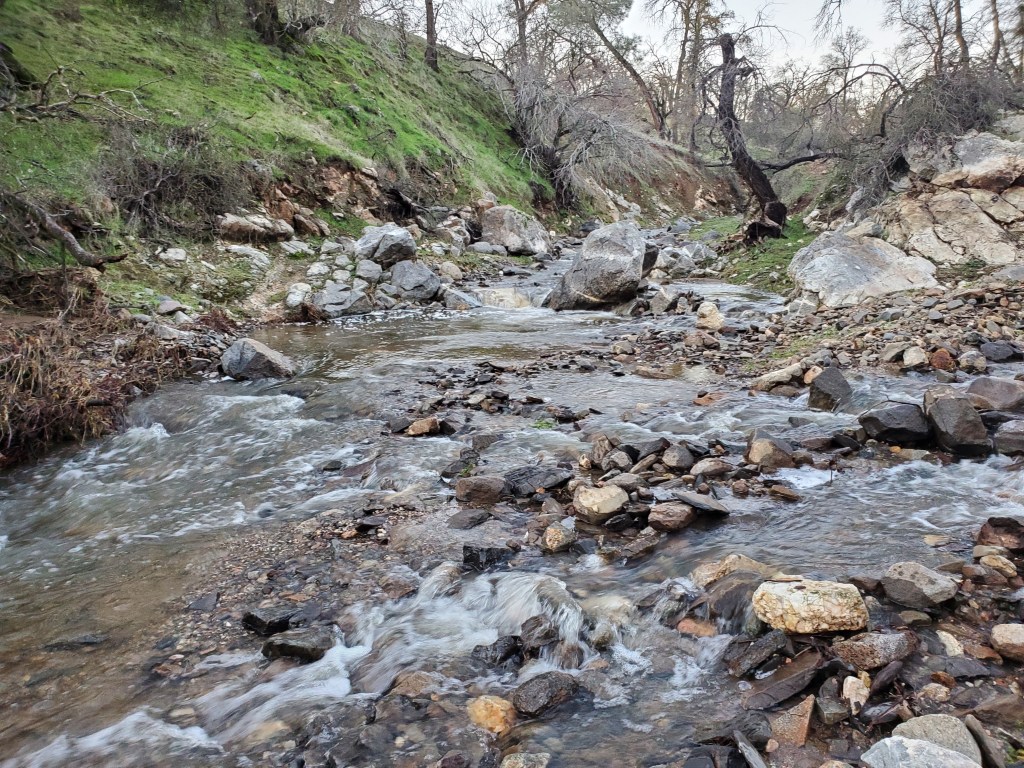
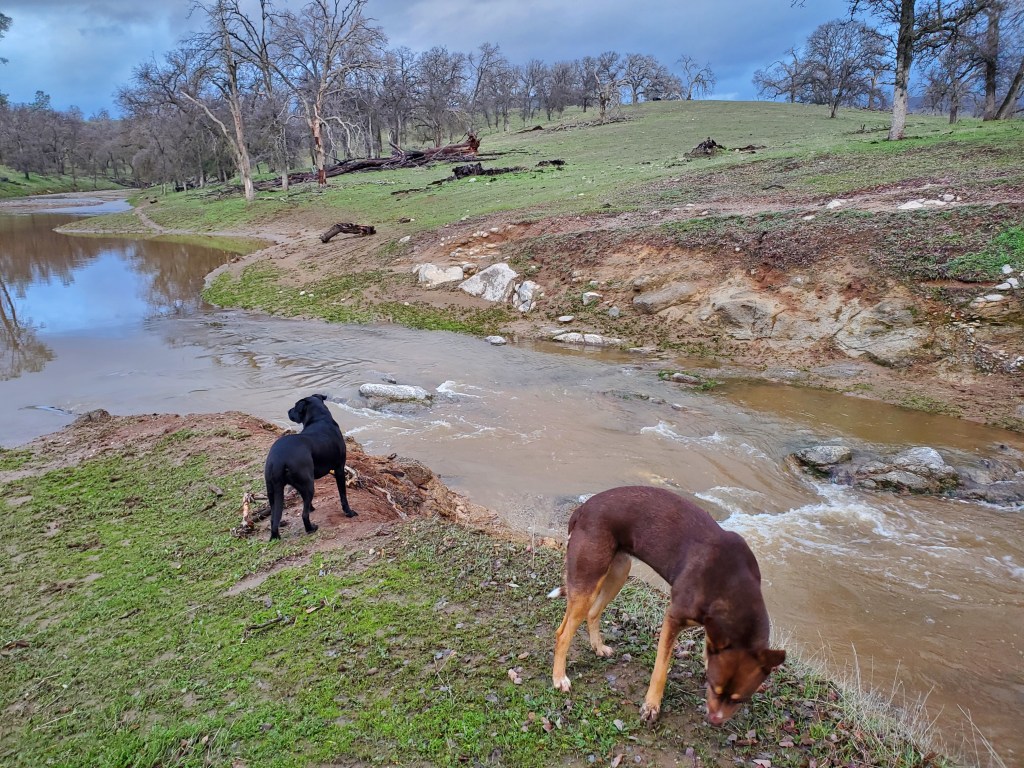
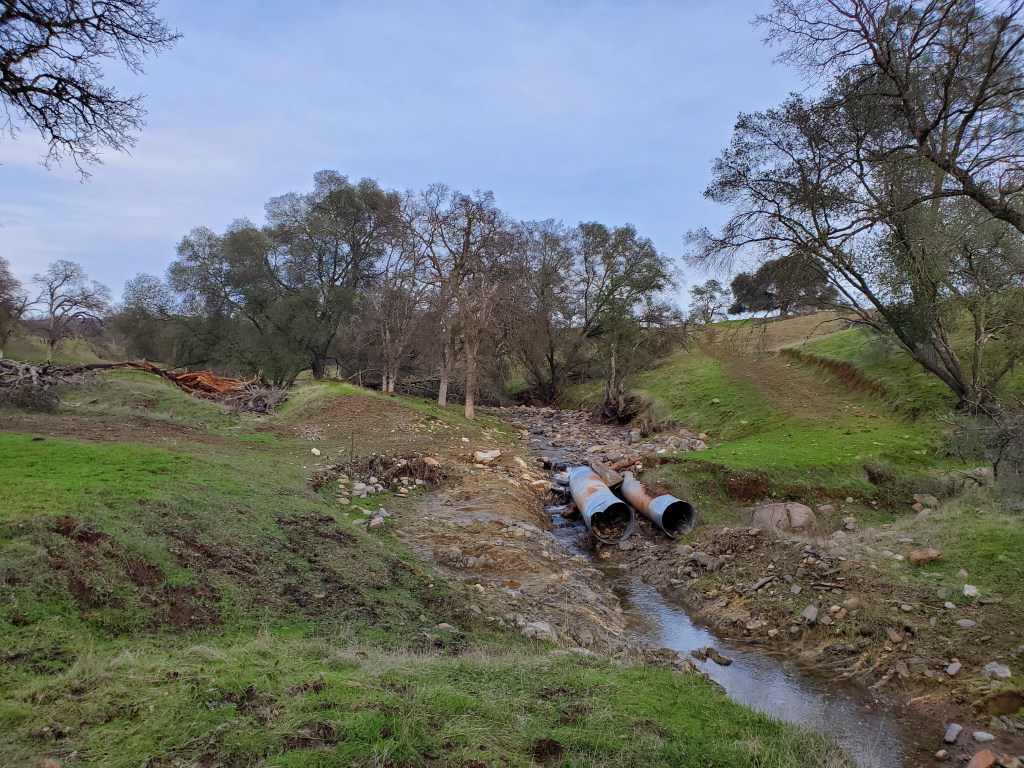
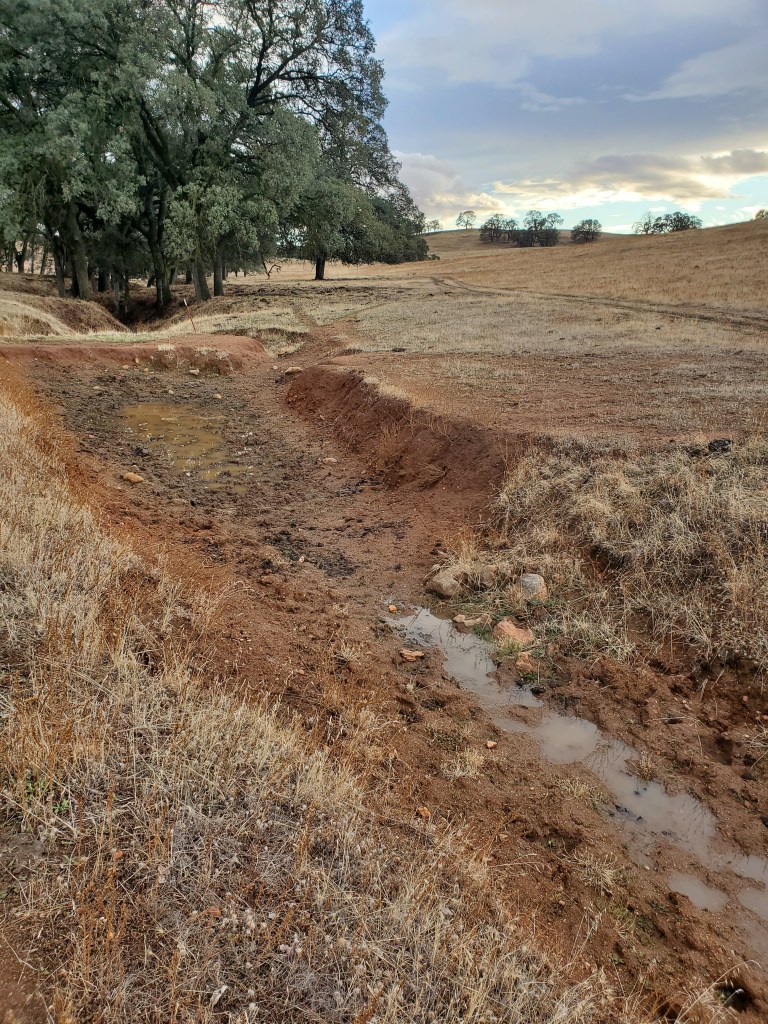
Nature gave me some help this year in building check dams. The photos below show one that nature built with wood that fell into the creek. Note the sediment upstream has accrued and is nearly at the height of the land, and note that downstream is still carved deeply. Holding the sediment back achieves a number of goals, 1) to increase water quality, 2) make the access to the creek more usable by wildlife, 3) build back wetland type soil, and 4) slow water runoff to retain it for flora, fauna and groundwater recharge.

Wanderings

I left David weedeating around the monarch plots and went to check on the California milkweed sites. I love to walk, even on this cool, windy day, so I decided to walk further looking for more milkweed. One can only hope. While out, I found so many other beautiful things. We live on a remarkable planet. Love it. Cherish it. Protect it.

Rest-time is Over | Flowers Emerge | First Butterfly Spotted

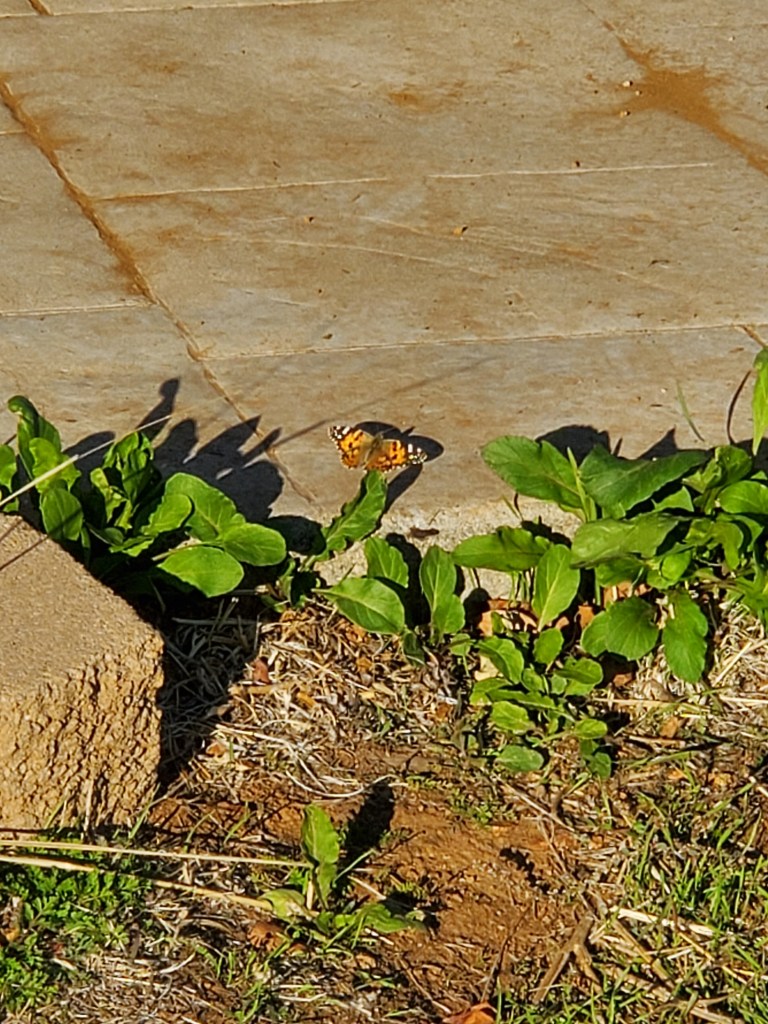
A painted lady butterfly on the soil

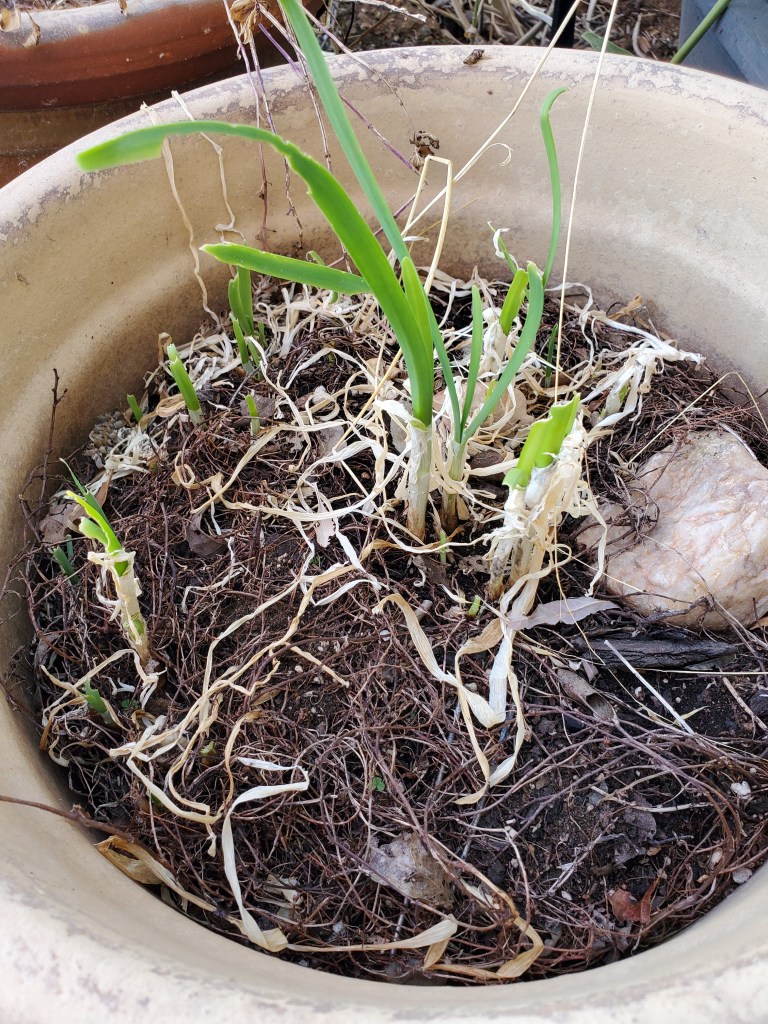
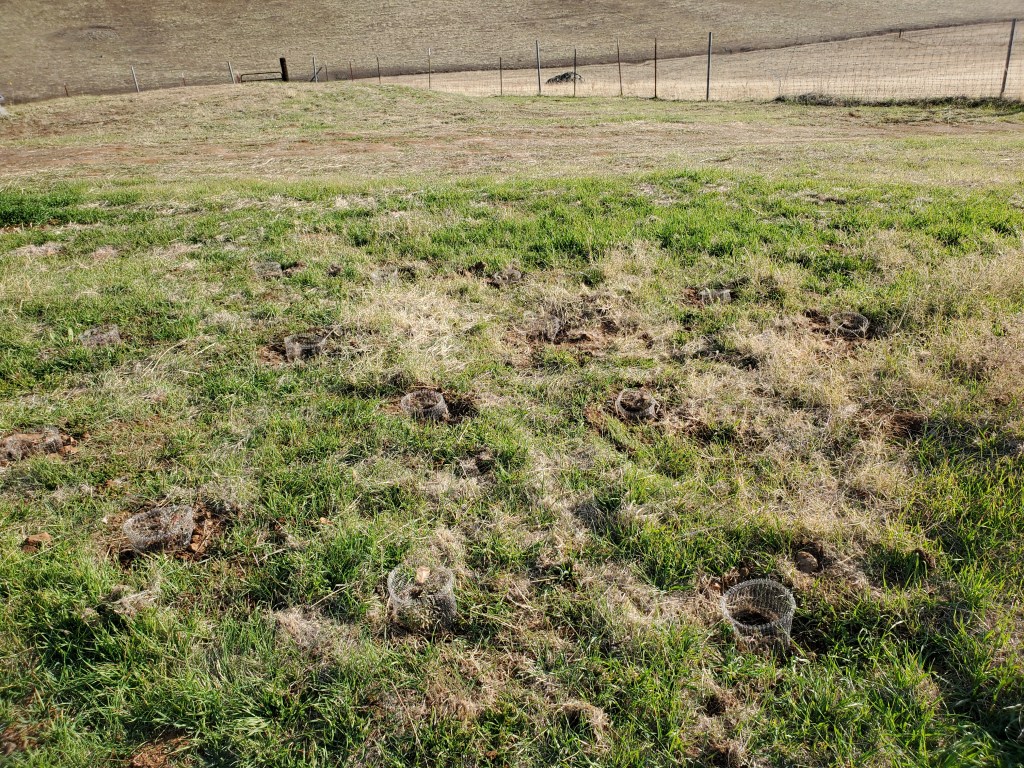
January and February have been nice. Although I’ve still been out monitoring and planning, I have not had to do as much physical labor. The rest has been welcome. Last December and November, I planted the Xerces Grassland Habitat Kit – over 200 plants and perhaps 1000 seeds. Certainly, this is an effort of love for the land, love for butterflies and bees. This week feels more spring-like, so I am outside again performing maintenance labor. While out pulling grass and straightening gopher baskets already planted into the ground, I saw the first butterfly of the season. What incentive!

The monarch overwintering count has been encouraging, with the number of adults just over 330,000. This is up from the 260,000 last year. We all need to recognize, however, that these numbers are nothing compared to what their population should be. Monarch and other butterflies were in the millions in most of our lifetimes back in the 1980s. Please continue to do everything you can do to build habitat and make conditions livable for these relatives of ours.

Rains Bring Flowers

As I’ve performed my walks about the ranch, the smell of nectar hangs in the air. It is so sweet. My mind turns fuzzy – like that “in love” brain block. I am intoxicated from the smell. It is no wonder February is the month we celebrate love. I try not to admit that the fuzzy head is from a histamine reaction – allergies. The sense of being in love with the world is too pleasant a thought.

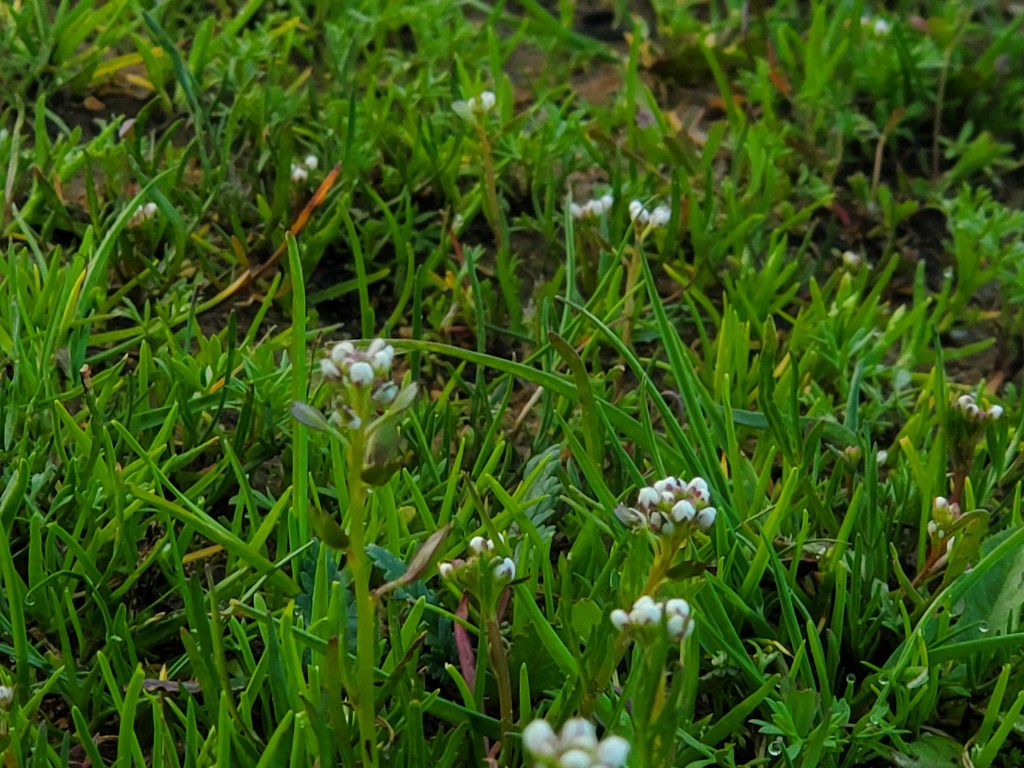
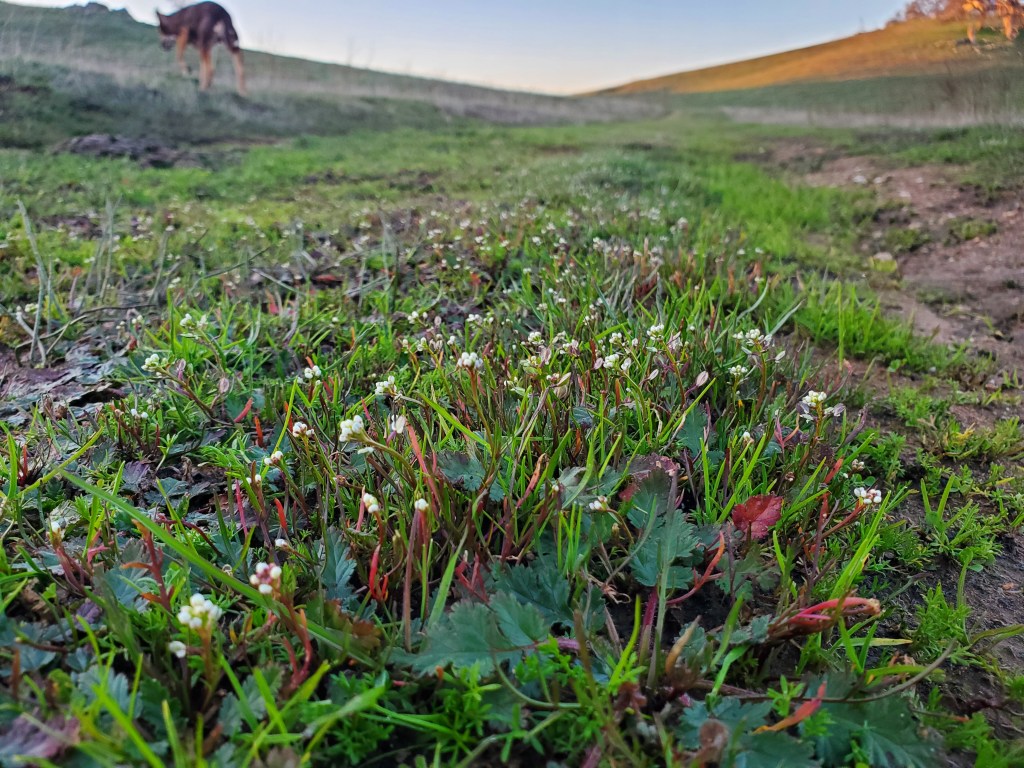
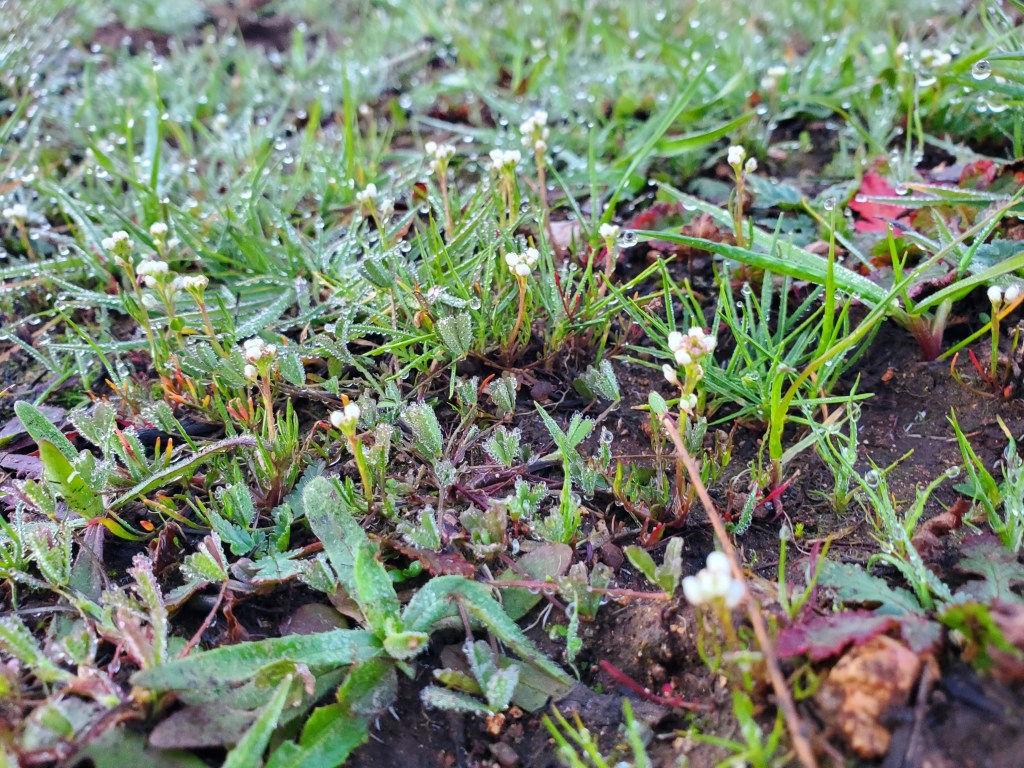
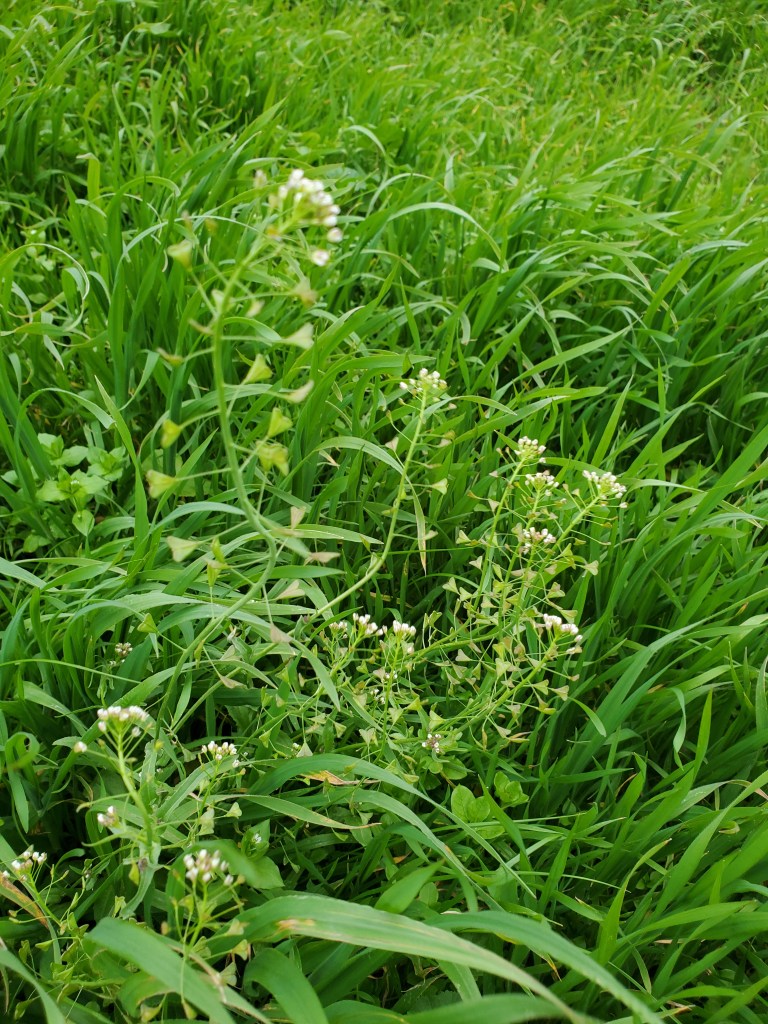
I follow my nose and am led to small, low growing white flowers. There are millions of them in all the areas without much grass. These are the first wildflowers of the season to emerge.

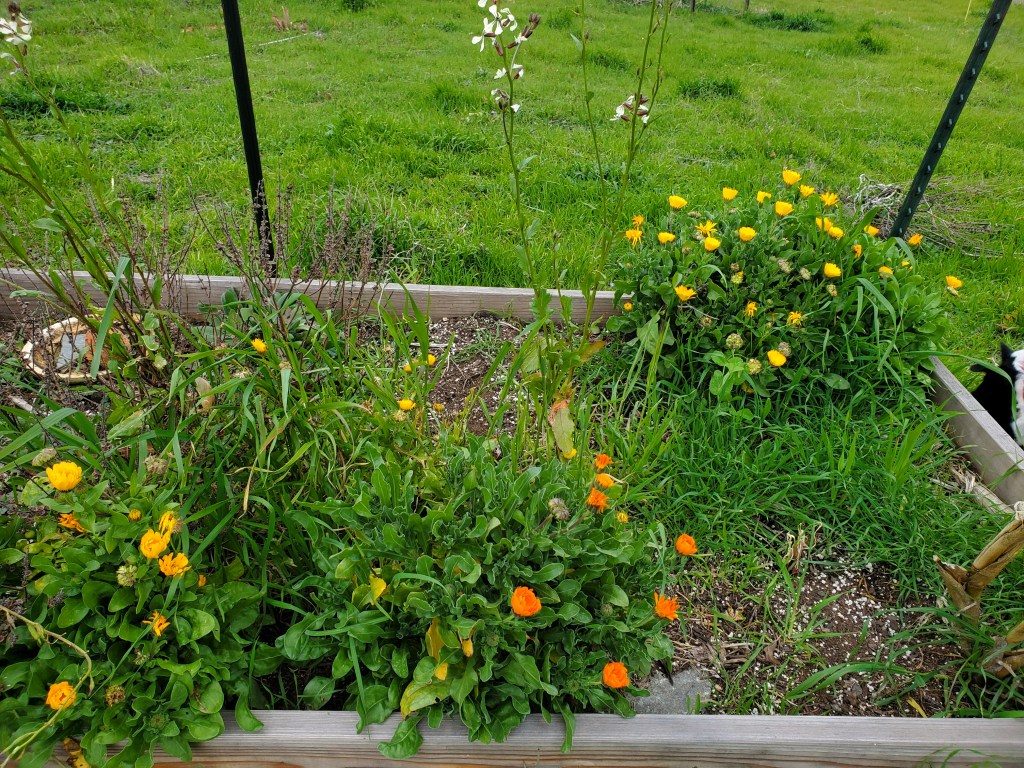
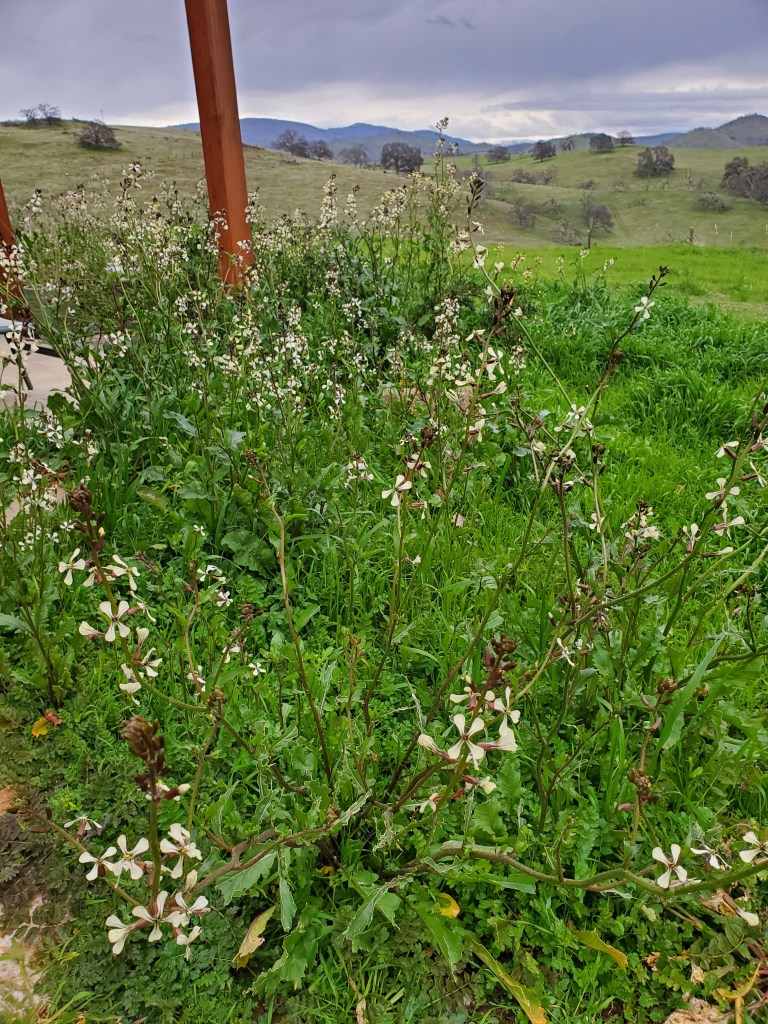
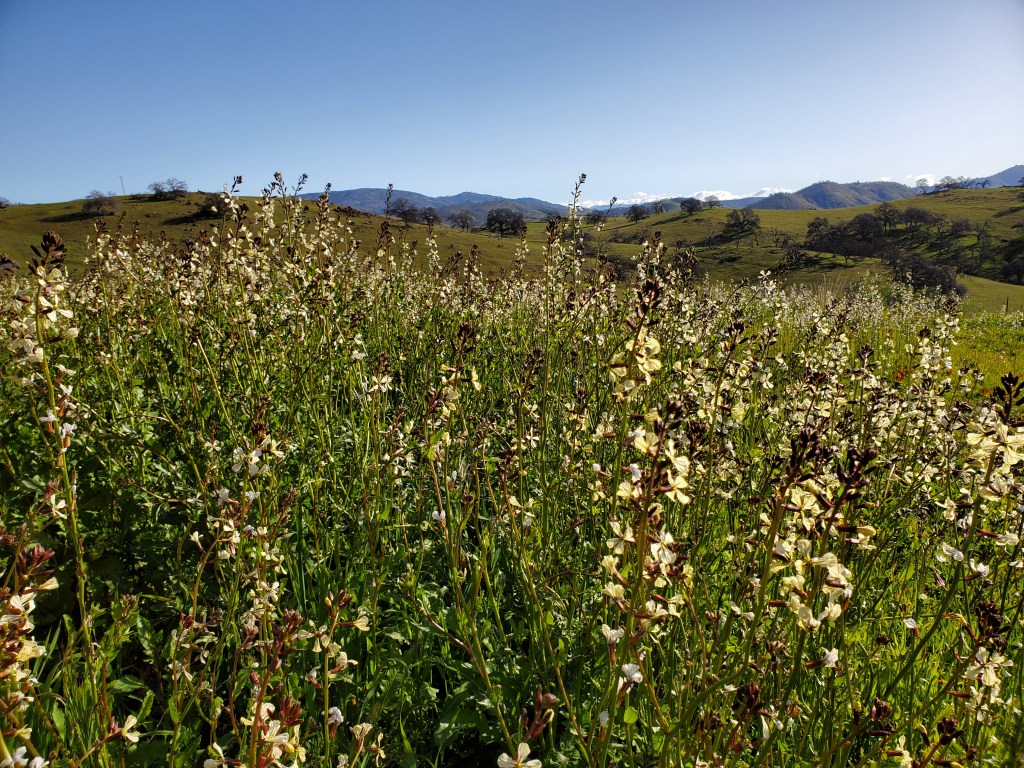
In just a week, there are more blooms. Arugula, not a native plant, but very prolific (and delicious), begin to blossom. There are thousands of plants with many flowers each. Then lavender….then brodiaea…and soon many more.

Water

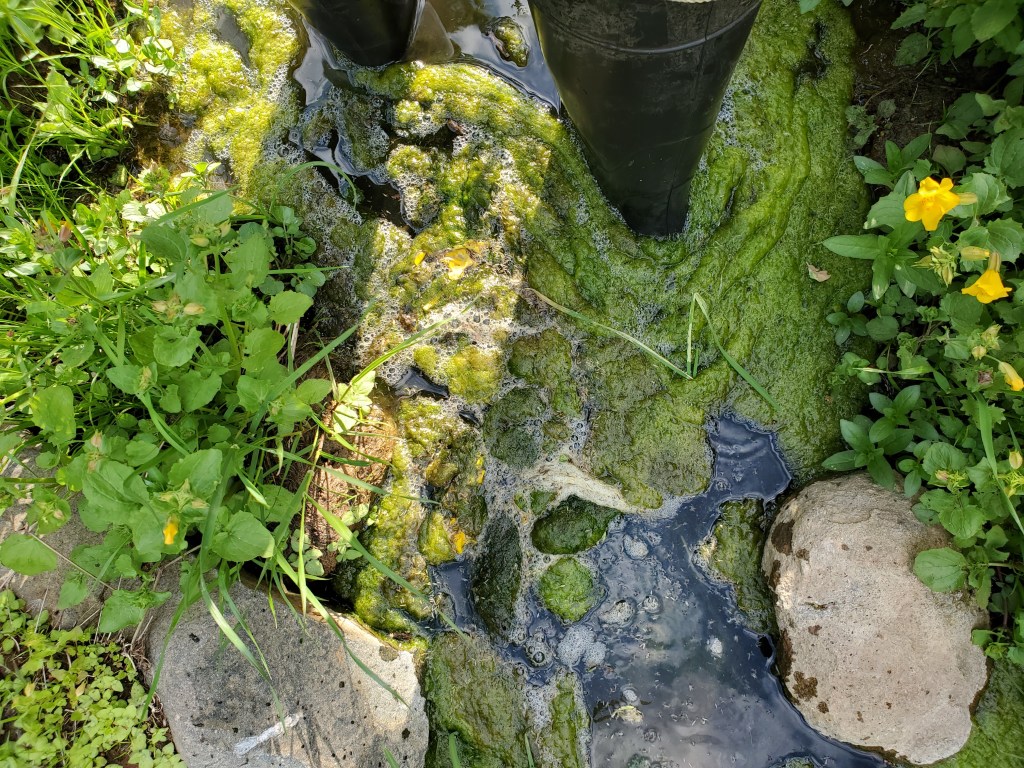
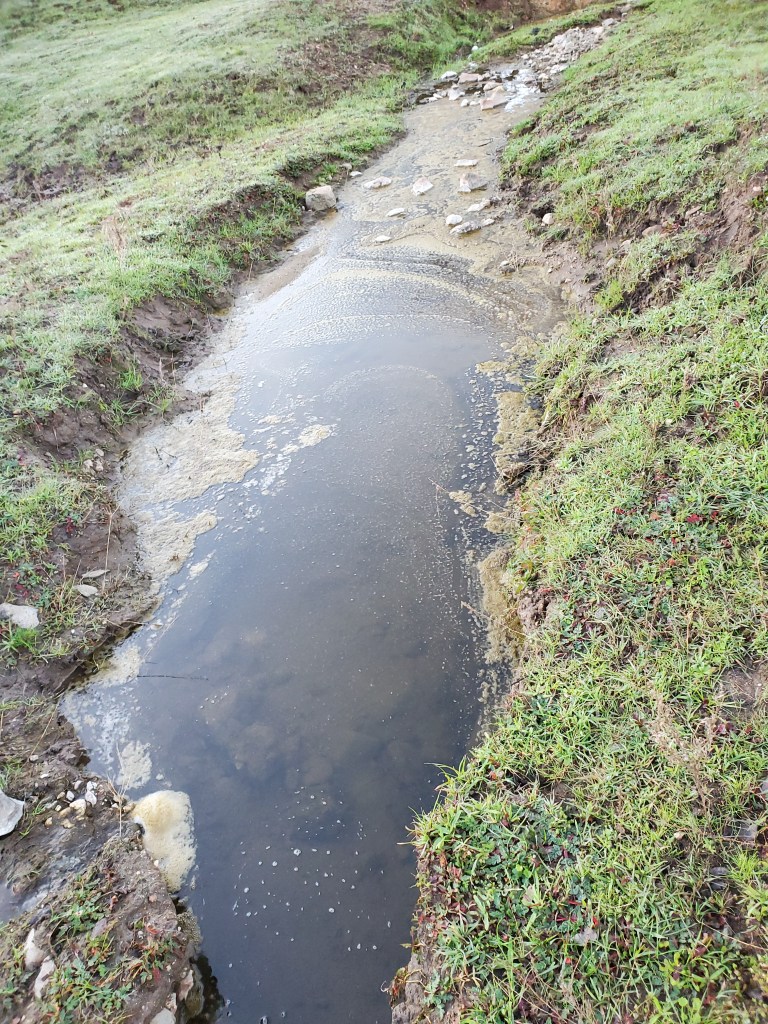
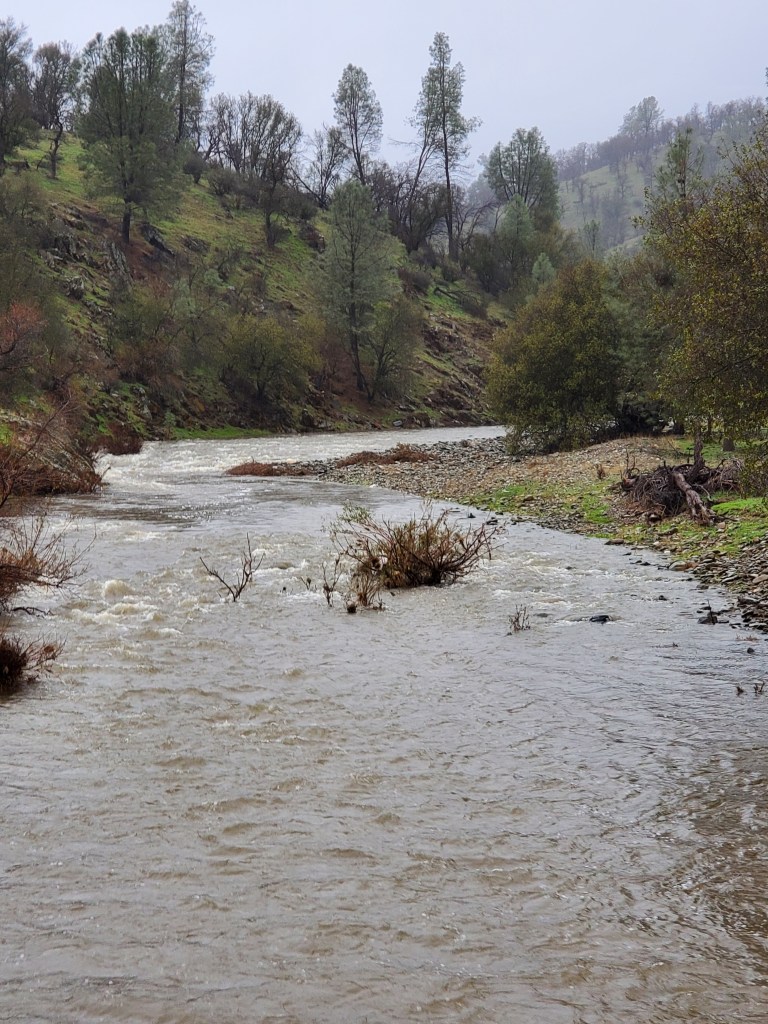
Weeks after the major storms, the arroyos are still running, albeit a trickle, but still moving. The creeks are running well, but slowing. Pockets of algae are beginning to form. Algae occurs when there is significant nutrients in the water – typically the result of fertilizers farmers use and livestock. Here, it is the result of cattle poop. The cows were rotated to the north just after the big storms. The algae began to show last week. It is one of the down sides of cows. Algae can starve water of oxygen and make it inhabitable for other life. When it gets think, I try to open up holes on the surface of the water to allow movement and oxygen absorption. It is a losing battle of course. Unless I remove it after it forms, it just grows back again.

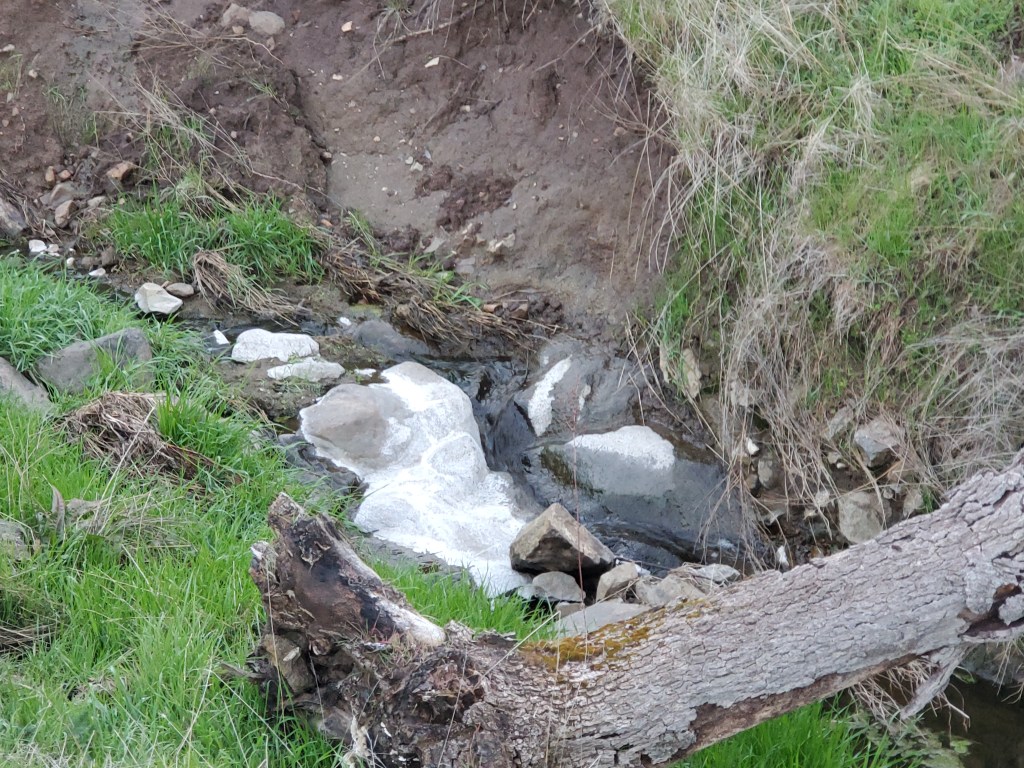
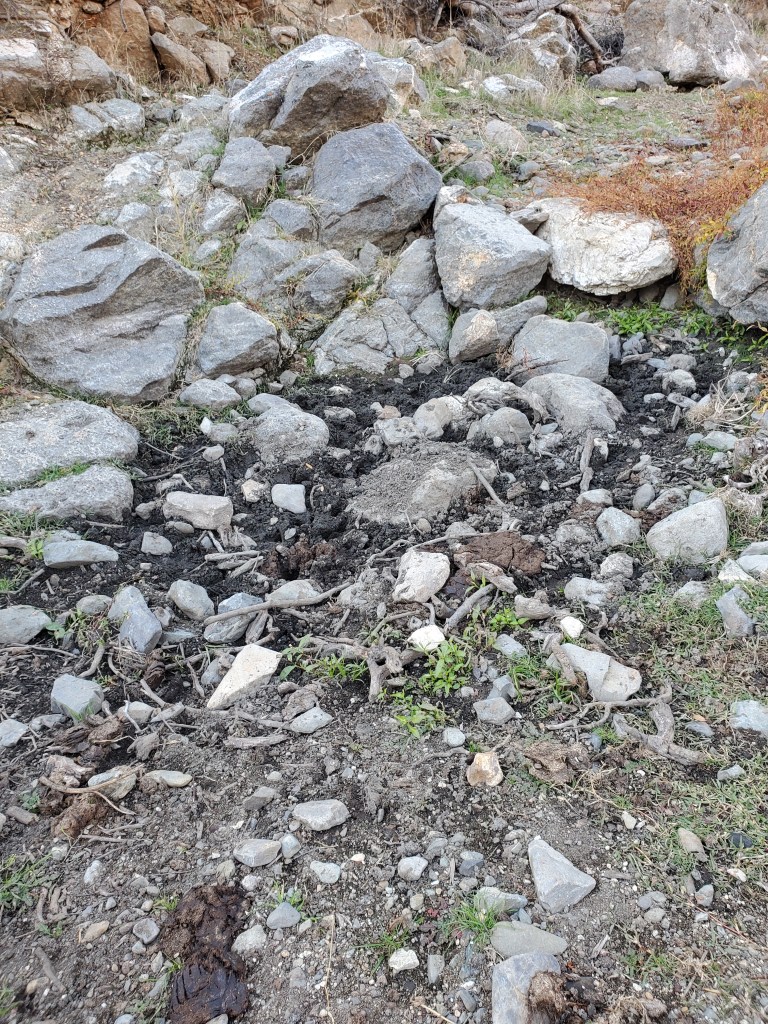
The force of the water was so tremendous, it blanched rocks – making the rock surfaces white. The torrent also deposited a remarkable amount of rock and sand into the creek channels. In some locations, the height of rock piles increased by 6″.

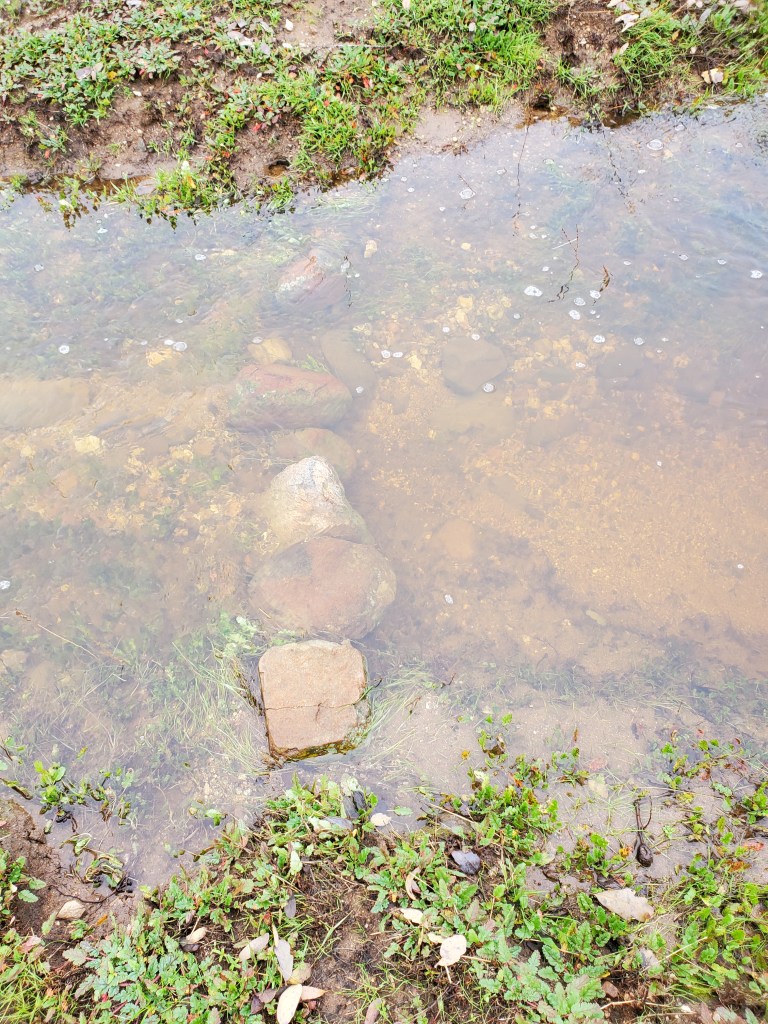
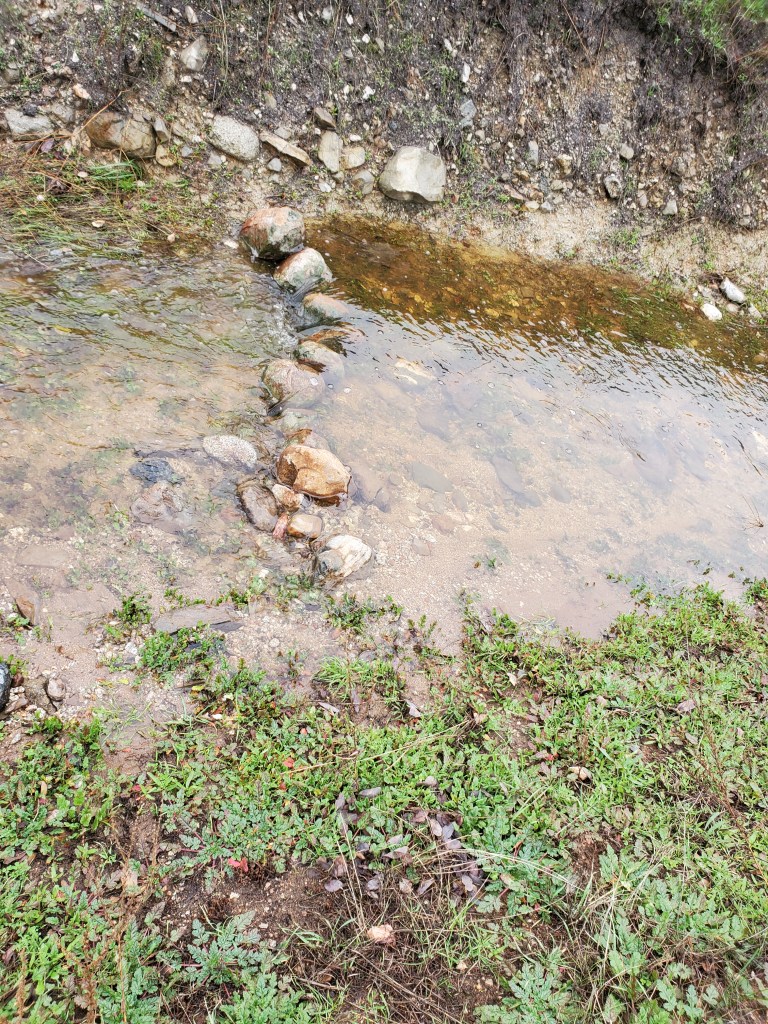
Although it was shifted around during higher flow times, the bulk of my rock check dam held. It retained the sediment, which built up behind it. It is absolutely stunning how much rock and sediment flowed down even on small creeks.

Fire

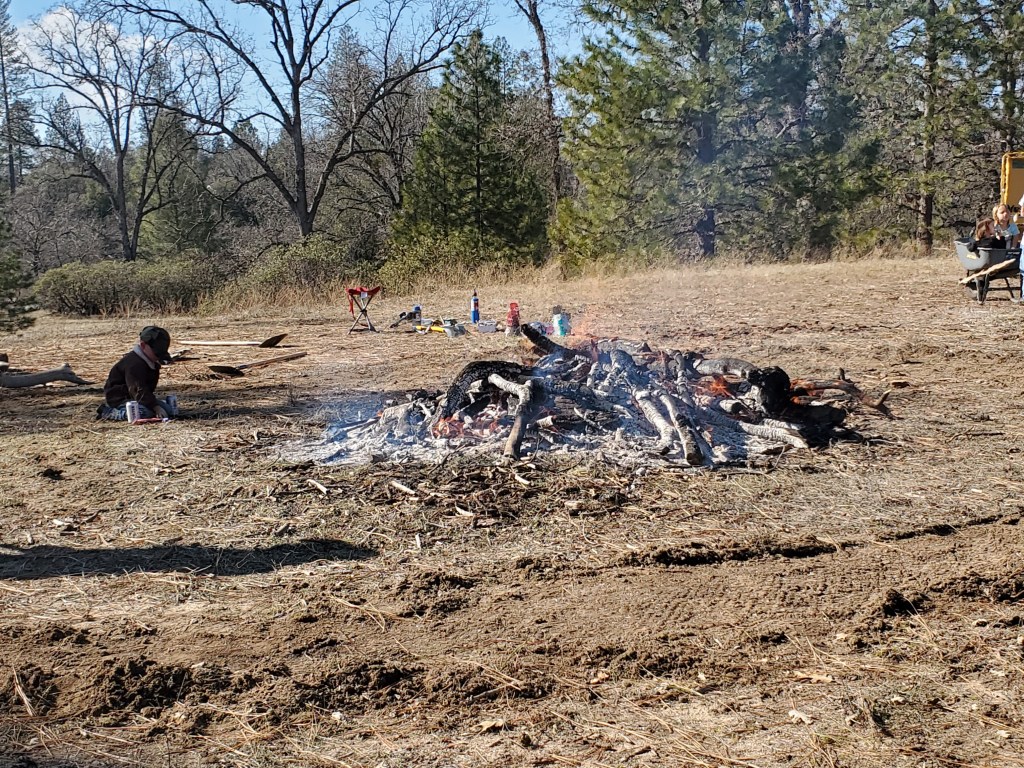
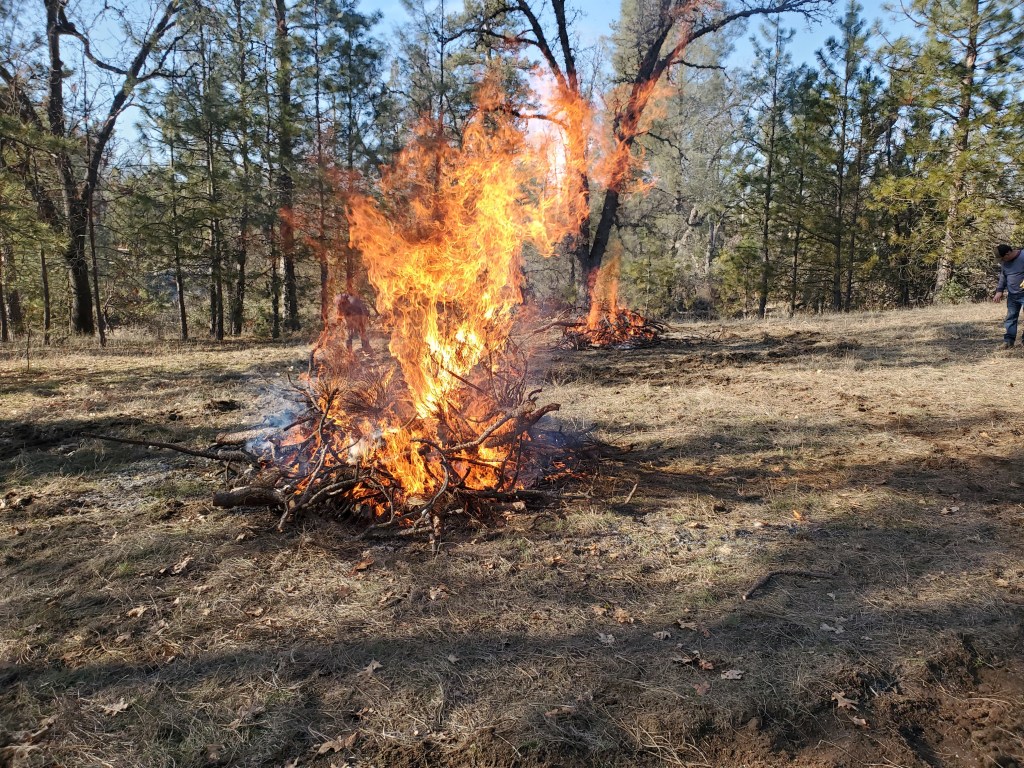
I attended the Southern Sierra Miwuk Traditional Ecological Knowledge program, which was two days. The second day, we worked on using fire to make the ground and specific plants healthy. I am not too comfortable around large fires – small fires ok – but large are a bit daunting. With each experience, I get a little more comfortable. I would like to have a burn at the ranch in fall and target eliminating medusa head and promoting some of the riparian native plants.

Wanderings

Planting Seeds for the Future

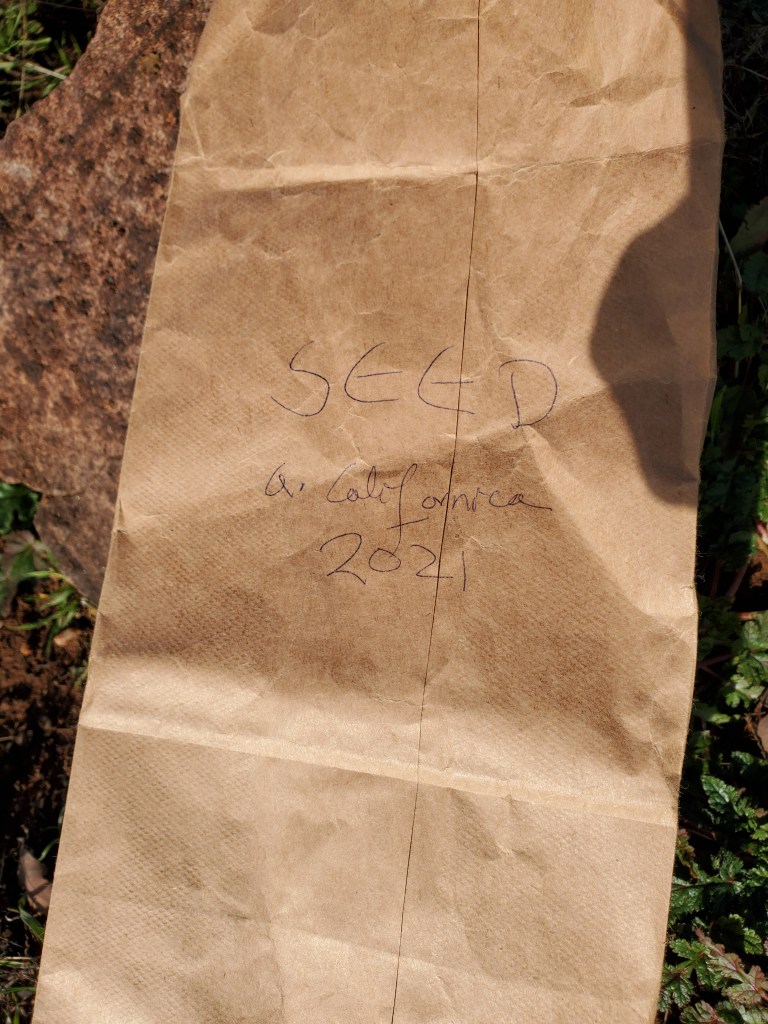
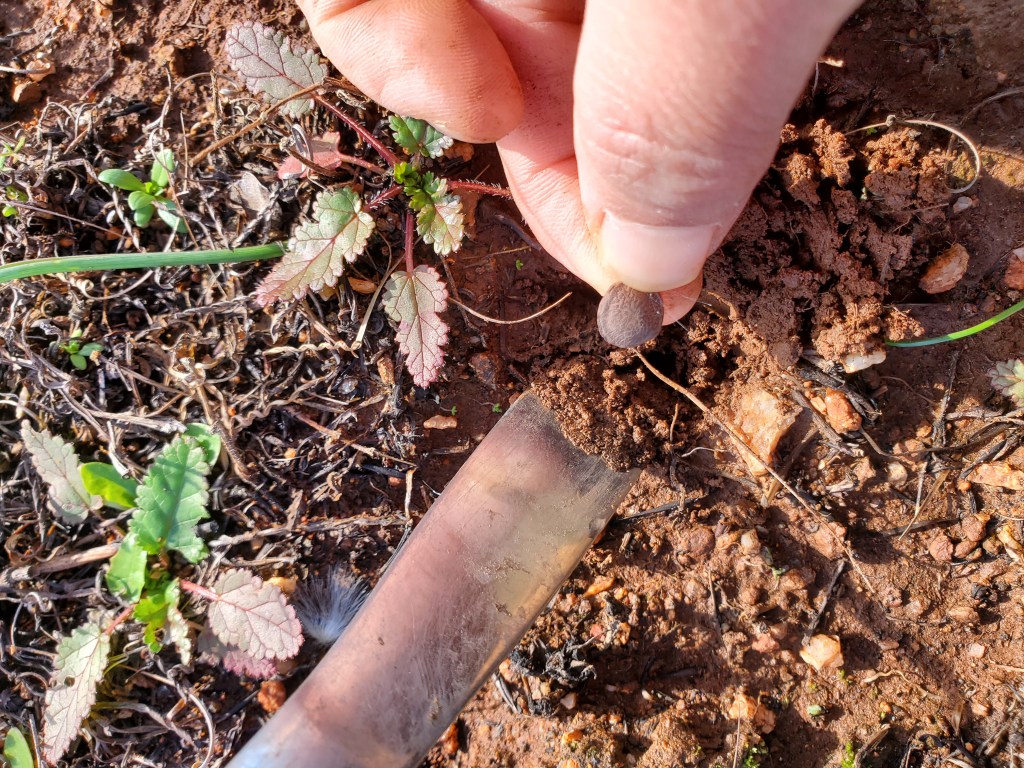
A. Californica seeds from 2021 ready to go into the ground

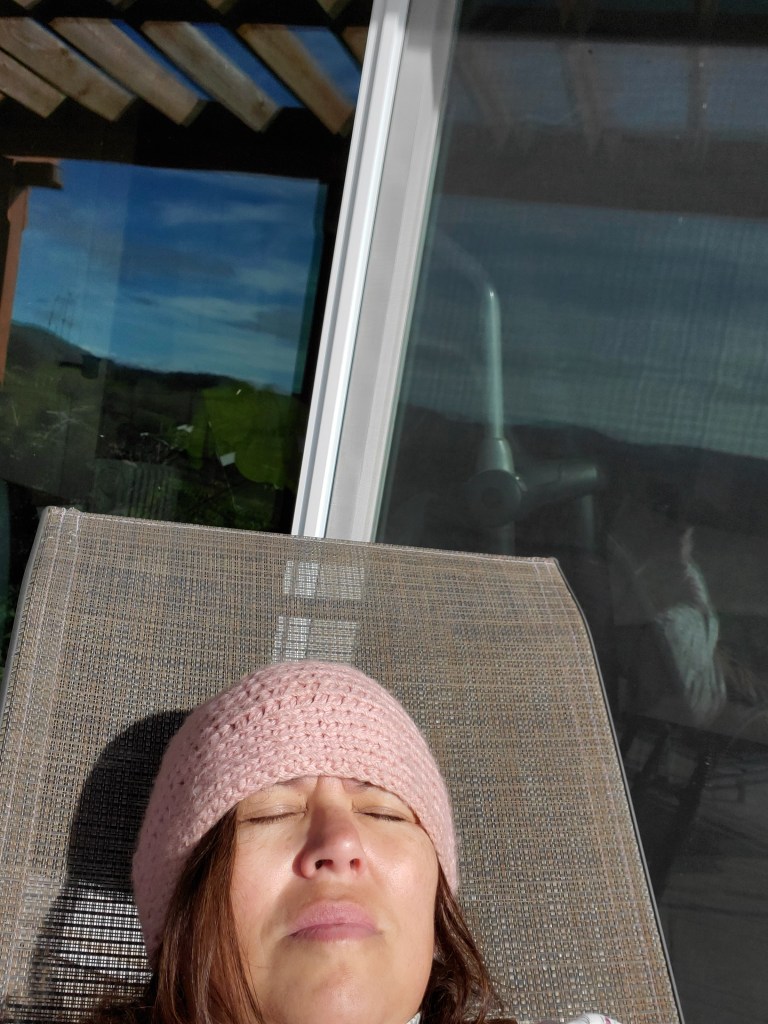
Cold nights and winter rains provide a nice rest from the typical pace and scale of stewardship work. It is very pleasant to sit with my mug of tea staring out the east facing window while still in my pajamas. I am in no rush, as I am in the spring, summer and fall. I can lounge a little and contemplate the future I am attempting to create for monarchs, pollinators – really, all living things. At some point, reverie must turn into action, so I pull on my overalls, turtleneck with flower embellishments, slowly bend to pull one wool sock on, then the other. No searing sun in recent weeks, so choose to warm my ears instead of protect my skin. The best choice is the knit cap my mother made – a pink crocheted masterpiece. Finally, I put my rubber muck boots on. I prefer to work in these – easy on, easy off and waterproof. It has been wet, and soggy ground is everywhere, even between storms.

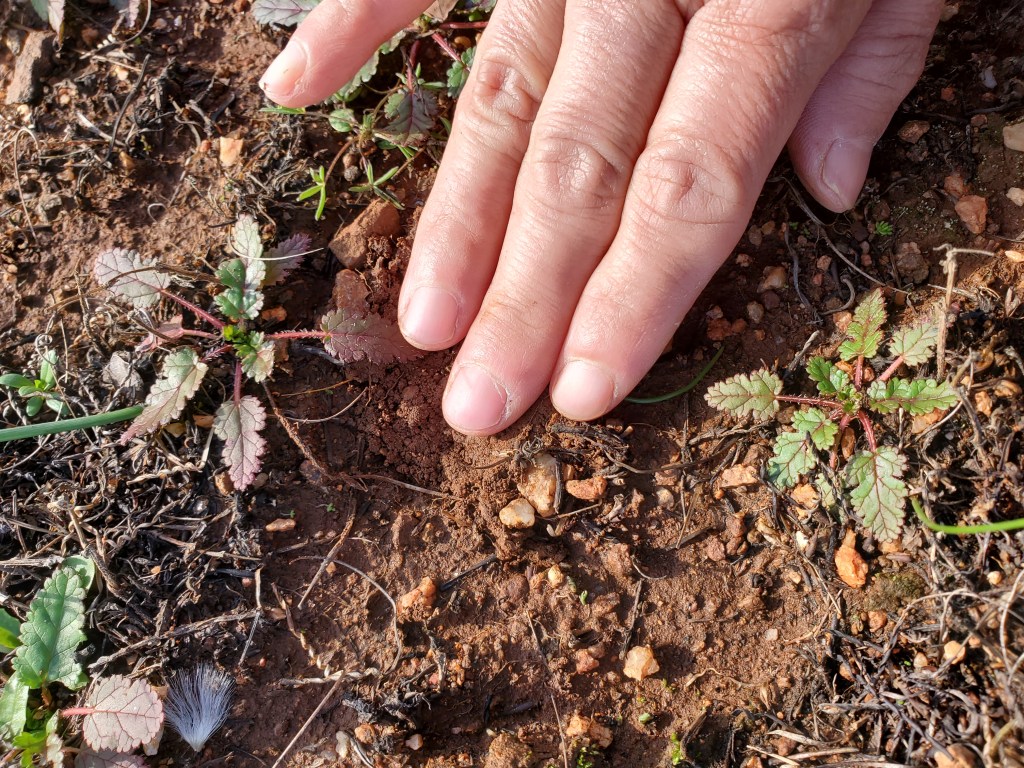
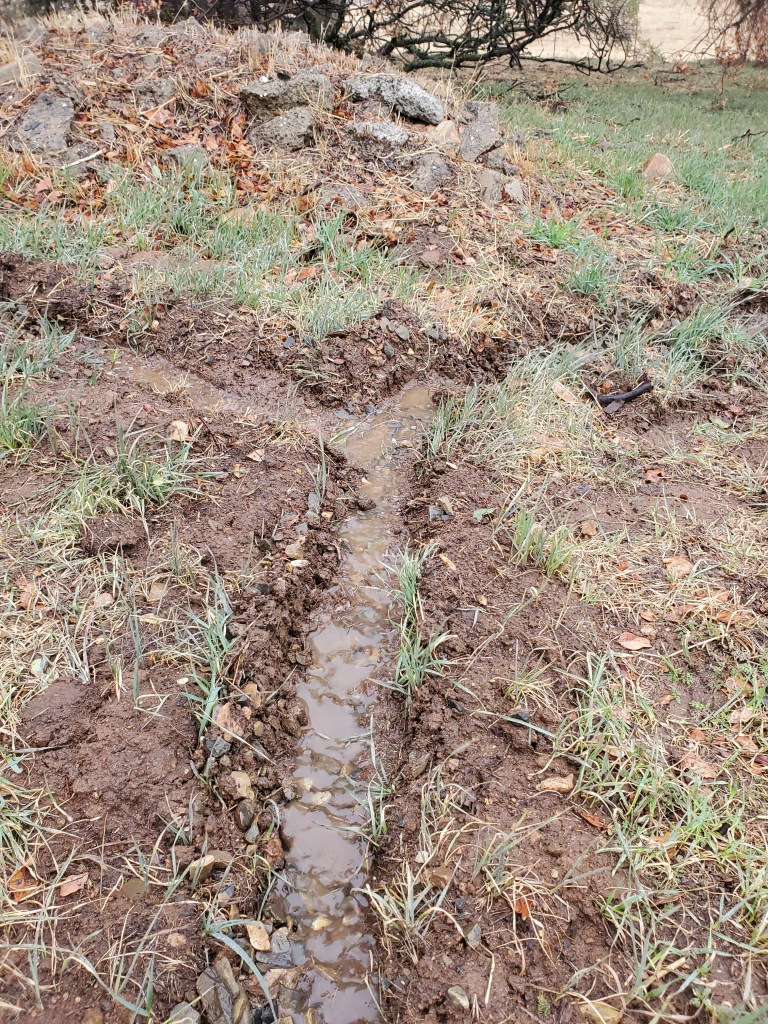
The past few weeks, I’ve been working on impromptu, small check-dam structures to slow storm run off, A. Californica seed planting, infrastructure checks and garden clean up. Soon, I will find the energy to deepen troughs dug two months ago and create more mini swales.

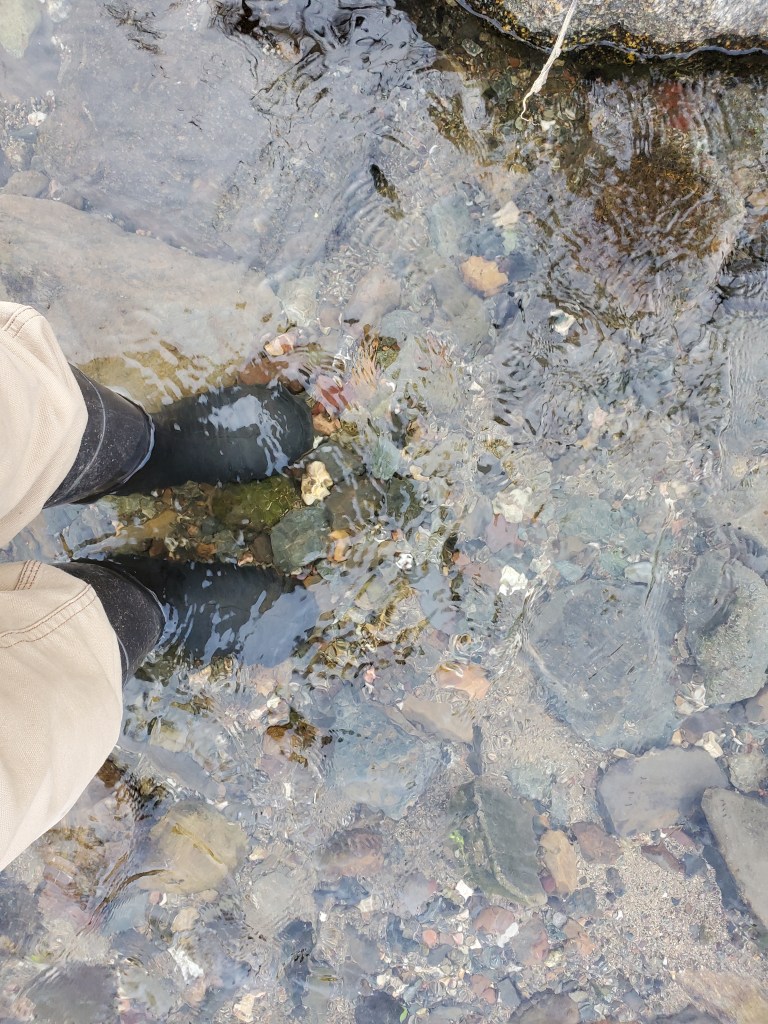
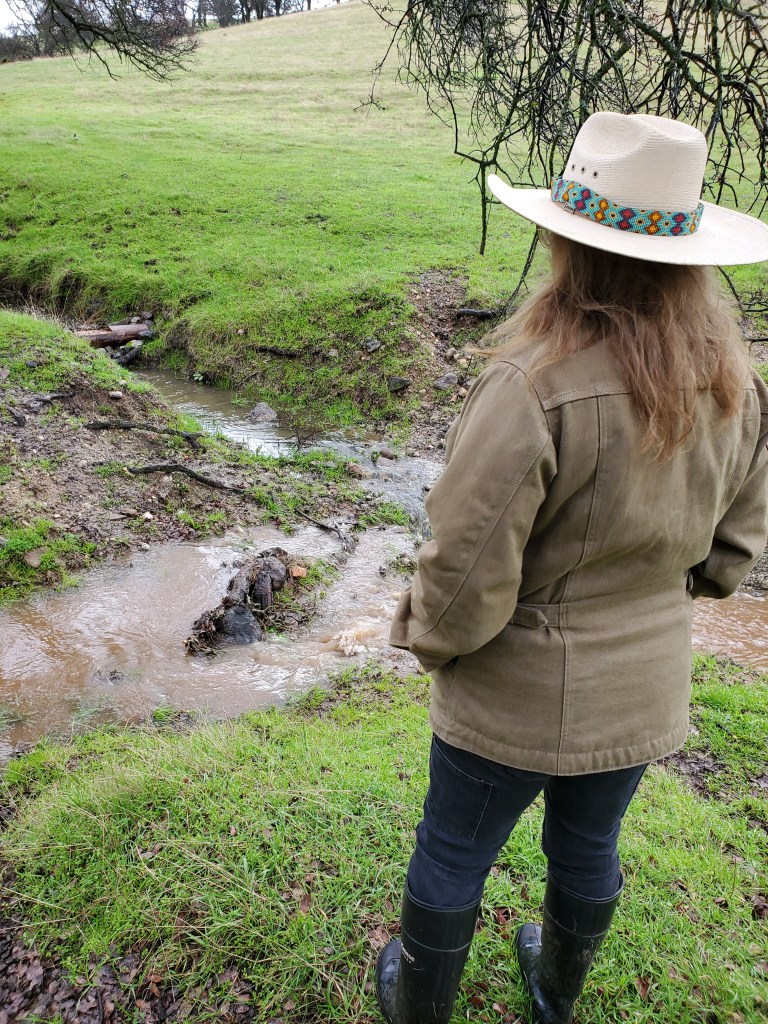
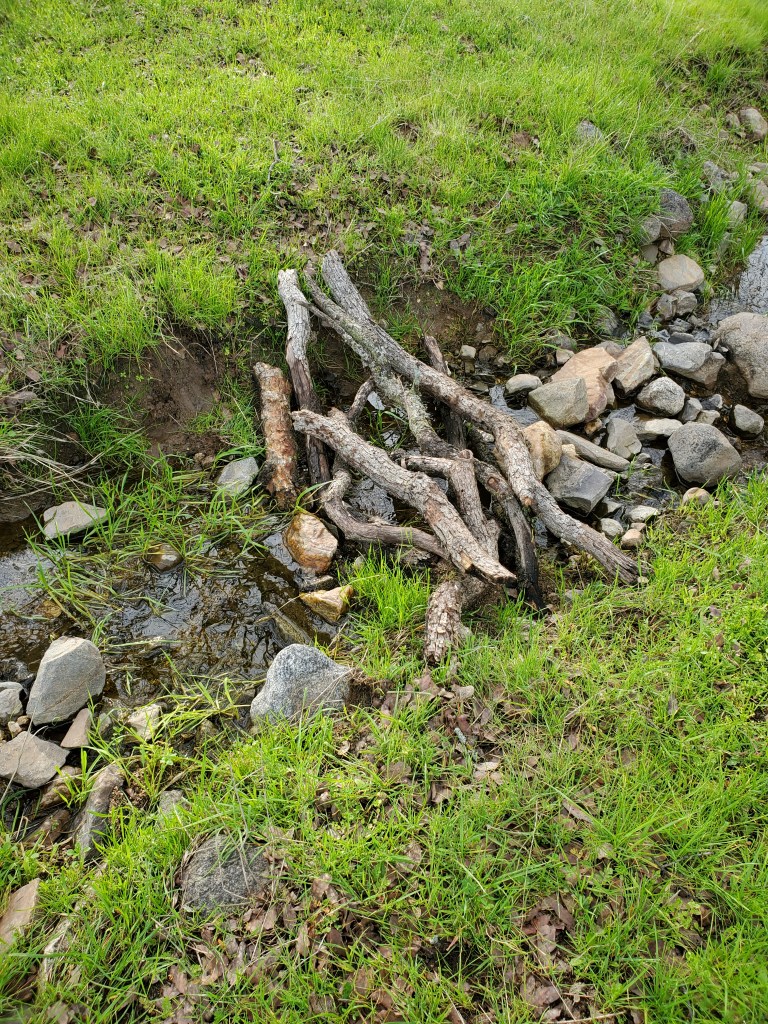
Playing in the water is fun. The next gallery shows my work building a mini check dam across the bottom of Spring Creek. The concept of the check dam is to slow water runoff to prevent down stream erosion, and give water an opportunity to sink in to recharge ground water stores. Another benefit is to build up sediment behind it, which helps decrease the depth of a section of creek that may be unnaturally steep.

Rain (Destruction + Rebirth) Continues

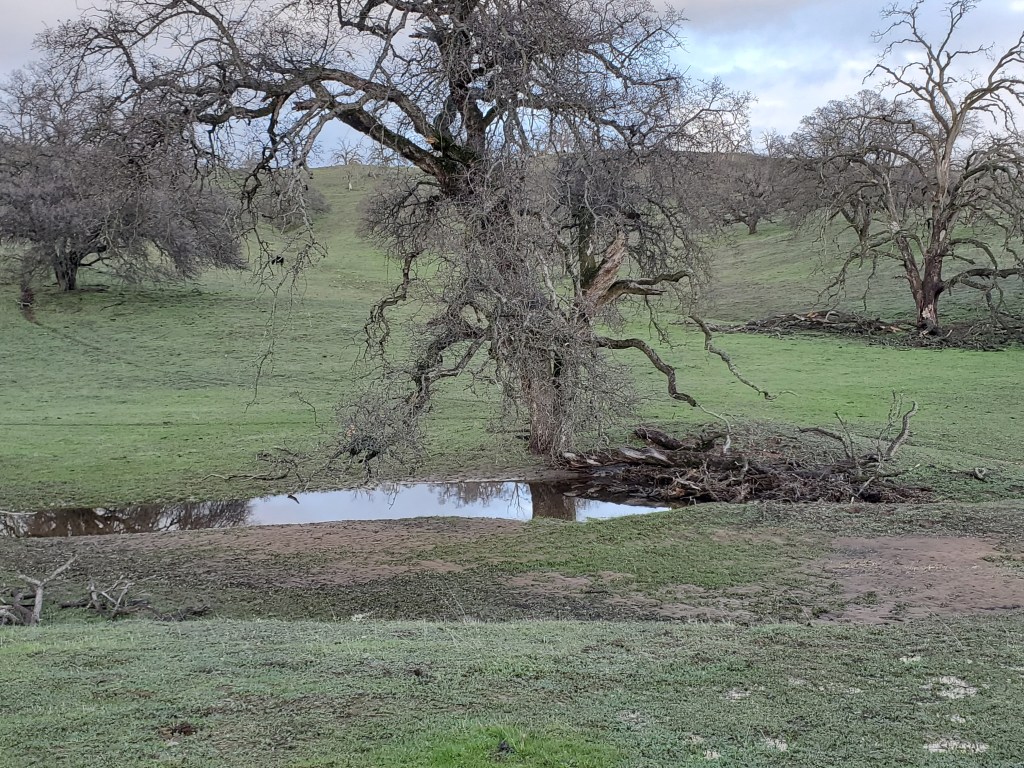
Water is both a destructive and a life-giving force. The recent series of storms have required the evacuation of towns, soiled water sources, torn up creeks and rivers, and resulted in loss of life. However, this water will also help start seeds, fill up low reservoirs, clean up debris in stream beds, and bring life to many a creature just waiting for the right amount moisture, like frogs. We have not had an abundance of frogs for several years. The ground has been too dry and standing water too warm. As you can imagine, with all the water across thousands of open acres, the frogs sing an amphibian anthem to life and water. Oh how I love hearing their cacophony of croaks and chirps.

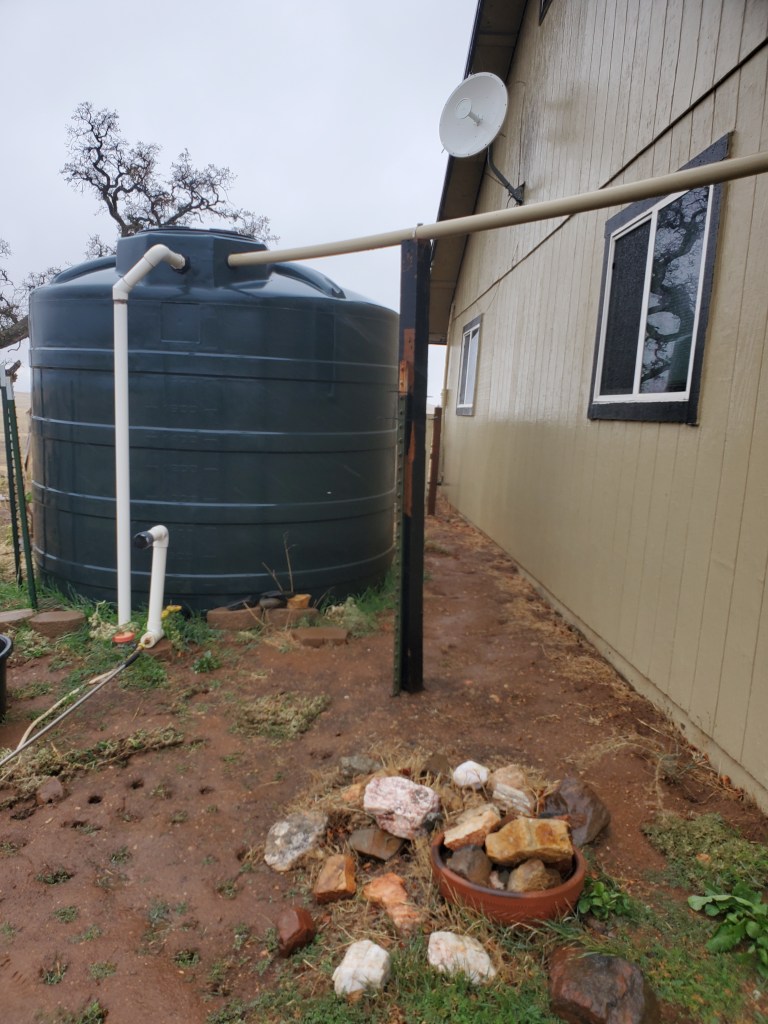
The rain has also filled my rainwater tanks, which will keep new pollinator plants alive when temperatures soar past 100 degrees later this year. Although it is a soggy, muddy mess out here, I am filled with gratitude and joy. Chiokoe uttesia va’am (Thank you water).

The Xerces plants are doing extremely well with all the rain. Some of the mature plants are looking over watered, but still very healthy.

Stewardship: More Than Just Brawn

There are many types of “seeds” one must plant to produce a better future for our non-human relatives. Last week, Tara (Southern Sierra Miwuk Nation) and I provided comments at the California Wildlife Conservation Board meeting in support of a grant opportunity that would benefit Mariposa County and fund the Pollinator Team for another five years (The Board voted “Yes”!!). I have written and co-written grants, sent written comments on policy changes and tried to work with my county on pesticide/herbicide use reform. I also continue to learn so that I can be more effective as a habitat restorer and as an advocate. In December, I attended the Intertribal Agricultural Council conference – very cool. In February, I will attend the Community Alliance with Family Farmers (CAFF) Small Farms Conference. I am also thinking about getting certified as a Pollinator Steward. It is a little expensive and not entirely in my career area, but it is something I enjoy. Thinking about it.

November: Rain to Cold to Warm Again with Cold Nights and Dry. Blooms, Butterflies (still) and Falling Trees

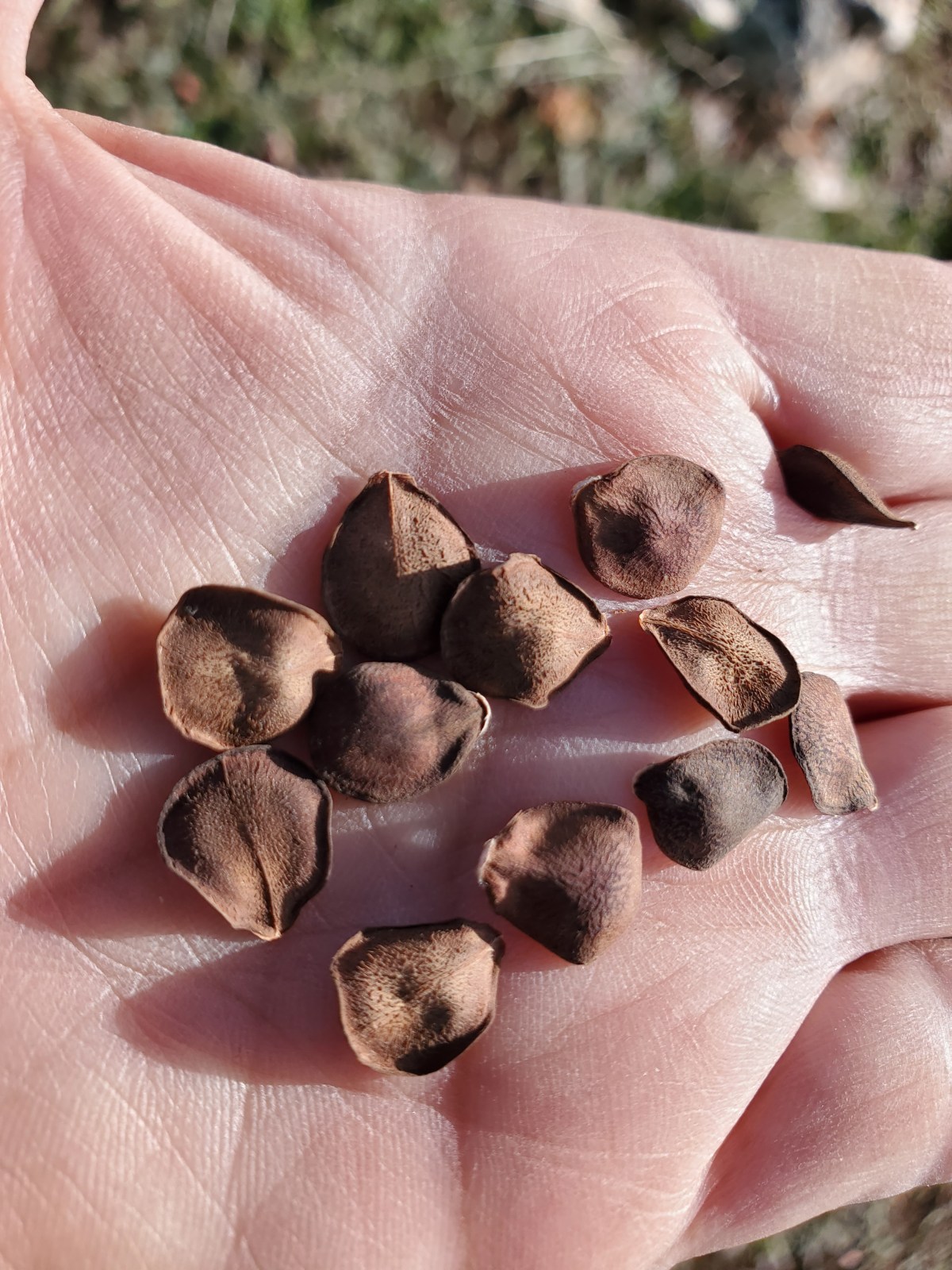
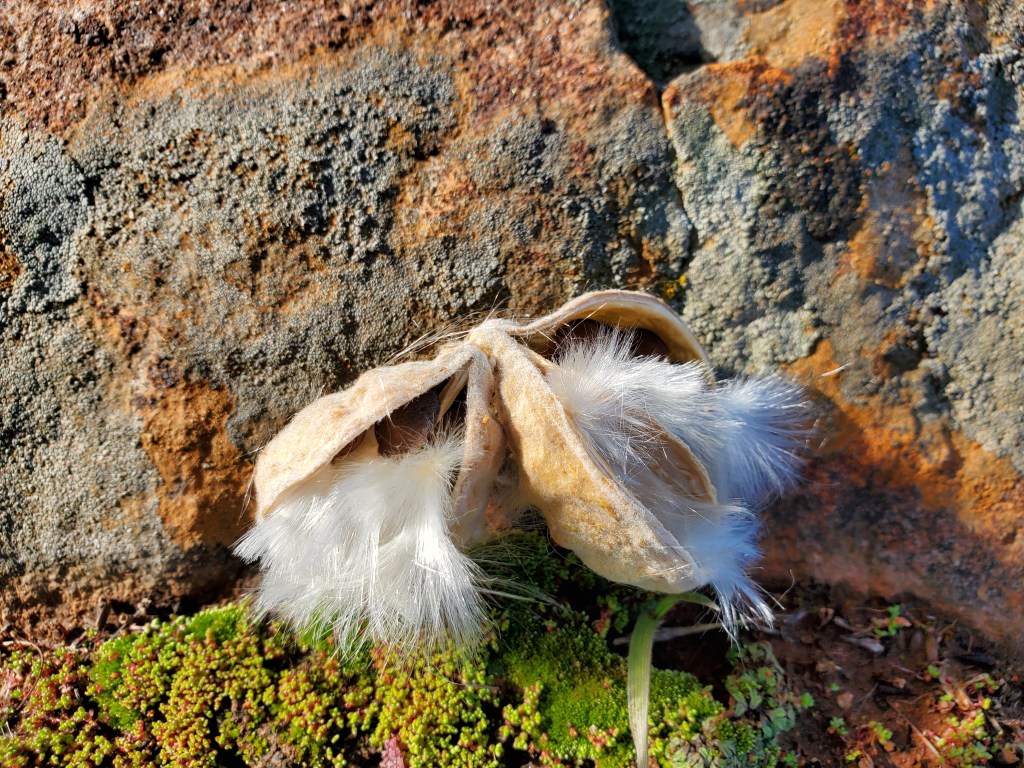
Narrowleaf milkweed seeds ready to float to their next life

With the exception of early November, it has been dry. The early month rain was wonderful, but we need more sustained days to really get the ground and creeks back to typical functioning. Although there have been cold days, the sun has come out and created warm temperatures. There are still butterflies and blooms, bees and bugs of all sorts. We all need rest, and this lengthened growing season is not healthy for any of us – soil, bugs, plants…me.

The garden is still going strong too. I have made wonderful salads for family and friends for over a month now. Would you believe that I still have tomatoes growing?! The tomato plants are definitely showing signs of cold, but the blooms are still converting to fruit. It is not hot enough to turn the tomatoes to red, but I am thinking I will make a sizable green tomato salsa.

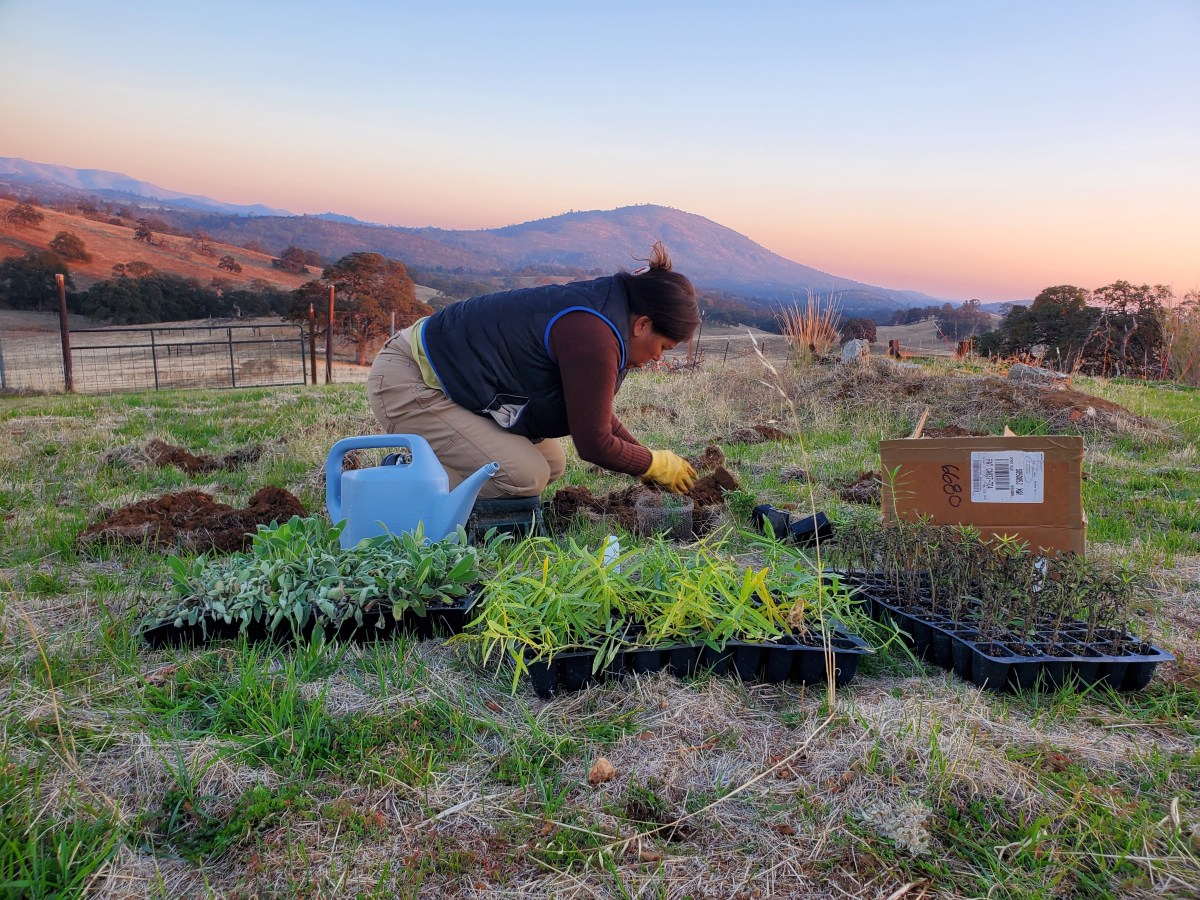
Xerces Plants Almost All Planted – Whew!

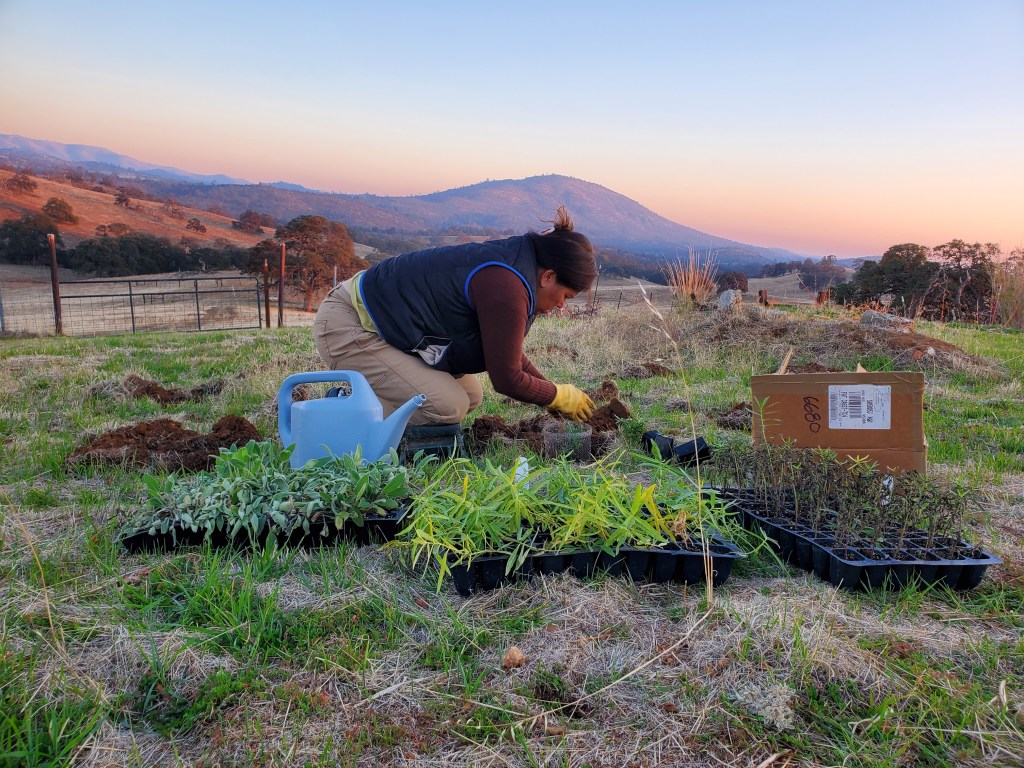
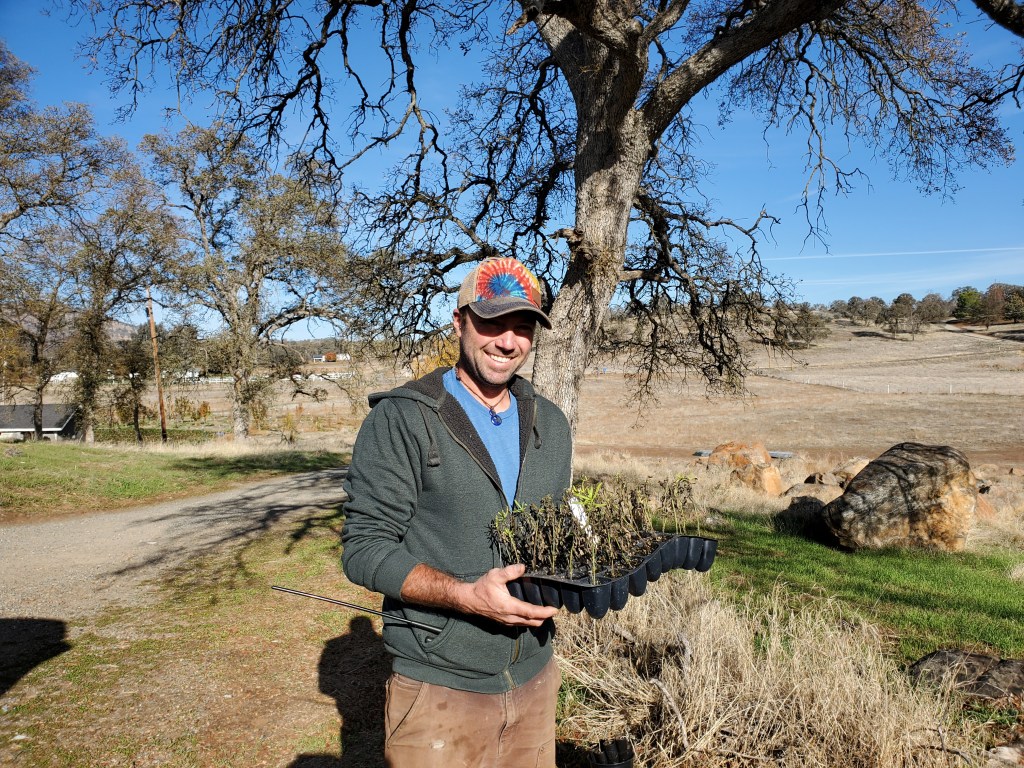
I am down to 31 nectar plants to plant and around 30 milkweed plants. This may sound like a lot, and it is, but I started with well over 200. Because Xerces had some extra plants they provided and because my water situation changed for the worse since the time I submitted my request to participate with them, I enlisted the help of some friends to plant at their more lush, water-rich properties. I gave friends, Raw Roots Farm (Lauren and Andrew Gliken) and Letha Goger some milkweed and nectar plants to augment their existing habitat.

Raw Roots is located along Owens Creek in Catheys Valley. They already have a large stand of narrowleaf in a low-lying, moist area of their farm. Most importantly, they already have an irrigation system to support the plants in the first couple years and in dry times. Fortunately, Andrew’s family was visiting for the Thanksgiving holiday and were conscripted to help with the planting. I love it when families, especially children, are involved in stewarding the land. It is a strong, important lesson to teach them of their responsibility to all living things. Amazingly, while I was there dropping off some plants, a monarch flew by. WHAT! Shouldn’t they be on the coast overwintering by now? With climate change, who knows how all of us will adapt (or not). This beautiful butterfly was large. I only saw it for a moment. Andrew told me that he had caterpillars this year that he found on the corn. Interesting.

Letha Goger is the matriarch of an incredible family of people who provide exemplary public service through their paid and volunteer work. She recently volunteered to become a Xerces Ambassador. I was so excited when I heard she did that. There is something very deep in her that wants to serve the land. She has a beautiful piece of property with existing habitat and water infrastructure. On the property is the confluence of two washes and a spring fed creek – all within the Mariposa Creek watershed, I believe, and located in the area between Mariposa and Catheys Valley. Kristie Martin from the Southern Sierra Miwuk Nation’s Pollinator Team and I went to Letha’s to do an assessment and make recommendations. She has a great spring and moisture-rich property. Plants are happy there, and the Xerces plants will have a high likelihood of establishing. I gave her some milkweed and some nectar plants. including the California milkweed scientists are finding is so vital for the early part of the monarch migration. Letha was overjoyed. Kristie and I identified several places in the moist areas where plants would be able to establish best. There were a couple of other places closer to the house where Letha is able to irrigate them. Overall, this will be a key location in an important watershed for monarch migration adjacent to existing habitat. We are really making some headway in Mariposa County for expanding pollinator habitat.

Thank you to the Glikens and Gogers for their incredible support of pollinators from before this time to now and into the future. Chiokoe uttesia.

Water Projects

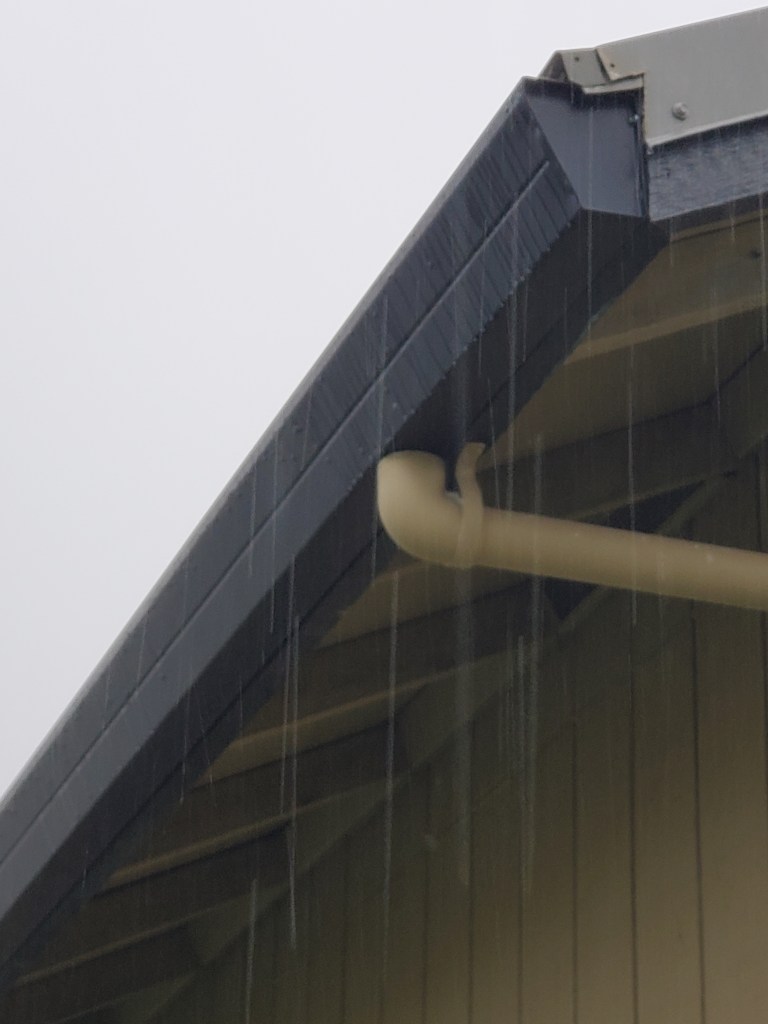
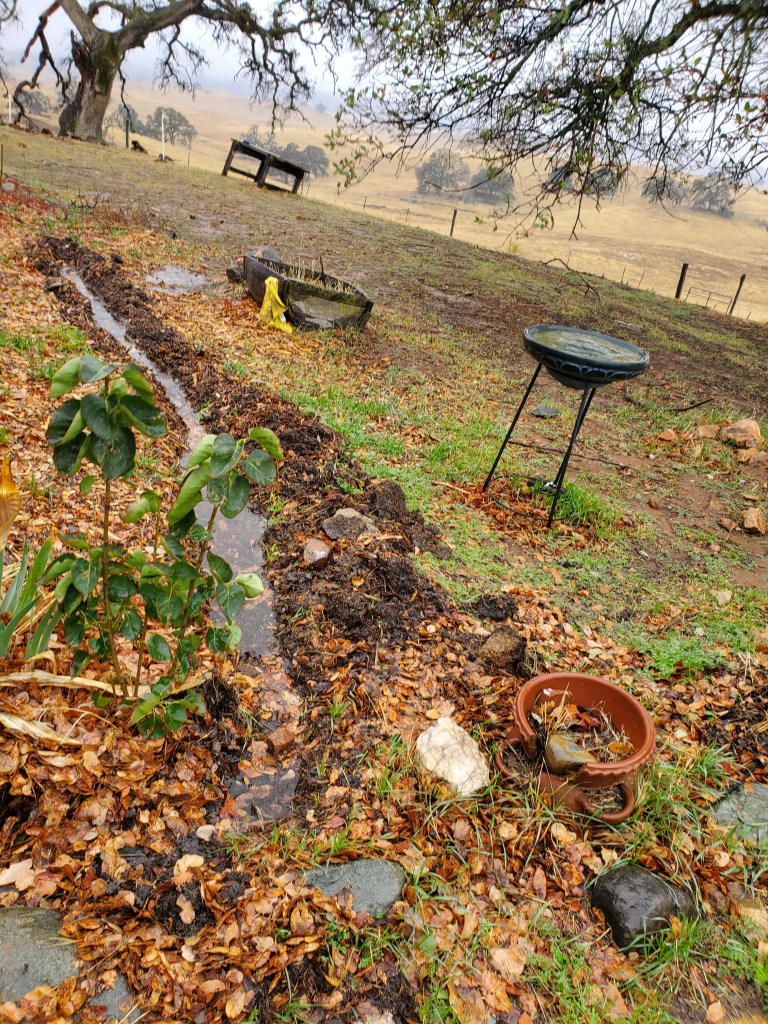
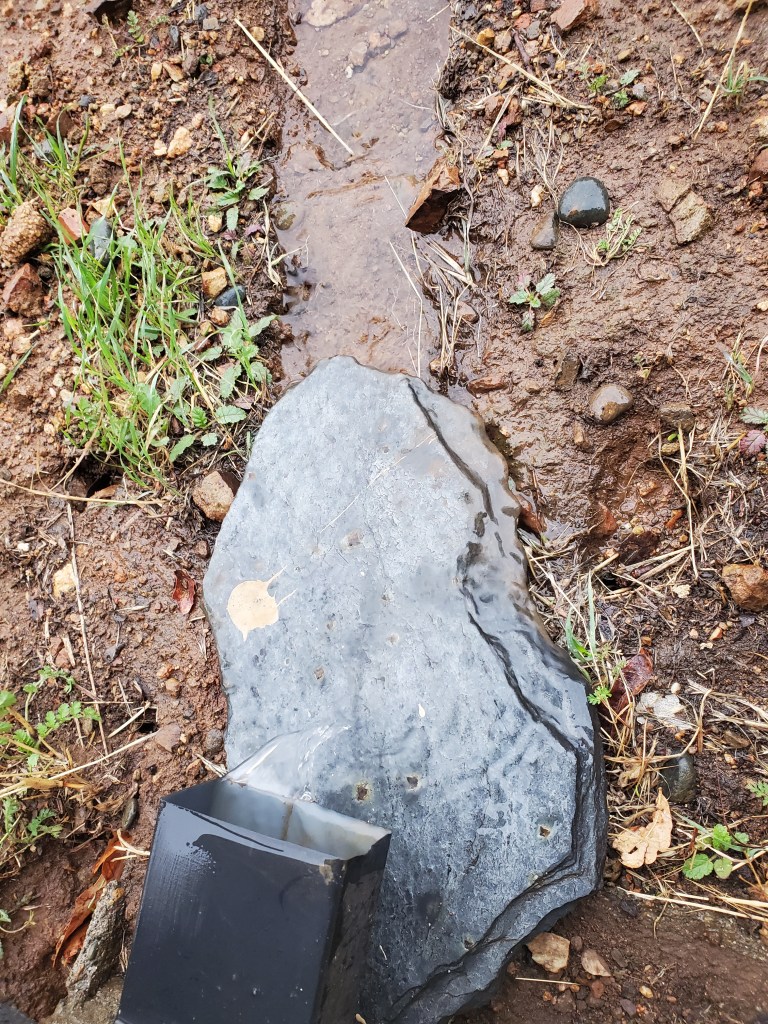
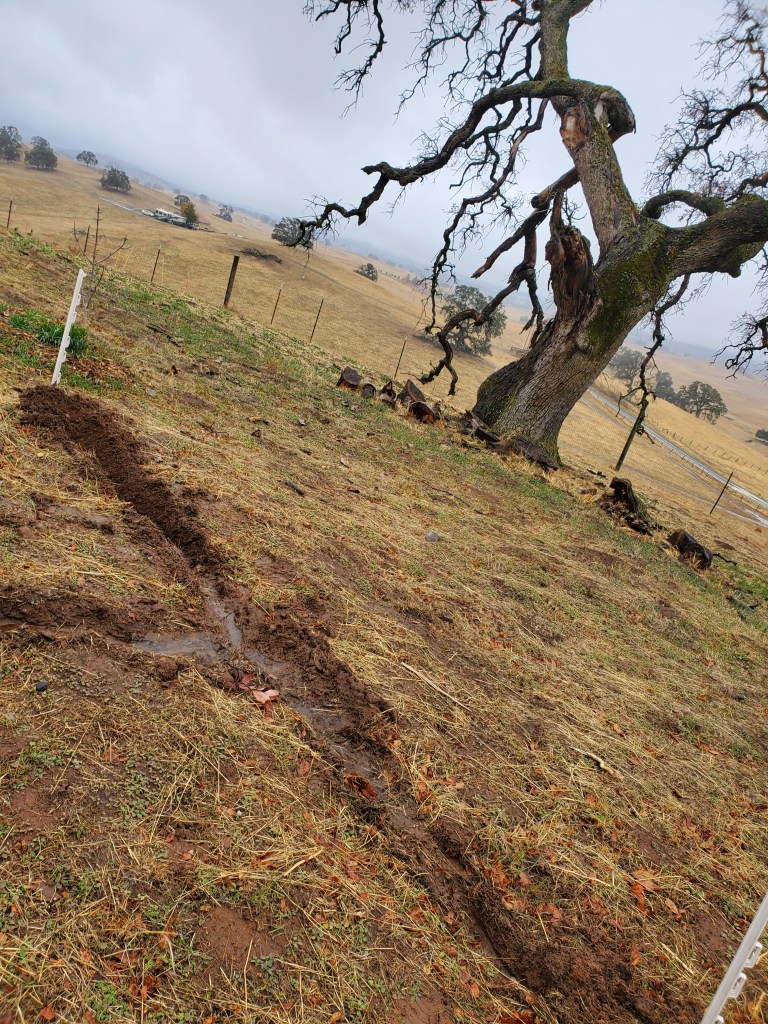
At the beginning of the month, it rained. I deepened existing rainwater channels and dug new ones to the ailing grand blue oak trees. David propped up the south rainwater tank pipe to promote better flow from the gutter point of entry, which was overflowing with the new catchment entry receptacle. The swale pond finally had standing water, even though it was just a little. I am still waiting for my cattleman to be healthy enough to take a look at my log and rock drop structure. I am anxious to get that installed to slow the runoff from the storms. Poor guy. He has had several health issues in the family all at one time. We wish them well always.

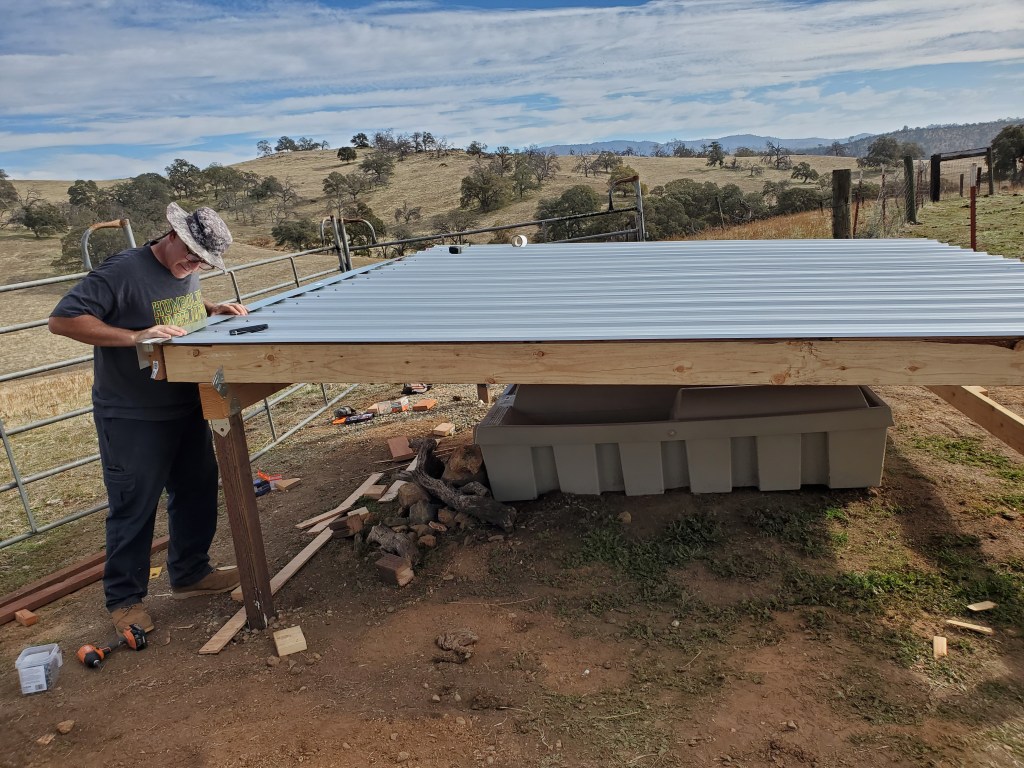
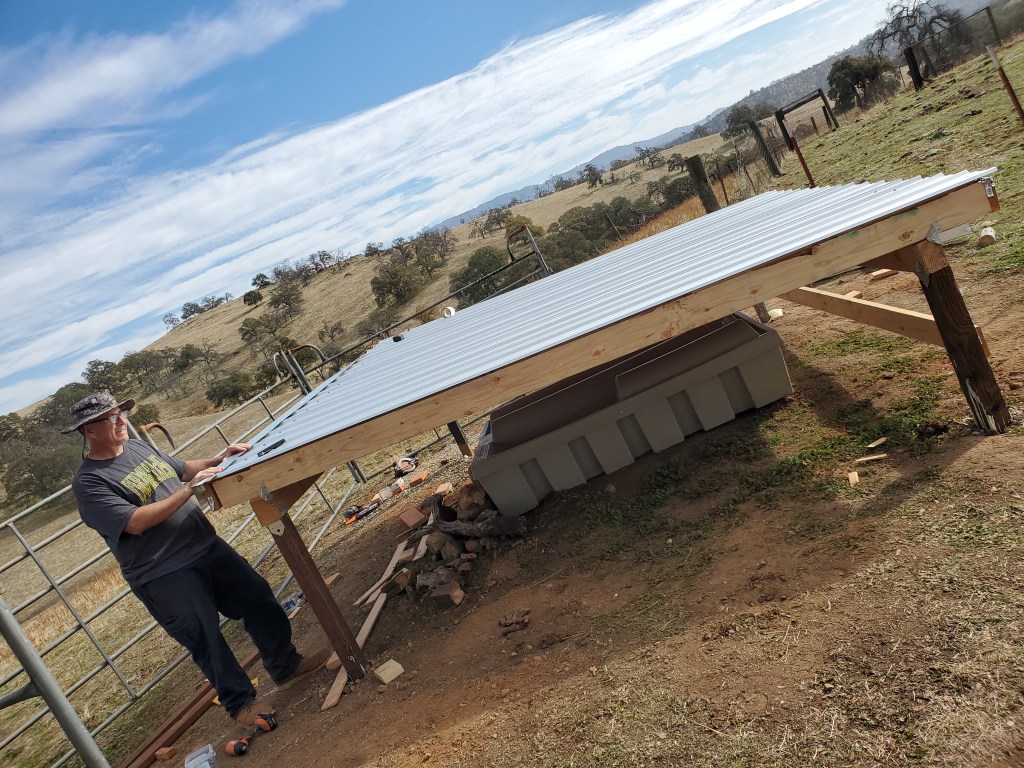
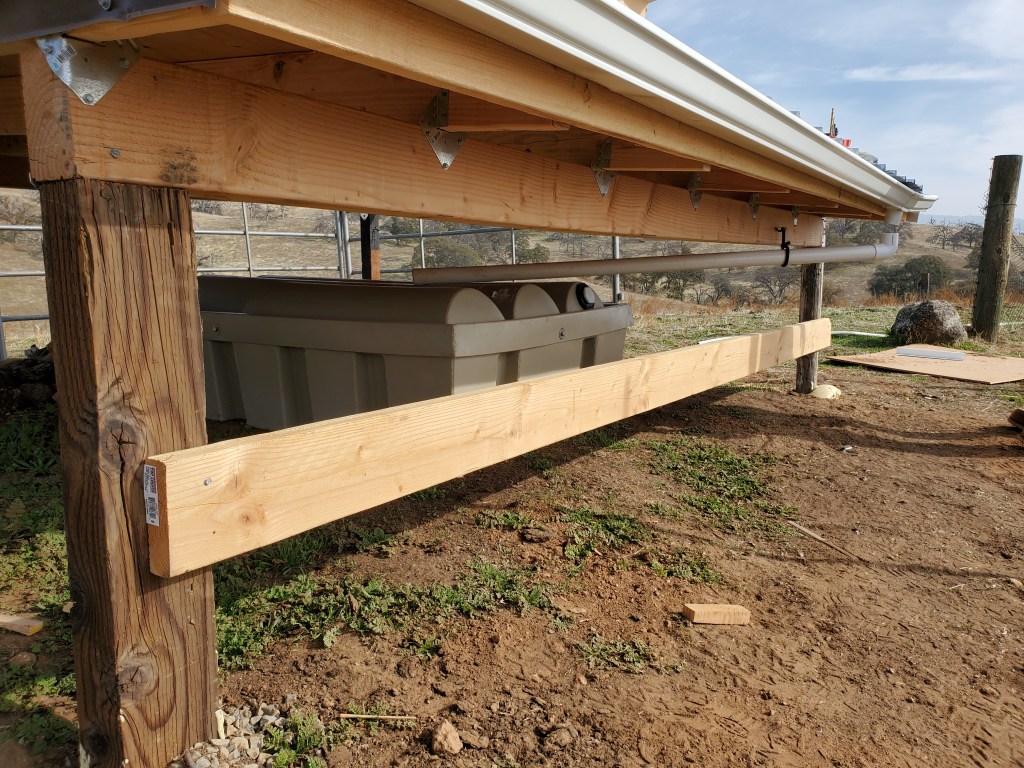
The guzzler project is almost finished. David has taken on the task of building the guzzler overhang. He is not a contractor. It has been slow going, but it saves us money. We are not wealthy people and every penny counts here. If I paid for someone to do everything, I would be broke. He has done a good job, and boy that structure looks pro!

Walking the Ranch I Find a Forest in Crisis

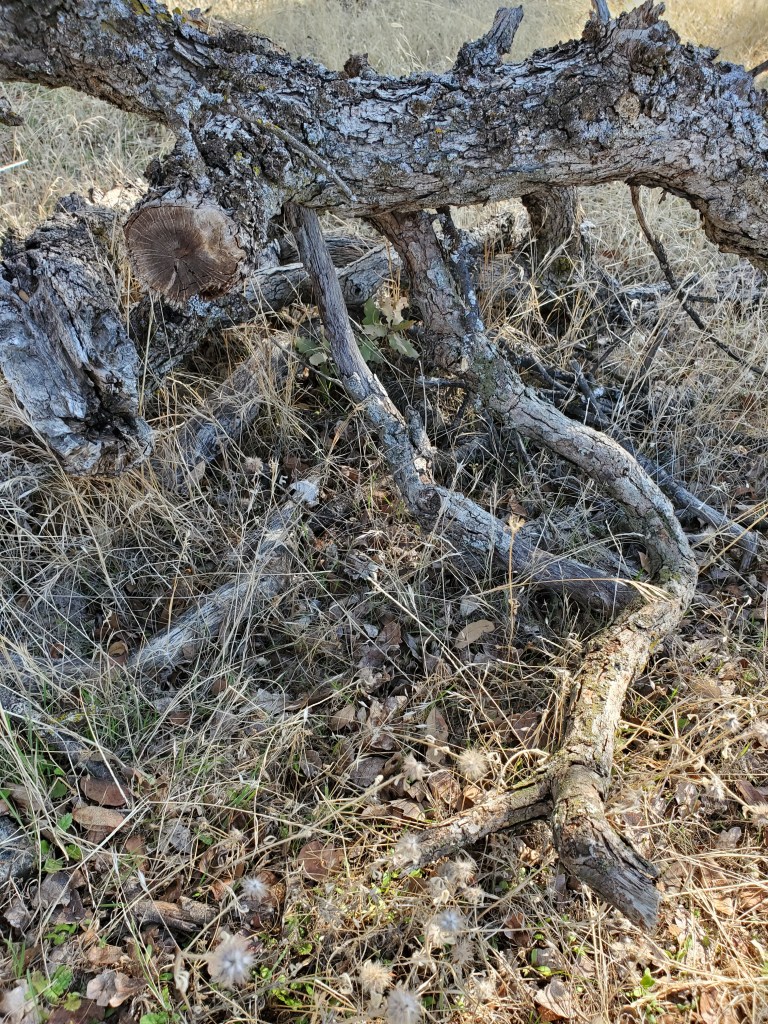
The spot I had picked out to plant the Xerces milkweed and other nectar plants is no longer viable given the intense dryness of the landscape. I have been scouting other locations, looking for existing milkweed as a sign of a good place to plant. The mid and back sections of the ranch are more forested than the open grassland of the front. Over the last three months, the decline of the forest was evident. Even if I was blind, the level of dismemberment of the trees would be noticeable. The dry crunch of leaves and smaller phalanges of branches loud and audible. The smell of dried oak and newly severed bark unmistakable. The impassibility of the trail from large branches or full trees returning to the ground from their skyward heights tactile.

I no longer feel comforted as I walk through the woods. I feel anxious. I feel uncomfortable. It is as if a great windstorm swirled through leaving wood all over the land and full trees tumbled. I will not walk under any dying or already dead tree for fear of a limb dropping. I keep the dogs close or not bring them with me at all. You can hear the echos of something stepping, wood moving, limbs cracking. It could be a distance away or over your shoulder. The forest is dying.

I can only hope that the clearance of so many trees and branches allows the others to flourish. Something deep within my heart tells me that very little can thrive in such detritus and dryness. Water is life and there is little, so very little, water on the surface, within the soil or absorbed into the fractures and cracks underneath the land. I will do what I can, but the issue is larger than me.

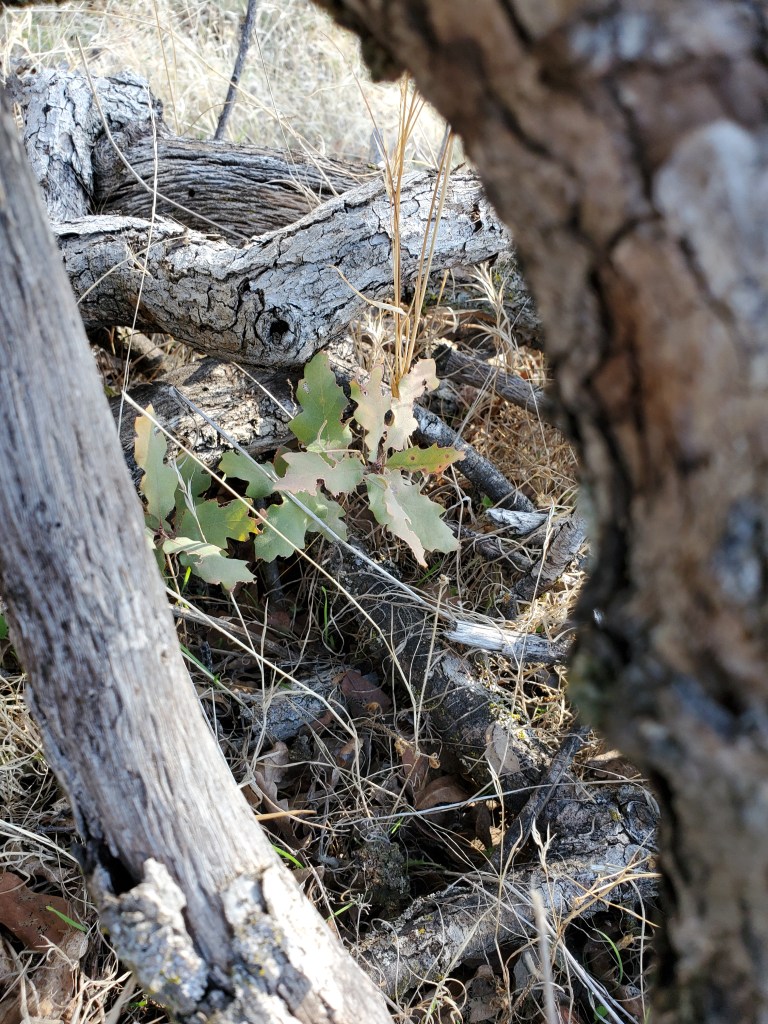
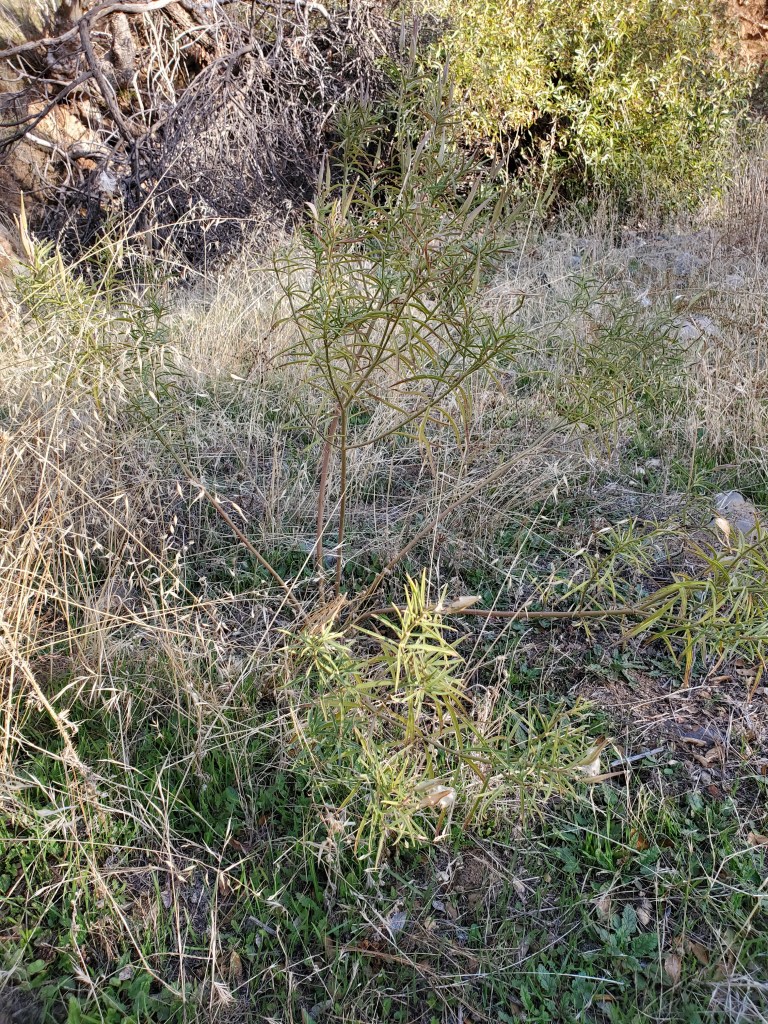
My constitution cannot tolerate depression and gloom for long. Fortunately, I am not built that way. So…I look for signs, anything, to convey hope, repair, life. First, I see deer grass that I did not plant. Then, I see the remains of a multitude of vinegarweed, plants I had only seen one or two of in years previous. I continue my walk and see a healthy black oak seedling and a healthy cottonwood seedling. I find more than 30 blue oak “babies”. Finally, I see what I am looking for – a nearly 4 foot tall wild narrowleaf milkweed with seed pods galore. This is the place I will plant – the place where I will work in partnership with in malla, u bwia (my mother, the land), and together, we will start over. We will heal.