100th Post

Wacky AI generated image

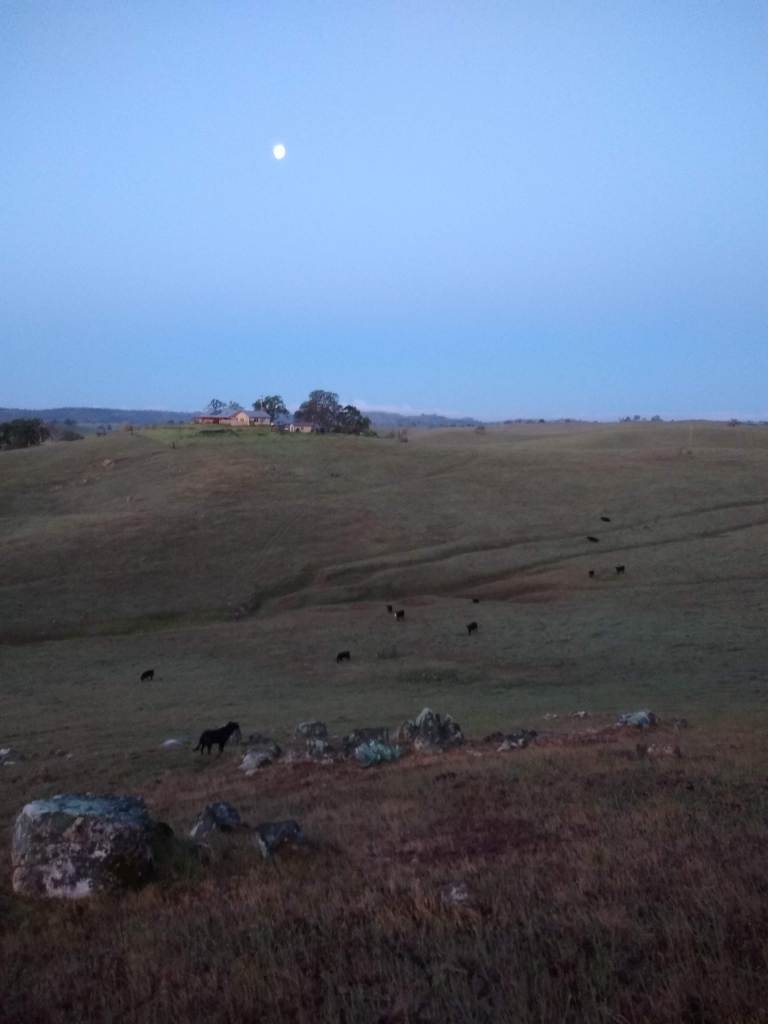
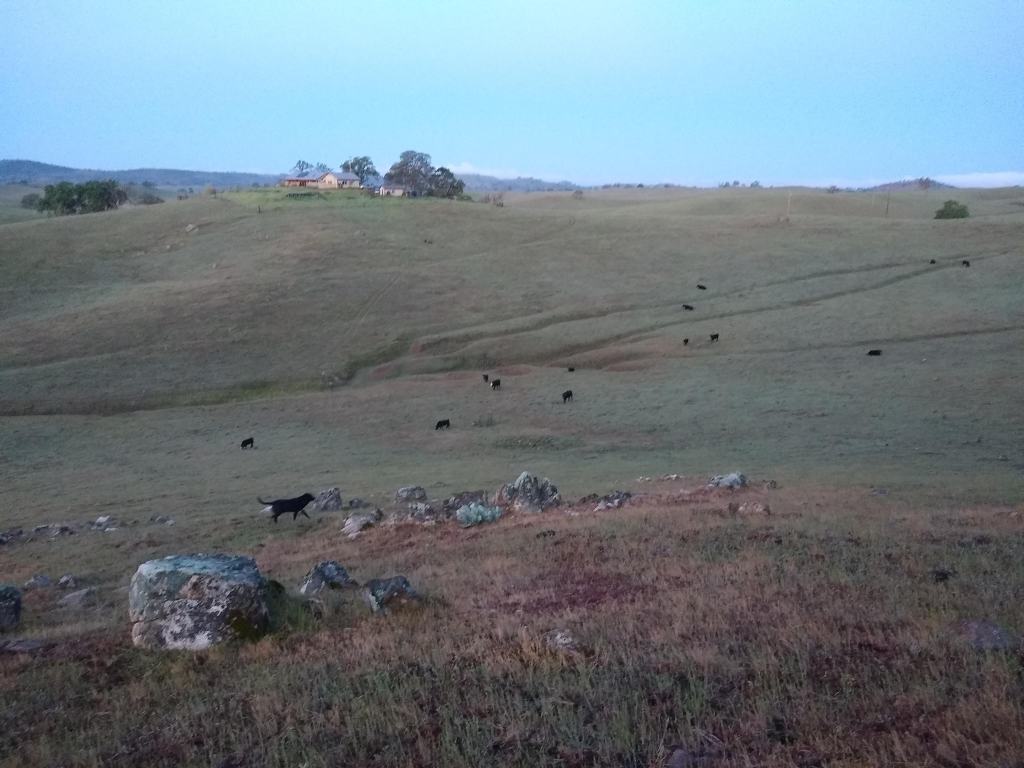
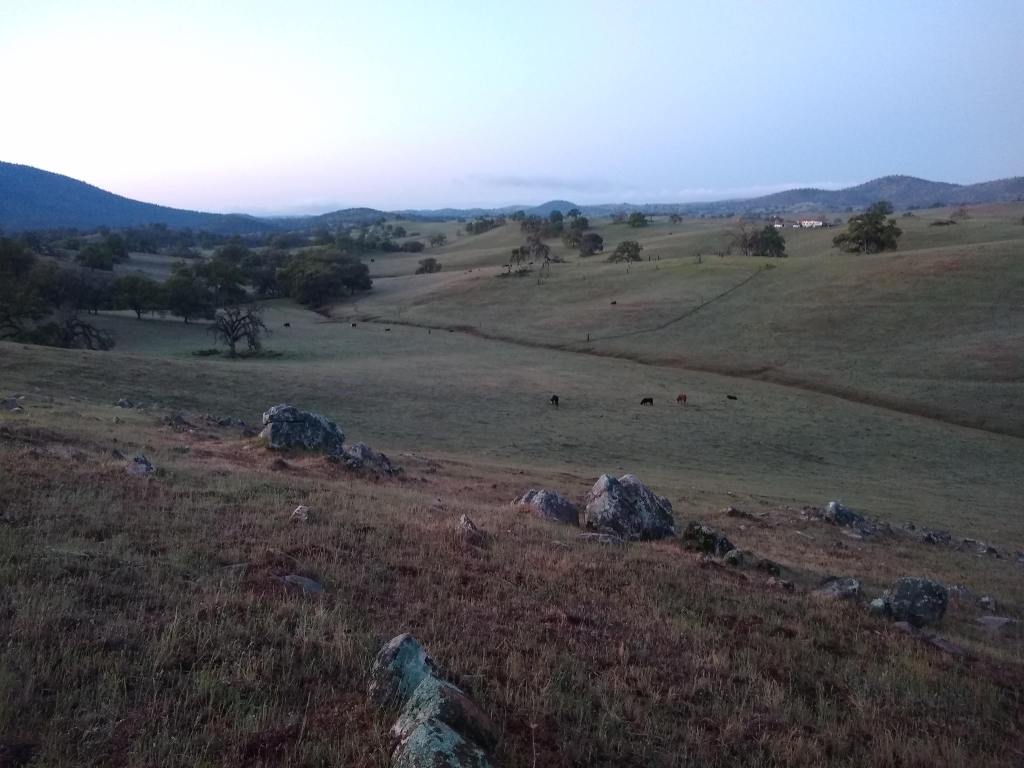
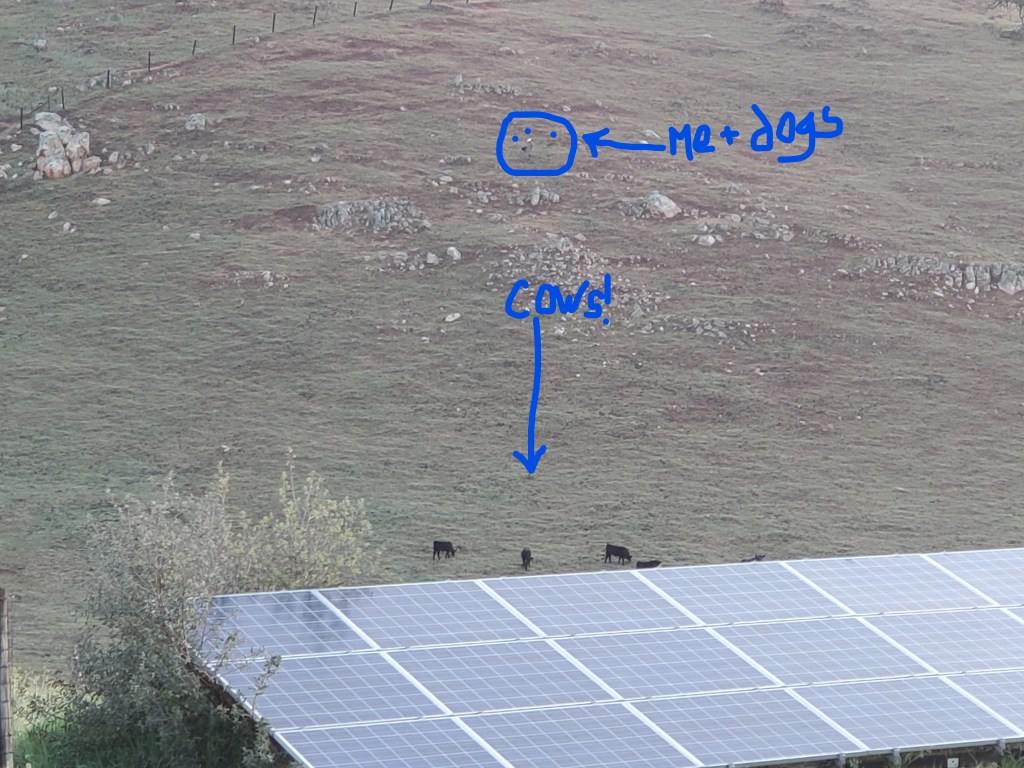
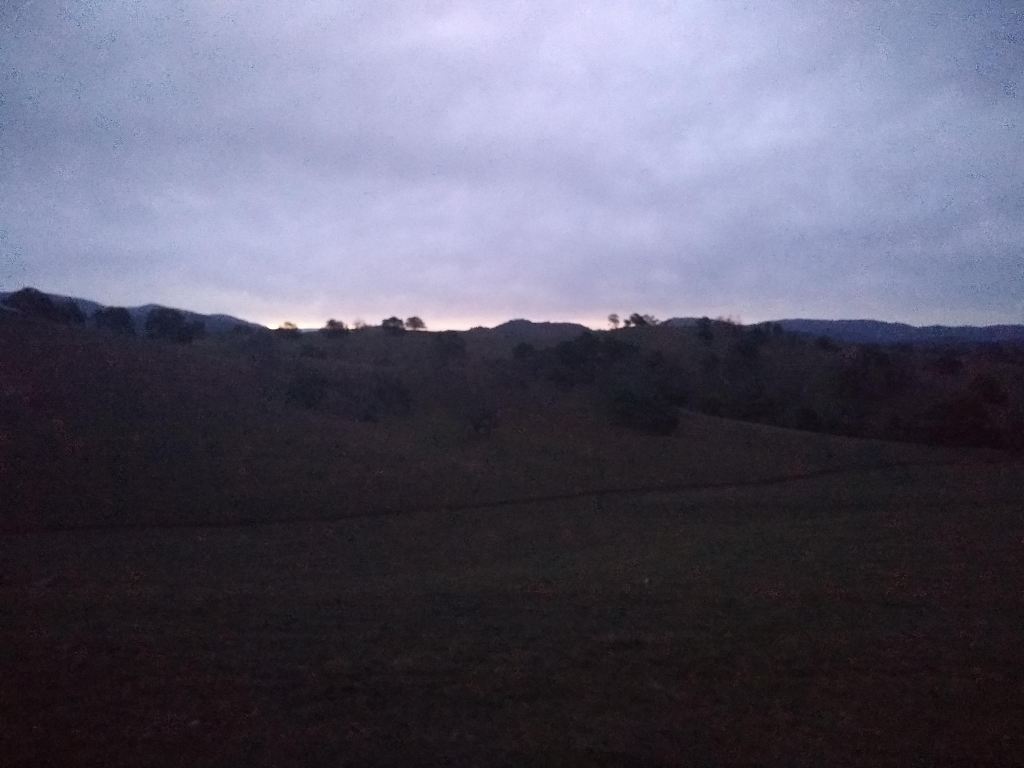
It’s early Sunday morning. The sun is not up. I’ve been up doing chores, feeding animals, opening windows to allow the cool air, laden with scent, into the house. It is barely light, getting lighter. The birds start to sing. First one chirp, which leads to two then it all begins. I step into my boots, dogs at my heels and head out – pulled, then lightly pushed by the cool air now gently swirling in the house.

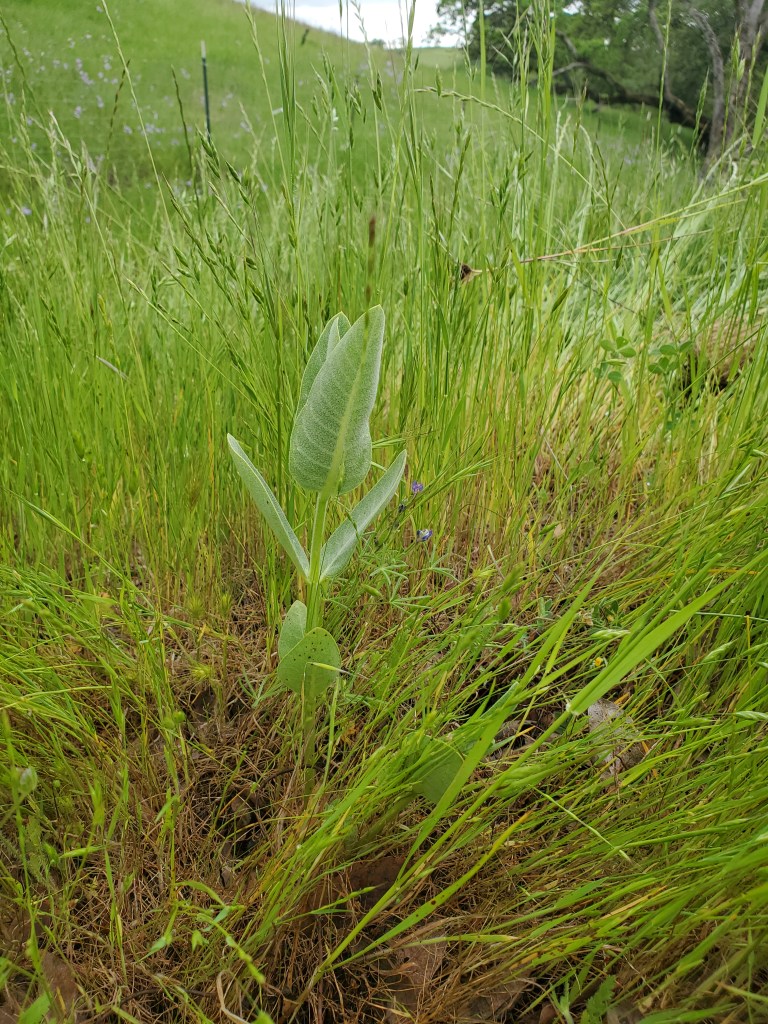
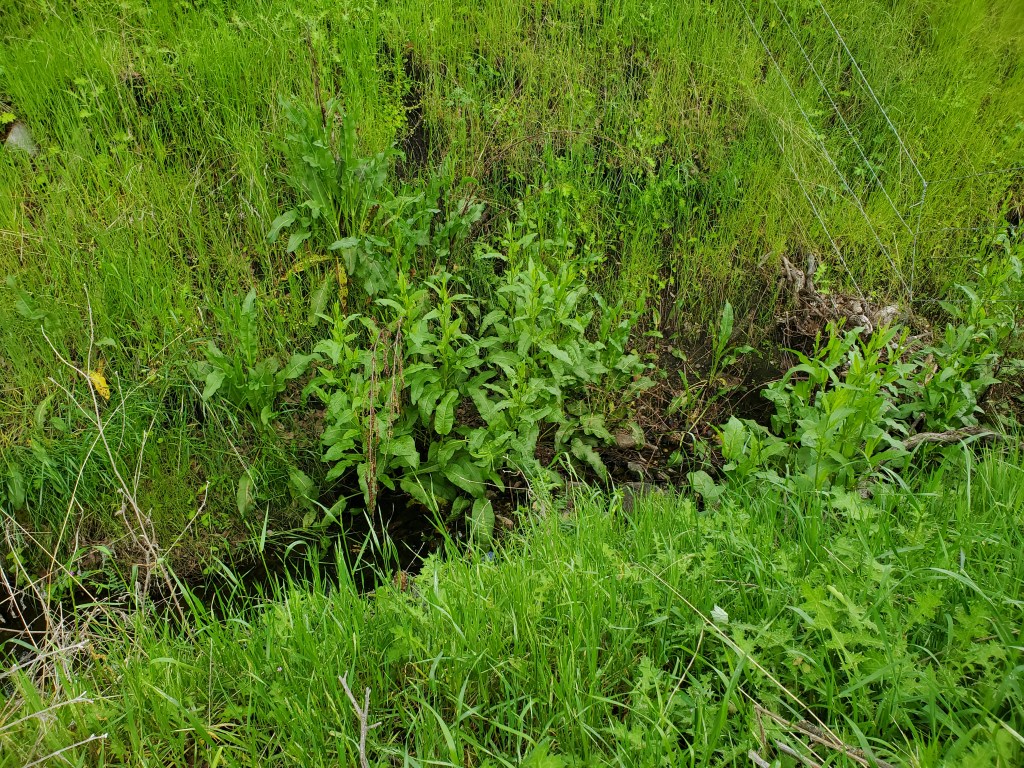
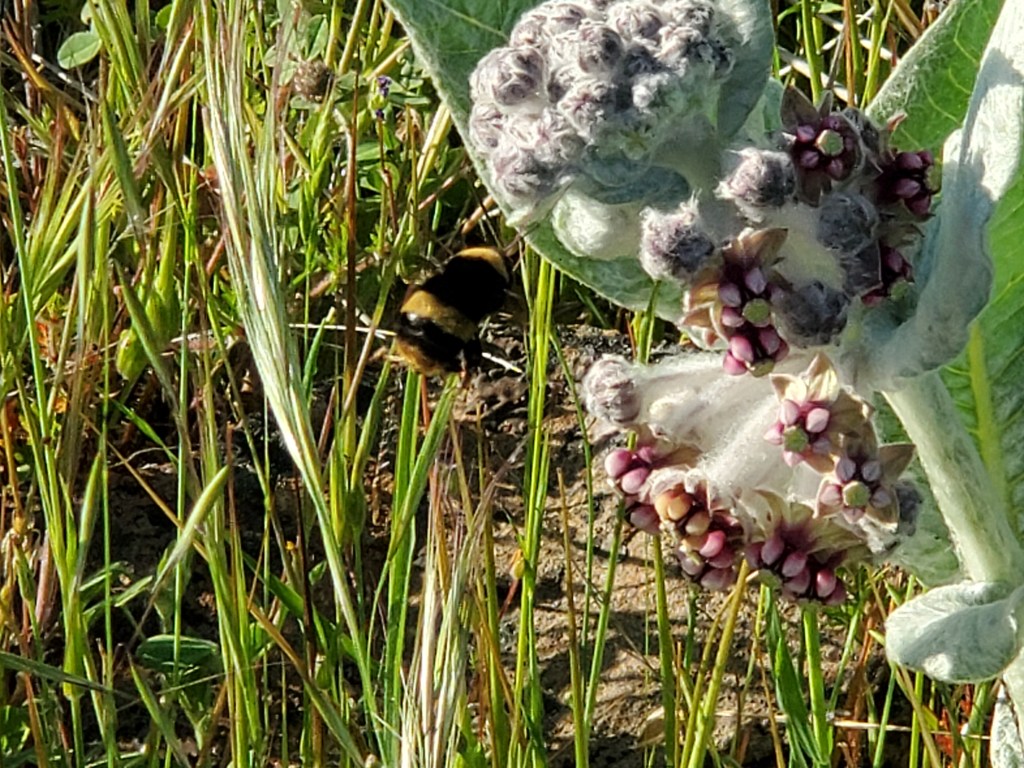
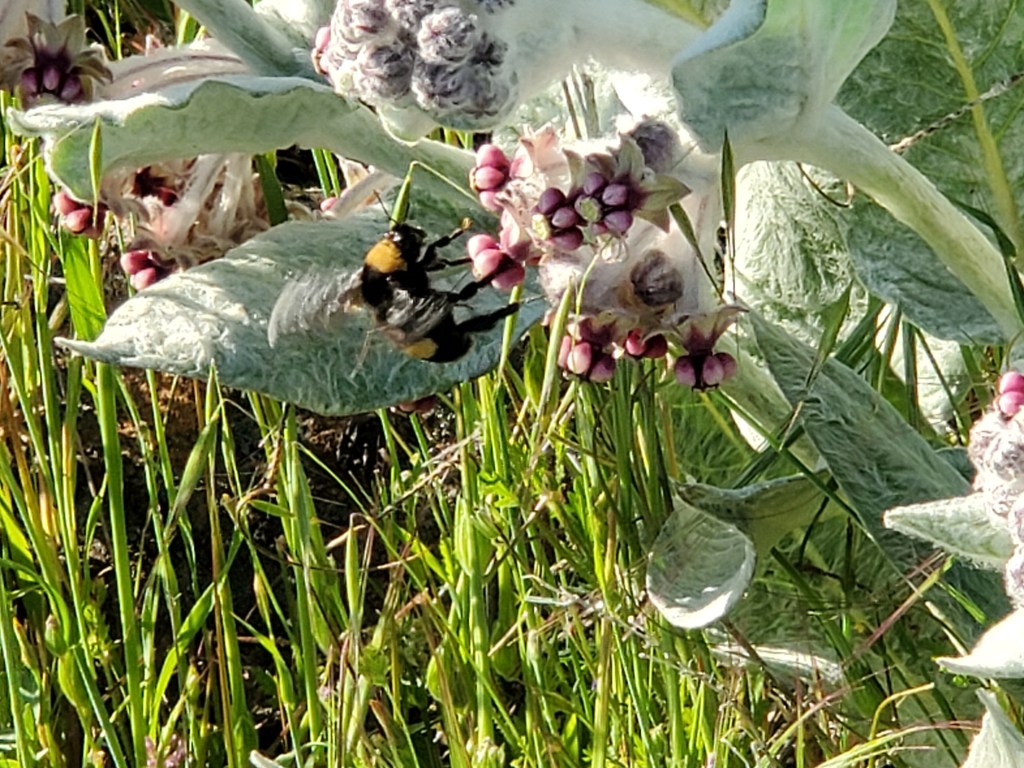
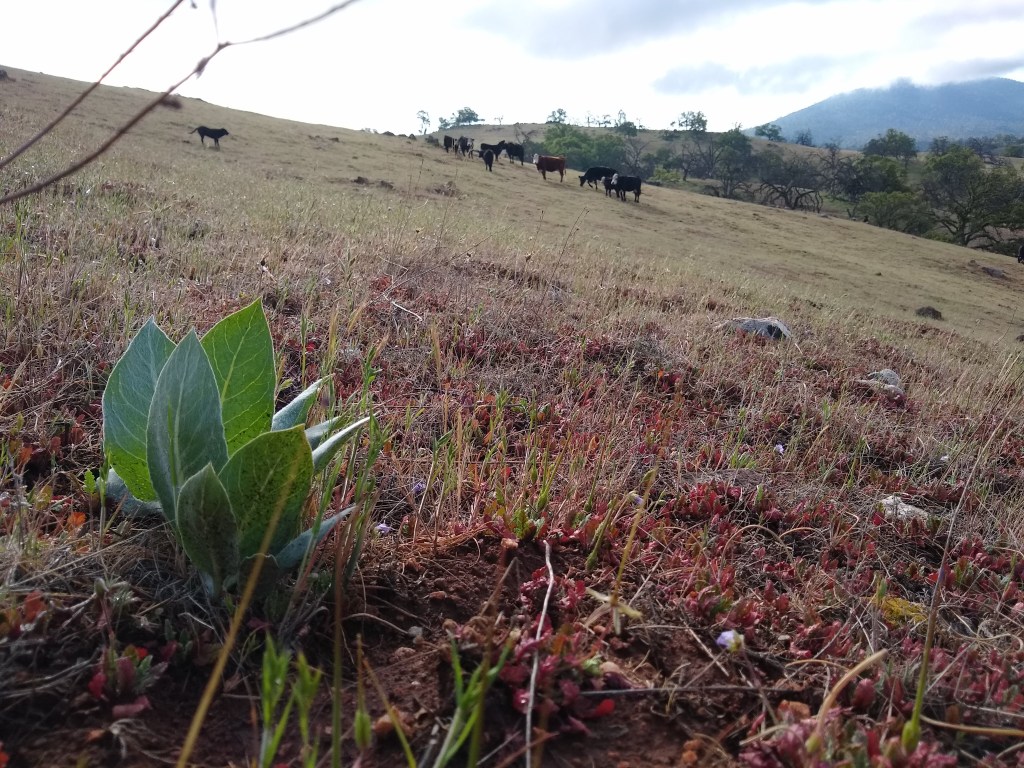
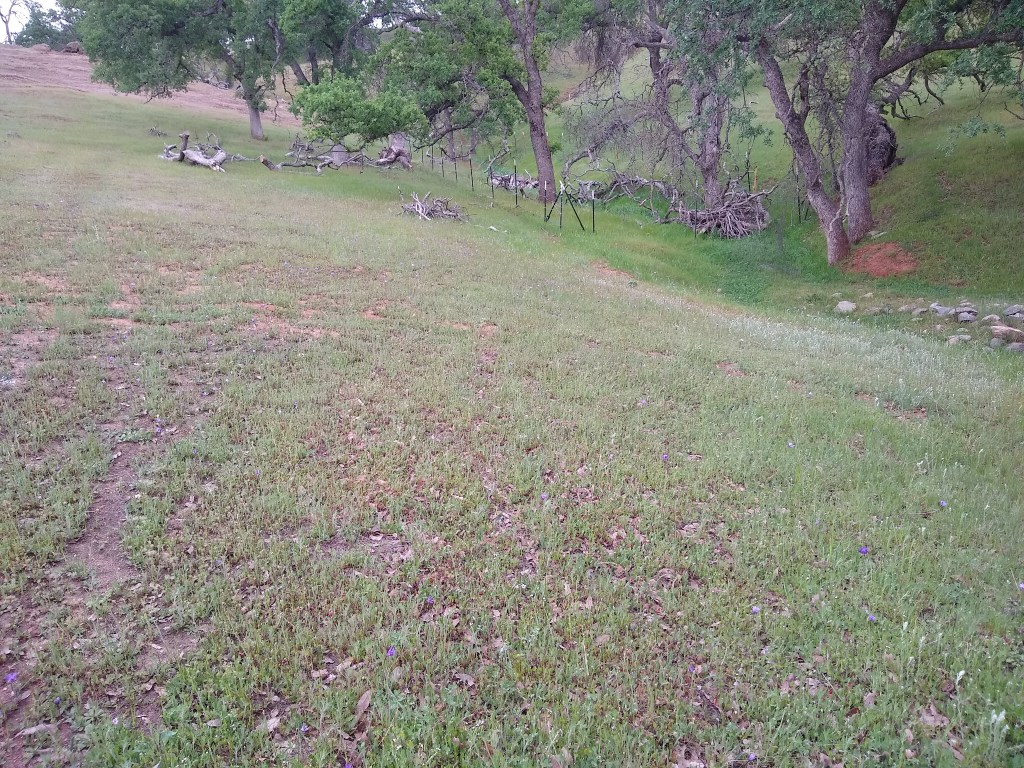
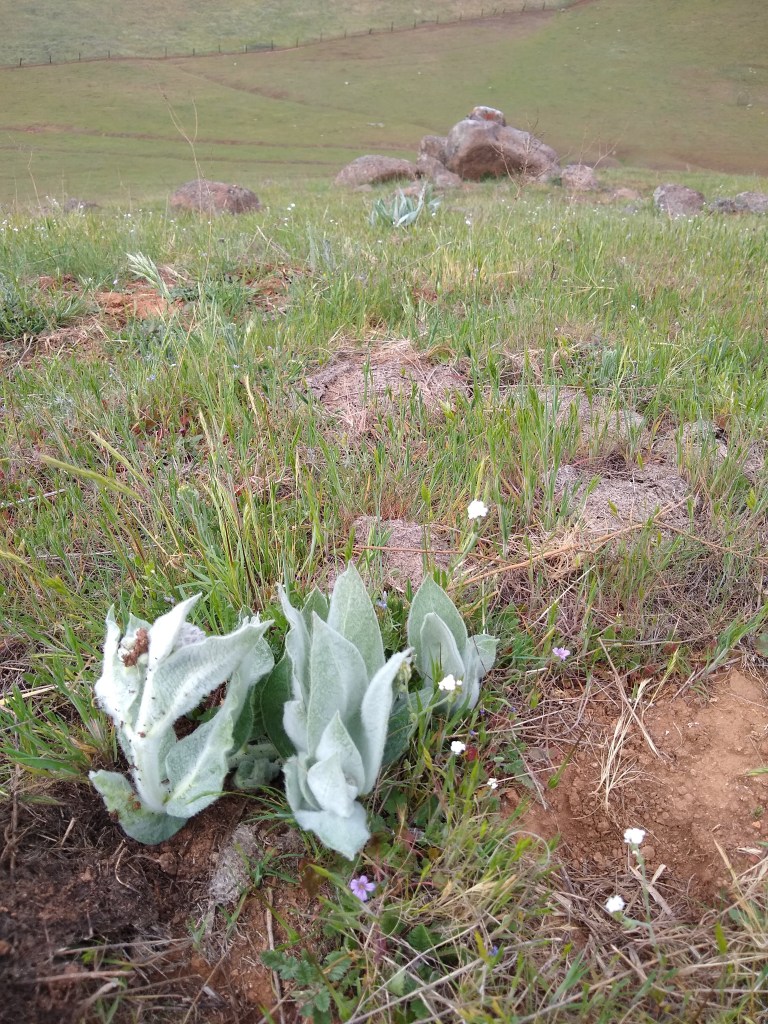
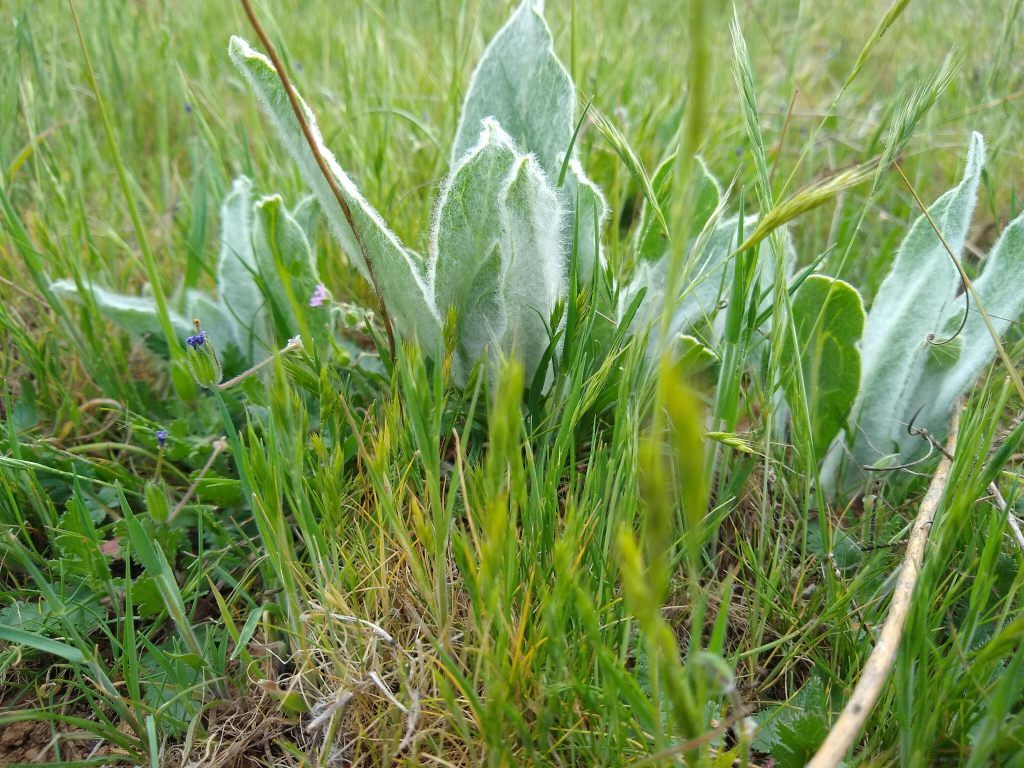
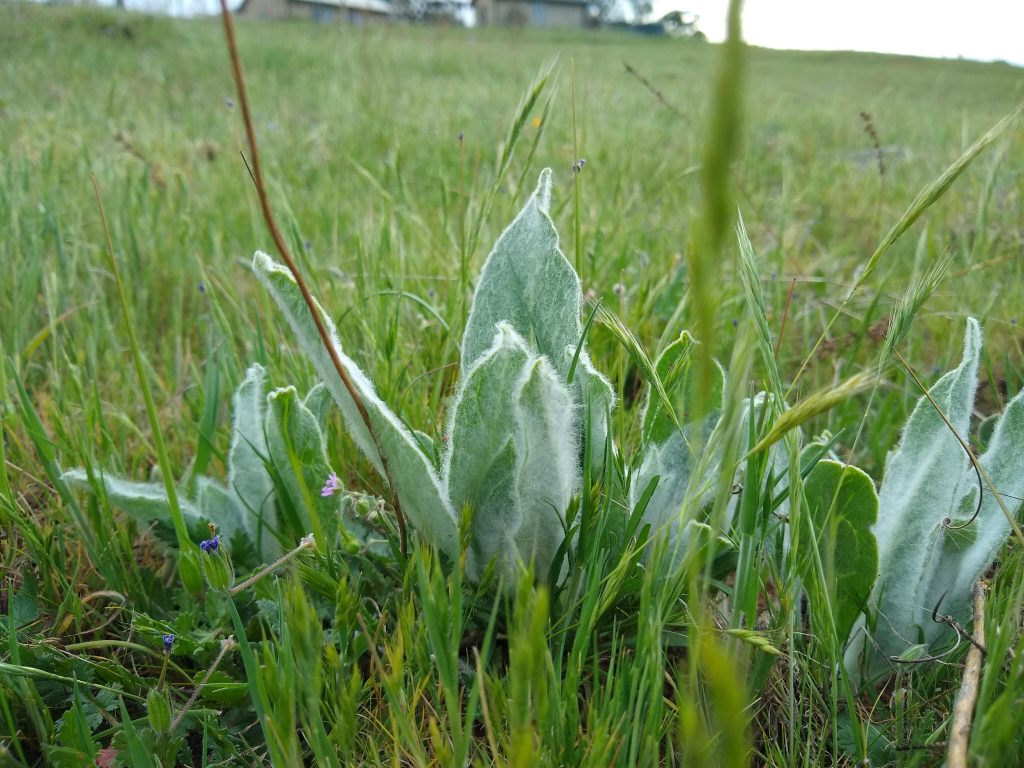
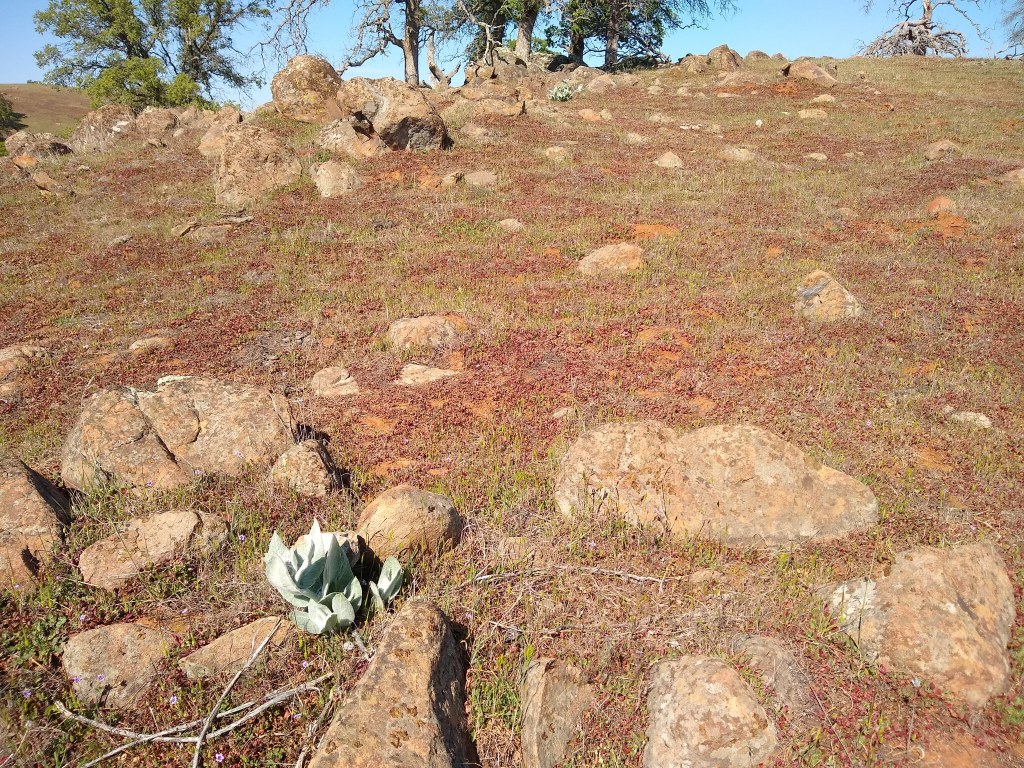
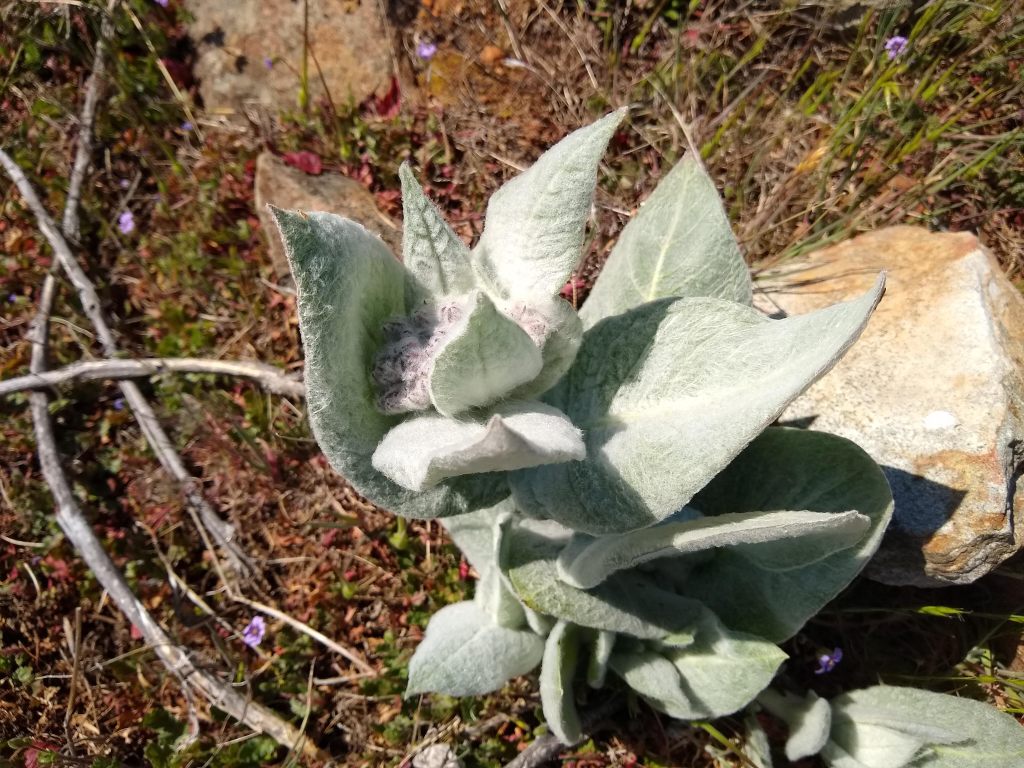
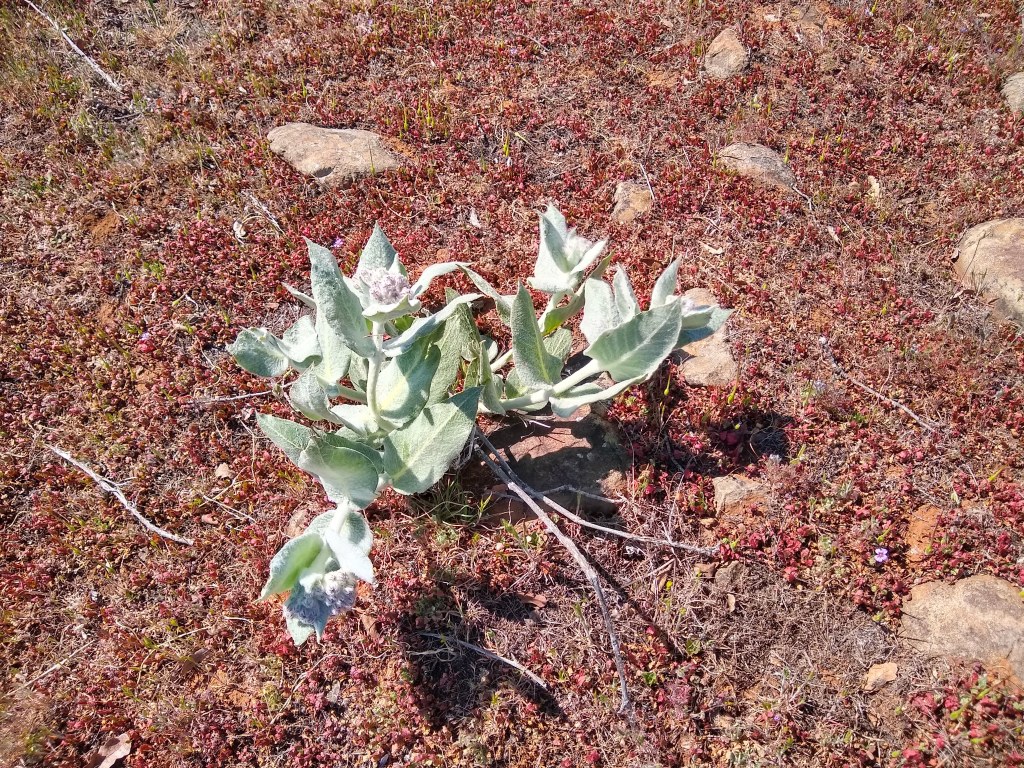
The ground is soaked from the dew. My boots collect the moisture along with leaves and purple pedals from the thousands of small flowers, close to the earth, lining my path. I check the milkweeds. They are stretched into the air bolstered by days of sun as they break through the invasive grasses that block the light. I examine the space to see if more are there. They are, and I breath, grateful for the resilience of these plants.

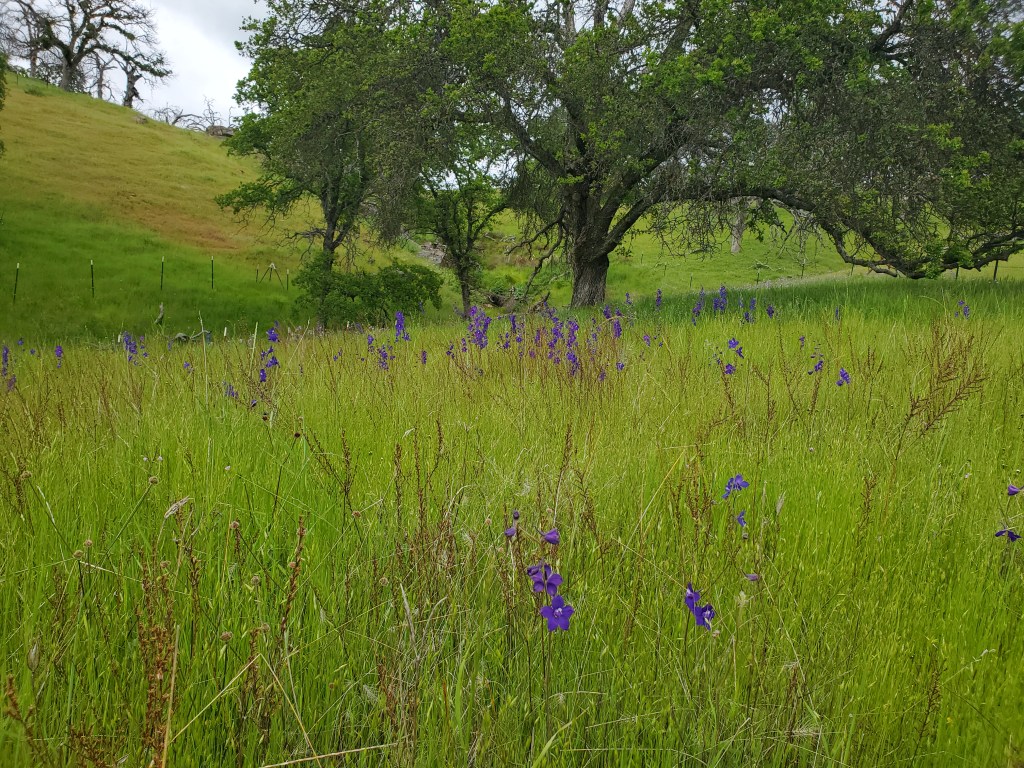
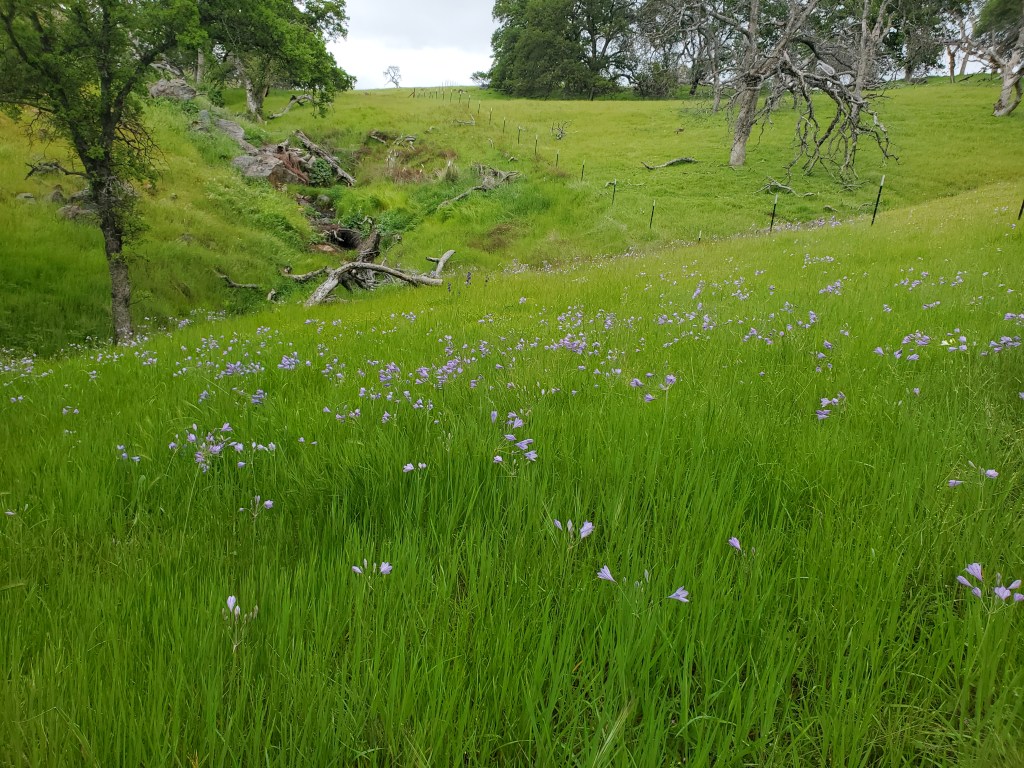
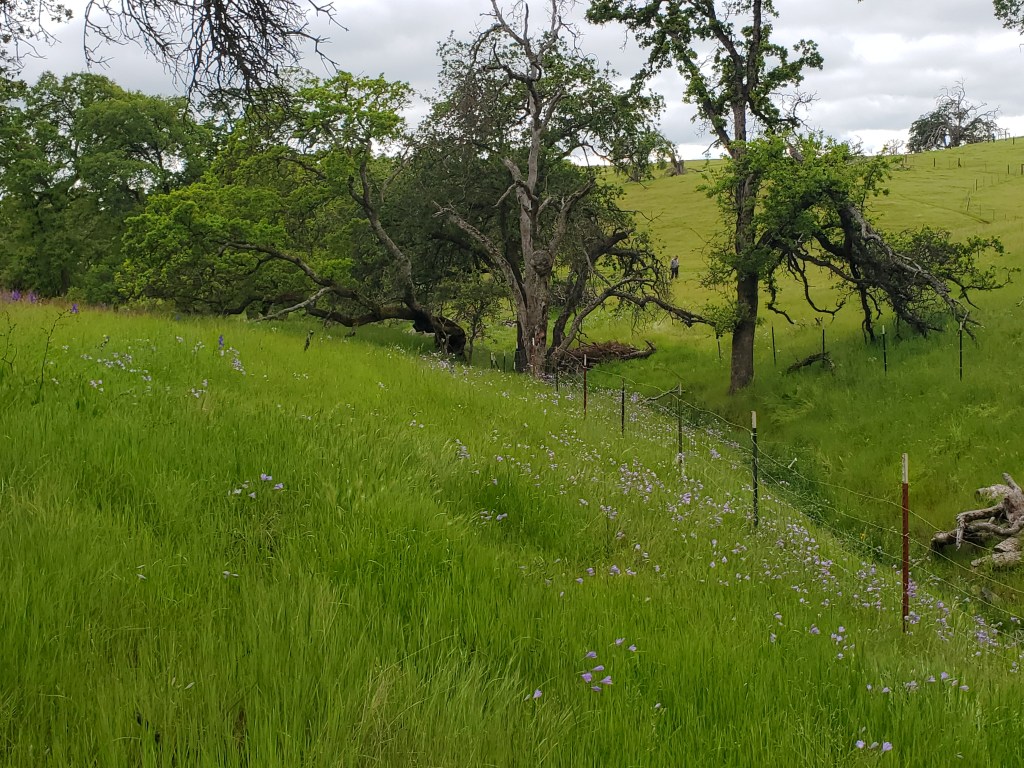
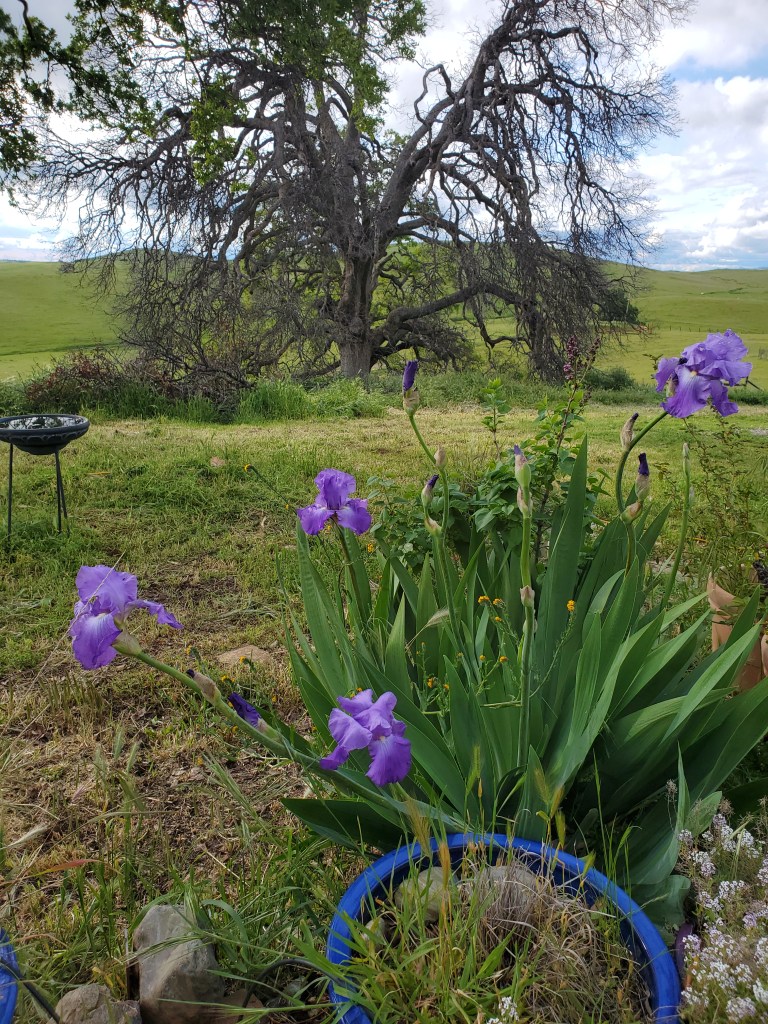
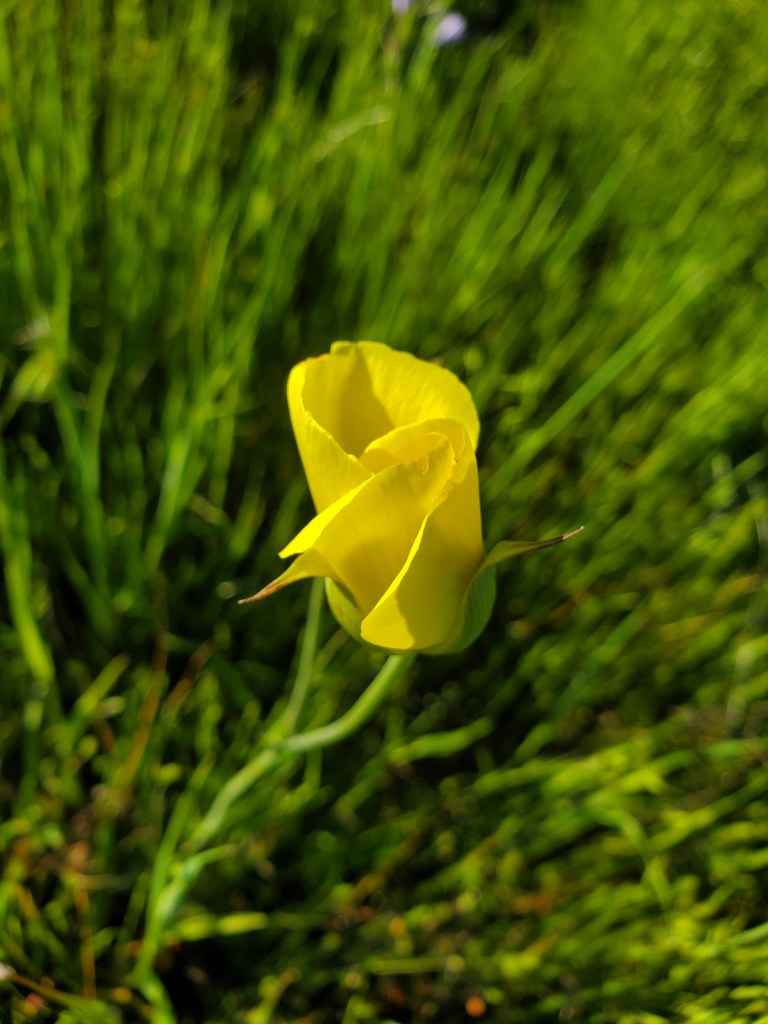
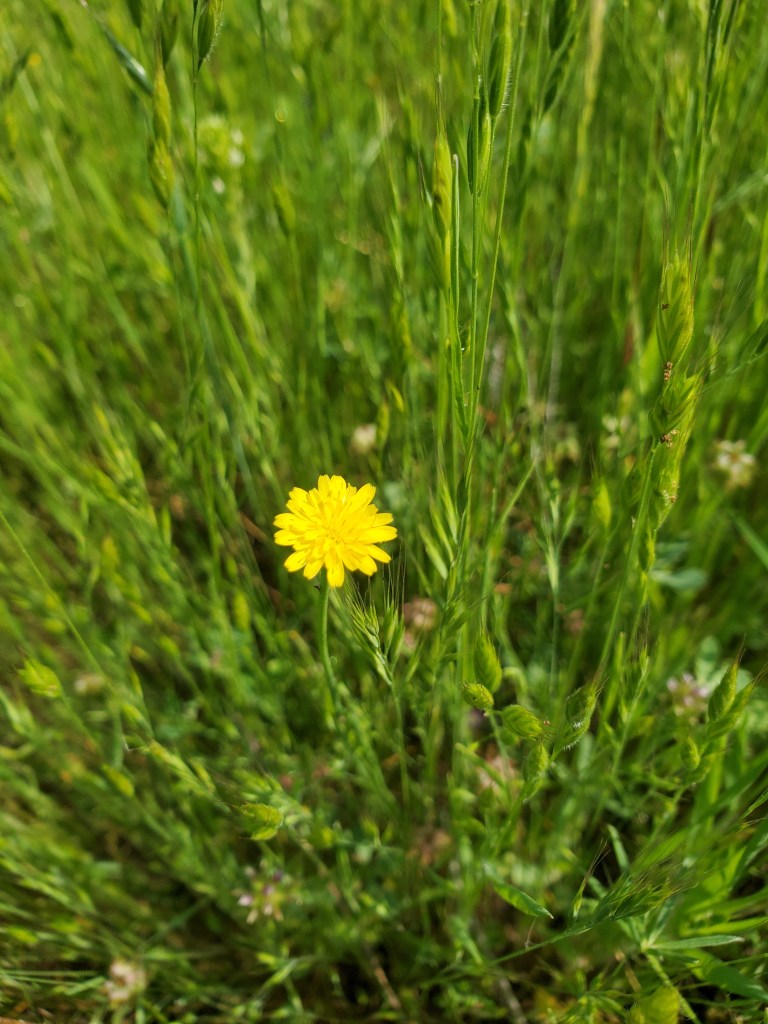
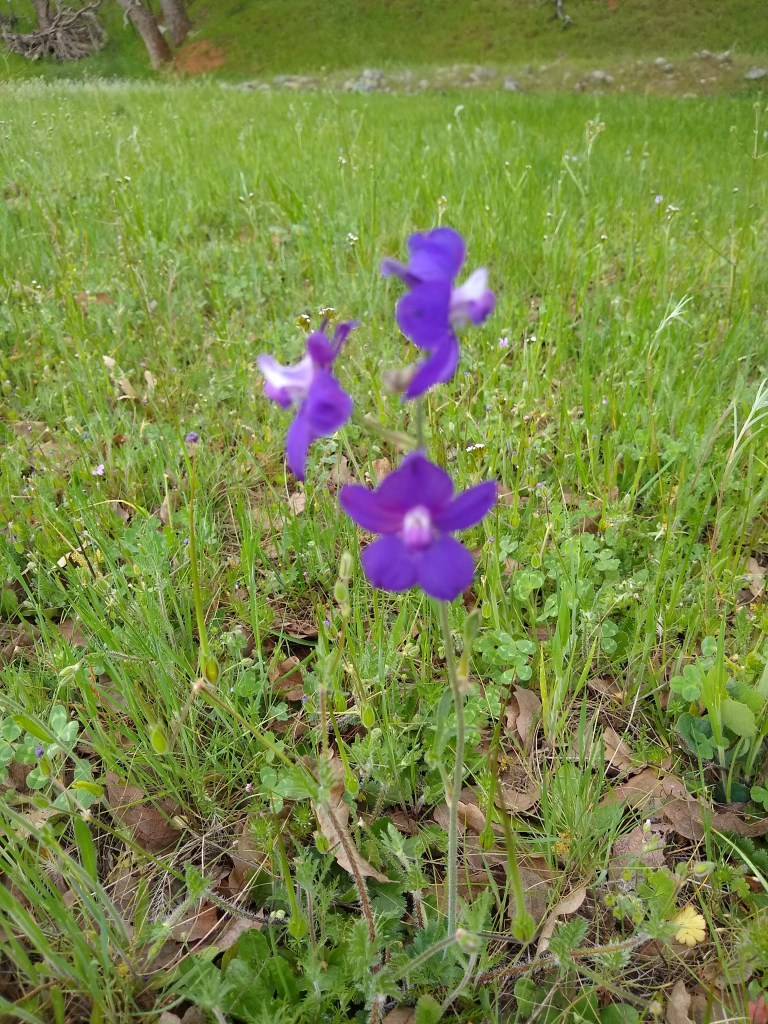
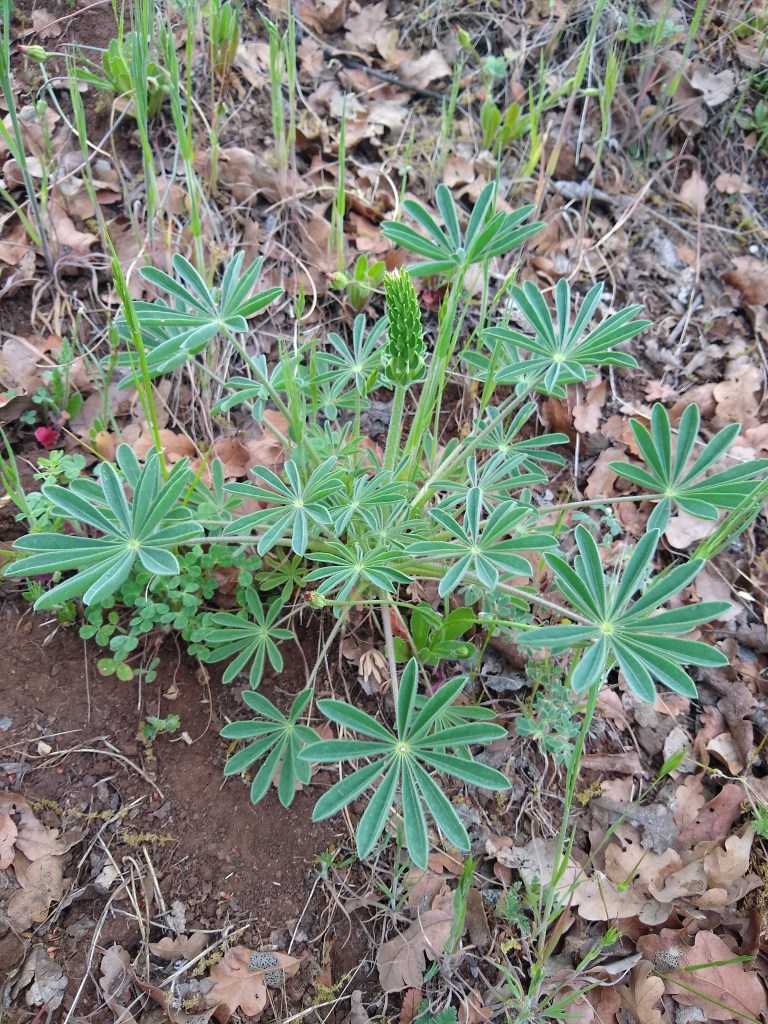
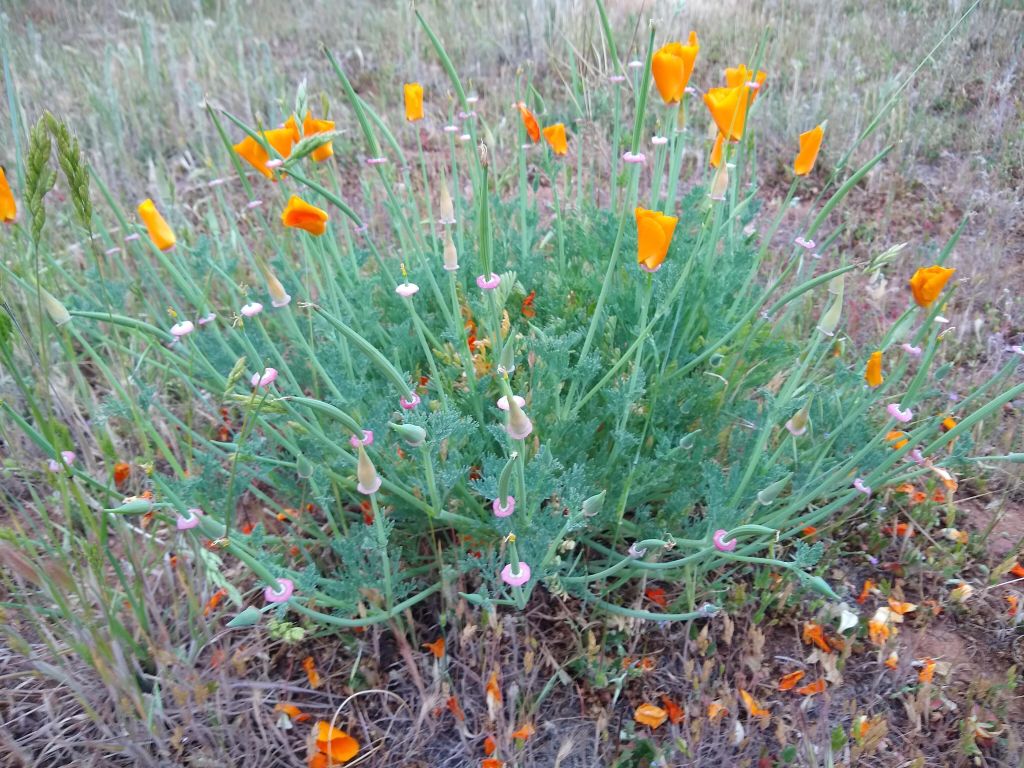
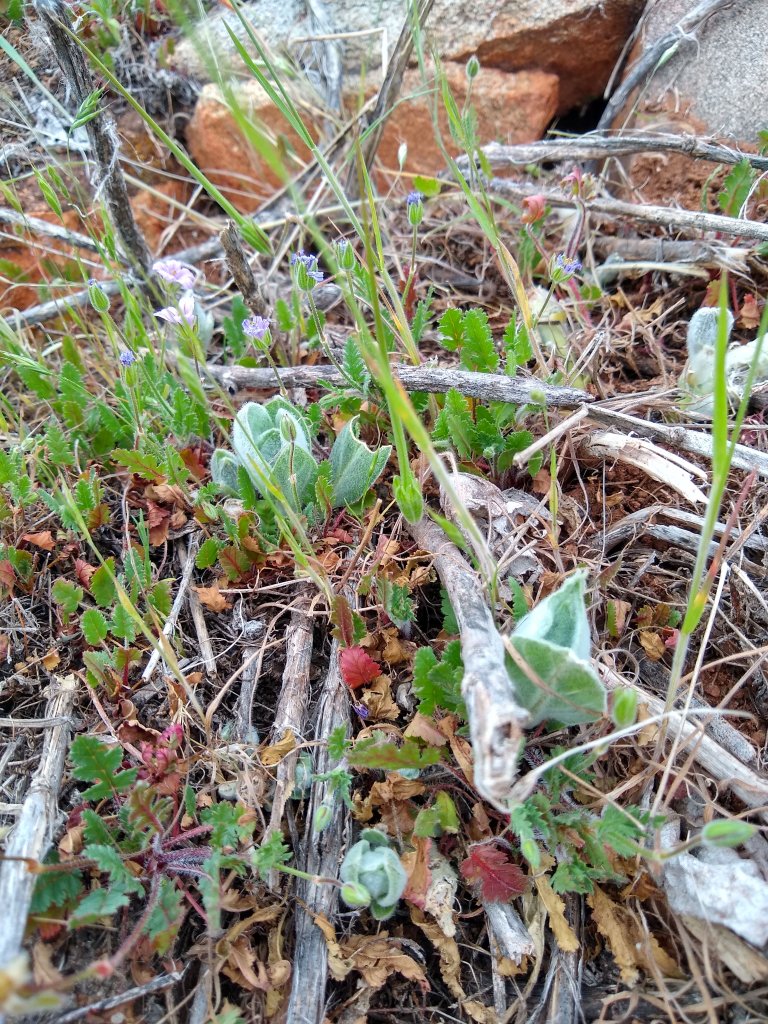
Heading down the hill with the symphony of birdsong the nectar of those thousands of flowers hits me. The grass nut flowers, tall with trumpeted light purple petals in a starburst formation cover the hillside. Among them are hints of dark purple, tall and narrow larkspur. Yellow Mariposa lilies are beginning to dot the hillside – more than I’ve ever seen here. The popcorn flower has nearly abated making room for more purples, filaree and small lupine – the large ones almost ready to burst.

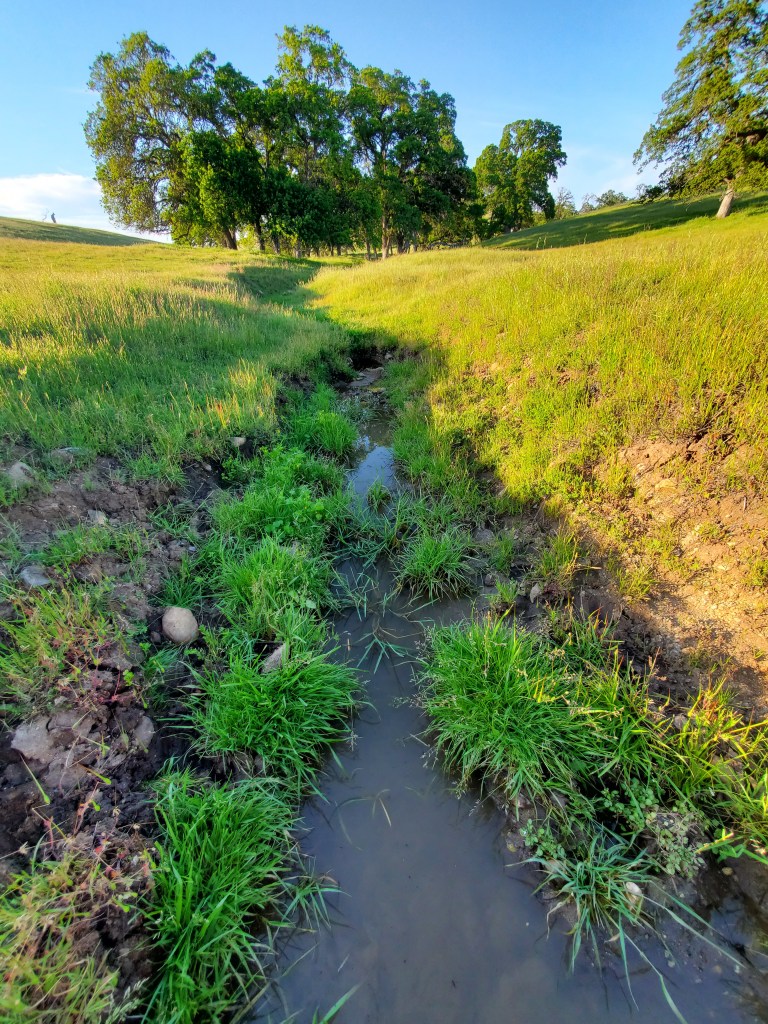
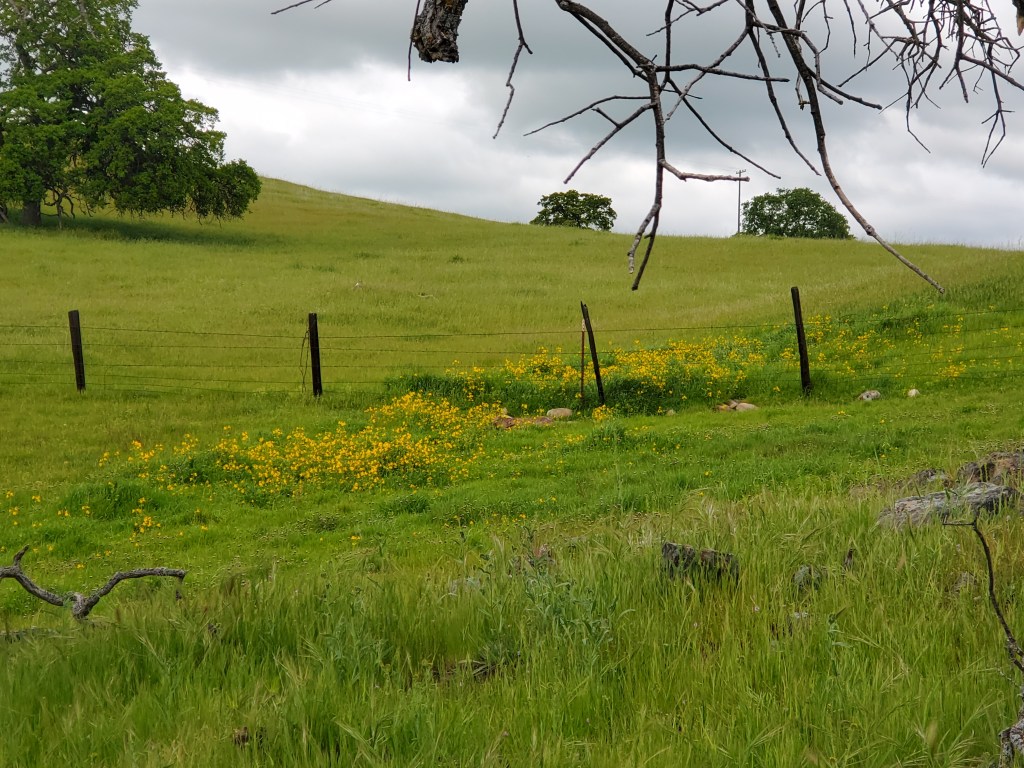
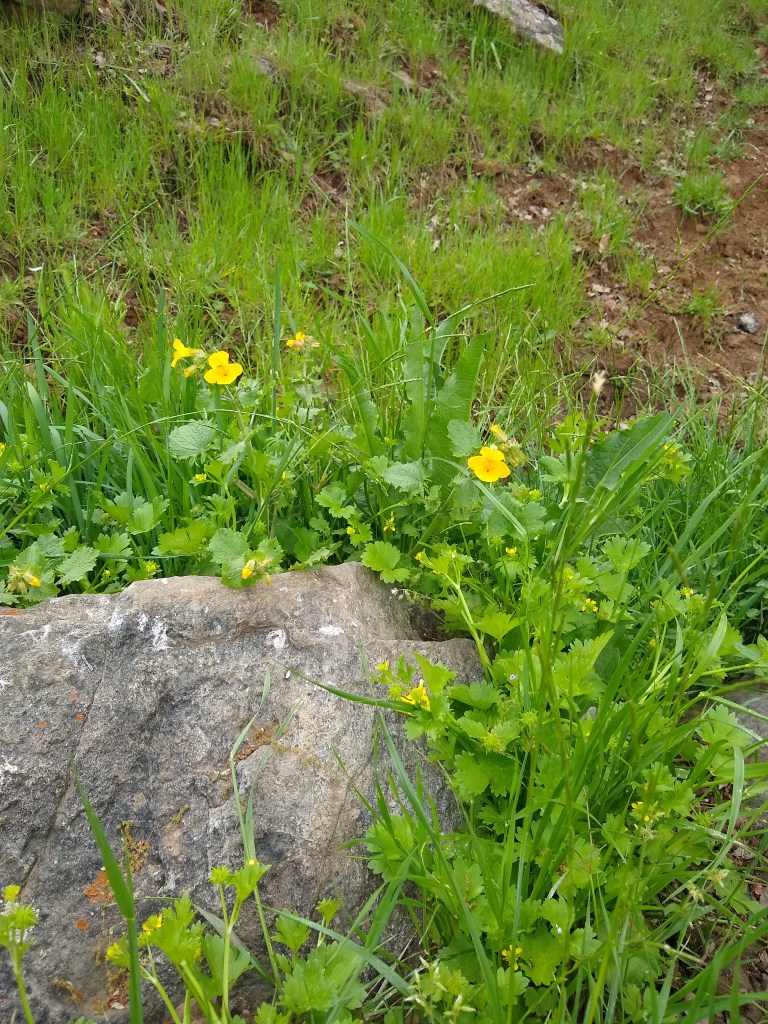
As I get closer to the drainage, the temperature turns cooler, a function of the cold water that soaks the earth and continues to trickle. Walking along the drainage there is more larkspur, orange fiddle neck and now some new yellow seep monkey flower. The birdsong is penetrated by the flap of wings. A single bird flies overhead. Even though it is small, it is quiet enough to hear the displacement of the air with each flap. This is why the morning is magic.

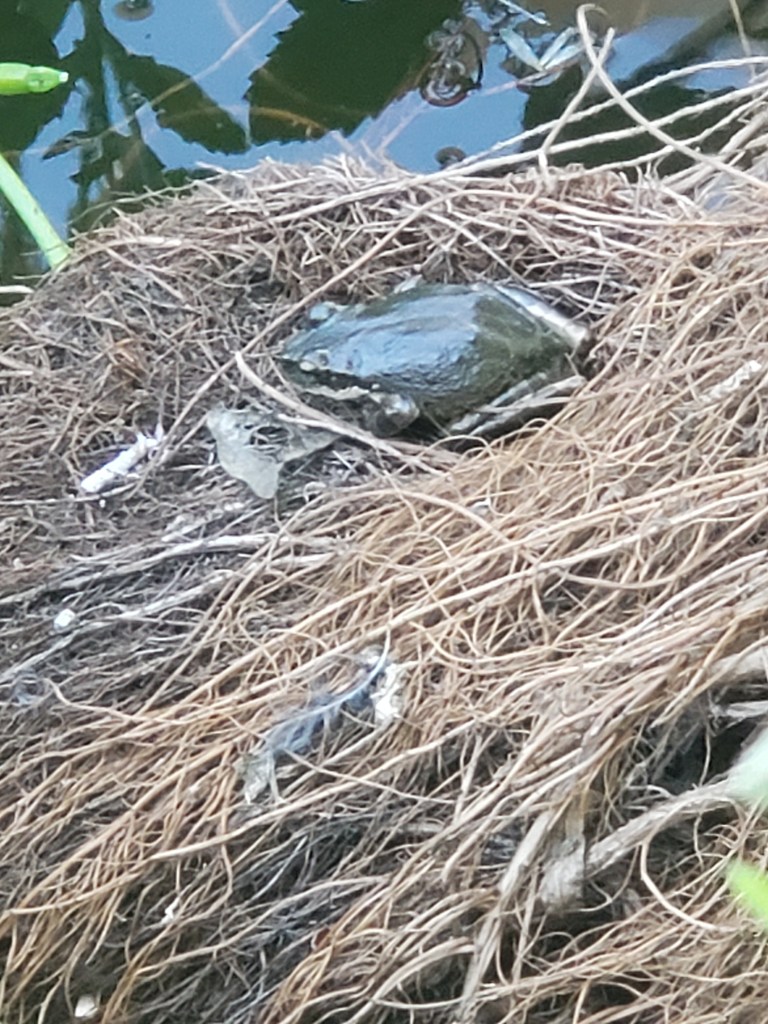
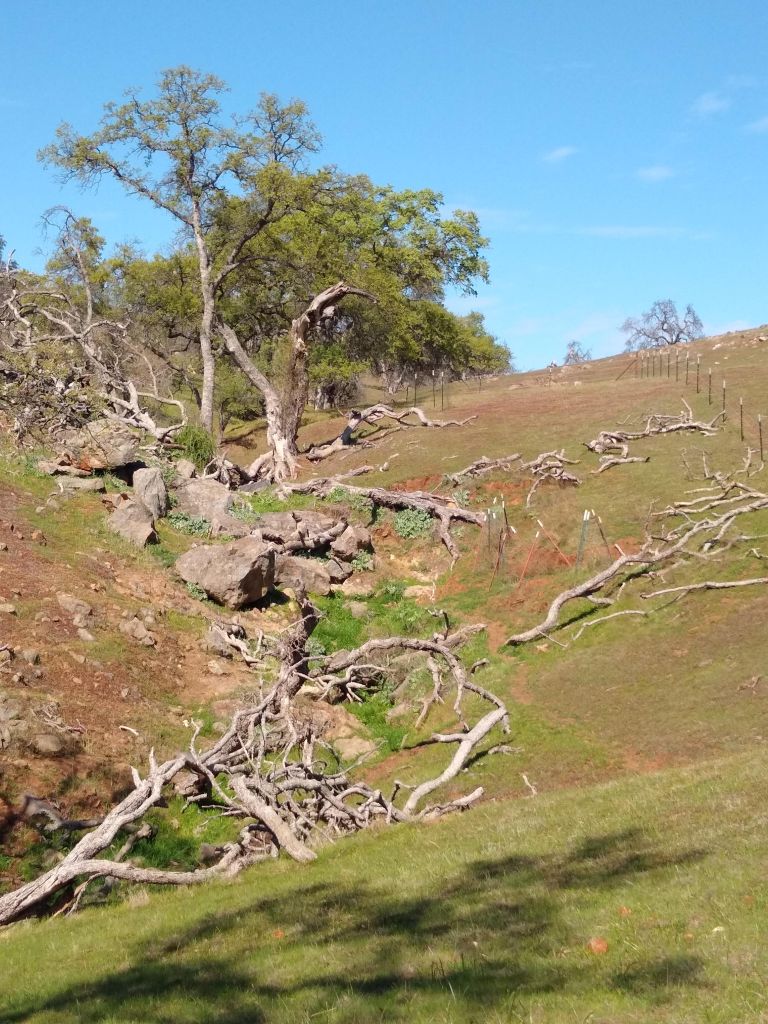
I cross the swale pond and walk into the grove. The bullfrogs floating on the water surface dive beneath the murk, and those on the banks give a chirp as they jump into the water. The nectar scent is replaced by the sweet smell of wet bark and earthen musk. With every step, I stir up more smells of wet soil. The oaks are green, and full of leaves, which I hope portends of a mass of yummy acorn in the Fall. They look happy as I examine the check dams. The soil is still moist in the drainage fork. Good. The water is still running in the spring creek with some nice deep holes. Good. I note invasive thistle growing in my mini wetland and make a mental note to bring the weed eater down there later. With my mother-in-law, I planted milkweed seed. I am hoping to make this new sedimented area more diverse, not just a thicket of Italian thistle. Thistle is nectar rich, and the pollinators love it. There thousands of stalks allover the ranch. Taking out this little section will not impact nectar availability. I hope to get a glimpse of the quail I saw the other day, but I don’t. It is too early for some.

I exit the grove to check the open section of the spring creek. My boots are wet up to mid calf. Despite the work of the cows, the grass has grown taller with last week’s rain. The first section of creek is still running, filled with grass and small, open stands of water. More seep monkey flowers emerge. About halfway down the open section of creek the water stops. I hear the last drips into a small pool just downstream of my old, small, rock check dam. The flow is underground now. It leaves a creek bed of moist soil the rest of the way to my property line.

As I veer back to the trail, turning west now on the open grassland, the sun is up over the east mountains and hits my back. The warmth is a familiar hand across my back comforting me as I walk. I notice the humidity now, so thick. The full force of nectar is back, clinging to the water molecules in the air, which fill my lungs. I think of all those molecules that comprise this Spring cocktail of life and know that my body will know what to do with all the constituent elements as my lungs expand and contract. I breath even deeper now, filling myself with this ancient food.

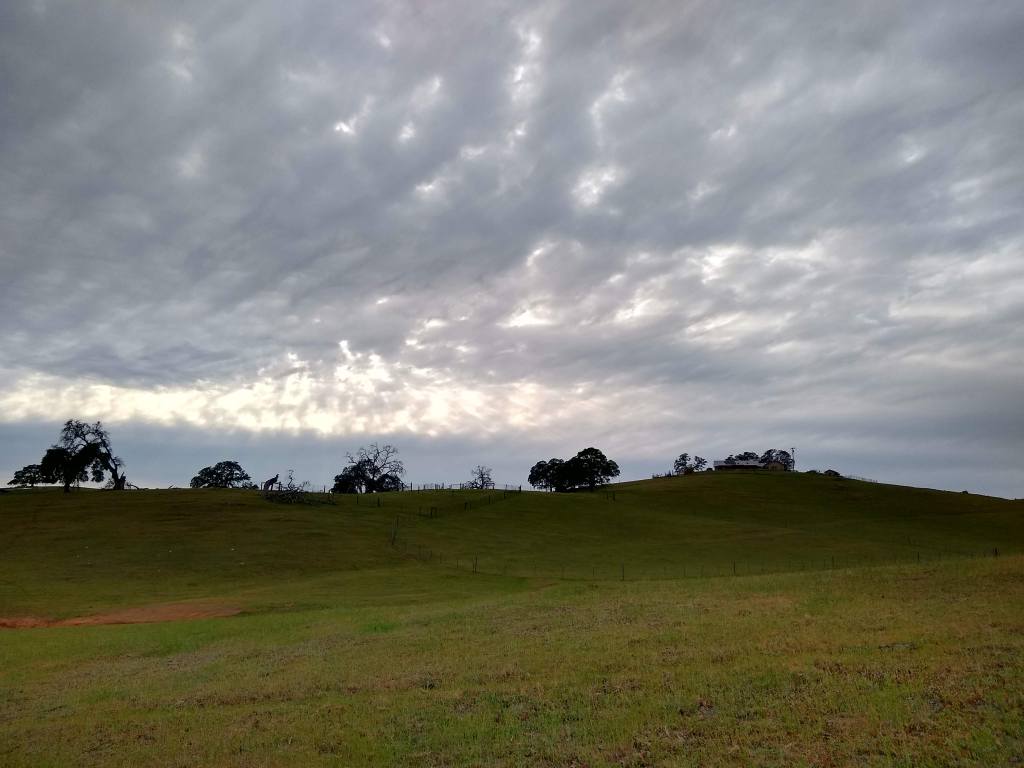
There are still no raptors, ravens or vultures in the sky. This time is for the songbirds to flit and sing with less concern of being a meal or their eggs being a raven’s meal. I link up with the cattle road and make a turn north, fully surrounded by the large expanse of grassland. I hear the unmistakable song of the meadowlark, deeee, de de de deee, then as the sky brightens, coyotes begin to sing. As I get closer to the driveway, there is the distant rumble of cars on the road, which is a quarter mile away. The sun has woken humans up too. I continue the last leg of my walk, Millie by my side and Beatrix taking the short-cut through the grassy hill. I feel grounded and filled. This walk is a ceremony of connection, an acknowledgement that we are all together, living for one another.

Monarchs Are Back with Babies!

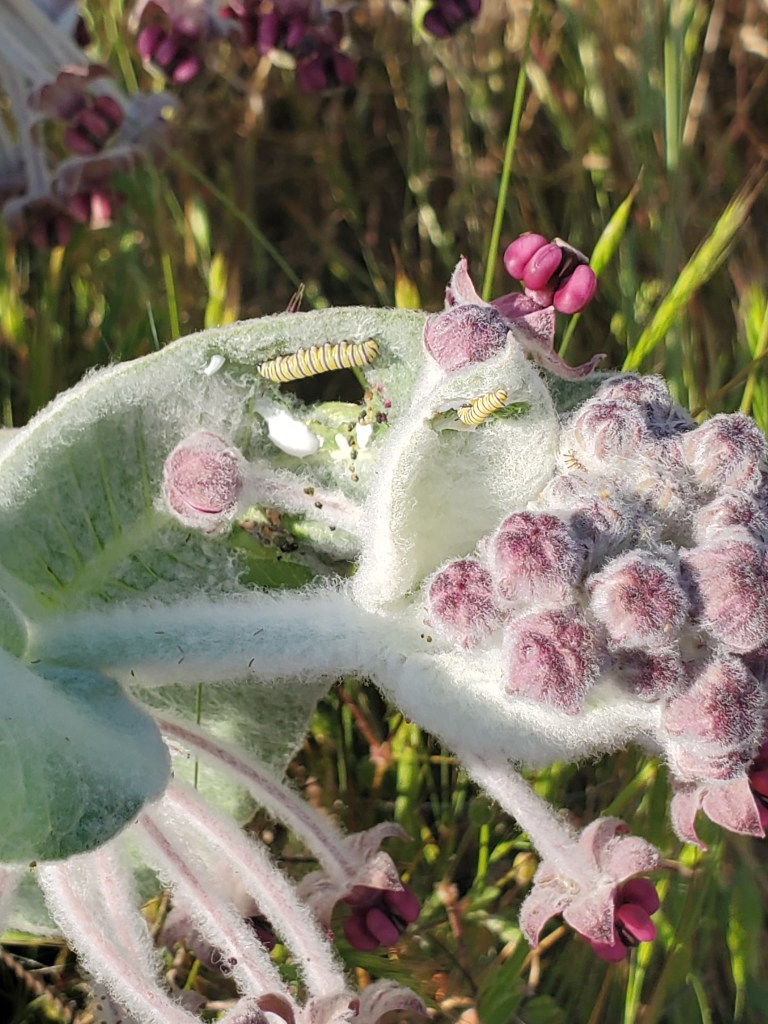
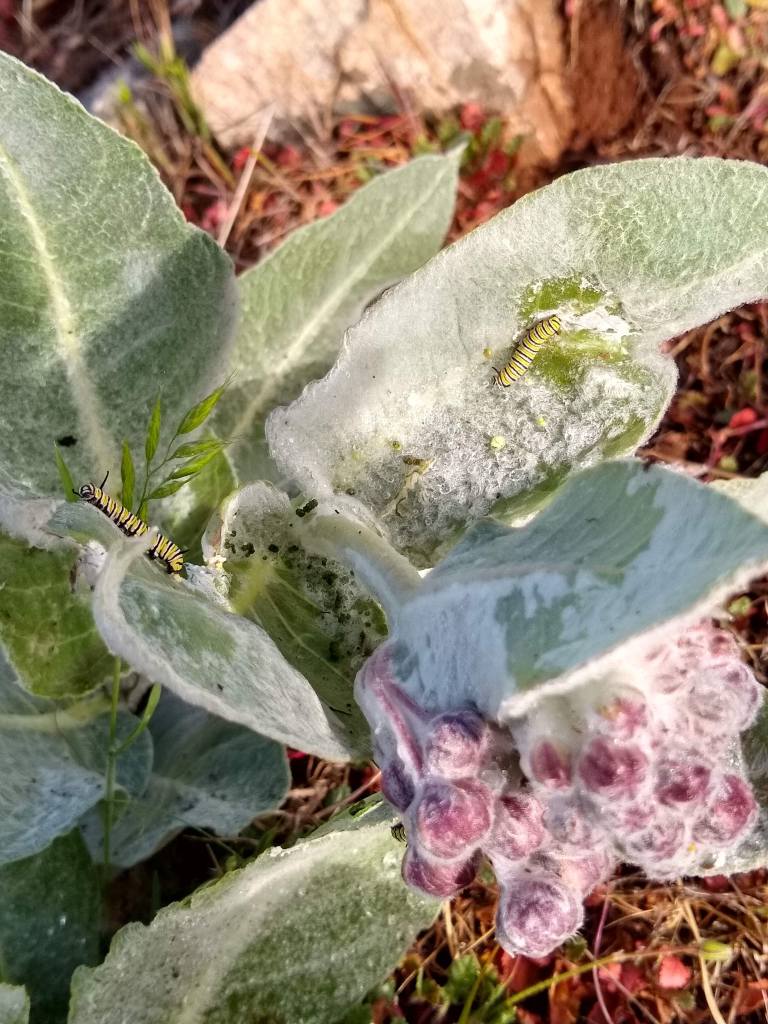
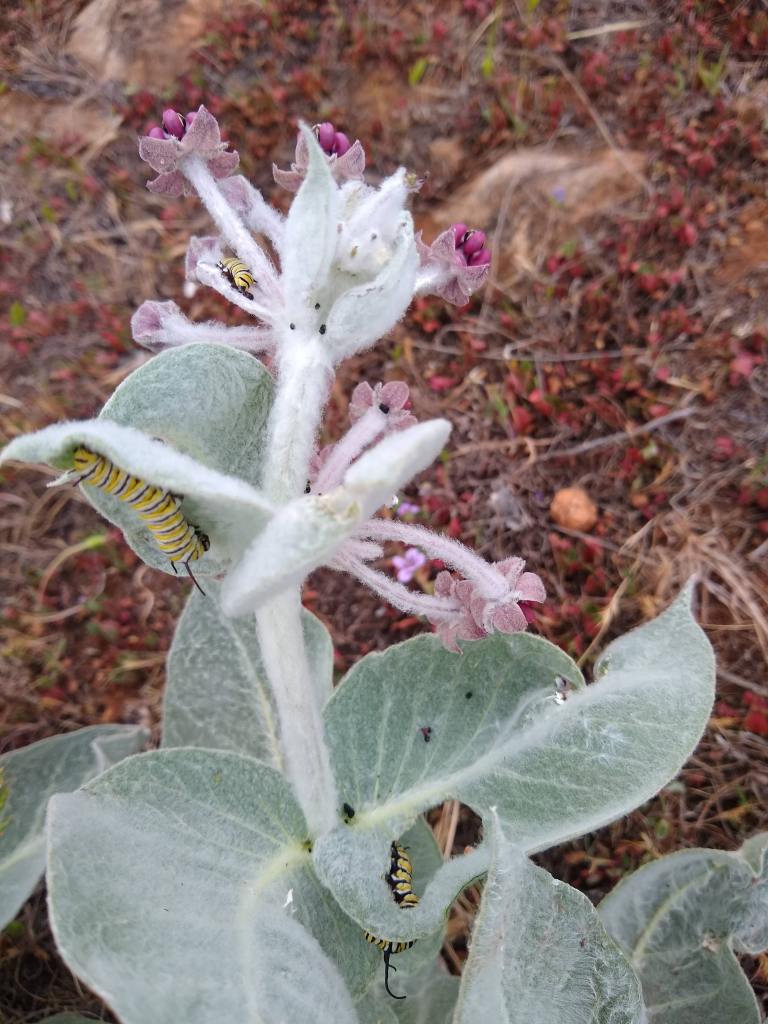
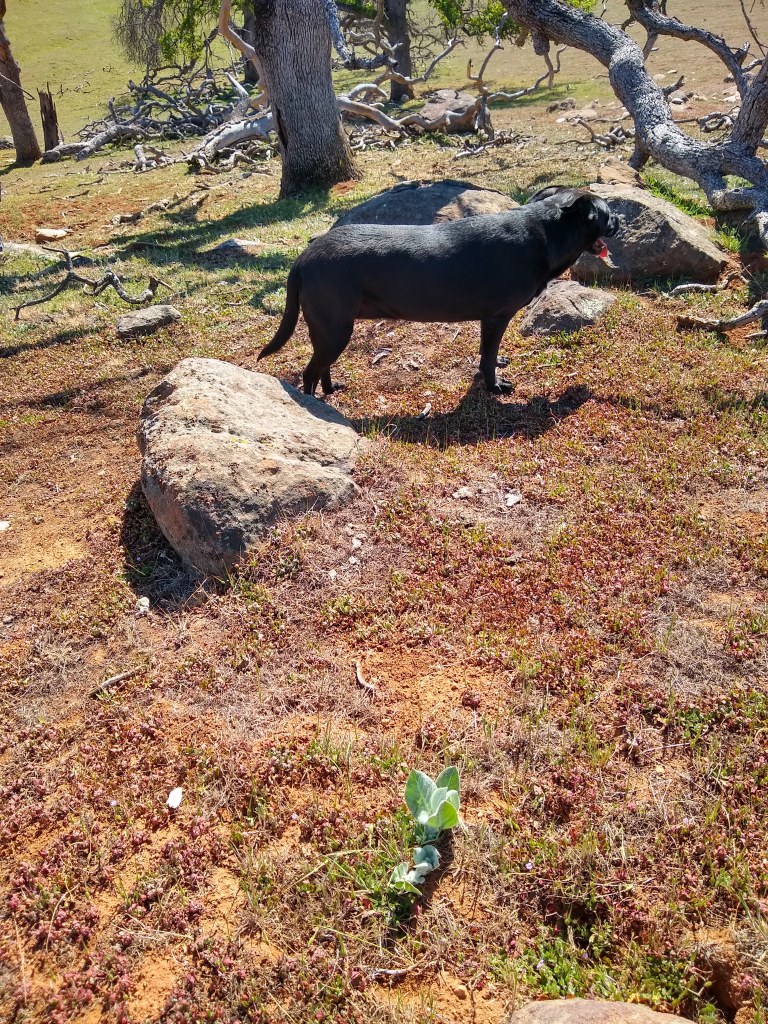
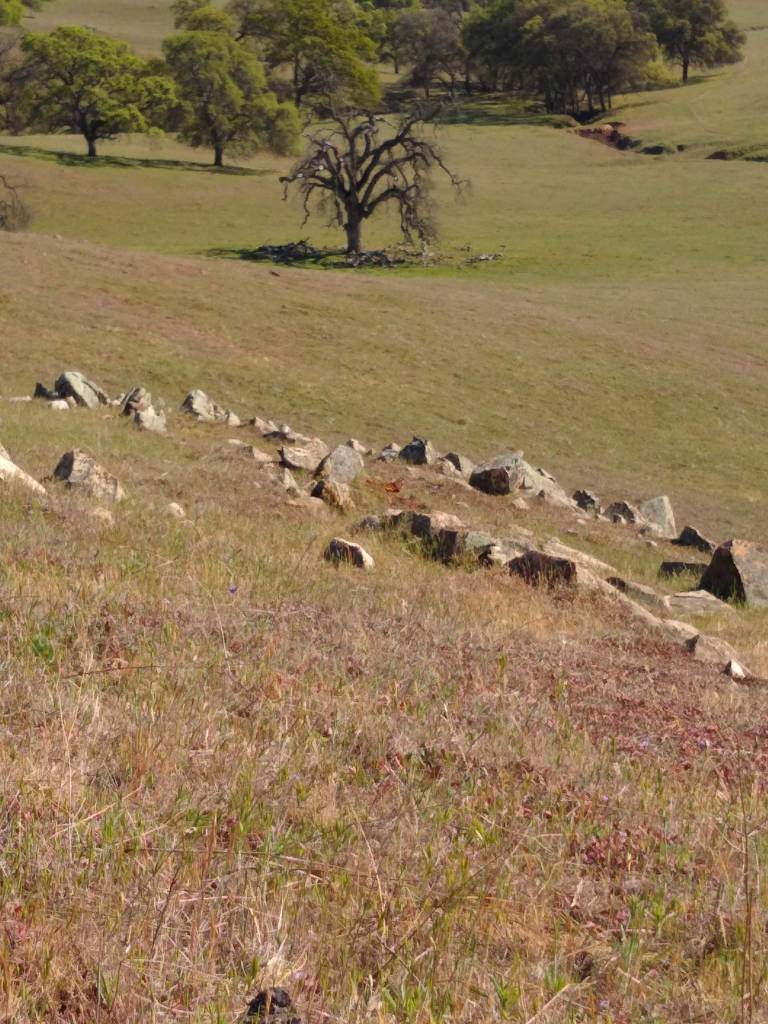
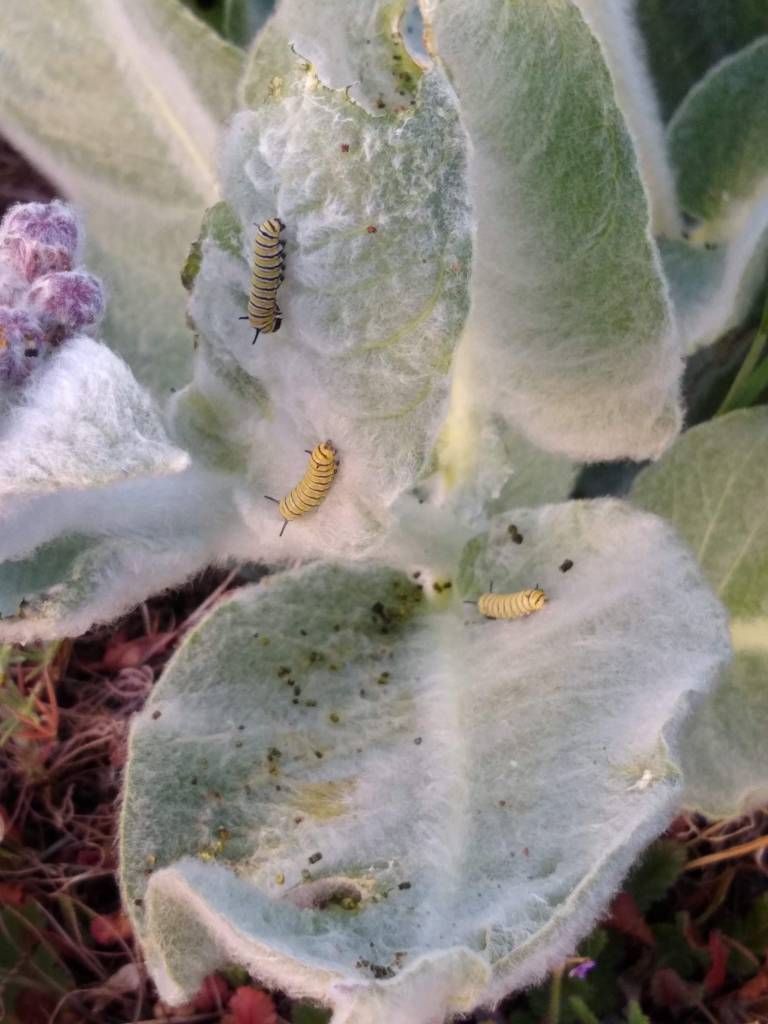
There is no more gratifying symbol of the success of the work here than the habitat being used. This is especially true when monarch caterpillars are present. On Monday, 4/22, I walked the steep hillsides to check on the California Milkweed plots. Fortunately, I had friend and biologist extraordinaire Deedee Soto at the ranch visiting. It was warm that day, even at the end of the day, so we sweated as we made our way up. The first plot, all the plants looked healthy, but there was no evidence of monarch use. We made our way down hill, crossed the drainage, still spongy with water, and then started our ascent. Again, this is a steep slope. Deedee and I walked slowly, taking breaks. Mille and Beatrix were with us, but about halfway up, I turned to say something and did not see Beatrix. Where was she? Evidently, she gave up, went back down to the spongy drainage and laid in the coolness of the grass and soil spectating our ascent. I rolled my eyes, slightly jealous, and the rest of us continued upward.

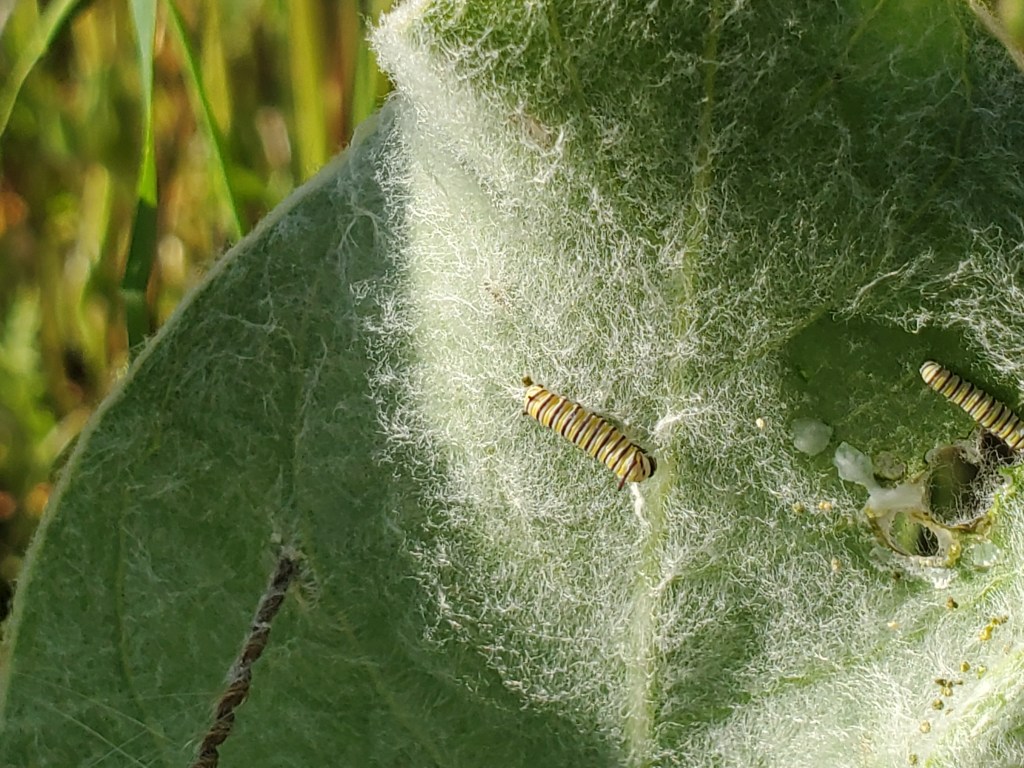
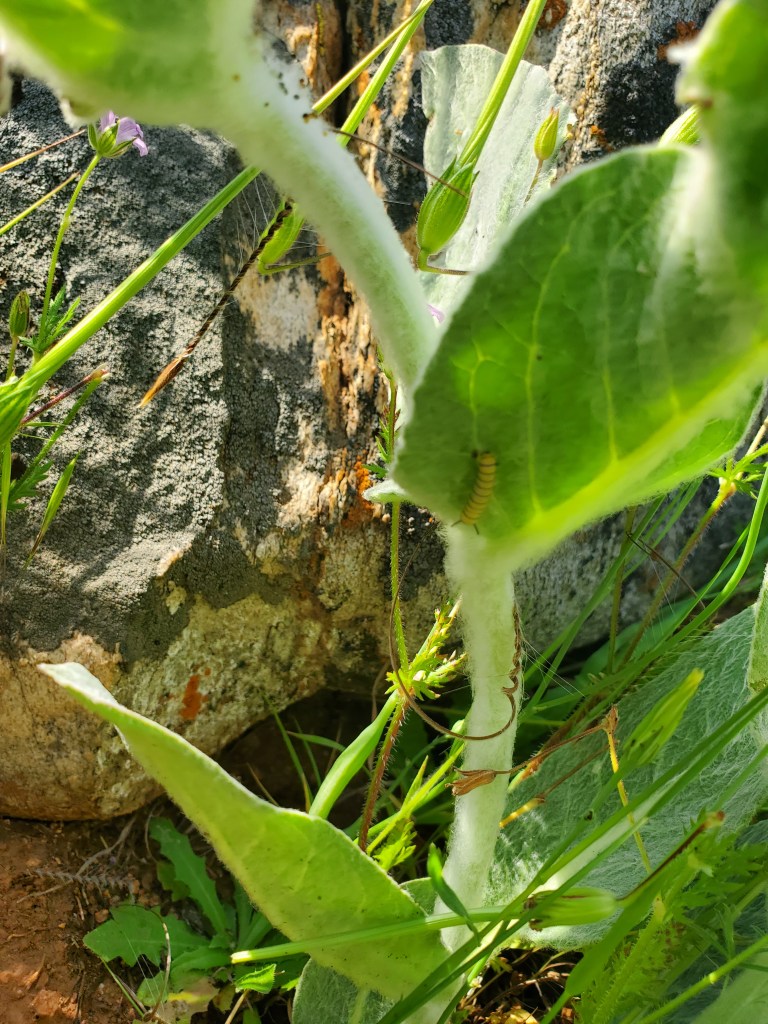
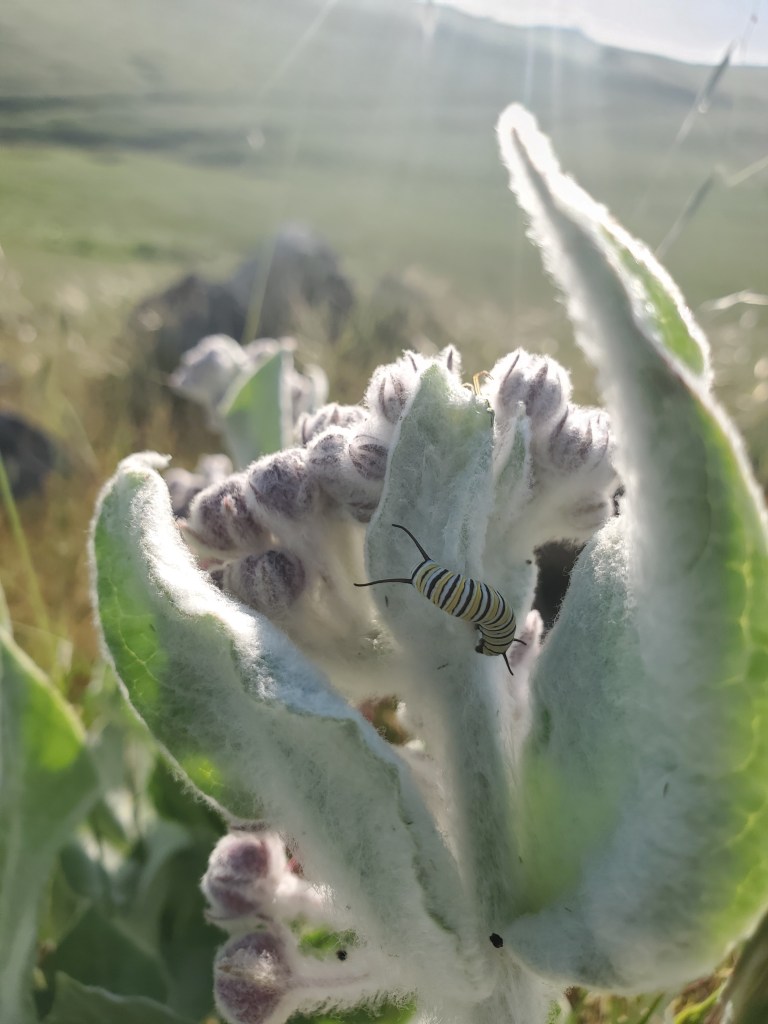
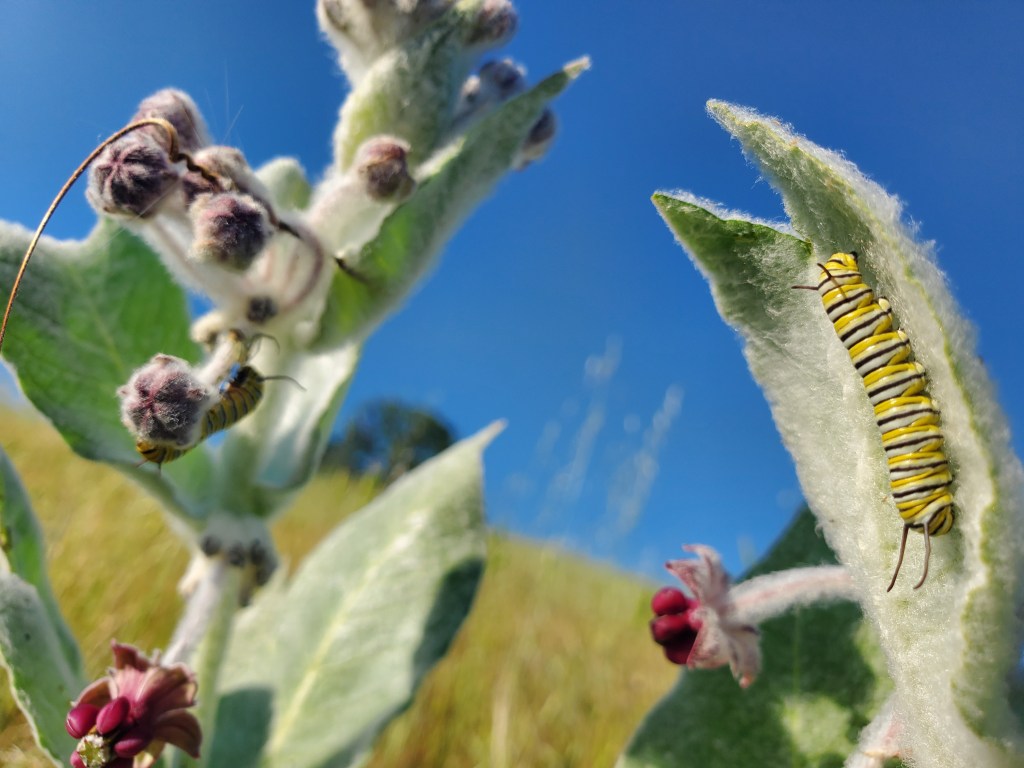
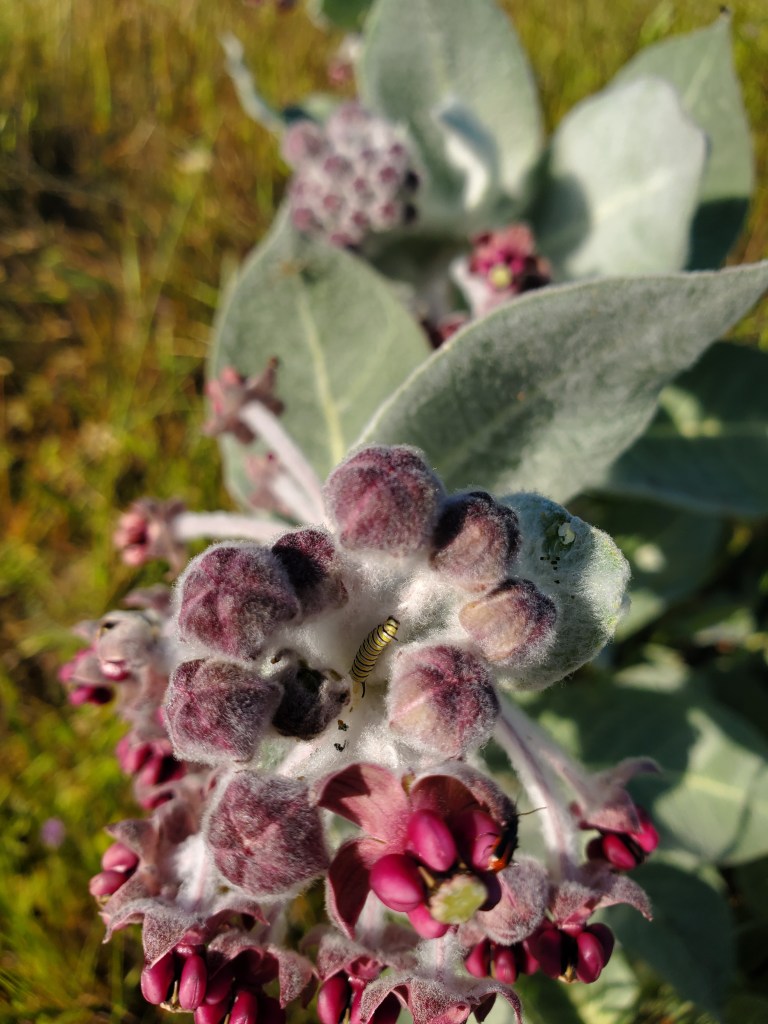
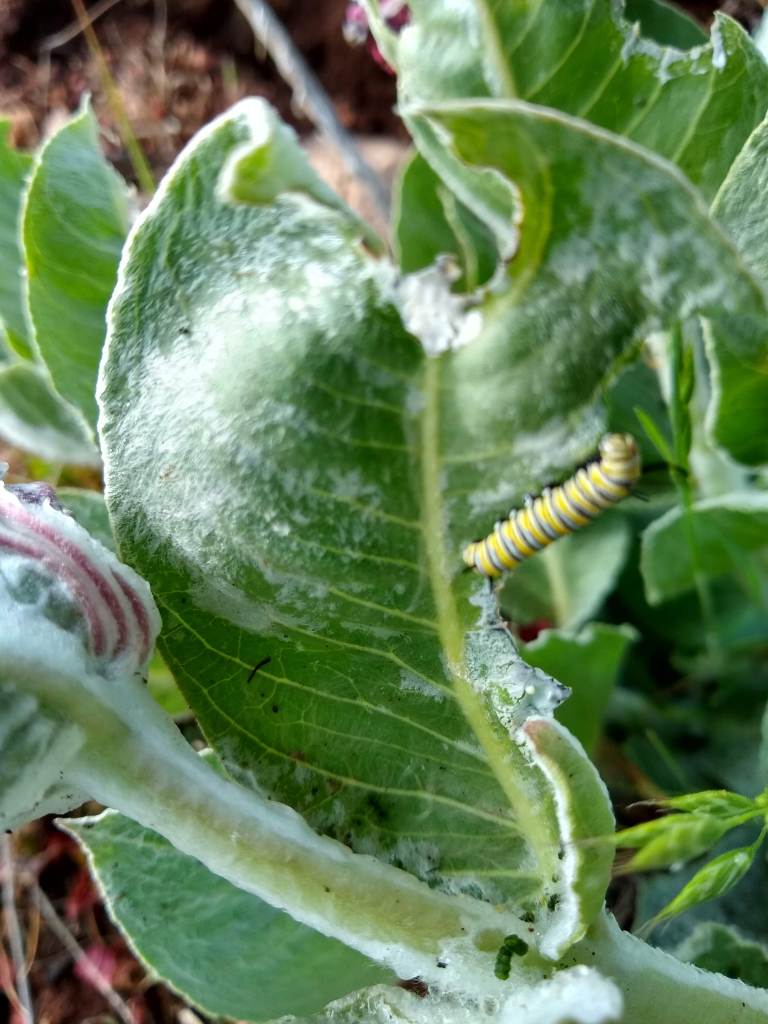
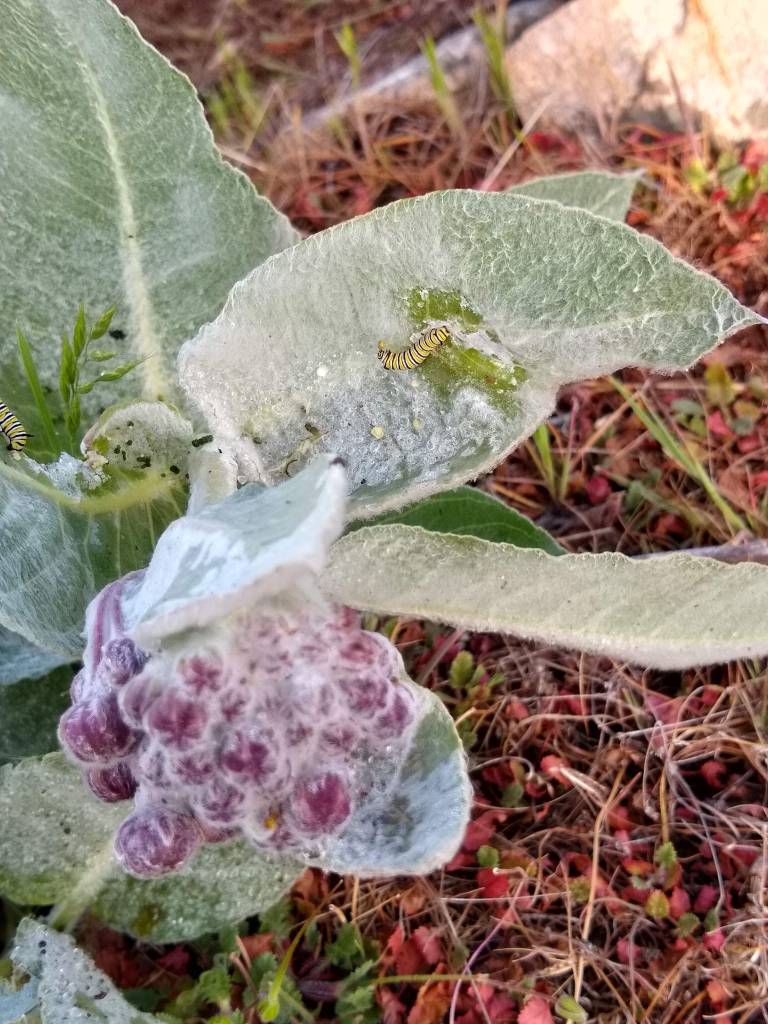
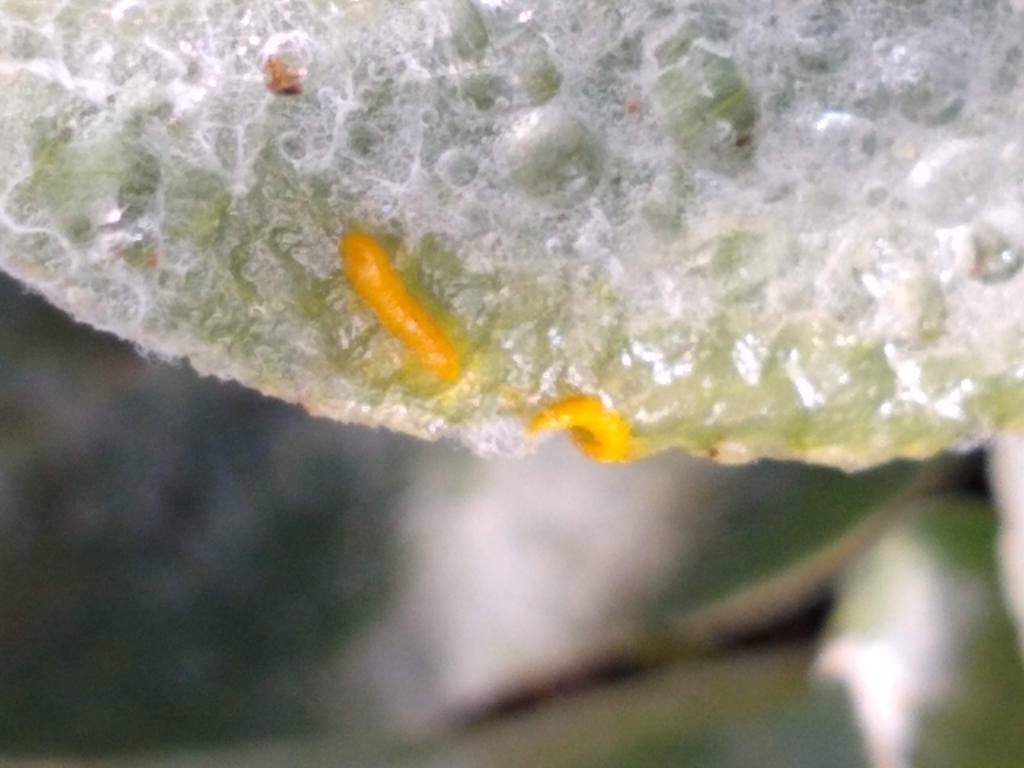
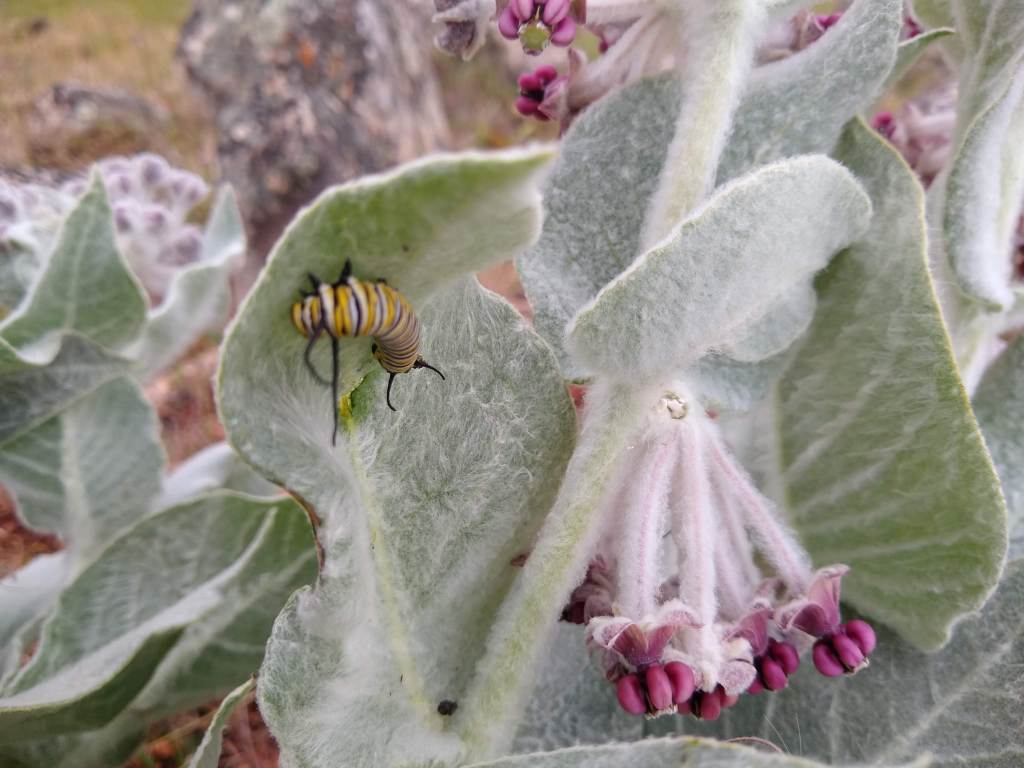
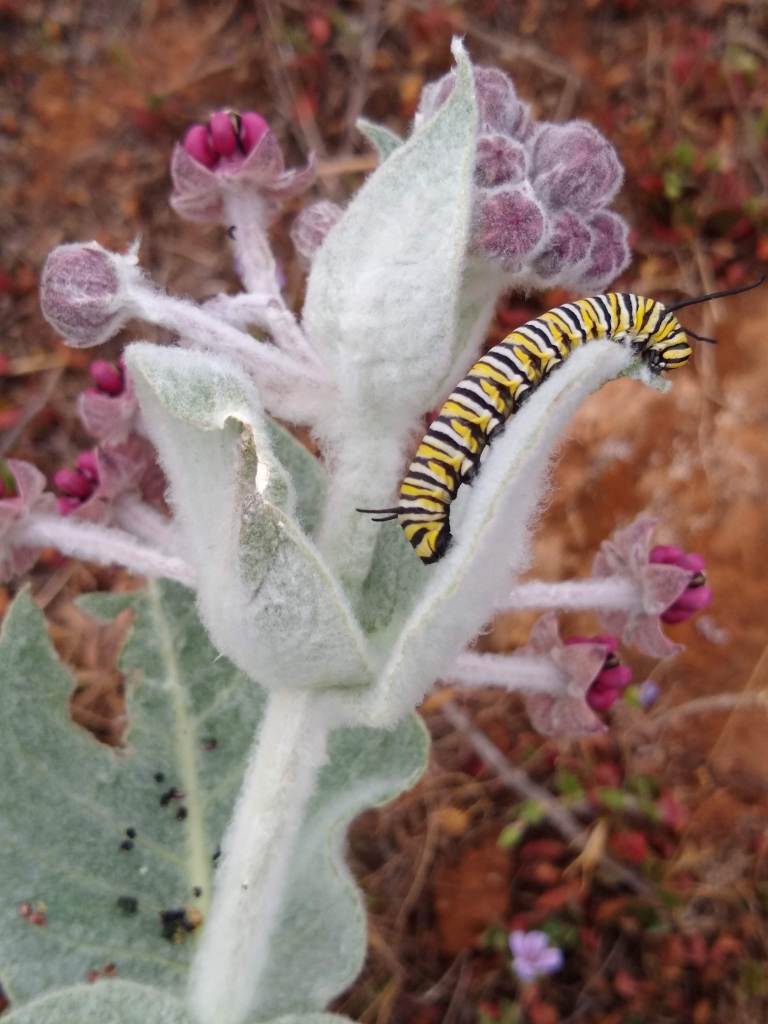
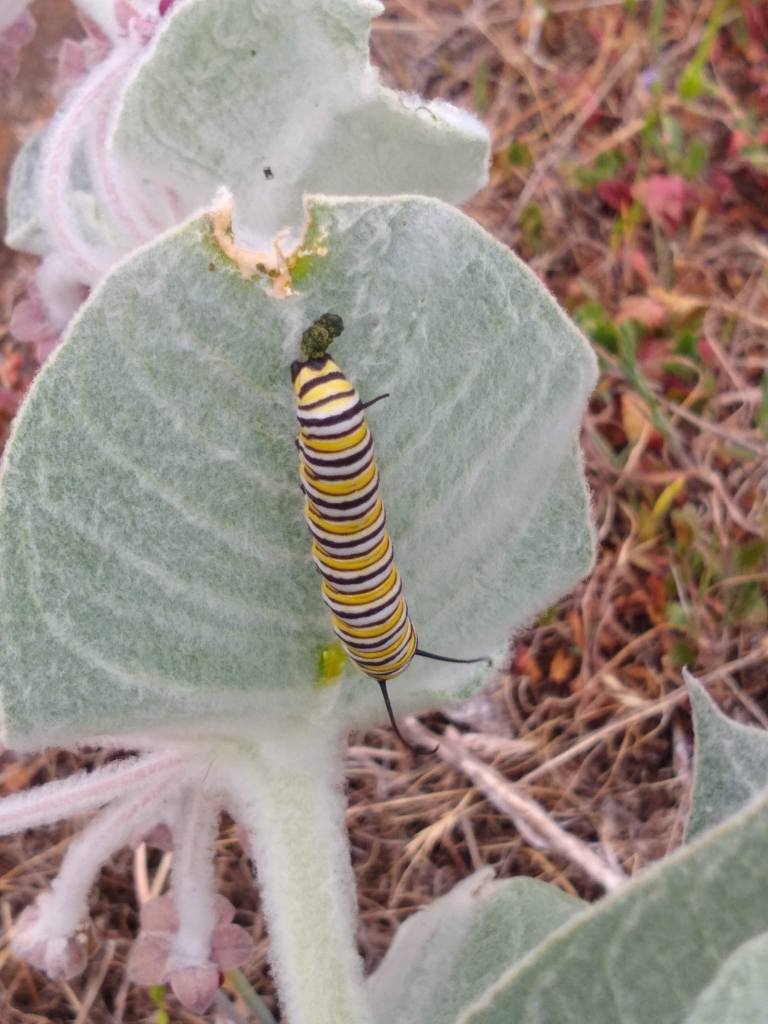
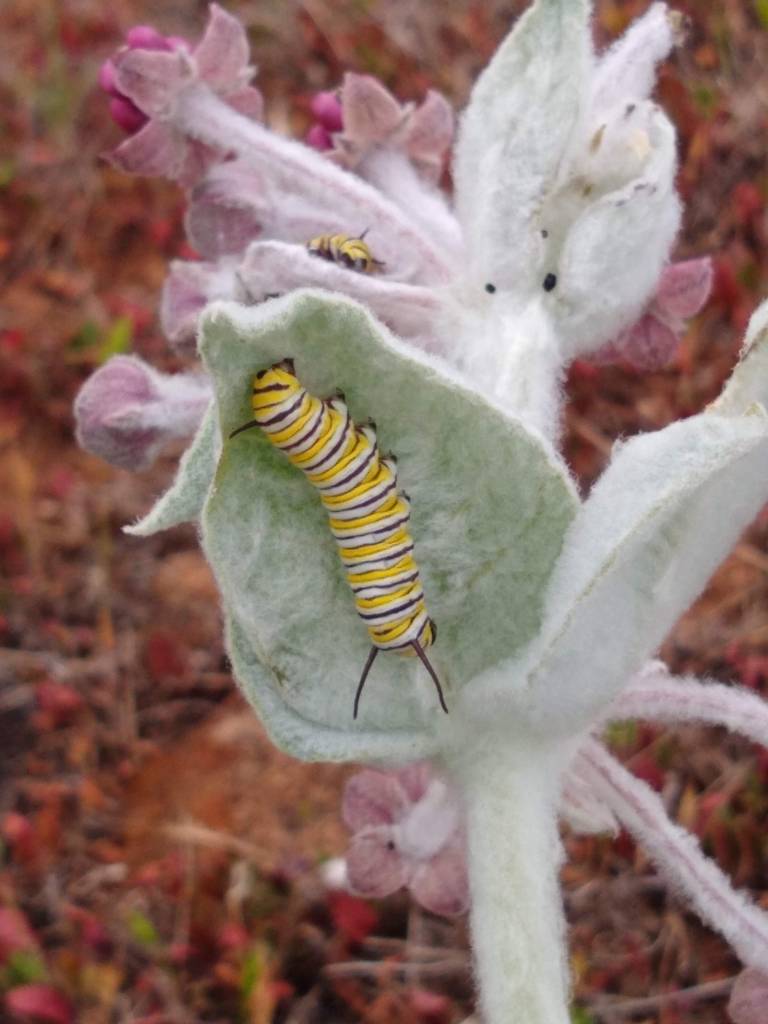
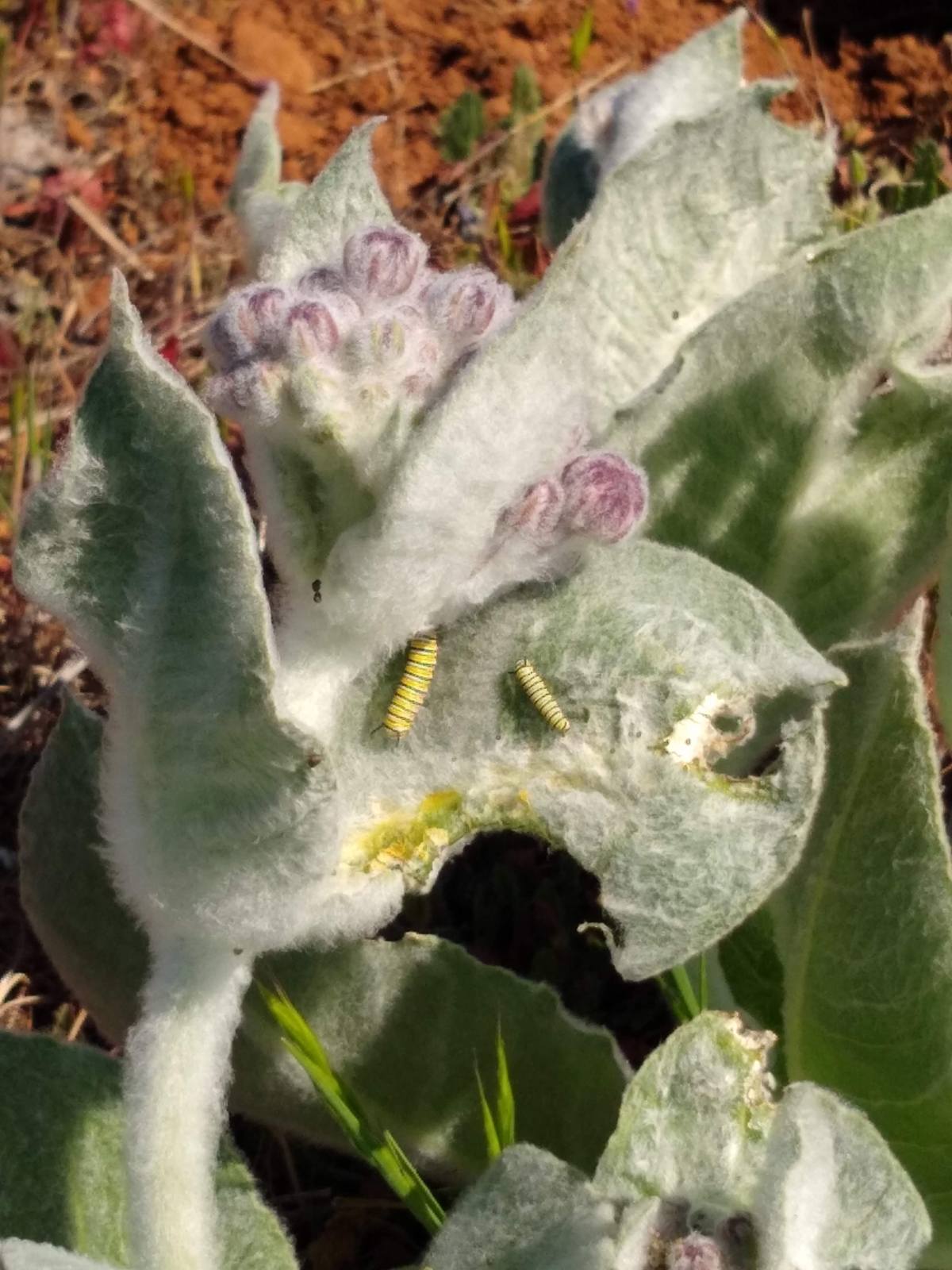
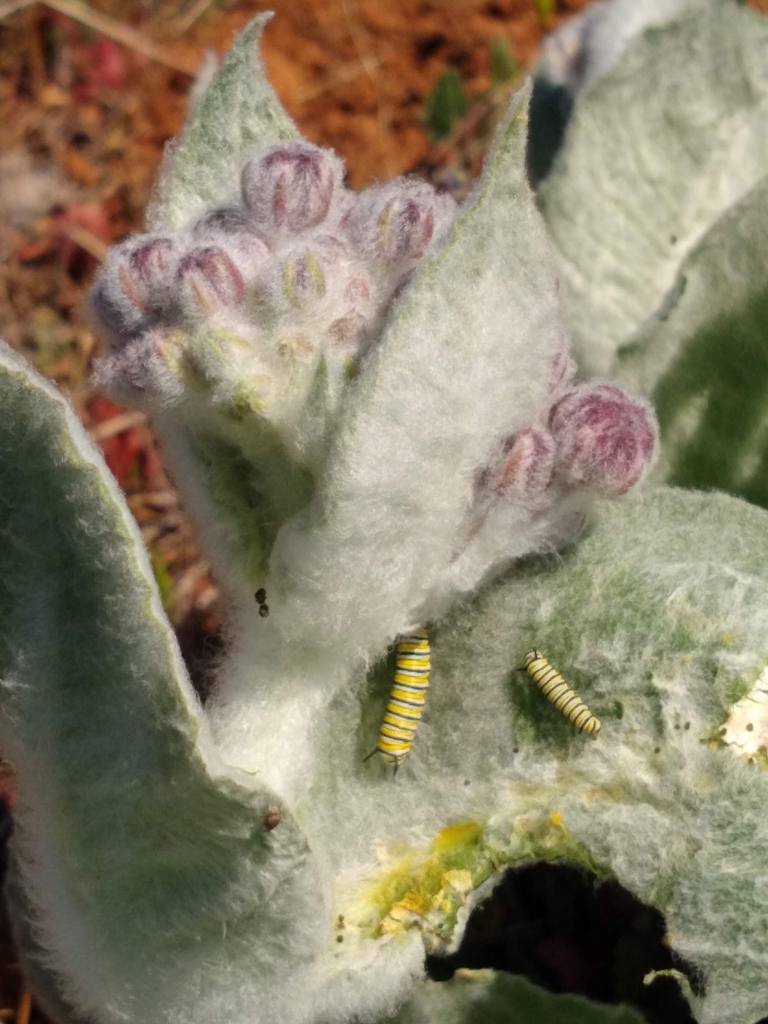
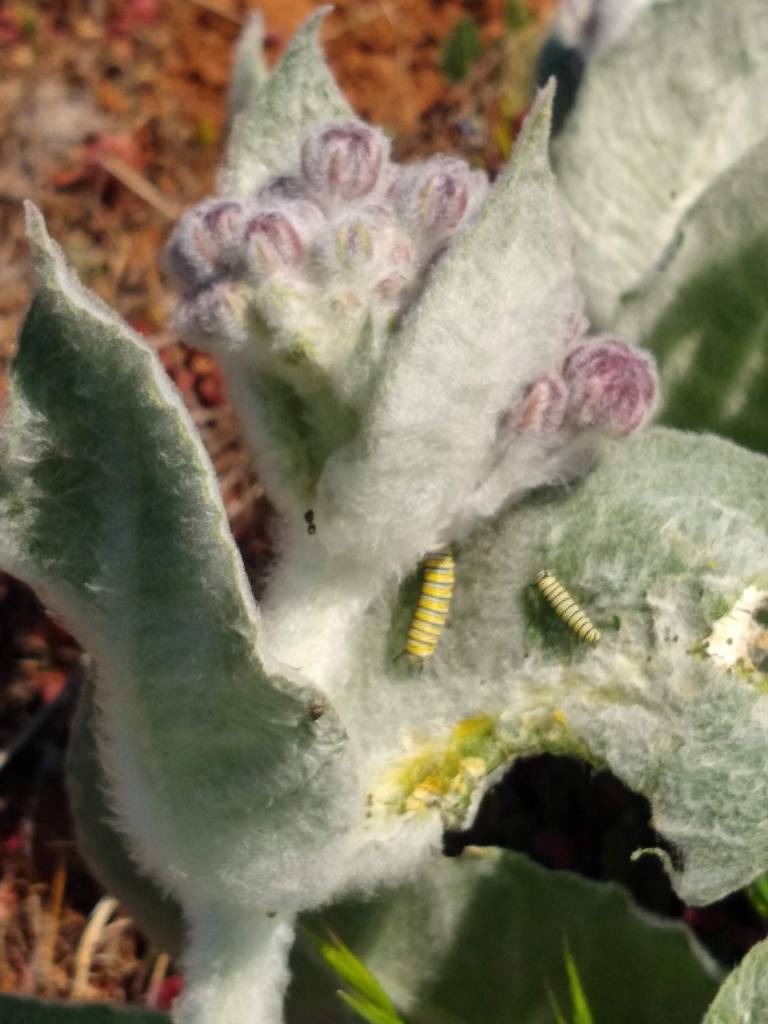
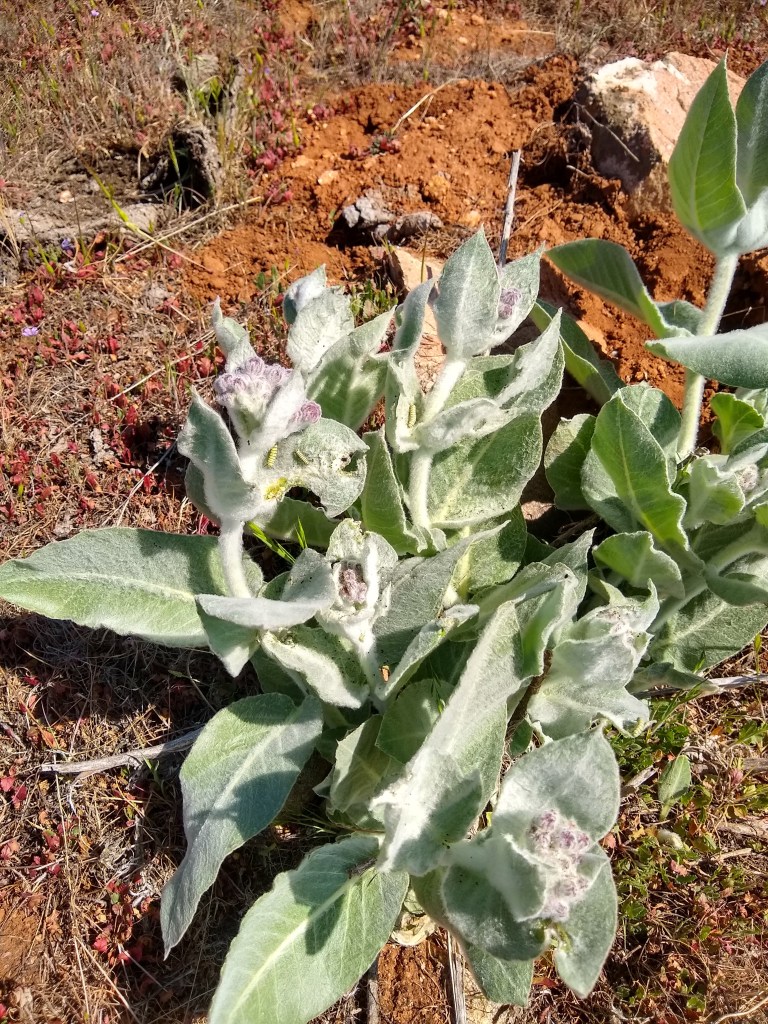
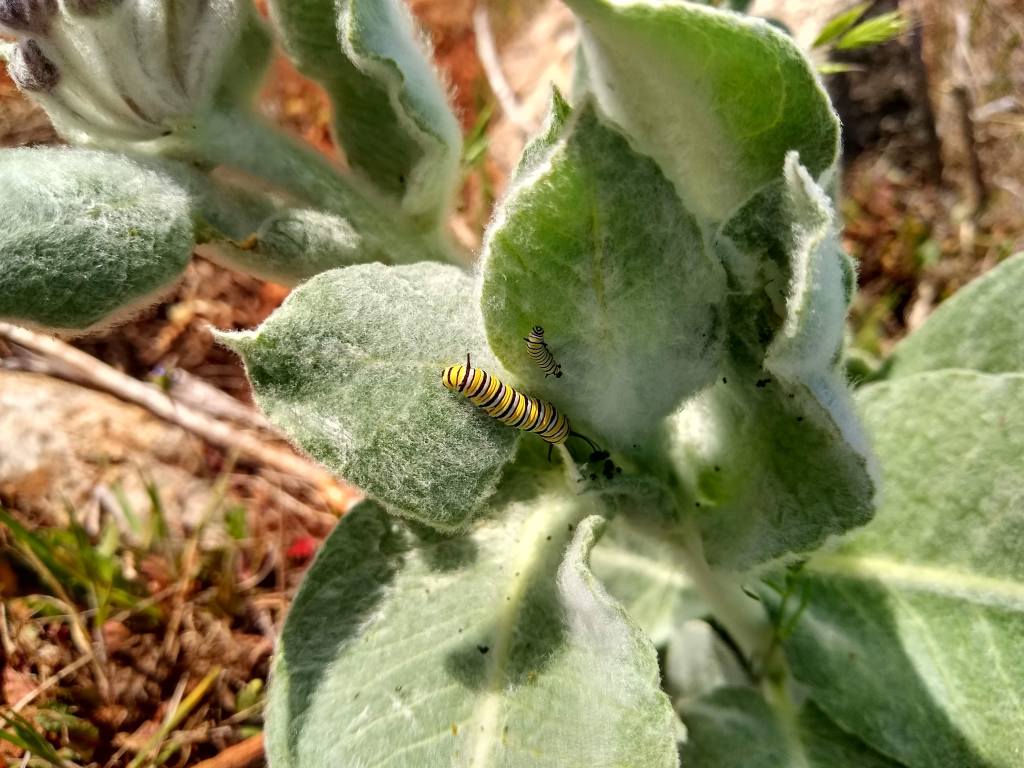
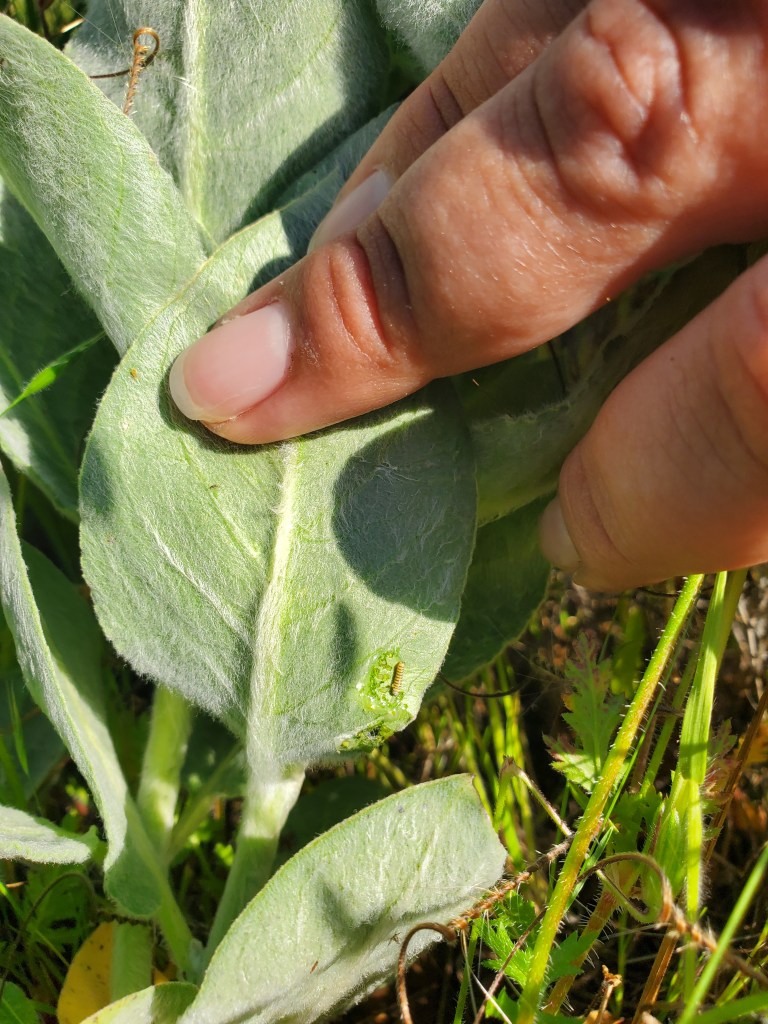
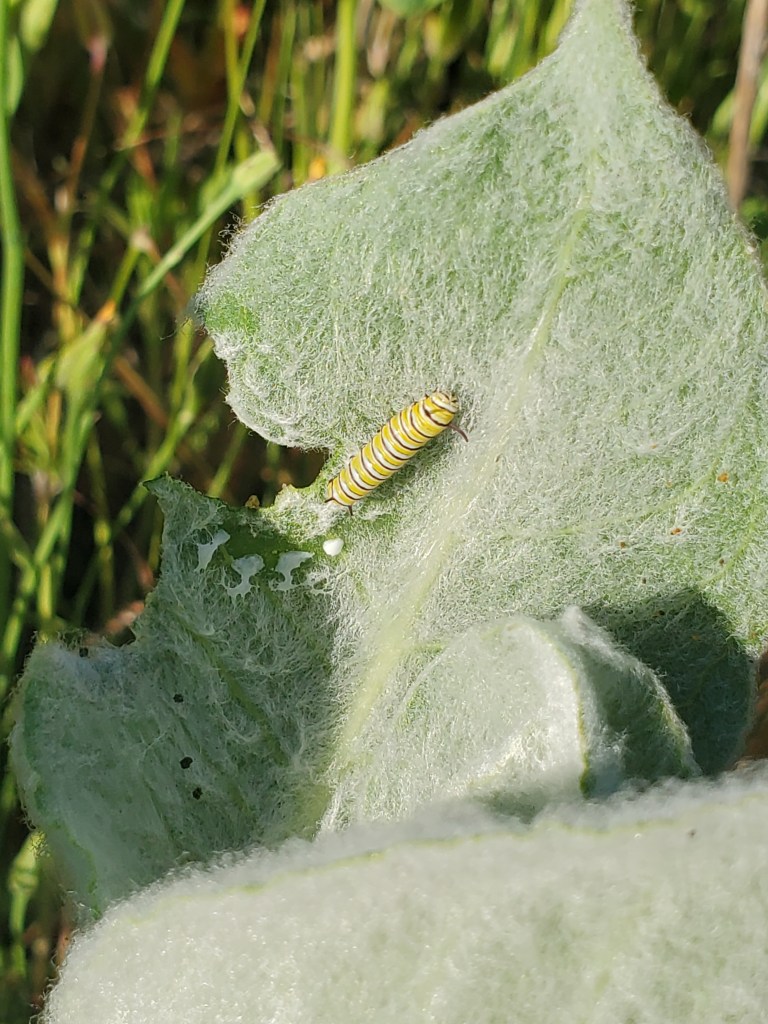
At the plot, our efforts were rewarded. Six of the 13 plants had caterpillars. I screamed with joy to Deedee. It just came out. Fortunately, she understands and doesn’t think me strange to be so excited about this tiny yellow, black and white creature. Because of Deedee’s high skill, and youthful eyes, we counted 28 caterpillars of varying ages, from the first instar to the third. Caterpillars go through five caterpillar stages, with #5 being the largest, before they transform to chrysalises. Twenty-eight is a great start! There could be more though. Caterpillars are very crafty, having the super power to hide in plain site. Two other plants had evidence of monarch use, but we could not find any caterpillars. I whoo hooed from the hilltop. The monarch mamas had found this patch of California Milkweed a hospitable home once again, trusting this place with their future.
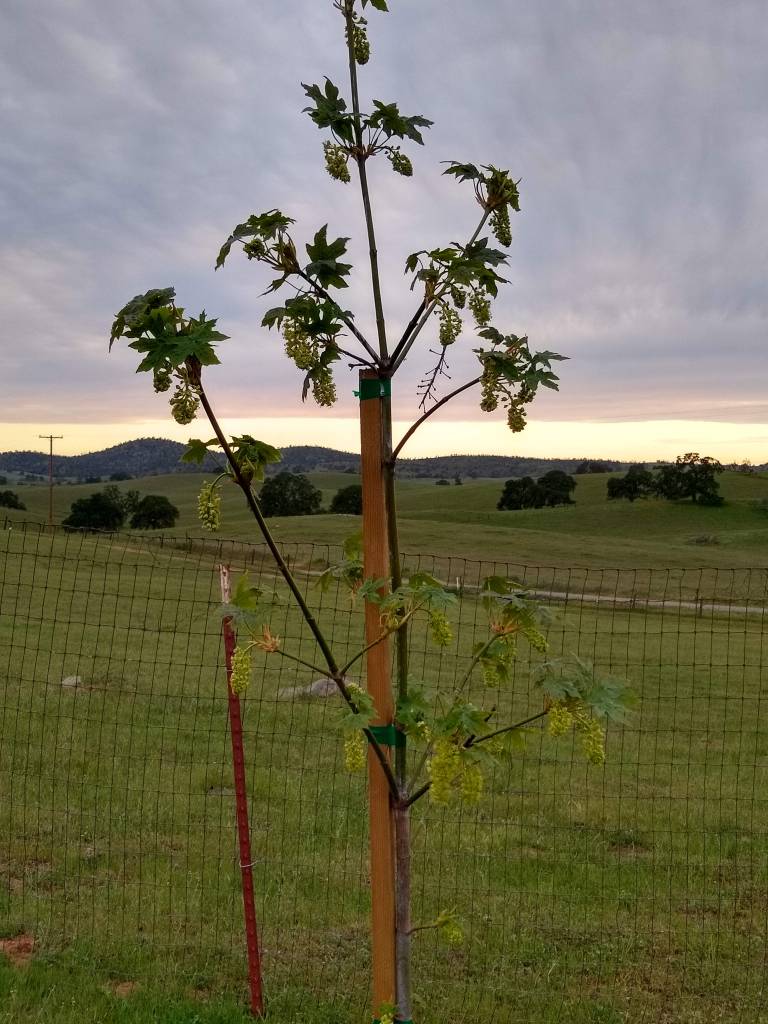
All Oaks Planted

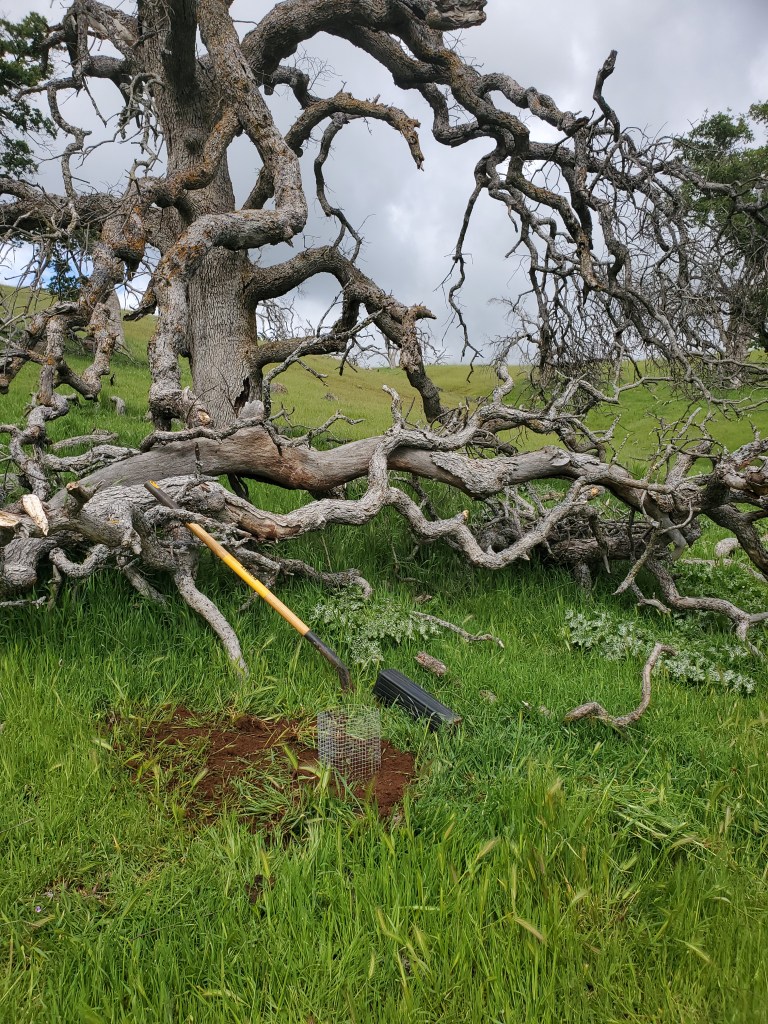
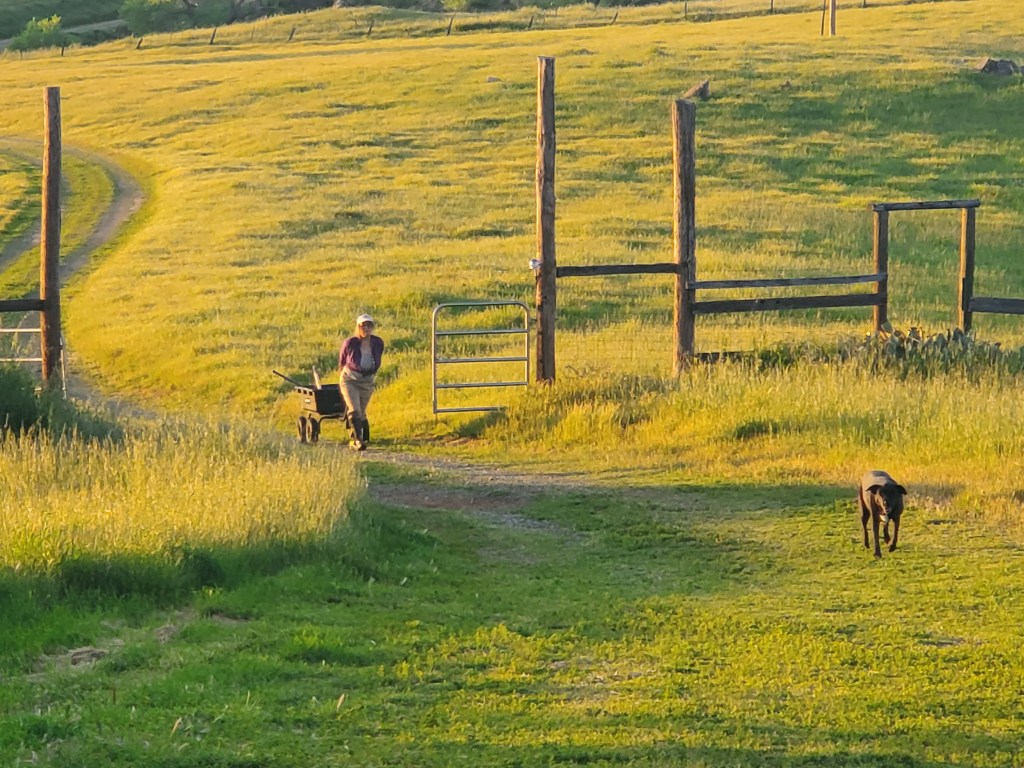
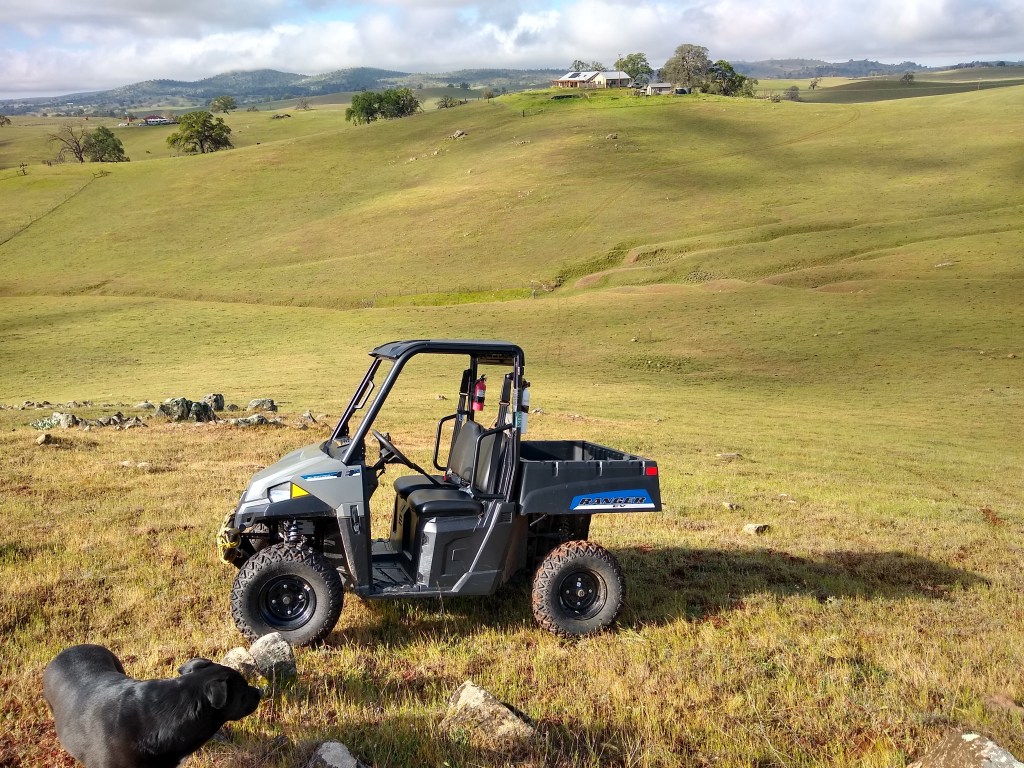
If you are a regular reader of this blog, you may remember that my neighbors, Ric and Kim, are extremely generous, allowing me to use their electric Polaris for my habitat restoration work. Those vehicles are extremely expensive, and we are so grateful for this kindness. It makes life much easier. I was reminded of this last week when Ric had his vehicle back with him for some work, and I was still engaged in blue oak planting. Undeterred, I regressed to using my cart and hand dragging around my tools and plants to continue planting. I got three more blue oaks planted, but goodness, I was sweating.

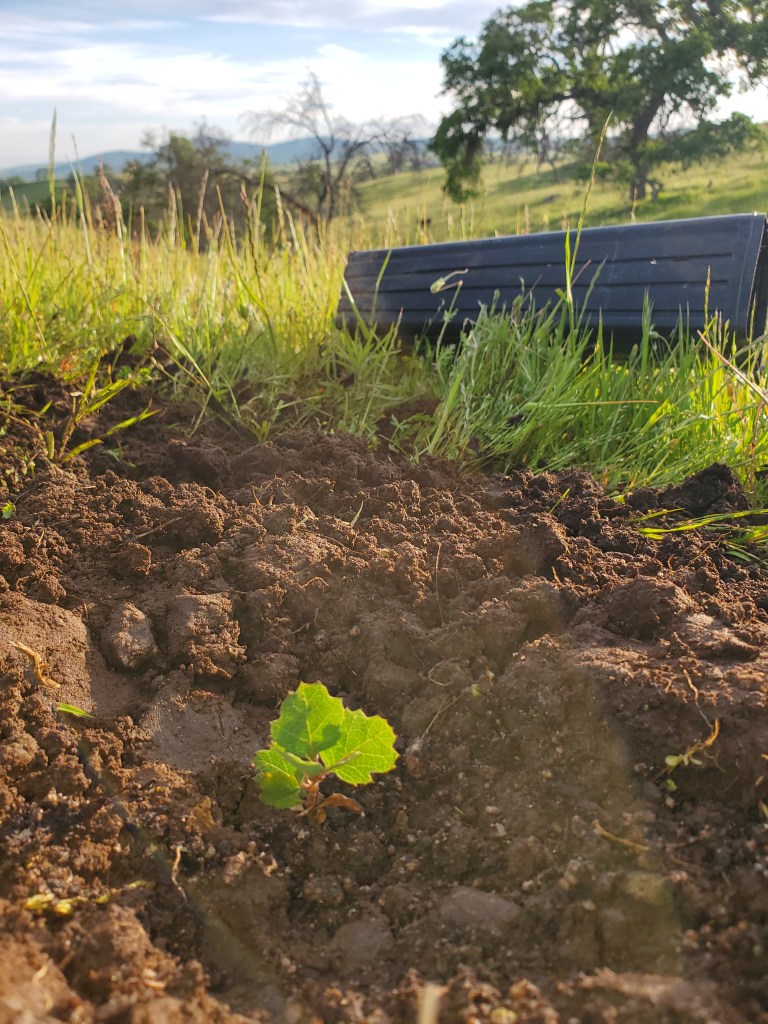
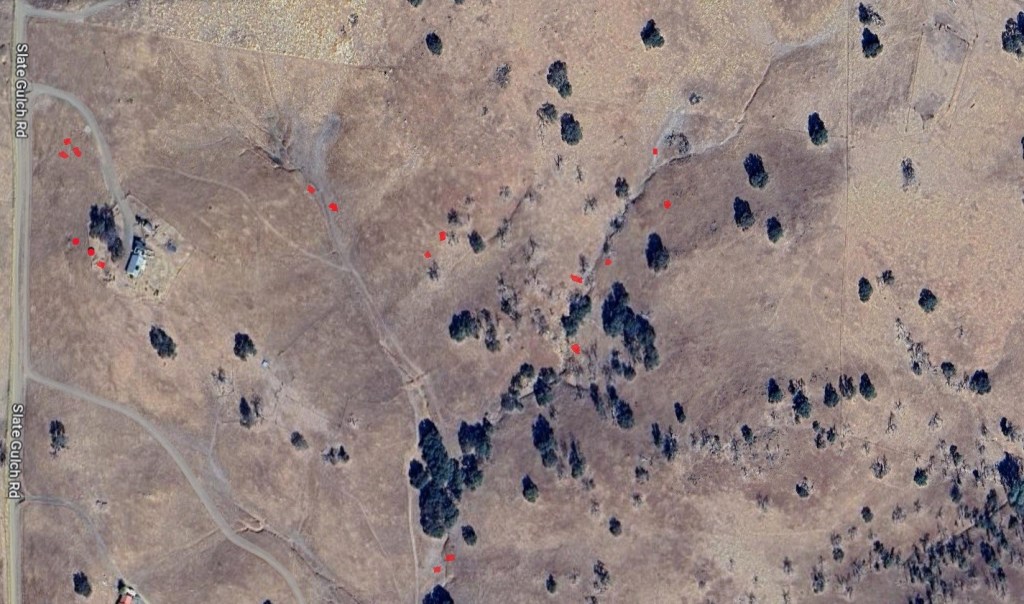
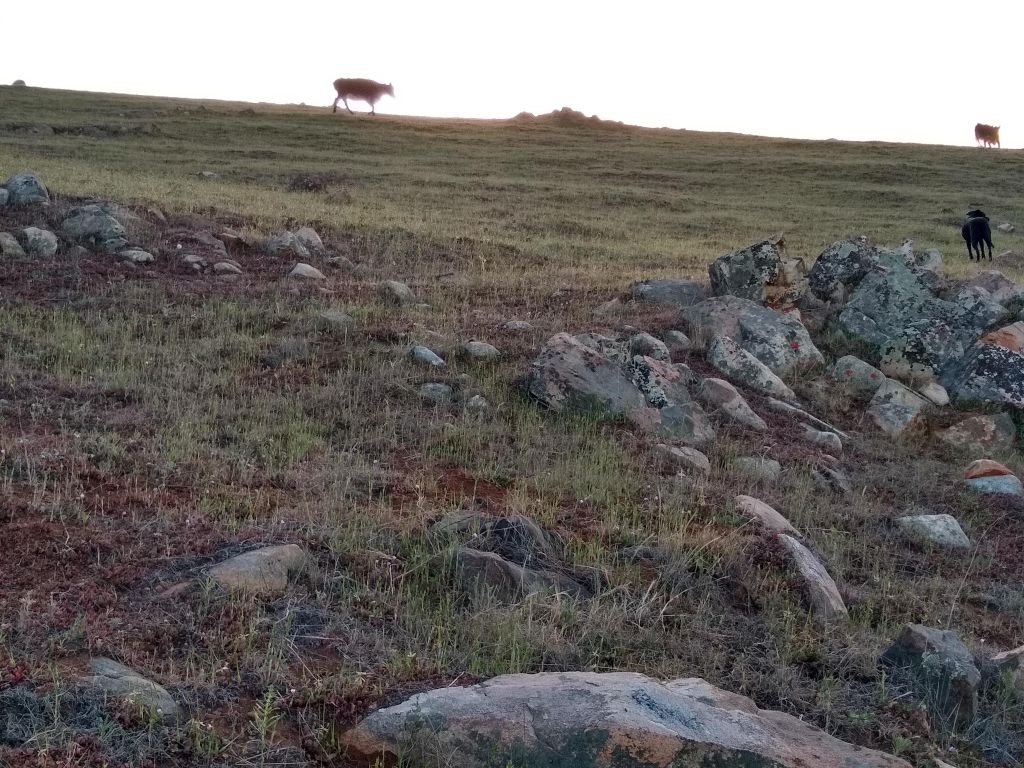
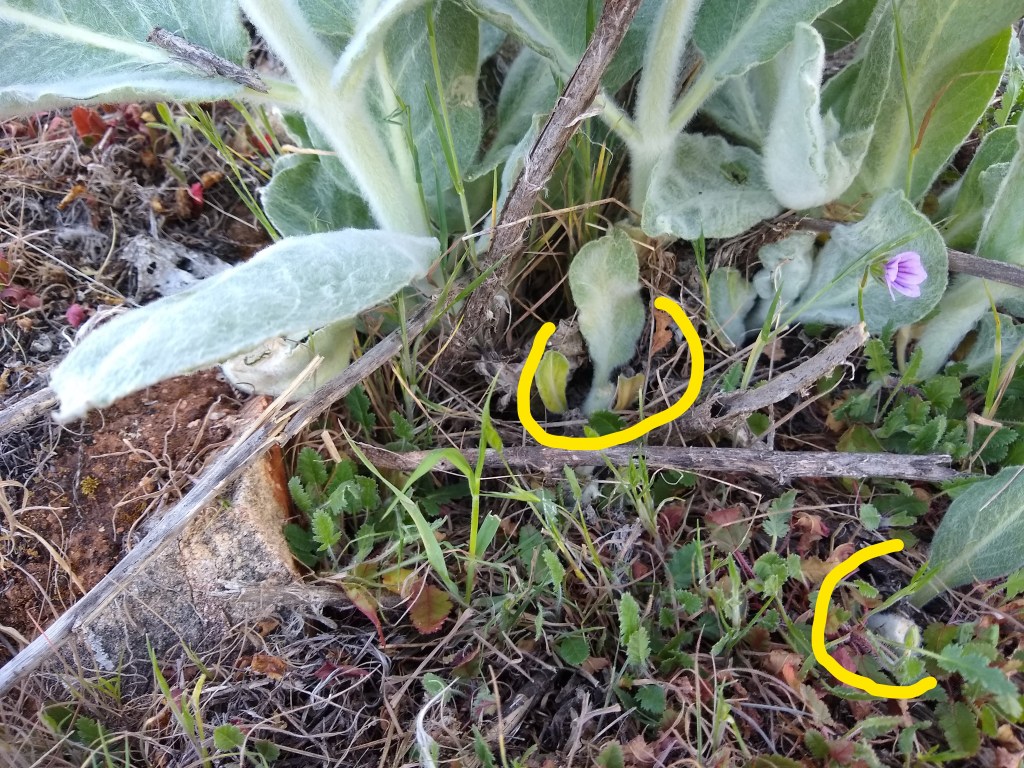
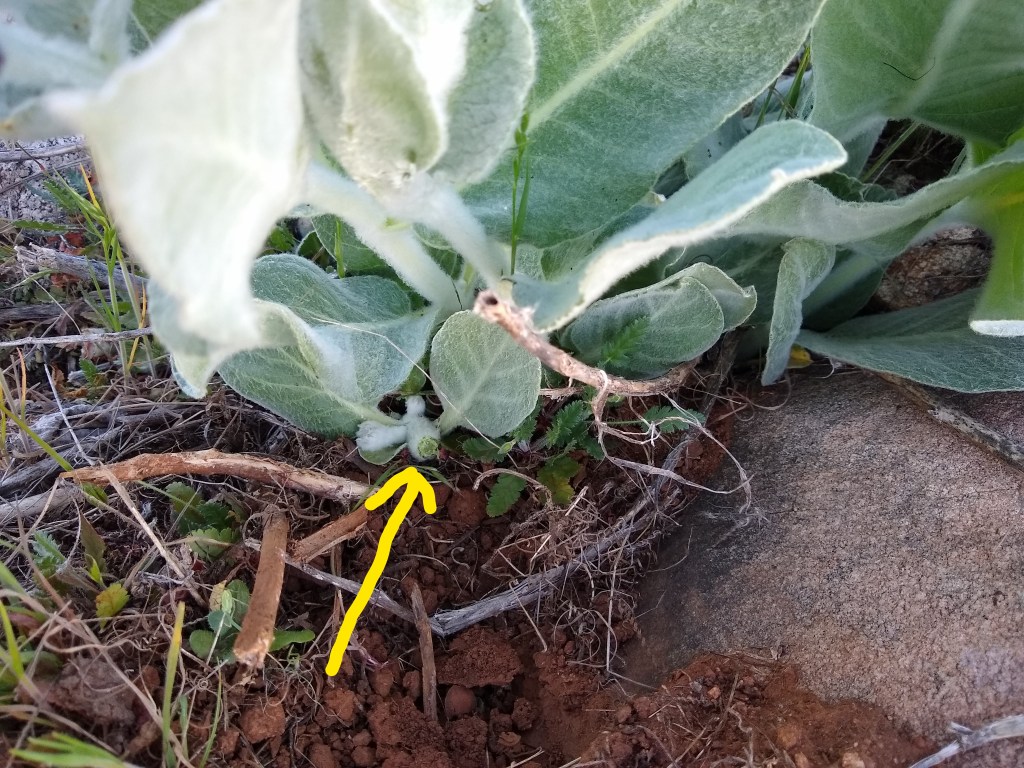
The good news is that two of the earlier oaks are thriving, and the seedlings I’ve been protecting in the Spring Creek area for 15 years are finally appreciably growing.
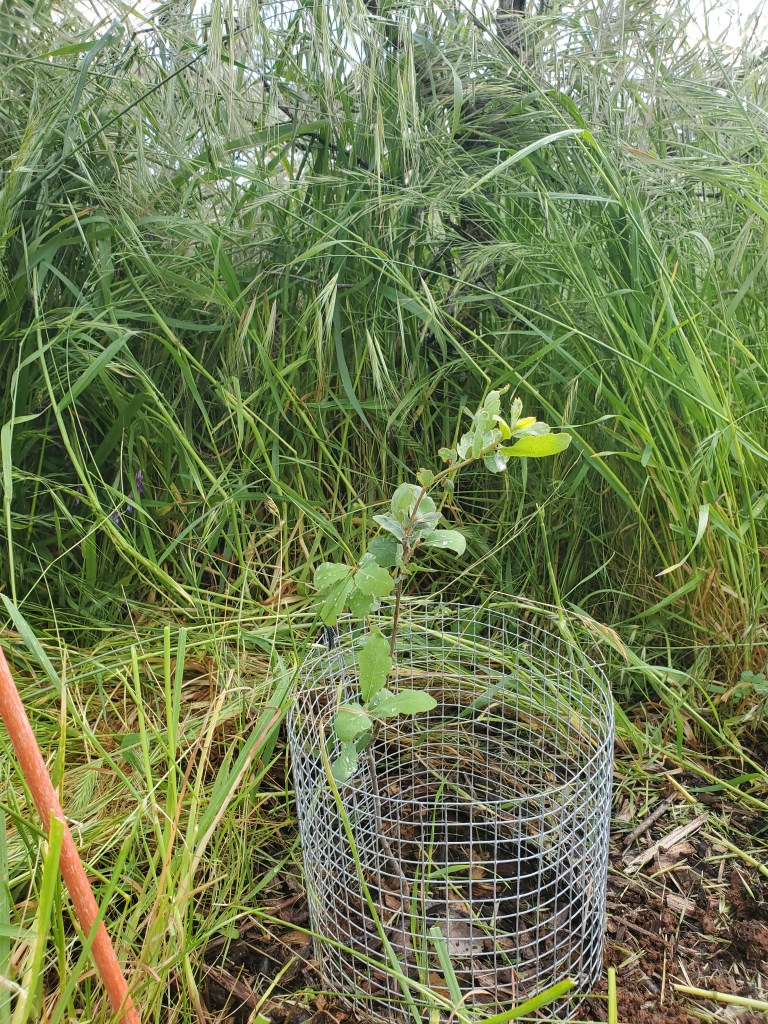
Red dots are planted seedlings

Wildflowers and Wildlife

Fire Keeping

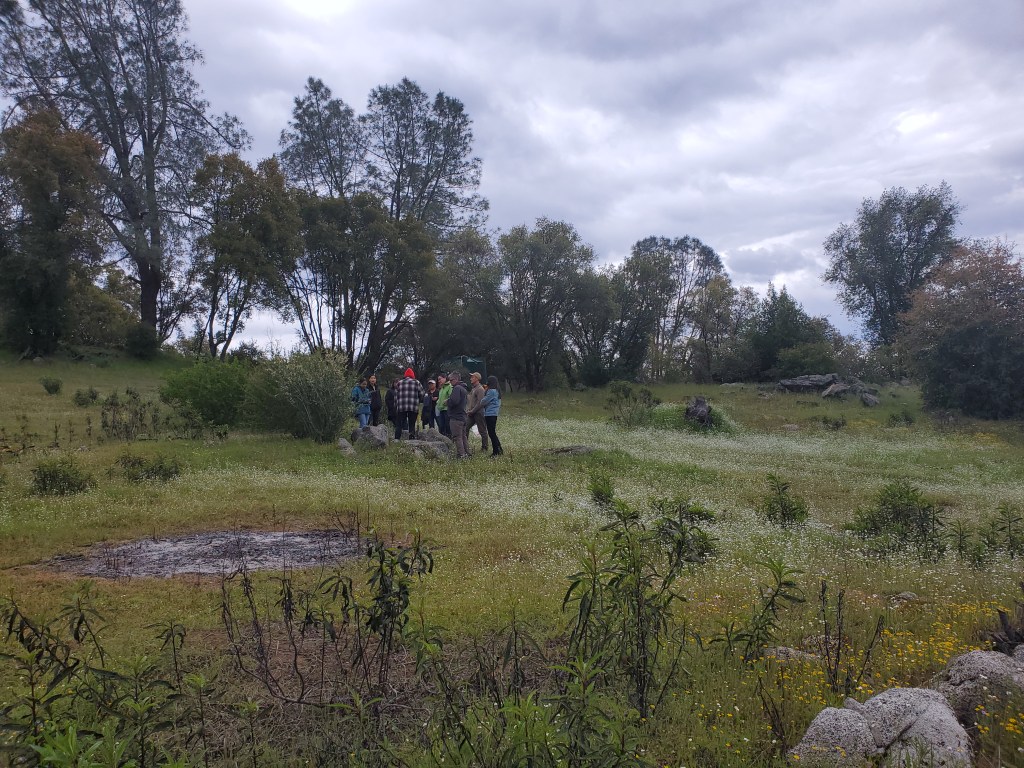
Nellie, the previous Pollinator Program Coordinator for the Southern Sierra Miwuk Nation, attended a traditional cultural gathering the other weekend and educated participants on pollinator plants. She gave the group a packet of milkweed seeds with tobacco and sage as part of the mix. Nellie said that when we planted the seeds we would be making an offering at the same time. I nearly cried I was so proud. I agree. Planting is a sacred act; it is bringing us closer to fulfilling our responsibilities as stewards of where we live and connecting us to place in a way that is intimate. She is keeping the fire of knowledge of traditional practices, values and connection and sharing those with others who are continuing on their road back to a reciprocal relationship with all our relations.

Five Years and Three Months

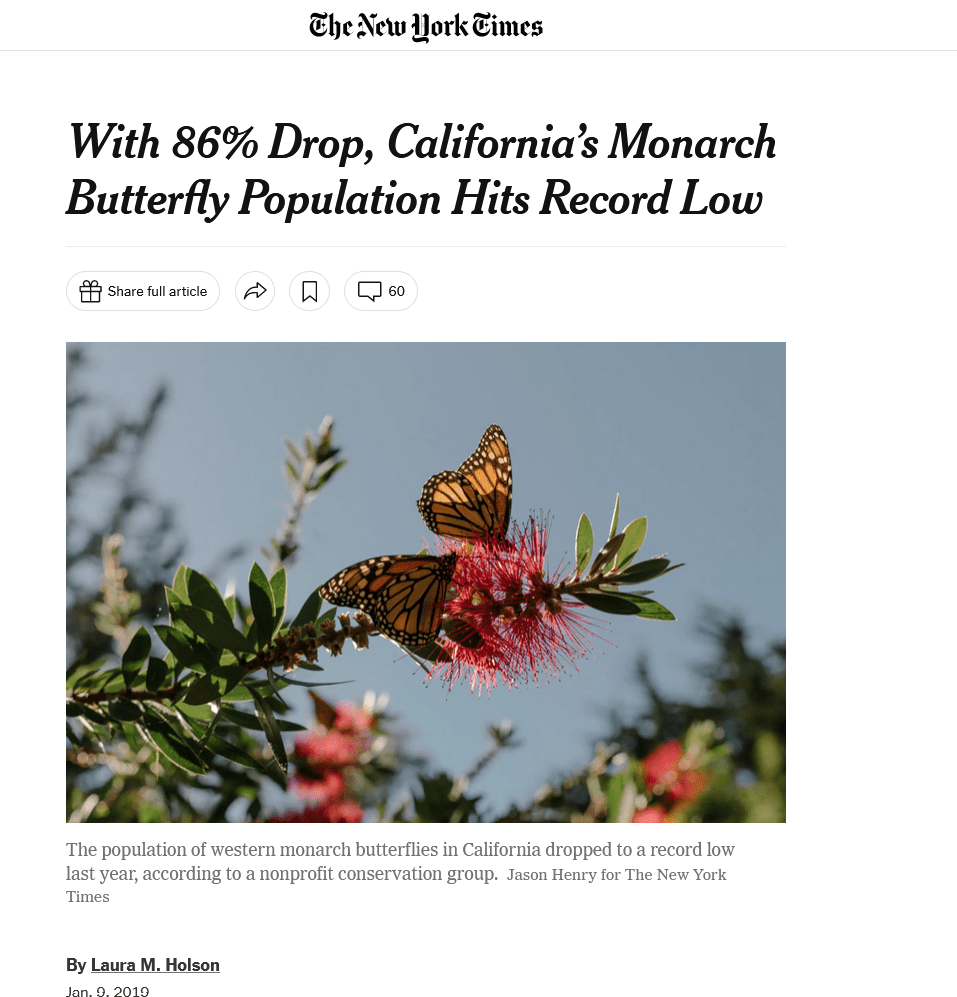
It has been five years and three months since I read the New York Times article about the plummeted numbers of monarch butterflies. It made me sad and angry that monarchs could very well be lost in my lifetime. I did not want to imagine a west without this beautiful and important native animal. I still remember that day in January when I read that article. I thought, “Ok, I am not willing to let that happen without a fight. What can I do about this?” So, I got to work learning as much as I could about monarchs, their migration, lifecycle, what they needed to survive. I learned who the key organizations were leading the charge and that there, gratefully, was a significant focus on this issue. I knew I had seen monarchs before, but it made me consider how long it had been since I’d seen any at the ranch, or even in town. I went back through photos. It had not been for ten years – not since before the 5-year drought.
The first people I reached out to were the Southern Sierra Miwuk tribal elders. I asked them about the monarchs and the western slope of Mariposa County and what they knew of the populations, plants and timing. I then reached out to some older ranchers to gauge how often they had seen monarchs and what they remembered from their grandparent’s stories. It was clear. The elders shared about times of abundance, with fields of butterflies, including monarchs, all over the milkweeds that particularly grew in the riparian and marshy areas. There were more flowers then and more milkweed to support hungry caterpillars and butterflies. The ranchers told me of less abundance – of having seen them as children, but not as many now. With this information, I knew this area had supported flocks of butterflies, and that it could possibly be that way again – at least Taawe Bwia, my ranch, could be an oasis.

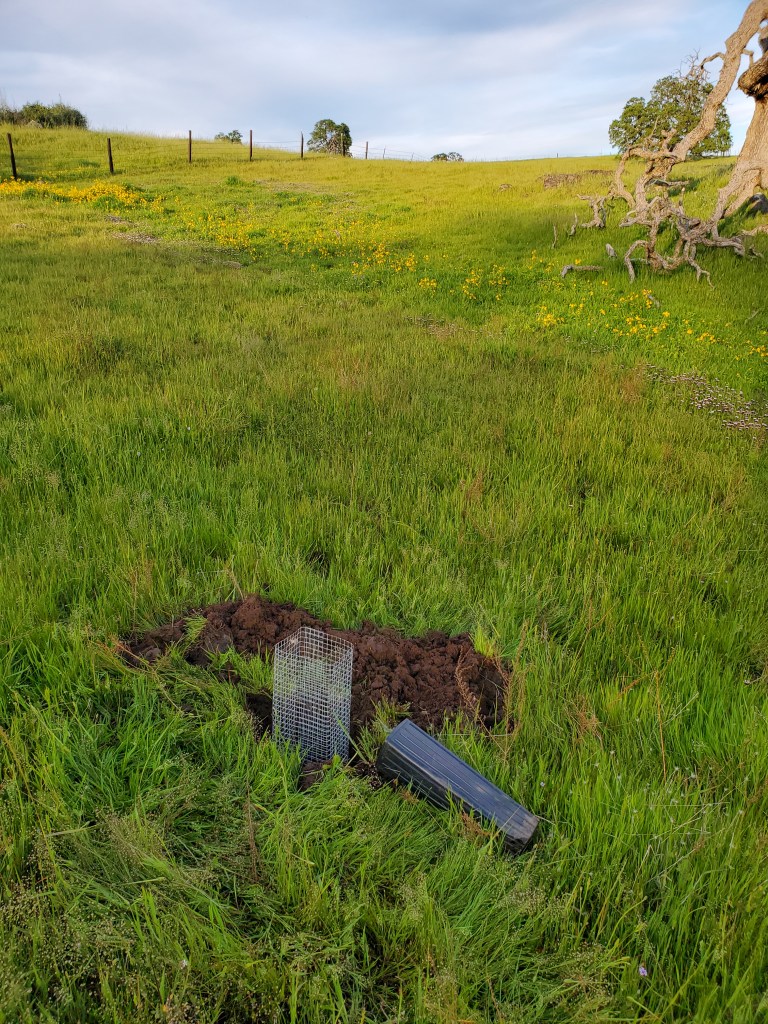
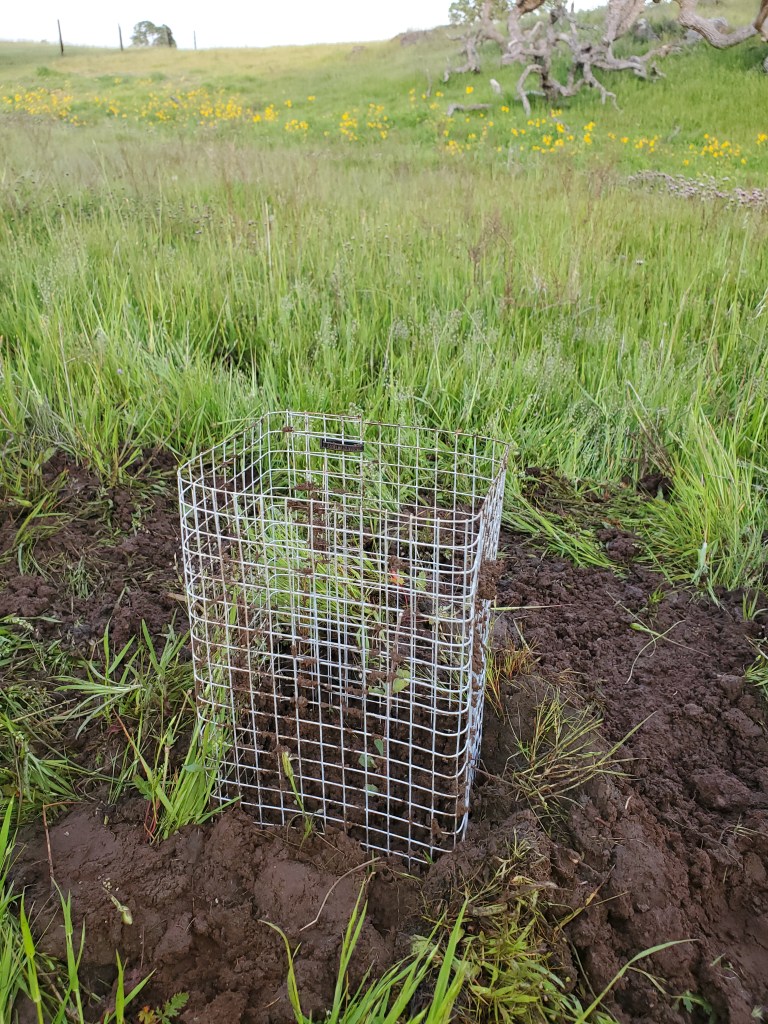
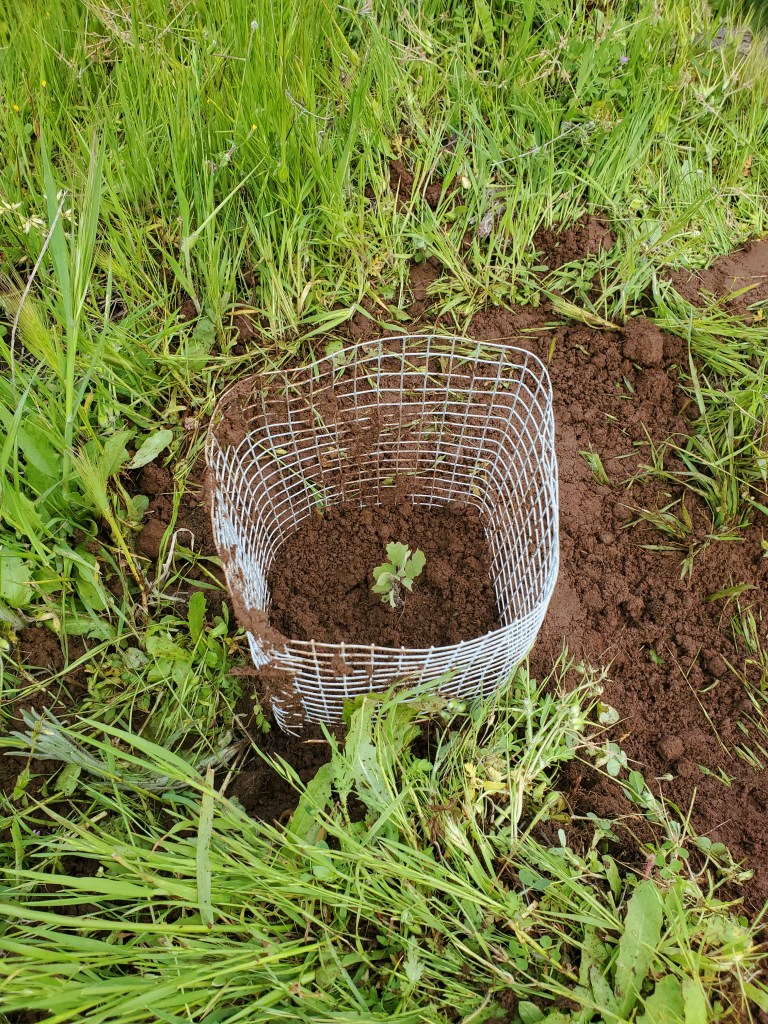
To get plants, I reached out to Mariposa Native Plants (Ron Allen and Bev Andalora). I knew them in the community, and Ron had already been gaining a reputation as a “milkweed whisperer”. From the information I gained online, to Ron and Bev’s knowledge, we created milkweed plots. I started with two diversified plots, and both were ravaged by gophers. I started over, placing the plants in mesh baskets instead of chicken wire cages. That worked, but it was expensive. While I was committed to the project, I could never have scaled it as big as I have without the Mariposa County Resource Conservation District (Melinda Barrett). She was a wealth of knowledge, and I changed the composition and structure of the milkweed plots to “pollinator islands” based on her guidance. She was able to help because there was significant funding from the Wildlife Conservation Board, and the California Association of Resource Conservation Districts, as the intermediary administrator.

I was fortunate to have the thought partnership of Xerces Society partner biologist Deedee Soto, who shares my passion and commitment to conservation work. Truly, without her expertise, I would not have as much success. She is a genius with plants – propagation and ID. At this time, Xerces also began their very useful habitat kits (Thank you to Jessa Kay-Cruz and Angela Laws!). Not only did it provide all the plants needed for a successful pollinator island, it taught people about the plants, bloom timing and diversification. I still have the very first plant list with bloom times. It was such a great resource, and what a great idea.

I received tremendous support from the National Resource Conservation Service (NRCS) John Grimes, Jesse Baum, Prospero, and so many others in the NRCS ecosystem. Farm Advisor Fadzayi Mishari provided input on conservation issues early on in my land stewardship and organized important educational opportunities for the ag community where I was able to learn a great deal.

Point Blue Conservation partner biologist Elena Kromer wrote my first conservation plan. While it took a very long time to get done, she listened carefully to what my concerns were and designed a plan that addressed many of them. This process connected me further into Point Blue, where I was able to join their carbon sequestration and wildlife resources study project and access their Roots grant program (Cati Mong). Also of essential help were the classes and resources from Monarch Joint Venture. They offered the first online class I took that brought me from knowing almost “0” to knowing much more. I was able to take that knowledge and advance it through the Pollinator Partnership Pollinator Stewardship Certification program, where I earned my certification in Summer 2023. Most recently, I was also able to qualify for the California Department of Fish and Wildlife Partners Program with many thanks to biologist Rosie Gonzalez and her colleagues for smoothly navigating me through the process.

Last, but not least, I want to acknowledge my dear family, friends and readers of this blog. My dad, Alan, and dear friend Daniel donated funds early on that helped me purchase more plants and supplies. My mother-in-law Sheila sends me fun butterfly-themed gifts. My brother Vance, and sister Sarah, who actually read this blog early on, encouraged me. My neighbors Ric and Kim who let me borrow their Polaris, and early on Ric helped considerably with fencing labor. My nephew Ashtin and niece Desiree have helped with the branch fence early on. My other mother-in-law, Liz, has helped me work the ranch each visit, planting seeds, digging channels and holes. Dear friends Melanie, Molly and Jen have worked side by side with me to build rock and log check dams. Friends in the community and on social media, readers of this blog who have sent words of encouragement, recommendations, shared knowledge, ignored my typos, and encouraged my writing, you all kept me going especially when I had set-backs. Finally, my beloved spouse, David, who without him nothing is possible. From his emotional support to physical labor, and financial partnership, he has been there for me and this dream of changing the course of monarch survival, to create a place where they can be assured of food and shelter along their epic journey. Chiokoe uttesiavu. Si se enchinakiavu. Thank you. I appreciate you all.
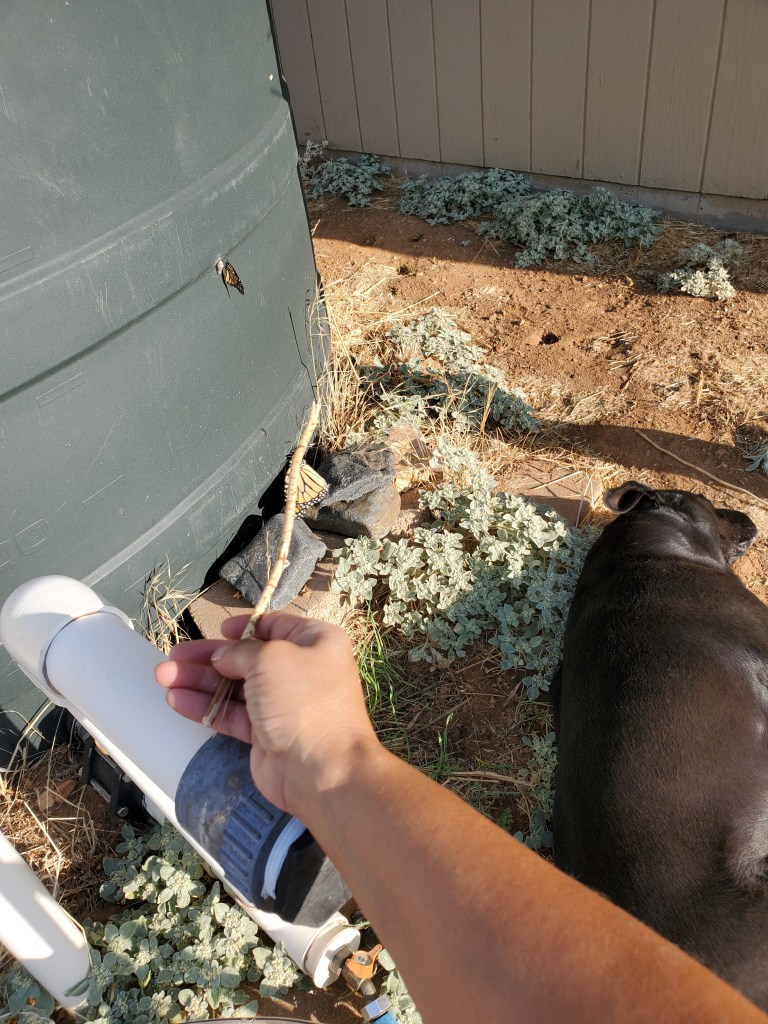
Goal accomplished!

Free T-Shirts?

To commemorate my 100th post, I am having a PolliNative t-shirt giveaway. If you like what we are doing here and want to represent via a beautiful organic cotton shirt with a heartfelt message, here is how:

  1. Make a comment on this blog with no more than three sentences sharing about what you are doing to help our pollinators thrive.
  2. Everyone who submits a comment will be entered into a random drawing for a tee-shirt. They are expensive, so I can only give a handful away.
  3. Comments must be in no later than May 24th.

Thank you, reader, for everything you do to make our planet a healthy place for our children and for all our relations. Si enchi nakiavu (I appreciate you all).
Cow Standoff – Babies Under Threat

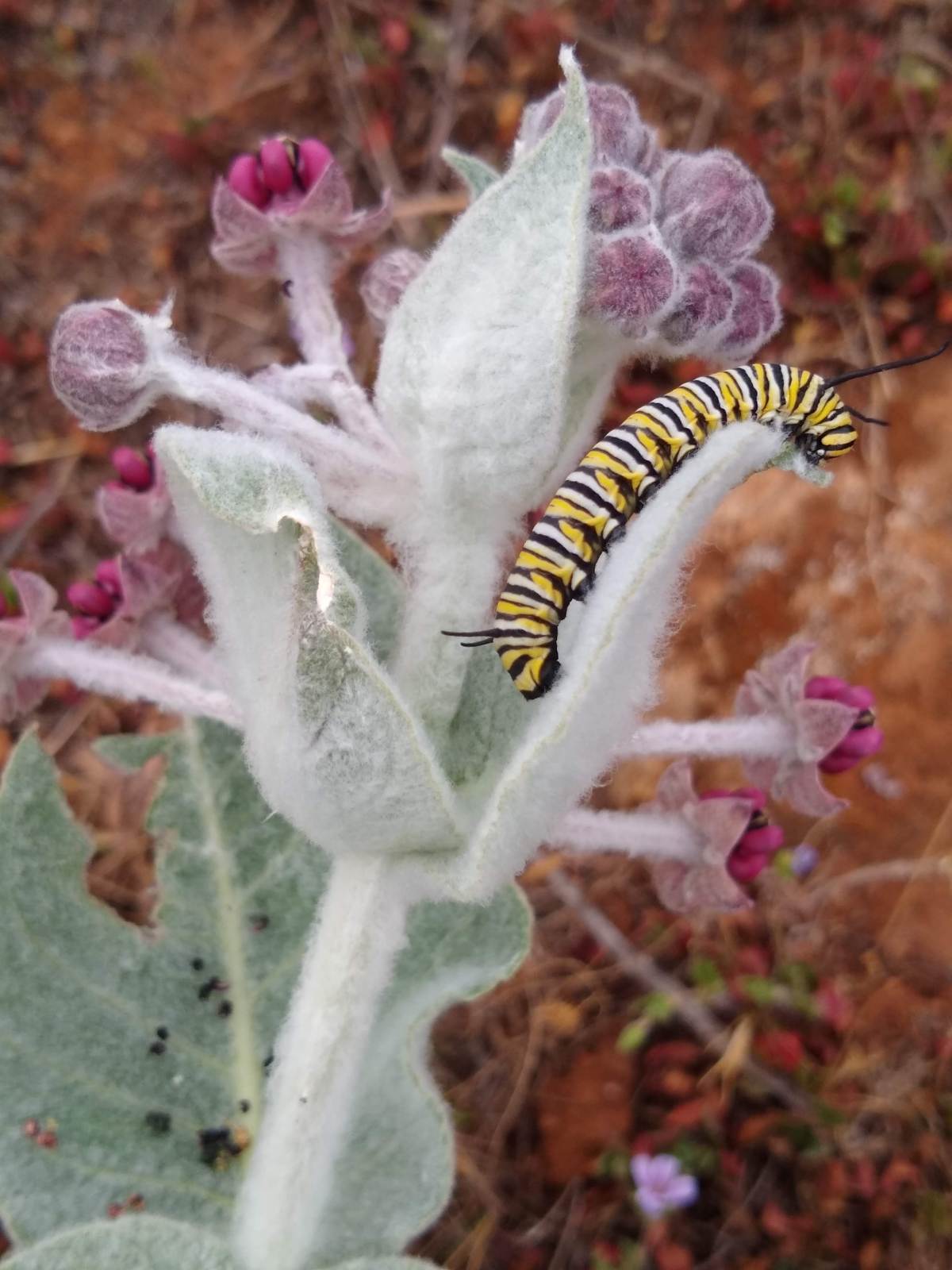
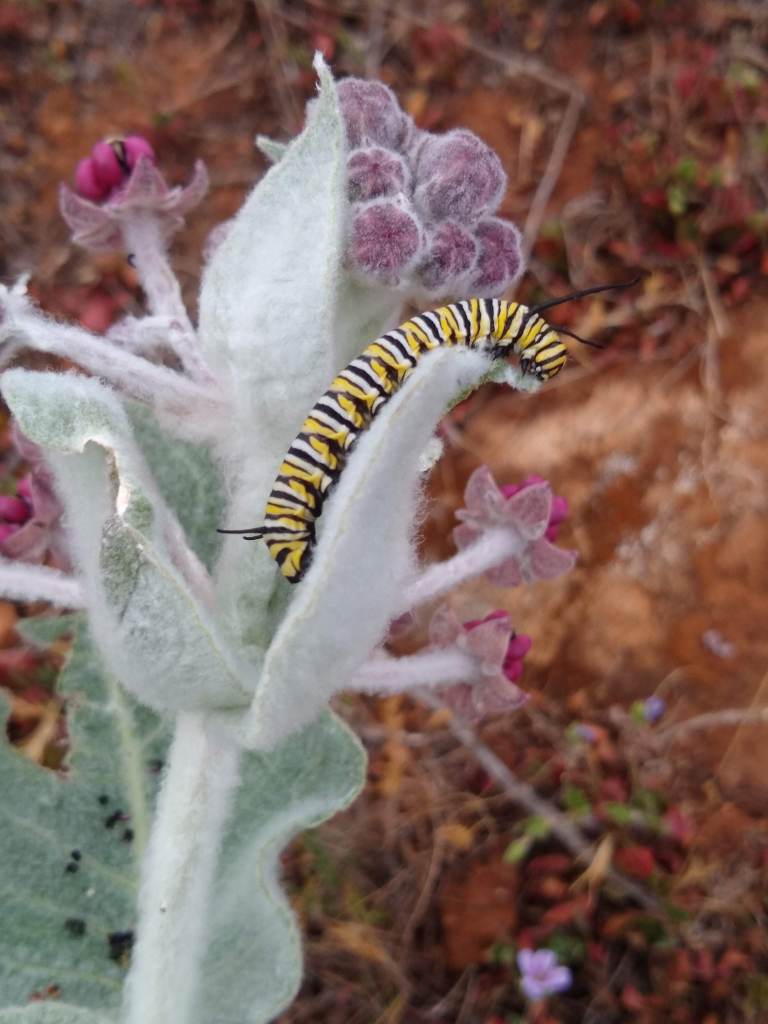
Large caterpillar (probably at Instar 4) trying to make it to a monarch

In the last blog post, I relayed the near loss of the incubator milkweed plant and my aborted protective camping almost-adventure. I also detailed how my cattleman and I agreed that it would work out to shift the cattle to the south part of the ranch a few days early for a rotation of 10 days. However, he was not able to move them until Sunday…I had to ensure the baby monarchs’ protection for one more evening and day.

Like Saturday morning, I rose before the sun to make sure I was moving before the cattle were. I was out the door at 6am, and there were already several cows up. They were in the vicinity, but not adjacent to the milkweed. Still, it was too close for comfort. The dogs and I made our way to the milkweed patch to stand guard for however long it took the cattle to circulate away from this section of the ranch.

The sun began to lighten up the sky, and one by one, the cattle began to stand up from their nested slumber in the grass to begin their morning ablutions. I stood guard as the dogs showed their joy playing a game of wrestle and chase. Who wouldn’t be excited to be outside first thing in the morning, the cool air stinging your cheeks, a brisk walk moving the blood in your body, the slight breeze shifting your fur. The smell was crisp and alive – a good day to guard a plant full of caterpillars.

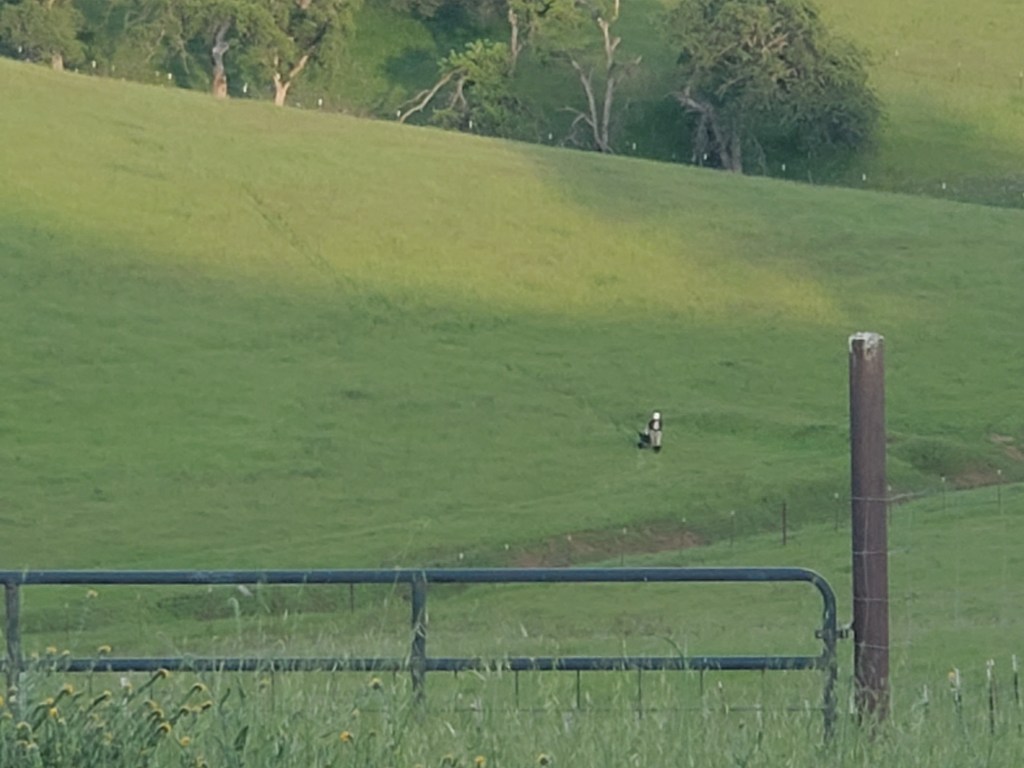
Dave watches the drama unfold from the other hilltop

As time went on, the cattle migrated around the hill. I went home for a cup of tea and breakfast – in front of the large window looking north to keep an eye on the situation. I calculated how close they could get before I would need to run up the hill to get to the patch before them. Then…trickery! A separatist cow group splintered off from the herd and went up the hill. It was like they remembered the green of the milkweed and made a plan to circle back. I ran out the door, the dogs at my heels, jumped in the neighbor’s Polaris and drove as fast as I safely could up the dangerous incline. I had to approach with care. If I chose the wrong side to head them off, they could stampede over the plants all but assuring the destruction of the patch. This pushed me to the steepest, rockiest side of the hill. As I watched the cows continue their approach, inching closer and closer, I could drive no further. The rocks were too plentiful. Jumping out, I ran across the tilted hillside, dodging milkweed and rocks. The dogs were there first – stopping the cows in their quest just feet away from the patch, and the treasure of the caterpillars beyond. Breathless as I ran, I said “leave it!” – lest they move them toward me and trample the plants. They obeyed – standing like schoolyard bullies daring some poor kid to make a move. It was like this when I finally got to the east side of the patch. Millie and Beatrix standing like statues except for the slight lick of their chops contemplating – no savoring – the thought of a chase. I imagined them thinking, “Make my day.”

It was a stand-off.

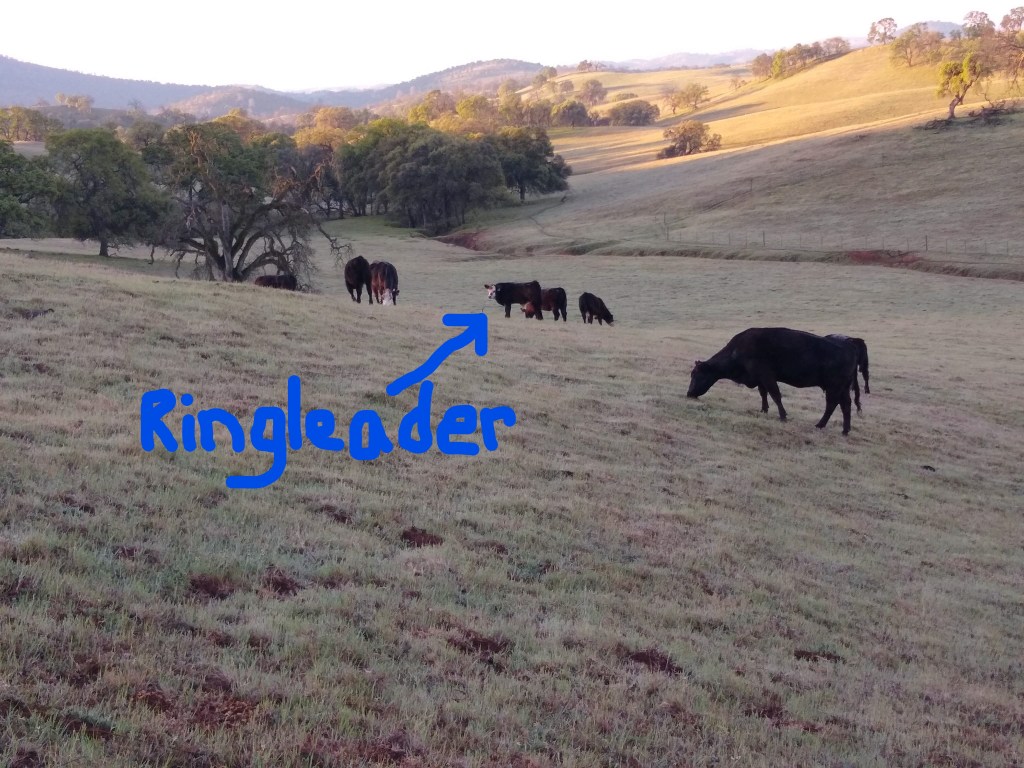
Cattle are smart, and they don’t like to be stationary for too long. The drought had taken its toll on the land, and they were going to chomp those bright green plants they had seen the day before. Their ringleader is Skull, and she brought about 10 of her toadies along with some their calves. As a rule, I give a wide berth to all mamas with their babies, and I certainly did not want to put pressure on any of them. But, this was my one patch of ground, and I was not going to cede it. Skull is about 1,500lbs, black with a white face that leaves black fur around her eyes giving her that skull-like appearance. Creepy. She is not someone you would want to pick a fight with. She stared at me demanding that I get out of the way. The dogs inched closer to her as she tossed her head. Then she looked back at me, and I said, “You have 364 and a half acres to graze. This is my half acre. Go on…GET!” Oh boy, she did not like that. She hit her hoof to the ground and scrapped the dirt, then snorted. Dang – she was getting agitated. I tried a different approach in a softer voice, “Oh sweet, sweet skull. Please understand. I love you, but I love the monarchs more right now. Why don’t you go take your posse and eat some other plants?” Another stomp, scrape and snort. Things were not looking good. The issue, it appeared, was non-negotiable on both sides, and I would not be moved. Sensing the moment, and tired of the conversation, Beatrix and Millie looked at me. I nodded, and they were off. Barking and moving forward at the splinter group. Some of Skull’s toadies peeled off right away and headed down the hill, but a few others hung on. Skull stepped toward the dogs, but they were undeterred. The girls redoubled their efforts; they were not fooling around. Skull and her team relented and reluctantly made their way down the hill, slowly, knowing their size and desires. Then, nearing the bottom of the hill, Skull stopped and looked back up the hill at me, the dogs now sitting by my side staring back at her. It was clear I had won this battle, but the war was yet to be determined. She turned back around and meandered off, head held high.

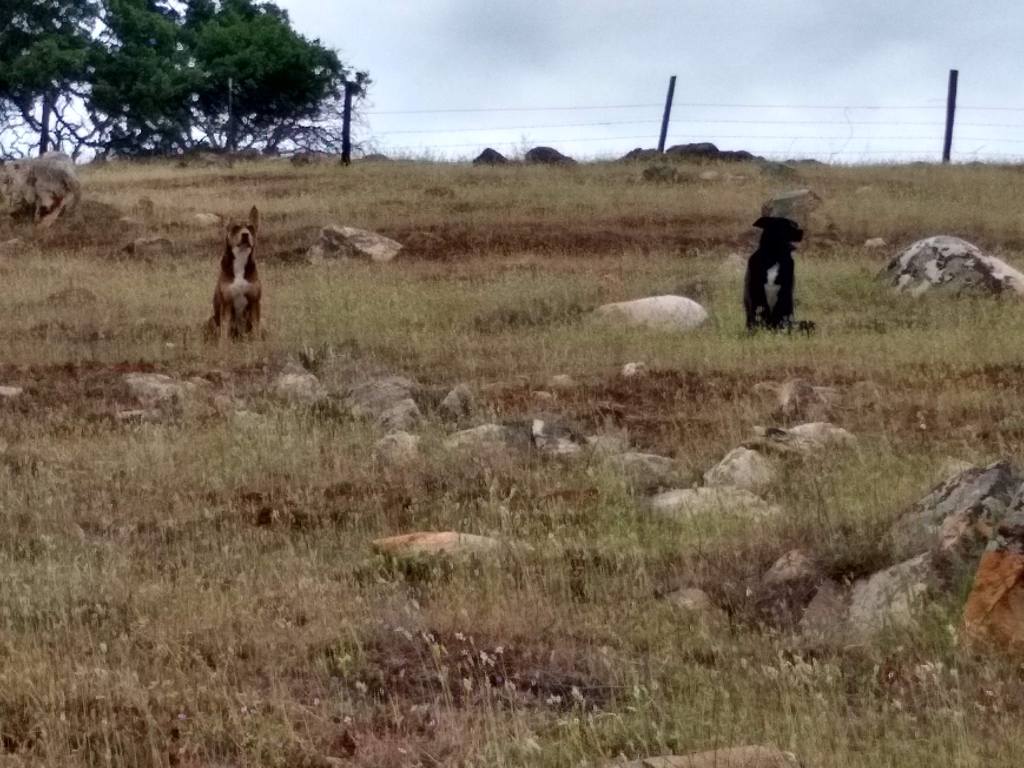
With the tense moment passed, I turned to regale in the treasure that was protected. The caterpillars were safe. There were large, medium and small ones eating. They were thriving. Beatrix and Millie saved the day.

Badass Canis familiarus

With the cattle moved on, I set my sights on figuring out how I would get the Polaris back down the ultra steep hillside. Photos do not do it justice. Driving down is almost like going over a cliff. I created a plan of careful movements to position the vehicle nose forward using the same track I had created to get up the hill. I took a deep breath, loaded myself in the unit, put my seatbelt on, placed my left foot on the break and my right on the acceleration, shifted in reverse and took off the break. It lurched forward for just a quarter second before I caught it with the break pedal. Breathing again. I reversed, got it into position and carefully went downhill in low gear.

Images are deceiving. This is not a gentle slope.

Nectar and Monarch Sightings

The nectar of the milkweed is a crucial source of food for a newly emerged butterfly

With the cows to the south, I could feel comfortable going on vacation. My pet sitter texted me with a sighting of a monarch on the back patio. I nearly cried. It isn’t just one. There are several sightings now. I really believe this place was chosen as a nursery because of the added nectar (Thank you CARCD and Xerces for grants and extra plants). In the last two years, there has been no evidence of caterpillars chewing on plants. This year has been good for early blooms. We have a wide variety of plants flowering. It has been this way since January.
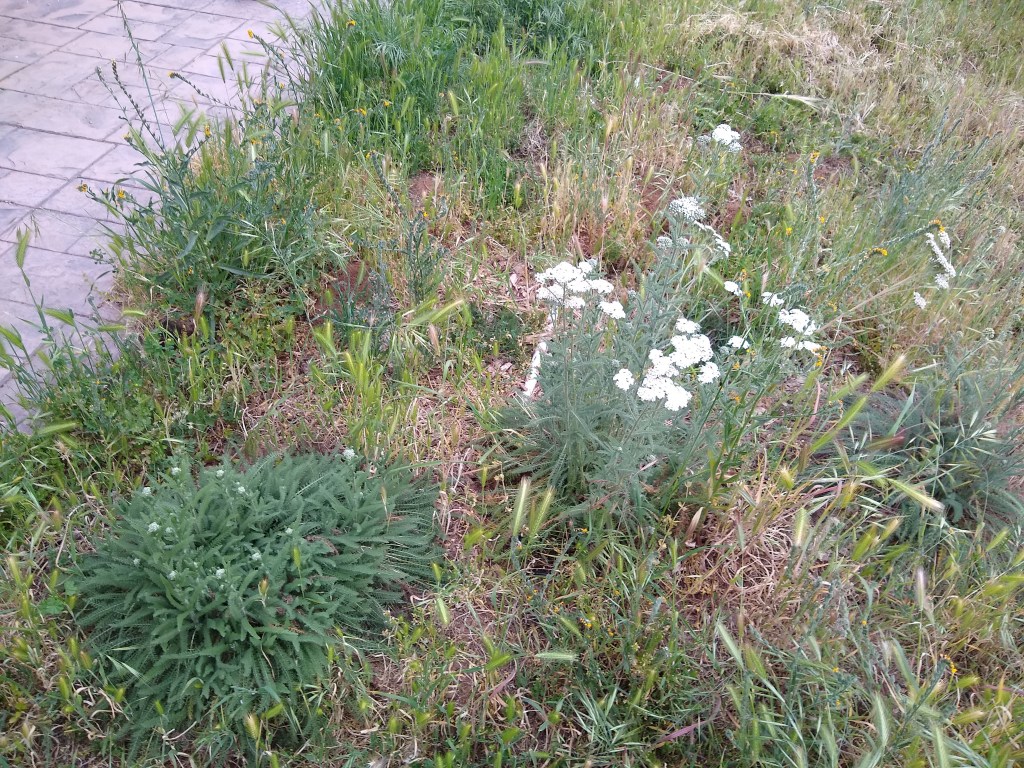
After returning from vacation, I checked on the incubator milkweed. It was gone – stripped down to nothing but a few buds at the base of the plant. This is as intended. The caterpillars eat, and eat. They then find another plant to ravage until they are large enough to make their chrysalis. I counted 5 on one large plant and one on another. There was evidence of slight chewing on a third large milkweed, but I did not see any caterpillar.

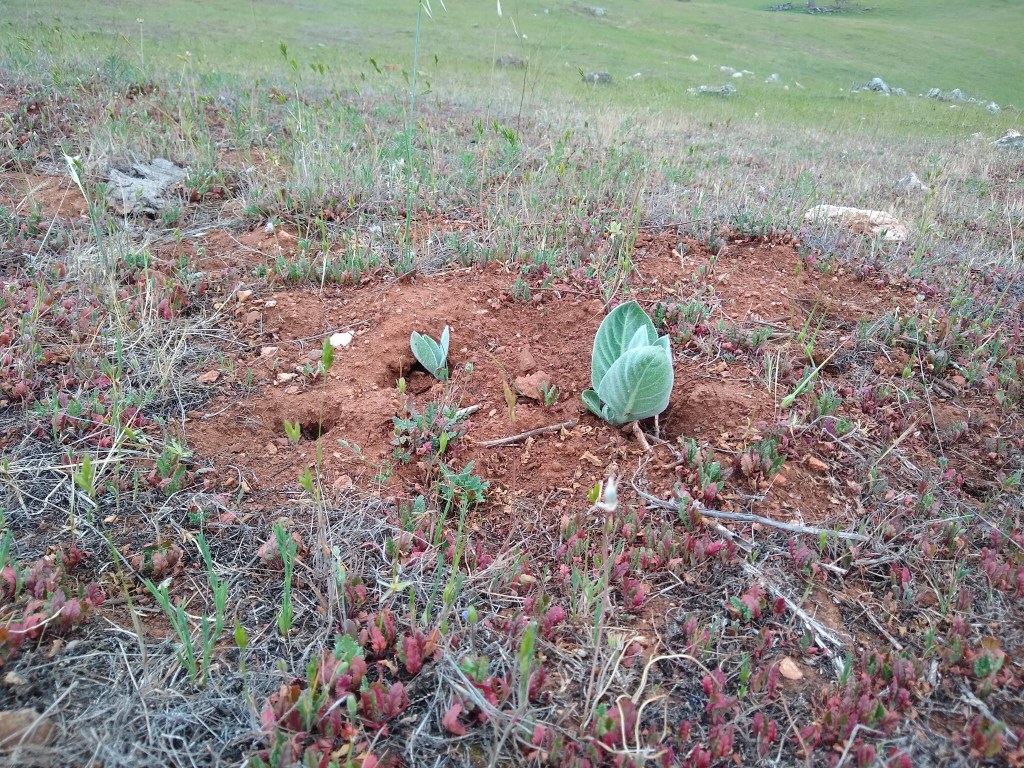
As I was returning, imagine my shock when I found 4 A. Californicas emerging from the soil of the first milkweed patch, AC1, closest to my home – the site I had been watching with despair at its non-return. In years past, this site had as many as 11 individual plants. This could be good news for any late comers to the ranch who want to start their family here. Lesson learned – never count out nature.

Monarch (and BABIES) on the Ranch and Near Disaster Leads to More Adaptive Management

Monarch caterpillars eating

As I write this, I am still breathless. We have monarchs! We have monarch babies! Thank goodness for Ron’s monitoring project. It has required me to check on the A. Californica (AC) patches regularly. It was one such monitoring effort I went on earlier this week that produced the greatest joy to occupy my heart since, well, since the week when I found the ACs. I guess I find many moments of joy in life!

On Wednesday, March 16th, I decided to check on the ACs during my lunch hour. It was such a beautiful day with a very slight cool breeze, no clouds in the sky. I felt compelled to get away from my desk and enjoy the out-of-doors for a bit. Gratefully, I work from home, which enables me to seamlessly move from inside to outside during breaks in my day.

The monitoring project requires me to note date of emergence, flowering, when seed pods are set and when the seed pods have opened. It also requires monthly measurements. I have been going to the patches semi-regularly to check – semi-regularly because the largest one is well away from the house up a 6% slope. It takes some effort to get there. Ok, let me get to the good part! So, I decided to take a walk through the riparian area. I saw some other butterflies, sat around by the spring creek for a while observing and checking on the Xerces plants.

This put me on a course to access the large AC patch (AC2) from the east already near the top of the hill. First, however, I checked on the other two smaller patches. In AC4, the two plants were small but already flowering. In AC3, the plant was still small, but healthy.

I finally got to the large patch with several tall, mature plants that were already beginning to flower. All the flowering shocked me because this was quick and very early. It was in this muddle of thought and calculating from my experiences last year when out of thin air I catch some movement to the east. It was a monarch butterfly flying around. WHAAAT?! Could I believe my eyes? I fumbled with the phone camera trying, but failing monumentally, to capture a photo. I even turned the camera app off accidentally in my excitement. Then, it was gone, and I got nothin’. Oh how I hated myself.

Seeing the monarch made me wonder about babies. I took a close look at the AC plants. I saw quite a bit of holes on one mature plant. Looking closer…there they were, the most beautiful sight, monarch caterpillars – monarch babies, the progeny of this magnificent, healthy, beautiful adult who graced me with her presence – the future of the species attached to leaves all over the milkweed. I counted 15 caterpillars. I looked at all of the other plants. Nothing. There was some evidence of eating on one, but I didn’t see anything…at the time.

I sat down next to the main caterpillar nursery plant and contemplated my luck. I sang to the plants and caterpillars a little butterfly song I made up on the spot. Quietly, I hoped I would see the adult monarch again. I was singing to her too. A hawk flew over me. I called to it. A blue belly lizard made its way up on top of a rock not too far from me and began doing his push-ups – letting me know this was his territory. There is so much to see and hear when you give yourself time to sit quietly in one place.

Out of thin air, again, like magic, she appeared. She landed on another milkweed. She coasted close to the earth downhill. I saw her glide just above the range and then land well away from me. There is much lupine blooming, so perhaps that is what she was after. Then she zigged. She zagged. She came back up the mountain right on a course towards me. I was wearing pink, so maybe she thought I was a flower. The entire time I had my camera at the ready. I got a couple distant photos and had not taken off the zoom when she approached me. As a result, I only got the edge of her wing, but what a gorgeous, sensational piece of wing that was!

And just like that, she disappeared. Although I was there for an hour and a half, she did not reappear. I turned my attention to the milkweeds again. I wanted to convince myself this was not a dream. The caterpillars continued their ravenous march across the leaves completely unaware of my ecstasy. Satisfied this was reality, I made my way down hill toward home to complete the rest of the workday.

That night, I had trouble staying asleep. I woke at 2:30am. Beauty is never without its price. I realized I was nervous. Like a parent waiting for their child to let them know they arrived somewhere safely, I found myself pacing, waiting for the sun to rise. The cattle were on my side of the ranch, and I had some concerns for the safety of the plants, and with them, the caterpillars. I went outside and saw the cattle all sleeping on the driveway. I felt better to see their inactivity, but also uneasy knowing how close they were to the site. I went back inside resolving to keep a close watch when it became light out.

Disaster! I fell asleep at some point and woke to the bright sun shining on my face and a kitten on my chest. How did this happen?! How could I not have woken up at sunrise and especially when my furry baby made a little nest on my person?! I bolted toward the window where my fears were realized. The cattle were up on the steep slope grazing, and there was one right next to the incubator plant. Quicker than I have moved in about a year, I jumped into my muck boots, threw on a vest over my scant pajamas and put on a hat fleeing out the door and into the range before me. Ran down the driveway, through the gate, made a hard right, nearly tumbled down the hill toward Site 2 and the arroyo, then ran as hard as possible up the mighty hill, navigating rocks and gopher holes, up and up until I reached the babies.

Cows in milkweed patch

I gently shooed the cows away, downhill, away from this prize. It wasn’t their fault. They are doing what they are meant to do. With the drought and almost no forage, these tall green plants now look more enticing, and the cows are willing to give the bitter, toxic plant a chance. They can’t help themselves, and I still love them. But gosh darn – the plant had been grazed. Two tall stocks were missing. I rapidly looked all over the plant, counting again and again to make sure. There were twelve. Three caterpillars were missing.

We were all in luck. The largest of the caterpillars was safe. This one is perhaps just a day from moving into its chrysalis stage. I also looked at all of the milkweed plants again. I found two caterpillars on another large plant, and one on a third mature milkweed. Is it coincidence that I found three more or perhaps did the caterpillars drop as the cow snipped off the stem and made their way to another plant? Probably not. I probably just missed them the previous day – but I will never know.

The Need to Balance

The term “adaptive management” refers to making decisions based on realities present on the ground. After the very close call with the cows, I waited until later that morning and texted my cattleman. He has had the cattle on a rotation cycle between the south and north parts of the ranch since he bought the business from my old cattleman. This practice is a good one. It attempts to mimic the movement of grass-eating large mammals that roamed rangeland before Europeans arrived. He is always watching what is happening on the ground and makes the decision when to move them based on the amount of feed or water and other things as well. For much of the recent past, the cattle have been on a 14 day rotation, but he has rotated them at 10 day intervals too. Last Friday marked day 10. I hoped that perhaps this could be close enough to be ok to shift the cows. I asked him what was possible.

Tom was a bit on edge. It has been a bad year. He lost tens of calves in the high country due to bears. He is almost out of water on a leased piece of ground up the road from me, and the drought has left very little grass for the cattle to eat. He has been spending thousands on hay – to supplement the lack of grass. Just like any business, you want your inputs to be less than the output — and the greater that difference can be the better. It means more profit. I understand.

Tom didn’t want to deviate from his plan. I also did not want to make impacts to the neighbor’s ground that would be bad, but I said, “Let’s talk this through.” I wanted to walk through all of the actions and consequences to see what was reality and what was just reactionary. I had offered to compensate for a week’s worth of hay if that was what was needed to move the cows. He didn’t think that would make a difference. Ok. He politely said with a slight tone of stress, “Pardon me, but I am looking at three caterpillars versus thousands of dollars in feed, and I don’t see that computing.” I said, “Ok, let’s dig into that ‘thousands of dollars in feed’. I just offered to pay for the feed you would be missing from this side by moving them. So what do you mean? The entire ranch is a golf course. To me, it is nearly the same on each side of the ranch.” He acknowledged that was true.

We talked about insurances, Farm Bill supports, who was getting what. He vented. The stress reduced, and he asked about how long the caterpillars would need to be done. He had planned on coming out here the next day to take a look at what was left. He could move the cattle. It ended up being one half dozen or the other. He could hit that side a little more, but for 10 days instead of 14 and then come back. If there was rain, we would have that much more over on the north.

We had a plan.

Still, I said “Think on it overnight, and we can make a final plan tomorrow. I can make a temporary fence if I have to. I will have just enough time.”

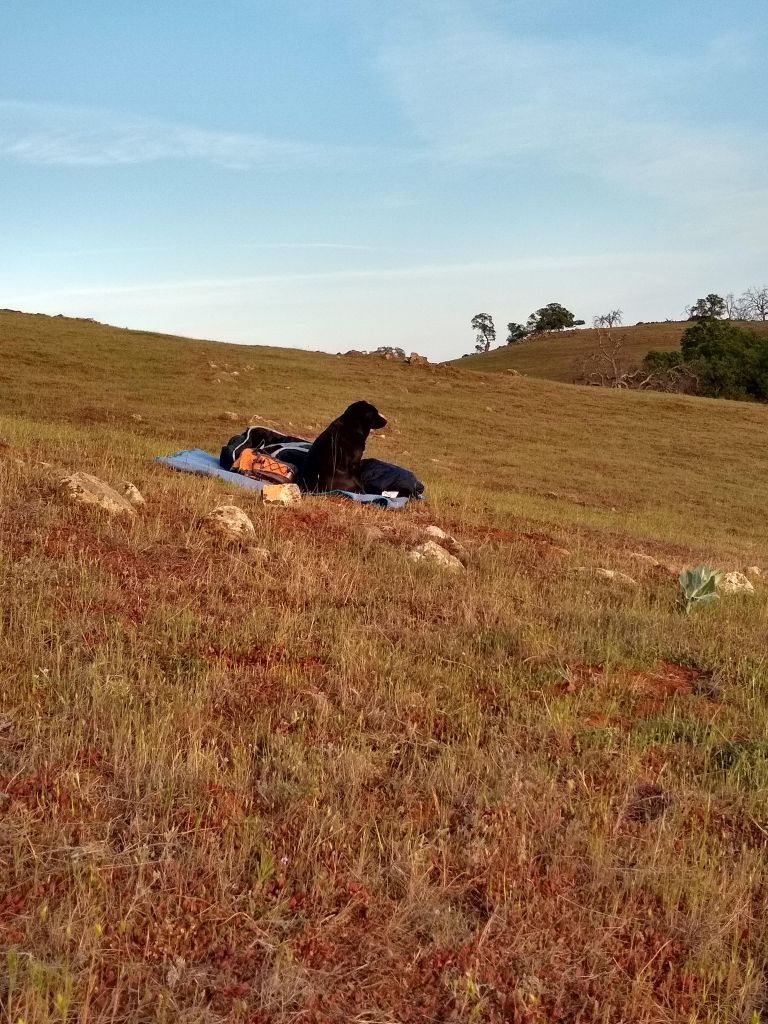
This meant the plants would need some safety over night. I decided I would camp near the milkweed patch to prevent any more grazing of the plants. My husband was not happy. He is from Los Angeles, a city boy. His mind went straight to coyotes, mountain lions and rabid something or others. He did concede that bears wouldn’t make their way down from the higher country just to get me -though the thought had crossed his mind. I was neither concerned nor deterred. I loaded up the very basics of camping gear and set off with my trusty canine companions.

There was only one cow in view far off in the distance as the sun set. It was beautiful. It being a Friday night, there was more traffic on the road and a small plane flew overhead. I could see the twinkle of my neighbor’s lights begin to turn on as the sun sank and the wisps of light began to fade away. There was a cool breeze, then the smell of flowers. Oh my goodness, really?! The milkweed flowers were just beginning to emerge from their duff-covered encasement. Not many had released themselves, so it was just a hint, a distant echo of what is to come. I settled into my bag. I thought about the cows settling down too. It was just then that David turned on our festive strand of cafe style lights on the back patio – like there was some kind of carnival happening without me at home. It looked beautiful from my hilltop vantage. He called me – one last effort to coax me back home so he wouldn’t have to worry. He said, “HB, you know, the cows will be sleeping. You can come home and just get up before dawn. I can have your whiskey and soda waiting for you.” Damn, that boy’s smart and a smooth operator. I double checked the data on cattle grazing, and reassured myself that they would be stationary for the night. Indeed, I saw them just the day before laying allover the driveway sleeping. I was convinced – and Beatrix had been whining. I made the careful trek home in the dark. The full moon had not yet risen. It was just giving us all a taste of its presence, illuminating the edge of the high country and hills with a band of light.

I had mixed feelings. What if a cow decided to eat in the night? It is so incredible out here, shouldn’t I just stay? I had not had much sleep the night before and knew I would not sleep well if I stayed out under the stars. Ah heck, it was best if I slept in my bed and just beat the cows to sunrise. I made peace with the decision. It worked out too. I got some solid sleep for 5 hours and awoke to wind and clouds having moved in over night. I put on my clothes and headed out to make sure there were no interlopers to the milkweed patch. I stayed well away down hill from the patch. No need to be up there more than necessary. It was incredible, but overcast and windy. All was well. The cattle came at about 6:45am. They began to make their way toward the site little by little. Then, they turned the opposite way opting for lower ground and nestled themselves near the swale pond. Unknowingly, I was flanked on the other side by two mamas and 4 babies. They saw me, saw I had no hay, and kept on moving, never once looking in the direction of the milkweed, not climbing the hill. They joined the others at swale pond. The patch is protected for now. Tom decided to move the cows on Sunday. Thinking on it overnight he figured it would actually work out better for him given his other commitments and an upcoming trip. For me, I will have one more day of fatigue monitoring the cattle. It is a small price to pay, and I will worry about that tomorrow. Today, the caterpillars, and all of us, whether we recognize it or not, win.