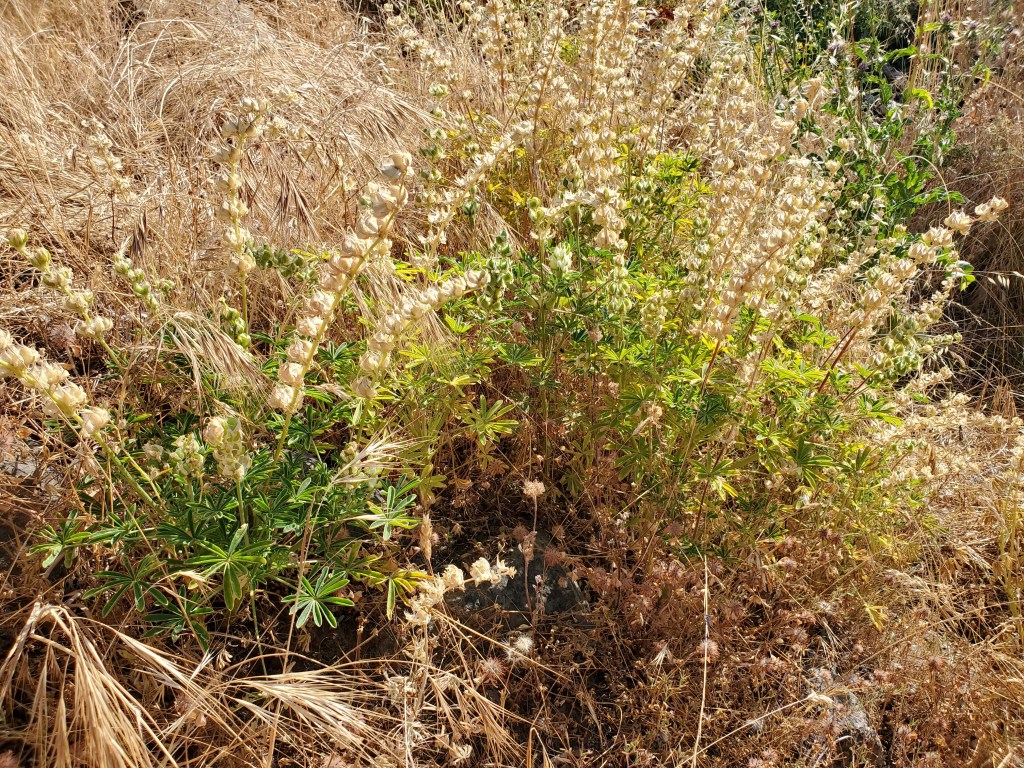
Gifts

Gifts come in many forms, and it is often wonderful to receive them. I certainly hope the lovely readers of this blog have had a holiday season filled with pleasant surprises. For me, there have been more than a few thoughtful arrivals in my mailbox and at holiday gatherings. My favorite gifts, however, are not purchased – with the possible exceptions of Milky the Cow and Hoppity Horse when I was 8 years old.

Gift of Purpose

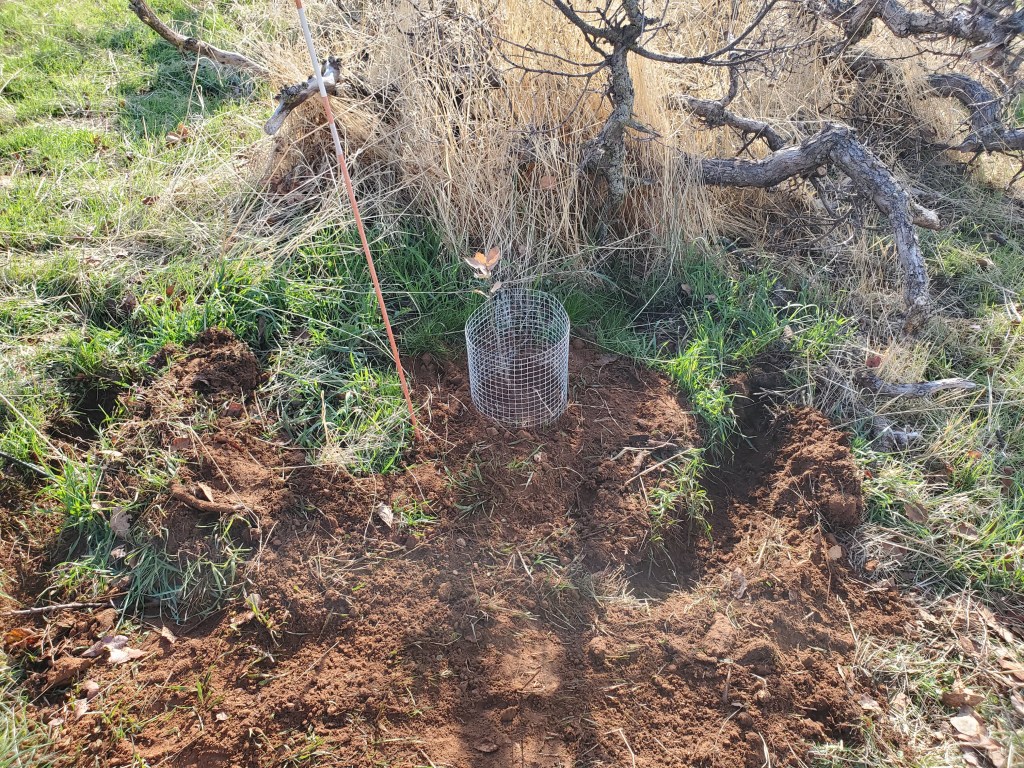
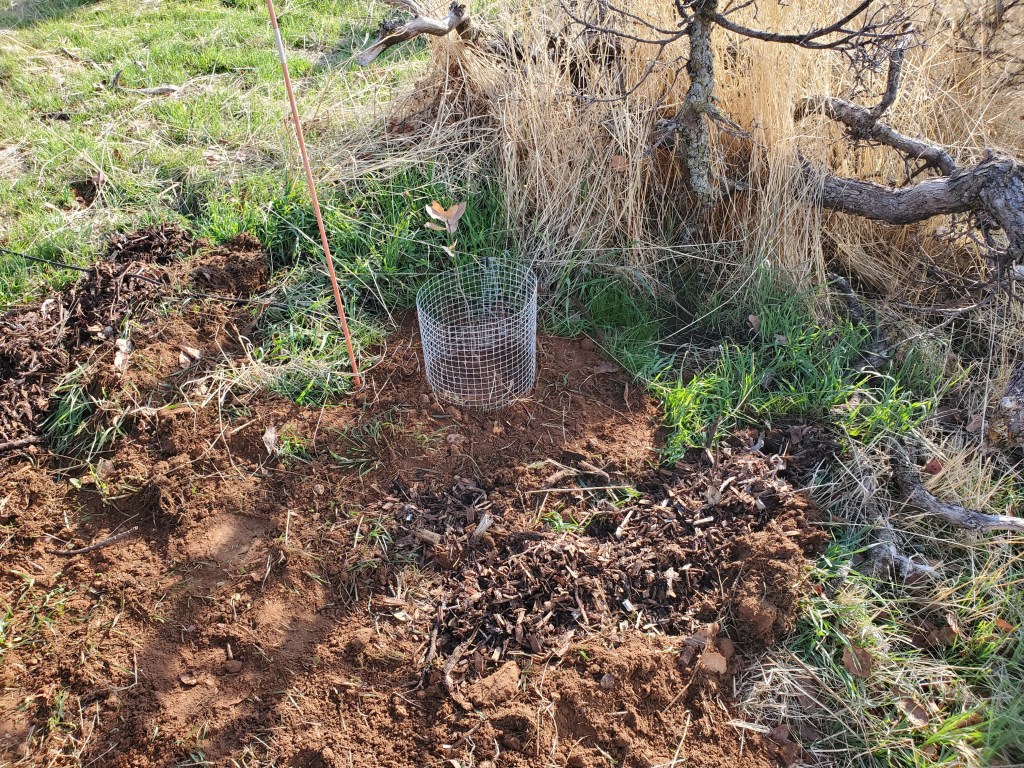
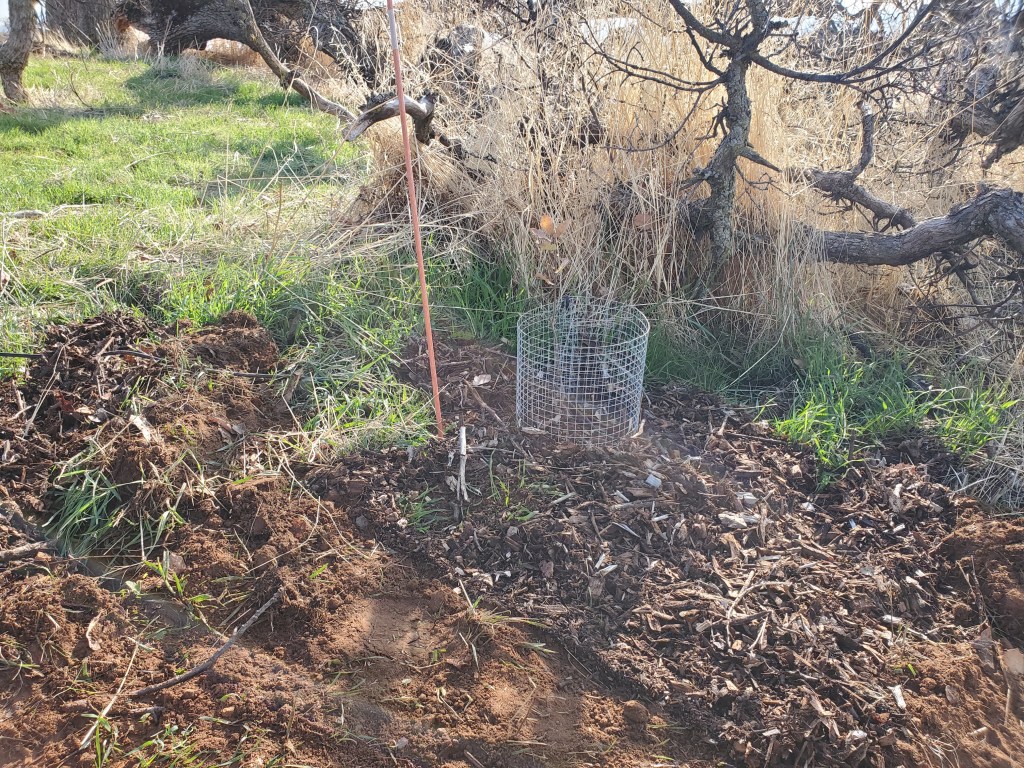
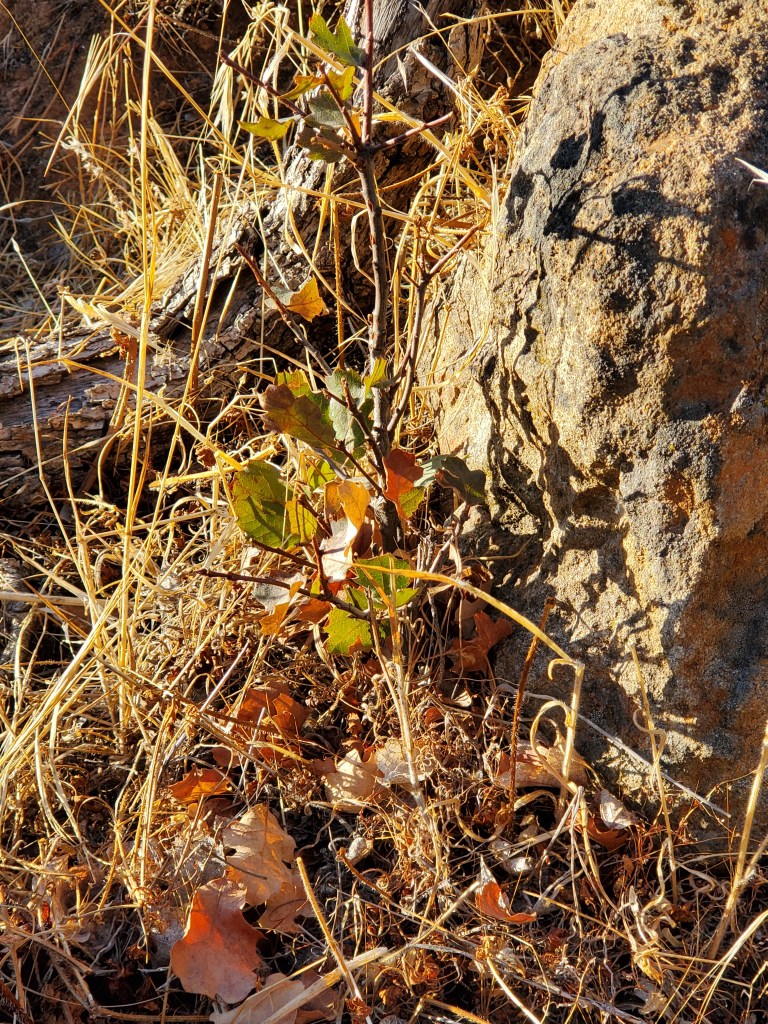
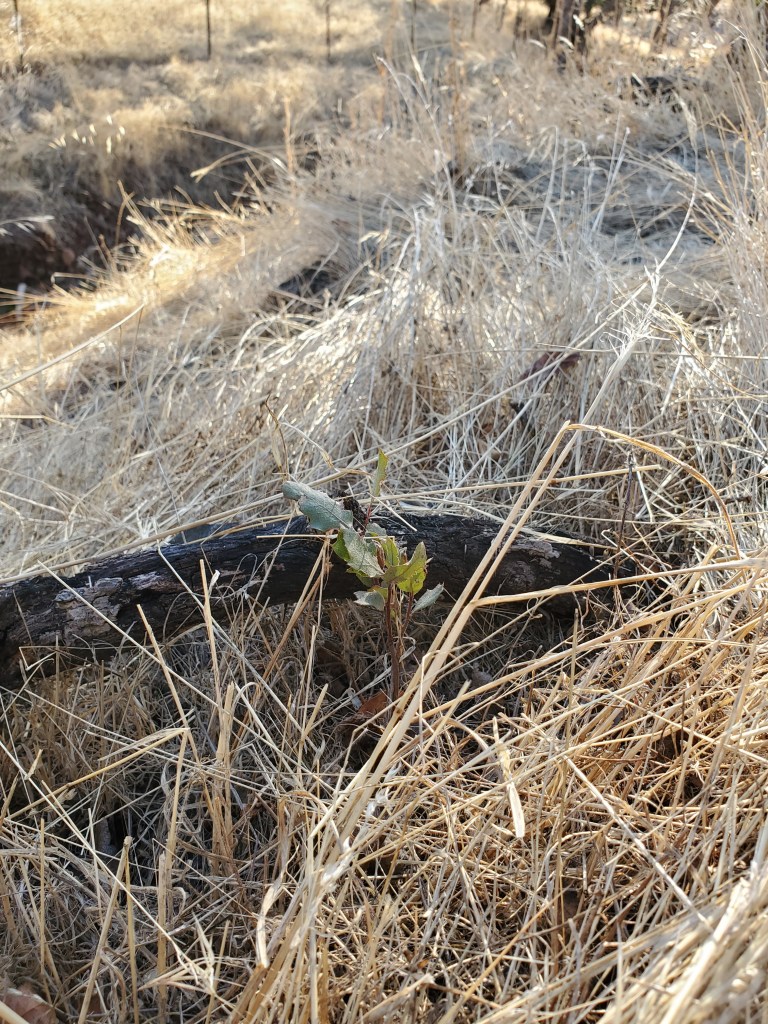
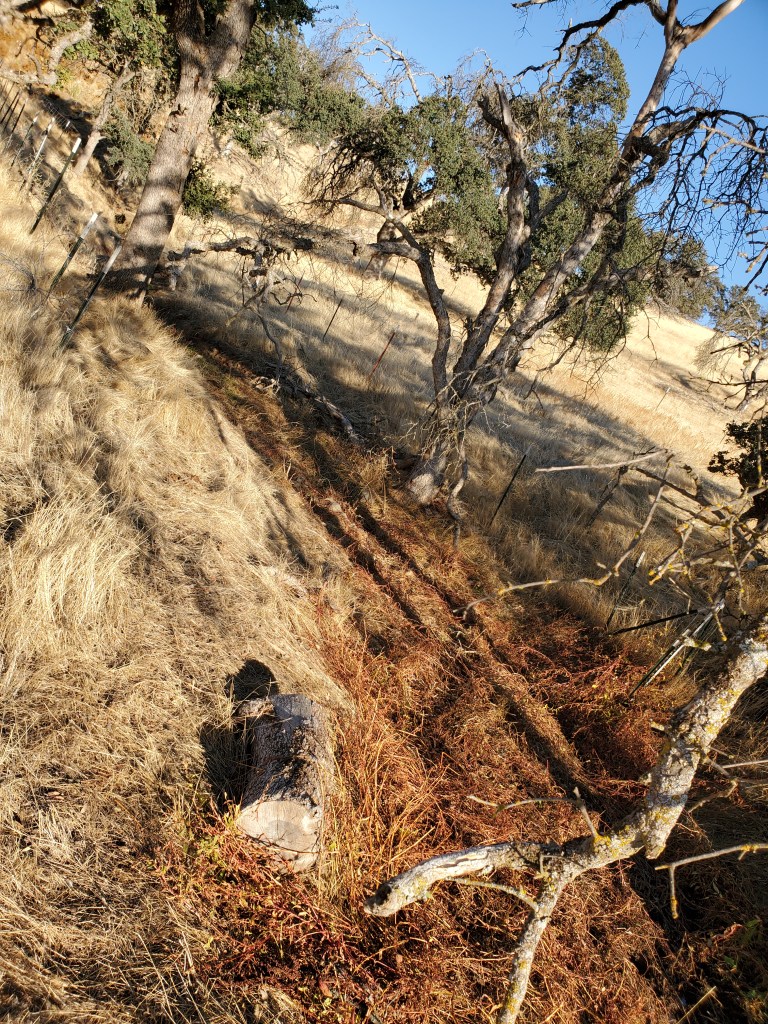
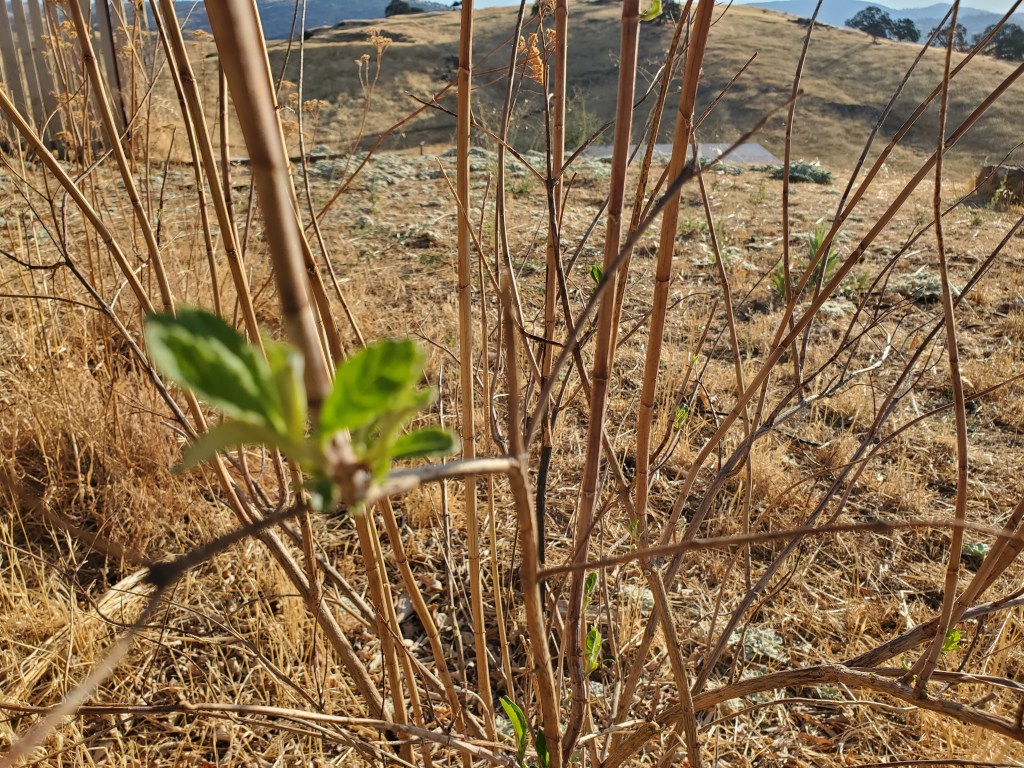
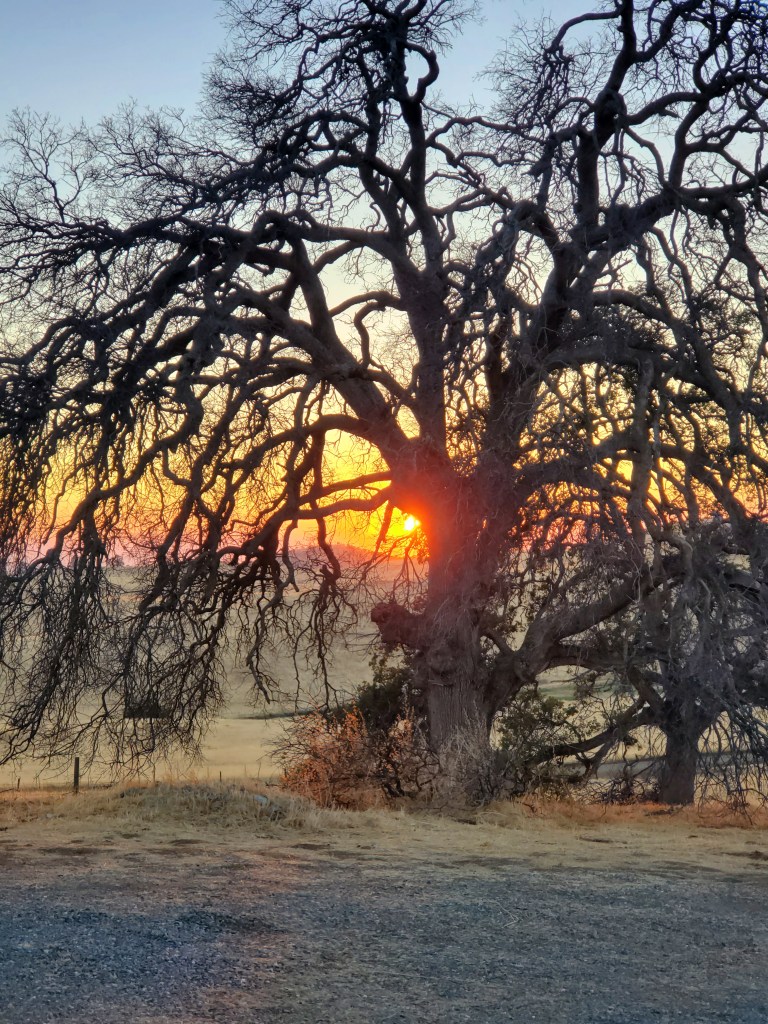
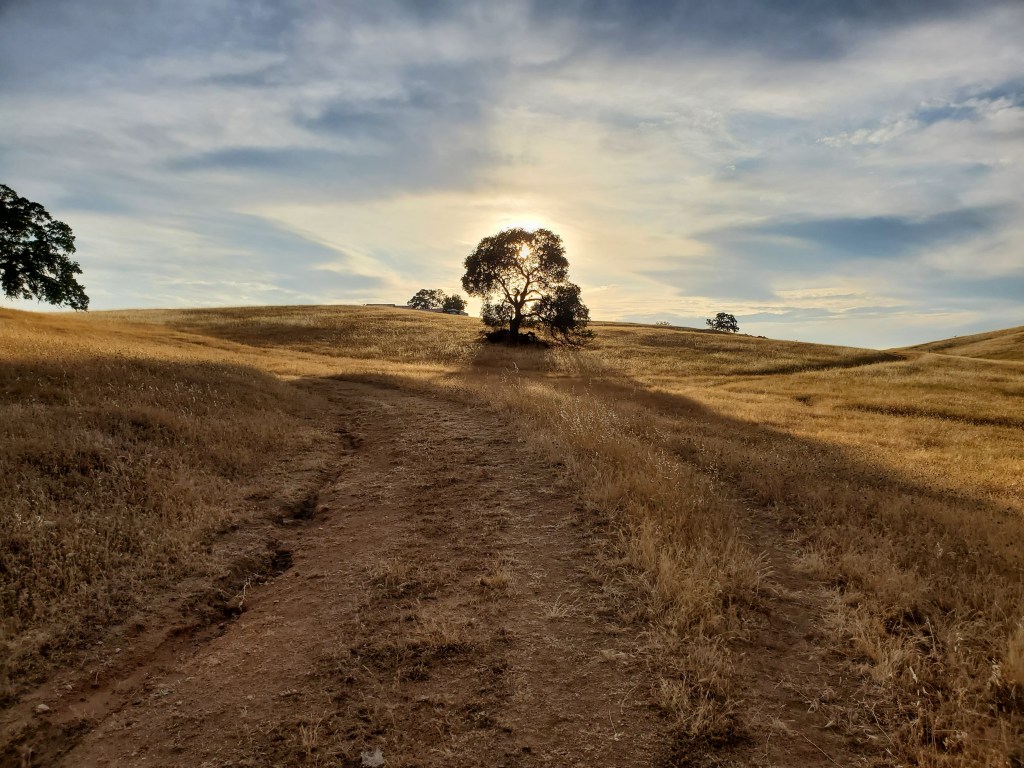
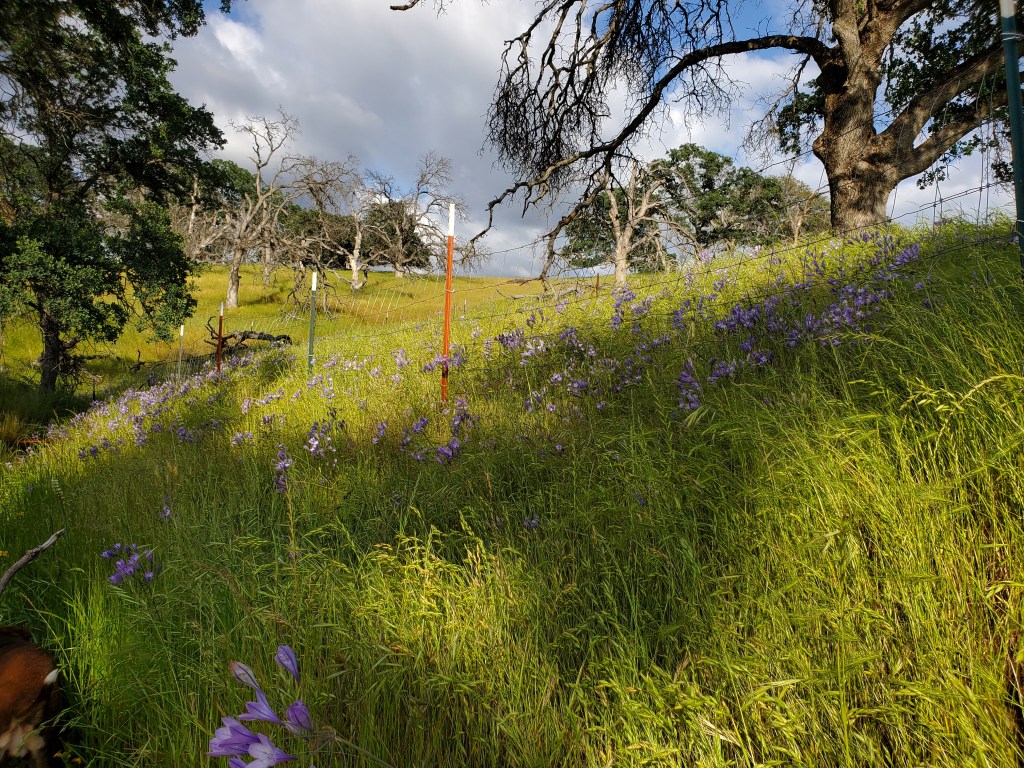
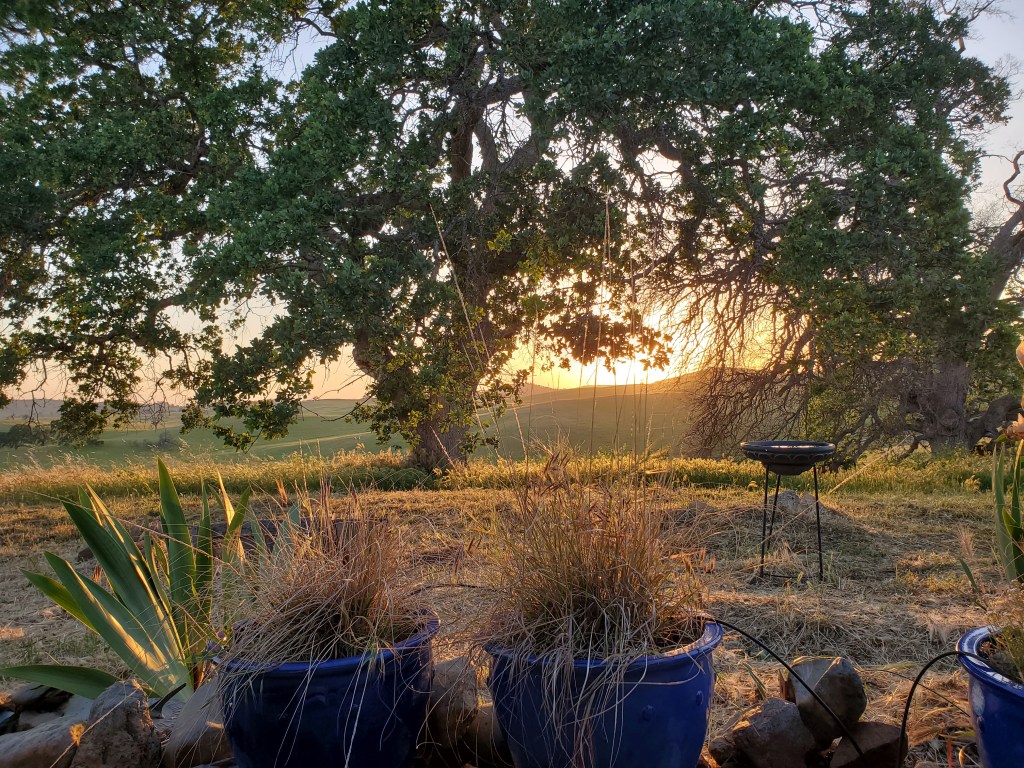
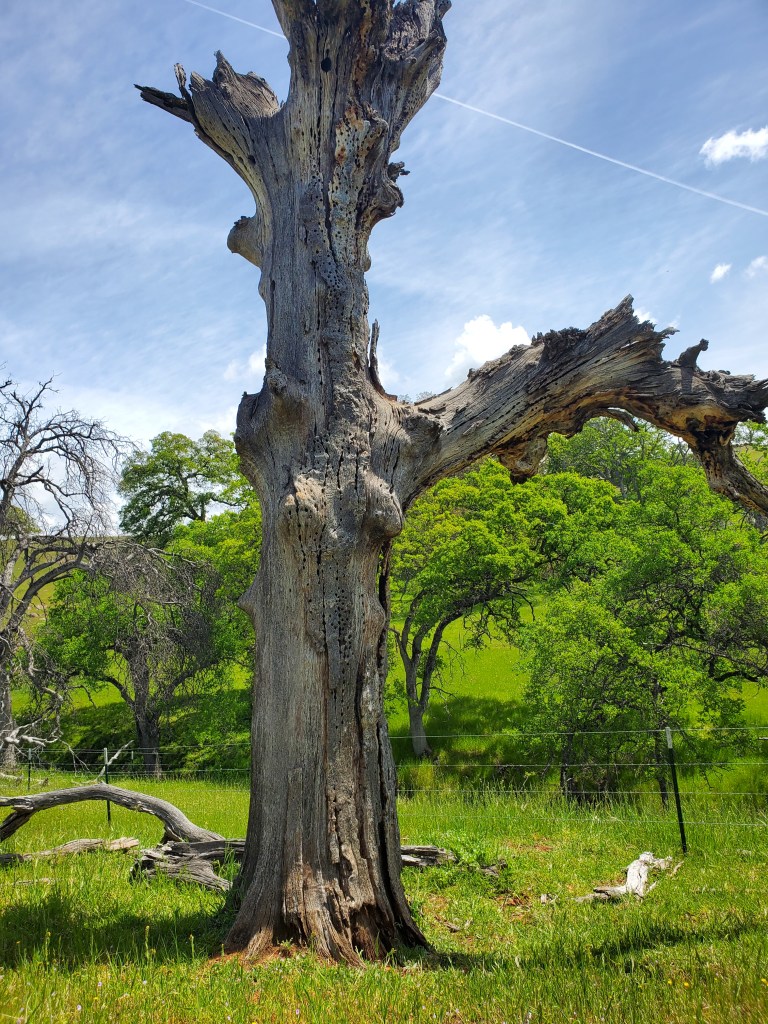
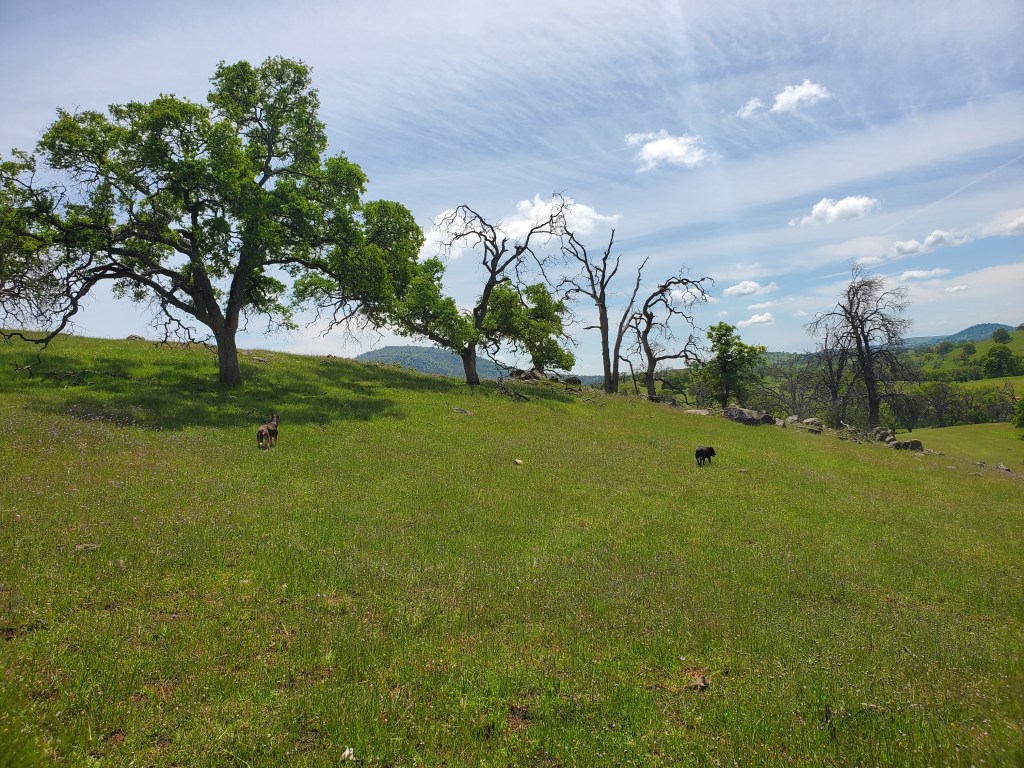
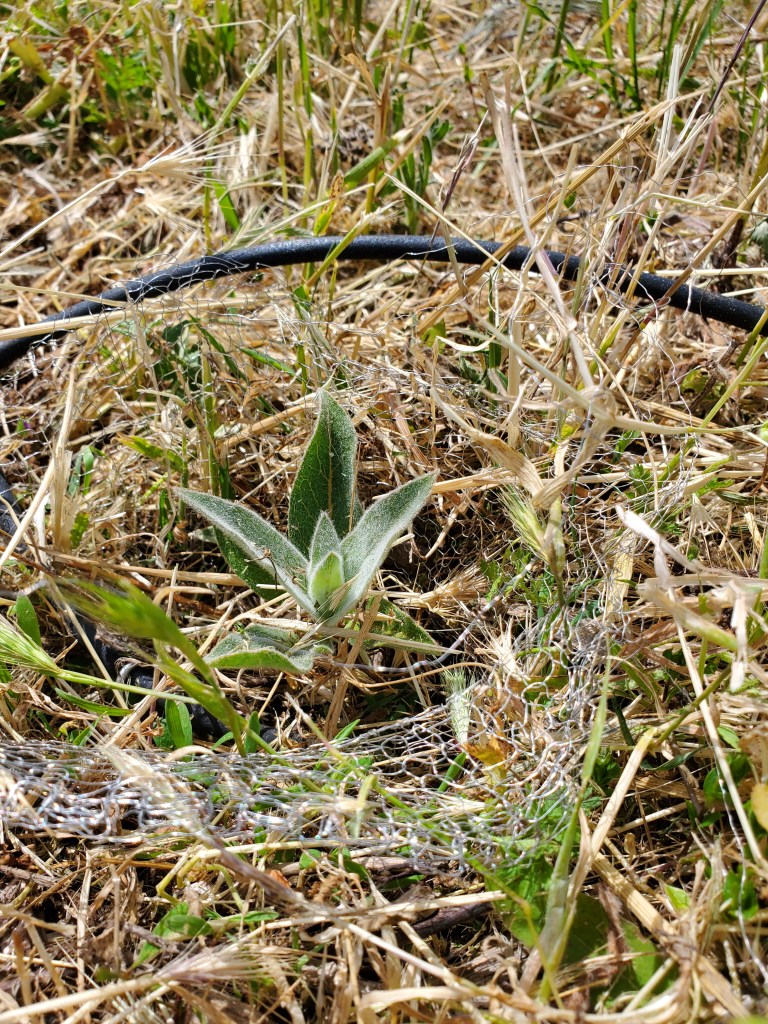
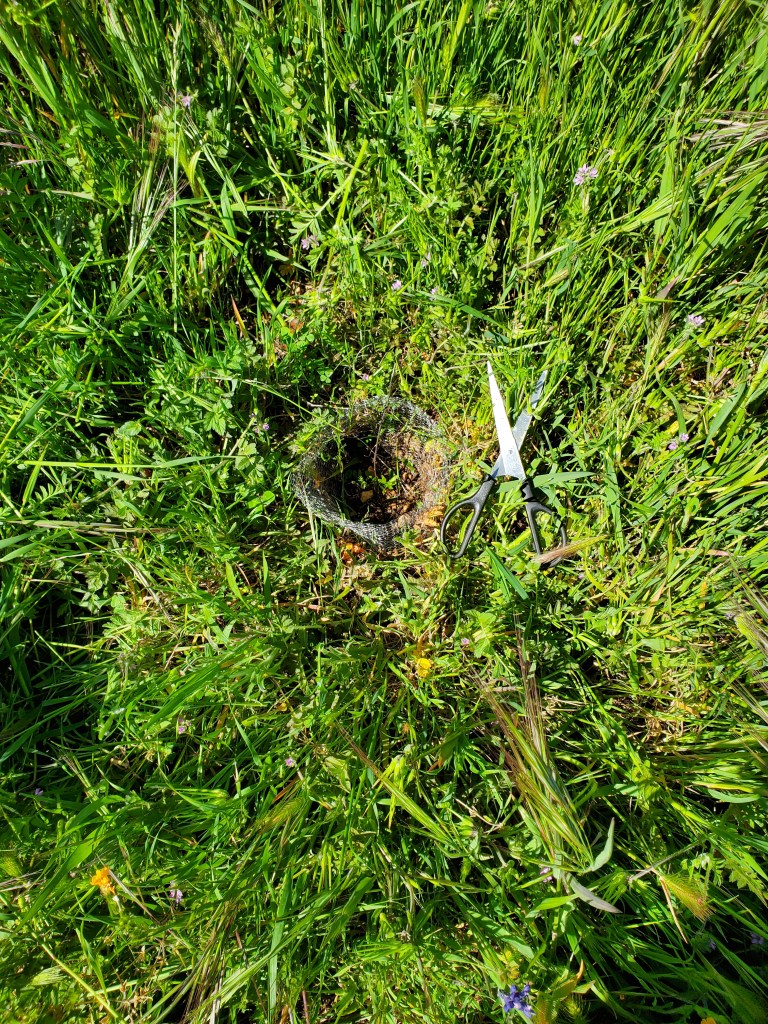
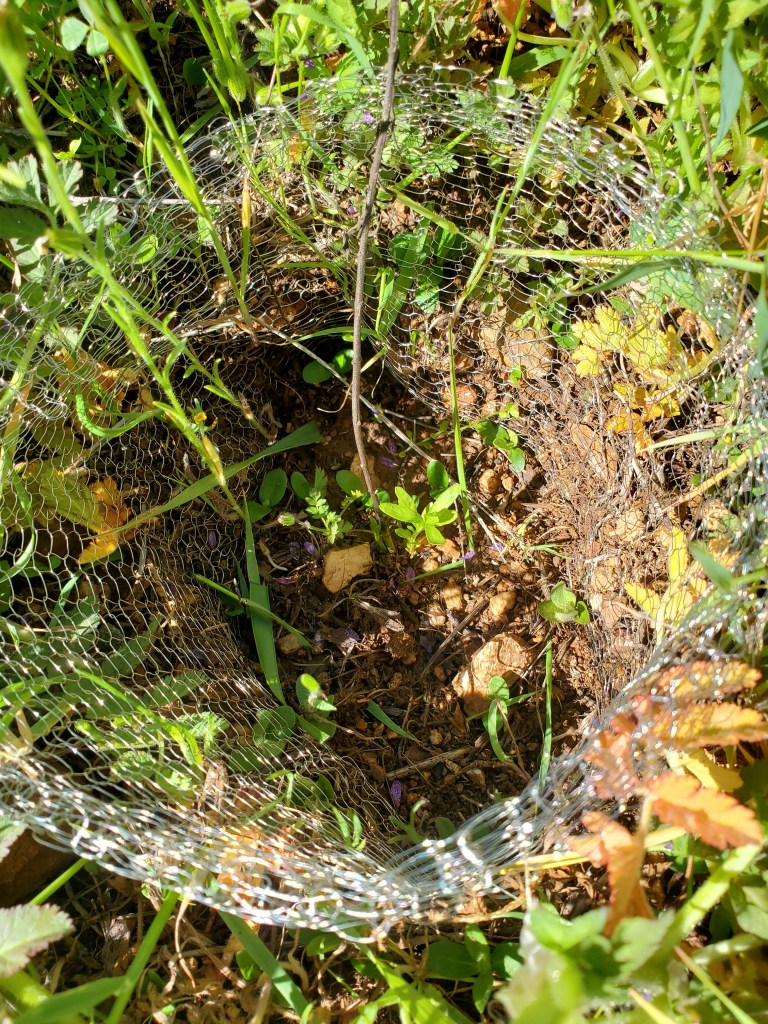
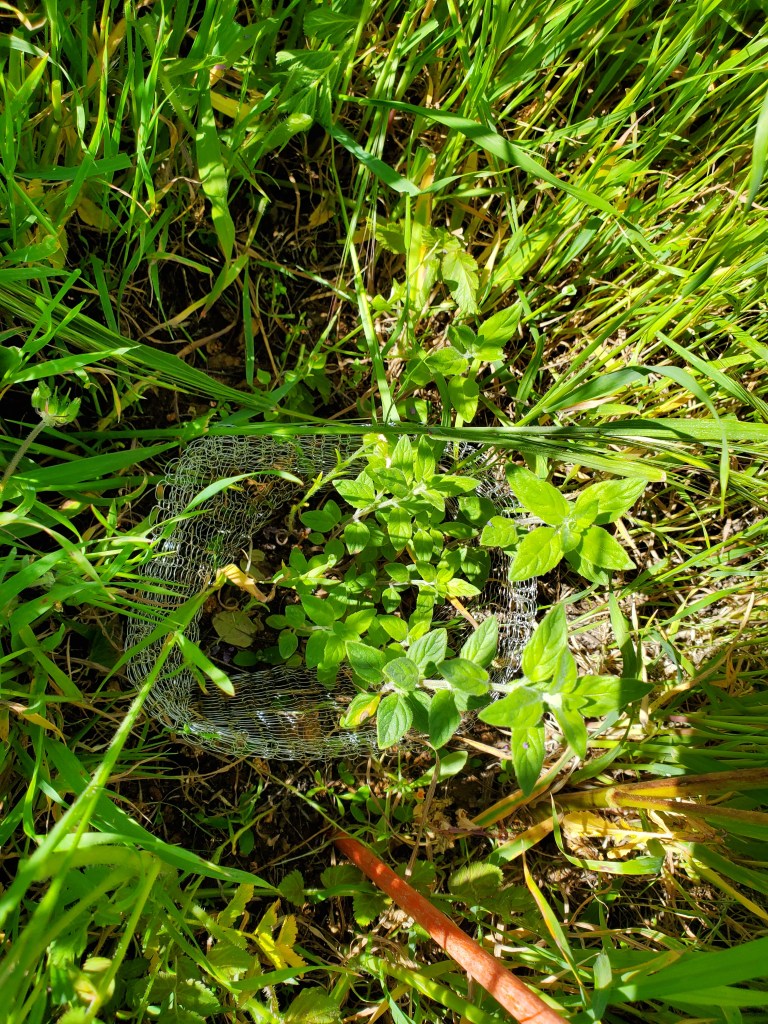
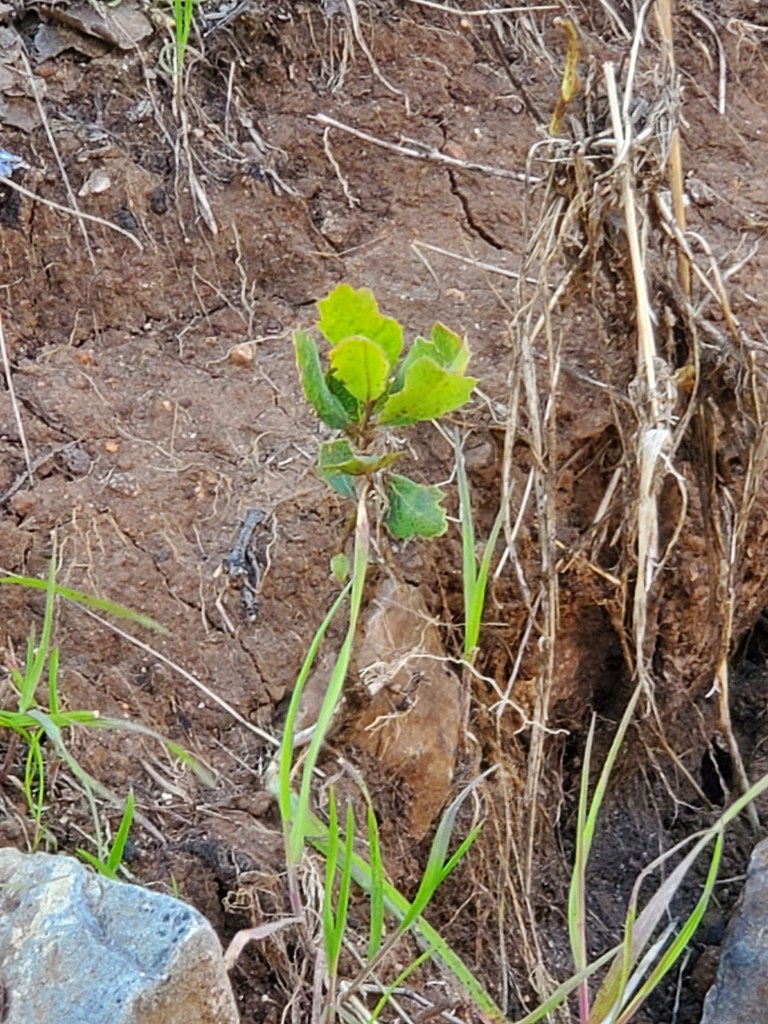
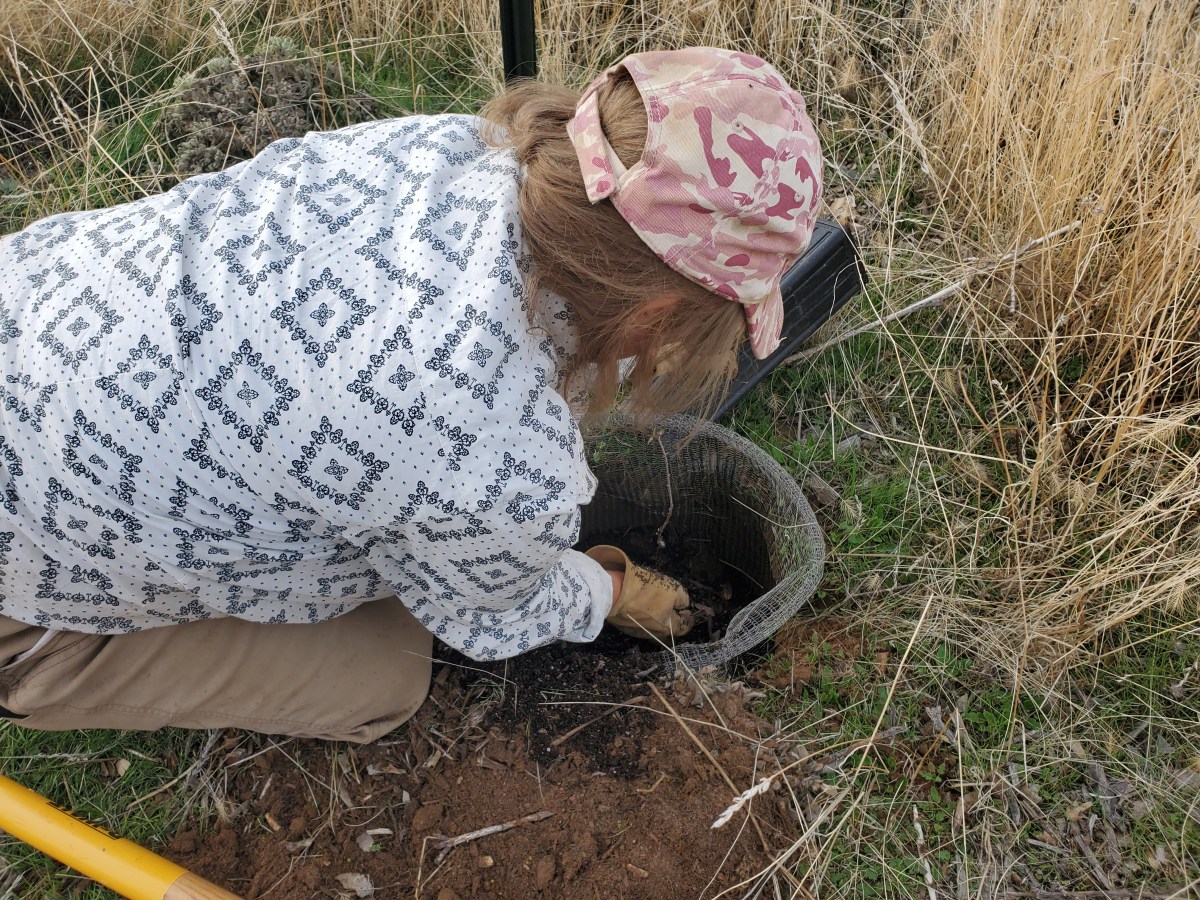
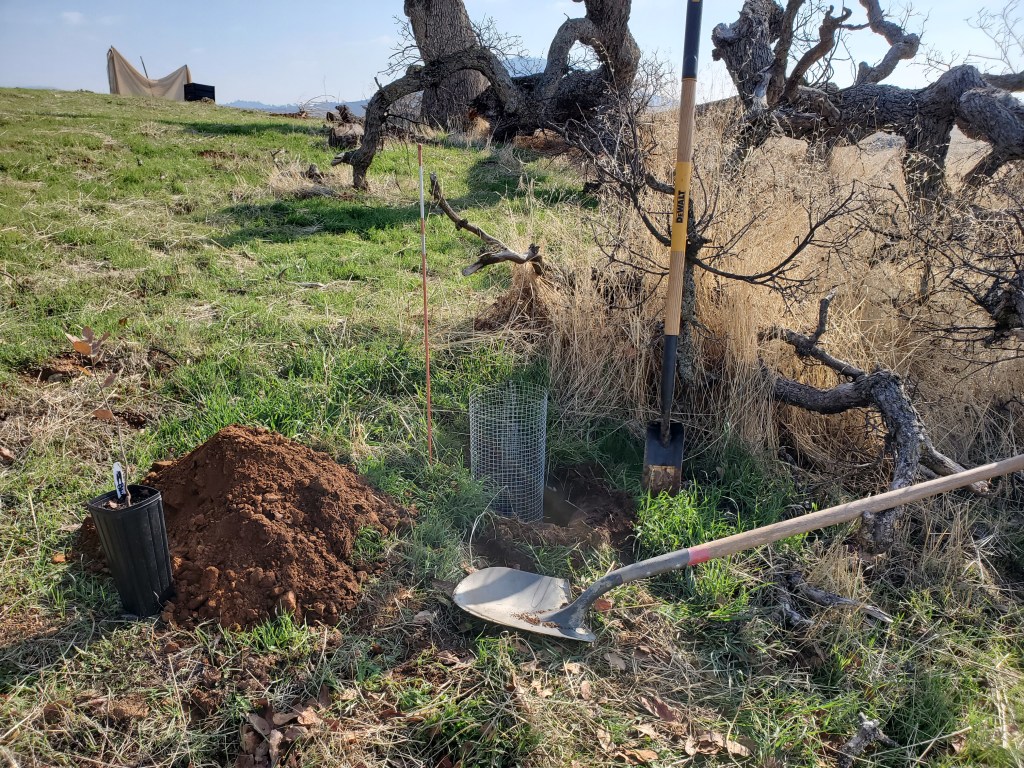
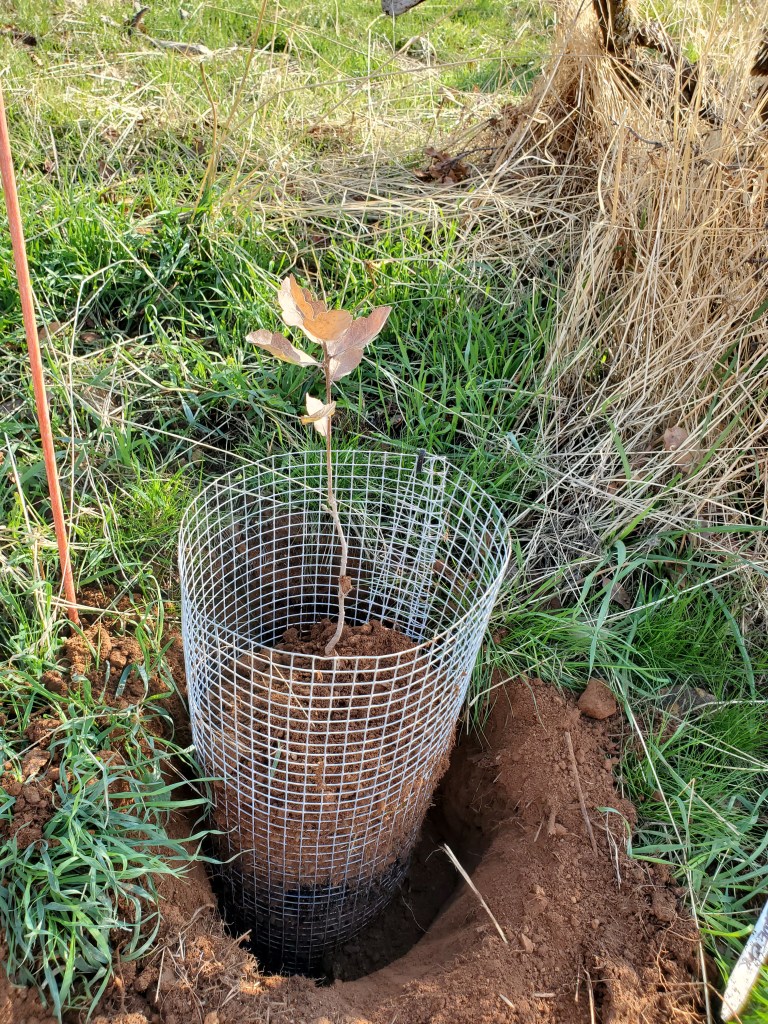
One of my favorite gifts is the opportunity to steward this land. Every day, I consider my time here precious. On Christmas, I was given the gift of being able to plant what (I hope) will be iconic sentinels on the hill – blue oaks. If you are a regular reader, you will know that, last year, I lost two 200 year old oaks from a combination of drought and age, and that their loss tore my heart into a million small pieces.

If you know anything about blue oaks, you know they grow slow. This is why, at least in California, there are rules to protect these majestic beauties from being cut down in a thoughtless moment of caprice. To look at them, to be present within their sphere, is to be transformed. They are majestic with their large size, accommodation of a complex ecosystem and tortuous branches reaching out wide from their trunk decorating the air with smell and statement…this is my place; I am here.

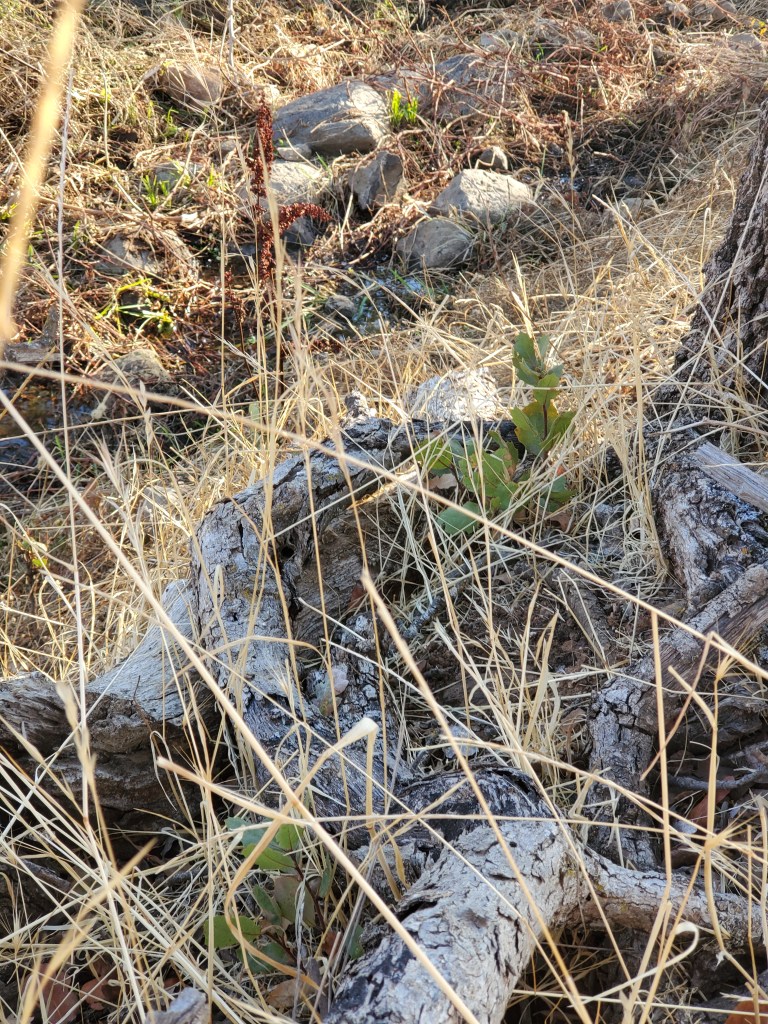
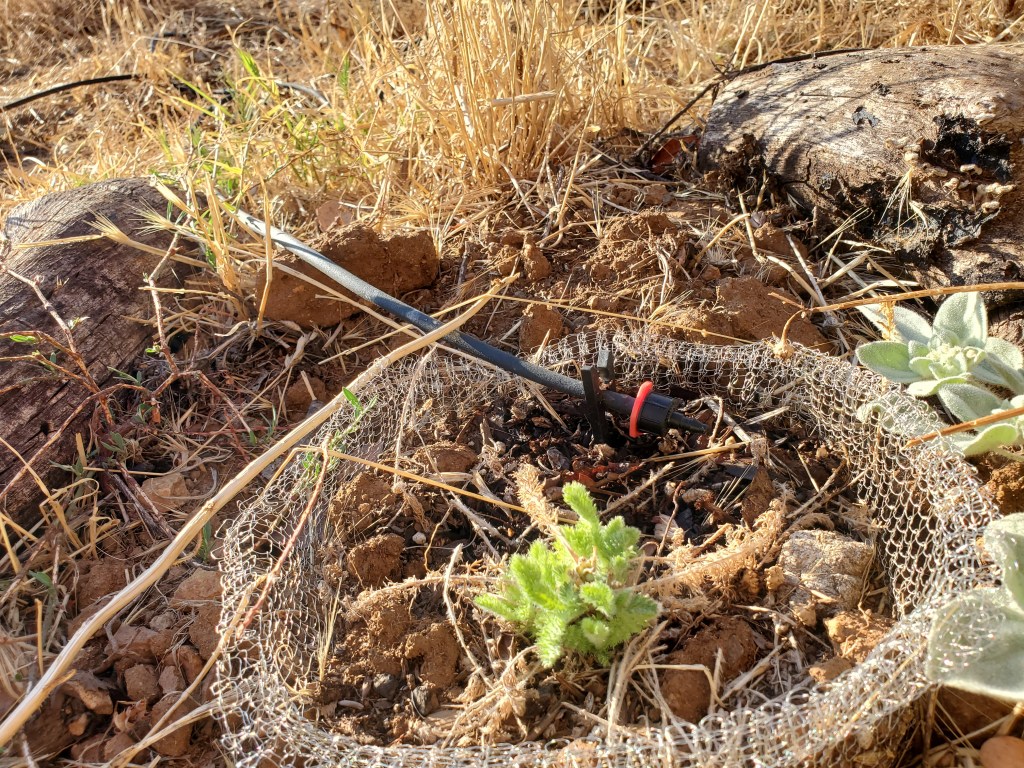
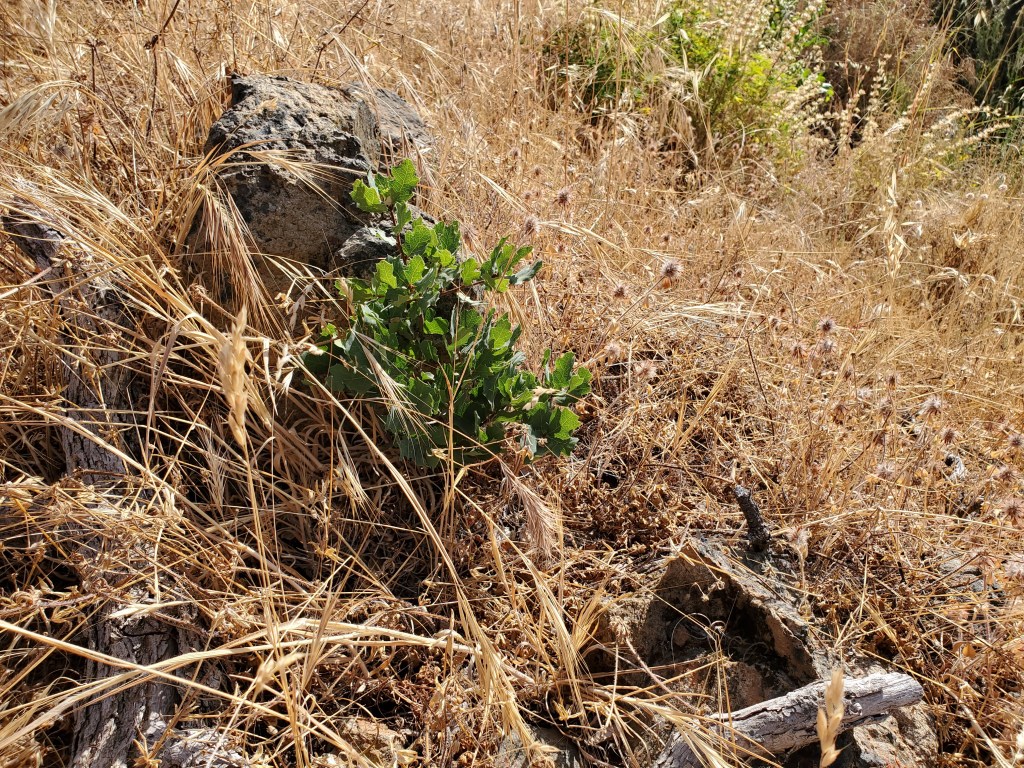
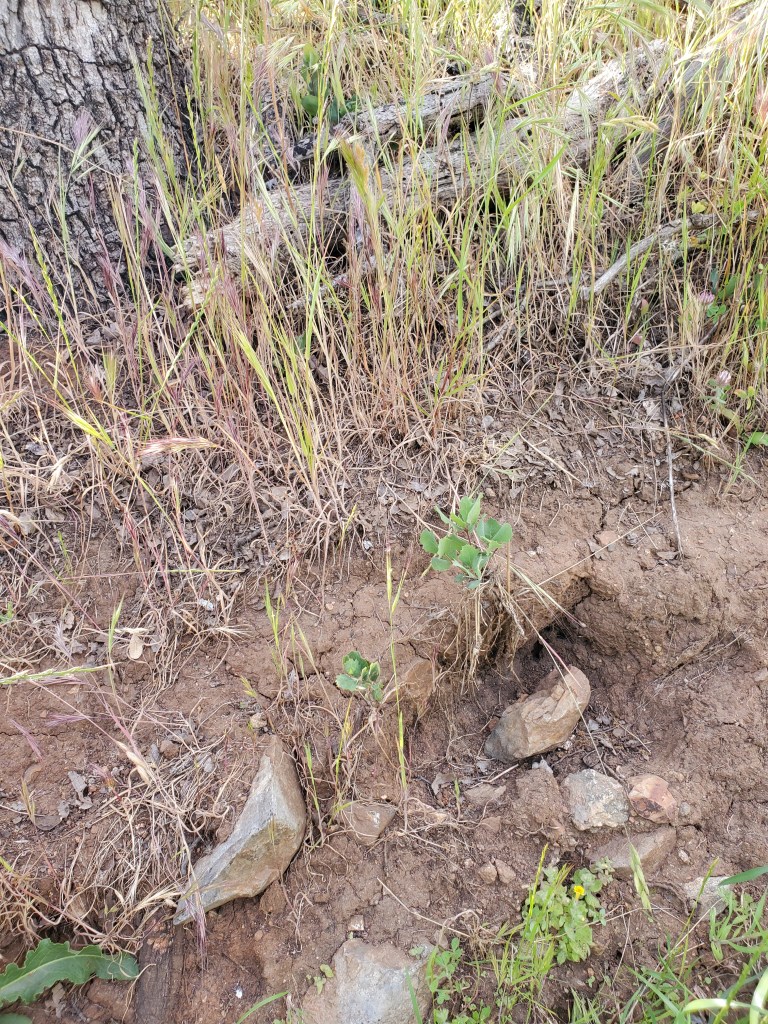
I have attempted to plant blue oaks over the years – acorns carefully placed into the ground, tubes to prevent predation of roots and delicate branches, seedlings in root balls of ancient, dead trees. All were eaten by gophers, stepped on by cows, or never germinated. Now, I am planting seedlings in baskets and protecting them further by an external fence. They will be watered regularly in the first one or two years. Maybe this will work. I have lost years with these set-backs.
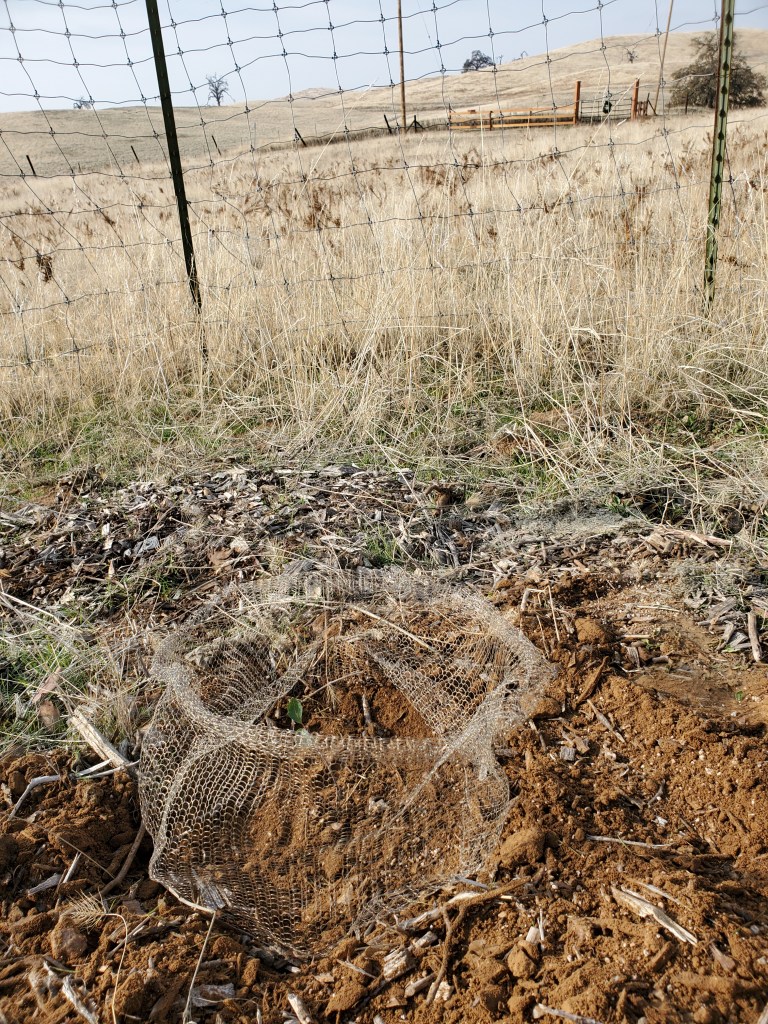
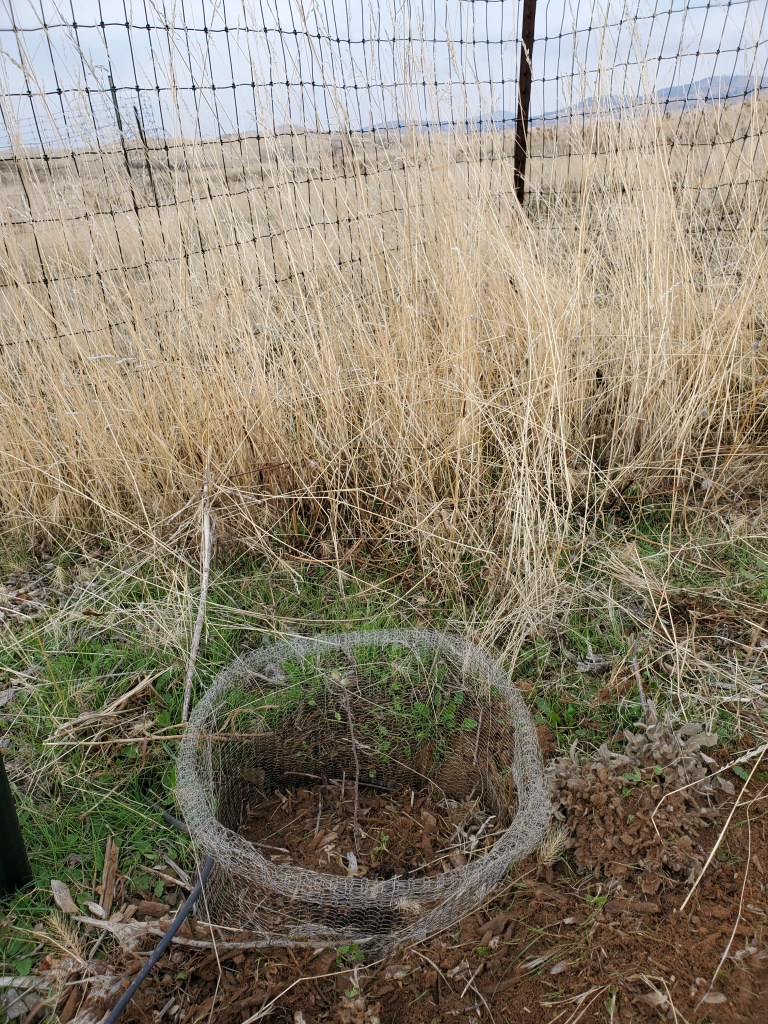
There is an urgency because many blue oak woodlands are in decline. Even on my ranch there are few young trees. You can find seedlings in the creek banks and many adults, but there are very few young trees to take the place of the old. How horrible to live in a community with no young. I feel sad for the adult blue oaks with no youth to mentor, to raise and watch grow. I want to be sure there are forests of blue oaks for the young of my species, so together they can breathe, marvel at one another’s beauty and rely on the common sense and decency built into each of us for respect – knowing that we need one another.
Gift of Life

Cattle also provide us gifts, perhaps not of their own free will, but by their lot in life. In this passage, I will be honest with you about our food system. If your heart cannot handle this information or you do not want to be sad at this time of joy, please skip to the next section. I won’t judge you. I get it. Living with it, as I do every day, it is impossible for me to avoid. Having a break can be helpful for the empathic soul.
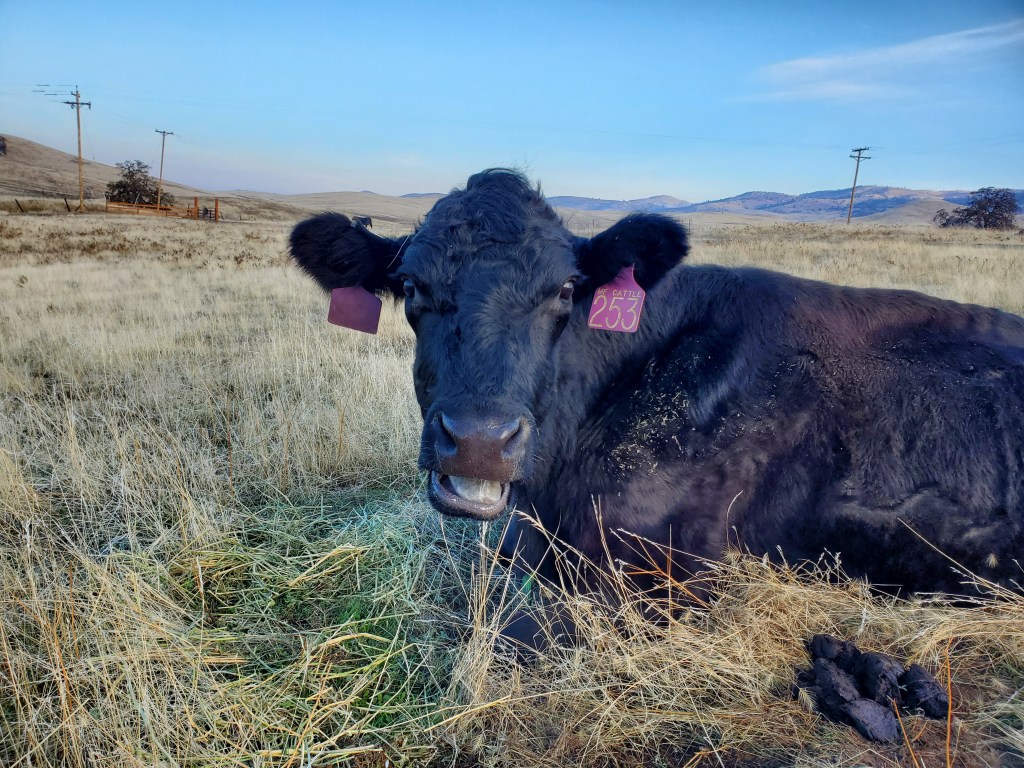
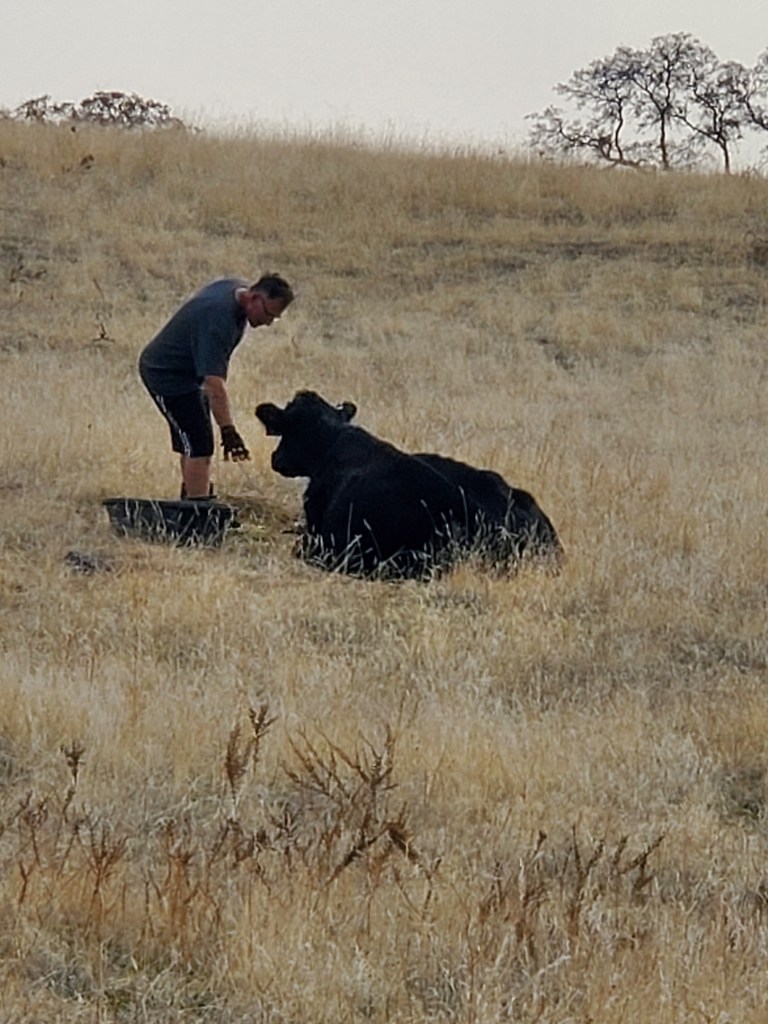
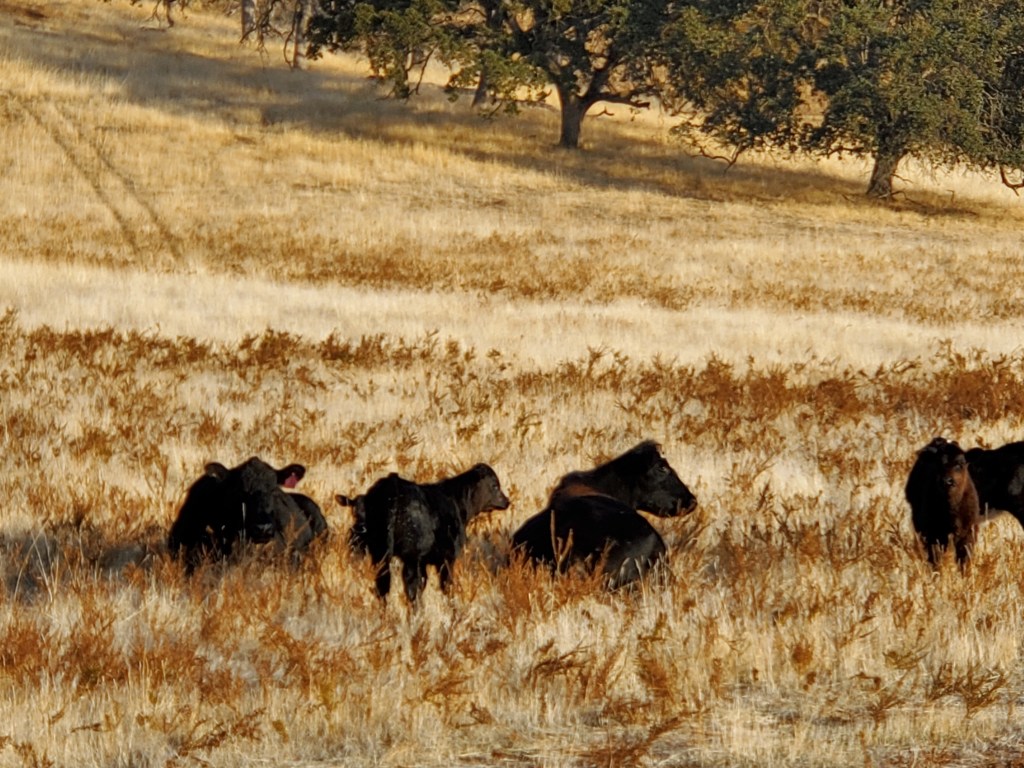
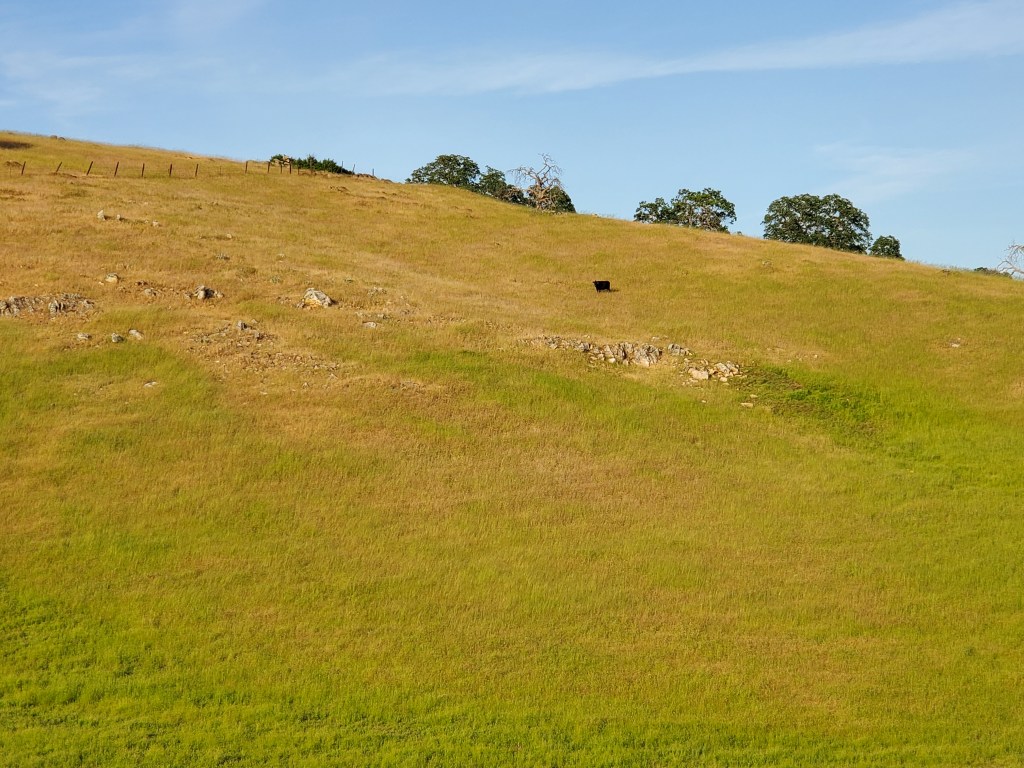
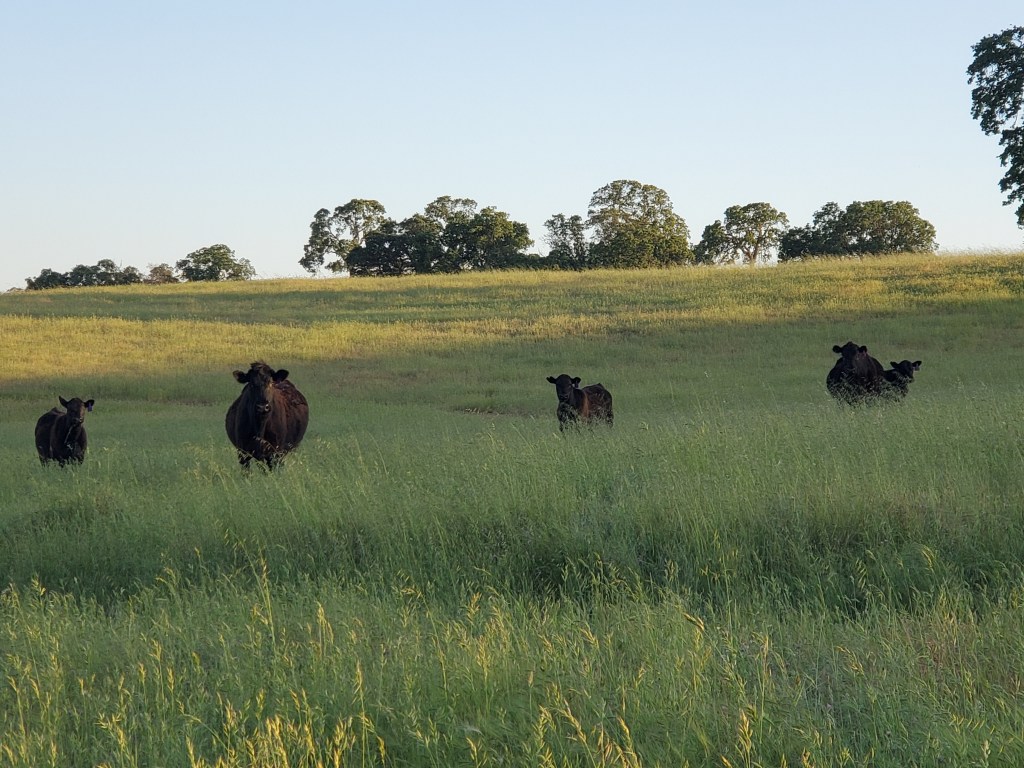
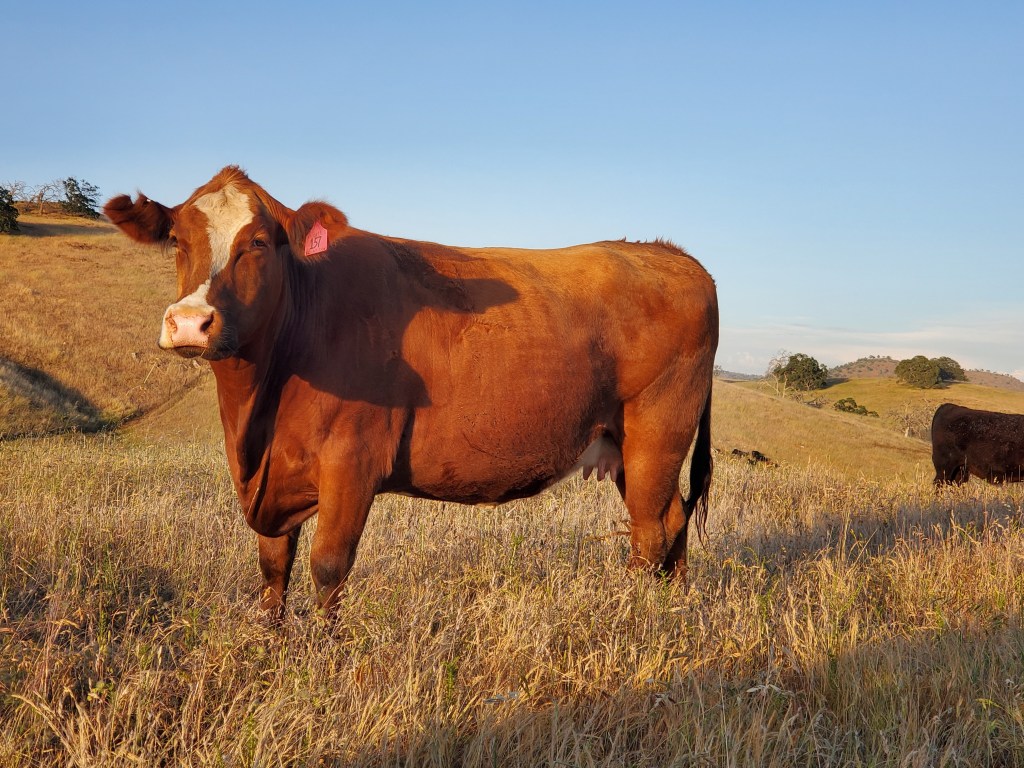
This Christmas, my heart has been split, one side celebratory of the season and the other focused on a downed cow. While I was gone visiting family, evidently bulls were rough with Cow #253 as they attempted to breed. According to my cattleman, this is not a rare occurrence. Cows can be harmed in the process, and can have injuries. Most convalesce and recover in a brief time. Unfortunately for Cow #253, her injury appears more severe. It has been preventing her from being able to stand. She has been laying near my upper gate for days.

She was not there when I left for a party at a friend’s last week, but she was there when I returned the next day in the evening. Cows bed down at night, and I did not think much of it except that she was by herself – which is not usual. I made a mental note. She was there the next morning still laying down. Very unusual. I had talked to my cattleman several days before. There had been respiratory illness in some of the calves. I thought, maybe she was sick. I took a photo, sent it and called him. He came out that day to take a look and bring some hay to her. She was healthy, but unable to stand – hence the botched breeding theory. He would give her pain meds and other medical help and would wait a few day to see if she would be able to stand.

In my comings and goings, I kept him informed. He came back another couple times I think. Christmas was the first day I have been fully home, and it gave me the opportunity to keep a closer eye on the situation.

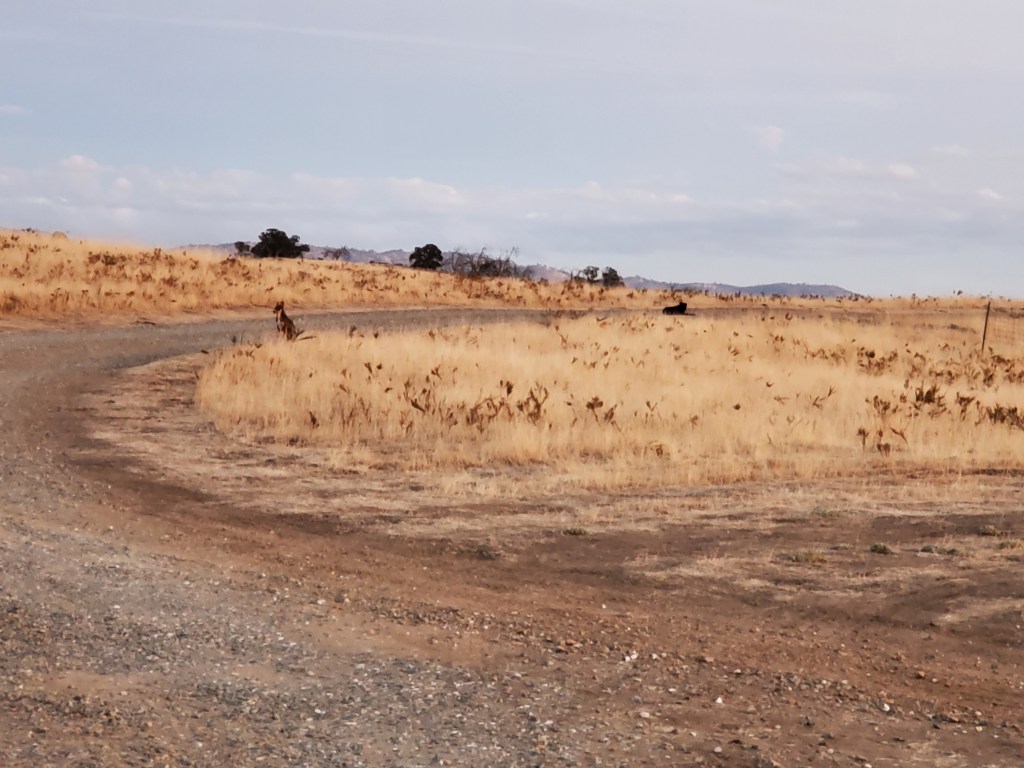
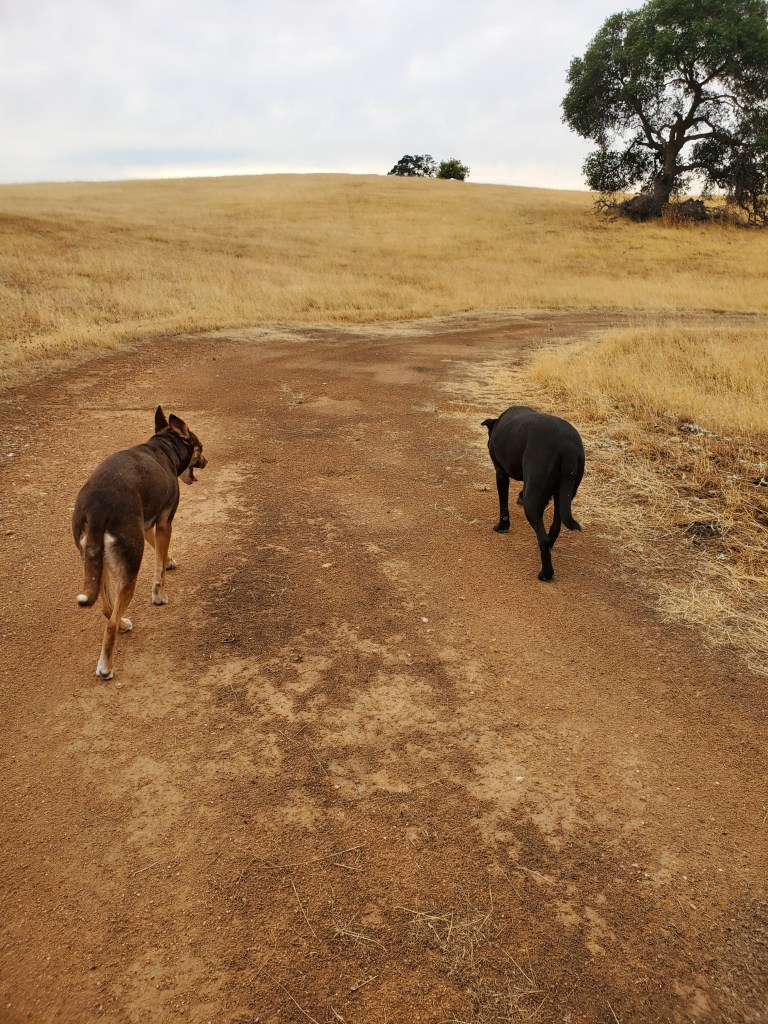
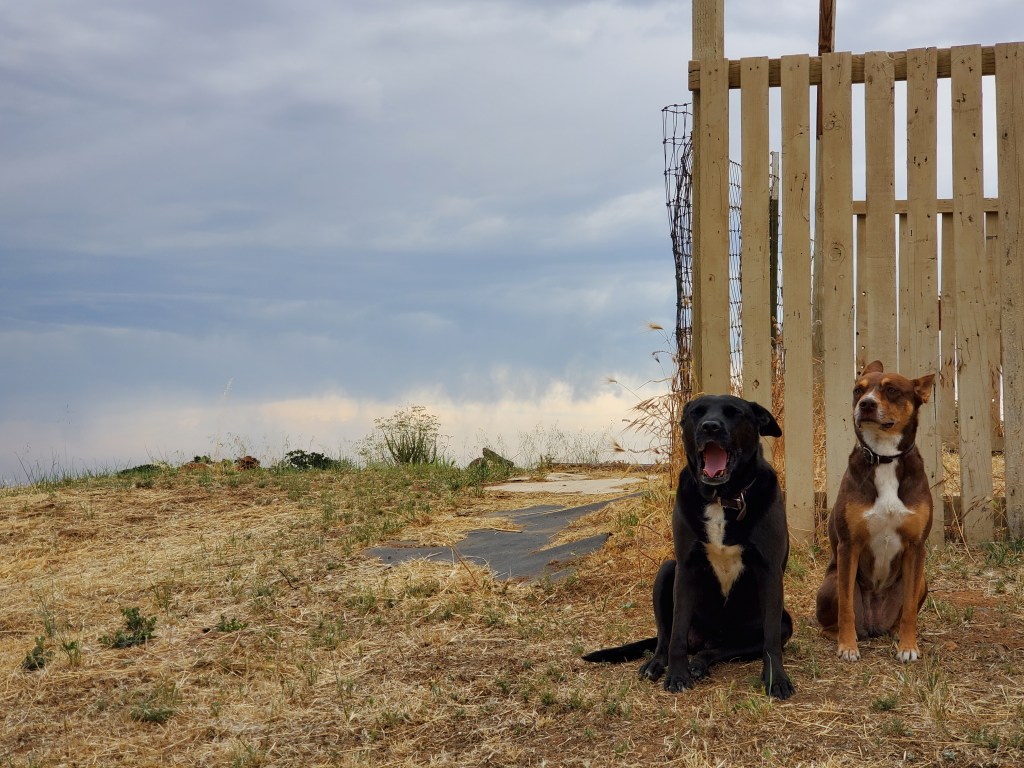
I woke early Christmas morning and looked for her. Sadly, she was still there laying nearly helpless on the ground. To my horror, a bull was there too, sniffing her rear and eating the hay that had been brought for her. I put my jacket and boots on, dogs at my side, and strided quickly toward the pair yelling at him to get away from her. He stood his ground, but I was undeterred. She had suffered, presumably due to his clumsy greed, and I would not have that again. He was stubborn, but retreated, remaining in visual contact. As I began to climb back up the hill, he headed back toward her. It was a dance I was uninterested in dancing. I went full force back toward him, yelling, dogs pushing him away. Finally, he surrendered and headed east away from us.
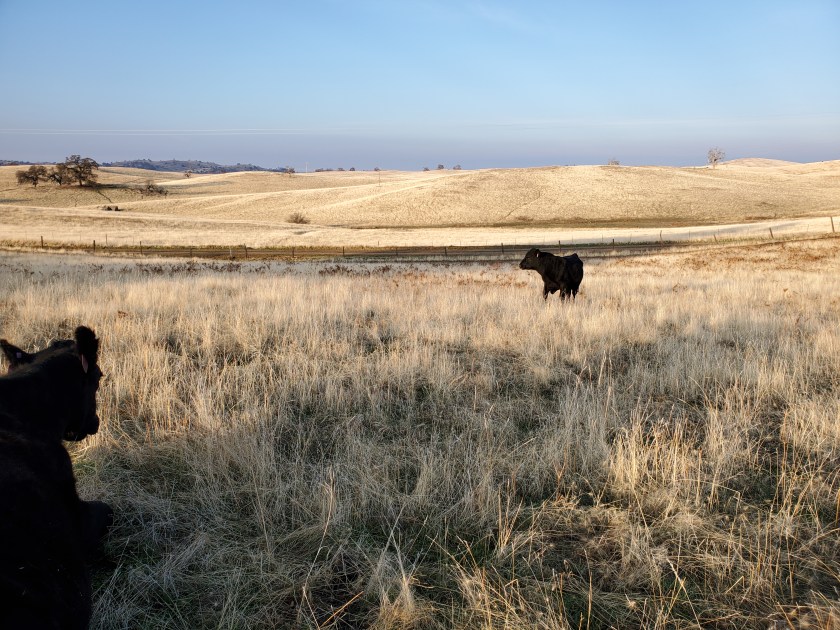
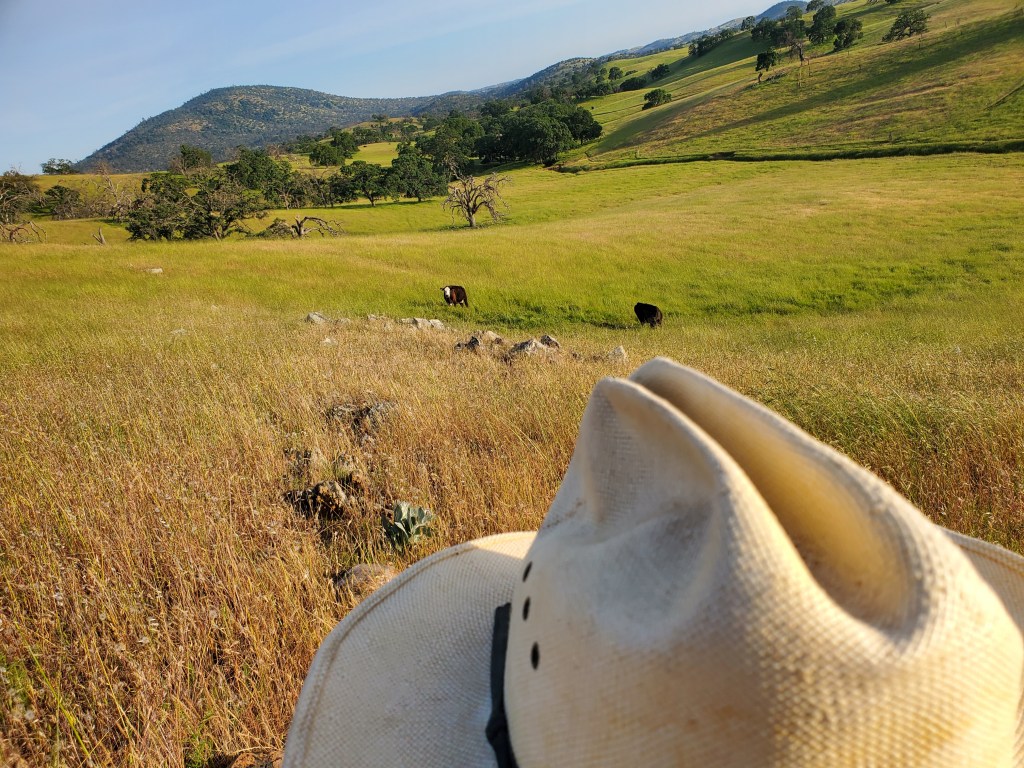
El Toro looks at us longing to return – Not while I am here!

I approached her. Oh my, she was a beauty. Large, healthy coat, big beautiful engaged eyes. My presence was viewed with suspicion. Cows get handled so much in their lives, and these encounters are often painful, such as branding, doctoring or emotionally, when their calves are taken from them to be fattened by another operation then sold to the feedlot before they become food and fiber products. If a cow does not become pregnant within a couple breeding cycles, she herself is sold off to the feedlot and joins her many calves before her as hamburger, steaks, dog chews, shoes and car seats. While there is diversity in the timing, methods, inputs and level of respect, fundamentally, cattle is a business. A cow’s only value is in calve production. That is the honest long and short of it.

So Cow #253 tolerated me. She flinched as I approached her even closer, inspecting her on all sides. I cooed to her, talking sweet and telling her how sorry I was that she was in this situation. How could I help her? I was wishing I had a hoyer lift to help her stand and see what malfunction was hidden underneath. She mooed at me as she tried to stand. Pain? Frustration? I saw how much she was trying and trying to stand, to move from me and continue her life of grazing, and calve raising. But no, she could only drag herself a few feet one direction or another; I could tell by the patterns on the ground, the absence of grass, the splattering of feces. All I could do was keep her company a little at a time, fill her water vessel that the cattlemen had left, but was now empty, and hand her hay that was well out of her reach. I encouraged her every time she tried to stand.
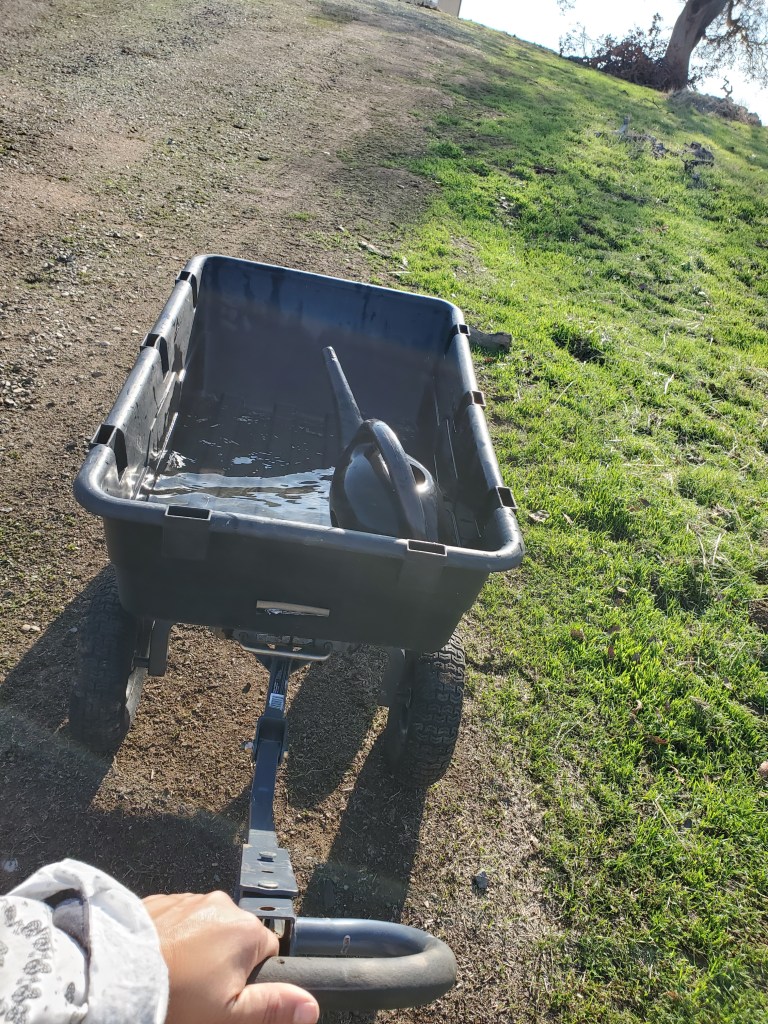
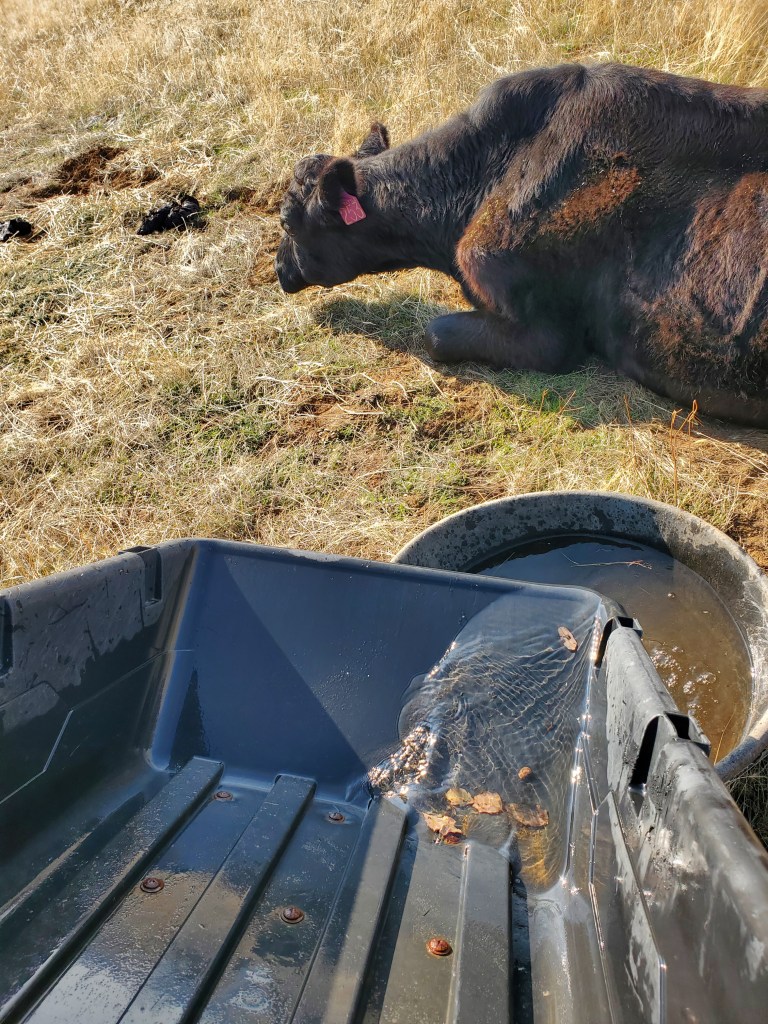
By the end of the day, I was convinced that the only help would come in the form of a bullet. As much as I hoped she would miraculously get better, that nothing was fractured or broken, I began to theorize that those rough bulls crushed part of her. In the business of cattle, there is no financial incentive to heal fractures or breaks. Often, those types of injuries are difficult to heal even if it was desired, and with no guarantee the animal would have a pain-free life. She is less costly dead than putting more time and money into her. This realization, as I texted my cattleman the words “She is still down and is frustrated. It’s been 4 days.”, placed a deep weight in my stomach.

I hear the gunshot. It is done. She is no longer suffering.

Last night, a small group of cows laid near her, and it probably brought her comfort. She is being dragged to the south part of the ranch as I write this – part to spare me the sight and smell of rotting flesh and part to keep things clean for the public lest they see the cost of their beef.

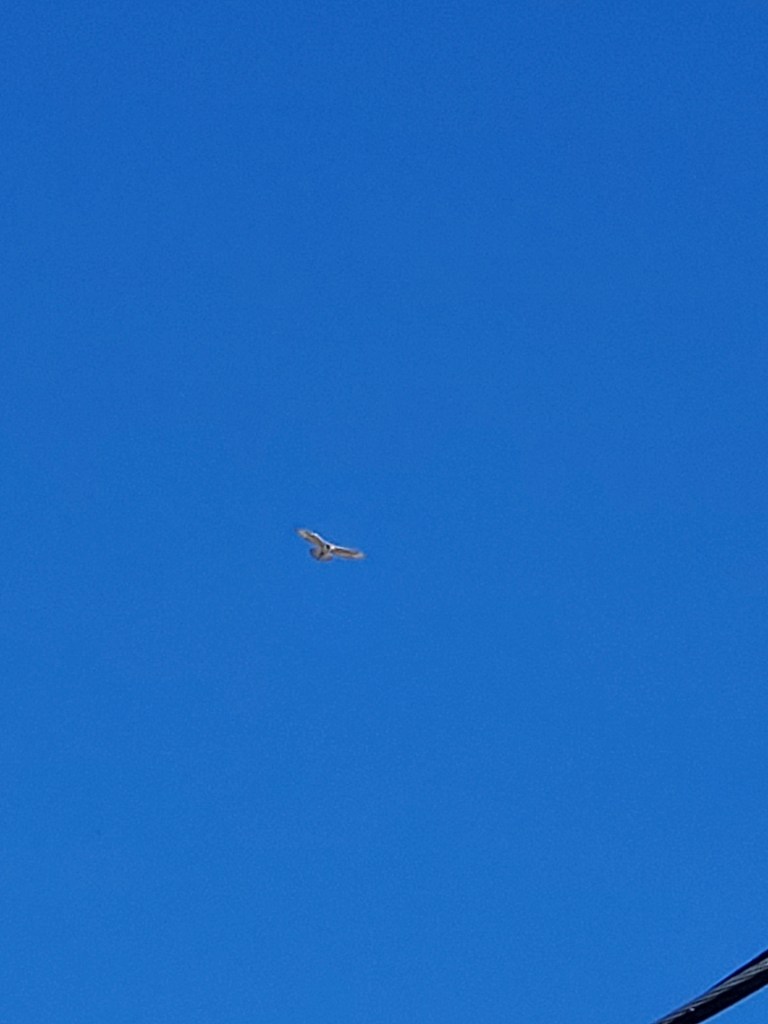
Even though cattle are foreigners on this native landscape, brought as familiar food and fiber by colonizing forces, they are sentient creatures and deserve respect. I love them because they are alive. Cow #253 and I communicated. I tried to meet her needs, to help her; I will mourn her passing. As a person who uses leather products, takes medication with bovine ingredients, and feeds a small amount of beef products to my dogs, I am part of the demand for her meat, bones and skin – and am always grateful for her gifts. After death, her body will nourish countless wildlife – coyotes, vultures, eagles and worms. It will give me a great show in the air, as I watch for who has caught the smell of carrion and dives down to feast. Chiokoe uttesia (Thank you) Cow #253 for feeding my relatives, may you graze peacefully somewhere in the energetic unknown.

Gift of Friendship and Labor

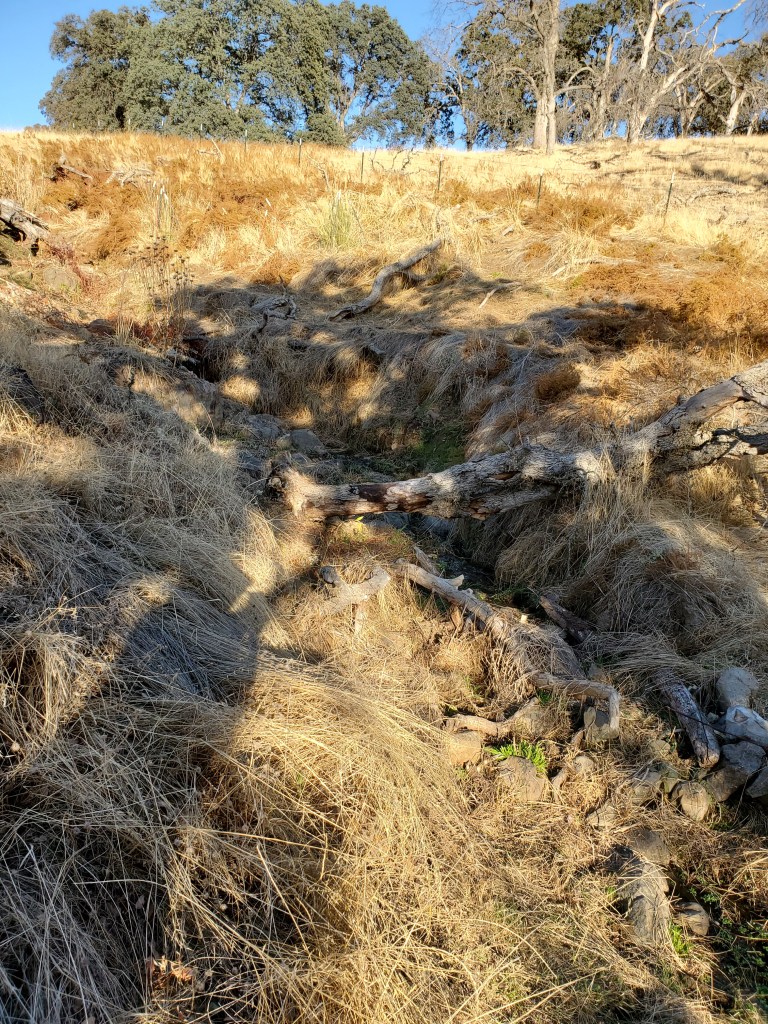
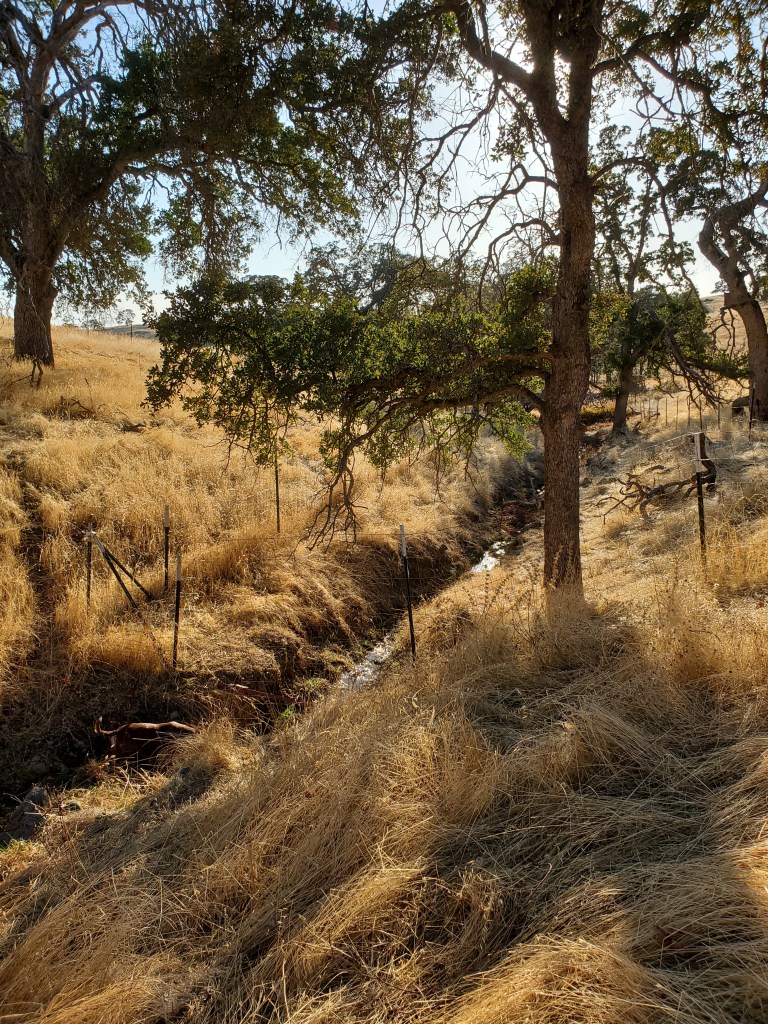
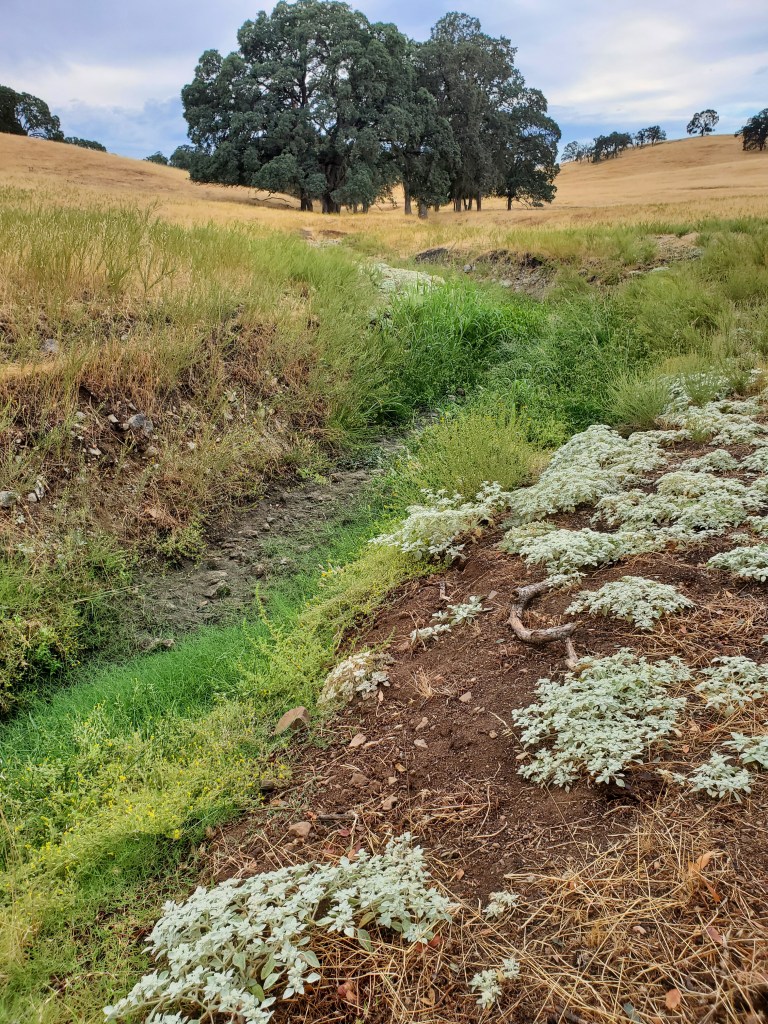
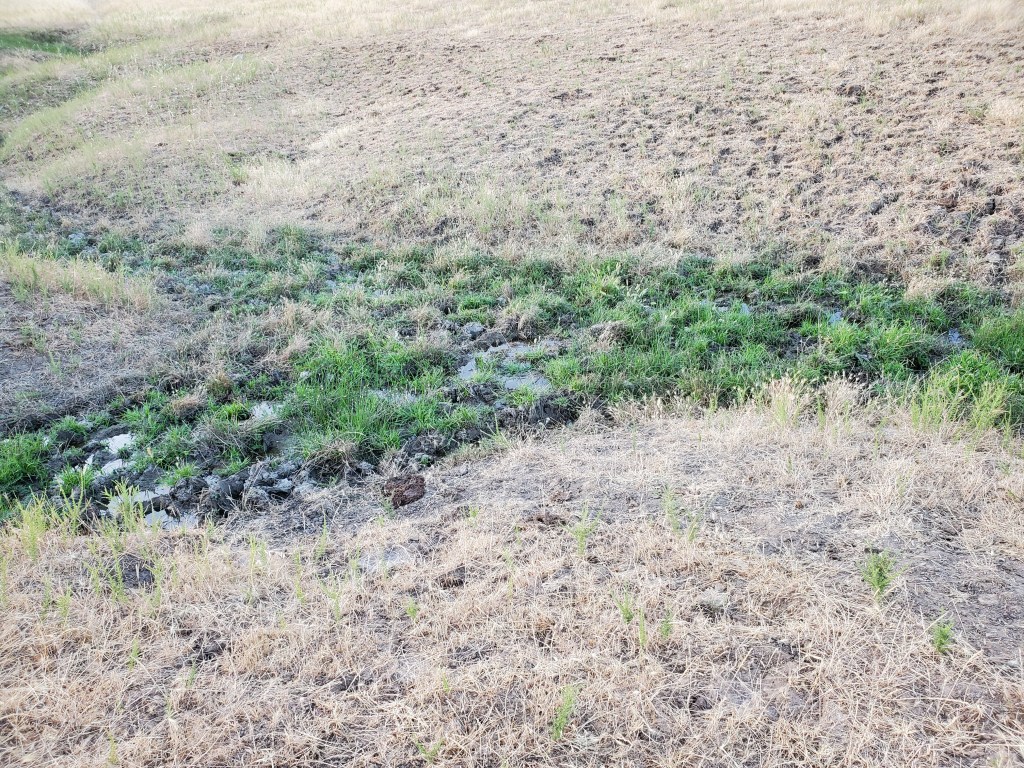
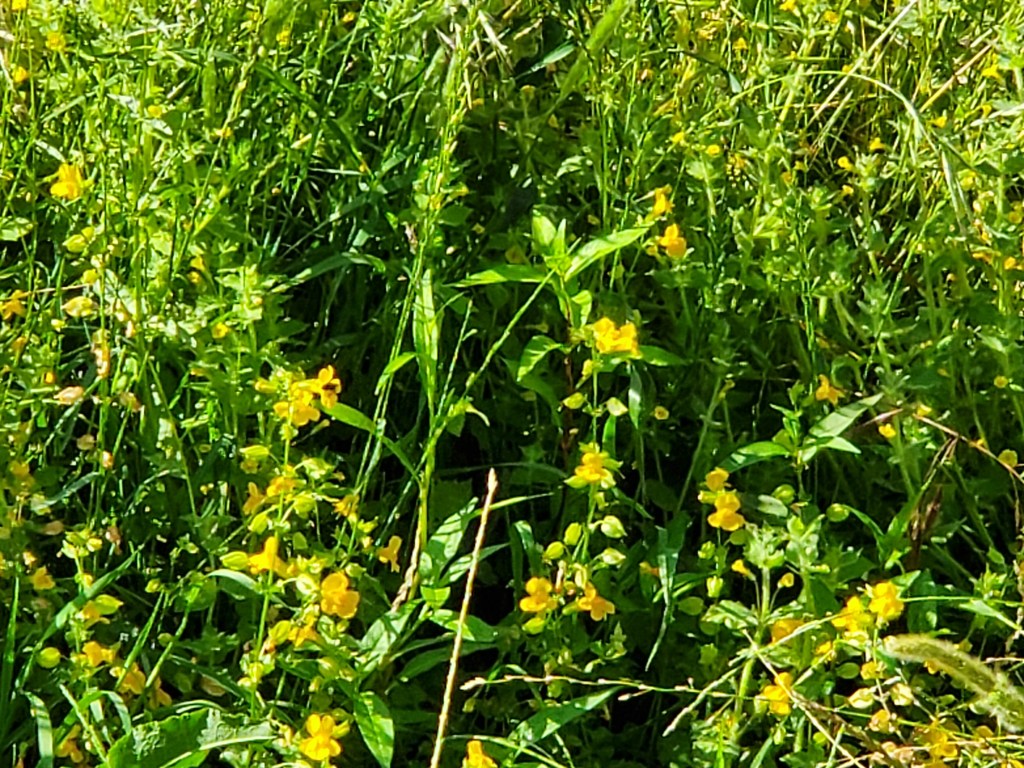
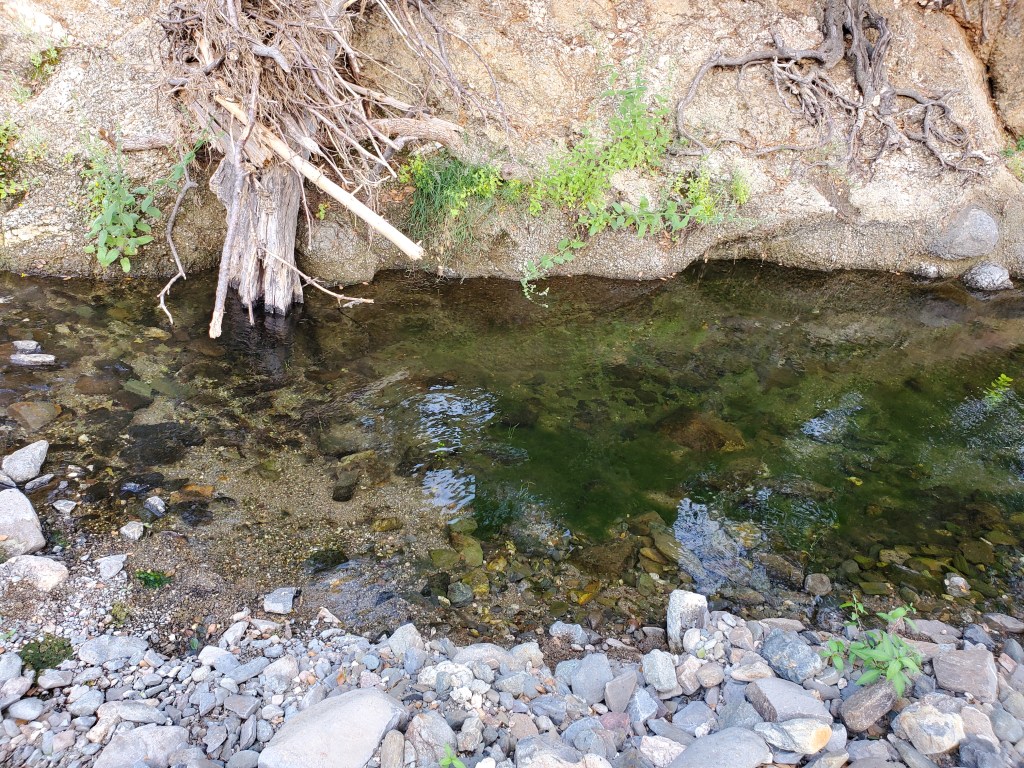
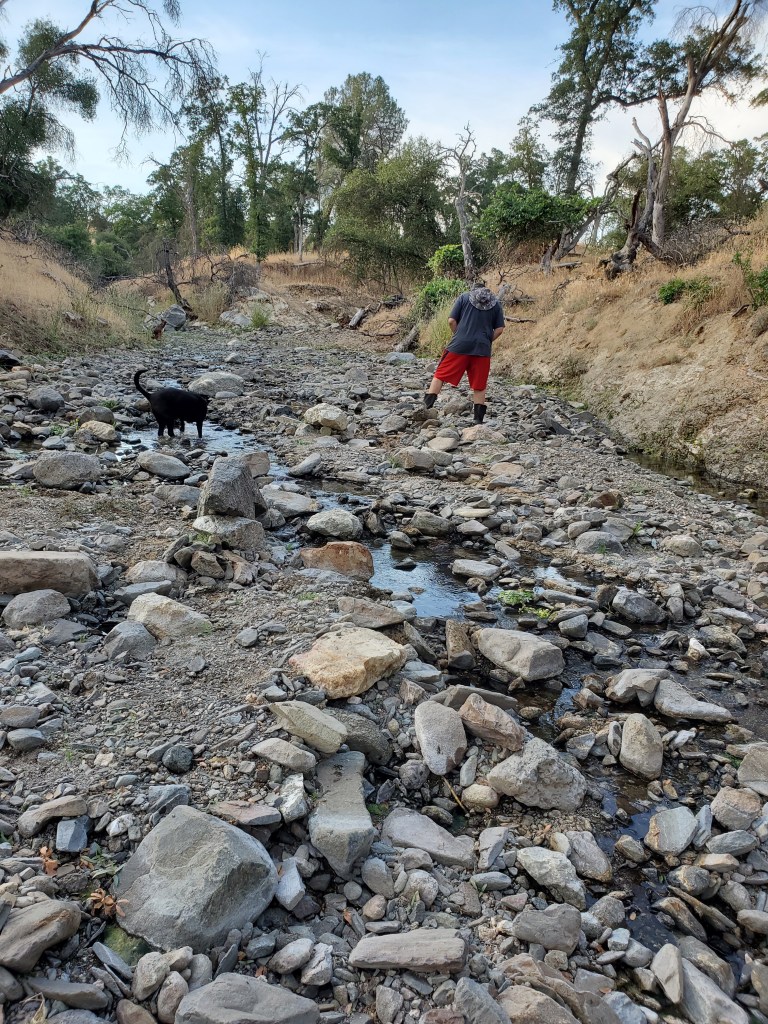
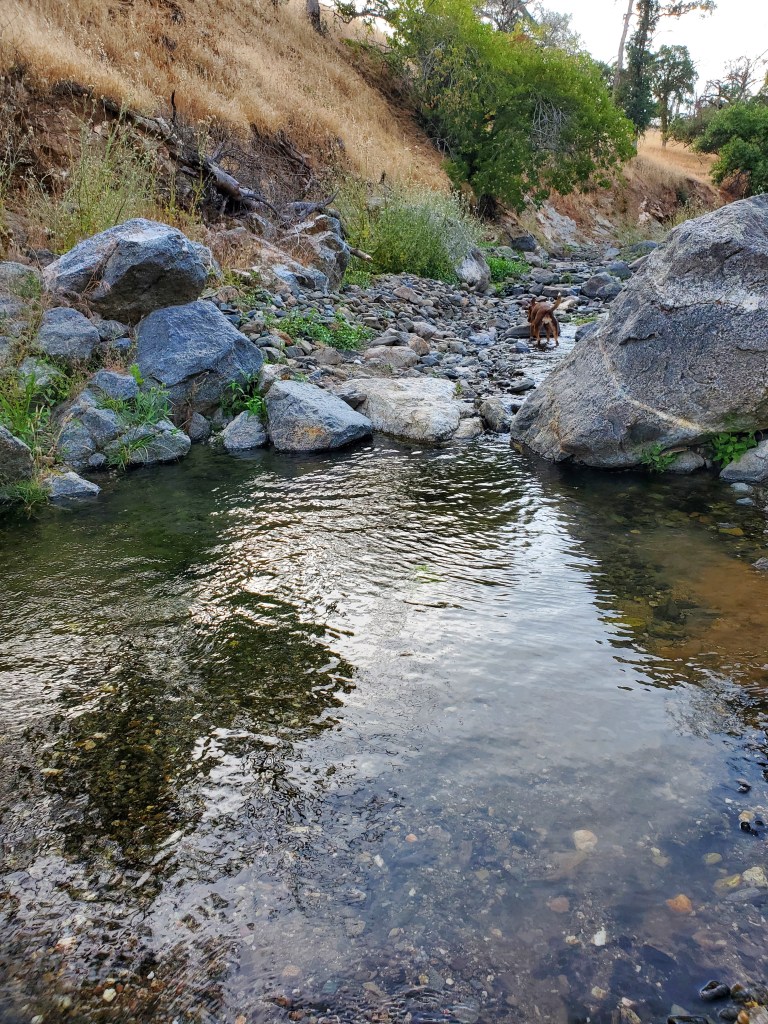
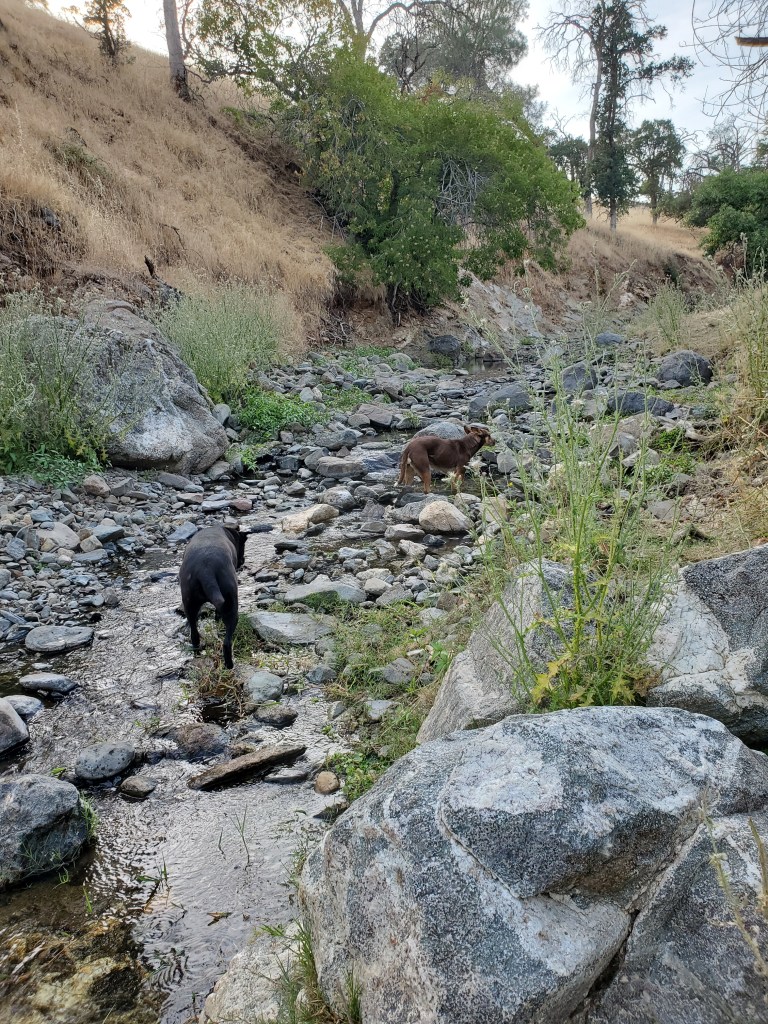
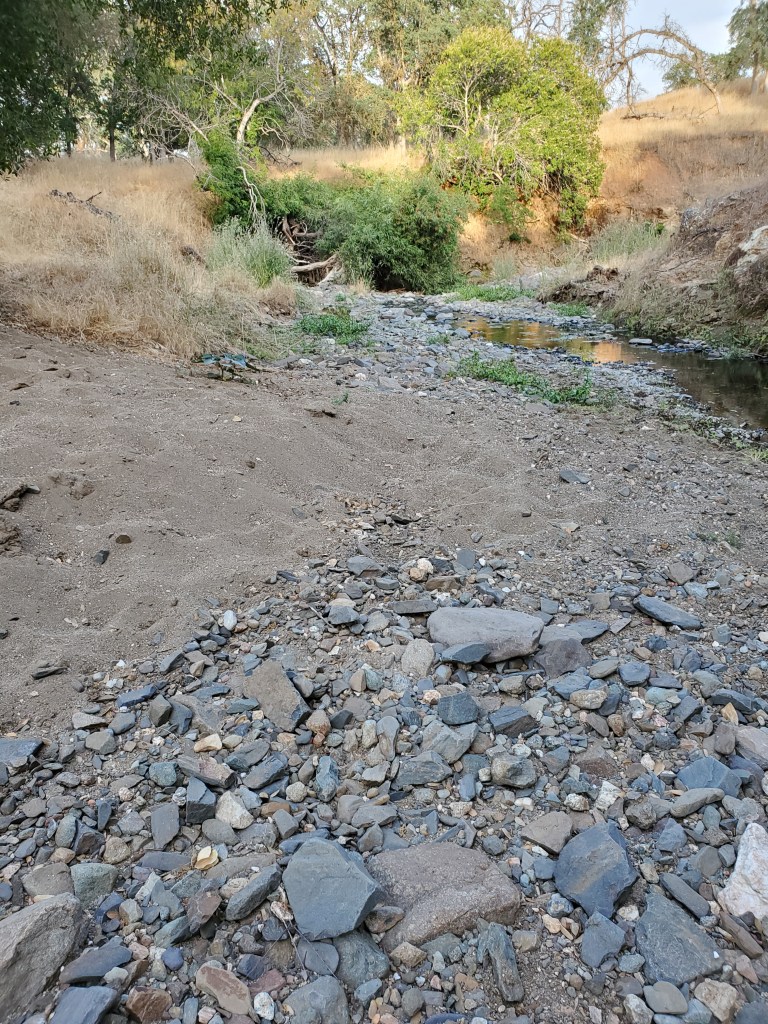
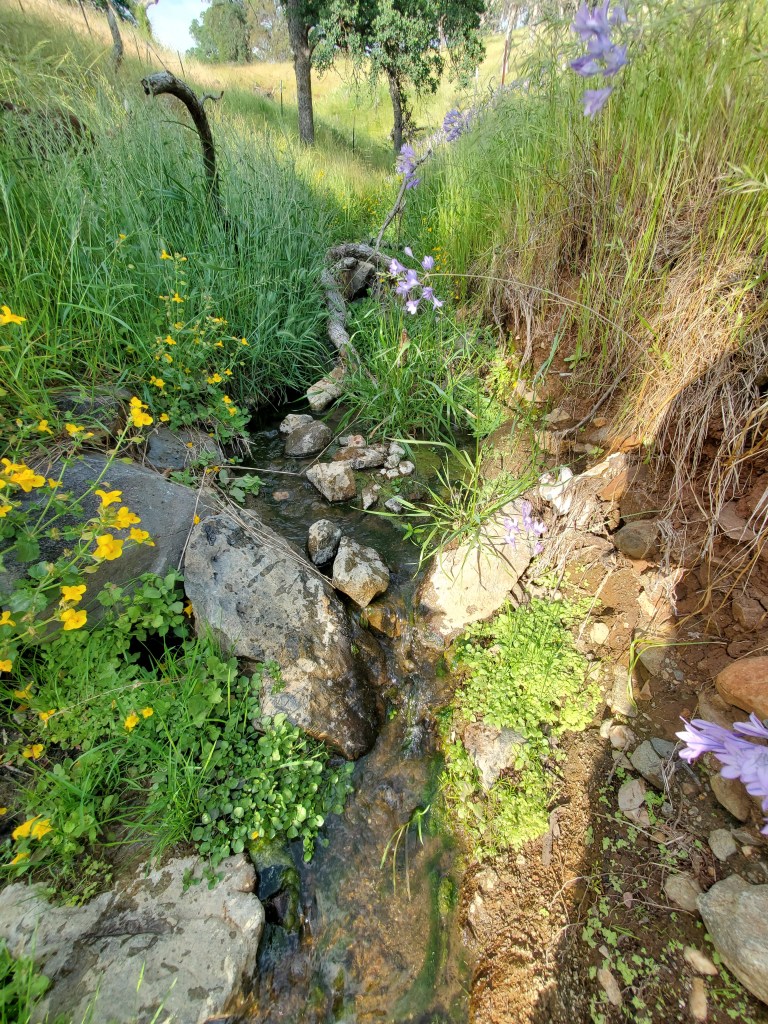
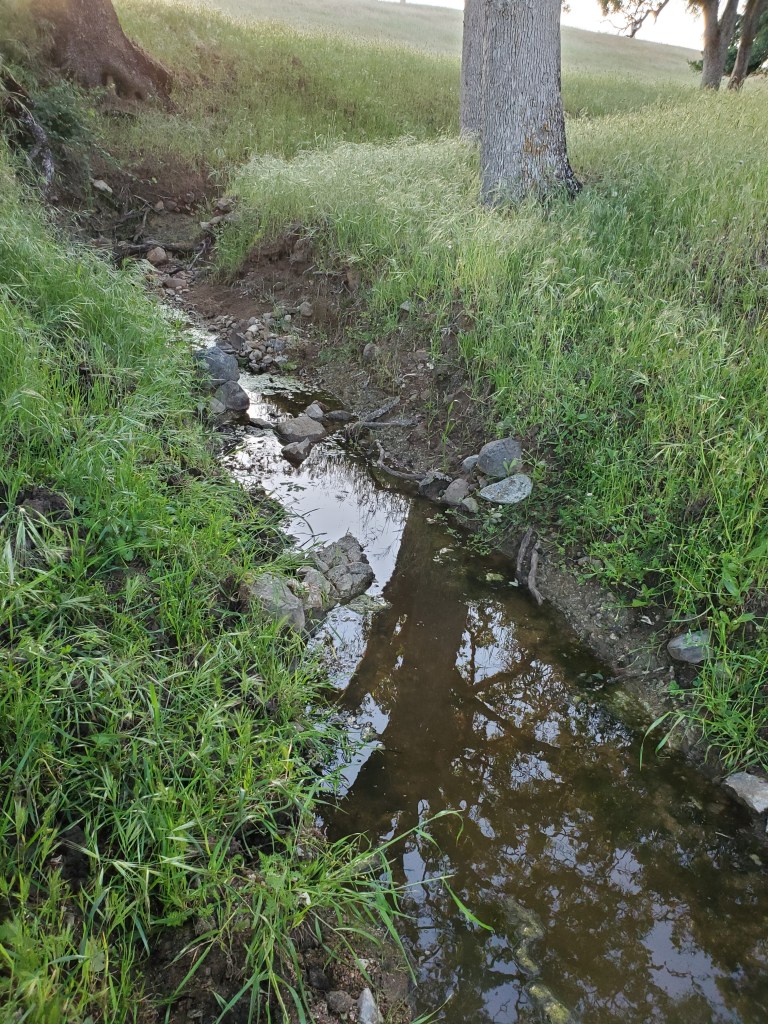
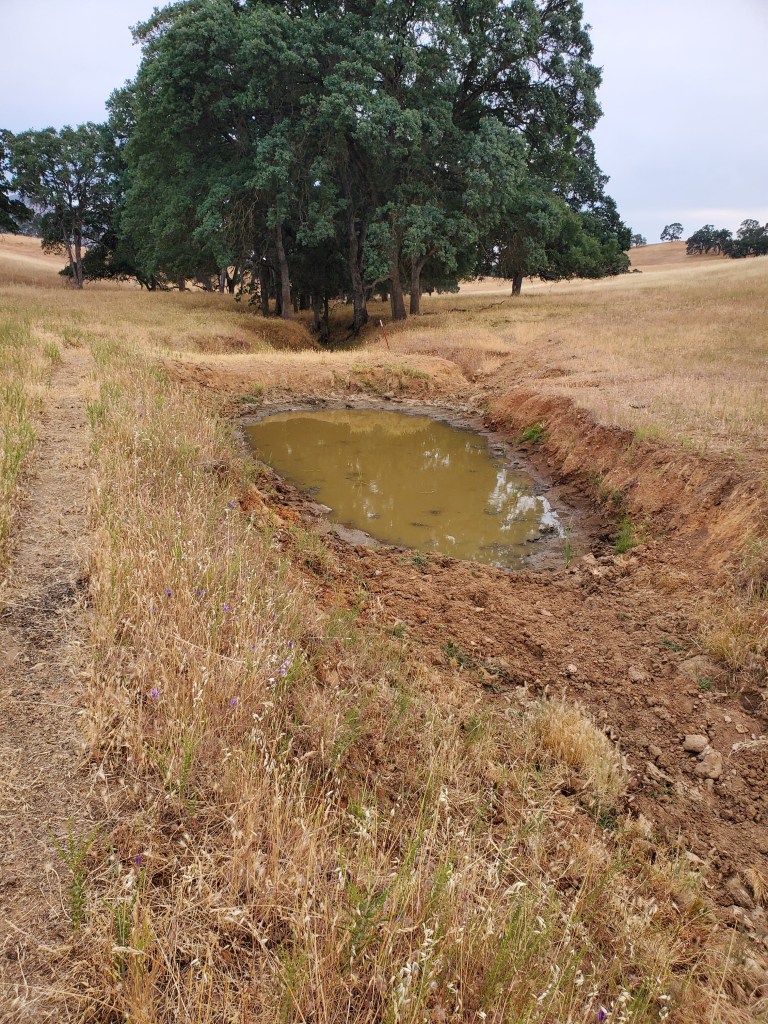
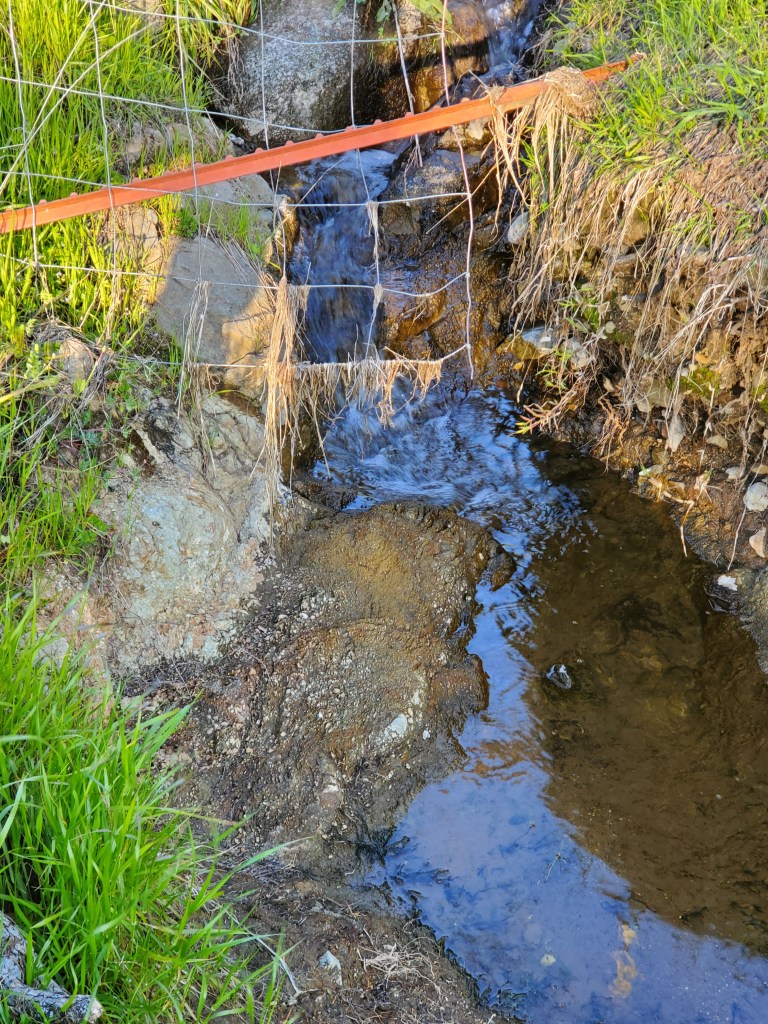
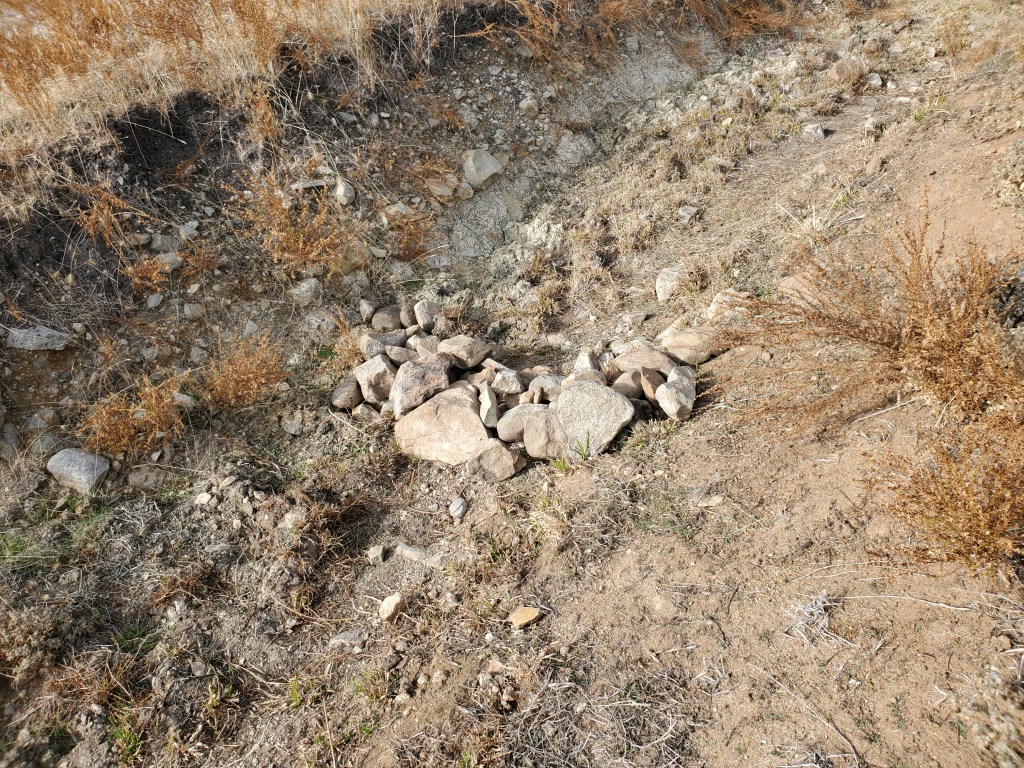
We have had a total of 1.7 inches since Oct 1. There is no standing water, but the springs and creek are still running from the remarkable last rain year. When the rain comes, we are ready. In November, my college best friend and her daughter visited. It was joyous. Among many fun things we did on the ranch, we built up last year’s successful rock check dam hoping for more sediment gain and soil moisture retention. Last year, the benefit was incredible with standing water and flowers in the typically dry arroyo through September. Dry areas 20 feet up stream (above the grass and flowers) and just below the rock check dam told me what I had done worked.

Gift of Beauty and Food

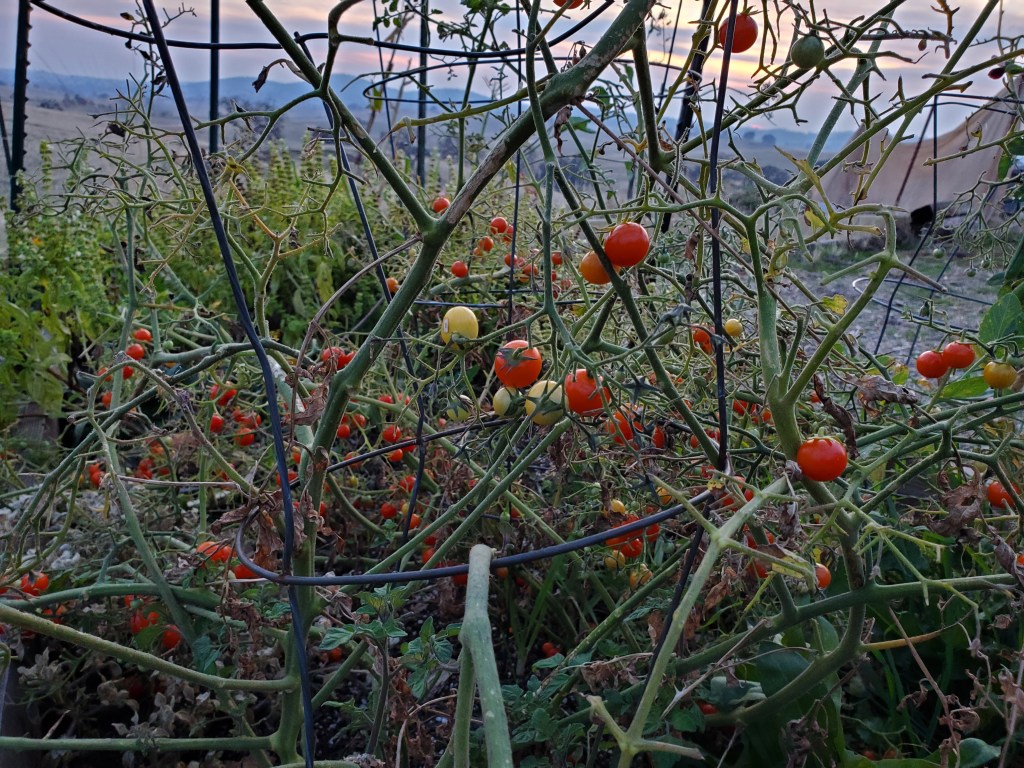
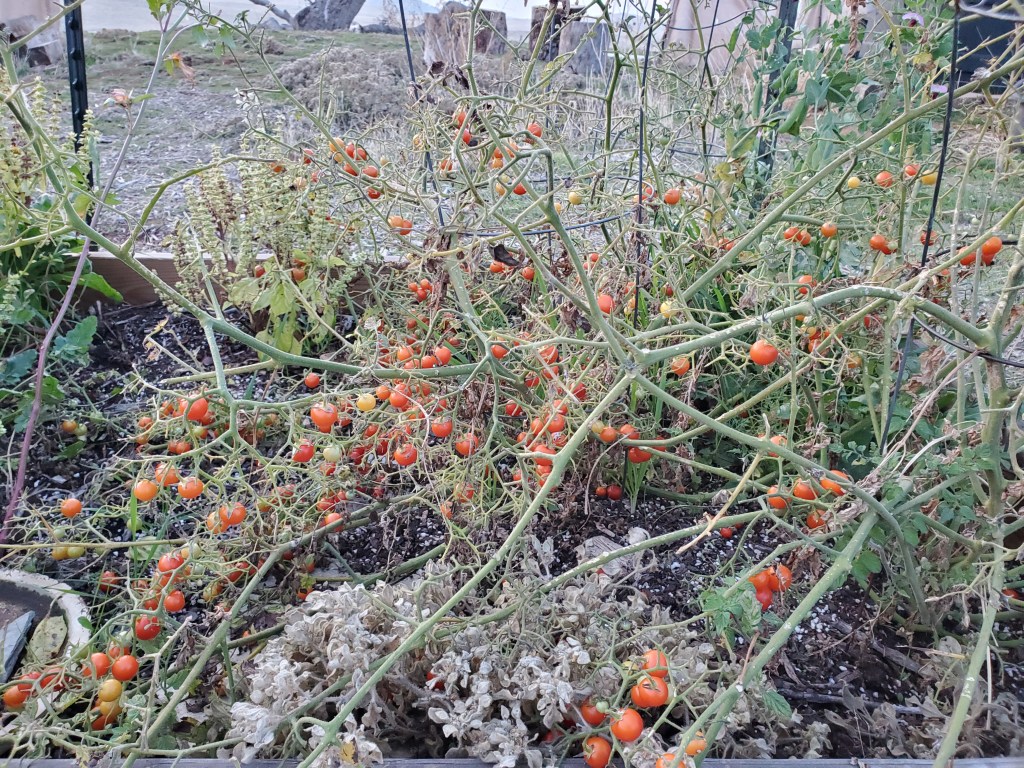
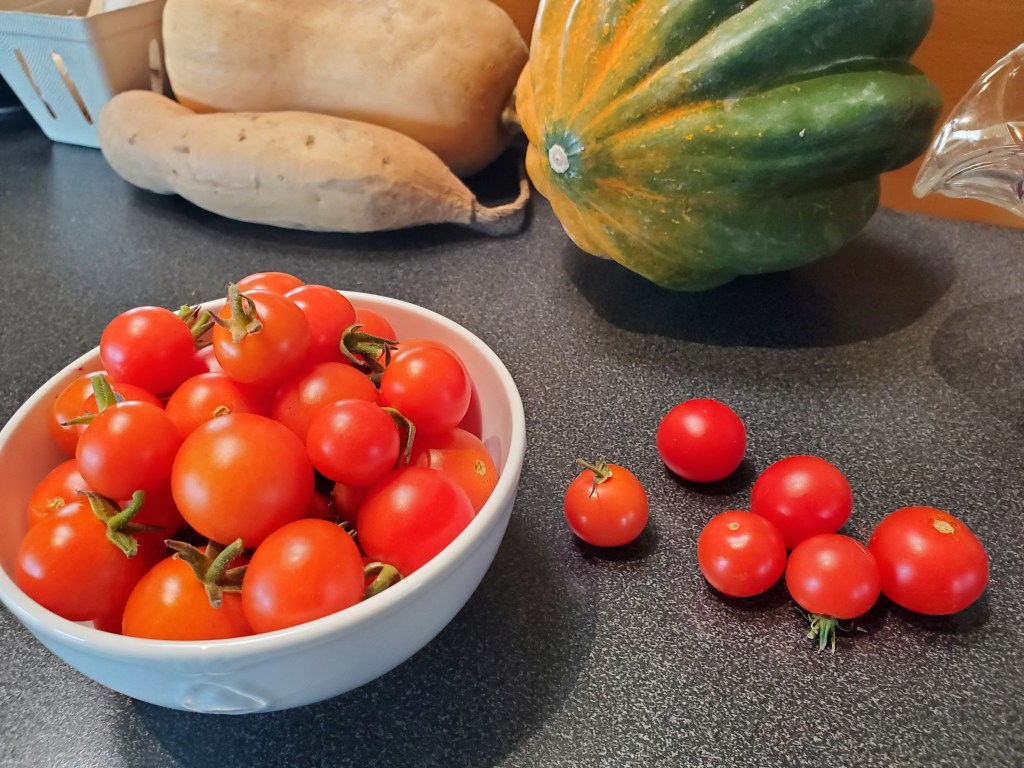
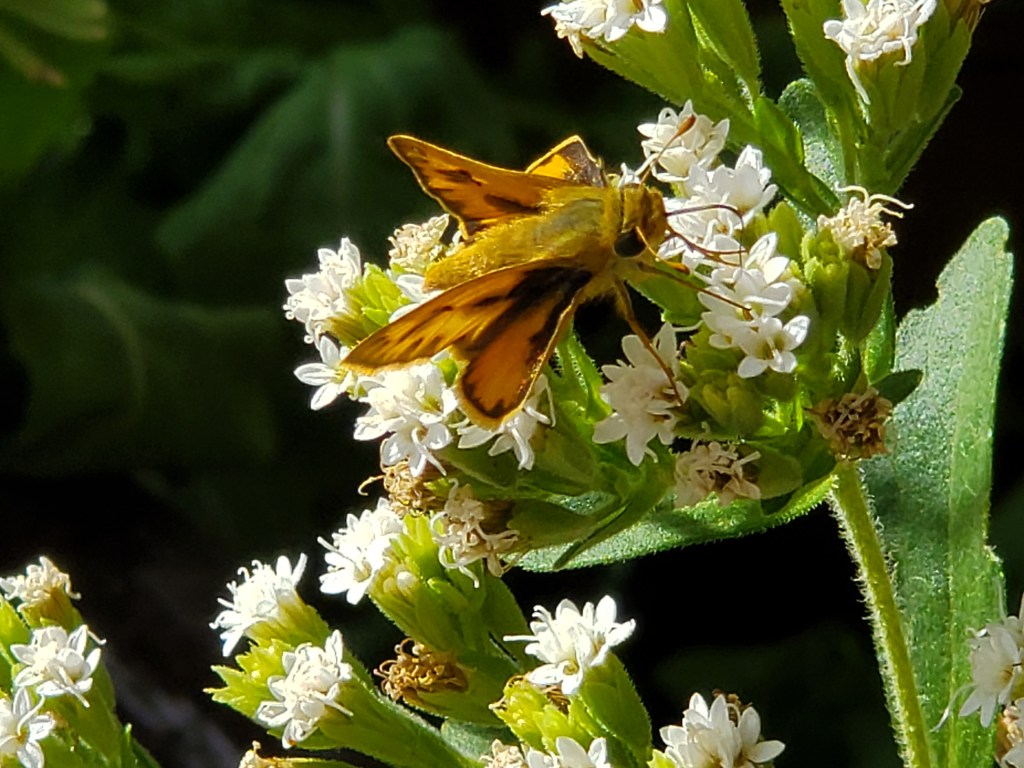
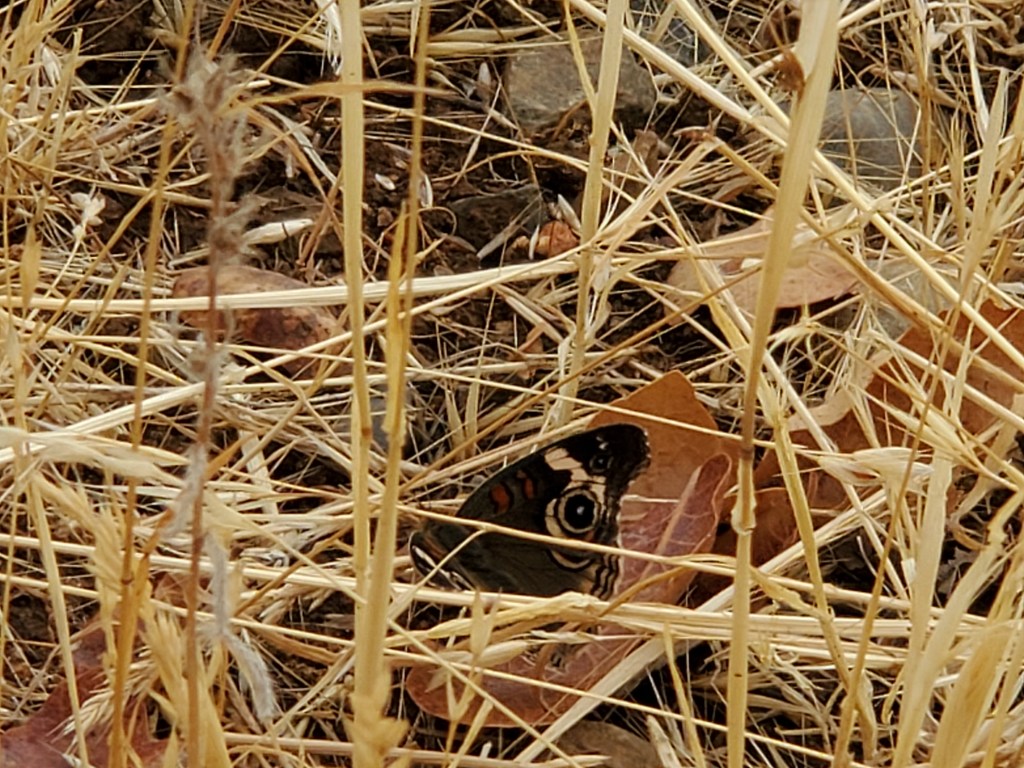
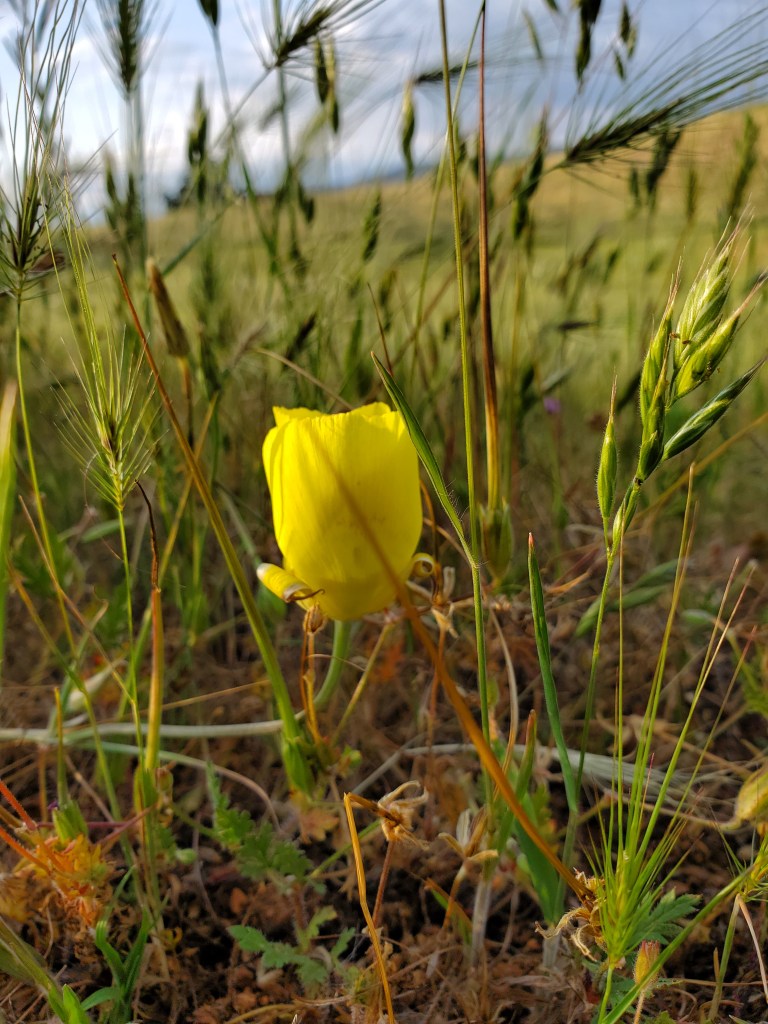
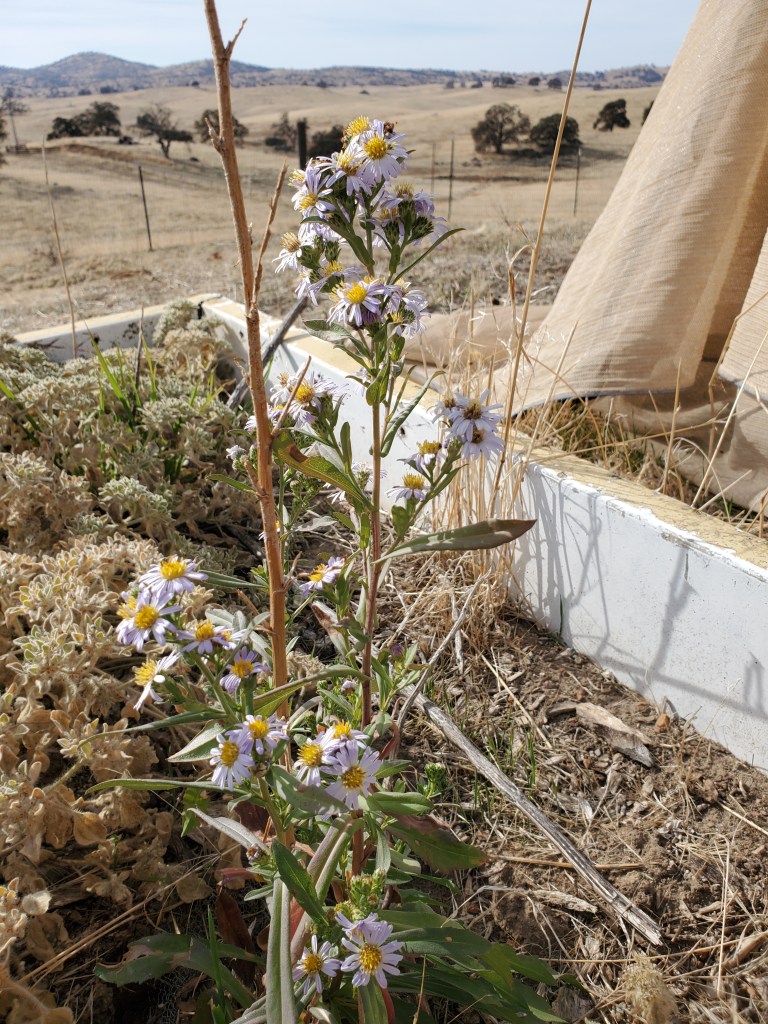
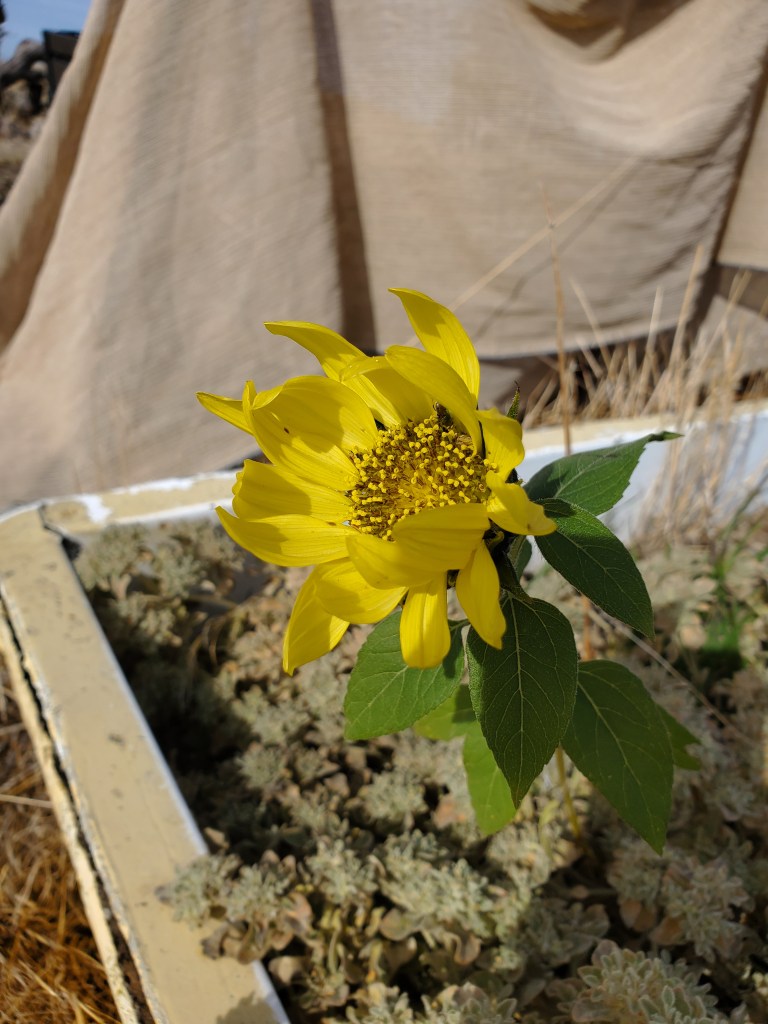
The weather is still temperate. Although it has finally gotten cold, there has been no frost on the hilltop. We still have a variety of blooms, one or two butterflies, a small number of bees and tomatoes! Yesterday, I saw a very large painted lady butterfly. A little pink throated hummingbird balanced on the edge of the tomato cage watching me as I filled the cart with water for the downed cow. I was able to see it clearly and had time to observe it closely. It was beautiful. So many small things bring joy.
Gift of Service to Community

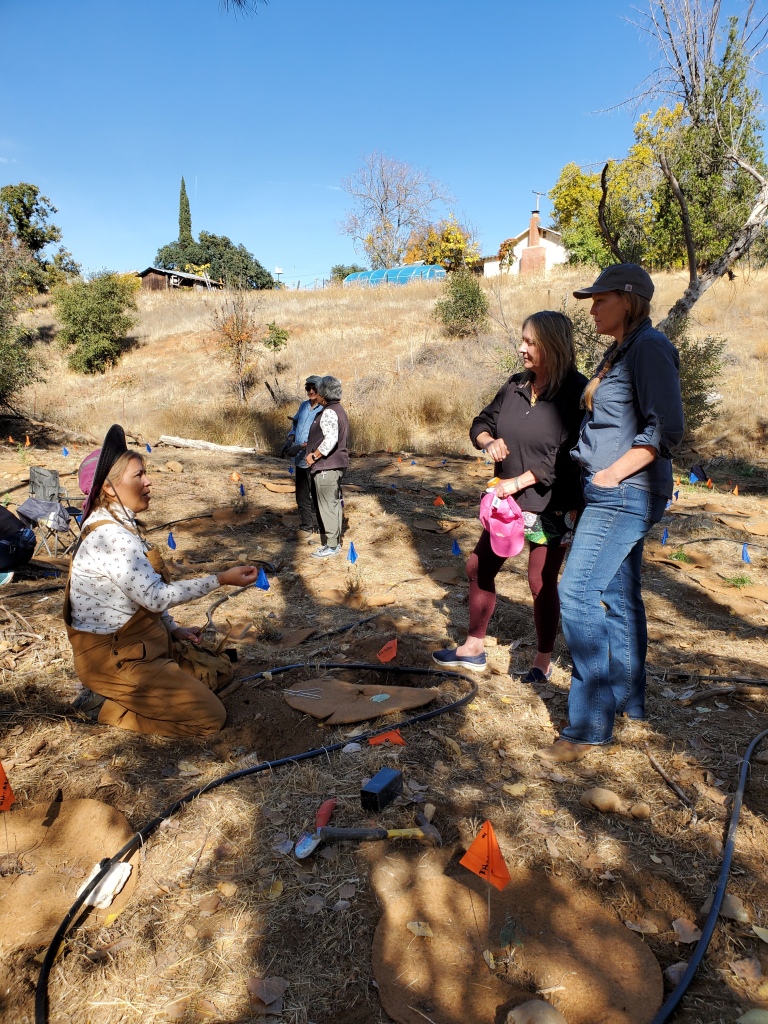
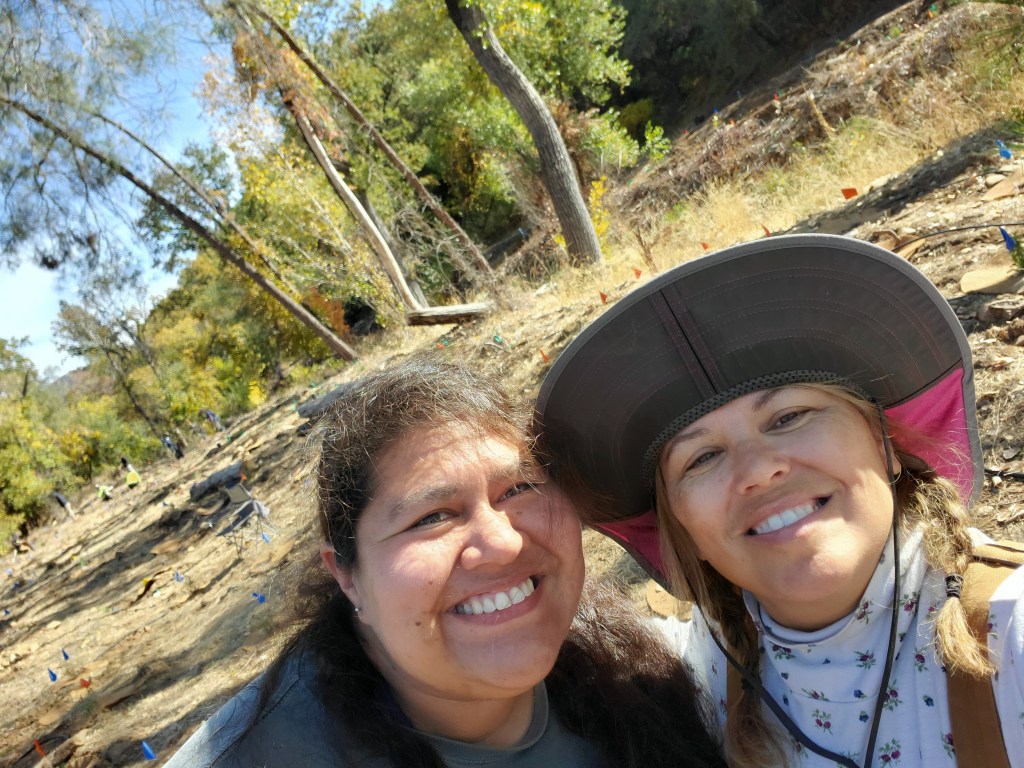
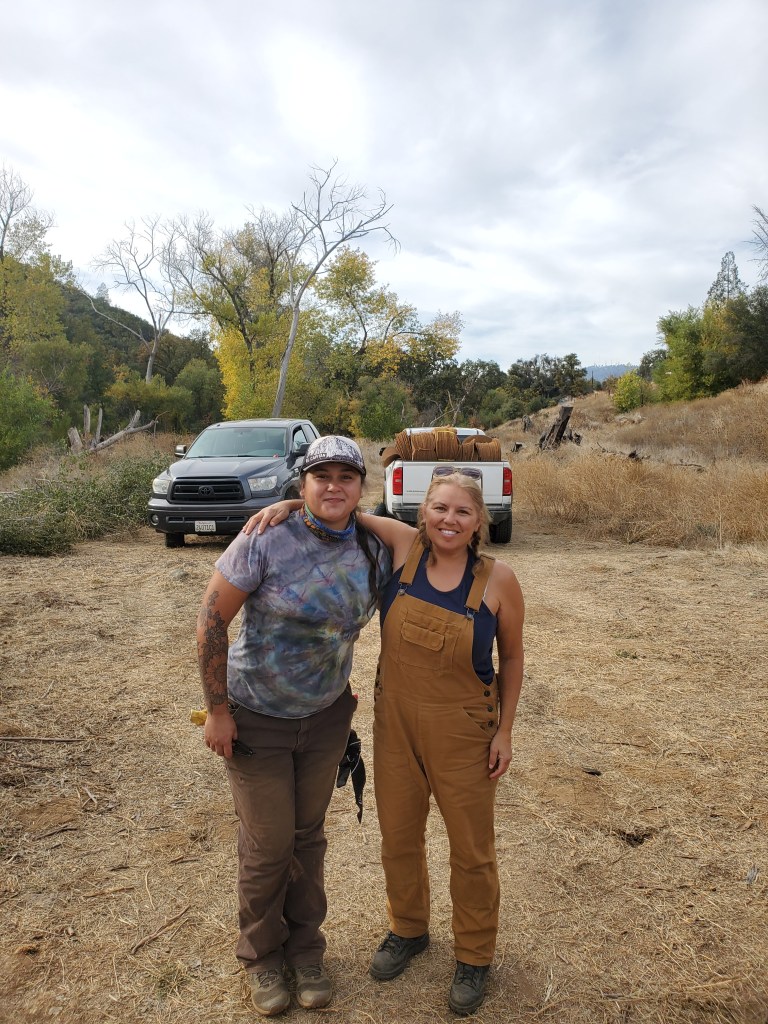
In November, I joined the Southern Sierra Miwuk (SSMW) in helping at their cultural burn on the Mariposa Creek Parkway project. I helped Ray Gutierrez start the fire traditionally using air and friction between soft and hard woods. That was exciting! There were many agencies helping and so many friends to catch up with. One of my favorite people of all time, elder Bill Tucker, was there. As usual, he lead me on a hike through some dicey territory looking for grinding stones. We found many. I love him!

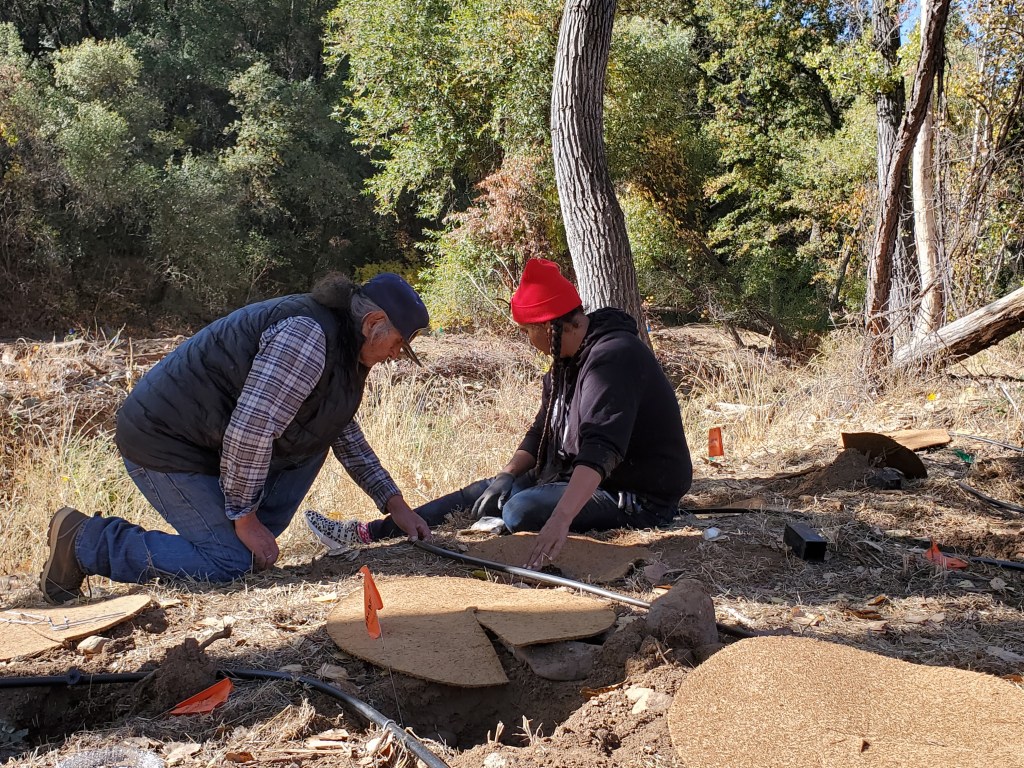
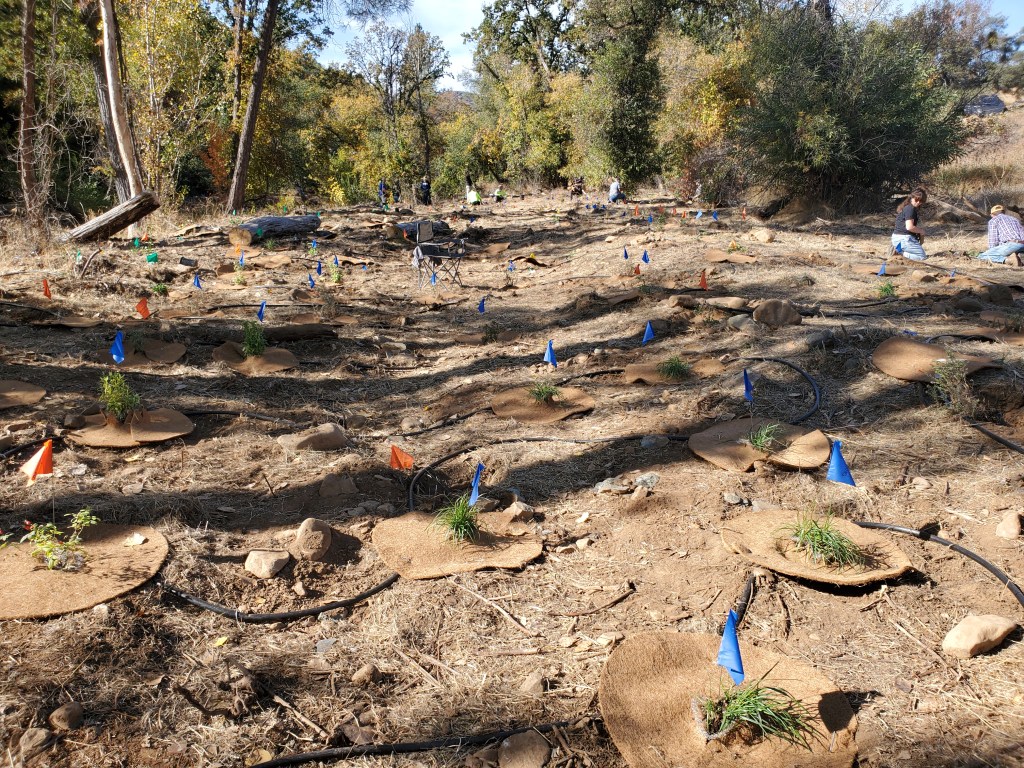
The plants we planted the month before looked healthy. I took this opportunity to straighten out the gopher baskets and coir discs. I have also been helping Shana Saucido, the SSMW Pollinator Coordinator, plant the Xerces habitat kits in the Oak Fire burn scar. No photos of this yet, but we still have many plants to plant. I am very grateful for the opportunity to serve my relatives and the local First Nations.

Gift of Knowledge Through Art

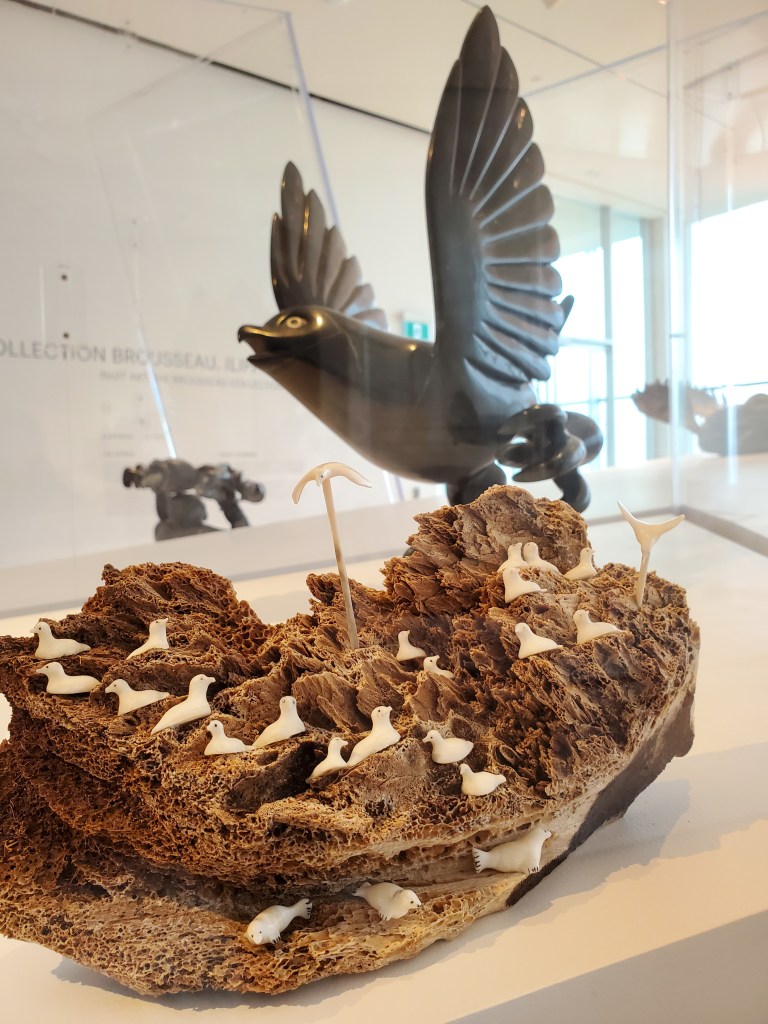
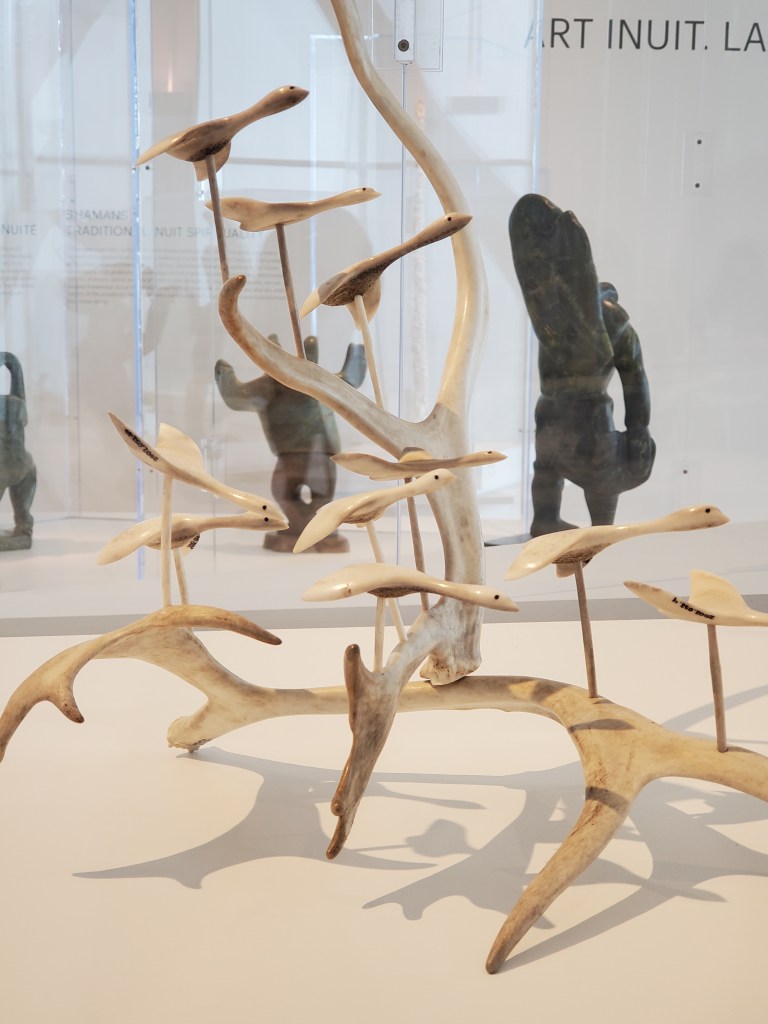
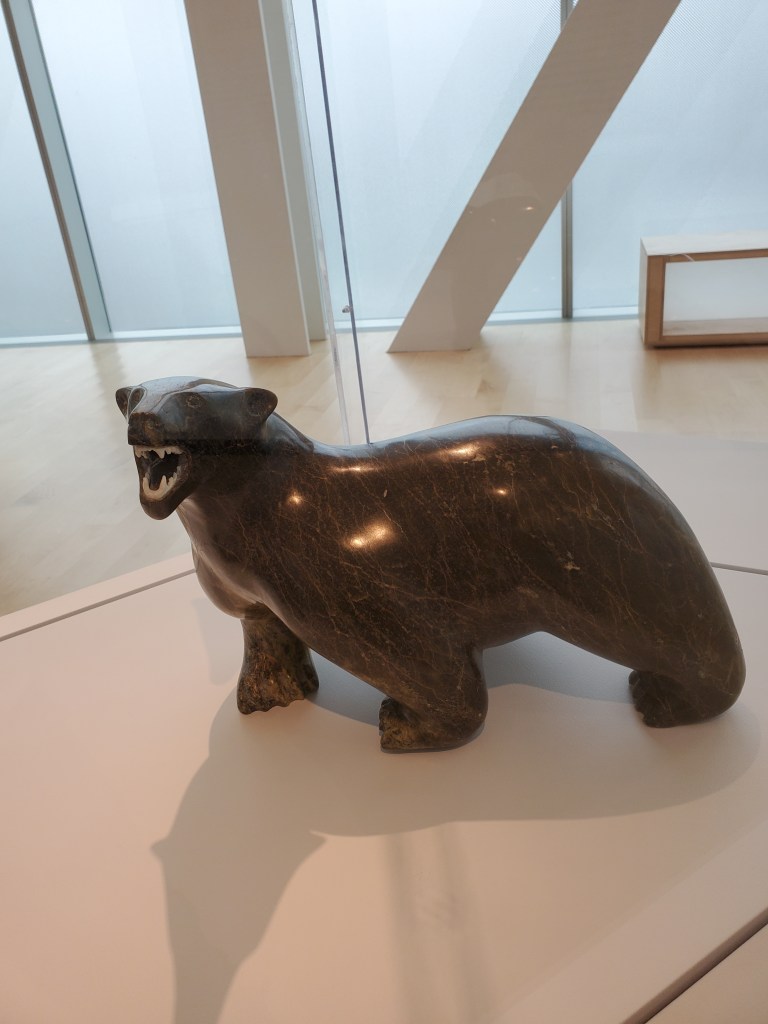
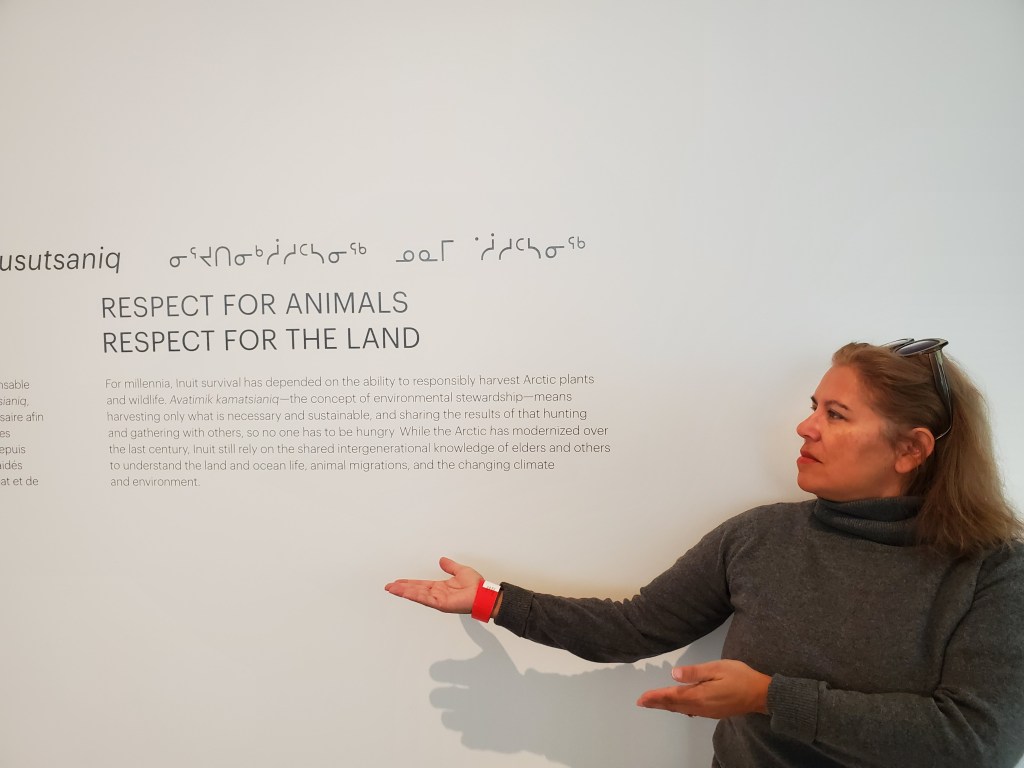
November and early December, David and I traveled to Quebec City. There was a powerful exhibit of Indigenous art at the Fine Arts Museum (Musée des Beaux Arts). We don’t take large trips often, but when we do, I always like to learn about the places we go and whatever knowledge First Nations people want to share. The fine art Native people produce is extraordinary and the specific stewardship stories are inspirational.
Gift of Time for Reflection

I have had some very nice blocks of down-time over the holiday season to reflect on this work and what is next. Seventeen monarchs last Fall, more crotch bumble bees than before, enough toads to populate a pond – all from having the right native plants. As long as the plants, butterflies and bees continue to show up, the work will be a success. Shana from the Tribe has taken this project and scaled it up with an effervescence and zeal only possible through a deep love of this work. What a gift for me to see even more habitat installed as yet another Indigenous young woman is inspired by a small but remarkable orange, black and white life. Life is full, wondrous and leaving me thinking about what is next.

Although I am still working out the details on my next step, I will be sure to share it here. One thing is for sure, it will involve a drawing for free t-shirts at the time of the 100th post. More information soon. Thank you for going on this journey with me, for sticking with the project during sad times and joyful. Thanks for reading, providing feedback and encouragement. It is unlike me to share so deeply, but I have found that I learn so much from you when I do. Chiokoe uttesiavu (Thank you all).
Warm November Means More Butterflies, Bees and Blooms

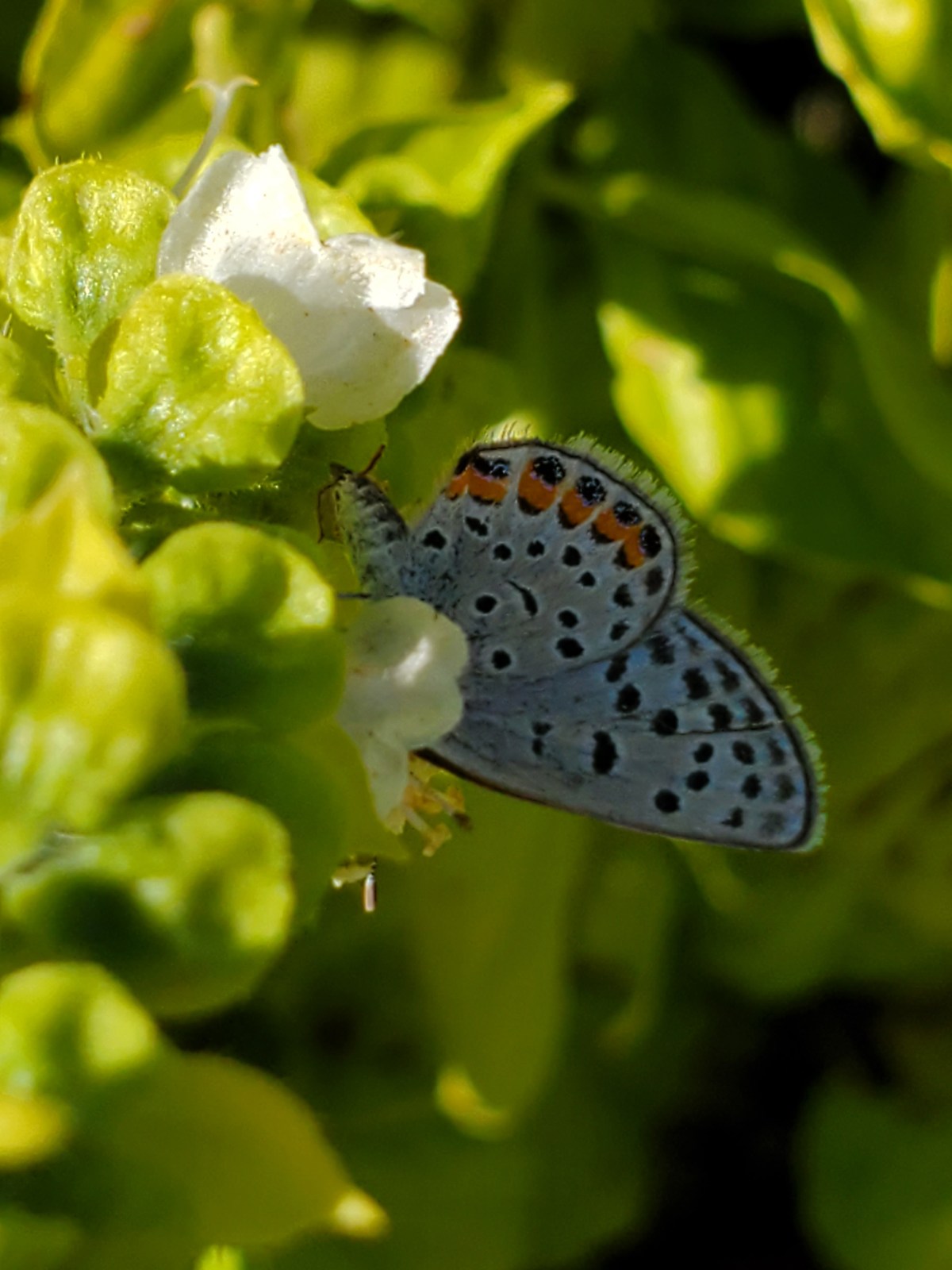
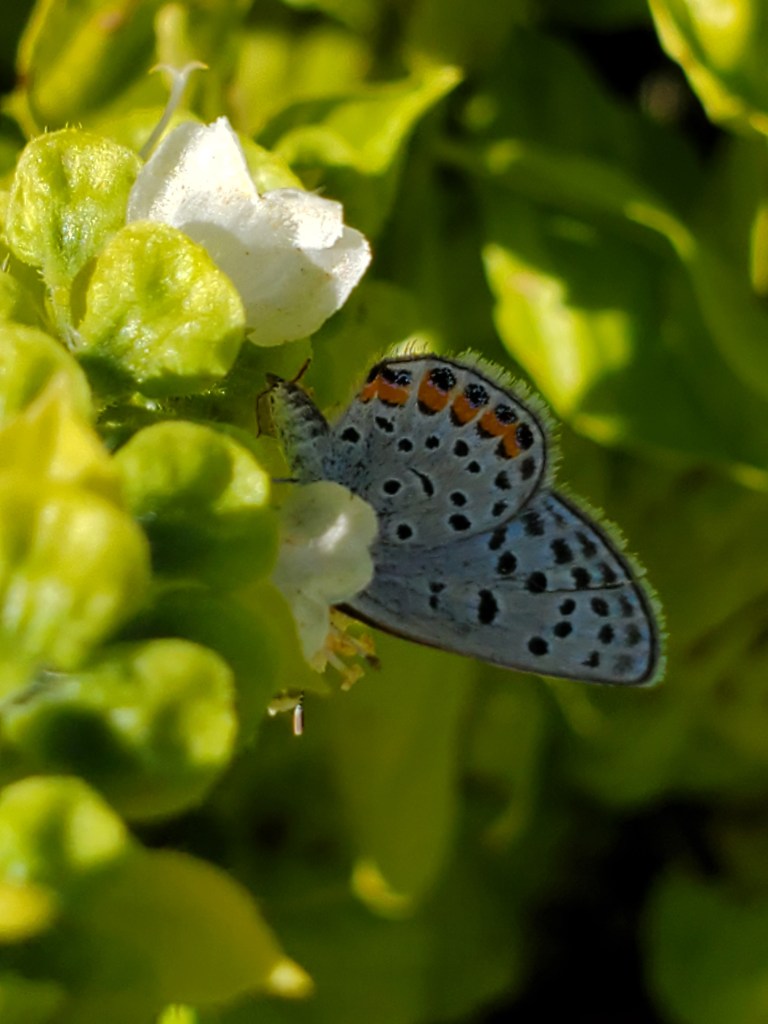
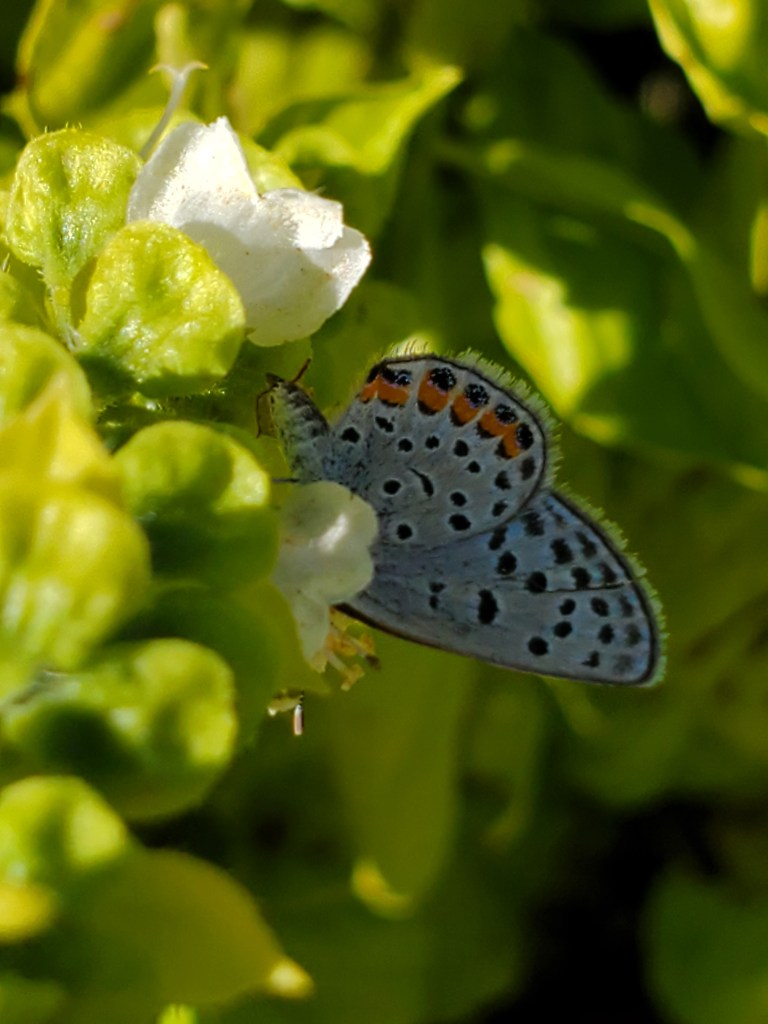
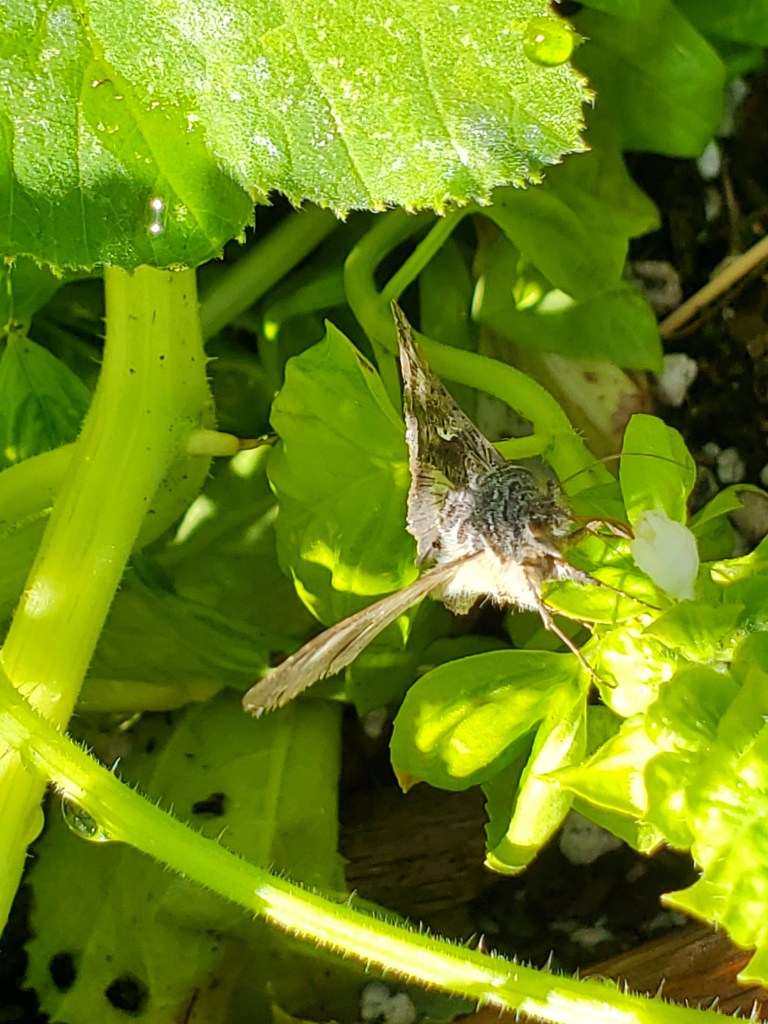
California Hairstreak nectars on a basil flower

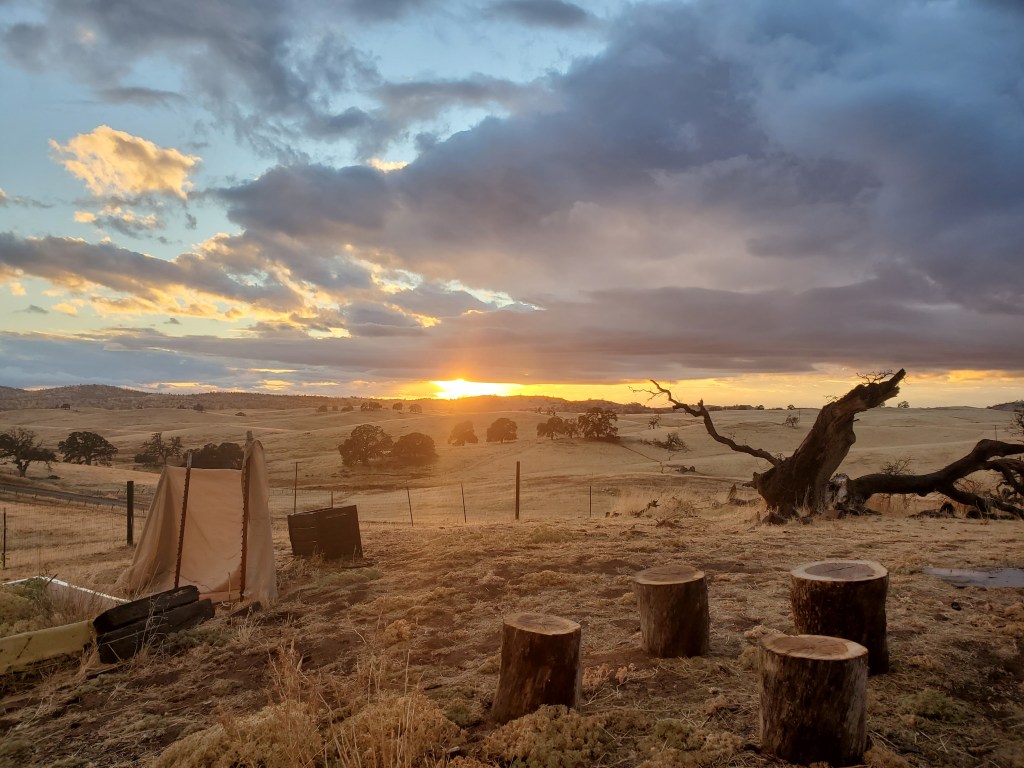
It should be much colder than it is. We are in the 70s every day with overnight lows in the 50s. It feels like Southern California weather. The storm that came in overnight was warm with very little actual water. There were only a few drips in the rain gauge – not even enough to make a 1/16th.

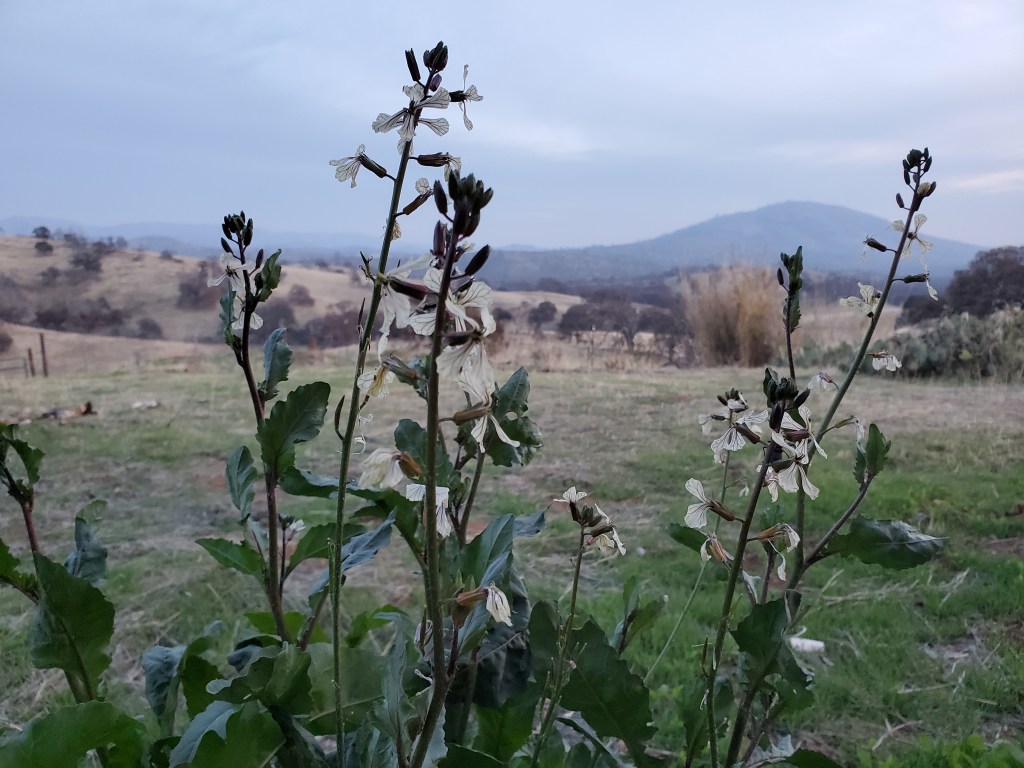
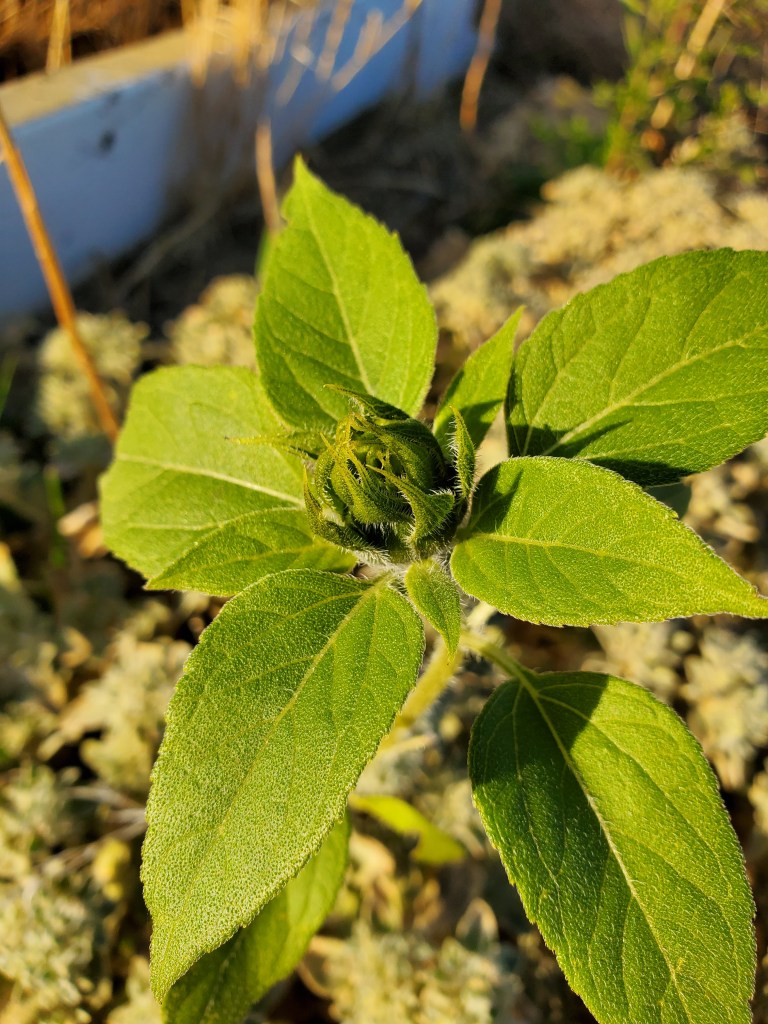
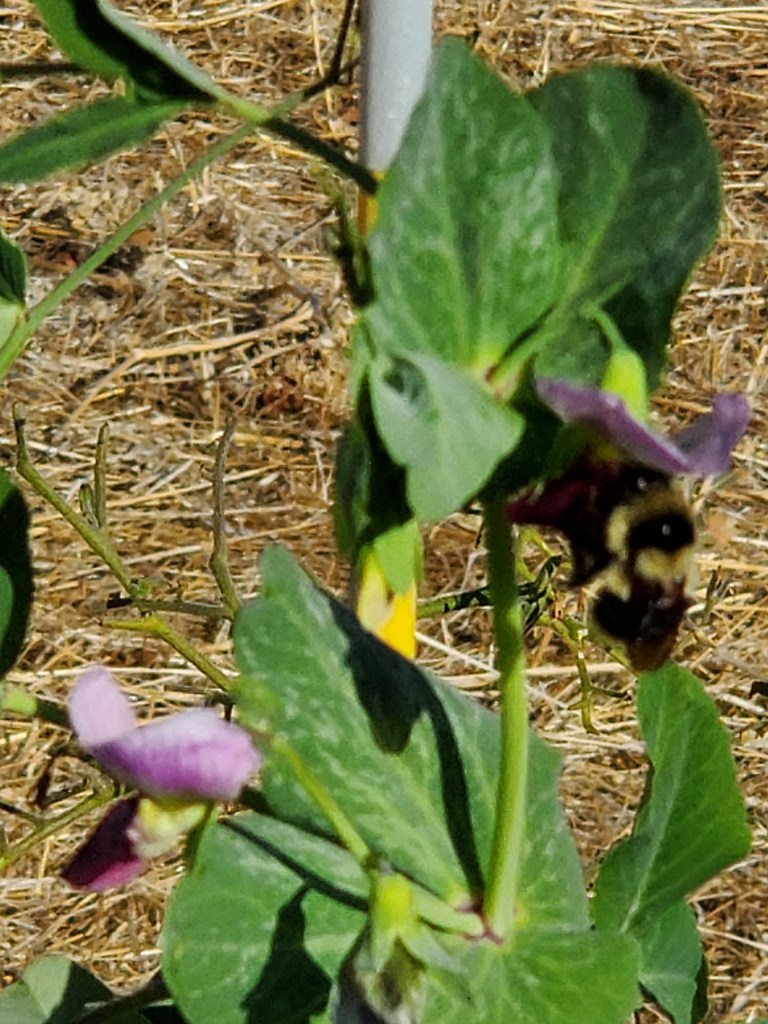
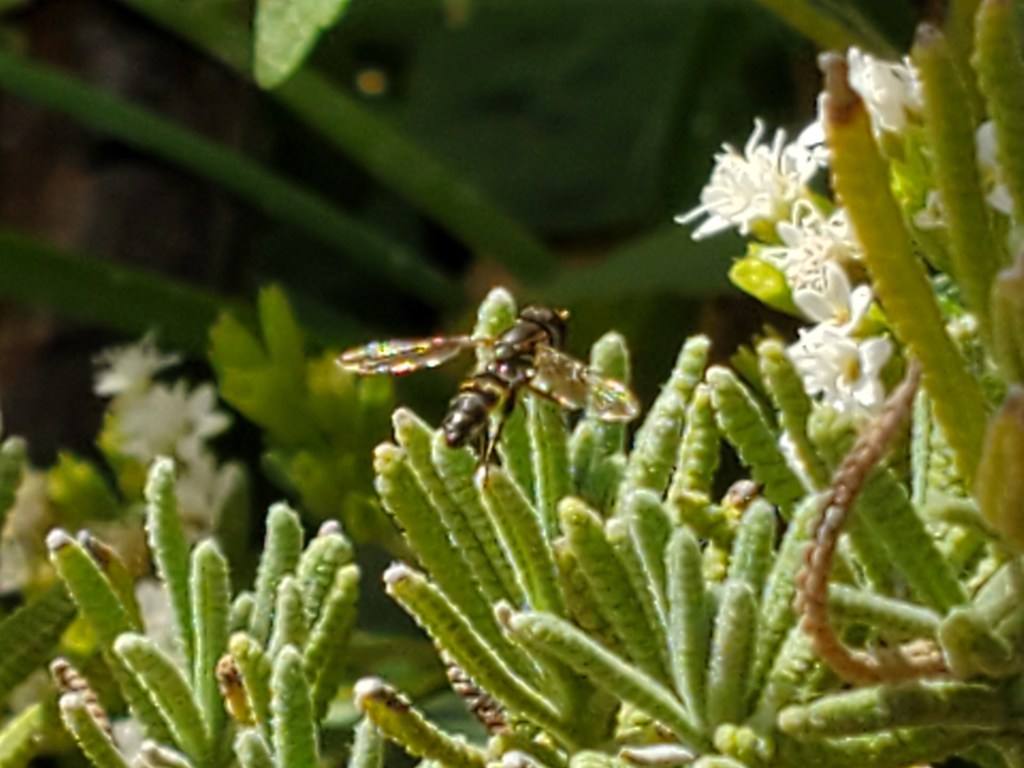
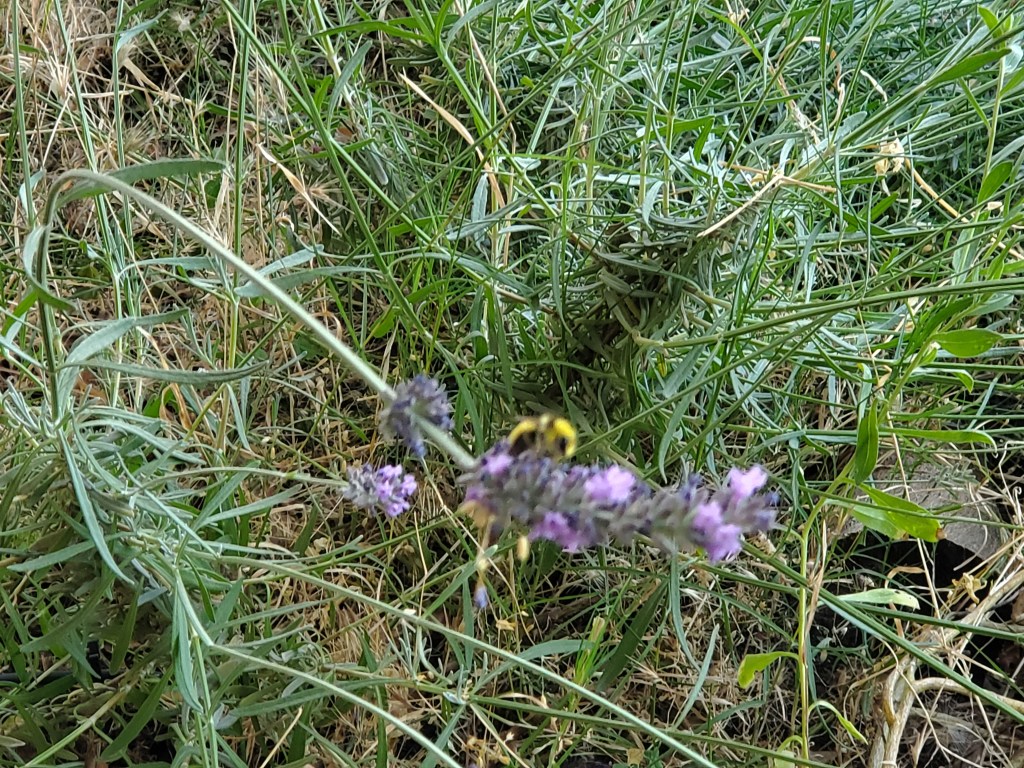
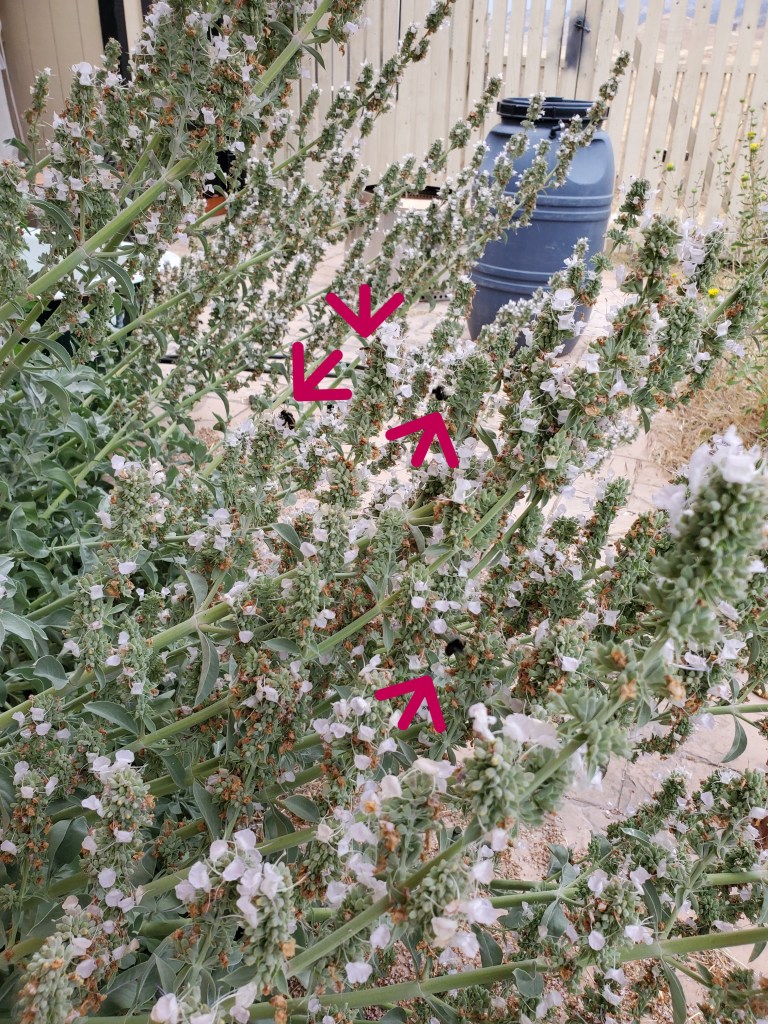
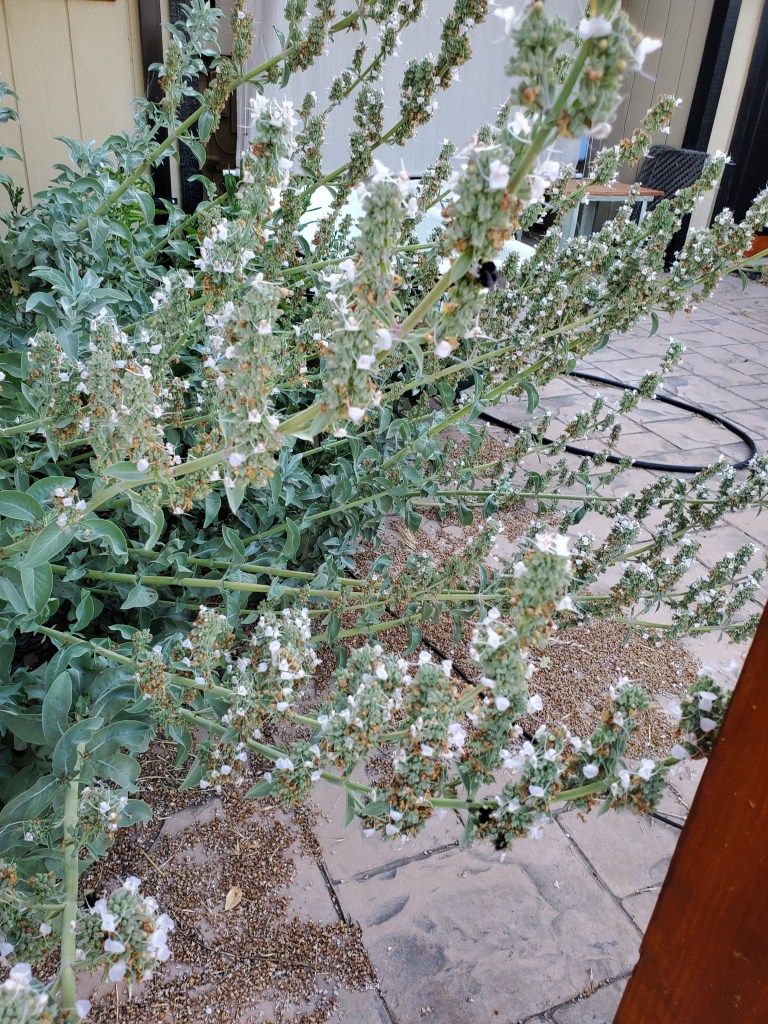
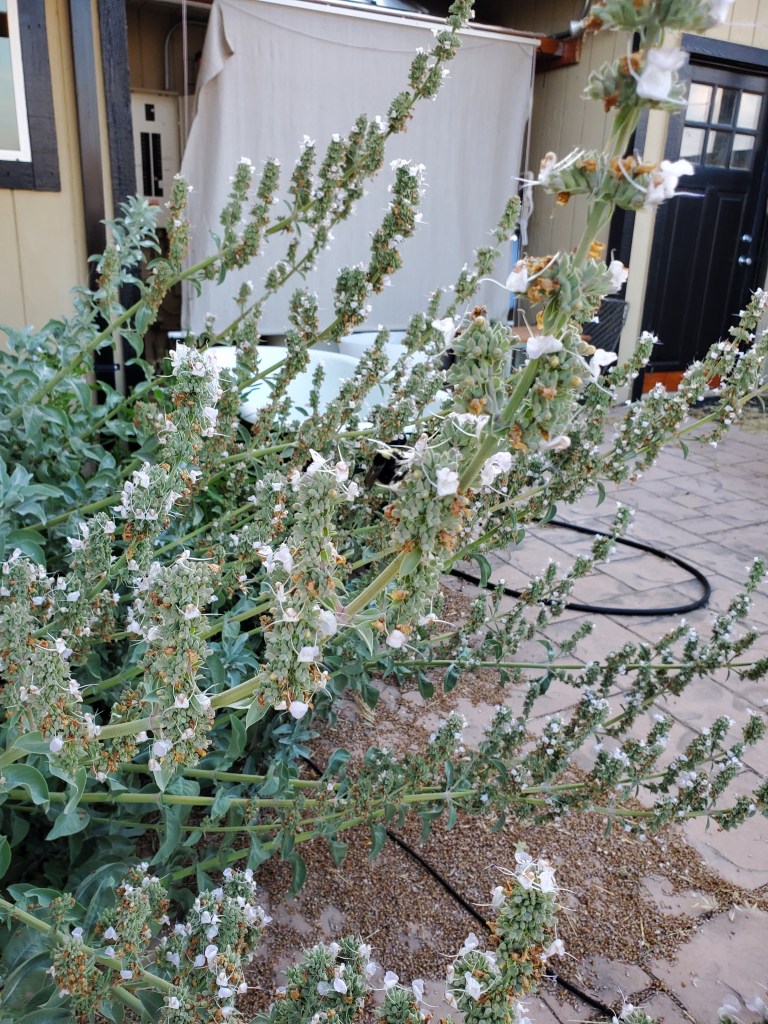
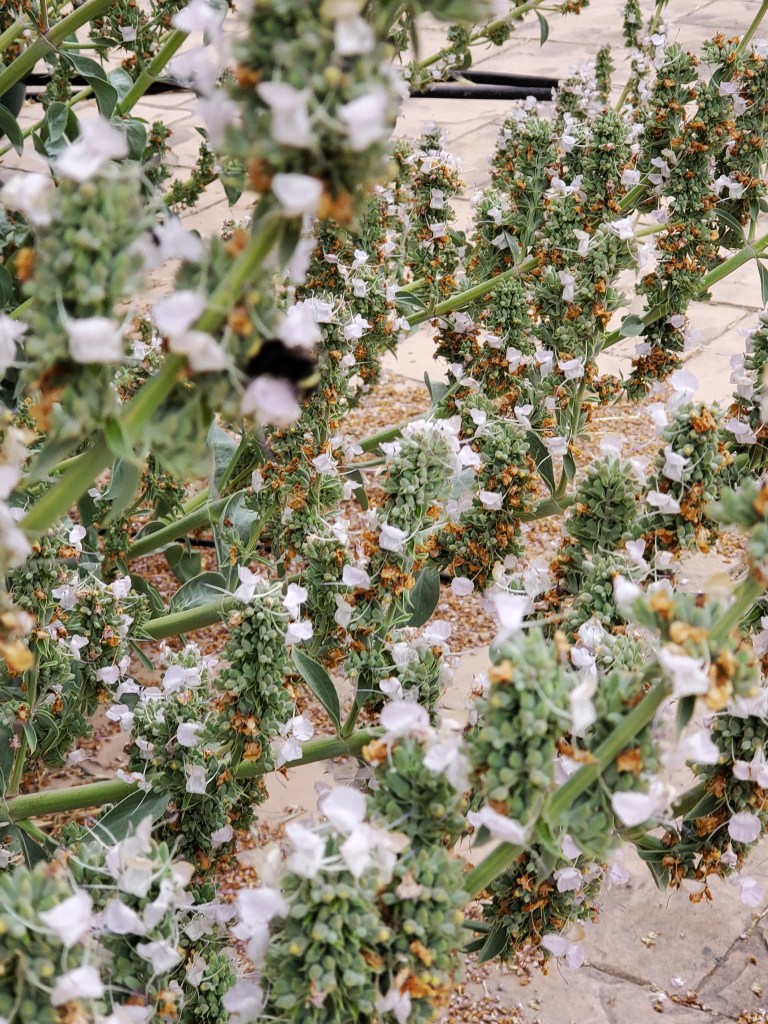
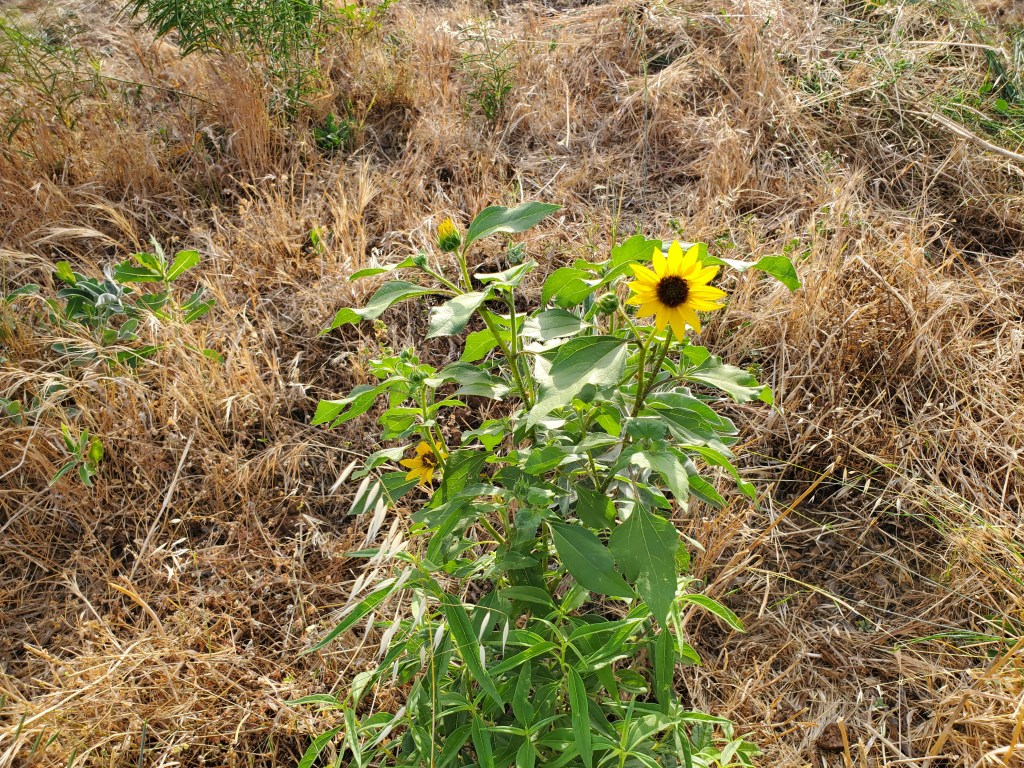
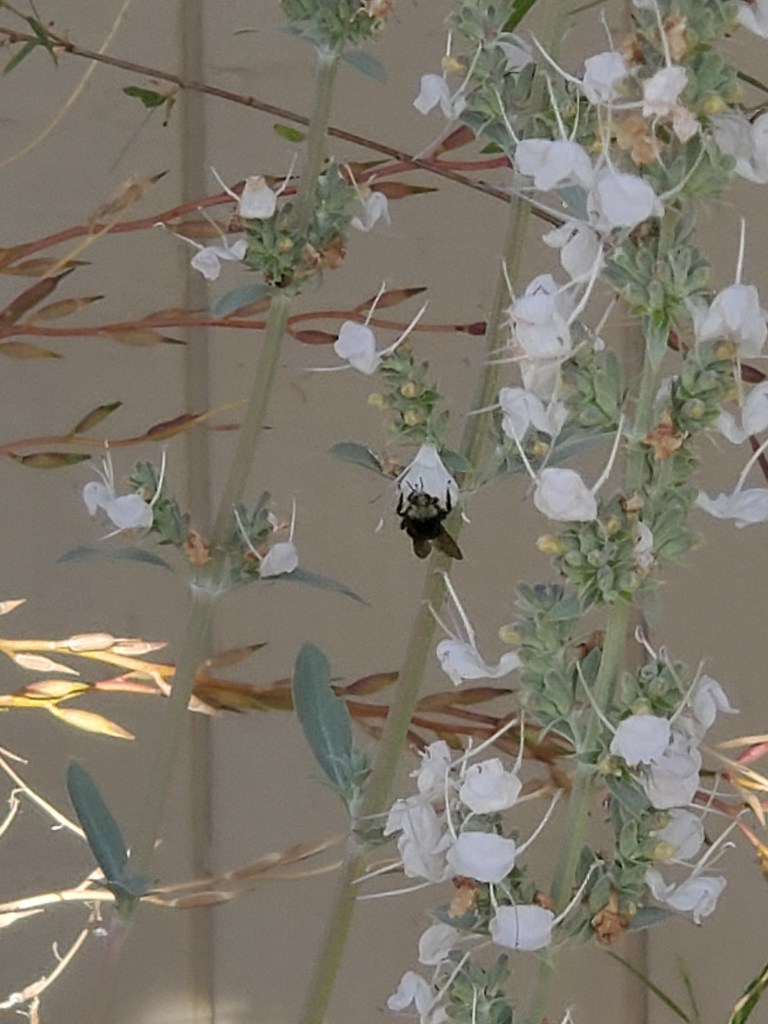
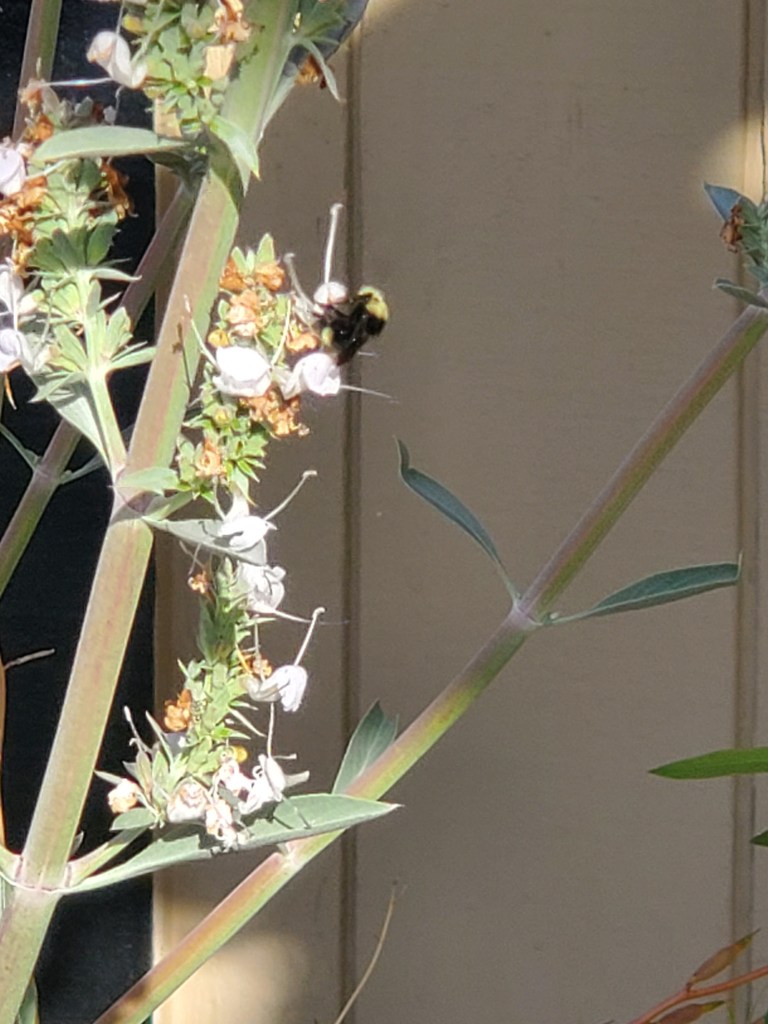
Butterflies, a wide variety, continue to visit. Yesterday, we had a large bumble bee and several silver native bees. They were attacking the poor bumble to get it to leave the flower. The bumble persisted though and got its nectar. Fortunately, there is nectar for all these creatures. The basil continues to have flowers, albeit many less. There are pacific asters, california fuchsia, verbena, black-eyed susans, a little bit of tarweed and dove weed left, marigolds (now that the life sucking beetles have moved on), peas, pumpkin, goldenrod, stevia herb, a few arugula, and one sunflower about ready to bloom, believe it or not. Lots to eat, so there is much activity including honeybees and small native bees and pollinating flies.

More Check Dams

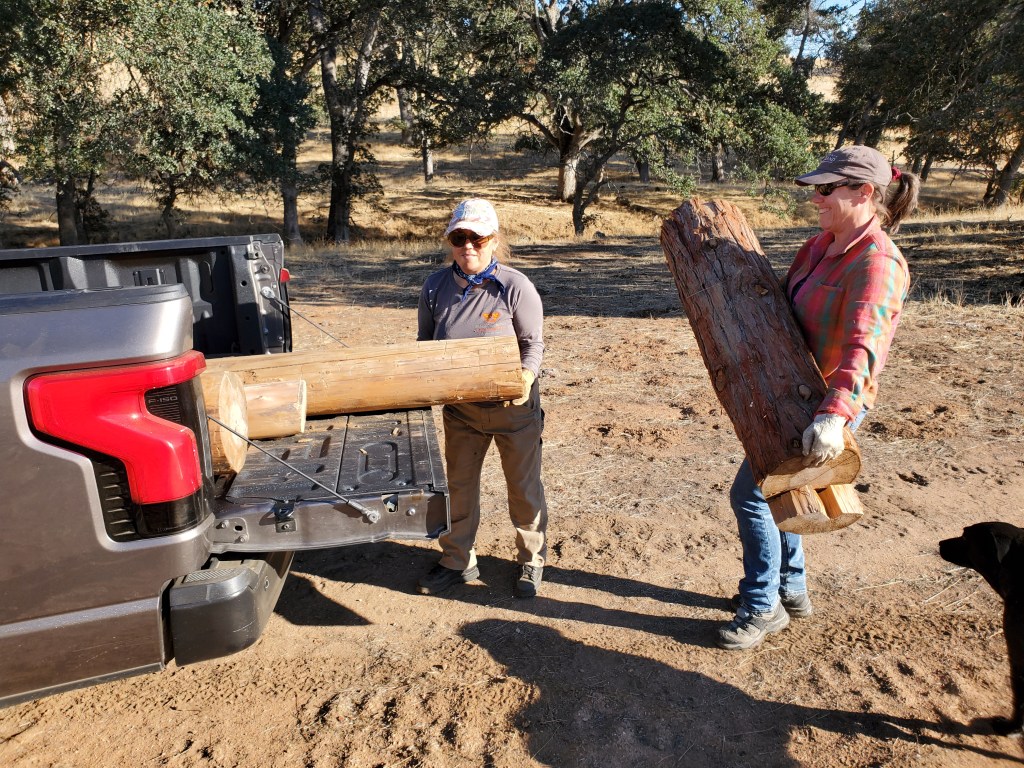
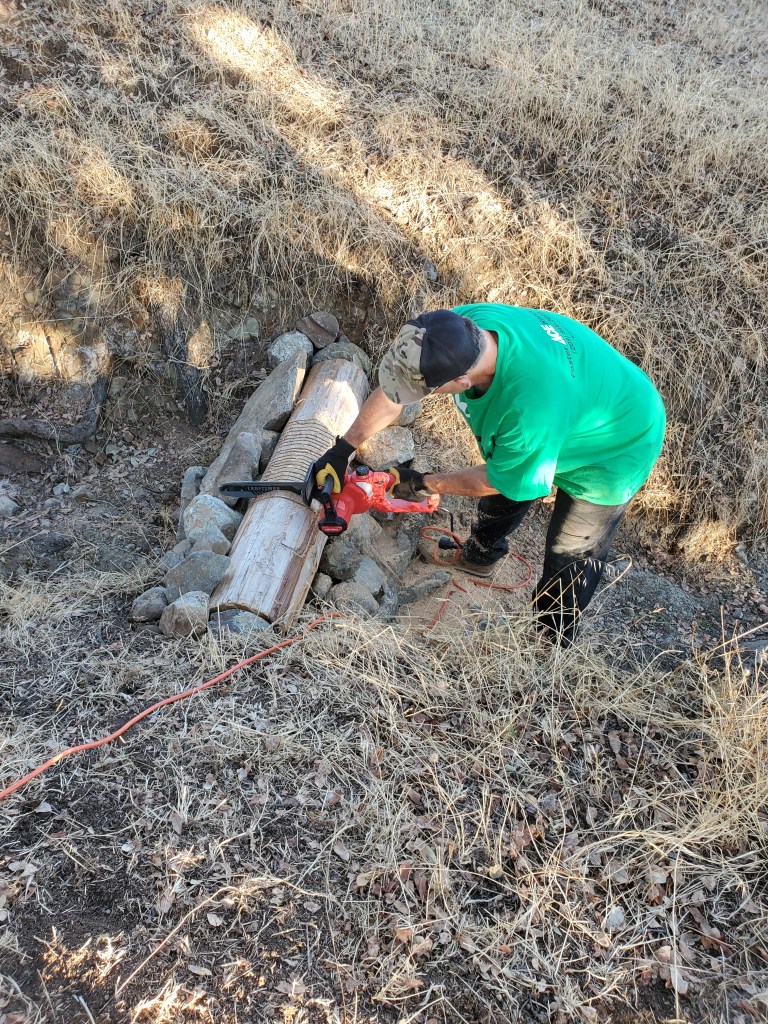
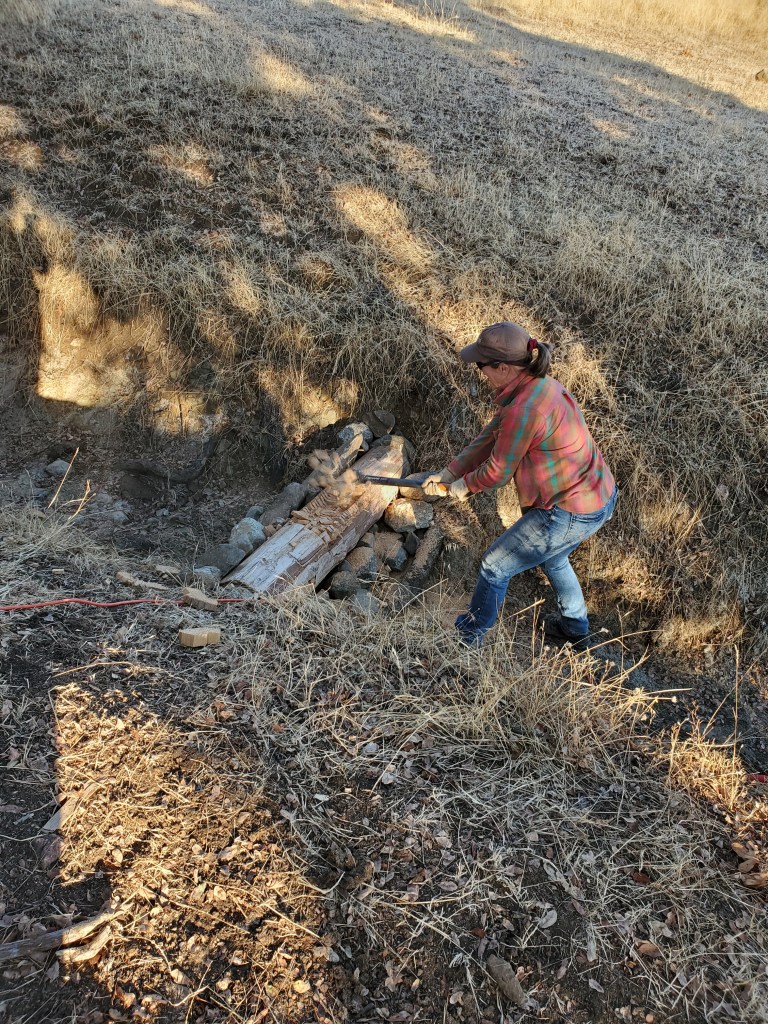
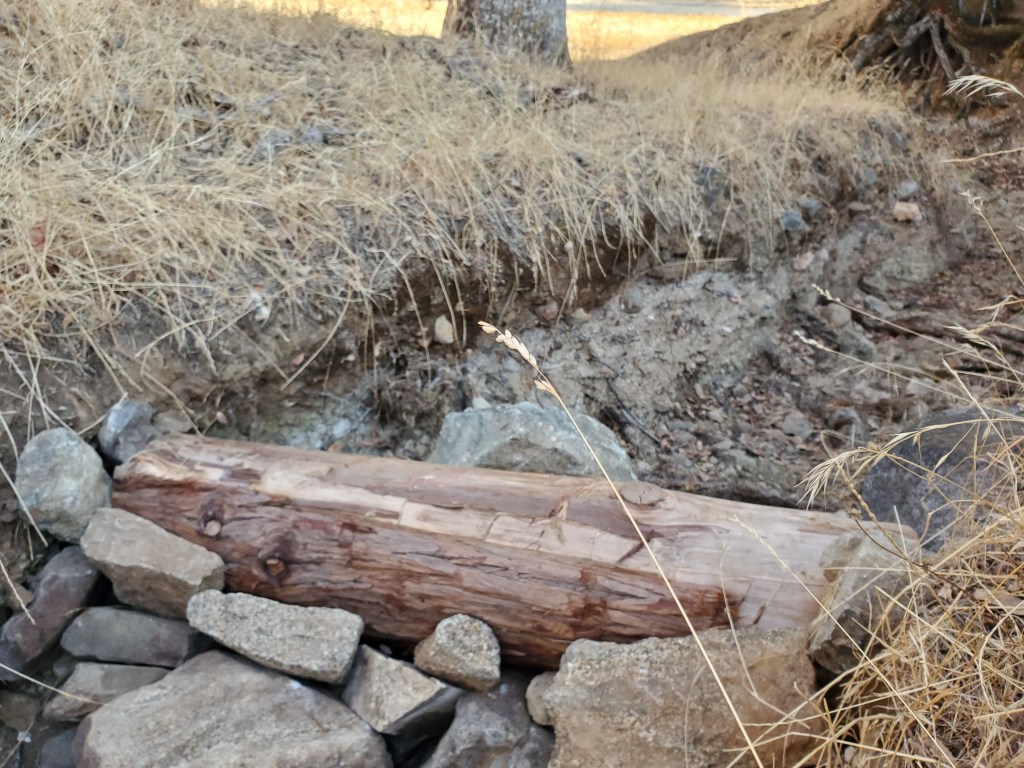
We have used the cooler weather to build and shore up more check dams. We had rock and logs left over from the rock and log drop structures we put in last month. Fortunately, I had a very able-bodied and willing friend visiting last week. Jen is a total country girl who lives in a city. She has worked on a variety of natural resources projects including riparian restorations. Lucky me! Jen was able to provide additional guidance on the much more informal installation of the latest check dams. They are my hurried, poor girl’s version of the real thing, but they will work to slow water run-off. Don’t be scared to visit; I don’t put all my friends to work here. Jen was super excited about slinging a pick ax and using the chainsaw. My kind of woman!

While in this section of the ranch, I also checked on the Spring Creek. I opened the gate after a year to the riparian exclusion area to let the cattle graze. The flowers were almost gone, and there was plenty of feed to distract the cows from the oak seedlings. The cockle burrs and thistle were high, grass abounded, and the creek filled with water plants. After just a week with the gate open and only a few pairs (cow calve pairs), the area was grazed well with the thistle and cockle burr stands knocked down. The creek was opened up, and water was more exposed. The oak seedlings were all doing well and brush piles still standing. This is range management – timing grazing where it will do good for both cows and the ecosystem.

Working in Reciprocity

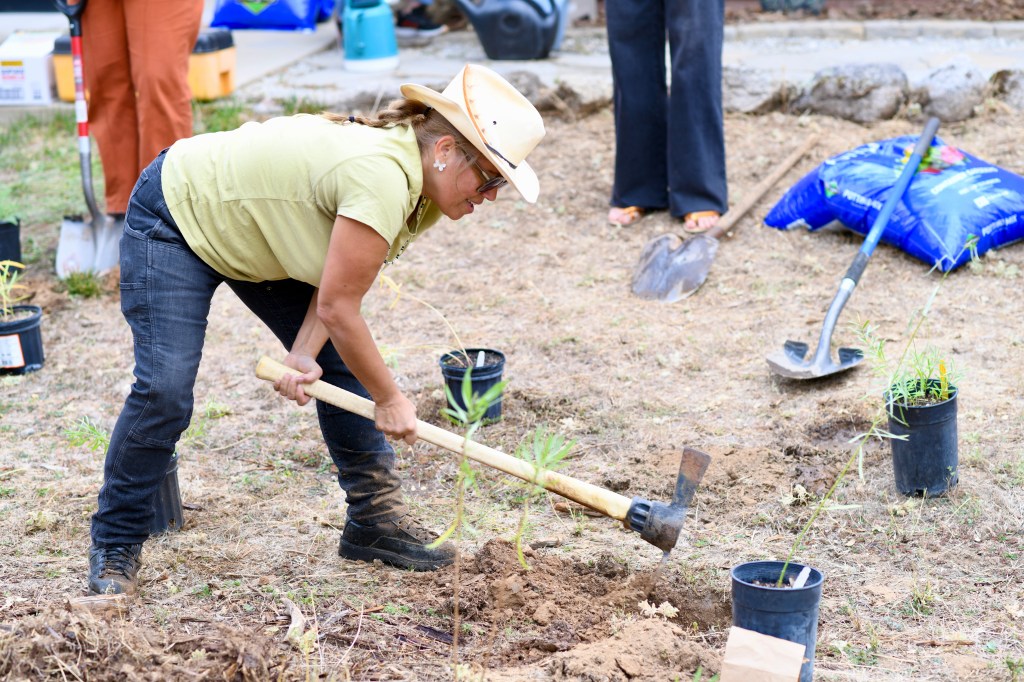
In addition to work on the ranch, I have had other opportunities to expand habitat. The Southern Sierra Miwuk Nation (SSMN) has a wonderful project in partnership with Sierra Foothill Conservancy and the Mariposa Arts Council to restore a large segment of Mariposa Creek in downtown Mariposa. It is a gorgeous section of creek front that had trash and an overgrowth of invasive plants, like Himalayan blackberry. They have cleaned up the property with fire and litter removal to prepare the site for adding back native plants. I appreciate all the work SSMN is doing to be good stewards in keeping with their values, and the opportunity it provides me to give back. This past week was the planting, and I was so excited to participate. Being in community with so many good people and friends is healing. I even got to work with Shana Saucido the Tribe’s new Pollinator Program Coordinator.

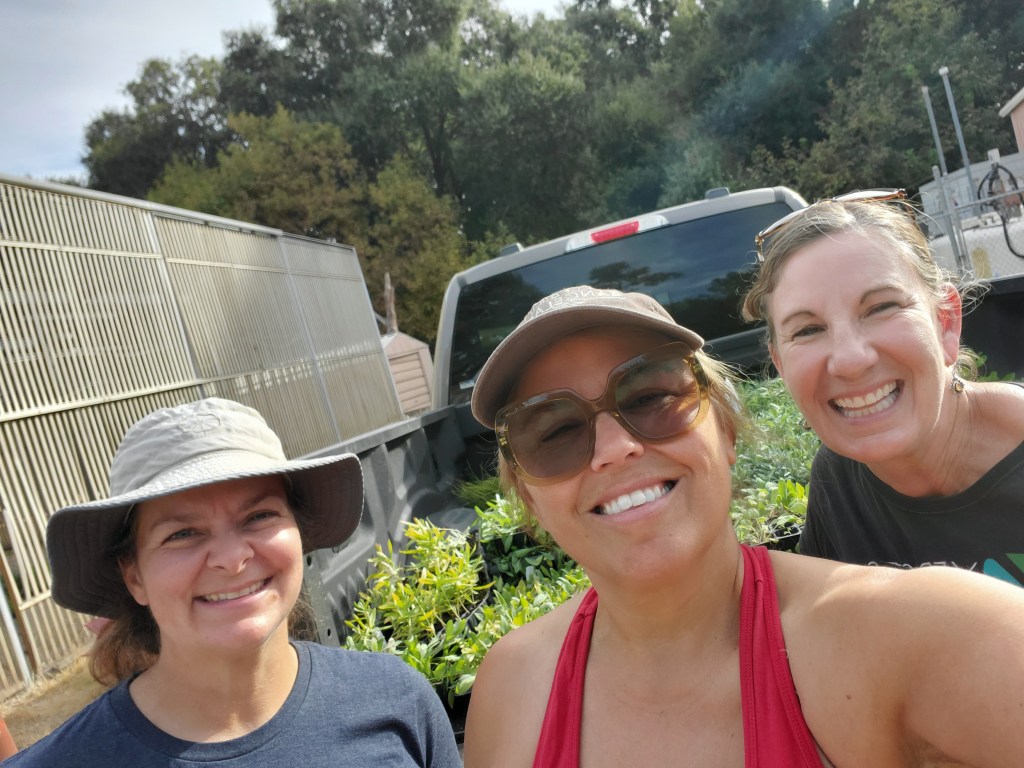
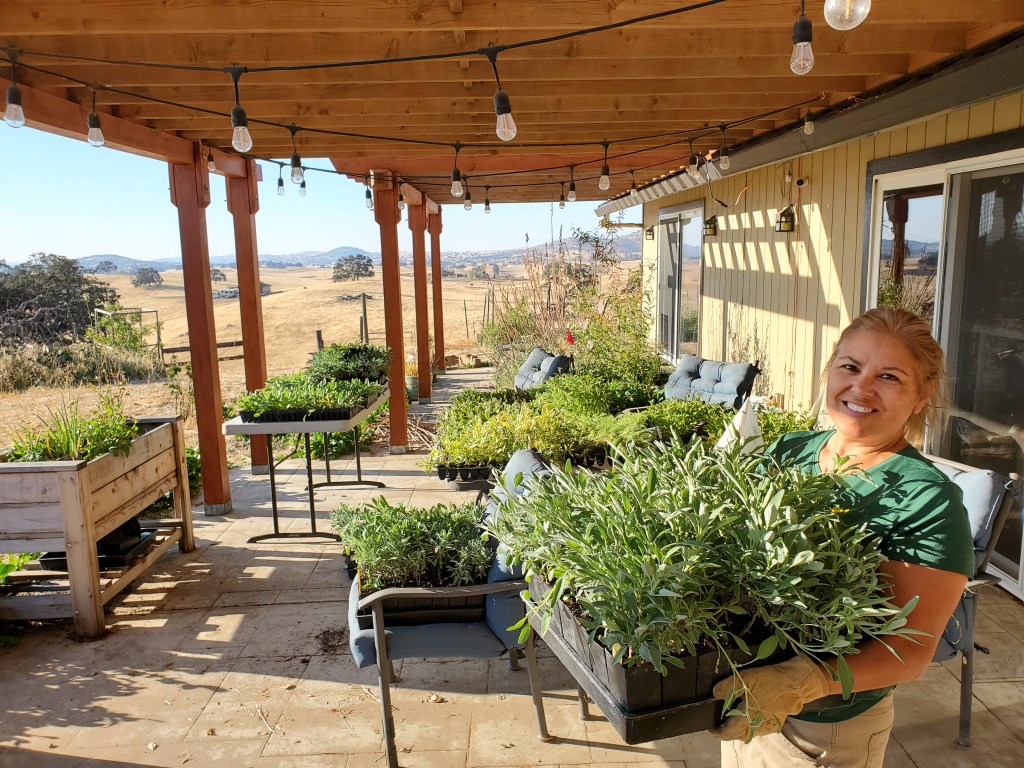
I picked up the SSMN’s Xerces habitat kits in Lockeford the other week. I was able to fit all of them in my truck (Whew!). Now Shana has about 1,000 plants to get into the ground! Thanks to Andrew Gliken of Raw Roots Farms for picking up all the hedge row kits the day before. All of it would not have fit without his help!
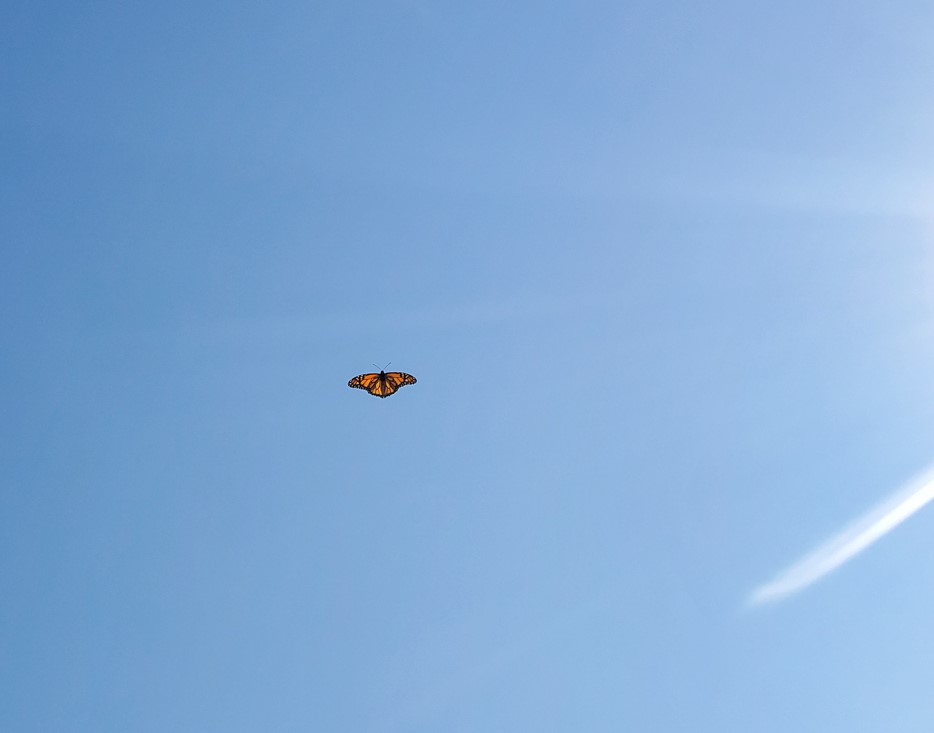
I also had the honor of being asked to teach at the Oka Uuchum – Ancestral Teachings gathering on native plants and pollinators. I partnered with Deedee Soto from Xerces and Kristie Martin, one of the previous Pollinator Program Coordinators, to provide an hour and a half walk, learn and plant circle. We had one of the largest turnouts of the gathering, and, in reciprocity with the land that was hosting us, we planted a pollinator garden. As I began my portion of the talk, a monarch flew through the crowd. I am not making this up. I almost began to cry and quickly had to compose myself. I said “Amand te tevote base’eboli weweria! Chiokoe uttesia (Acknowledging you butterfly relative. Thank you.)”. We do this work for all relatives, especially the children and the wild creatures. The monarch came through to remind us of its beauty, its importance, its magic – and it is worth fighting for. Keep building habitat y’all!

Gratitudes

The last few weeks have been rough. Everything came to a head. Major projects for work, the ranch and volunteering were all due around the same time, plus life changes in family situations with a cousin, a sister, a parent. On top of all of this, my dear friend Pando passed away. I had been visiting her in her care home since February. I know she was not happy. Almost overnight, she went from alert to dying. It took her almost 4 days to “get her wings” as she would say. As we all know, death is part of the bargain in life. Still, it leaves a hole and moves you to contemplate your own life. What I realized is how happy I am. It is the joy of digging in the dirt, helping the planet in some small way, meeting people with the same love, living in the Sierras, having work with clear and direct purpose, being in love with the person I live with, having people who love me, having animals to care for, and working with people who value my contributions. The media tries to sell you despair, envy, greed, copious consumption; don’t buy it. We each have choices, so choose to make a difference in some small way. Tell someone you love them. Hold hands. Say “yes” to that friend or family member you’ve been rescheduling. Rescue and care for an animal. Plant milkweed and watch it grow.

Midwife to Monarchs

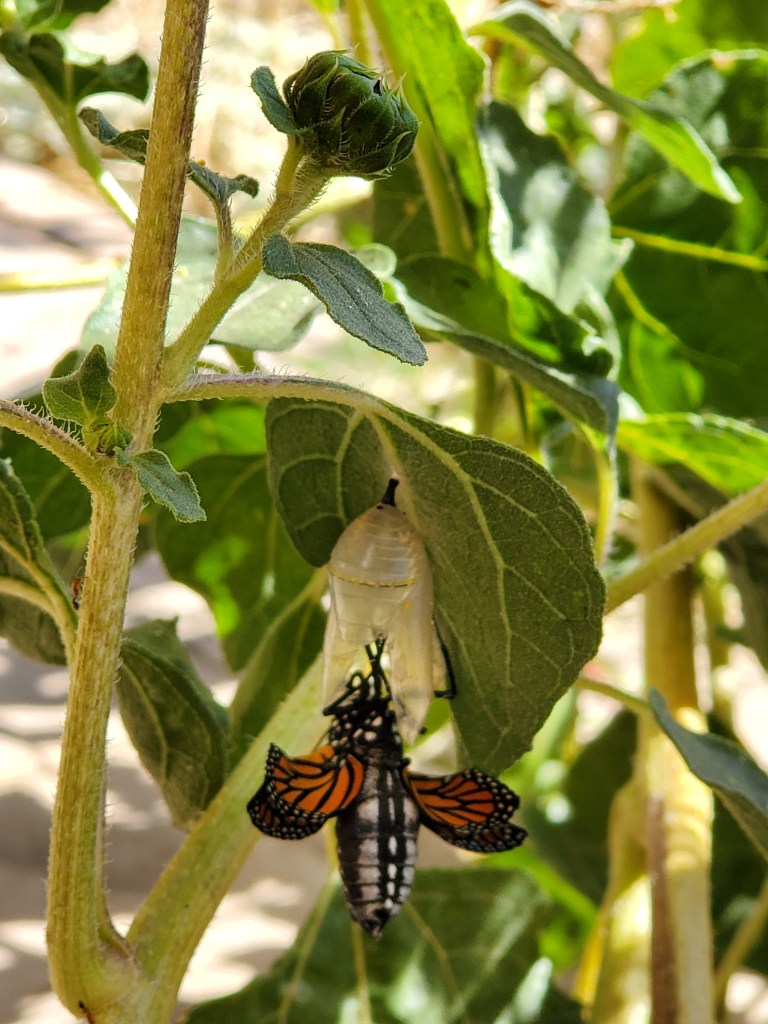
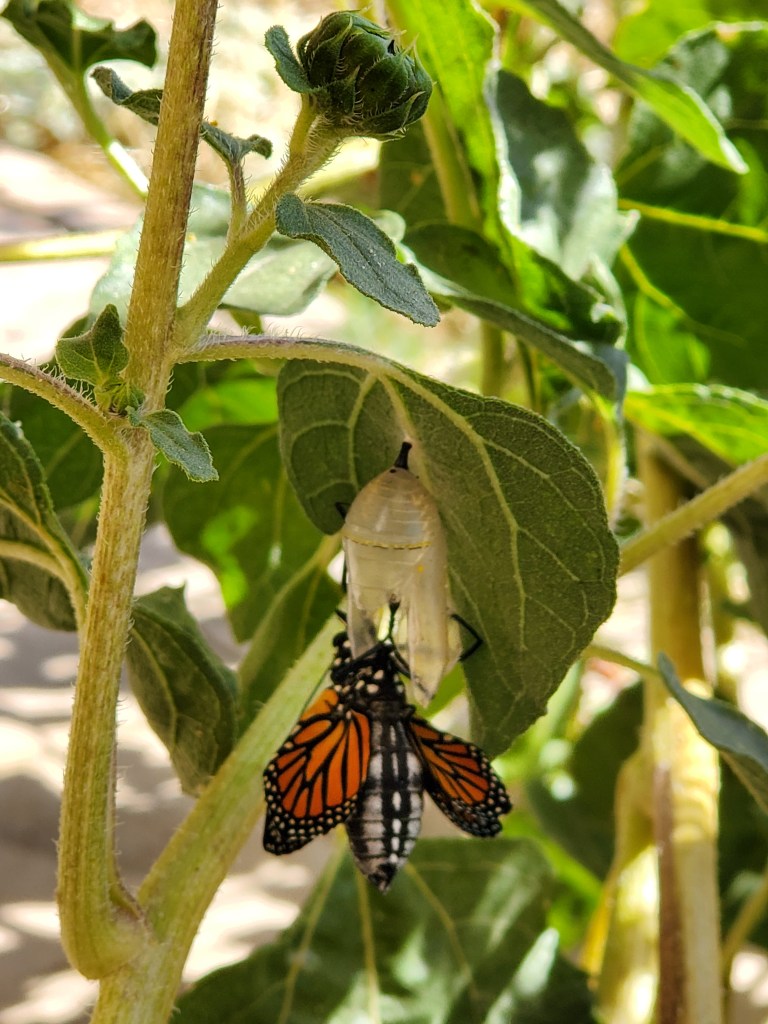
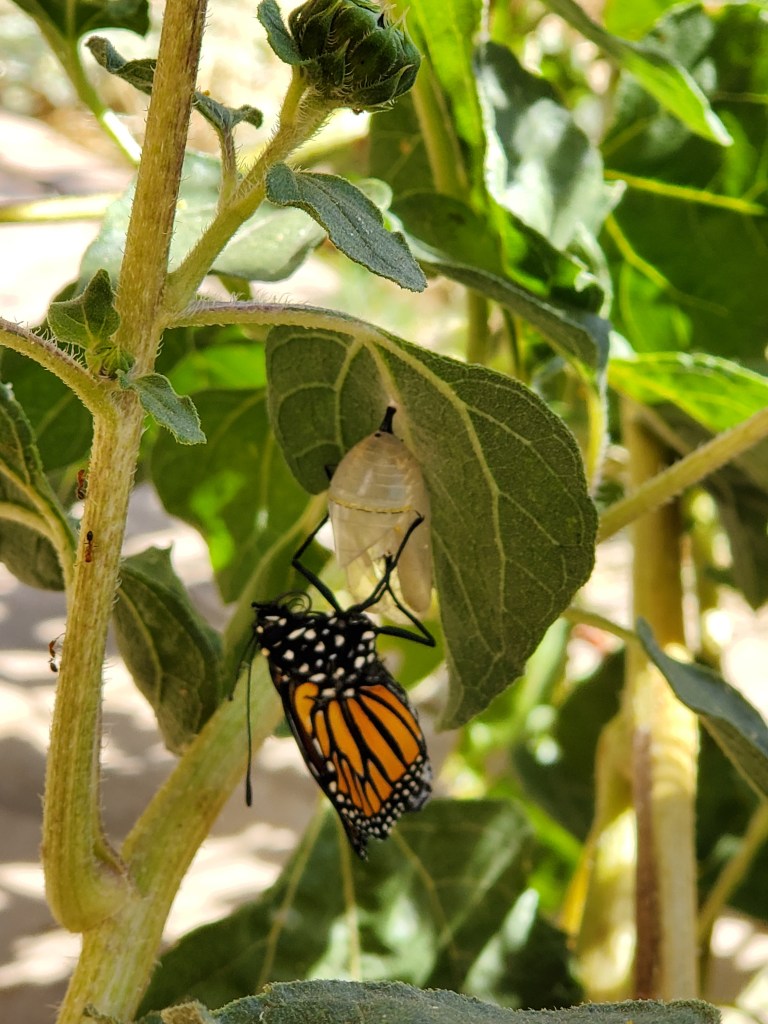
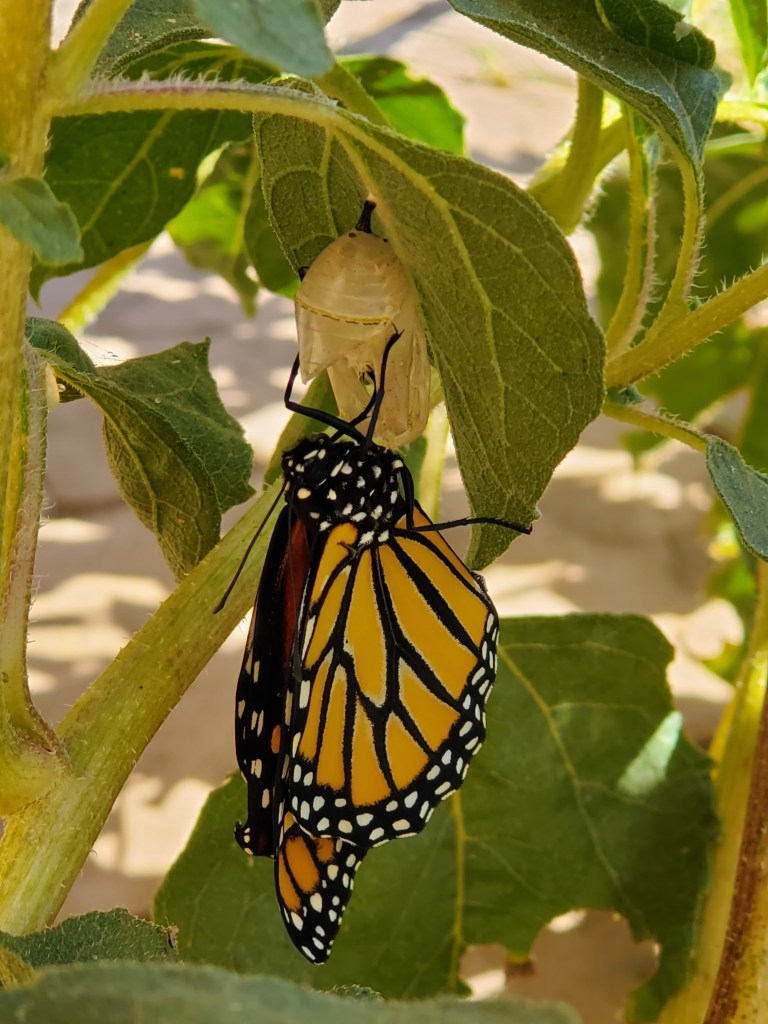
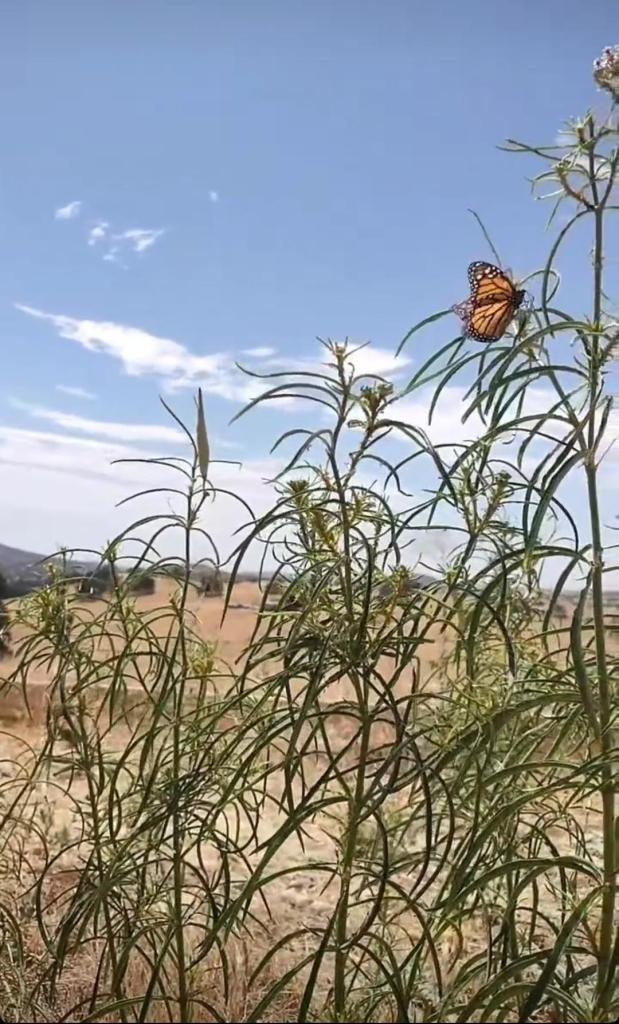
The last of the monarchs left yesterday. They are born, dry-off, test their wings and then fly away. Green to black to orange, black and white – there is now no color save yellow – yellow grass, yellow tarweed, yellow sunflowers, yellow creek flowers. Yellow is the Fall, a time of maturity, a time of harvest, filling us like a cornucopia. I harvest joy, not crops, from knowing that something as remarkable as a butterfly can exist. My project has matured attracting monarchs at their journey beginning and ending. I have witnessed flights, egg laying, caterpillars large and small, silk spinning, “J” making, chrysalises and births to flights again. I am full. Fall has filled me.

In my life, I never thought I would be a midwife to monarchs. In truth, they don’t need me. They’ve been doing their thing and surviving well without me. Unimpressed with that knowledge, I monitored them daily to ensure their chrysalises were there, their foundations were intact, and that everything was a-ok. When they were born, I watched them even closer to make sure they were able to gain a strong footing.

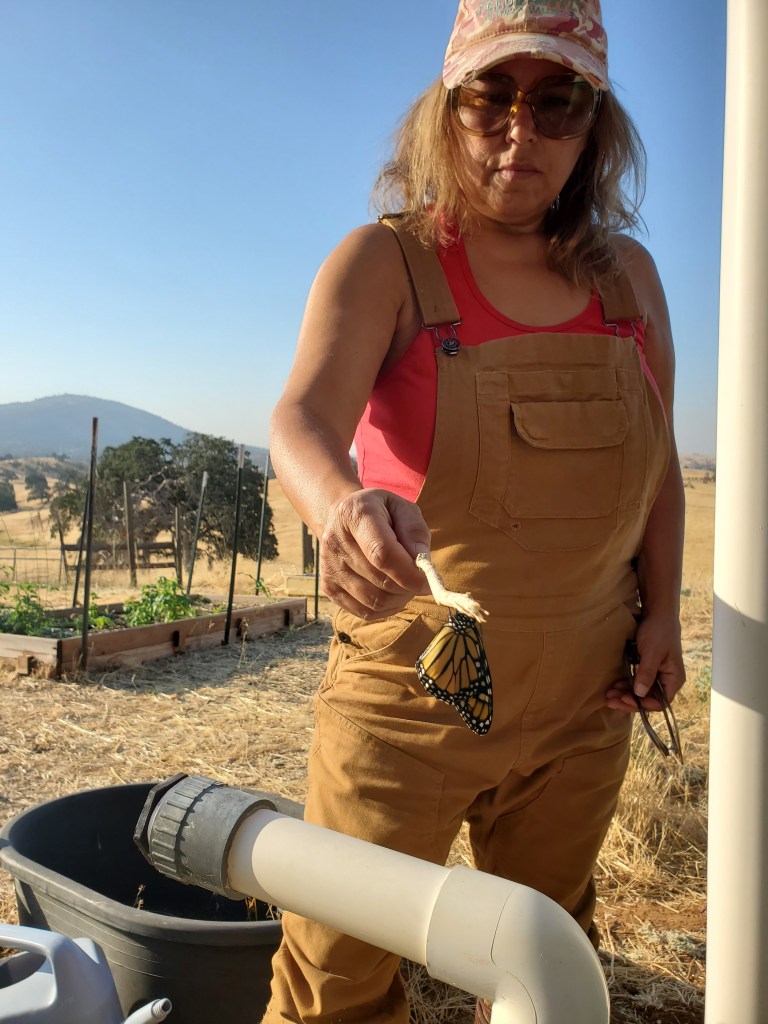
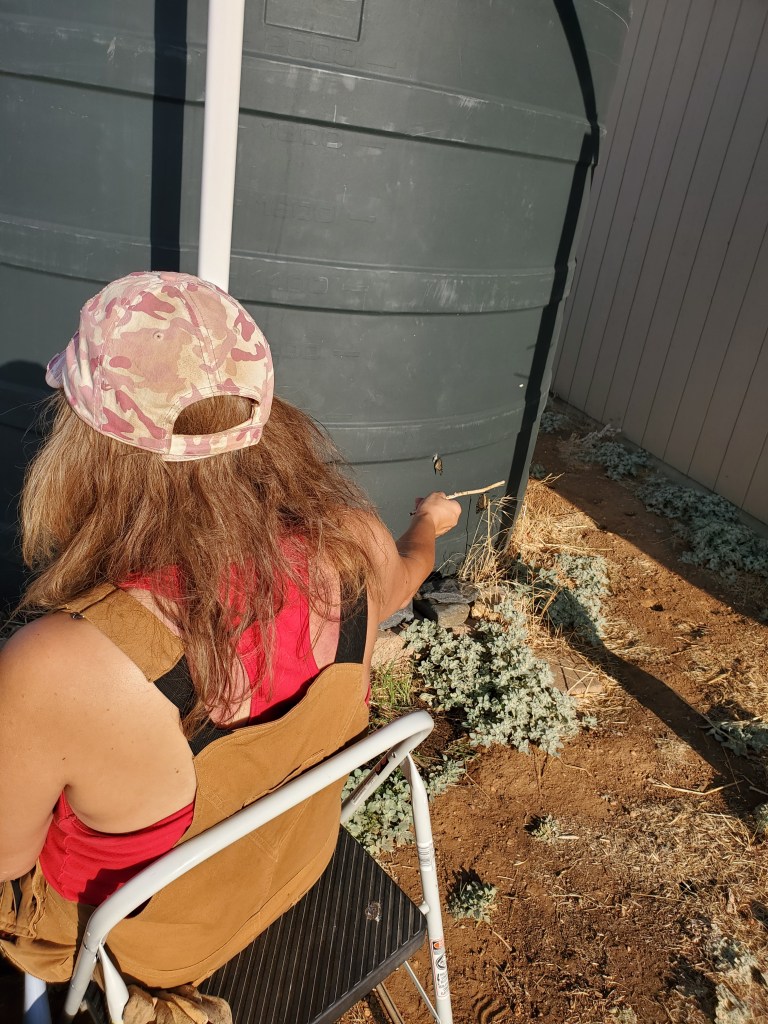
Glad I was there; monarch #2, the closest chrysalis to the ground, did not have as much space between the tank to which its chrysalis was attached and the retaining wall adjacent to the tank. She rolled out of her chrysalis, then latched to it, then a move to more solid footing, and she fell. I watched her thinking she would find footing, but the space was small and the dried grass too short and flimsy. There she wiggled on her side trying to gain purchase on something, legs grasping at the air hoping to find something to cling to. Quickly, I broke off a stem from a dead sunflower and carefully held it to her, close in her vicinity, but not near her delicate, still wet wings. I did not want to chance an error. She grabbed on, and I hoisted her carefully in the air allowing her to hang her wings toward the ground so they could unfurl, expand and become strong for her impending journey. I was captivated. After my brain was released from the haze of wonder at this magnificent creature only inches from me, I realized that I now “owned” this lifeline I threw for the 3 to 4 hours it takes for the wings to dry. Didn’t think of that when I jumped to the rescue. I stood there, holding this stick with a glistening jewel at its end, contemplating what I could do to ensure her safety, and my relief. I tried to encourage her to step onto the larger dead stick of the sunflower remains. She wouldn’t have it. Fortunately, there was a soil-filled container with moist dirt that made it easy, yet sturdy, for me to plant the stick in, slowly, carefully. It worked. We both were secure.

In total, there were 11 confirmed chrysalises and caterpillars, with some other surprise monarchs I found drying off. If I add in the surprise monarchs, it brings the total to 14.

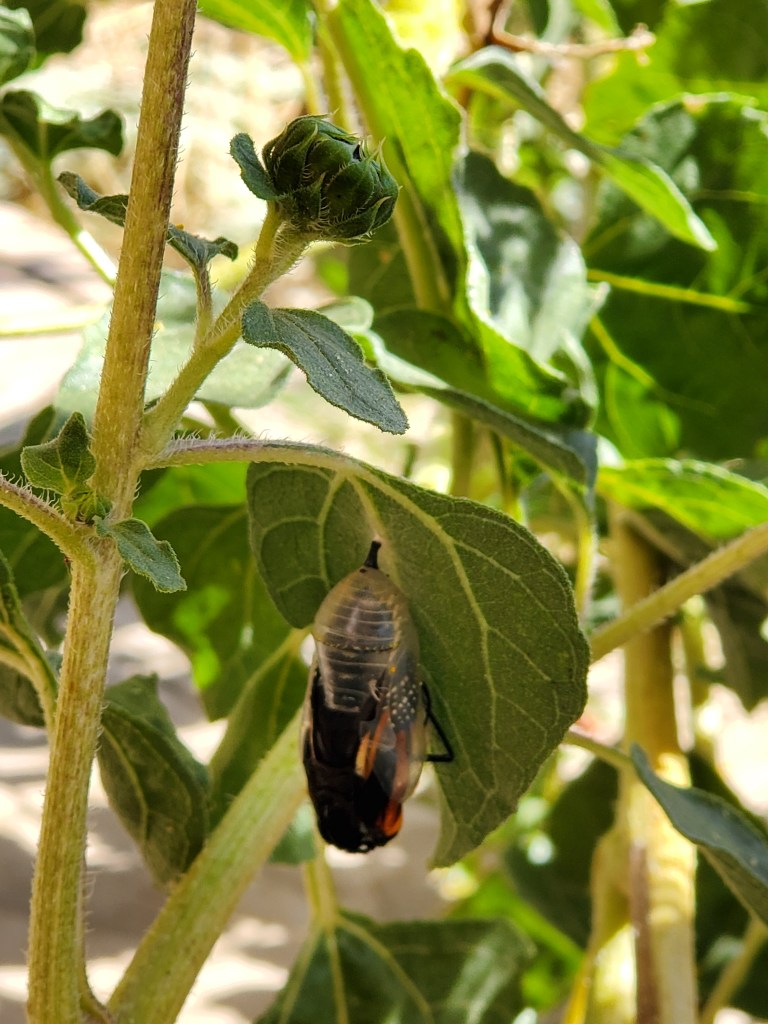
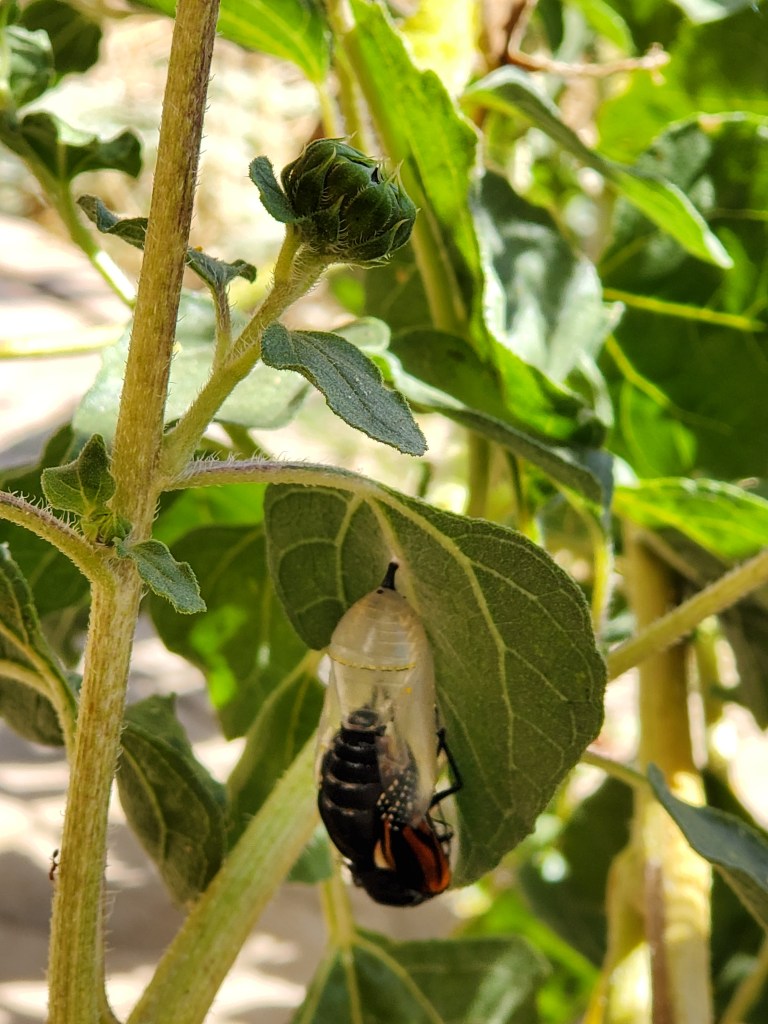
I tried to watch every birth, learning new things every time, like seeing how the chrysalis elongates two days before birth, the black color the day of birth, and the colors visible minutes before birth. I became a pro, yelling to whomever was around, usually David who was long since over all of this, “It’s going to blow!” David responding, “Cool,” and going about his business – if saying anything at all.

It never gets old watching the birth of a butterfly. It is a miracle every time. My friend Francisca was over one day when a chrysalis was about to open. She watched, excited like me, camera in hand, at the miracle before us. It is so nice to share this with people who care. The monarchs are great ambassadors.

At the end of the day yesterday, I watched as my final charge alighted. She circled around me well above my head, flitted here, flitted there, then flew off to the south where eventually she will make a turn toward the coast. I worry less about these babies; there is considerable habitat along her route – thanks to a clarion call for “all hands on deck” in planting milkweed and nectar plants from many organizations and individuals. It is your work, your compassion, your money donation turned to milkweed that will keep her path safer than it would have been only two years ago. The route is not without danger – cars, dragonflies, birds, pesticides, condos and golf courses instead of habitat – but there is much more habitat than there was. Thank you reader. Truly, thank you.

Oh good friend, fly high and safe. You will make it to the coast, and I will see you next year in this milkweed patch. Lay your eggs. As you transition your knowledge to the next generation of where you were born and where the good flowers are, feel secure that I will be here, taking care of your children then.

A Beautiful Sculpture in the Garden

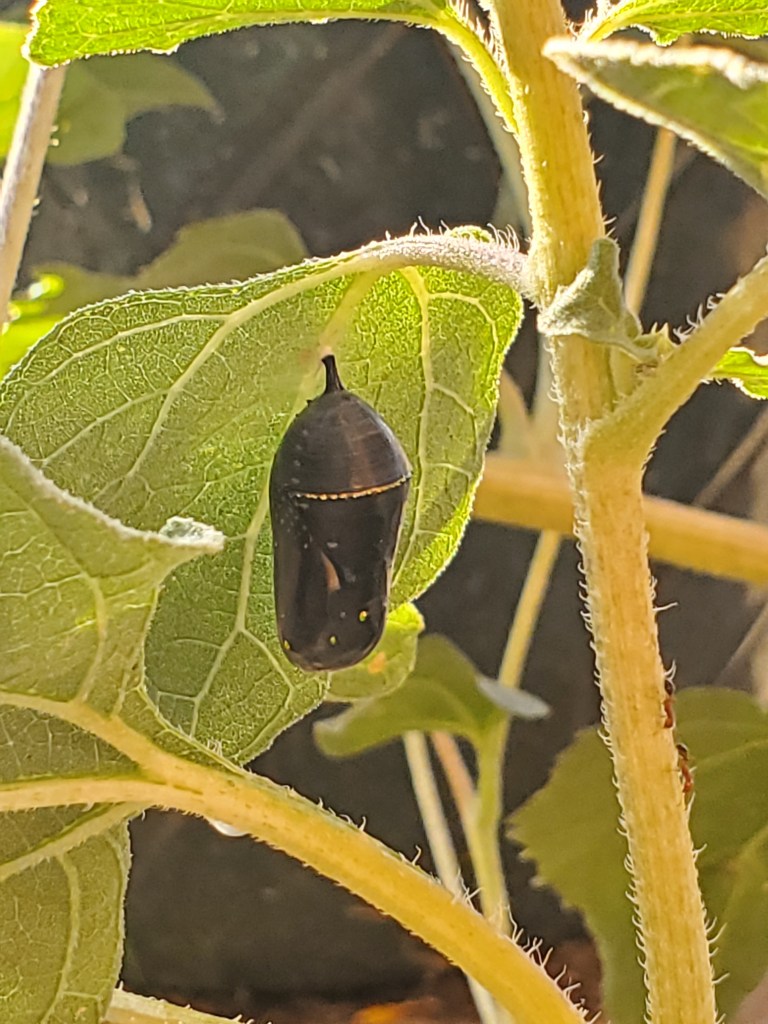
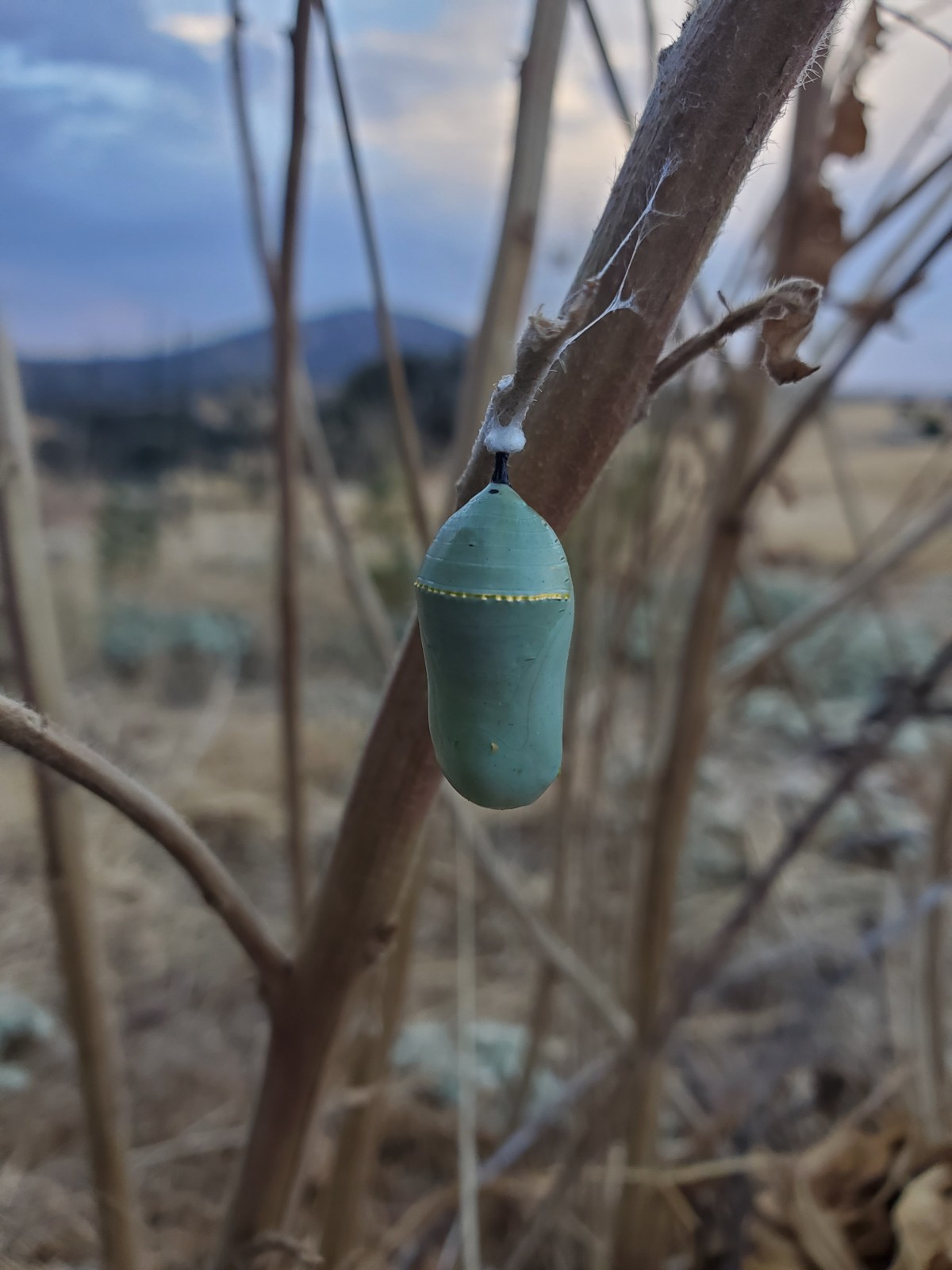
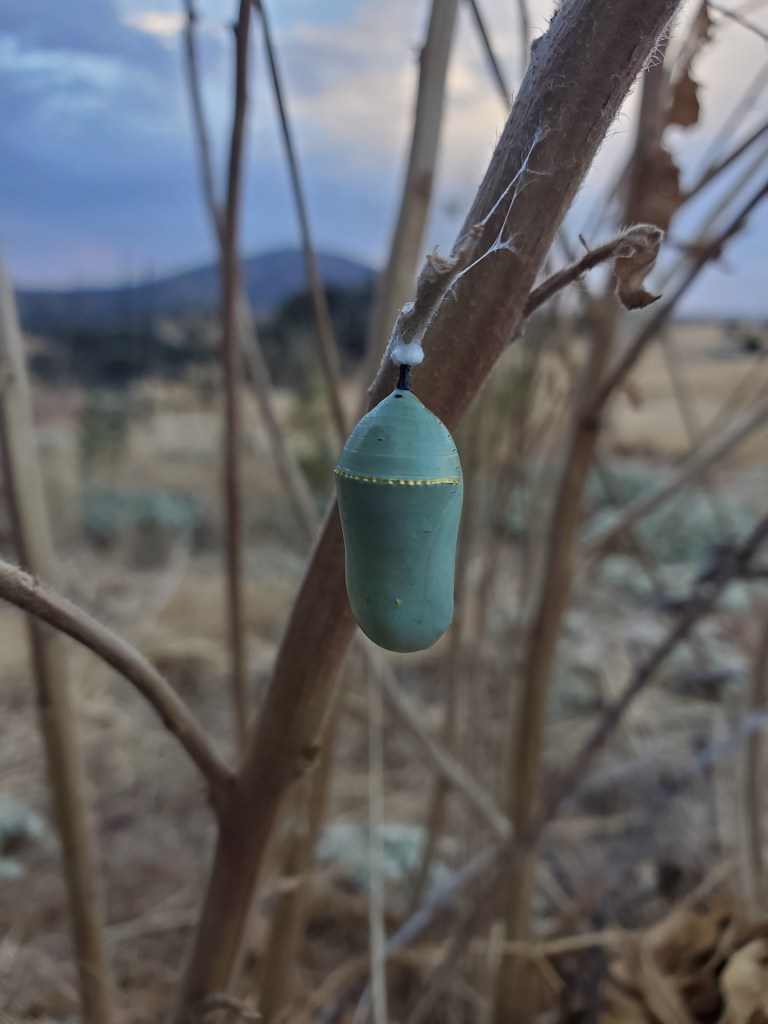
This is a very short post to share what I found in the garden. For those who don’t know what they are looking at, this is a monarch chrysalis. The identifying features are:

1. the jade like color, which is the amorphous goo of the caterpillar body liquefying and turning into a butterfly. The chrysalis is actually clear in color.

2. the yellow, pearl-like dots near the top, and

3. the large size. The monarch is among the largest butterflies in North America.

It is attached to the branch of this primrose by a silk web that the caterpillar creates specific for this purpose.

How did I miss signs and sights of caterpillars? I have been looking at the milkweed almost daily for signs of eating since the adult monarch laid her eggs. I have seen nothing. Evidently, someone survived. The monarchs are so mysterious, so difficult to find. That is a good thing though. The ability to exist hidden gives them even more tools for survival.

I am so ecstatic. The monarchs are here. They are surviving here. The habitat Maala Bwia (Mother Earth) brought back to this land, with the help of me and many, many wonderful people, is working. It is helping provide more food, roosting and nesting options for monarchs as they make their iconic migration across the west. Chiokoe uttesia te hahamevu in arapo bwe’u baise’eboli. Thank you big butterfly for coming to my home. Se enchi nake. I appreciate you.

Monarchs Stop By and Re-Emergence

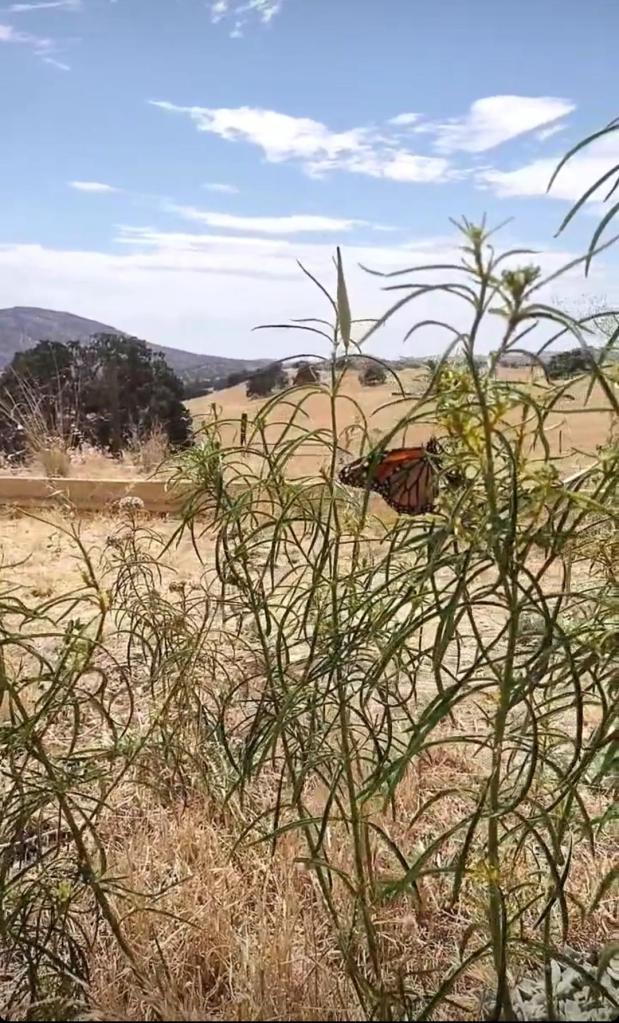
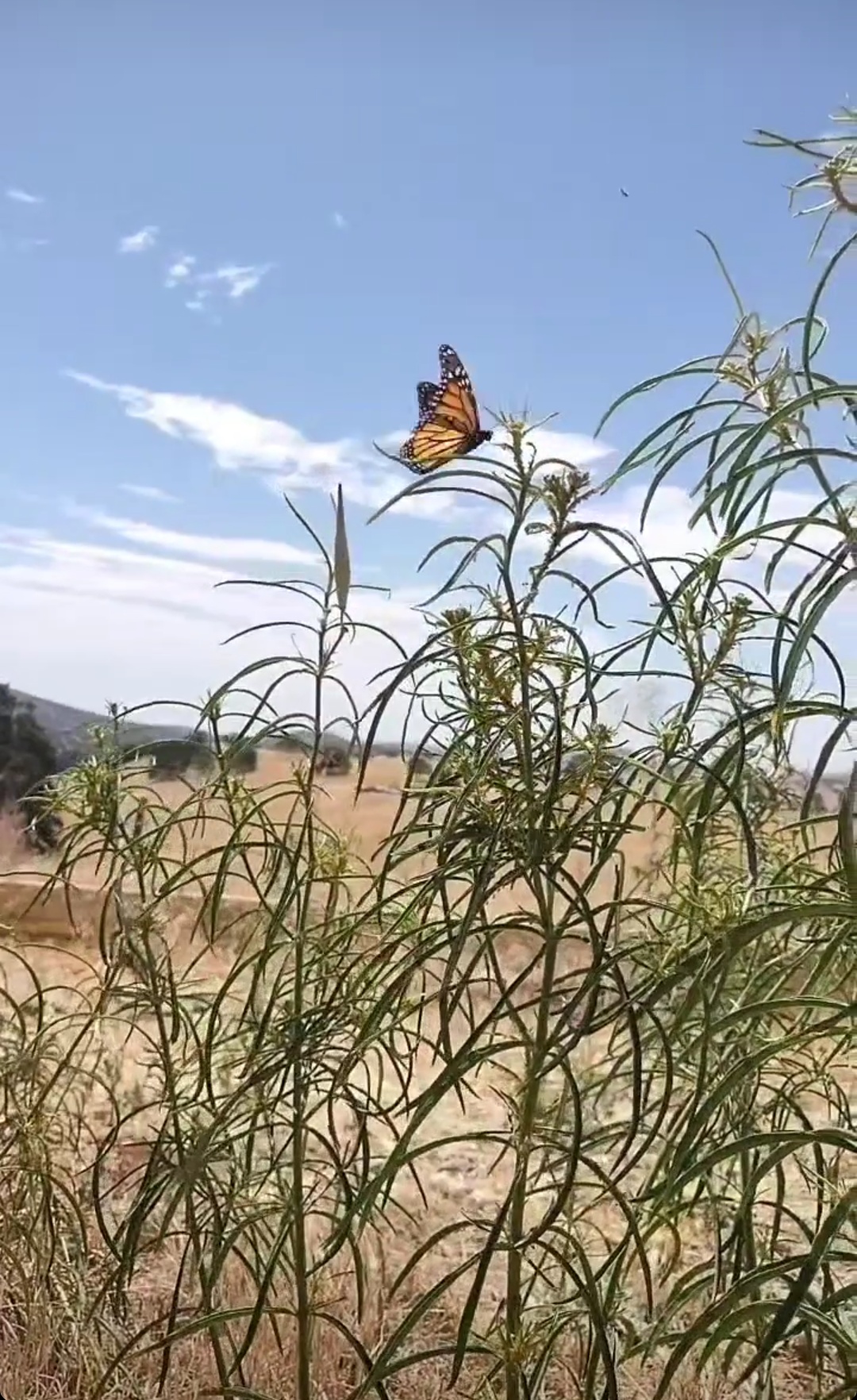
I had wondered if monarchs would just pass me by this year because there was so little left for them. In fact, I was sure they would. Well, I was wrong (add that to the very long list!). On Friday, August 11, a mama monarch came by and decided to lay her eggs on the only intact milkweed remaining on the hilltop habitat. As you may recall from my previous post, the tarantula hawks had been nectaring on this one large narrowleaf milkweed. This, essentially, saved it from being eaten to a stick by the grasshoppers.

The monarch stayed around for about a week and laid more eggs on a couple other broadleaf (showy) milkweeds that had reemerged and were small. From what I learned, monarchs typically choose more mature plants for their eggs. In this case, she had limited options given the grasshopper incursion and chose smaller plants as well.

I wish I could say that I had a massive number of caterpillars, but I don’t. I am not sure what happened with the eggs. We got a very small impact from tropical storm Hilary, which dumped just under a quarter inch of rain in a short time. We’ve had swarms of dragonflies, a natural predator of butterflies. Ultimately, I don’t know why there are not multiple caterpillars. I look at the plants for evidence of eating and pooing, but daily, I see none.

I always appreciate people sharing their monarch sightings with me. There have been many more on their way back to the coast than there were heading northeast. There were 16 monarchs sighted in Catheys Valley off Highway 140. There were a couple more in the Mormon Bar area of Mariposa, one off Ben Hur Road and another near Midpines. I heard of several from Nellie in Yosemite this year as well. I always ask people to upload their sightings to westernmonarchmilkweedmapper.org. When I look at the map, I don’t see everyone’s entries, but it is possible they marked them to be private. When I find and upload california milkweed sightings, I mark those as private to prevent poaching. Believe it or not, some jerk took a California milkweed several years ago from a county trail area. Since that incident was reported by a friend, I have been very cautious.

Plants Come Back

Pacific aster re-emerges after grasshopper onslaught

Most people do not think of the end of summer as a time of plant growth. Here, at the ranch, regrowth is all around. While it still looks like a fire went through, with all the stripped, empty sticks that were once full, bushy plants, small sprouts of green along a branch or at the base are becoming visible. Close to 80% of the habitat has some regrowth. I am still waiting to see a spot of green in several other areas, but need to be prepared that those plants may not have been mature enough to withstand the grasshopper binge eating.

For now, the hoppers are mostly gone from the top of the hill where the largest habitat installations are. They continue to be profuse in patches of ground downhill on the west end of the ranch.

Many of the seedlings I raised have grown large now. I had to re-pot them as I waited for the hopper incursion to abate. Now, I feel comfortable planting them in the garden bed. Still, I am keeping my fingers crossed that the hoppers will not recirculate back here.

New Habitat Endures

Playing in the creek has paid off. I didn’t think the small rock check dam would be that helpful, but it has promoted sediment and moisture retention. There are spots further upstream that may have retained water given the significant rain (versus my check dam). What is exciting is that the span of these areas have connected and have created a lovely ecosystem with wildflowers that stayed through the summer, puddles, grasses, and other plants. It has allowed for a cool area with ongoing nutrients for a variety of life. I saw large, gorgeous dragonflies there, with stripped wings and some with stripped bodies and black and white wings. I also came upon a small bevvy of quail living in the roots of trees in the grove at the north end of this area. They undoubtedly use the standing water and consume the bugs this area attracts. It is all really beautiful. I am so proud.

Creatures Make a Home Everywhere

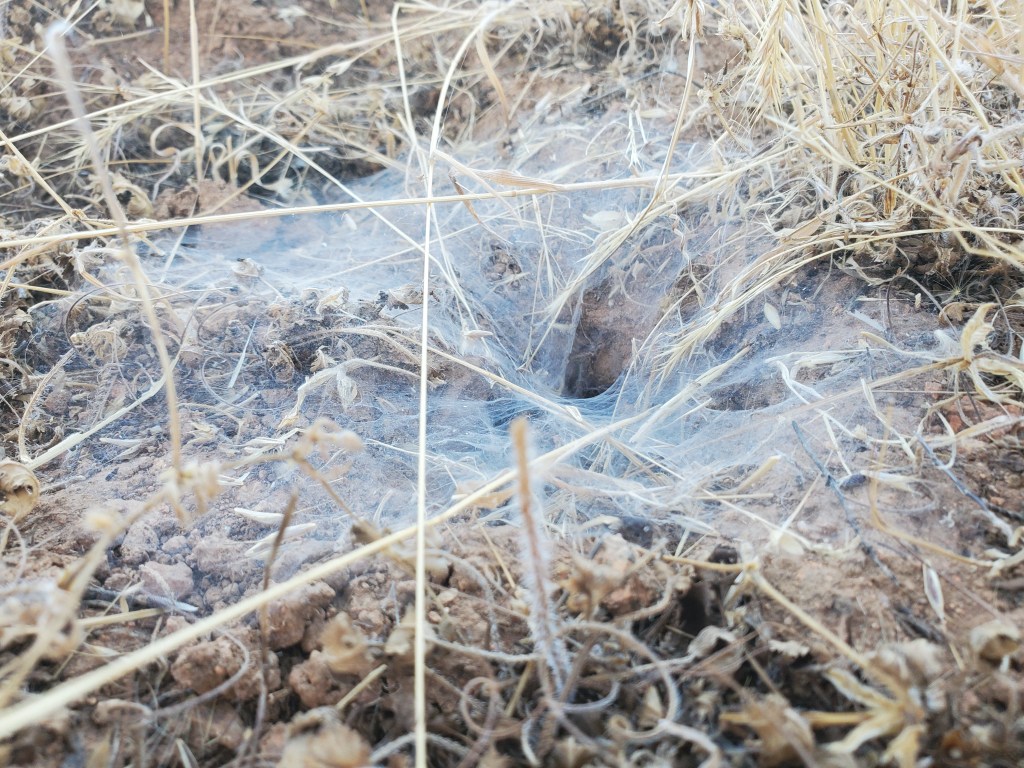
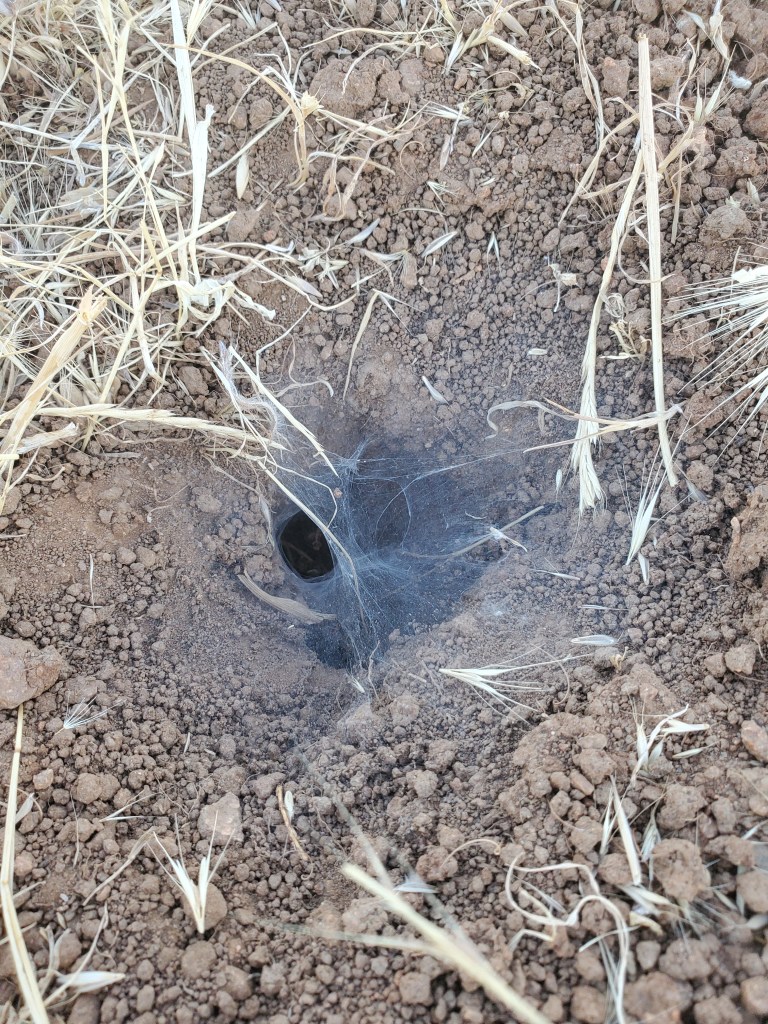
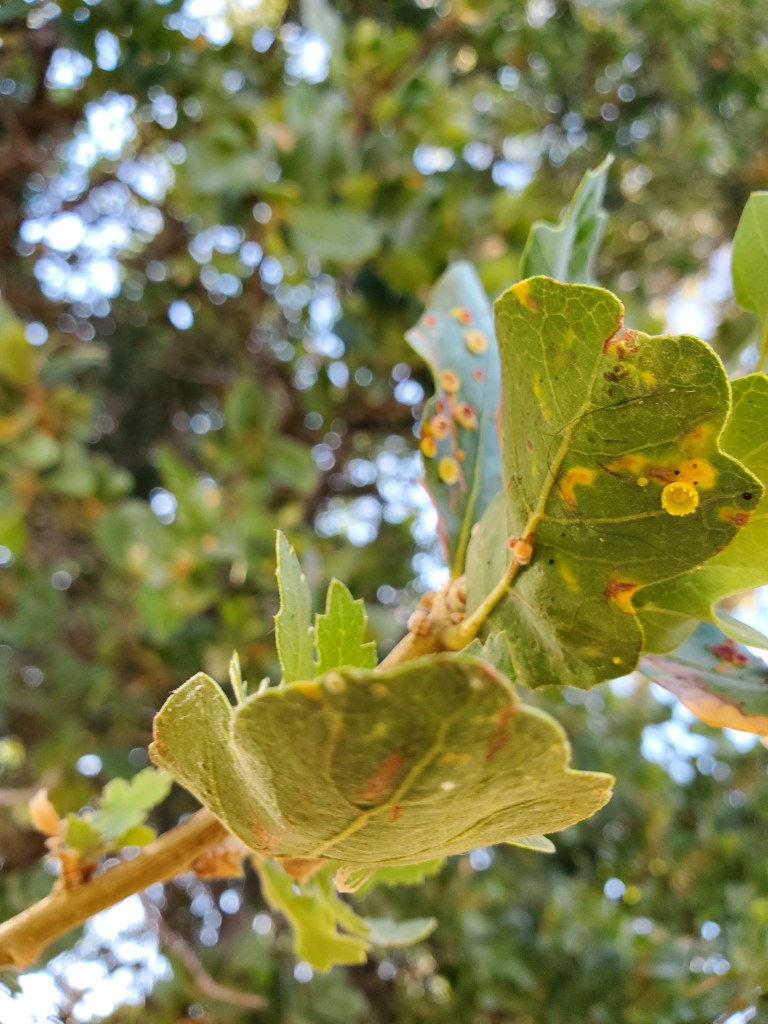
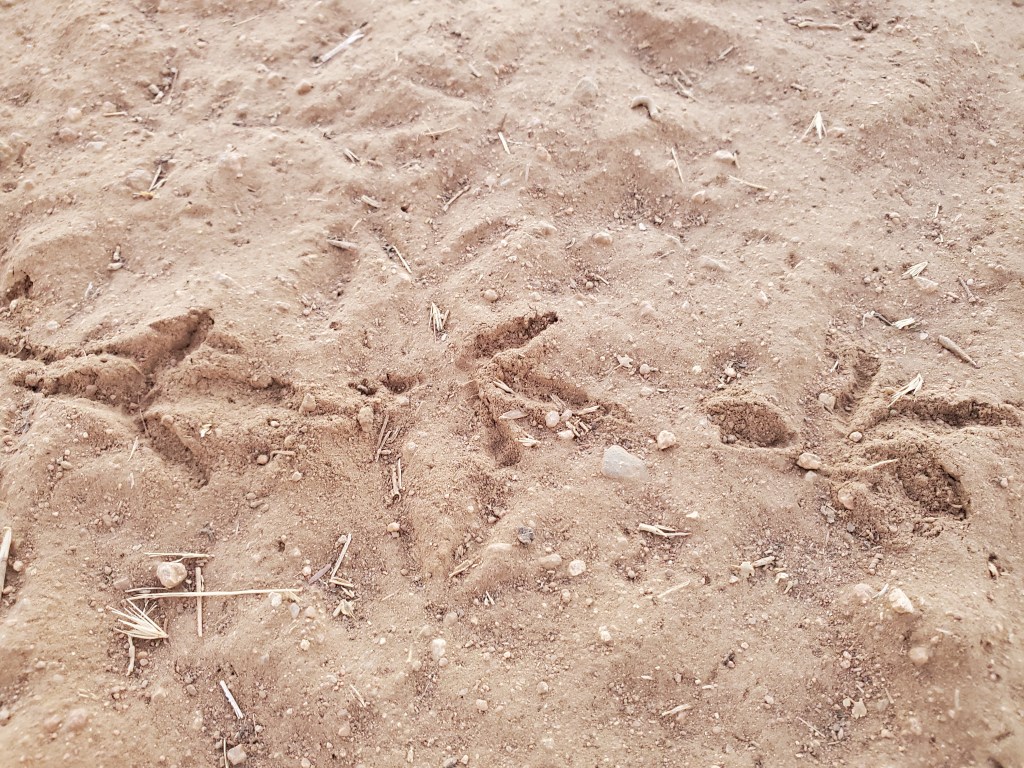
When I used to travel for work, I remember sometimes feeling very alone as I returned to my hotel room. It would cheer me up to see an insect that made it through the cleaning process. A spider handing in a corner or another small bug climbing around a basin would bring me such peace. I know that may sound strange, but to know that there is another life there with you, it is comforting. There is certainly not a lack of life on the ranch. Everywhere you look, there is something making a home, passing through or chattering for turf. Lately, I see a proliferation of gall wasp eggs, seemingly on every oak , webbed holes in the ground, bird tracks, coyote scat. The dragonfly population is large this year. I am seeing swarms of approximately 80+ whipping around the sky above me. It is no wonder I am so comfortable here and make this place my home.

General Monitoring and Planning

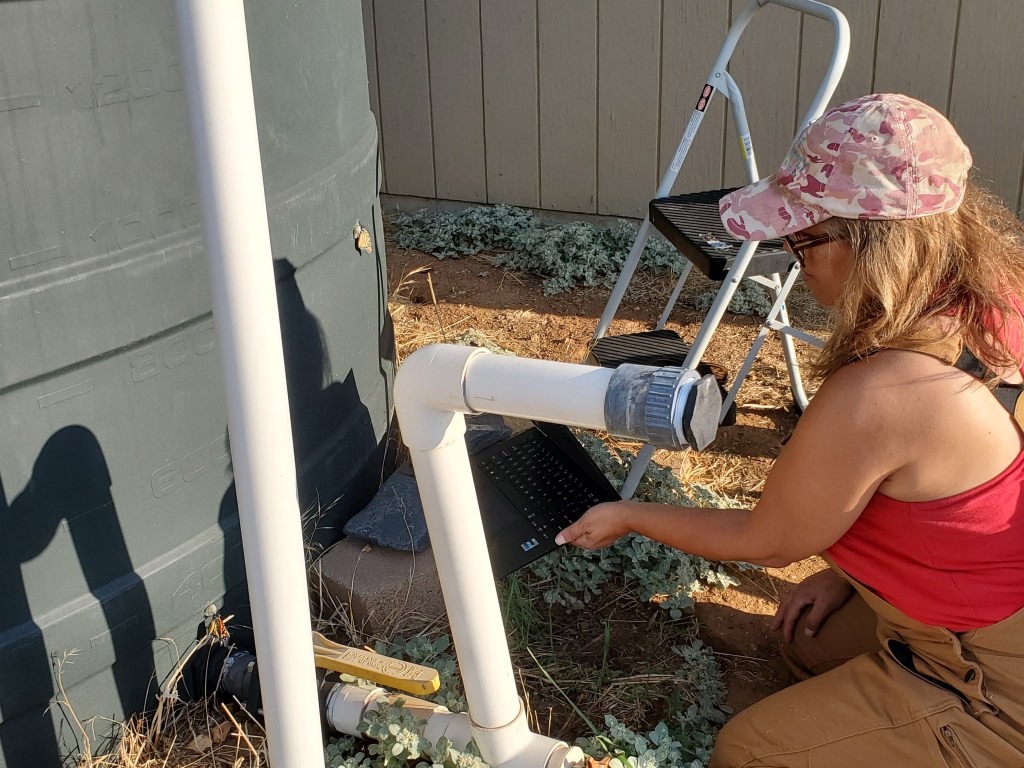
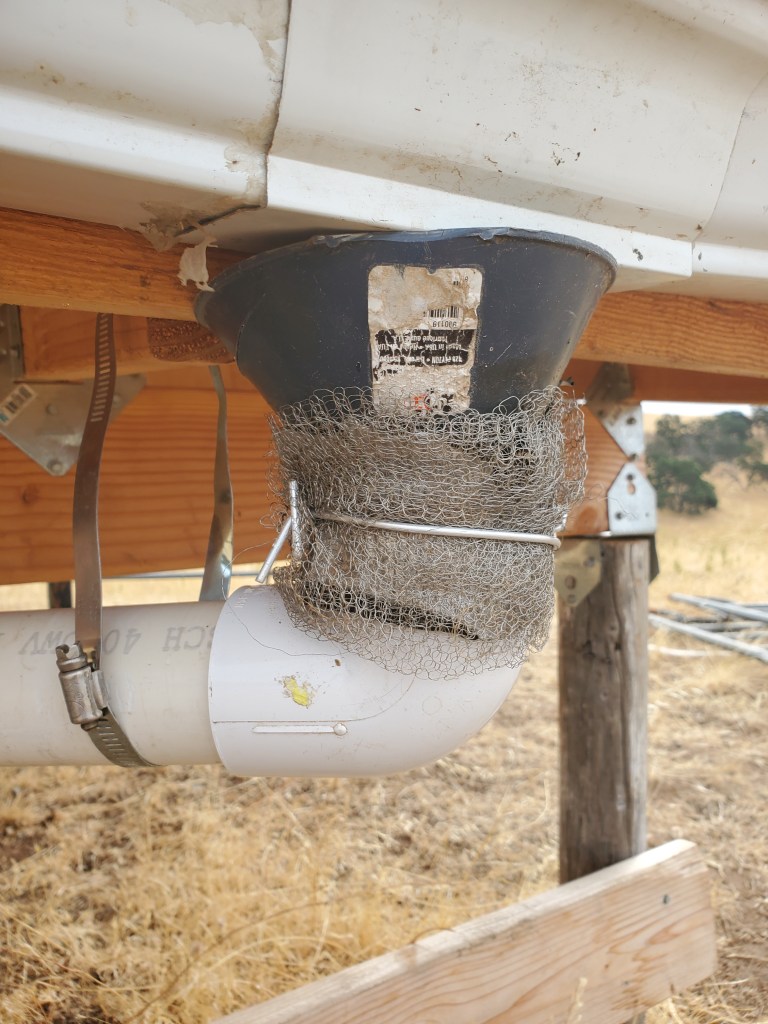
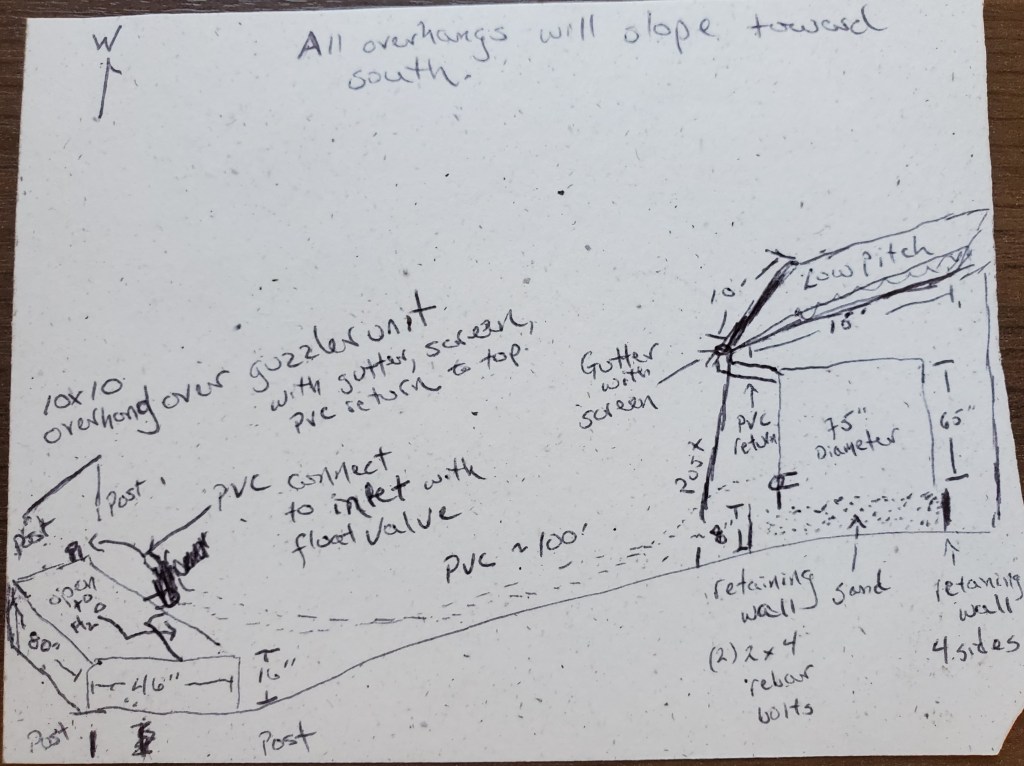
I keep an eye on things, make repairs, maintain planting areas, pick up litter that blows here and all else I need to do to ensure a clean, healthy place for all creatures. I check the wildlife guzzler regularly to make sure there is water available for all. I check the brush piles and add branches to them to keep them full and safe for pile-nesting birds. I look for damage, changes, use. It is one of the fun parts of this work – especially when it is cooler. I still venture out in the heat, but only in the early morning or before dusk. Needs pop up no matter the temperature, and I have a responsibility to this place. The time inside during high heat days give me the opportunity to plan for my next projects. Currently, I am working on a self-watering guzzler. The idea is to capture rain from a structure and gravity feed it into a guzzler. Parts of the ranch are more remote and not easily accessed by vehicle. Bringing water to those locations would be difficult and require more monitoring of water levels, the hauling of water. If I had a system that self-watered and self-regulated, that would save time and decrease the need for me to disturb areas.

Next Items

Up next in September/October/November/December:

  1. cross fencing to protect california milkweed during grazing times
  2. self-watering guzzler build
  3. seeding disturbed areas from rock and log drop structure installation
  4. install two more log drops/check dams
  5. Help Tribe plant Xerces kits
  6. Help three friends convert their lawns/yard into pollinator habitats

Wanderings

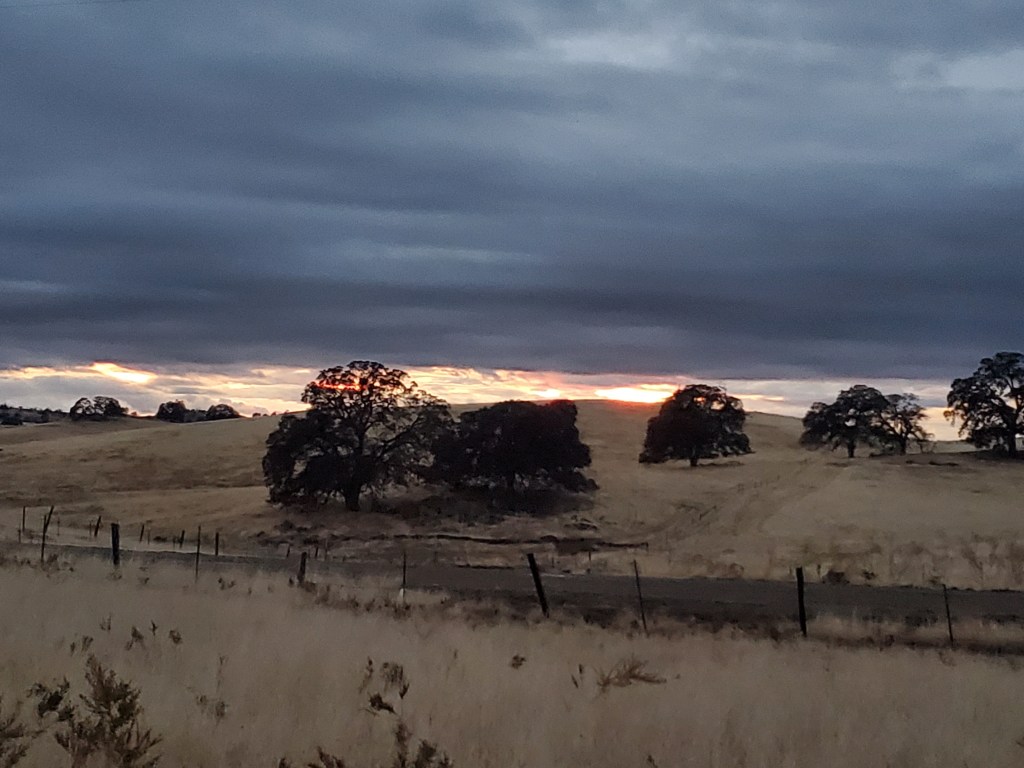
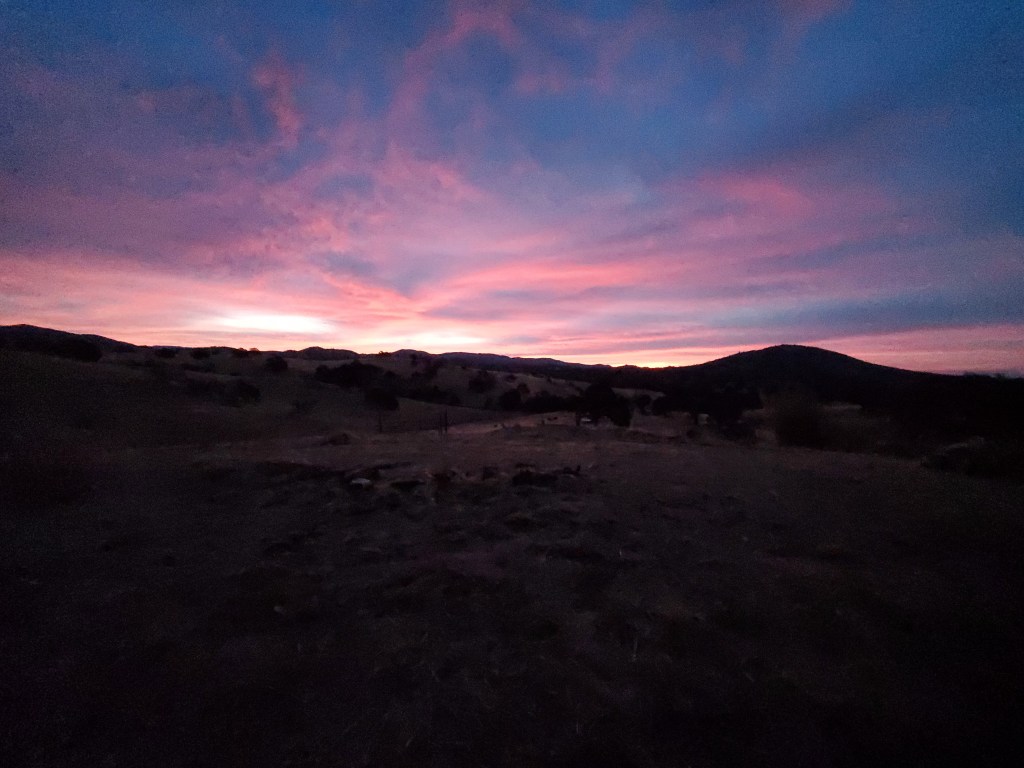
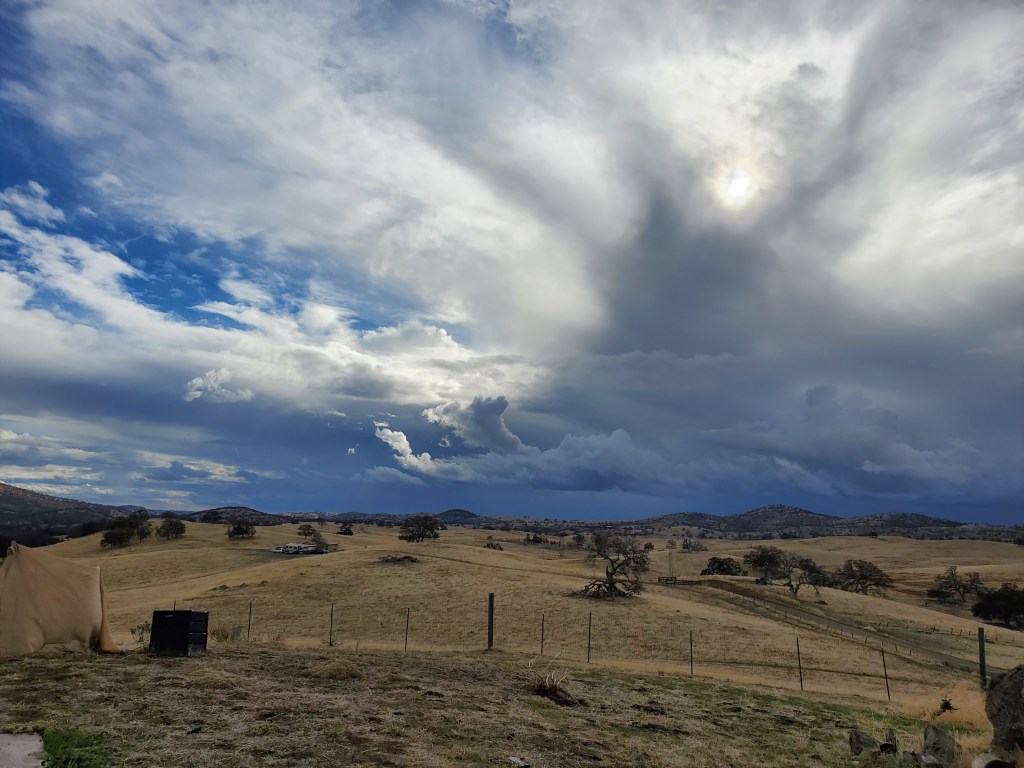
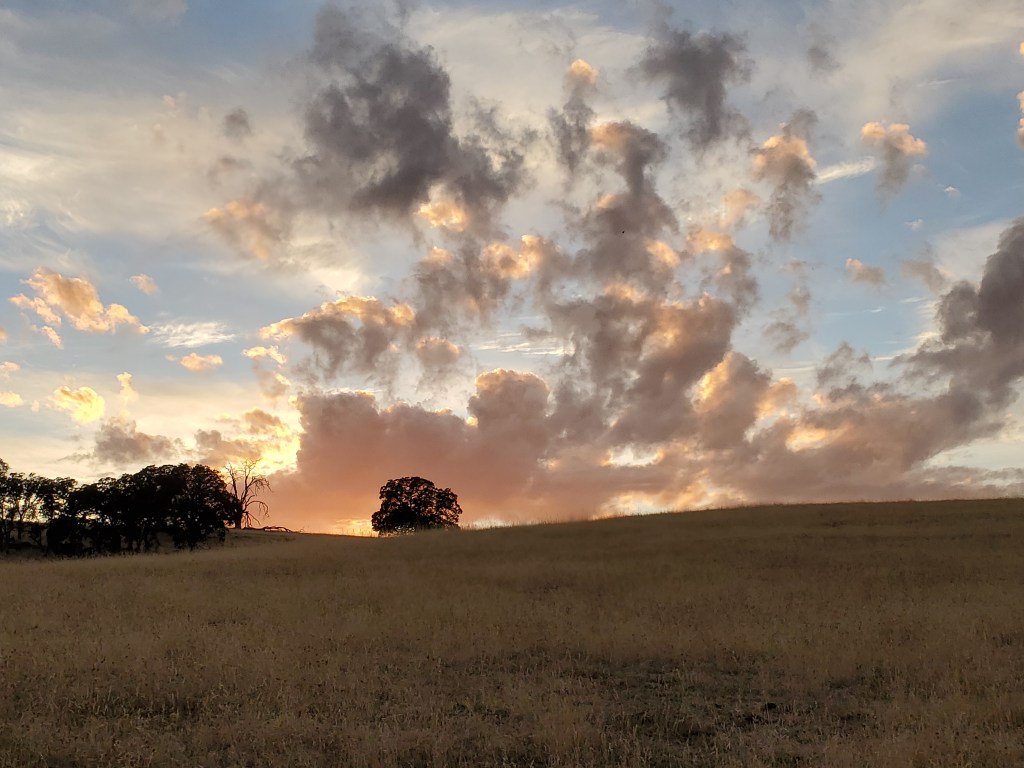
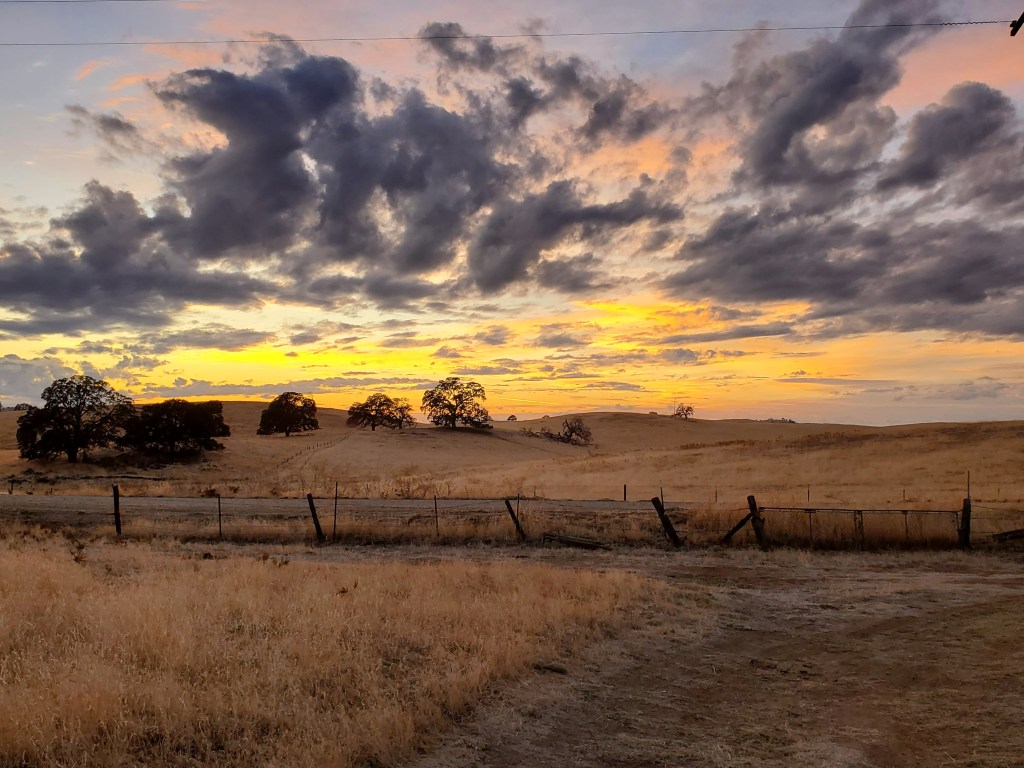
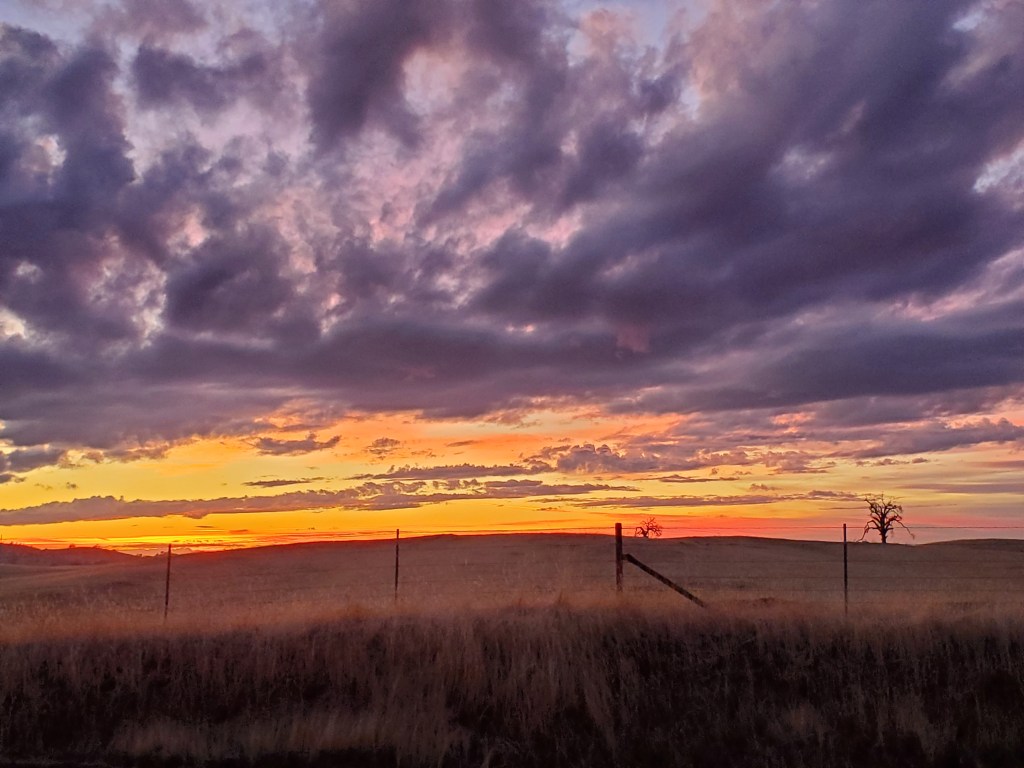
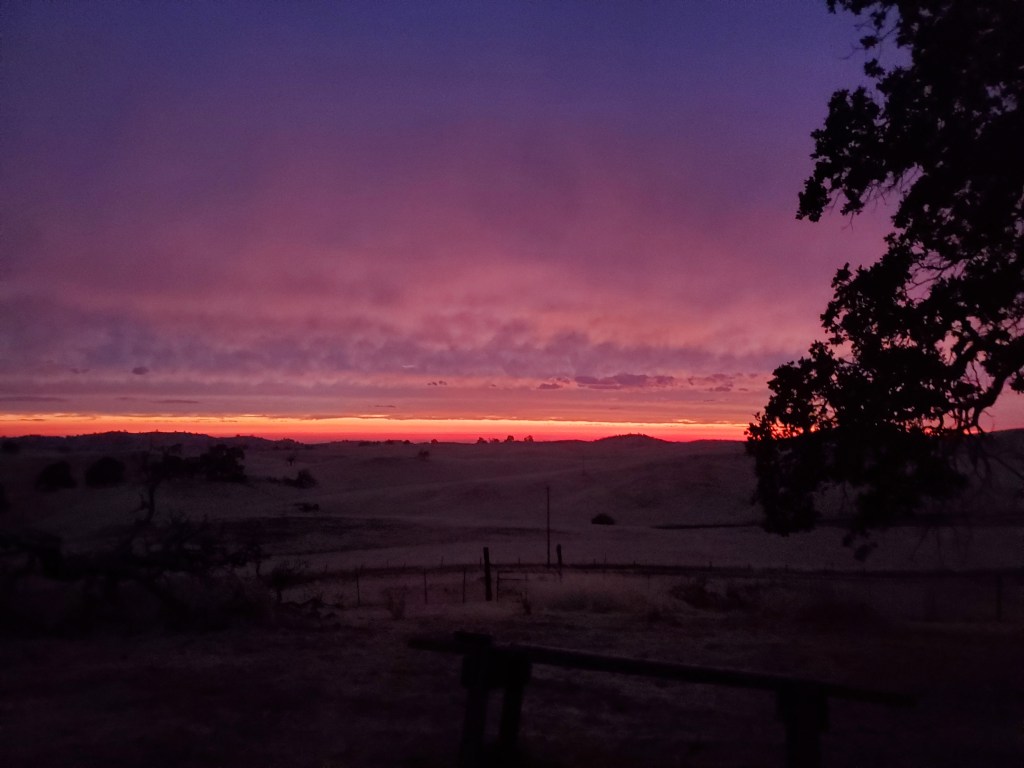
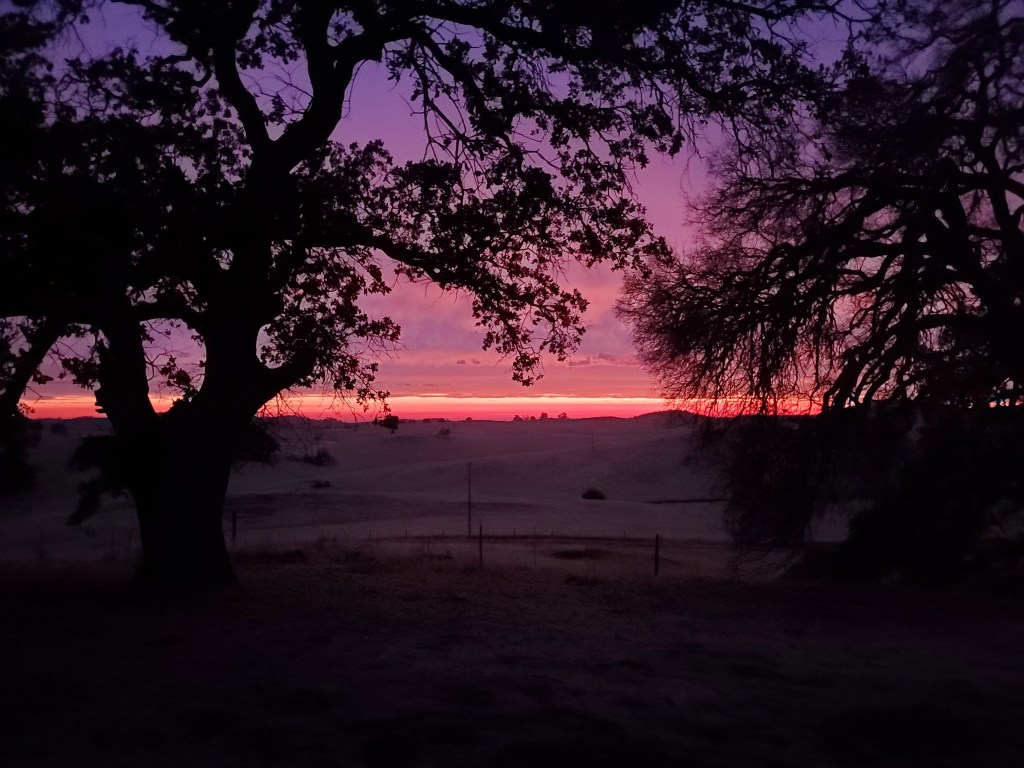
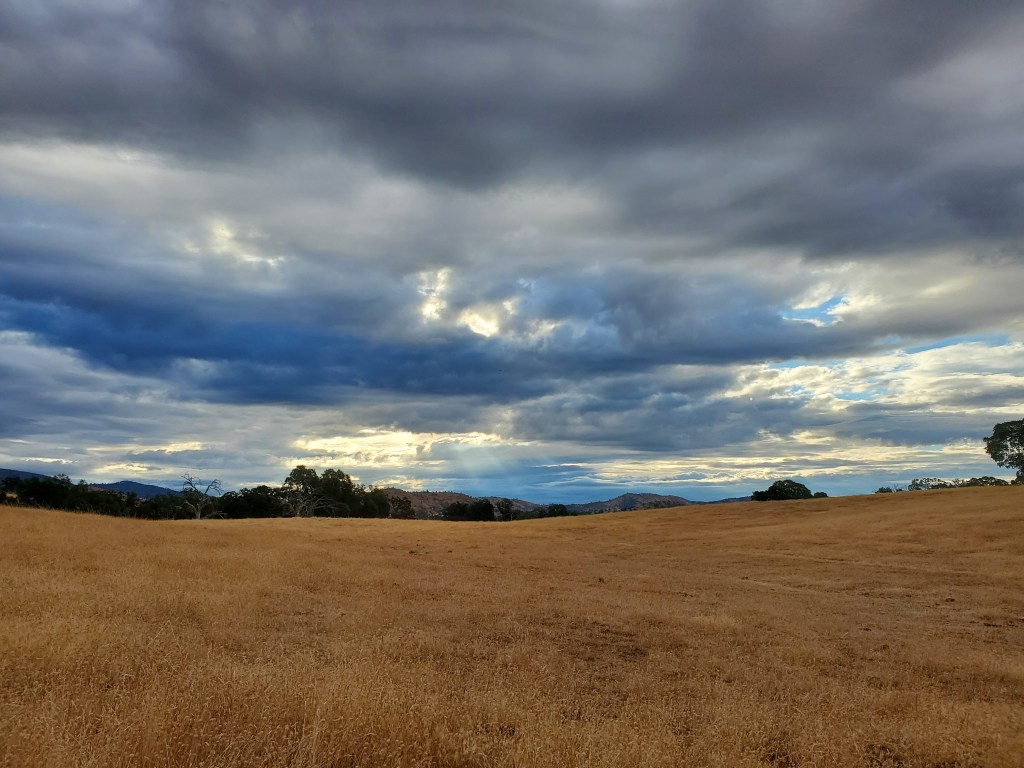
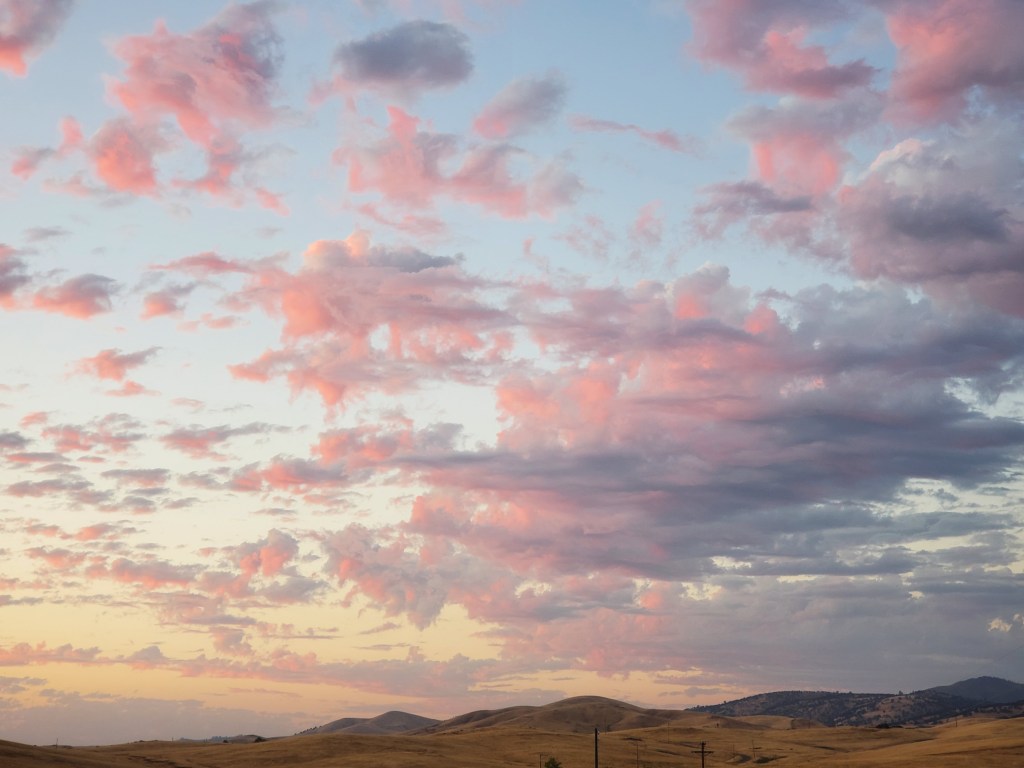
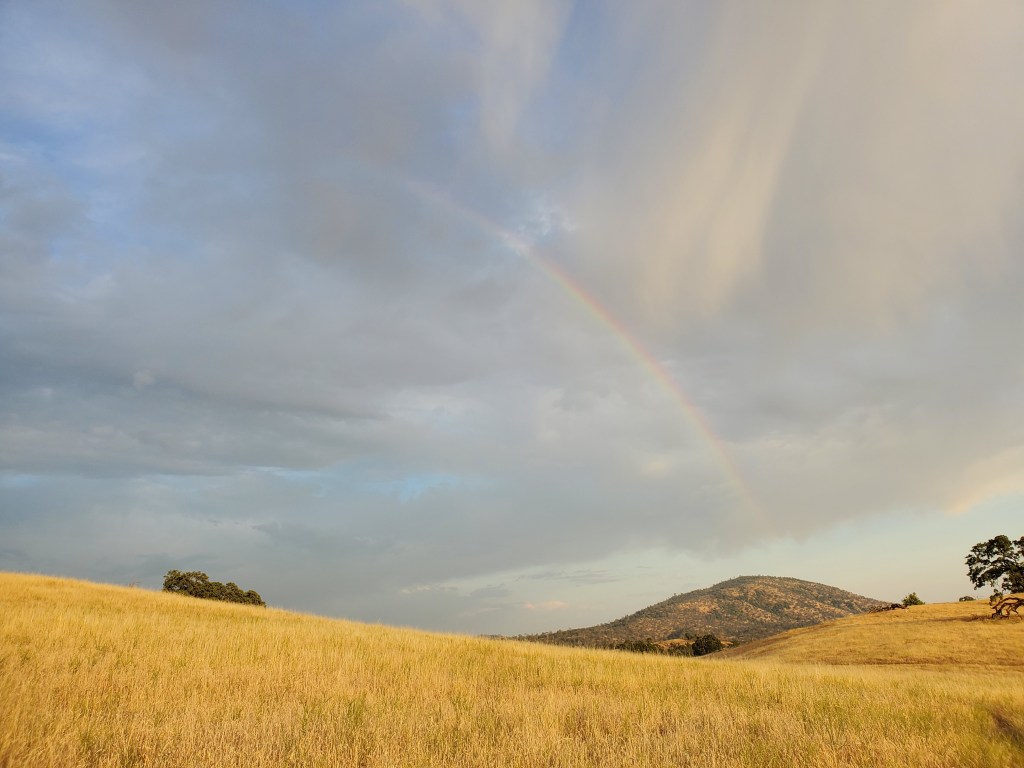
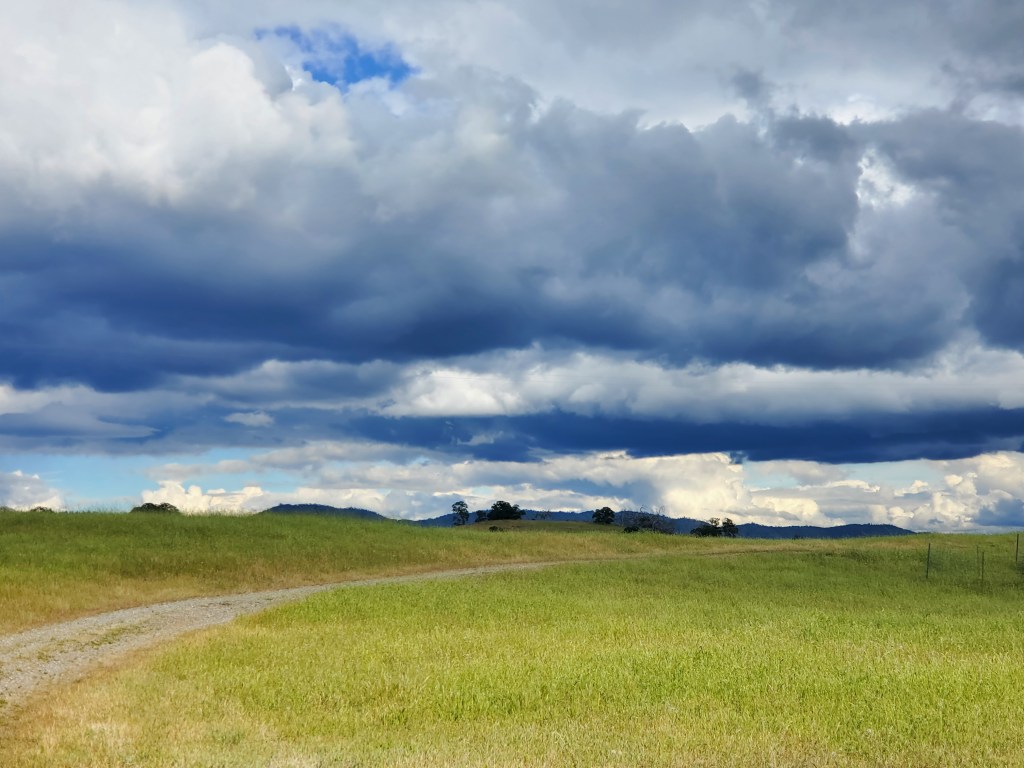
The skies have changed from heated blue to gray clouds and night purples and then back to blue. Light is beginning to recede at both ends of the day. A few people I care about have gone with the daylight, but in mother earth’s endless cycle of days, nights, seasons, abundance and scarcity, three have left and three are soon to arrive. Pain converts to joy and then to acceptance of the world and all its comings and goings. Memorials and baby showers. Winters and Springs. Milkeed and monarchs. Beauty is everywhere, especially in the love which undergirds both loss and gain in the spectrum that is life.

Grasshoppers Decimate Plants

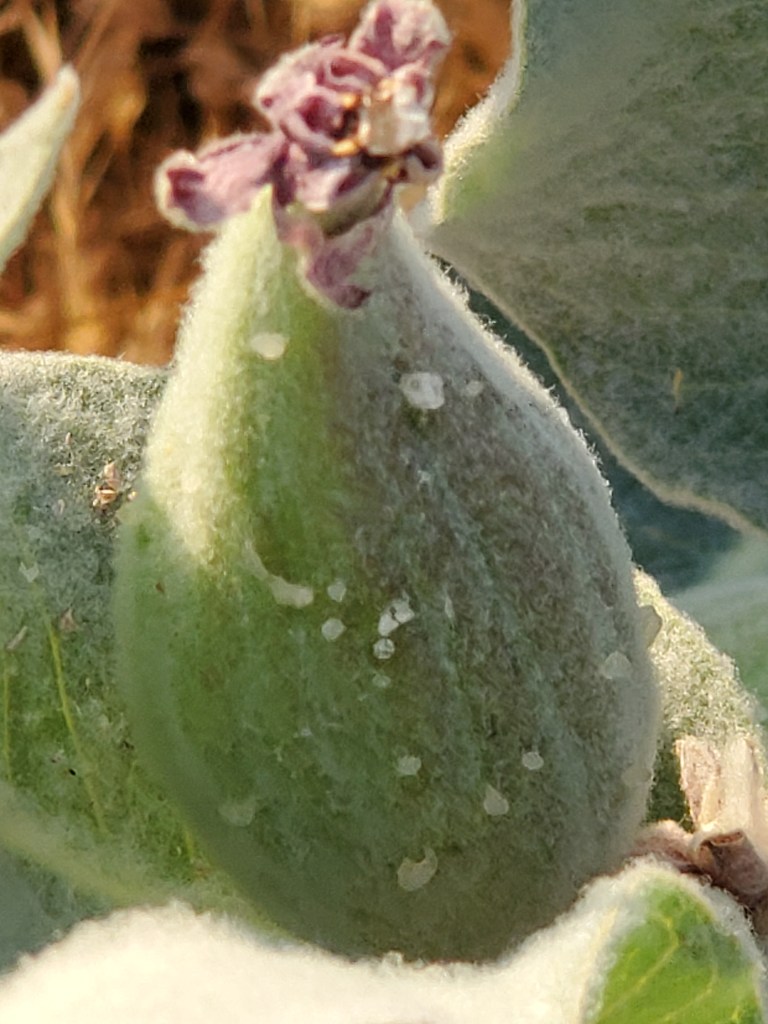
California Milkweed seedpod eaten through by grasshoppers

This year is bad for grasshoppers. Even after 21 years, I cannot discern a pattern to which years will be plague-level. They can be bad in drought years and in water years, hot weather or cool weather. If someone knows more or has a theory, please share.

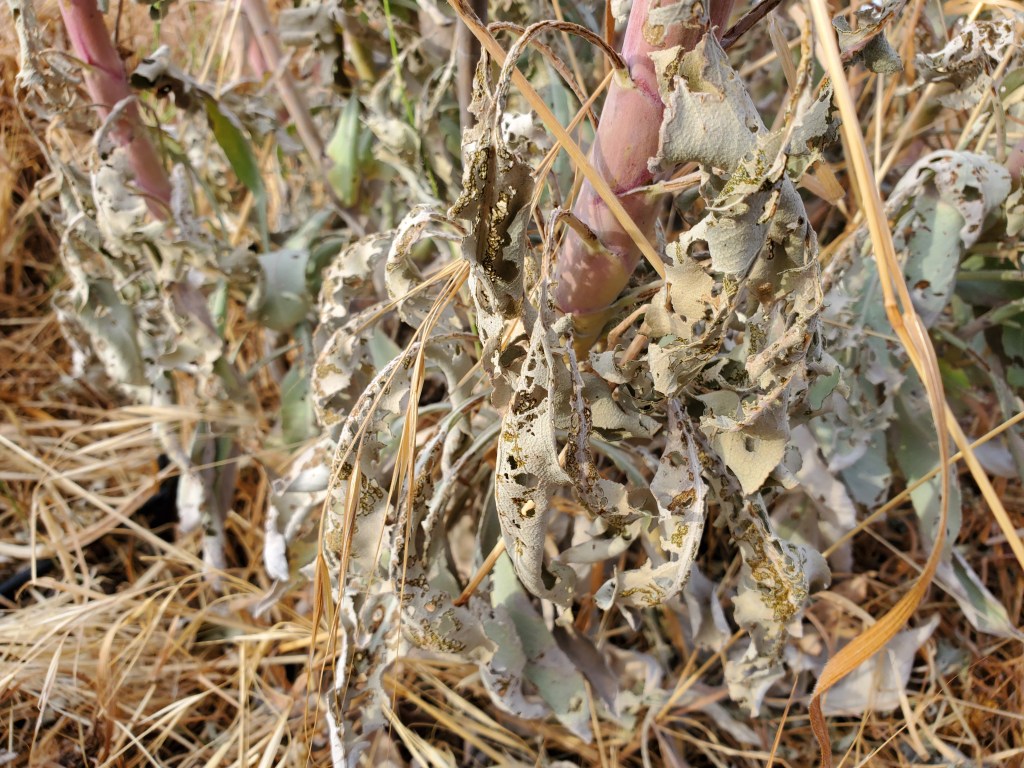
All new plants and many mature plants are eaten. Even sage, with its gorgeous fragrant secretion, have been consumed. Some of the Xerces hedgerow bushes and most of the plants closest to the house are still surviving – but it may only be a matter of time. Perhaps Erma, my toad friend, is keeping some of the hoppers at bay. Most of the plants in her section are still intact. Sadly, the sage and wormwood are being consumed. It is near complete devastation. In years past, this level of destruction would crush me – since so much time and work has been spent in making a healthy, full-spectrum native plant habitat. However, I have seen the plants reemerge in subsequent years. Perhaps not all survive, but most come back, and this level of sustainability is exactly what I want to see. This reemergence of milkweeds and nectar plants demonstrates establishment, which is a huge success.

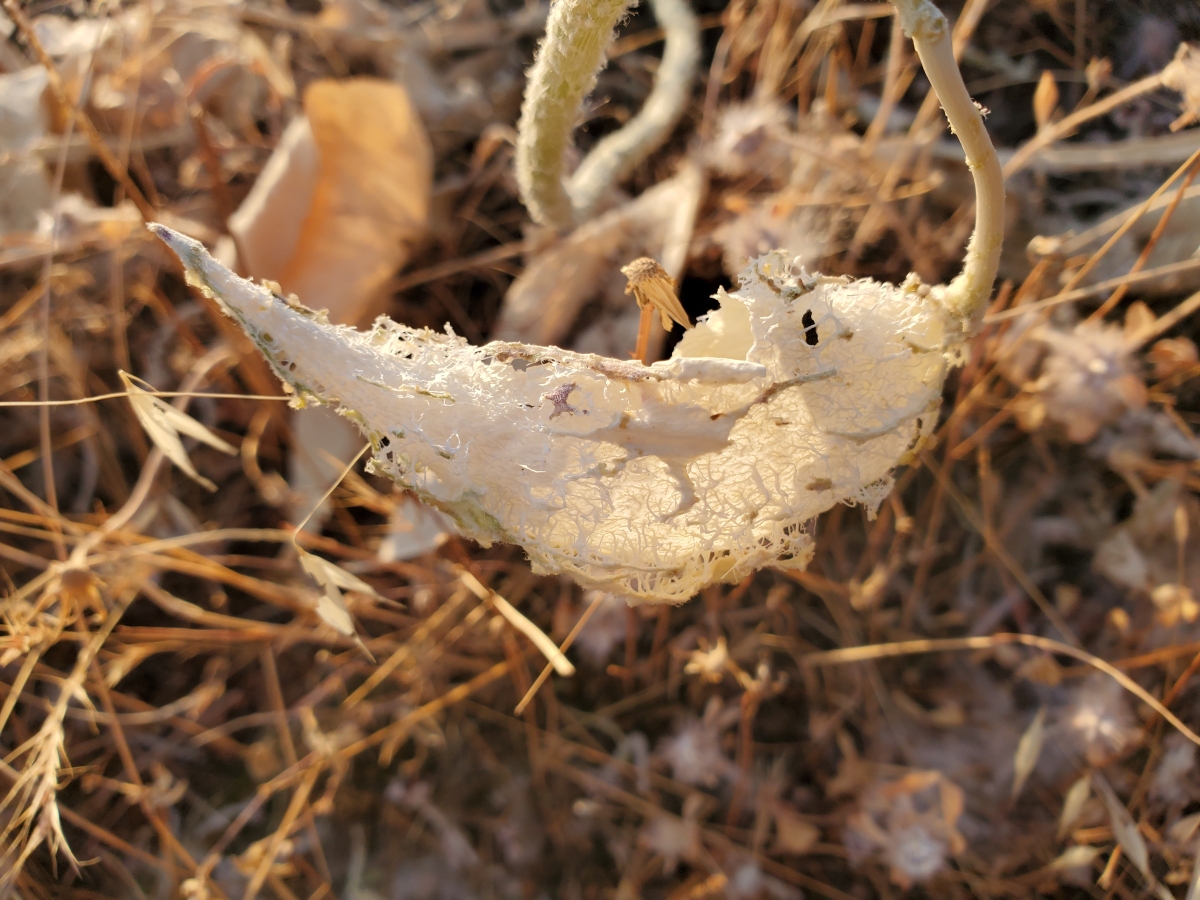
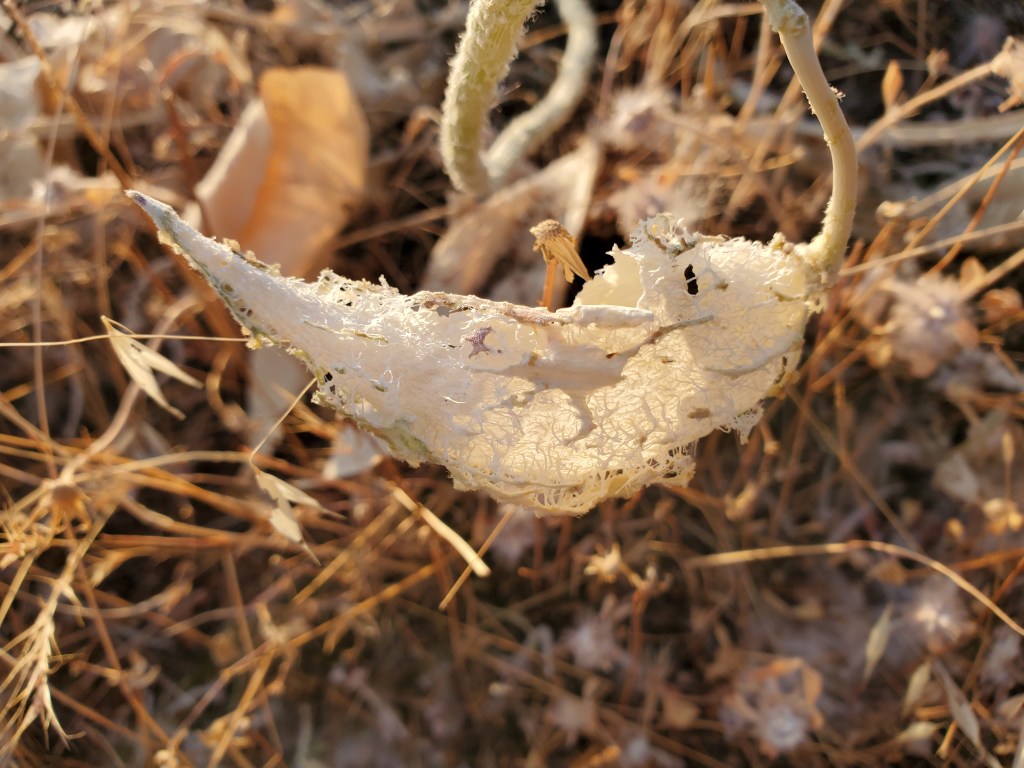
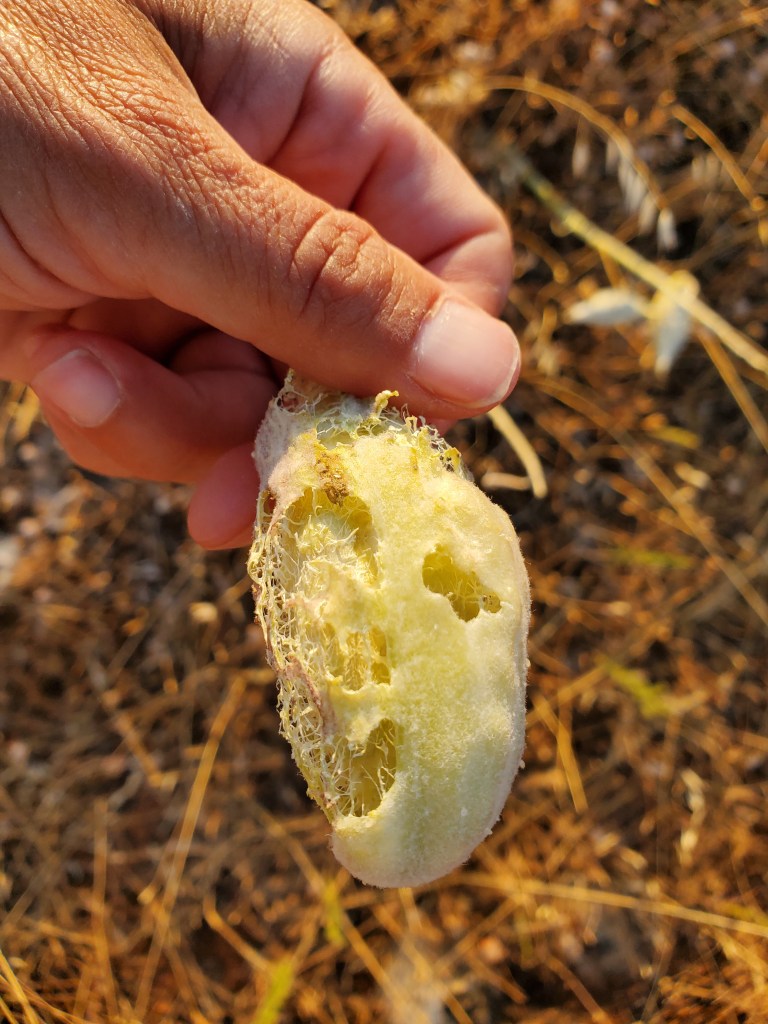
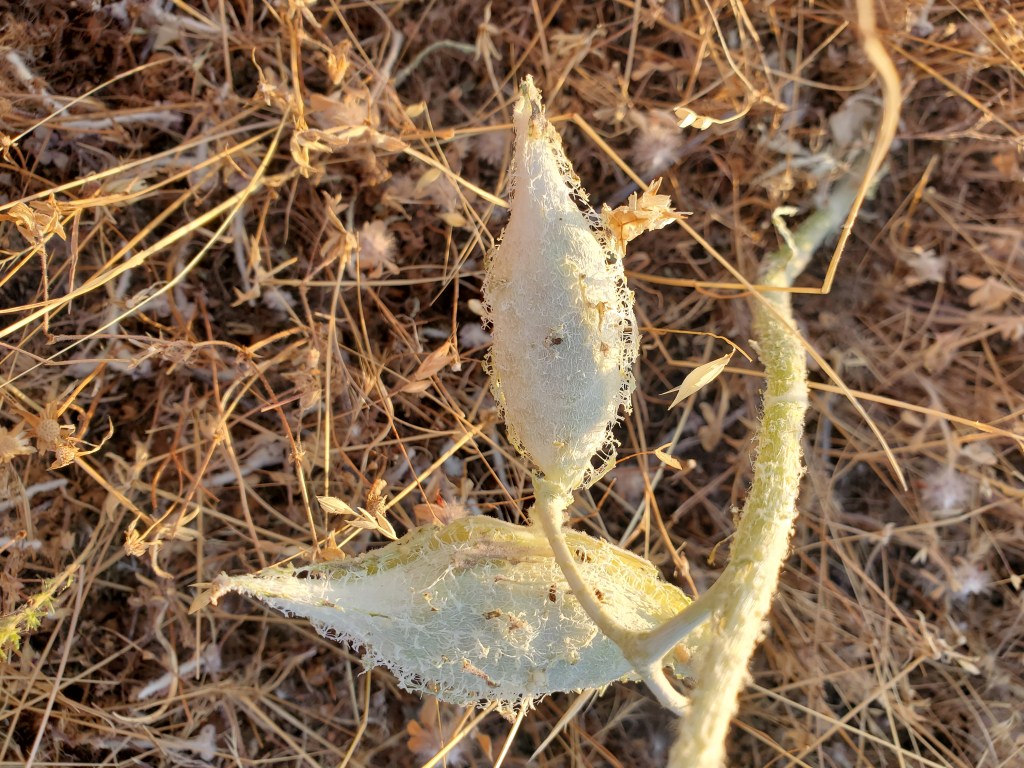
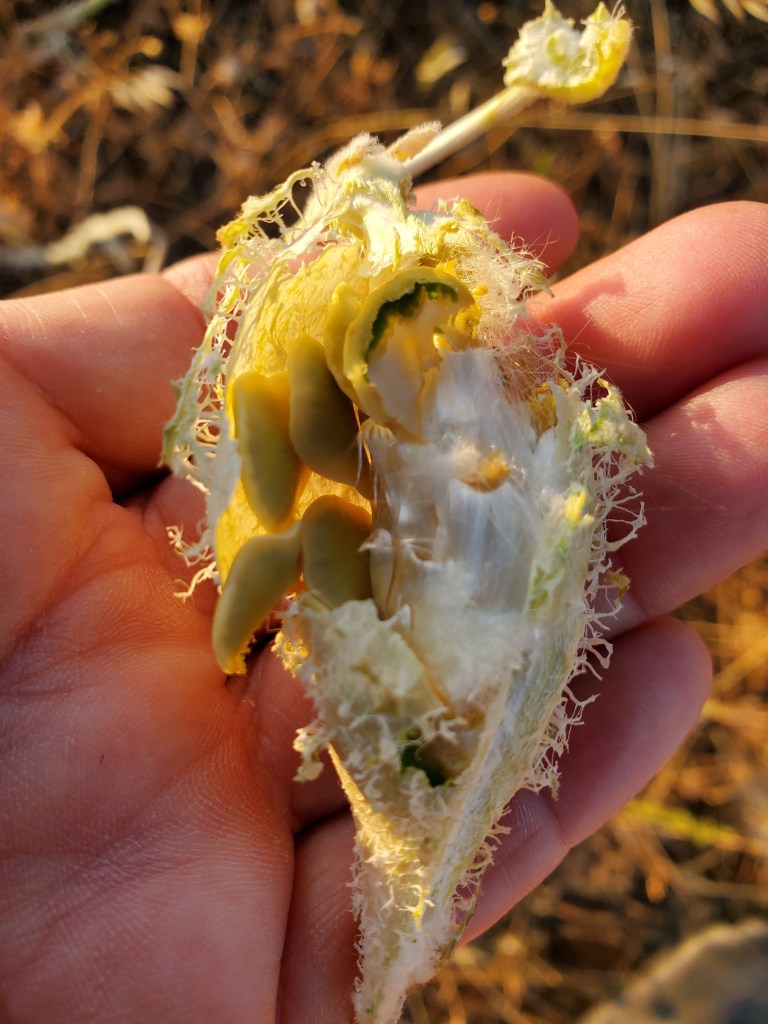
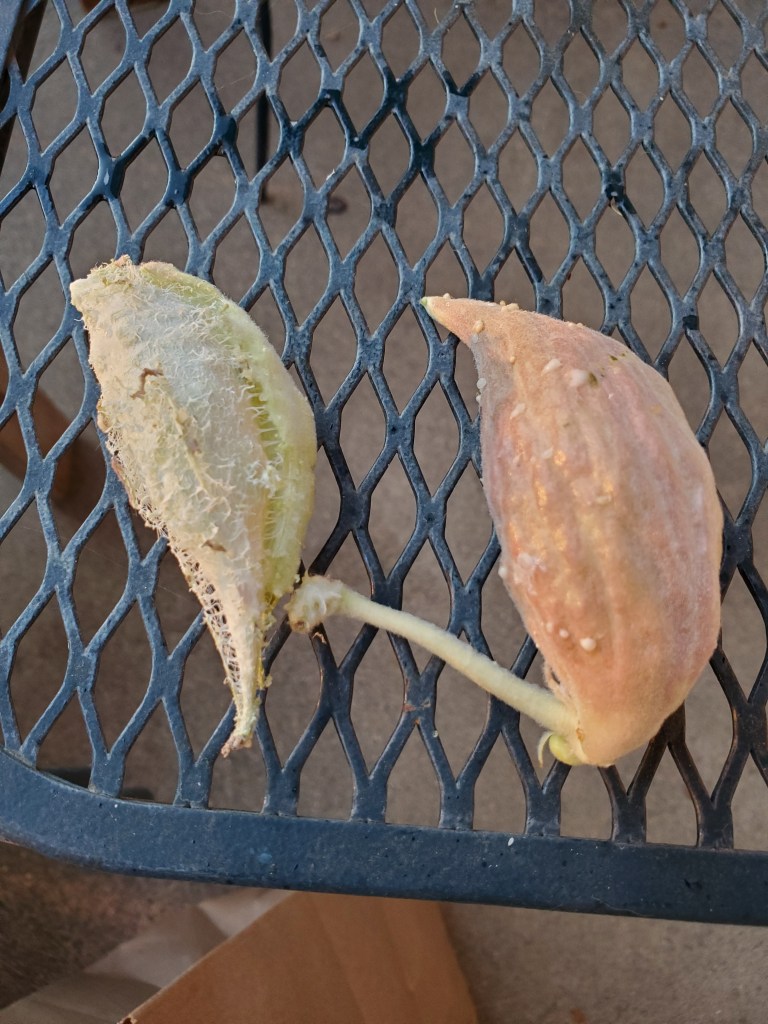
Even so, I still need to intervene to give native plants the advantage. The grasshoppers are so bad that they are eating the seedpods of the crucial California Milkweed — before they are ready to open and disburse. I took a closer look to understand how complete the decimation was, and found that they are eating the seeds as well.

Immature seeds that have been partially consumed. Seeds should be a dark brown

In late June, I went to the large plots searching for pods to save. I had to act fast; many plants had been consumed already.

I trudged up the hill finding intact pods on plants. Some were still small. The cooler temperatures delayed milkweed growth resulting in some plants emerging later and not having as much time to mature, develop flowers and seedpods. I picked pods knowing they were not quite mature. Since it is this late in the season, I know they will continue to dry in the bag and produce fully mature seeds. I did this in other years when grasshoppers were bad. When I pulled, most pods had limited resistance, but still secreted the “milk” from the plant. It felt as if I was detaching a baby from its mother’s umbilical cord – separating it from its nutrients. I promised the plants I would return the seed when it was safe.

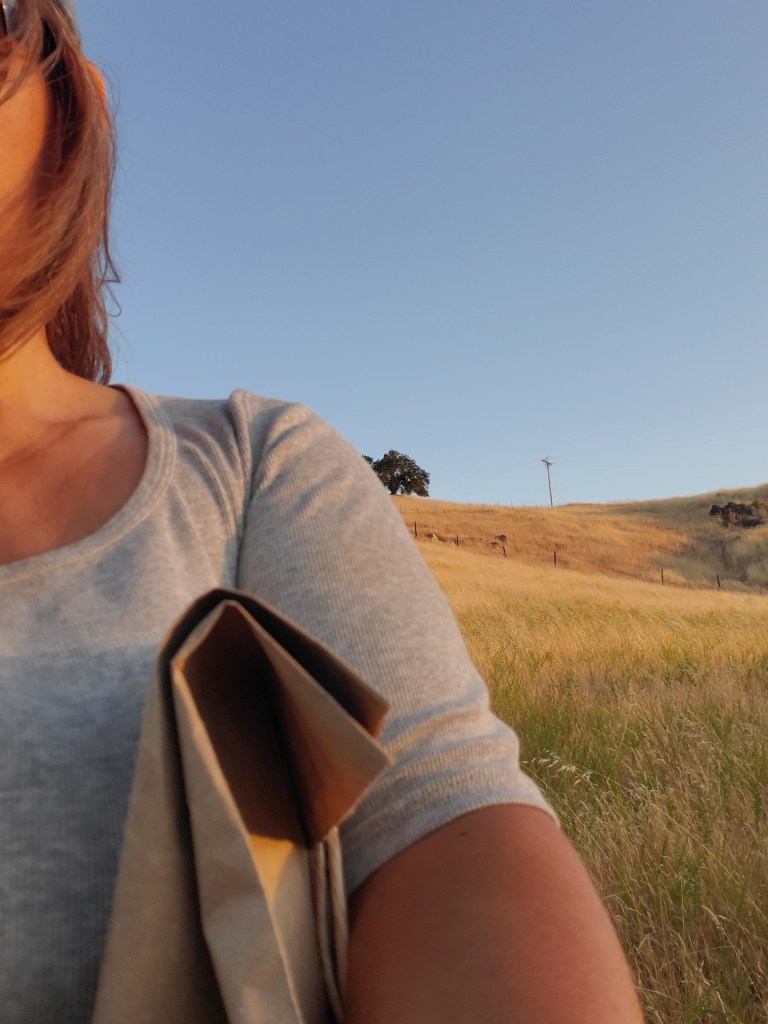
In total, I collected 24 pods. With approximately 8 seeds per pod, I will be able to distribute up to 192 seeds back to their locations. I will fulfill the promise to the mother plants probably in October when the hopper danger has passed. As I went back down the hill, wind whipping around, I ensured the bag was folded tightly, and placed under my arm. The wind had tried to take the bag from my hands several times already. The lightweight treasure is easy to roust. Today, at least, I could claim victory.

June Bumbles

June was a great month for bumble bees. I had many sightings to add to the citizen science project Bumble Bee Watch. If you want to make a difference for bumble bees, besides ensuring habitat and nectar, you can also help scientists track them. Set up an account today and upload images as you find these critical, fuzzy friends doing good work in your garden.

Wanderings

It is remarkable how a place can change in just two weeks. I was gone on vacation and came back to more skeletal plants and even brighter yellow grass. As dry as the grass is, the soil continues to hold moisture. I placed my hands in the dirt as soon as I got home just to check in with the land. Springs are still flowing and areas with a high water level are still green. There was a horrific 110 degree day while I was gone, and David made one fatal mistake. He did not double check the seedling trays. The water can evaporate rapidly from the shallow basins drying out the media in the same day. With the temp so high and no additional infusion of water, the seedling media dried out. I lost half of the seedlings that were sprouted. Fortunately, several still made it though. Life on the ranch can be tough especially if you are not always monitoring.

David has been building a carport, which is another opportunity for rainwater catchment. We will add some screens, PVC pipes and tanks in the coming months. This week, hopefully, my log and rock drop structures will be put in the arroyo to slow runoff in storms. This will preserve soil moisture and build the channel back up. We will be prepared for next year.

As I write this early in the morning, the birds are beginning to sing. The coyotes just finished their morning chorus. The young ones have now joined in. Another generation will take their place on this land, helping the ecosystem by eating rodents, rabbits and other fare to keep populations in balance. If only they ate grasshoppers too.

Bright Sides Despite a Spring Without Butterflies

Looking on the bright side – that has been my reflection for the last month. I have come to terms with the fact that the monarchs skipped me this year. I’ve heard reports from many friends and readers that they have spotted a monarch or had multiples in their gardens. All sightings have been friends/family closer to the coast or higher in elevation. They skipped me. I can’t blame them. It has been very cool here. It seems that many hung out in gardens on the other side of the coast range for days waiting out the weather. Then, they were able to cruise another 100 or so miles, past me, to just up the mountain. Oh well. I am glad they are surviving and making their journey.

Maybe they will stop on the way back – or next year.

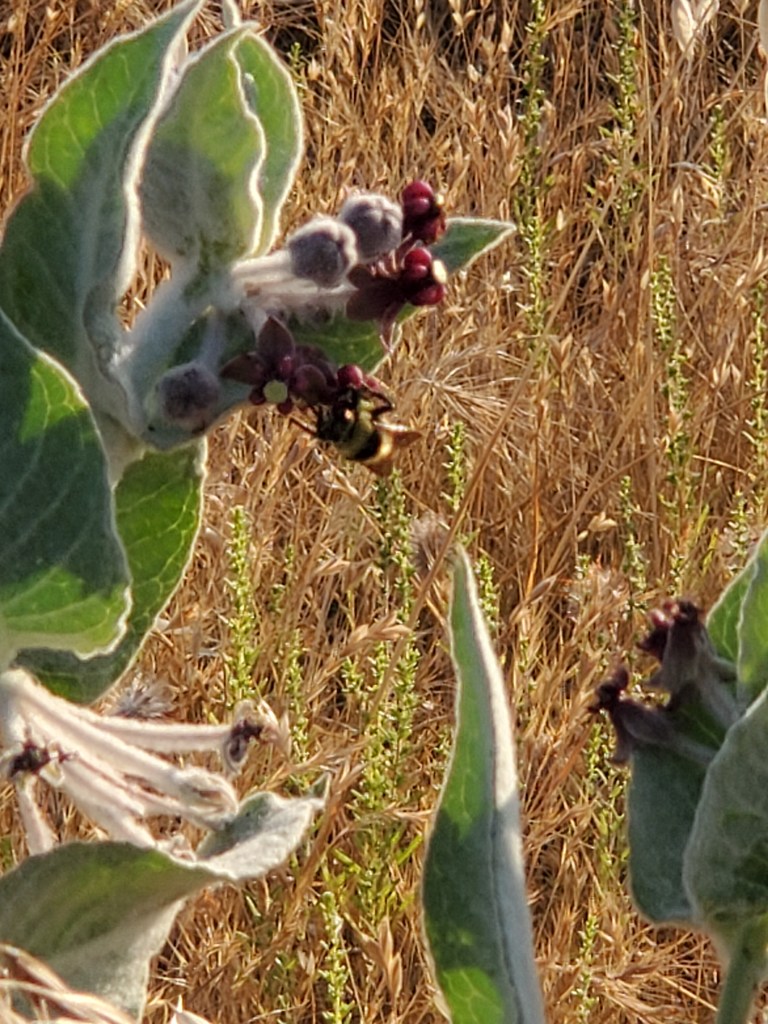
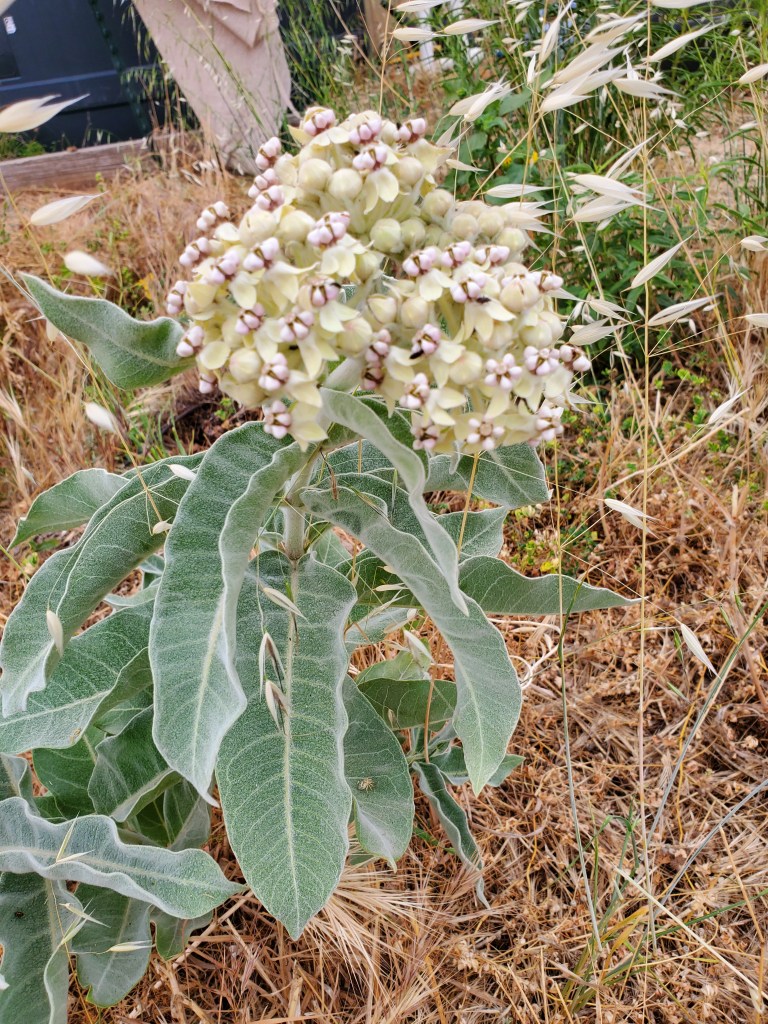
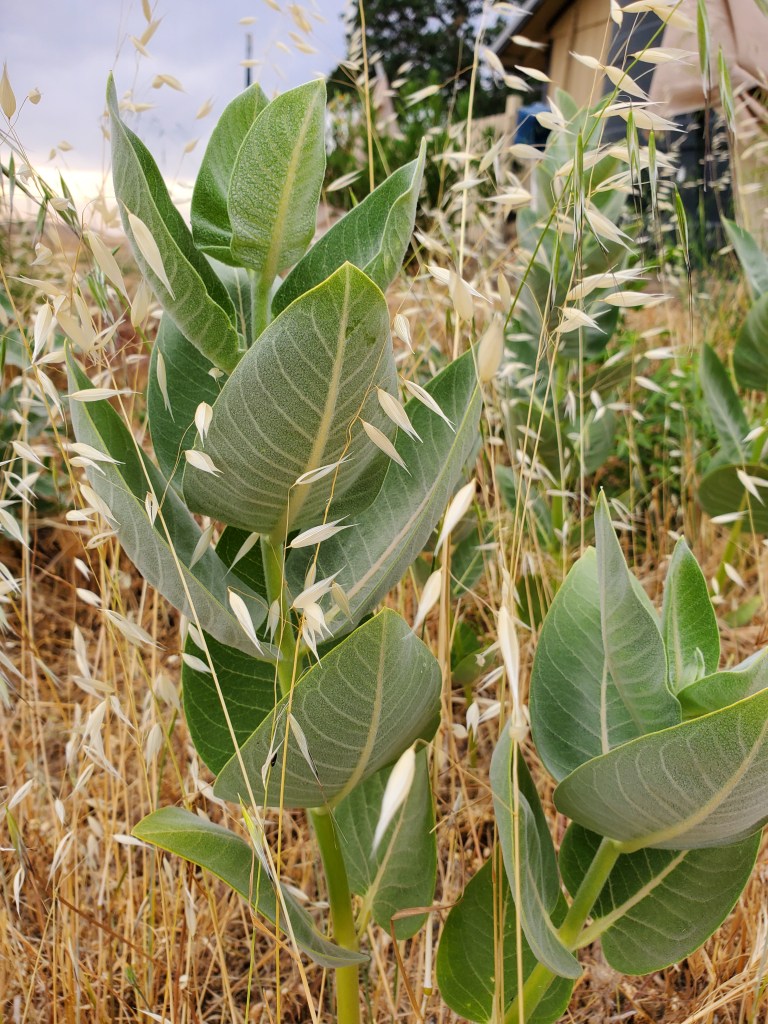
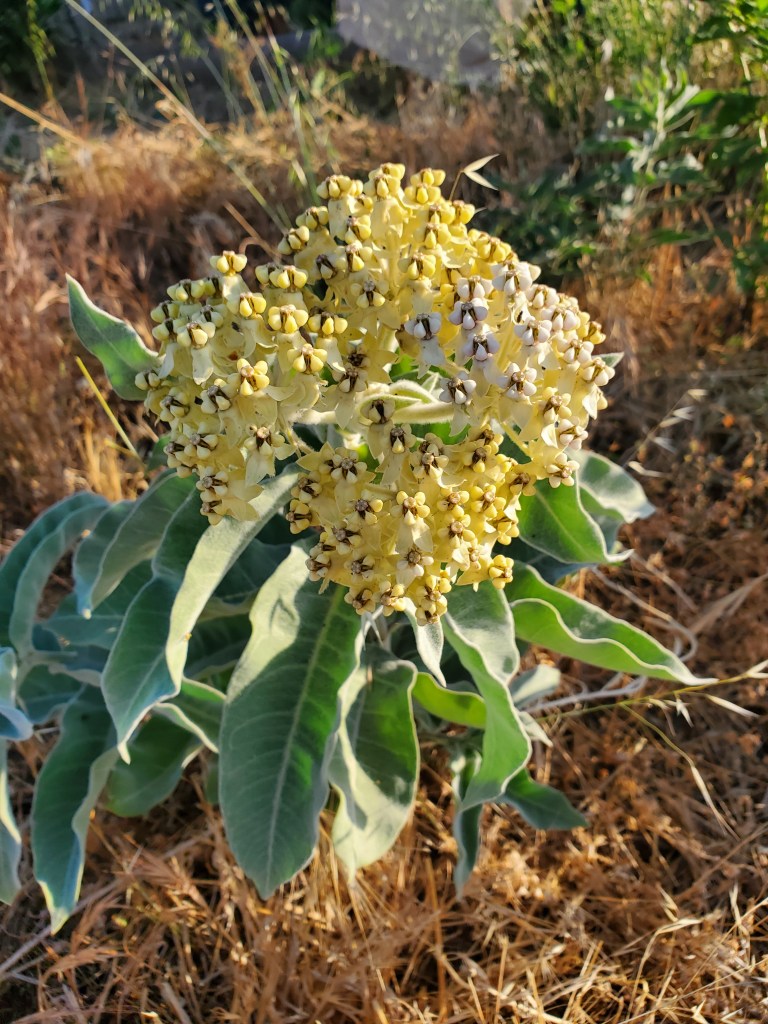
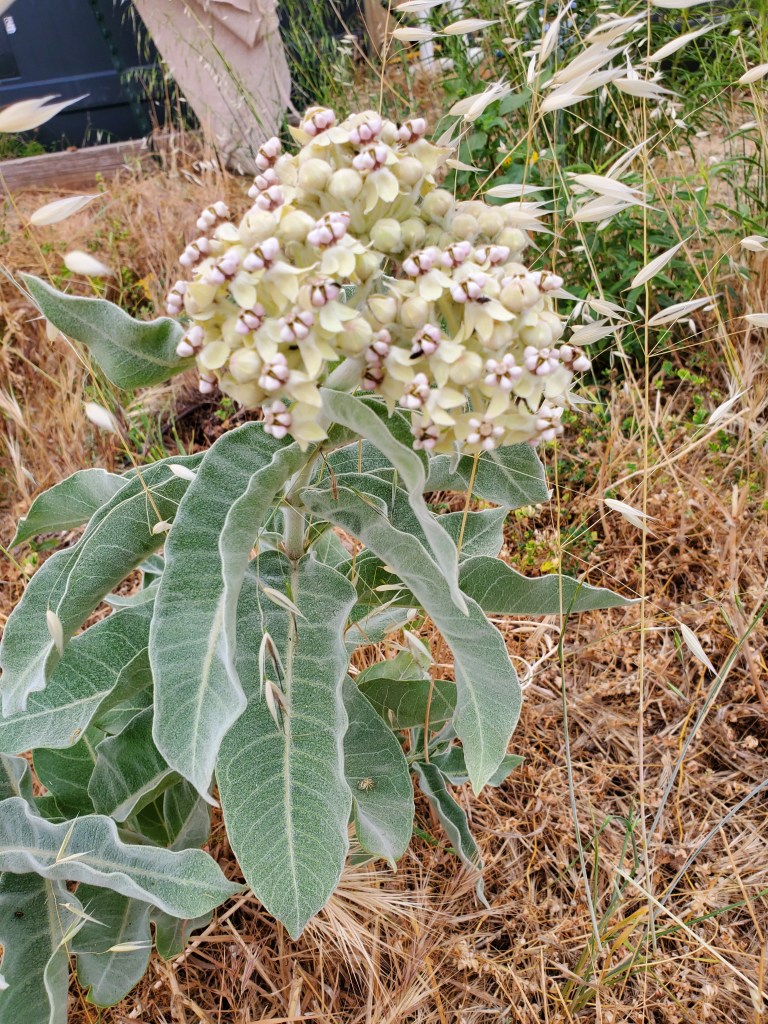
We have so much gorgeous milkweed – at least four different species – narrowleaf, ca milkweed, showy and woolly pod. They are all healthy, strong and growing well. I thought, “Well, maybe someone will get some use from them”. We have had only a handful of butterflies, which I mentioned and identified in my last post. I’ve seen just one other since, a painted lady (I think – since they flit so fast). No butterflies…but…something else just as exciting – bumble bees, and almost 30 of them at one time!

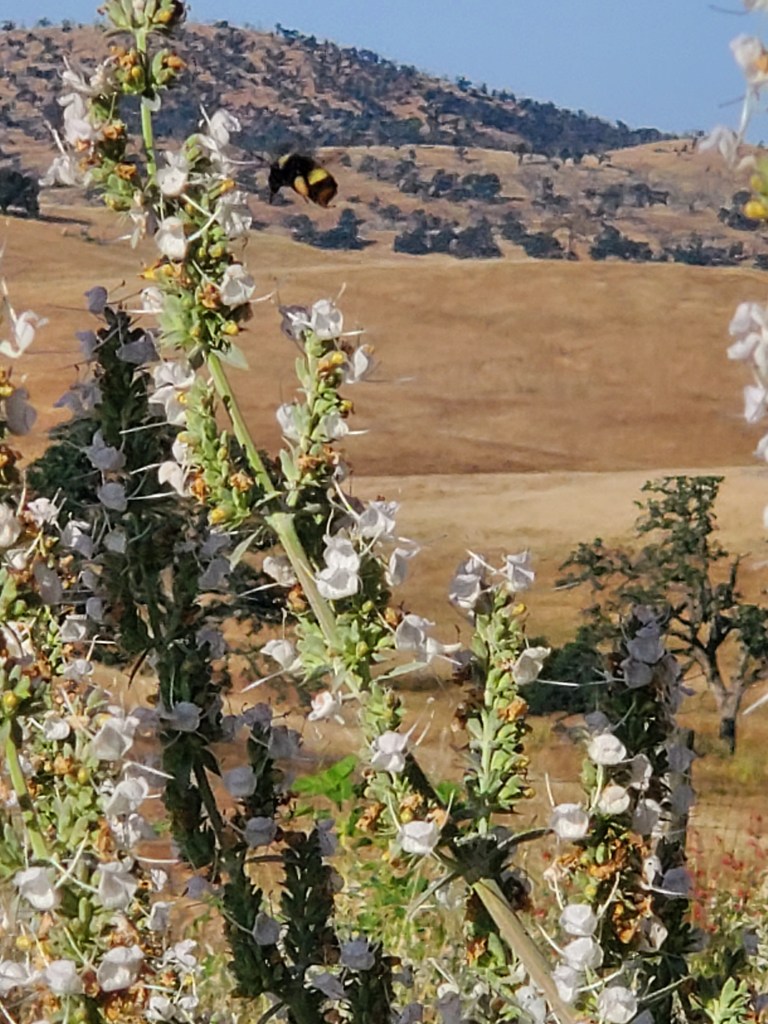
As I have reported in a past blog, bumble bees are in decline. They are ground nesters and susceptible to disturbances in soil movement. Pesticides and herbicides also account for their decline. Something else I noticed, when the sage was in full bloom, and attracting all types of pollinators, the European honey bees seemed to gang up on the less numerous bumbles and push them away. While they found another flower to harvest from, it made me wonder if all the bee boxes everywhere aren’t causing some problems. My neighbor two parcels south always has a person drop over 30 hives each year for several months. I love honey, and honeybees, but as with anything, scale is critical to consider as we think about policy and our own choices about how we steward land. I have a rogue honeybee hive in a nearby creek too that I love to visit. There is something marvelous about a group of animals that escape their human serving bonds in an effort to become wild, and live on their own terms. It is about living in balance; we all need one another to thrive. It is a partnership, a relationship that is multi-directional, not ones’ needs more than another. We must respect one another to make things work for all of us. Again, it is all about scale.

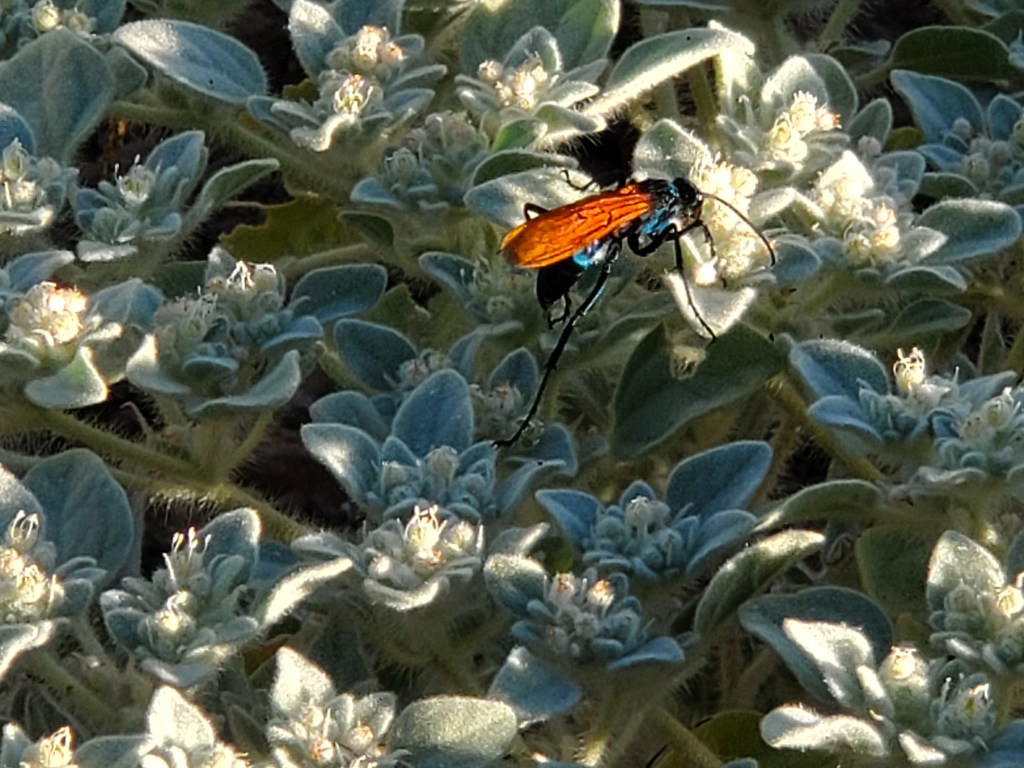
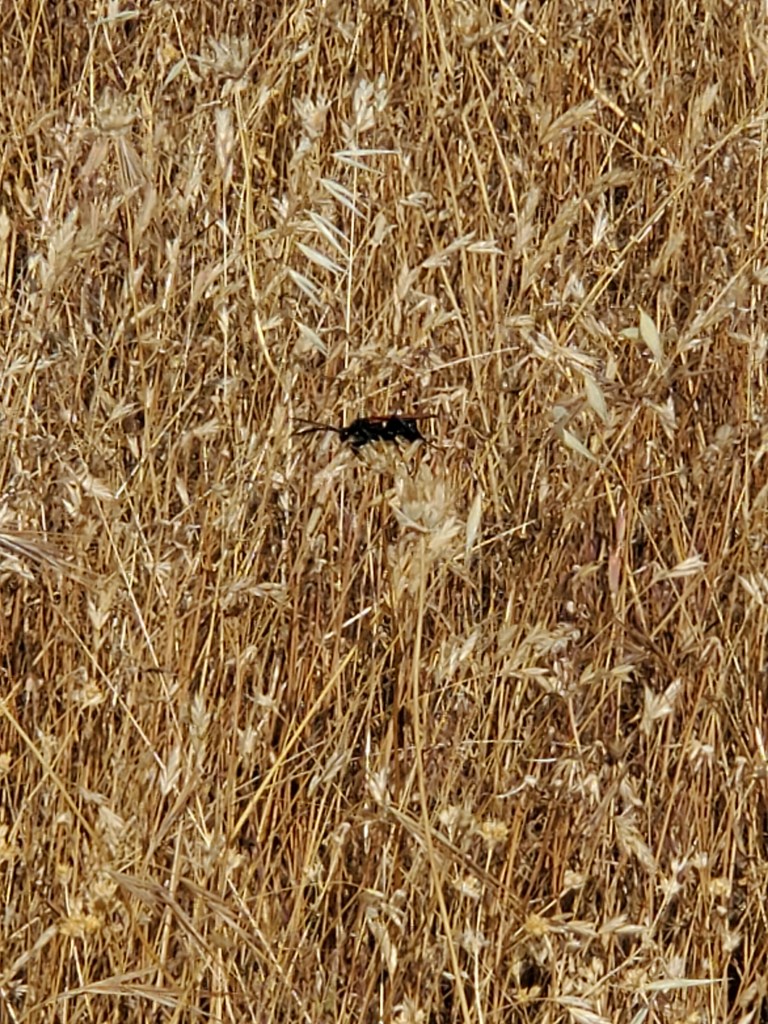
Not only are the bumbles using the blooms, I’ve seen more tarantula hawks than ever flying around, enjoying milkweed (and other) blooms.

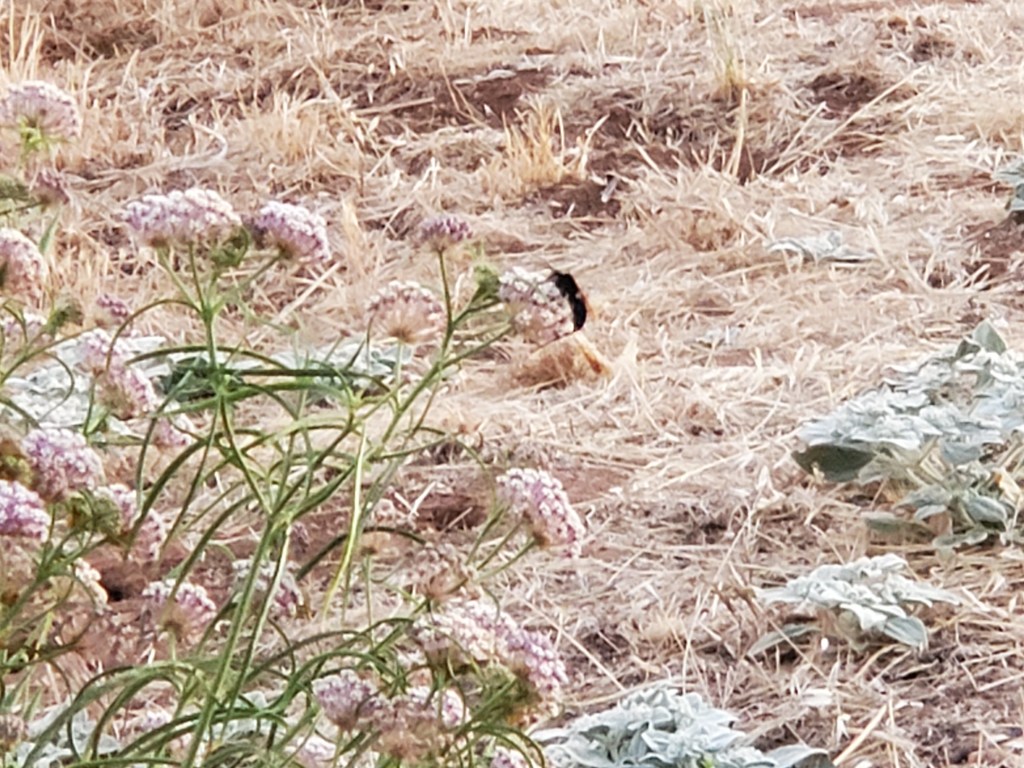
A tarantula hawk finds something interesting on one of the spent flowers

The tarantula hawks are big, with a long nose, deep black coloration, a large abdomen with stinger and small (as compared to their body size) orange wings. As I was walking the ranch, they seemed to be everywhere I went. When they fly close to you, you pay close attention. They are not aggressive, but can sting humans if provoked. I have heard from others around here that their sting is extremely painful. I pay them much respect. Their name holds a grim tale for one of my favorite creatures on the ranch, the tarantula. If you want to learn more, this Natural History Museum site seems a credible source.

Bad News: Grasshoppers

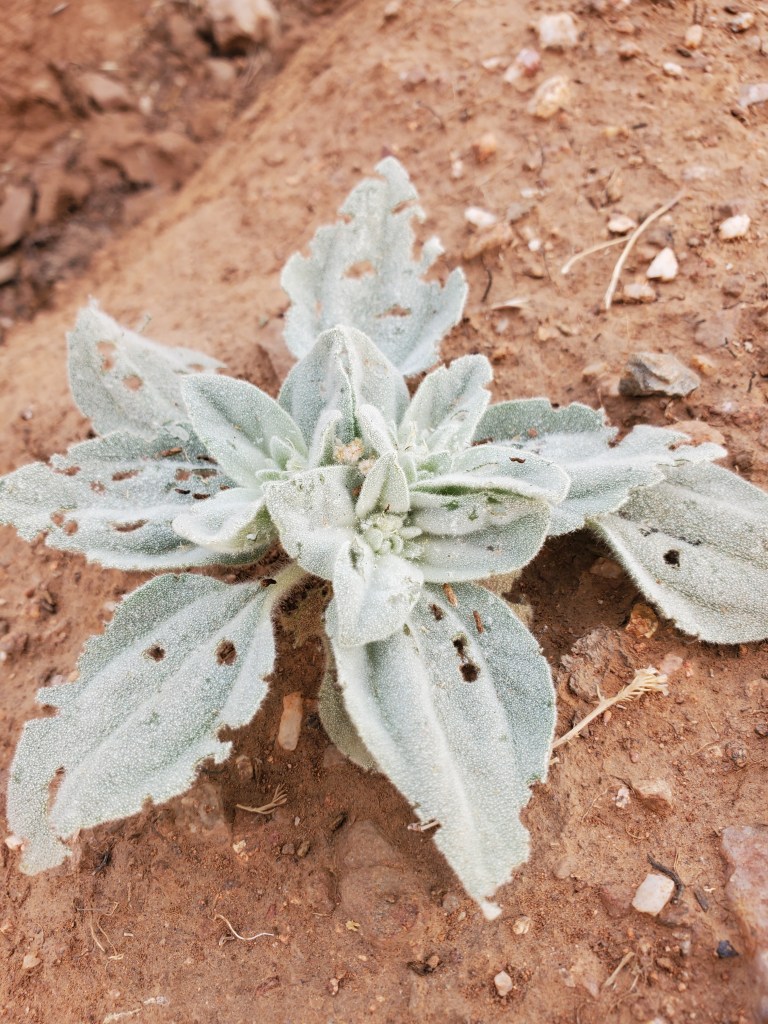
It is a horrendous year for grasshoppers. They are not yet fully grown and have caused significant, heartbreaking destruction. Sixty percent of the Xerces plants I painstakingly planted have been eaten. Some are making a come-back, but they will not stand a chance. All I can hope for is that their roots were strong enough to return next year. Fortunately, some of the early blooming nectar plants already grew, bloomed and seeded. So far, all the new Xerces milkweed has remained untouched. I don’t hold out hope that they will be spared. The hoppers ate the Ca Milkweed down to sticks the year before last.

The hoppers are also shredding my existing, mature plants. They murdered three of the four big leaf maples last year. Only one emerged with leaves, and sadly, will likely be finished off this year. The sages that are further from the house have been mangled as was the buddleia. The further from the house, the more decimation there is. They are plague level. While there are natural predators all around, there are not enough to keep them in control. A friend at the Tribe told me that their ancestors used to use fire to round them up and eat them. I am thinking about starting a grasshopper farming operation. Insect food is the trend for the future!

I began collecting seed pods from several of the plants so that the hoppers did not eat them before they could spread. You can see in some of the photos below, the hoppers are already taking a bite into the seed pods. Fortunately, the pods are the last of the plant they will eat, which gives them time to mature and me time to collect them. The Ca Milkweed is critical.

Good News: Milkweed Spreading

Another “bright side” is that many of the older milkweeds are beginning to spread. It has taken four years, but they are established. For Xerces and Ca Wildlife Board (via Mariposa County Resource Conservation District), funders of my increased scale for planting, this is a great return on investment. I know I will have nectar plants with the prescribed grazing and riparian exclusion during blooming times, but previously, milkweed was much rarer on the ranch. Now, through these investments, milkweed is established in greater numbers and places on this rangeland…and they are doing it without supplemental water. This is a huge win for pollinators, since rare bumblebees seem to love the flowers as well as monarchs.

Maintaining Habitat

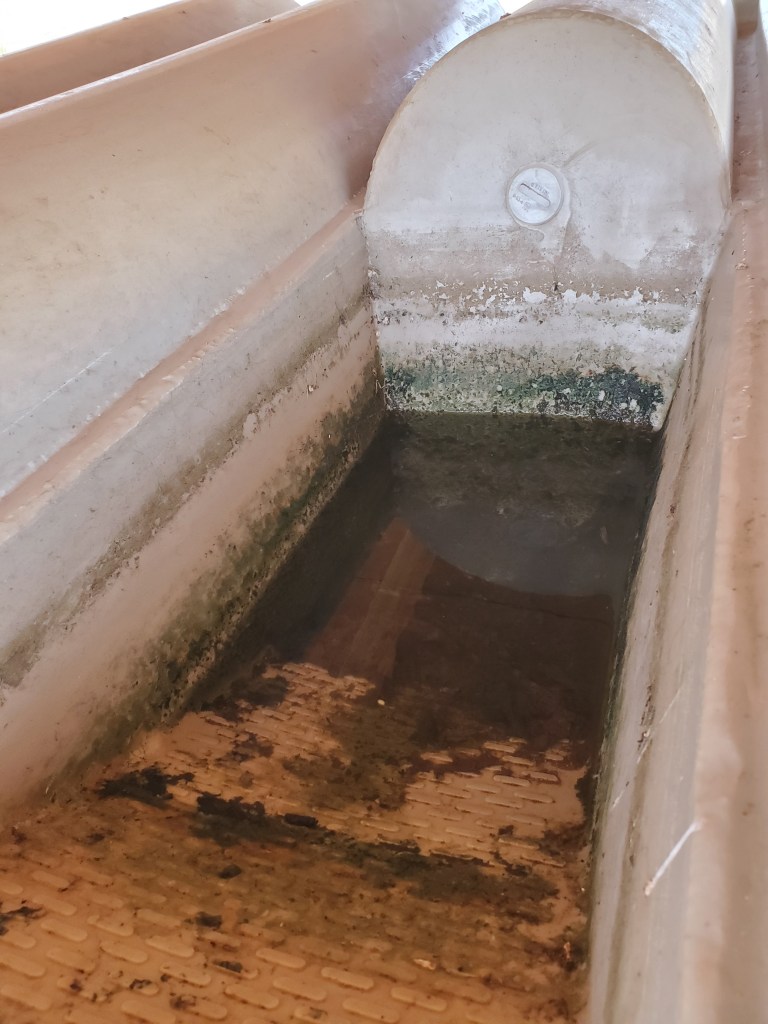
Most of the work I do is not as exciting as planting new, healthy plants. It is straightening gopher baskets, re-piling rocks, checking water, fixing fence, cutting grass and limiting or removing invasives – among many other things. The cool weather has given me the opportunity to work longer and more hours into the season to get things done. Recently, I checked the wildlife guzzler. It is still filled with water, though it has decreased a bit. There is evidence of birds using it. The cows knocked down the panels, and the calves can get in, so the rock and branch ramp to the guzzler was disturbed. I re-piled the stones and branches so that smaller creatures have access the guzzler. I also cleaned out some leaf material from the water.

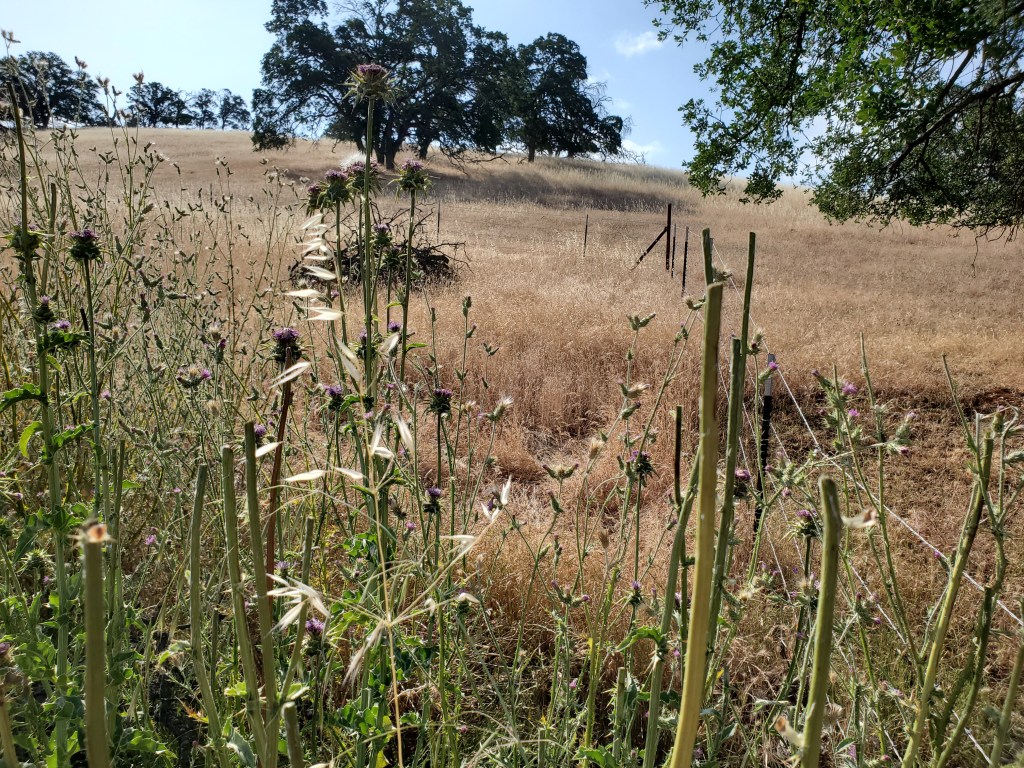
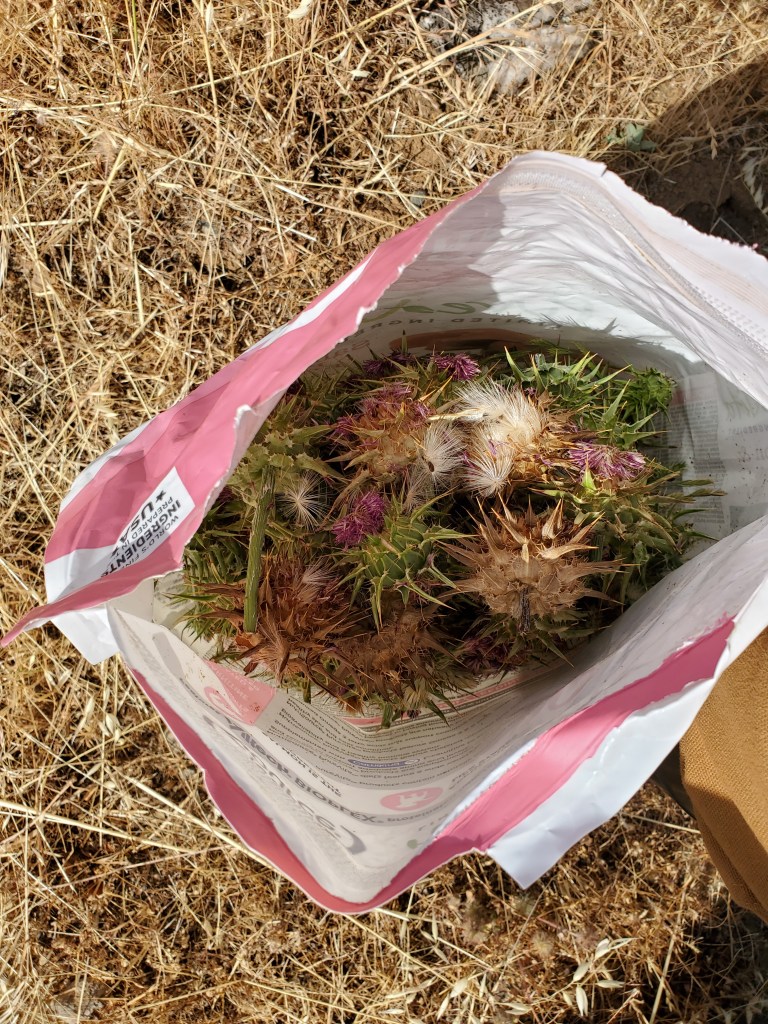
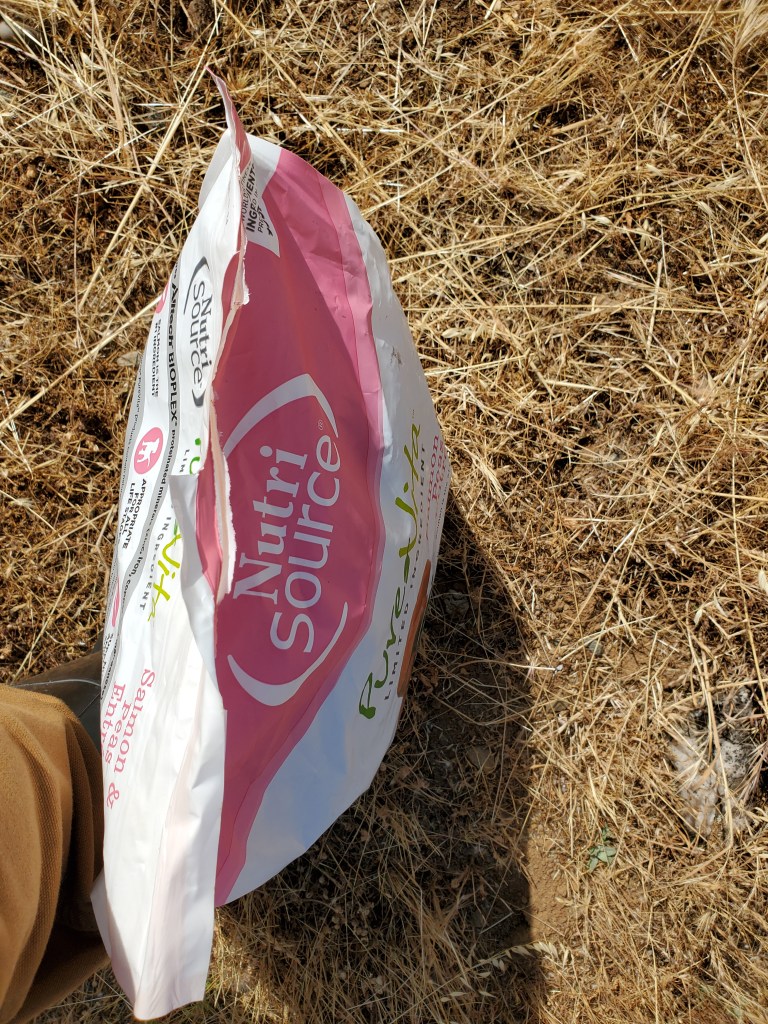
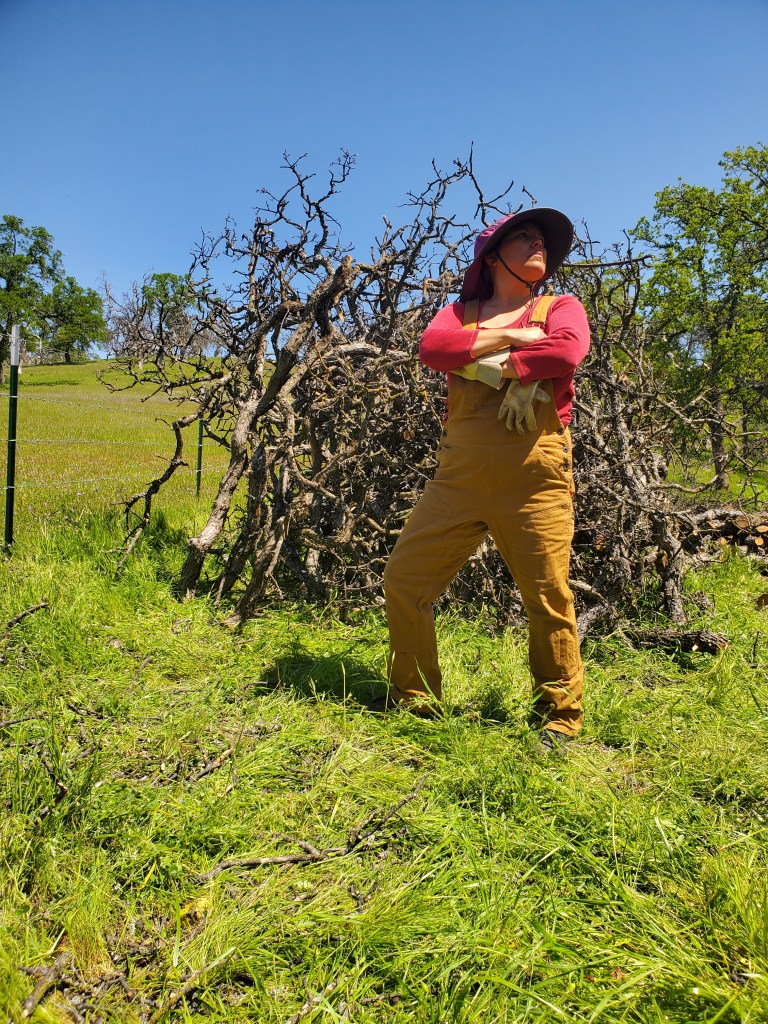
Another not real sexy task is removing seed heads and flowers from the thistle. With the rains, it has really taken off this year. I have had to travel away from the ranch several times this spring, which has meant that the thistle has already bloomed, and some are already gone to seed. Dressed in my canvas overalls and rose gloves, I took out probably 300 heads from the creek out of a million. It is important to use a thick plastic bag that seals. Thistle is so sharp, it can slice through a regular plastic bag and release the seeds you worked so hard to prevent from spreading. For this effort, I used an empty dog food bag with a Velcro closure. It worked great. While I was cutting off bloom and seed heads, I saw a bumble using the thistle blooms. It made me feel slightly better for being so derelict in my responsibilities. At least in those areas, there will be a few thousand less chances for spread.

Befriending a Toad

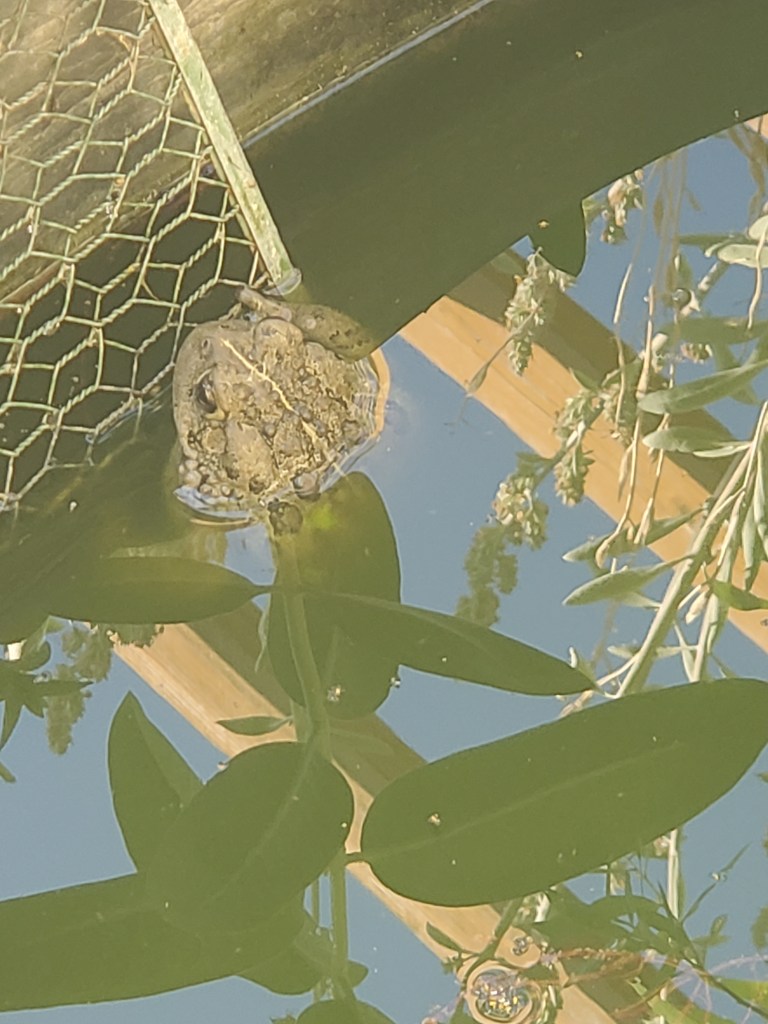
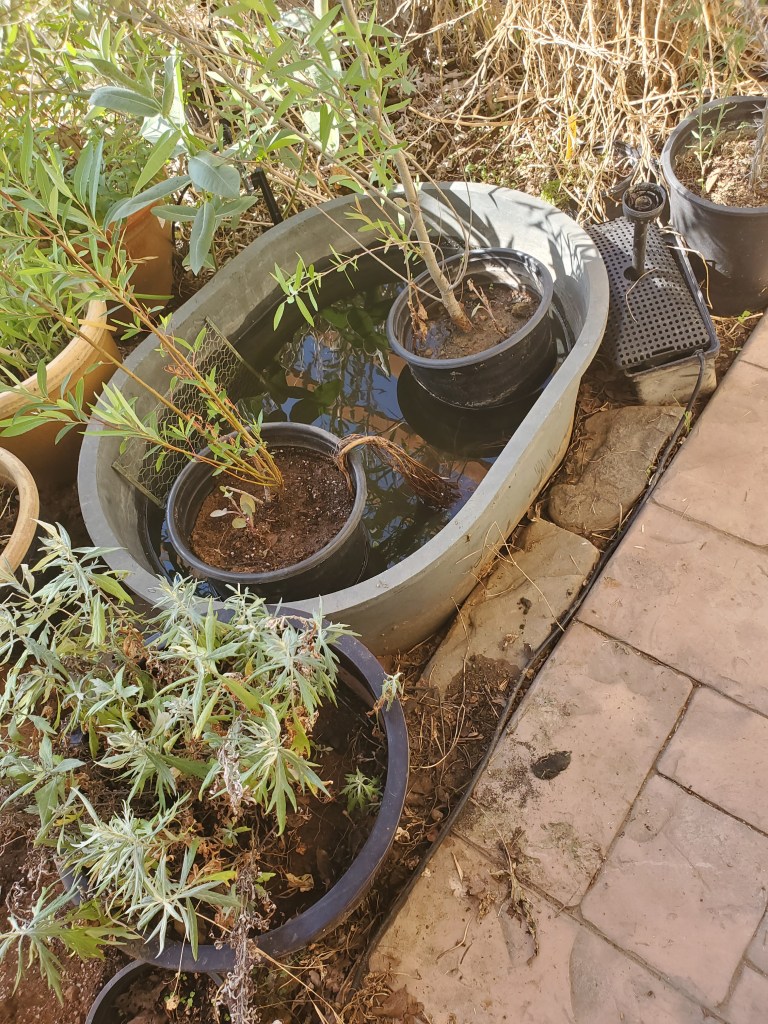
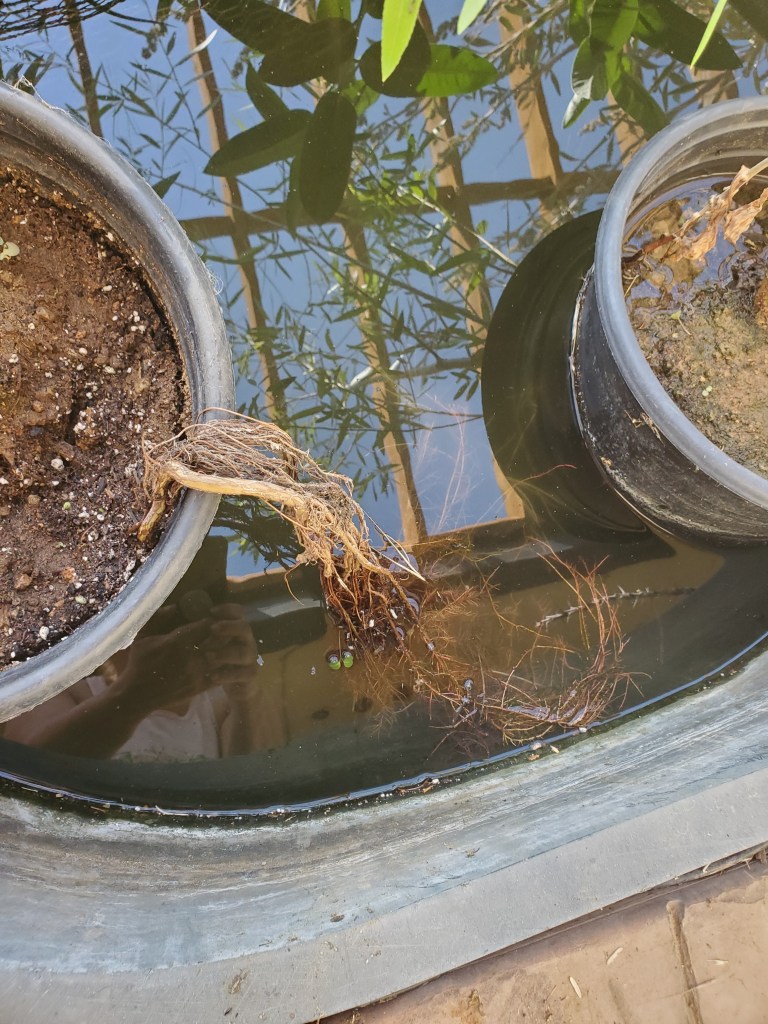
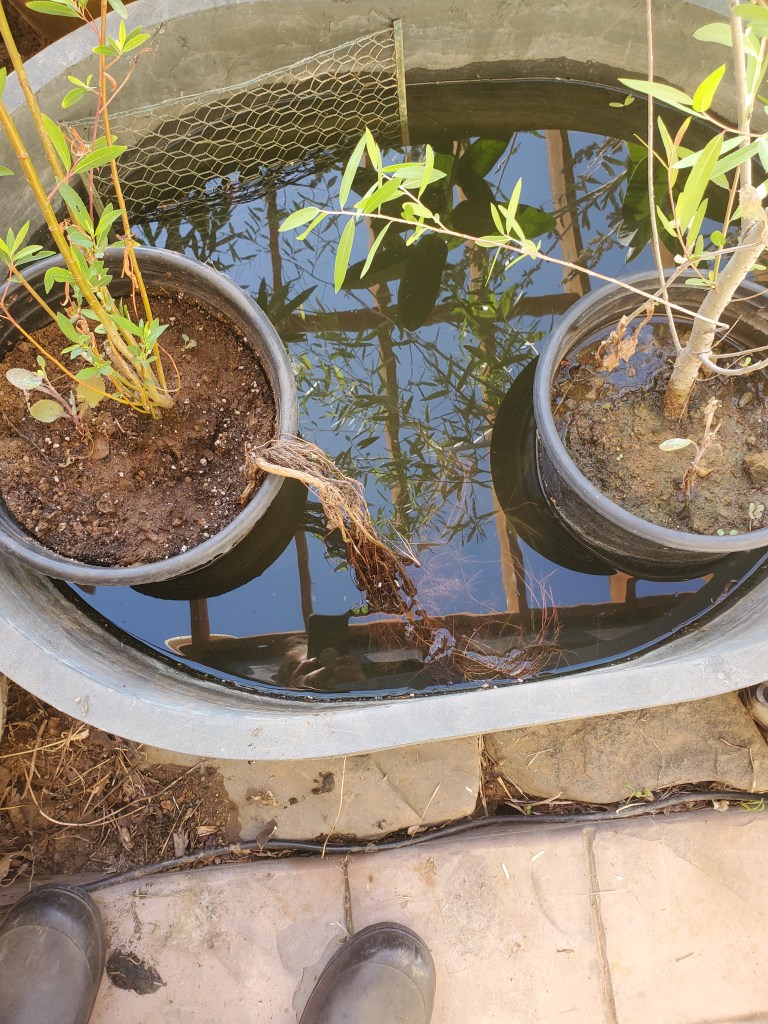
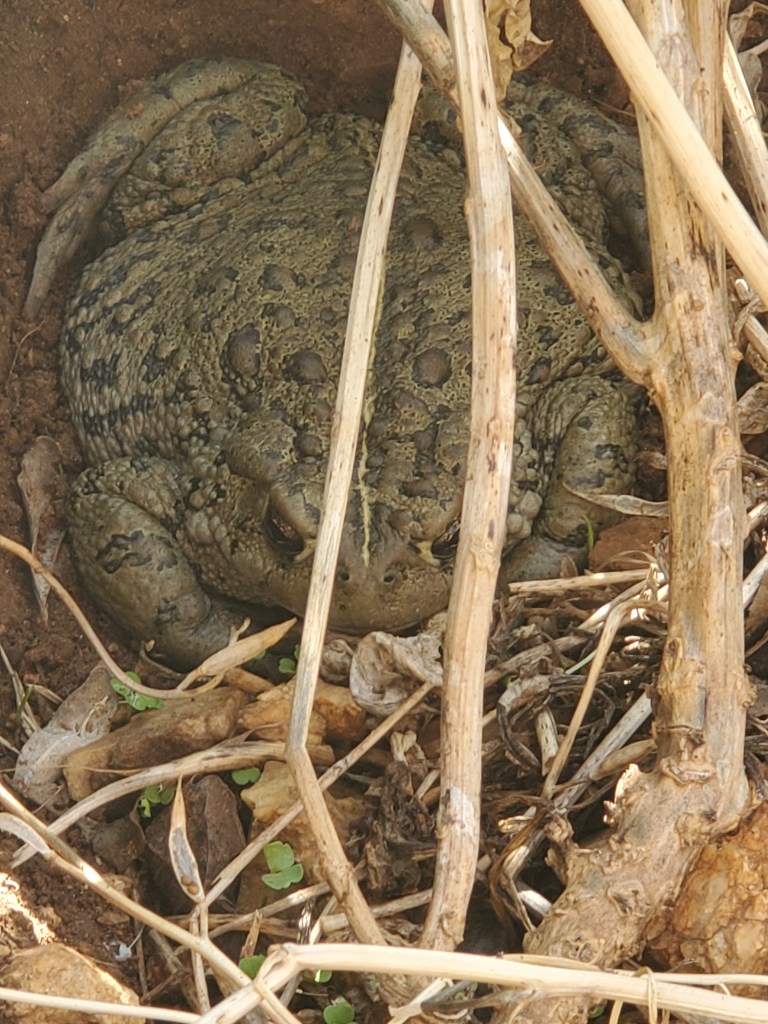
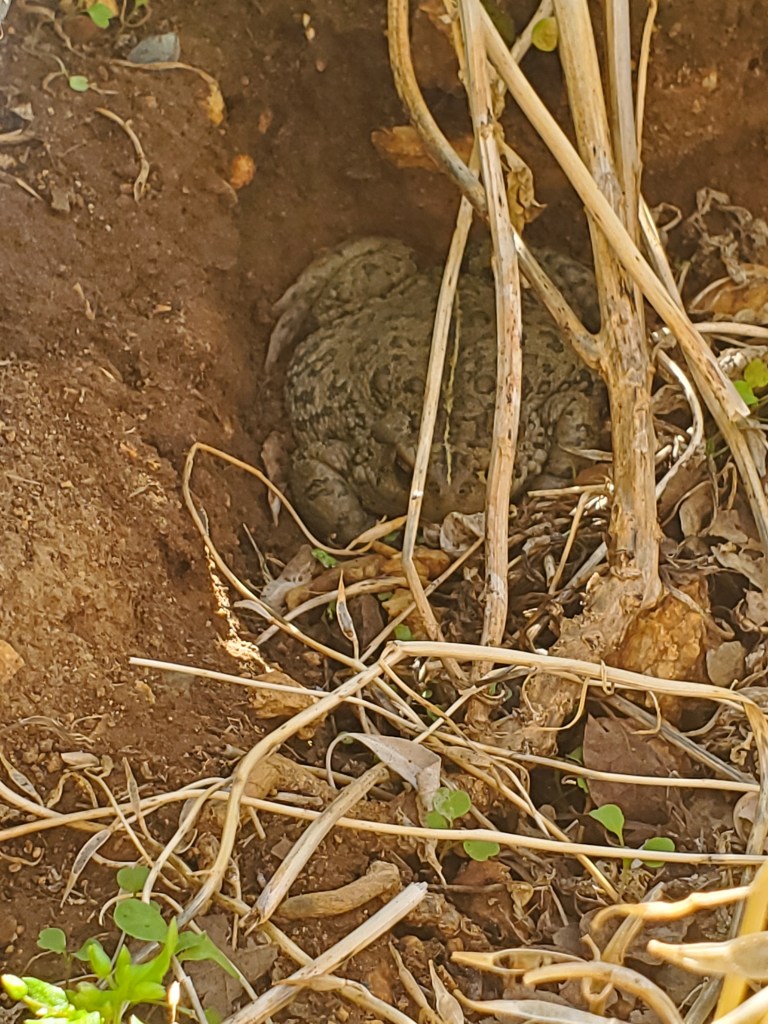
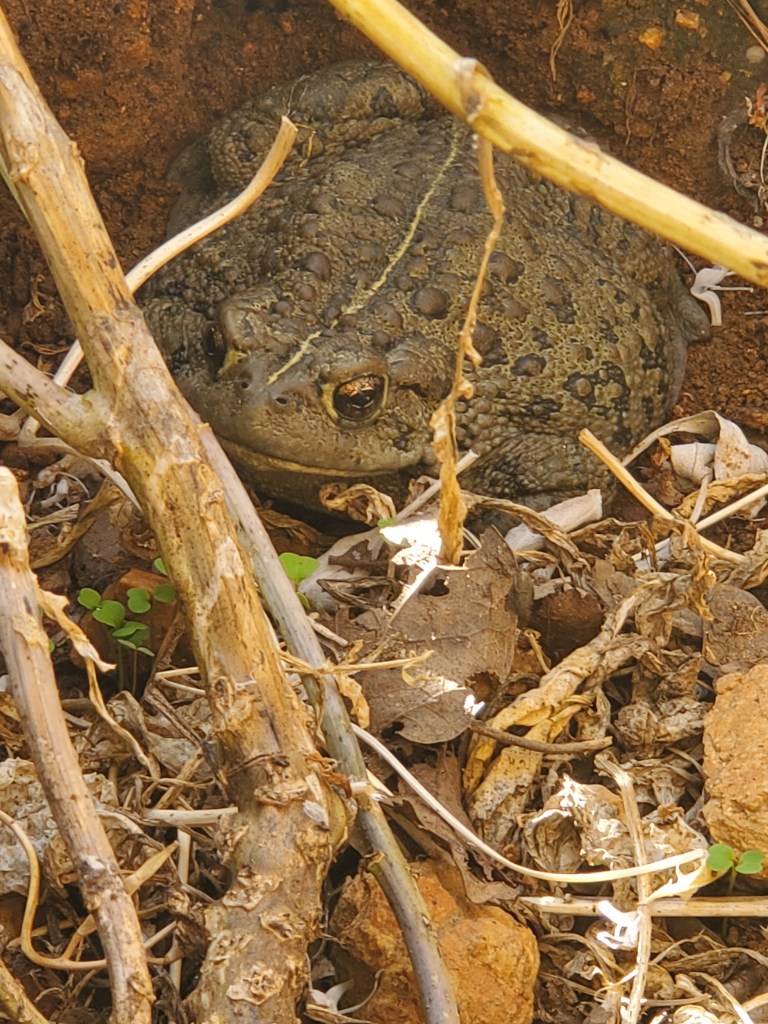
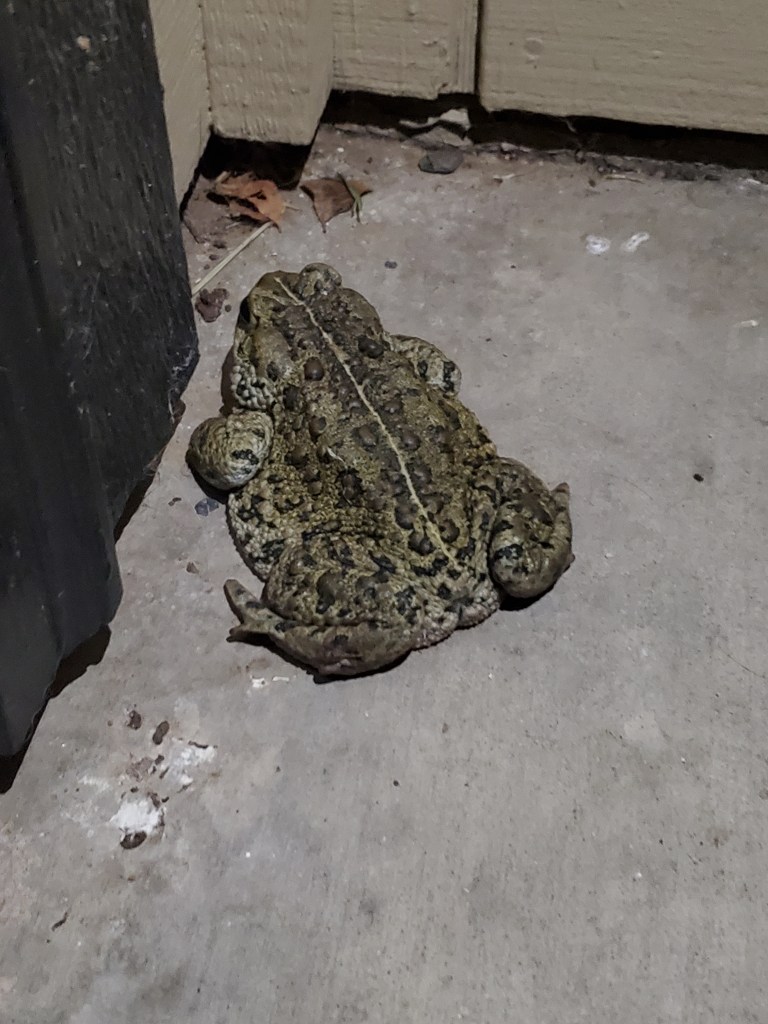
There have had been many frogs and toads around the ranch. While I have not seen many of the small tree frogs (that used to hang out on the doors and windows) in the last 15 years, I have seen several toads near the house each year (maybe that is why I don’t see the small frogs). Amphibians are remarkable animals. They live in and out of water and eat a significant number of insects per day. I am particularly grateful to the toads. They eat grasshoppers, and I have one lovely lady that is protecting my medicine and tea plant area. Her name is Erma (pronounced Air-d-ma, the Spanish way, but I linger on the “air” part trying to make it sound like a “ribit”.). I think she has been in that same location for several years as she can burrow in the ground to avoid dry conditions for quite some time. The area Erma is occupying is watered regularly with rainwater I collected over the winter. There is also a trough in that section I keep half filled with rain water. I still have two Xerces willows in pots in the trough. Their roots are extensive. The leaf cutter bees seem to love their leaves, so I kept a couple at the house instead of planting them in the creek. Erma loves soaking in the trough. I find her clinging to the willow roots or just on the escape ramp, her eyes and nostrils barely out of the water. She is so beautiful.

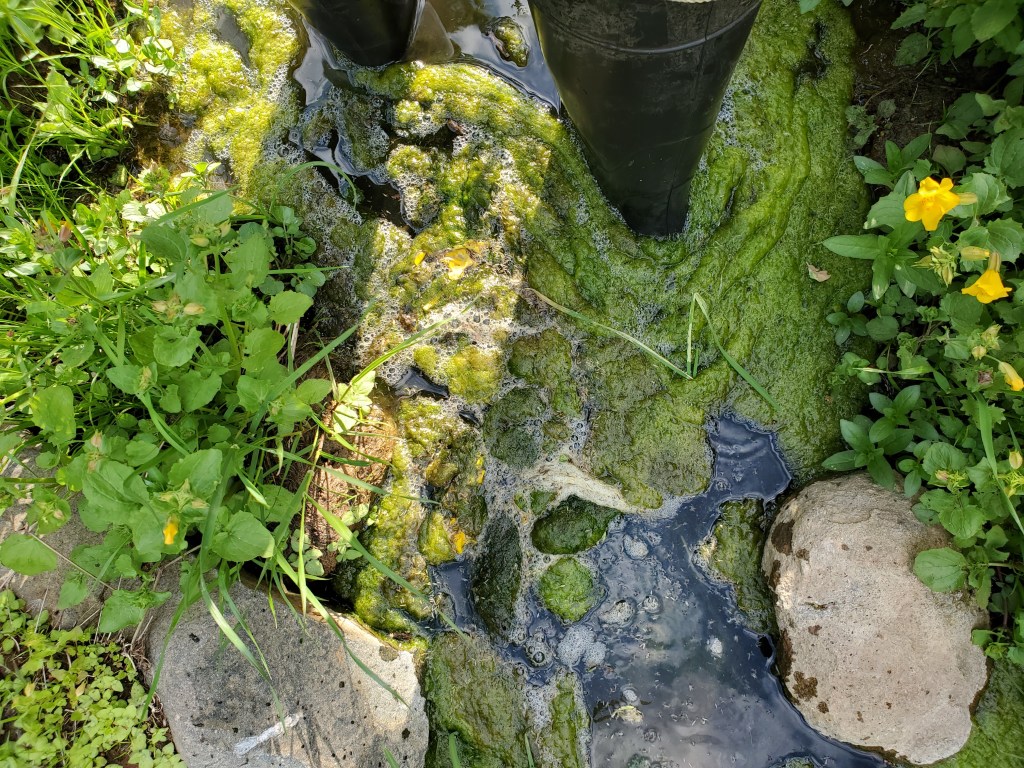
In years past, the toads would defecate on the patio. Their poo is quite large and slimy, as you might imagine. I have not seen any poop on the patio for a few years. Erma, it seems, prefers to poo in the water trough. Even though fresh water is added daily, it became a creamy jade green with floaters. Ick, I know. I wasn’t sure if I should clean out the trough, or if she preferred it, um…highly organic. I believe, for my elevation, it is beyond the breeding time. I did not see any tadpoles when the water was less green, so decided to dump the water.

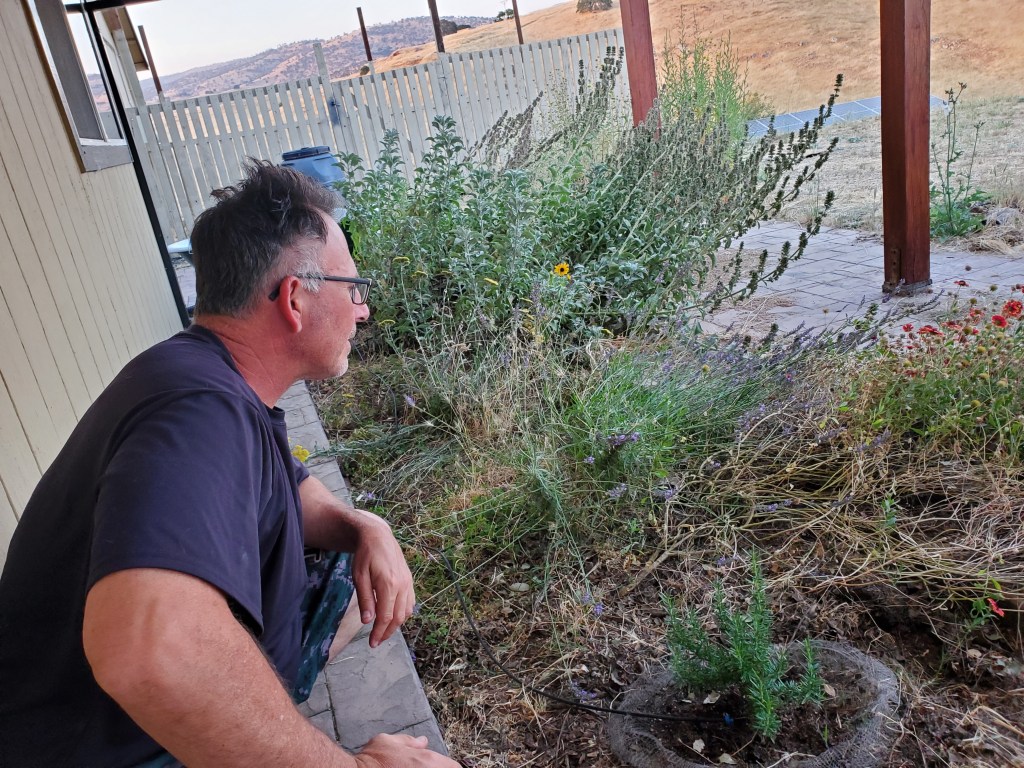
What an effort. I have rocks in the bottom for habitat and to create various depths. No way was I able to lift it, not even David is strong enough, and I did not want to tip it and disturb Erma. That meant I had to use a bucket to bail the water out to a level where it could be lifted. What a messy muck. The water would splash up hitting my face and clothes. Then, I would walk it over to a planted area, bucket full, to release the load. I was thinking that dispersed, these nutrients would be good for the plants and soil. Back and forth, I walked bucket sloshing with the green goop. David sat at the patio table, feet kicked up on another chair, coffee in hand, enjoying the “zen” of my repetitive movement. I don’t mind him watching me work. I enjoy the company. It was a beautiful morning. Finally, I was near the bottom. David put his coffee down and helped me take the trees out, move the rocks and pots away from the site. We lifted the trough to the other end of the patio where I dumped the rest. I rinsed the rocks, escape ramp and roots of the muck. The trough was replaced, and everything put back. With newly rinsed buckets, I began walking back and forth from the south rainwater tank refilling the trough. It was done. All the while, Erma was watching me from her spot under the sage in the dirt. Her throat was pulsing as she stared, which is not something I see her do often. I don’t know if that meant she was happy, anxious or just digesting some bug. No matter, she will have a fresh trough of water for her soaking…and pooing enjoyment.

If you want to learn more, here is an interesting citizen science resource I found that covers amphibians. From this site, there are other credible links to official resources.

Blooms Continue

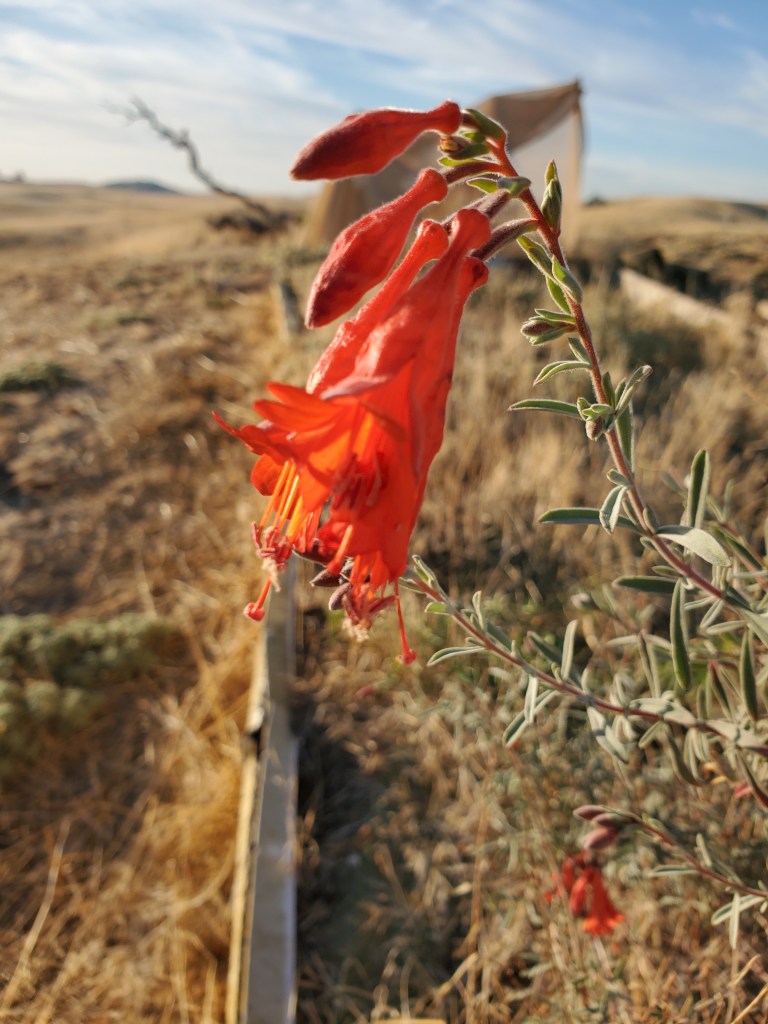
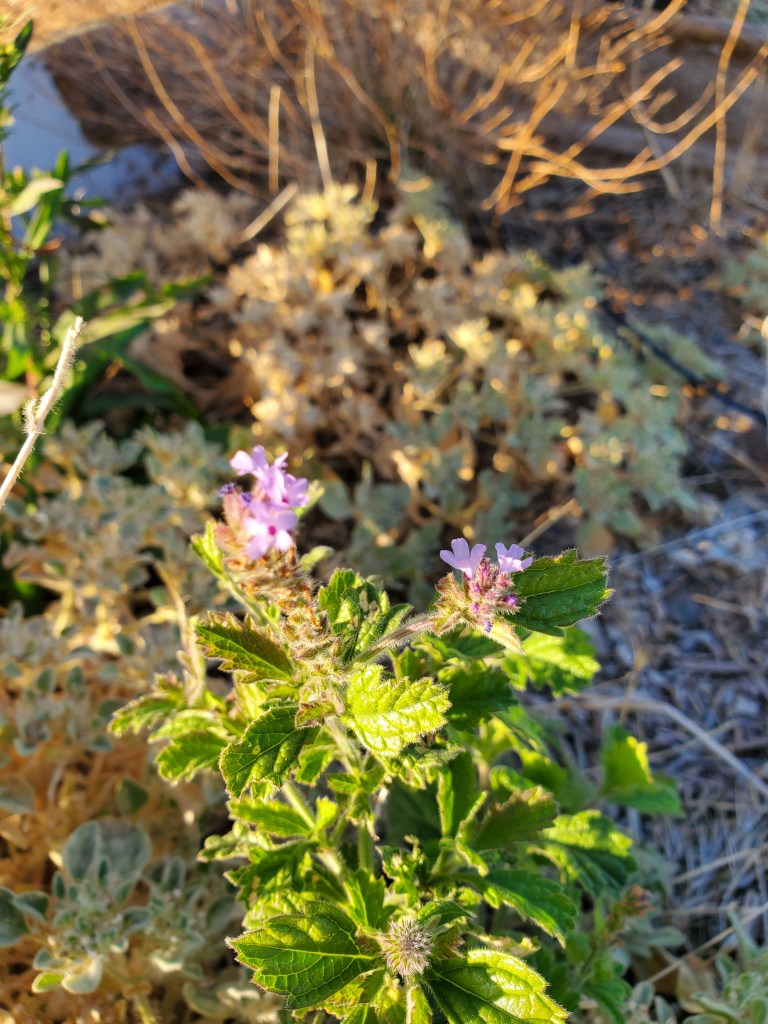
One of the keys to high quality habitat is to have plants that bloom throughout the year. Currently in bloom are buckwheat, sage, lavender, showy milkweed, sunflowers, primrose, yarrow, verbena, gum weed, salvia, Mexican sunflower, and I just found one black-eyed susan. In the creek, the yellow flowers are still in bloom – and of course, thistle. On deck is more sunflowers, buddleia (if the hoppers don’t get it first), narrowleaf milkweed and golden rod. These all have unopened buds.

Excluded Riparian Areas Doing Well

The Odom Creek riparian area excluded from grazing this year is continuing to do great. The black oak and cotton wood seedlings that showed up last year are thriving. There is plenty of yellow flowers in the Spring Creek. Both are still running, but Odom is big and still cold from snow melt. Walking near it you feel the temperature change. You also feel humidity from the evaporation. David found small frogs hopping in the creek and burrowed in the dirt. A young redtail reprimanded us for entering her domain. The mass of rushing water really changed things on the creek. It opened up some of the more narrow upstream passages. I don’t see the massive narrowleaf milkweed, or any of the other milkweed I found last year. The water may have rushed the roots away. There is a massive pile of sand and rock deposited from the storms. Maybe something new and good was brought downstream. I did see many datura and found some vinigarweed beginning to grow (Love that stuff!). Generally, all of the oaks have never looked better. Their leaves are full and deep green. The blue oak seedlings in the exclosures are continuing to do well. Gads, they grow so slow though!

Unusual Visitor

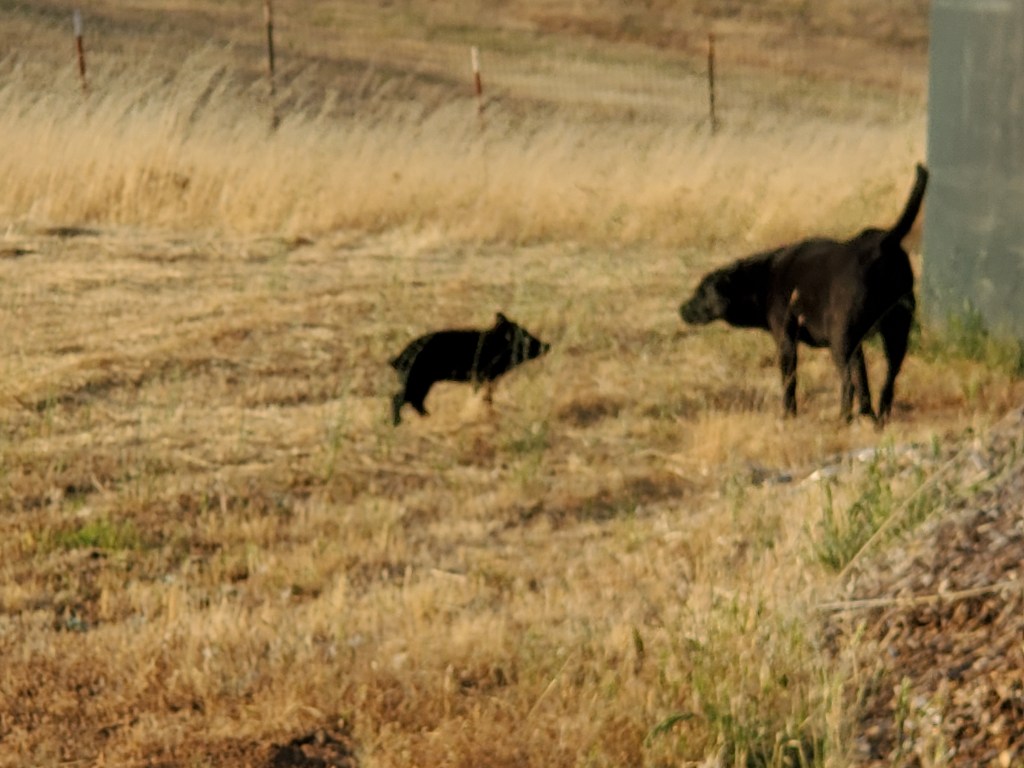
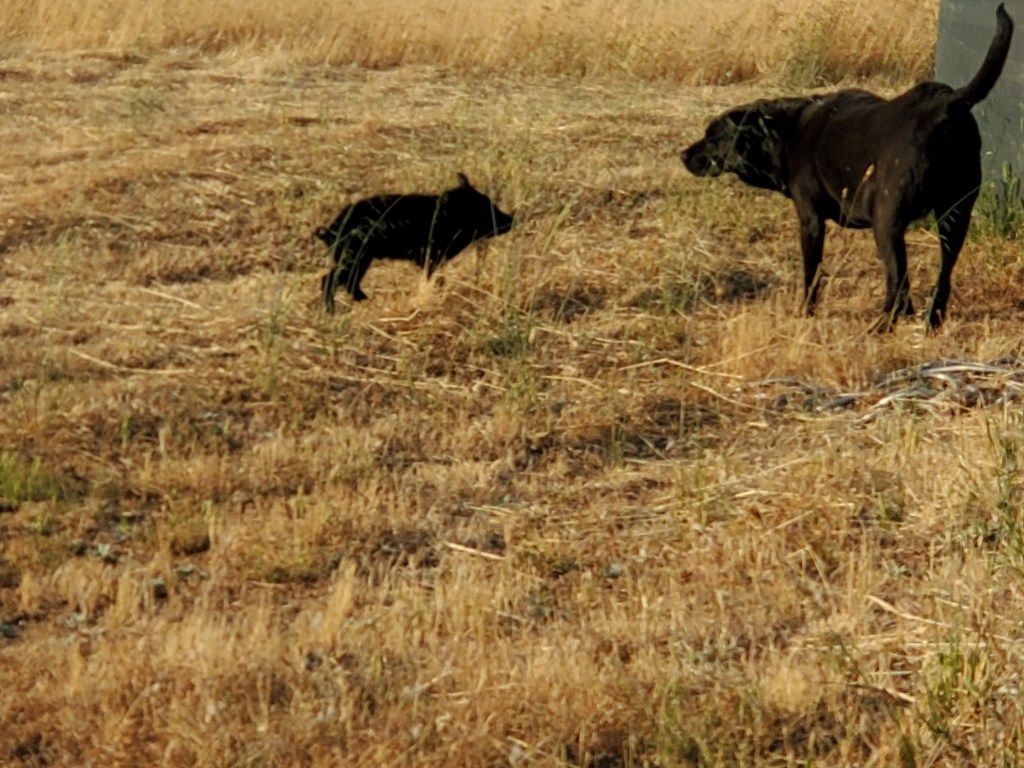
When David and I arrived back home the other day and let the dogs out, a little piglet emerged from the north water tank area. I think she saw our chubby lab Beatrix and thought it was its mom. We were in shock. This has never happened in the 21 years we’ve been here. Immediately, we began looking around for mama pig. Wild pigs are extremely large and intelligent. The last thing we wanted to do was get in between a mom and her baby. David, being the sweet giant he is, immediately went into the house, cut up an apple and tried to give it to the baby. It charged him, and he gave up. I said, “Let’s just leave it alone. Mom is either watching us right now, or she left it because there is something wrong with it.” I thought about what I might do if it was orphaned, and decided I would let nature take its course. They are non-native after all. We went into the house. When we came back out 15 minutes later, it was gone.

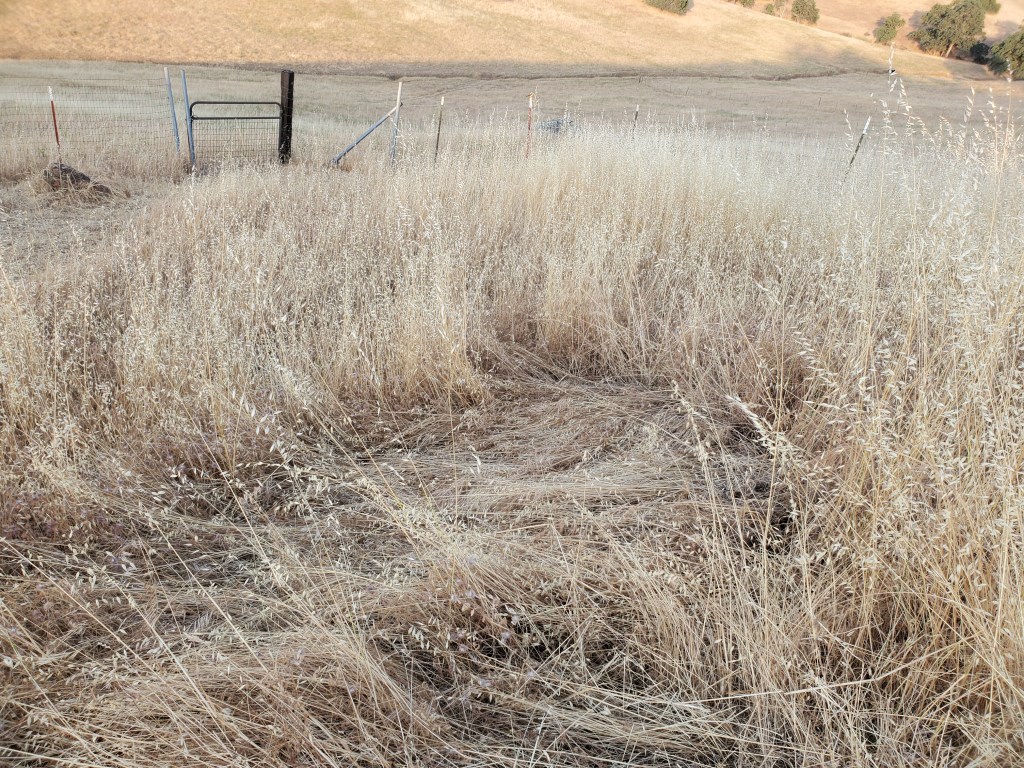
Sows (female pigs) leave their drove (or herd) to have their babies. We found the area where it appeared the large mother bedded down. I don’t know if she birthed her babies close to the house, but it seems she felt safe enough obscured in the tall grass, David had yet to cut, to have her family close by us dogs and humans. I take that as a compliment. Wild pigs are non-native and very destructive to the ground (If you look at an early blog post “Wild Pig Attack”, you will see how they ripped up one of my first pollinator plots.). However, it is a privilege and wonder to see anything as unique as this.

Planting Seeds for the Months Ahead

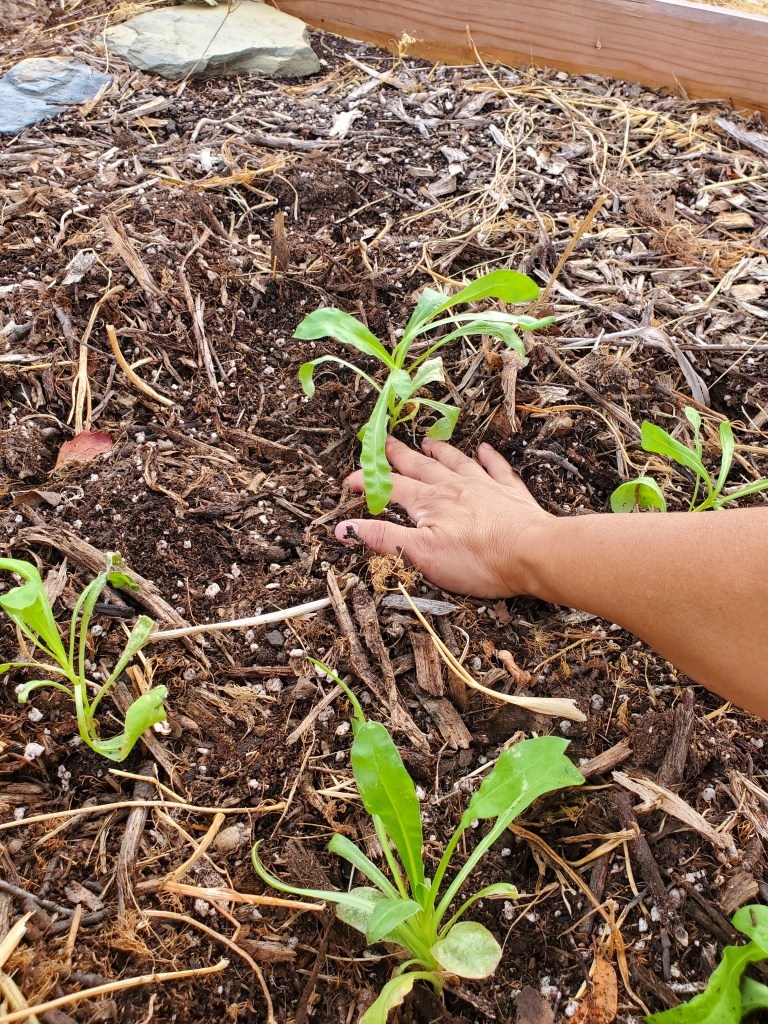
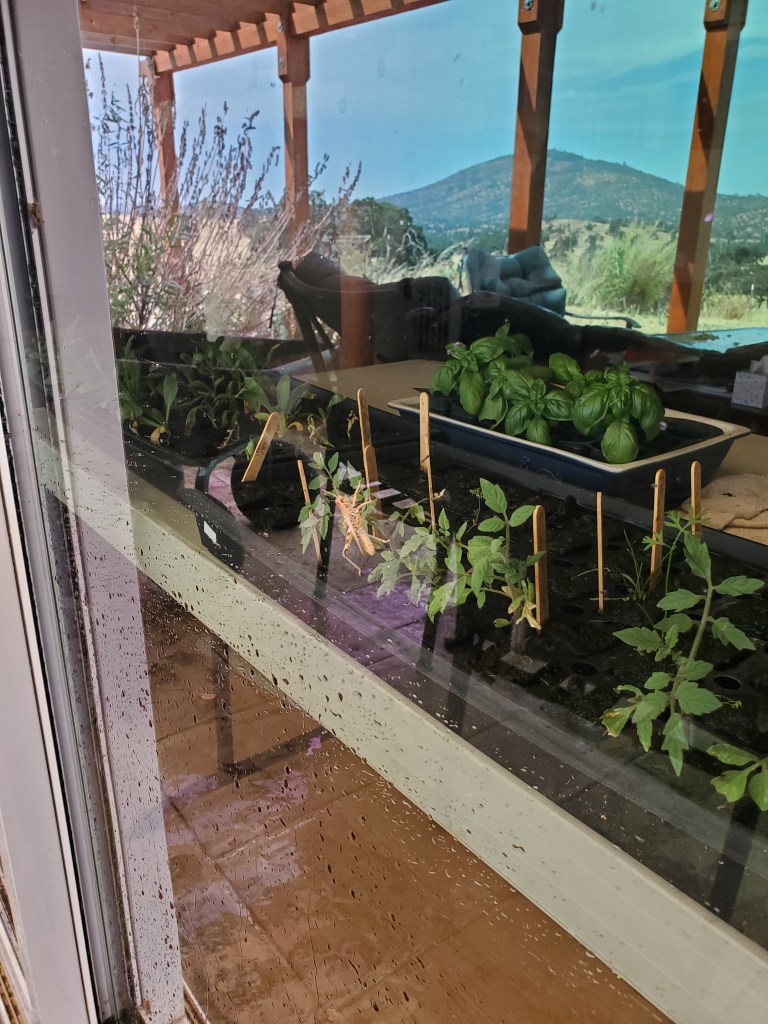
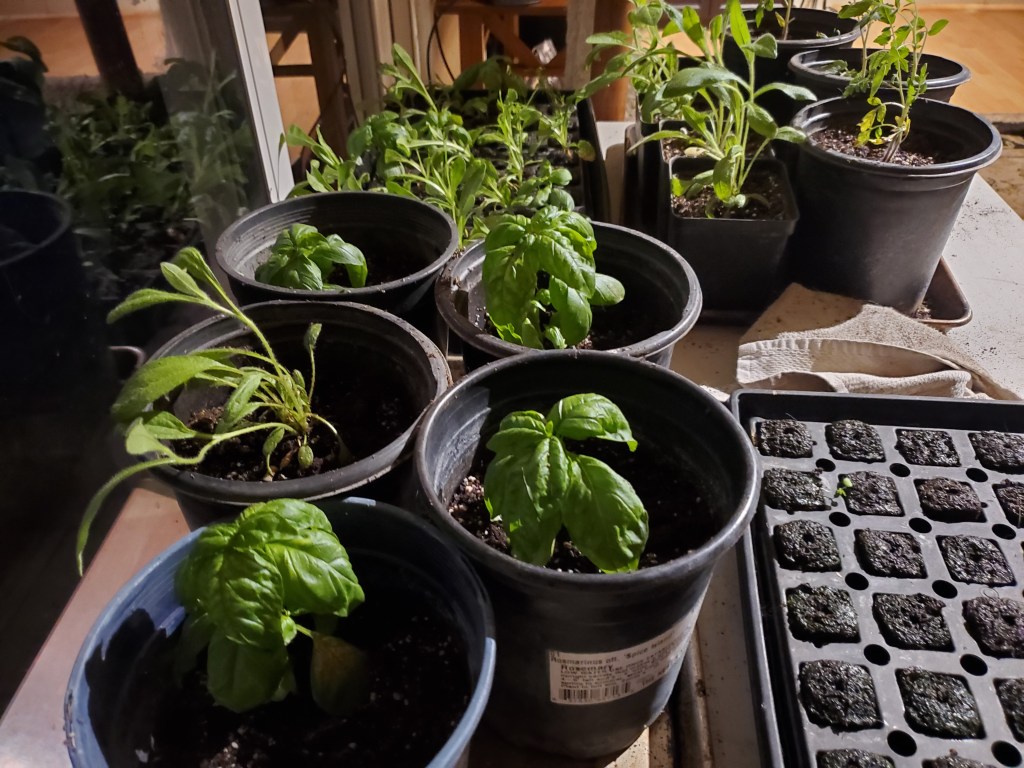
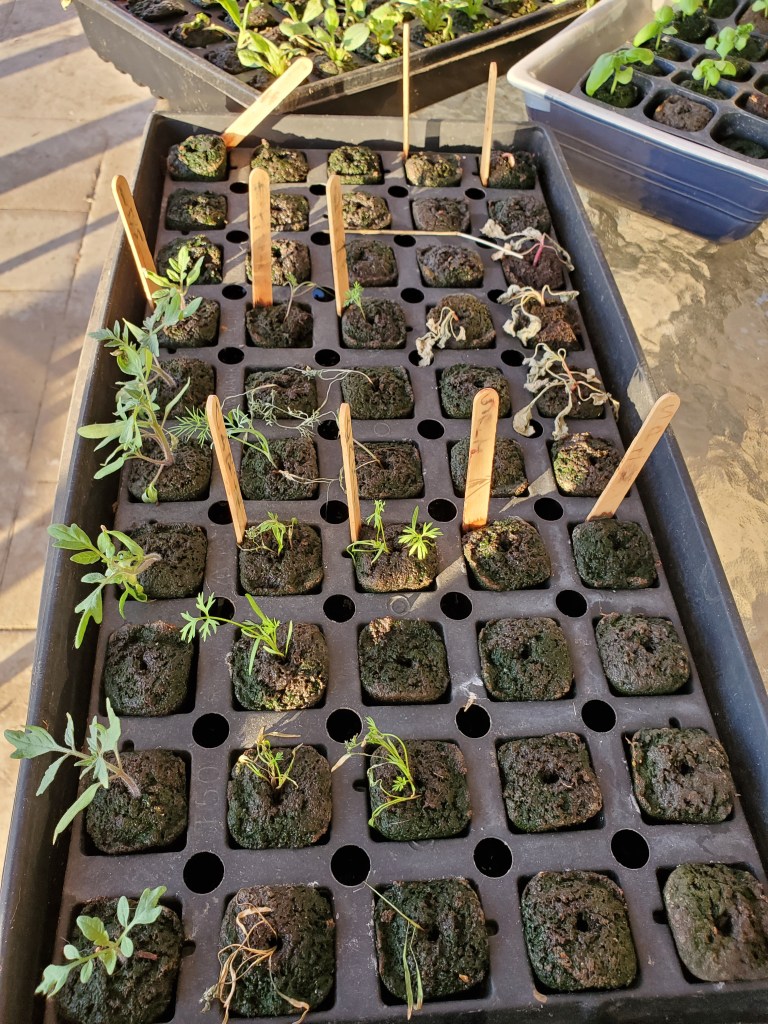
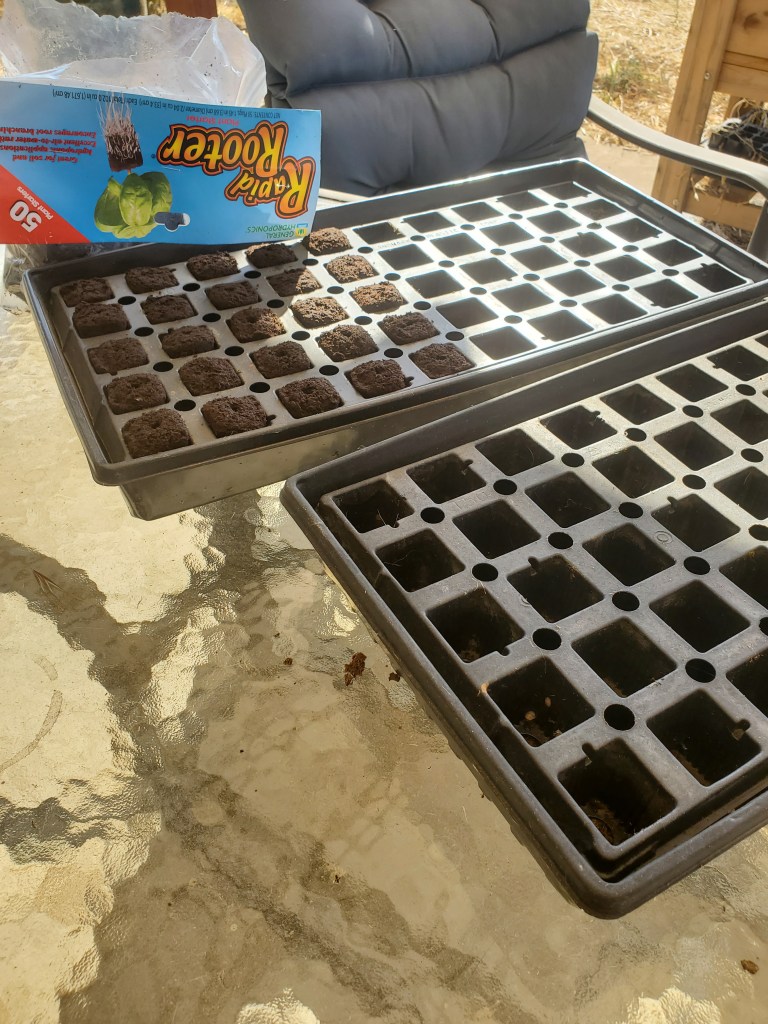
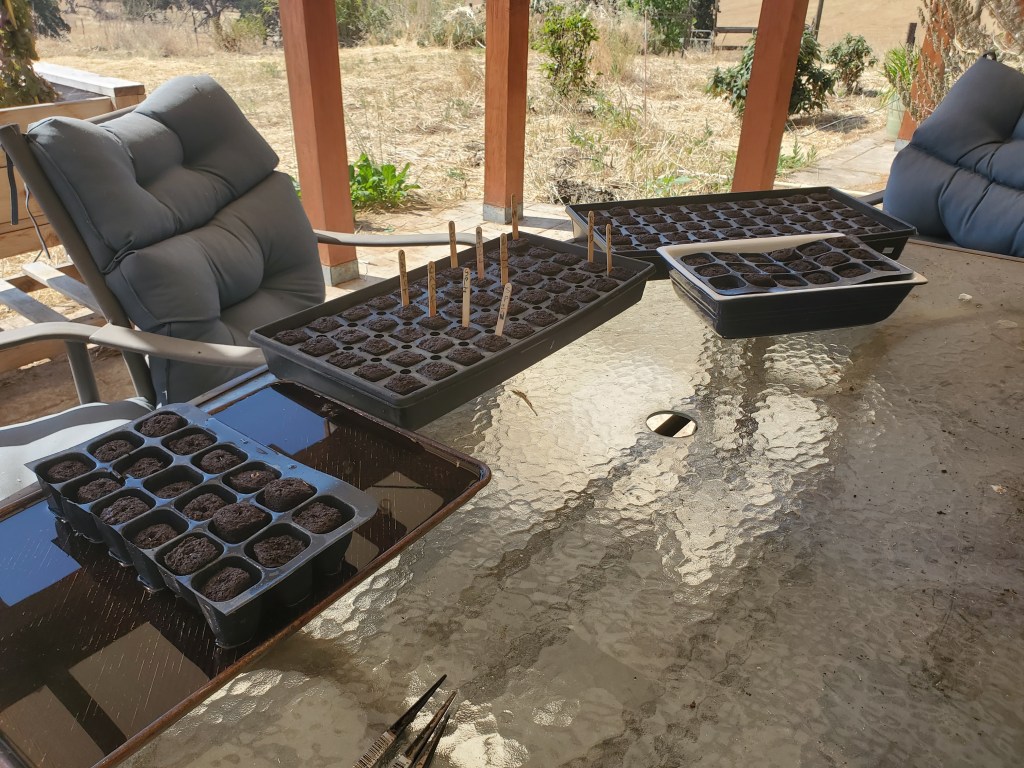
I spent the morning the other day cleaning up, repotting, and planting seeds in the seed tray. I seeded marigolds, black-eyed susan, coneflower, and road-side sunflowers. I also put in some seeds for my garden – spinach, tomato, basil, carrot, radish and dill. I have been eating out of the garden -lettuce, arugula, peas, chives, mint and onion – and want to continue through the summer. I planted a lot of basil. My sister enjoys making pesto, and I greatly enjoy eating it. I plan to bring her the 18 seedlings for her cooking pleasure.

Wanderings

Bright sides. This September, it will be four years since I began this habitat journey. I will save my full reflections for an anniversary post, but, despite the heartbreaks, stickers, and injuries, this ride has been one of the best things I have done with my abilities. I have learned incredible things. One is to chill out and look on the bright side. This spring we have not had many raptors, which is highly unusual. In fact, it has never been that way in the open grassland part of the ranch. The sky has has never seen a day without a red tail. My ears have captured the bouncing chords of p-eee-ahh, p-eee-ahh and brought them inside my head, and then to my heart, every day. There is a family that lives on the hill. They soar with their babies about now, in threes and sometimes fours, if one from the previous year makes it home. My ranch is named after them…Taawe Bwia, or land of the hawk, in my native language. Where are all the taawim (hawks)?

During the deluge this past winter, the drops turned to torrents, cascading downhill, filling every hole and then coming out every hole, spiraling, like eddys, when in the flats. I remember seeing air bubbles coming from the holes. I thought it was from the energy of the movement. But, maybe it was from what lived below.

As I look back on the blog posts, the imprints of my memories, thoughts and emotions, I see much disdain for the underground relatives, the gophers, moles and voles. Whatever was taking down my plants – I resented. While I always respected their right to live, to have families and feed their families, just as I do, I was still distraught. All the work, the expense, the hopes and desperation I had packaged in my heart, my singular focus on doing my part to help the monarchs survive, it blocked my senses, the whispers from my ancestors, telling me u betuku bwia weweriam, empo Heather hikkaha. Hikkaha (The under land relatives, Heather you listen. Listen.). Last year, I began to hear. I made peace. I remembered that they are aerating the land, allowing water to go deep to roots, allowing other creatures, like bees and snakes to have homes when they are not there. They are teaching me what belongs and at what scale. They are helping me access soil so I don’t have to dig, and they are bringing in yo’oem (my ancestors), the hawks to me. They give their lives for Taawe. The gophers have been so generous, and I have been so ignorant. Without them, their size and numbers, Taawe cannot be here – and that is a tragedy. Taawe eats mice, lets me know to be alert when something is passing through, reminds me how we are connected to above and below, and reminds me that I am seen, even when I think I am alone someplace or in my mind’s space. I am part of something.

Today, as I walked among the yarrow that is finally spreading beyond the cages, I saw a bloom wiggle, then drop. A crunch, crunch. Another wiggle, then drop more, then one more time and crunch, crunch. I did not try to interfere. I did not growl. A slight smile crossed my face. I said, “Take what you need.”

Taawe will be home soon.

More Tragedy. Bumbles. No Monarchs…Yet.

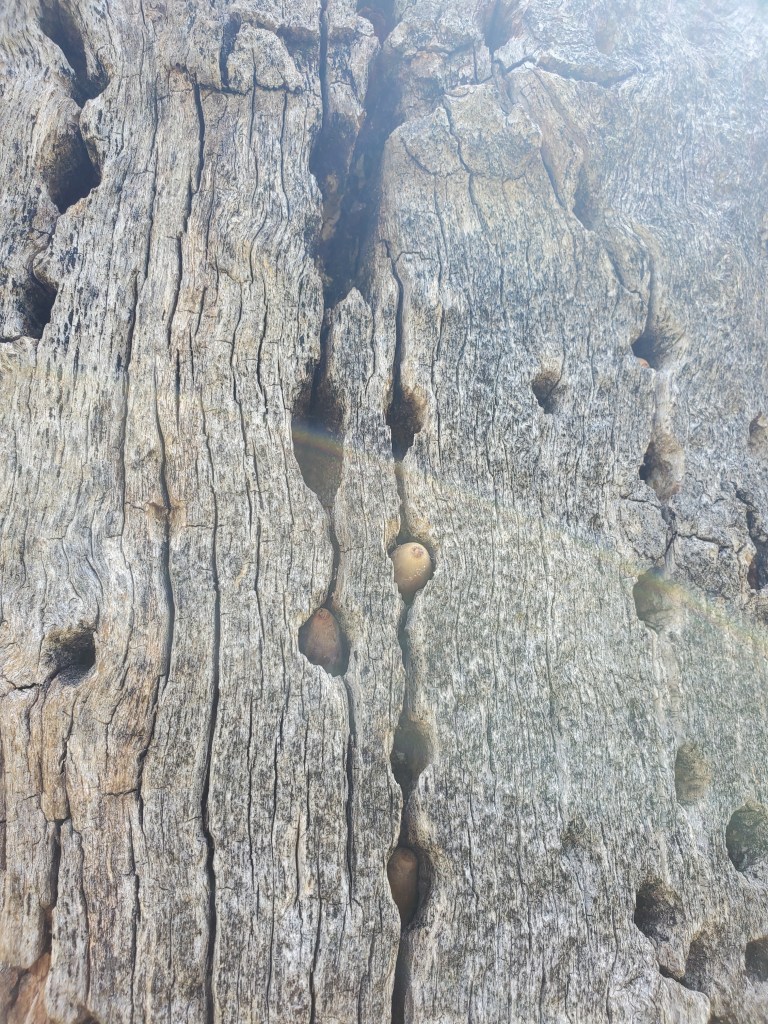
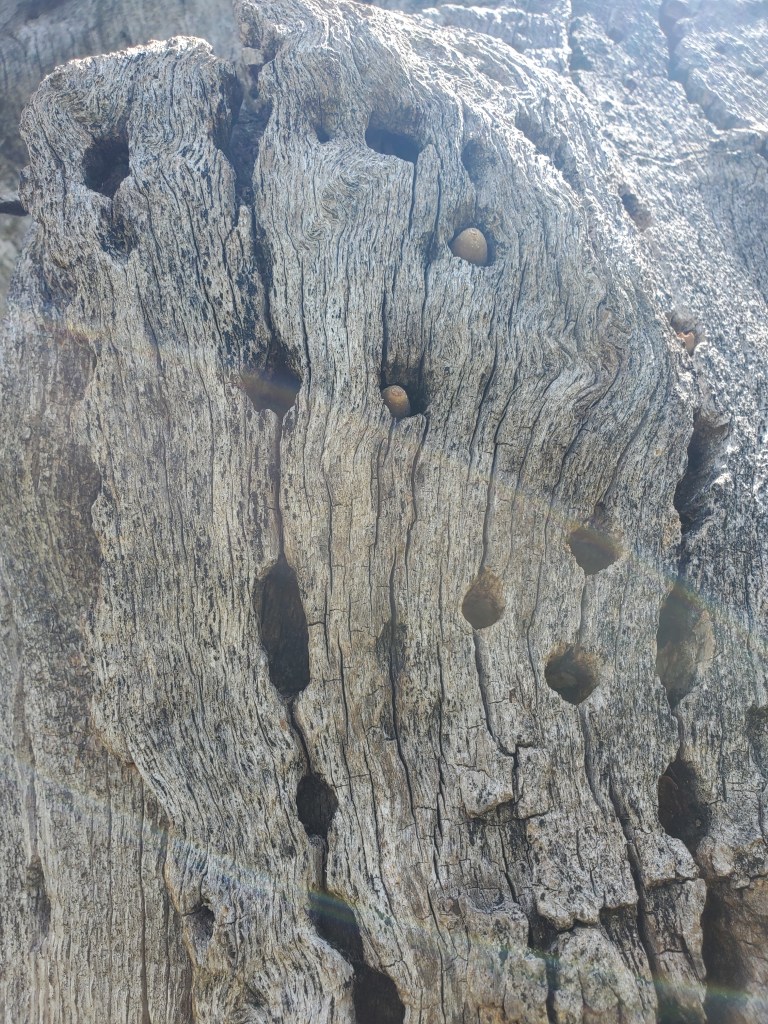
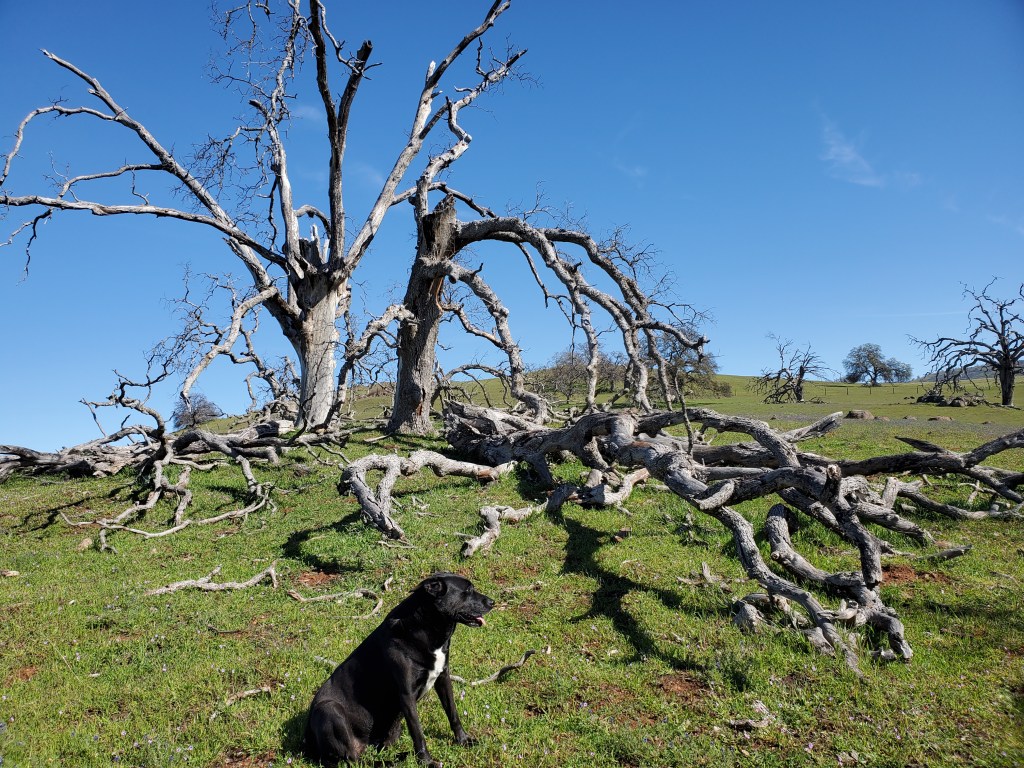
The record waters of Winter 2023 came too late for my great, great grandmother tree. Last year, in this blog, I relayed how she was losing leaves in May, when they should have been growing out and green. Then, in my August 2022 post, I shared that all her leaves turned brown all at once. That must have been the moment of death. Despite the signs, I held out hope that she would recover. When all the oaks began sprouting leaves, and she did not, I deluded myself that she was just late. Eventually, I had to admit she was gone. When he was over in March, I consulted Ron Allen of Mariposa Native Plants (He is also a UC Master Gardener). He looked at the branches, chose one of the smaller ones, and it snapped right off, dry throughout. He said she was gone.

What I determined I needed to do is plant seedlings. After the loss of my favorite oak in December 2022, I resolved to collect acorn and plant them. There are no guarantees with that, and we have certainly not had any seedlings over the years with all the acorn those trees produced. This is why I had to pivot to seedlings. I got two from Ron. We discussed how the roots of the trees, even though dead above, can still be alive for some time below. Ron was telling me about how these dead trees are called nurse trees, and when planting seedlings within the crown, they have a better chance of survival because the roots protect them. There is communication and sharing of resource. There is so much being written now of what is happening below the surface of the soil, and it is magnificent. Of course, Indigenous communities knew about these connections. Many stories contain valuable information and lessons that survived colonization. I will see if I can share a story in a future post.

Bees Have Emerged

I am happy to report that the native bees have finally emerged. I have seen several semicircle, precision cuts in leaves telling me that the leaf cutter bees are out. Although I saw the female crotch bumble bee in April, I saw the majority of other native bees beginning mid May. We had several groups of smaller bumble bees. This is fantastic since they are a species in decline. In each grouping there was a larger sized bumble and two or more smaller bumbles. I wonder if the larger was the female and the smaller were males. There were many, many more European Honeybees competing with the bumbles for food. Fortunately, I have significant blooms this year and think there is enough to go around. I also saw small gray native bees with the abdomen stripes. They seemed to disappear when I got close with the camera. Although I am nearly finished with my pollinator steward certification program, I am just scratching the surface of available knowledge on native bees. There is so much to learn and so little time to dedicate.

Plenty of Nectar and Milkweed – Few Butterflies

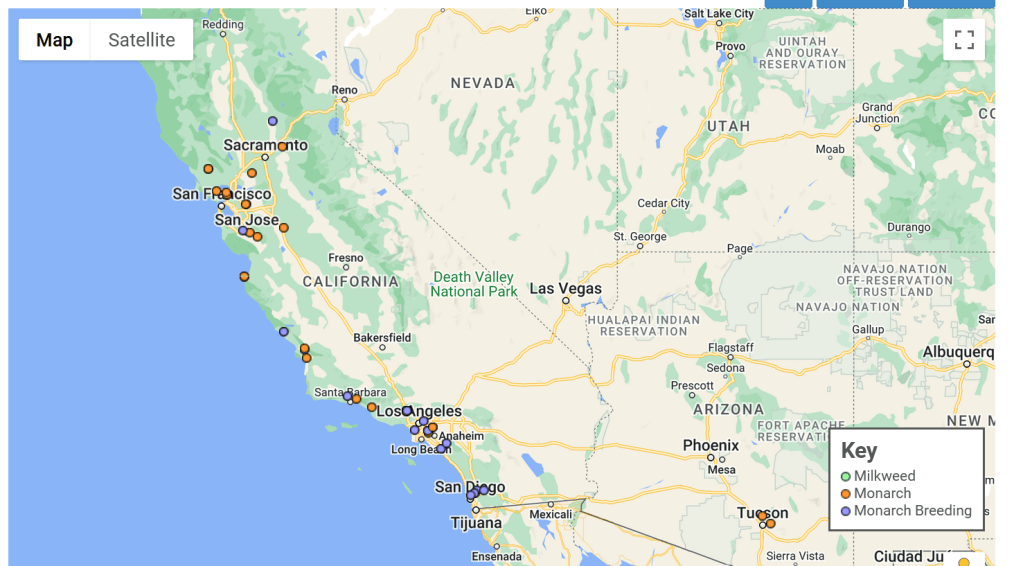
Above is a screen shot of the latest citizen data on the monarch migration. It comes from the Western Monarch Milkweed Mapper site. The cool temperatures have had them leaving the groves later than last year and possibly staying in more temperate areas longer. Far less sightings have been recorded as compared to last year. I am not sure what it all means yet. Reader, would you help? If you are in the west, please use this tool to document sightings of monarchs. I am going to ask my crowd on social media to help track them as well.

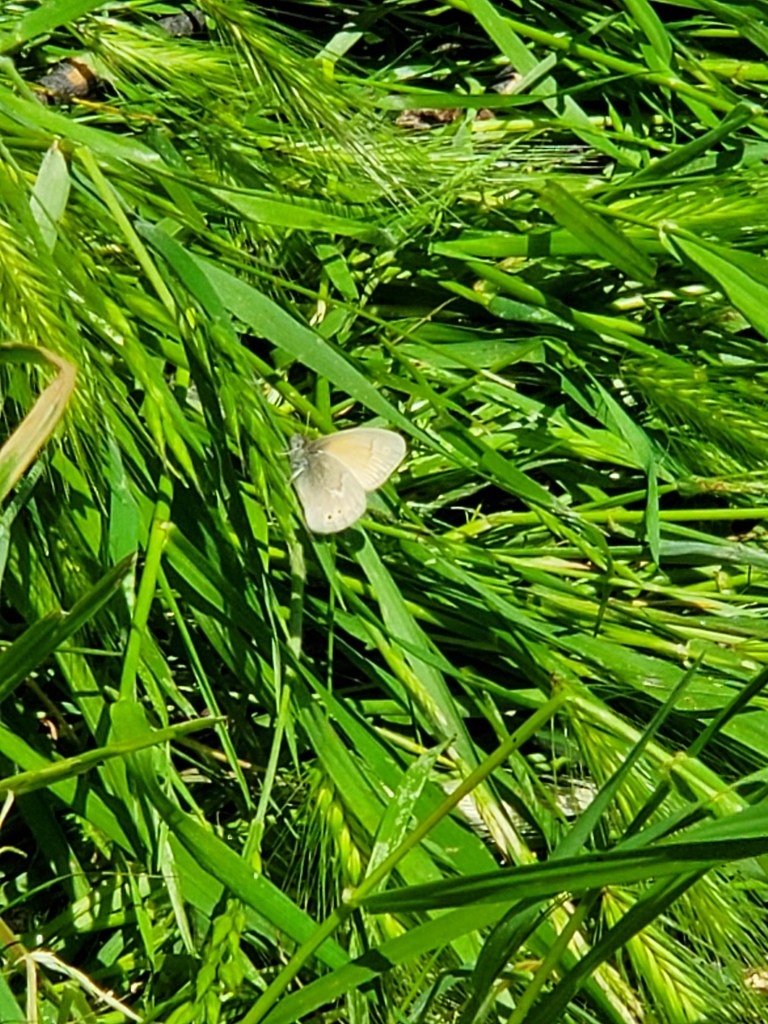
As of this writing, my many stands of mature milkweed have gone unused. There is absolutely no sign of chewing (herbivory) on the plants. I have seen only a handful of butterflies. Most were painted ladies, some cabbage and sulphur, and one red admiral.

I am still holding out hope for monarchs. Some of the California Milkweed has fresh flowers sending scent into the air. Temperatures have been erratic, which may have contributed to the butterflies being mistimed with the flowering.

From Green to Yellow

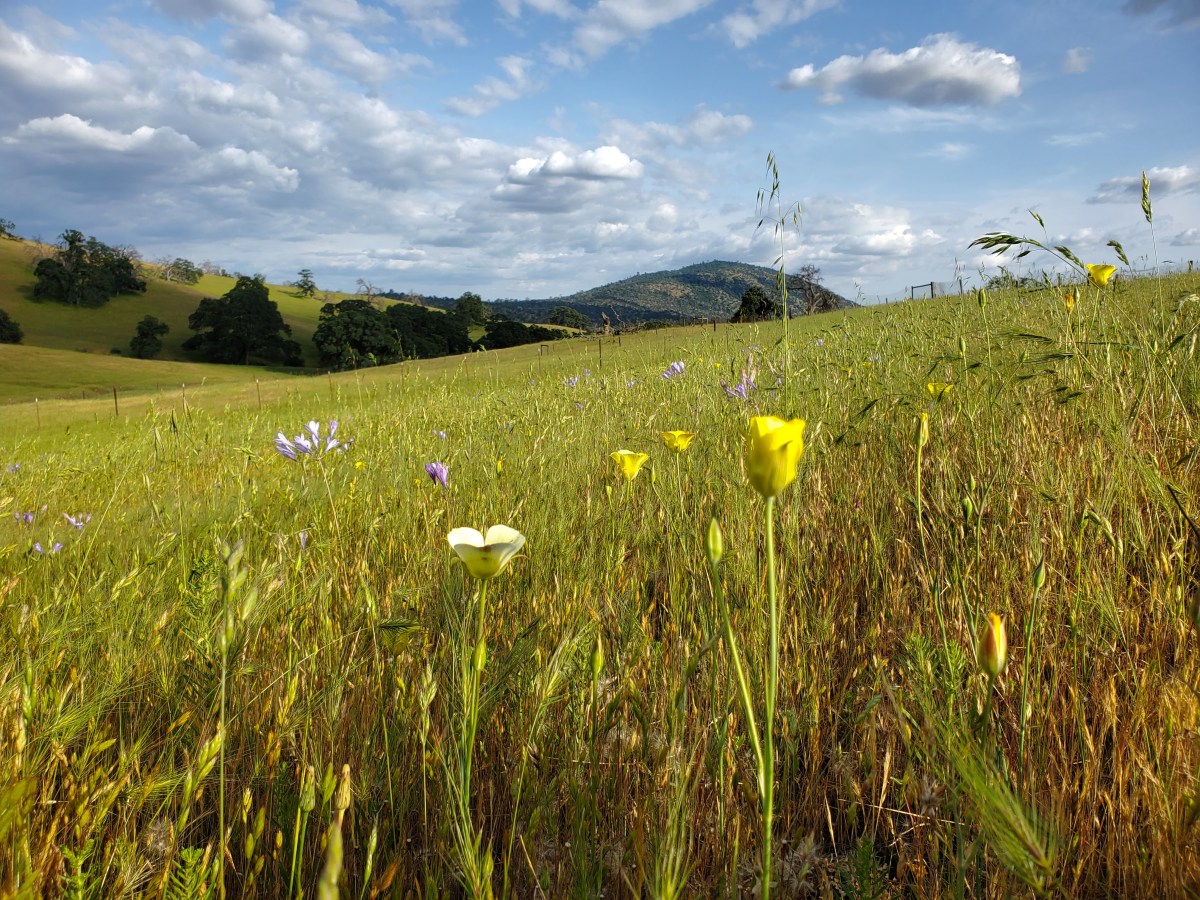
Every year I am stunned by how rapid the shift is from green grass to yellow grass. Many of the photos in this blog post were taken two to three weeks ago, so you will see things as green. By the end of May, most of the landscape turned yellow. There is still water remaining in the arroyos and the swale pond. Typically, by June, they are all dry. The springs are still green as well as the recharge areas in the arroyos. Tarweed is up and some are in a very early bloom. The doveweed has emerged and will be large by August – or possibly earlier like the tarweed. We still have a large number of wildflowers – purples, whites, yellows. A beautiful native toad is living in my patio garden area. The cows are fat and happy. This is a year of abundance of food and water, but not a very large population of insects to use them.

Waiting For Monarchs. More California Milkweed and Visitors.

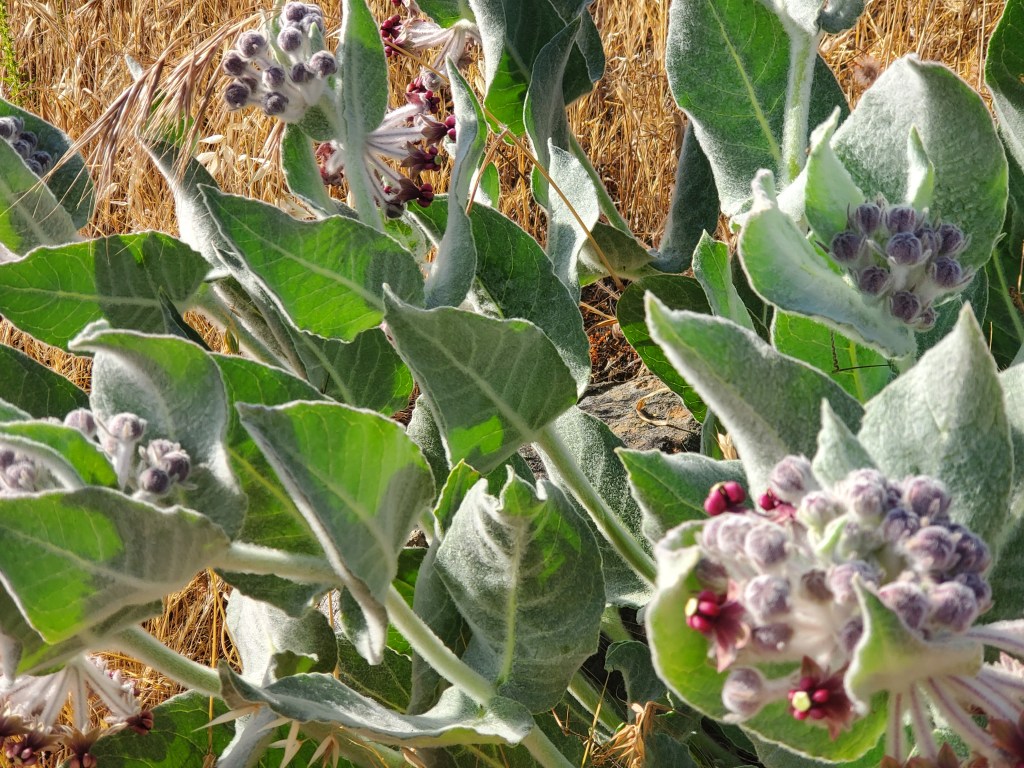
Blooms begin to emerge on the California Milkweed

It is breathtakingly gorgeous in the foothills right now. Between the calm temperatures, billions of wildflowers, nectar-laced scents, and avian concerts, it is magic. There continues to be water running in the lesser creeks and drainage’s, and the soil moisture content is high. With the increasing heat, the grass has grown a foot in a few days obscuring some of the native plants that were just inching out. Fortunately, some of the milkweeds got started before the recent warm-up, but, at least for the milkweeds, grazing has continued to give them a chance.

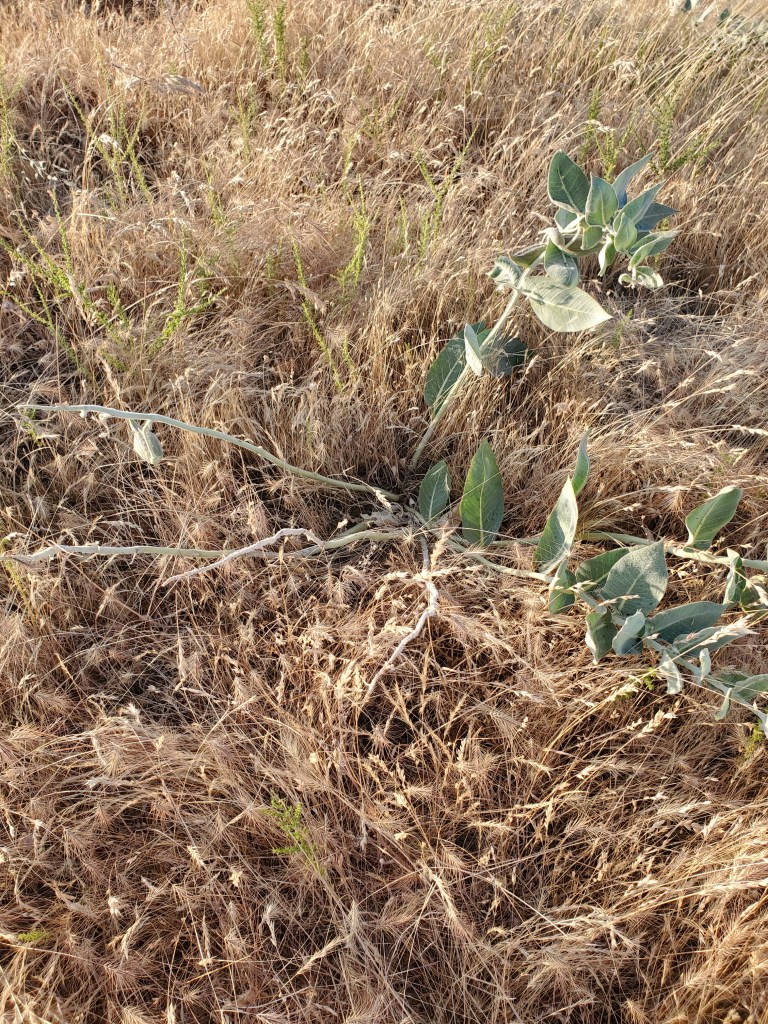
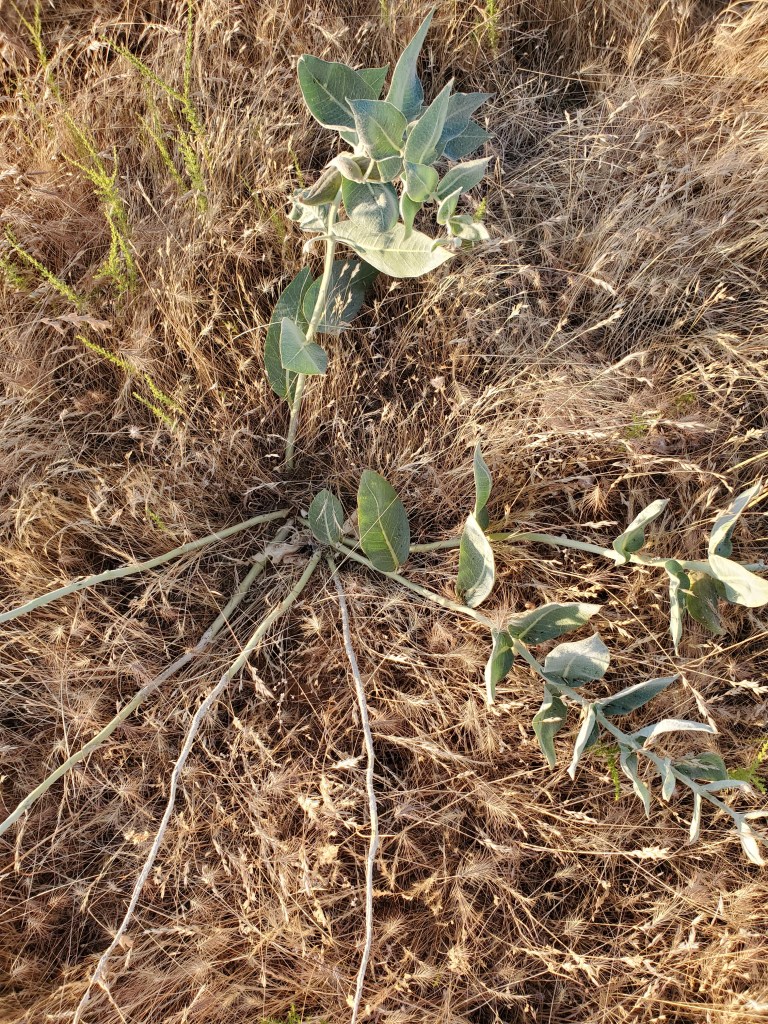
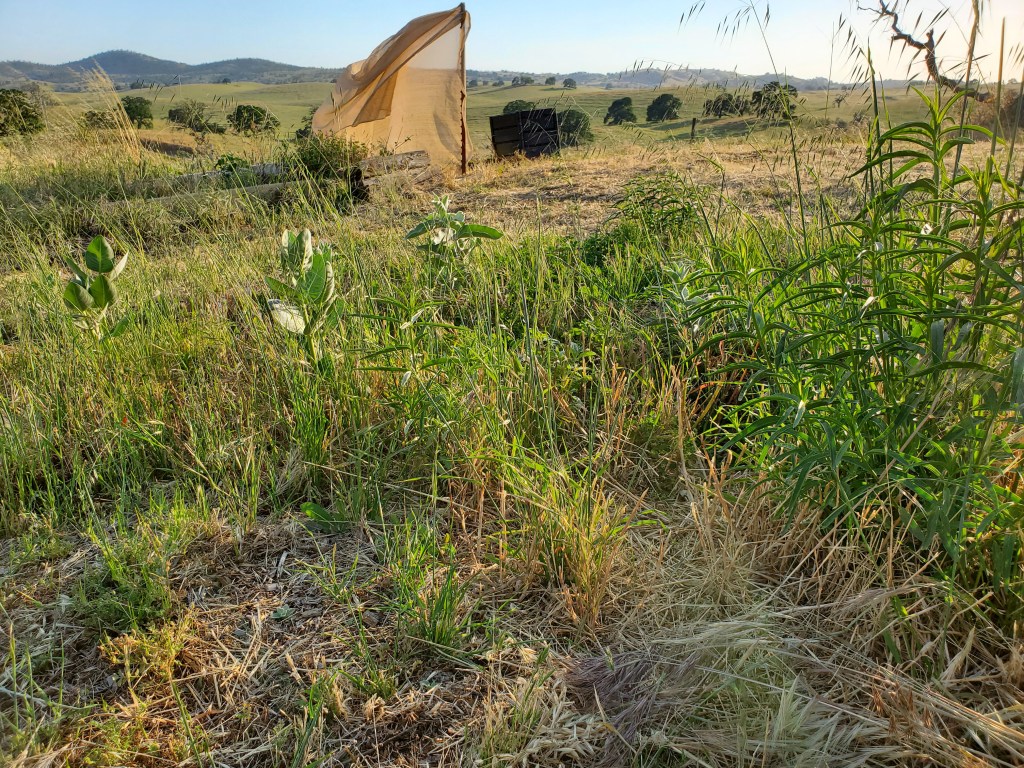
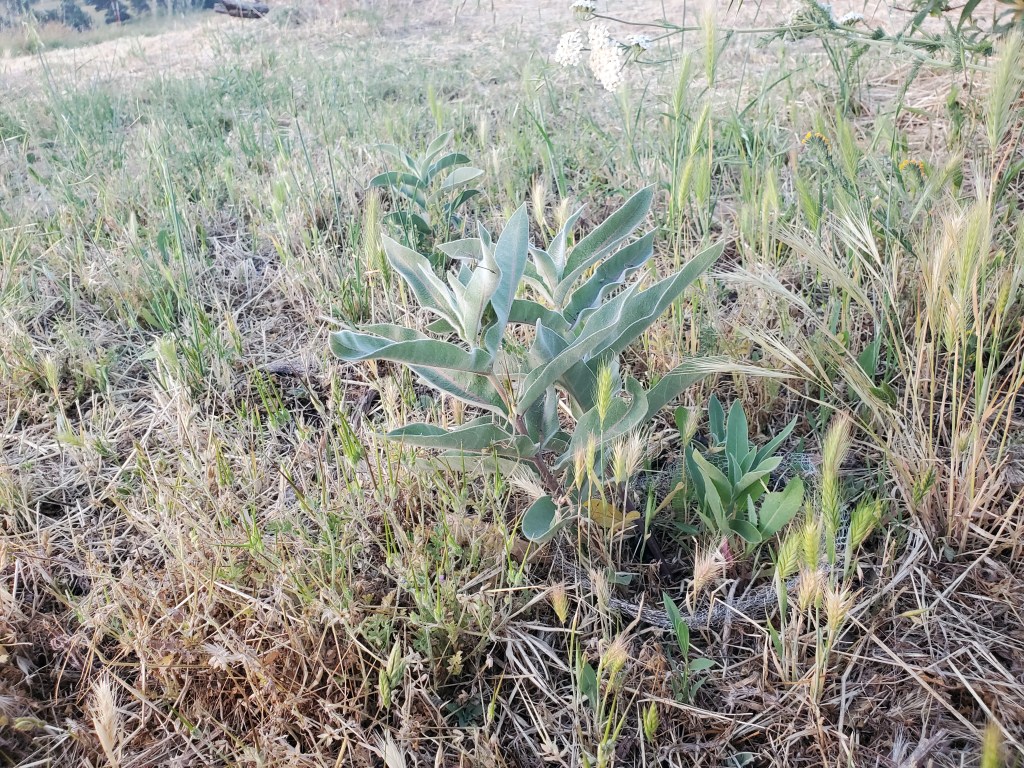
I walk up the steep slope to the largest A. Californica (California Milkweed) patch daily to count the plants and monitor them for caterpillars. Two days ago, I saw an orange-ish butterfly large enough to be seen by my limited eyesight. It was too far away to see if it was a monarch. I also did not have my glasses on. I waited for some time, but it did not return. Consequently, I am no longer leaving the house without my glasses and binoculars. As of today, I counted 16 individual plants. Just yesterday it was 14, and a couple days before that 13 and 9. So far, no emergence in the next largest site near the house. However, the one plant in the SW facing site has emerged and the west facing site has one of the two plants emerged. Unfortunately, the locations where I installed the Xerces plugs or 2021 collected seeds are not emerged. I imagine they may take a couple years to establish.

Tree Work

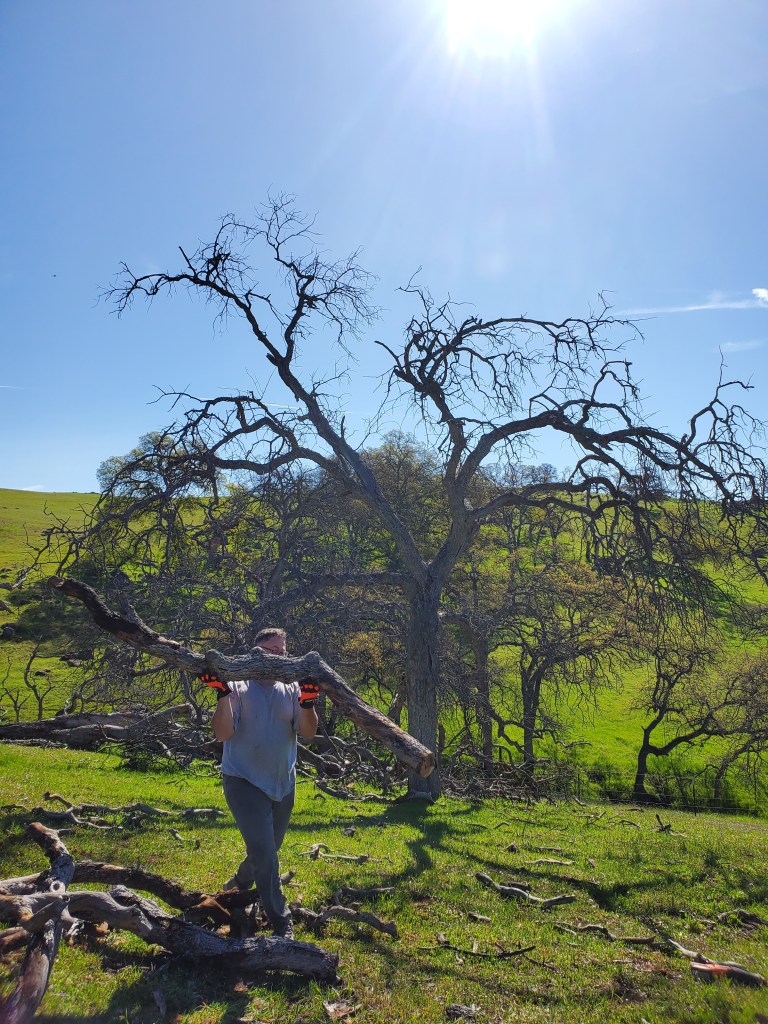
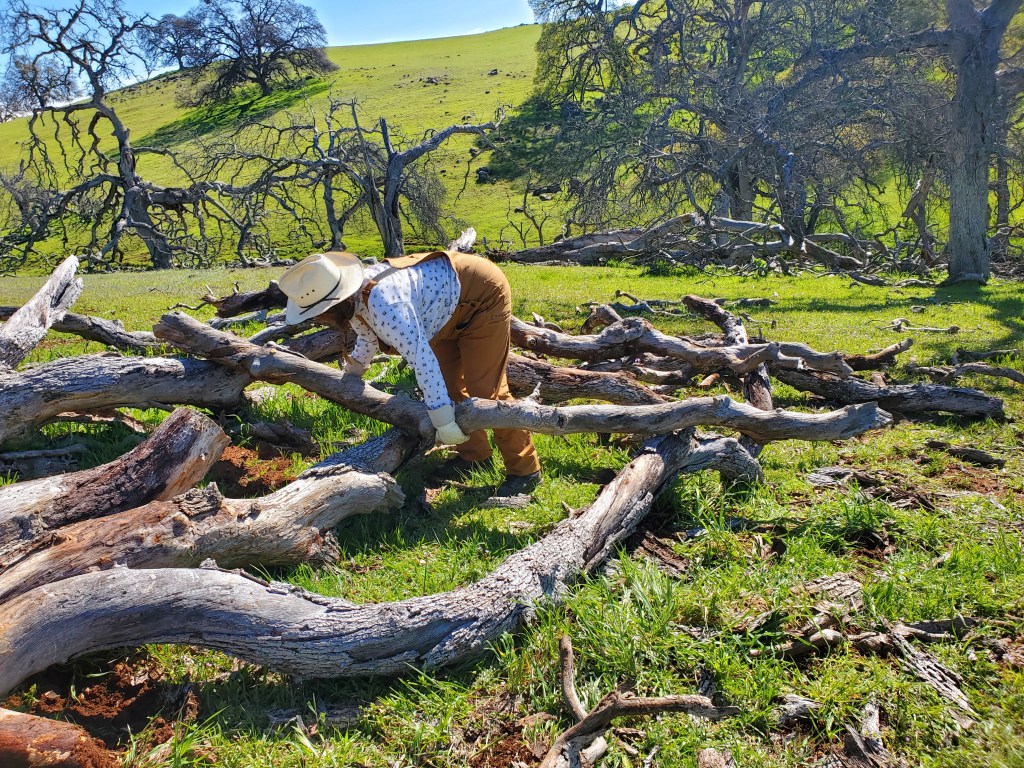
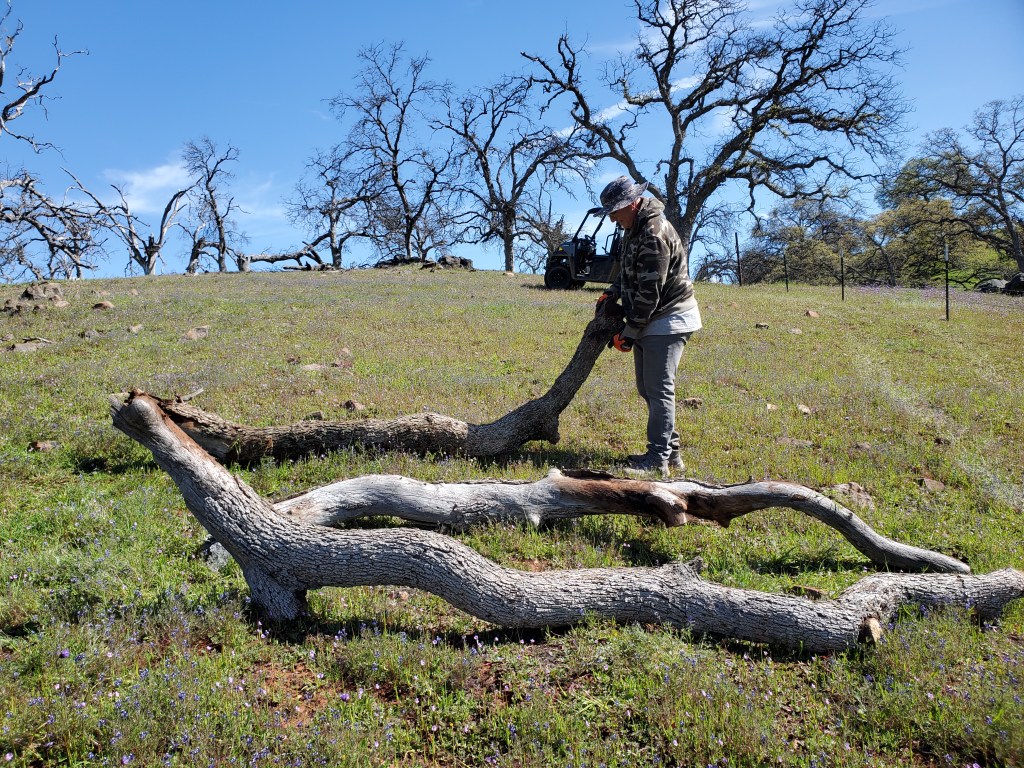
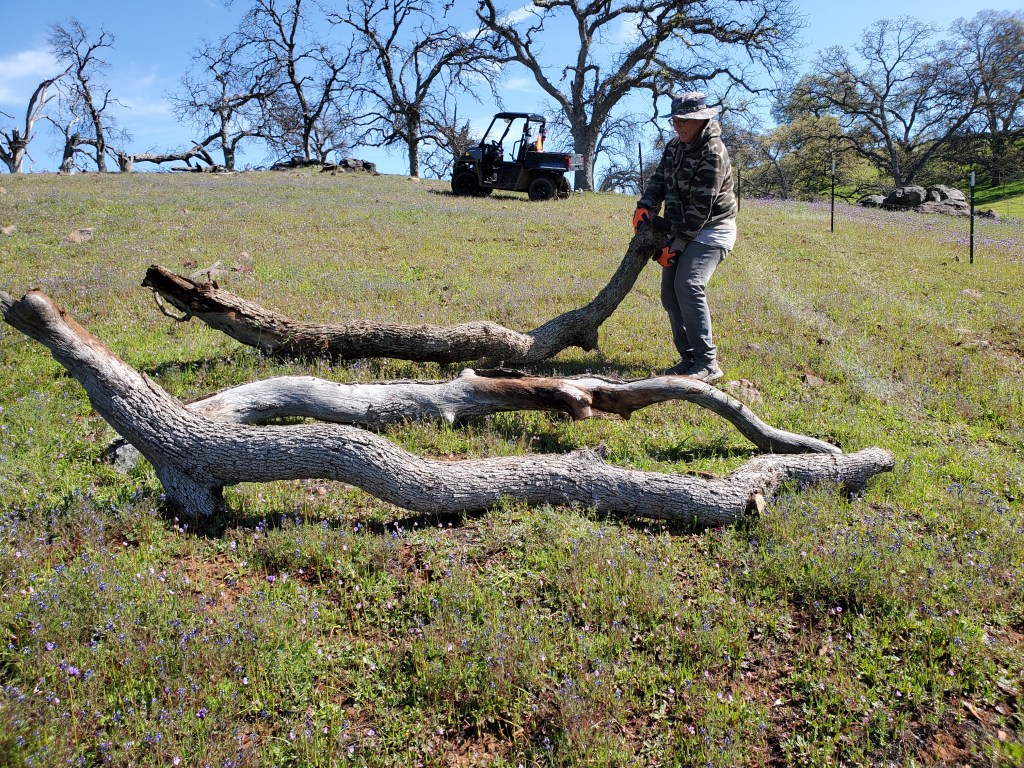
It is an emotional moment to see a grand tree cut up. If you are a regular reader, you will recall that a beautiful, healthy oak tree that was growing at an angle toppled over in the Spring Creek this past January. Between the angle, the saturated soil, wind and freeze of water on the branches, the weight became too great, and the grand tree pulled up by her root ball. It was also a reminder to me to be extremely careful as I walk among the oaks. I had just passed under her the day before.

When the tree fell, her weight was propped up on its branches and near my riparian fence gate. The smaller branches could give way releasing her massive bulk onto anything under it. It was a dangerous situation. I had no choice but to remove her.

These trees are ancestor relatives. Their lives have spanned 4 or 5 generations of my human family. Imagine their perspective of us always coming and going, building then tearing down, seeking and finding, singing and sleeping. We must be so peculiar to them. I love trees deeply. I appreciate their shade, smell, cavities breeding life, branches for singing birds, the food they provide, their moist soil under the canopy and how their roots are deep and connected. They have so much to teach us.

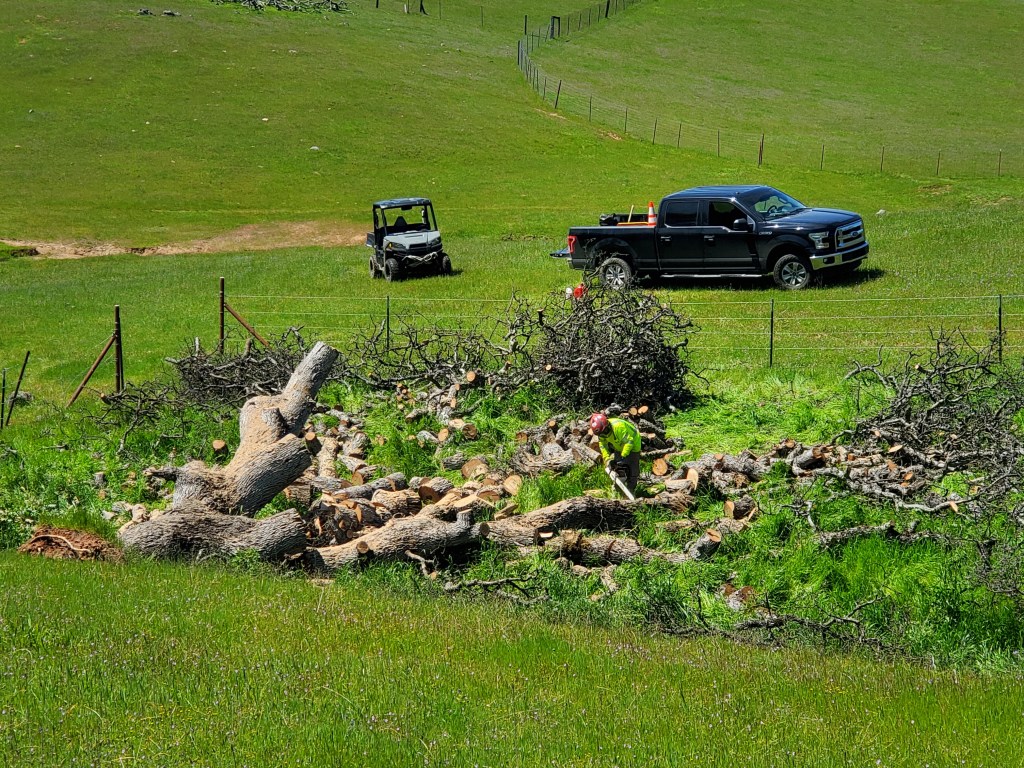
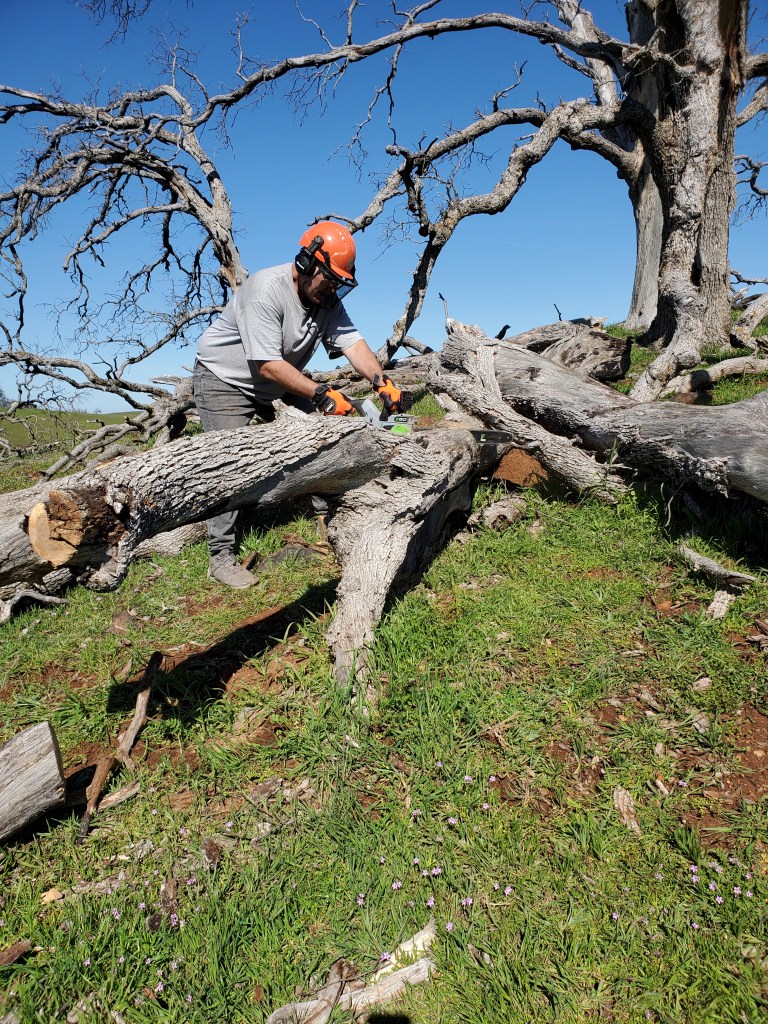
It is within this context and within the sensitivity of my soul, that a small piece of my heart breaks when the saw goes through my fallen relative. For such a solemn moment, the right sawyer is needed. I was grateful that Nick Brochini was available. Nick is Miwuk and understands the gift of the tree. He does not take it for granted. I don’t have to explain myself when I need to touch her and say a prayer of gratitude for her magnificence.

Nick was a young teen when I first met him. I was a tutor in the Indian Education program at the high school. He would come to the room, always a big, happy smile and carrying a turtle back pack. It was so cool; he really pulled that look off. It set him apart. Nick was a nice kid. Not a regular student in need of tutoring, he was mostly in need of community. We always enjoyed seeing him when he came through and loved hearing the tales of his school day.

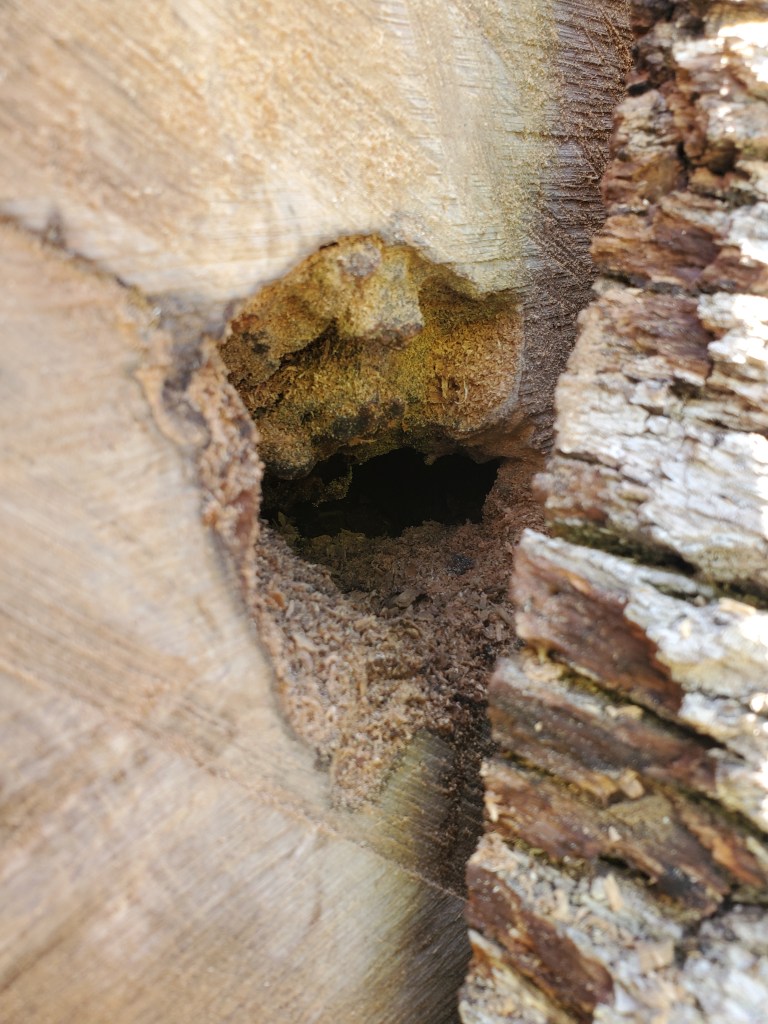
Nick grew into an adult, a husband and a father over the years. His children are beautiful. I see them at the community Pow Wow from year to year. I hope they are proud of their dad. He is an expert with the saw. He knows trees and shares helpful information. He showed me the gaping hole in the tree, the rot from within. He told me all the oak trees have this. Just like humans, they develop healthcare issues as they age. He showed the start of interior rot in a smaller branch as well. What a lesson. At least some creature will have a good home.

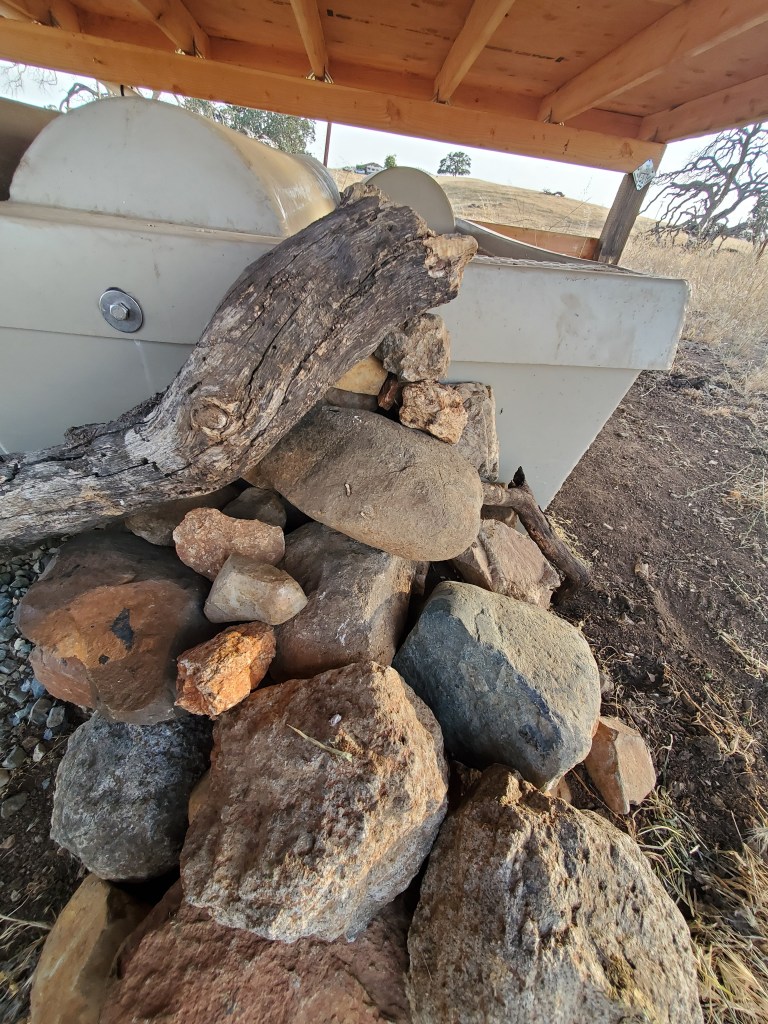
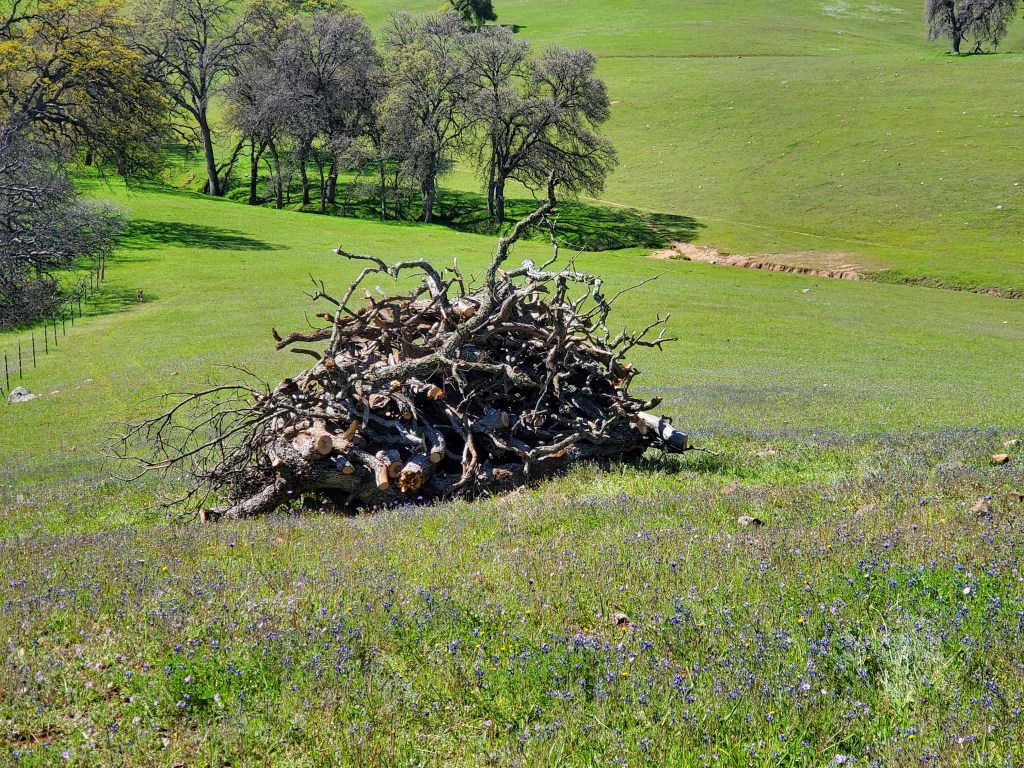
I left a large section of her main trunk as a monument to her. Part of it will act as a check dam and the other will extend beyond the creek banks. She is beautiful even in death. The rest of the material will be used for brush piles and fire wood. Her flesh will keep my nephew and his family warm next winter. Chiokoe uttesia Huya into Nick weweriam (Thank you relatives – Tree and Nick).

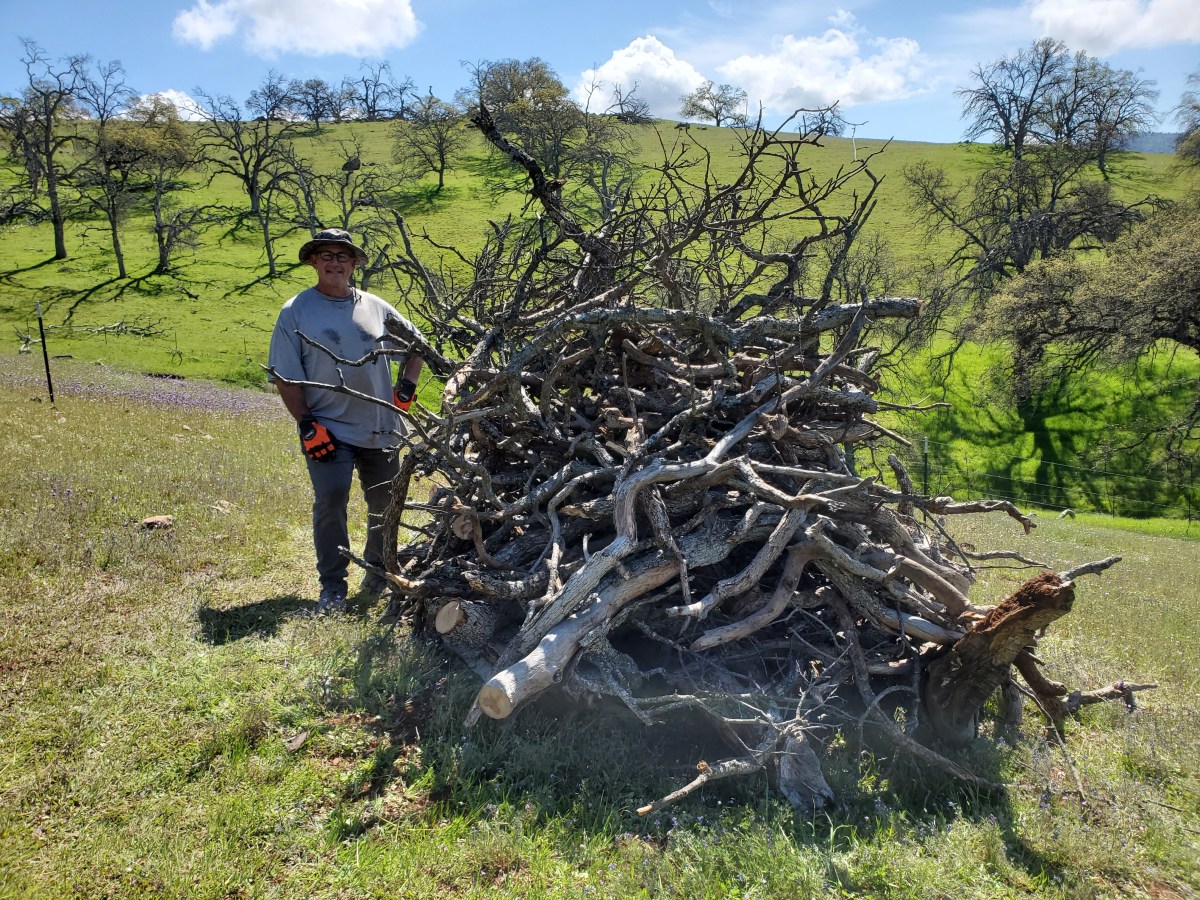
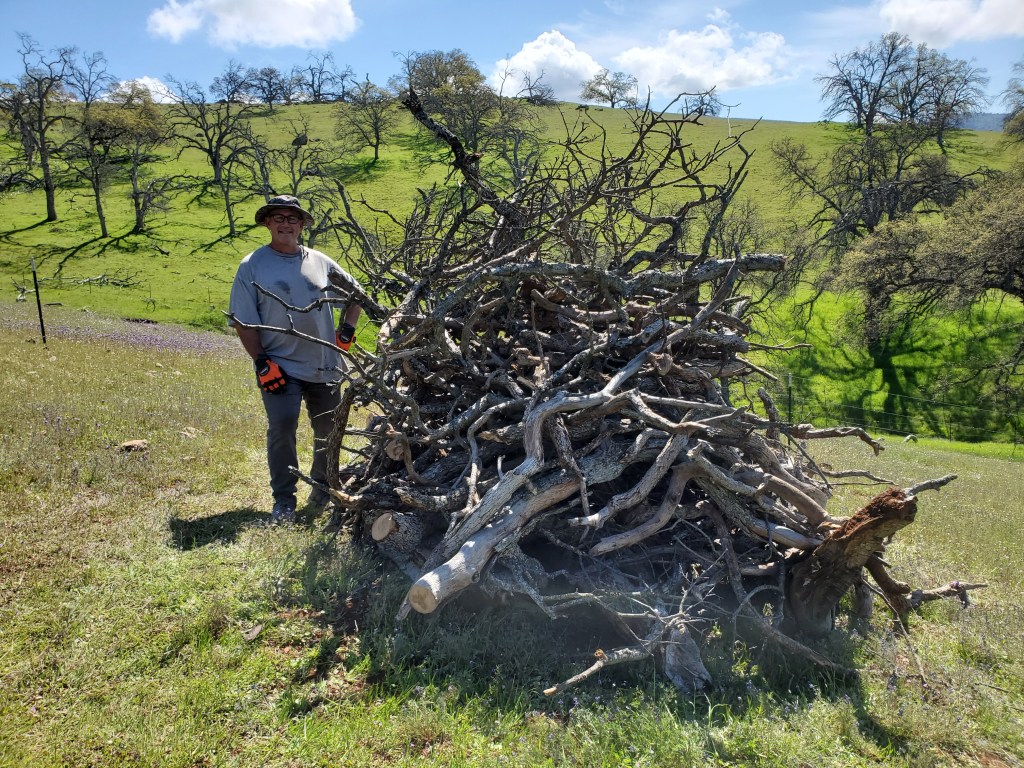
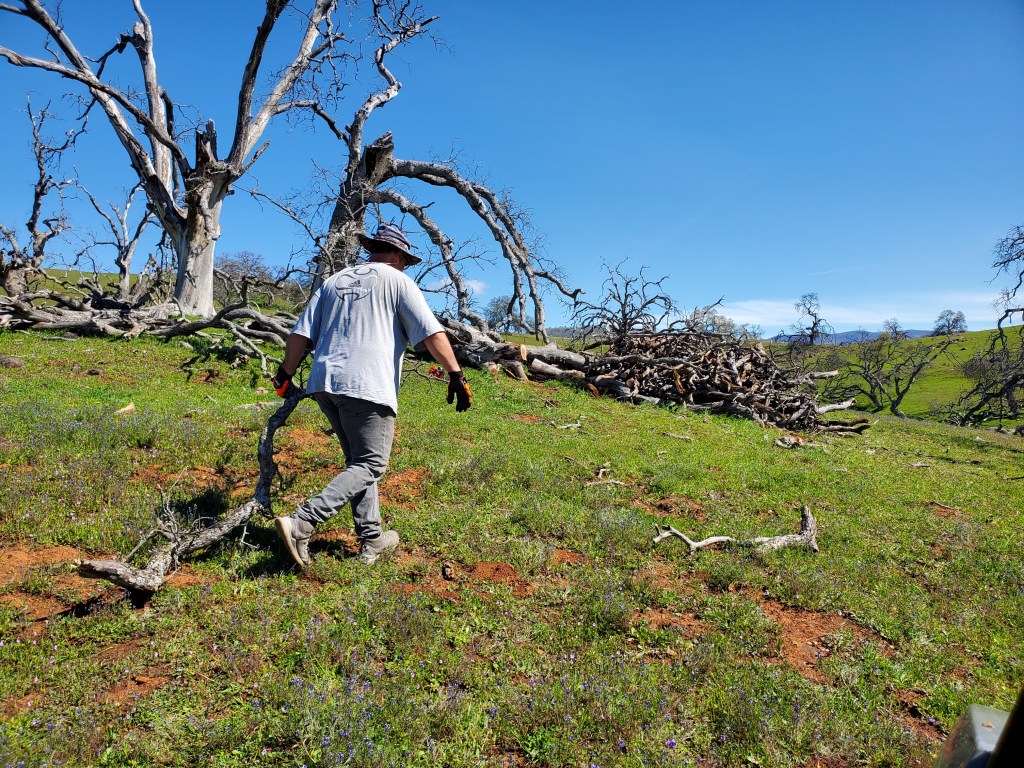
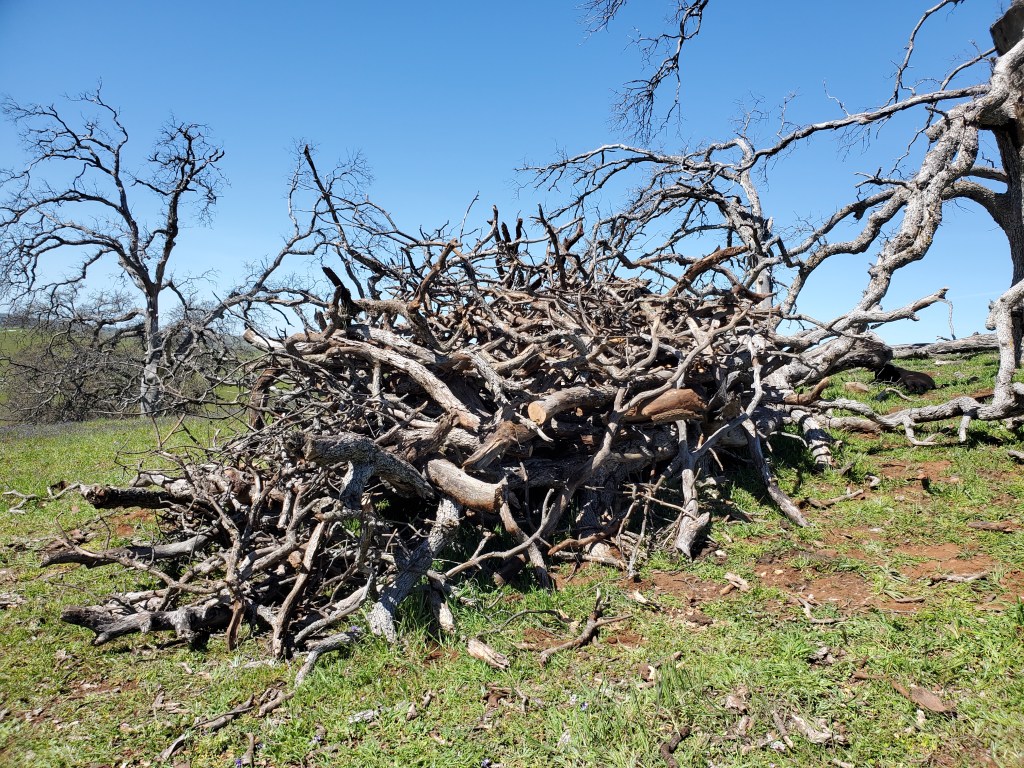
After Nick left, David and I sprung into action building brush piles and stacking wood. Within one second of me stepping away, a bird landed on the pile to check it out for a new home. That made me happy. My work is worth something.

More Visitors

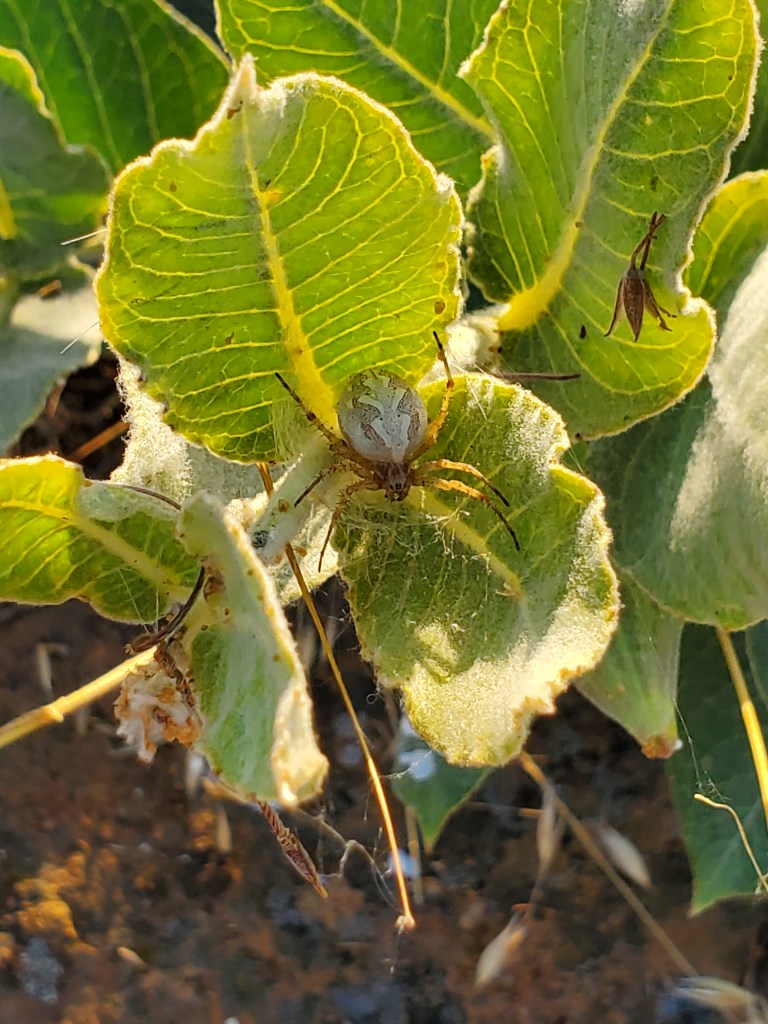
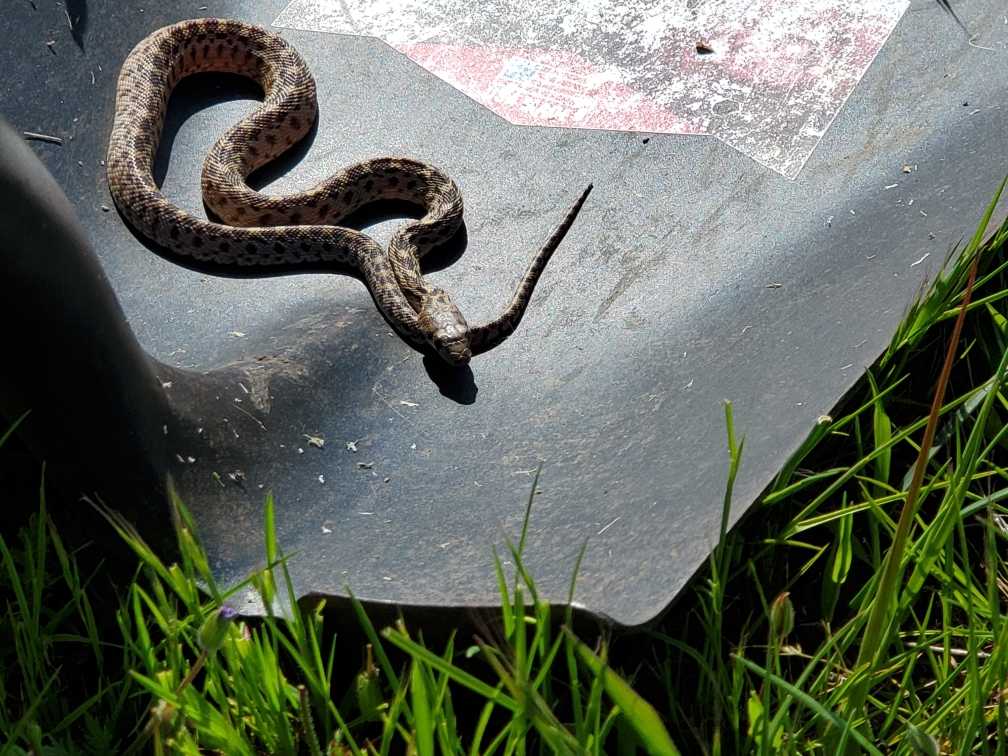
Life on the ranch is a joy I cannot adequately explain. I am the kind of girl that loves spiders, snakes and frogs. I like the smell of manure and don’t mind getting it on my boots. Not everyone is into this kind of life. For me, it is heaven. Here are some recent visitor to the house:

Check Dams Working

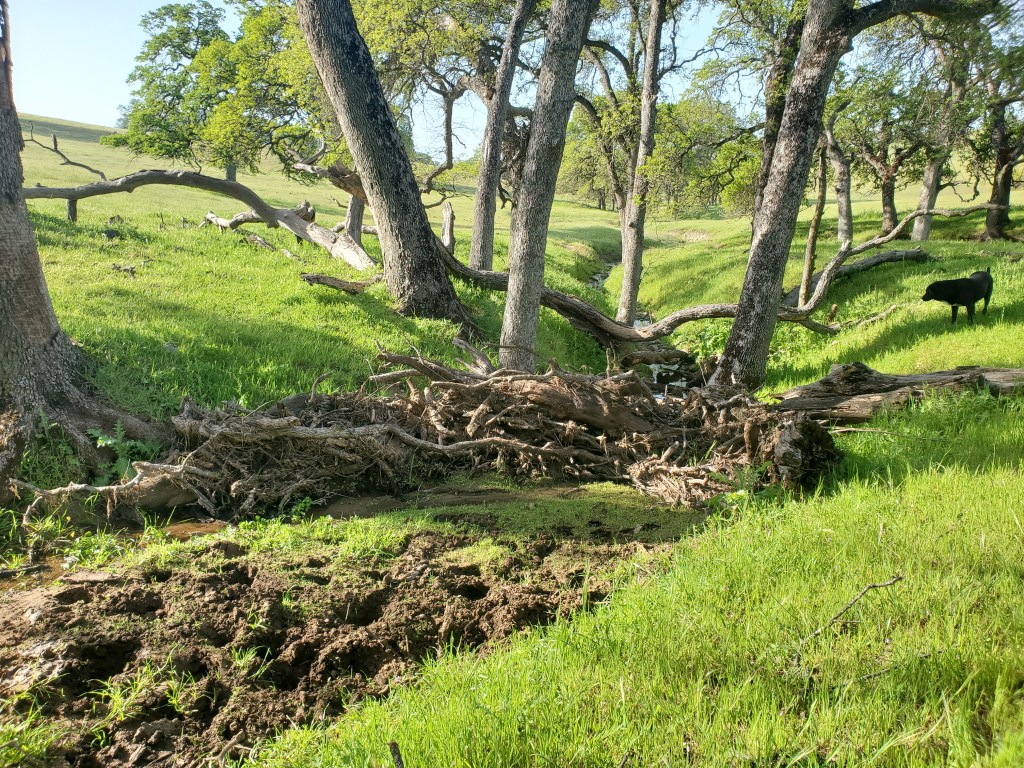
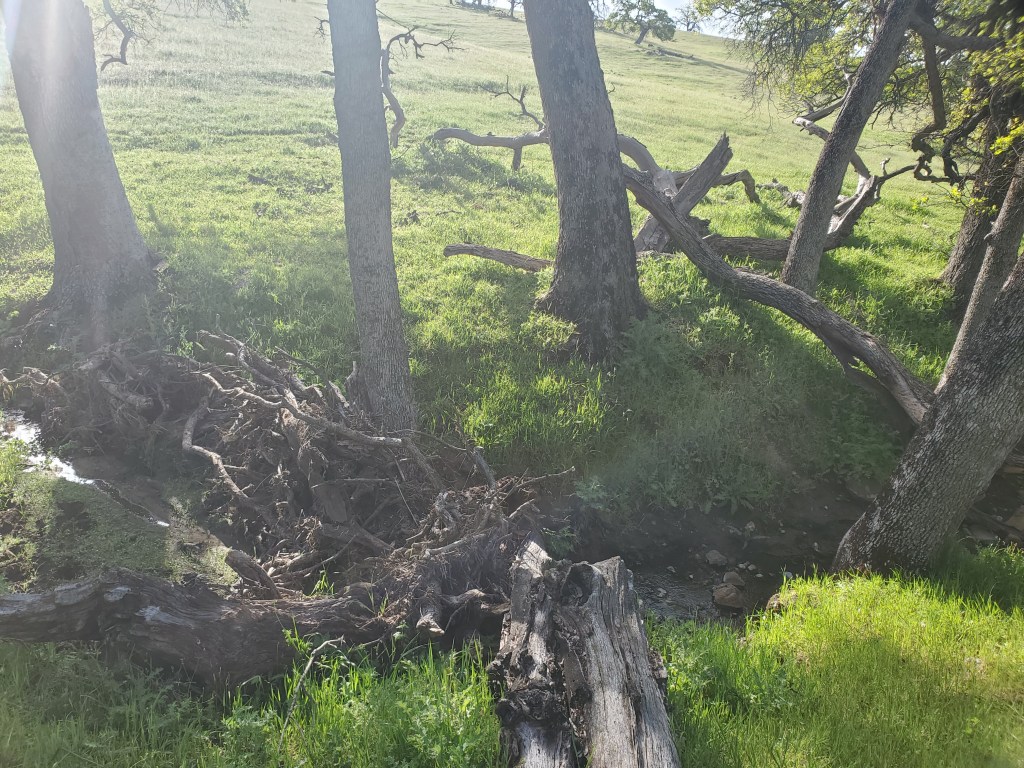
Nature gave me some help this year in building check dams. The photos below show one that nature built with wood that fell into the creek. Note the sediment upstream has accrued and is nearly at the height of the land, and note that downstream is still carved deeply. Holding the sediment back achieves a number of goals, 1) to increase water quality, 2) make the access to the creek more usable by wildlife, 3) build back wetland type soil, and 4) slow water runoff to retain it for flora, fauna and groundwater recharge.

Wanderings

I left David weedeating around the monarch plots and went to check on the California milkweed sites. I love to walk, even on this cool, windy day, so I decided to walk further looking for more milkweed. One can only hope. While out, I found so many other beautiful things. We live on a remarkable planet. Love it. Cherish it. Protect it.

Habitat Not Just for Monarchs

David stands next to a brush pile built to support birds and other creatures

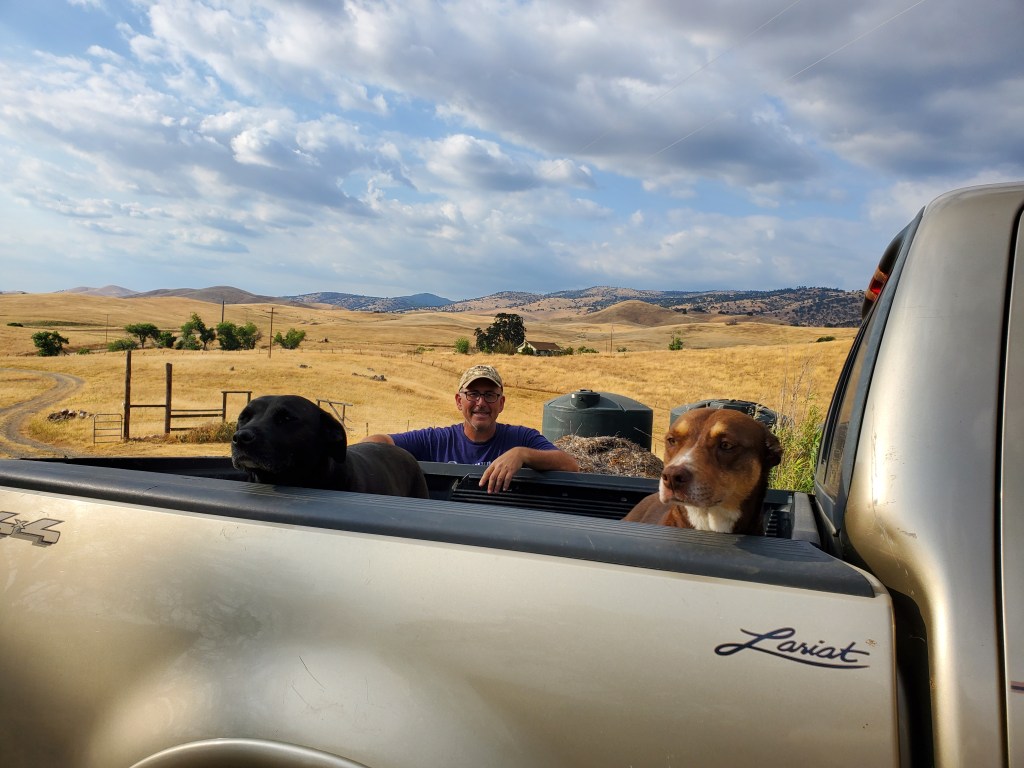
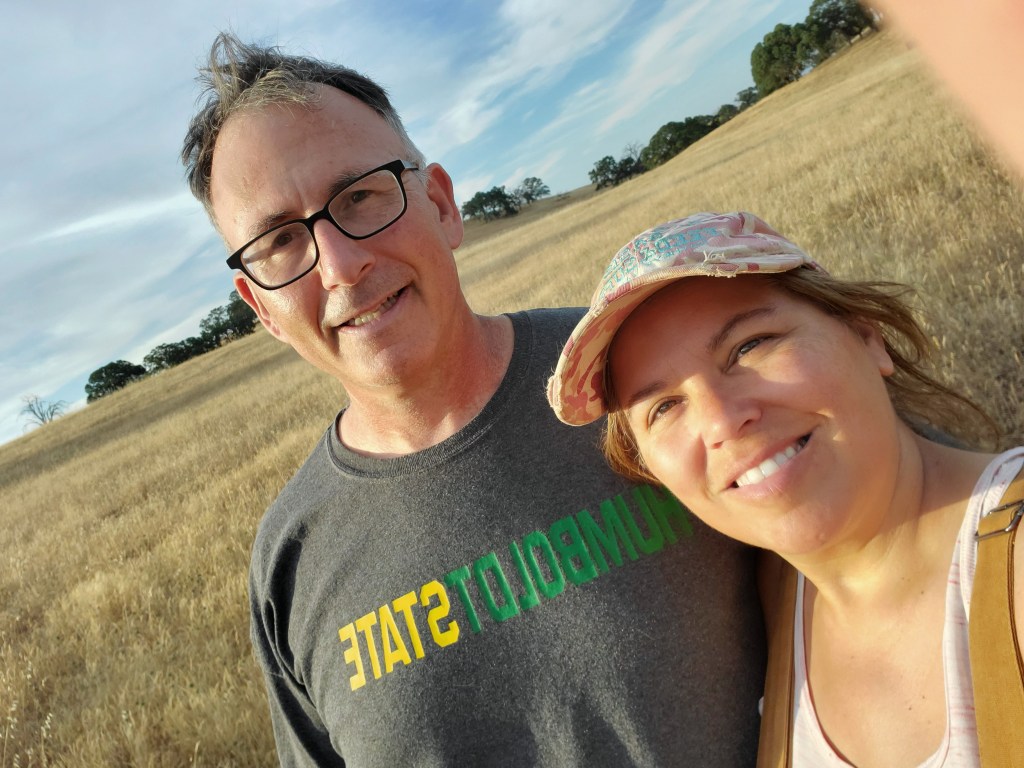
There is no doubt that David loves me. Any person that would sweat for hours doing the back-straining work of building brush piles for their wife’s habitat project is running on more than calories. It has got to be love. Last weekend, David and I spent the morning hours of each day building brush piles. We work on habitat for more than just monarchs. Brush piles make a great home for birds, small mammals and other living things. Wildlife need all the help they can get in the changing world humans have made for them.

There are many resources online that can teach you how to build them and discuss in greater detail the benefits. Here is what we did:

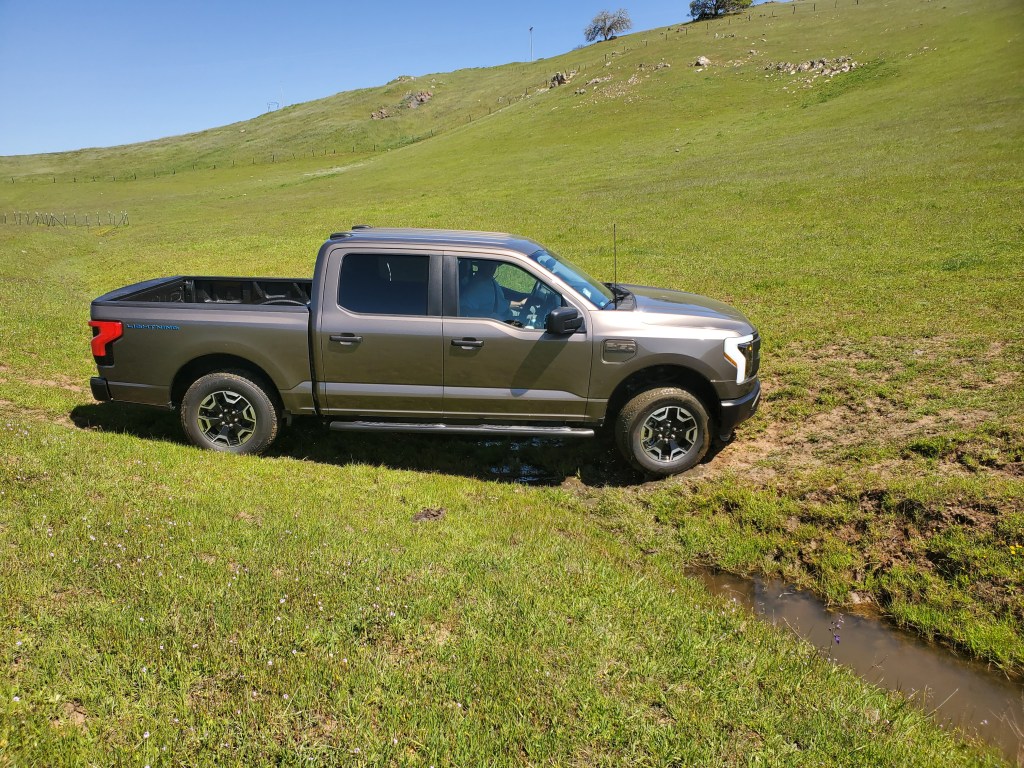
I will be adding some game cameras to see who moves into these structures. Even though David and I both tired quickly, we feel so grateful for the ability to help the wildlife that live with us. Each pile takes two and a half hours with a 10 minute water break to build. It is good to do this work now with the temperatures so cool. Thanks also again to our neighbors Ric and Kim who allow us use of their fully electric Polaris, which made the work much easier. We are mindful of native bees that could live in the downed wood. We tried to look for what could be bee holes and not cover them up. Generally they should be ok in the brush pile. Piles are meant to have many openings and not be compact.

Native Bees Still Need Time to Emerge

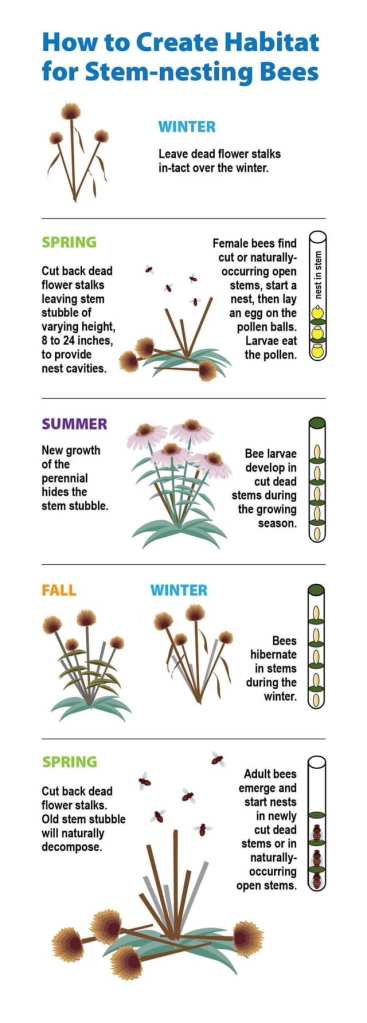
I am learning a great deal in my Pollinator Stewardship Certification program – particularly about bees. This is an area where I had many deficiencies in knowledge. Because of the cool temperatures, native bees are still developing in their cavities where they were laid last fall. It is important to delay winter clean up, like leaf raking, downed tree removal and pruning dried stems from perennials. I came across this fantastic infographic posted by my friend Ray on social media (with thanks to the creators from the Kanatsiohareke Mohawk Community):

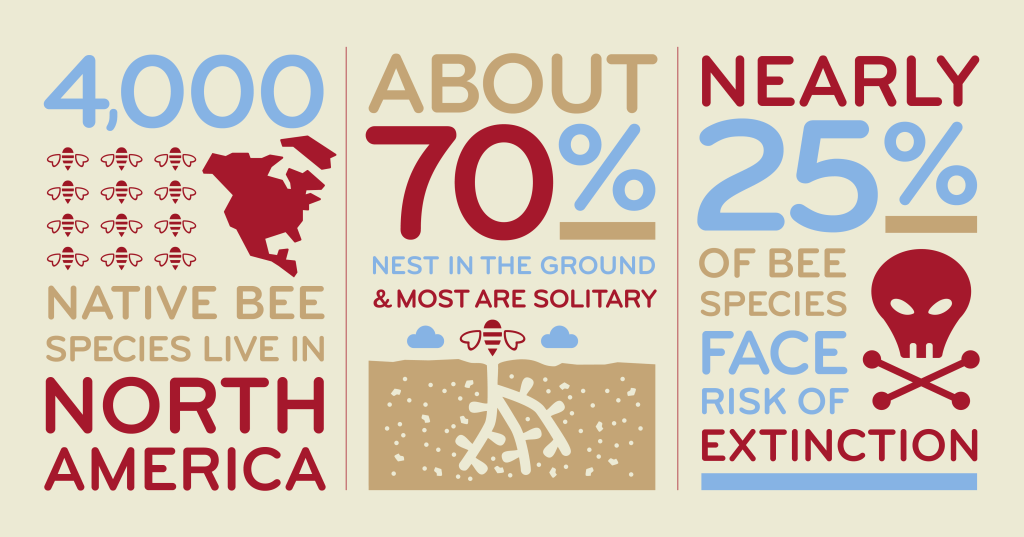
Did you know that 30% of native bees nest in stems, leaf litter, downed branches and other above ground cavities? The other 70% nest below ground either in their own holes or in vacant gopher holes. Most are solitary nesters – in other words, no colony. The exception are bumble bees which live in below ground cavities in very small colonies. They are my favorites because they are so cute, fuzzy and colorful. You can learn more information about bumble bees from the Pollinator Partnership. Most native bees do not live long, especially the males. Females have more time so they can nectar, build their nest, create a large pollen ball and lay their eggs on it. The pollen ball is to give the growing bee baby enough food to fully develop before it emerges. There are 4,000 species of native bees. Check out this handy identification guide and see who is living in your yard, then you can see what you can do to make their environment even better for them to succeed.

Storms Remove Sediment and Plants

The high and fast water flow has deepened water channels and widened creek beds. This has exposed much rock and may have taken many of the plants I painstakingly planted over the years in the several sections of Spring Creek. All I can hope is that they are able to get a foothold down stream and establish new life there.

California Milkweed Continues to Emerge

We are up to seven individuals now! Hoping to break 30 this year as I carefully monitor, graze around and spread seed each year.

Tending to Xerces Plant Plots

Remarkably, 100% of the Xerces plants I planted last November and December are doing extremely well. This past week I have been carefully trimming the grass around each plant to give them a chance at some sunlight and growth. Ok, don’t think I am crazy, but I am cutting the grass with scissors. It allows for greater precision and eliminates the chance I will cut into my plants accidentally in the thicket of grass. The grass grew rapidly as soon as we had a few days of sun and increased temperature obscuring some of the plants. I am carefully trimming the grass instead of pulling it to give any cavity nesting native bees a chance to emerge. This year was cold and cold longer into spring than other years. Like the milkweed, native bees need the soil temps and air to be warmer before they emerge.

Wildflowers and Wanderings