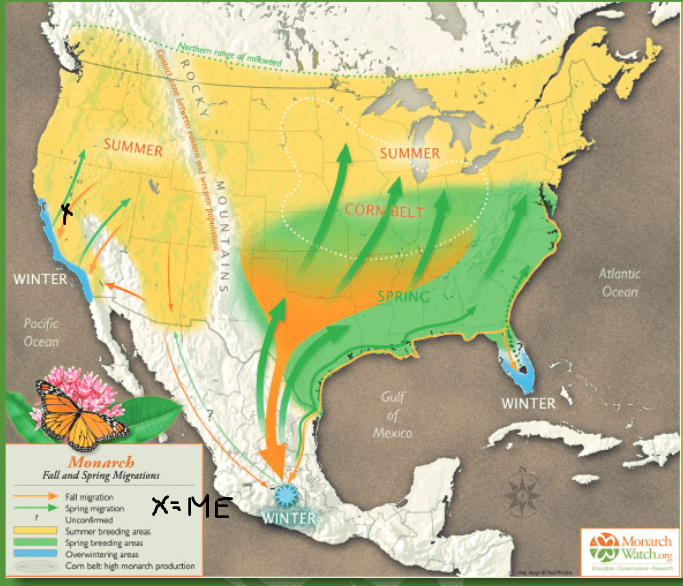
Cow Death Requires Pivot and Good Friends Come to the Rescue

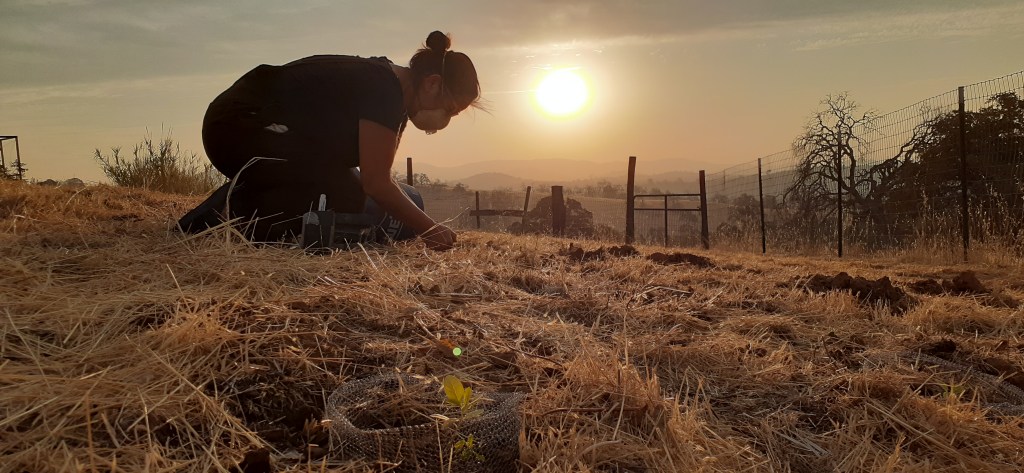
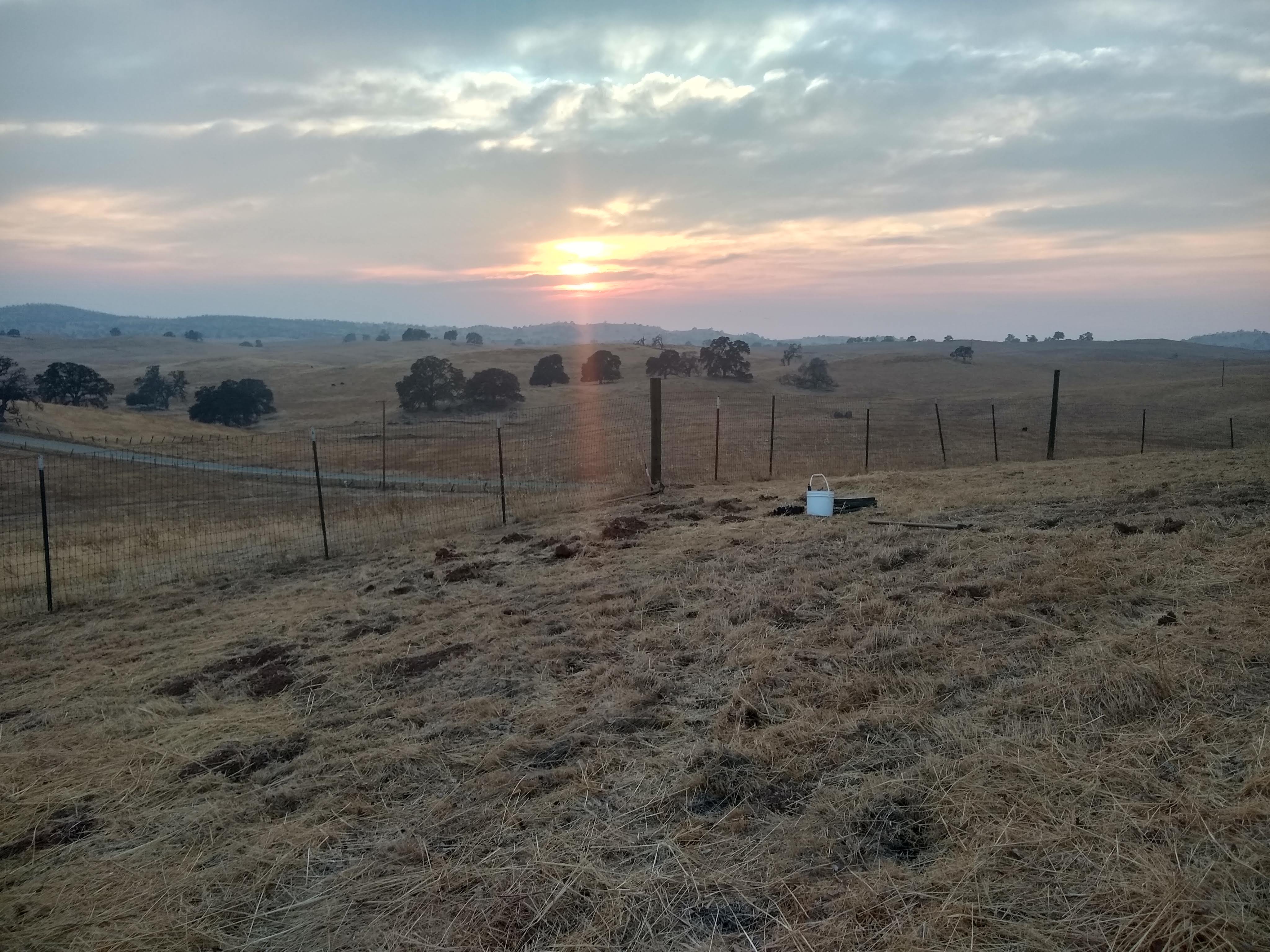
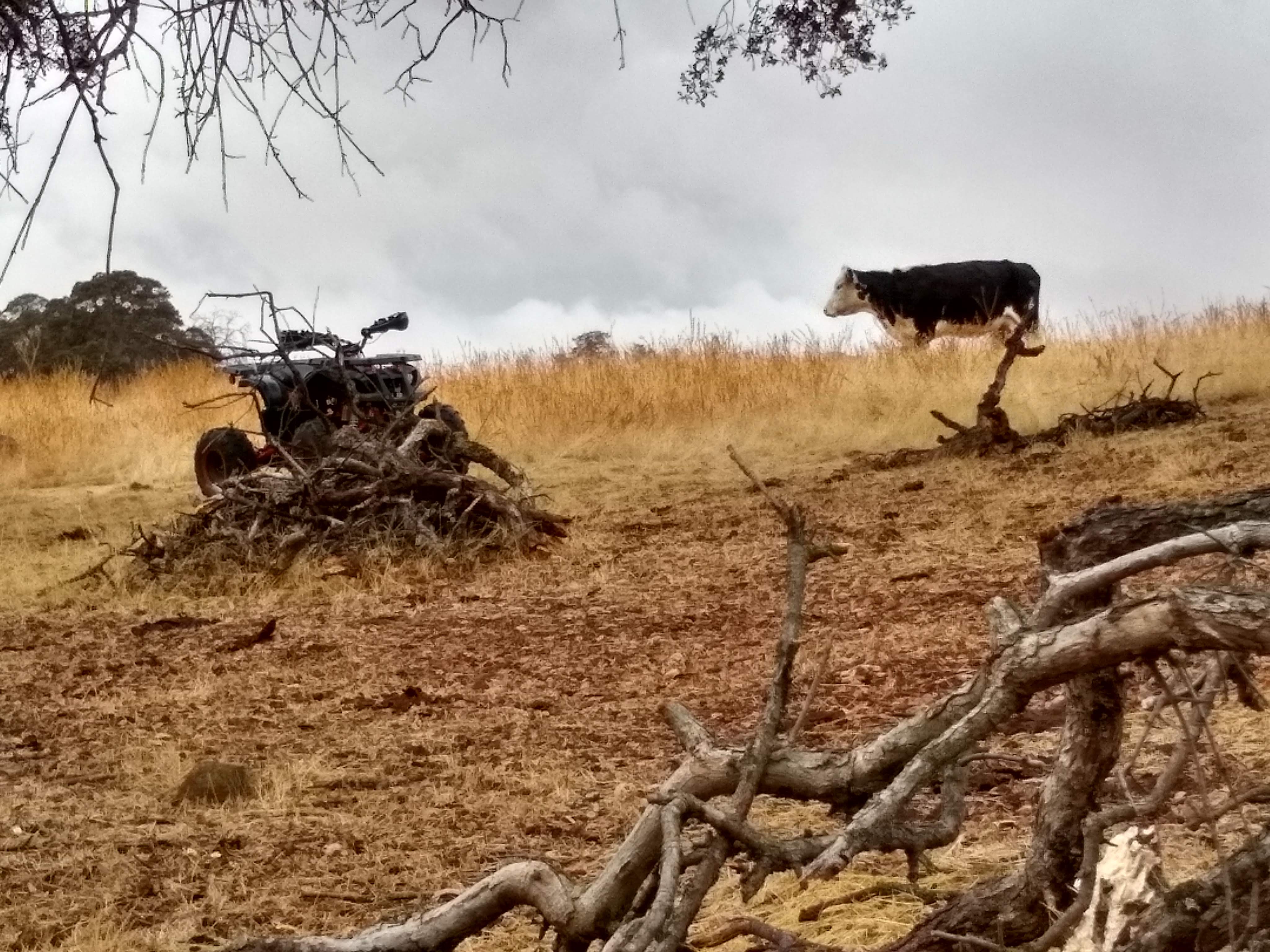
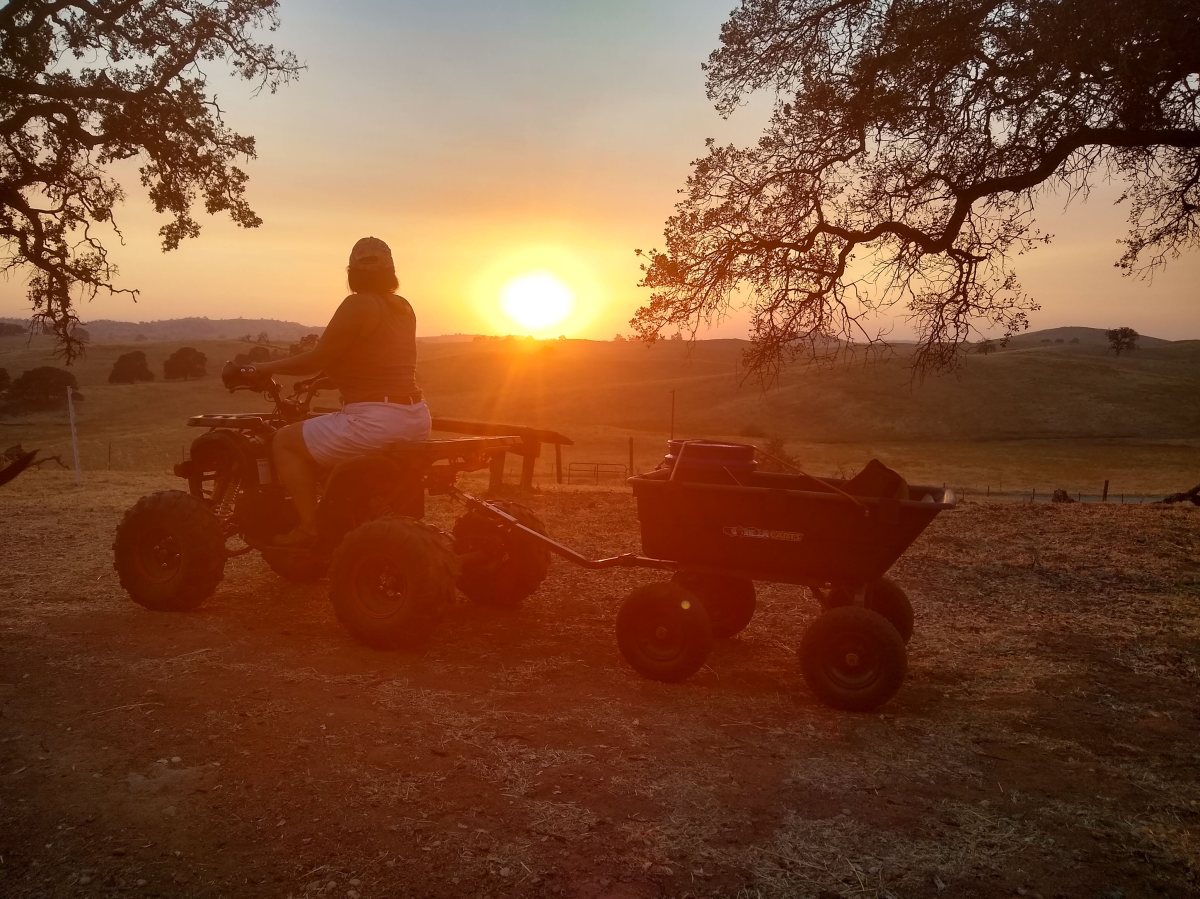
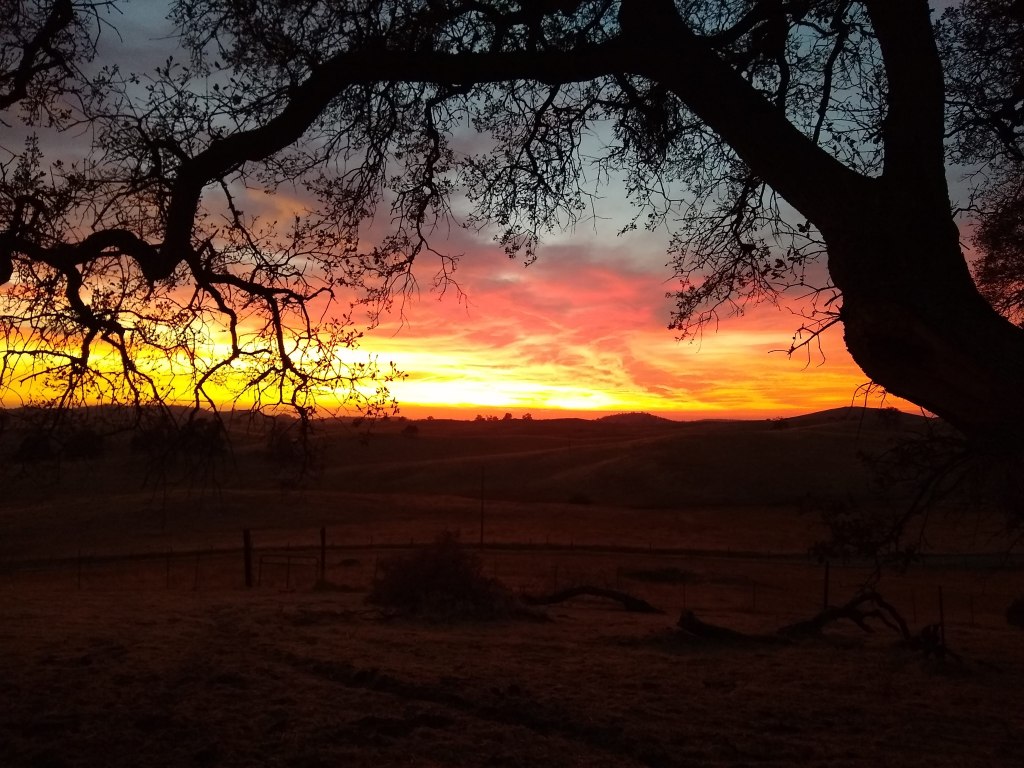
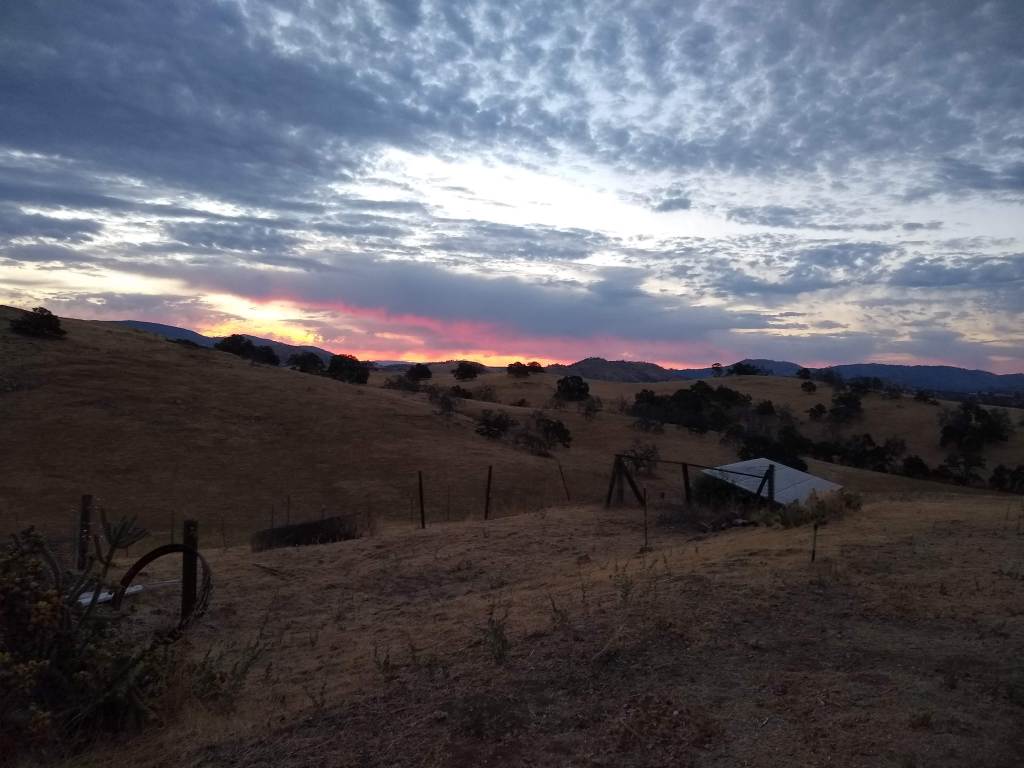
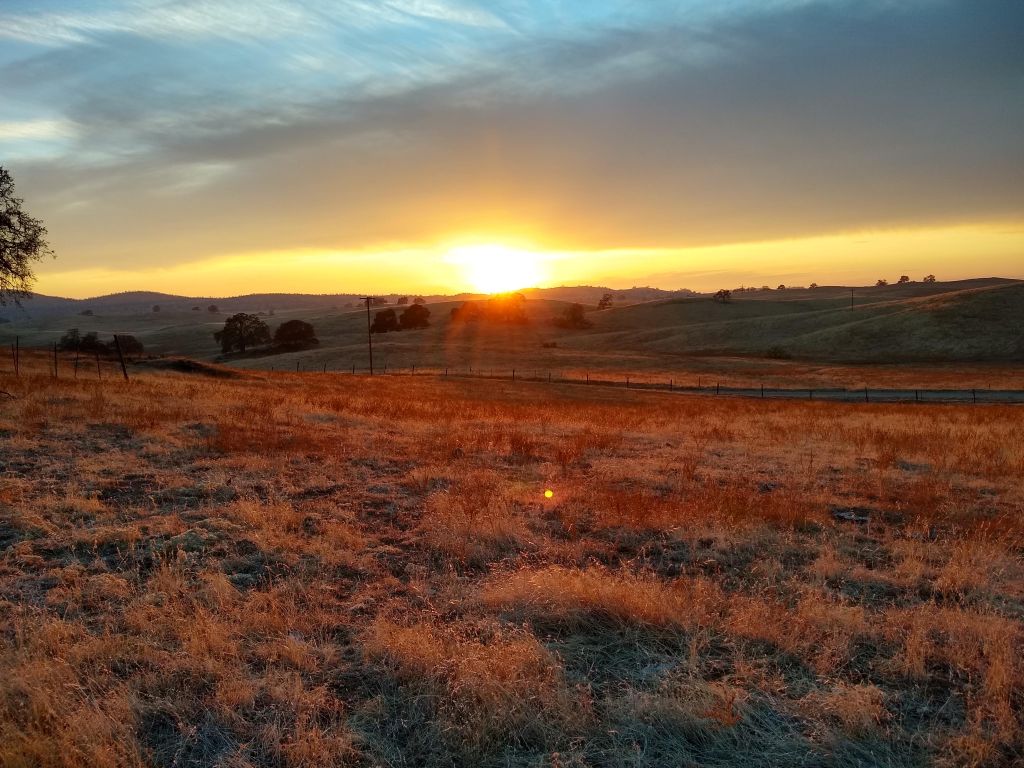
Sun sets over the ranch and the dearly departed cow

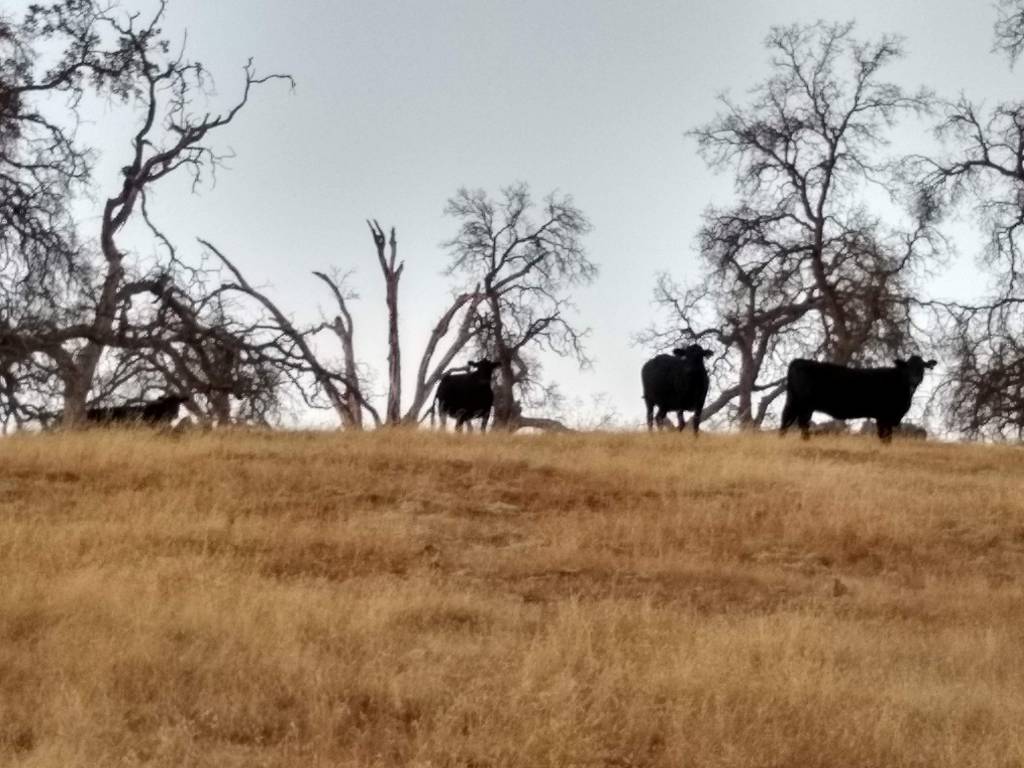
I don’t envy the cattleman who leases the ranch fields. Cattle ranching is a great deal of work. You are making a living using sentient animals, so there is much responsibility for their respectful care. Last week, I stumbled upon one of the cows laying in the creek. It is not unusual, but something about her did not look right. She was thin and a bit rangey. She did not rise when my dogs barked. I called my cattleman, who relayed that this cow, along with three others, had been ill with milk fever. They had all been doctored, but this one had required additional care. They left her with some herd mates to recover quietly. He asked a few questions, and then told me she should be alright.

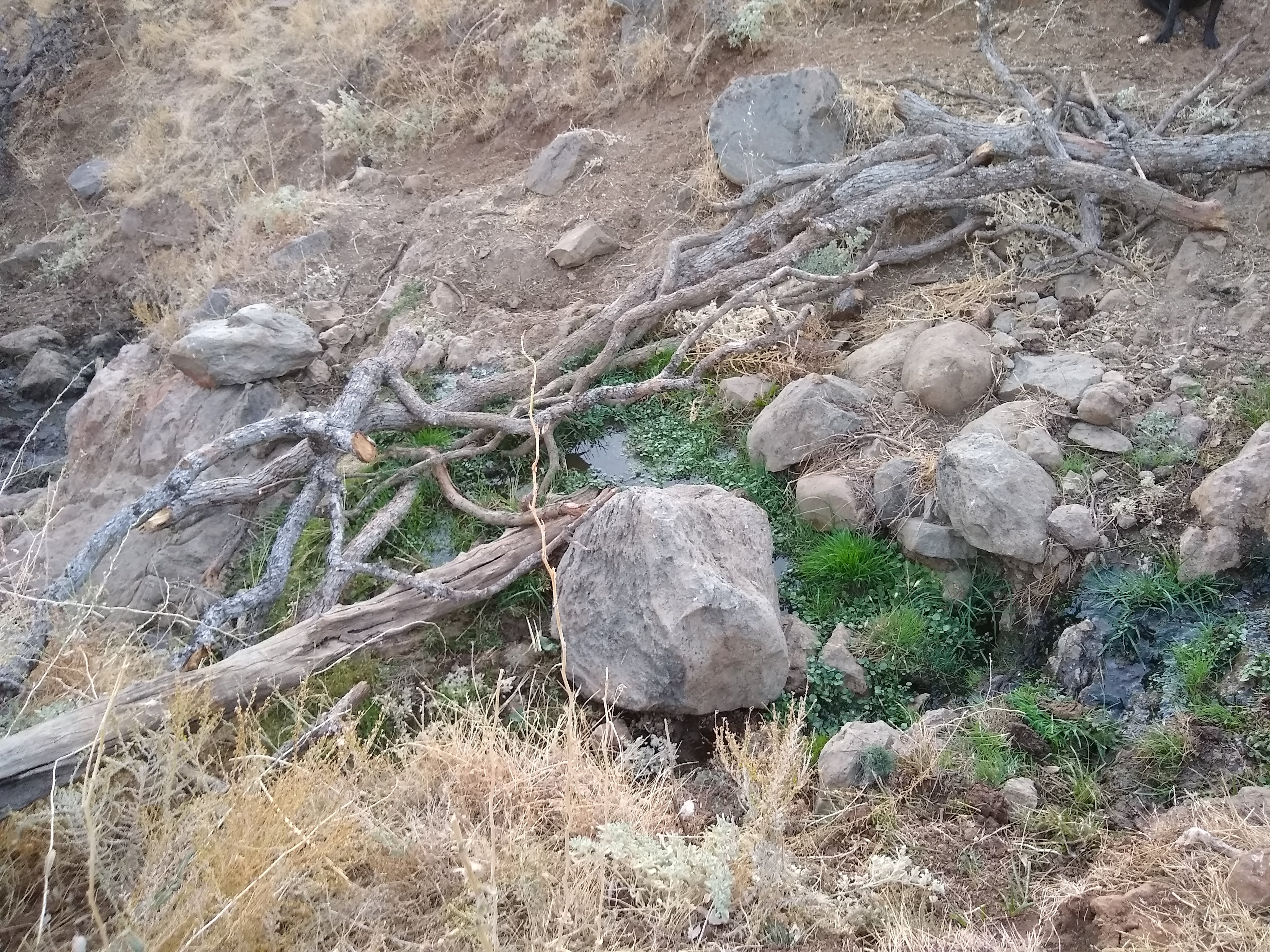
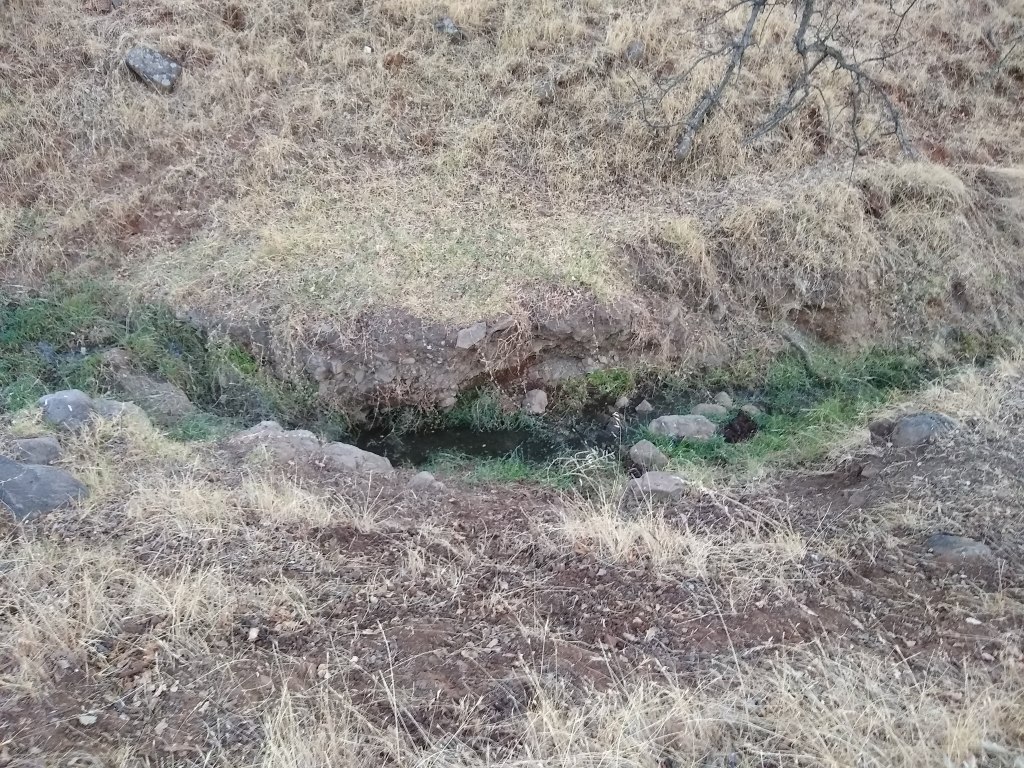
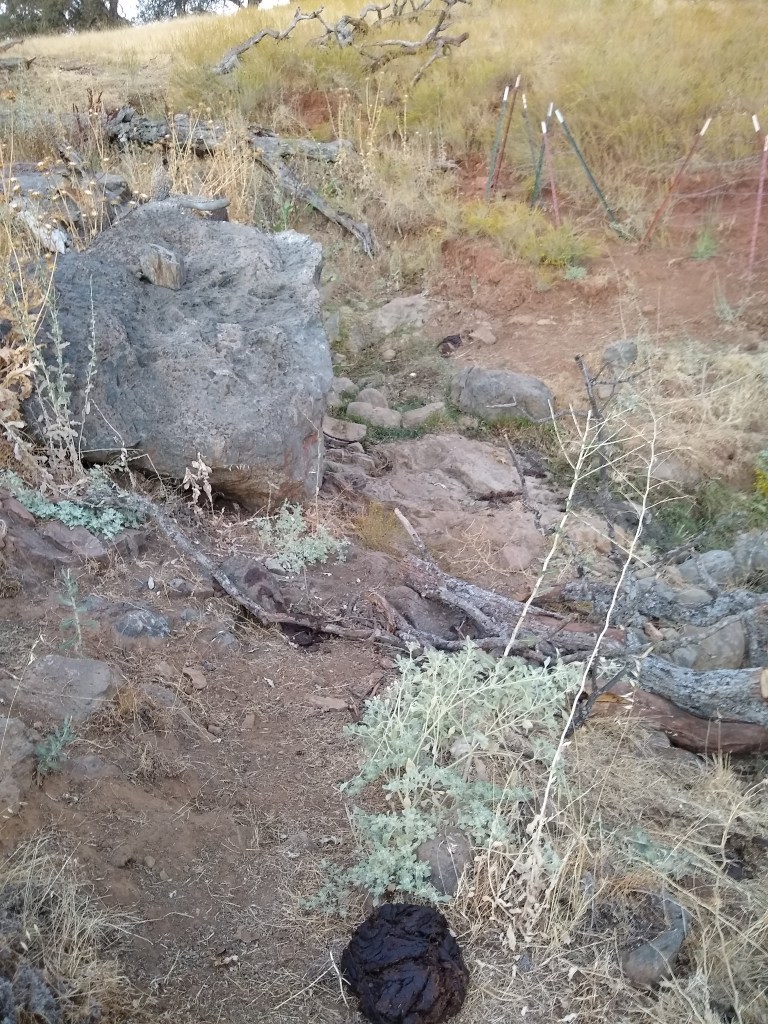
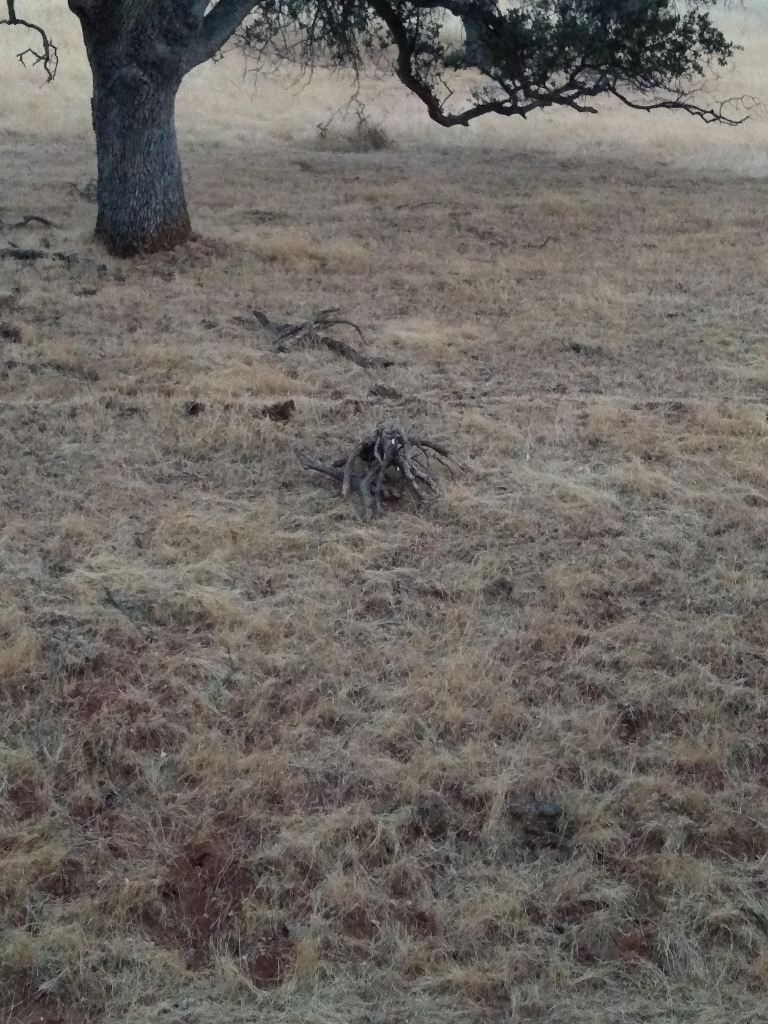
She wasn’t, and she died. These things happen in any livestock operation, and certainly in life generally. She had calved a stillborn calf and become infected. After three treatments, she seemed to be doing well he told me. When I came upon her, nothing was disturbed, no logs out of place, no enclosures flattened. We both think she was weak and slipped down into the creek – right into the middle of my butterfly habitat. There, she died of her illness. When I saw her again, there was no sign of predation. I was grateful for that. She transitioned without that violence. While this situation has left me saddened, like other downed animals of any type, her transition has allowed other wild animals to survive. I have not gone back to that place so that the scavengers can do their crucial work without my scent. It is nature taking its course.

Pivot Needed
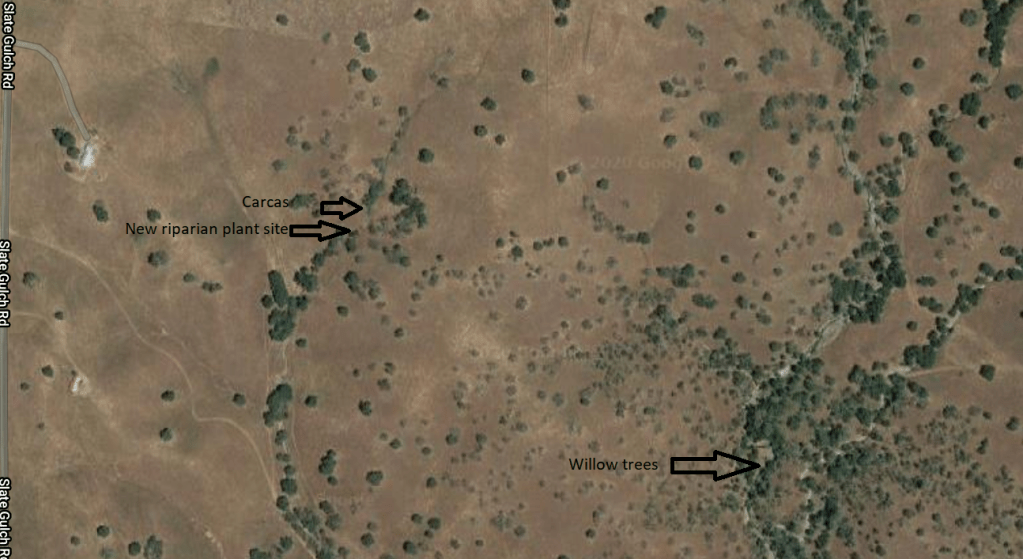
Site plan for shift of riparian habitat

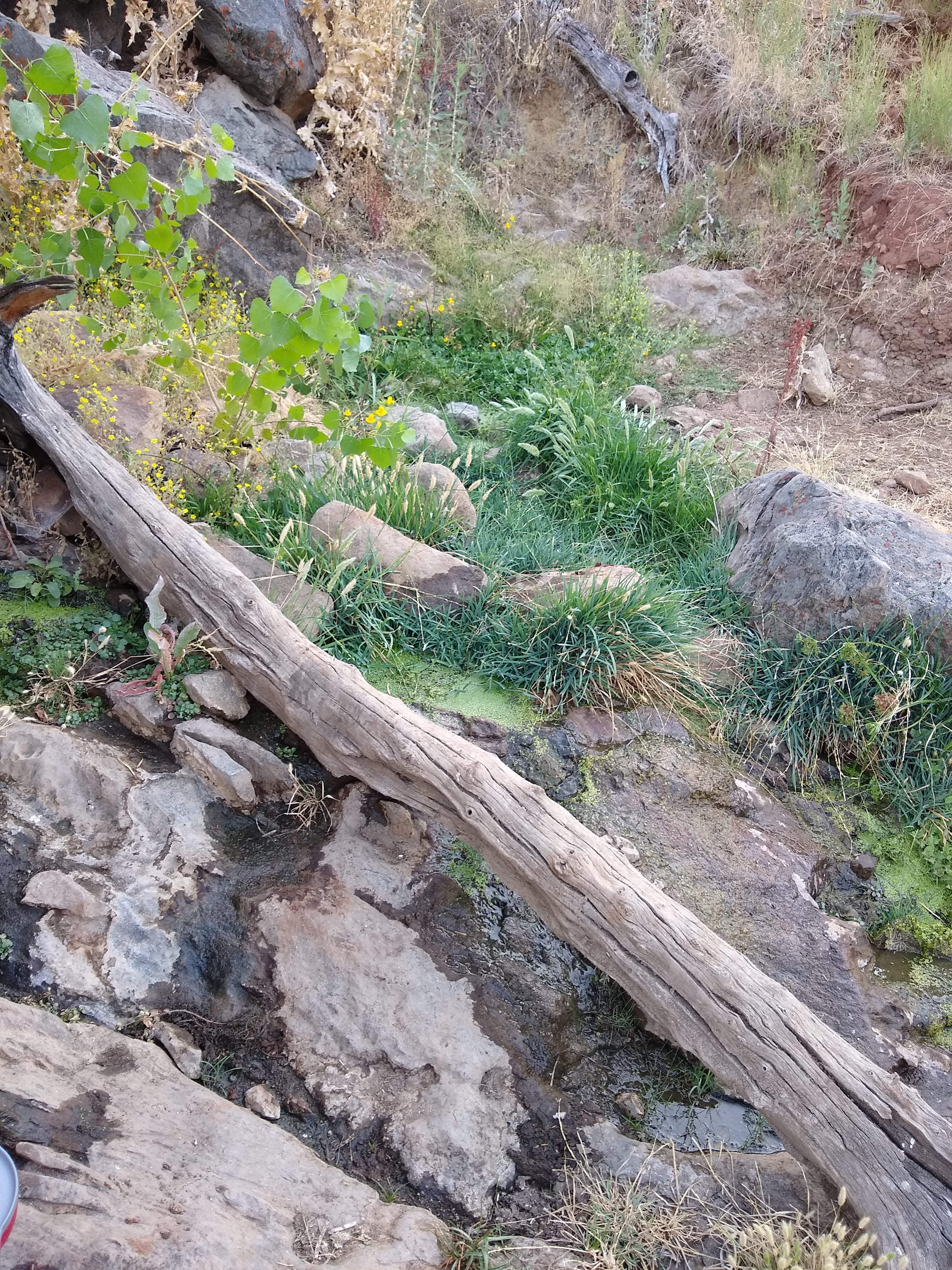
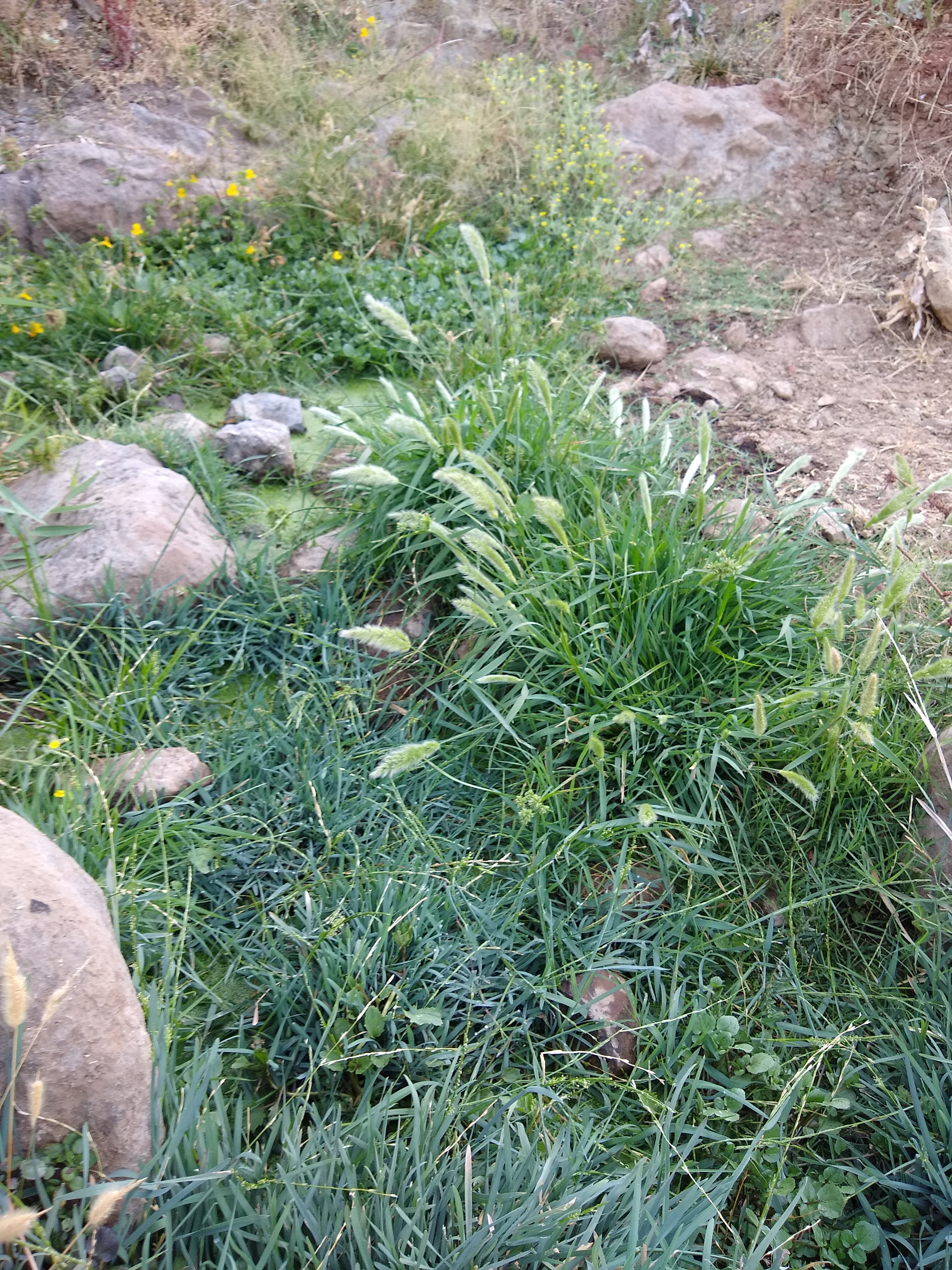
With the cow death adjacent to the only fenced portion of habitat, and upstream of some of the other sites, I was not inclined to plan near the existing habitat. Not only did I not want to work near a rotting carcass, I did not want to work near water that could be tainted if the scavengers did not act fast. I needed to search for other good sites that could be protected with either downed branches or a temporary fence. I looked further down the spring creek, finally deciding that I would simply stay away from the water – just in case. Knowing that the spring creek probably could not support the willow tree saplings I have to plant, I also looked for sites along the larger Odom Creek.
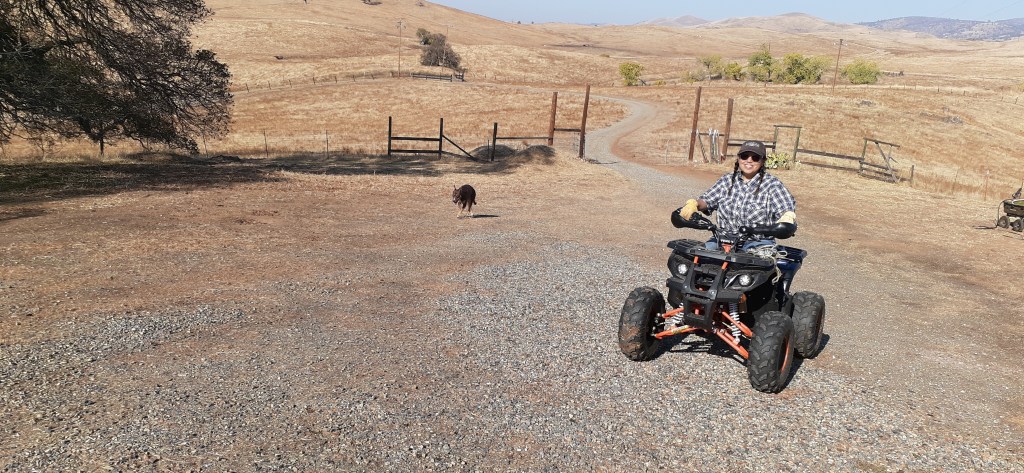
Returning from looking for alternate planting sites

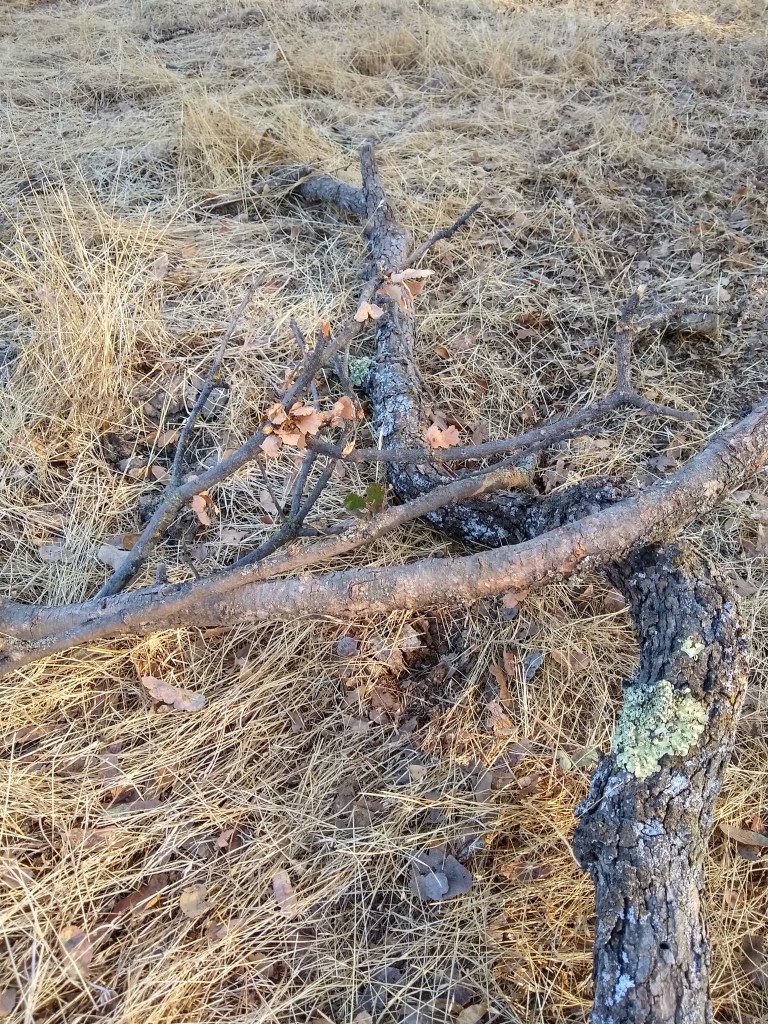
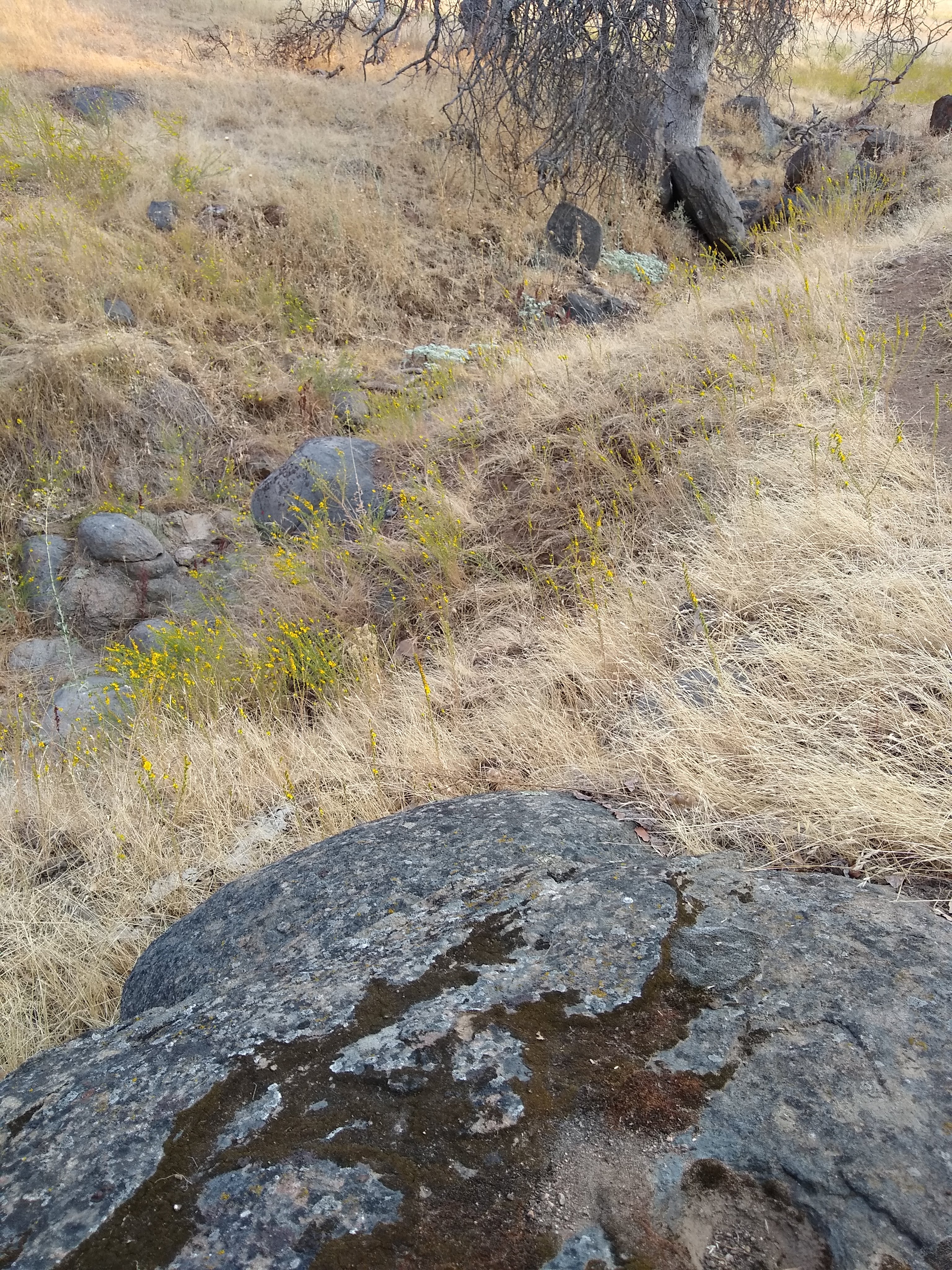
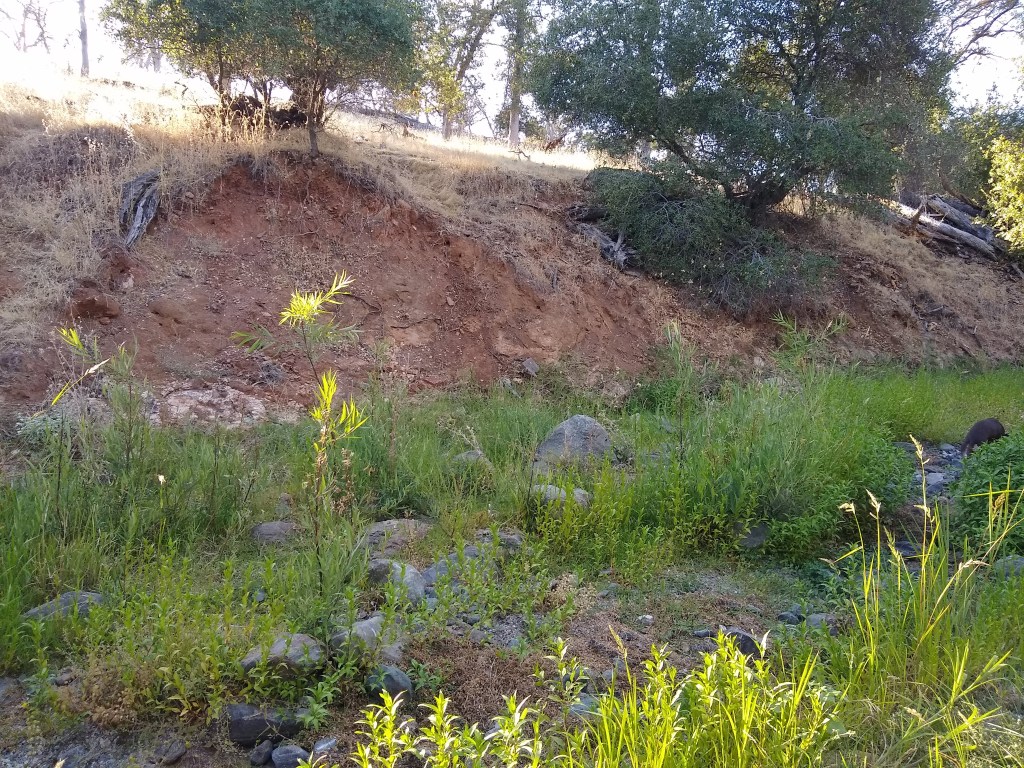
I found two sites. The one further down stream of the existing habitat will be the home of most of the riparian plants. There is still water in that section, and there is a nice “beach” that gets some high water moisture, but is typically not submerged. This area has a significant number of downed branches nearby – sufficient to block off the location. Because the spring creek is not a main surface water source however, I felt uncomfortable planting any of the willows there. Instead, I identified another site along Odom Creek. which already has a number of willows in the creek bed. There are already a few saplings in the nearby area. This section is also very steep with the main cow trail coming in along the creek bed at south end of the creek (vs along the banks). We should be able to plant the saplings there, and block off the south entry to the area. If we get a large storm, we will need to go back to re-block the entry.
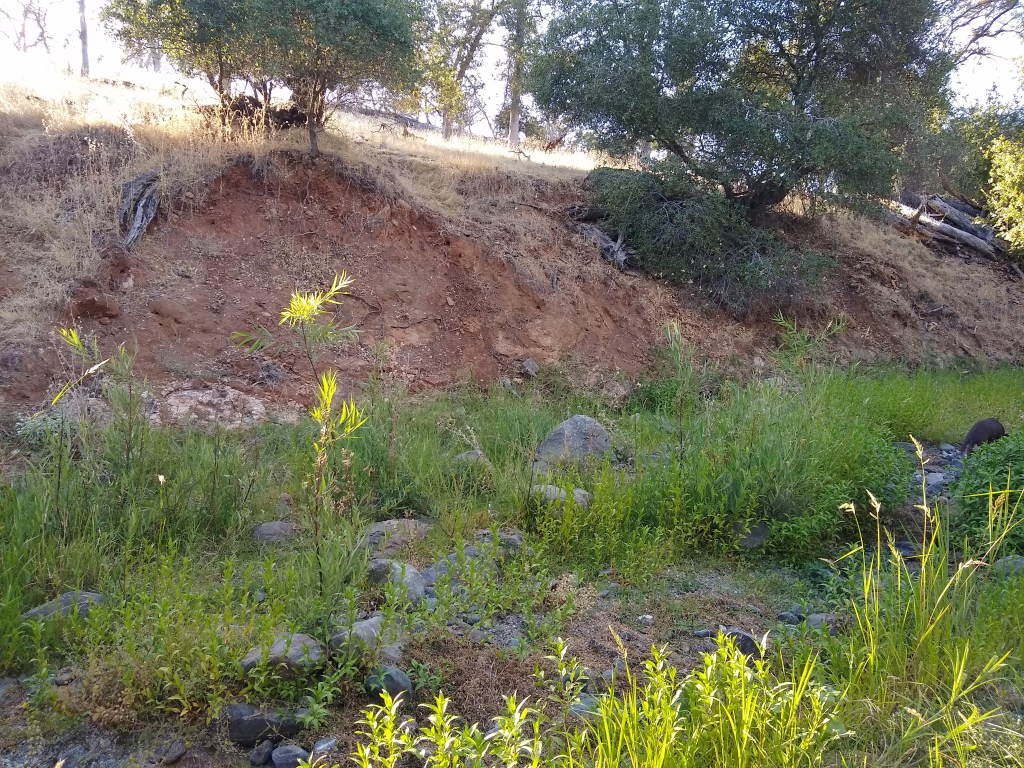
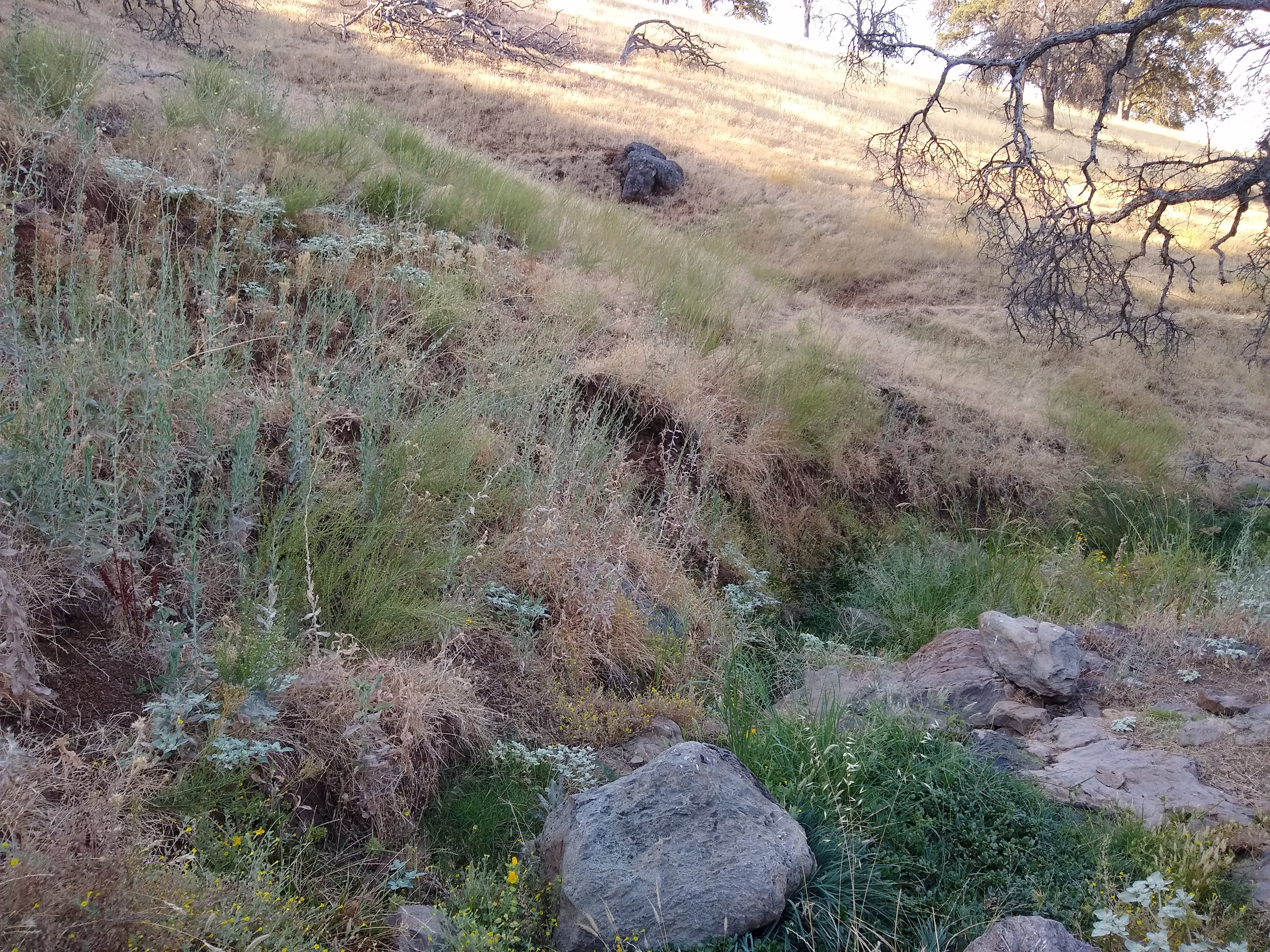
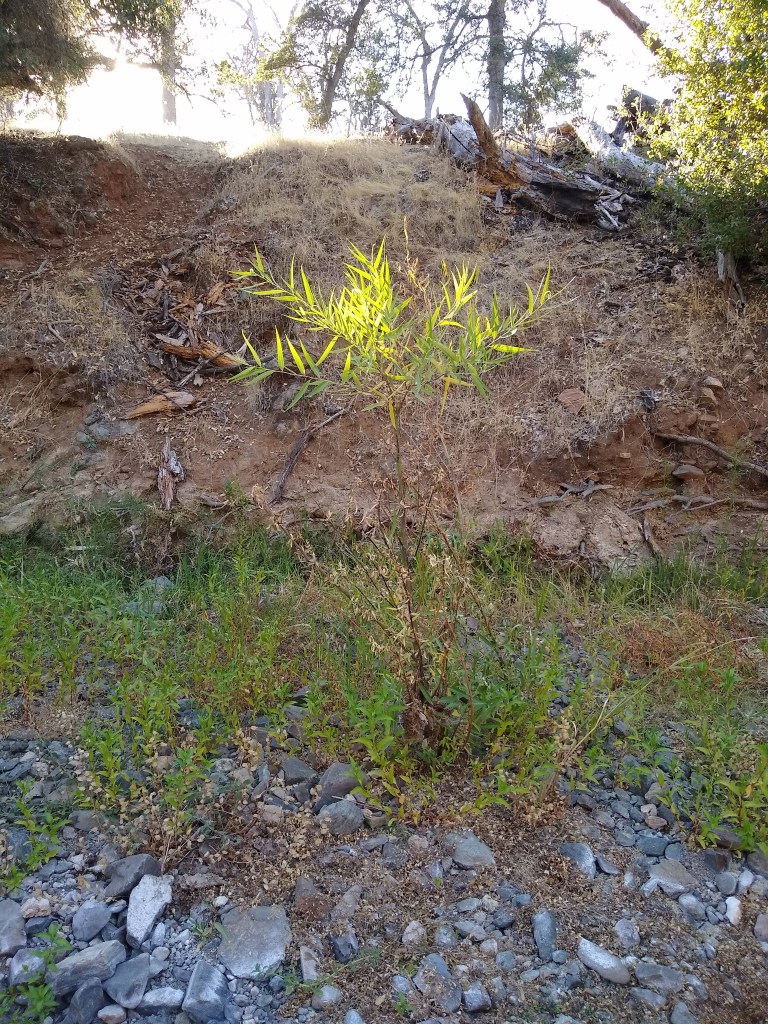
Area of Odom Creek just south of where new willow saplings will be planted

The photo above was taken earlier this year. Since then, the cattle have chewed up the willow sapling in the photo. Today, I saw it still had leaves, but had been roughed up a bit. The entry way narrows just south of this spot. By blocking the entry, we will help preserve this area too.

Good Friends Arrive…to Eat Gophers
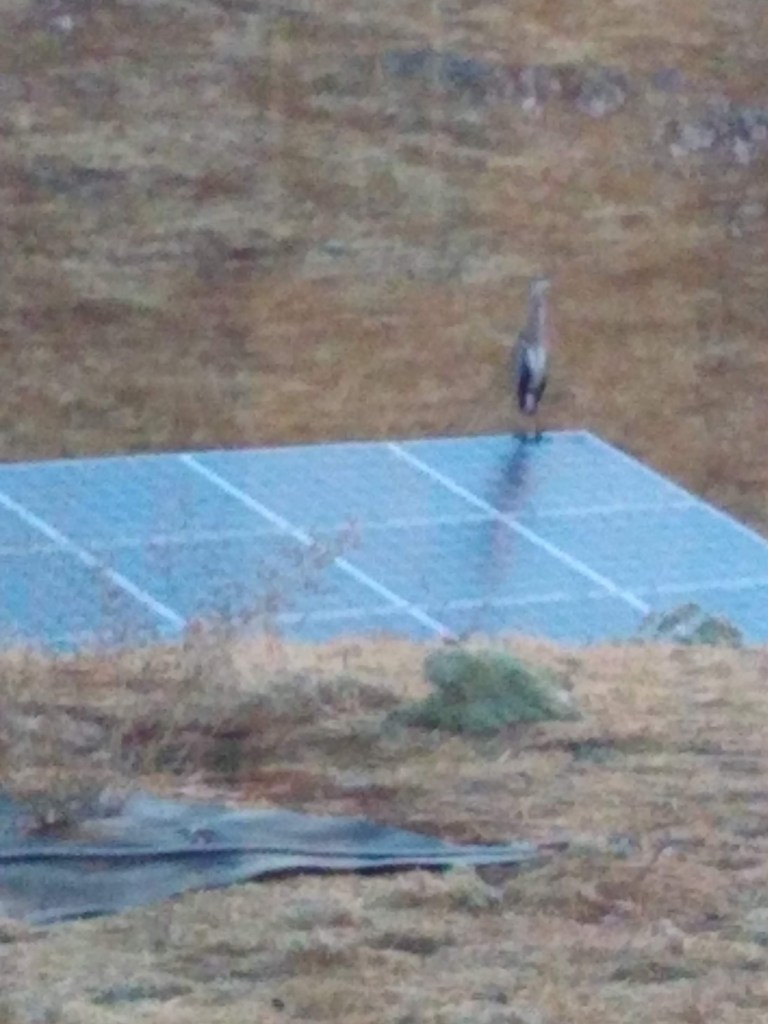
Great blue heron perches on the solar panels looking for its next meal

After the first real rain, we wait with anticipation for the return of the mating pair of great blue heron who have chosen this area to raise a family for the past 15 years. So far, we have one back. Sometimes it takes a while for the other to join, or we just don’t see it until later. During the drought, we were distraught when this pair did not return for a couple years. There was just not enough water.

For the last several mornings, this heron has been hanging out in the oak, in the field, or on the solar panels. These birds are magnificent. Pardon the poor quality photo (above), but these guys spook easily. We had to take the photo from inside the house. When we know s/he is near, we give it ample room and delay any outdoor activities until it decides to leave. Why? Besides the fact that it is magic to look at this bird, it is eating gophers. Yes!

Also, for the past three days, we’ve had the largest harrier I’ve seen here. She has been flying in her characteristic grid pattern close over the range looking for gophers (or any other mammal she thinks might do). She flew remarkably close to Andy the other day – my aged beagle. Alas, he was much too big for her. Again, pardon my poor quality photo (below).

Harrier flying unbelievably close to me bringing me untold joy. I named her “Speckles”.

Another good friend finally came to the rescue. On Friday night, I awoke to the hoot of a great horned owl. In some cultures, the owl is a sign of impending death. In others, it is good fortune. In the US dominant culture, the owl is used as a symbol of intelligence. For me, I am hoping it is a harbinger of death to gophers – especially the one that occupies (shockingly) my raised bed.

Taking Care of the Oaks

Over the weekend as well, I had some nice young men come over to cut the mistletoe from two majestic oak trees here. Nick Brocchini is one of the Tribal youth I worked with while tutoring on the high school campus in the Indian Education Program many years ago. He is now a grown young man, with a family and a very needed tree service vocation. He brought his lovely cousin with him, Gary. It was difficult to watch, both due to my worry for Nick who was climbing the tree, but also for seeing branches, despite being filled with mistletoe, dropping from the tree. I sure hope this “haircut” will help these old trees thrive. I gave them a nice hug letting them know I was trying to help them. I love them so much. It was also really nice to see Nick. What a pleasure it is to see the young people in my community grow and do well.
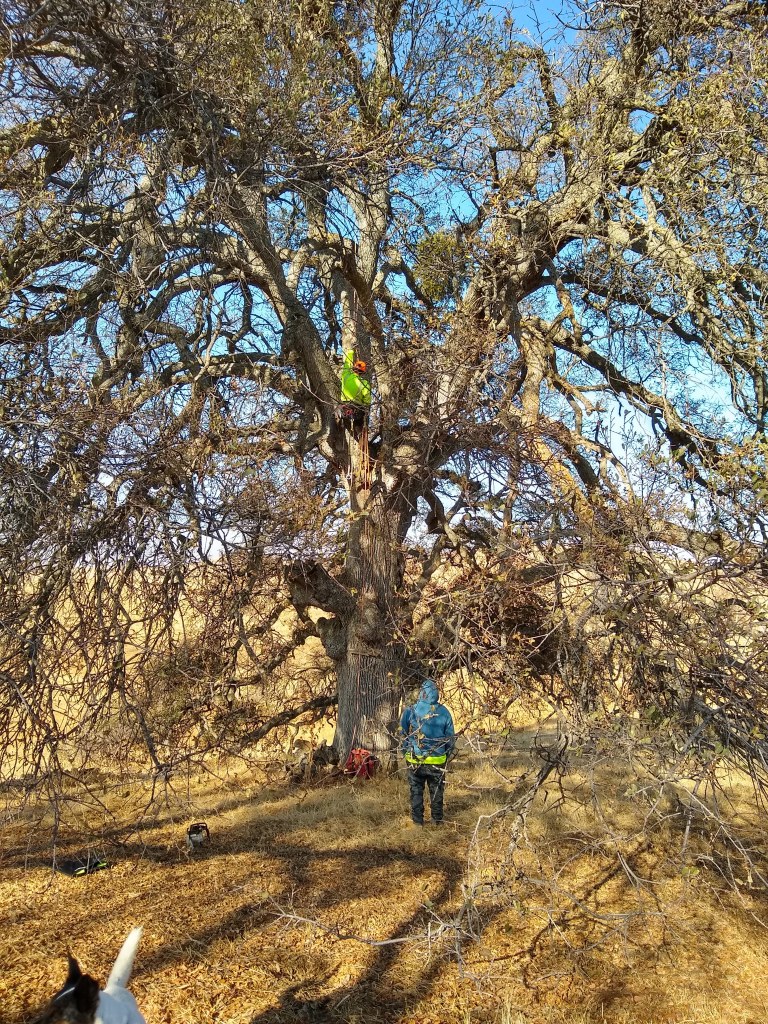
Nick, Gary and Roscoe helping me care for the oaks

Last week, I presented at the CA Resource Conservation District Conference. See the post from last week for more information. The presentation went well. I told my story, and happily there were people who were interested. Some had questions. I met several new people who are interested in the same things as me. I also learned much from the other presenters in my session as well as the other sessions I attended. I am always learning and grateful to all of my teachers.

I will have much work to do over the long holiday weekend. There are still butterflies here. I scared one from the grass while on my way to look for alternate sites. It was one of the larger brown ones that I’ve not IDed yet. The hedgerow plants are doing well. I sure hope the carcass is fully gone this week, so that I can plant without additional concern and get back up stream to work in that area.
A Tidal-wave of Plants – All Hands on Deck to Save the Monarchs

Heather speaks to Angela while picking up Xerces Kits at the NRCS nursery facility in Lockeford, CA

In the early summer this year, Melinda Barrett, the Director of the Mariposa Resource Conservation District (RCD), had generously included my project in their grant request for the Xerces Society pollinator kits. Also included were kits for the County and UC Master Gardeners, both working on spots in town on the Mariposa Creek Parkway. To pick them up was the least I could do, so I volunteered. David and I made the nearly two hour trip to Lockeford on November 3. The nursery site was gorgeous, sitting along side the Mokelumne River. There seemed to be over a thousand plants waiting to make their way to projects all around the state. It was clear Xerces was making a monumental effort to get plants into the ground as rapidly as possible. I felt very honored and humbled to be one small part of this massive effort.

Deedee Soto (Xerces), Melinda Barrett (MCRCD), and I meet with Waylon Coats at the Sarah Priest Tribal Allotment land in Midpines, CA.

I was allocated six kits from the Xerces grant. While four kits would be used for Walappu’ ‘Uuchuthuu, two could be used for community projects. Our first community participant came from the local Tribe. Waylon Coats is a member of the Southern Sierra Miwuk Nation Tribal Council. His ancestors have lived along the Bear Creek in Midpines for thousands of years. When I discussed my project at the Council Meeting last Spring, as noted in a previous post, he was the first to volunteer his relation’s Tribal land for the project. Melinda, Deedee Soto (Xerces) and I paid a visit to Waylon to look at the site in mid October. He showed us a few options, but we chose the first site he thought would be good. It was gorgeous! Bear Creek was running. There were many pools of standing water, and a nearly dry spring that fed into the spot we chose. There were already butterfly plants in that area. In fact, as we spoke, a beautiful sulfur butterfly flitted from plant to plant in the dappled, peaceful section of creek we were exploring.
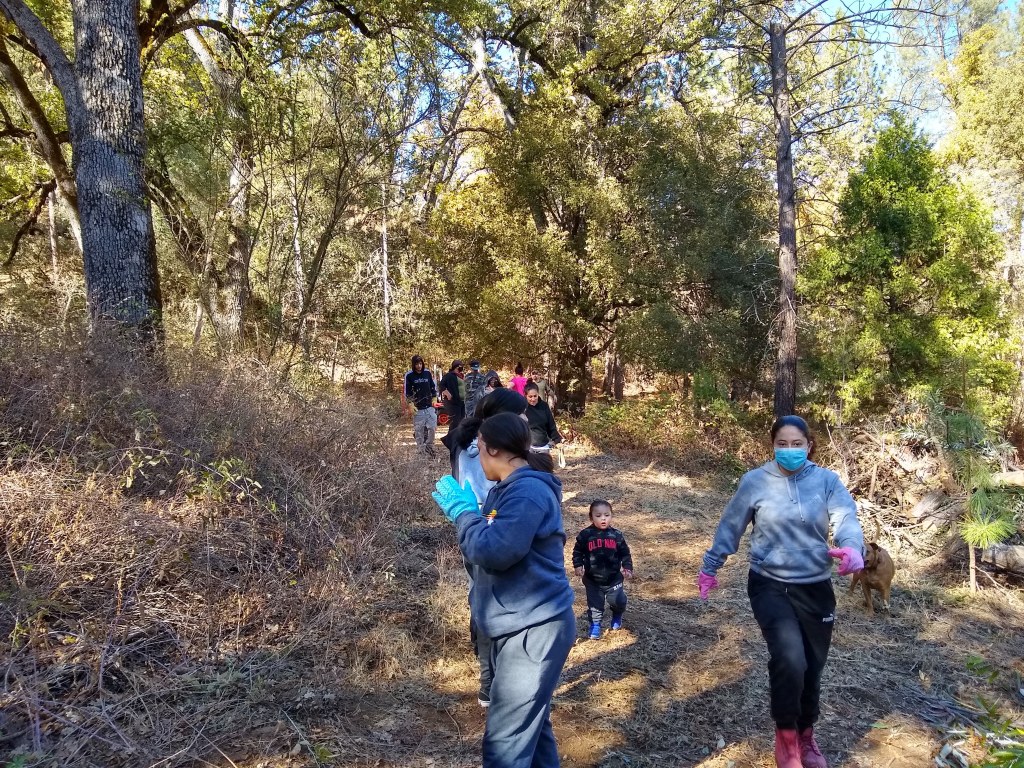
Waylon works with Native youth (He is very young himself.). He teaches them traditional practices, and this project was a perfect fit. The site had considerable invasive and overgrown species that needed to be cleared. He, and his youth group, planned to do the clearing work prior to me delivering the plants. I delivered the plants on Sunday 11/15, and the place was nearly ready to go. He had at least 18 relations there and ready to plant – not all youth. There were several adults too as well as little ones. So many indigenous communities are coming together to reclaim their knowledge and be change makers in healing the land. I know many butterflies will find their food and incubators, here, in this serene, protected place.

Planting Xerces Kits – a race against time

Heather plants the hedgerow kits early in the morning despite the continuing smoke of the Creek Fire.

The kits are comprised of nectar and milkweed plants designed for either drier areas (hedgerow) or moist creek areas (riparian). It was a strange growing year this year – probably mostly due to the smoke. The milkweeds started going dormant quicker than the Xerces team expected. What they have learned is that the milkweed transplants are much less successful after they go dormant. It was imperative that the milkweeds were put into the ground as soon as possible.

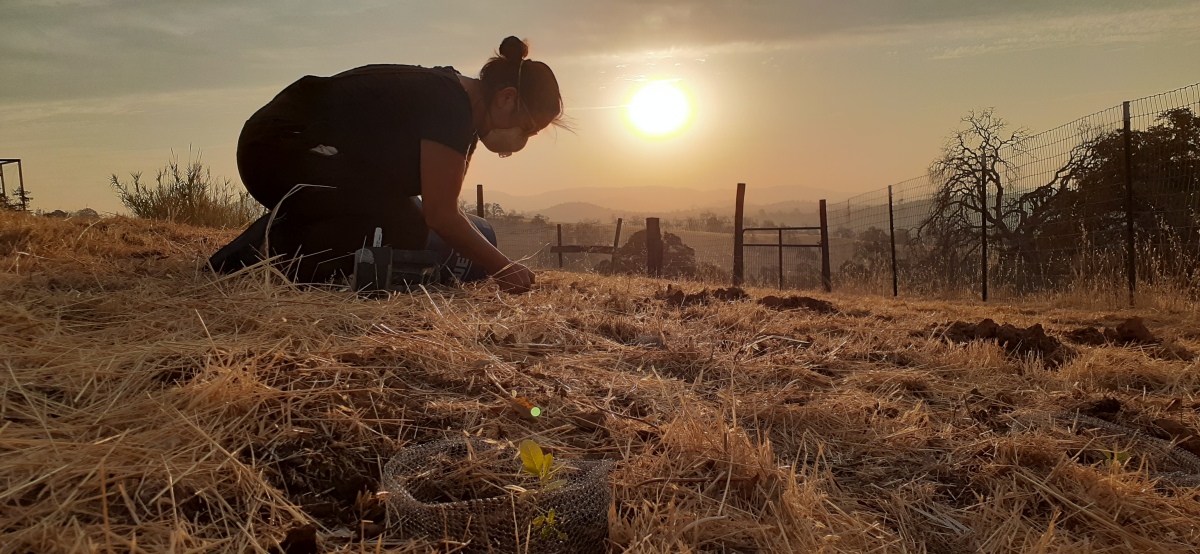
I picked up the plants on 11/3. My husband and I had made some of the holes prior to their arrival, but we did not get all of them done. The smoke has been difficult to work in. It limits my husband’s ability to work outside, in particular, due to his asthma. David is my primary hole digger. He is big and strong – and can get more hole digging work done so much quicker than I. Sadly, I was not able to have much of his time. Instead, I took the pickax and made an additional fifty holes over the next five days. [Yes, my back is still aching.] There are still about ten plants remaining to be planted in the riparian section – awaiting more fencing work to be complete in the next week.

We did receive a reprieve in the form of a small storm. This made digging holes much easier, not just from the moisture, but from the smoke being pushed out. Being able to breath is a huge plus when wielding a pickax. I prioritized the milkweeds from both types of kits. They were in the ground withing the first 48 hours. Next, I completed the hedgerows in time for the next storm. I had to be concerned about freeze as well. The temperatures dipped into the 20s here in Hornitos. Although the plants are on the covered patio, I did not take any chances. I placed a sheet over all the plants to keep them even warmer.

Below is a collage of images from planting both the hedgerow and riparian kits.

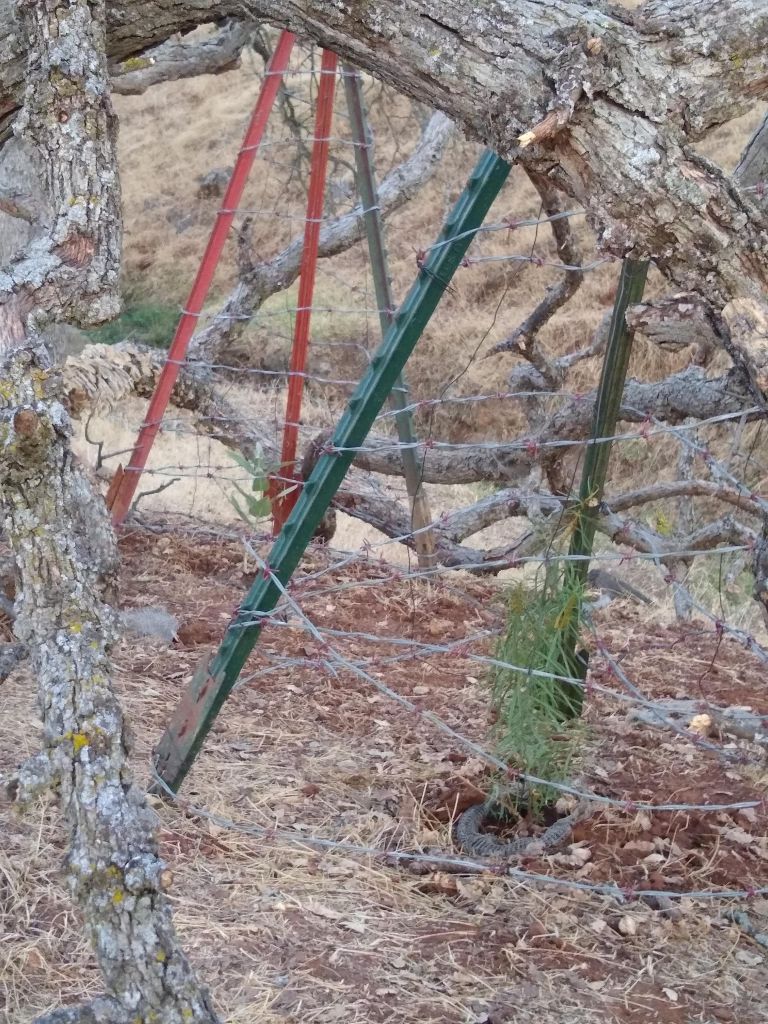
The hedgerow plants all received mesh baskets. At the creek, where gopher intrusion is much less, the milkweeds were planted directly into the ground. I placed downed branches over those plants that still had green sprouts to prevent cattle browsing.

Other Items of Note

Major shock! A gopher finds a way to access my raised bed and decimate unprotected plants.

My heart sunk when I found that a gopher had made it into my raised bed. I did not place any of the plants in mesh baskets inside the container, so they have become easy pickings. As of this writing, it got all five marigold plants, my one remaining woolly pod milkweed and a narrow leaf. I am nearly despondent about this turn of events. They were all so healthy. Some of these plants need to make it though so there are more mature milkweeds for the butterflies to choose from.

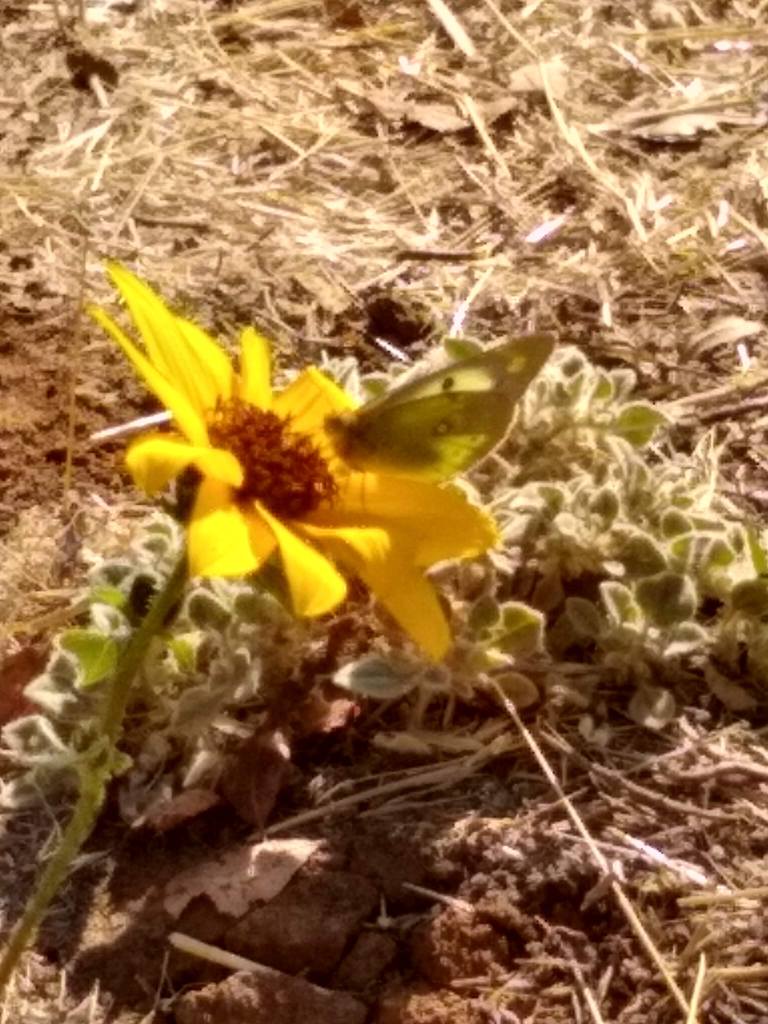
Alfalfa Sulfur butterfly on a sunflower

Fortunately, we continue to have blooms and butterflies continue to come. None of them are monarchs, but we recently had this green gossamer-winged beauty (photo above). The experts think this is an alfalfa sulfur butterfly.

Common Buckeye butterfly visitor

We also had this brown beauty (photo above) arrive a week ago. The photo is brown because this was the week the smoke came back with an AQI reading of over 140. I think this is a common buckeye. So gorgeous. We’ve also continued to have the cute little lilac butterflies (read the post before this for more info and images) and white sulfurs. I am really grateful that they continue to come here and find food.

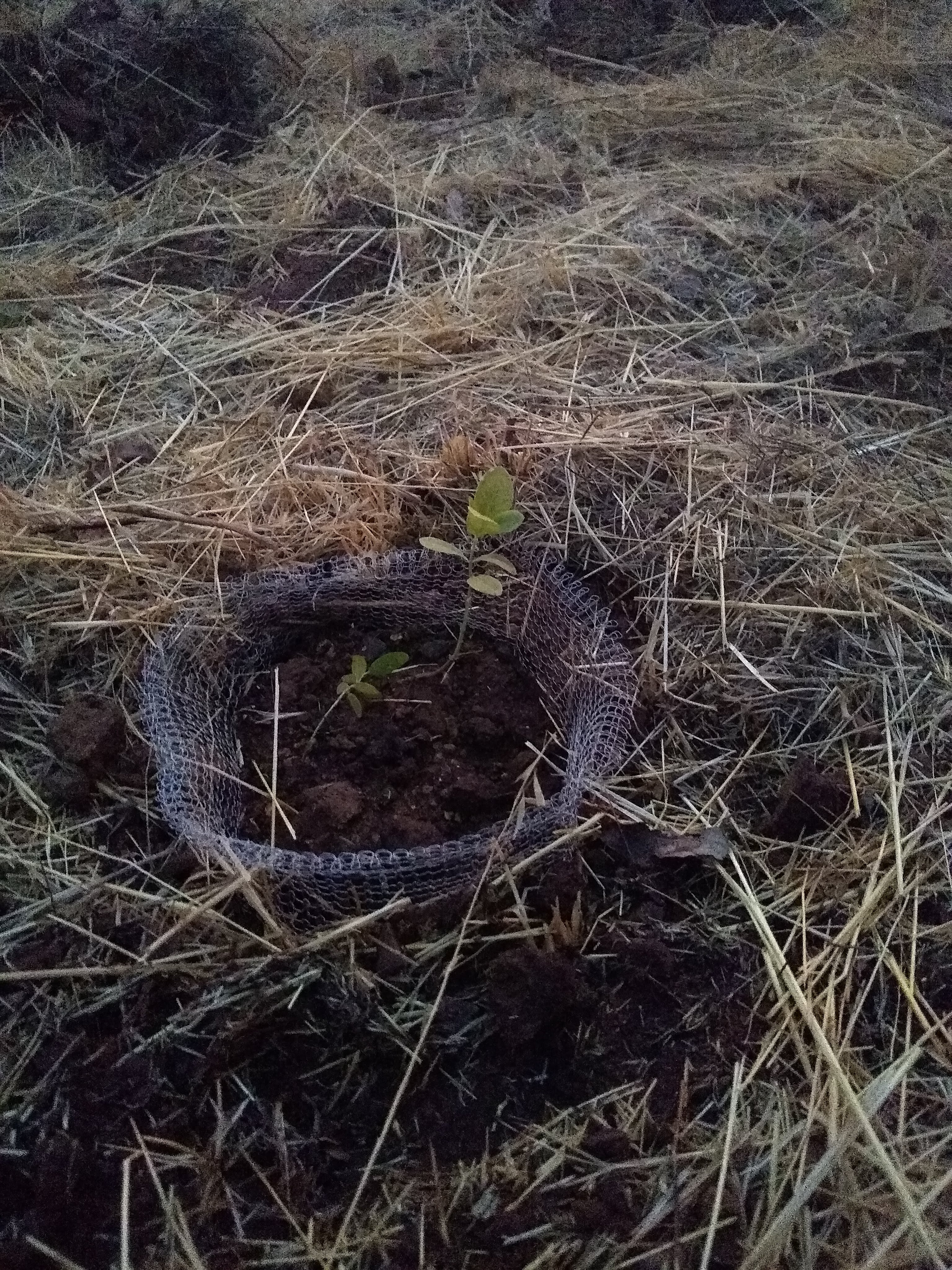
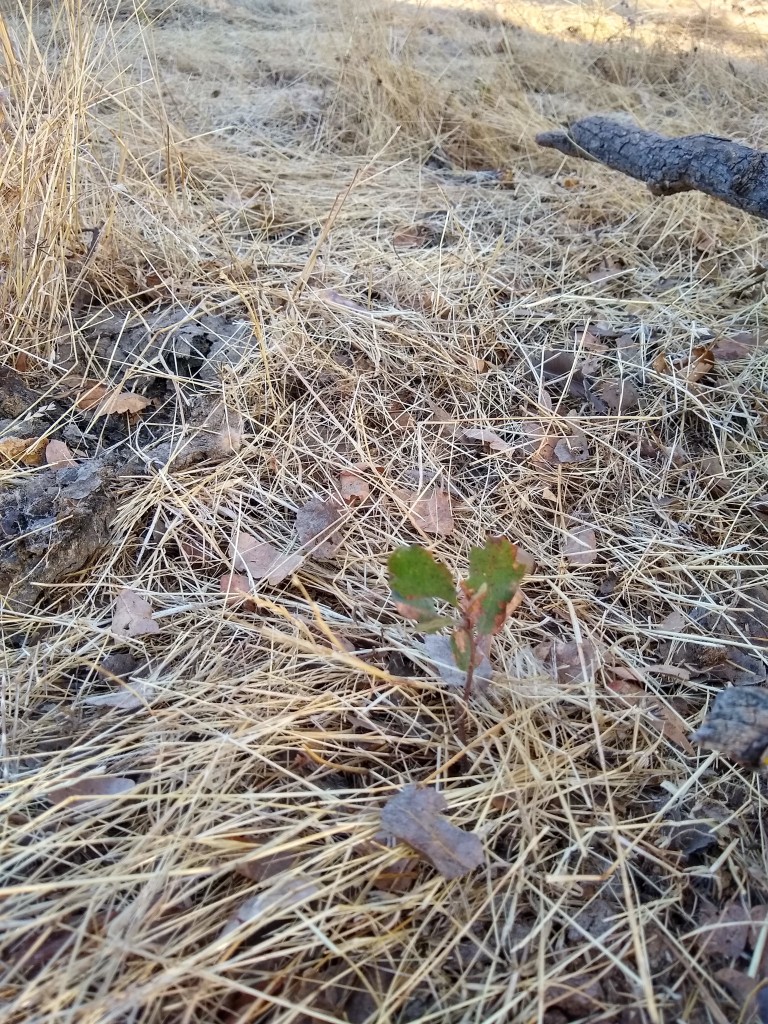
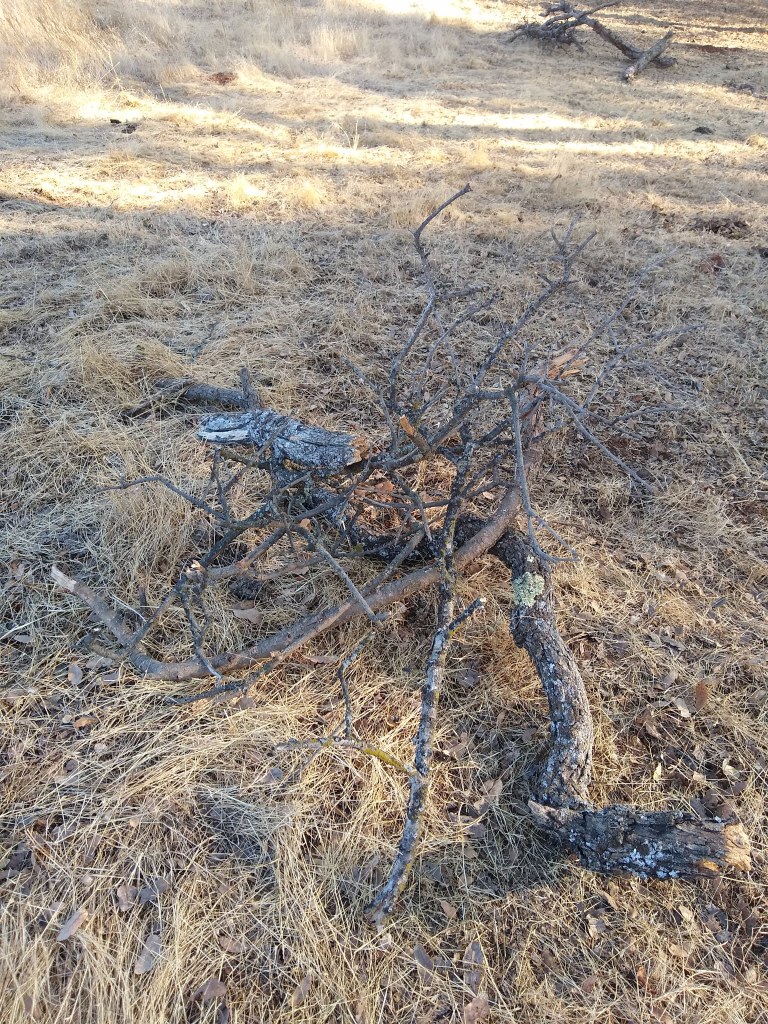
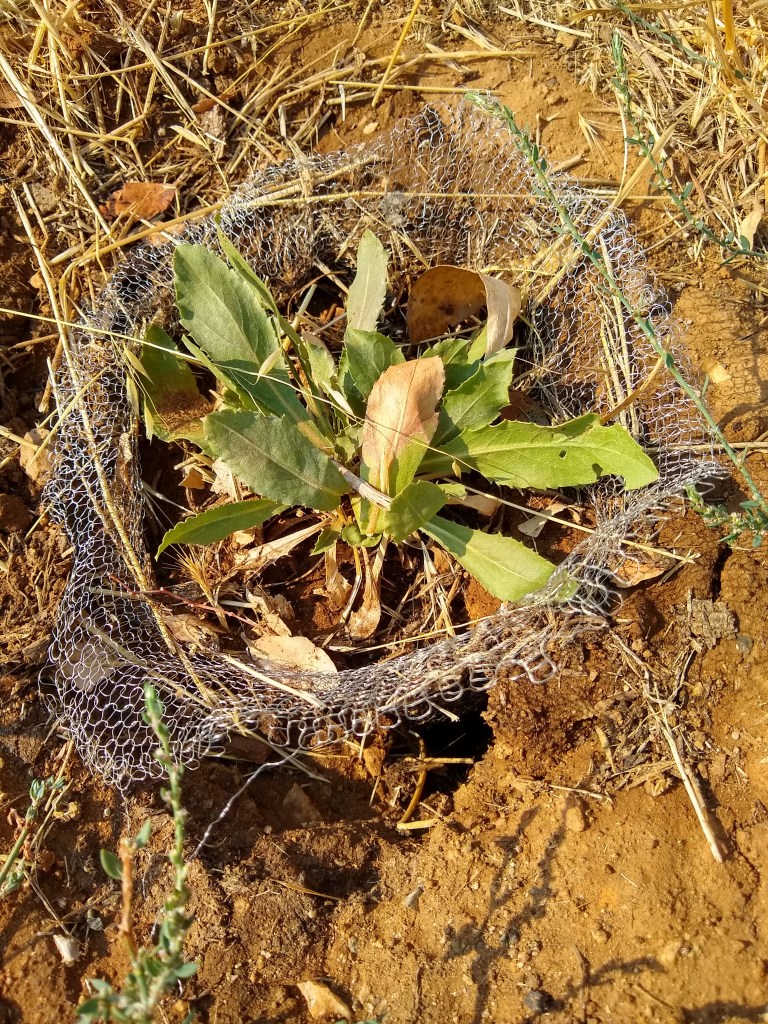
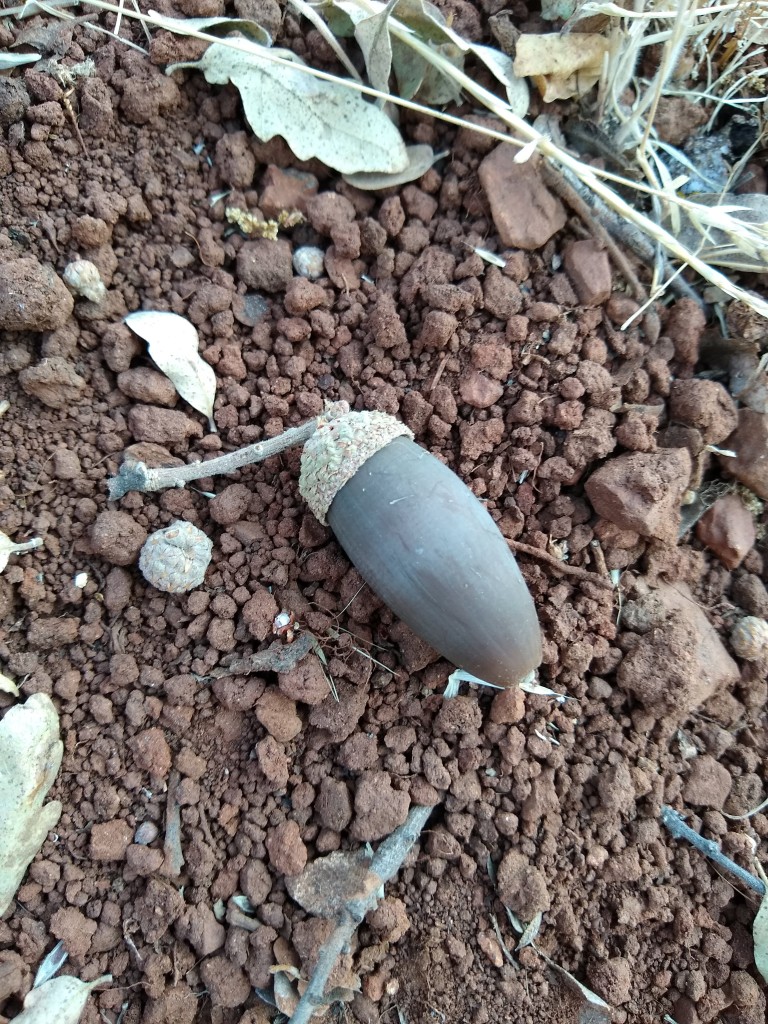
I am finding more and more oak seedlings. Those that are in especially good places, like where there is not a living tree adjacent or the nearby tree is dead, I am covering with downed branches. This helps to protect the seedling from being grazed by the cattle. I now have about eight mounds of branches protecting ten seedlings.

The final item I would like to share is that I was asked to speak about this project at the California RCD state conference. I am really happy to do so, but very much hope it is of interest to the audience. I will not be providing a scientific presentation. Rather, it is more about my story of how this project came together and how it is progressing. I will try to keep it lively and not make folks fall asleep! If you are interested, here is a link to the presentation in PDF form.

Like our work to solve the COVID-19 pandemic, we are only able to be successful if we work together. Instead of a virus, our shared challenge is convention and in some aspects greed. We do not have to do things the same way we always did. Even those ways were changed from the way things were before then. Nothing is static. The choice we have is whether we embrace change in a way that brings greater health to all or a greater profit and lifestyle for a few. I would rather live in a place that is healthier and happier for all living things. I hope you would too.

The Smoke Cleared and Then…

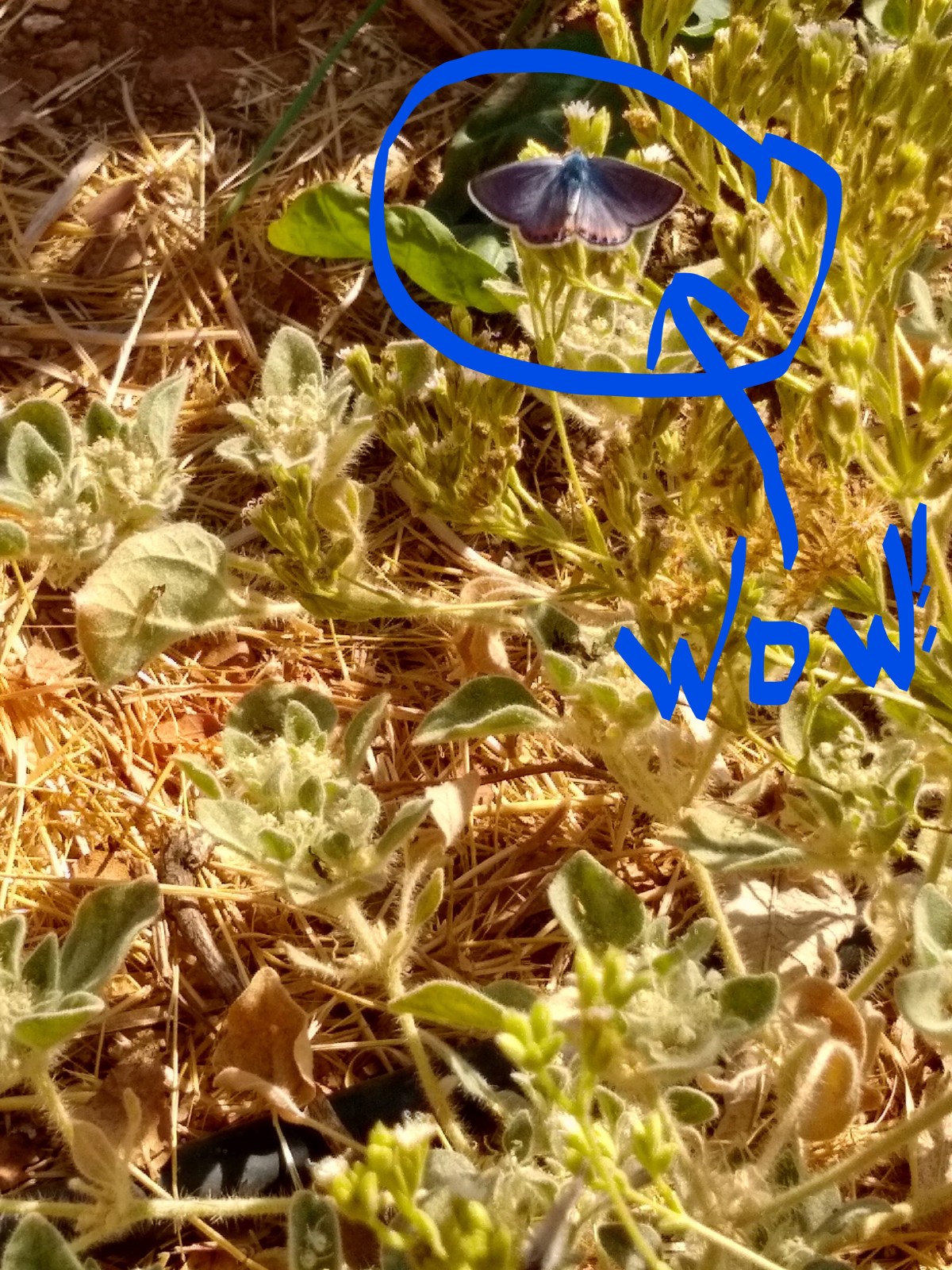
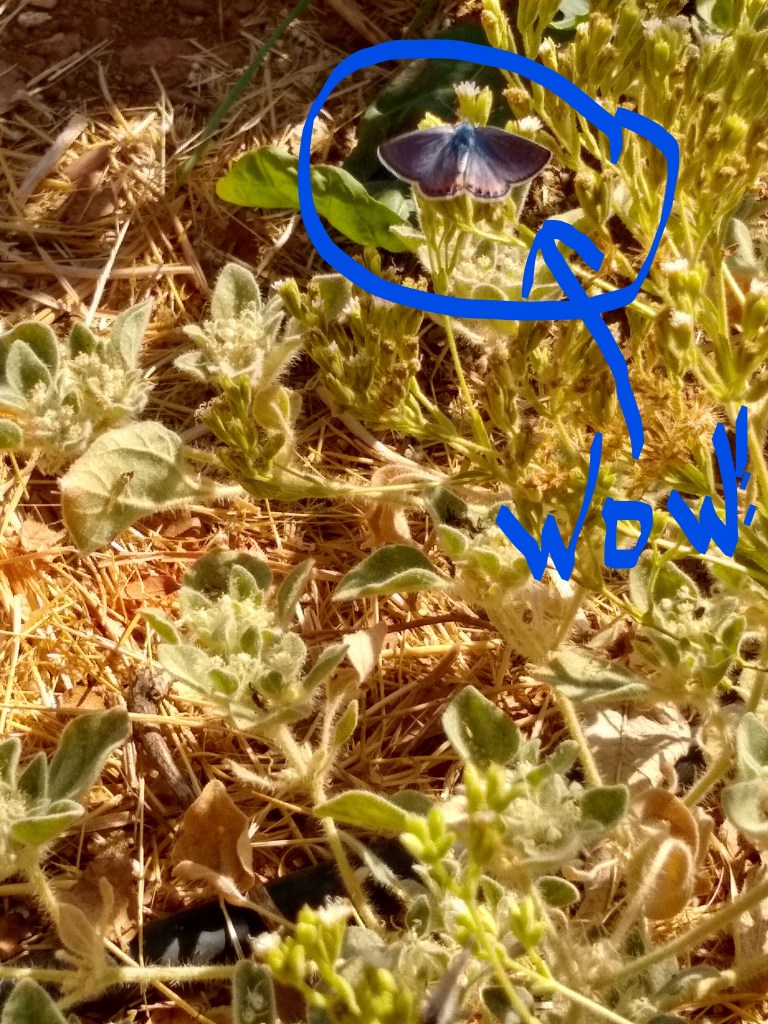
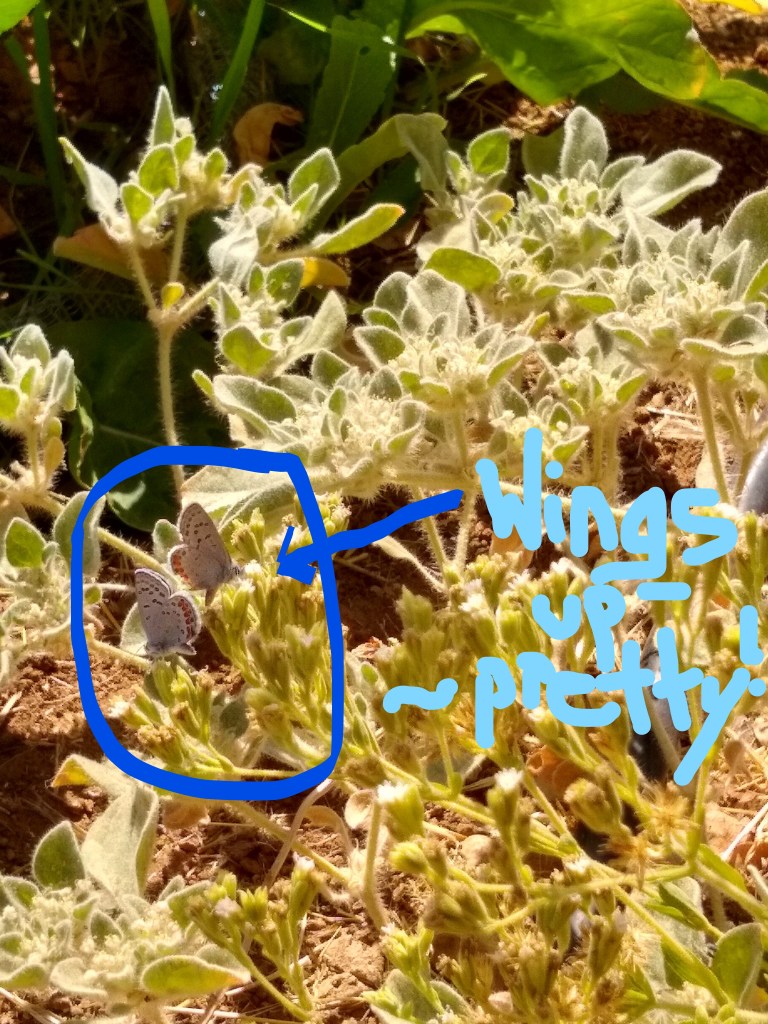
Lilac blue butterfly – wow!

Last week a trough of low pressure came through the area. This pushed the smoke elsewhere. The changes at the ranch were immediate. In addition to clean air for my lungs, there were pollinators everywhere. My father decided to go for a drive the day the smoke cleared and stopped by (Of course, we followed physical distancing requirements and stayed outside). To have him stretch his legs, I took him on a tour of all the butterfly plants and blooms. As we got to the end of the patio, we saw the first group — a swarm or kaleidoscope of small, lilac-blue butterflies!!! They fluttered all around me as I walked through their nectar sources. I was overcome with surprise and joy – so much so, I nearly fell to my knees. My dad chuckled and asked if I was ok, and I said “I really did it. I created a home for butterflies!” All this work paid off. They are here. Maybe not the monarchs, but these beautiful little ones are here!

Butterflies eating or resting. So pretty!

We kept walking, and there were more and more. I couldn’t count them. These little ones seemed to like the dove weed, aster, butterfly bush and the blooms on my stevia herb plant. They were fluttering around the milkweed too. Their coloring was extraordinary, with a bar of orange with black spots just on the end of each wing. In addition to the small lilac-blues, there were the white and bluish sulphur butterflies. I was overjoyed.

Fortunately, they stayed several days, and I was able to collect myself to get the images seen on this blog and one decent video of a couple butterflies fluttering about on the stevia. Here it is, and enjoy these 36 seconds of pure Zen. Sadly, the smoke rolled back in, and the butterflies were gone.
Other Amazing Things

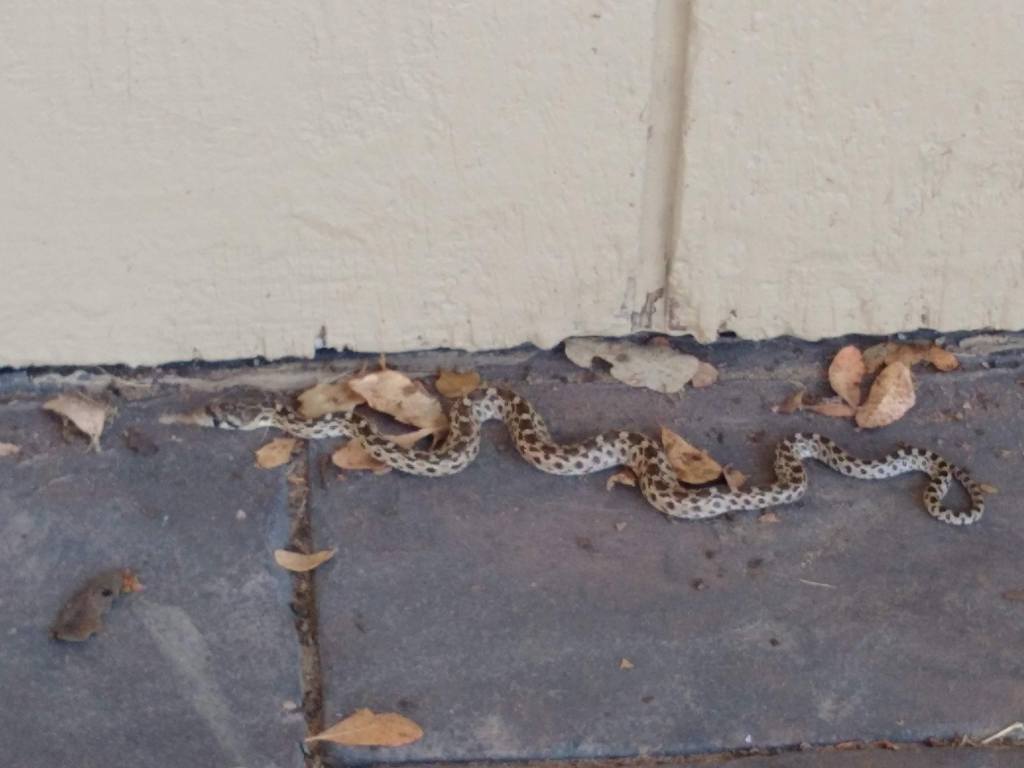
Garter snake – a good friend to the garden and gardener!

The land seems healthy. We have seen snakes, lizards, tarantulas, song birds of all sorts and frogs. There was even a falcon battle in the front yard. The animals are not being shy, which means there is plenty to eat, plenty of habitat, enough space between all of us, and they are feeling comfortable to make a life here.

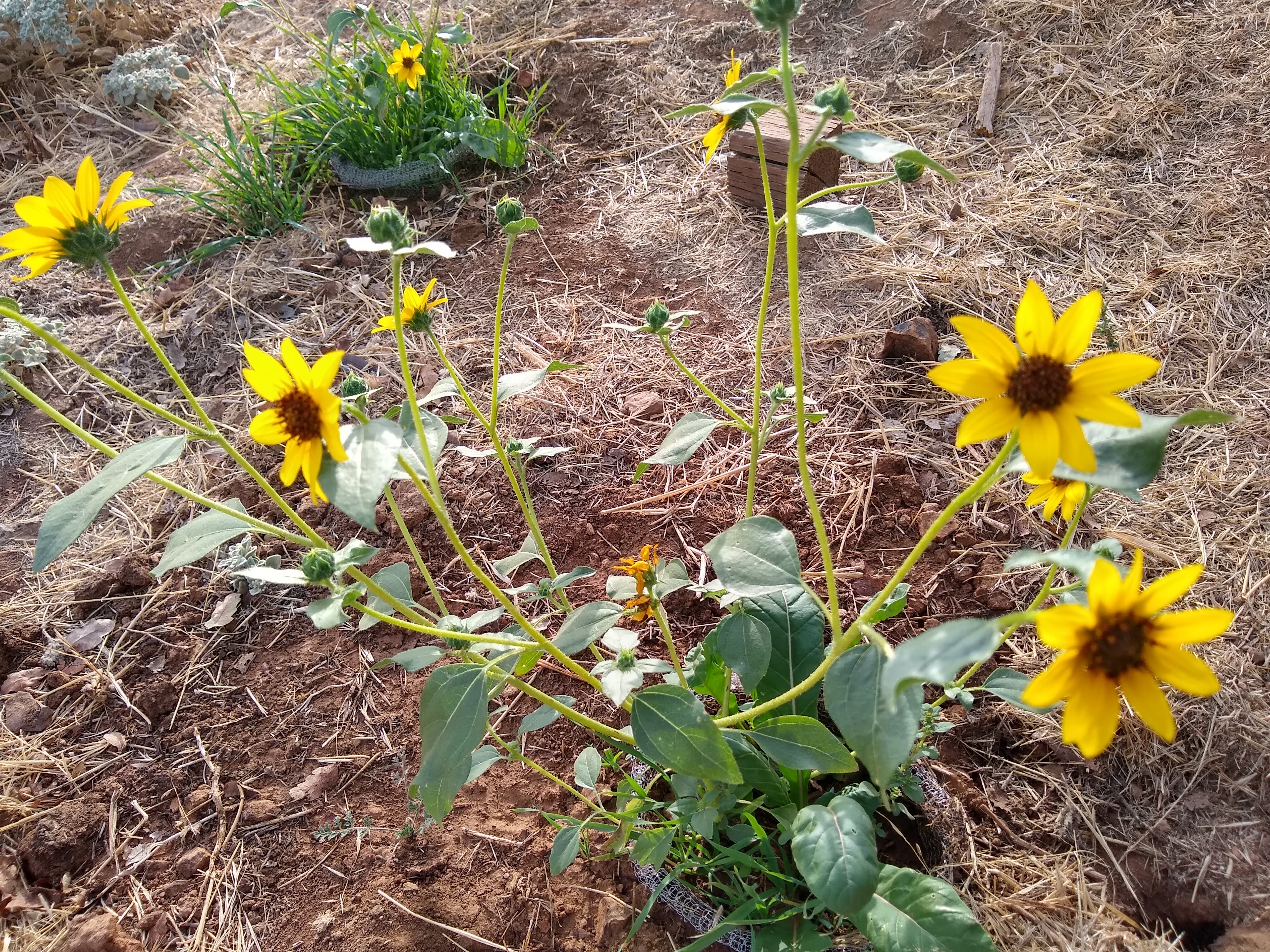
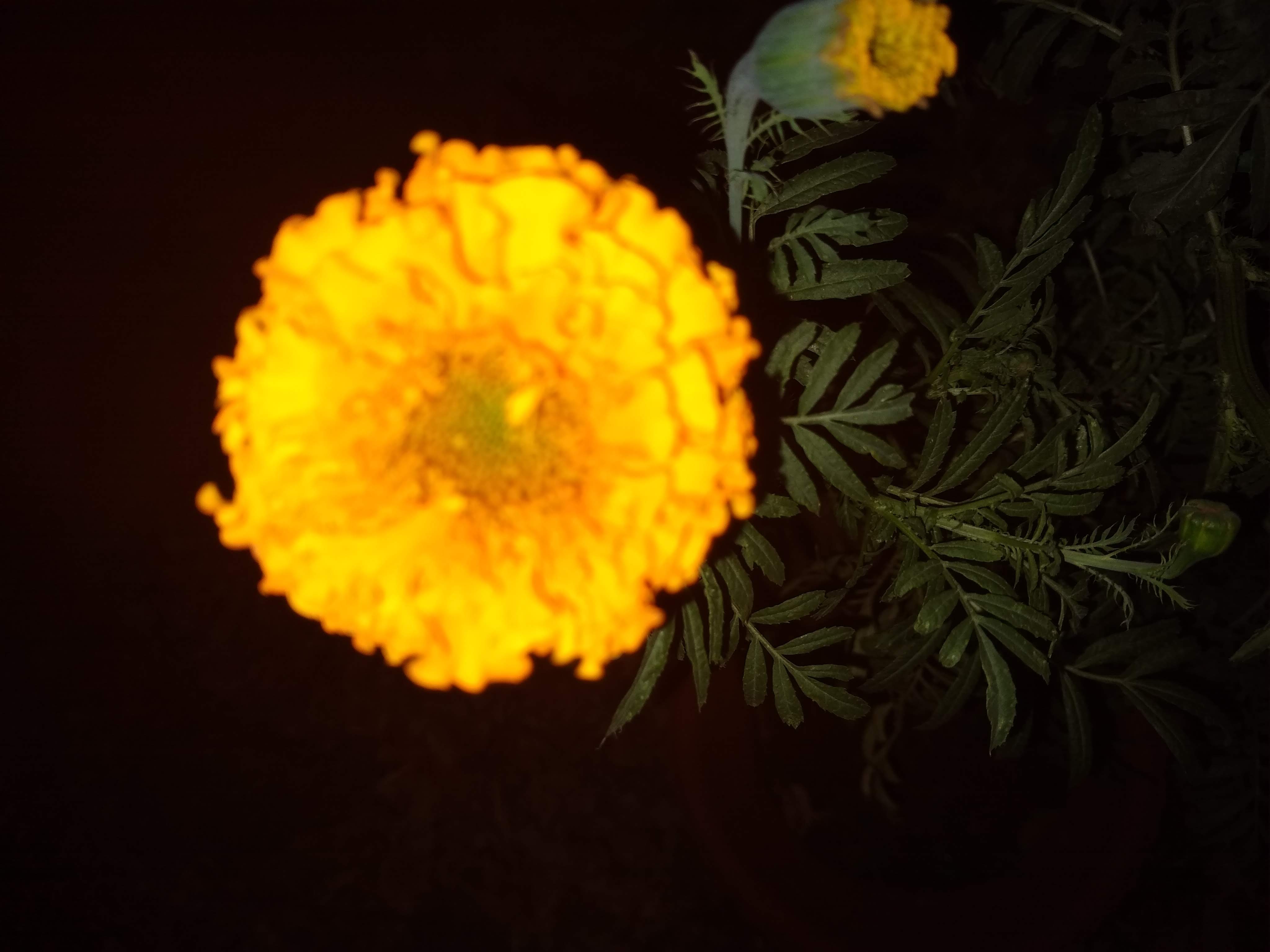
The marigolds are finally fully in bloom. It took a while, but the smell is lovely, and the sight of their sweet blossoms – beautiful. The sunflowers are fully open and are so joyful. If it was not for the smoke ebbing and flowing, the scene would be a daily respite.

Branch Protection Works

Grass grows where the branches are. Far less grass where there are none (apologies for the blur)

Some notes from Sites 7 and 8: You can really see the difference where we placed branches and where there are none. The cattle has not grazed the branch areas as heavily. This gives me an idea for protecting the creek, which I will vet with the biologists.

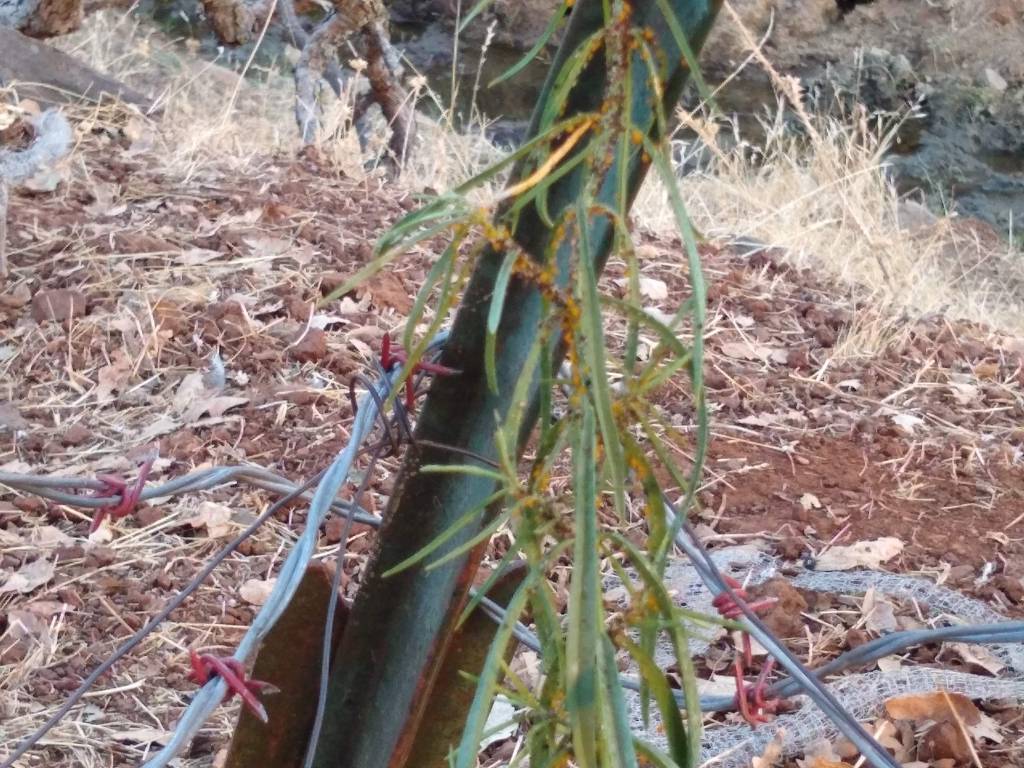
I also noticed a mass of aphids (the orange spots) on the narrowleaf milkweed. I have some at Site 9, but only on one milkweed. The aphids do not seem to prefer the showy or woolly pod plants. According to Ron, my native plant vendor, they shouldn’t hurt the plant. Besides, we are nearing the dormant period. It is good that something gets some use from them, since the monarchs did not make it here this time.

Aphids on the narrowleaf milkweed – Site 8

Getting Close to the End of the Season

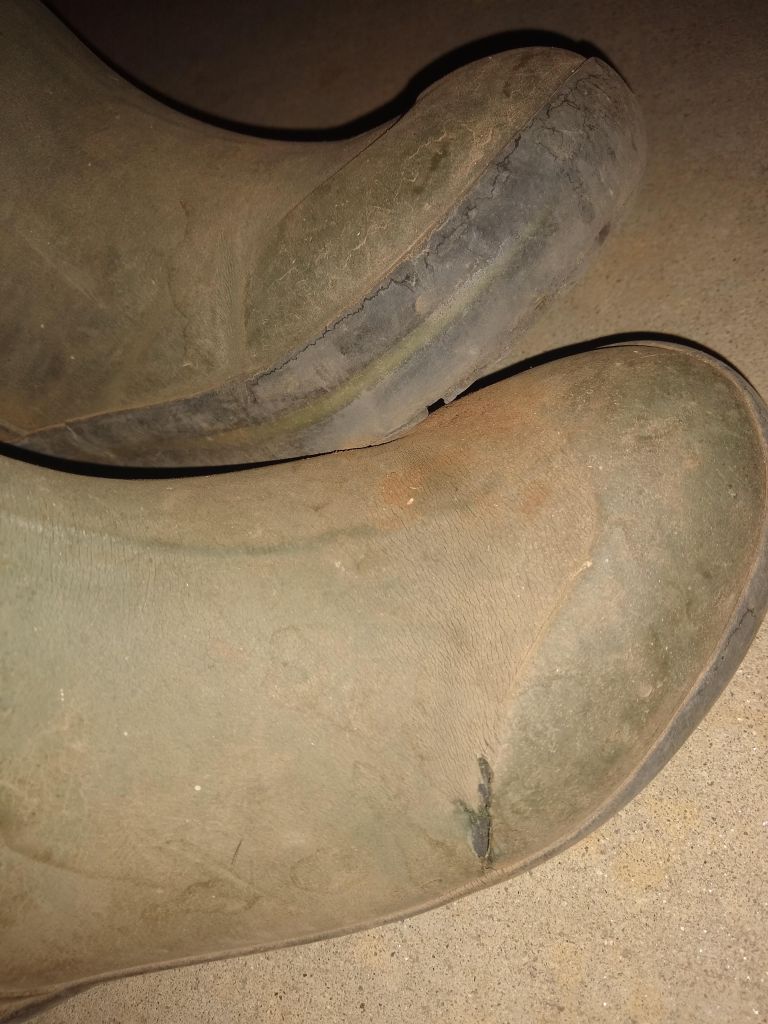
Rubber boots are shot

We have just one big planting to go before we are at the end of the season. My back is sore, the skin on my fingers cracked, and my boots are completely worn out. It is not a complaint, but a sign that it has been a productive seven months. Just for that one swarm of butterflies…it is all worth it. I think next year will be even better. I just need to get the next set of plants in the ground so we have more early bloomers ready to go for February. Oh, and if anyone has some recommendations on a really good brand of rubber boots, please share them with me. I hope I will need them soon (read: need rain).

More Blooms But No Butterflies. Cows Return and Bust Up The Joint.

Smoke and more smoke makes working difficult.

The smoke has officially made me depressed. Especially when the air quality reading is above 150, which it has been more often than not, I am not able to spend much time outside. I breathe shallow, and I have to work slower. This is excruciating for me and decreasing oxygen to my body. Although it was not planned, I had ordered an electric ATV back in July to replace using the big truck and decrease the fire danger when transporting water to the Spring Creek sites. I did not know that this purchase would be crucial for my productivity in the smokey horror day after day (dramatic flourish intended). With the eATV, I am able to haul more water up the hill to the other plantings and more quickly. I also have the ability to strap on a smaller tank to water the more distant Sites 7 and 8. The plants need water, regardless of environmental conditions. I just have to be safe, use a mask, try to slow down and not stay outside as long as is typical. I live in service to the a’wuu’atee (butterfly food) in the deepest hope that next year the butterflies will come.

Speaking of A’wuu’atee – Blooms

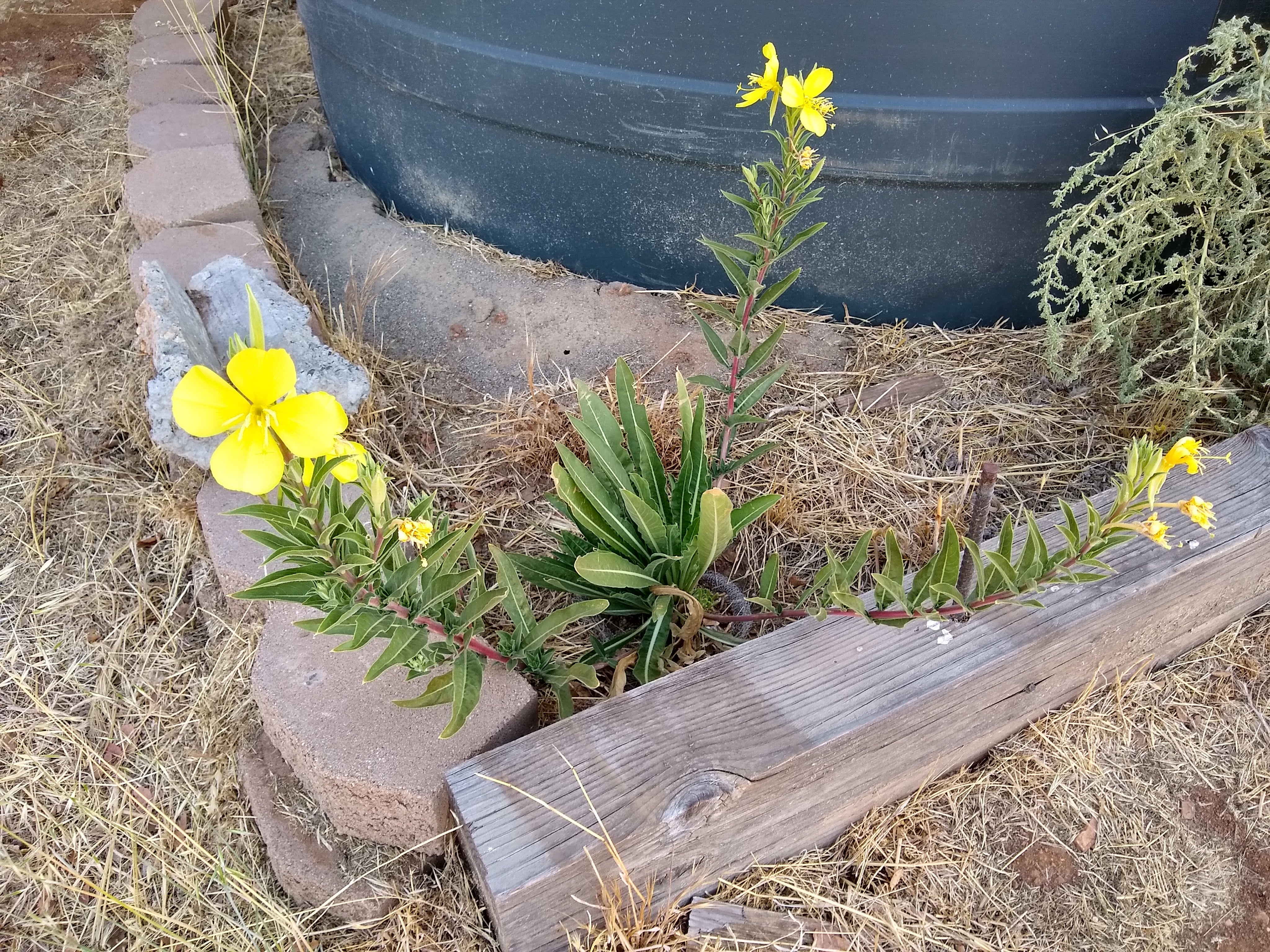
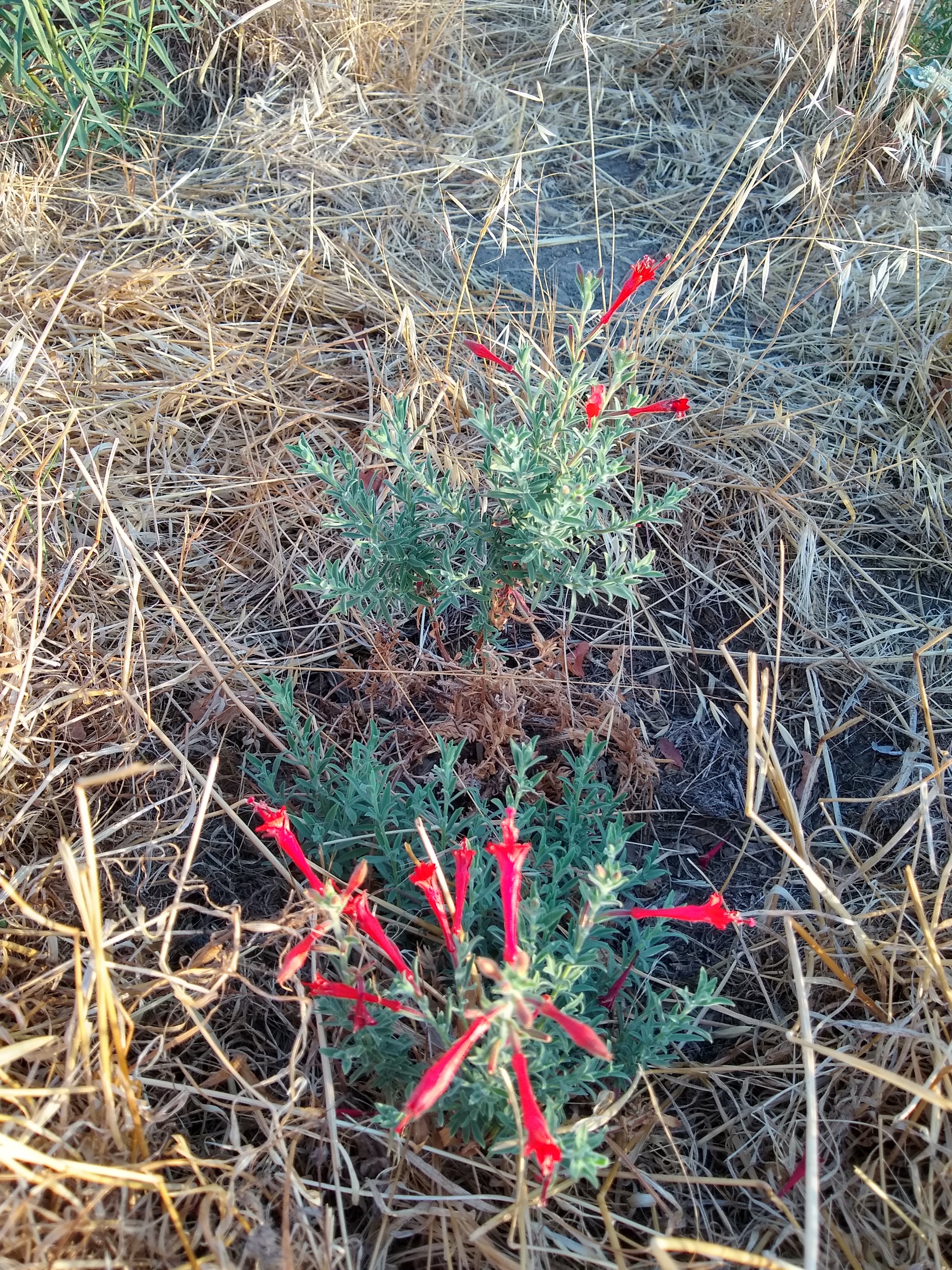
As mentioned in other posts, it is essential to stagger the bloom times of plants so that there is a continuous supply of nectar. We have a huge group of mid to late and late bloomers providing ample, scrumptious choices. The California fuchsia, butterfly bush, and primrose are still going having started their blooms in August. The aster, sunflower and marigolds are opening fully just this month. Many of my herbs are in bloom as well (stevia and rosemary are pictured). If the smoke lifts, we may get some non-monarch visitors before the blooms are whithered. As I relayed in my last post, during the two days the smoke completely lifted, I saw two types of butterflies, more bees and other pollinating flies. It was incredible. A storm is due in this weekend, which I hope will be big enough to clear the smoke out.

The Cows are Back

The cows have returned and are wondering why I am interrupting their pillage of the creek.

You may have been waiting with tremendous anticipation from my post a couple weeks ago wondering if the cattle broke through the fortifications or if they held…after all that work. Well…I will end your suspense. The barbed wire structures held, the branch fence failed in one location opening up the entire section of creek to grazing.

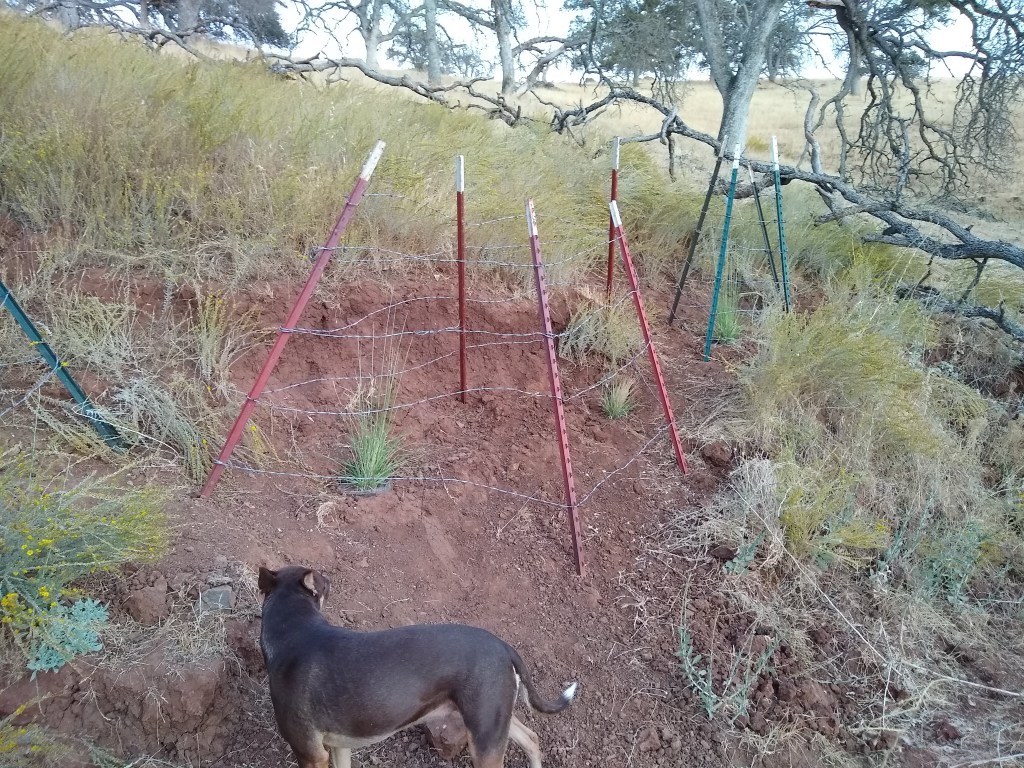
I have four to six Xerces butterfly plant kits as part of a grant project arriving in November. Most will be planted on the top of the hill, but two to four kits are meant for the creek. I still need to think through how to protect them. There is only so much more time in the growing season, and I am trying to avoid the expense of professionals installing an electric fence until next year. In my grazing plan, the fence comes down after growing season since there are no sprouted plants on which the cows will want to browse. More on this in November. We may make more small fortifications around the monarch “islands” we intend to plant.

Other Items of Note

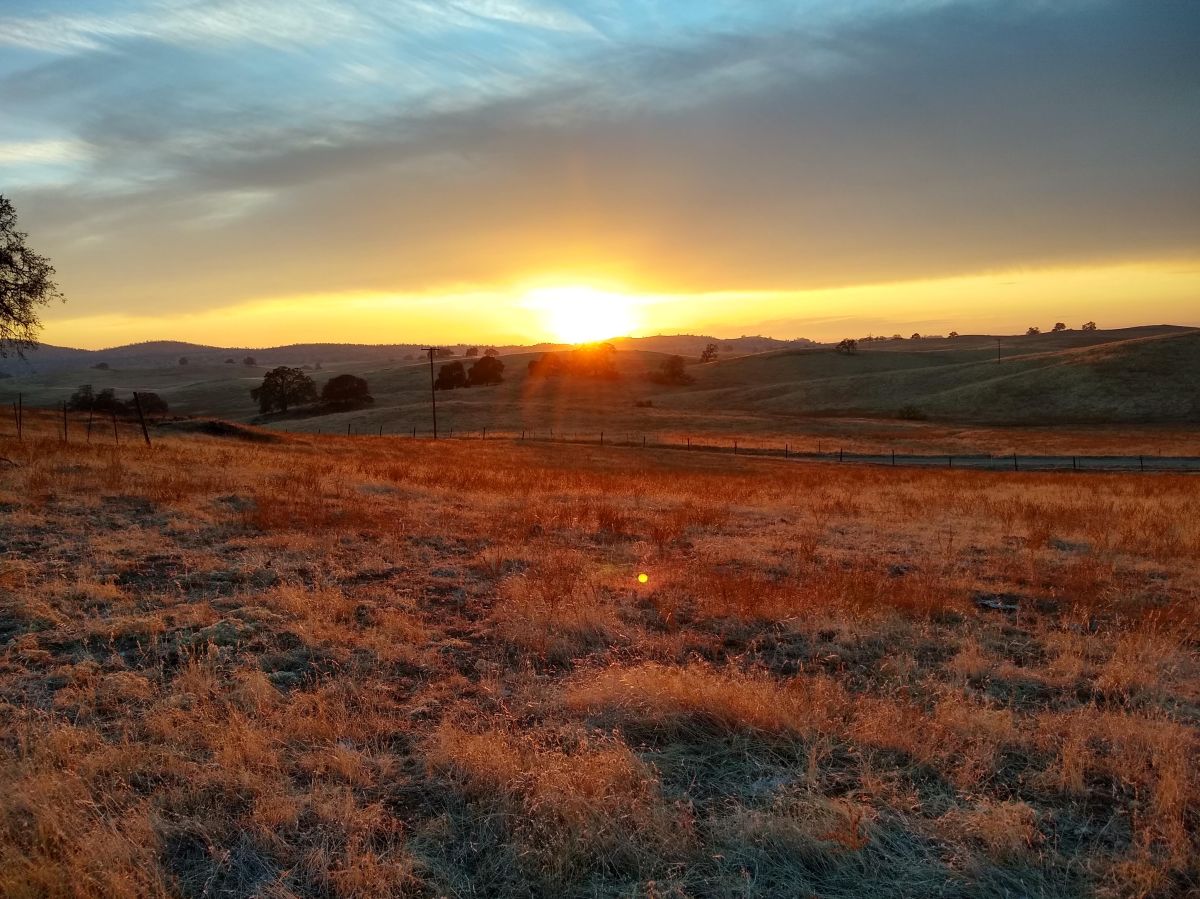
Sunrise every day

The smoke continues to vex me, but I have carried on with the work and making adaptations as needed.

New water transport method

To increase efficiency, I no longer push and squeeze on the bladder. I connected a short hose to it and let it gravity feed as I scoop water into my buckets and water the plants. This has worked well. I’ve begun to fill the bladder to full capacity so that I can have two trough fulls of water per each trip. This enables me to have a full trough waiting for me the next day and not have to spend as much time outdoors in the smoke.

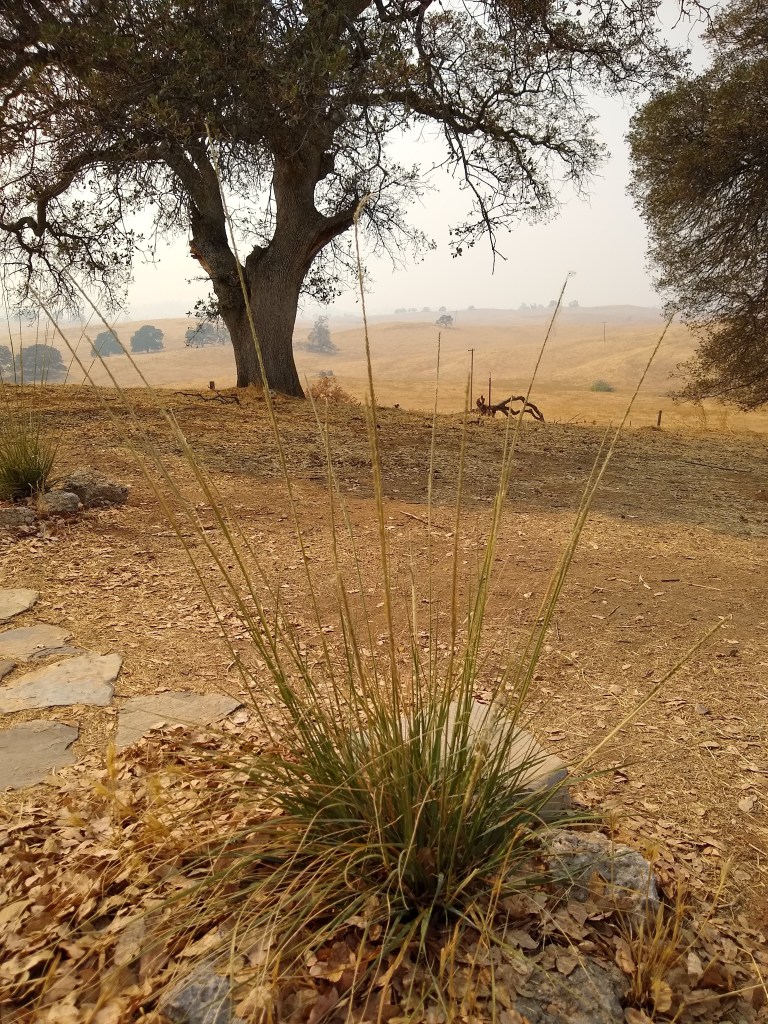
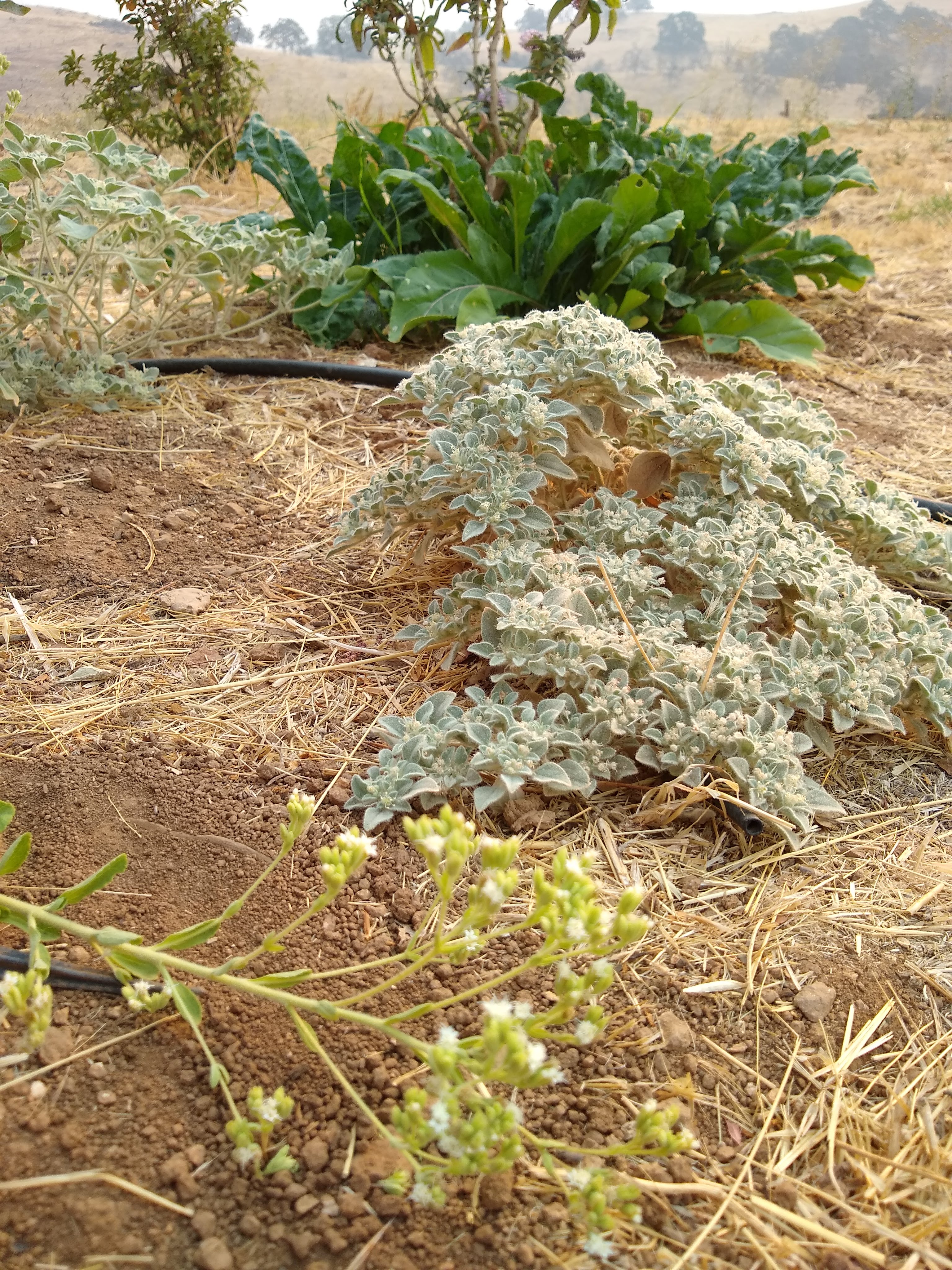
Deergrass on the west side

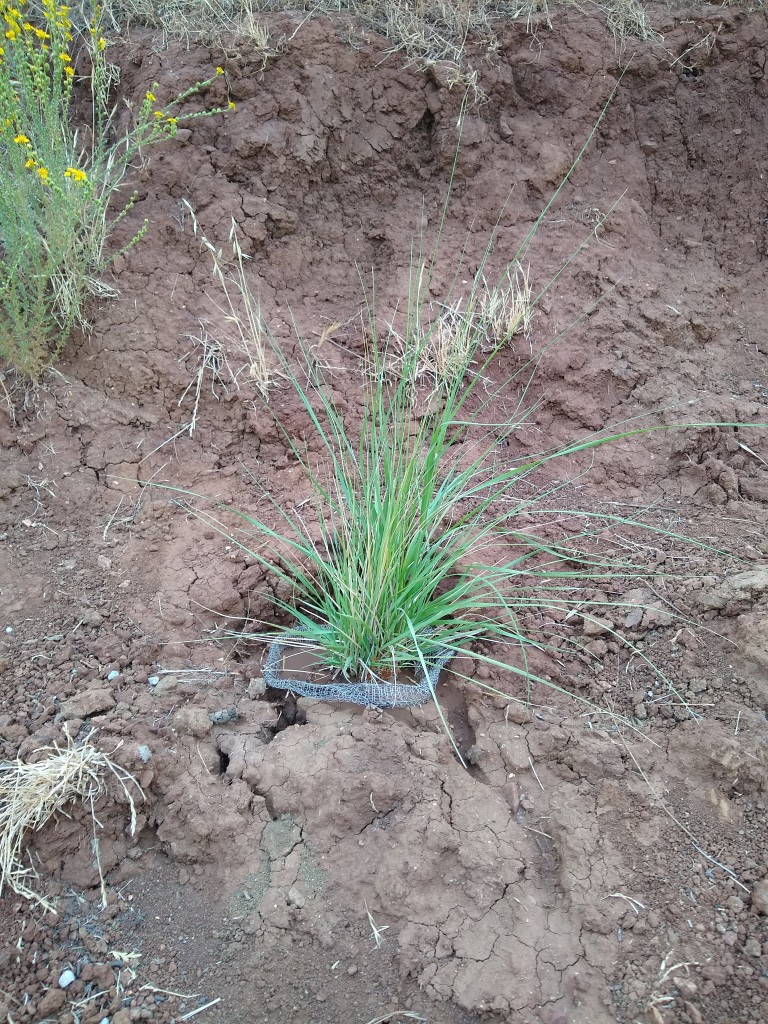
Most of the deergrass plantings have done remarkably well. Many now have new shoots and blades with seed. I am so excited to see if I will have more painted lady butterflies next year with these healthy additions. There are fifteen planted. Two I planted really late and were root-bound. One has some new sprouts; the other still has no signs of growth. If I only lose one, that will be a victory. I continue to water it hoping that the roots are still alive.

The gophers have eliminated all milkweed that resprouted from the original test plots except two small runners. They will likely fall victim before the end of the growing season. Some creature continues to snip marigold plantings. Fortunately, that has slowed, and I have been able to keep other parts of those two marigolds alive to replace the larger, main structure. We will see if they survive through the growing season.

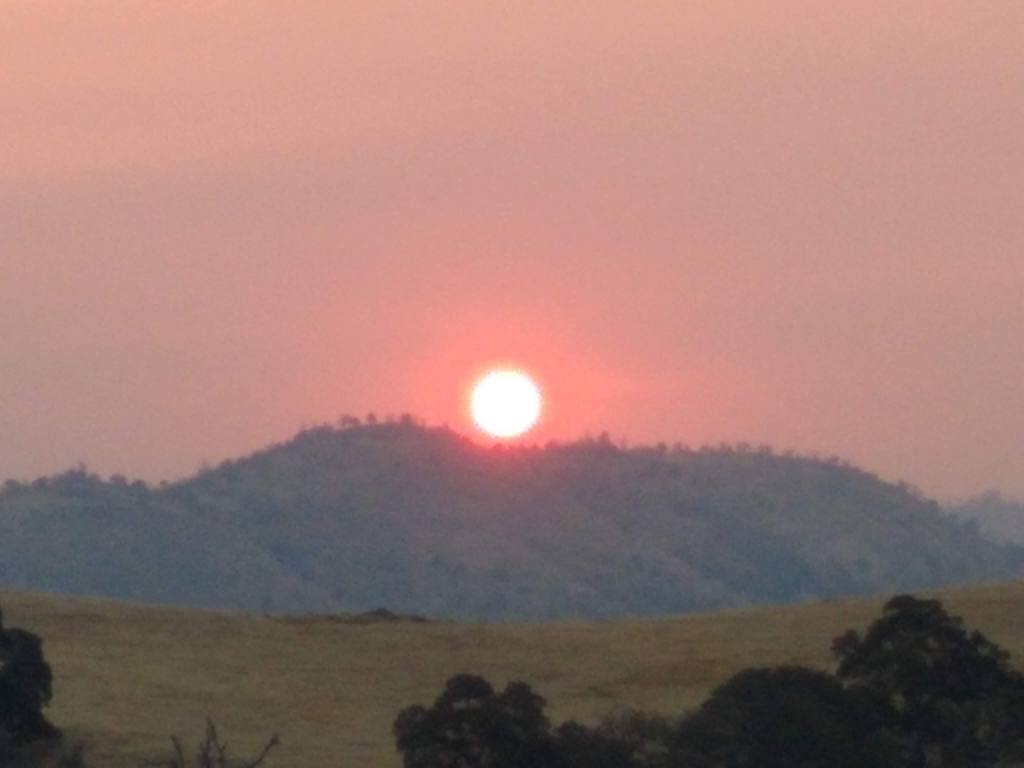
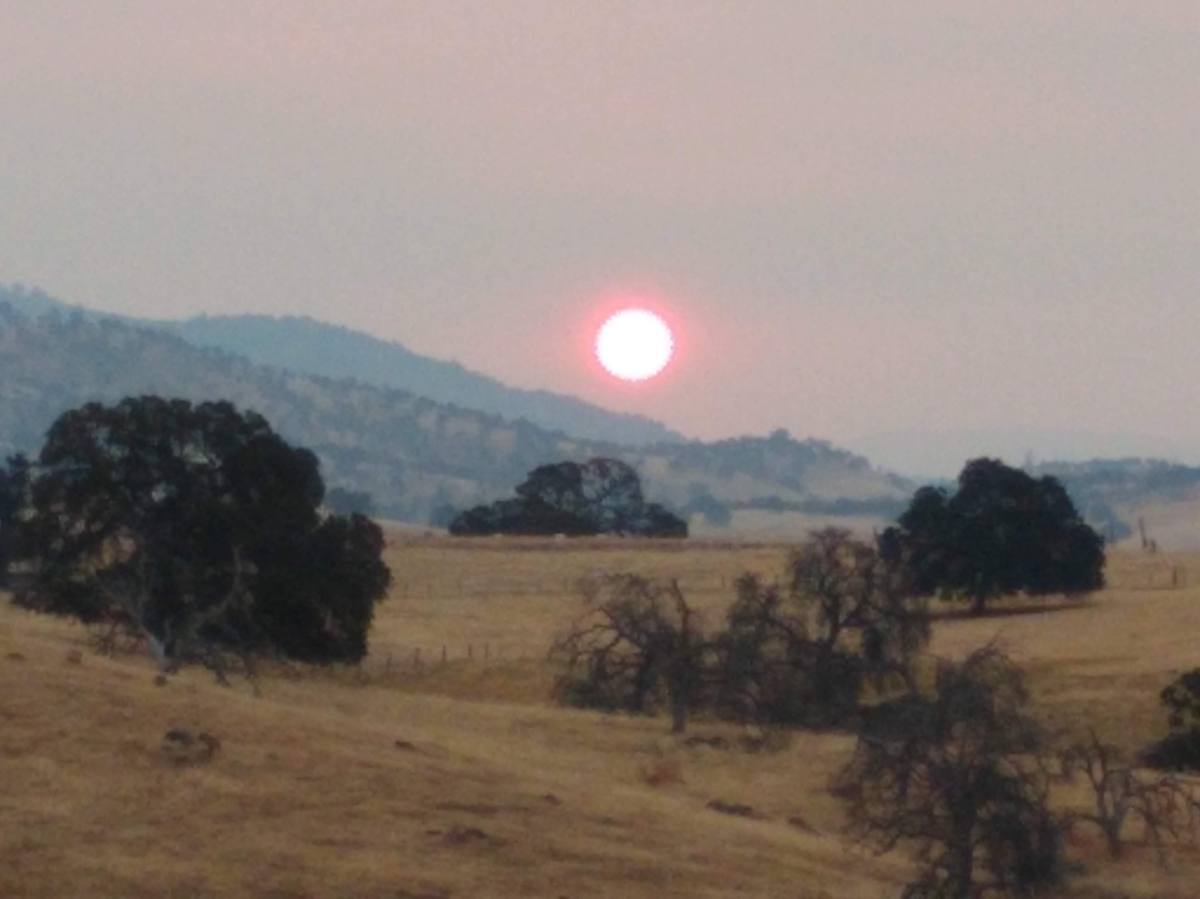
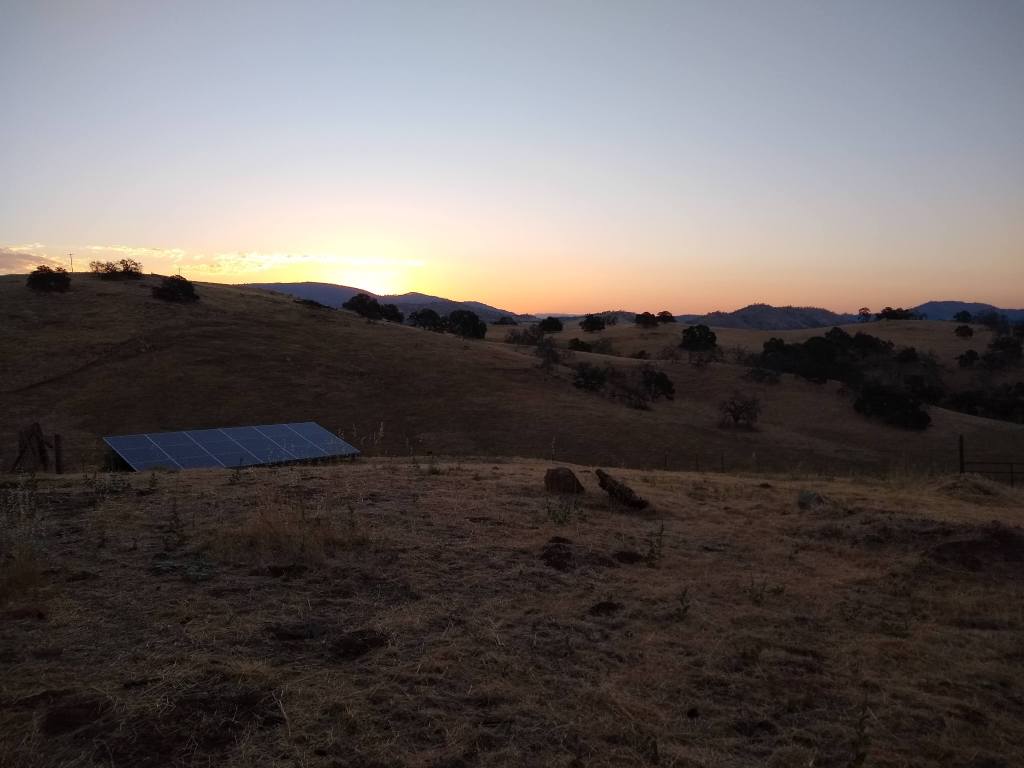
We are in a maintenance and planning phase – so not as much to do. In November, we will be digging holes again for the Xerces plant kits and possibly working on some temporary fencing to protect the riparian pants. There have been only two “helpful” things about the smoke. Its thickness has decreased overall temperatures from the predicted 100s to the low to mid 90s, and the particulates make for stunning sunset colors. However, I would giddily trade both in less than a second for clean air.

Smokey sunset at the ranch

Will They or Won’t They -Stay Tuned…

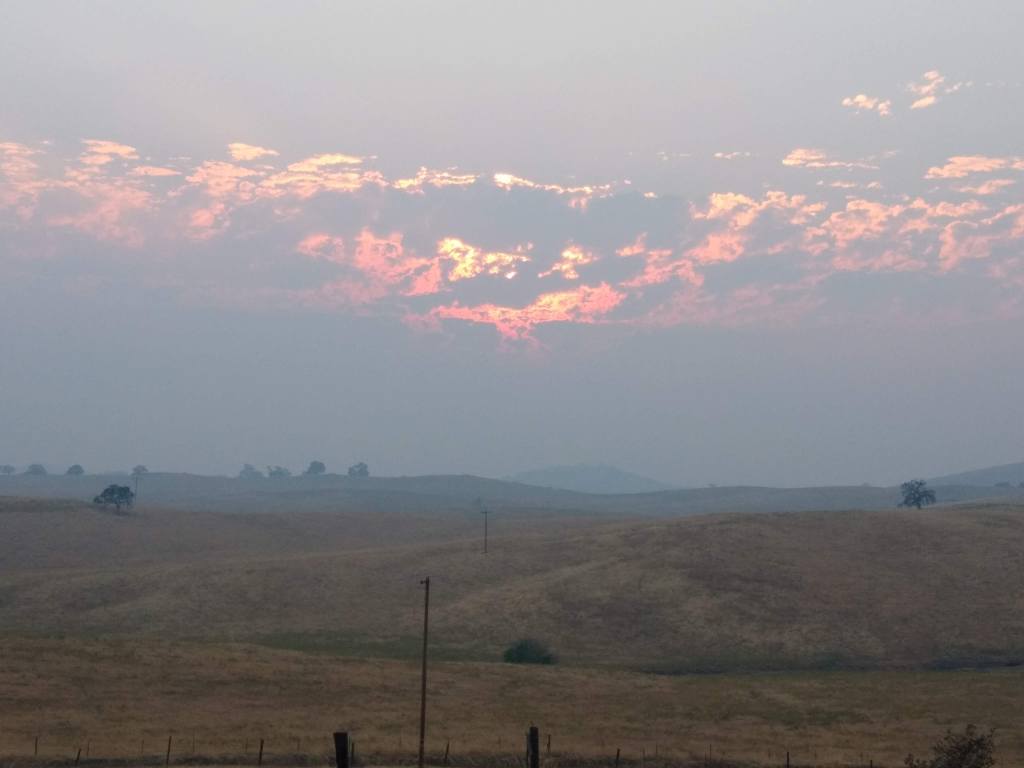
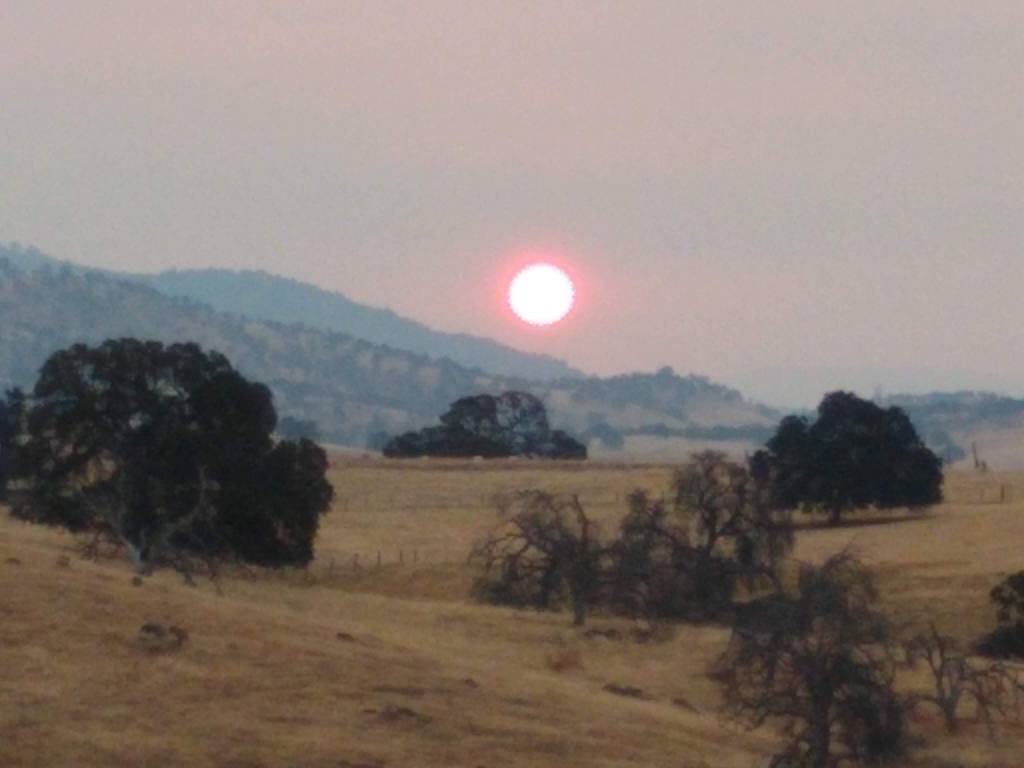
Sunset through the smoke and leftover moisture from the Pacific last week.

No, this is not a sitcom complete with the formulaic “Will they or won’t they get together” question, but it does sometimes feel like one. It is now September, and the monarchs are for certain on their way back to the coast from places up north. I look everyday asking, “Will they stop by?”

Several of the plants are in bloom, but most look a bit rough. I don’t think the smoke is helping their growth or health. One native yarrow plant is in bloom. The primrose keeps budding, but the blooms look tattered by the end of the day. I discovered two volunteer romneya (maybe) that have buds on them in addition to the one I planted. The California fuchsia has a few remaining blooms and some of the narrowleaf milkweed still have their blooms. All others are still growing with no sign of blooming.

Fortunately, I am getting some help from the Mother Earth. Tarweed and doveweed are in bloom all over the place. In the spring creek, a number of flowers are still blooming as well. Maybe we have enough to support a few monarchs.

At the spring creek, there was plenty of tarweed and doveweed. There were also other flowers for which I do not know the names. I found another volunteer romneya (maybe). The deer grass is doing well. The remaining milkweeds are too. In total, there are sixty one plants I planted that survived.

The spring is still flowing at a trickle. There is a little puddle in the crease of the rock. It is giving life to all the plants below and so many insects and animals. I saw a wood rat (or some other rodent) scurry under the thick spent purple thistle stalks toward the puddle. The bees were everywhere picking up water and nectar.

Other Updates

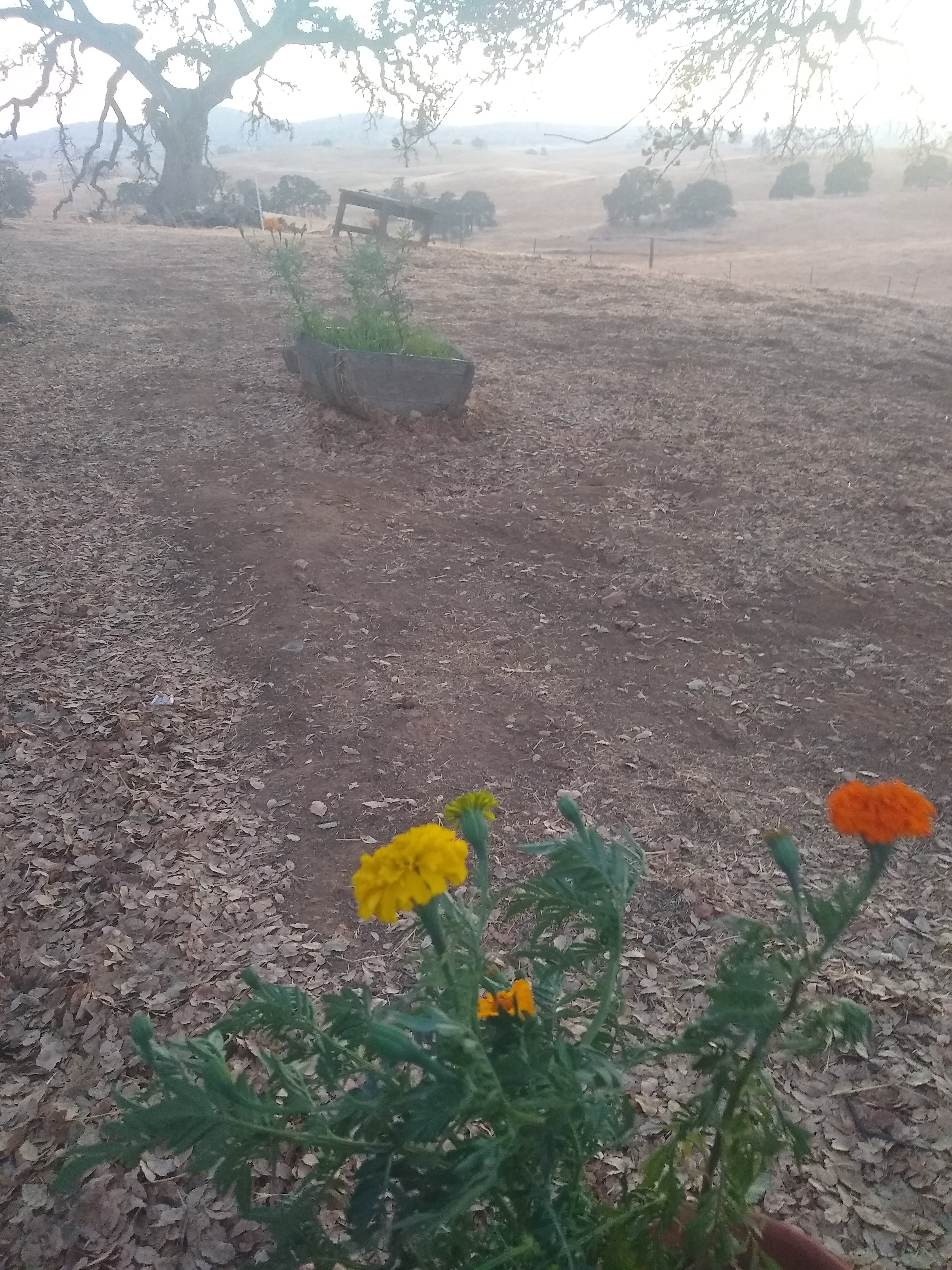
Marigolds

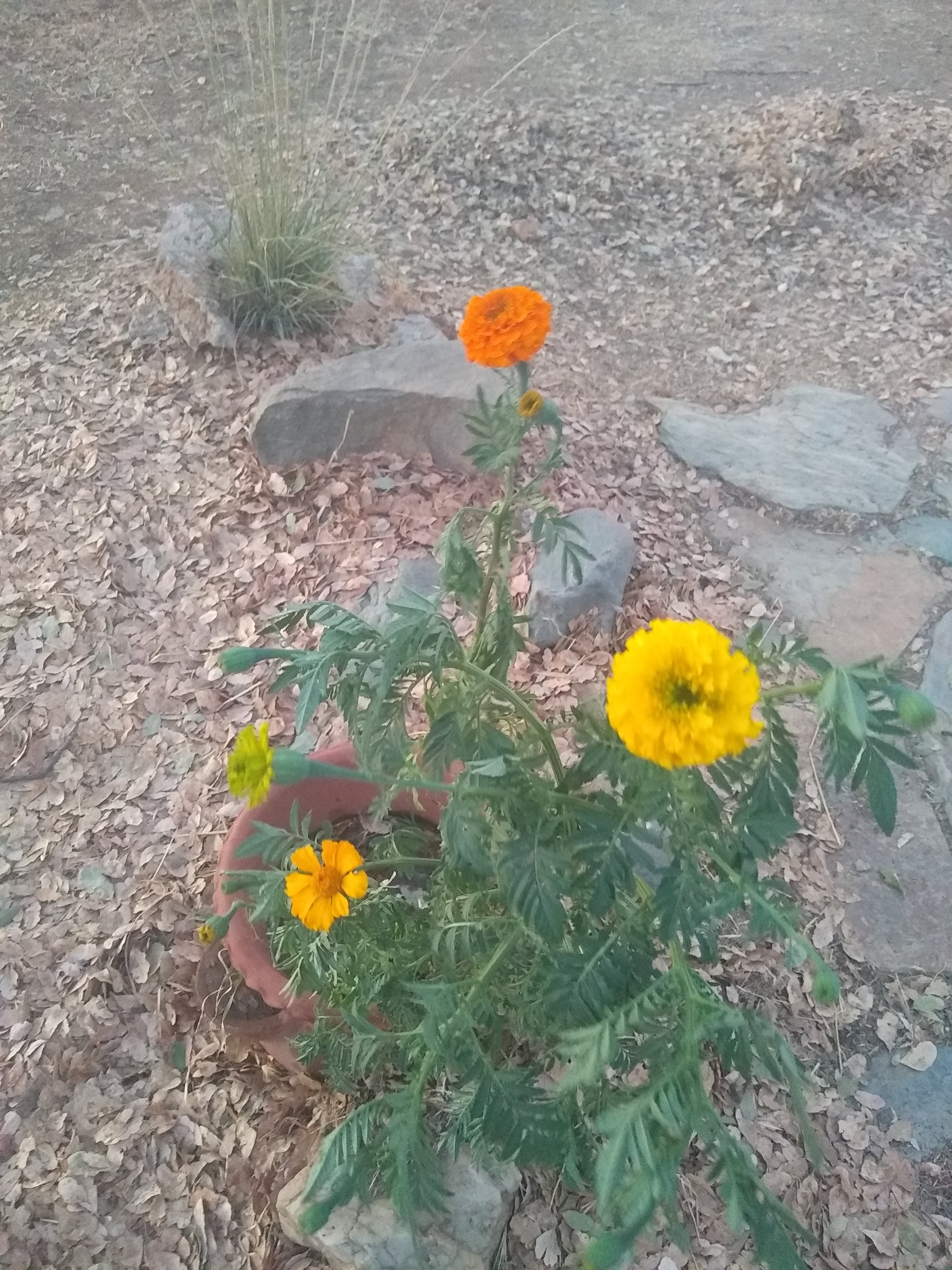
You may recall I had much trouble this year starting the marigolds from seed in pots. I sewed them directly into this old pot outside, and they did really well. I thinned them as they got larger, and transplanted them to areas throughout the yard.

I think I will sew directly into the ground next year too. I did this in other areas, and the seedlings are doing well.

Side-of-the-Road Sunflowers

The side-of-the-road sunflower seed heads I planted back in June sprouted, but never got very big. I finally gave up growing them further in the pot and transplanted the three that were successful. They are now near the South Plot milkweeds.

I also noted that one of the transplanted marigolds was getting blown around too much by the wind. I created a rock shelter to give it some space and time to grow larger and stronger. The rock shelter is definitely helping slow the wind.

Marigold seedling with rock windbreak

This will also help the soil retain moisture instead of getting dried out from the wind. The rock structure is already encouraging a lizard to make its home there. The mesh baskets are working out really well. I have seen several plant “saves” where a round hole is abutted to the basket. Thank you to the inventor.

Large gopher hole adjacent to the coyote mint

The deer grass is very healthy at Site 7 (the deer grass site) as are most of the plantings near the house. I am hoping that some painted lady butterflies decide to make their homes on these plants. I am also hoping that the reeds will be used for baskets once the plants establish more. They need us to take from them so they can renew. Humans are part of the ecosystem and have co-adapted with plant and animal relations since the beginning. Our challenge as humans is not to take more than we need and endanger the live of the plant or other animals that need it.

Healthy deer grass at the deer grass site

Planning for the Future

Acorns are falling!

With maintenance and adaptive management on cruise control, I turned my thoughts to the next steps. I scouted up the spring creek and decided to plant the next site there. With COVID, we will not be able to host the elementary school children to help plant this Fall. So, I decided to save the easier access locations in the arroyo for the children next Spring. I will focus on the more difficult to reach sites this Fall. The site in the images below is Site 6. It is very special because there is a grinding rock.

I was fortunate to be included in a grant written by the Resource Conservation District (RCD) to the Xerces Society for several milkweed plant kits. They will be available for pick up between October and December. Melinda, from the RCD, recommended that we pick them up around the time the rain starts. We will need to get them in the ground fast, and I have a number of places identified. More on that in a future post.

The smoke is still with us – waxing and waning. We are in fire season, which gets worse each year. It has let up considerably the last four days, but today it is worse. I am taking care of myself when I go outside to do chores. I transport and haul water, plant seedlings, water plants, build what is needed – but all with a mask. Smoke is very unhealthy. I don’t let my dogs stay outside long. I use the Purple Air system to monitor air quality. I also use airnow.gov to monitor smoke flows. Finally, I also follow the progress of the fires and firefighters at the Cal Fire incident map page. Please use these resources too so that you can determine whether to perform activities and the risk. I am so grateful to all the firefighters, their families and all those in support/management positions for the work they do to keep our communities safe. There is so much challenging us right now. To everyone, please take good care – – and let’s hope I have some photos of monarchs to share in the weeks to com. Will they stop by?

Me after watering Sites 8 and 7 (deer grass site) this week

Wildfire, Drought…and Locust?

Sunrise with the smoke

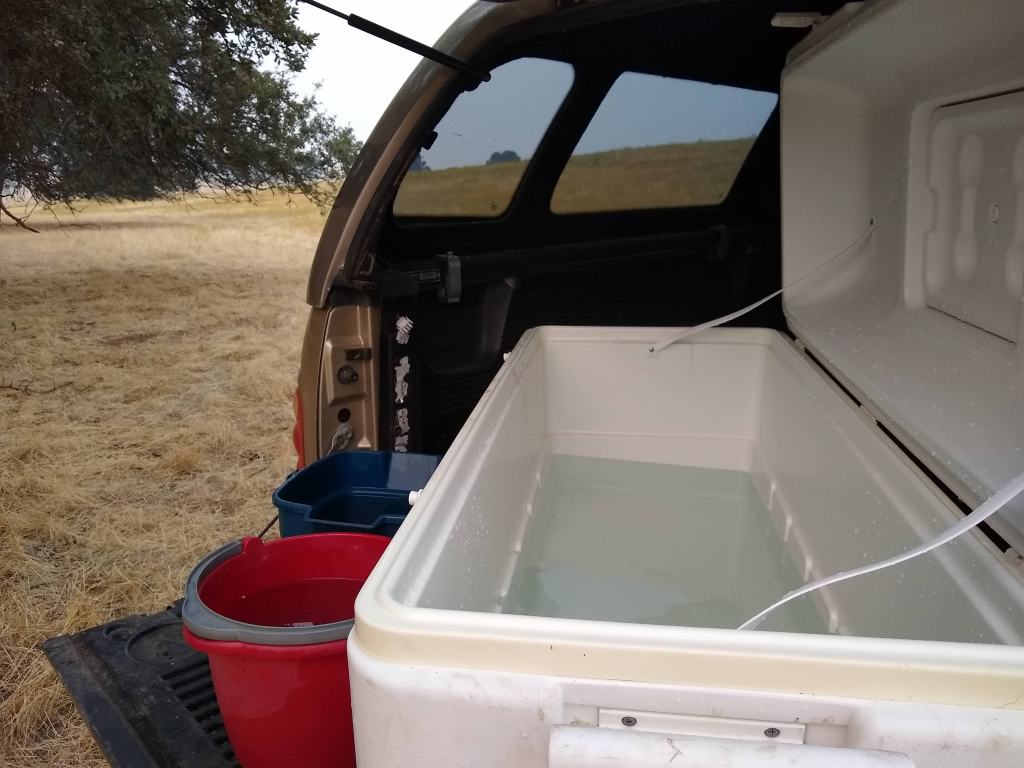
With the smoke being least horrible in the mid-morning and the temperatures down due to smoke coverage, I was able to start out later than usual for my weekend watering. The bladder being bunglesome and the old barrel requiring much effort, I needed a new method to transport the rainwater when using the truck. I decided to fill an old, large cooler and use it as the transport vessel. It is lower slung, easy to move around, and does not require my tailgate to be down (less scraping). It also has a spigot I can use if needed.

Using a cooler to transport water to Site 8 and the deer grass site

The unit only holds about 16 gallons. This won’t be enough as I expand my plantings on the spring creek. I will figure out something new when we get to that point. For now, this worked beautifully. I was able to scoop the water easily into the buckets then haul them to the two sites.

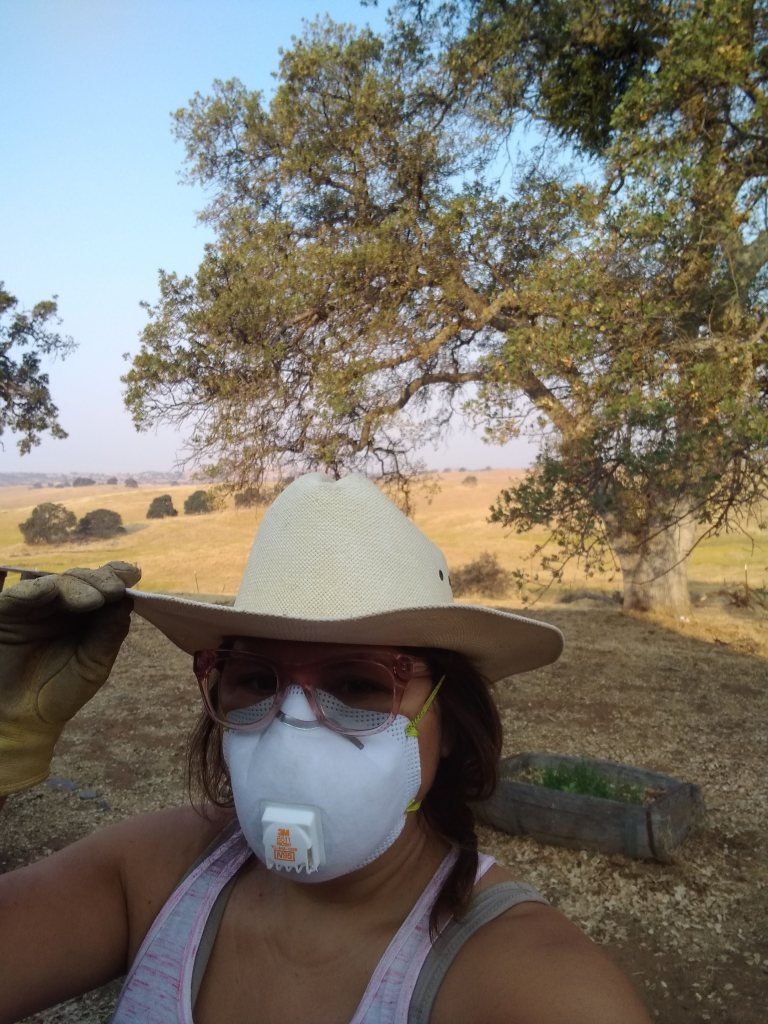
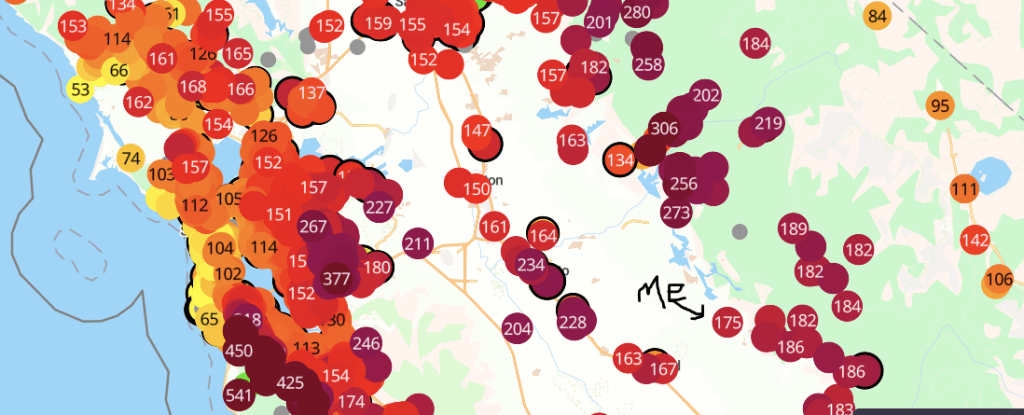
This is much effort in the smoke, which continued to hold steady at unhealthy levels. Fortunately, I have N95 masks, and it worked very well for me to keep my lungs and brain safe. There are several data tools I use to check air quality and smoke drift. One is the Purple Air network. Several years ago, I installed a Purple Air air quality monitoring unit at the house. It helps my husband and I make decisions about our activities during bad air times.

Almost the entire west has horrible air. A screenshot of Central California

The above image shows the how awful it was today…and this is actually an improvement from yesterday. For your reference, I marked my site. Regardless of the air quality, the plants need the water. I have a commitment to them – so I must work outdoors.

Water Update

Tank 3 on the south side of the house is now empty. Just under 5,000 gallons remain in tanks 1 and 2 with just one and a half months to the start of the rainy season (October 1 – hopefully). The National Oceanic and Atmospheric Administration (NOAA) is observing trends in the data that suggest we may have a La Niña year, which means drier conditions for us. I will continue to conserve, as always. With Tank 3 empty, I now need to transport water from Tank 1 uphill to Site 9, the nectar plants and the old South Plot.

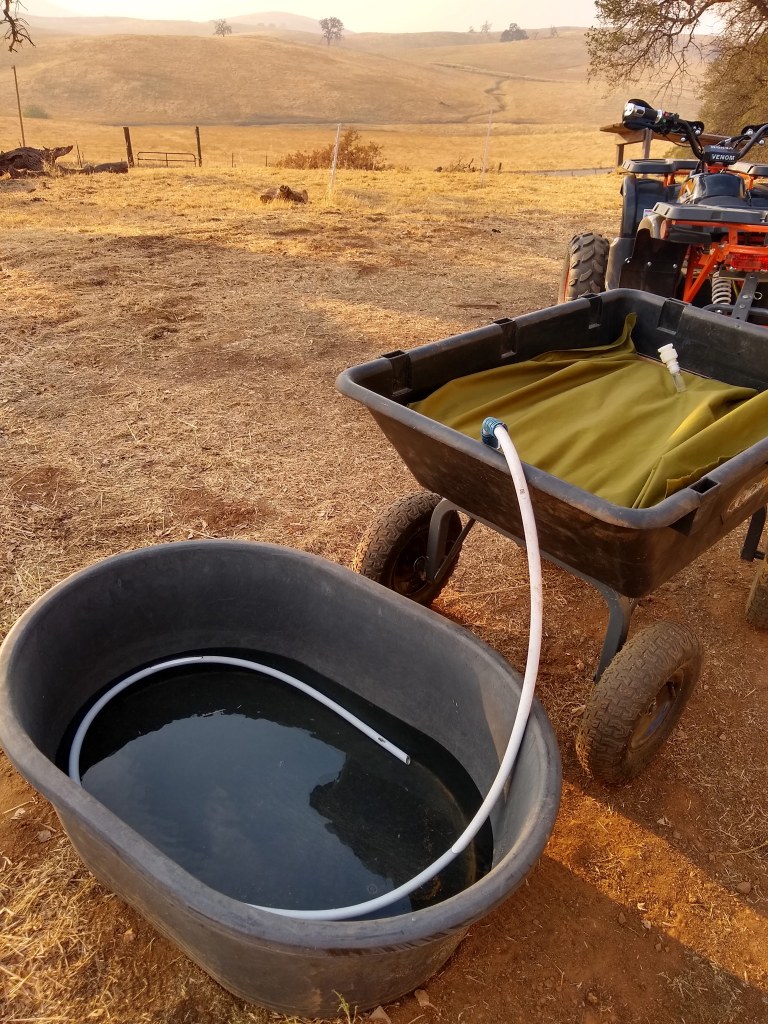
Filling the trough next to Tank 3

For this, I did use the bladder and cart. I filled the bladder, then hauled it uphill, tipped the cart and let the water flow. It is not as easy as it appears in the photo. The bladder moves constantly. You cannot leave it alone in the cart to fill the trough. It will rollover on itself and fall into the trough or on the ground. It has to be held in place most of the time during the transfer. It is an exercise in patience, and I am looking at this as an opportunity to rest, meditate, and/or send out loving thoughts. I am going to need to figure out a better way to be more efficient. Especially during this time when the smoke is so bad, despite wearing a mask, I still want to limit my exposure outdoors. You may wonder why I am filling a trough. It is for ease of dipping my buckets and watering can. I can move faster that way.

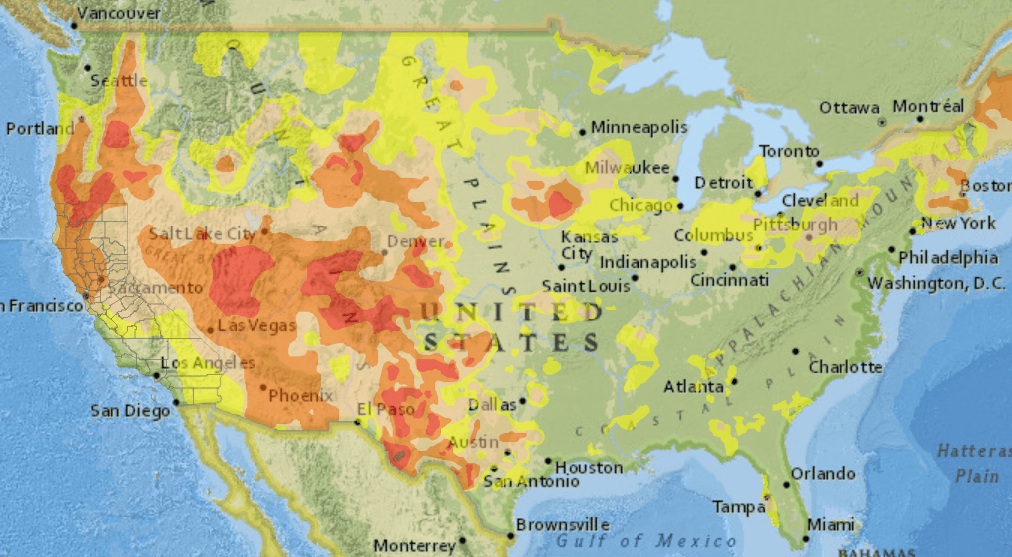
Drought

Drought.gov drought monitoring map. The redder the color, the worst the conditions

Another reason I use a trough is to share with my animal and insect relations. While watering the spring creek today, I noticed that the new little pond that developed on its own is now dry. The spring is still trickling, wetting the rocks, but it is not flowing sufficiently to replenish areas of standing water. With us being in moderate drought (see image above), little standing water on this side of the ranch, and especially with the thick smoke drying out the membranes of all living things, I needed to ensure there was some water available to other creatures.

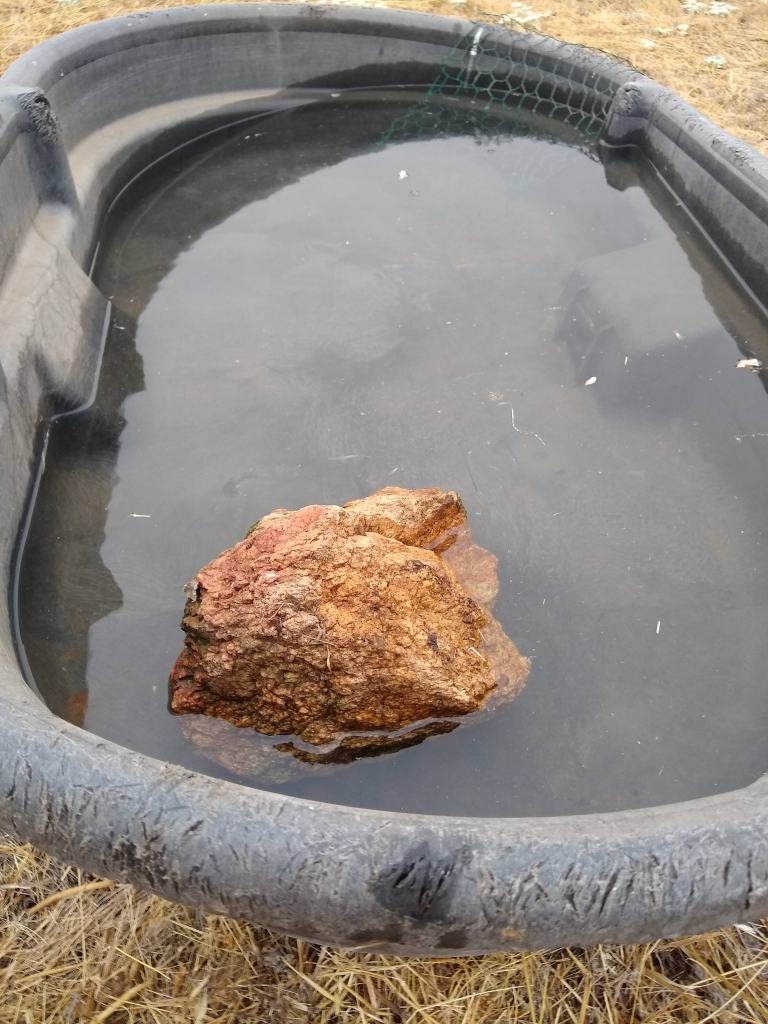
Trough near the North Plot

In addition to the trough near Tank 3, I placed another trough further away from my house near the old North Plot, downhill from Tanks 1 and 2. Note that I placed a rock (in the foreground) and a piece of coated mesh (in the far end of the trough). These items are available to help animals that get caught in the trough to escape. Remember, troughs have only steep edges. They are not graduated like a pond. If a bat or rodent slips in while trying to drink from the edge, I am hoping they can find an escape route using one of these tools. It is not only humane, but it helps maintain water quality. With the drought, I don’t have any water to waste. I don’t want to have to throw out water that has been contaminated by a dead creature.

Locust…sigh!

If wildfires, thick smoke, drought, hurricanes, derechos, tornadoes, covid, civil unrest, fascism in our homeland, and murder hornets were not enough, I added locust to the list today. I found three large “grasshoppers” on the plants. <<Sigh>> All of this is so much, but I take comfort knowing that the earth will survive. Even if I am not able to provide all the things the monarchs need this year, though I will be deeply sad, I will keep trying.

Personal Thoughts

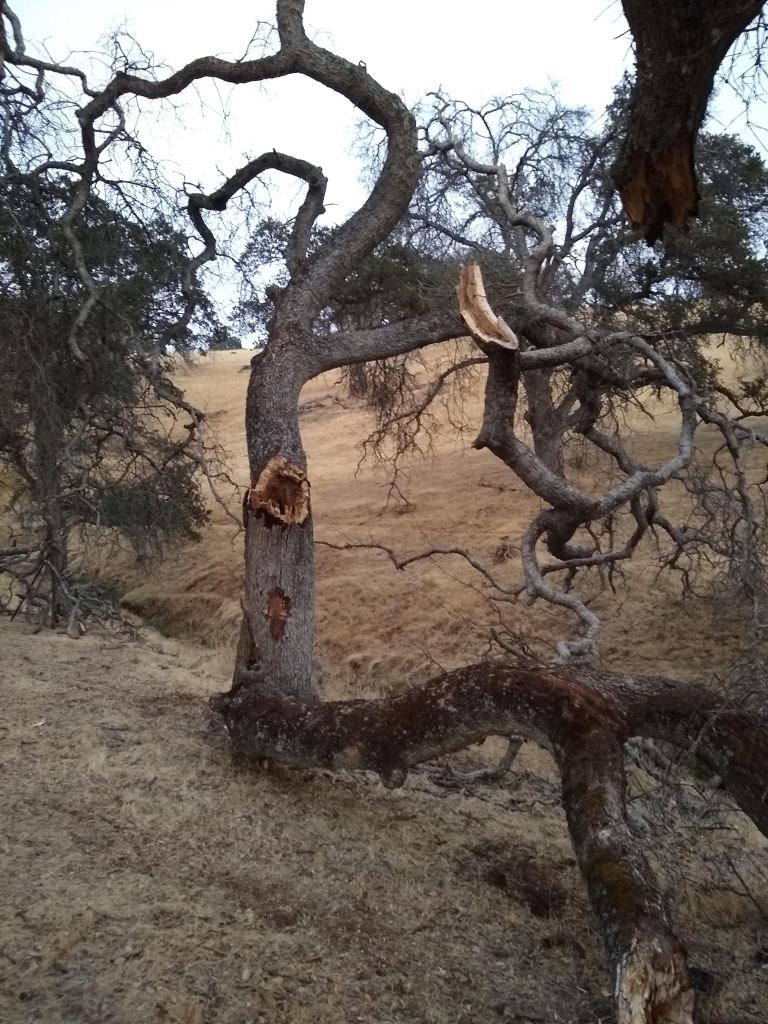
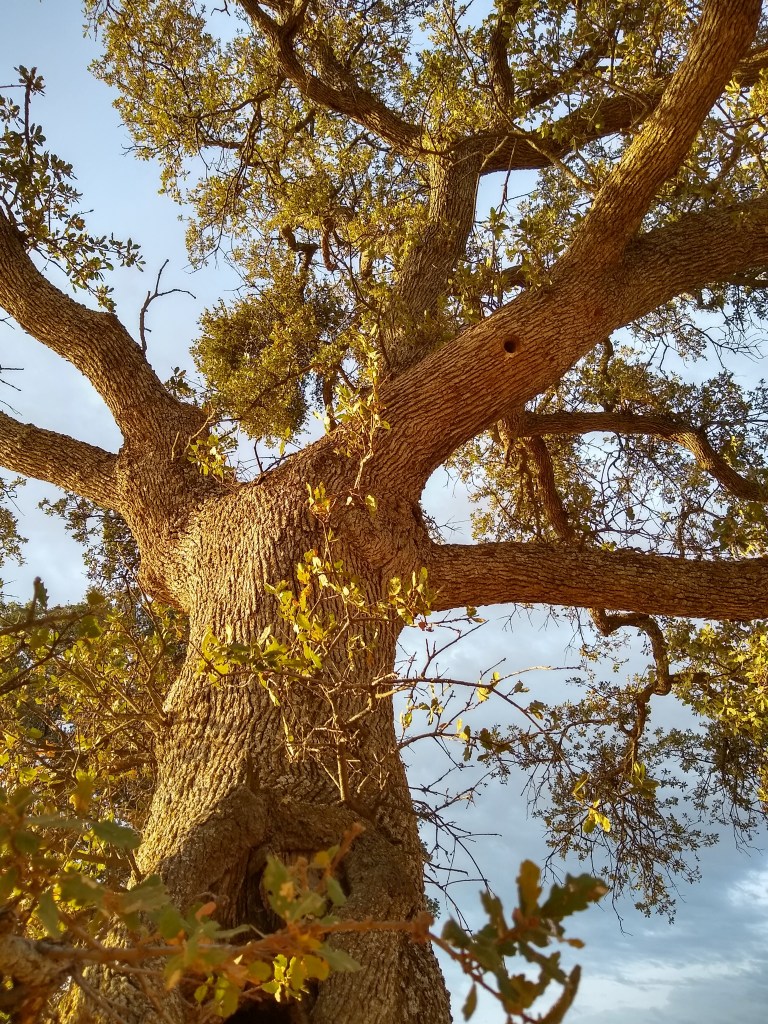
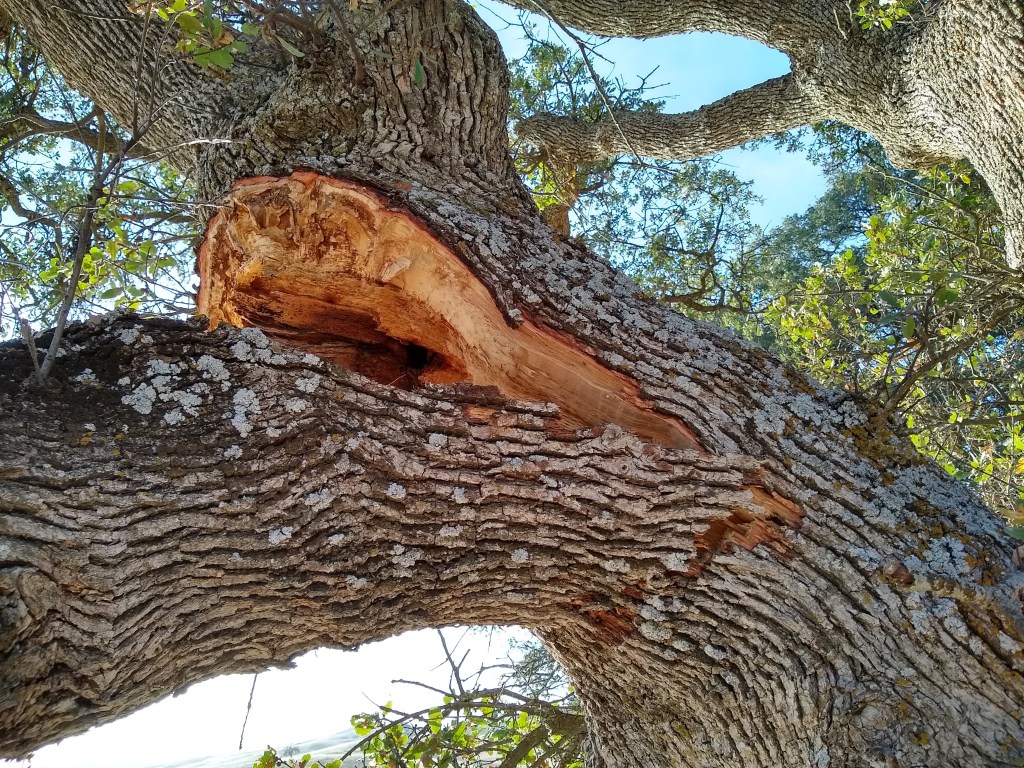
Old oak that lost her branch the other day

Change is inevitable. I don’t want some things to change, like the majestic oak trees that dot the landscape. They are dying. Other things I do want to change – like having a decrease in the number of grasshoppers that visit. To the untrained senses, it may seem like this is the end of the world. One thing after another continues to occur with significant natural devastation and human suffering. Indigenous elders, like some of my elder friends here in Mariposa, tell us that these actions are Mother Earth healing herself. Put into more dominant culture terms, we’ve reached a tipping point in response to our excess and greed. A person cannot continue pooping in their kitchen without some consequences – like illness. The fact that the planet is attempting to balance, create harmony, may not be a comfort to many as the level of suffering continues to mount across the world and the burden of that suffering disproportionately falls on the poor who are often people of color, pushed to the margins, especially indigenous people.

We each have a responsibility to live with respect for all living things. Our needs do not always supersede the needs of other living things. The questions I always have are – Will people listen? Will people learn?

On an indigenous women’s conference this Sunday, I listened to and learned from a Native elder, Abuelita Amalia. She said (and I paraphrase):
I love myself. I take care of myself. I respect myself. If you love yourself, you will love everything. If you take care of yourself, you will take care of everything. If you respect yourself, you will respect everything. We are plugging Mother Earth’s veins with plastic, bottles and trash. Animals are dying too. Stop consuming the things that hurt us. Love yourself. Take care of yourself. Respect yourself.
Abuelita Amalia

Heatwave + Blue Oak Limb Crashes Down

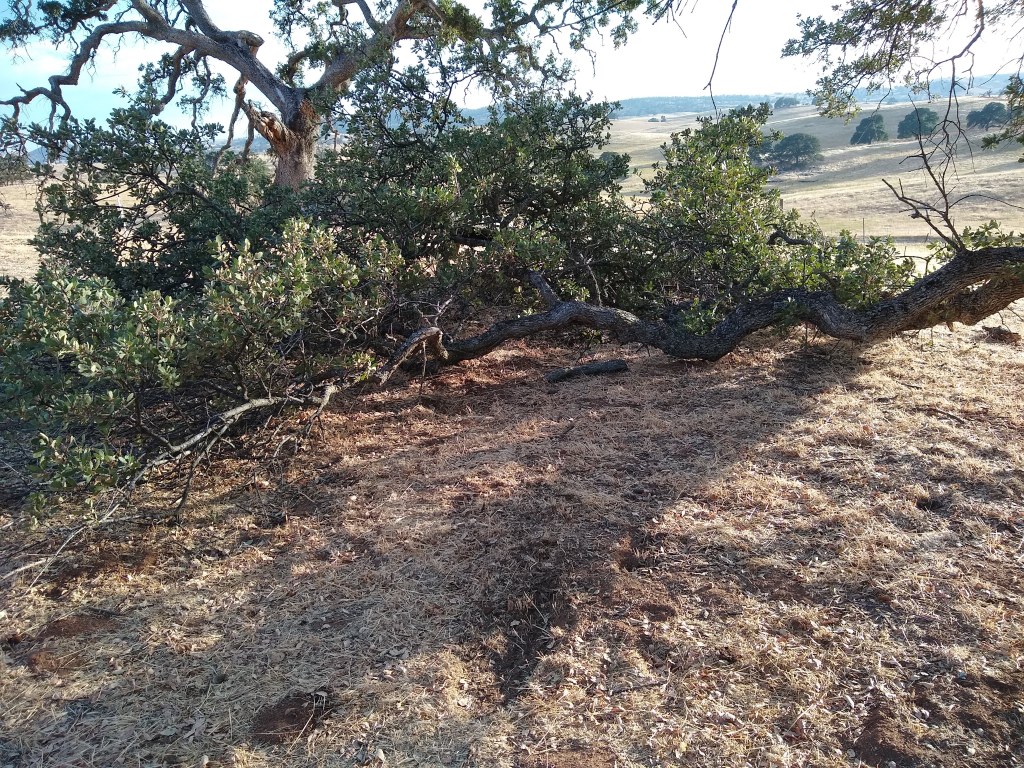
A majestic blue oak limb comes crashing down

We are in drought. The California drought monitoring website, Drought.gov, lists this area as “in moderate drought”. How this is defined practically is that crop/pasture damage is possible, water shortages are developing and voluntary water restrictions are in place. Here in Hornitos/Catheys Valley, David and I always behave as if we are in drought. We conserve water daily. Sadly, this is not always enough. Yesterday, a massive limb on our good old friend blue oak tree in front of the house came crashing down. These massive trees often shed one or more limbs when they recognize there is not enough moisture to maintain their overall health. It is not a good sign.

The last time a limb came down was at the beginning of the horrible, long, five-year drought. Normally, we leave dead trees and limbs where they are for habitat. However, this being within our 100′ defensible space zone, we will need to chop it up and move the wood away.

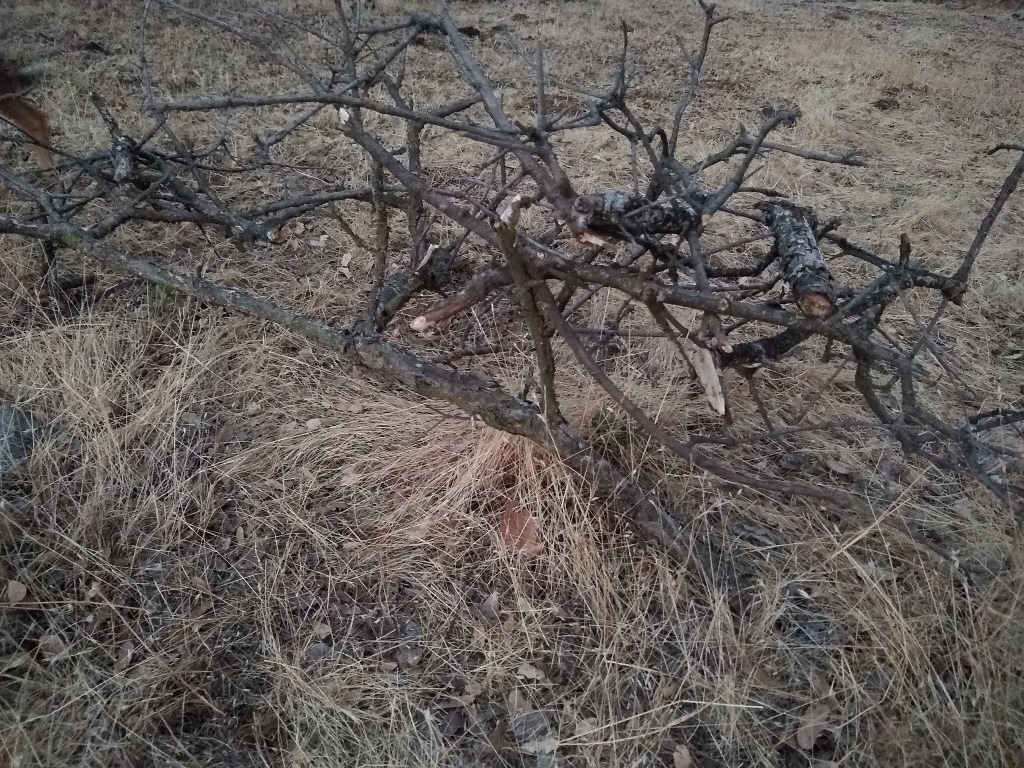
In the last drought, we lost nearly 300 oak trees across the ranch. I have been noticing the dead trees falling apart, but did not expect the healthy trees to be losing branches. On my next venture across the ranch, I will take note if the living trees are also losing branches. I will also need to be extremely careful to avoid, as much as possible, walking under the oaks on the property. I am planning on creating brush piles with the downed branches away from the house to create habitat areas and places where plants can get a head start away from the mouths of hungry cattle. I discussed this in a previous post on this blog. To briefly reiterate, I planted an acorn under one small brush pile I created in the hope it will be protected as it sprouts a new tree.

It’s Hot!

Even though we are in a heatwave, the butterfly plants must get watered. I have been soaking them this week to ensure deep moisture content even as the above surface area dries out in this heat.

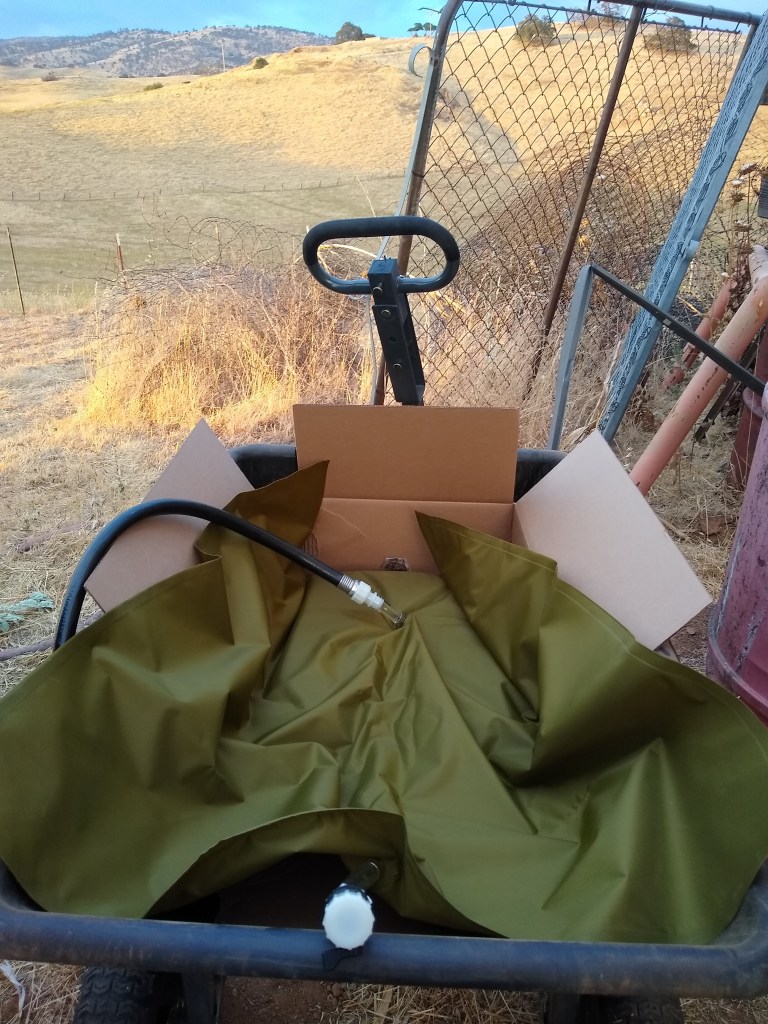
The new potable water bladder being filled for its first use
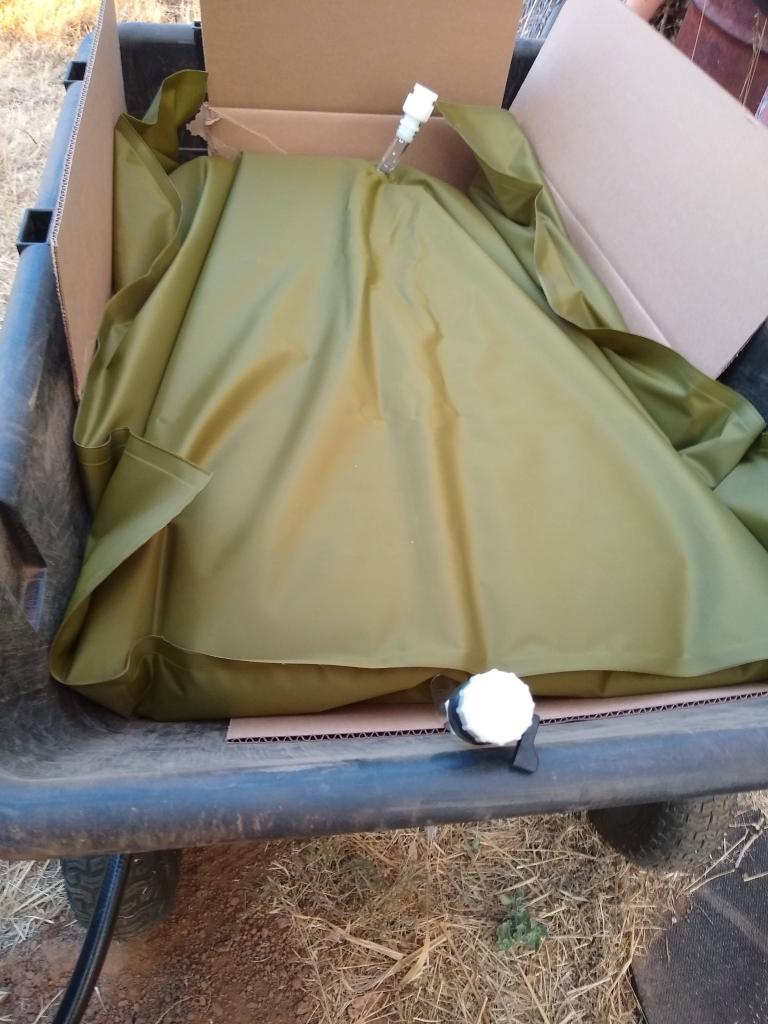
The water bladder filled

I prepared my watering system for Site 8 the night before so I could just “get going” as soon as I arose. I decided to use the cart with the new water bladder to prevent any chance of the truck heating and starting a grass fire. This meant I had to walk the entire way to Site 8 pulling the cart. I did it once with help, but today, I had to go it alone. David was too tired to assist.

6:00 am departure time. Warm with moisture in the air
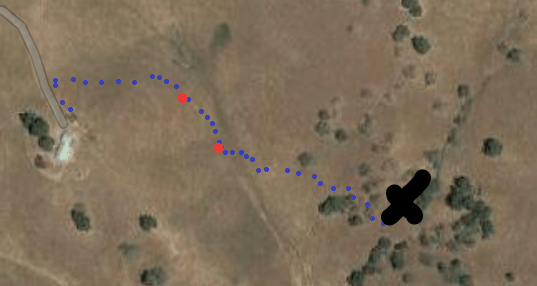
My route from the house to Site 8. The red denotes the areas where my cart spilled. Then, “X” marks arrival to Site 8.

It was already quite warm when I started. There was leftover moisture in the air from the recent Pacific Ocean hurricane activity. We did not get any rain up here, but it was humid. Water weighs 8.33 lbs per gallon. I had 20 gallons in my bladder. The cart was heavy. The water, because of the soft sides of the bladder, would slosh around. The bladder has a 30 gallon capacity, which I do not need yet. Typically, I only use 8 gallons for Site 8 and the Deer Grass Site because seven of the 9 original plants were pulled up by wild pigs. Although I water them in the hope that the roots are still alive and will re-sprout, I reduced the water per plant to 1/4 gallon. The remaining two receive one full gallon. Also the deer grass across the creek receive their full water allocation as well.

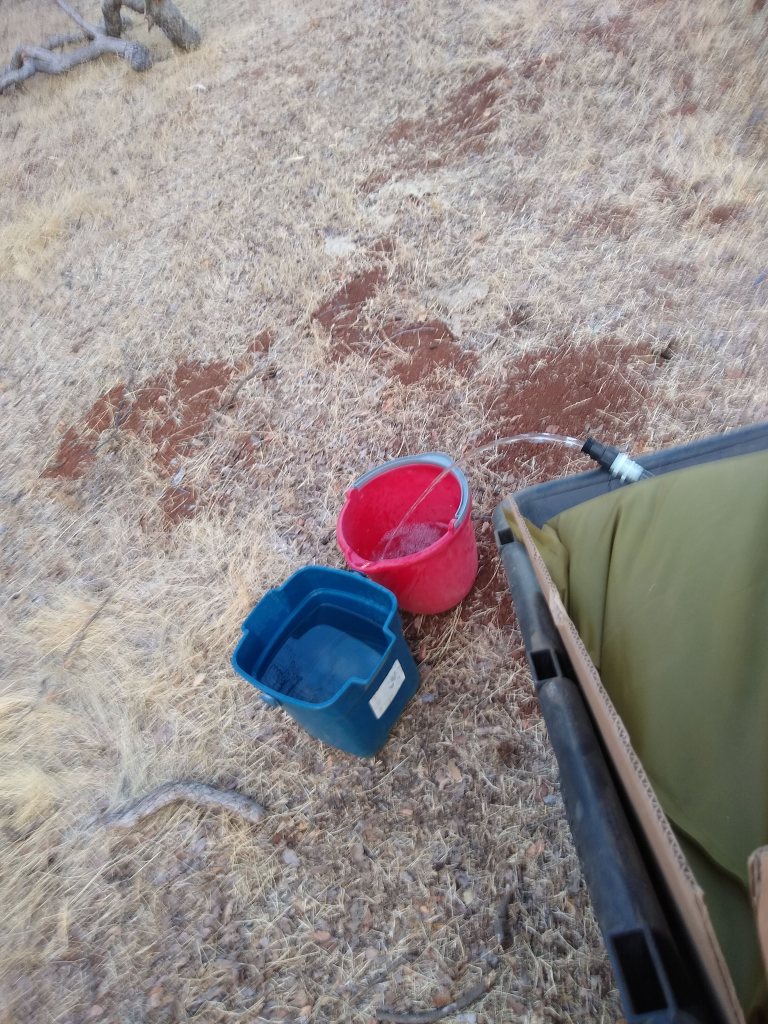
Action shot: I used the dump truck feature of the cart to dispense water into the buckets for hauling to each plant

I brought the 20 gallons to soak the plant area to help them survive the heatwave. I do not plan on watering mid week at the site. It is too hot and arduous. I used the dump truck feature of the cart to dispense the water from the bladder into the buckets. I then hauled the buckets to each plant to water them. I like using the buckets because I can measure how much water I am using and how much I am providing to each plant. I did not have to go as far as usual since I personally hauled the cart all the way to the site. I definitely felt like an oxen or horse!

Striking sky and tarweed

It was beautiful early in the morning. I really wanted to get there and back before the sun came up. The heat is truly crippling. Yesterday, I had to take two breaks watering Site 9, the nectar plantings and the North Plot. I had gotten a late start, and the sun was already up. It was that debilitating.

Same image as above. Uploaded again for convenient reference

Unfortunately, it took longer than anticipated. The cart, with its sloshing water, tipped over. I had not paid enough attention to the grade change and over it went. I had to use my brain and some brute strength to get the bladder back into the cart. Again, the bladder weighed almost 167 lbs! There was no way I could lift it. Instead, I brought the cart around to the down-slope, tipped it over again so its opening was facing the bladder, shoved the edge of the cardboard liner that I used to line the bottom of the cart under the bladder, and sloshed it over itself into the cart, then used my body and arms to tip the cart right-side up again. It worked! I continued paying closer attention. Unfortunately, on a fast downhill track, I did not quite catch it in time, and it tipped again. I would be lying to you if I said that I did not curse myself a bit for not being extra careful. The truth is, I got a little too complacent because of the heat and effort it was taking to haul the cart. I did not make that mistake again. In fact, I switched the track to blaze my own trail uphill so I was on a bit wider and more level ground (See image above. Red dots indicate tipping areas.).

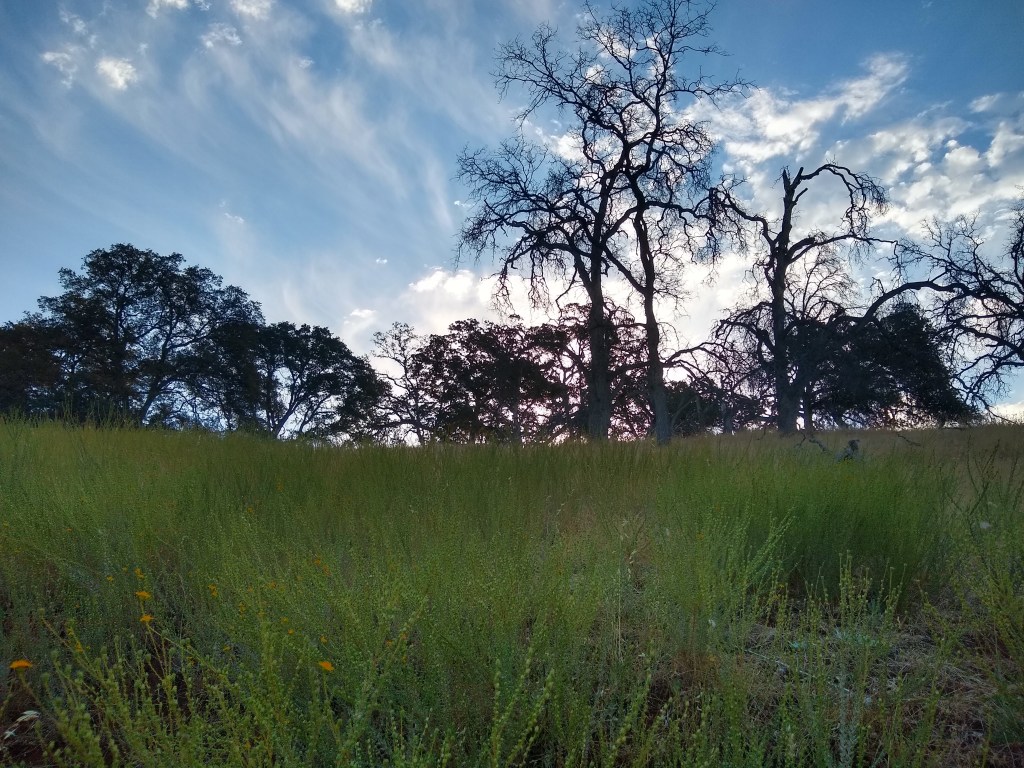
Field of tarweed illuminated by the early sun

On the way back, the sun was up. It was already hot. However, the wind was blowing, which cooled me some. I started at 6am and returned home by 8am. I will likely have bruises from using my body to force the cart upright, but it is well worth it. I saw a butterfly yesterday, which excited me beyond measure. It was not a monarch; it was a reminder that they are on their way though.

This is a labor of love, and I am so willing to do the work it takes to restore this habitat. That said, I will REALLY love it when my electric ATV arrives.

Not really a selfie person, but I had to show you my beet red face and sweatiness. Crazy!

Everyone- stay safe out there with this heatwave. Heat is very debilitating, and it can dehydrate you fast. Make sure you:

  1. Drink plenty of water with electrolytes,
  2. Eat some salty snacks,
  3. Take many breaks
  4. Don’t work during the hottest time of day.

Adaptations and Bruce Lee

Spring Creek still flowing enough to make the rocks moist providing critical access to water for pollinators

“Be like water” is one of the many amazing concepts shared by Bruce Lee, the martial arts legend. When David and I were studying Jeet Kune Do, Bruce Lee’s martial arts method, under our teacher John Castro, who was trained by the Gracie Brothers – and they trained by Bruce Lee – we learned more than how to move our body. We learned life lessons. This was one of the most profound. The concept of being like water is two fold. First, water takes on the shape, the contours of that which it occupies. It adapts. Second, it shapes and reacts. Think of the Merced river continuing the carving of the Yosemite Valley, yet finding a different path when confronted with a new barrier. Through its adaptation, it flows.

When designing and implementing a landscape, work with the land. Don’t try to dominate it. In the end, it is much more powerful than you anyway. This is a very indigenous value and why adaptive land management is more interesting to me than a purist landscape restoration ideology.

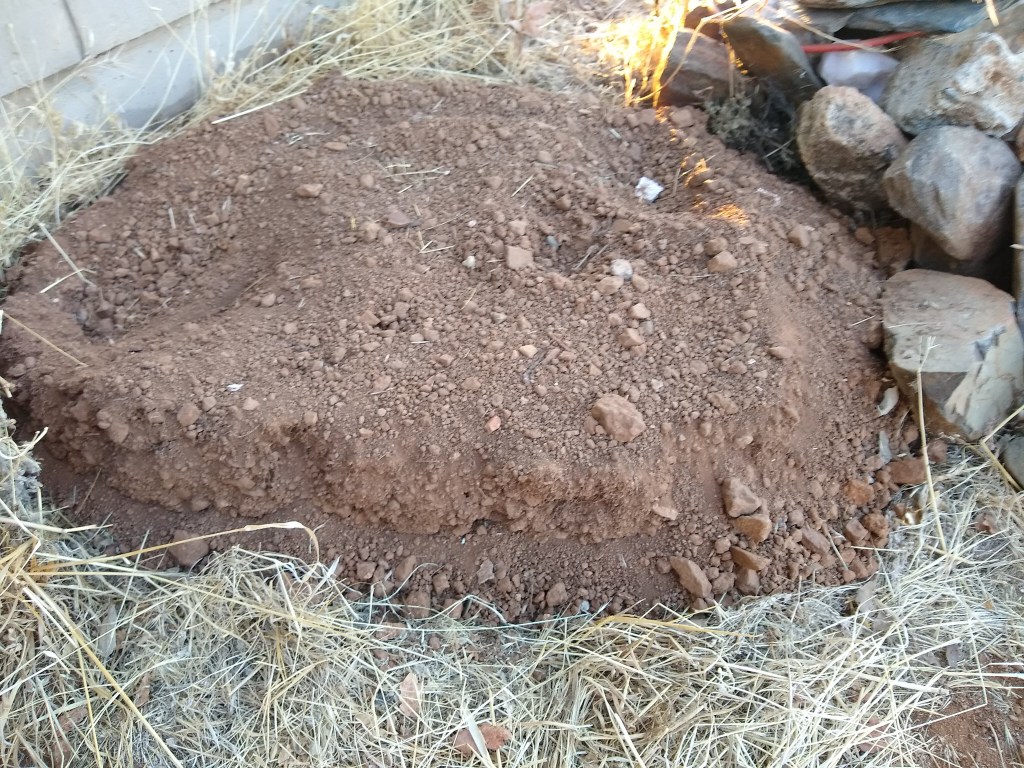
A massive gopher mound

I have stopped being mad at the gophers, and instead, am using their industry. I’ve been needing more soil to fill in around my plantings, and have been struggling to scrape up enough soil around the transplant holes. Then – I saw the gopher mounds in a new way – as fill dirt. The gophers have become my partners. The mound, for example, pictured above, is not the result of a mega monster Jurassic rodent. I am not really sure why this occurred. One of my stock troughs was flipped over for a while as I was waiting to get started on my new fountain project. The gophers, for some reason, continued to bore up under the trough. The result was this massive mound. Thank you gophers. I now have extra high quality local dirt to transplant the baby marigolds. Adaptive land management.

Marigold seedlings
Using a wind screen to protect the blooms. Note the slits in the screen.
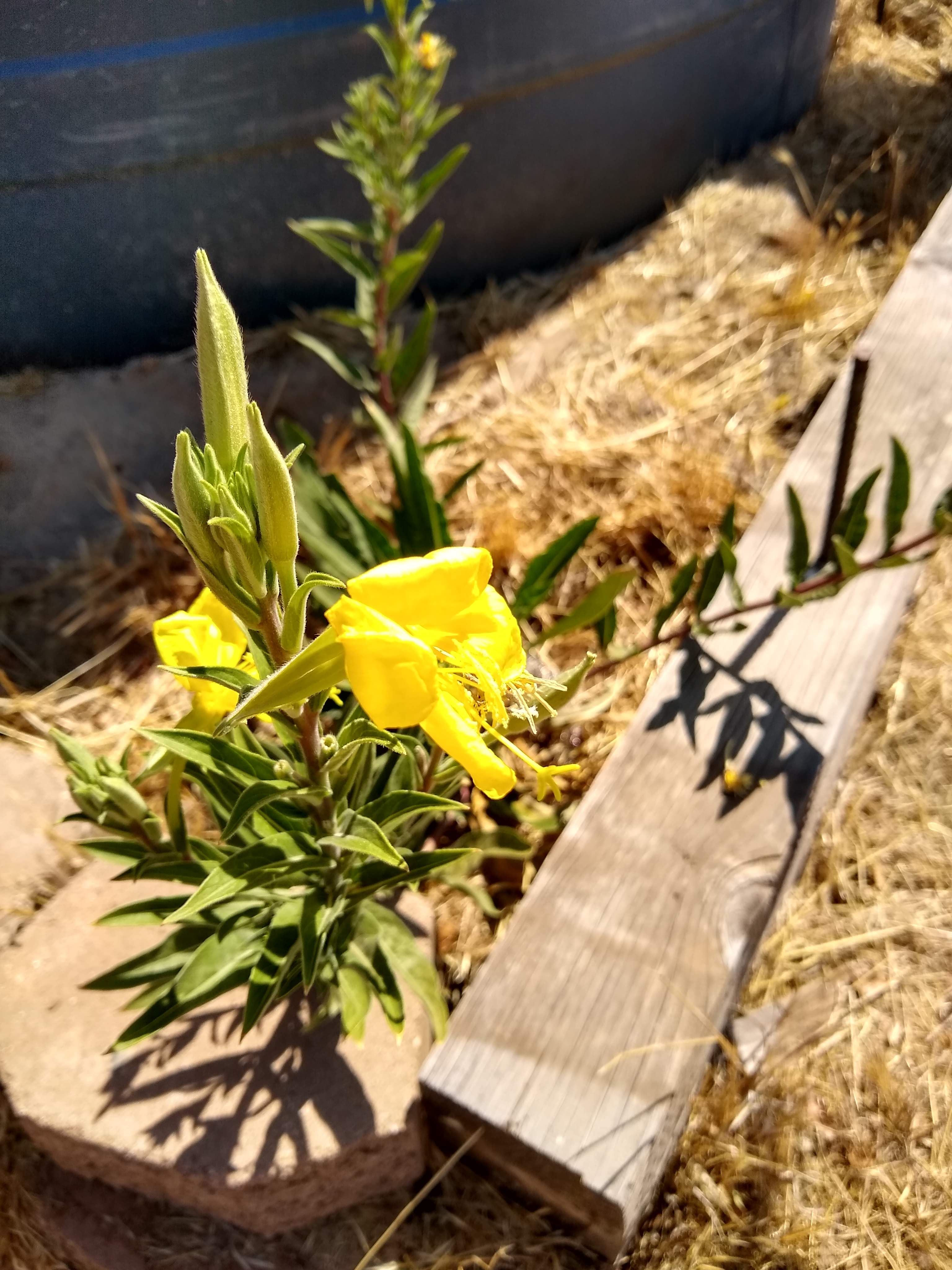
A prime rose bloom destroyed by the wind

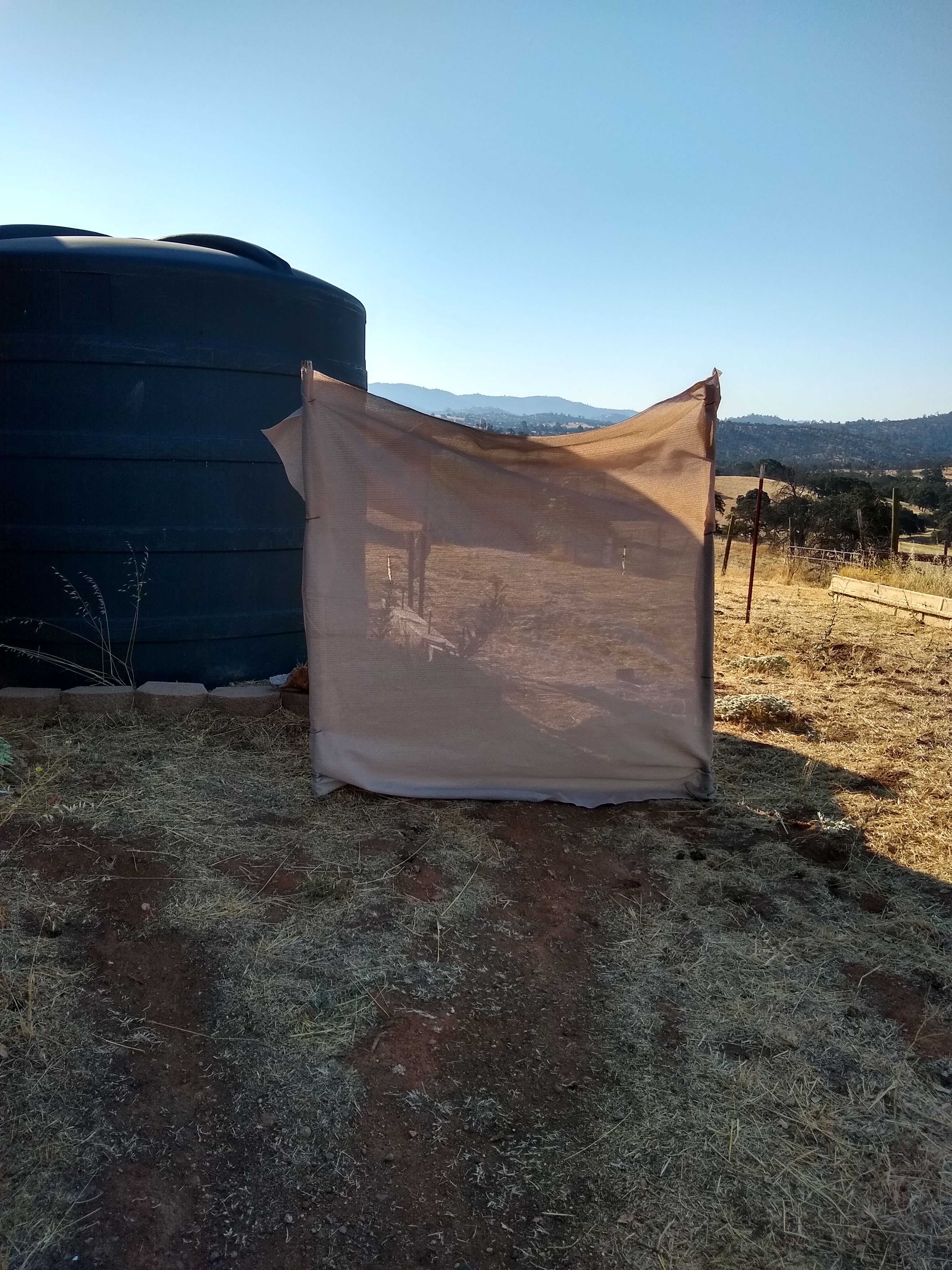
The wind blows very strong in the afternoons. In addition to drying out the soil, it has been destroying the gorgeous blooms on the prim rose. I used t-posts and shade cloth in a vertical orientation to slow the ferocity of the wind. The wind and I need to work together. So that my screen does not come crashing down, I must place slits in the shade cloth. This takes the full force of the pressure off the structure by allowing some of the wind to move through it. It is a common engineering practice; nothing new. However, it is another example of being adaptive – working with the elements rather than trying to control or dominate them.

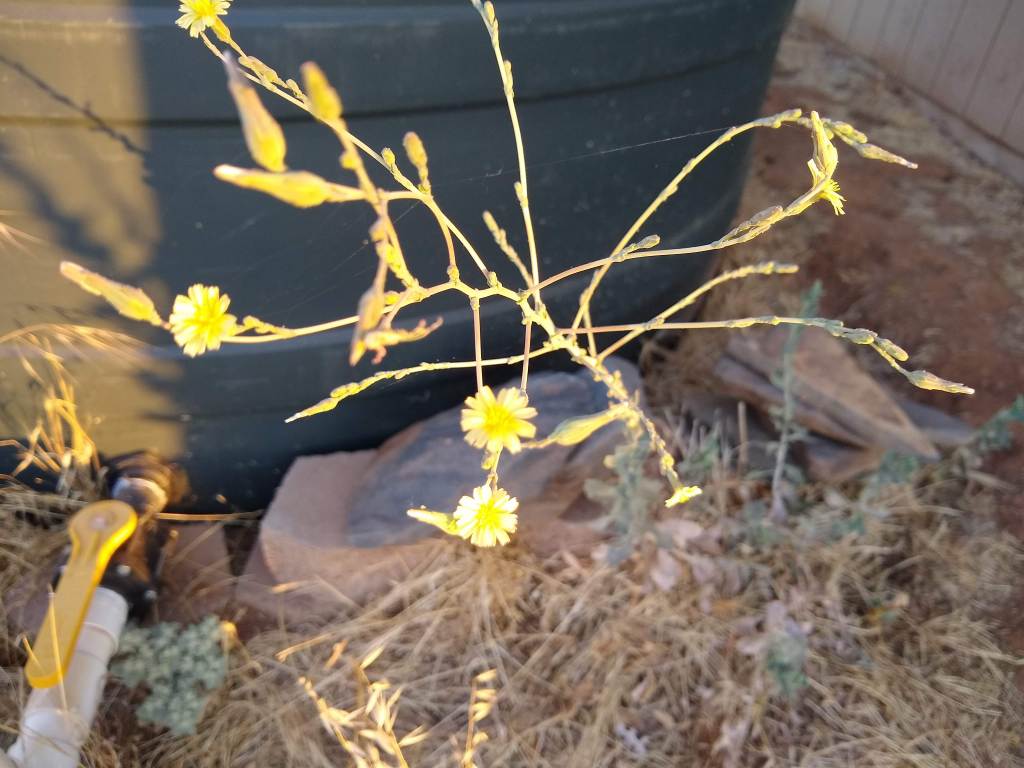
Prikley lettuce blooms

As stated in my previous post, instead of spending energy on pulling weeds, use them for their nectar. Let them take some of the load off by providing even more food for pollinators. This said, there is one plant I “go to war with”- puncture vine (goat heads). Those are way too destructive and invasive. I pull them out wherever I see them – and have the energy to do so because I work with the Earth instead of to control it. Be like water. Adapt, align, flow.

Beauty At Spring Creek

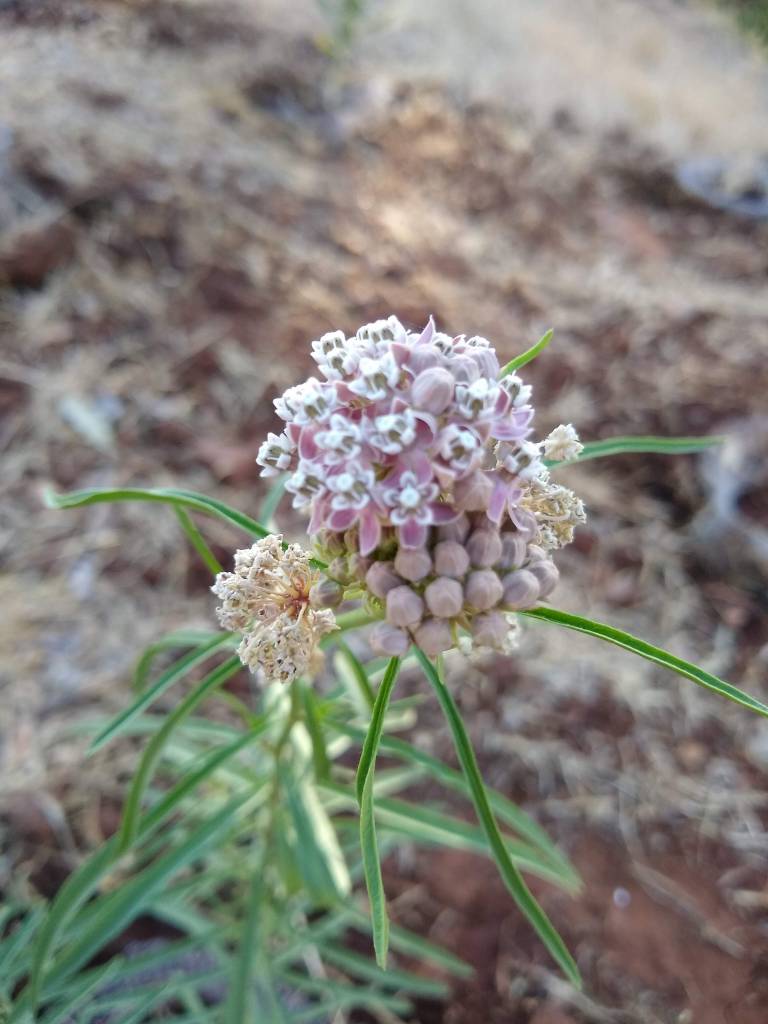
A healthy bloom on a narrowleaf milkweed at Site 8, with a healthy showy milkweed in the background

Watering this past Sunday at the Spring Creek sites was uneventful – no pigs, no decimation, no sadness. I took the time to watch bees drink from the moist rocks in the creek. I sat with the milkweed and told them stories about the babies they will soon protect and feed. I touched the deer grass admiring their long, willowy sprouts hoping they will be home to painted lady butterflies in the Spring and maybe part of someones’ basket after their lengths were spent. I am fortunate to be one small part of many living things in nature, and that my time of consciousness on this planet will be spent improving things for the many and not constricting access to resources for the few. Through this blog, I am grateful for the opportunity to share these experiences – especially as people are more shut in – in the hopes that the stories and images will bring some level of connection with this process outside to people in their homes.

Blooms, Shade and Brawn

In this blog installment, Heather discusses a’woo’atea (butterfly food) /nectar, monarch migration, shade and the beauty of nature.

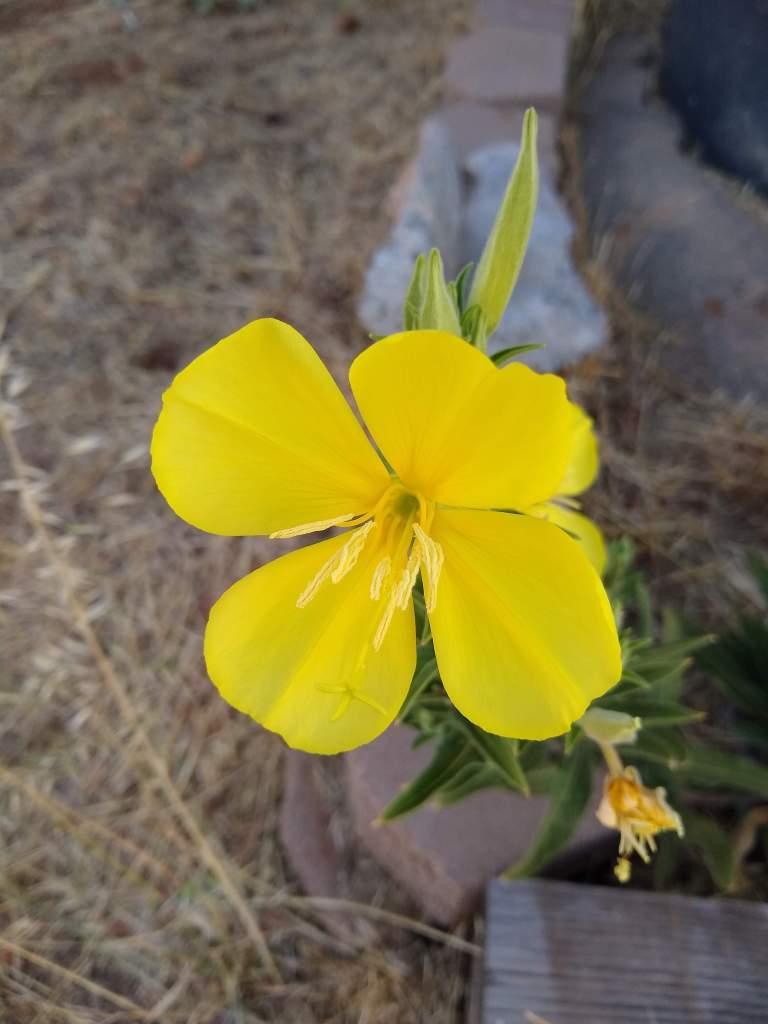
Primrose blooms

Flowers really are the manifestation of happiness. All one needs to do is look at, and sometimes smell, a bright, beautiful bloom to make their level of joy increase. The blooms are also a sign that the plant is settled in and growing. Plant happiness is a constant worry of mine. When you spend a great deal of time, sweat and financial resource, added to -oh, the fate of the monarch butterfly – you desperately want the plantings to succeed. In fact, the western monarchs should be beginning their migration south from Canada/Idaho/ Eastern Washington this month. Having blooms on the plants means there is a’woo’atea (butterfly food) available to them if they choose to stop here on their way back to the coast.

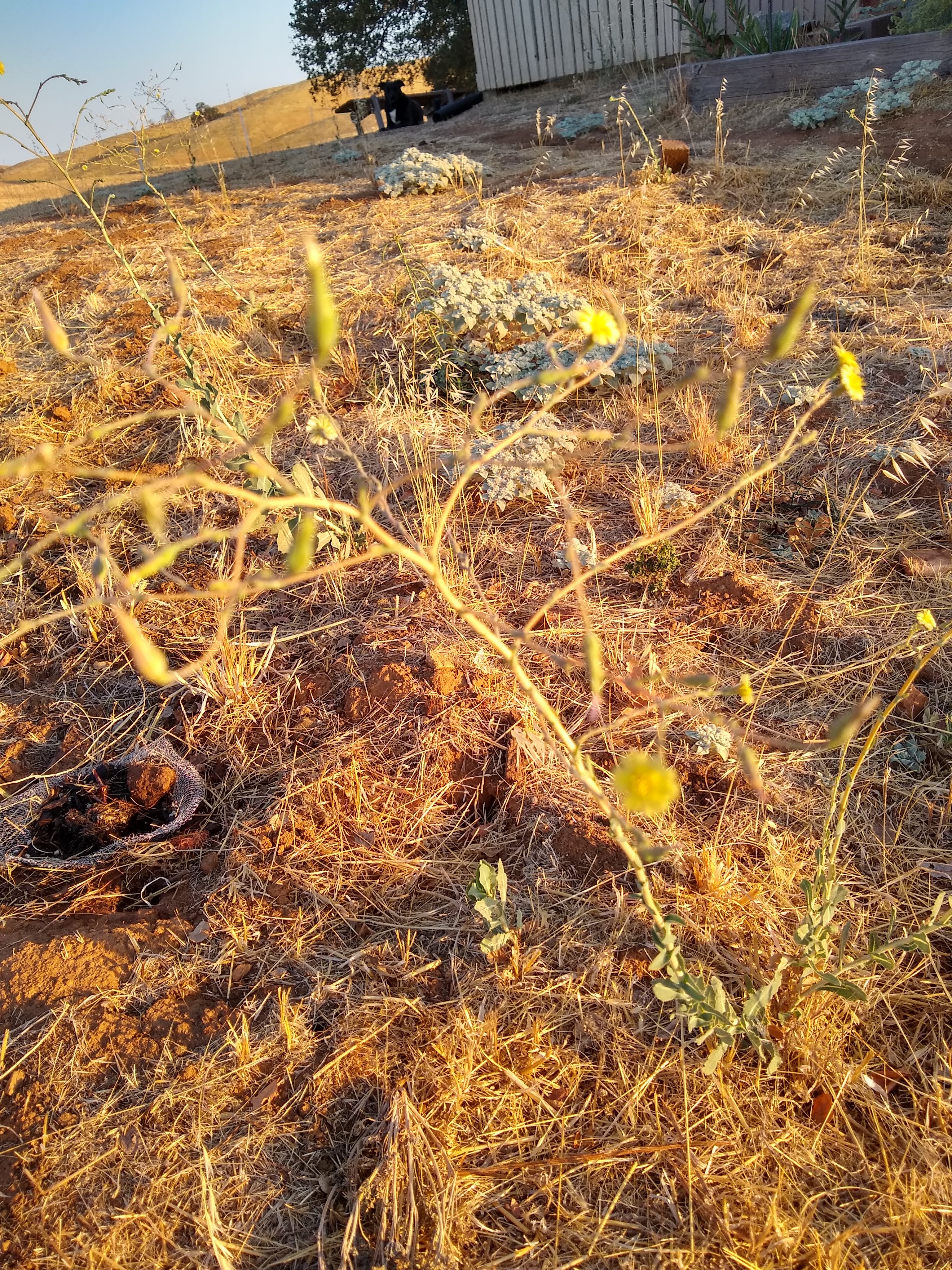
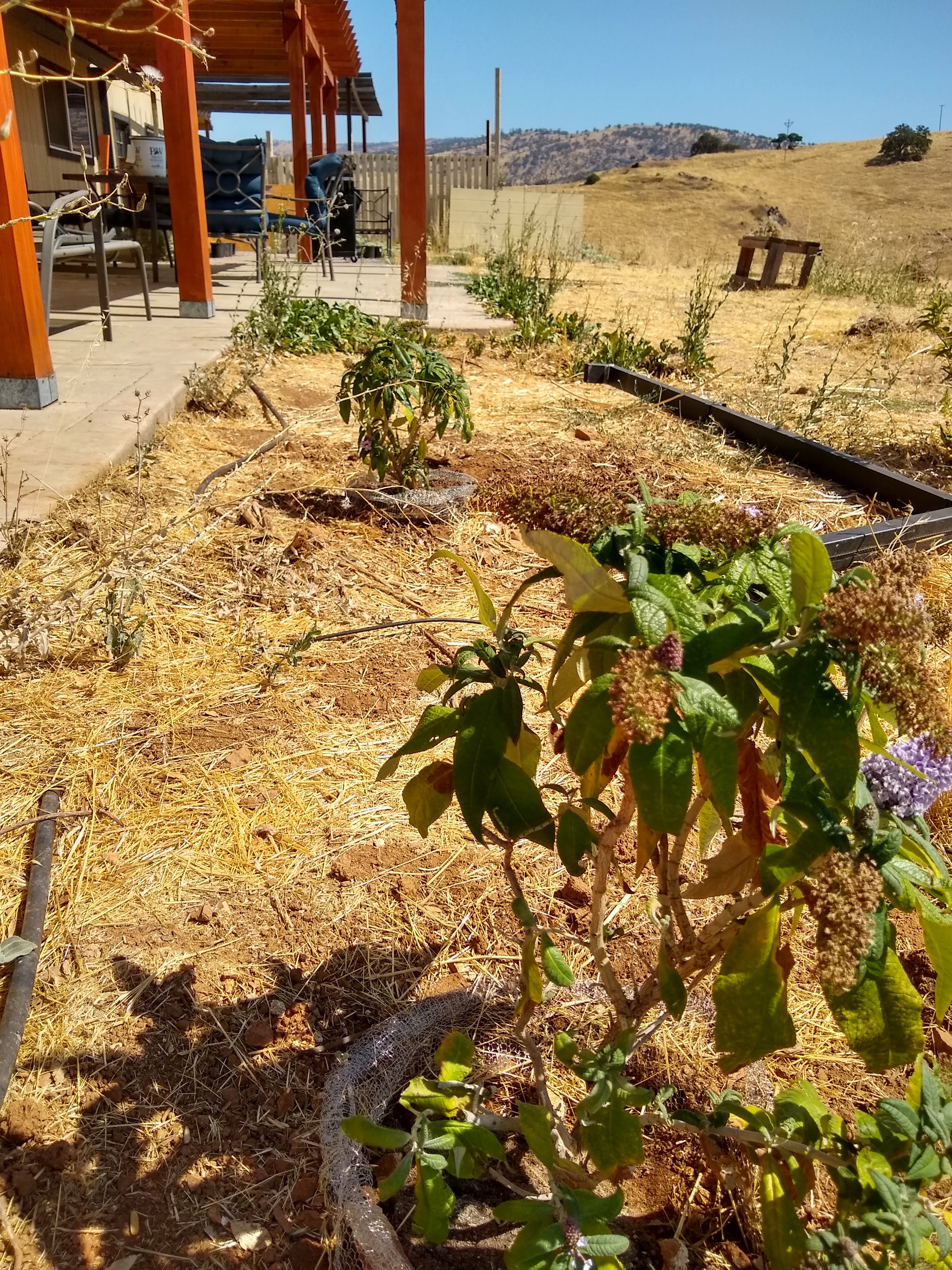
In the first row, third image, you will see what is widely considered a weed, prickly lettuce. It is in bloom. I want the availability of the nectar, so do not pull them. Even if this plant will not interest the monarchs, it will provide food for other pollinators, and may decrease competition for monarch food. I also care about the survival of all pollinators. To gain more nectar, I “cheated”. I planted two non-native butterfly bushes (bottom right photo). The other times the monarchs were here, I had a large butterfly bush. I decided that this is an “all hands on deck” moment for the monarchs, and having a sure favorite would increase their ability to refuel. Most of the plants are natives, and will adapt to this place well providing a food source for years to come. Diversity is key to survival.

I began my short course on monarchs through Monarch Joint Venture this past week. It is an 8-week course filled with a variety of data on monarchs. I am hoping to learn more about the migration and how my project can do the most to effectively help.

Sometimes “Full Sun” Really Needs Shade

The carpenteria gets a new shade structure

I noticed last month that the carpenteria was looking very droopy and yellow. Further back in this blog I discussed using a tomato cage and shade cloth to provide this sun-loving plant with some shade. With the wind, the tomato cage was not sturdy enough to stay in place. I tried a number of configurations, but nothing worked. The other day, I made a shade structure with t-posts, wire, and shade cloth. I pounded the posts into the dirt well past the t-braces so the posts would have better strength. The structure predominantly shades the plant from the south sun and allows for east and west exposure. So far, it is holding despite the afternoon wind. Most importantly, although it does not look like it in the photo above, the carpenteria is much happier.

A New Tool

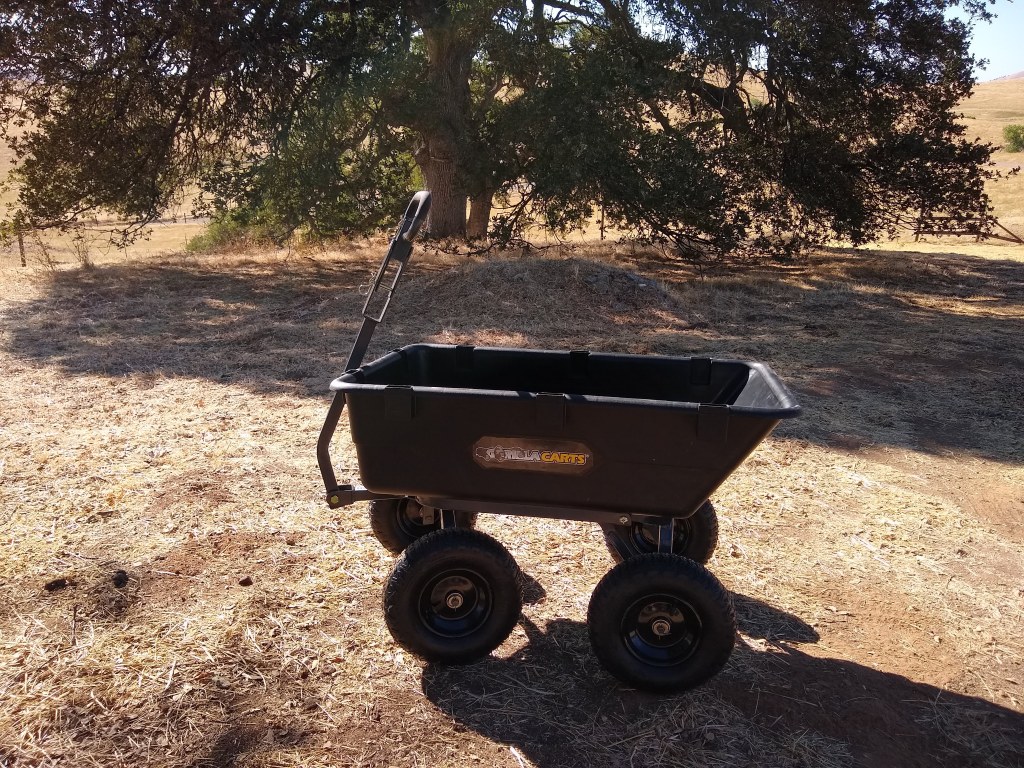
My new Gorilla Cart

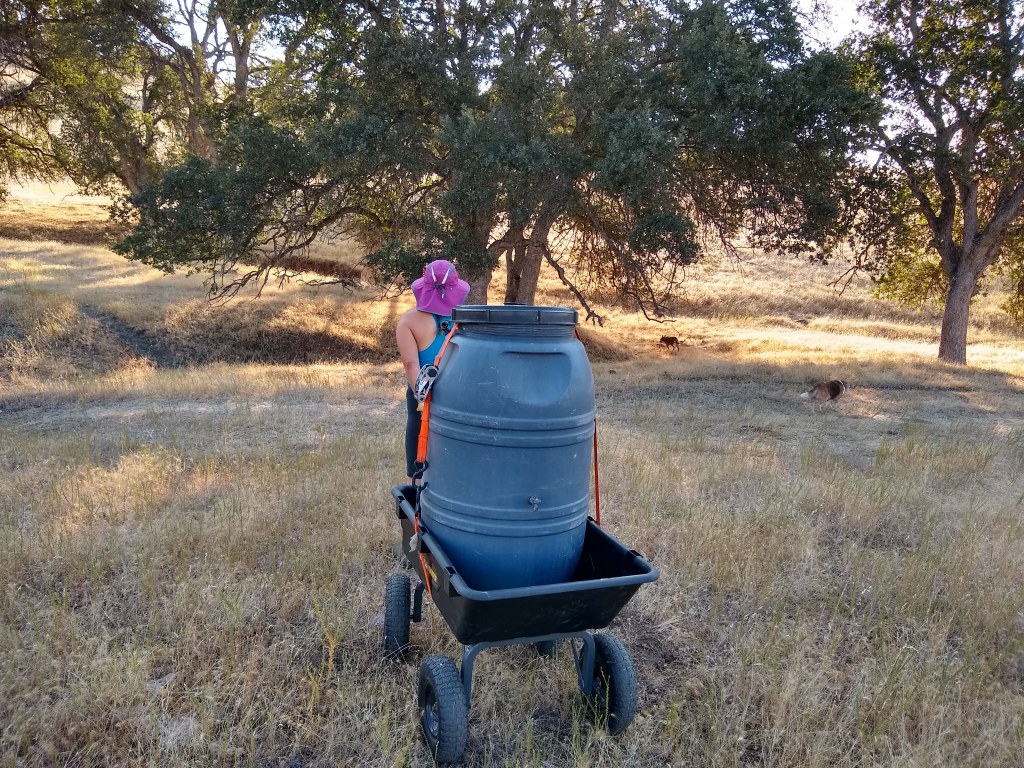
I will be obtaining an electric ATV soon. It is supposed to be delivered in a couple weeks. I will be using this for water and supply delivery to the far off sites. My fear of starting a grass fire compelled me to look for another solution. The Gorilla Cart is 1/2 of that solution. This will be the cart that gets hooked up to the back of the ATV. David performed an exhaustive search to figure out the best quality for the best price. This unit has a dump-truck feature as well as a convertible handle that goes from hand pull to a pin hitch. It is stable with four wheels – and so far I love it! We had to put it to good use last weekend. Our nephew borrowed the truck, and we had to figure out another way to water. I enlisted the help of David, and together we pulled 25 gallons of water from the rainwater tank to Site 8 and the deer grass site. It took much longer than with the truck, but the cart proved its worth.

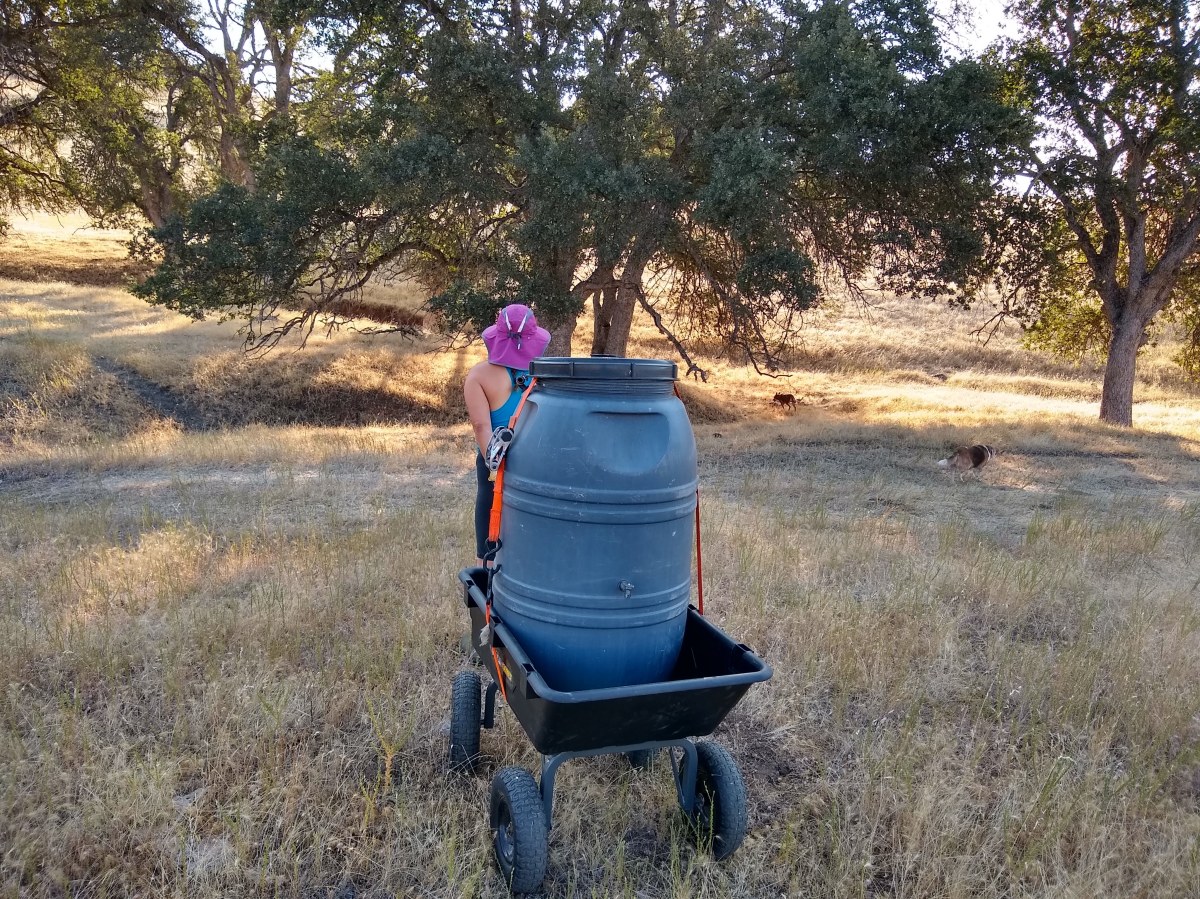
Heather pulling the water barrel about to cross an arroyo

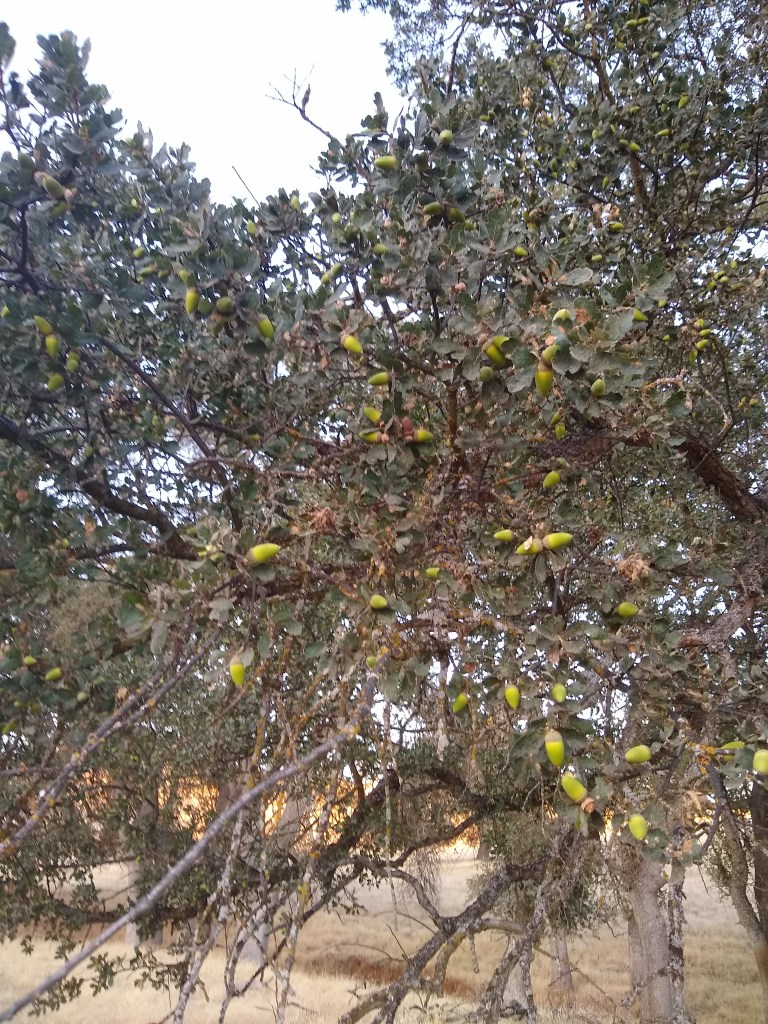
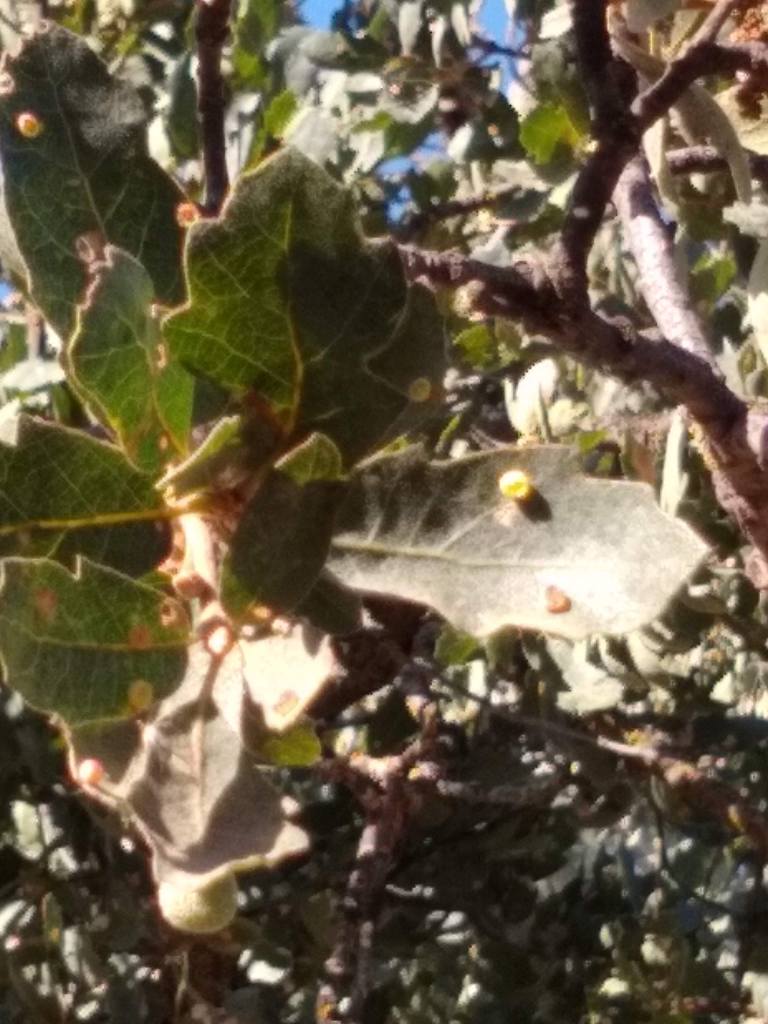
We are definitely mid way through the summer. As I was walking the ranch taking advantage of the cooler weather, I saw the acorns beautifully developing on the branches. I saw insect cocoons, like blisters, on oak leafs, juvenile raptors soaring, calling out with their not quite mature calls, and buckeye trees with shriveled leaves making way for lustrous seed pods. The larger creek on the mid section of the ranch, though moist with limited flow, was filled with life. Blooms and new willow tree saplings, blue birds and doves were abundant. I disturbed a falcon and an owl from their high tree branches, their beauty nearly bringing me to my knees. I smelled warm wood and a sweet medicine there in the creek.

On my way back to the house, I observed small flecks of hay, like a trail of breadcrumbs, from the meadow toward the pond. My cattleman is back. He dropped off an elder bull the other day, and lured the bull’s aging, hulking frame to an ample water supply where he can amble and wallow and not have to go too far. The flecks shook me from my rapture. The cows will be back soon. I need to get that darned fence done.

Pod Opens, Clean Bill of Health and New Pig Attack

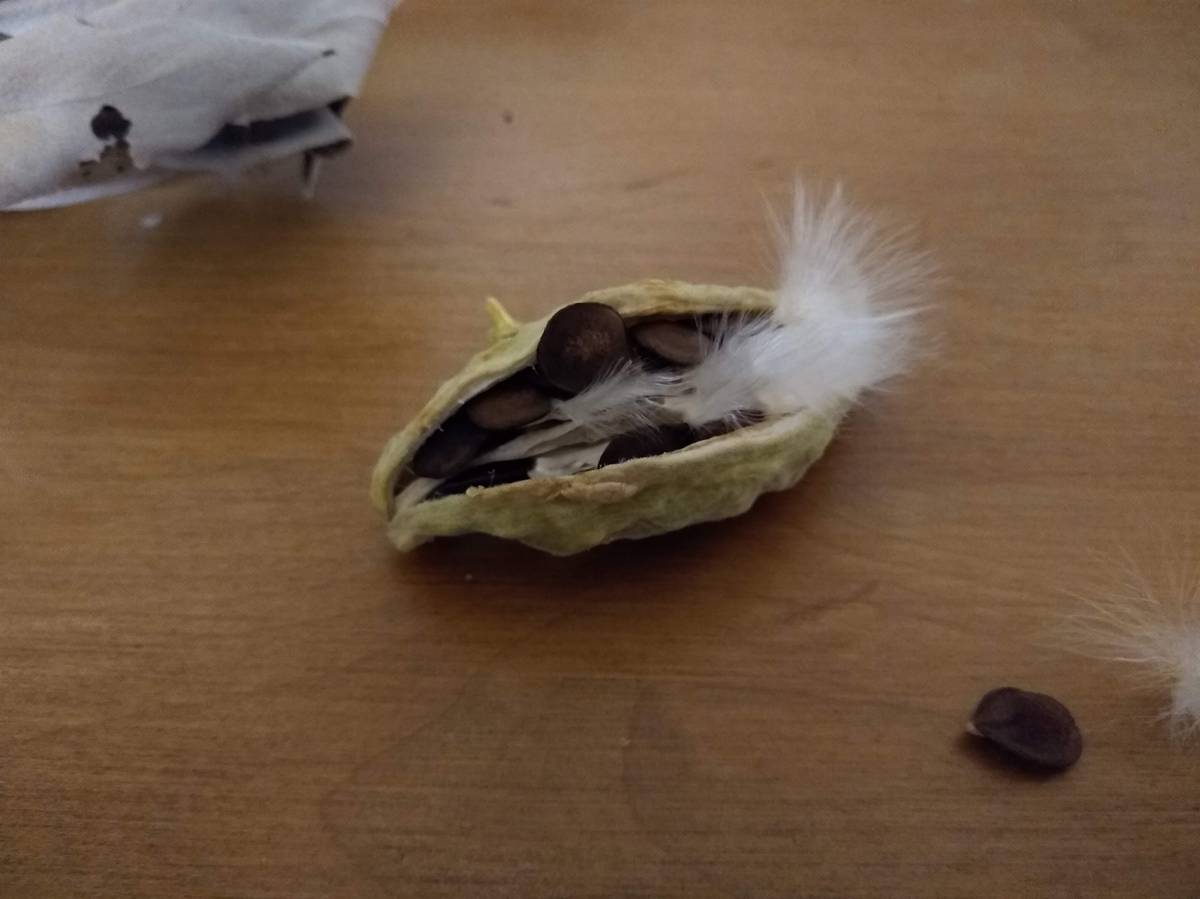
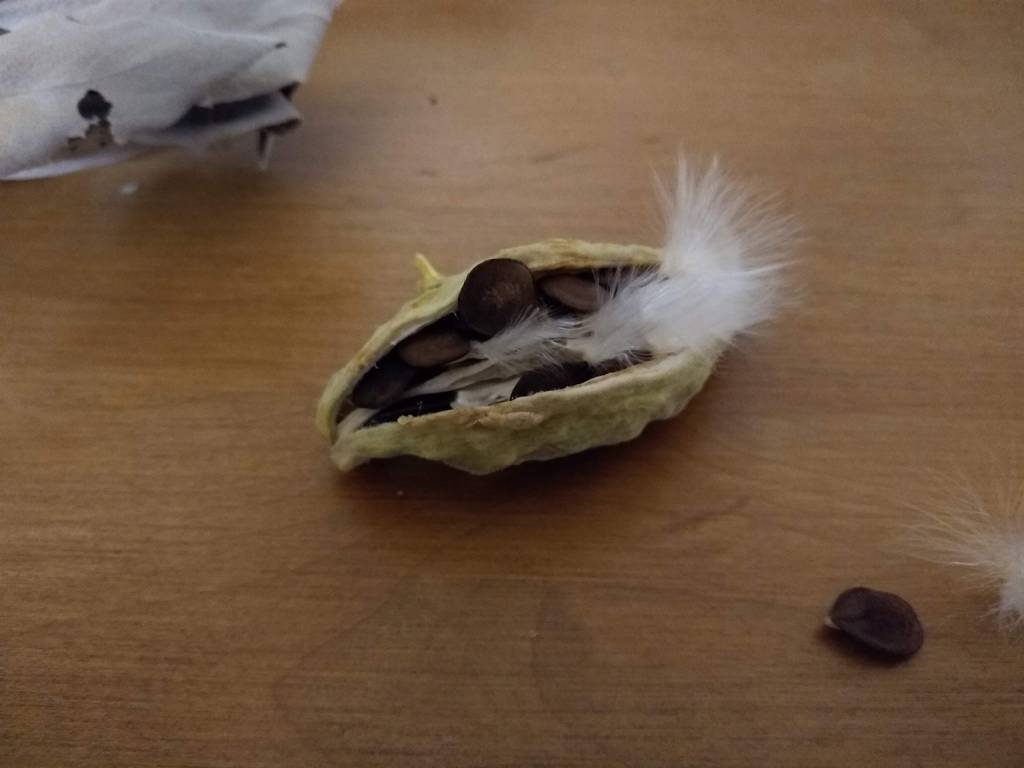
a. california seed pod collected last week opens

The miracle of the a. californica milkweed continues. The one unopened seed pod I harvested last week opened – and the contents were spectacular. The seed is thin and brown, and is supposed to be attached to the fluff, which aids the seed in spreading by helping it float through the air. The seed is certainly not heavy, but seems to be too heavy for the fluff to carry. In fact, when I saw the fluff around the plants, I saw no seeds attached. The specimen I took out of the seed pod (see photo below) did not appear attached at all – or it so delicately attached that it disconnected simply by my removal of the seed.

Seed and aerial fluff partner harvested from the pod

The destination of this seed pod is Ron Allen and Mariposa Native Plants. A. californica is a very special plant. It is an early bloomer offering the Monarchs a crucially important food source (awuuate’) after the first 100 or so miles of their journey north. It is also endemic to only some parts of California. Ron will be propagating another generation from this pod to be planted next year. Again, this plant is very special.

Clean Bill of Health

Since Ron was coming by to pick up the seed pod, I asked him to take a look at some of the plants I had concerns about. He ended up taking a look at each of the plants I have in Site 9, the South Plot and the nectar plantings. I also double checked that the adaptations I had made to some of the plant watering schedules would be ok for the them in the long term. He was impressed with the health of the plants and even surprised that some were still looking green at this point in the summer. The plants I thought had problems were actually doing well. Native plants do not look the same as exotic nursery plants that many of us may be used to. They often look died back or really rough in the summer depending on their life cycle. I am extremely grateful that Ron shares his knowledge, and was so relieved at the clean bill of health.

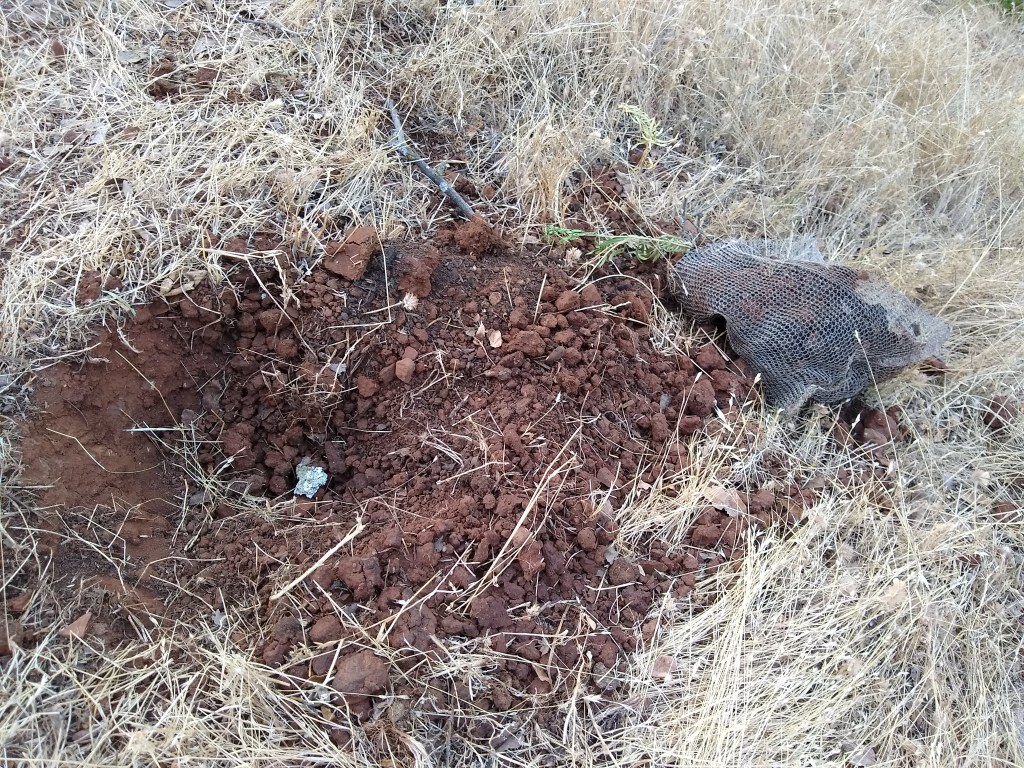
Another Wild Pig Attack

The smaller of the narrowleaf milkweeds was the latest victim

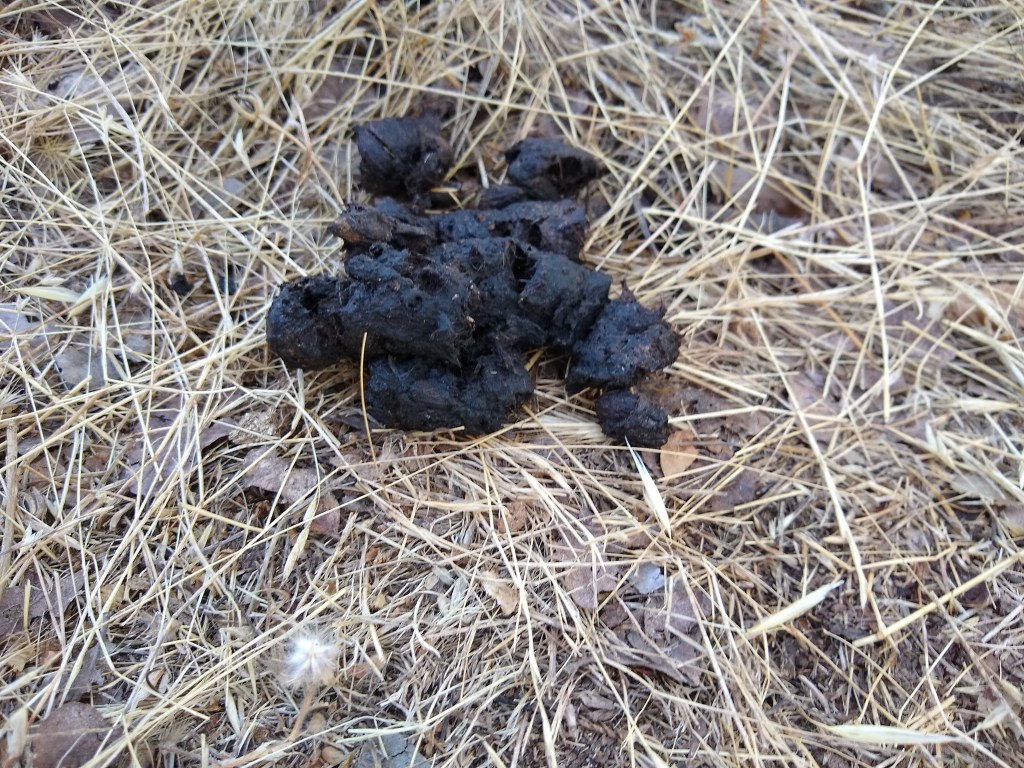
While on my way to water Site 8, I smelled a trash odor. Then, I saw fresh hog scat (photo below). I knew the wild pigs were back. My heart raced as I approached Site 8. Damn! Of the remaining three milkweeds, one had been rooted out and lay lifeless in its basket. As I did the last time the pigs slaughtered my milkweed community, I quickly picked up the basket and replanted it with the hope that the roots might still be intact. I resumed my watering of the healthy milkweeds, and the hopeful watering of all the replanted victims. I left the poor little narrowleaf packed in, standing at attention – a vertical monument to the cruelty of the pigs.

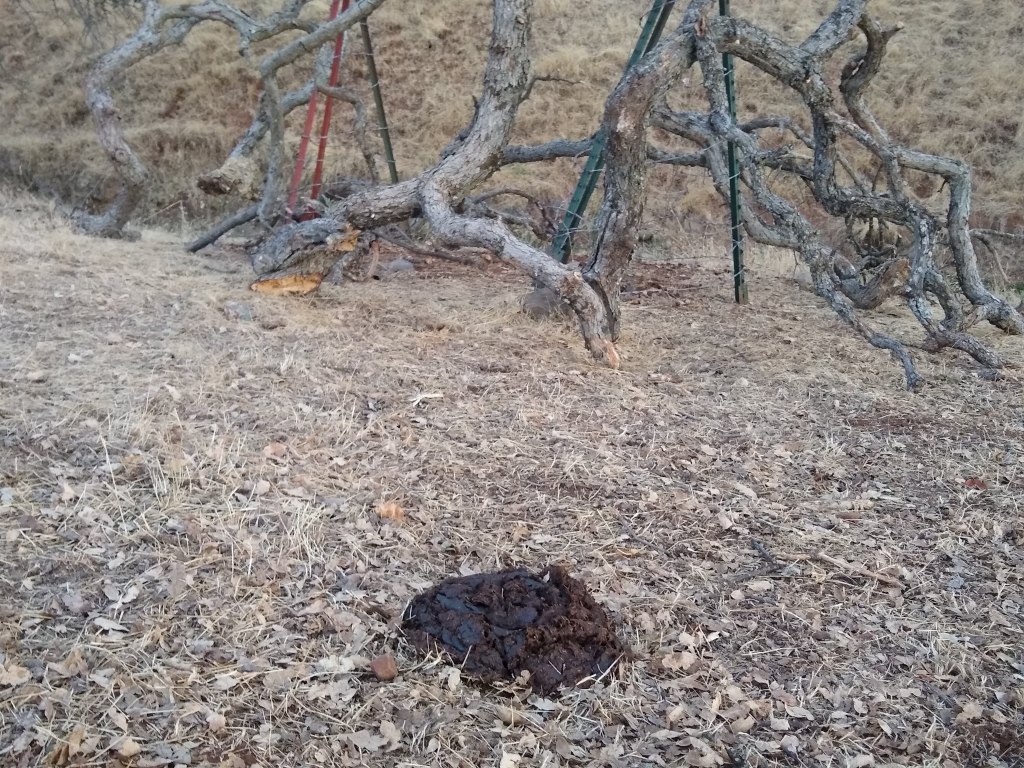
Wild hog scat
Another day I rise well before the sun

Each day, I rise before the sun to beat the heat as I haul water all around my plantings. It is a labor of love. I had biologists on the ranch last Friday conducting an assessment for a conservation plan. One of the biologists was from Xerces Society, the butterfly conservation group. After they came back from an epic trek, they informed me that they saw a yellow swallowtail butterfly and several buckeye butterflies. They also found naturally occurring narrowleaf milkweed in a more remote area of the larger creek that runs through the mid-part of the ranch. That I was overjoyed at the news is an understatement. These things make all the effort worth it. I want to bring the monarchs home, but I am also keenly aware that I am creating habitat for all types of butterflies. I will take the win.