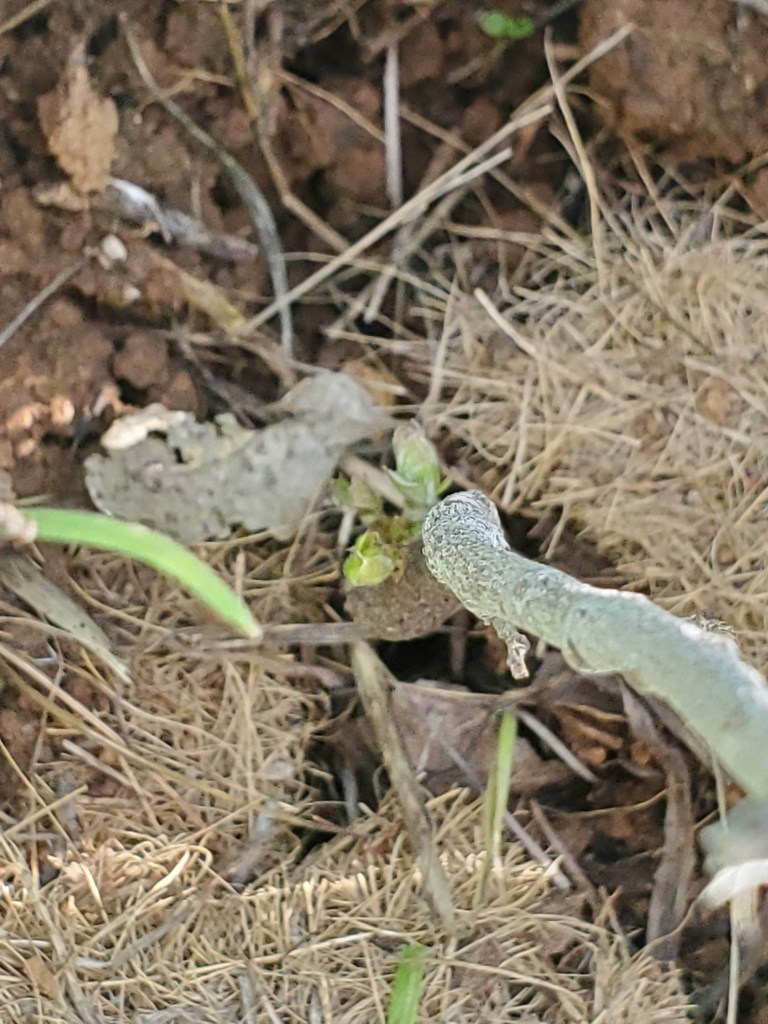
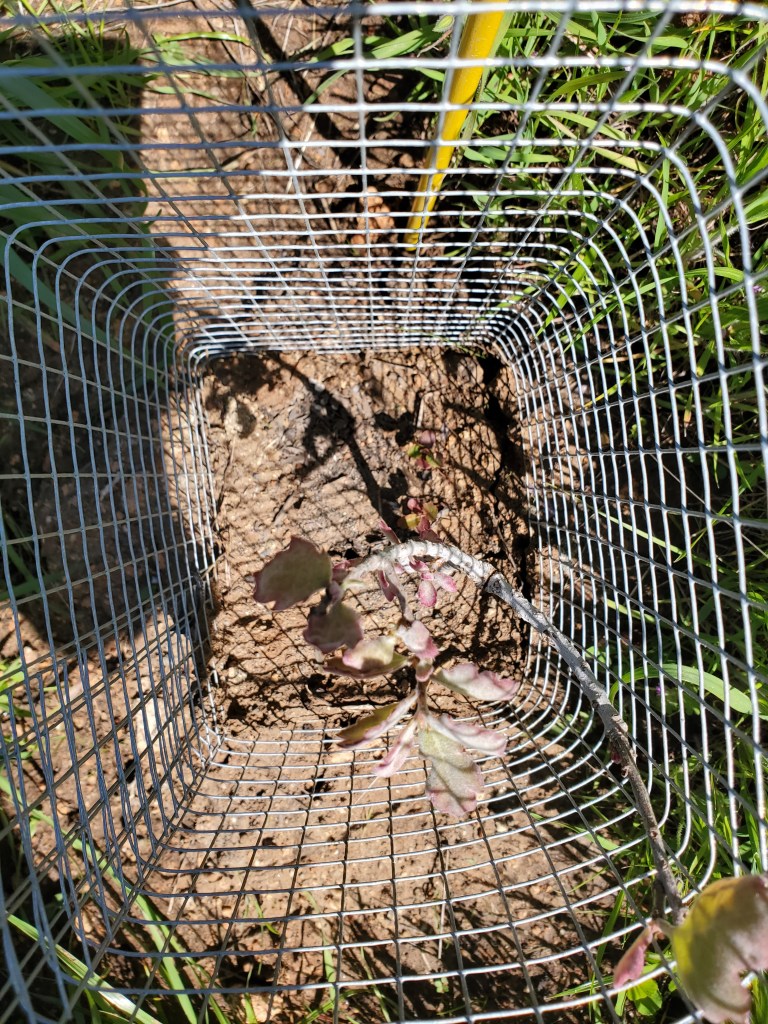
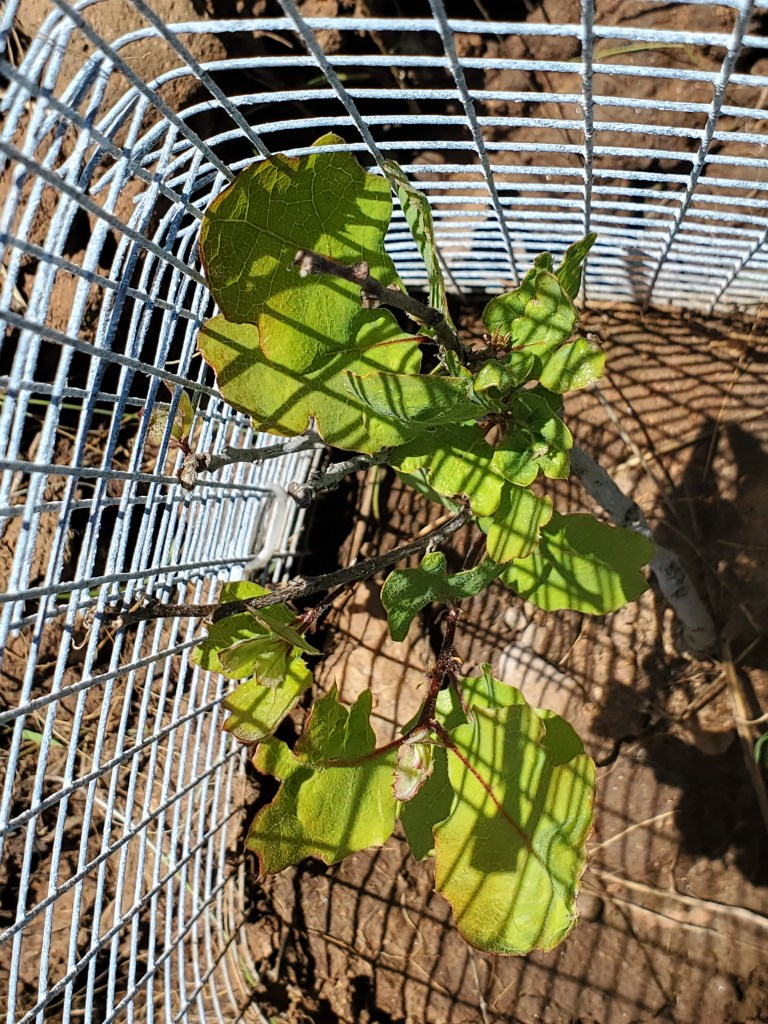
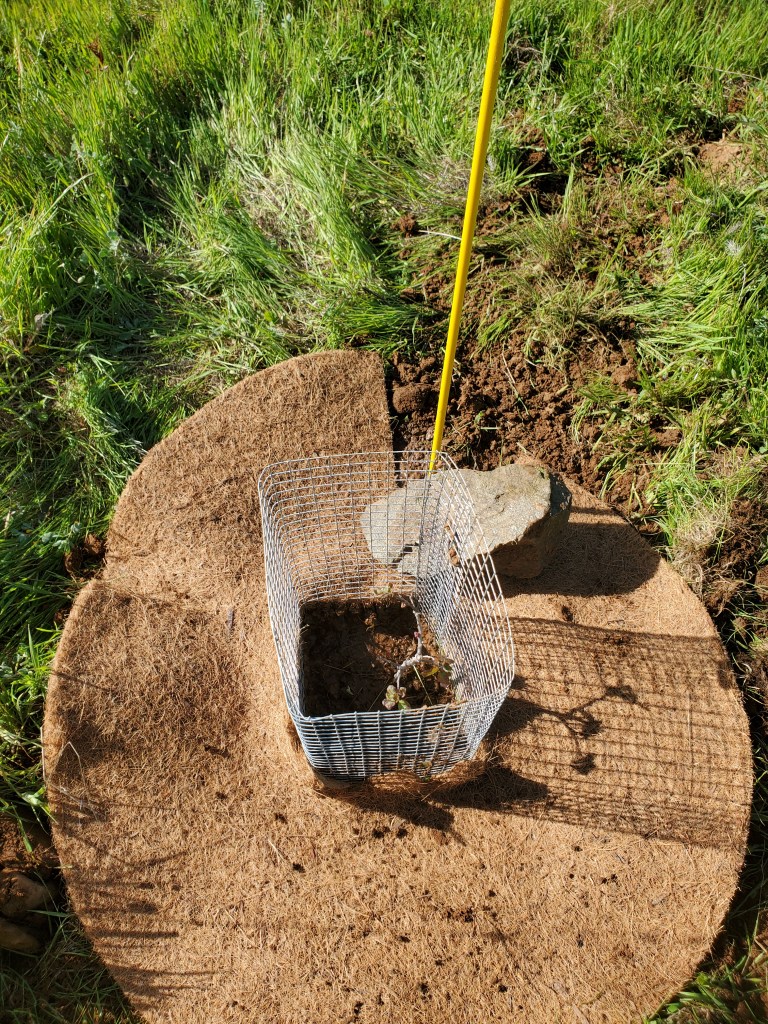
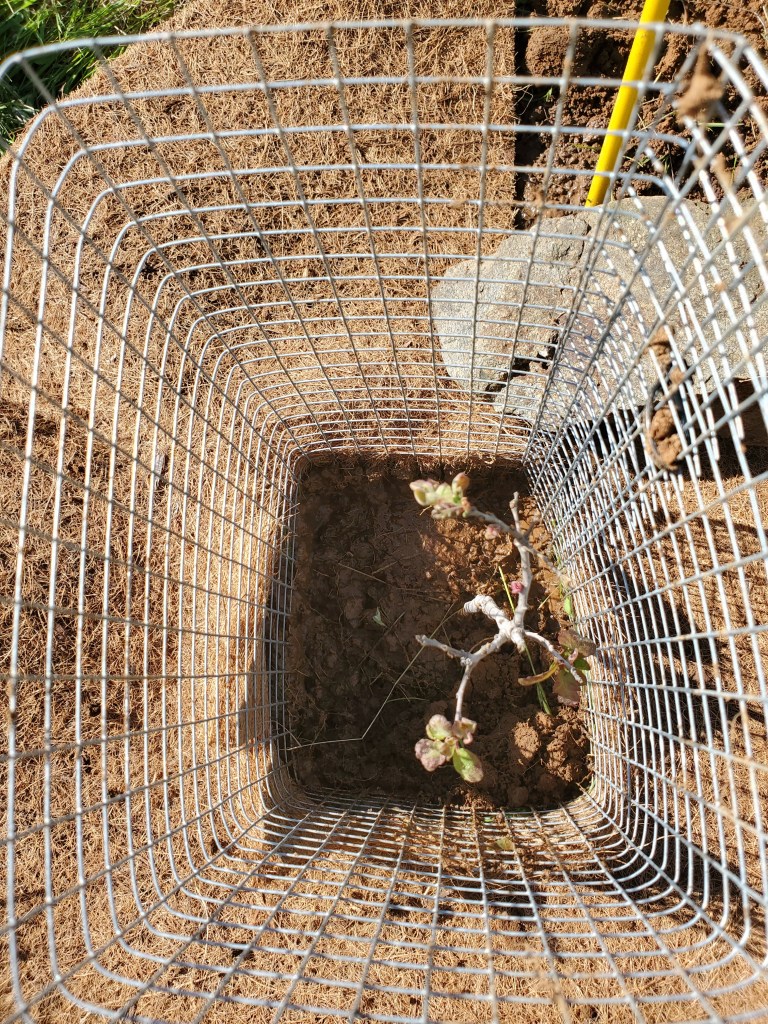
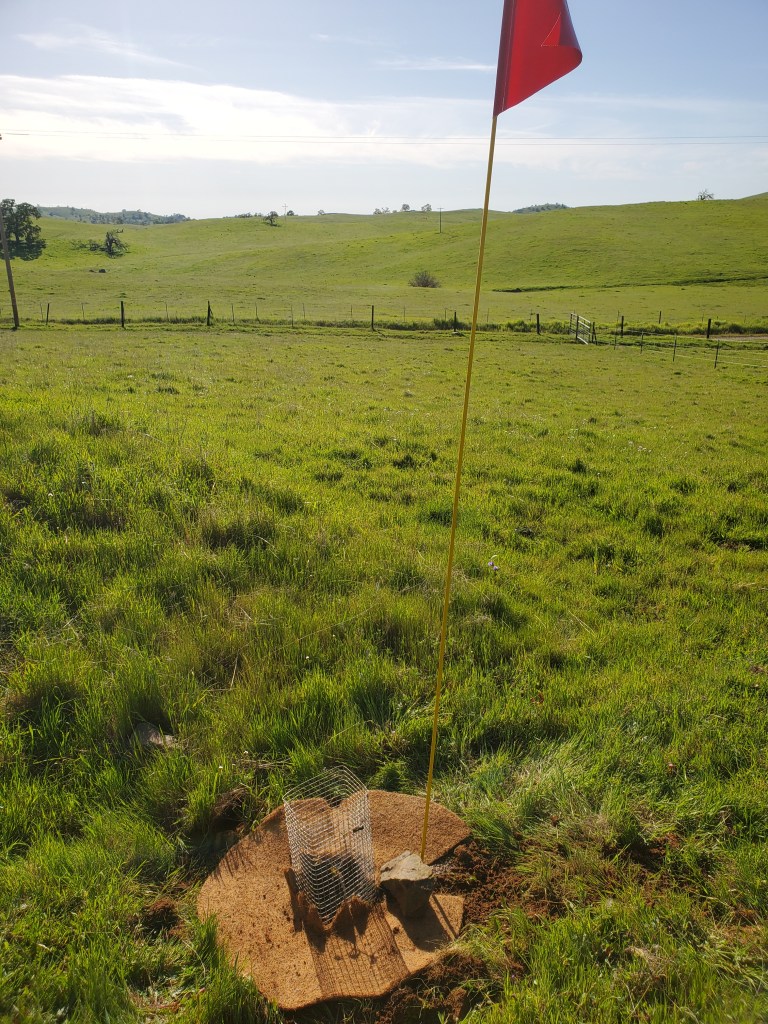
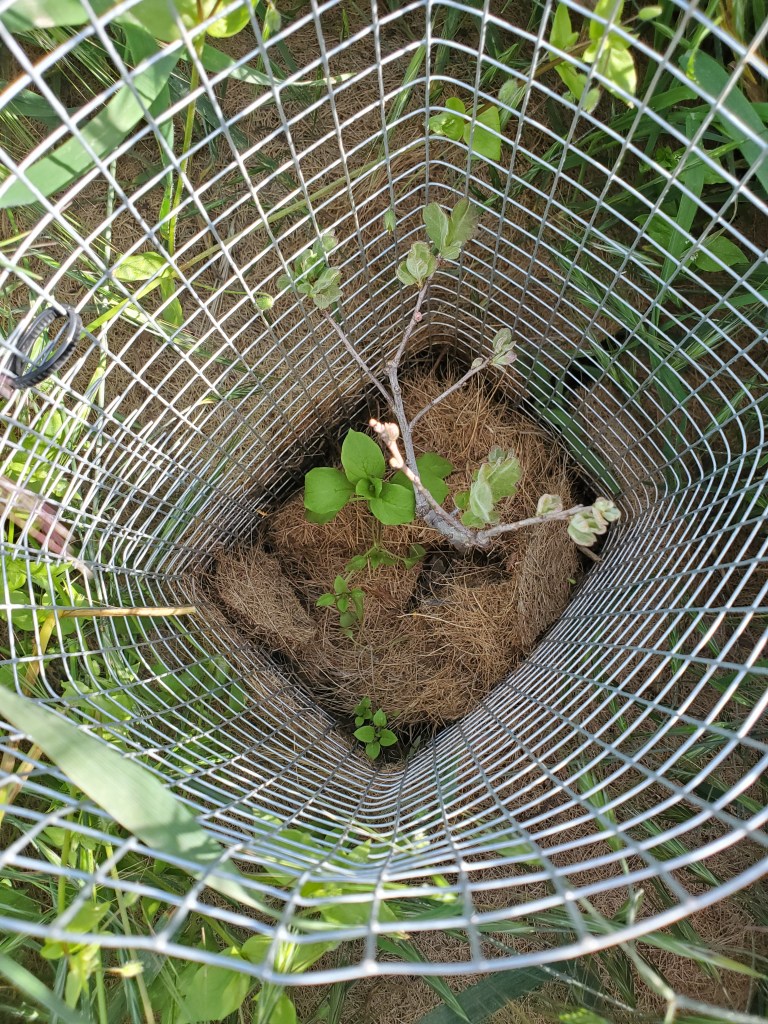
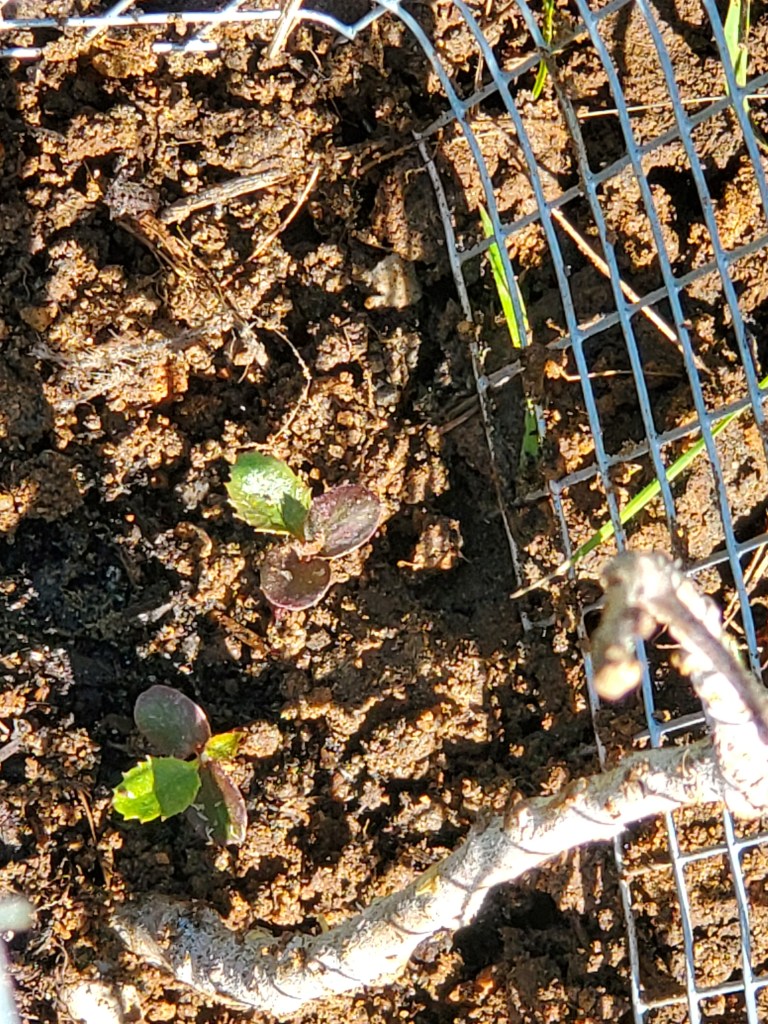
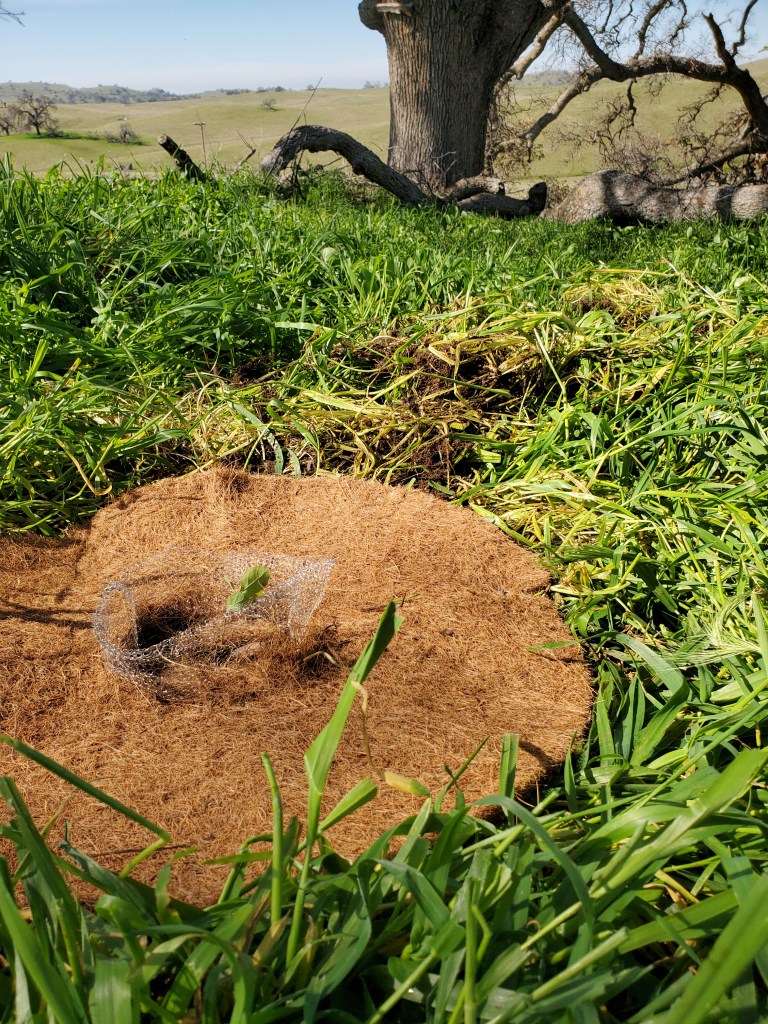
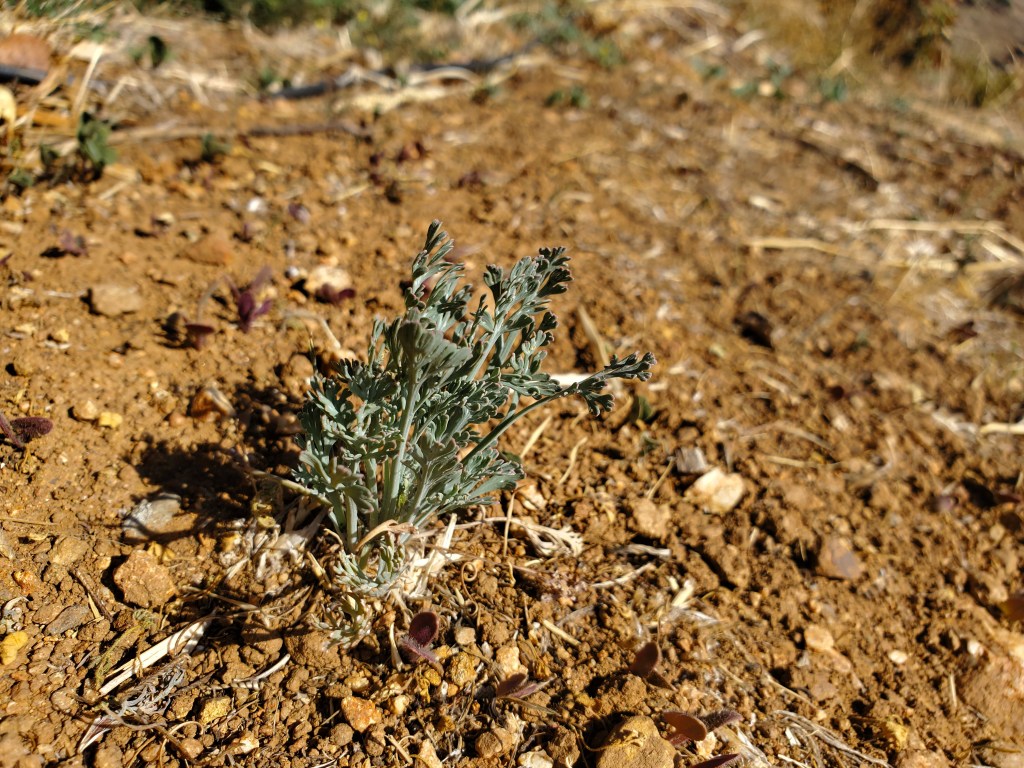
It is probably overstated about “miracles happening every day” – a bird making a nest, the bloom of a flower, someone loving you unconditionally, bridges holding millions of tons and planes staying in the air – all seem like miracles. Something I’ve not seen is an oak seedling come back from the devastation of plague level grasshoppers stripping everything, even the bark, from the plant… but now I have. The very first oak seedling I planted last year, shockingly, has re-sprouted leaves.
When I went around to reuse the baskets I had painstakingly planted in winter 2023-24, I carefully examined each little seedling hoping against the odds that there were survivors. They never got to grow much. Their inner layers had been exposed, stripped bare of anything that looked like a plant. In addition, the summer was long and with brutal heat.
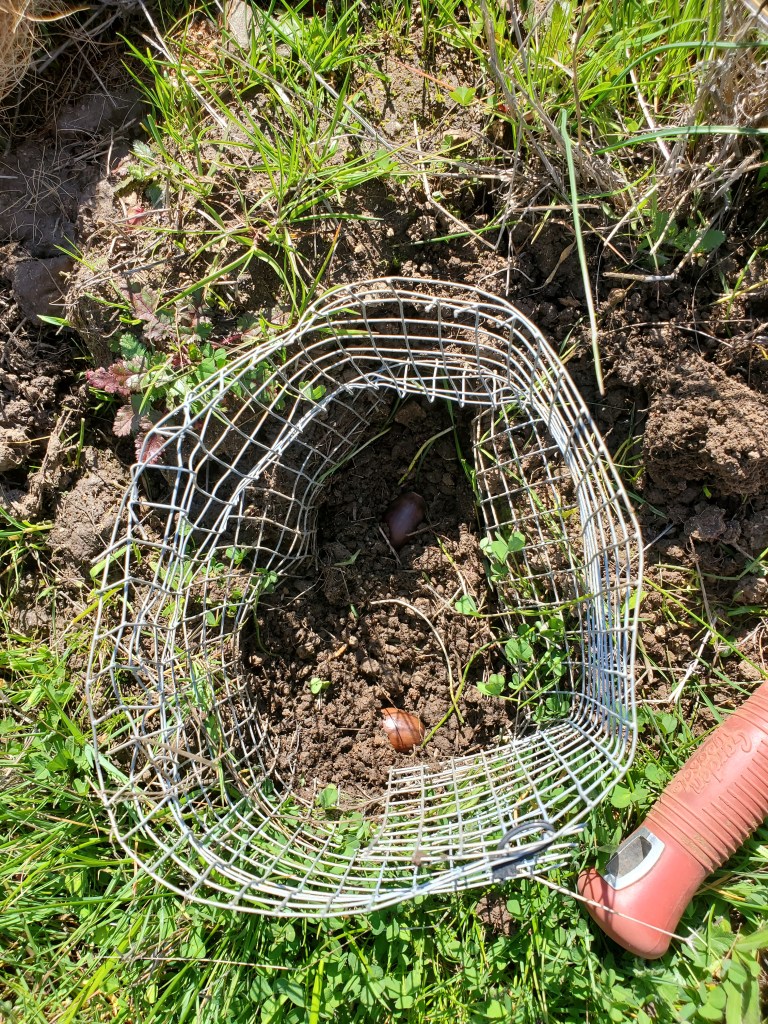
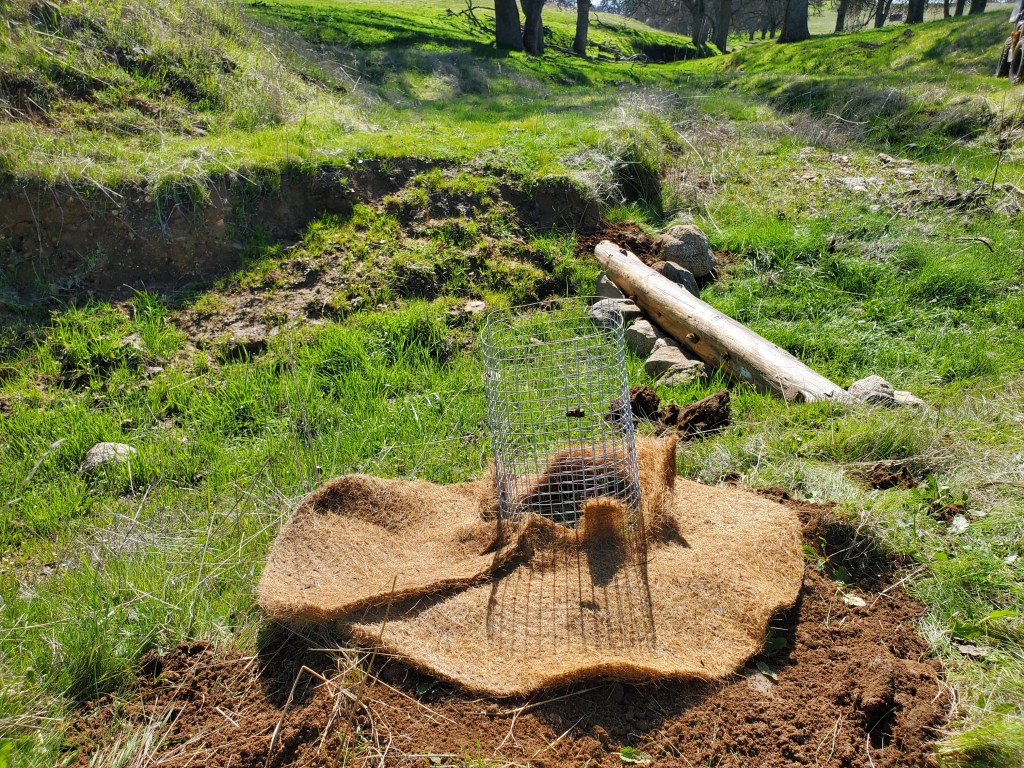
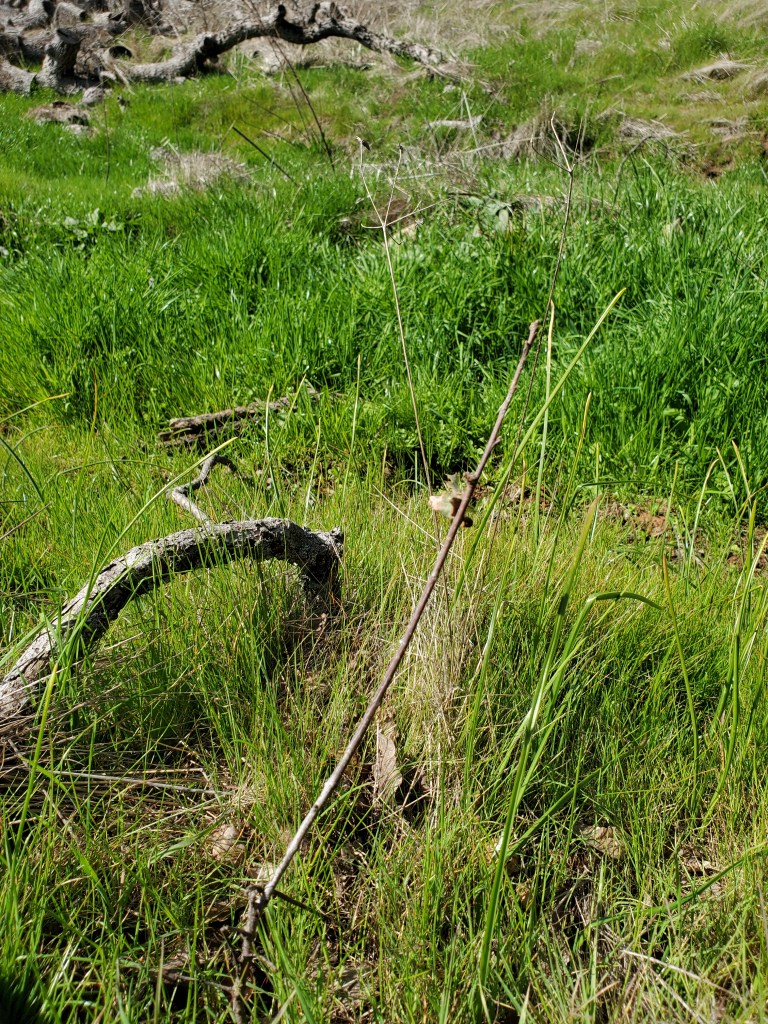
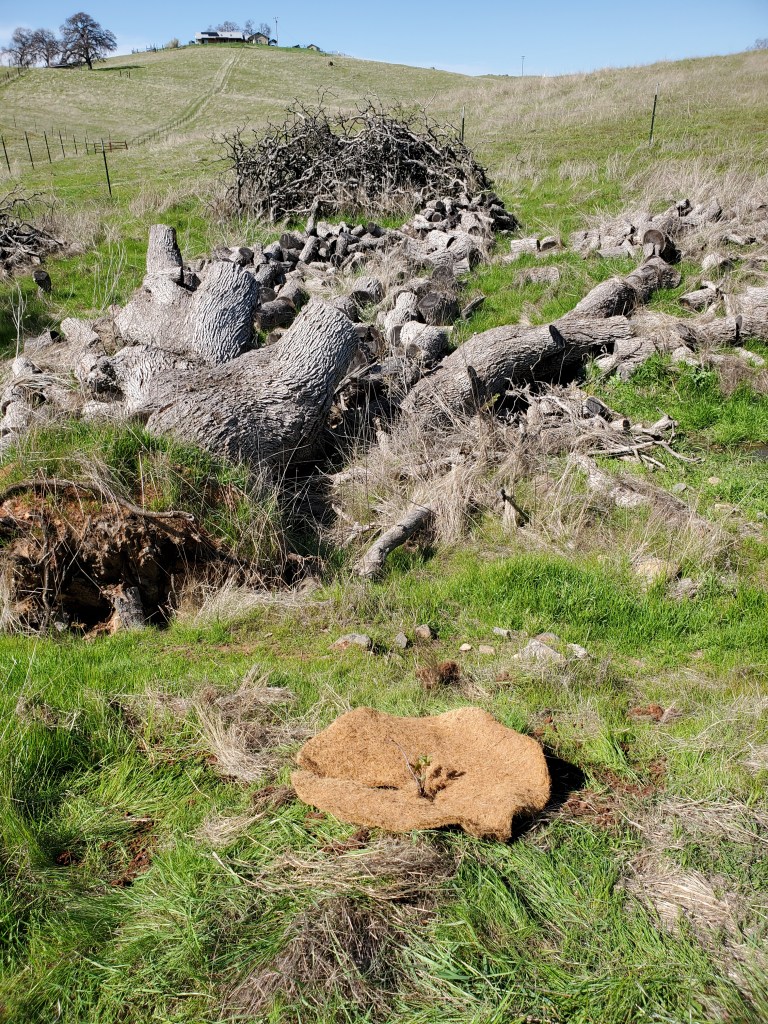
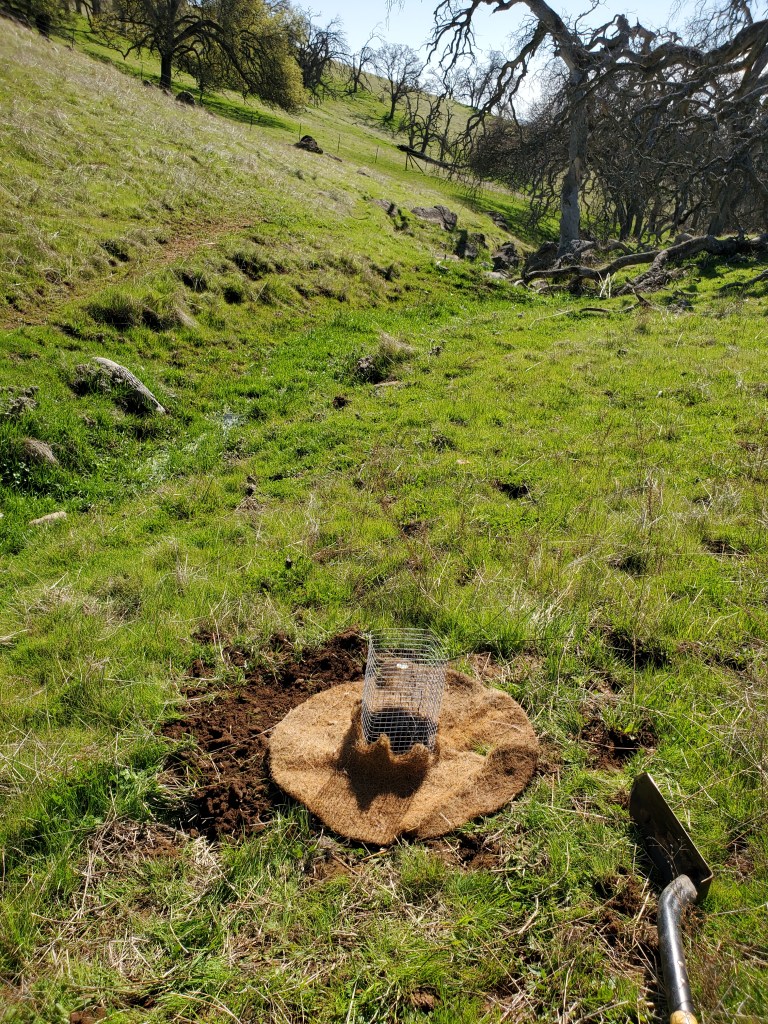
Like a careful pediatrician, I would gently bend their tiny branches to see if there was any moisture and life remaining. All of their little limbs broke off. I would gently tug their trunk to see if there was any give. Sadly, most of them pulled right out of the ground, gone from the strain. There were a few that refused to give, and I left them there. This year, in those baskets, instead of placing a new seedling, I lightly covered an acorn. I thought, maybe they needed a friend to share the energy for one life. When I got to the seedling I planted at the base of my beloved now dead oak, I saw what looked like a couple green and red buds on the trunk. I took my glasses off and wiped them thinking maybe I had some gunk on them. I put them back on, looked closer, almost putting my face up against the basket. Oh my goodness, YES!! Resiliency!! She was alive and producing some leaves. A miracle for sure!
I have also been monitoring the other oaks closely. So far, they all appear to be doing well. They all have leaves. The baskets where I only placed acorn have not sprouted anything. One site, it was clear that the acorn was taken. I replaced that one acorn with two, and will hope one of them makes it to germination.
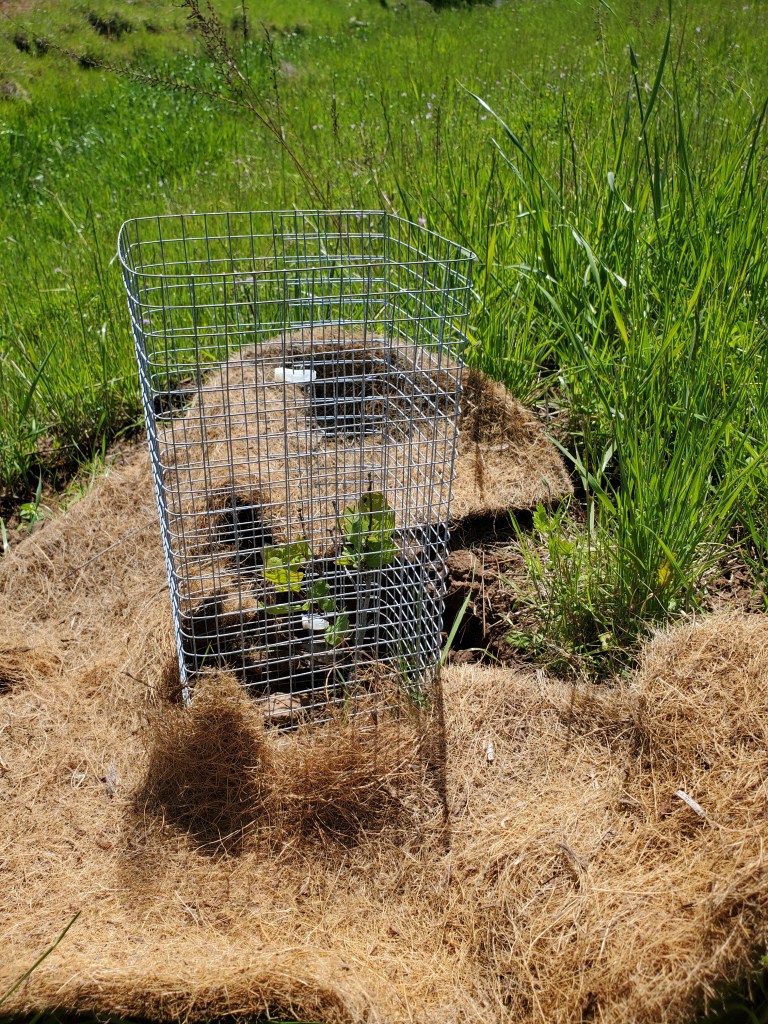
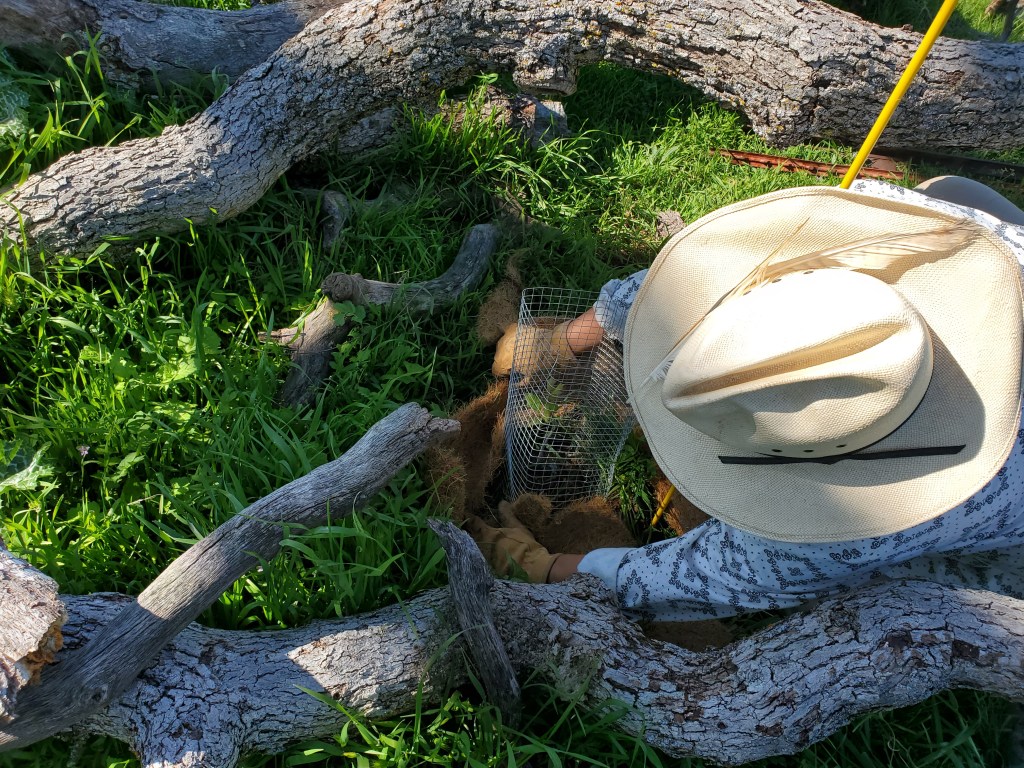
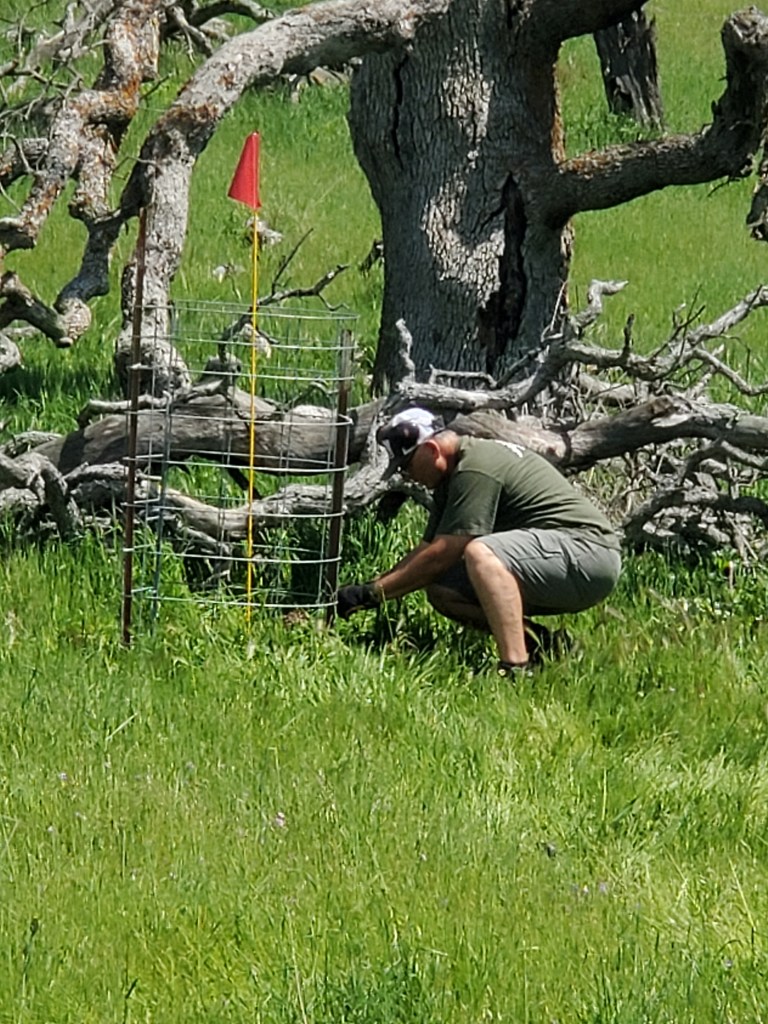
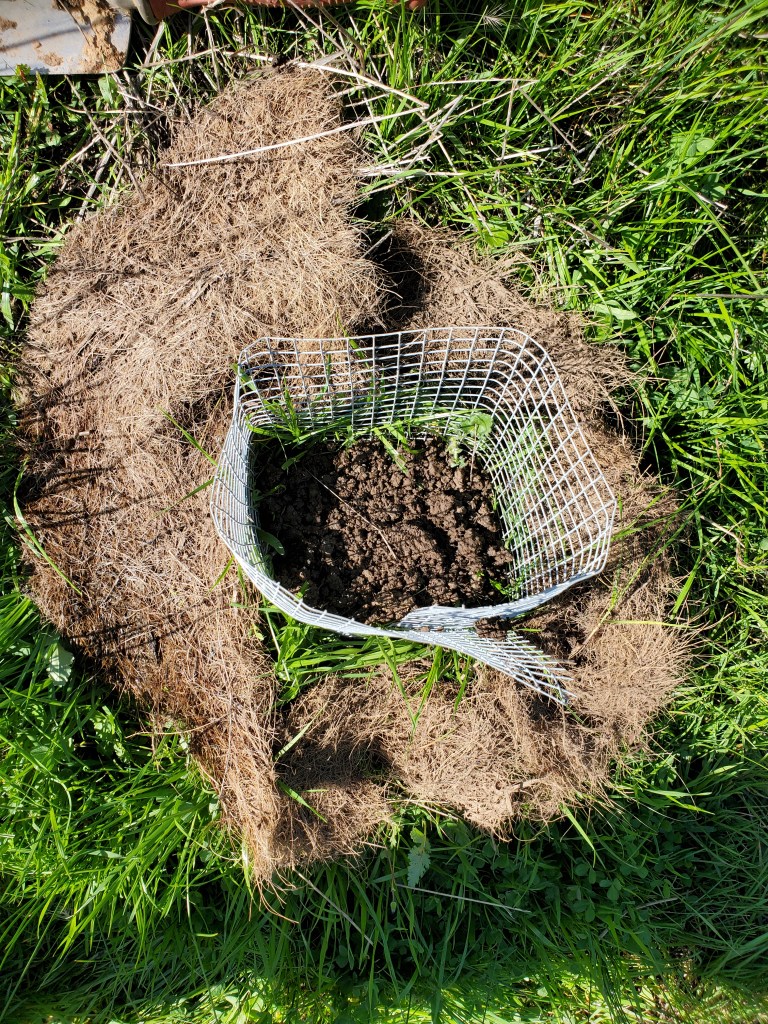
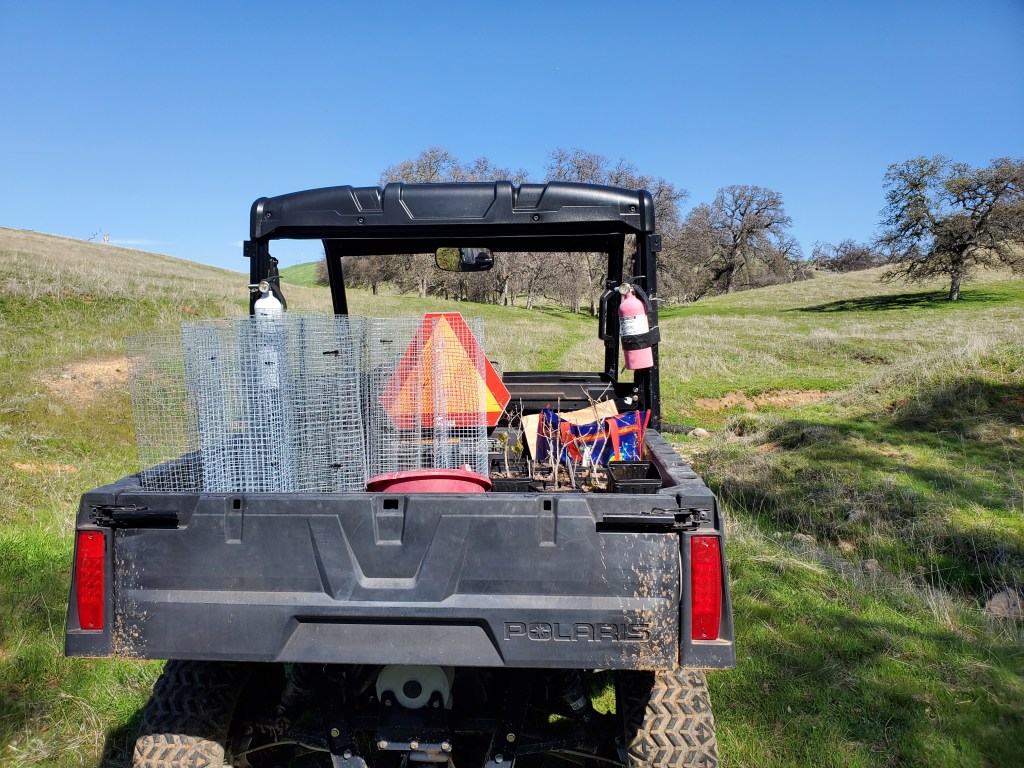
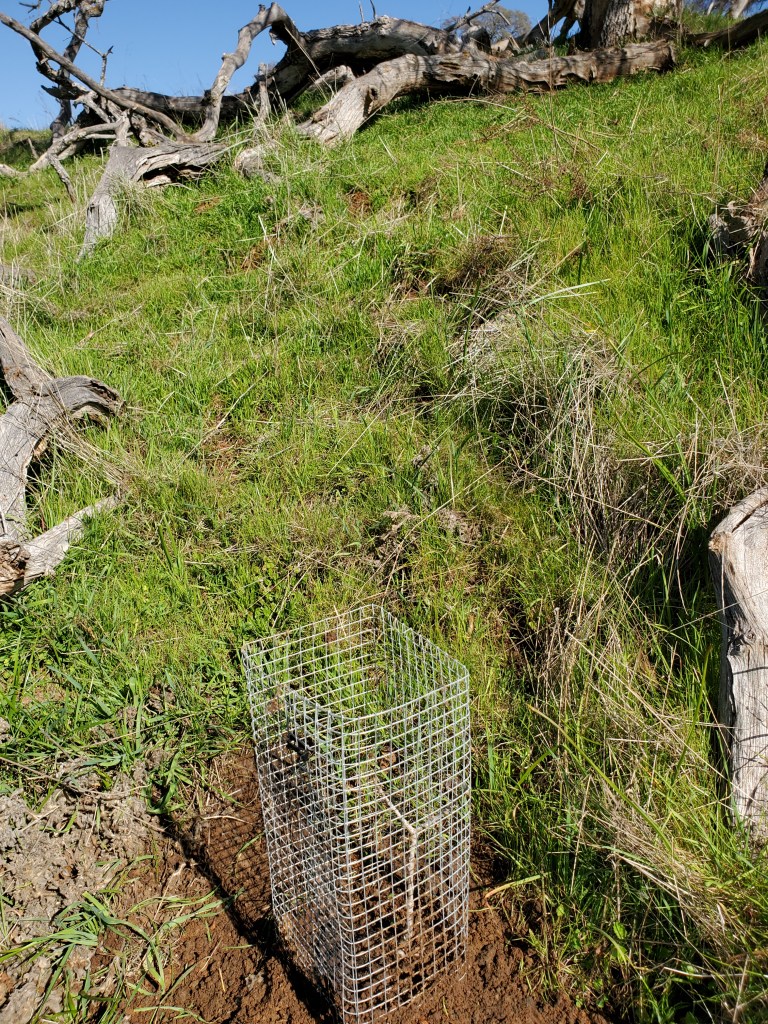
David and I have finally got all of the oaks caged. When the cows return from the south end of the ranch, the oaks are now protected. I had planted them well before the caging was done, and some of them had been stepped on or bent from hungry cow heads exploring their ability to access the tasty acorn and tree. The trees are small enough that the tallness of the basket protected them. That said, I needed to do a bit of reshaping before caging the area around the plant. We followed a new protocol for caging that Alex Palmerlee, an oak expert in Butte County follows. We used much stiffer cow panel fencing at at length of 8′ and a height of 50″ secured to two t-posts. Previously, we used no-climb fencing at a thinner gauge with a much larger diameter. The thinness required three t-posts to secure. I think this new method will require less resources and be more resistant to pushing in from the cows, thus OK to have a shorter diameter. Thank you to my long-suffering husband for doing the major share of the caging work. After I maintained the oak planting site by weeding, re-situating coir pads and “fluffing” the baskets back to their original shape, David would follow with the caging. I had already set out the t-posts for him, and he brought the panels. We make a pretty good team.
Straightening oak basket from cow step-onDavid taking the panelsDave securing the panels
The weather is beginning to warm. There is still water running in all the creeks and drainage’s. The soil is still moist. However, soon I will need to follow a watering regime to ensure oak the survival of these babies. Fortunately, I have not see any grasshopper nymphs like last year. Crossing my fingers that hoppers will not be a problem and that these trees will have time to become established.
CA Milkweed Shockers
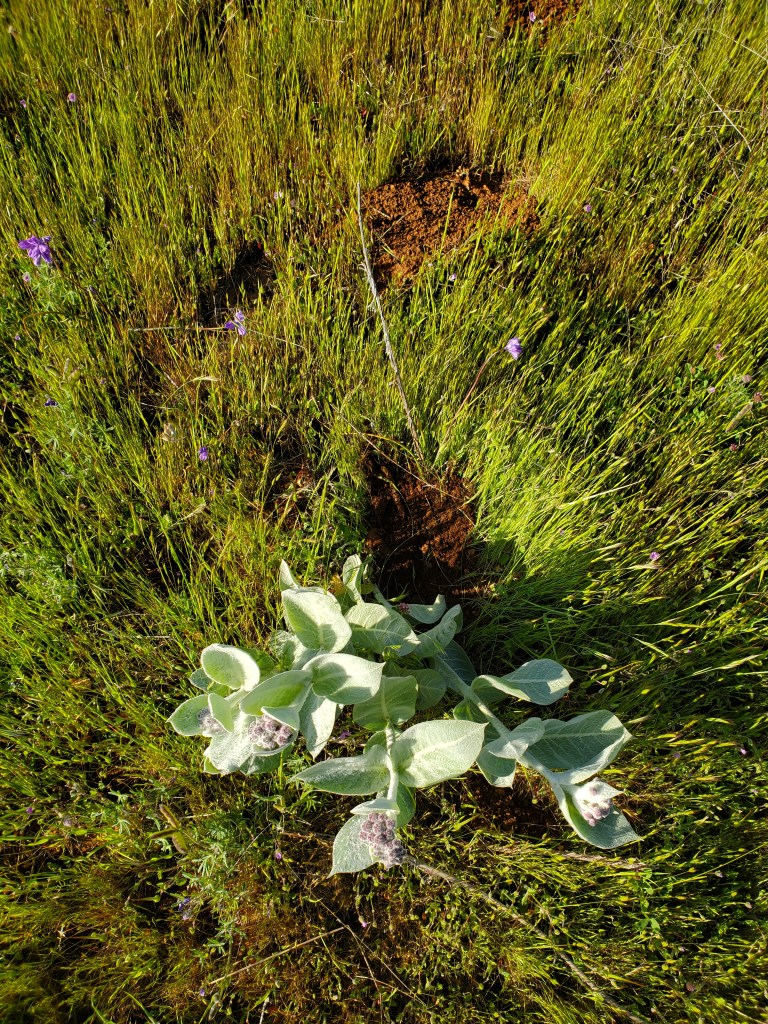
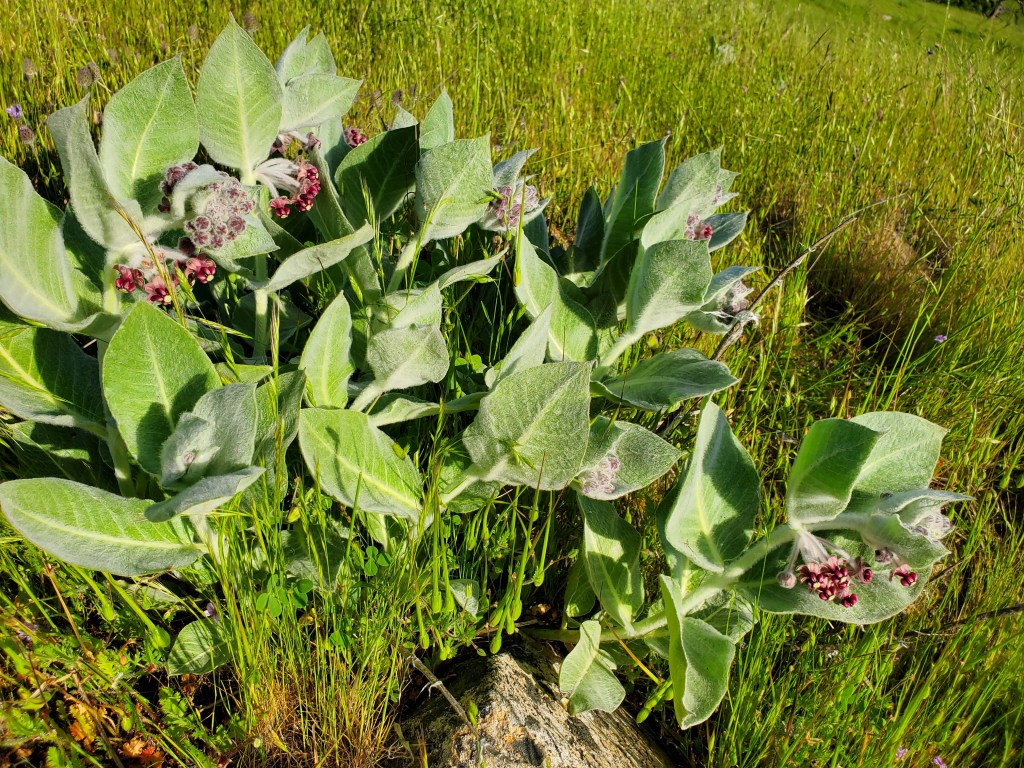
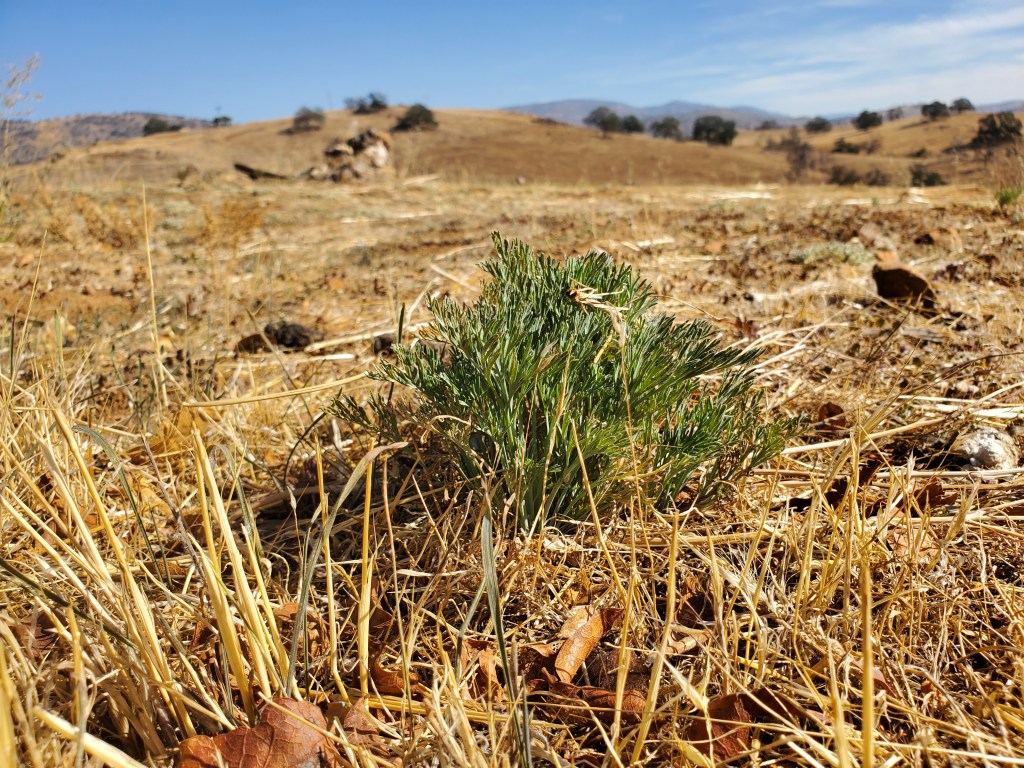
Monitoring the Ca Milkweed patches is a good workout. Walking up the super steep grade ensures my legs and heart are getting the blood and movement they need. So, I was not sure if it was the workout or that when I got near the top of the hill a milkweed was missing, that was the cause of my heart was racing over 100 beats per minute. I was panicked. After seeing the pile of loose dirt mounded up where my gorgeous mature milkweed always is, I began looking for all the other ones. Visions of gopher mounds clouded my mind as I frantically ran from one location to the next. Most of the others were intact. Another small one was missing, but another one popped up on the other side of the patch. For the mature, large milkweed, I think the gophers had been gnawing on it for a while. That is probably why it was so small this year. Then poof — gone.
Something else remarkable has happened this year. The CA Milkweed on the north facing slope has emerged only 10 days after the south facing slope. For the past several years, there has been between 3 weeks to 1.5 months between emergence’s. I counted five on the north facing slope and only seven on the south facing slope. As I look for them, I weed around them. The grass is a lot of rye this year, and it is really tight against the milkweed. Hopefully, giving them some space will help and enable to monarchs to feel their eggs will be more protected. Perhaps it will not be a big year for milkweed, and we will need both sides available for the monarchs.
I installed a game camera up on the south facing slope looking at (now) one milkweed. I am hopeful to catch a monarch landing on the milkweed. I installed it over the last weekend, and went up the next day to check the card to make sure it was capturing images and pointed in the right direction. It somehow got shifted and was only catching a piece of the milkweed on the very left side of the frame. I fixed that. Hope it stays.
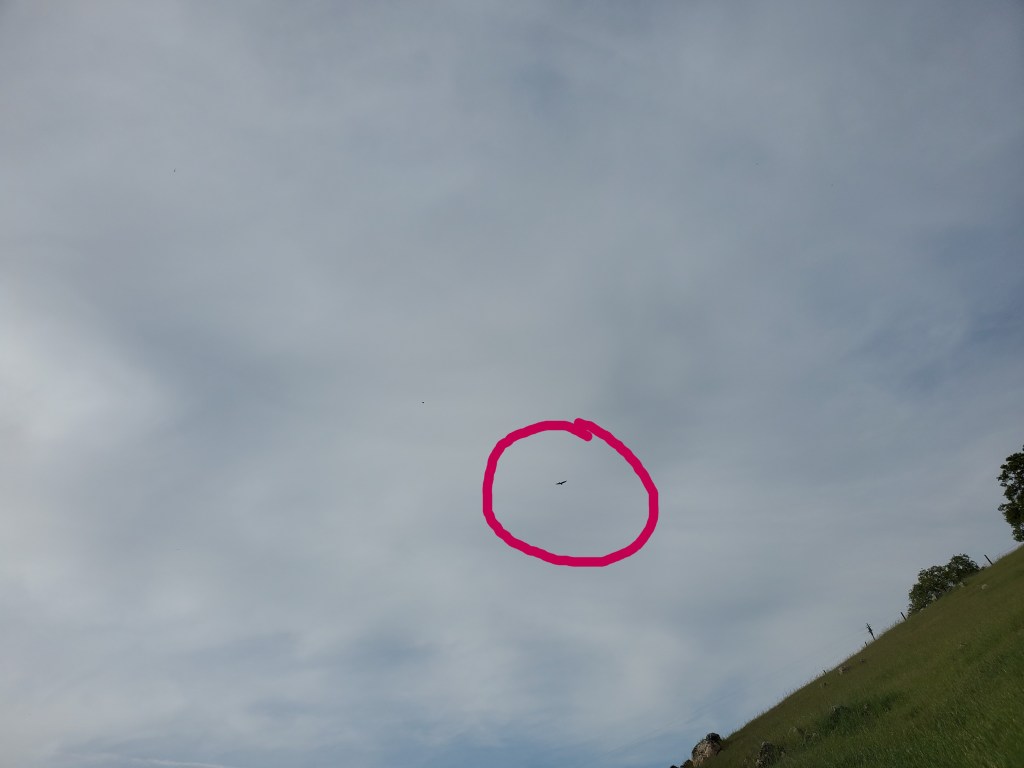
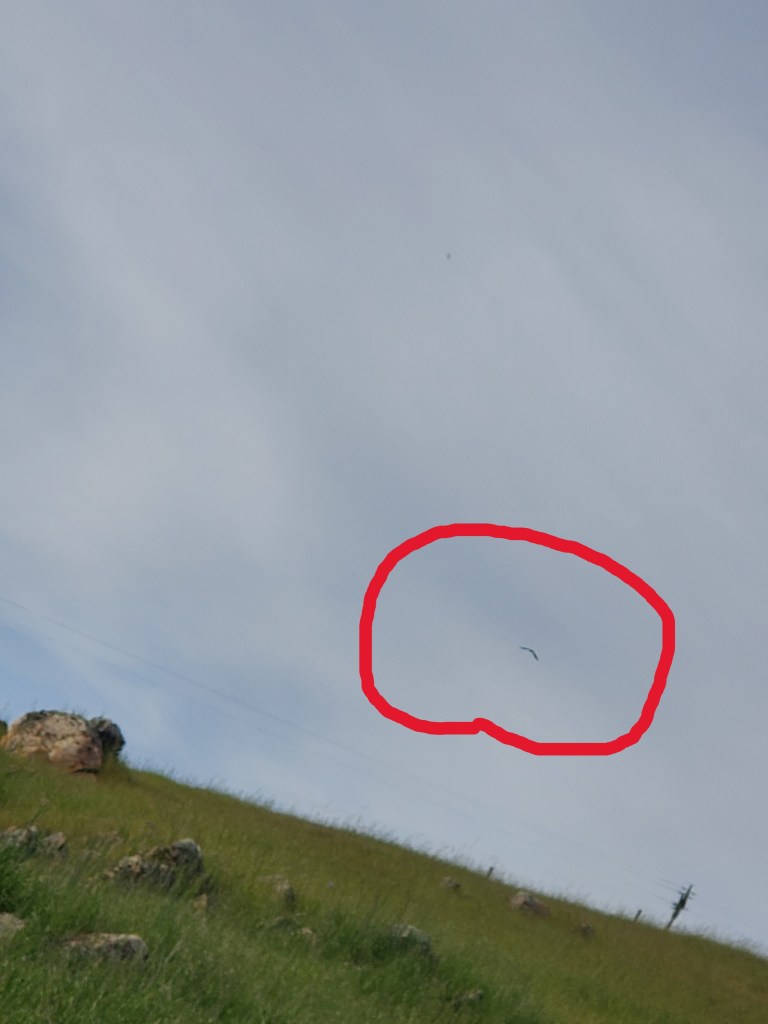
While up there on Sunday 4/6, I was treated to some amazing things. First, the scent of the cow clover and all the vetch. Second, two or three large crotch bumble bees buzzed me and then went about their business nectaring. They let me know who is in charge. Finally, a gorgeous, large harrier was floating across the surface of the ranch looking for dinner. Just incredible. Currently, only a few of the Calif Milkweed blooms have emerged from they duff protection. As more get released, they will add to the extraordinary perfume, a siren song, to all pollinators.
Gopher activityACA beautyNo milkweed here. Right arrows gopher mounds. Left Arrows the old milkweed stems from last year. Weeding around a milkweed on the north-facing slopeHarrierCrotch bumble beeHarrier againThe flowers are exiting the duffLike delicate berries, the blooms are active
Wildflowers at Massive Scale
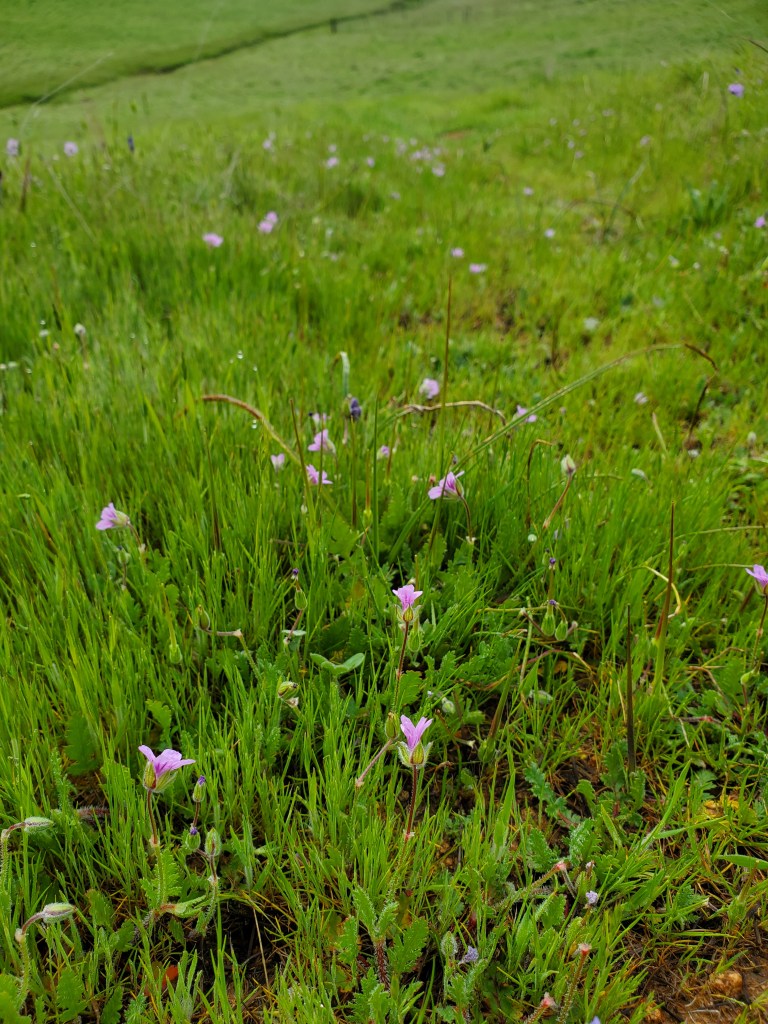
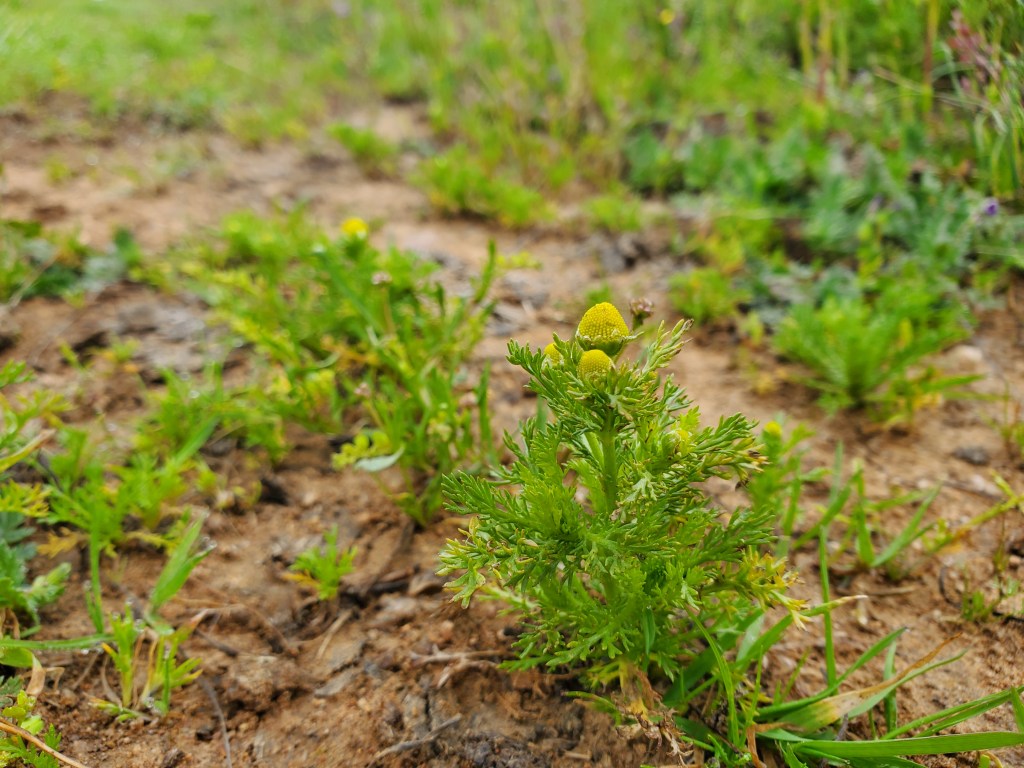
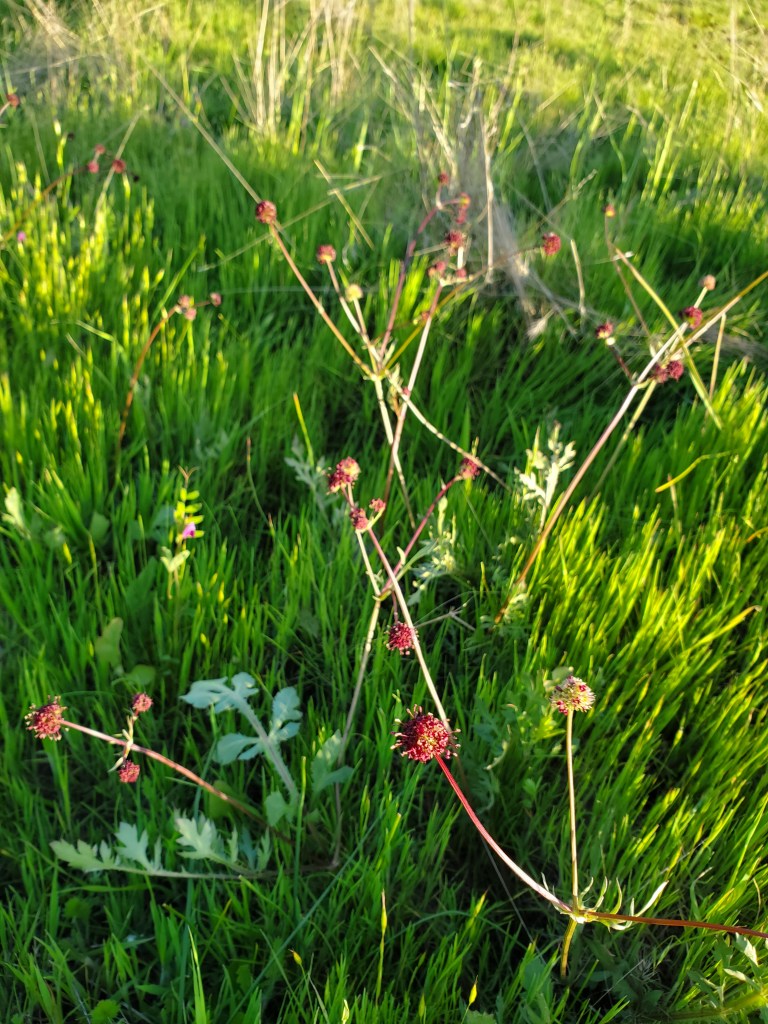
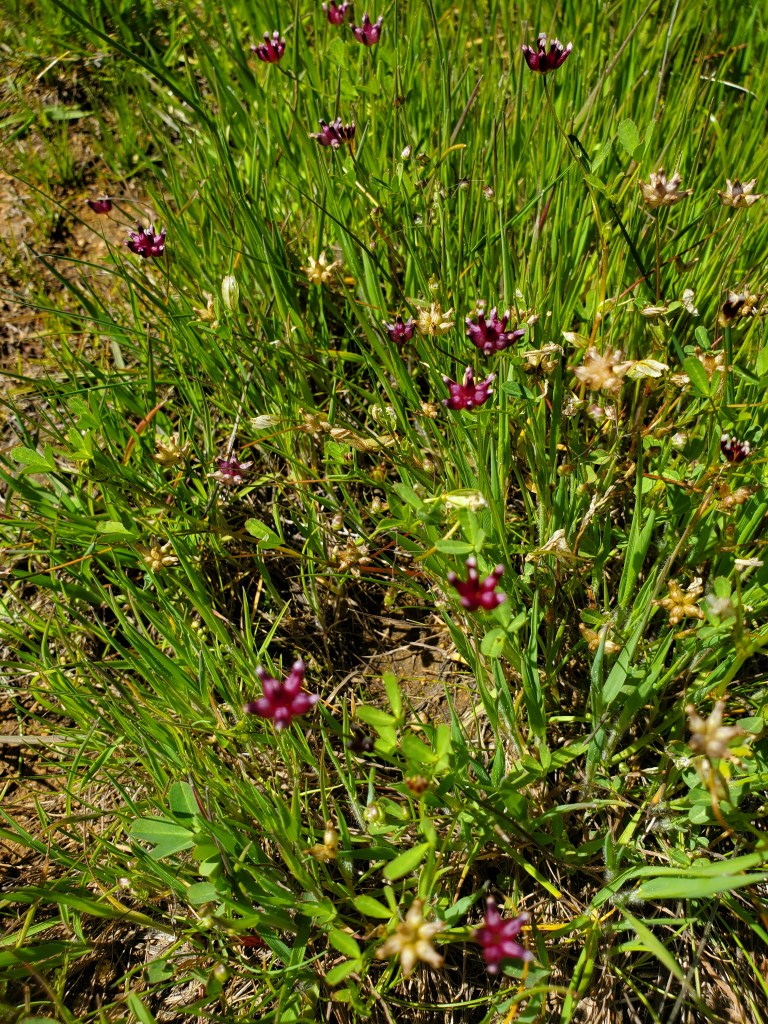
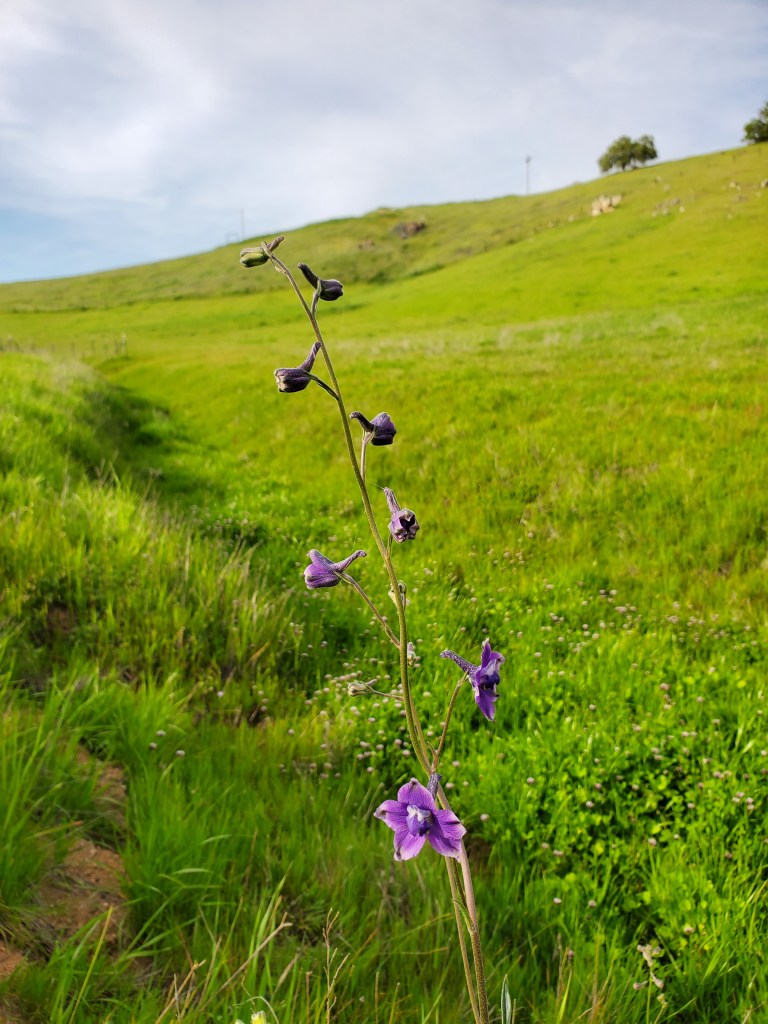
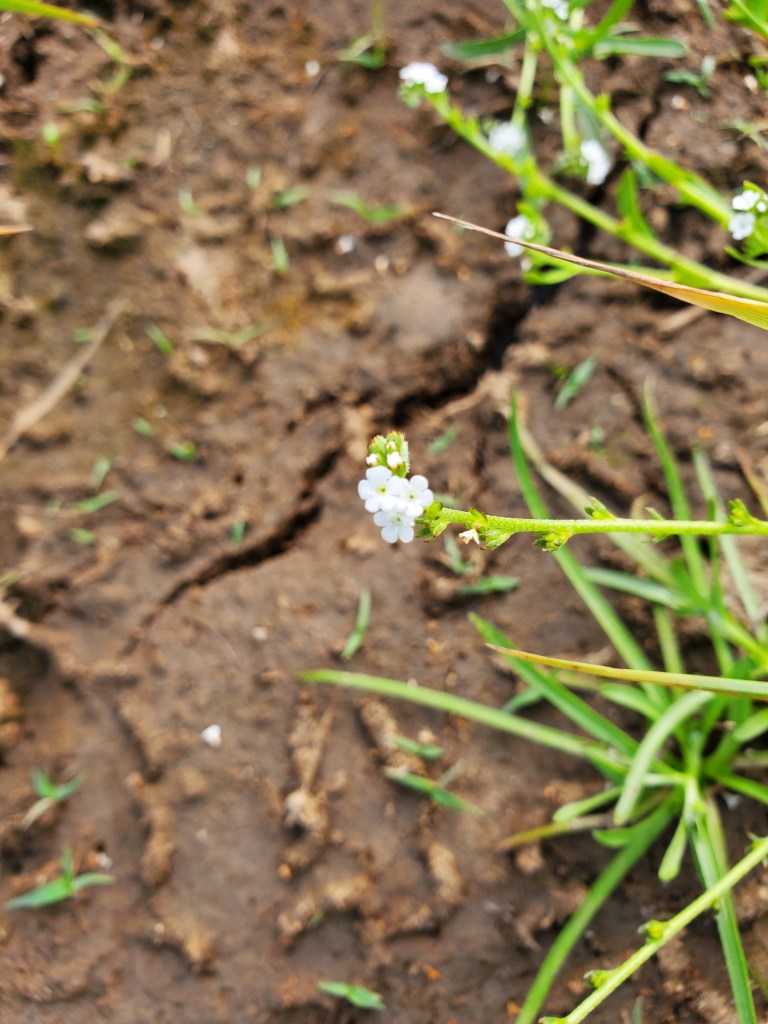
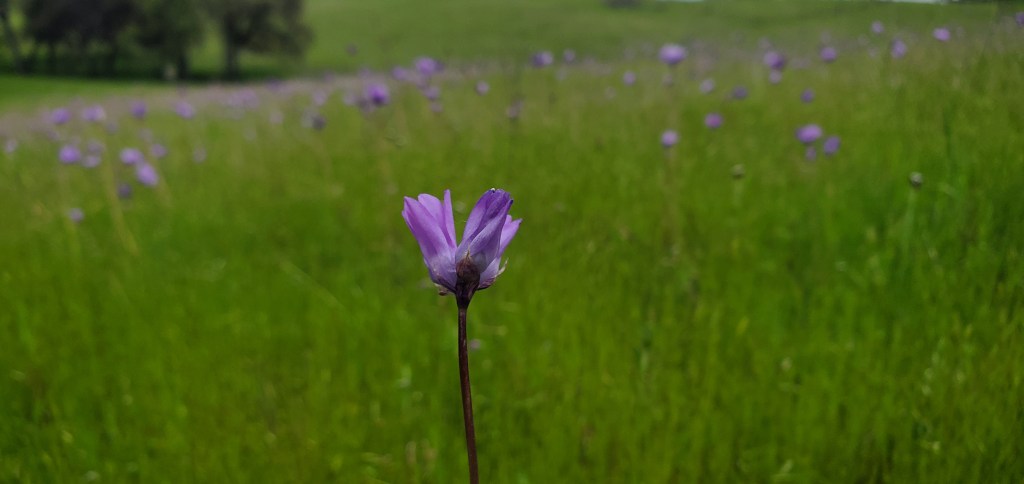
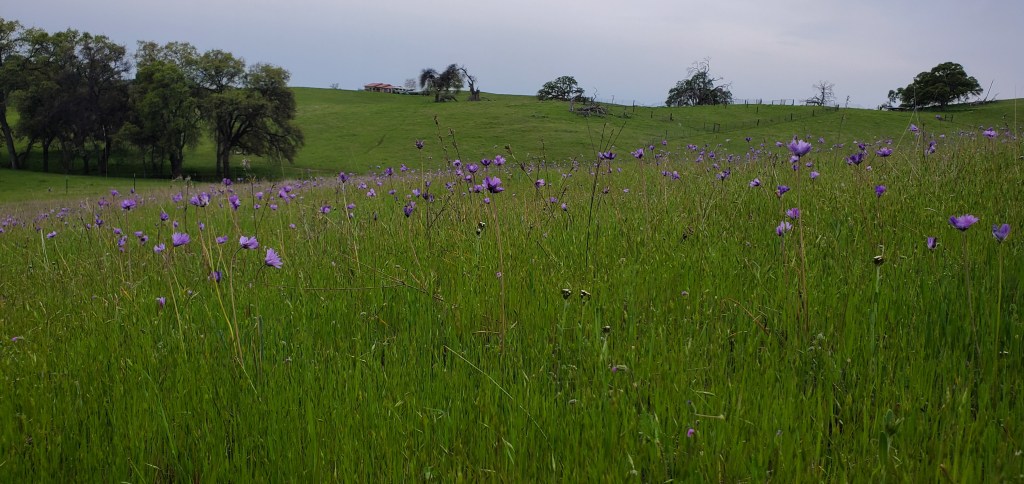
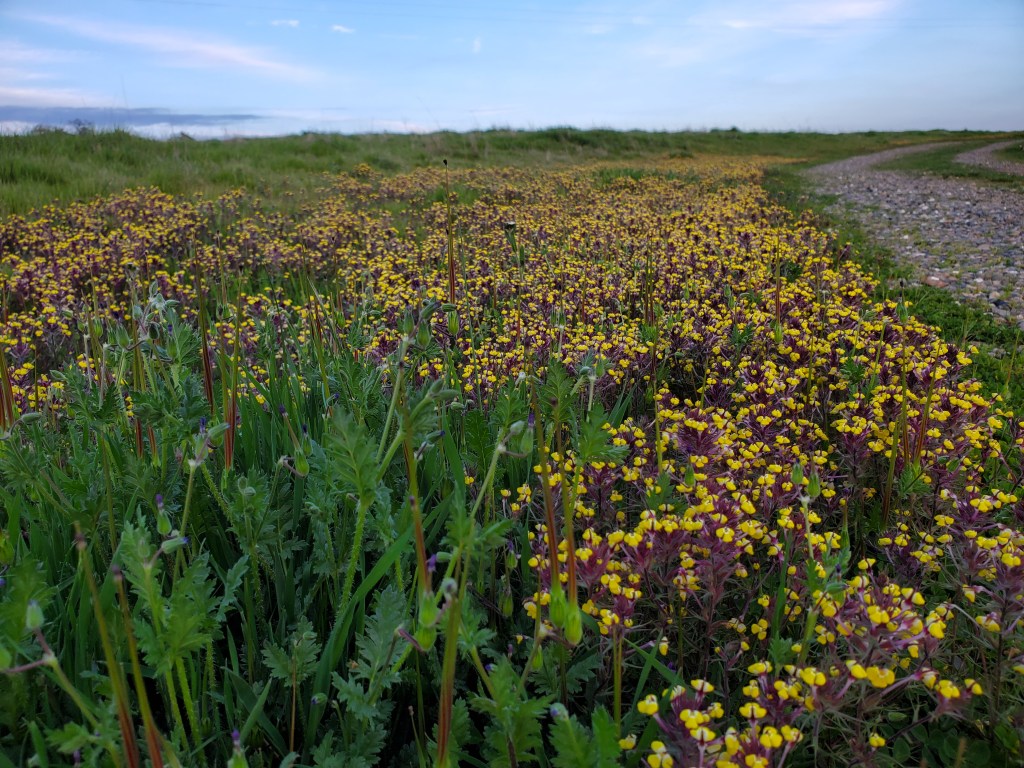
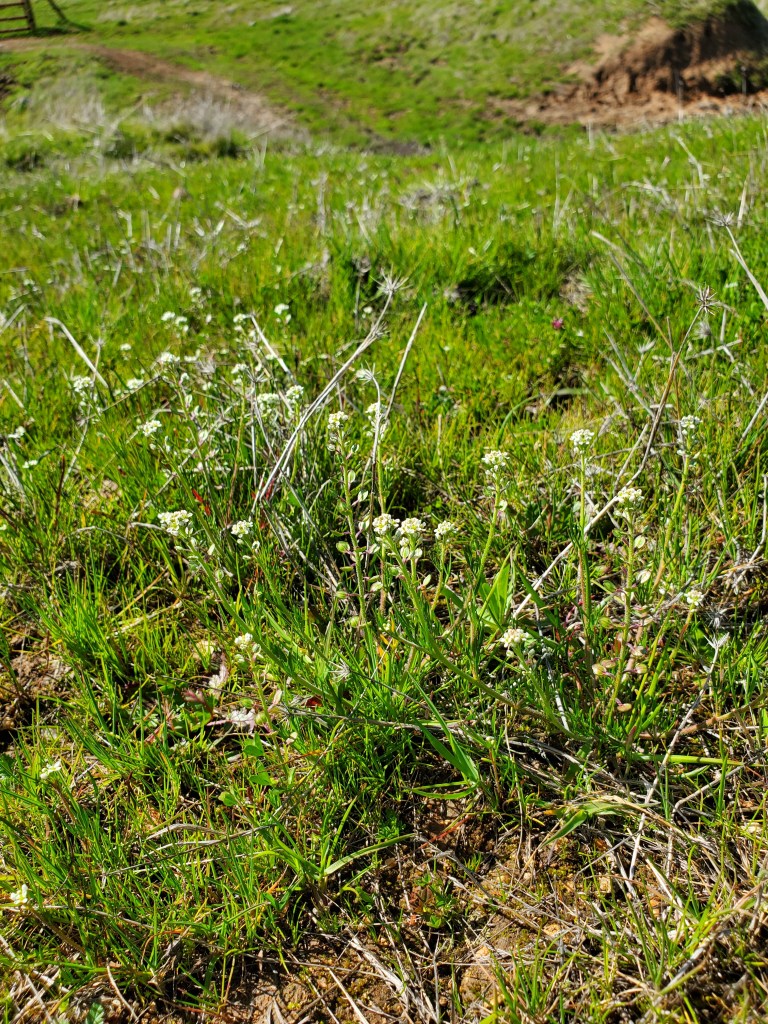
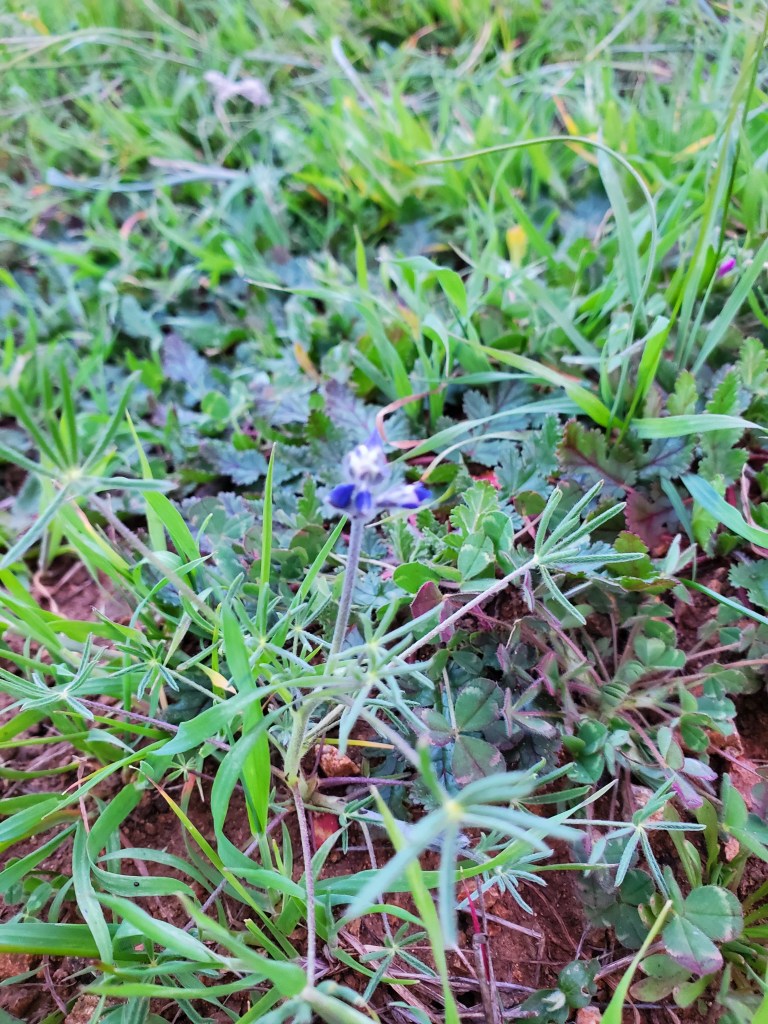
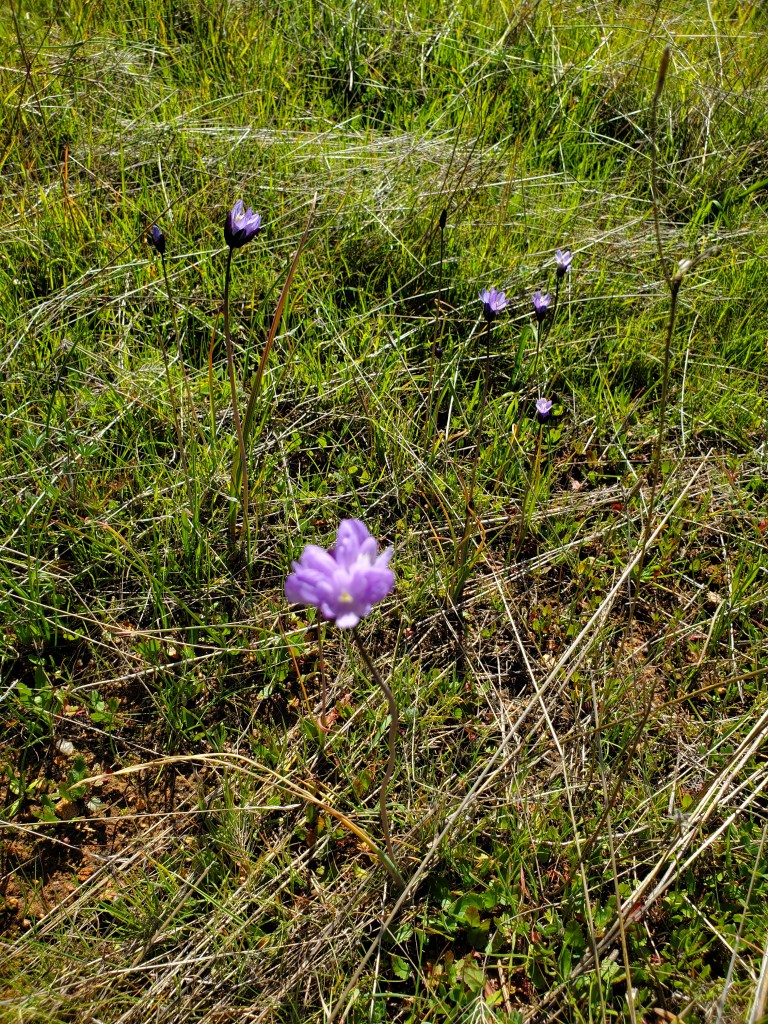
Wildflowers never disappoint. They are up and at a massive scale. The air is thick with nectar, especially when you walk through a cow clover patch. So sweet! With the flowers come the insect relatives. I love them so much.
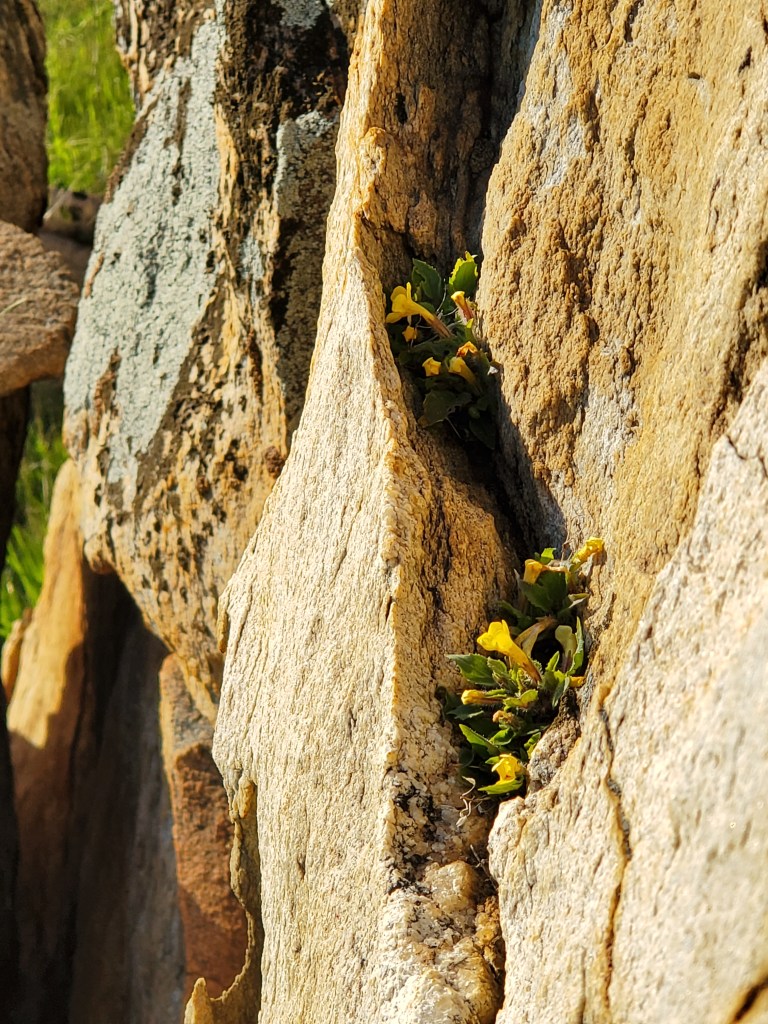
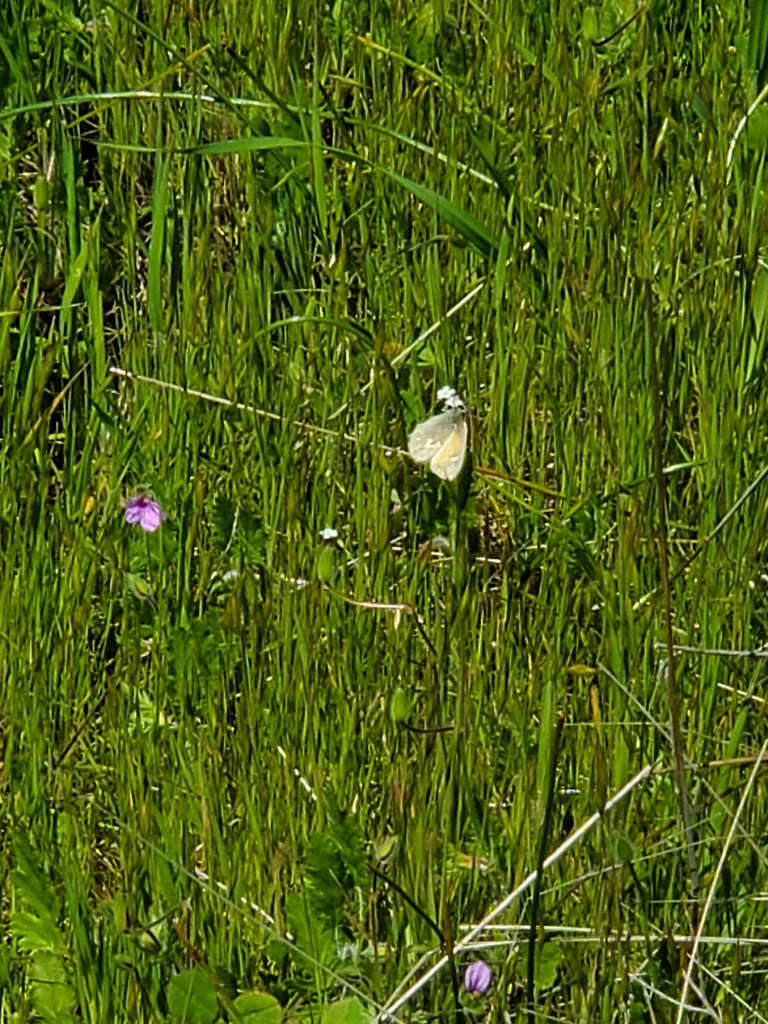
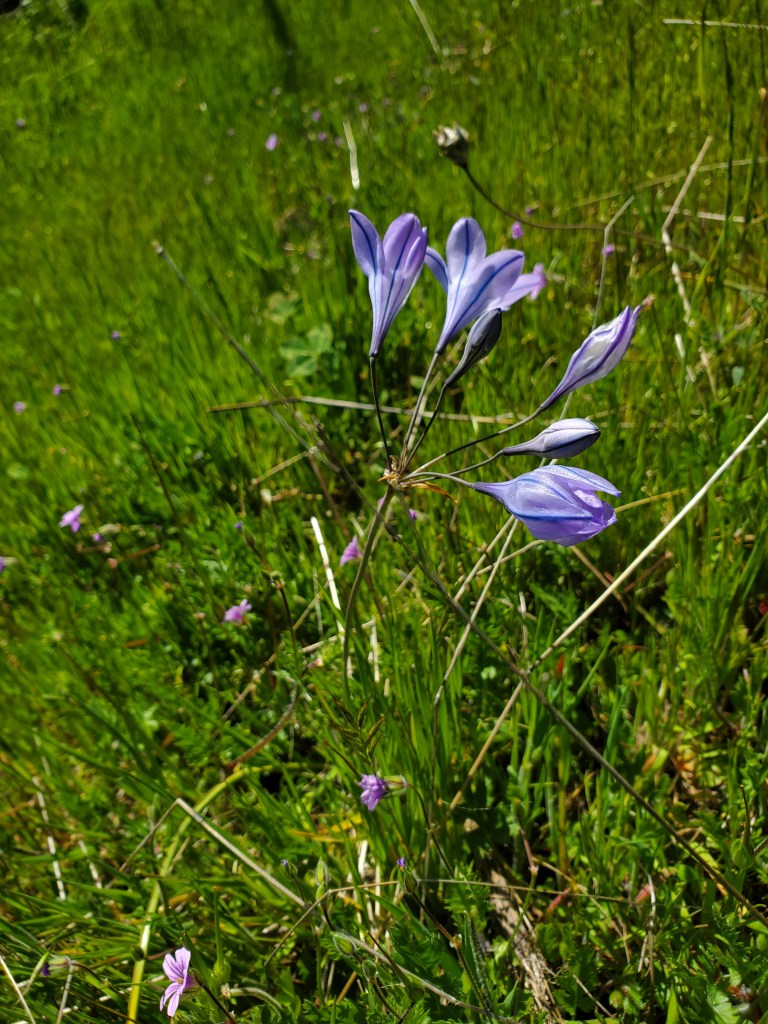
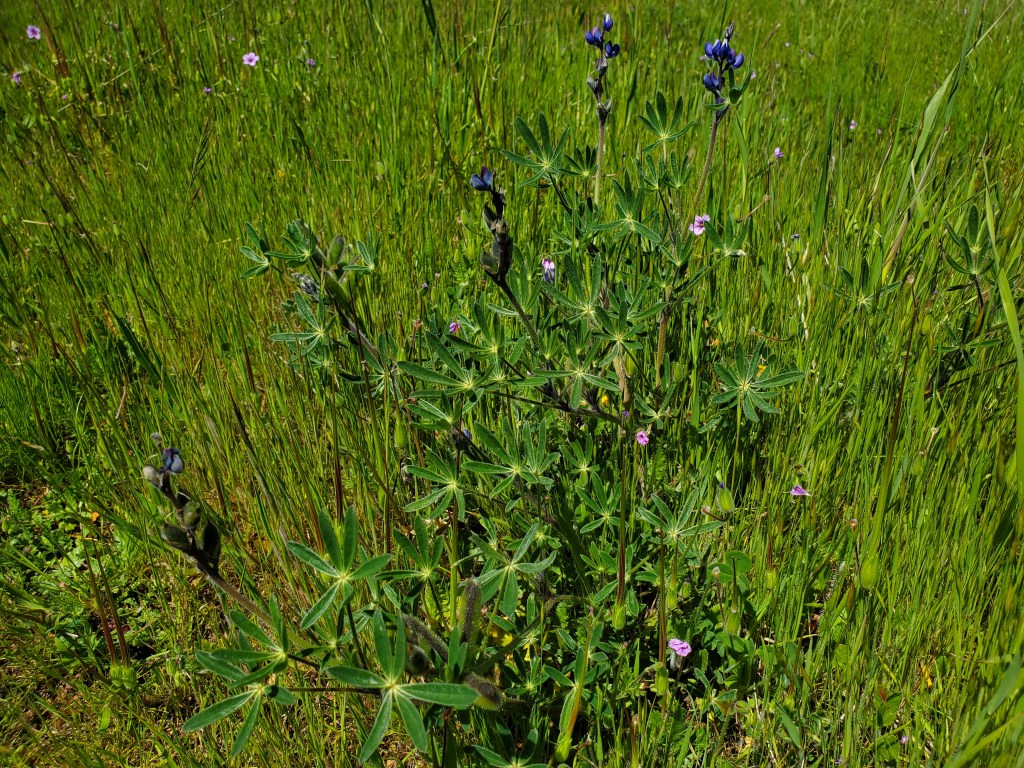
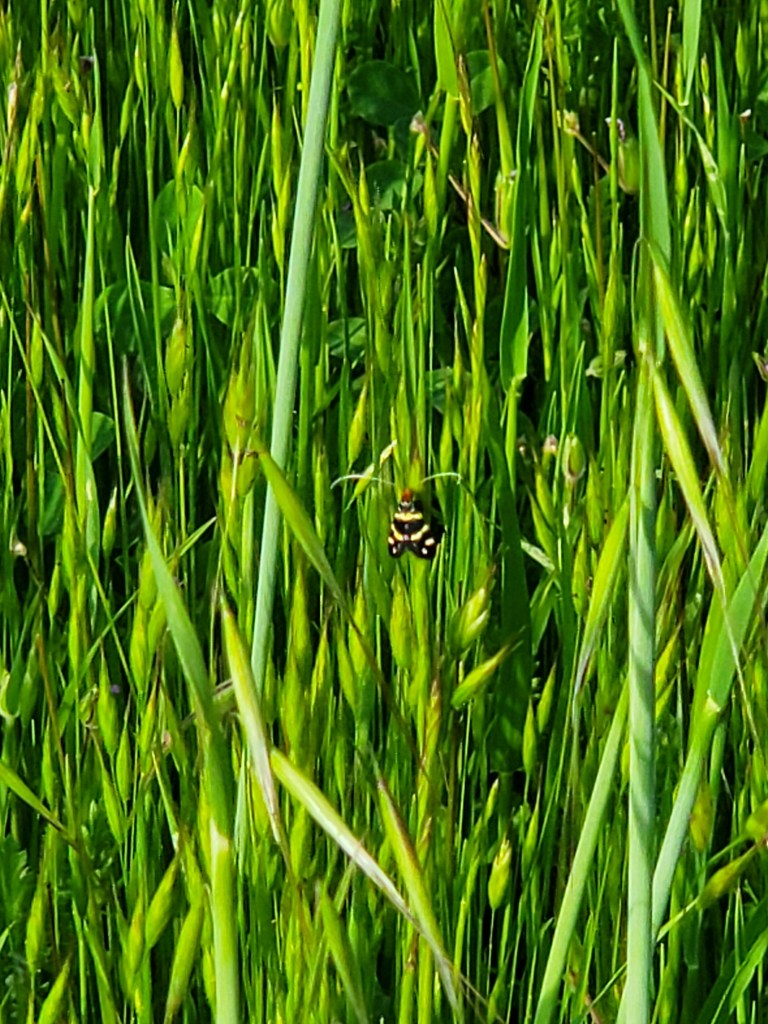
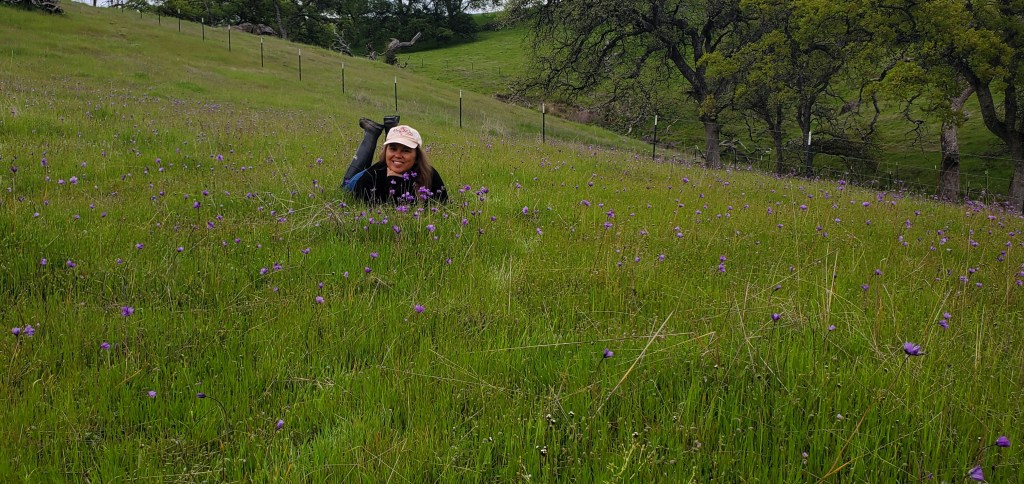
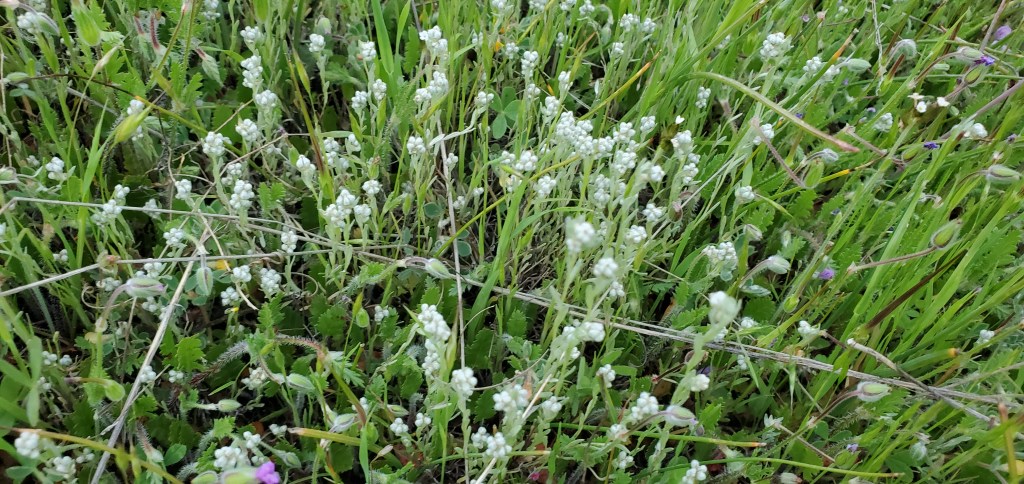
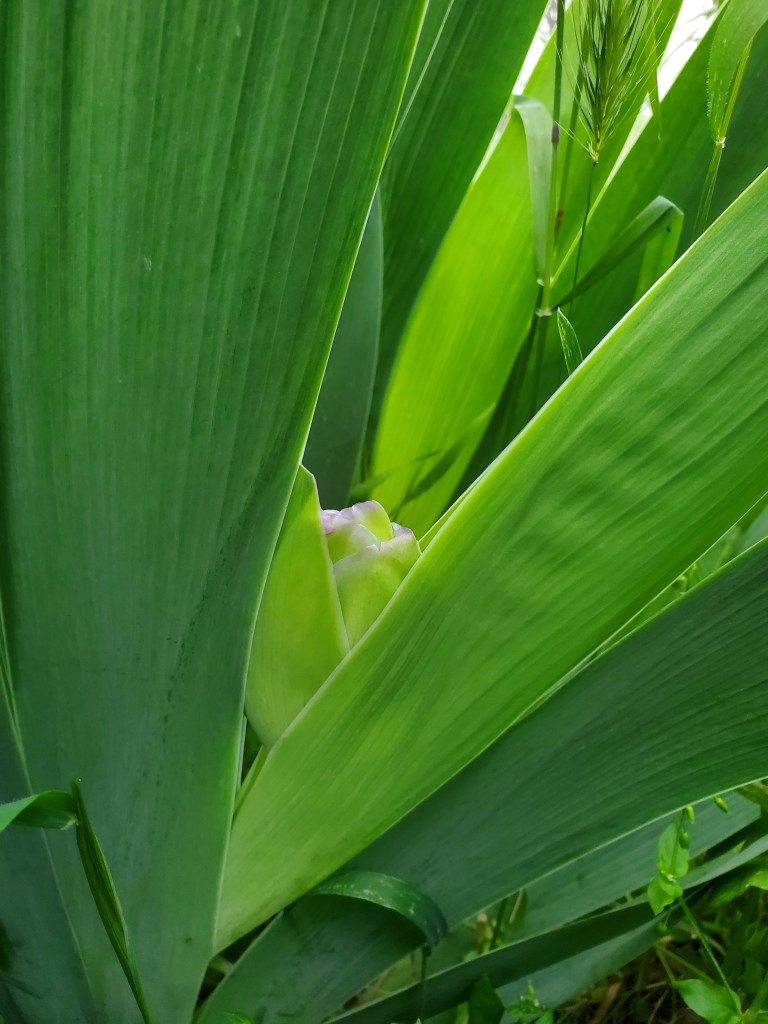
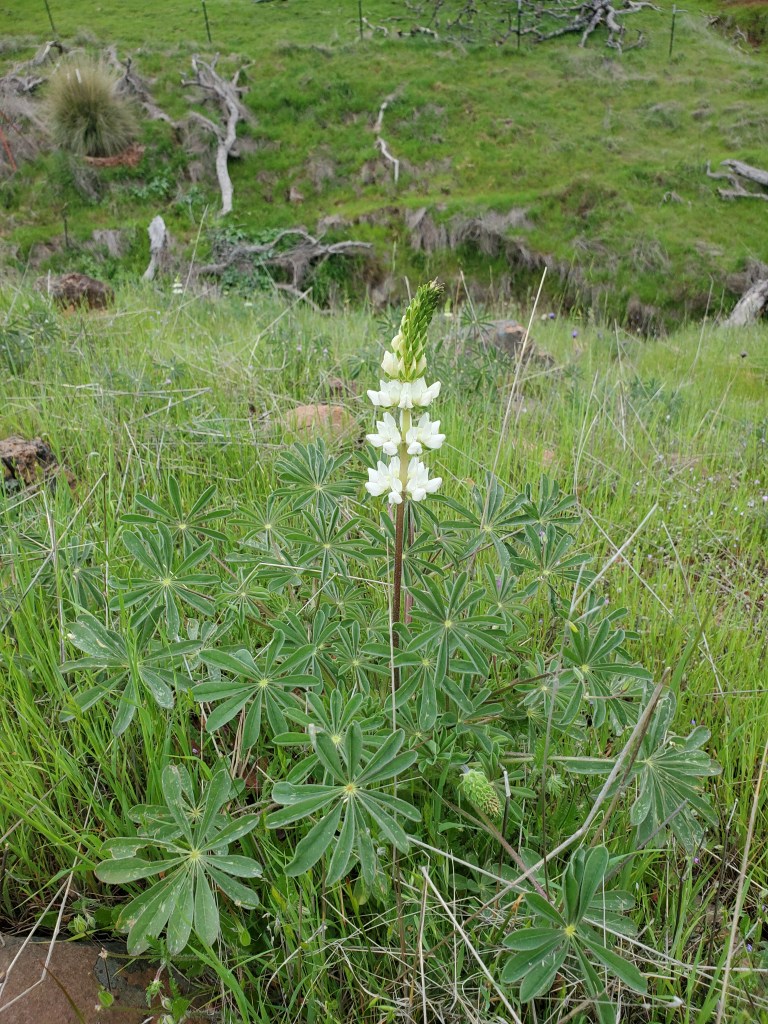
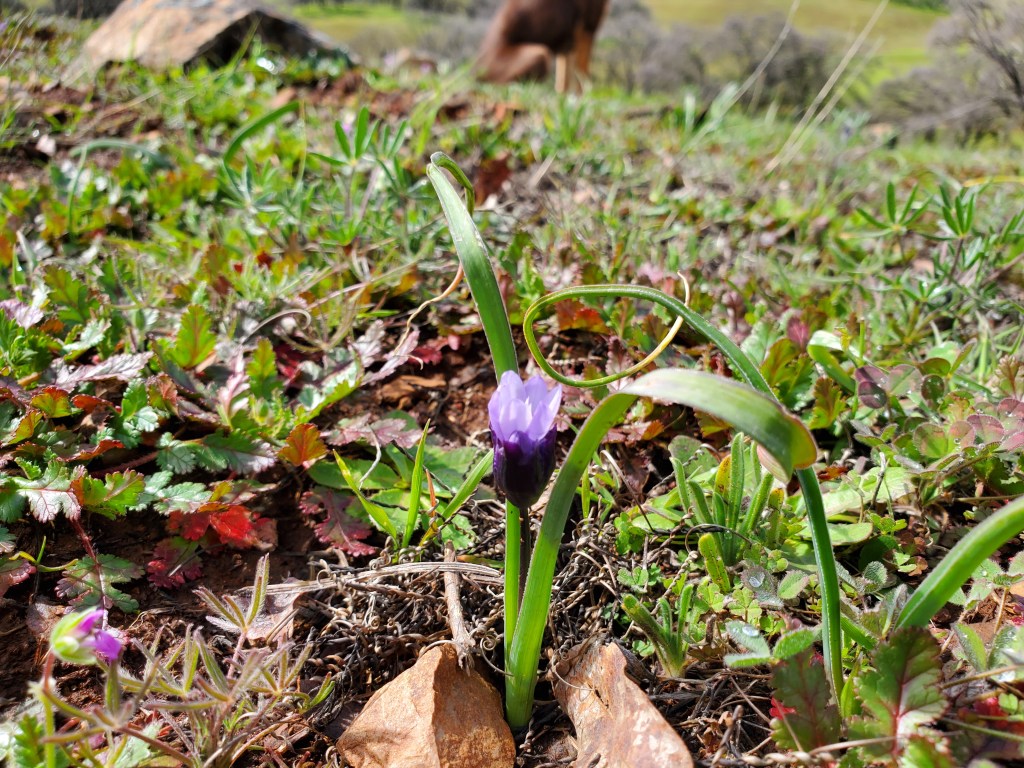
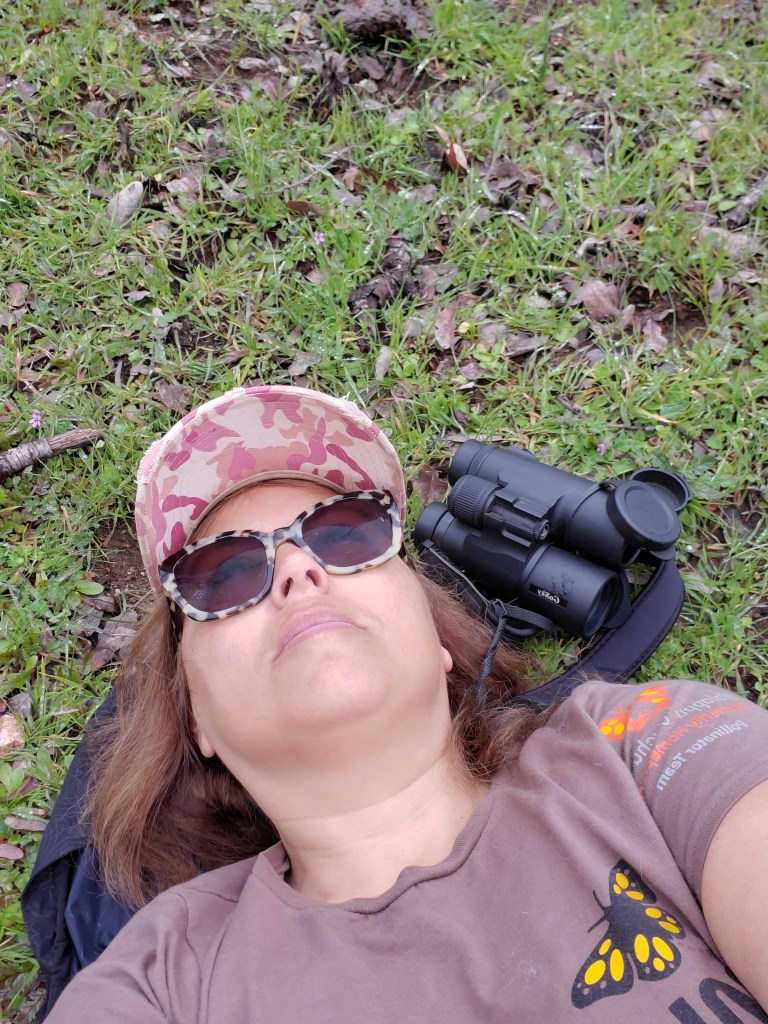
Blue dick close-upPineapple weedMusk monkeyflowerSo cool how the monkeyflower finds a way to survive even in the craig of a rockCabbage butterflyCool bugNut flowerLupineCloverLarkspurCow cloverPopcornPopcornFairy mothMe in the field of flowers (photo credit: David)Que tipsIris emergingLarge white lupine
Time
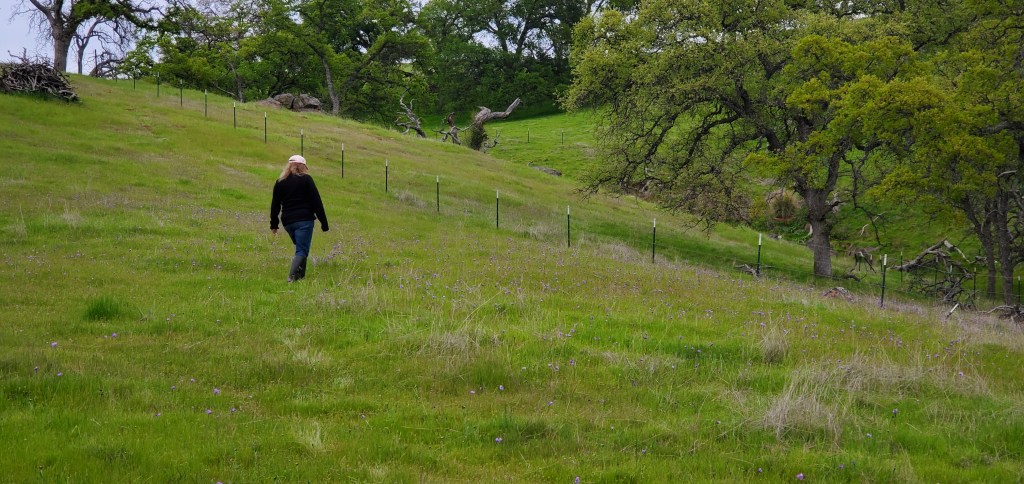
Each day, I try to make it to the top of the hill to check the Ca milkweeds. The girls are aging and sometimes stay at the bottom of the hill. They are my joy. Along the way, I straighten baskets, fix twisted screens, weed around milkweeds, and pick up trash, like Mylar balloons. There is always something to do here that can help. When I eventually sit down to write this blog and share the things I have seen, done or learned, it takes time. I started this post over a week ago, and the land has changed significantly since then. Water has soaked into the ground leaving puddles behind. Some flowers have finished their bloom and others emerged to replace them. Small pollinators are out in droves, and were not out just a week ago. Even in the photos, you can see my clothing move from jackets, to sweaters to tank tops. I will try to move these out more quickly, and perhaps it will help me make these posts shorter and more current. Do I say that each time? We began this blog discussing miracles.
It is a goal anyway.
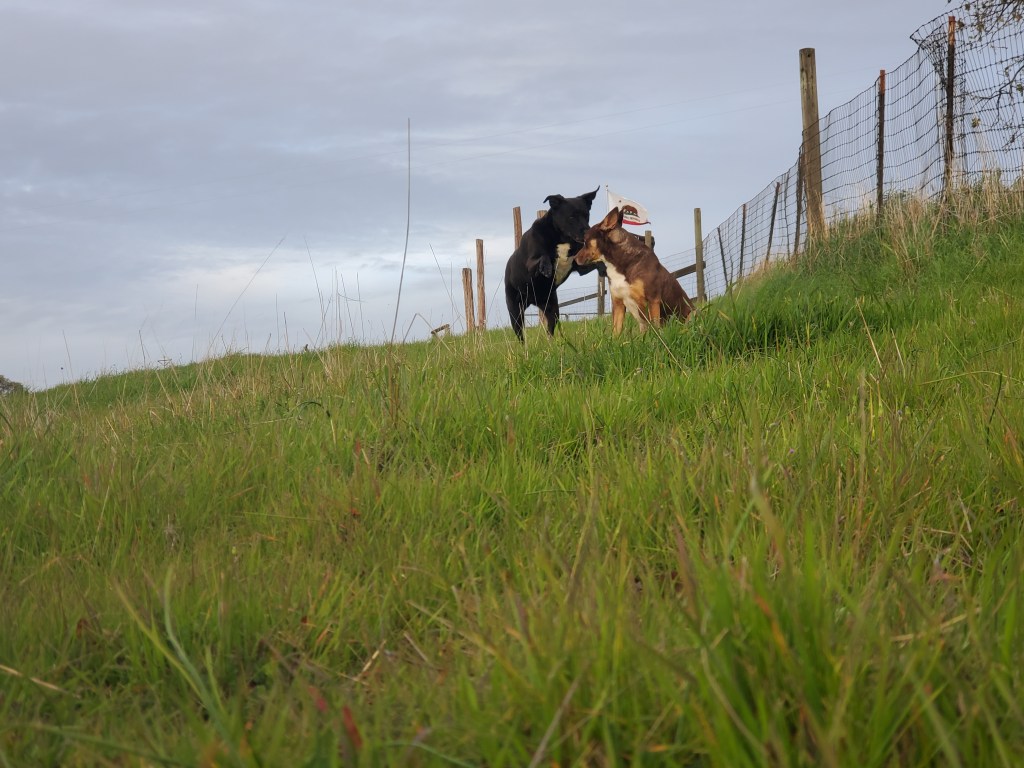
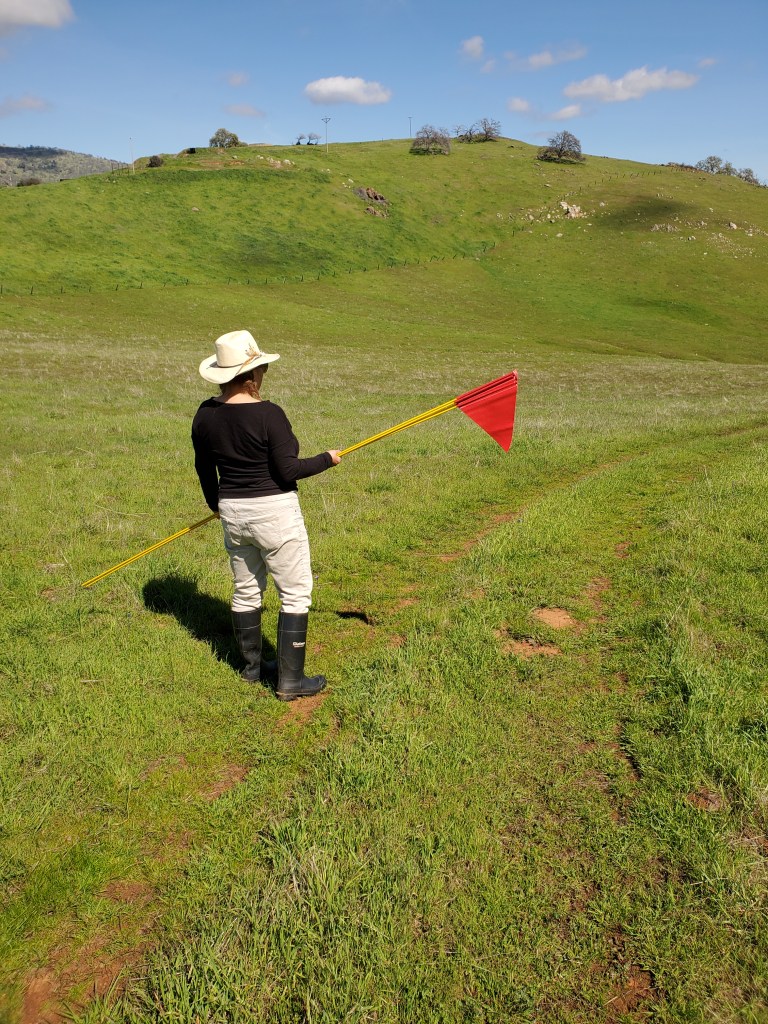
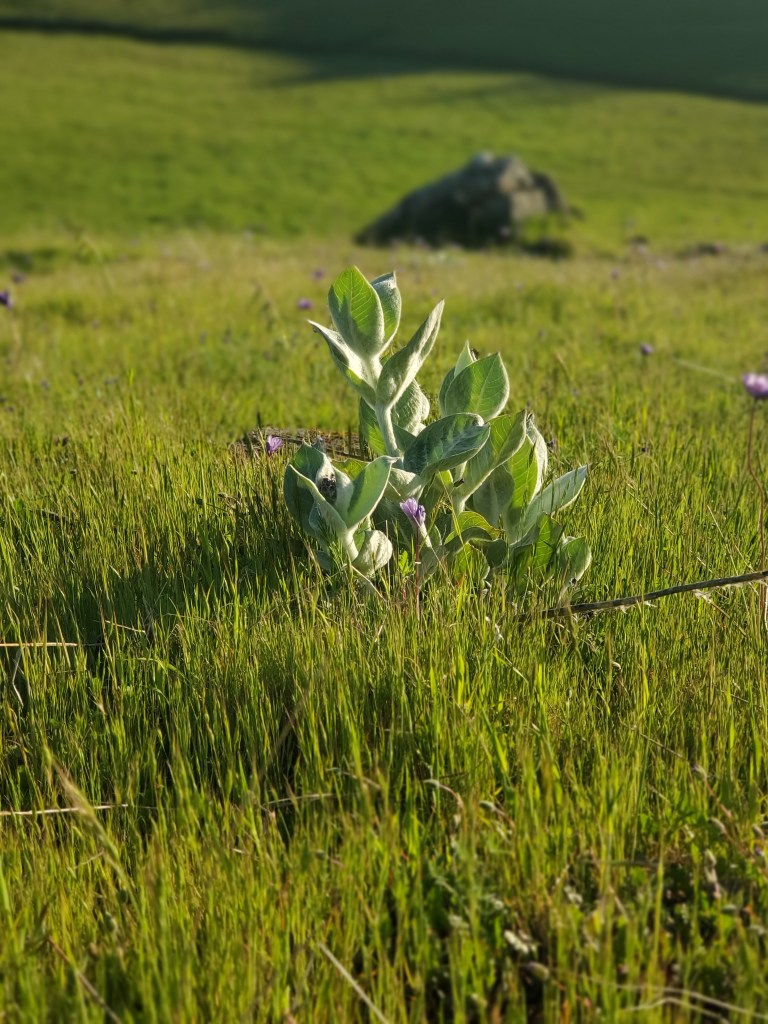
Love BibiNew natural damMom is on the ground – cool!Rolling under the wildlife friendly fencesGirls playFlagging the oak plantingsFixing gutter screen after a cow break in at Guzzler 1Healthy, happy Ca milkweedLove from MillsBibi waits patiently for us to come back down the hillHealthy oaks. I think the check dams are working#NOmylarChecking on the oak seedlings in the riparian exclusion area
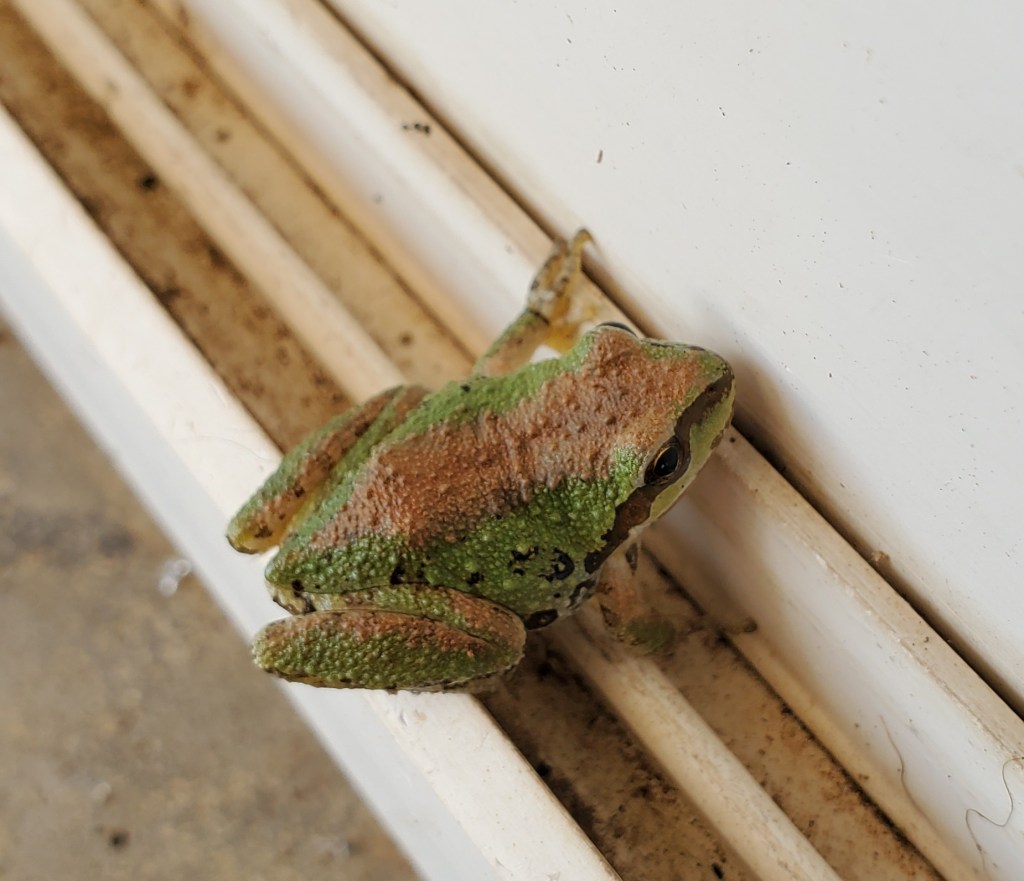
Sierra Tree Frog thinking about climbing the sliding door
Every day, I am treated to a symphony orchestra of such precise, crisp quality that I am moved emotionally. Each diverse player is always in-tune, and the music is in stereo. No, I’ve not traveled to San Francisco or Los Angeles. I step out on my front porch to a noisy, bustling world — first the rushing creeks after the rain, then chorus frogs with their undulations in 360 degree splendor. The coyotes cannot be left out. They join from far distances and close, their songs carrying across arroyos and hills. A mourning dove enters the symphonic experience just at the right time, then a muted tink of the rustle as a light breeze moves through the oak branches, playing the leaves like keys of a piano. Like a horn, a screech owl hoots, or a barn owl screeches. California toads croak, then trill. Finally, my own heart plays a role keeping time, threading through this musical soup, a genius blend, warming and nourishing, rich and whole.
Guzzler Project
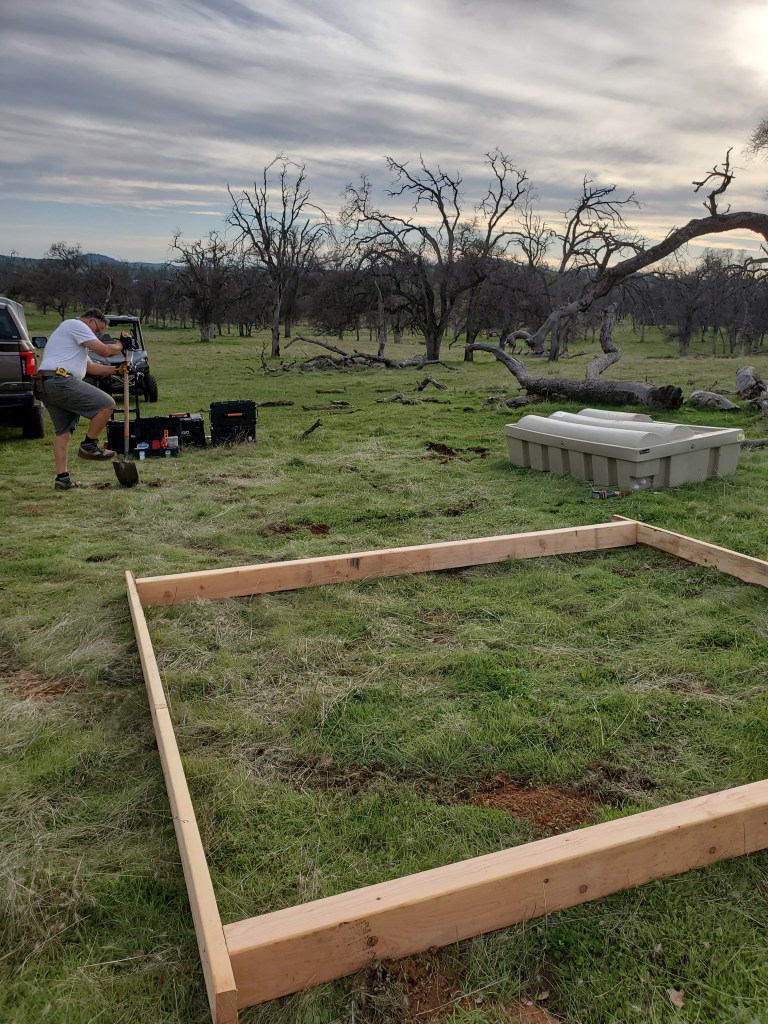
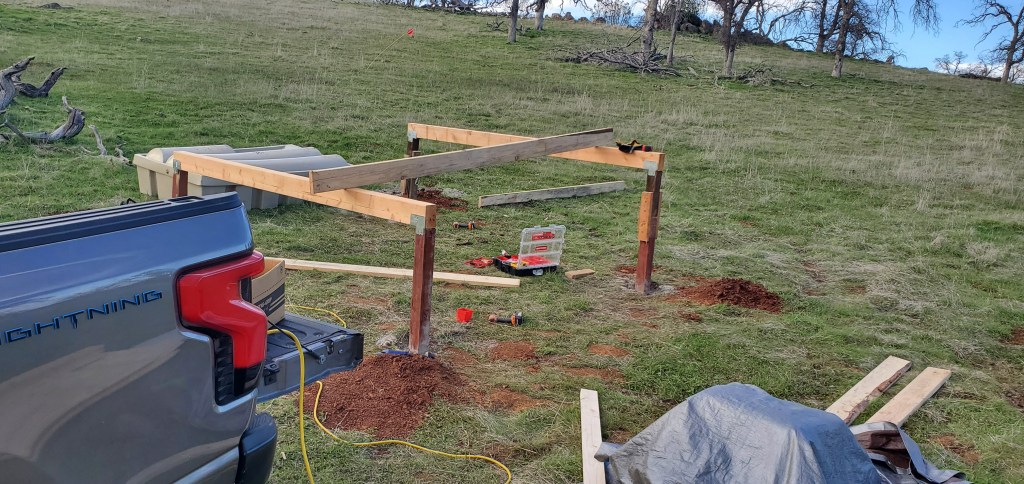
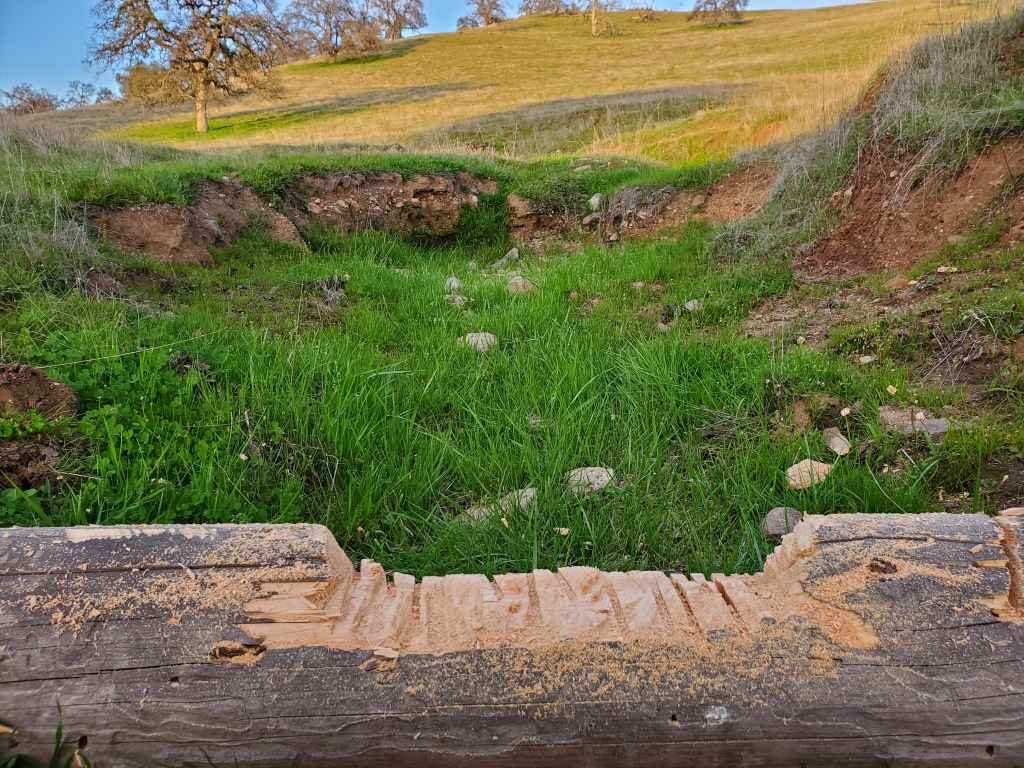
Construction of Guzzler Two, which is located on the east section of the ranch, has begun. David made a mistake early on in the dimensions. Although he fixed it, we lost half a day putting us behind timeline and up against the recent rain storm. He got the posts sunk and cemented and the headers on, but was not able to get the rest of the joists, roof and gutter on. It was disappointing, since we have a week of rain. However, I have to give us both a break. Life has been challenging. There was no time to start earlier. We have so many projects, medical appointments for dad, work and catch up for work from the last several months as well as other volunteer responsibilities. I remind myself that we just can’t do it all.
I am grateful for the time we can dedicate. At least the guzzler is up, and has a beveled lid that is designed for rainwater catchment. There is a ramp built in, so we will get some water in and have a working unit for animals.
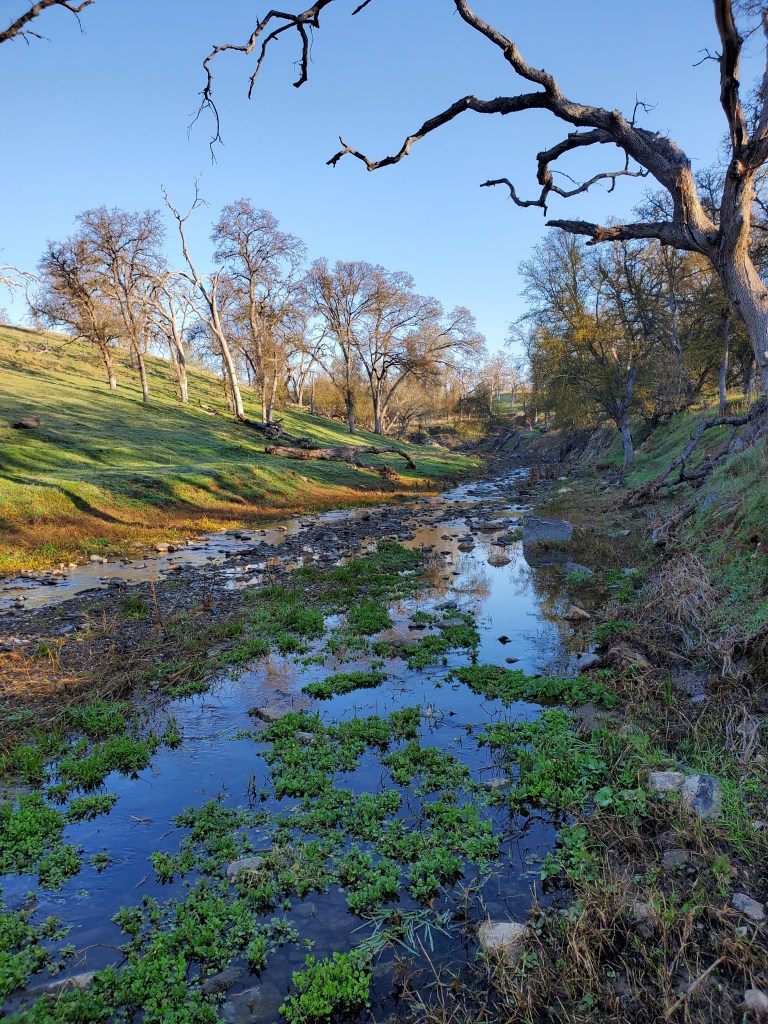
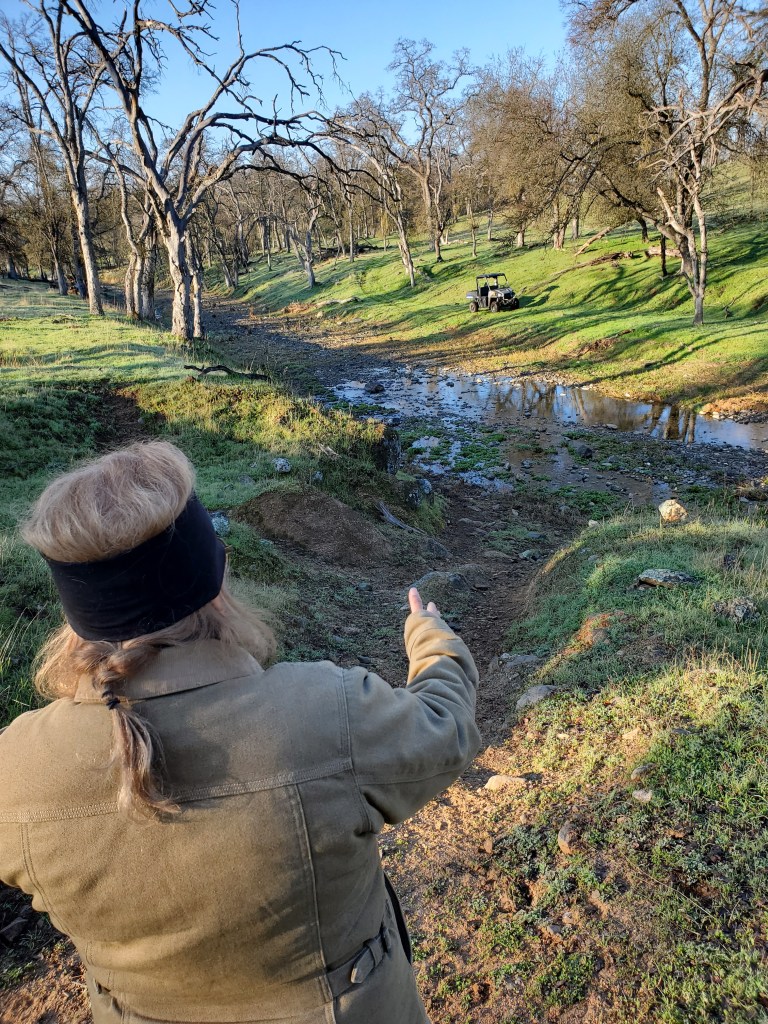
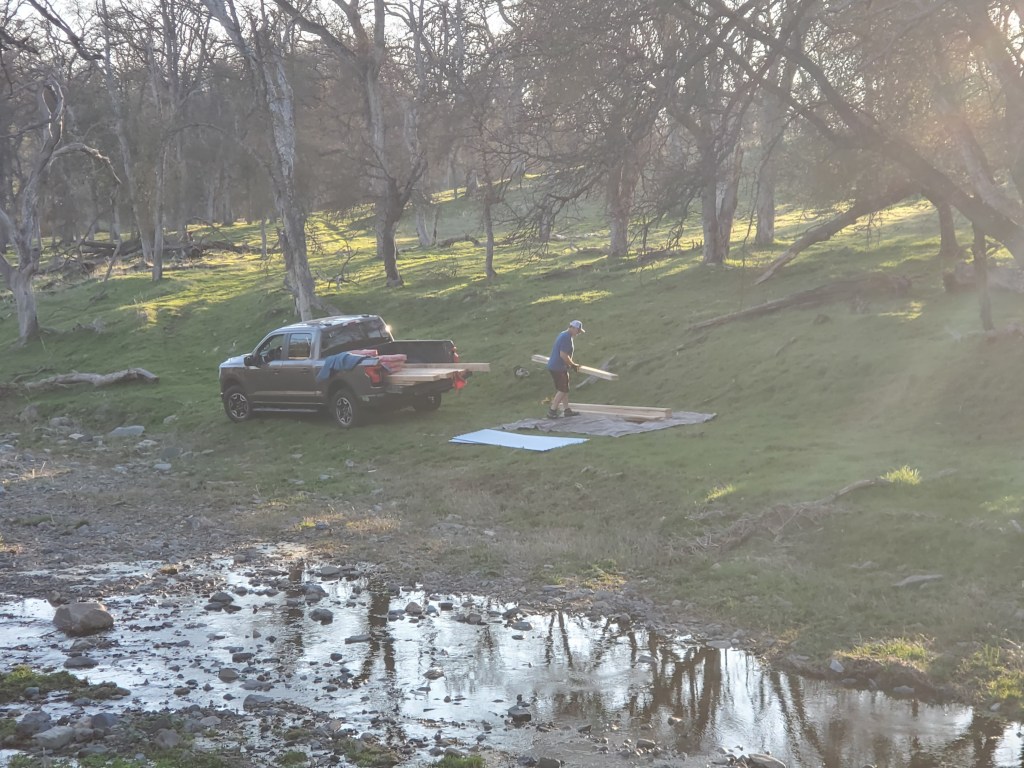
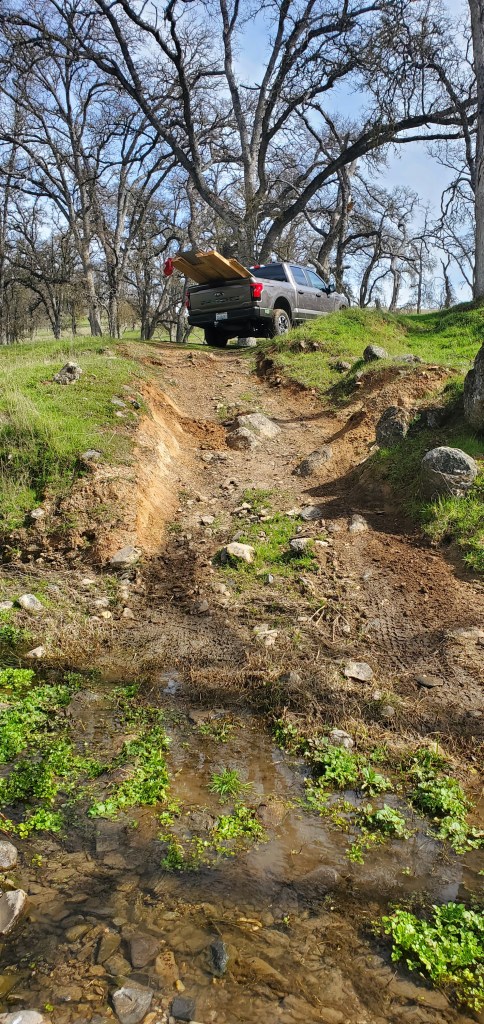
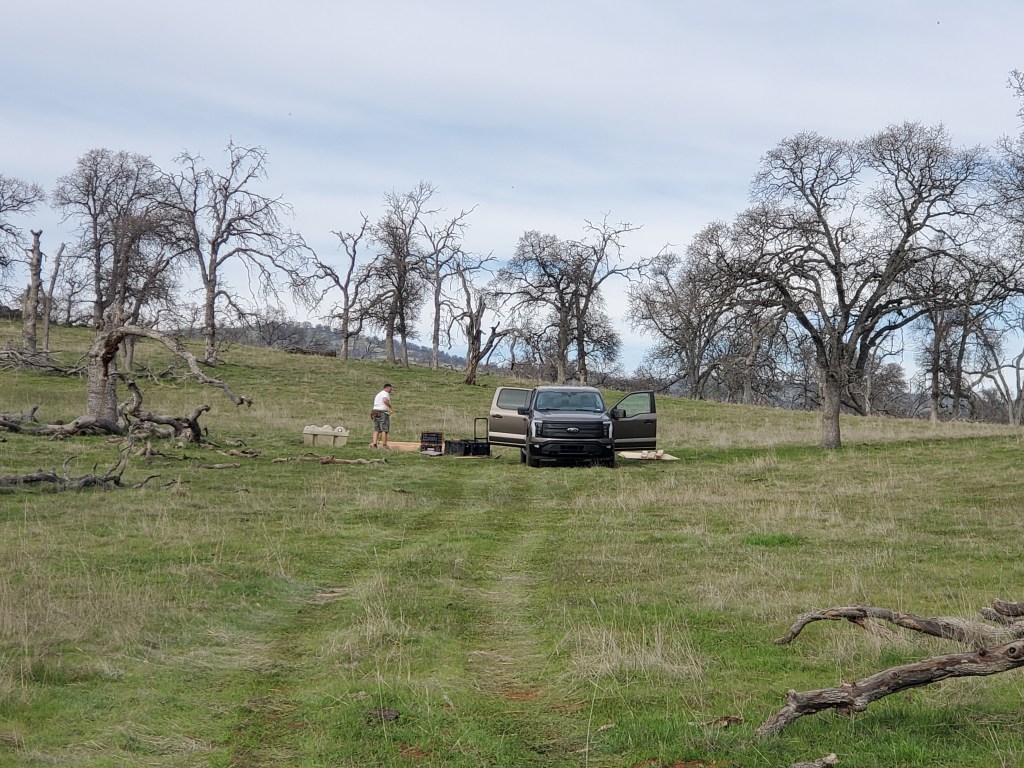
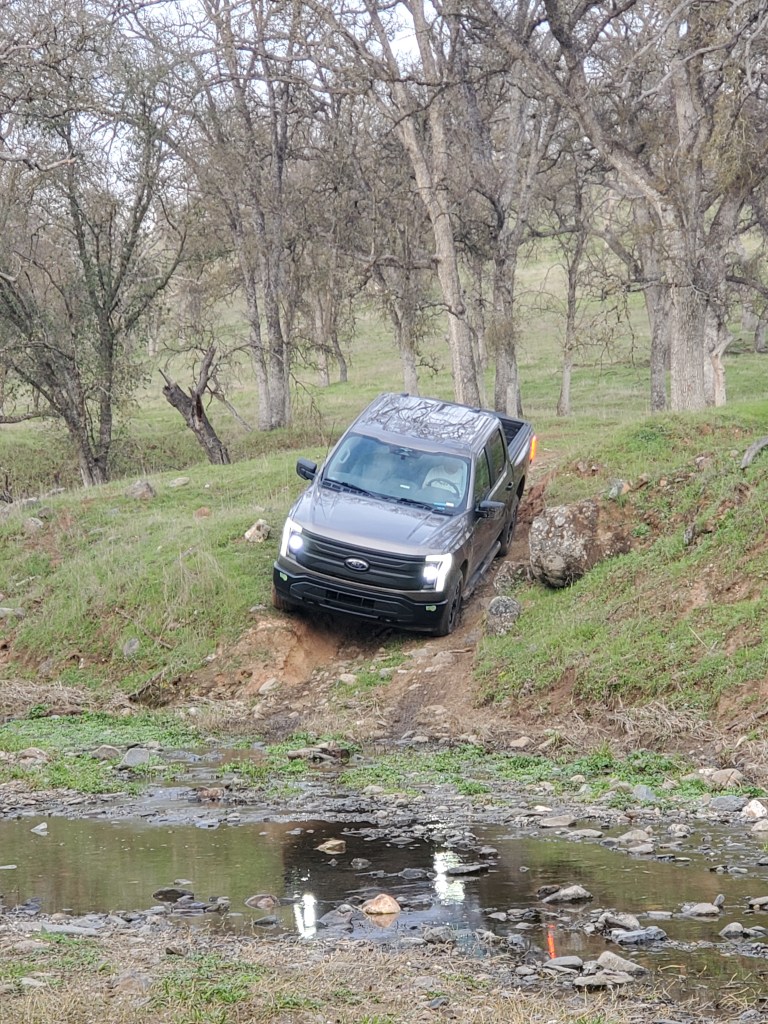
In 2015, the big flood year, the road to the area east of Odom Creek on the ranch was washed out. I would access via foot or ATV. We initially began to stage the materials on the west side of Odom Creek, but David had a feeling he could make it in the truck. I thought this should be a big “no”. Besides the fact that this is a newer truck David uses to commute with, I try to limit motorized vehicles on the ranch simply because their impact on the soil. Everything we have is electric, so I am not concerned about emissions or oil leaks. The weight and act of rolling across the ground over and over has consequences. This is why I stay in my tracks as much as possible when servicing plantings.
Well, when I left to plant oaks, David measured the area, measured the truck, measured the area, measured the truck and decided to go for it. He texted me some photos, and I was shocked. The truck made it. I thought that perhaps making one trip with the truck instead of five with the ATV might be better. I walked the route first trying to make sure there were no frogs or other wildlife, then I allowed myself and/or David to roll through the water and on the bank again. I am trying to do what I can to mitigate damage and hoping the guzzler will make up for any damage we may be causing rolling our vehicles back and forth.
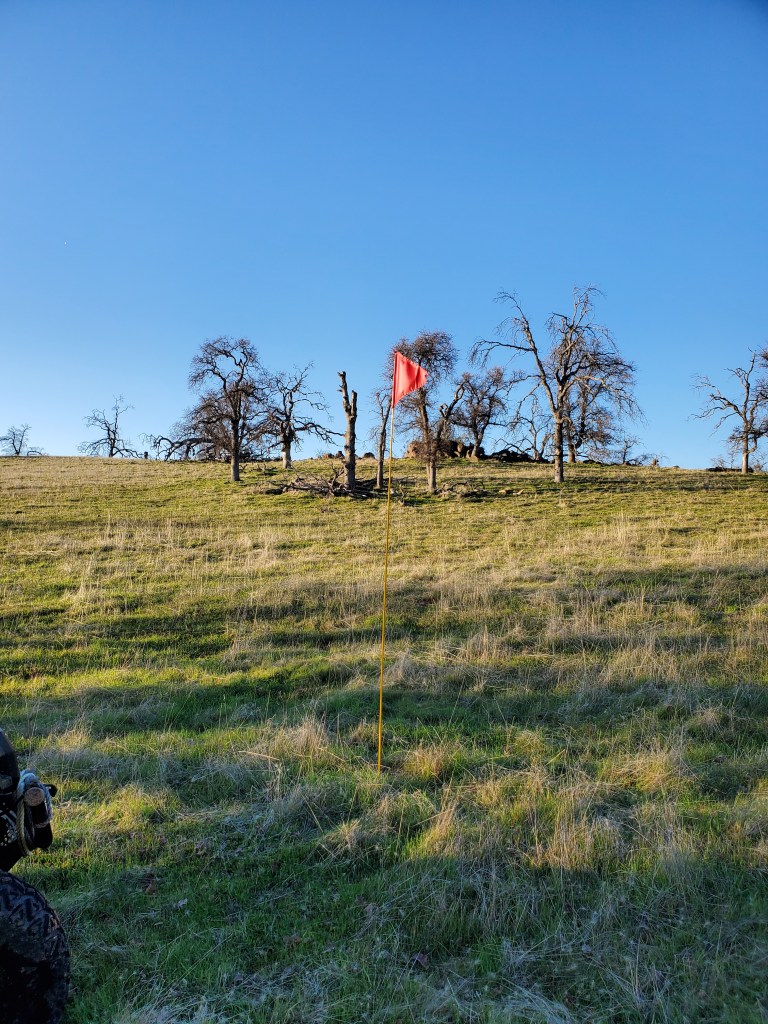
Planning our pathwayLoaded and ready to goBeginning to stage west of the creekI begin to take suppliesDavid gets a bright ideaTank site flaggedDavid unloadsSetting up a frame to gague where to put the post holesInitial frame upHappy as a clam from his 4-wheeling success, David returns for the evening
Blue Oaks Continue to be Planted
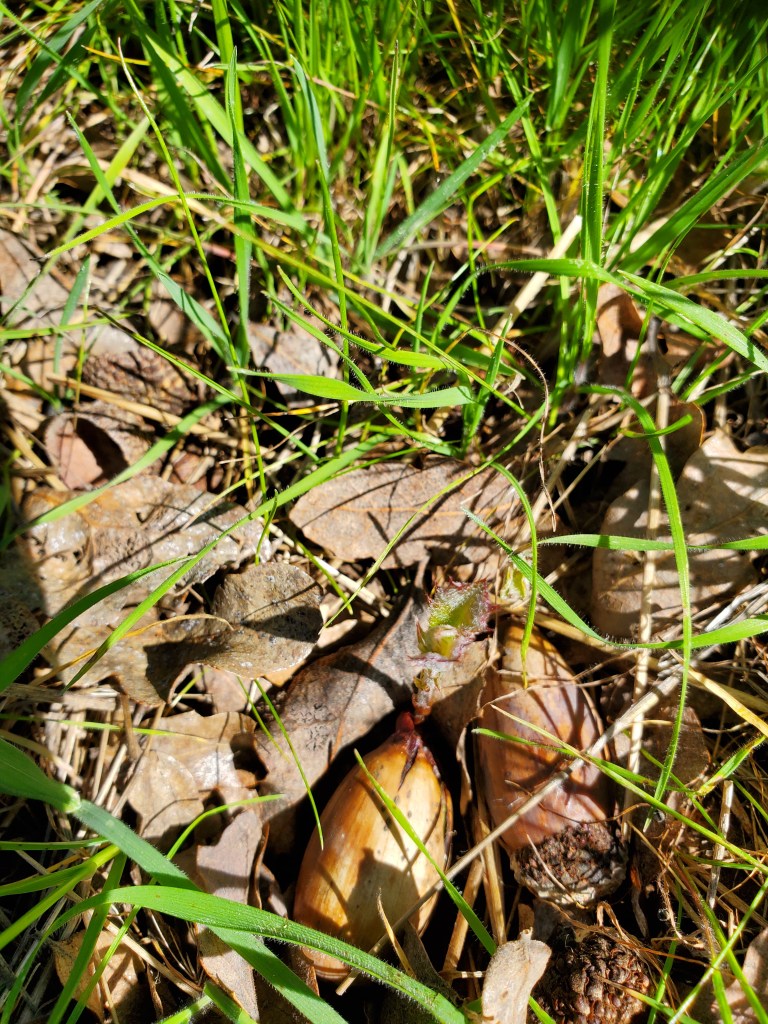
I have accelerated my work getting seedlings and acorns in the ground. With the challenges of life, I’ve not had enough time to spend. Fortunately, the ground was still soft from prior rains. It was easier to work with. Most seedlings required gopher protection. This means digging 18″ +/- holes in which to place specially designed cages with soft wooden bottoms that are long enough to allow the lengthy oak taproot to grow. The wood bottoms have holes for drainage and root movement. Conceptually, the soft wood bottom will rot in a year or two, opening up more space for the roots to thicken and become resilient.
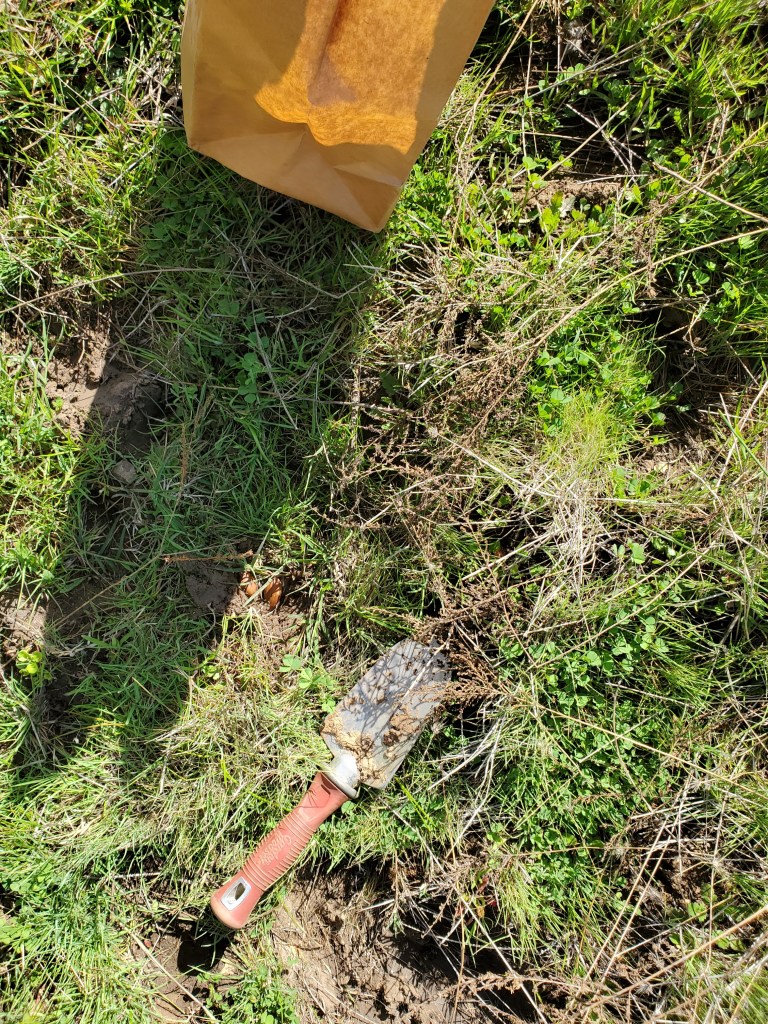
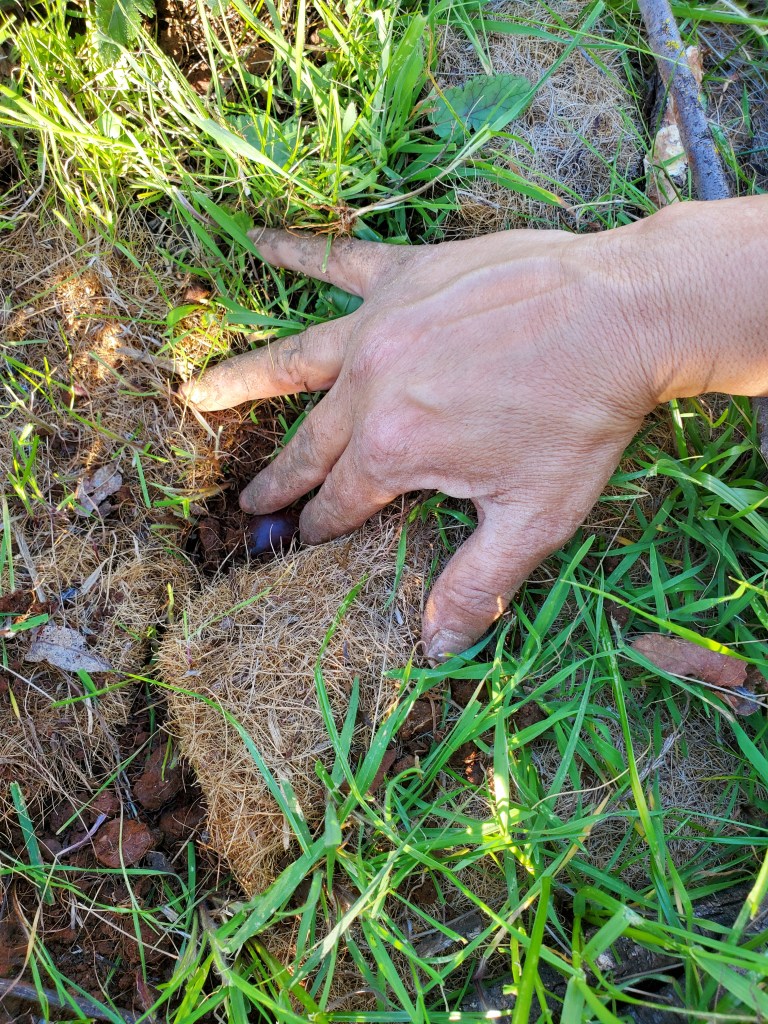
Placing acorn in last year’s cageAcorn covered lightly with soil and coir wrapped around the base for moisture retention and weed preventionMy bog bag of fall acorn harvested from the heritage oaks by the houseMini branch fence around a cage. They help me find the sitesLoaded up and ready to goA seedling planted along the Spring Creek bankFound a lanky oak seedling that I did not plantJust emerged oak baby from an acorn I did not plantSeedling planted inside cattle exclusion areaSeedling planted in treeless area of Spring Creek. Next step is building a fenceTwo spouts from seedlingAnother oak seedling planted upstreamExample acorn planting along the creek. Look at 11 o’clock from the hand shovel. There is a brown acorn. I will cover it lightly after the photoAnother acorn planted in a site from last year
In all, I planted close to 60 acorn along the creek and in five cages left over from last year. For the seedlings, I planted three along the Spring Creek, three in the new grove near the driveway, and four near the house. I will be planting five more down slope from the house in an effort to repopulate two areas with oak die-offs. Those will take a little more time since I will be creating a trench above and below each seedling to capture more rainwater. This will help increase soil moisture near where the roots can access it. I still have a pile of local oak bark to fill the trenches and absorb more water. The next step for all of the oaks outside the exclusion zone will be to build a fence.
New Log Drop
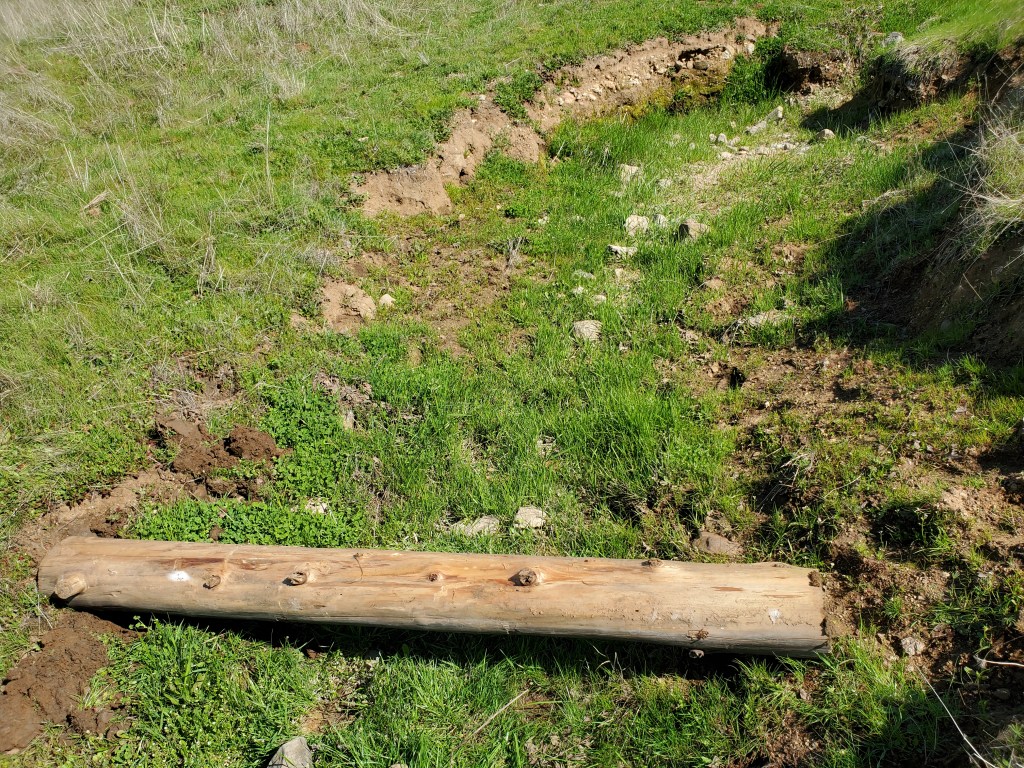
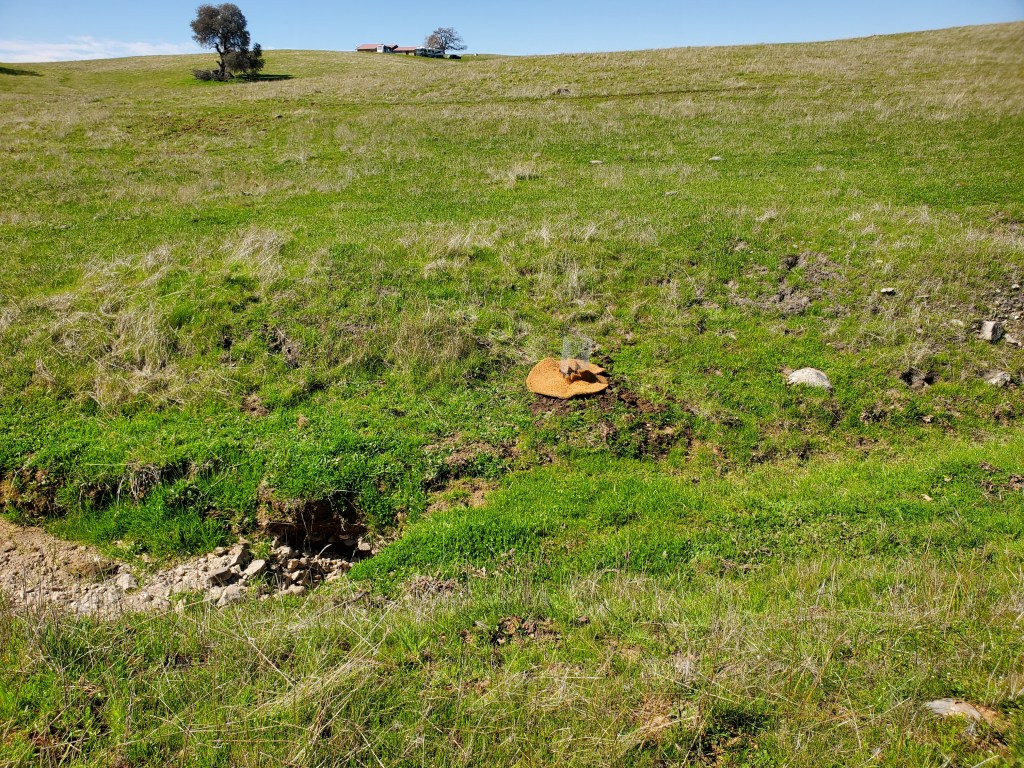
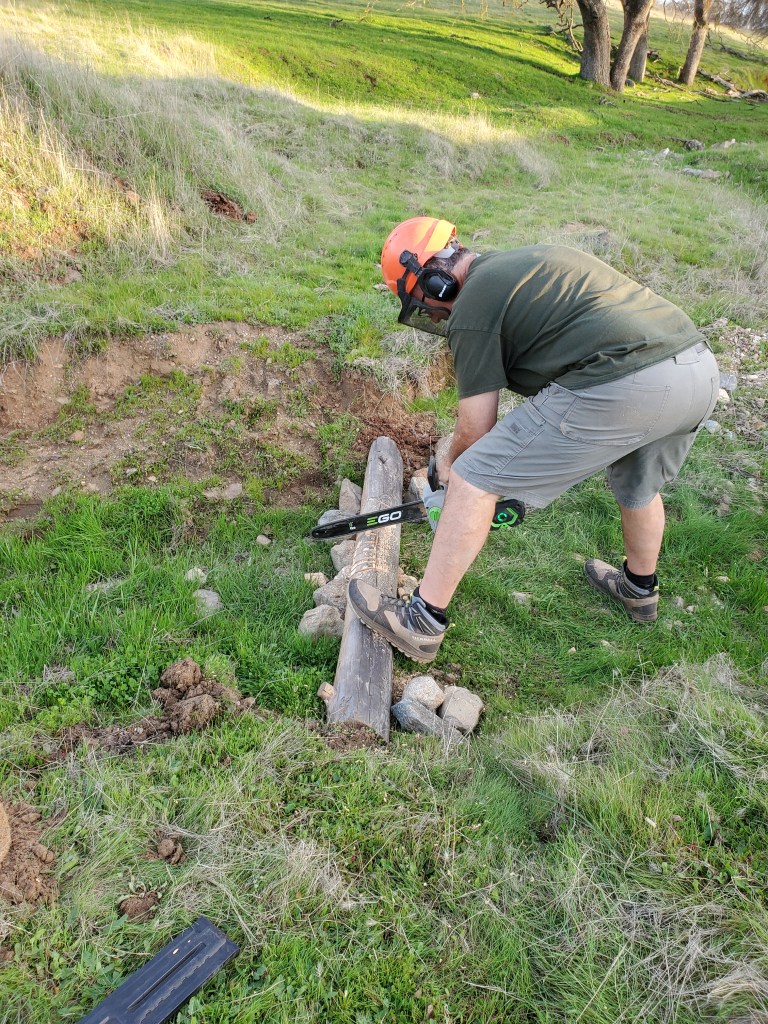
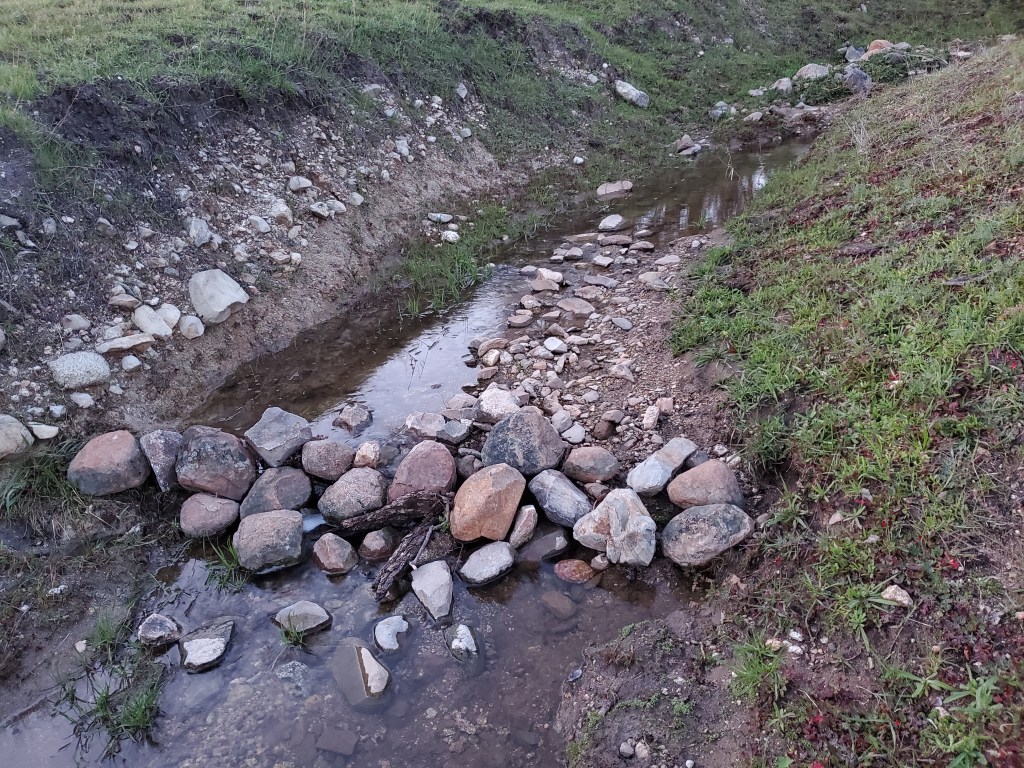
I created a very informal log drop further down stream on the Spring Creek. Again, the goal is to slow the rushing water from increasingly aggressive storms to try to retain the soil moisture and give the land more of a chance to recharge ground water. I also placed an oak behind the log drop to, hopefully, provide more moisture for the oak to thrive longer in dry conditions. The soil has a lot of clay, which retains moisture. There are groves up and down stream from the oak planting area, so I think the soil can work for these oaks.
Cedar log placementBeginning to rough it in and then set rocks to dissipate the water energyArea of the oak plantings and log dropNo trees in this sectionDavid stop on his way back from the guzzler project to help. I scored the channel and he made lateral cutsCompleted spillover channel. This helps take the pressure off the log
Wildflowers are Up
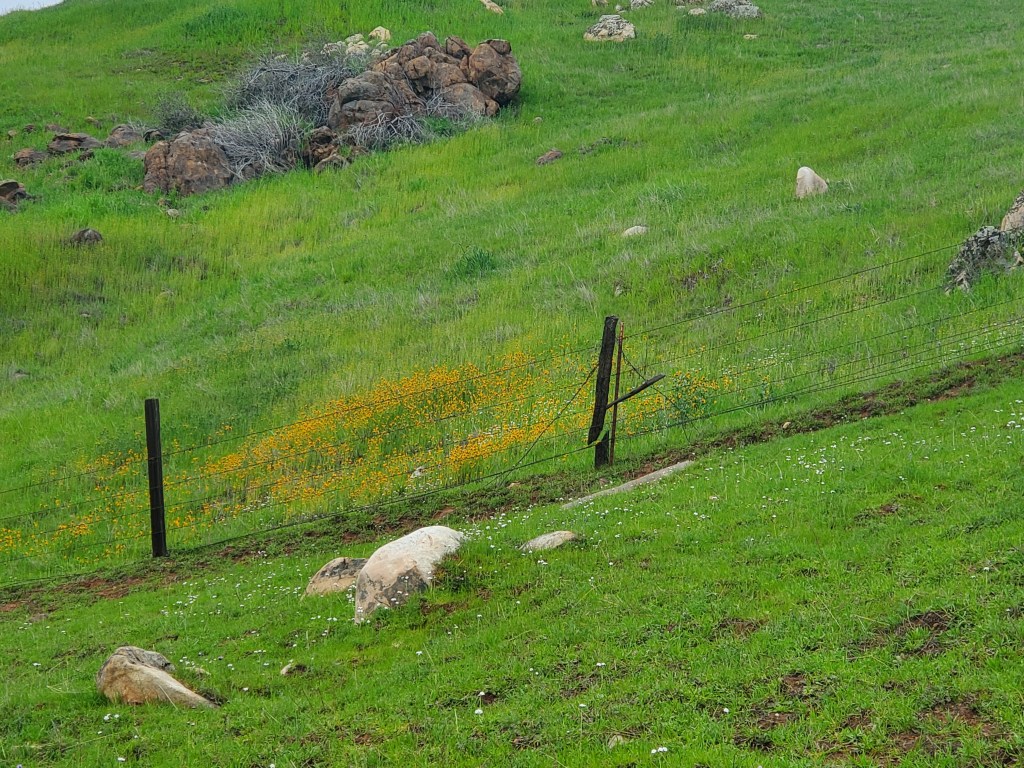
The wildflowers are in full display, with more blooming each day. There are so many colors – blue, purple, orange, white, and of diverse variety. I also saw my first butterflies on March 1 (possibly buckeyes. They were brown) and heard a large bee. Spring is happening whether I am ready or not…I’m not. The air is smelling like nectar. In another few days it will be heavy with the perfume of a million flowers.
Odds and Ends
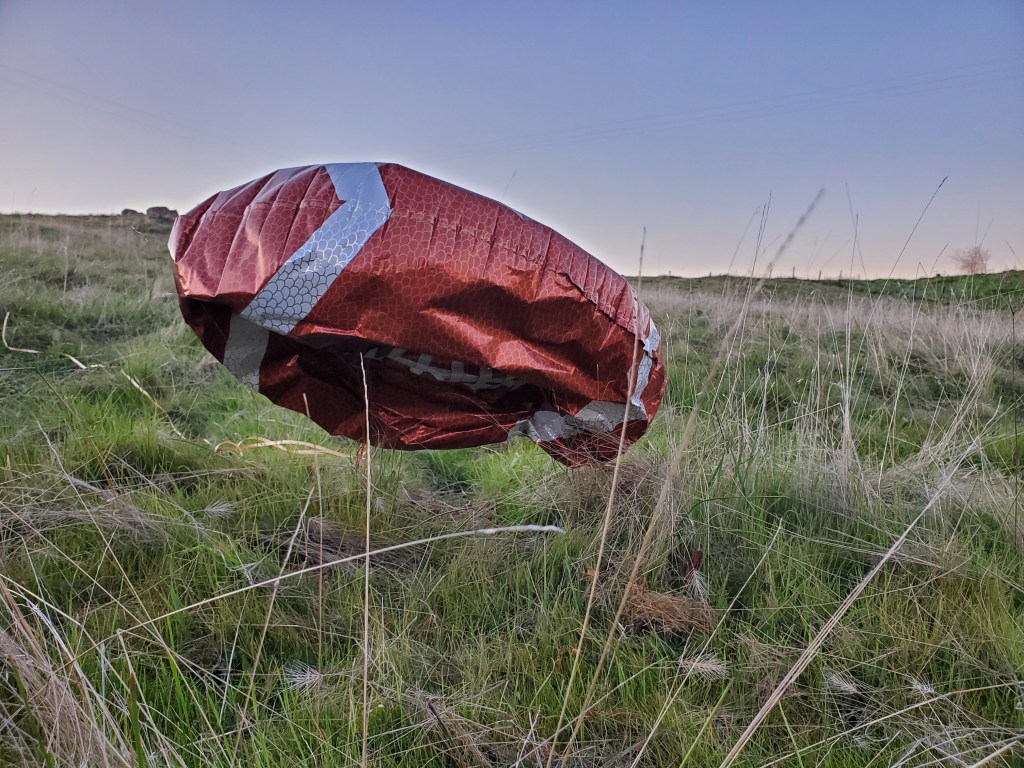
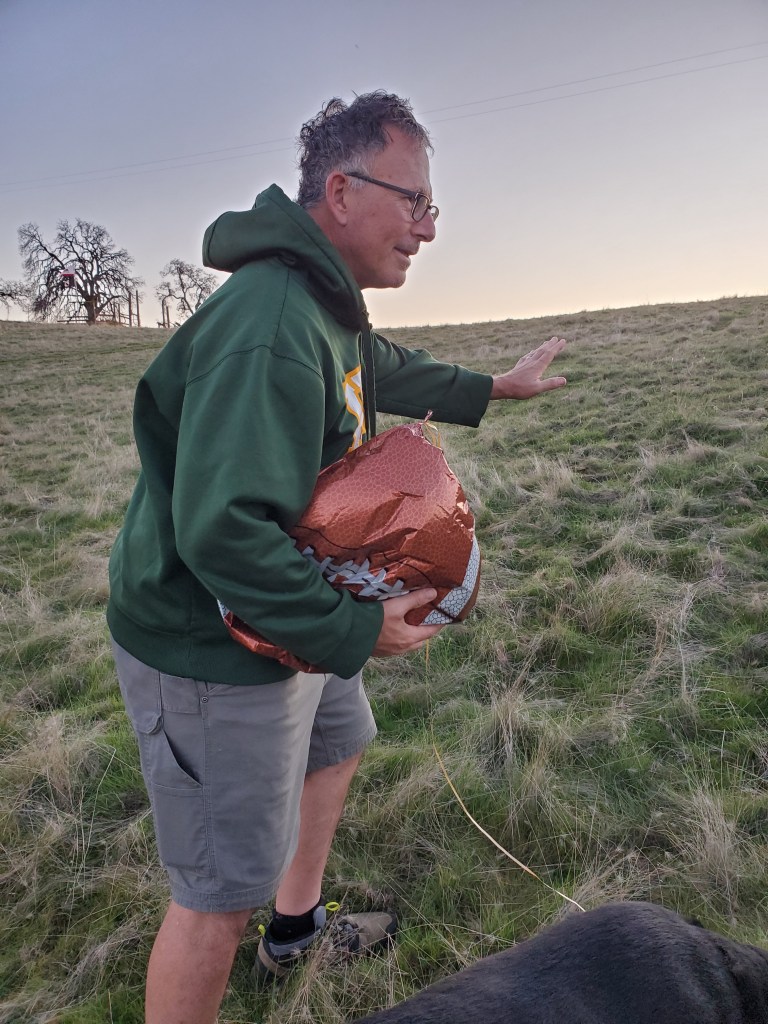
The joy of living here and caring for the land is immense. There is always so much to see and experience, even 22 years later. I pick up garbage that floats through the creek, blows down the hill or floats in the air. It seems we are always finding mylar balloons. Please don’t purchase them. They are trash and end up at my place. They can kill calves who do not know what they are and eat them.
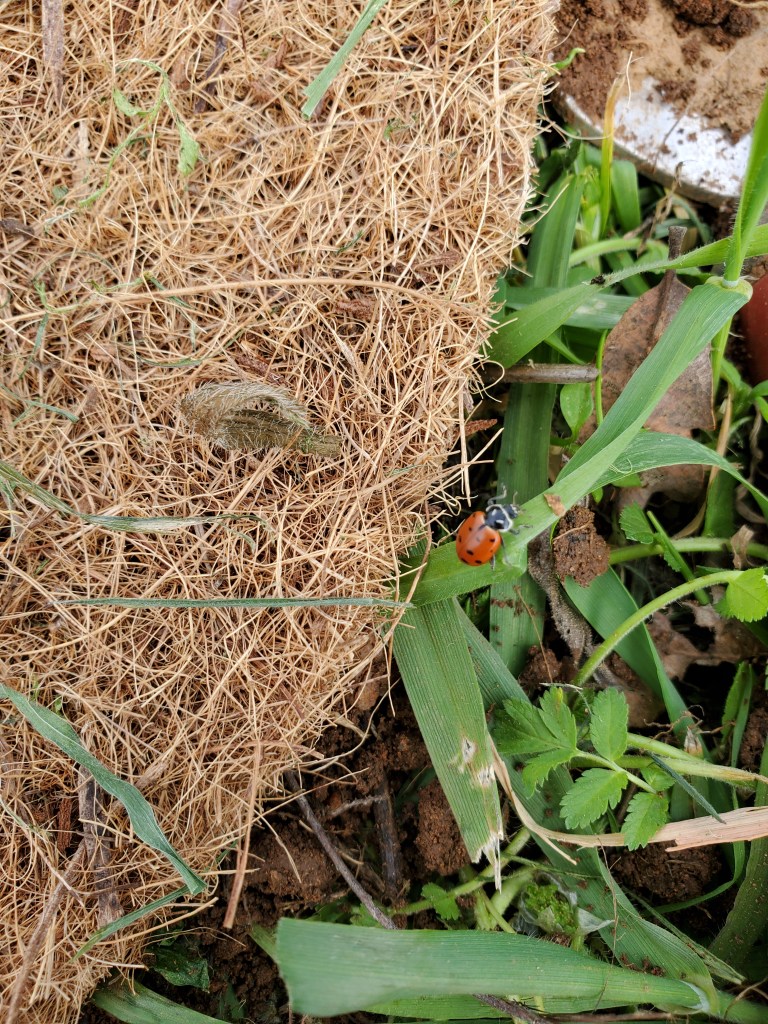
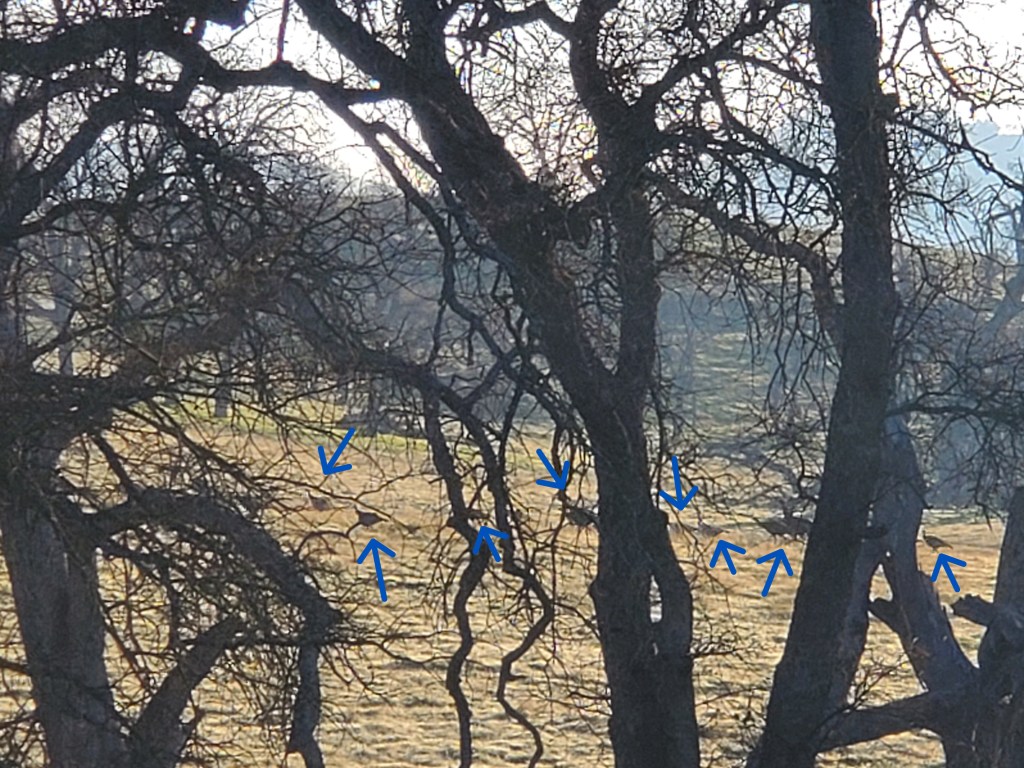
While planting oaks, I heard a whoosh near my head. Two redtail hawks in their mating ritual, dove and sped back up high near where I was working. It was incredible to see and hear them so close. Getting an early start to the day allows us to see so much wildlife. We saw a huge group of turkeys. They are large and interesting, though they are not native. They eat the eggs of quail, harming their populations. I wish a bobcat would control their population more. People think they are cute and feed them just a few miles down the road, but they are very destructive. I would rather see quail than turkey any day. The lady beetles are out. They are really beautiful. I used to see them incubate in tree bark as a child. We had so much abundance then. The other evening at dusk, as David and I were finishing our work, we saw a great blue heron flying to the east. I hope it stopped at the neighbor’s pond and decided to stay a while. We used to have a mating pair that would return each year. They had their nest in a tall bull pine on the neighbor’s property. It fell one winter. When the couple returned the next year, they did not stay. The male would come back year after year with no mate. What a loss.
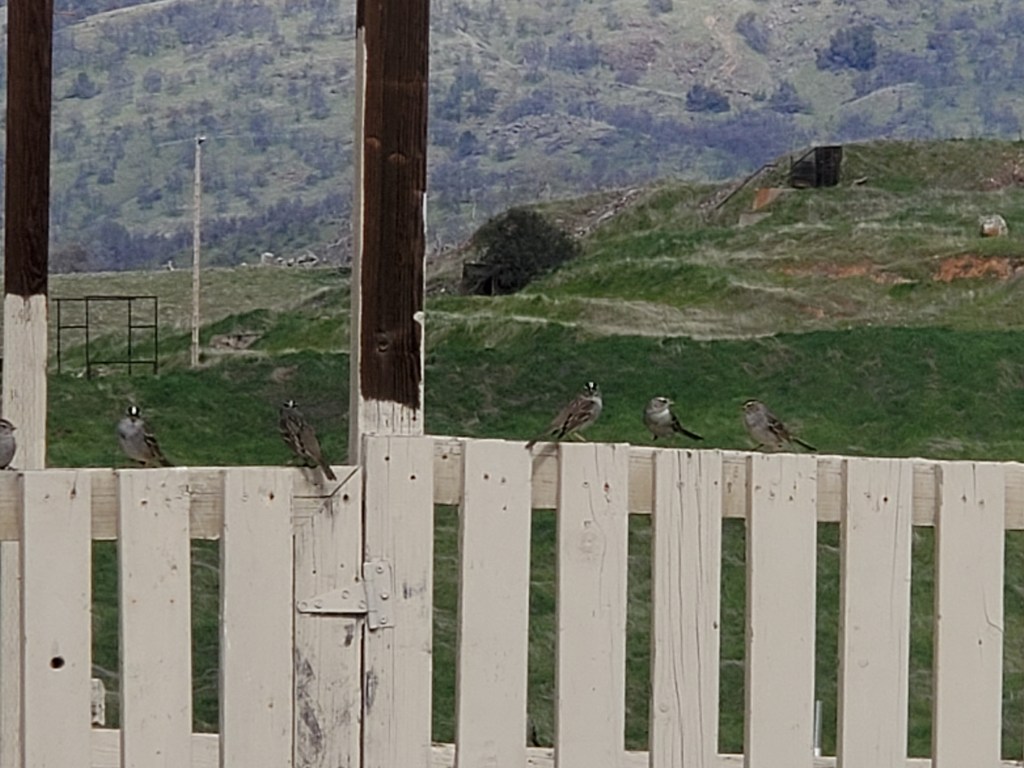
Planted an oak I found among my nectar plantsWhite crowned sparrows hanging outLady BeetleCalifornia Sunflower. Planting nectar plants in addition to oaksMylar football balloon in the far north fieldDavid goofing aroundGreatBlueHeronMass of turkeysHawks in love
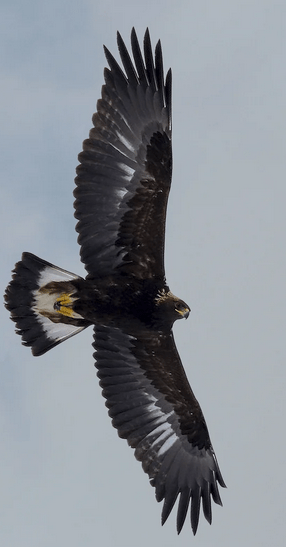
Probably the most exciting thing I have seen in a long time was a golden eagle. It honored me with its presence on February 27. I was looking out the living room windows, which look to the east. I saw a massive bird fly down the hill. It circled the tree near guzzler 1 then flew back over the house. I dropped what I was doing and flew outside. It was about over the house then, so I rushed around the side of the house to get another glimpse. It was massive with long, dark fingered wings and gorgeous white patches underneath. It flew north west, presumably to the Merced River, which is close by.
I screamed. David thought I was crazy. I couldn’t stop telling him about it. My goodness, it was gorgeous. David finally protested after the third retelling, and I said, “Now you know what it feels like when you tell me constant ‘bug in the compiler’ stories about your tech issues.” “Touché.” he said.
We are doing something right when an eagle comes to visit. We work hard to be good stewards and good ancestors. Thank you eagle for letting us know.
This is what it looked like, but it all happened too fast to get a picture. Photo credit: RaptorResources.org
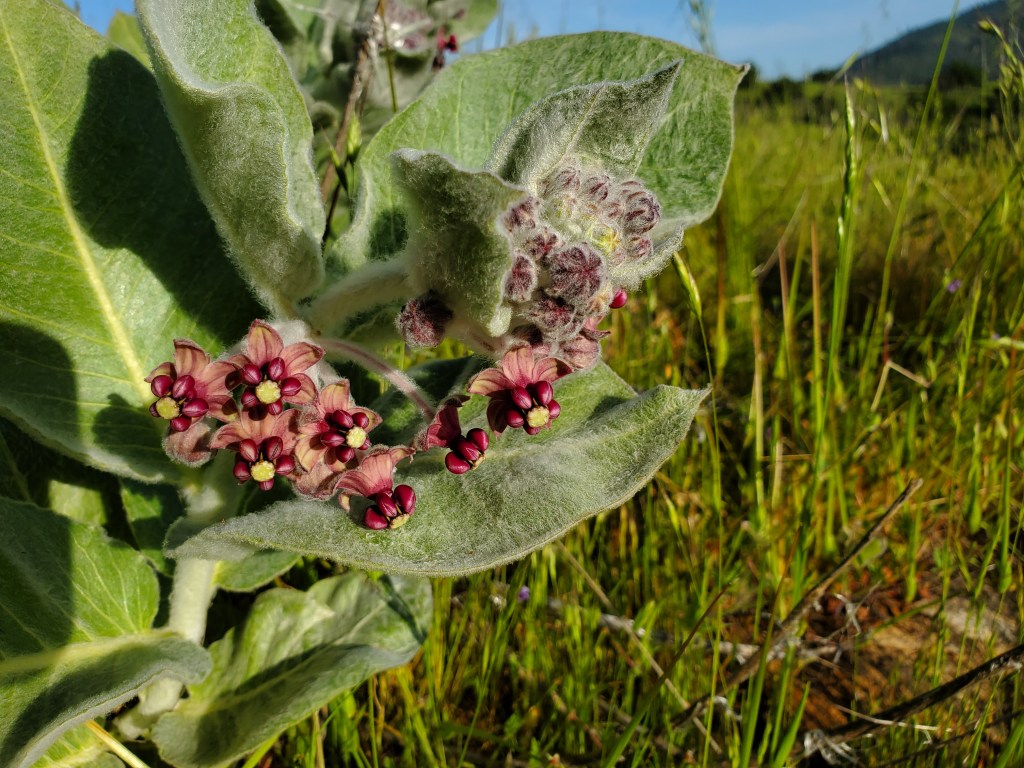
The first California Milkweed emerges and she is a beauty!
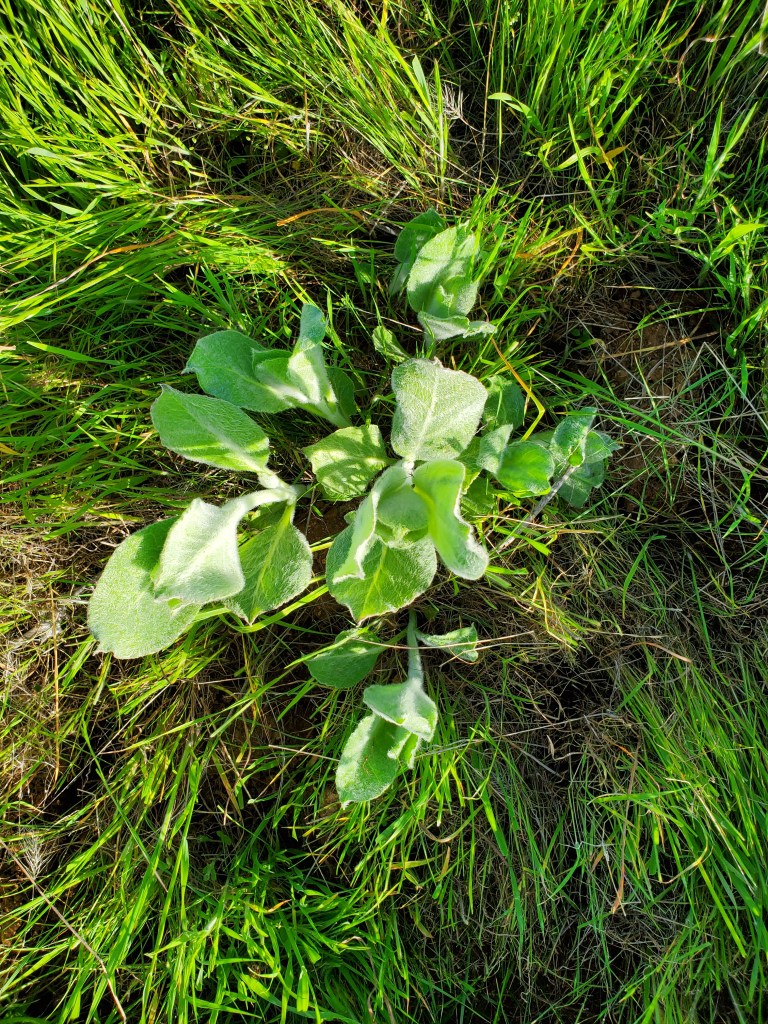
I have been checking the A. Californica sites for a week now. The benefit of documenting my work on a blog is how easy it is to see when something bloomed, emerged, went to seed, etc. You have an idea of when to expect things if you cannot quite remember. At this time last year, we had California Milkweed emerged. I figured with the cold, snow and copious rain, the California Milkweed may be delayed. Like a reliable friend who knows just when to call to cheer you up, there she was on March 15 – her beautiful furry leaves emerging from the dirt – A. Californica. Ahh, but there was not just one, there were two. I think these are the two great grandmothers of the milkweed patch. They are the first to emerge, the largest and get the caterpillars on them first. There is another large sized one as well. I went to look for her, but she was not there. It was not until a couple days later I found her. Those milkweeds are tricky. One moment they are not there, the next, they are.
Second plant same as the first – March 15Third plant – March 20
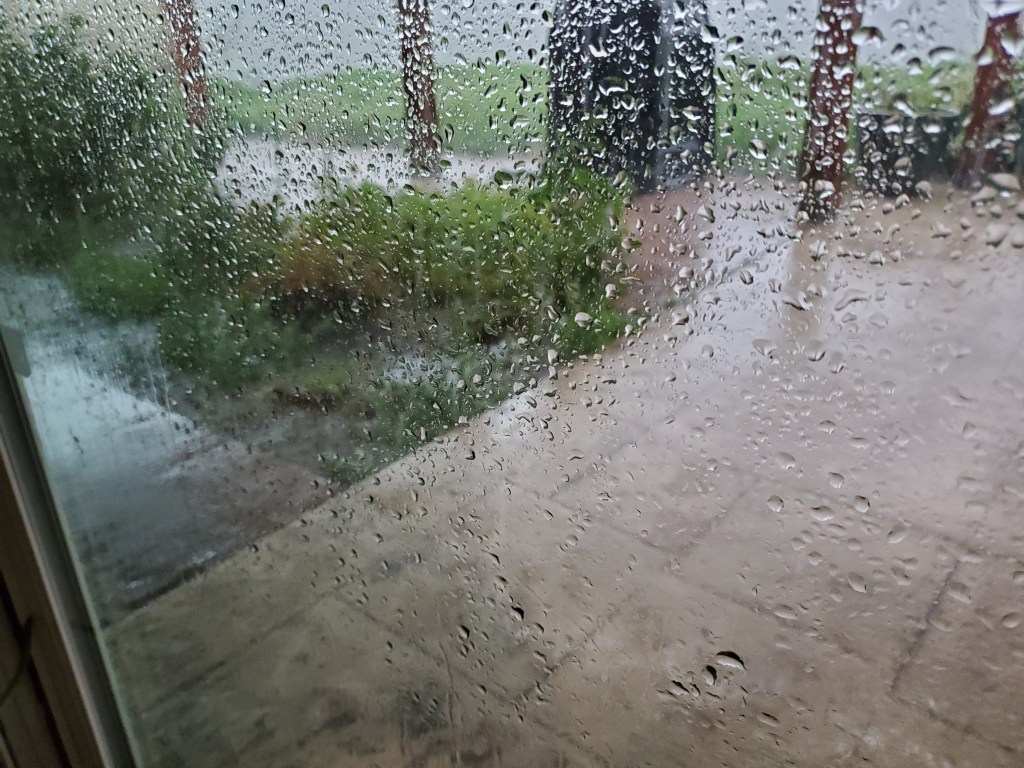
I have always been a “chill” girl, never anxious, always planning ahead and under control. However, now that I have met California Milkweed, I am like a helicopter mom. I check on the plants almost daily. I worry when I see too many cows near the patch. After the atmospheric river that dumped an inch of rain in 20 minutes and made a hundreds of impromptu creeks along the hills, I had to trudge up the steep hill to make sure the plants were alright, that they were not swept away by the temporary torrent. They are built for weather of course, and I was just being ridiculous.
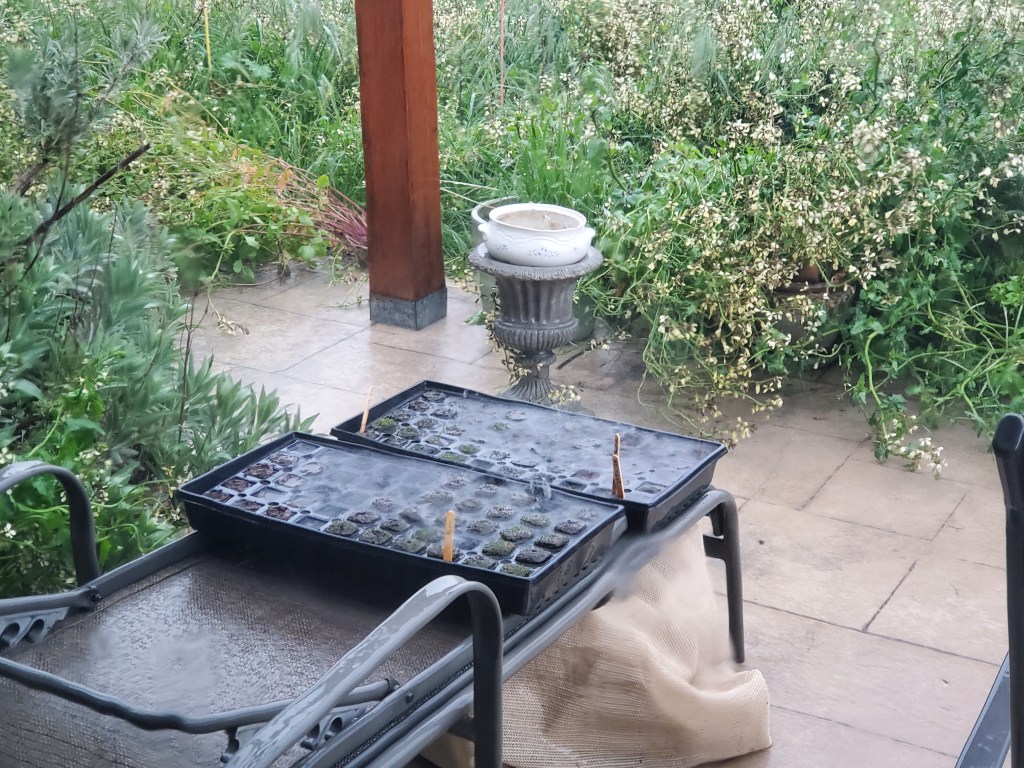
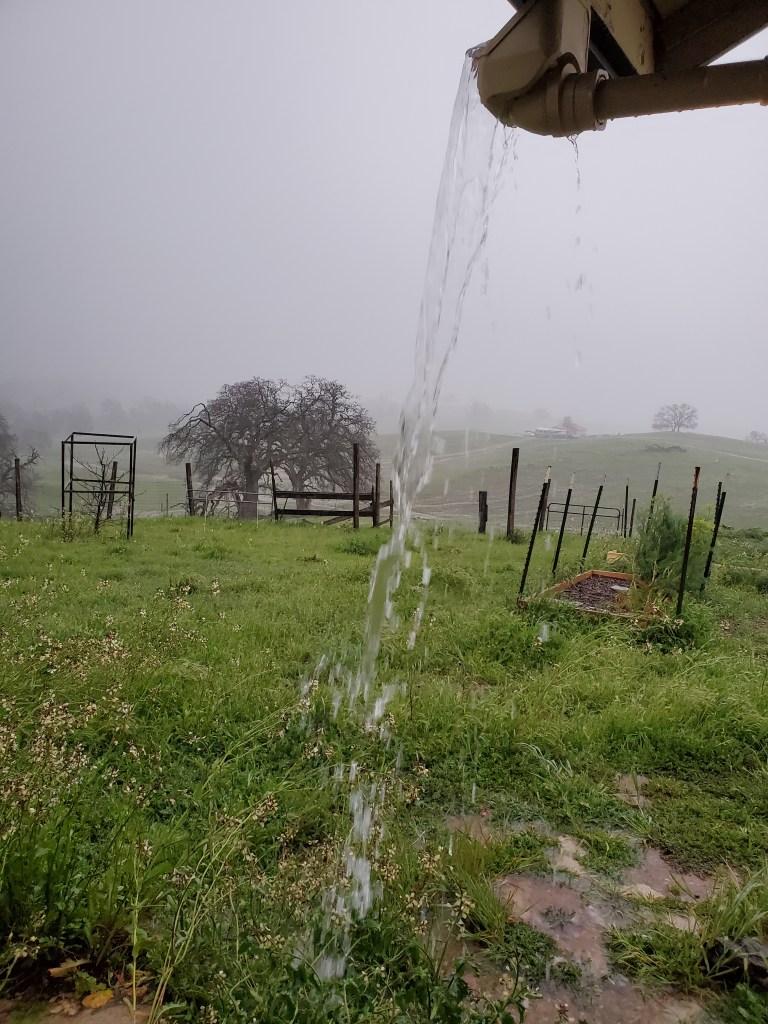
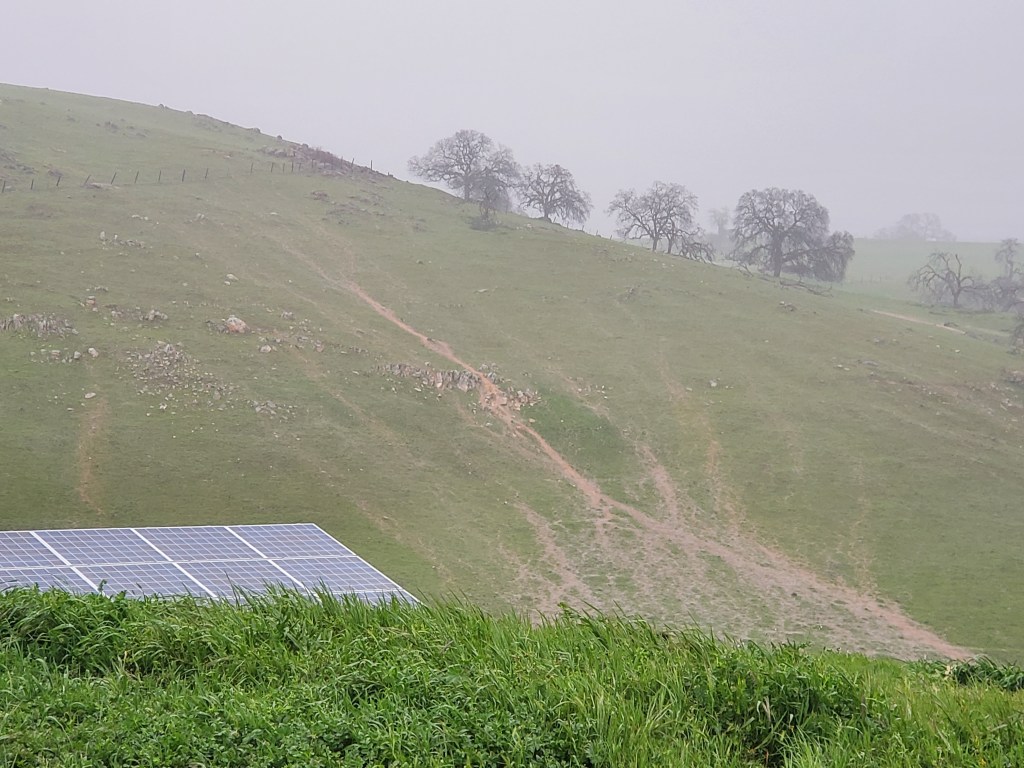
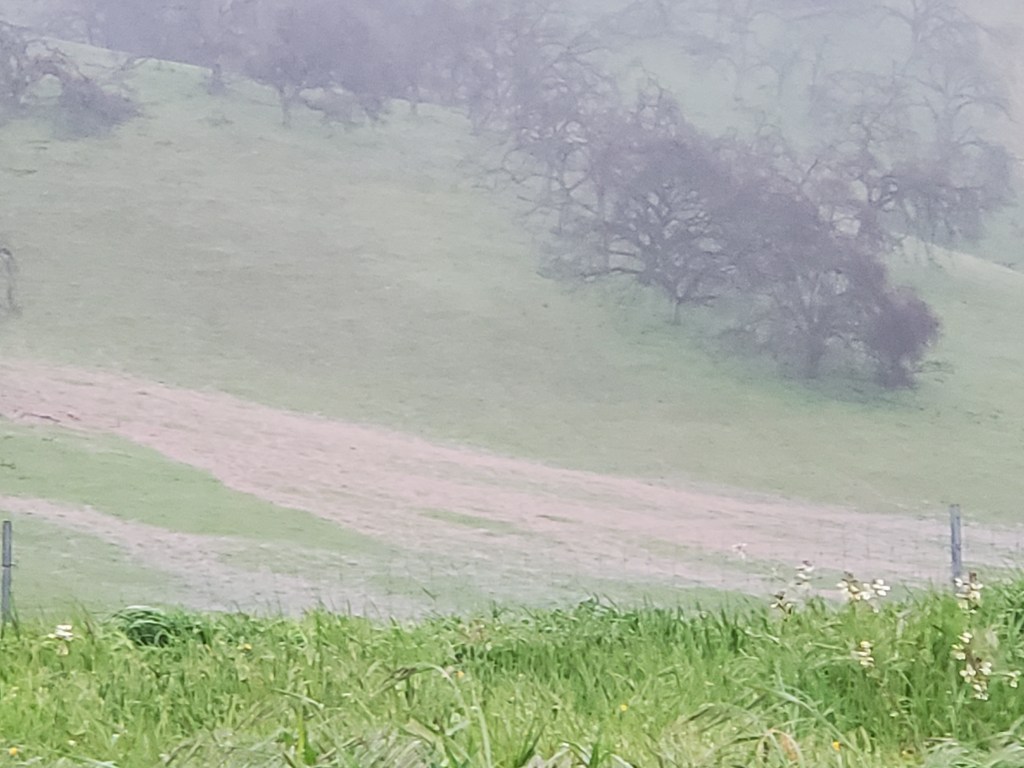
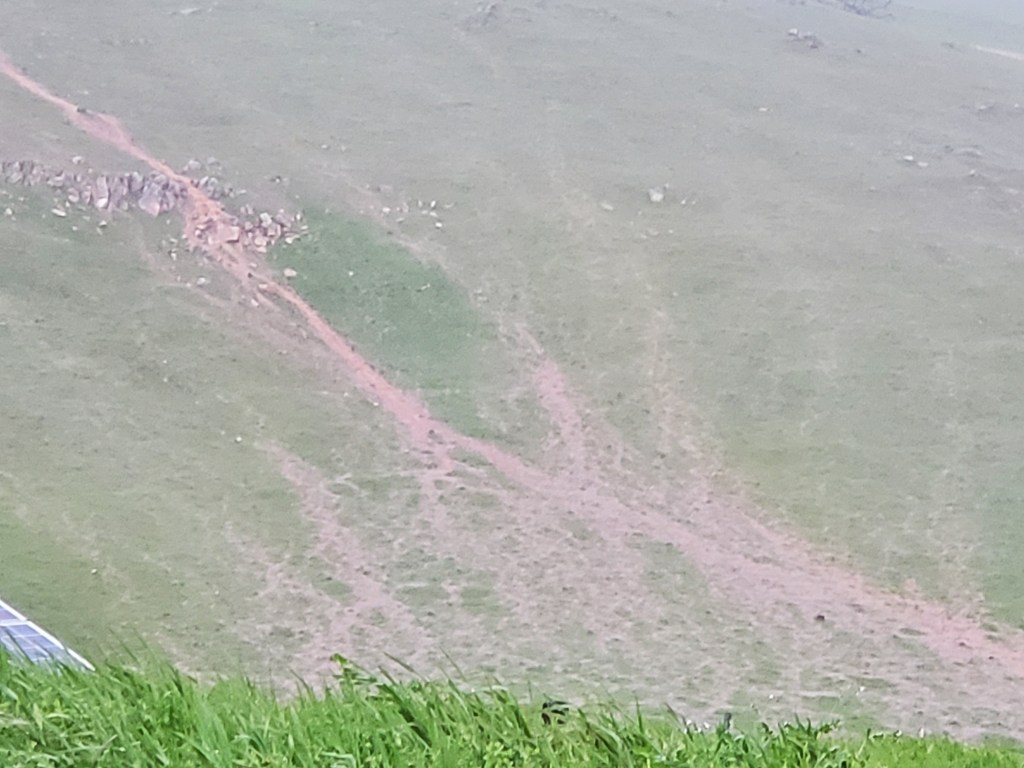
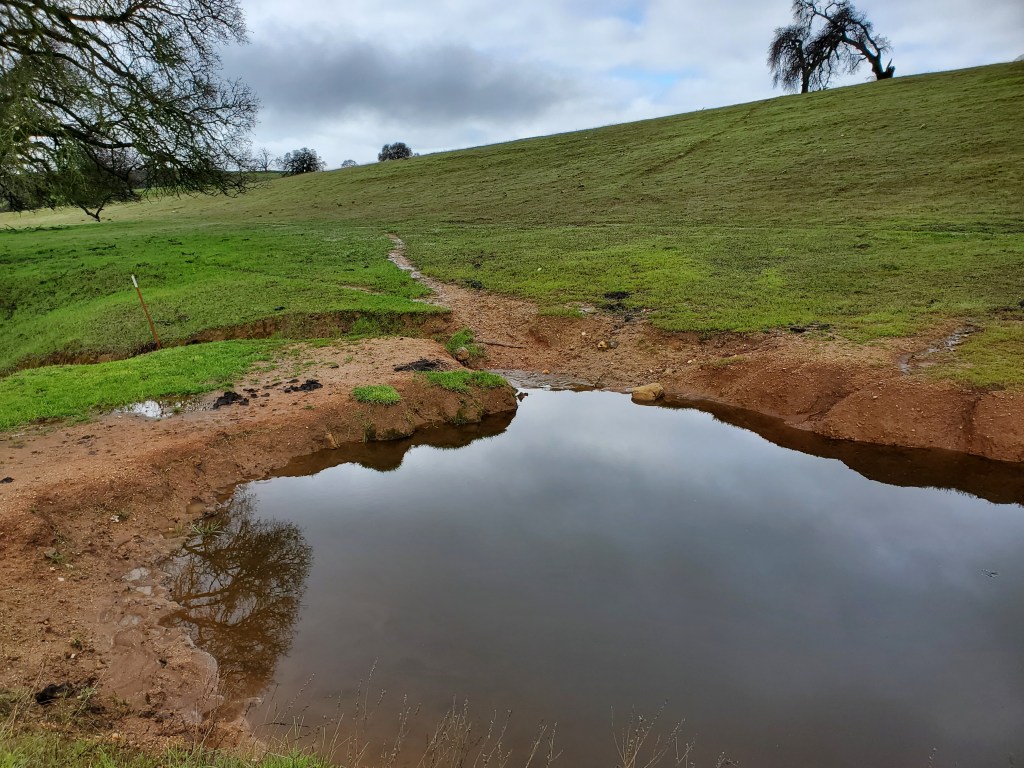
The storm was ferocious. Streams of water that were too much for the ground to absorb rushed down the steep slopes and into the drainages and creeks. I was only able to see it because the clouds were high. It was incredible. Upon closer inspection using binoculars, you could actually see rapids created by rocks and undulations on the surface of the slope. Mother Nature is a badass lady. It also struck me how so many patterns in nature are replicated. The shape of the impromptu water system was like a neuron. It makes sense; human neurons deliver electro-chemical impulses to make our body go, feel, be. This “neuron” is part of an overall structure delivering a life-giving substance that also alters, through the movement of sediment, the structure of the Earth’s body. Water is the Earth’s go, feel, be.
Not a swimming pool, my patio planterSeedling trays overflowingRainwater tank full and overflowingMassive water runsClose up of the impromptu run – note the rock area. That is where my babies are!
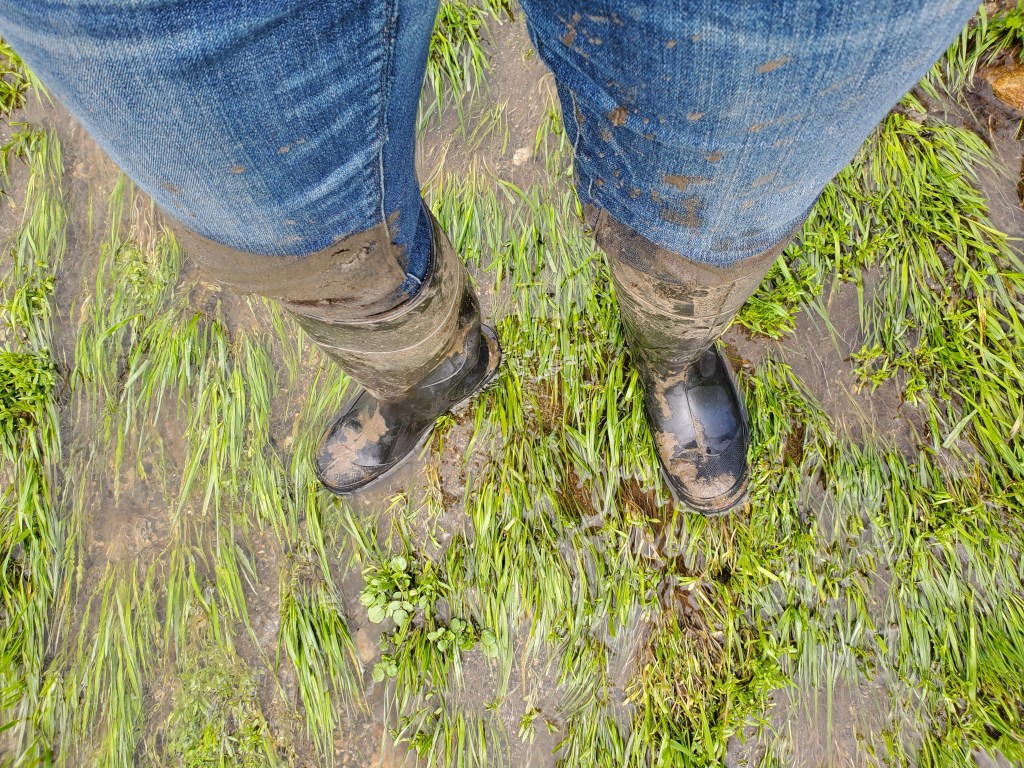
As soon as the rain cleared, I made my way from the house to the patch to check on the plants. I believe in my trusty rain boots and wear them in every season. It was probably not the best decision to head out, rain boots or not, before the water had a chance to drain a little bit more. As I headed for the hill, I had to cross the arroyo/drainage. That was no problem; however, a soggy, muck of mud was on the other side. This is a spongy area that catches water and retains it longer than other areas. I made the wrong decision to cross in this area. My boots, with feet inside, sunk deep into the mud, and then mud closed in on them. I was stuck.
Back in my big city days, I remember going into a large furniture store that also sold interesting knick-knacks. There was a survival book opportunely set on the counter of the check stand for the impulse buy. Well, that worked. It looked interesting, and I bought it. Now, this might be too much information, but I know all of us humans share the same proclivities for restroom reading – so I will share… I had many enjoyable moments on the toilet reading through that book. It is the kind you leave in the bathroom for intermittent engagement and not a cover to cover read. Fortunately, one section of the book dealt with what to do if you were caught in quicksand. I decided quicksand, mud you sink into — same thing.
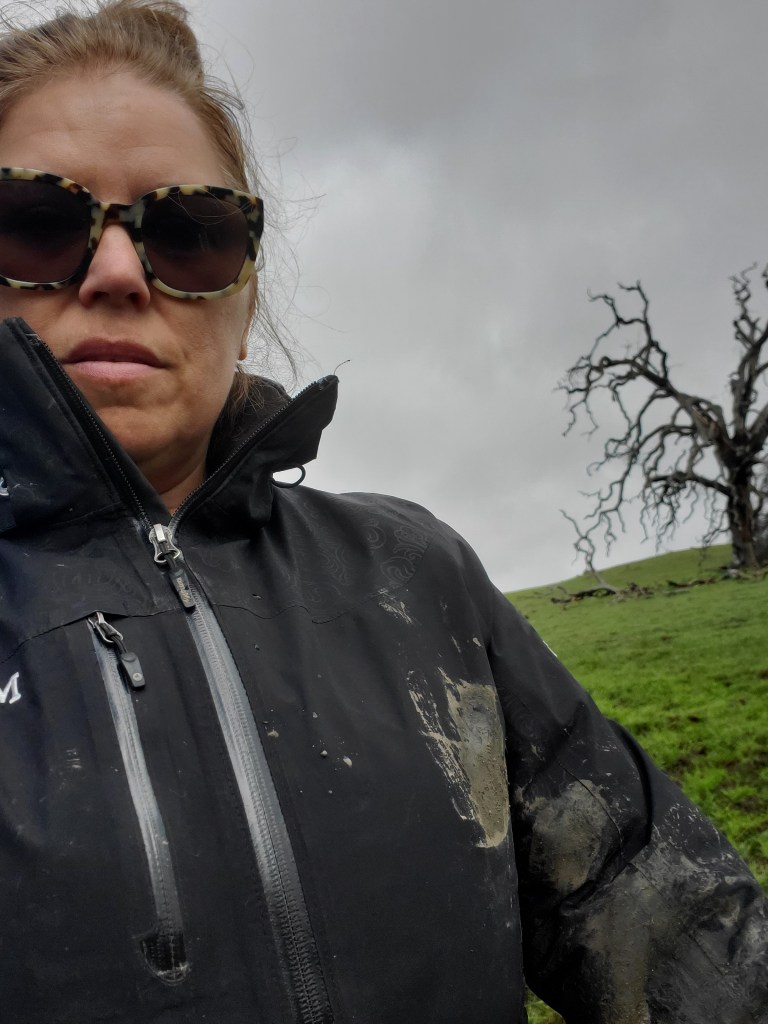
The author said to escape, you needed to move at a 45 degree angle. If you tried, like one normally would, to climb out vertically, you sink more. I had already tried that, and indeed, I just got stuck more. So, now I squatted with my right leg and leaned 45 degrees to pull out my left leg trying to stay upright and not become a mud-pie. I heard a sucking sound. An air pocket! That was good. I pulled with more energy. My booted foot began to move -left, right, left, right. Yes, it is working! Finally, I pulled it free. My excitement quickly turned as the extra energy I applied began to twist me. Remember, my right booted foot was still firmly stuck in the muck. My body twisted. I tried to stay upright, but I fell. My right foot pulled out of the boot, and I landed face forward into the mud. As much as I carefully tried to avoid it, I became a mud pie after all.
A little mud splatteredMud and soaked jeansContinuing to check dams and fence gapsMe explaining after David asked, “What happened to you”Trying to pull off the caked mud after it dried a little
Undaunted, I still continued on my quest. I reversed course, followed the arroyo, now a rapidly flowing creek, found a spot to cross without the sponge and began my trek up the steep slope. The plants were there, unaltered, built for this eventuality. I just hoped that all the seed and plugs I planted in December remained in place. I have been checking those areas too. Nothing emerging so far.
I continued to walk the ranch, covered in mud and wet through my knees, thighs and one sock. My boots and jacket protected my other layers, so I was still warm. I stopped in the creek to cup the water and wash off my jacket, boots and pants. That mud is sticky. The majority of it washed off, but still left a streak. I will need to wash the jacket with a cloth later at home. All the dams held and there were no blockages in the gaps between fencing and creeks. Just some dirty clothes and a sore right foot from the twist. All in all, a good day.
Regular Monitoring
One of the activities I perform most is monitoring the condition of the ranch. This includes assessing water levels, fence condition, check dam integrity, plant health and a general look to see what is new or identifying things that could be a problem, like all the downed trees and limbs. I love to walk and be in nature – so monitoring is one of the most enjoyable things about being a land steward.
The weather has been tricky. Between damaging storms have been joyous spring-like days. It can be hard to stay focused on work. Eventually, I extricate myself from behind my computer and head out onto the land. Last week was gorgeous weather. I even opened the windows to exchange the air in the house one day. The smell of millions of wildflowers entered. It was incredible. It was also warm enough to be in short sleeves, so I sat in the sun a little enjoying the quiet natural noises of my surroundings. As I did, I thought to myself, “Why don’t I do this more?” Life has become so much work. There is always plenty to do. I think people are finally waking up to the realization that, even if you love what you do (and I do), you need to find moments of nothing, to sit quietly, to just be and be without deadlines, dramas, and to-dos. Below are some photos from a recent monitoring expedition.
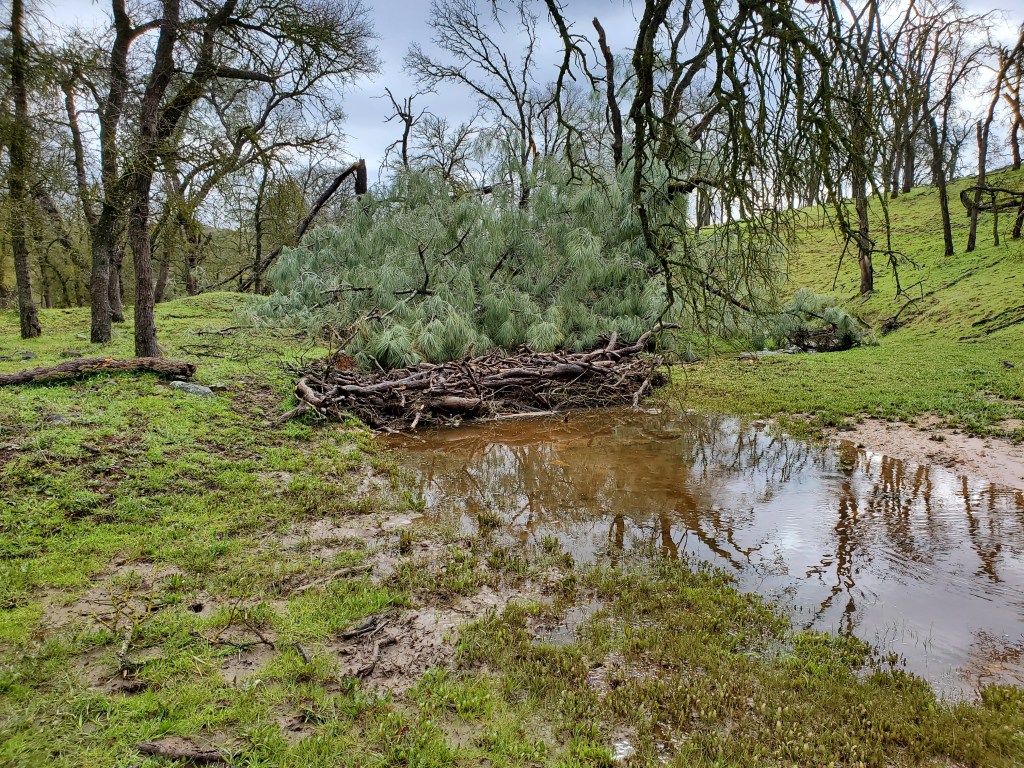
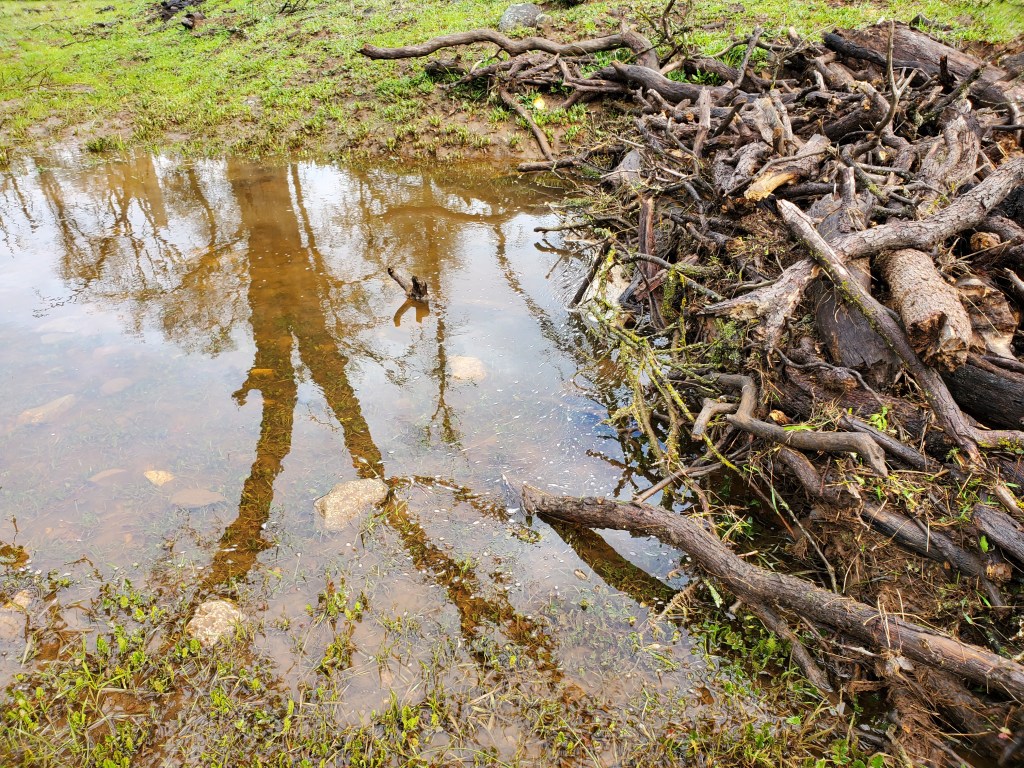
BrodiaeaRelaxing in the sun-ishWashing the boots. Water is deep in the creeks and drainagesBucolicSnow caps continue at the lower elevationsWatching meI didn’t mean to capture this intimate moment. Just saw the fly and zoomed.Buffleheads migrating through!Gorgeous moss growth on the rocksMore gorgeous mossCheck dam holding“Fluffy” the bull runs over to meWater still flowing from the Swale PondPopcorn flowerSo much water there is a puddle next to the creekNatural check dam created from fallen limbs and debrisWater had swollen to 40′Natural check dam slows water and sediment flowThe neighbor’s pond is fullDogs catch sight of a ground squirrel and take offMuddy, wet and happyTools of the tradeLupine pre-bloom. There are millions of them!Pretty magenta flowers are everywhere this year. Dramatic skiesHills of purpleAn old check dam from a land steward long agoHorseshoe submergedSplash of orange
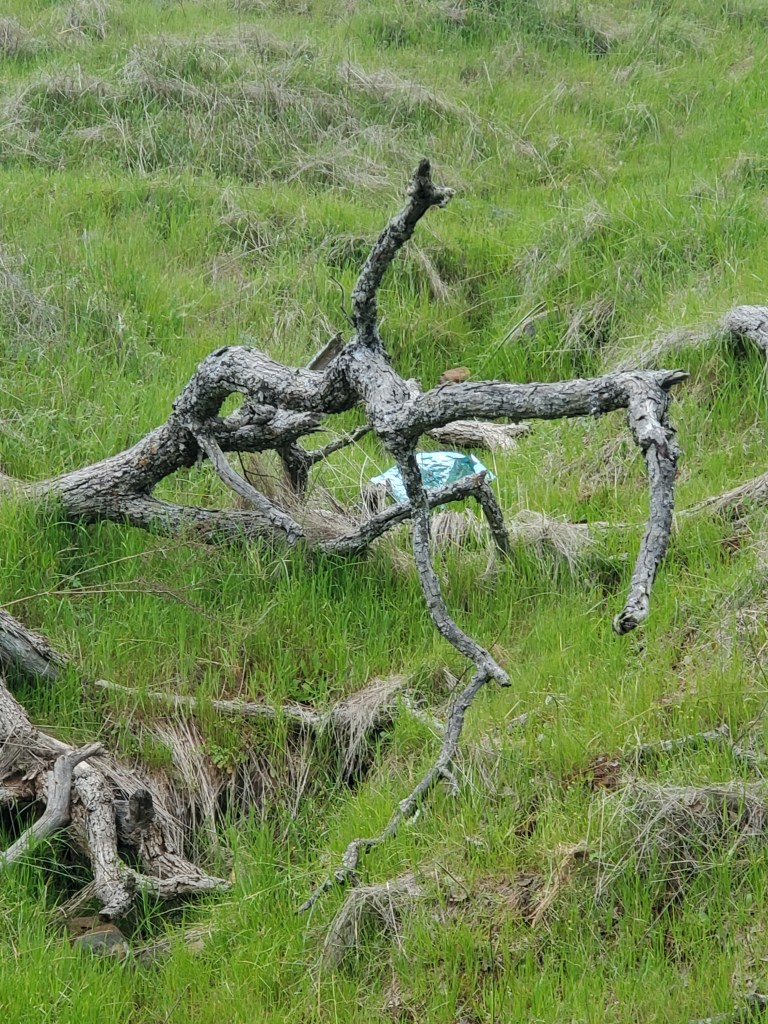
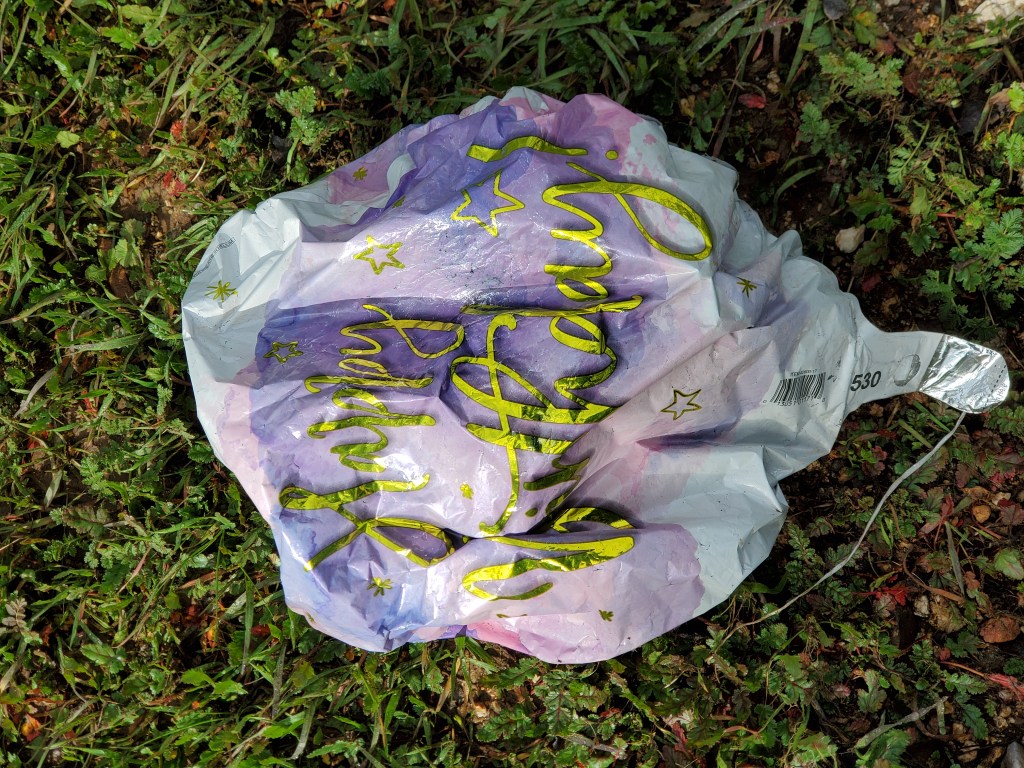
Now is a good time to remind folks about mylar balloons since I found yet another one on my monitoring expedition. Please don’t use them. I know they seem like a festive way to say, “Congratulations”, “Happy Birthday” and everything else. They often get let go by children, and some adults, and end up as dangerous trash others have to clean up. They are dangerous because calves, who are just learning to explore their world, can eat them, blocking their digestion and result in a very painful death. I pick up almost a hundred a year. We seem to be on the right wind pattern for dying balloons.
The Garden
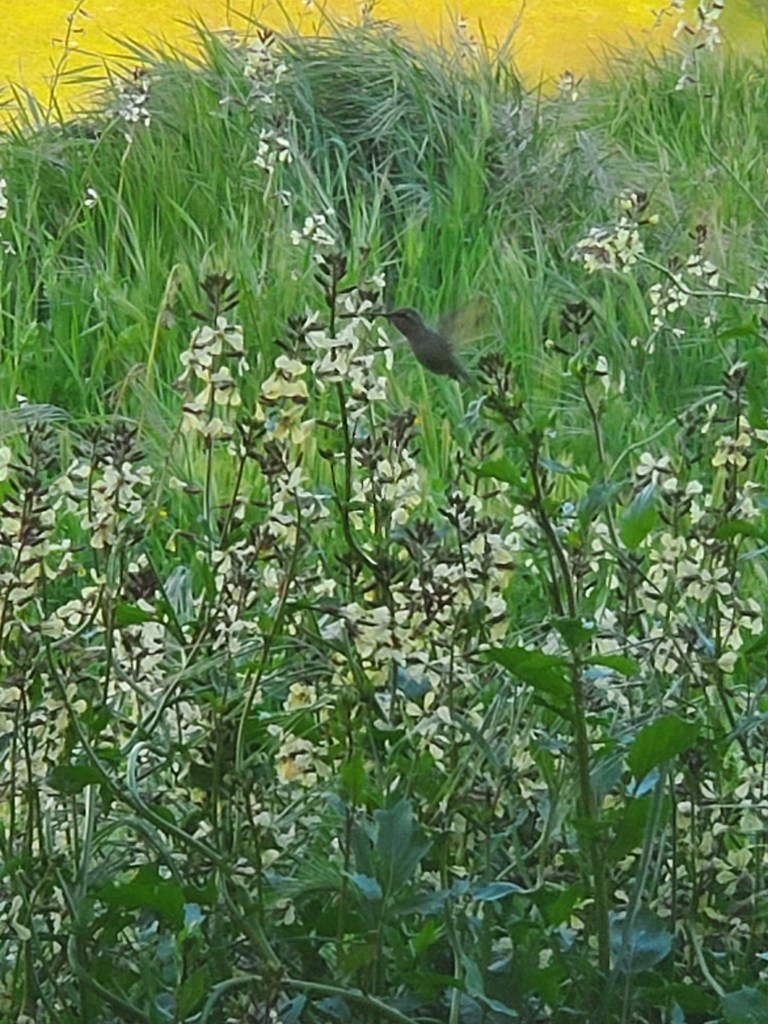
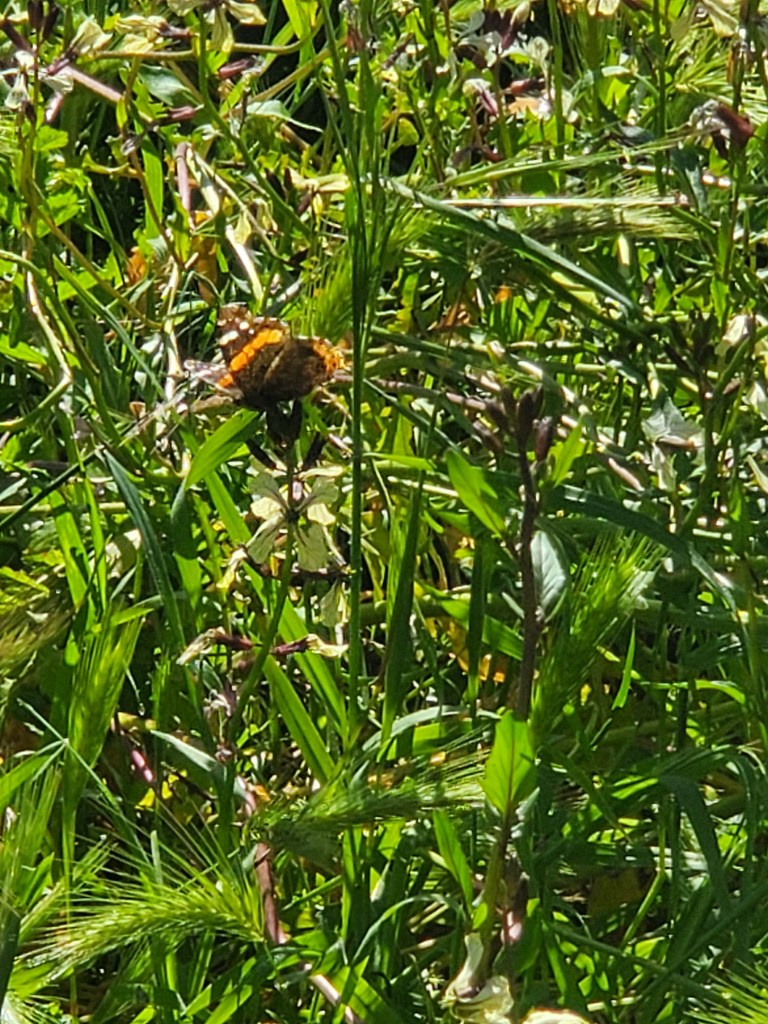
I sowed peas and oats to build nitrogen in the soil and as a cover crop. With the cold temps and frequent cloud cover, they have not grown as much. I also placed some in my seed starting tray. Some seedlings sprouted when there was a longer beak between storms, and I am placing them in open areas in my raised beds. Maybe the sowed seeds will catch up at the next break. I did see some initial growth out of the seeds. The arugula that my dear friend Caroline Korn gave me many years ago has really taken off. We have fields full of it. It has been so crucial for bees, butterflies and even hummingbirds. I sighted a red admiral butterfly. It will likely freeze or get too wet to survive with the next storm cycle. The weather has been alternating between spring-like and winter. Well, I hope it will survive long enough to procreate.
Anna’s HummingbirdRed Admiral butterfly
Wanderings
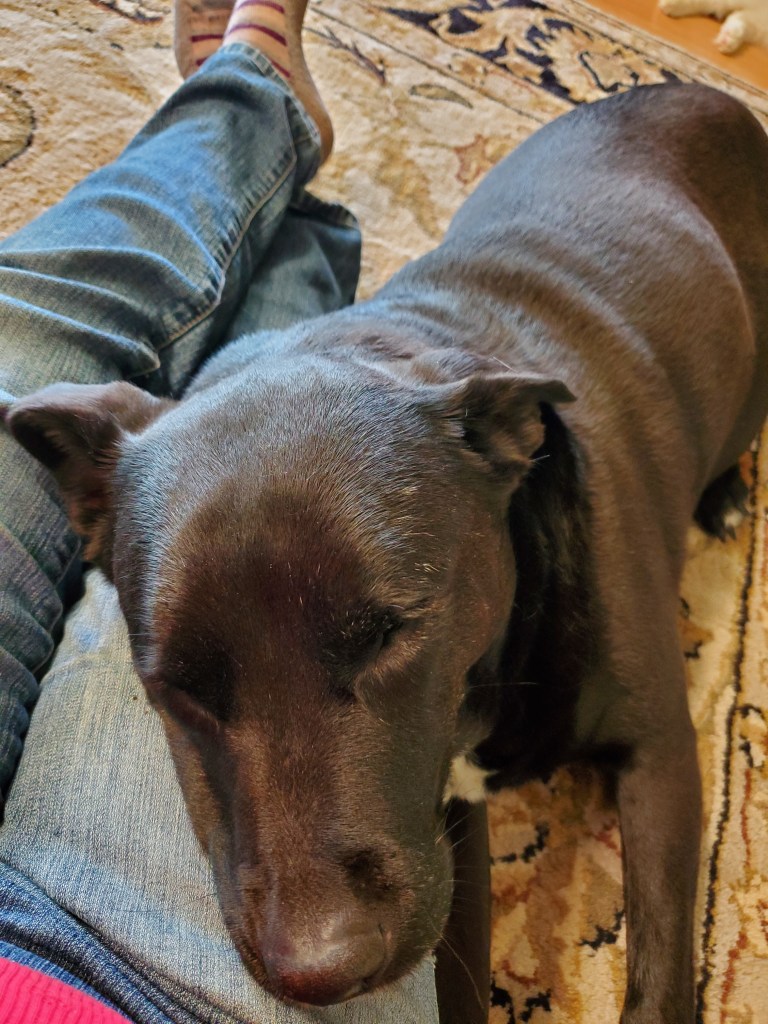
Exhaustion can be good for the body and mind if done intermittently and not often. The dogs and I come back from our adventures tired, but happy. I am continuing with my Pollinator Steward Certification. I don’t know if I will change careers, but it is good to always be learning so you can do what you do better.
Completely exhausted, Beatrix falls asleep on my legMillie barely able to keep her eyes open after our epic monitoring journey
I had a wonderful email from my friend Marian back in January. She was sharing an old mutual friend’s (Chris’) self-made book about a close encounter with a monarch last year. The three of us shared an office back in the day when we were all young healthcare professionals serving the public. Now Chris and Marian are retired (not yet for me) and onto other things. One of the many things Chris does is being a Master Gardener. Chris, was so inspired and transformed by her encounter with a monarch that she wrote a children’s book about her experience. She did an outstanding job researching monarchs and telling the story. You can check out the charming video of her reading the book here. Thanks so much to Chris for allowing me to share her work.
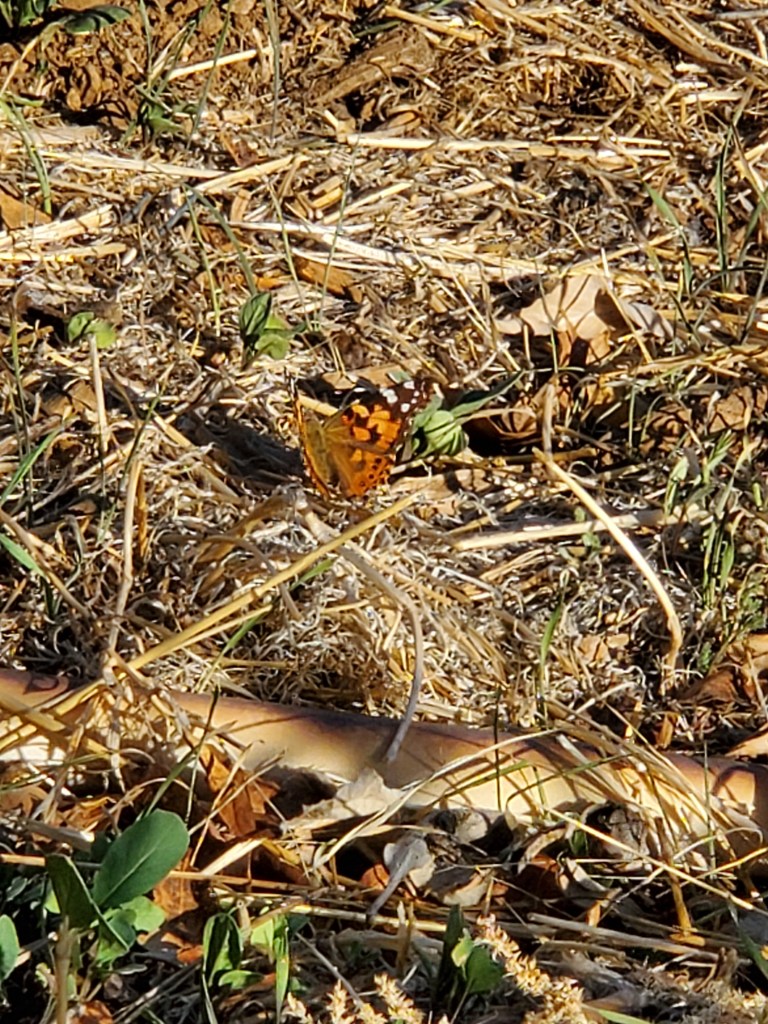
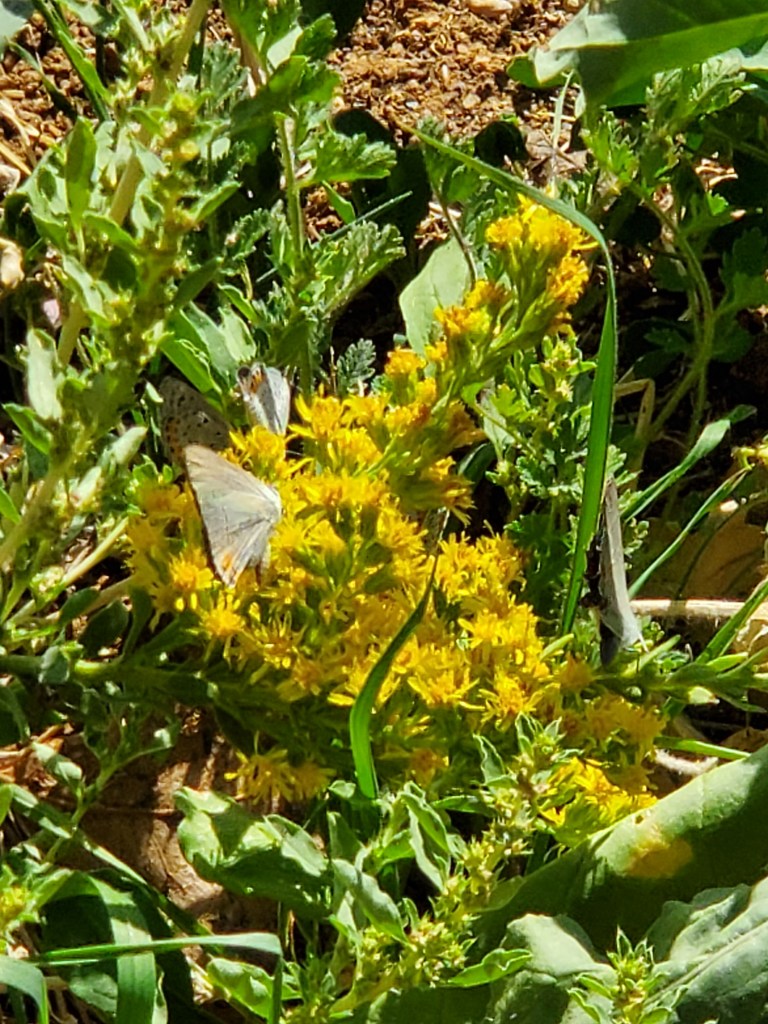
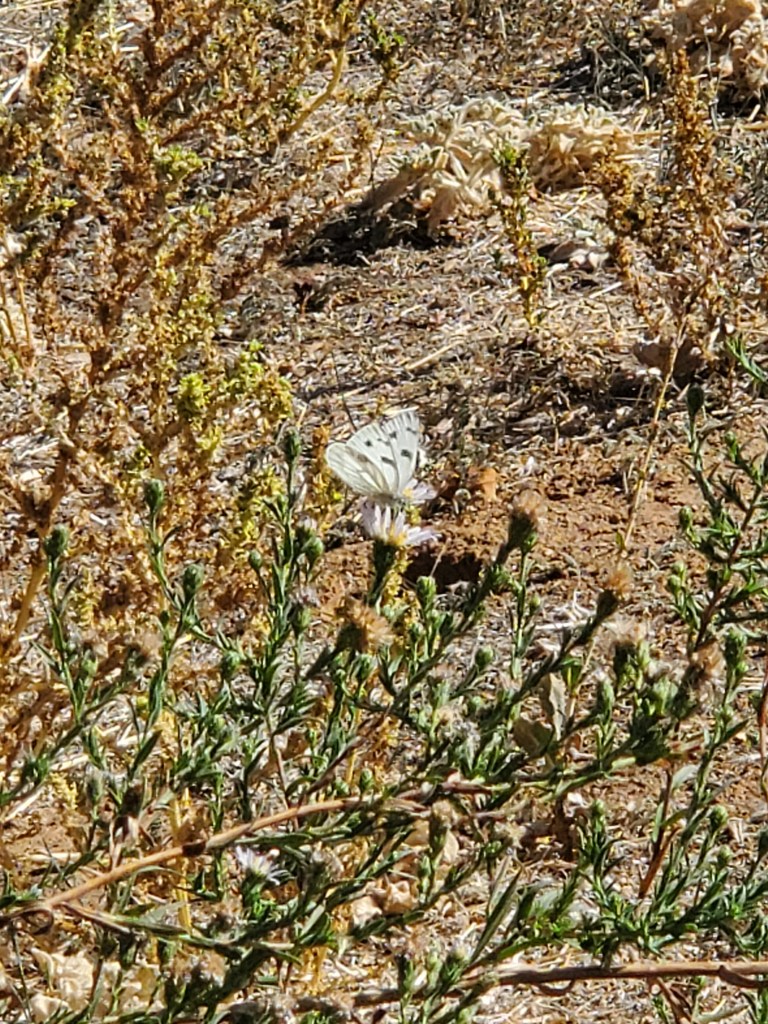
Painted LadyCalifornia HairstreaksSpring White (I believe)
Cold weather is here. Rain is here. I am calming down with the change in temperature and precipitation. I worry too much about water and the life it enables. My concern is not for me, but all the living things here. Sure, I can leave and be a water refugee, but most of the animals and insects cannot. So – I must use my power as a human to do what I can to ensure livability for all. It is a responsibility we all have, but not one that all fulfill. These values are typical in Indigenous communities and families. We are taught that we are part of the ecosystem and have an obligation to live with respect in reciprocal relationship with all things. I am not always the best relative. I have many more shoes than one person can ever use, for example, taking much more resource than I should. I try my best as a Native in the modern world to fulfill my obligations. I fall short often. No one is perfect.
I watch storm clouds move in as I prepare for rain.
So far, we have had .75″ in this rain year (October 1 start). If you include the 1.25″ in September, we have now had 2″. The lengthy warm weather has allowed the blooms to continue, which has provided welcome nectar for bees and butterflies late this season.
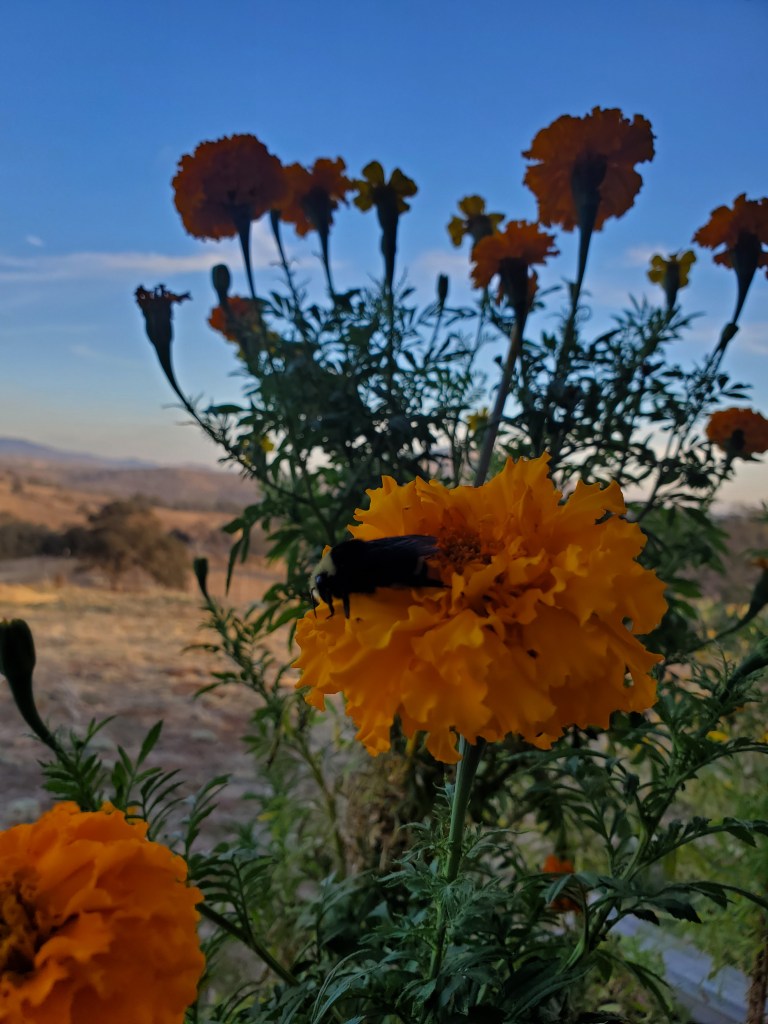
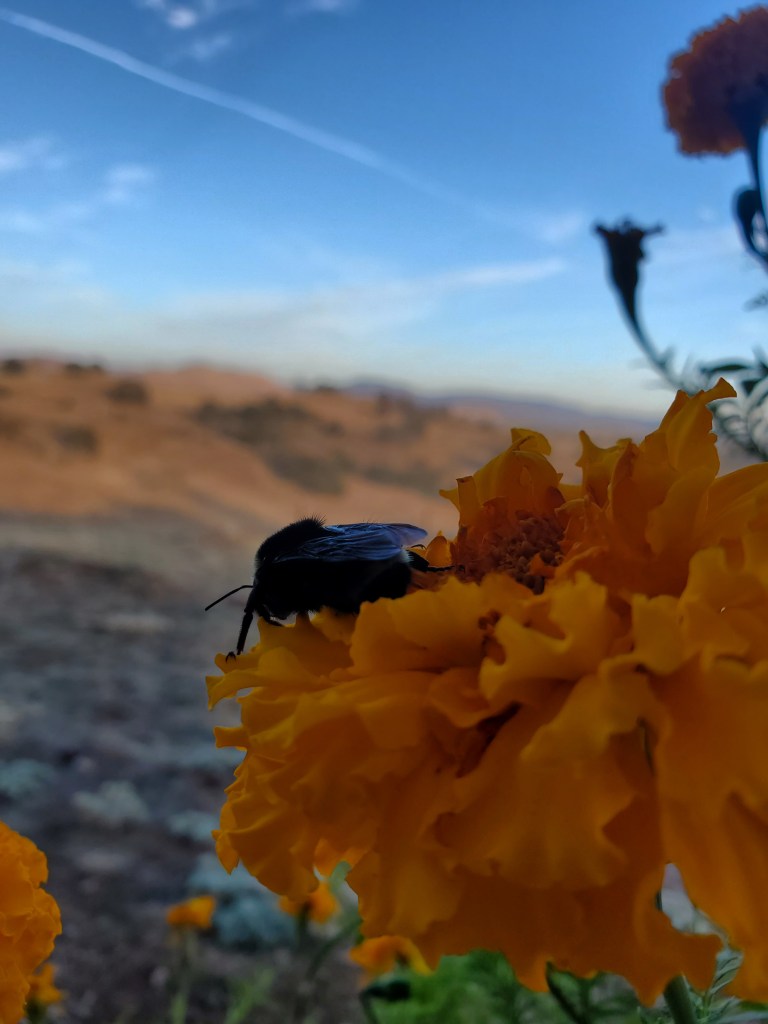
Butterfly bushA finch at the bird bathPoppy emergingAnother poppyBumble bee on marigoldAnother view of the bumble bee
Not all plants are welcome. The lingering heat also allowed goathead (puncture vine) plants to continue growing. They are a painful scourge, and I work very hard removing them by hand year after year. Typically, they are done growing by September. This year, with the ongoing irrigation, their roots were able to find the water not meant for them, and with the sun, continued to grow. I did not keep my eyes out for them after the beginning of September, so many grew quite large with their prickly, penetrating load. I got to them too late and paid for it with large distributions of painful “seed”.
Thorns while still on the vineDried goat heads off the vine – ready to puncture you!
As cold weather descends, I will see less and less of these insect friends, no blooms, and not as many plants. Everything needs time to rest – the soil, the insects, animals, plants and me.
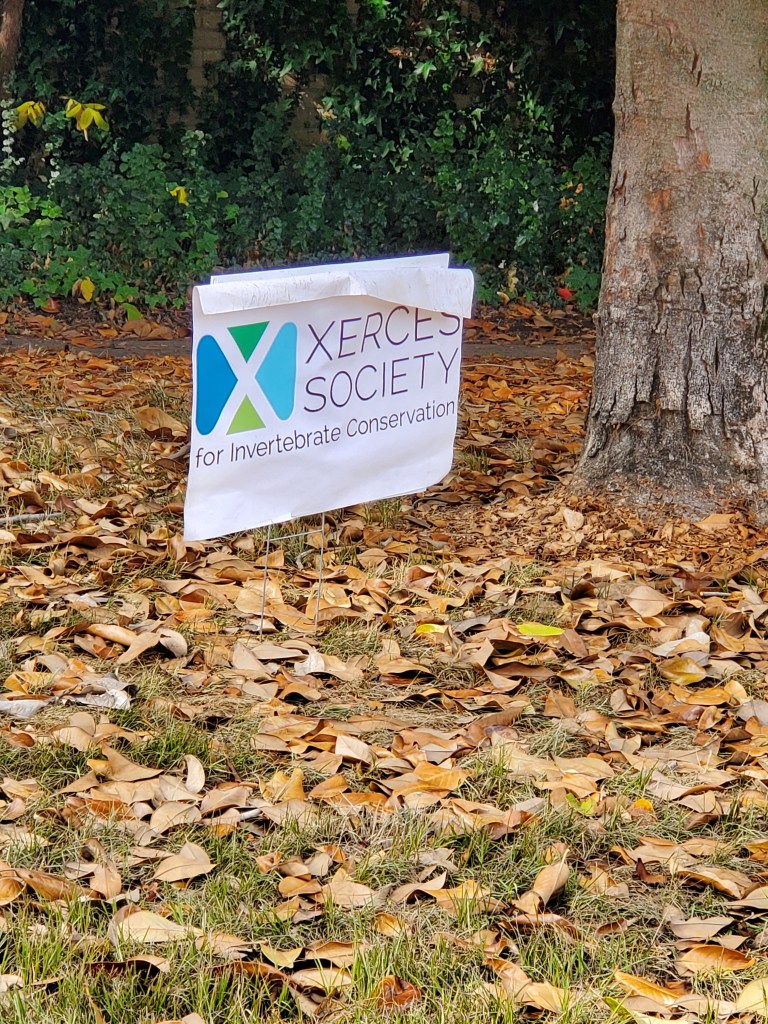
Xerces Society – Making a Difference
Wayfinding sign at the NRCS Center for Habitat Kit pick up
I have sung the praises many times of Xerces Society. They have very committed staff who work with diverse people and organizations to achieve their pollinator conservation mission. They are incredibly helpful and truly make a difference working with people who know so little like me. Check out their education on various pollinator species.
Last month, I attended one of their webinars on building habitat for native bees. It was so informative. I was able to go outside right away and create habitat per their discussion. Some of the things I learned that made an impact on me: 1. most bees live extremely close to where you see them. They do not have the physical ability (in terms of energy) to move too far away from their nest. 2. It is better to use leaf litter as mulch than wood/bark in areas where there are ground nests. They do not have the strength to push the bark away from the hole and could get trapped, and 3. Some bees nest in hollow sticks and some of those bees need longer sticks than others. They will take bites from leafs and use them to close the opening of the stick after they lay their eggs. Very cool!
The first thing I did was freak out. I had laid down significant mulch across many areas this spring to prevent moisture loss from the soil. My imagination ran wild as I was sure I trapped native bees in their ground holes by the thousands. I started to cry mad tears. These are the times I wish I had more knowledge to identify a bee hole. Son of a gun! I pacified myself by remembering that we must always think about balance. The bark mulch was crucial around the disturbed soil from planting milkweed and nectar plants to prevent the rapid drying out of the soil in the relentless Hornitos sun. I used the mulch for walkways to prevent soil damage and erosion in those areas I traffic quite a bit. There is considerable ground I did not cover, which is protected, and could host a bee nest. Ok, I wiped my tears and began to breath again.
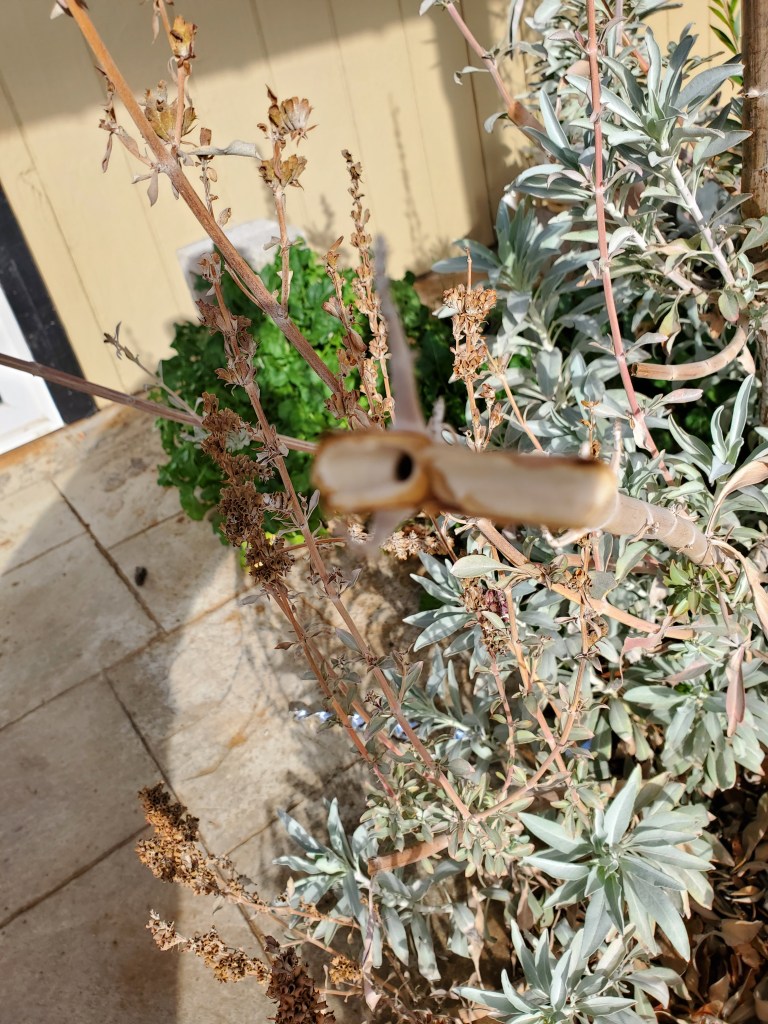
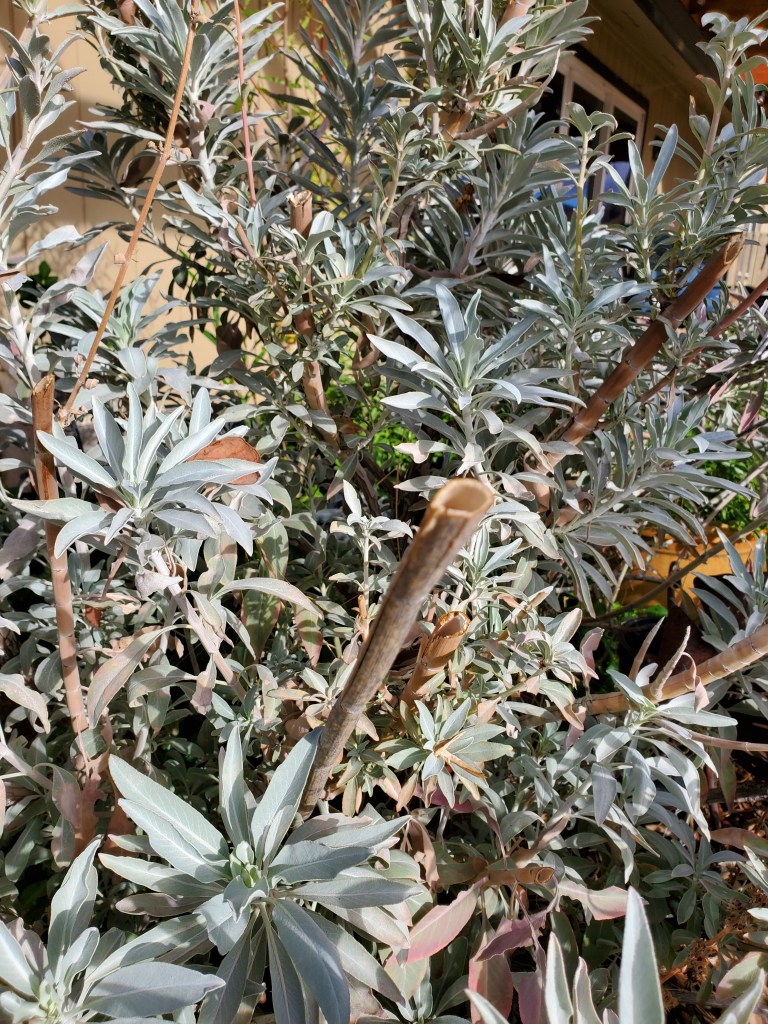
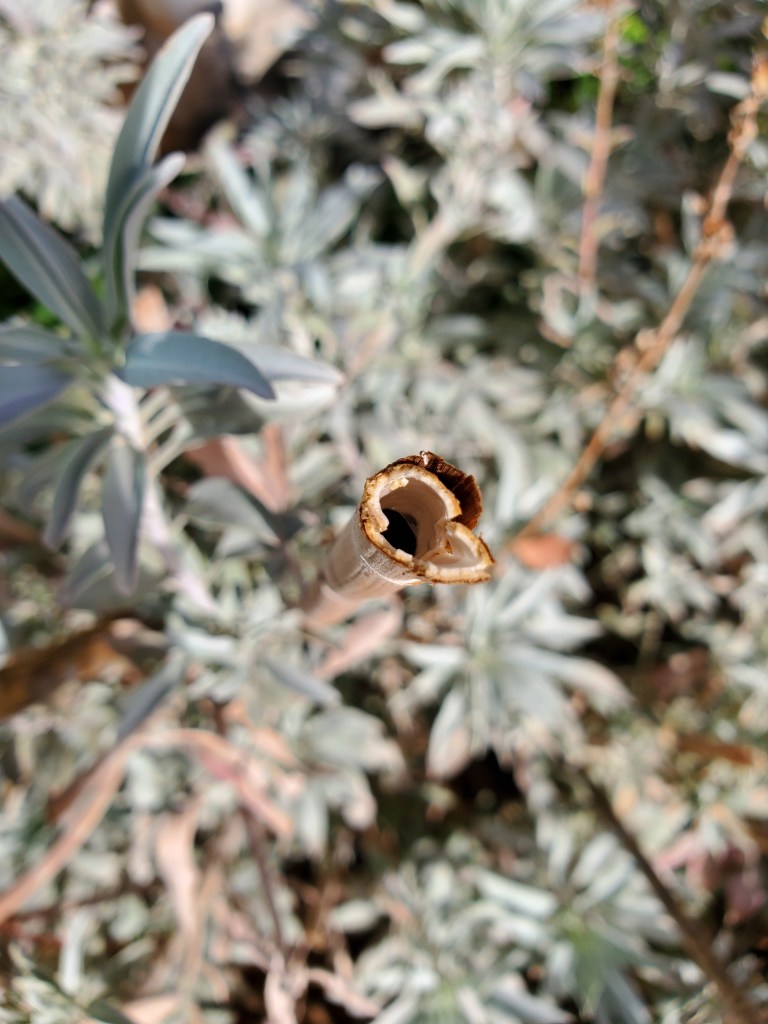
The next thing I did was to trim the white sage. I had been cutting the old bloom stems for seeds as my Chiricahua Apache friend Pete showed me to do. I did not realize as I had been cutting them that I was making habitat. Now, with my newly gained knowledge, I cut the bloom stems at different lengths. The bee expert talked about leaving lengths between 4″ to 8″. I sometimes needed to squish the stem to make sure the opening was very round and open. I really hope I see a plugged hole.
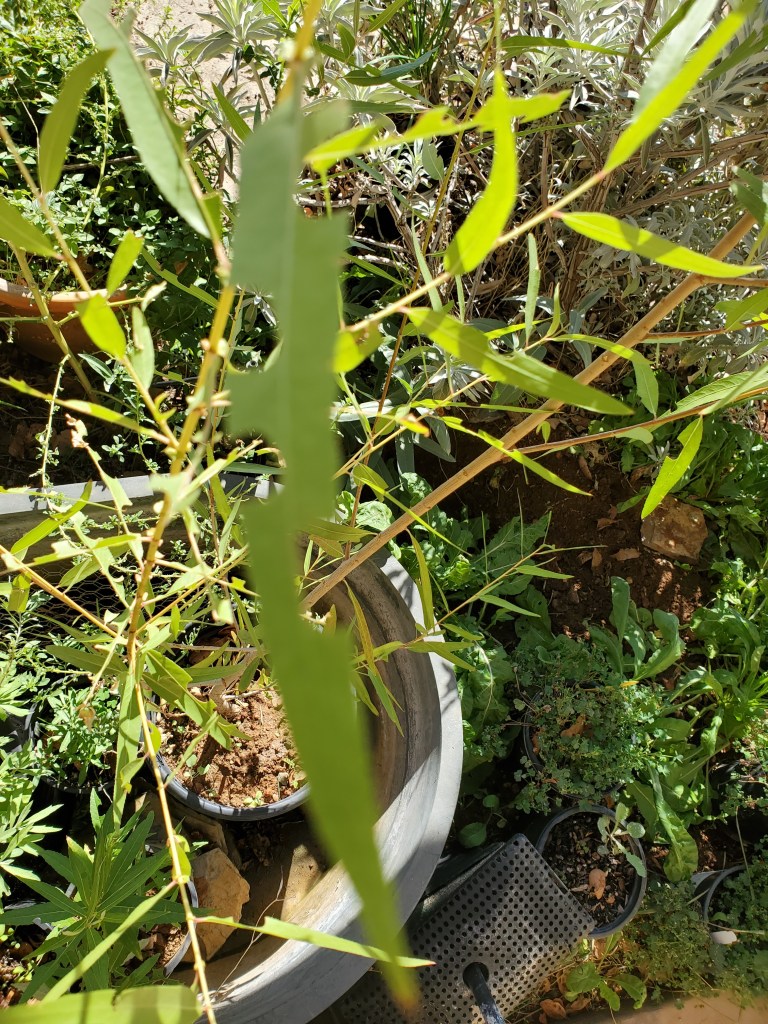
I was also able to recognize the patterns cut from the willow leaves by native leaf cutter bees. Xerces staff person Deedee Soto, who I work with most, had pointed that out to me during one of her visits. Now, I saw even more. The willow leaves look like half moon Swiss cheese. I hope this means that I have A LOT of native bees living near me. What great neighbors to have!
Xerces Kits are back!
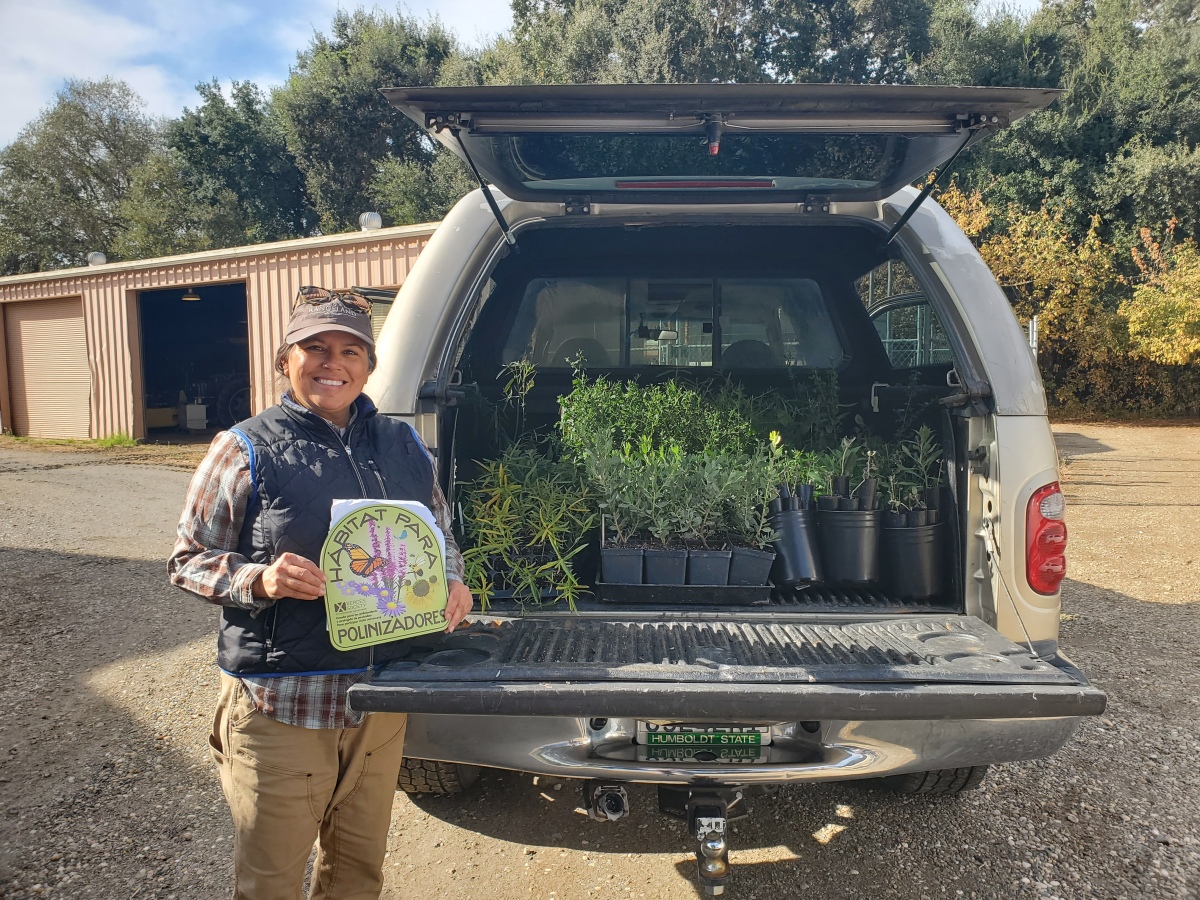
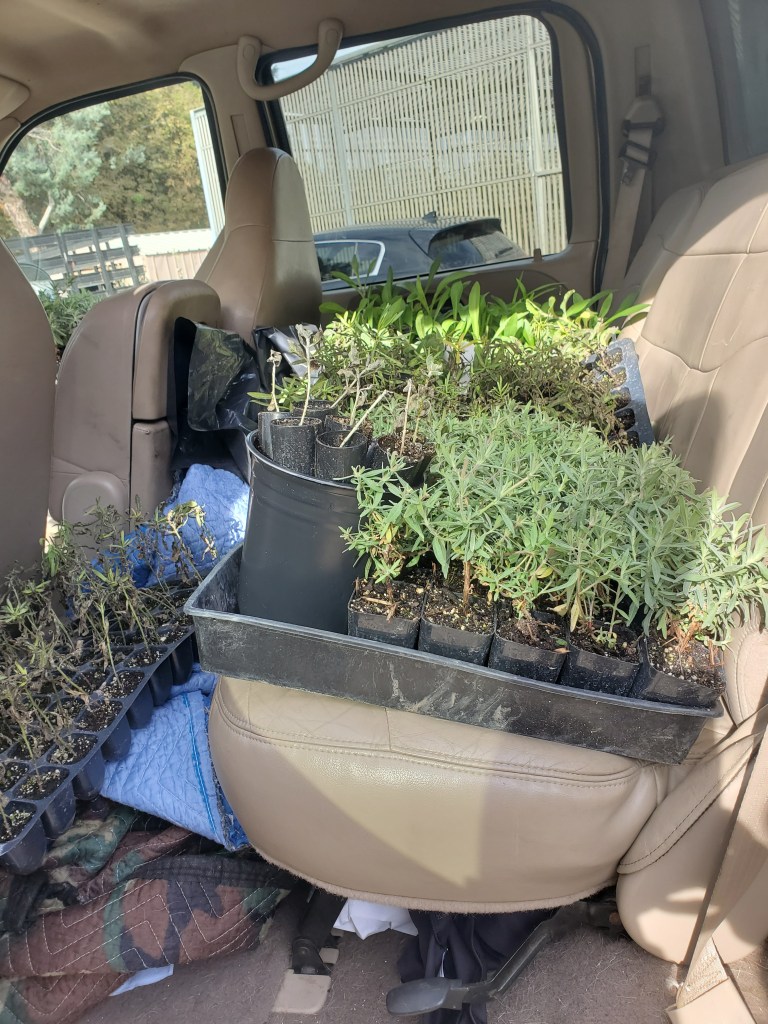
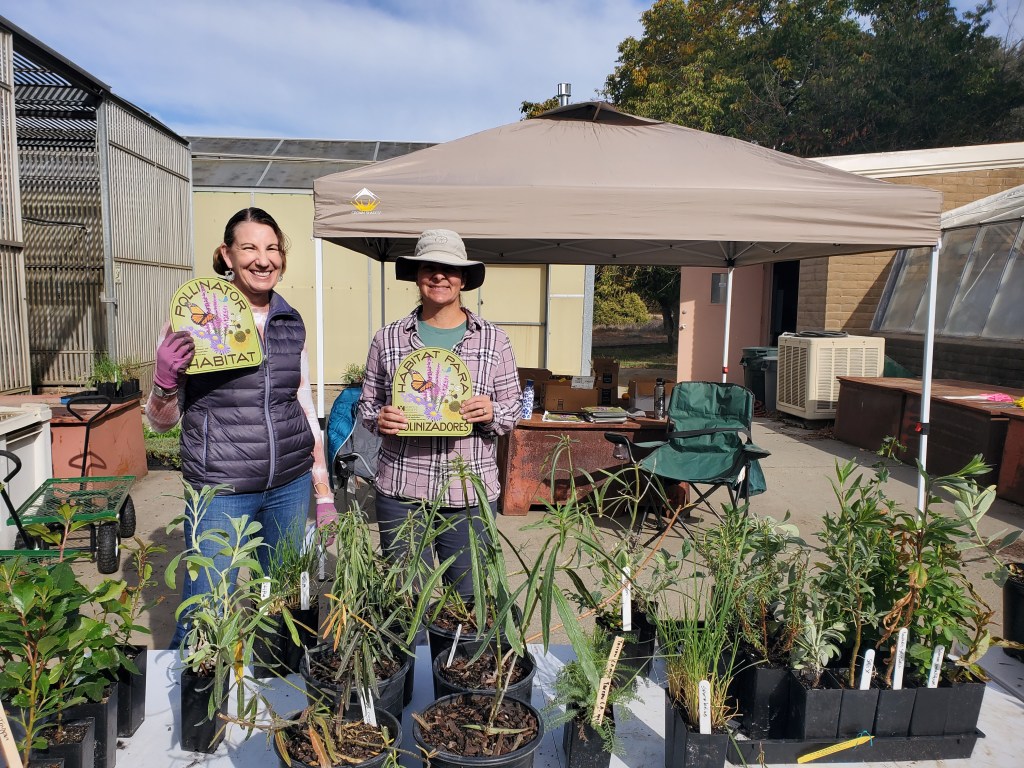
It is again that time of year when Xerces is distributing habitat kits. I cannot sufficiently express my gratitude for access to these important plants. I will be honest; not all of them survive each year. Hornitos is a tough place to make a life. Between drought, grasshoppers, gophers, and crippling heat, not everything can make it. Fortunately, life persists. Many of the Xerces plants have matured to generate seeds, and the milkweed has begun to run underground, replacing those that were lost along the way. I consider this a success and hope they (and their funders) do as well. We were able to bring back monarchs after a 10 year absence. Come on! That is incredible. Sometimes, I need to remind myself of this when I get sad about anything. With the help of Xerces, Mariposa Native Plants, Mairposa County Resource Conservation District and the Southern Sierra Miwuk Nation Pollinator Team – along with individual participants inspired by the work, we have made a difference in Mariposa County.
Grassland Kit occupying every inch of my truckThank you to this beautiful placeI am always so happy to see the plants and my Xerces heroes!Two of my Xerces pollinator-loving heroes Jessa and Angela! Thank you SO MUCH for everything you do!!
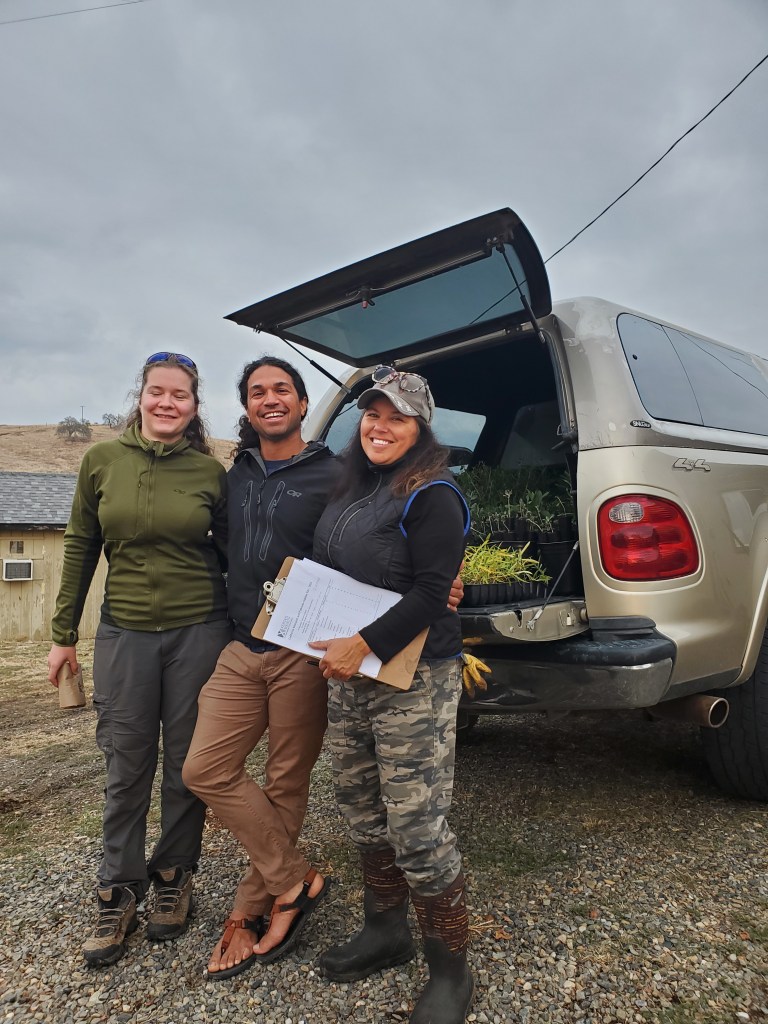
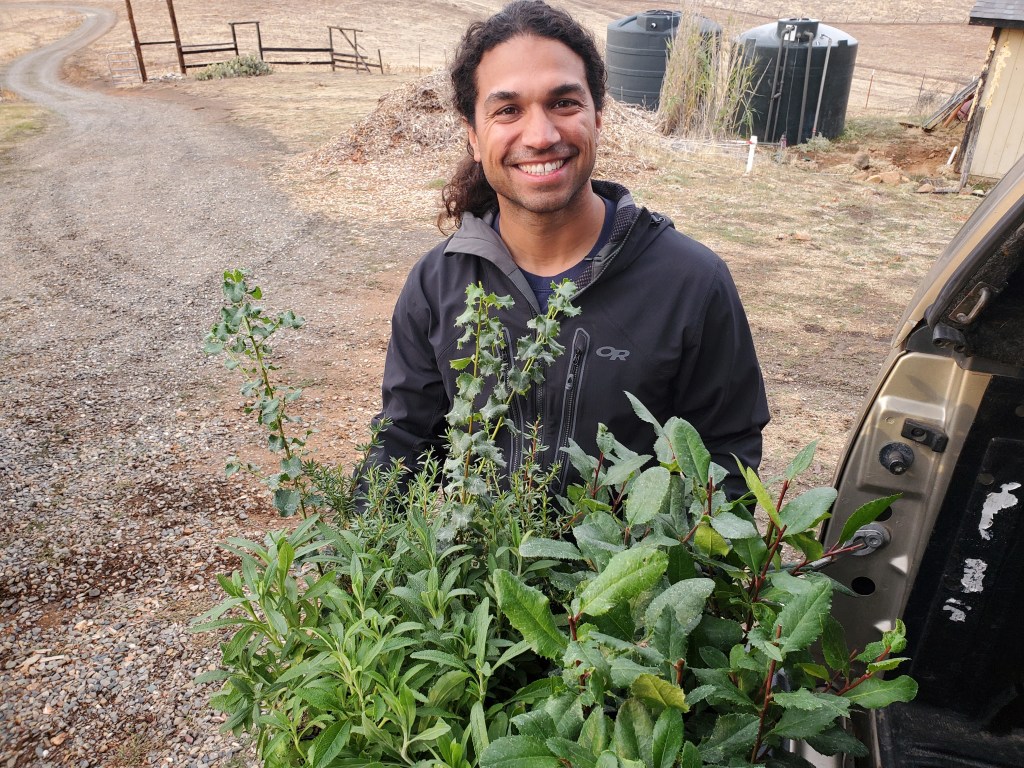
Because the pick up site is far away, I try to be helpful and offer to pick up other people’s kits near me. My young friend Ray Gutierrez called me and asked if I would pick up his kit. Absolutely! What a good guy. He and his wife Leeza are good land stewards. They live on a large parcel in eastern Fresno County. They want to make a difference and expand habitat they already have on their acreage. I met Ray many years ago when he was an Americorp staffer for Sierra Foothill Conservancy and have stayed in touch. He is a member of the Wuksachi Tribe from the Central Valley and holds similar values as me. We are connected on Facebook where he saw the information about Xerces and the kits. He wanted to make a difference for pollinators too. I guess social media is good for some things. I am grateful to him and Leeza for their efforts. I sent them home with a pile of greens and herbs from the garden and flowers for Leeza’s desk.
What a great young couple. They chose to get a grassland kit AND two hedgerow kits. Their SUV was packed! They will be planting for days and days. Chiokoe uttesia in weweriam (Thank you my relatives).
Checking off the plants and transferring to their truckThree pollinator lovers!Remarkable Ray with his plantsRay and Leeza ready to go. Thank you to these wonderful young people. Si se enche nake weweriam. Ito te vitne (I appreciate you very much relatives. Best wishes)!
Fall Activities
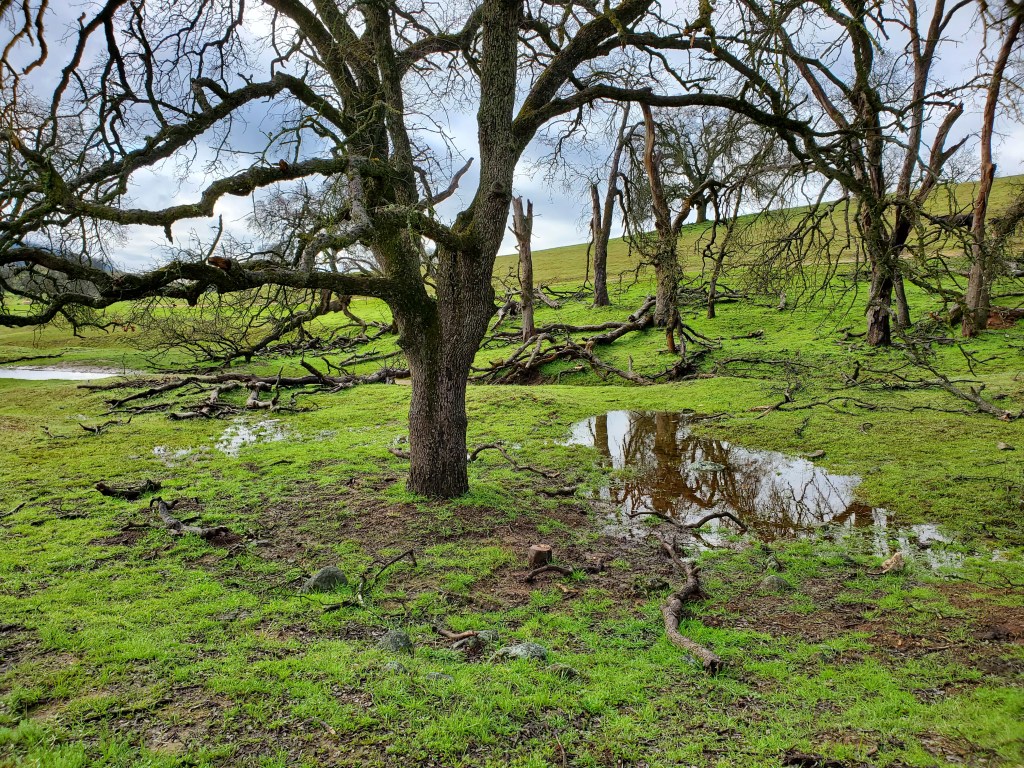
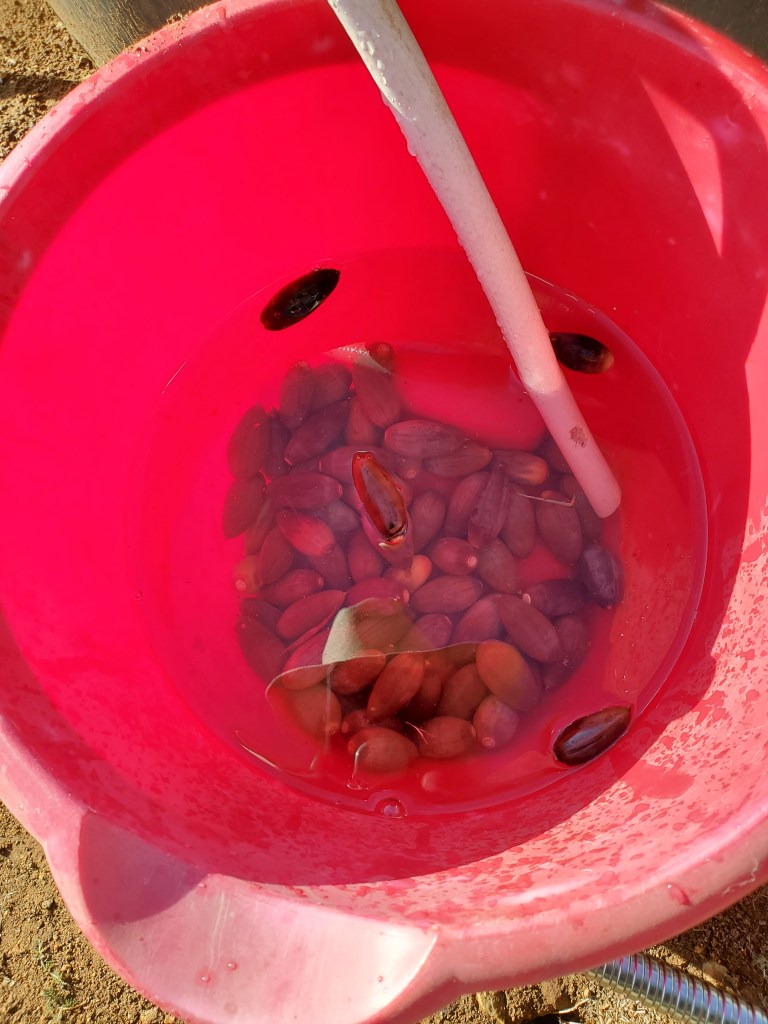
I am gathering acorn from my trees to grow the next generation of trees that are on the west side of the ranch. Those beauties in front of the house are having trouble and getting older with no next generation to take their place. We never see any seedlings up on this hill. An attempt 10ish years ago to grow more from acorn failed. So, as mentioned in my previous post, we are going to try again. This time, we have experts available to us. As I have mentioned, it is a bad acorn year in terms of size and production. There are some trees along the spring creek that have full-term acorn finally dropping . David and I were there just at the right time to collect quite a few, and many are intact enough to propagate. In other words, all but 4 passed the float test.
Pockets bulging with acornsOnly a few float. Success!
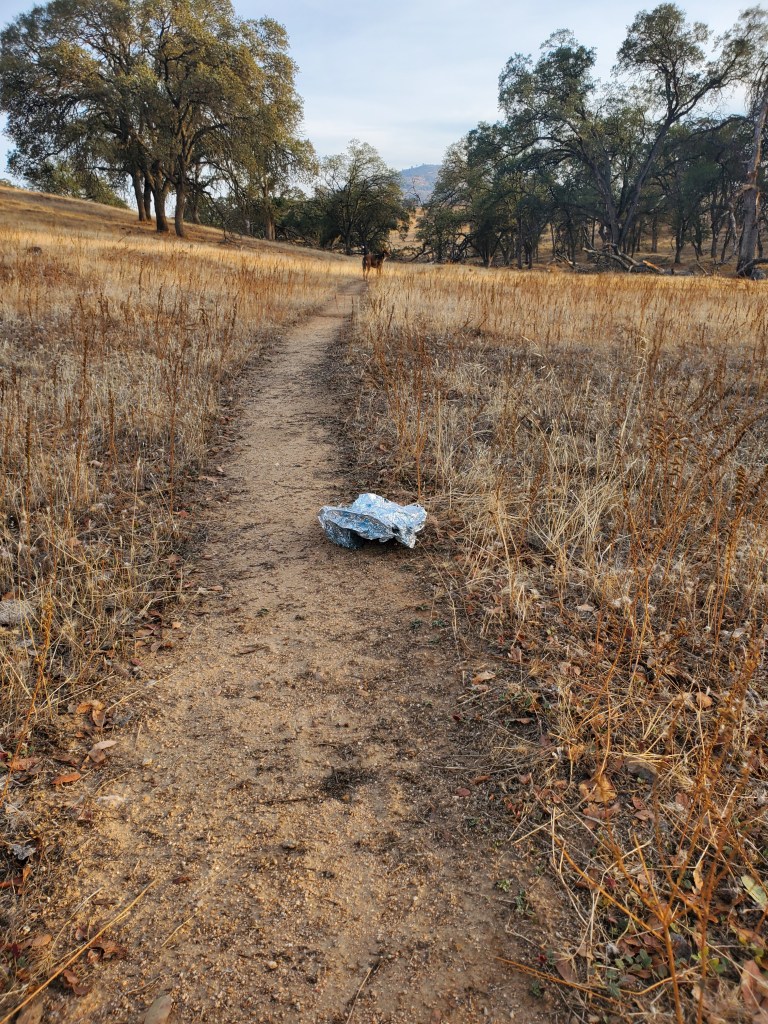
The cooler temperatures and moist soils, bark and grass make walking the ranch a physical and olfactory joy. Every walk is deliberate, even if joyful. I am always looking for changed areas, new things, human interference. This is part of stewardship. On a recent walk, I found a landed mylar balloon, otherwise known as litter. Please dear readers, don’t get mylar balloons to celebrate anything, even for children’s parties. They often get away from people and end up being trash someone else has to deal with. They are plastic and can be dangerous for cattle. Little ones exploring their world can eat them causing a very painful and unnecessary death as it blocks their digestive system.
Yet another mylar balloon littering the range. David and I joke that there is some special wind current that takes all the loose balloons here where they deflate and become hideous trash.
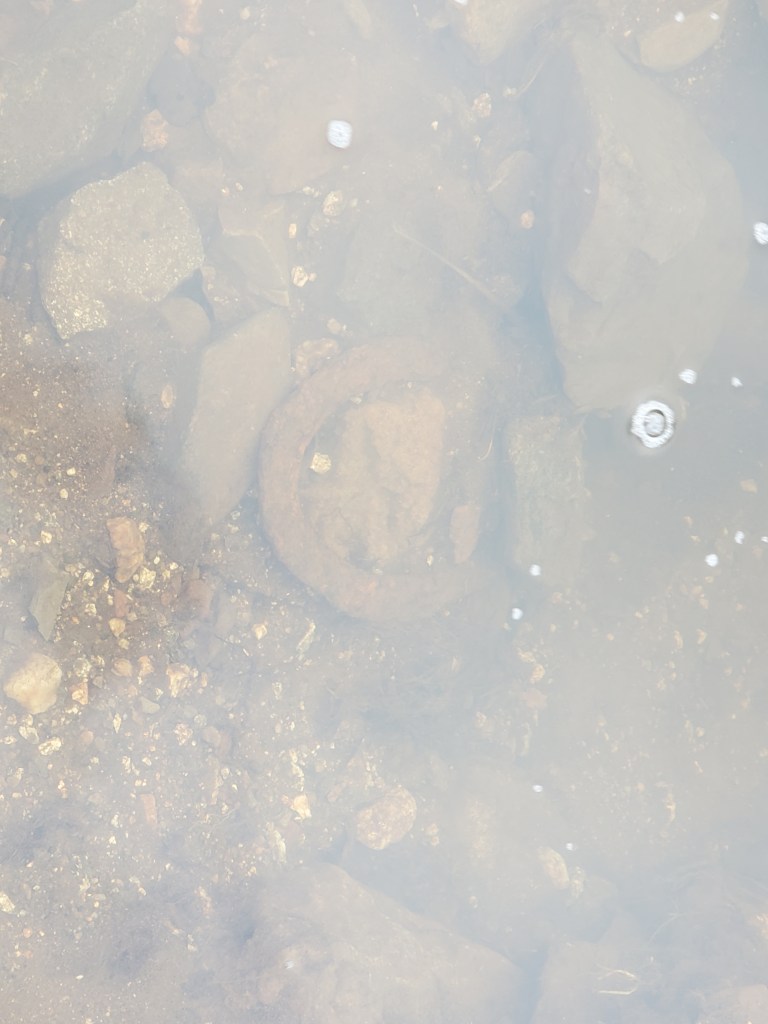
With the drought, the neighbor’s pond is dry. This is a good time to help them out by looking for trash. It is amazing what floats down stream from others upstream. We are still finding mangled items from the 2017 major flood, which took out bridges and floated cars downstream. The other day, my good friend Chevon was visiting. We gathered trash from the pond for pick up later. We found two mangled metal drums, two tires, broken PVC pipe a metal pot from who knows when and a piece of wire fencing. Thank you Chevon for helping keep the land clean!
Chevon places an item in one of the tires where we collected the smaller pieces of trashSay “cheese”!
The spring in Spring Creek has been expanded slightly by the rain. Horribly, the large spring on my border with the neighbors has absolutely no standing water. The last time this happened was in the fifth year of the 5-year drought. It has always been so reliable, but I fear the pressure of everything using it doesn’t give it sufficient time to refill or perhaps there is nothing left to refill it with. The rains we are experiencing this week should help – but this is a very bad sign.
The small spring has more water and is expanding its presence slowly down stream
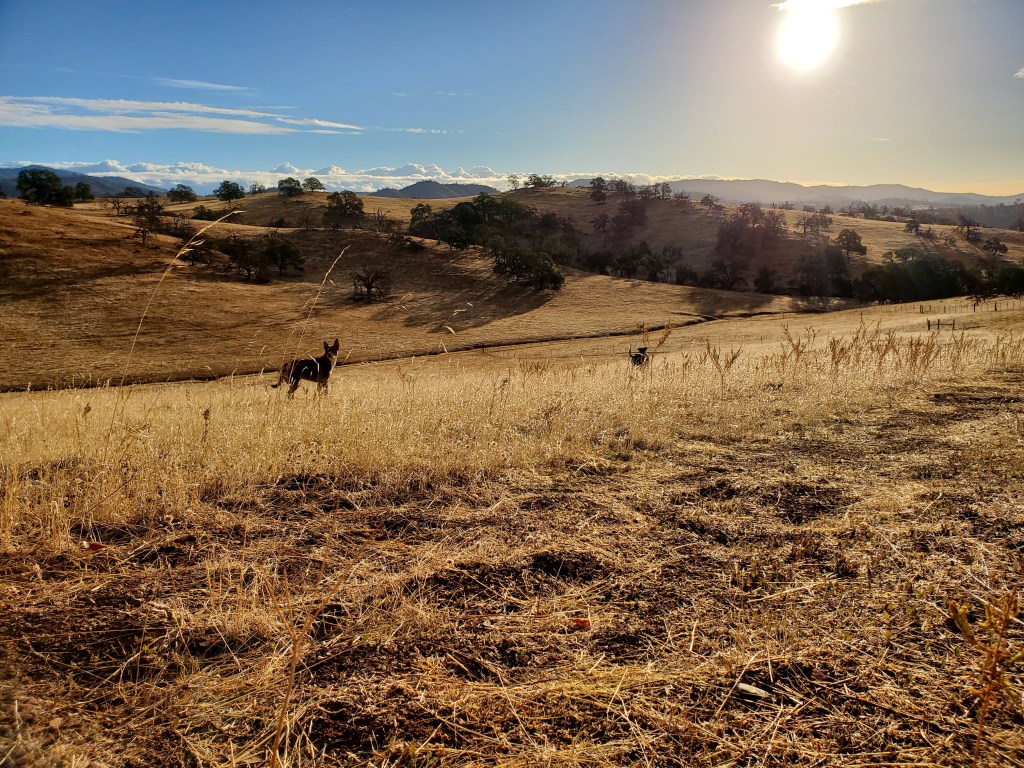
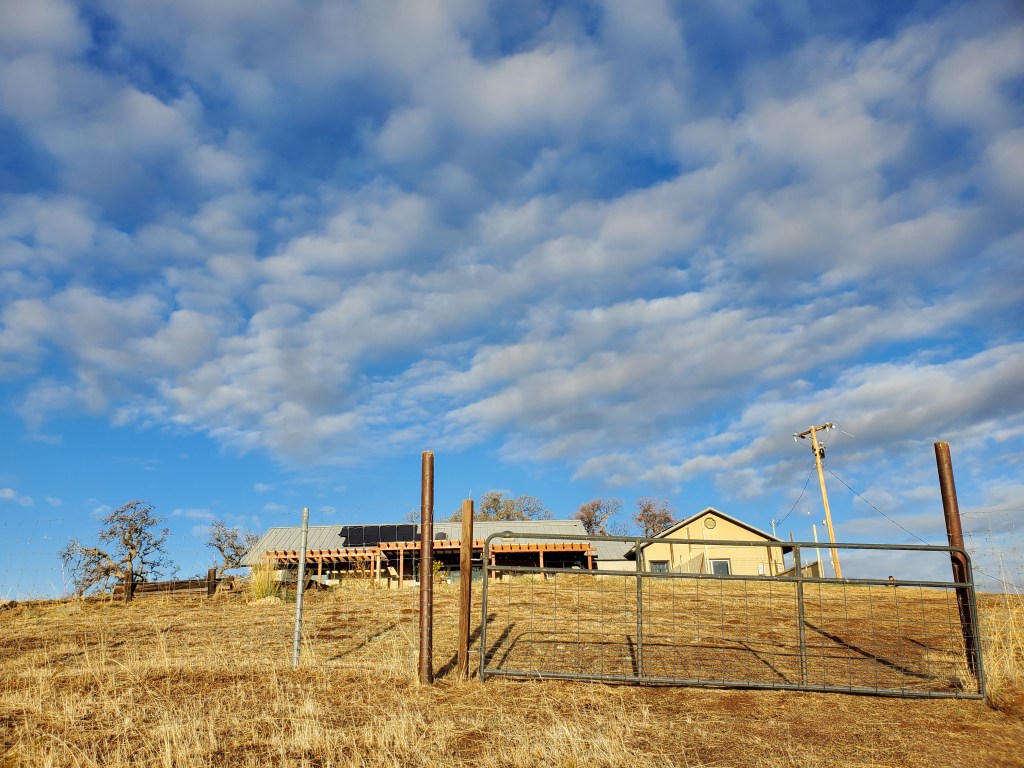
Here are some random photos from this past month.
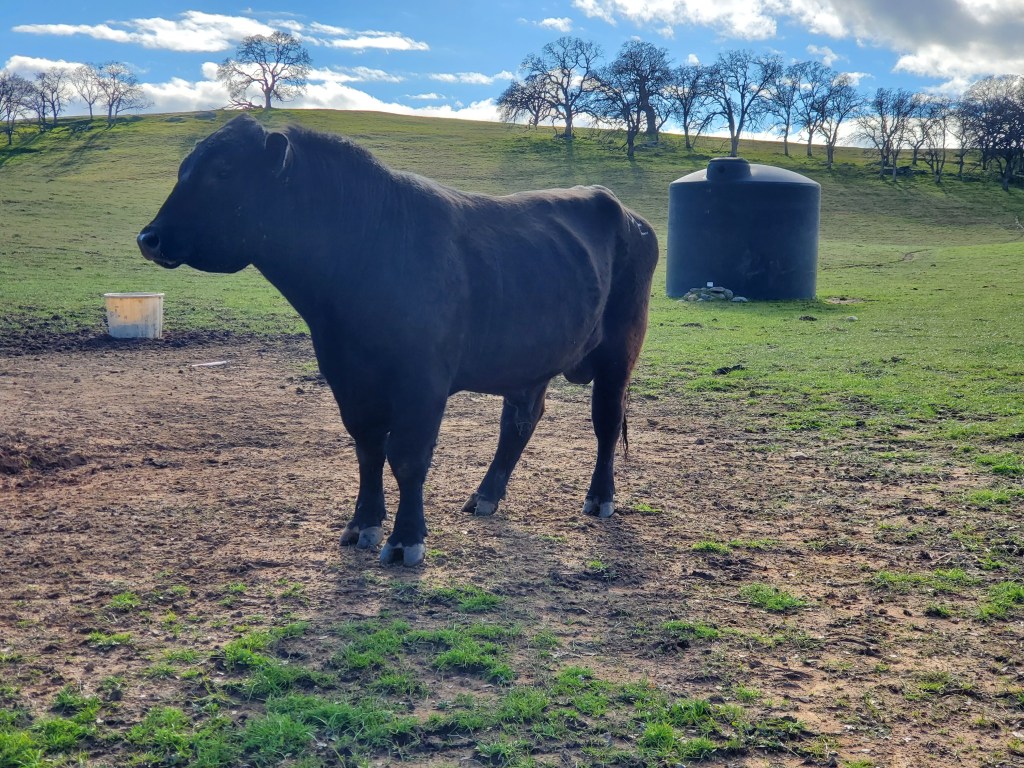
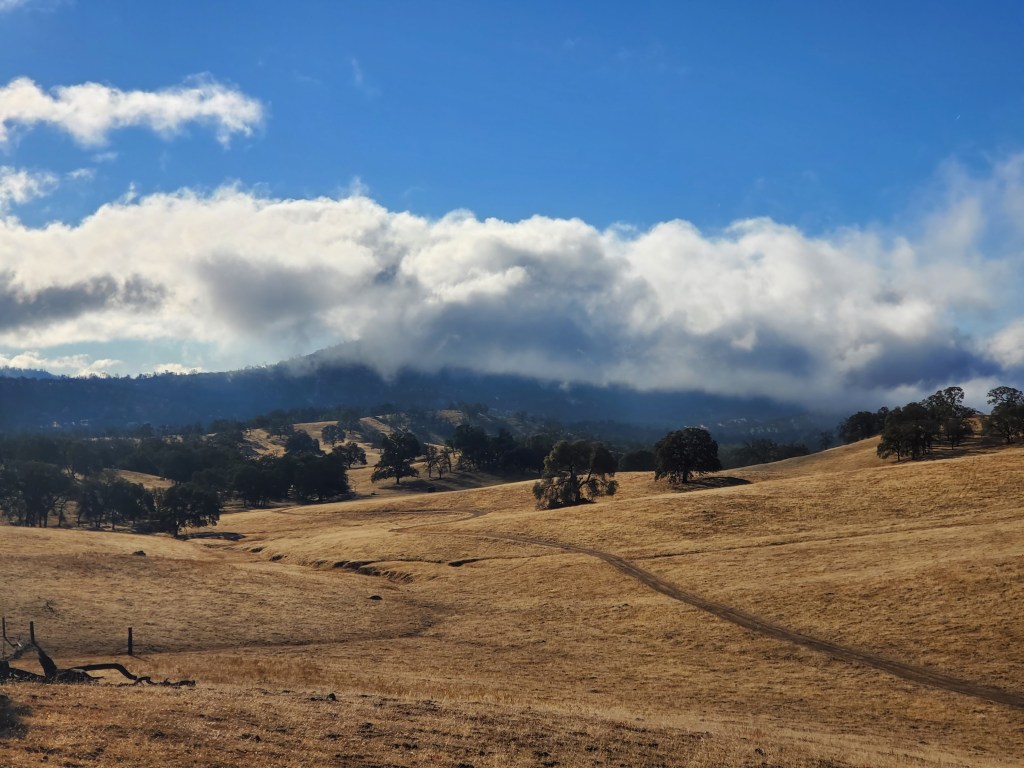
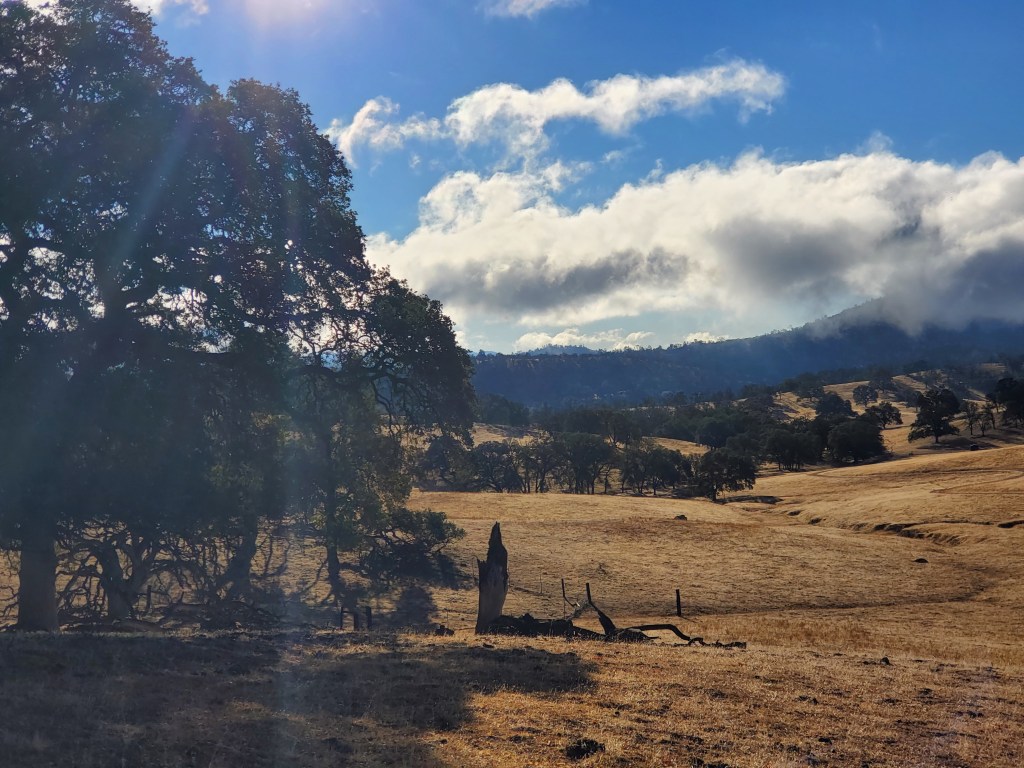
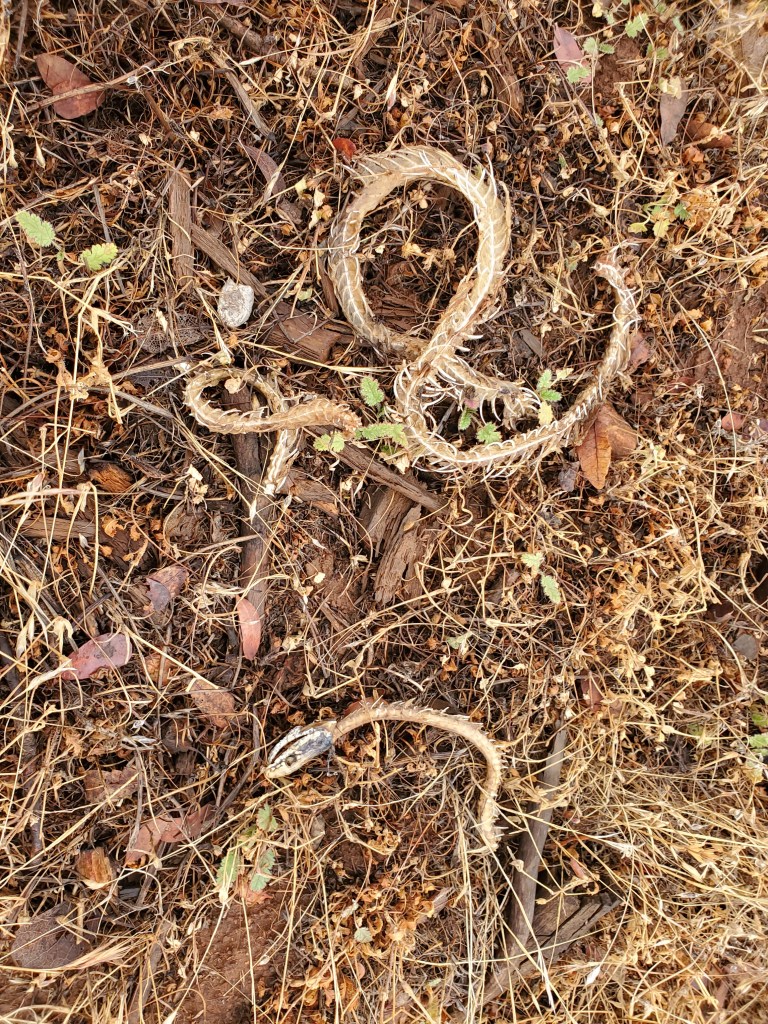
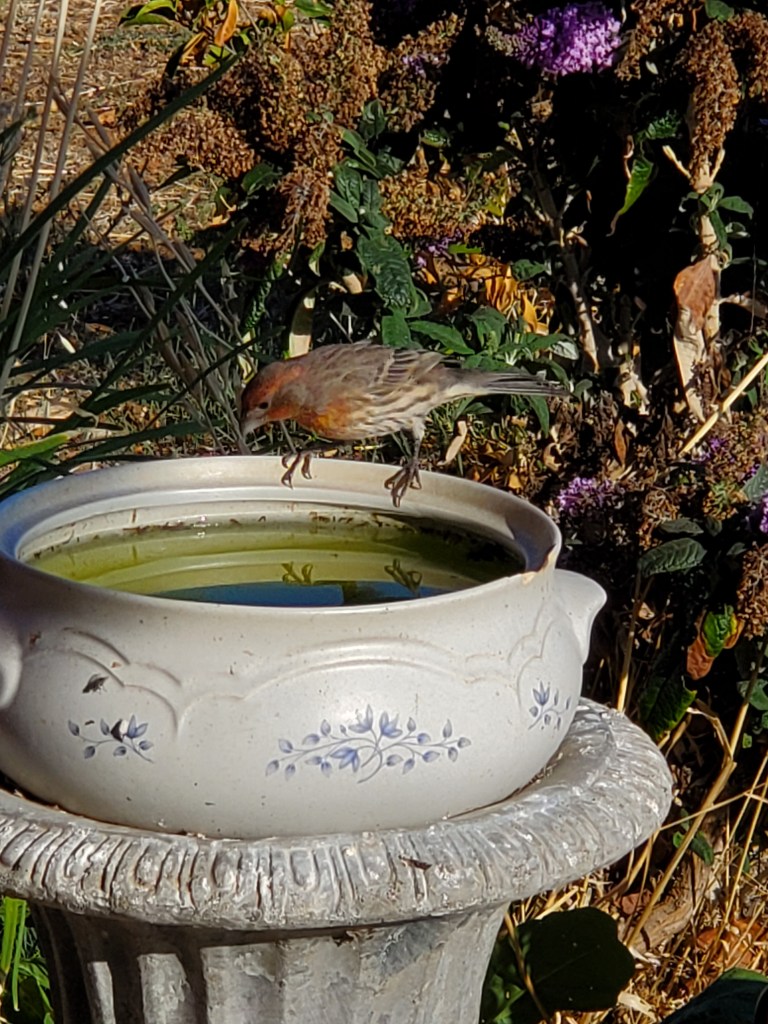
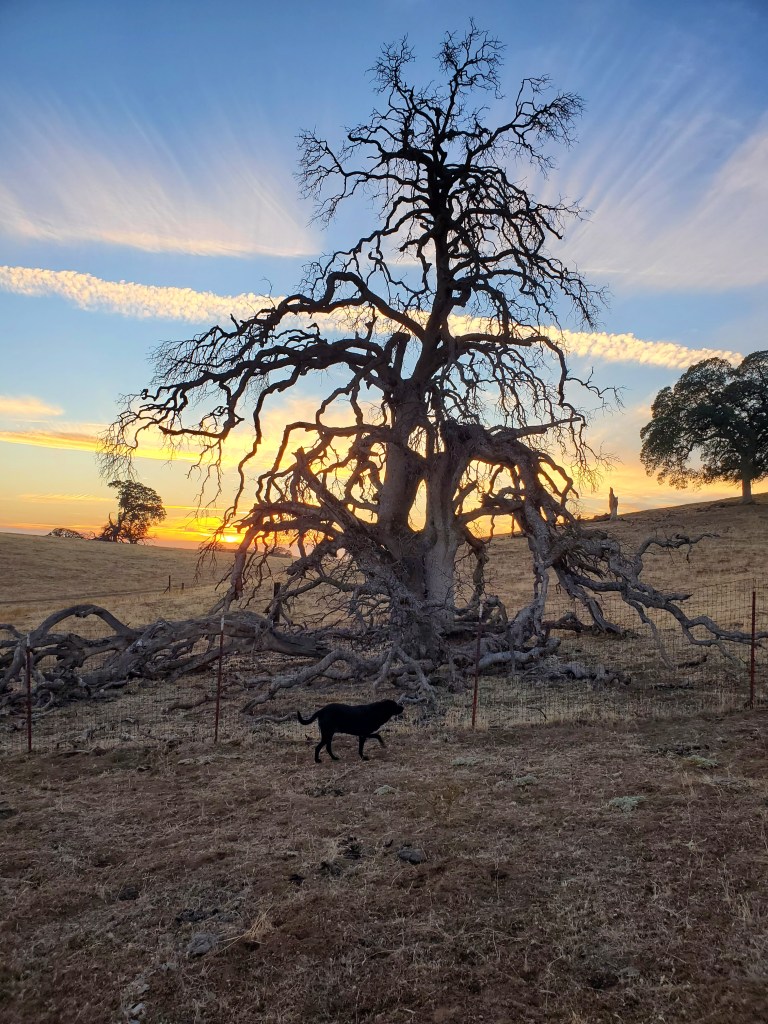
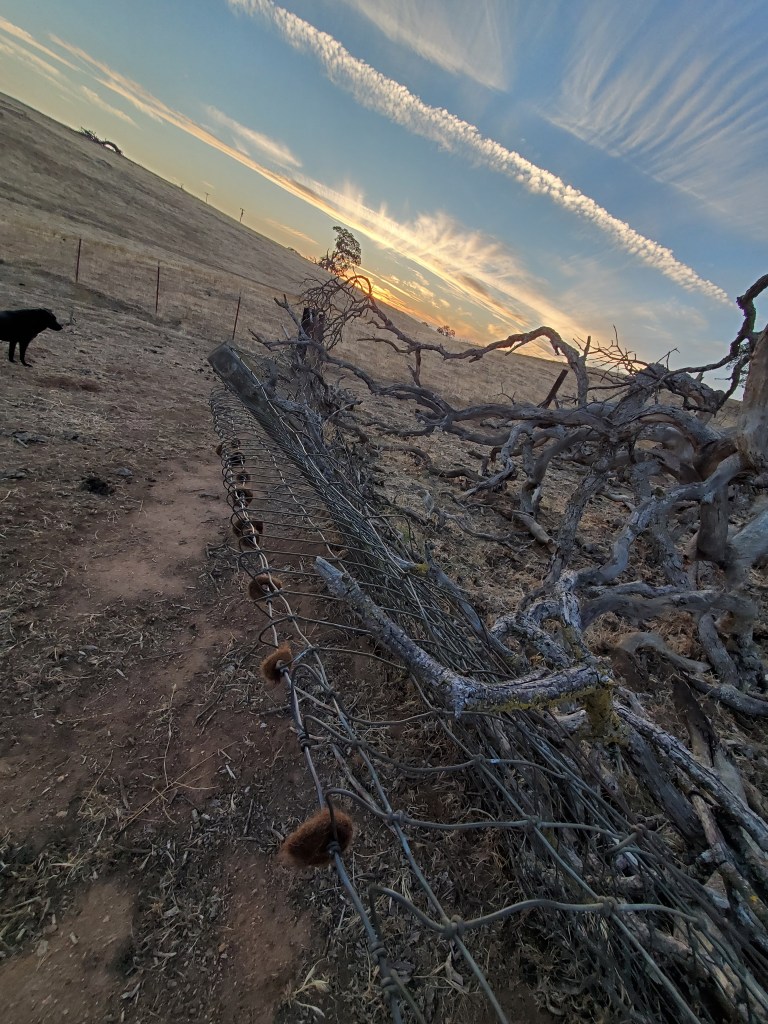
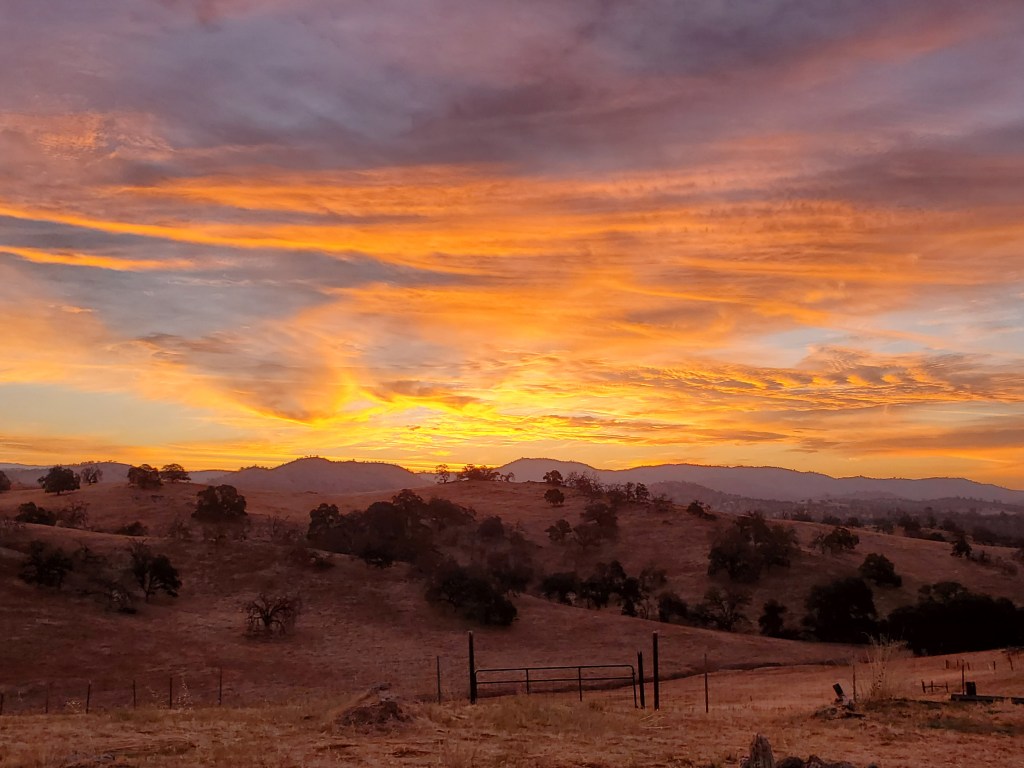
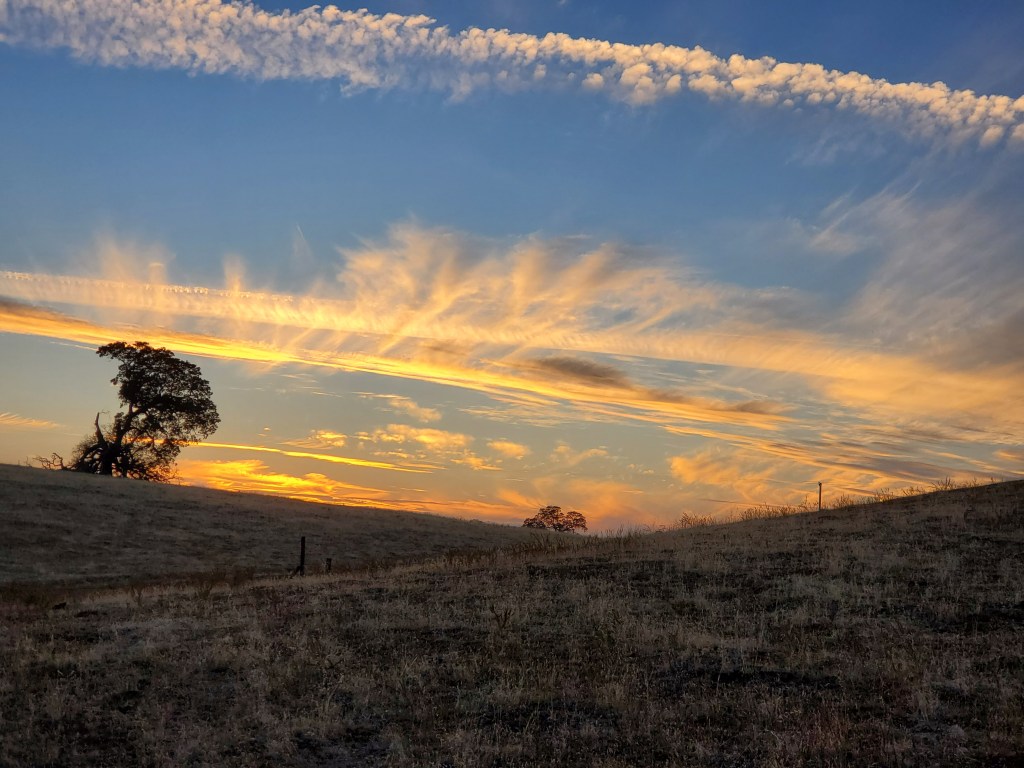
Heat continuesStorm clouds gatheringPost rainClouds move in againSnake skeletonA good friend late in the seasonWalking the cattle roadA finch looks at his reflectionBeatrix wants to join me in the hammockCows push the guzzler around. Panels not enough!Oak crushes a fence as it falls apartSunriseSunsetBumble bee content on the marigold. He eventually left.
Animam Mikwame/Día de los Muertos
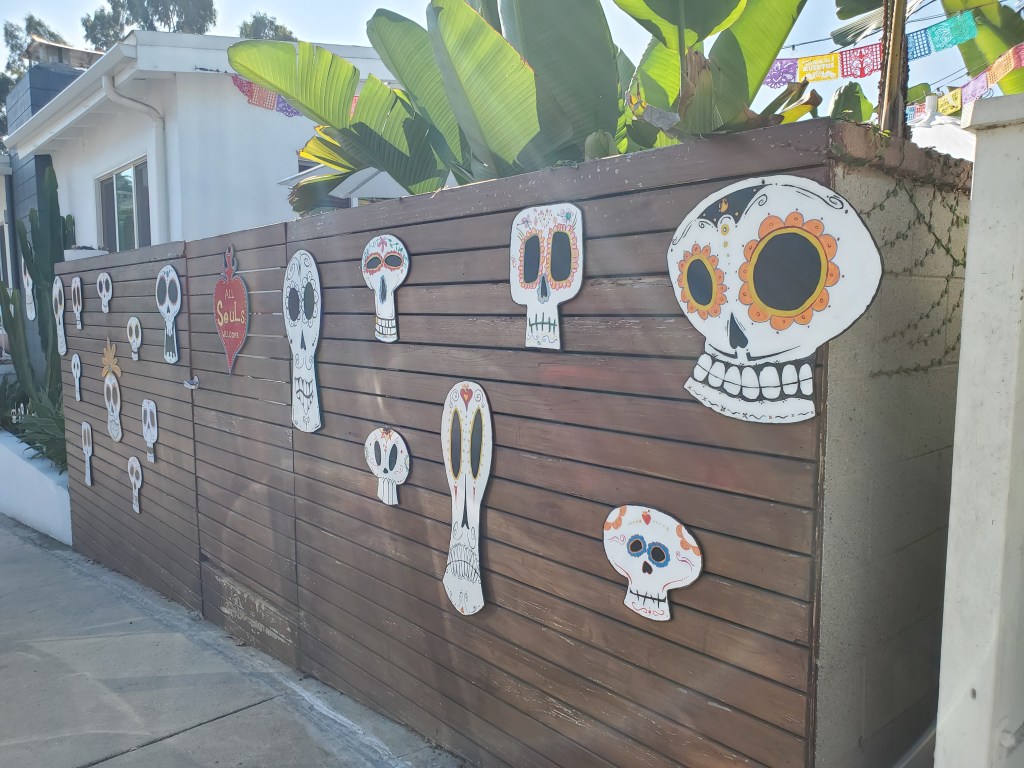
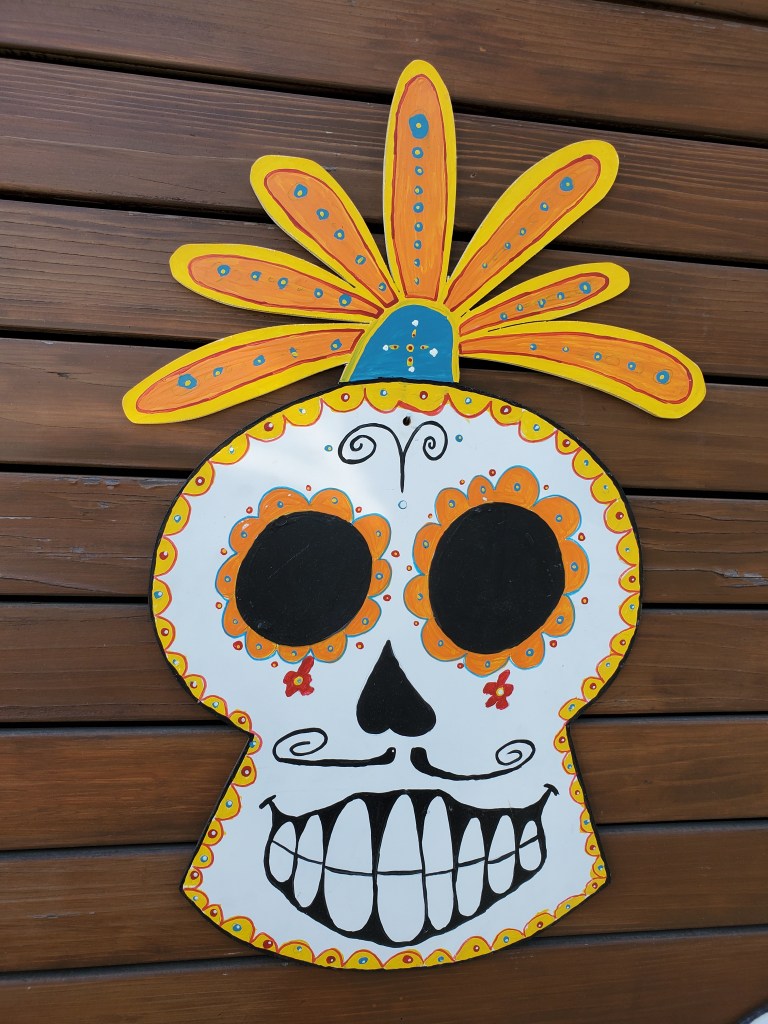
For those not aware, beginning last month and ending last week is an important time for many southwest North American Indigenous communities. In my Yoeme tradition, the holiday is called Animam Mikwame. In the colonized Latino community, the holiday is El Día de los Muertos. As the Catholics missionized my Native yo’yowam (ancestors) and all others in their path, they adopted the holiday/religious structures that existed and added Christian elements. In this way, the colonizers could more easily capture the minds, thus labor and natural resources of the Native people. The Día holiday is very much based in Indigenous culture – with Euro-religious elements added – and of course, many opportunities to merchandise and market. I am sure Hallmark has a card too!
Some purchased decorations for Día at a house in Southern California
Nonetheless, it is a beautiful holiday that I hope you will embrace (if you do not already). Essentially, October is a time when the spirit world is closest to the world of the living and is at its thinnest November 1-2. It is a time to remember those that have passed, to honor them. Making offrendas, alters, tapehtim (tampancos/lofts) that include items that loved ones enjoyed in life. Marigolds have been used as sweet smelling flowers that help lead the spirits to their alters. They are still blooming at this time and are an important source of food for monarchs. It is no wonder that there is such a strong connection between monarchs and the spirit world. They are a visual representation of the spirits returning and a very real symbol of transformation from one state to another. It is a special time with food, music, conversation and families coming together. It is a time to think of others, not ourselves, to celebrate those we love who have transitioned from this world to the next.
My mother’s alter – Victoria K. (Ayala) Bernikoff
Who do you remember? What love from long ago or more recently did you lose? It can be difficult to think about – but that is the beauty of the holiday – the concept that they are always with us and closer than we think – especially in October. The purpose is healing, respect and the continuation of love.
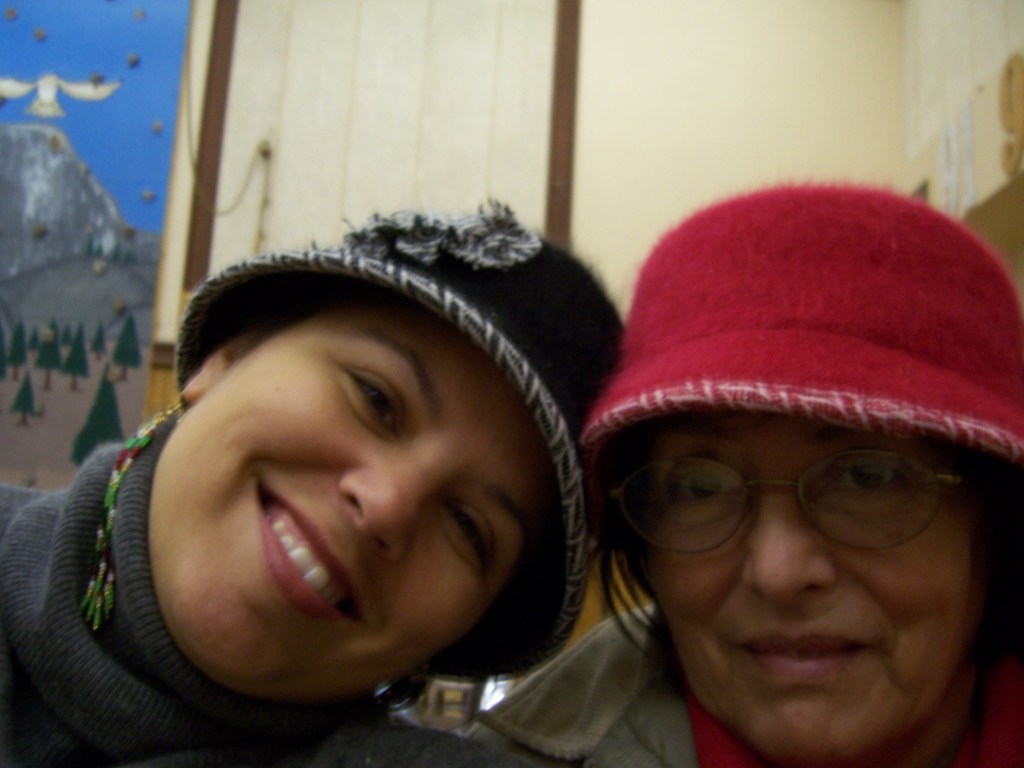
The person who I remember always, all year long, is my mother. She was one of the most important persons in my life. Strong, yet gentle and so loving. She embodied everything the concept “mother” brings to mind. Tears are in my eyes as I write this, but they are tears that revel in the act of sharing her memory with you — because she was so important and such a fine person and someone who few really knew. She was quiet, contemplative, highly intelligent with good common sense. Importantly, she loved all her children unconditionally. There was never a moment I felt truly unloved or unsafe. I am grateful for her commitment to quality parenting. Too many people do not receive that.
I have had to struggle not to think of the bad things – the diabetes that could have been avoided in a less hateful world; the joy that could have been externalized in a less racist place; the emotional pain that need not have been if she had a more respectful spouse. I inherited her engagement ring, and when I touch the ring, I feel the happiness she had at that moment. The youthful hope she had for her future. Then, my mind moves to the hard times, the less bright reality of financial, housing, and emotional insecurities. How difficult that was and so far from the life she envisioned. — But I am getting too far in the weeds, and my mother would not have approved. She was also fiercely private.
Instead, I clutch that engagement ring and think of her being liberated from an abusive home by this strange, wild, fun, unusual man from the other end of the country. She loved to dance and so did he. I remember her smile, her glee at spinning around the dance floor. Her fulfillment by four children who she loved and took so much pride in – one who gave her grandchildren, another who gave her triumph, a third who gave her laughter and the last one who gave her music – each child with talents they contributed to make a whole to fill a hole – in my mother’s vision of her future. She loved to travel, and her wild spouse, who made her sad, also provided fulfillment. She loved to learn, read, discover, discuss. She was an intellectual, without money or degree, who learned by reading and listening, and passed along everything she had, everything she held precious, all that is good in her world, into us. I am grateful. I miss you every day, and I love you mom. I try to help where I can, to be a good person, to take care of the family and to keep what you created together as much as possible. I help children and vote for people who care about the world. I am flawed in many ways, but I have followed your lead to help with the valiant but nearly impossible task of leaving this world in better condition than when I found it despite the many powerful forces pushing the other way. I brought the monarchs you loved back to this place, protected their babies, which brought you back – from egg to caterpillar to butterfly to egg…from south to north back south again. I am as whole as I can be without you. Te tui yo’owe. Chiokoe uttesia maala.

































































 PolliNative