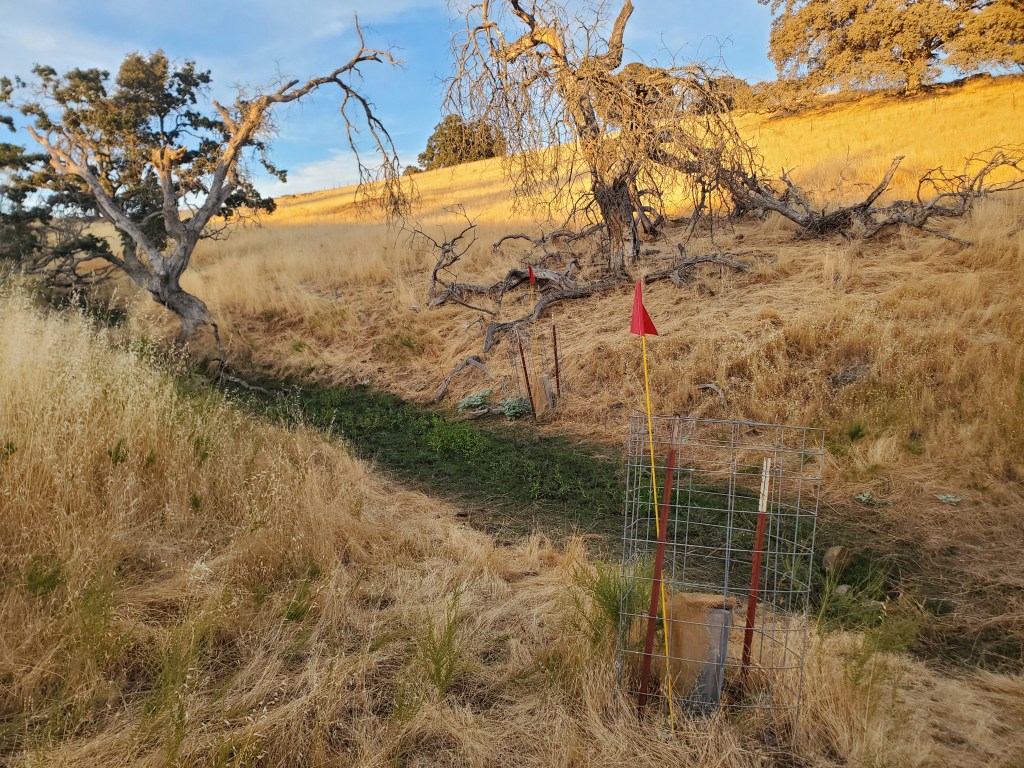
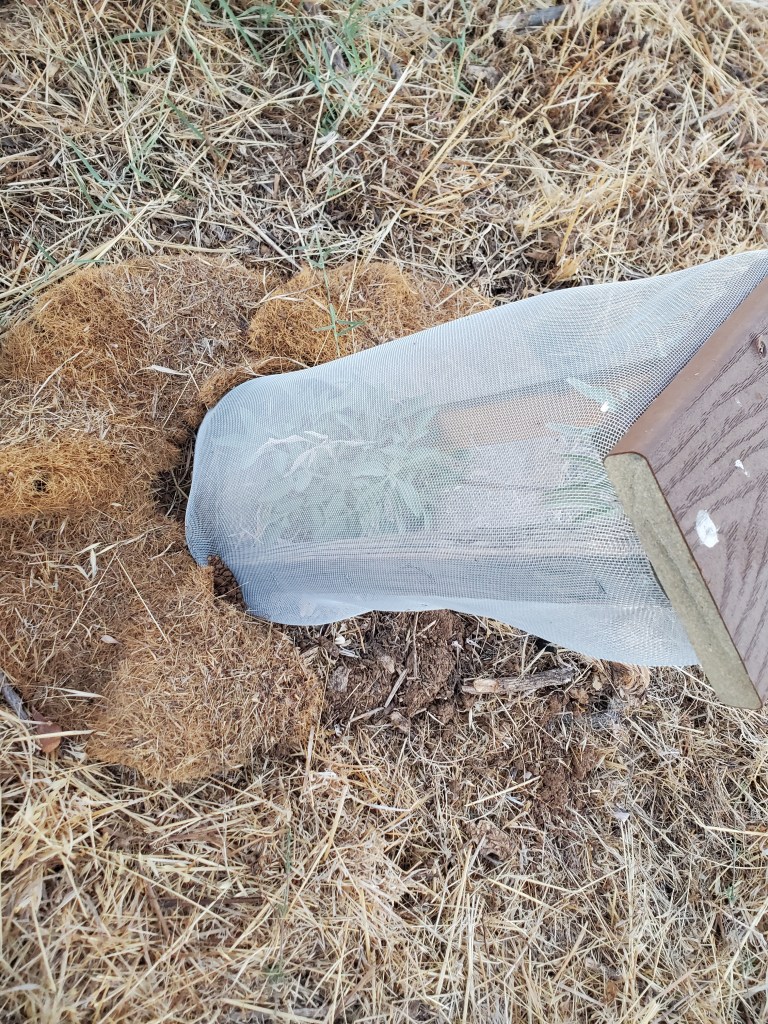
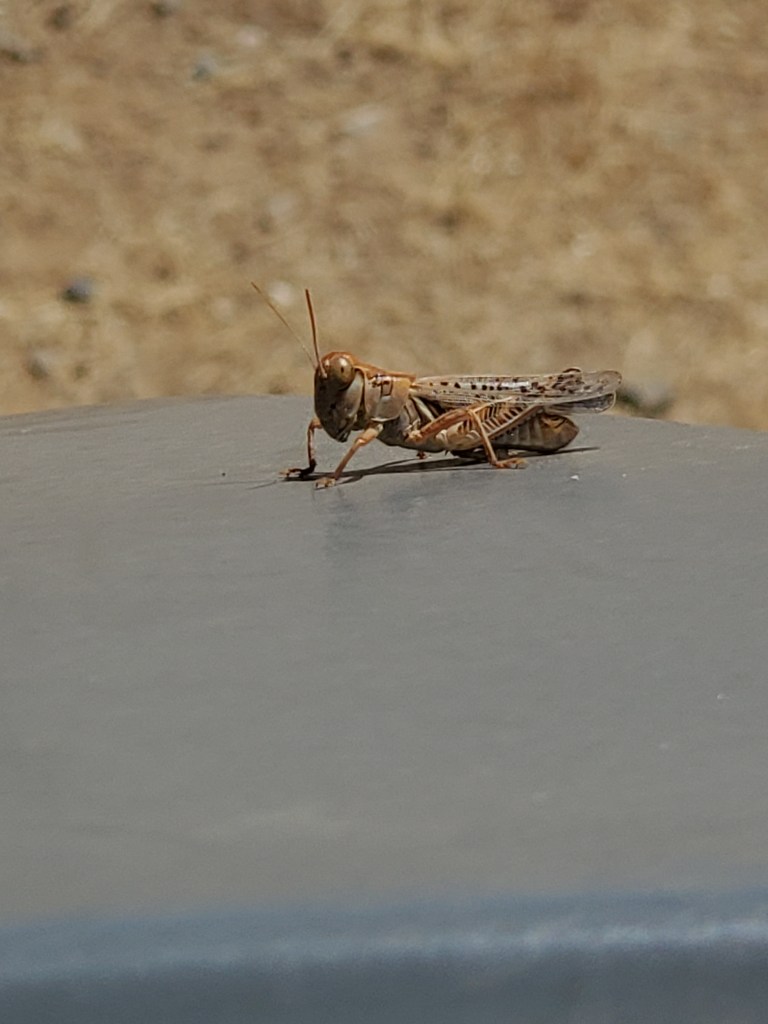
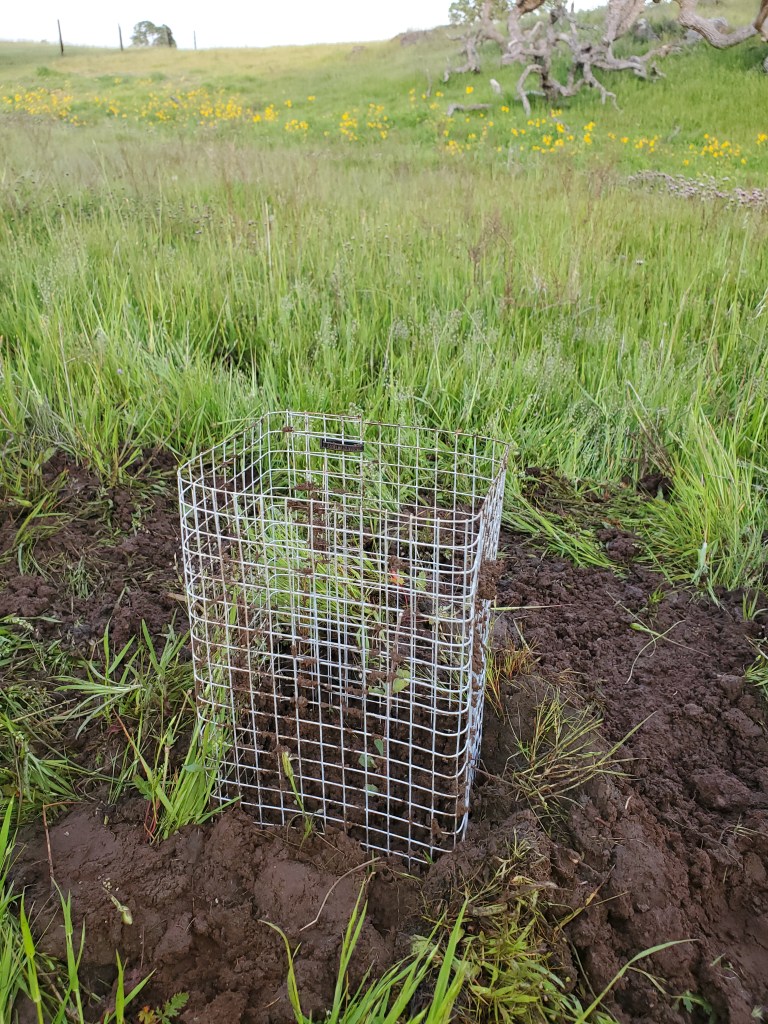
We have gotten lucky. The grasshoppers have not stripped everything. Their population exploded, especially near the riparian areas, then, all of the sudden, they abated. The hoppers had started eating their way up the hill. They hit some of my outlying plots hard, but then stayed away from the habitat closer to the hilltop. The oaks planted on the lower Spring Creek area and those down hill from the hilltop were not so fortunate. They were eaten, but quick action with screen boxes saved some. Several have come back and are leafing out again. I gave out a loud yip when I saw that. I had felt so dejected. I still lament the loss of the other trees. It is difficult to get a blue oak to grow under my specific conditions – heat, grasshoppers, gophers. Every year lost is one year less with young trees. I have to do better.
Since my last post, I have been focused on watering the oaks every five days. Having this cadence seems to be a recipe for success. It helps me not only keep them hydrated, but to trouble shoot any issues they may be having. The remarkably cool weather, for a July, has been helping give these trees a chance. I love them so much, and want them to thrive.
Lower Spring Creek: Bottom center right, oak comes back from hoppersLower Spring Creek: Other tree upstream 10′ has not come back. Still watering thoughHoping to see leaves come backOaks in the upper Spring Creek doing well. Got these screened before hoppers got to them plus moist area. Made a huge difference. Plants in the creek begin growing back after cows trim it all to nothing
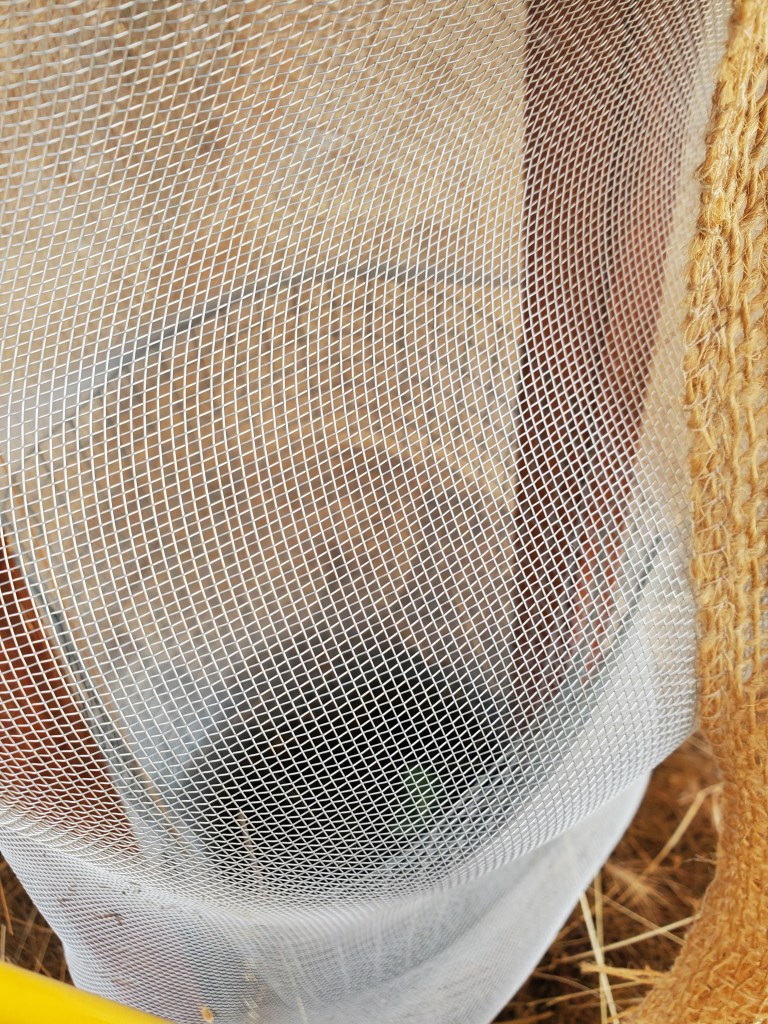
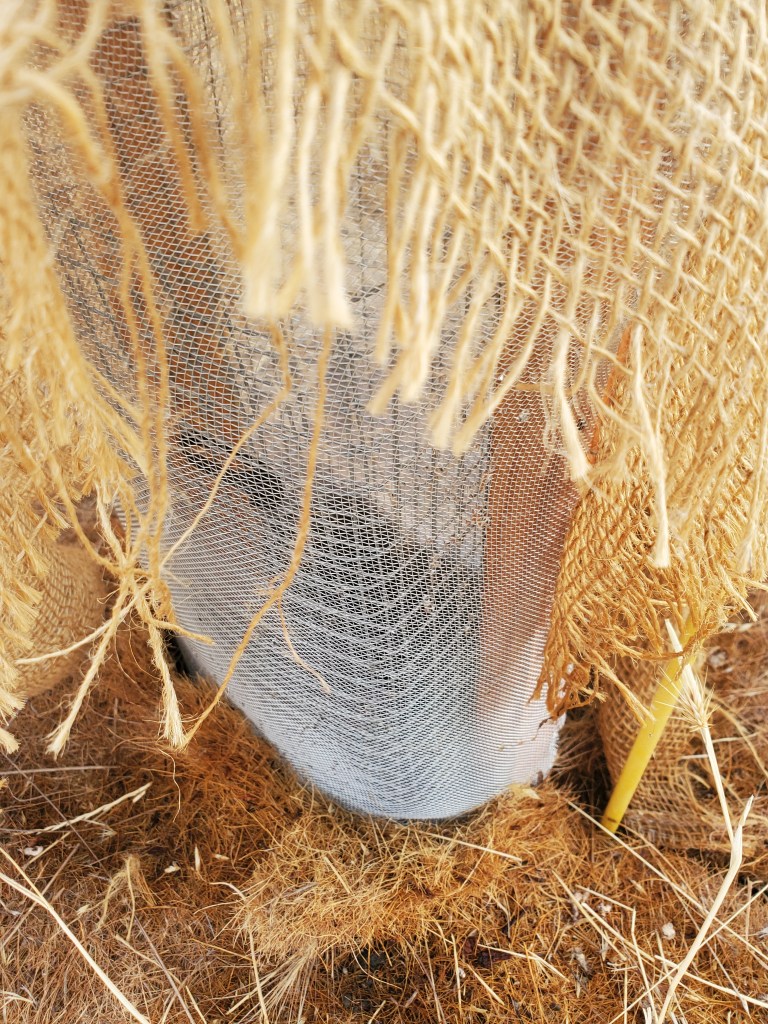
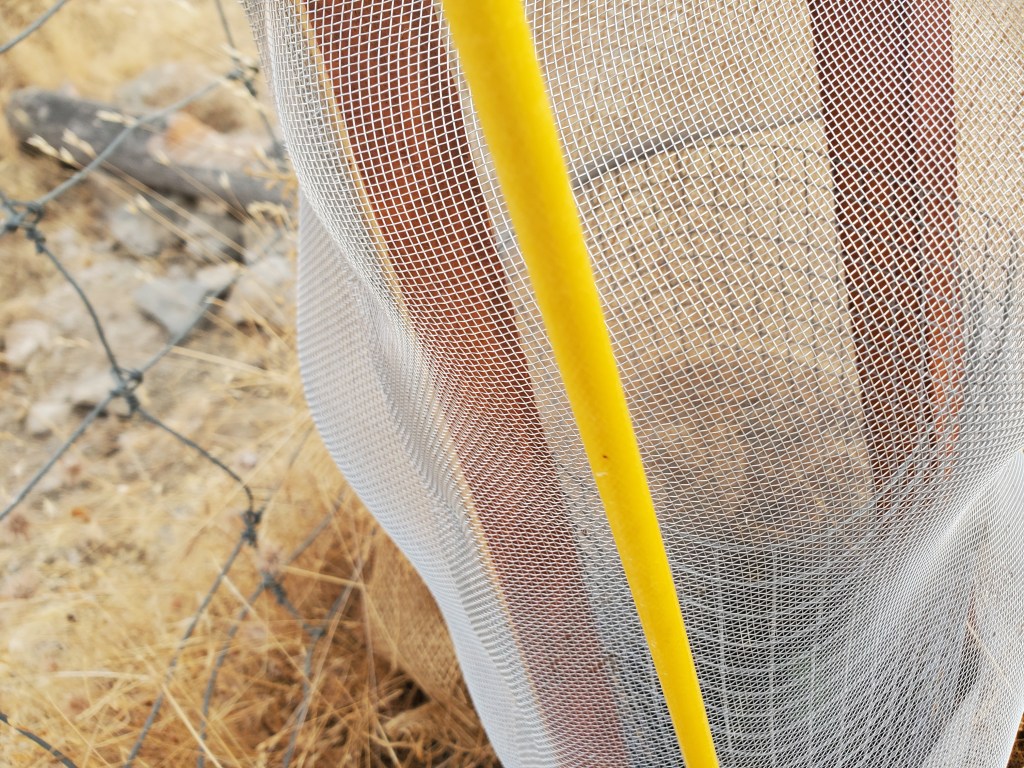
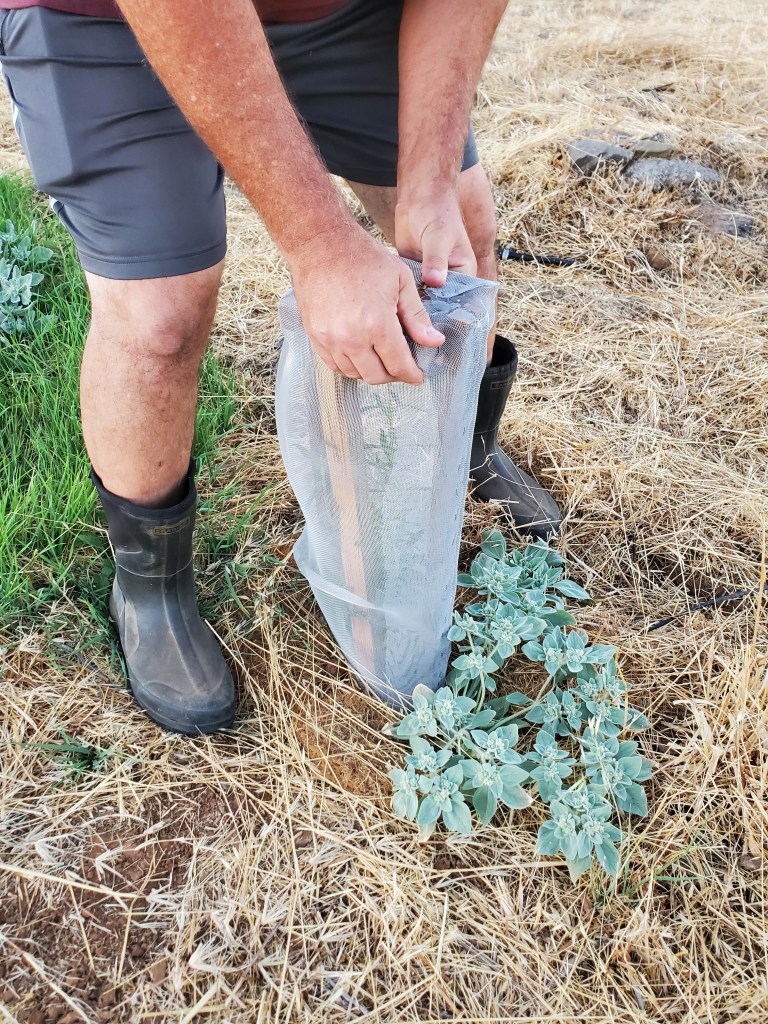
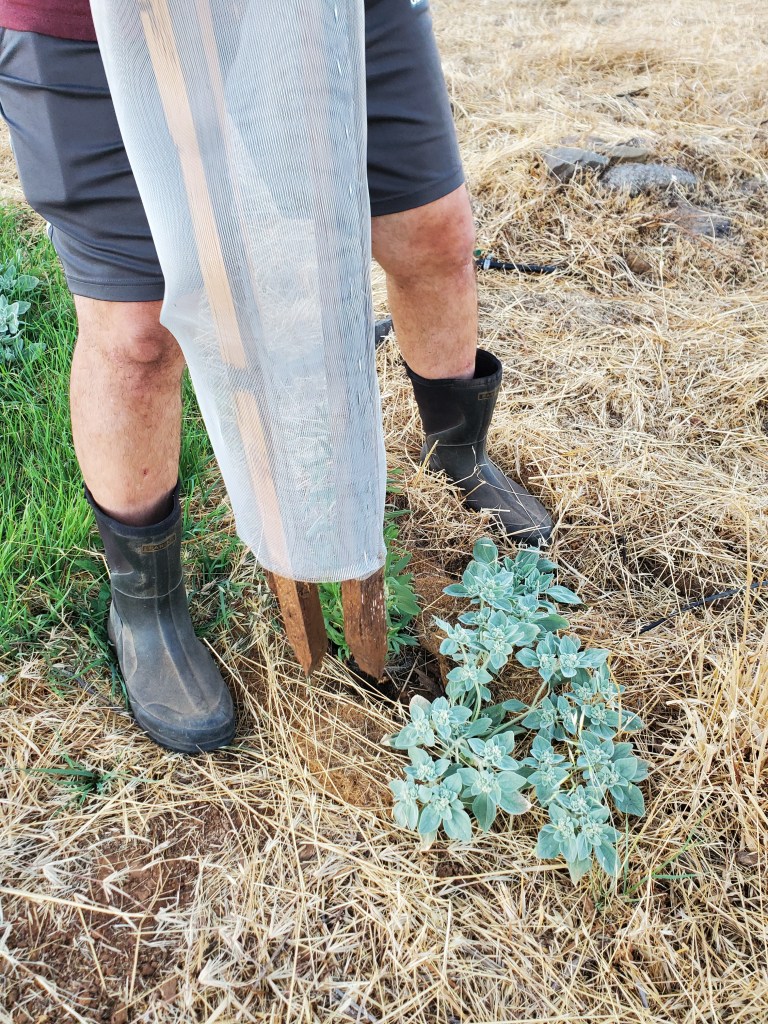
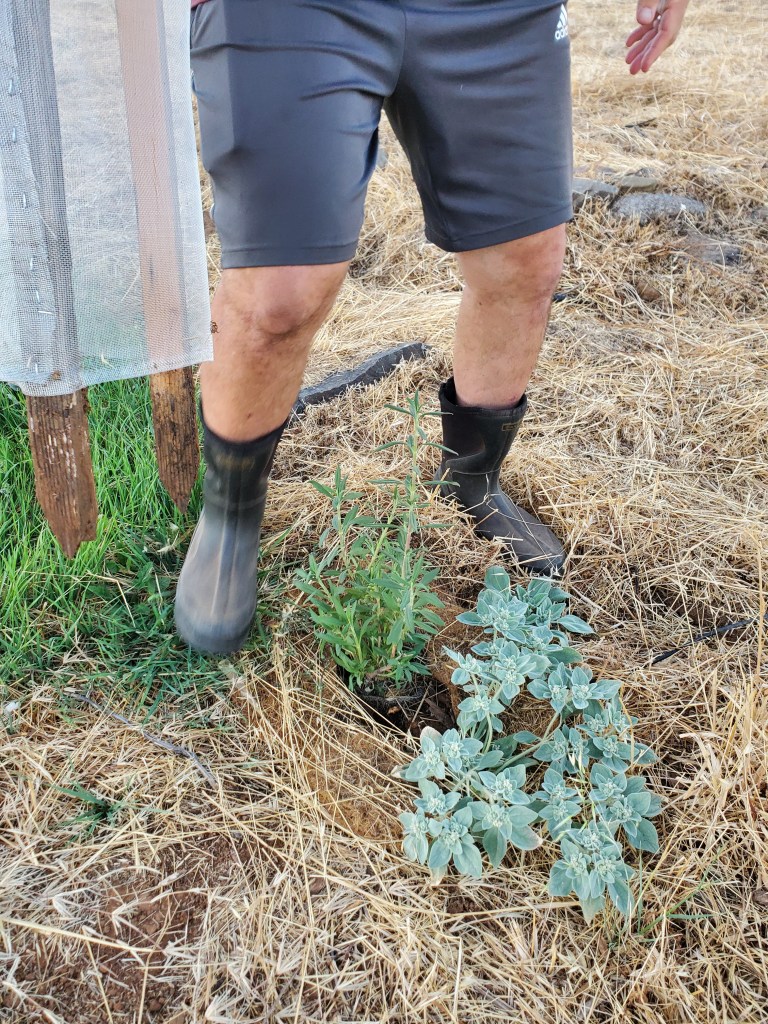
With the hoppers having abated, David and I have been slowly releasing the plants we covered in screen boxes. They have done very well. We are keeping the oaks in screen boxes just in case. I will plan to lift those in September. Thank you again to David and Sam for making those so quickly!
Black sage…time to…be free!This white sage was hammered with nearly all leaves eatenIt got a break from the hoppers and came back with gusto
Blooms
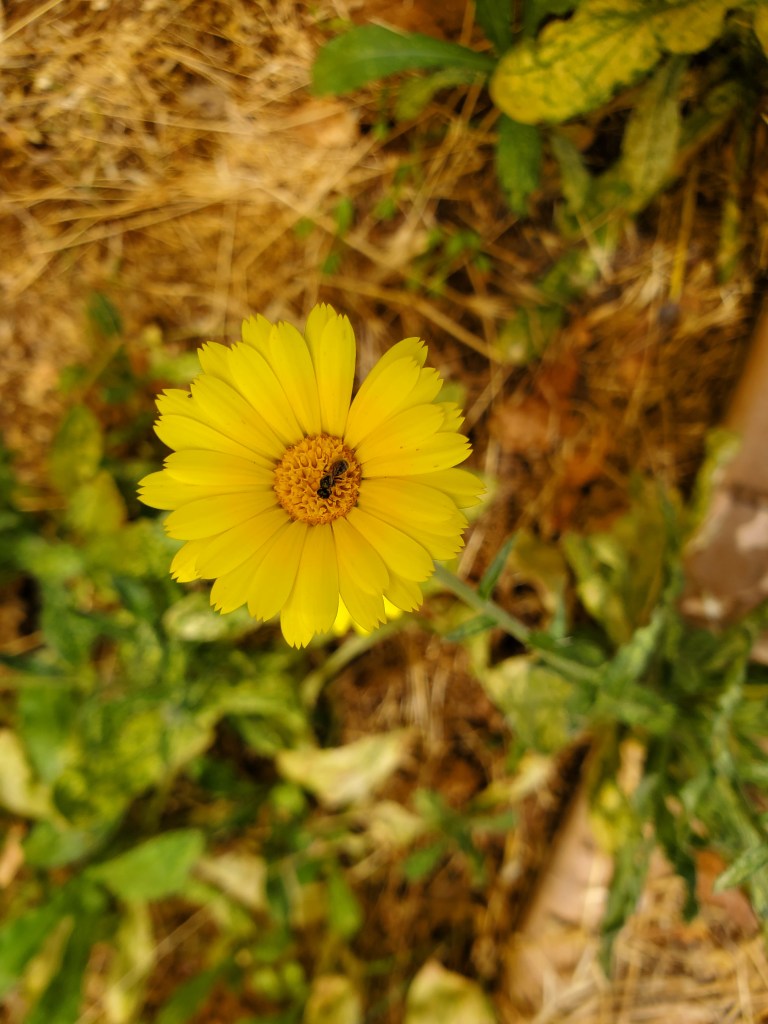
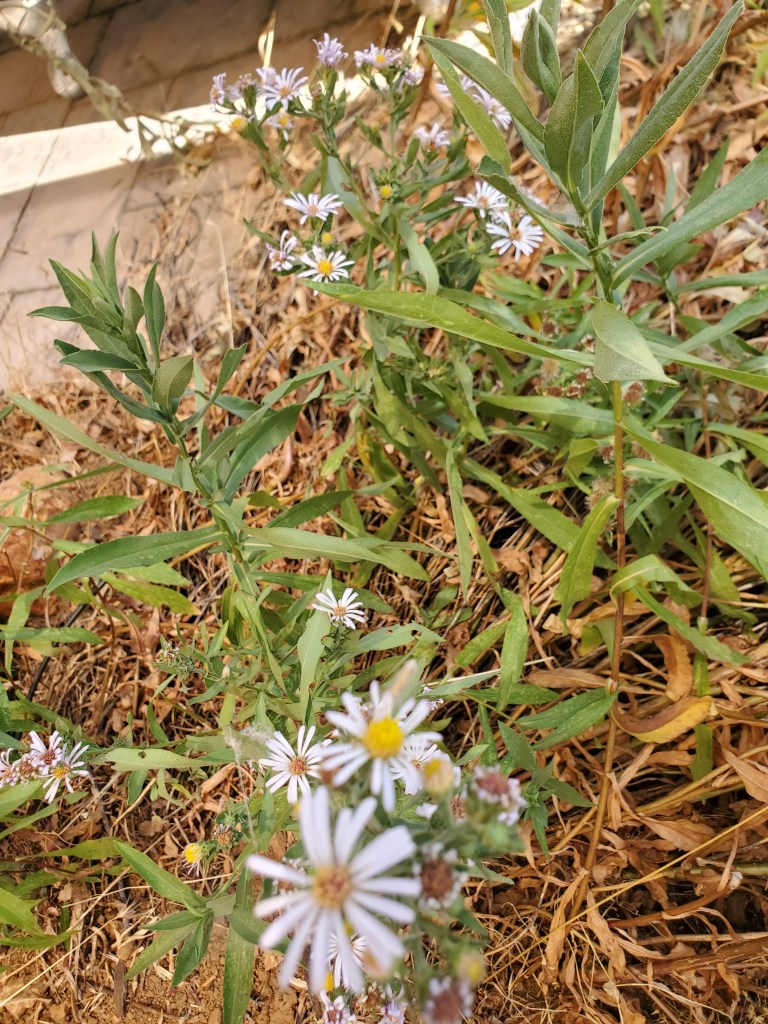
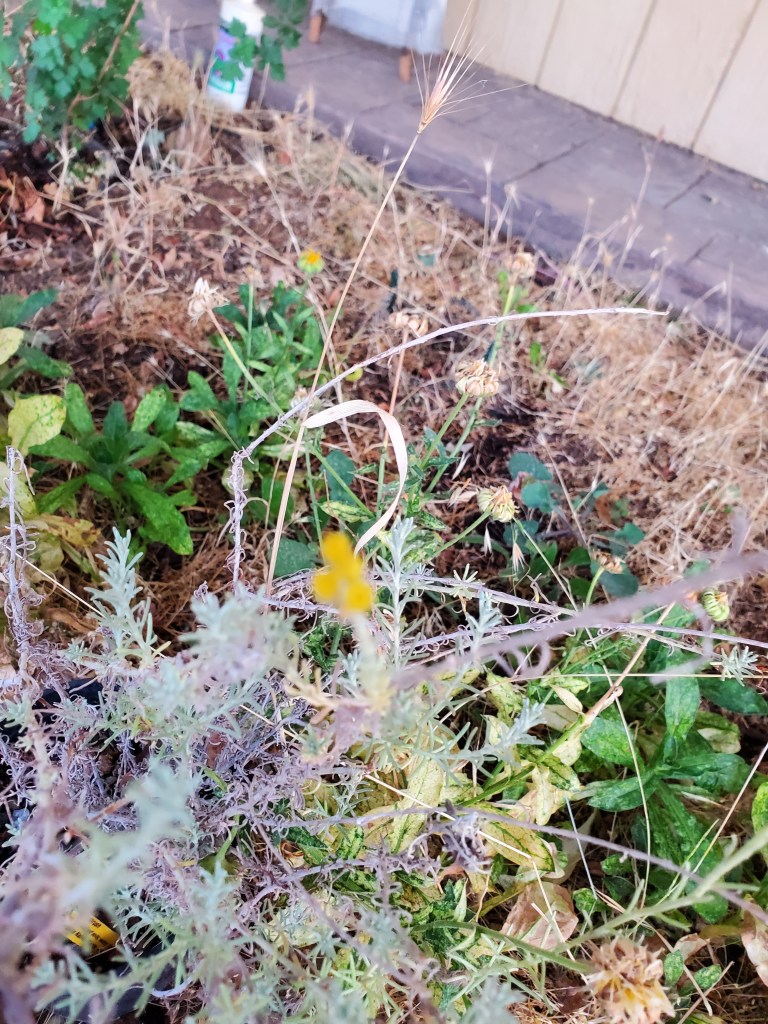
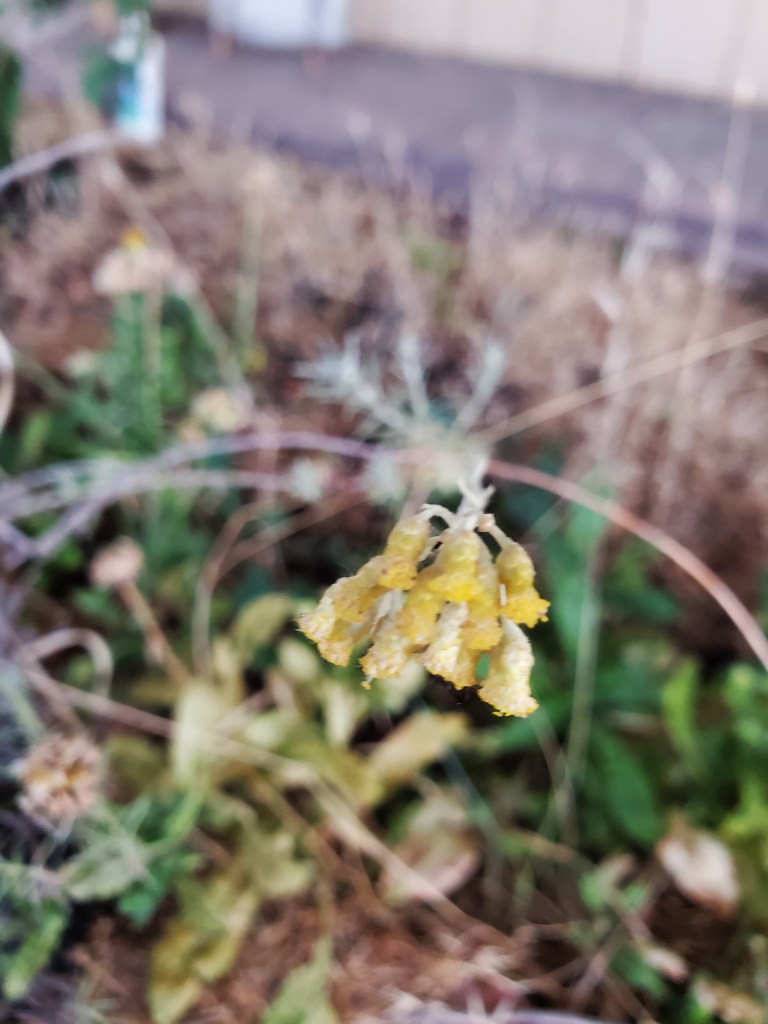
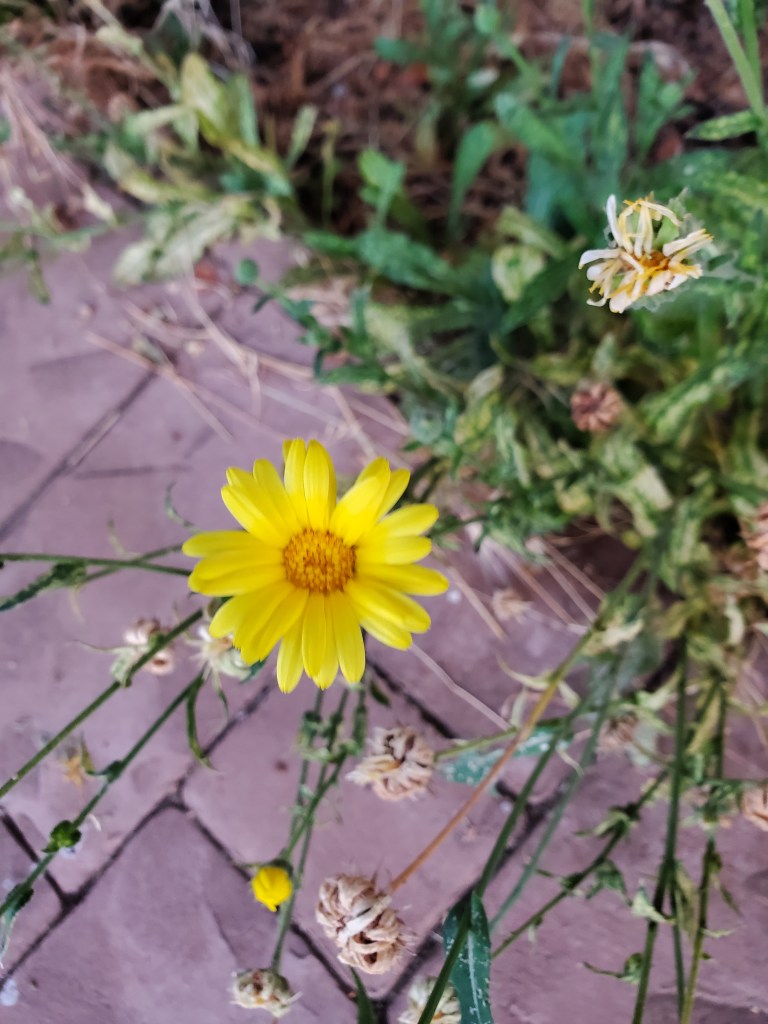
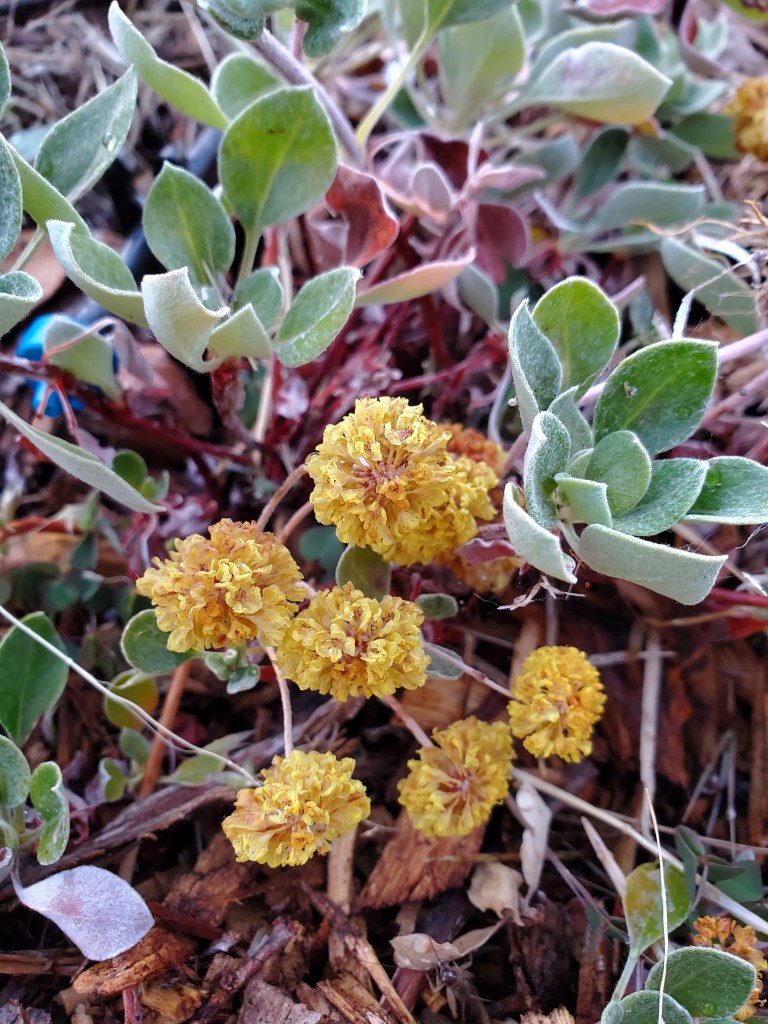
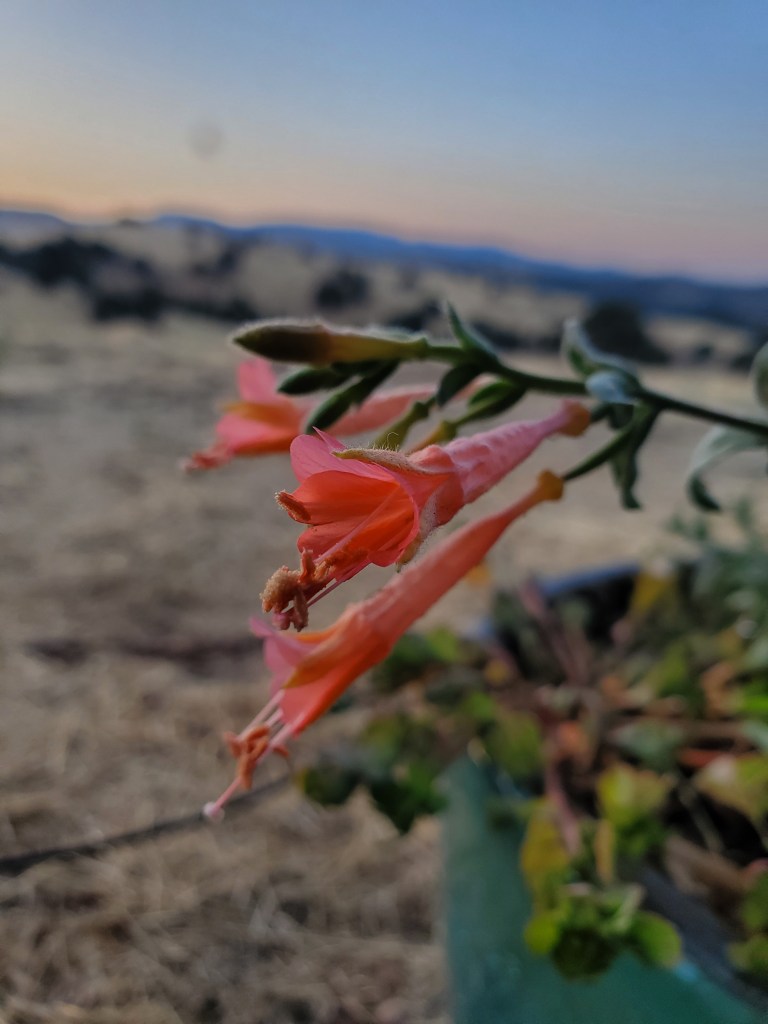
Blooming on July 13 when I began this post and mostly still blooming now are pacific asters, datura, sunflowers, matilla poppy, California poppy, narrowleaf milkweed, California fuchsia rabbit brush, black-eyed susan, marigold, sulfur buckeye, and worm wood. There were a couple small blooms on the white sage, basil and other garden items.
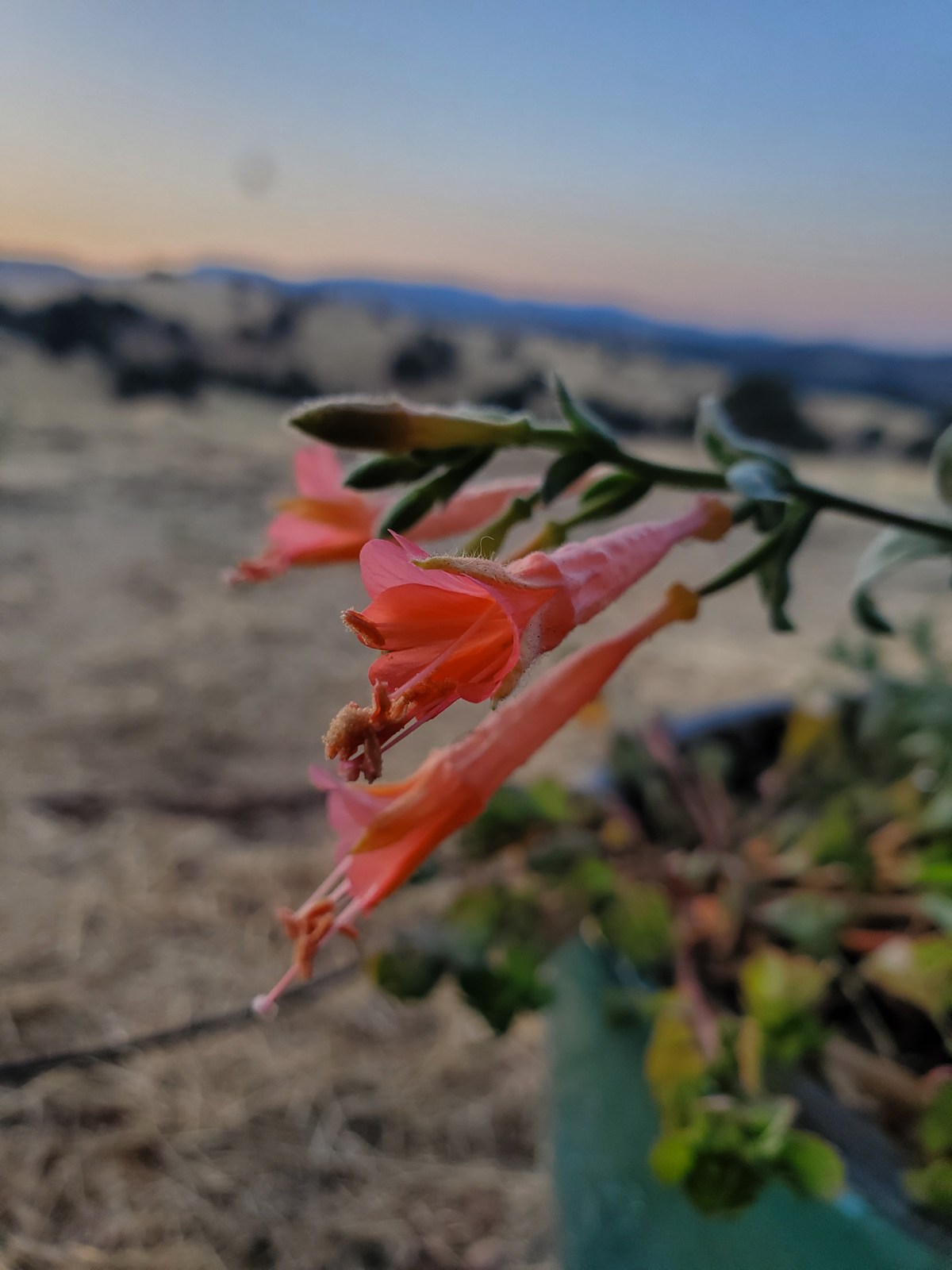
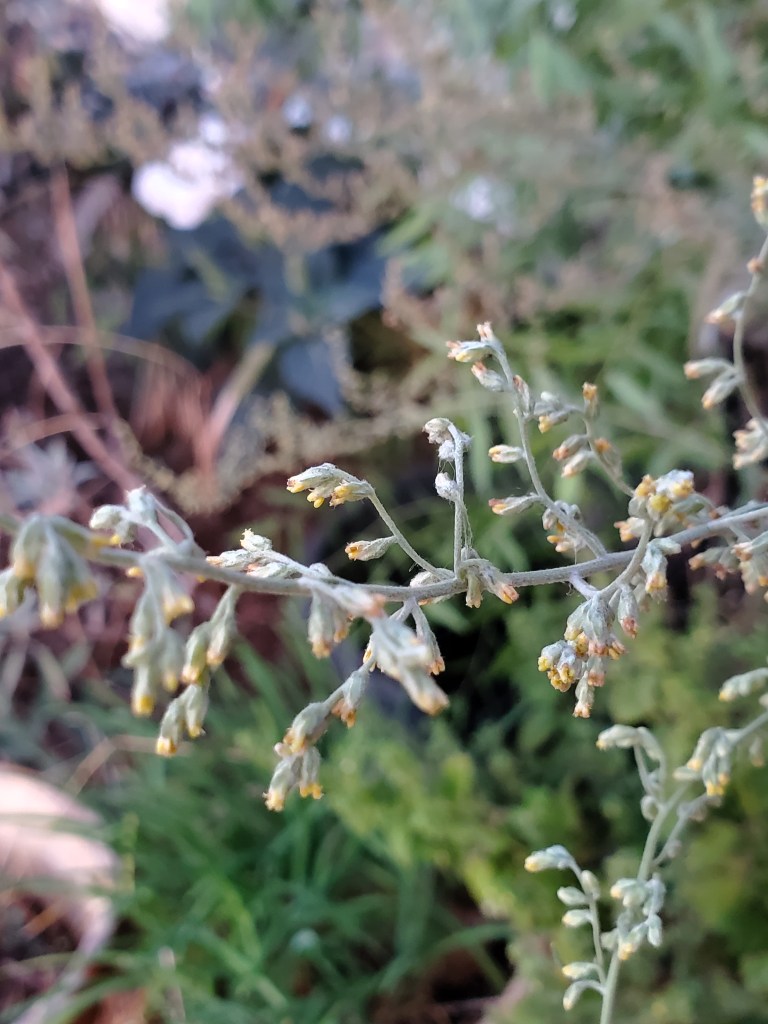
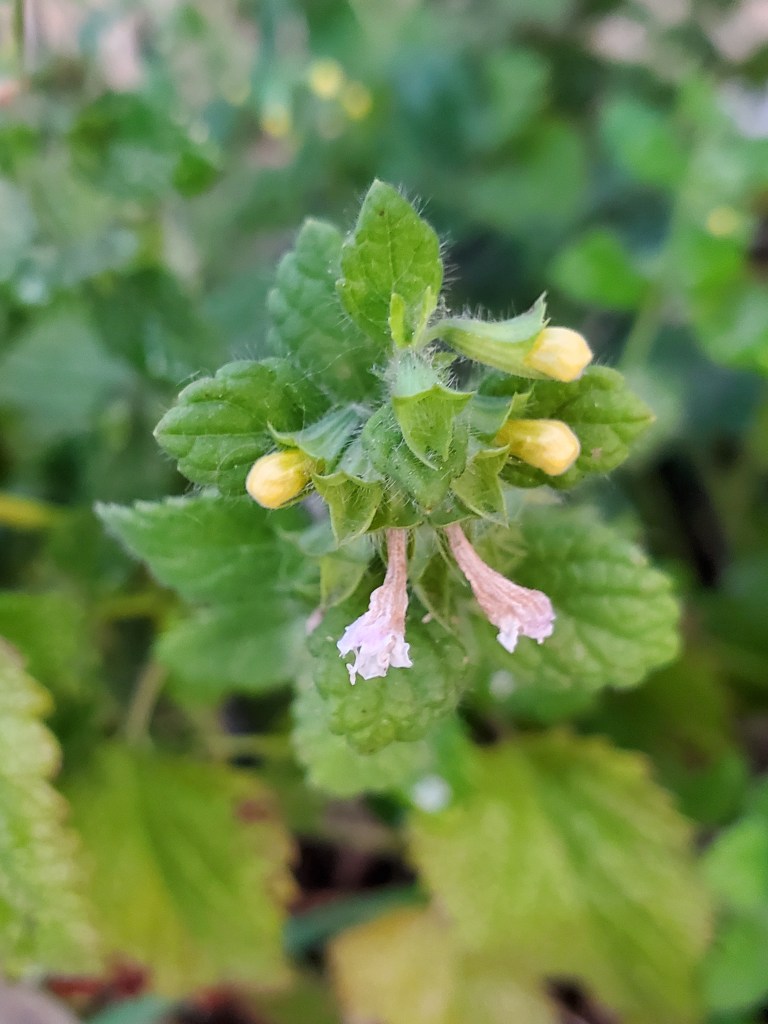
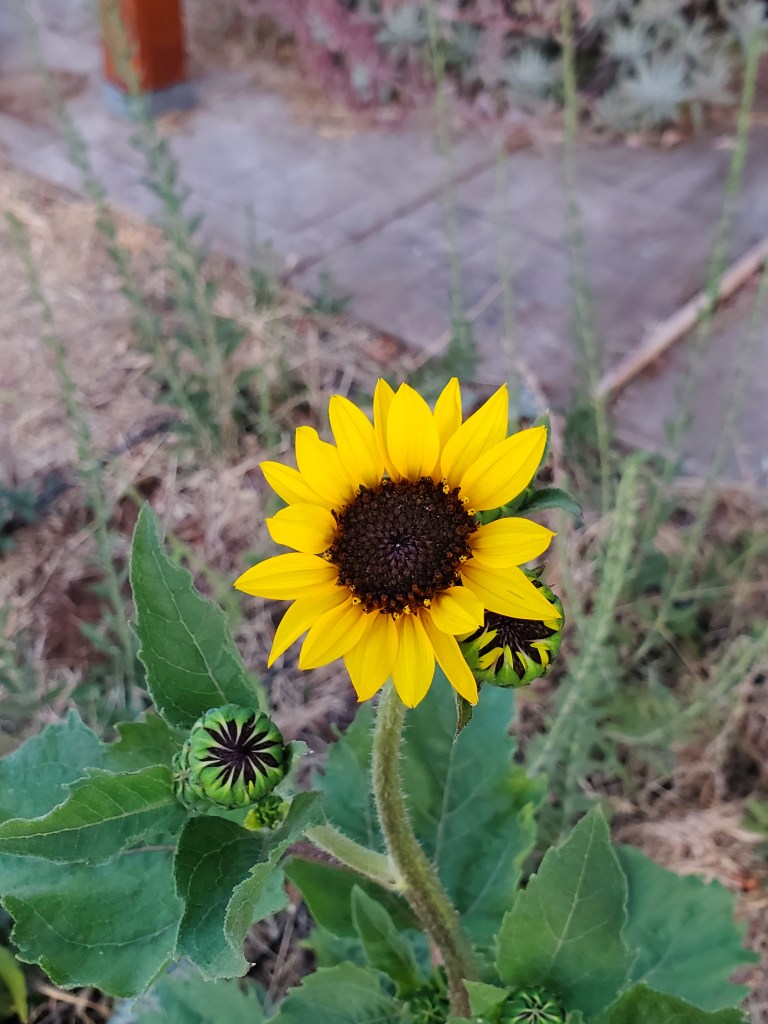
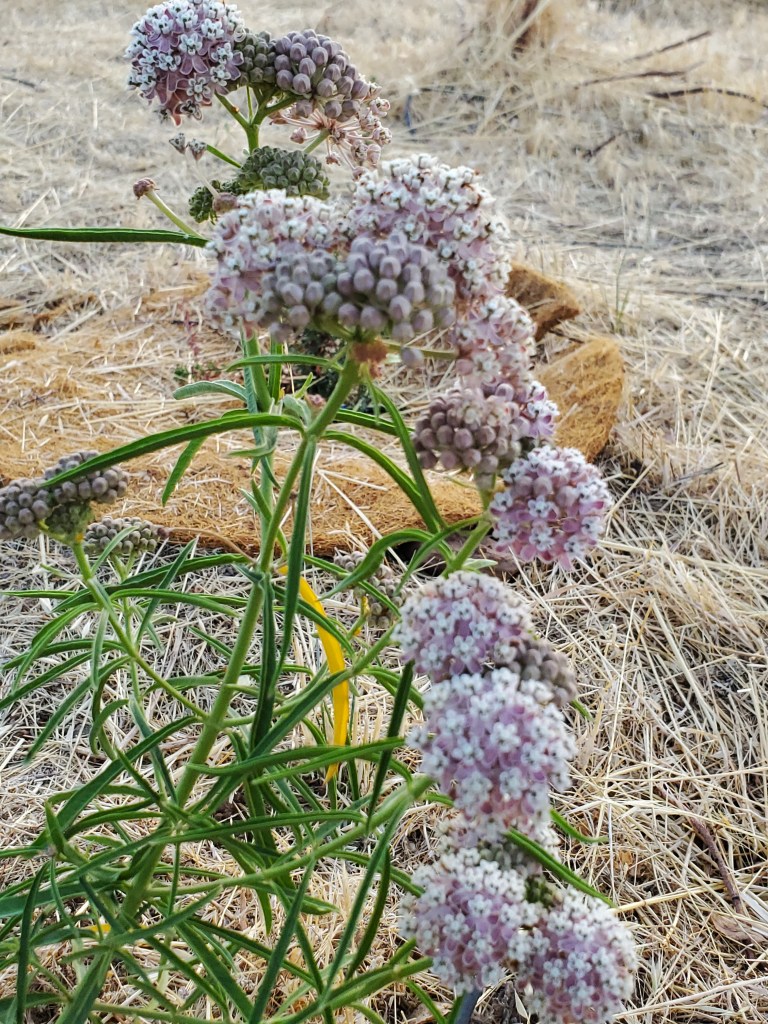
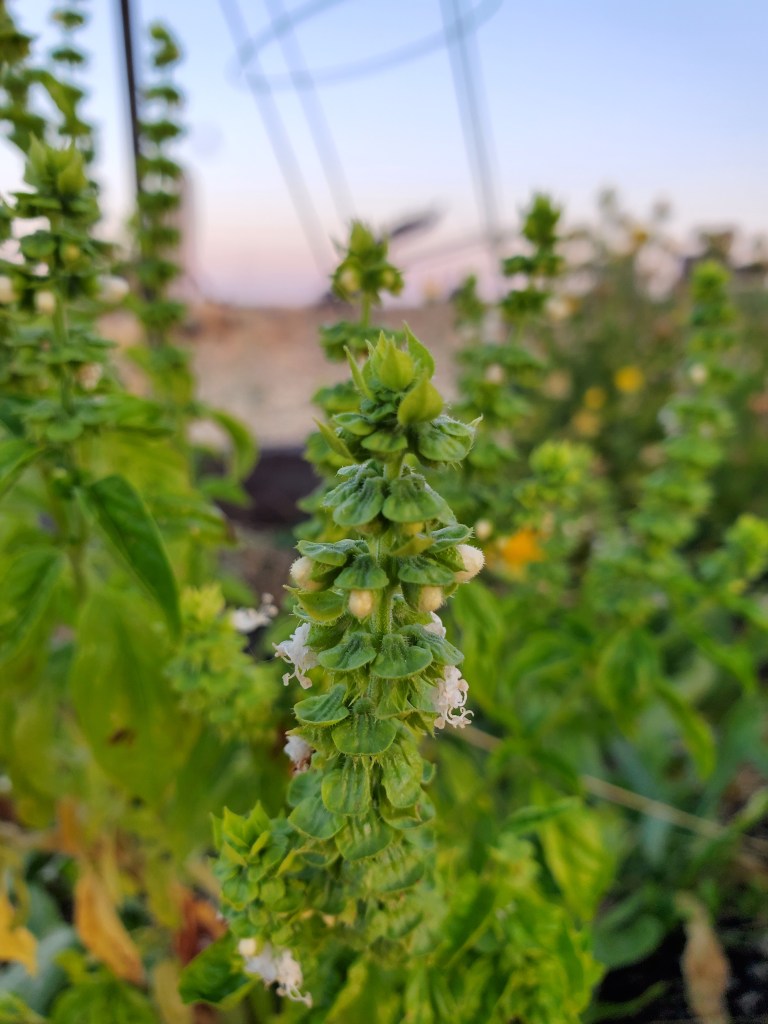
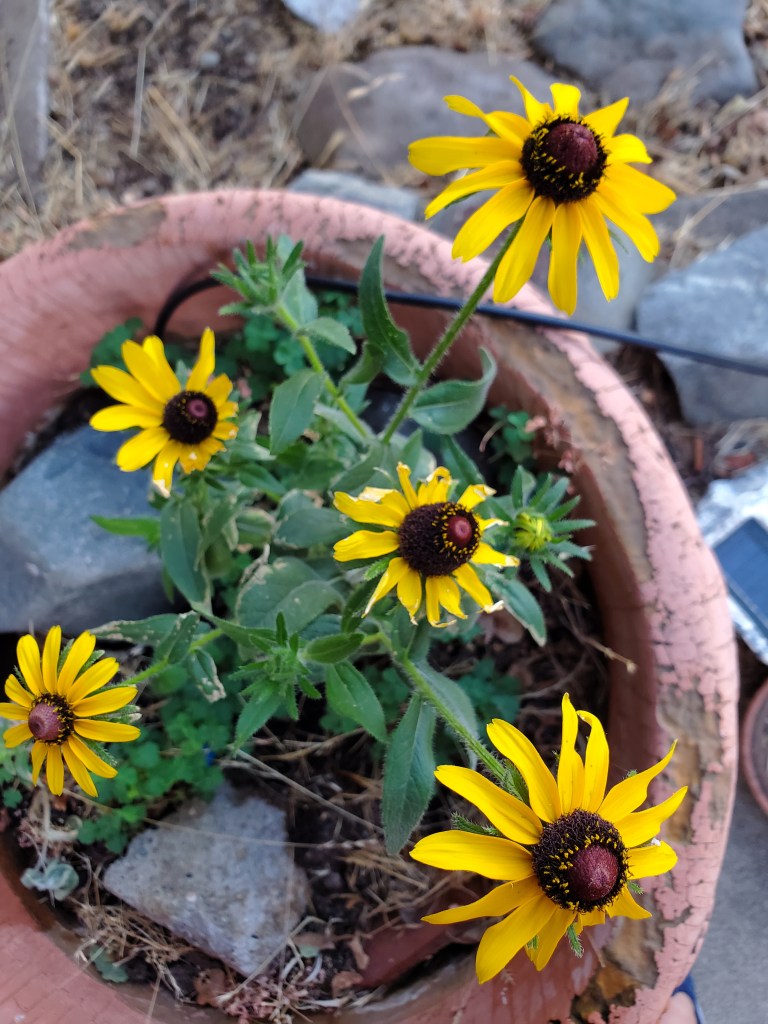
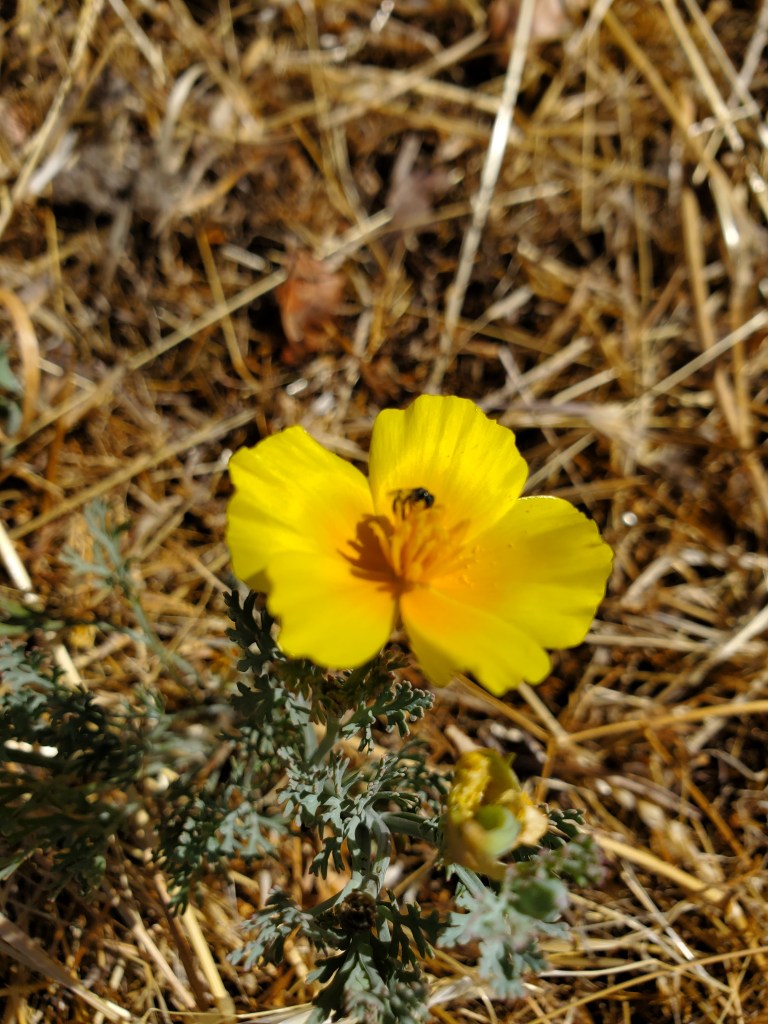
Yellow flower is a magnet for fly type pollinatorsPacific asterRabbit brushWormwoodMore yellow flowersSulphur buckwheatCA fuschiaWormwood – view 2Lemon balmMy favorite – sunflowerNarrowlead milkweedMatilla poppyFinal white sage bloomsDaturaCleveland sageBasilNon-native sweet alyssumBlack-eyed susanCA poppy with bee friend pollinating
Ranch Maintenance
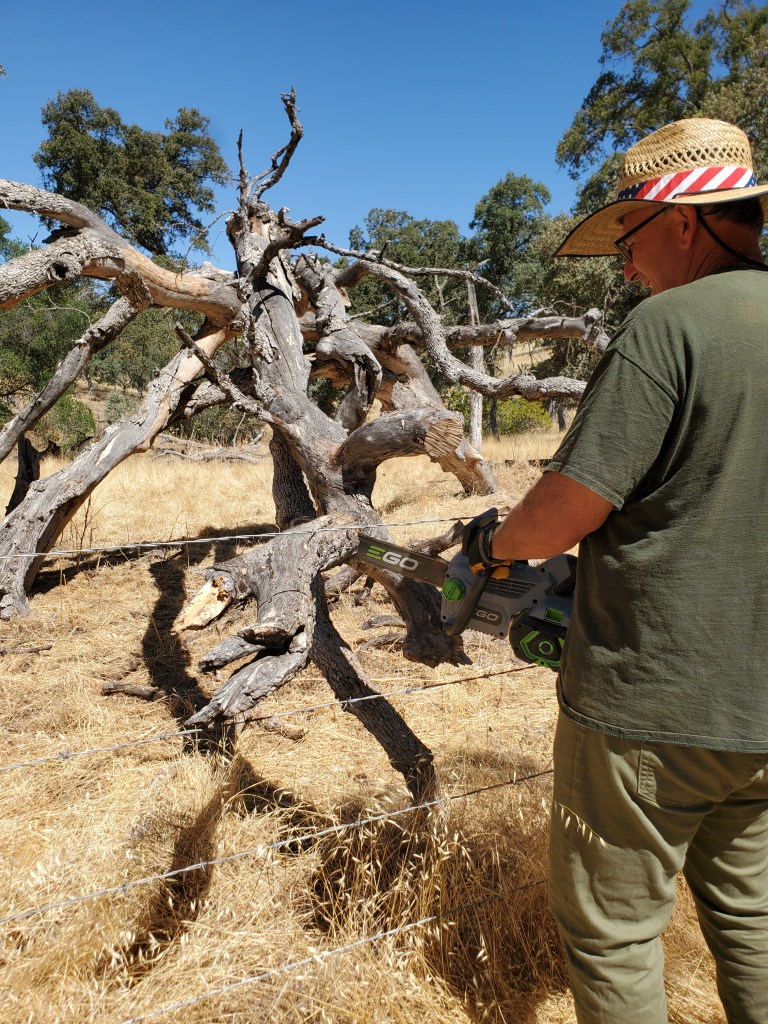
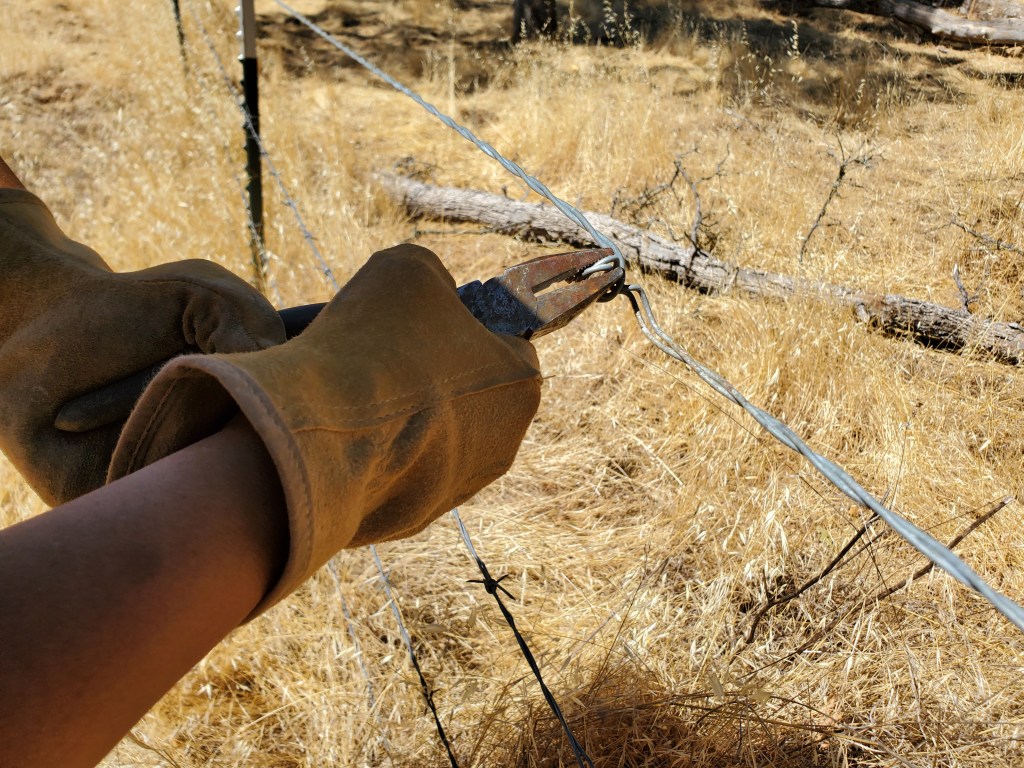
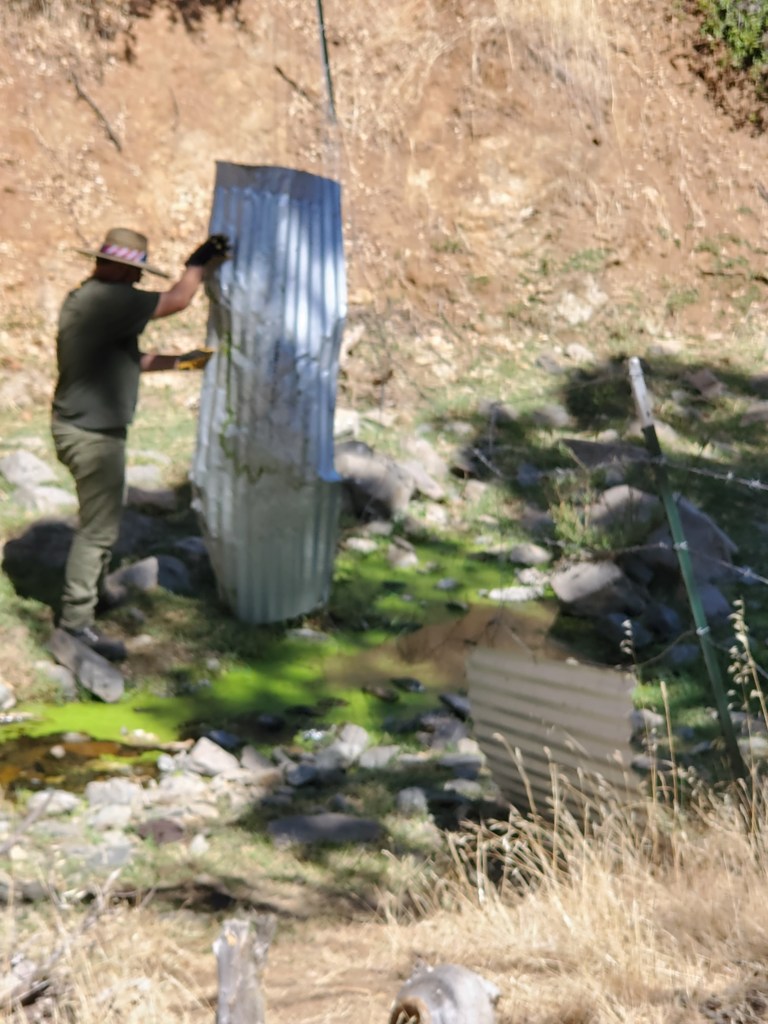
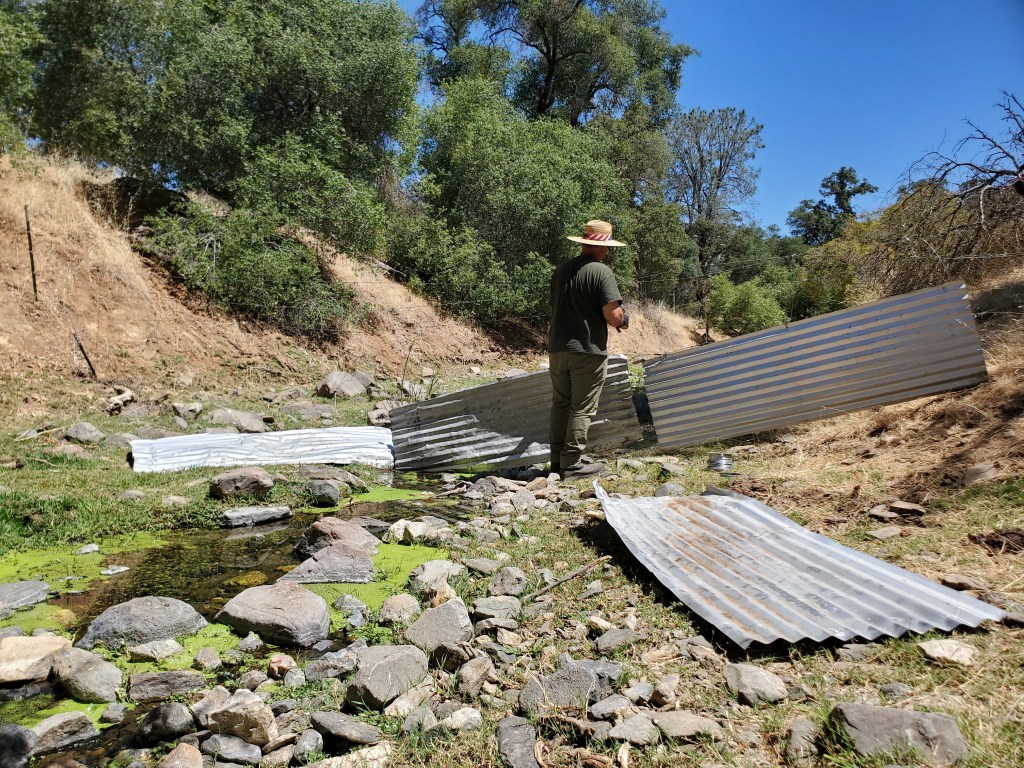
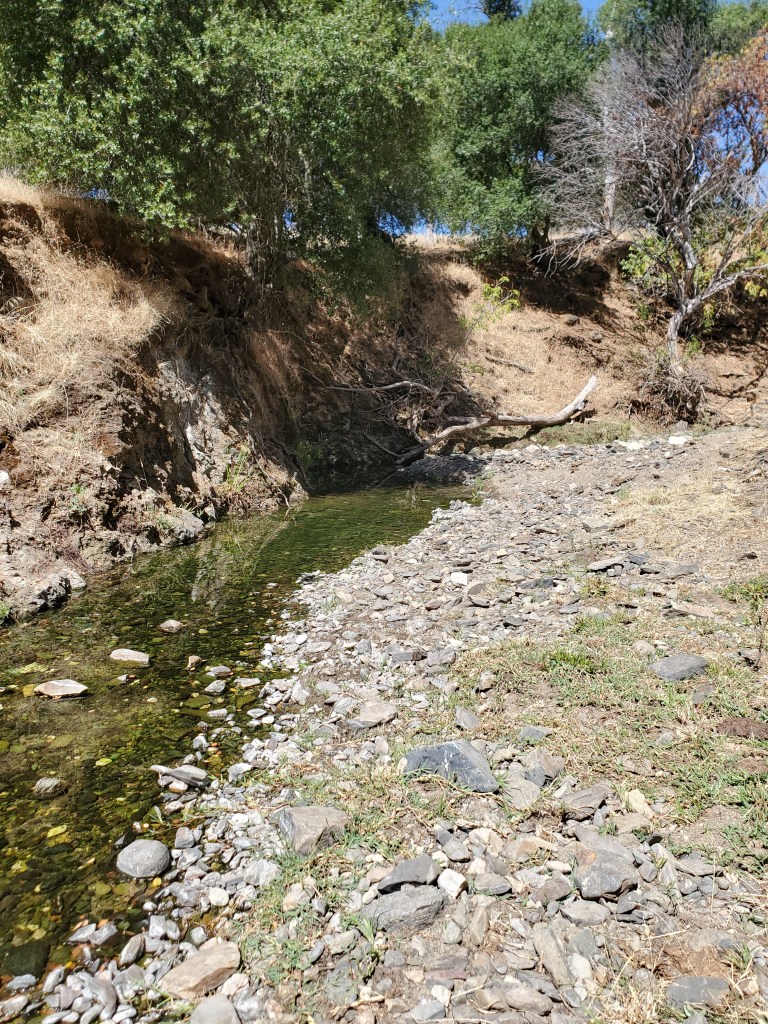
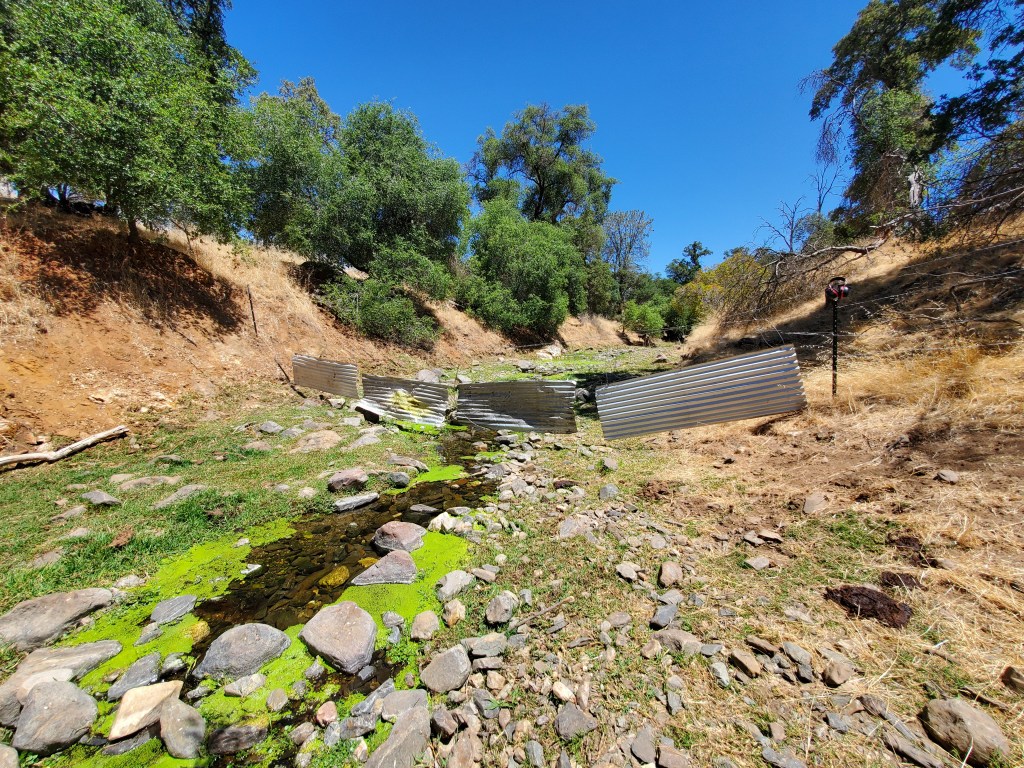
One of the things I love about living on a ranch is that there is always something to do. David and I finally got to the fallen trees and water gaps on Odom Creek. After one of the last major storms this past winter, high winds blew down several branches and dead trees. Two fell on the Odom Creek riparian exclusion fence, making the fence slack. High waters from a rain event took the tin blocking cattle access through the water gaps (areas where the creek flows through between two stream banks under a fence crossing the creek) and deposited them downstream. I retrieved them soon after the storm but did not replace them until several months later due to other issues requiring my attention.
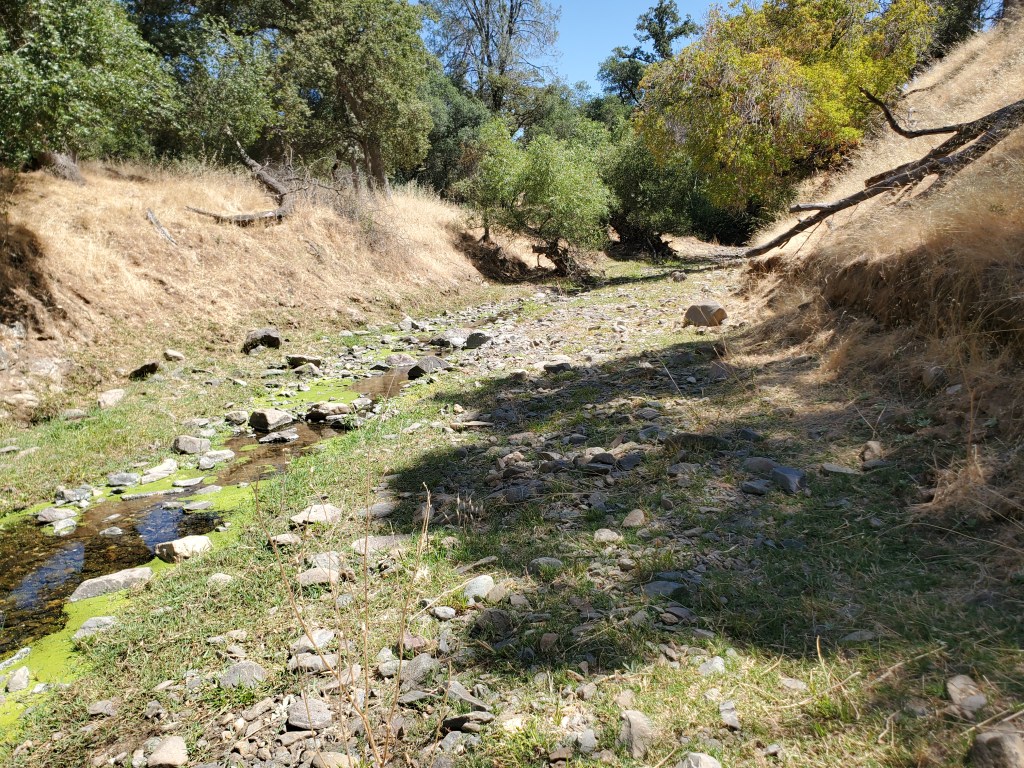
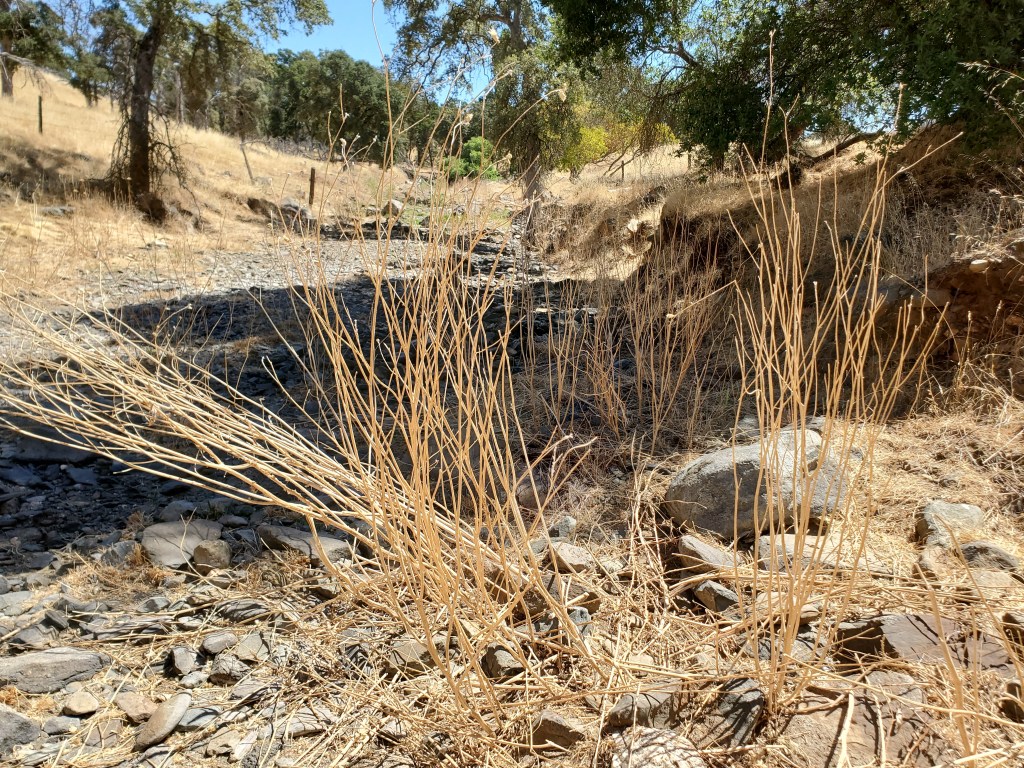
With the tin down, it opened a small pathway for cattle to get into the exclusion. Grass and creek plants that typically grow inside the exclusion area were nowhere to be found. Adding to this was the large number of grasshoppers near the riparian areas this year. Thistle, which the cattle normally leave alone due to their spiky, tough exterior, were stripped to skeletons. Both contributed to no vinegar weed (another favorite), less watercress, no milkweed and no thistle nectar.
David chainsaws fallen tree branchI add tension back into the stretched smooth wireDavid hauls the tin back to the water gapCreek devoid of bushy growth in the streambedThistle stripped bare!Reattaching the tin to the fence to block cattle from accessingNice deep hole at the bend in the creek. Lots of tadpoles and insects using the cool spaceFinished product!
Wildlife
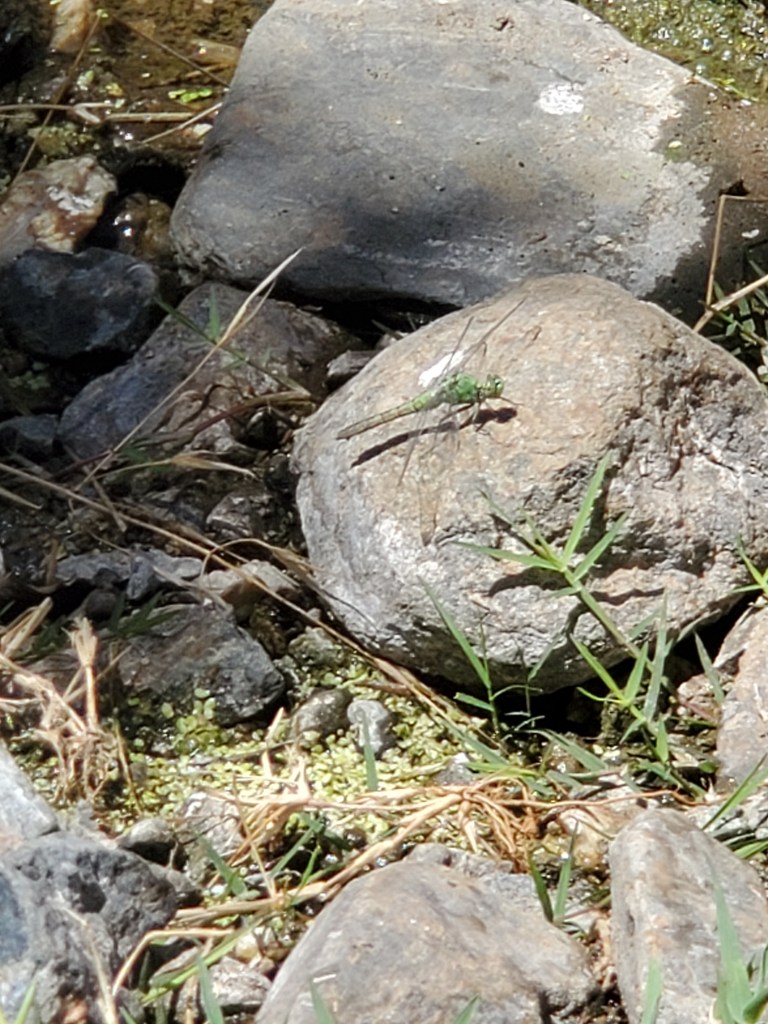
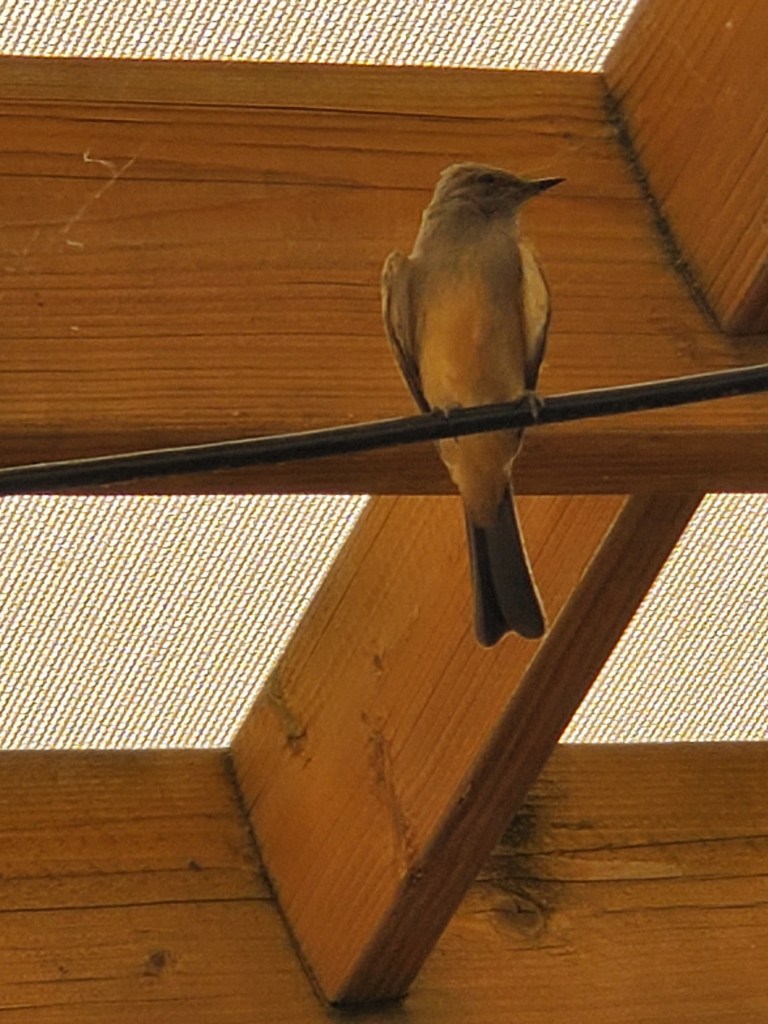
Although I’ve not see as much wildlife as I have in the past, there have still been some beautiful encounters. Running across the road in the near area, and sadly no photos, I have seen coyote, a bobcat and bunnies. Below are other friends.
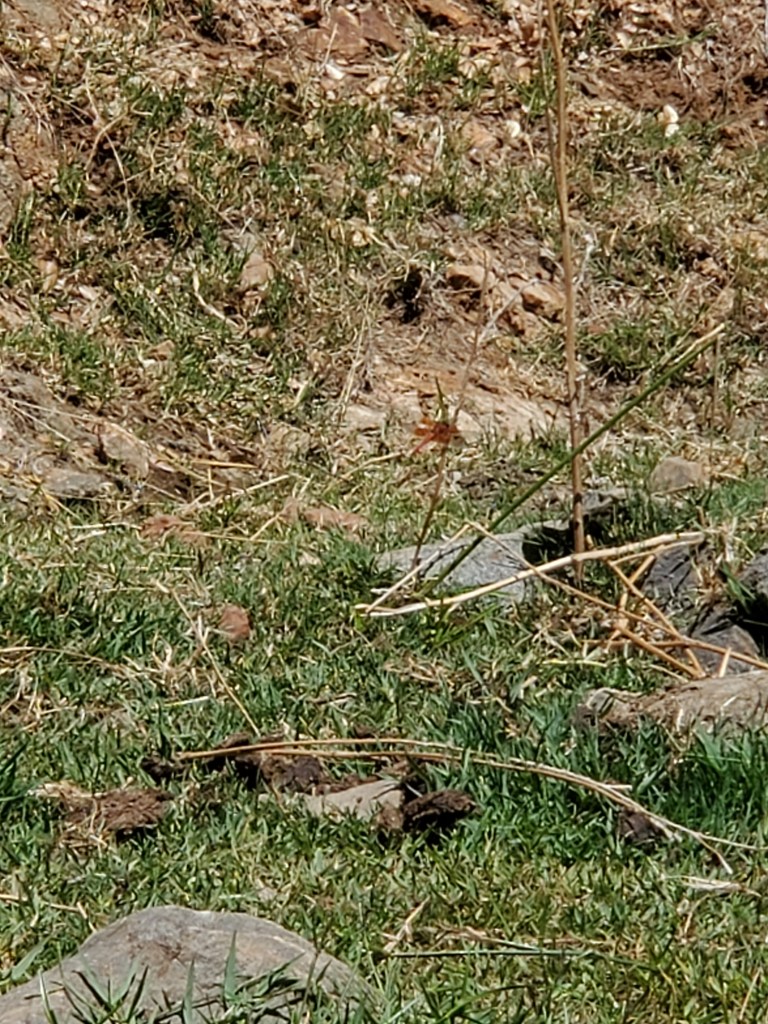
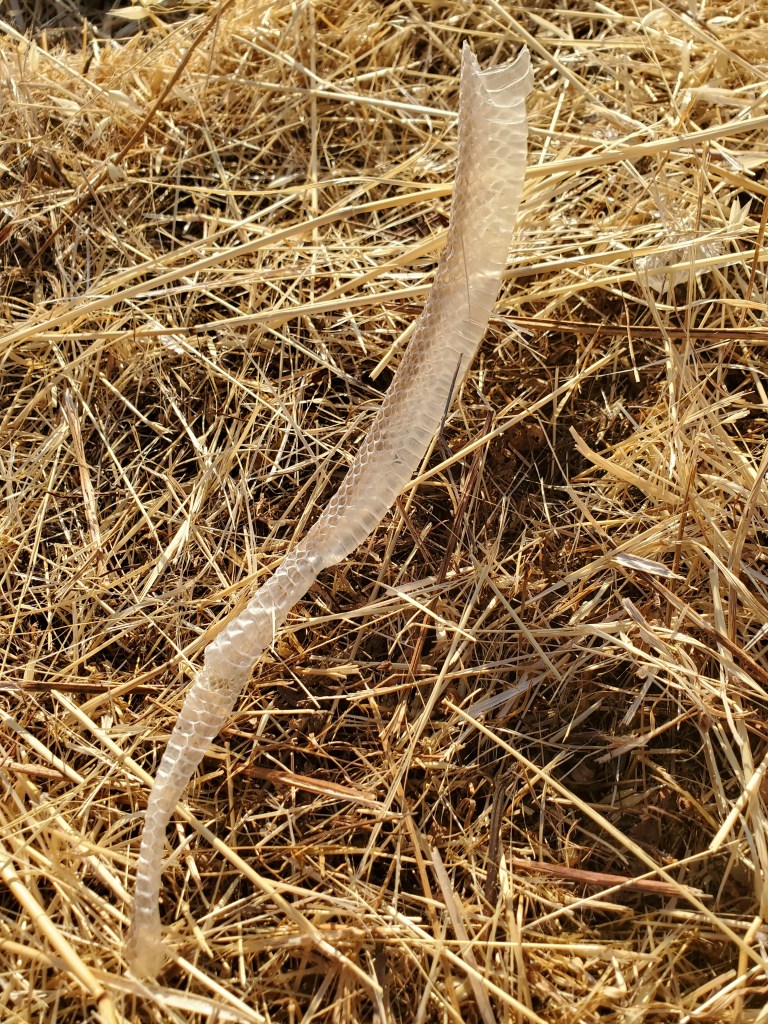
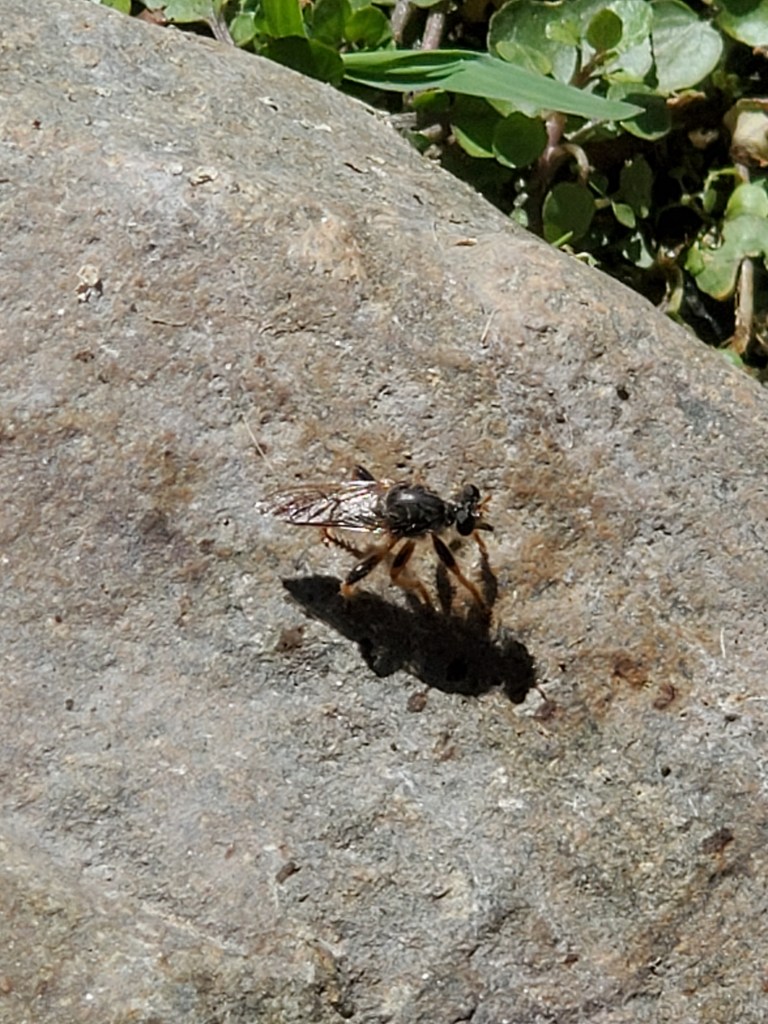
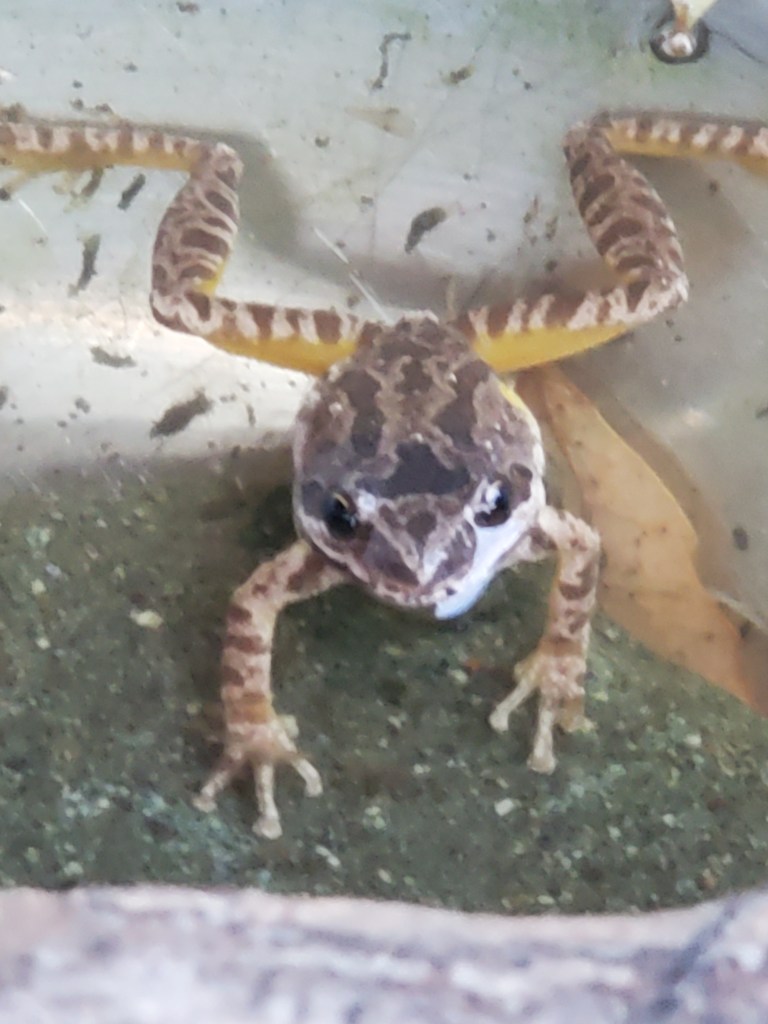
Green dragonfly on rockHard to see – red dragonfly center image on vertical stick Three of the covey of 20 quailSnake skinCool looking flySierra chorus frog – I’ve seen quite a few around the houseMeadowlarkMy respected nemesis, Grasshopper. Truly a remarkable creature
Seed Collection
As plants begin to die back and set their seeds, I have been out collecting. I never collect more than 10% of what is available. I share with the birds as well as leaving plenty to grow the next generation.
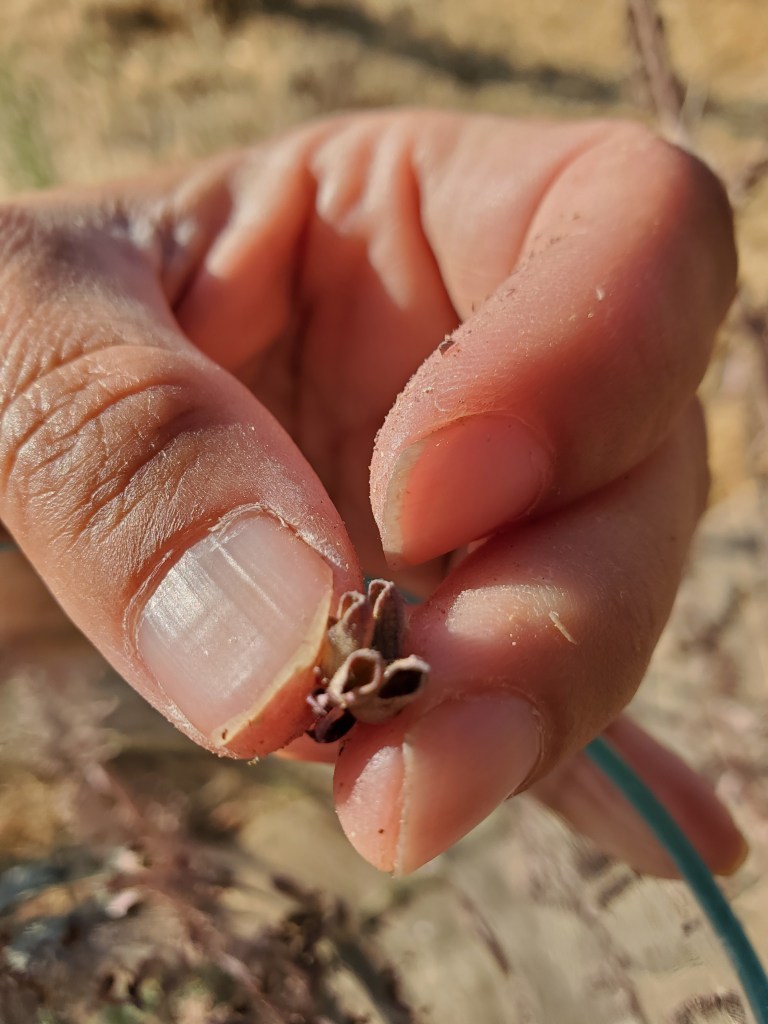
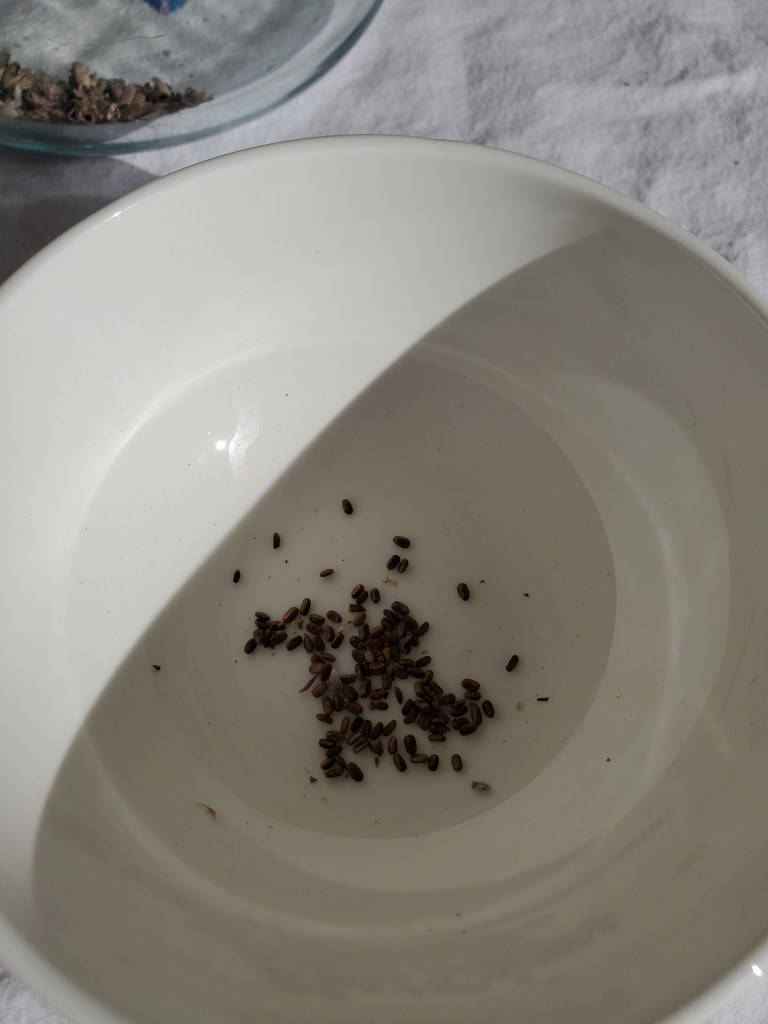
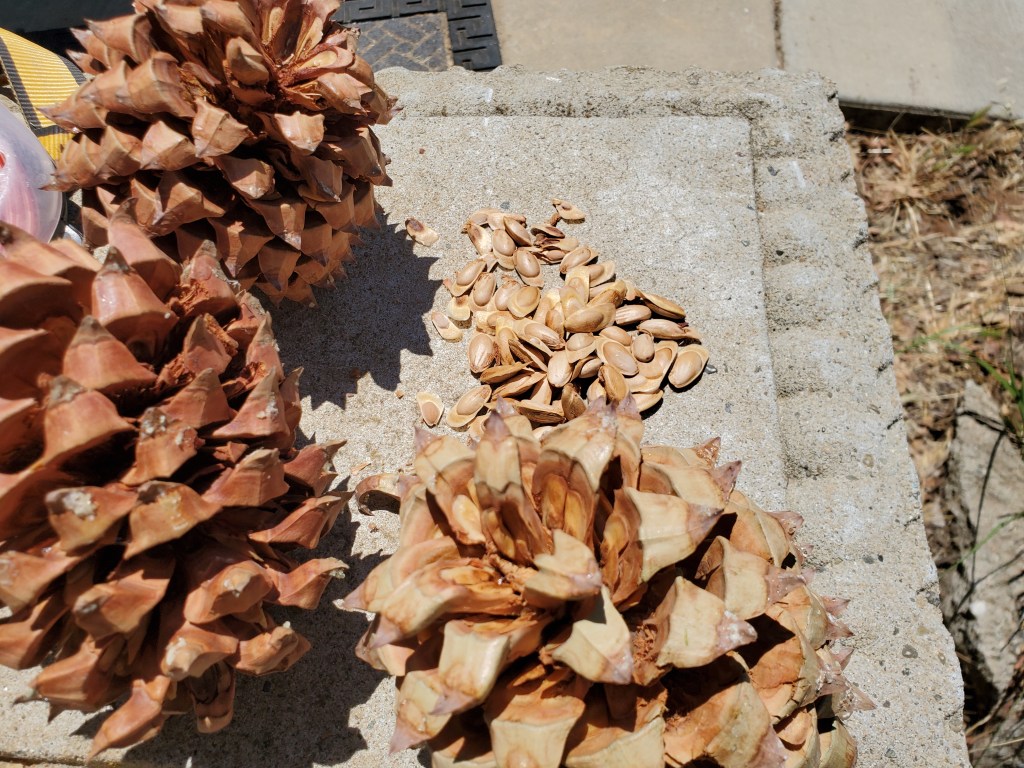
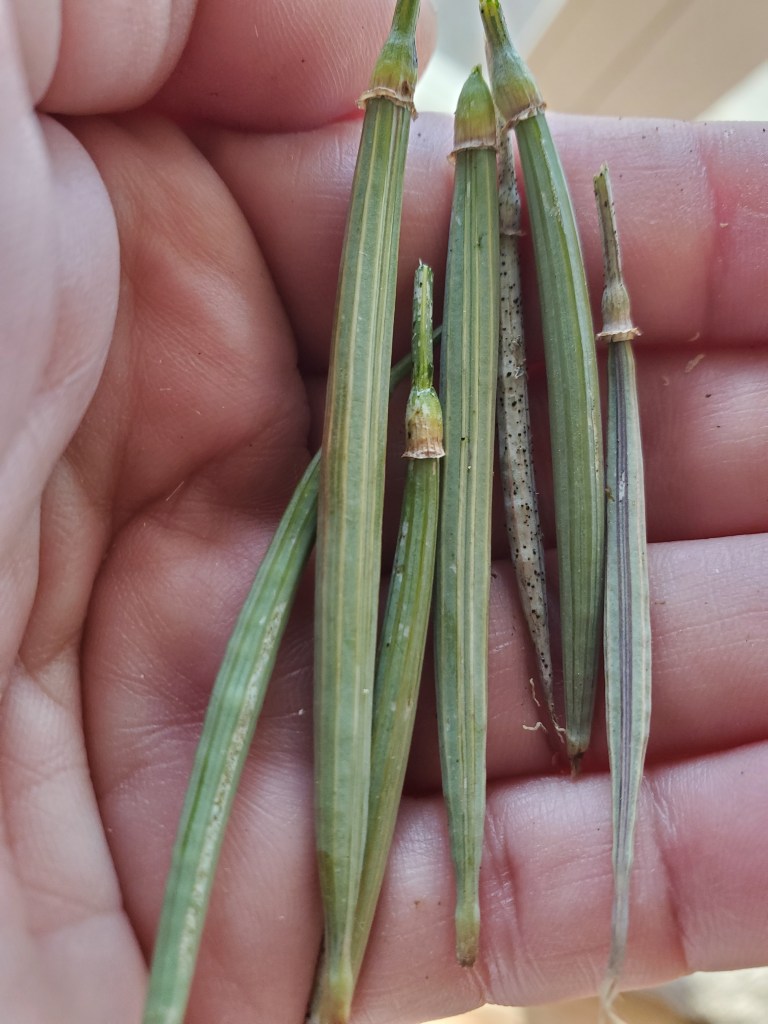
White sage seed vesselsGathering the white sage seed vesselsTiny white sage seedsPine nuts from the trees in the middle of the ranchCA poppy seed pods. Once they are dry, the slightest touch pops the pods open dumping their seed
Rainwater Catchment Building Continues
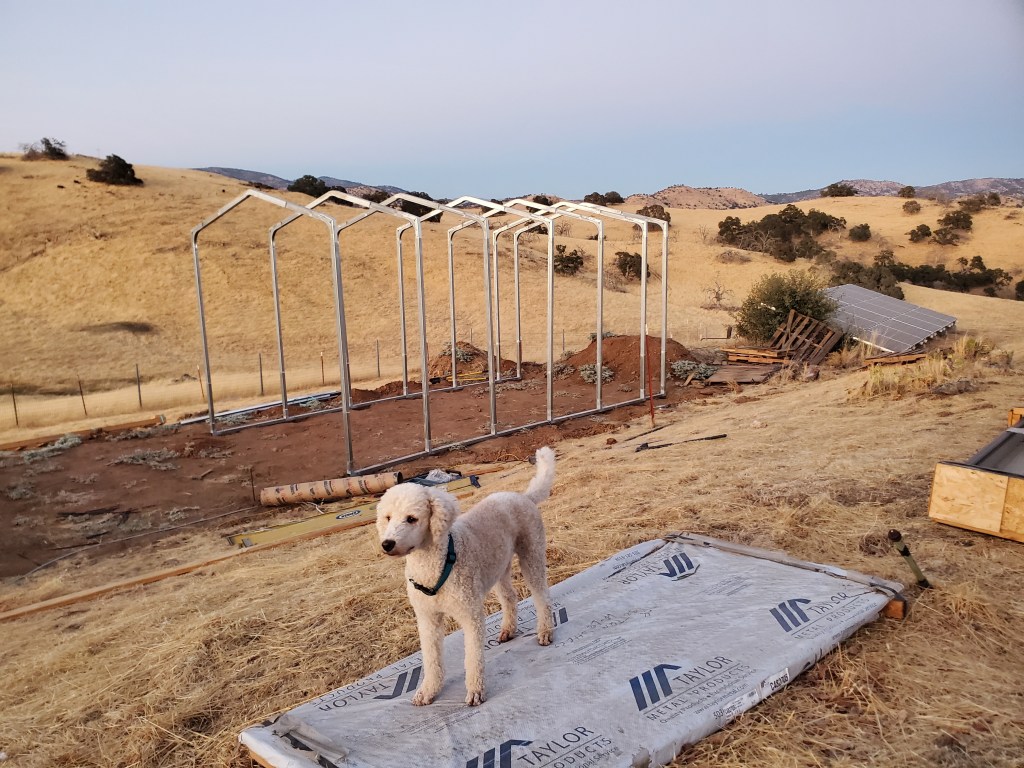
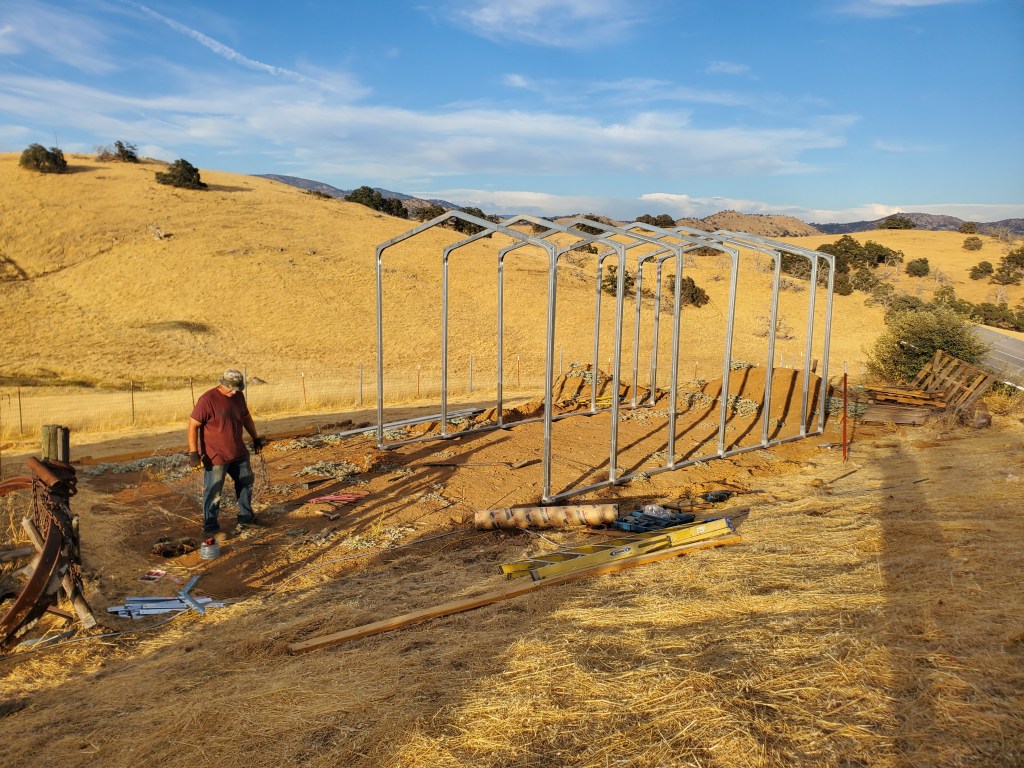
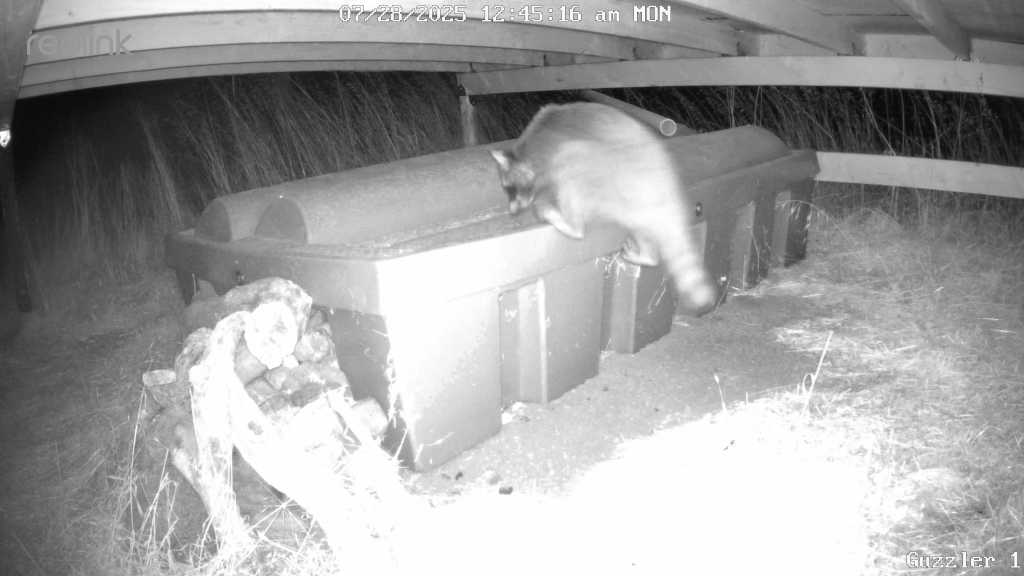
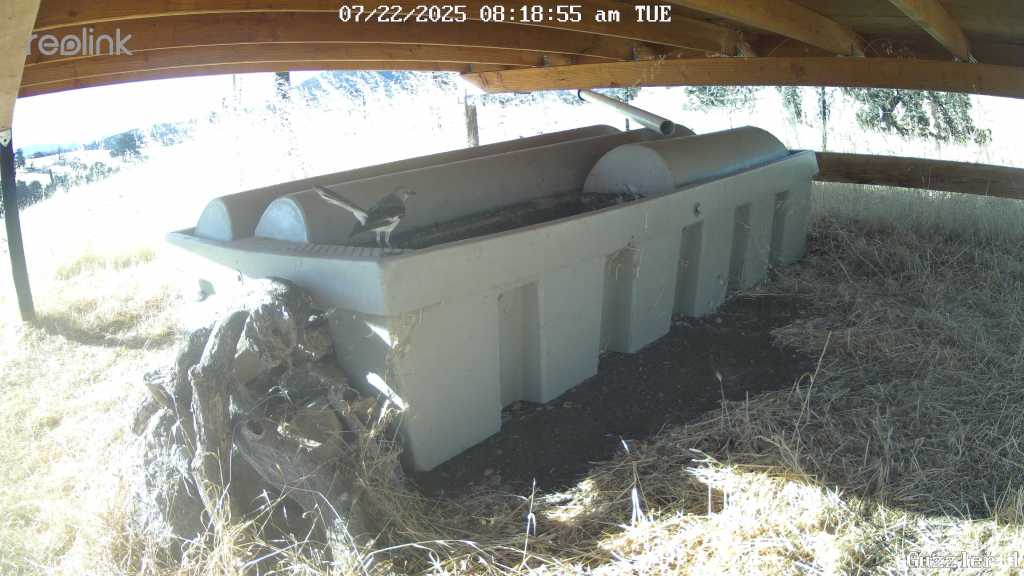
One of our ongoing projects has been to create a fresh, ongoing supply of water to the wildlife guzzlers. Recall, we built a small overhang over the guzzlers to catch more rainwater than if they were left out on their own with their beveled tops. The overhang also acts as shade to decrease evaporation from the unit. Some years, the water captured lasts the entire year. During droughts, the water has run out by late August. To prevent running out, but to also inflow more fresh water, we are building a larger rainwater catchment up hill to gravity feed into the guzzler. The tank is 1500 gallons and will be under a metal building to protect it from sun exposure and heat gain. David has been working on it and will likely be done a week from this post. I am very excited to keep water flowing throughout the hot months. The guzzler has become a very busy place with ground and song birds, raccoons and one feisty feral cat. Thank you to the Natural Resources Conservation Service (NRCS) EQUIP program, US Fish and Wildlife Partners Program and Point Blue Roots Program for believing in this work and supporting it.
Ranch poodle Pongie plays on the suppliesDavid gets trusses erectedPrepping the holes for cementRacoon visits guzzler for a slurpMockingbird hops in for a drink
Fire Danger Ever Present
Living in the new norm of ever present fire danger feels unsettling. When I was a child growing up in the Sierras, fires were part of life, but rarely major conflagrations. There was more water then and less people. I never worried, and I don’t recall my parents worrying the way I do now.
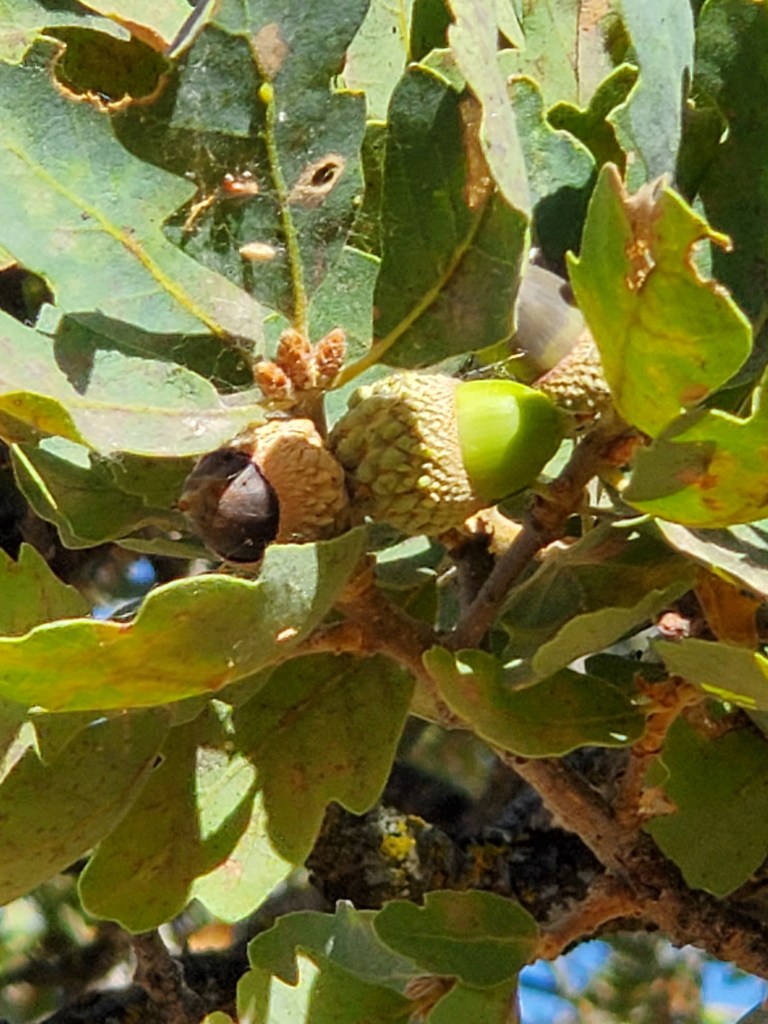
This year and last, we had a nice, steady stream of rain events that kept the soil moist longer into the summer. This year, in fact, David and I both noticed that all the oaks look healthy and happy. Their leaves have stayed on and are a vibrant green. Fresh, well-formed acorns are setting now. July has been much cooler, and that has helped the mature trees too.
Even with these positive signs, I still cross my fingers that a major fire will not rip through the land. Through my work in natural resources, I can see the massive investments by the state in fuels reduction and stewardship. Communities are working hard, year-round to be better care-takers of the land. The problems of over 100 years of fire suppression, population growth in wildland areas, more efficient ag tech to suck water from the land and climate change shifting temps into record levels are all massive issues to overcome. The pace and scale needs to be even greater – and as importantly, if we do not tackle the root causes, we will be constantly fighting an uphill battle. Stewardship, care for the land, being in good relation is not work; it is life. It is an ongoing relationship where a thoughtful existence results in abundance and health in an environment where we can all live – nature relatives, humans – and thrive.
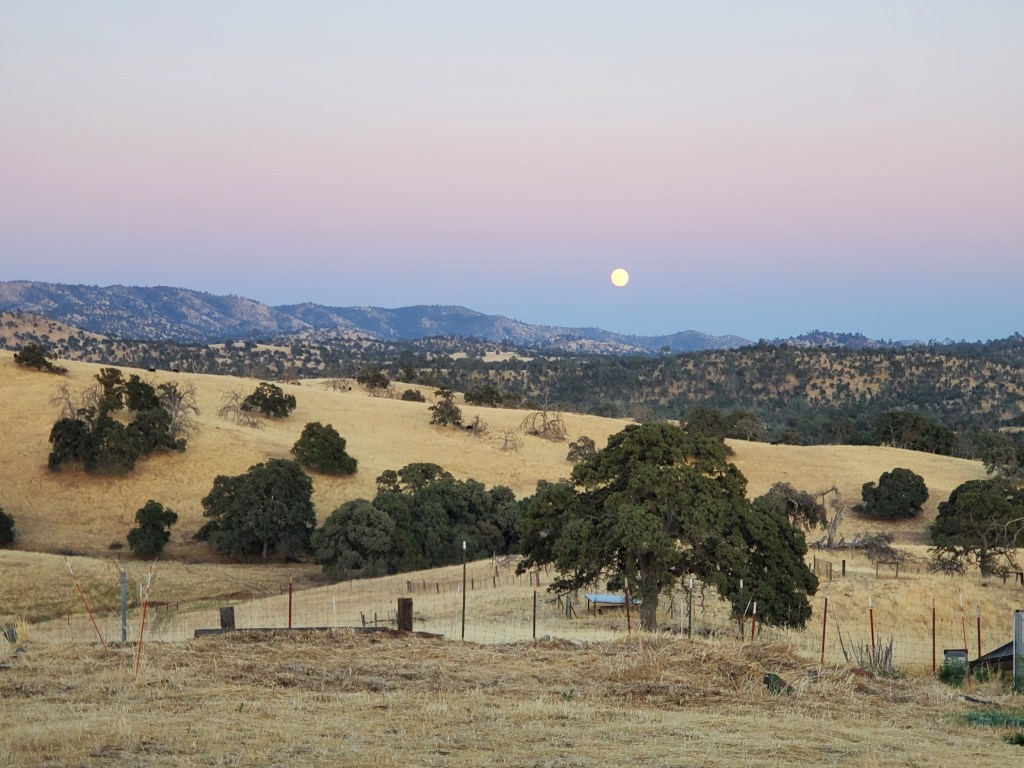
Moon over HornitosAcorns beginning to setBoneyard fire in the north part of the countySunset on my way back from watering oaks
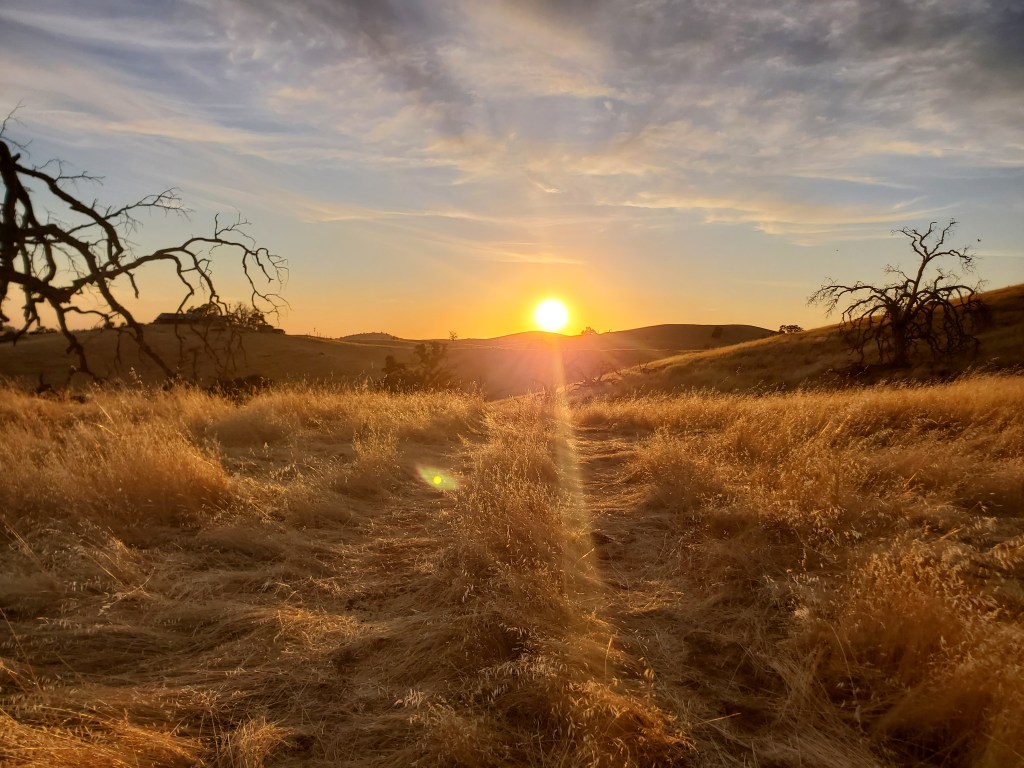
It’s early Sunday morning. The sun is not up. I’ve been up doing chores, feeding animals, opening windows to allow the cool air, laden with scent, into the house. It is barely light, getting lighter. The birds start to sing. First one chirp, which leads to two then it all begins. I step into my boots, dogs at my heels and head out – pulled, then lightly pushed by the cool air now gently swirling in the house.
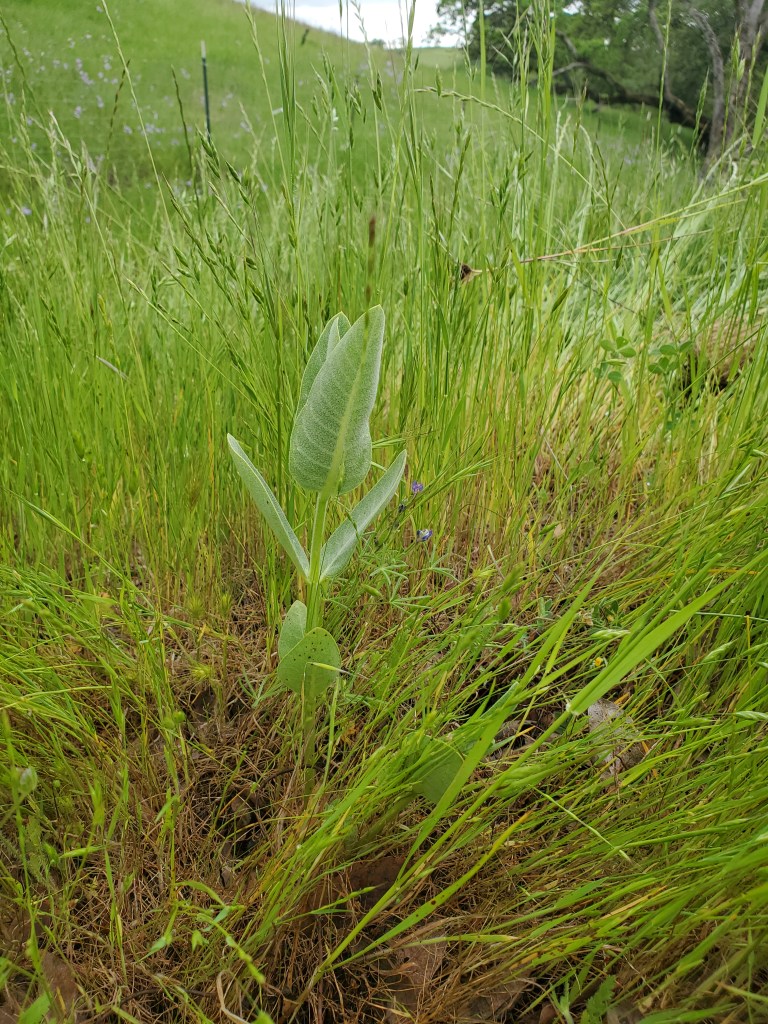
The ground is soaked from the dew. My boots collect the moisture along with leaves and purple pedals from the thousands of small flowers, close to the earth, lining my path. I check the milkweeds. They are stretched into the air bolstered by days of sun as they break through the invasive grasses that block the light. I examine the space to see if more are there. They are, and I breath, grateful for the resilience of these plants.
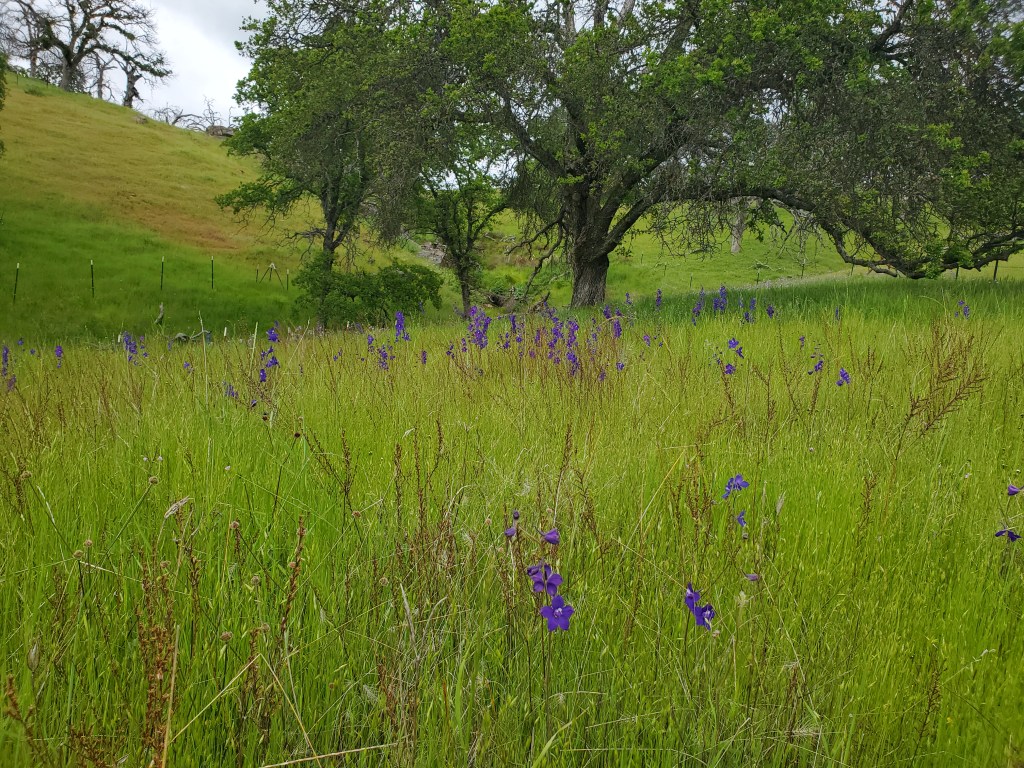
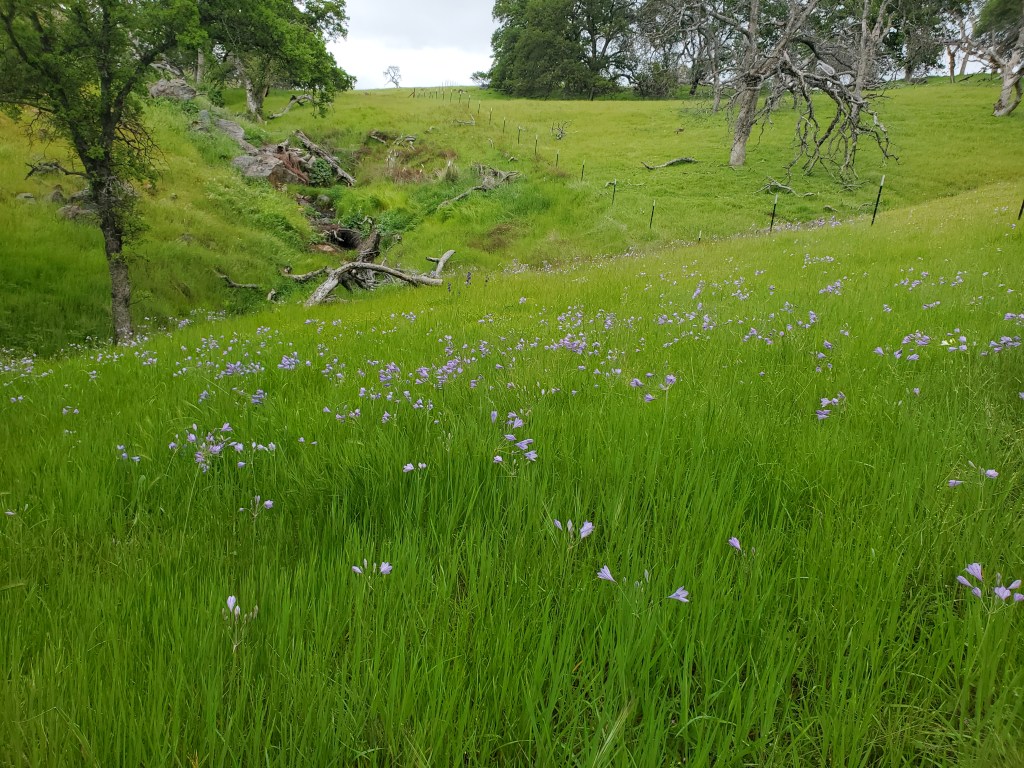
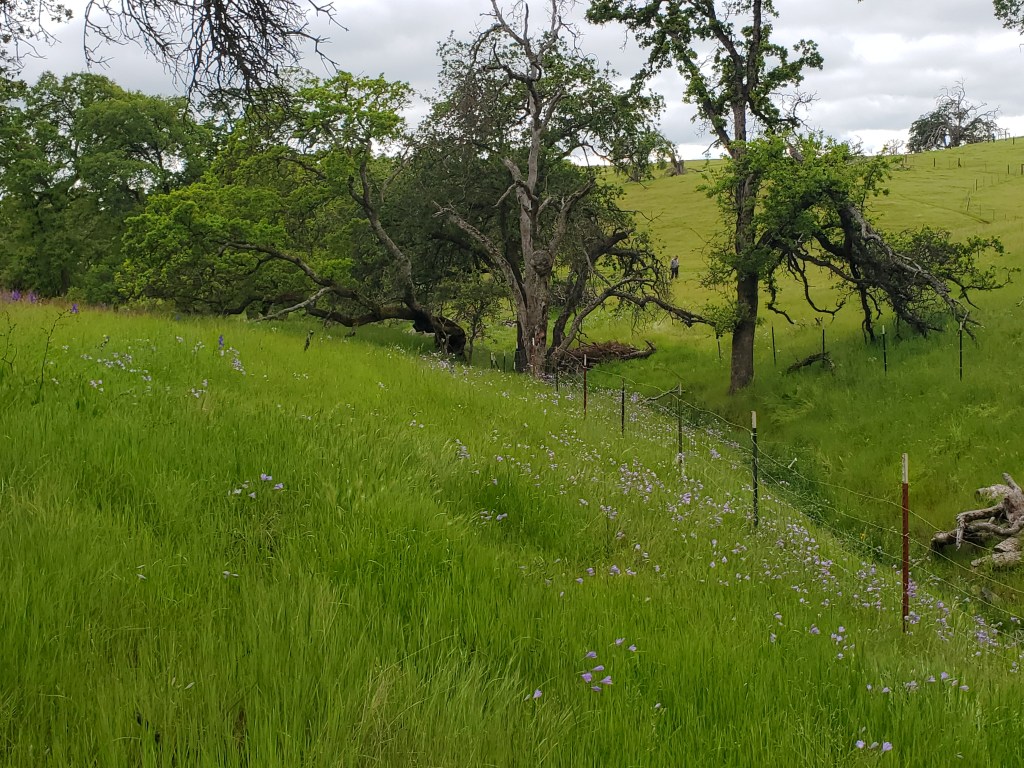
Heading down the hill with the symphony of birdsong the nectar of those thousands of flowers hits me. The grass nut flowers, tall with trumpeted light purple petals in a starburst formation cover the hillside. Among them are hints of dark purple, tall and narrow larkspur. Yellow Mariposa lilies are beginning to dot the hillside – more than I’ve ever seen here. The popcorn flower has nearly abated making room for more purples, filaree and small lupine – the large ones almost ready to burst.
As I get closer to the drainage, the temperature turns cooler, a function of the cold water that soaks the earth and continues to trickle. Walking along the drainage there is more larkspur, orange fiddle neck and now some new yellow seep monkey flower. The birdsong is penetrated by the flap of wings. A single bird flies overhead. Even though it is small, it is quiet enough to hear the displacement of the air with each flap. This is why the morning is magic.
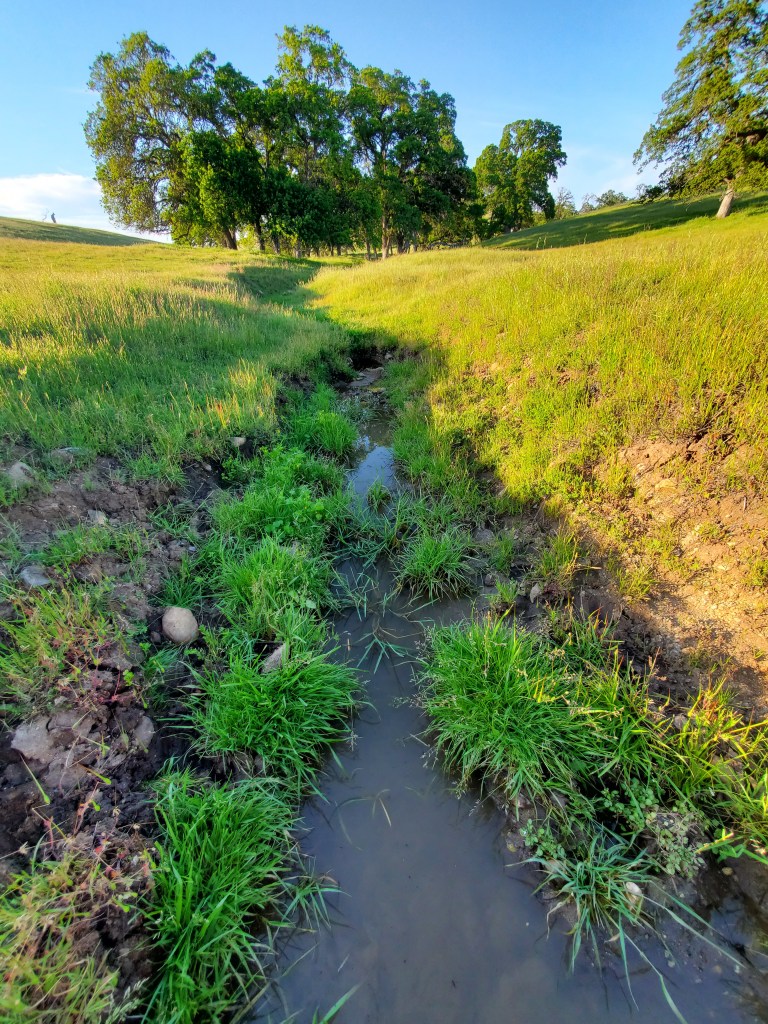
I cross the swale pond and walk into the grove. The bullfrogs floating on the water surface dive beneath the murk, and those on the banks give a chirp as they jump into the water. The nectar scent is replaced by the sweet smell of wet bark and earthen musk. With every step, I stir up more smells of wet soil. The oaks are green, and full of leaves, which I hope portends of a mass of yummy acorn in the Fall. They look happy as I examine the check dams. The soil is still moist in the drainage fork. Good. The water is still running in the spring creek with some nice deep holes. Good. I note invasive thistle growing in my mini wetland and make a mental note to bring the weed eater down there later. With my mother-in-law, I planted milkweed seed. I am hoping to make this new sedimented area more diverse, not just a thicket of Italian thistle. Thistle is nectar rich, and the pollinators love it. There thousands of stalks allover the ranch. Taking out this little section will not impact nectar availability. I hope to get a glimpse of the quail I saw the other day, but I don’t. It is too early for some.
I exit the grove to check the open section of the spring creek. My boots are wet up to mid calf. Despite the work of the cows, the grass has grown taller with last week’s rain. The first section of creek is still running, filled with grass and small, open stands of water. More seep monkey flowers emerge. About halfway down the open section of creek the water stops. I hear the last drips into a small pool just downstream of my old, small, rock check dam. The flow is underground now. It leaves a creek bed of moist soil the rest of the way to my property line.
As I veer back to the trail, turning west now on the open grassland, the sun is up over the east mountains and hits my back. The warmth is a familiar hand across my back comforting me as I walk. I notice the humidity now, so thick. The full force of nectar is back, clinging to the water molecules in the air, which fill my lungs. I think of all those molecules that comprise this Spring cocktail of life and know that my body will know what to do with all the constituent elements as my lungs expand and contract. I breath even deeper now, filling myself with this ancient food.
There are still no raptors, ravens or vultures in the sky. This time is for the songbirds to flit and sing with less concern of being a meal or their eggs being a raven’s meal. I link up with the cattle road and make a turn north, fully surrounded by the large expanse of grassland. I hear the unmistakable song of the meadowlark, deeee, de de de deee, then as the sky brightens, coyotes begin to sing. As I get closer to the driveway, there is the distant rumble of cars on the road, which is a quarter mile away. The sun has woken humans up too. I continue the last leg of my walk, Millie by my side and Beatrix taking the short-cut through the grassy hill. I feel grounded and filled. This walk is a ceremony of connection, an acknowledgement that we are all together, living for one another.
Monarchs Are Back with Babies!
There is no more gratifying symbol of the success of the work here than the habitat being used. This is especially true when monarch caterpillars are present. On Monday, 4/22, I walked the steep hillsides to check on the California Milkweed plots. Fortunately, I had friend and biologist extraordinaire Deedee Soto at the ranch visiting. It was warm that day, even at the end of the day, so we sweated as we made our way up. The first plot, all the plants looked healthy, but there was no evidence of monarch use. We made our way down hill, crossed the drainage, still spongy with water, and then started our ascent. Again, this is a steep slope. Deedee and I walked slowly, taking breaks. Mille and Beatrix were with us, but about halfway up, I turned to say something and did not see Beatrix. Where was she? Evidently, she gave up, went back down to the spongy drainage and laid in the coolness of the grass and soil spectating our ascent. I rolled my eyes, slightly jealous, and the rest of us continued upward.
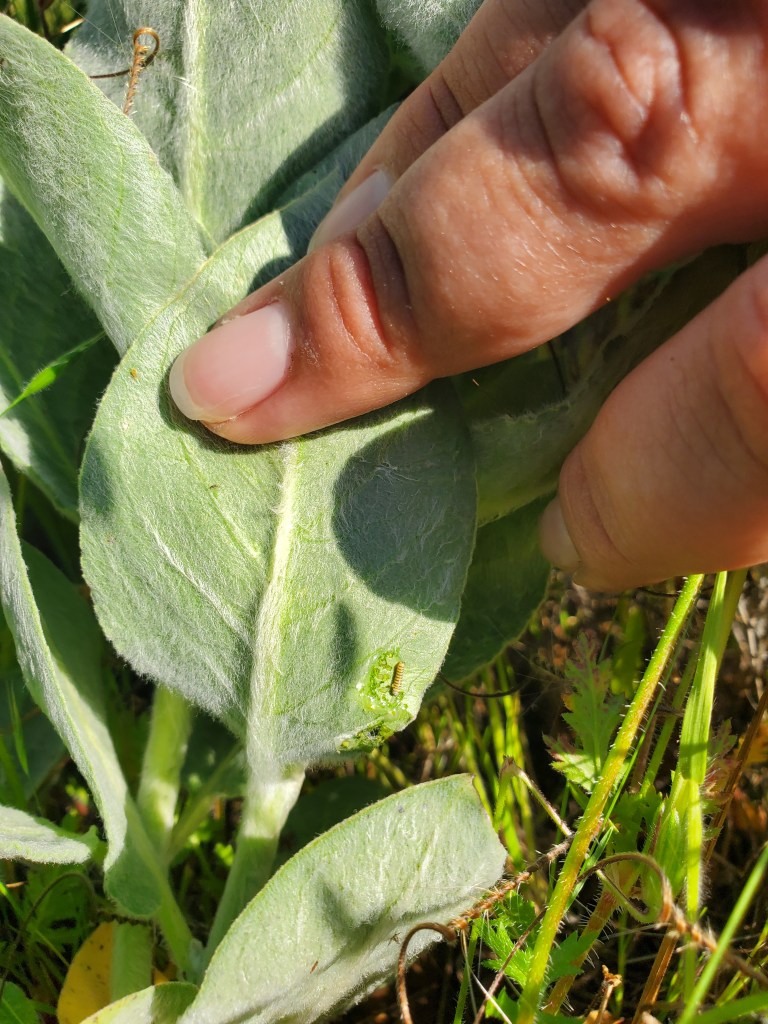
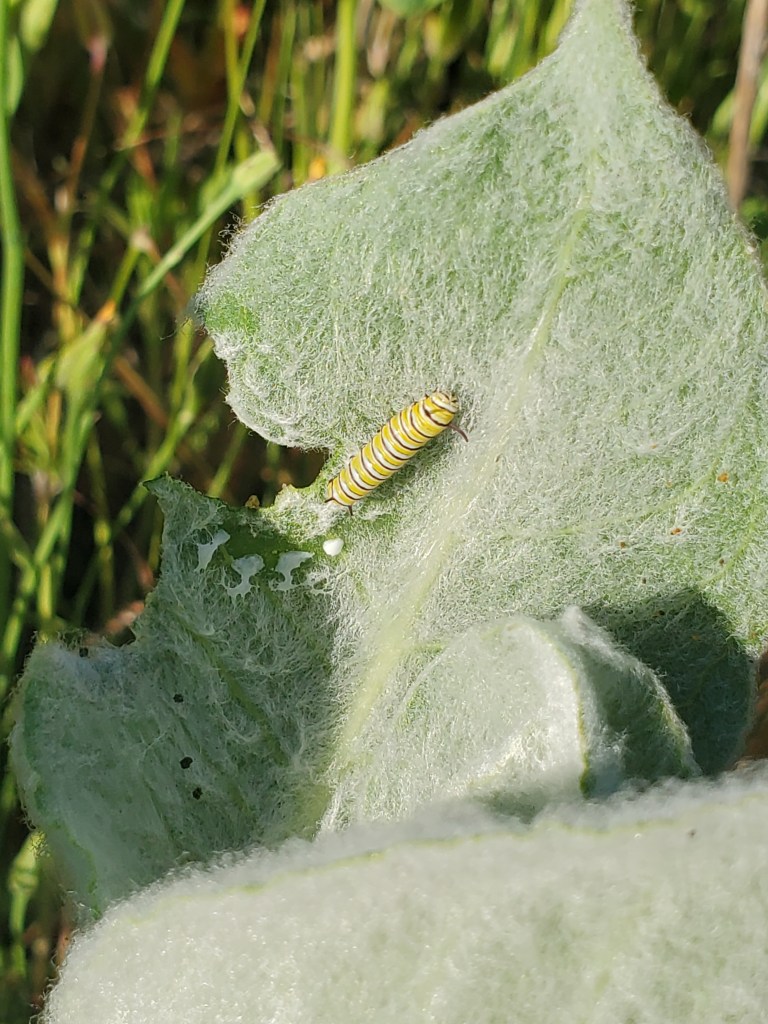
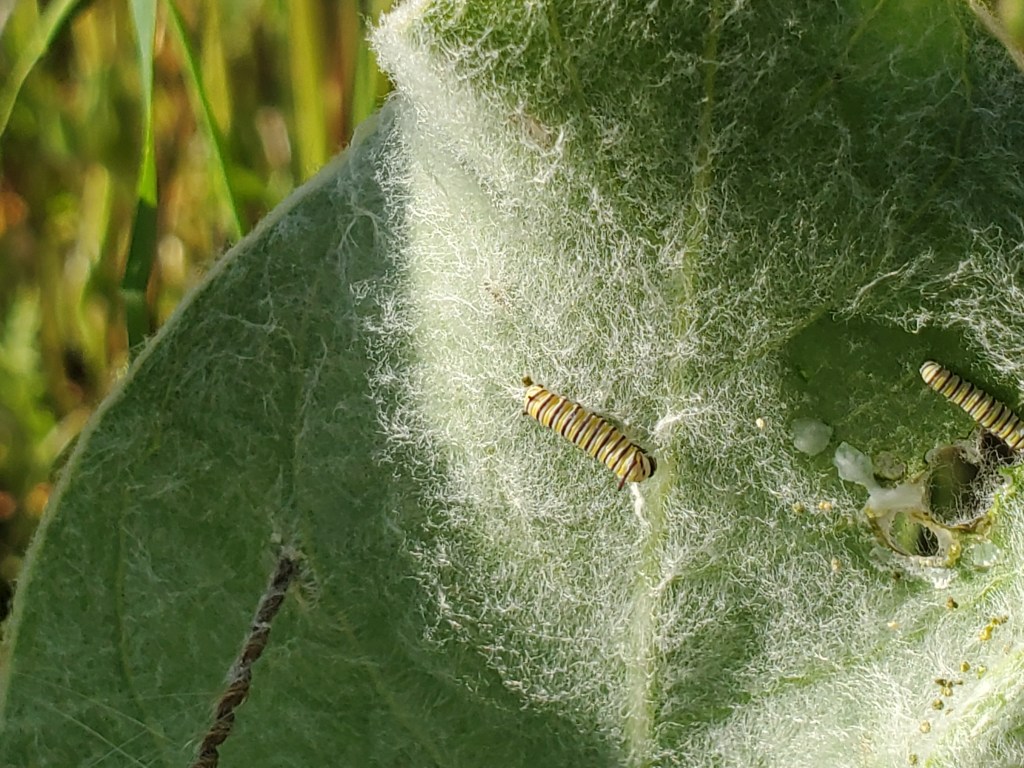
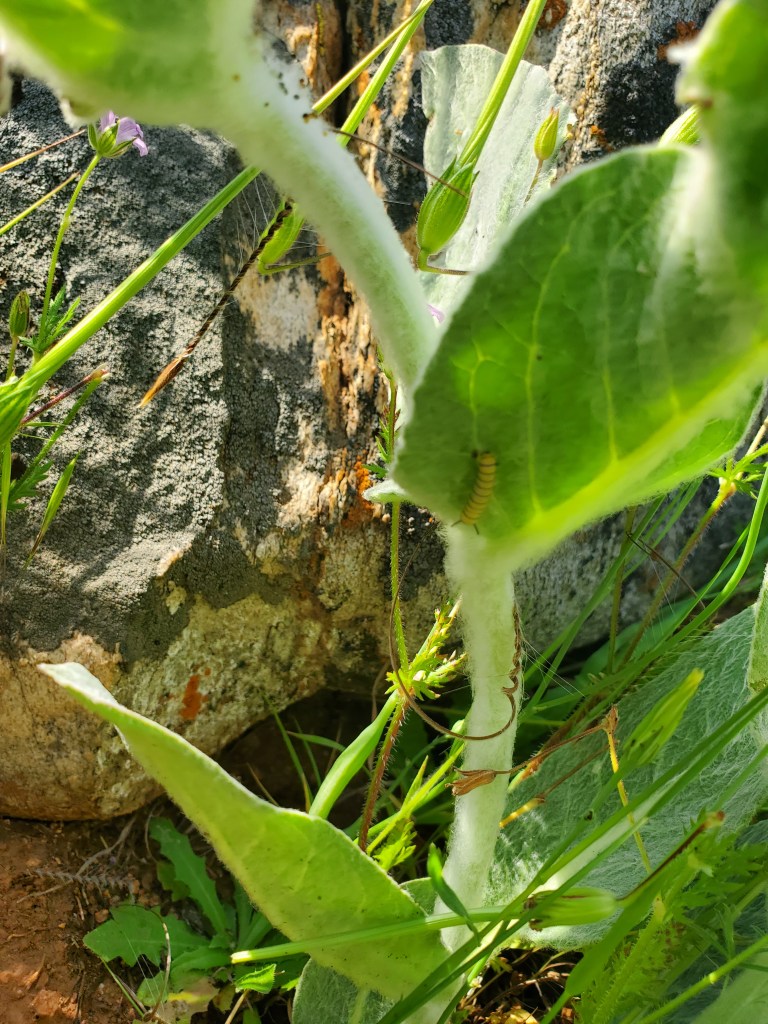
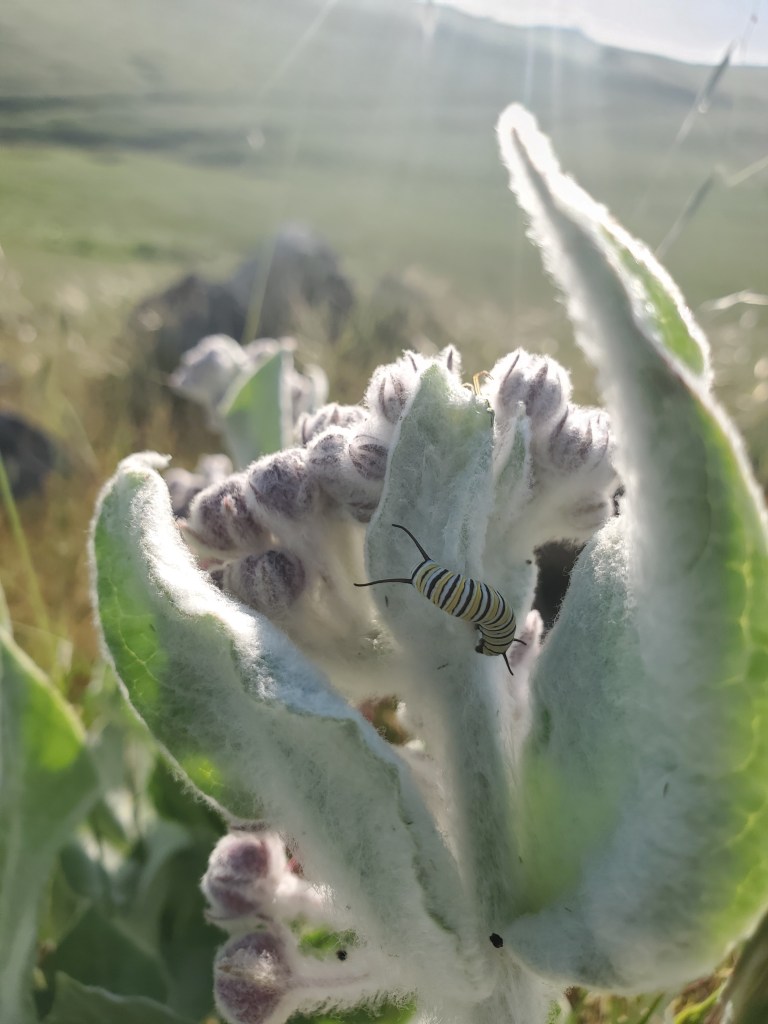
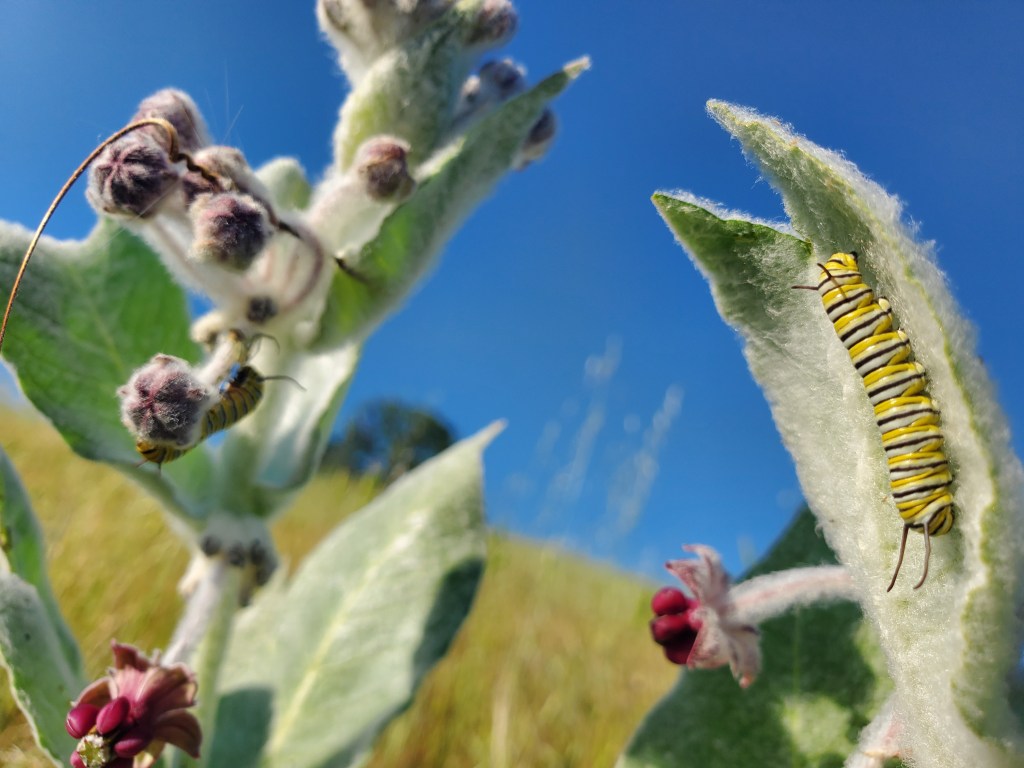
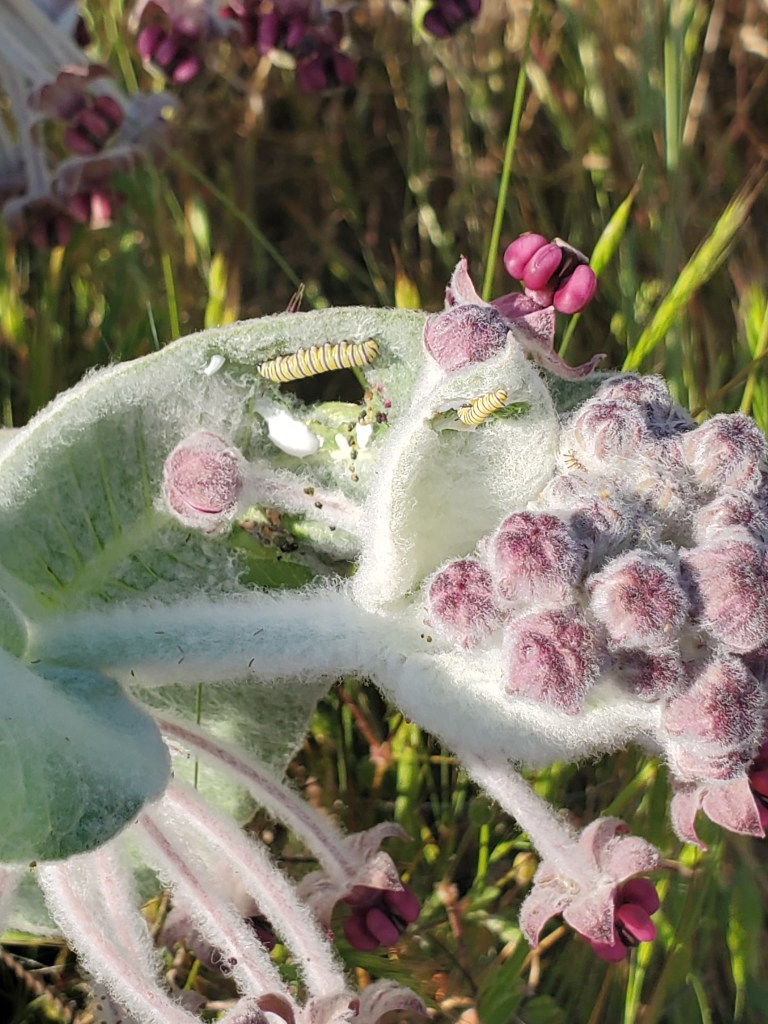
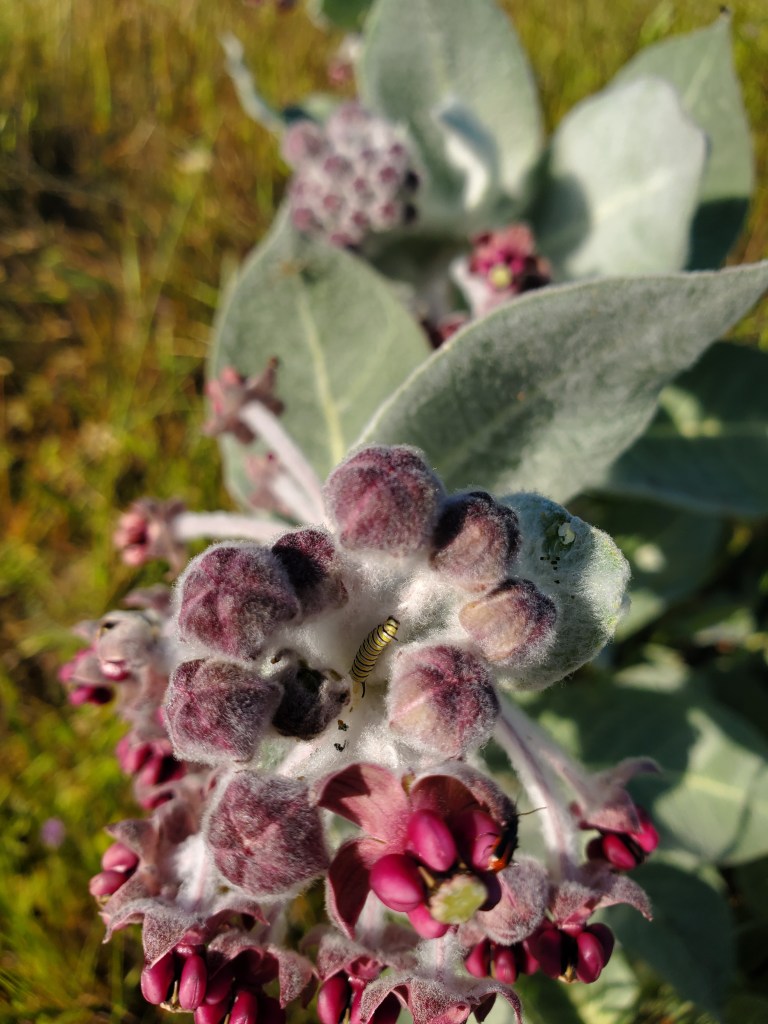
At the plot, our efforts were rewarded. Six of the 13 plants had caterpillars. I screamed with joy to Deedee. It just came out. Fortunately, she understands and doesn’t think me strange to be so excited about this tiny yellow, black and white creature. Because of Deedee’s high skill, and youthful eyes, we counted 28 caterpillars of varying ages, from the first instar to the third. Caterpillars go through five caterpillar stages, with #5 being the largest, before they transform to chrysalises. Twenty-eight is a great start! There could be more though. Caterpillars are very crafty, having the super power to hide in plain site. Two other plants had evidence of monarch use, but we could not find any caterpillars. I whoo hooed from the hilltop. The monarch mamas had found this patch of California Milkweed a hospitable home once again, trusting this place with their future.
1st instar. Look how smallA little bigger – a 2nd instarMunchingCan you find it?A 3rd instar – bigger yetNot quite 4thCan you see it?Nestled in the bloomA beautiful smelling place
All Oaks Planted
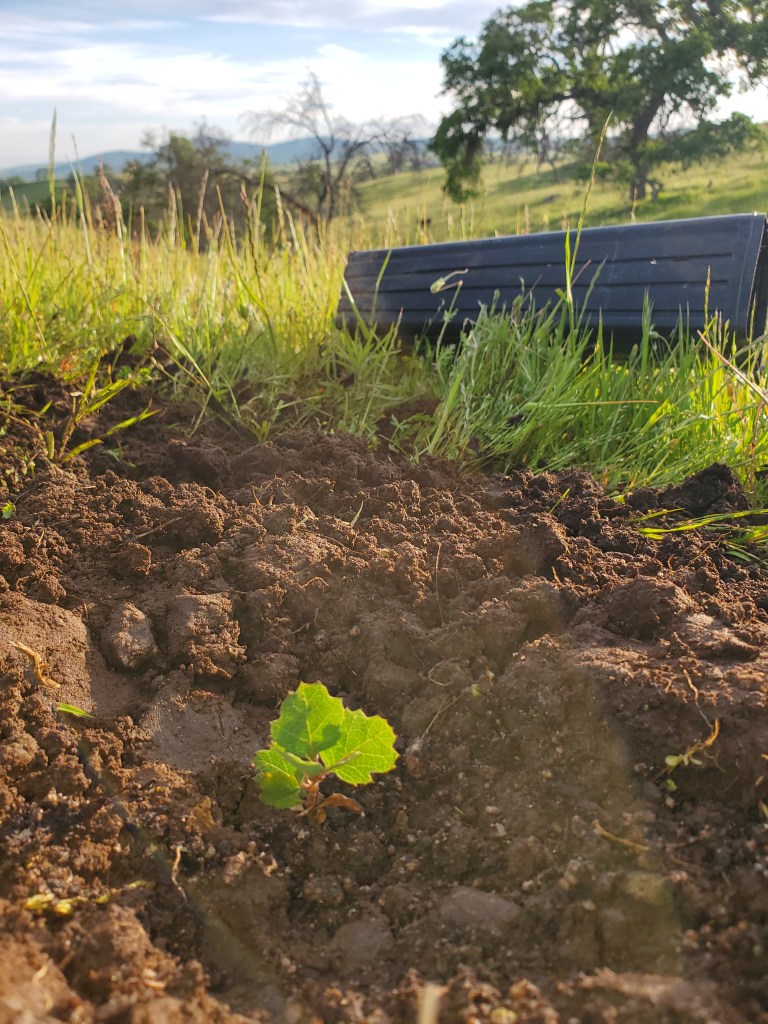
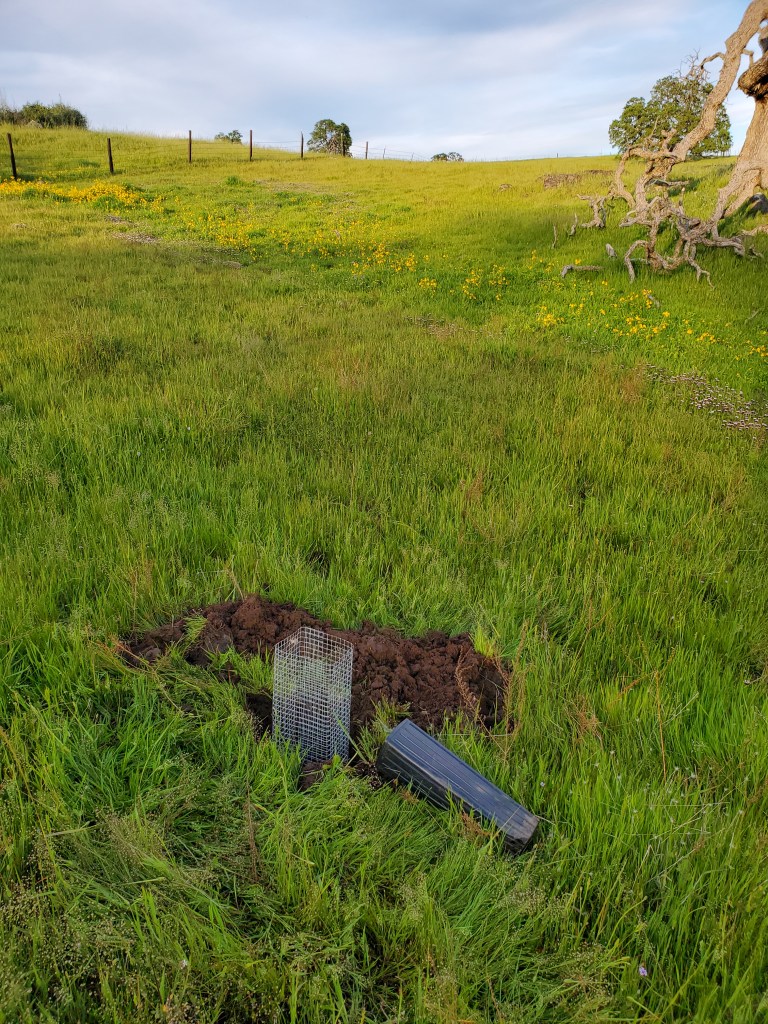
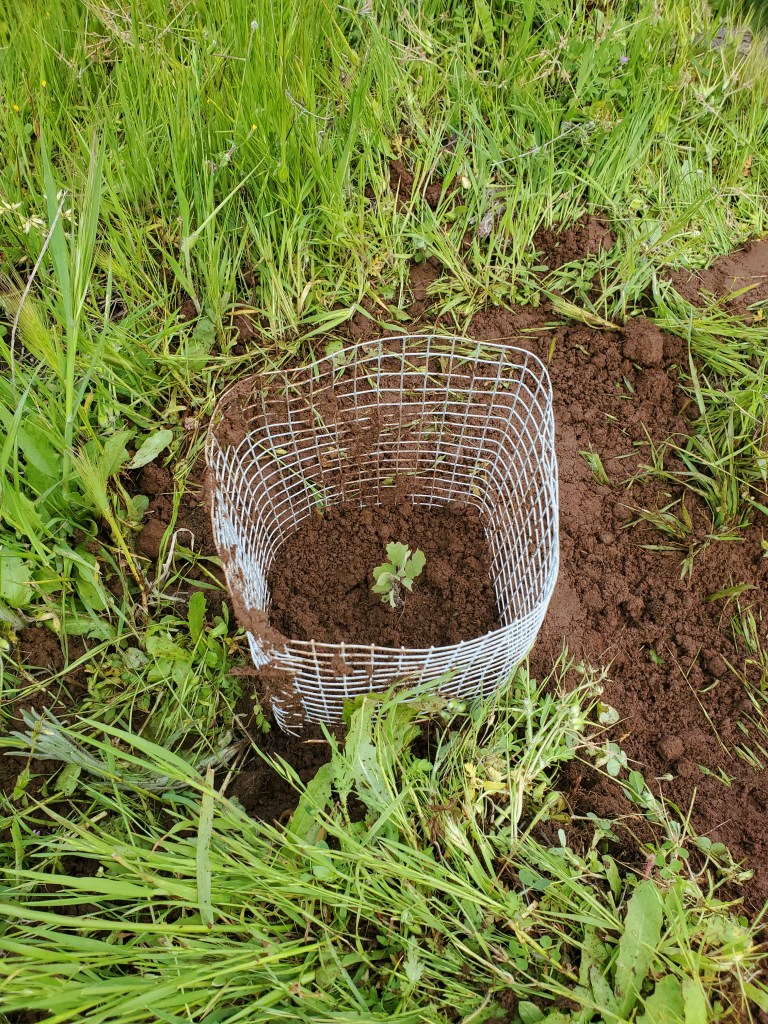
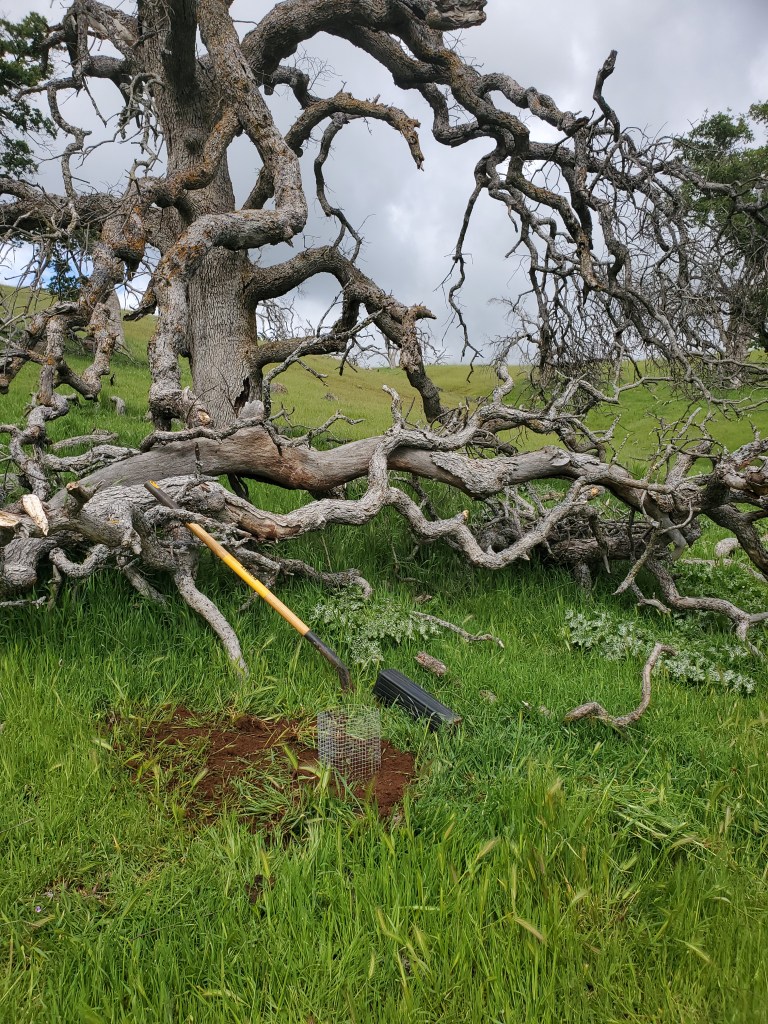
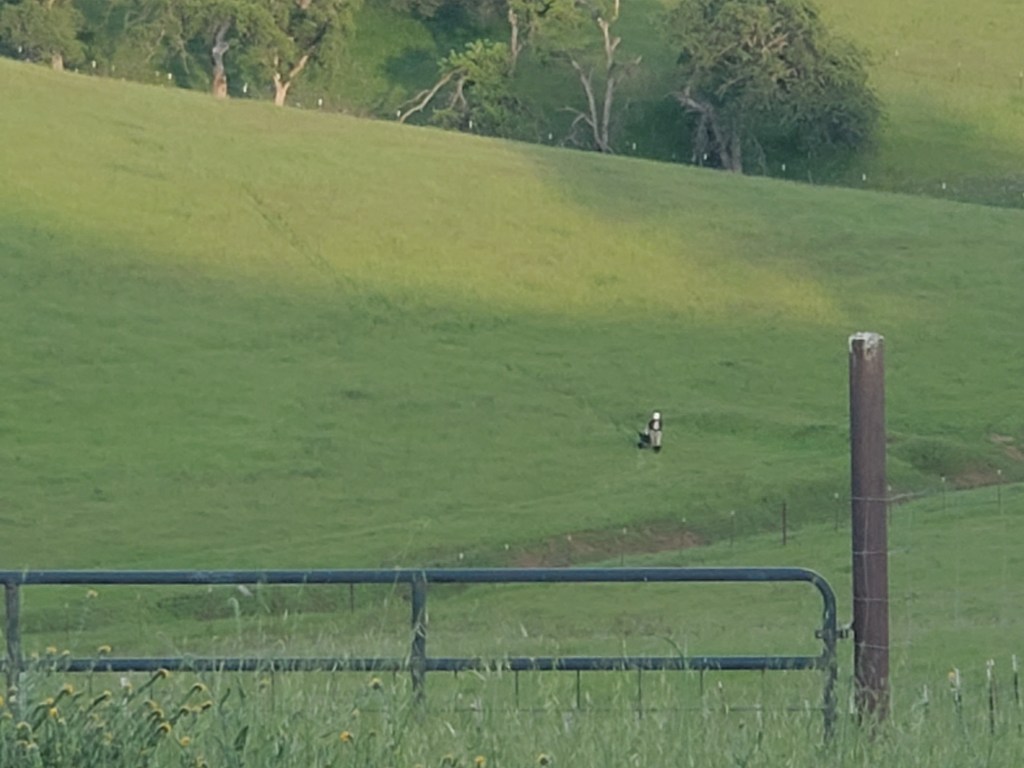
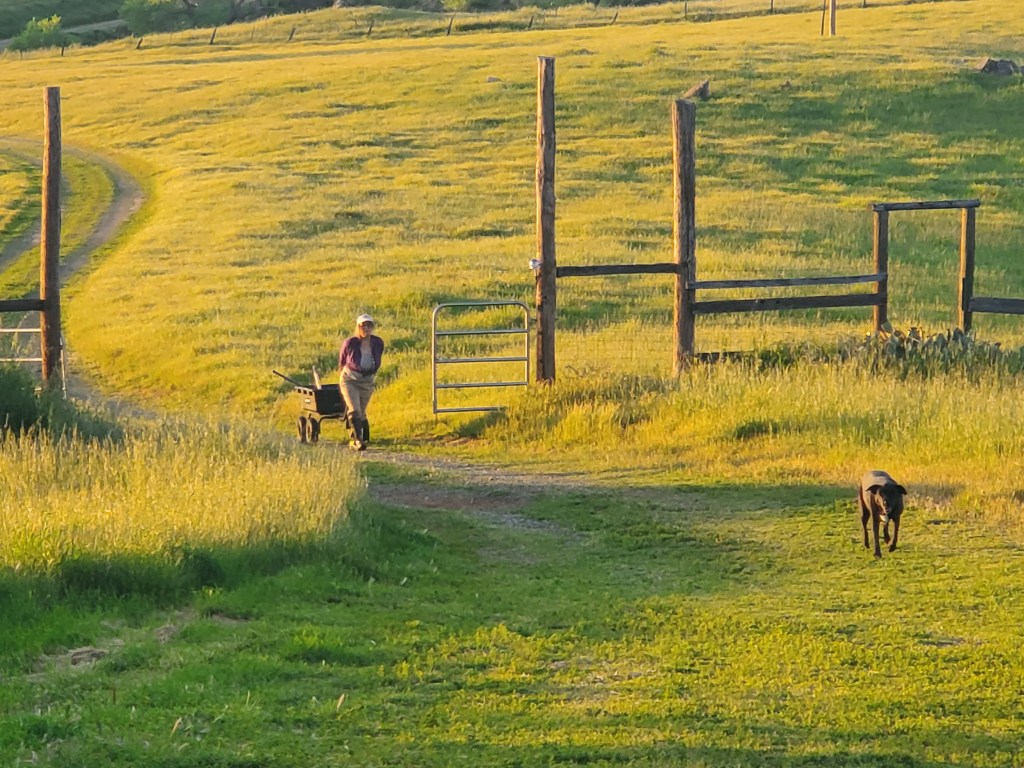
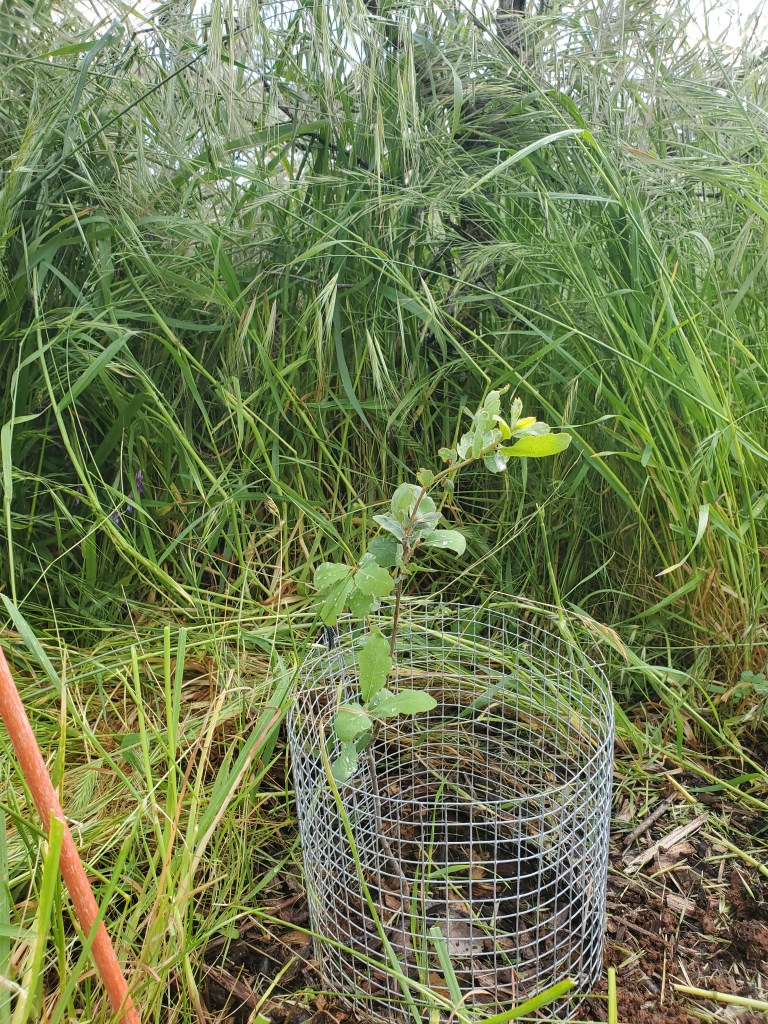
If you are a regular reader of this blog, you may remember that my neighbors, Ric and Kim, are extremely generous, allowing me to use their electric Polaris for my habitat restoration work. Those vehicles are extremely expensive, and we are so grateful for this kindness. It makes life much easier. I was reminded of this last week when Ric had his vehicle back with him for some work, and I was still engaged in blue oak planting. Undeterred, I regressed to using my cart and hand dragging around my tools and plants to continue planting. I got three more blue oaks planted, but goodness, I was sweating.
Ready to plant. Looking at the sitePlanted near the top of Spring CreekPlanted in the spring marshy area up stream on Spring CreekGorgeous place to work. Note the carpet of seep monkey flower in the backgroundI hope you thrive little beautyPlanting area in open area downstreamTwo oaks planted across but 10′ from one anotherCows disturbed oak site before fencingFollow the trails to two of the planting sites next to dead oaksAnother seedling in!Maybe we will get some back that were lostHand hauling my tools from afarDownhill is easiestUphill is harder
The good news is that two of the earlier oaks are thriving, and the seedlings I’ve been protecting in the Spring Creek area for 15 years are finally appreciably growing.
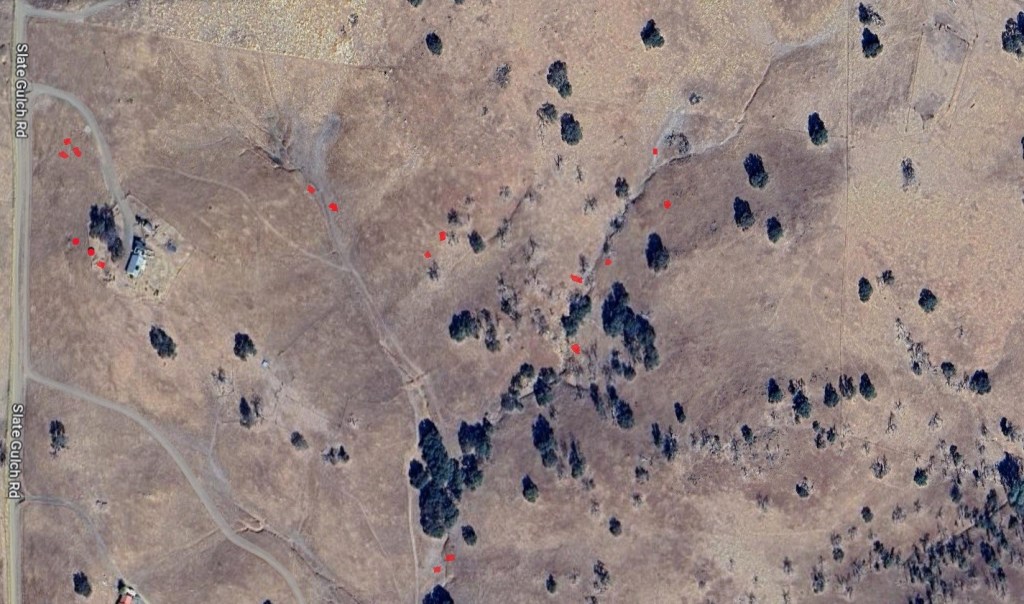
First tree planted in February thrivingExisting seedling in Spring Creek area that was half this size just last yearRed dots are planted seedlings
Wildflowers and Wildlife
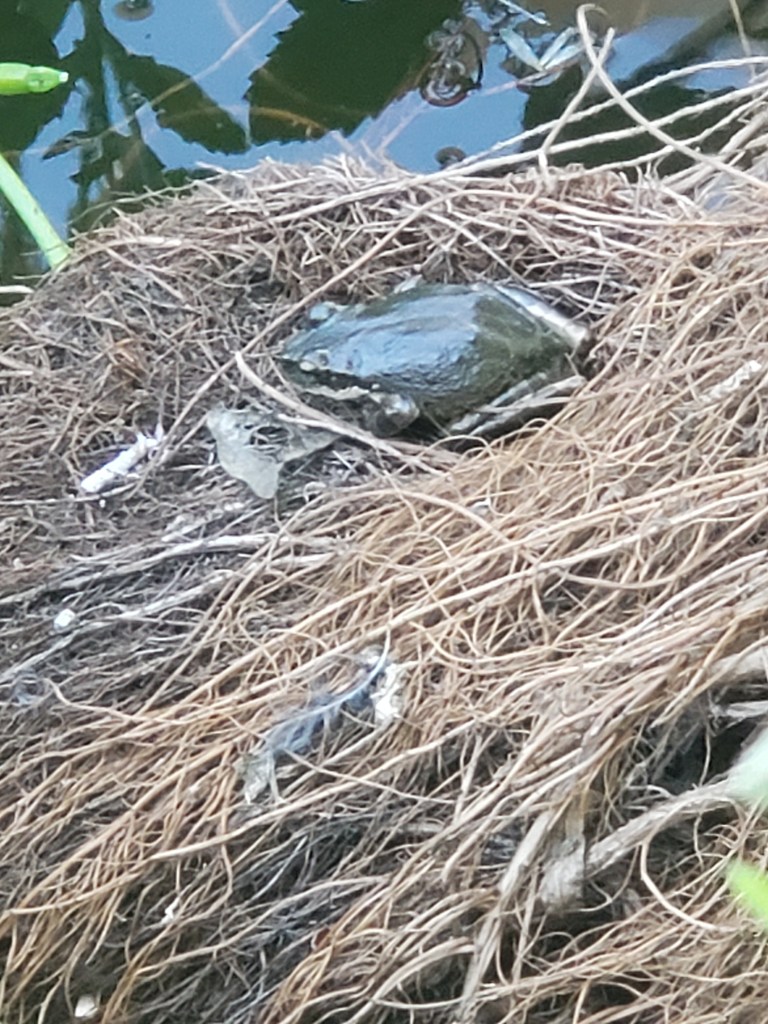
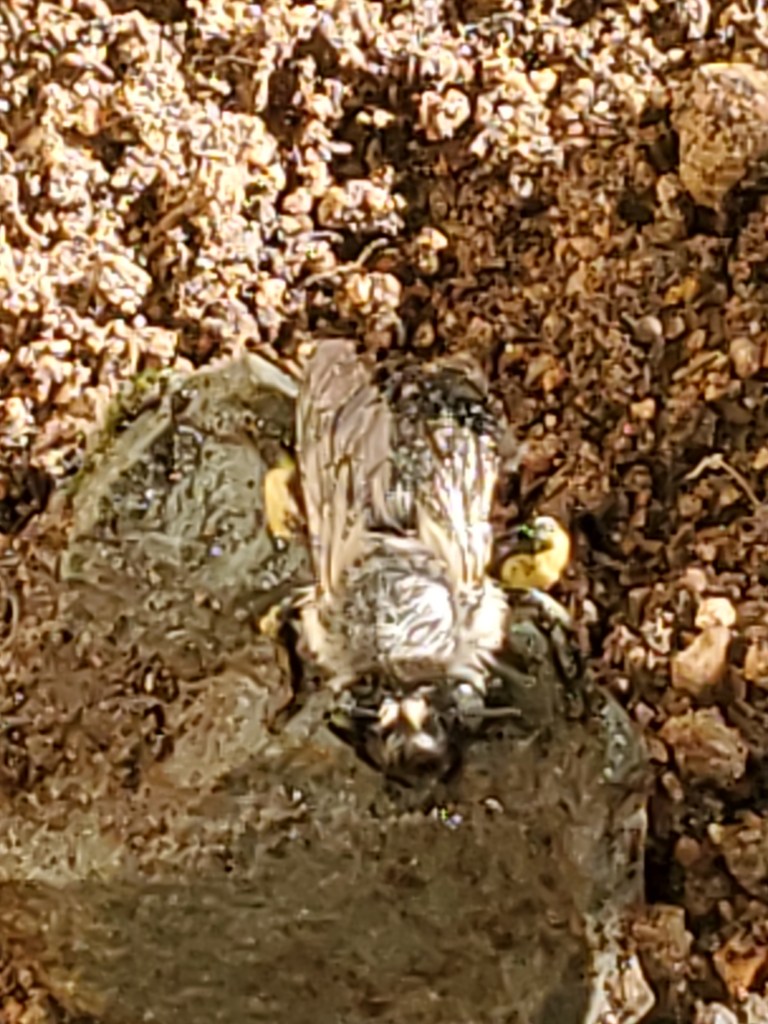
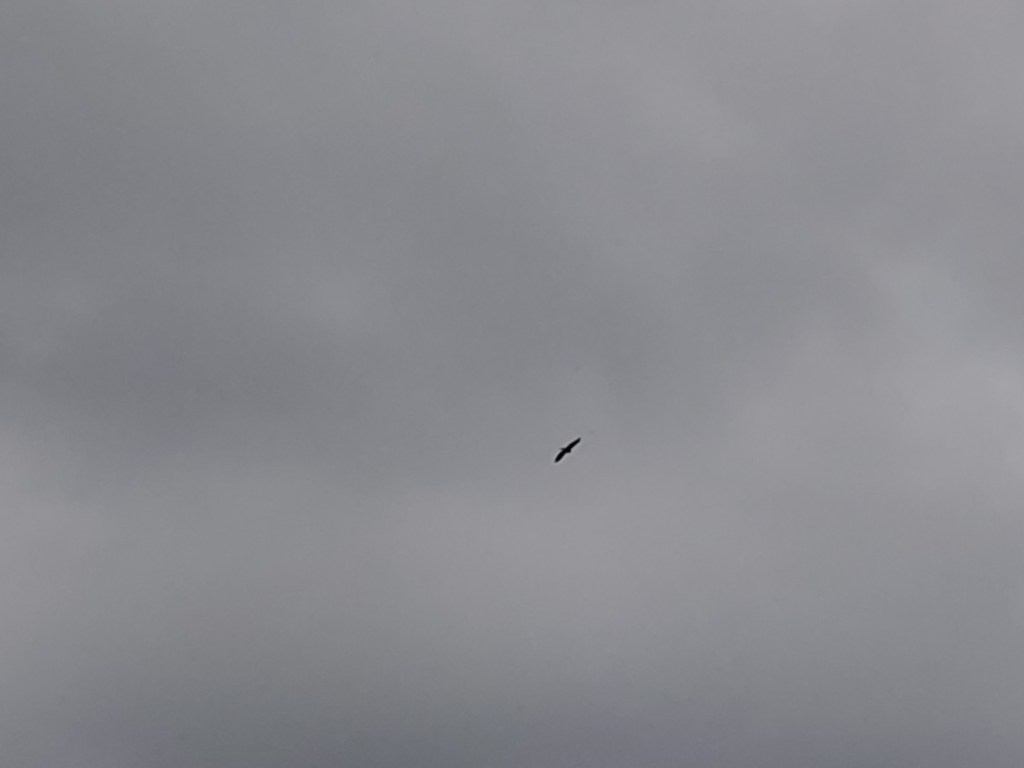
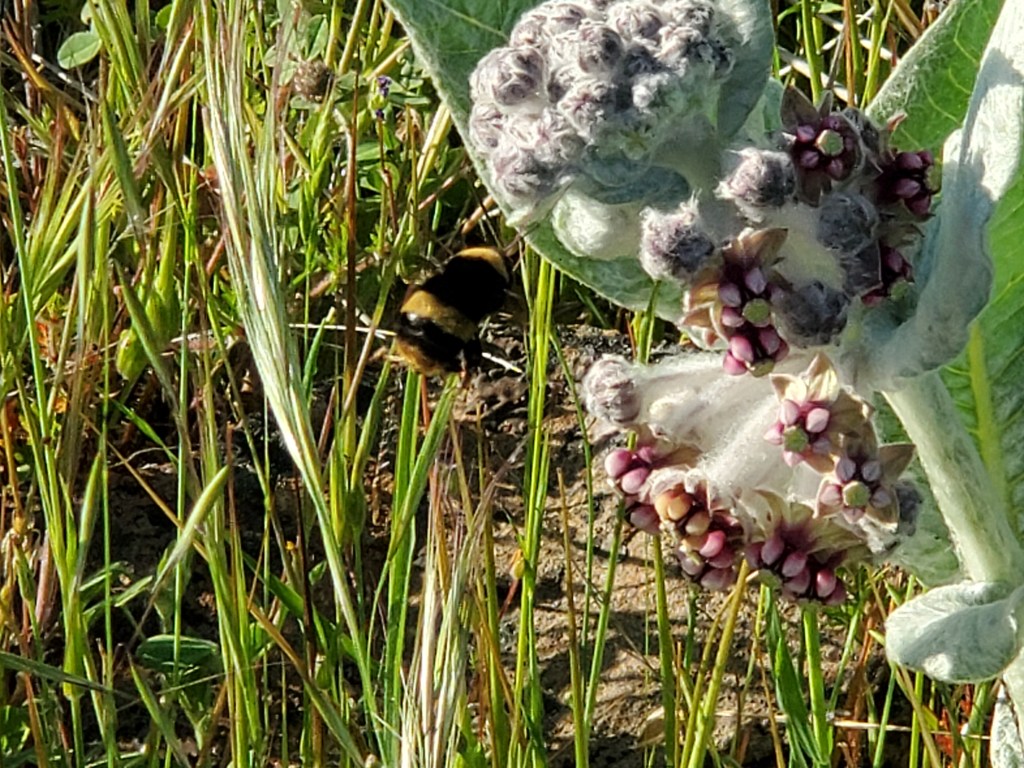
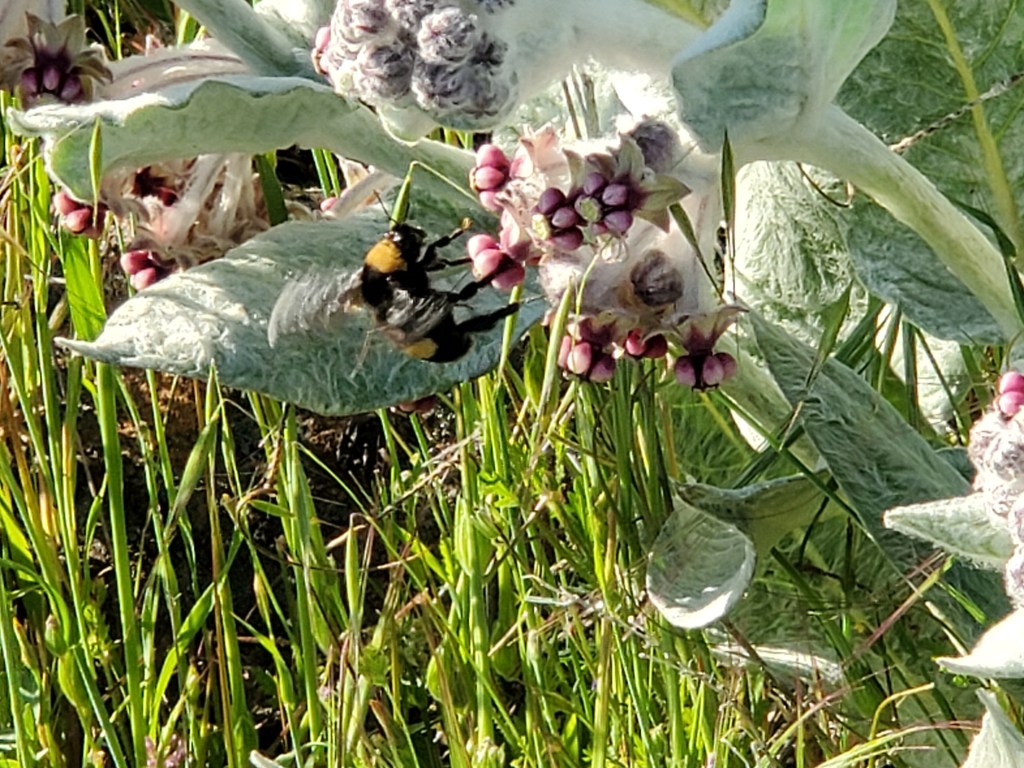
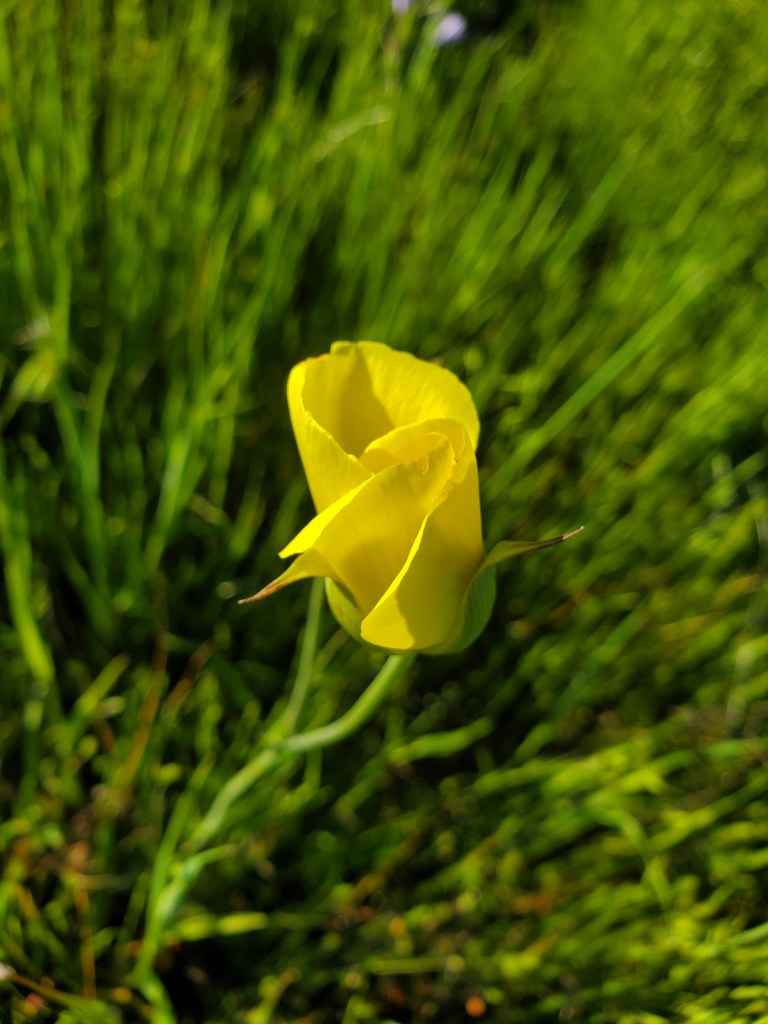
Beautiful small frog on willow root thatchCool flyPatch of larkspurHillside of nut flowerHillside of nut flowerHillside of large lupine almost ready to bloomLarge lupine almost bloomedShowy milkweed up. Last one left from wild pig incursion in Spring Creek plot 3 years agoIris budNative iris from Jakki and Pete, doing wellCows clover – smells incredibleProliferation of seep monkey flowerSeep monkey flowerBald eagles visit!!Eagle!Crotch bumble beeCrotch Bumble BeeMariposa lily budMariposa lilyHover fly (bee mimic)All of the sudden these popped up all over
Fire Keeping
Nellie, the previous Pollinator Program Coordinator for the Southern Sierra Miwuk Nation, attended a traditional cultural gathering the other weekend and educated participants on pollinator plants. She gave the group a packet of milkweed seeds with tobacco and sage as part of the mix. Nellie said that when we planted the seeds we would be making an offering at the same time. I nearly cried I was so proud. I agree. Planting is a sacred act; it is bringing us closer to fulfilling our responsibilities as stewards of where we live and connecting us to place in a way that is intimate. She is keeping the fire of knowledge of traditional practices, values and connection and sharing those with others who are continuing on their road back to a reciprocal relationship with all our relations.
Nellie educating usLearning about plants on a walk
Five Years and Three Months
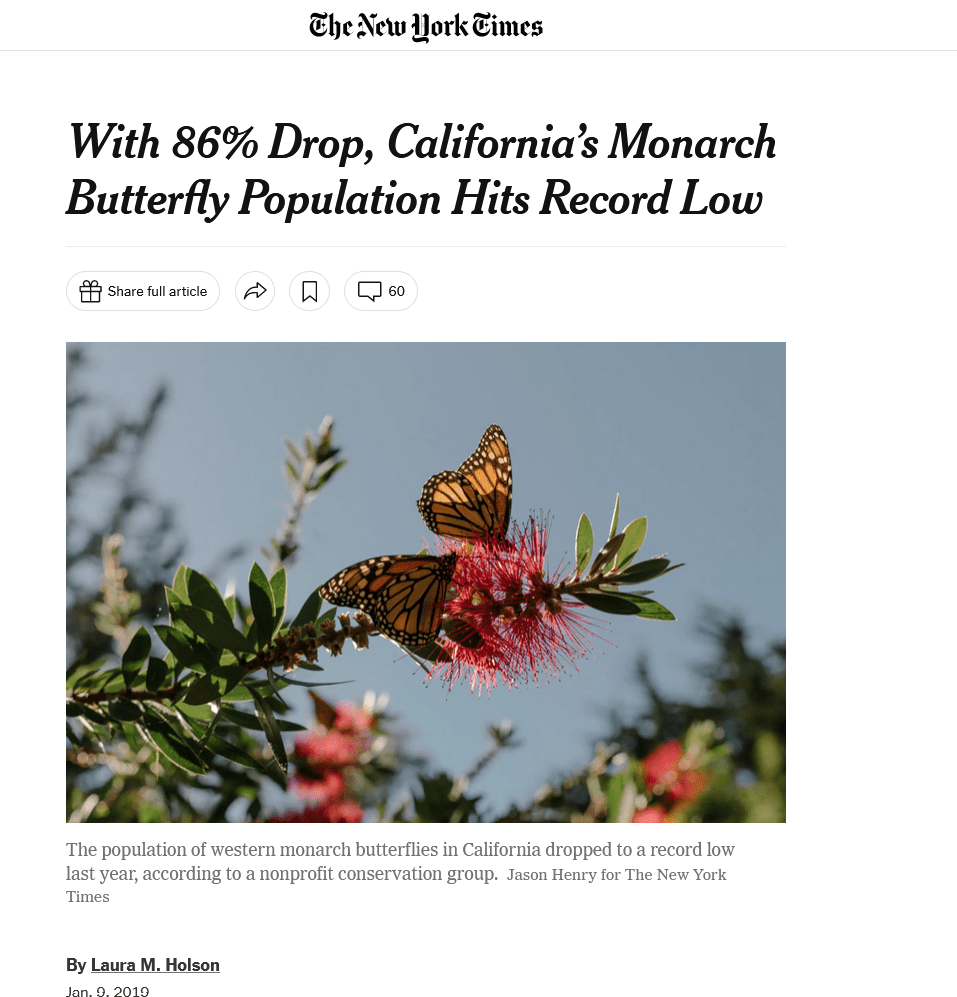
It has been five years and three months since I read the New York Times article about the plummeted numbers of monarch butterflies. It made me sad and angry that monarchs could very well be lost in my lifetime. I did not want to imagine a west without this beautiful and important native animal. I still remember that day in January when I read that article. I thought, “Ok, I am not willing to let that happen without a fight. What can I do about this?” So, I got to work learning as much as I could about monarchs, their migration, lifecycle, what they needed to survive. I learned who the key organizations were leading the charge and that there, gratefully, was a significant focus on this issue. I knew I had seen monarchs before, but it made me consider how long it had been since I’d seen any at the ranch, or even in town. I went back through photos. It had not been for ten years – not since before the 5-year drought.
The first people I reached out to were the Southern Sierra Miwuk tribal elders. I asked them about the monarchs and the western slope of Mariposa County and what they knew of the populations, plants and timing. I then reached out to some older ranchers to gauge how often they had seen monarchs and what they remembered from their grandparent’s stories. It was clear. The elders shared about times of abundance, with fields of butterflies, including monarchs, all over the milkweeds that particularly grew in the riparian and marshy areas. There were more flowers then and more milkweed to support hungry caterpillars and butterflies. The ranchers told me of less abundance – of having seen them as children, but not as many now. With this information, I knew this area had supported flocks of butterflies, and that it could possibly be that way again – at least Taawe Bwia, my ranch, could be an oasis.
To get plants, I reached out to Mariposa Native Plants (Ron Allen and Bev Andalora). I knew them in the community, and Ron had already been gaining a reputation as a “milkweed whisperer”. From the information I gained online, to Ron and Bev’s knowledge, we created milkweed plots. I started with two diversified plots, and both were ravaged by gophers. I started over, placing the plants in mesh baskets instead of chicken wire cages. That worked, but it was expensive. While I was committed to the project, I could never have scaled it as big as I have without the Mariposa County Resource Conservation District (Melinda Barrett). She was a wealth of knowledge, and I changed the composition and structure of the milkweed plots to “pollinator islands” based on her guidance. She was able to help because there was significant funding from the Wildlife Conservation Board, and the California Association of Resource Conservation Districts, as the intermediary administrator.
I was fortunate to have the thought partnership of Xerces Society partner biologist Deedee Soto, who shares my passion and commitment to conservation work. Truly, without her expertise, I would not have as much success. She is a genius with plants – propagation and ID. At this time, Xerces also began their very useful habitat kits (Thank you to Jessa Kay-Cruz and Angela Laws!). Not only did it provide all the plants needed for a successful pollinator island, it taught people about the plants, bloom timing and diversification. I still have the very first plant list with bloom times. It was such a great resource, and what a great idea.
I received tremendous support from the National Resource Conservation Service (NRCS) John Grimes, Jesse Baum, Prospero, and so many others in the NRCS ecosystem. Farm Advisor Fadzayi Mishari provided input on conservation issues early on in my land stewardship and organized important educational opportunities for the ag community where I was able to learn a great deal.
Point Blue Conservation partner biologist Elena Kromer wrote my first conservation plan. While it took a very long time to get done, she listened carefully to what my concerns were and designed a plan that addressed many of them. This process connected me further into Point Blue, where I was able to join their carbon sequestration and wildlife resources study project and access their Roots grant program (Cati Mong). Also of essential help were the classes and resources from Monarch Joint Venture. They offered the first online class I took that brought me from knowing almost “0” to knowing much more. I was able to take that knowledge and advance it through the Pollinator PartnershipPollinator Stewardship Certification program, where I earned my certification in Summer 2023. Most recently, I was also able to qualify for the California Department of Fish and Wildlife Partners Program with many thanks to biologist Rosie Gonzalez and her colleagues for smoothly navigating me through the process.
Last, but not least, I want to acknowledge my dear family, friends and readers of this blog. My dad, Alan, and dear friend Daniel donated funds early on that helped me purchase more plants and supplies. My mother-in-law Sheila sends me fun butterfly-themed gifts. My brother Vance, and sister Sarah, who actually read this blog early on, encouraged me. My neighbors Ric and Kim who let me borrow their Polaris, and early on Ric helped considerably with fencing labor. My nephew Ashtin and niece Desiree have helped with the branch fence early on. My other mother-in-law, Liz, has helped me work the ranch each visit, planting seeds, digging channels and holes. Dear friends Melanie, Molly and Jen have worked side by side with me to build rock and log check dams. Friends in the community and on social media, readers of this blog who have sent words of encouragement, recommendations, shared knowledge, ignored my typos, and encouraged my writing, you all kept me going especially when I had set-backs. Finally, my beloved spouse, David, who without him nothing is possible. From his emotional support to physical labor, and financial partnership, he has been there for me and this dream of changing the course of monarch survival, to create a place where they can be assured of food and shelter along their epic journey. Chiokoe uttesiavu. Si se enchinakiavu. Thank you. I appreciate you all.
Goal accomplished!
Free T-Shirts?
To commemorate my 100th post, I am having a PolliNative t-shirt giveaway. If you like what we are doing here and want to represent via a beautiful organic cotton shirt with a heartfelt message, here is how:
Make a comment on this blog with no more than three sentences sharing about what you are doing to help our pollinators thrive.
Everyone who submits a comment will be entered into a random drawing for a tee-shirt. They are expensive, so I can only give a handful away.
Comments must be in no later than May 24th.
Thank you, reader, for everything you do to make our planet a healthy place for our children and for all our relations. Si enchi nakiavu (I appreciate you all).


























 PolliNative