Another Winterless Year

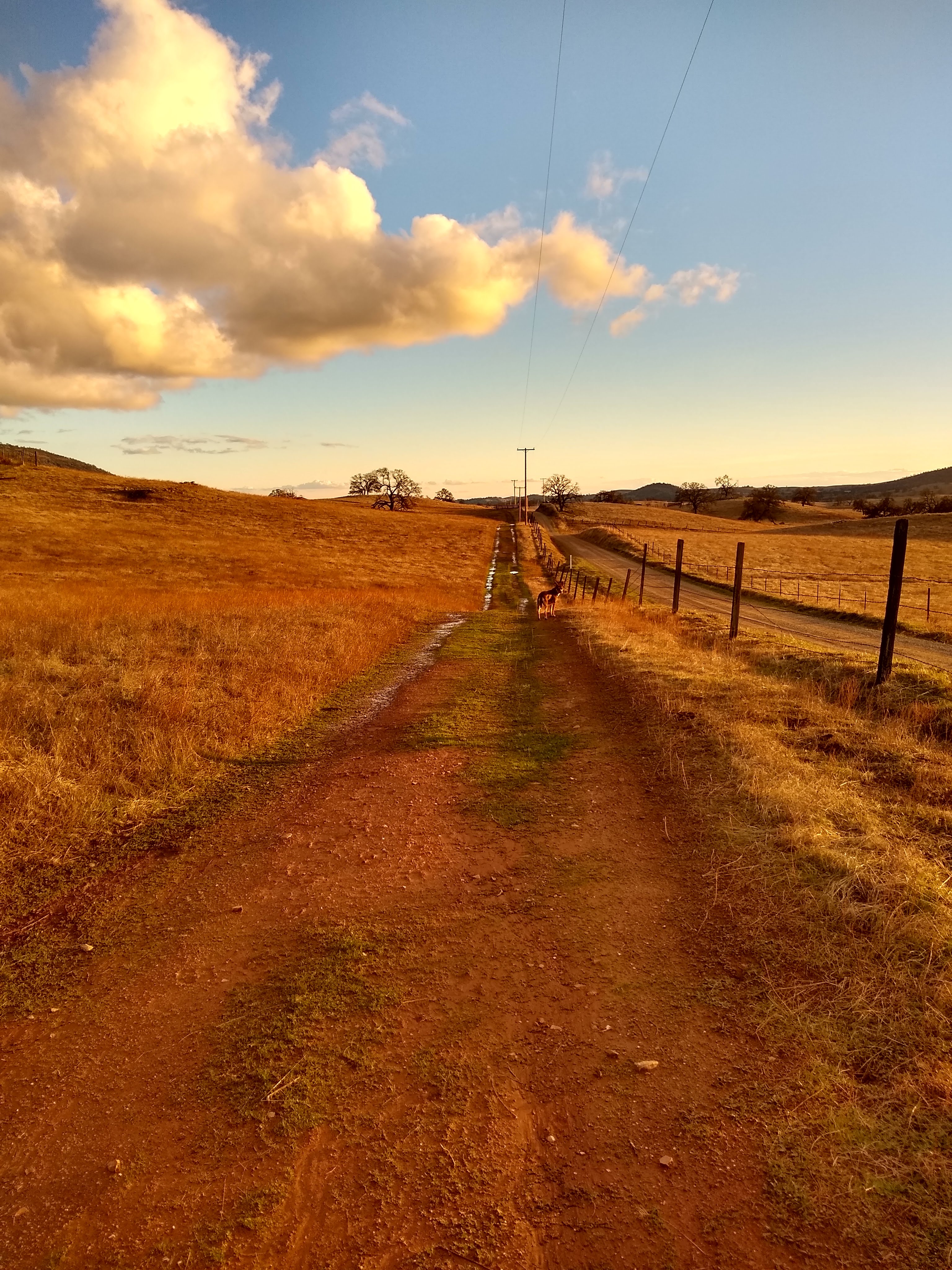
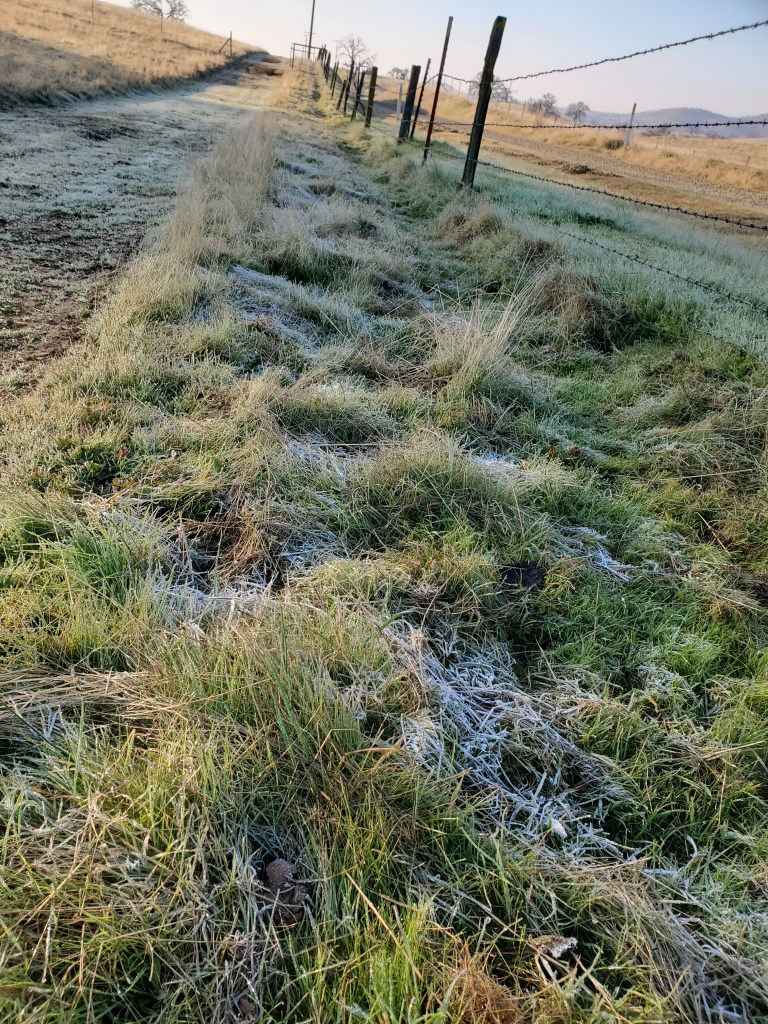
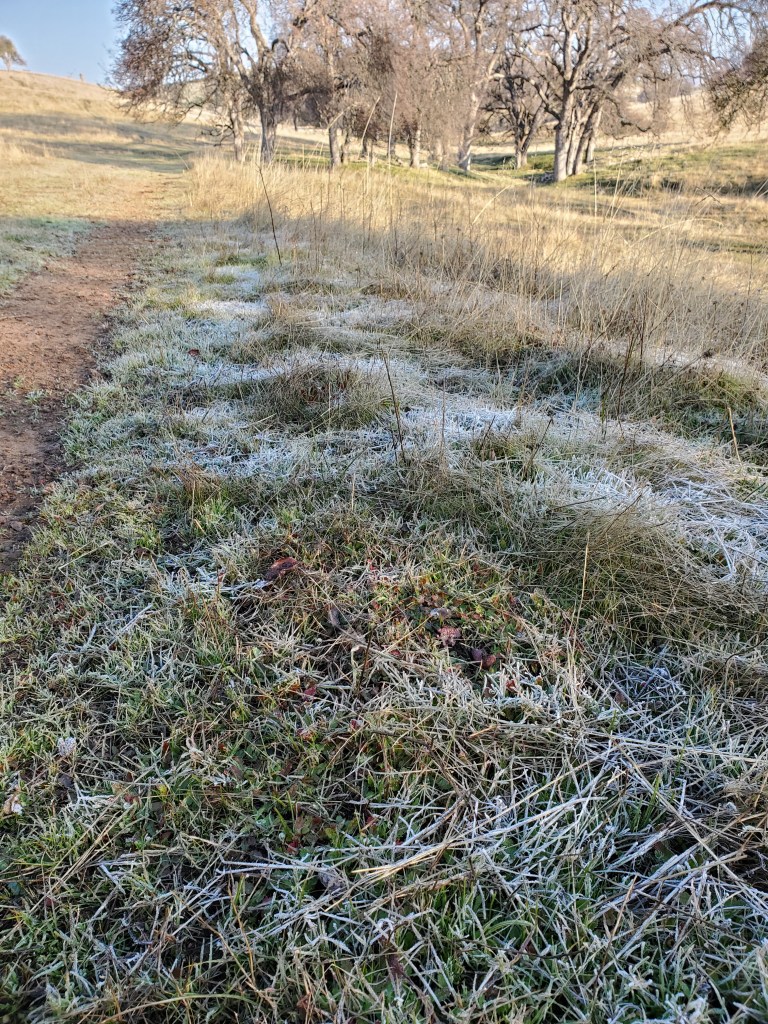
Like last year, and perhaps one or two others, the winter has been short -maybe two weeks in total. Although we’ve had some cold days and rain storms, less than 3 weeks have had frost, and some of those frost days were only in the arroyos, and spread across the hills. No snow this year or last. When I first moved here in 2003, we reliably had 2 to 4 snow events per year. I am at a fairly low elevation, so when I say “snow events” I mean snow that is 1 to two cm deep or simply snow that does not stick. As a child growing up an hour north, we had snow every year. This is not normal. The years not only are getting warmer, they are staying warmer longer. In fact, we’ve had far too many warm days this “winter” when it should be cold.
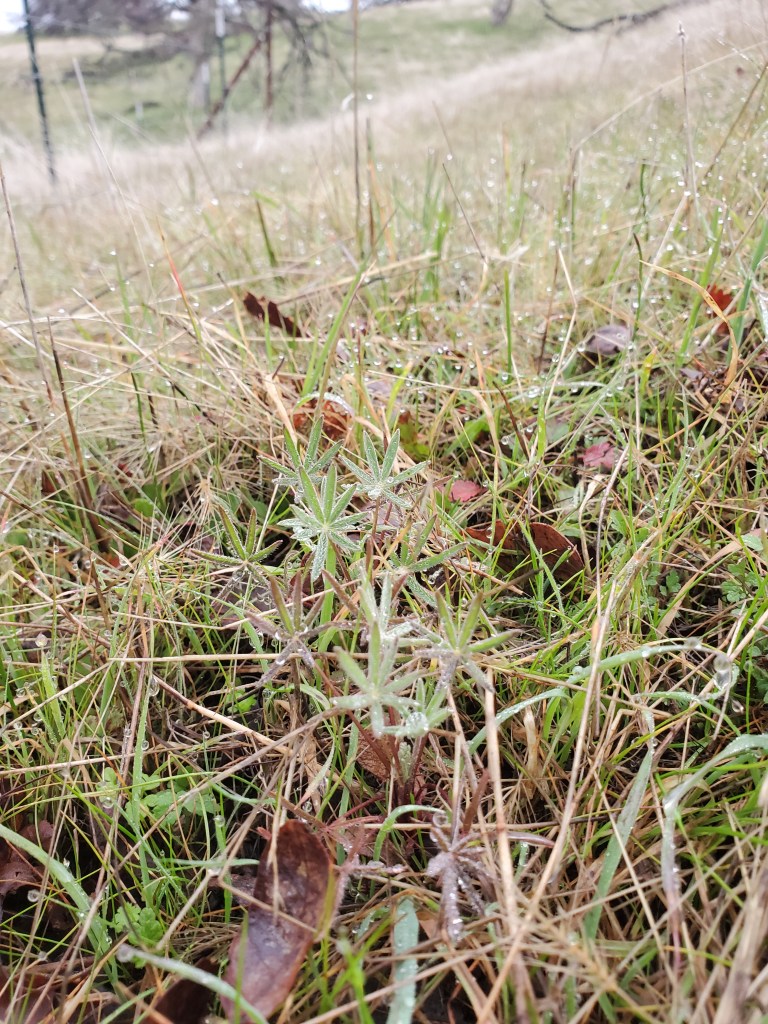
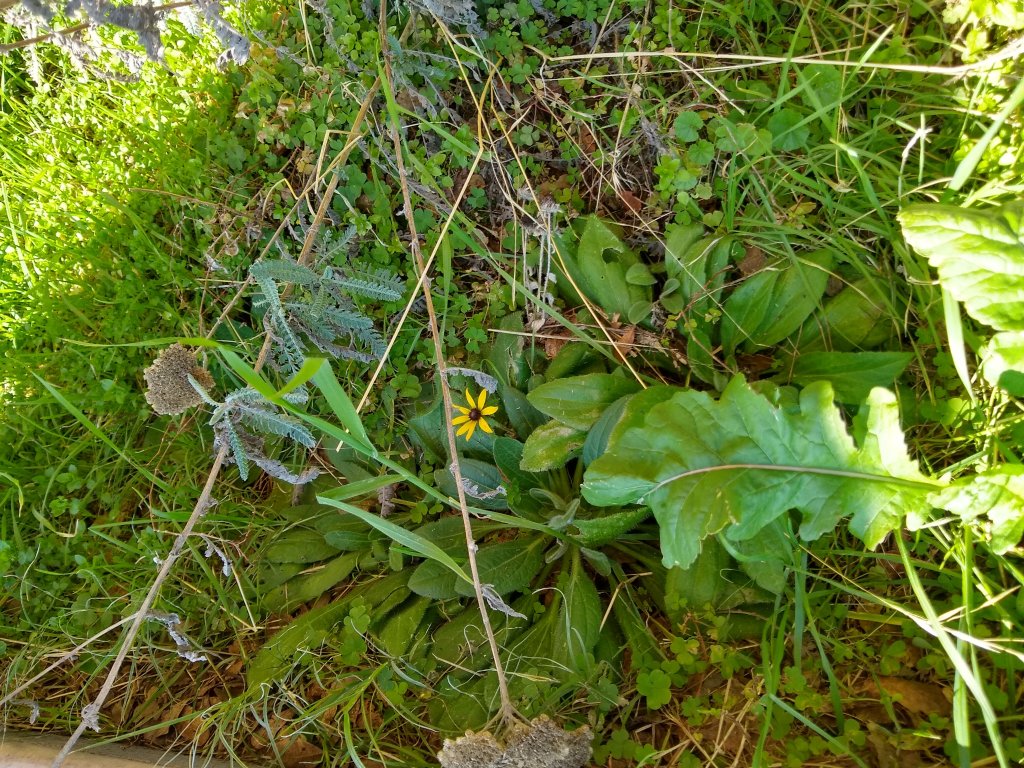
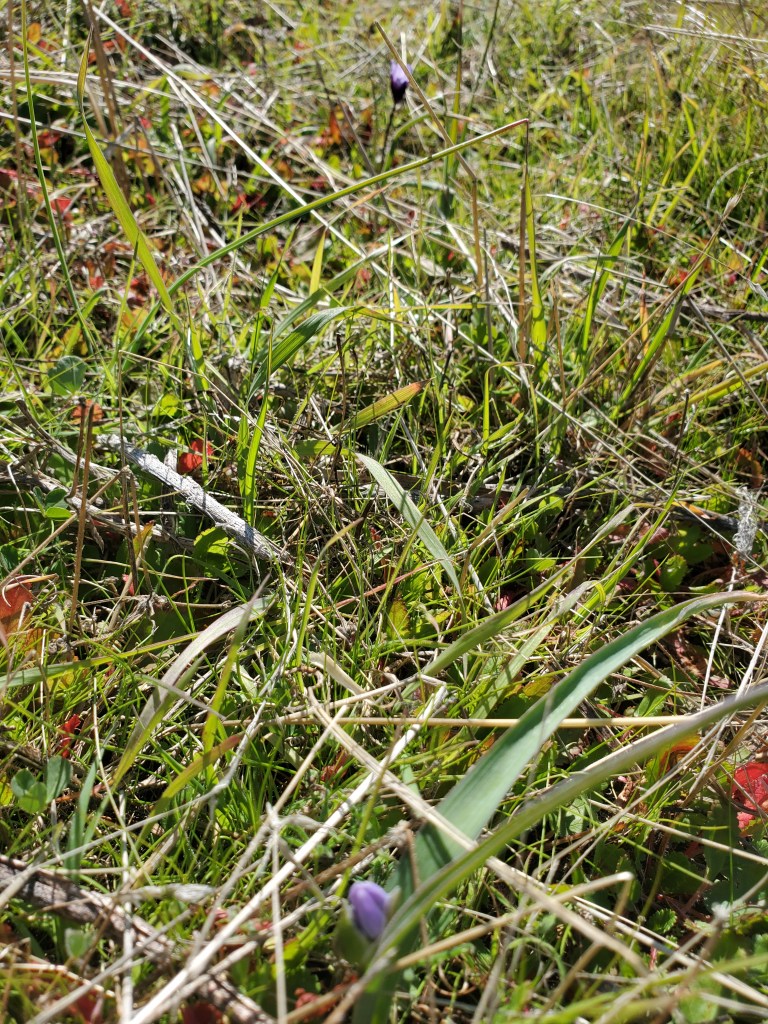
Wildflowers that used to come out in March, which itself was slightly early, now come out in February – and even this is shifting fast. I spotted my first wildflower the first week of February. I am terrified of the day that I begin to see them in January.

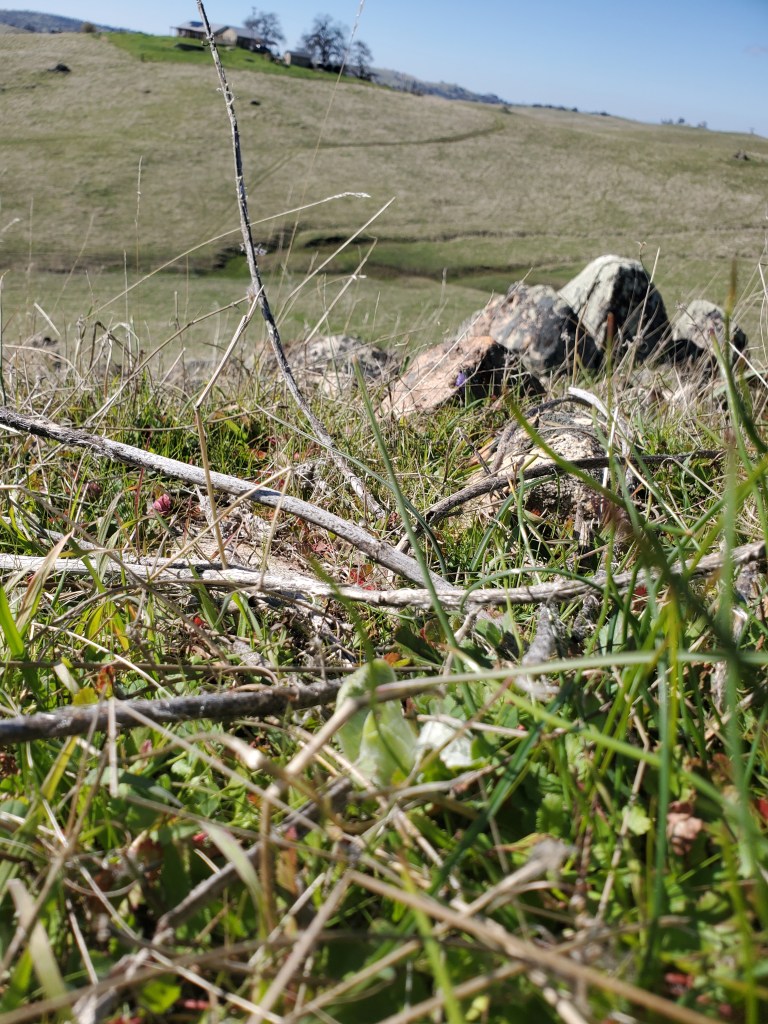
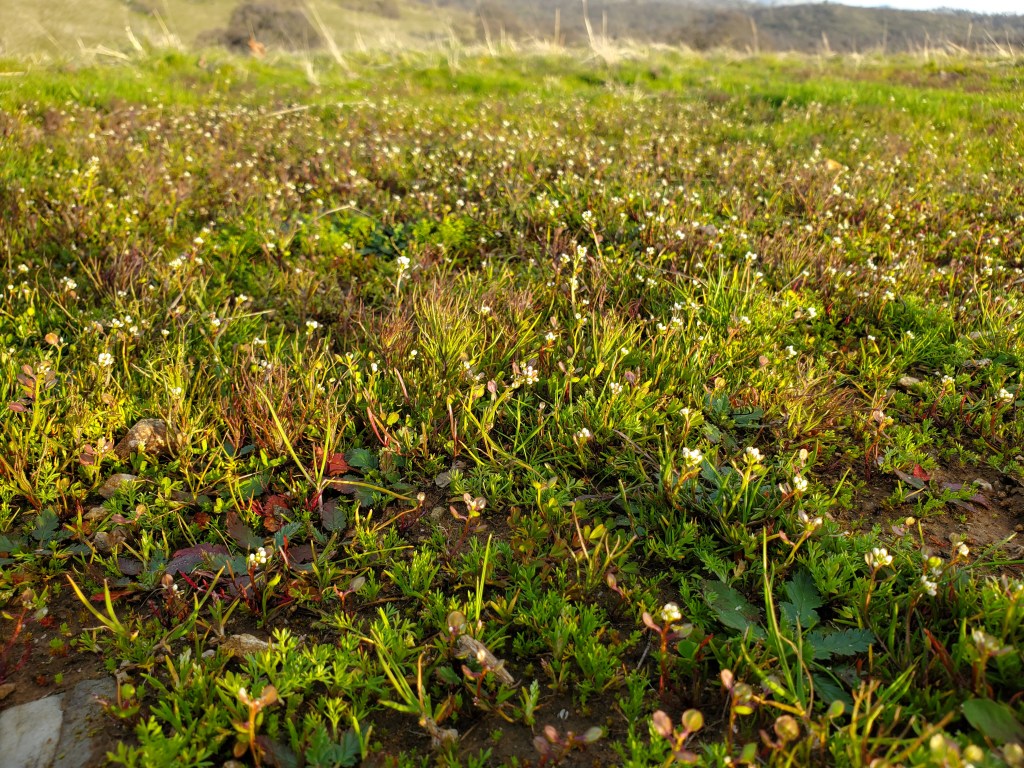
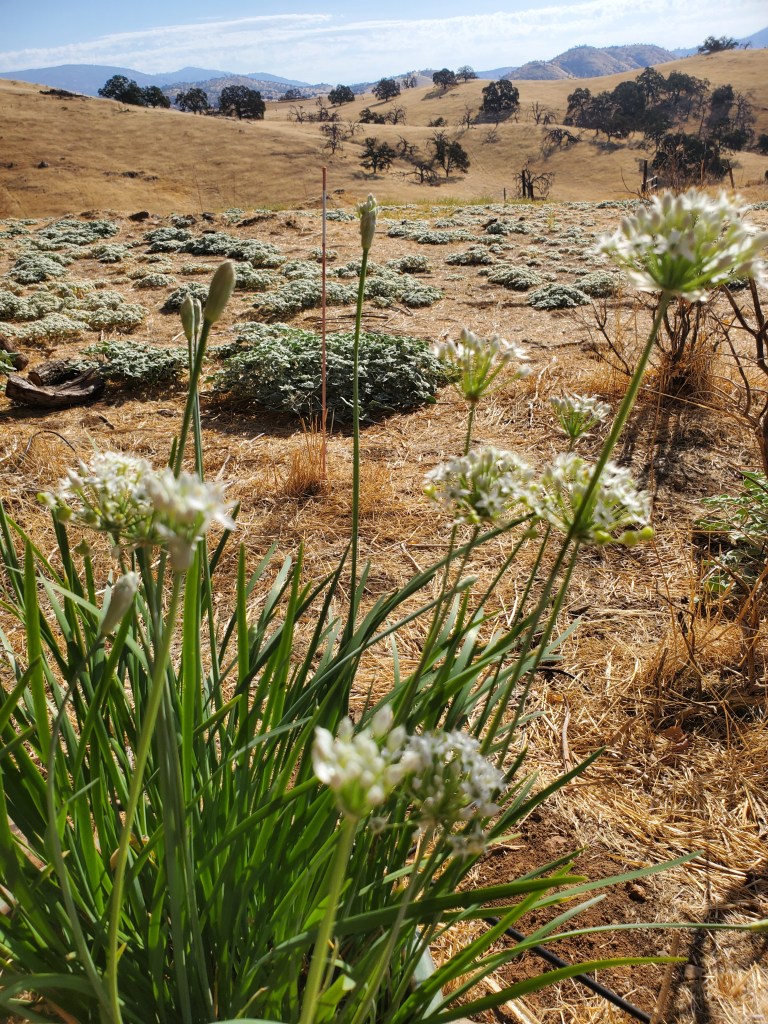
The second week of February, the short white wildflowers are appearing, with many other buds waiting to open. These are what I call the super nectar flowers. There a typically millions of them, tight and close to the ground, that make the air smell so sweet.
These shifts in bloom time can be devastating. All of us animals depend on cycles when our foods emerge. We cannot have mismatches, when flowers appear too early and bees and butterflies appear at the regular time only to find that their nectar sources have already bloomed and are gone. Or, the weather turns cold again after being warm, signaling the flowers to bloom and trees to leaf, then killing the emerging buds. I have seen this happen before. Both scenarios are destructive. Having diversity among nectar plants is critical, but even with this, it still decreases the available nectar impacting population sizes and potentially health.

Large Storm is Destructive

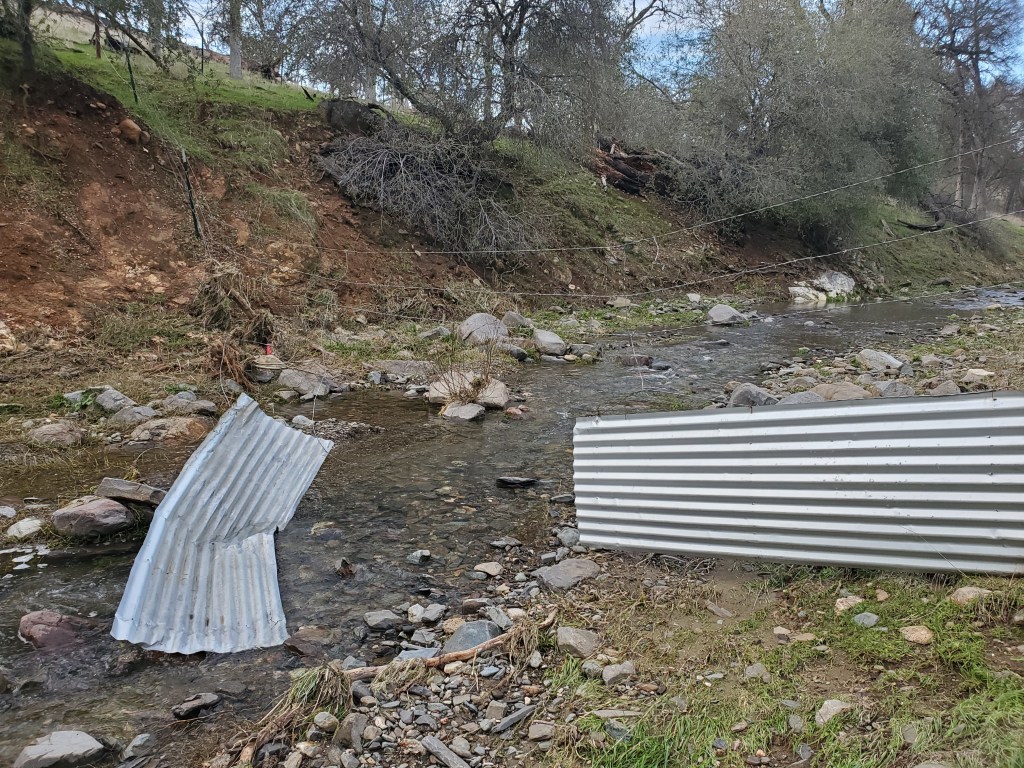
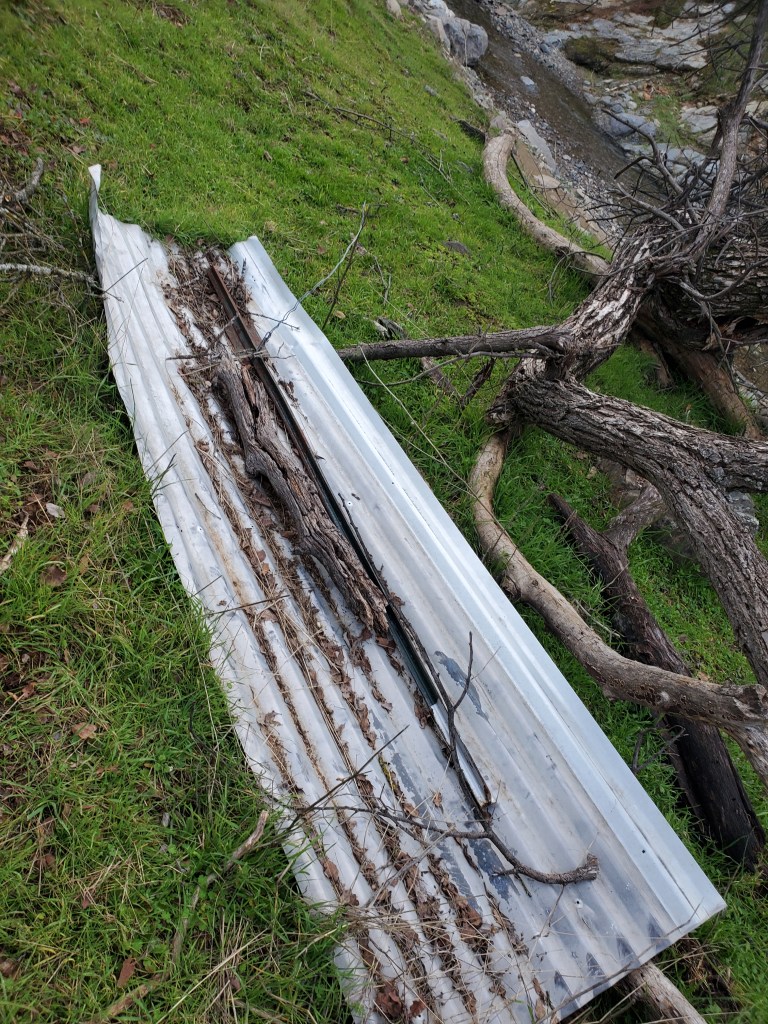
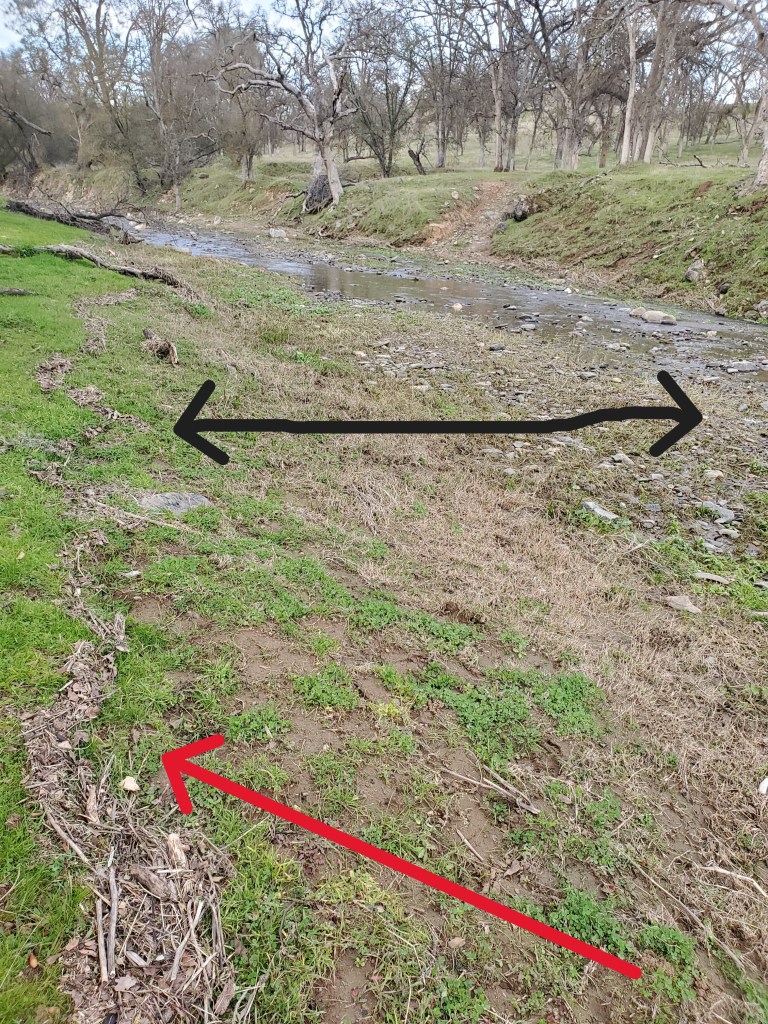
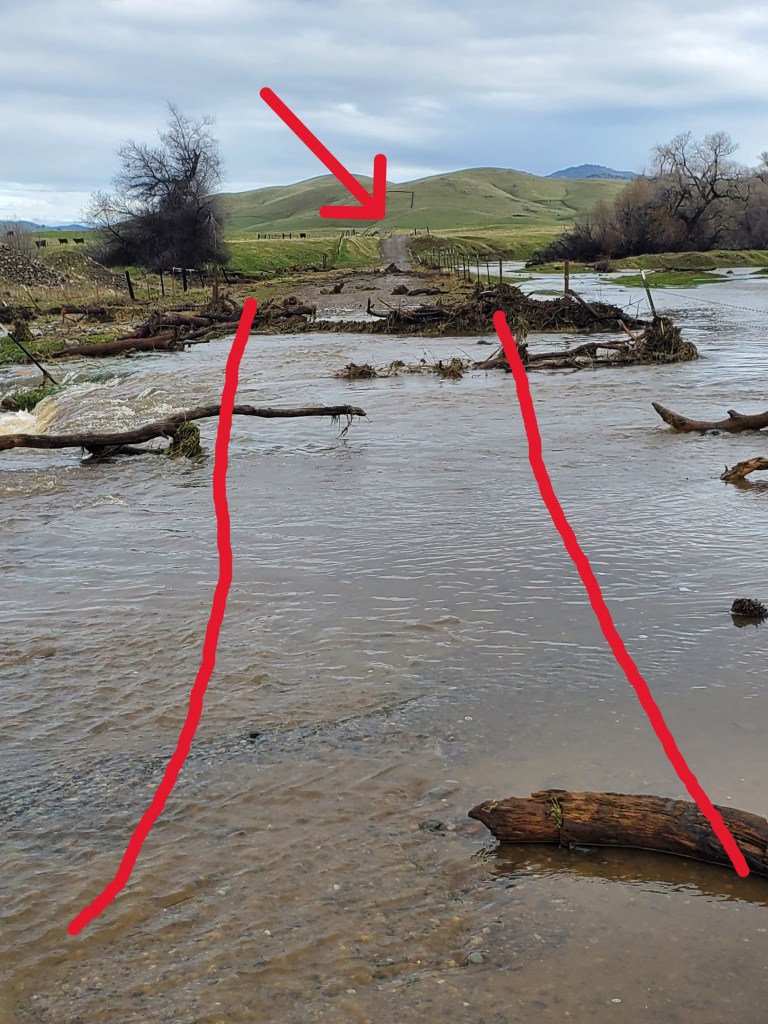
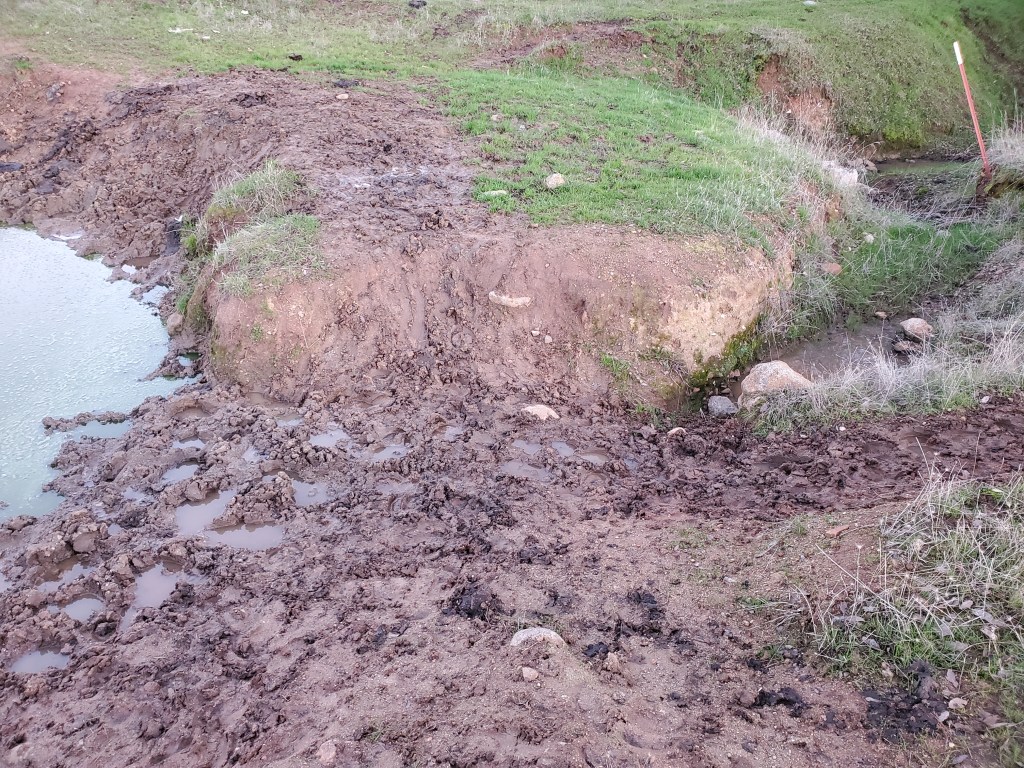
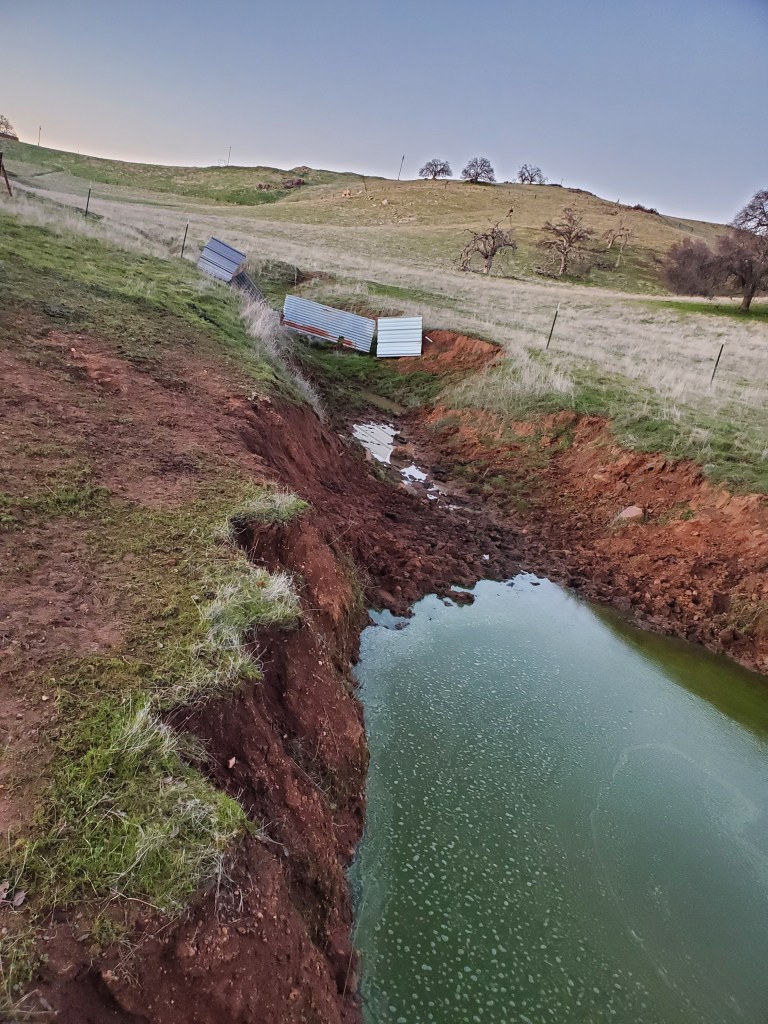
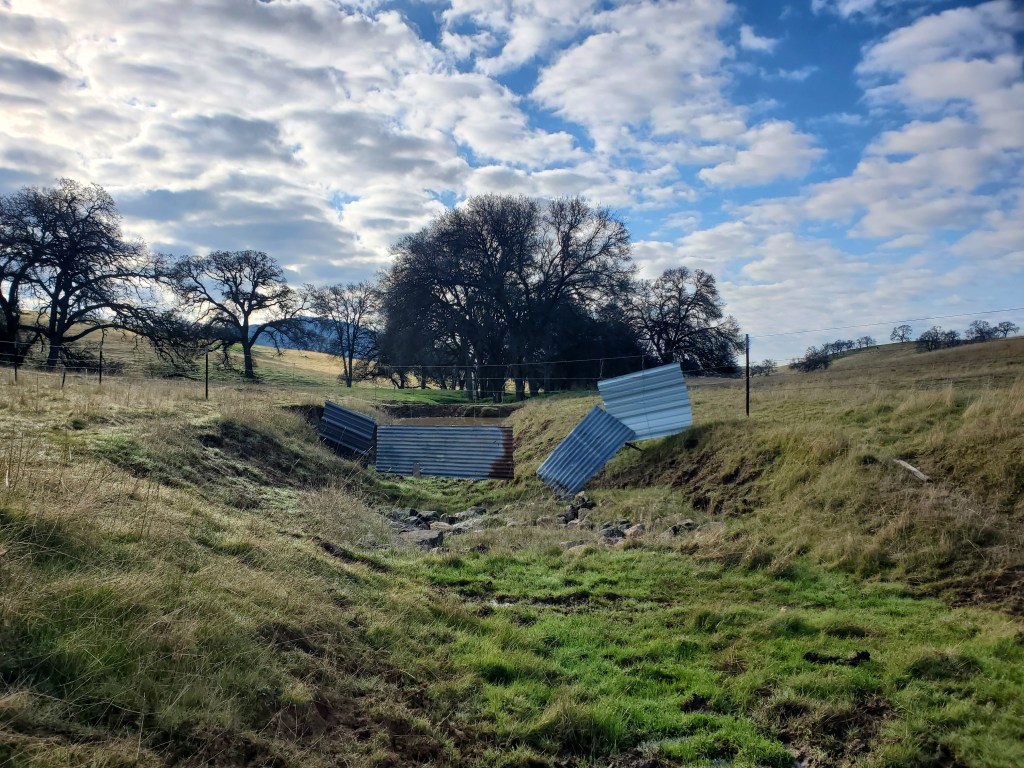
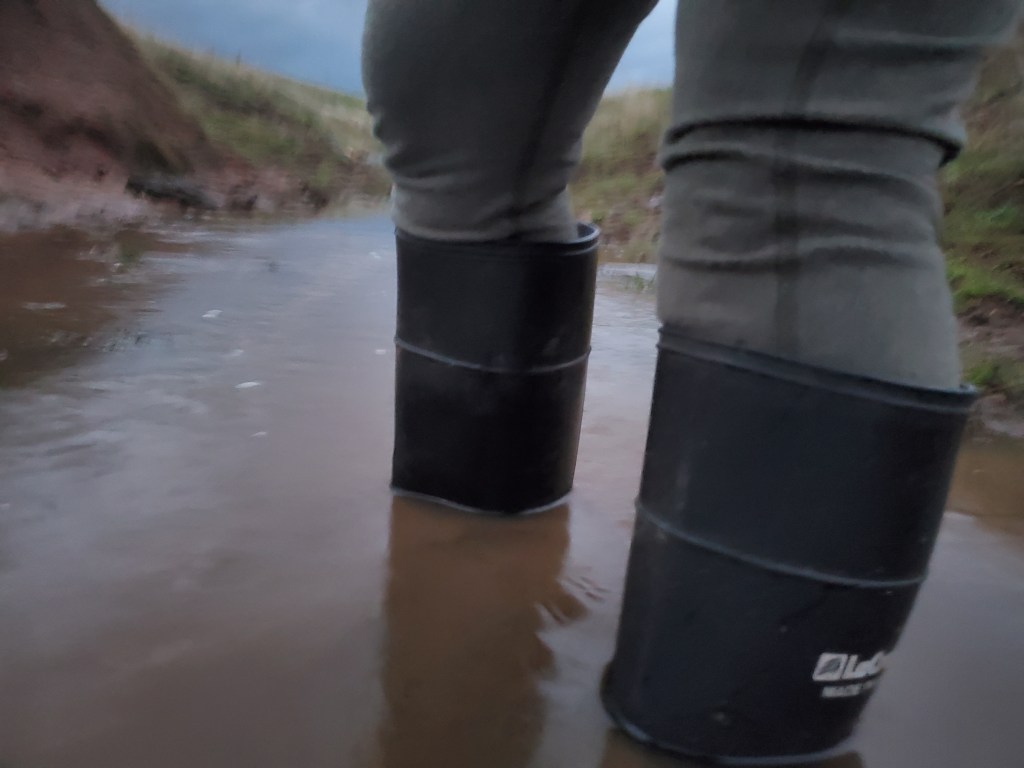
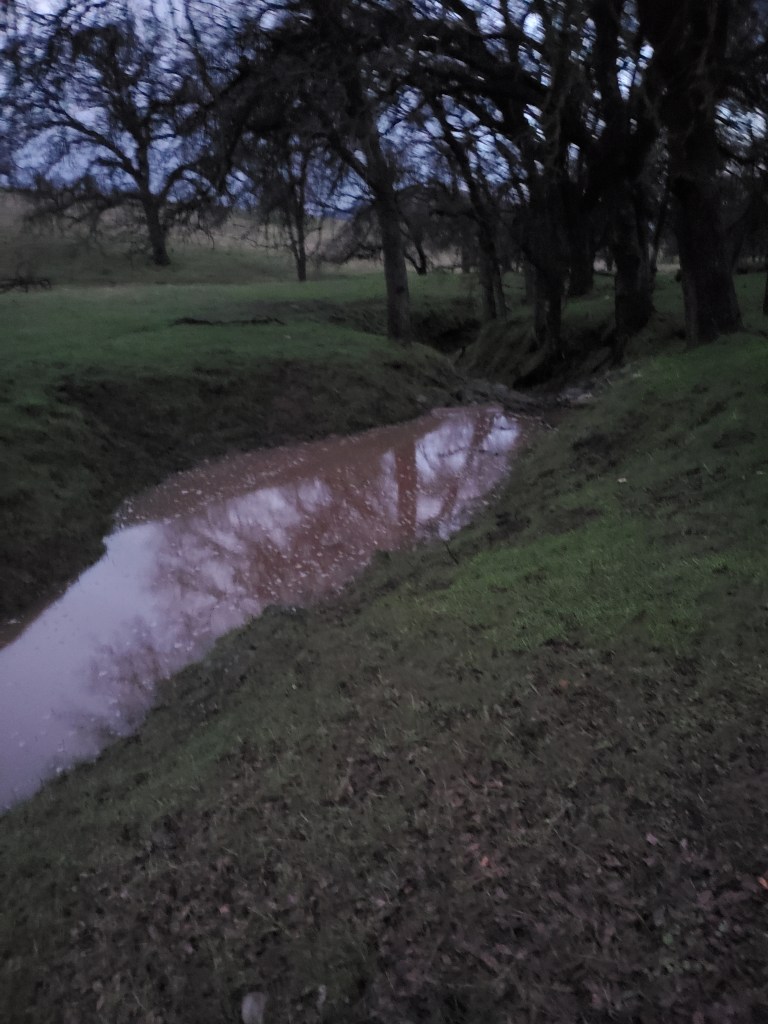
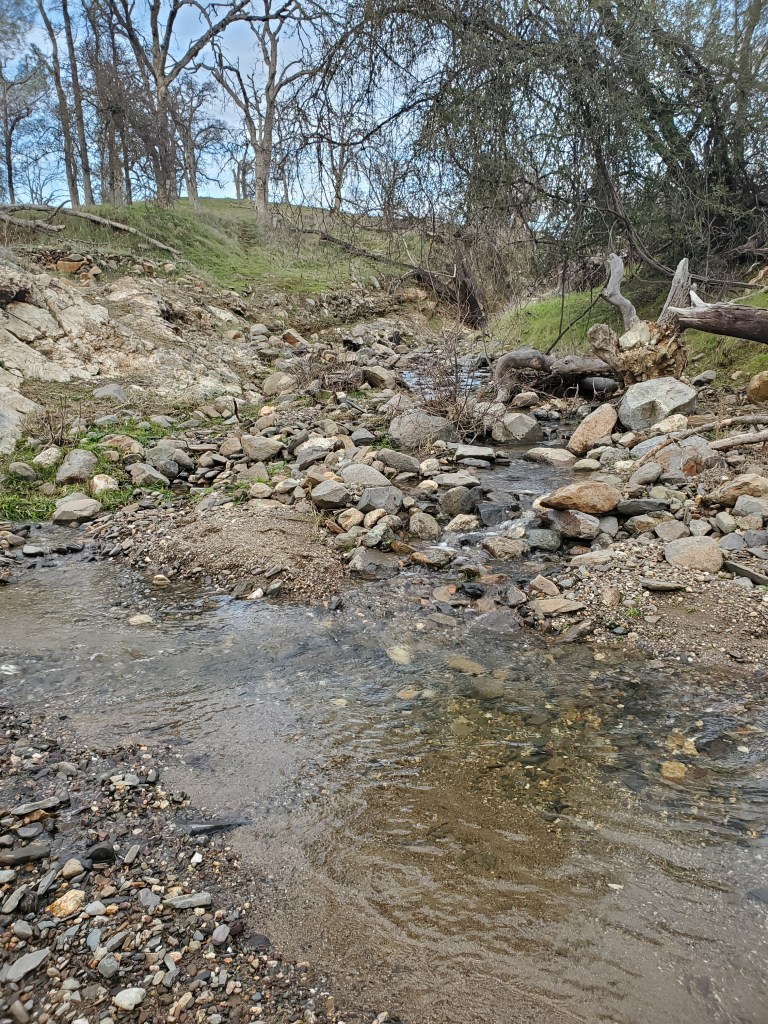
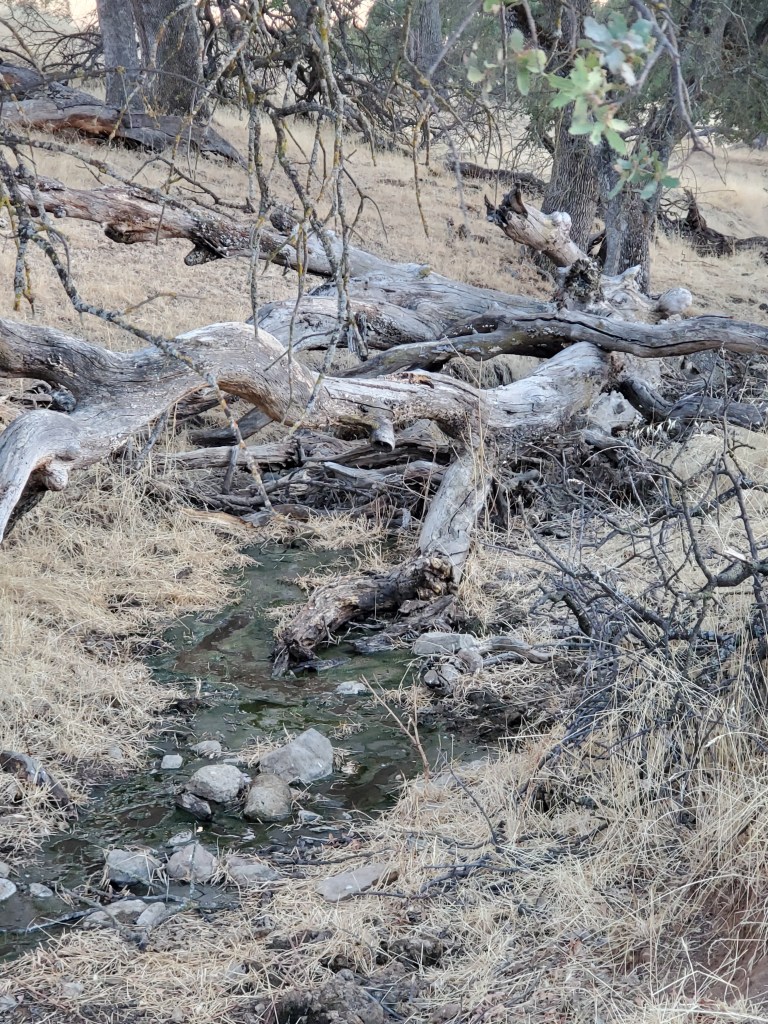
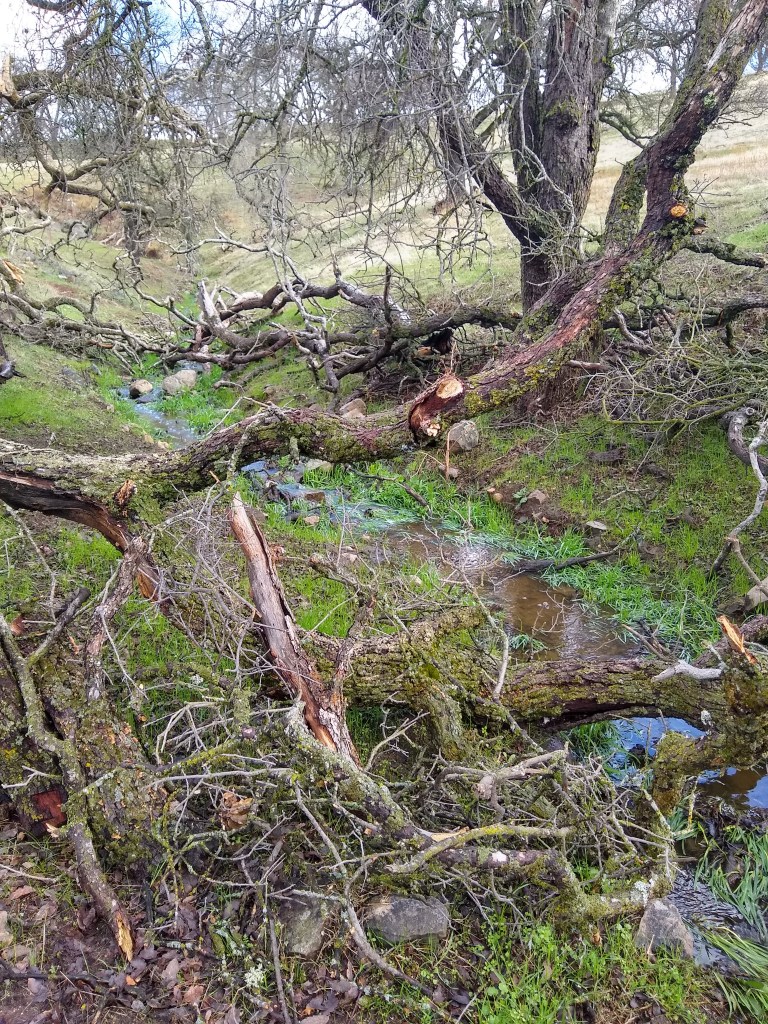
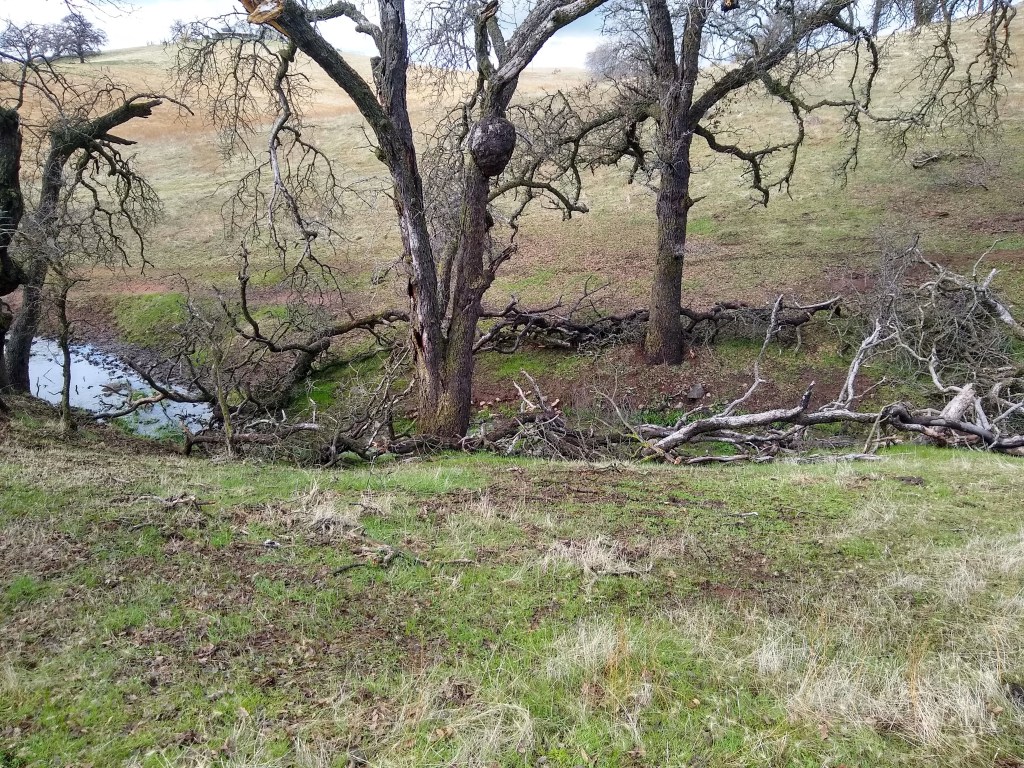
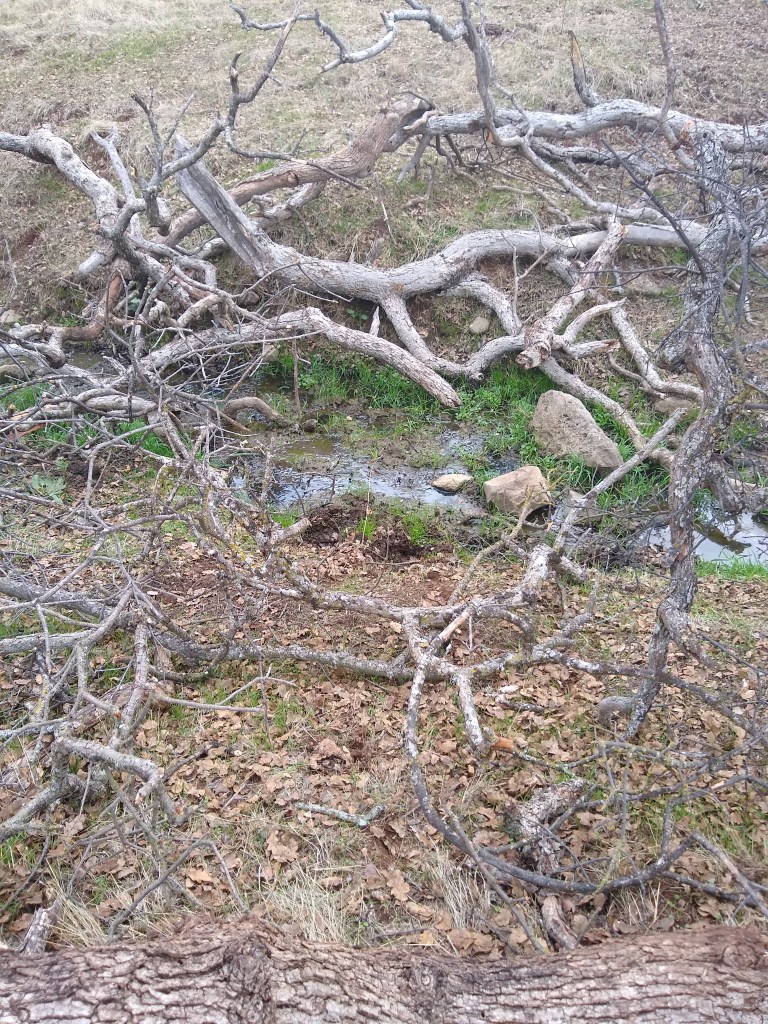
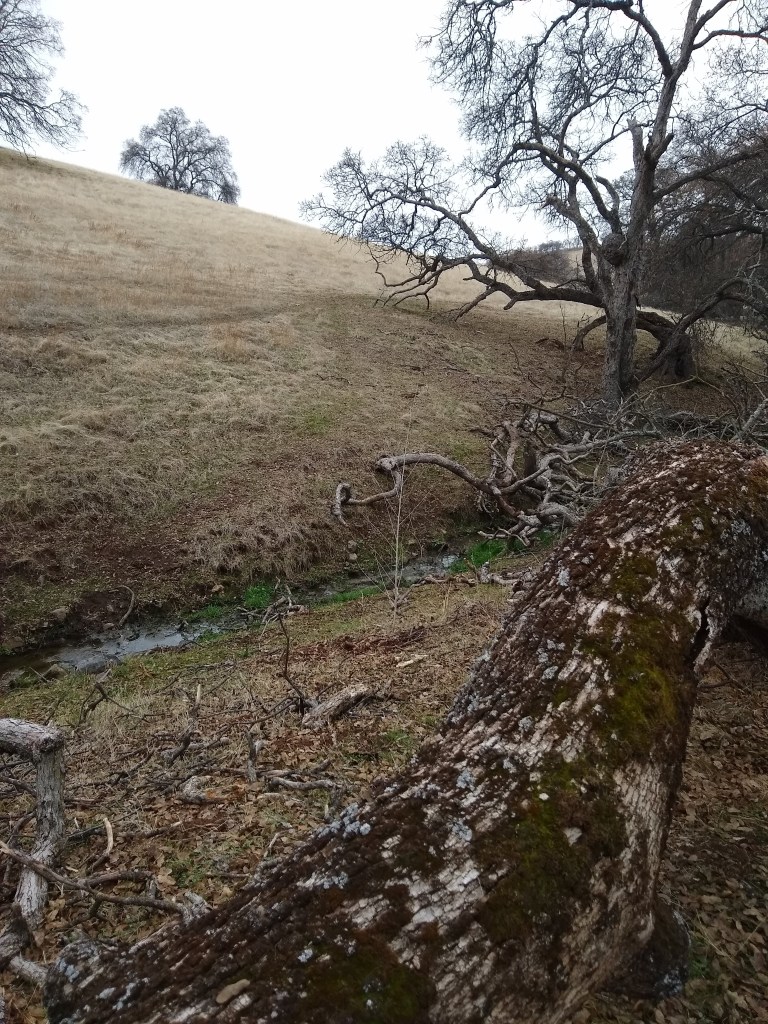
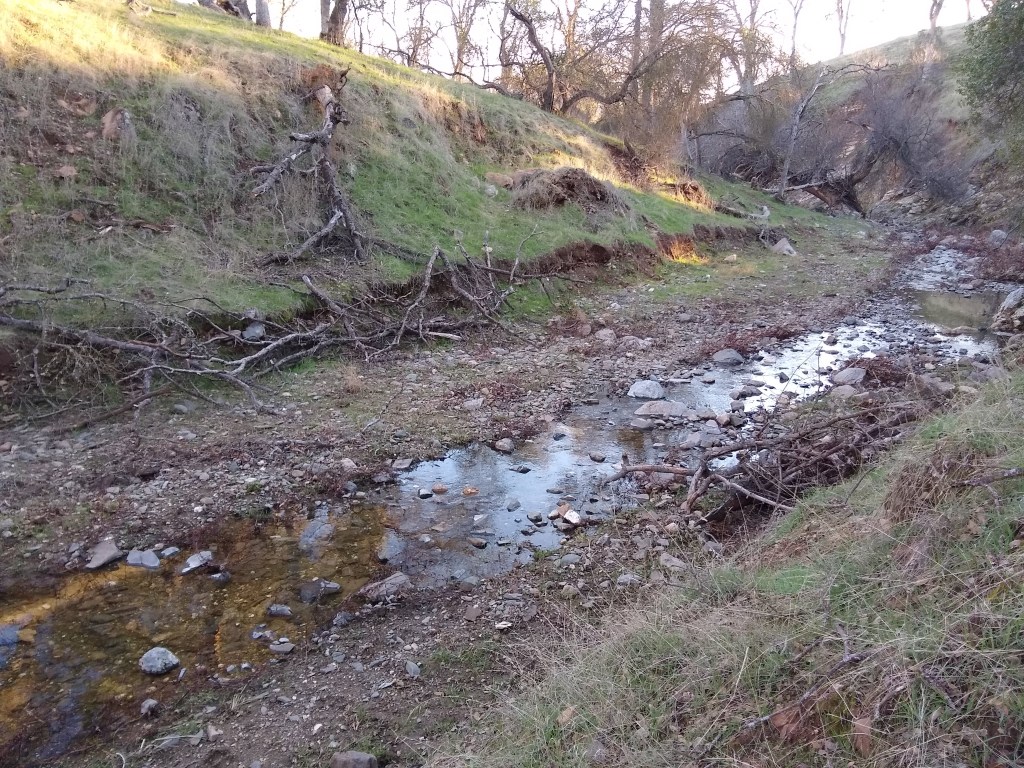
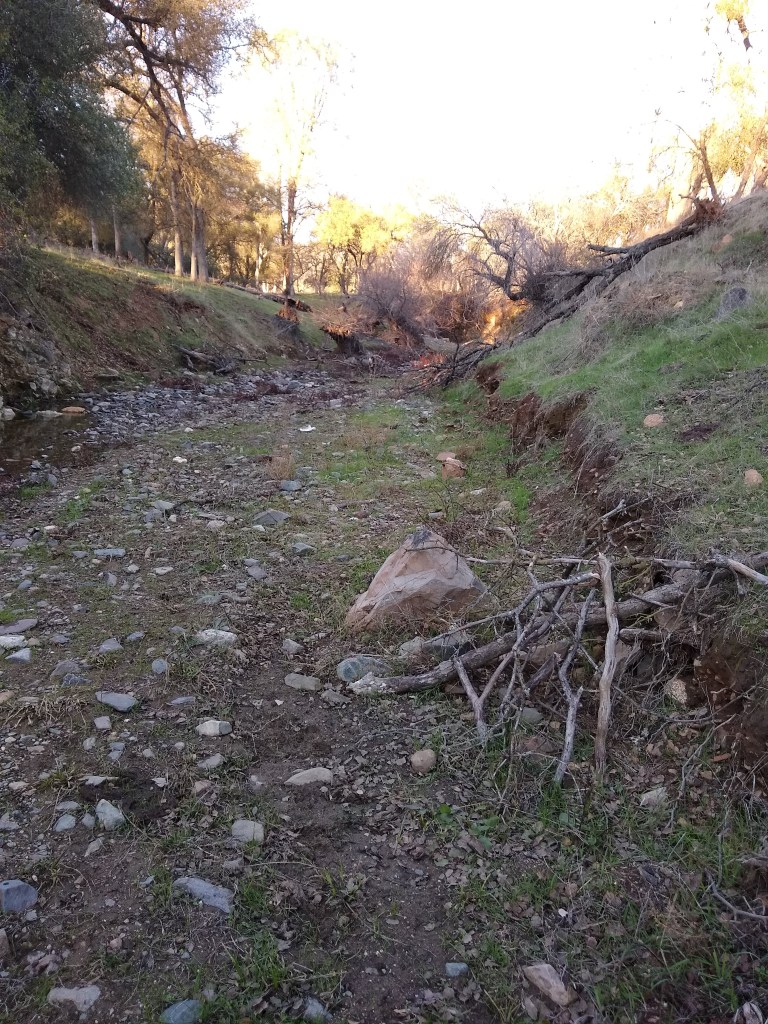
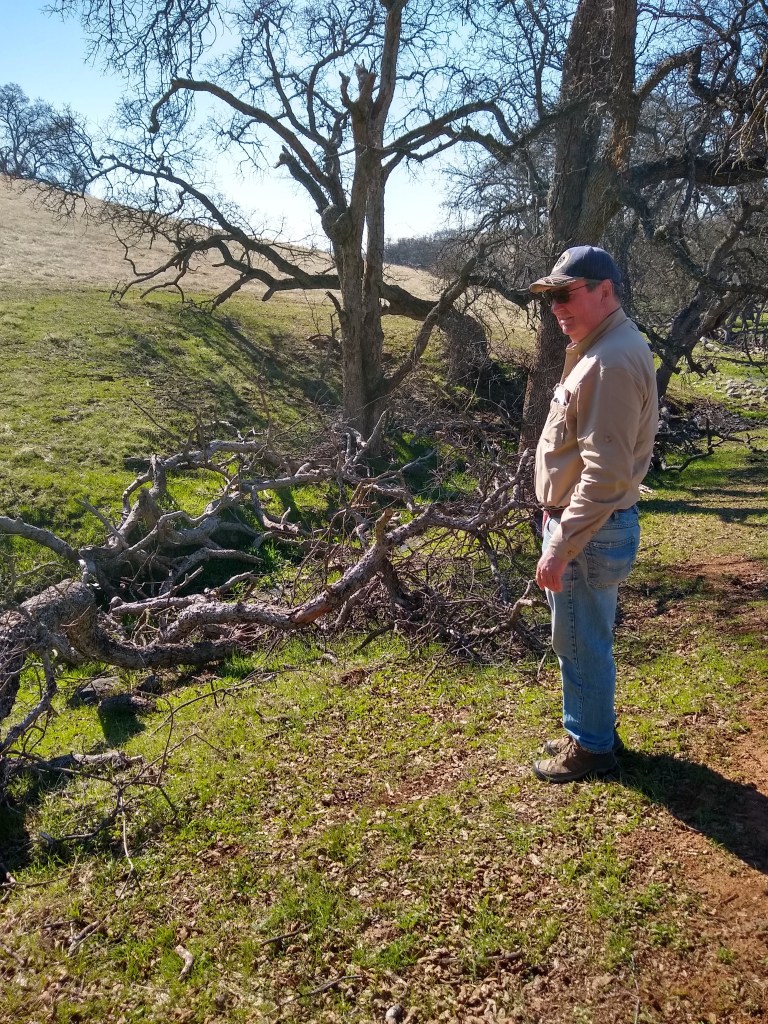
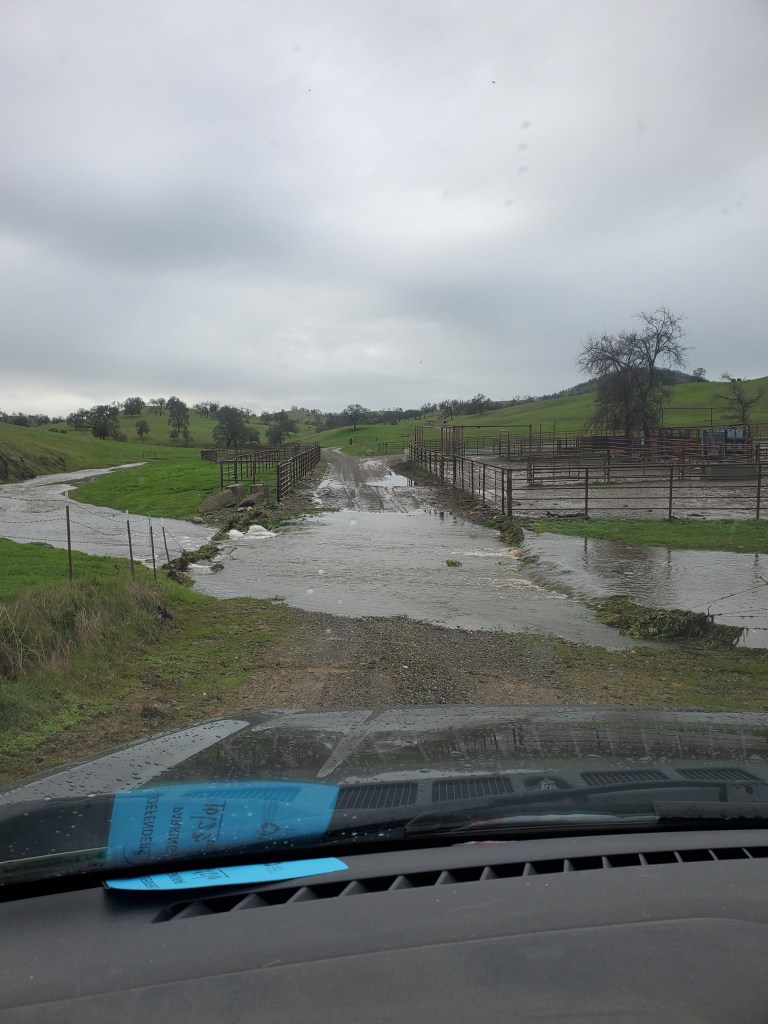
We did have a good storm the third week of February. It rained 2.25″ in a few hours. This was enough to over run roads, creek banks and surge in a destructive way. Some of the tin panels I use along the fence line to block the openings across the creeks from cattle got disconnected and moved downstream. The force of the water surge on Odom Creek actually tore the bottom wire apart, snipped it right in half, tearing the tin off and floating it downstream. Fortunately, I found all the panels that were torn off. David and I will reattach them. They need to be in place to prevent the cows from accessing my oak seedlings and other plantings.
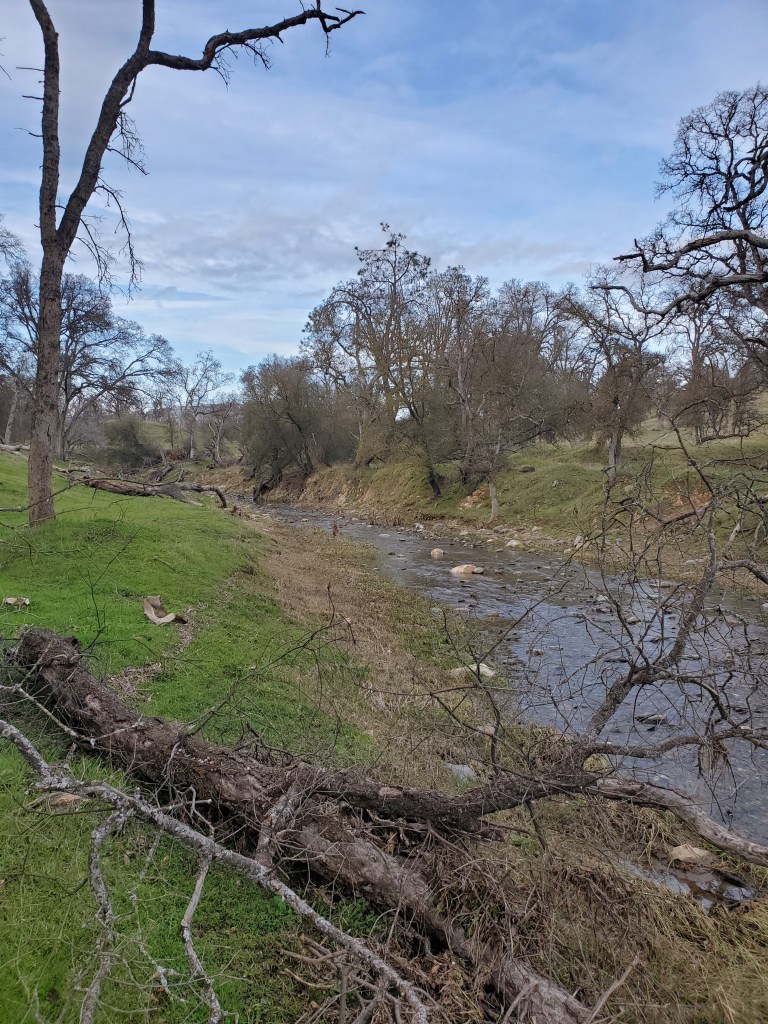
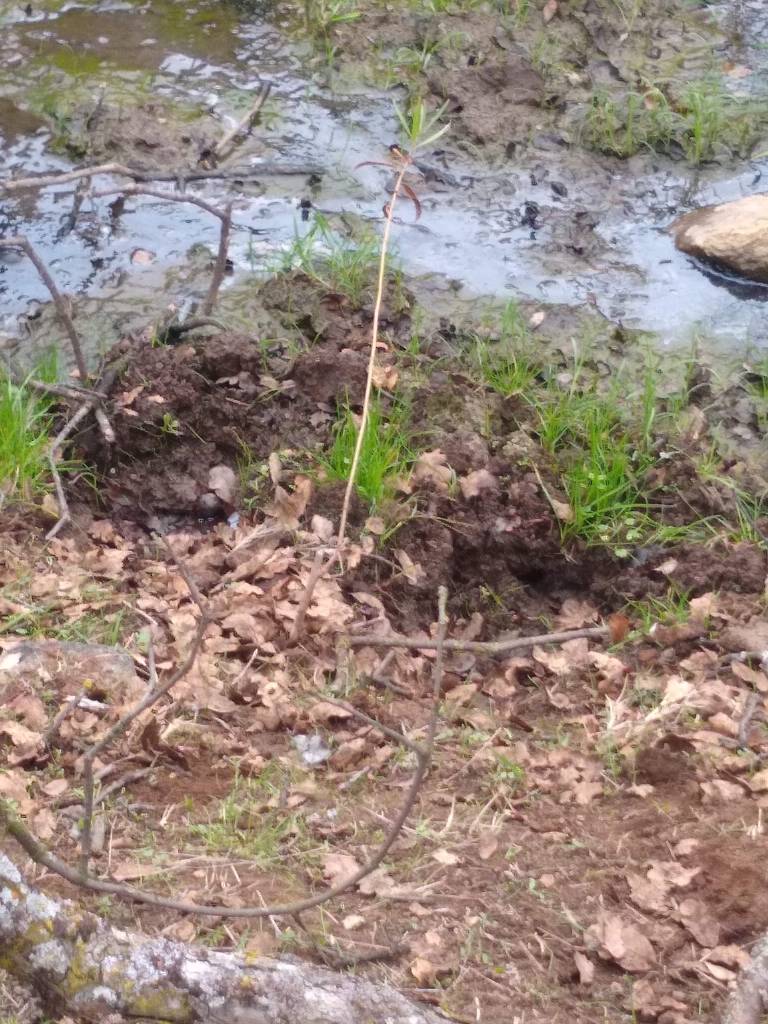
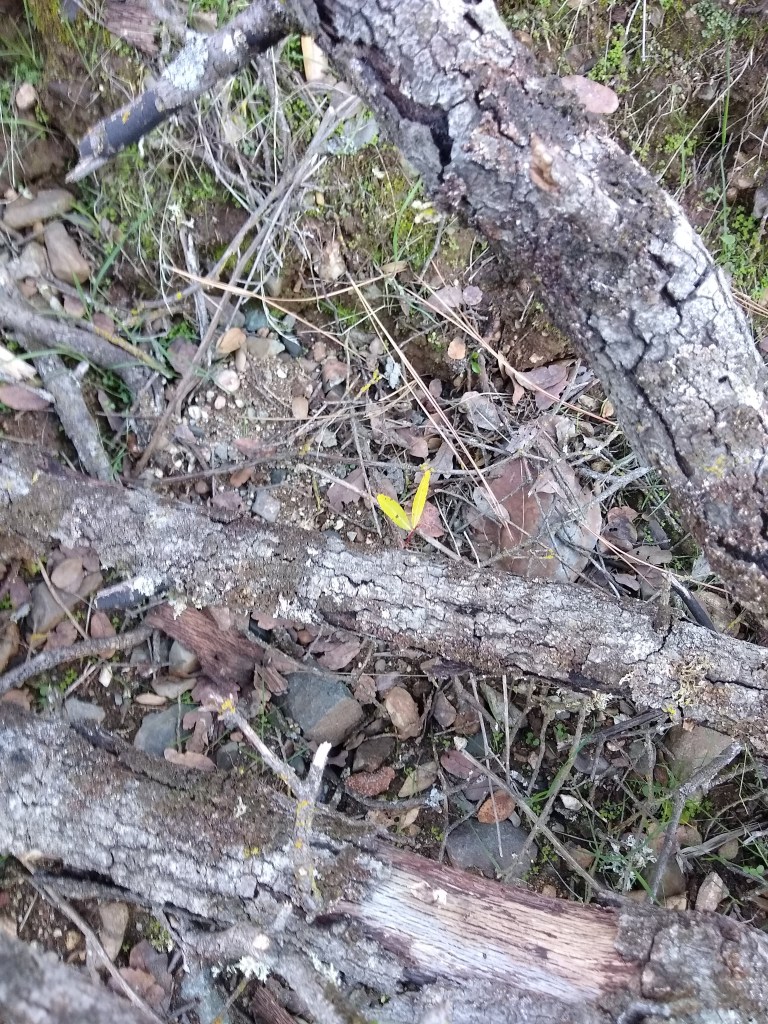
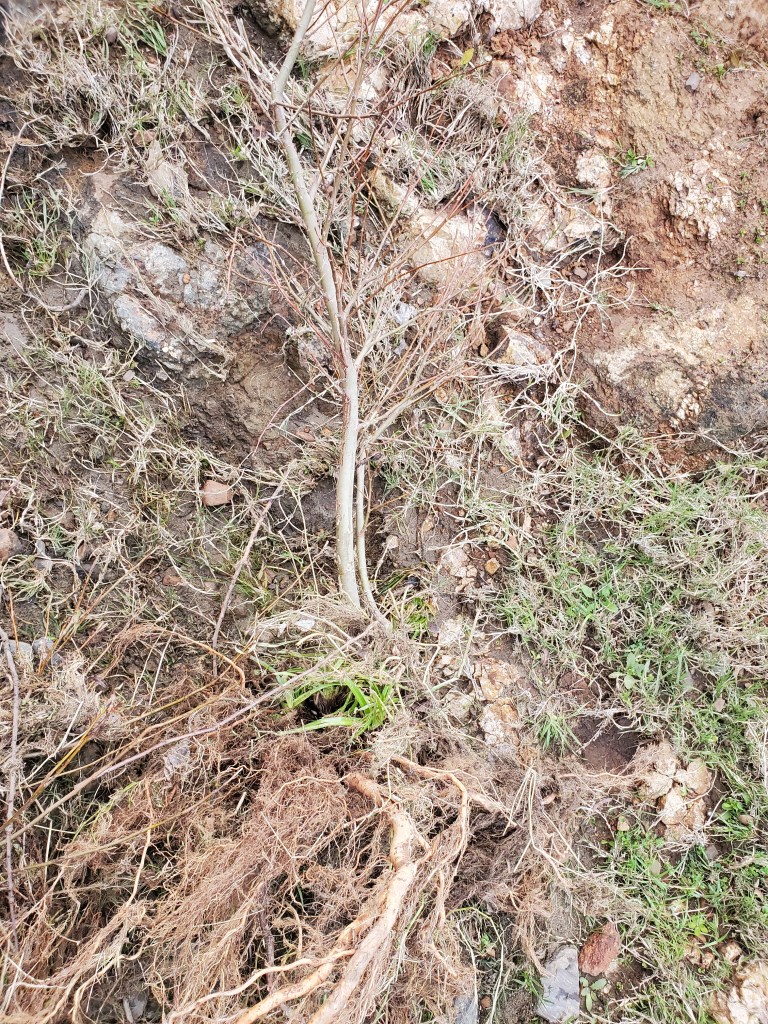
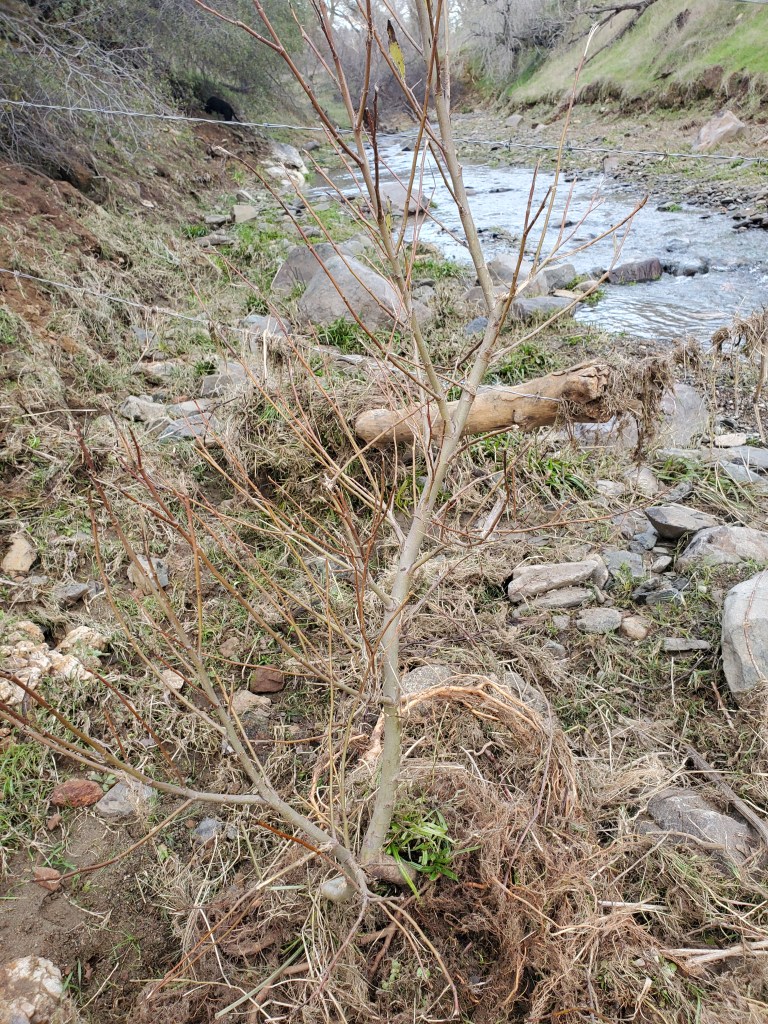
The surge also twisted up vegetation on the fence lines. Sadly, I found the young willow I had been so excited to see. She was ripped out of the ground, roots and all, taken downstream and deposited near the fence line where I found her on her side. I lifted her upright after scratching a pathetic, shallow hole with my foot. I did not have a shovel with me when I went to assess damage, so my foot was all I had. It was not much of a hole since the ground in the creek is rocky and thick. Still, I placed some of her long roots back into the ground, carefully, hoping that they will be resilient and allow her to grow once more. She is a willow after all – strong and prolific.
California Milkweed Emerges!

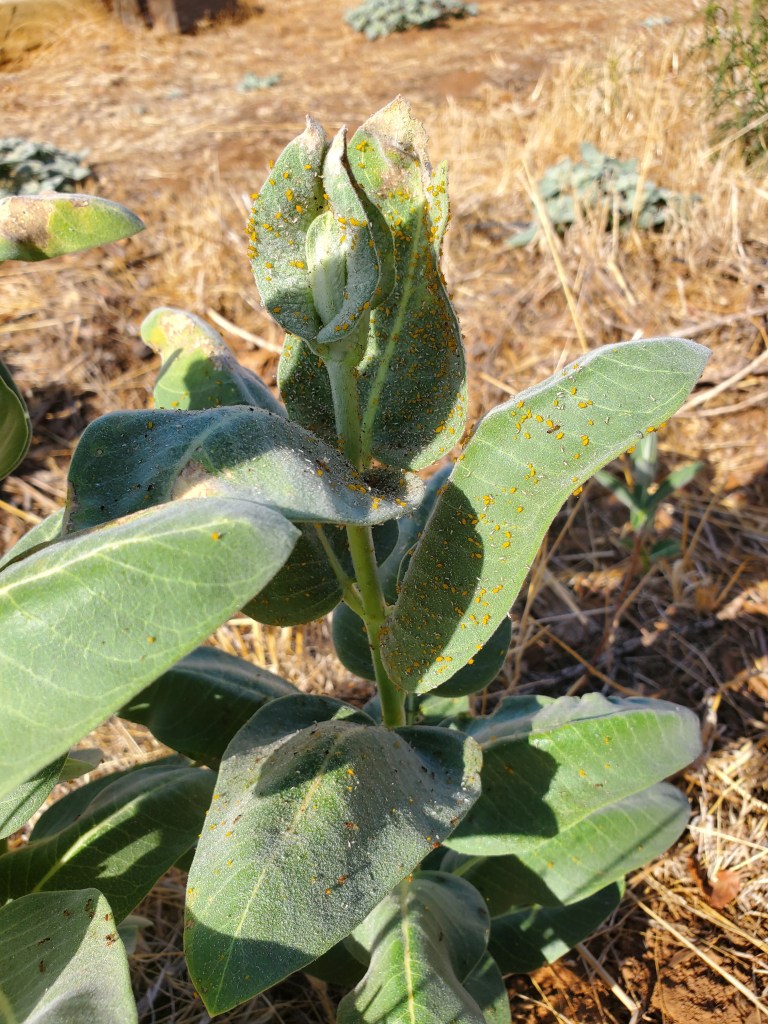
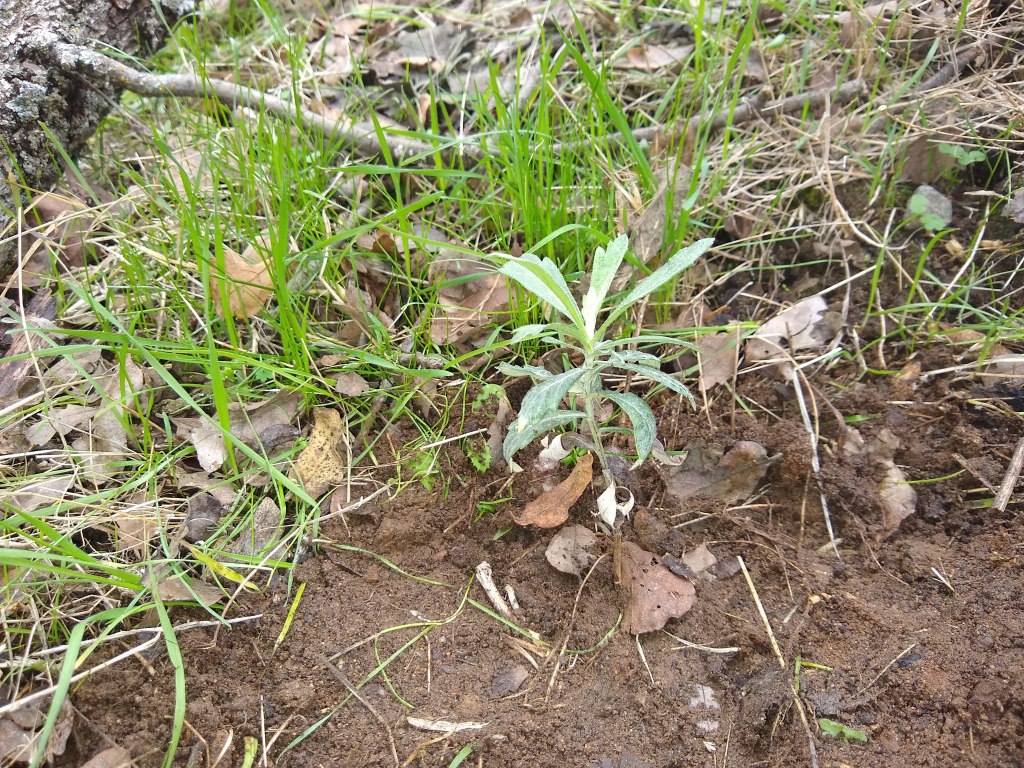
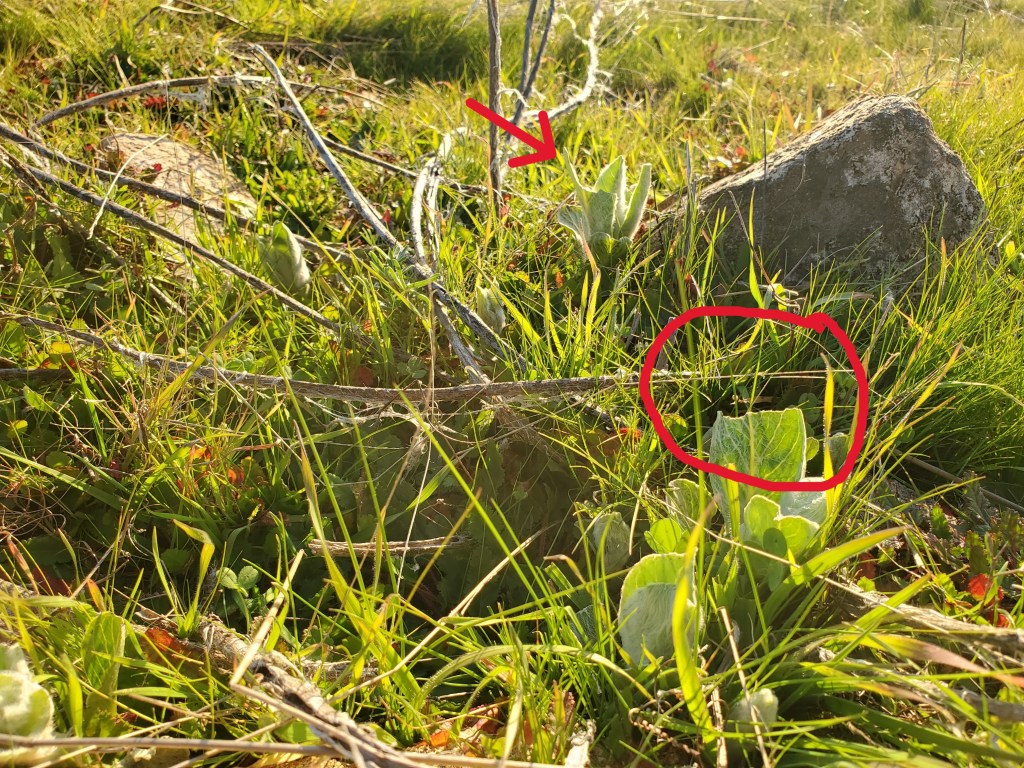
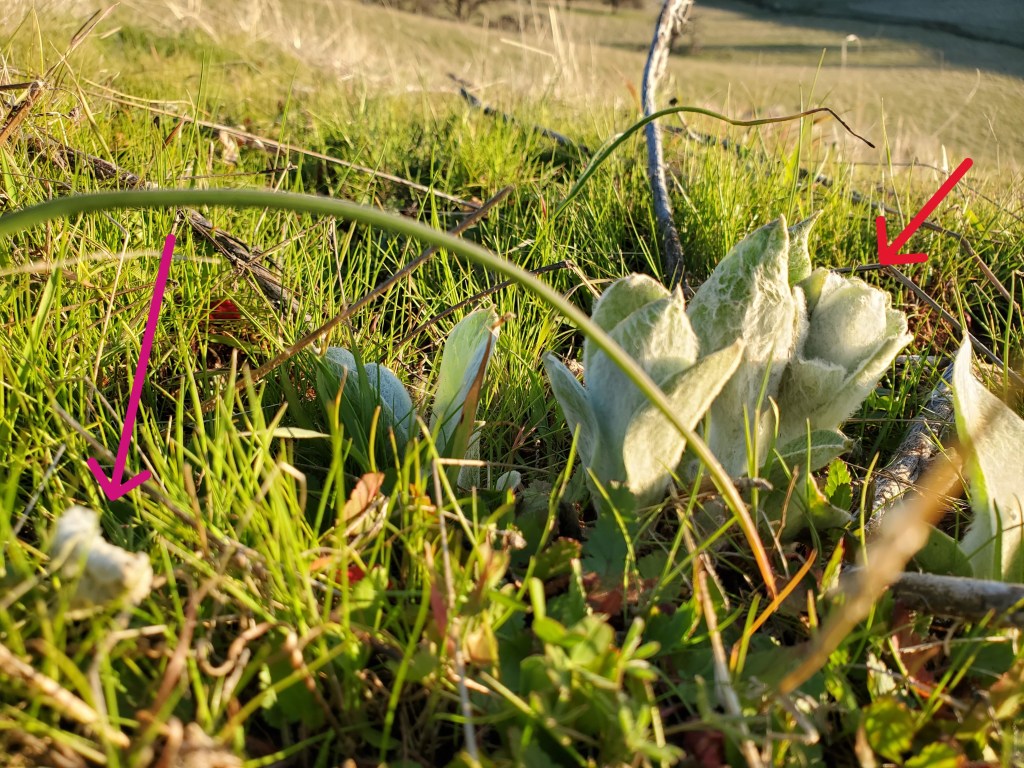
The California Milkweed has emerged two to three weeks earlier than 2024. I saw the first leaves on Feb 9 this year and noted that last year it was the last week of February.
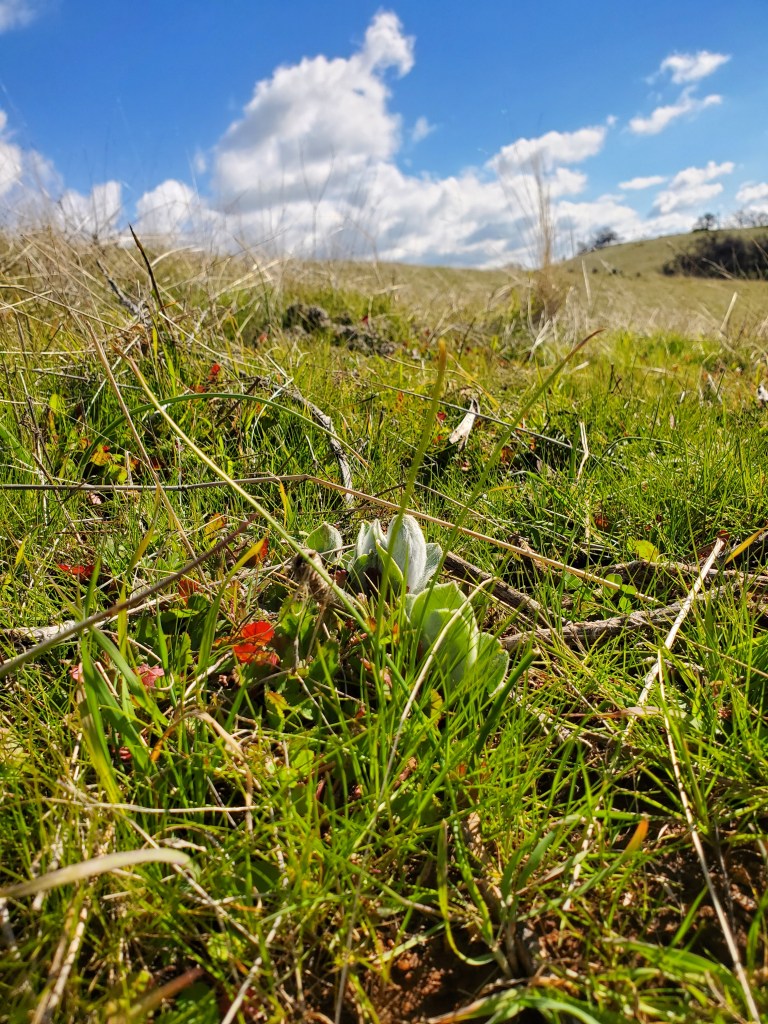
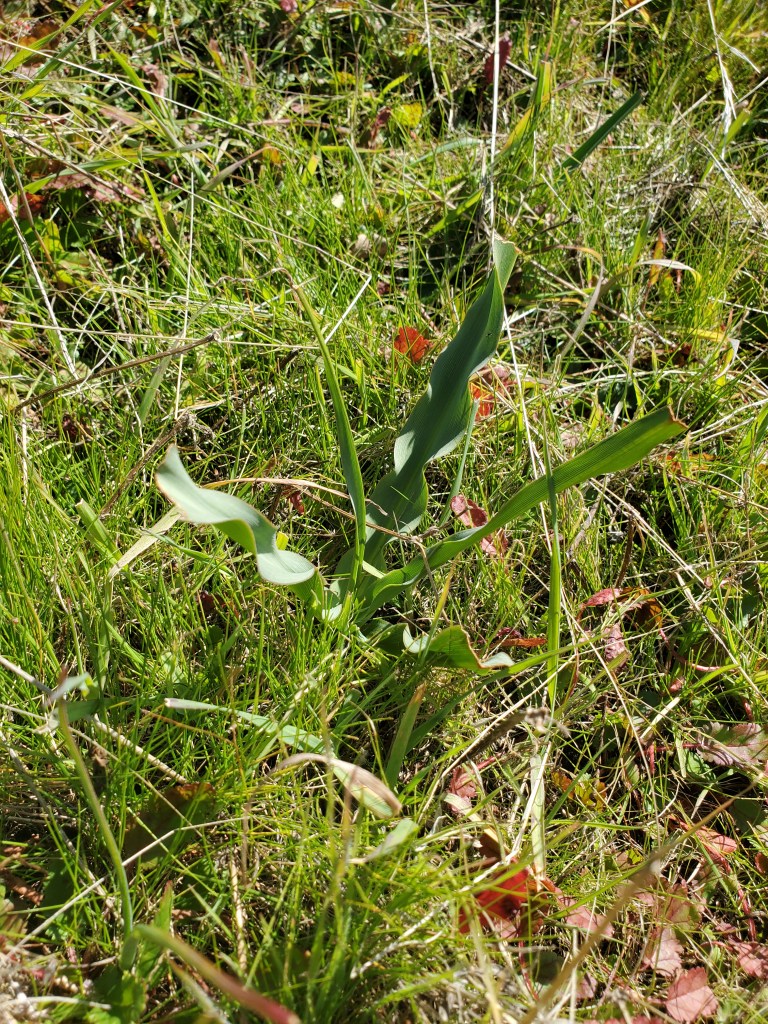
The cows have been on the hillside with their calves, so I went to check on the plants. I noticed each of the milkweeds had a snip taken out of one leaf; they had been grazed. Most likely, it was a calf testing out the green fuzzy plant. The snips appear to be spit out and located near the plants. Definitely not a tasty meal for anyone except a caterpillar. The plants are growing rapidly, and will be fine. The cows are on the south part of the ranch currently. I will be shutting the gates to the north field in a week before they return, excluding them from the far north field.
Grass Nirvana for Cattle
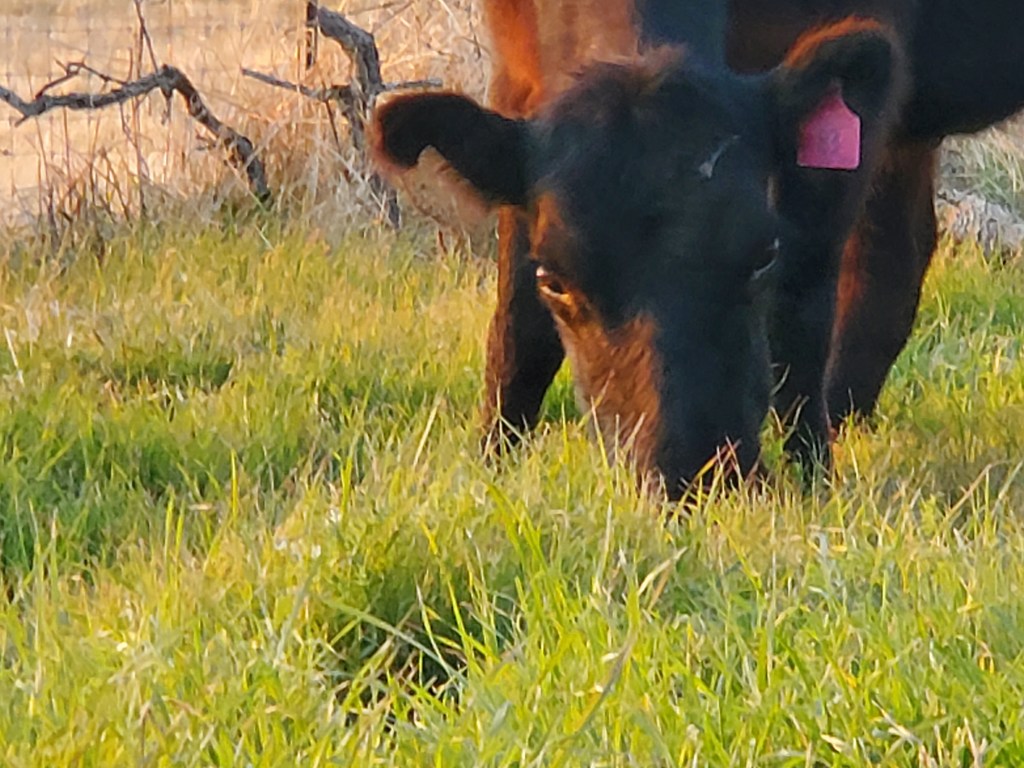
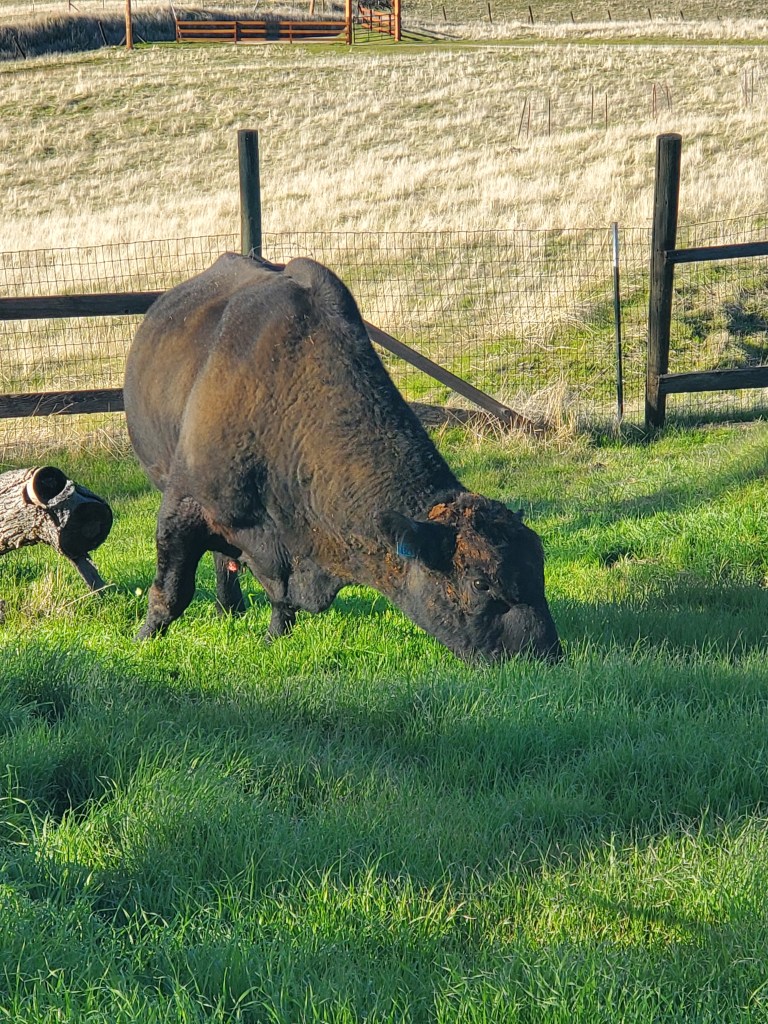
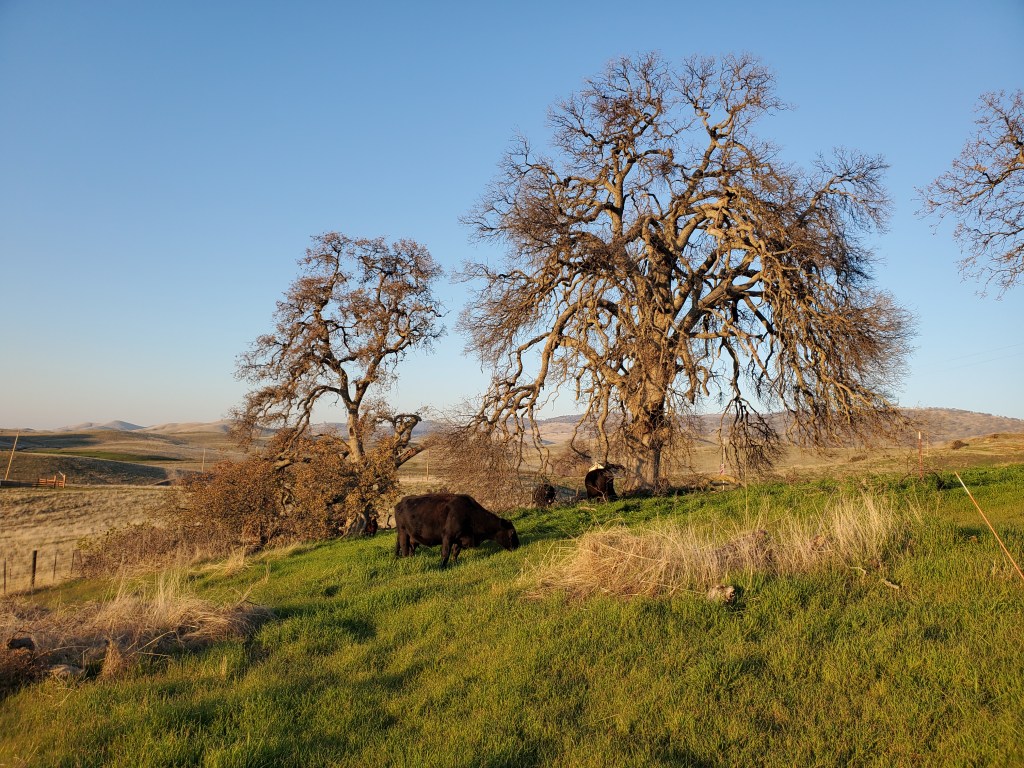
Happy eating

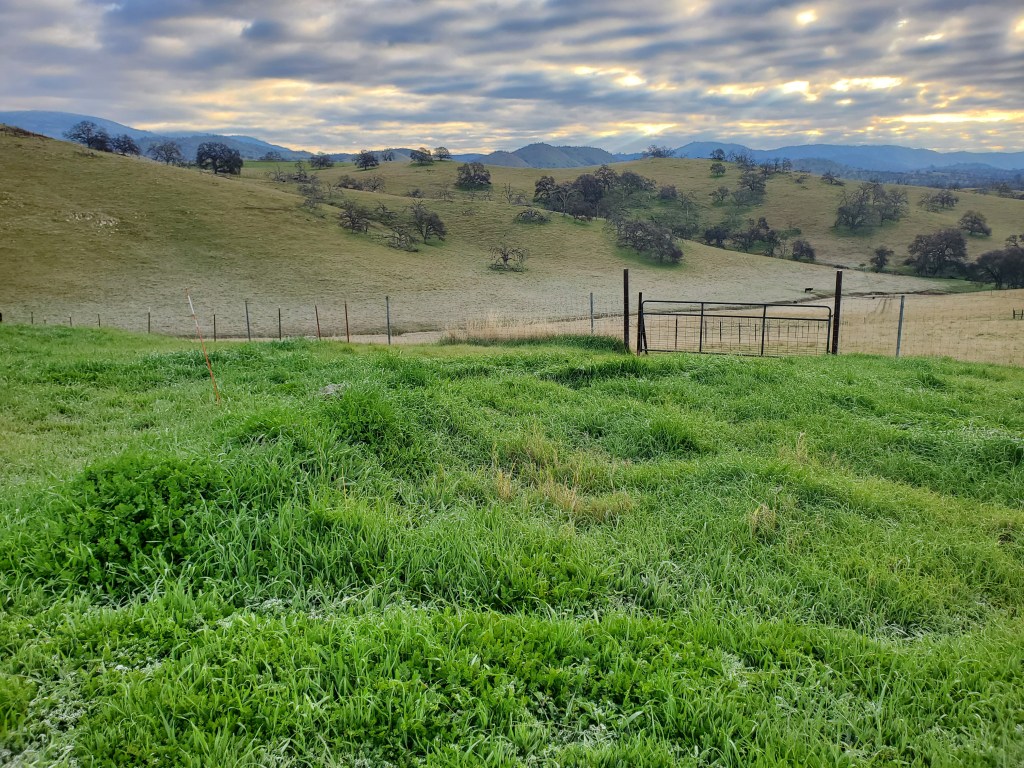
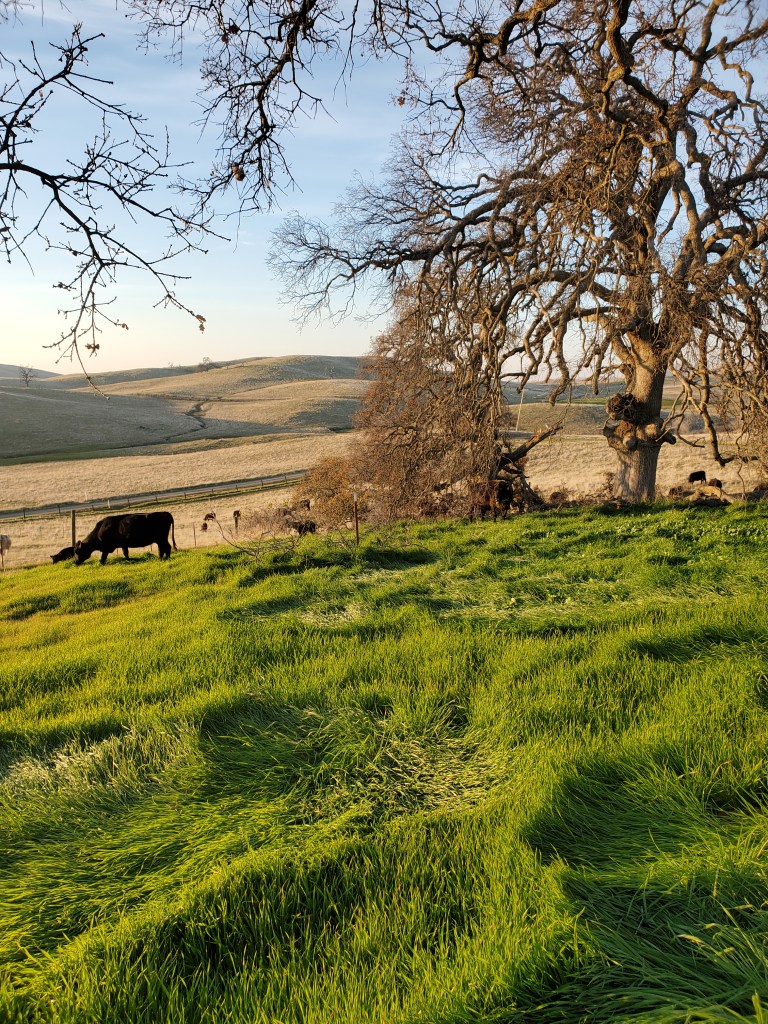
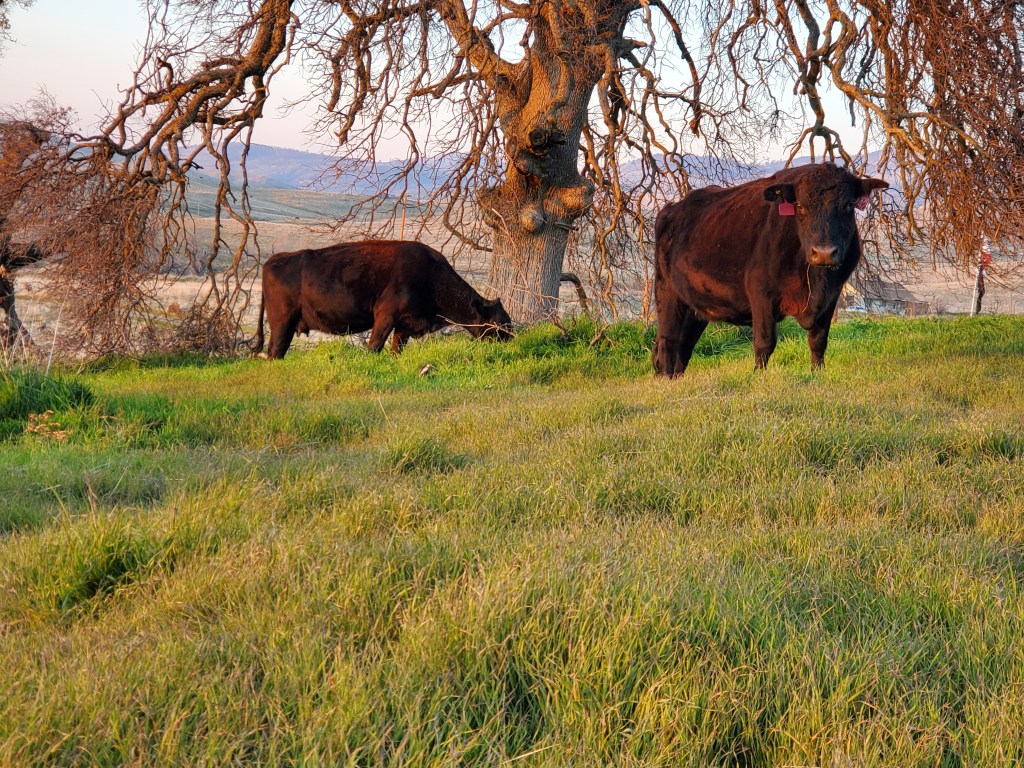
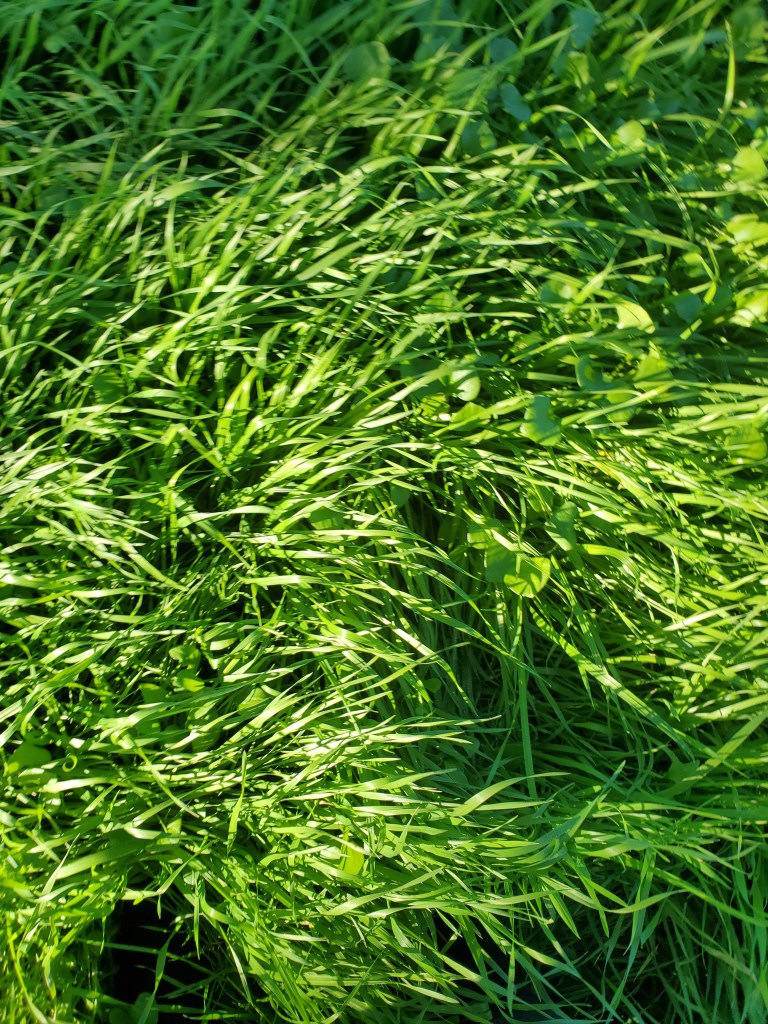
The grass is super lush around the house. Oh, and the cattle are eyeing it every day. Particularly, there is a group of mamas and babies that rotate to the front gate in the afternoon each day to see if I will let them in.

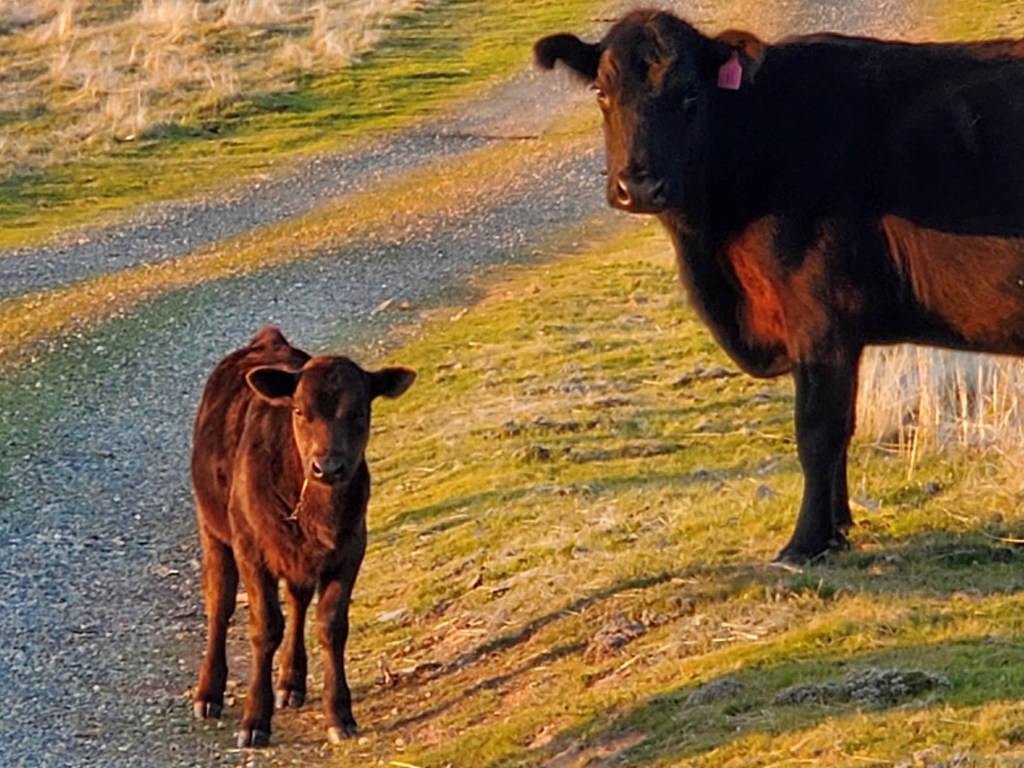
When I have time to watch them, I will let them in for an hour or so to have them help trim the grass without impacting my native plantings. You can see how much they love the verdant blades. They move their heads to the left and right greedily eating without a break. When I can no longer watch them, I usher them out, gently pressuring them to move toward the gate. There are a couple of ladies who never want to leave. They stop to take bites. I have to shift closer. They move, stop again, grab a bite. I move. They move…and so it goes. They snort their disdain, but eventually they kindly acquiesce.
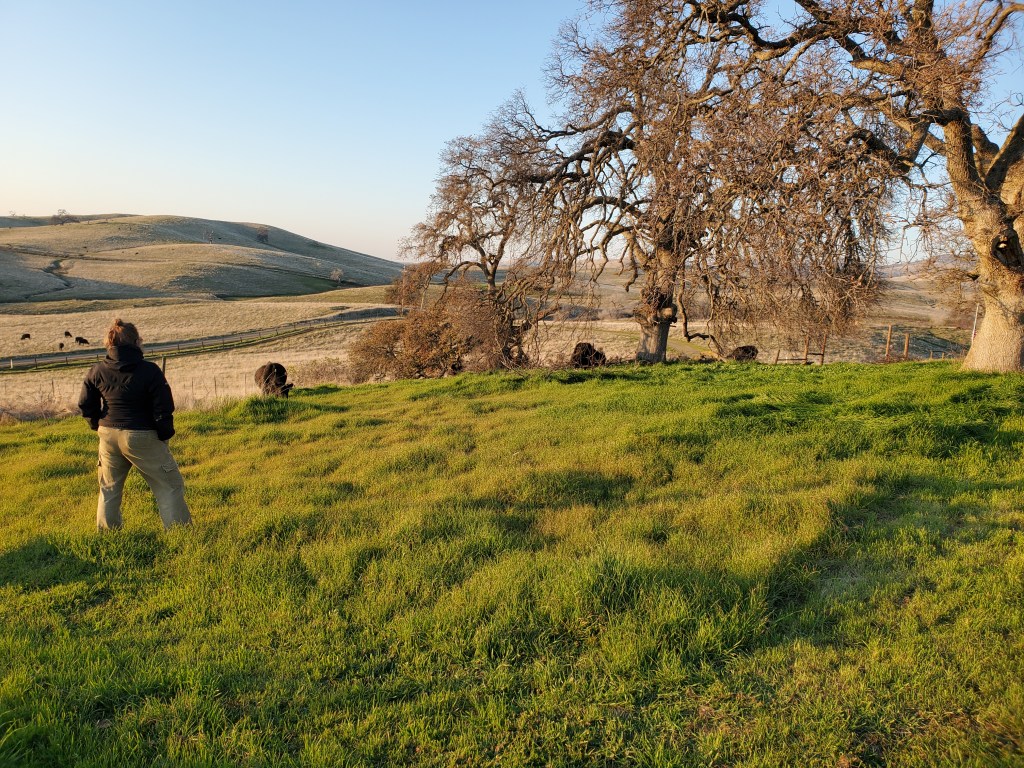
People ask me why I don’t use the dogs to move them out more quickly. The ladies have entered at my invitation. They are helping me, and I respect them. The dogs can be a blunt instrument. I am gentle and precise. We walk out slowly together.
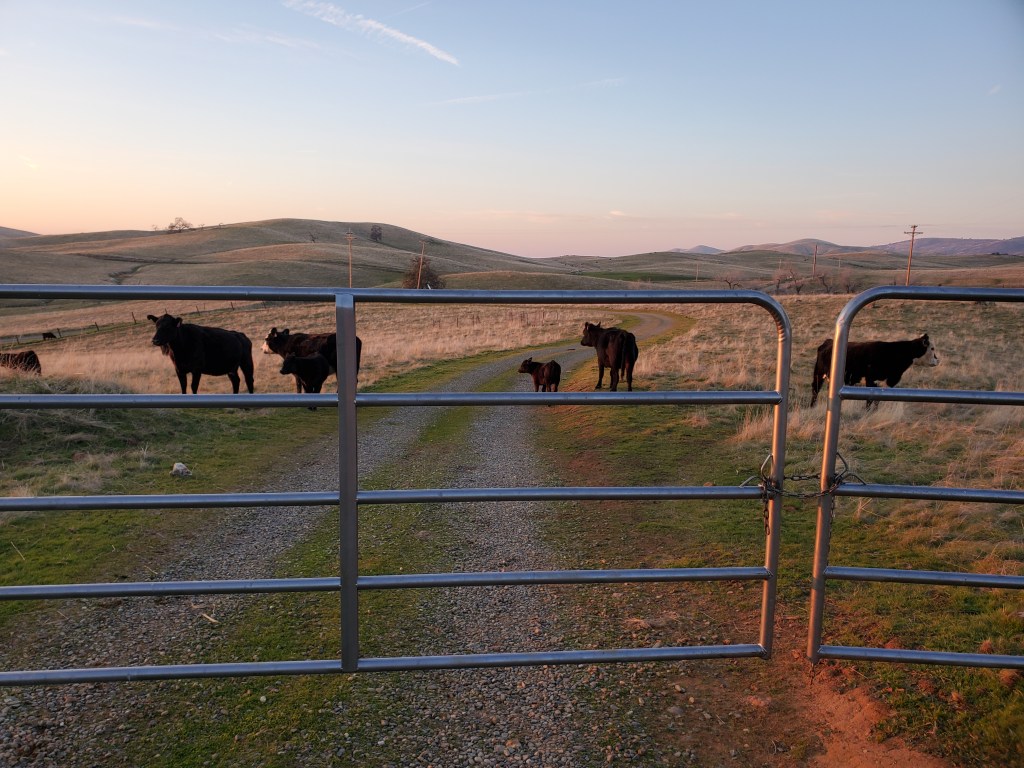
“Dang it! Do we have to go so soon?”

Guzzler Project Moving Forward

With my dad doing better, I have had time to focus on my guzzler projects. The two new tanks were delivered and will feed each guzzler when installed. I had planned to have 1,000 gallon tanks, but the cost was nearly identical to the 1,500 gallon size. It seemed ridiculous not to purchase the larger volume size. With the additional volume, I may also be able to use some of the water for irrigation around the tank area.
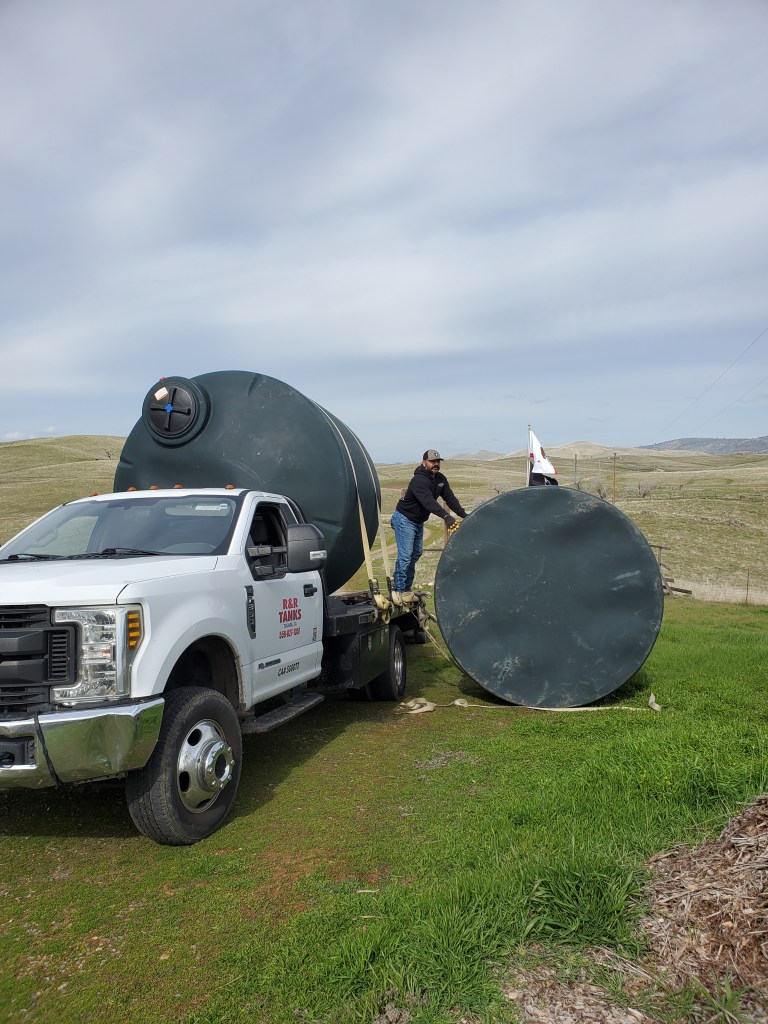
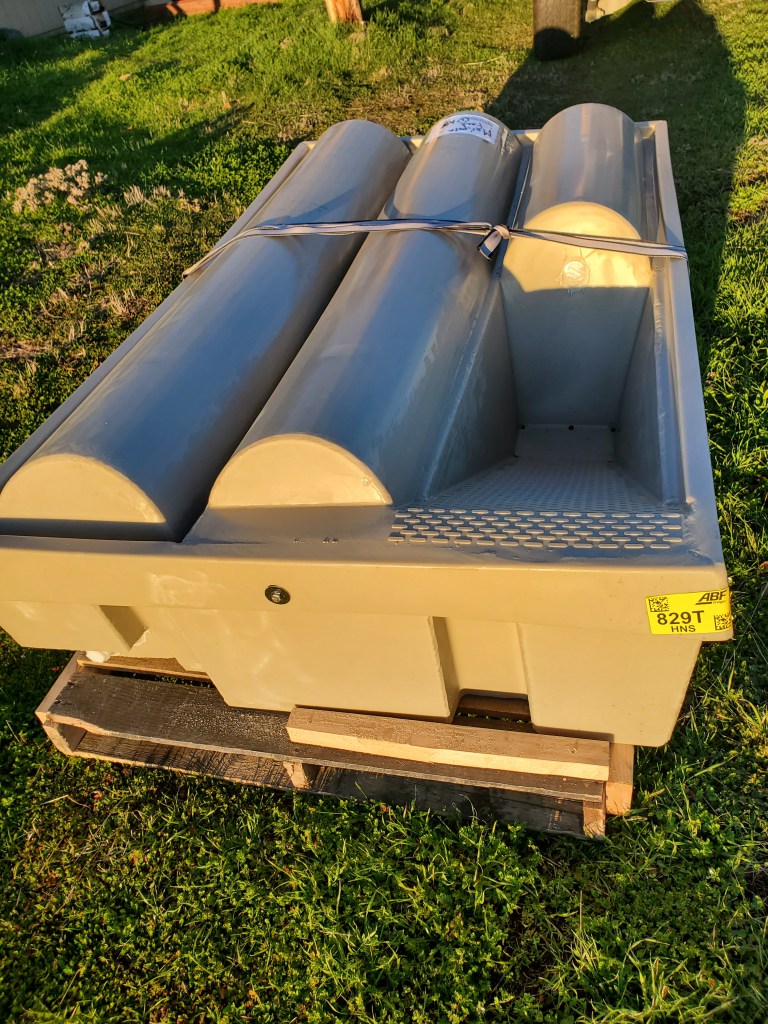
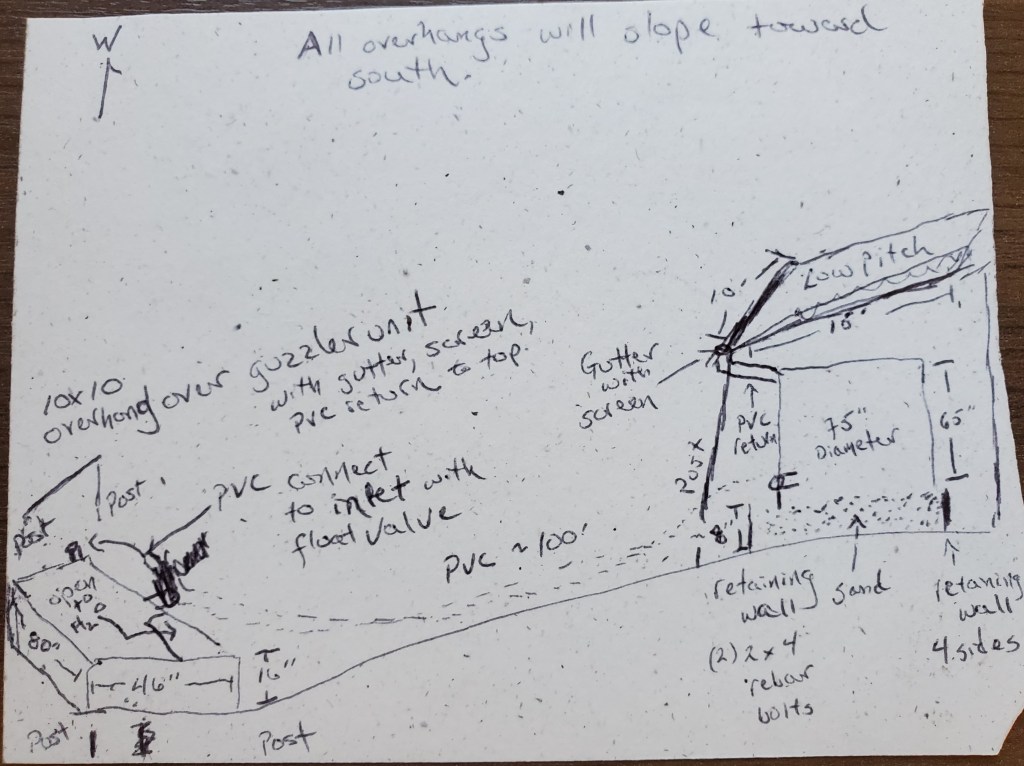
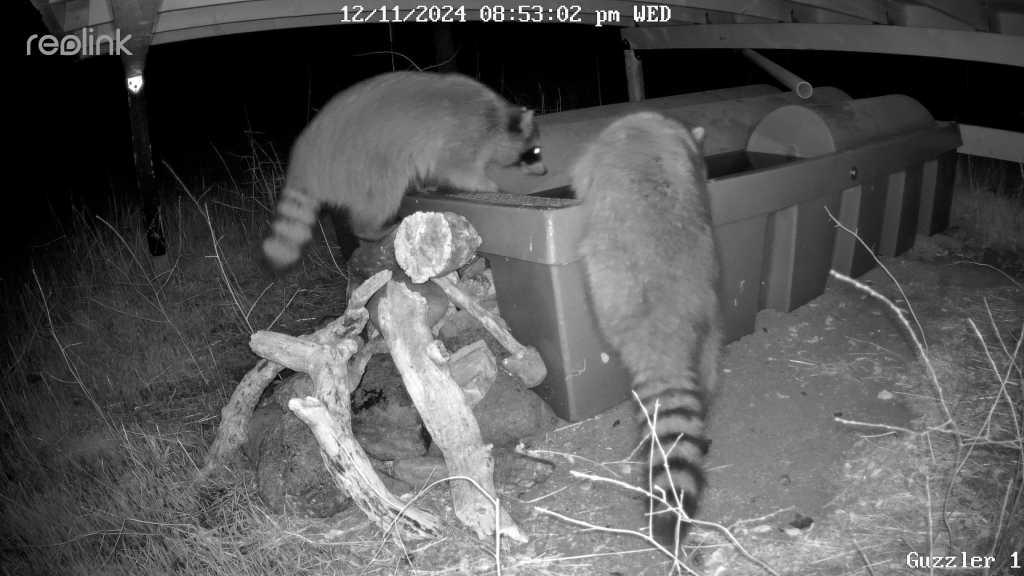
In my last post, I mentioned having the second guzzler delivered. With all the main elements here, I am ready to get the materials needed to cover them and link them together. David, my ever patient husband, will be building the overhang structures to cover the tanks and catch the water. The overall concept is for wildlife to have access to clean and abundant water, especially during times of drought. My original guzzler is doing great and a variety of animals have used the water even with the nearby creek still running. We had a good rain year in 2024, so the guzzler stayed filled throughout the summer and fall, but barely. The water really got low and began to get murky. These tanks will allow me to provide ongoing fresh water to wildlife through abundant and lean times.
Odds and Ends

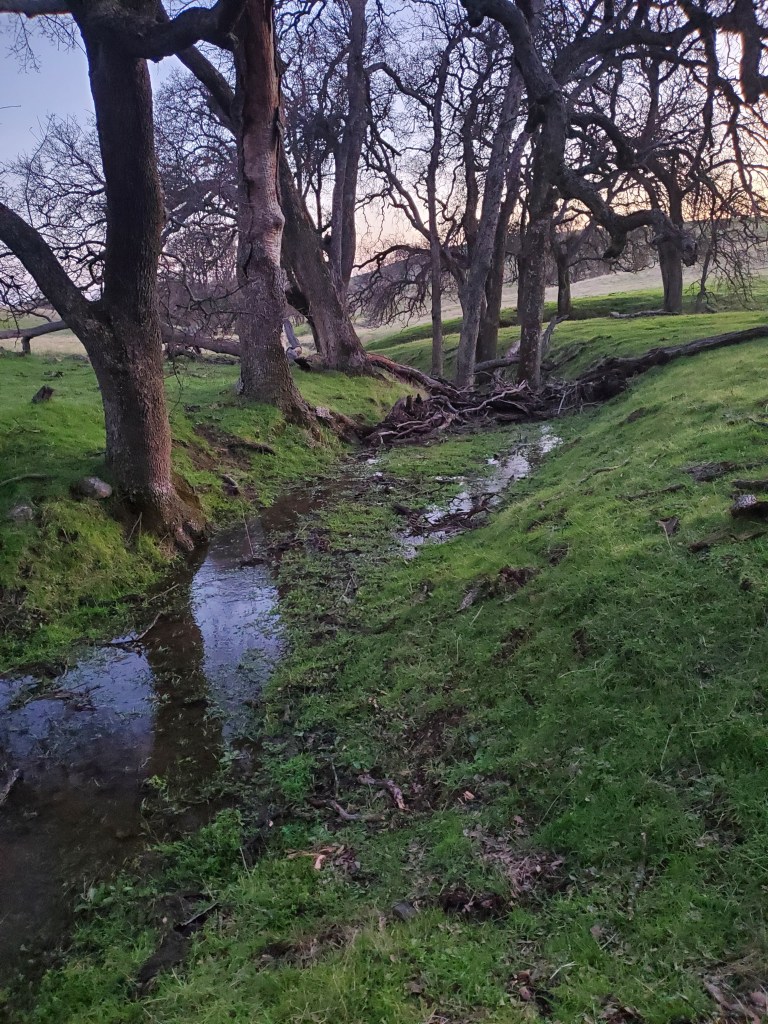
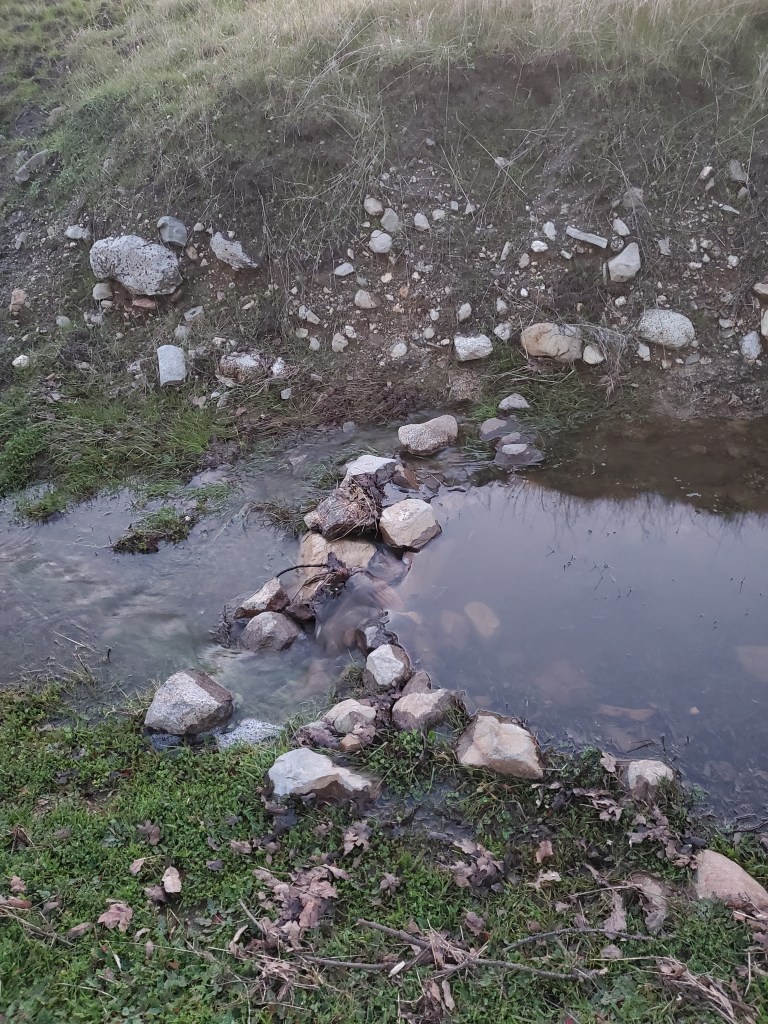
It was a joy to have cold weather and storms, with the most recent one being very large. Water is life, and life is omnipresent and happy when water is around. After the storms, I check my dams to see how they are doing. Everything is holding in place, even my little rock check dam. You see the water, when the creek is running slowly, backing up as intended. I will be placing another dam below that one to slow more water and hopefully spread it out a little to soak the ground and make it more hospitable for oaks.

With water also comes ducks, geese, egrets, herons, mushrooms, mayflies, and green grass. This is such a pretty time of year.

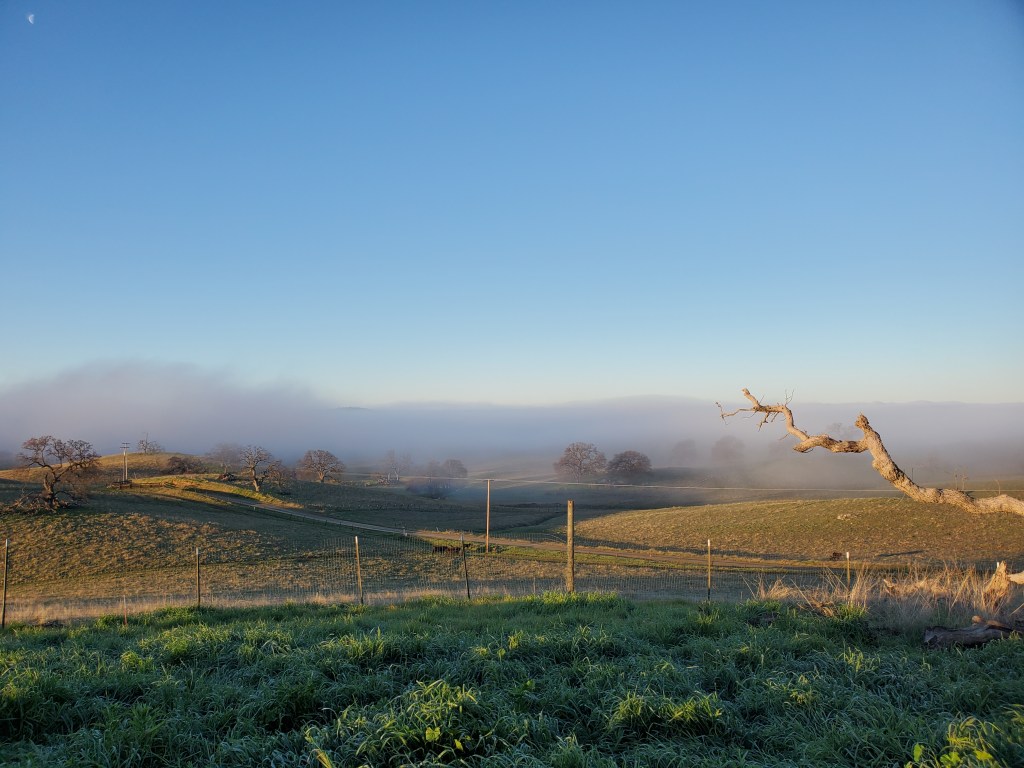
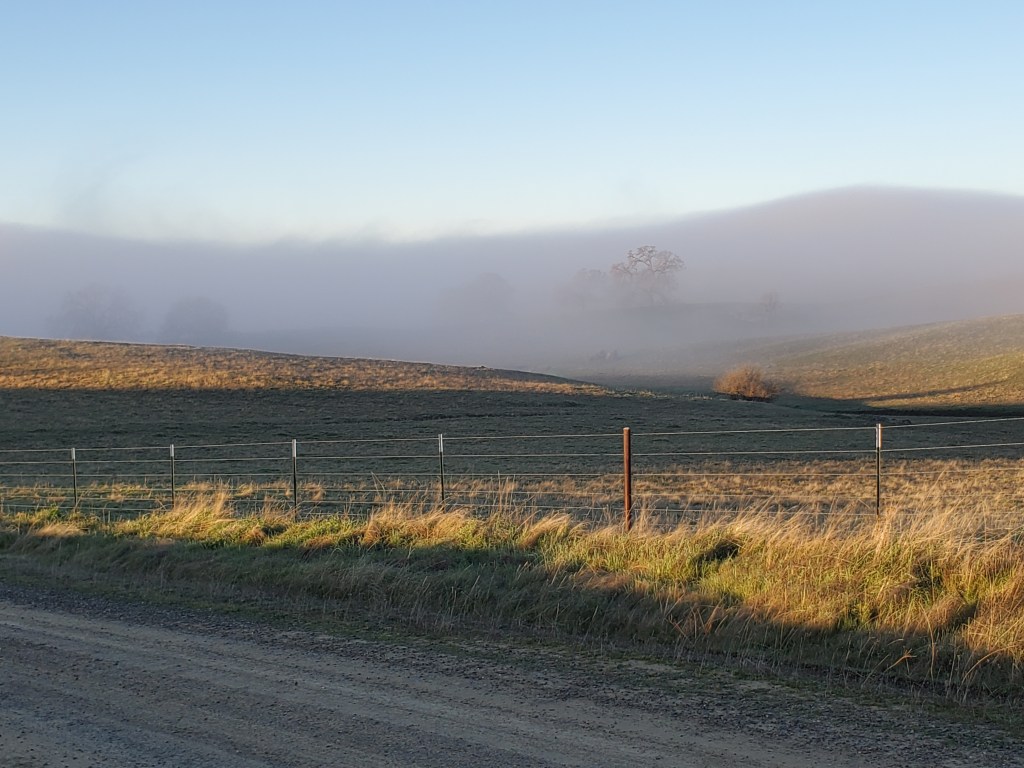
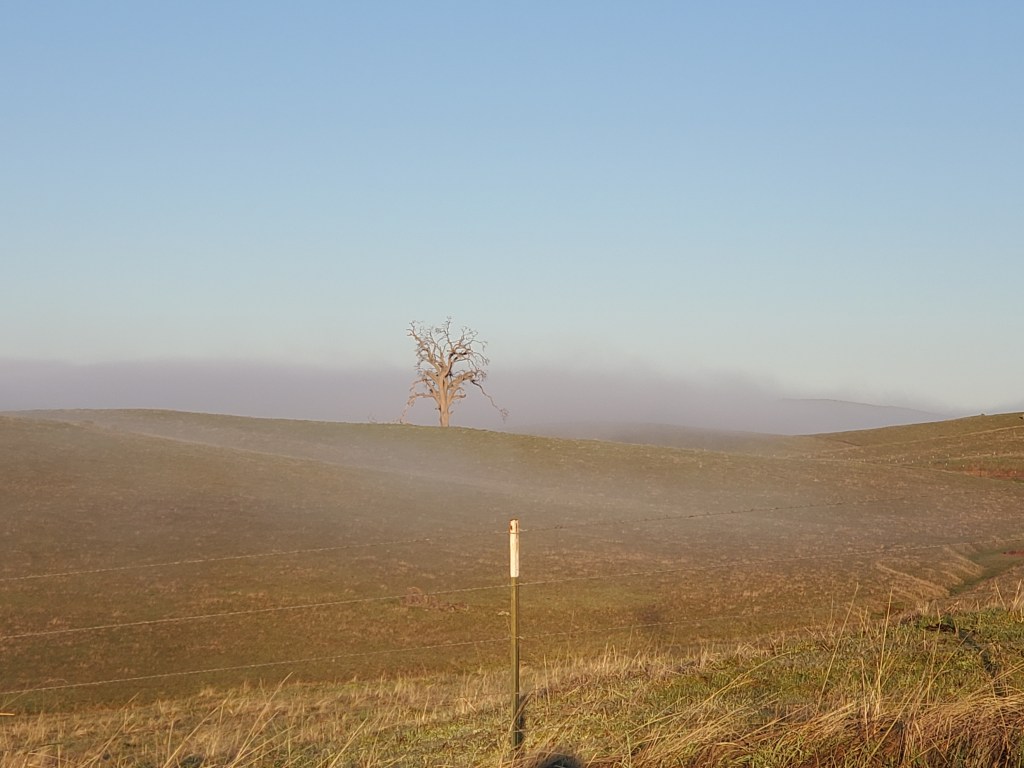
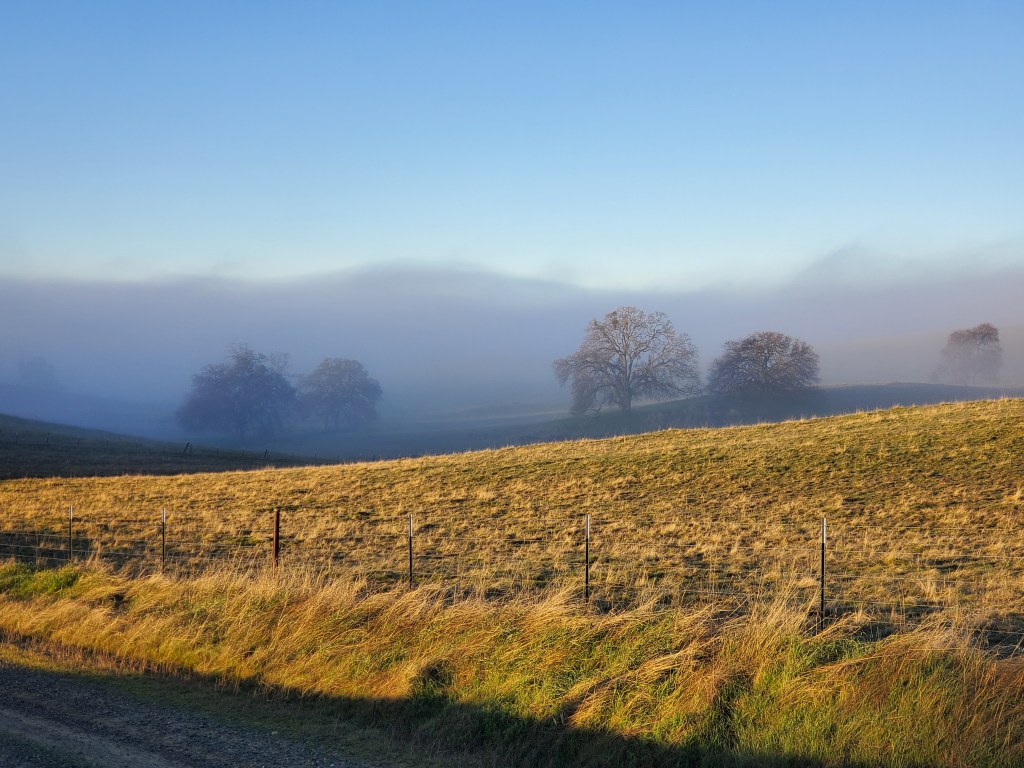
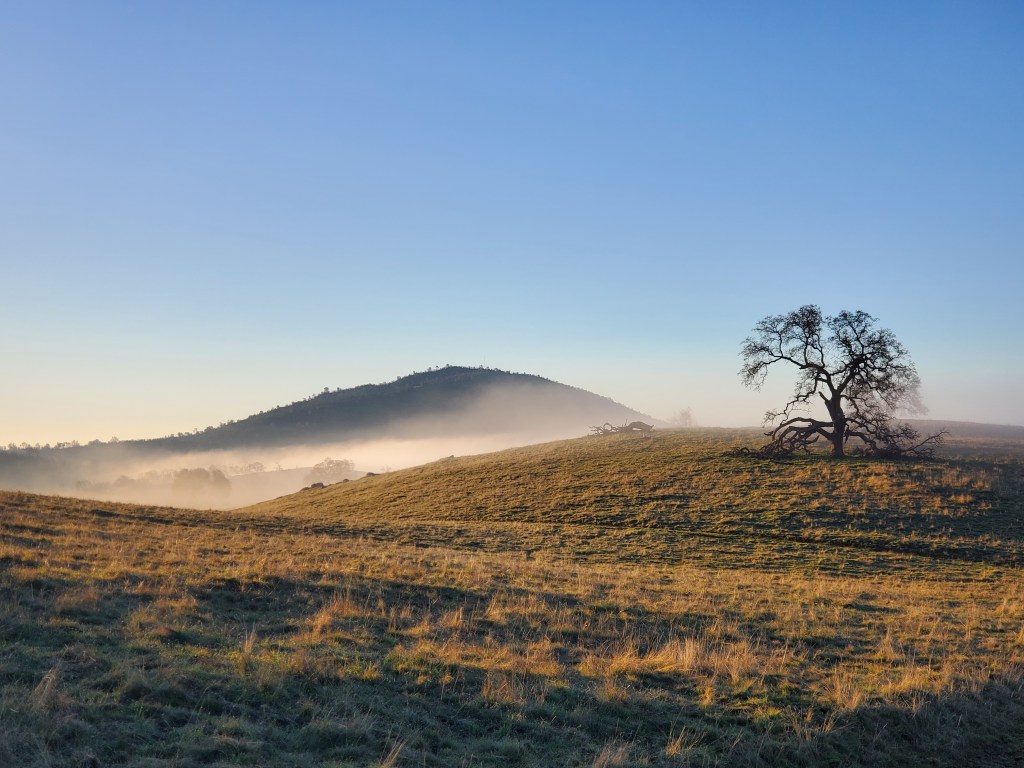
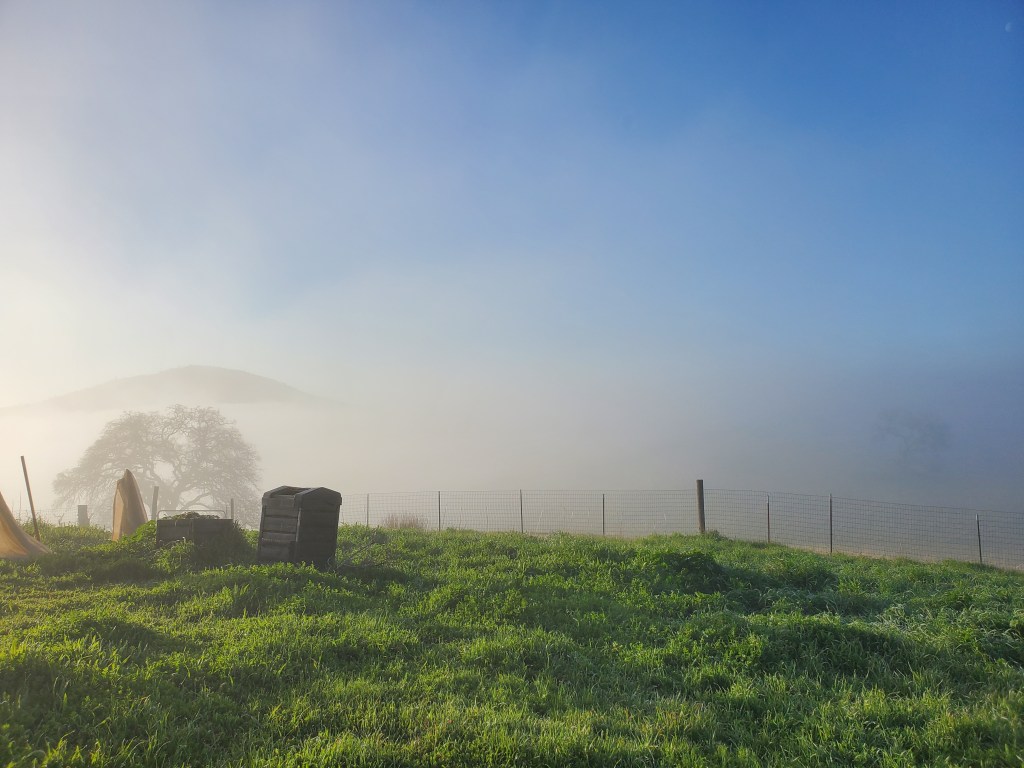
We are generally above the fog line, but every now and then, the fog rolls in. I don’t mind. It keeps the soil moist and the temperatures down. The fog is pretty too.
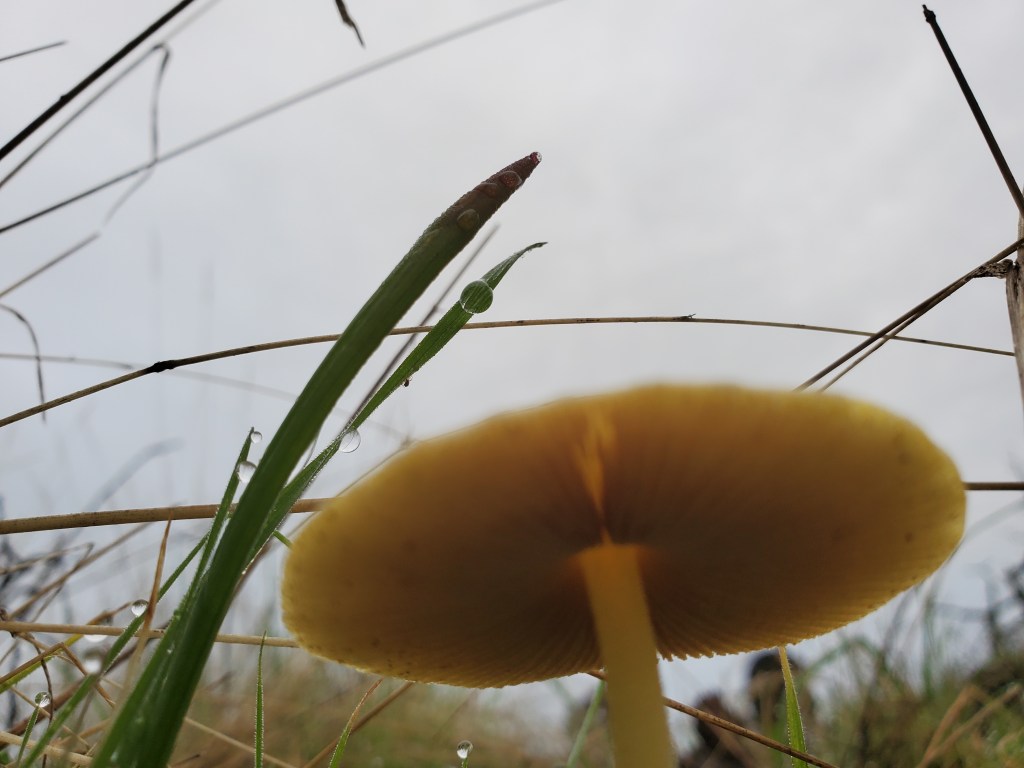
Sometimes I lay down, listen to the birds, feel the cool ground on my back, smell the air, look at the sky. I did this when I was young, and it was happiness. The key is time – to think, relax, breath and connect. Anyone can do this anywhere, a park, a back yard, a patio with your potted plants.


Joy is possible and necessary even in a time filled with bad news. All we need to do is look around, smell, hear, touch, and especially, feel.
Rough Summer for Blue Oaks

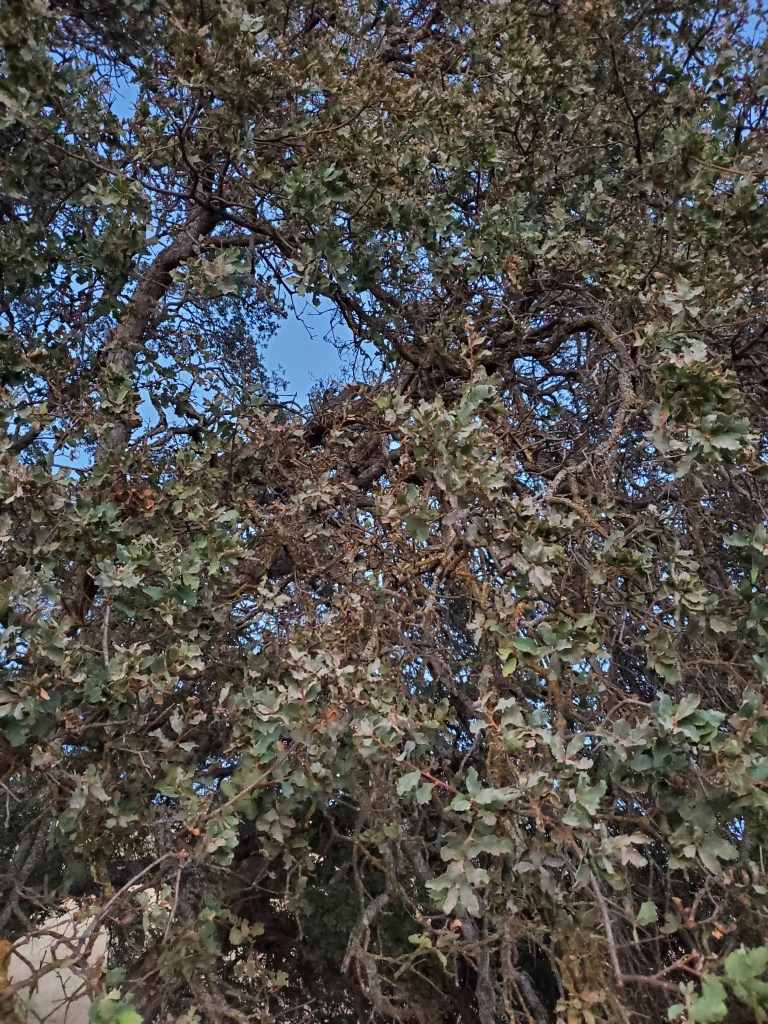
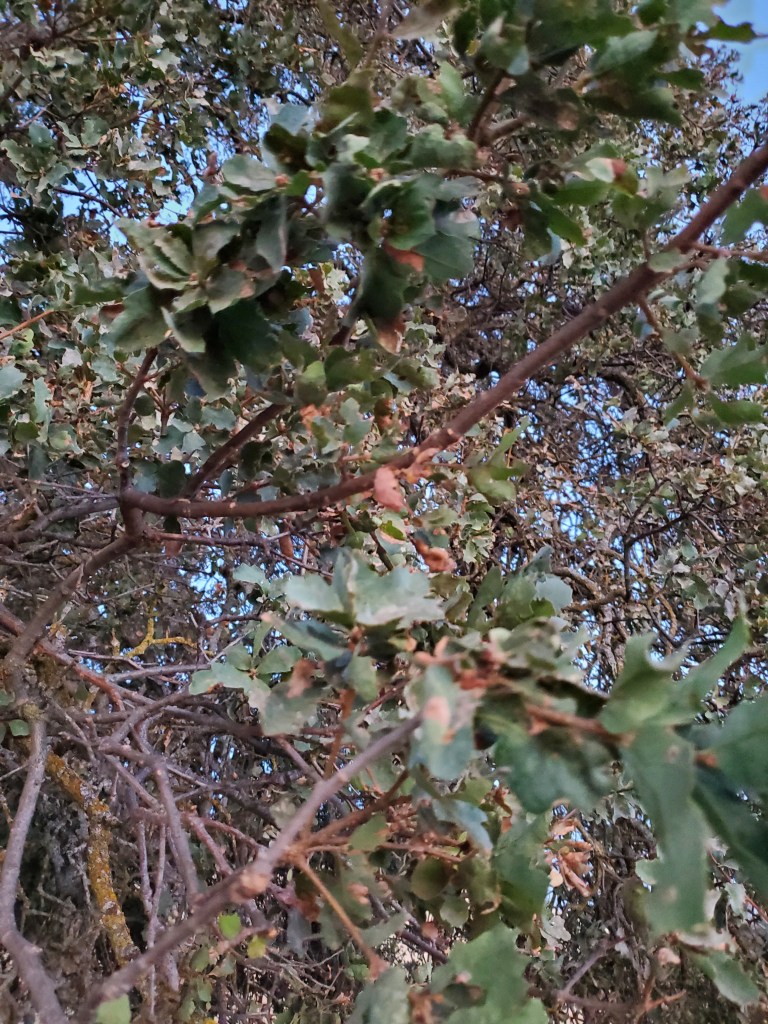
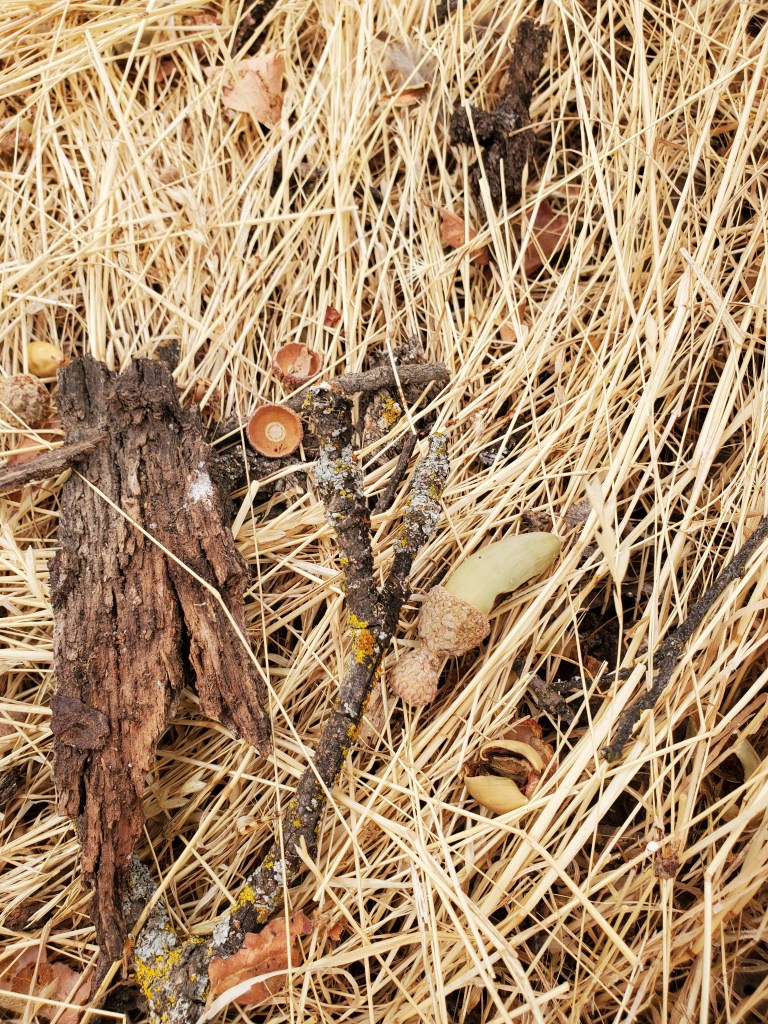
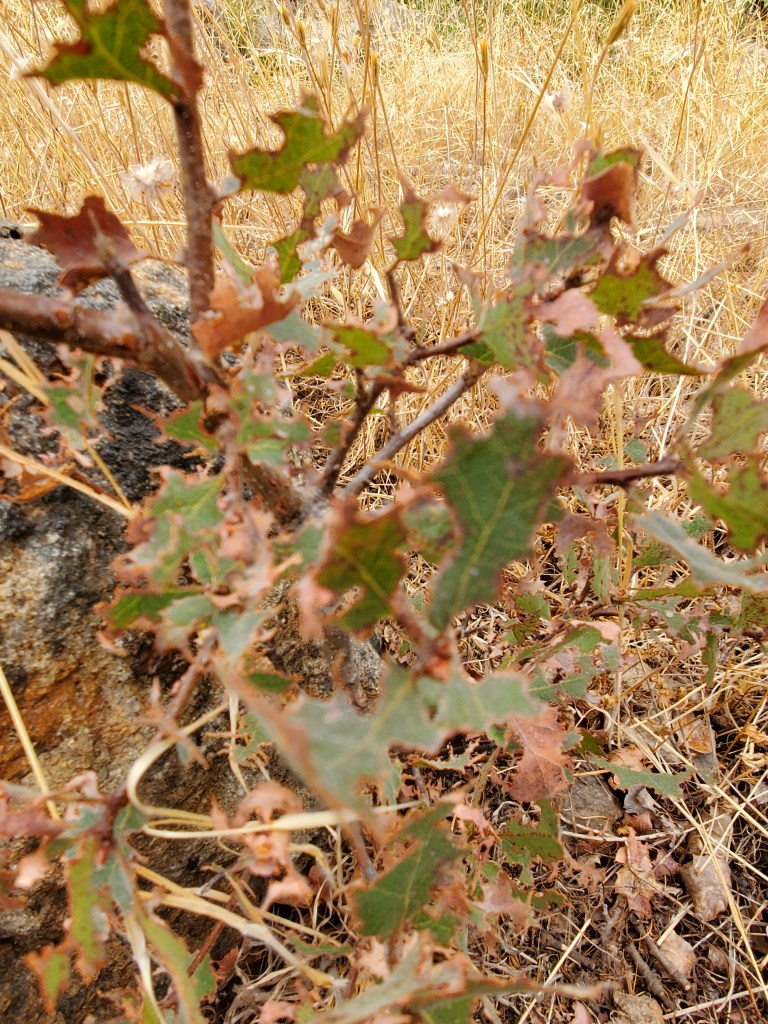
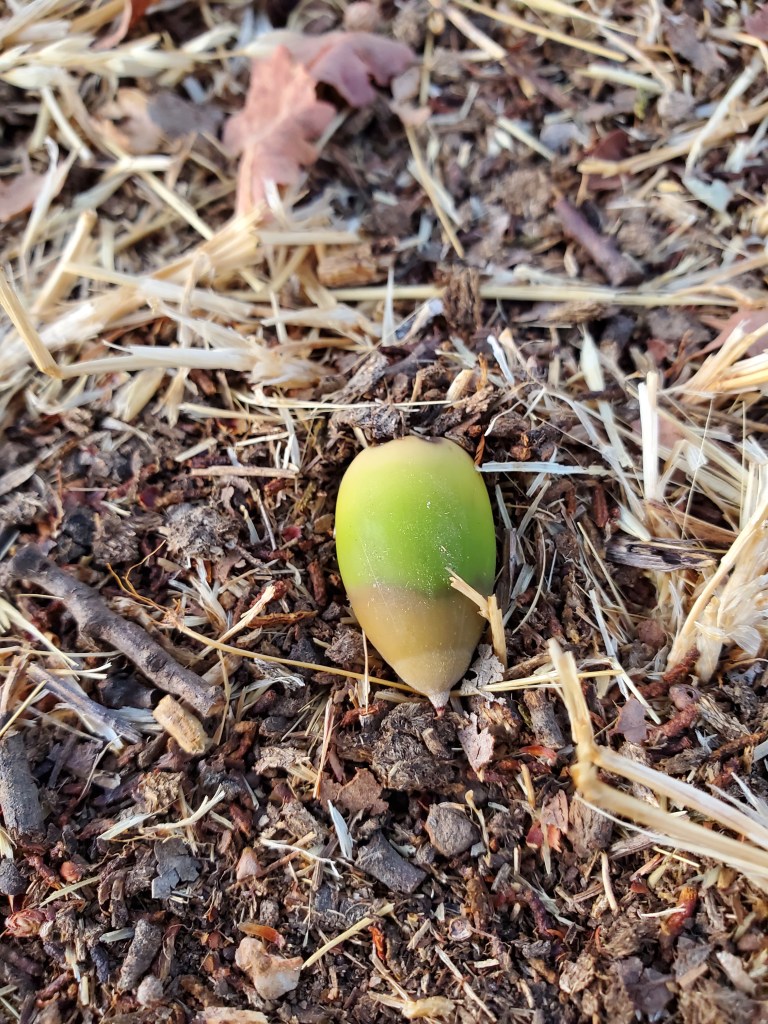
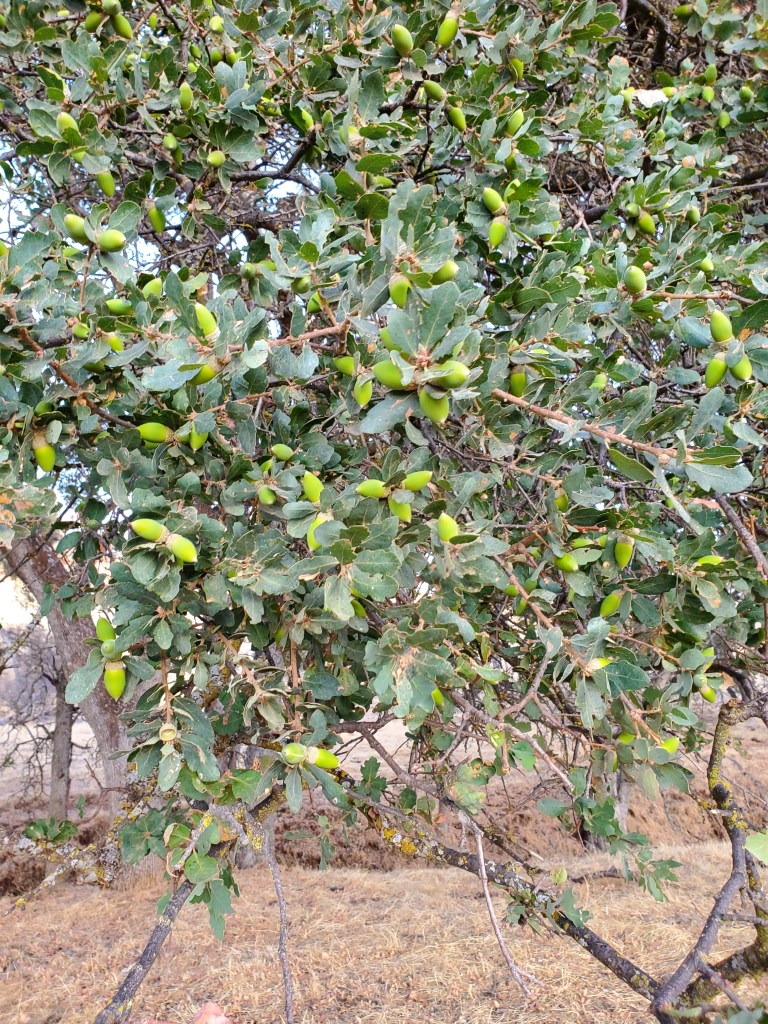
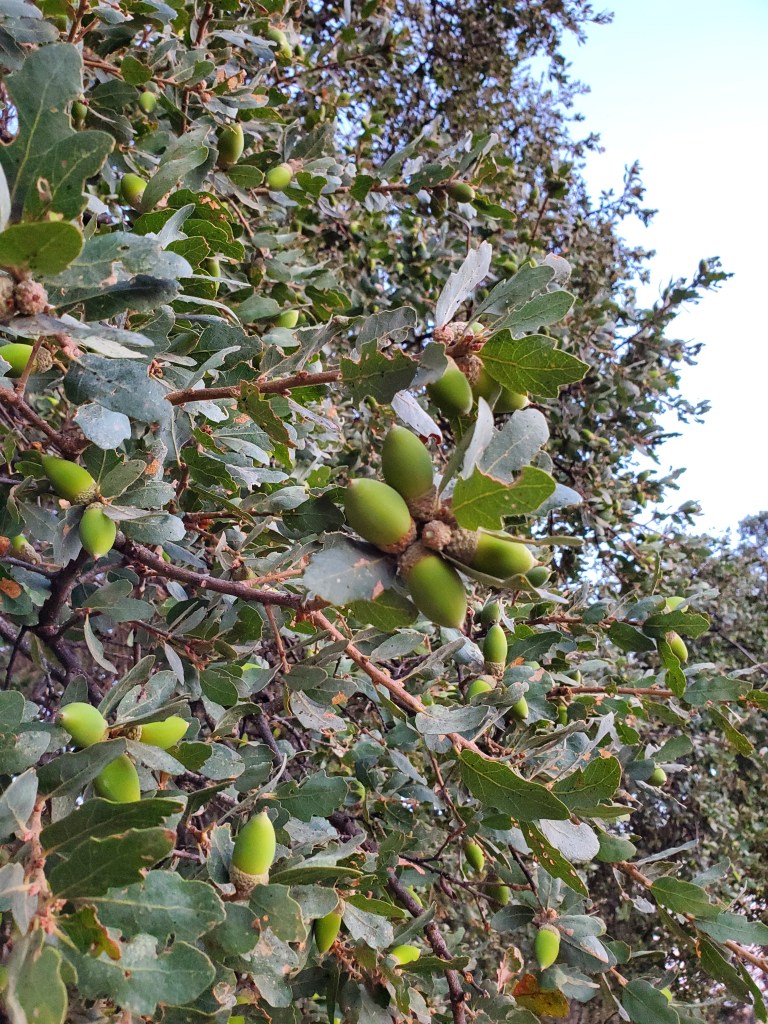
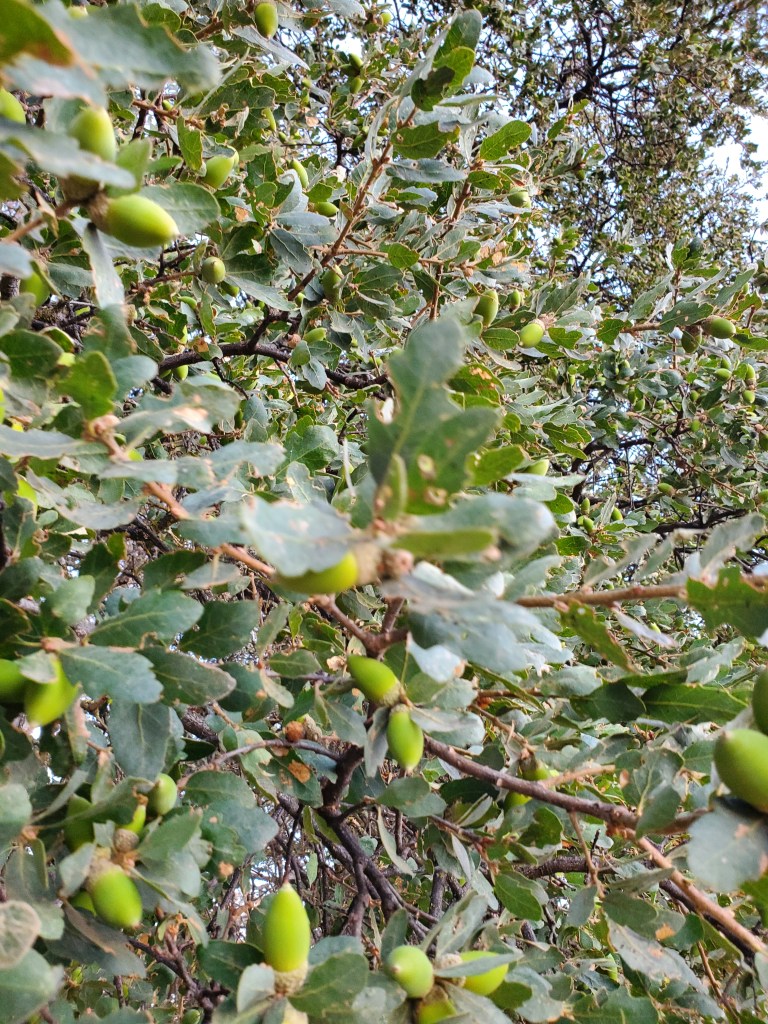
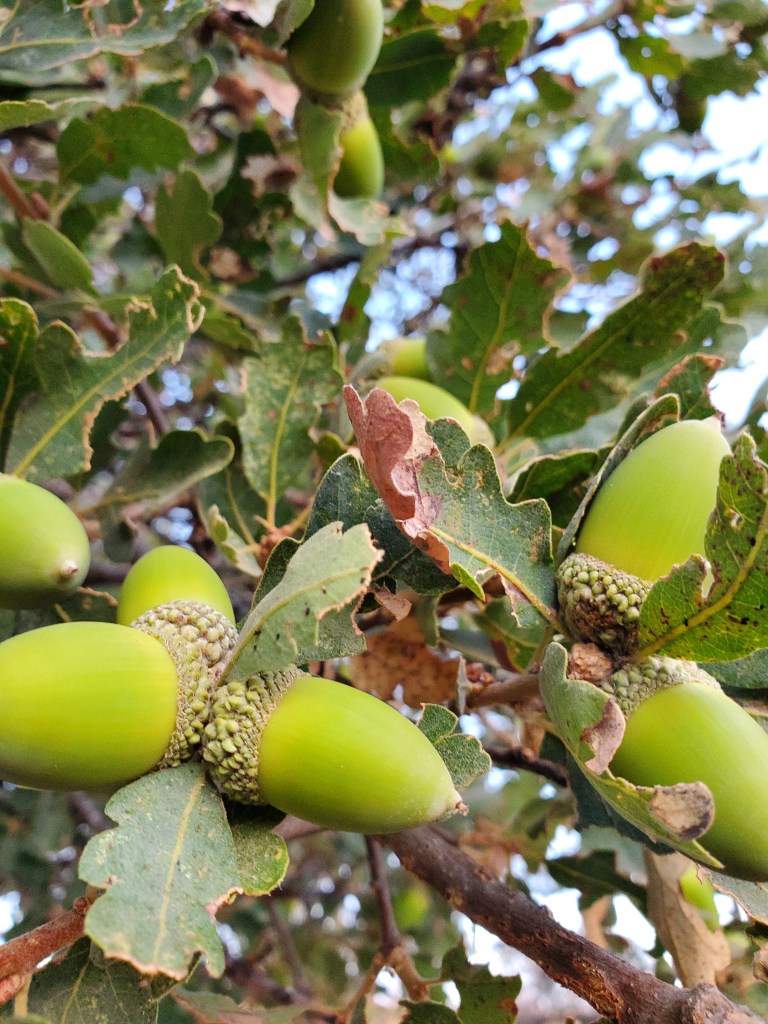
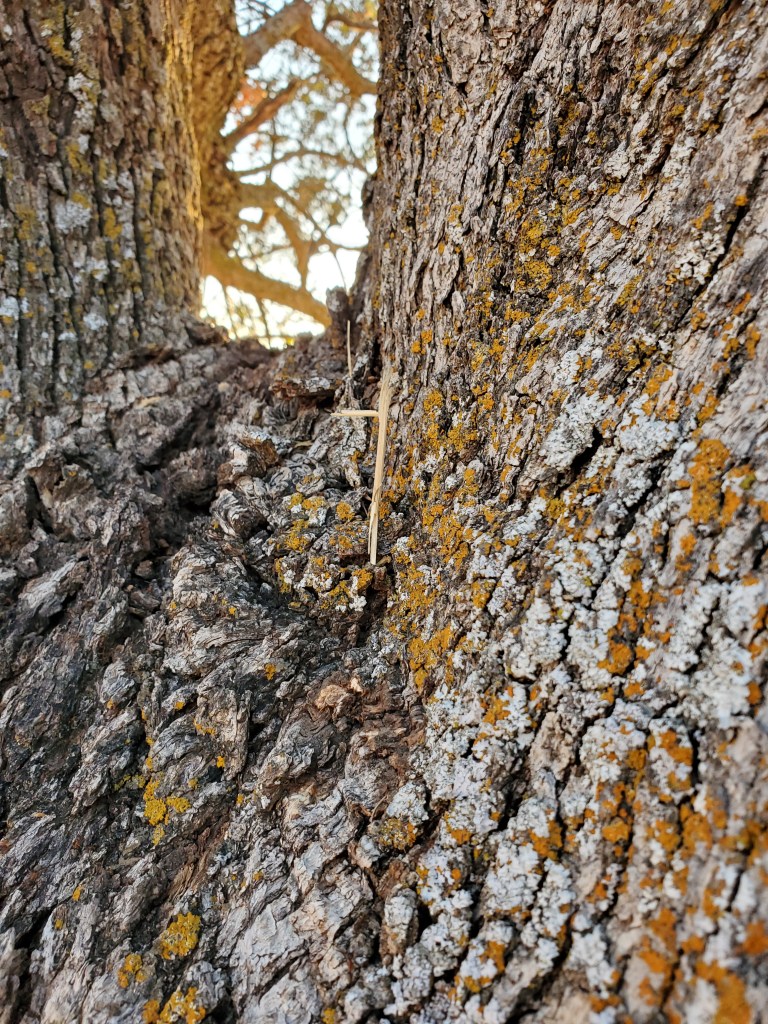
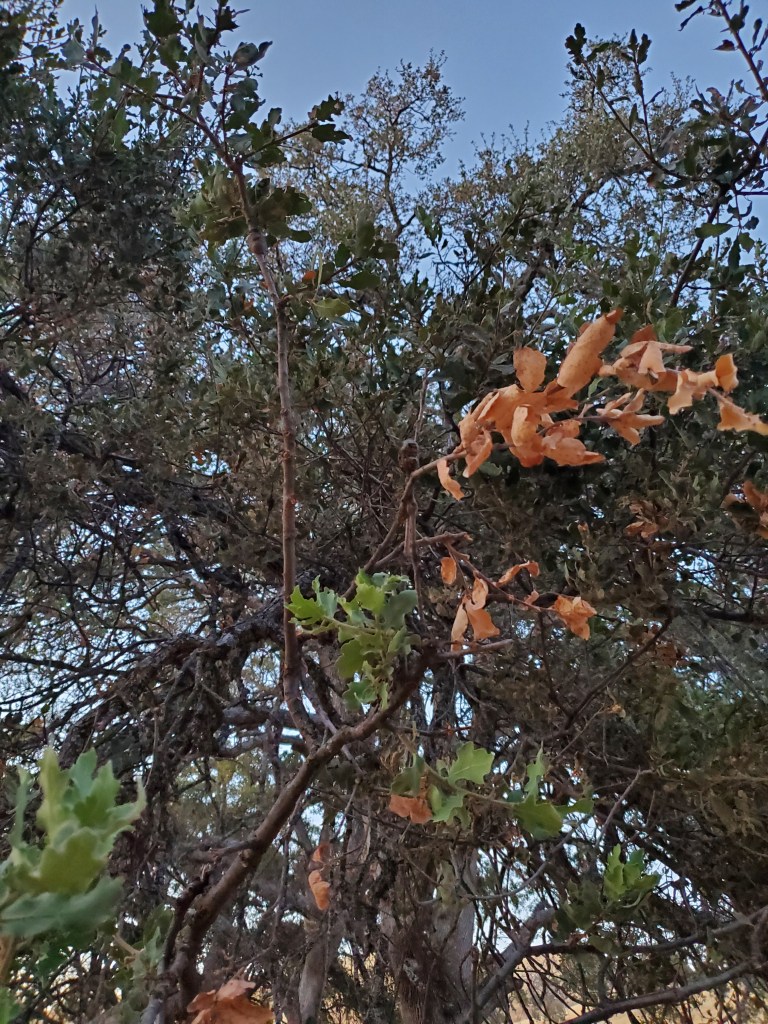
What looked like a bumper crop this year of acorns has transformed to crispy leaves and dumped immature acorns. July happened, and with it, record sustained heat. Oaks are resilient, but so many days of extreme heat on the heels of a long drought within the recent decade are just too much even for these magnificent giants. They had plenty of water over the last two years. Even with water though, they are suffering. Prior to the heat, I was overjoyed to see thousands of acorns on the trees. It was exciting to think I could do more oak planting using my own acorn stock – and even have enough left over for the animals and me to enjoy. My hopes withered like the leaves I was watching, as day after day, green acorns appeared on the ground, less leaves on the trees, and the remaining leaves showing signs of burning / crisping. Most of the grand oaks no longer look so good.

One bright sign is that the oaks adjacent to the swale pond are doing extraordinarily well. Their leaves have withstood the heat and acorns are still attached in copious amounts. Hoping for repeat good news for those oaks adjacent to the check dams, I explored the grove. Sadly, the trees were crisped. Even the oaks sitting lower in the creek and drainages were rough looking. The check dams slow the runoff holding back small quantities of water for a short time. The swale pond holds large quantities of water over a long period of time. I only did a very cursory look, and need to do a more thorough examination across the entire ranch to understand if this is the pattern. If so, how can I ever hope to save these magnificent relatives, so critical for food, shelter and shade on such a large scale?
Water – Still Here

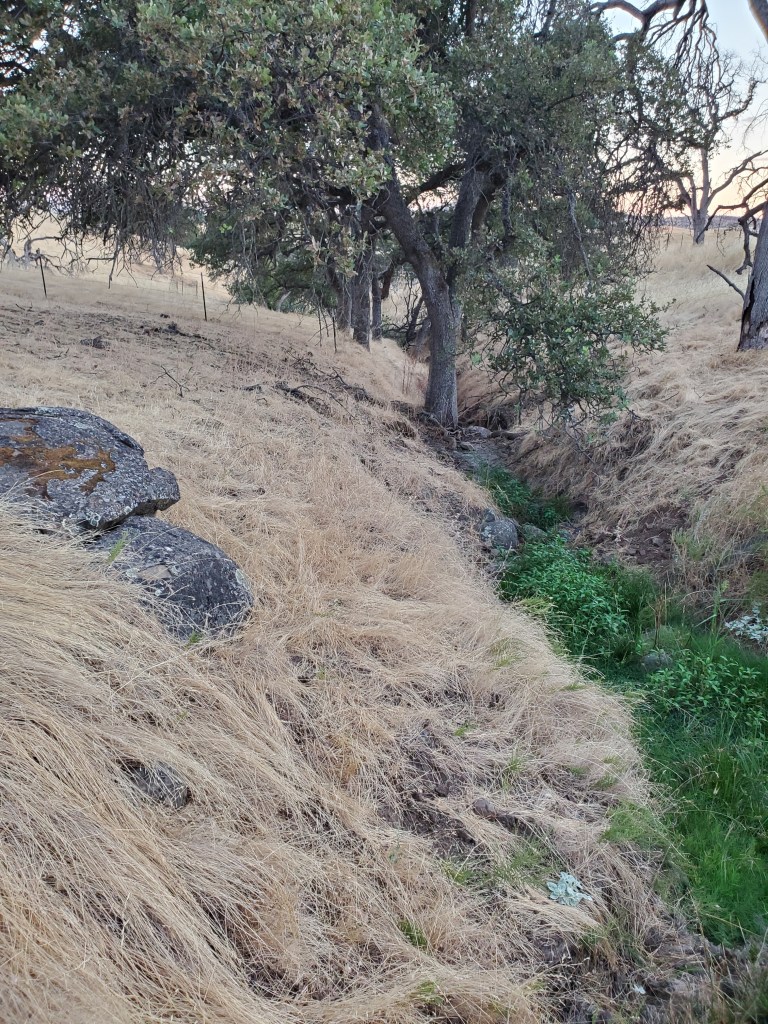
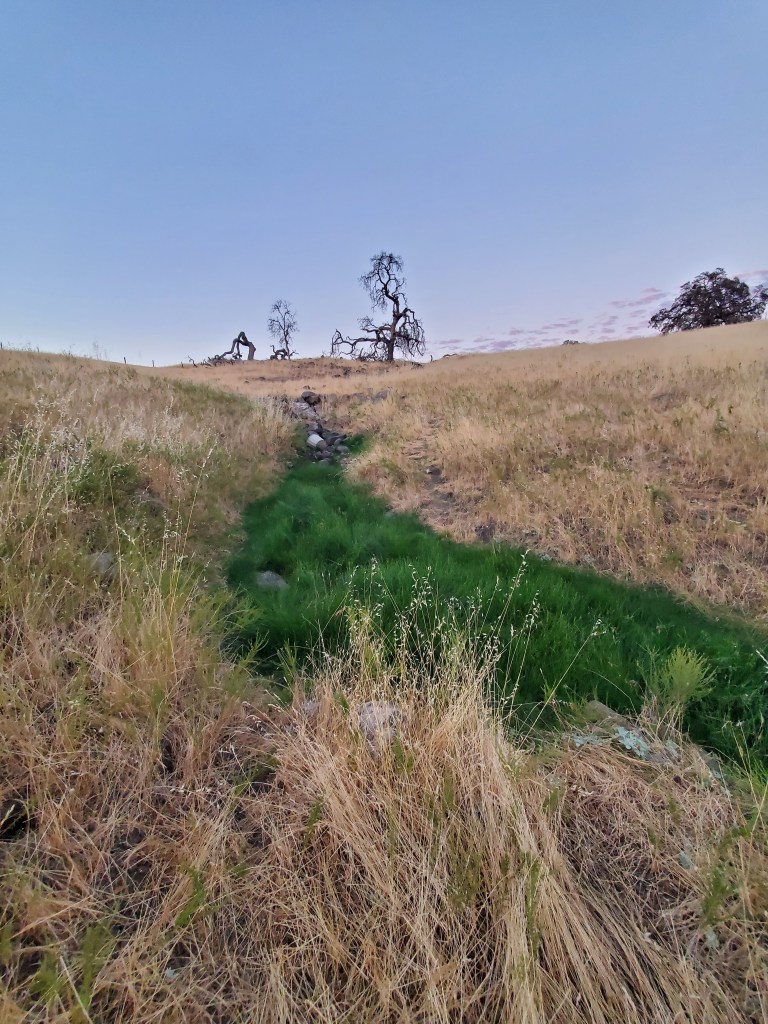
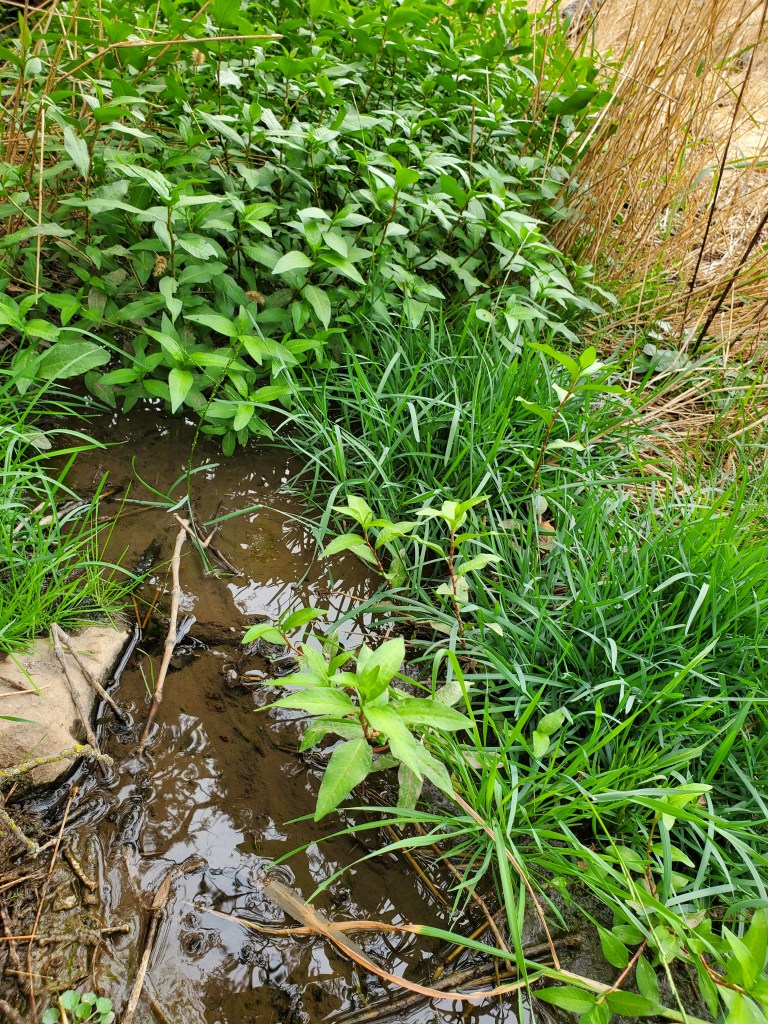
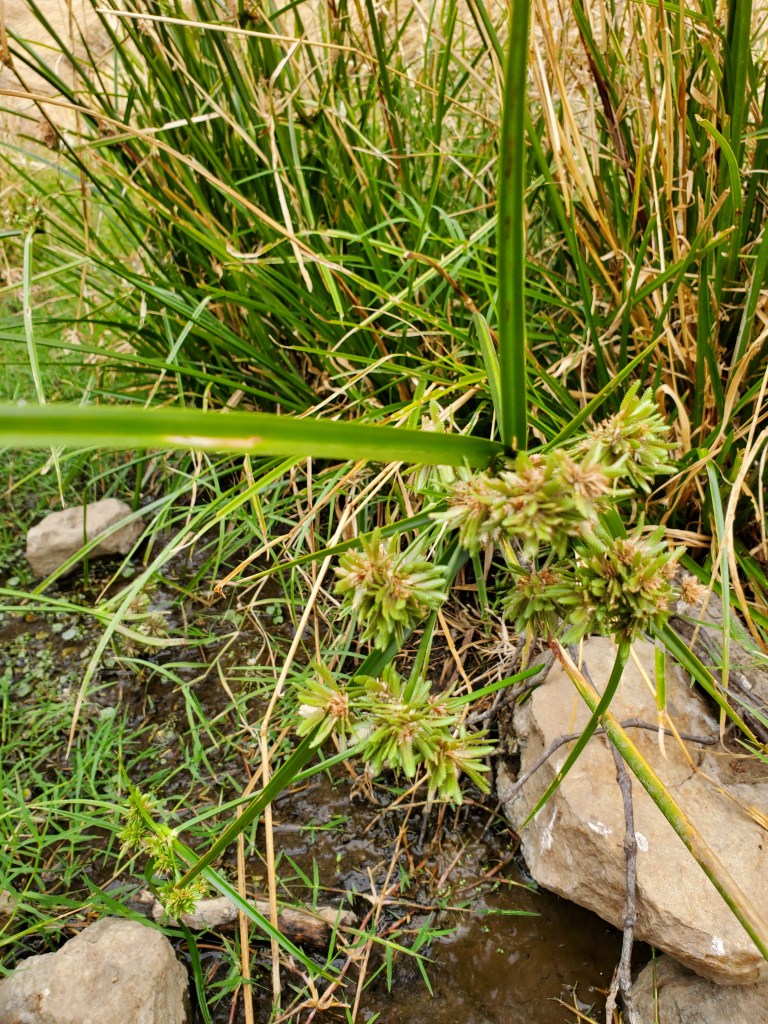
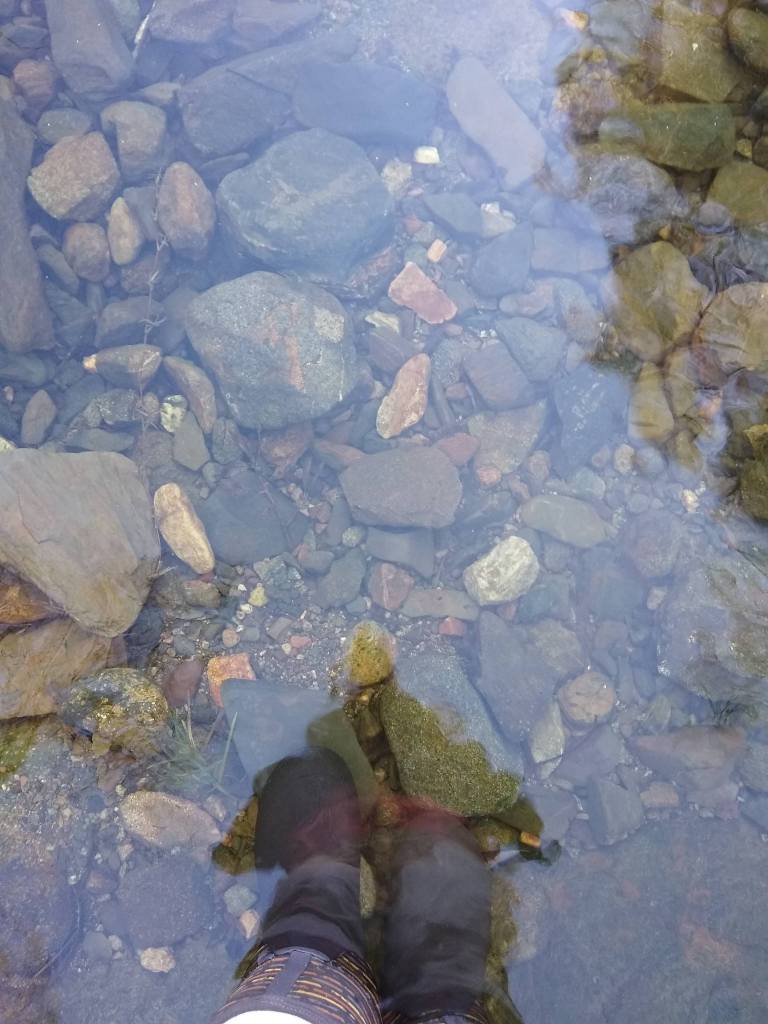
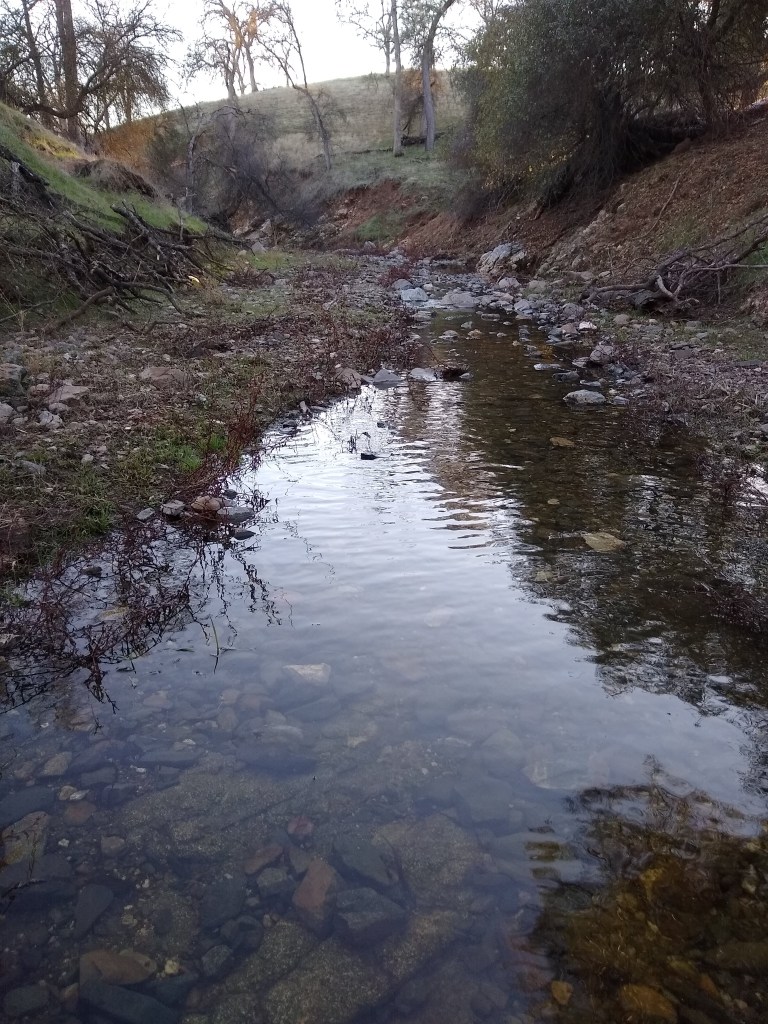
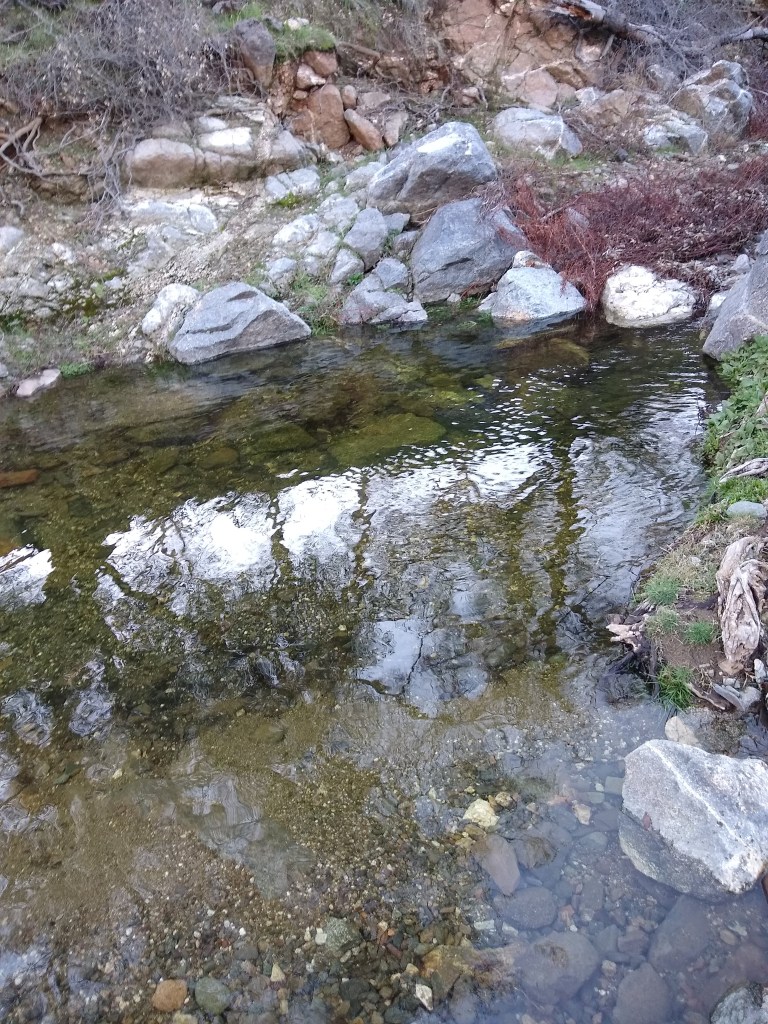
I am grateful that there is still water running in the creeks and seeping from the springs. It ensures life can continue and that there are nectar flowers to feed hungry pollinators. There was also watercress – a wonderful treat for humans.

Traditional Foods – Critical

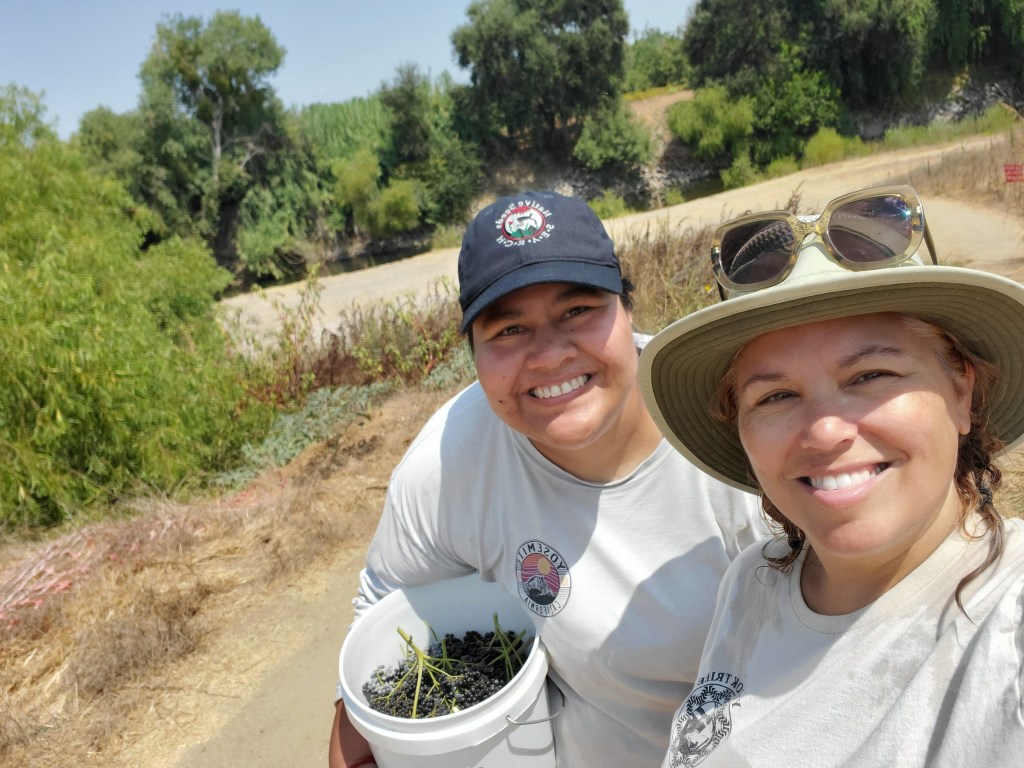
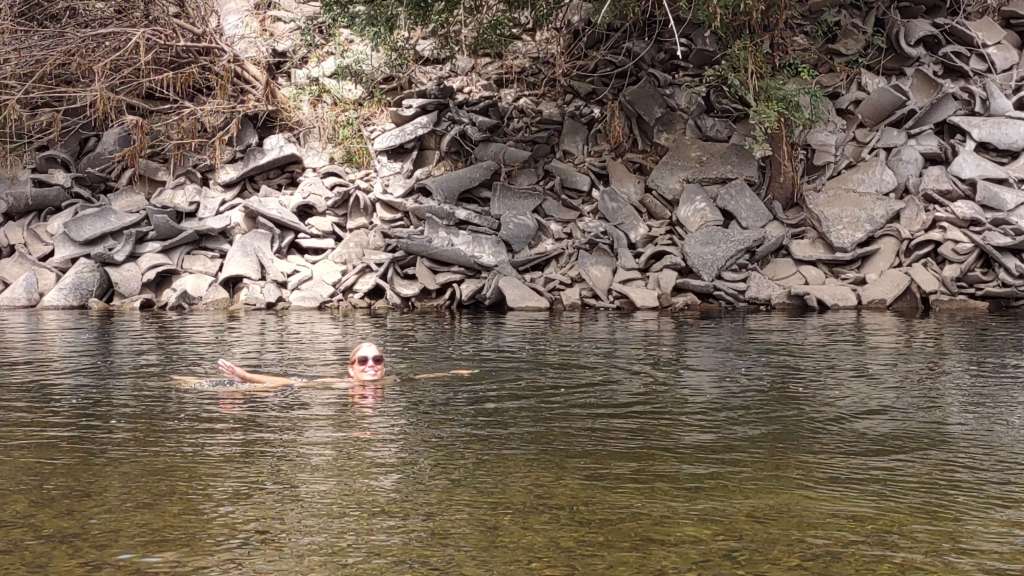
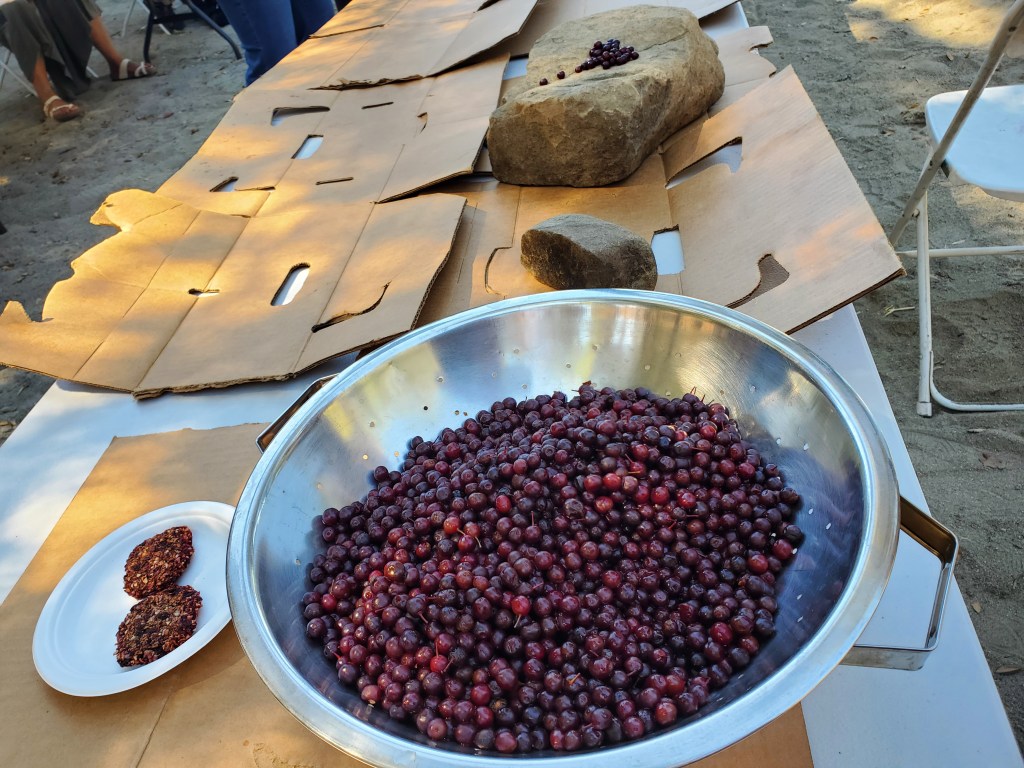
The weekend before last, my young friend Deedee and I went to gather elderberry. Although we gather for ourselves, our primary mission is to gather for the Tribal elders. We always provide the largest and best berries for them. I kept a small bag to make elderberry syrup for my family and friends. Elderberry is a medicine plant and helps the immune system. Gathering can be a dusty, sweaty business. Fortunately, the site we go to is adjacent to the Merced River. I jumped in for a rinse off and swim. Pure joy!

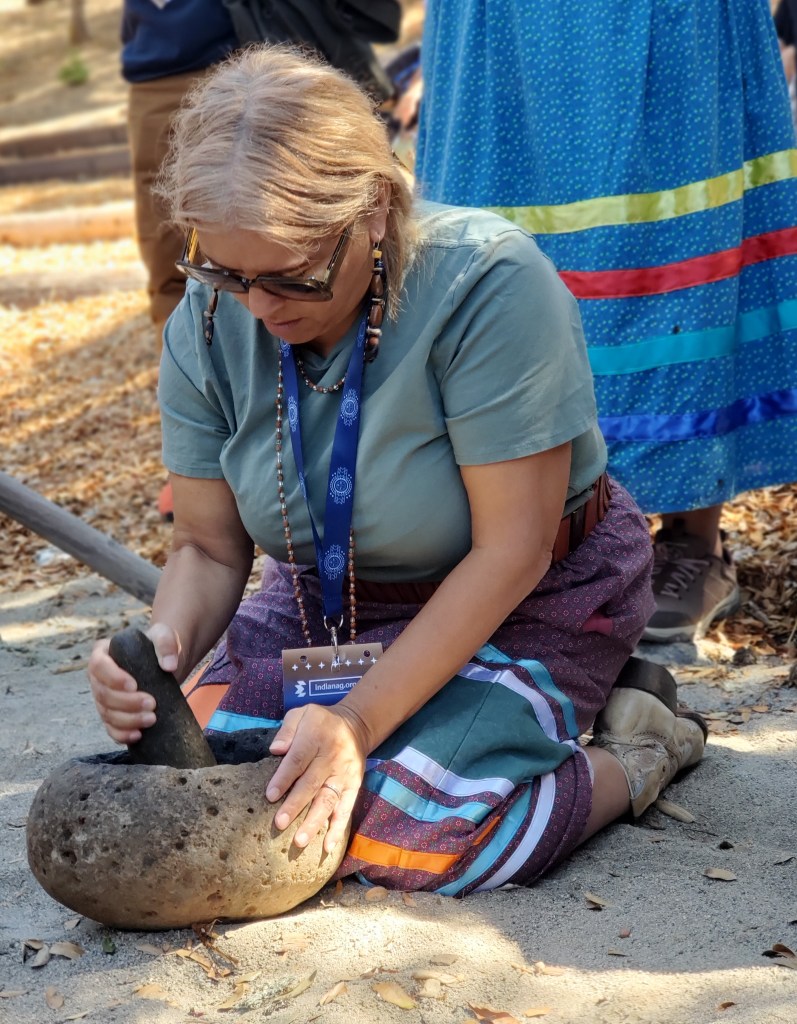
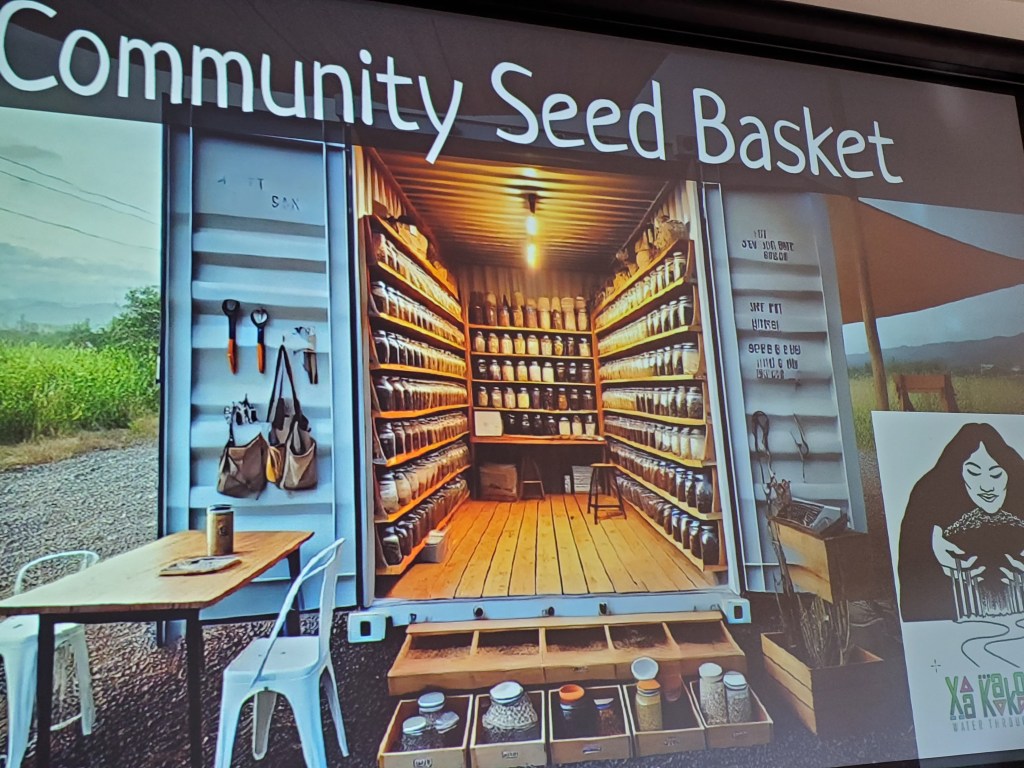
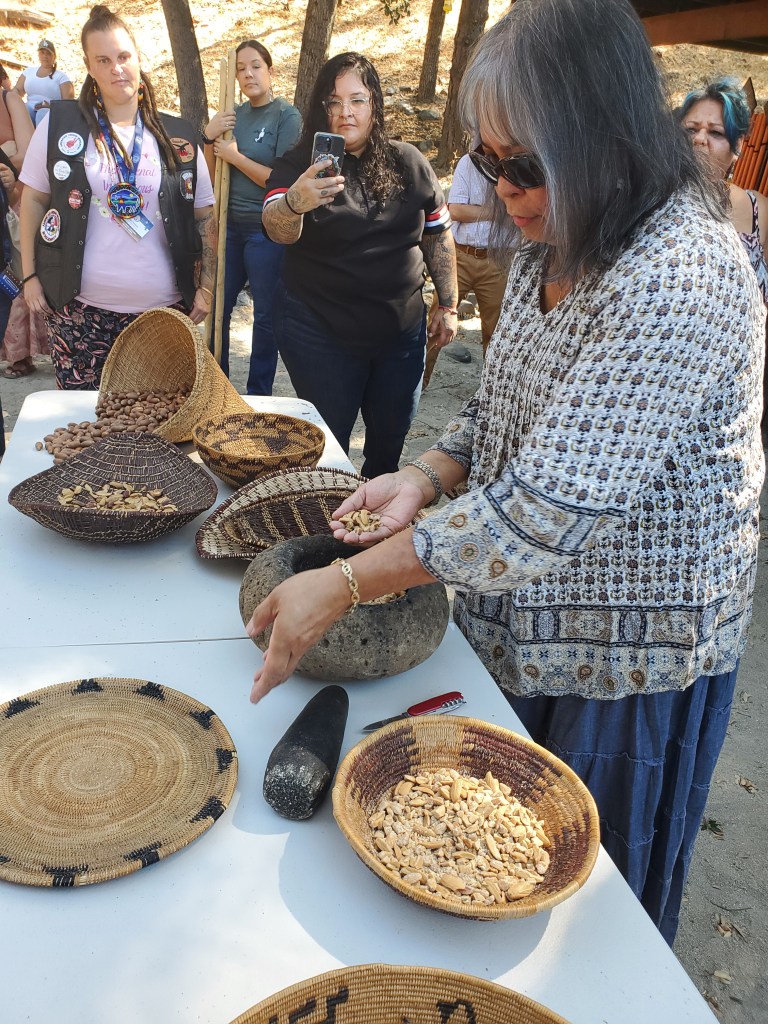
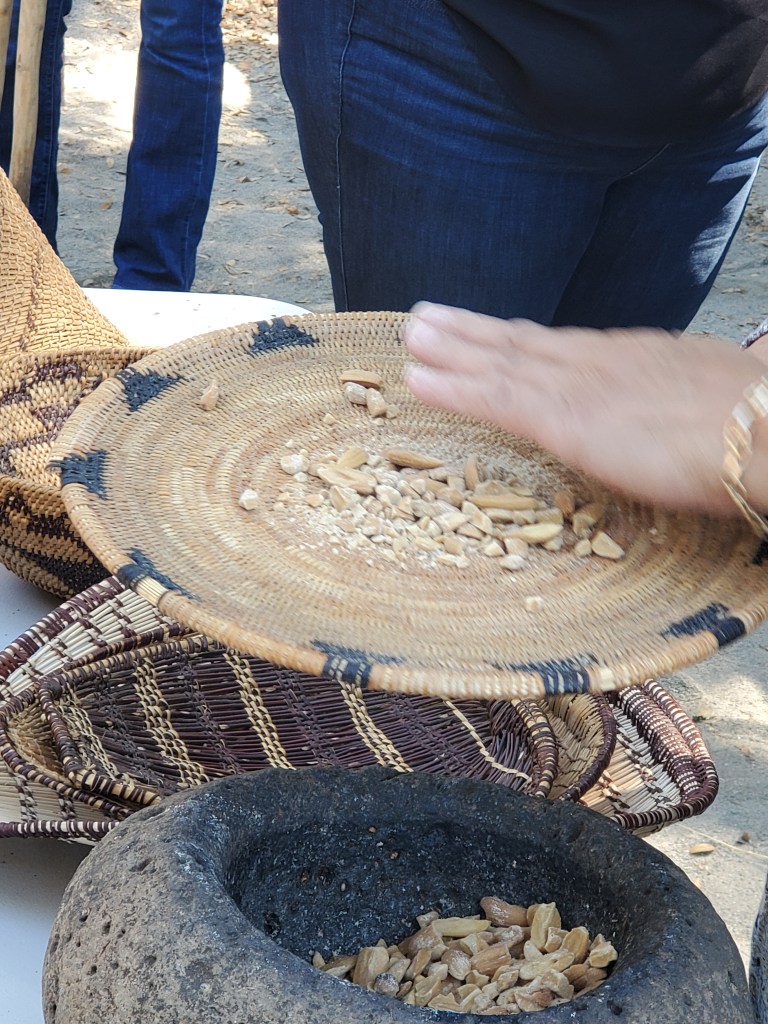
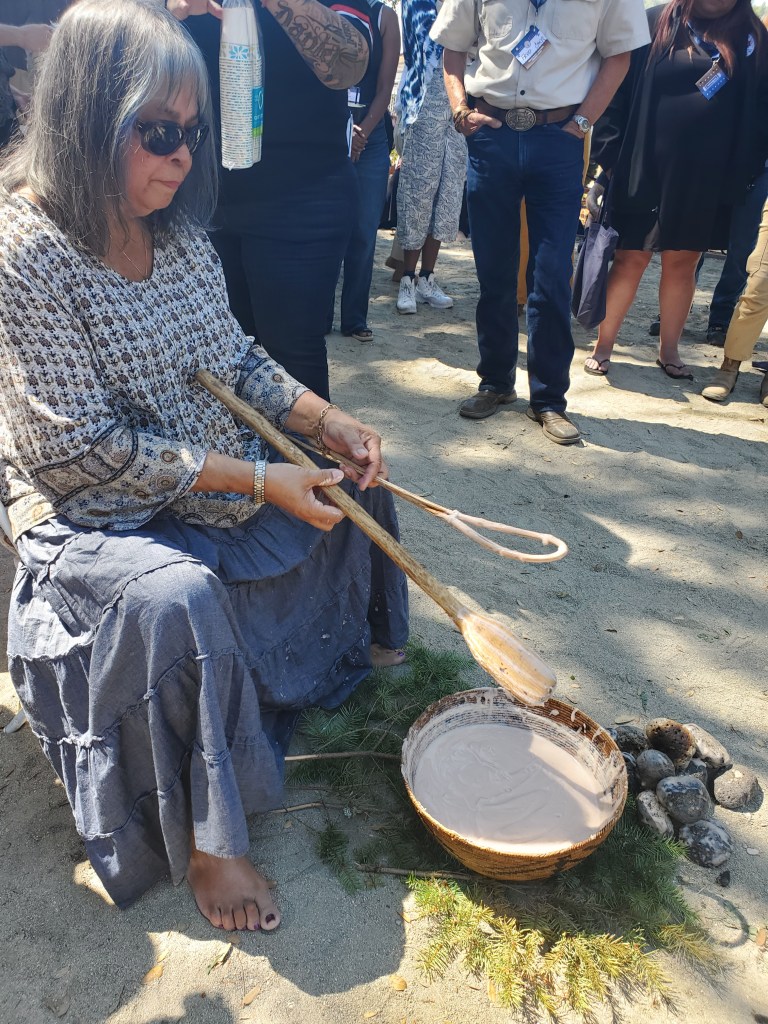
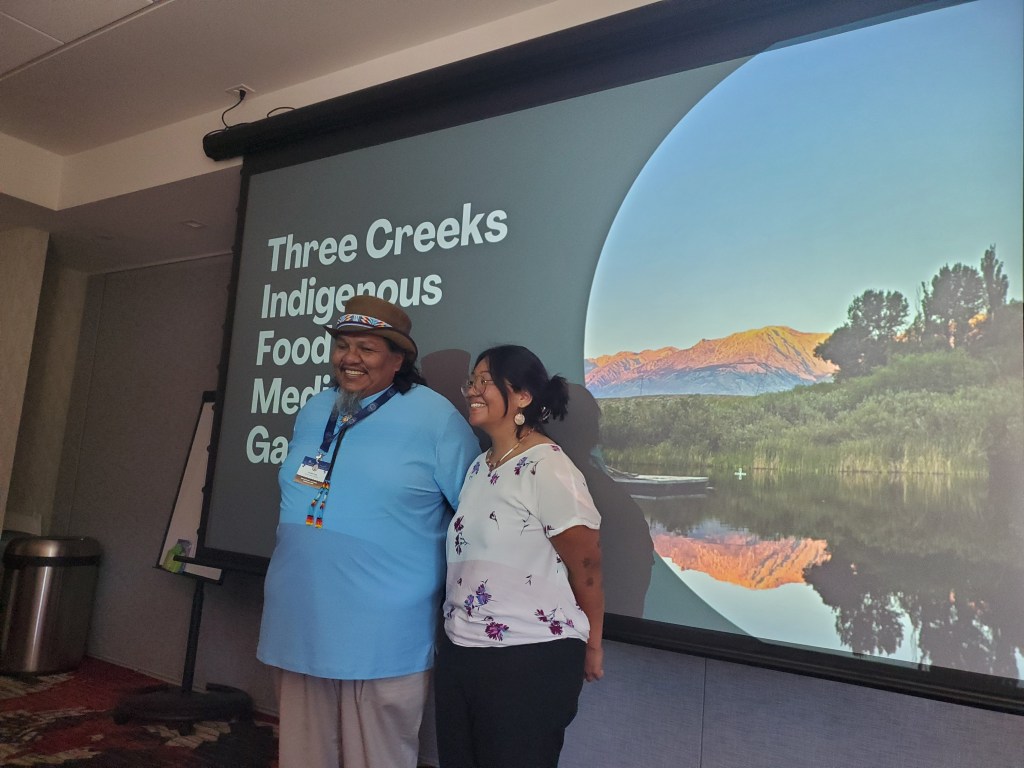
Last week, I had the absolute delight of attending the Intertribal Ag Council Pacific Region gathering over at Coyote Valley. It was an incredible two days of learning, seeing old friends and making new ones. There were some demonstrations of acorn mush making and choke cherry preservation in addition to learning about projects and programs from people all over the region. Jennifer Bates, the acorn mush demonstrator, was from the Calaveras/Tuolumne Miwuk people. She said that as long as the acorn is good, the people are good. They have survived on acorn for thousands of years, and won’t starve. This is exactly what I thought too, which is why the condition of the oak trees on the ranch is so concerning. Her acorn flour was from black oaks – super tasty. It was some of the best acorn mush I’ve had.

More Life Returns

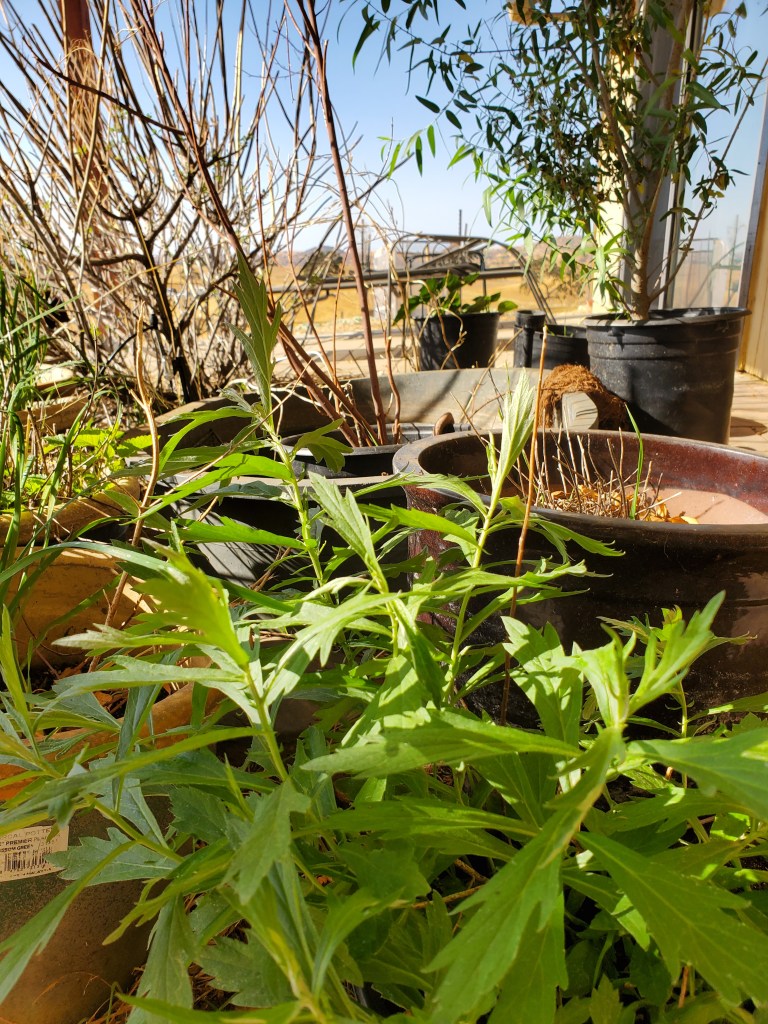
When I returned from my conference and seeing my family on the coast, I came home to even more returned plants. The white sage is resprouting leaves. There were more milkweeds popped up and bloomed. Onions and lemon balm have taken over the potted plants. Most surprising, the walnut tree resprouted leaves. I did not expect that. The wormwood returned and is thriving. Every morning, with the heat of the sun, between the wormwood and sage, it smells like being in ceremony. It elicits such good memories of being together with family and friends, connected to the earth and ancestors, taking time to be present in the moment of life and being grateful for everything.

Wanderings

Thinking of life and death, the cycles and blurred lines, has been top of mind. I’ve lost so many friends these past three years, helped others who were sick, and now my father is facing a difficult illness, of which we are still figuring out the details. While my education is helpful, it is the garden that has prepared me. I understand that life is about the seeds we plant – the confidence and joy we help others to see, the kindness we show, the service we provide, and yes, the milkweed that resprouts. What seeds has any of us planted? What goodness have we cultivated in the world? What kind of ancestor do you want to be – one that created, nurtured and cultivated to expand beauty and repair or one solely focused on the self and what can be gained? That question is what makes the difference in the blurred edges of existence. Like my garden, there is no end, just different versions of oneself – emerging, growing, blooming, seeding, serving, withering, nourishing in death, then reemerging again. Each stage is beautiful and requires energy – to take, to release…and to give.

Rain Comes – More Needed

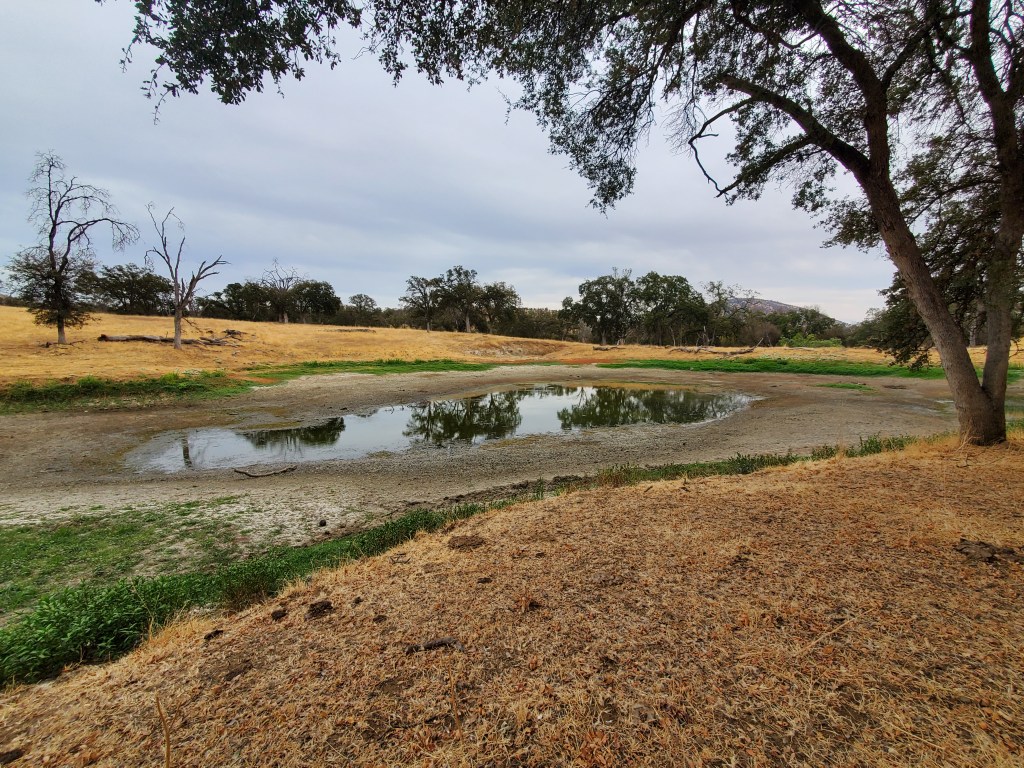
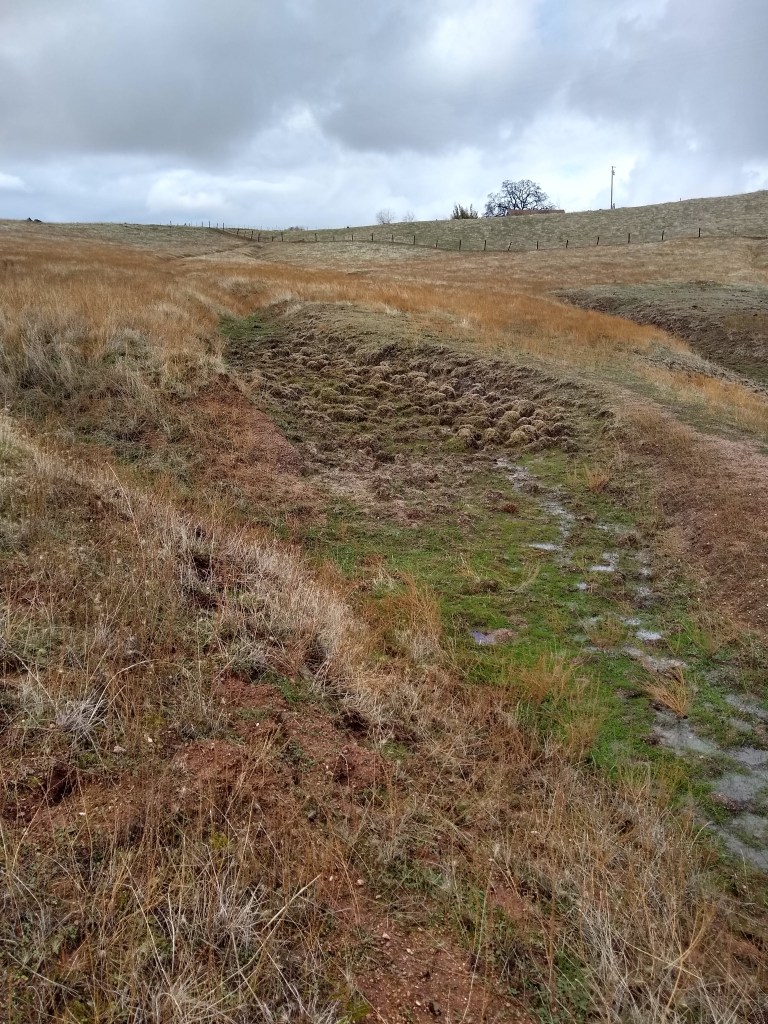
Swale Pond full at last

There were several days of rain over the last two weeks, with two continuous days of rain last week that were the real soakers. In those two days, we received 4.5 inches. It has been much needed. We are still in drought though, with a dry year predicted. Rain years are calculated beginning on October 1. So far, this rain year we have had 7.625 inches of rain. According to historic documentation, the average precipitation is 14 inches in Hornitos. We still have a way to go, and hopefully we go beyond that. The worse year of the five year drought this past decade was 9 inches. I don’t want to see that again. It was horribly dry, and that was the year the large spring on the mid section of the ranch finally dried up. I never thought I would see that. Our cattleman even had to haul in water.

Heather reconnects pipe that had become disconnected

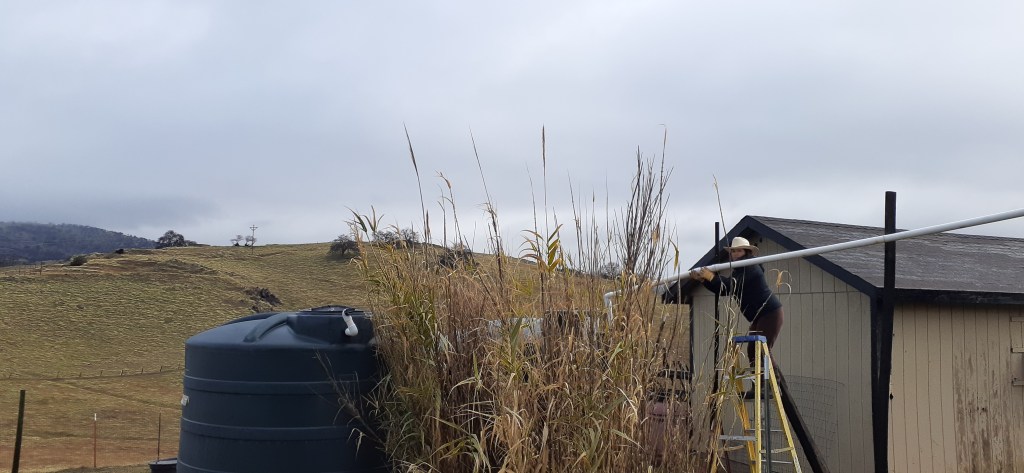
The winds were so terrible that my rain water catchment system failed. My husband and I went out three times to fix it. In a storm where the tank should have been full, it is only at half its capacity. So disappointing! The first occasion, the pipe had split in its mid section. The second occasion, the pipe had blown away from the downspout in one place and had disconnected in the mid section again. The third time, I found that the tank exit pipe had somehow gotten unglued and had been leaking the entire time. When I banged on it, it came completely off and the precious water collected began gushing out. I re-nested the pipe back over the other with all my strength. I got soaked in the process. Fortunately, my husband was out there with me that time, and ran to get the wet glue, which can still stick pipe together even when wet. He ultimately fixed it. The ground was soggy, and it was difficult to balance the ladder on the decline, especially in the wind. I almost fell off one time. I was able to keep the ladder upright as I followed the inertia and “walked” it down hill to a solid place before getting off. I got soaked on that one too. All I can do is hope that we get more rain without ferocious winds to fill the tank. I will need this water to keep the plants alive through the long, dry time.

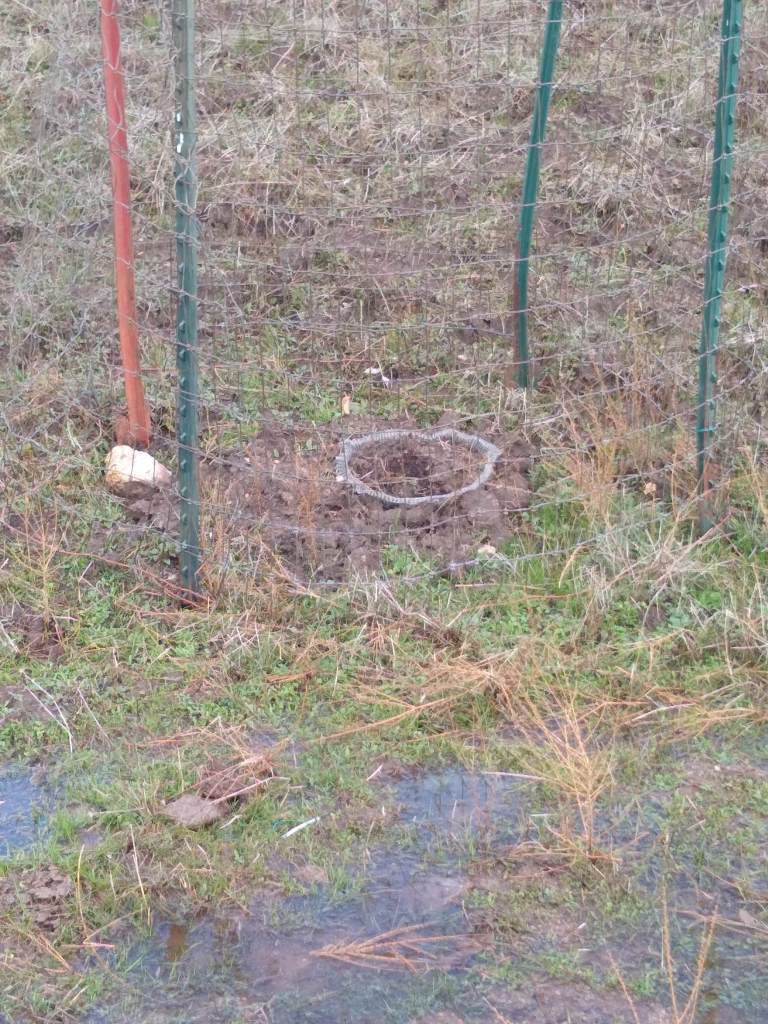
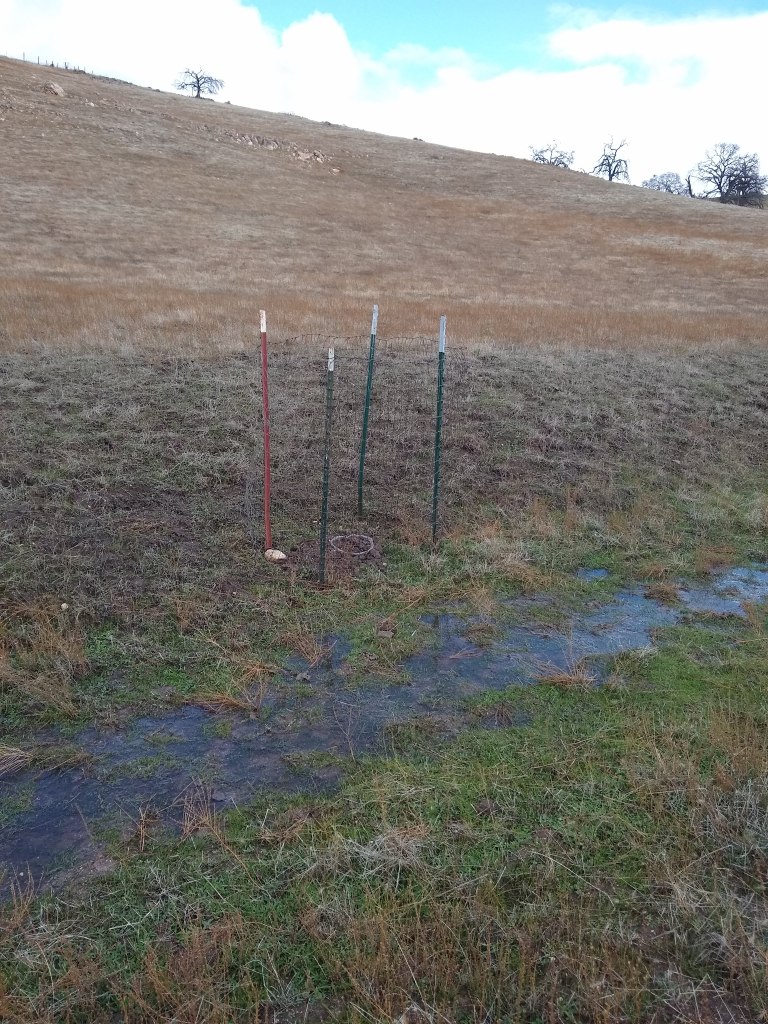
Cottonwood and cage still there

After the storm, I hiked around the property to check on the plantings. With the two straight days of rain and wind, I wanted to be sure the cottonwood and cage were alright as well as the plantings and branch fence and Odom Creek plantings with brush pile protections. I planted most of the plants close enough to the creek bed to get a soaking during high water, but not so close that the roots were in water all the time in the winter. I looked at the neighbor’s cottonwoods and my own buckeyes to see where they were successful in relation to the creek bed and followed that example.

Fortunately, the two days of rain did not flood the spring creek and take the branch fence with it. There were a couple filler branches that moved downstream with the flow. I ended up replacing only three branches to fill a couple bare spots in the fence. Overall, I was really happy with the outcome. There are a few bulls on the ranch now along with the cows (It is that time of year for love.), and I have some concerns that the bulls will just push through it to get to the long blades of grass on the other side. I will keep watching.

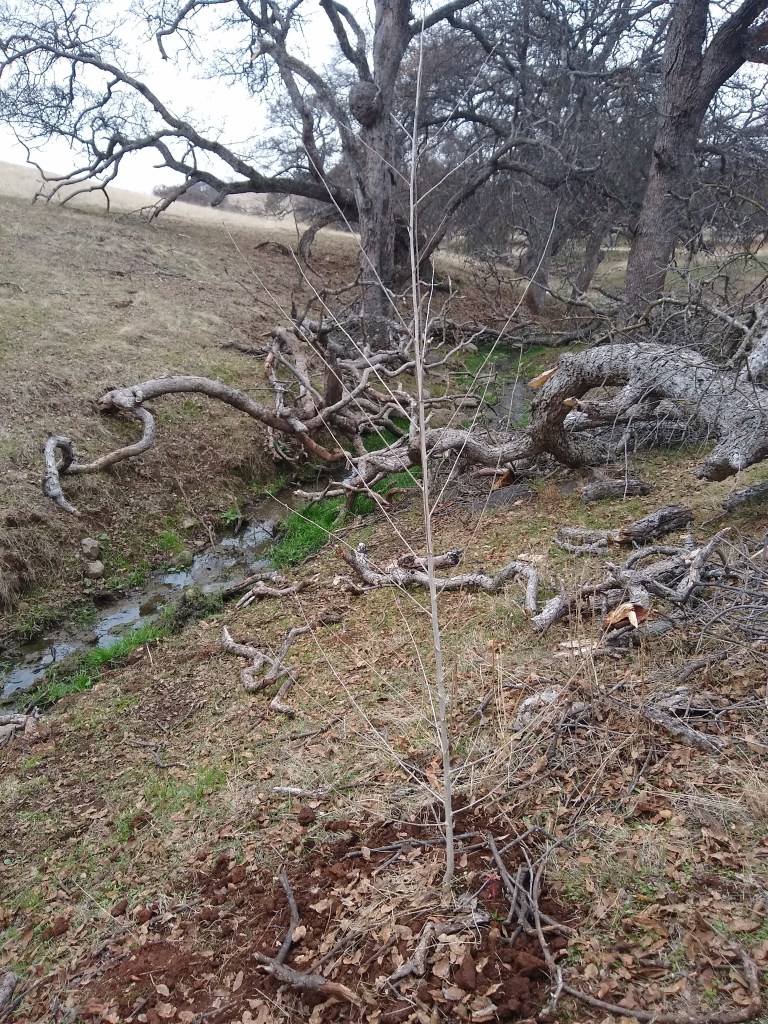
I also checked Odom Creek. There, I thought the flow would be greater with more of a chance that the brush piles over the willows would be washed away. To my surprise, it did not look as though the water reached the plants on the east side. Although the ground was wet, the dirt did not look dark as if the water line reached them. The water clearly soaked the willow on the west side. Each brush pile was intact. All plants were present and accounted for – four willows and one mule fat.

Other Monitoring

Looking for a. California sprouts with Andy and Bibi

I have also been checking the a. Californica site closest to the house for sprouts. Last year, there was no rain in February, which I am thinking stunted grass grown allowing the a. California milkweed to get a head start on growing. This year, with rains in February, I am concerned that the grass may grow faster than the milkweed. I want to watch for its remarkable leaves and trim the grass in that area to give it a chance. That early milkweed will be important for the monarchs.

Planning for Spring Planting

Ron Allen, UC Master Gardener and Co-Owner of Mariposa Native Plants

Ron came over to discuss the next plant order. I asked for his guidance on my plan and showed him the areas where I was thinking of focusing this Spring. He also got a chance to see what was doing well, and what didn’t make it. Overall, things looked good. I placed an order for 89 plants. We are continuing to go big for the monarchs.

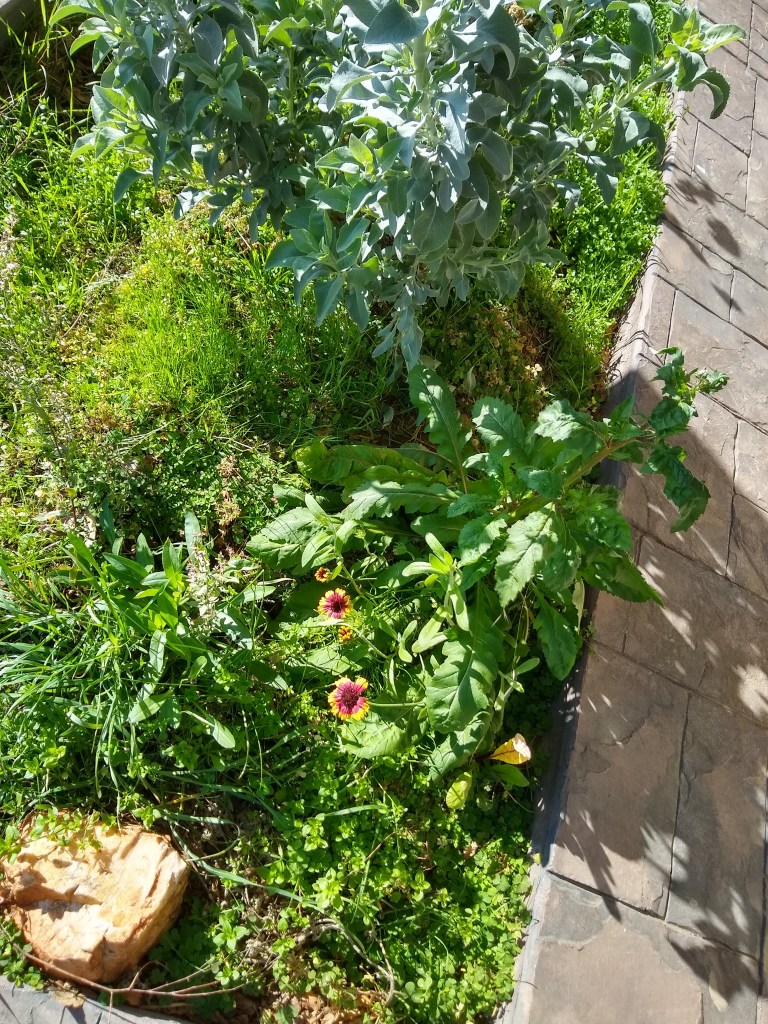
Already wildflowers have bloomed. I see blue dick stems and poppy leaves sprouted. The primrose never stopped blooming. Spring is around the corner. I am going to plant anything I can for February. The milkweeds won’t be ready, but there should be some nectar plants available then.

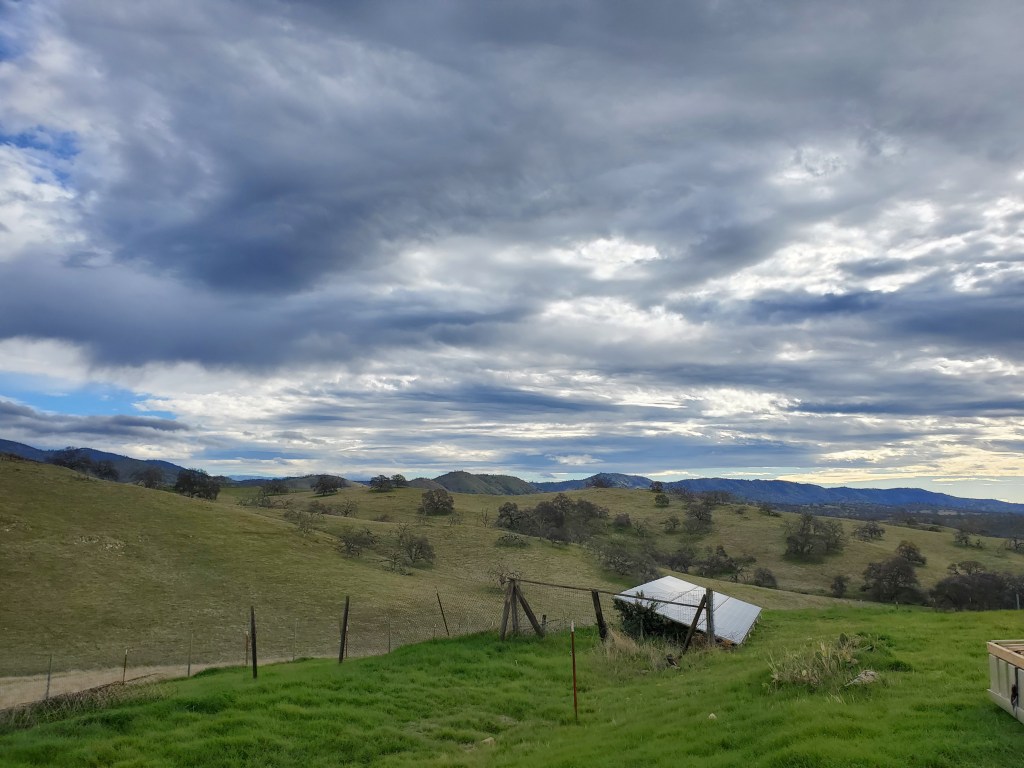
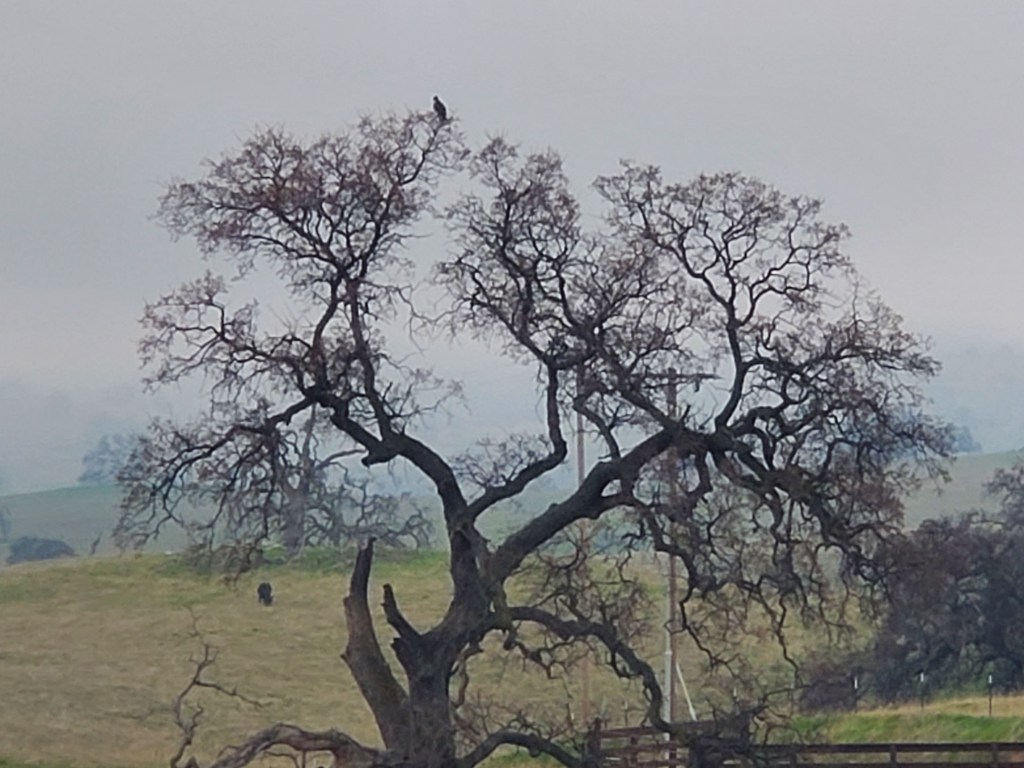
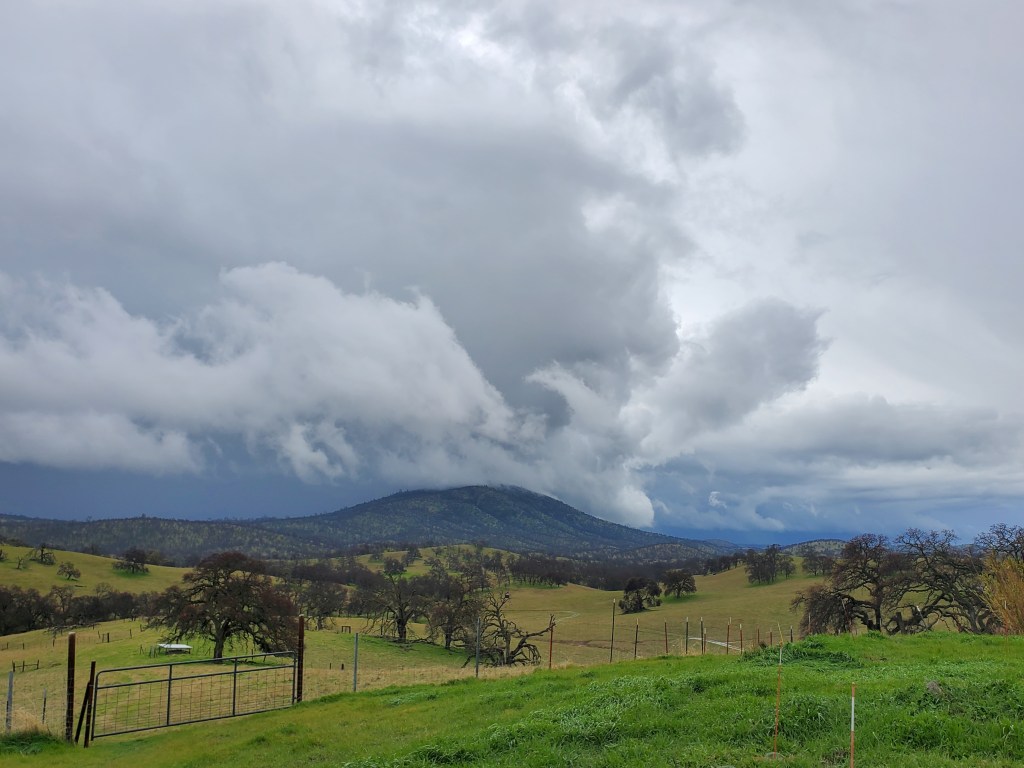
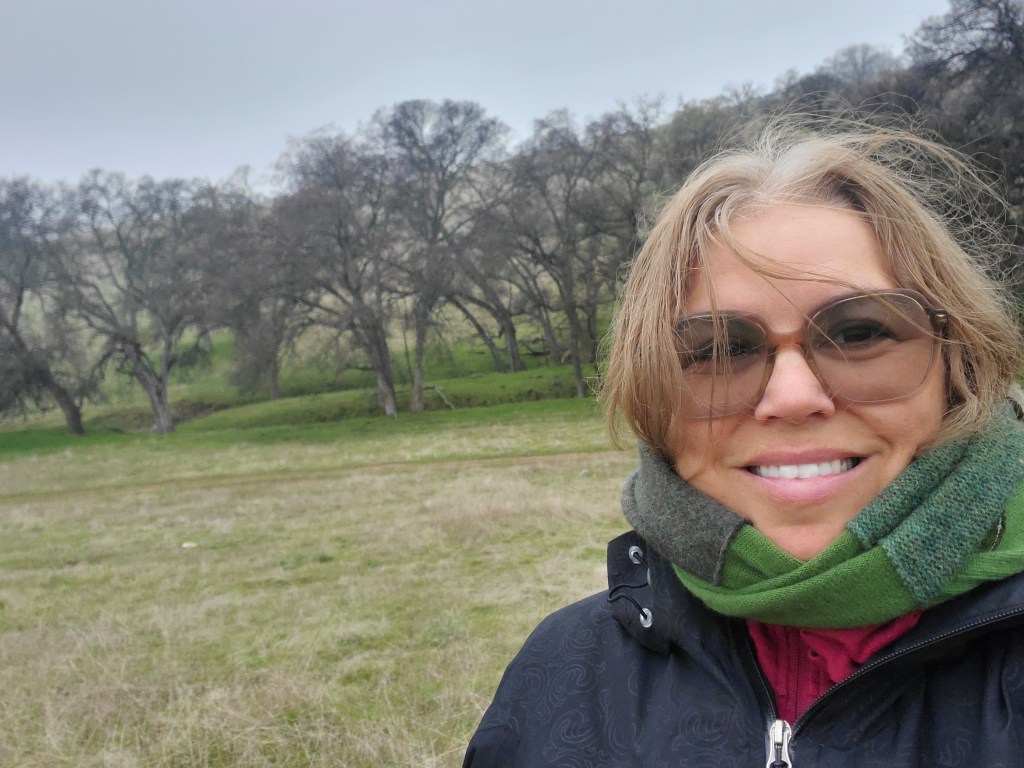
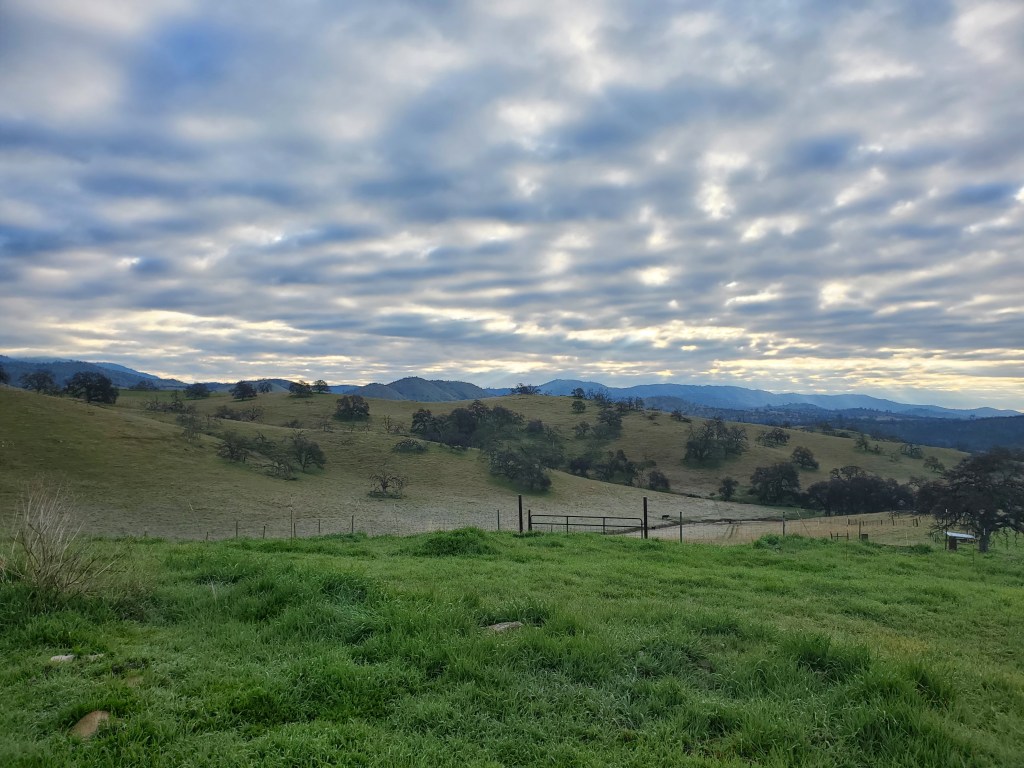
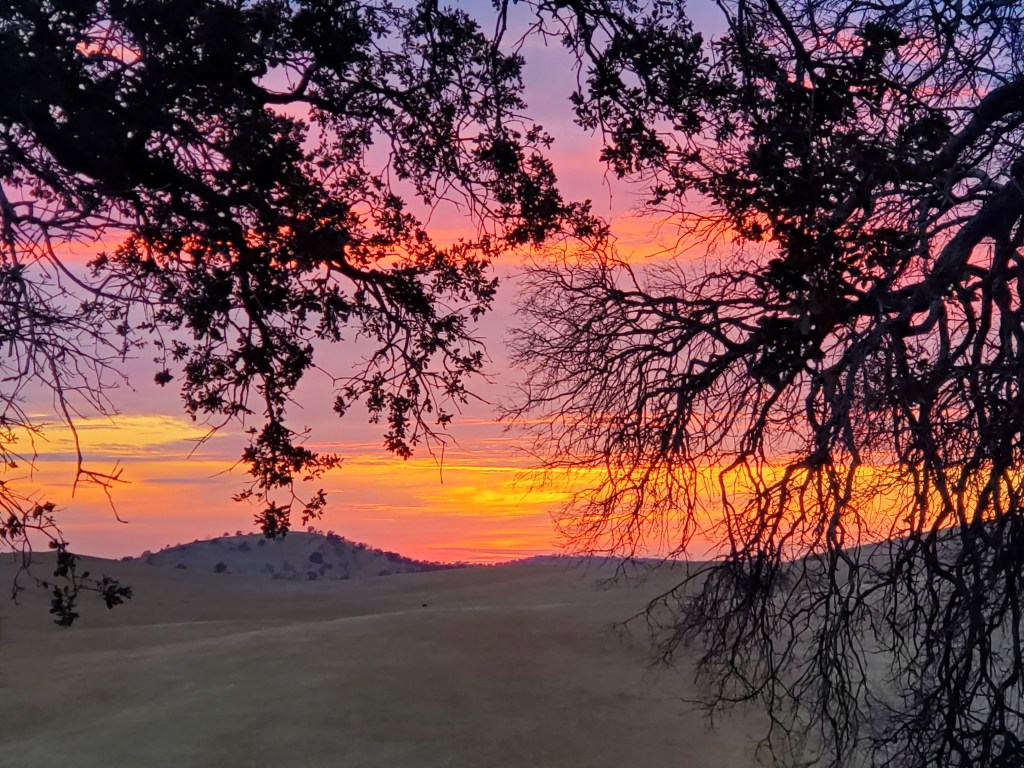
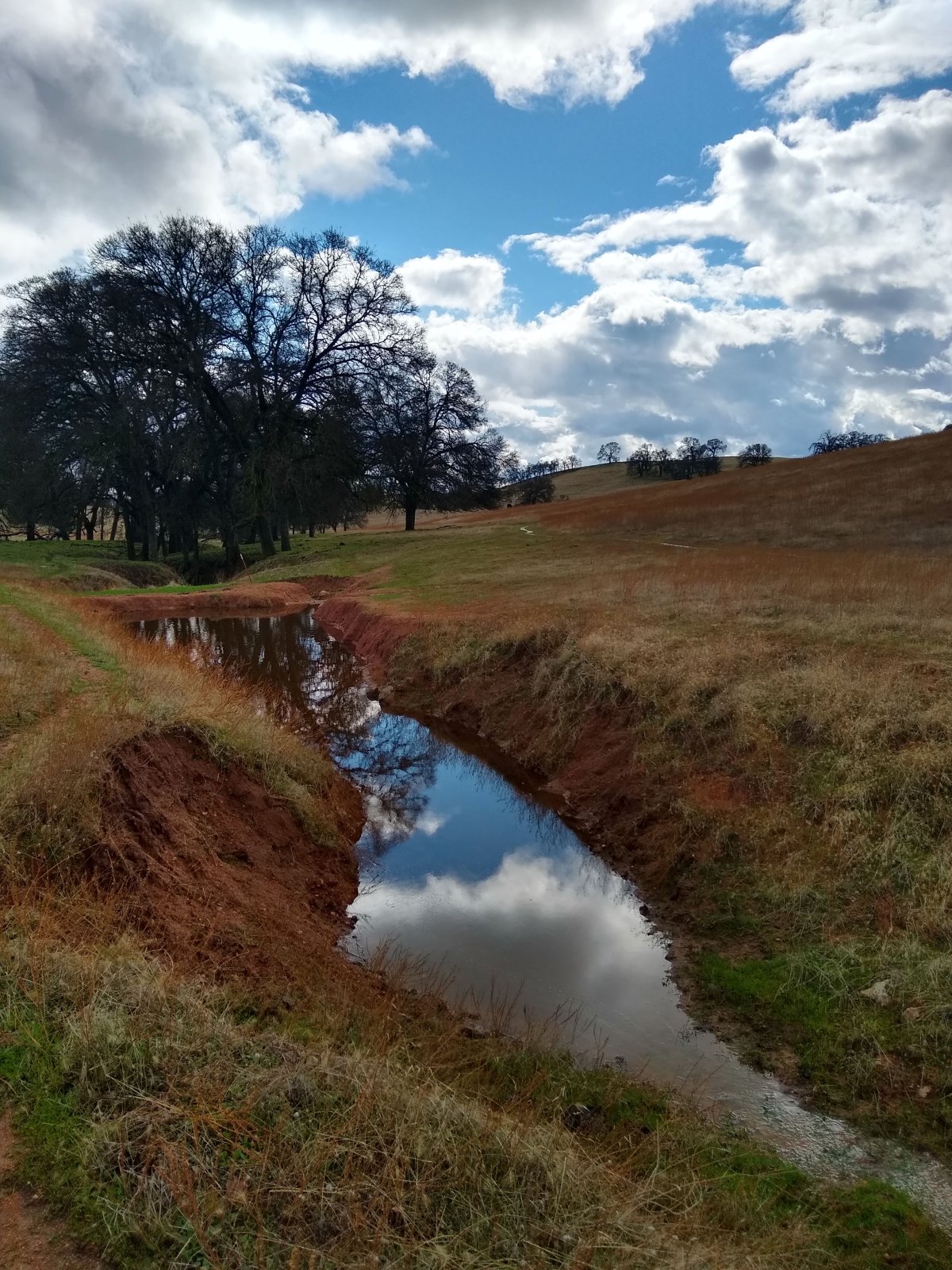
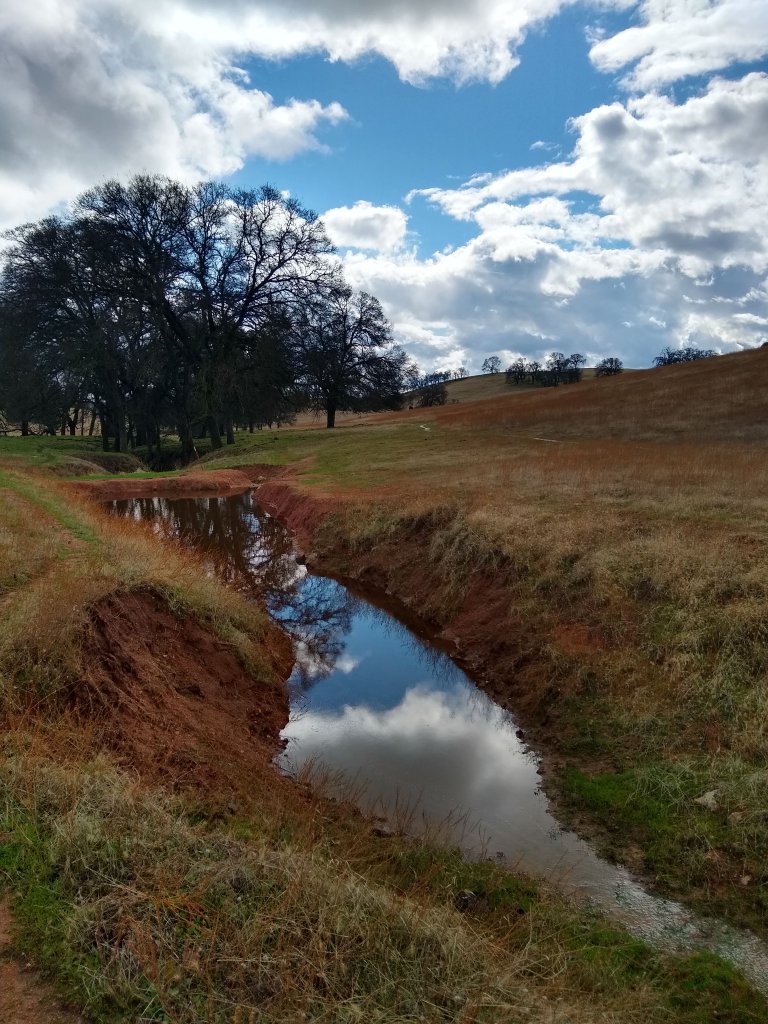
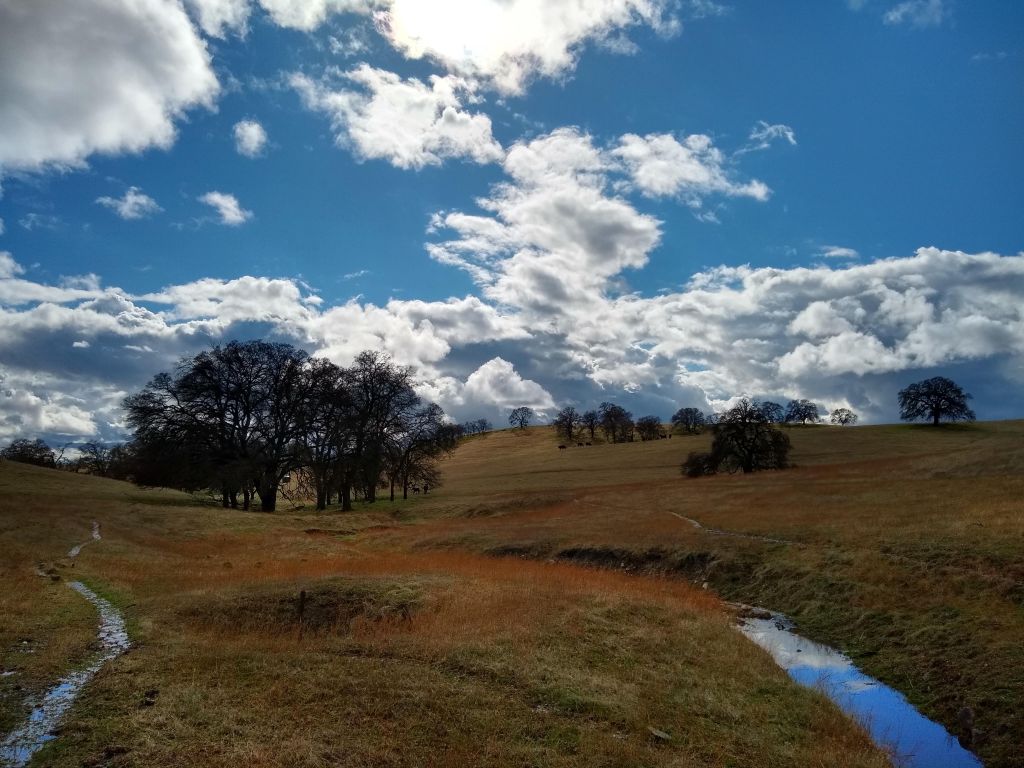
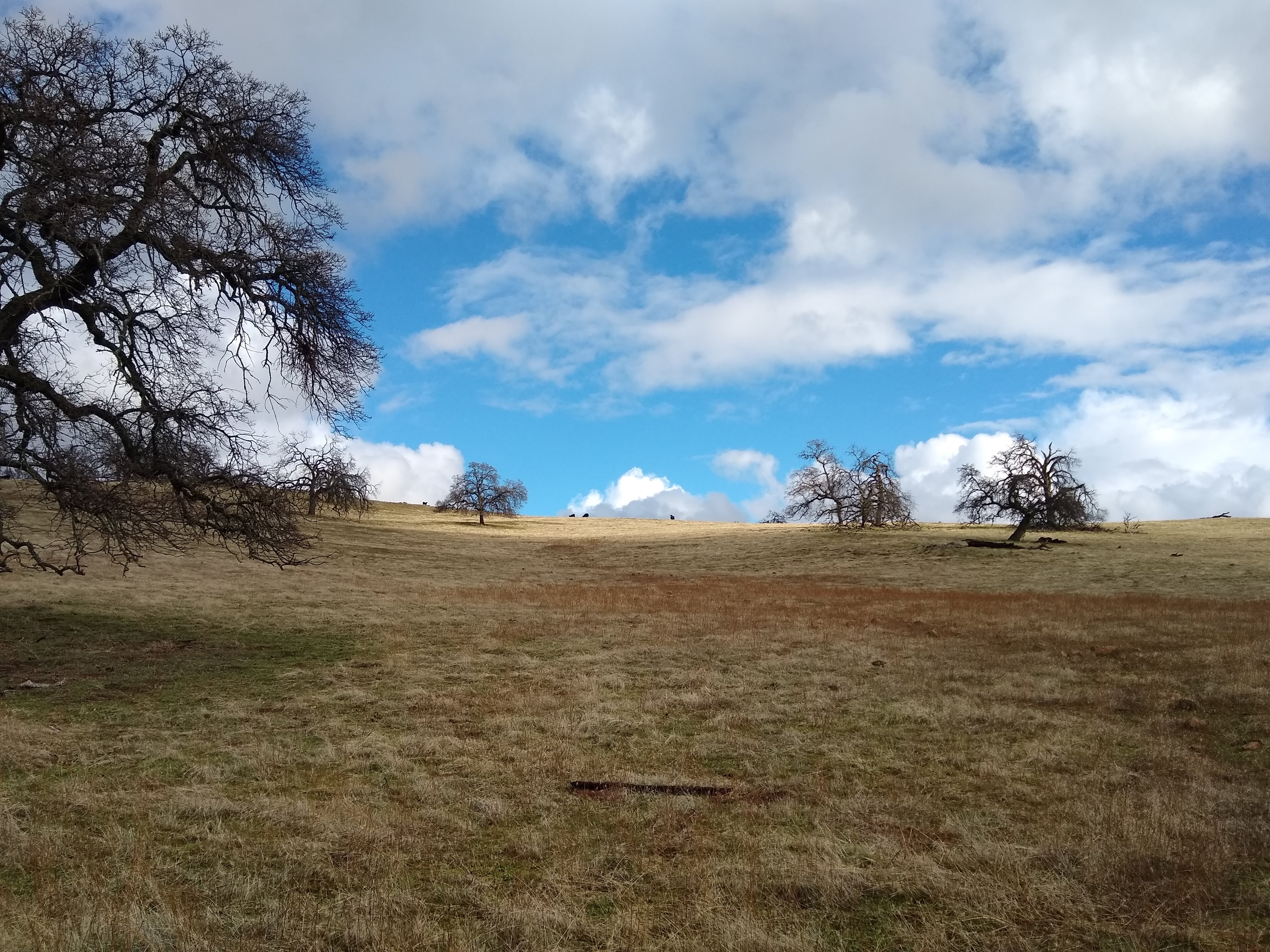
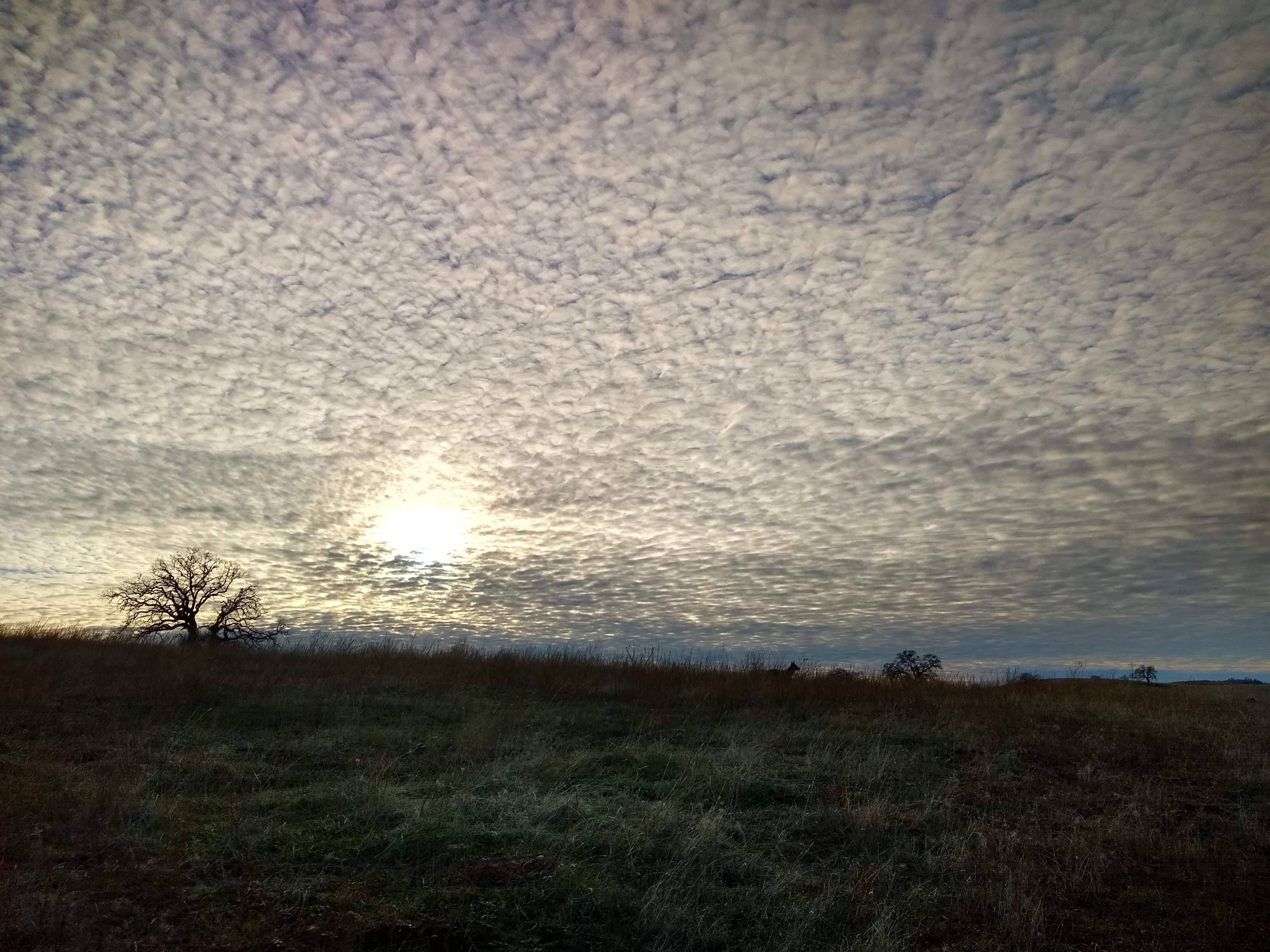
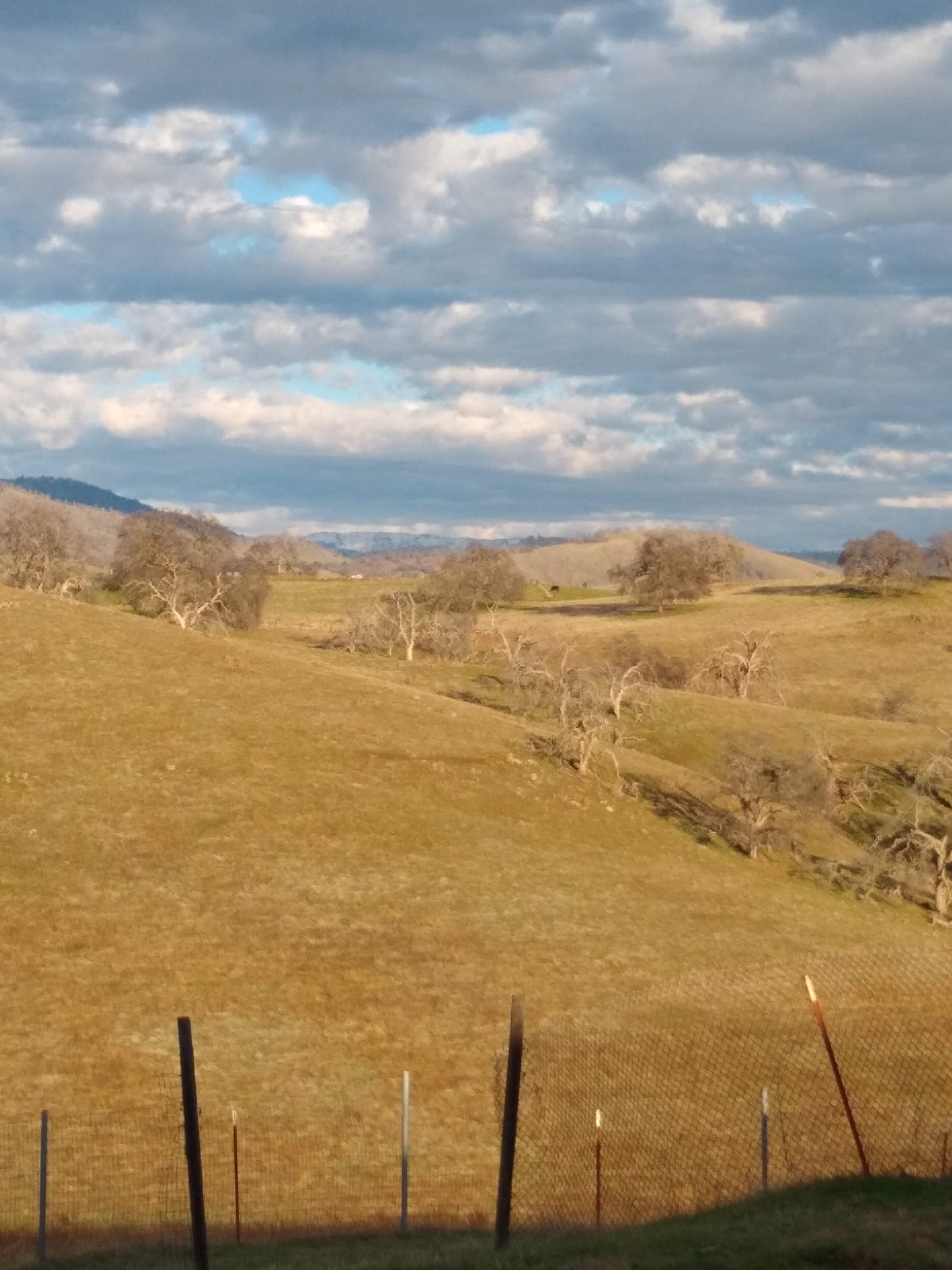
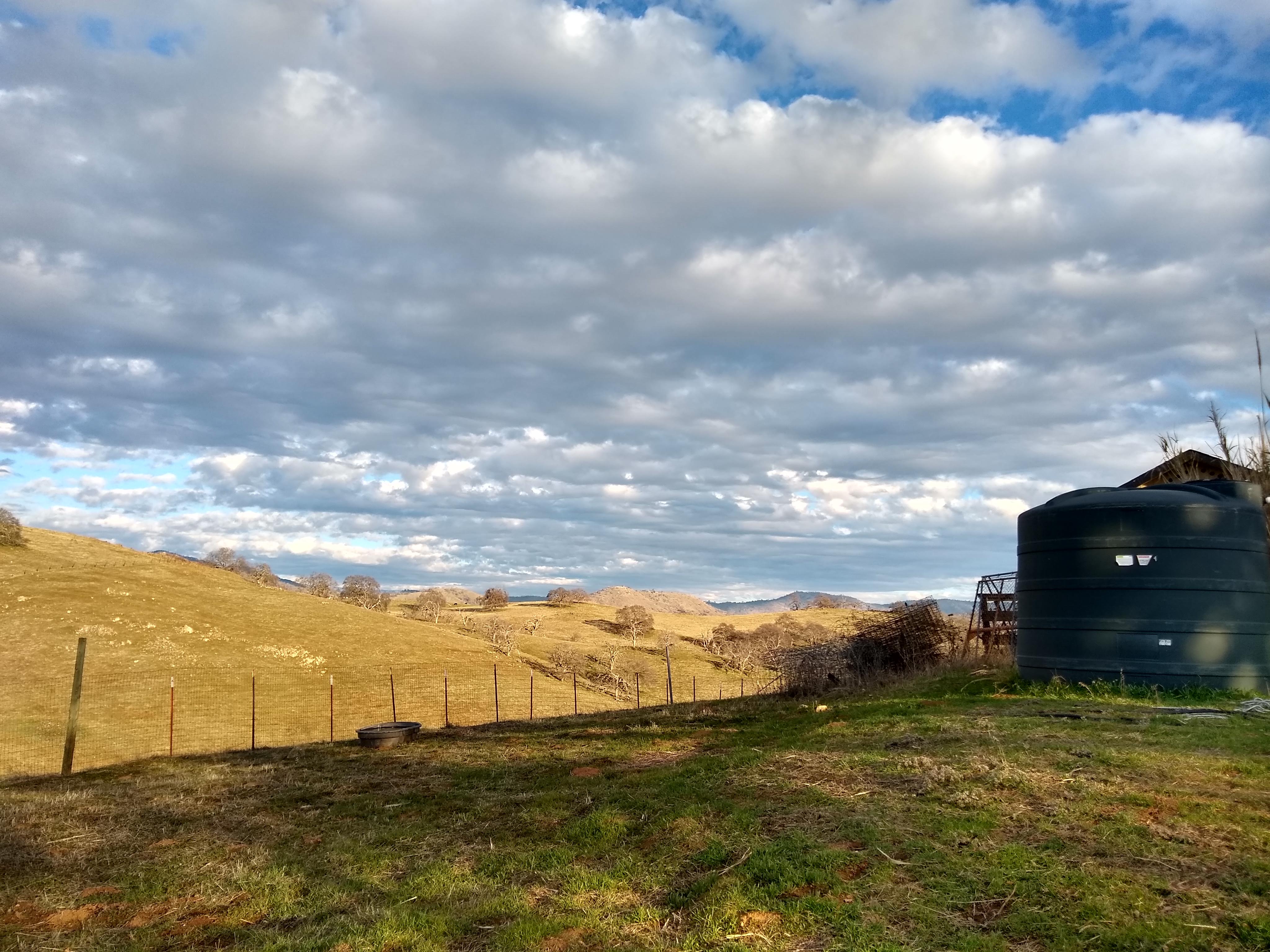
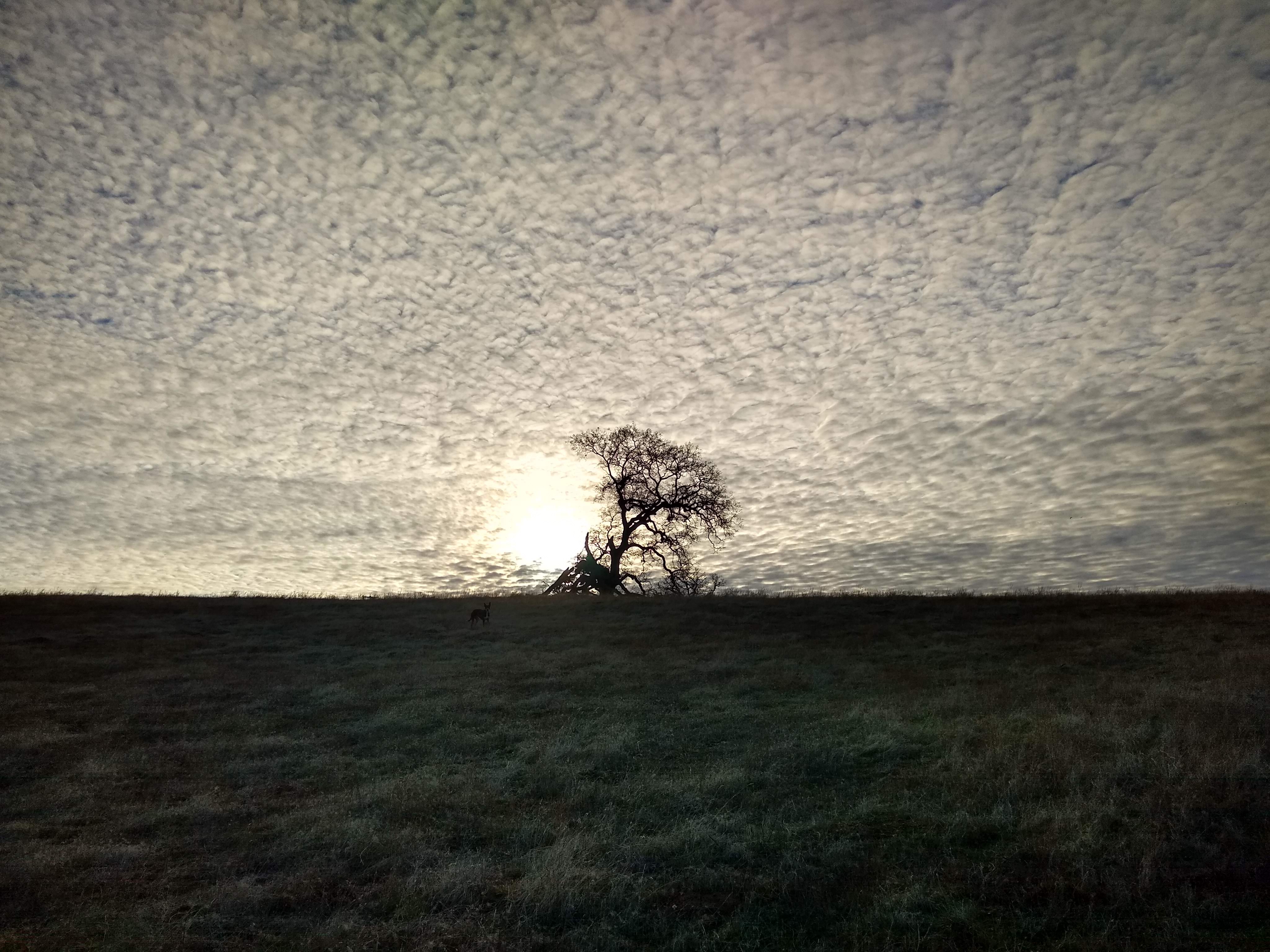
The storm made for some dramatic photos and clouds. I end my blog with some select shots that I hope you enjoy.