
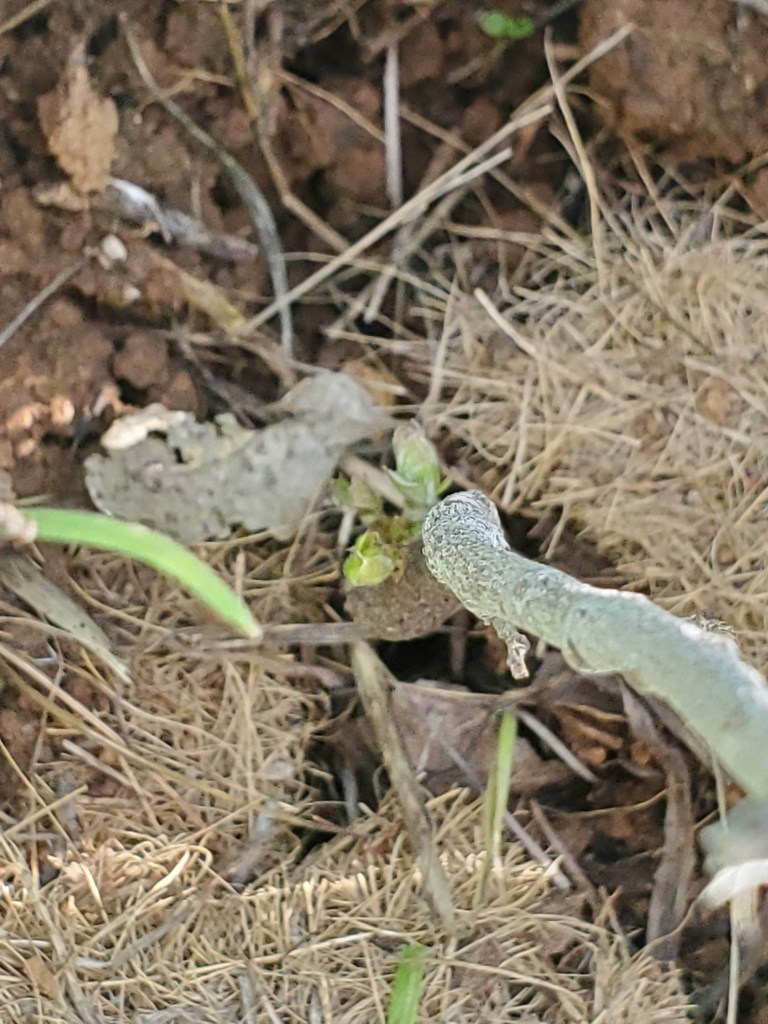
It is probably overstated about “miracles happening every day” – a bird making a nest, the bloom of a flower, someone loving you unconditionally, bridges holding millions of tons and planes staying in the air – all seem like miracles. Something I’ve not seen is an oak seedling come back from the devastation of plague level grasshoppers stripping everything, even the bark, from the plant… but now I have. The very first oak seedling I planted last year, shockingly, has re-sprouted leaves.
When I went around to reuse the baskets I had painstakingly planted in winter 2023-24, I carefully examined each little seedling hoping against the odds that there were survivors. They never got to grow much. Their inner layers had been exposed, stripped bare of anything that looked like a plant. In addition, the summer was long and with brutal heat.
Like a careful pediatrician, I would gently bend their tiny branches to see if there was any moisture and life remaining. All of their little limbs broke off. I would gently tug their trunk to see if there was any give. Sadly, most of them pulled right out of the ground, gone from the strain. There were a few that refused to give, and I left them there. This year, in those baskets, instead of placing a new seedling, I lightly covered an acorn. I thought, maybe they needed a friend to share the energy for one life. When I got to the seedling I planted at the base of my beloved now dead oak, I saw what looked like a couple green and red buds on the trunk. I took my glasses off and wiped them thinking maybe I had some gunk on them. I put them back on, looked closer, almost putting my face up against the basket. Oh my goodness, YES!! Resiliency!! She was alive and producing some leaves. A miracle for sure!
I have also been monitoring the other oaks closely. So far, they all appear to be doing well. They all have leaves. The baskets where I only placed acorn have not sprouted anything. One site, it was clear that the acorn was taken. I replaced that one acorn with two, and will hope one of them makes it to germination.
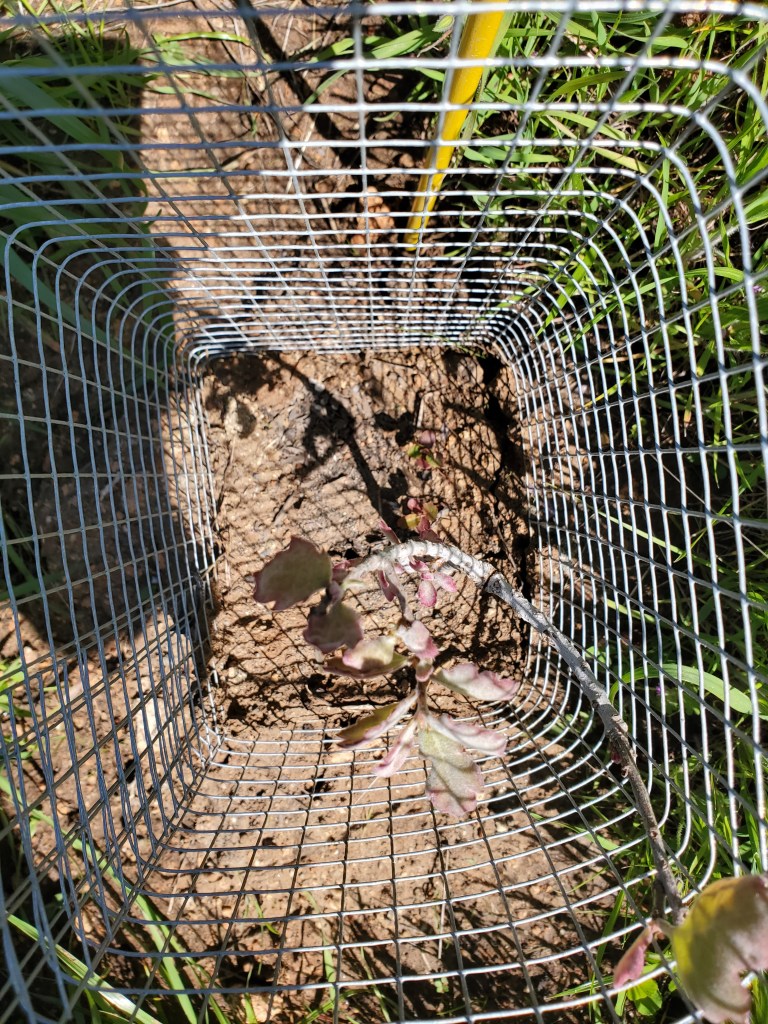
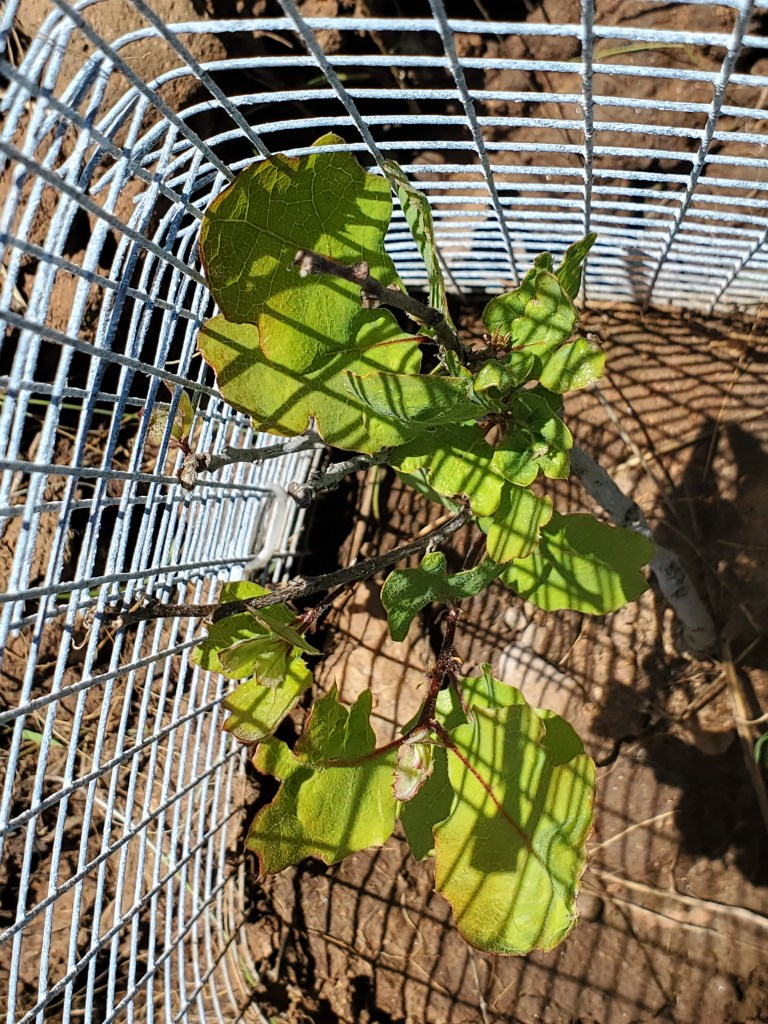
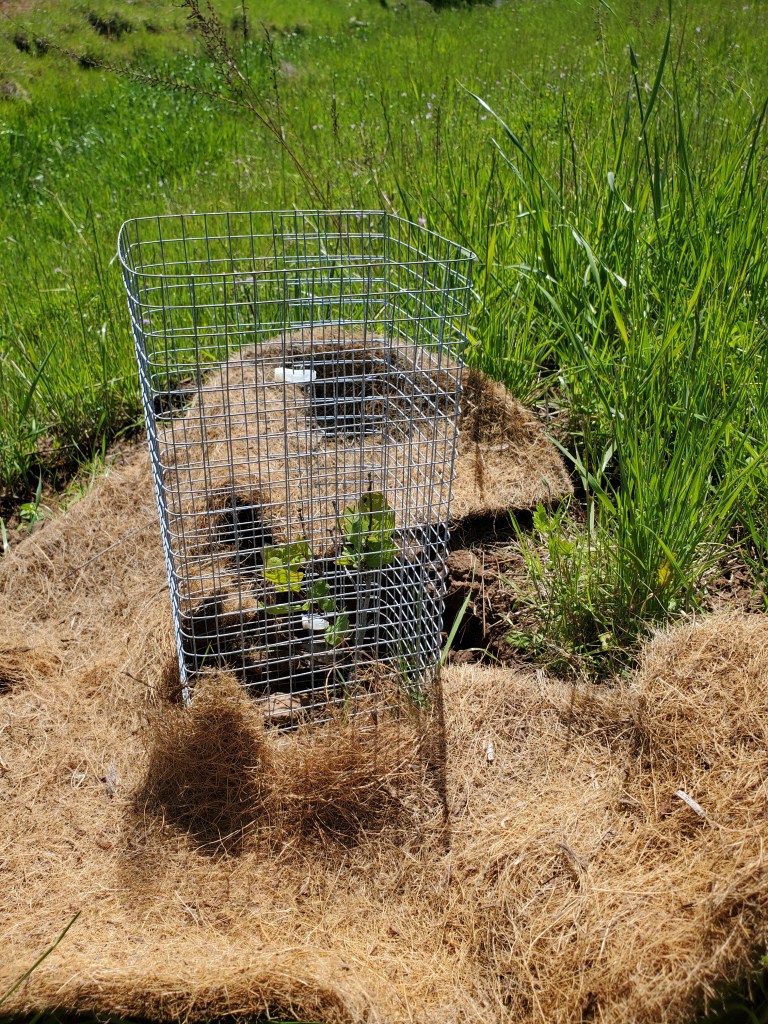
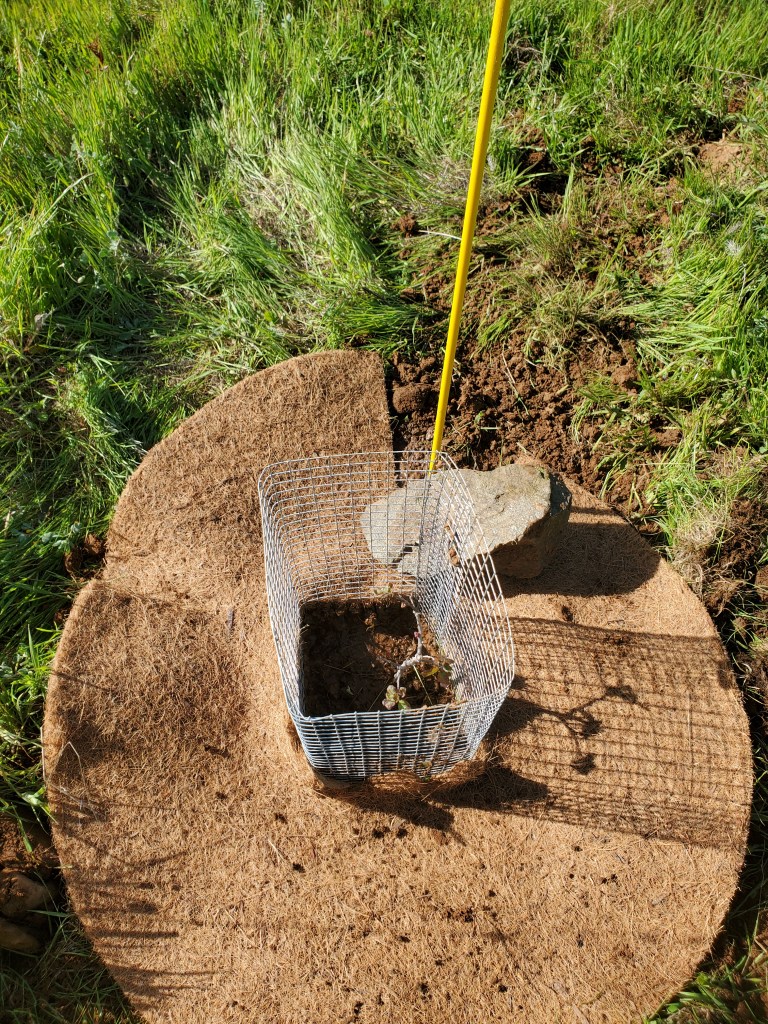
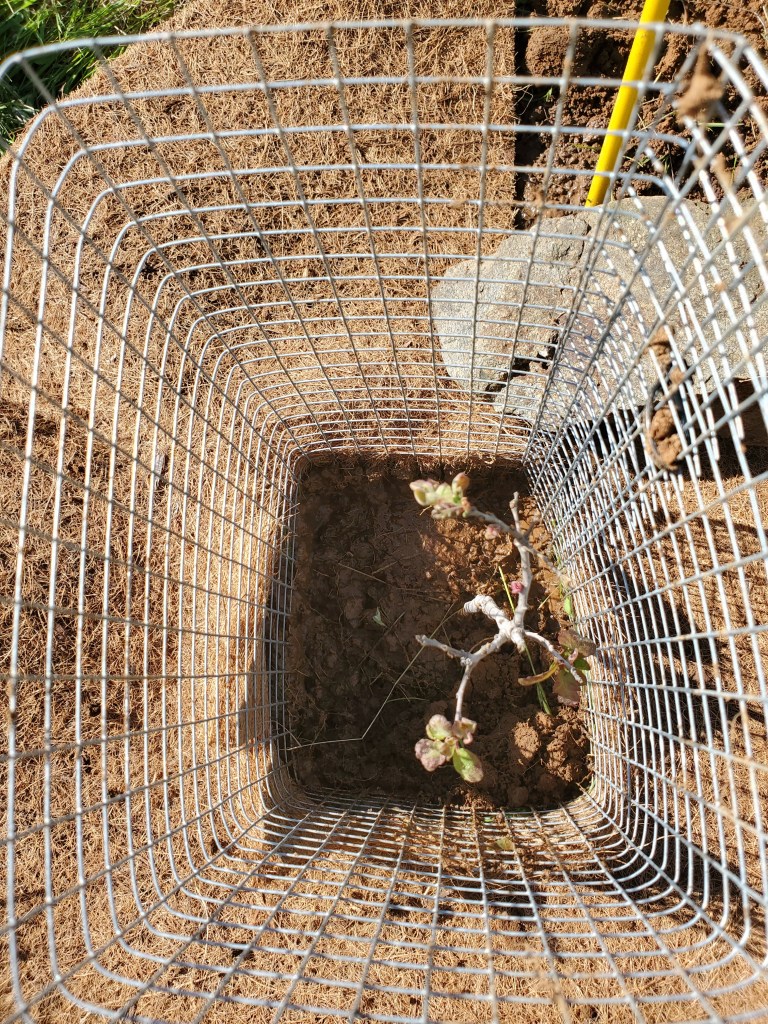
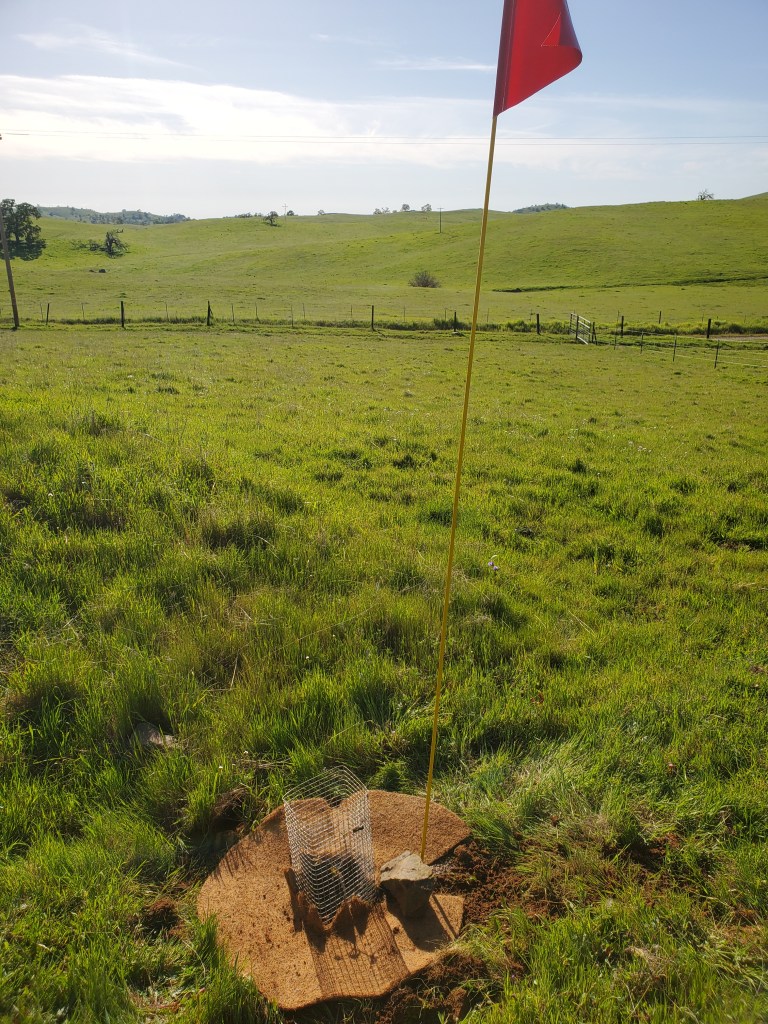
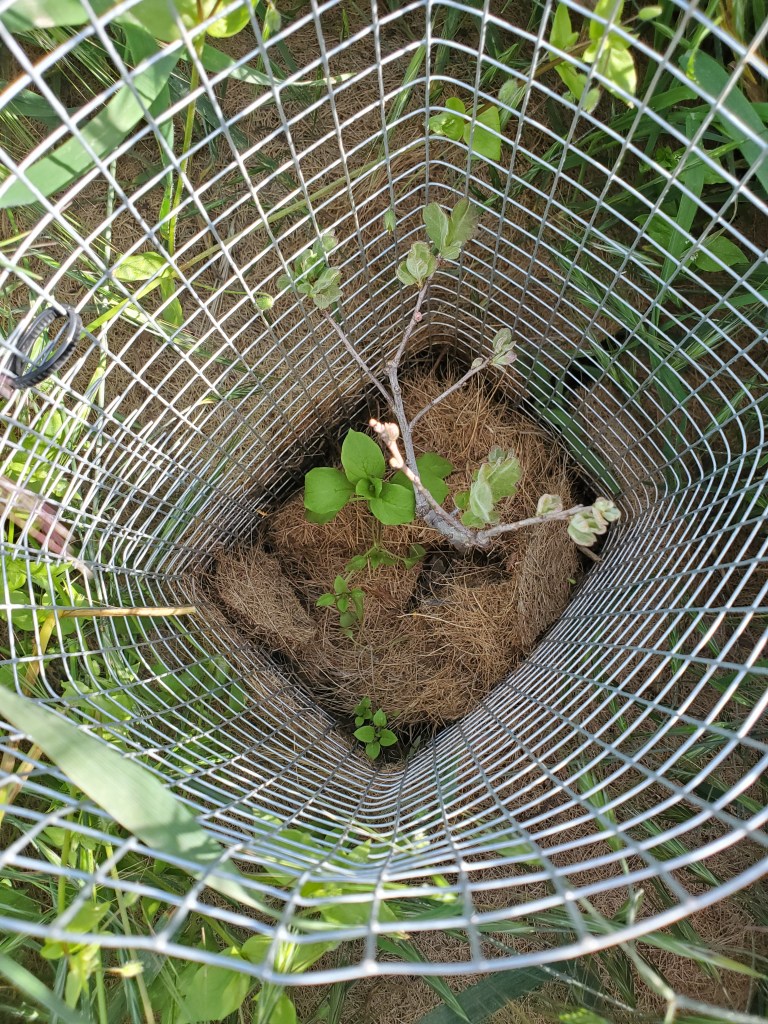

David and I have finally got all of the oaks caged. When the cows return from the south end of the ranch, the oaks are now protected. I had planted them well before the caging was done, and some of them had been stepped on or bent from hungry cow heads exploring their ability to access the tasty acorn and tree. The trees are small enough that the tallness of the basket protected them. That said, I needed to do a bit of reshaping before caging the area around the plant. We followed a new protocol for caging that Alex Palmerlee, an oak expert in Butte County follows. We used much stiffer cow panel fencing at at length of 8′ and a height of 50″ secured to two t-posts. Previously, we used no-climb fencing at a thinner gauge with a much larger diameter. The thinness required three t-posts to secure. I think this new method will require less resources and be more resistant to pushing in from the cows, thus OK to have a shorter diameter. Thank you to my long-suffering husband for doing the major share of the caging work. After I maintained the oak planting site by weeding, re-situating coir pads and “fluffing” the baskets back to their original shape, David would follow with the caging. I had already set out the t-posts for him, and he brought the panels. We make a pretty good team.
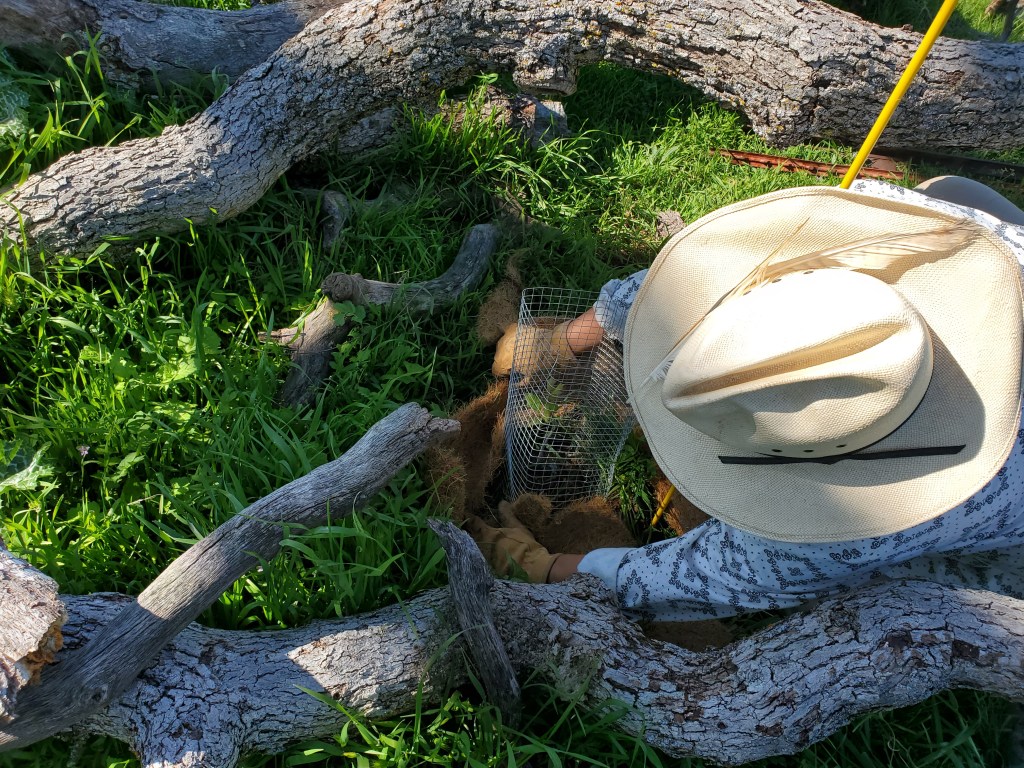

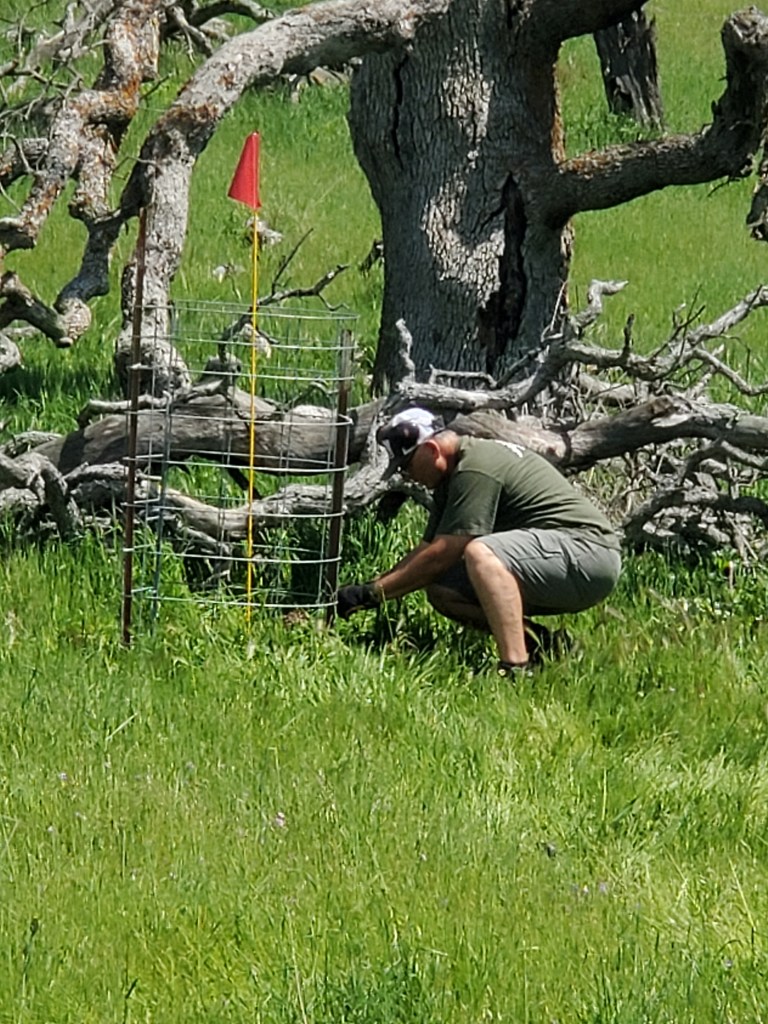
The weather is beginning to warm. There is still water running in all the creeks and drainage’s. The soil is still moist. However, soon I will need to follow a watering regime to ensure oak the survival of these babies. Fortunately, I have not see any grasshopper nymphs like last year. Crossing my fingers that hoppers will not be a problem and that these trees will have time to become established.
CA Milkweed Shockers
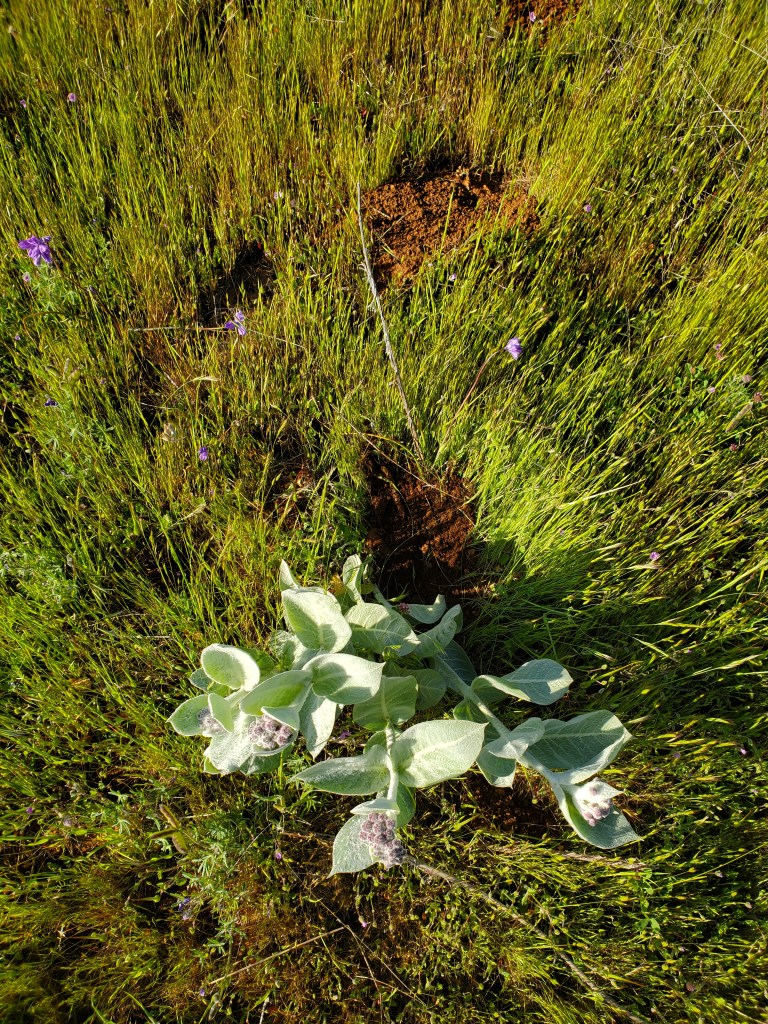
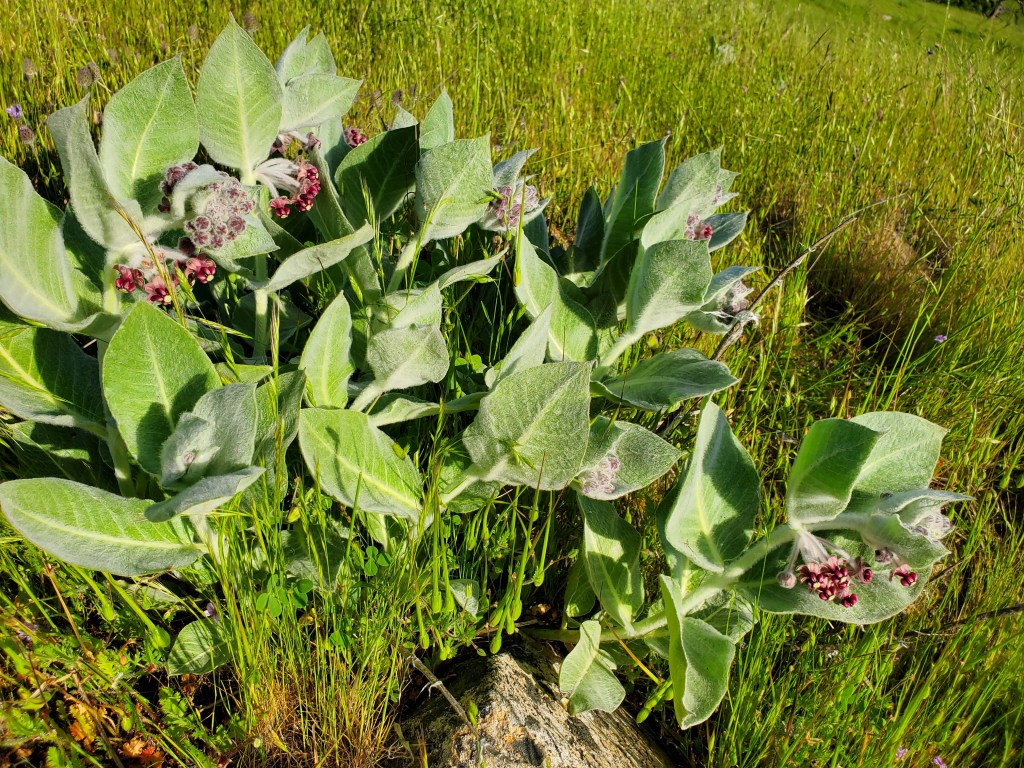
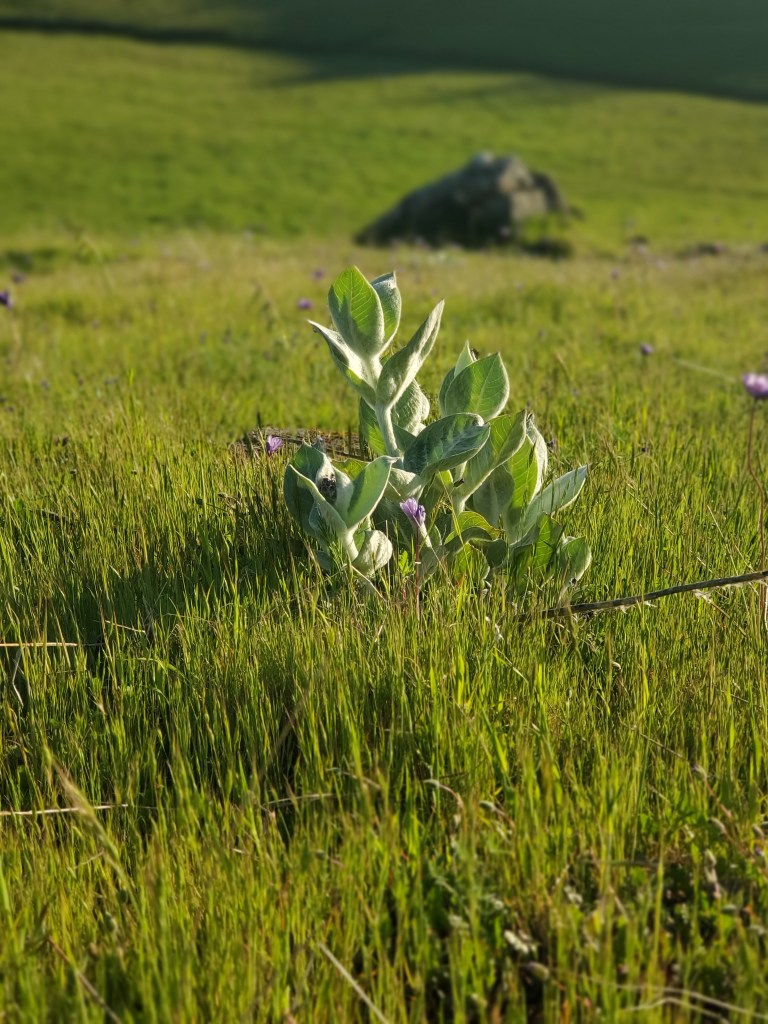
Monitoring the Ca Milkweed patches is a good workout. Walking up the super steep grade ensures my legs and heart are getting the blood and movement they need. So, I was not sure if it was the workout or that when I got near the top of the hill a milkweed was missing, that was the cause of my heart was racing over 100 beats per minute. I was panicked. After seeing the pile of loose dirt mounded up where my gorgeous mature milkweed always is, I began looking for all the other ones. Visions of gopher mounds clouded my mind as I frantically ran from one location to the next. Most of the others were intact. Another small one was missing, but another one popped up on the other side of the patch. For the mature, large milkweed, I think the gophers had been gnawing on it for a while. That is probably why it was so small this year. Then poof — gone.
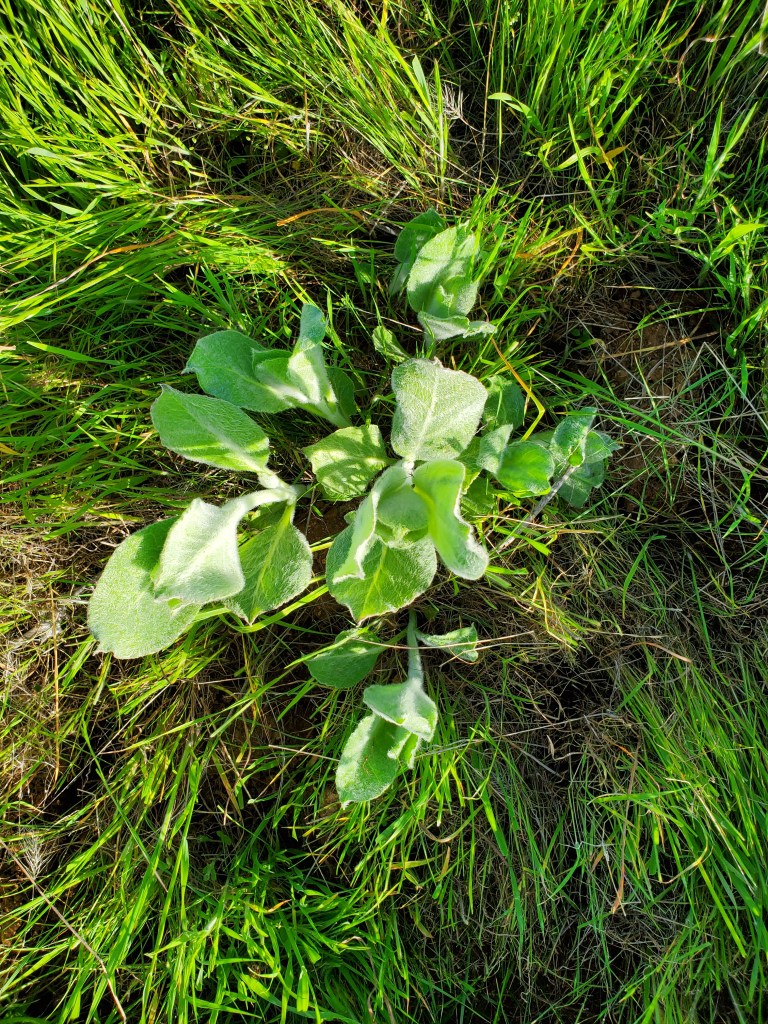
Something else remarkable has happened this year. The CA Milkweed on the north facing slope has emerged only 10 days after the south facing slope. For the past several years, there has been between 3 weeks to 1.5 months between emergence’s. I counted five on the north facing slope and only seven on the south facing slope. As I look for them, I weed around them. The grass is a lot of rye this year, and it is really tight against the milkweed. Hopefully, giving them some space will help and enable to monarchs to feel their eggs will be more protected. Perhaps it will not be a big year for milkweed, and we will need both sides available for the monarchs.
I installed a game camera up on the south facing slope looking at (now) one milkweed. I am hopeful to catch a monarch landing on the milkweed. I installed it over the last weekend, and went up the next day to check the card to make sure it was capturing images and pointed in the right direction. It somehow got shifted and was only catching a piece of the milkweed on the very left side of the frame. I fixed that. Hope it stays.
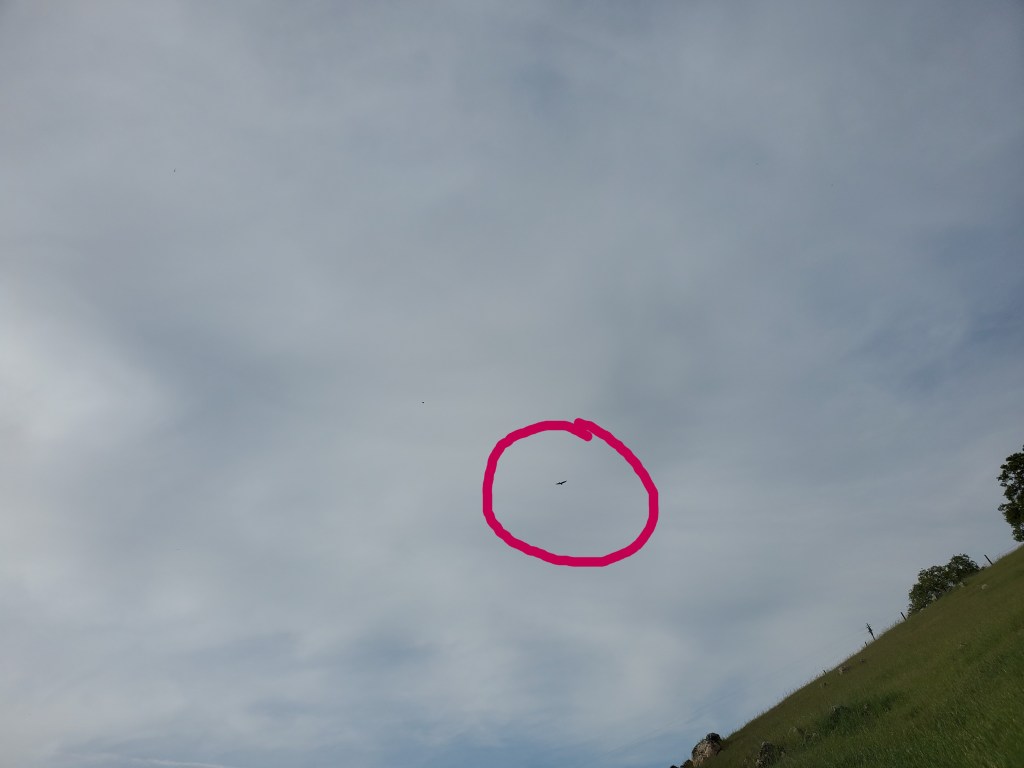
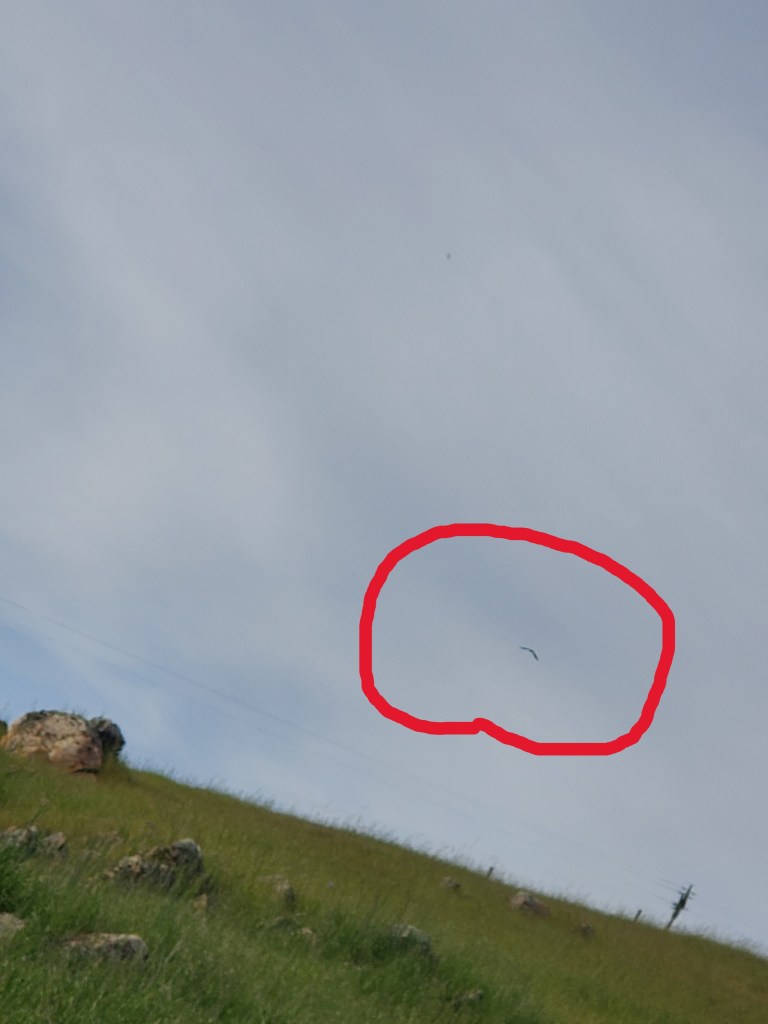
While up there on Sunday 4/6, I was treated to some amazing things. First, the scent of the cow clover and all the vetch. Second, two or three large crotch bumble bees buzzed me and then went about their business nectaring. They let me know who is in charge. Finally, a gorgeous, large harrier was floating across the surface of the ranch looking for dinner. Just incredible. Currently, only a few of the Calif Milkweed blooms have emerged from they duff protection. As more get released, they will add to the extraordinary perfume, a siren song, to all pollinators.


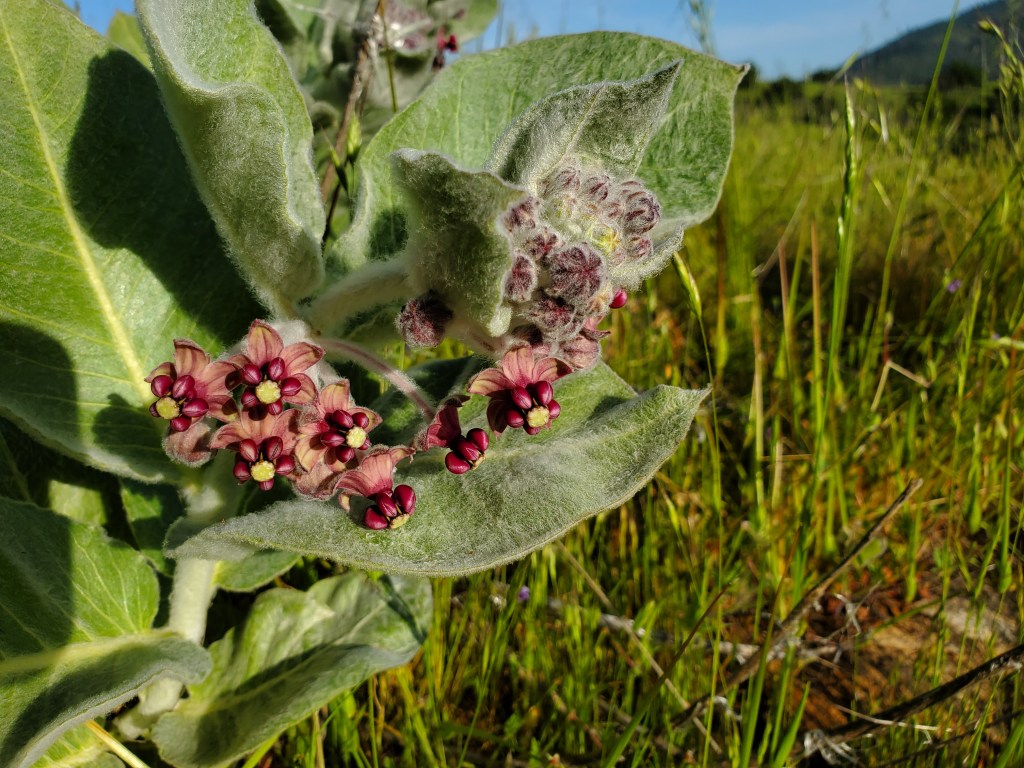
Wildflowers at Massive Scale
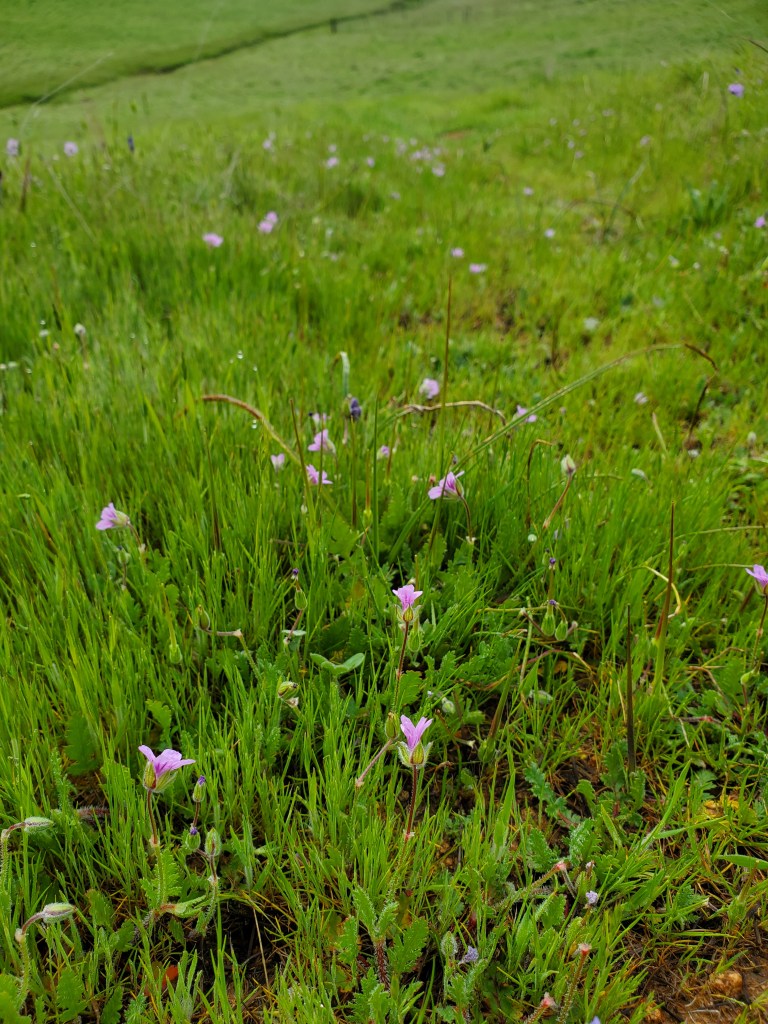
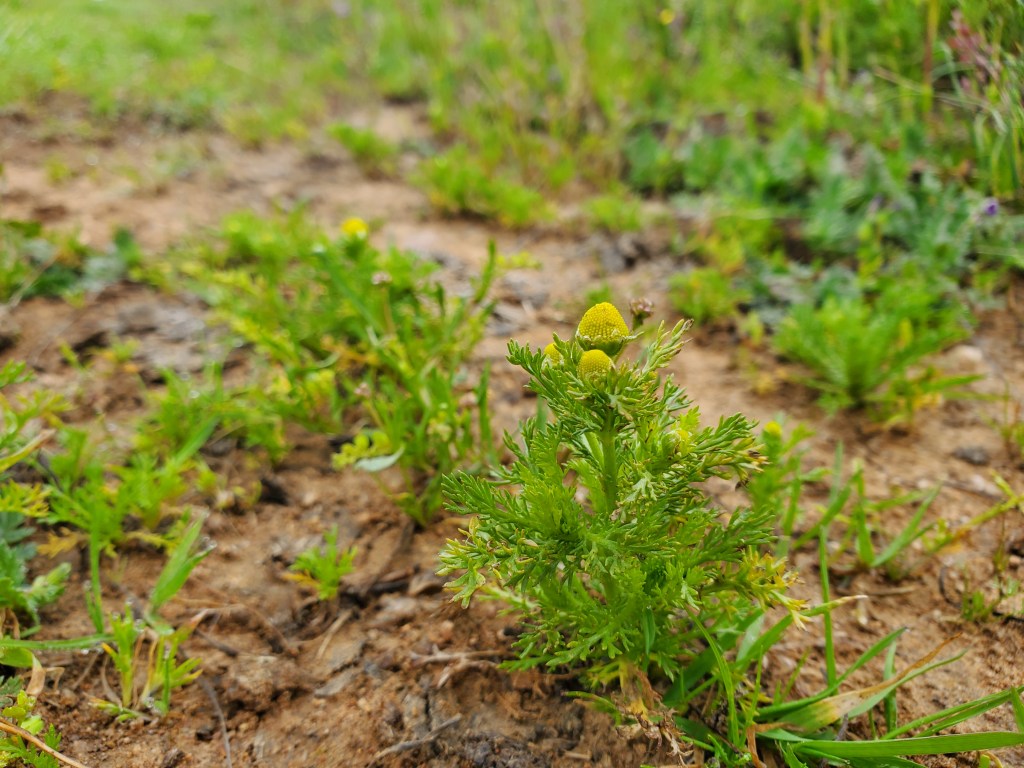
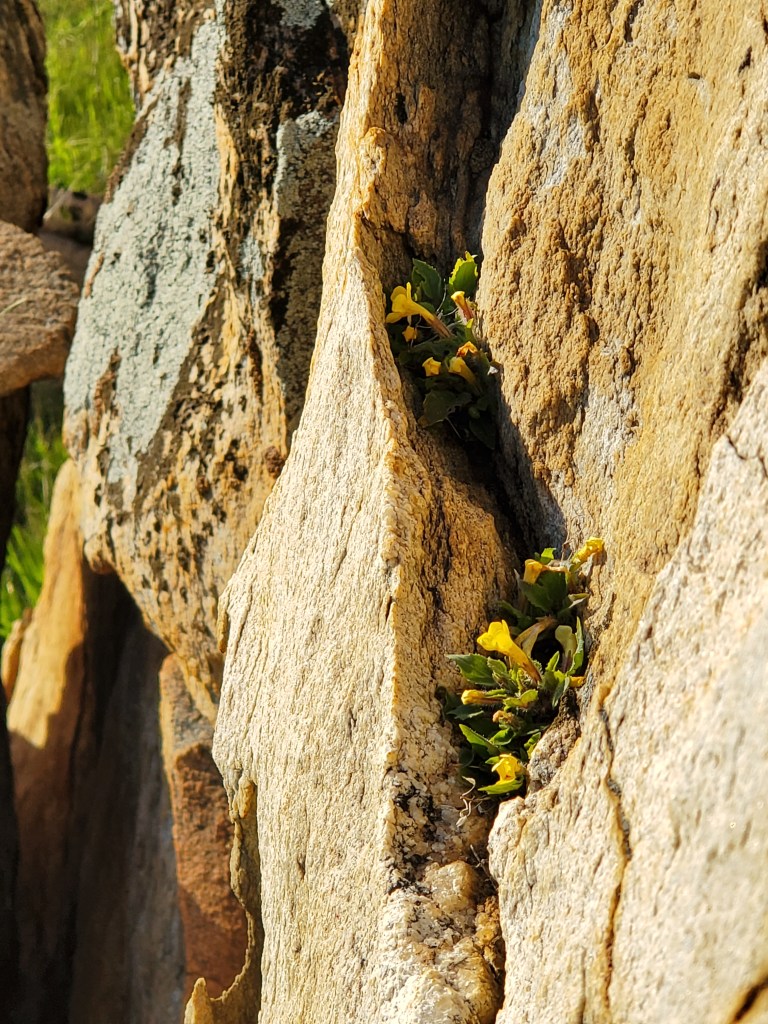
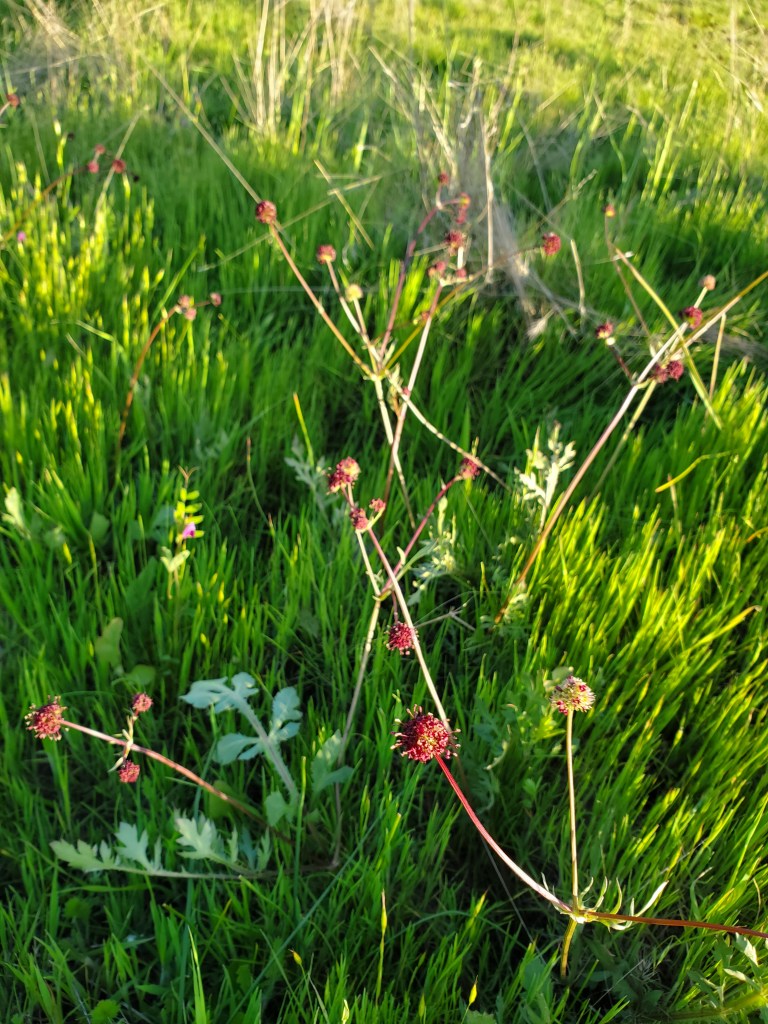
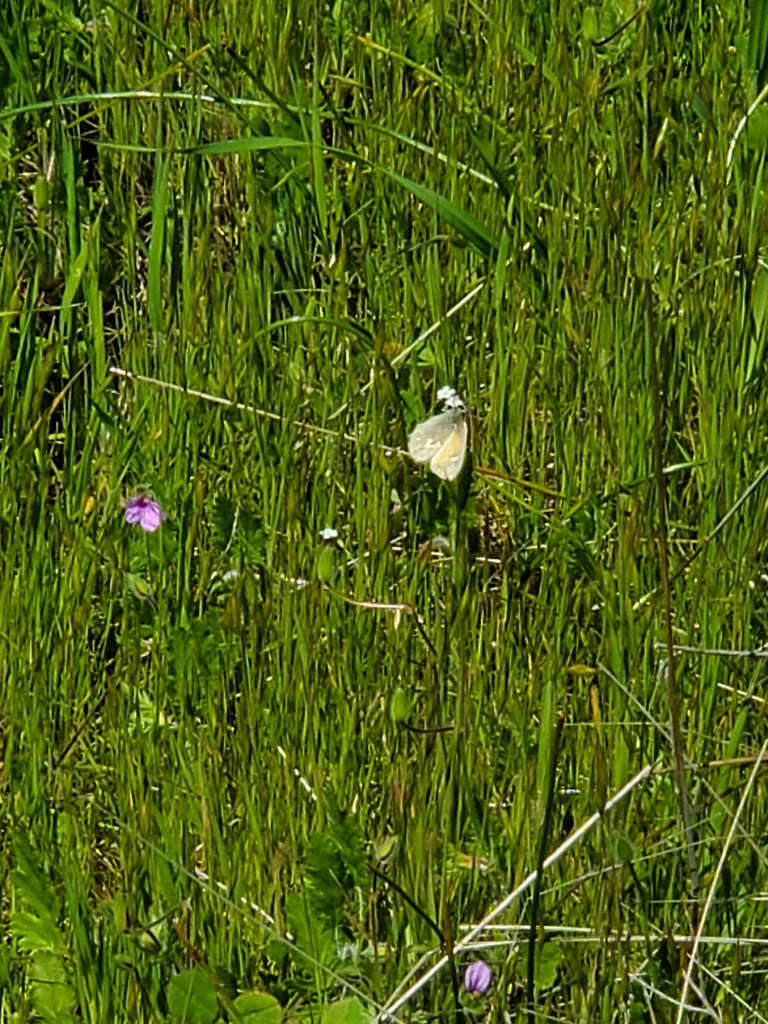
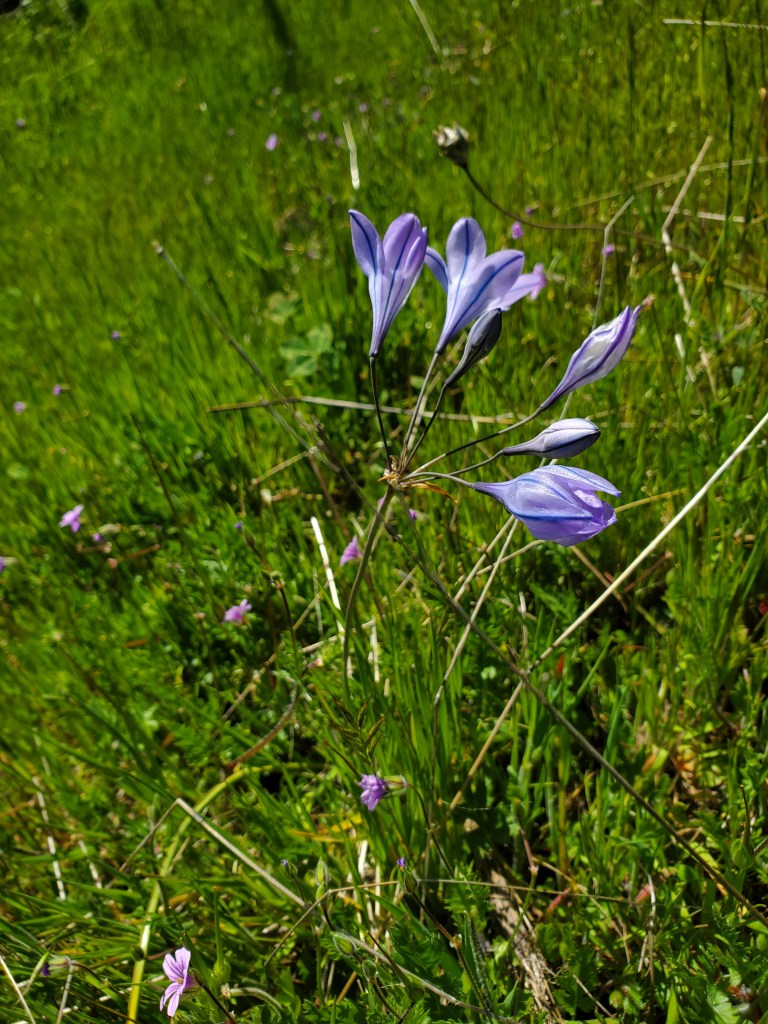
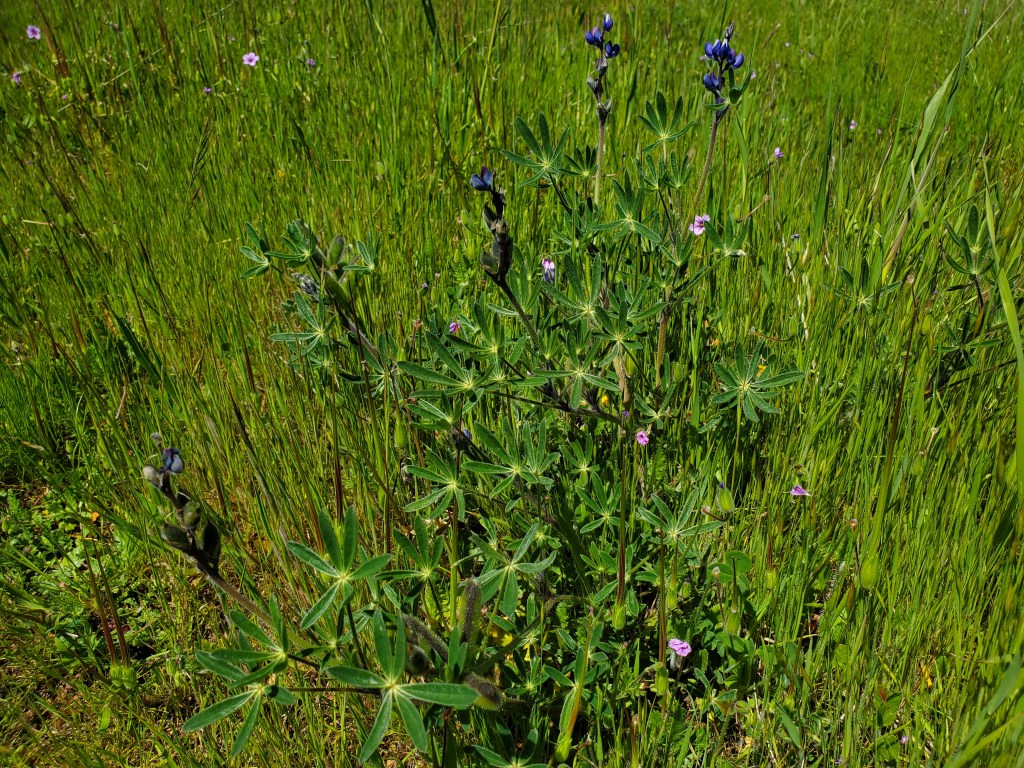
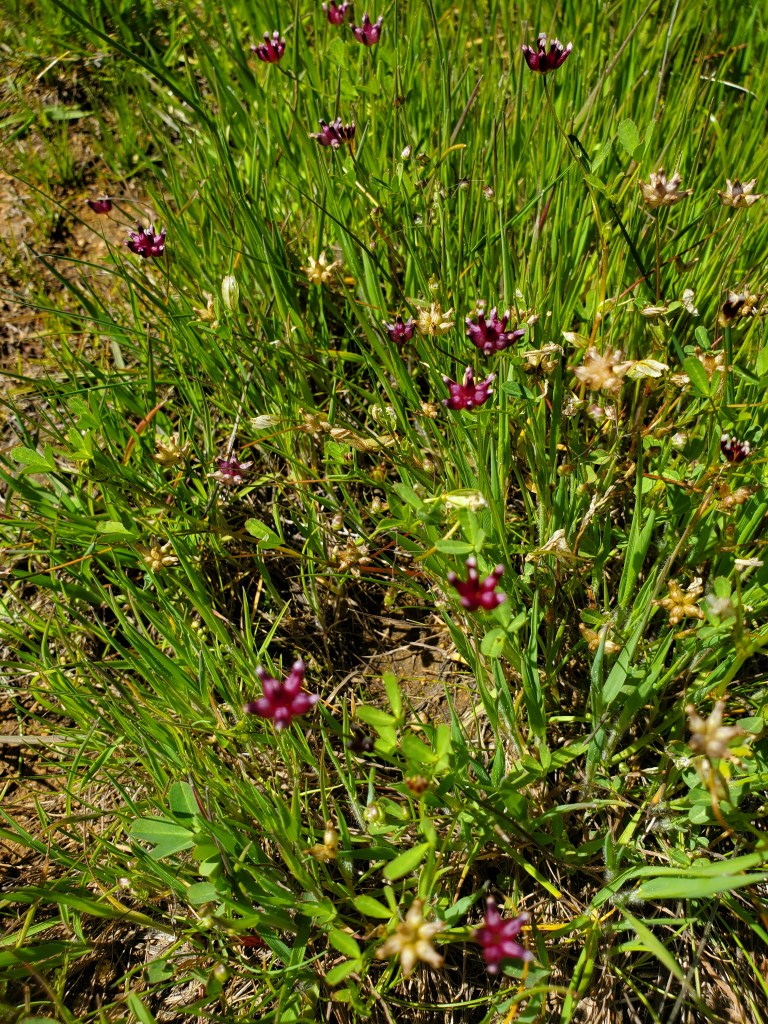
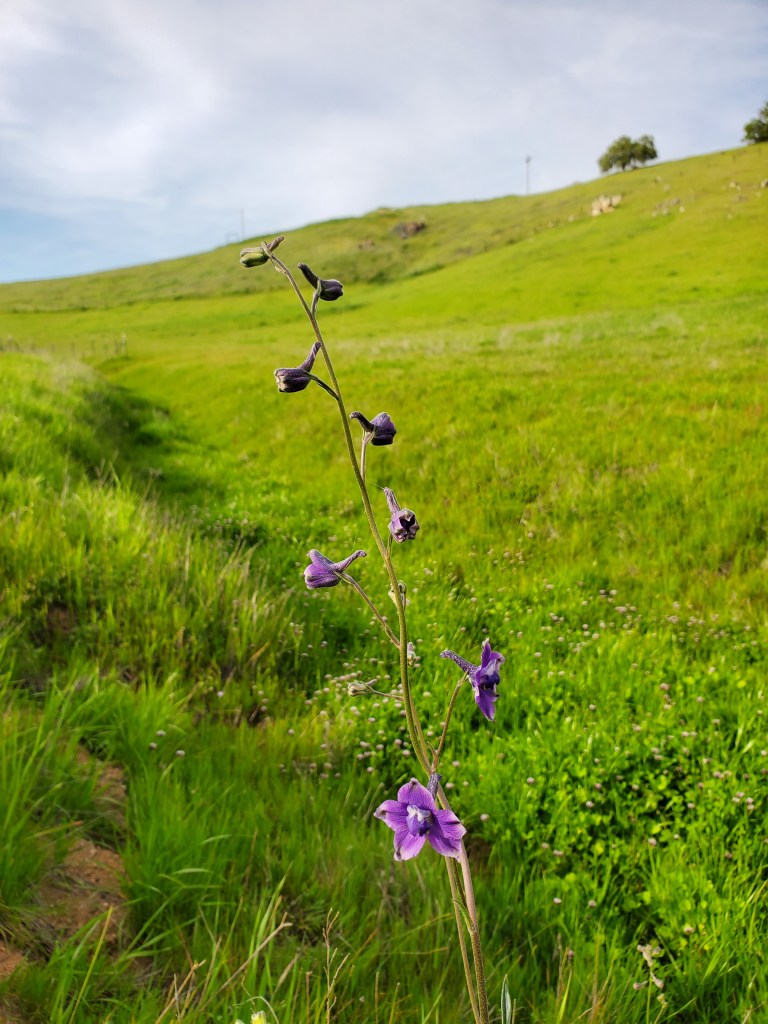
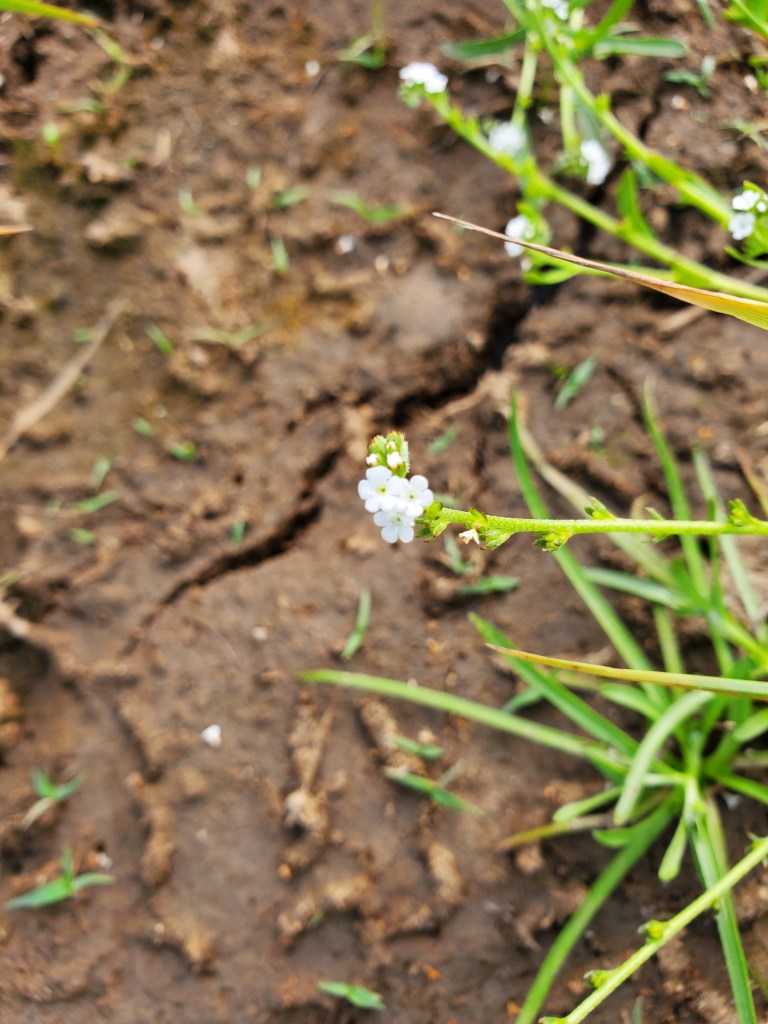
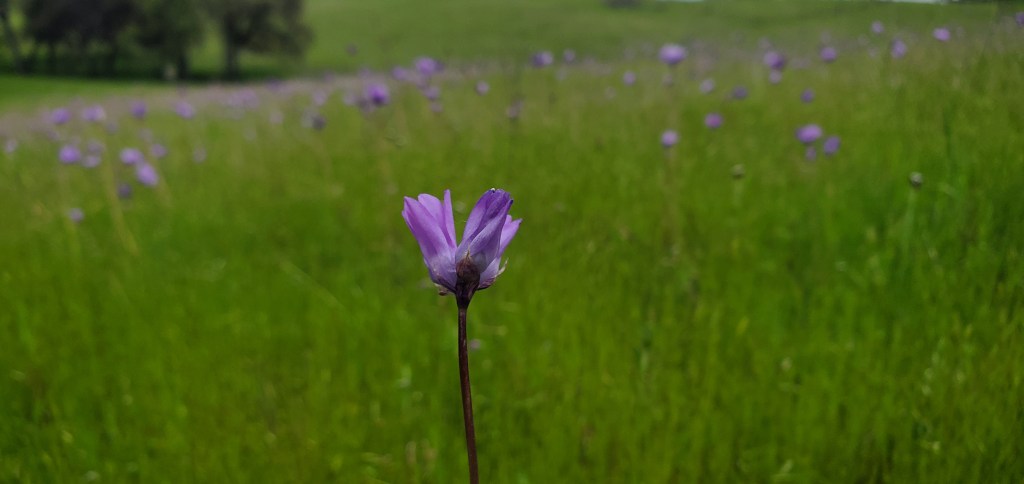
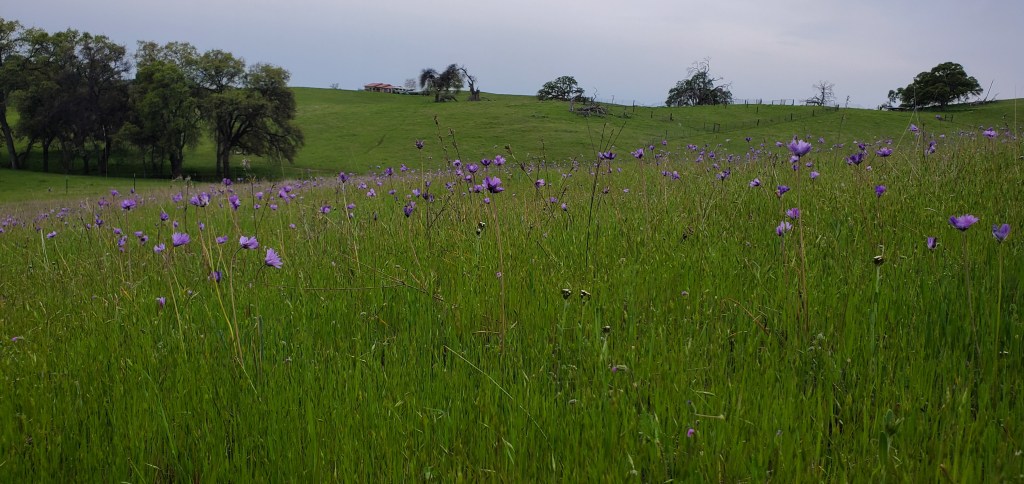
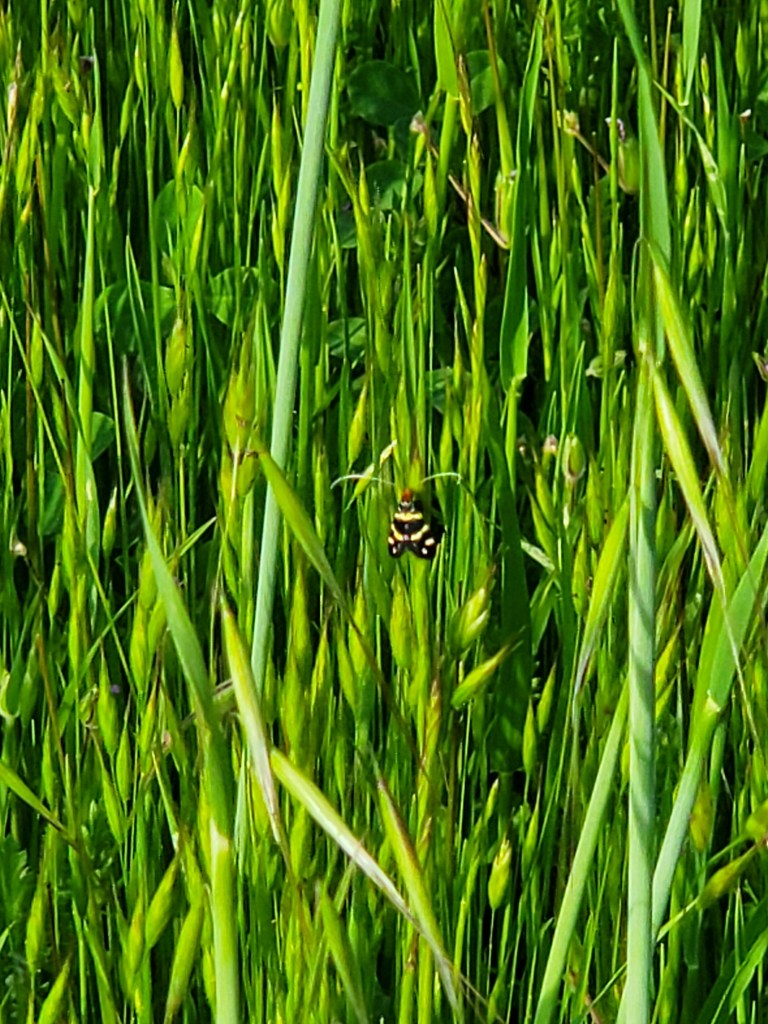
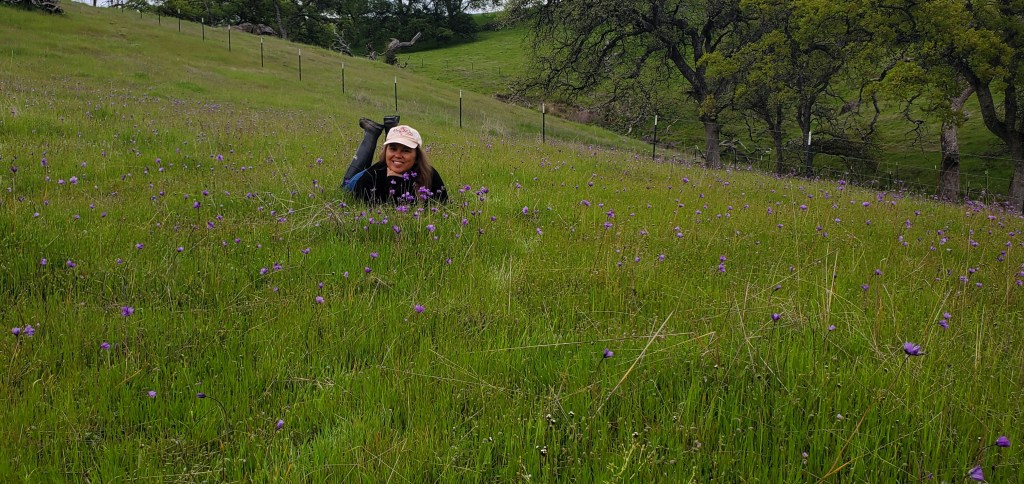
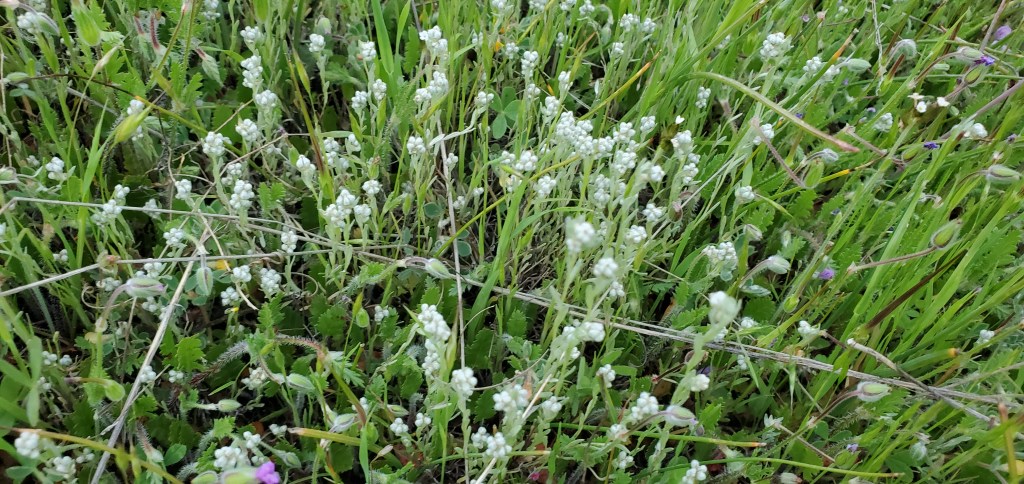
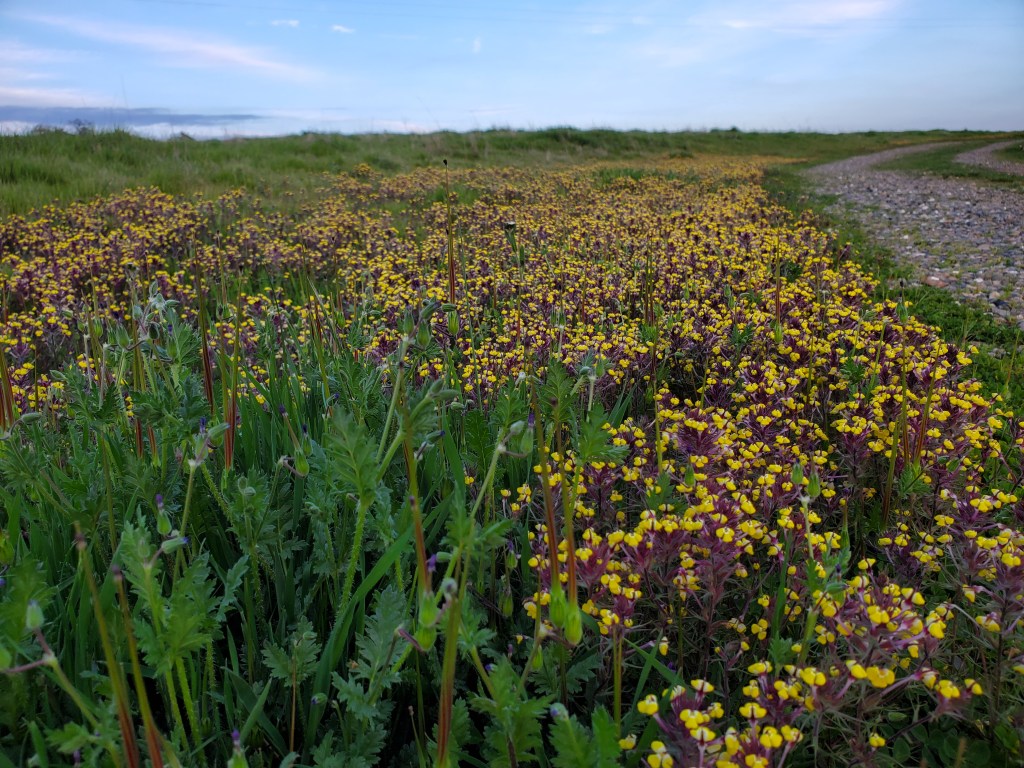
Wildflowers never disappoint. They are up and at a massive scale. The air is thick with nectar, especially when you walk through a cow clover patch. So sweet! With the flowers come the insect relatives. I love them so much.





Time
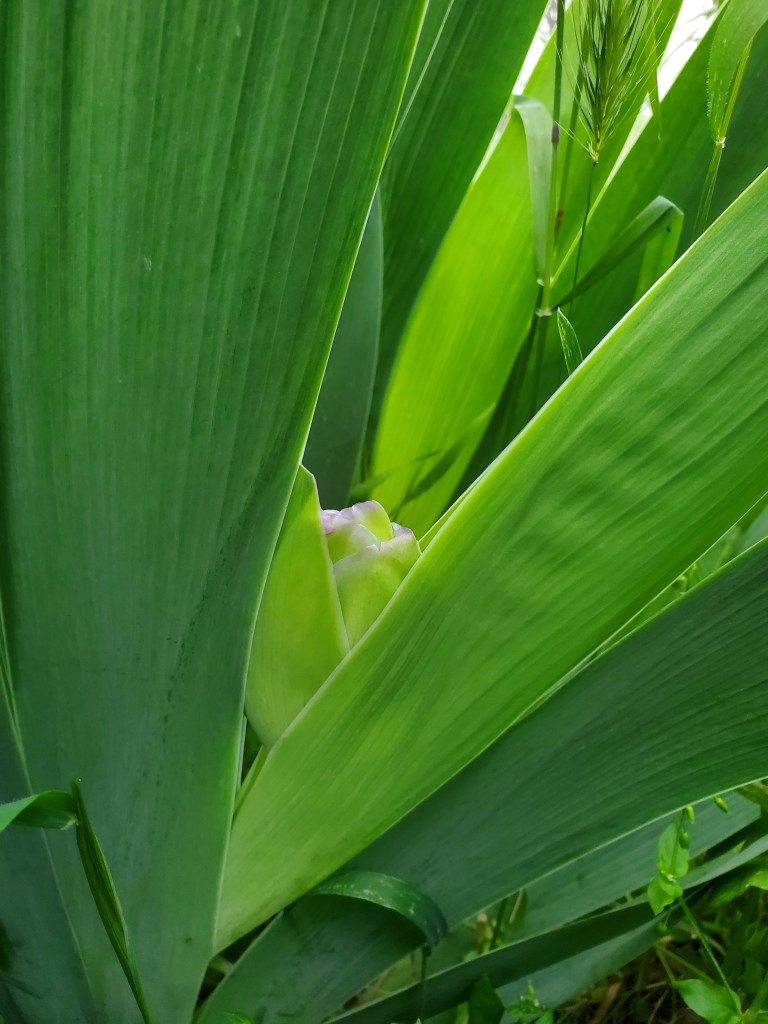
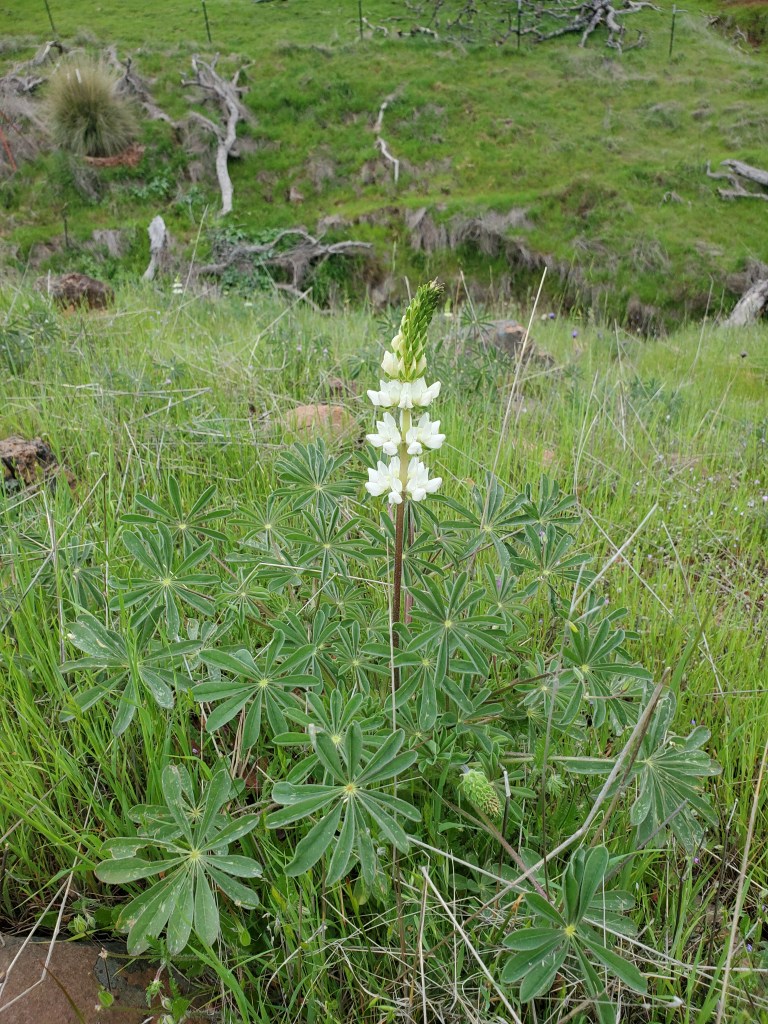
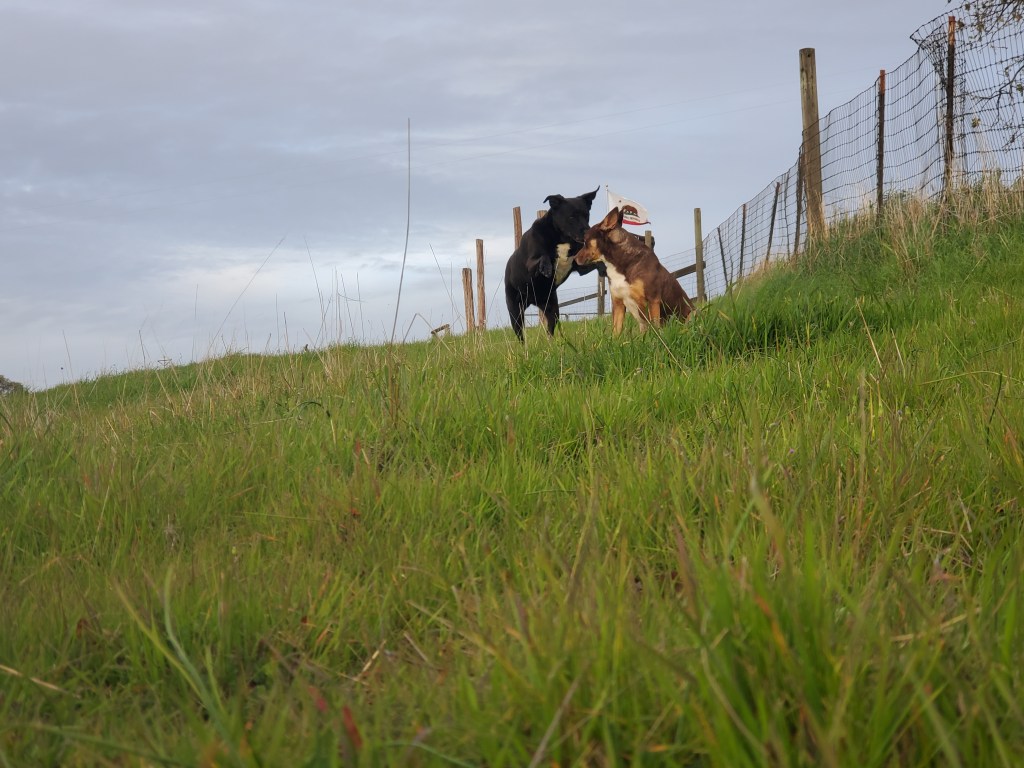
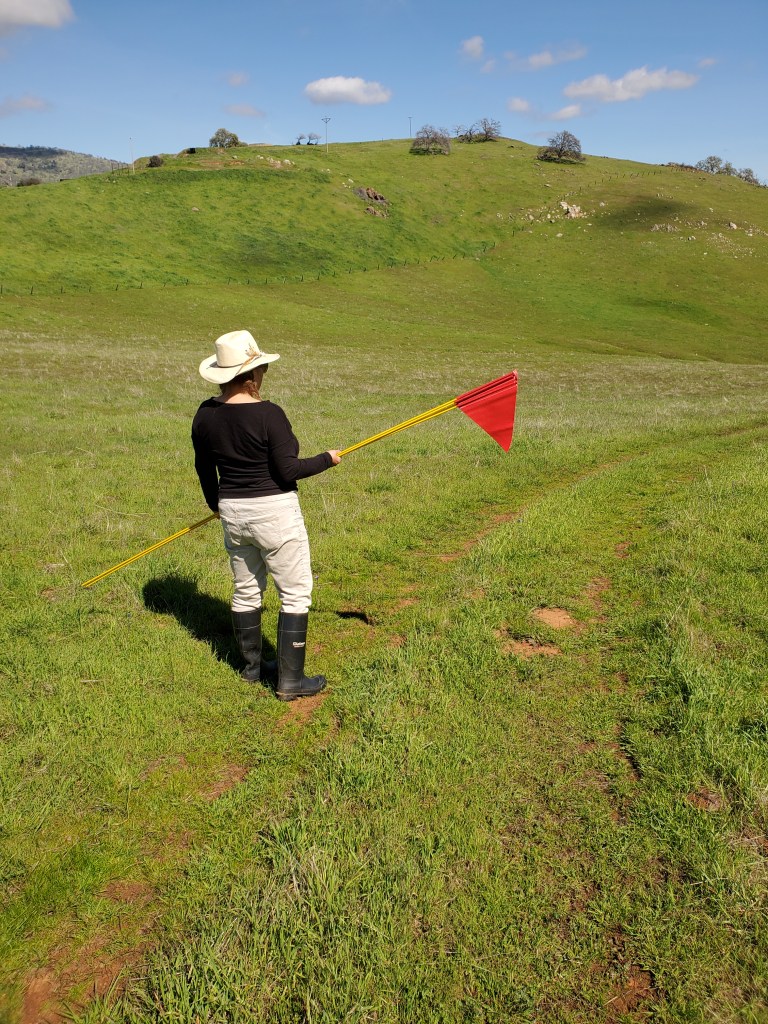
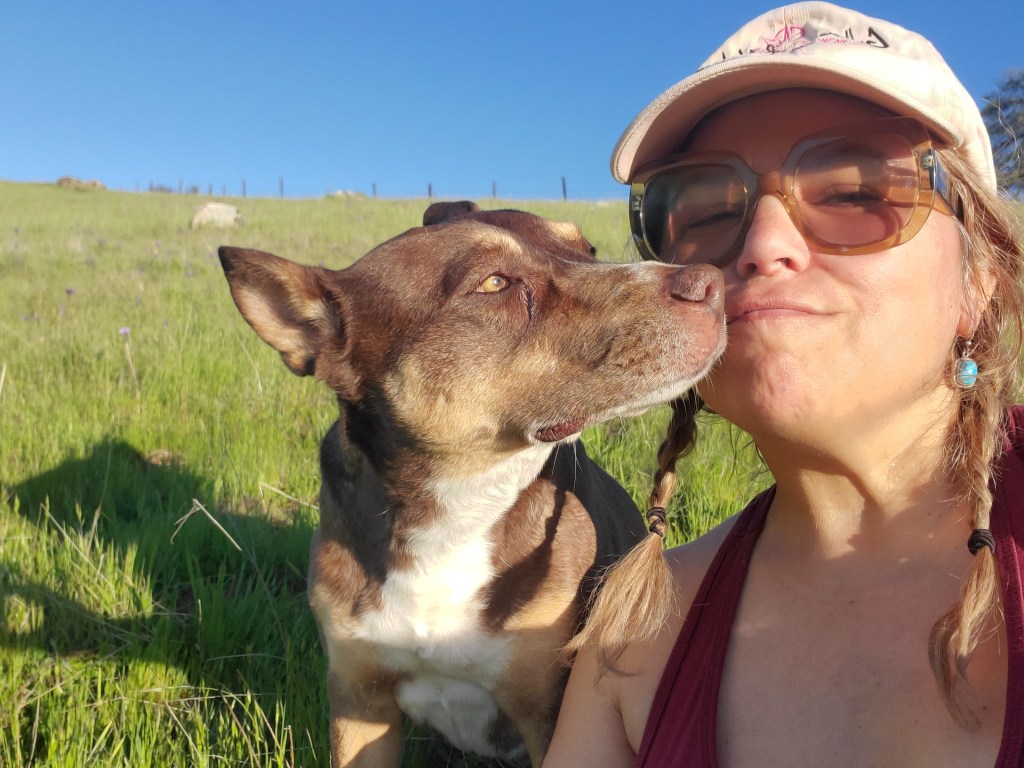
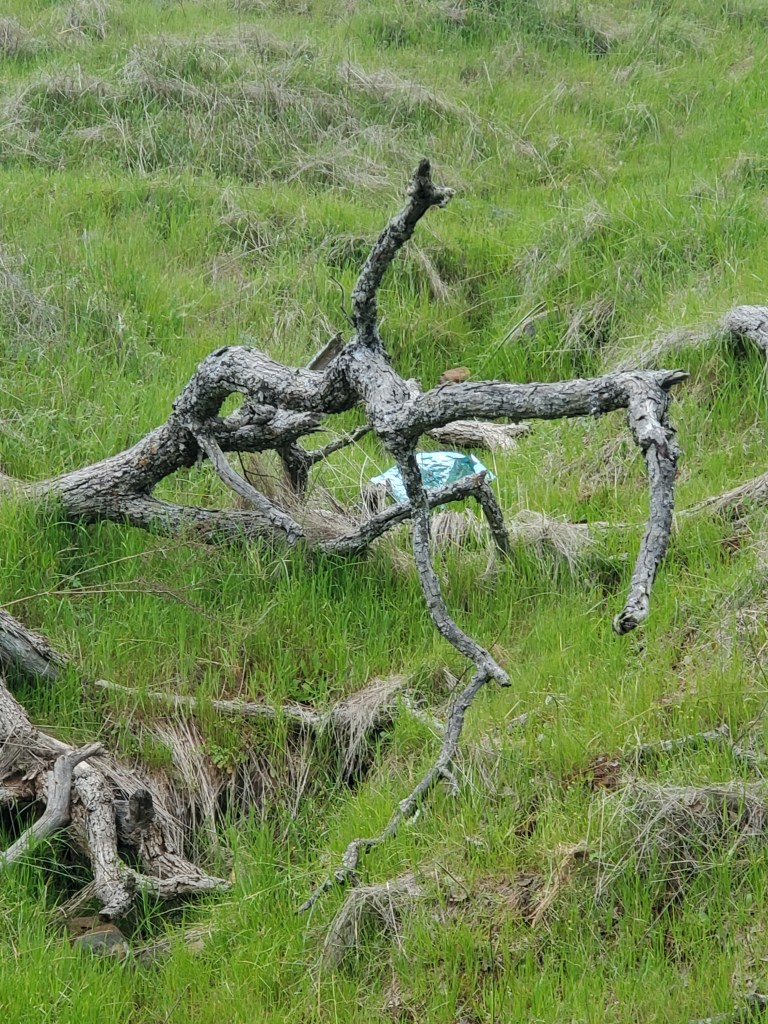
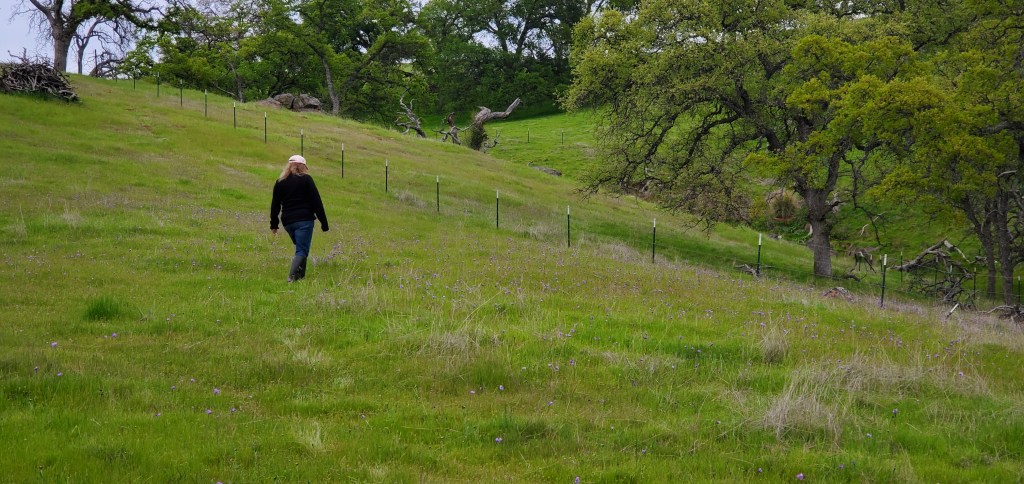
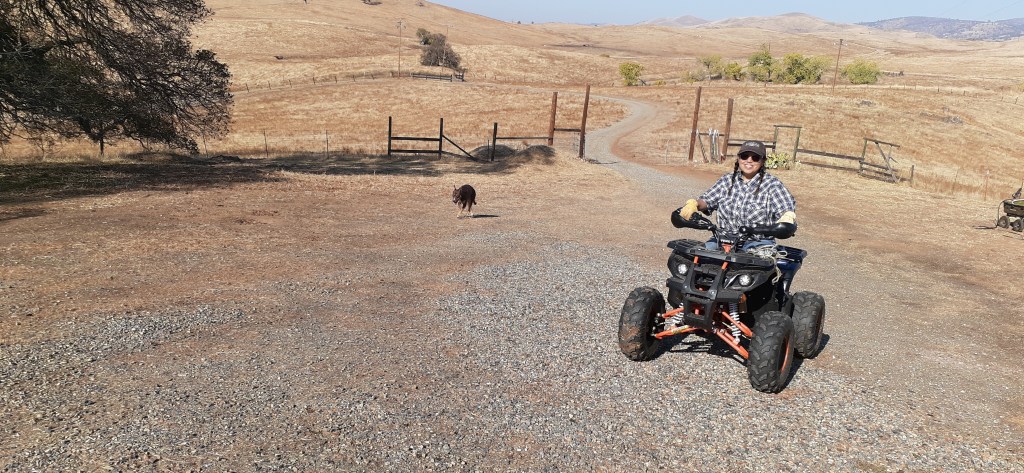
Each day, I try to make it to the top of the hill to check the Ca milkweeds. The girls are aging and sometimes stay at the bottom of the hill. They are my joy. Along the way, I straighten baskets, fix twisted screens, weed around milkweeds, and pick up trash, like Mylar balloons. There is always something to do here that can help. When I eventually sit down to write this blog and share the things I have seen, done or learned, it takes time. I started this post over a week ago, and the land has changed significantly since then. Water has soaked into the ground leaving puddles behind. Some flowers have finished their bloom and others emerged to replace them. Small pollinators are out in droves, and were not out just a week ago. Even in the photos, you can see my clothing move from jackets, to sweaters to tank tops. I will try to move these out more quickly, and perhaps it will help me make these posts shorter and more current. Do I say that each time? We began this blog discussing miracles.
It is a goal anyway.







 PolliNative