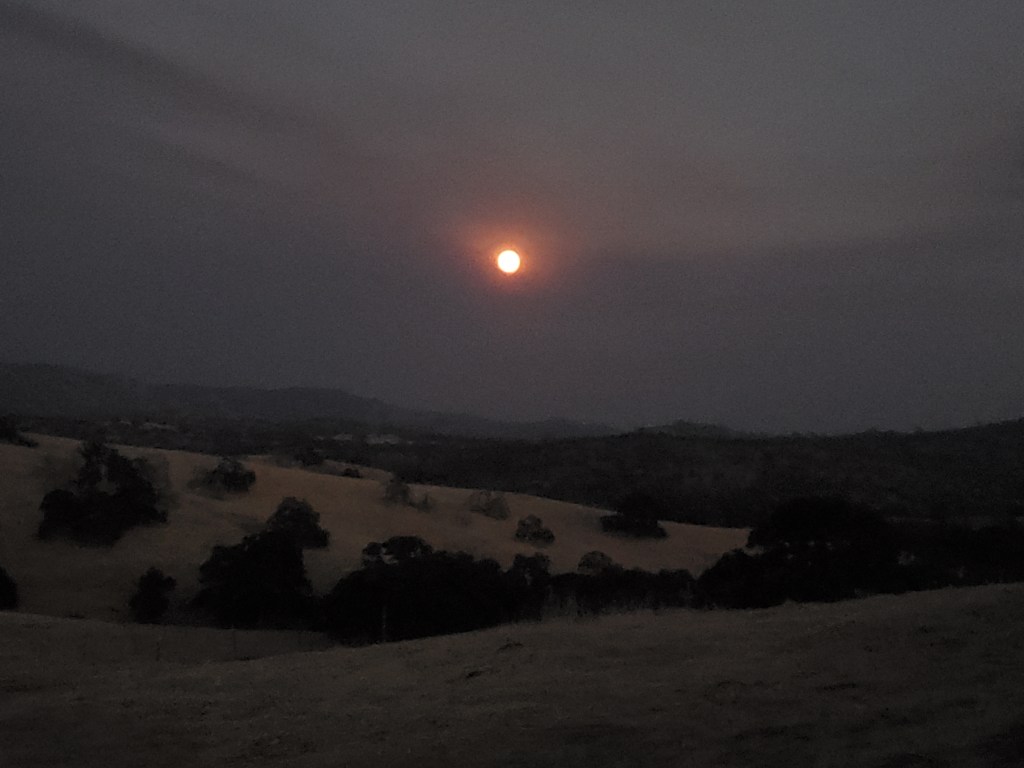
Fog | Big Projects | Transitions | Happy Holidays

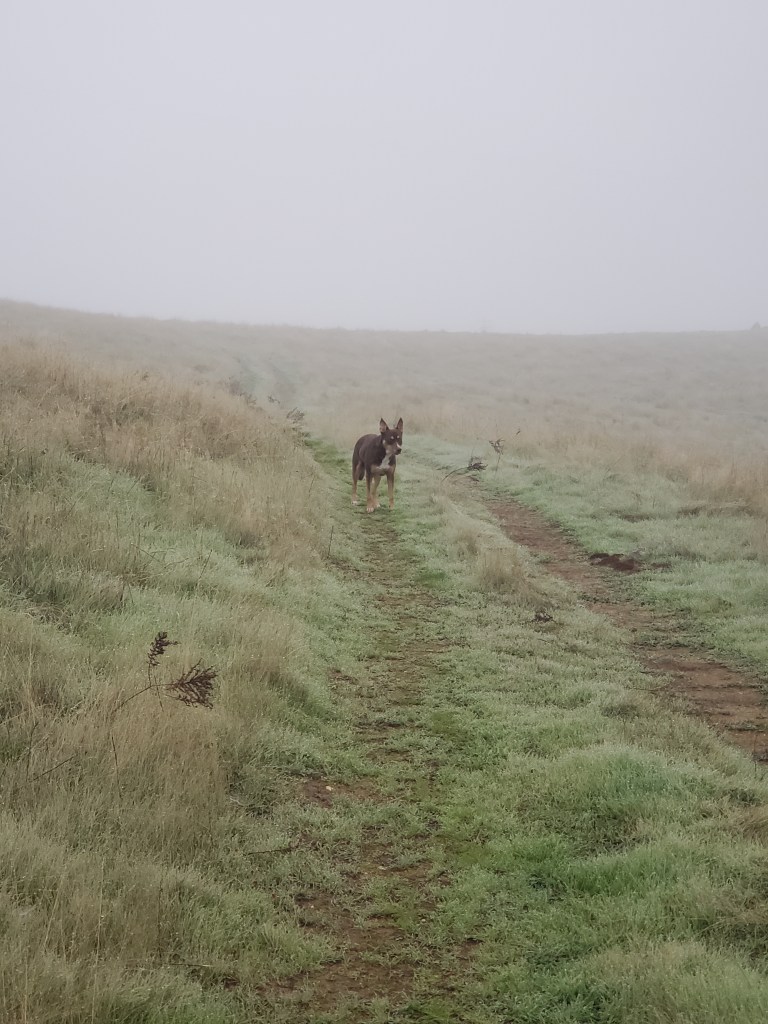
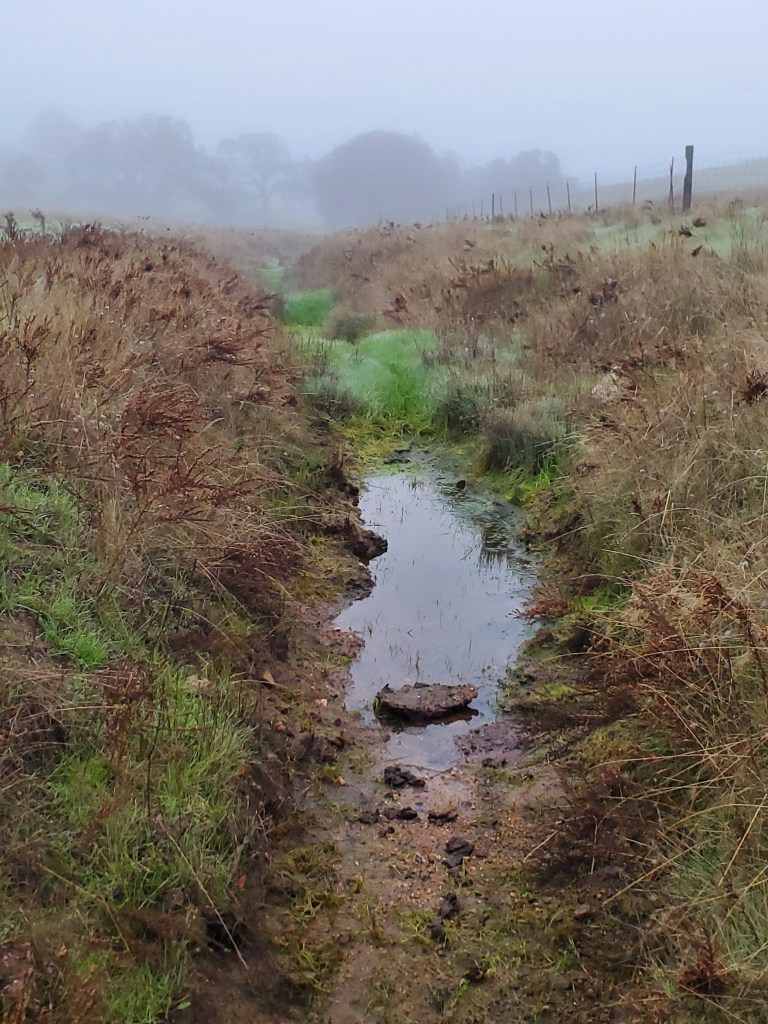
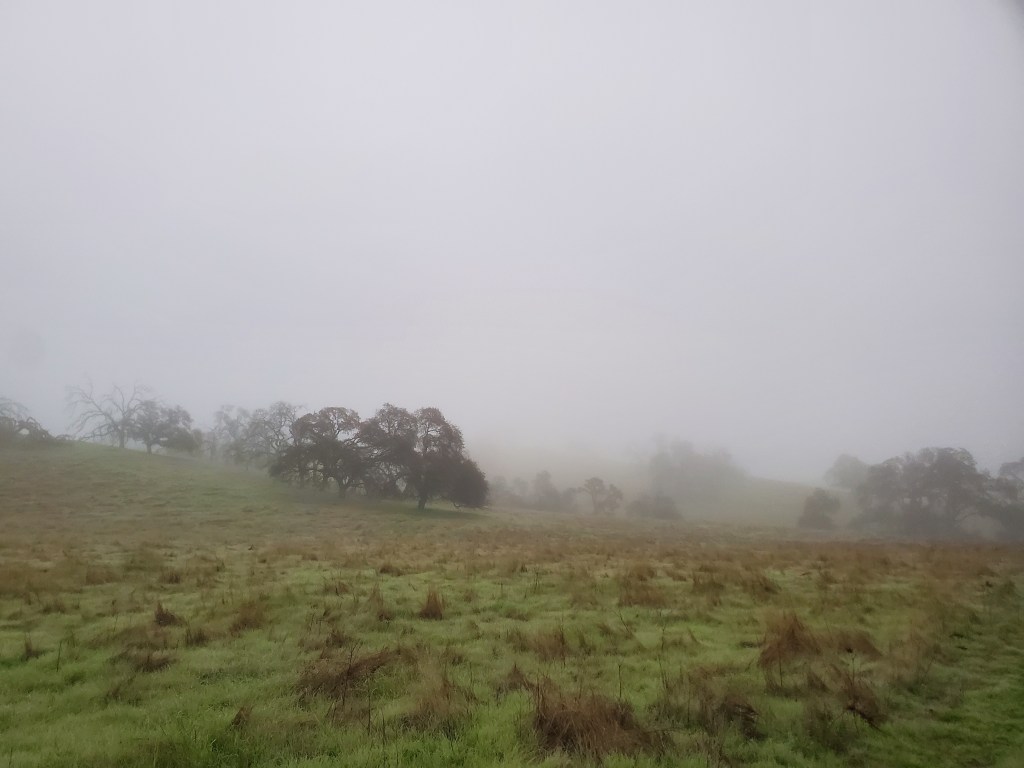
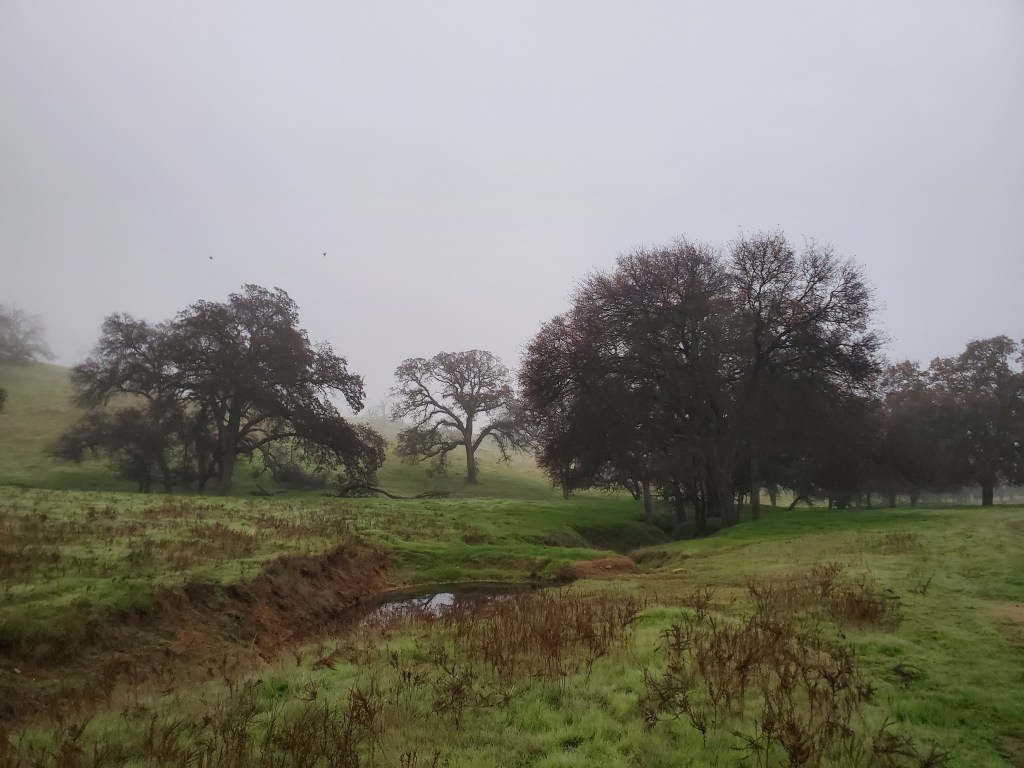
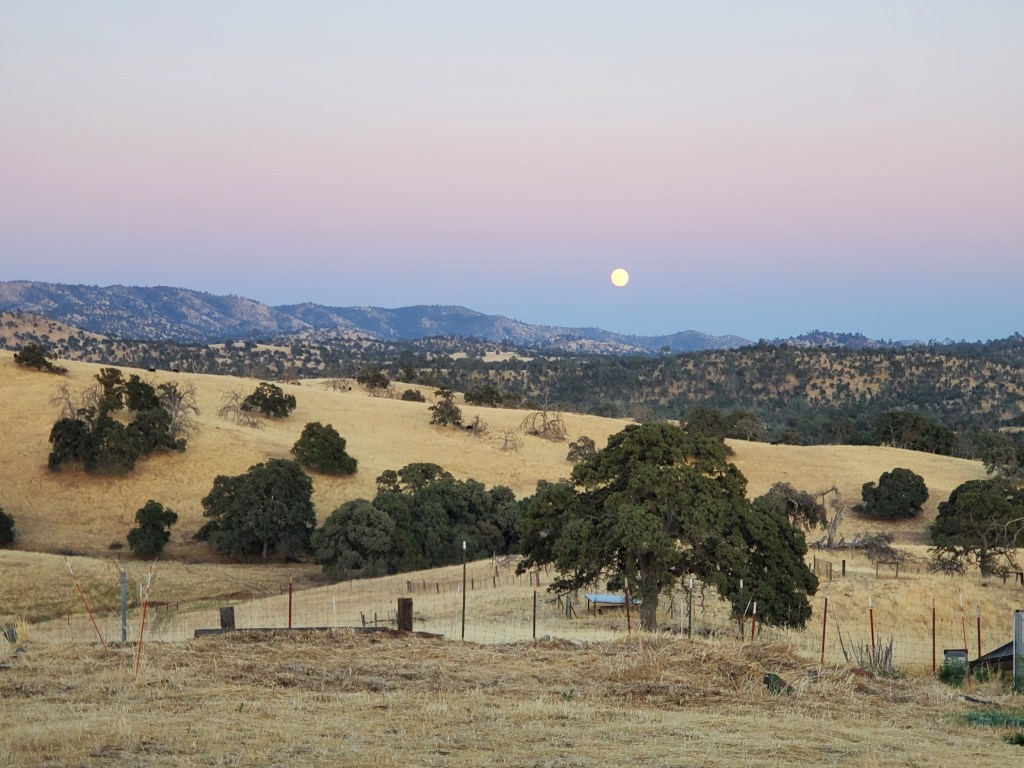
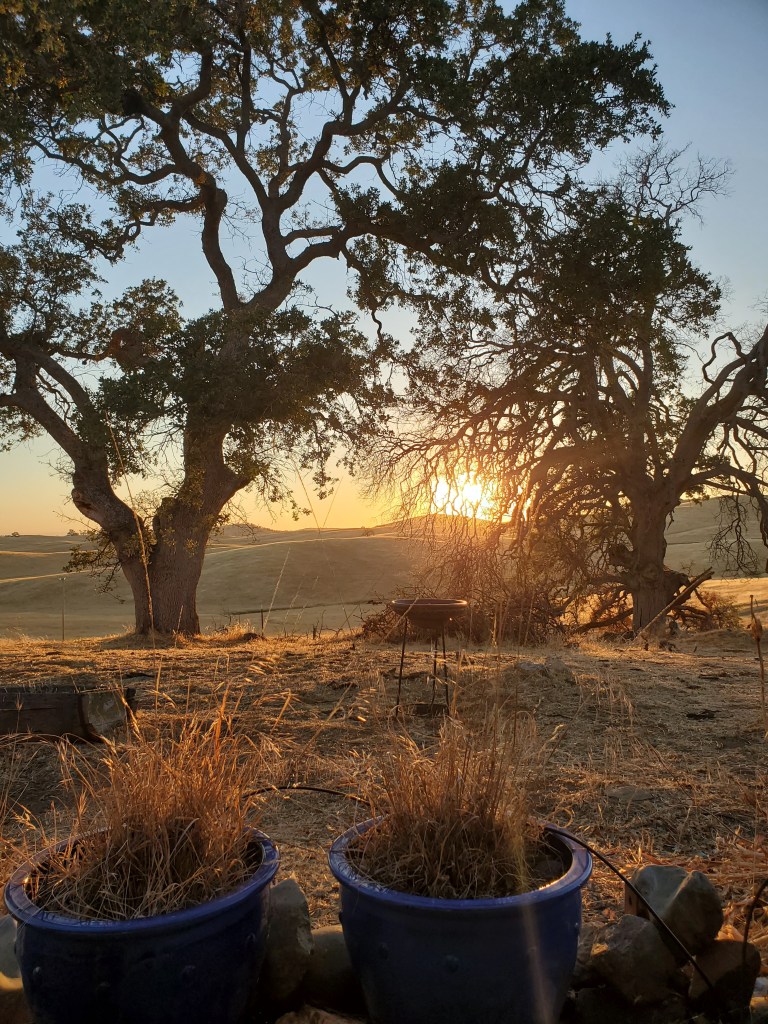
A cold, wet fog has been set over the ranch for three weeks. This is unusual. Hornitos is typically high enough in elevation to be above the fog most of the time. I’ve lived here for 23 years and have seen fog roll in for a few days or a week and break up by afternoon allowing the sun to emerge. This has not the case this this year. The fog has set into the Central Valley of California so thickly, that it has pushed the outer edges of the bank up and over the low foothills. You have to move up to 1500 feet or so in elevation to emerge from the fog.

The upper elevations have been having higher than normal temperatures this winter. This makes me grateful for the fog. It keeps things cold and wet. The temperature has been in the mid to high 30s overnight and the mid to high 40s during the day. Water that likely would have evaporated by now with clear skies and higher temperatures, is still here, soaking into the ground and available to wildlife in puddles, creeks and on grass blades. As I walk through the trails, the ground is so wet that I kick water off the grasses as I move.
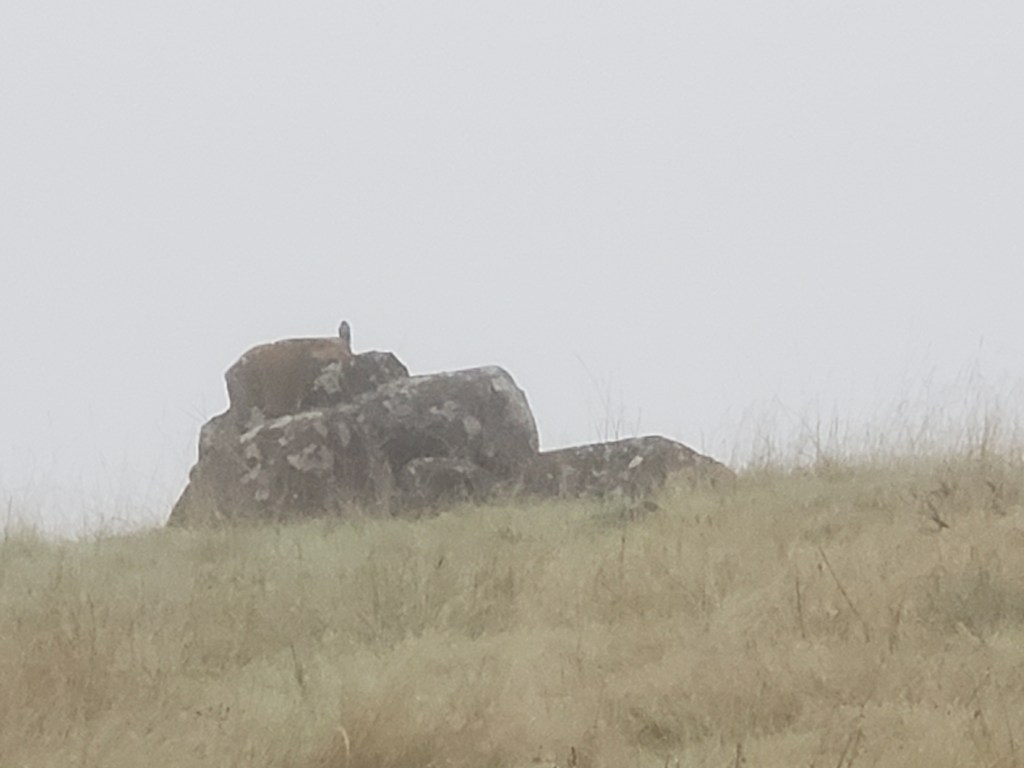
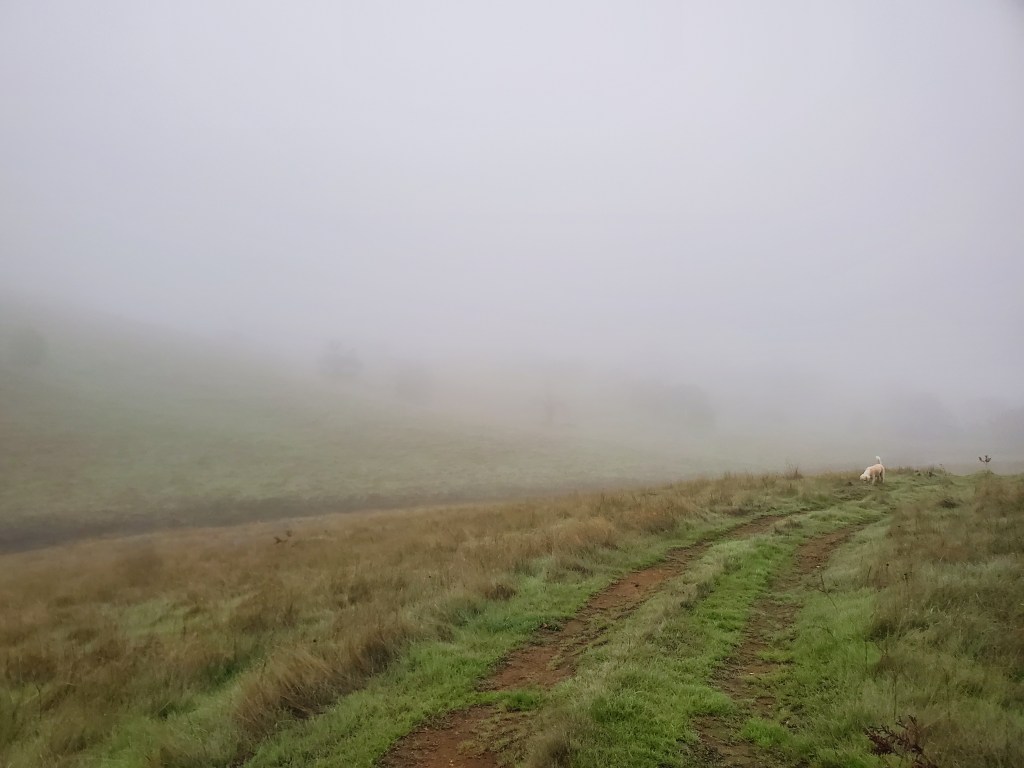
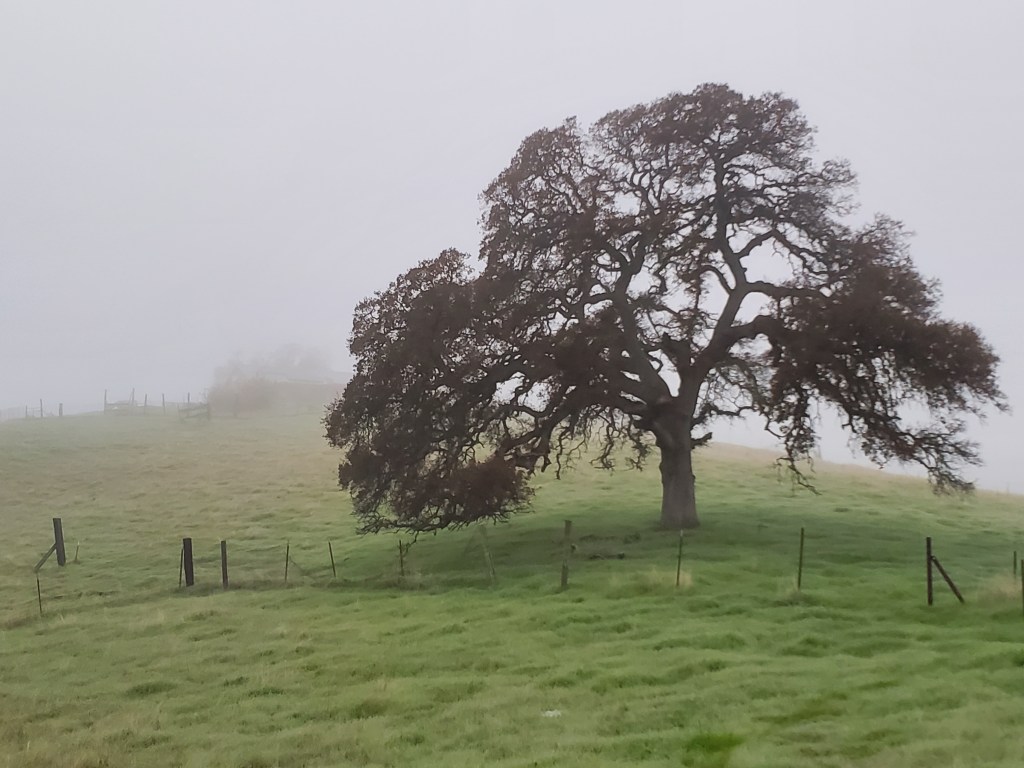
Two days ago, the fog bank finally broke. The days have been beautiful and the air crisp and clear. A large storm is expected this week (the wind is blowing ferociously as I write this), and David and I have been walking around the buildings to ensure everything is secured.
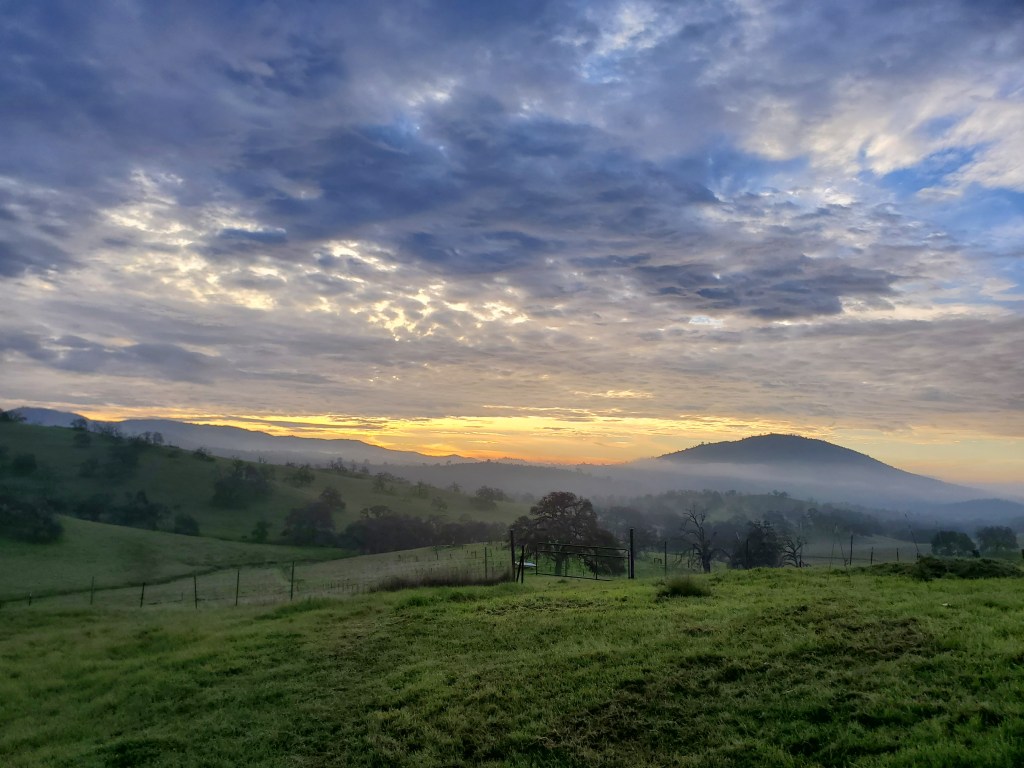
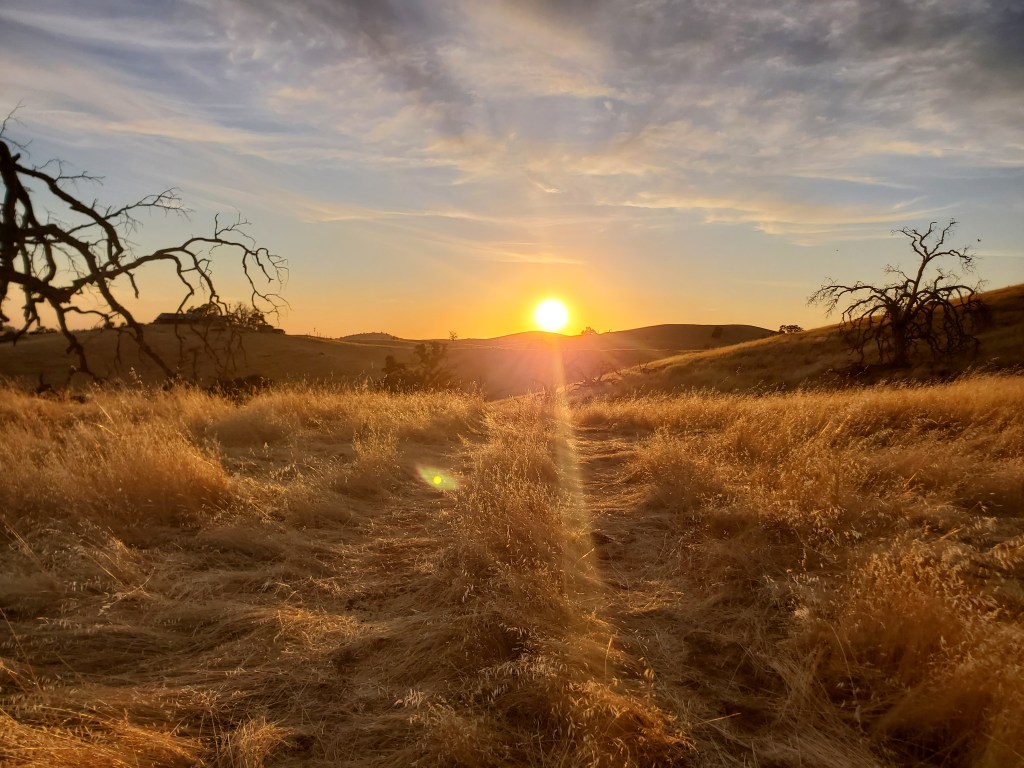
Fog dissipates as the sun begins to rise

Large Projects Near Completion

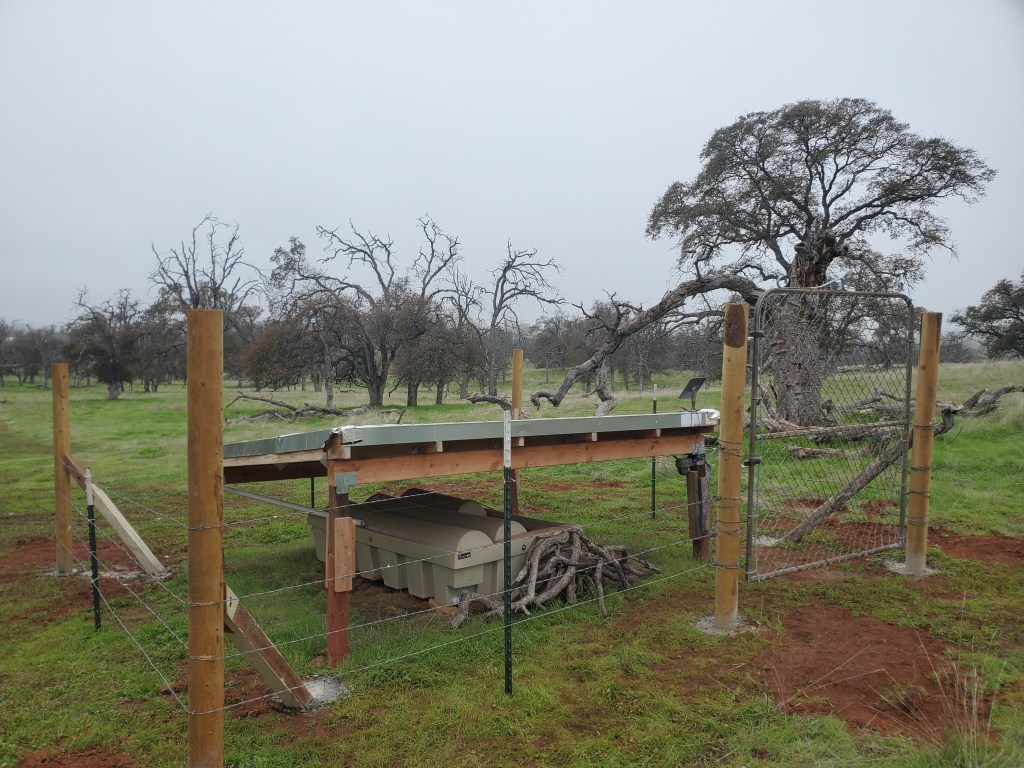
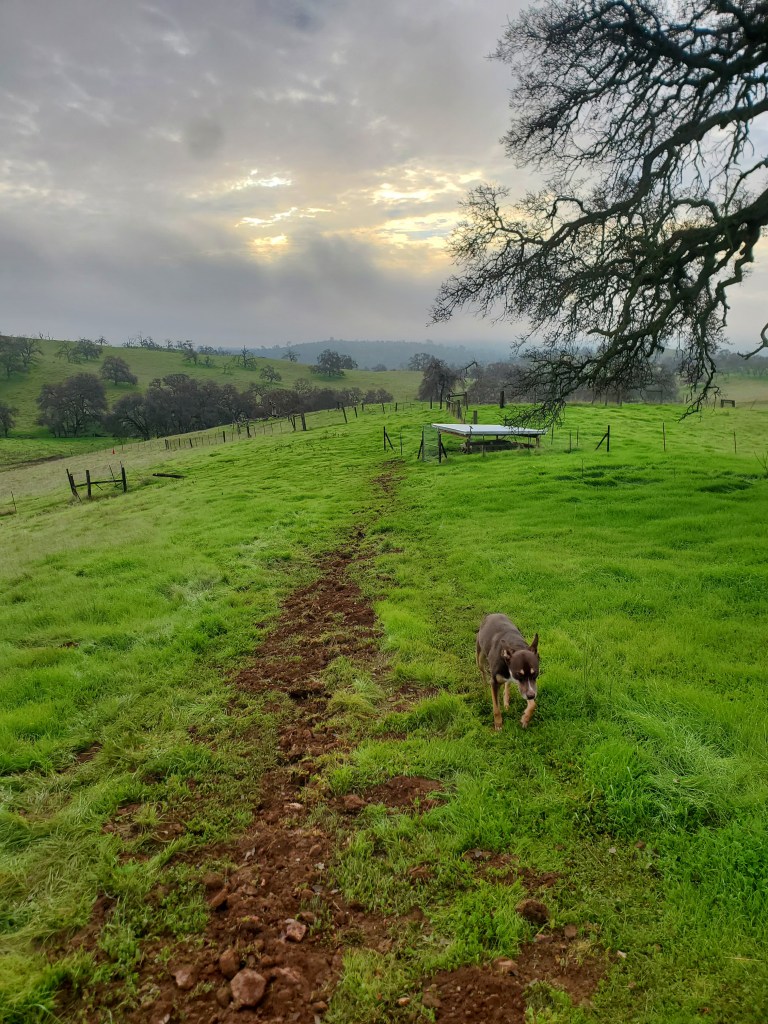
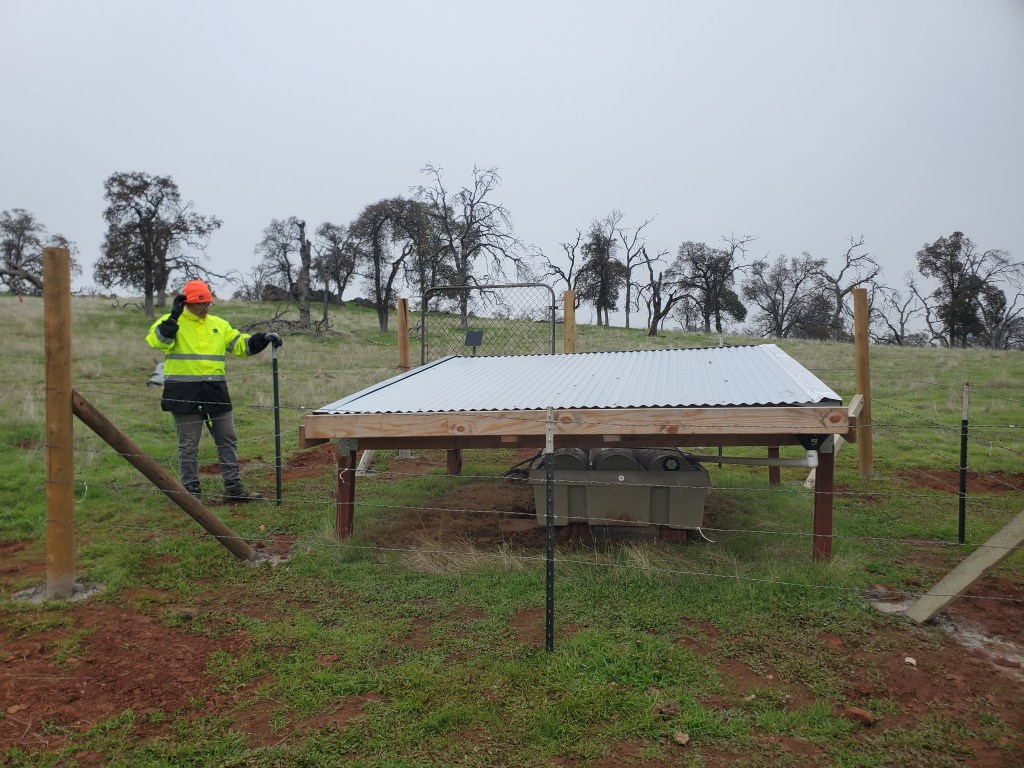
David and I have been working on building rainwater collection structures and attaching them to the wildlife guzzlers. In doing so, we are attempting to provide clean, abundant water to wildlife throughout the year. Guzzler 1 is very, very near completion. The pipe has been laid between the two structures. We only need to connect the pipe to each tank. I dug a rain garden to accommodate the over flow from the 1500 gallon tank. I still need to fill the trench with mulch (chipped oak from local trees) and attach a pipe to the overflow hole.

The protection fence was also completed. I did set up and clean up work on that project, and David did the rest of the work (Thank you David!).
Conservation Projects

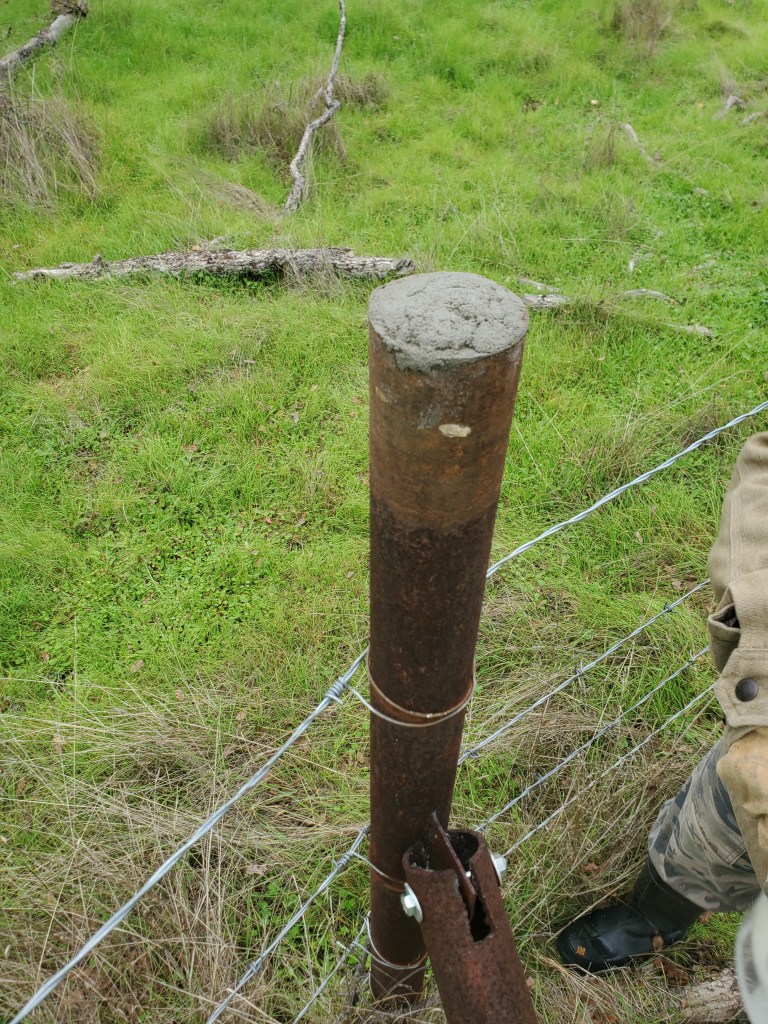
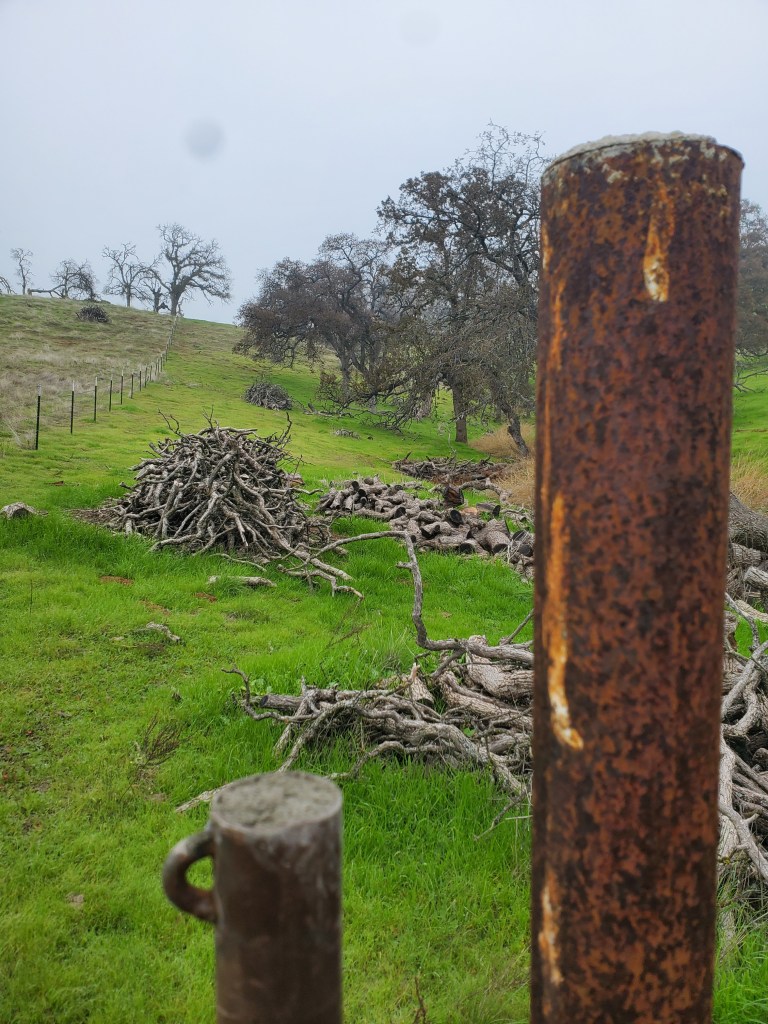
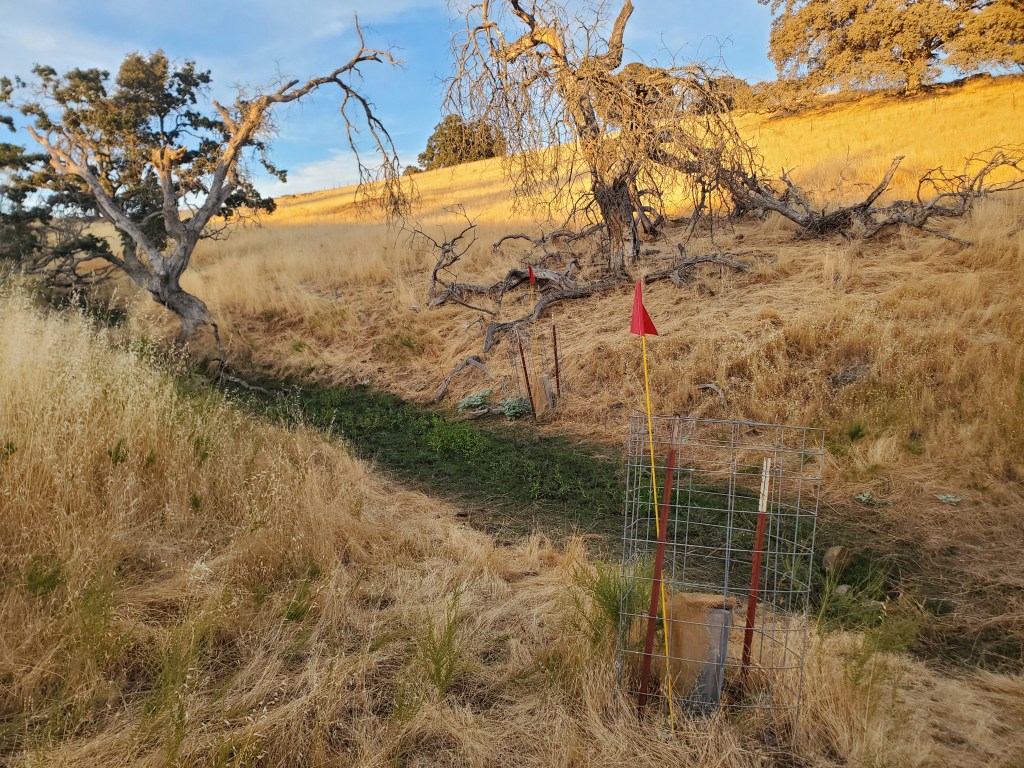
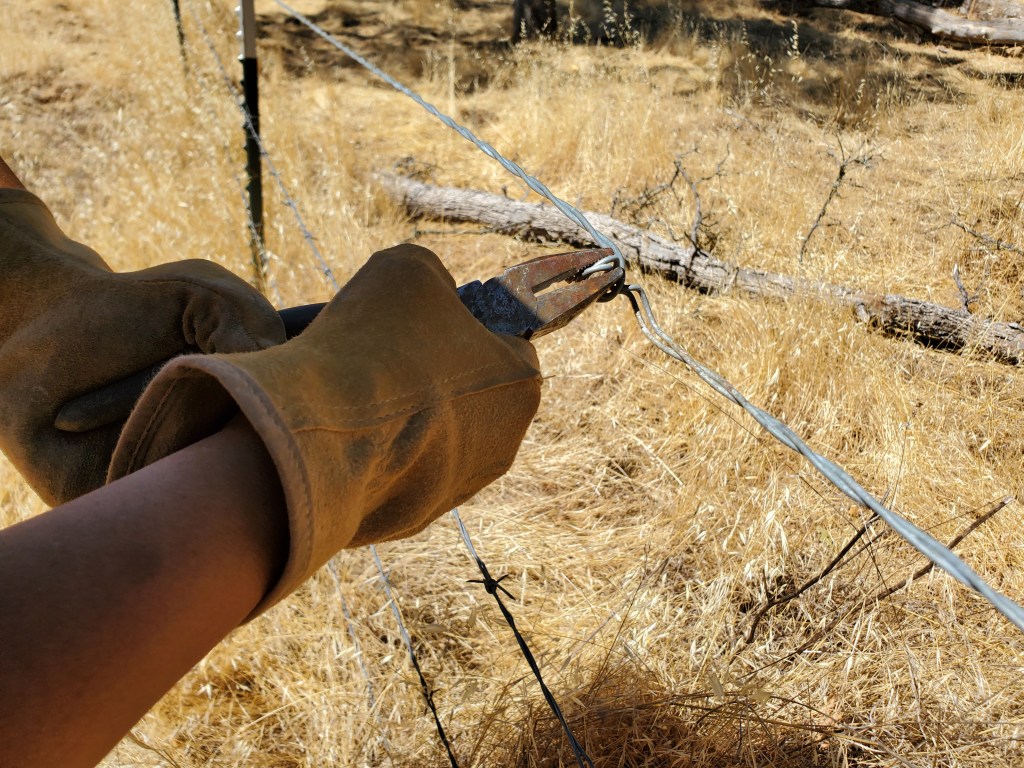
A typical day, beyond all the sundry projects, is me walking the ranch monitoring the land and the function of the infrastructure I’ve established. I have fixed pipe return on the guzzlers, straightened out gutter screen, removed branches from exclusion fencing, added branches to brush piles, helped acorn find homes in the dirt near downed wood, shored up logs in the check dams and a wide variety of other tasks. Recently, David and I walked the fence line looking for open topped pipe. Old pipe is often used as posts in fencing work. Typically, the open side of the pipe is capped with cement to prevent animals entering/falling into the pipe with no way to get out. Every now and then, a pipe can be missed, so it is important to take a look and cap any holes left open. On the exclusion fences, there was only one large pipe post that needed capping (it had a temporary cap – a glove placed over the hole!) and six smaller pipes used as ends for wire gates.
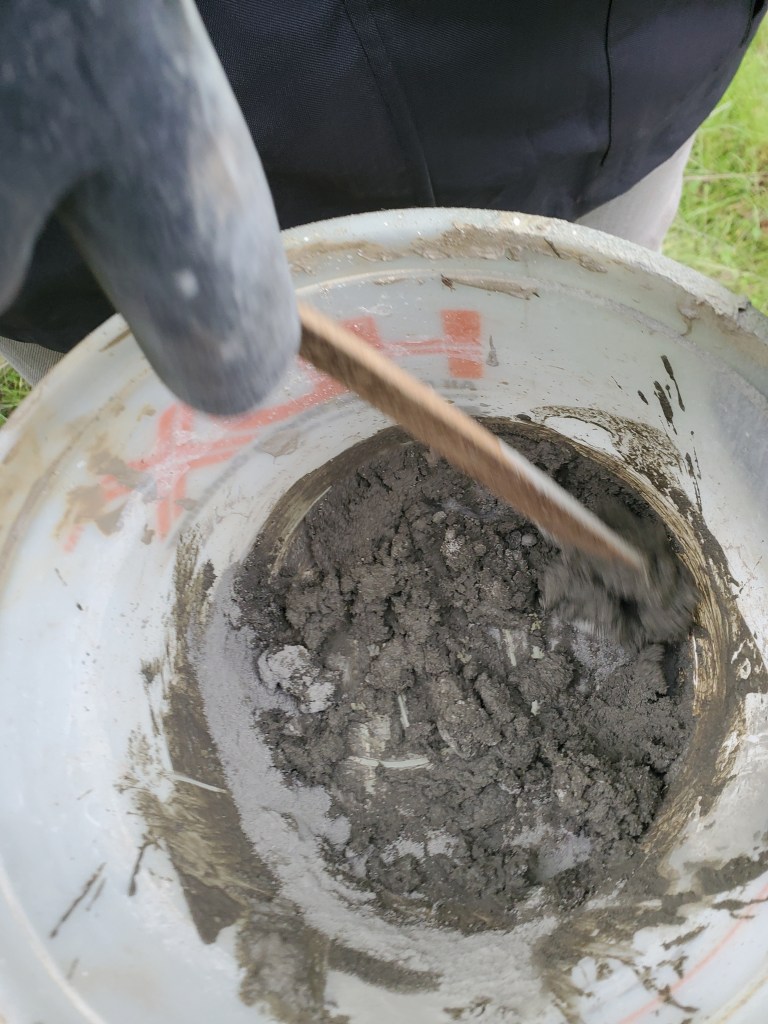
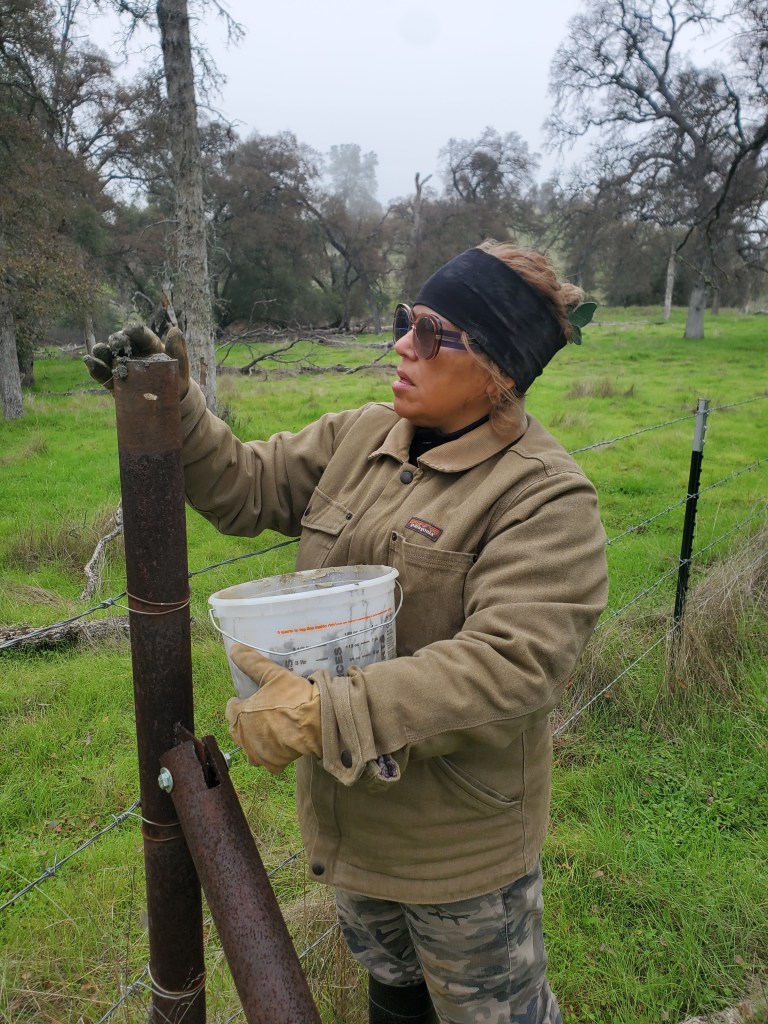
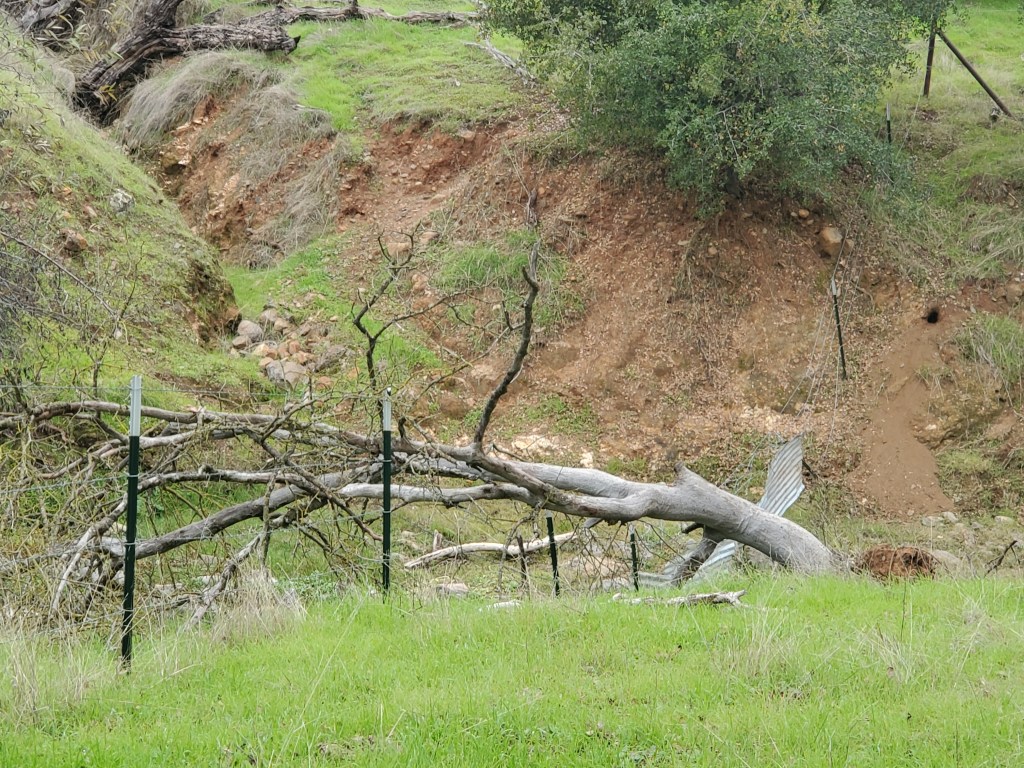
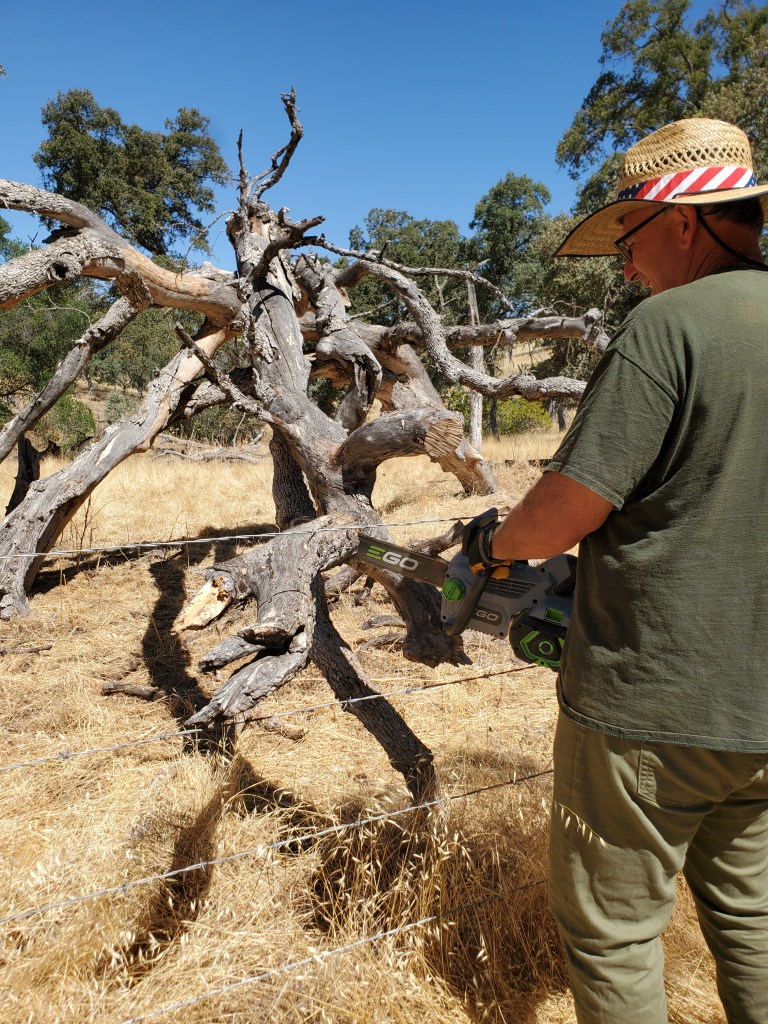
We filled the holes with quick drying cement and found some trees that had fallen across the fences or were at risk of falling. We will need to head back out to trim the branches/remove the trees from the wire and repair the fence. There will likely be more trees falling on the fence after this large storm. The task list grows.

Transitions

My former cattleman has been ill, and decided to retire in August 2025. He got out at a good time with very high prices for cattle and beef. He is a nice guy, very knowledgeable and easier to work with than others. I have missed our conversations. As a result, the ground has been rested significantly this fall. There have been no cows except my neighbor’s loose ones, which I wrote about in the last post. It was possible that his son would lease the ranch, but he decided not to go into the business. As a result, for the first time since I’ve been here, we have had an opening. Up here, there are many good operators to choose from. There is almost always a need for more ground.

I have been attending educational sessions and conferences hosted by Communities in Alliance with Family Farmers (CAFF) for almost five years. They offer excellent topics, support and resources. Through their work, I learned that many young people who want to begin in the ag business have a hard time accessing land, since it is so expensive to buy. This has increased the average age of farmers and ranchers. Similar to my former cattleman’s son, the next generation in ag families often does not want to farm or ranch. This is a huge problem for food production/security in our nation. It is no wonder. The business is difficult and being made more difficult by our federal government and wealthy corporations who set prices. I had this in mind when I selected my next cattle producer, a young woman who feeds our community and is trying take her cattle business from very small to larger scale, Lacey Sharp of Sharp Farms & Cattle Co.

Lacey is from a generational cattle family in Texas, but lives in Mariposa County now. She also has a grazing business using goats and sheep to decrease fire danger. Most recently, she joined the local Fire Safe Council. The woman has a lot of energy and interest in doing good! Important to me, she is focused on regenerative agriculture and cares about the health of the land. We are still getting to know one another, but so far, things are going well. Cows will be on in January.

Wishing You a Happy Holiday Season

From my home to yours, wishing you a happy, healthy, and joyous holiday season.
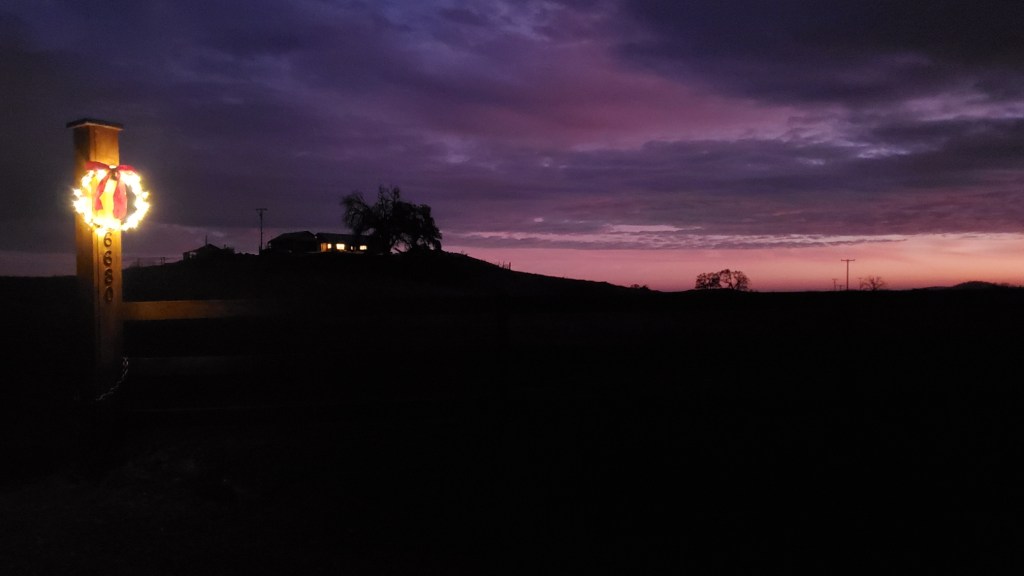
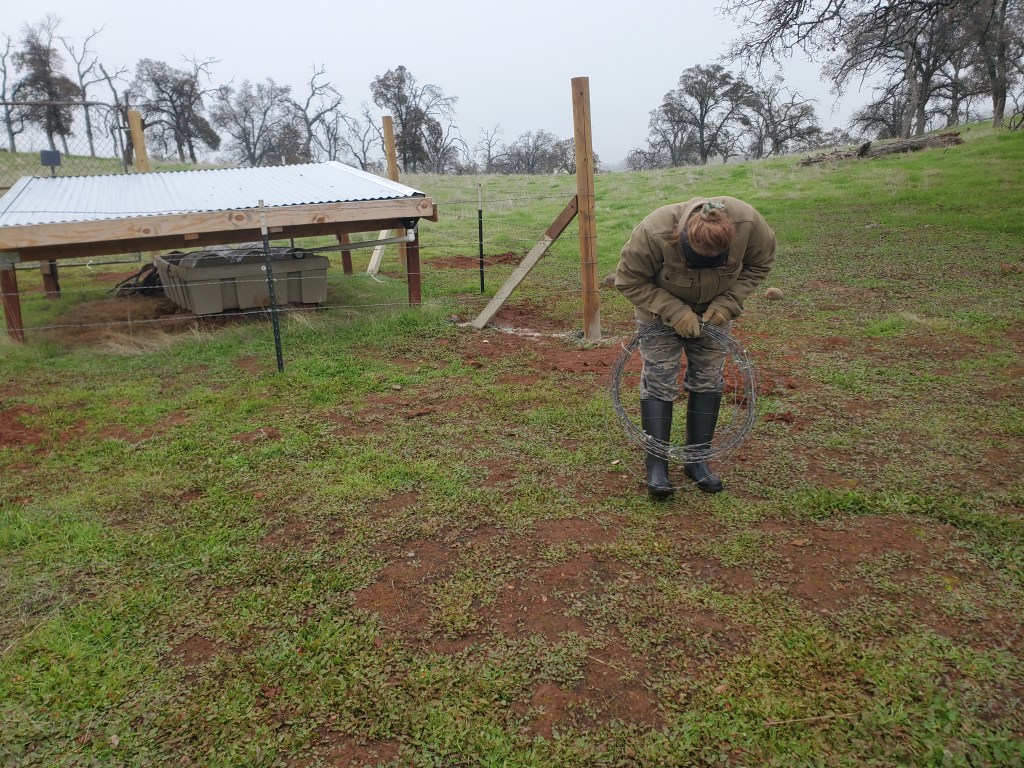
David’s wire wreath shines bright on the fence post of our gate

Flowers, Oaks and Rangeland Care

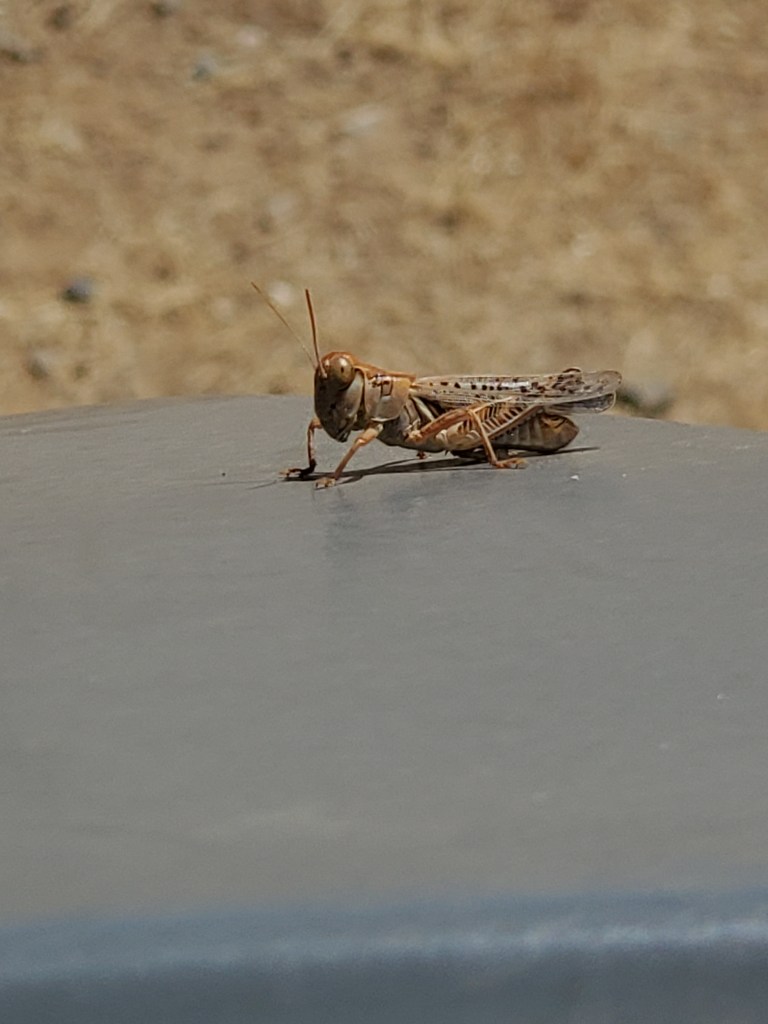
We have gotten lucky. The grasshoppers have not stripped everything. Their population exploded, especially near the riparian areas, then, all of the sudden, they abated. The hoppers had started eating their way up the hill. They hit some of my outlying plots hard, but then stayed away from the habitat closer to the hilltop. The oaks planted on the lower Spring Creek area and those down hill from the hilltop were not so fortunate. They were eaten, but quick action with screen boxes saved some. Several have come back and are leafing out again. I gave out a loud yip when I saw that. I had felt so dejected. I still lament the loss of the other trees. It is difficult to get a blue oak to grow under my specific conditions – heat, grasshoppers, gophers. Every year lost is one year less with young trees. I have to do better.

Since my last post, I have been focused on watering the oaks every five days. Having this cadence seems to be a recipe for success. It helps me not only keep them hydrated, but to trouble shoot any issues they may be having. The remarkably cool weather, for a July, has been helping give these trees a chance. I love them so much, and want them to thrive.

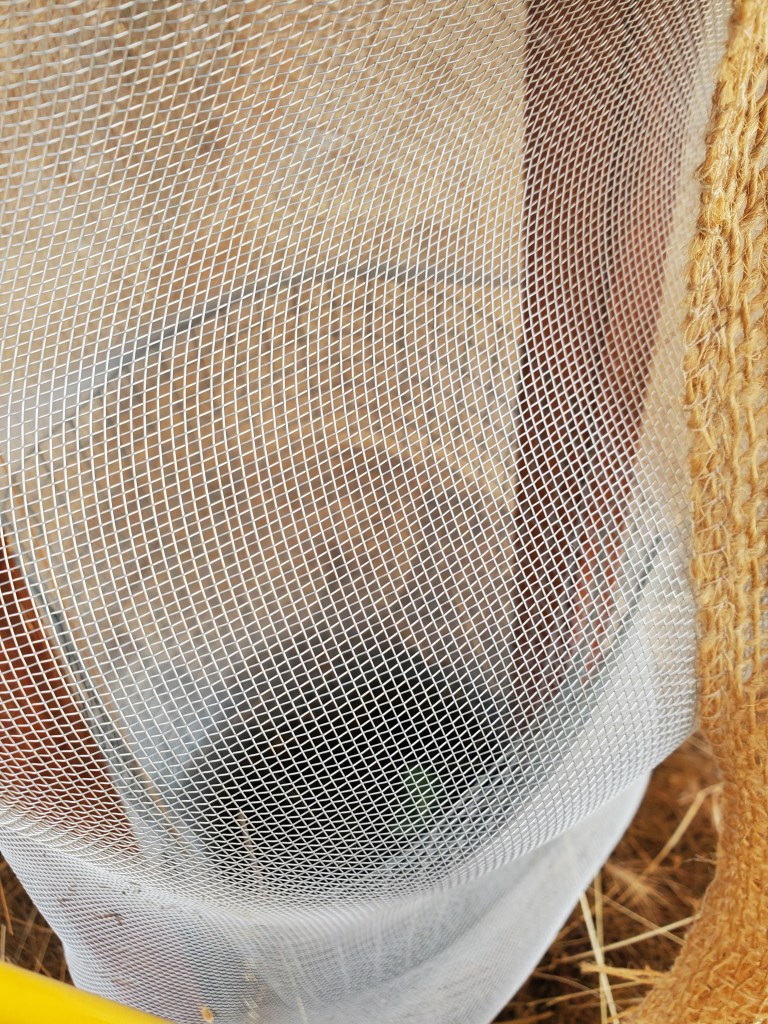
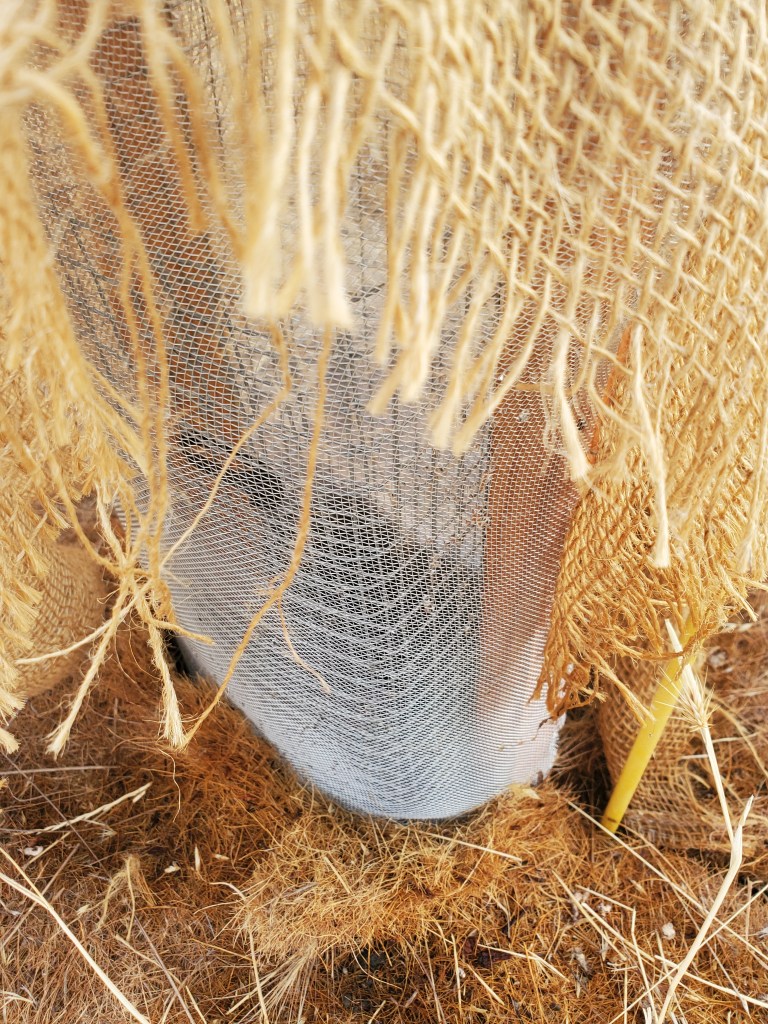
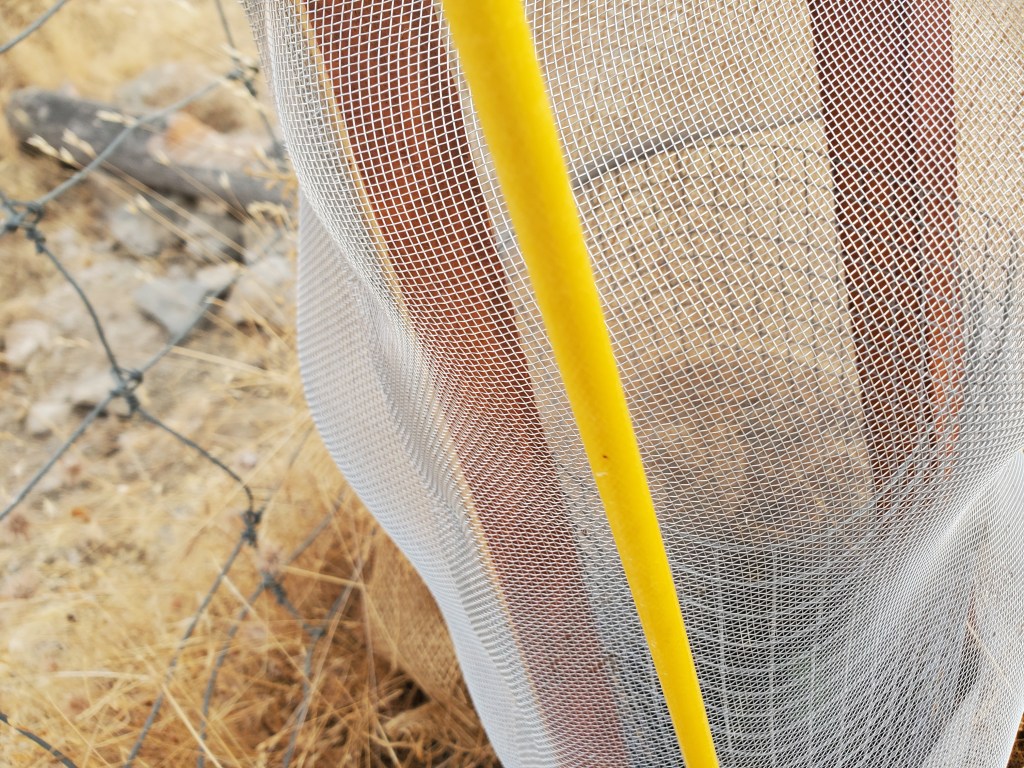
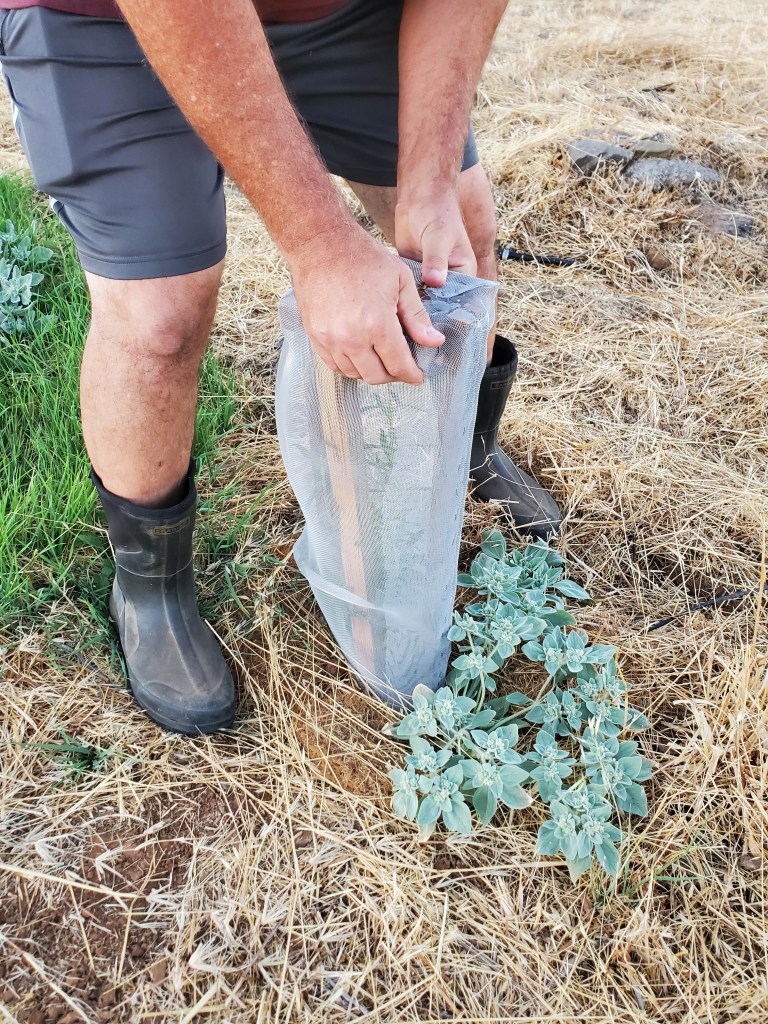
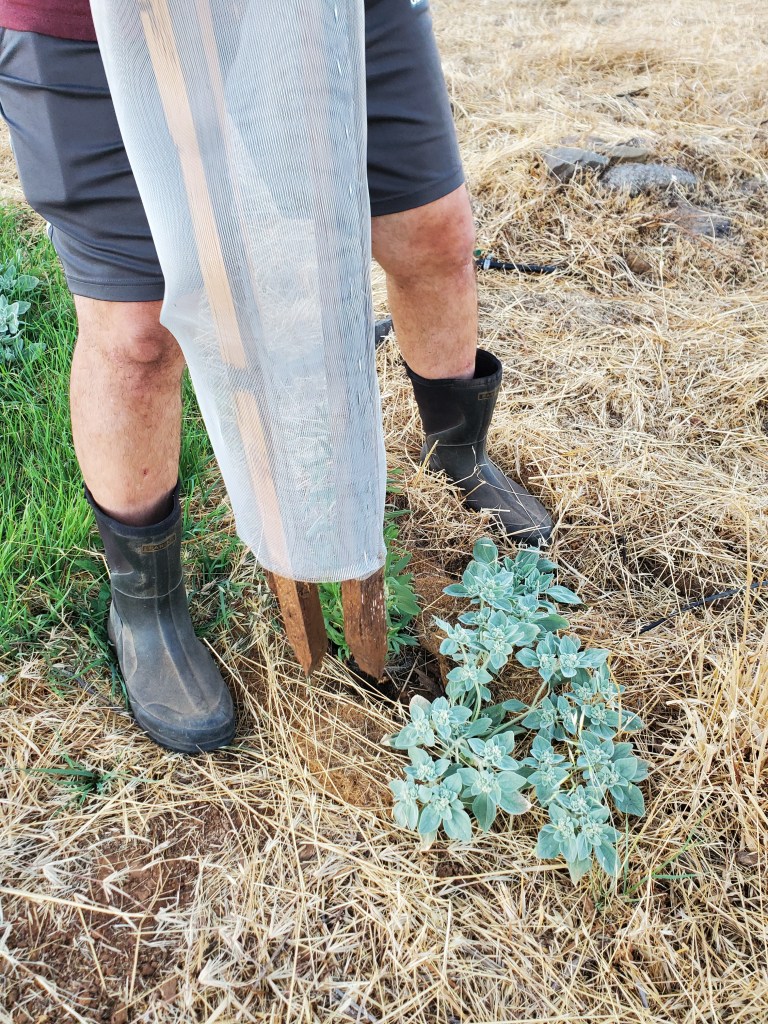
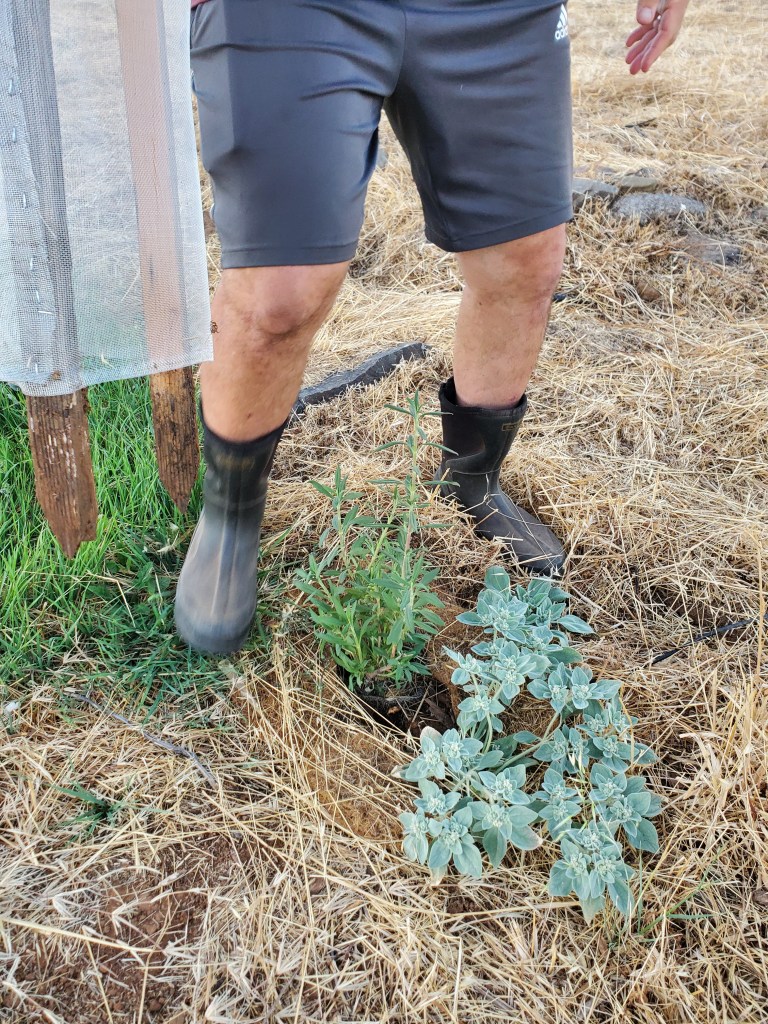
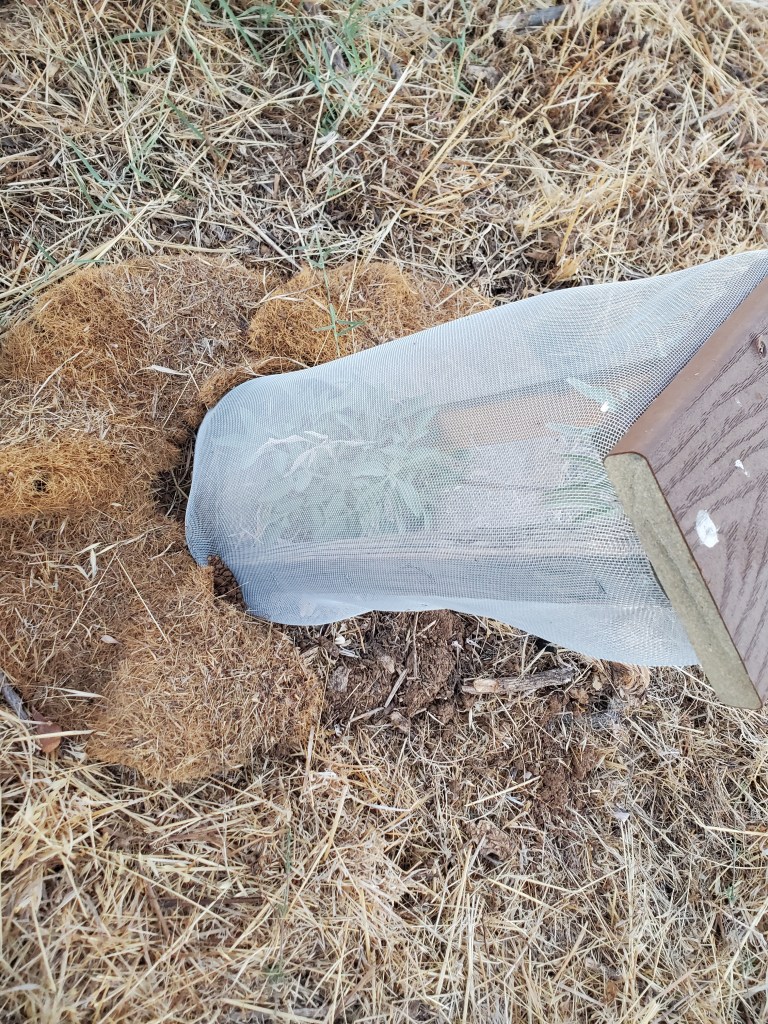
With the hoppers having abated, David and I have been slowly releasing the plants we covered in screen boxes. They have done very well. We are keeping the oaks in screen boxes just in case. I will plan to lift those in September. Thank you again to David and Sam for making those so quickly!

Blooms

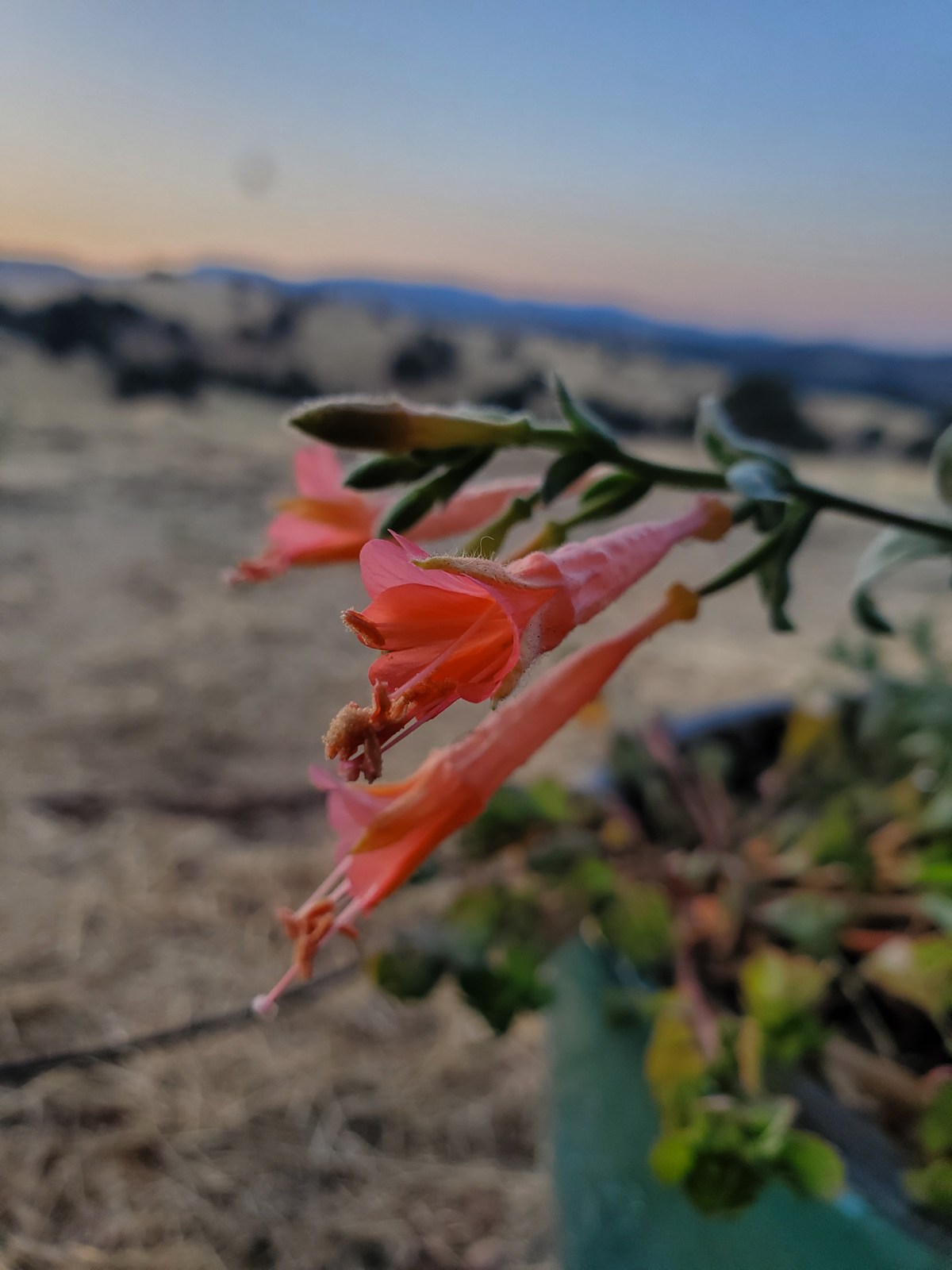
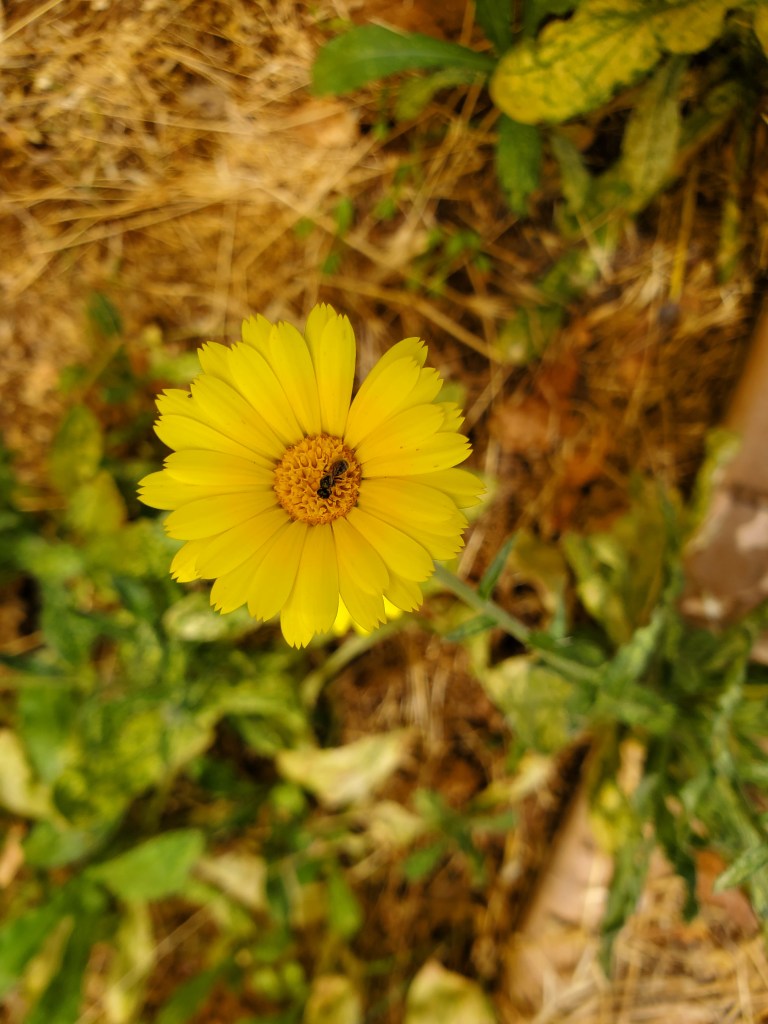
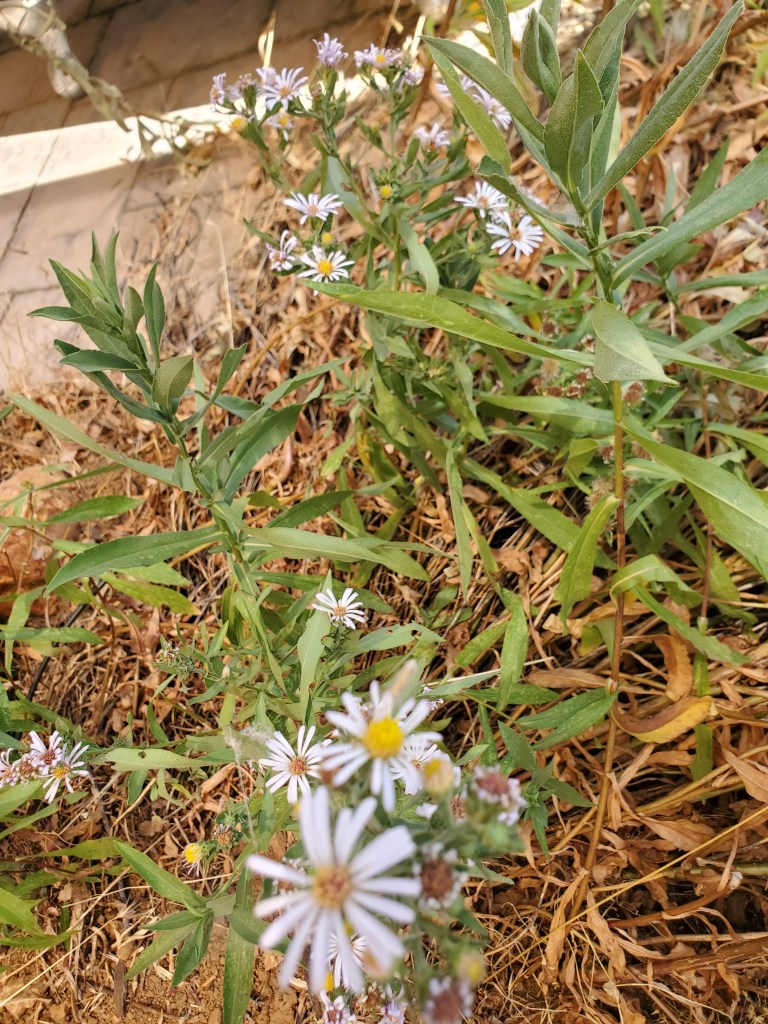
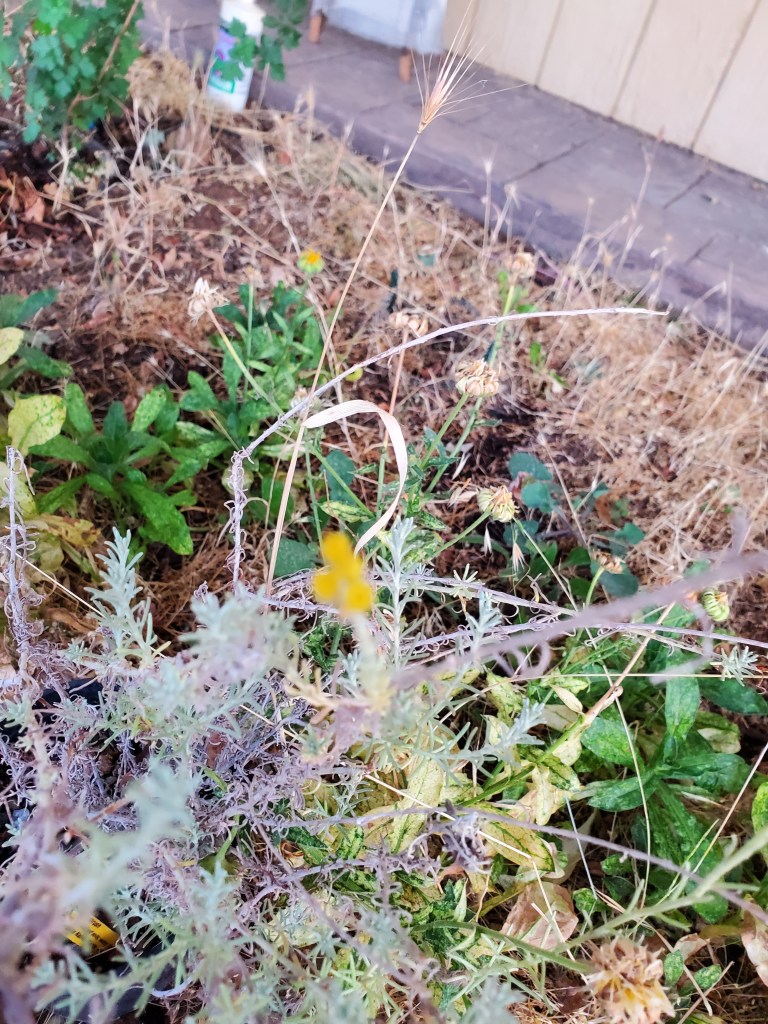
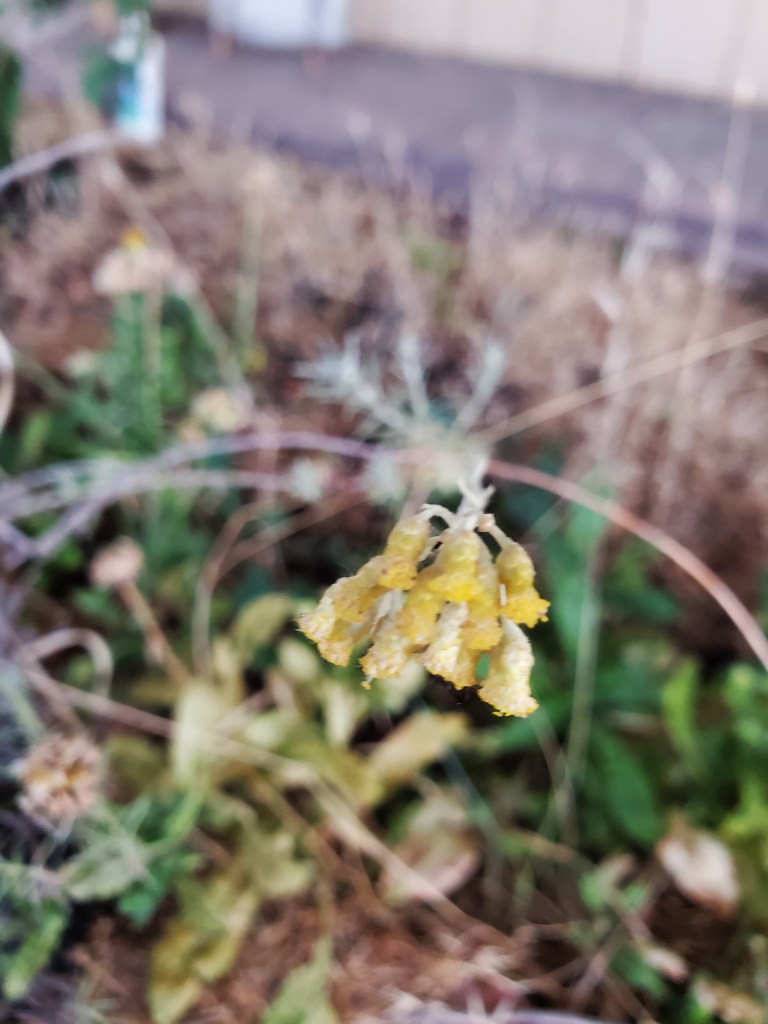
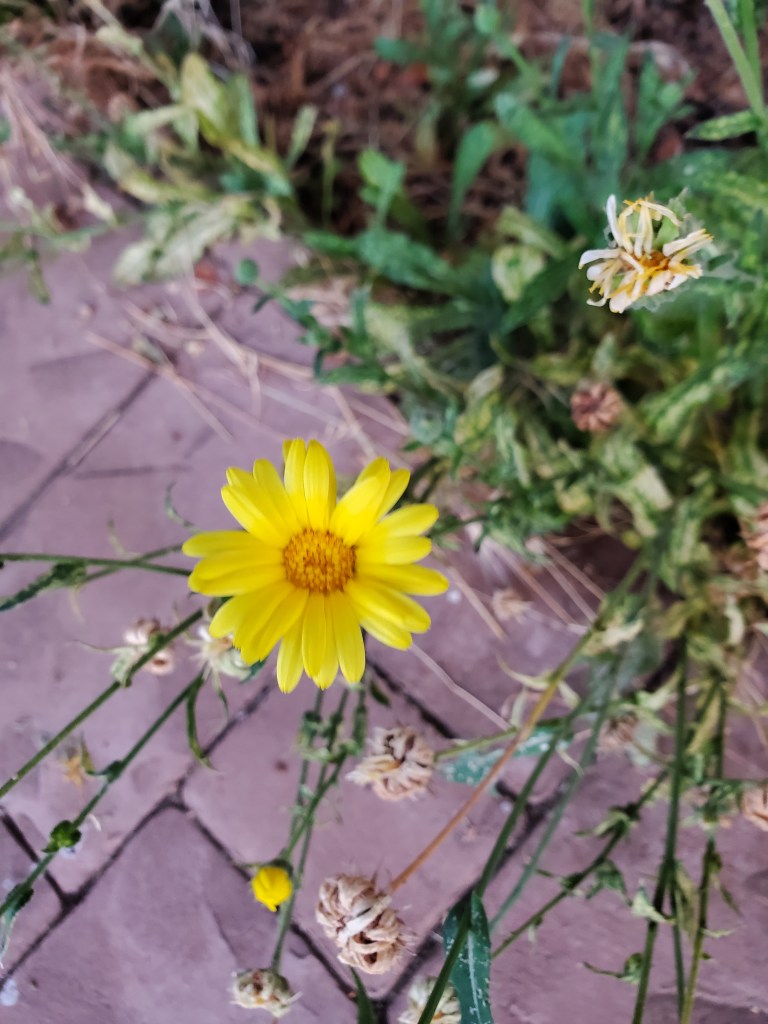
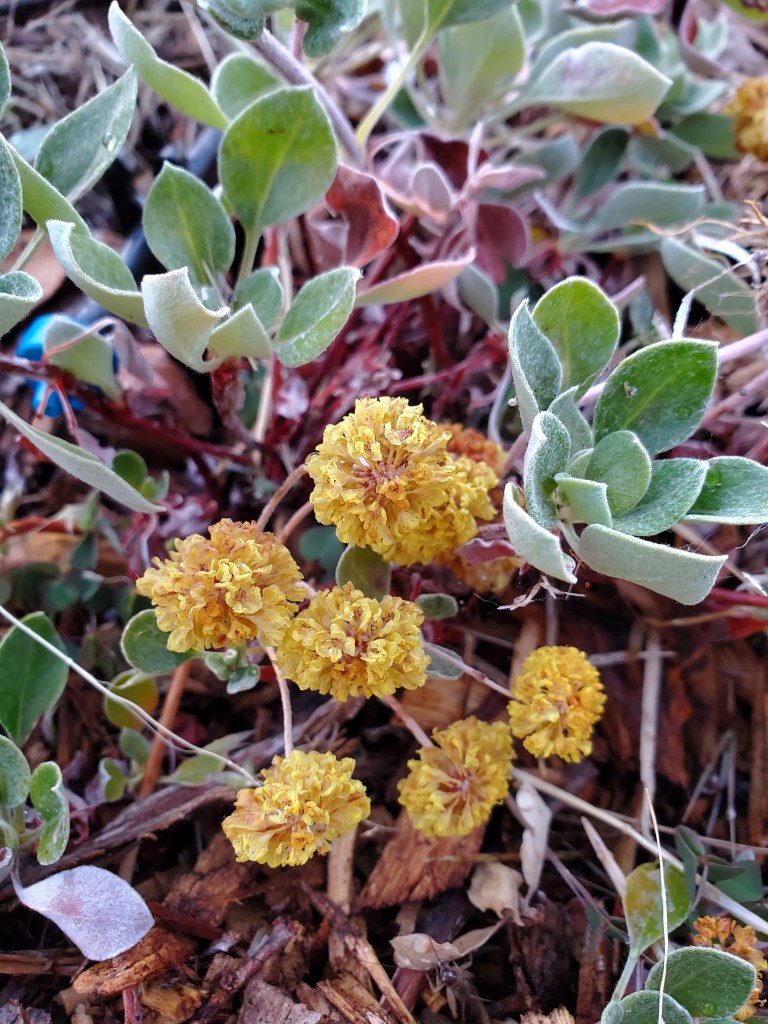
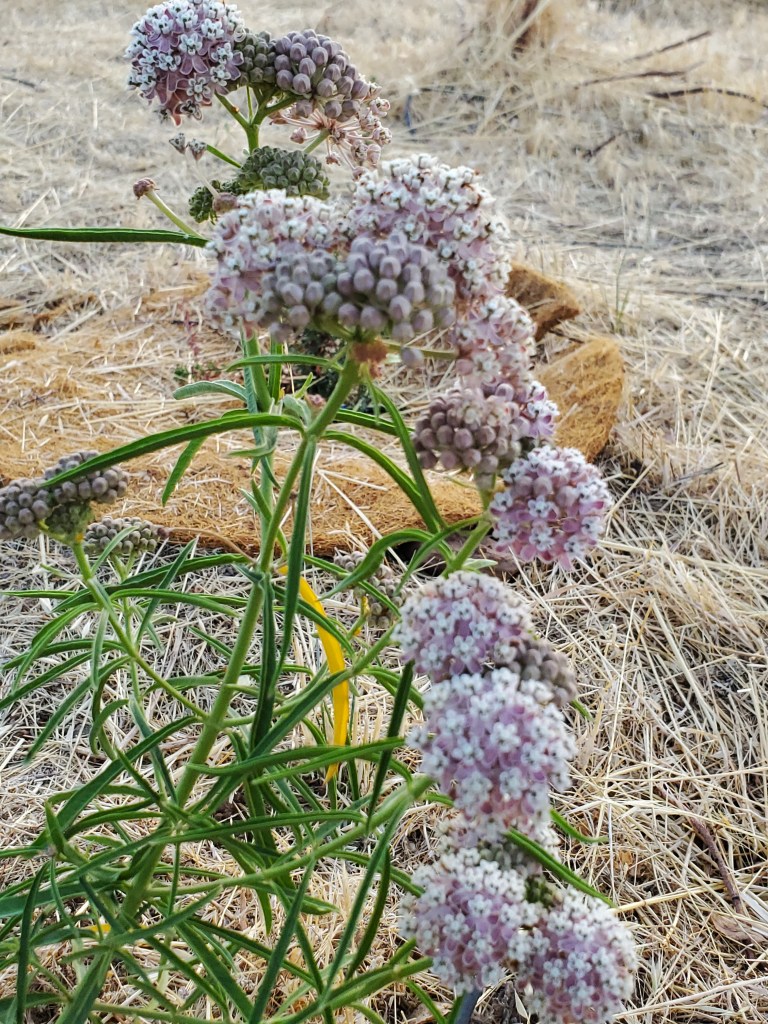
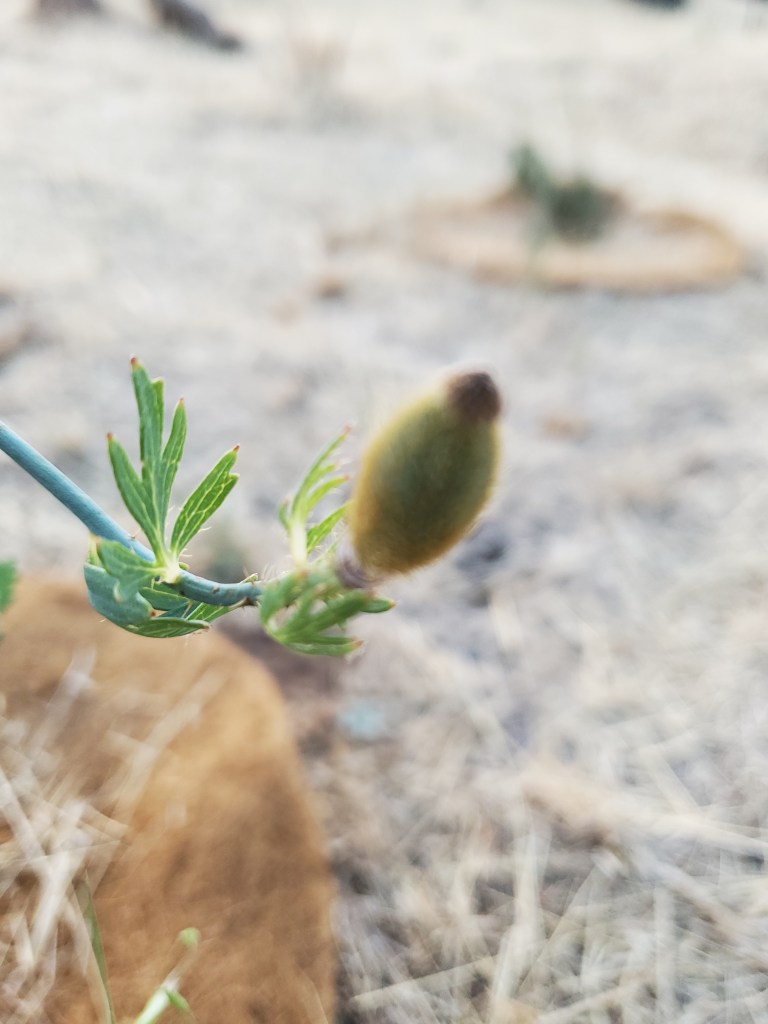
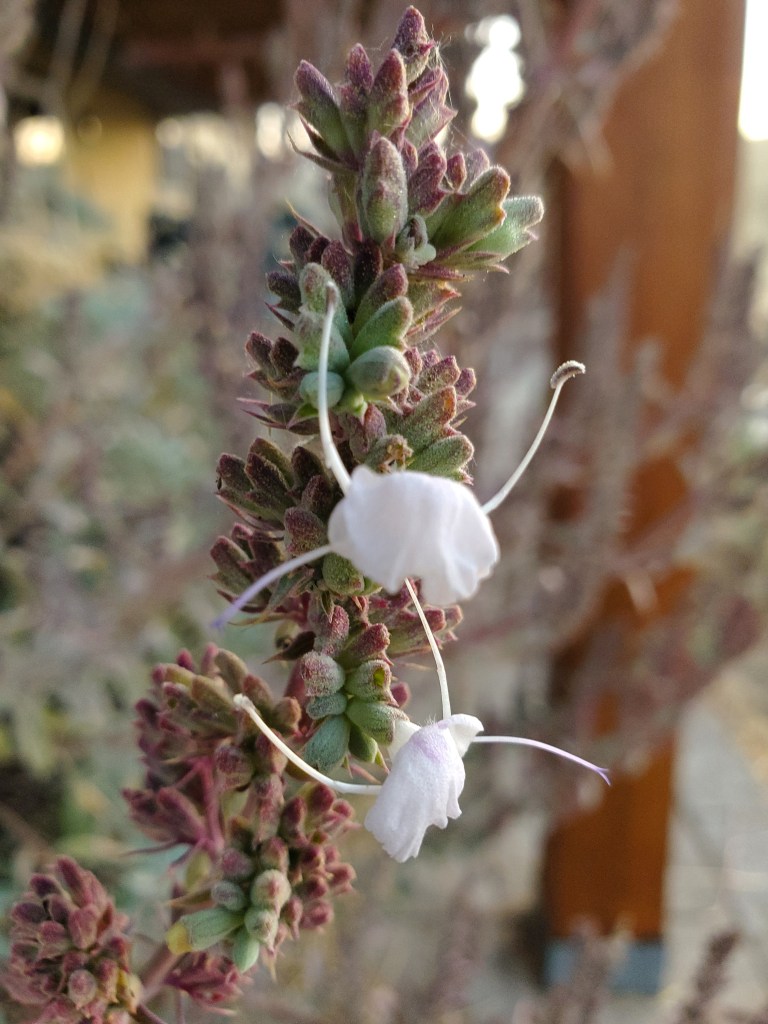
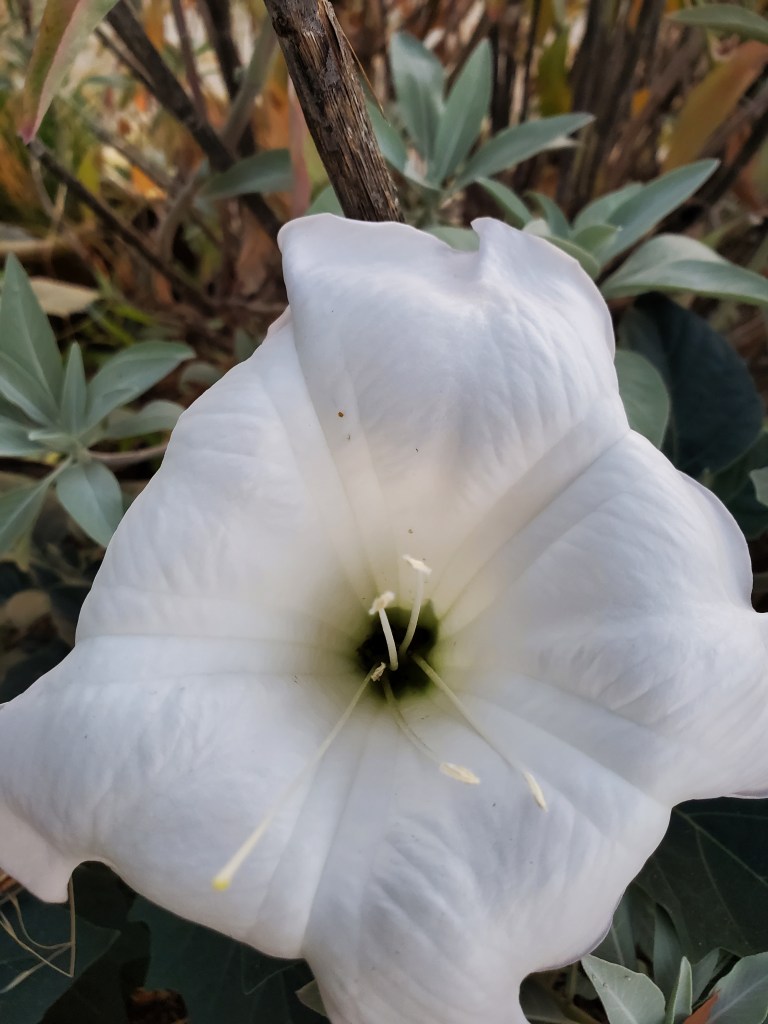
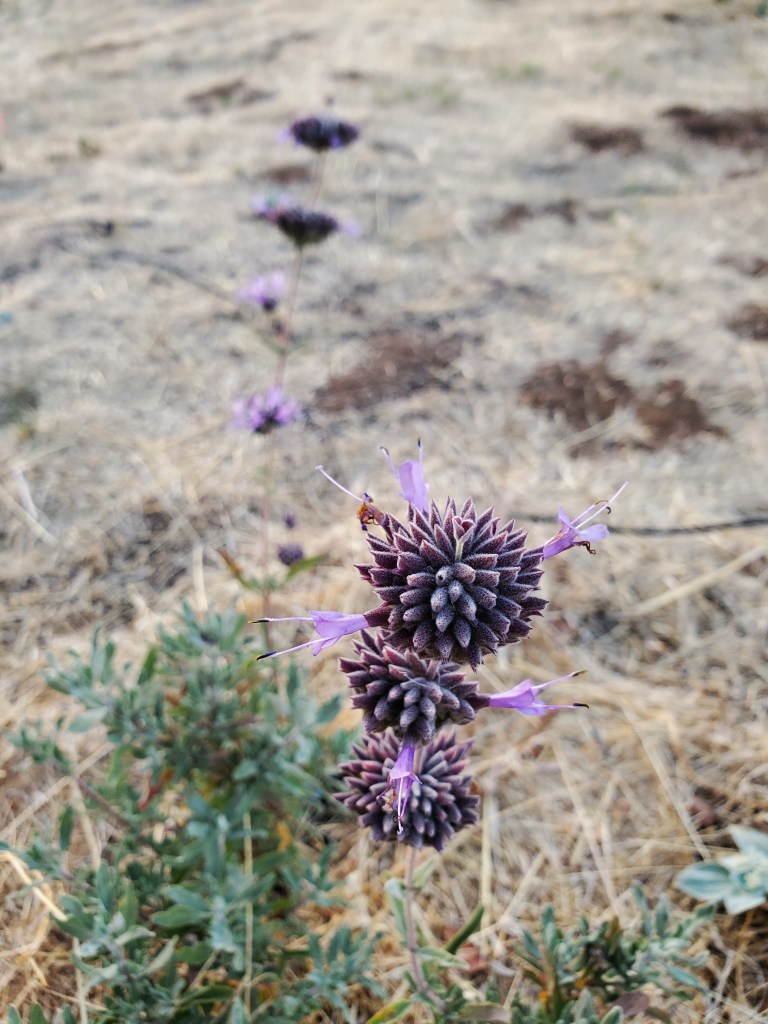
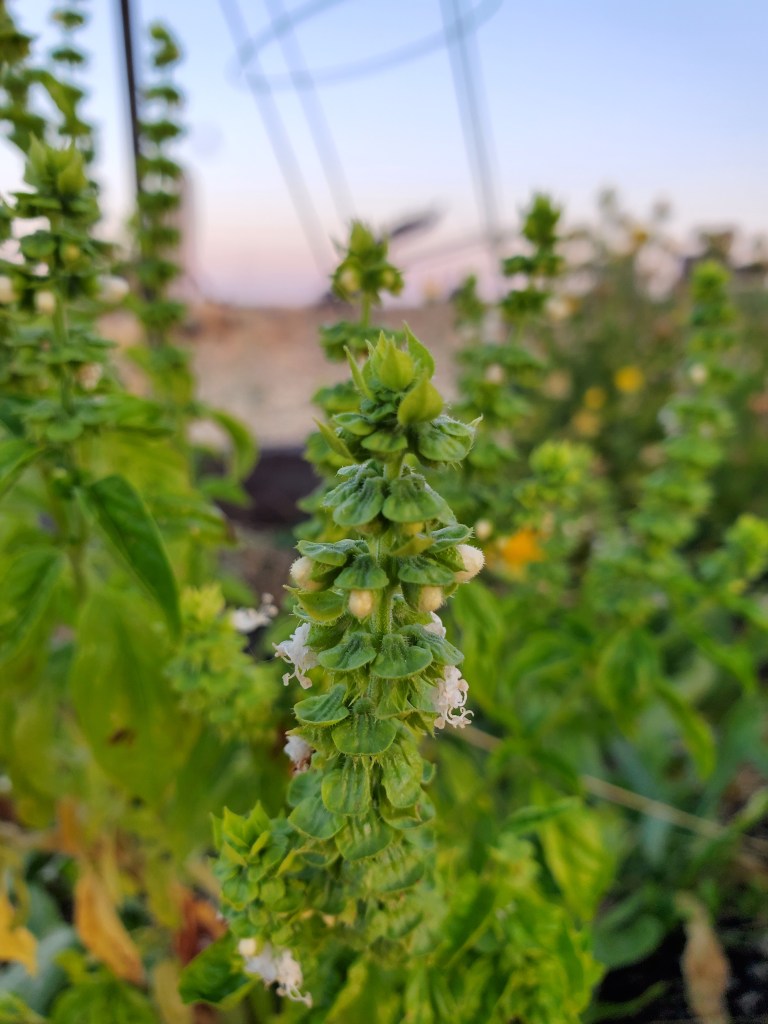
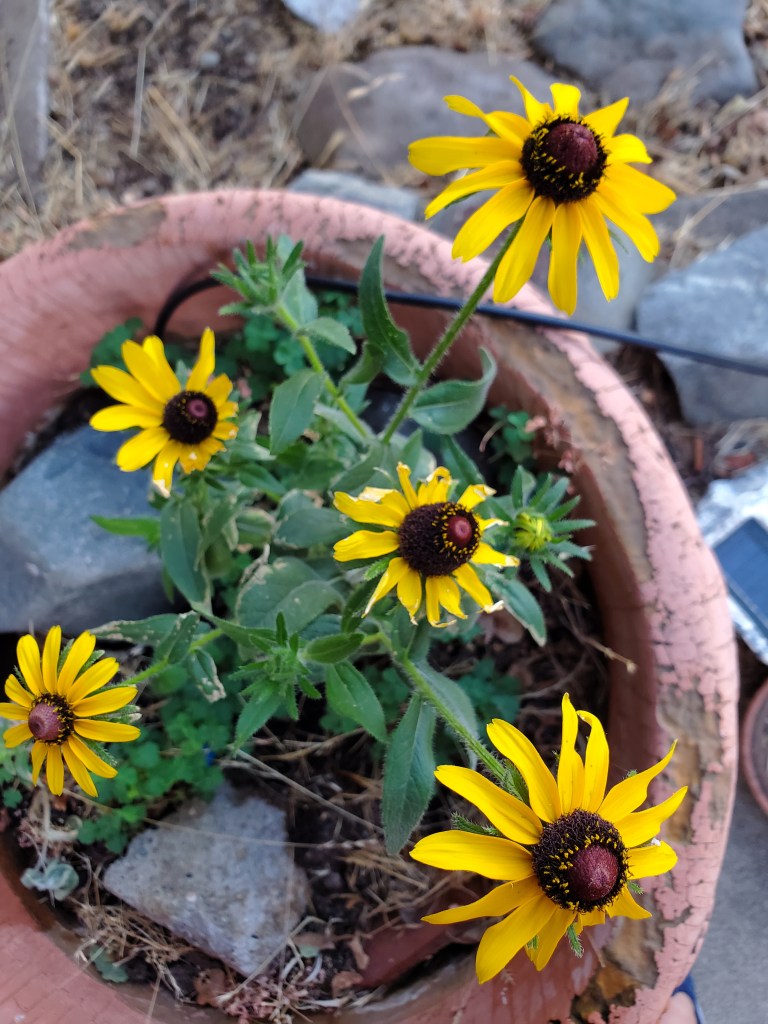
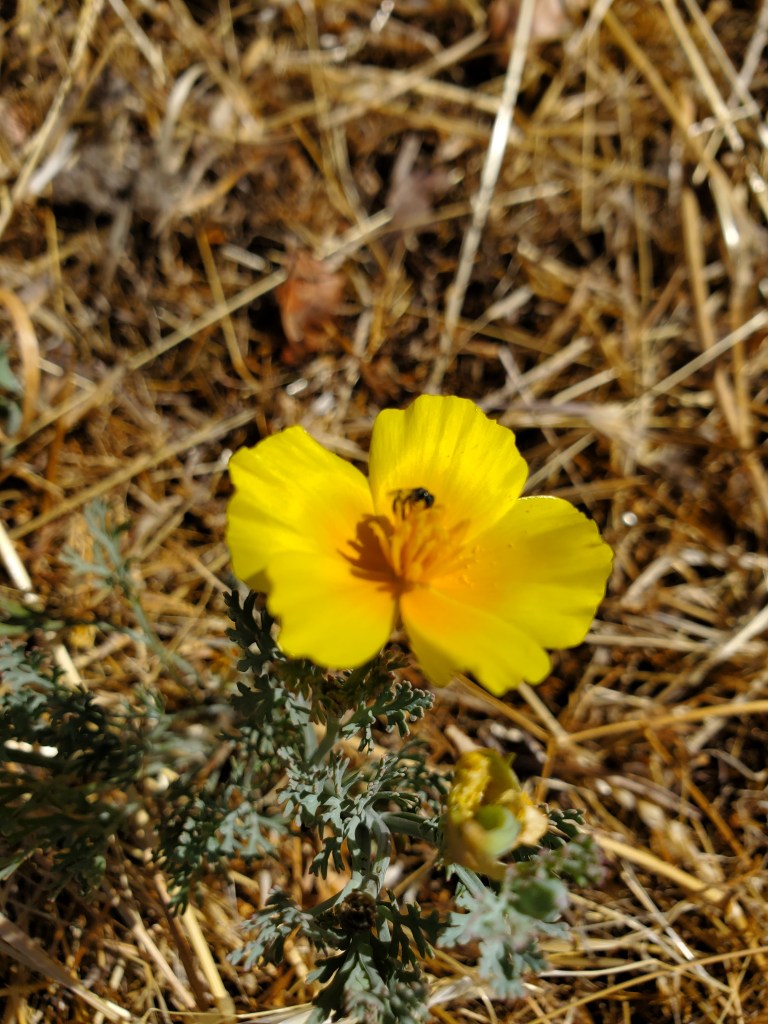
Blooming on July 13 when I began this post and mostly still blooming now are pacific asters, datura, sunflowers, matilla poppy, California poppy, narrowleaf milkweed, California fuchsia rabbit brush, black-eyed susan, marigold, sulfur buckeye, and worm wood. There were a couple small blooms on the white sage, basil and other garden items.

Ranch Maintenance

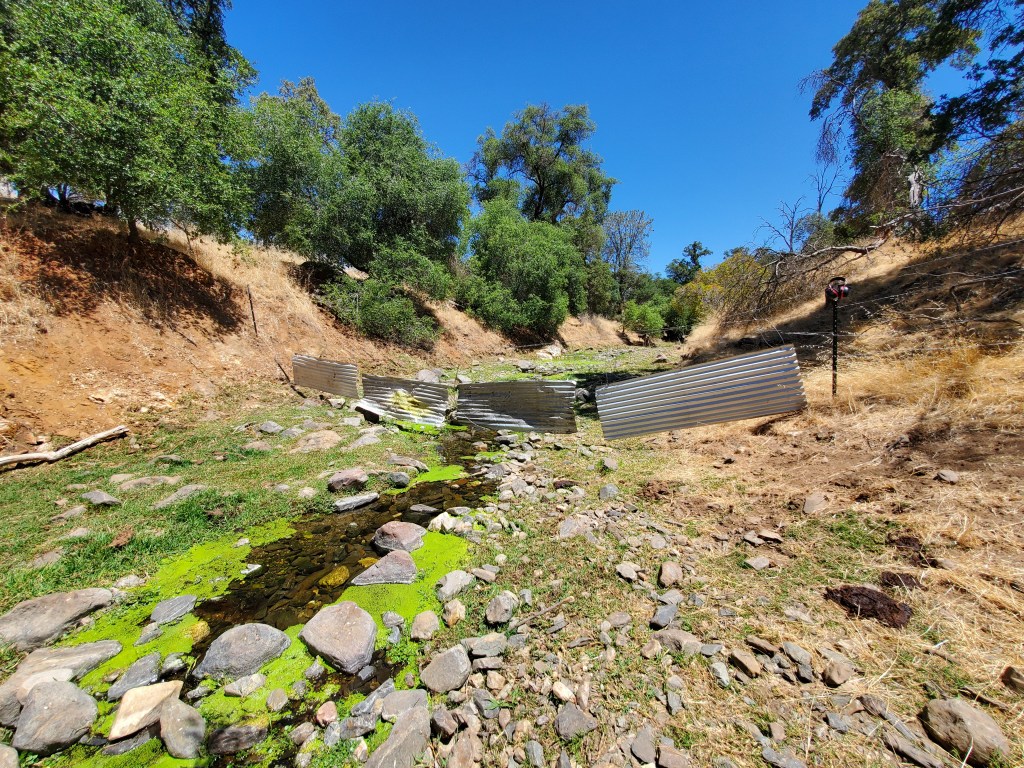
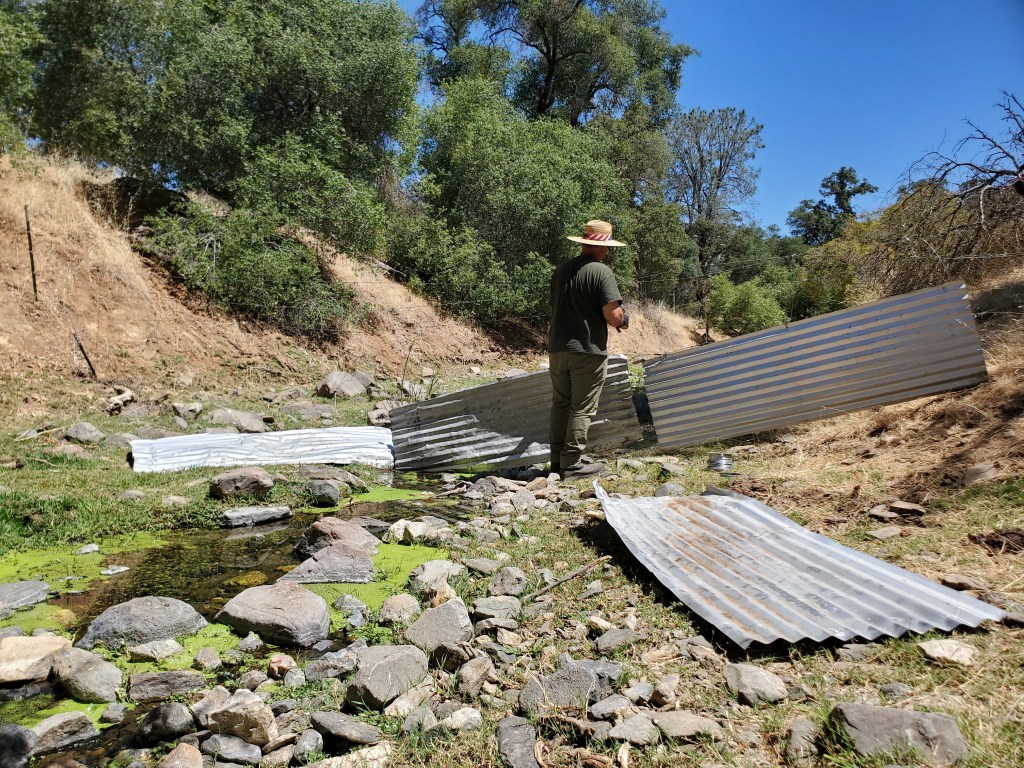
One of the things I love about living on a ranch is that there is always something to do. David and I finally got to the fallen trees and water gaps on Odom Creek. After one of the last major storms this past winter, high winds blew down several branches and dead trees. Two fell on the Odom Creek riparian exclusion fence, making the fence slack. High waters from a rain event took the tin blocking cattle access through the water gaps (areas where the creek flows through between two stream banks under a fence crossing the creek) and deposited them downstream. I retrieved them soon after the storm but did not replace them until several months later due to other issues requiring my attention.

With the tin down, it opened a small pathway for cattle to get into the exclusion. Grass and creek plants that typically grow inside the exclusion area were nowhere to be found. Adding to this was the large number of grasshoppers near the riparian areas this year. Thistle, which the cattle normally leave alone due to their spiky, tough exterior, were stripped to skeletons. Both contributed to no vinegar weed (another favorite), less watercress, no milkweed and no thistle nectar.

Wildlife

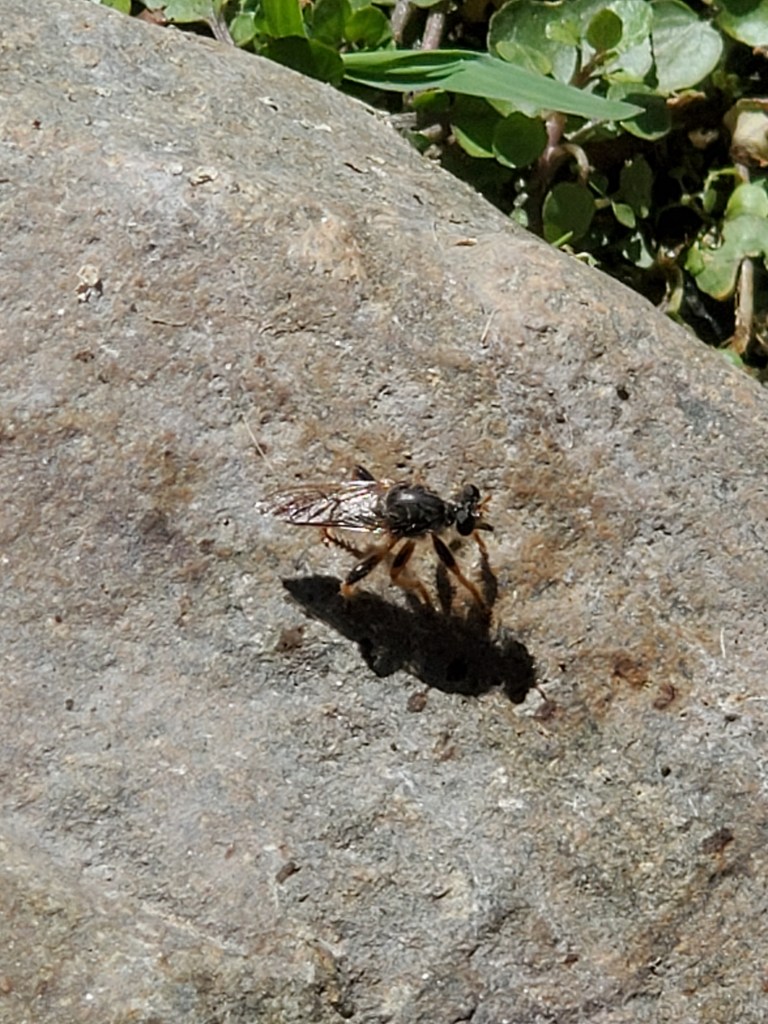
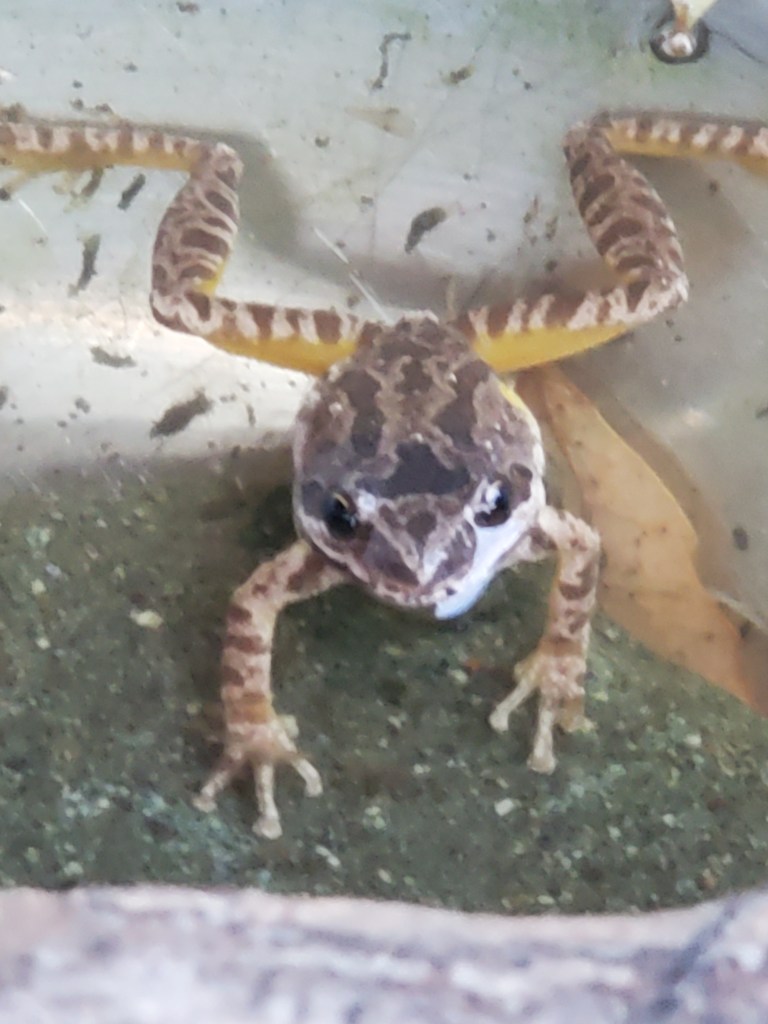
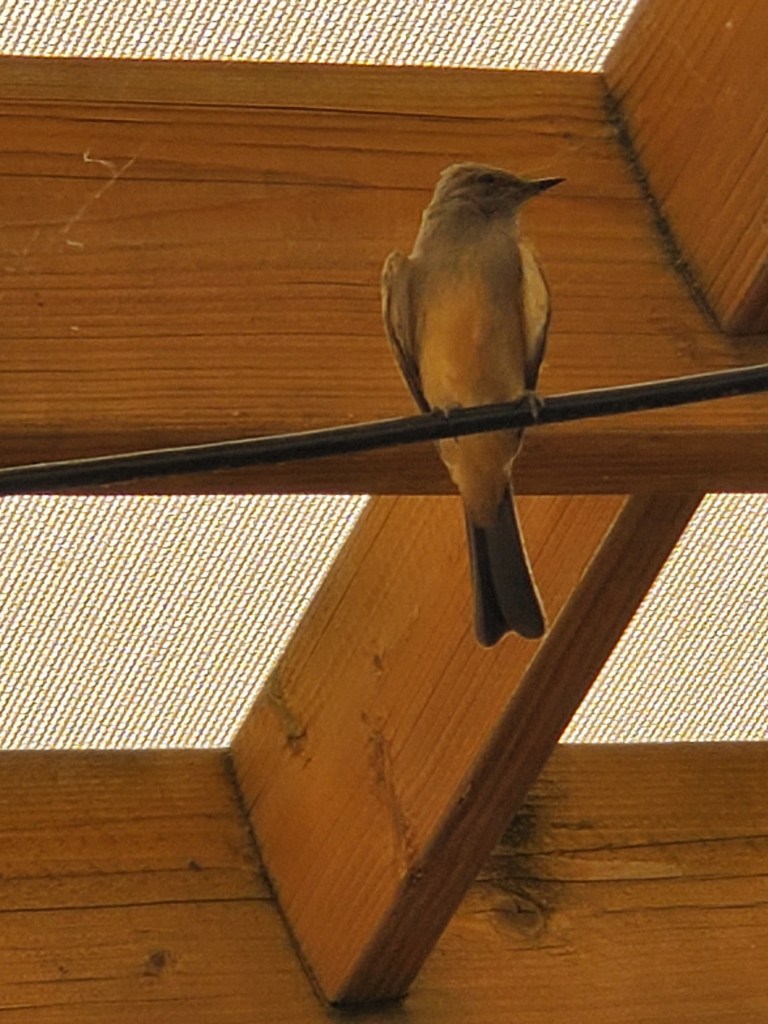
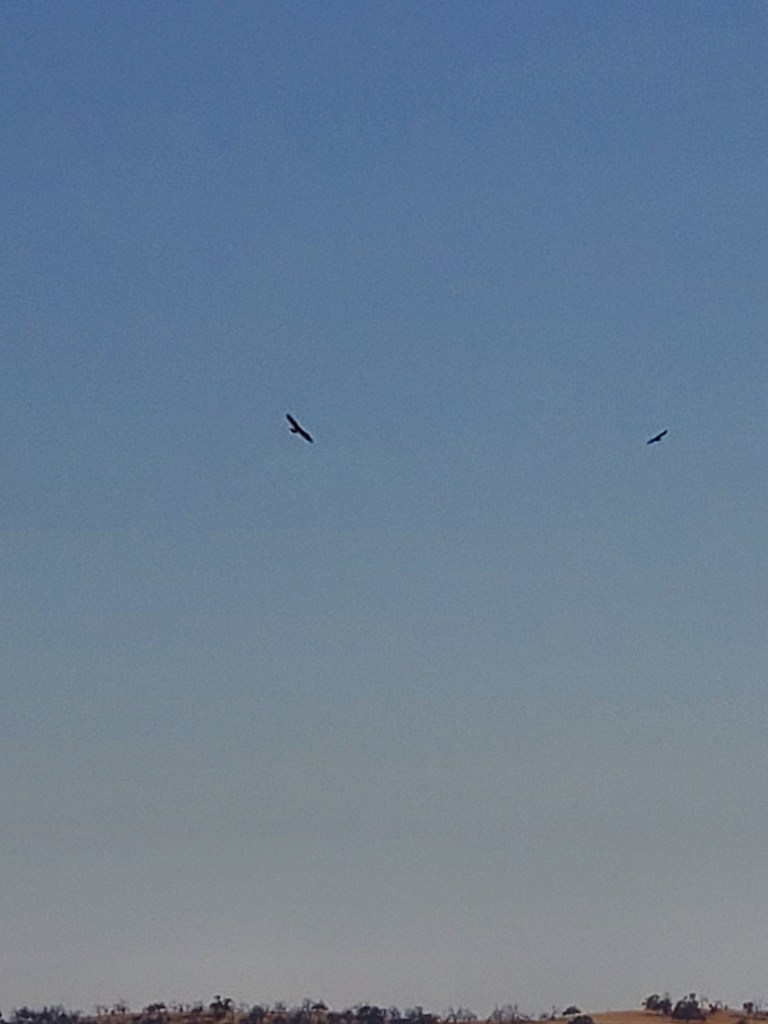
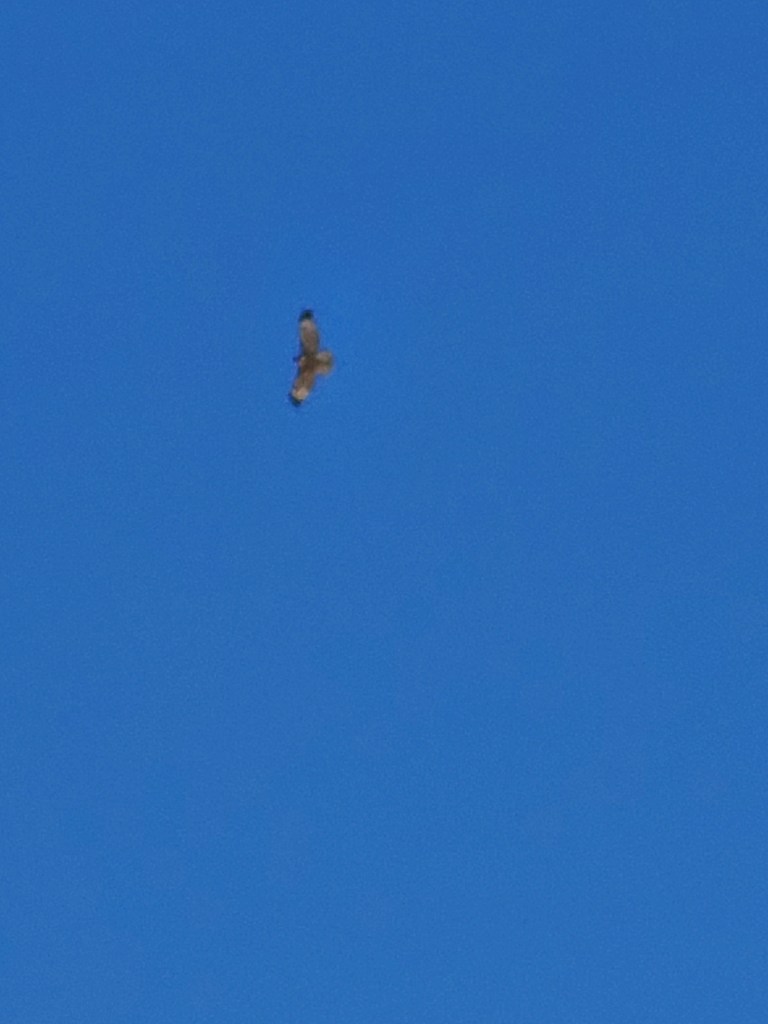
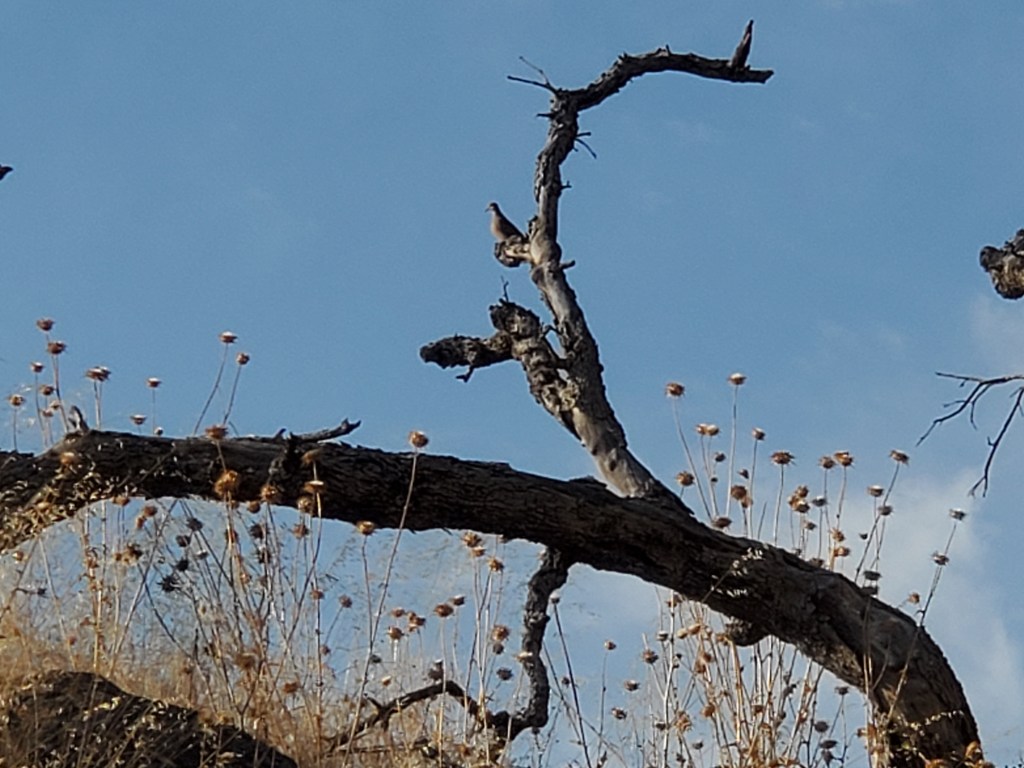
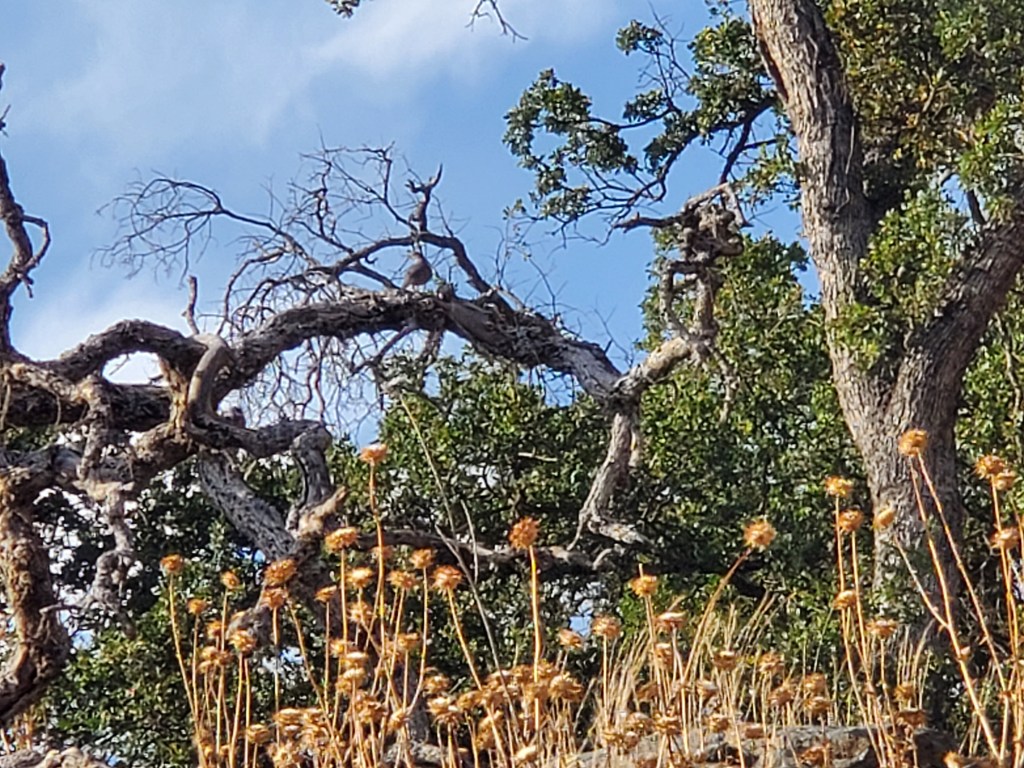
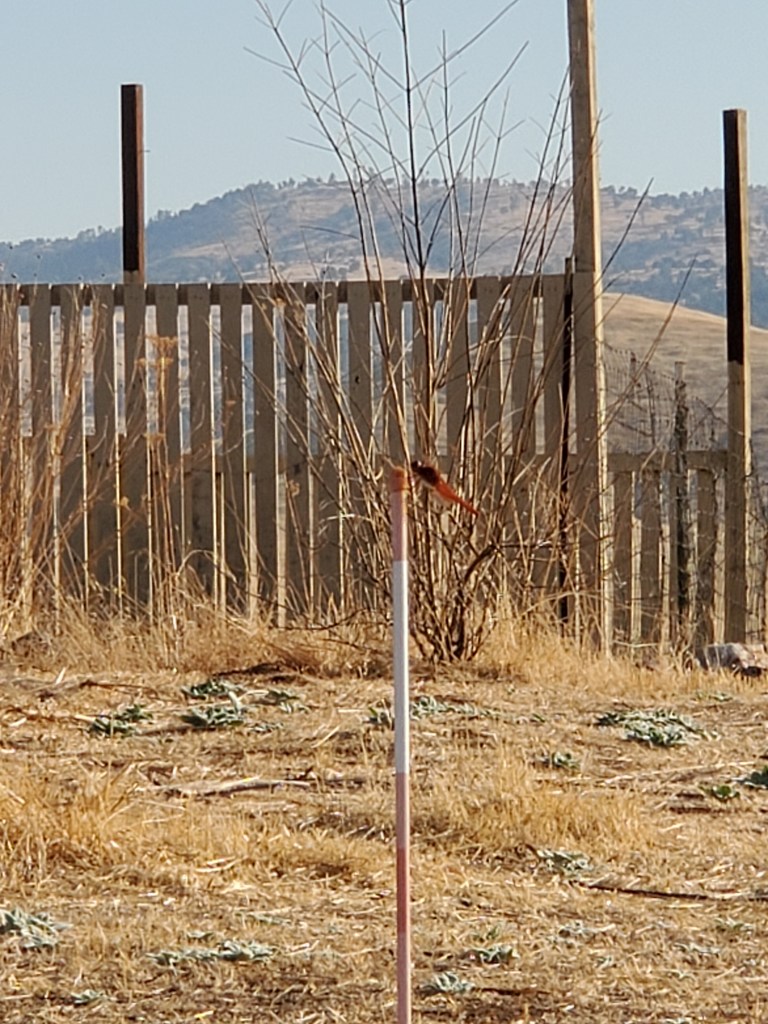
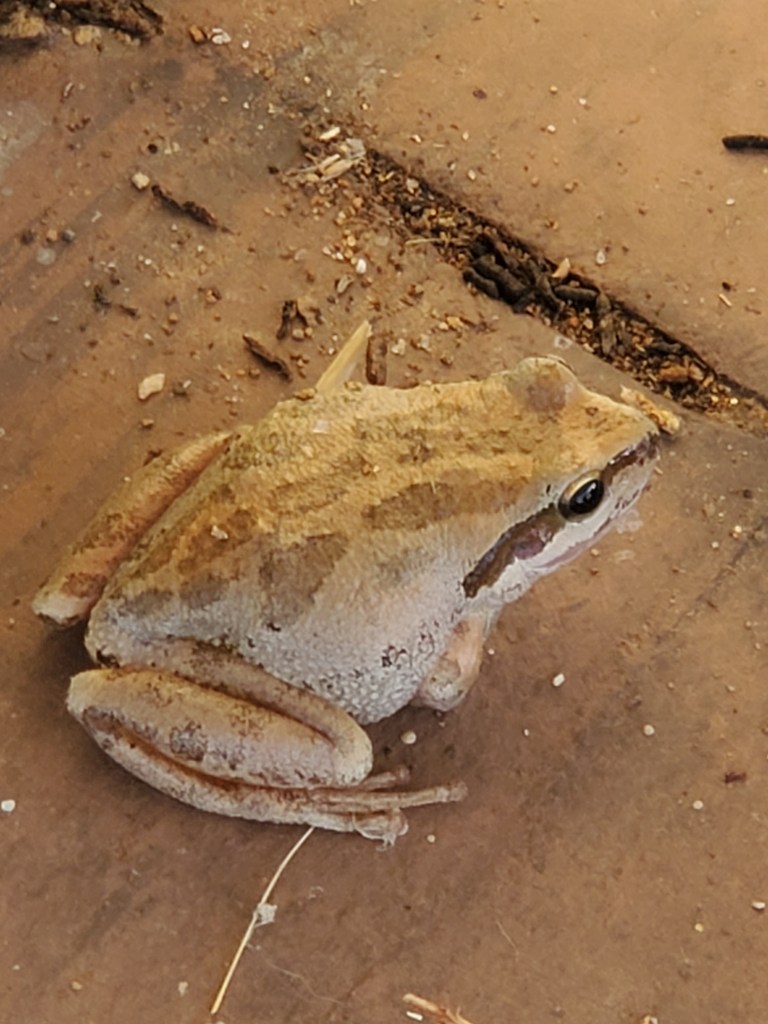
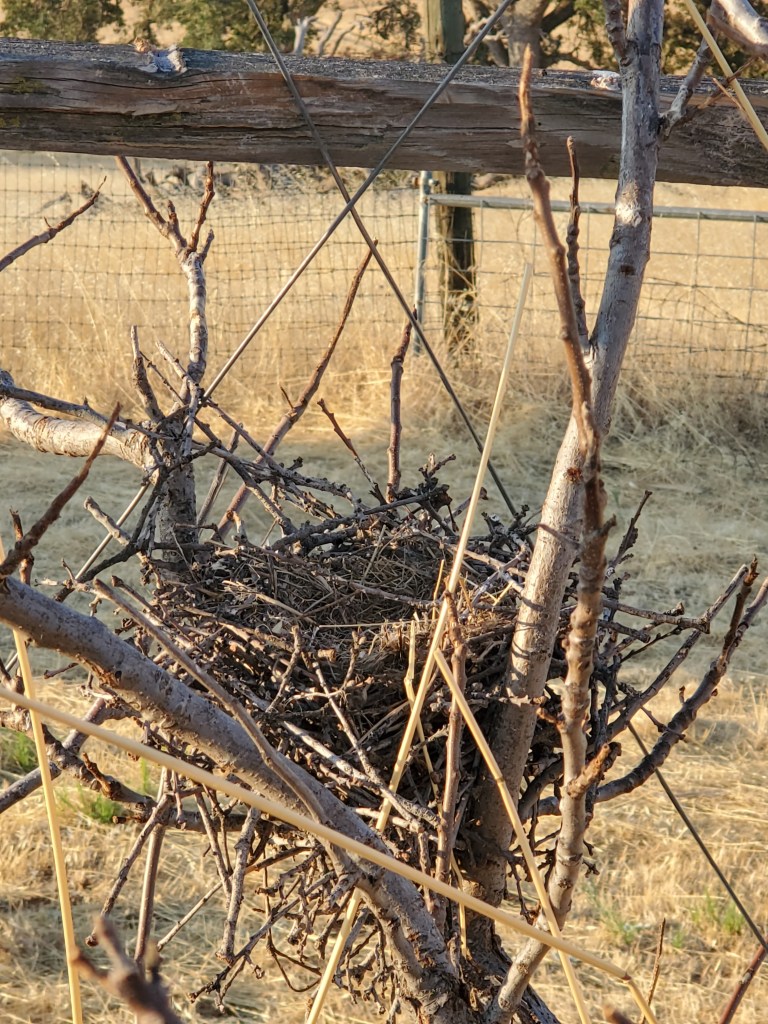
Although I’ve not see as much wildlife as I have in the past, there have still been some beautiful encounters. Running across the road in the near area, and sadly no photos, I have seen coyote, a bobcat and bunnies. Below are other friends.

Seed Collection

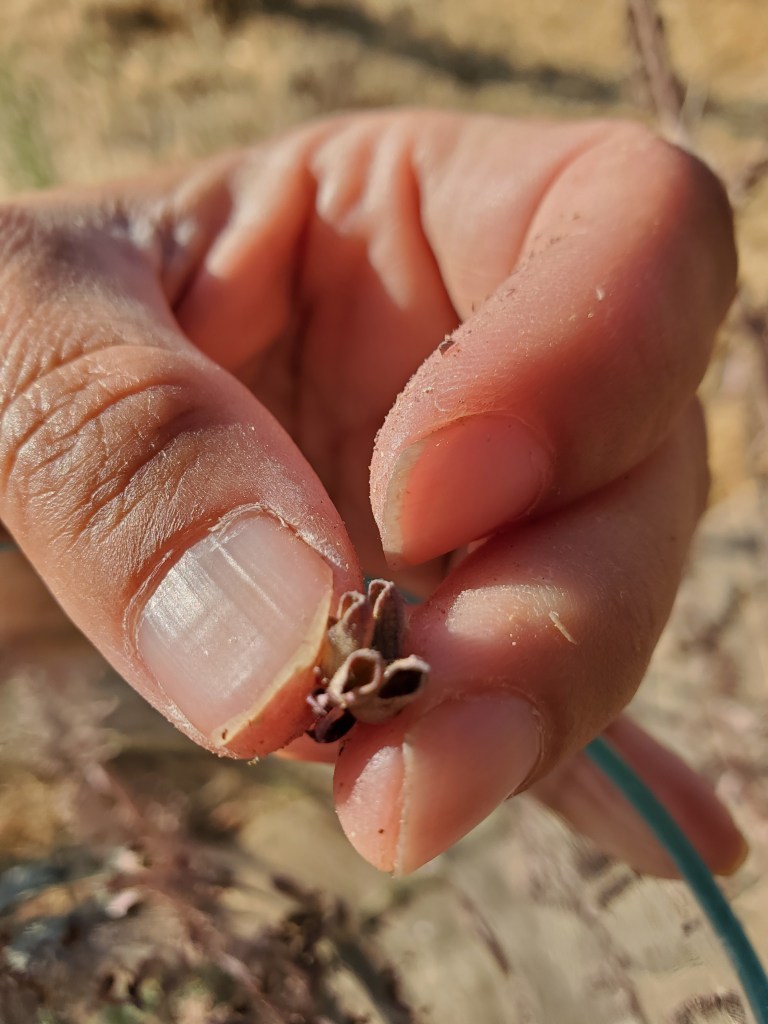
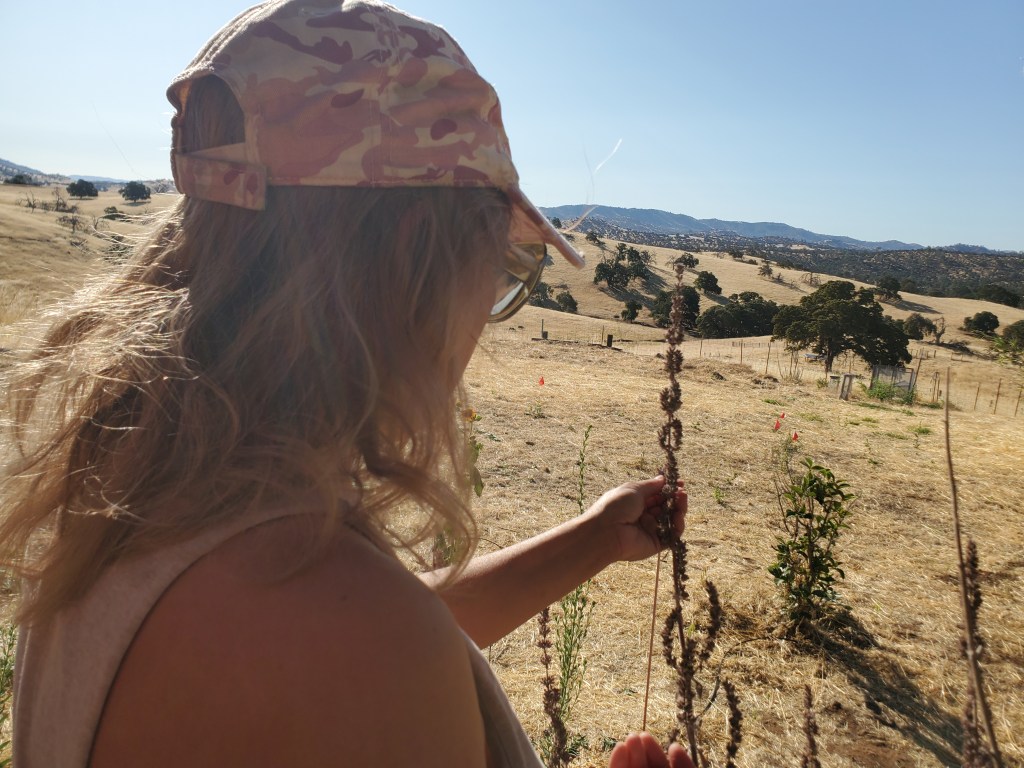
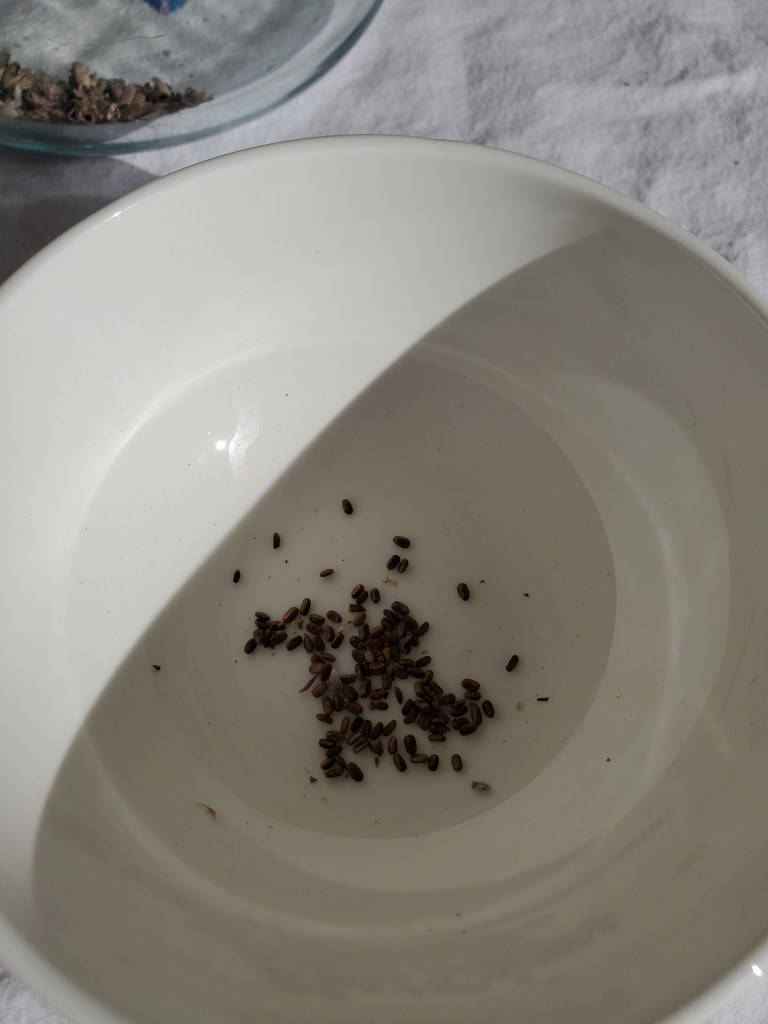
As plants begin to die back and set their seeds, I have been out collecting. I never collect more than 10% of what is available. I share with the birds as well as leaving plenty to grow the next generation.

Rainwater Catchment Building Continues

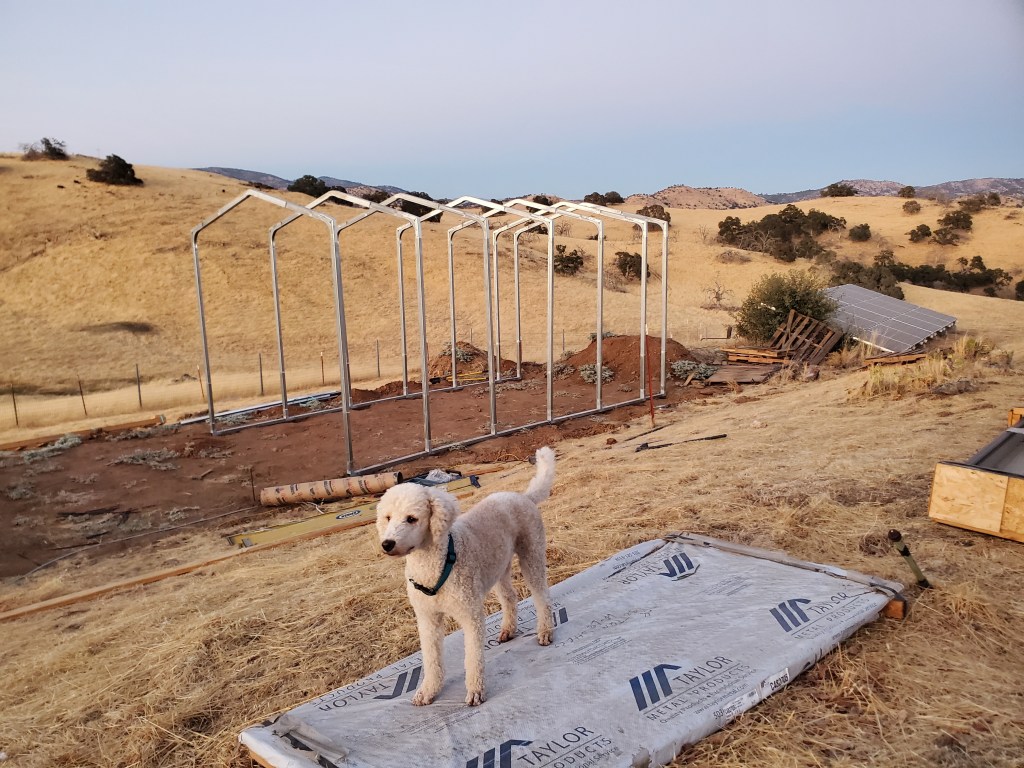
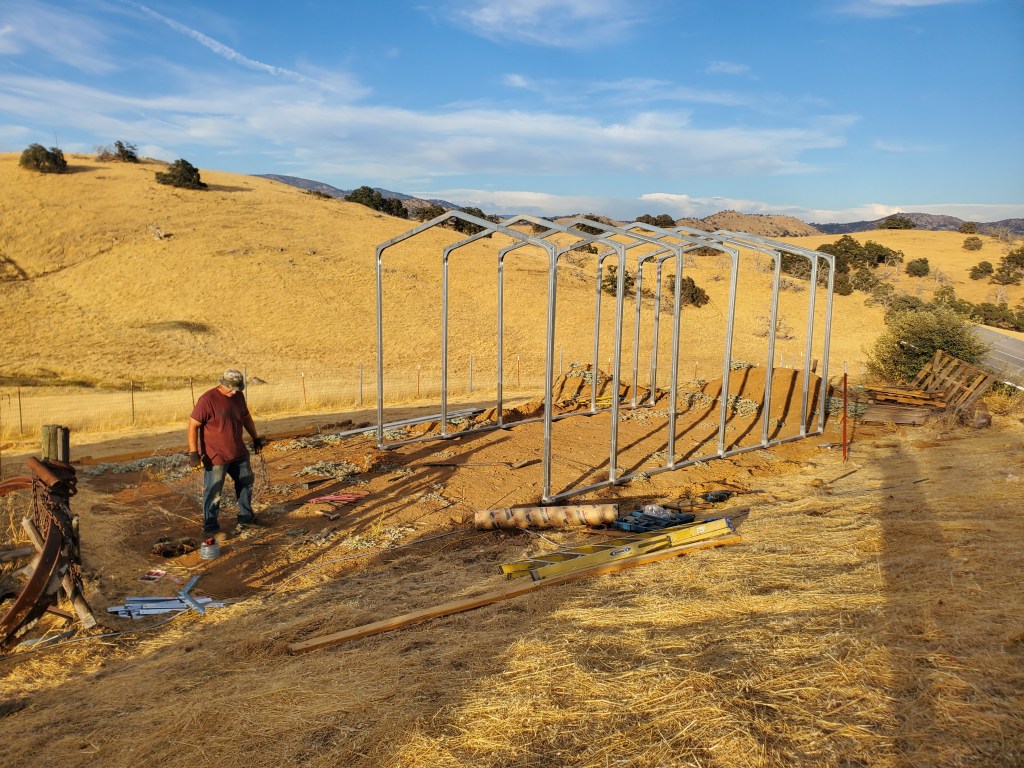
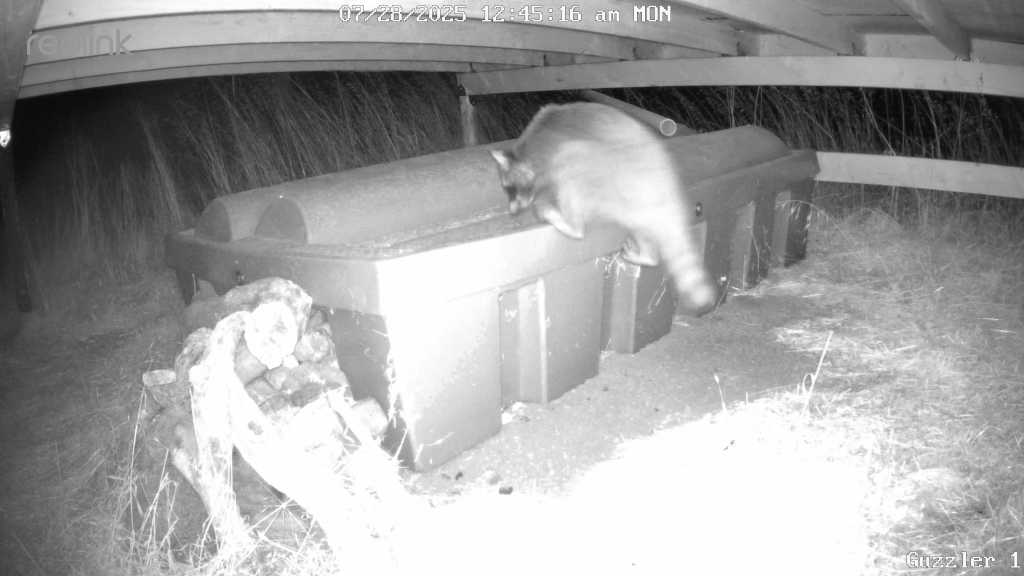
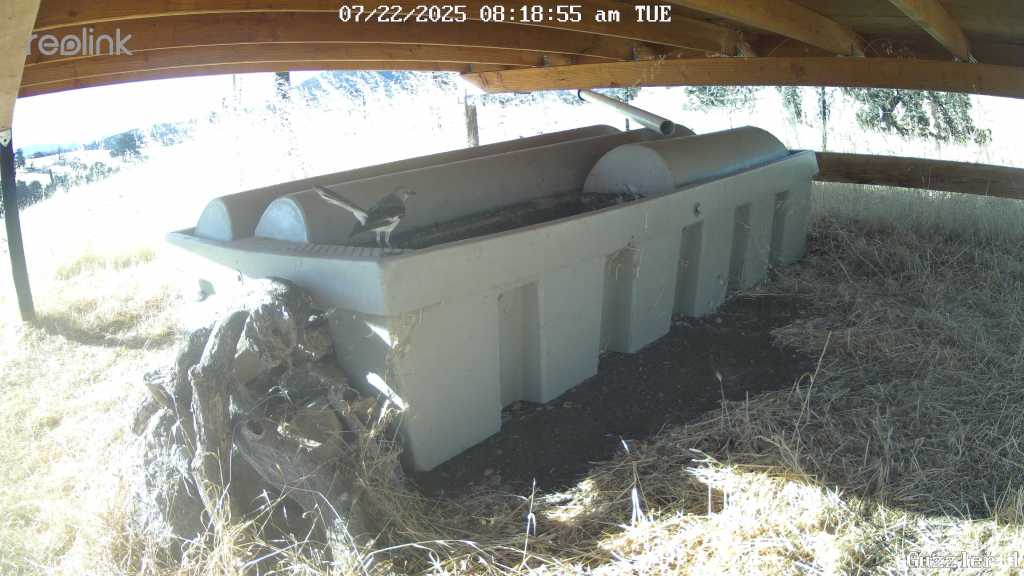
One of our ongoing projects has been to create a fresh, ongoing supply of water to the wildlife guzzlers. Recall, we built a small overhang over the guzzlers to catch more rainwater than if they were left out on their own with their beveled tops. The overhang also acts as shade to decrease evaporation from the unit. Some years, the water captured lasts the entire year. During droughts, the water has run out by late August. To prevent running out, but to also inflow more fresh water, we are building a larger rainwater catchment up hill to gravity feed into the guzzler. The tank is 1500 gallons and will be under a metal building to protect it from sun exposure and heat gain. David has been working on it and will likely be done a week from this post. I am very excited to keep water flowing throughout the hot months. The guzzler has become a very busy place with ground and song birds, raccoons and one feisty feral cat. Thank you to the Natural Resources Conservation Service (NRCS) EQUIP program, US Fish and Wildlife Partners Program and Point Blue Roots Program for believing in this work and supporting it.

Fire Danger Ever Present

Living in the new norm of ever present fire danger feels unsettling. When I was a child growing up in the Sierras, fires were part of life, but rarely major conflagrations. There was more water then and less people. I never worried, and I don’t recall my parents worrying the way I do now.

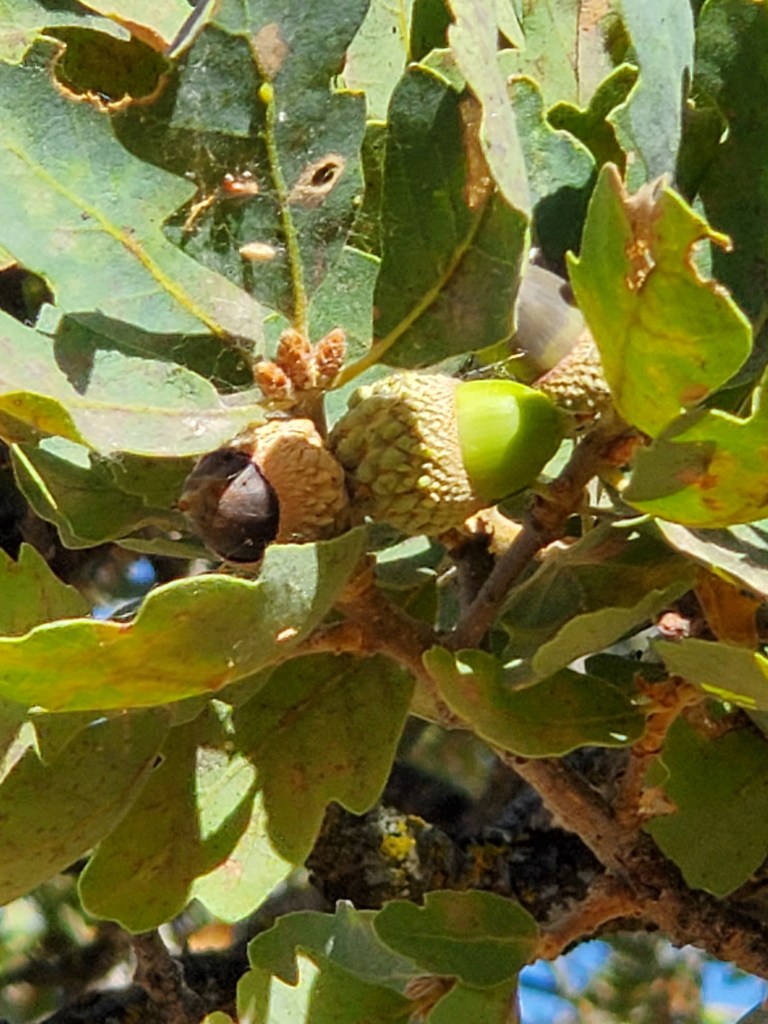
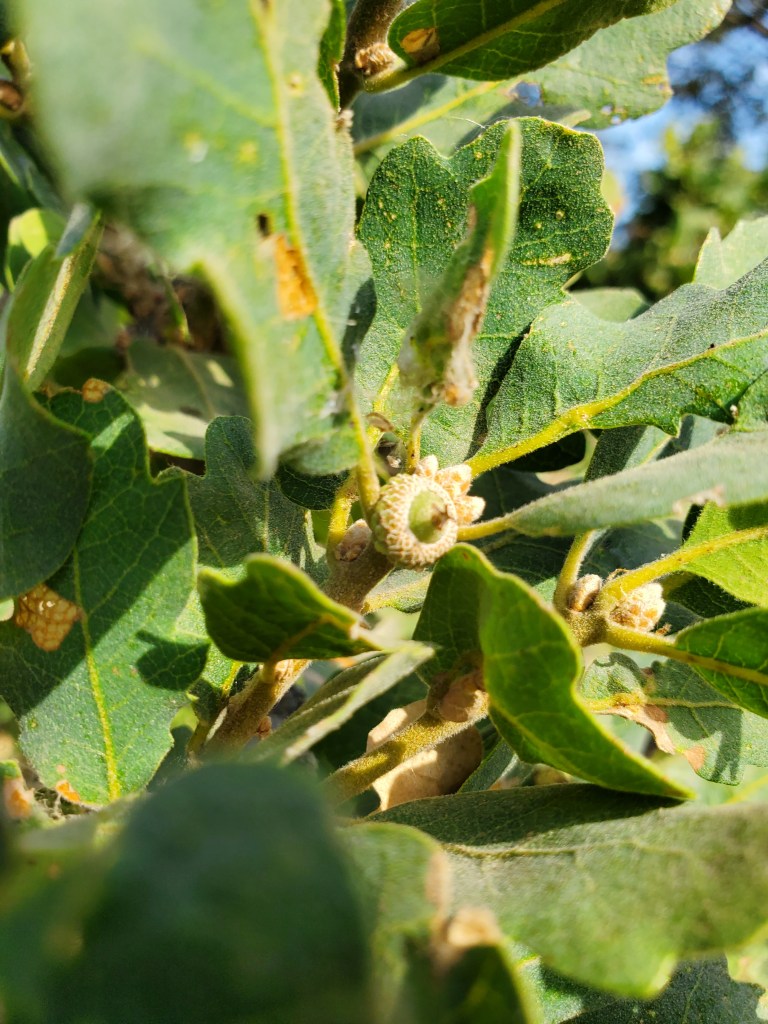
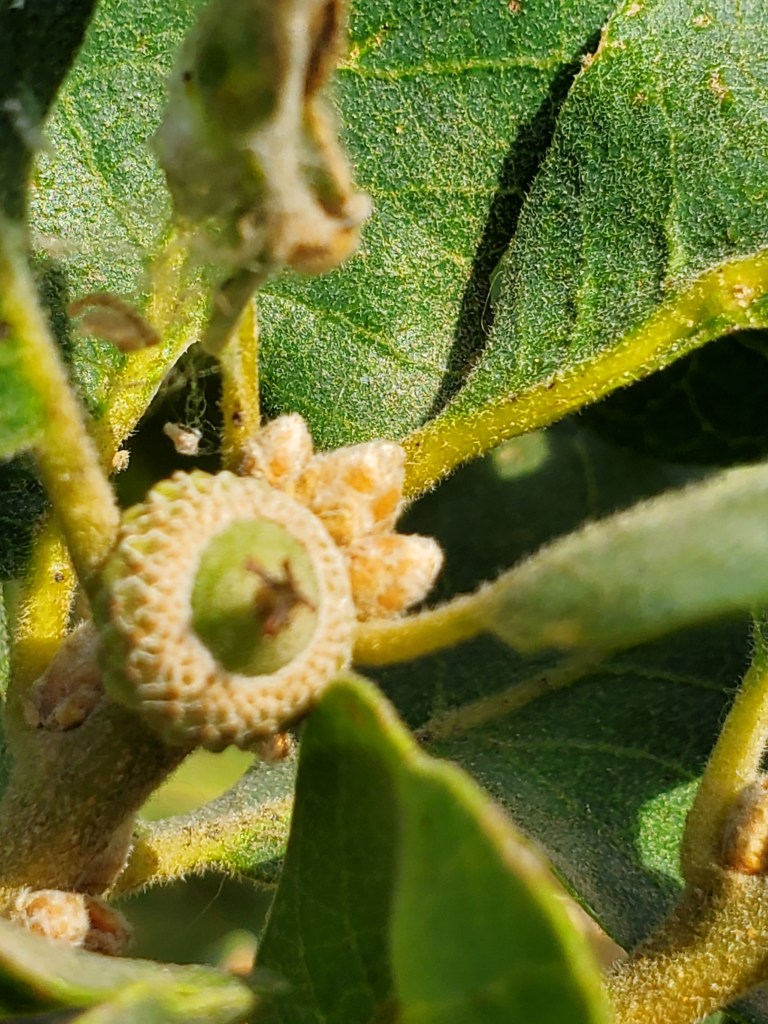
This year and last, we had a nice, steady stream of rain events that kept the soil moist longer into the summer. This year, in fact, David and I both noticed that all the oaks look healthy and happy. Their leaves have stayed on and are a vibrant green. Fresh, well-formed acorns are setting now. July has been much cooler, and that has helped the mature trees too.

Even with these positive signs, I still cross my fingers that a major fire will not rip through the land. Through my work in natural resources, I can see the massive investments by the state in fuels reduction and stewardship. Communities are working hard, year-round to be better care-takers of the land. The problems of over 100 years of fire suppression, population growth in wildland areas, more efficient ag tech to suck water from the land and climate change shifting temps into record levels are all massive issues to overcome. The pace and scale needs to be even greater – and as importantly, if we do not tackle the root causes, we will be constantly fighting an uphill battle. Stewardship, care for the land, being in good relation is not work; it is life. It is an ongoing relationship where a thoughtful existence results in abundance and health in an environment where we can all live – nature relatives, humans – and thrive.

Hot, Dry and a New Normal We Must Not Accept

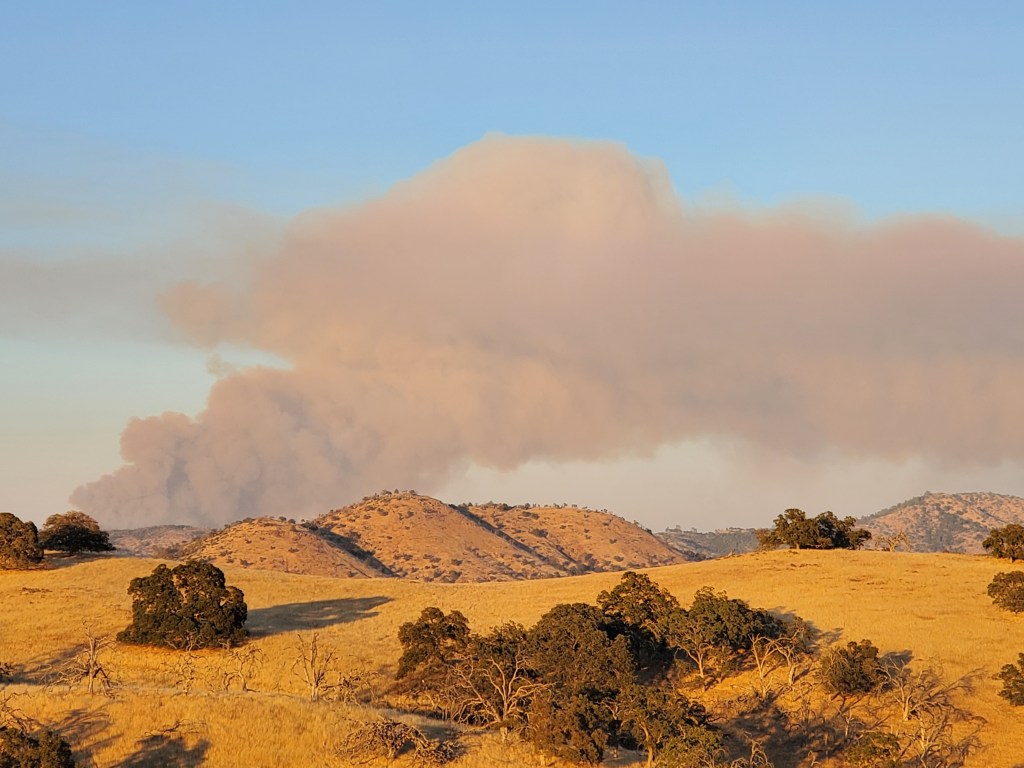
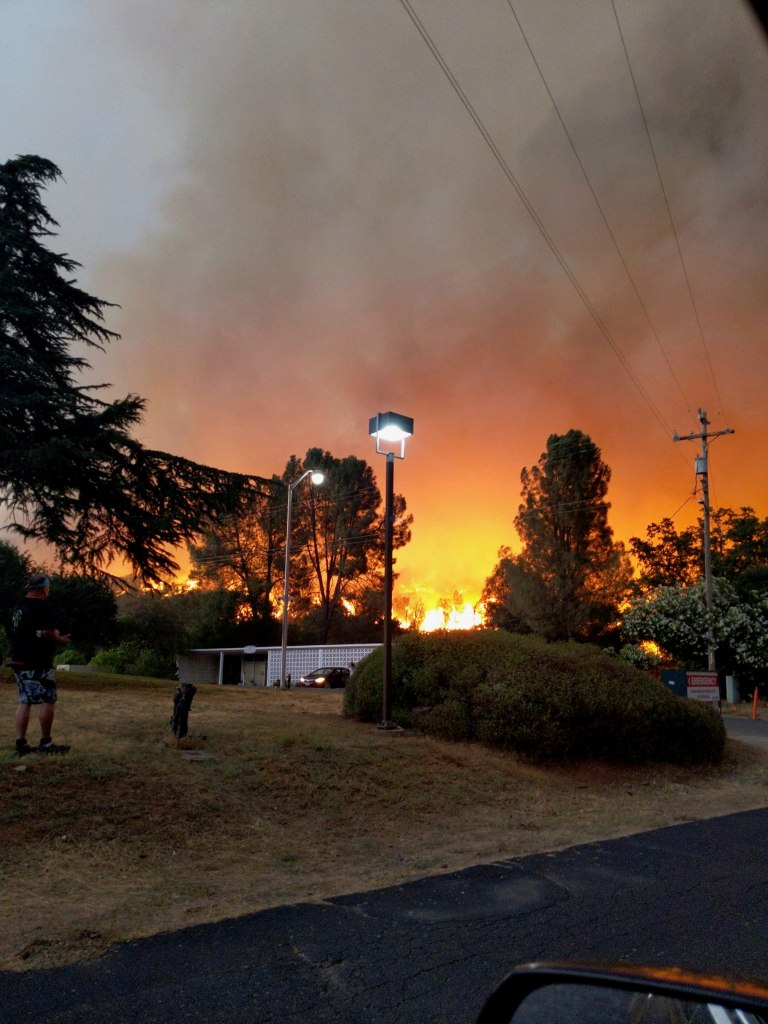
French Fire plume growing fast

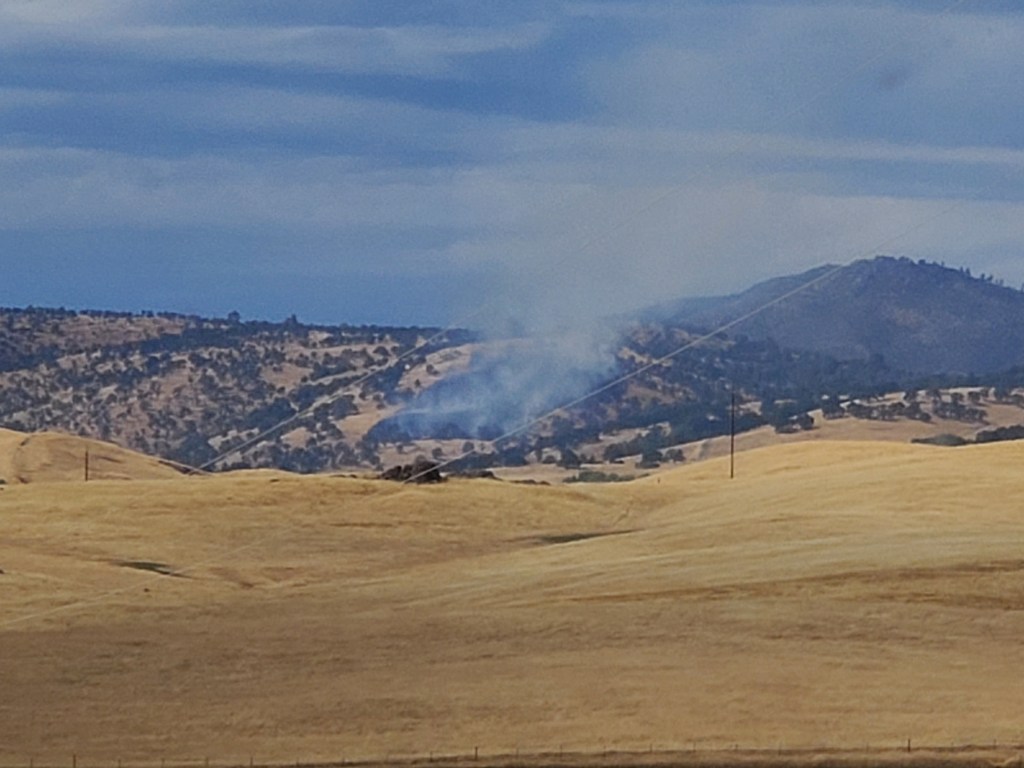
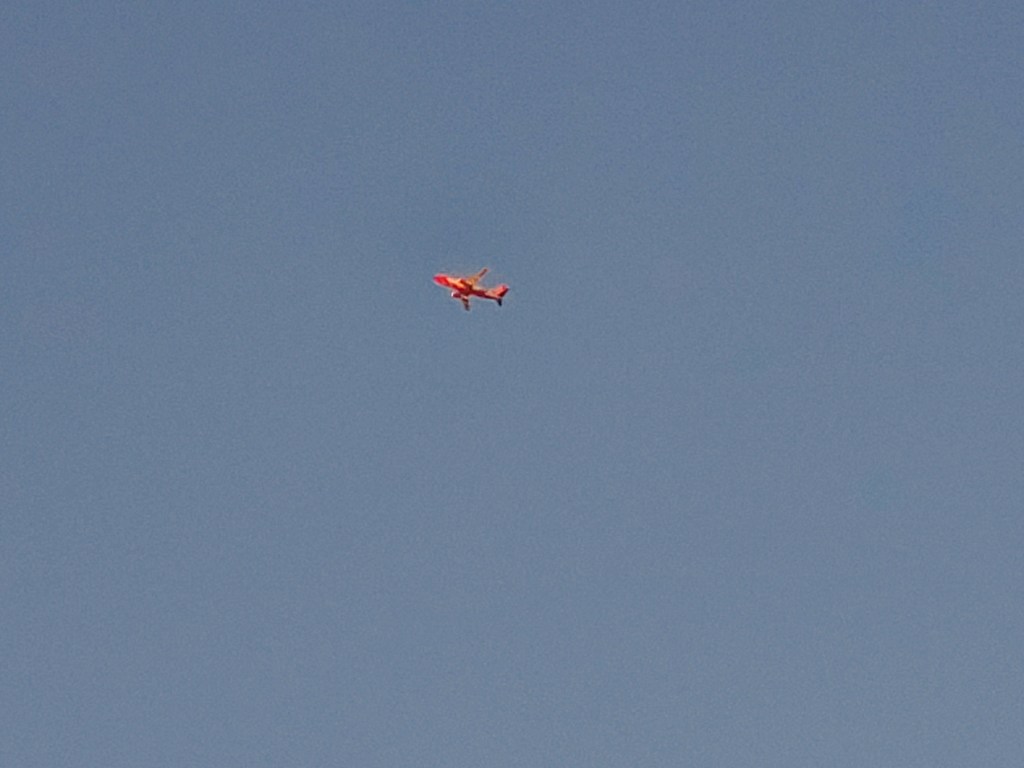
It is going to be a bad fire year. We have already had three fires near the house and the French Fire burning right up to the edge of town. I have more air traffic than normal – big planes and helicopters – flying to one fire or another. There are so many all around the region and state. It has been stressful to say the least – and hot. Even if you are in air conditioning, the heat weighs on you. What I have found is that when there are many contiguous days of temperatures over 100 degrees F, the heat just stays. Nothing has a chance to cool down. This includes the human body. There is only so much it can take before you begin to see changes, and that tolerance level is different for everyone. For me, it gets to be too much after a couple weeks, again, even when I am in air conditioning.

I notice it in people all around me as well. Some guy took the time to yell at my mother-in-law and I, for example, for standing too near a crosswalk. It seems we inconvenienced him by 5 seconds in that he had to decide if he should stop to let us cross or not. The heat is getting to people, and they are acting crazy.

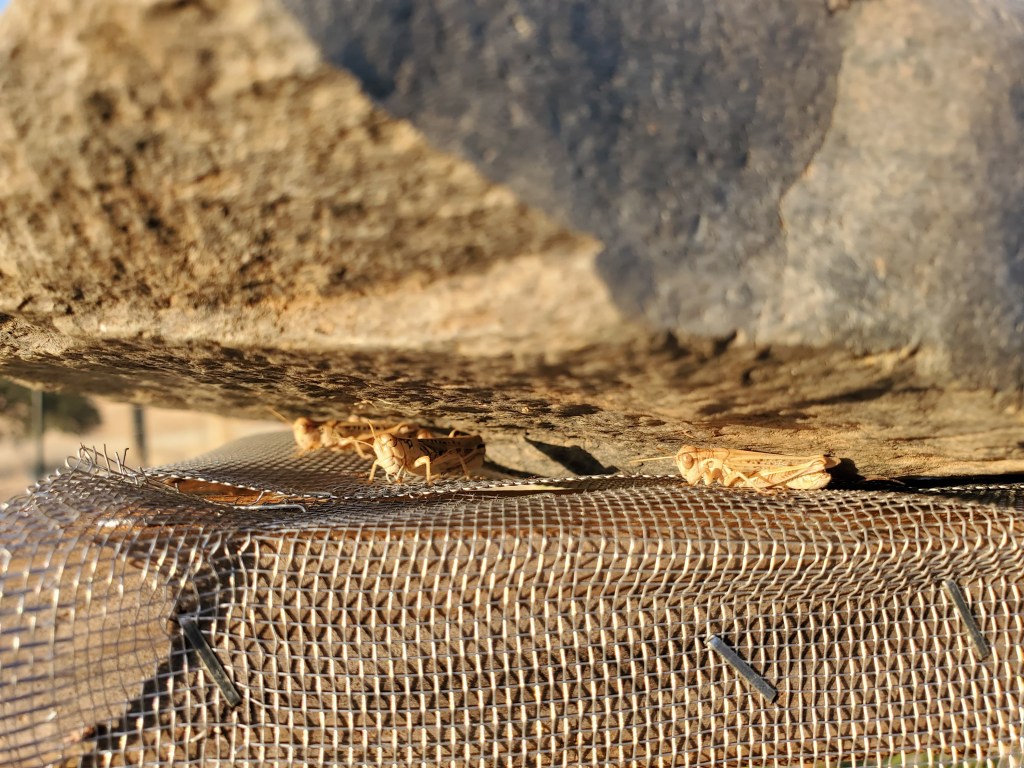
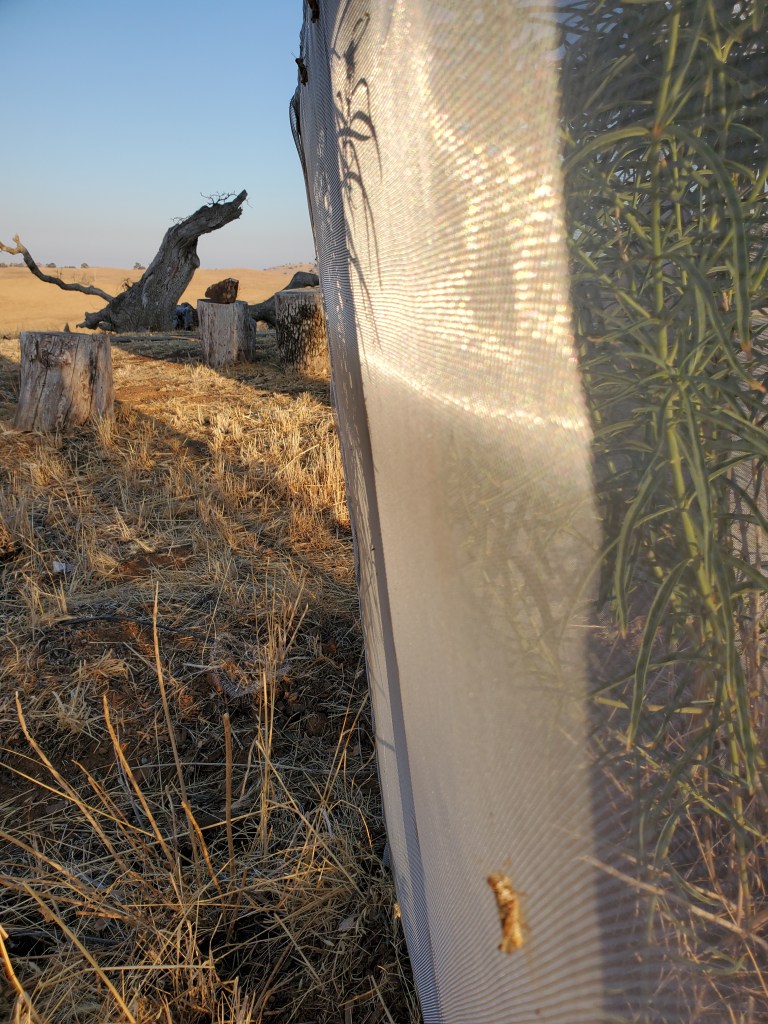
The heat is bad enough, but when you look out your window and see sticks where lush plants and happy flowers used to be, it is can be depressing. The grasshoppers have receded from their population of billions, but they are still here in the 1000s. I won’t be able to release my lone milkweed survivor until there are nearly none. Yesterday, I counted 9 on the cage, but there are thousands still in the grass all around. I feel badly for her gorgeous, nectar-rich flowers that have bloomed with no butterfly, bee, fly or moth to use it. Even if pollinators were near, the flowers are behind screen, only able to bloom because they were imprisoned. What a great day it will be when I release her stems, leaves and petals.

I am seeding more plants now, a little too late in the season for some, in the hope that I will have some more life out there, even if I have to plant it myself. My goodness — seeds are a miracle in this life. I am so grateful for their puny-sized, packaged progeny, patient and planning their emergence. Seeds, I love you.

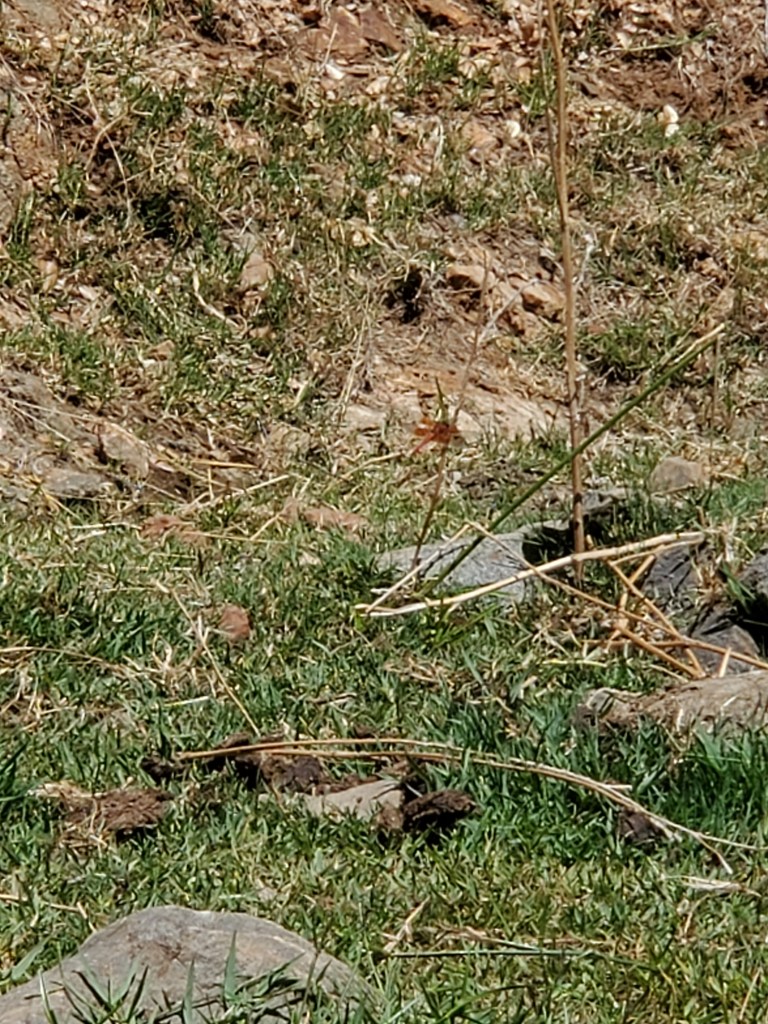
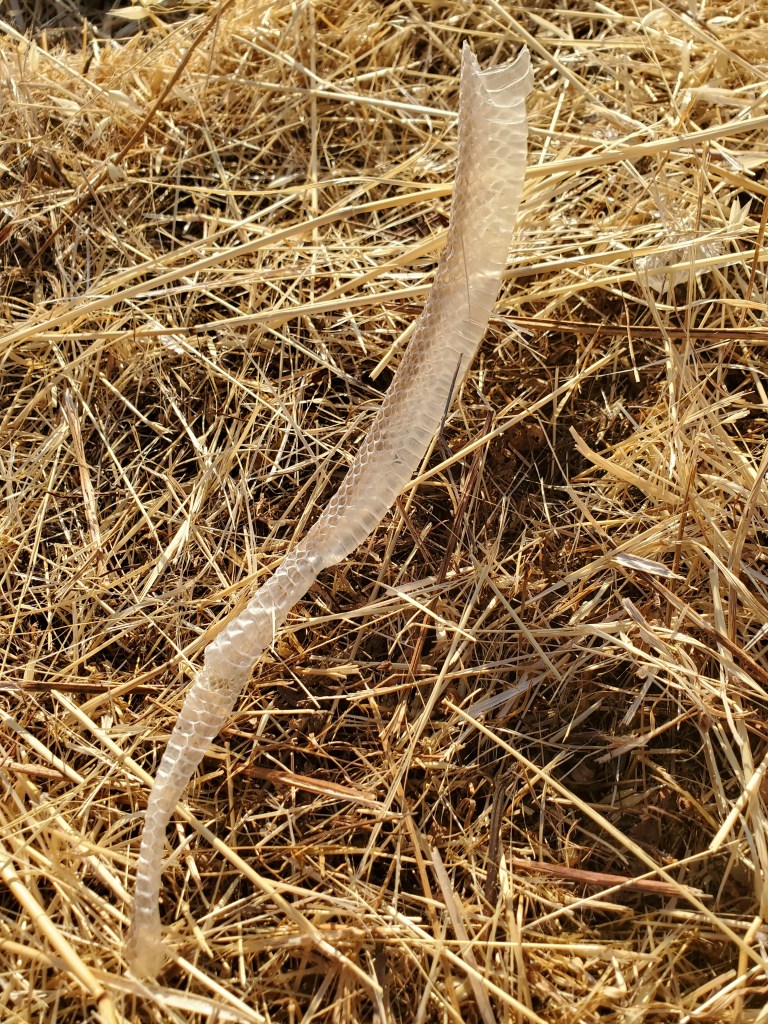
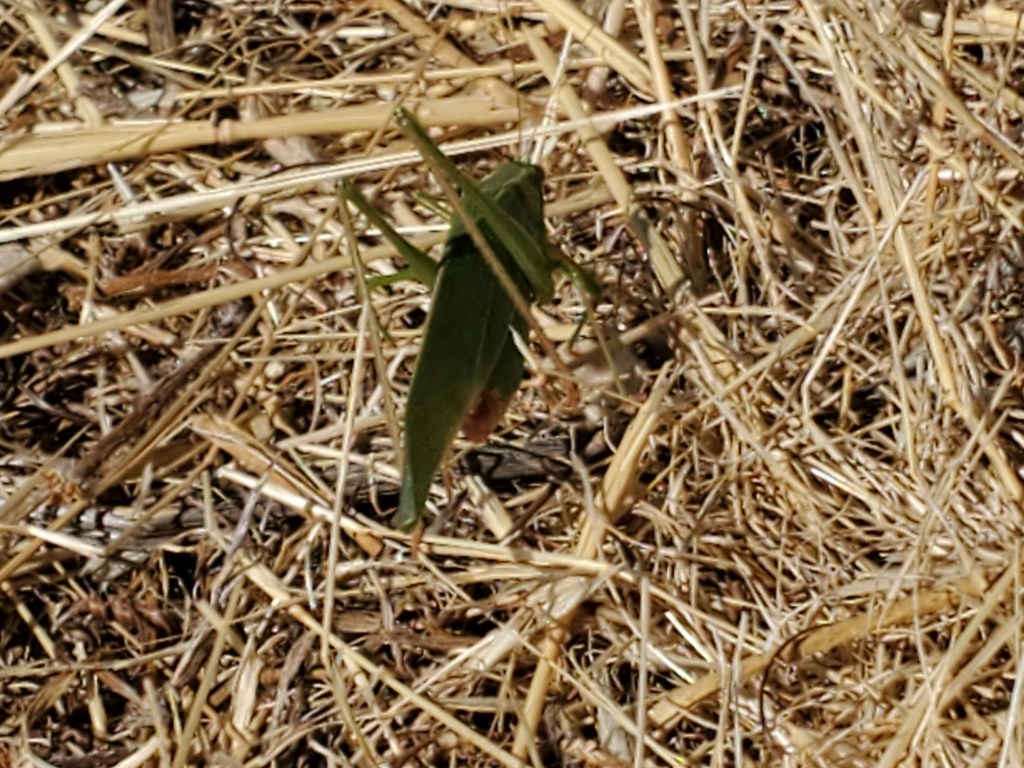
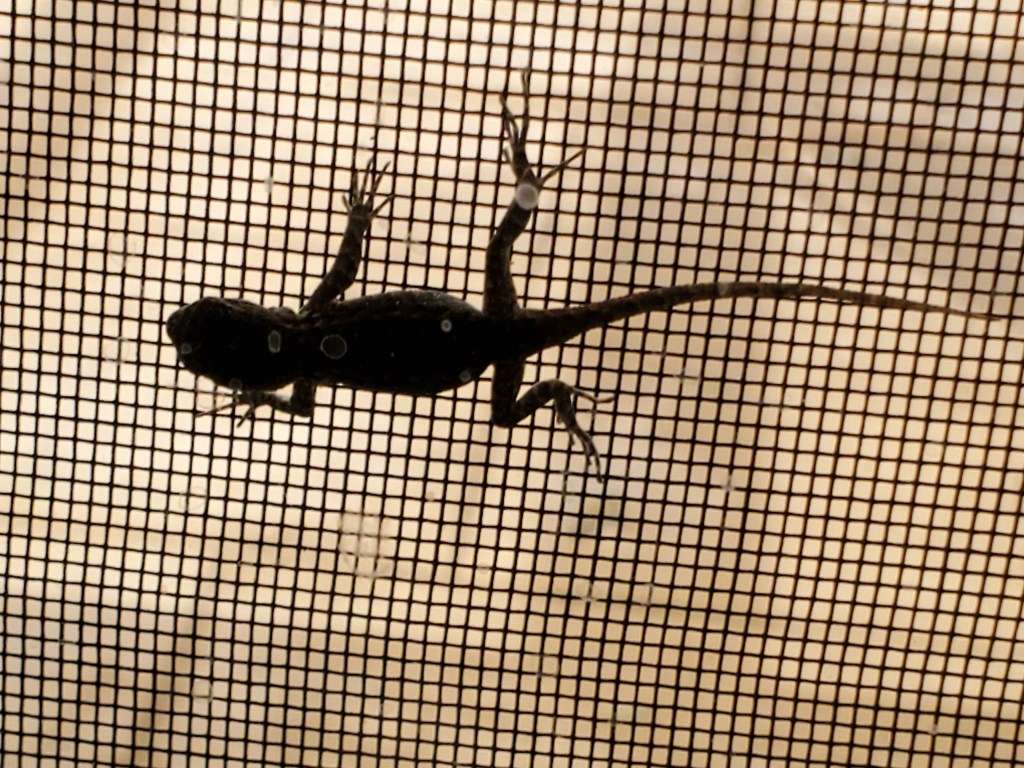
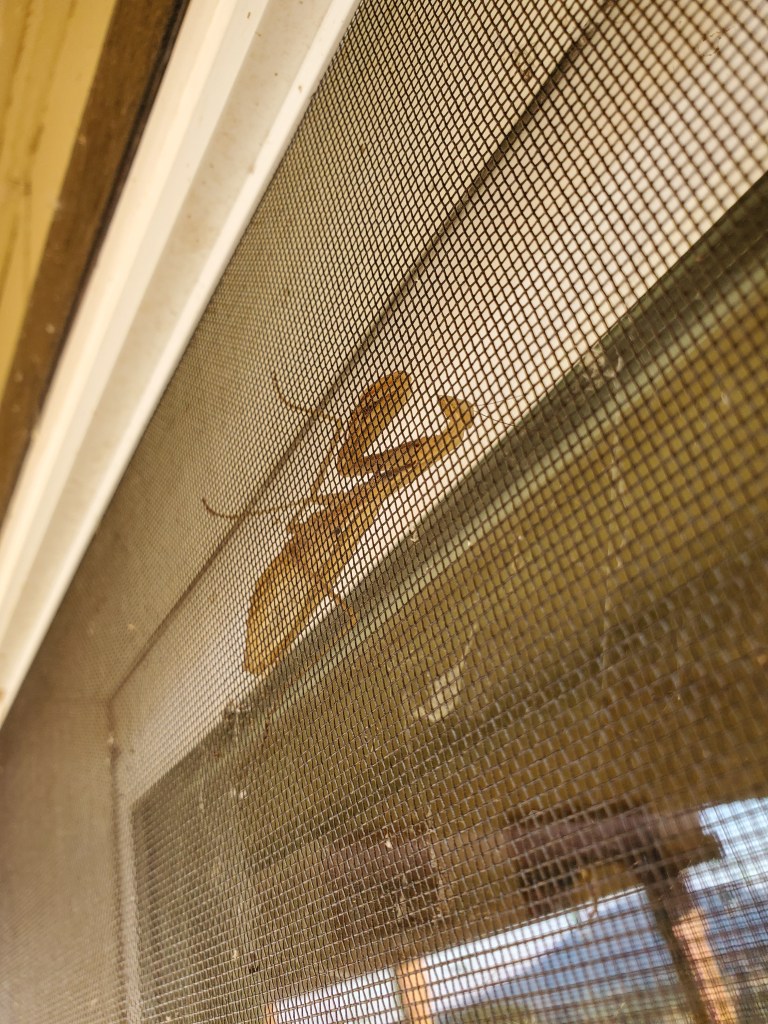
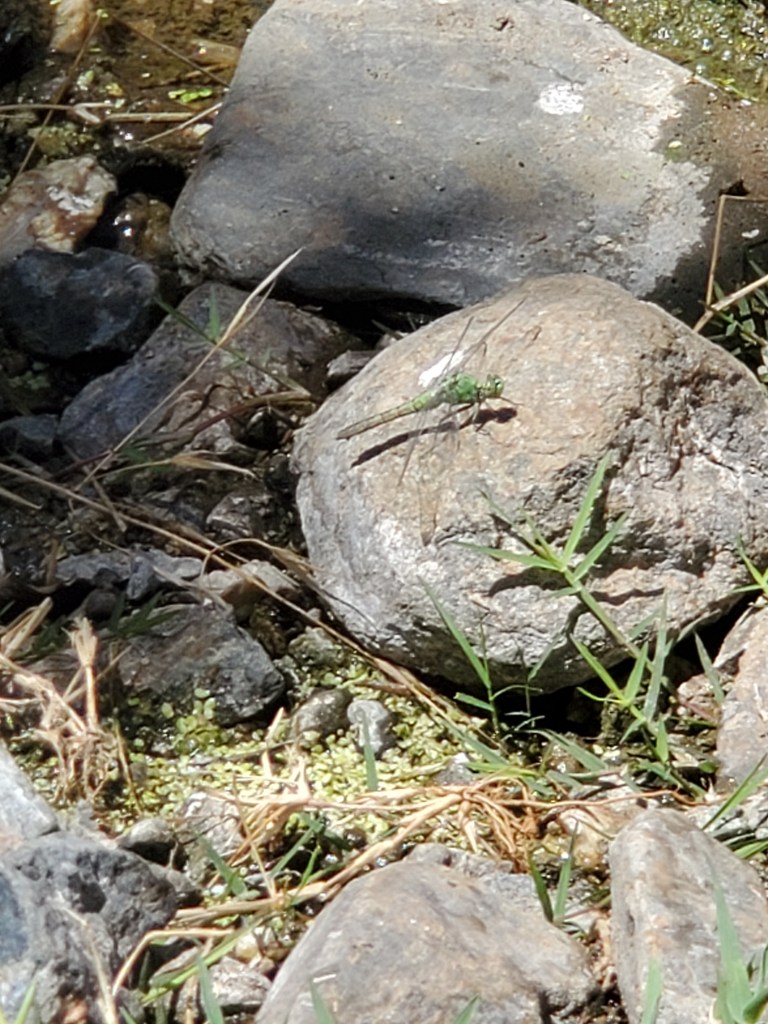
As I lament, I must also recognize the resilience of the life that is left. Acorns are emerging. The songbirds continue to stay. Large raptors and vultures soar. Lizards dart from one location to the next, while the California Toads move at night, leaving their poop behind. Small frogs have begun to show themselves, emerging from the tendrils of willow roots and debris in potted plants. Dragonflies have been more visible at the house, and not just in the creek where there is still running water. A beautiful green snake took up residence near the toad pond (presumably because dinner is very near and fat). Even a cool hopping insect that looks like a leaf was hanging around on the Polaris. Life is all around and abundant – and some that were eaten will return.

Water Still Running

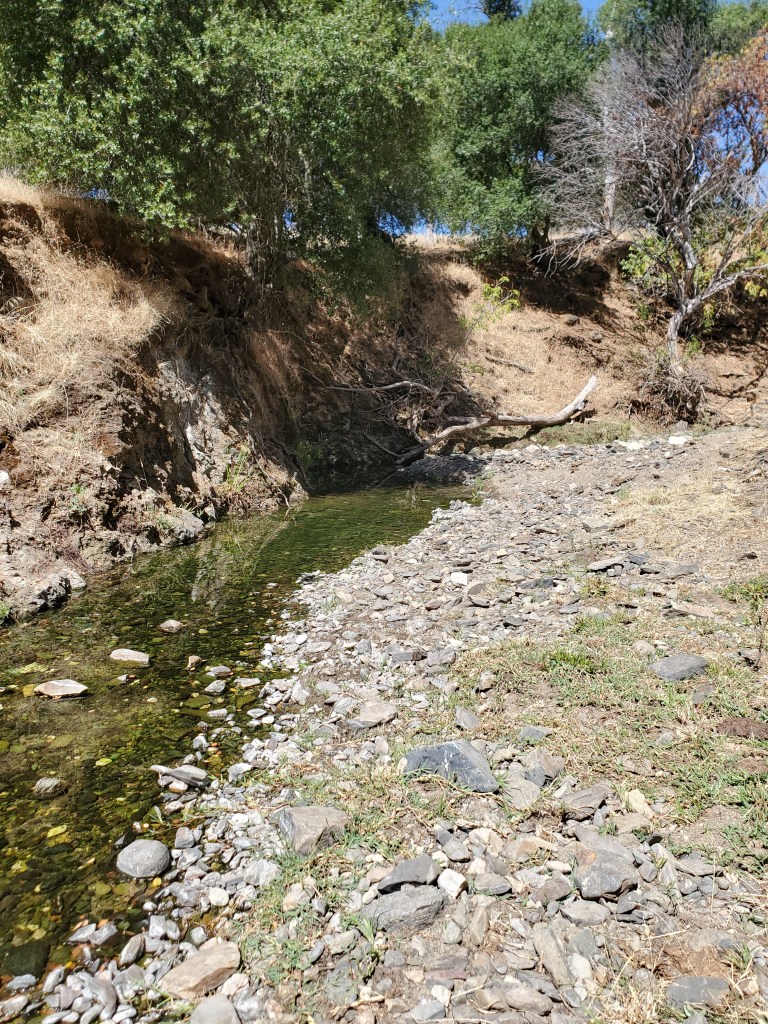
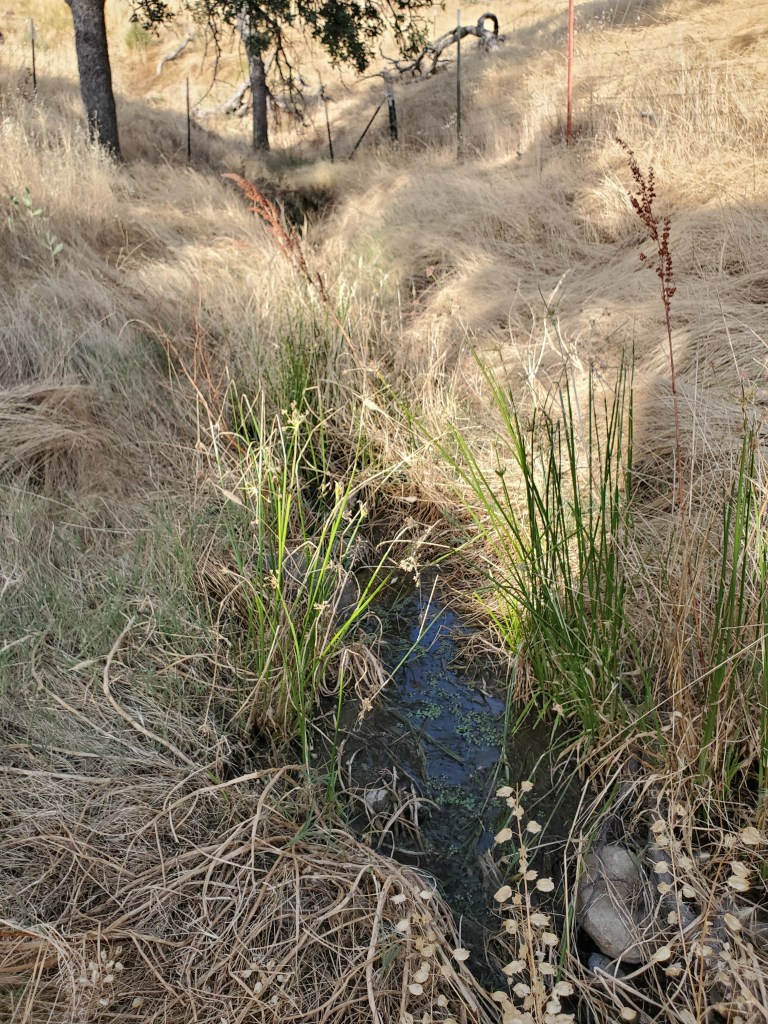
The creeks are still running. They are providing much needed water access and sustenance for the plant life adjacent to the creeks.

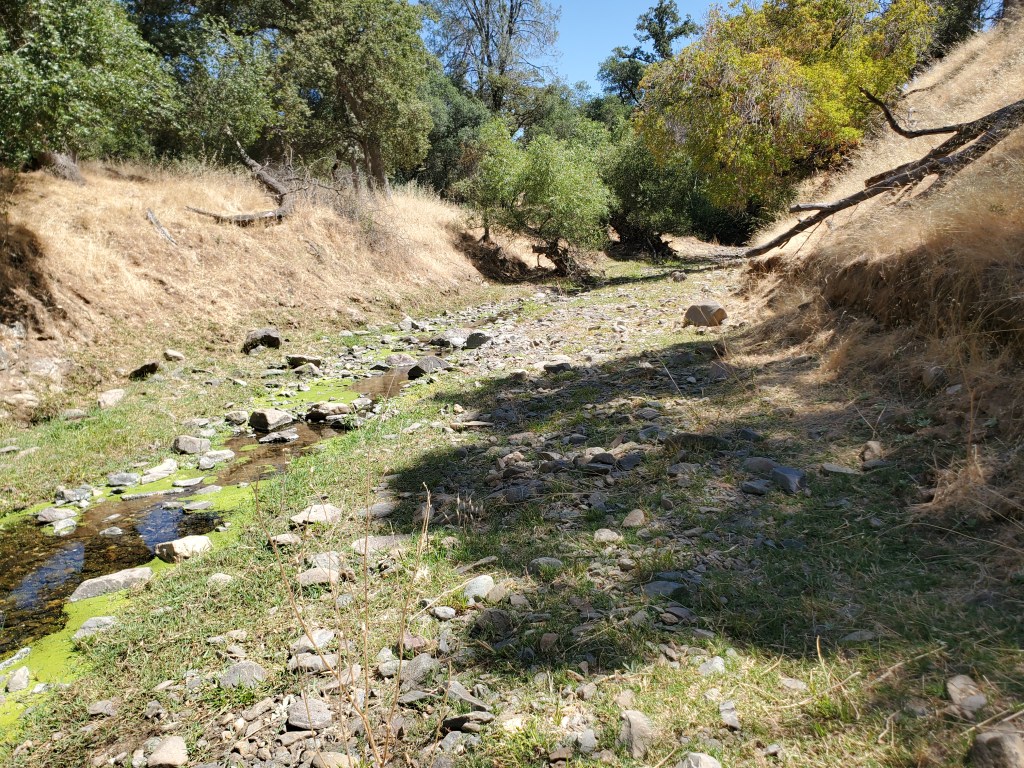
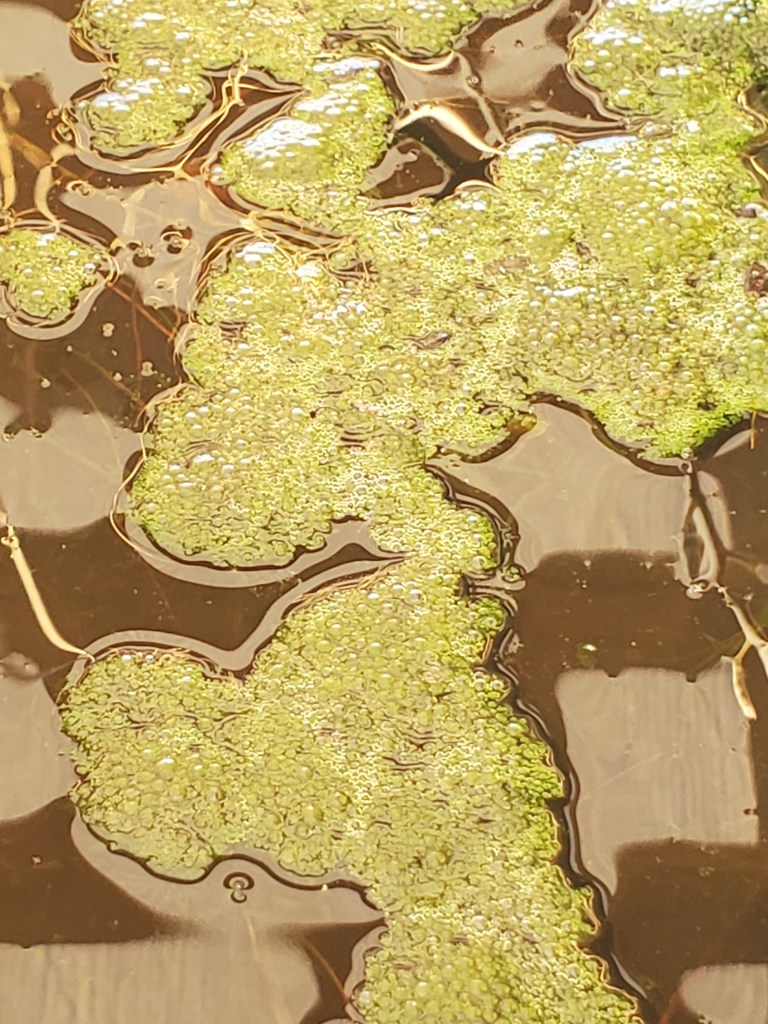
Unfortunately, the amount of nutrients in the water from cattle dung and the heat are causing algae to bloom. Algae is an interesting life form. It can be toxic. Its decomposition can suffocate life in the water, but it also provides a significant portion of oxygen on the planet, much like forests.

I don’t know if the green algae on the creek is harmful, but I don’t mess with it – – except to throw rocks into the spring and puddles to break up its thickness, and open some holes to the water underneath. This is in part some of the reason I fence out cattle, to decrease the amount of excess nutrients going into the water. I cannot help upstream, but I can decrease the overall amount as it moves through my ranch at least.

Riparian Oak Seedlings Still Alive

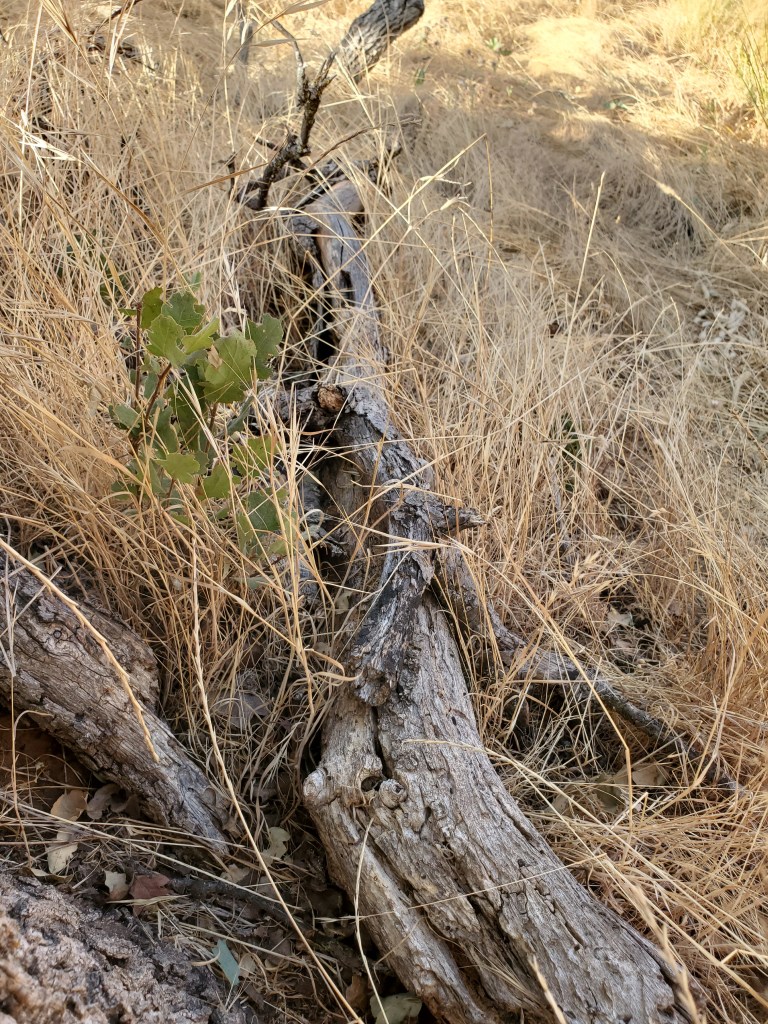
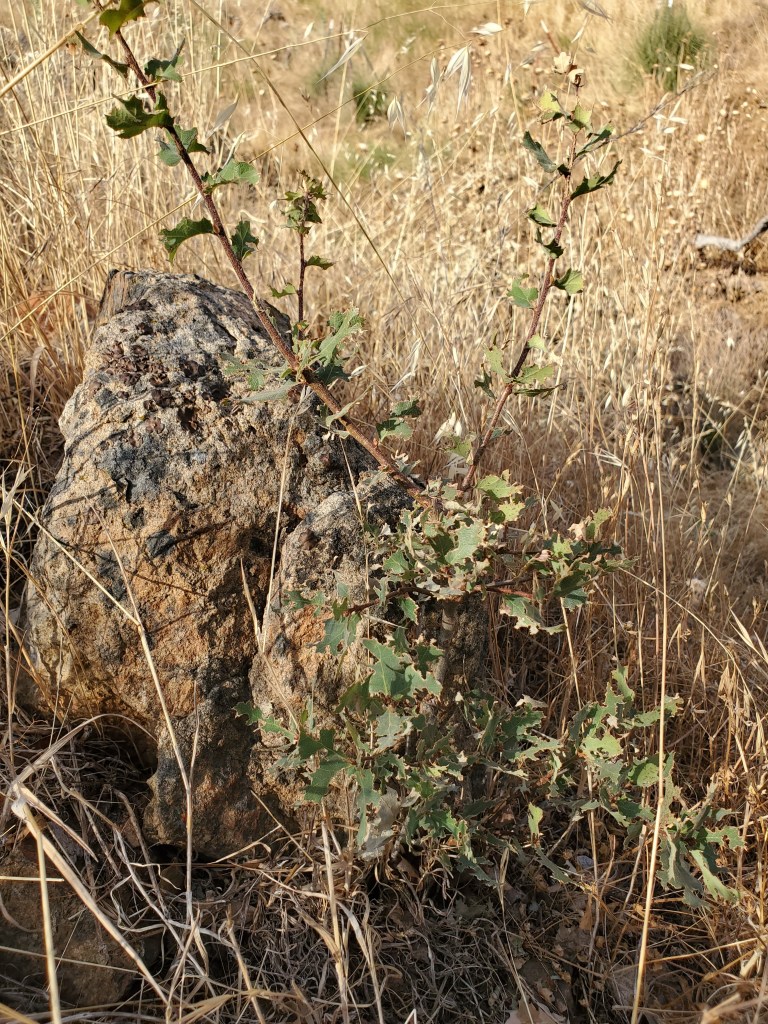
I am overjoyed to report that the oak seedlings in the riparian areas still have leaves. I did see some damage to the leaves, but that is all. The grasshoppers did not fully destroy them as they did the very young plants I planted.

I learned recently that what looks to be like a young oak can actually be decades old. This was mind blowing. Given this, perhaps the small oaks in the riparian area have developed a more mature protective element to their leaves and bark that prevented more predation. I know that what I call seedlings are actually many years old since I’ve been protecting them for over a decade with downed branches when the area was open to grazing. Their smallness is a product of grazing and drought. It has been a huge relief to see them grow last year and this year in response to more water and protection.

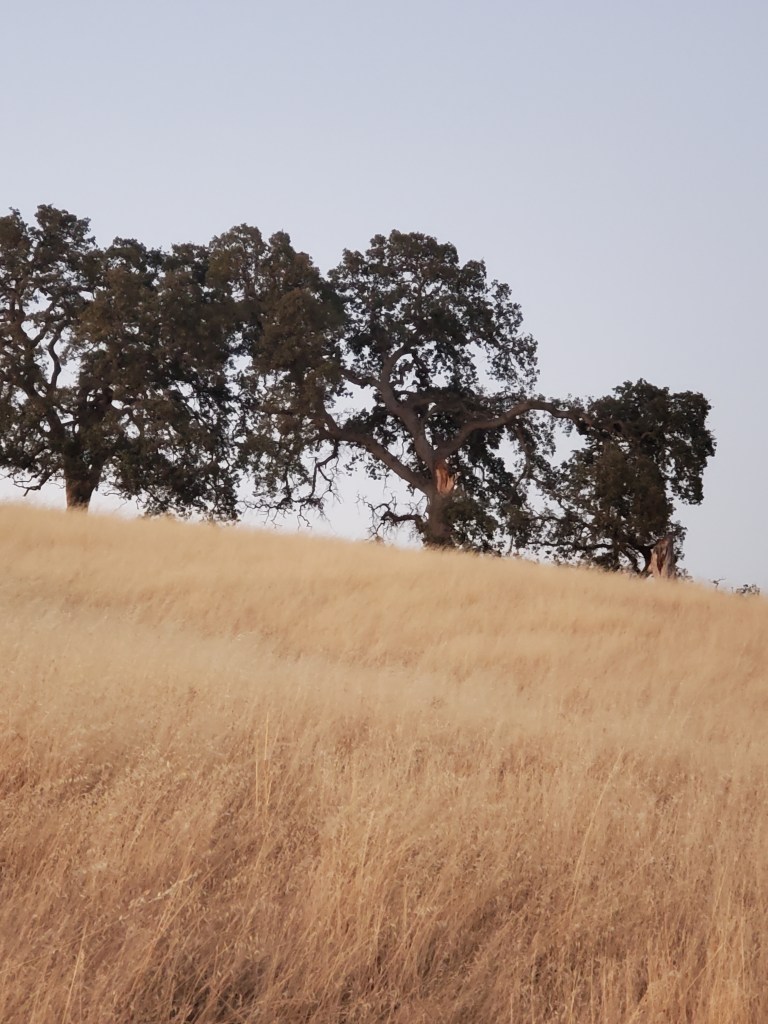
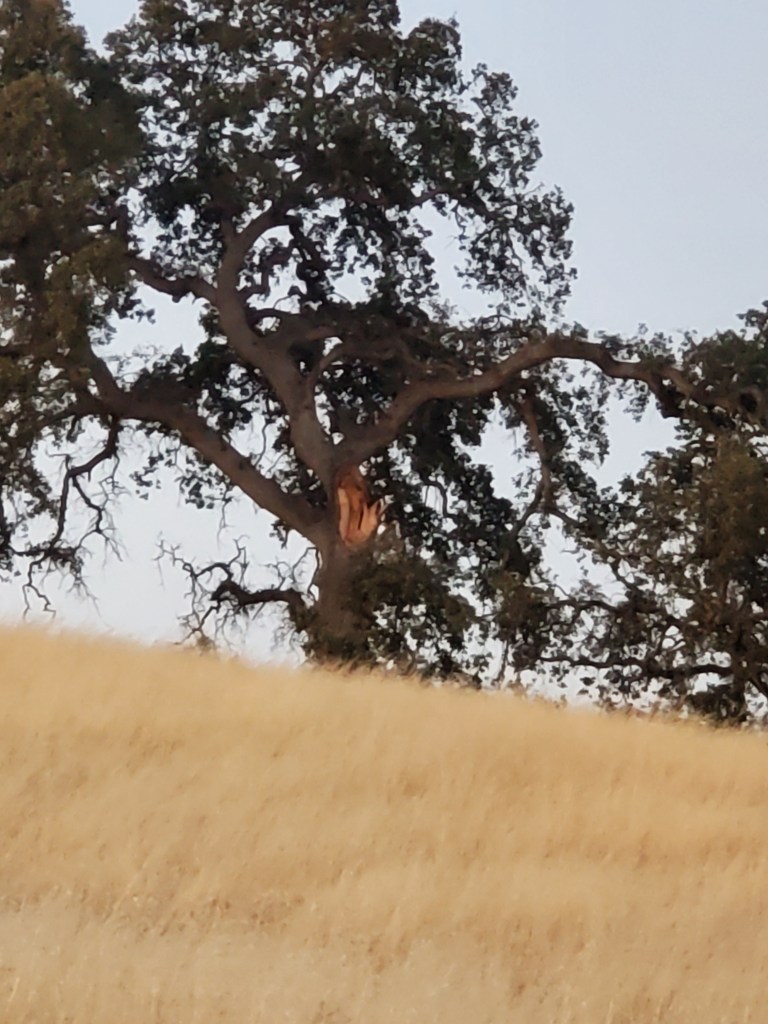
This success is all the more important as I continue to see decline among the adults on the hillsides. On my walk yesterday, I heard a horrible loud crack. I looked in the direction of the noise and saw movement in one of the grand oaks on the south hillside slope from the house. Then, I saw an entire branch fall. It continued to crack then crash down.

I was horrified, sad, angry- oh, how I grieve for these crucial lives. I keep thinking, “What can I do better?” I don’t use much water at the house. I put water back into the ground. I am slowing water. I guess I need to do more dirt work and create little moats below and above groves of trees, outside their drip lines, to capture water as it runs down hill during rain events. The work cannot begin until the soil is moist again. The metal edges of tractor buckets can cause a spark, and this whole place is filled with dried out, tall, European Grasses. Another year going by; the clock ticking on what can be done and if it will be too late to help. And, the cost – it will be all on me to cover with no program to help.

Breathe. Deep in. Full out. Repeat…Repeat. Reminder: you can only do what you can do. Much is out of your control and so much larger than you. You are not absolved of responsibility, but the full responsibility is not yours and yours alone. Stay healthy. Keep your joy and continue working at a pace you can sustain.

Extreme Heat is Not an Acceptable Norm

I know the extreme heat is a key factor in the death, piece by piece, of my oak relatives. It causes the death of thousands of people per year in the United States, and that is increasing. We cannot accept this as normal. If we love this incredible land, ocean, waterways and sky, if we love our children, then we must be intentional in our actions. I know this issue, like the oaks falling apart, is larger than one person. If we each contribute something, then things can get better. We have seen this happen already with the butterflies. Acting together, many planting milkweed and more nectar plants, have helped bring the monarchs back from the brink of extinction on the west. Although we have more to do to stabilize the population, we are on the right track.
Every choice we make as individuals makes an impact. You don’t have to deprive yourself at every turn; what I am suggesting is that we have to understand that our individual choices have consequences. In knowing this, we can make informed choices, not let guilt-aversion act as a barrier to good action and understand that we are each important change-makers in how the future is shaped. This is big; I know. Please don’t loose your sense of hope. It is some of the most powerful medicine we have. Aho.