Hot, Dry and a New Normal We Must Not Accept

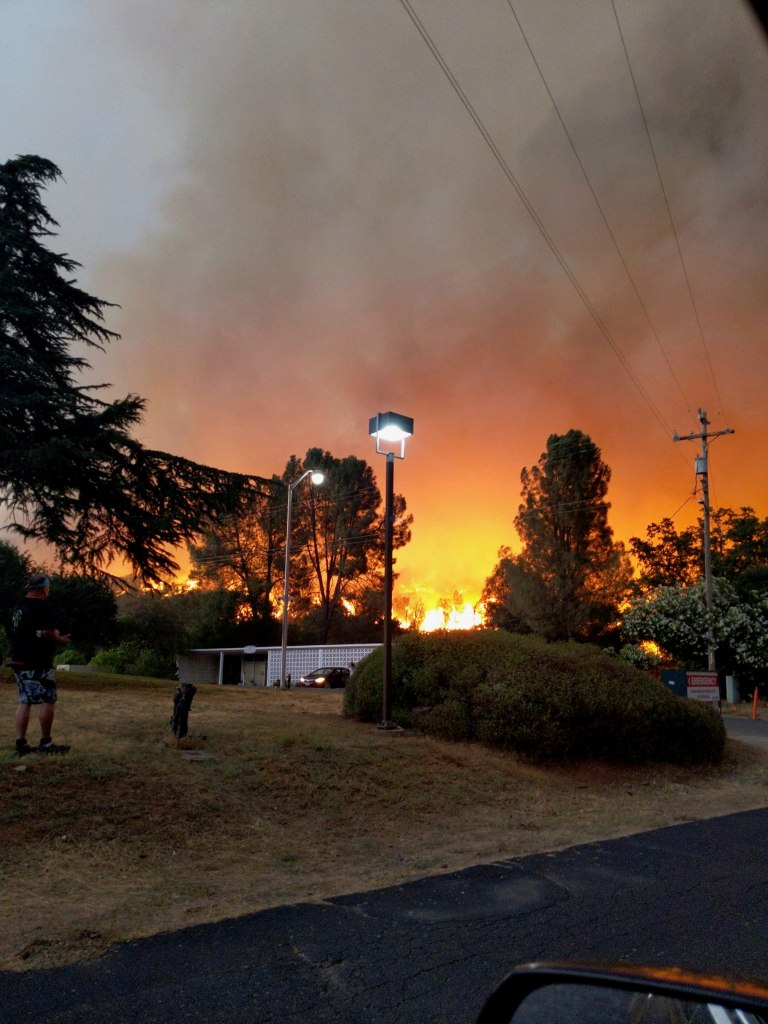
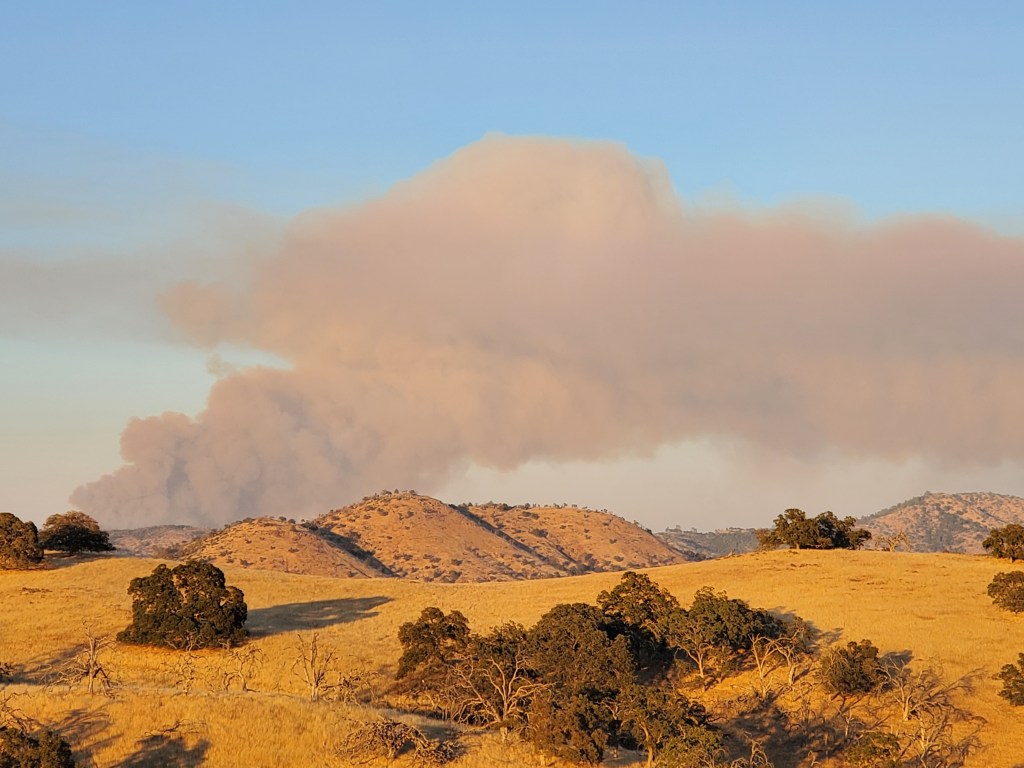
French Fire plume growing fast

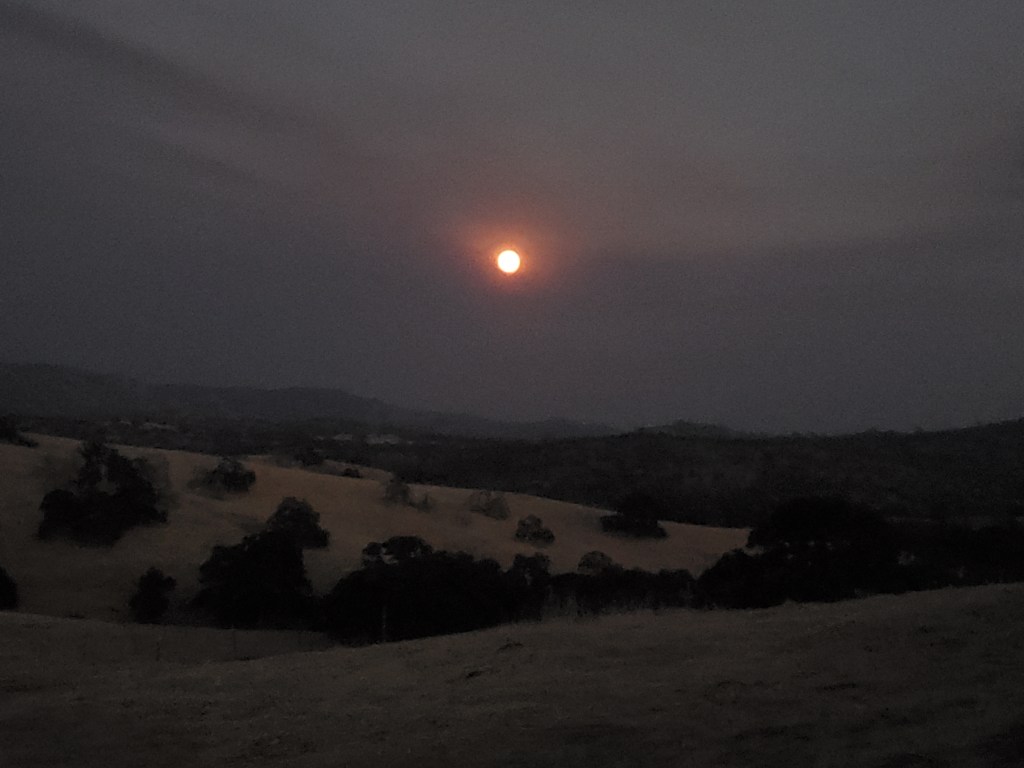
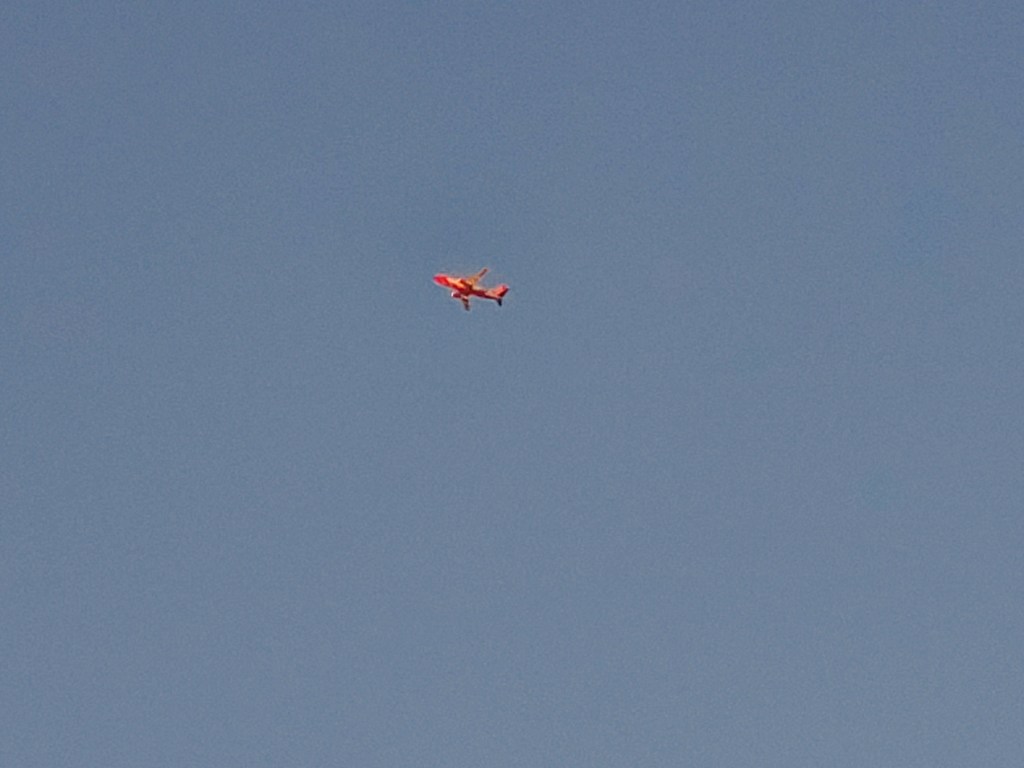
It is going to be a bad fire year. We have already had three fires near the house and the French Fire burning right up to the edge of town. I have more air traffic than normal – big planes and helicopters – flying to one fire or another. There are so many all around the region and state. It has been stressful to say the least – and hot. Even if you are in air conditioning, the heat weighs on you. What I have found is that when there are many contiguous days of temperatures over 100 degrees F, the heat just stays. Nothing has a chance to cool down. This includes the human body. There is only so much it can take before you begin to see changes, and that tolerance level is different for everyone. For me, it gets to be too much after a couple weeks, again, even when I am in air conditioning.
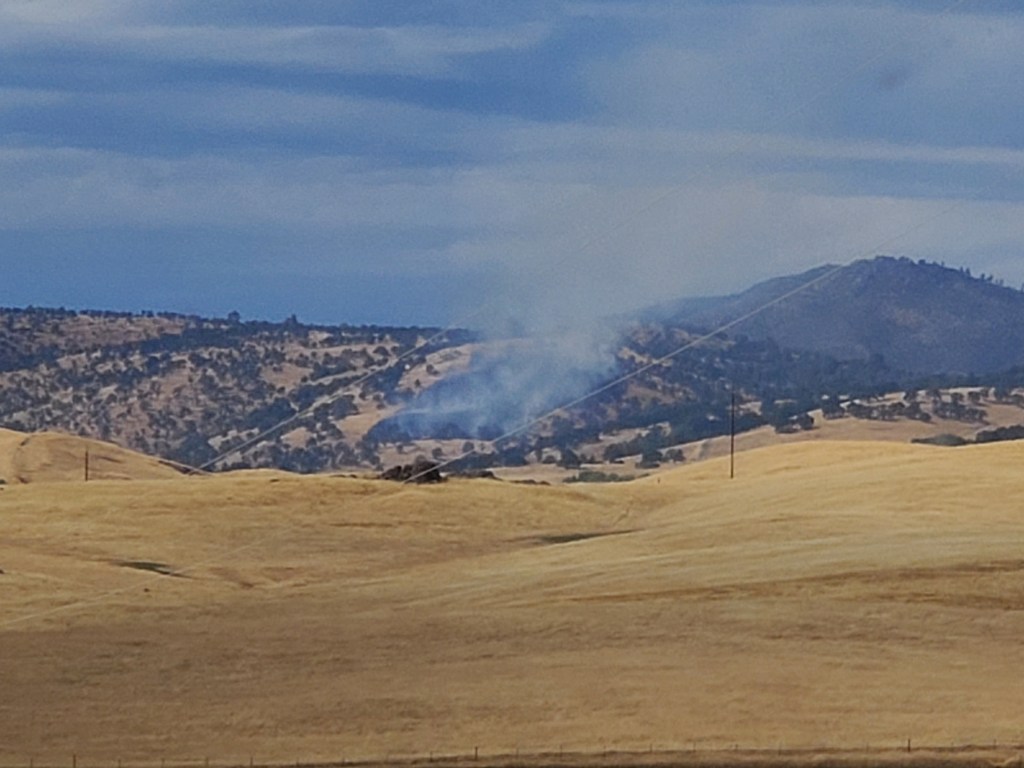
I notice it in people all around me as well. Some guy took the time to yell at my mother-in-law and I, for example, for standing too near a crosswalk. It seems we inconvenienced him by 5 seconds in that he had to decide if he should stop to let us cross or not. The heat is getting to people, and they are acting crazy.

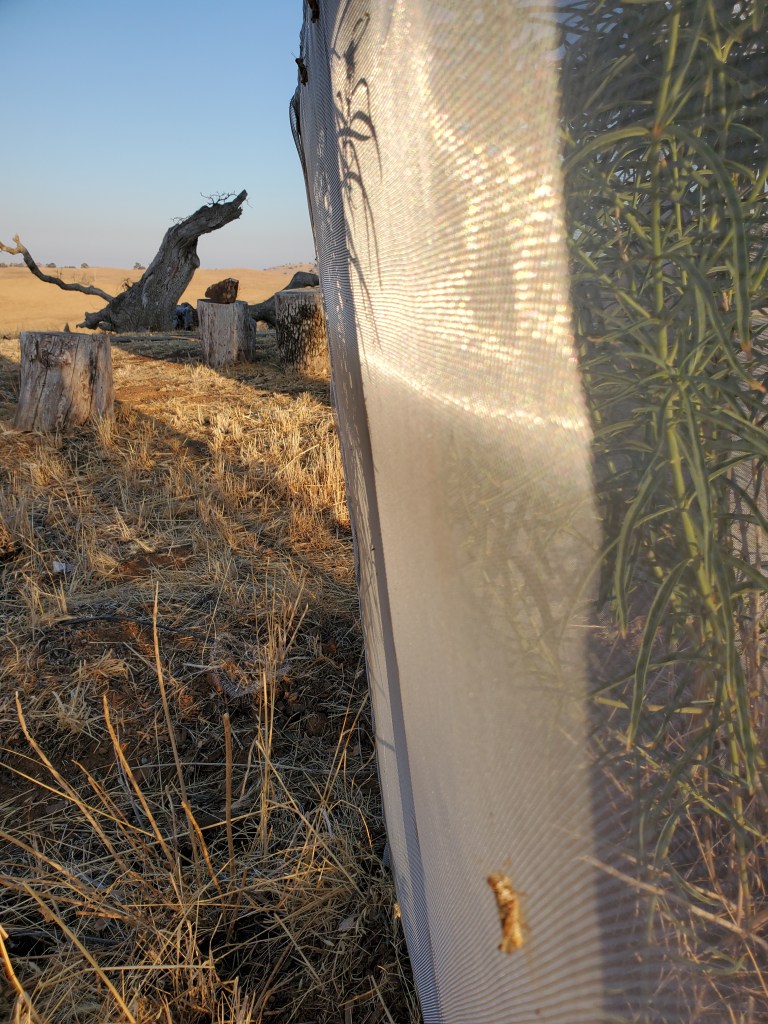
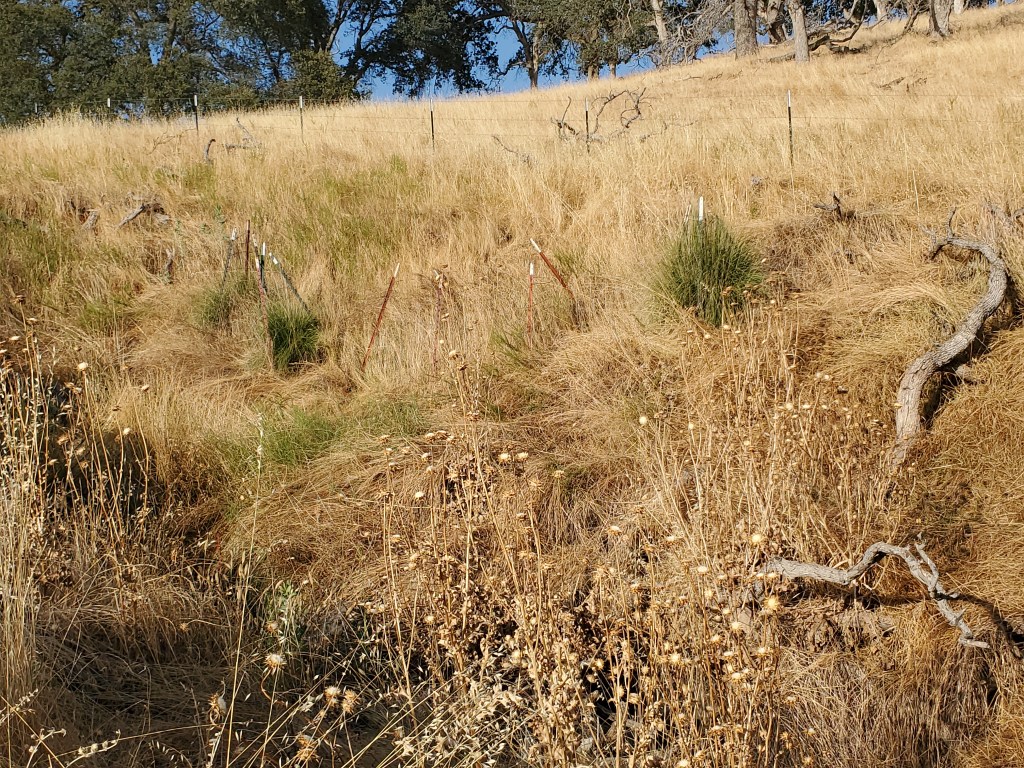
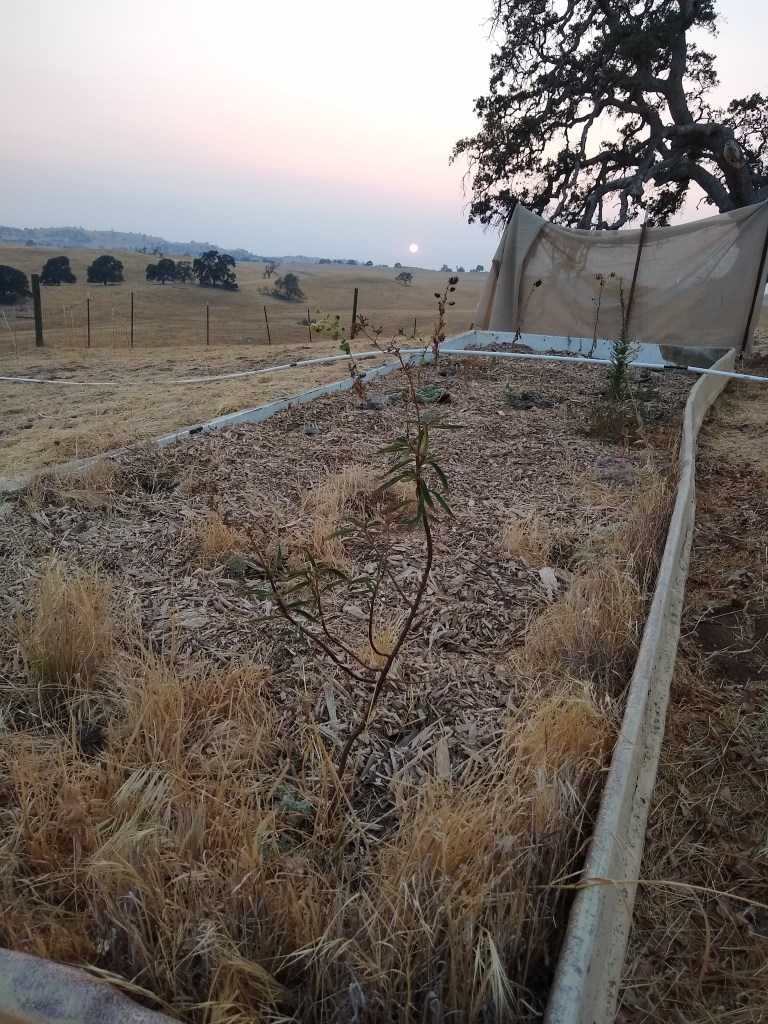
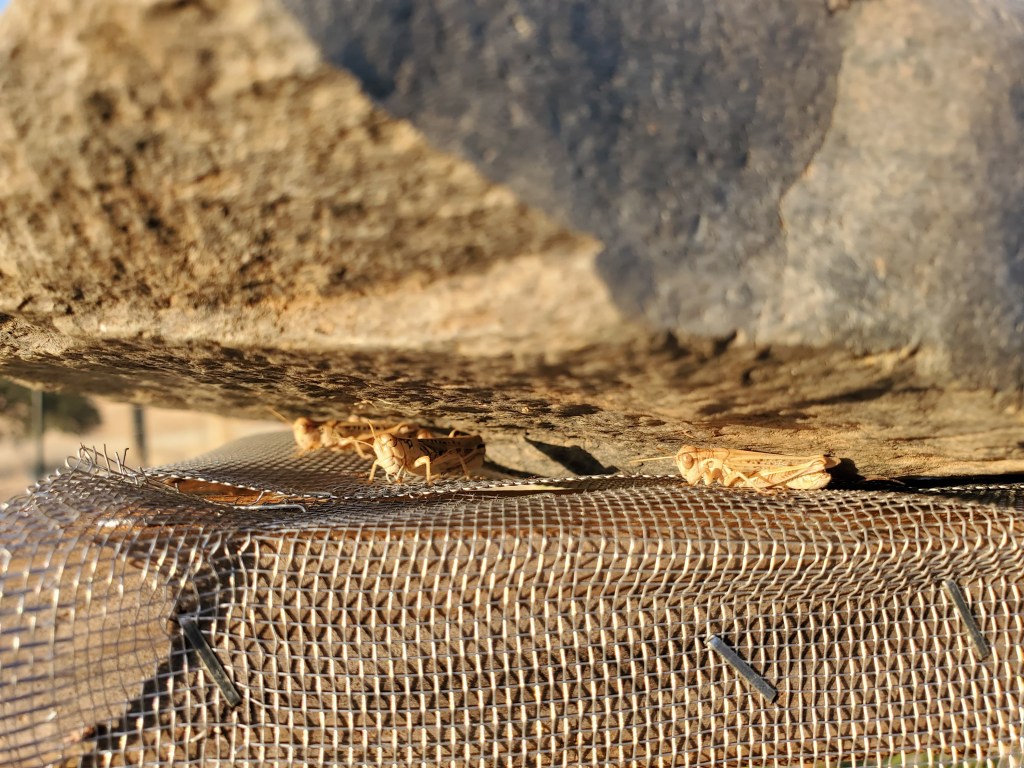
The heat is bad enough, but when you look out your window and see sticks where lush plants and happy flowers used to be, it is can be depressing. The grasshoppers have receded from their population of billions, but they are still here in the 1000s. I won’t be able to release my lone milkweed survivor until there are nearly none. Yesterday, I counted 9 on the cage, but there are thousands still in the grass all around. I feel badly for her gorgeous, nectar-rich flowers that have bloomed with no butterfly, bee, fly or moth to use it. Even if pollinators were near, the flowers are behind screen, only able to bloom because they were imprisoned. What a great day it will be when I release her stems, leaves and petals.
I am seeding more plants now, a little too late in the season for some, in the hope that I will have some more life out there, even if I have to plant it myself. My goodness — seeds are a miracle in this life. I am so grateful for their puny-sized, packaged progeny, patient and planning their emergence. Seeds, I love you.

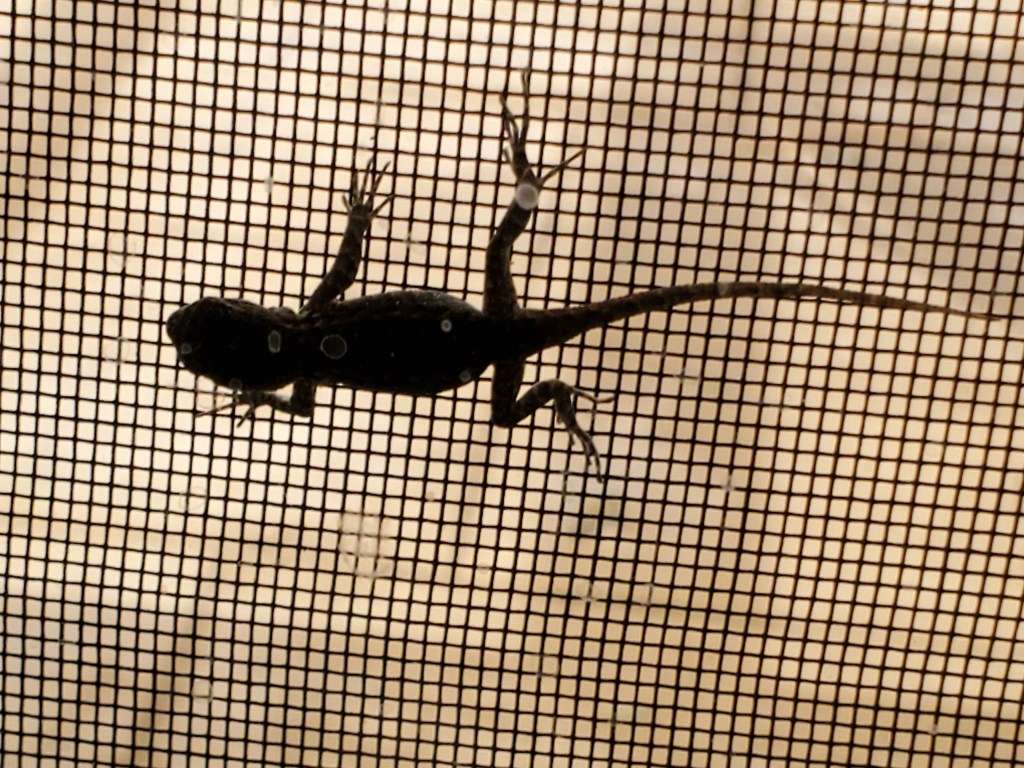
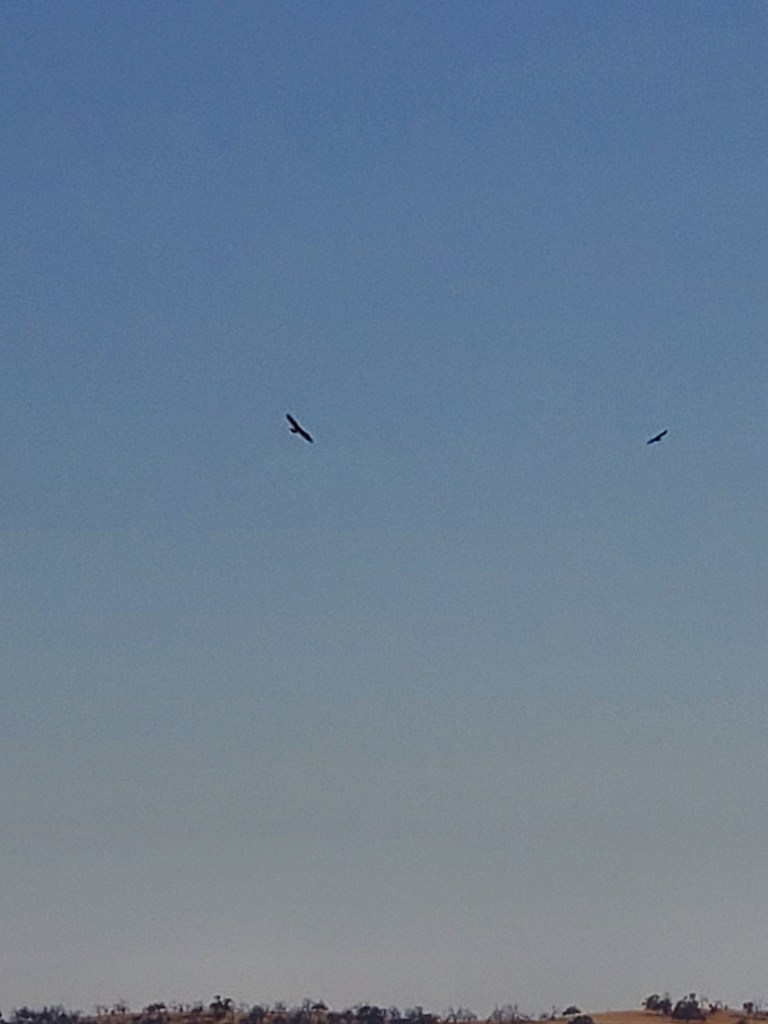
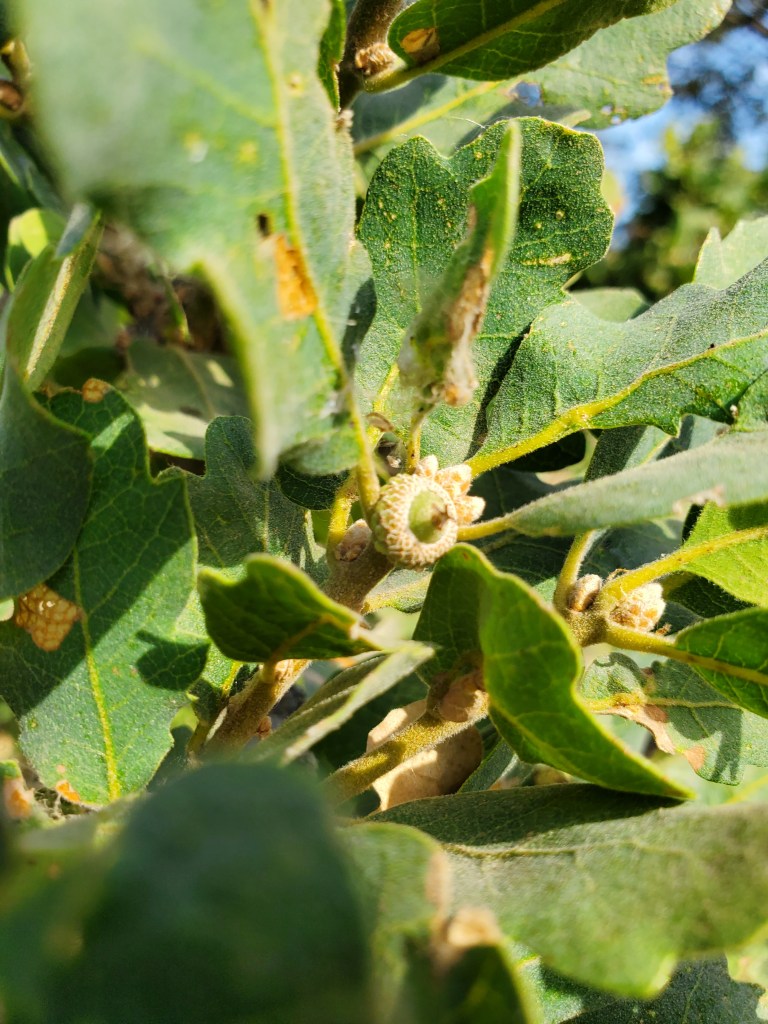
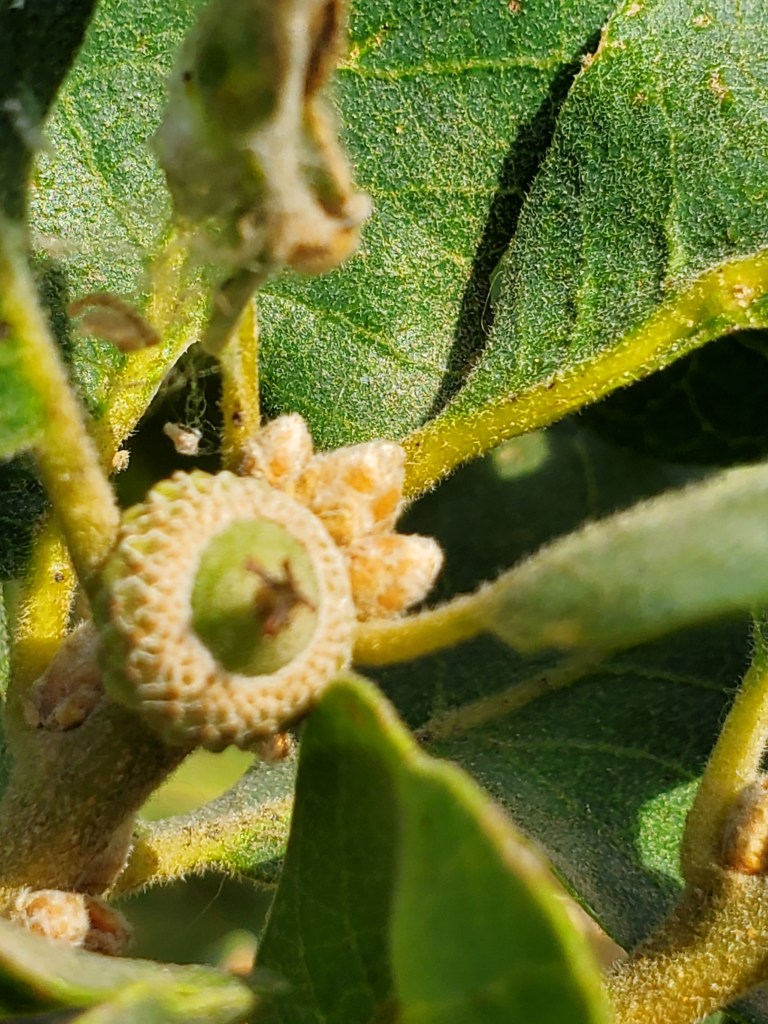
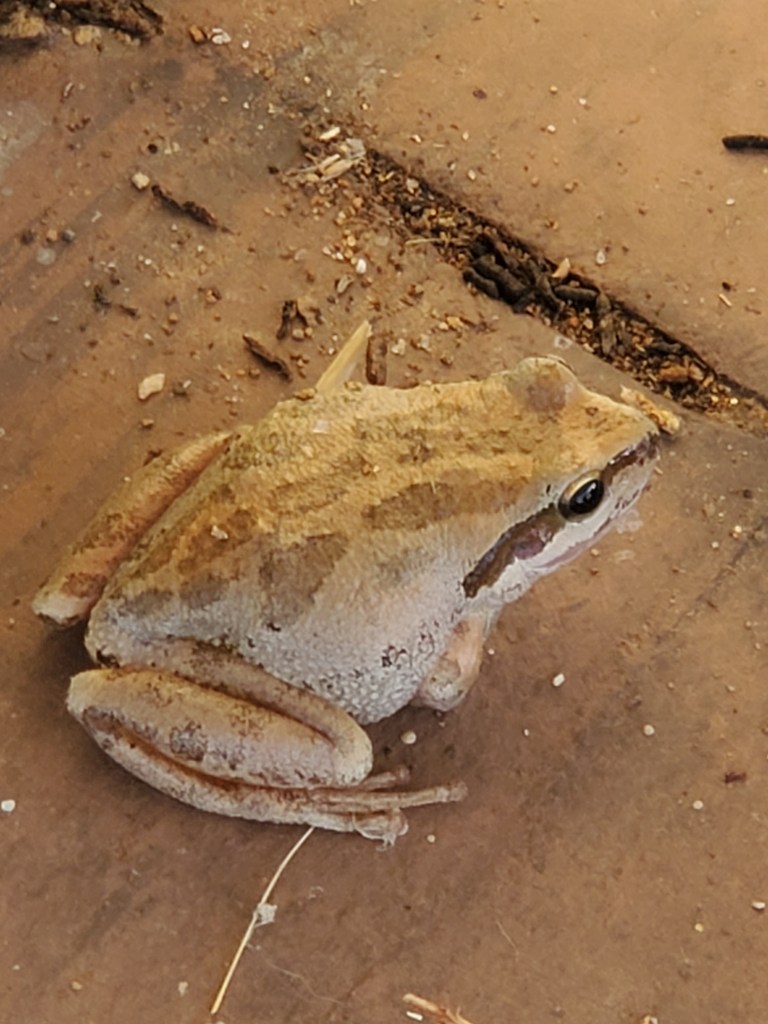
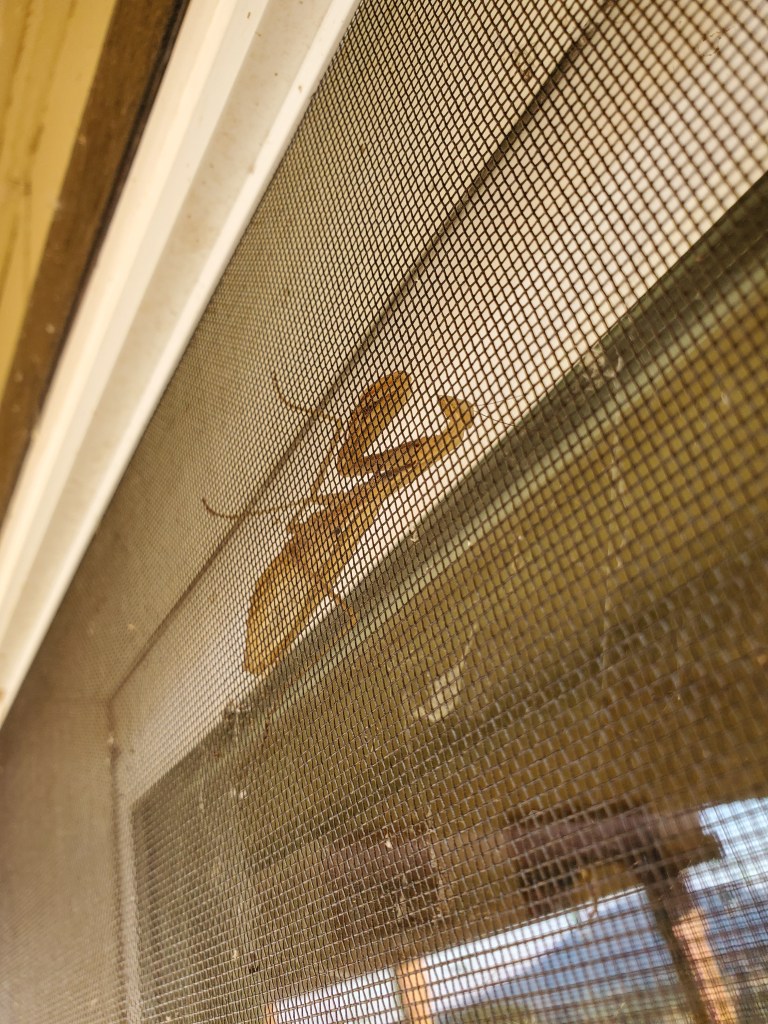
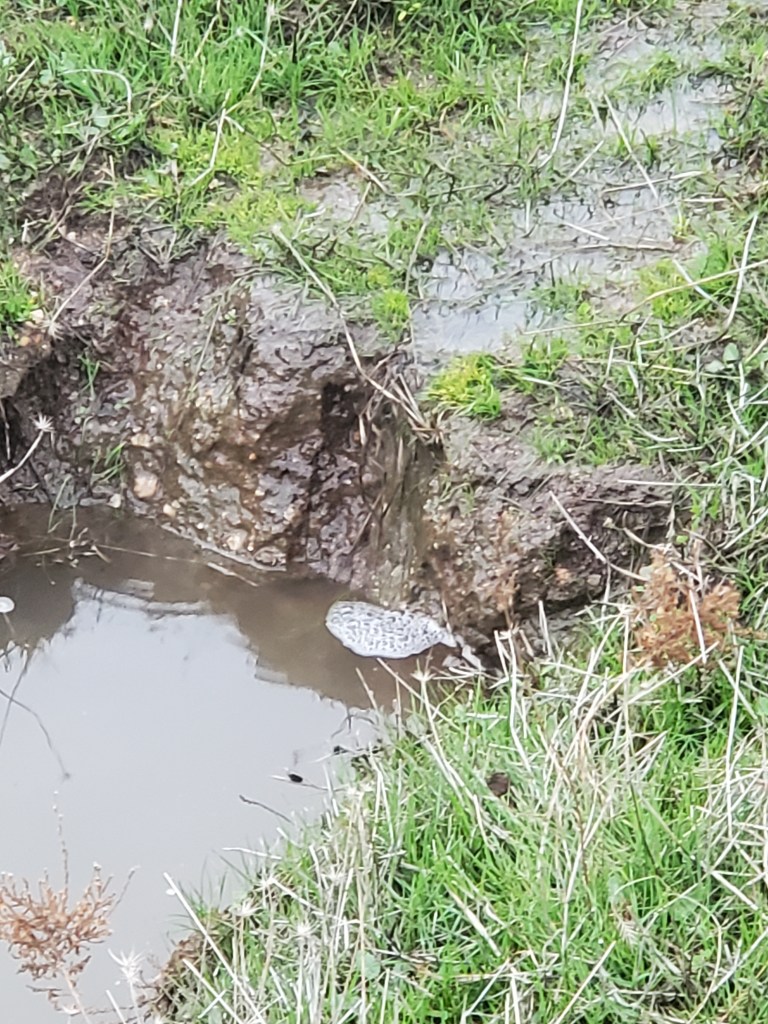
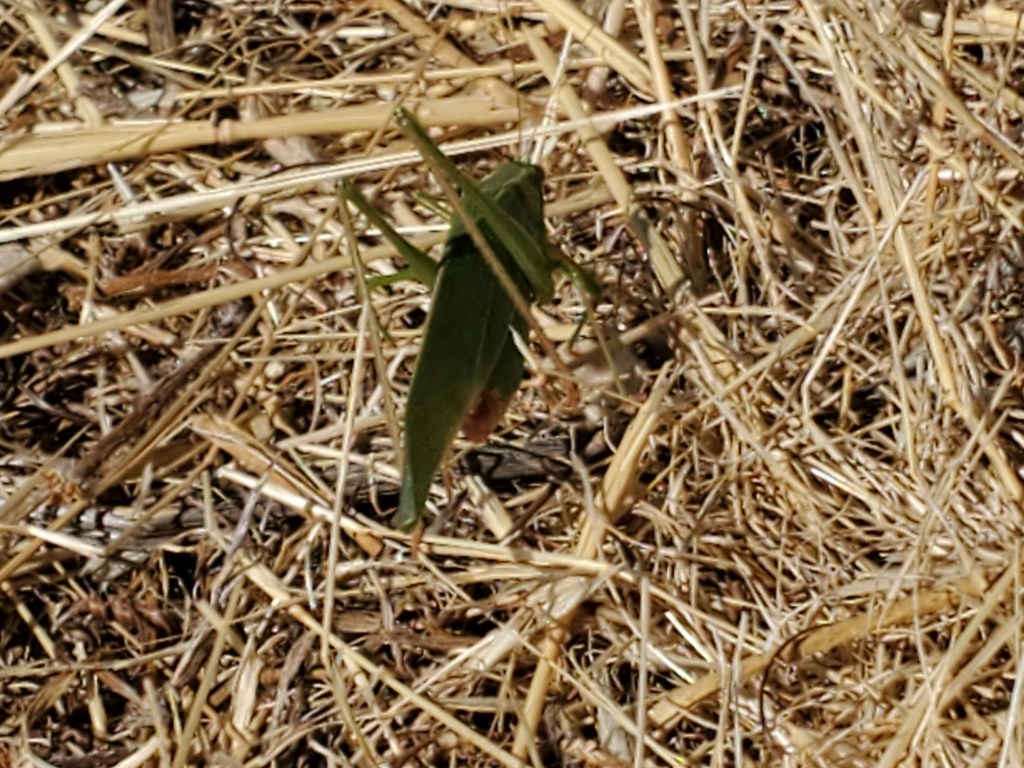
As I lament, I must also recognize the resilience of the life that is left. Acorns are emerging. The songbirds continue to stay. Large raptors and vultures soar. Lizards dart from one location to the next, while the California Toads move at night, leaving their poop behind. Small frogs have begun to show themselves, emerging from the tendrils of willow roots and debris in potted plants. Dragonflies have been more visible at the house, and not just in the creek where there is still running water. A beautiful green snake took up residence near the toad pond (presumably because dinner is very near and fat). Even a cool hopping insect that looks like a leaf was hanging around on the Polaris. Life is all around and abundant – and some that were eaten will return.
Water Still Running

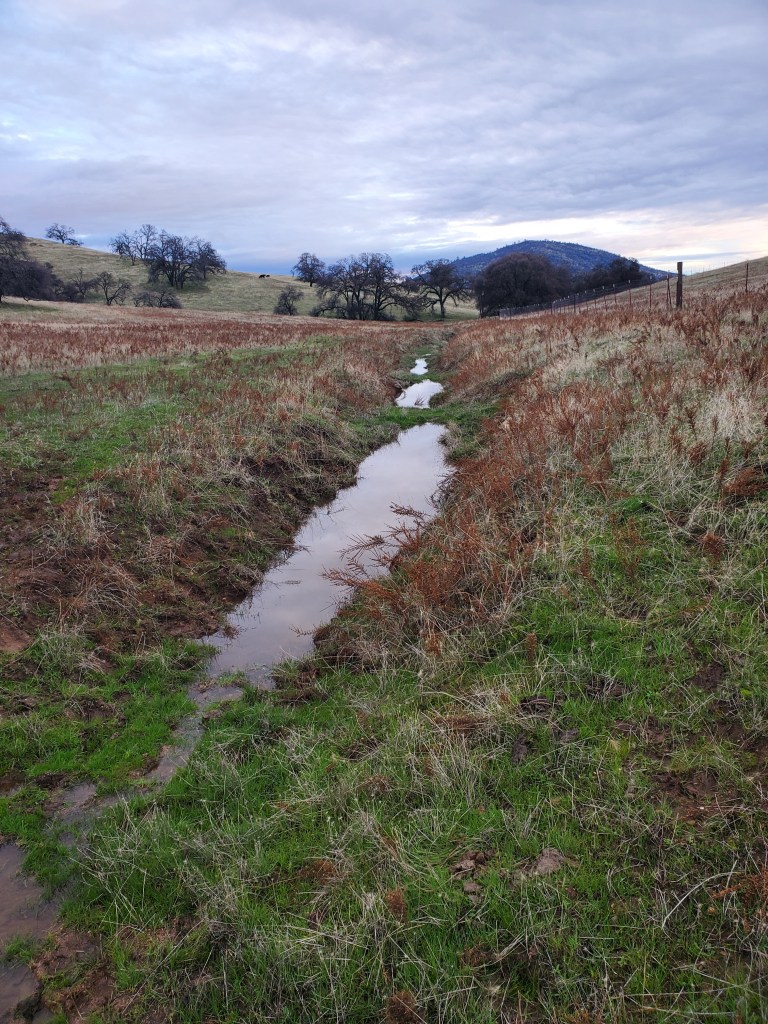
The creeks are still running. They are providing much needed water access and sustenance for the plant life adjacent to the creeks.
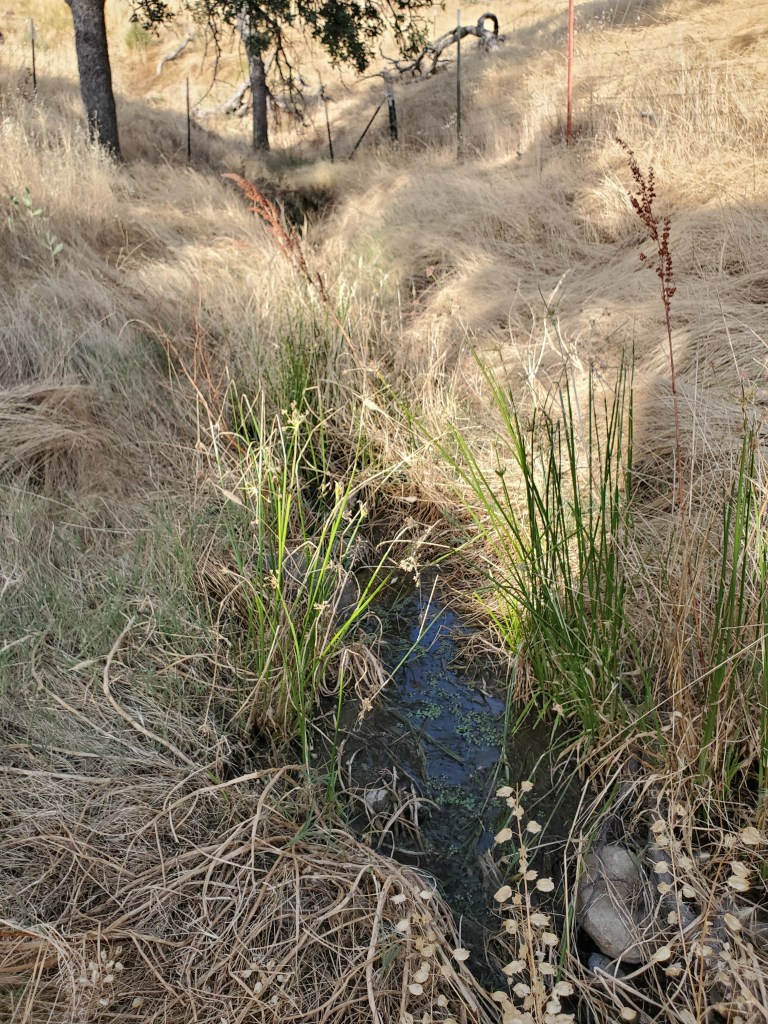
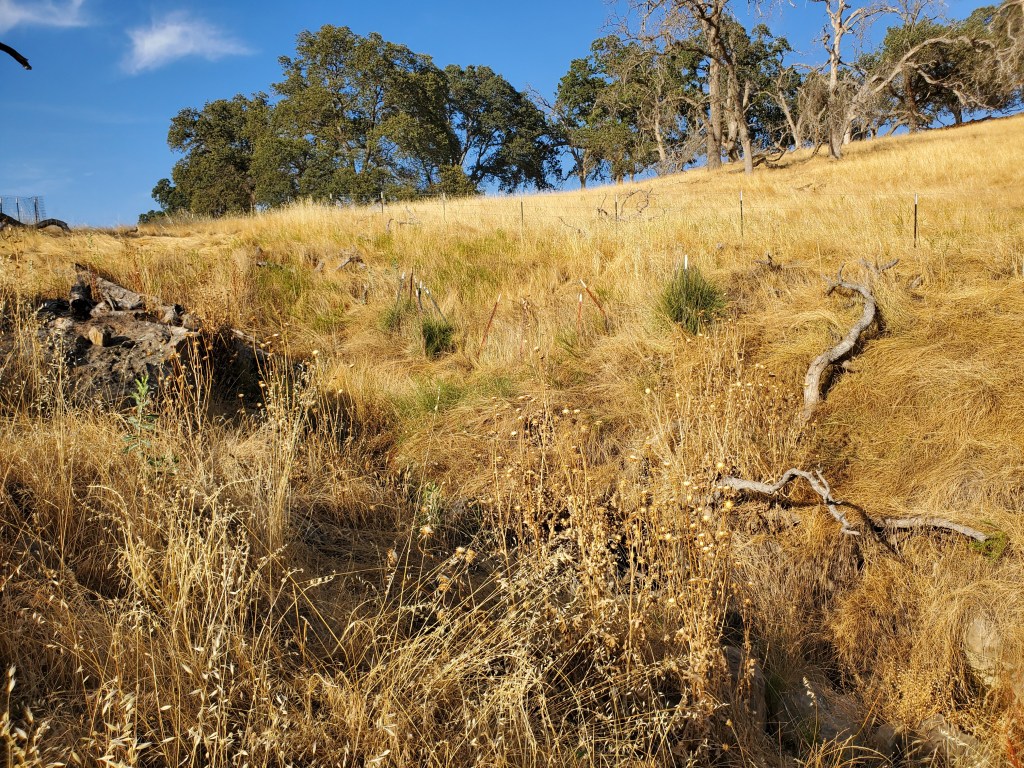
Unfortunately, the amount of nutrients in the water from cattle dung and the heat are causing algae to bloom. Algae is an interesting life form. It can be toxic. Its decomposition can suffocate life in the water, but it also provides a significant portion of oxygen on the planet, much like forests.
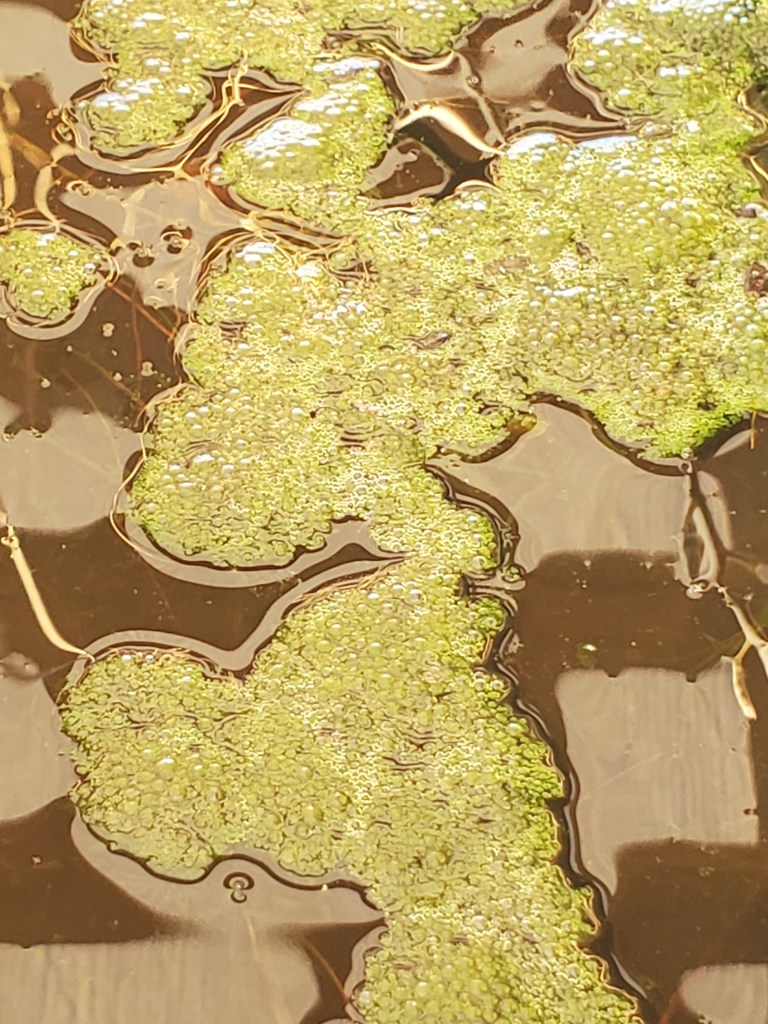
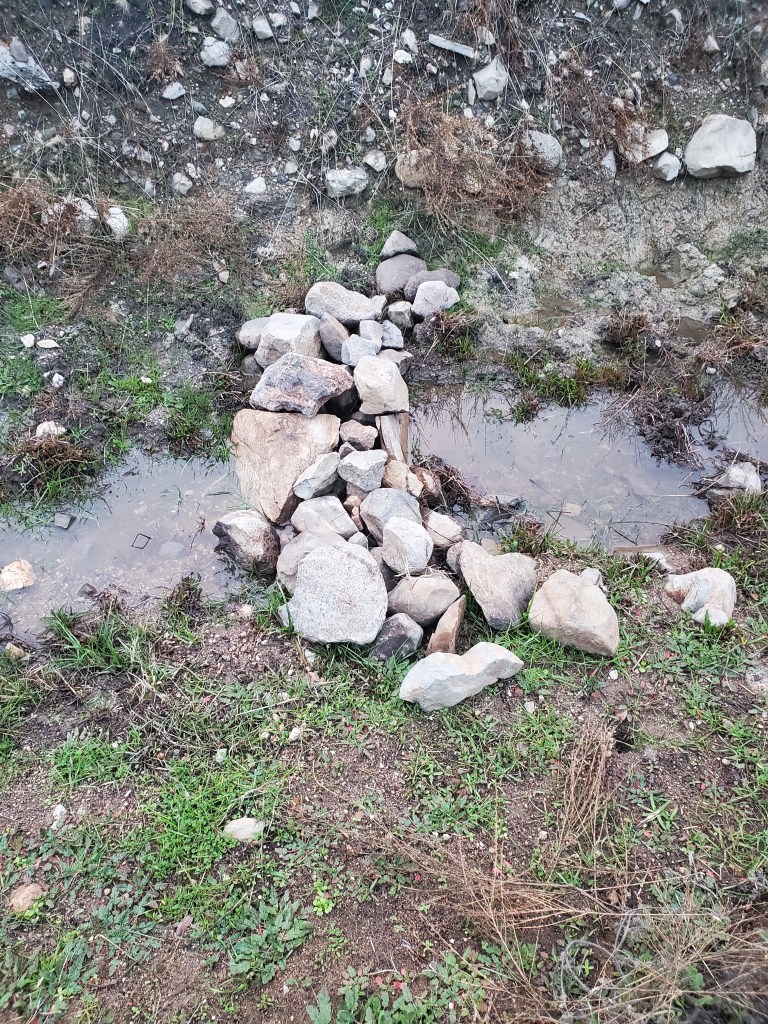
I don’t know if the green algae on the creek is harmful, but I don’t mess with it – – except to throw rocks into the spring and puddles to break up its thickness, and open some holes to the water underneath. This is in part some of the reason I fence out cattle, to decrease the amount of excess nutrients going into the water. I cannot help upstream, but I can decrease the overall amount as it moves through my ranch at least.

Riparian Oak Seedlings Still Alive

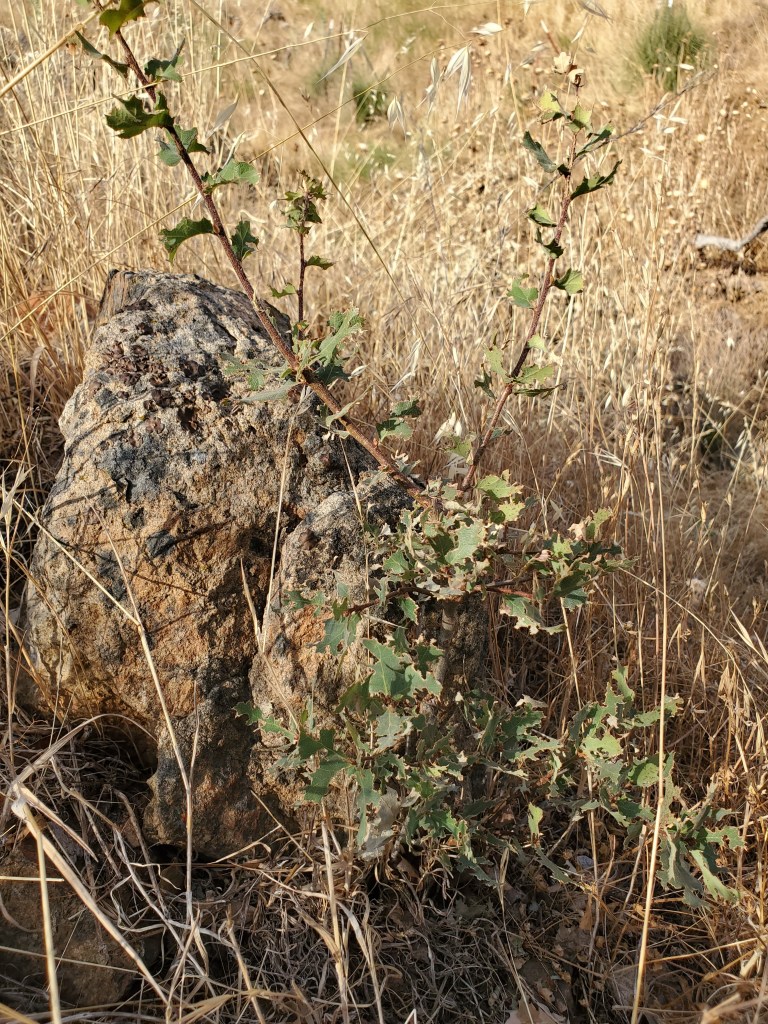
I am overjoyed to report that the oak seedlings in the riparian areas still have leaves. I did see some damage to the leaves, but that is all. The grasshoppers did not fully destroy them as they did the very young plants I planted.

I learned recently that what looks to be like a young oak can actually be decades old. This was mind blowing. Given this, perhaps the small oaks in the riparian area have developed a more mature protective element to their leaves and bark that prevented more predation. I know that what I call seedlings are actually many years old since I’ve been protecting them for over a decade with downed branches when the area was open to grazing. Their smallness is a product of grazing and drought. It has been a huge relief to see them grow last year and this year in response to more water and protection.
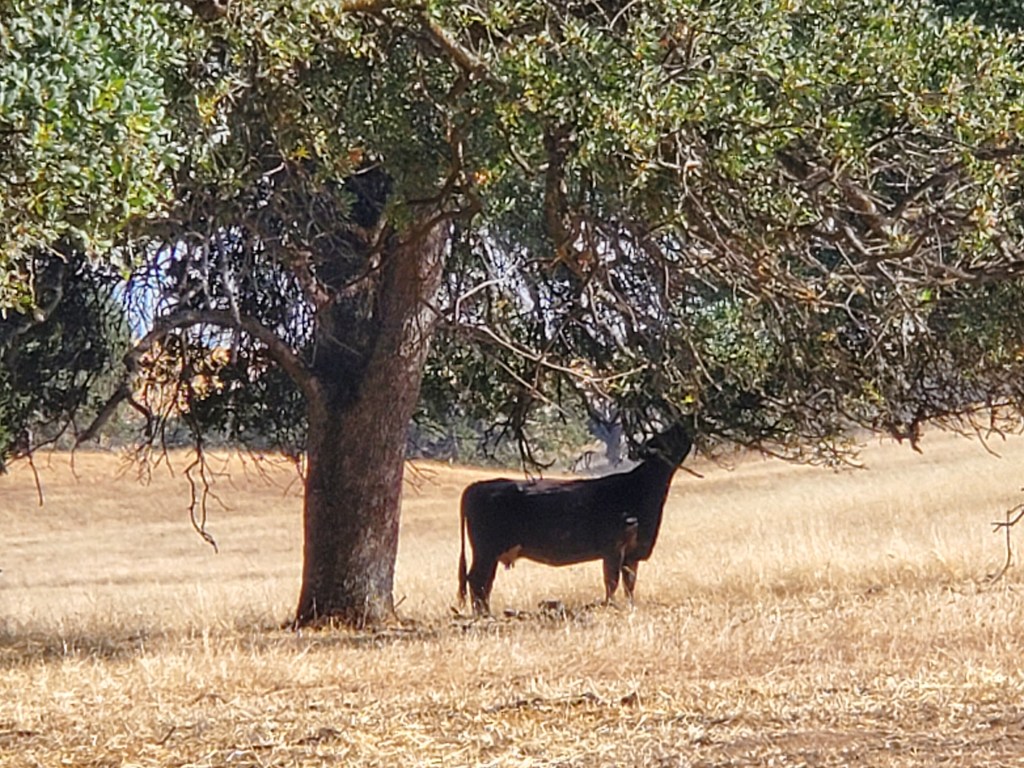
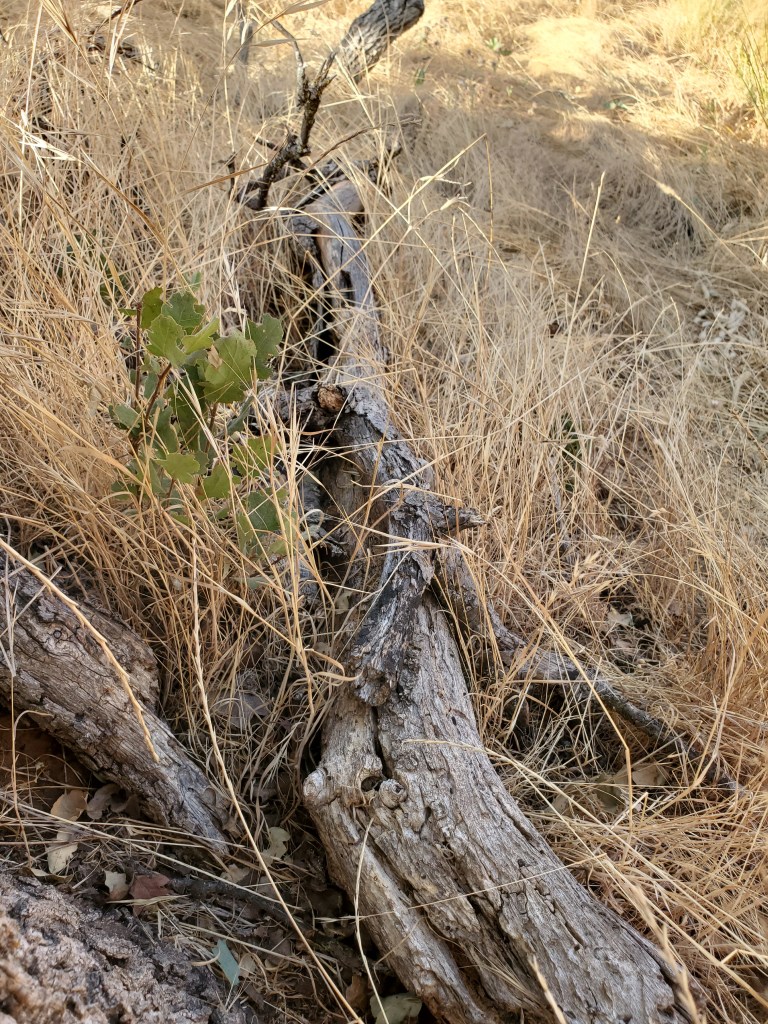
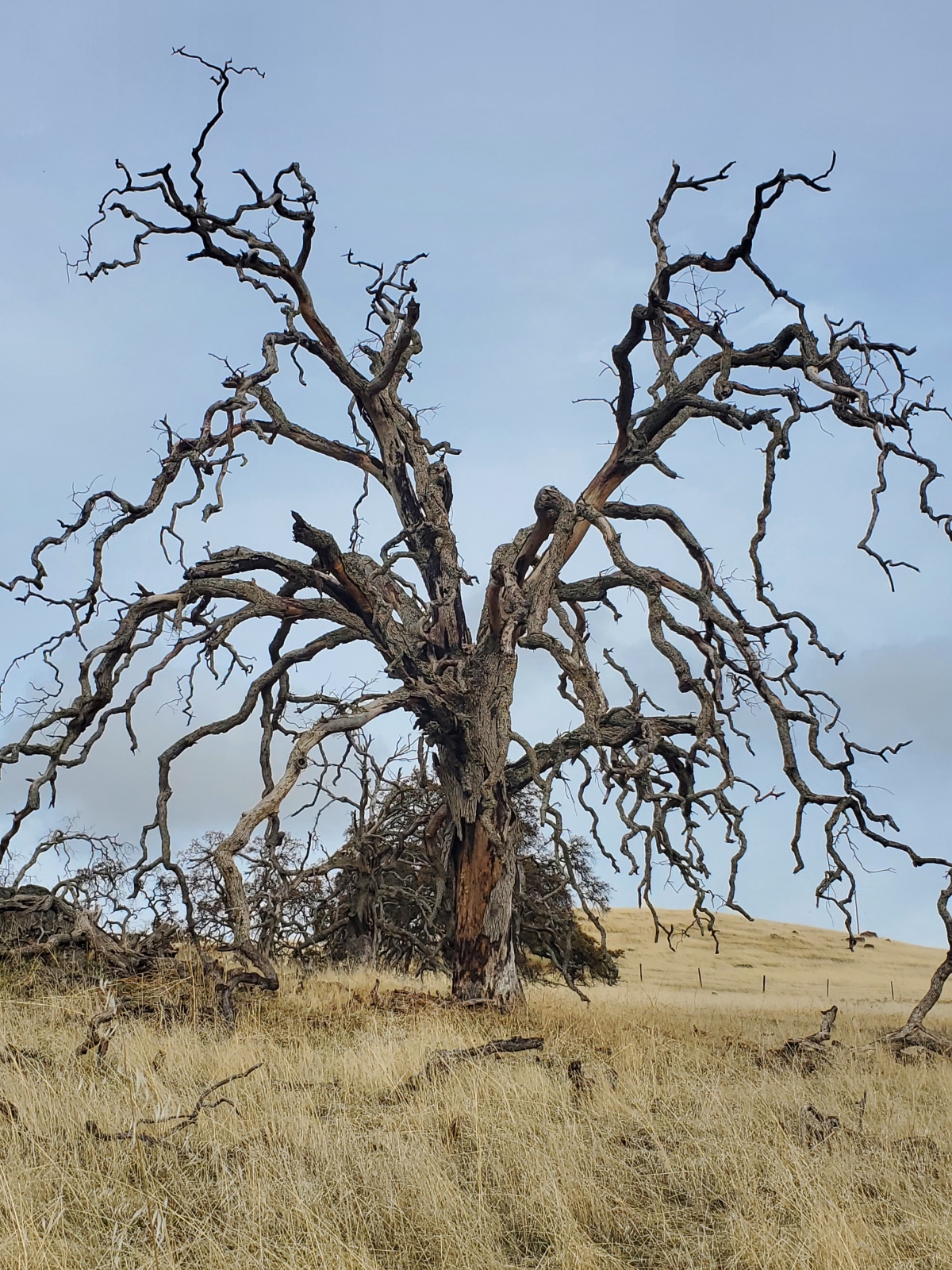
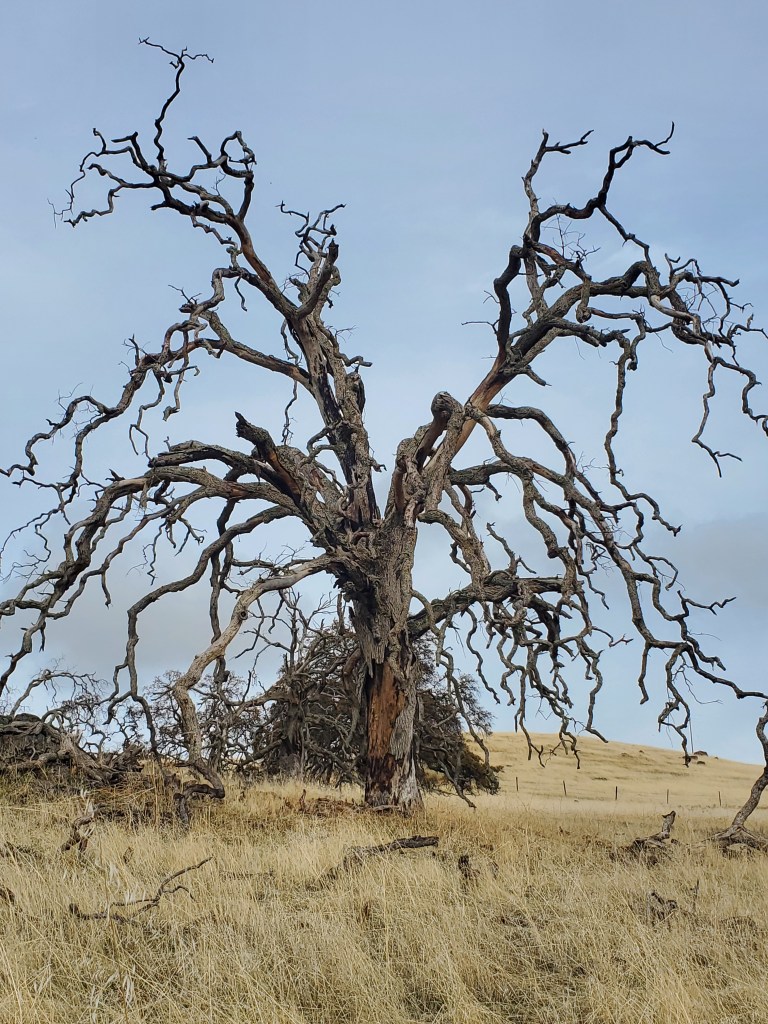
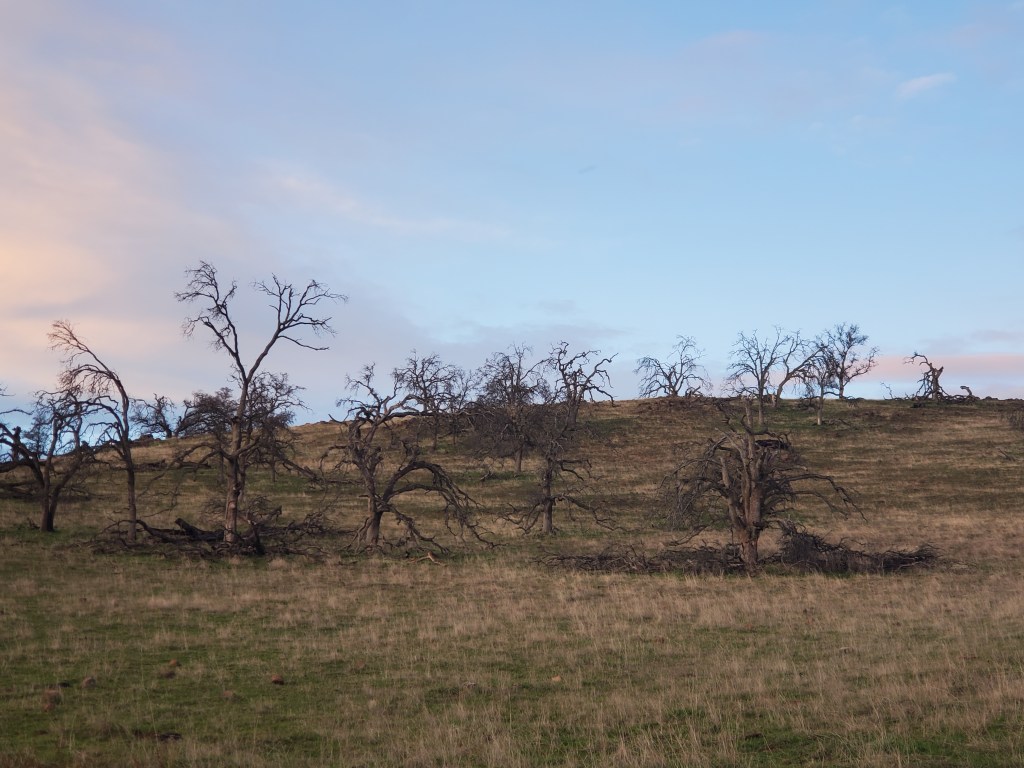
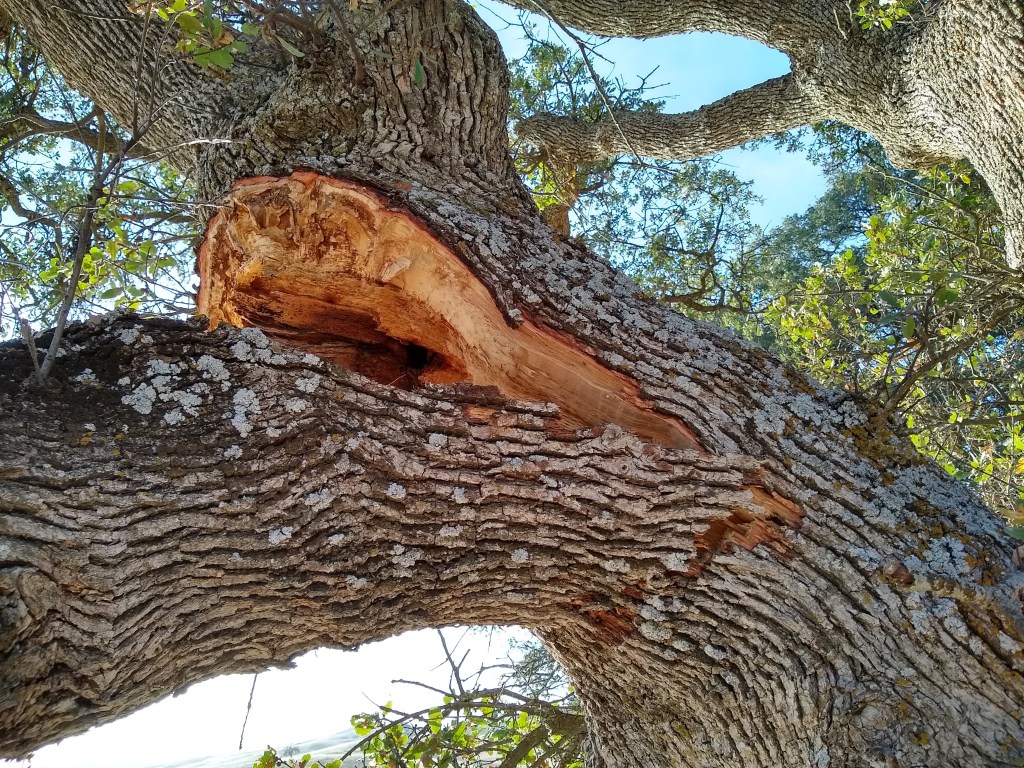
This success is all the more important as I continue to see decline among the adults on the hillsides. On my walk yesterday, I heard a horrible loud crack. I looked in the direction of the noise and saw movement in one of the grand oaks on the south hillside slope from the house. Then, I saw an entire branch fall. It continued to crack then crash down.
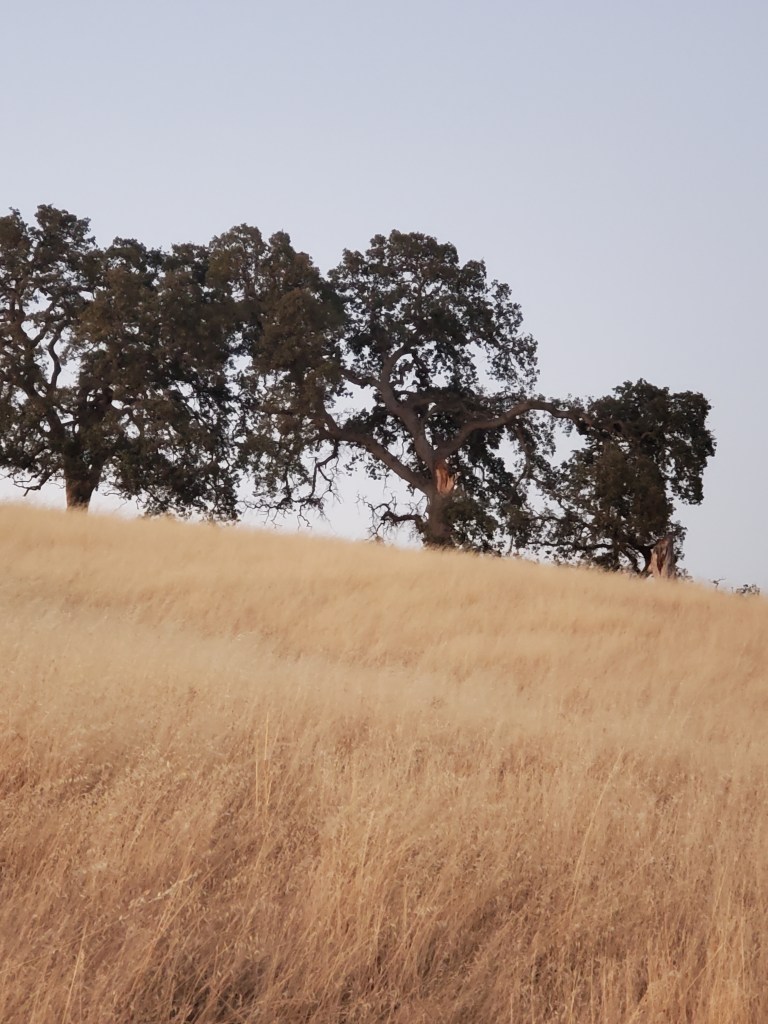
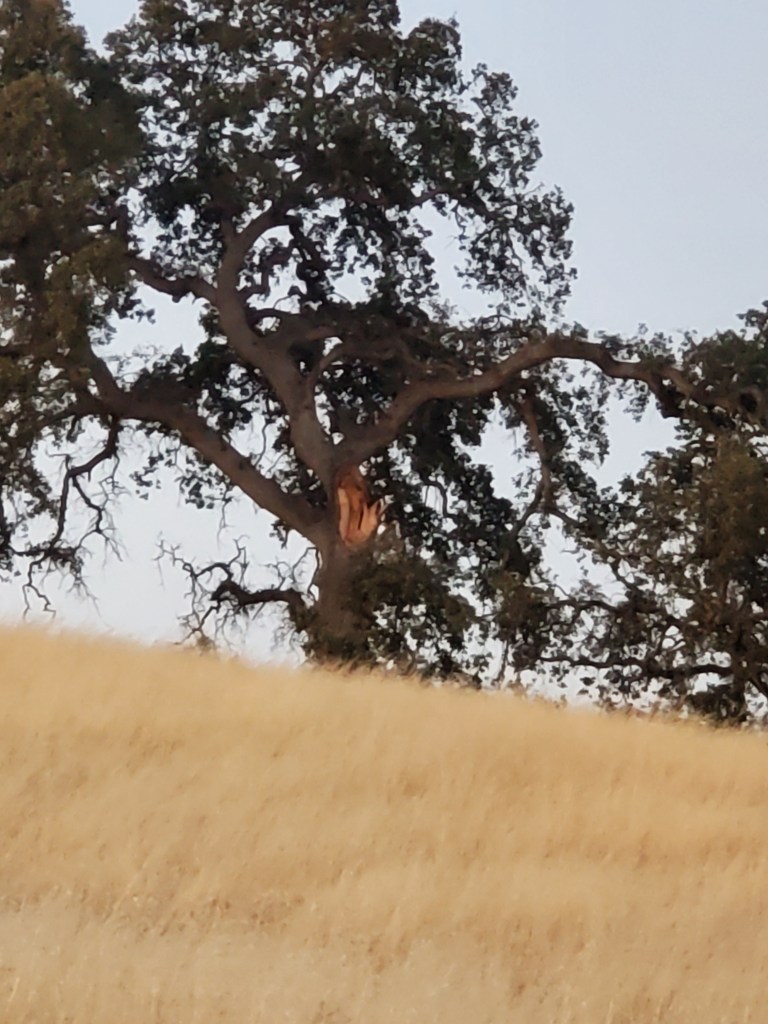
I was horrified, sad, angry- oh, how I grieve for these crucial lives. I keep thinking, “What can I do better?” I don’t use much water at the house. I put water back into the ground. I am slowing water. I guess I need to do more dirt work and create little moats below and above groves of trees, outside their drip lines, to capture water as it runs down hill during rain events. The work cannot begin until the soil is moist again. The metal edges of tractor buckets can cause a spark, and this whole place is filled with dried out, tall, European Grasses. Another year going by; the clock ticking on what can be done and if it will be too late to help. And, the cost – it will be all on me to cover with no program to help.

Breathe. Deep in. Full out. Repeat…Repeat. Reminder: you can only do what you can do. Much is out of your control and so much larger than you. You are not absolved of responsibility, but the full responsibility is not yours and yours alone. Stay healthy. Keep your joy and continue working at a pace you can sustain.

Extreme Heat is Not an Acceptable Norm

I know the extreme heat is a key factor in the death, piece by piece, of my oak relatives. It causes the death of thousands of people per year in the United States, and that is increasing. We cannot accept this as normal. If we love this incredible land, ocean, waterways and sky, if we love our children, then we must be intentional in our actions. I know this issue, like the oaks falling apart, is larger than one person. If we each contribute something, then things can get better. We have seen this happen already with the butterflies. Acting together, many planting milkweed and more nectar plants, have helped bring the monarchs back from the brink of extinction on the west. Although we have more to do to stabilize the population, we are on the right track.

Every choice we make as individuals makes an impact. You don’t have to deprive yourself at every turn; what I am suggesting is that we have to understand that our individual choices have consequences. In knowing this, we can make informed choices, not let guilt-aversion act as a barrier to good action and understand that we are each important change-makers in how the future is shaped. This is big; I know. Please don’t loose your sense of hope. It is some of the most powerful medicine we have. Aho.
Adding a New Initiative

Dead blue oak tree and great habitat for bats, birds and many other species

It happened on Thursday, and I saw it too. I was walking my route checking all the log and rock dams when there was a popping sound. The dogs looked to the northeast, so I did too. I didn’t see anything. The sound was not immediately identifiable, and I continued walking. When I was at the edge of the grove, the sound came down the drainages. It was a loud crack. Oh shit. Fear sent adrenaline through every channel in my body all at once. The dogs looked back in the direction from which we came and took off running full speed to investigate. It was clear the sound was well behind me. My body eased. I swung around just in time to hear another crack, and then thud. I caught sight of the branch of a long dead, once magnificent, tall blue oak drop to the ground. The dogs realized the seriousness, and ran even faster back to me. It was a jolting reminder for me to be extremely careful and vigilant as I walk the range, reading the trees and never going under branches that are angled down towards the ground.
We had a doozie of a storm four nights ago, with .75″ of rain and wind so ferocious, my kelpie Millie was trembling against my body, unable to sleep. With the rain and wind, it is almost guaranteed that the trees will be impacted. Branches loosened from bark and trunk through death and drought are vulnerable to the moisture and wind. Gravity then finishes the job, dropping the large, tortuous branches, and sometimes entire trees, to the ground. It can be very dangerous.

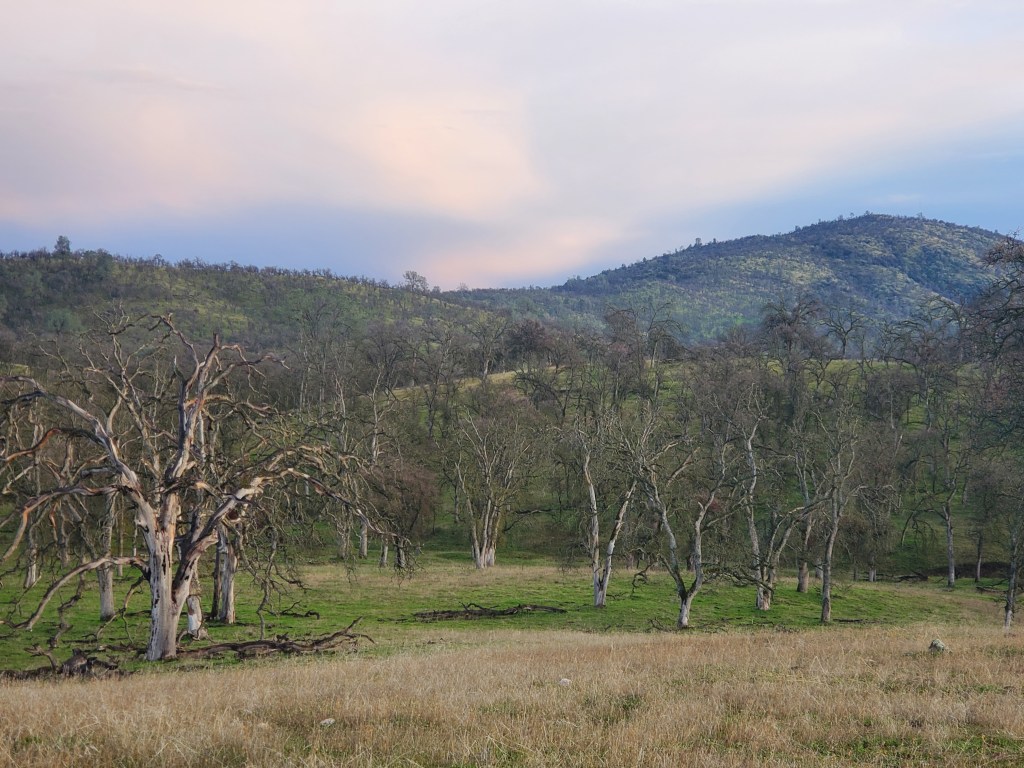
How did the ranch get this way? I try not to take it personally. I have lived on this land for 21 years. Since that time, we have lost almost 300 blue oaks. Some, I think, were at their expiration date, but most have been pressured by drought. Leading up to the 5-year drought that began in 2011, I noticed the loss of several grand old trees down slope from the house. However, it was not until 2016, the year just after the 5-year drought that entire hillsides, ridges and even some near the creek died. It was a horror. I did not know what to do. I called experts, who looked for signs of disease. There was none. They were perplexed, but they were just learning as well that this was happening all over California. It brought me some small bit of comfort to know it was not something I was doing to cause their deaths. Still, I was distraught at their loss and anxious to learn more about what could be done.

A New Passionate Work

Given the recent blue oak die-off, I am committing to now work hard toward restoring some of the population of blue oaks that died. I understand that there is not sufficient moisture to sustain replacing the oaks 1:1. I am proposing to restore a portion of them, probably close to 1/3rd of the lost oaks. This means I will need to plant at least 120 seedlings, anticipating that some will not make it. I will need to continue to protect the seedlings in the creek banks – hoping they will grow more. As I have reported in this blog, three I’ve been protecting for 10 years, before the riparian exclusion fence, have stayed nearly the same size all those years. With the groundwater recharge work I am doing and adding some trenching work around oak planting areas, I am hoping that I can retain enough moisture to help bring some baby blue oaks to maturity.

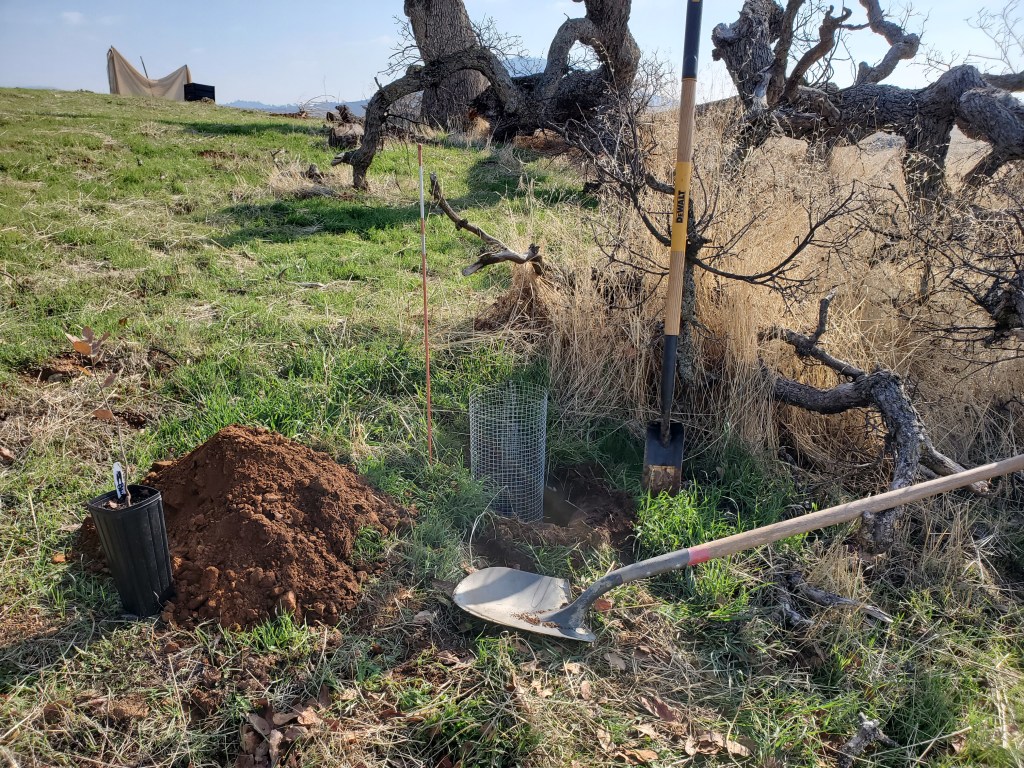
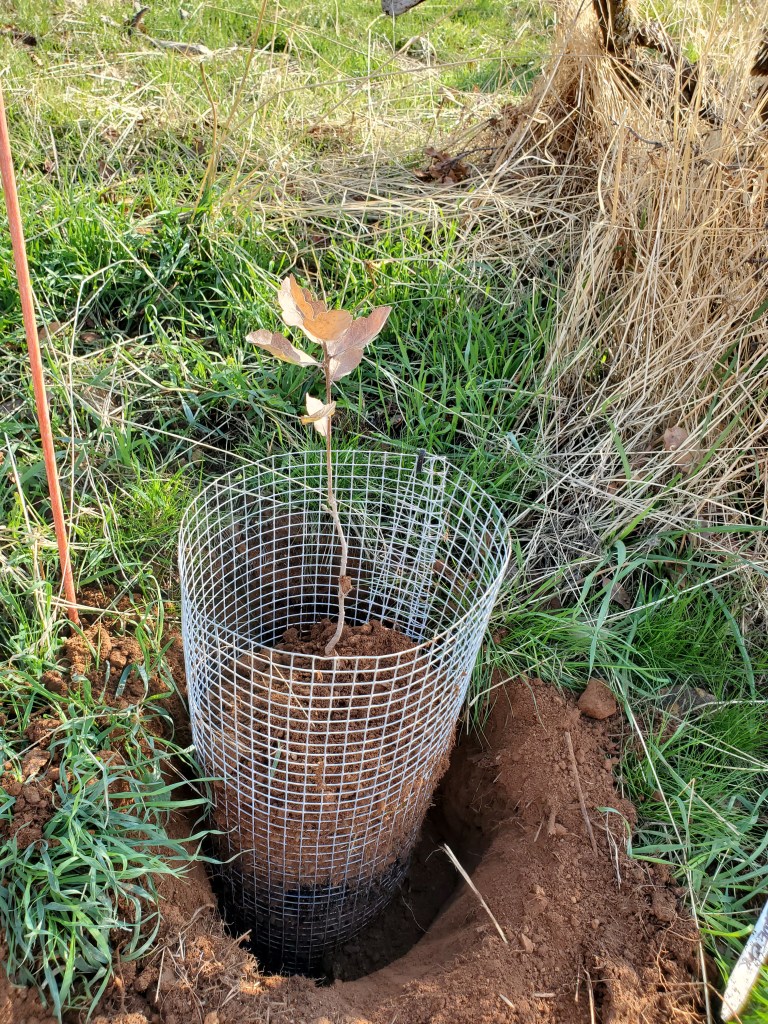
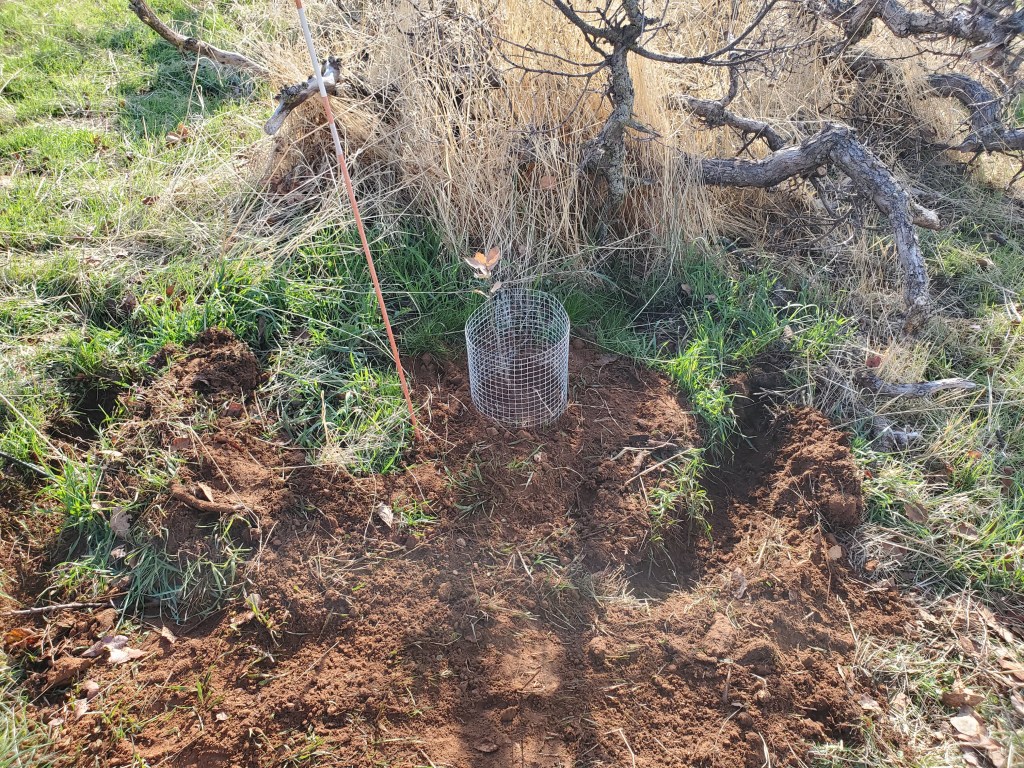
My plan: I have already ordered 103 oaks for next year, and have received 22 to plant for this year. Holes will need to be dug close to 18″ deep to loosen the soil and make space for the 18″ cages, with 6″ of the 18″ of cage being above ground to deter overland gophers, etc. About 92 of the seedlings will be planted in special cages. Ron Allen of Mariposa Native Plants conceived of a stiff gauge cage with a soft pine base that has small holes in it. The holes allow for water flow but mostly for oak roots to penetrate. The soft pine will degrade quickly allowing for the tap root to get bigger without any pressure. The cages will be able to be removed after a few years or will degrade over time. The other 28 seedlings will be planted either near the creeks where there are less gophers or using 15 gallon mesh shields. New seedlings outside the exclosure area will get 3×4 fencing around them to protect from cattle and a coconut pad around the planting site to discourage grass competition. Inside the exclosure will be coconut pads, some cages depending on proximity to the creek, but no extra fencing. Those planted outside the exclosure area will have some trenching dirt work done to help contain run off and retain moisture.

Fortunately, I have some NRCS funding that will help cover the costs. There will likely be significant cost overage with the dirt work, which I will need to cover. I also have a Partners grant through Fish and Wildlife, but it is limited. Because all of these government funds pay you after the work is done, I will need to float this project from my personal money for a year. I almost always need to cover planning, reporting and labor costs personally despite any grant funds. This is why, when I work at a large scale, it has to be a passion project. I have to be willing to spend my own money.

It is important to share how all of this work gets funded, because it is part of the challenge but also shows the changing nature of the Farm Bill and other government policies that have been trending more and more to support of these critical efforts. We need support for butterflies, trees, groundwater recharge and so much more to build resilient ecosystems in the face of climate change. We need to pay people for their time to do this work. It produces jobs, connects people with one another, protects communities and puts money into local businesses. What I do on my ranch impacts my community, my region and beyond. What you do in your yard, on your patio, what you buy, how you travel, what you wear, it all matters. You make a difference. Work like this is worth our time and money.

Running Water

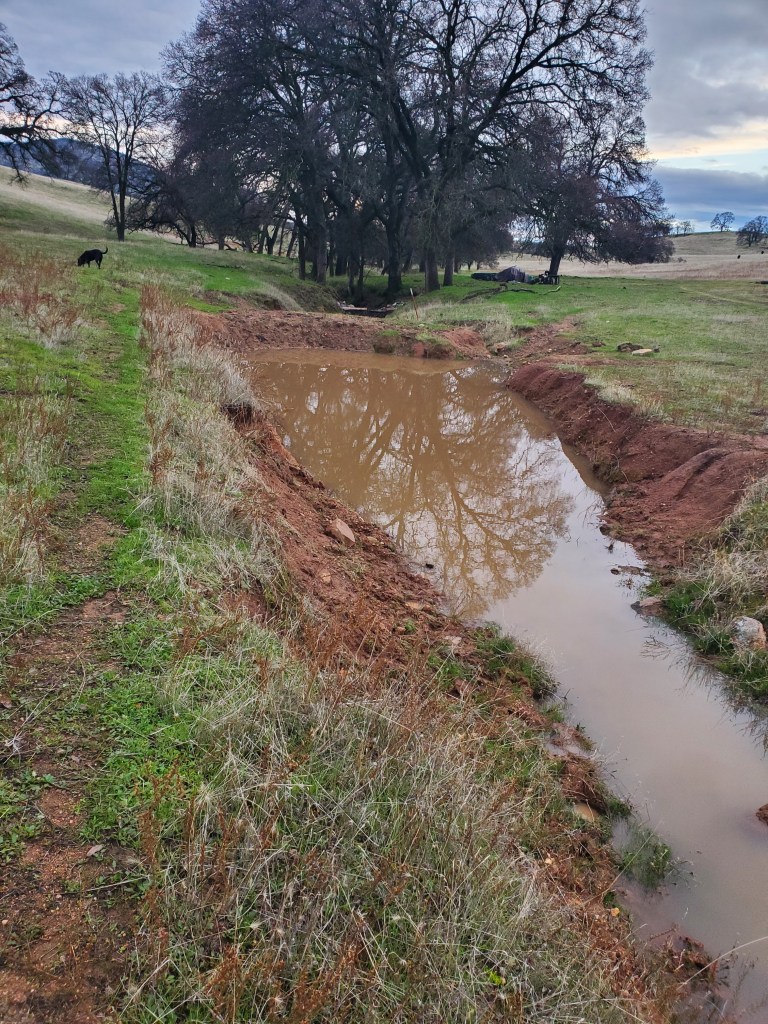
With the consistent and productive rain storms, all of the drainages and creeks are fully running. Although we had water all year in Odom Creek and Spring Creek, the water was not running the full length of the creek. It would run from the springs and then stop 50′-100′ or so downstream. Now, everything, including the arroyos, are running. The air is wet and the smell is green, life-filled. There has been a boom of Sierra Chorus frogs, which I’ve not heard in large volume in a few years. This year, it is an incredible performance each day and night. I love it. I hear the toads too, with their deeper, slower chirp. I have seen more blue herons around the area with their easy to spook nature, 6′ wing-span, and dinosaur look. I hear flocks of birds before I see them, 20 to 50 birds flapping in unison overhead. There have been flocks of over 100 birds in the last several months too, weary travelers on their way south, stopping for a good rest, meal and shelter. That they choose this place, that they can find what they need here, makes my heart swell with joy and puts more smile lines on my face, the sign of a life well-lived.

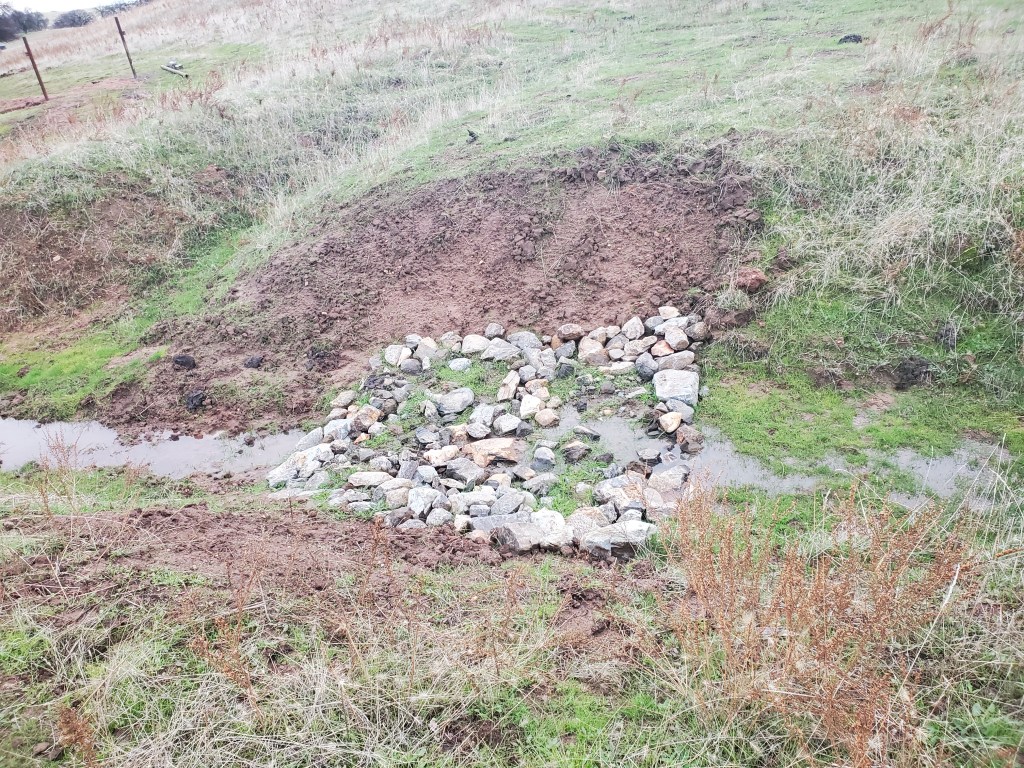
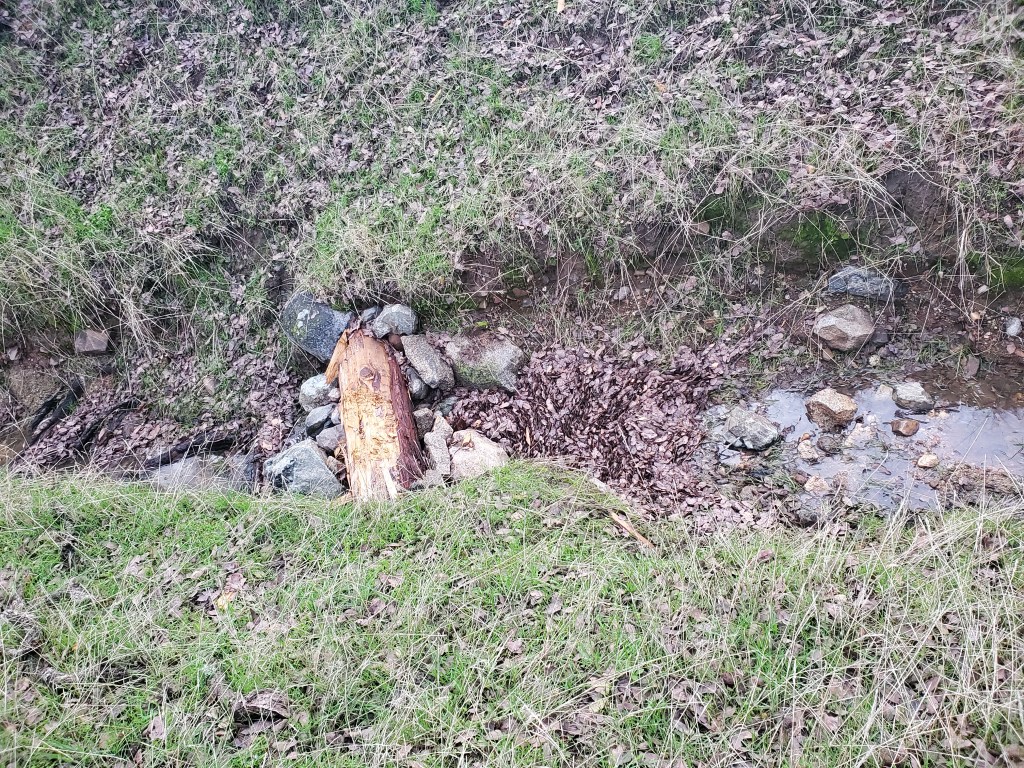
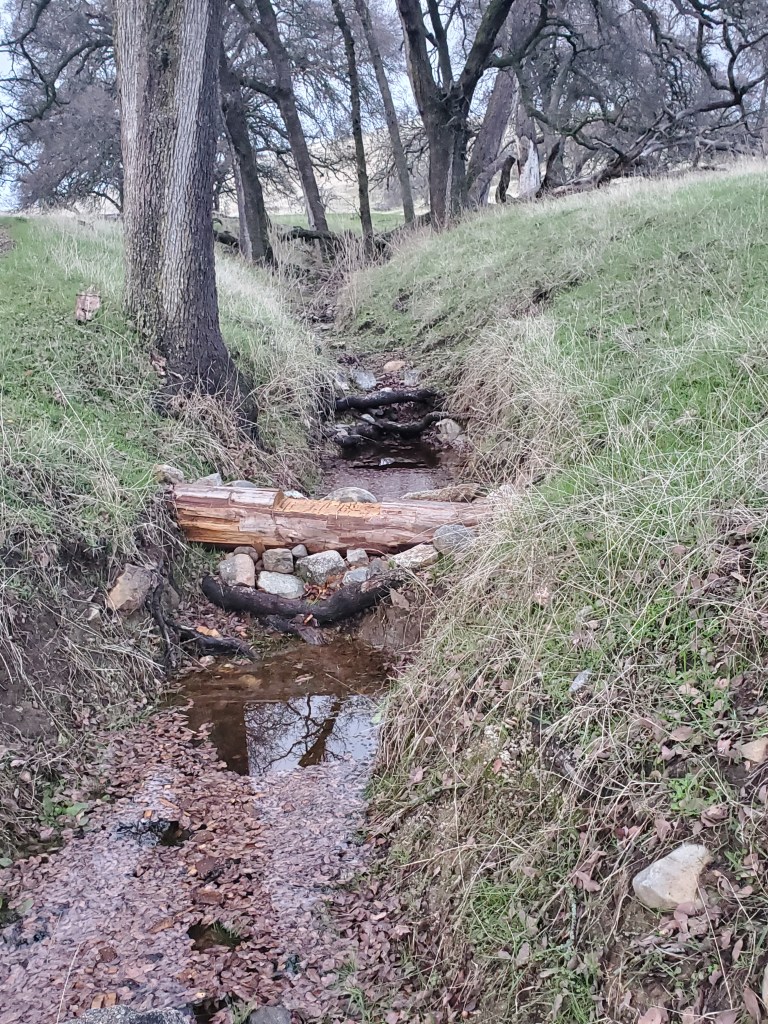
With the running water, I am able to see how the log and rock drop structures are doing. They are working as designed! I am seeing sediment and water pooling up behind the barriers. Yet, the barriers are permeable enough to allow water to more slowly flow downstream. Water is backing up and pooling even well upstream. The longer the water stays back, the more time it has to soak into the soil and the fissures underground. I am so proud of this work. I know the swale pond moisture resulted in the nearest oak having a bumper crop of acorns two years ago when all the other oak trees nearby, or not near a more prolific water source, had less. I will be putting game cameras nearby to see who uses the water source, but I need to figure out more ways to document the impact of this work.

Monitoring and Managing

When projects are done, they still need to be monitored and maintained. The guzzler continues to work as designed. I ensure that the rock and branch pile for small animals to access it is solidly in place. Every now and then I find the pile altered, so I build it back up. With all the rain, the guzzler is more than full. It has been overflowing, which will provide another year of fresh water for wildlife.

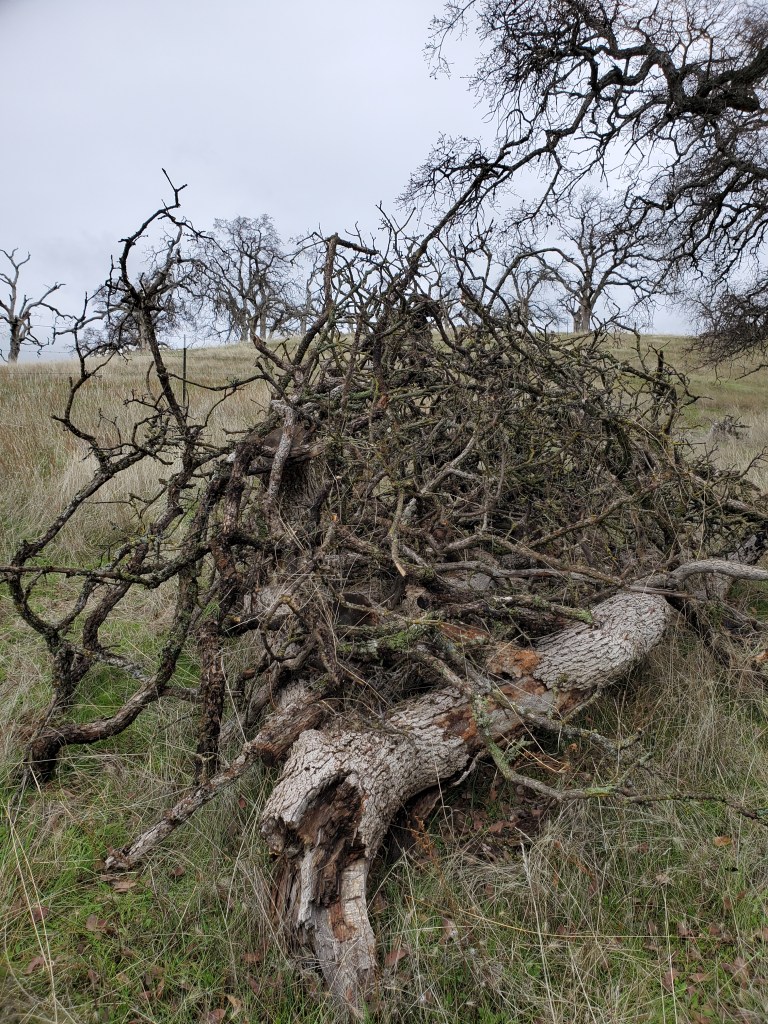
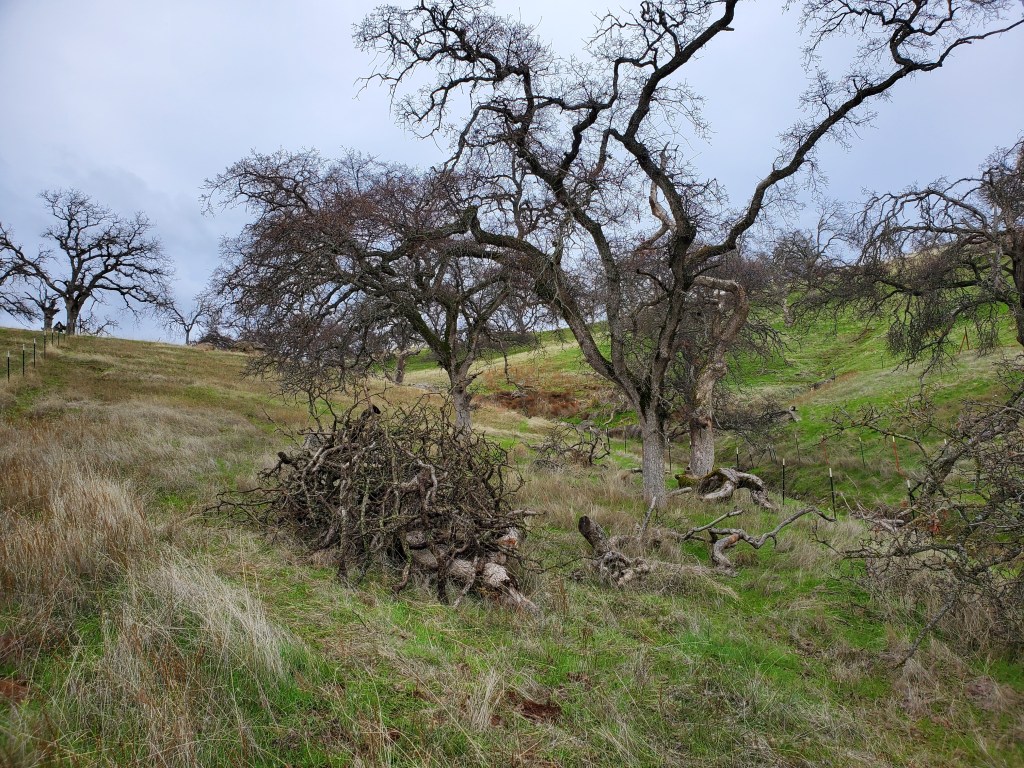
Yesterday, I was adding to the brush piles David and I built last year. As wood degrades, small branches need to be added to maintain size and a safe harbor for the animals that make them their home. I quickly built another pile as well. With the large storm coming, I did not want all the smaller oak branches left over from the large oak tree that fell in the creek last winter to be swept downstream. They were perfect for a brush pile; I just did not have time to build one the past few months.

Back and forth, I carried or dragged the branches from the spread pile 40 steps in each direction. It was a great workout. Even in the coolness of this weather, I began to sweat. At the beginning, I looked at the large, spread out pile of branches and wished I had a crew of two more people to help. “Many hands makes light work,” I thought to myself. I greedily looked at my dogs, lounging in the grass, happy, staring out at the beauty. I wondered if I could fashion a harness and have them help me drag the branches. Well, too little thought too late. It was just me there – so I started. An hour later, the entire space was cleared, and the beginning of a brush pile had been started. I felt good for finally getting the work done to make yet another space for birds to make a home.

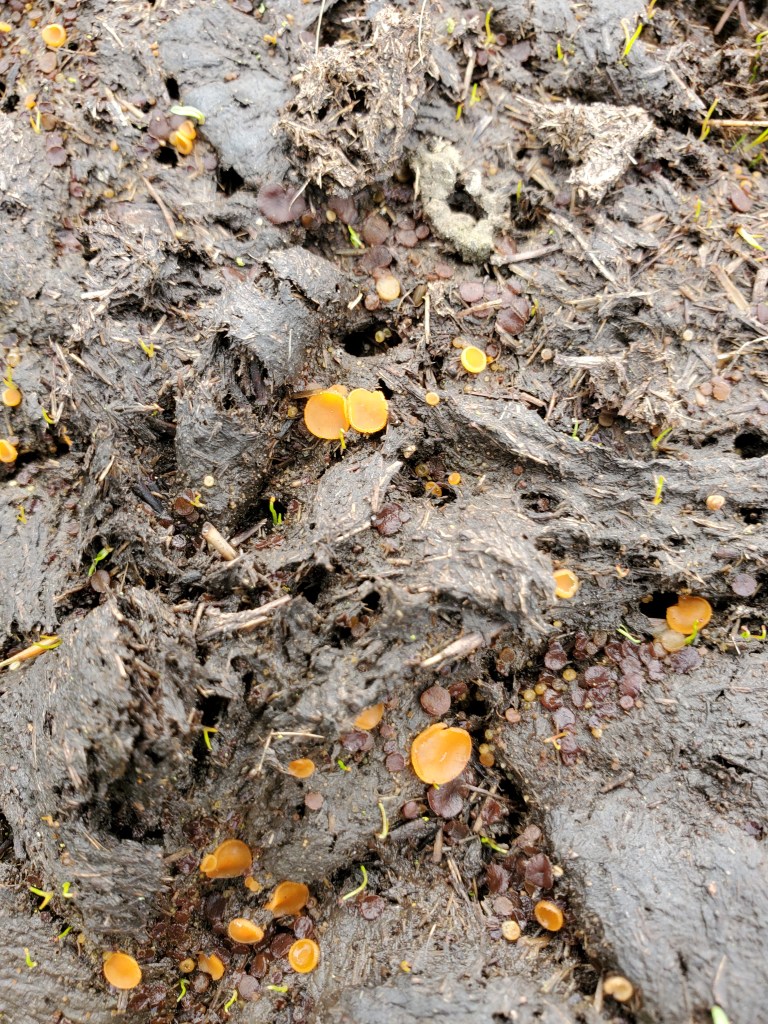
David is staying on top of mowing the grass this year. Last year, keeping the grass short resulted in many more wildflowers. It also helped with managing the planted areas. This year, we are going to be even more vigilant with weeding and mowing. It is certainly a lot easier to see the plants and straighten the baskets with the grass lower. I also love seeing the diversity of mushrooms that emerge with the moisture. They are such remarkable living things.

It continually shocks me how early the wildflowers arrive. Winters keep getting shorter. There were a few days in January where the temperature went to 71 degrees. Although my cattleman loved it for the grass growth potential, I was horrified. It needs to be cold now so everything can rest. The grass grew, wildflower buds emerged, and there were a large number of bumble bees, native bees and european honey bees.

Cross Fence Complete

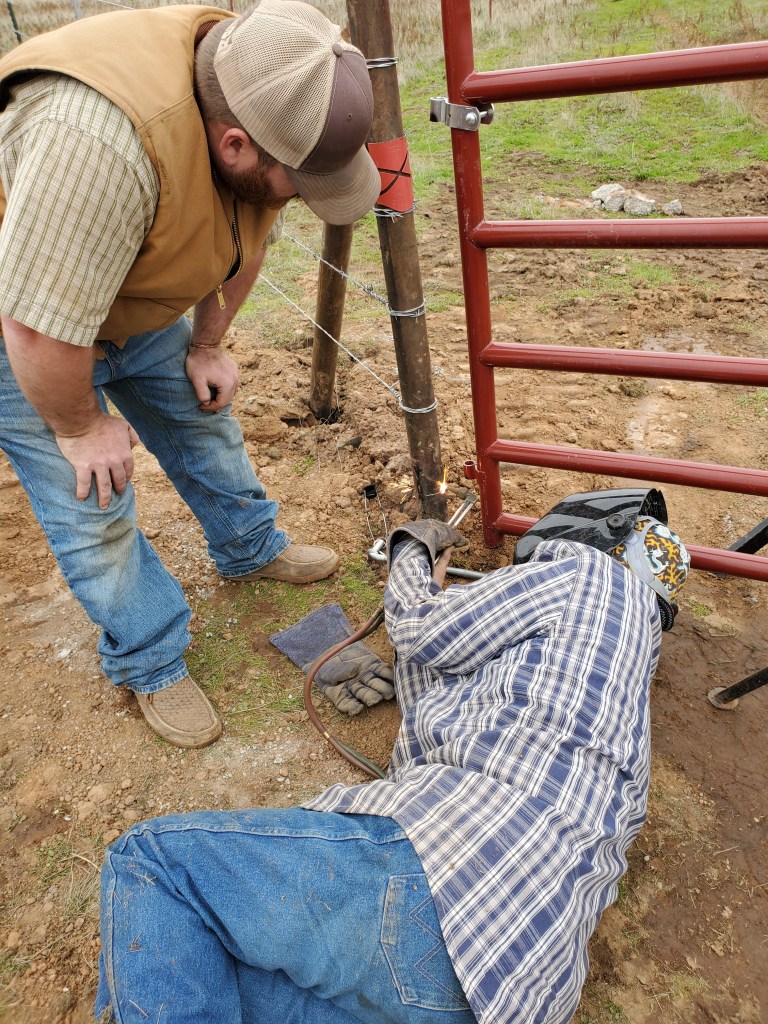
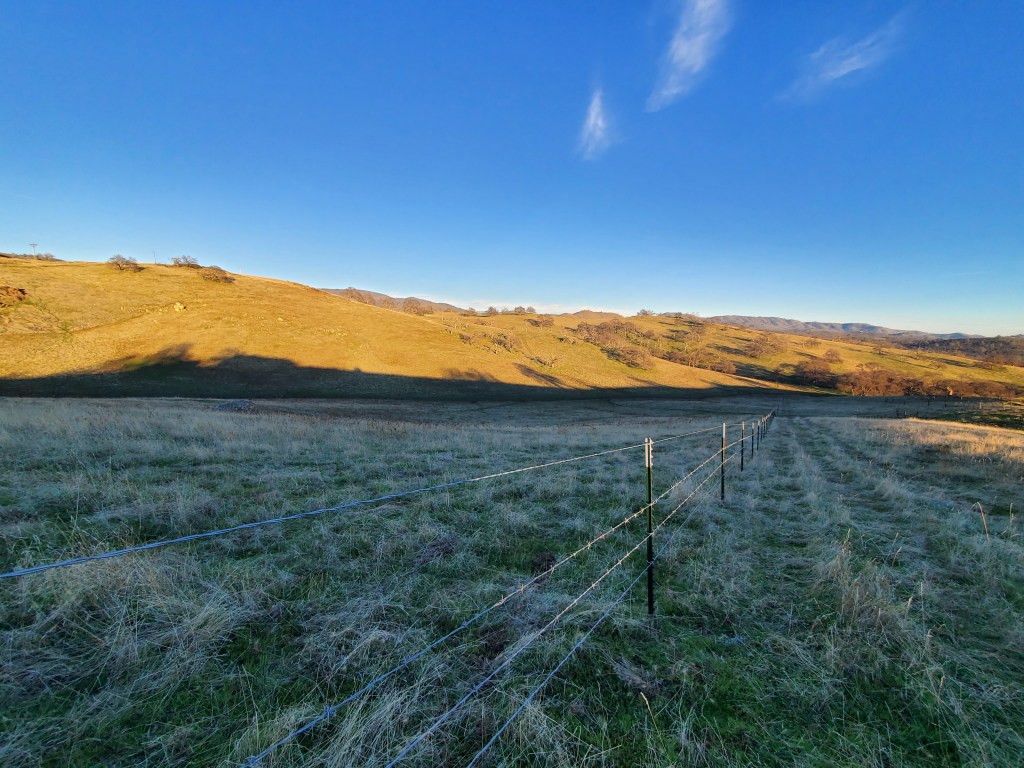
After two years of protecting the california milkweed with my body, I finally got the cross fence installed. It has been a huge goal to get this section of the ranch fenced off so that we can manage the grazing more closely. I worked with my cattlemen to determine how we would use the new field, what made sense for his grazing schedule and what my needs were. He had mentioned cross fences several years ago, and that stayed in my memory. If the amount of acreage and timing were right, it could be helpful to his operation and keep the monarchs with their host plants safe from trampling or taste testing. The new field will be very helpful with his aggressive grazing rotation. We will close the gates sometime in March, depending on milkweed and butterfly schedules, and keep them closed until the plants seed in July. He pulls most of the cows off the ranch anyway in May or June to bring them to high country pastures. Ideally, the field will have good quality and quantity of feed for the cattle to return to later in the year. Like anything, we will monitor the situation and adapt the plan as nature and human needs dictate.

Up Next

I will be installing a second guzzler on the east side of the ranch. Both guzzlers will have a larger rainwater catchment system attached to the guzzler tub. Essentially, it is a tank under an overhang with a gutter system and return for water to access the tank. There will be a pipe connected to the guzzler with a float valve to ensure that there is always water available in the guzzler for wildlife. In this way, I am able to provide year-round water without creating a more extensive infrastructure or depending on myself to transport water from tanks at the house all the way to the far side of the ranch.

Of course, planting blue oaks will be a focus this month and next. The planting season for blue oaks is December through April. I hope to get the remaining 19 seedlings into the ground no later than early March. However, those 103 seedlings will be arriving in December 2024. I think I am going to plan a fun tree planting party for December or January 2025 – with good work, food and music. Maybe you will consider joining me? Keep an eye on this blog for more details about how to participate if you are interested.

This is the 97th blog post since I started a large scale focus on habitat. Only three more posts, and it will be the 100th. Admittedly, I look back on the body of work, both physical and written, and am astounded. I can’t believe how much has been accomplished since the start. The work has been transformative – for both plants and person. There will be a celebration and some readers will win organic cotton Pollinative t-shirts. More details on this as we get closer. I hope you will celebrate with me.

Fall Can’t Come Soon Enough and A Monarch Sighting in Hornitos!

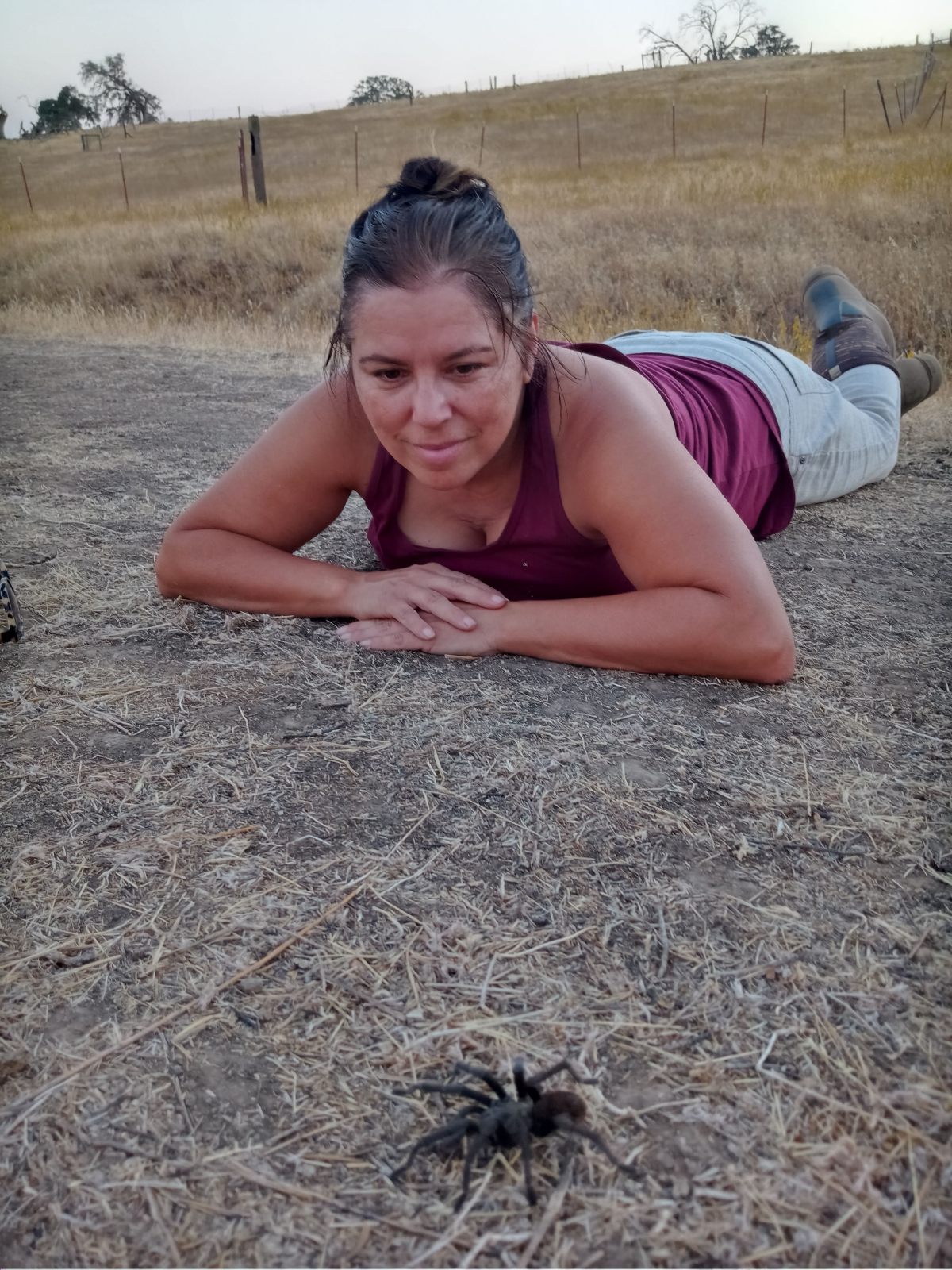
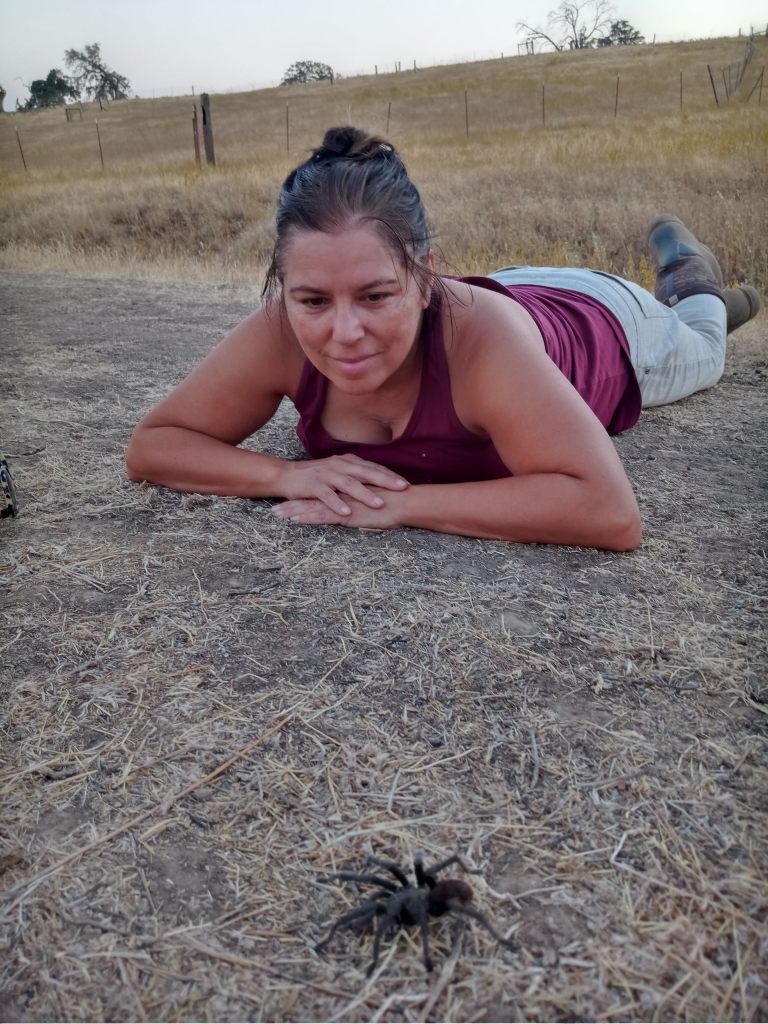
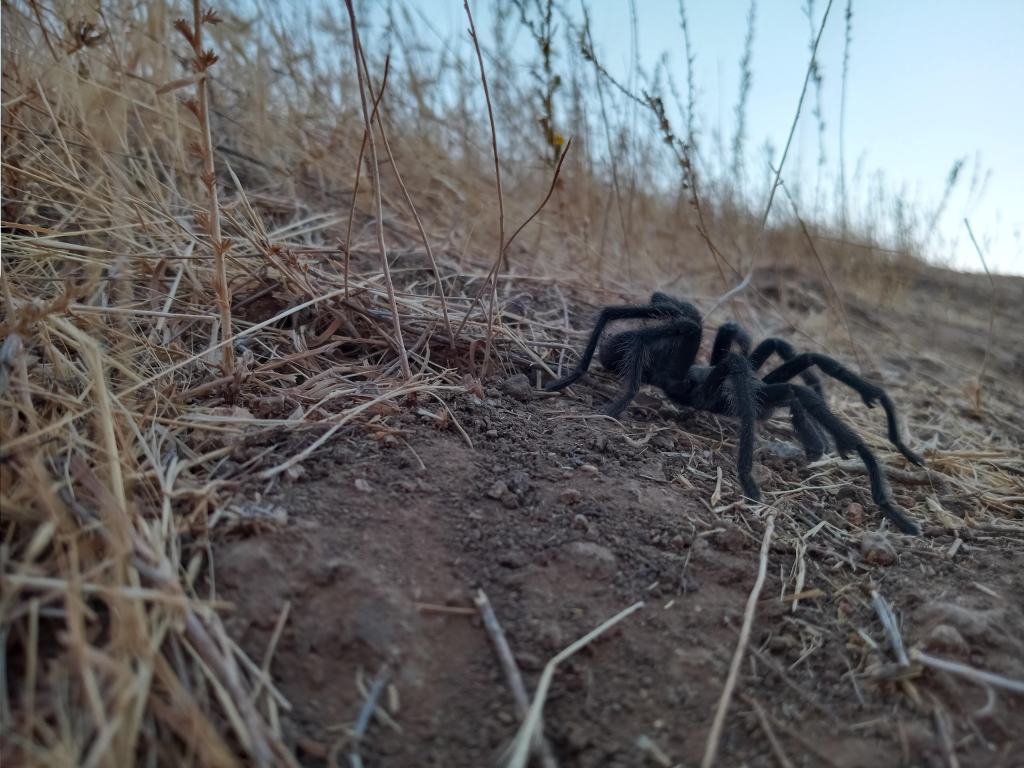
Studying the first tarantula of the season. There were two on my walk, and they both looked extremely healthy.

It is no secret among my friends that I LOVE spiders – especially tarantulas. Not only are they amazing predators eating their weight and more of flies and gnats, but they are a harbinger of Fall with its cooler weather. Oh my goodness, am I desperate for rain and cold.

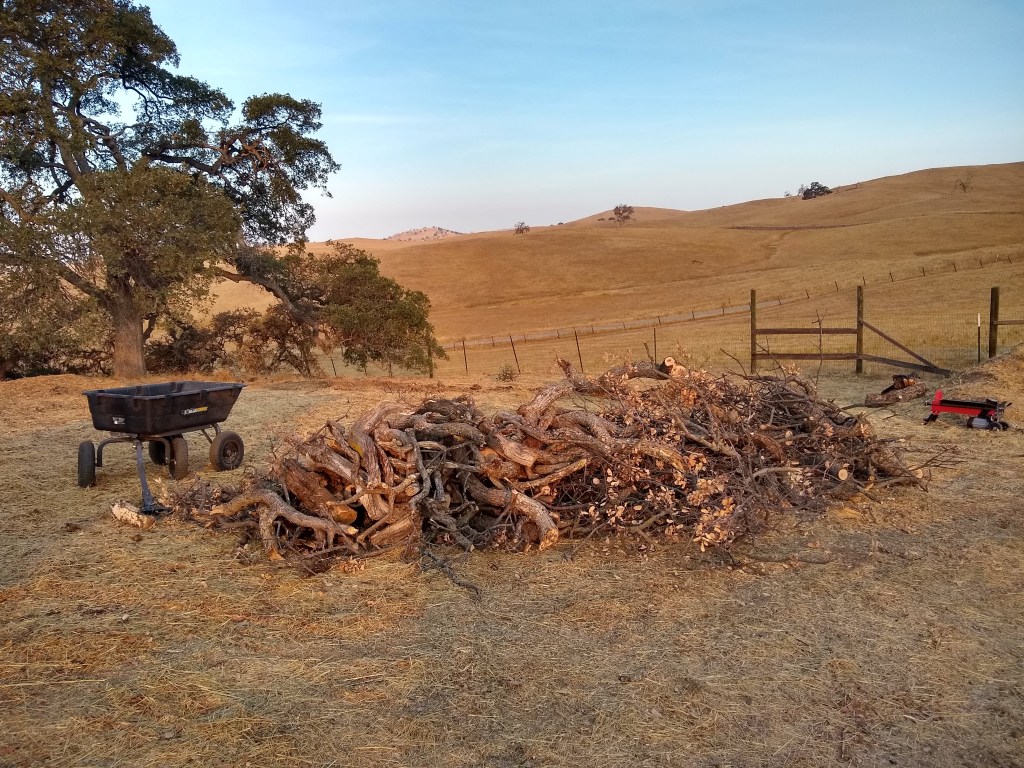
David and I have been busily preparing for the Fall. In addition to building log dams in the Spring Creek, we have been chopping downed oak branches. Often, these large oaks will drop branches in an attempt to stay alive by needing less water. It leaves some of the trees looking lopsided and the ground covered in branches and leaves. The large thud can be frightening if it is unexpected. One of the large oaks dropped a very large branch unexpectedly. The tree looked really healthy, and I had hoped it would stay fully intact despite this horrid drought.

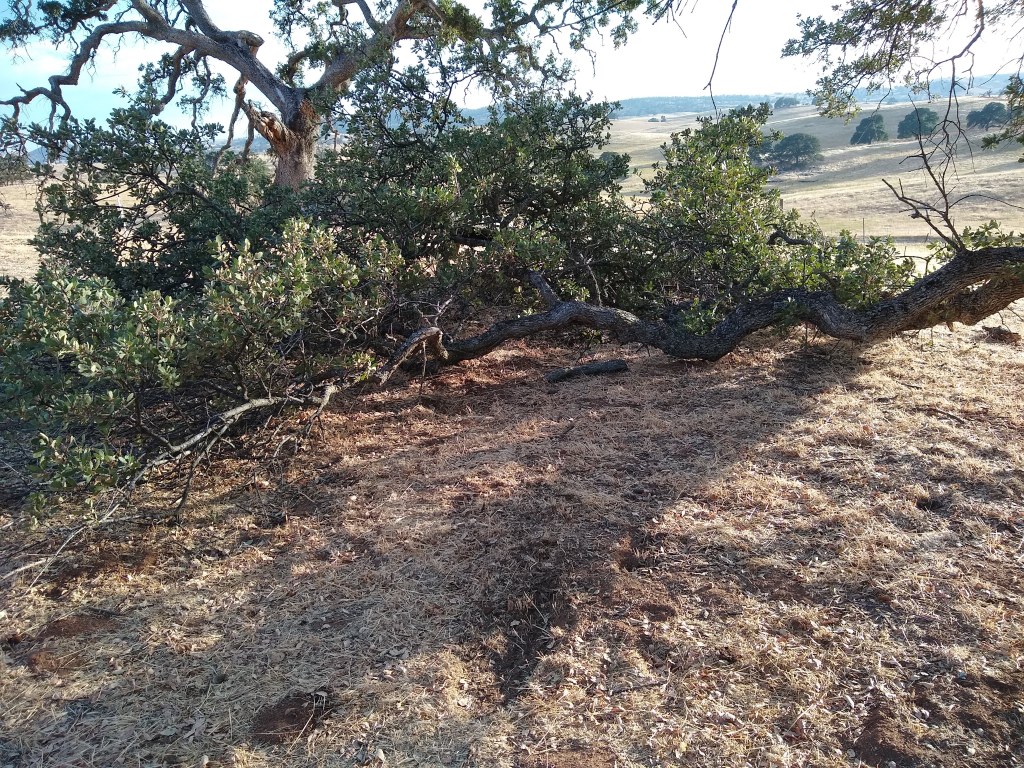
Grand oak branch down

David has been pulling the branches from under the tree with a chain and truck. These last two branches (pictured above) were too heavy and too tangled for the truck to dislodge them and pull them out, so he has been carefully cutting them in place. He needs to be very watchful and not be under the canopy too long given the branches dropping. They call oak branches connected to trees but sagging toward the ground “widow-makers”. For real…

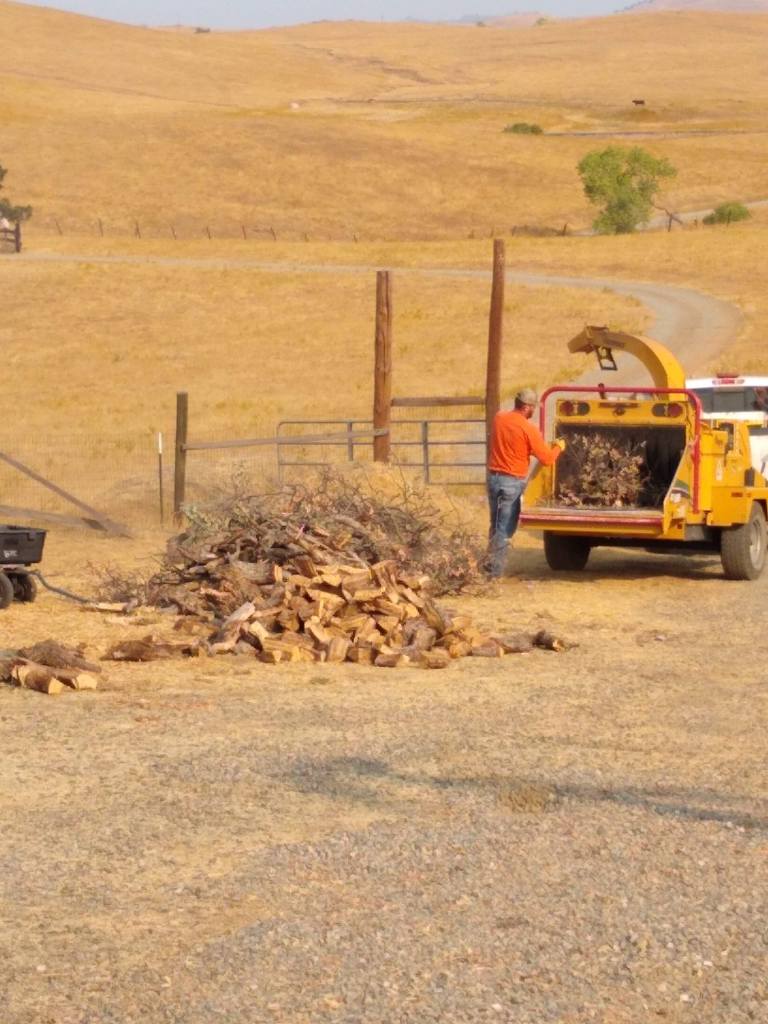
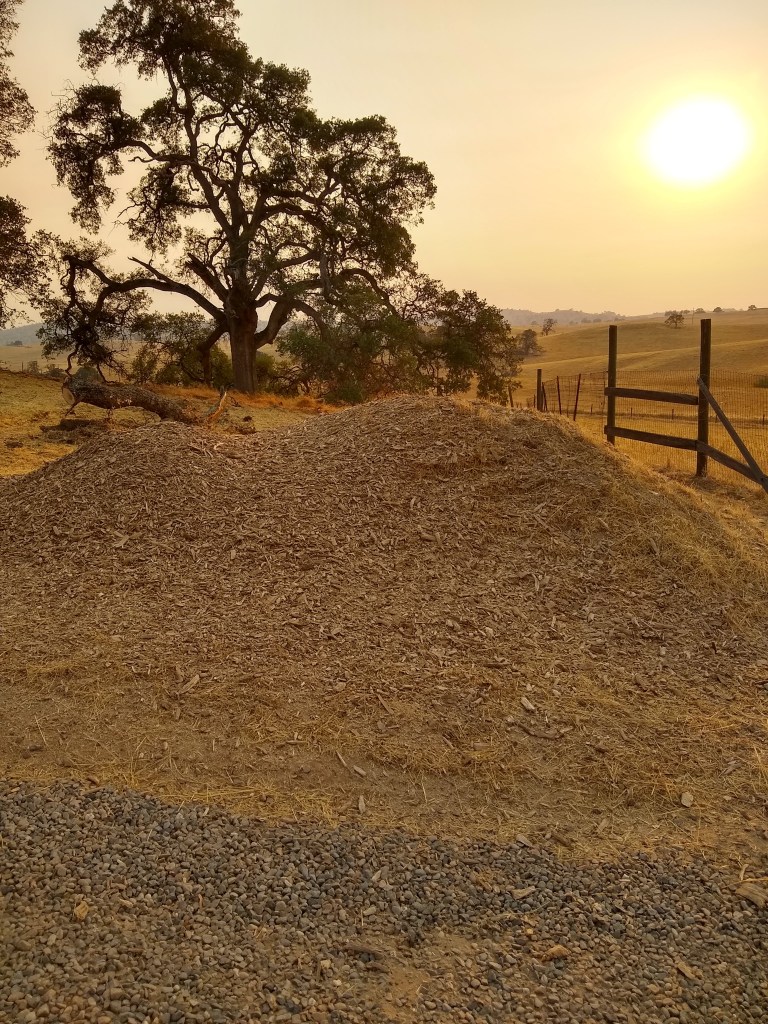
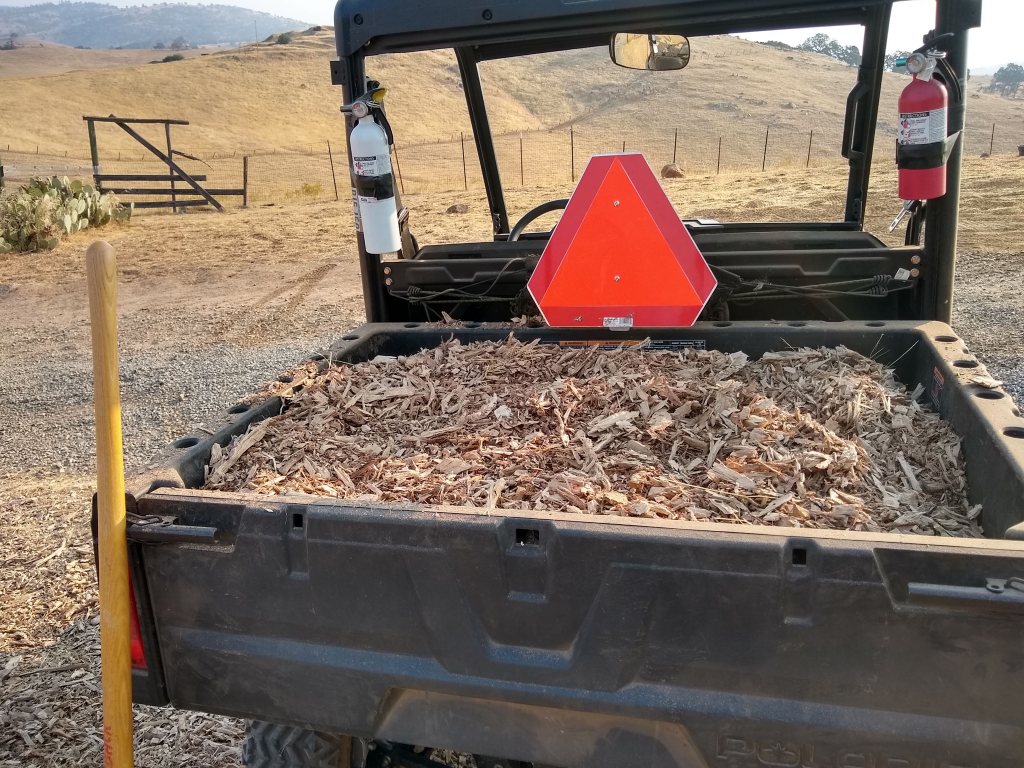
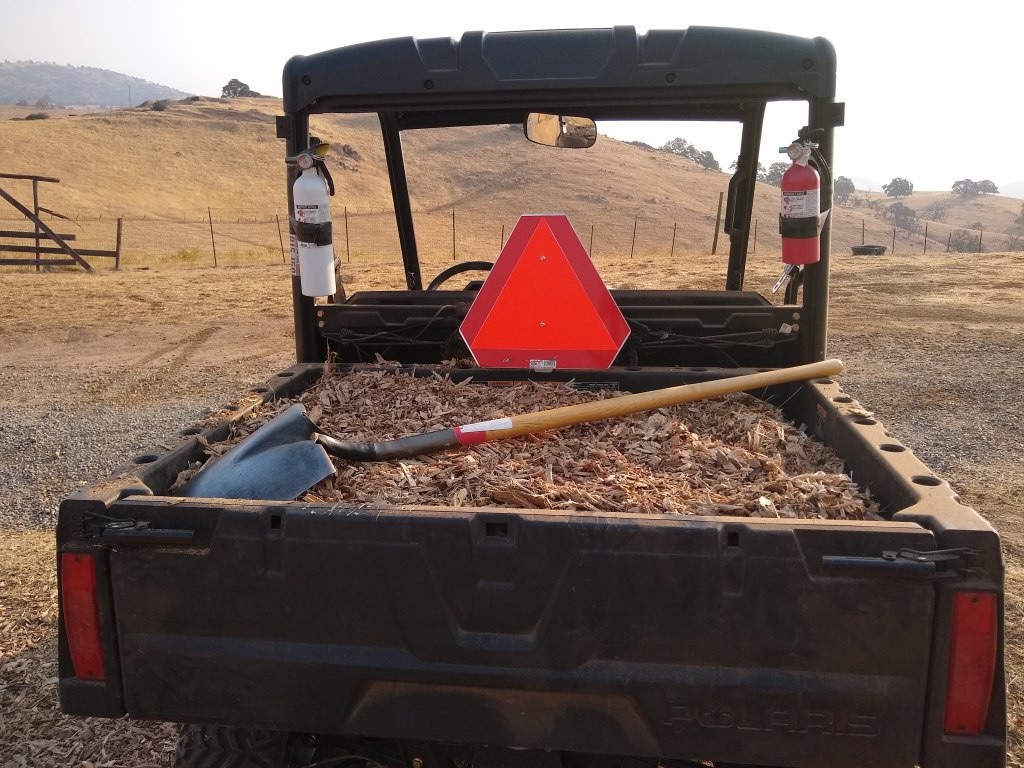
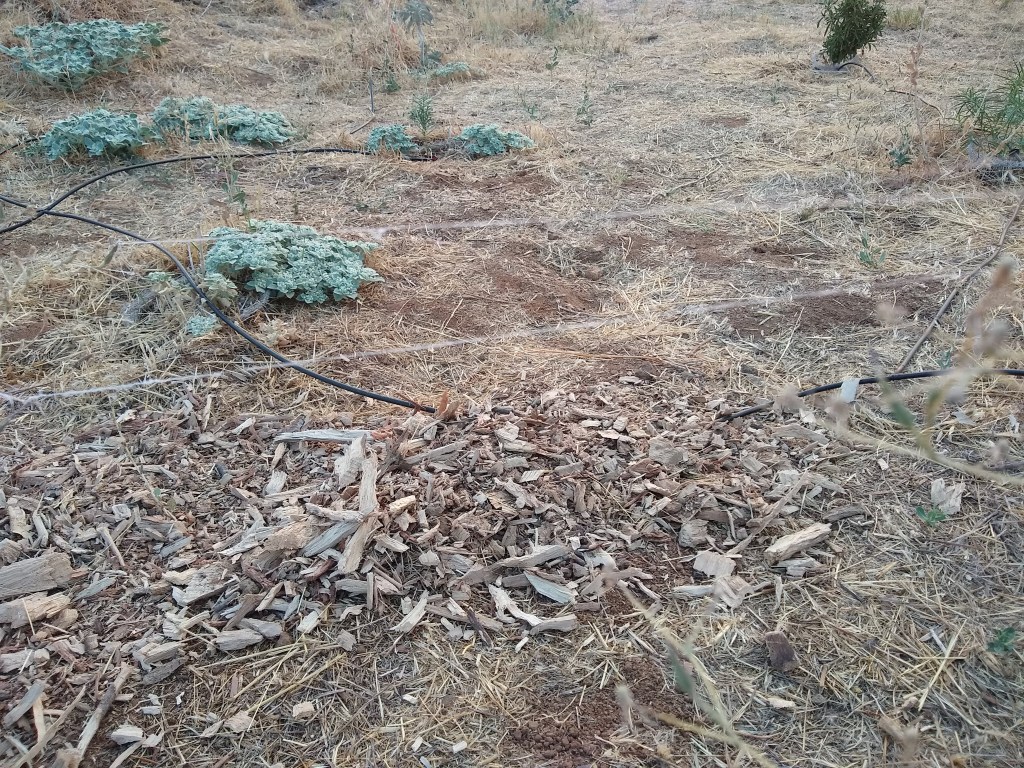
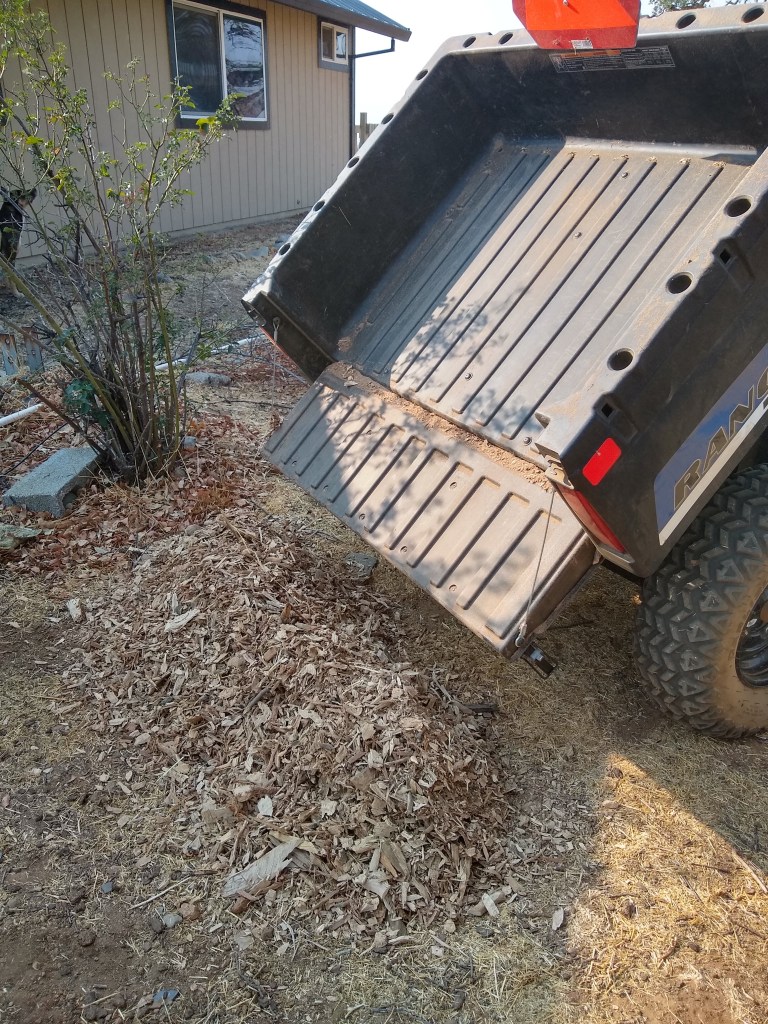
Instead of burning all wood material, we prefer chipping. Not only is it better for air quality, but it provides a (very) local source of mulch for around the plants helping the soil to retain precious moisture. We neatly stacked the logs so that they could be handled by the chipping vendor. A huge thanks to the Mariposa County Fire Safe Council for offering this chipping program as a way to reduce fire fuel load near homes. Often, the chipping jobs are too small for the large vendors or too expensive, so this program is a huge benefit for our community.

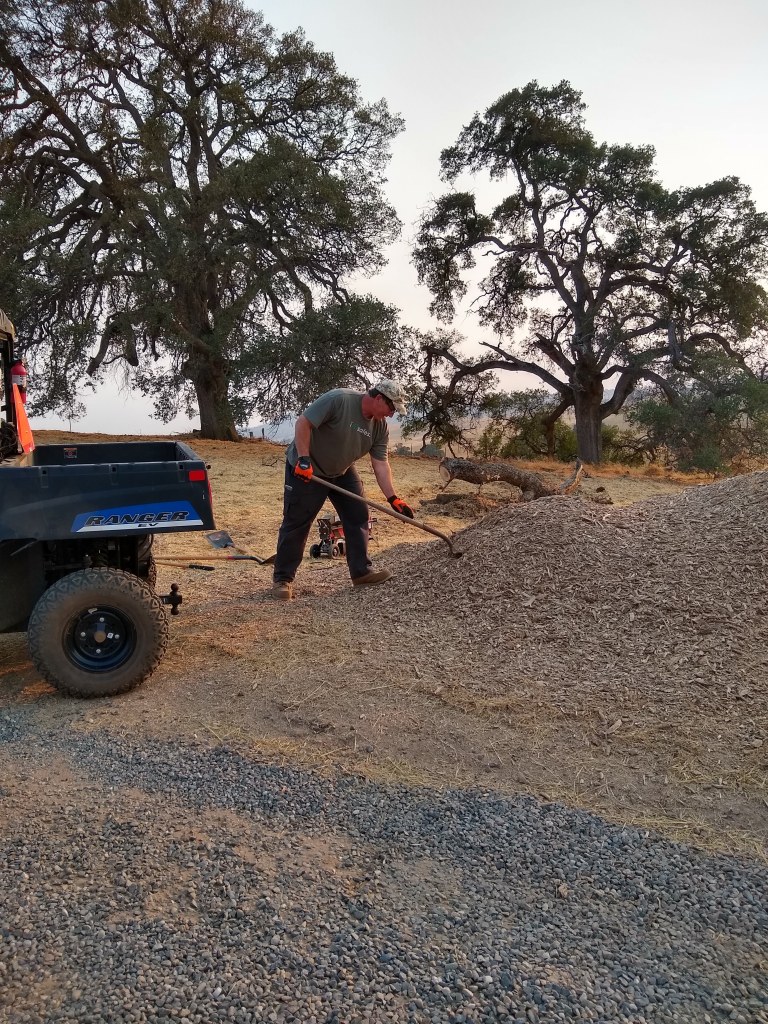
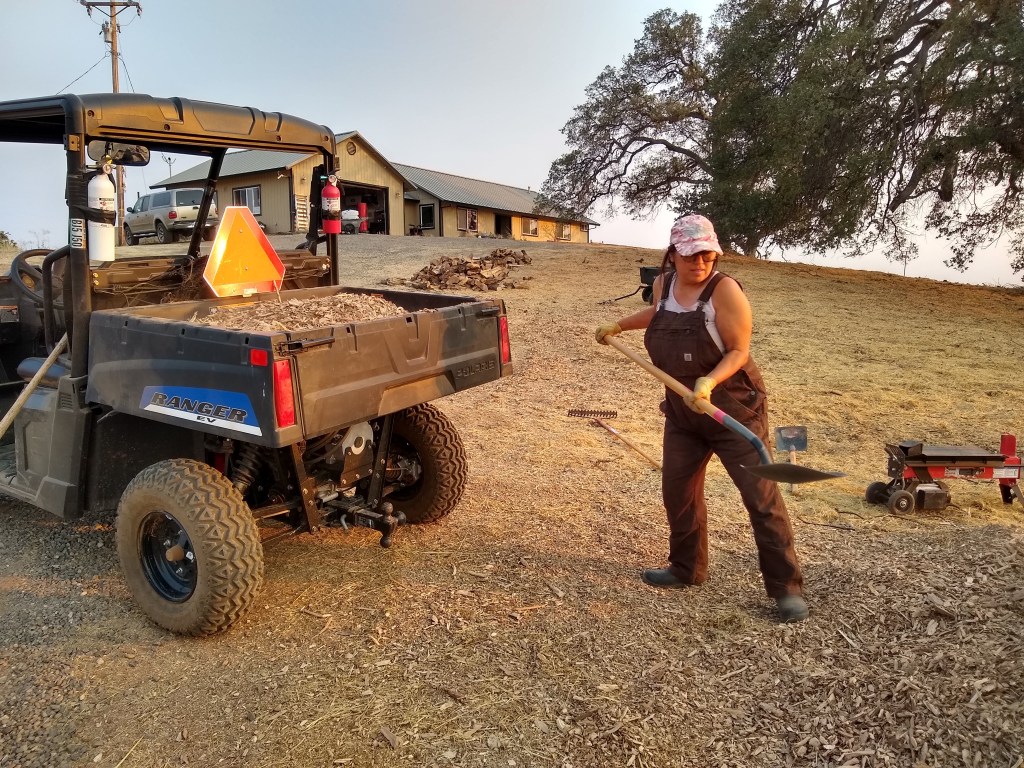
Once the pile of chips was complete, David and I began filling the Polaris, and I spread it within the planting sites. There were six loads in total. Dave gave up after two loads and sat on the porch with a beer watching me work. It was a well-deserved break for him after all the branch hauling and sawing.

Spider Season

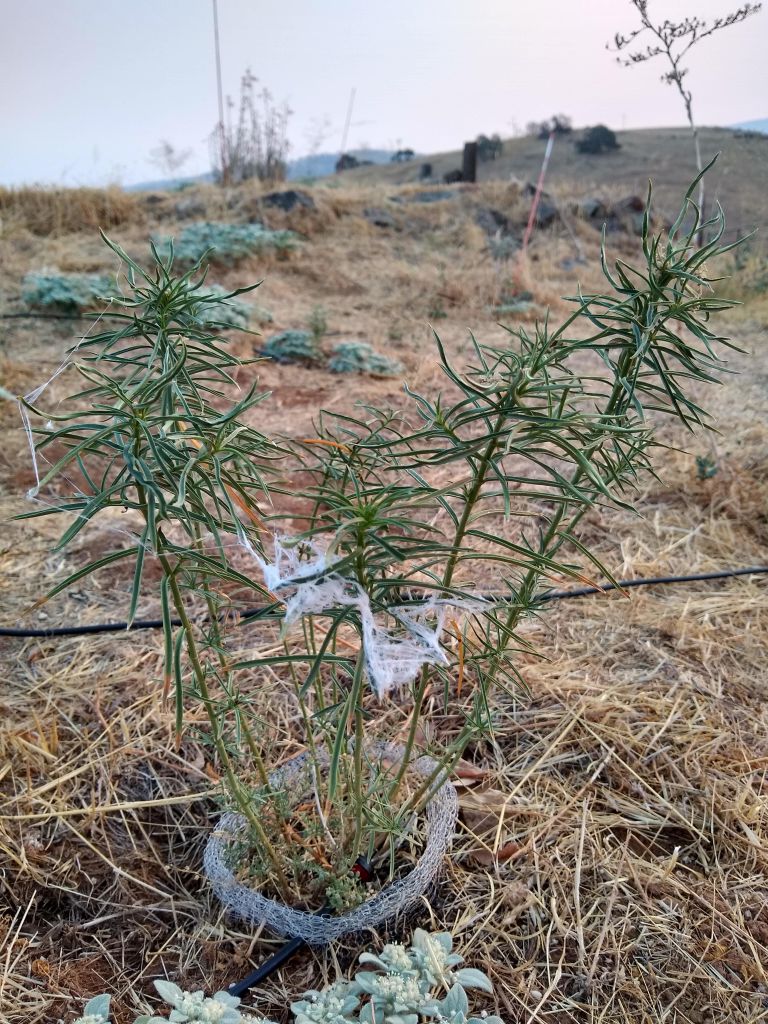
It is no wonder Halloween mainstays are pumpkins and spiders. It is nearly October, and I have begun to see the webs floating through the air. On those webs are baby spiders lifting off from wherever to begin a new life in a new territory. The webs will get lodged in plants, trees, vehicles, structures – pretty much anything they come in contact with. And, that is where they will begin their new life. As I was watering and mulching, I saw several stuck webs on the plants. To be certain, we will have a solid line of defense against any bugs.

On my walk a week ago today, I saw two tarantulas. They were the first living ones I’ve seen this year. Typically, I will begin to see them in August, but, this year, it is late September. They both looked healthy. The life of a male tarantula is one of being darned if you do and darned if you don’t. They are meals for tarantula wasp babies or a meal for the female tarantula after fertilization. I love them so much and feel bad for their fate, but that is how nature intended.

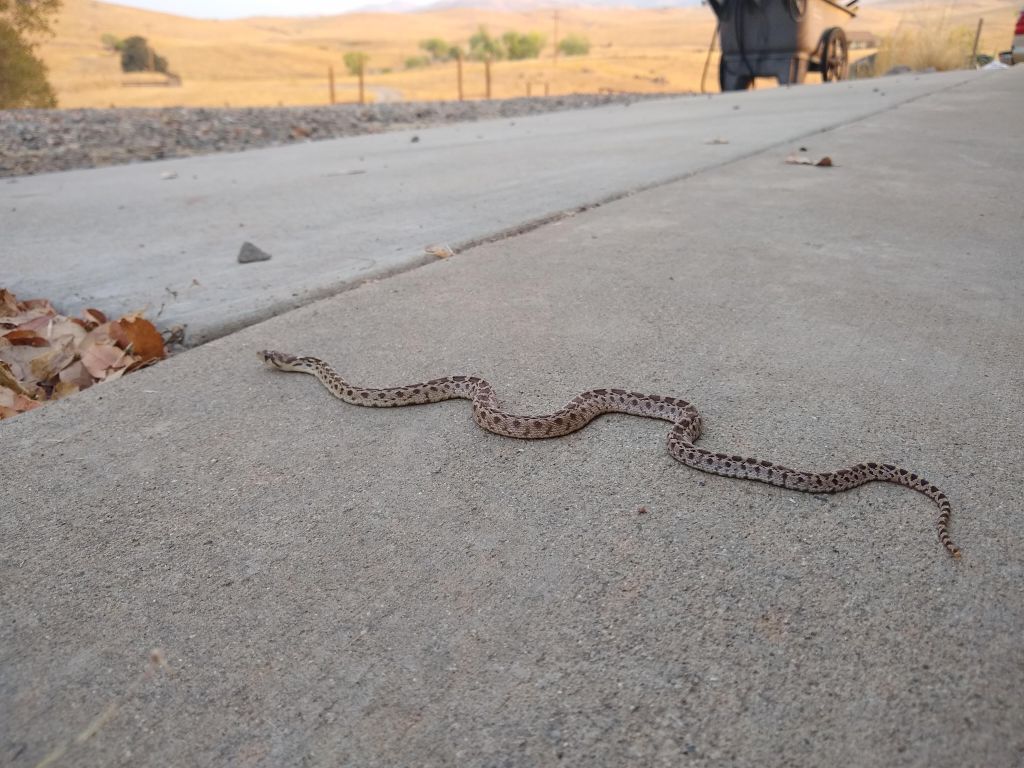
Some other good friends I have seen a lot recently are snakes. They are so important, and I protect them from getting picked off by raptors as much as I can. I try to scoot them off the cement or the roads into the grass or leaves so they are not as easily seen by the remarkable eyes of hawks.

Gently nudging this beauty to exit the patio into the leaf litter

Late Blooms

One of the crucial elements of establishing a well-rounded pollinator garden is to ensure diverse plantings and plants that bloom at different times of the Spring, Summer and Fall. Although it is late September, I am still getting blooms on the plants. I was rewarded today with a sighting of two admiral butterflies. They moved so fast that I could not get a photo. I saw their distinctive markings and was overjoyed. They are larger than the other butterflies I have been seeing lately, which is fun.

A Heartfelt Goodbye to the Polaris

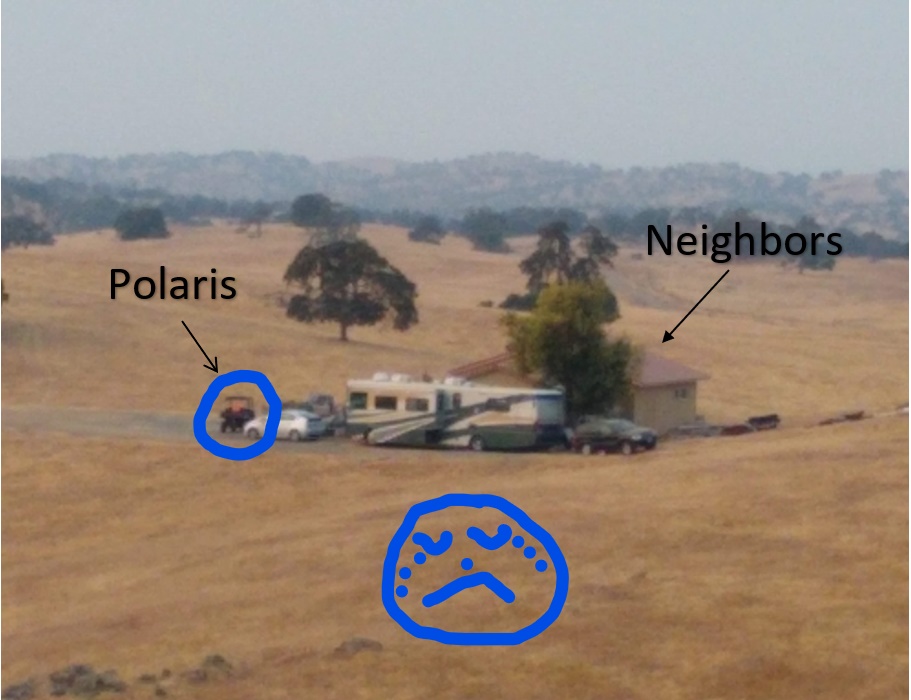
Polaris back home

I gave the Polaris back to its rightful owners the other day. My neighbors have been incredibly generous with me, allowing me to use it for so many weeks. It has been a reliable friend making my work so much easier. I won’t lie; I miss the gosh darn thing. I am back to hauling my water with the Gorilla cart since the part for my electric ATV is still MIA from Canada.

MONARCH SIGHTING Drives U-Turn!!

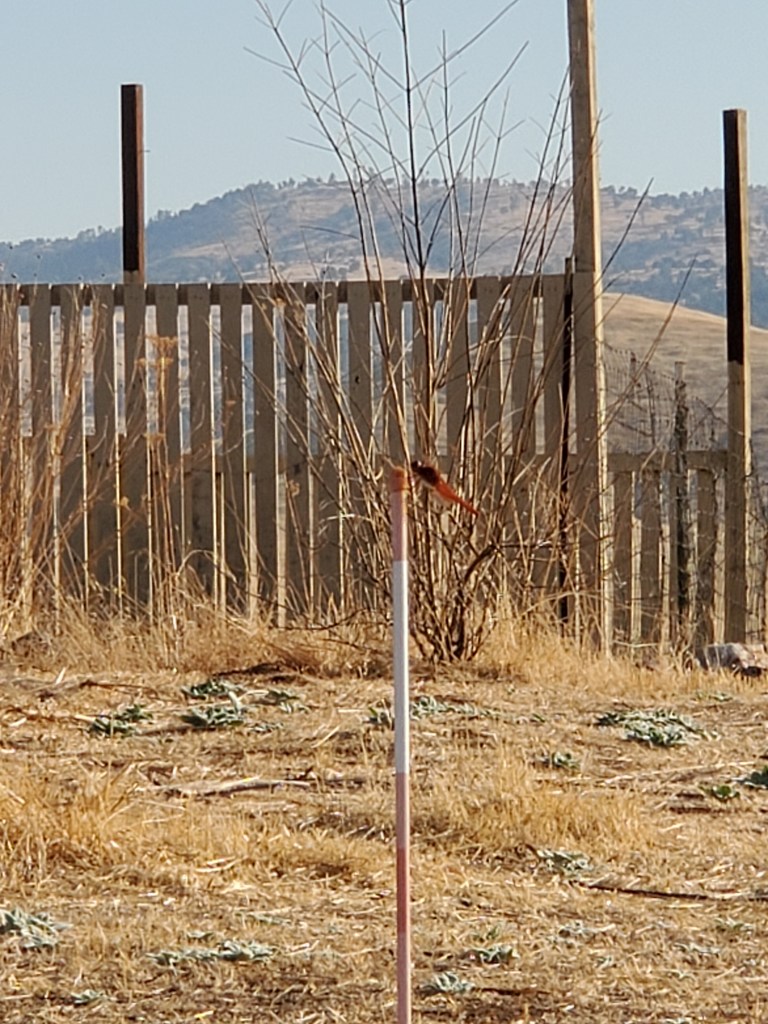
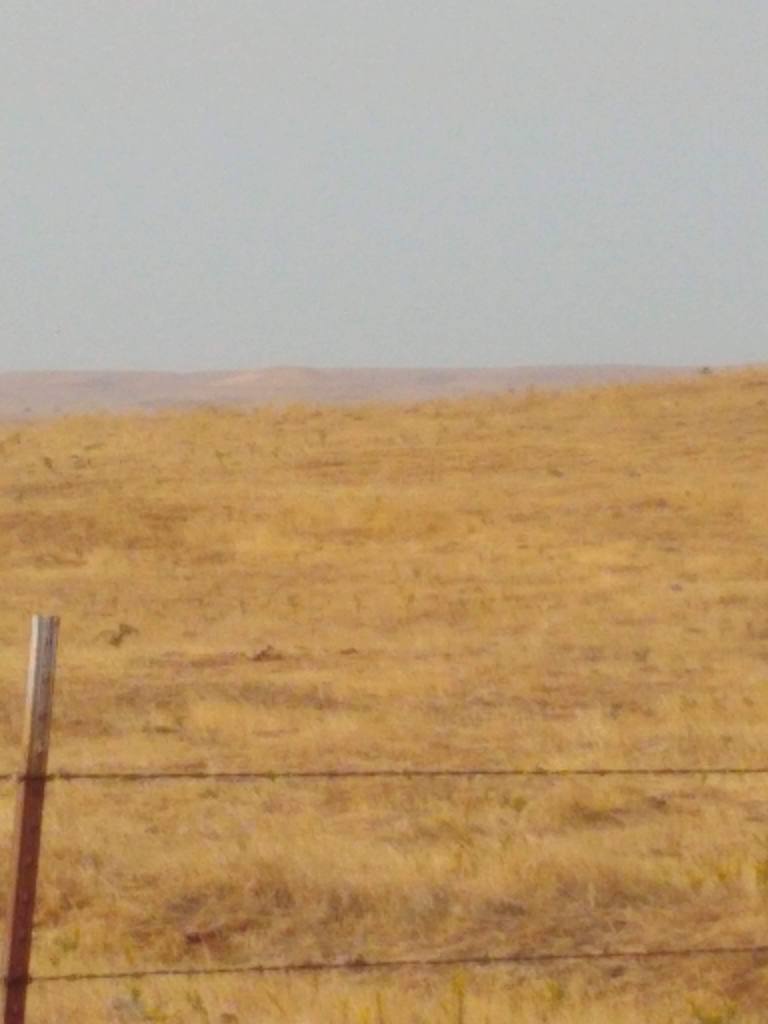
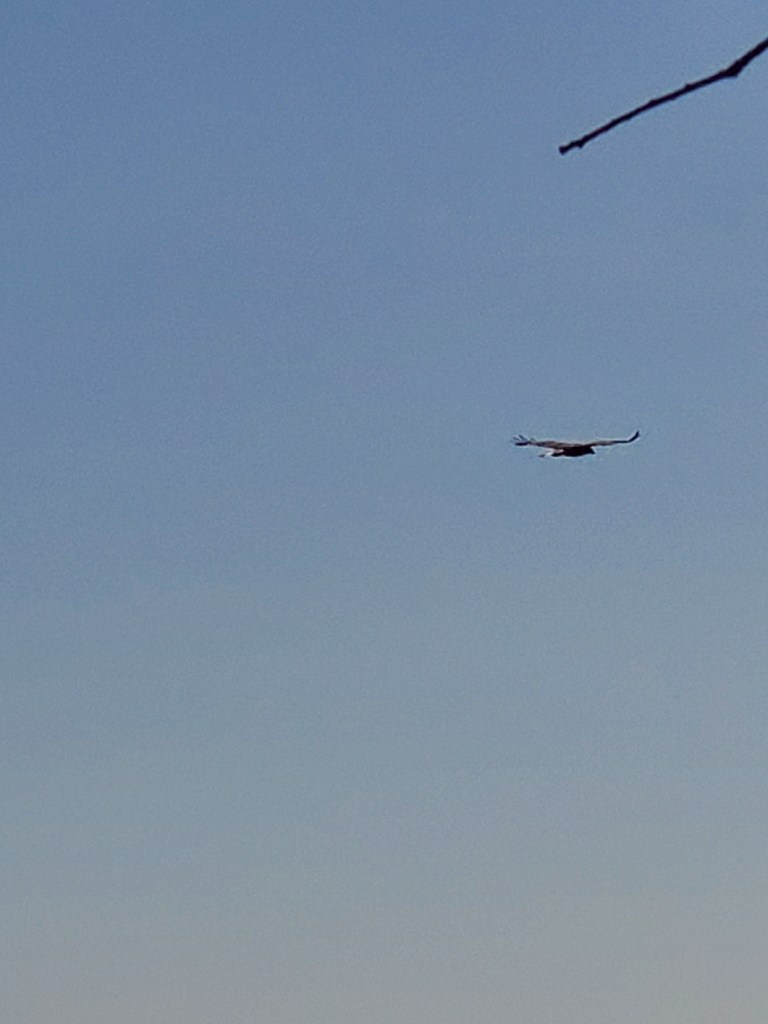
Monarch flutters away into the field. Can you find it?

I haven’t been on a vacation in years. This week, David and I were set to leave for the coast. We had the car packed, the bikes on the back and the dogs situated comfortably for the long ride. We drove to Hornitos, made the tight curve, climbed up the hill out of town and made our way down the winding road toward the vast expanse of the Central Valley. Just a mile outside of town, we pulled over on La Paloma Road to check the bike rack. It was fortuitous. –My hands are trembling as I write.– As I sat in the car, a single, large orange and black butterfly fluttered right over the car. It was a MONARCH! I grabbed my phone and bolted out out of the car like I was a 20 year old and ran down the dirt road as fast as I could, following the large erratic flutter, side to side, yet forward, of this magnificent creature. I ran until it flew over the ranch fence into the field, skirting the rangeland, just over the grass. My heart was racing, and I snapped three sad, far off photos. It was the best I could do. Then, my elation sunk in parallel with my heart. I was leaving. There were monarchs in Mariposa, along the rangeland, finally, and I was leaving town. David yelled to me to get into the car and lets go. Reluctantly, turning back every so often, as if I was a child again, called home too soon, leaving my joyful friends playing behind, I made my way back up the dirt road and got into the car.

I certainly wanted to leave town. The smoke and heat have been toxic to my body. It has been too many days of working hard in this situation. I wanted the clean, cool air of the coast. I wanted to see my siblings and make my husband happy to have the smell of redwoods in his nose. I was conflicted. Could I leave now after seeing this? Had I worked so hard since 2019, not seeing any monarchs, to leave now that there was a real, tangible chance to see them use this habitat? What if the watering system David constructed got a leak, and water did not make it to the milkweed or nectar and the plants died? A tear quietly rolled down my cheek as I ruminated. David, driving, caught this resigned defeat out of the corner of his eye. He grabbed my hand and said, “HB, do you want to go back home? We are only an hour and a half down the road. I am ok with it if you do. I know how hard you’ve worked.” I said, “Really? You would give up your beautiful trip?” He said, “Yes. I am totally fine with a stay-cation.” I said, “I love you.” He made the u-turn, and we started back for home.

I called my sister and brother to make sure they were ok. I asked, “Is it lunacy for me to cancel my vacation for a butterfly?” Both my sister and brother encouraged me to shift my plans. They said, in turns, “It would be crazy if you didn’t do all that work, saw a butterfly and cancelled your trip. You worked on this project for years, literally giving your blood, sweat and tears. We think it is crazy for you not to stay!” I promised to visit soon and hung up as David and I made our way across the Valley, the glorious Sierra foothills, and home, in our sights.

Heatwave + Blue Oak Limb Crashes Down

A majestic blue oak limb comes crashing down

We are in drought. The California drought monitoring website, Drought.gov, lists this area as “in moderate drought”. How this is defined practically is that crop/pasture damage is possible, water shortages are developing and voluntary water restrictions are in place. Here in Hornitos/Catheys Valley, David and I always behave as if we are in drought. We conserve water daily. Sadly, this is not always enough. Yesterday, a massive limb on our good old friend blue oak tree in front of the house came crashing down. These massive trees often shed one or more limbs when they recognize there is not enough moisture to maintain their overall health. It is not a good sign.

The last time a limb came down was at the beginning of the horrible, long, five-year drought. Normally, we leave dead trees and limbs where they are for habitat. However, this being within our 100′ defensible space zone, we will need to chop it up and move the wood away.

In the last drought, we lost nearly 300 oak trees across the ranch. I have been noticing the dead trees falling apart, but did not expect the healthy trees to be losing branches. On my next venture across the ranch, I will take note if the living trees are also losing branches. I will also need to be extremely careful to avoid, as much as possible, walking under the oaks on the property. I am planning on creating brush piles with the downed branches away from the house to create habitat areas and places where plants can get a head start away from the mouths of hungry cattle. I discussed this in a previous post on this blog. To briefly reiterate, I planted an acorn under one small brush pile I created in the hope it will be protected as it sprouts a new tree.

It’s Hot!

Even though we are in a heatwave, the butterfly plants must get watered. I have been soaking them this week to ensure deep moisture content even as the above surface area dries out in this heat.

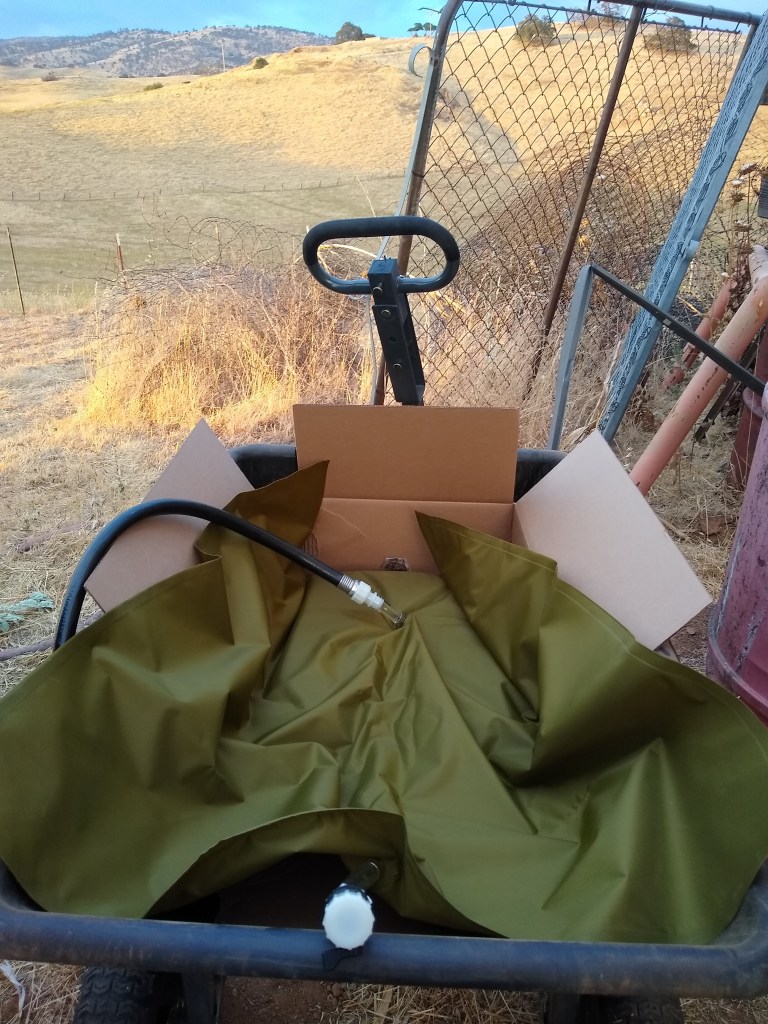
The new potable water bladder being filled for its first use
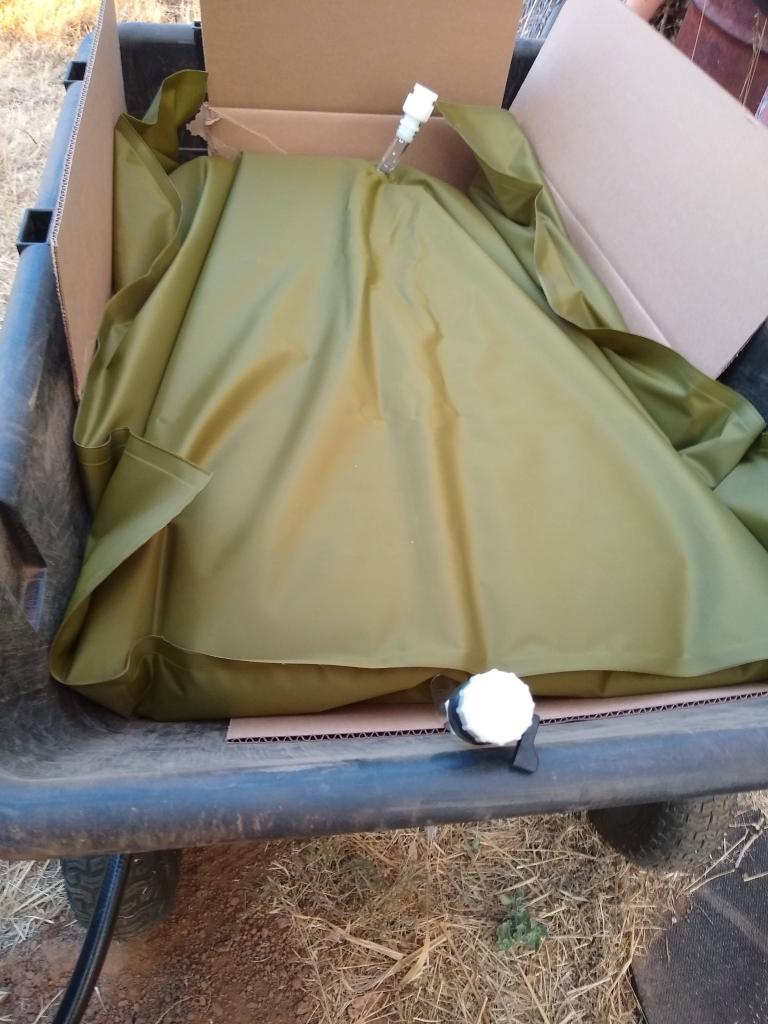
The water bladder filled

I prepared my watering system for Site 8 the night before so I could just “get going” as soon as I arose. I decided to use the cart with the new water bladder to prevent any chance of the truck heating and starting a grass fire. This meant I had to walk the entire way to Site 8 pulling the cart. I did it once with help, but today, I had to go it alone. David was too tired to assist.

6:00 am departure time. Warm with moisture in the air
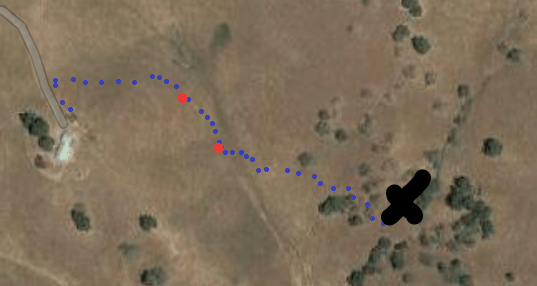
My route from the house to Site 8. The red denotes the areas where my cart spilled. Then, “X” marks arrival to Site 8.

It was already quite warm when I started. There was leftover moisture in the air from the recent Pacific Ocean hurricane activity. We did not get any rain up here, but it was humid. Water weighs 8.33 lbs per gallon. I had 20 gallons in my bladder. The cart was heavy. The water, because of the soft sides of the bladder, would slosh around. The bladder has a 30 gallon capacity, which I do not need yet. Typically, I only use 8 gallons for Site 8 and the Deer Grass Site because seven of the 9 original plants were pulled up by wild pigs. Although I water them in the hope that the roots are still alive and will re-sprout, I reduced the water per plant to 1/4 gallon. The remaining two receive one full gallon. Also the deer grass across the creek receive their full water allocation as well.

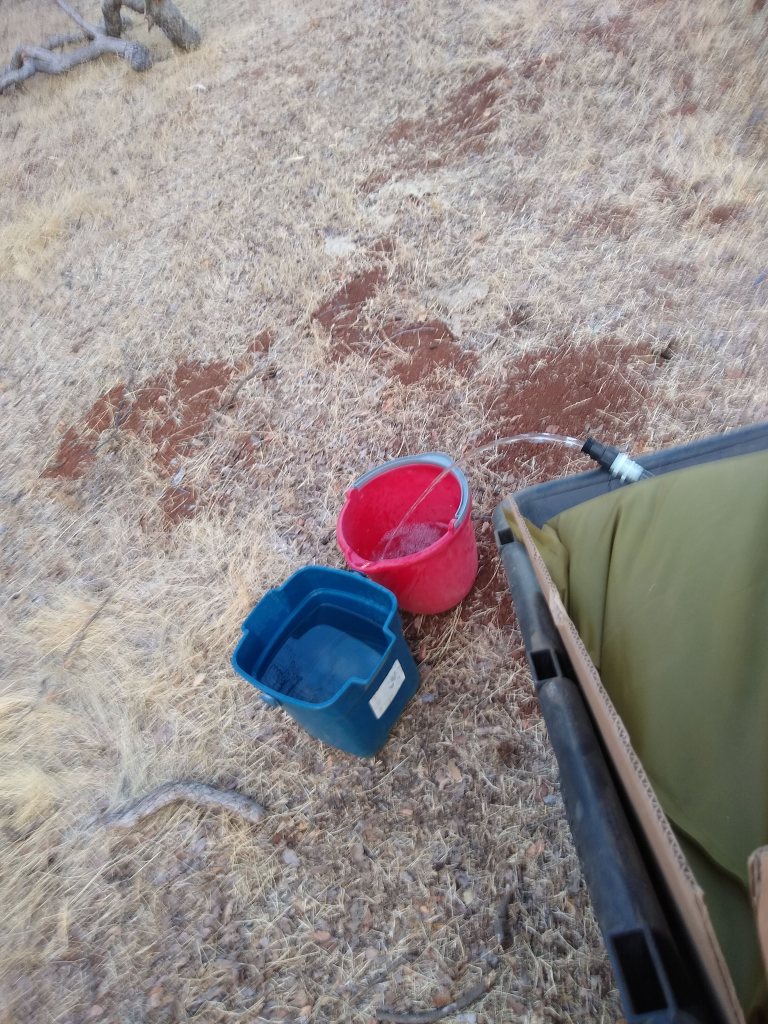
Action shot: I used the dump truck feature of the cart to dispense water into the buckets for hauling to each plant

I brought the 20 gallons to soak the plant area to help them survive the heatwave. I do not plan on watering mid week at the site. It is too hot and arduous. I used the dump truck feature of the cart to dispense the water from the bladder into the buckets. I then hauled the buckets to each plant to water them. I like using the buckets because I can measure how much water I am using and how much I am providing to each plant. I did not have to go as far as usual since I personally hauled the cart all the way to the site. I definitely felt like an oxen or horse!

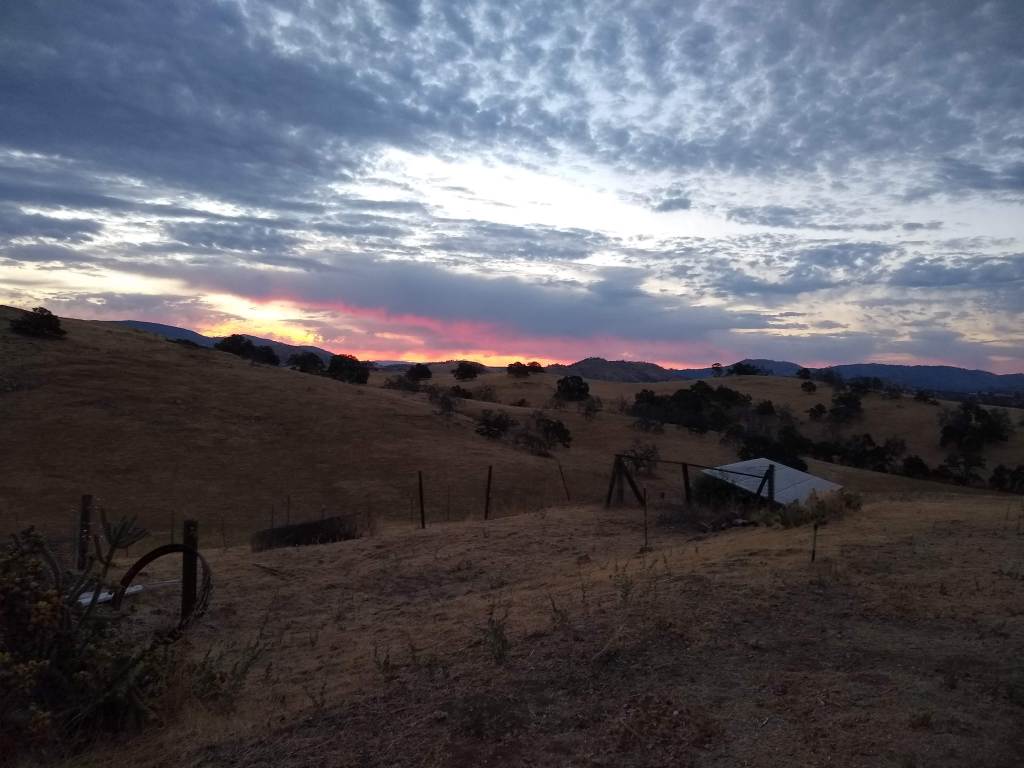
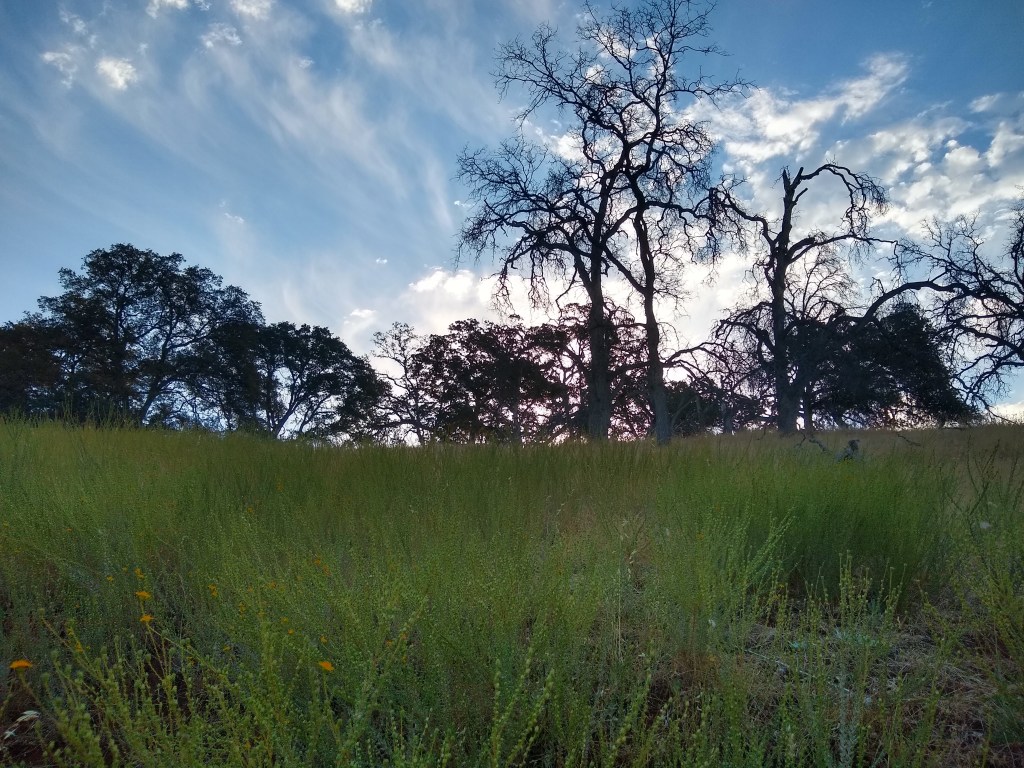
Striking sky and tarweed

It was beautiful early in the morning. I really wanted to get there and back before the sun came up. The heat is truly crippling. Yesterday, I had to take two breaks watering Site 9, the nectar plantings and the North Plot. I had gotten a late start, and the sun was already up. It was that debilitating.

Same image as above. Uploaded again for convenient reference

Unfortunately, it took longer than anticipated. The cart, with its sloshing water, tipped over. I had not paid enough attention to the grade change and over it went. I had to use my brain and some brute strength to get the bladder back into the cart. Again, the bladder weighed almost 167 lbs! There was no way I could lift it. Instead, I brought the cart around to the down-slope, tipped it over again so its opening was facing the bladder, shoved the edge of the cardboard liner that I used to line the bottom of the cart under the bladder, and sloshed it over itself into the cart, then used my body and arms to tip the cart right-side up again. It worked! I continued paying closer attention. Unfortunately, on a fast downhill track, I did not quite catch it in time, and it tipped again. I would be lying to you if I said that I did not curse myself a bit for not being extra careful. The truth is, I got a little too complacent because of the heat and effort it was taking to haul the cart. I did not make that mistake again. In fact, I switched the track to blaze my own trail uphill so I was on a bit wider and more level ground (See image above. Red dots indicate tipping areas.).

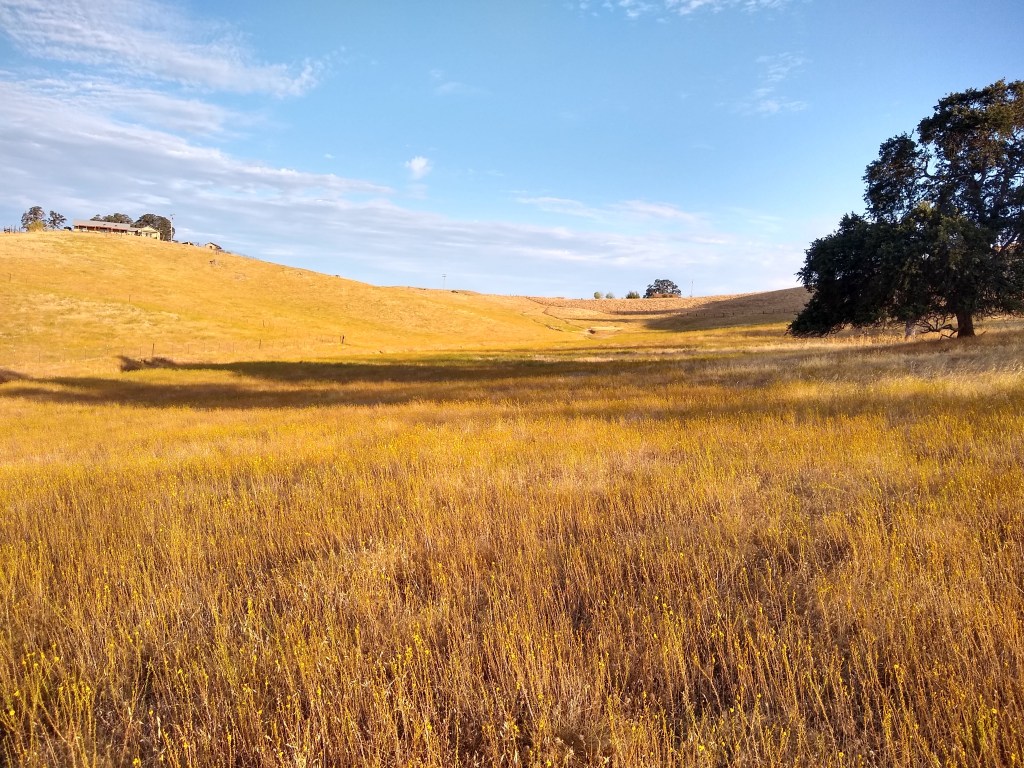
Field of tarweed illuminated by the early sun

On the way back, the sun was up. It was already hot. However, the wind was blowing, which cooled me some. I started at 6am and returned home by 8am. I will likely have bruises from using my body to force the cart upright, but it is well worth it. I saw a butterfly yesterday, which excited me beyond measure. It was not a monarch; it was a reminder that they are on their way though.

This is a labor of love, and I am so willing to do the work it takes to restore this habitat. That said, I will REALLY love it when my electric ATV arrives.

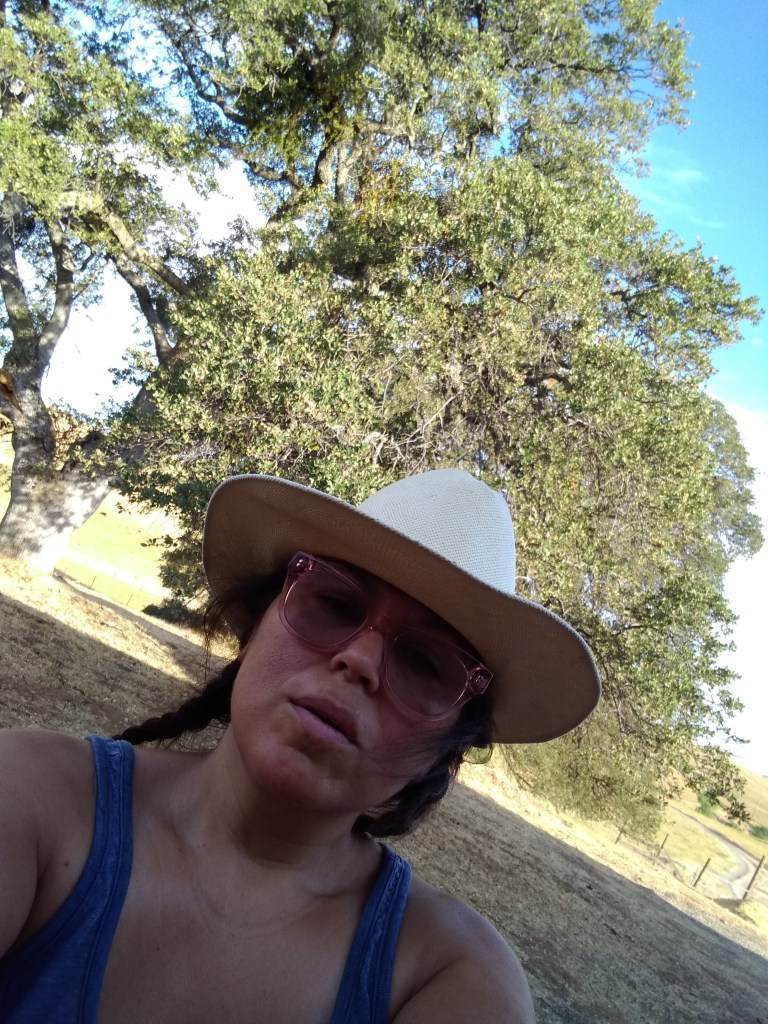
Not really a selfie person, but I had to show you my beet red face and sweatiness. Crazy!

Everyone- stay safe out there with this heatwave. Heat is very debilitating, and it can dehydrate you fast. Make sure you:

  1. Drink plenty of water with electrolytes,
  2. Eat some salty snacks,
  3. Take many breaks
  4. Don’t work during the hottest time of day.