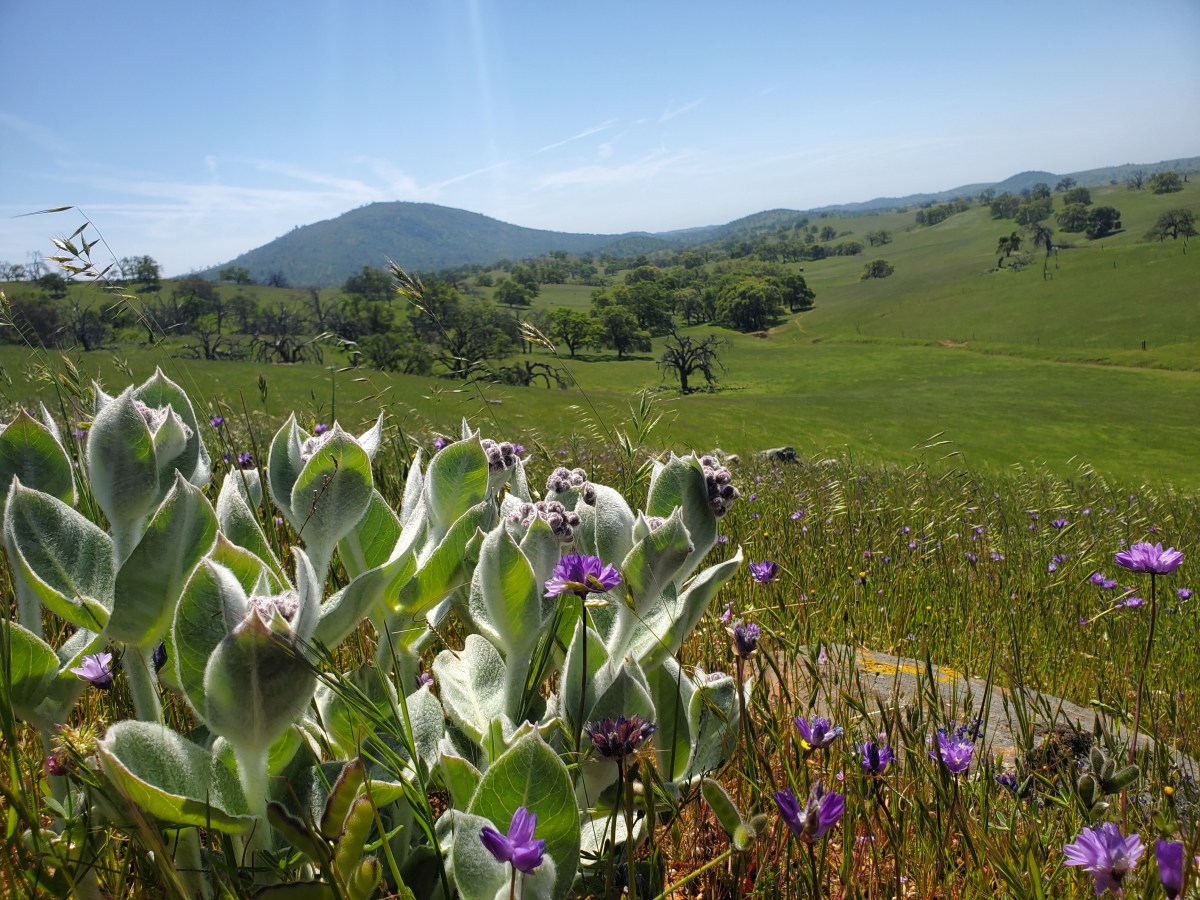
Waiting For Monarchs. More California Milkweed and Visitors.

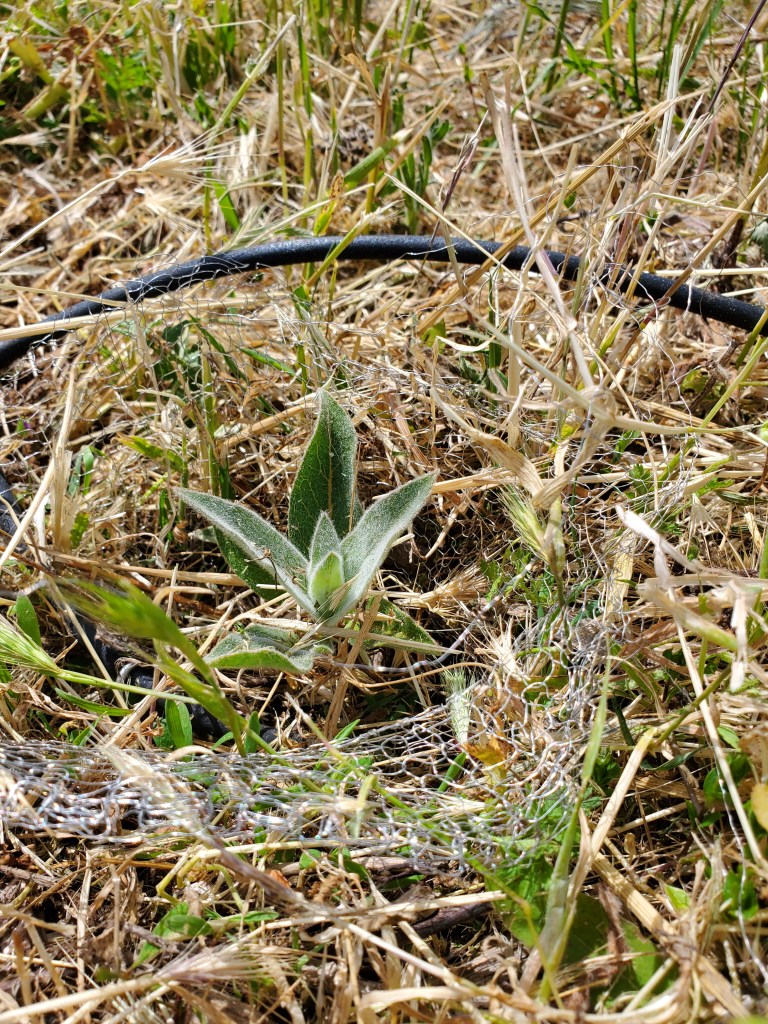
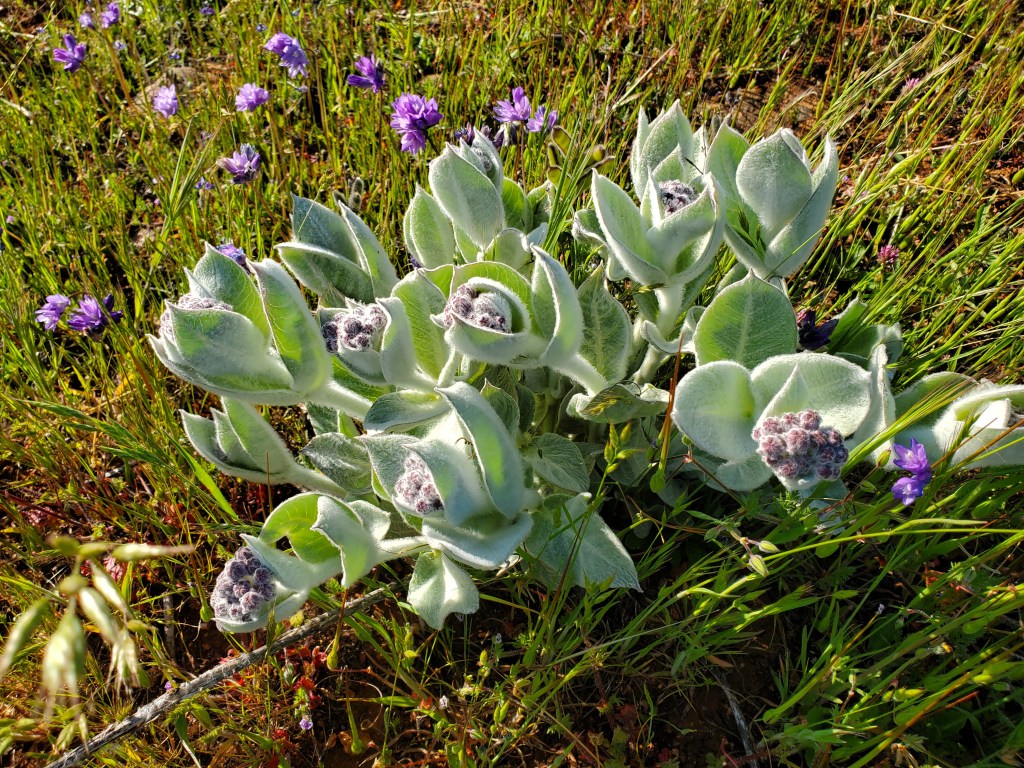
Blooms begin to emerge on the California Milkweed

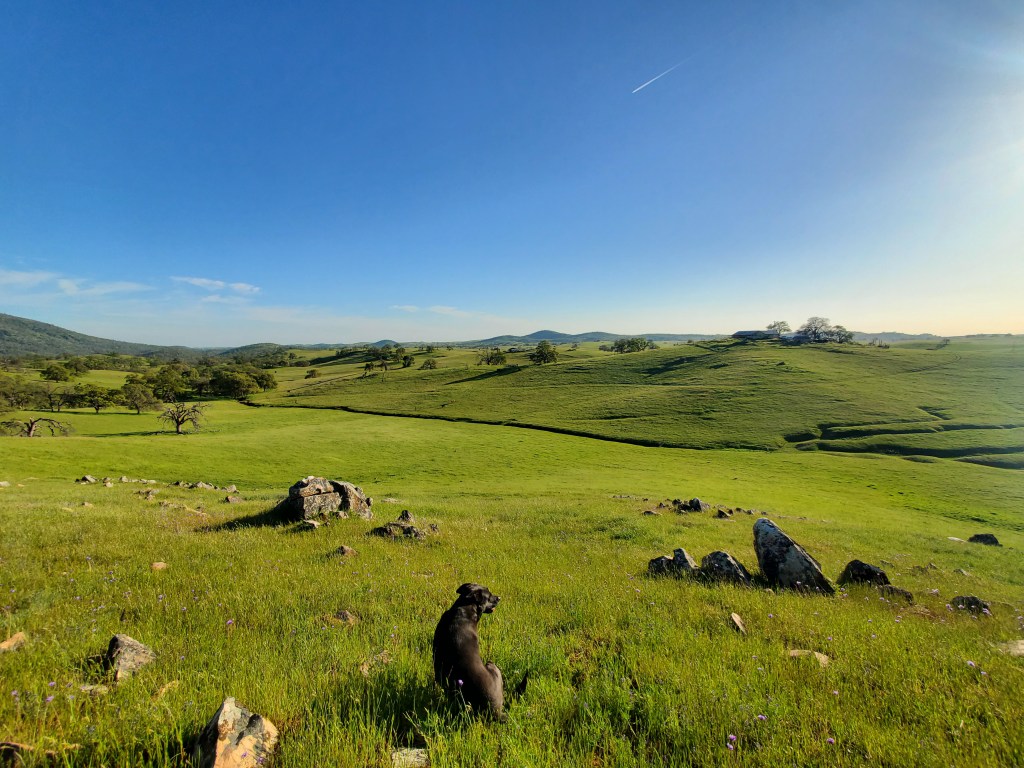
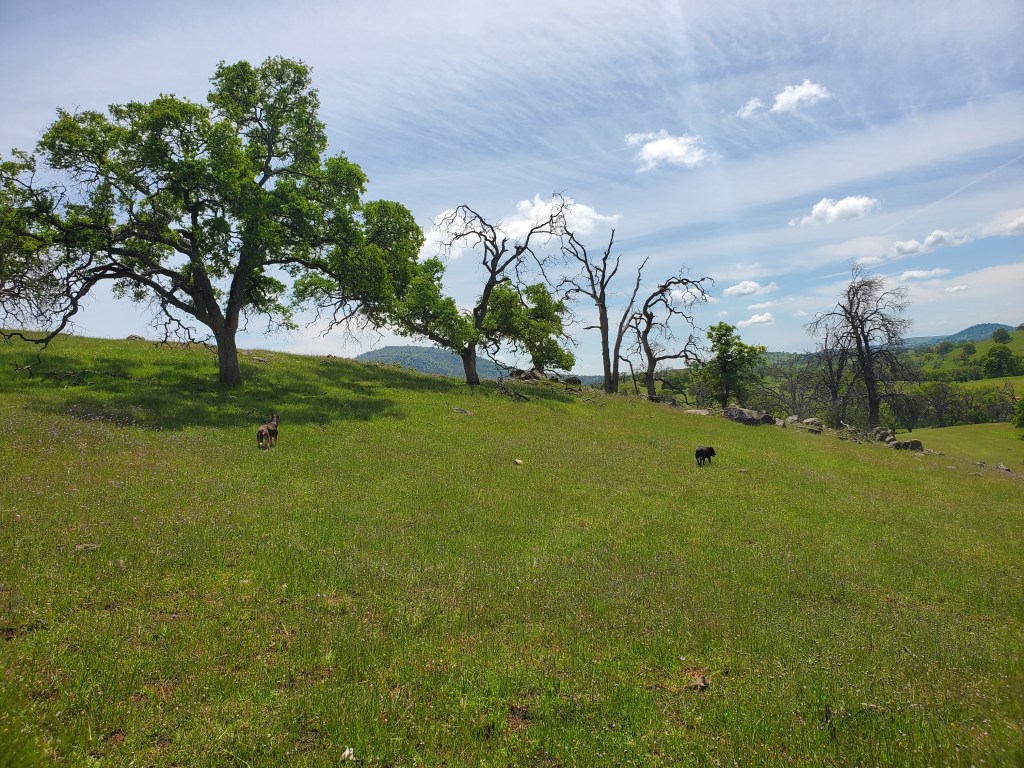
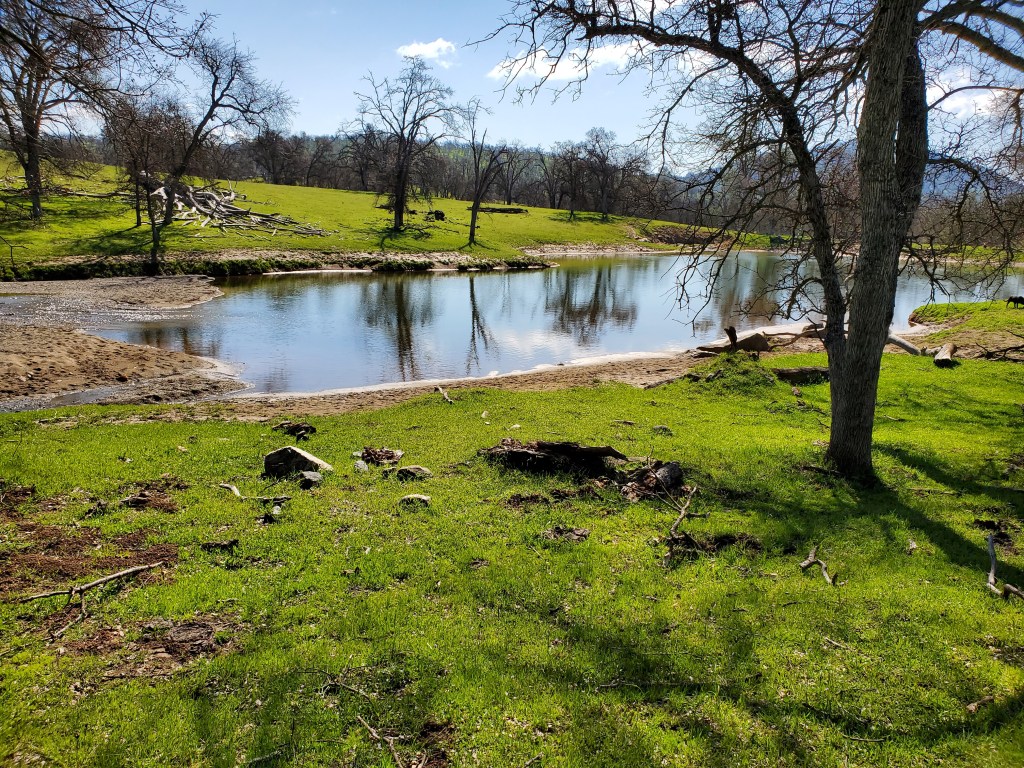
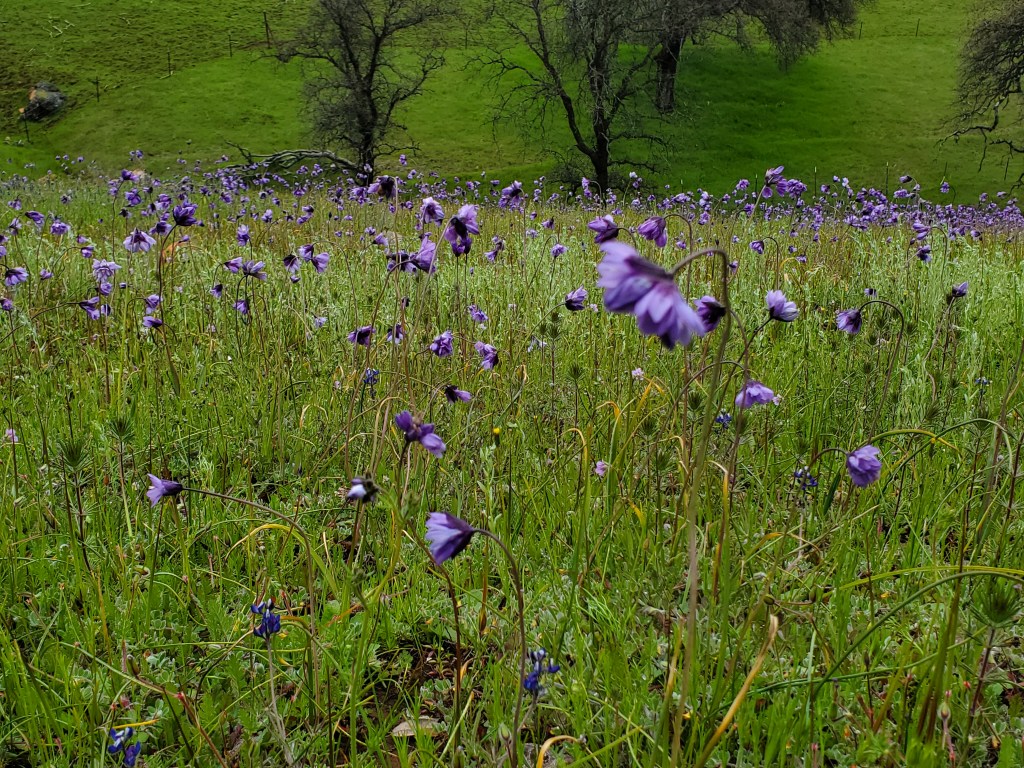
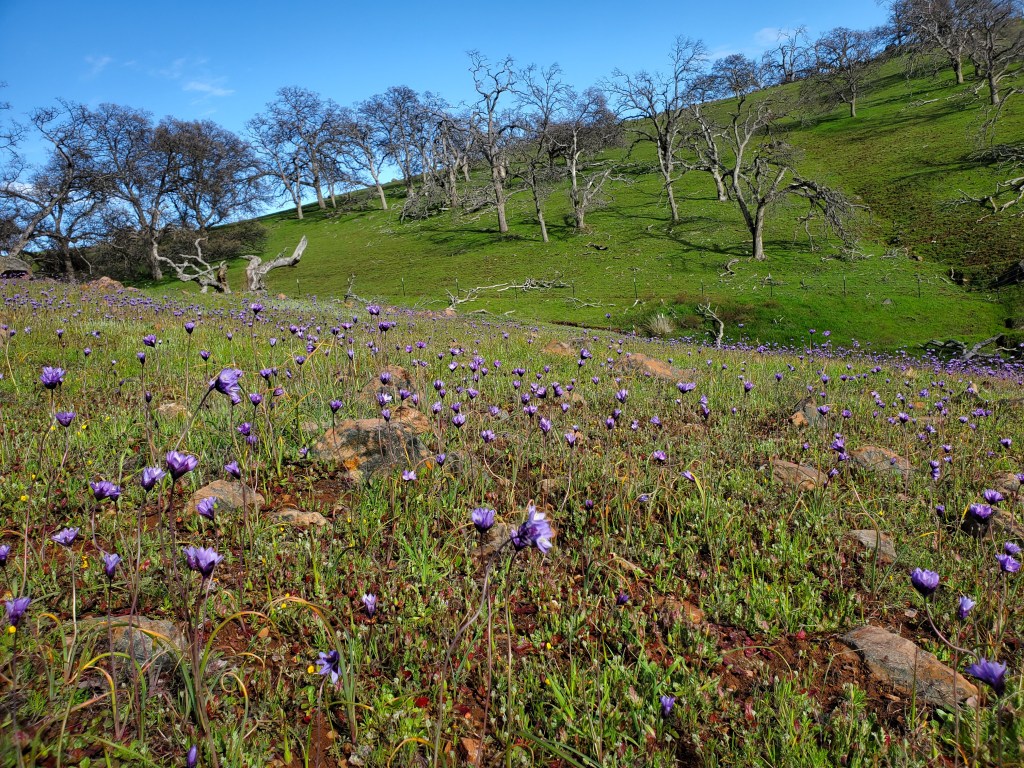
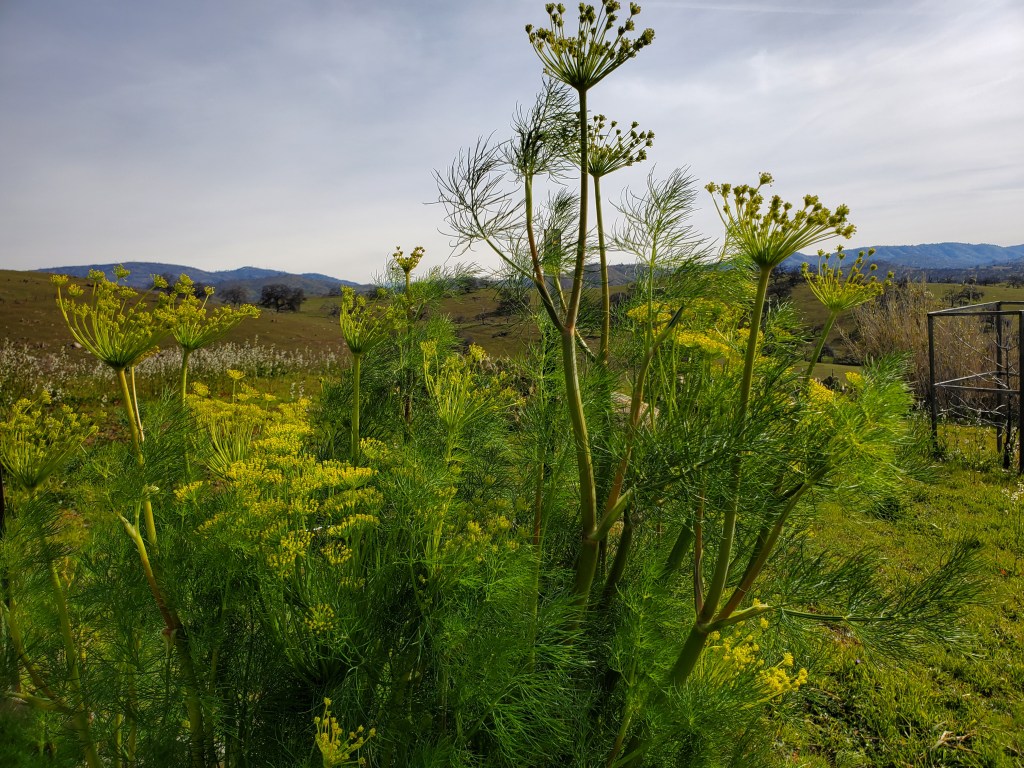
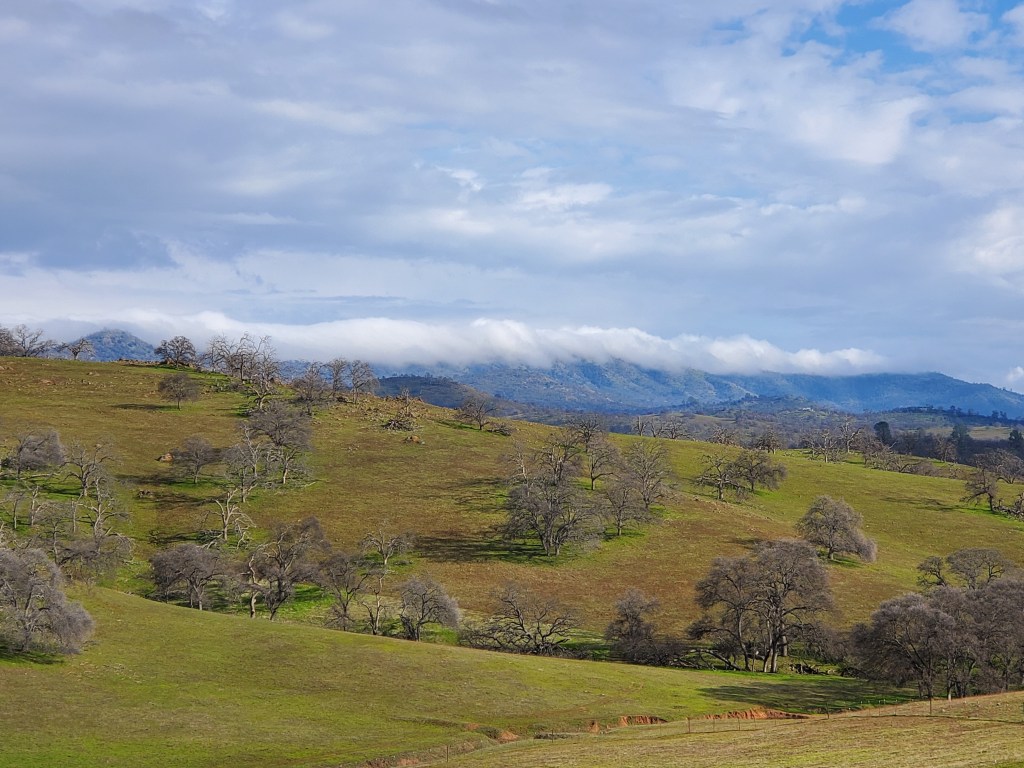
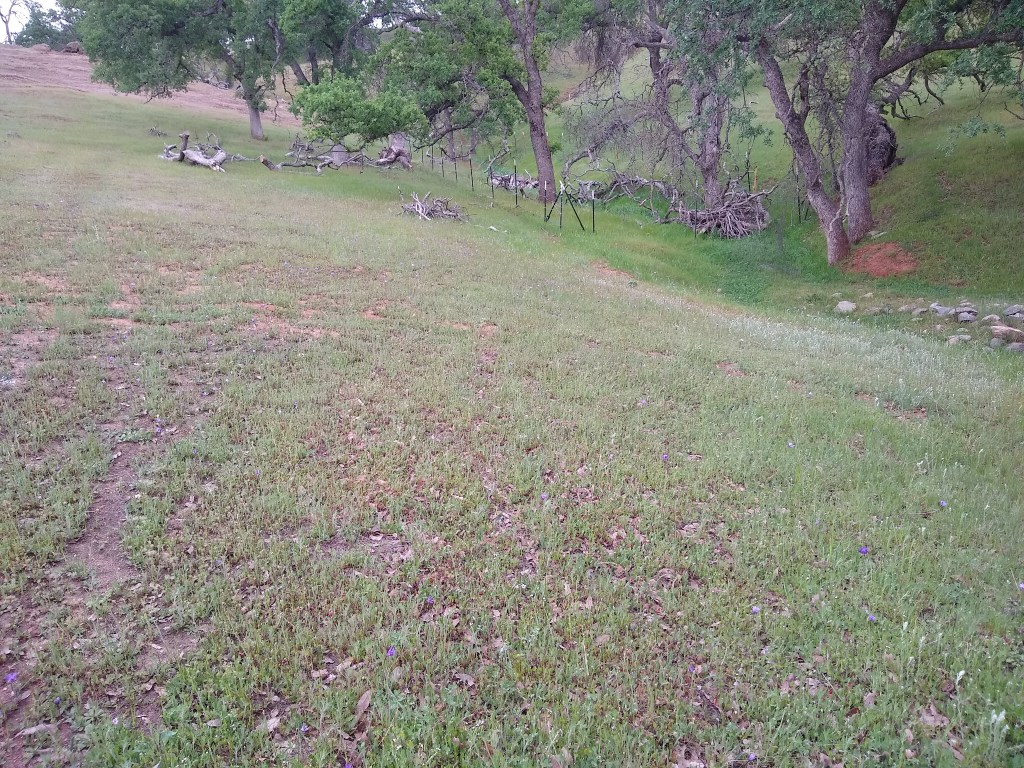
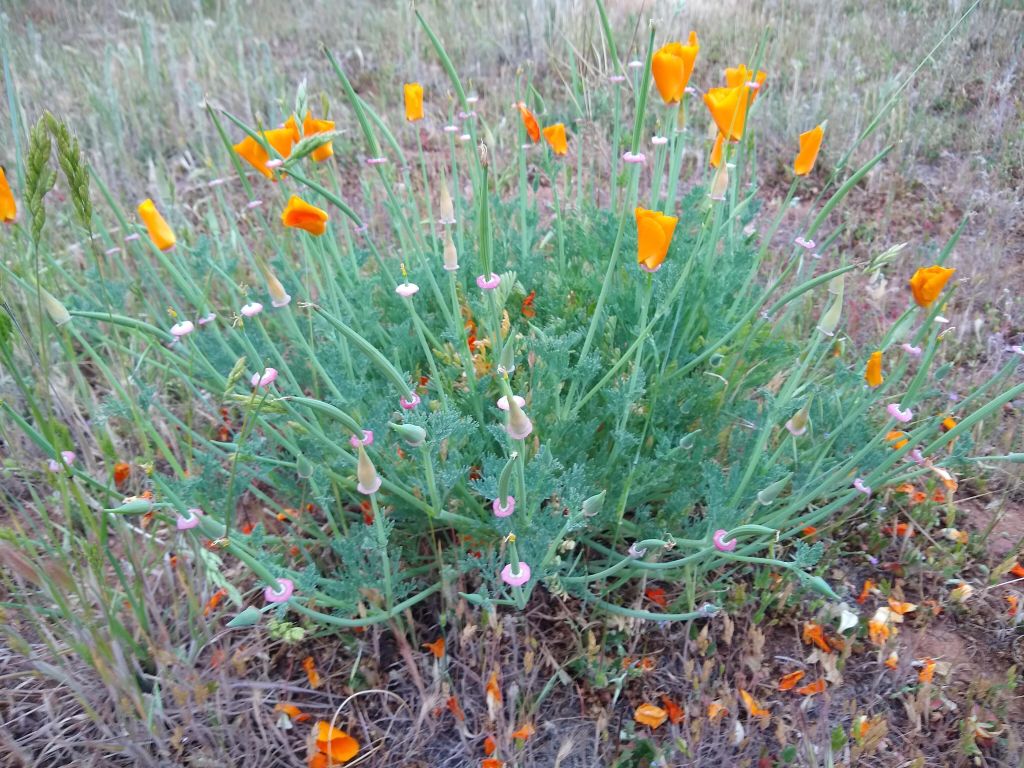
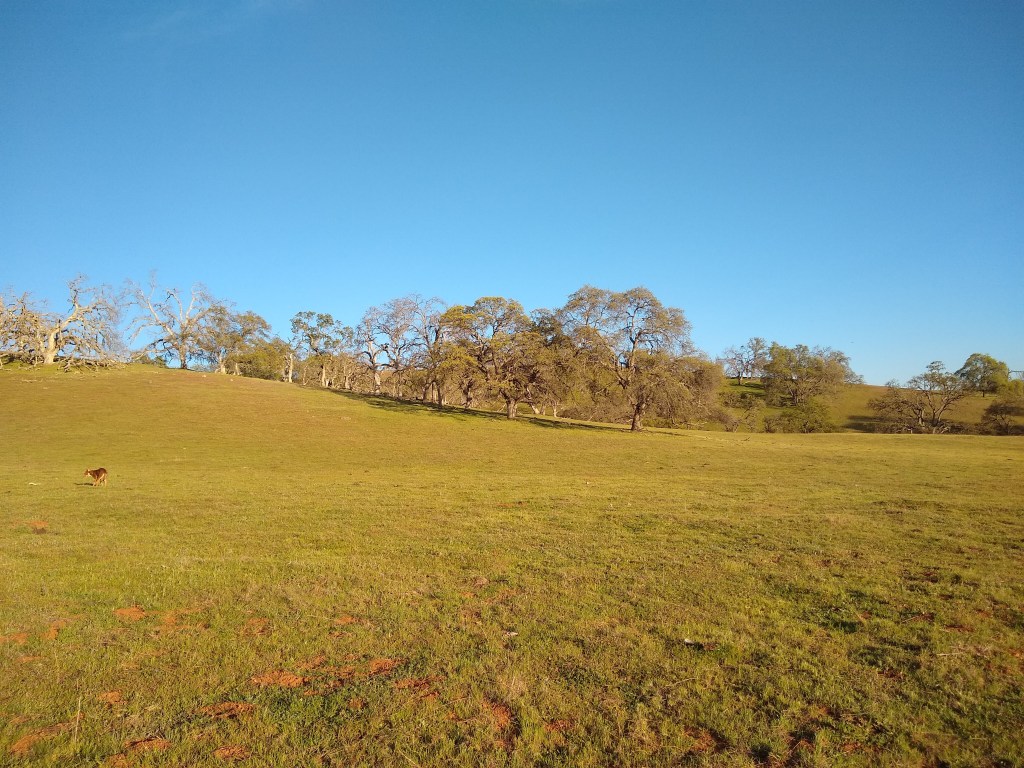
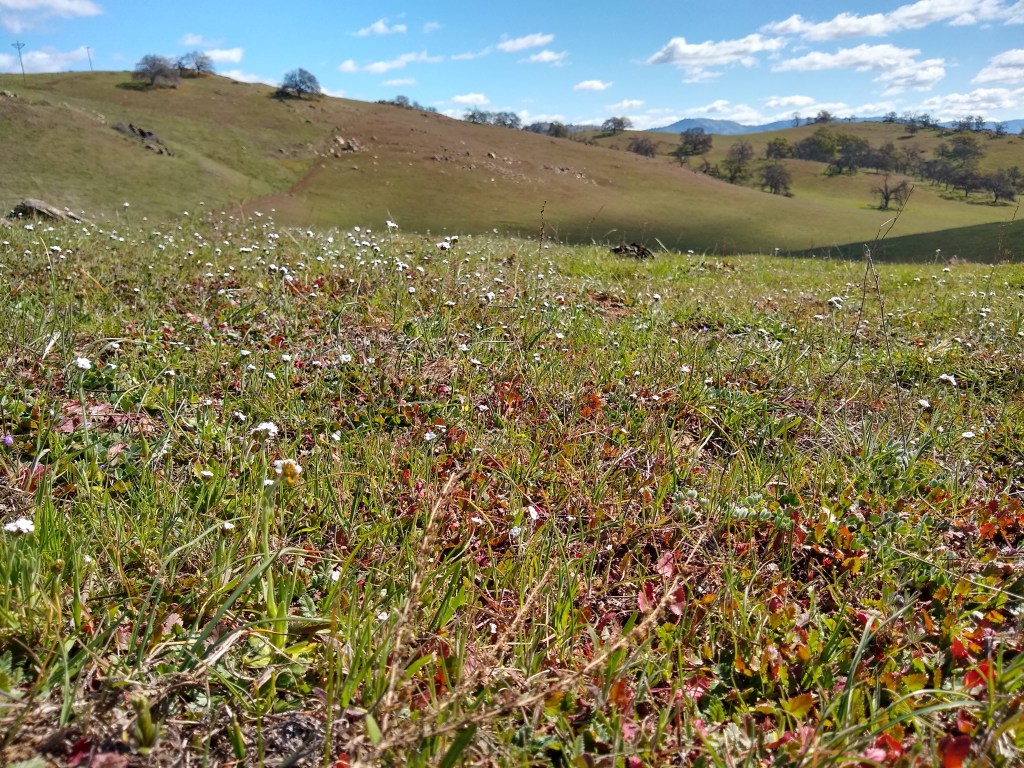
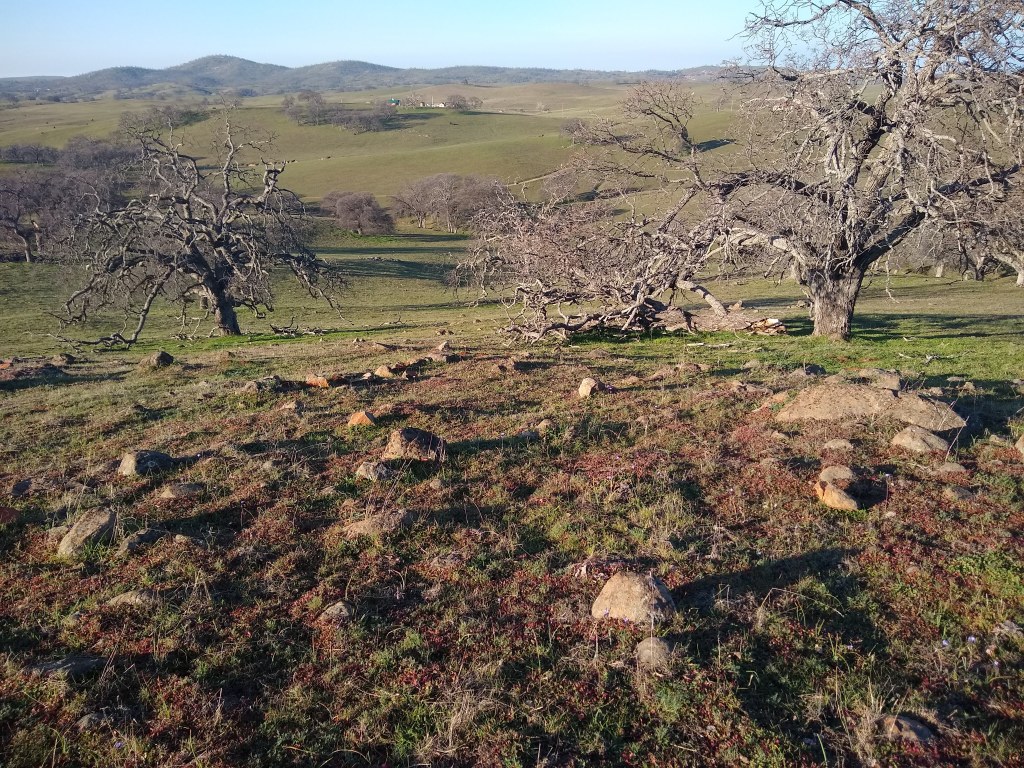
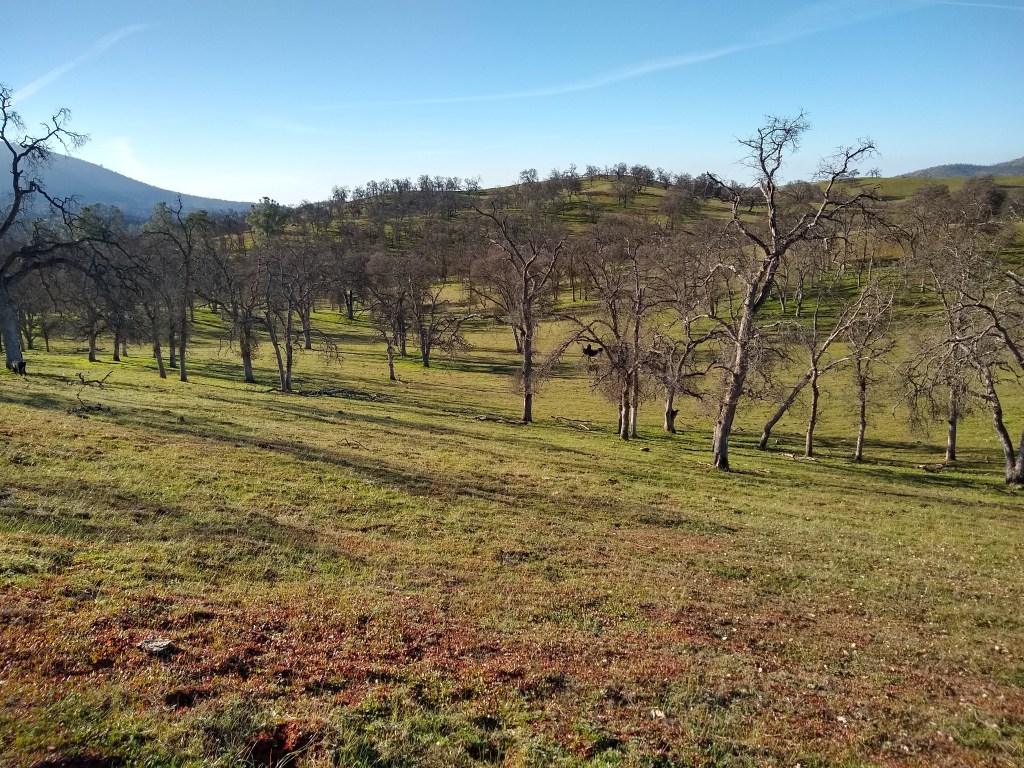
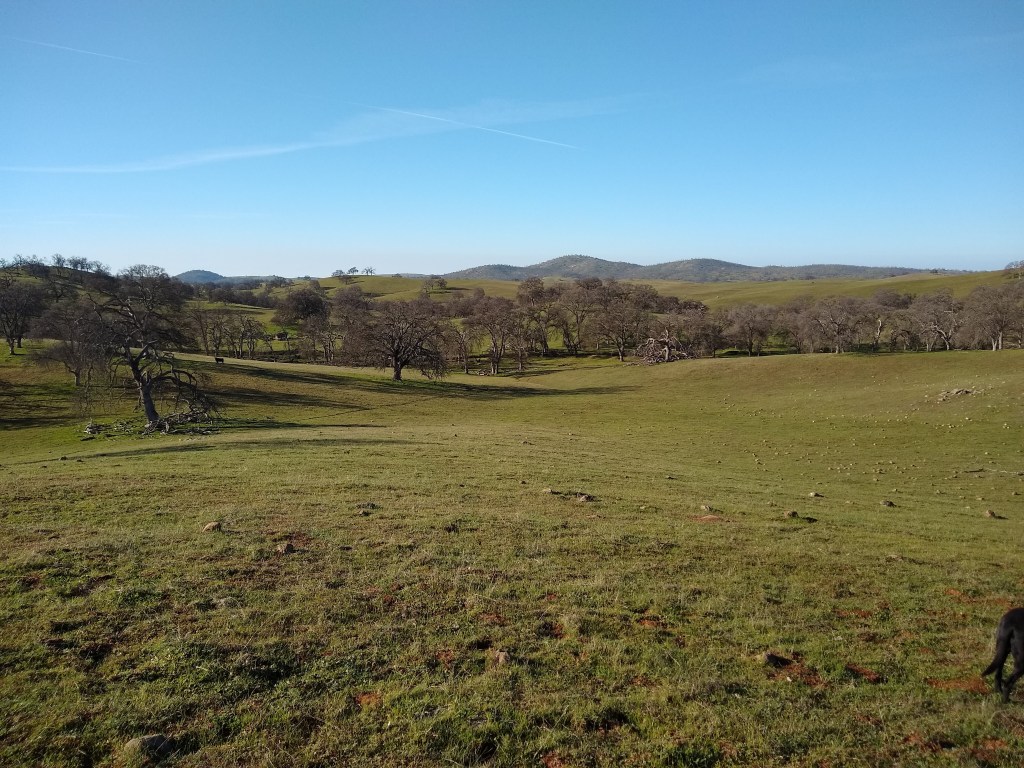
It is breathtakingly gorgeous in the foothills right now. Between the calm temperatures, billions of wildflowers, nectar-laced scents, and avian concerts, it is magic. There continues to be water running in the lesser creeks and drainage’s, and the soil moisture content is high. With the increasing heat, the grass has grown a foot in a few days obscuring some of the native plants that were just inching out. Fortunately, some of the milkweeds got started before the recent warm-up, but, at least for the milkweeds, grazing has continued to give them a chance.
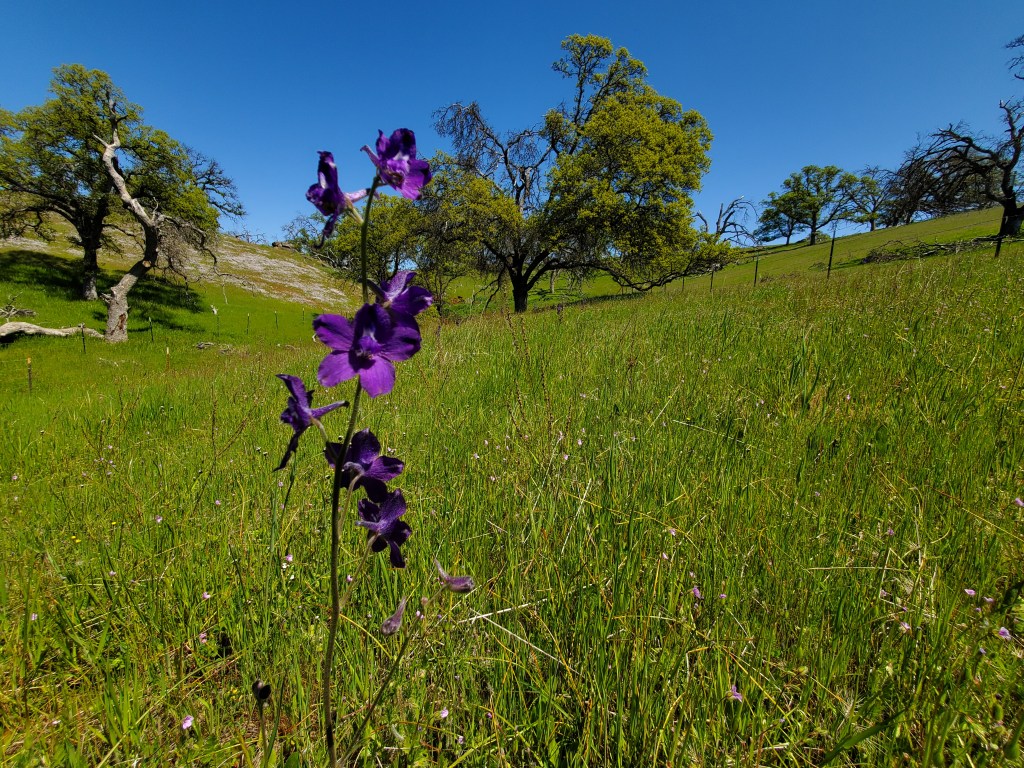
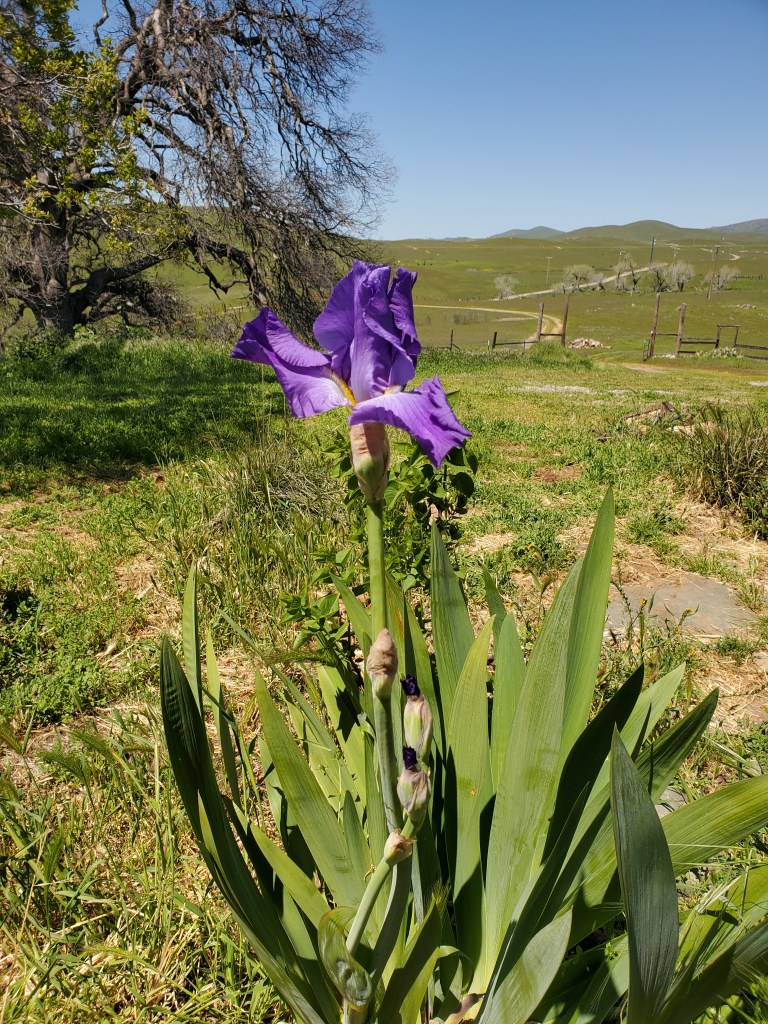
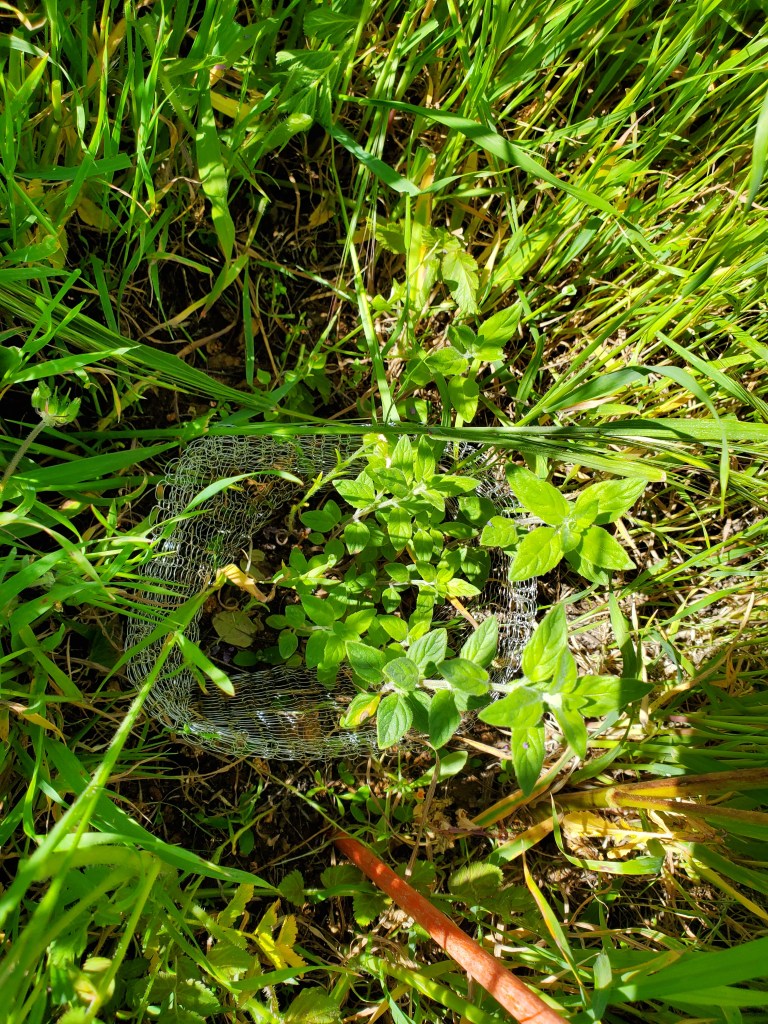
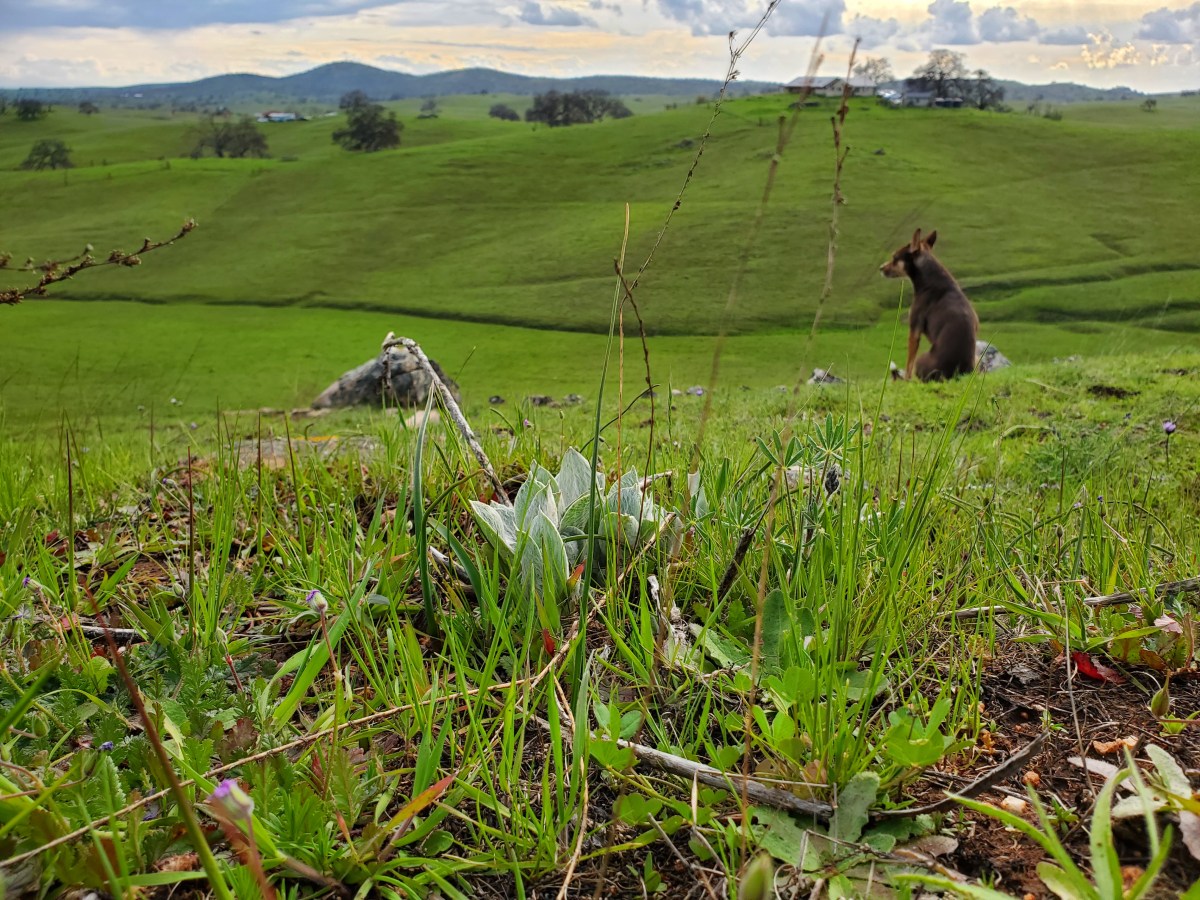
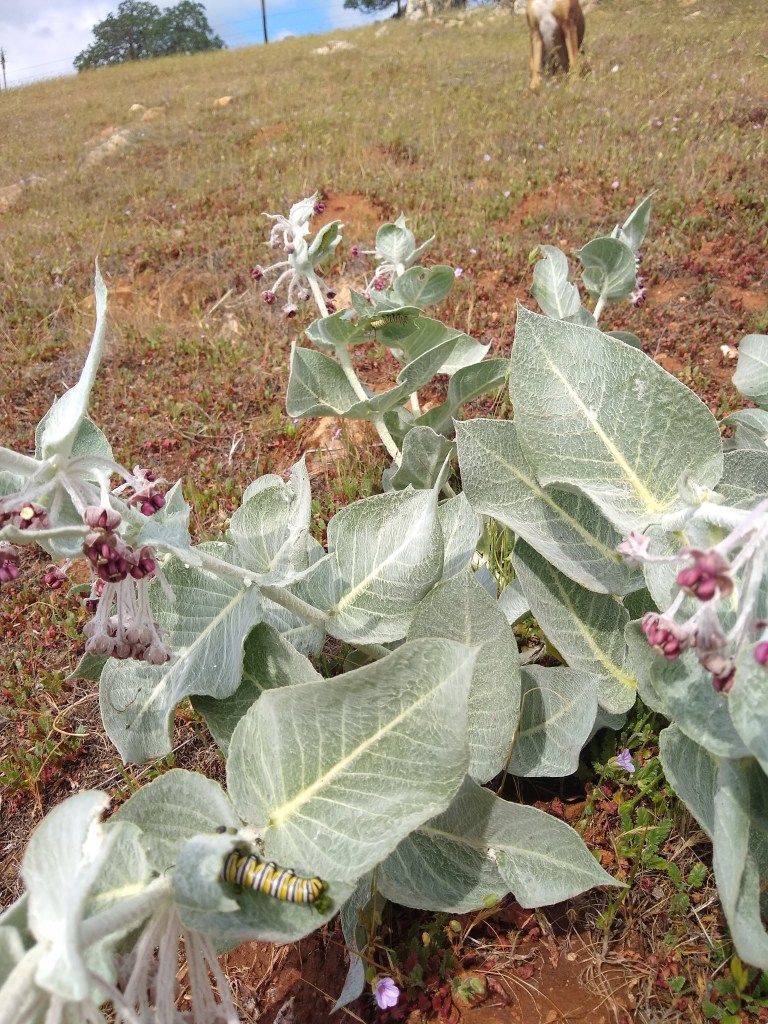
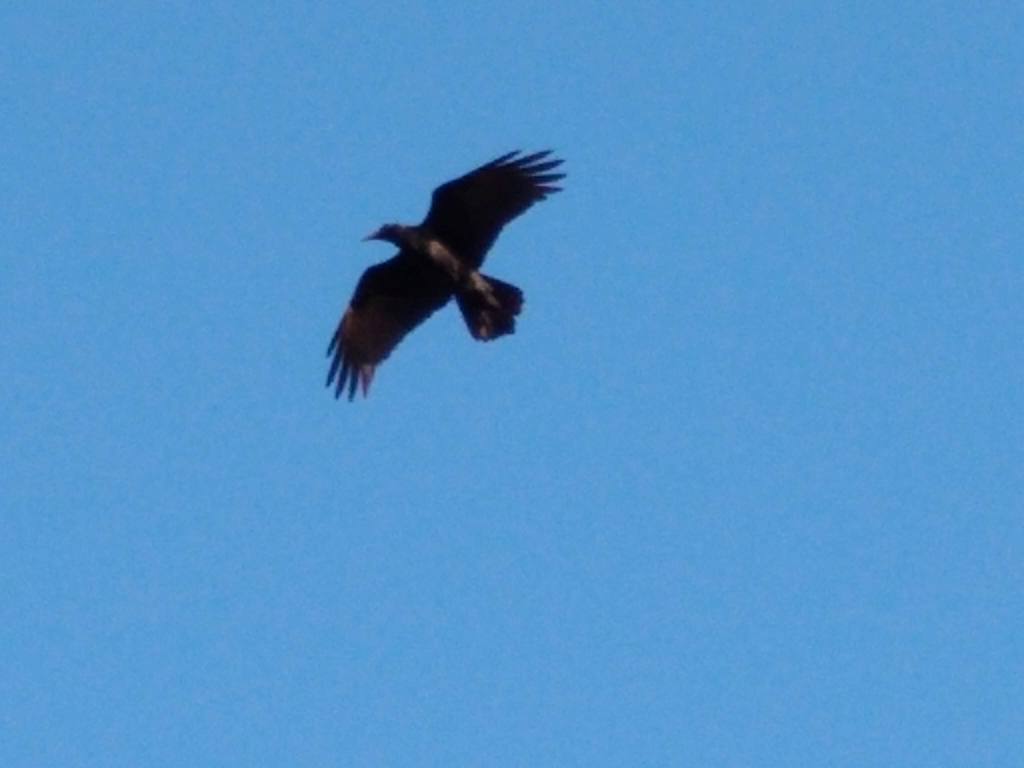
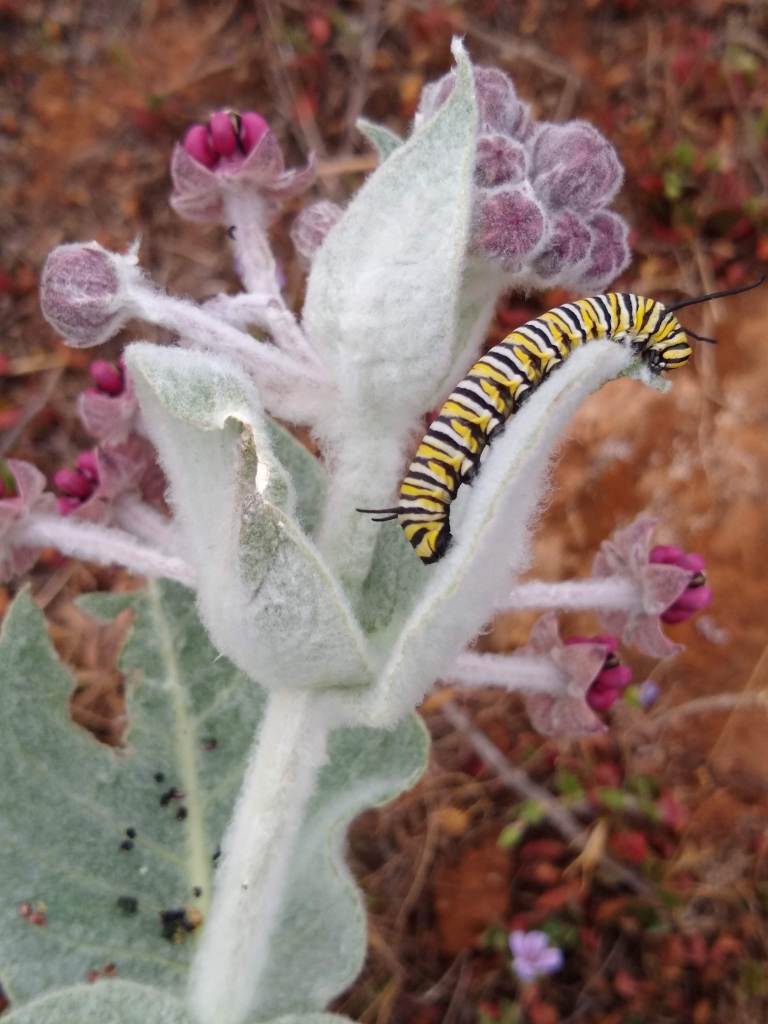
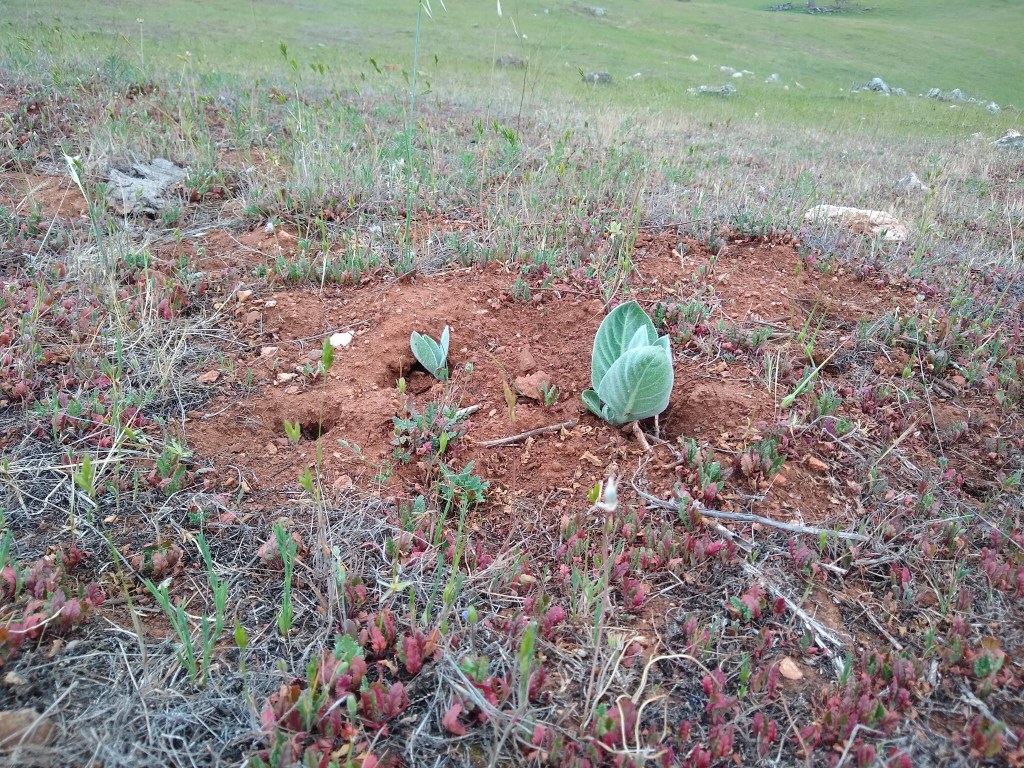
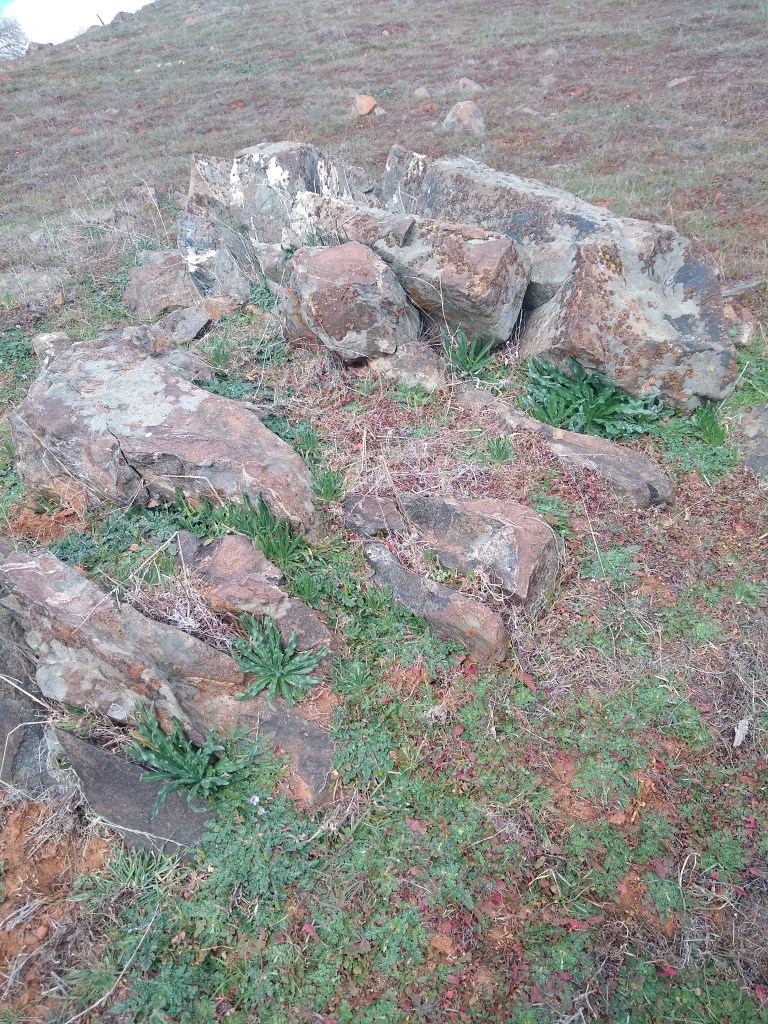
I walk up the steep slope to the largest A. Californica (California Milkweed) patch daily to count the plants and monitor them for caterpillars. Two days ago, I saw an orange-ish butterfly large enough to be seen by my limited eyesight. It was too far away to see if it was a monarch. I also did not have my glasses on. I waited for some time, but it did not return. Consequently, I am no longer leaving the house without my glasses and binoculars. As of today, I counted 16 individual plants. Just yesterday it was 14, and a couple days before that 13 and 9. So far, no emergence in the next largest site near the house. However, the one plant in the SW facing site has emerged and the west facing site has one of the two plants emerged. Unfortunately, the locations where I installed the Xerces plugs or 2021 collected seeds are not emerged. I imagine they may take a couple years to establish.

Tree Work

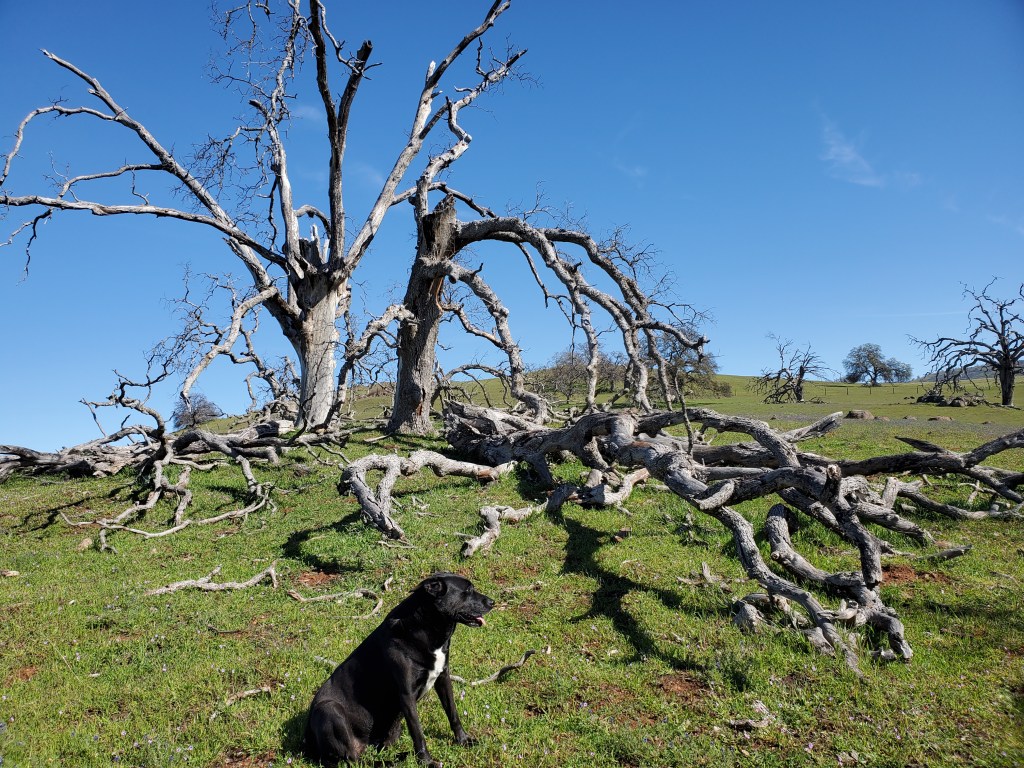
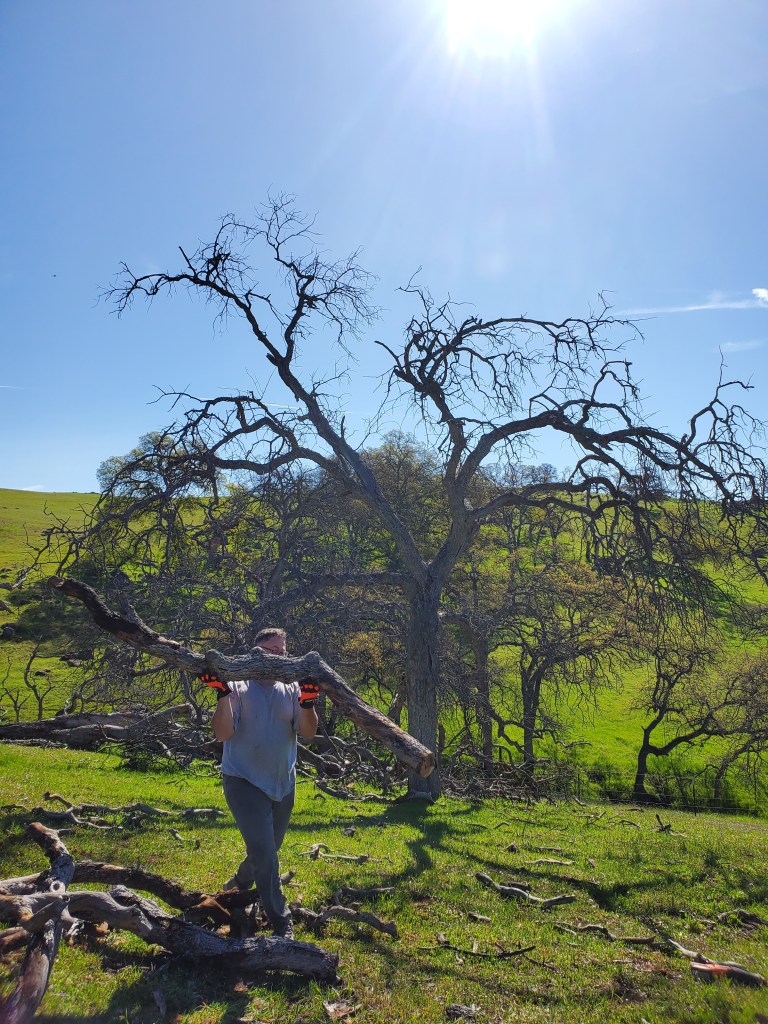
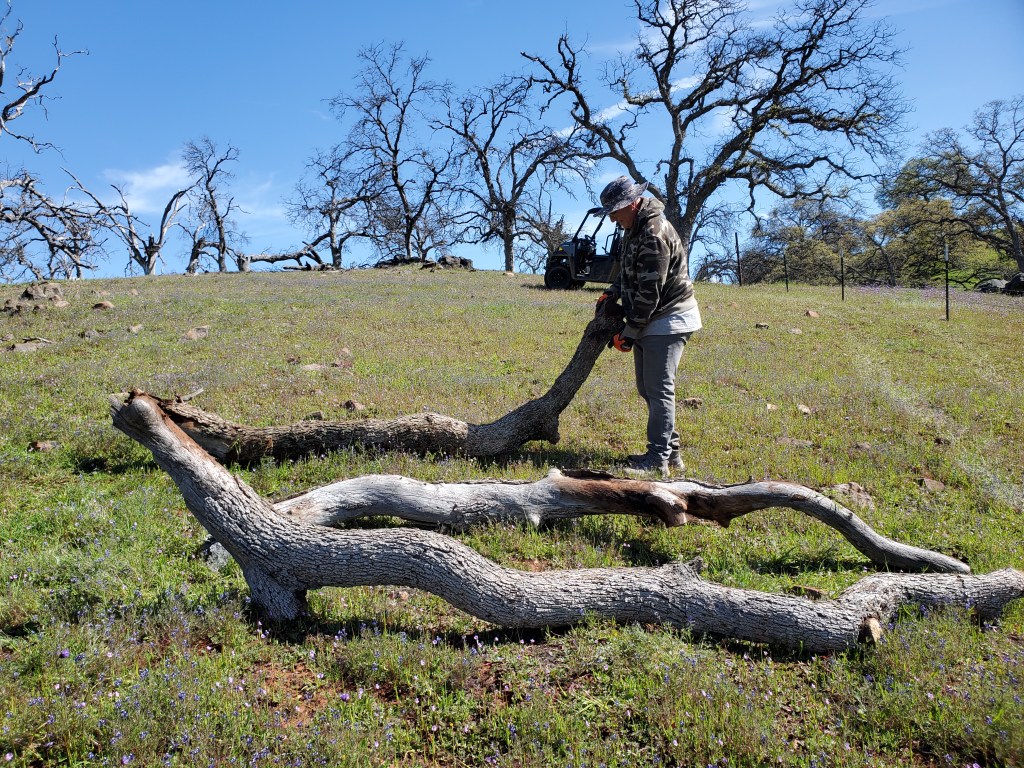
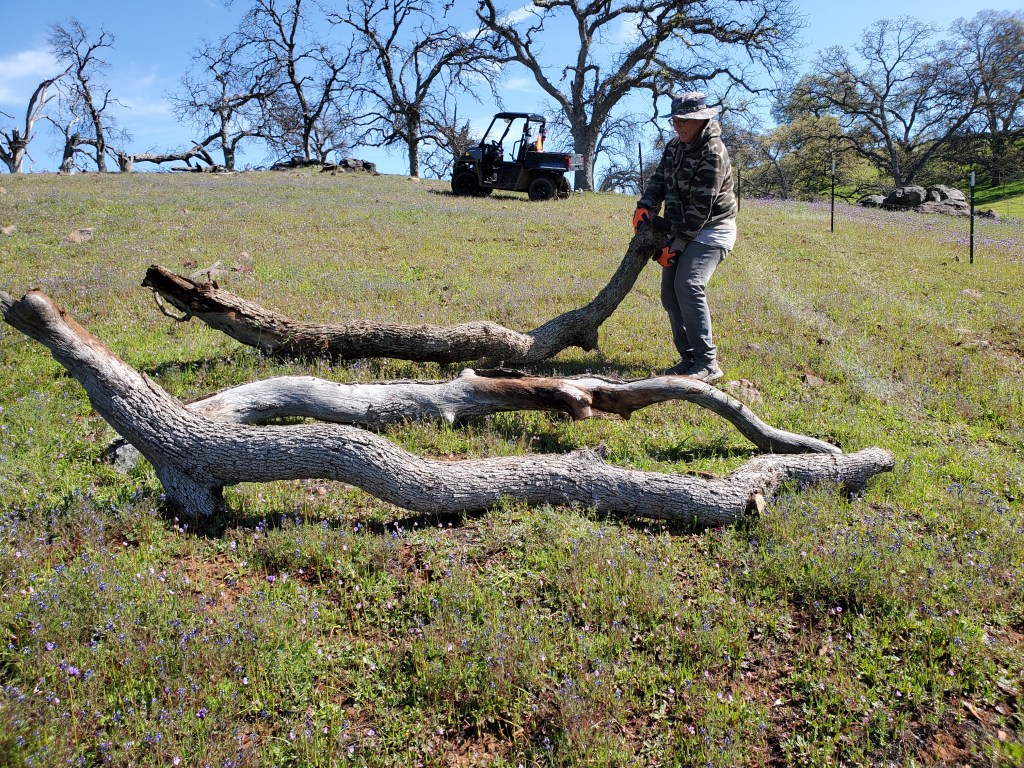
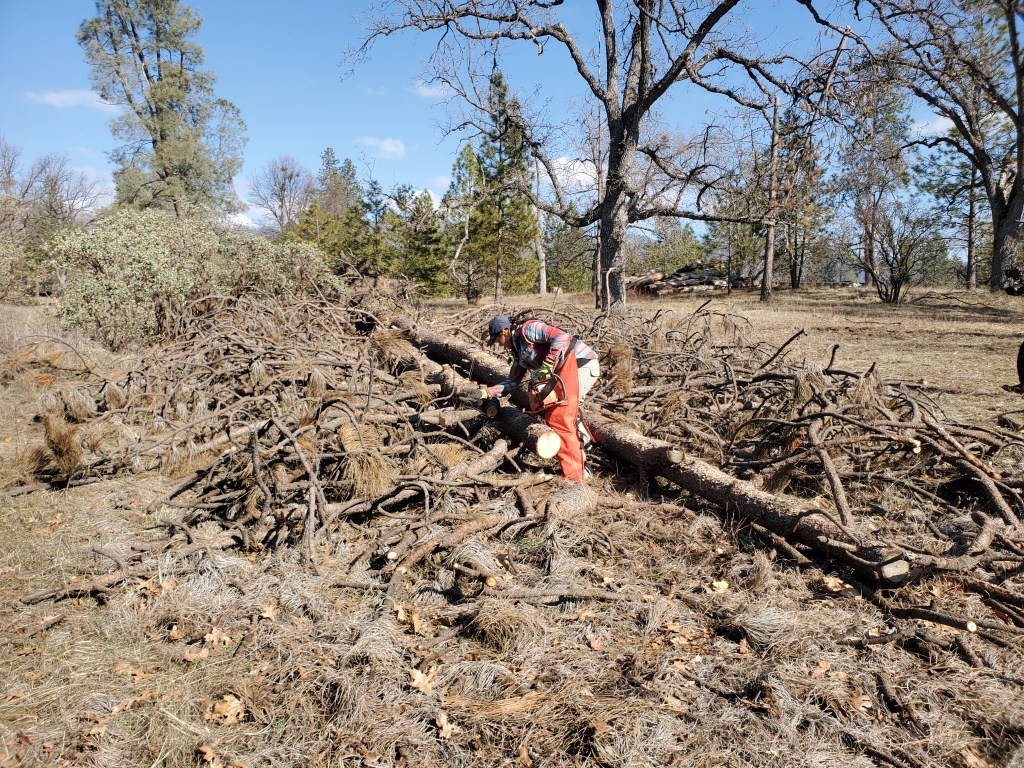
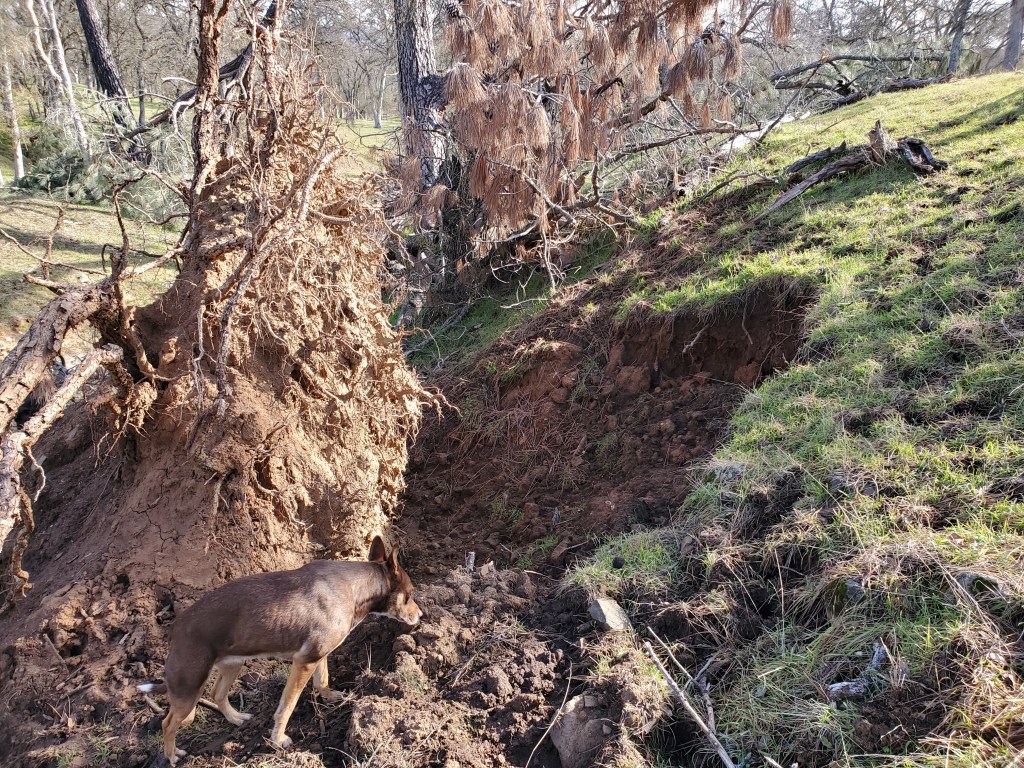
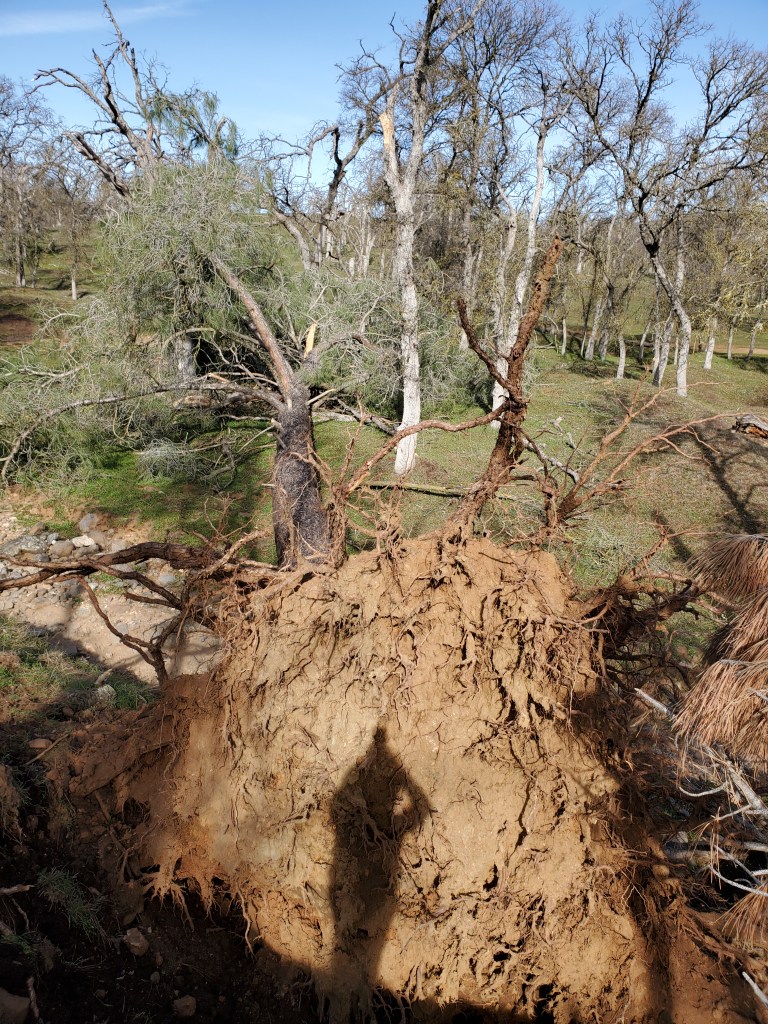
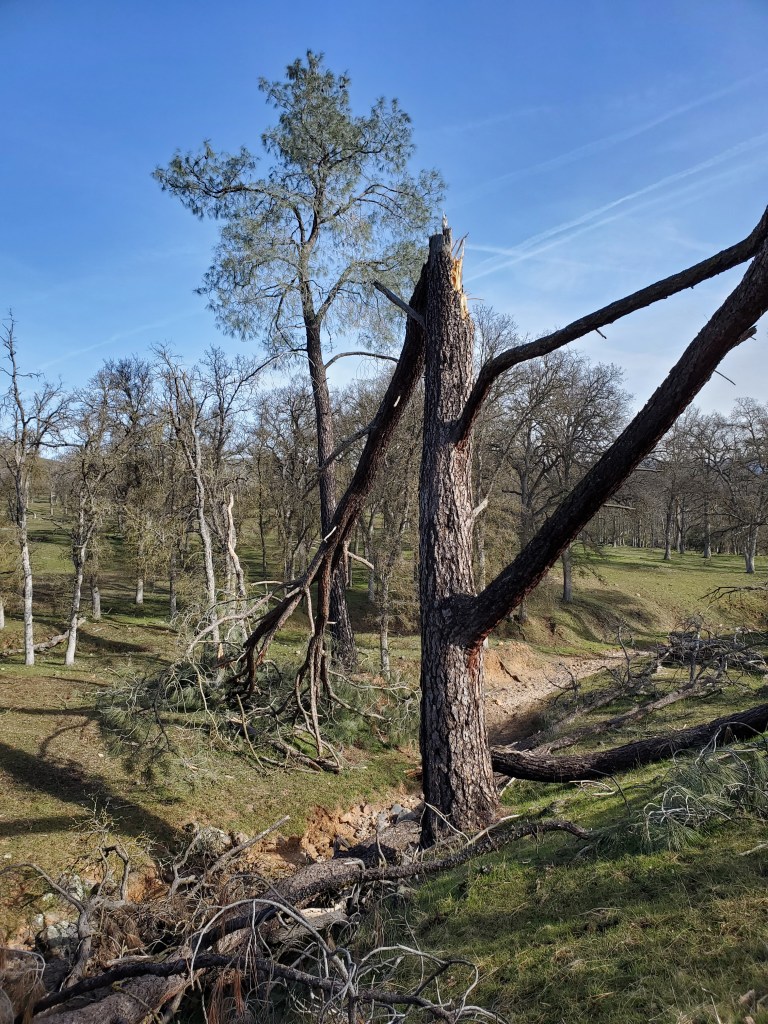
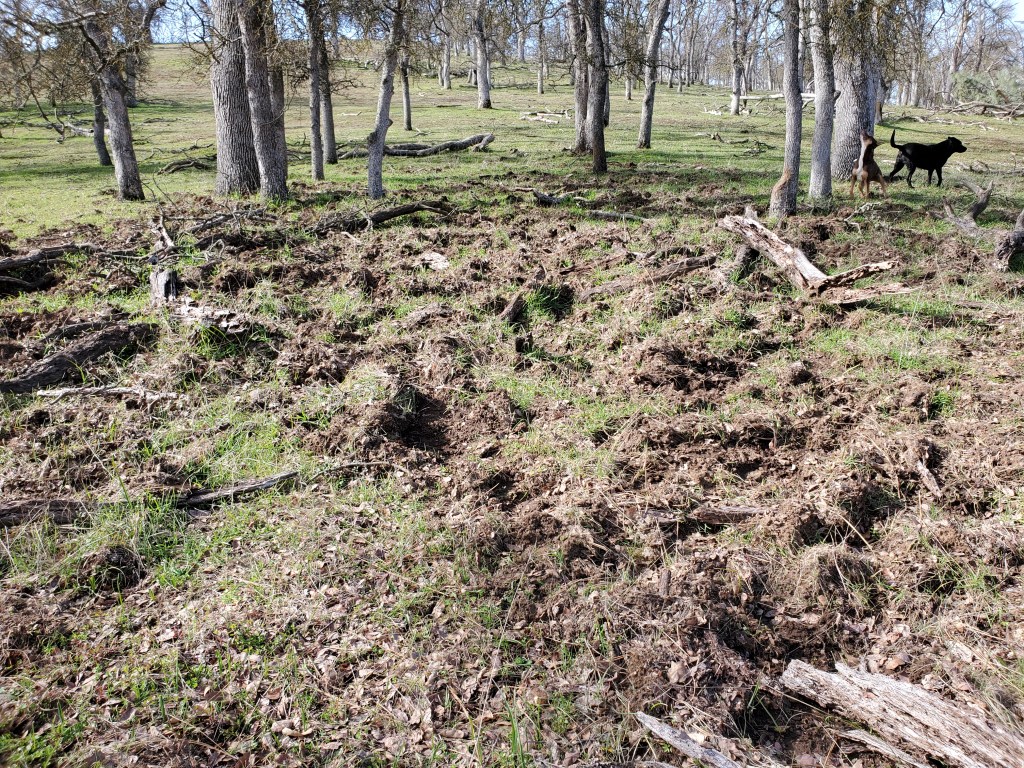
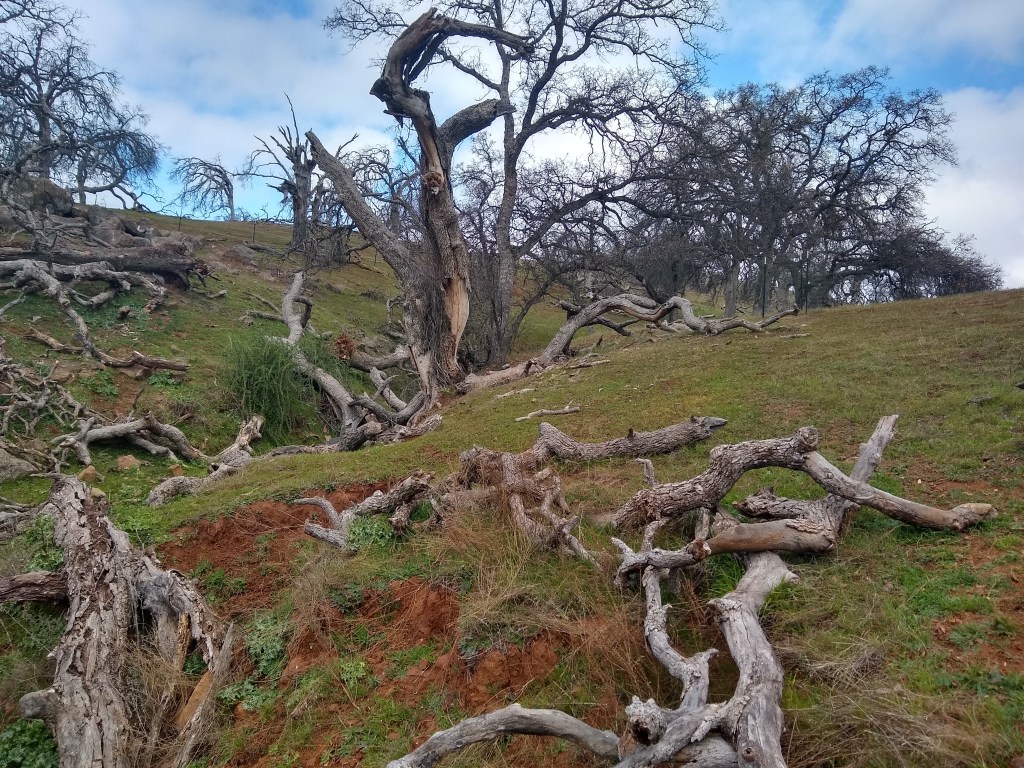
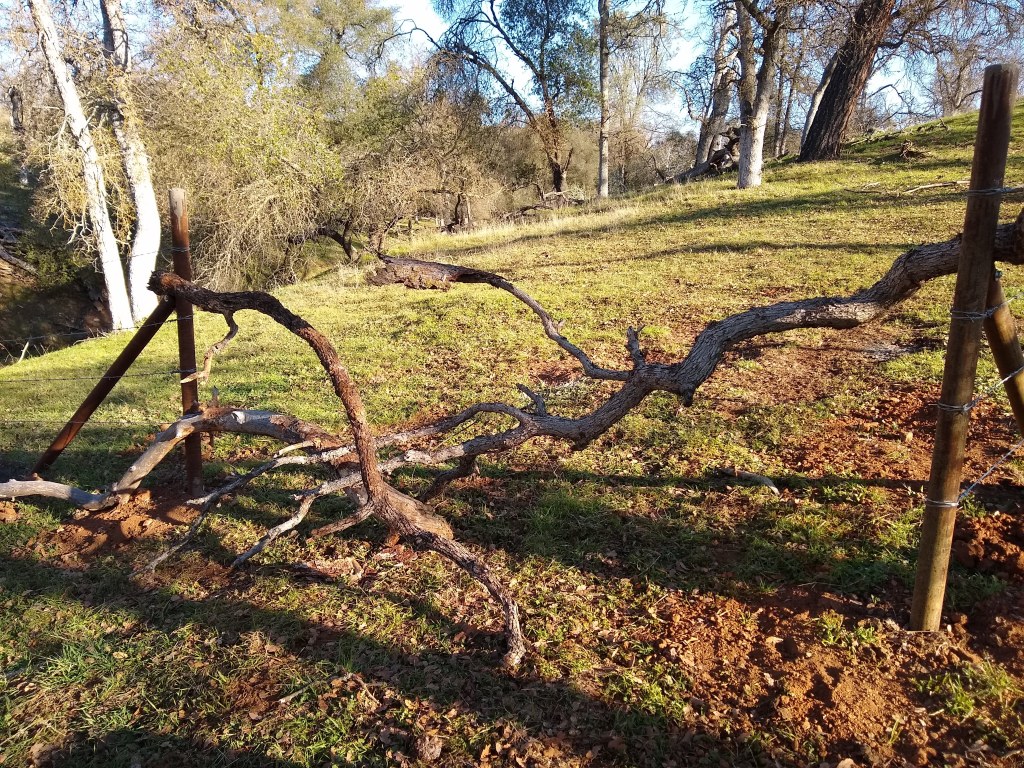
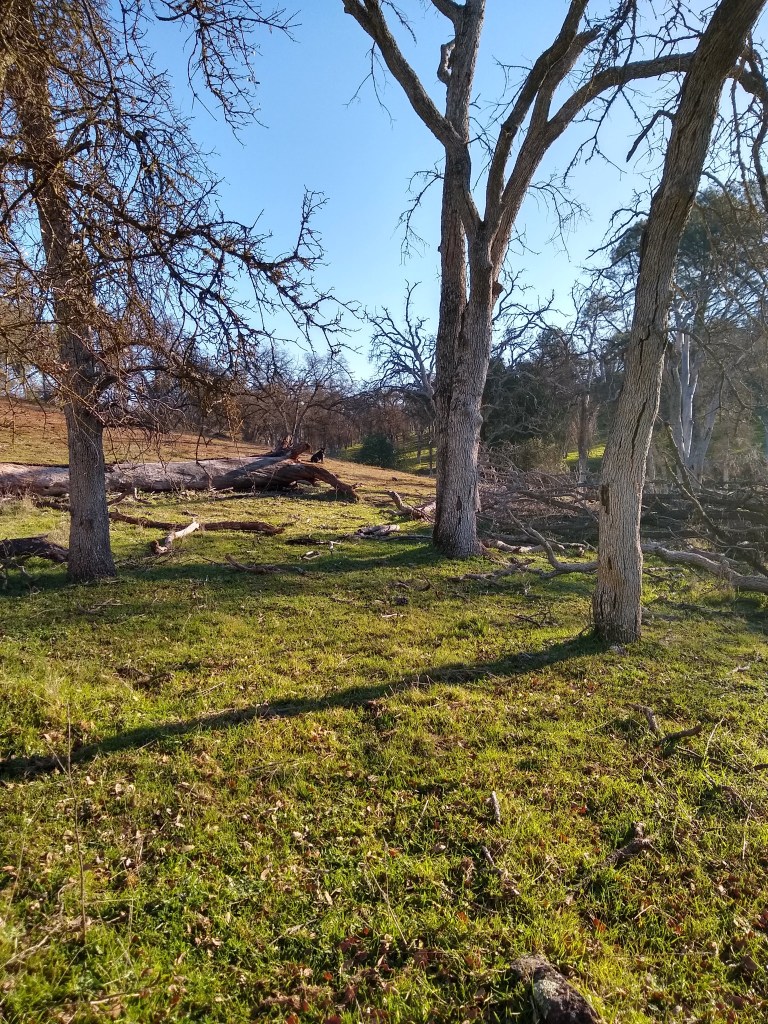
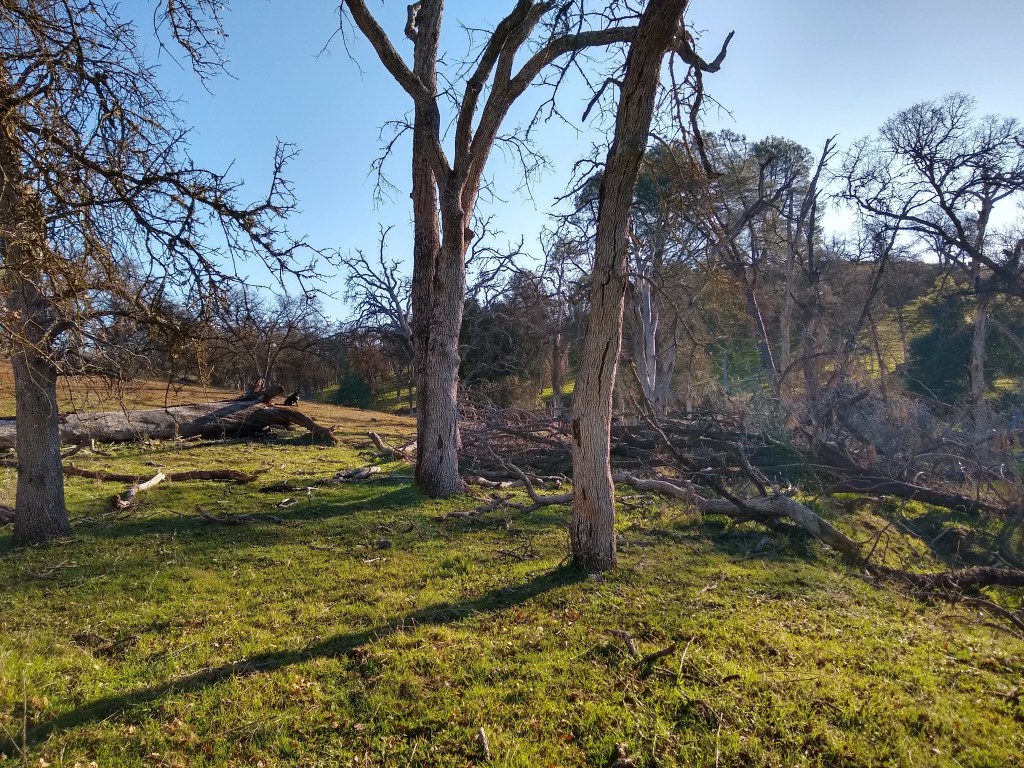
It is an emotional moment to see a grand tree cut up. If you are a regular reader, you will recall that a beautiful, healthy oak tree that was growing at an angle toppled over in the Spring Creek this past January. Between the angle, the saturated soil, wind and freeze of water on the branches, the weight became too great, and the grand tree pulled up by her root ball. It was also a reminder to me to be extremely careful as I walk among the oaks. I had just passed under her the day before.

When the tree fell, her weight was propped up on its branches and near my riparian fence gate. The smaller branches could give way releasing her massive bulk onto anything under it. It was a dangerous situation. I had no choice but to remove her.

These trees are ancestor relatives. Their lives have spanned 4 or 5 generations of my human family. Imagine their perspective of us always coming and going, building then tearing down, seeking and finding, singing and sleeping. We must be so peculiar to them. I love trees deeply. I appreciate their shade, smell, cavities breeding life, branches for singing birds, the food they provide, their moist soil under the canopy and how their roots are deep and connected. They have so much to teach us.

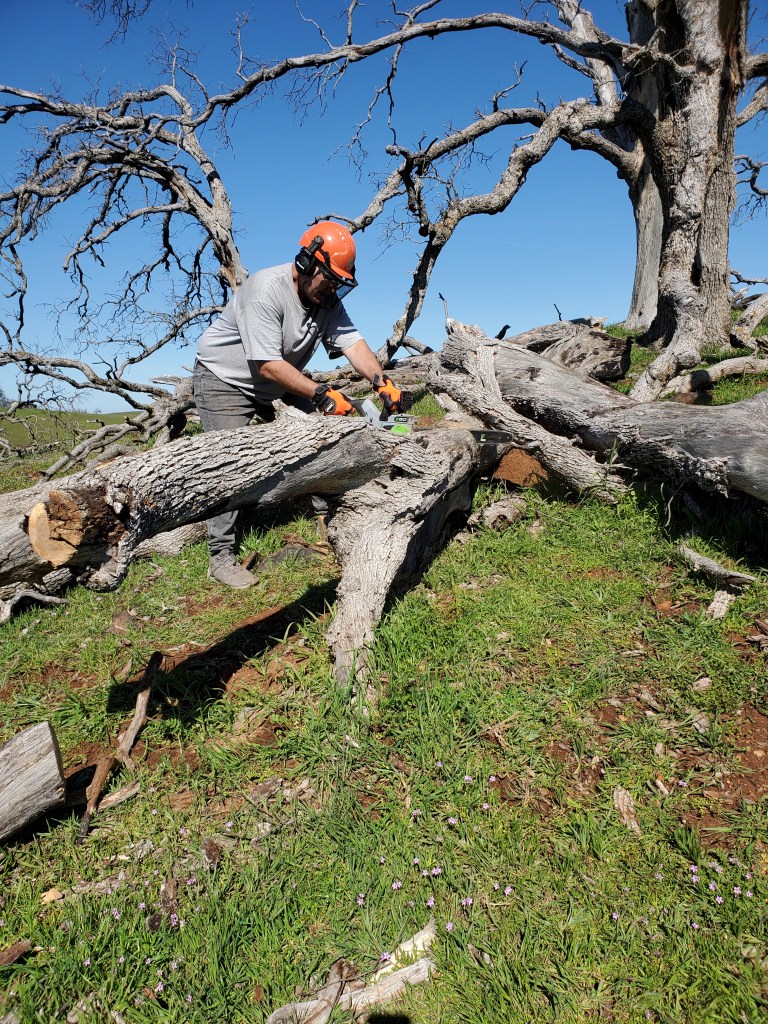
It is within this context and within the sensitivity of my soul, that a small piece of my heart breaks when the saw goes through my fallen relative. For such a solemn moment, the right sawyer is needed. I was grateful that Nick Brochini was available. Nick is Miwuk and understands the gift of the tree. He does not take it for granted. I don’t have to explain myself when I need to touch her and say a prayer of gratitude for her magnificence.

Nick was a young teen when I first met him. I was a tutor in the Indian Education program at the high school. He would come to the room, always a big, happy smile and carrying a turtle back pack. It was so cool; he really pulled that look off. It set him apart. Nick was a nice kid. Not a regular student in need of tutoring, he was mostly in need of community. We always enjoyed seeing him when he came through and loved hearing the tales of his school day.

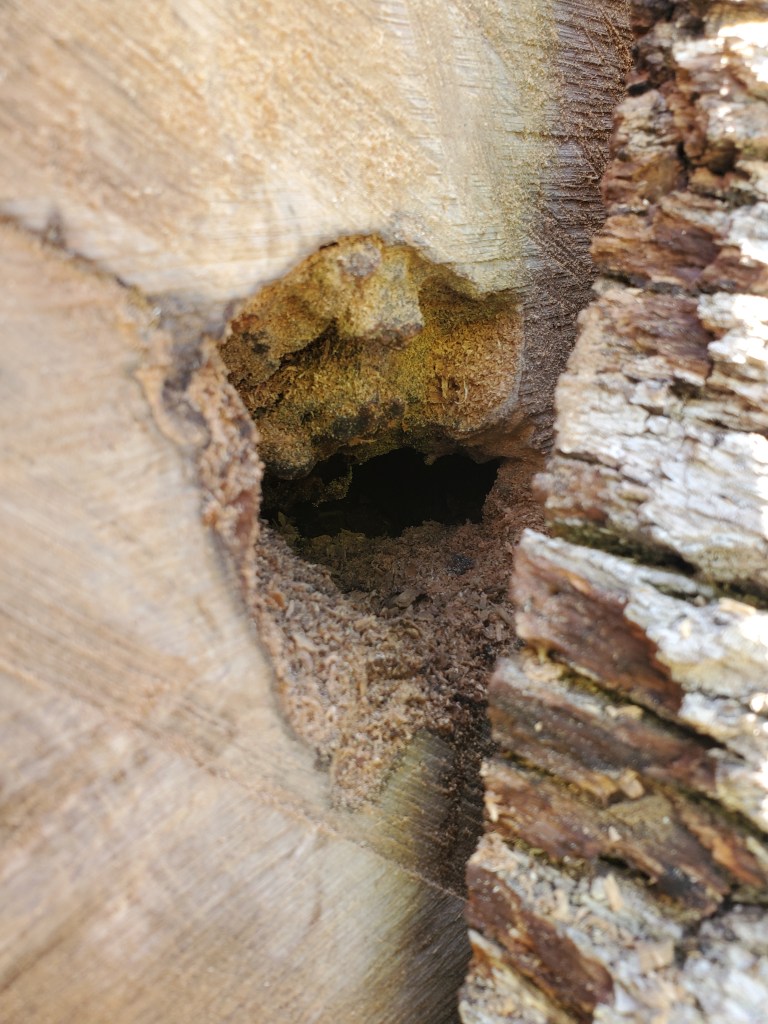
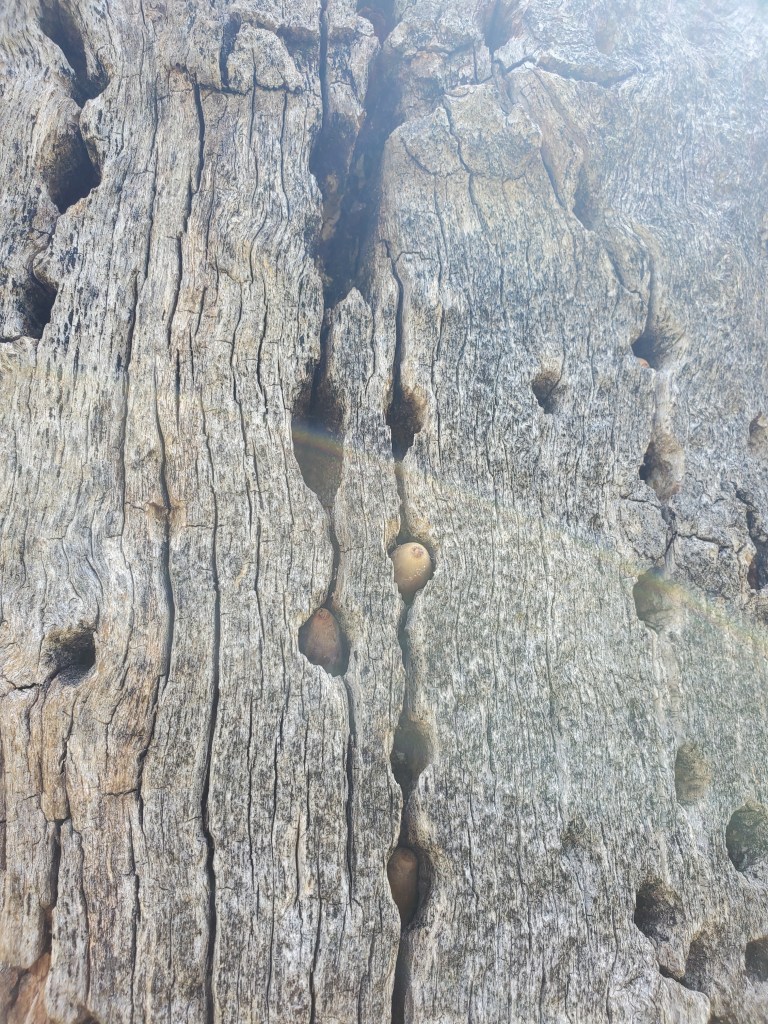
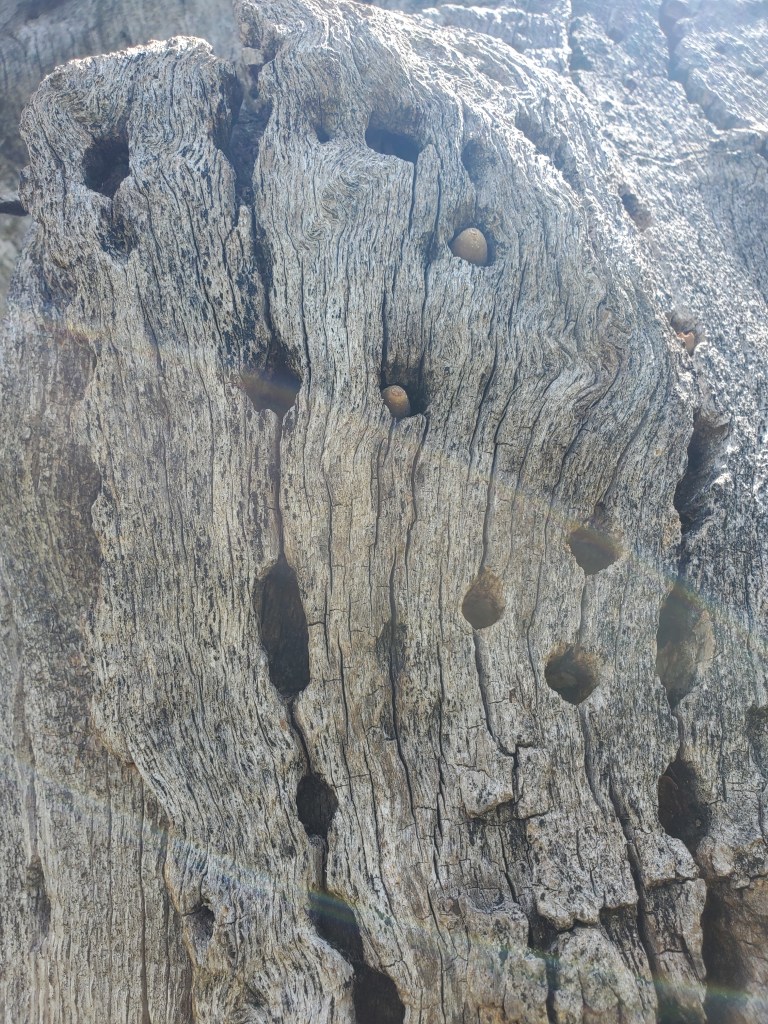
Nick grew into an adult, a husband and a father over the years. His children are beautiful. I see them at the community Pow Wow from year to year. I hope they are proud of their dad. He is an expert with the saw. He knows trees and shares helpful information. He showed me the gaping hole in the tree, the rot from within. He told me all the oak trees have this. Just like humans, they develop healthcare issues as they age. He showed the start of interior rot in a smaller branch as well. What a lesson. At least some creature will have a good home.
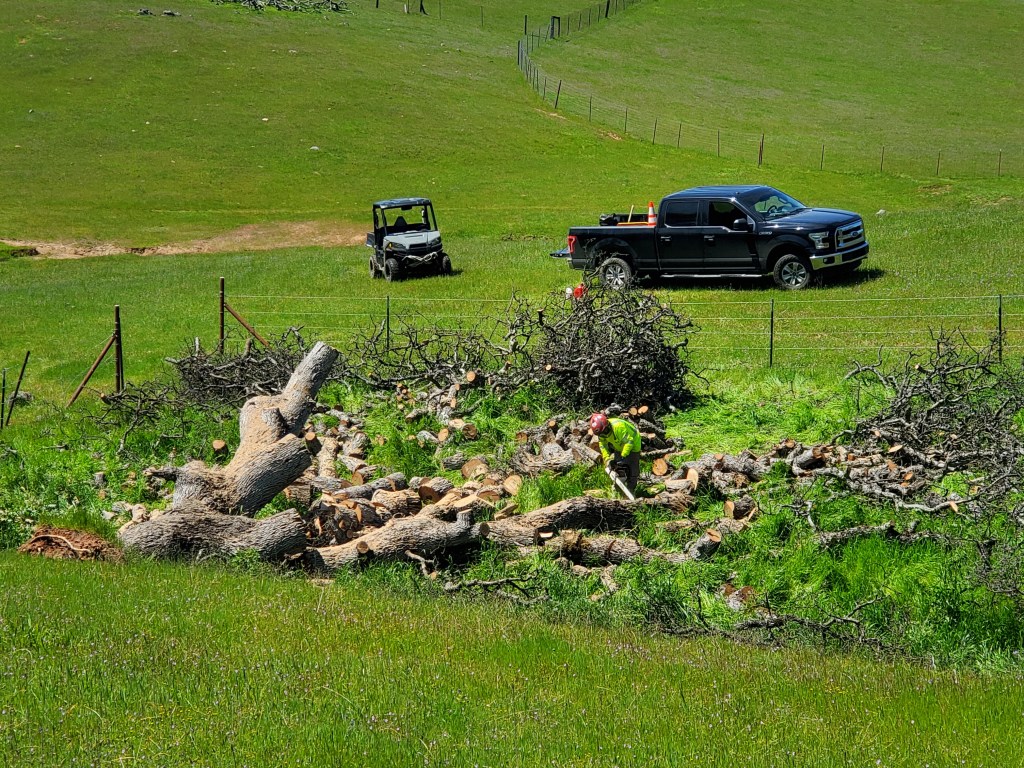
I left a large section of her main trunk as a monument to her. Part of it will act as a check dam and the other will extend beyond the creek banks. She is beautiful even in death. The rest of the material will be used for brush piles and fire wood. Her flesh will keep my nephew and his family warm next winter. Chiokoe uttesia Huya into Nick weweriam (Thank you relatives – Tree and Nick).
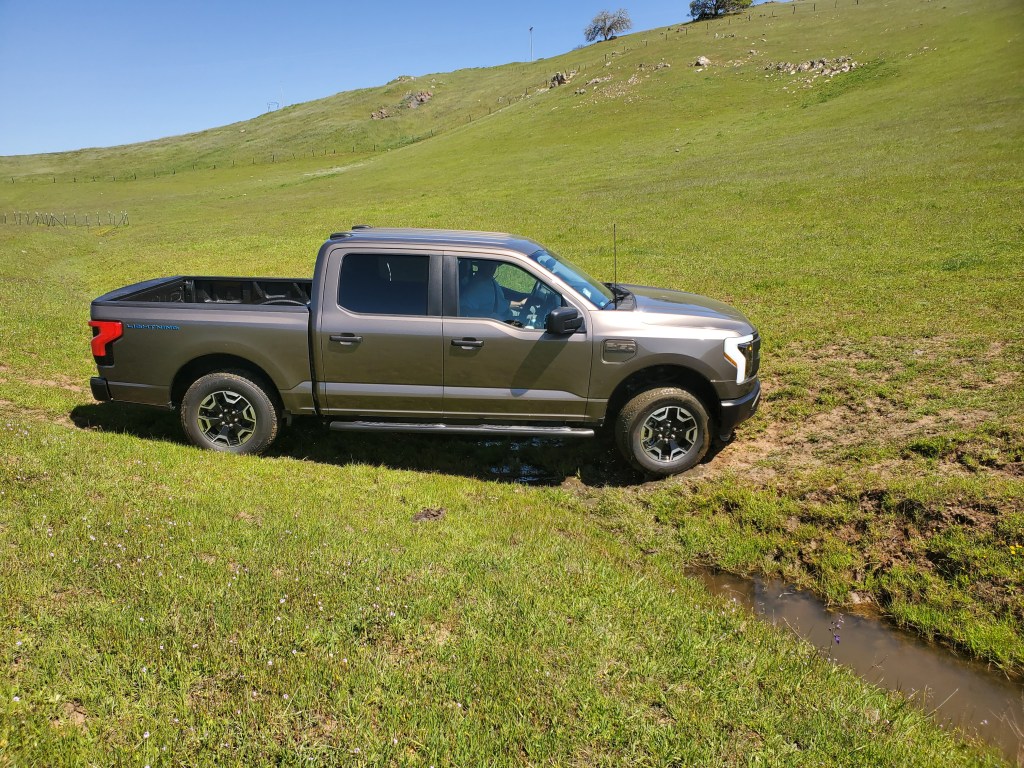
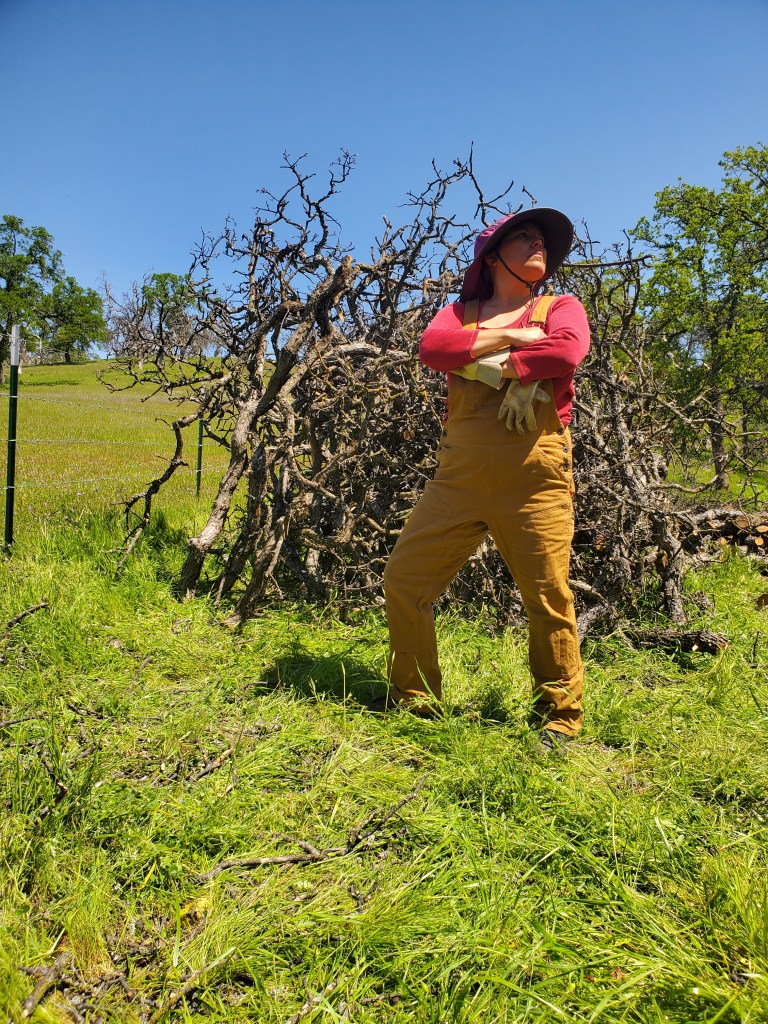
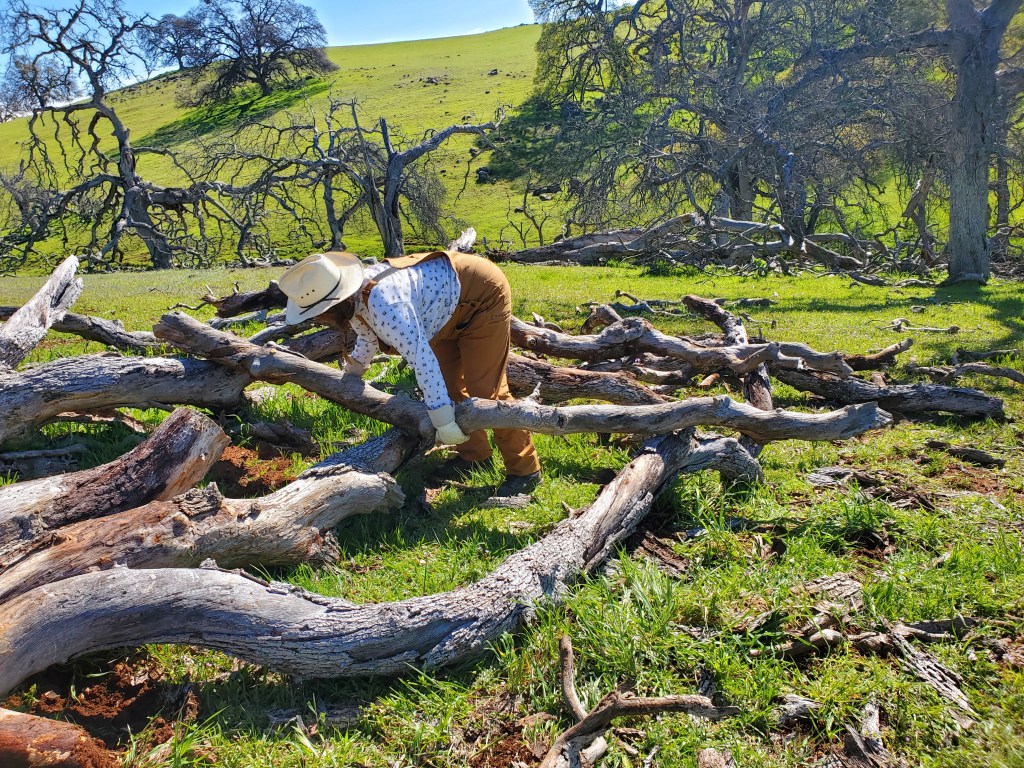
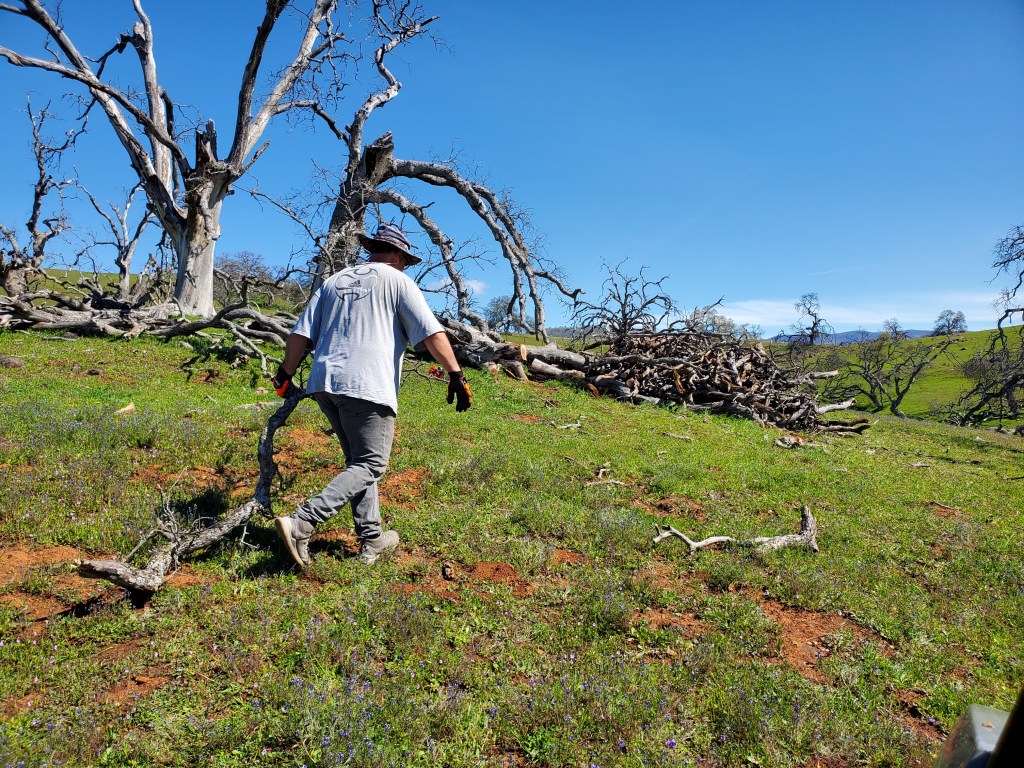
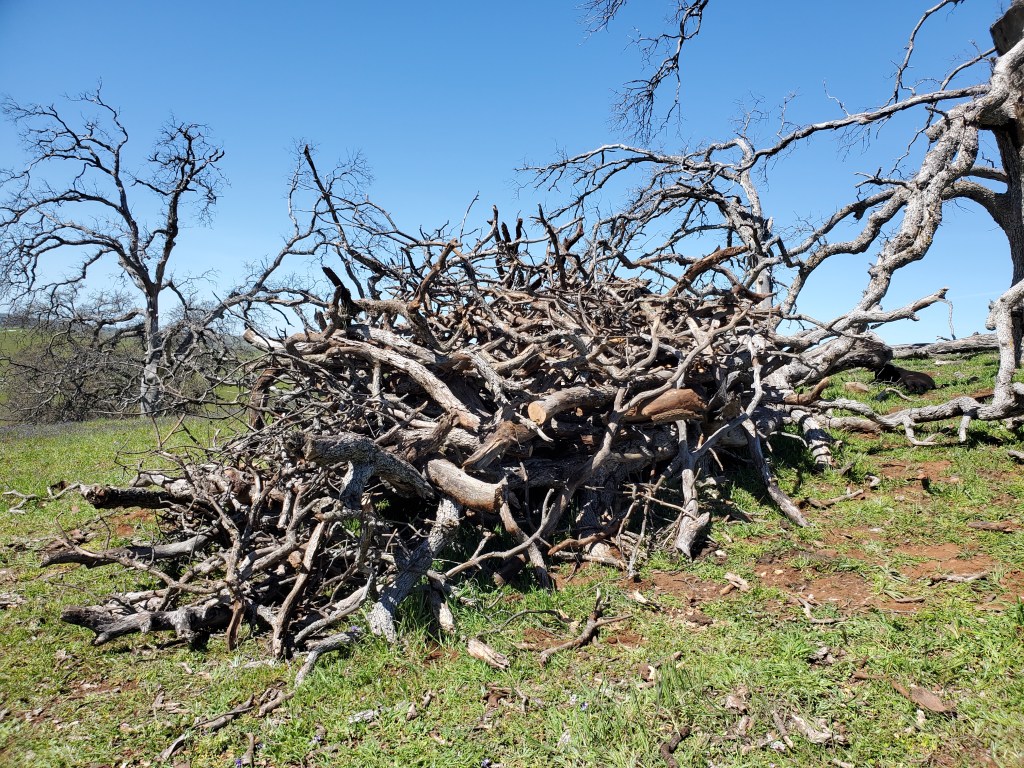
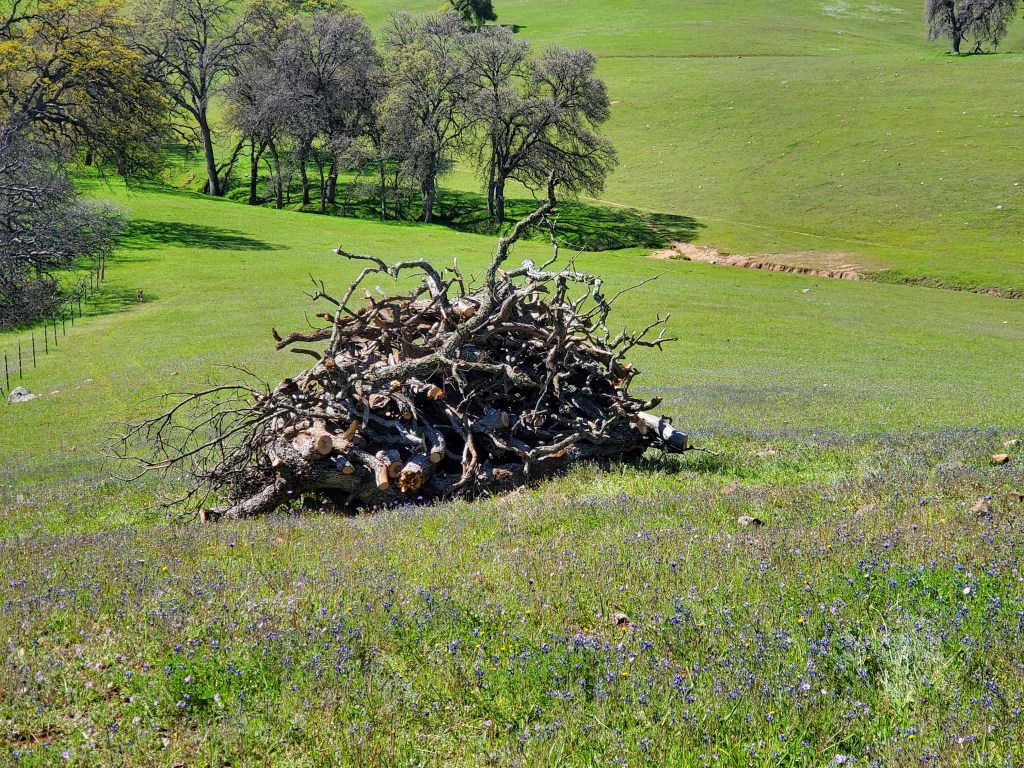
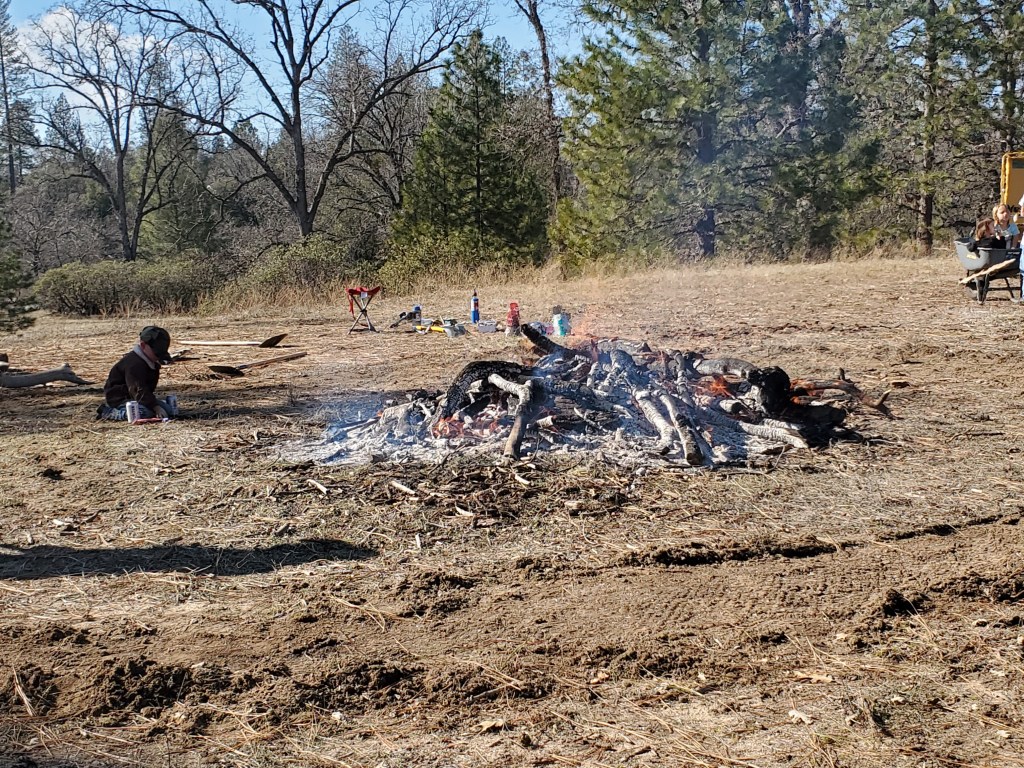
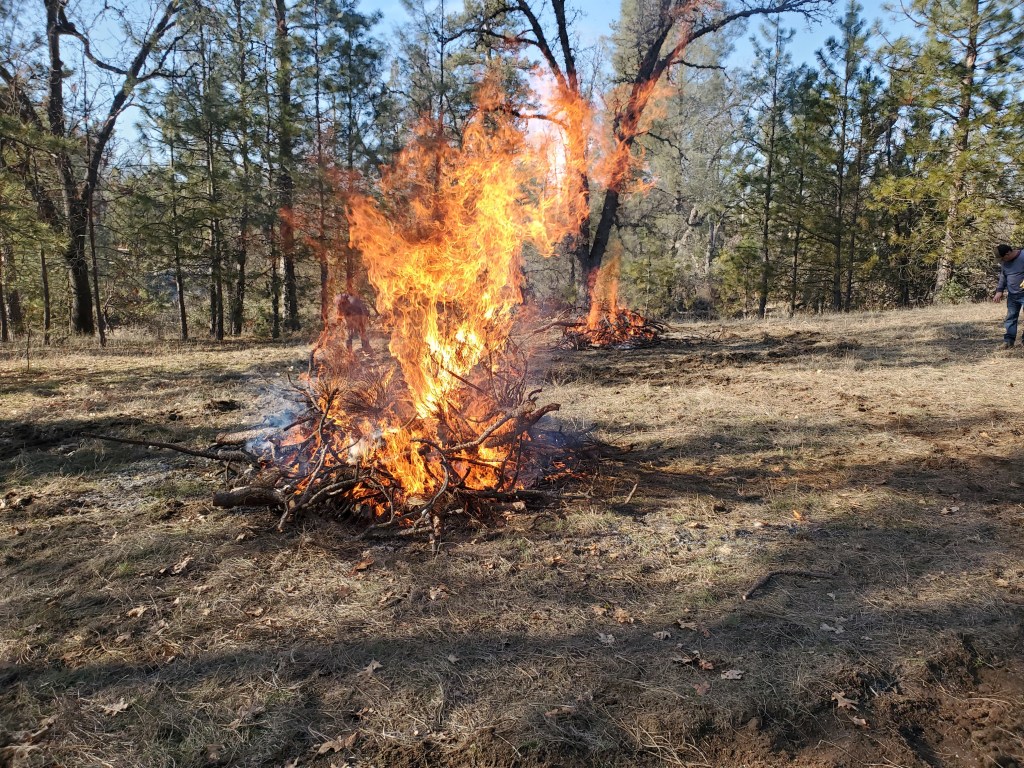
After Nick left, David and I sprung into action building brush piles and stacking wood. Within one second of me stepping away, a bird landed on the pile to check it out for a new home. That made me happy. My work is worth something.

More Visitors

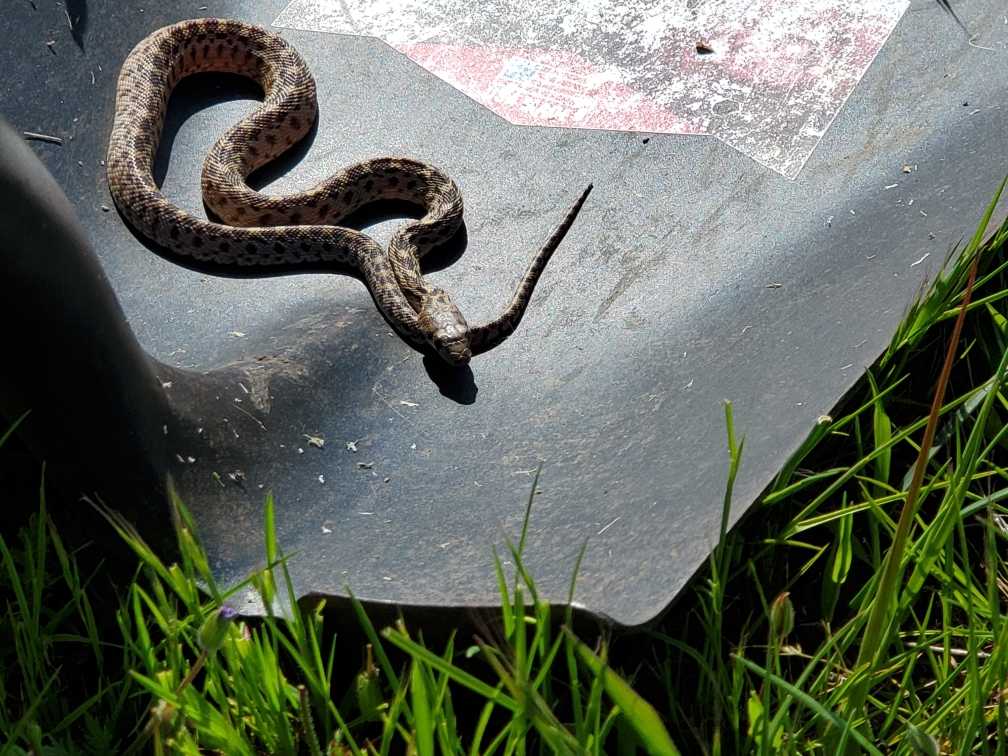
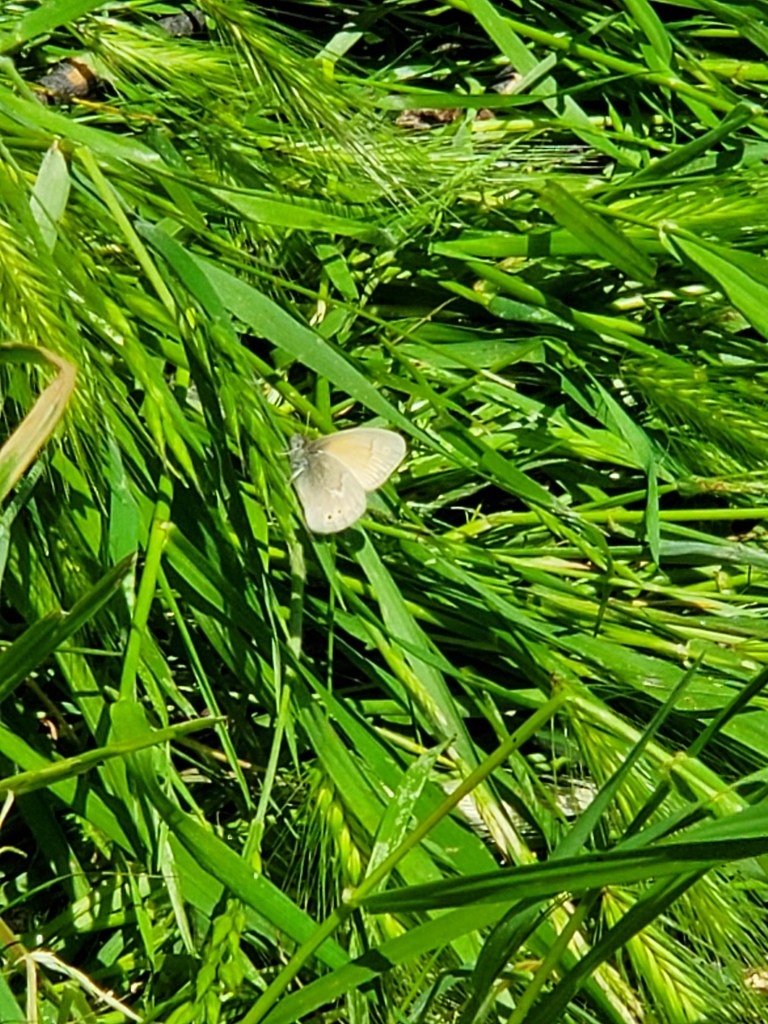
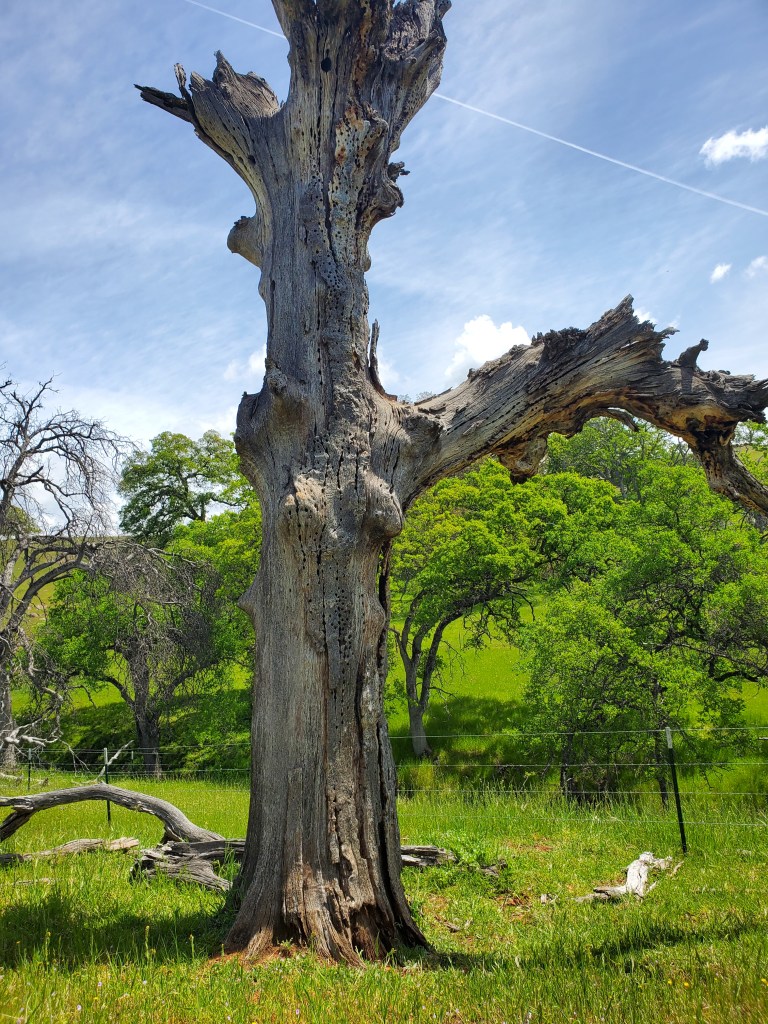
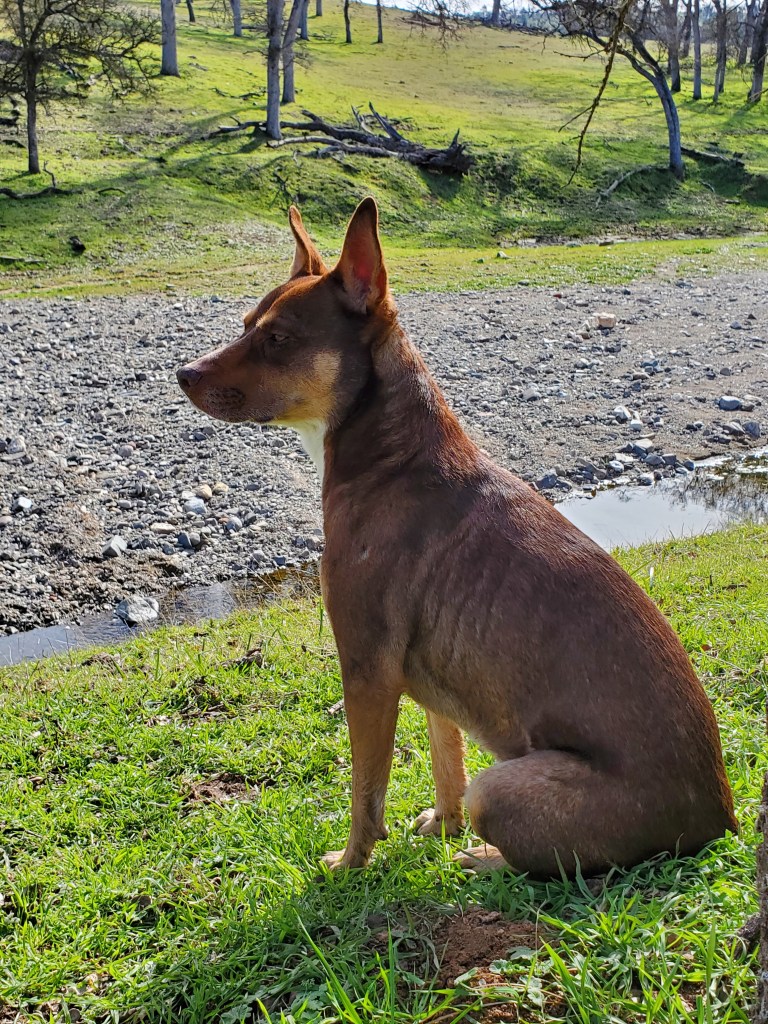
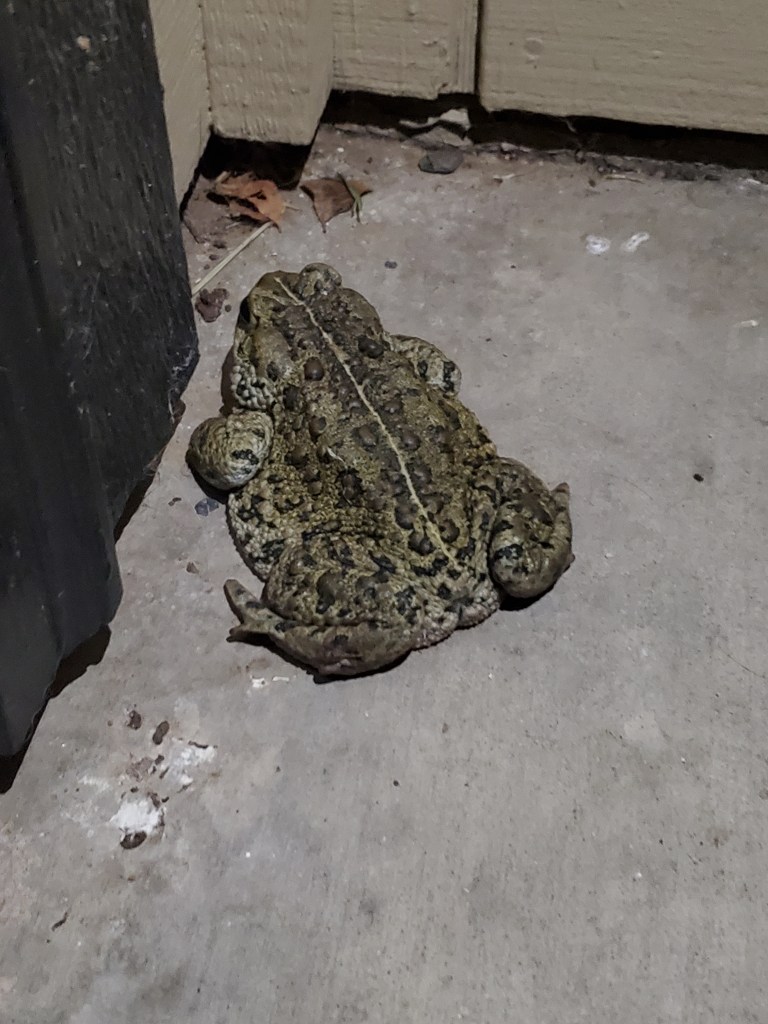
Life on the ranch is a joy I cannot adequately explain. I am the kind of girl that loves spiders, snakes and frogs. I like the smell of manure and don’t mind getting it on my boots. Not everyone is into this kind of life. For me, it is heaven. Here are some recent visitor to the house:

Check Dams Working

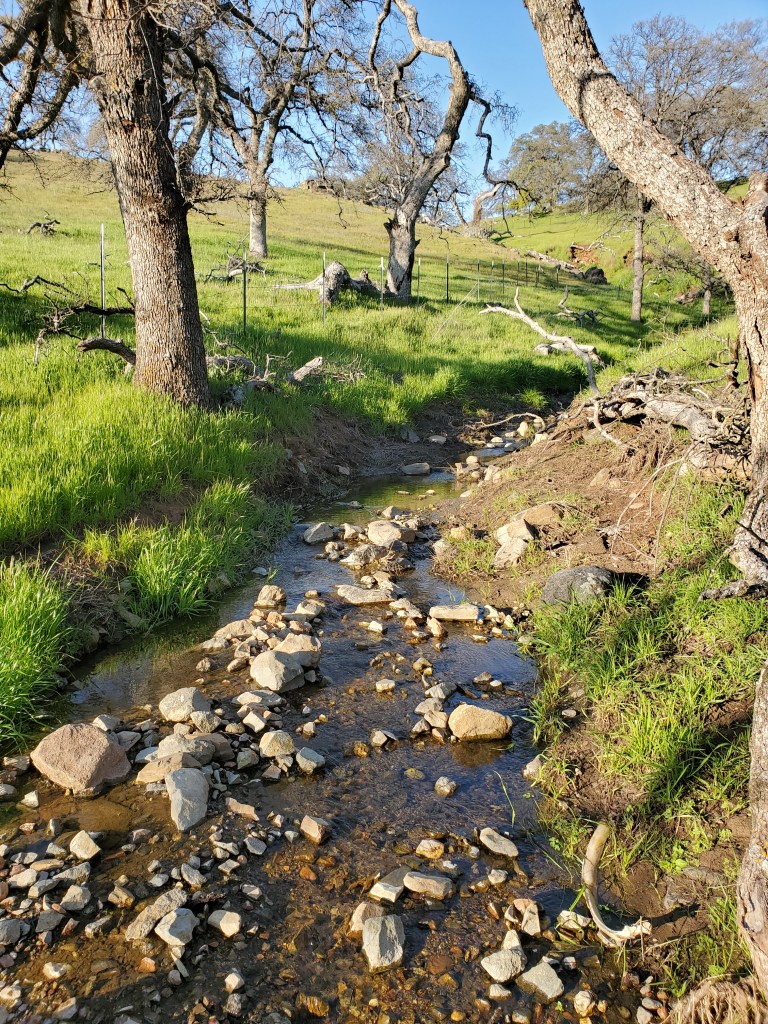
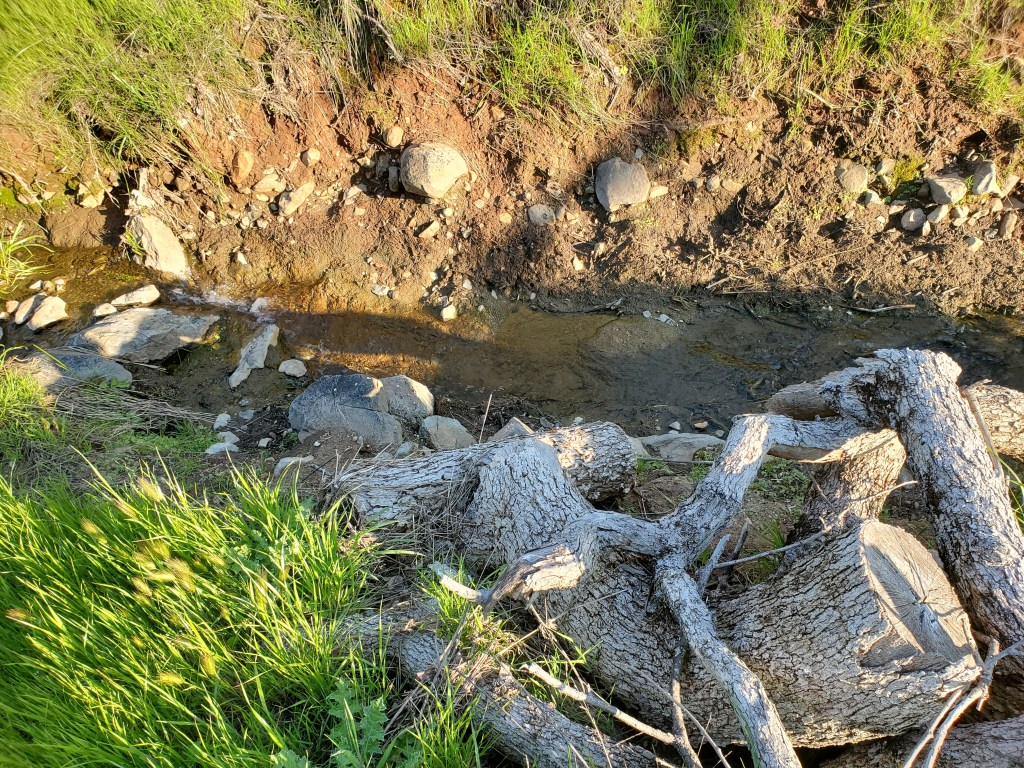
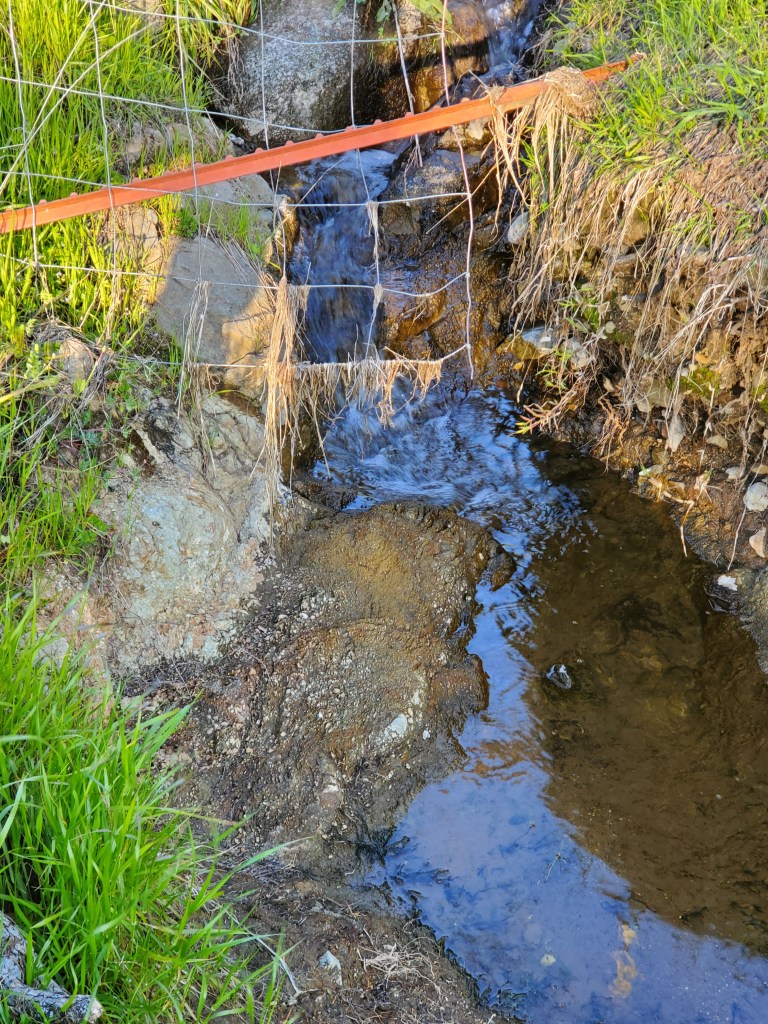
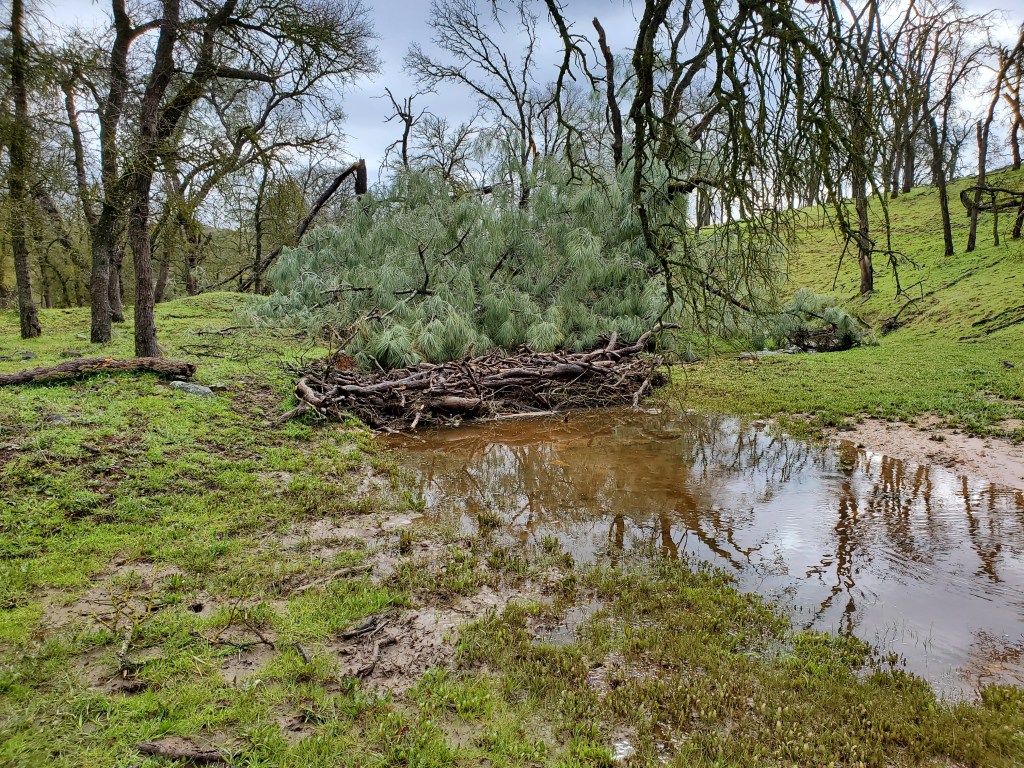
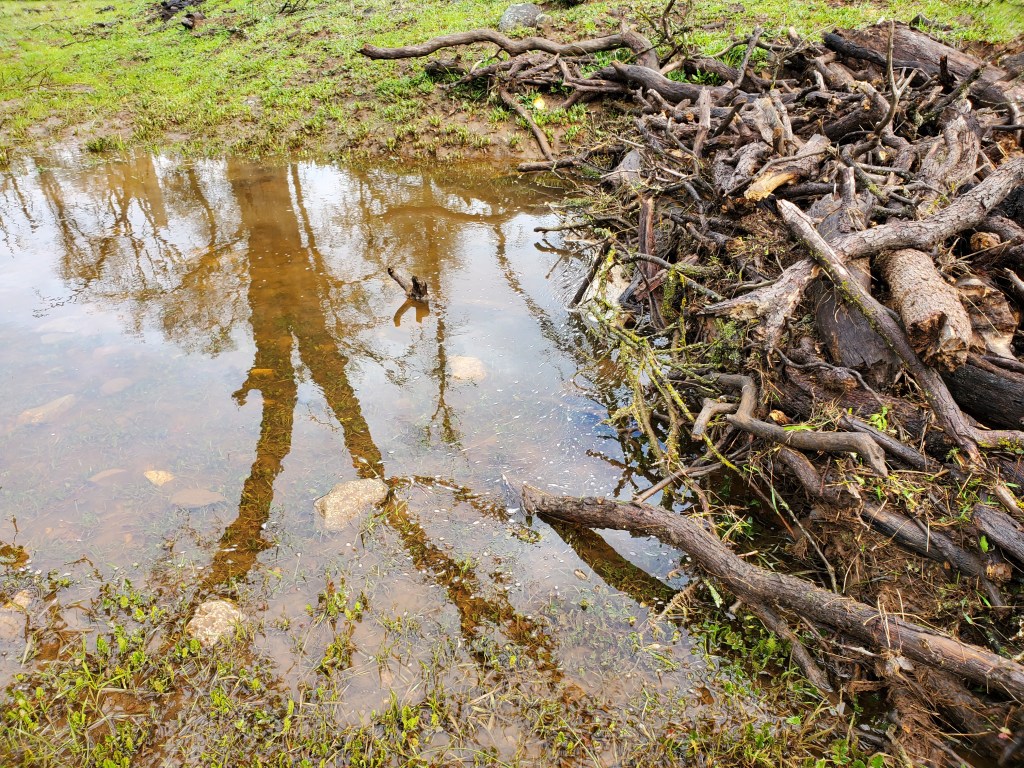
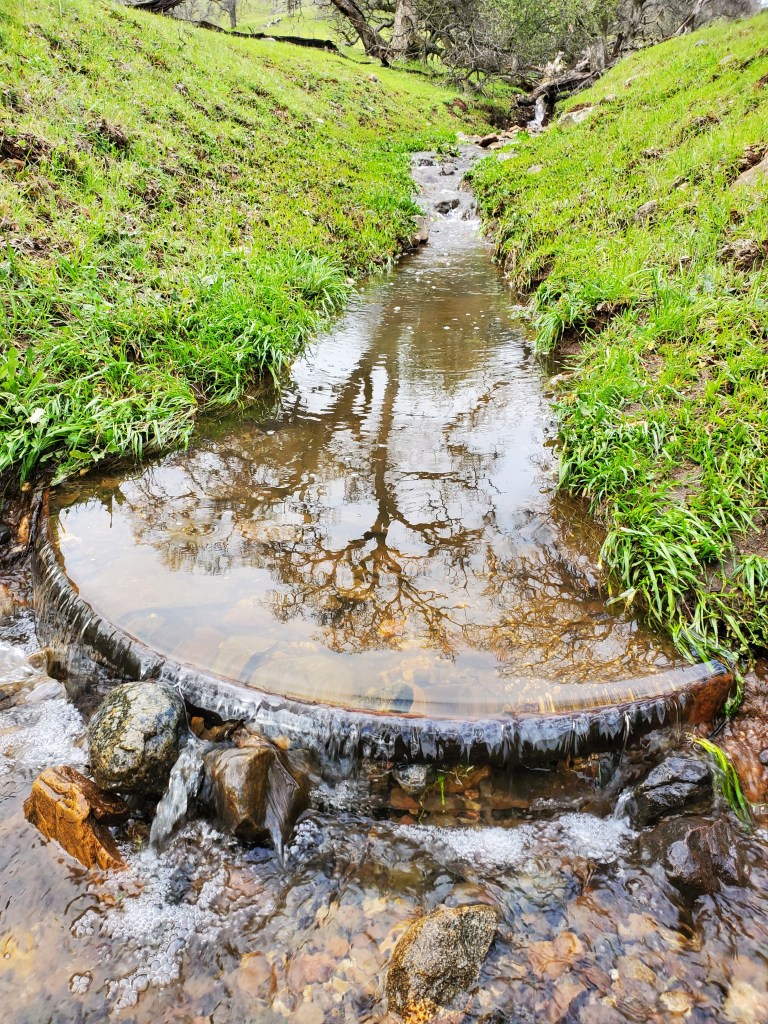
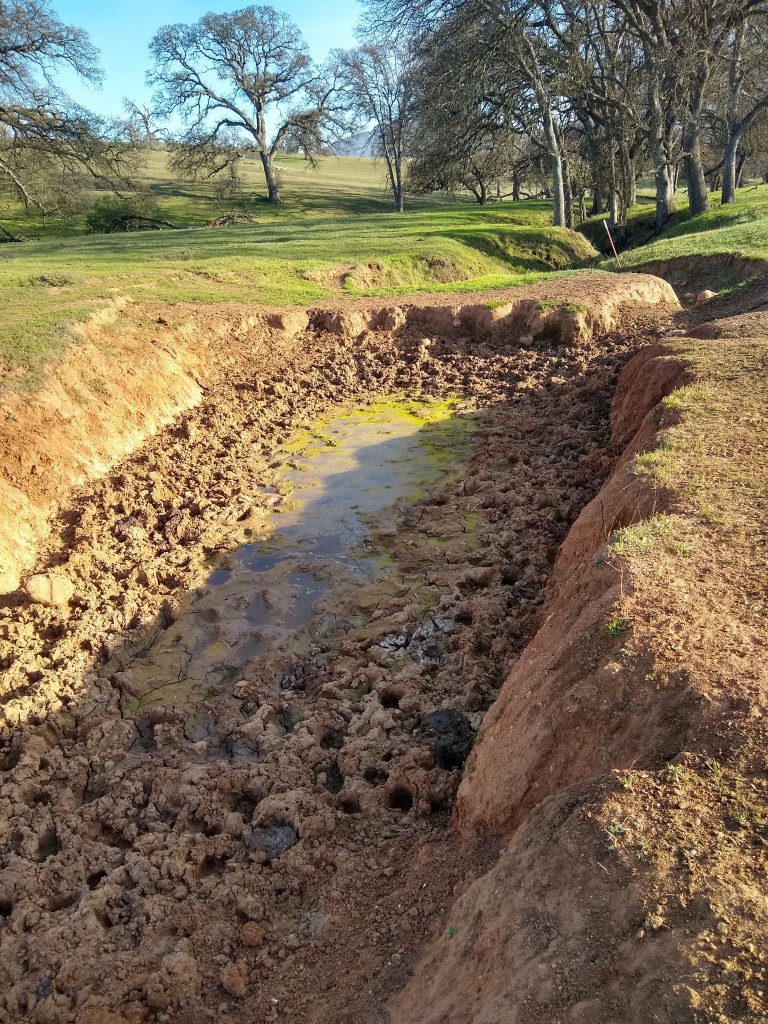
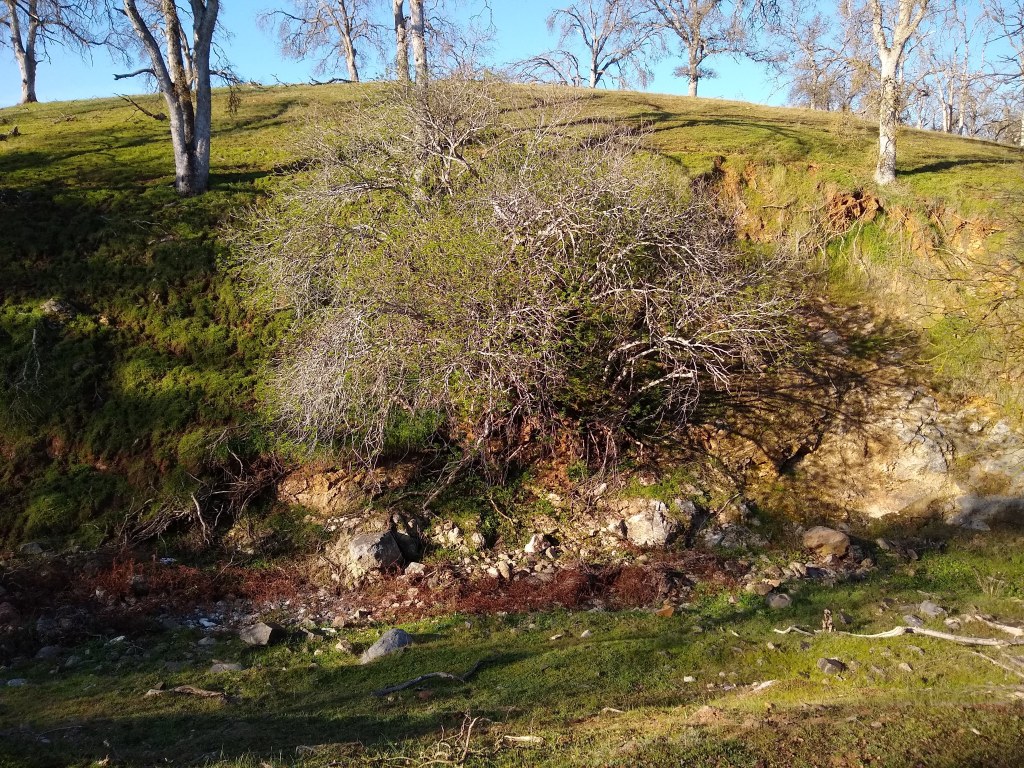
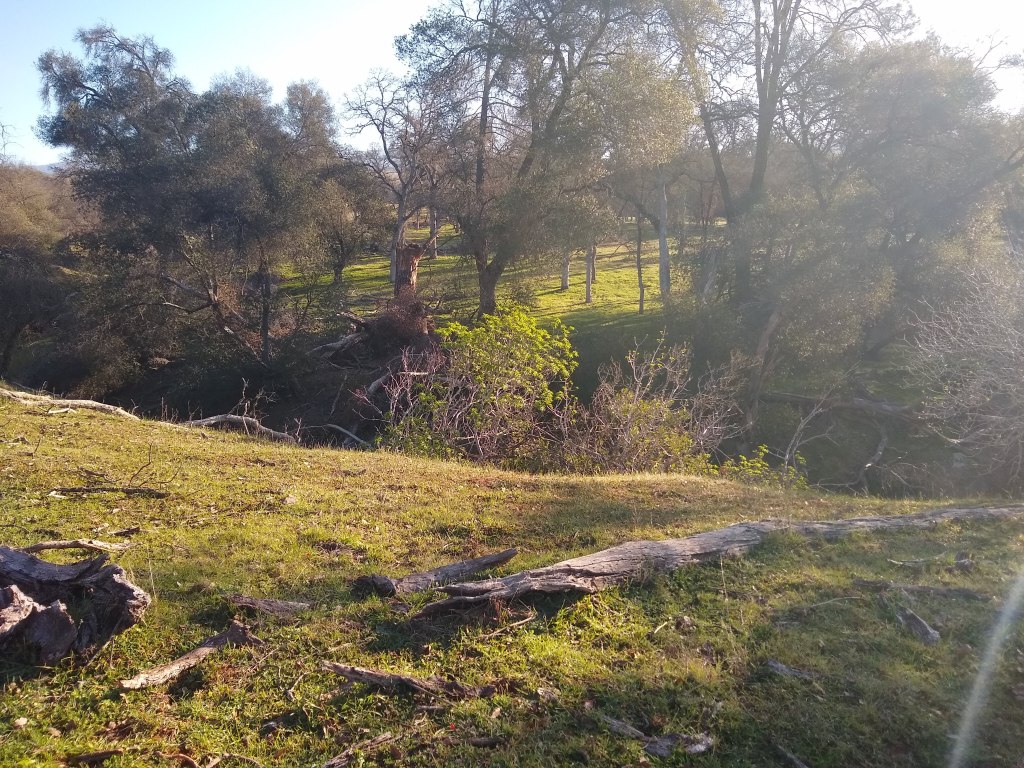
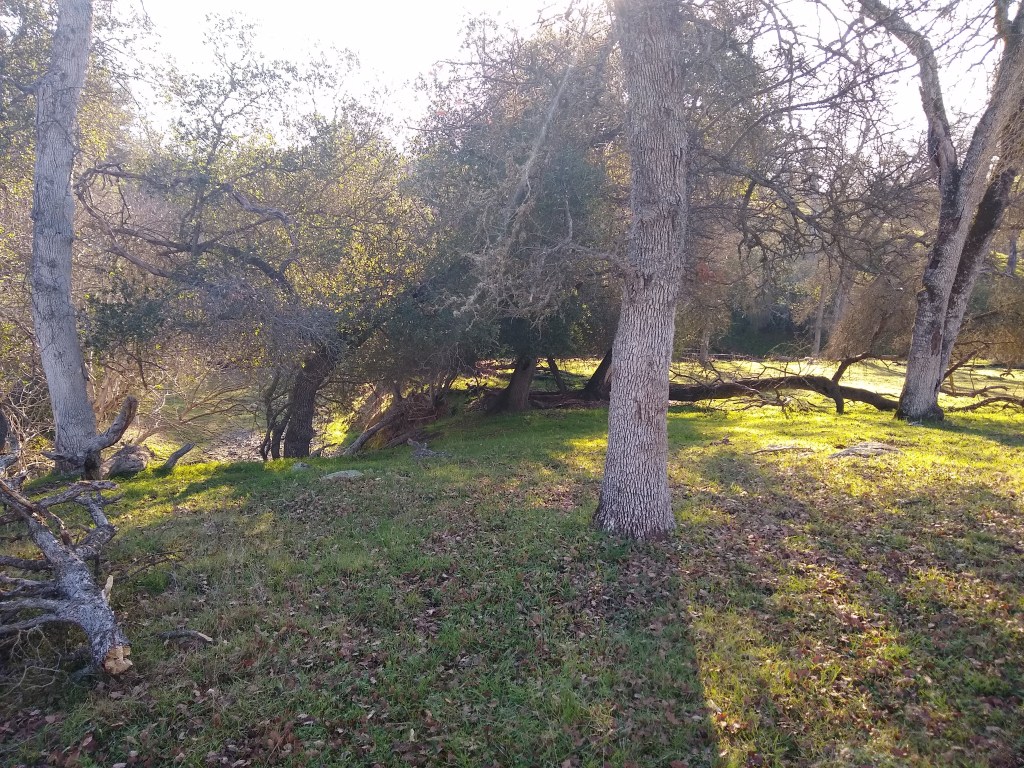
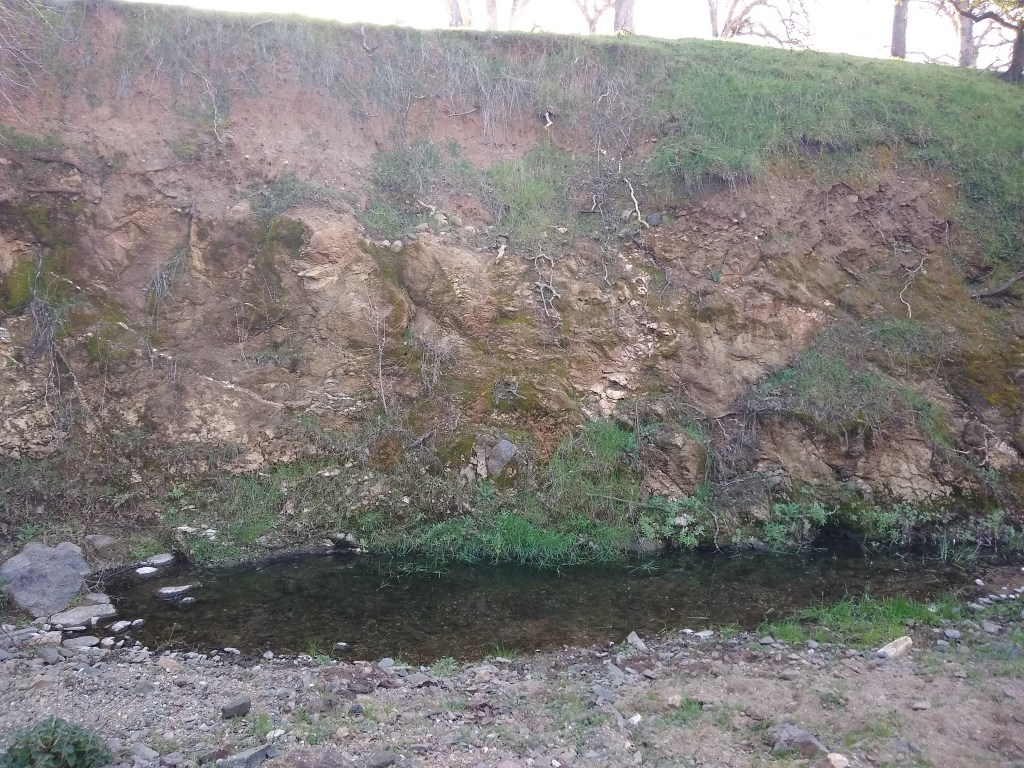
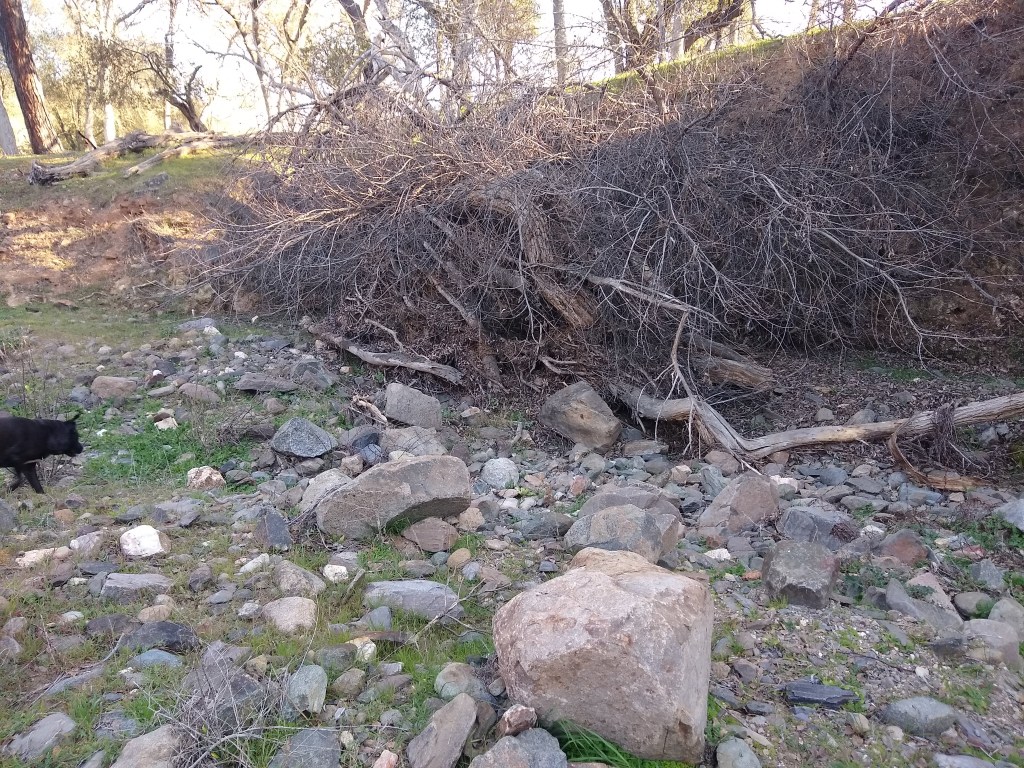
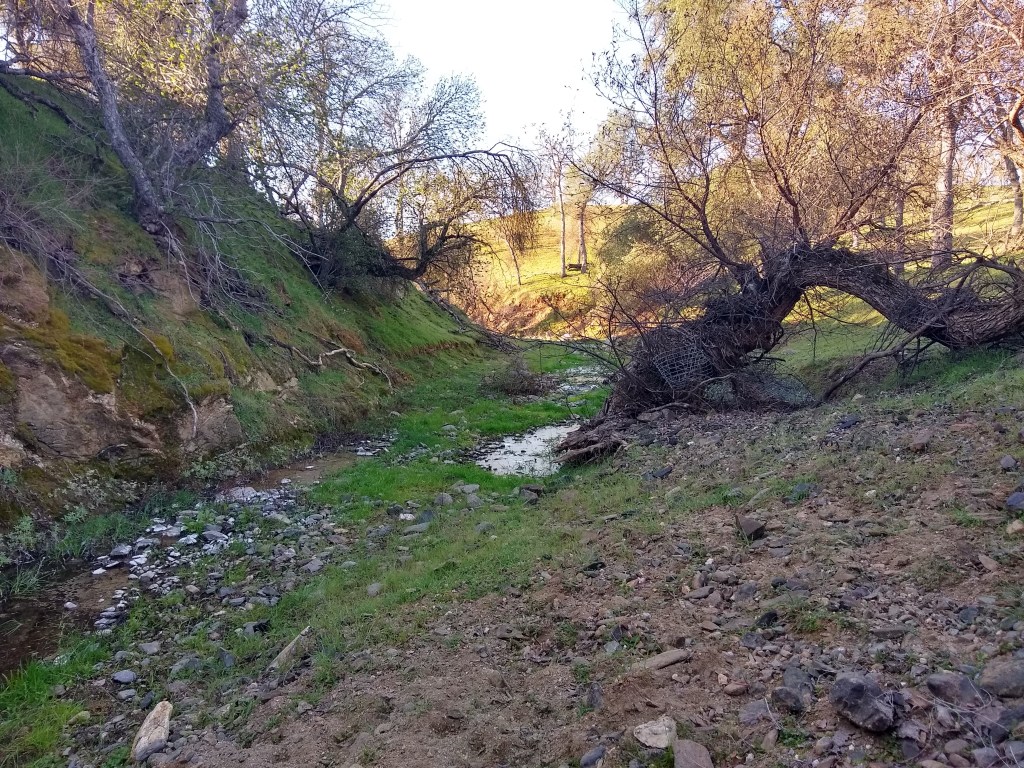
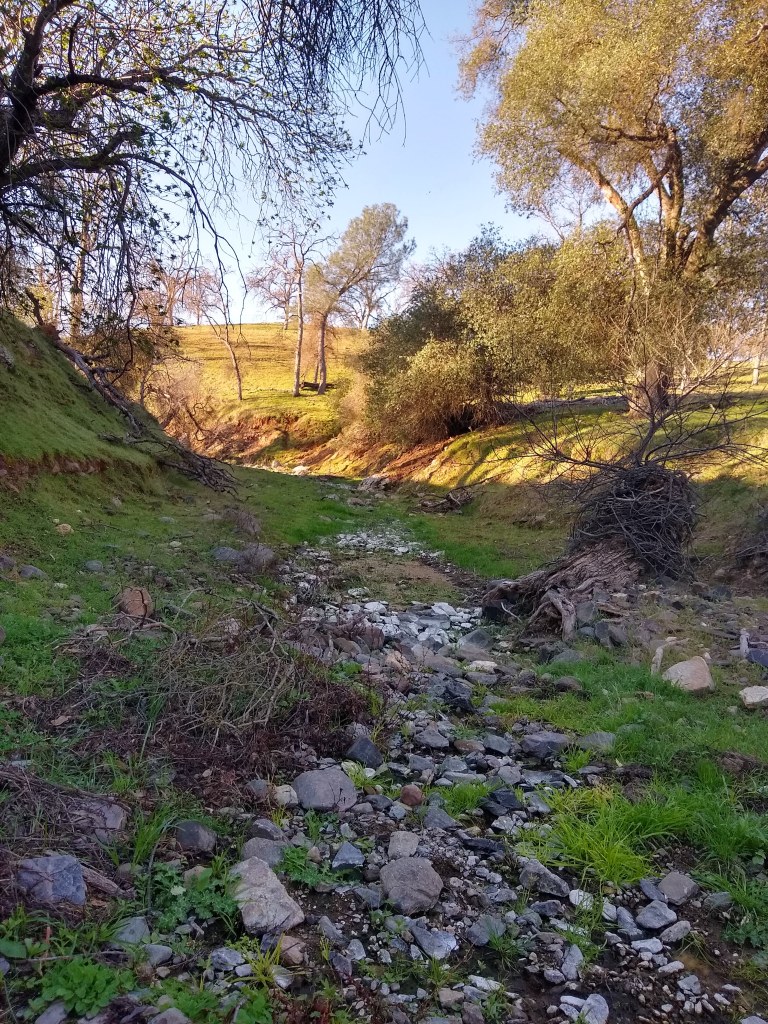
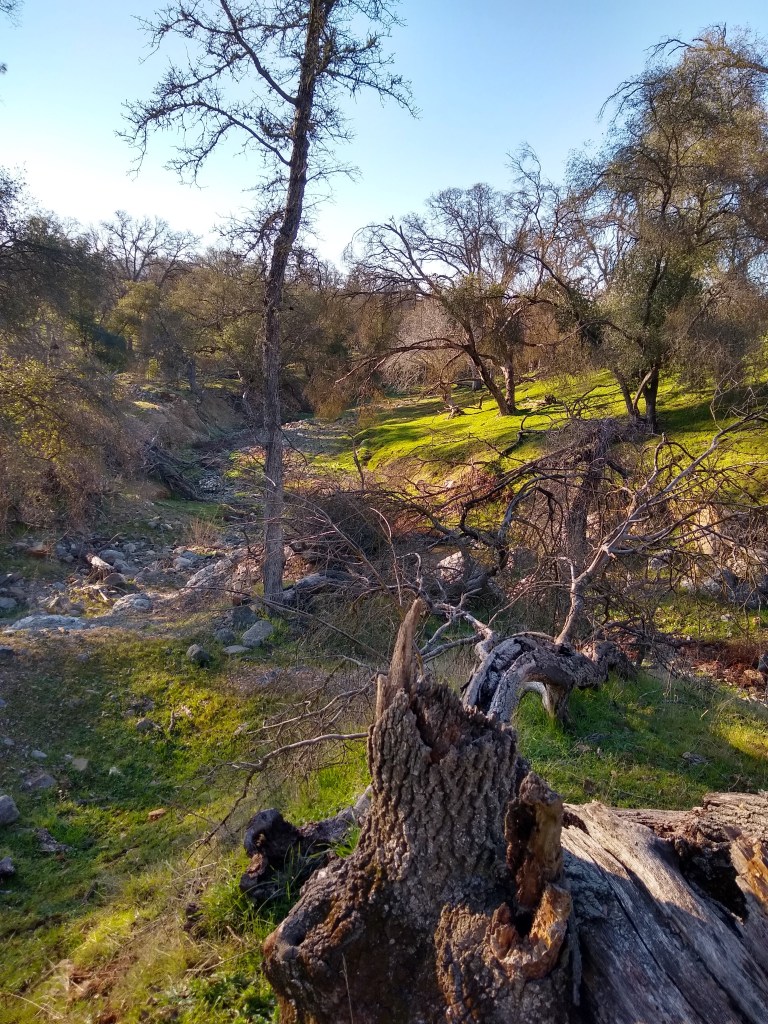
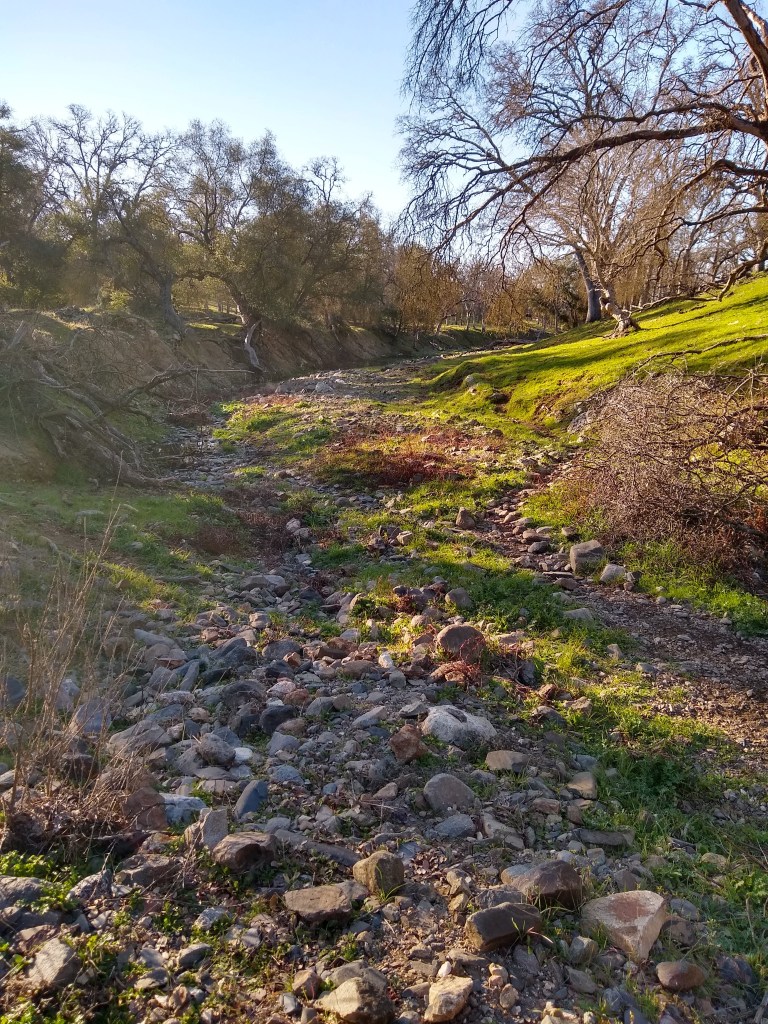
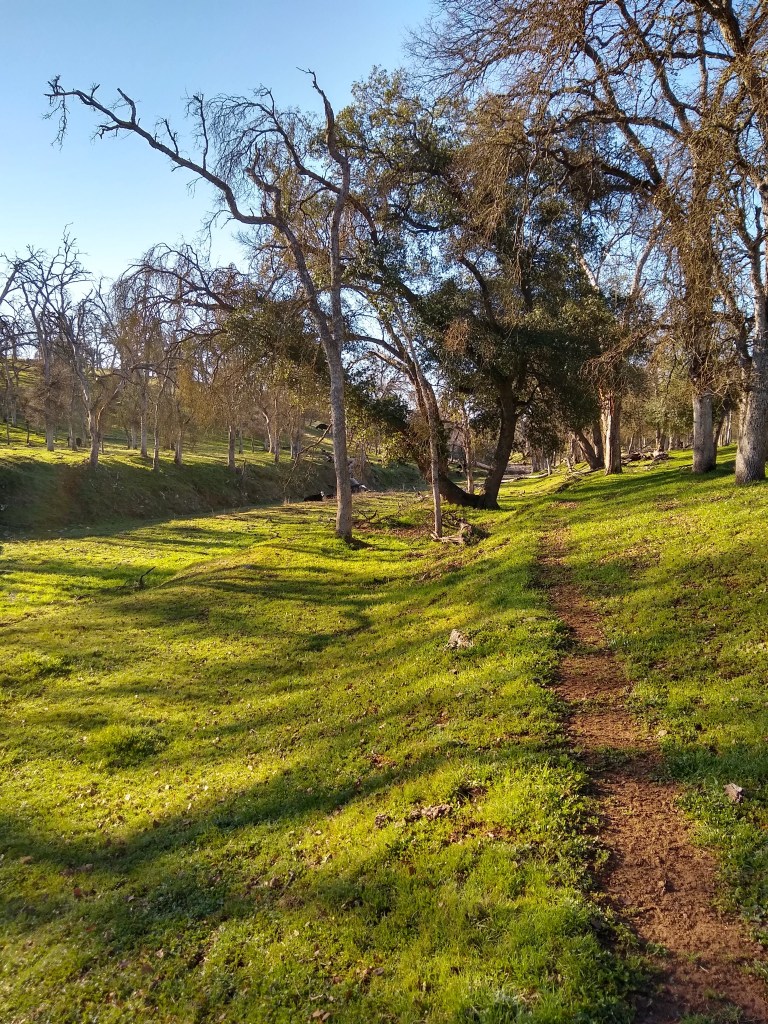
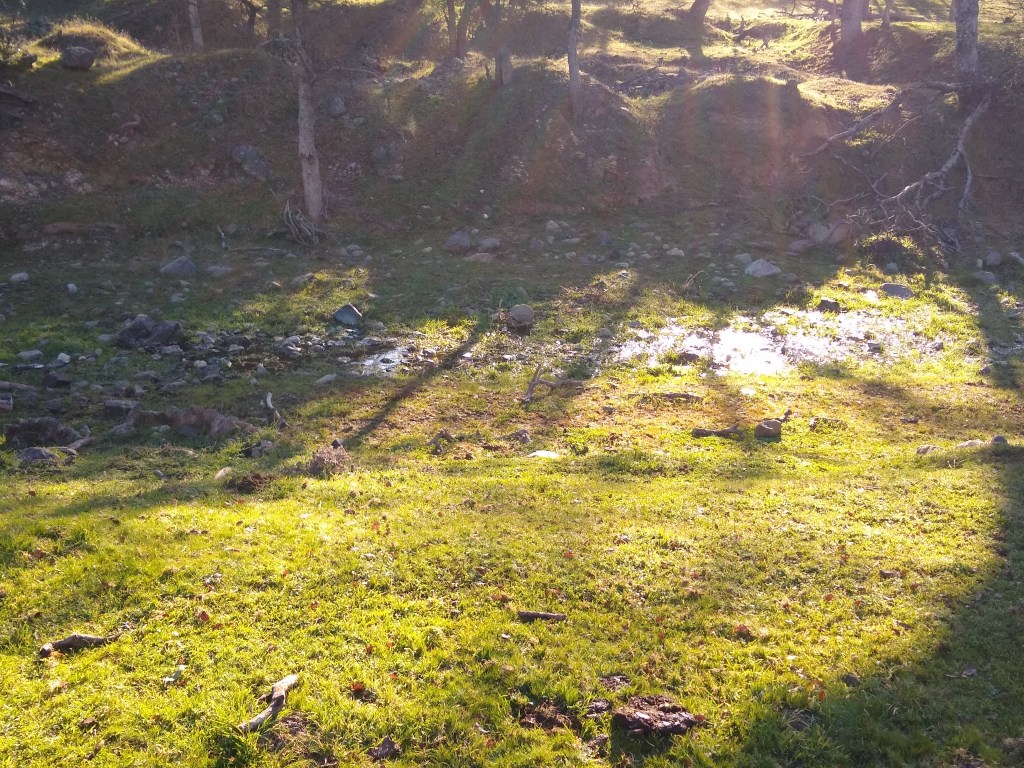
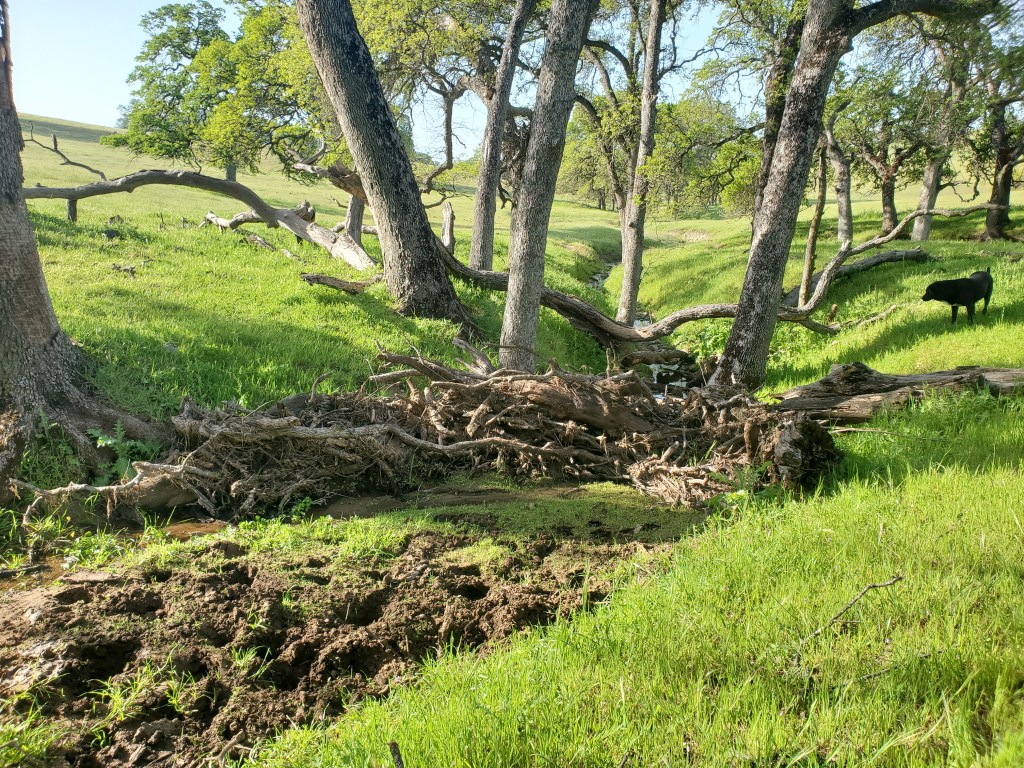
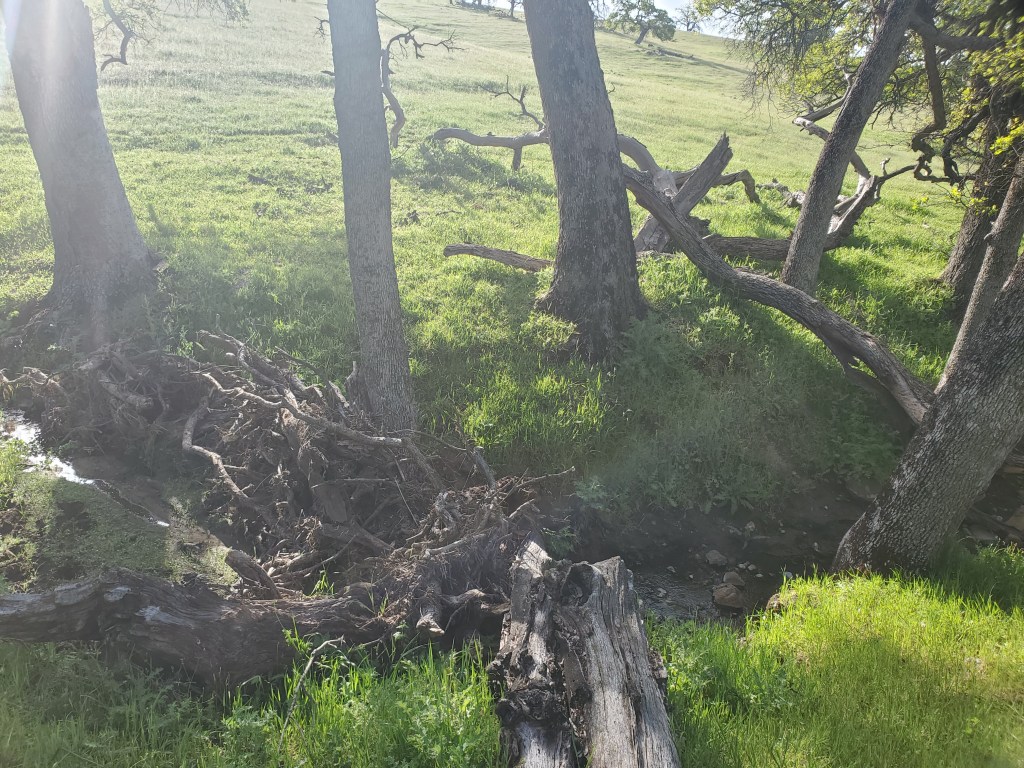
Nature gave me some help this year in building check dams. The photos below show one that nature built with wood that fell into the creek. Note the sediment upstream has accrued and is nearly at the height of the land, and note that downstream is still carved deeply. Holding the sediment back achieves a number of goals, 1) to increase water quality, 2) make the access to the creek more usable by wildlife, 3) build back wetland type soil, and 4) slow water runoff to retain it for flora, fauna and groundwater recharge.
Wanderings

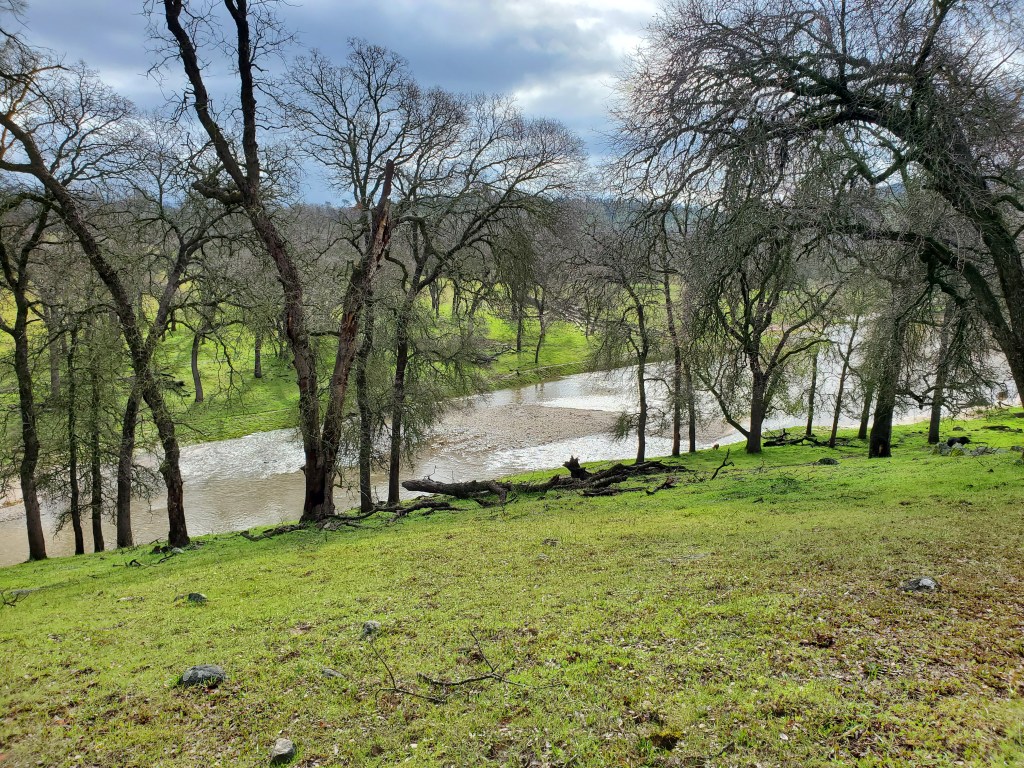
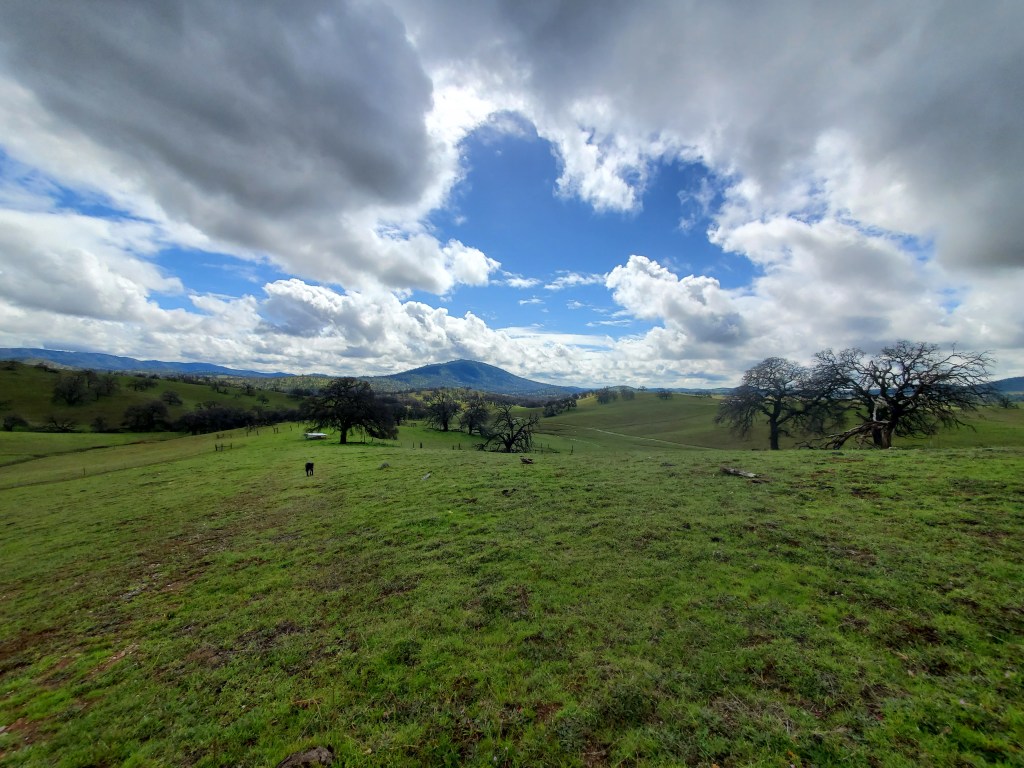
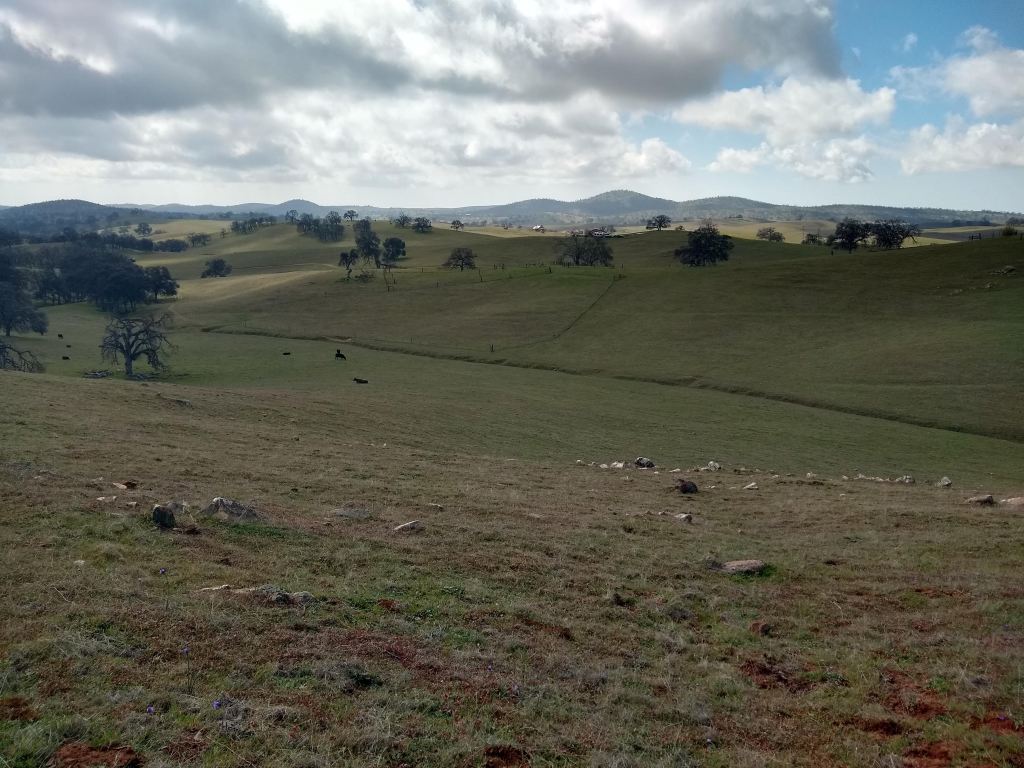
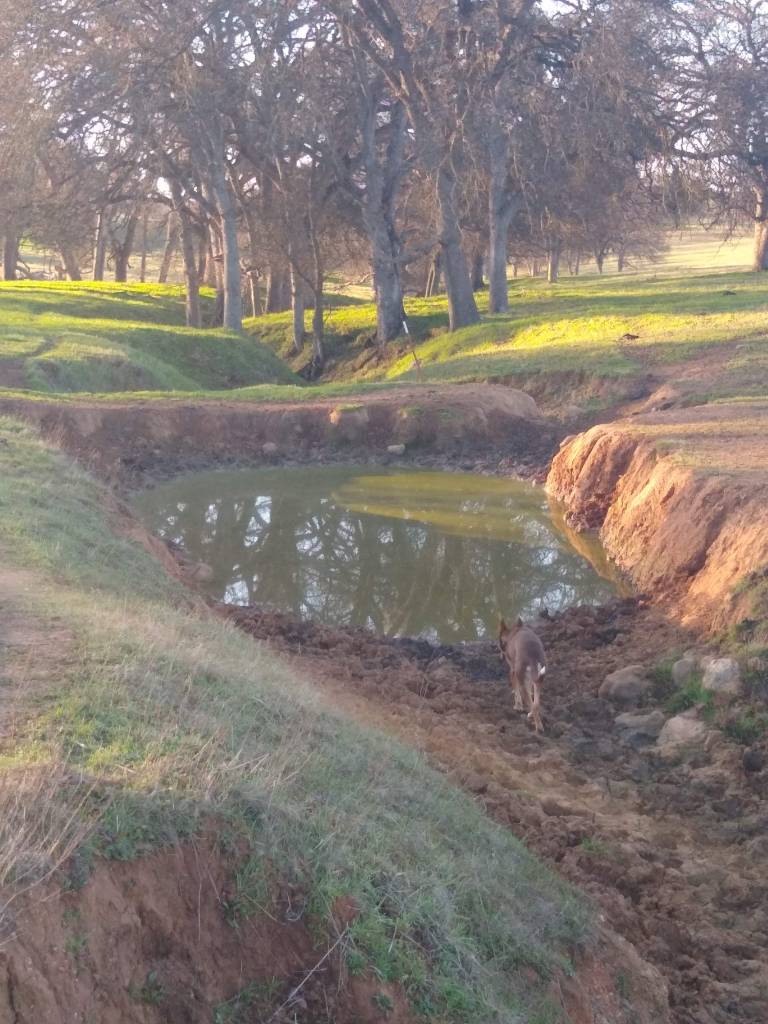
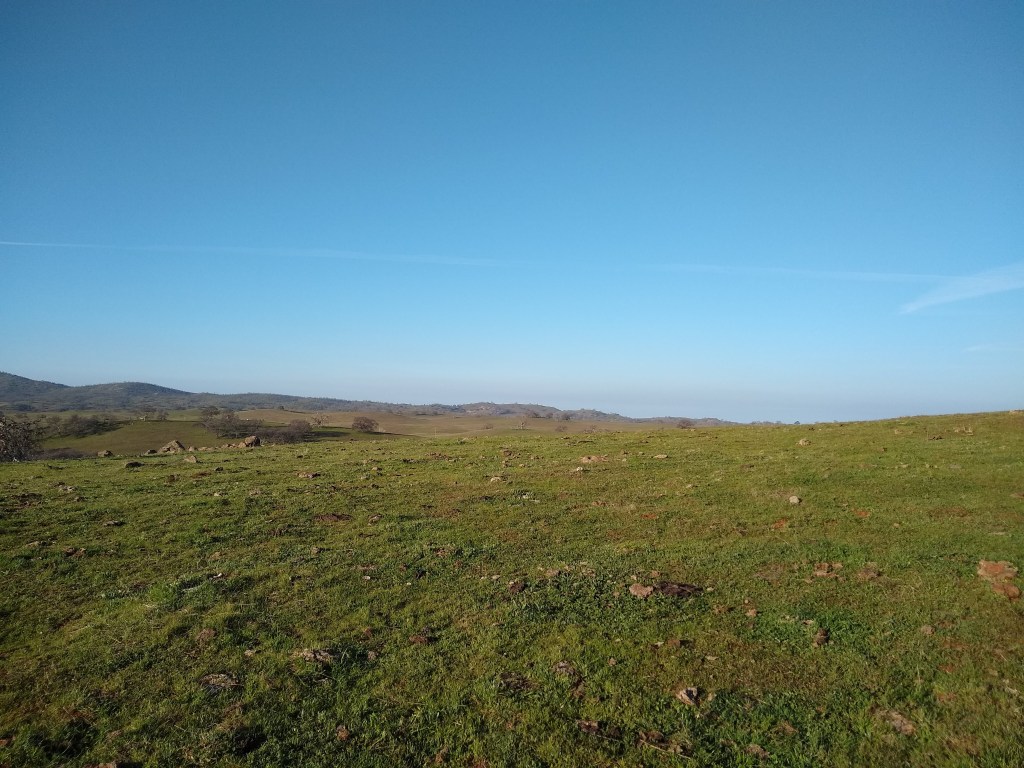
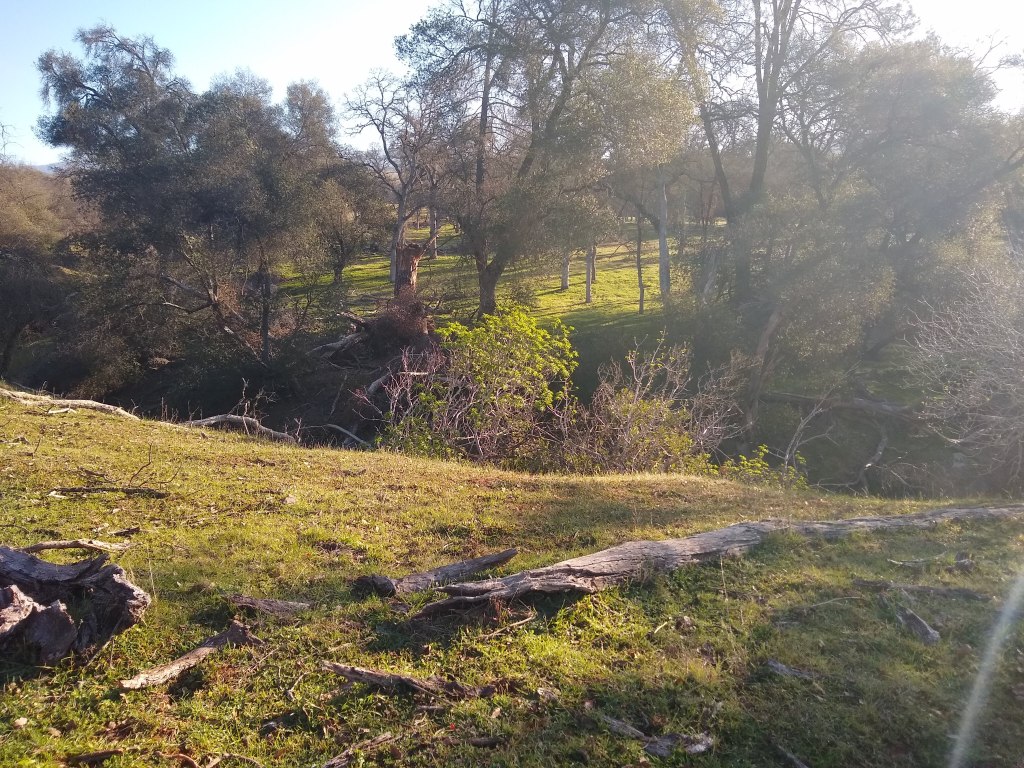
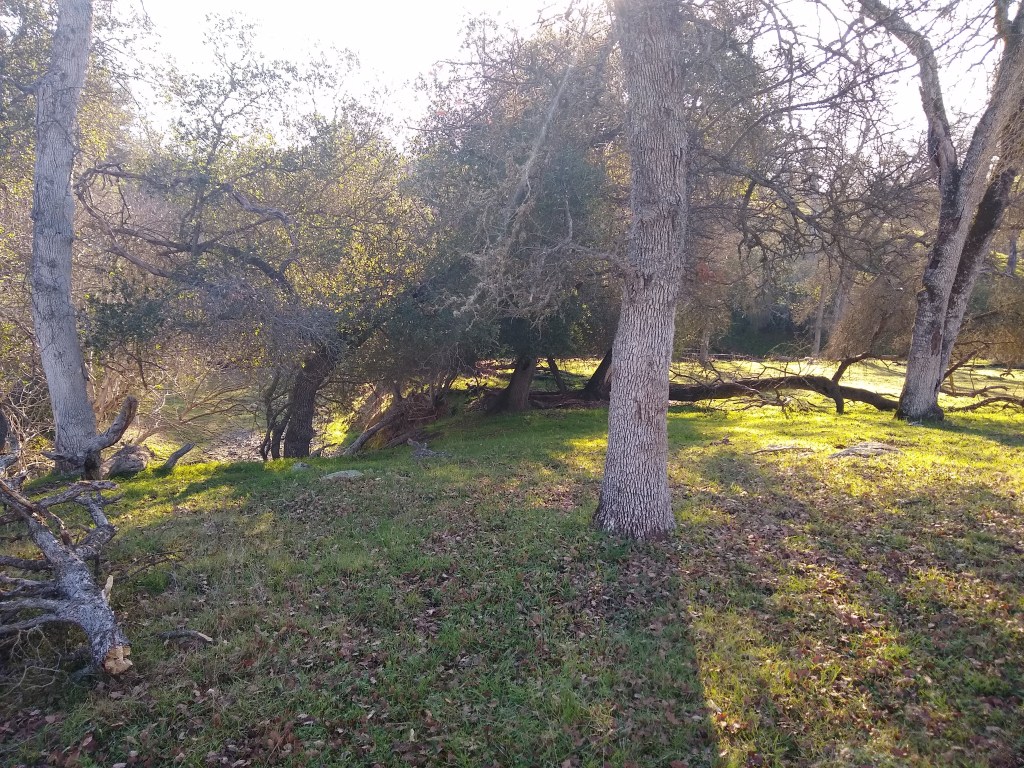
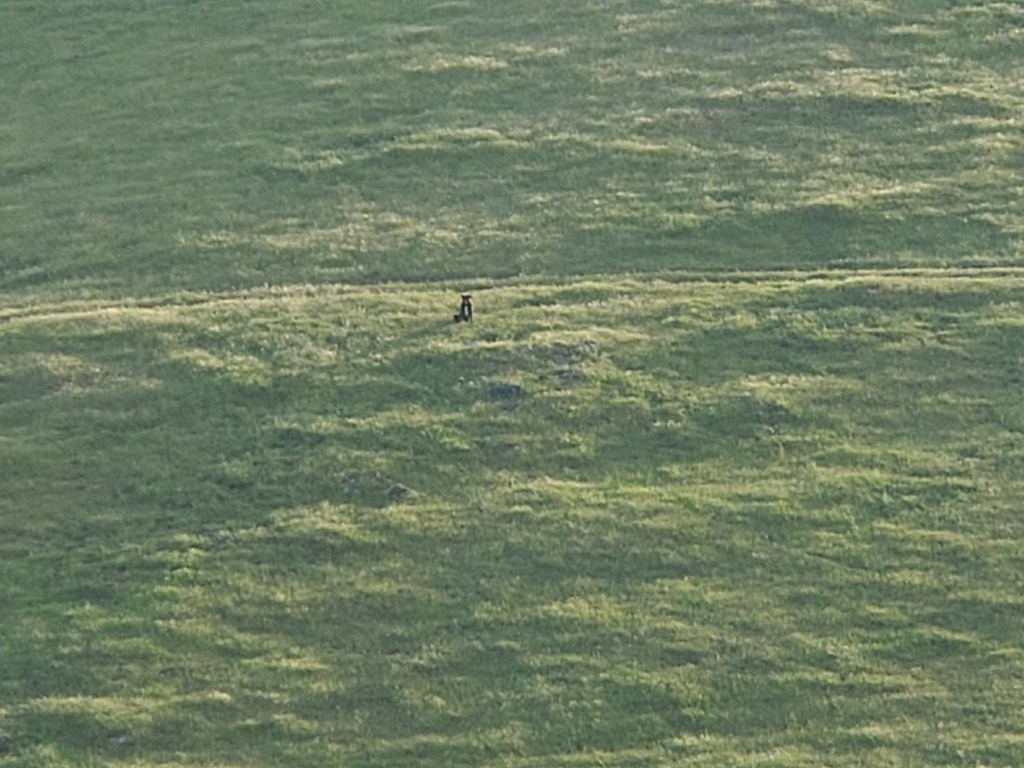
I left David weedeating around the monarch plots and went to check on the California milkweed sites. I love to walk, even on this cool, windy day, so I decided to walk further looking for more milkweed. One can only hope. While out, I found so many other beautiful things. We live on a remarkable planet. Love it. Cherish it. Protect it.

Habitat Not Just for Monarchs

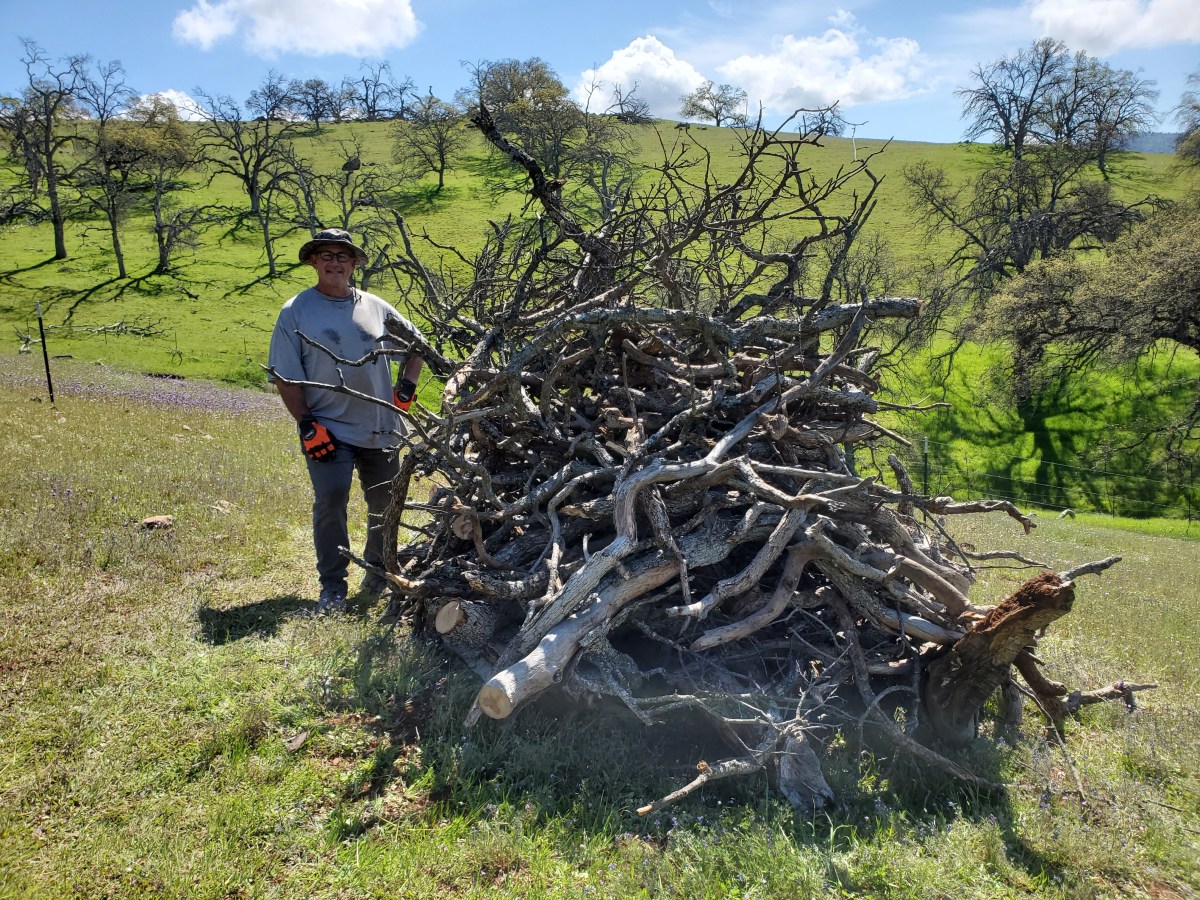
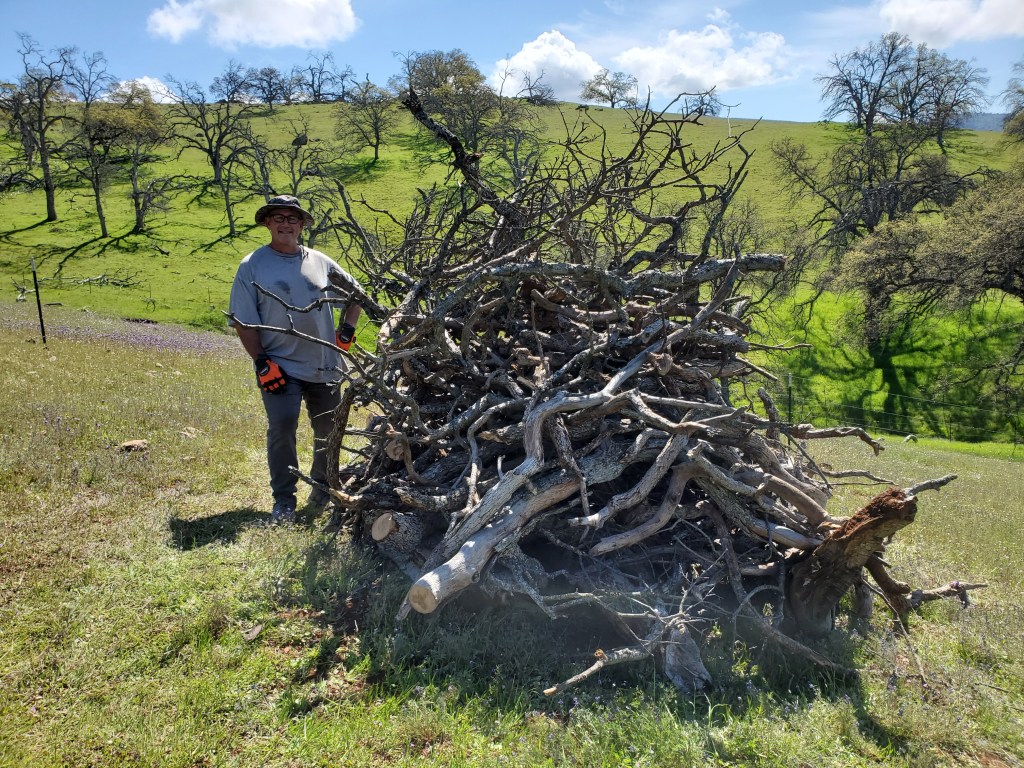
David stands next to a brush pile built to support birds and other creatures

There is no doubt that David loves me. Any person that would sweat for hours doing the back-straining work of building brush piles for their wife’s habitat project is running on more than calories. It has got to be love. Last weekend, David and I spent the morning hours of each day building brush piles. We work on habitat for more than just monarchs. Brush piles make a great home for birds, small mammals and other living things. Wildlife need all the help they can get in the changing world humans have made for them.

There are many resources online that can teach you how to build them and discuss in greater detail the benefits. Here is what we did:

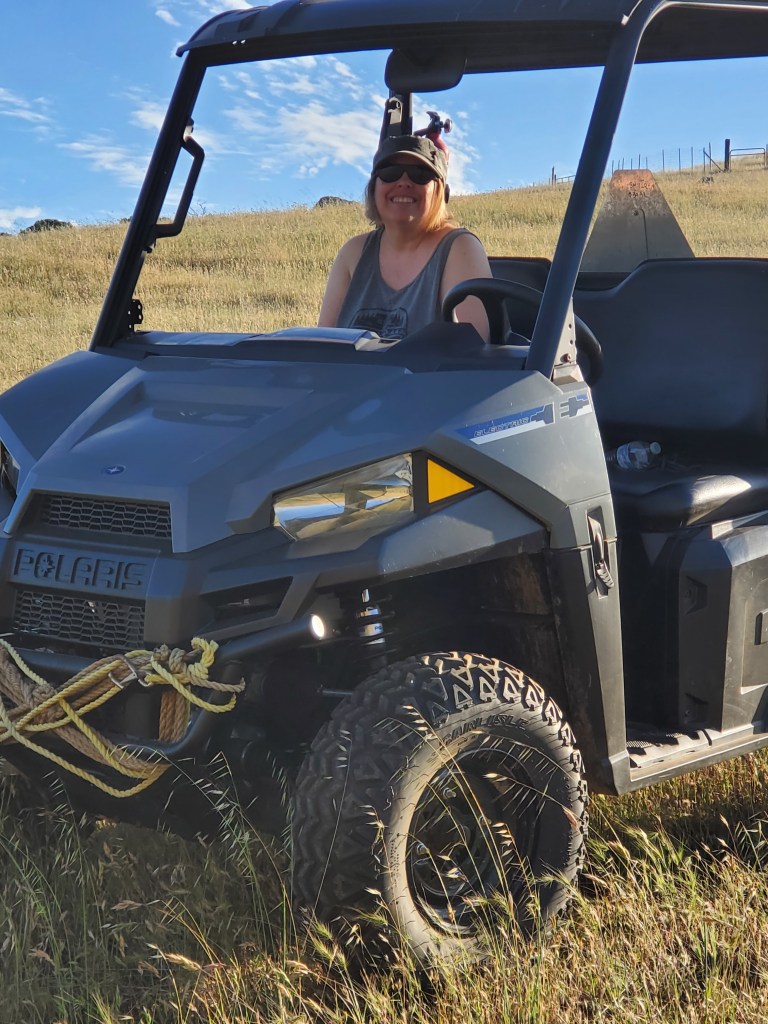
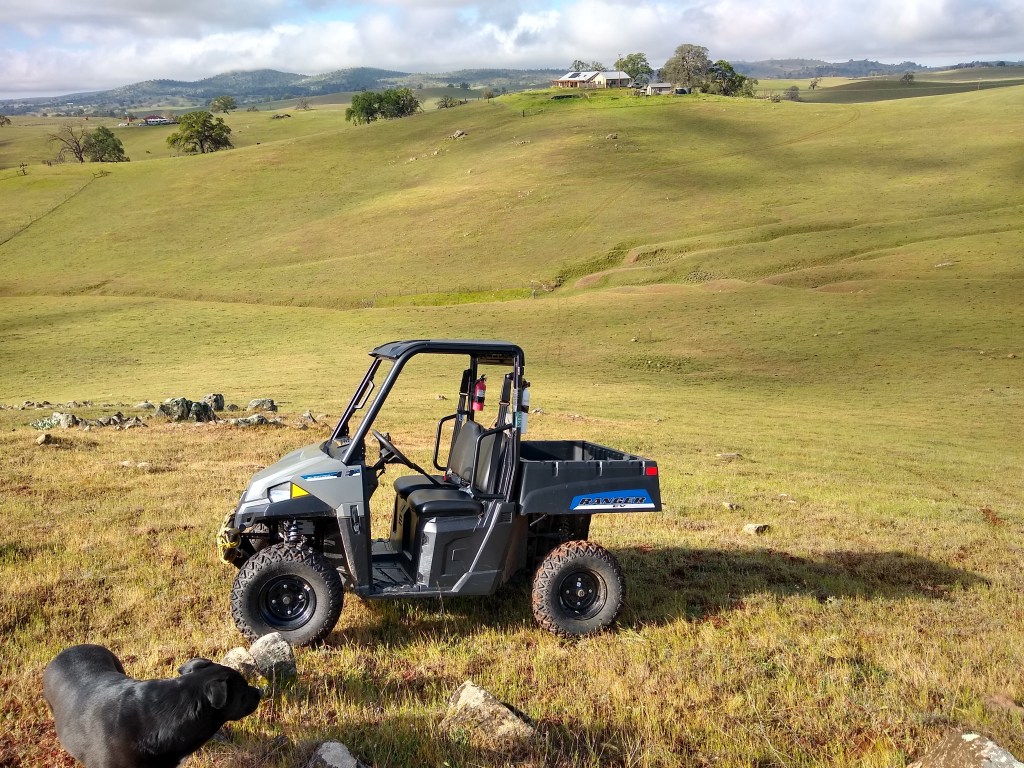
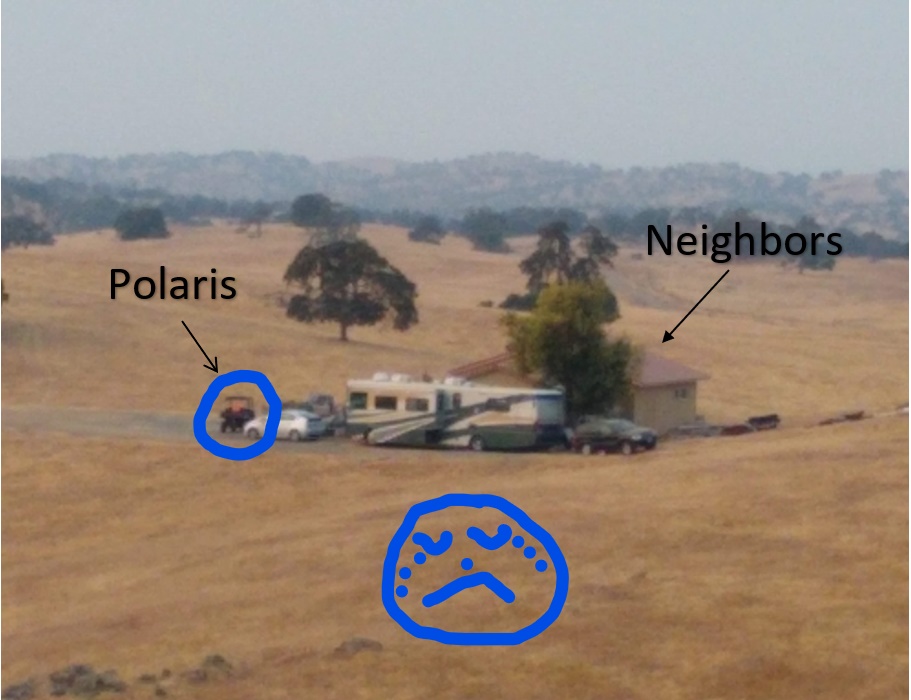
I will be adding some game cameras to see who moves into these structures. Even though David and I both tired quickly, we feel so grateful for the ability to help the wildlife that live with us. Each pile takes two and a half hours with a 10 minute water break to build. It is good to do this work now with the temperatures so cool. Thanks also again to our neighbors Ric and Kim who allow us use of their fully electric Polaris, which made the work much easier. We are mindful of native bees that could live in the downed wood. We tried to look for what could be bee holes and not cover them up. Generally they should be ok in the brush pile. Piles are meant to have many openings and not be compact.

Native Bees Still Need Time to Emerge

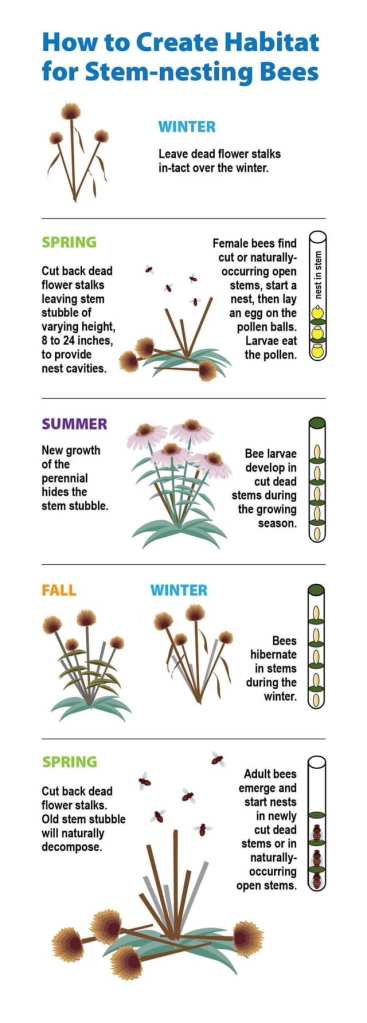
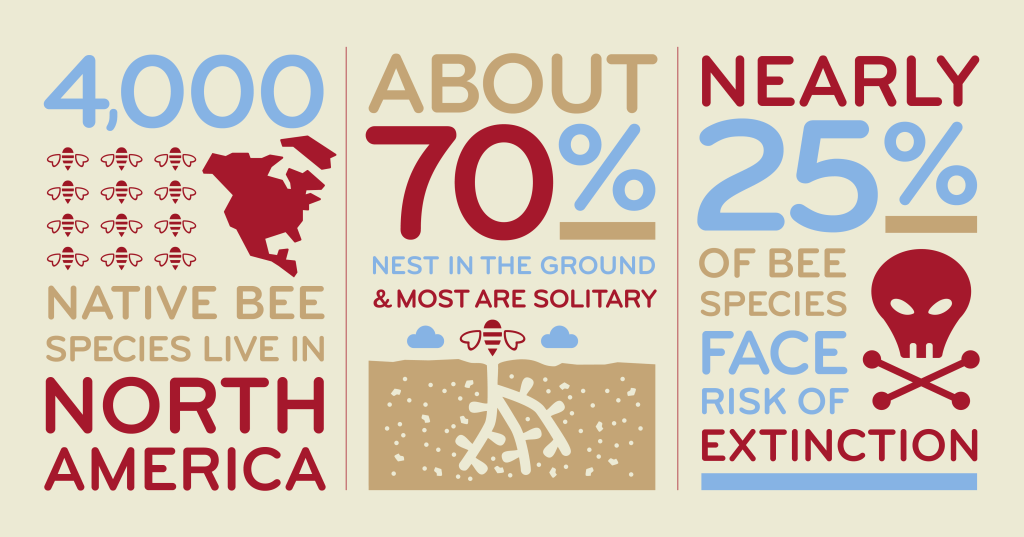
I am learning a great deal in my Pollinator Stewardship Certification program – particularly about bees. This is an area where I had many deficiencies in knowledge. Because of the cool temperatures, native bees are still developing in their cavities where they were laid last fall. It is important to delay winter clean up, like leaf raking, downed tree removal and pruning dried stems from perennials. I came across this fantastic infographic posted by my friend Ray on social media (with thanks to the creators from the Kanatsiohareke Mohawk Community):

Did you know that 30% of native bees nest in stems, leaf litter, downed branches and other above ground cavities? The other 70% nest below ground either in their own holes or in vacant gopher holes. Most are solitary nesters – in other words, no colony. The exception are bumble bees which live in below ground cavities in very small colonies. They are my favorites because they are so cute, fuzzy and colorful. You can learn more information about bumble bees from the Pollinator Partnership. Most native bees do not live long, especially the males. Females have more time so they can nectar, build their nest, create a large pollen ball and lay their eggs on it. The pollen ball is to give the growing bee baby enough food to fully develop before it emerges. There are 4,000 species of native bees. Check out this handy identification guide and see who is living in your yard, then you can see what you can do to make their environment even better for them to succeed.

Storms Remove Sediment and Plants

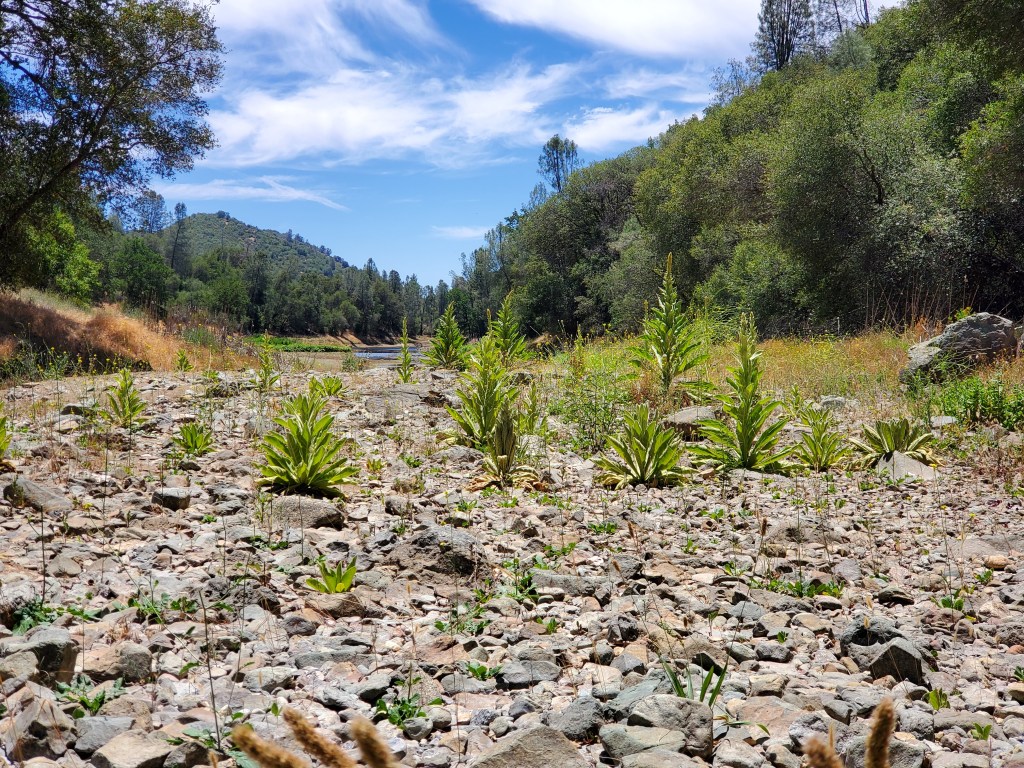
The high and fast water flow has deepened water channels and widened creek beds. This has exposed much rock and may have taken many of the plants I painstakingly planted over the years in the several sections of Spring Creek. All I can hope is that they are able to get a foothold down stream and establish new life there.

California Milkweed Continues to Emerge

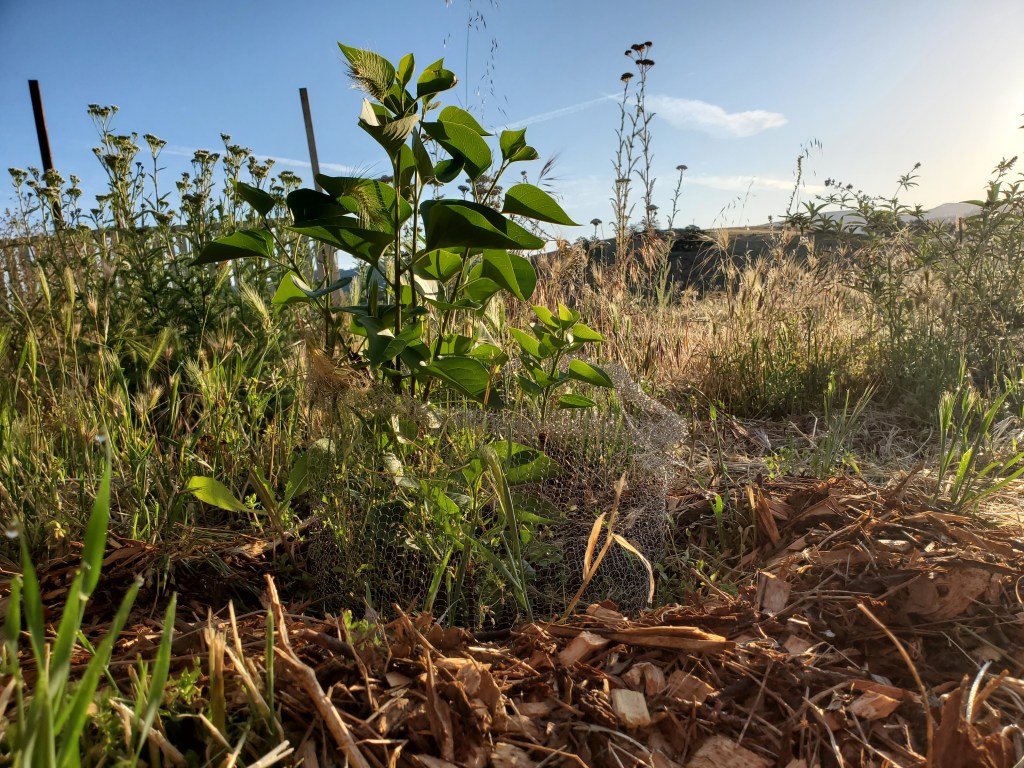
We are up to seven individuals now! Hoping to break 30 this year as I carefully monitor, graze around and spread seed each year.

Tending to Xerces Plant Plots

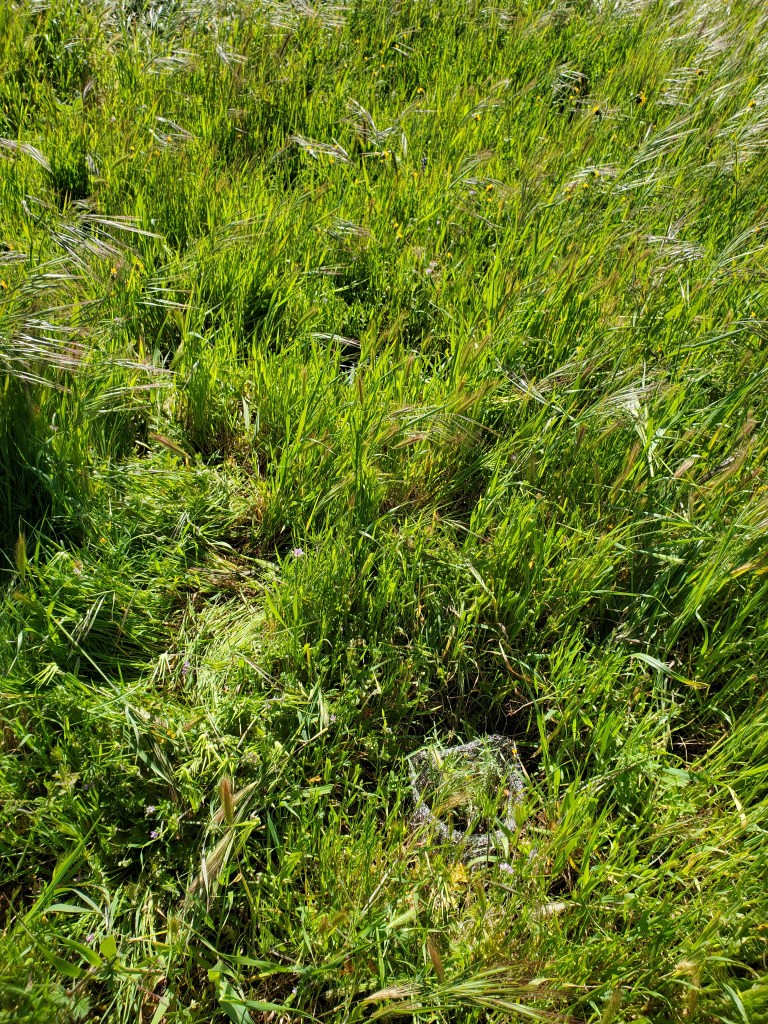
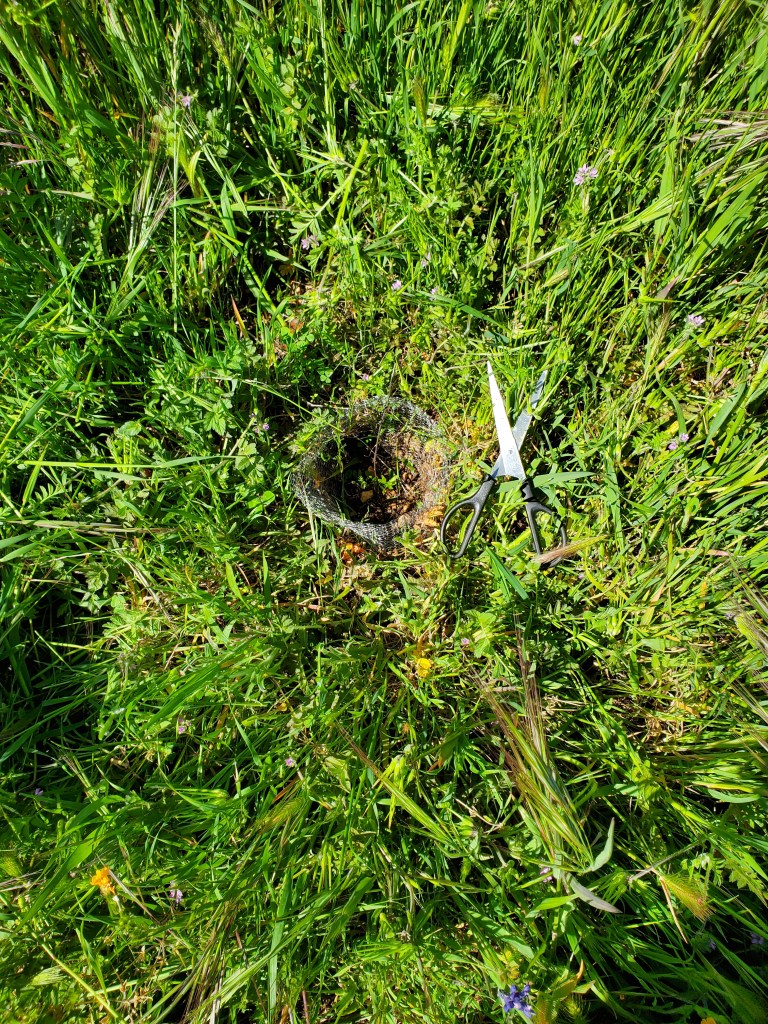
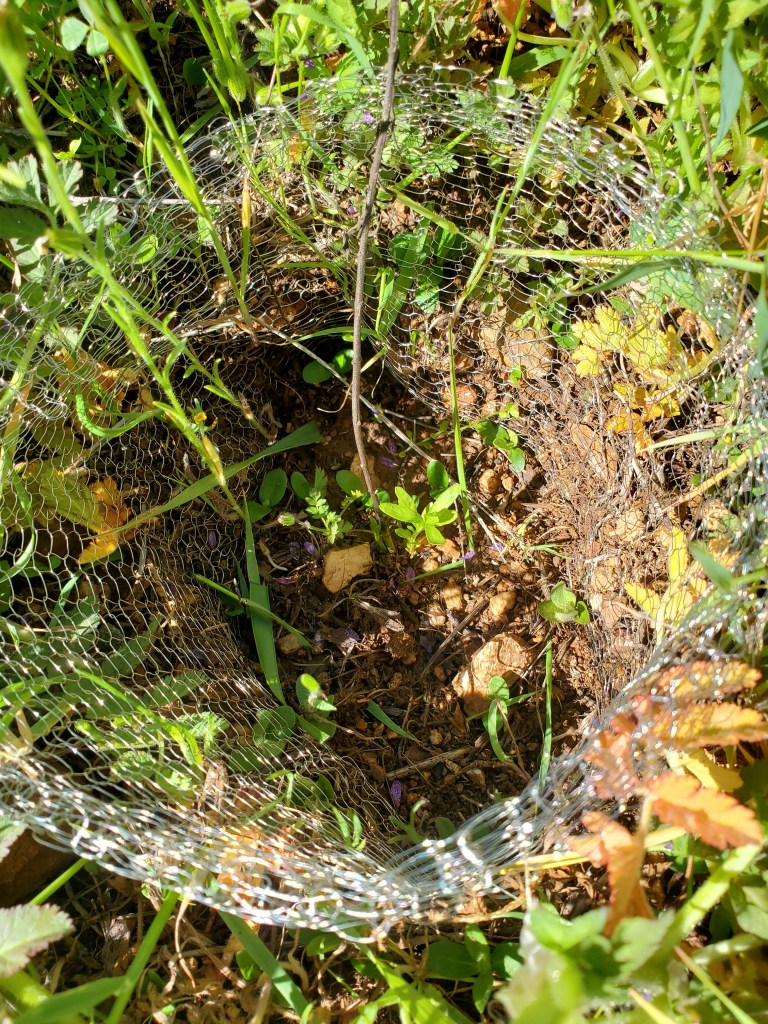
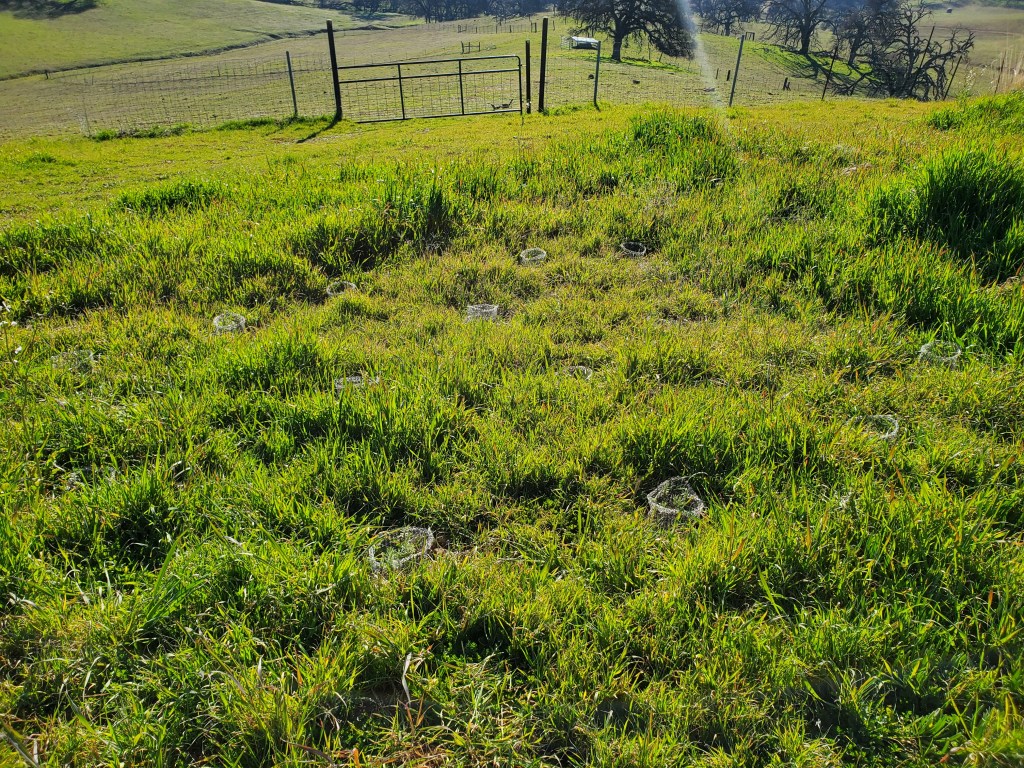
Remarkably, 100% of the Xerces plants I planted last November and December are doing extremely well. This past week I have been carefully trimming the grass around each plant to give them a chance at some sunlight and growth. Ok, don’t think I am crazy, but I am cutting the grass with scissors. It allows for greater precision and eliminates the chance I will cut into my plants accidentally in the thicket of grass. The grass grew rapidly as soon as we had a few days of sun and increased temperature obscuring some of the plants. I am carefully trimming the grass instead of pulling it to give any cavity nesting native bees a chance to emerge. This year was cold and cold longer into spring than other years. Like the milkweed, native bees need the soil temps and air to be warmer before they emerge.

Wildflowers and Wanderings

California Milkweed Emerges: Freakout Mode -> Engaged!

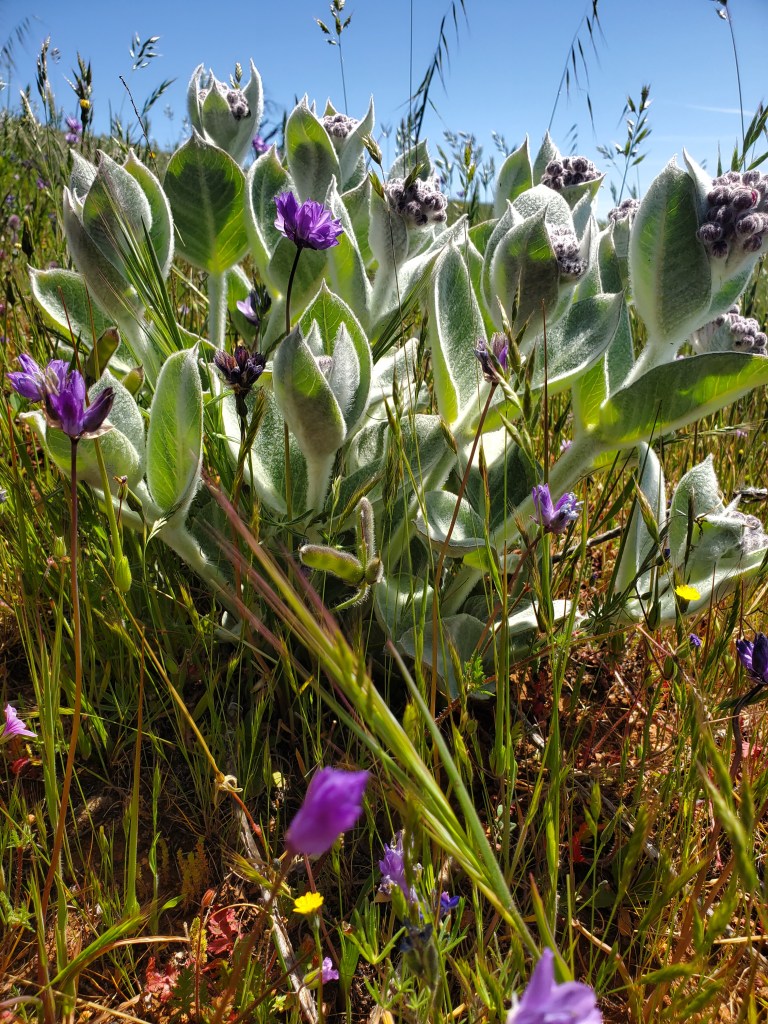
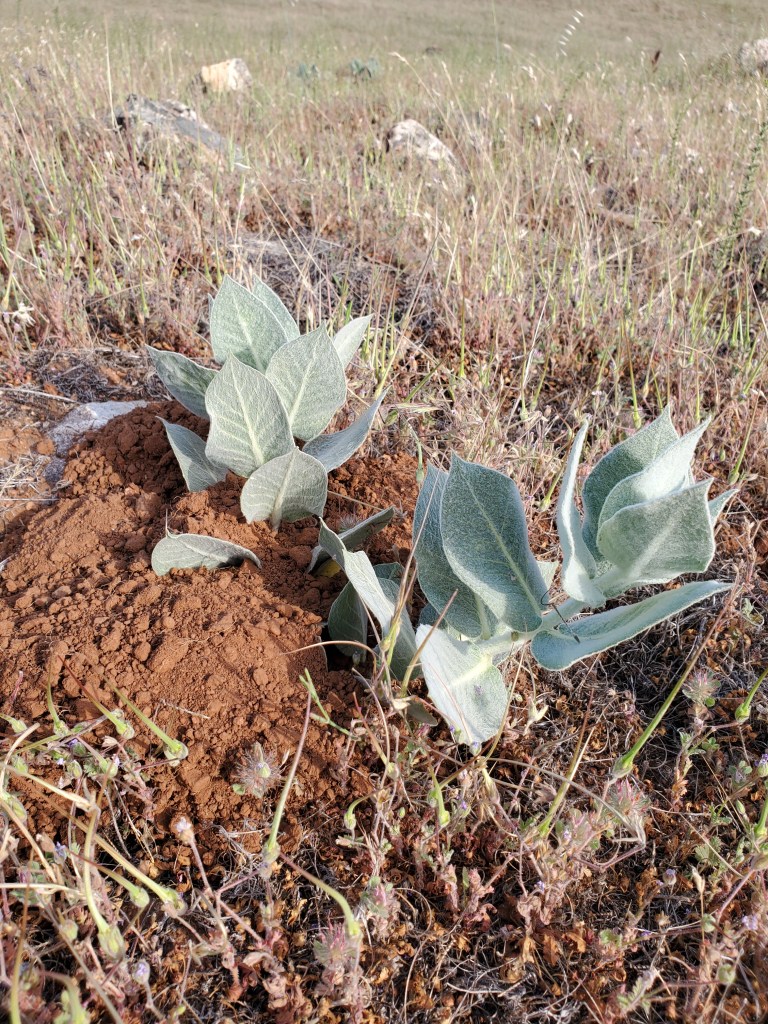
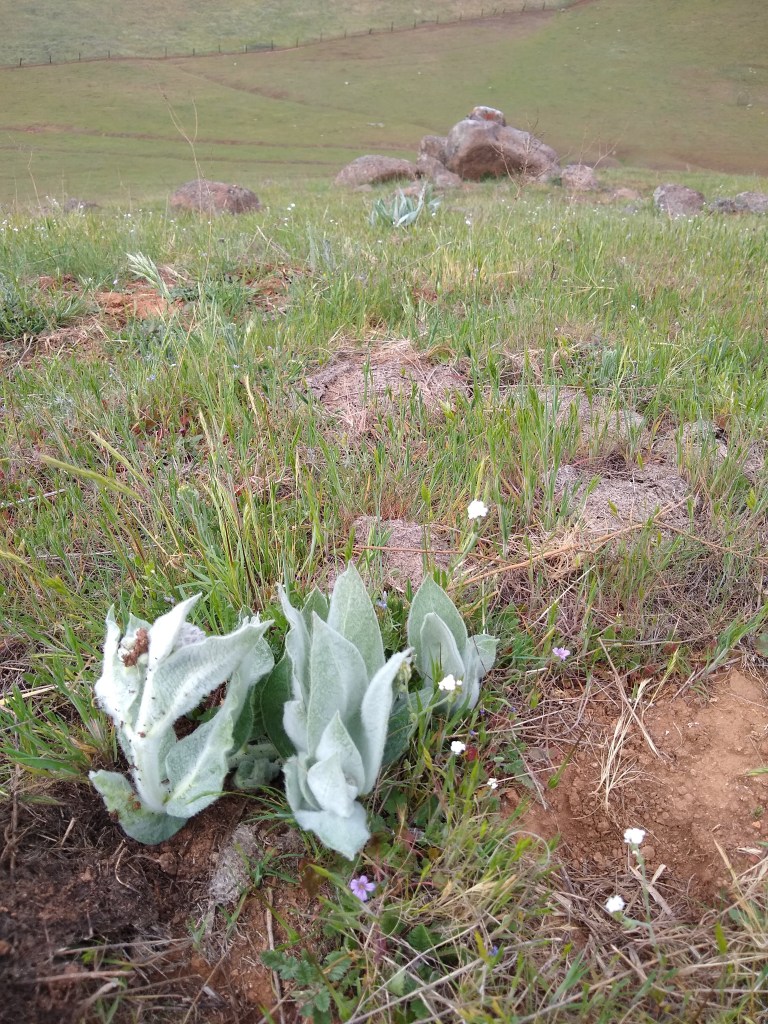
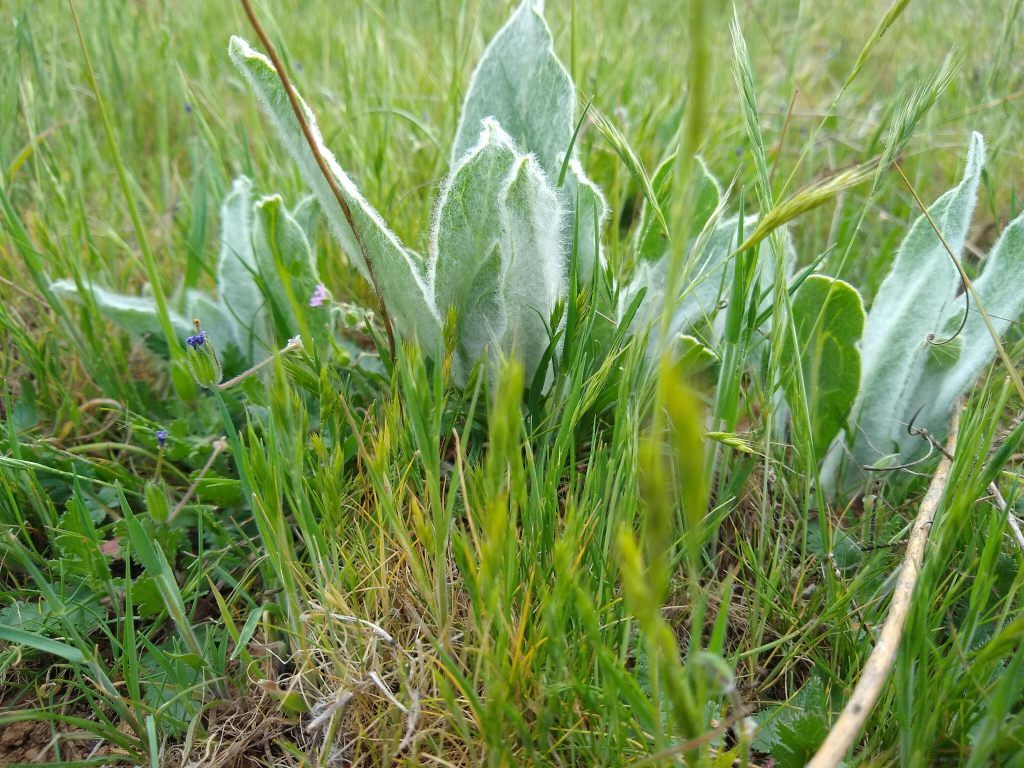
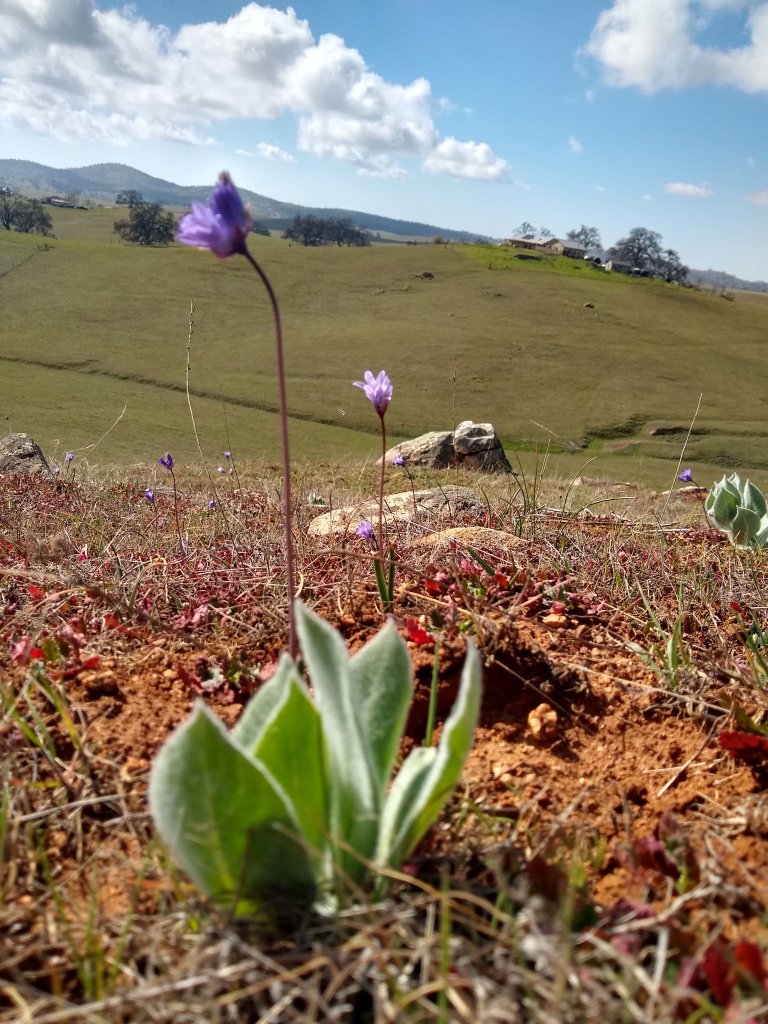
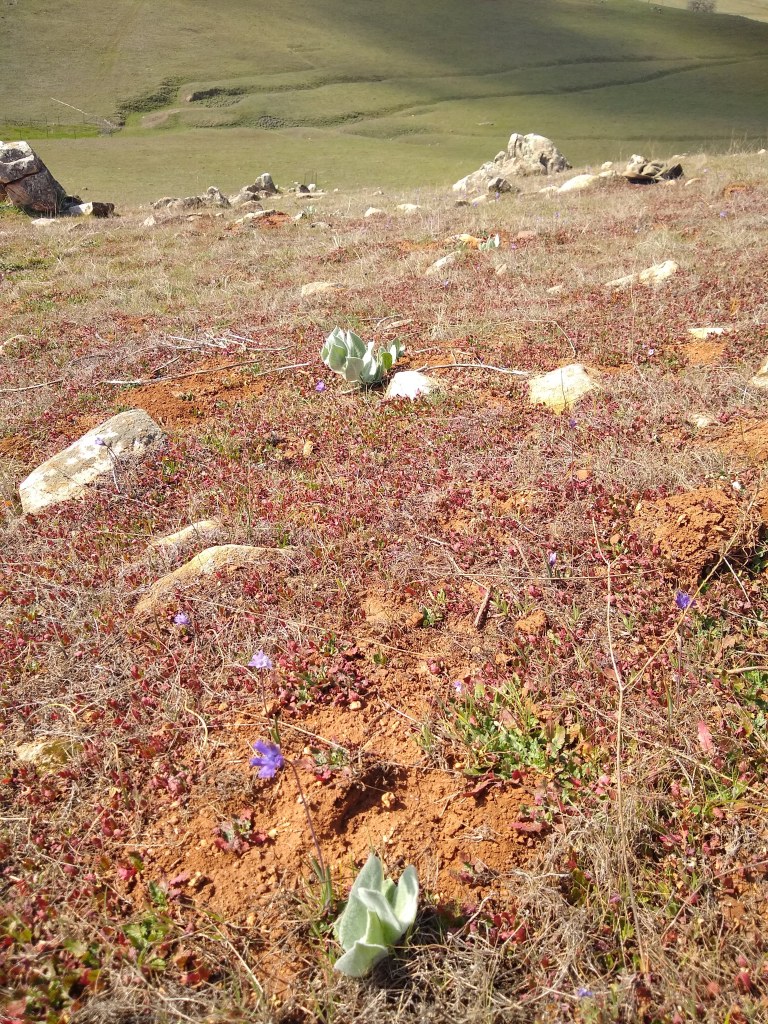
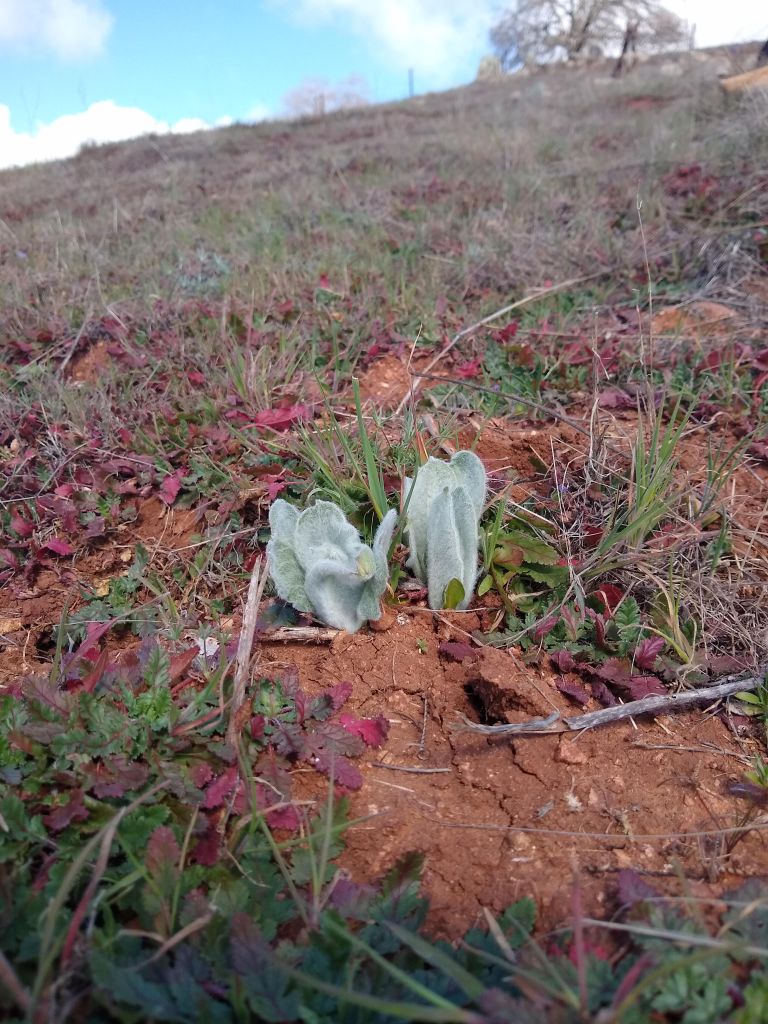
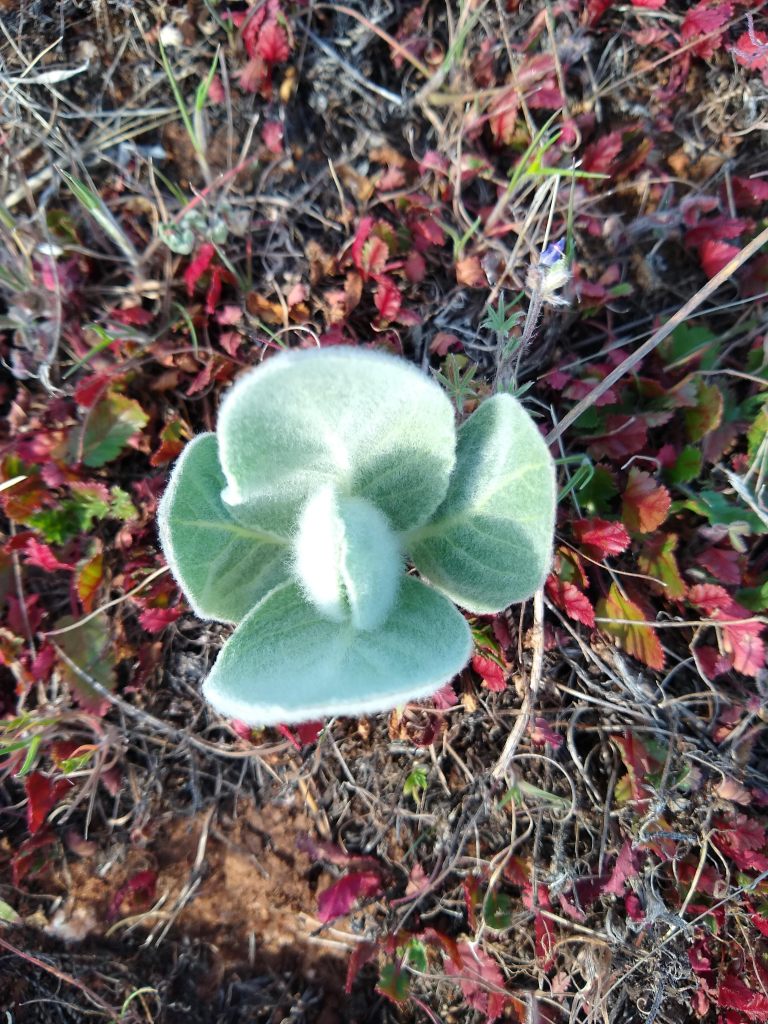
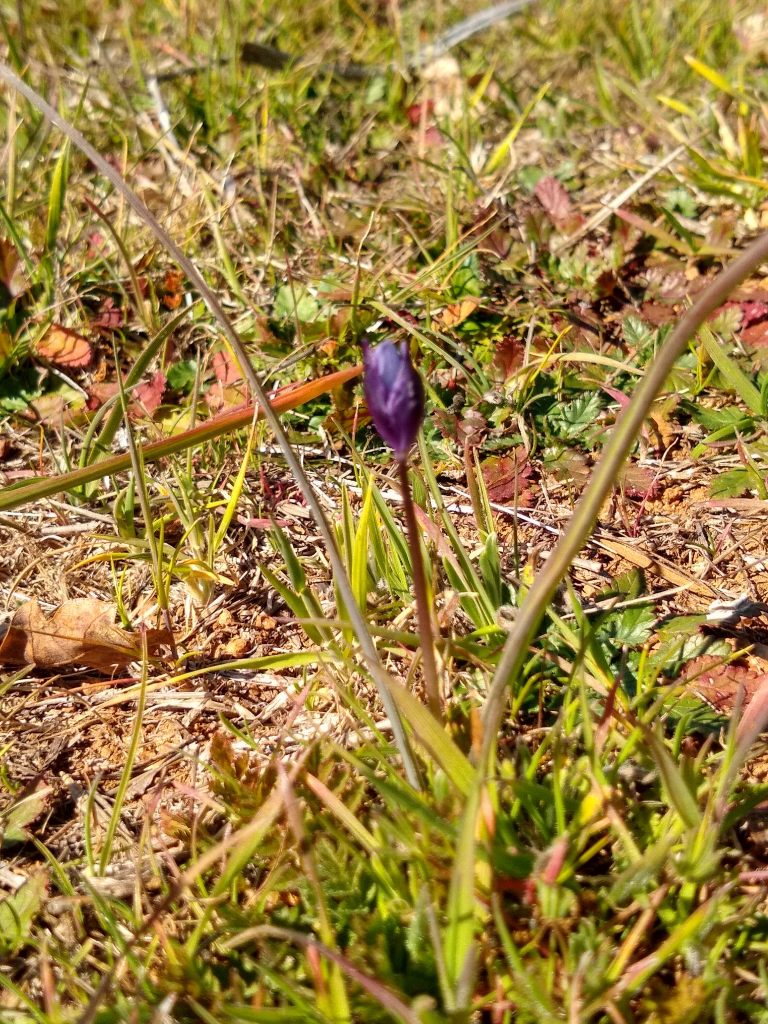
The first California Milkweed emerges and she is a beauty!

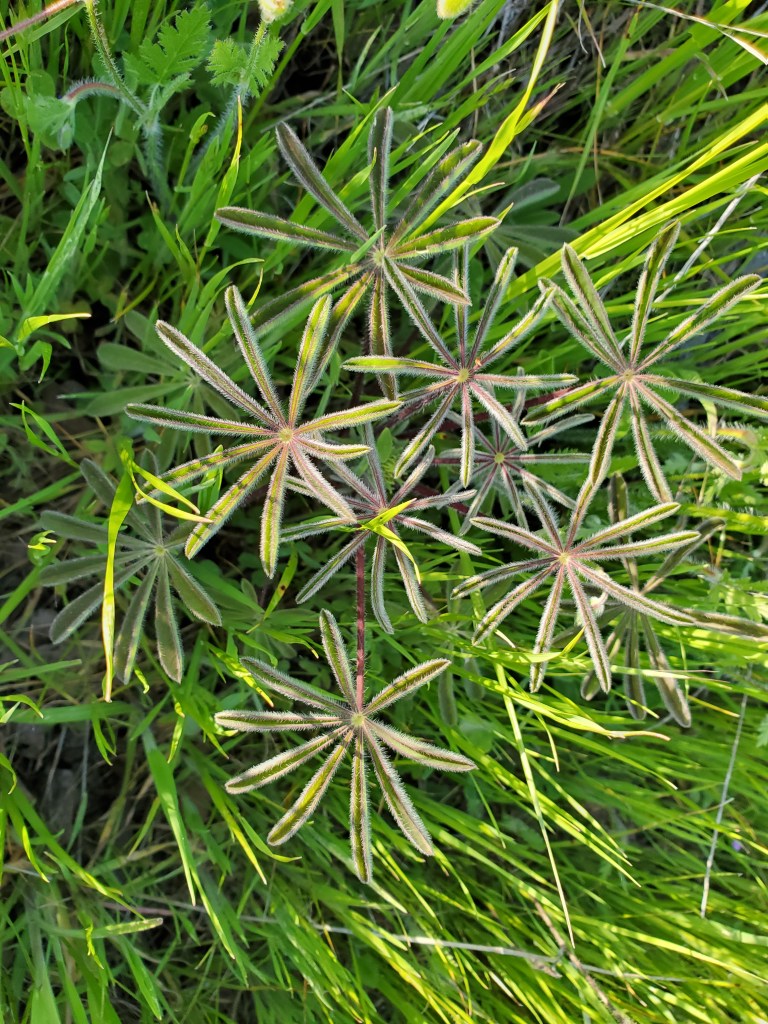
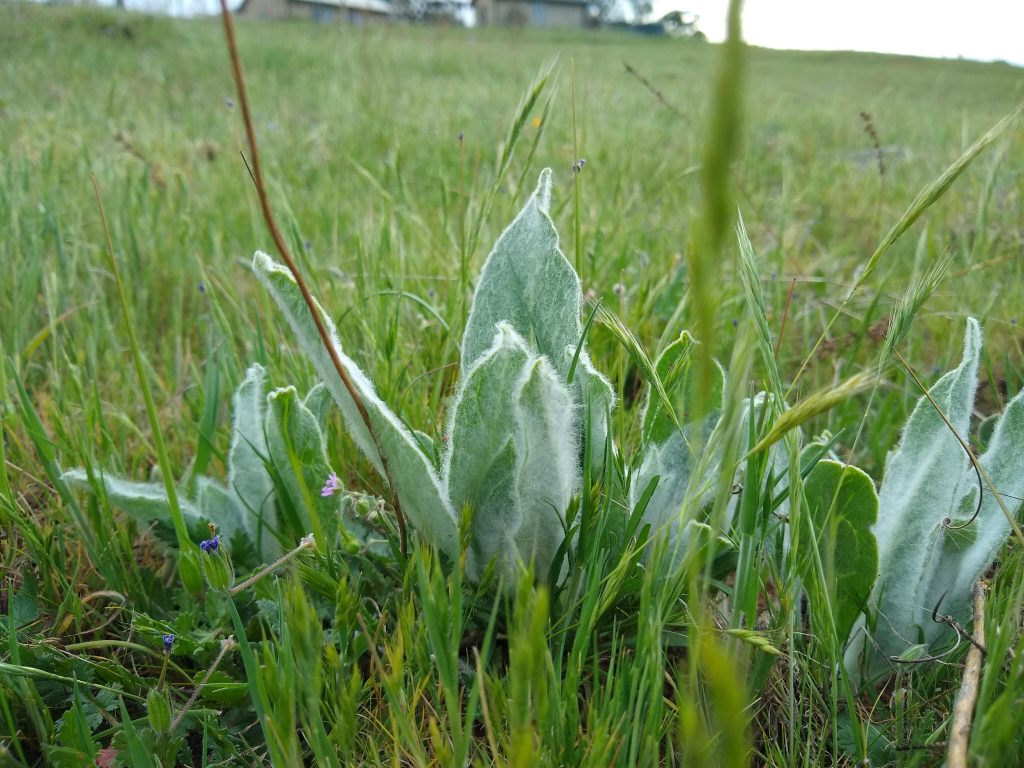
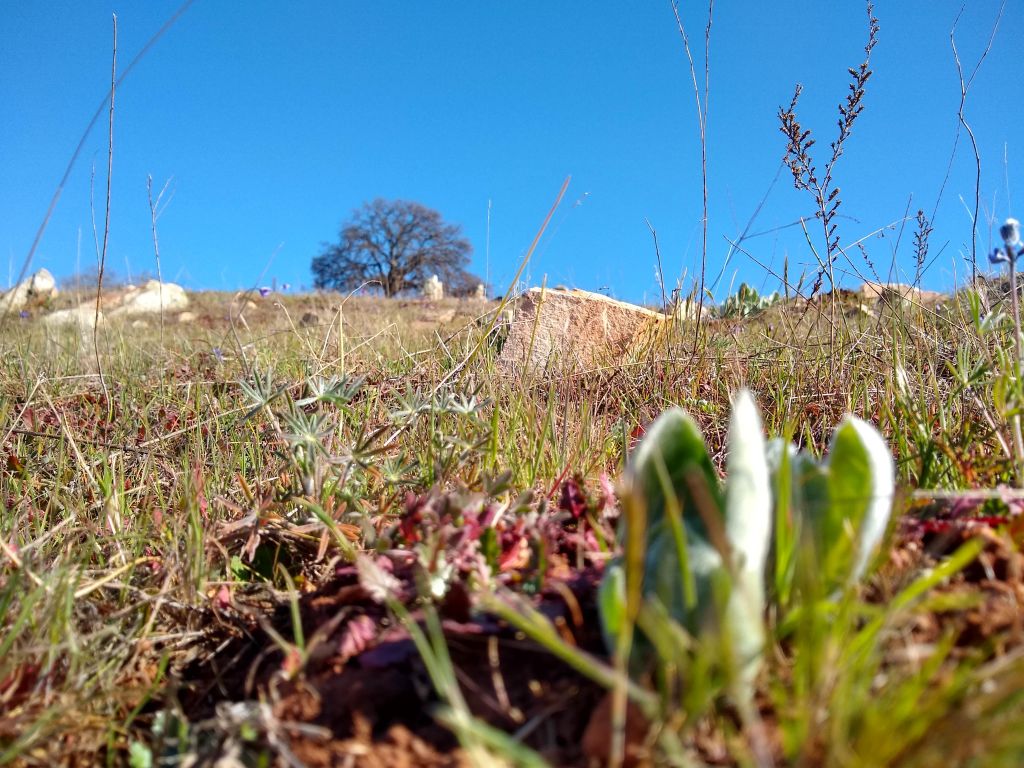
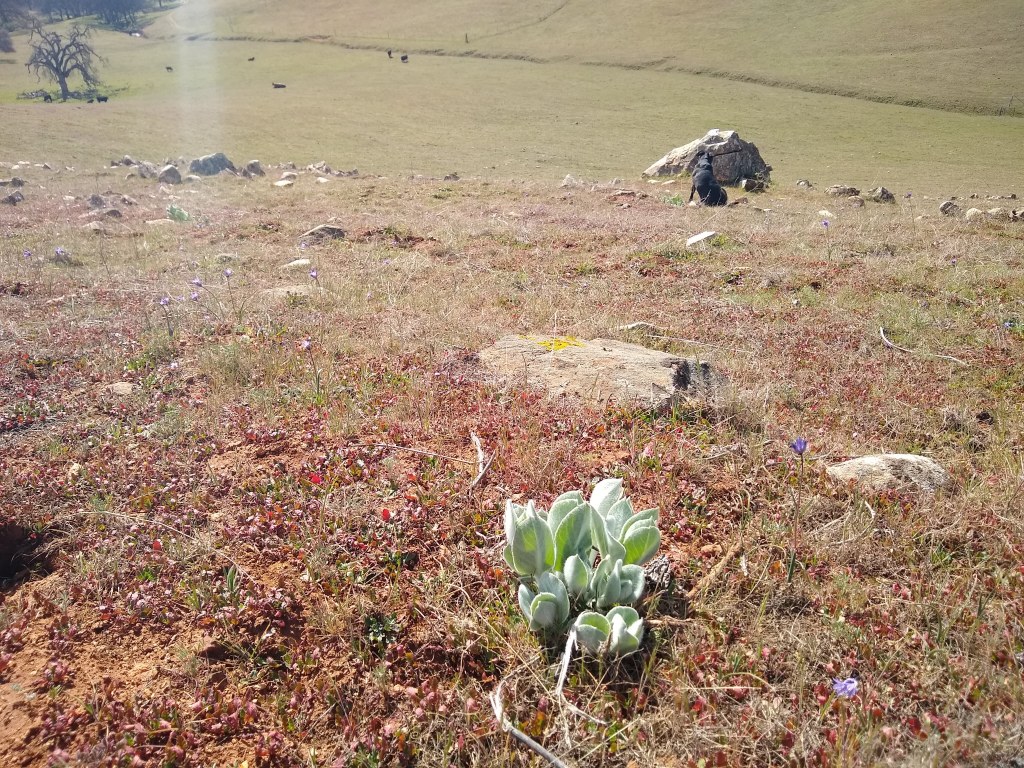
I have been checking the A. Californica sites for a week now. The benefit of documenting my work on a blog is how easy it is to see when something bloomed, emerged, went to seed, etc. You have an idea of when to expect things if you cannot quite remember. At this time last year, we had California Milkweed emerged. I figured with the cold, snow and copious rain, the California Milkweed may be delayed. Like a reliable friend who knows just when to call to cheer you up, there she was on March 15 – her beautiful furry leaves emerging from the dirt – A. Californica. Ahh, but there was not just one, there were two. I think these are the two great grandmothers of the milkweed patch. They are the first to emerge, the largest and get the caterpillars on them first. There is another large sized one as well. I went to look for her, but she was not there. It was not until a couple days later I found her. Those milkweeds are tricky. One moment they are not there, the next, they are.

I have always been a “chill” girl, never anxious, always planning ahead and under control. However, now that I have met California Milkweed, I am like a helicopter mom. I check on the plants almost daily. I worry when I see too many cows near the patch. After the atmospheric river that dumped an inch of rain in 20 minutes and made a hundreds of impromptu creeks along the hills, I had to trudge up the steep hill to make sure the plants were alright, that they were not swept away by the temporary torrent. They are built for weather of course, and I was just being ridiculous.

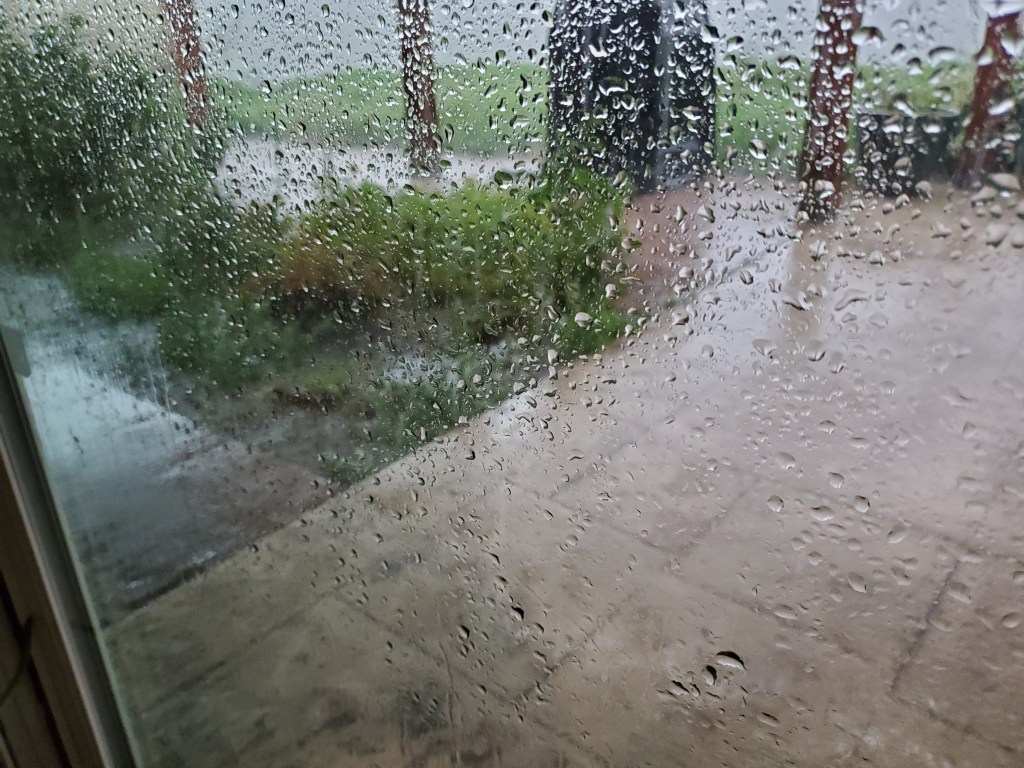
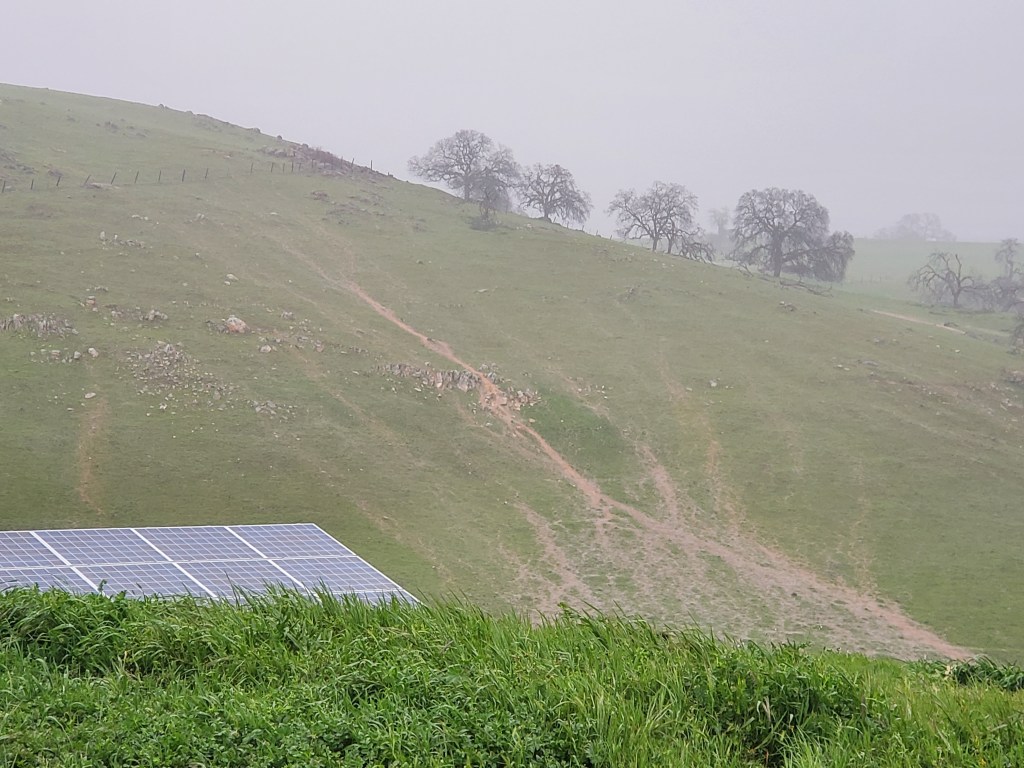
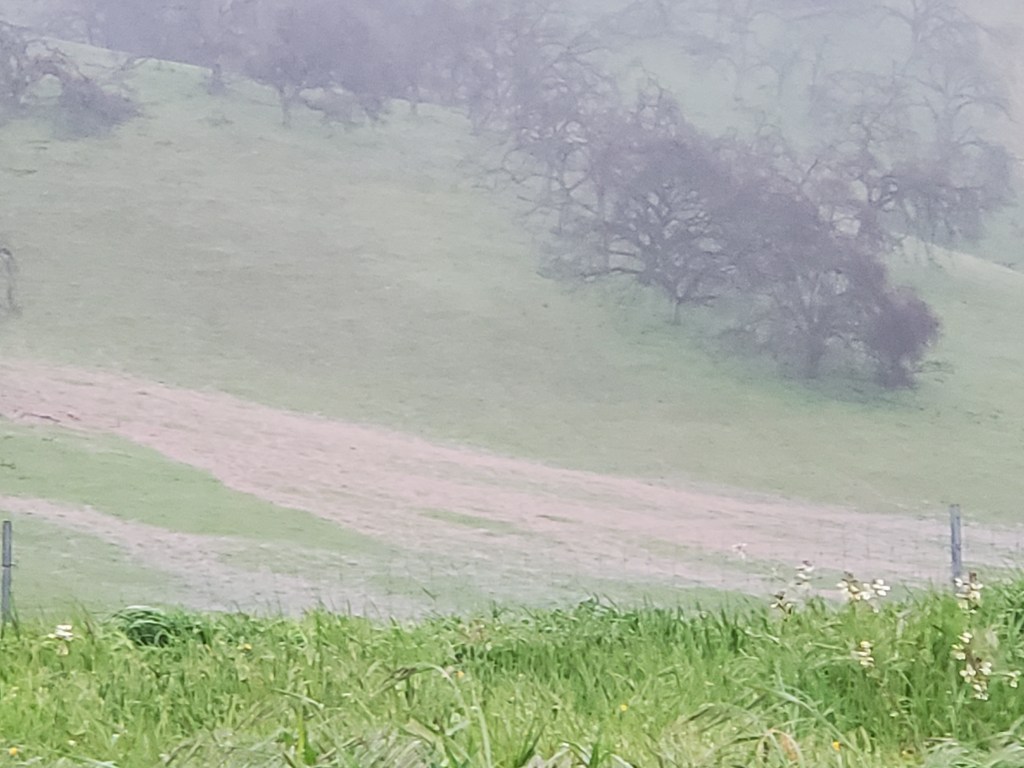
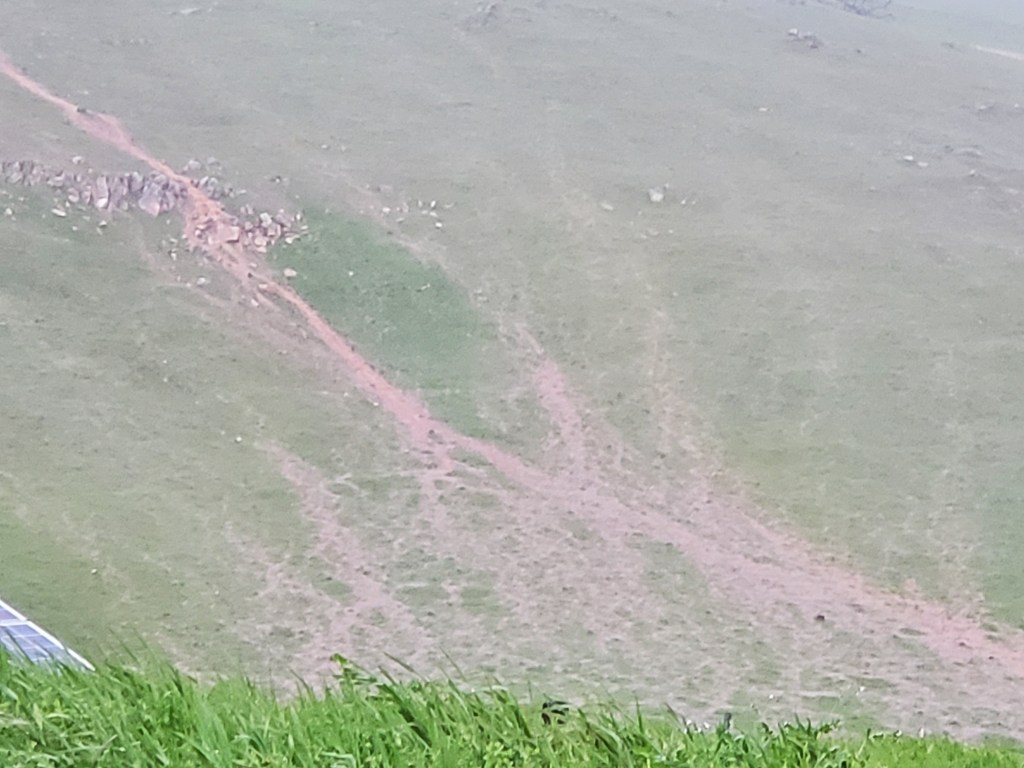
The storm was ferocious. Streams of water that were too much for the ground to absorb rushed down the steep slopes and into the drainages and creeks. I was only able to see it because the clouds were high. It was incredible. Upon closer inspection using binoculars, you could actually see rapids created by rocks and undulations on the surface of the slope. Mother Nature is a badass lady. It also struck me how so many patterns in nature are replicated. The shape of the impromptu water system was like a neuron. It makes sense; human neurons deliver electro-chemical impulses to make our body go, feel, be. This “neuron” is part of an overall structure delivering a life-giving substance that also alters, through the movement of sediment, the structure of the Earth’s body. Water is the Earth’s go, feel, be.

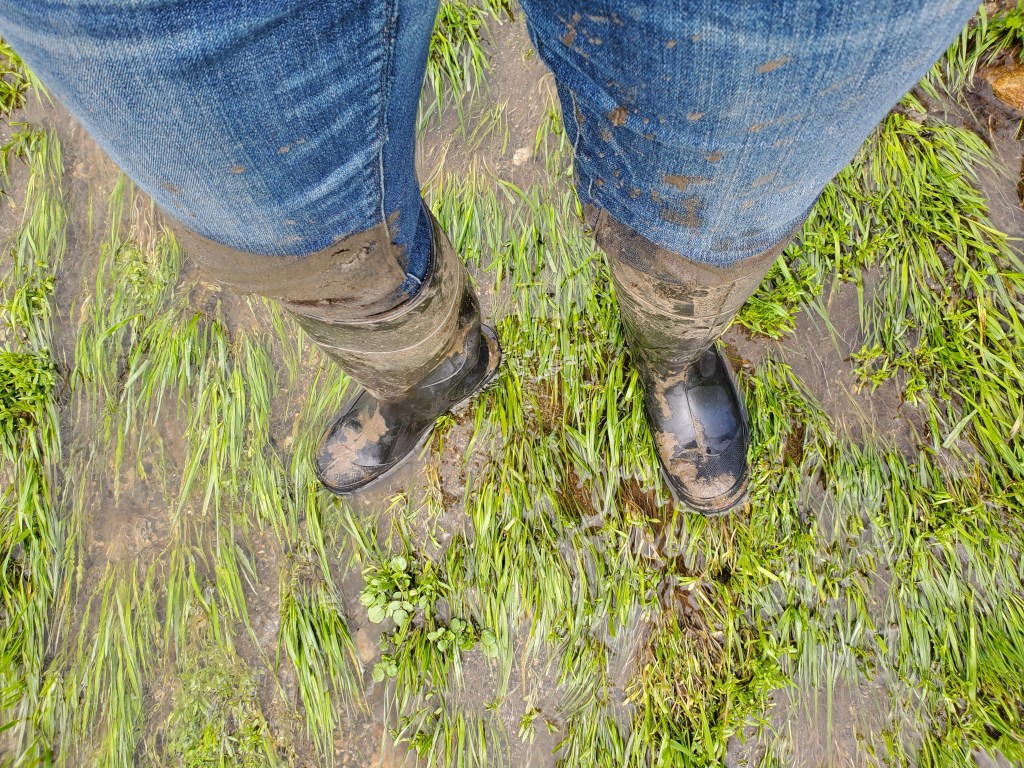
As soon as the rain cleared, I made my way from the house to the patch to check on the plants. I believe in my trusty rain boots and wear them in every season. It was probably not the best decision to head out, rain boots or not, before the water had a chance to drain a little bit more. As I headed for the hill, I had to cross the arroyo/drainage. That was no problem; however, a soggy, muck of mud was on the other side. This is a spongy area that catches water and retains it longer than other areas. I made the wrong decision to cross in this area. My boots, with feet inside, sunk deep into the mud, and then mud closed in on them. I was stuck.

Back in my big city days, I remember going into a large furniture store that also sold interesting knick-knacks. There was a survival book opportunely set on the counter of the check stand for the impulse buy. Well, that worked. It looked interesting, and I bought it. Now, this might be too much information, but I know all of us humans share the same proclivities for restroom reading – so I will share… I had many enjoyable moments on the toilet reading through that book. It is the kind you leave in the bathroom for intermittent engagement and not a cover to cover read. Fortunately, one section of the book dealt with what to do if you were caught in quicksand. I decided quicksand, mud you sink into — same thing.
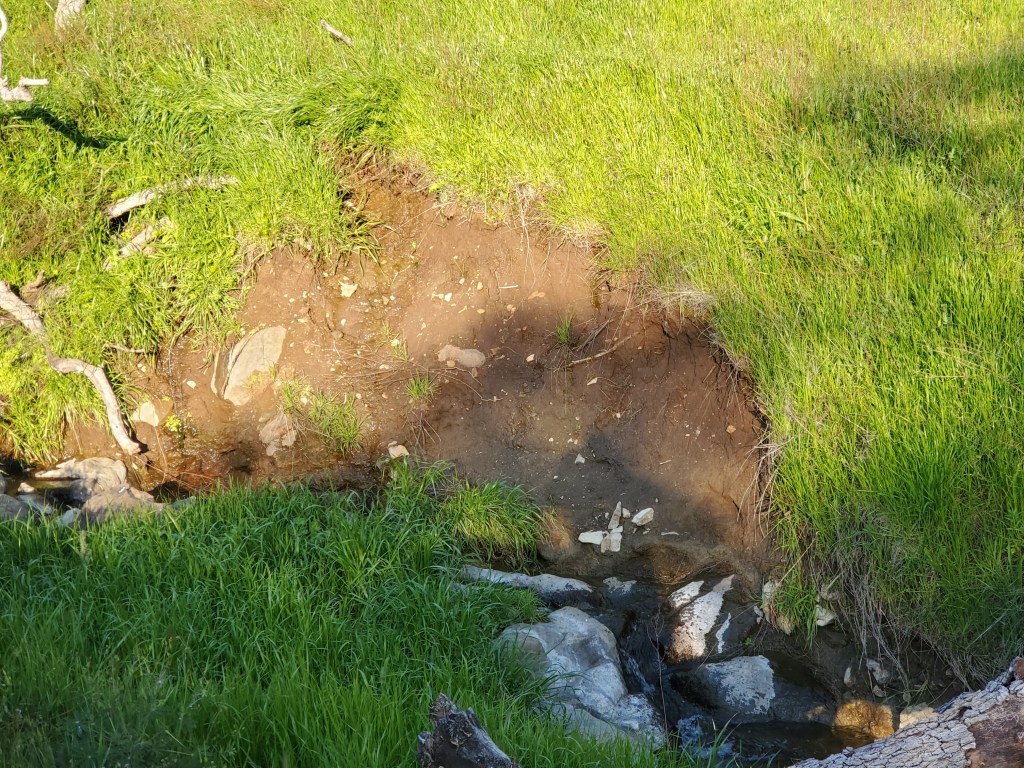
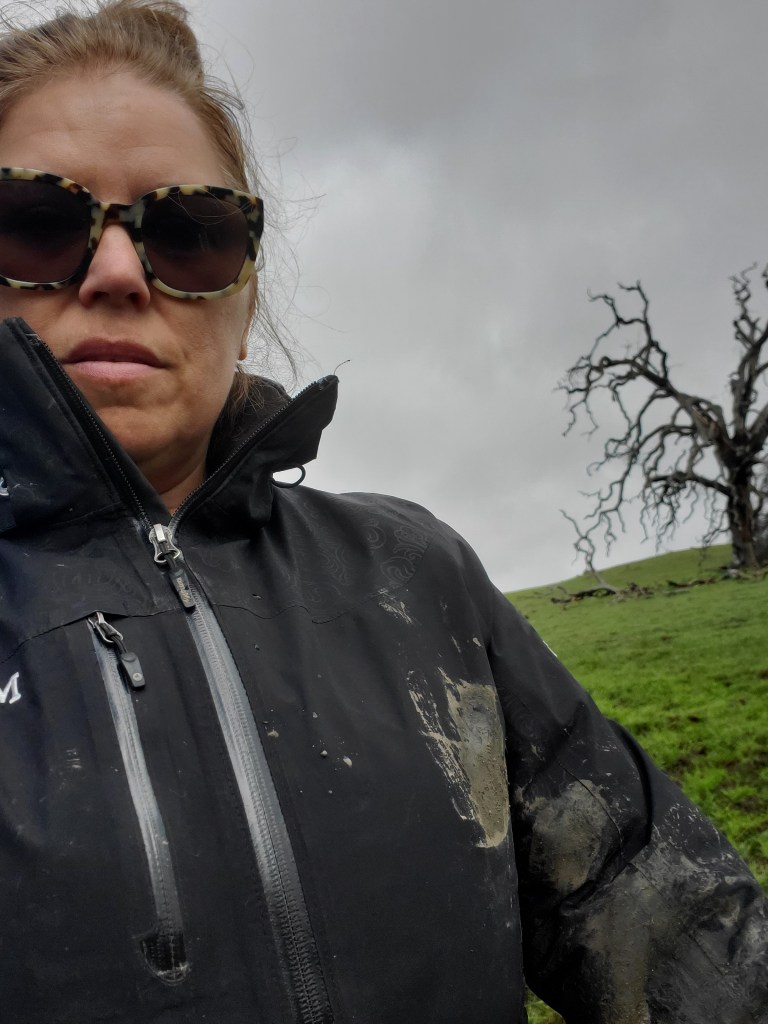
The author said to escape, you needed to move at a 45 degree angle. If you tried, like one normally would, to climb out vertically, you sink more. I had already tried that, and indeed, I just got stuck more. So, now I squatted with my right leg and leaned 45 degrees to pull out my left leg trying to stay upright and not become a mud-pie. I heard a sucking sound. An air pocket! That was good. I pulled with more energy. My booted foot began to move -left, right, left, right. Yes, it is working! Finally, I pulled it free. My excitement quickly turned as the extra energy I applied began to twist me. Remember, my right booted foot was still firmly stuck in the muck. My body twisted. I tried to stay upright, but I fell. My right foot pulled out of the boot, and I landed face forward into the mud. As much as I carefully tried to avoid it, I became a mud pie after all.

Undaunted, I still continued on my quest. I reversed course, followed the arroyo, now a rapidly flowing creek, found a spot to cross without the sponge and began my trek up the steep slope. The plants were there, unaltered, built for this eventuality. I just hoped that all the seed and plugs I planted in December remained in place. I have been checking those areas too. Nothing emerging so far.

I continued to walk the ranch, covered in mud and wet through my knees, thighs and one sock. My boots and jacket protected my other layers, so I was still warm. I stopped in the creek to cup the water and wash off my jacket, boots and pants. That mud is sticky. The majority of it washed off, but still left a streak. I will need to wash the jacket with a cloth later at home. All the dams held and there were no blockages in the gaps between fencing and creeks. Just some dirty clothes and a sore right foot from the twist. All in all, a good day.

Regular Monitoring

One of the activities I perform most is monitoring the condition of the ranch. This includes assessing water levels, fence condition, check dam integrity, plant health and a general look to see what is new or identifying things that could be a problem, like all the downed trees and limbs. I love to walk and be in nature – so monitoring is one of the most enjoyable things about being a land steward.

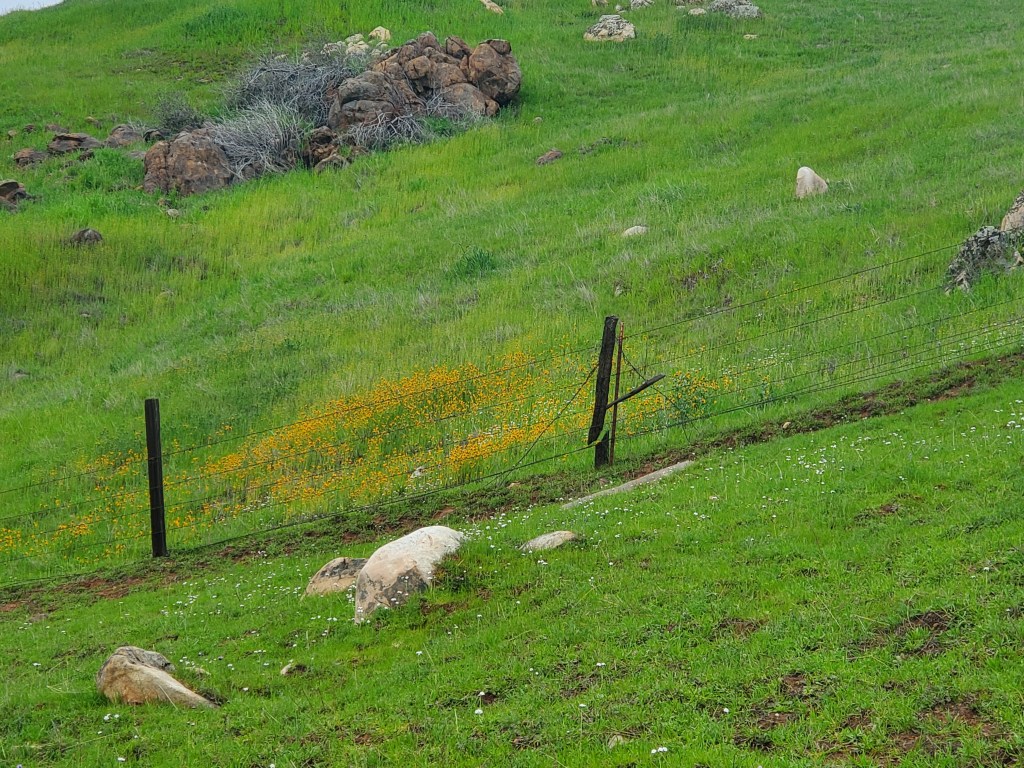
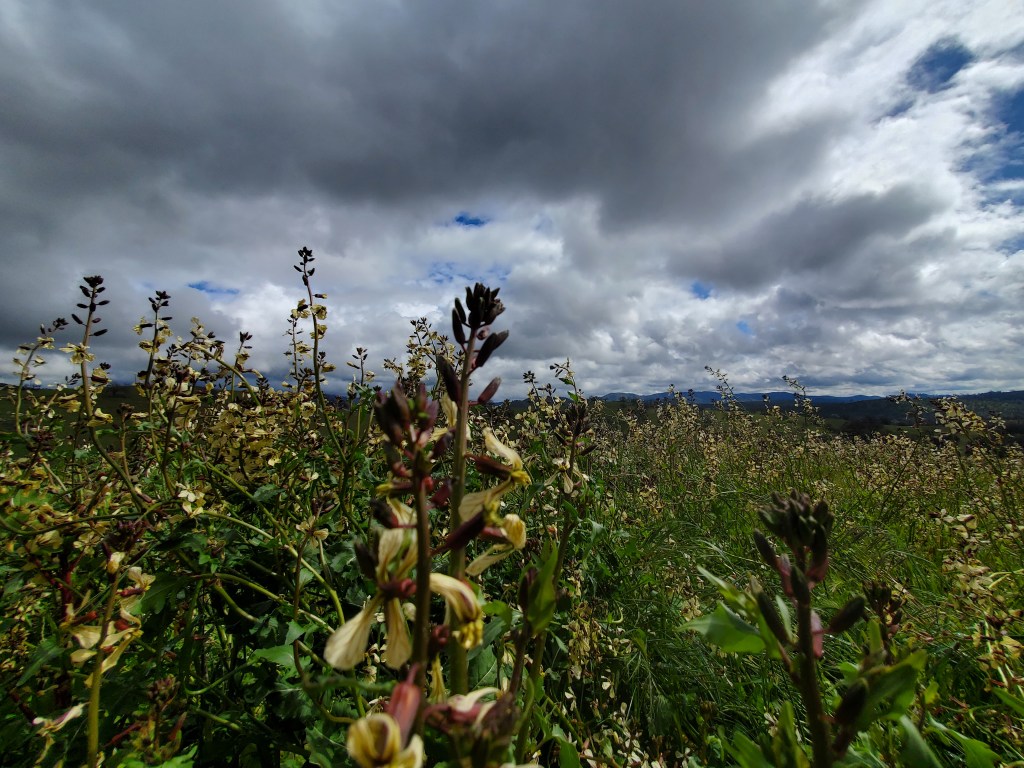
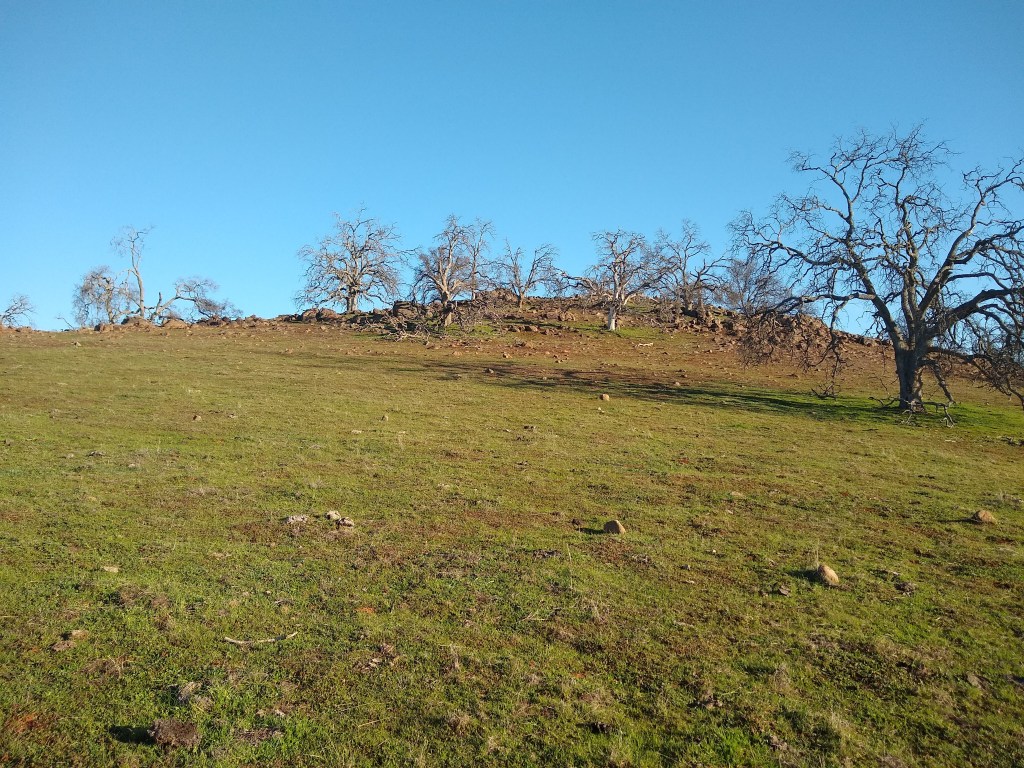
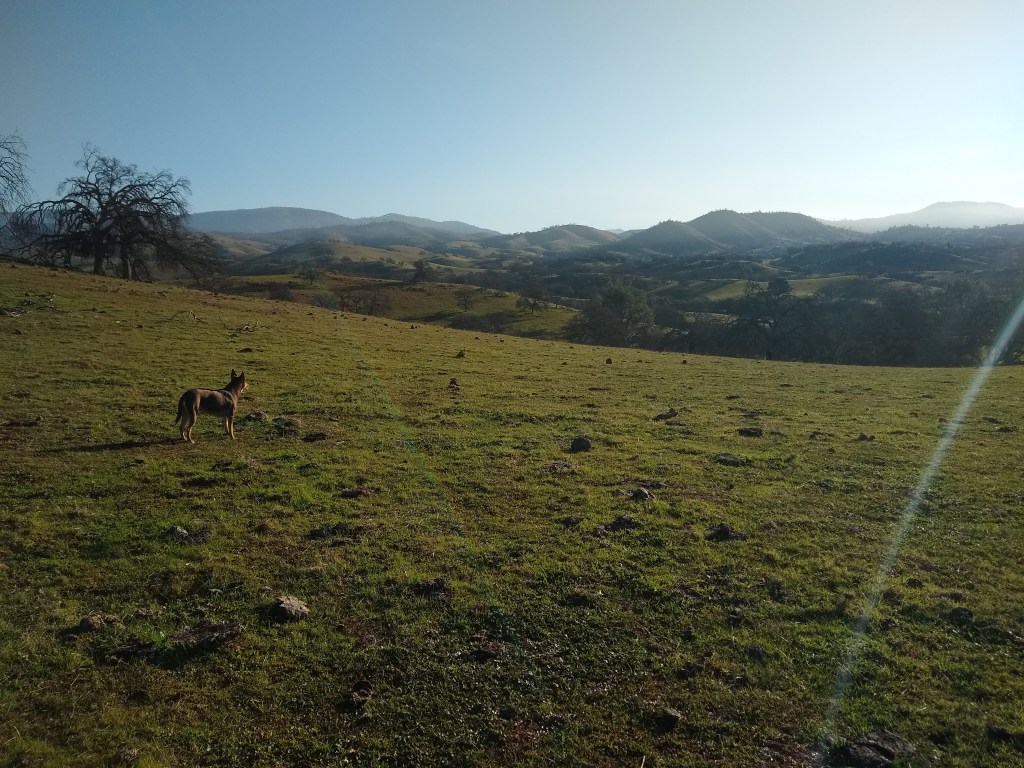
The weather has been tricky. Between damaging storms have been joyous spring-like days. It can be hard to stay focused on work. Eventually, I extricate myself from behind my computer and head out onto the land. Last week was gorgeous weather. I even opened the windows to exchange the air in the house one day. The smell of millions of wildflowers entered. It was incredible. It was also warm enough to be in short sleeves, so I sat in the sun a little enjoying the quiet natural noises of my surroundings. As I did, I thought to myself, “Why don’t I do this more?” Life has become so much work. There is always plenty to do. I think people are finally waking up to the realization that, even if you love what you do (and I do), you need to find moments of nothing, to sit quietly, to just be and be without deadlines, dramas, and to-dos. Below are some photos from a recent monitoring expedition.

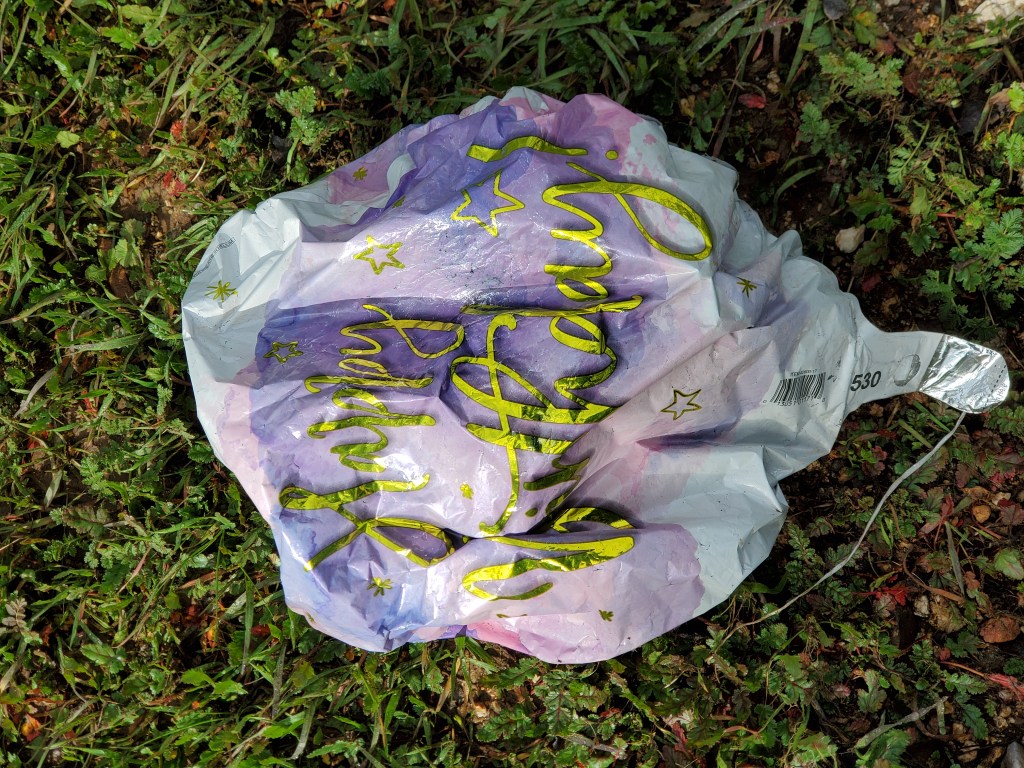
Now is a good time to remind folks about mylar balloons since I found yet another one on my monitoring expedition. Please don’t use them. I know they seem like a festive way to say, “Congratulations”, “Happy Birthday” and everything else. They often get let go by children, and some adults, and end up as dangerous trash others have to clean up. They are dangerous because calves, who are just learning to explore their world, can eat them, blocking their digestion and result in a very painful death. I pick up almost a hundred a year. We seem to be on the right wind pattern for dying balloons.

The Garden

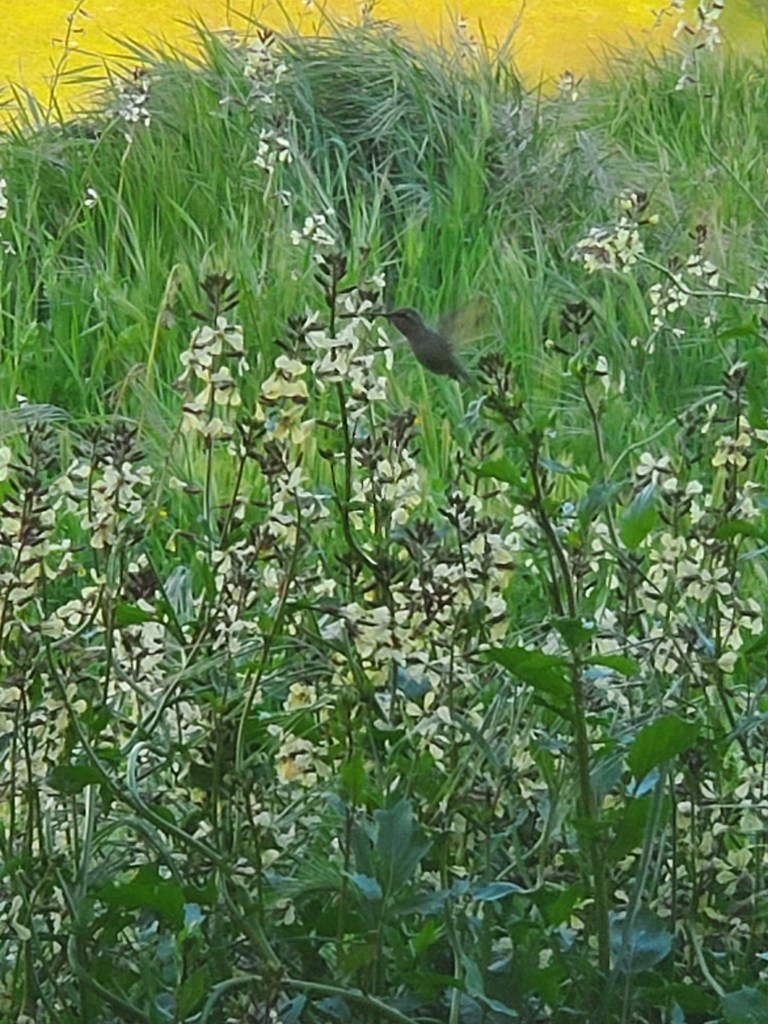
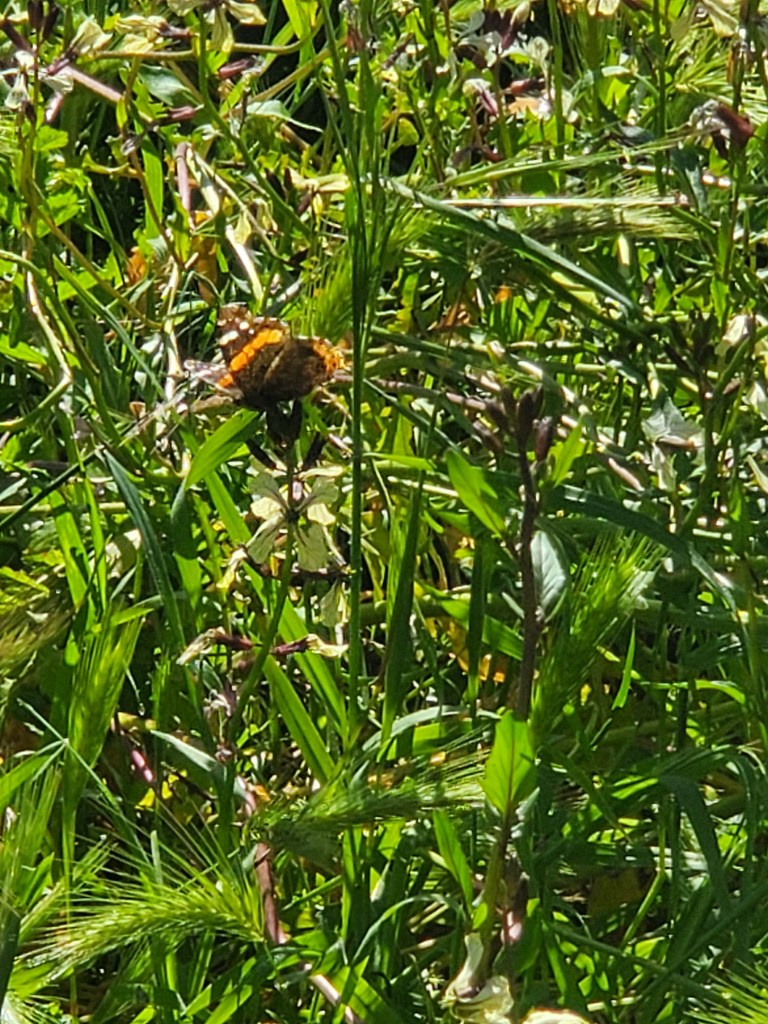
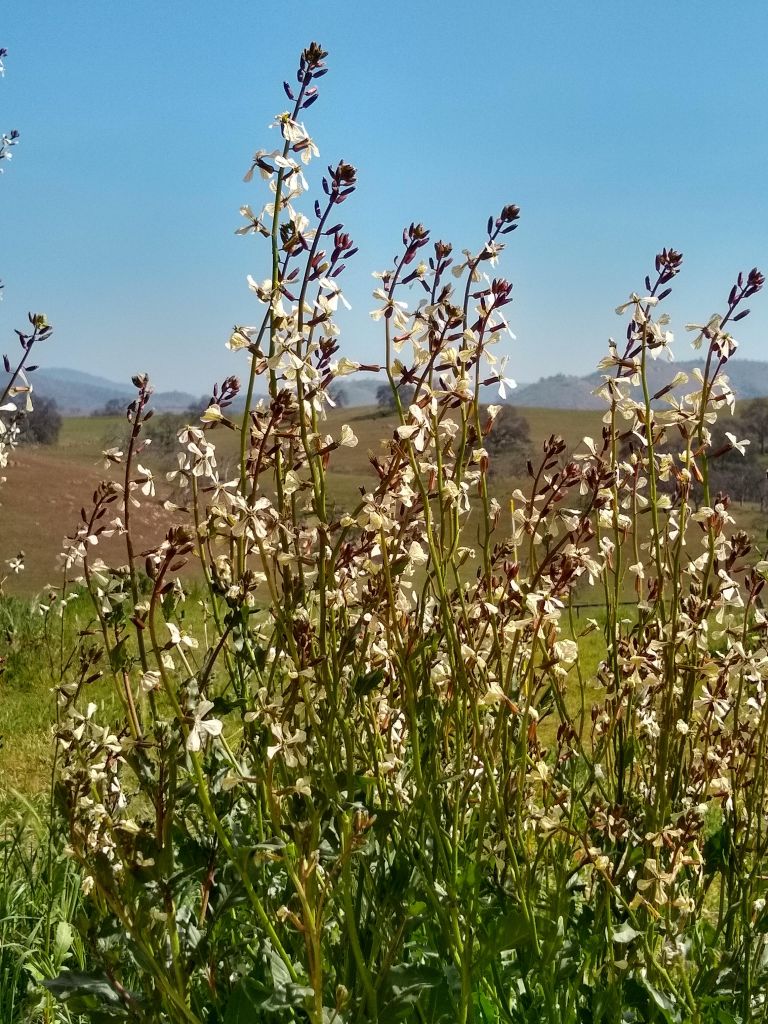
I sowed peas and oats to build nitrogen in the soil and as a cover crop. With the cold temps and frequent cloud cover, they have not grown as much. I also placed some in my seed starting tray. Some seedlings sprouted when there was a longer beak between storms, and I am placing them in open areas in my raised beds. Maybe the sowed seeds will catch up at the next break. I did see some initial growth out of the seeds. The arugula that my dear friend Caroline Korn gave me many years ago has really taken off. We have fields full of it. It has been so crucial for bees, butterflies and even hummingbirds. I sighted a red admiral butterfly. It will likely freeze or get too wet to survive with the next storm cycle. The weather has been alternating between spring-like and winter. Well, I hope it will survive long enough to procreate.

Wanderings

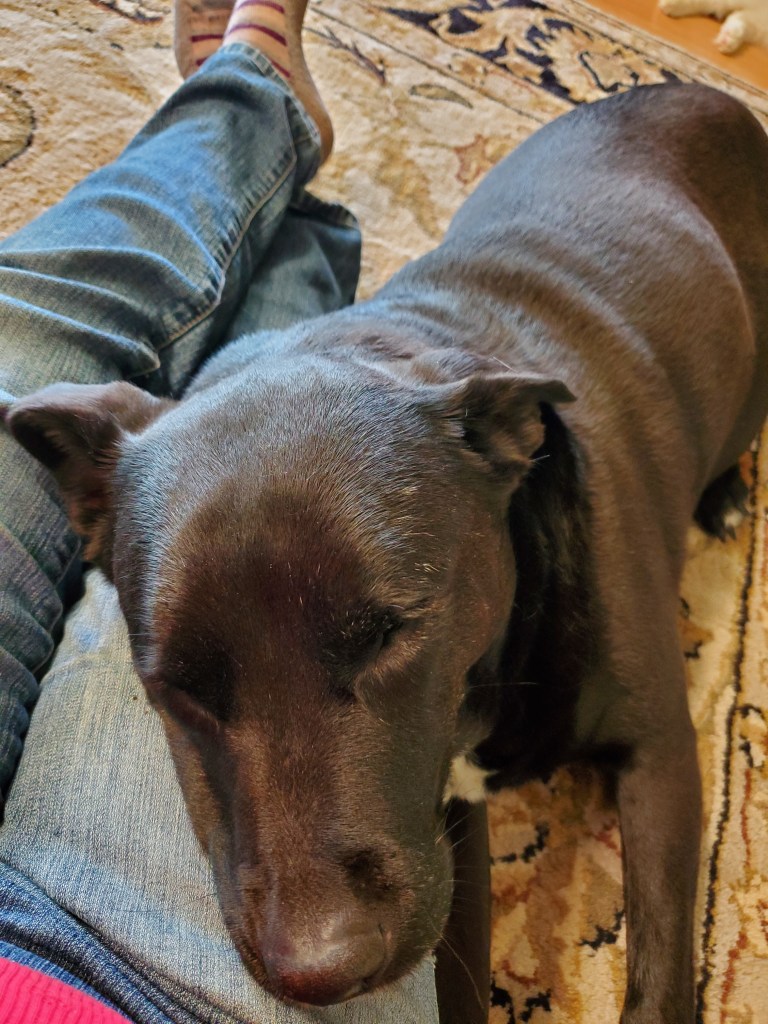
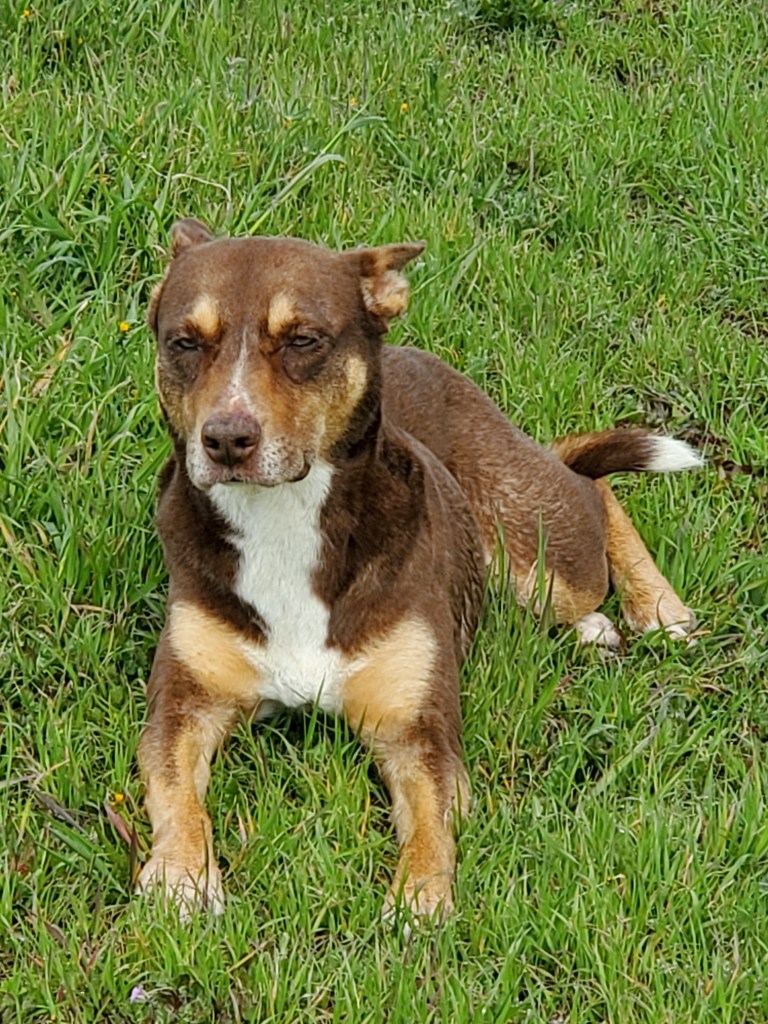
Exhaustion can be good for the body and mind if done intermittently and not often. The dogs and I come back from our adventures tired, but happy. I am continuing with my Pollinator Steward Certification. I don’t know if I will change careers, but it is good to always be learning so you can do what you do better.

I had a wonderful email from my friend Marian back in January. She was sharing an old mutual friend’s (Chris’) self-made book about a close encounter with a monarch last year. The three of us shared an office back in the day when we were all young healthcare professionals serving the public. Now Chris and Marian are retired (not yet for me) and onto other things. One of the many things Chris does is being a Master Gardener. Chris, was so inspired and transformed by her encounter with a monarch that she wrote a children’s book about her experience. She did an outstanding job researching monarchs and telling the story. You can check out the charming video of her reading the book here. Thanks so much to Chris for allowing me to share her work.

Rest-time is Over | Flowers Emerge | First Butterfly Spotted

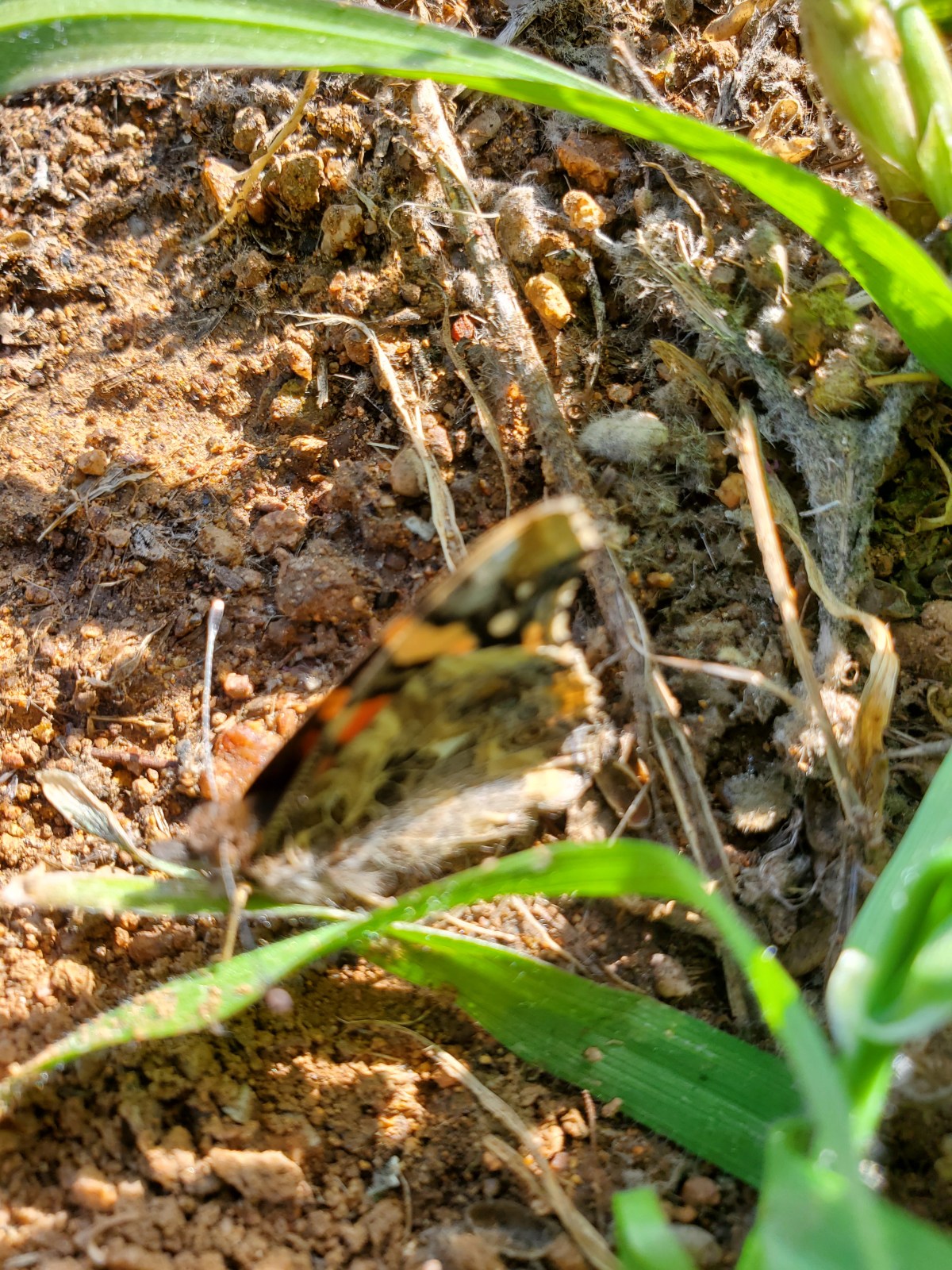
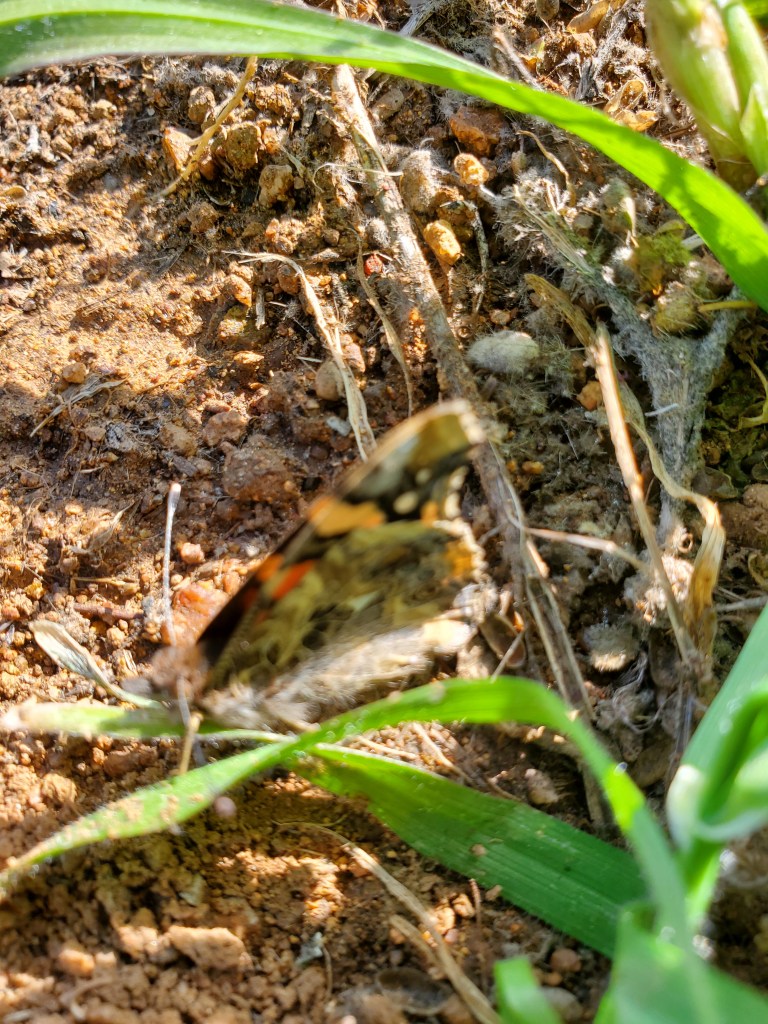
A painted lady butterfly on the soil

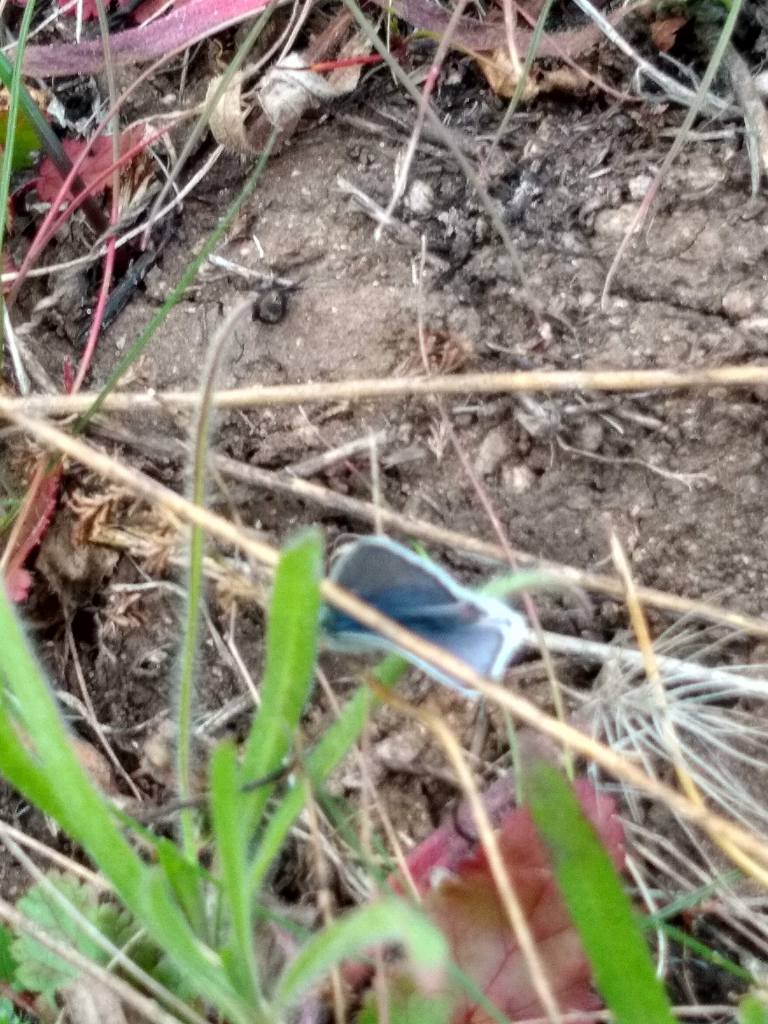
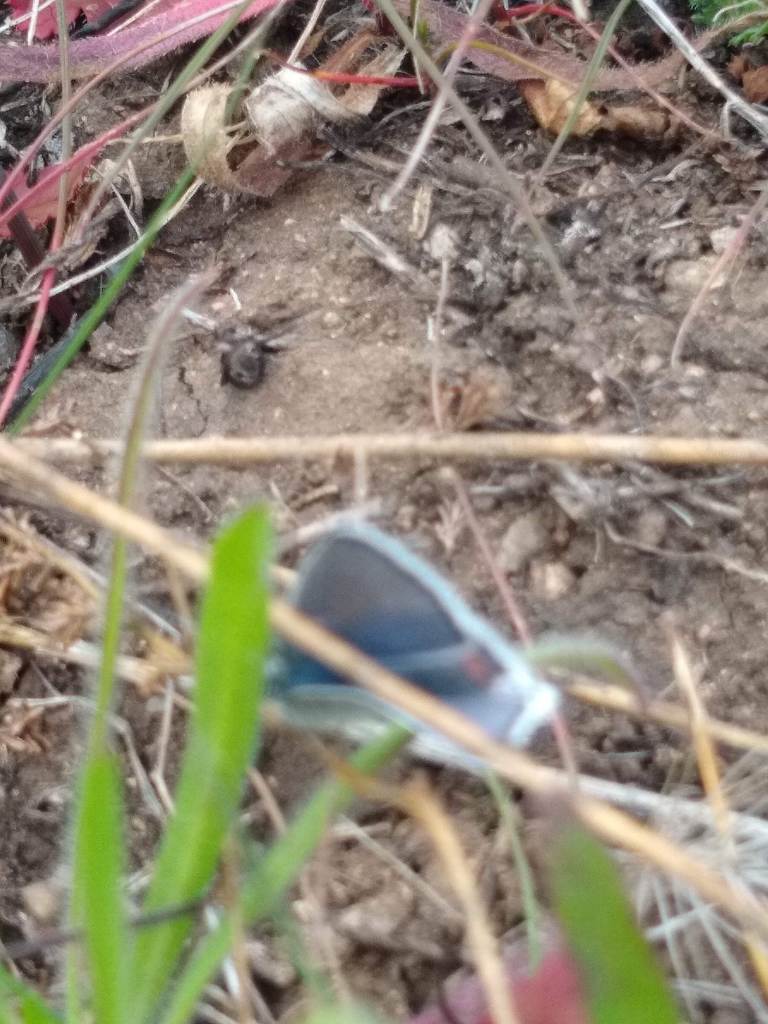
January and February have been nice. Although I’ve still been out monitoring and planning, I have not had to do as much physical labor. The rest has been welcome. Last December and November, I planted the Xerces Grassland Habitat Kit – over 200 plants and perhaps 1000 seeds. Certainly, this is an effort of love for the land, love for butterflies and bees. This week feels more spring-like, so I am outside again performing maintenance labor. While out pulling grass and straightening gopher baskets already planted into the ground, I saw the first butterfly of the season. What incentive!

The monarch overwintering count has been encouraging, with the number of adults just over 330,000. This is up from the 260,000 last year. We all need to recognize, however, that these numbers are nothing compared to what their population should be. Monarch and other butterflies were in the millions in most of our lifetimes back in the 1980s. Please continue to do everything you can do to build habitat and make conditions livable for these relatives of ours.

Rains Bring Flowers

As I’ve performed my walks about the ranch, the smell of nectar hangs in the air. It is so sweet. My mind turns fuzzy – like that “in love” brain block. I am intoxicated from the smell. It is no wonder February is the month we celebrate love. I try not to admit that the fuzzy head is from a histamine reaction – allergies. The sense of being in love with the world is too pleasant a thought.

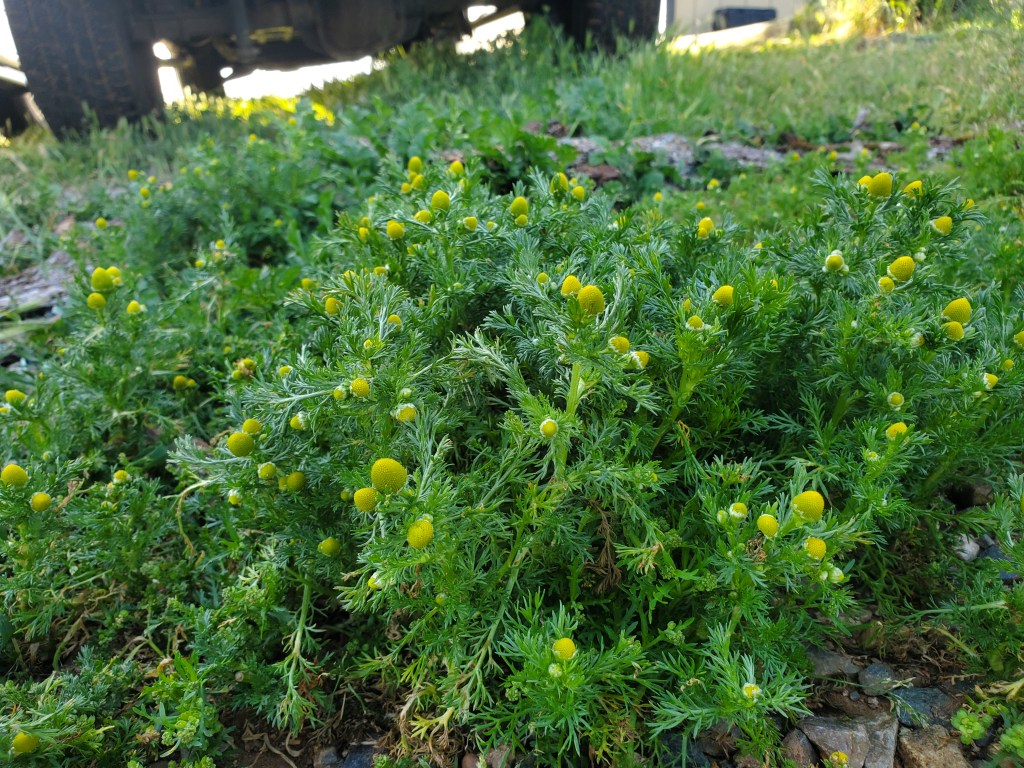
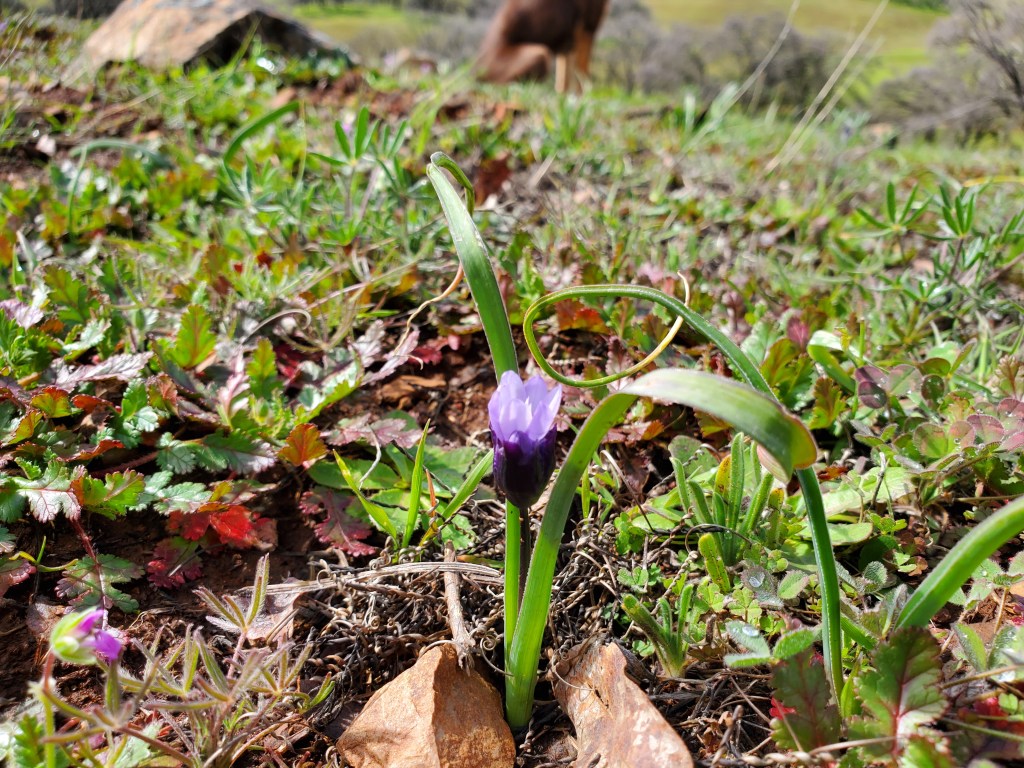
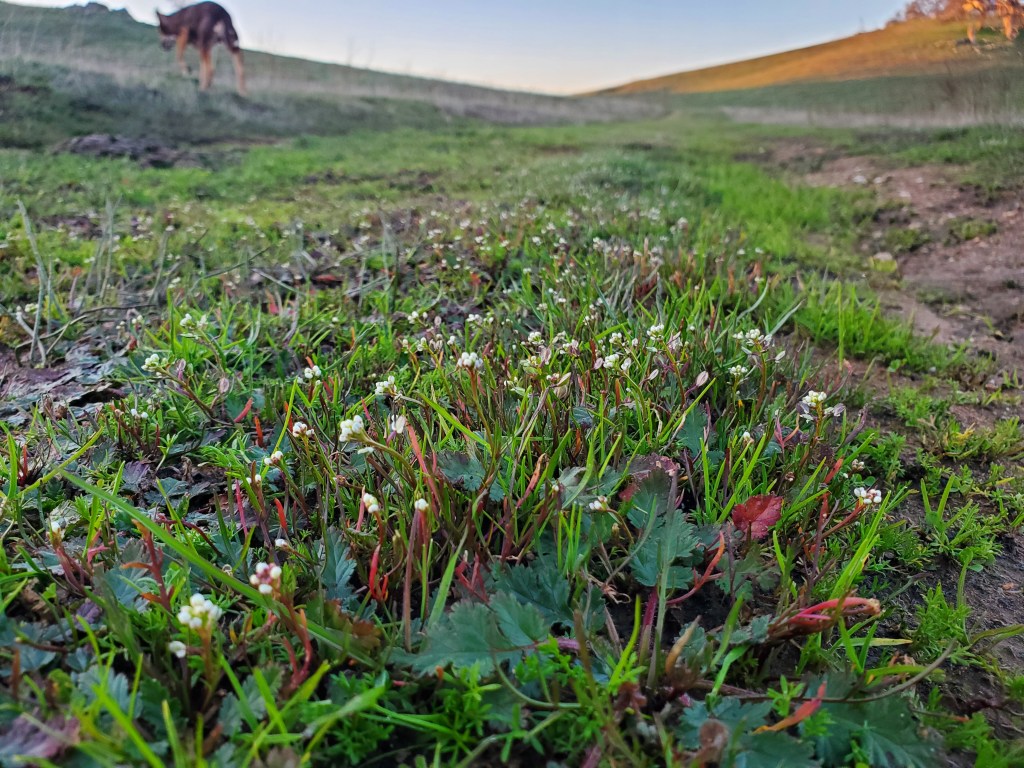
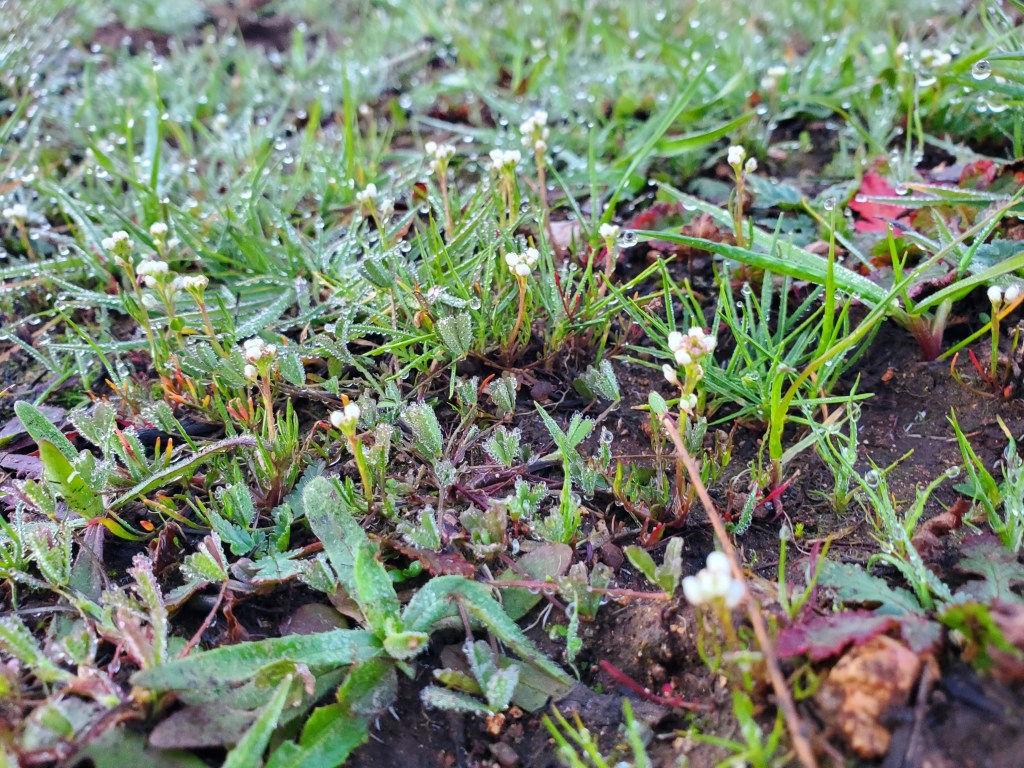
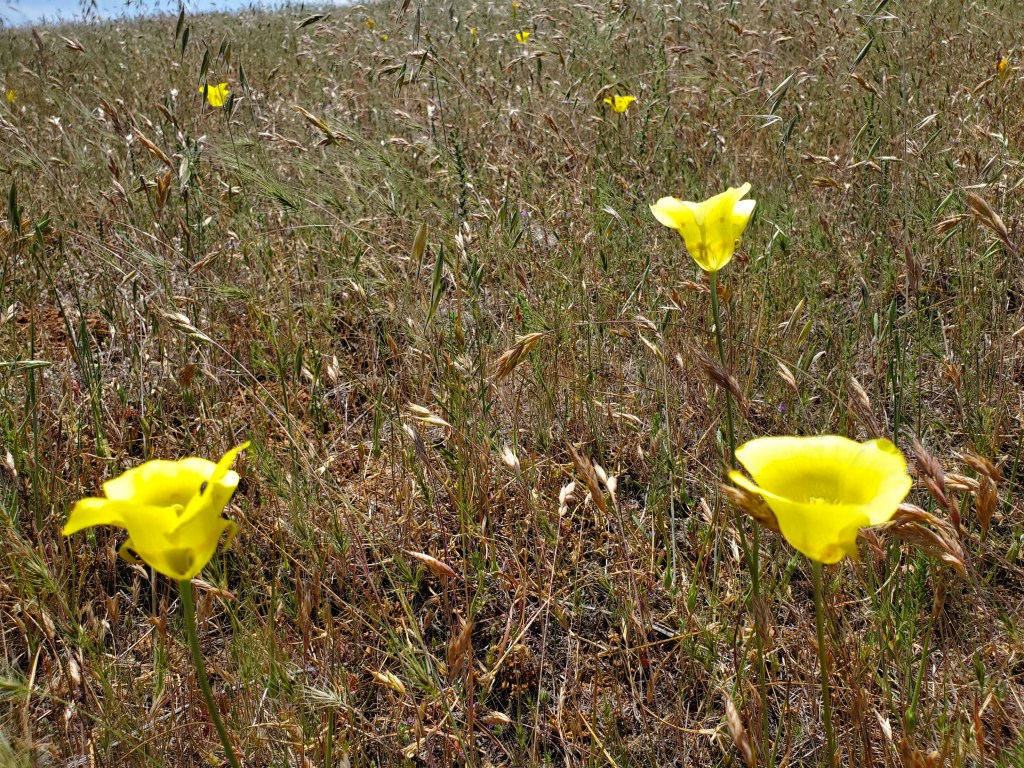
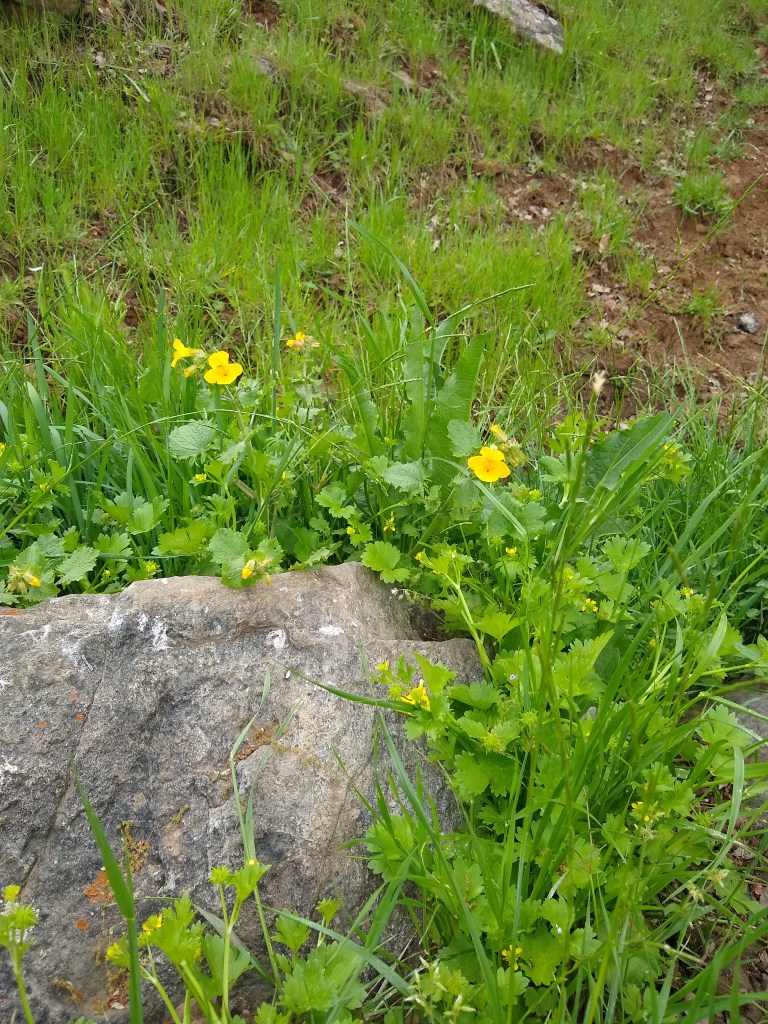
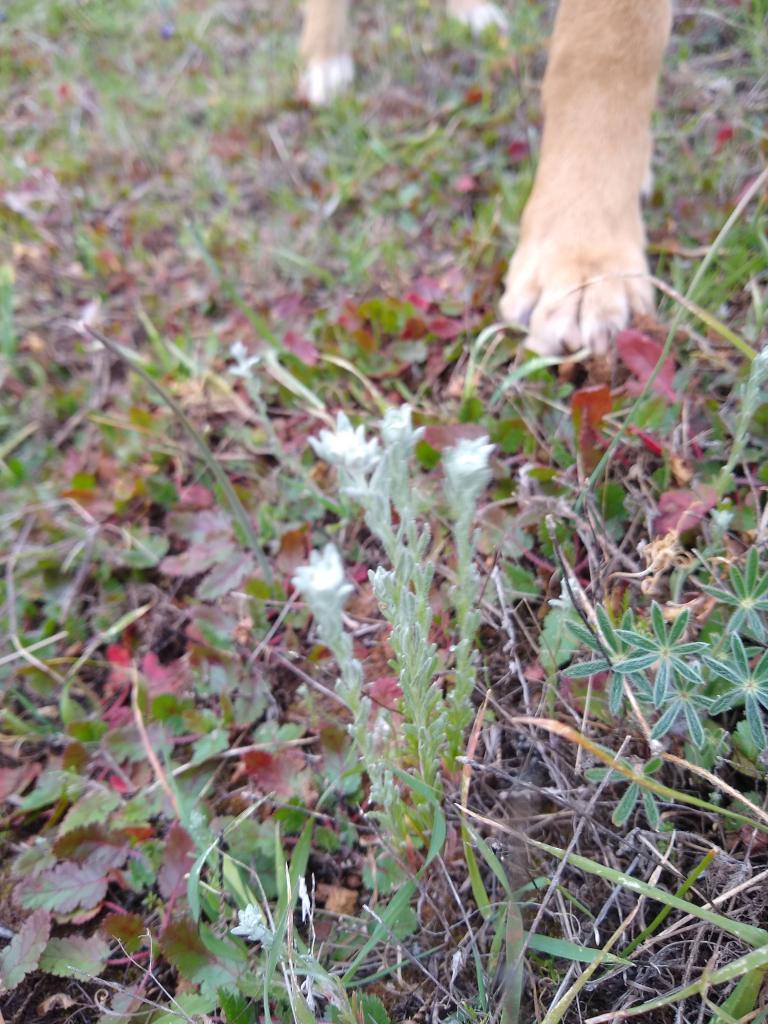
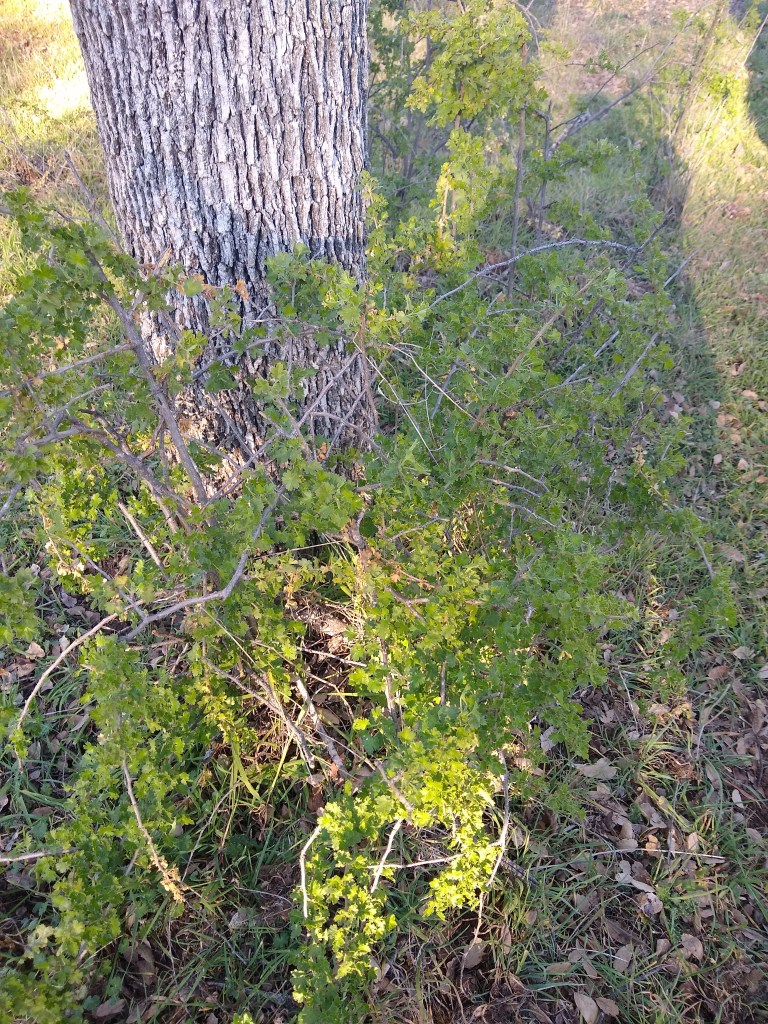
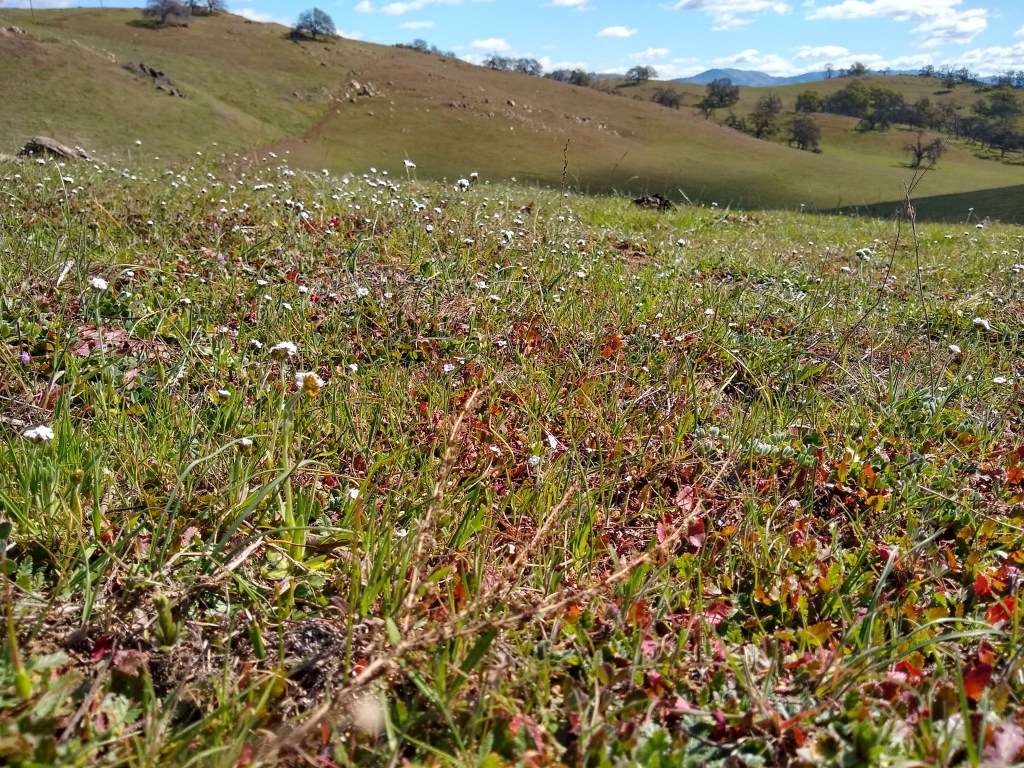
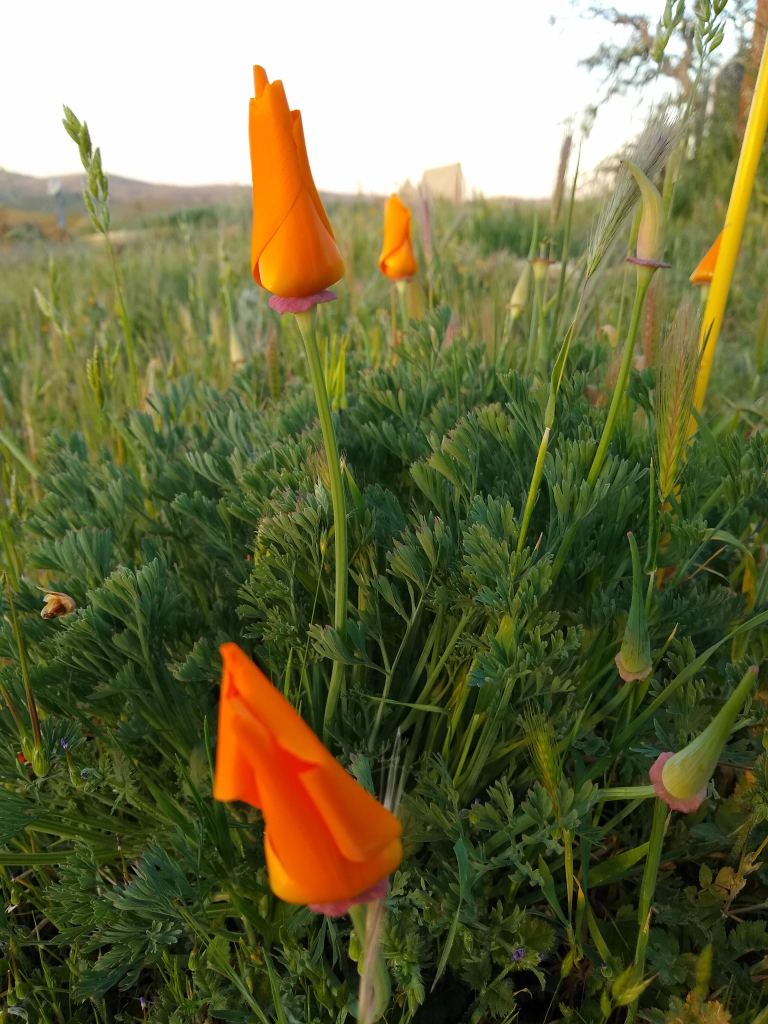
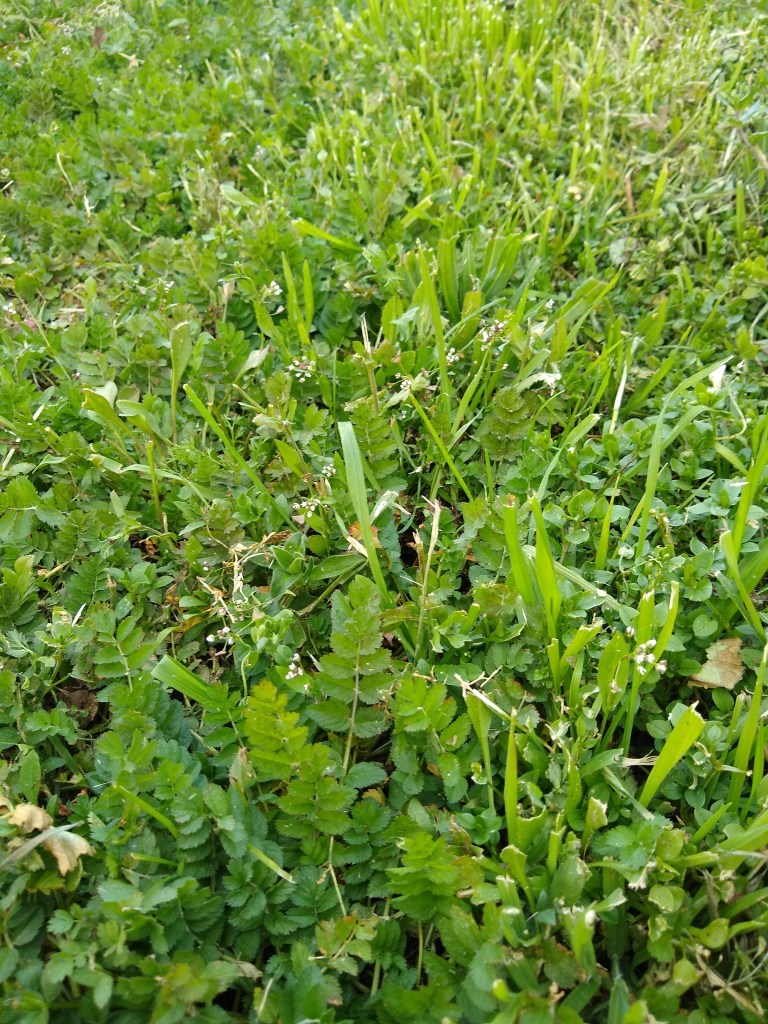
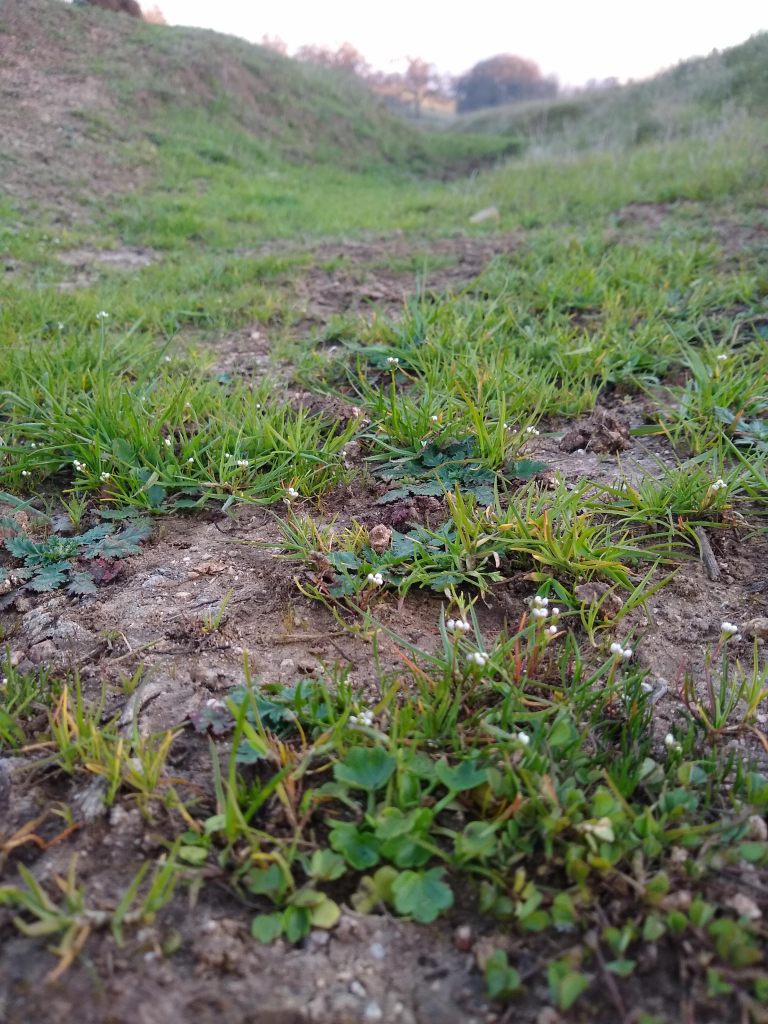
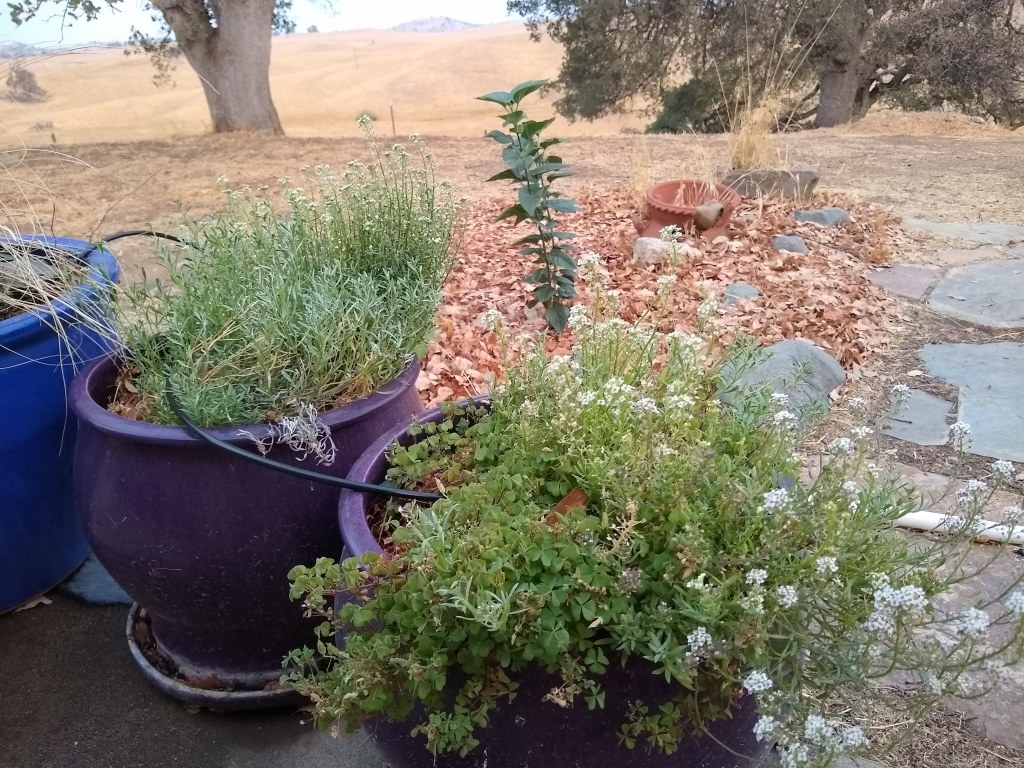
I follow my nose and am led to small, low growing white flowers. There are millions of them in all the areas without much grass. These are the first wildflowers of the season to emerge.

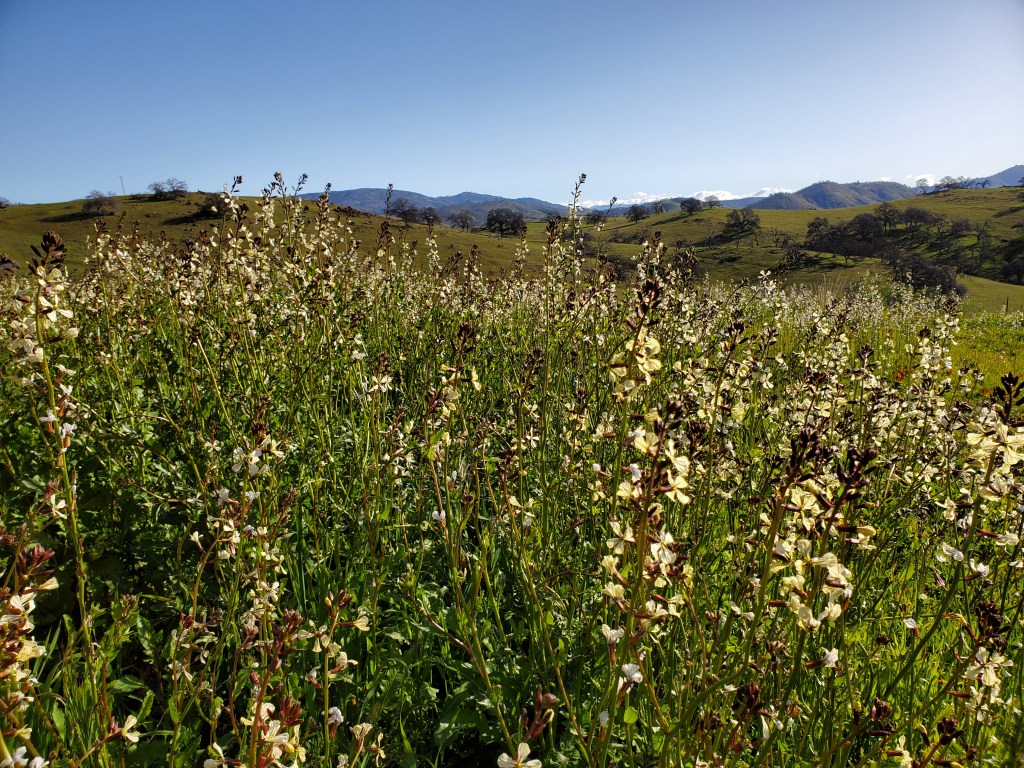
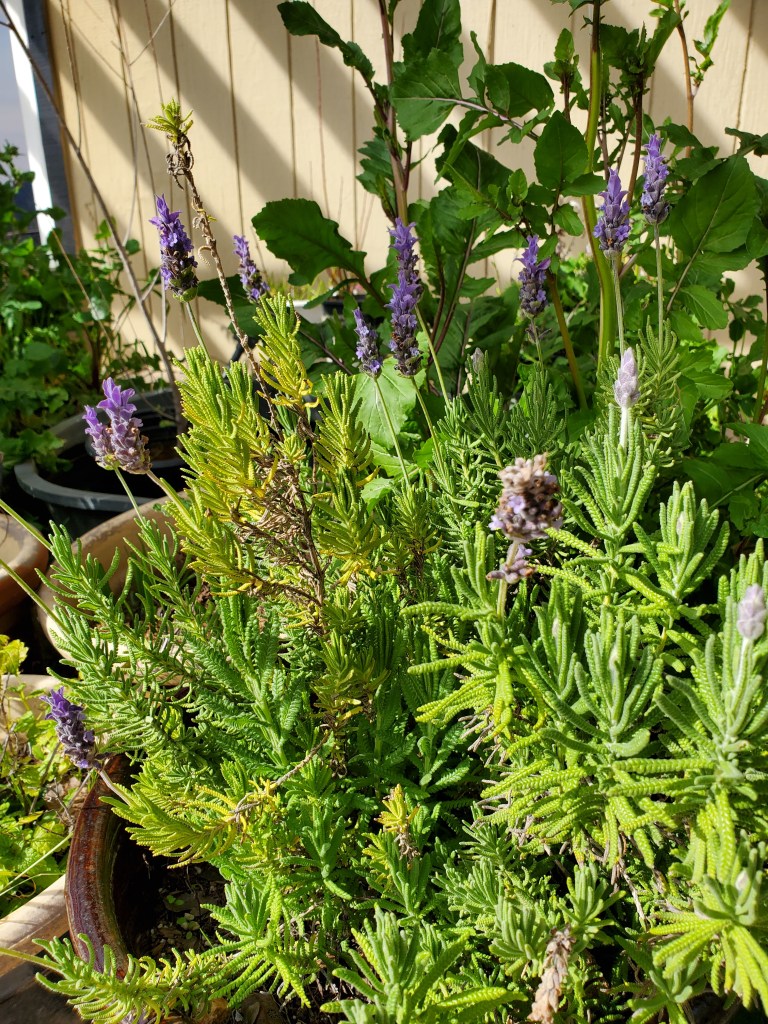
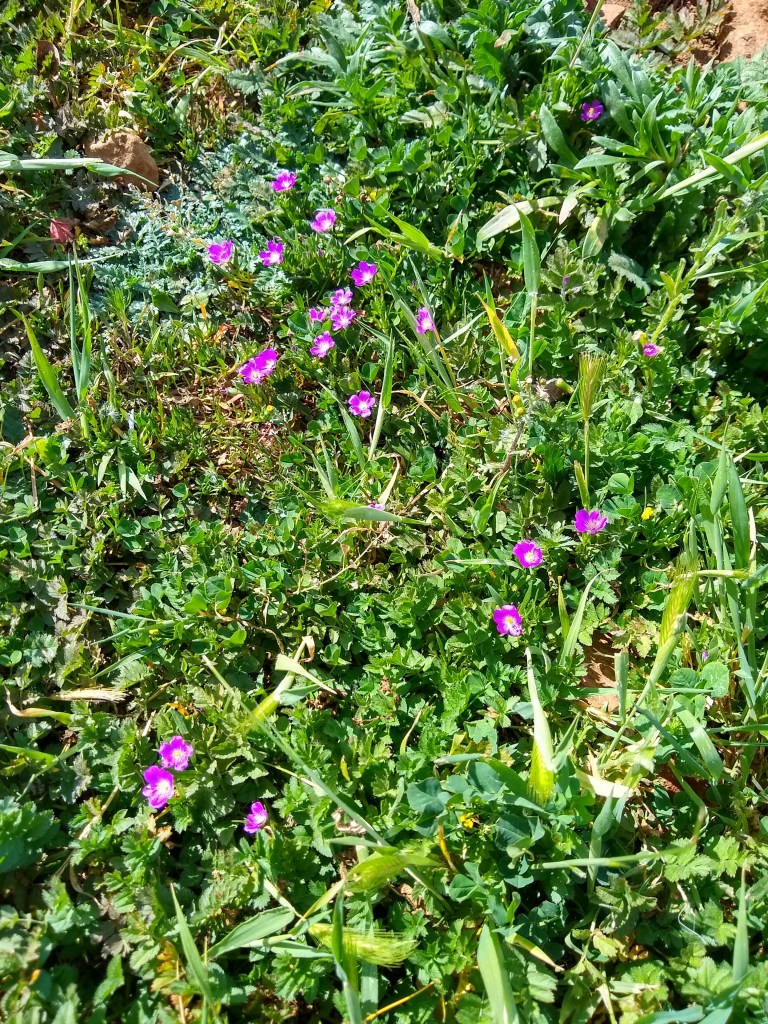
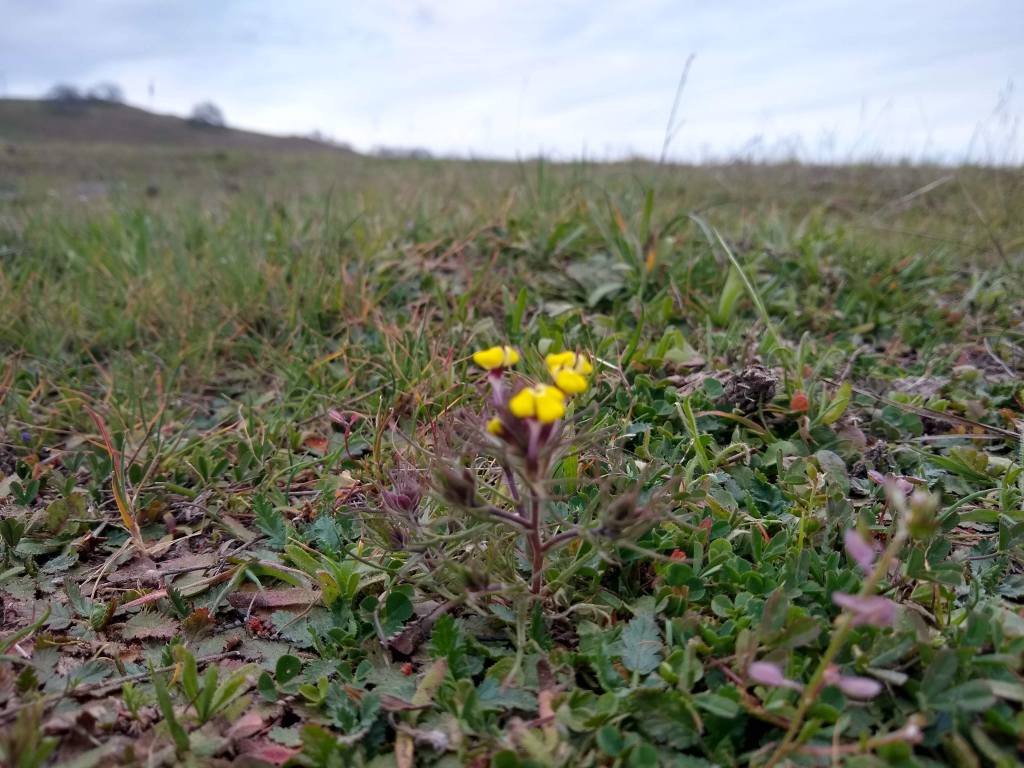
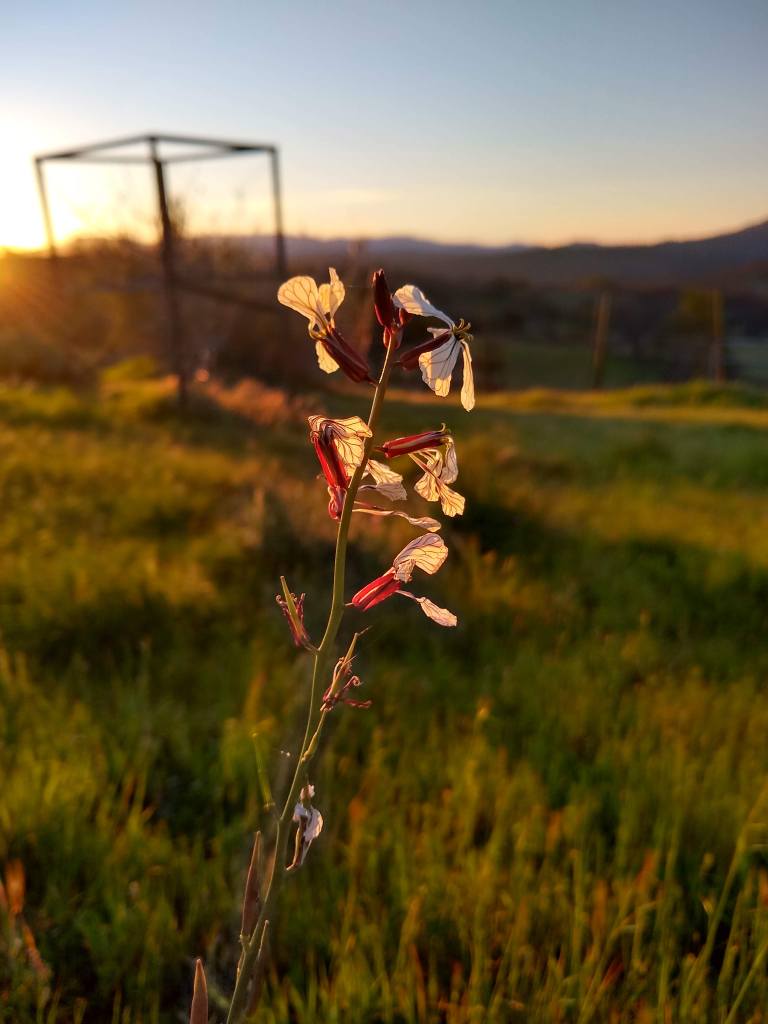
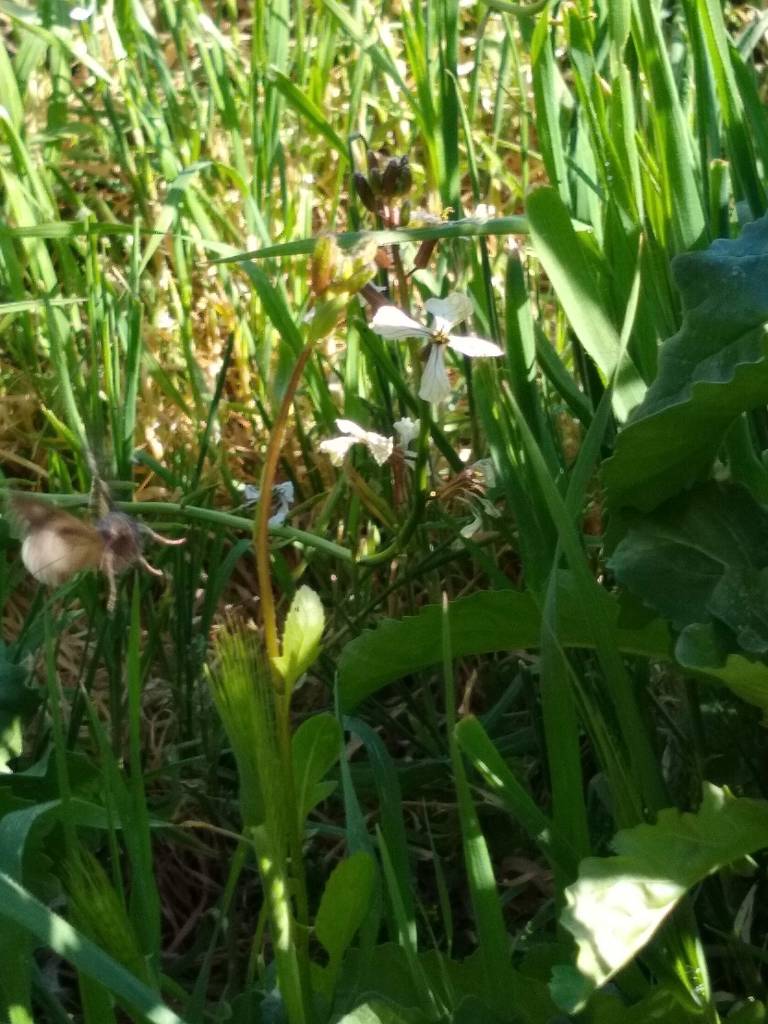
In just a week, there are more blooms. Arugula, not a native plant, but very prolific (and delicious), begin to blossom. There are thousands of plants with many flowers each. Then lavender….then brodiaea…and soon many more.

Water

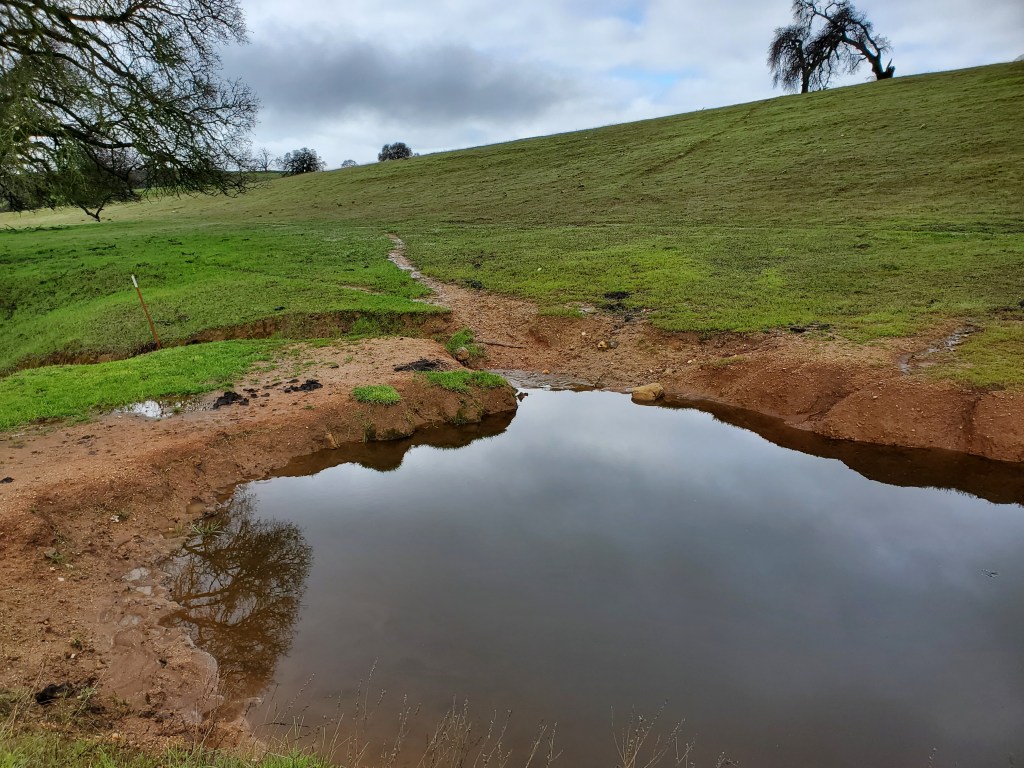
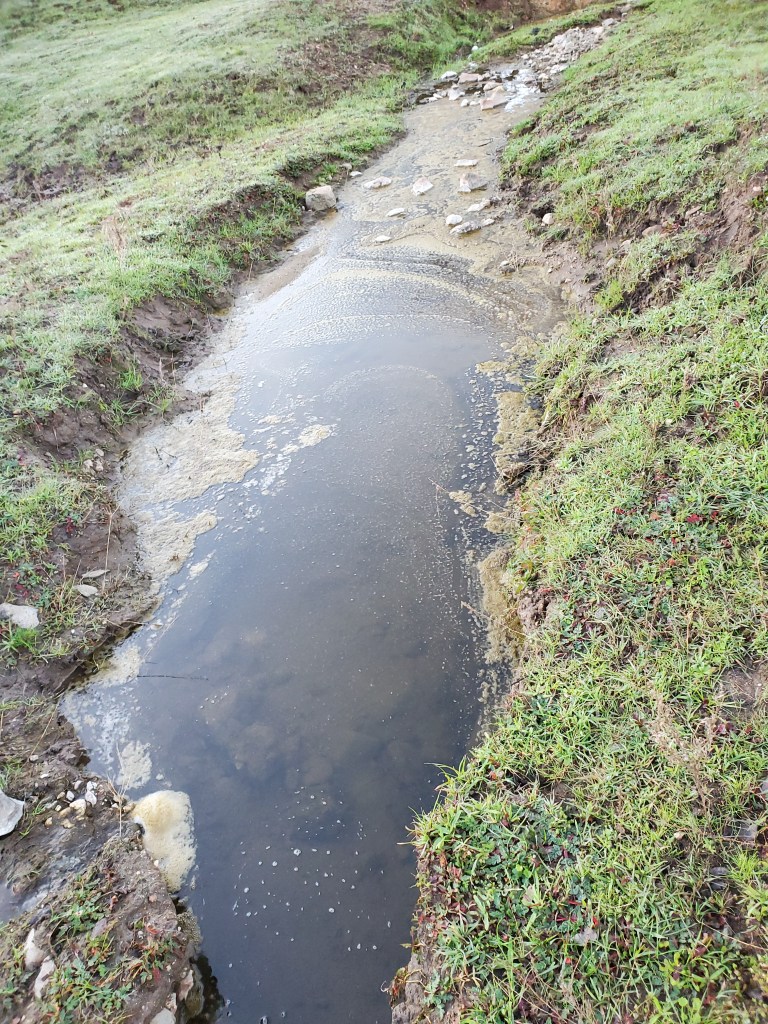
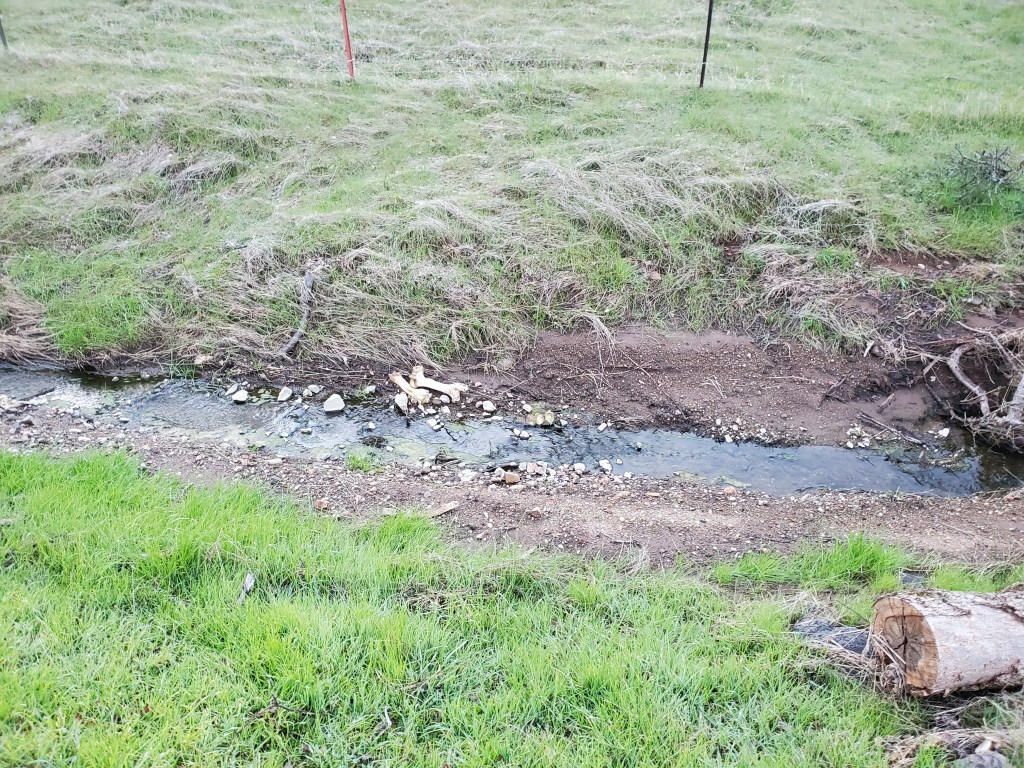
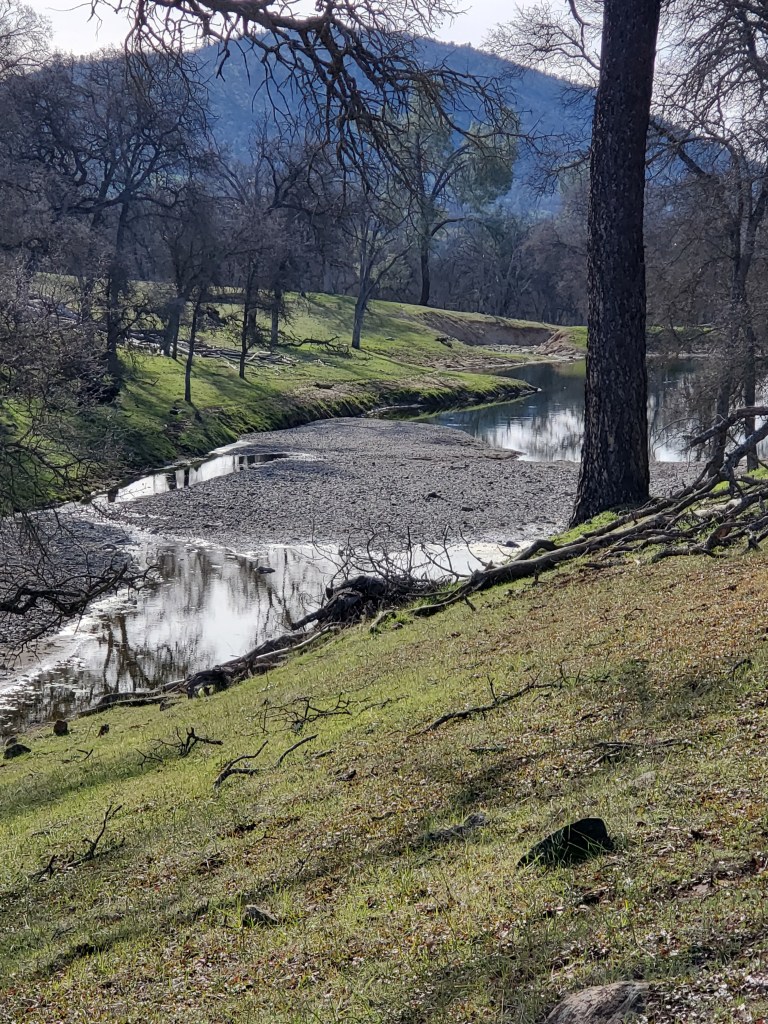
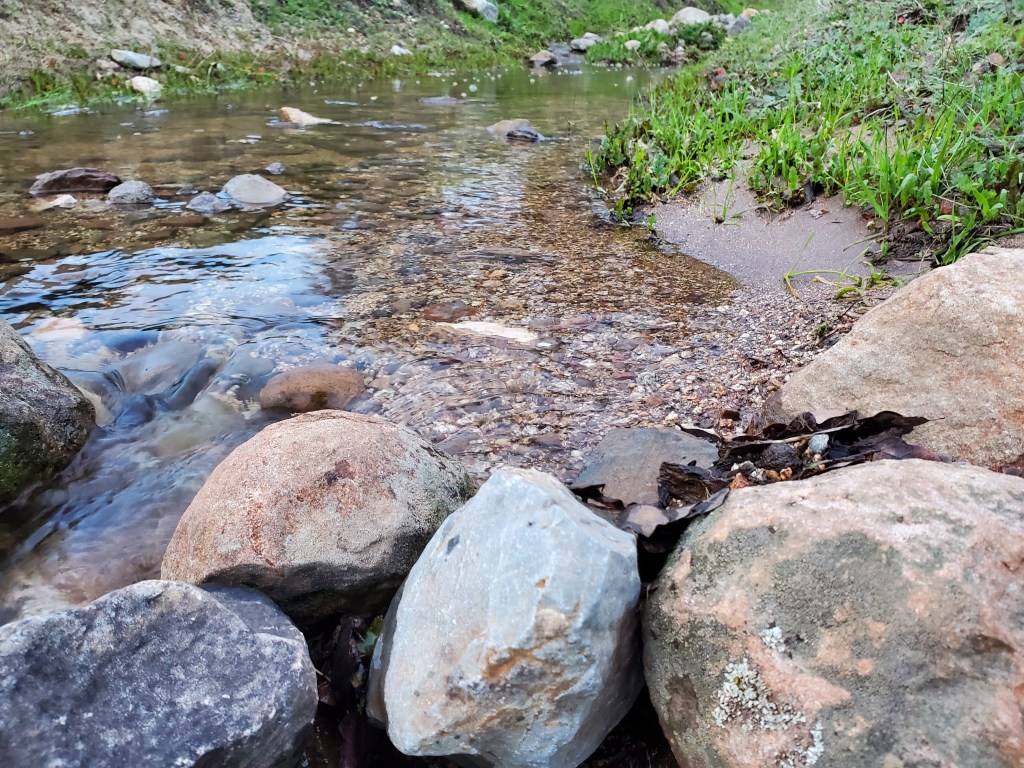
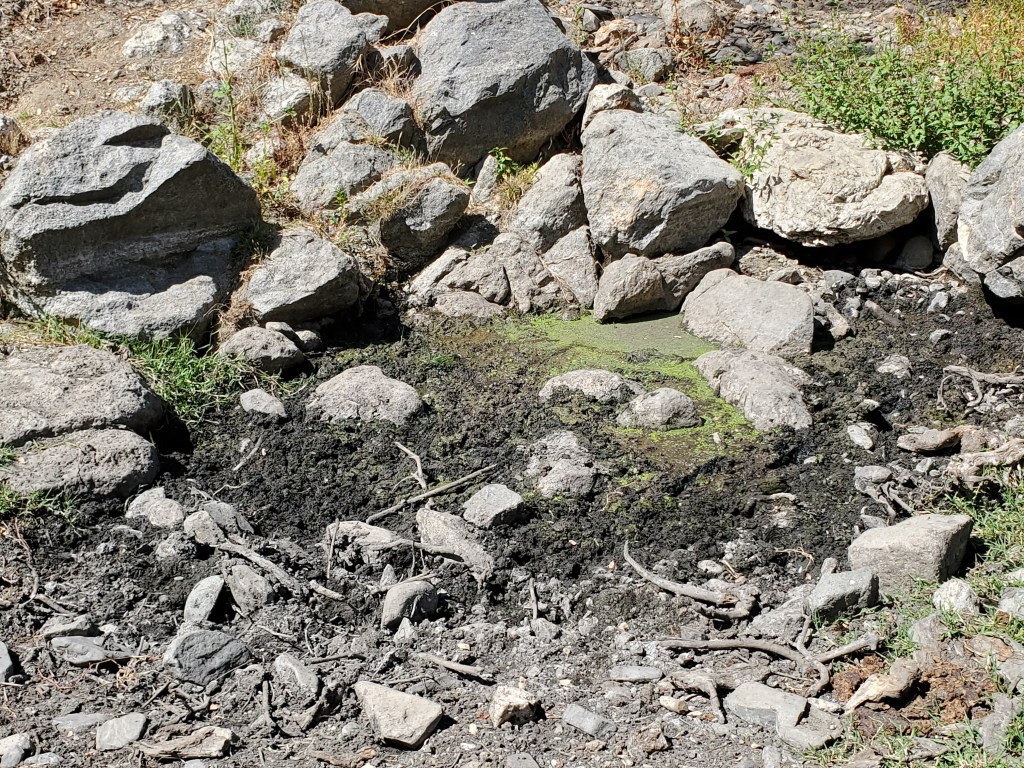
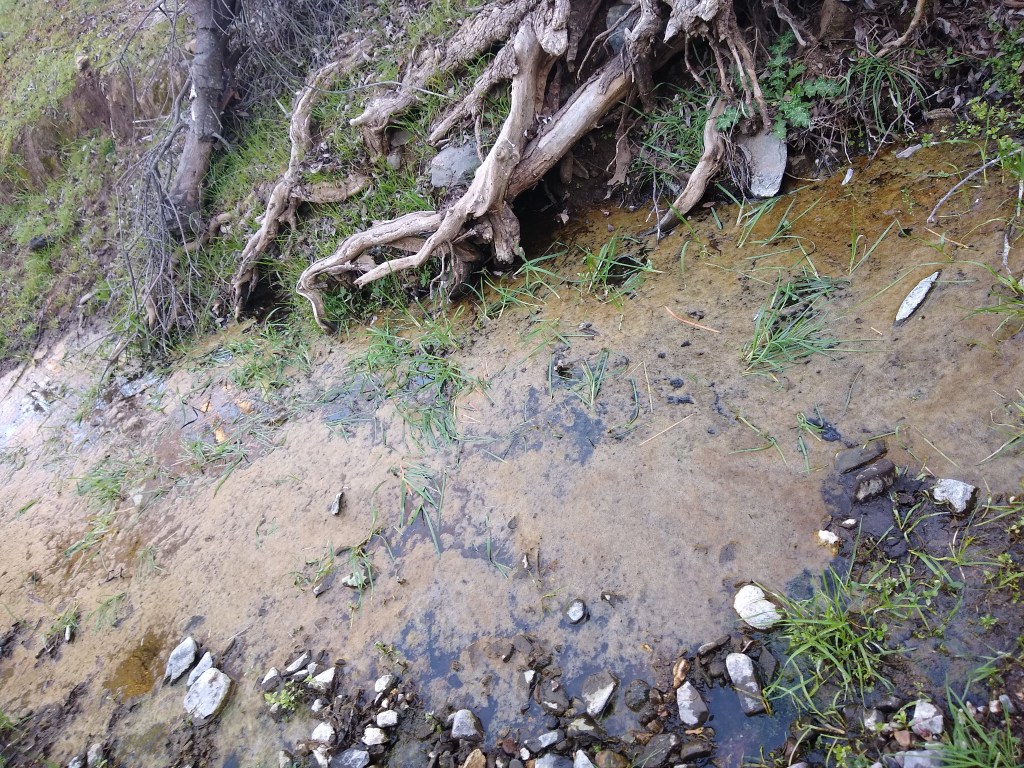
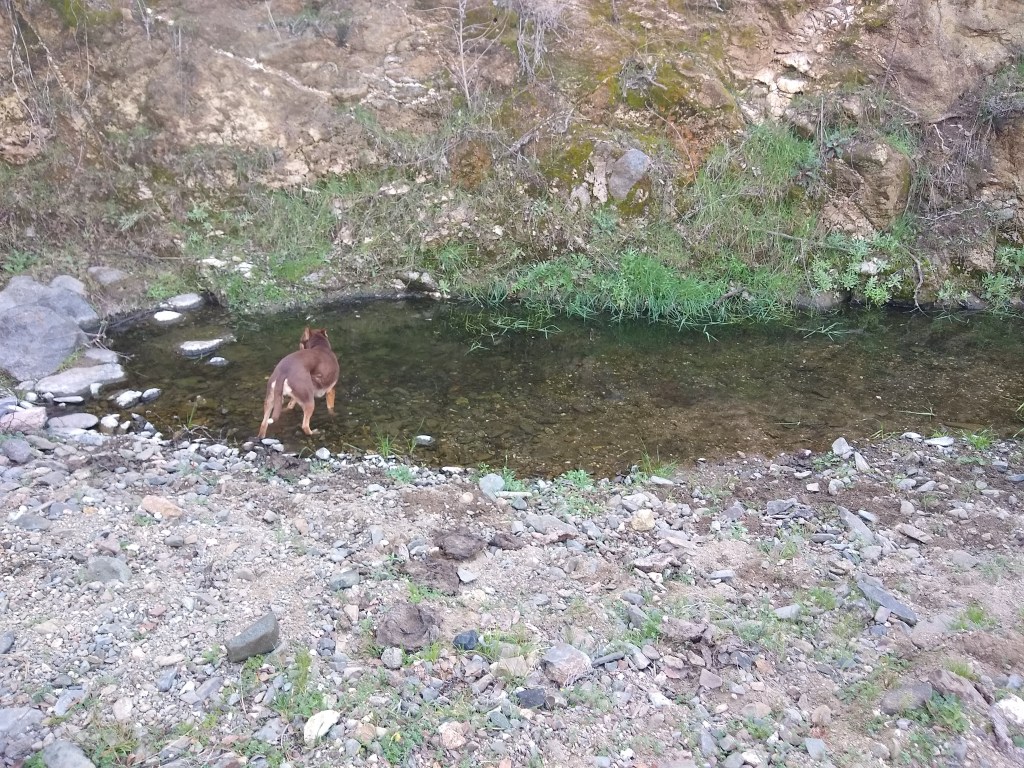
Weeks after the major storms, the arroyos are still running, albeit a trickle, but still moving. The creeks are running well, but slowing. Pockets of algae are beginning to form. Algae occurs when there is significant nutrients in the water – typically the result of fertilizers farmers use and livestock. Here, it is the result of cattle poop. The cows were rotated to the north just after the big storms. The algae began to show last week. It is one of the down sides of cows. Algae can starve water of oxygen and make it inhabitable for other life. When it gets think, I try to open up holes on the surface of the water to allow movement and oxygen absorption. It is a losing battle of course. Unless I remove it after it forms, it just grows back again.

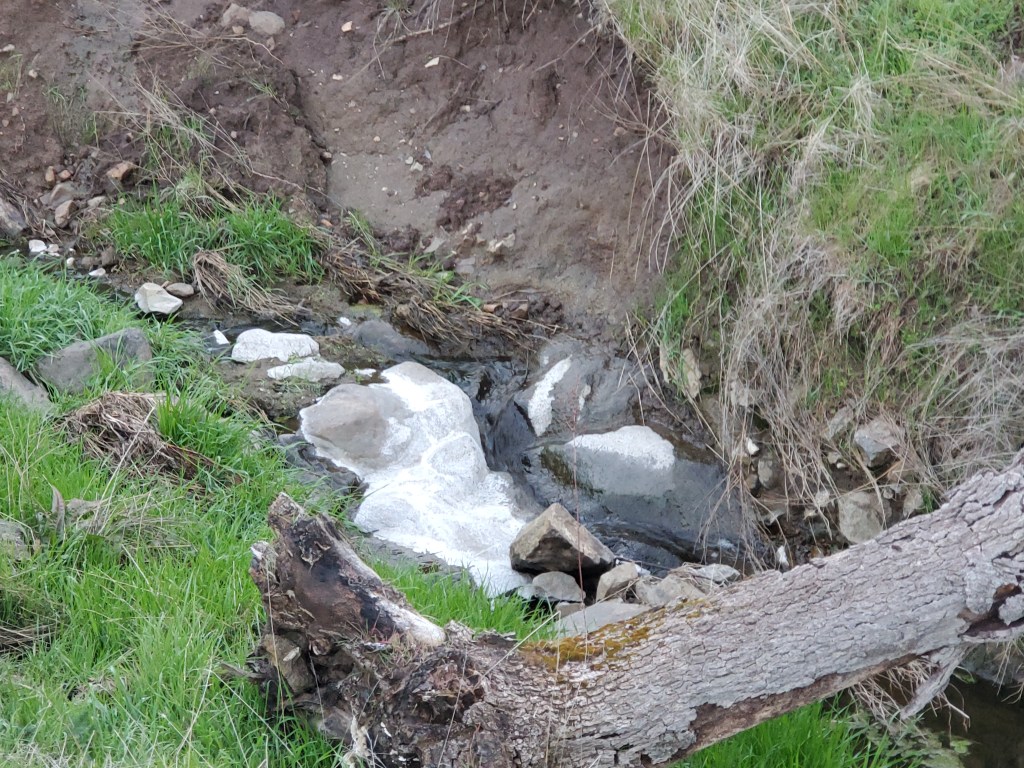
The force of the water was so tremendous, it blanched rocks – making the rock surfaces white. The torrent also deposited a remarkable amount of rock and sand into the creek channels. In some locations, the height of rock piles increased by 6″.

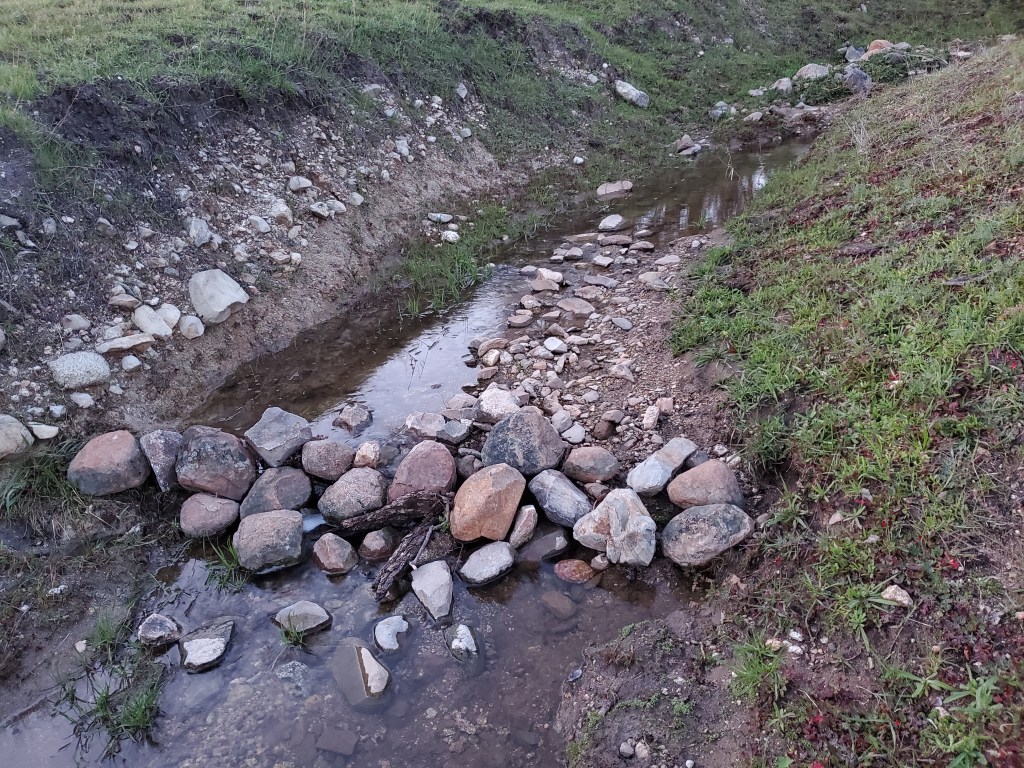
Although it was shifted around during higher flow times, the bulk of my rock check dam held. It retained the sediment, which built up behind it. It is absolutely stunning how much rock and sediment flowed down even on small creeks.

Fire

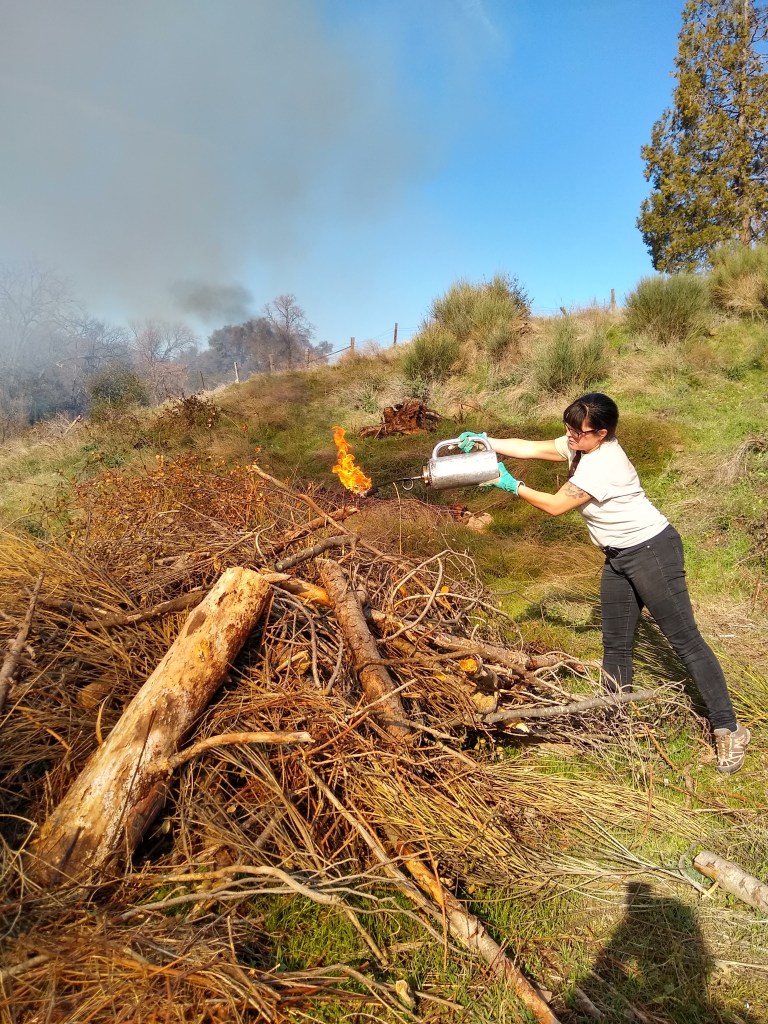
I attended the Southern Sierra Miwuk Traditional Ecological Knowledge program, which was two days. The second day, we worked on using fire to make the ground and specific plants healthy. I am not too comfortable around large fires – small fires ok – but large are a bit daunting. With each experience, I get a little more comfortable. I would like to have a burn at the ranch in fall and target eliminating medusa head and promoting some of the riparian native plants.

Wanderings

Climate, Heat and Wildfire Smoke = Change for Pollinators

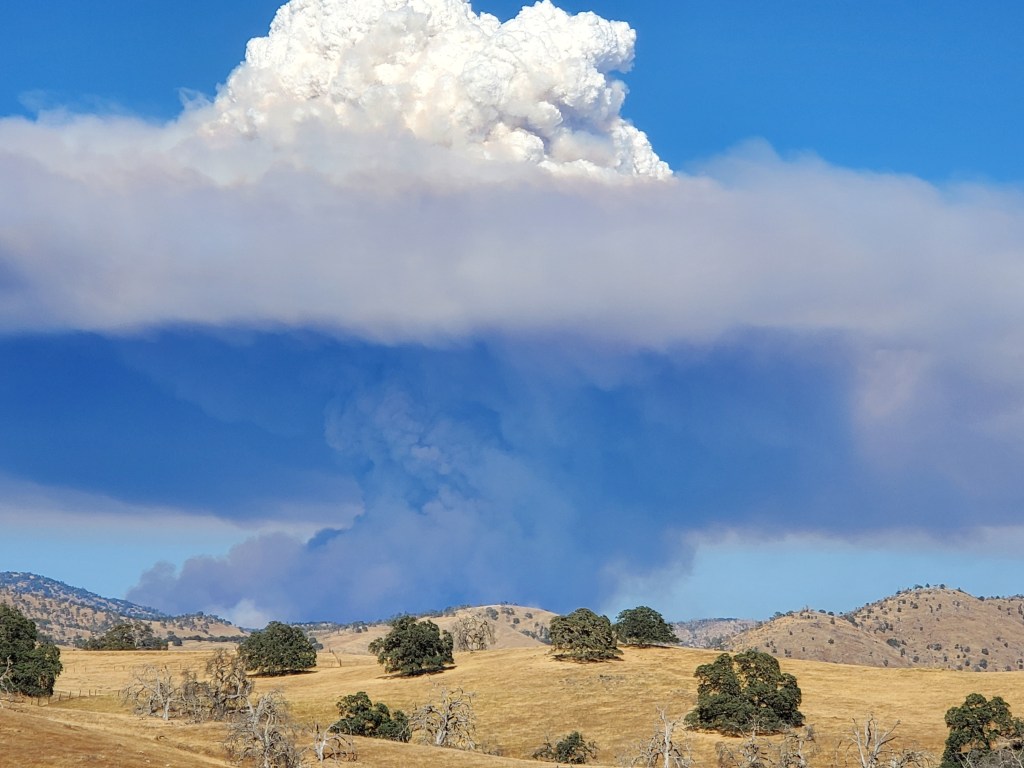
Oak Fire in July mushrooms

Please forgive me for complaining a little at the start of this blog. I know it is meant to discuss my pollinator work, and I am sorry to be a downer. All the things we do are entwined as elements of our life -so the bleed over and into is all part of the same narrative I guess. It has been a very difficult last three months. If you were wondering why a post had not been published in a while, I did not have the energy. A close, dear friend fell, became ill and died. It was a rapid, difficult, frustrating experience made worse by a fragmented healthcare system. His fall was in June, and by July he was gone. COVID finally caught up to me in June despite my being extremely careful. Although it was mild for me, I was positive for 10 days and had to put many things on hold. In July, wildfire hit just east of us displacing many friends with several losing everything. We took on evacuees at the ranch with their animals. The emotional exhaustion was evident among everyone – evacuees, responders and the average community member. The compassion fatigue, overwhelming sadness for all living things and extreme, ongoing heat has gotten to everyone I think. I could not believe my temperature gauge when driving home from a meeting in the Central Valley. It said 118F.

I find it remarkable that anything can exist in these circumstances of heat, smoke, drought and extremes. It is no surprise that very few butterflies have visited the ranch despite plenty of blooms. All is not depressing. We have had a proliferation of tarantula hawks and more dragonflies than have been here in years. Perhaps the increase in dragonflies, a natural predator of butterflies, is part of the reason for limited sightings. I don’t think we have gotten to a place of balance at the ranch yet. Regular drip irrigation has increased soil moisture around the house, but the drought has taken its toll on everything, soil, plants, trees, humans.
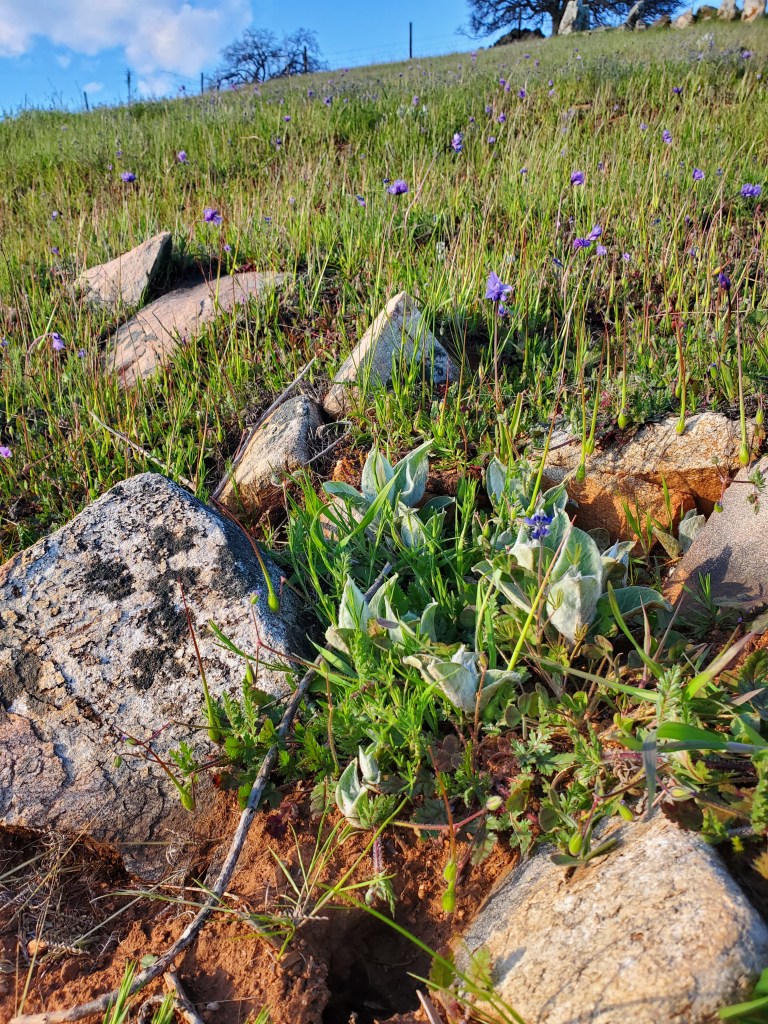
Milkweed Established!

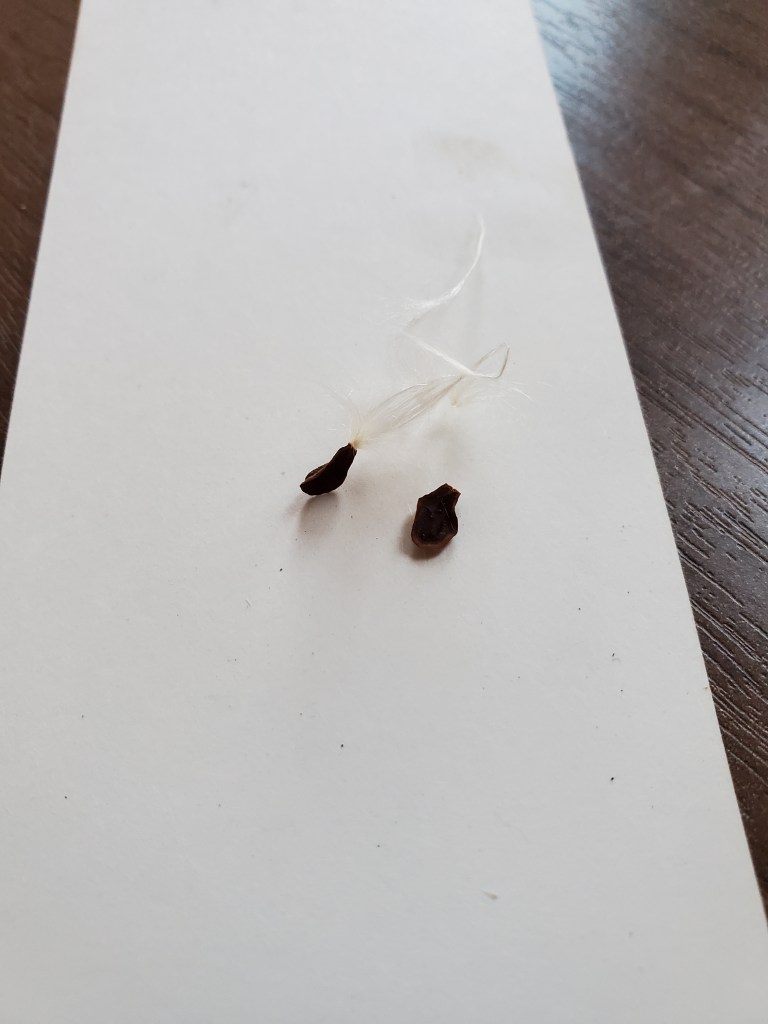
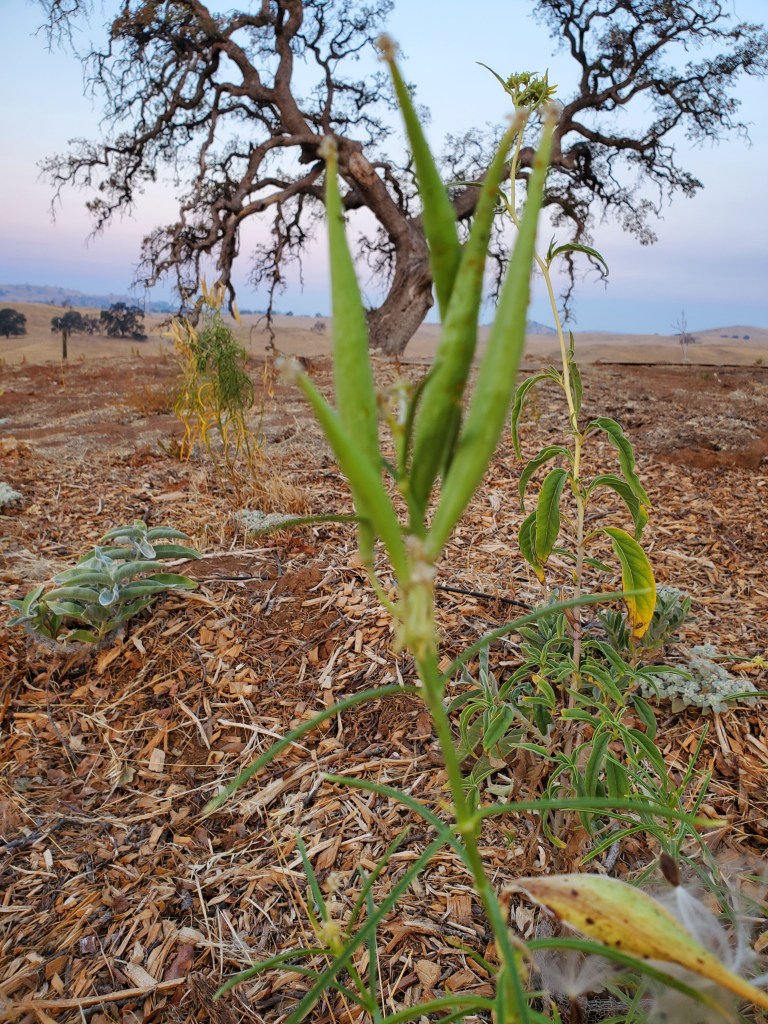
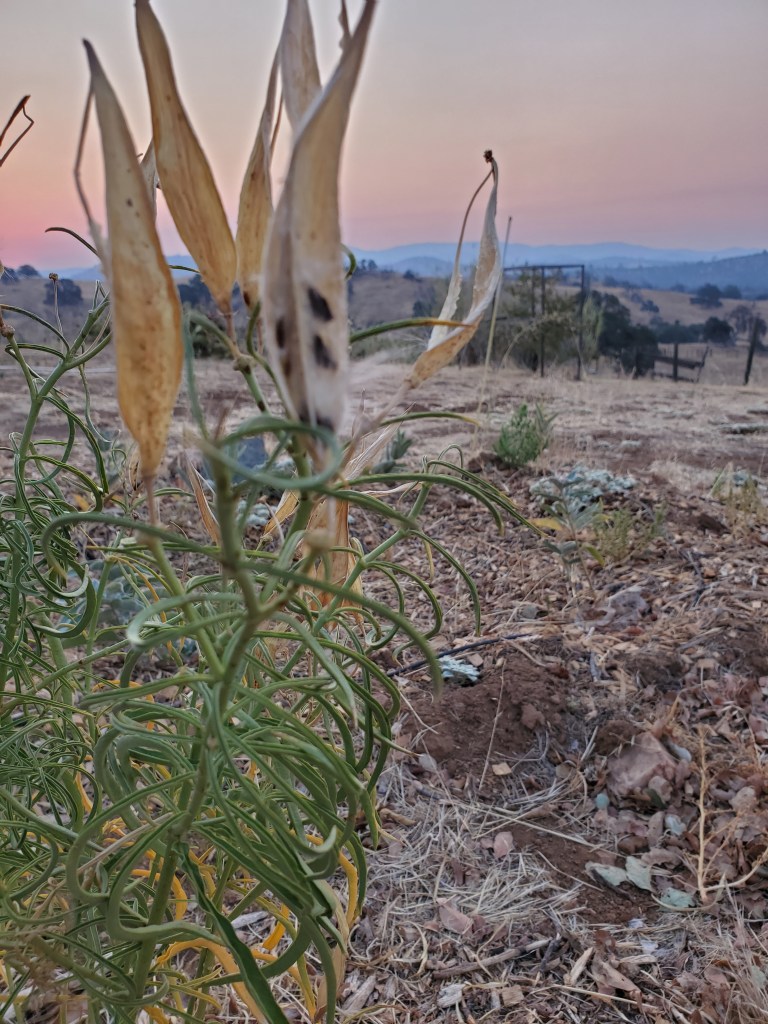
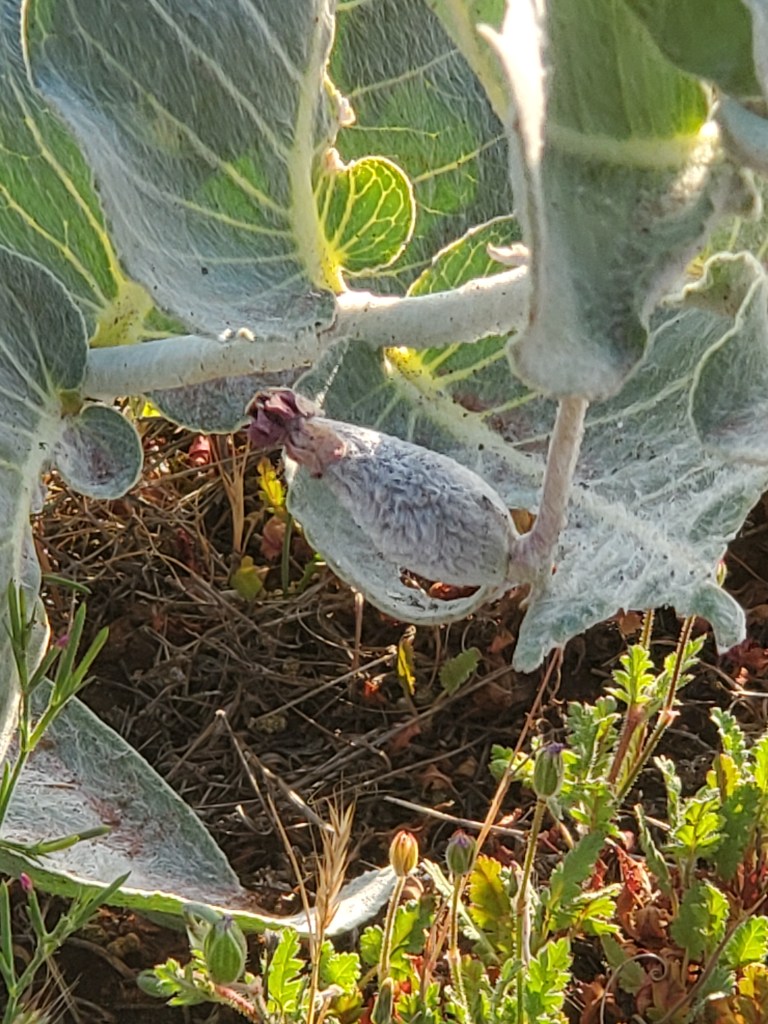
The milkweed in the older plots were mature enough to produce seed pods. It was a joy to see them healthy and doing well despite gopher attacks over the past 3 years.

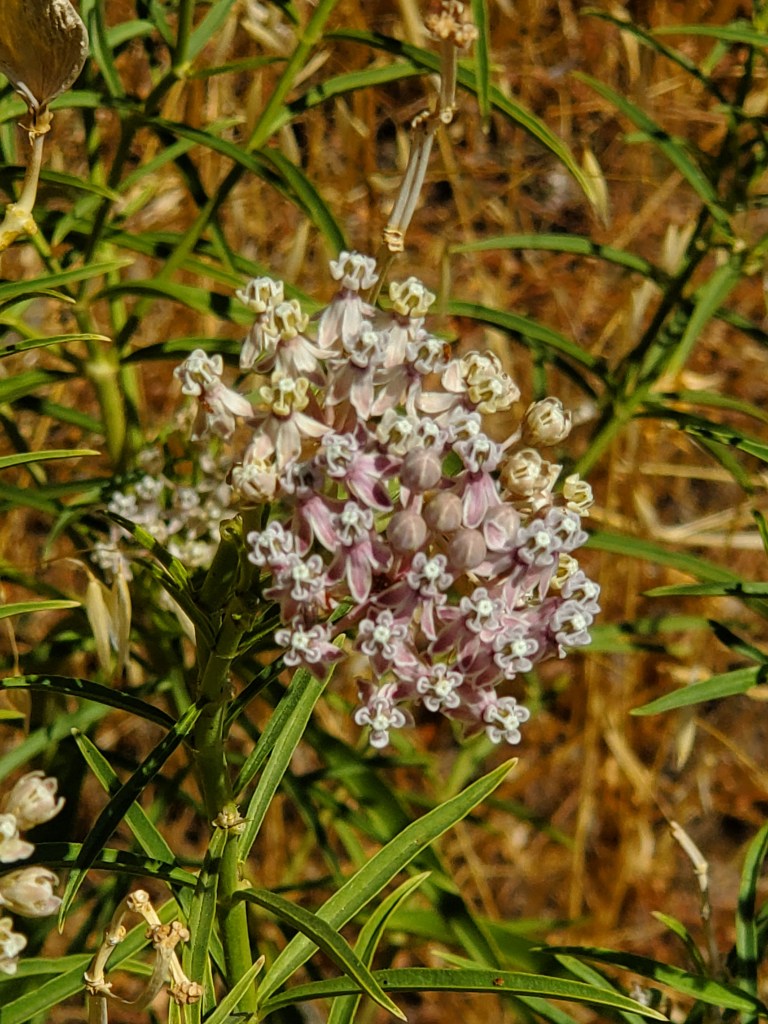
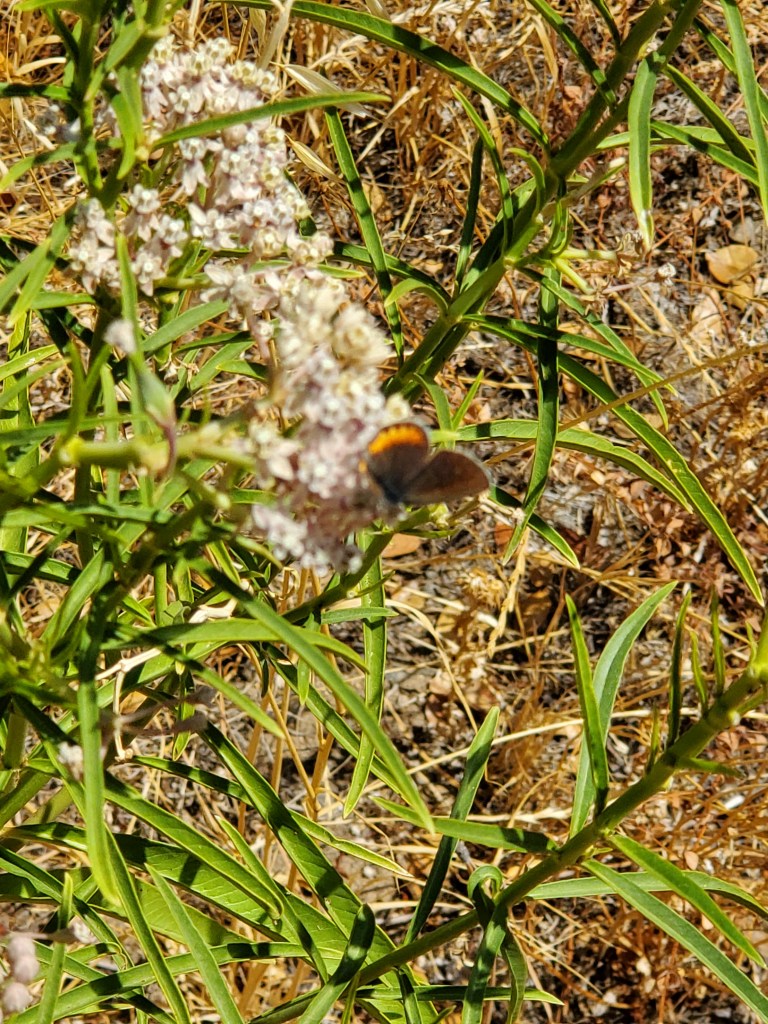
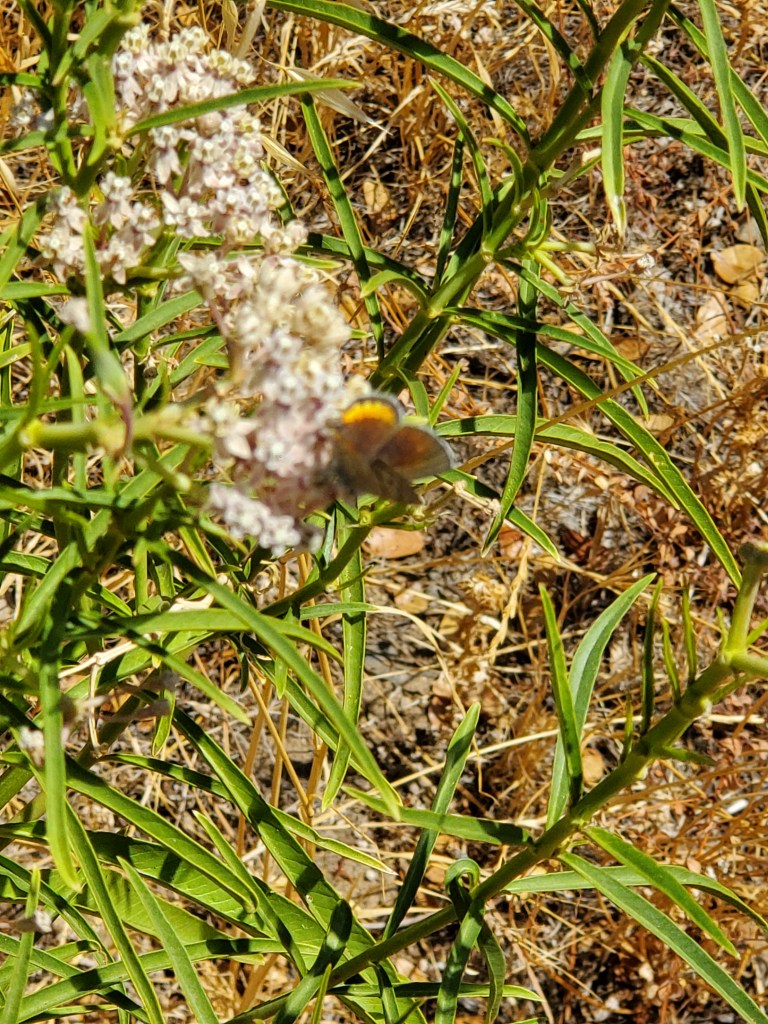
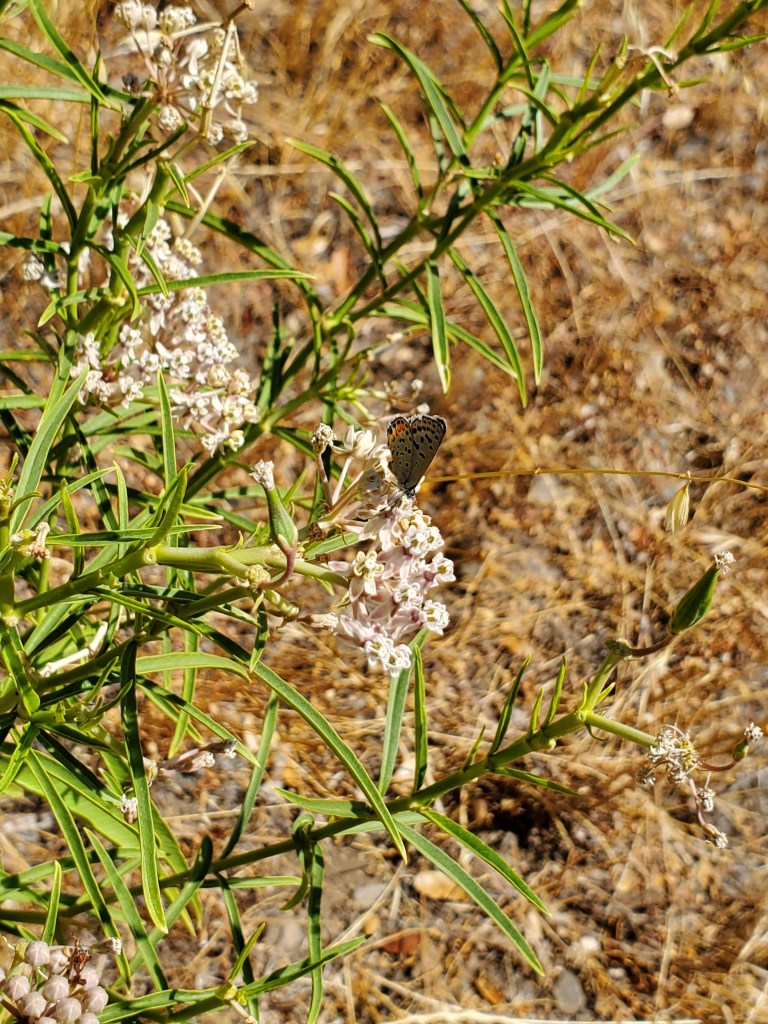
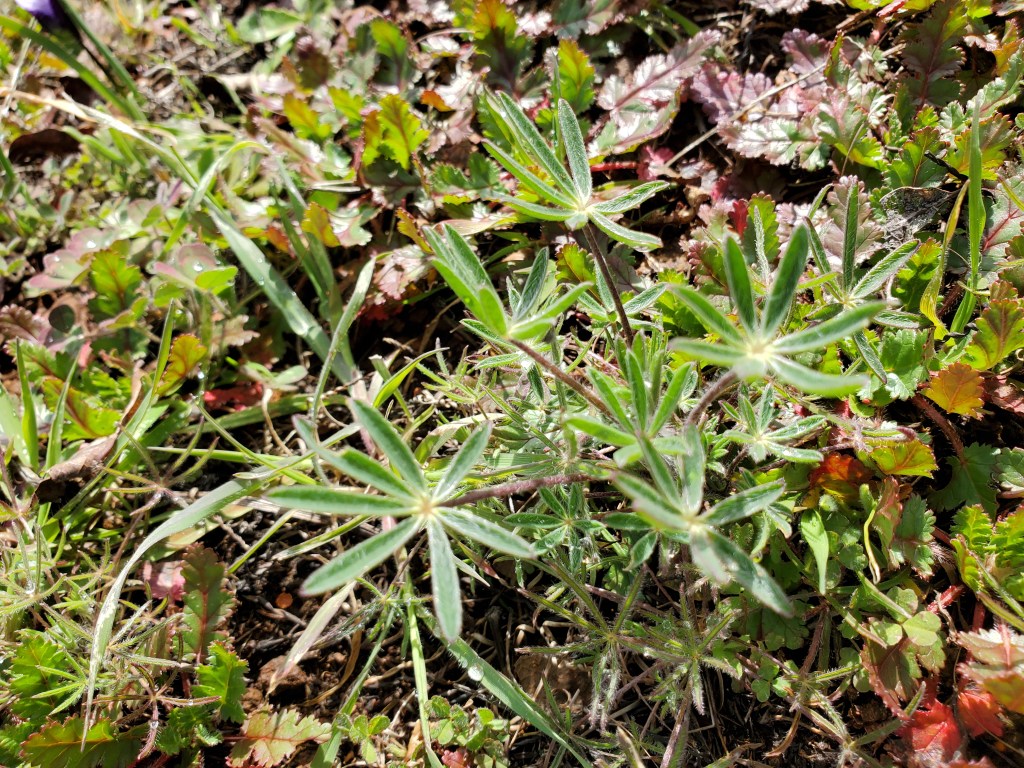
I am now able to identify narrow leaf milkweed in the wild and have seen several plants in my creek bed and on the side of the road around the county. It is very interesting that they often appear alone or quite a distance from one another. I wonder if that has to do with years of grazing and pesticide use (on the major highways). On a monitoring excursion to Odom Creek last week, I found two or three milkweeds in bloom in the creek bed. There were several California Hairstreak butterflies around each plant. I saw a buttery yellow cabbage or sulfur butterfly and one buckeye butterfly.

Blooms

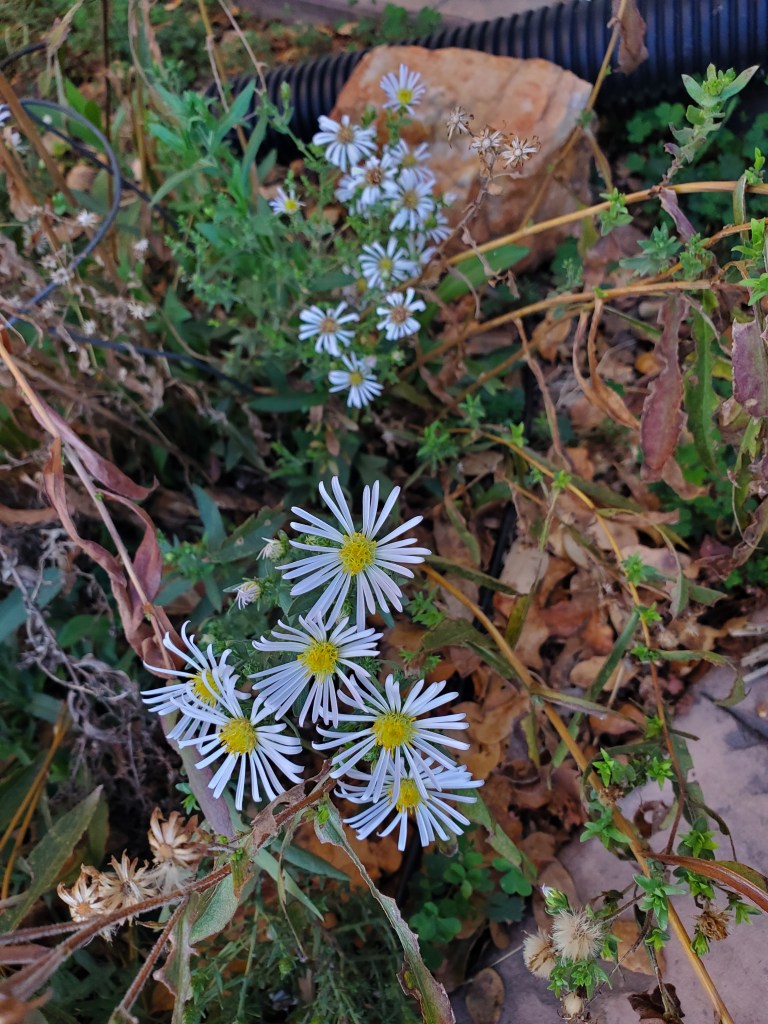
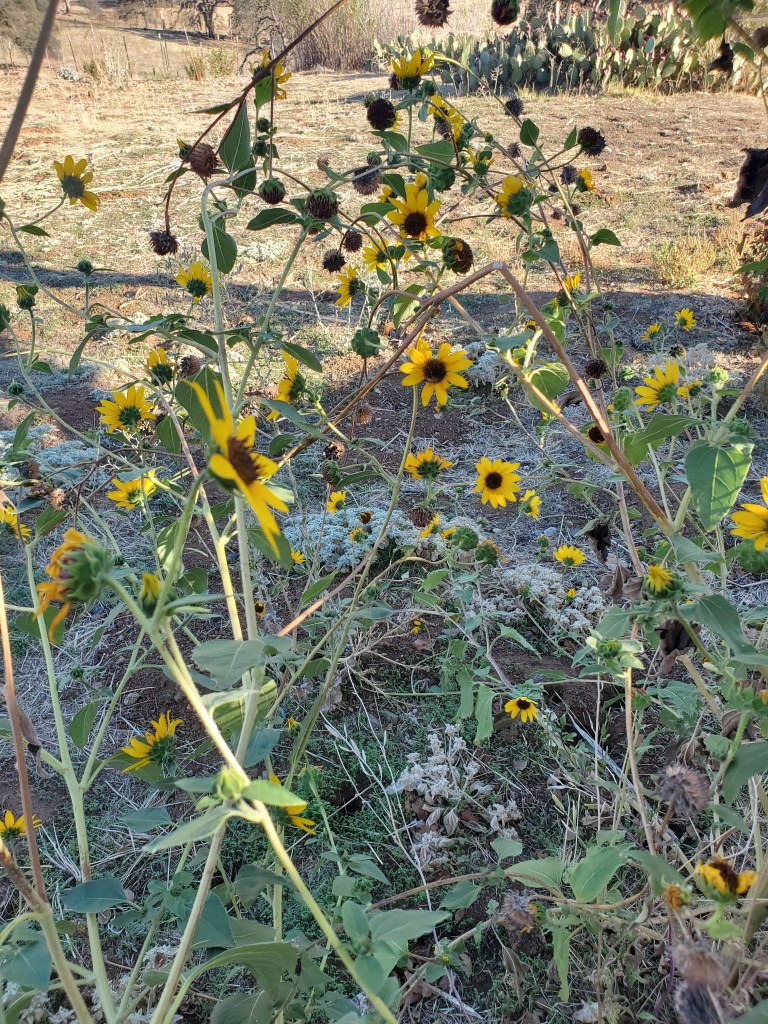
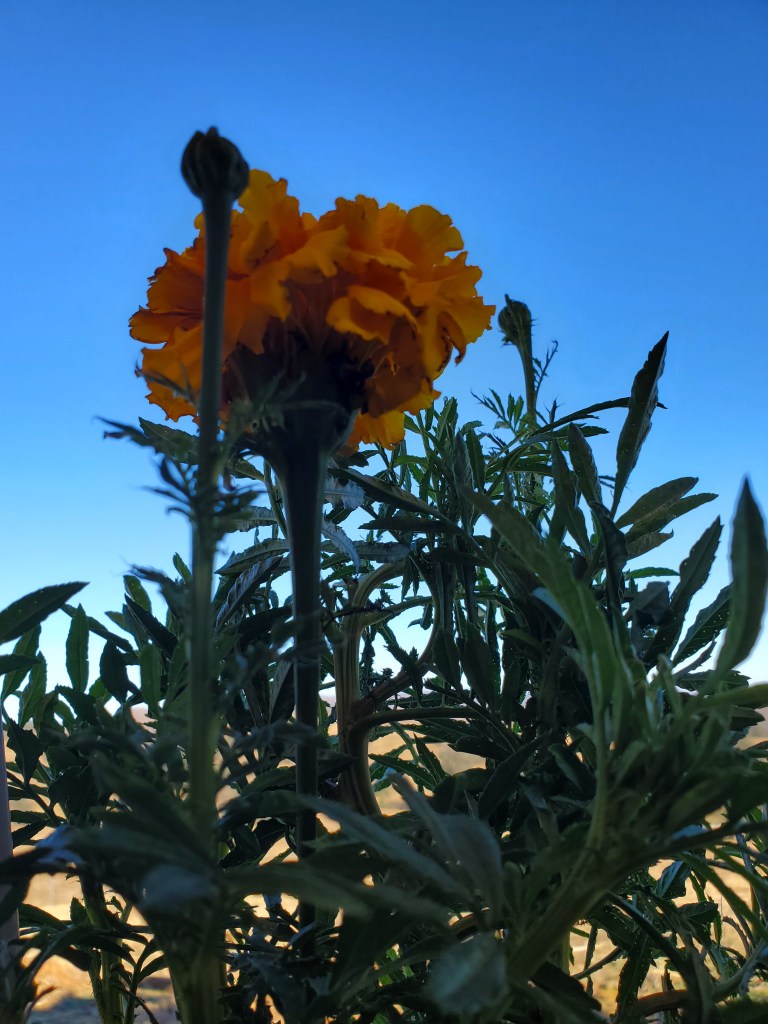
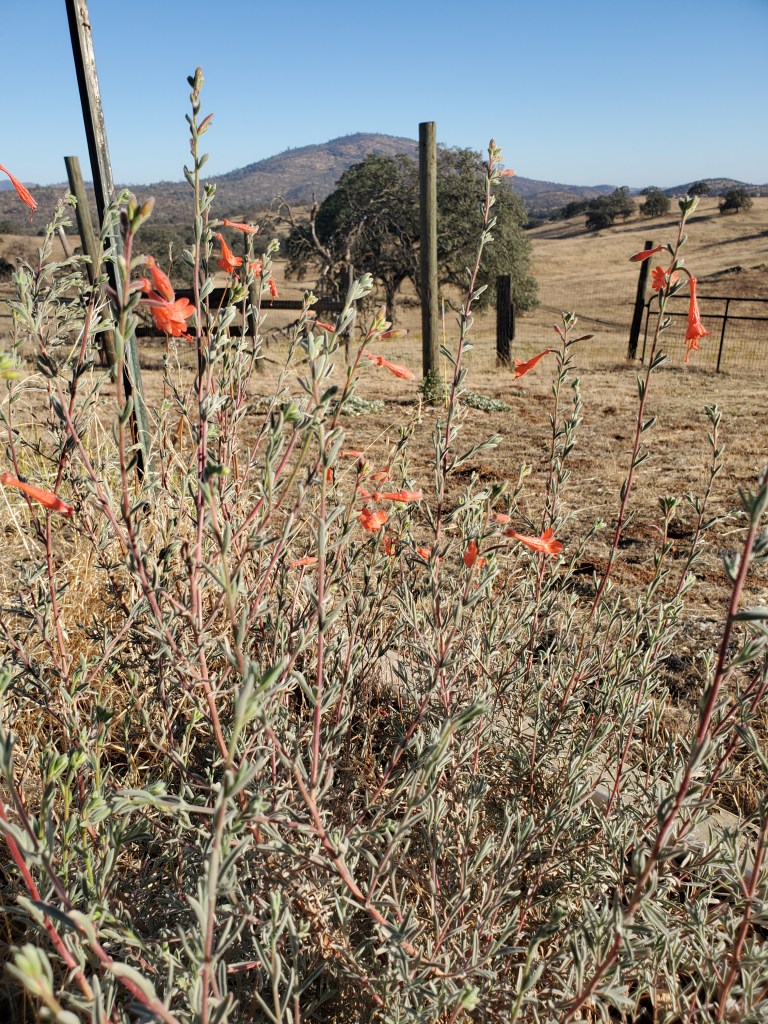
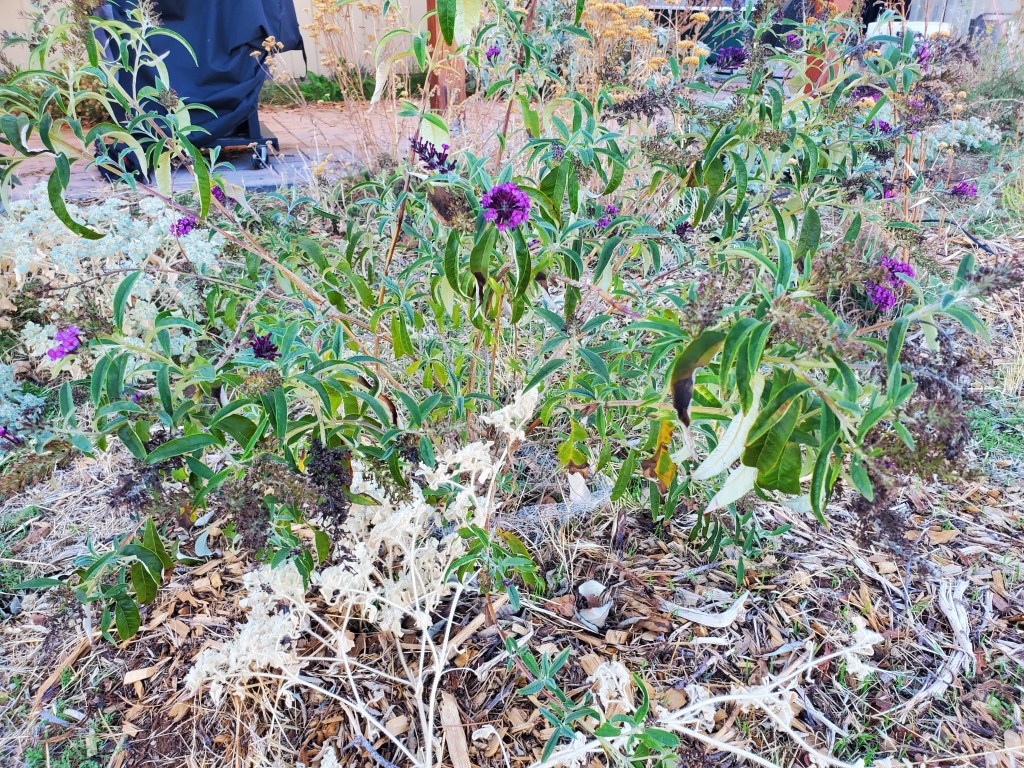
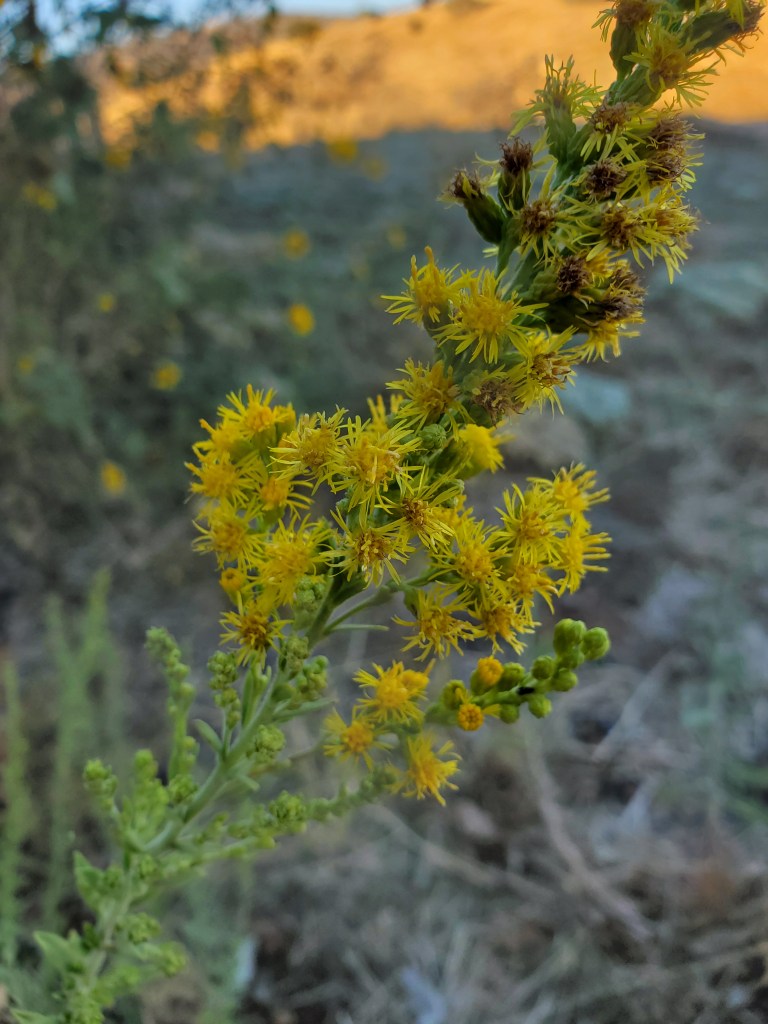
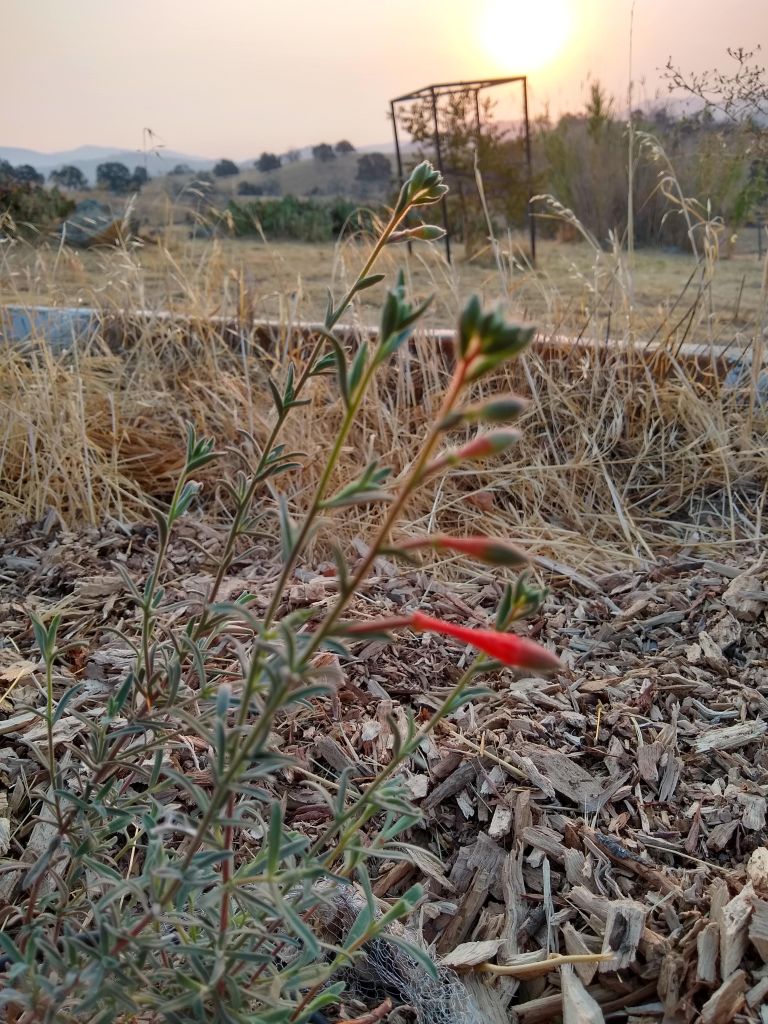
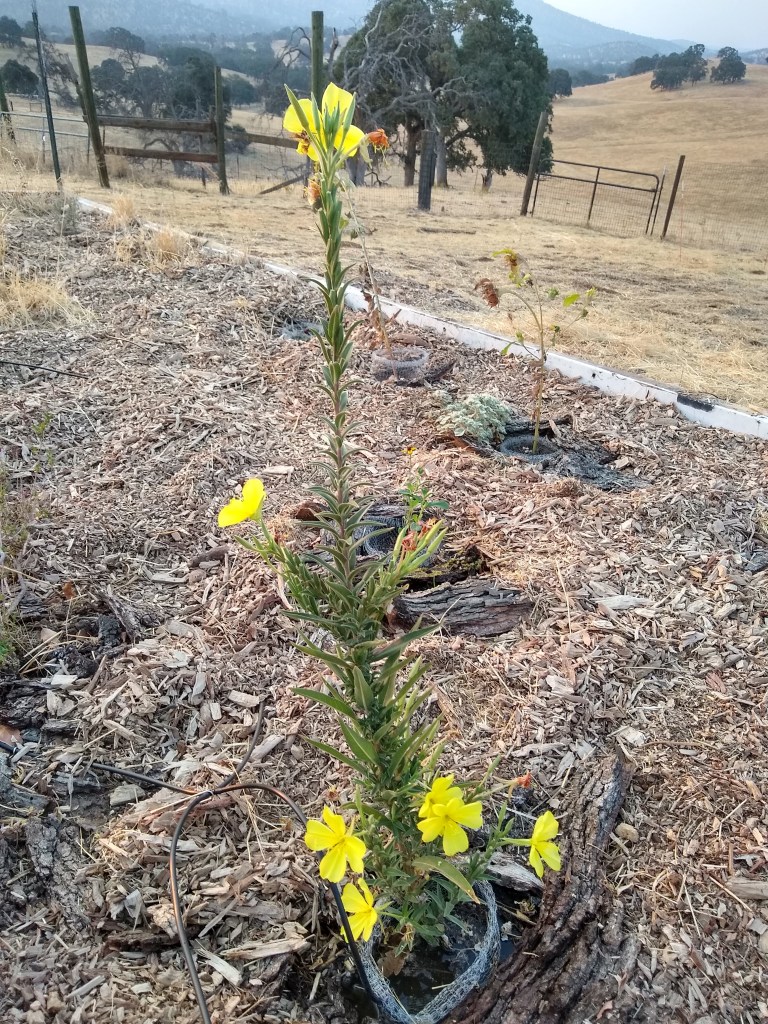
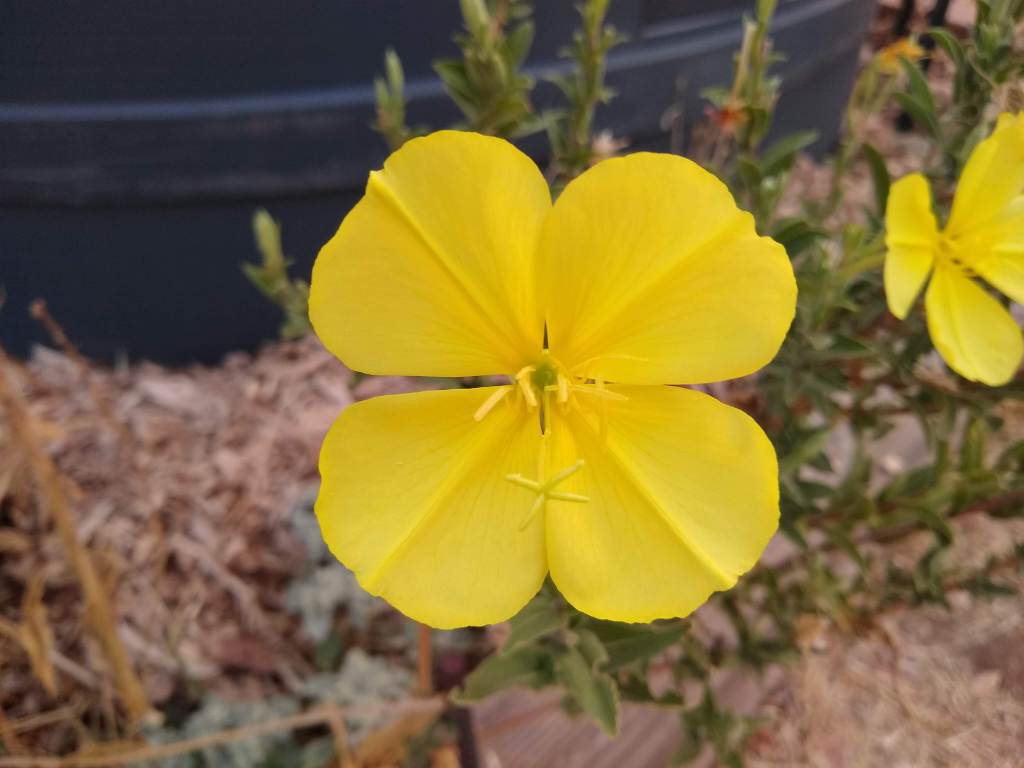
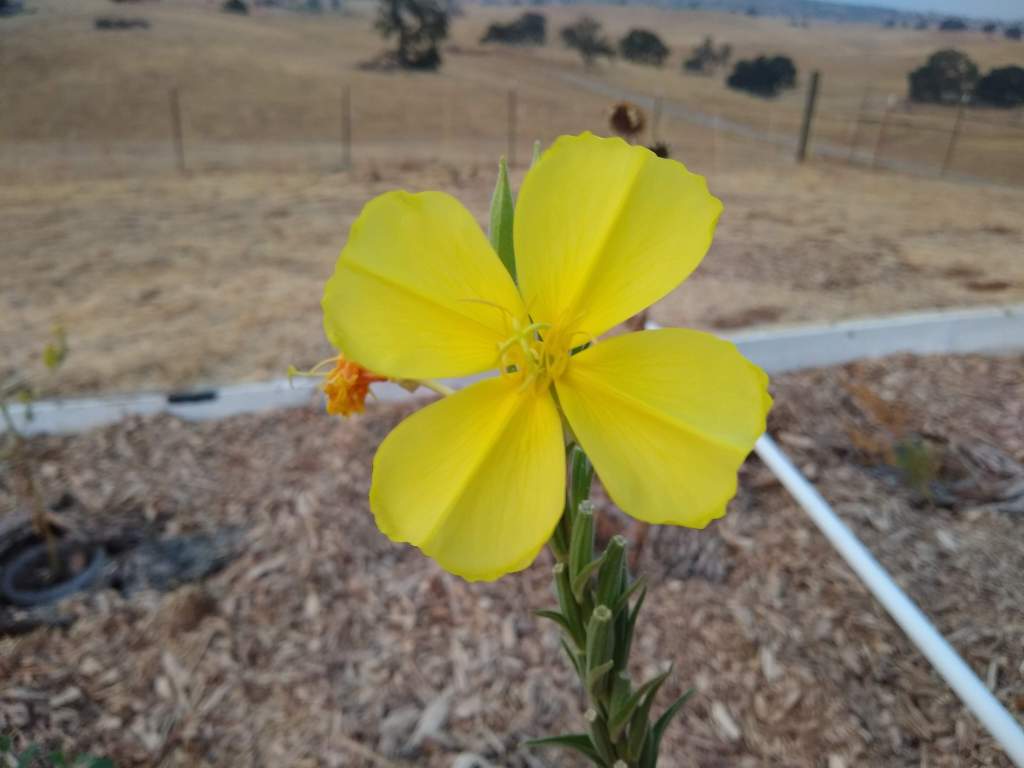
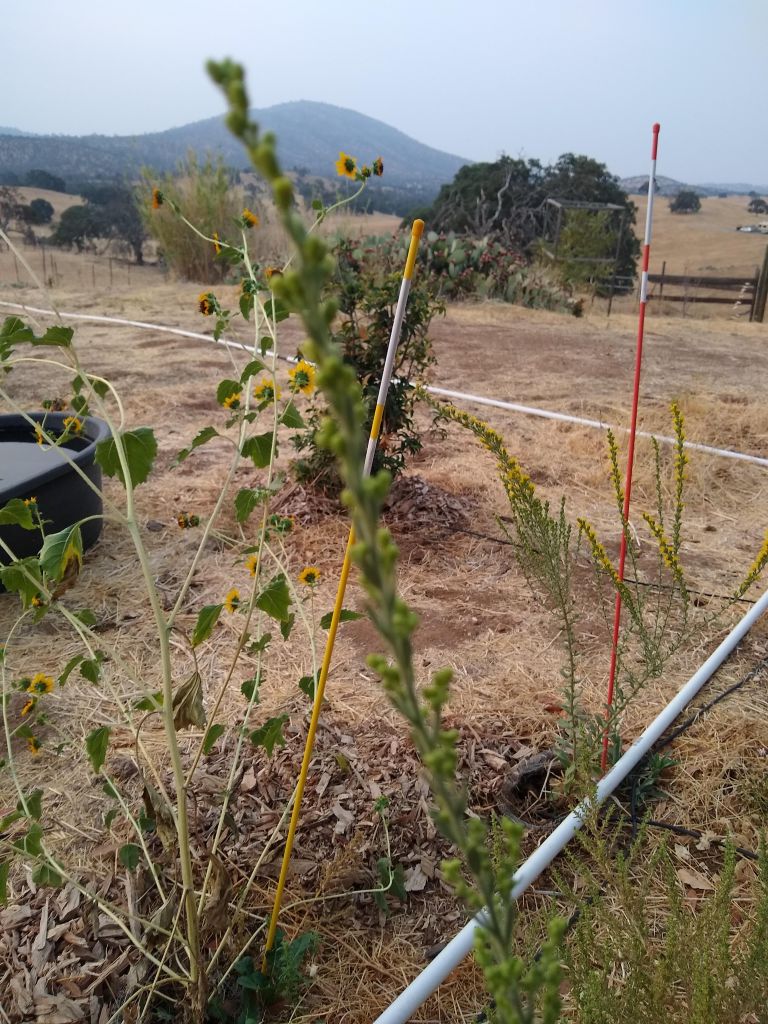
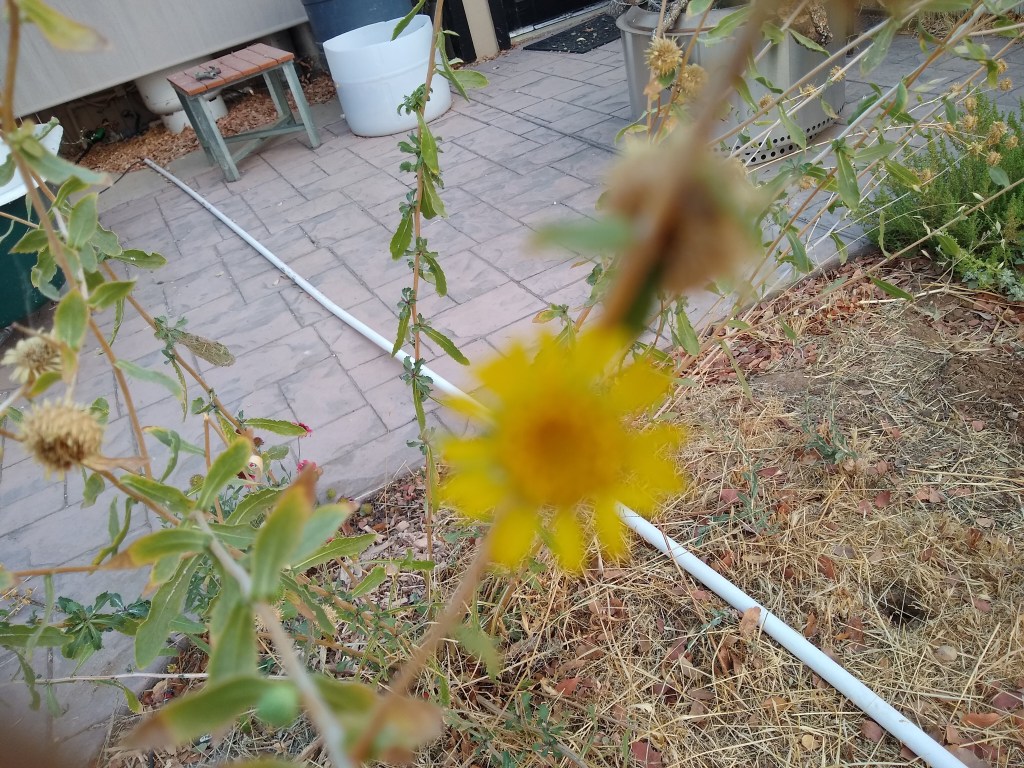
As planned, we have plants in bloom from the beginning of Spring throughout Fall. In bloom currently are California fuchsia, goldenrod (just opening), marigold, sunflower (still going!), pacific aster, a few gum weed and Mexican sunflower blooms, buddleia, vinegarweed (lots of these plants this year), and tarweed. There are even several herbs and onions blooming. There are many options for the pollinators to choose from.

Concern for the Grand Blue Oak

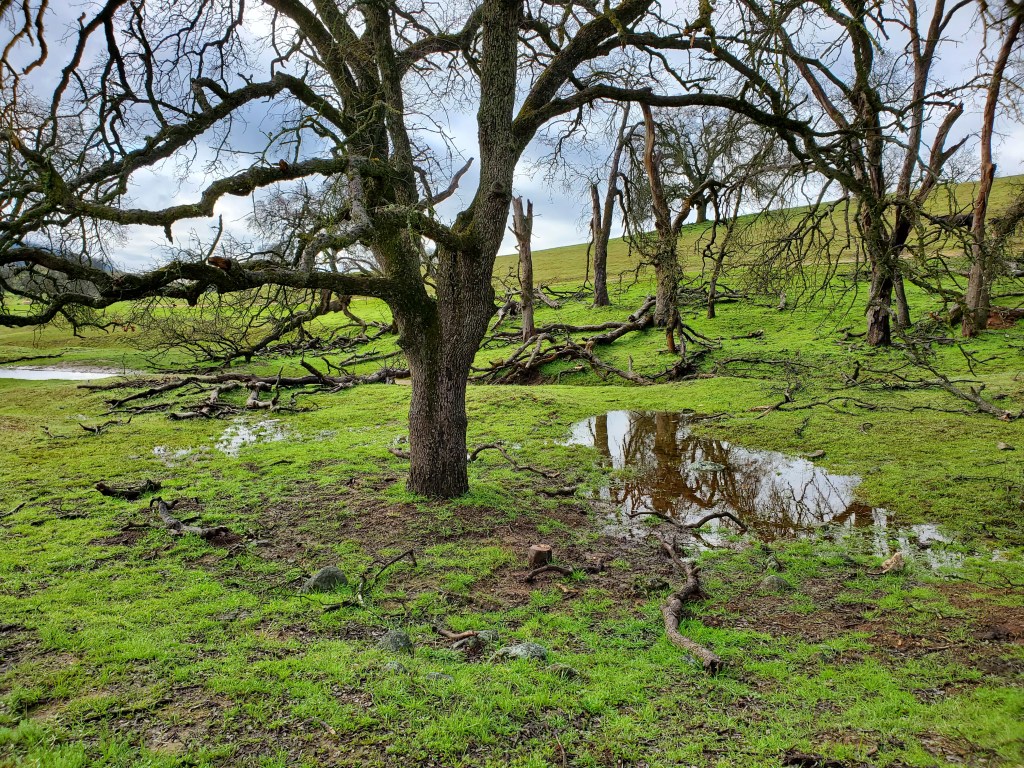
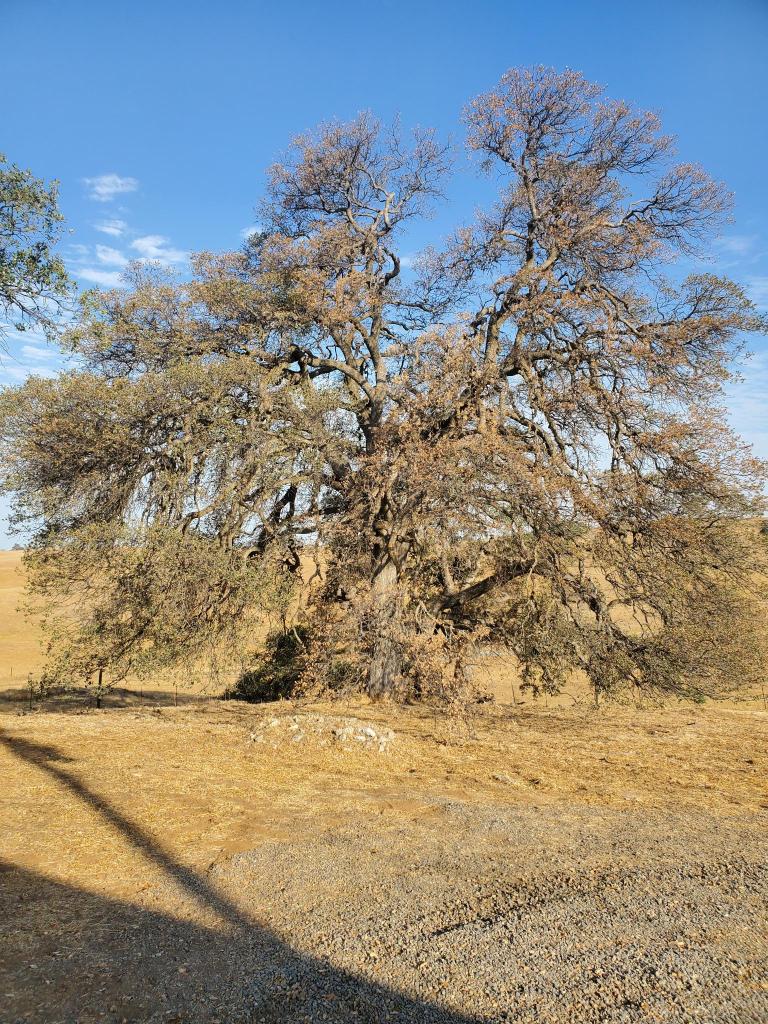
It is normal for oaks to conserve their energy during drought. They kill off their leaves and drop limbs. It can be very dangerous to walk under stressed oaks. I mentioned one of the large oaks in the front of the house in my last post and earlier in this post. It started with one branch having all its leaves dead in May. Then, almost overnight, all the leaves were brown and falling by August. A small branch dropped earlier this month. It has been incredibly distressing. These trees in the front of my home are over 200 years old, and they just cannot die on my watch.

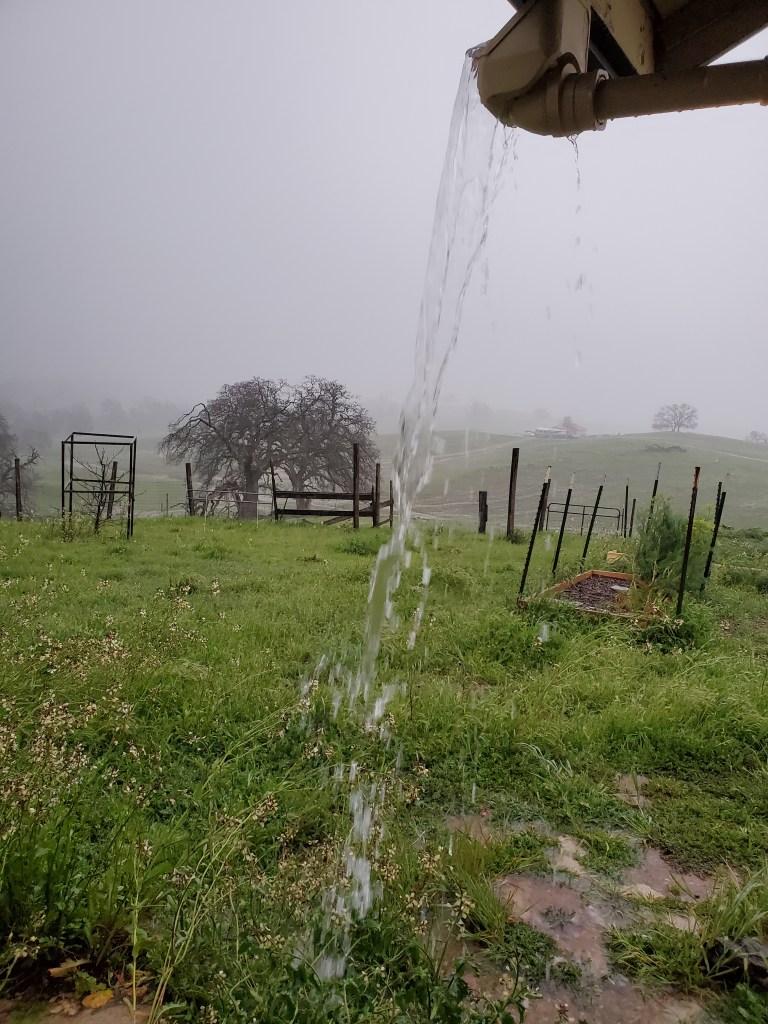
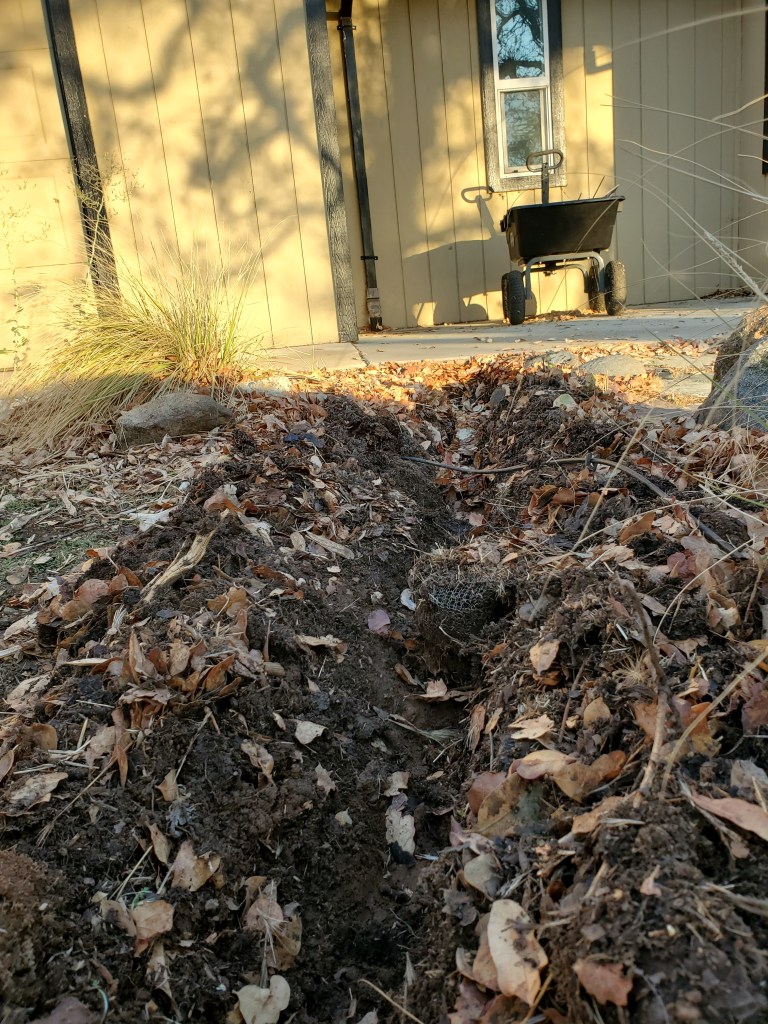
Several years ago, a landscape and water expert was at my house when another tree in the front was extremely stressed. She recommended digging a trench just outside the drip line of the tree crown so that rain water would be stopped and recharge the area around the tree. Not only did I do that for two of the four oaks in front of the house, I ran my front gutters into the trenches. It worked! The branches I thought were dead all came back except for one.

I did this exact same thing for the newest tree in crisis. I am hopeful it will work too.

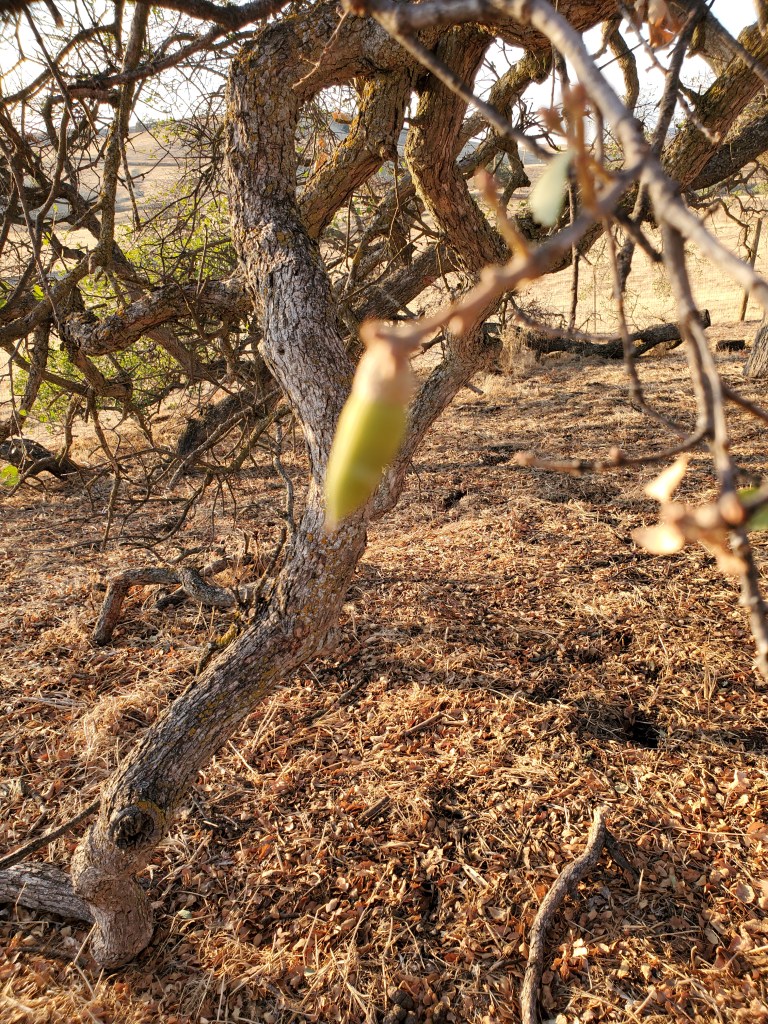
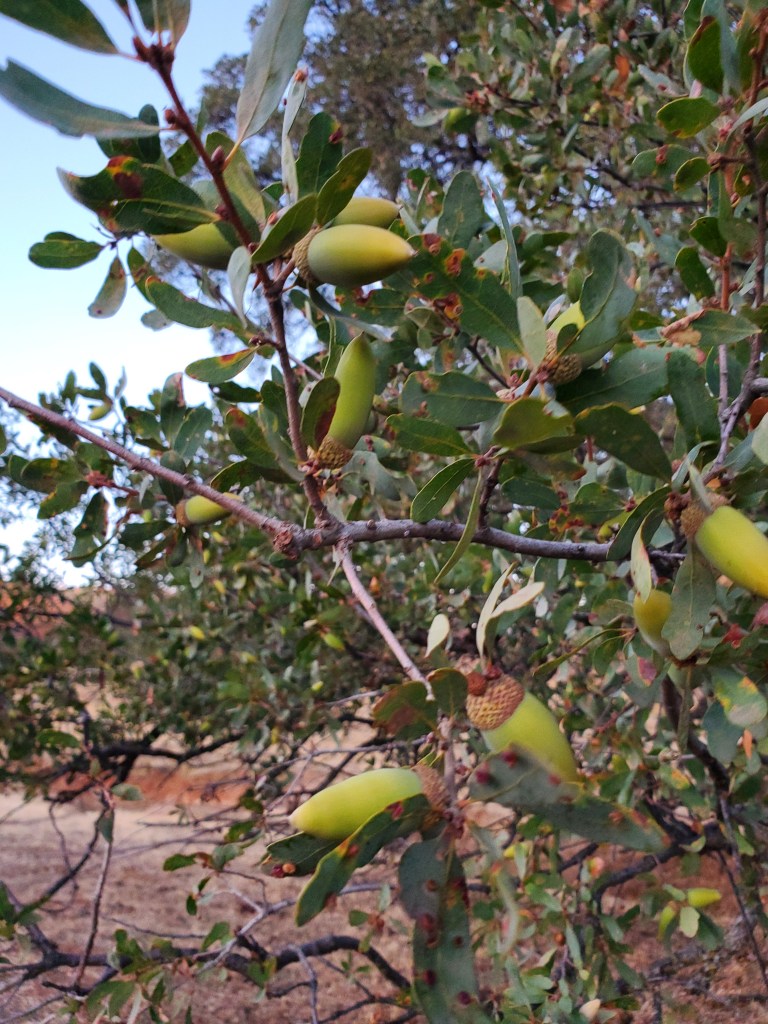
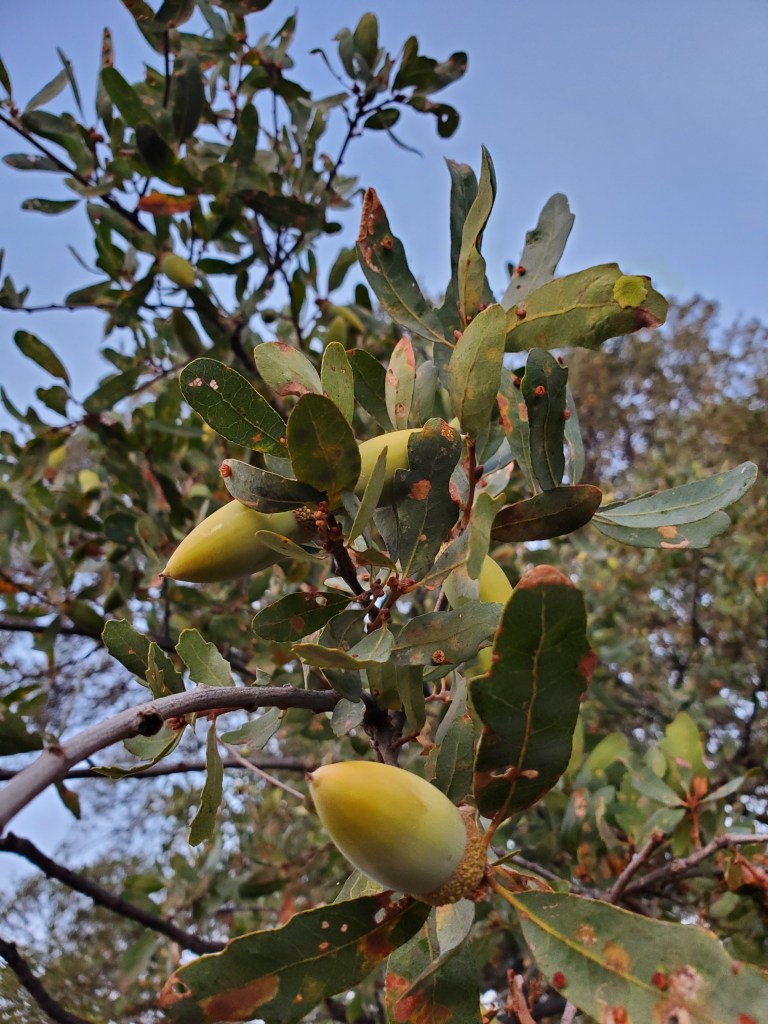
The other issue with the oaks and drought is reduced production of acorns, a critical food source for animals and humans alike. It is also the next generation of oak babies. We need to have an overwhelming number of acorns just to get a handful of seedlings. Sadly, most of the oaks on the ranch do not have many acorns, and many that are growing are still very green and undersized. I want to see those acorns mature and drop. All I can do is implement good land practices, swales to slow rainwater runoff, and hope for better next year. Land restoration is a patient practice. Stewardship is a way of life anyone can adopt anywhere they live.

New Raised Bed

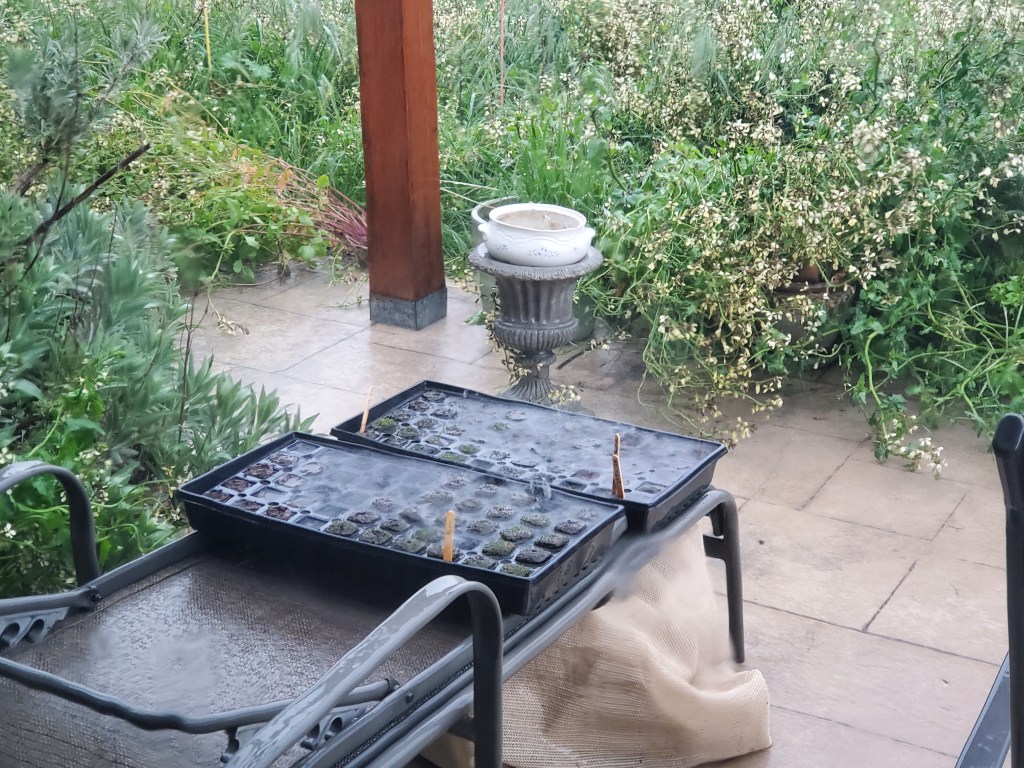
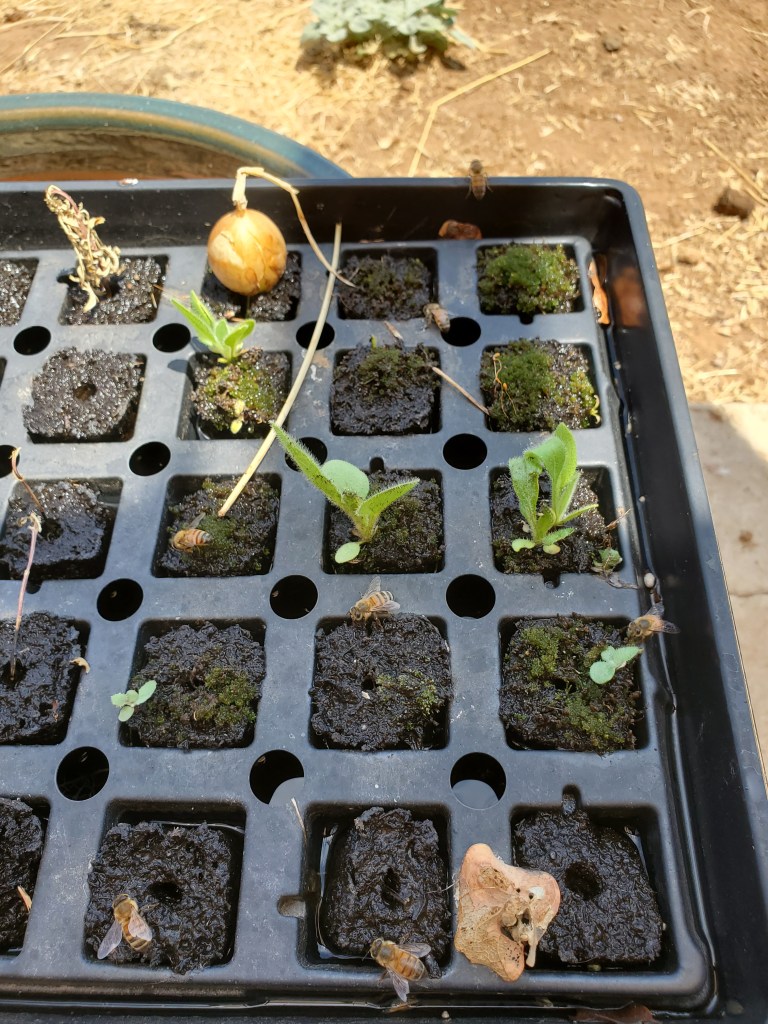
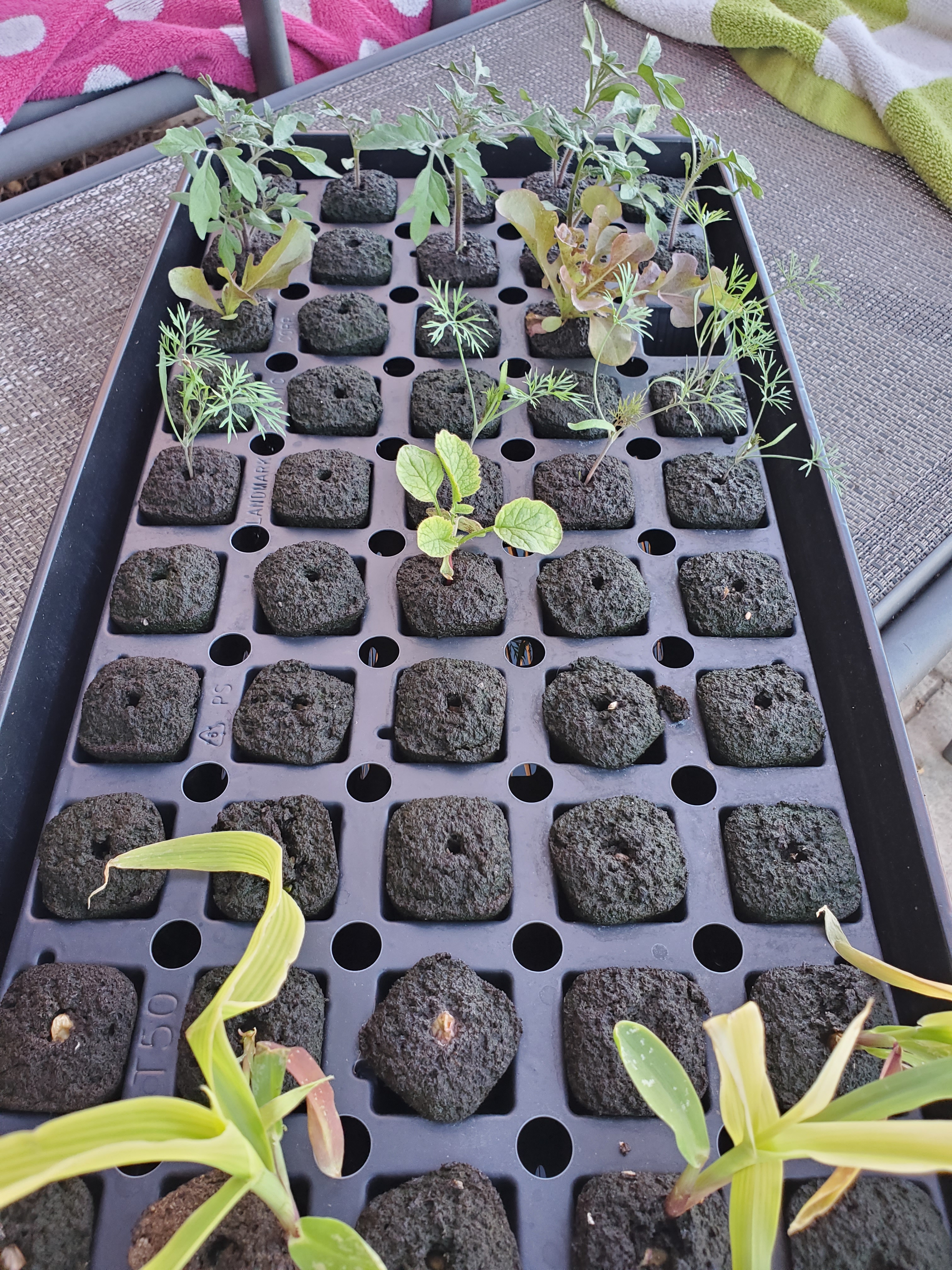
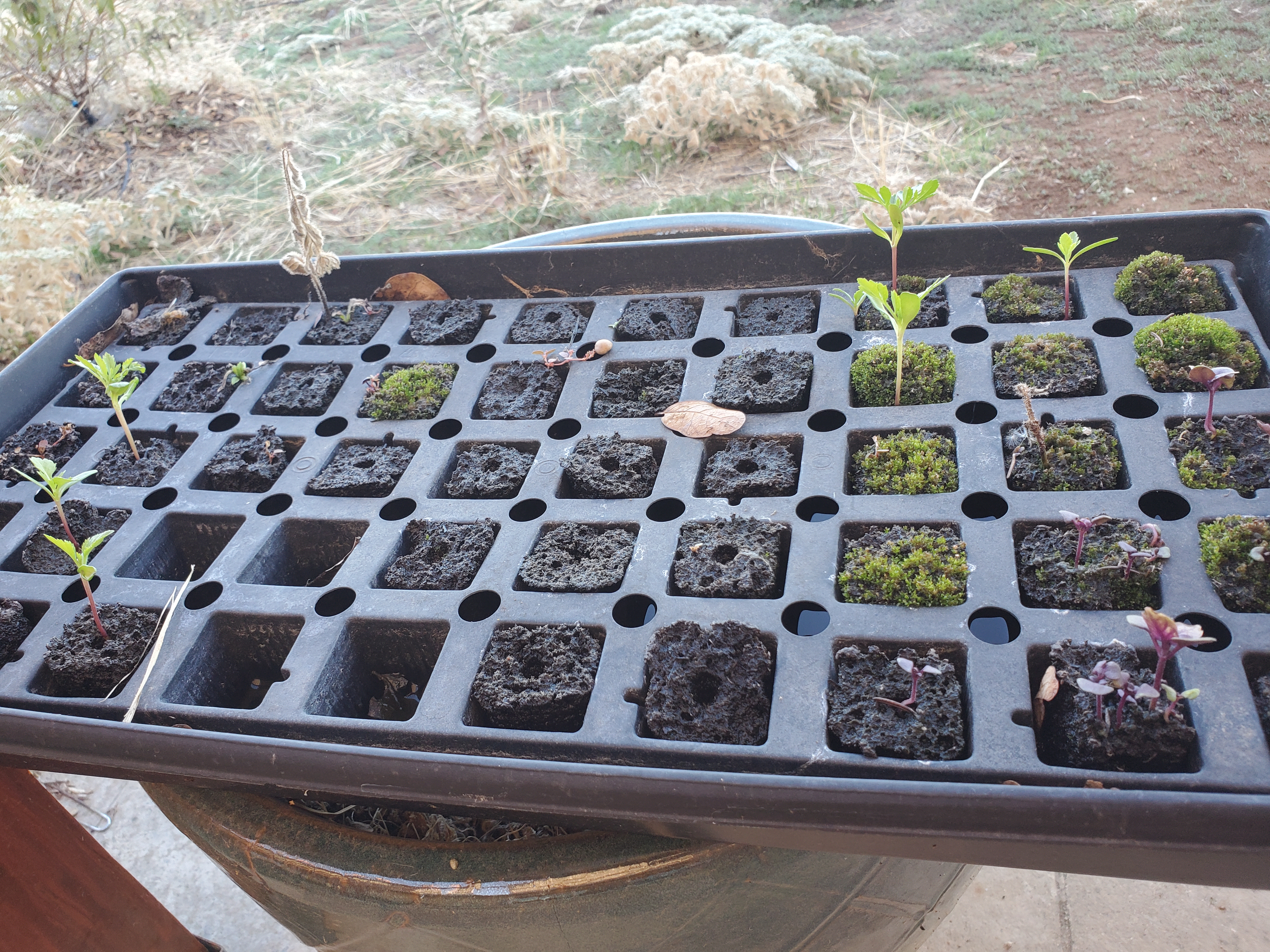
I raise a number of plants from high quality organic/non-GMO seed or seed gathered from my plants. Not only its it more cost effective, but I receive great joy from starting them and watching them grow. The seedling trays have also served as an important source of water for bees this year. Even birds have dropped by to visit. When the birds come by, I can be assured it is not just for water but seed snacks. Every seeding batch, several never start. For some, the seed just is not viable. For others, they become a snack for birds. I am ok with that. Fortunately, I don’t depend on my garden as my only source of food. If I did, I am sure I would feel differently. Additionally, I grow native plant starts, herbs and flowers. All of these, including my food, will become blooms for pollinators. It is a tripe win for everyone.

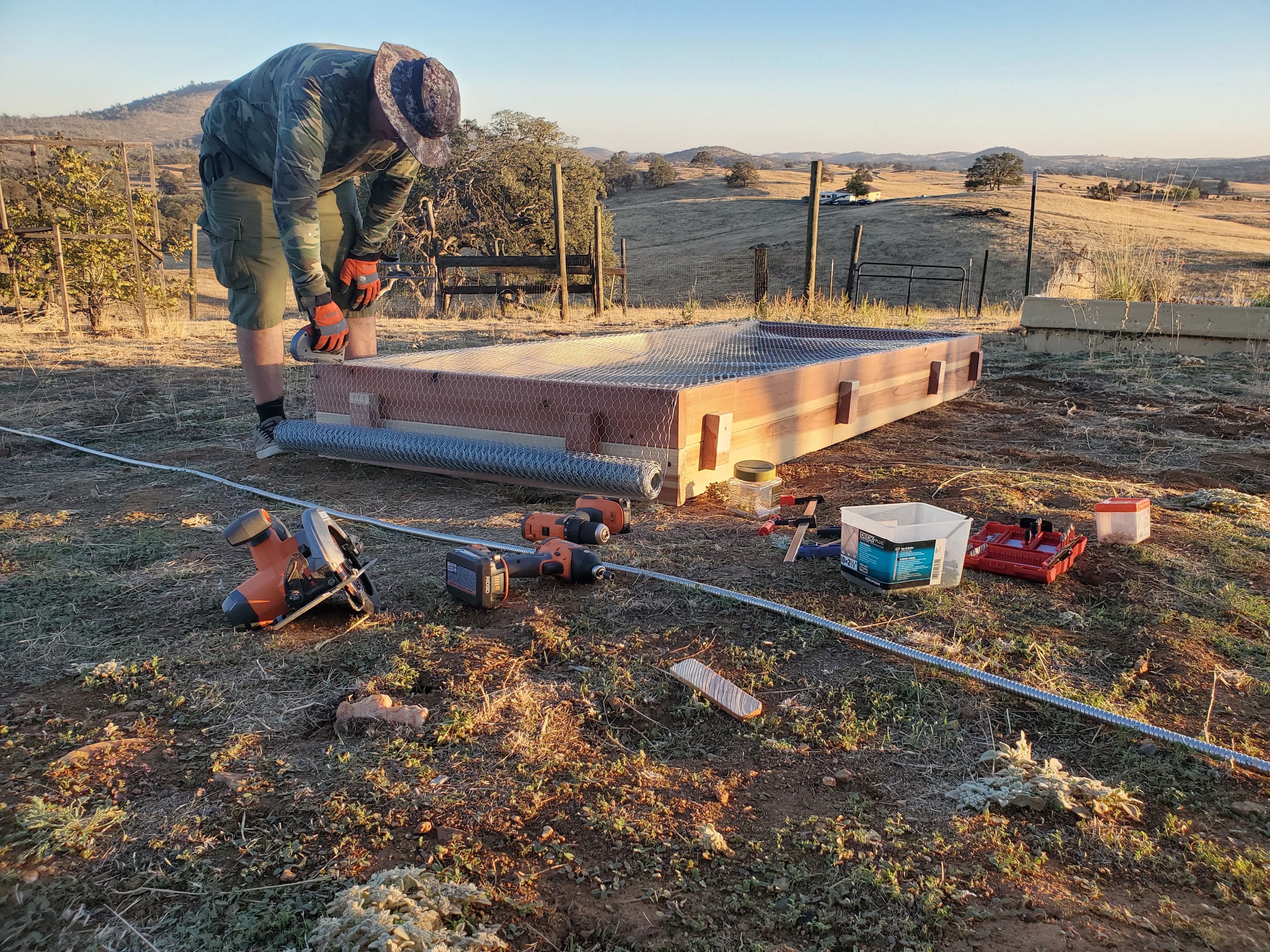
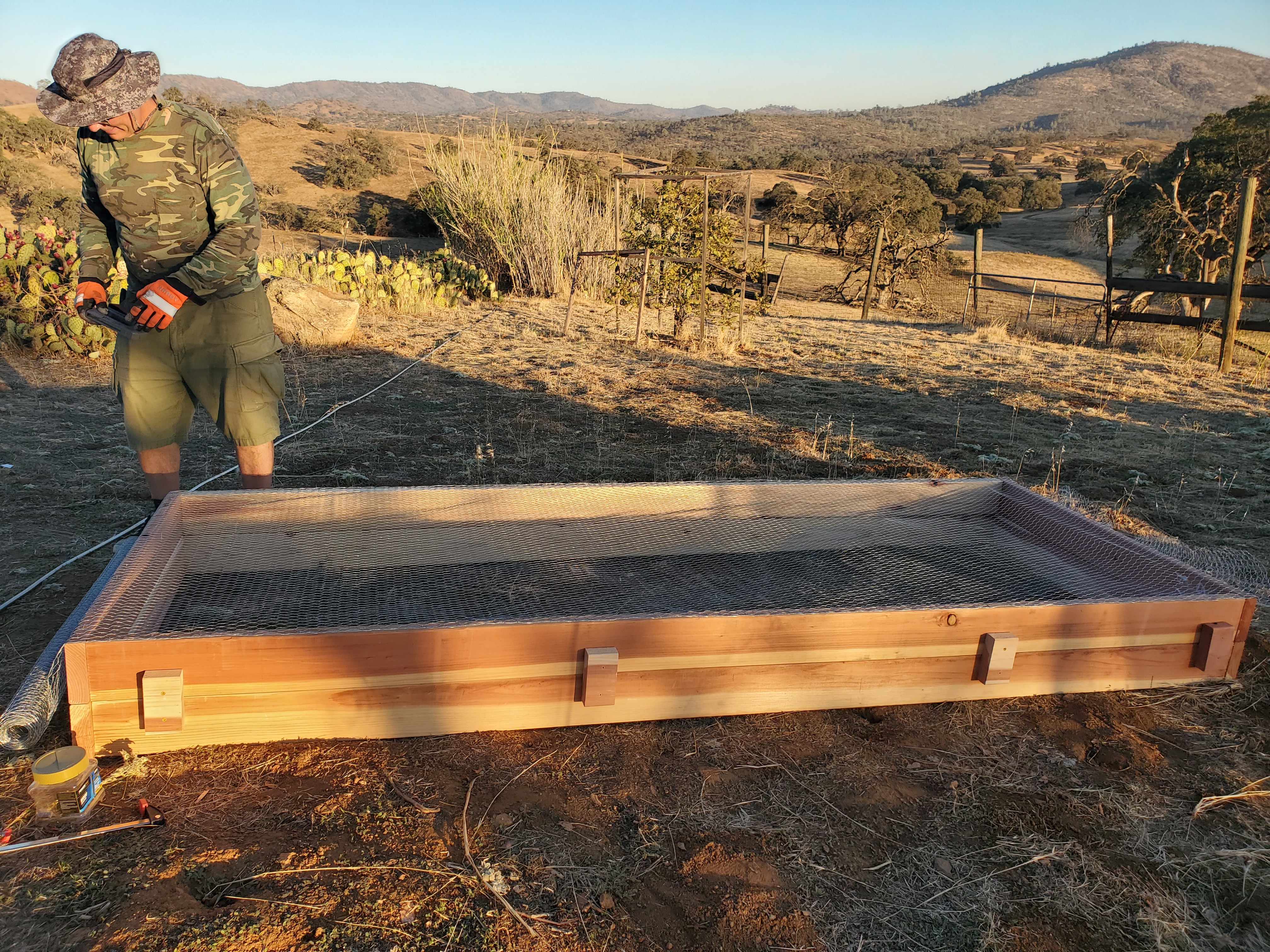
The weather has been so warm I decided to start a winter garden with plants that should have been full grown by now and producing food – like tomatoes. I am also including vegetables, herbs and flowers that should be ok late and/or over winter normally – like lettuce and spinach. I have a number of strong looking seedlings, but will not plant in my tomato tub raised bed due to the ongoing gopher intrusion. There is no other place cultivated to plant, so I asked my darling husband to build me a new raised bed. Truthfully, I can do this myself, but David loves to work with wood and is much handier than I am. So- he gets the job. David built me a gorgeous raised bed using redwood and secured it with a roll of Diggers double galvanized mesh (same company I get the speed baskets from to plant my native plants). Because I am raising vegetables, I needed richer soil and did not have time to bring my local soil up in nutrients (bad planning on my part). I had to purchase soil, which was costly. I have a couple of old french doors I salvaged, which I will use to make a greenhouse over the tomato part of the bed. I am hoping this will help bring the tomatoes to maturity. It is all an experiment.

I use a square foot gardening method. In this way, I can make the most use of the garden space, water with efficiency and co-locate natural pest deterrents, such as marigolds. See the link for more information about how many vegetables you can plant per square foot. In my situation, most of the seedlings I have are plants that need space, so you will see that I generally have one plant per square foot. For some, I could probably get more, but I was too lazy to pull out my book to check planting amounts per sq ft. There is definitely a cost to being impatient!

Last Days of Summer Bring Rain and Fall has Arrived

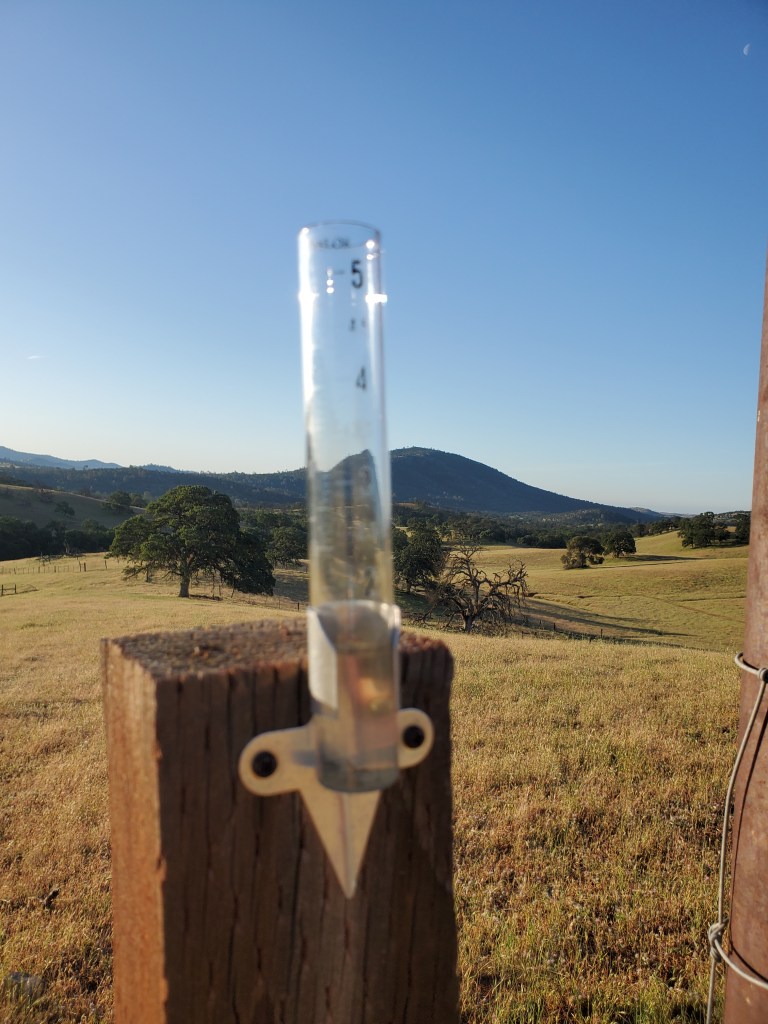
On September 18 and 19, we received .75″ and .5″ respectively of rain. It was a delightful late summer storm. The smell brought me as much joy and anticipation as being hungry smelling baking bread or BBQ meat. You cannot wait to get outside to work, take a walk, just breathe. I think most of the area hoped this meant cooler temperatures from then out, but the miserable heat came back a few days later. It has been in the high 80s and high 90s for the past several days. Air conditioner is on again. Not good.

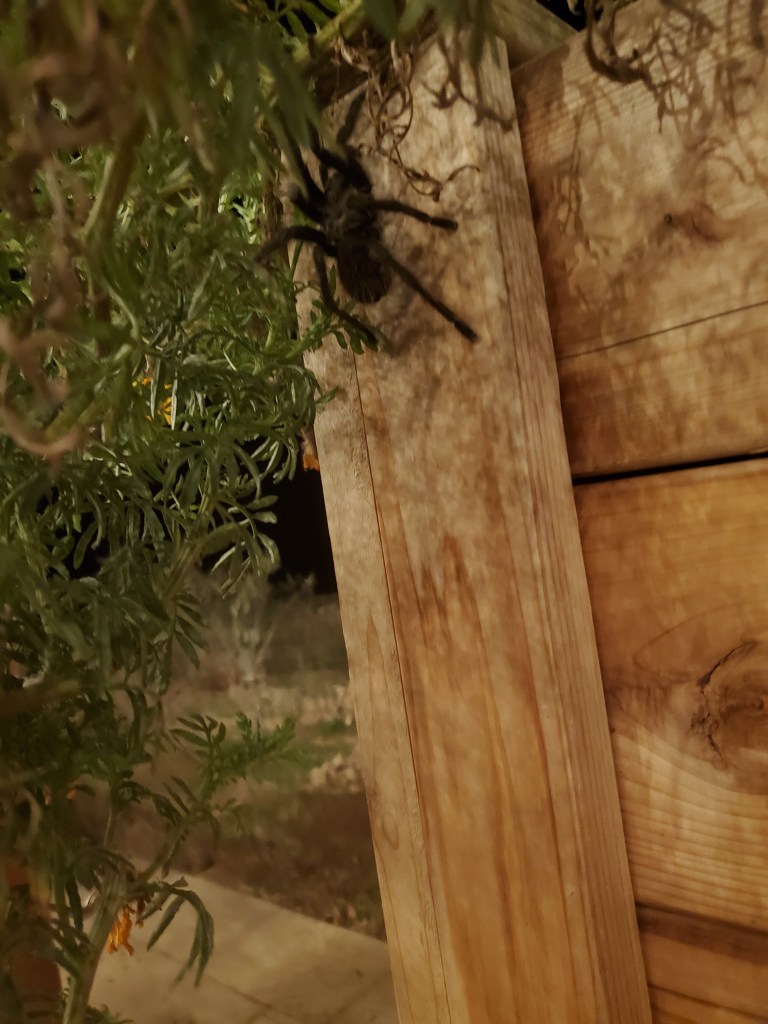
Still, the temperatures are cooler than 115 – something to be grateful for. Besides the temperatures cooling, Fall is heralded by my dear loves, the tarantulas (Ok, some people determine the beginning of Fall when pumpkin drinks appear at Starbucks; I prefer spiders.). I have counted 5 so far. It is an imprecise, unscientific count, but it has helped me to understand their populations by counting the number of sightings. We had several healthy, large ones at the ranch.

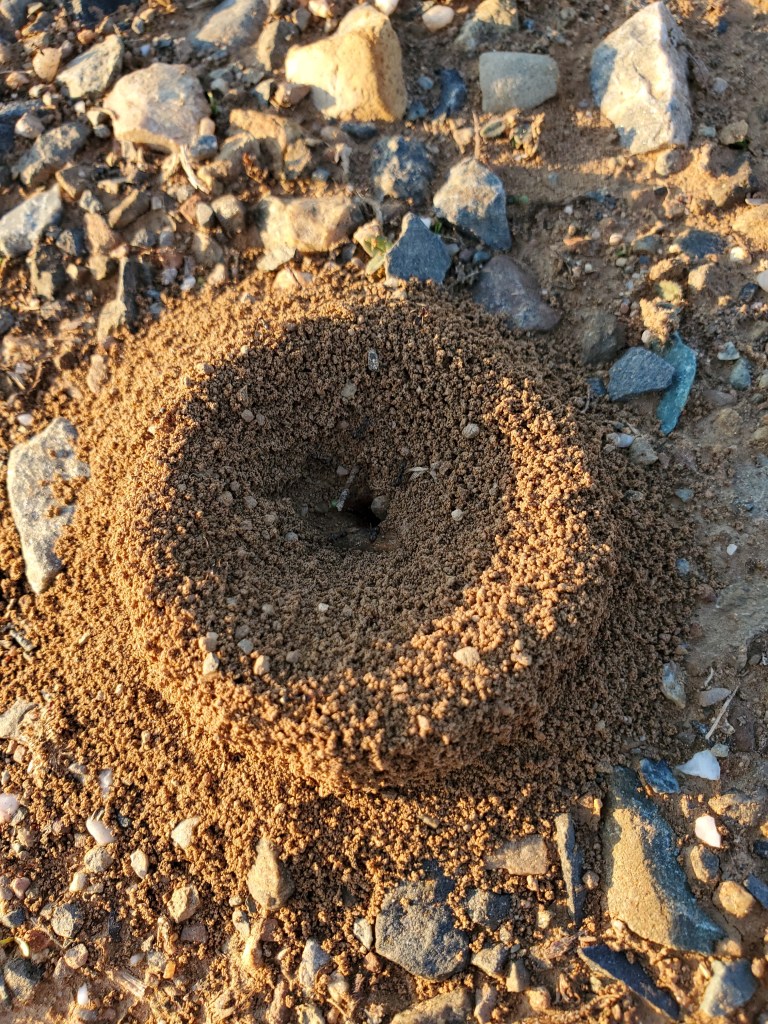
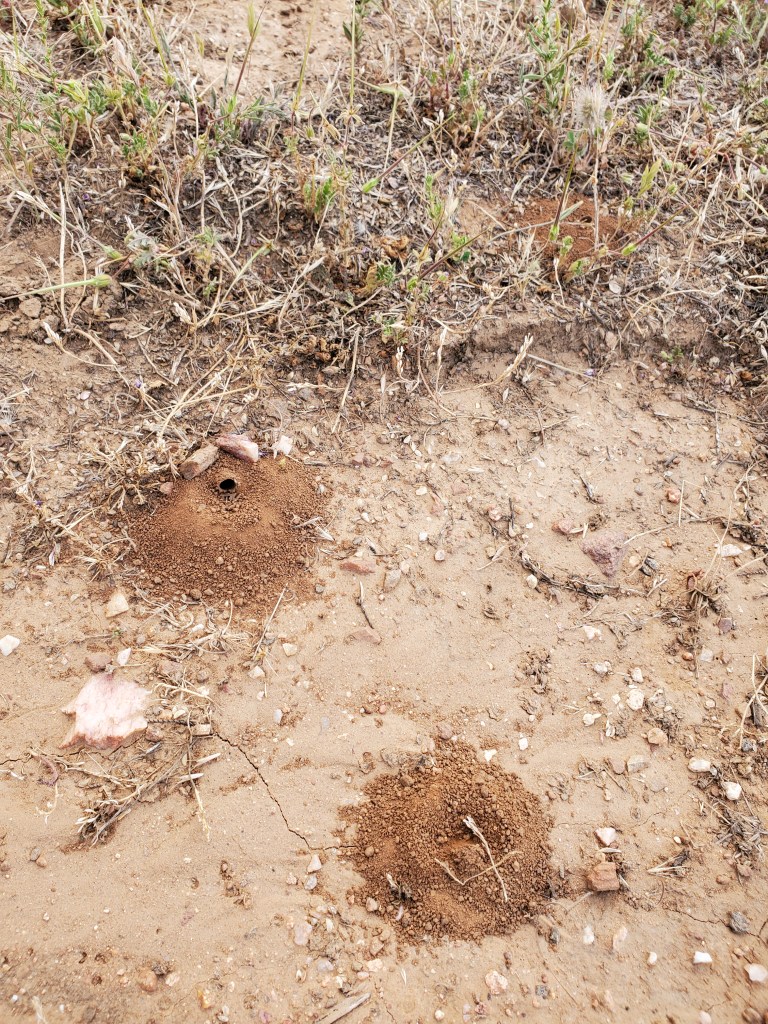
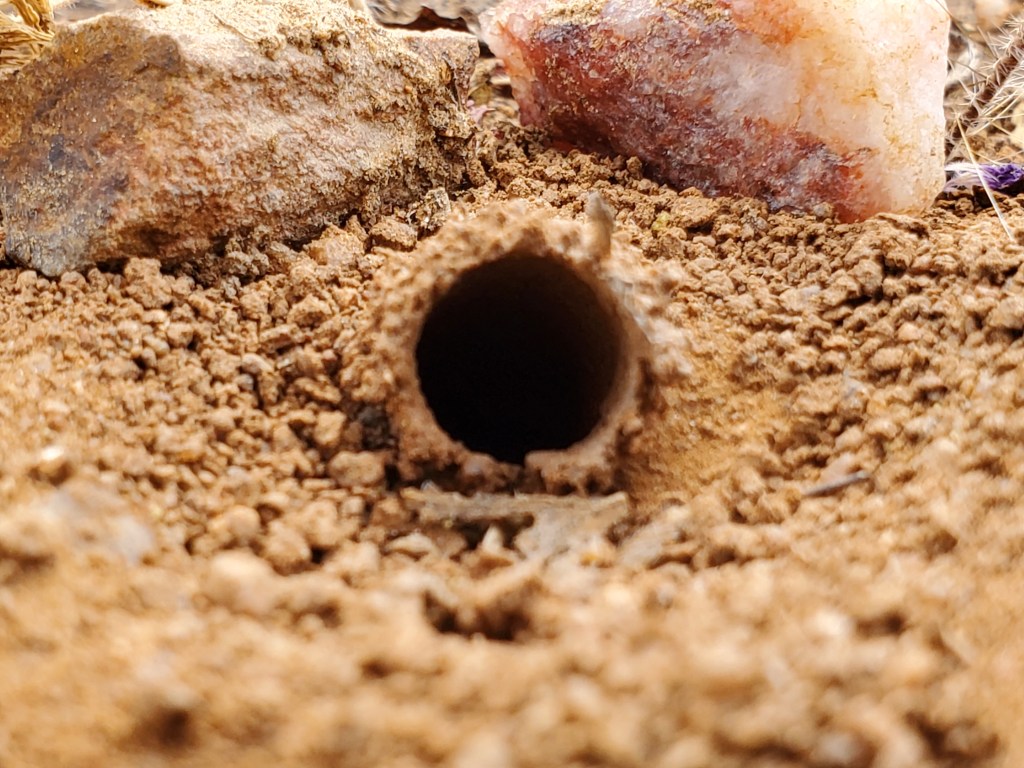
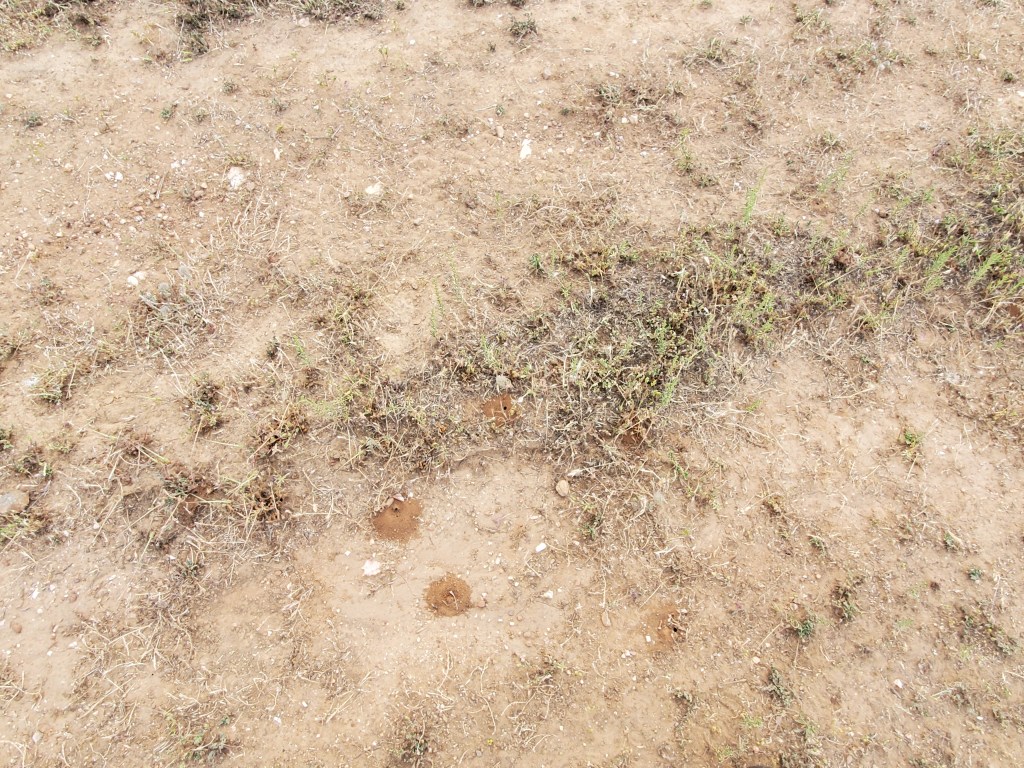
I am seeing a number of small ant holes in close proximity. I think I am living on top of ant LA. To think my bucolic, slow-paced surroundings are directly above a bustling, major metropolis of a billion small, vicious, biting red ants is a bit unnerving. People think I have too much coffee, but now you know why I keep moving and don’t stay in one place for too long.

Falling In Love Over 50

In Hala’i (My friend)

Do you remember the last time you fell in love? Giddiness, wanting to be with that special person all the time – or cross paths at least, flushes of heat, random moments of happiness, disappointment when they are not where you think they will be, heart flutters, consuming thoughts of the other person – ahhh, the pleasures and struggles of love. It has been a while for me. After all, David and I are working on our 30th year together.

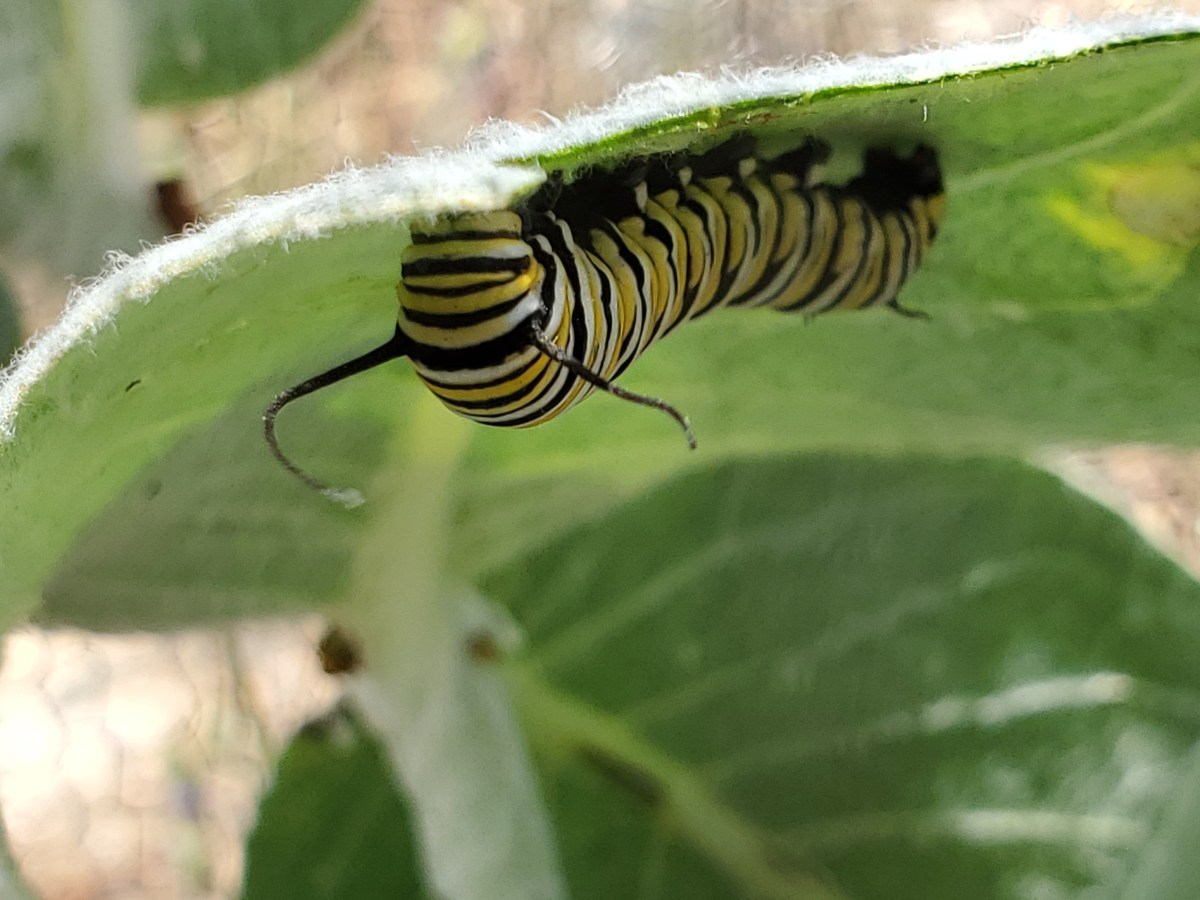
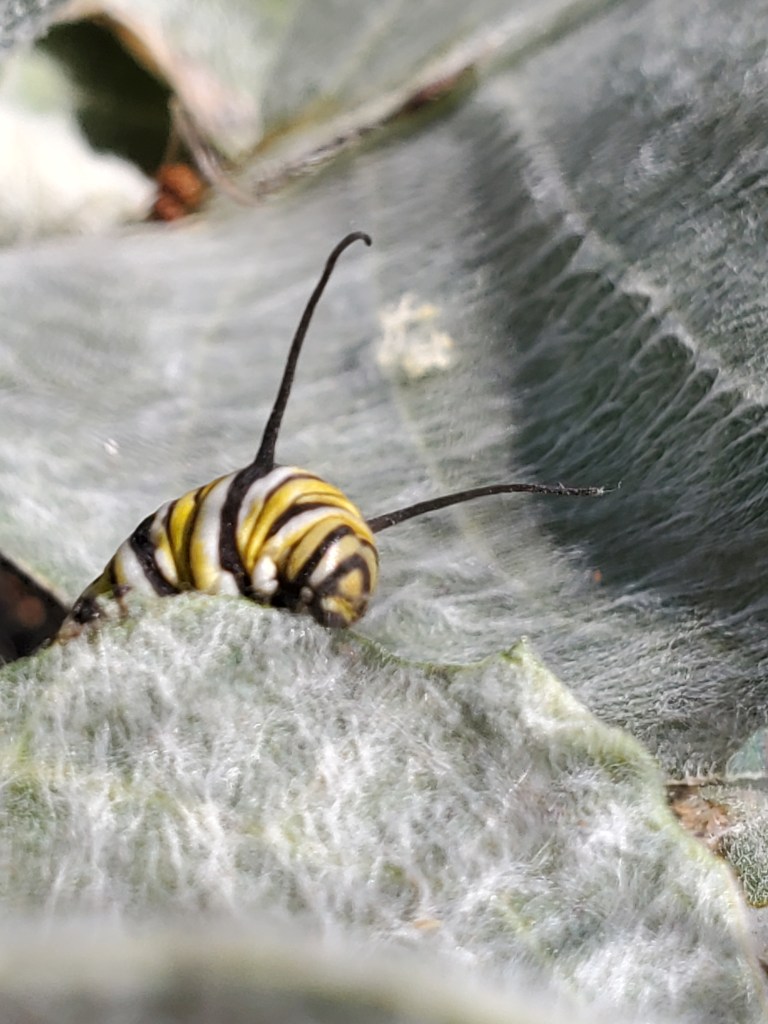
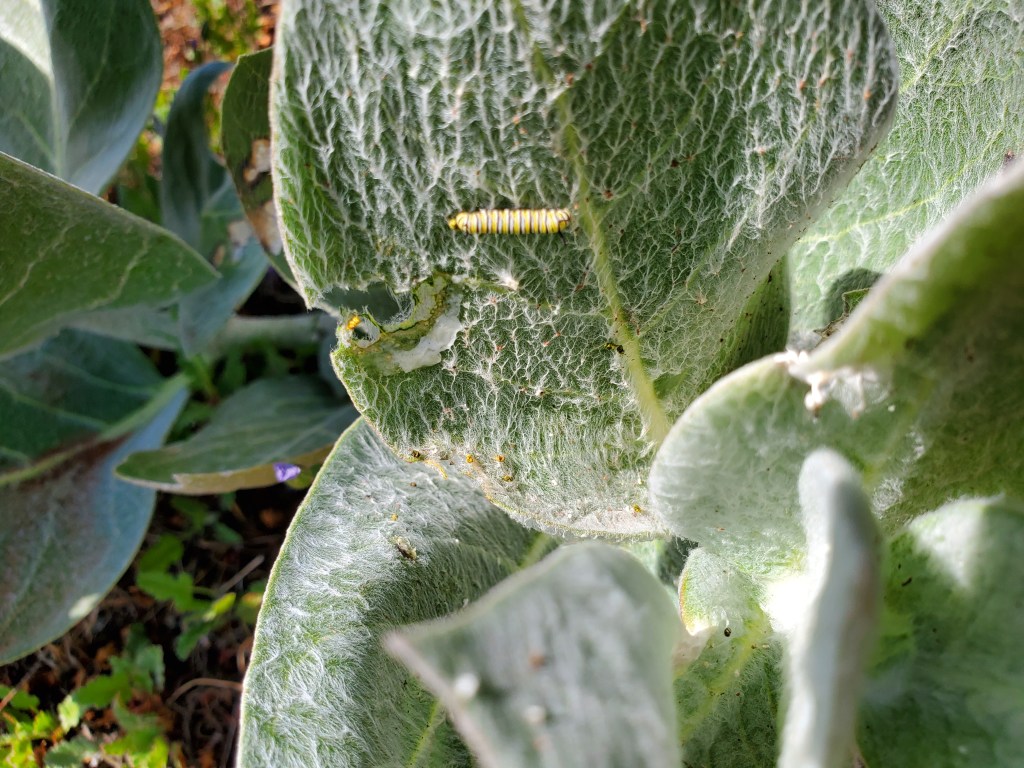
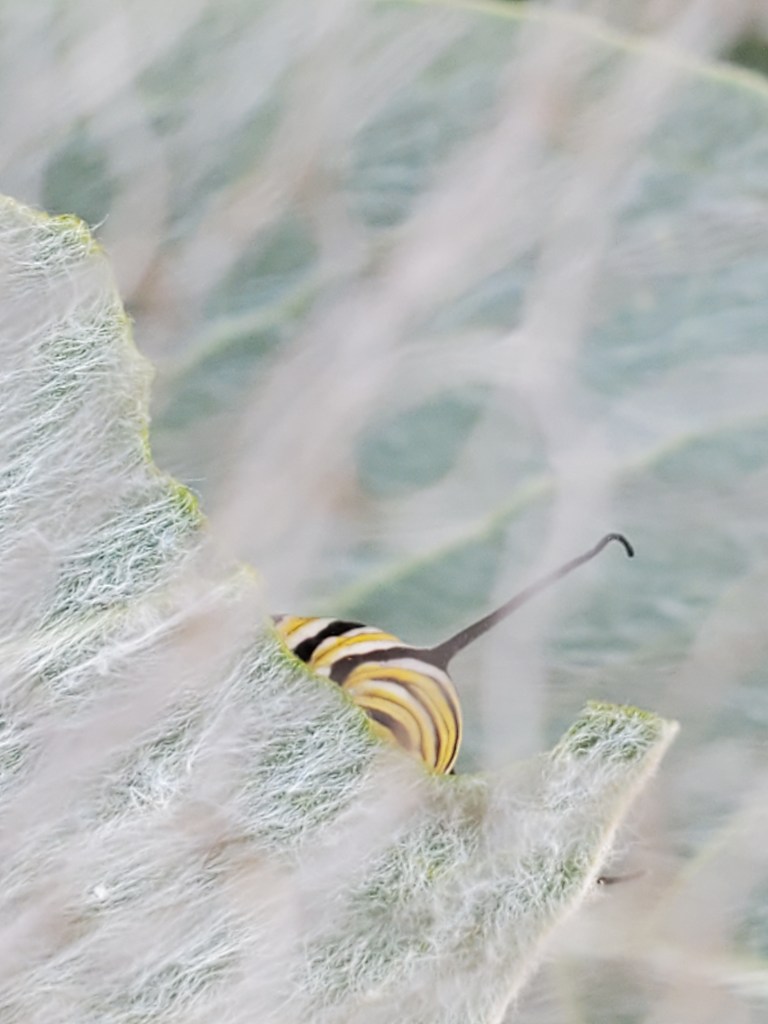
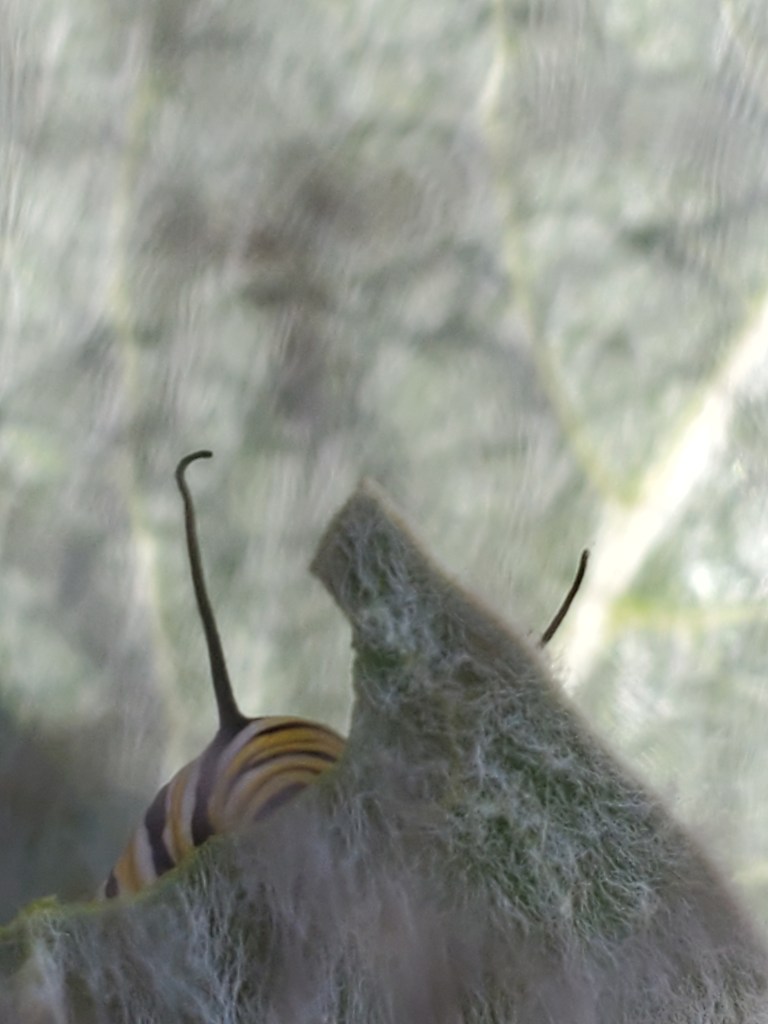
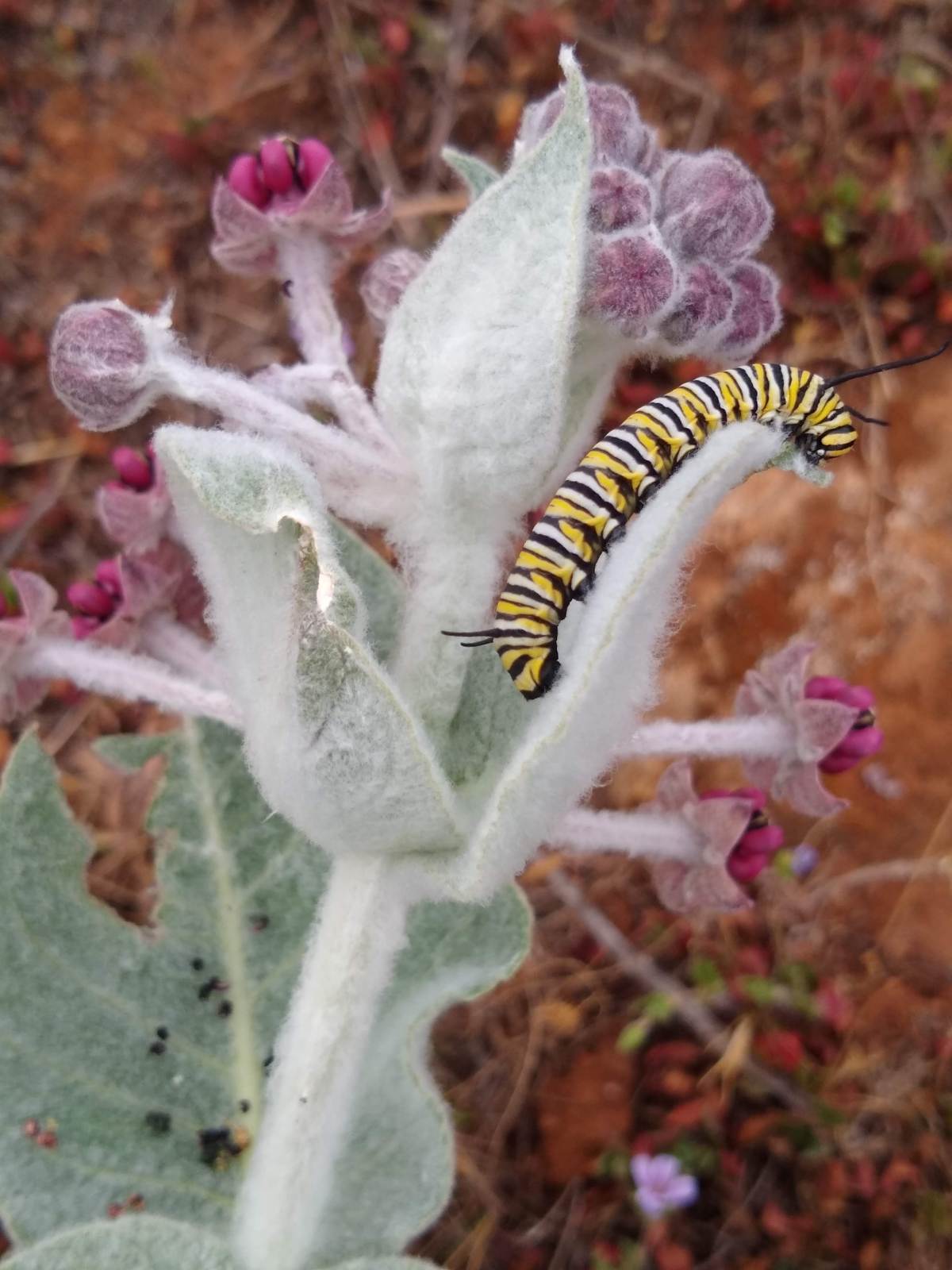
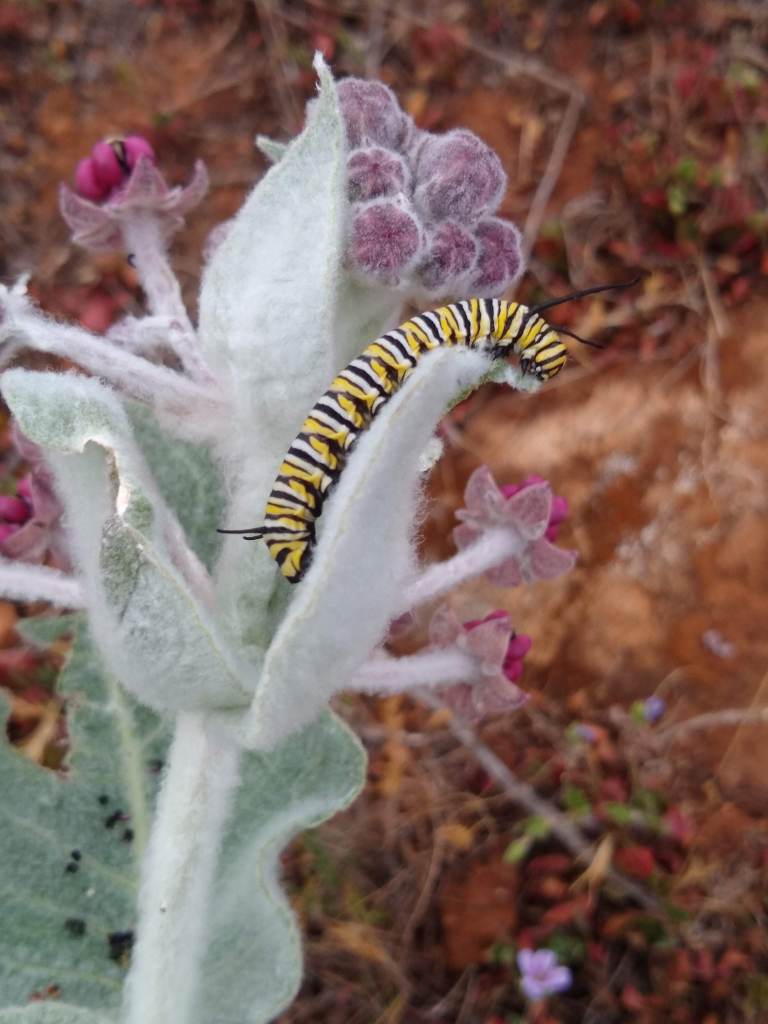
In April, the stars and milkweeds aligned, and I fell in love again. I was not expecting it. I bumped into my new love while inspecting the California milkweeds with biologist Tom D. Landis, who came all the way from Oregon to make an assessment of early milkweeds in Central California. I had not seen any caterpillars for a while, but then, all of the sudden, there it was, all by itself, clinging to one of the smallest California milkweeds. Tom saw it first, but then I locked eyes with its expressive antennae. I was smitten, and named it “In Hala’i”, “my friend” in my Native Yoeme language. Fortunately, David was not jealous, and accepted his temporary demotion as I trudged up and down the massive hill to spend time with my new love.
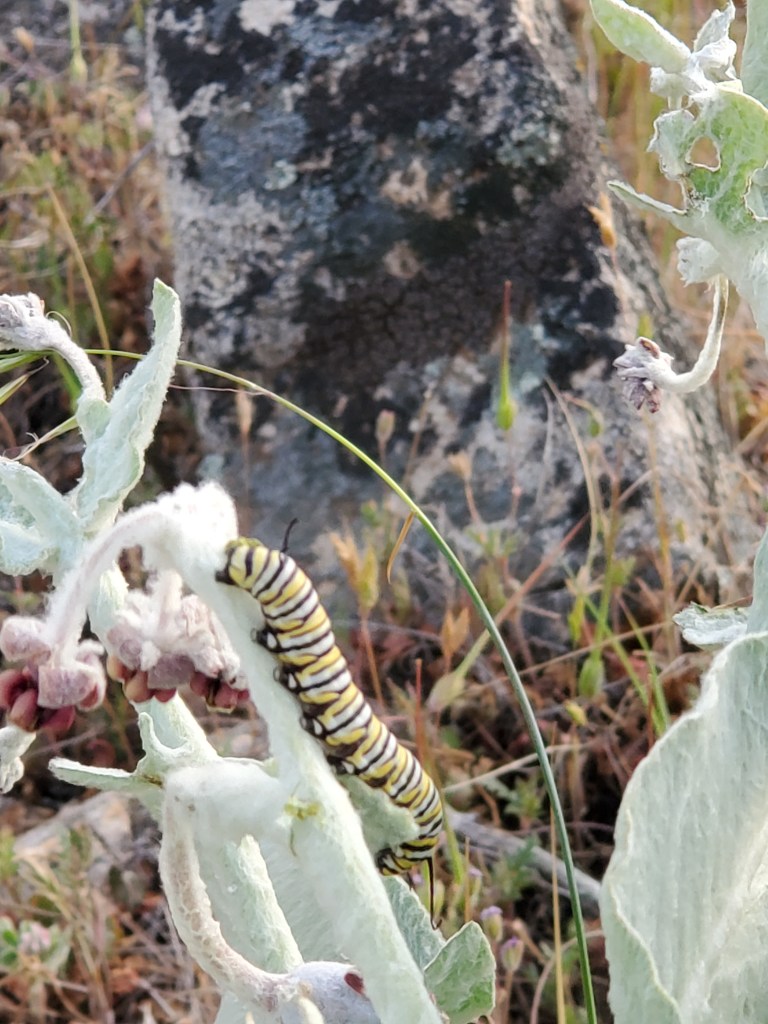
By now, you realize I am talking about a caterpillar. In Hala’i was the very last monarch caterpillar on the ranch. It makes me smile to think that I had monarchs laying eggs as late as early April high up in the California milkweed patch completely unbeknownst to me.

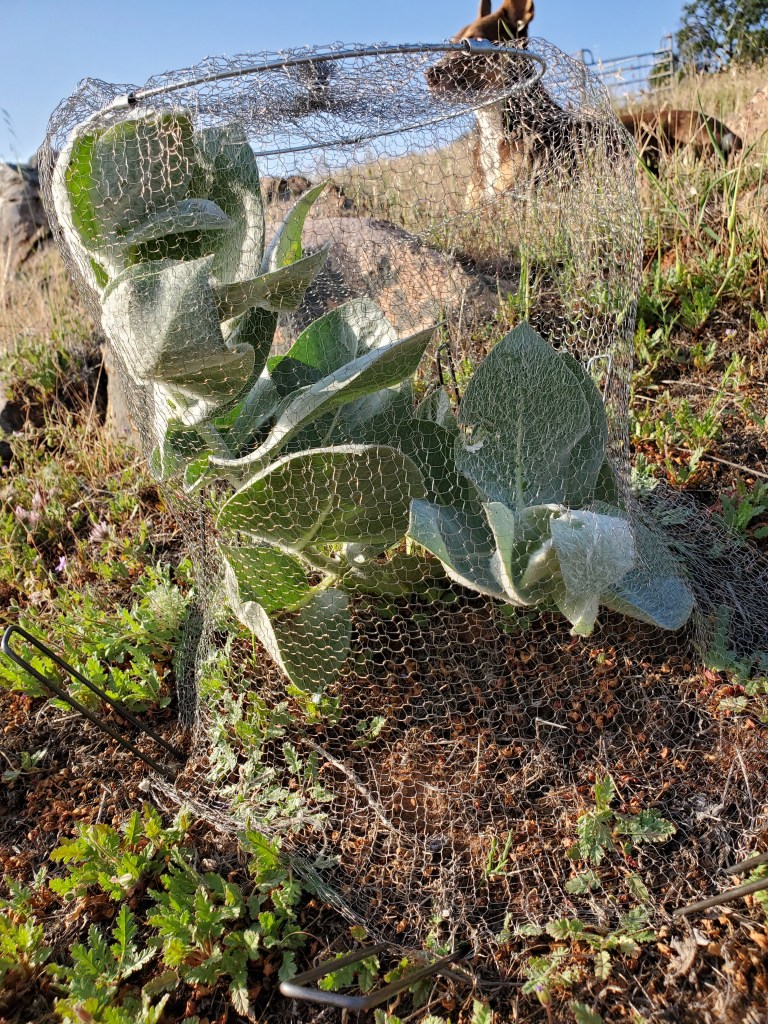
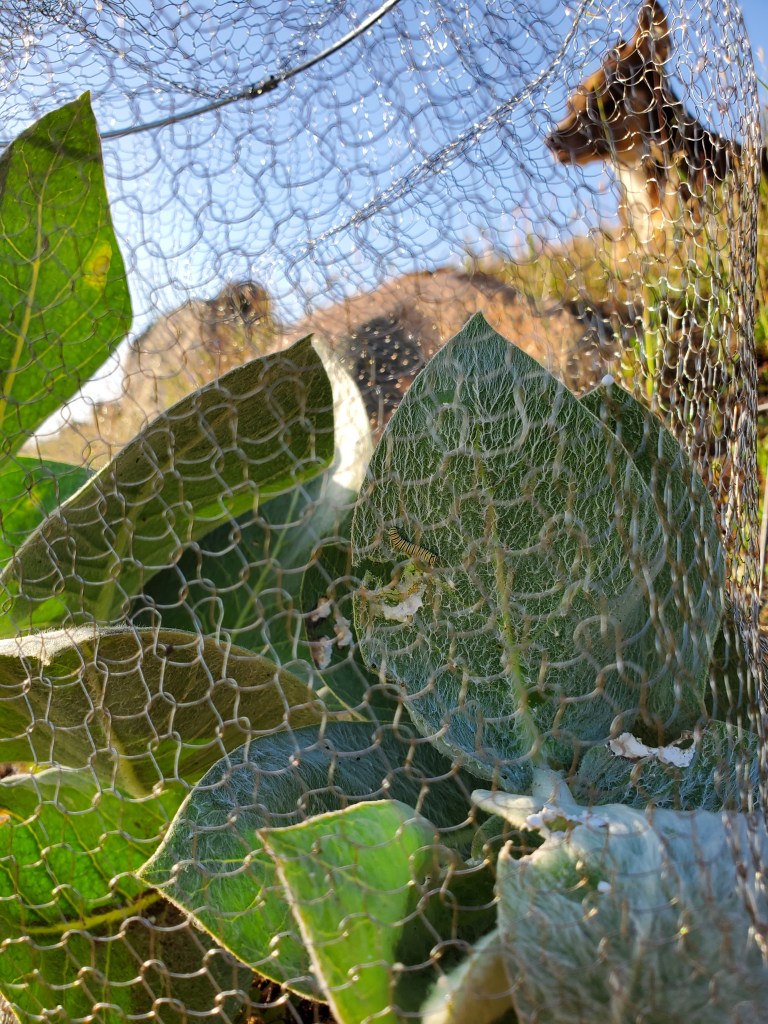
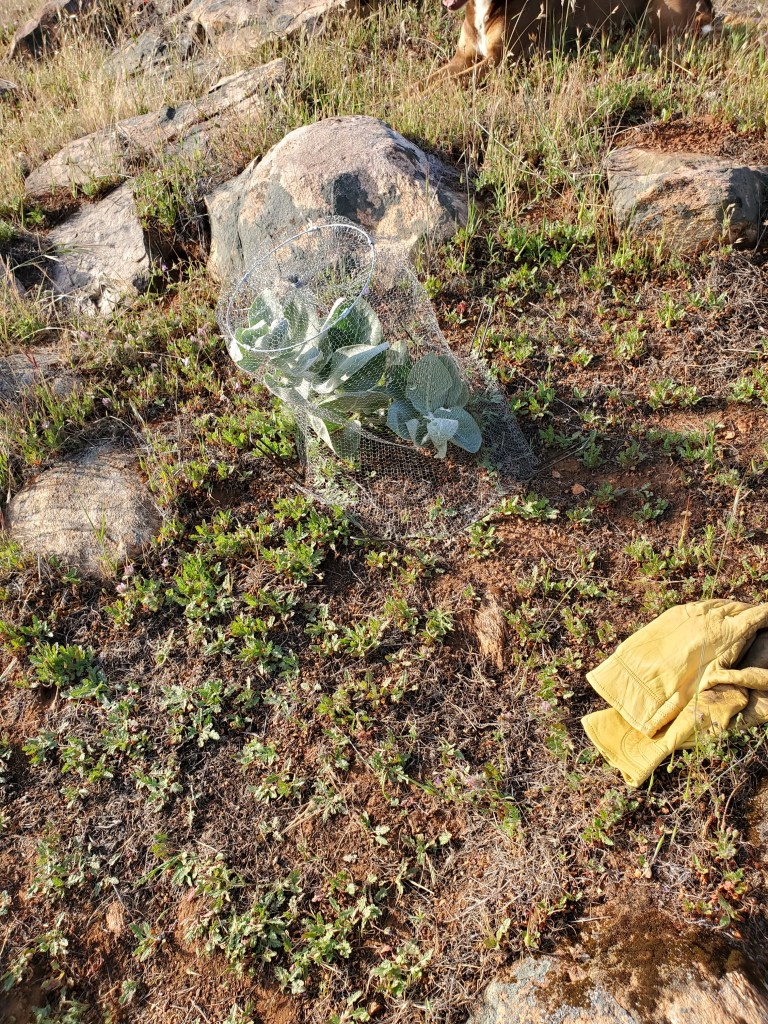
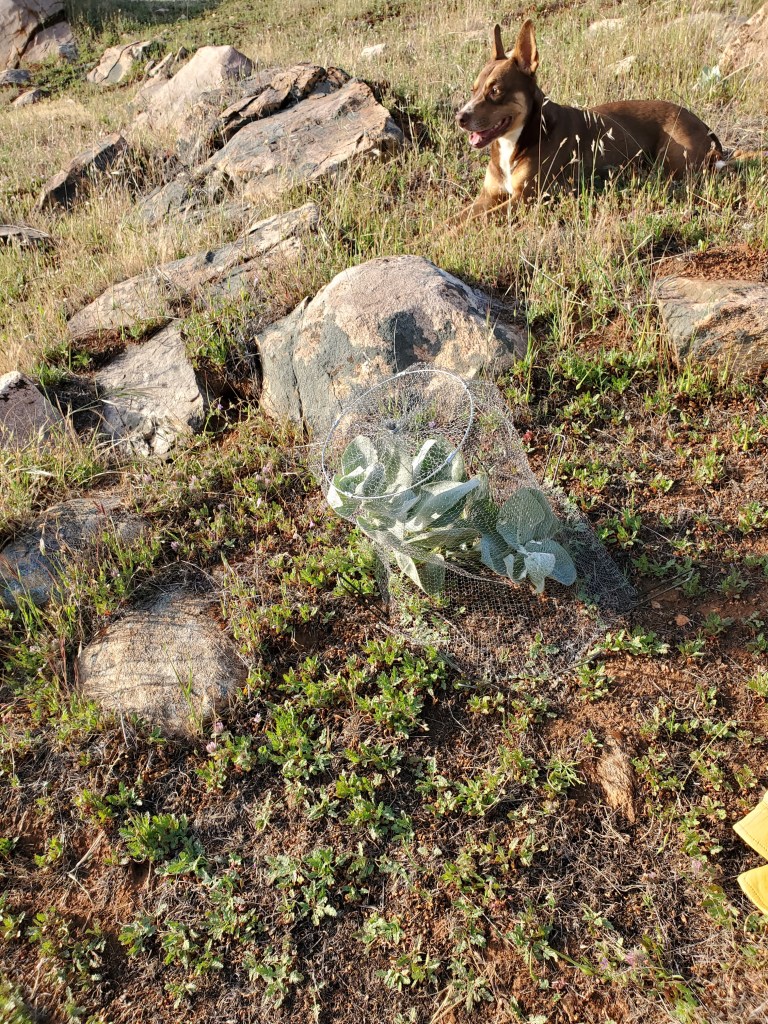
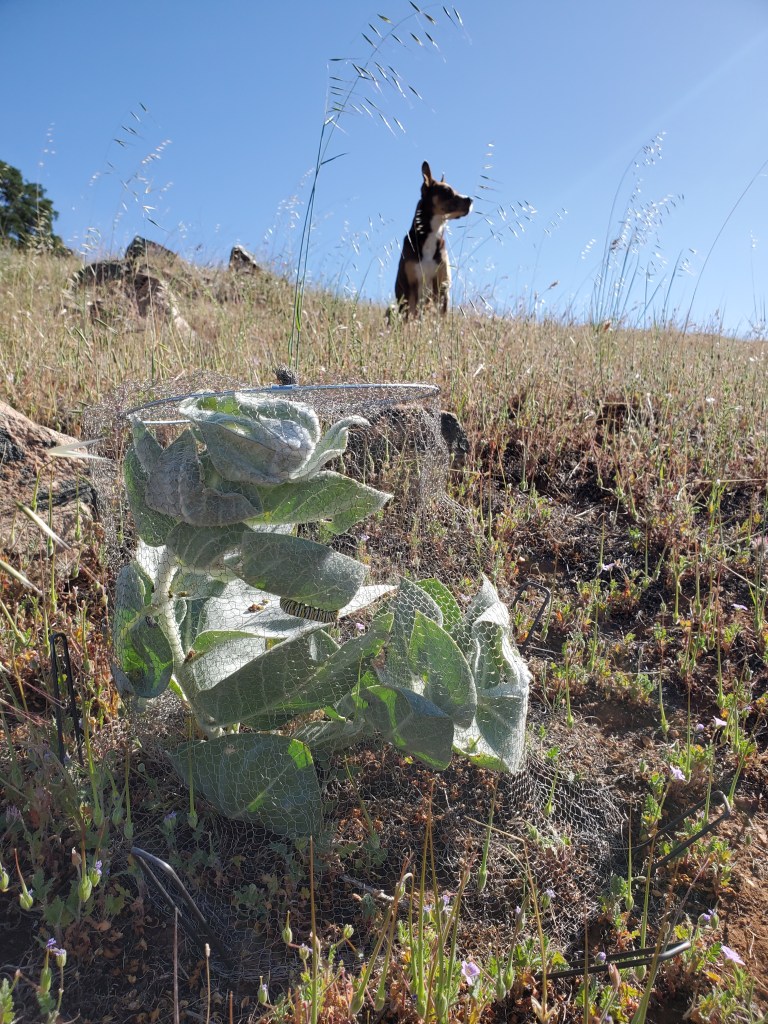
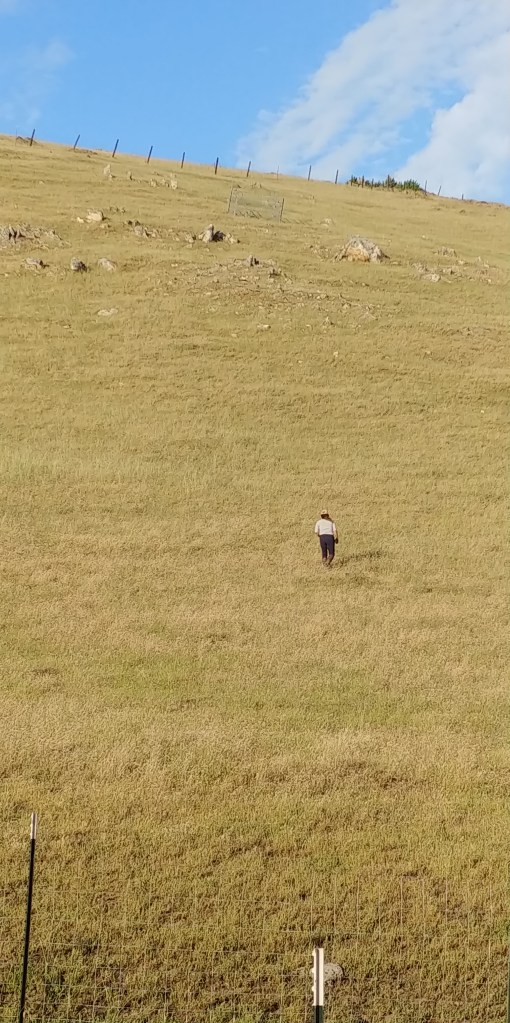
I made a commitment to ensure In Hala’i’s safety, to see it through to adulthood. I used a large stainless steel gopher mesh bag to cover the plant and staked it with mesh pins. I then visited the plant every other day originally, then daily as it got bigger, to ensure its comfort, safety and that it was eating. Yes, love makes a person do strange things. Though my giddiness and heart flutters were from tromping up a 60% grade daily, and maybe the flushes of heat were the result of being – a- eer – a woman over 50, I did have extreme happiness when I saw it, and utter disappointment when I did not. Sometimes I would stay a while, and we would talk about all of the amazing sights it would see when it became an adult.

Adulthood means the metamorphosis to butterfly is complete. I am now waiting anxiously for that time – that time when In Hala’i will spread its wings and fly off to distant lands. On Sunday, a week ago today, was the last time I saw In Hala’i. All I could think of (and hope for) was that it found a safe place to make a chrysalis. I had watched it grow from less than half an inch to 2 inches, and that is the magic length. In Hala’i had gotten to that size in a caterpillar’s life when such things as transformation could happen any day. Perhaps last Sunday or Monday was that day. I am still monitoring daily. Today, Sunday 5/15, will be the earliest In Hala’i could change, so I will begin monitoring twice a day. There is always the possibility the caterpillar crawled under the basket and made a chrysalis elsewhere. Hopefully, I will get to see it, alive, healthy and ready to launch out into the world. I love you In Hala’i and wish you well my dear friend.

Updates from Before In Hala’i

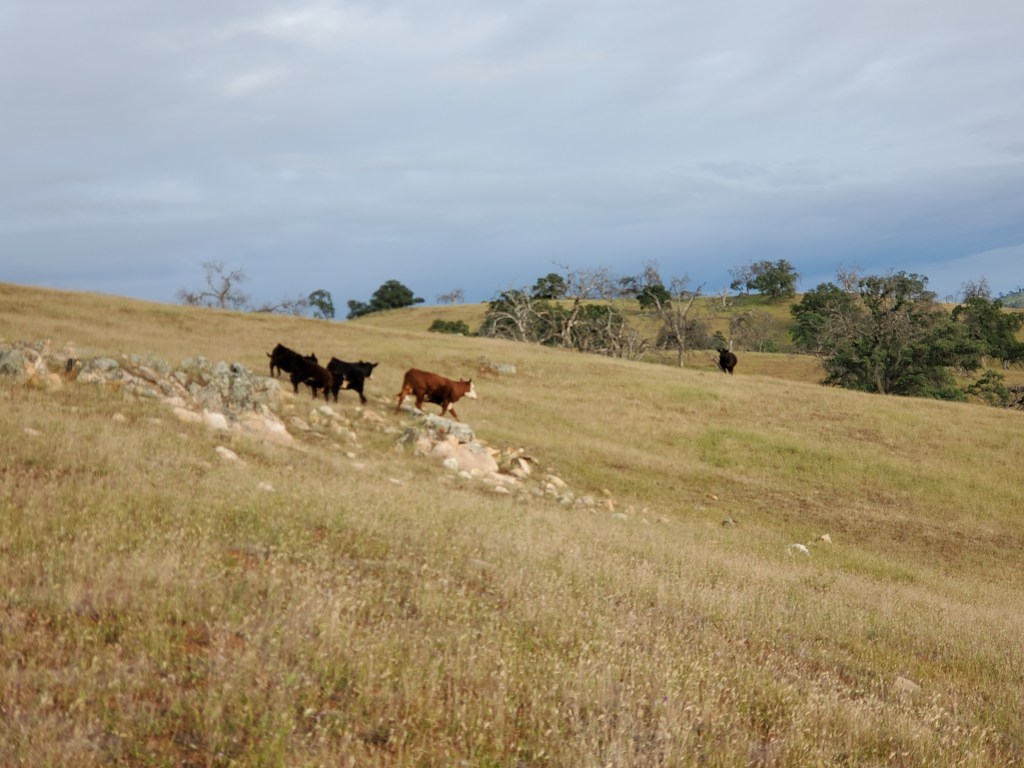
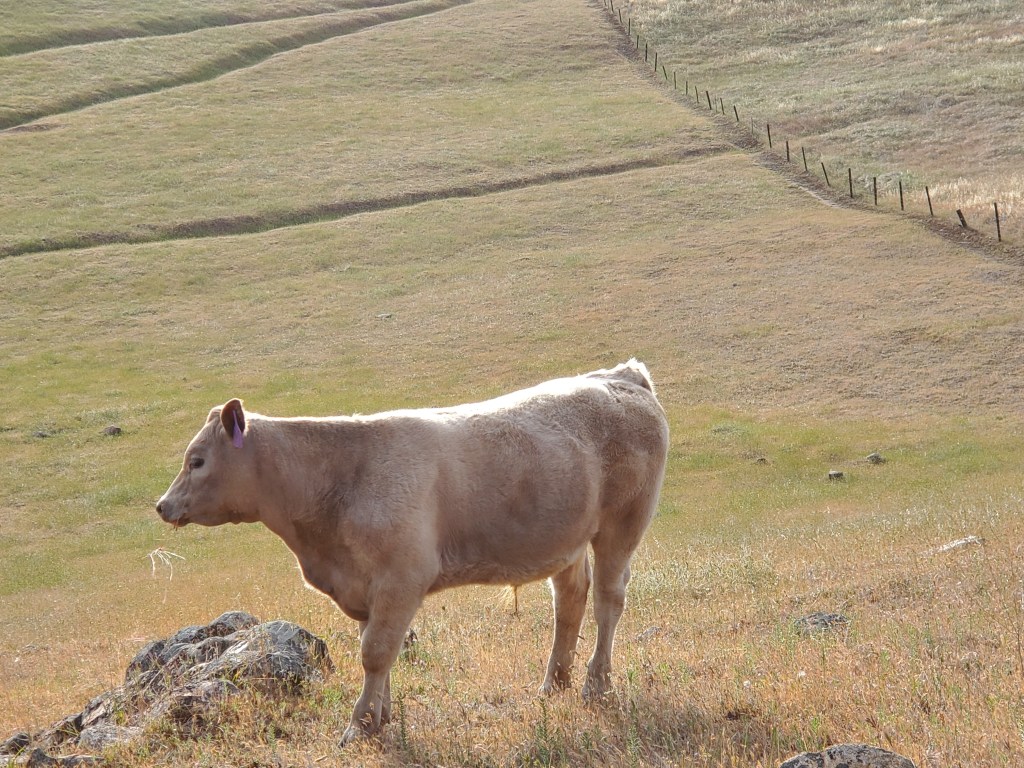
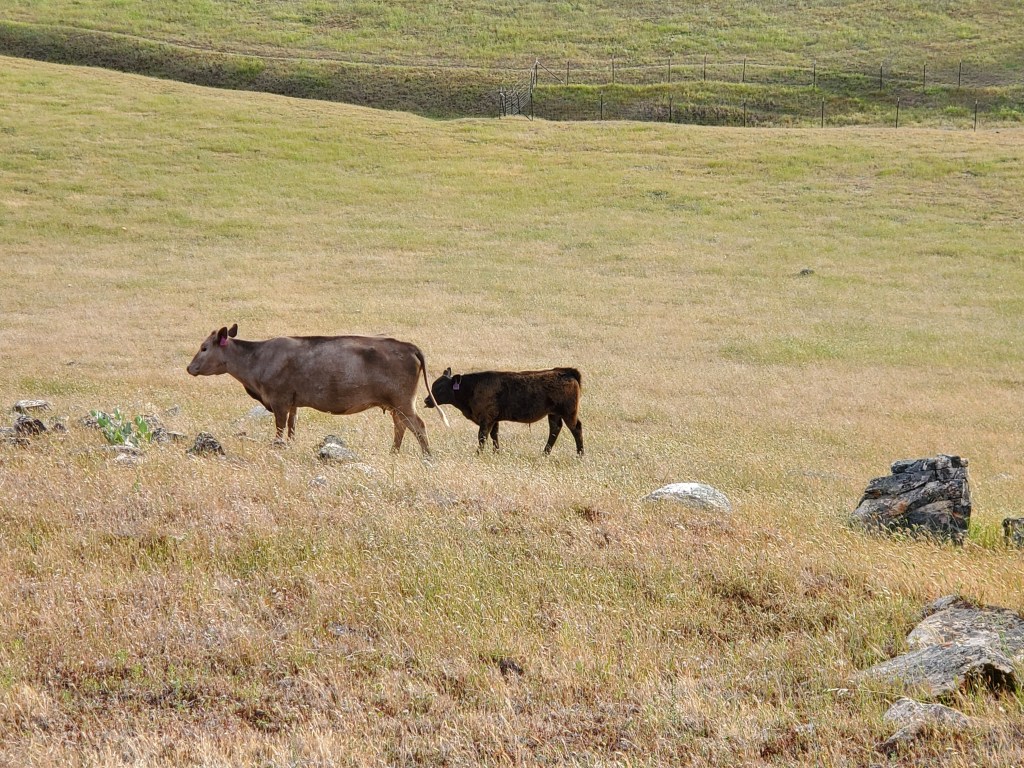
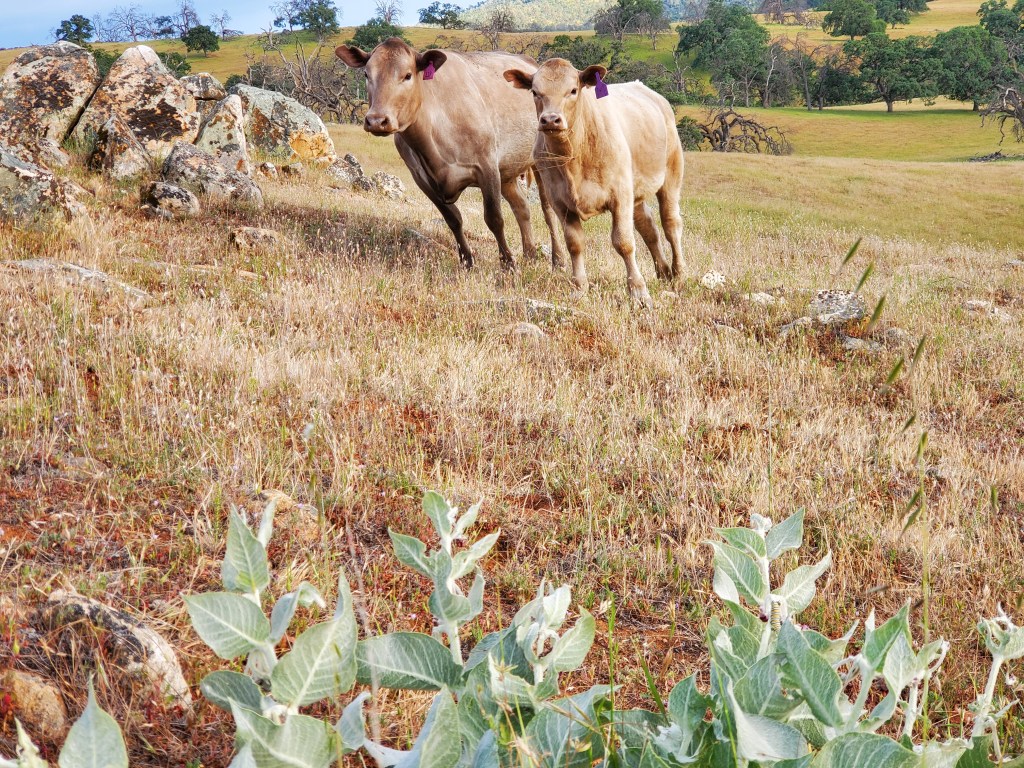
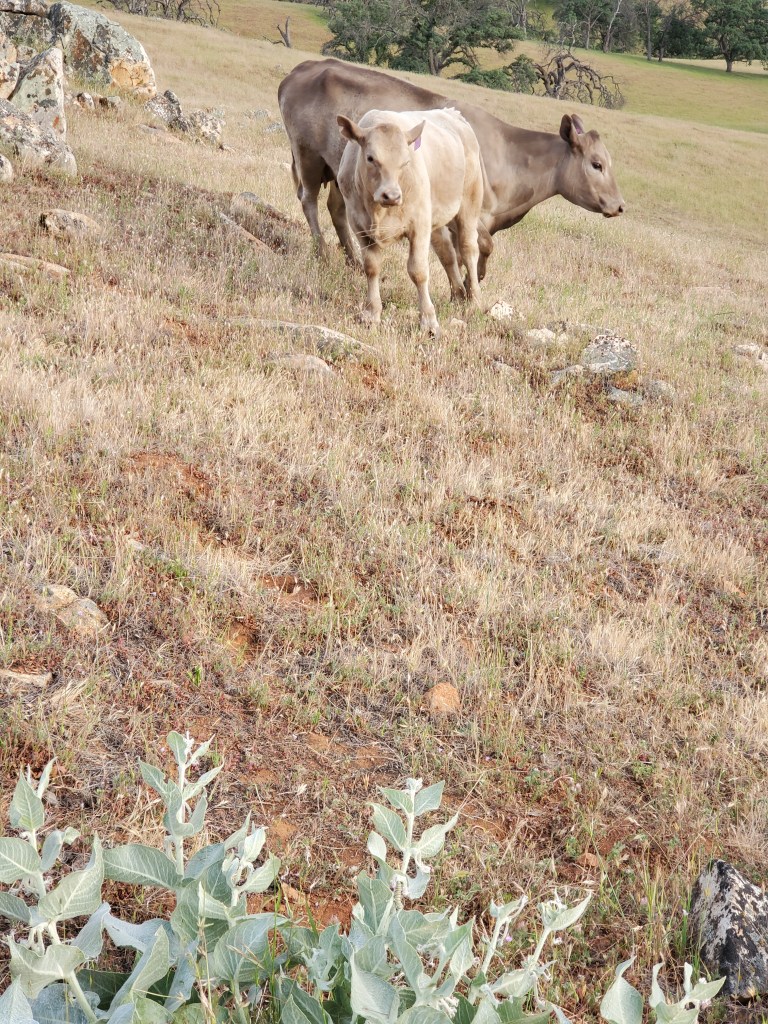
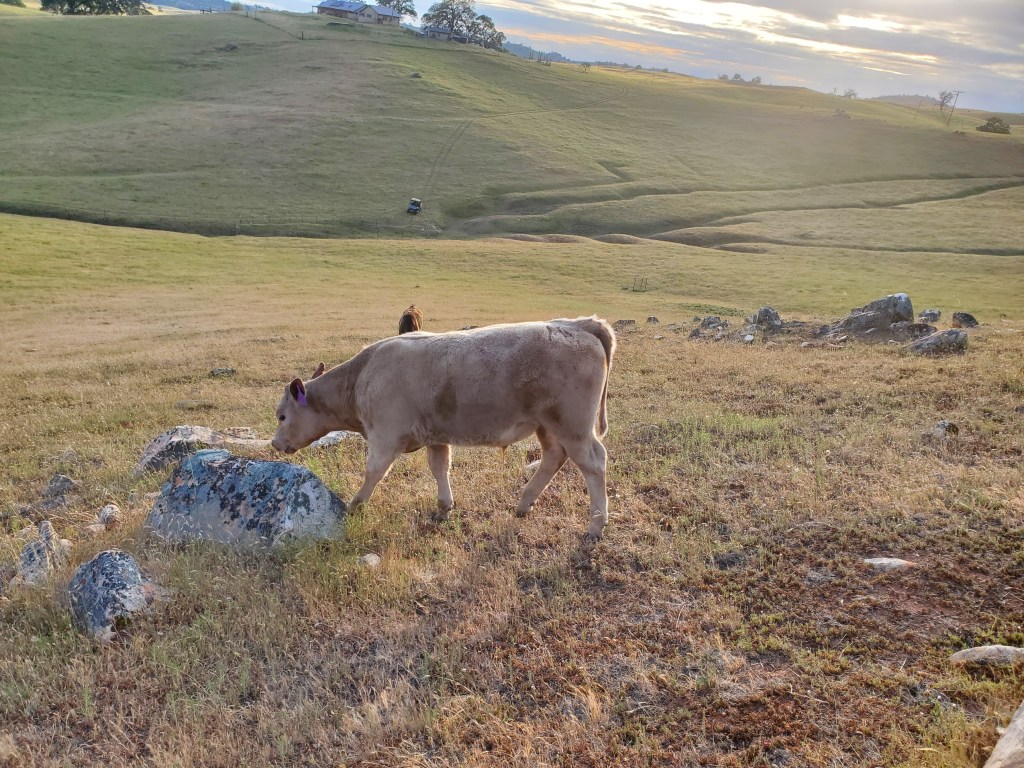
In early April, there was one last cow stand-off to protect the second wave of caterpillars. It involved a curious calf, which means it involved its mother too. Not a good situation. Every time we (Beatrix, Millie and I) asked the calf to leave, mamma would get upset. We would back off, then she would back off. But then the calf would come back toward the plant. It was a frustrating, time-consuming, delicate enterprise. Eventually, we triumphed. The calf lost interest, and the pair went along their way downhill. They are a sweet pair. I really love them, but we have to make space for all creatures. Fortunately, the next day, the cattle were back to the south once again, allowing the rest of the caterpillars to grow to maturity without fear of cow incursion.

Continuing Outreach and Education

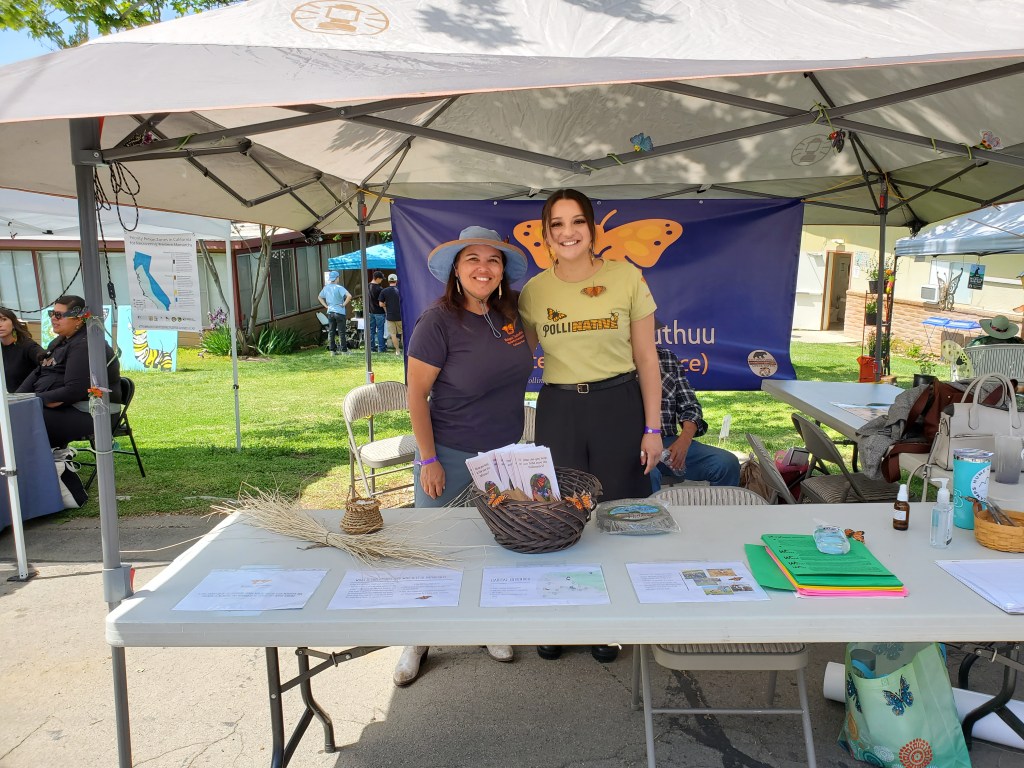
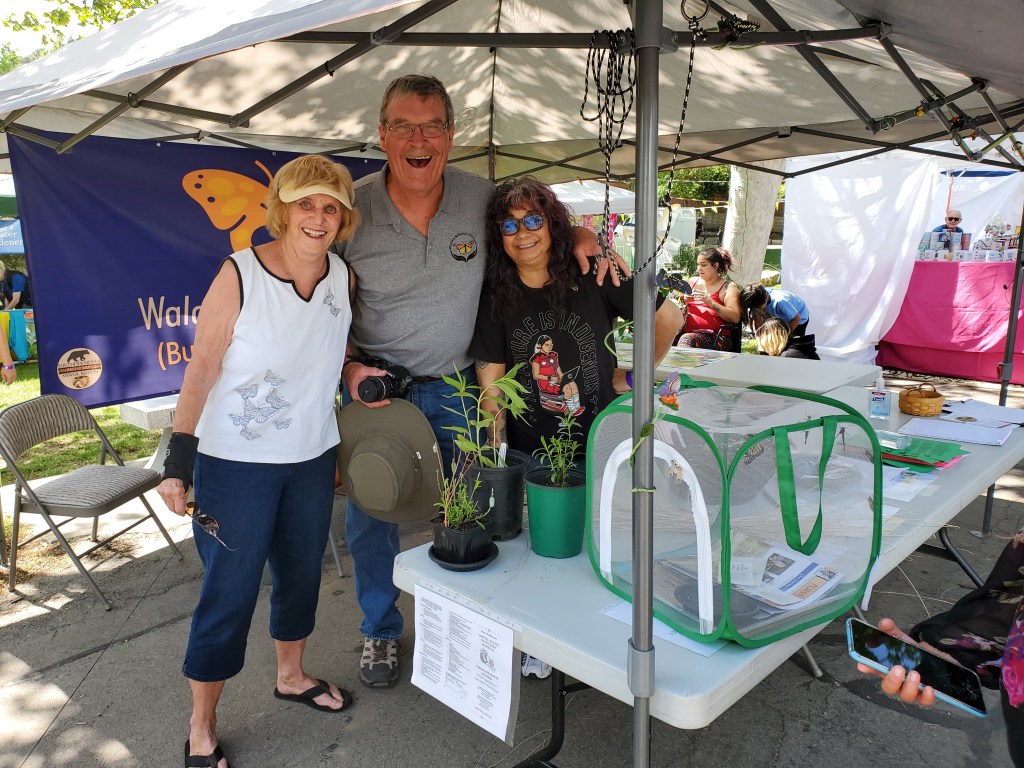
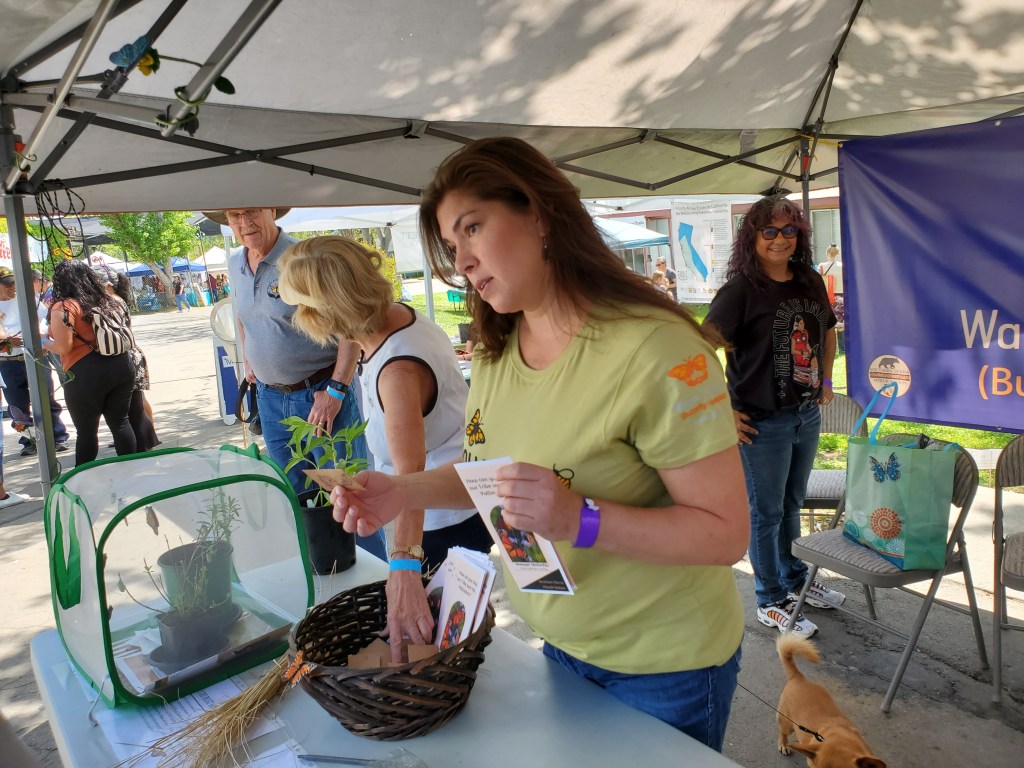
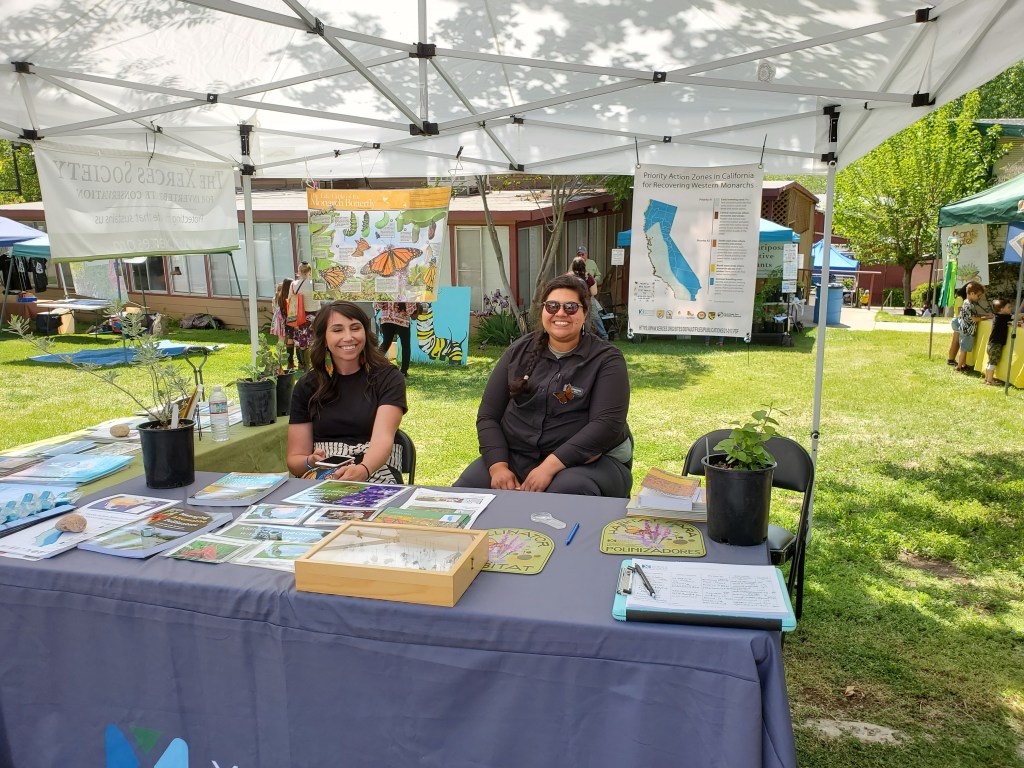
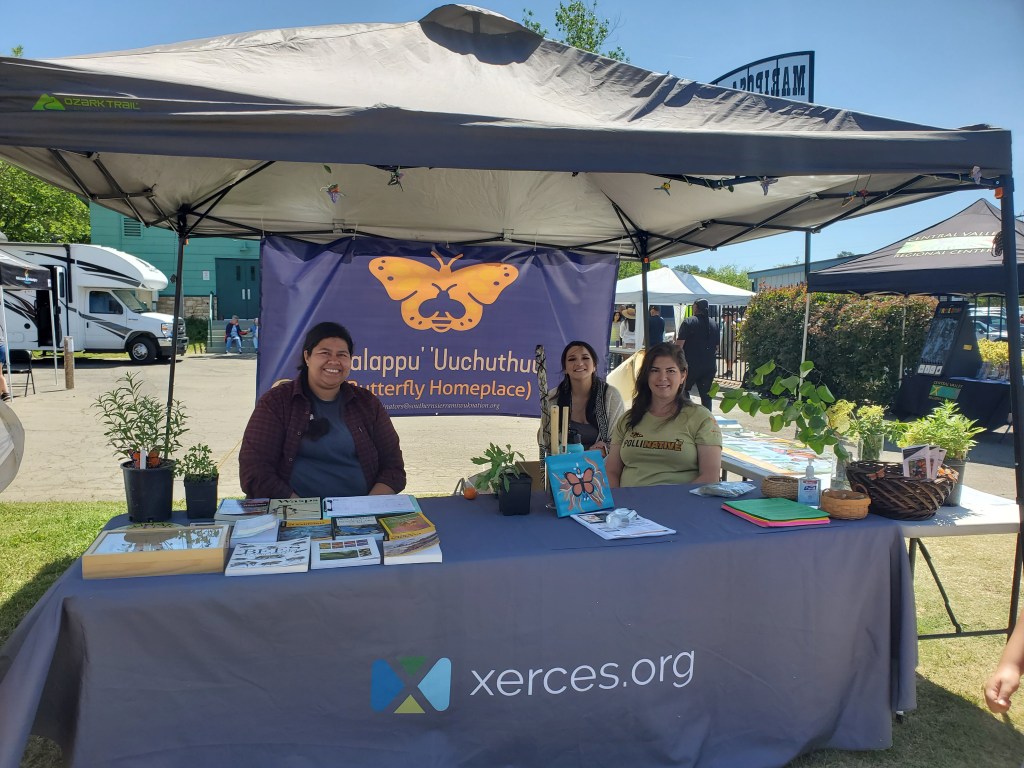
The Pollinator Team has continued to provide outreach to the public with pollinator education. Kristie and Nellie, with another volunteer, Gussie, have been gathering the information of residents of Mariposa county interested to install habitat as well as convincing others in the flyway to plant pollinator-friendly plants. Deedee Soto of Xerces, who is a member of our Pollinator Team, had a booth at the Butterfly Festival and shared a booth with the Team at the Pow Wow. It is always so helpful to have her as an expert available to answer questions. We always appreciate the generosity of the Xerces Society. I volunteered with them at the Butterfly Festival and briefly at the Pow Wow. It was wonderful to see so many people interested in monarchs. We had a special appearance from Nellie’s grandfather, Bill Tucker, who is a good friend as well as an honored Tribal elder. Also making a special appearance were biologist Tom D. Landis and monarch expert Diana Magor. Both came to perform early milkweed inventories with Ron Allen (UC Master Gardener and Mariposa Native Plants owner). It was a fun day.

I have continued doing education and outreach on my own as well. I was able to connect a couple farms to pollinator resources. The Sateurn Farm will plant some milkweed as a trial, and Raw Roots Farm in my own community will plant hedgerows in the Fall. I ordered Xerces kits for them. Deedee and I will also be approaching some no-spray vineyards in Lodi with which I have a relationship. Little by little, we are making more habitat and making a change in California for the pollinators. Let’s hope it is not too late.

Me giving a milkweed to Mr. Saeturn at the Saeturn Farm in Merced

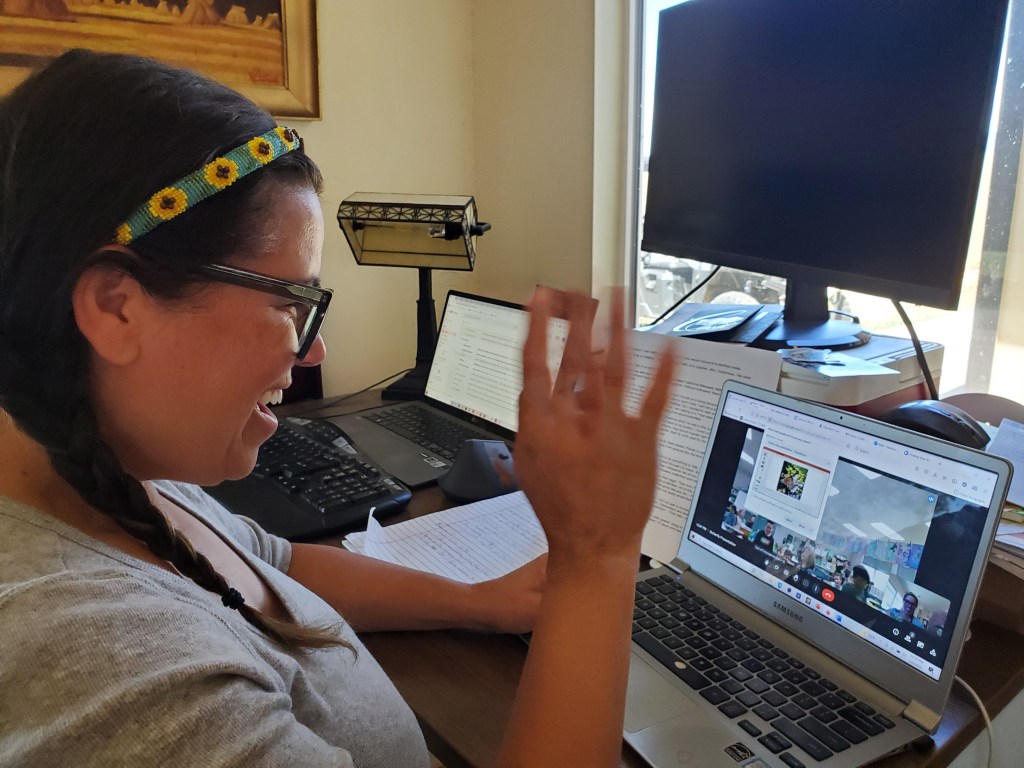
Additionally, I had the super fun opportunity to talk to my friend, Cerina Gasteneau’s, 2nd grade class in Crescent City about monarchs. They are studying butterflies, and Cerina asked if I would give a talk. I made a power point presentation that was photo heavy and told stories about cows, caterpillar poop, dog guardians and chrysalis ooze — the things that 2nd graders love to talk about. They were quite advanced, so I was able to discuss the entire life cycle, opportunities and threats. It was fun. I also surprised them by sending a package filled with magnetic, hand-painted monarch butterflies for them to affix to their shirts, fridges, or wherever they wanted. I love children. They are the stewards of tomorrow and worthy of extraordinary investment.

Washington Post Runs Small Story

You may recall we had a Washington Post photojournalist, Melina Mara, at the house following me around as I worked on monarch habitat tasks. She not only was with me but several others all around Central California. It was an interesting time to say the least. Finally, last month, her colleague Dino Grandoni, a journalist at the Post focused on environment and energy called. He wanted to do an interview to accompany the images Melina took nearly a year before. The resulting article was a short photo story made for digital only (not print). It focused on a wonderful woman in Oakland who expanded habitat around Lake Merritt, me, and Xerces’ Deedee Soto. Although Dino did not share my more substantive quotes that focused on pollinator education, the overall work achieved public awareness, which is the most important goal. Thank you to the Washington Post for covering this important story of the decline of this iconic, crucial species and a narrative that every day people can be effective in addressing this issue.

General Ranch Updates

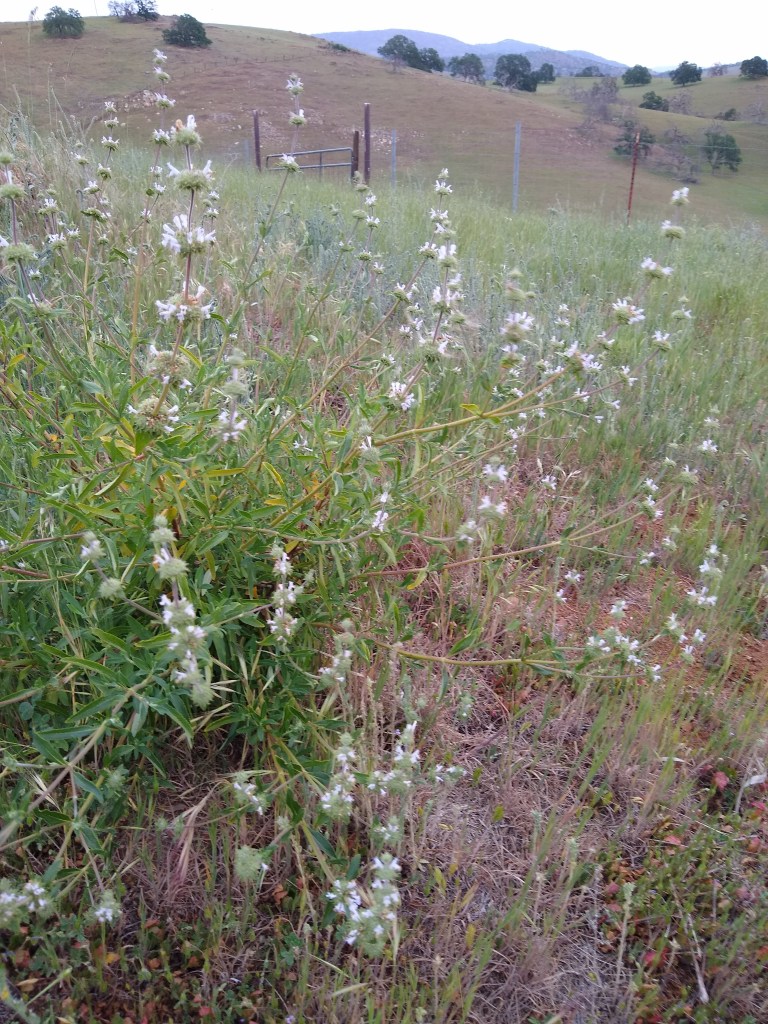
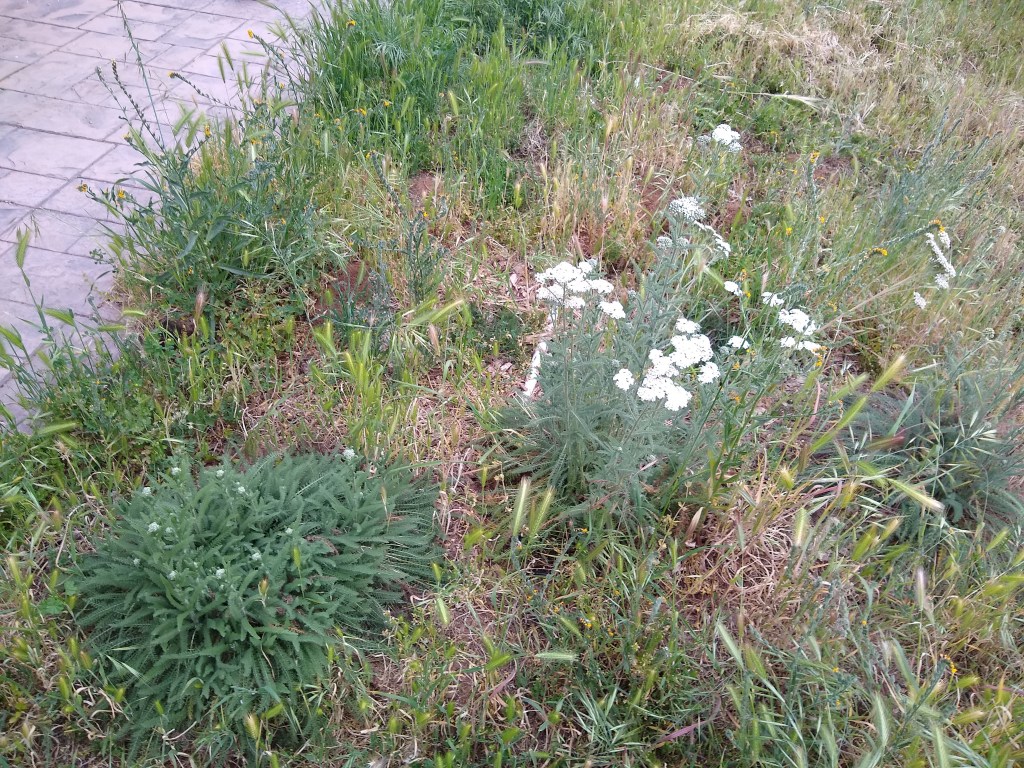
Life continues as we move from cooler spring weather to the heat of summer. Wildflowers are nearly gone, but other perennial native plants are beginning their blooms. The pacific asters, yarrow, sunflowers, gum weed and white sage are all beaming with flowers. The ceanothus has started. Yerba Santa, monkey flower, lupines, purple and black sages are all but done blooming. The narrow leaf milkweeds are getting buds on the end of their stems. We should have ongoing sources of nectar for whoever comes by. As for humans, I have had a steady stream of visitors. It has been a wonderful change from the sequester of the pandemic. All have been interested in the butterfly work and marveled at the smell of the plants and the beauty of the blooms. We have not seen many butterflies this year, but more than last year. White sulphurs, blue coppers, painted ladies, viceroys and, splendidly, I can happily say, monarchs, have all visited. Maybe the summer and fall will bring more.

Personally, this constant effort has been a respite from the ups and downs of life. Between the Ukraine, domestic politics, the loss of a friend, work pace, pandemic, graduations, births, achievements, weddings, divorces, other dramas, and, in general, life returning to a pre-pandemic cadence – it has all been so much. Perhaps many of us have gotten used to a slower pace and a life behind a screen instead of in-person, with all the energy that it gives and takes. Hopefully, we all have our own versions of a habitat project where we can move our bodies, quietly contemplate, be good humans for this Earth and breathe.

Beloved sister and brother visit

Cow Standoff – Babies Under Threat

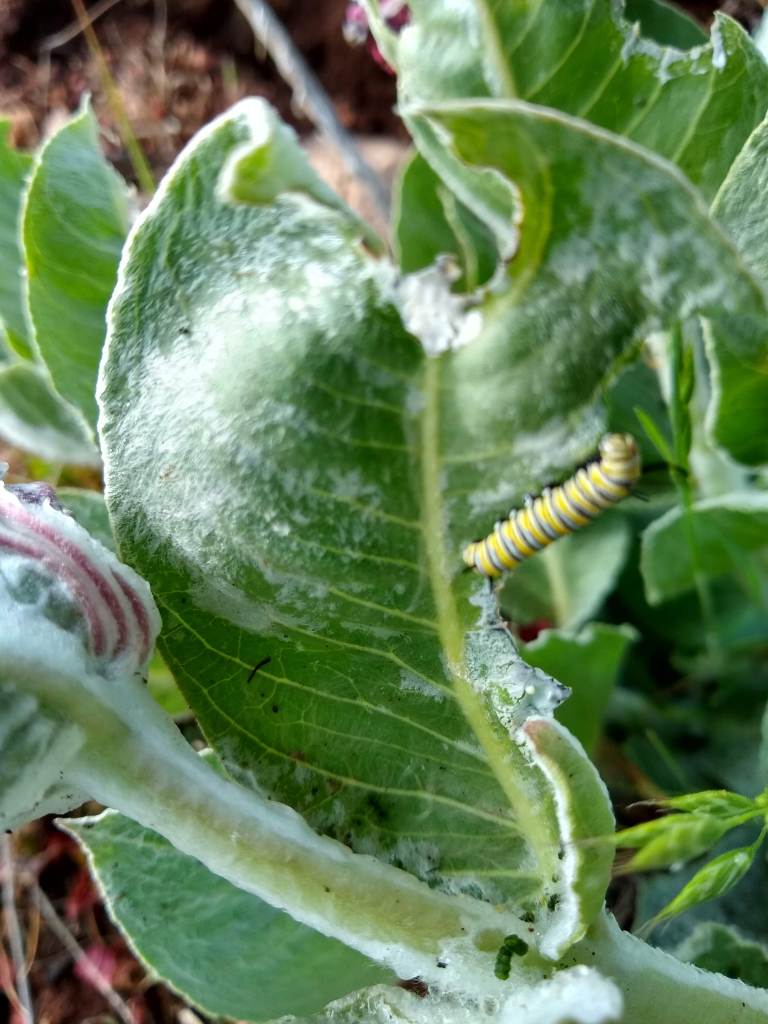
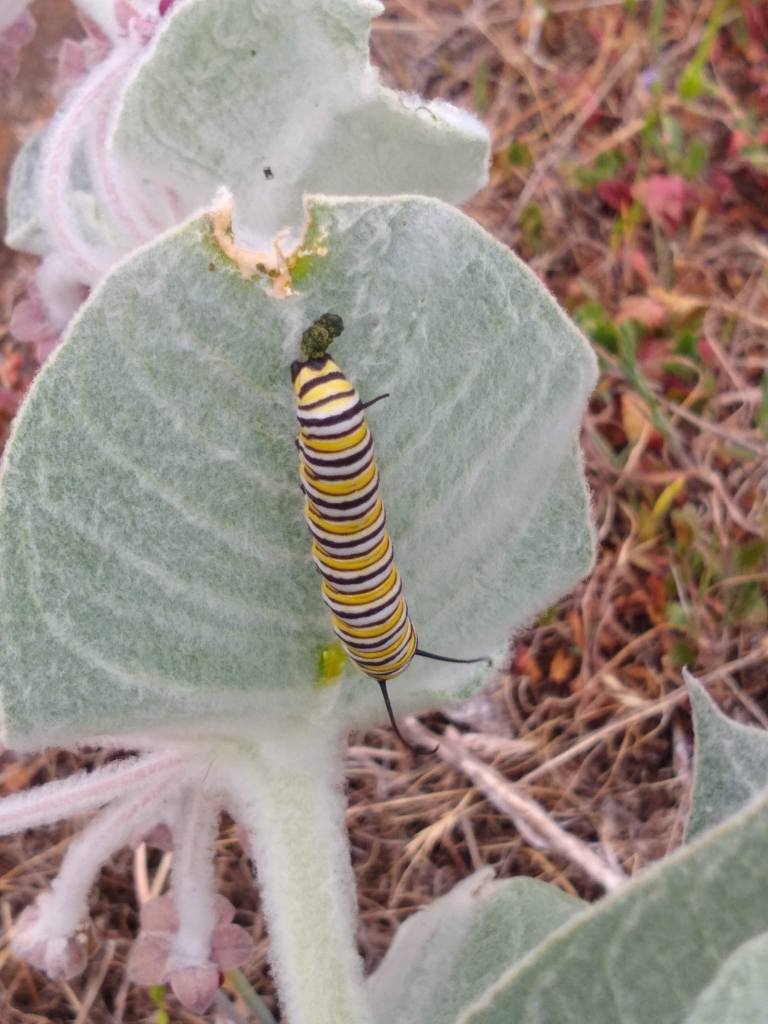
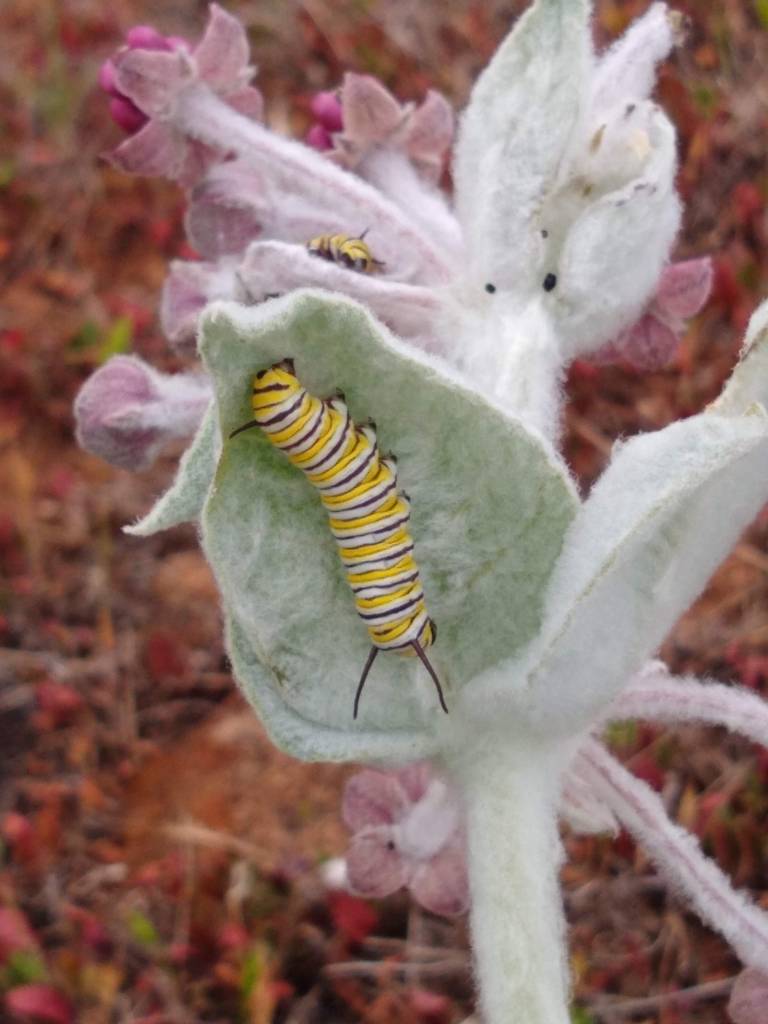
Large caterpillar (probably at Instar 4) trying to make it to a monarch

In the last blog post, I relayed the near loss of the incubator milkweed plant and my aborted protective camping almost-adventure. I also detailed how my cattleman and I agreed that it would work out to shift the cattle to the south part of the ranch a few days early for a rotation of 10 days. However, he was not able to move them until Sunday…I had to ensure the baby monarchs’ protection for one more evening and day.

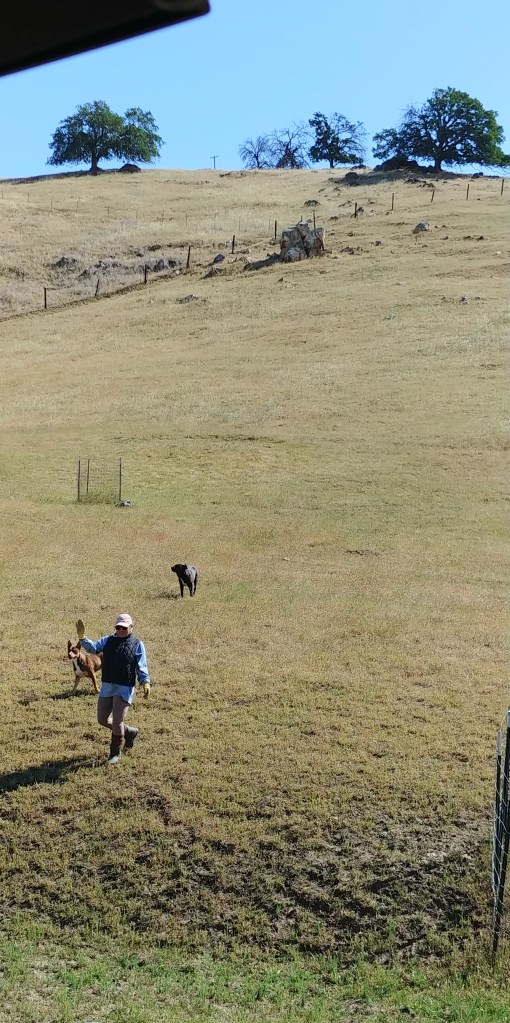
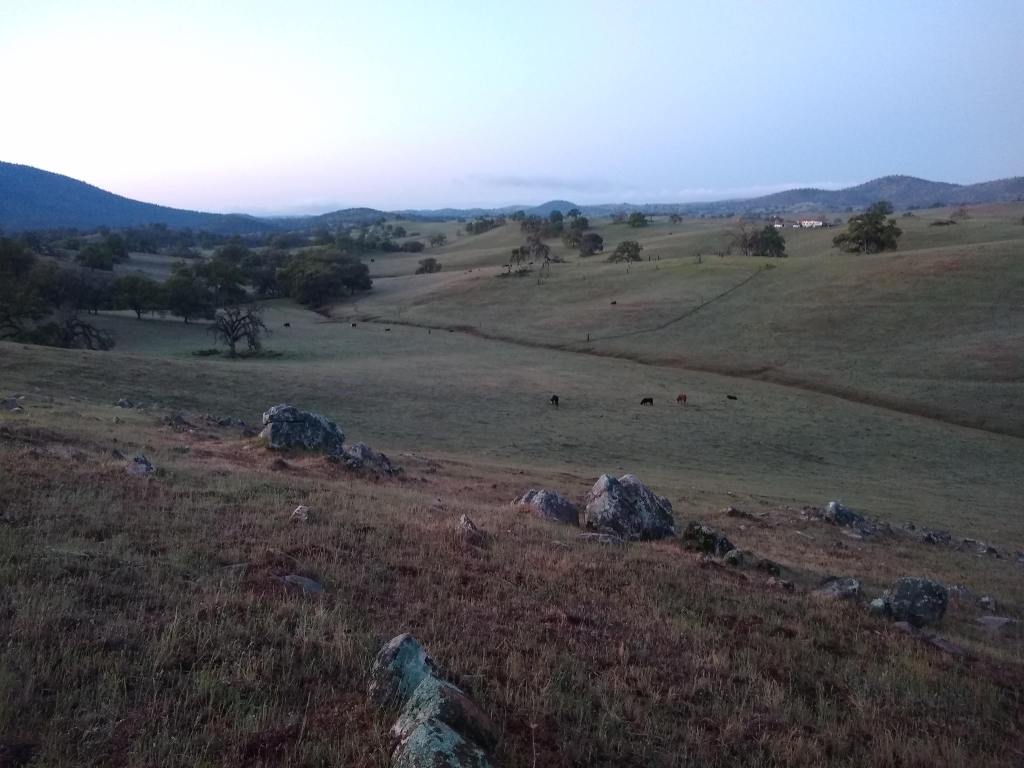
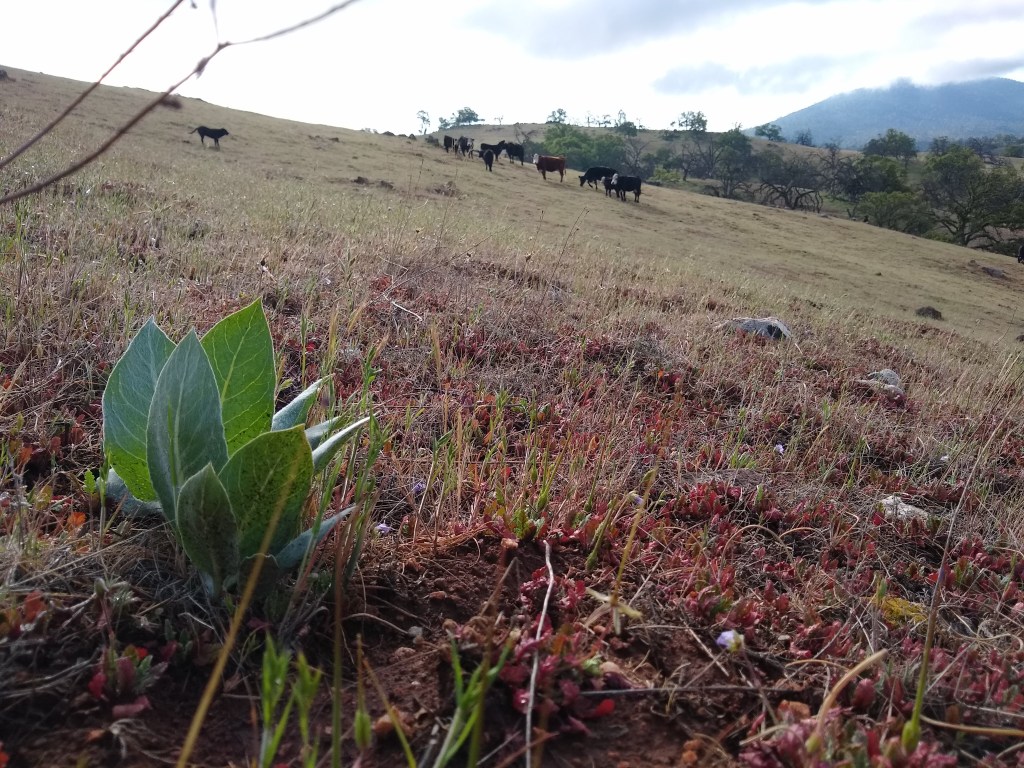
Like Saturday morning, I rose before the sun to make sure I was moving before the cattle were. I was out the door at 6am, and there were already several cows up. They were in the vicinity, but not adjacent to the milkweed. Still, it was too close for comfort. The dogs and I made our way to the milkweed patch to stand guard for however long it took the cattle to circulate away from this section of the ranch.

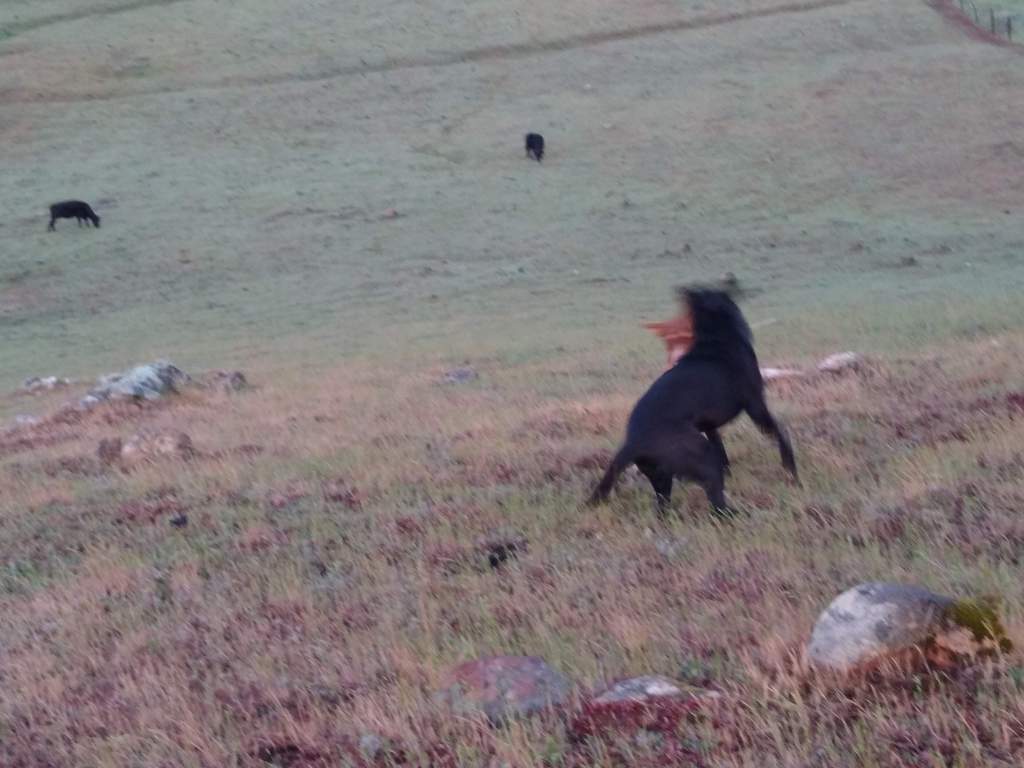
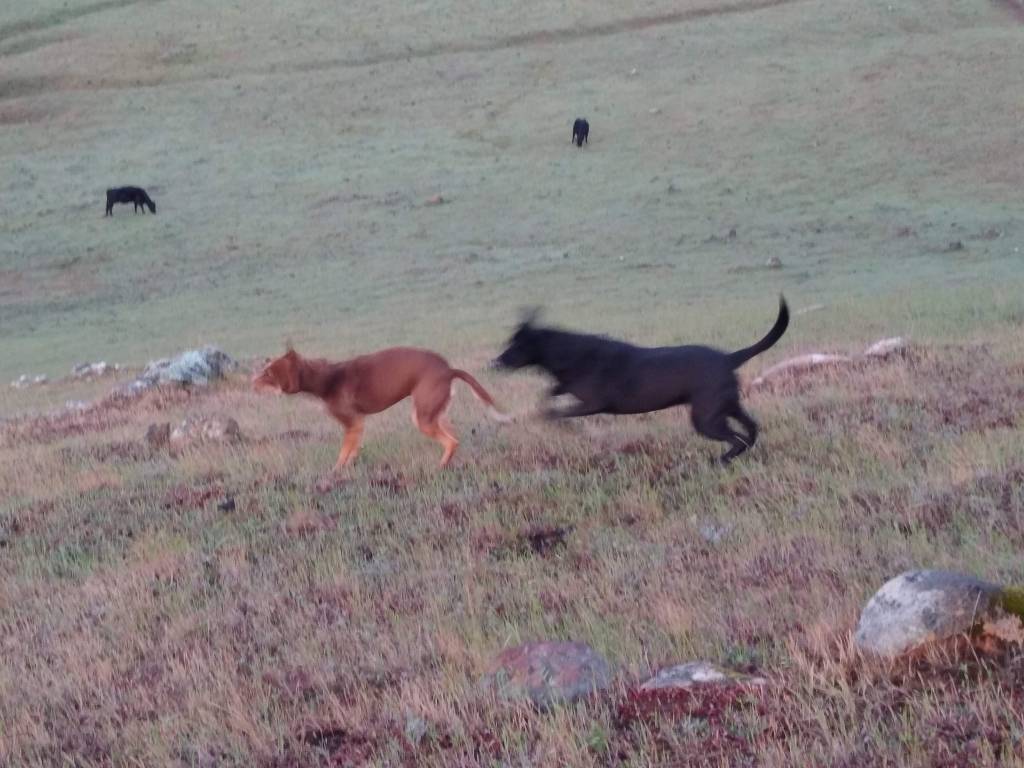
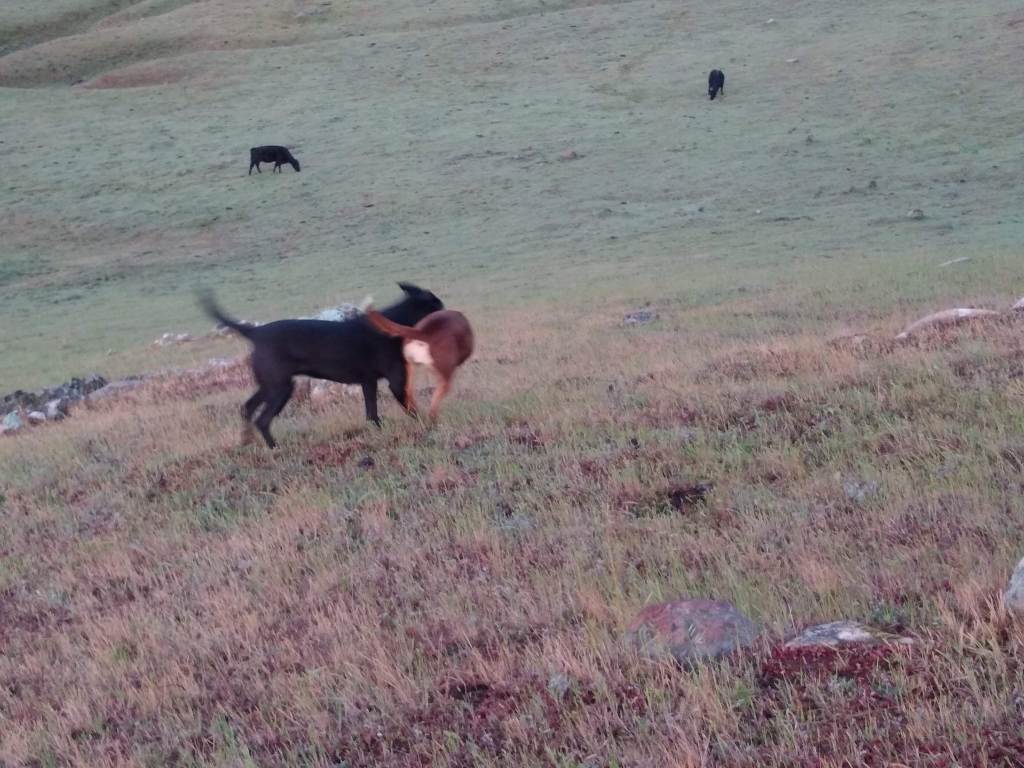
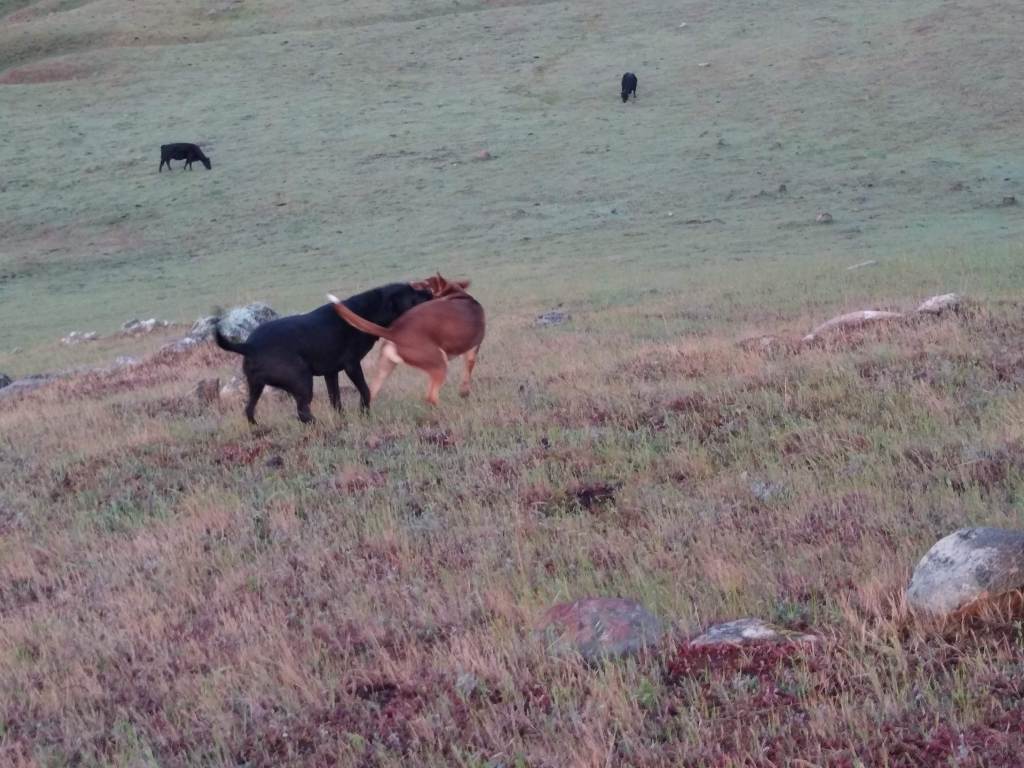
The sun began to lighten up the sky, and one by one, the cattle began to stand up from their nested slumber in the grass to begin their morning ablutions. I stood guard as the dogs showed their joy playing a game of wrestle and chase. Who wouldn’t be excited to be outside first thing in the morning, the cool air stinging your cheeks, a brisk walk moving the blood in your body, the slight breeze shifting your fur. The smell was crisp and alive – a good day to guard a plant full of caterpillars.

Dave watches the drama unfold from the other hilltop

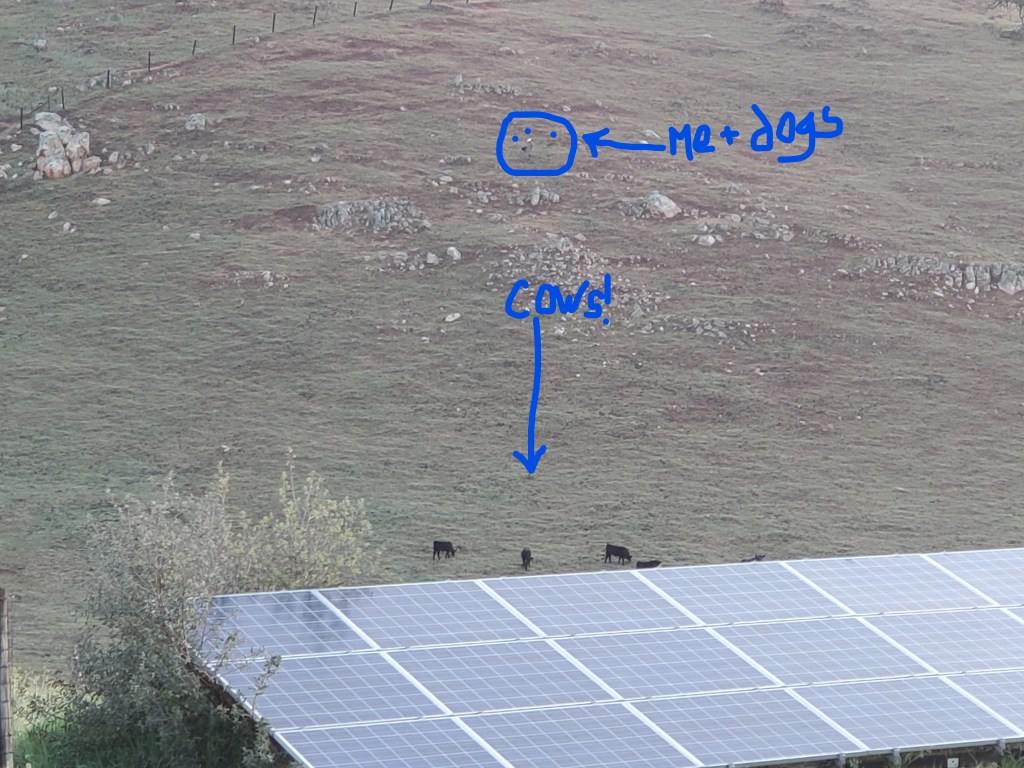
As time went on, the cattle migrated around the hill. I went home for a cup of tea and breakfast – in front of the large window looking north to keep an eye on the situation. I calculated how close they could get before I would need to run up the hill to get to the patch before them. Then…trickery! A separatist cow group splintered off from the herd and went up the hill. It was like they remembered the green of the milkweed and made a plan to circle back. I ran out the door, the dogs at my heels, jumped in the neighbor’s Polaris and drove as fast as I safely could up the dangerous incline. I had to approach with care. If I chose the wrong side to head them off, they could stampede over the plants all but assuring the destruction of the patch. This pushed me to the steepest, rockiest side of the hill. As I watched the cows continue their approach, inching closer and closer, I could drive no further. The rocks were too plentiful. Jumping out, I ran across the tilted hillside, dodging milkweed and rocks. The dogs were there first – stopping the cows in their quest just feet away from the patch, and the treasure of the caterpillars beyond. Breathless as I ran, I said “leave it!” – lest they move them toward me and trample the plants. They obeyed – standing like schoolyard bullies daring some poor kid to make a move. It was like this when I finally got to the east side of the patch. Millie and Beatrix standing like statues except for the slight lick of their chops contemplating – no savoring – the thought of a chase. I imagined them thinking, “Make my day.”

It was a stand-off.

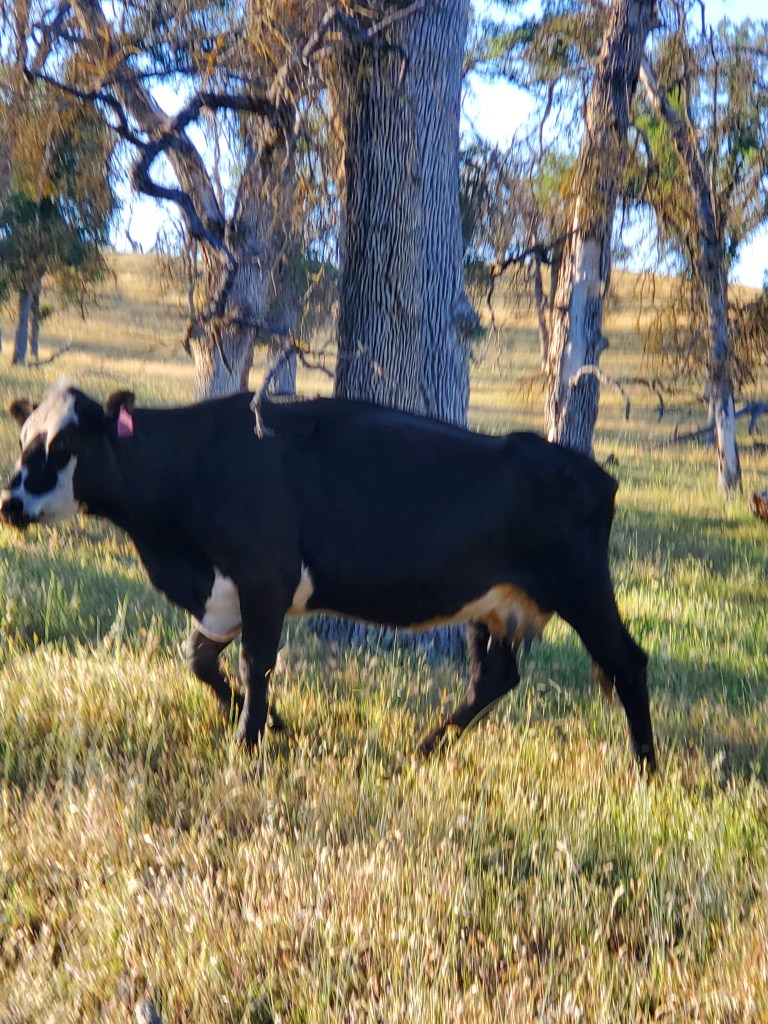
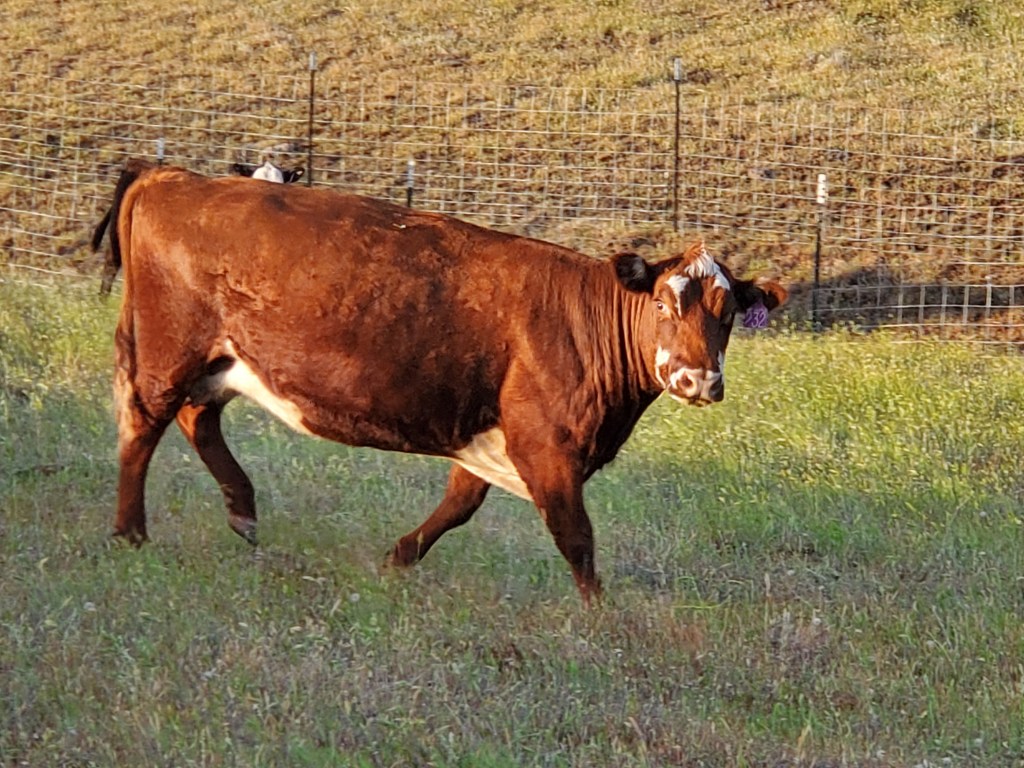
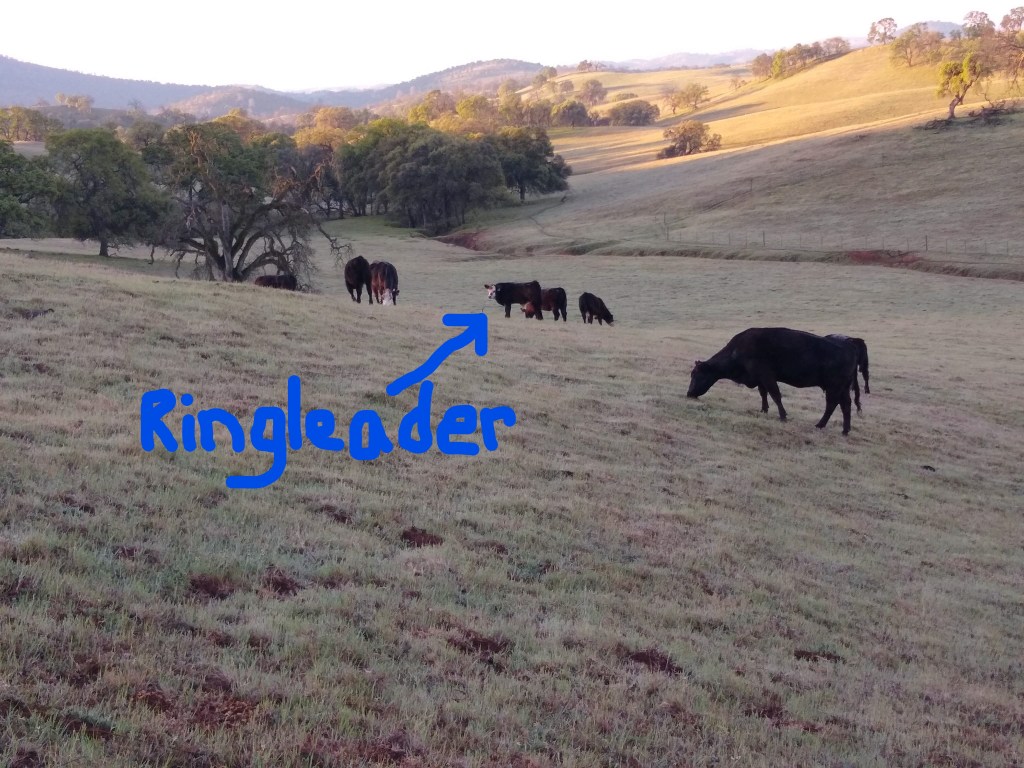
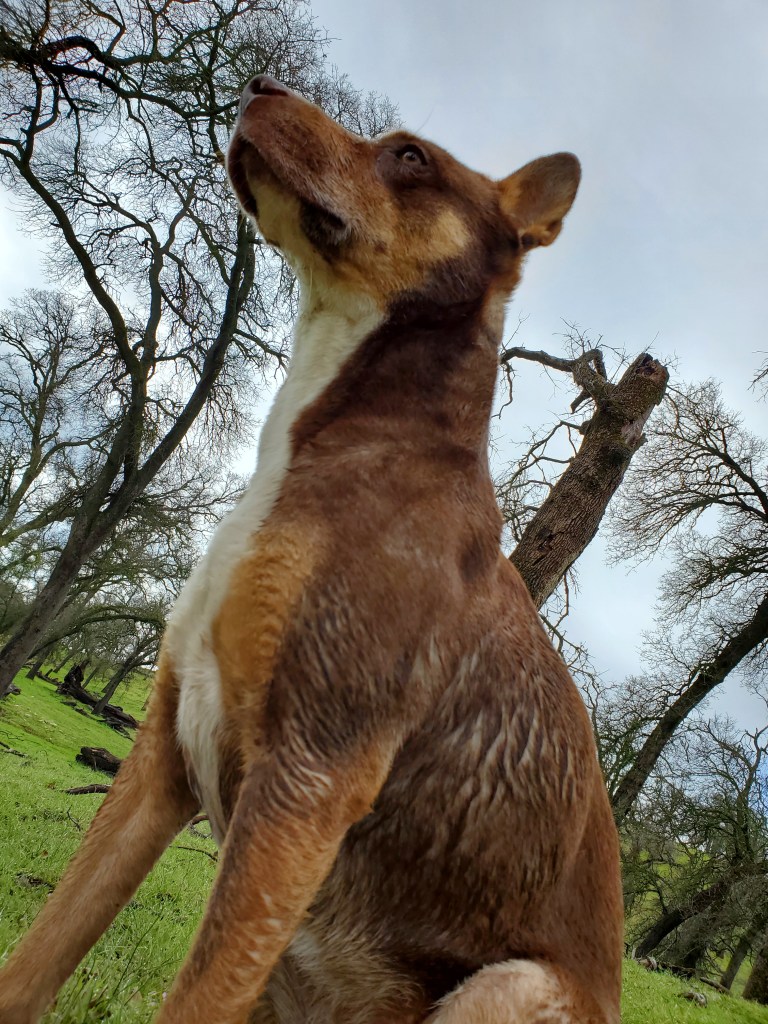
Cattle are smart, and they don’t like to be stationary for too long. The drought had taken its toll on the land, and they were going to chomp those bright green plants they had seen the day before. Their ringleader is Skull, and she brought about 10 of her toadies along with some their calves. As a rule, I give a wide berth to all mamas with their babies, and I certainly did not want to put pressure on any of them. But, this was my one patch of ground, and I was not going to cede it. Skull is about 1,500lbs, black with a white face that leaves black fur around her eyes giving her that skull-like appearance. Creepy. She is not someone you would want to pick a fight with. She stared at me demanding that I get out of the way. The dogs inched closer to her as she tossed her head. Then she looked back at me, and I said, “You have 364 and a half acres to graze. This is my half acre. Go on…GET!” Oh boy, she did not like that. She hit her hoof to the ground and scrapped the dirt, then snorted. Dang – she was getting agitated. I tried a different approach in a softer voice, “Oh sweet, sweet skull. Please understand. I love you, but I love the monarchs more right now. Why don’t you go take your posse and eat some other plants?” Another stomp, scrape and snort. Things were not looking good. The issue, it appeared, was non-negotiable on both sides, and I would not be moved. Sensing the moment, and tired of the conversation, Beatrix and Millie looked at me. I nodded, and they were off. Barking and moving forward at the splinter group. Some of Skull’s toadies peeled off right away and headed down the hill, but a few others hung on. Skull stepped toward the dogs, but they were undeterred. The girls redoubled their efforts; they were not fooling around. Skull and her team relented and reluctantly made their way down the hill, slowly, knowing their size and desires. Then, nearing the bottom of the hill, Skull stopped and looked back up the hill at me, the dogs now sitting by my side staring back at her. It was clear I had won this battle, but the war was yet to be determined. She turned back around and meandered off, head held high.
With the tense moment passed, I turned to regale in the treasure that was protected. The caterpillars were safe. There were large, medium and small ones eating. They were thriving. Beatrix and Millie saved the day.

Badass Canis familiarus

With the cattle moved on, I set my sights on figuring out how I would get the Polaris back down the ultra steep hillside. Photos do not do it justice. Driving down is almost like going over a cliff. I created a plan of careful movements to position the vehicle nose forward using the same track I had created to get up the hill. I took a deep breath, loaded myself in the unit, put my seatbelt on, placed my left foot on the break and my right on the acceleration, shifted in reverse and took off the break. It lurched forward for just a quarter second before I caught it with the break pedal. Breathing again. I reversed, got it into position and carefully went downhill in low gear.

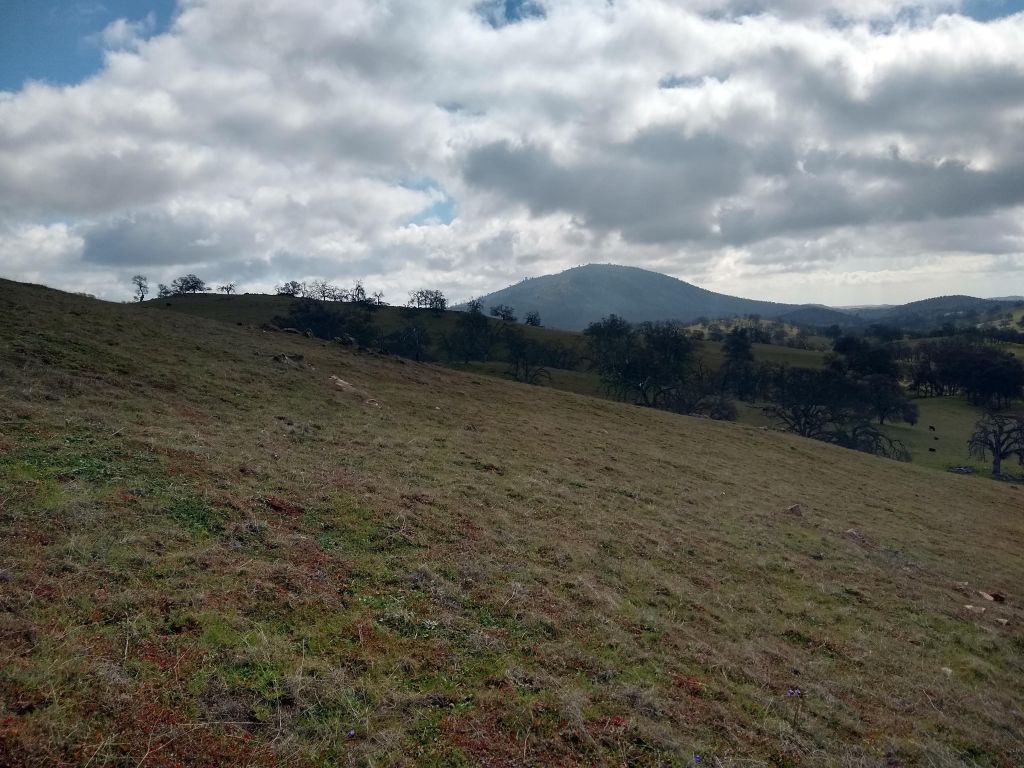
Images are deceiving. This is not a gentle slope.

Nectar and Monarch Sightings

The nectar of the milkweed is a crucial source of food for a newly emerged butterfly

With the cows to the south, I could feel comfortable going on vacation. My pet sitter texted me with a sighting of a monarch on the back patio. I nearly cried. It isn’t just one. There are several sightings now. I really believe this place was chosen as a nursery because of the added nectar (Thank you CARCD and Xerces for grants and extra plants). In the last two years, there has been no evidence of caterpillars chewing on plants. This year has been good for early blooms. We have a wide variety of plants flowering. It has been this way since January.

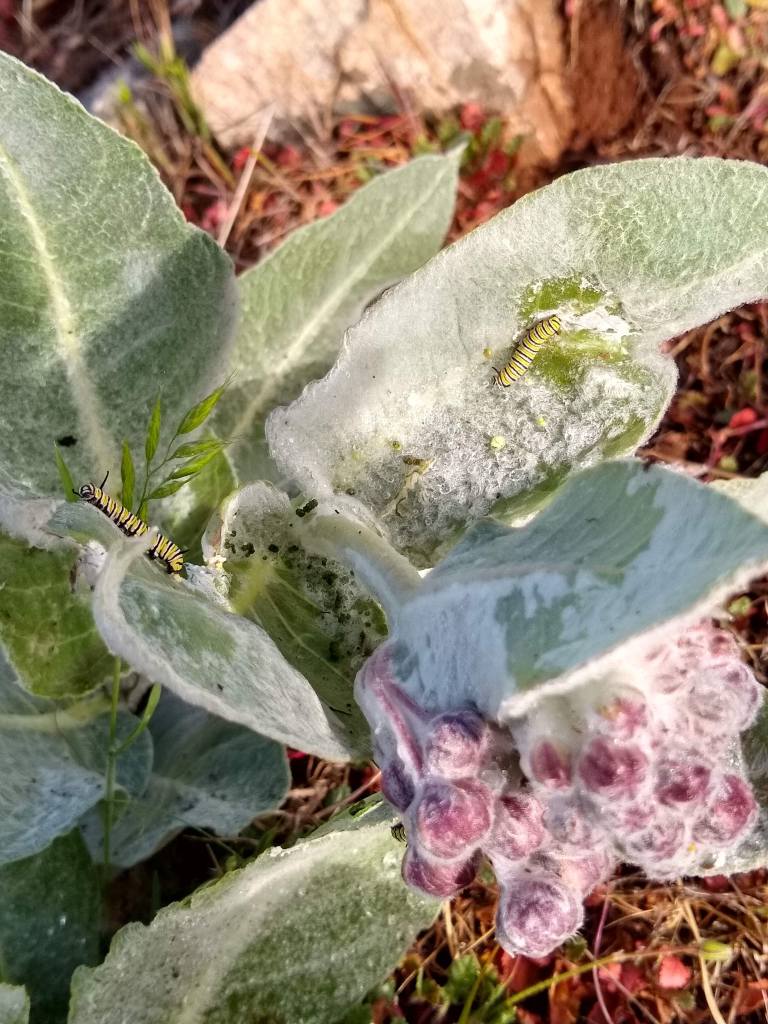
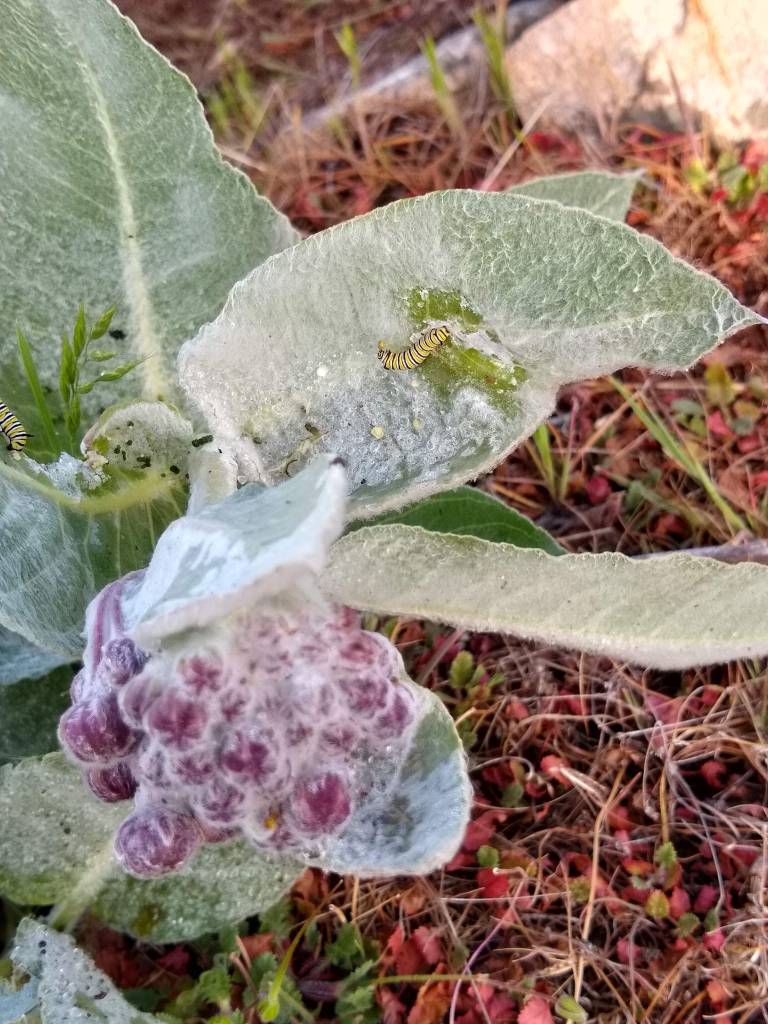
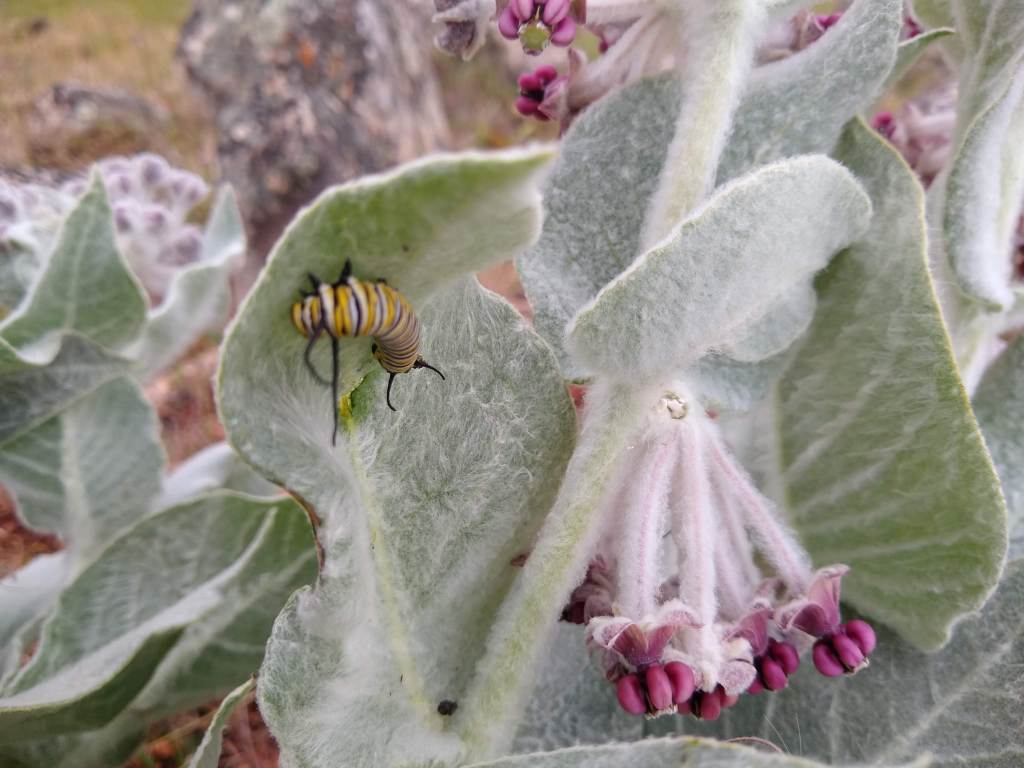
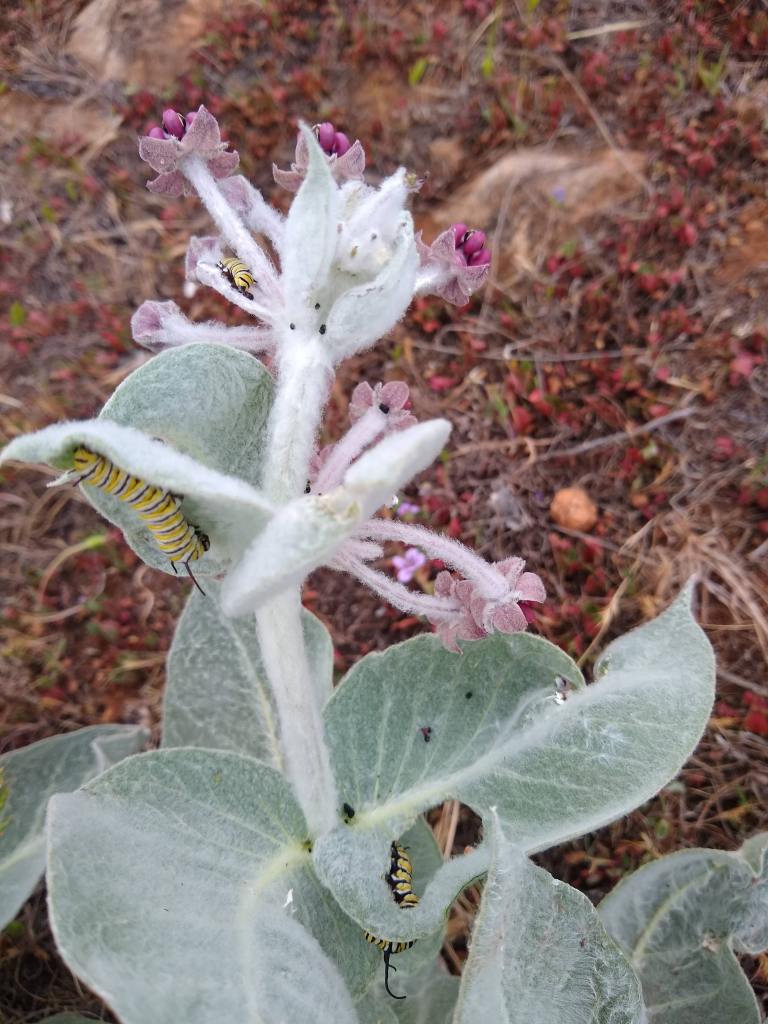
After returning from vacation, I checked on the incubator milkweed. It was gone – stripped down to nothing but a few buds at the base of the plant. This is as intended. The caterpillars eat, and eat. They then find another plant to ravage until they are large enough to make their chrysalis. I counted 5 on one large plant and one on another. There was evidence of slight chewing on a third large milkweed, but I did not see any caterpillar.

As I was returning, imagine my shock when I found 4 A. Californicas emerging from the soil of the first milkweed patch, AC1, closest to my home – the site I had been watching with despair at its non-return. In years past, this site had as many as 11 individual plants. This could be good news for any late comers to the ranch who want to start their family here. Lesson learned – never count out nature.

Wildflowers, A. Californica Emerges, Drought and Handing Off

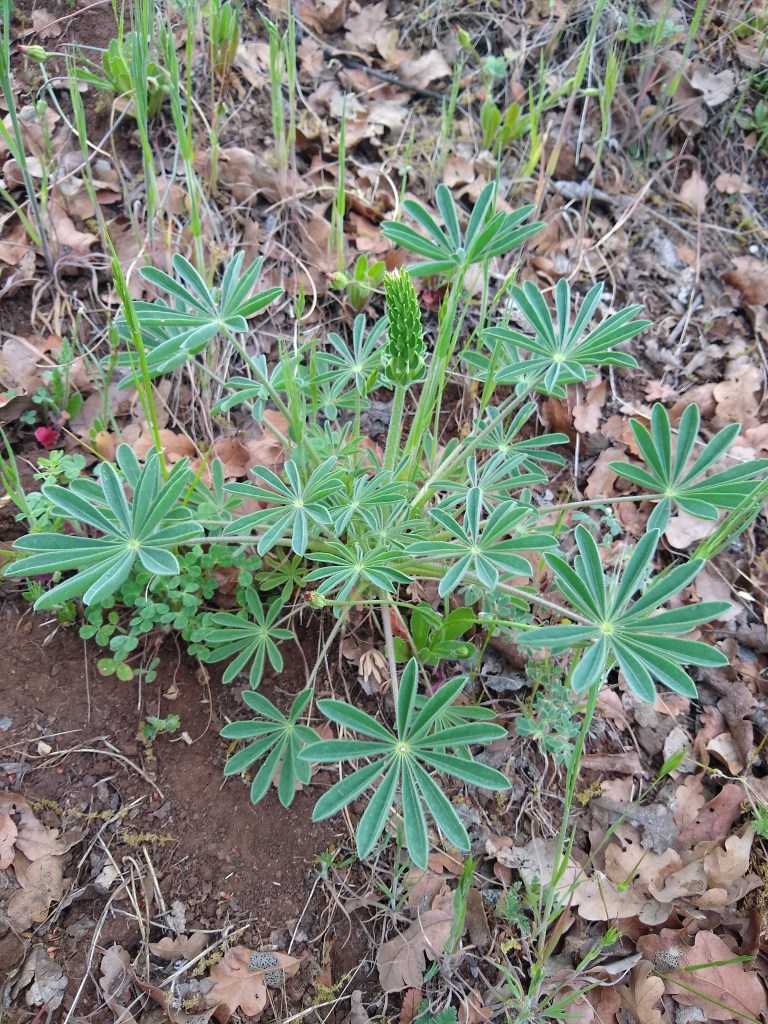
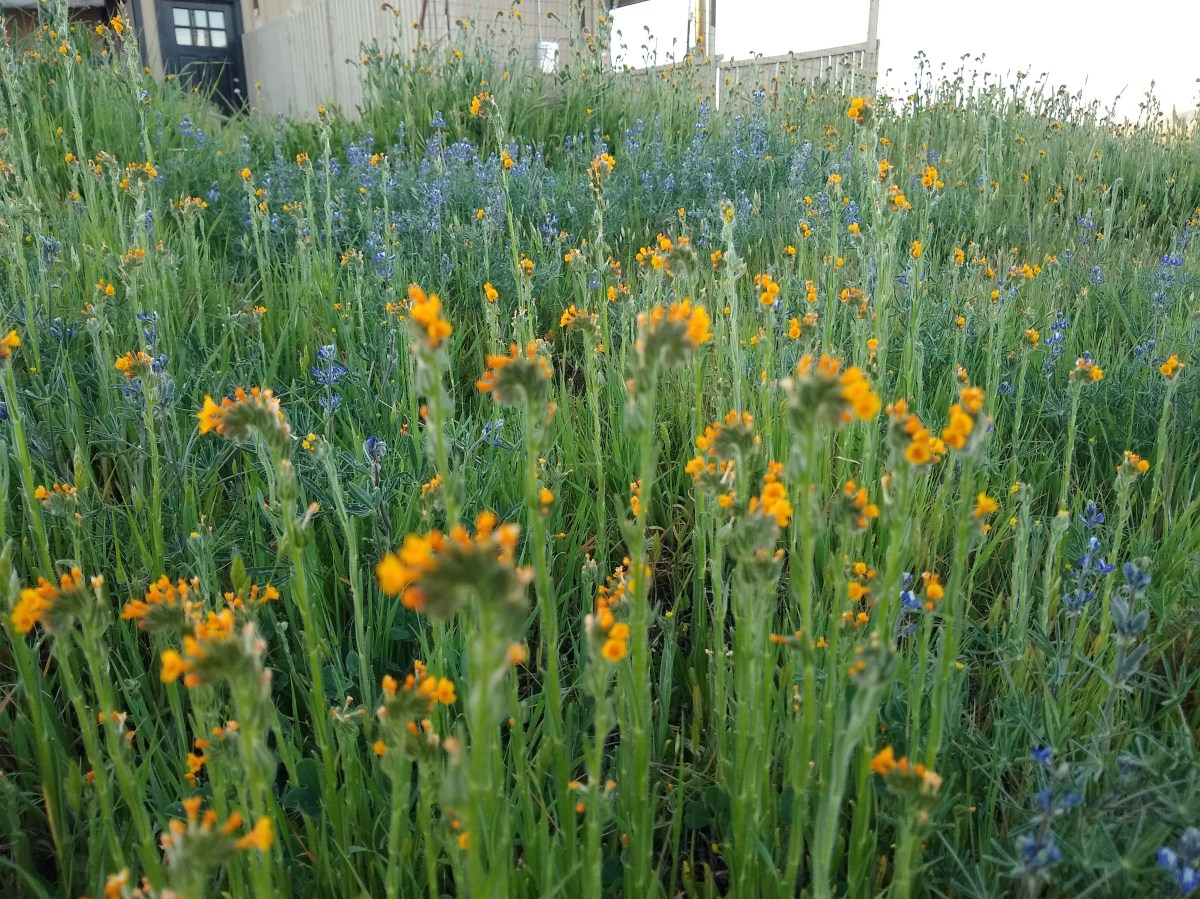
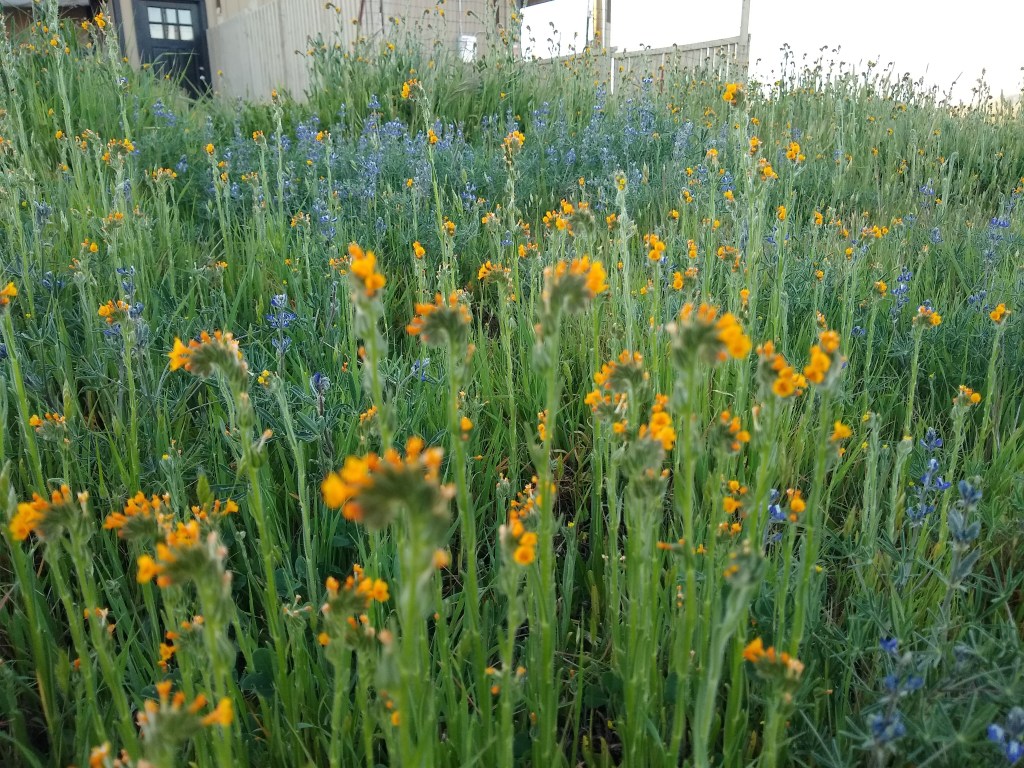
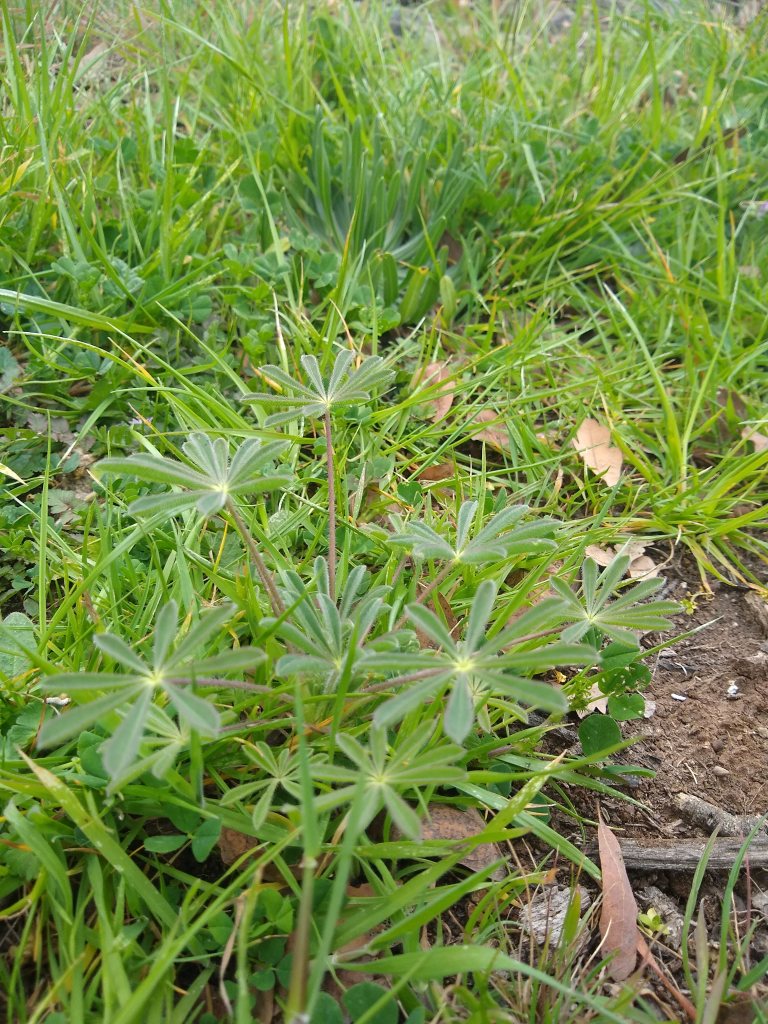
Millie watches Beau kitten walk through the wildflowers (lupine and fiddleneck)

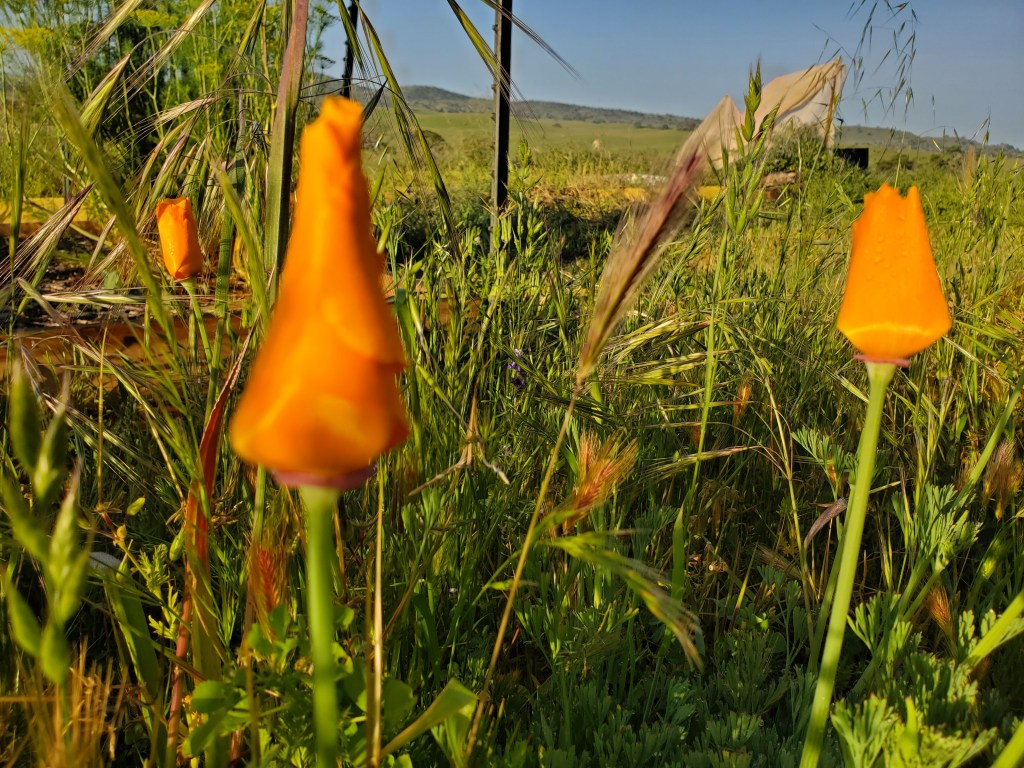
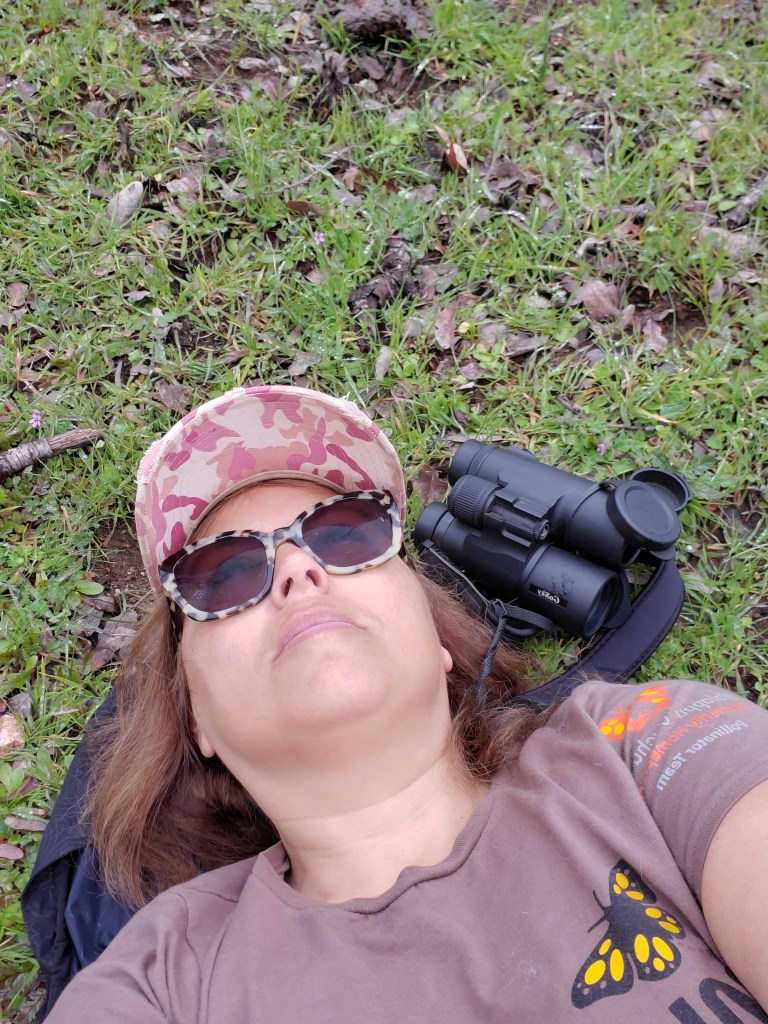
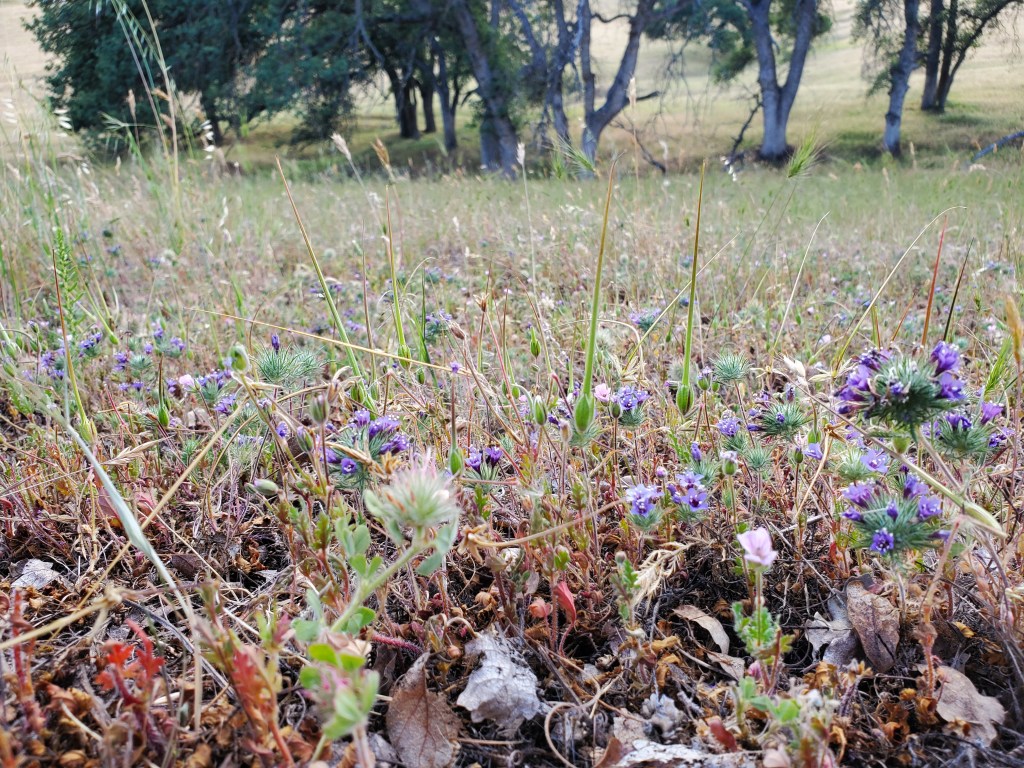
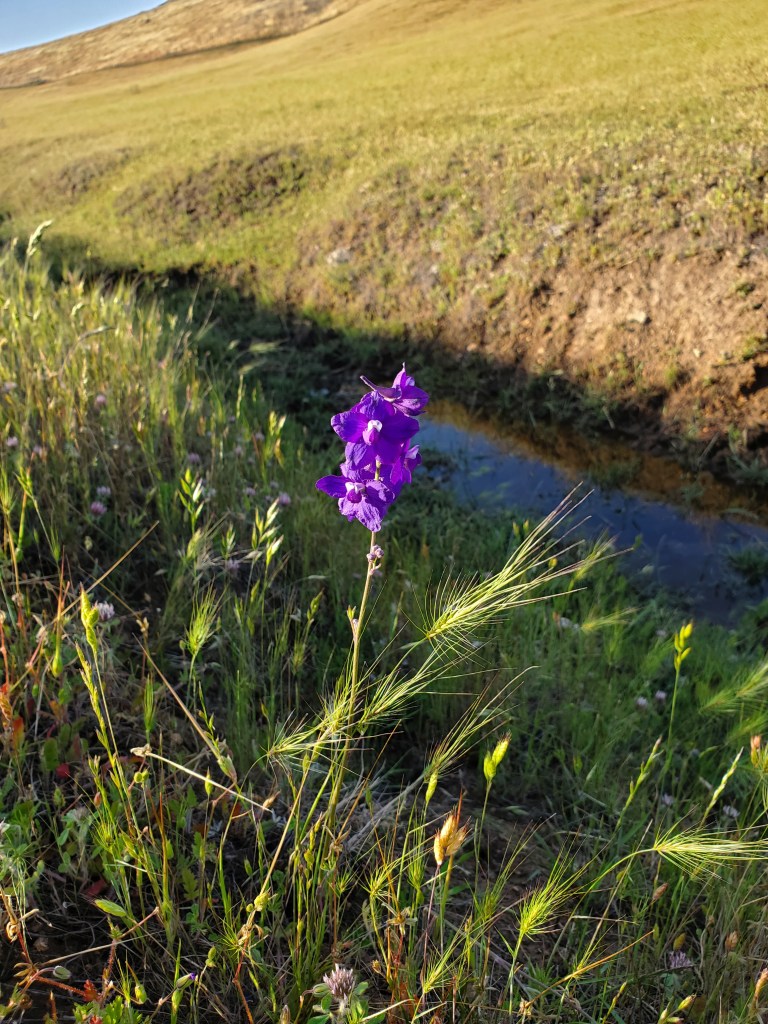
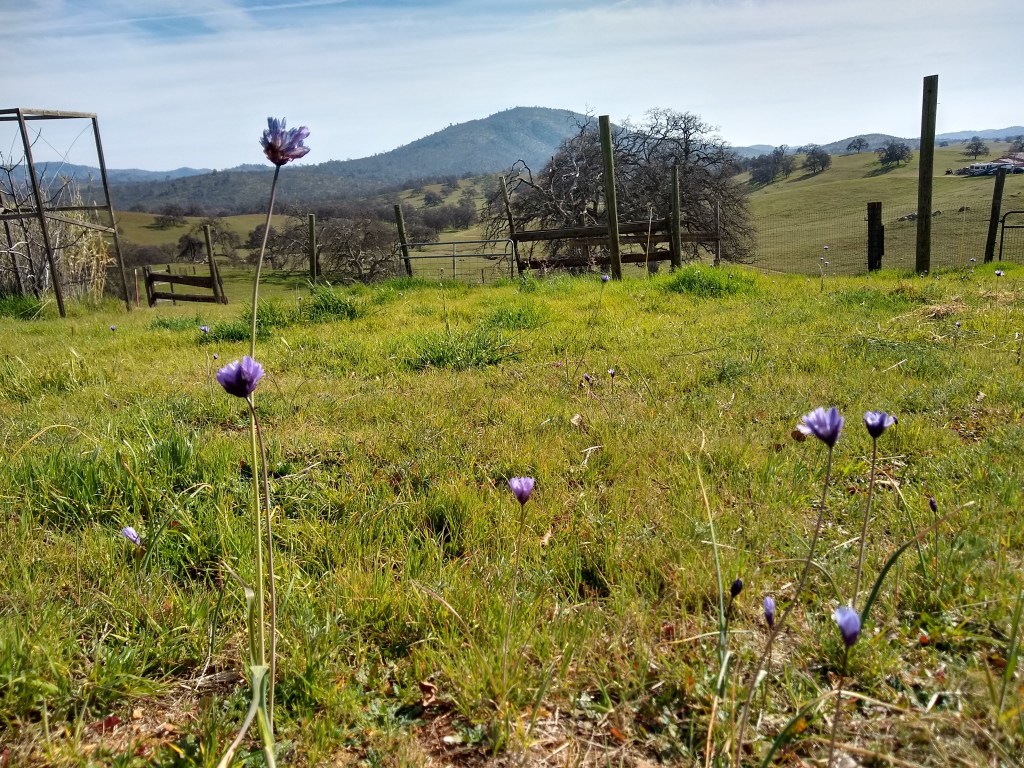
Wildflowers of all colors and sizes abound here in the foothills. It is like spring. I welcomed the thick scent of nectar into my home by keeping the doors and windows open the entire day last week. I never tire of the joy the olfactory experience brings me. Tempering my joy is the notable lack of bees across the range. I recall when I first came to this place that there would be plethora of different bees on the flowers – chunky bumble bees of different colors, thin, agile pollinating flies, and European honey bees of course. Fortunately, near the house is a different situation. There are honey bees, silver native bees, thin flies and every now and again a bumble bee on the arugula flowers. I love to lay on my chaise next to my towering stands of arugula, with the bees flying around me and listen to their hypnotic hum.

A. Californica Emerges…Partially

My plant obsession emerged in late February on the south facing slope – A. Californica (AC), California milkweed. What a tricky friend it is! I have been monitoring the emergence of early milkweeds for Ron as part of a larger program he is involved in. I must have walked by the rocks on the south facing slope twice in the latter part of February. I never saw anything.

In the early days of March , on a cool day, after checking the area, I headed home, down the very steep slope that leads to Site 2. I decided to pull some weeds around the baskets of Site 2 since I was there. I reached into the pocket of my jacket and found no gloves. The gloves were a yellow tan color, much like some of the rocks that protruded on the landscape. Looking left and right, I saw nothing. Although I dreaded it, I began to make a slow climb back up the steep south facing slope in search of my gloves. You must understand, the gloves were not cheapos. David got me a special pair that he thought would last longer and fit better since I work so much with my hands. Very sweet of him. But, this meant I was determined to find them.

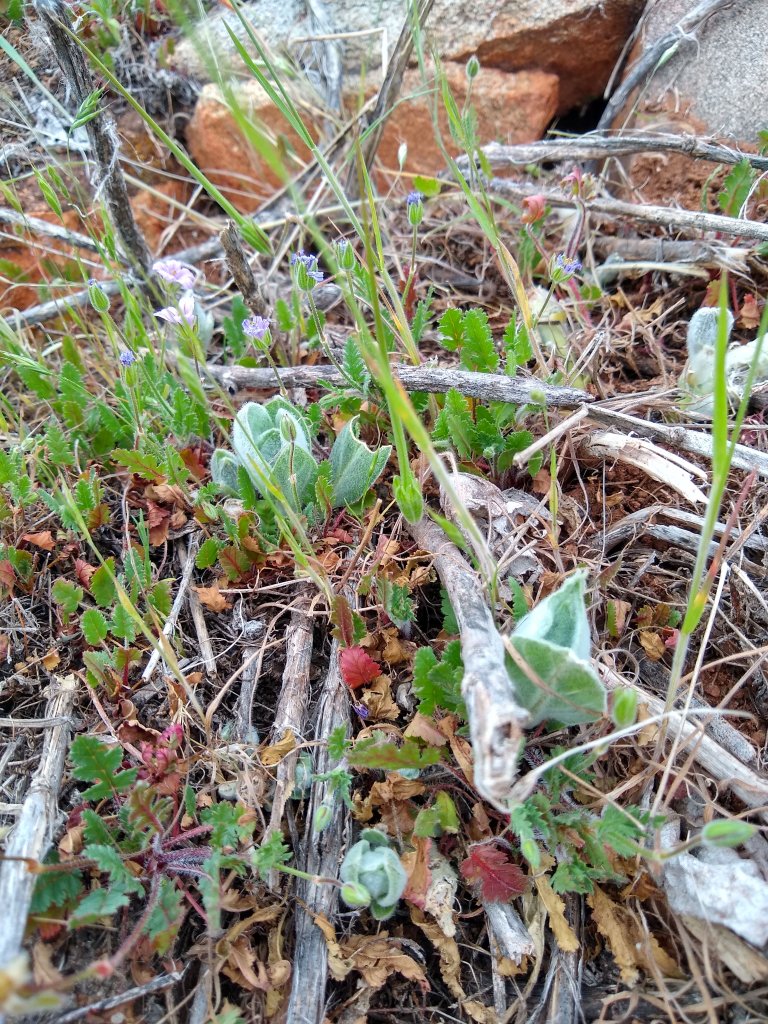
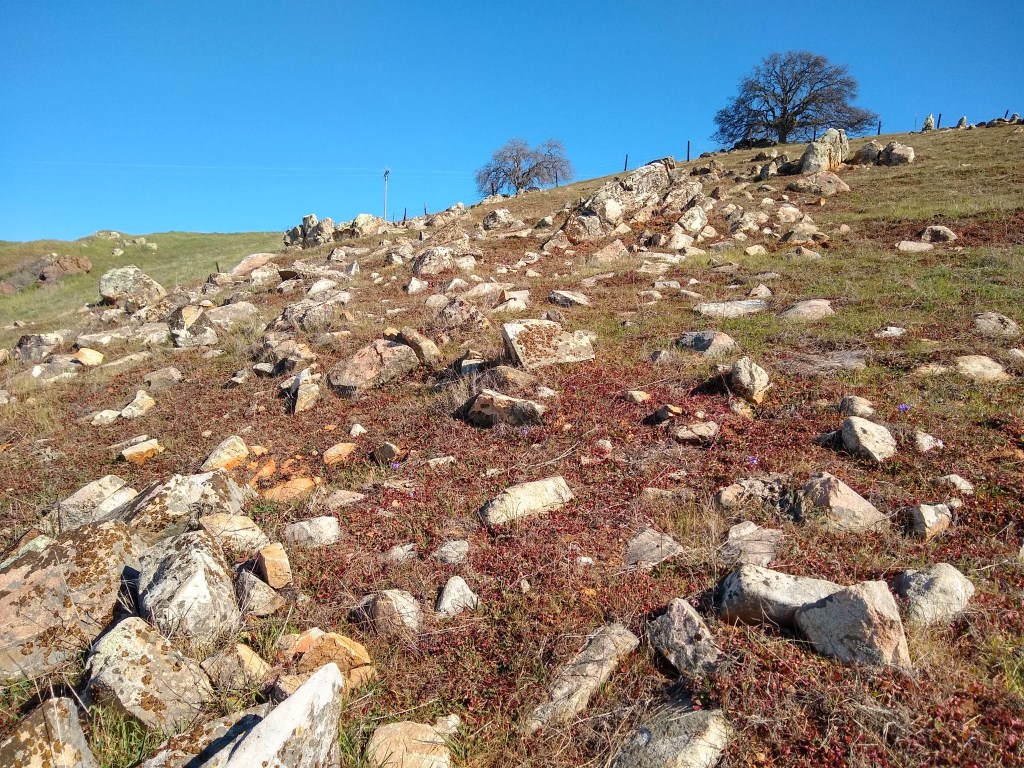
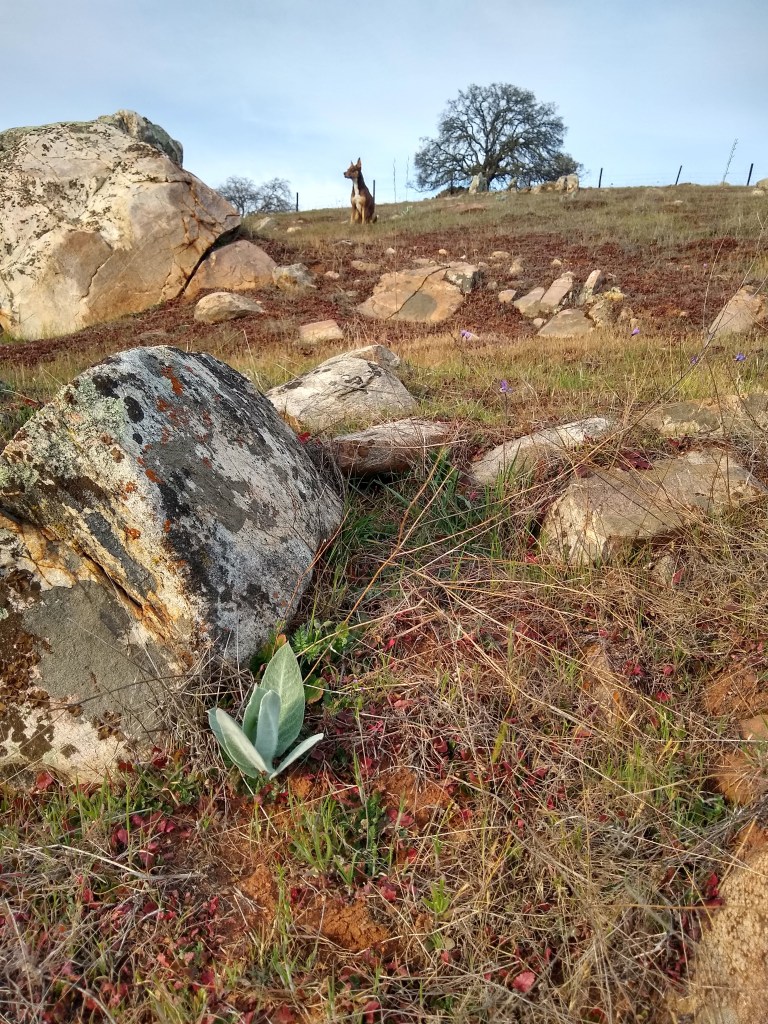
Everything happens for a reason I suppose. Trudging back up the slope, about halfway up the hill, I saw a glimpse of light green on the dark green, brown, and red colored background almost glowing in the light. Could it be? No. I had wandered this area just a moment ago, and twice over the last two weeks. But yes! There is was, slightly moving in the breeze, a gorgeous puff of AC. As much as possible, I picked up my pace to get to it. Indeed, it was a large specimen of AC. It had to have been there, camouflaged against the moss on the rocks, for weeks. I began to look around and like prairie dogs peeking out of their holes there were another 3, no — 5, no –10, albeit smaller ACs. My heart beat more from the excitement than the 6% slope I had just loped up. Everywhere I turned there was AC. In all, after counting 6 times to ensure I got it right, there were 16 individuals in total in that community of plants. I could not help but grin so wide the sides of my mouth ached. What a great day.

I have been monitoring all AC sites where I have found the plants previously. Of the four, two have emerging plants. The other AC site has one very strong plant with three sprouts. Last year, this site had one plant with one sprout. The older the plants are, the stronger the roots become and the larger the sprouts get. I have seen smaller plants that get a later start never get to bloom. This is why it is really important to protect the older growth ACs.

Hopefully, we will begin to see some emergence in the other sites soon. The other sites are north and west facing (as opposed to south) – so this may be a factor.

Drought Worsens

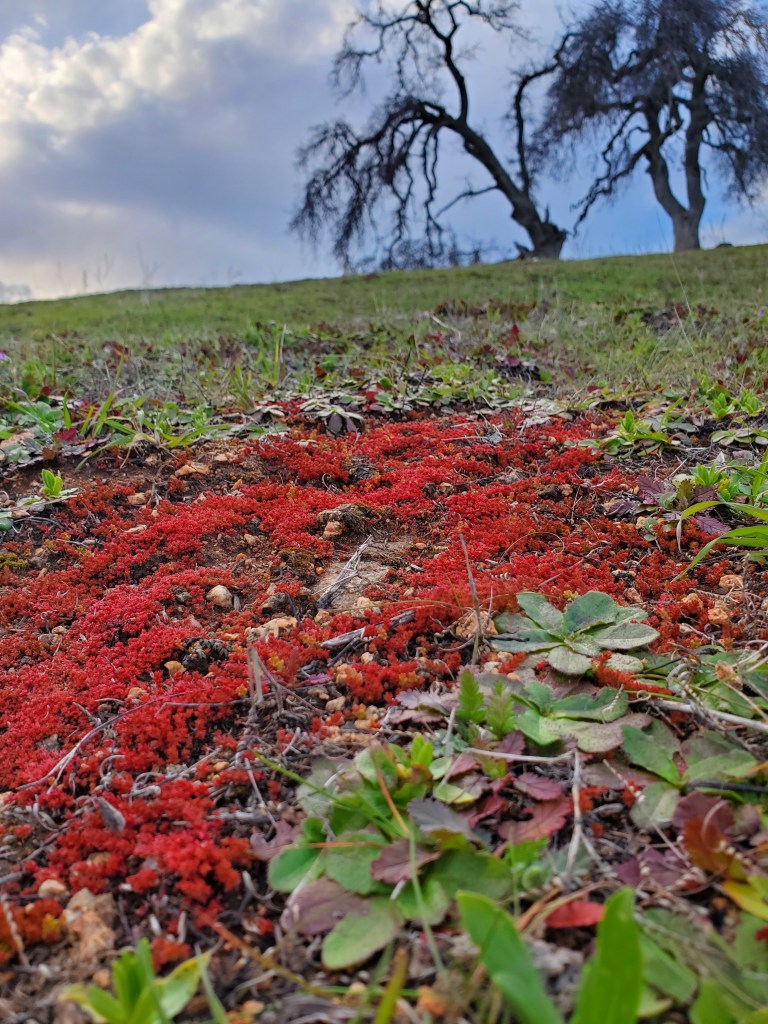
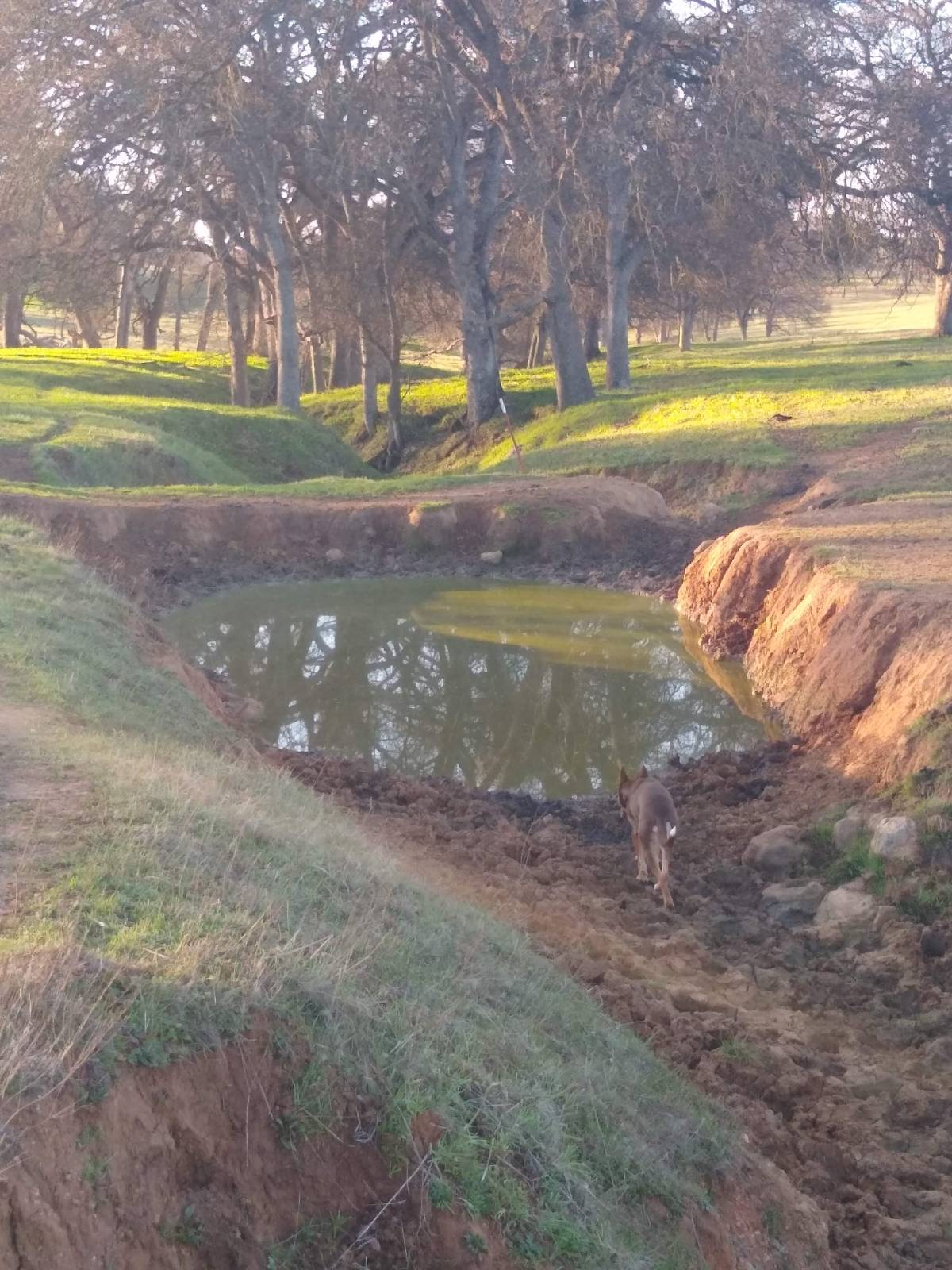
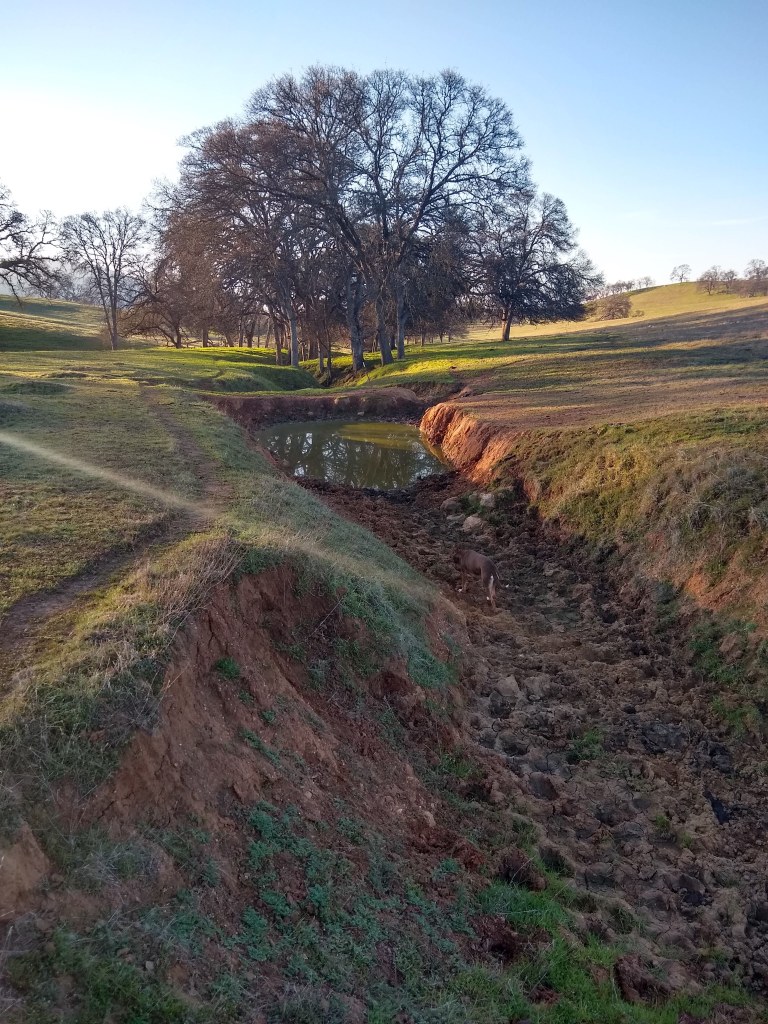
There has not been any appreciable precipitation since my last post. Tanks one and two are still unfilled because of the defective rainwater system part from December. Such a lost opportunity. This means I continue waiting for a large rain event to make up for that issue. There are large swaths of red and brown patches all over the ranch. These are areas where no additional vegetation has grown and the existing vegetation has already run its life span. No water = no grass growth. The water is now completely gone in the swale pond. The springs are still running. It is not pooling in the spring creek since there was no good water saturation down stream. We still have standing water in Odom creek, but not as extensively as is typical.

Butterflies Visit

We have had more butterfly visitors, but not as many as in the past for this time of year. There have been several painted lady butterflies, some gray hairstreaks, a white and/or pale blue sulphur butterfly (I could not get a good look). There are so many flowers but not as many butterflies to utilize them.

Narrowleaf and Indian milkweeds have also begun to emerge. They will be good for many butterflies and not just the monarchs. I don’t know if any monarchs will stop by. A friend saw a monarch in the Merced River canyon area, which is farther east and higher in elevation. Maybe I will get some stragglers.

Odds and Ends

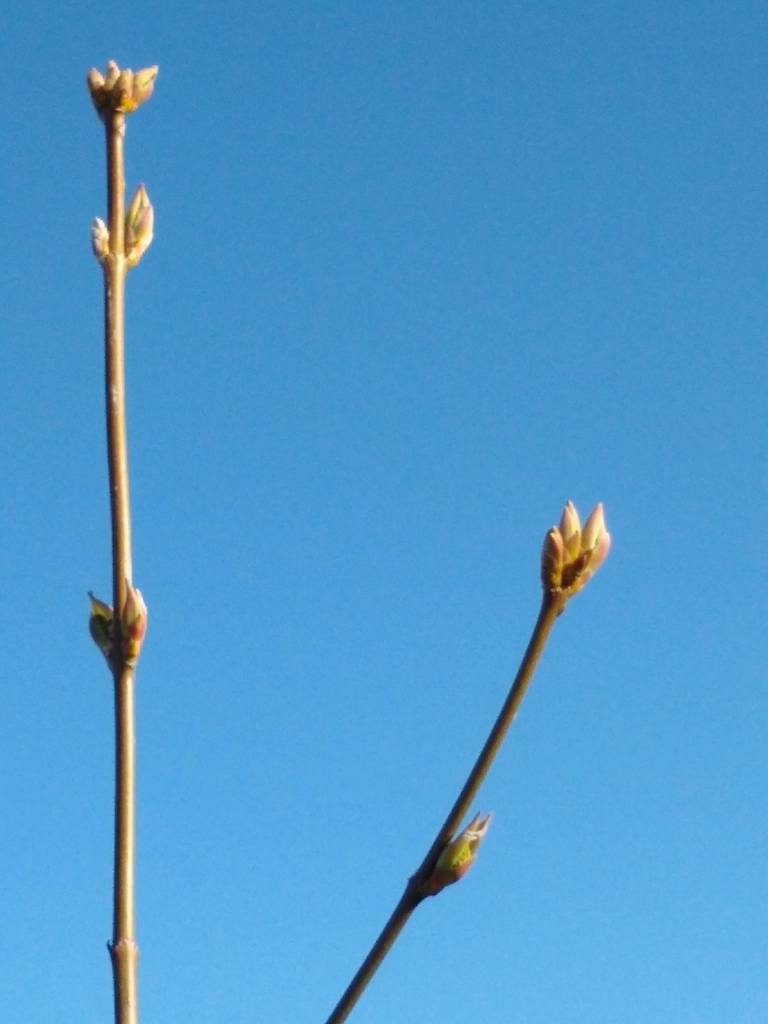
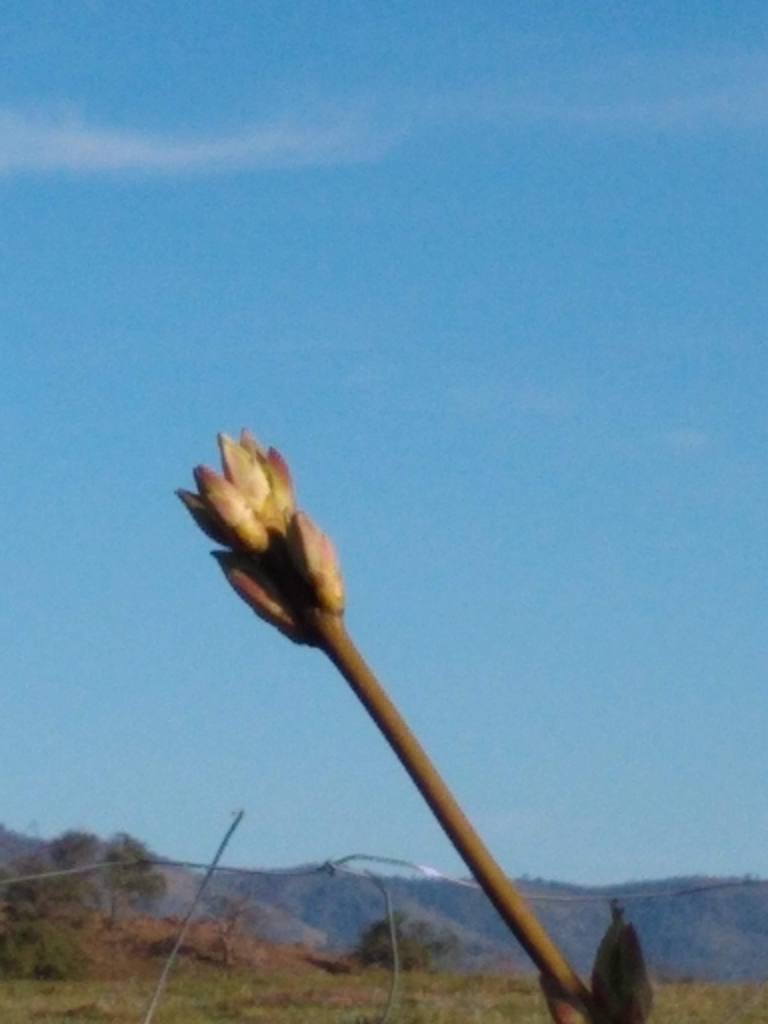
Most things that were not leafing out or growing, are now showing leaves or leaf buds. No showy milkweeds, but I don’t expect them until later. We expanded the protection fencing around the big leaf maples, and they are already being used. Just yesterday I was checking the enclosures and was stopped in my tracks. The bluest birds I’ve ever seen here were flitting around, roosting on trees, roosting on the fences and then dropping to peck into the ground. They were stunning. Fortunately, the dogs were not with me. I was able to get a closer look without scaring them away. Rounded heads, iridescent blue, no blush of rust on the wings or chest. They were mountain bluebirds! I have only seen western bluebirds here and only in the riparian areas. What a joy that they have already found the new trees.

I also pulled out the solar fountain and filled it with water. Within a day, the basin was being used by a bird to bathe. There has been considerable preening, nest building, dating and coupling going on around here. It is spring!

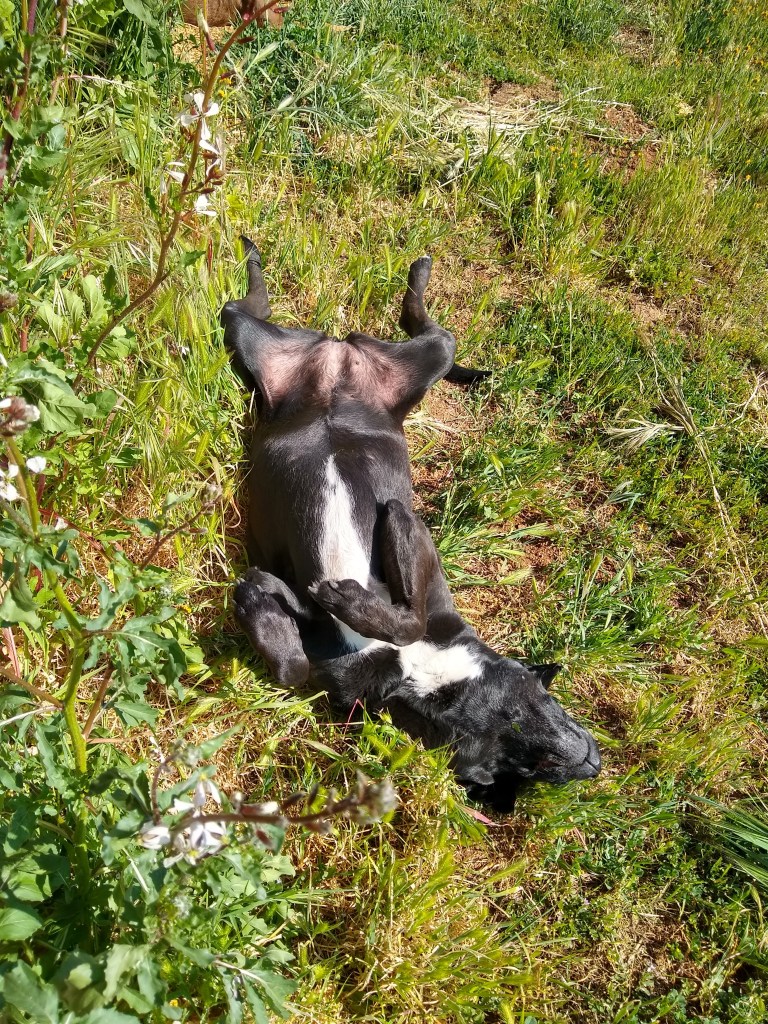
Warm sun and soft grass – nap time

Handing Off

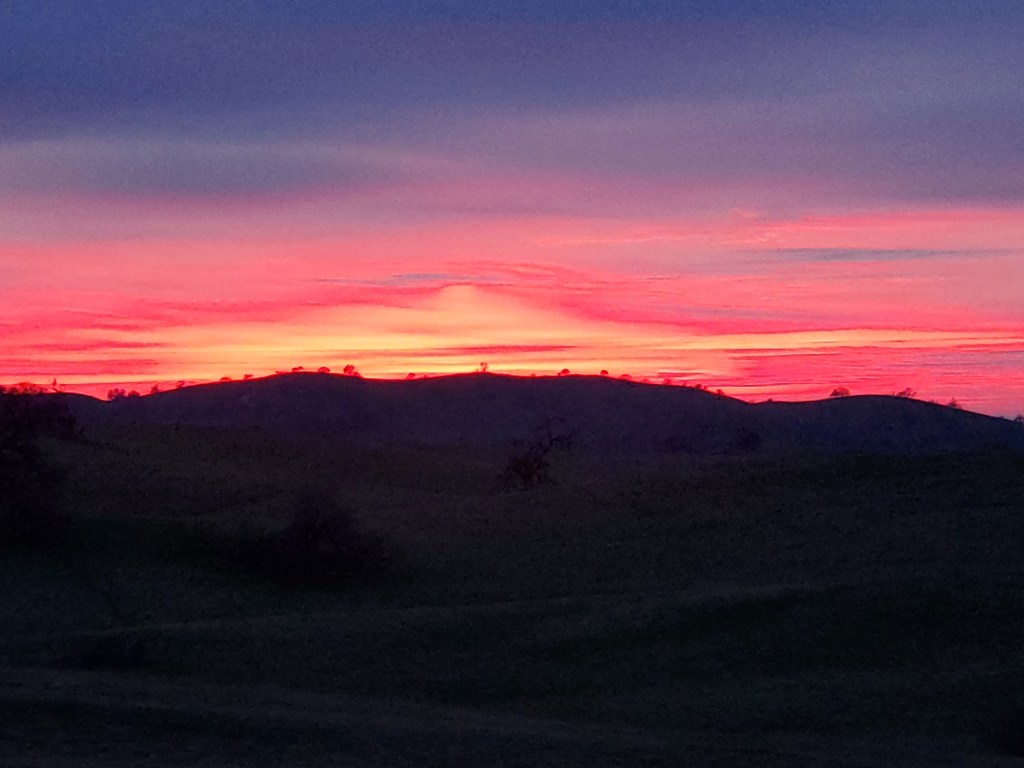
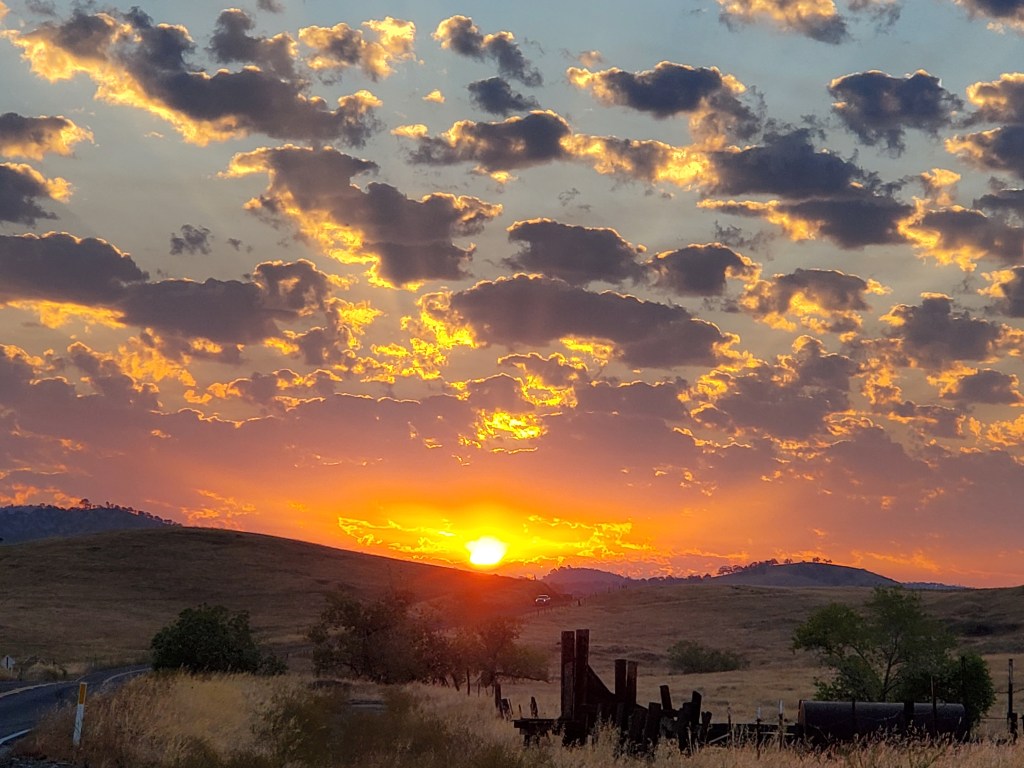
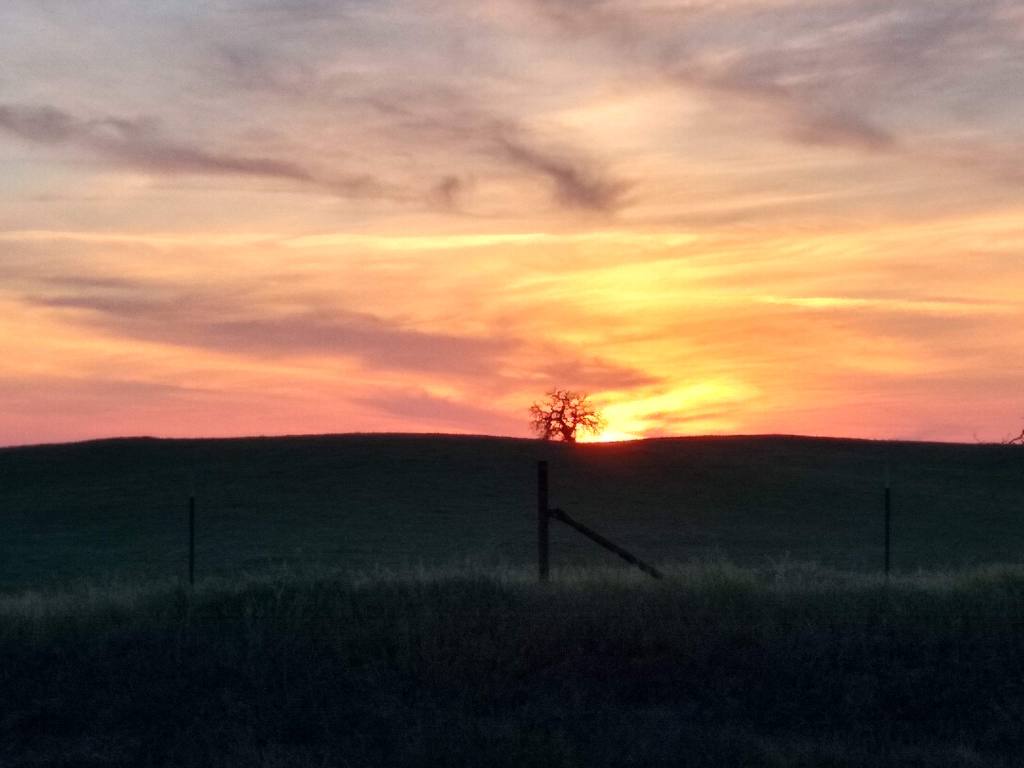
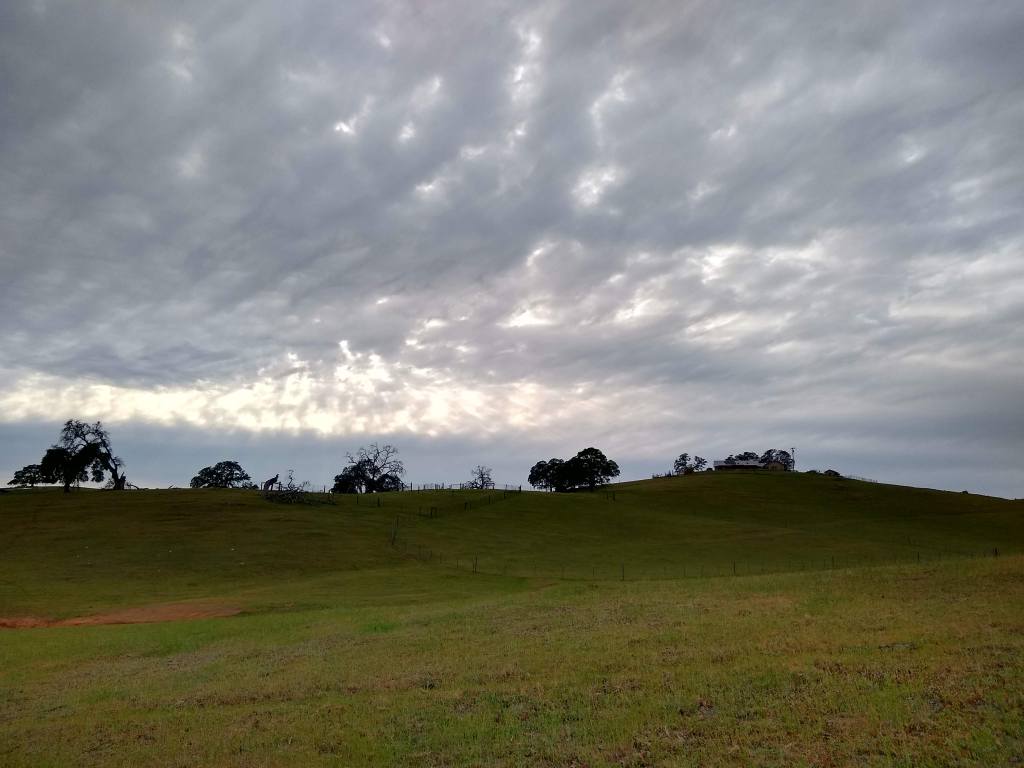
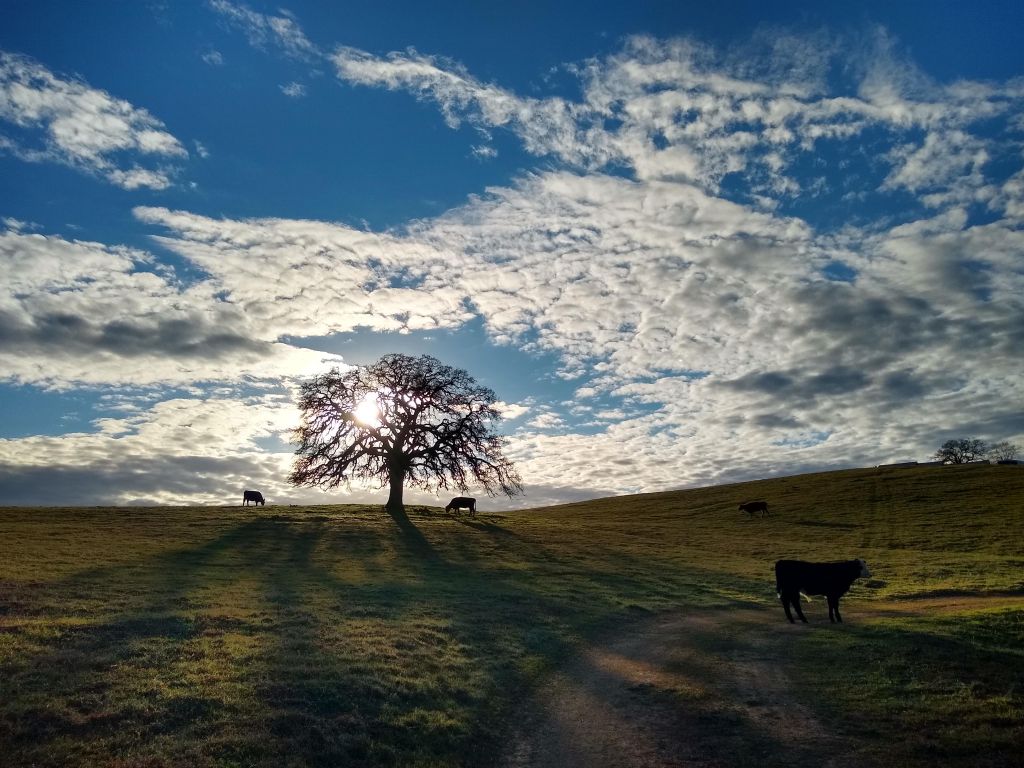
Sunset at the ranch

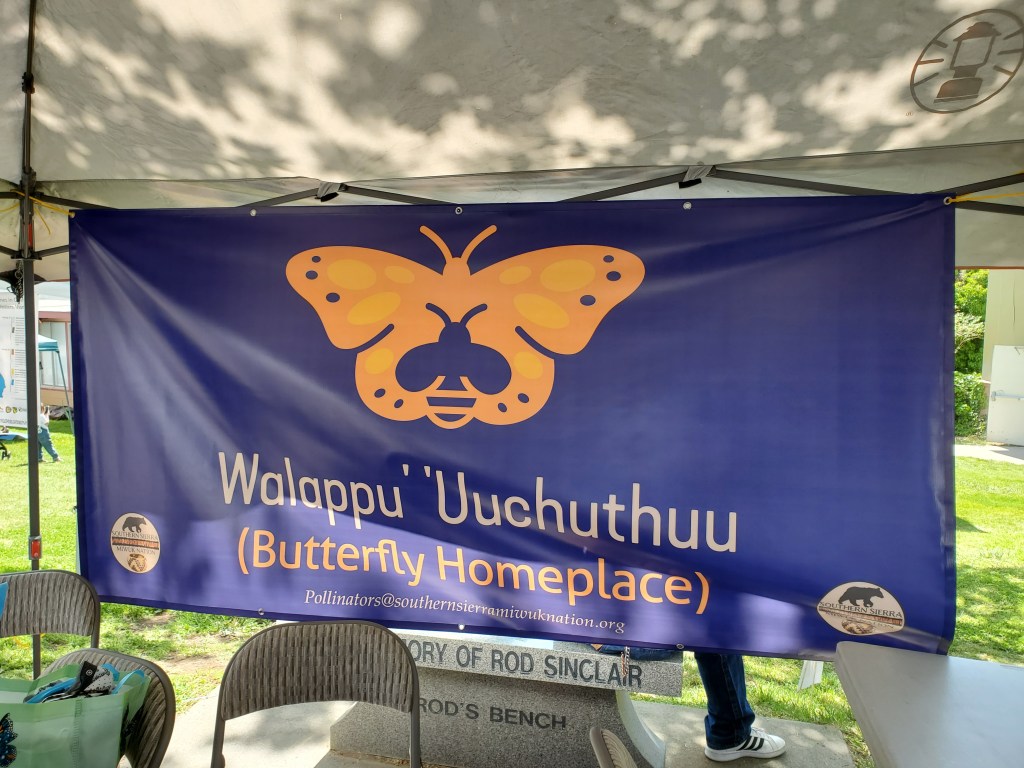
Walappu’ ‘Uuchuthuu is officially handed off to the Southern Sierra Miwuk Nation. The California Association of Resource Conversation Districts grant is now complete. While I will continue stewarding and building habitat where I live, I will only stay loosely involved as a volunteer under the thoughtful, caring and deeply passionate leadership of Kristie with support from Nellie and Tara (and of course Clay from Miwumati, Deedee from Xerces and Ron from Mariposa Native Plants). With schools interested in presentations, residents wanting to plant pollinator gardens, the Butterfly Festival coming up in April and the Pow Wow soon after that in May, the Team still much work to do. I could not be happier.

As an Indigenous person, I feel a deep and intrinsic connection to stewardship of the planet as well as this specific place. However, there is no one more suited to stewardship of this region than the progeny of the first peoples themselves – the Southern Sierra Miwuk. When you live by, for and because of your non-human relations for tens of thousands of years, you unconsciously become one – you know one another extremely well and are part of the collective whole. This knowledge will be central in ensuring the survival of the monarchs and all of our pollinator family.

Ito te vitne in weweriam. Amand te tevote naabuihatia ini tui tekipanoa. Se osi enchi nake.

Good luck my relations. Best wishes with this good work. I very much appreciate you.

Kristie at a site assessment and intake
Nellie at March for Federal Recognition with friends and next generation stewards Miwa and Willow
Tara burning for the health of the land

Drought Heavy On My Mind. Monarchs on Their Way

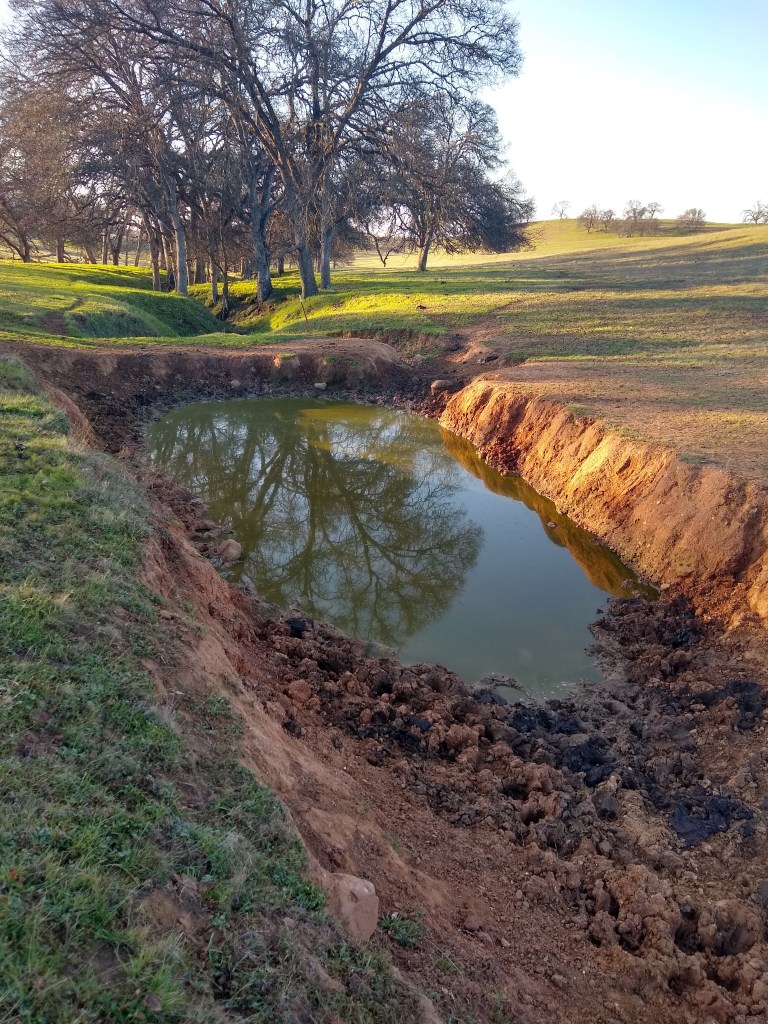
Swale Pond continues to shrink in the heat

I am getting nervous. There has been no rain, with none in the forecast. I’ve already begun to water some plants that are in drier soil and looking thirsty. The south rainwater tank is getting early use. We need a good storm. I would feel better if my two main tanks were filled, but recall, a defective part used in the professional rainwater install allowed thousands of gallons of water to flow away from the tanks instead of into them. Without them filled, I am unable to water everything that needs watering.

The Swale Pond is shrinking with absorption, evaporation and use by cattle and wildlife. It is the main deep source of water on the NW side of the ranch. We are still getting a little dew in the mornings, which helps the grasses. Mayflies, ants, honey bees, and fly pollinators are out and busy. Fortunately, it is still cold at night and in the morning. We had overcast skies the other day and no wind for some time, which also helps slow evaporation. The grasses are still green, but we are getting patches of brown where plants have died back with no other growth to take their place. The system here is teetering on the edge. On a good note, I saw a bald eagle a week ago Sunday. I saw another one in the Valley near my home. Both sightings were pure joy.

For the Future

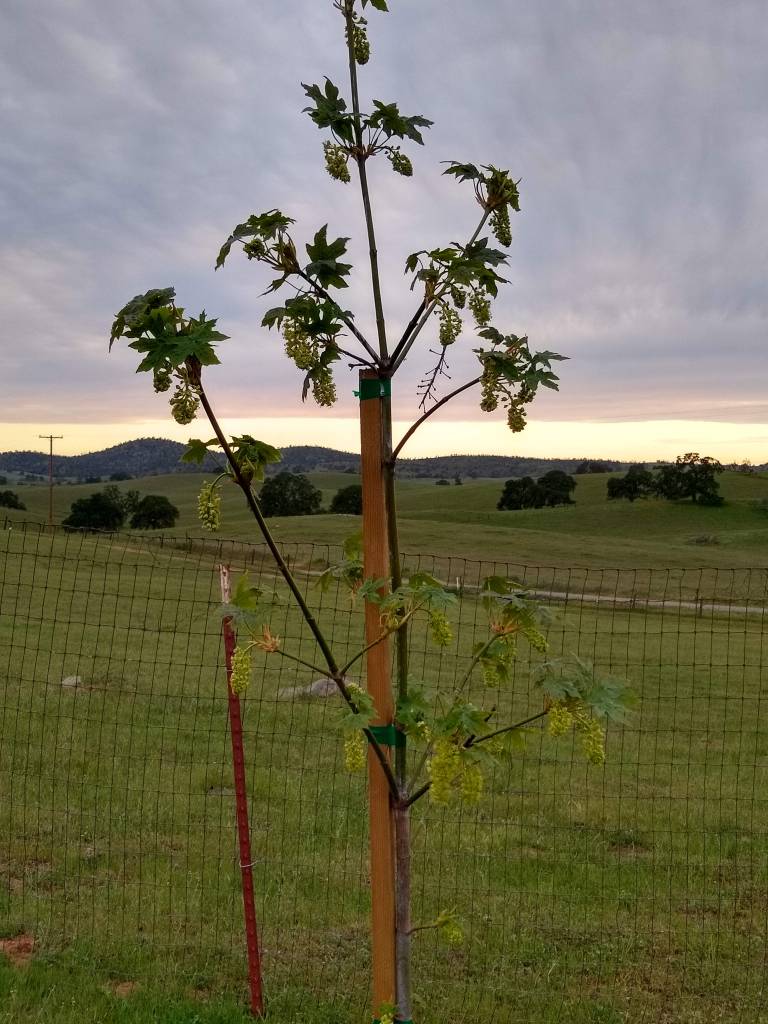
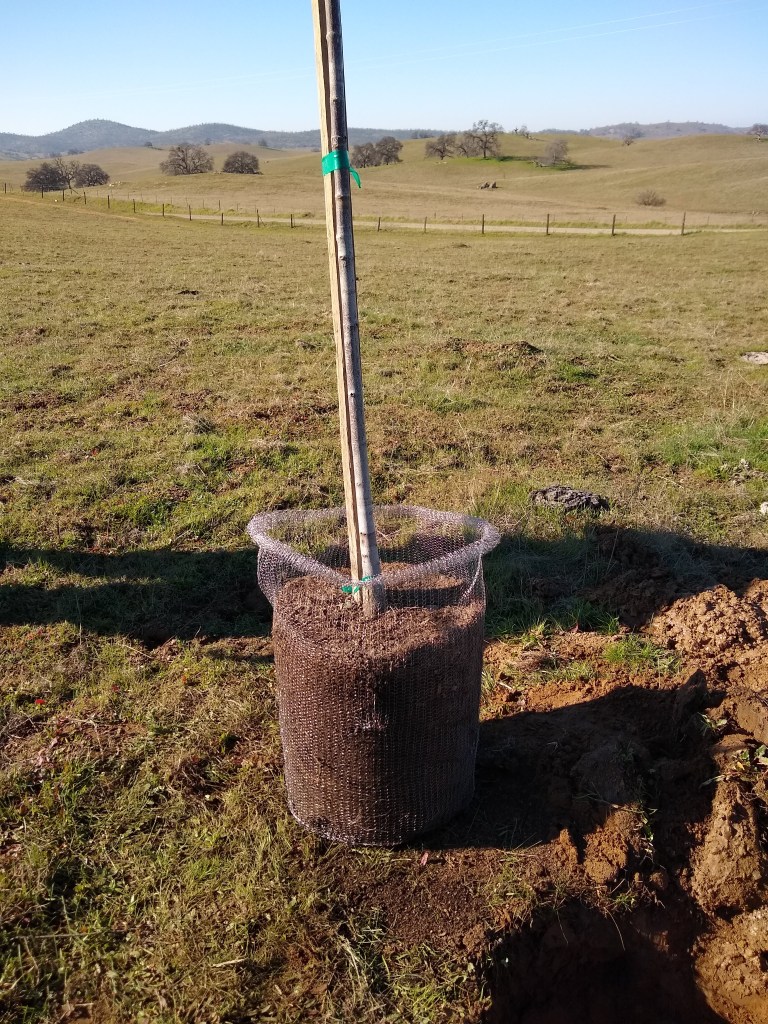
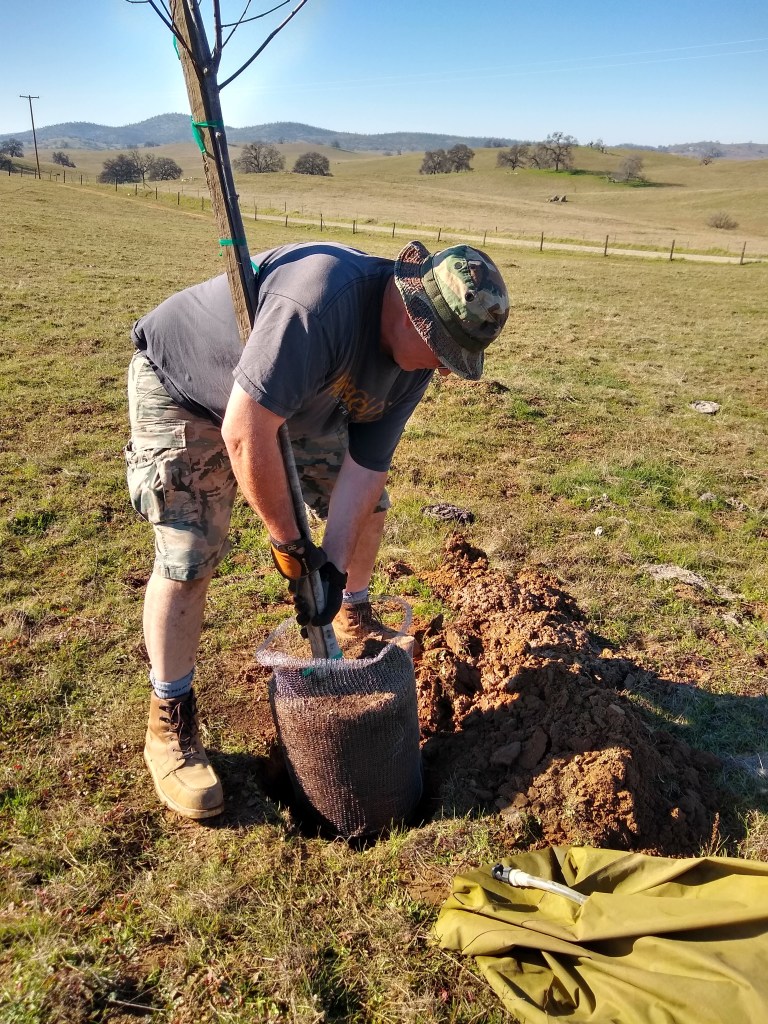
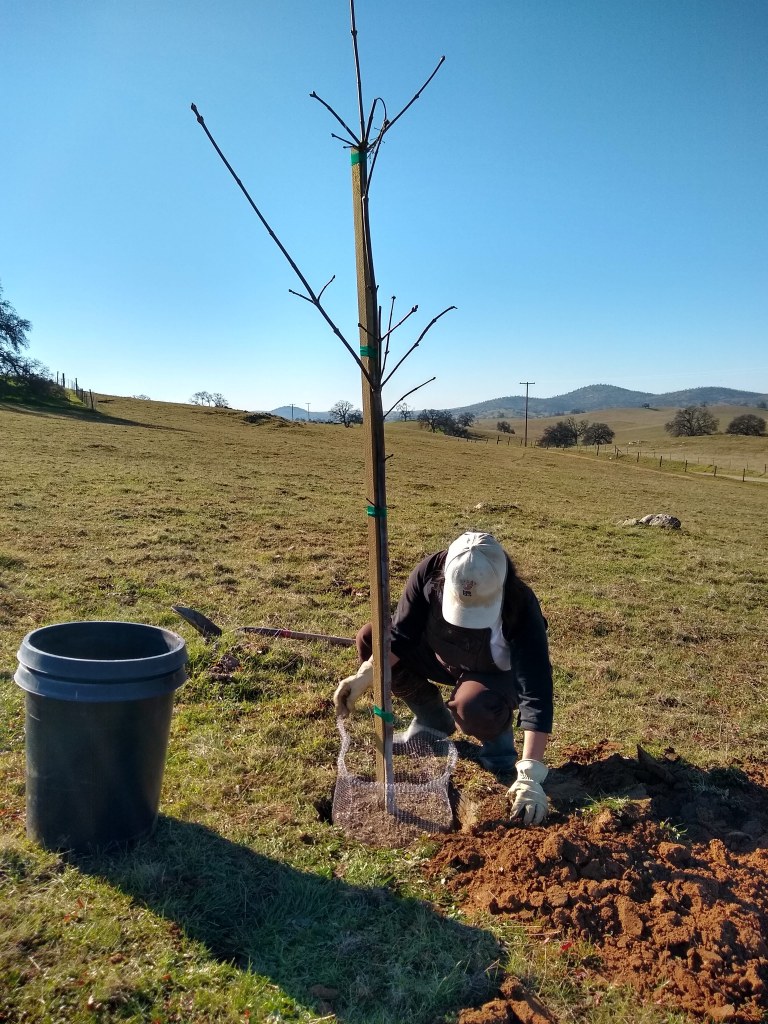
I planted three big leaf maples last weekend. David helped with the larger trees given their weight. I purchased them before I knew I wouldn’t have water in the rainwater tanks. You may think, “Girl, you’re crazy. Your blog is filled with freak-outs about drought. You’re a nervous wreck. Why plant trees that require much more water than bushes or plants?” That is a great question. There are several reasons:

1. Trees can change an ecosystem. A biologist told me that due to their shade and function of bringing water closer to the top of the soil, more moisture can end up being present providing an important resource for other plants to thrive. Monarchs, and many other butterflies, often roost in trees to avoid predation, and rest.

2. Trees provide shade. This can help grasses and larger plants survive the worsening heat.

3. Trees are an important part of sequestering carbon. They uptake carbon from the air and push out oxygen.

4. Finally, these trees are more drought tolerant that most others. Ron Allen of Mariposa Native Plants and a UC Master Gardener said they grow in arroyos in much more arid Southern California.

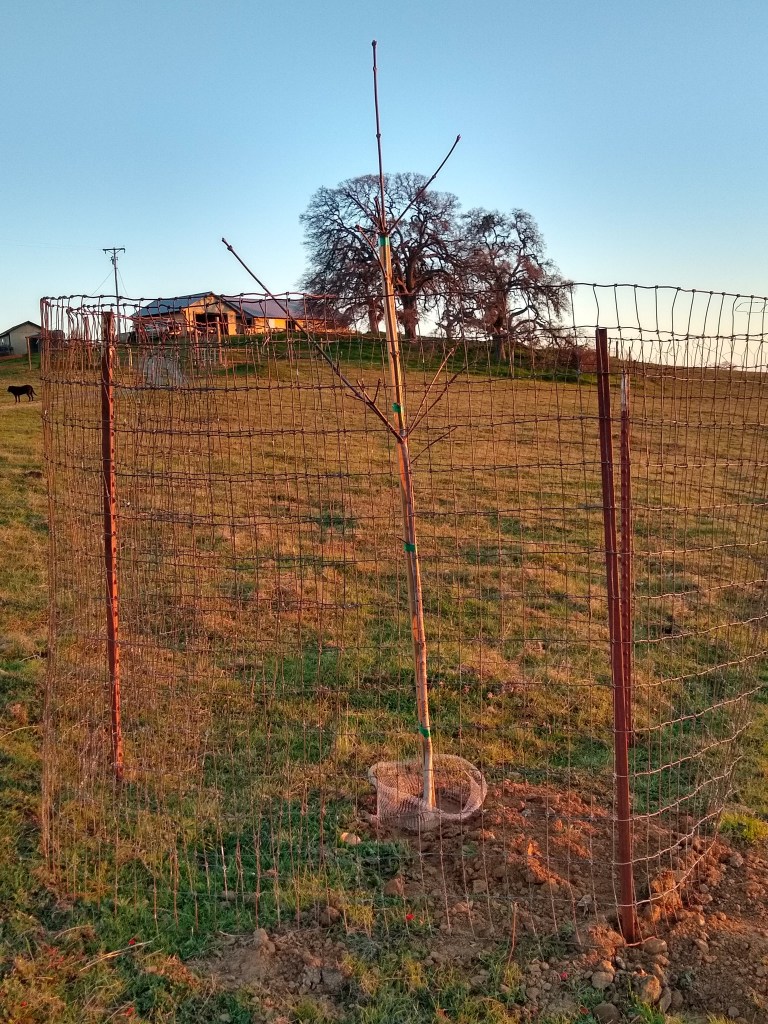
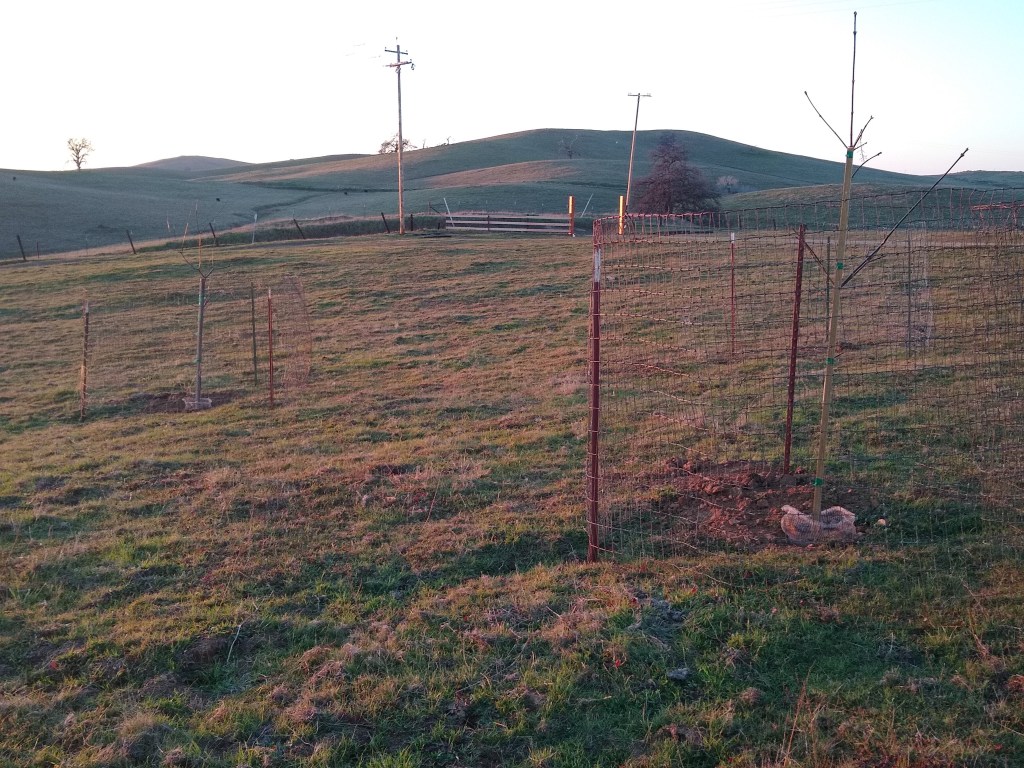
I am going to give them more of a try. I planted three others last year in different places on the ranch. Grasshoppers ate two, and the cattle got to the other before I could get protection around it. This time, I purchased more mature trees, planted them closer to the house (thus my new water system), and built fencing around them the same day they were planted. I planted them in a shallow draw as opposed to an arroyo. Let’s see if all of these things make a difference. I would really love shade in this section of the ranch and another place for butterflies to roost. It is humbling to plant a tree – especially at my age. It is a true act of love to know that what you are doing is not necessarily for you. This tree will outlive me by many years providing shade, shelter, beauty and cool soil for generations to come.

Blooms

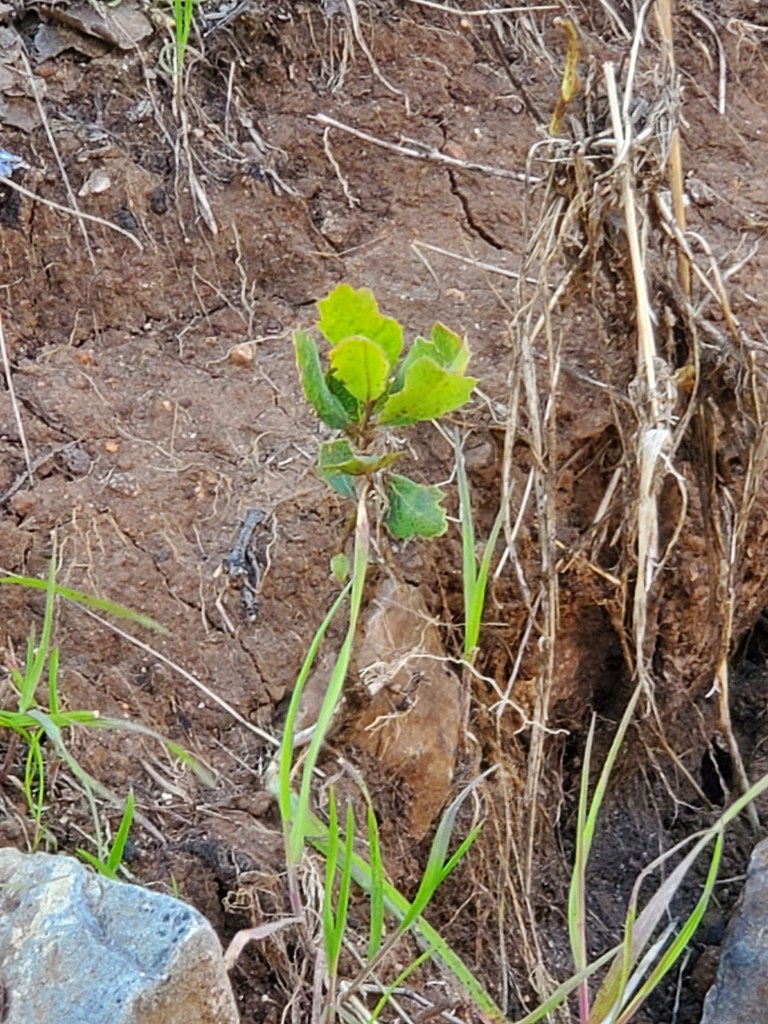
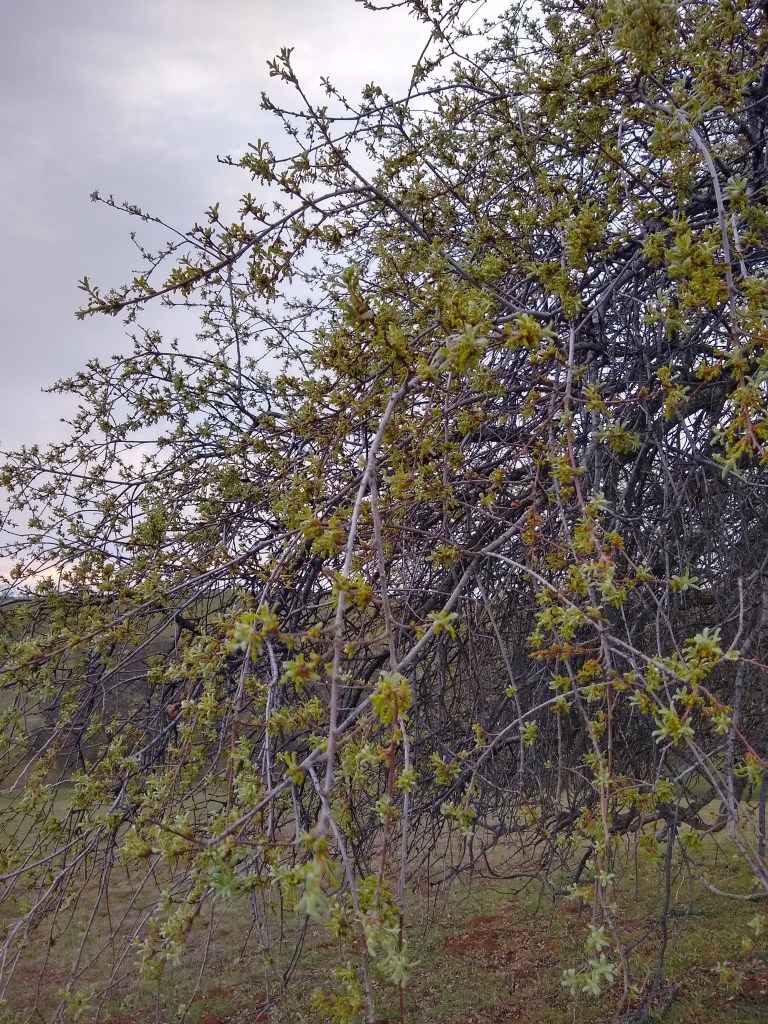
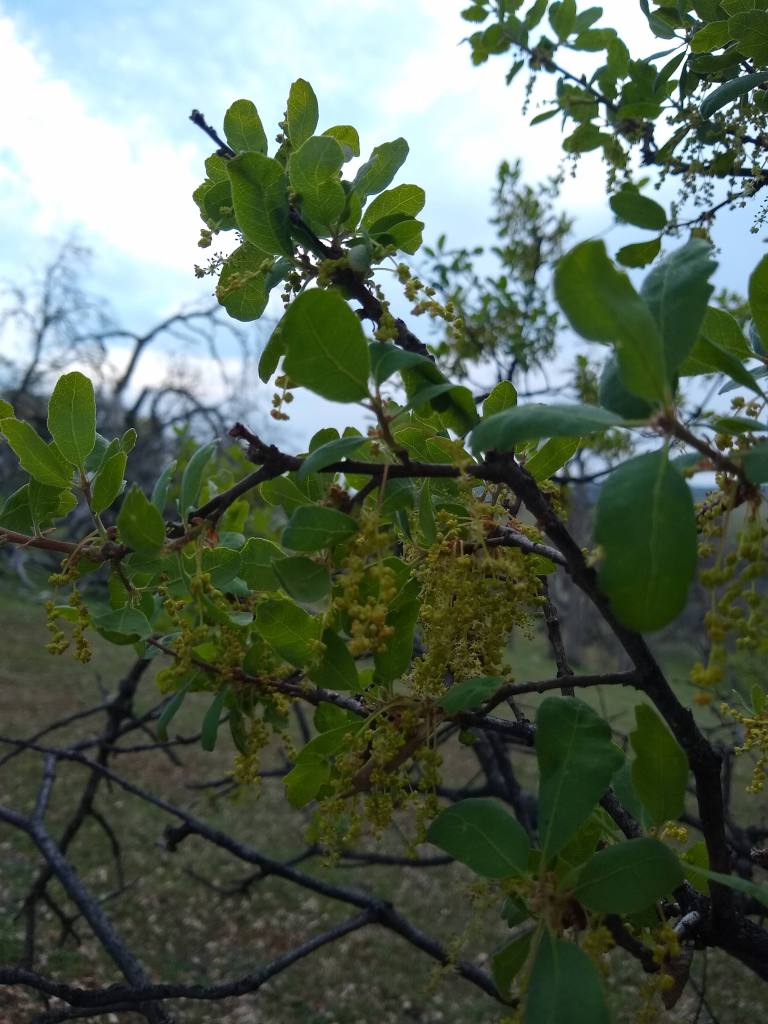
New oak leaves emerge

Many things are early this year. The heat and sunlight have given cues to the plants and insects to start living their above ground, visible lives again. Most of the wildflowers are coming out all at the same time – not following their typical cadence. Given climate change and the lack of moisture overall, this may be a self-preservation thing. It also may be a good thing. I understand, from a monarch expert on the coast, that, as of this writing, the female monarchs are for the most part gone from the overwintering sites. They have begun their northeast journey to summer sites. This means they are on their way this direction. There is much danger – more than usual. The early departure during the heart of winter means that they can get caught in a cold snap and freeze. They also may get to certain locations before food is available. They will be passing through the largely toxic fields of the Central Valley during a time of dormant spraying of nut trees. It is a difficult passage, which I hope they will navigate successfully. I anticipate having more nectar for them in a couple weeks. Perhaps they will get here in mid March. I will keep my eyes open.

As I mentioned in my last blog, I am helping a team of scientists monitor for early emerging milkweeds. They are interested in A. Californica (and A. Cordifolia, which I’ve not seen here). So far, I have not see any of my native A. Californica emerge. I am seeing some of my potted and newly planted milkweeds emerge however (Indian milkweed and narrowleaf). I expect to see the A. Californicas emerge in late February or March. I just hope they will be large enough to entice monarchs to lay eggs.

Riparian Fence Nearly Done

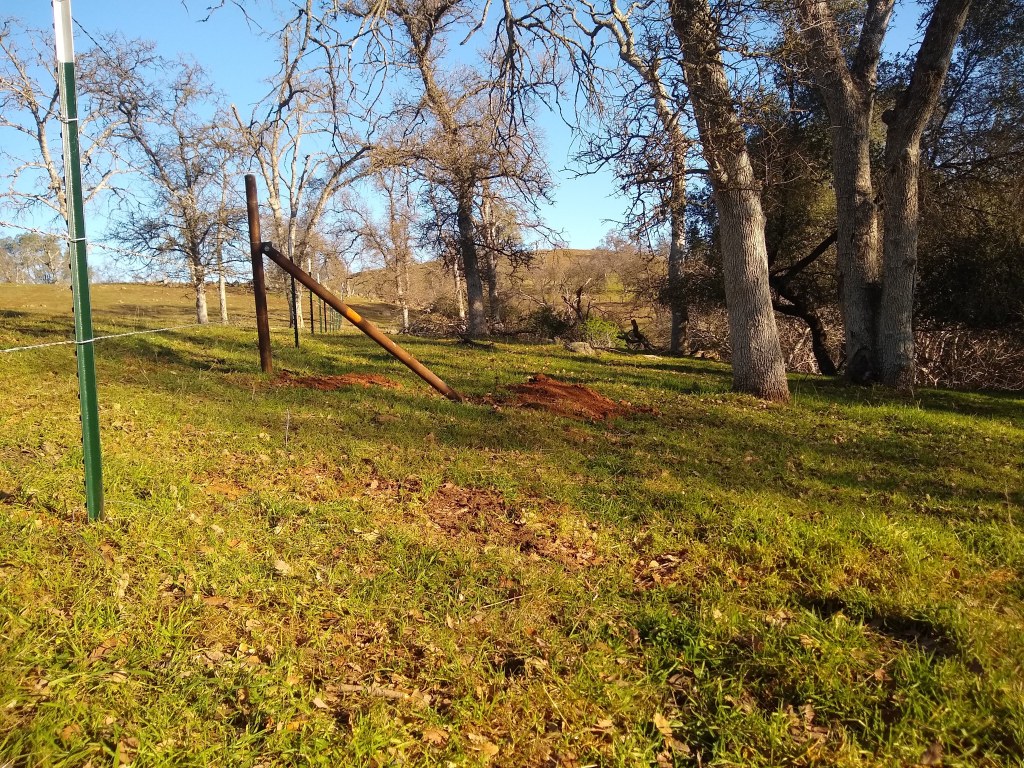
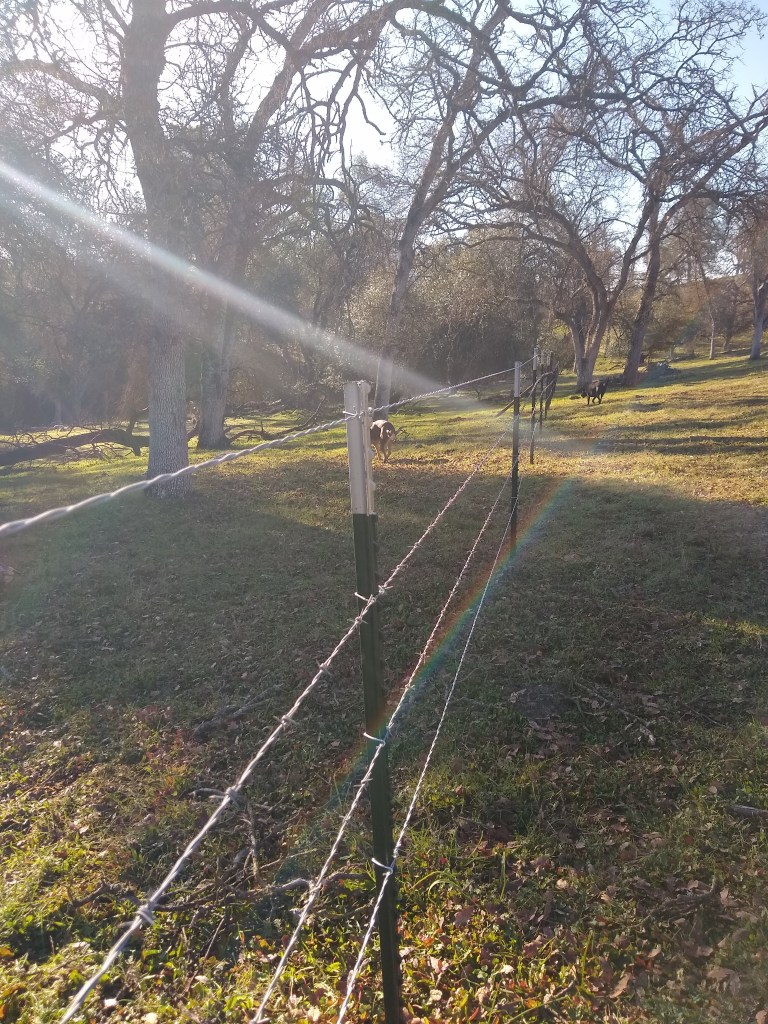
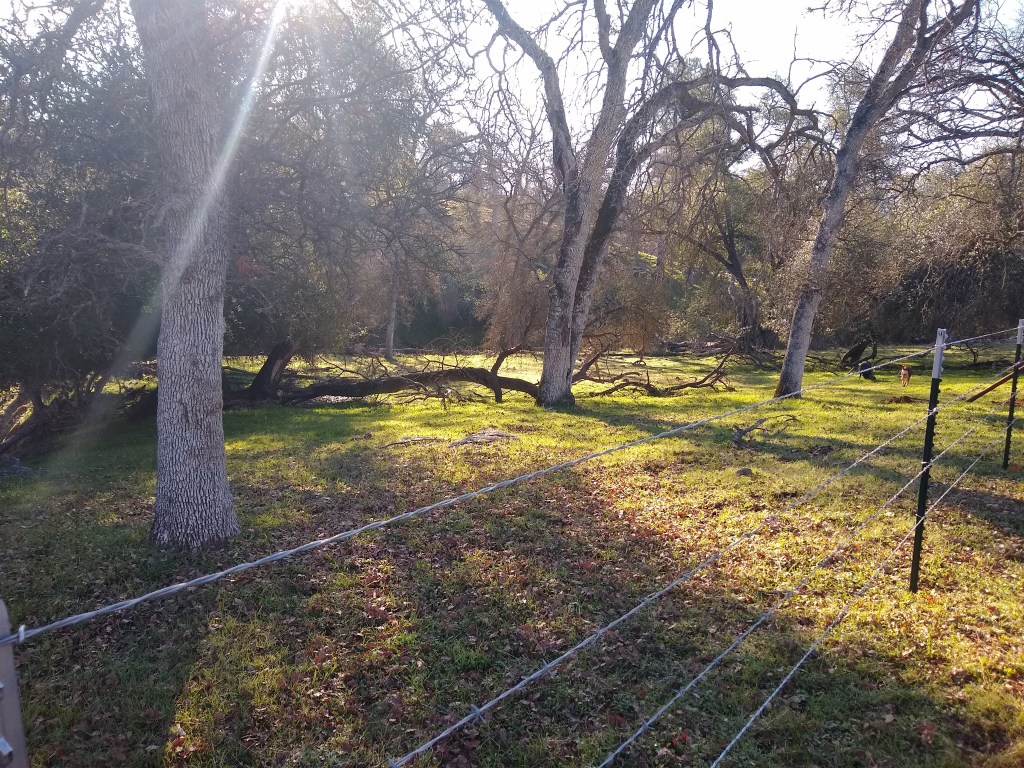
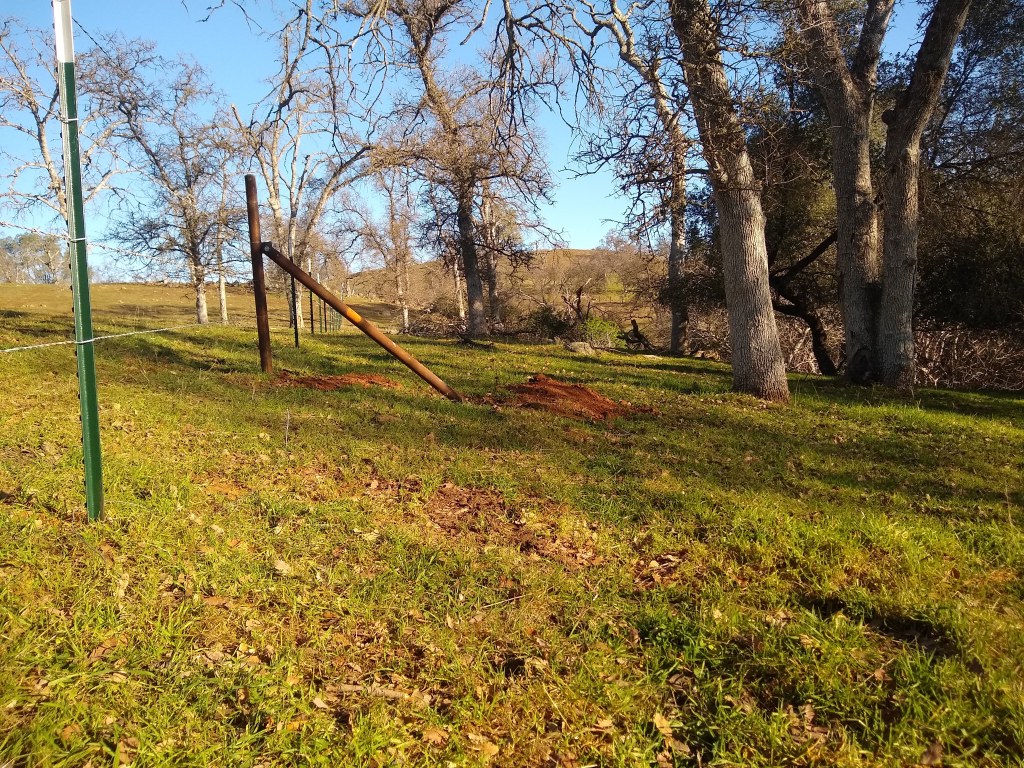
Riparian fence at Odom Creek with brace post

Regular, long time readers of this blog will know that fencing has been the bane of my existence. So much effort, consternation and “ink” in this blog have been dedicated to discussing the protection of milkweed and nectar planting sites throughout the ranch. Oh my, so many different attempts, failures, and cow break-ins have been chronicled. Finally, I have gotten a professional to perform the long, arduous task of installing the riparian fence to exclude cattle from portions of the creeks. Say it with me…hip…hip…hooray. You will now be spared my fencing complaints and dejection!

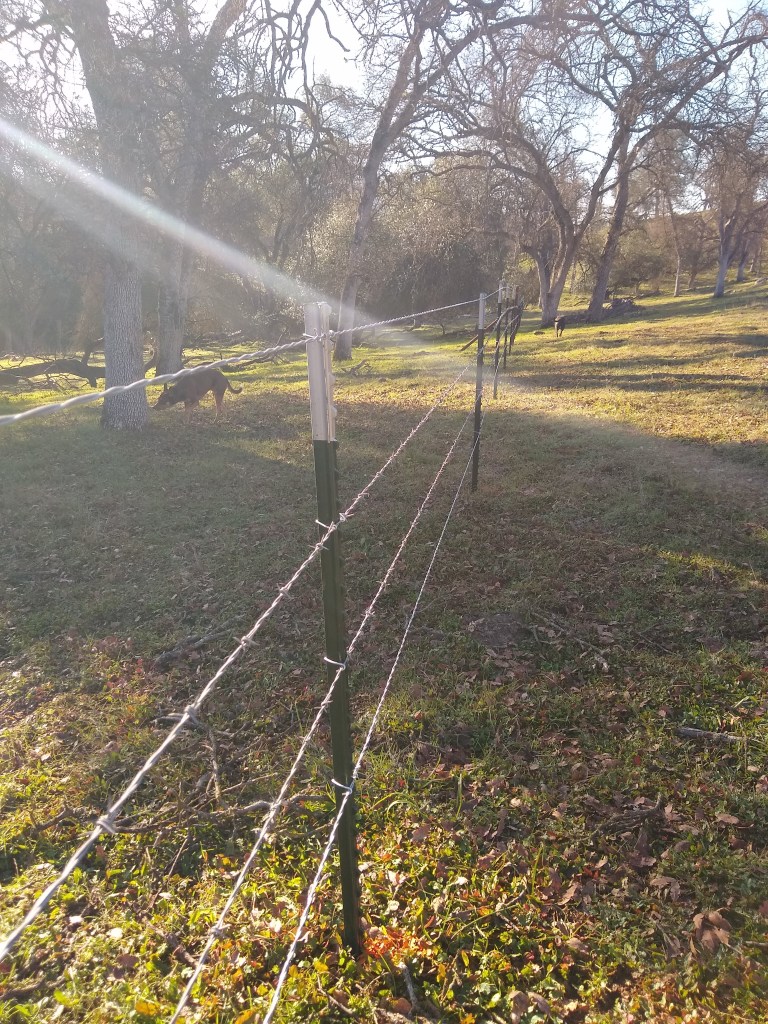
Two of the many reasons for excluding the cattle from the creeks is to protect the water quality (see photos below) and prevent erosion of creek banks. High organics, from poop and pee, create excessive nutrients that algae feed on. Too much algae on the surface can prevent the transfer of life-sustaining oxygen into the water and make it less possible for fish and amphibians to live and less healthy for mammal and avian wildlife. Excluding cattle for a time also gives the ground an opportunity to rest and for me to see what grows without the impact of livestock. I am excited to see what happens. We will graze these enclosures after monarchs would have left and the native plants have seeded. We want the grasses to be grazed down for health of the ecosystem and fuel load reduction for wildfire.

The Joy of Walking the Ranch

There is the smell of life all around – growing grass, nectar from wildflowers, trees leafing, cold, moist air in the arroyos. The air has been clean and the temperature temperate. These are the days you live for, the days you want to walk the hills for miles, sit, breath, contemplate. Our life is so hurried. The shift to remote and online meetings has only encouraged the blurring of the boundary between home and work and the push to be even more productive since one need not travel to attend meetings and conferences. I heard from a colleague that she actually attends two meetings at once sometimes. We are reaching a breaking point as a society. We need to get back to connecting with one another, outside, in natural places, over food, to live once again.

Fall Can’t Come Soon Enough and A Monarch Sighting in Hornitos!

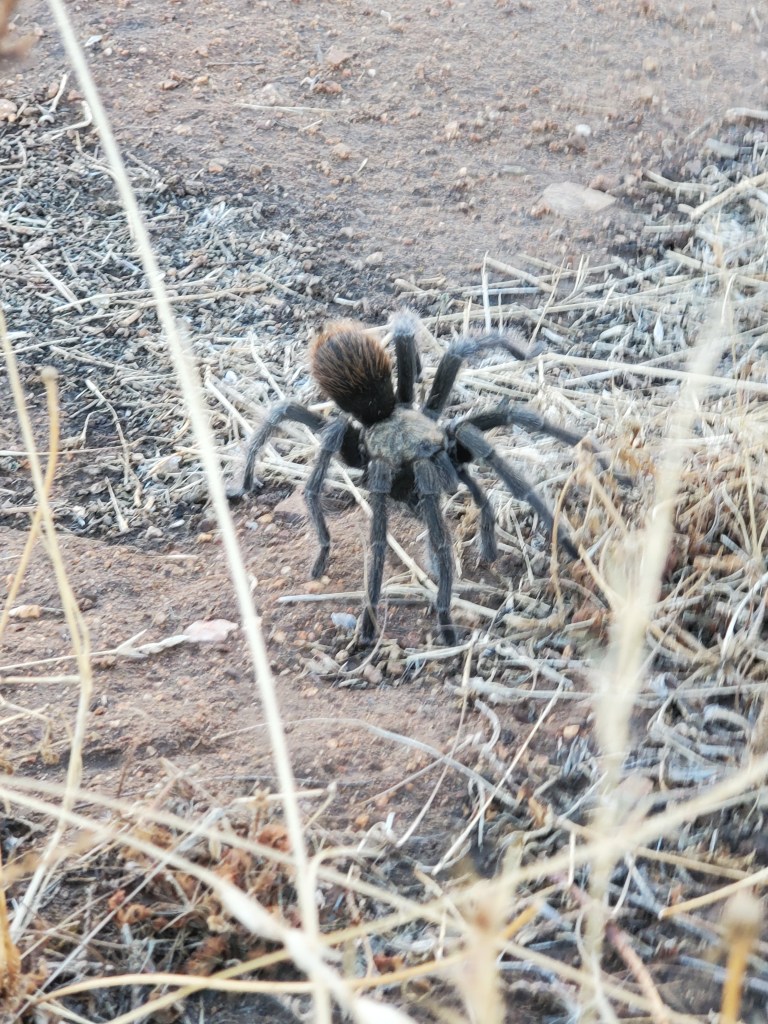
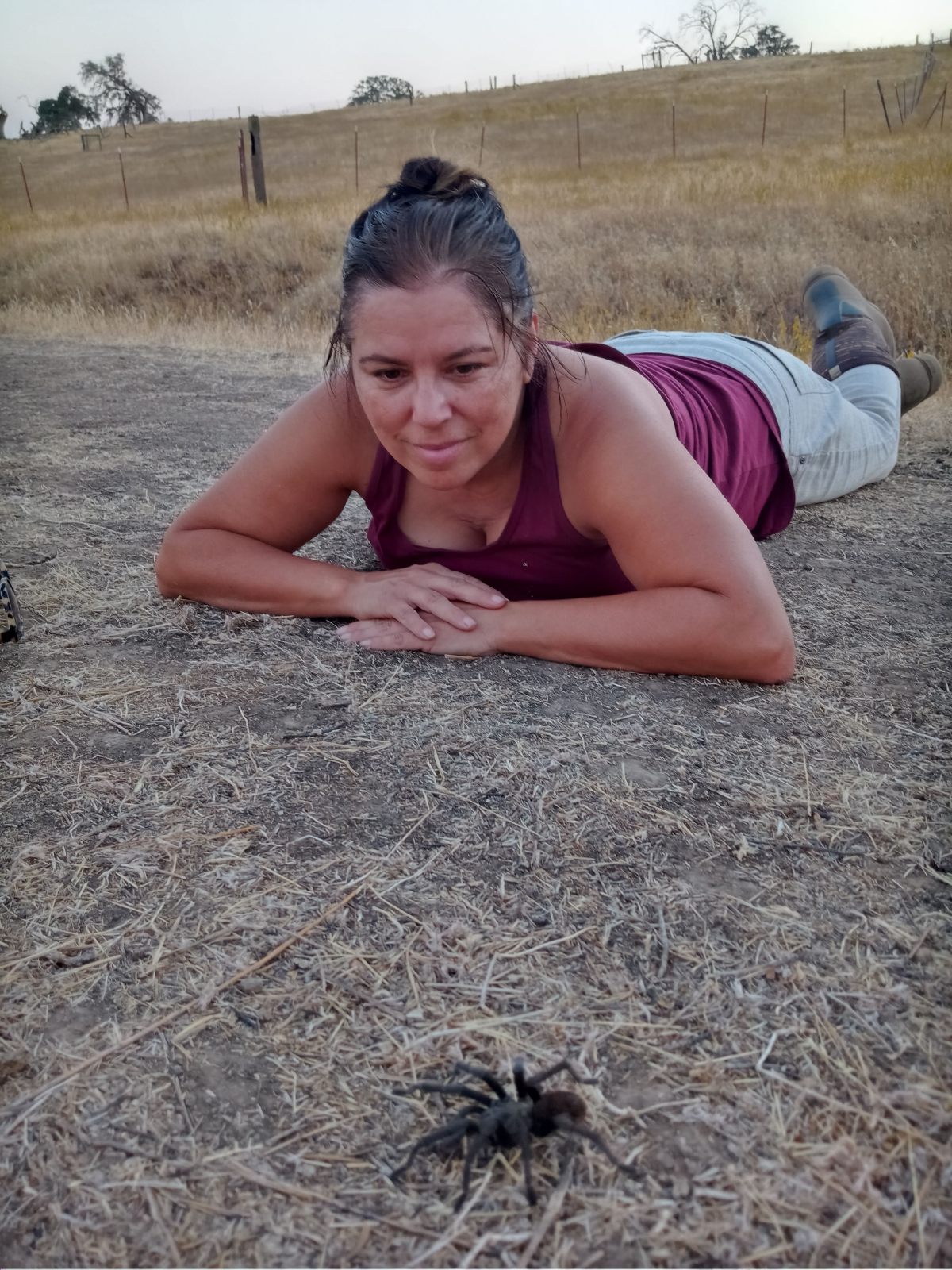
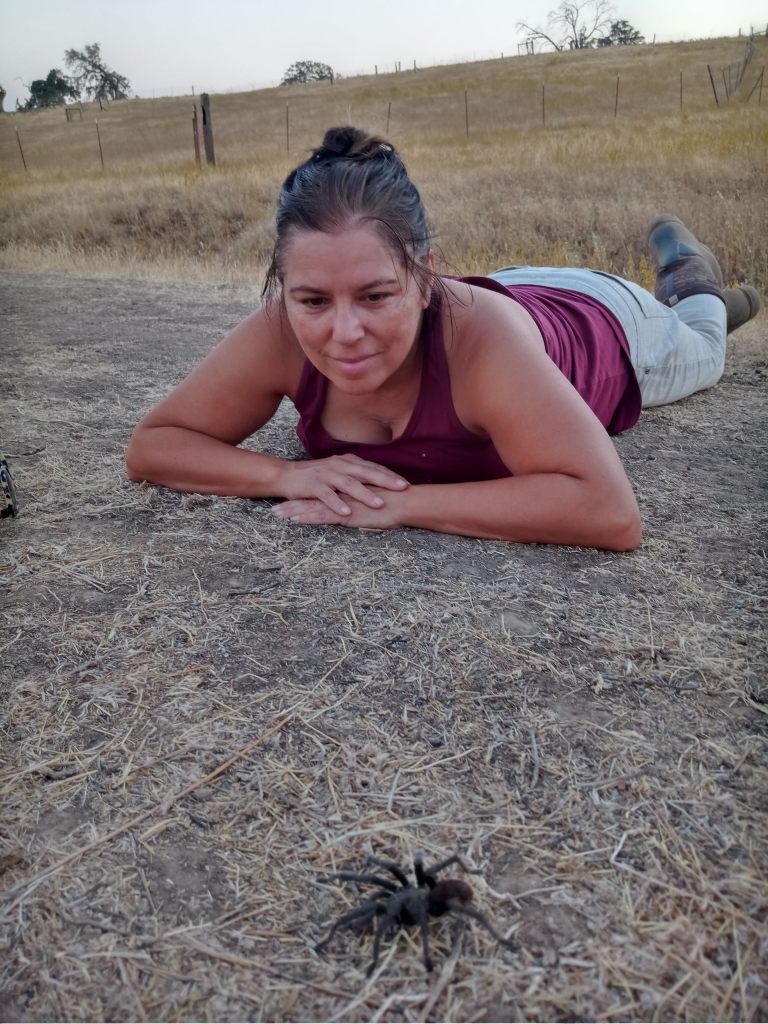
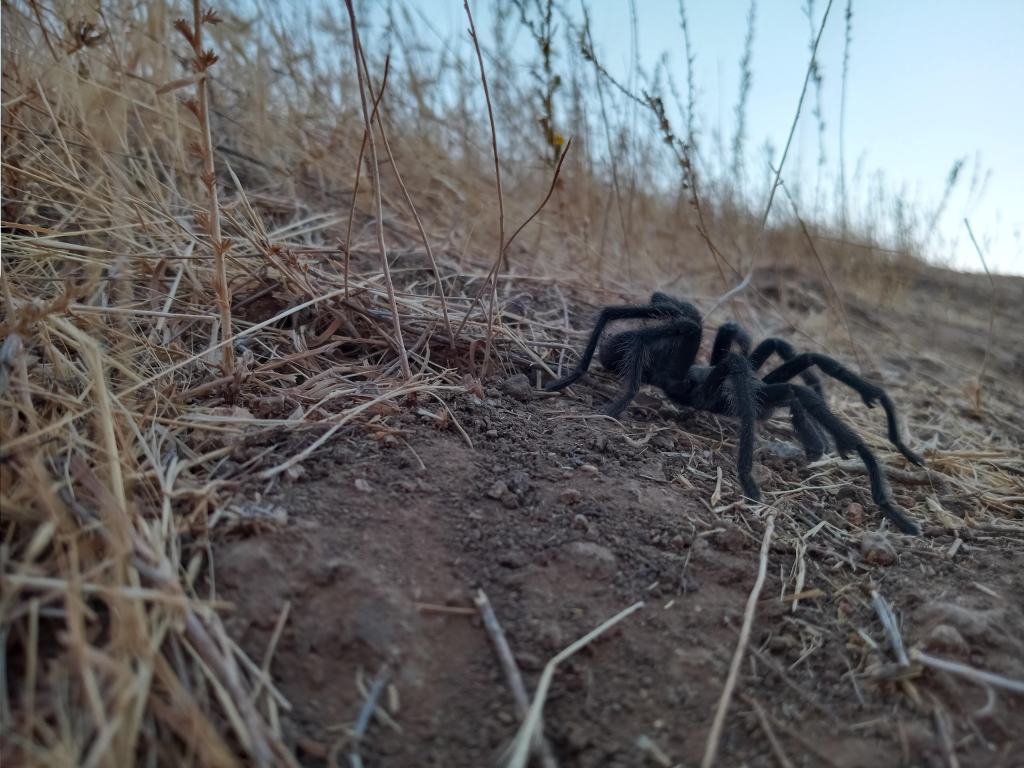
Studying the first tarantula of the season. There were two on my walk, and they both looked extremely healthy.

It is no secret among my friends that I LOVE spiders – especially tarantulas. Not only are they amazing predators eating their weight and more of flies and gnats, but they are a harbinger of Fall with its cooler weather. Oh my goodness, am I desperate for rain and cold.

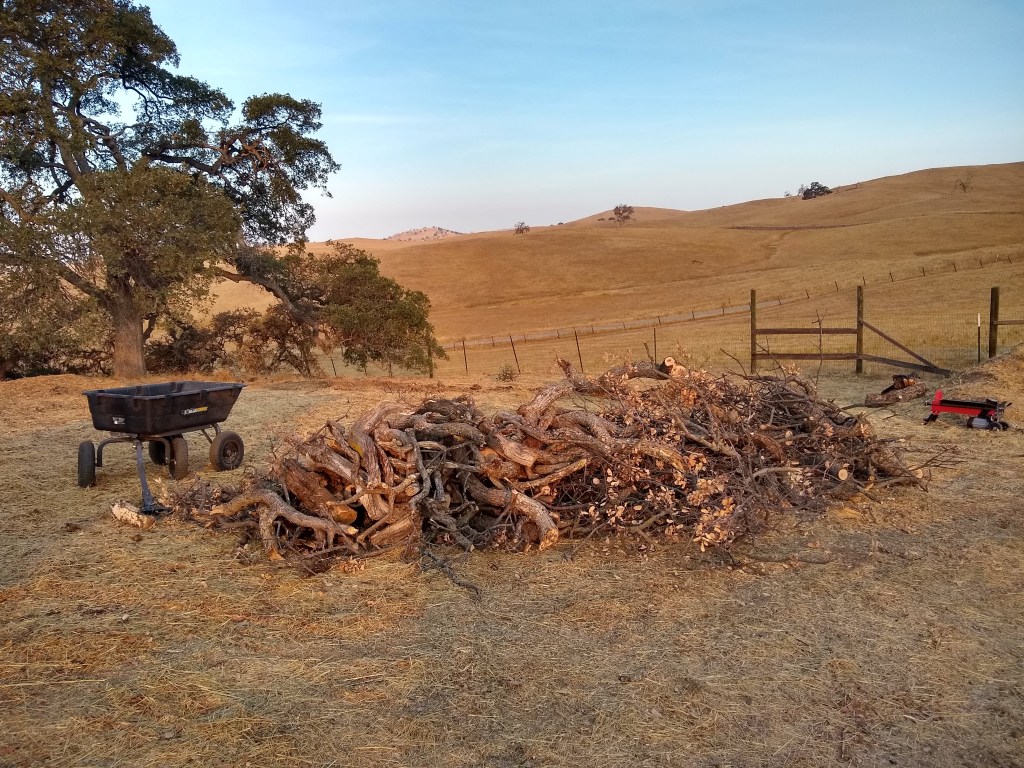
David and I have been busily preparing for the Fall. In addition to building log dams in the Spring Creek, we have been chopping downed oak branches. Often, these large oaks will drop branches in an attempt to stay alive by needing less water. It leaves some of the trees looking lopsided and the ground covered in branches and leaves. The large thud can be frightening if it is unexpected. One of the large oaks dropped a very large branch unexpectedly. The tree looked really healthy, and I had hoped it would stay fully intact despite this horrid drought.

Grand oak branch down

David has been pulling the branches from under the tree with a chain and truck. These last two branches (pictured above) were too heavy and too tangled for the truck to dislodge them and pull them out, so he has been carefully cutting them in place. He needs to be very watchful and not be under the canopy too long given the branches dropping. They call oak branches connected to trees but sagging toward the ground “widow-makers”. For real…

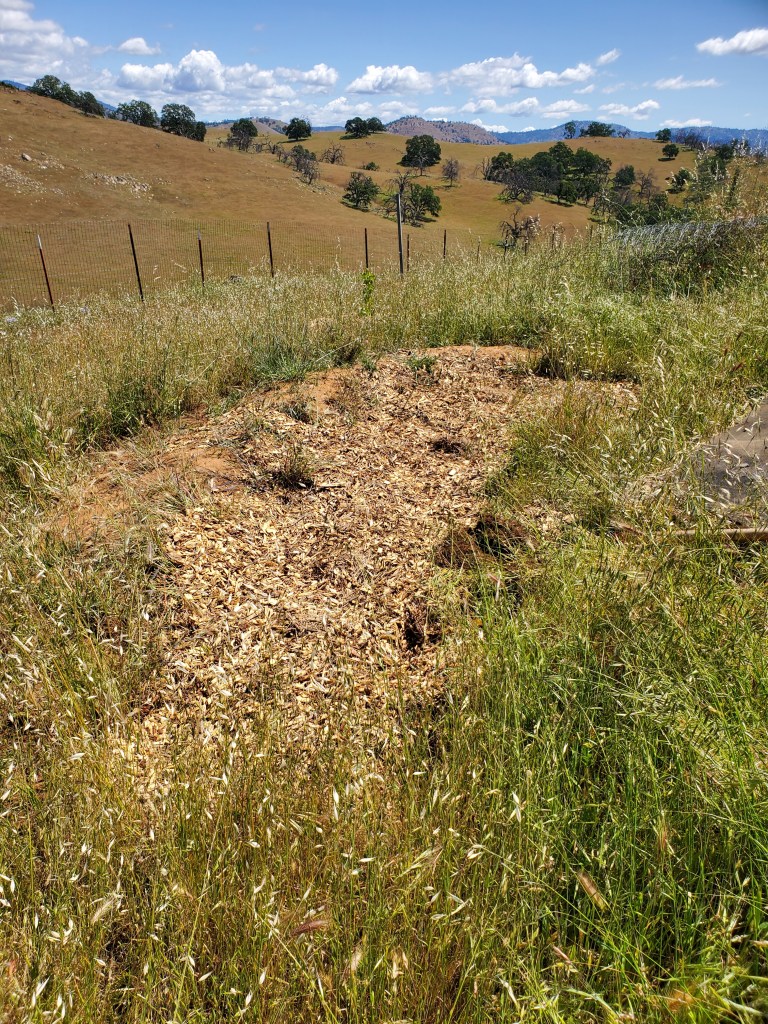
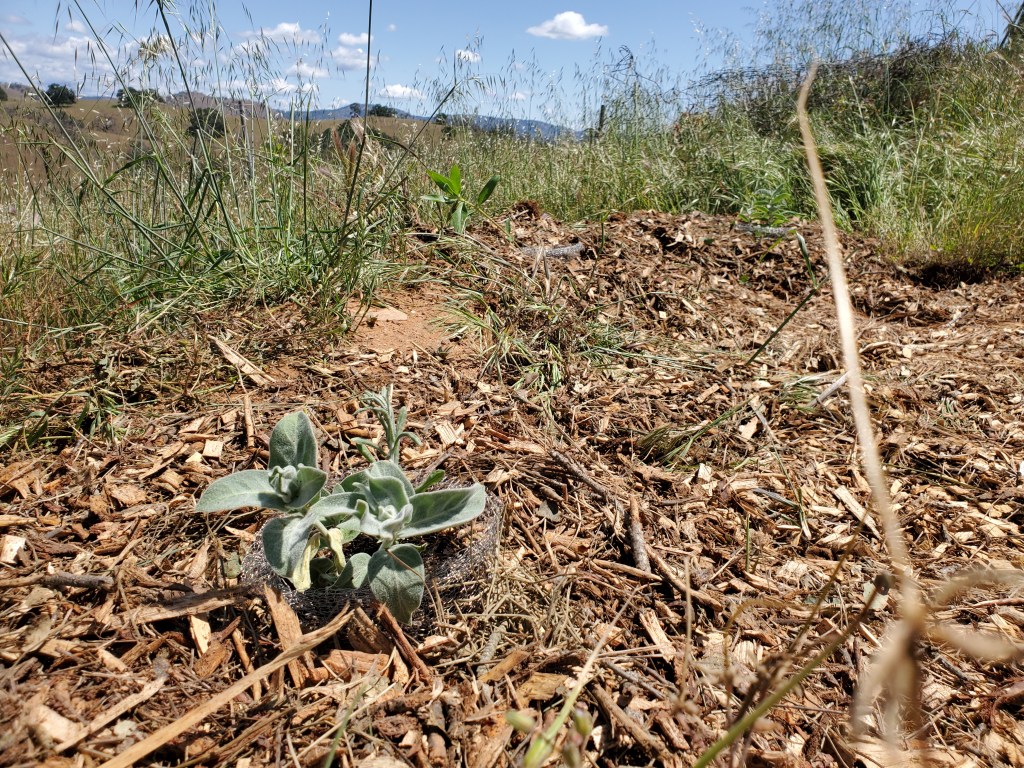
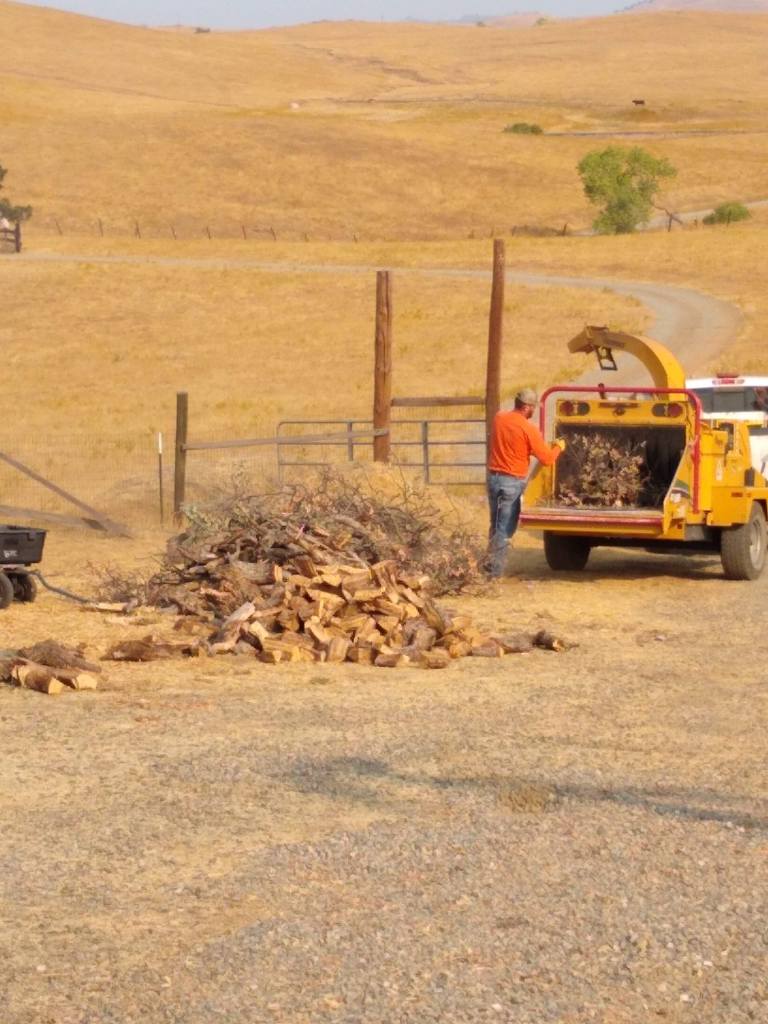
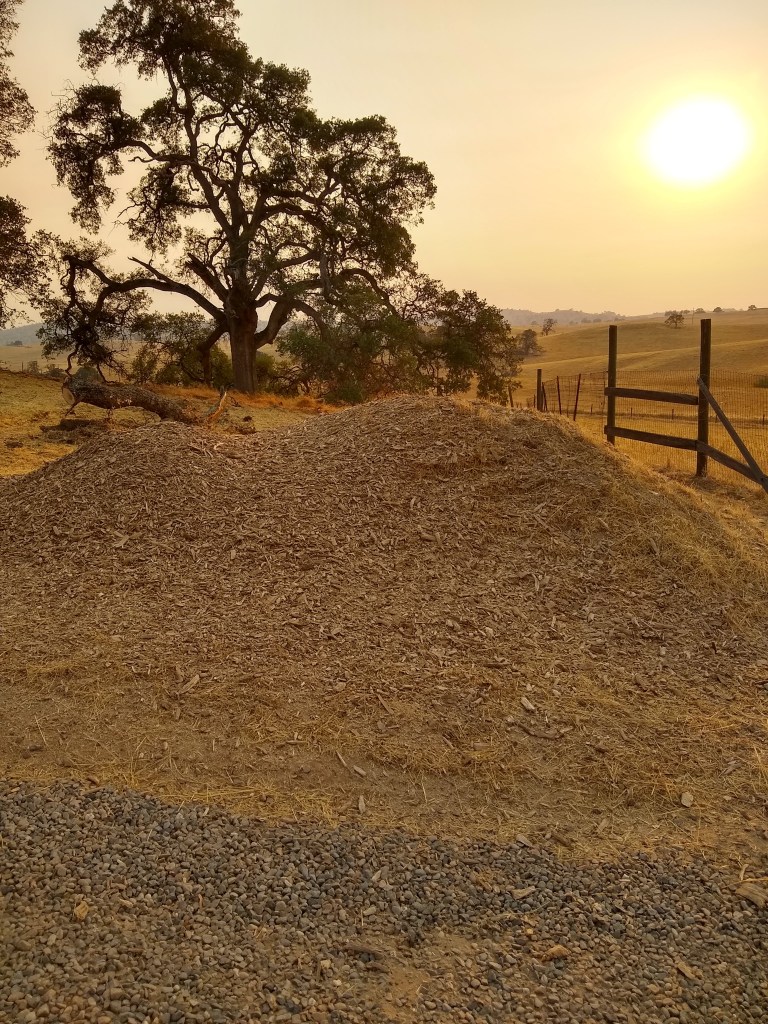
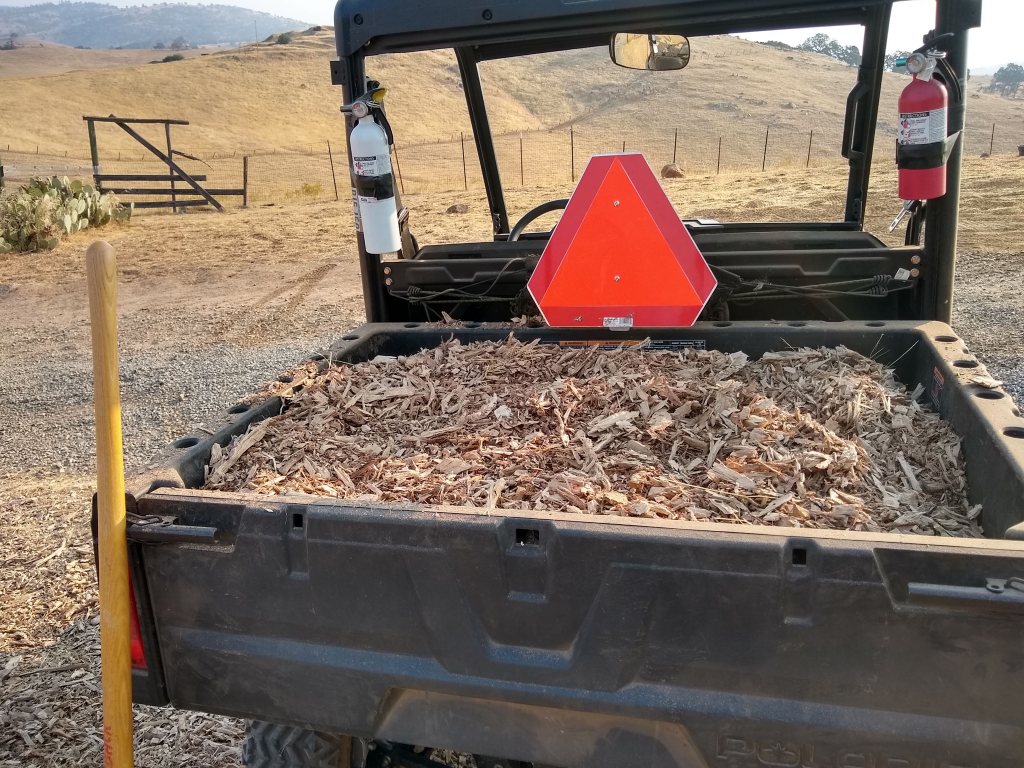
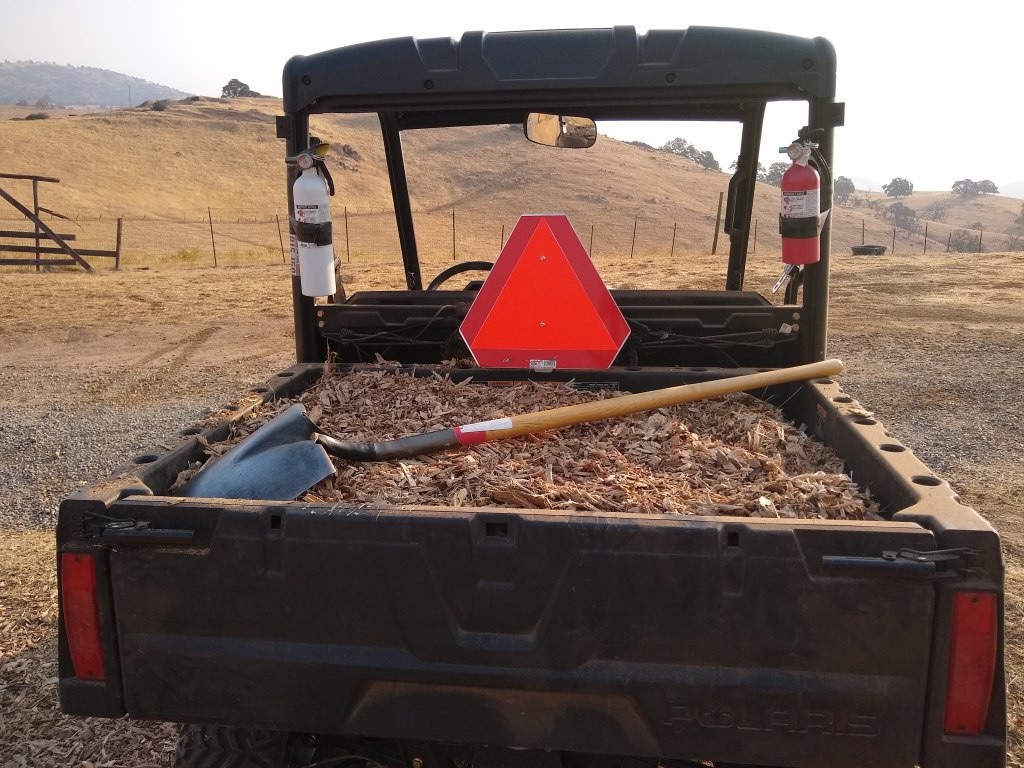
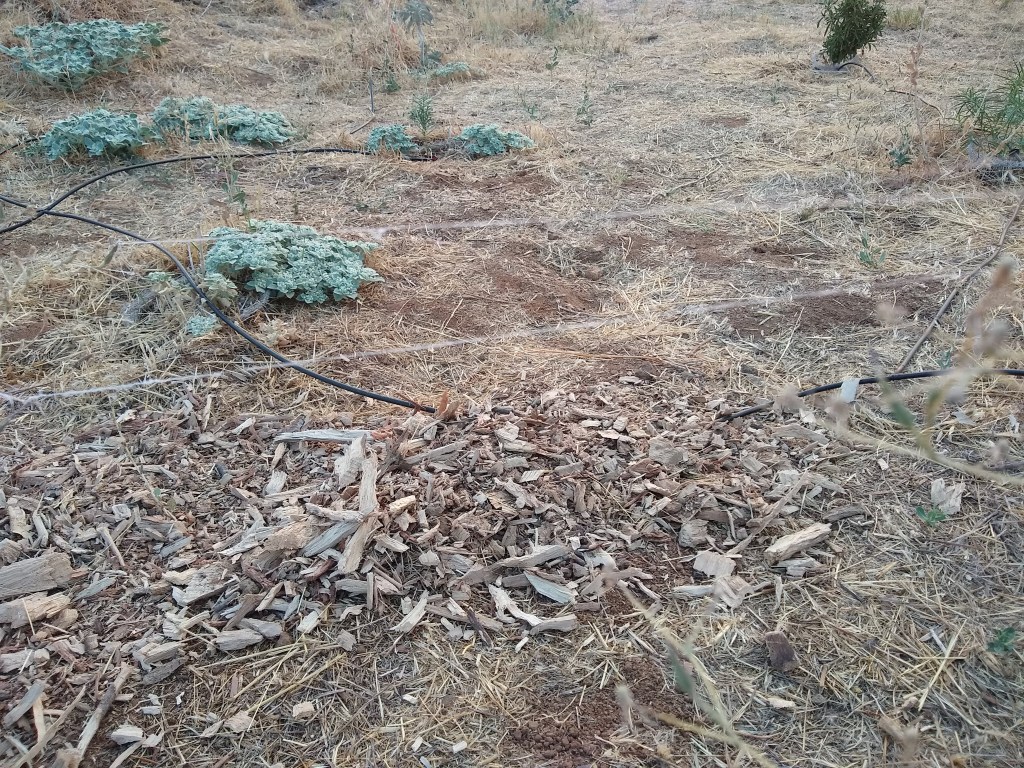
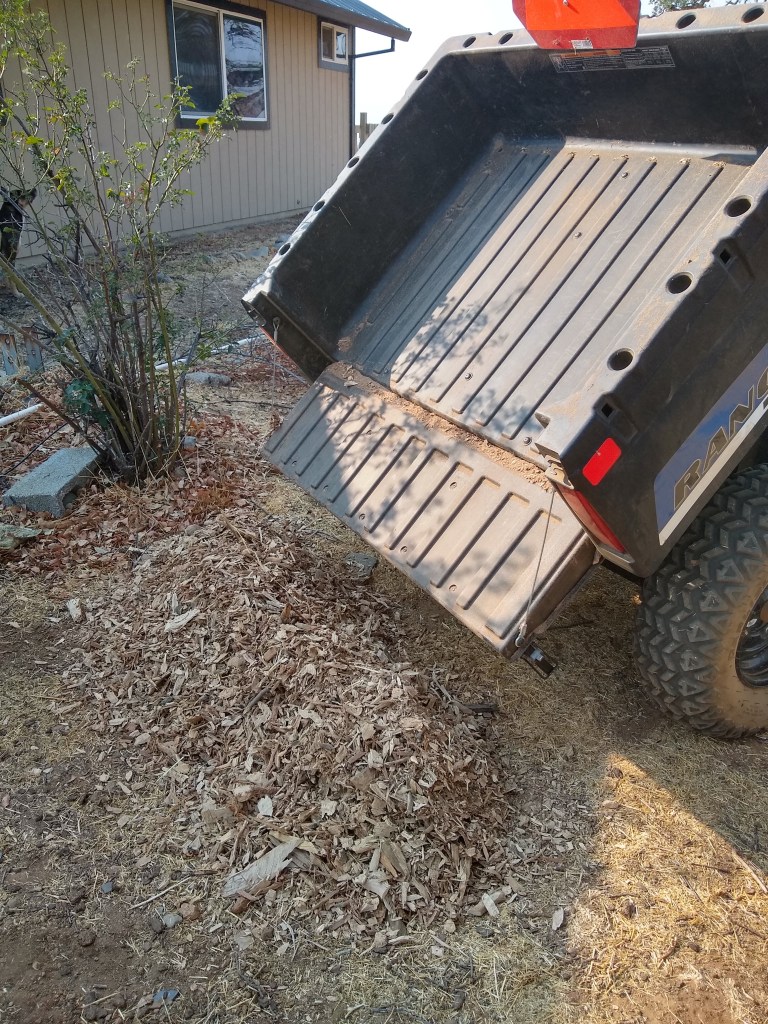
Instead of burning all wood material, we prefer chipping. Not only is it better for air quality, but it provides a (very) local source of mulch for around the plants helping the soil to retain precious moisture. We neatly stacked the logs so that they could be handled by the chipping vendor. A huge thanks to the Mariposa County Fire Safe Council for offering this chipping program as a way to reduce fire fuel load near homes. Often, the chipping jobs are too small for the large vendors or too expensive, so this program is a huge benefit for our community.

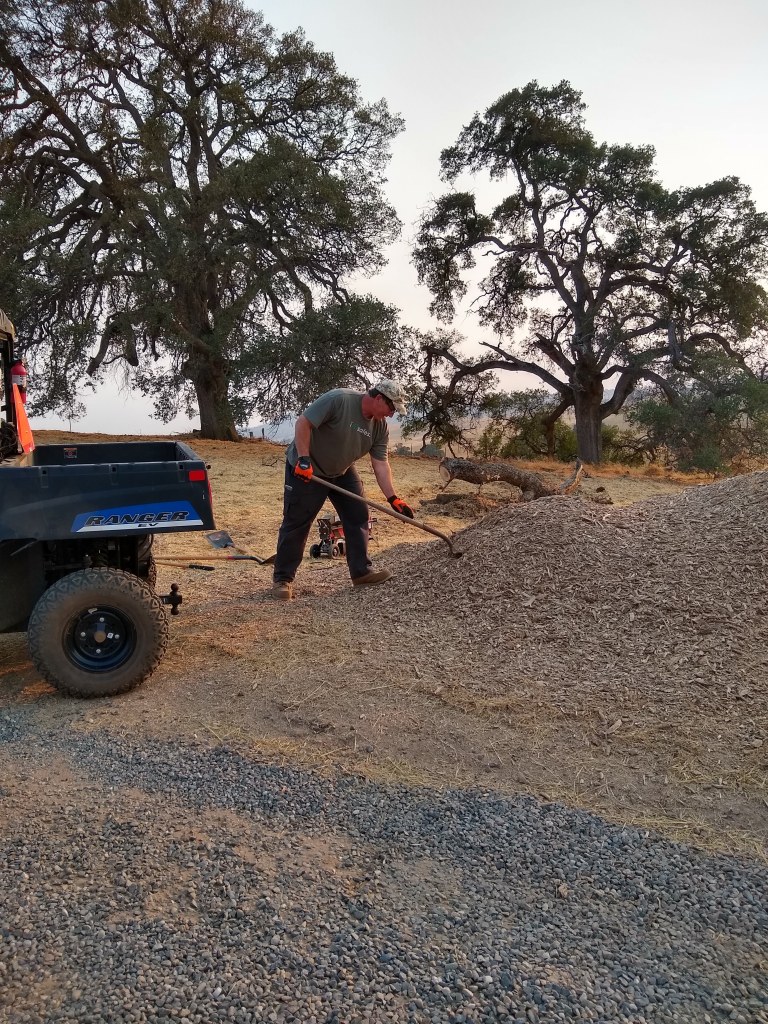
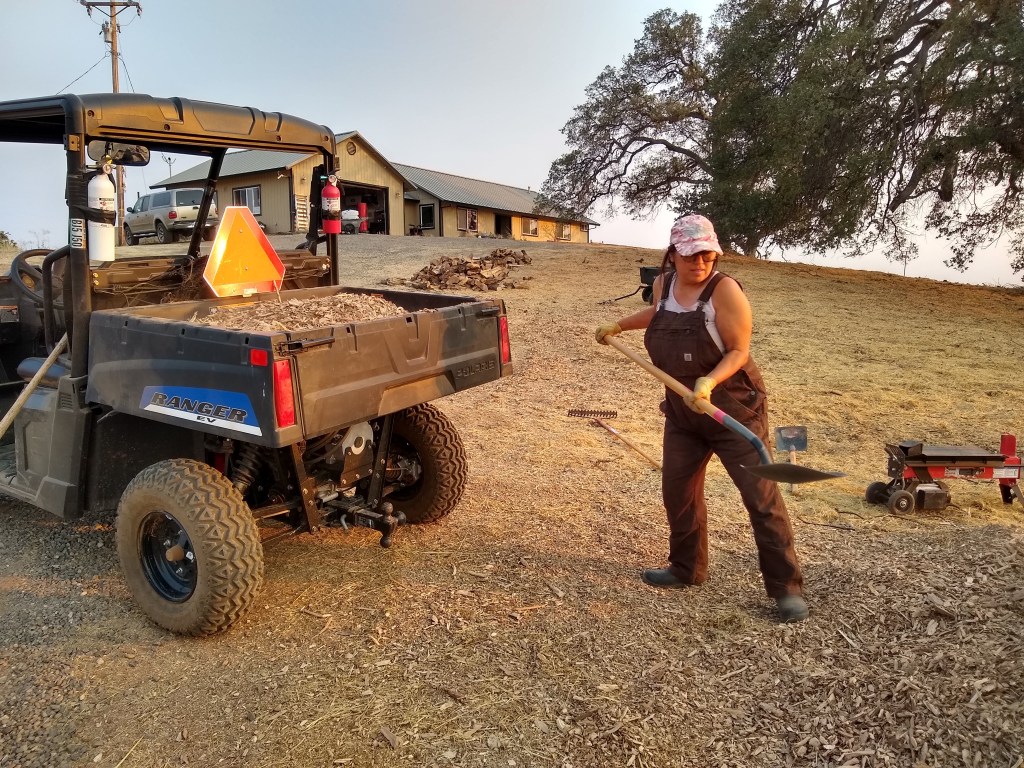
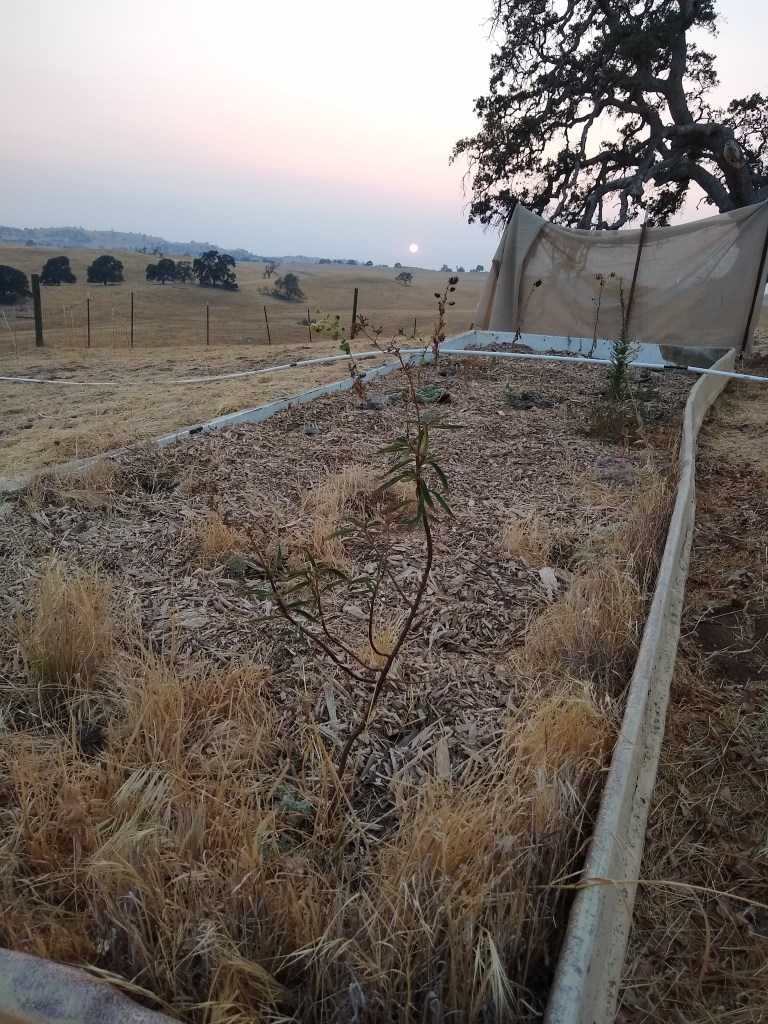
Once the pile of chips was complete, David and I began filling the Polaris, and I spread it within the planting sites. There were six loads in total. Dave gave up after two loads and sat on the porch with a beer watching me work. It was a well-deserved break for him after all the branch hauling and sawing.

Spider Season

It is no wonder Halloween mainstays are pumpkins and spiders. It is nearly October, and I have begun to see the webs floating through the air. On those webs are baby spiders lifting off from wherever to begin a new life in a new territory. The webs will get lodged in plants, trees, vehicles, structures – pretty much anything they come in contact with. And, that is where they will begin their new life. As I was watering and mulching, I saw several stuck webs on the plants. To be certain, we will have a solid line of defense against any bugs.

On my walk a week ago today, I saw two tarantulas. They were the first living ones I’ve seen this year. Typically, I will begin to see them in August, but, this year, it is late September. They both looked healthy. The life of a male tarantula is one of being darned if you do and darned if you don’t. They are meals for tarantula wasp babies or a meal for the female tarantula after fertilization. I love them so much and feel bad for their fate, but that is how nature intended.

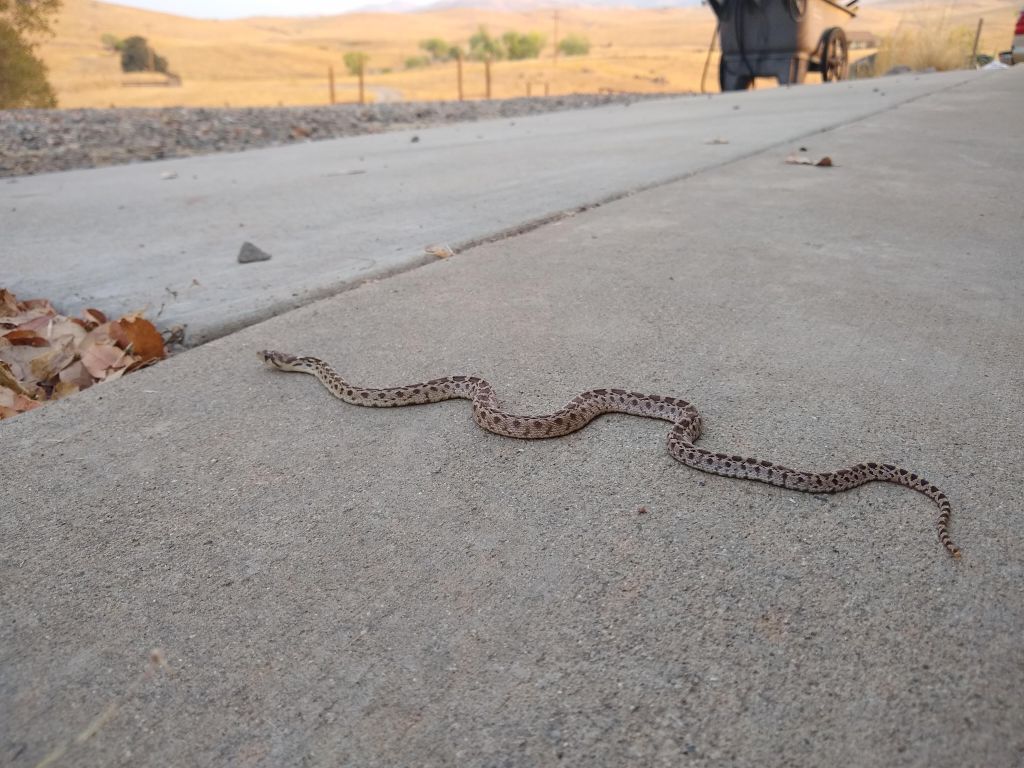
Some other good friends I have seen a lot recently are snakes. They are so important, and I protect them from getting picked off by raptors as much as I can. I try to scoot them off the cement or the roads into the grass or leaves so they are not as easily seen by the remarkable eyes of hawks.

Gently nudging this beauty to exit the patio into the leaf litter

Late Blooms

One of the crucial elements of establishing a well-rounded pollinator garden is to ensure diverse plantings and plants that bloom at different times of the Spring, Summer and Fall. Although it is late September, I am still getting blooms on the plants. I was rewarded today with a sighting of two admiral butterflies. They moved so fast that I could not get a photo. I saw their distinctive markings and was overjoyed. They are larger than the other butterflies I have been seeing lately, which is fun.

A Heartfelt Goodbye to the Polaris

Polaris back home

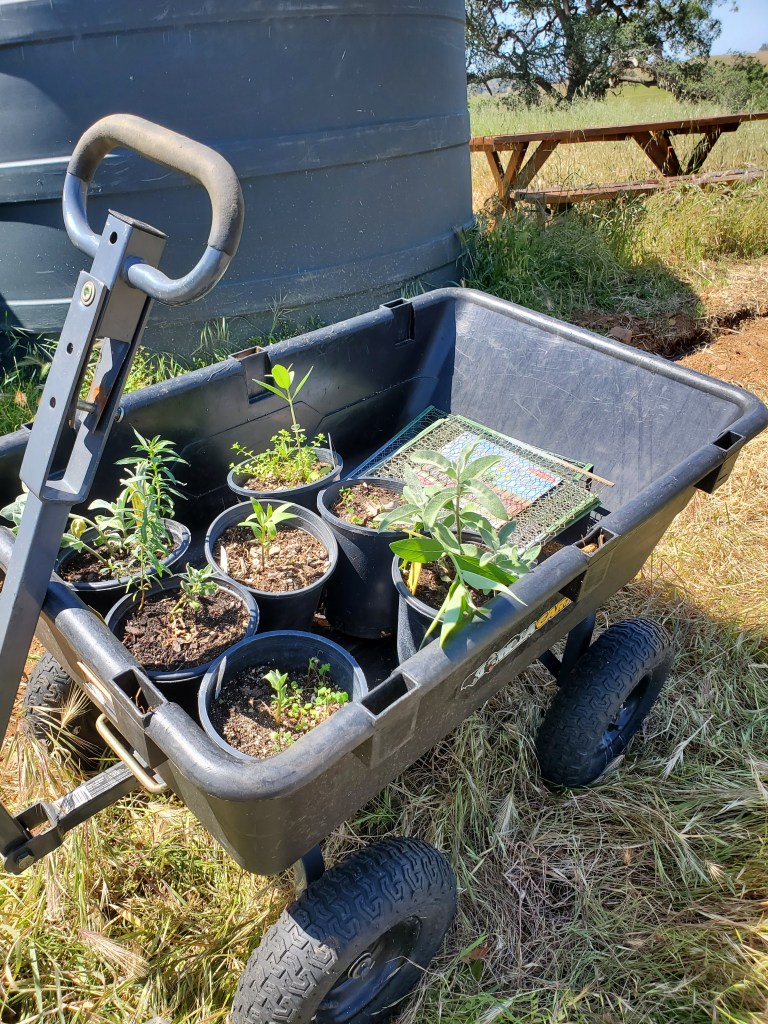
I gave the Polaris back to its rightful owners the other day. My neighbors have been incredibly generous with me, allowing me to use it for so many weeks. It has been a reliable friend making my work so much easier. I won’t lie; I miss the gosh darn thing. I am back to hauling my water with the Gorilla cart since the part for my electric ATV is still MIA from Canada.

MONARCH SIGHTING Drives U-Turn!!

Monarch flutters away into the field. Can you find it?

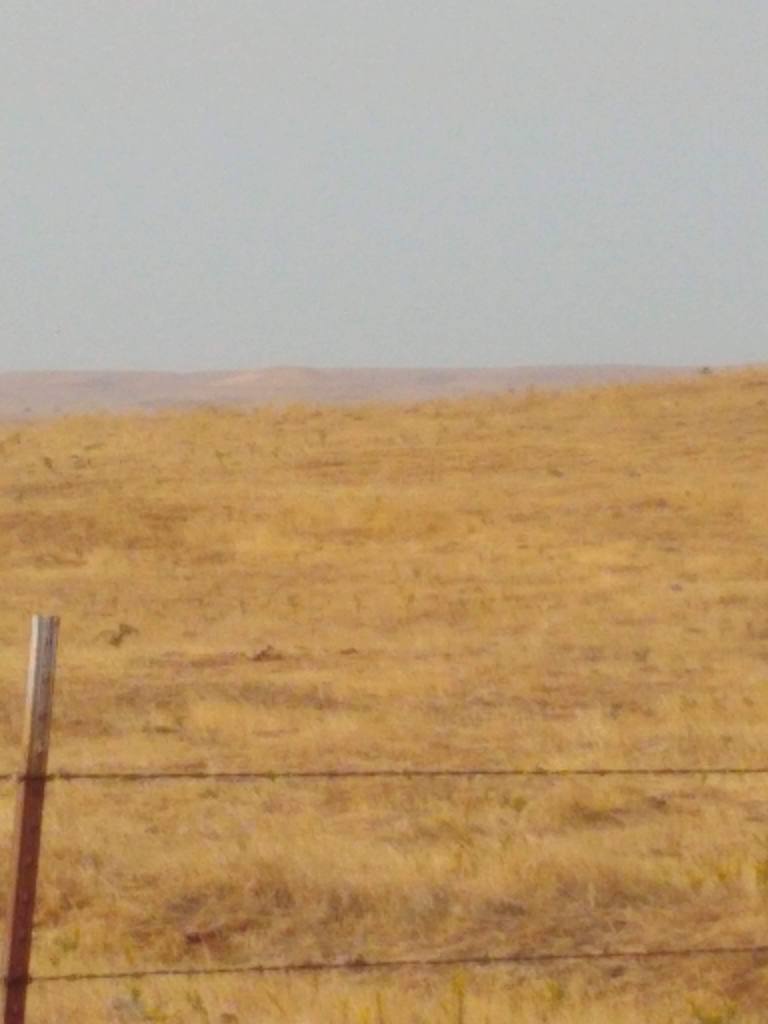
I haven’t been on a vacation in years. This week, David and I were set to leave for the coast. We had the car packed, the bikes on the back and the dogs situated comfortably for the long ride. We drove to Hornitos, made the tight curve, climbed up the hill out of town and made our way down the winding road toward the vast expanse of the Central Valley. Just a mile outside of town, we pulled over on La Paloma Road to check the bike rack. It was fortuitous. –My hands are trembling as I write.– As I sat in the car, a single, large orange and black butterfly fluttered right over the car. It was a MONARCH! I grabbed my phone and bolted out out of the car like I was a 20 year old and ran down the dirt road as fast as I could, following the large erratic flutter, side to side, yet forward, of this magnificent creature. I ran until it flew over the ranch fence into the field, skirting the rangeland, just over the grass. My heart was racing, and I snapped three sad, far off photos. It was the best I could do. Then, my elation sunk in parallel with my heart. I was leaving. There were monarchs in Mariposa, along the rangeland, finally, and I was leaving town. David yelled to me to get into the car and lets go. Reluctantly, turning back every so often, as if I was a child again, called home too soon, leaving my joyful friends playing behind, I made my way back up the dirt road and got into the car.

I certainly wanted to leave town. The smoke and heat have been toxic to my body. It has been too many days of working hard in this situation. I wanted the clean, cool air of the coast. I wanted to see my siblings and make my husband happy to have the smell of redwoods in his nose. I was conflicted. Could I leave now after seeing this? Had I worked so hard since 2019, not seeing any monarchs, to leave now that there was a real, tangible chance to see them use this habitat? What if the watering system David constructed got a leak, and water did not make it to the milkweed or nectar and the plants died? A tear quietly rolled down my cheek as I ruminated. David, driving, caught this resigned defeat out of the corner of his eye. He grabbed my hand and said, “HB, do you want to go back home? We are only an hour and a half down the road. I am ok with it if you do. I know how hard you’ve worked.” I said, “Really? You would give up your beautiful trip?” He said, “Yes. I am totally fine with a stay-cation.” I said, “I love you.” He made the u-turn, and we started back for home.

I called my sister and brother to make sure they were ok. I asked, “Is it lunacy for me to cancel my vacation for a butterfly?” Both my sister and brother encouraged me to shift my plans. They said, in turns, “It would be crazy if you didn’t do all that work, saw a butterfly and cancelled your trip. You worked on this project for years, literally giving your blood, sweat and tears. We think it is crazy for you not to stay!” I promised to visit soon and hung up as David and I made our way across the Valley, the glorious Sierra foothills, and home, in our sights.