Shifting Water Source Plans

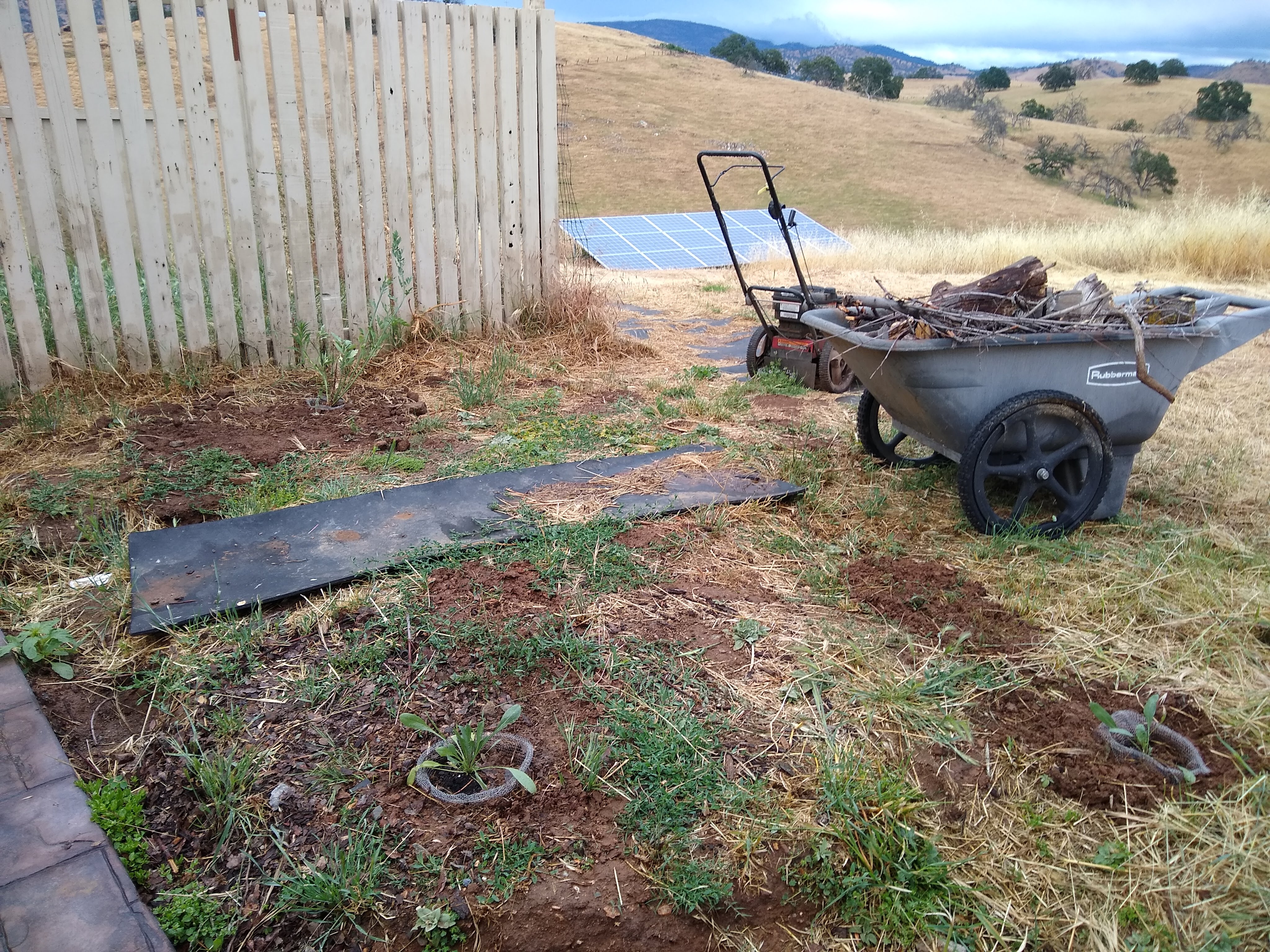
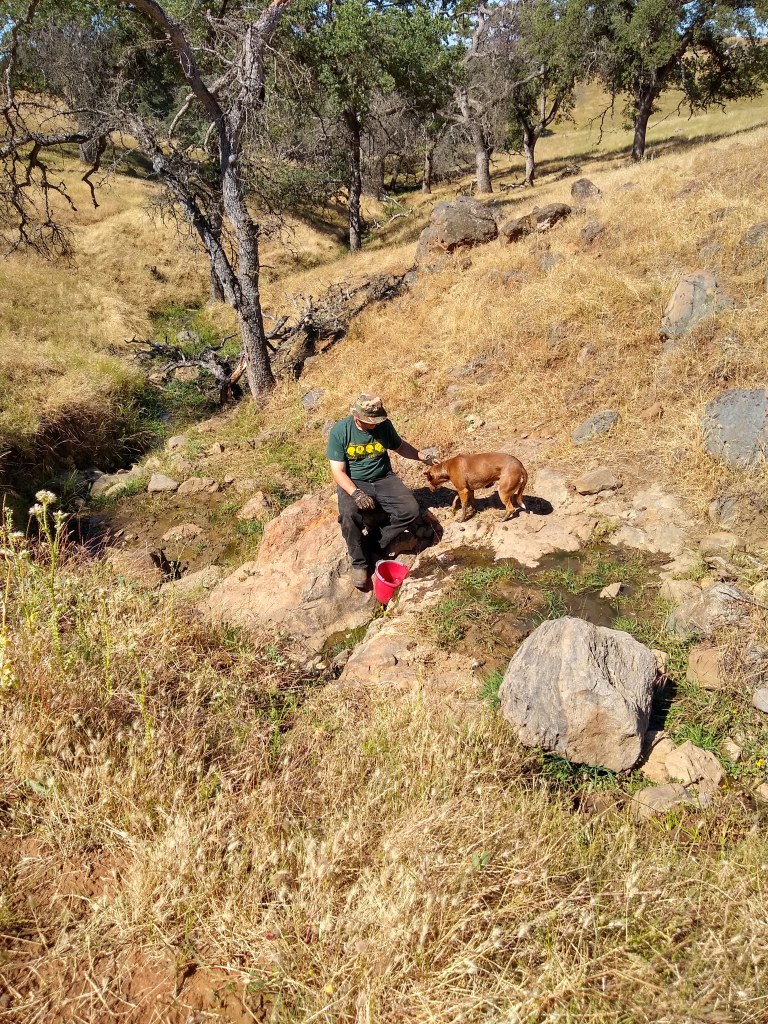
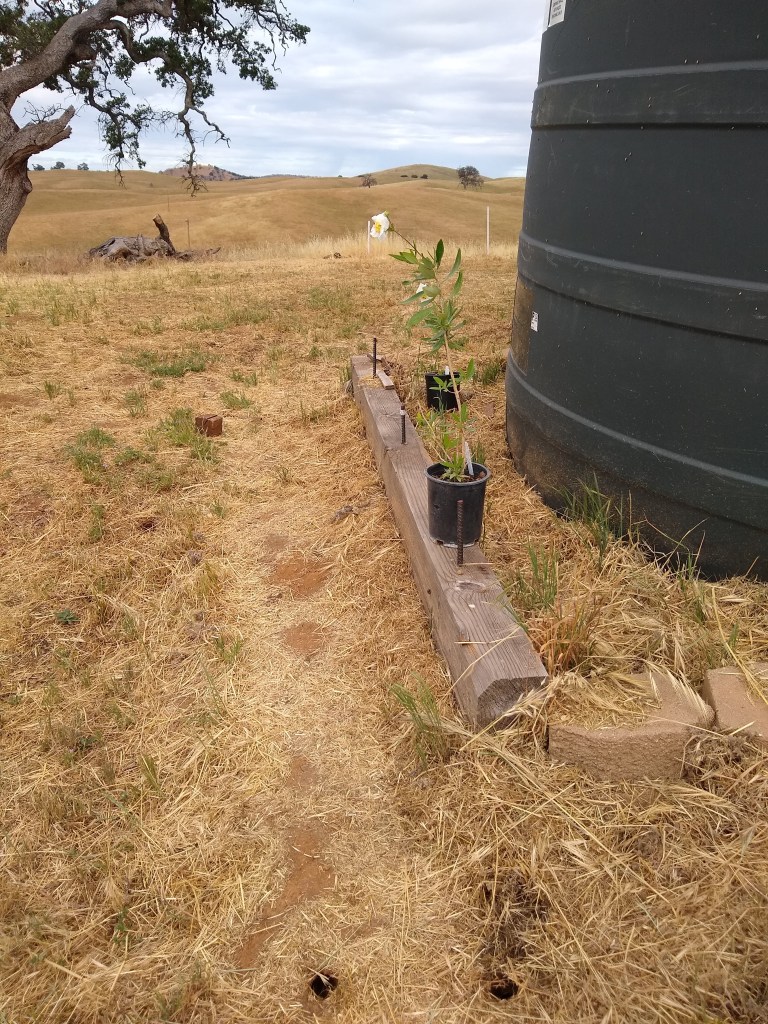
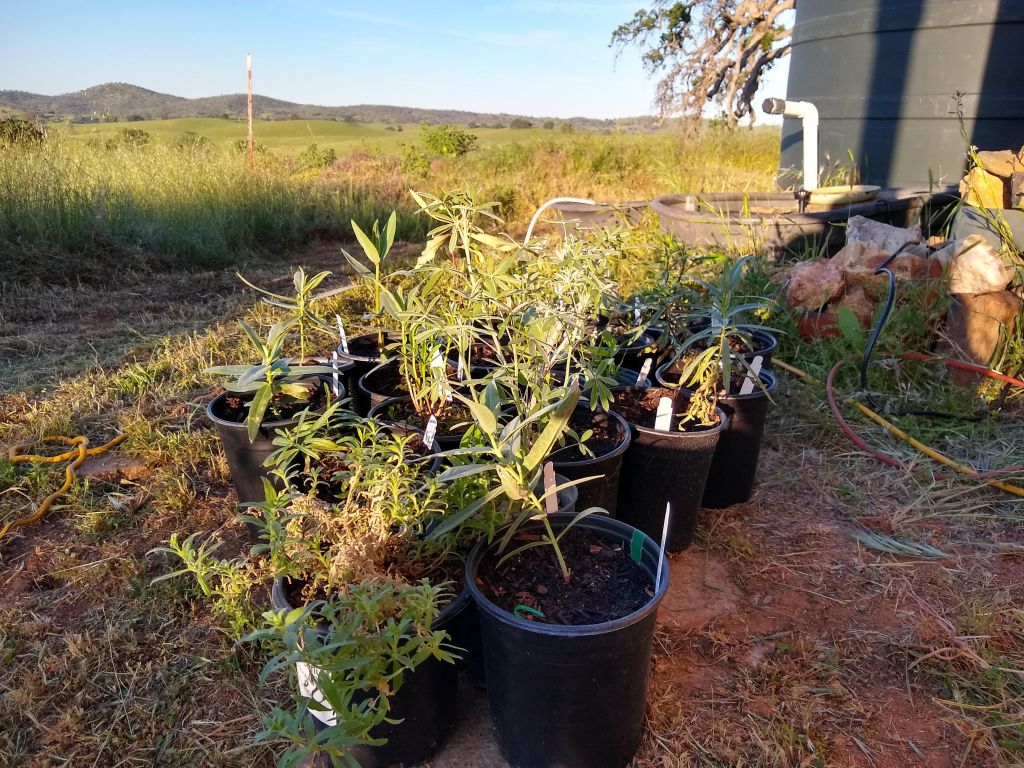
Heather, with fur friends, hauls water from the rainwater barrel in the truck to Site 8 and the deer grass site.

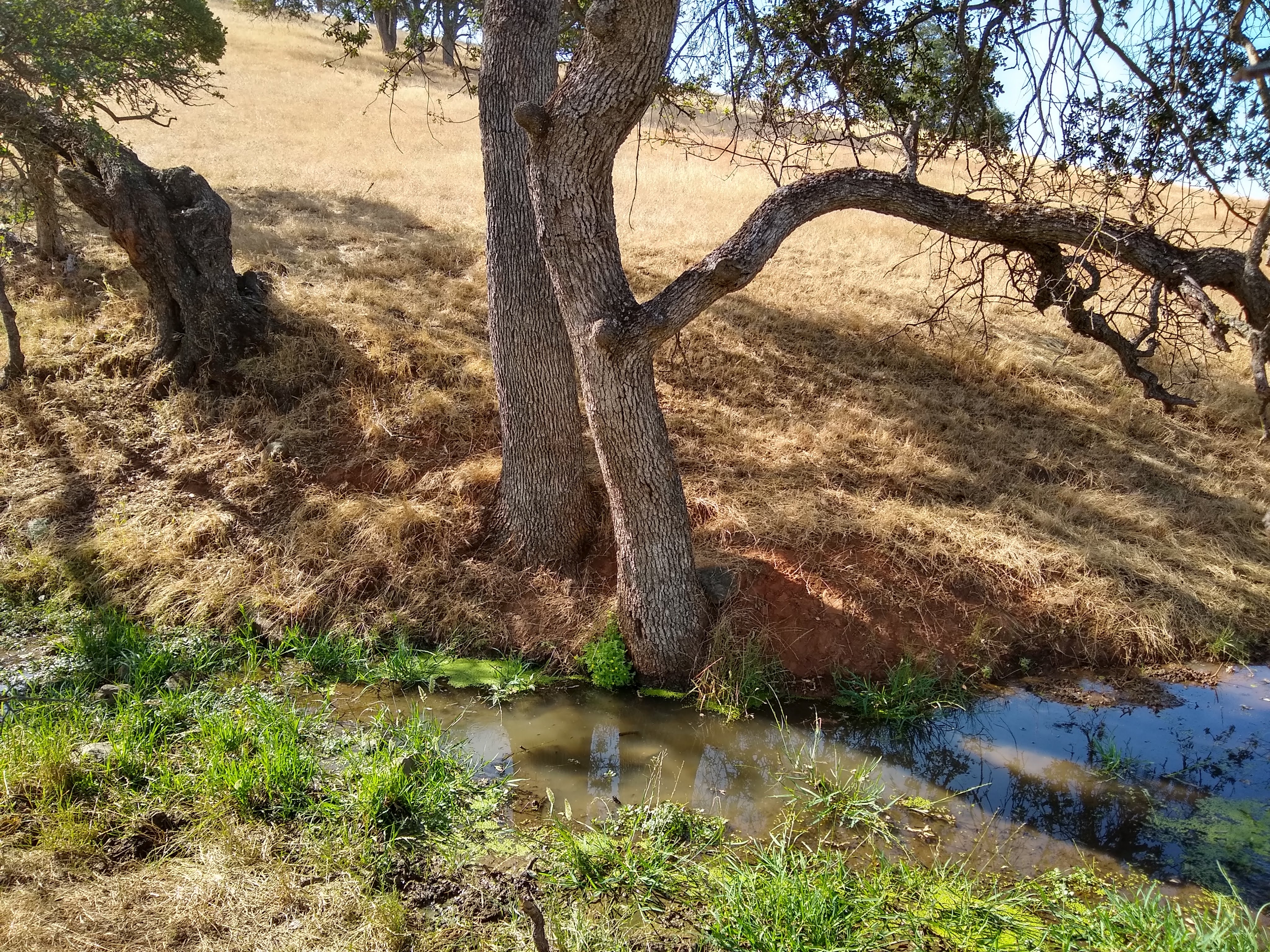
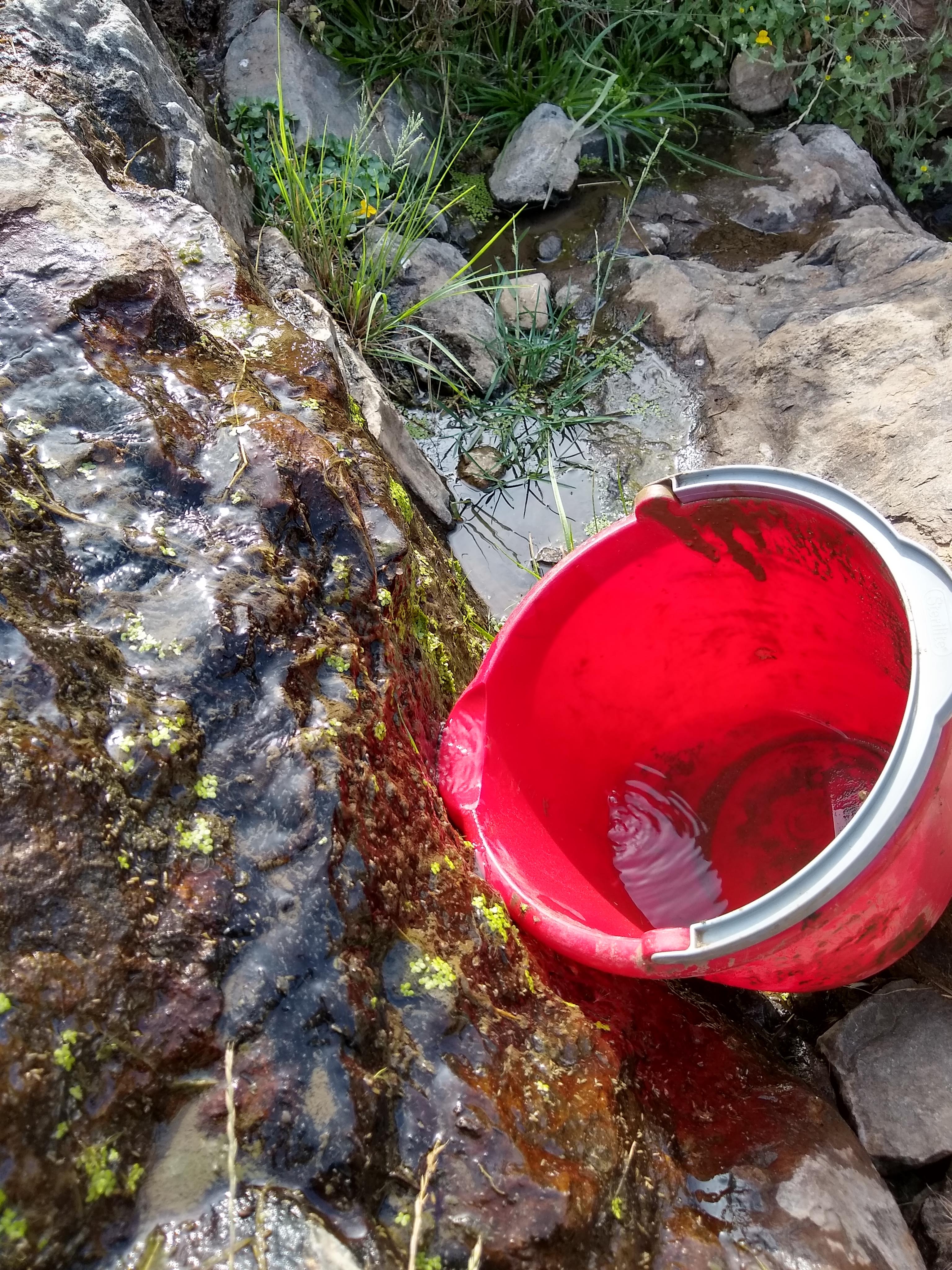
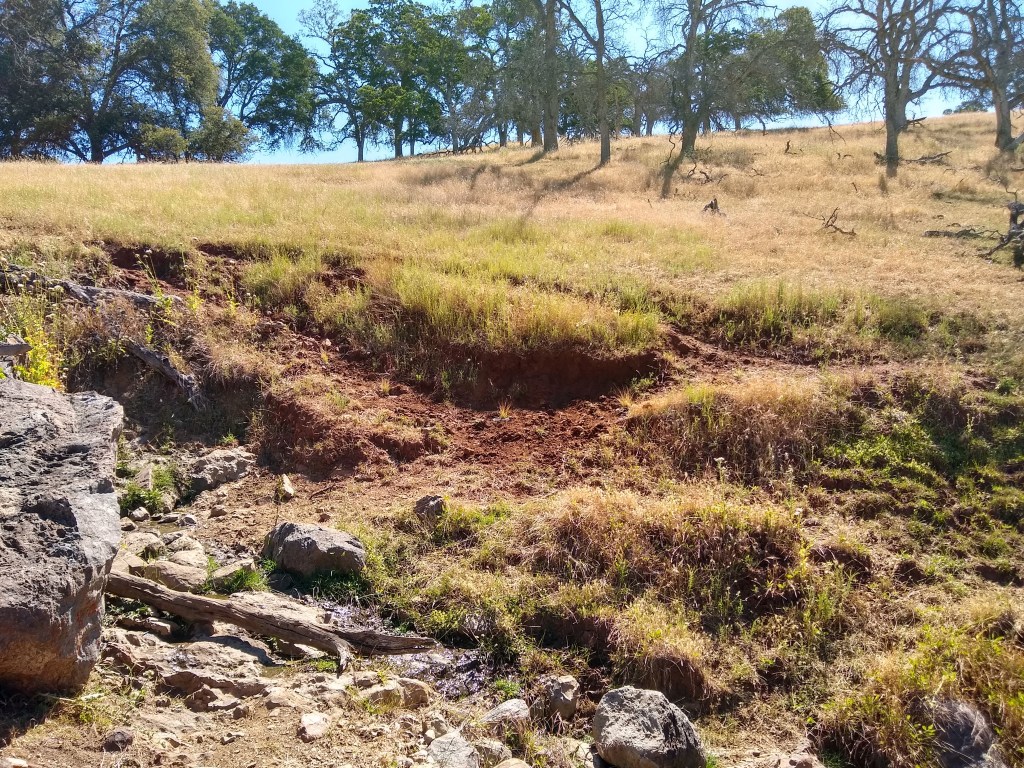
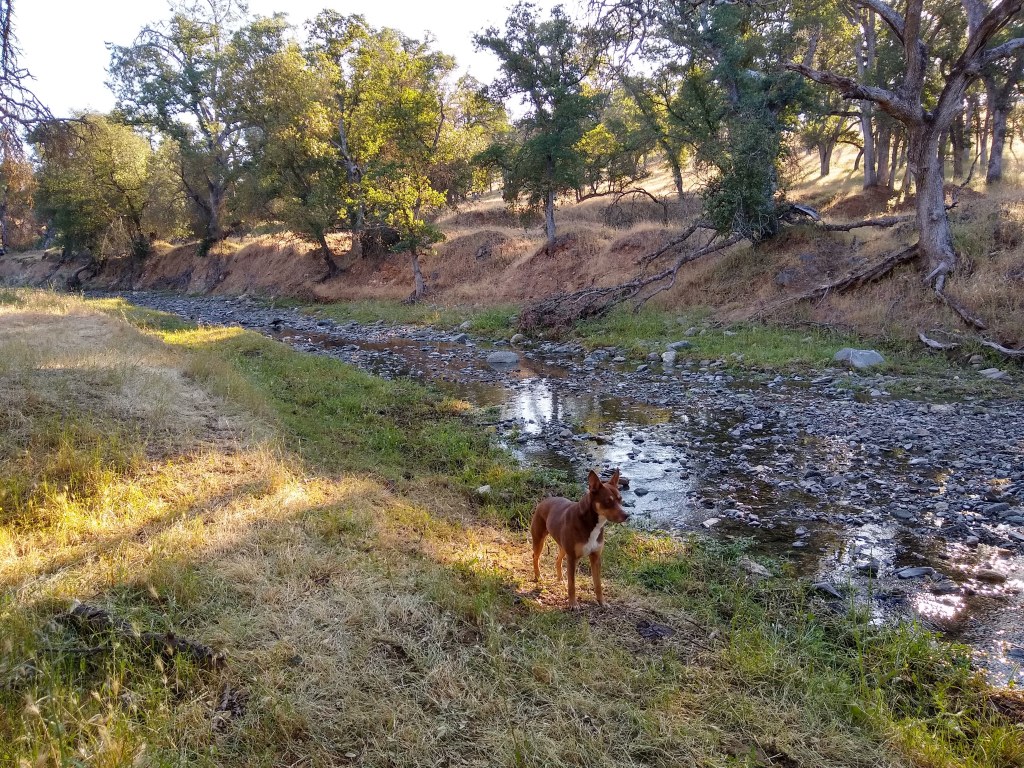
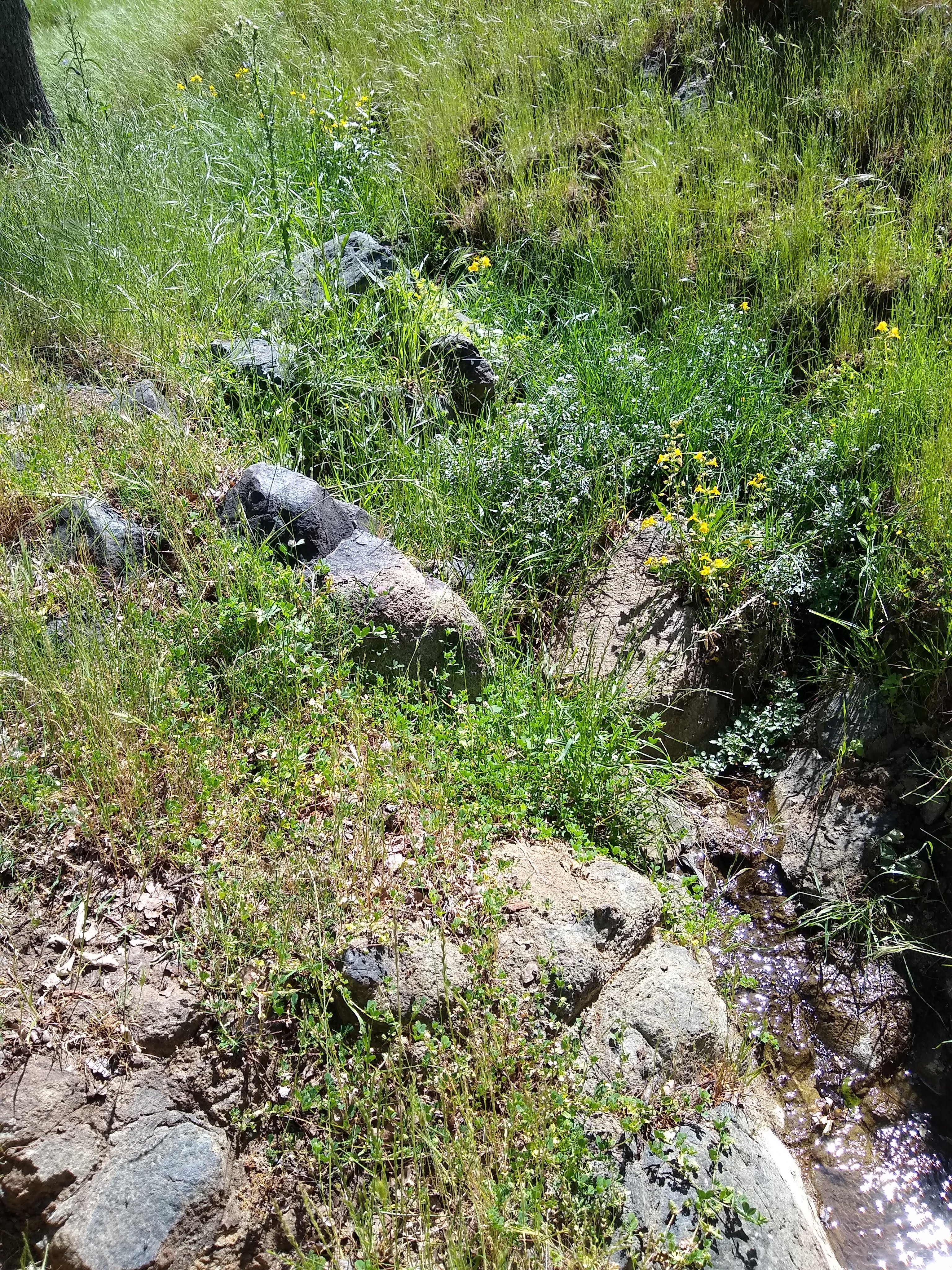
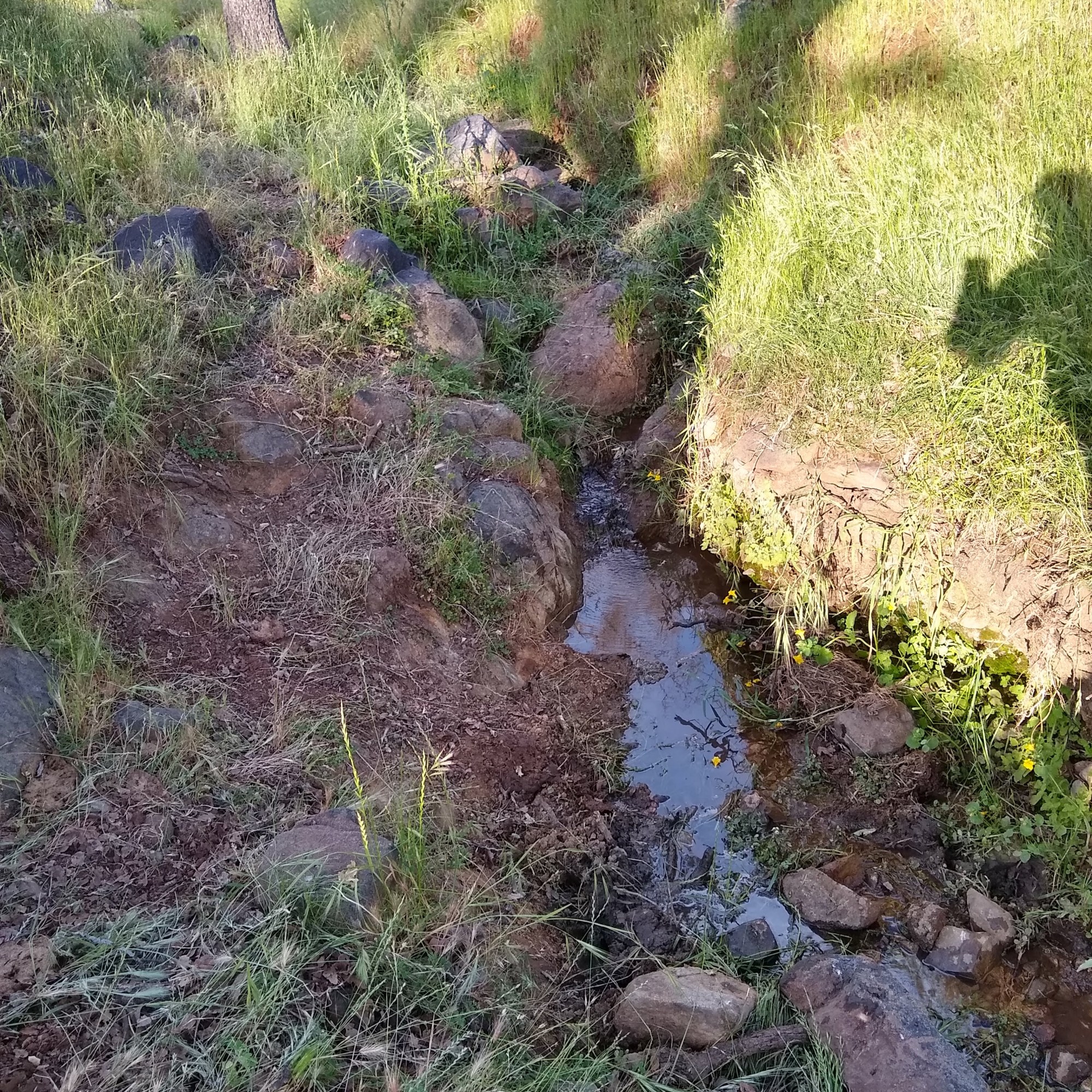
Last week was the final day I pulled water from the spring along the creek. It was running very lightly, and I knew I would need to pivot to Plan B for water sourcing. I have been checking on the plants in Site 8 since the pig attack and was visually monitoring the water flow. The flow has stopped. The small pond has algae on its surface now (see photo below) – a sign of low water movement.
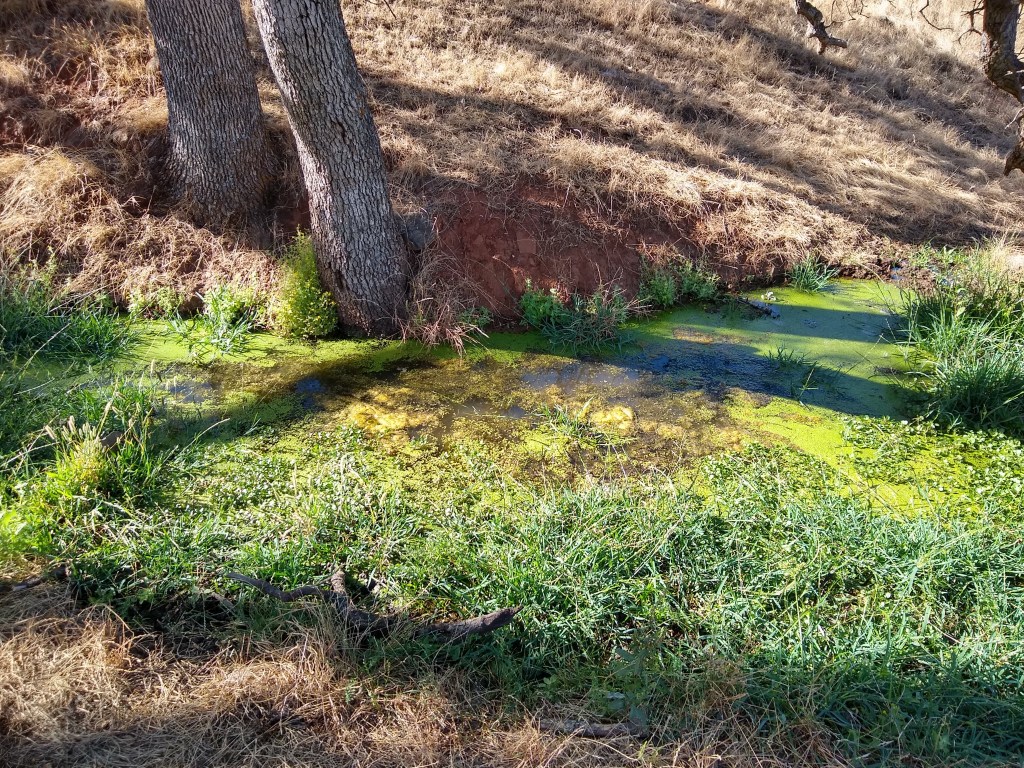
Little pond on the Spring Creek now has algae growth on the surface

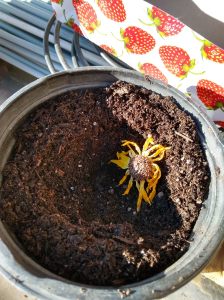
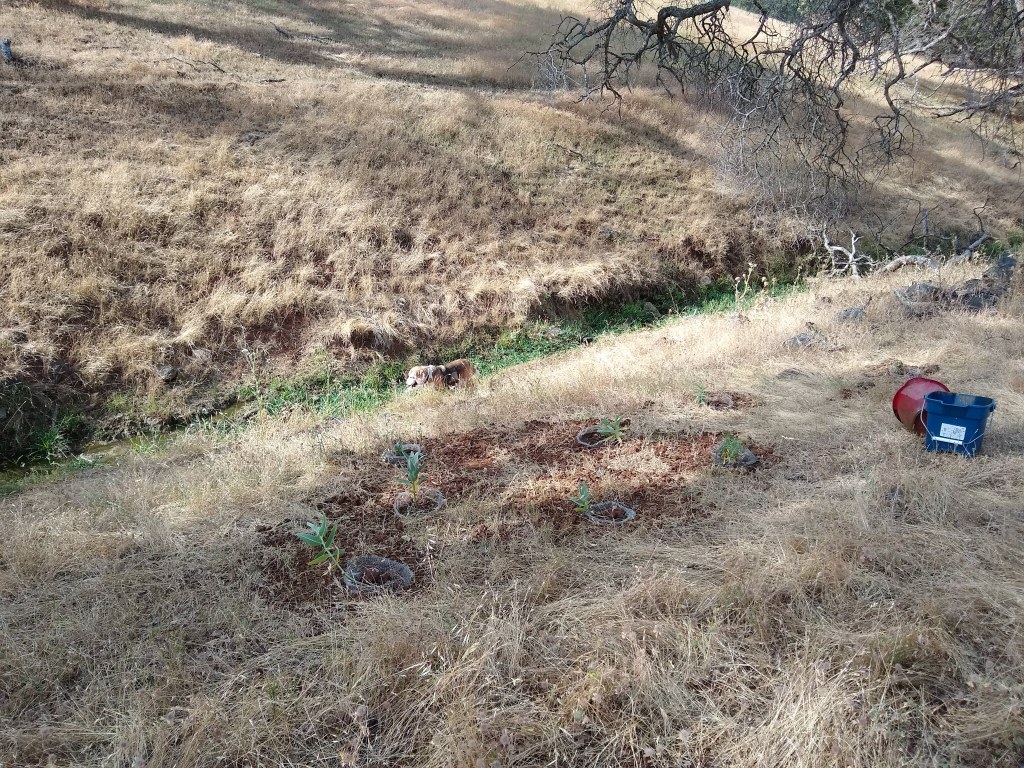
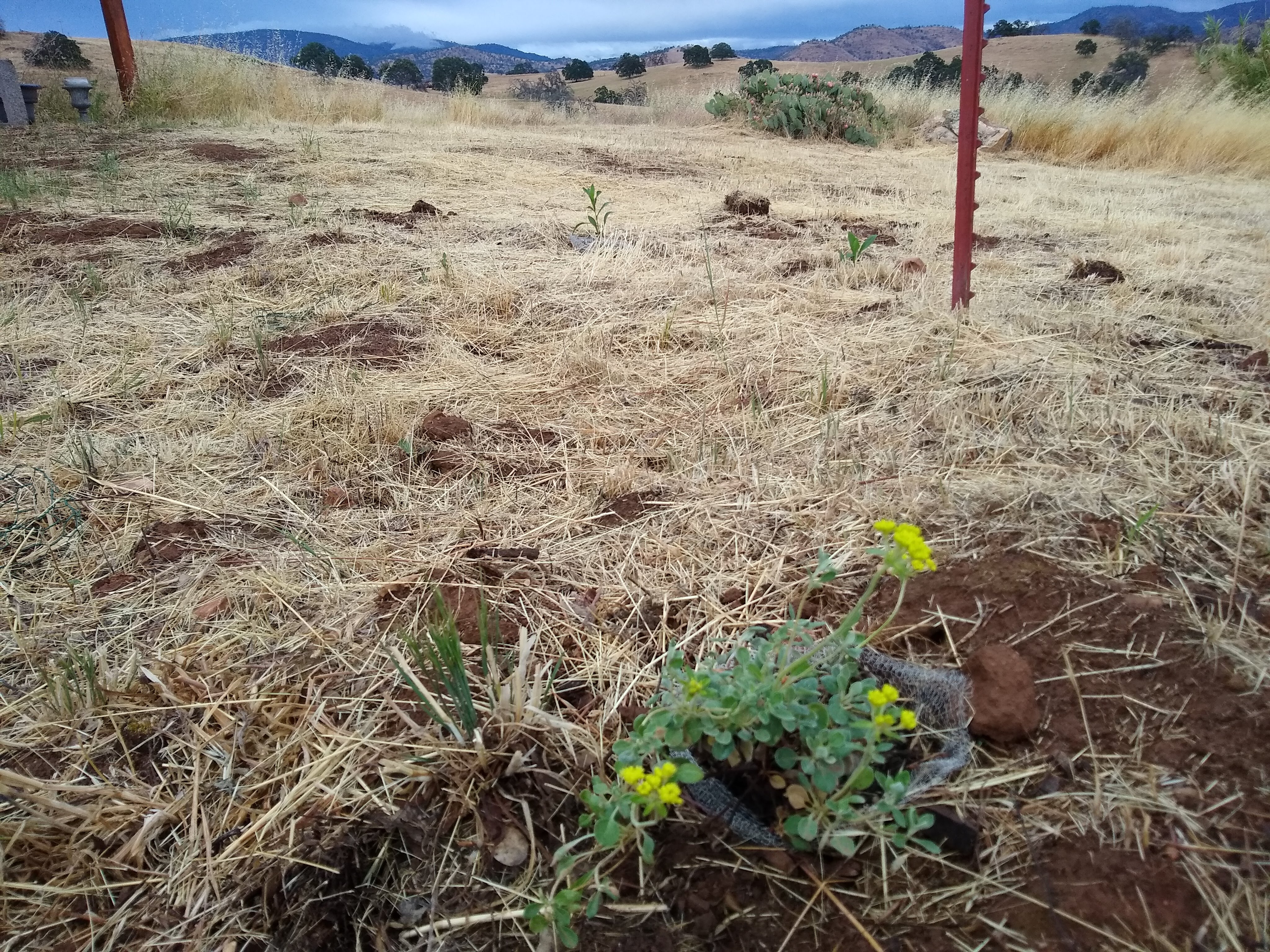
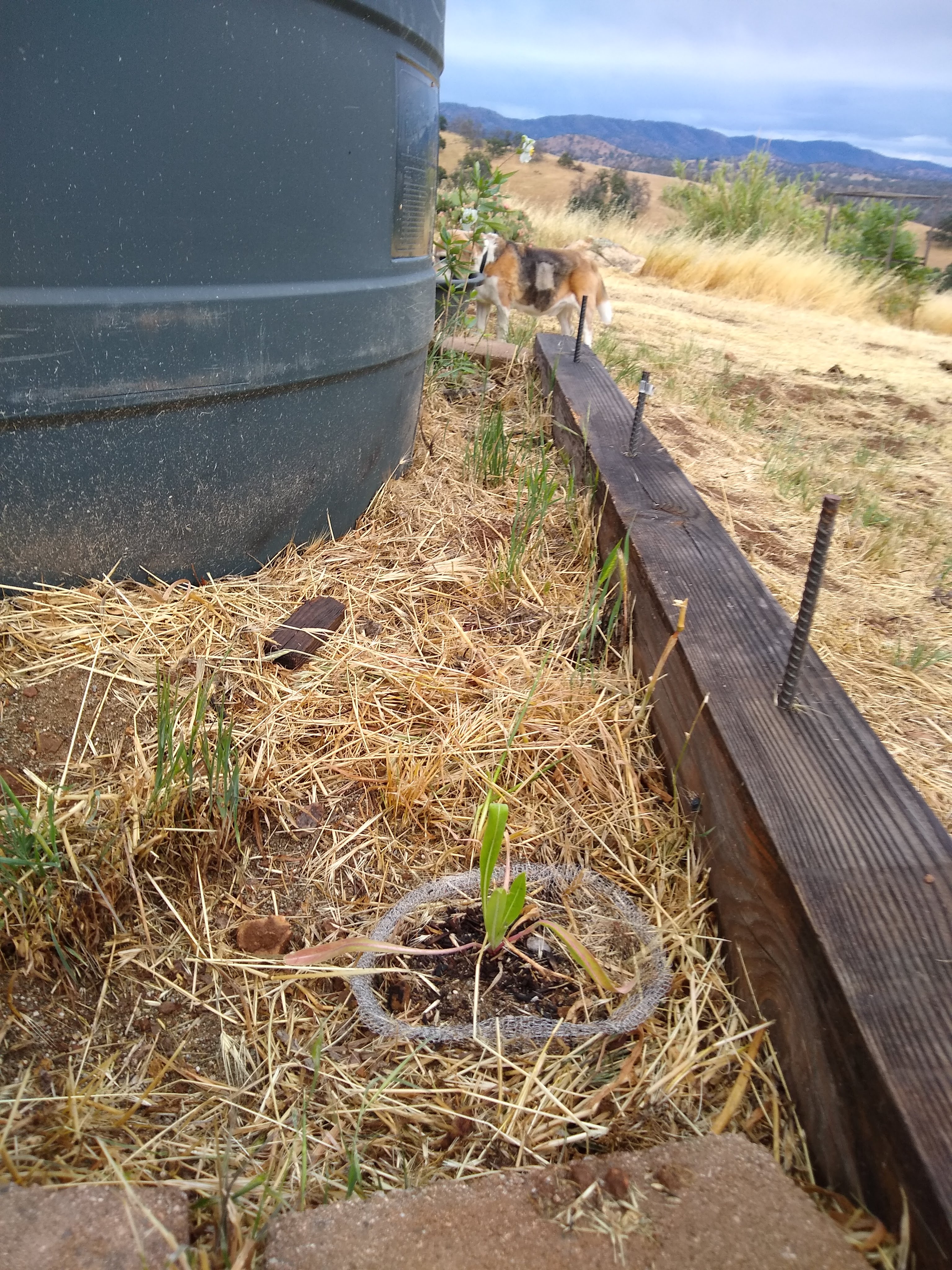
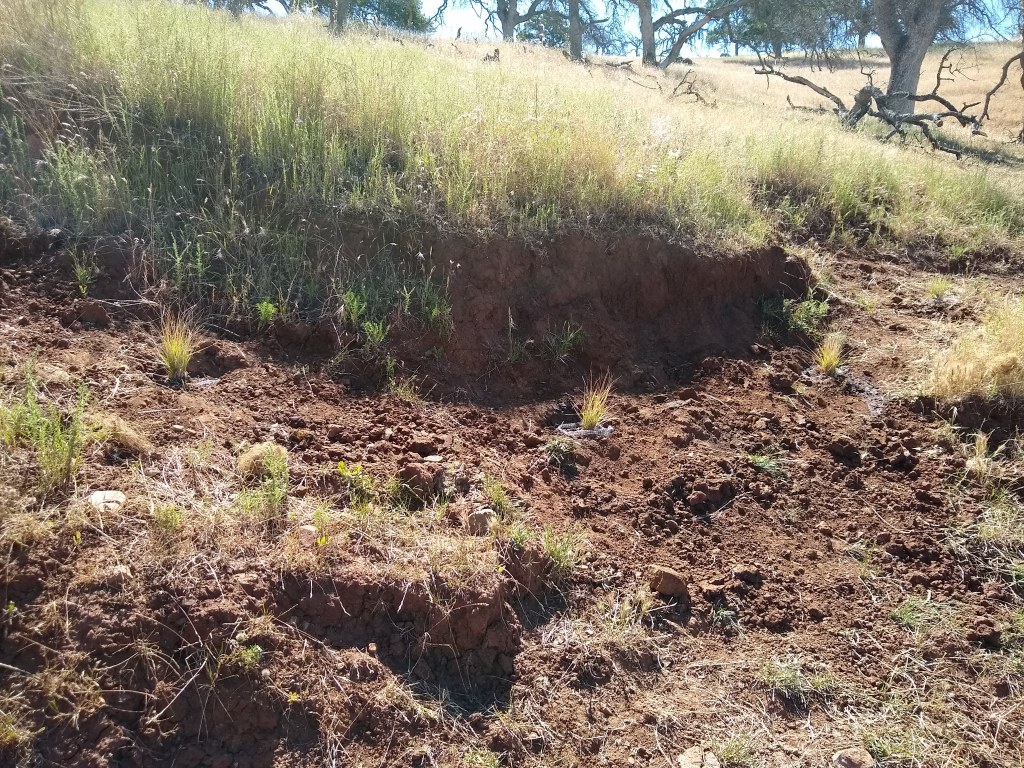
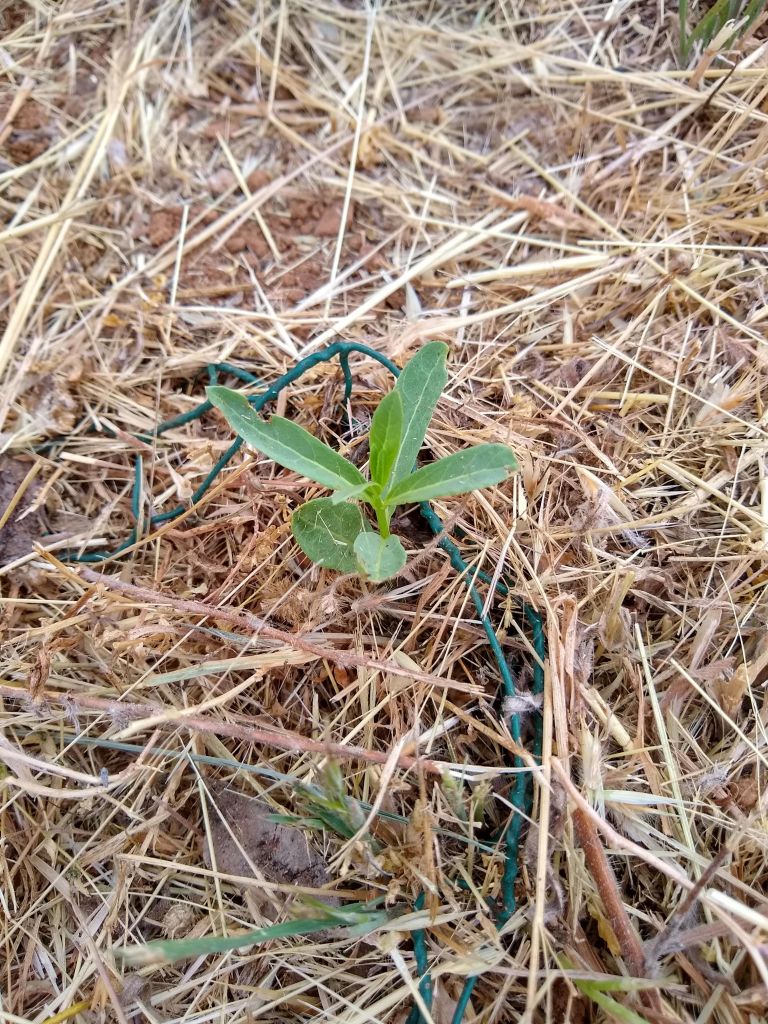
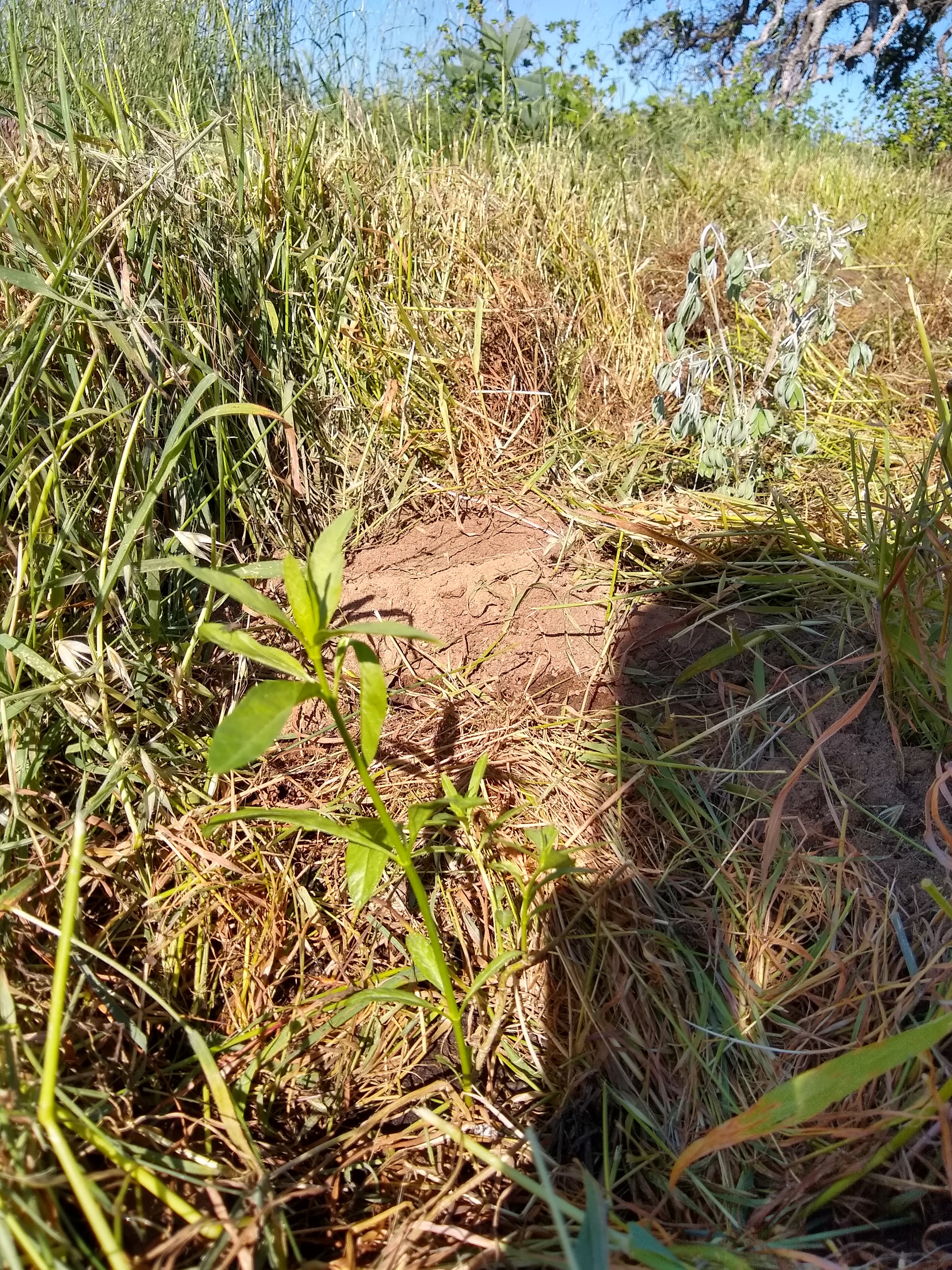
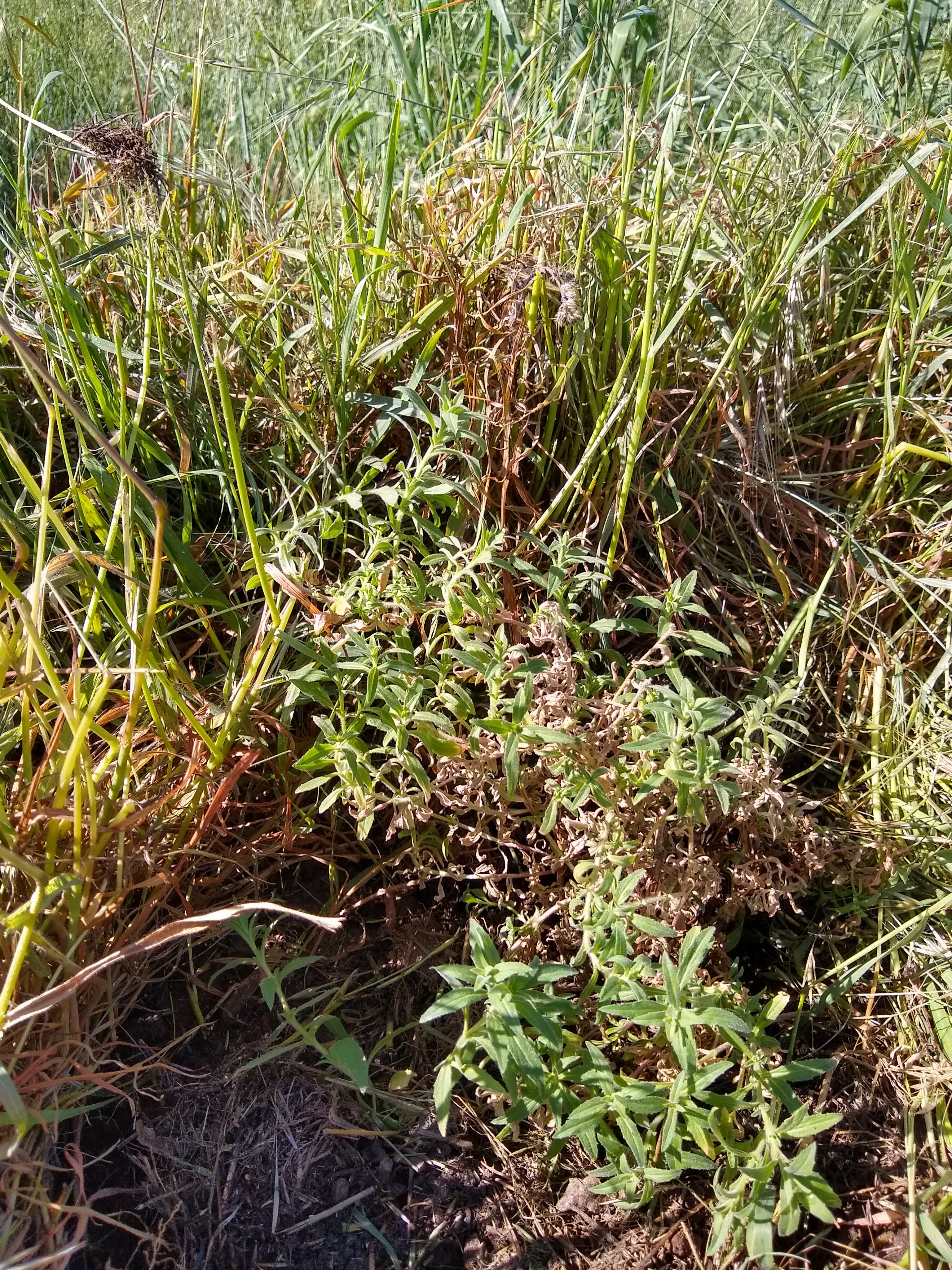
Sunday is my day to water the Spring Creek plants – Site 8 and the deer grass hillside. This takes approximately 13 gallons of water (1 gallon per plant per week x 13 plants). After the pig attack and with the heat wave this past week, I have hiked to the creek several times to check on the plants. Recall, I attempted to replant those that were rooted out since they were still intact in their baskets. Everything is still in place, but the above ground portion of the plants are all withered and dead (see photo below). What I am hoping to see is new growth from the root balls in a few weeks. I am hoping that the roots were not so disturbed that they died too. Roots can still be alive even when the above ground material is dead. This happened with the test plots last year. As you know from reading this blog, several plants came back this year even though I thought the gophers killed them. So…I continue to water the plants that appear dead.
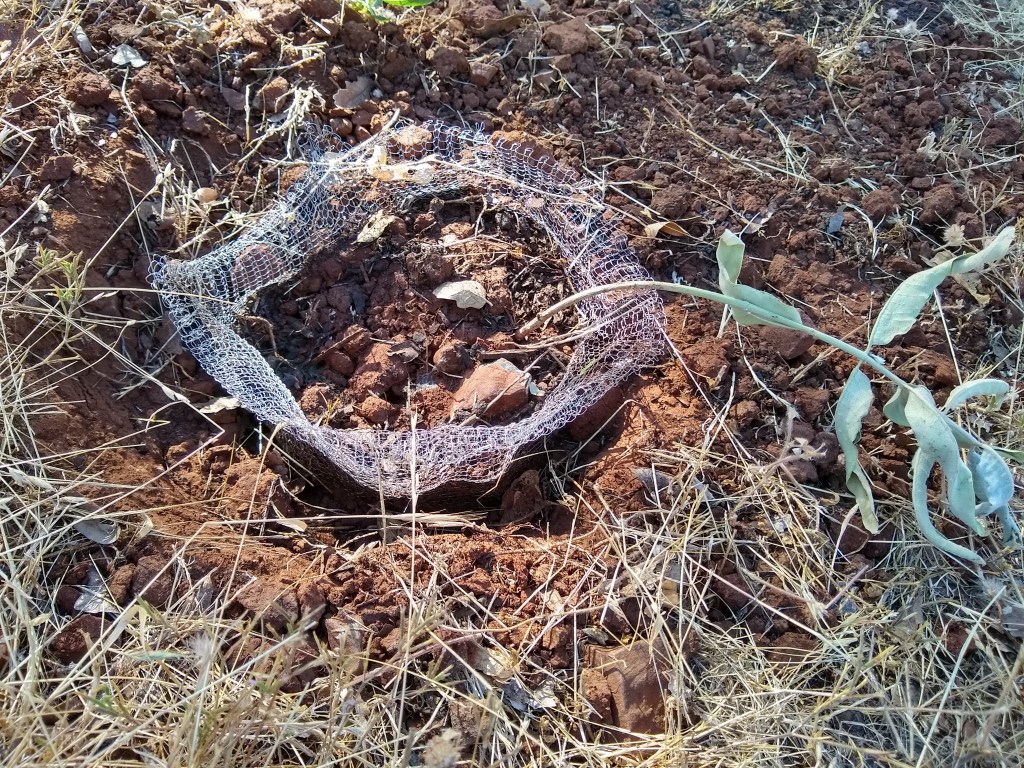
One of the showy milkweed that was pulled out by the wild pigs and replanted

When conceiving this project, the plan was to use spring and swale pond water through June to water the Spring Creek sites, and then just the spring water through the summer. The last several years, the spring has run all year. With the overall lack of soil moisture, indicating insufficient amounts of precipitation, the spring has run dry. Although there is still a significant amount of water in the small pond, much insect, bird and other wildlife will be depending on that. Their lives are as important as my plants. I will not touch it. We all live in a system that depends upon one another. How selfish it would be for me to think my needs and the monarch needs are more important than everything else. It would also be foolish since we need one another to optimally function and thrive. Fortunately, I had a Plan B prepared – transport rainwater from the house and then haul it by hand to the sites. This is a lot more work.

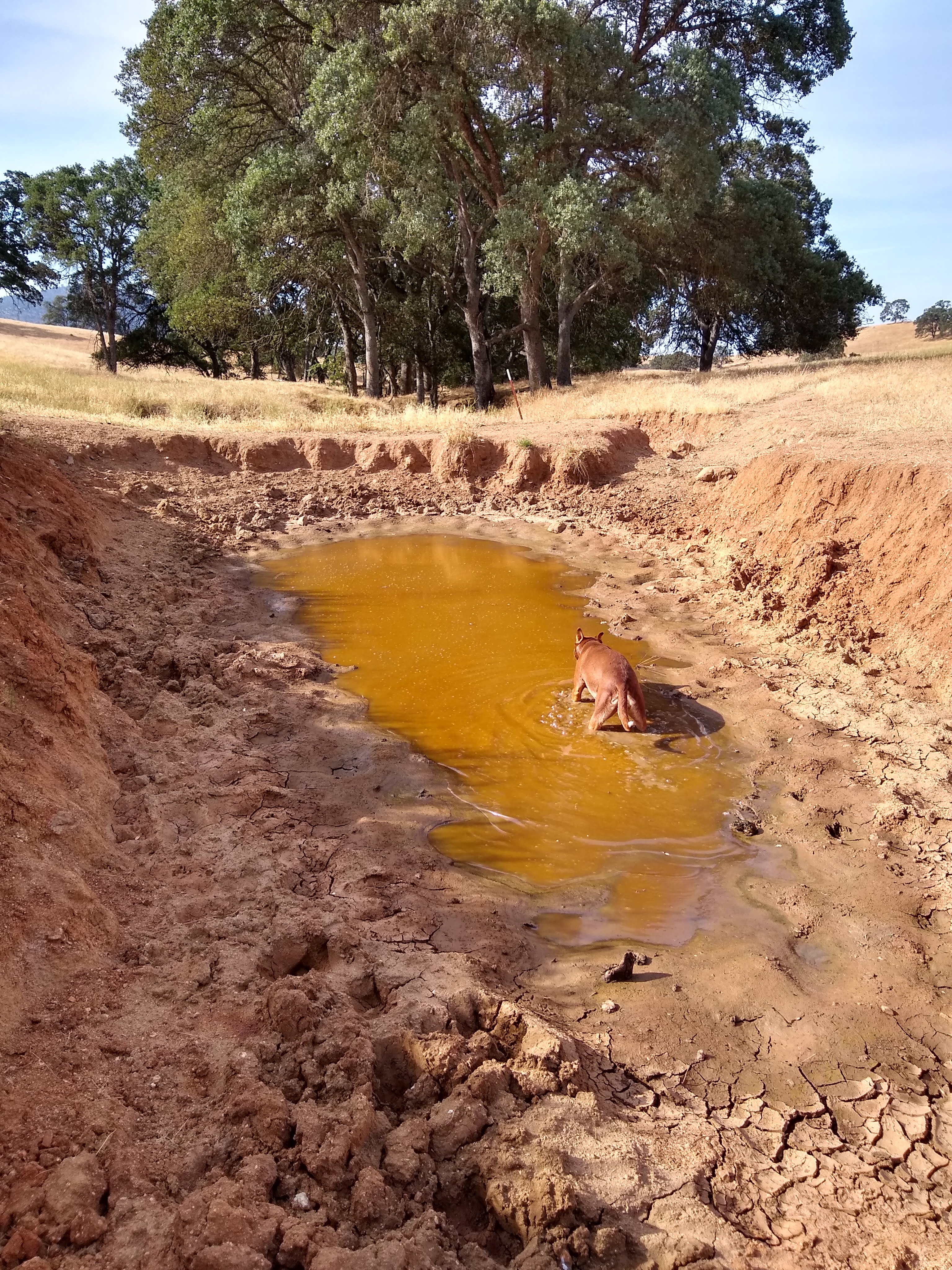
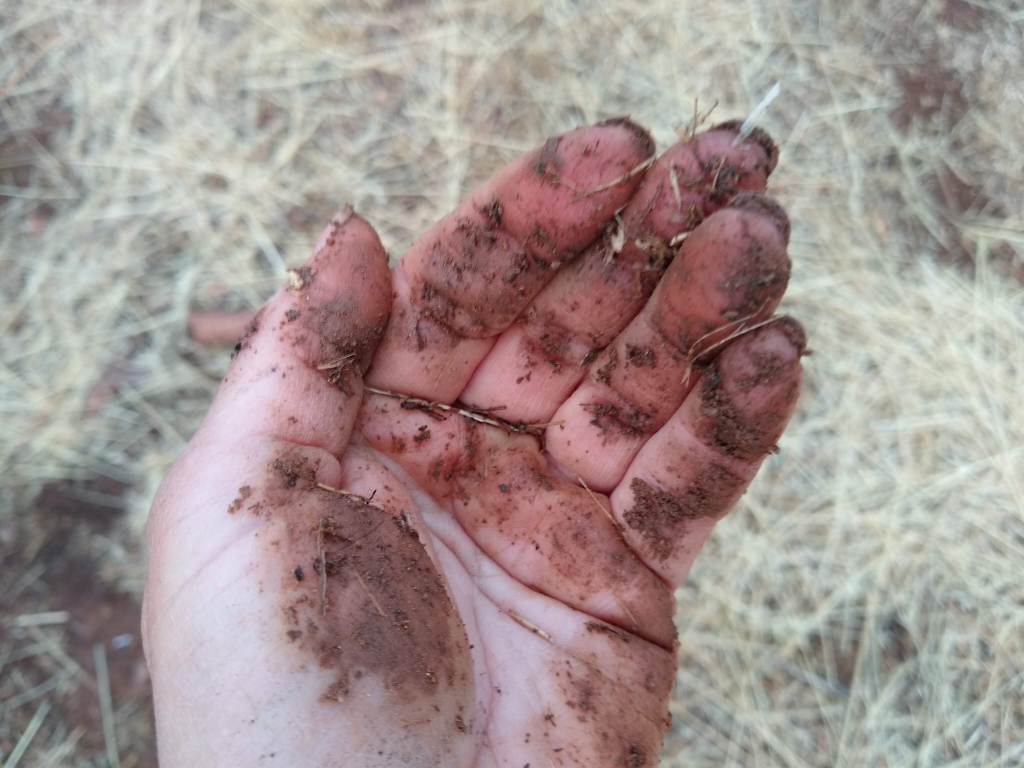
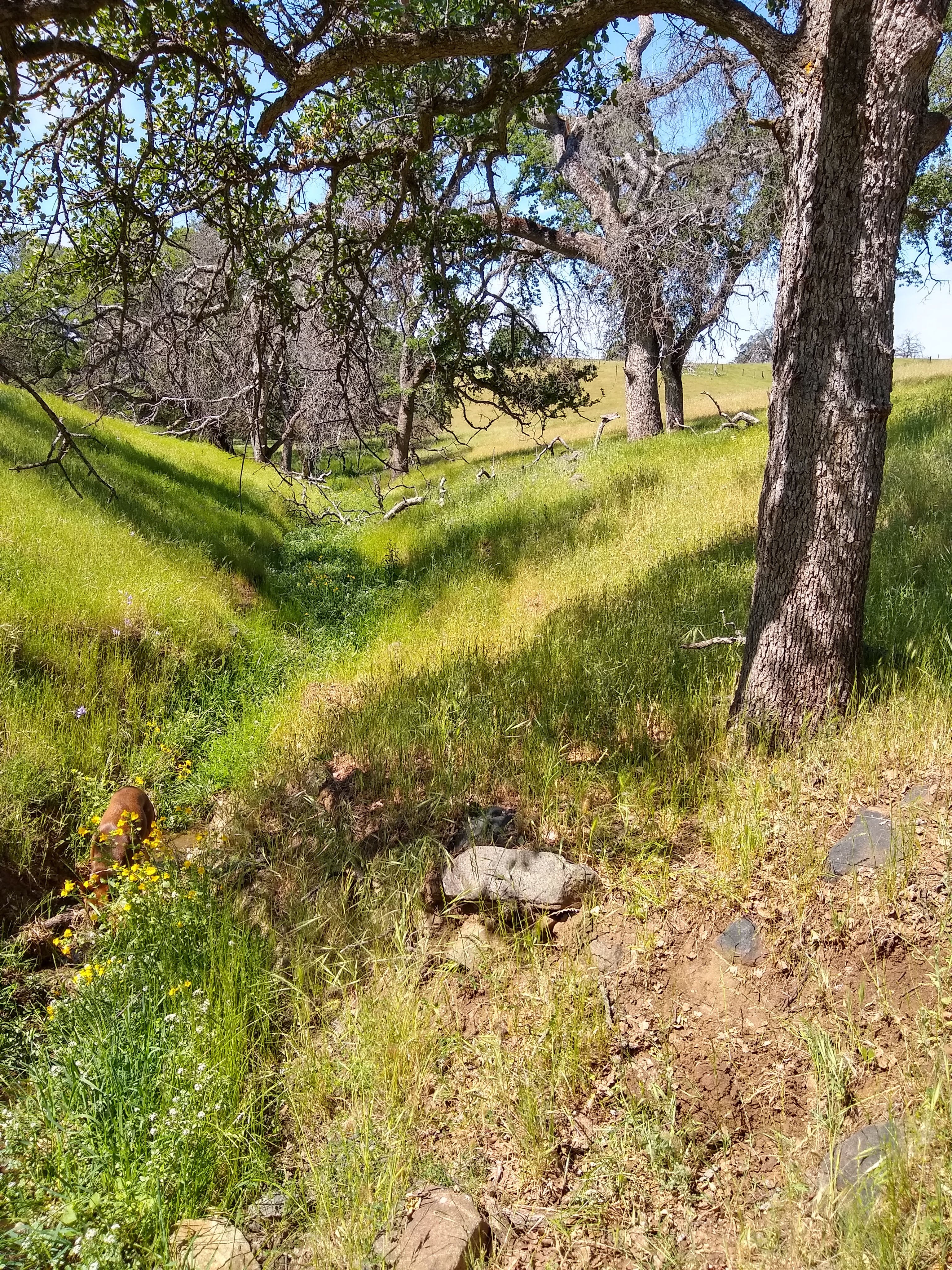
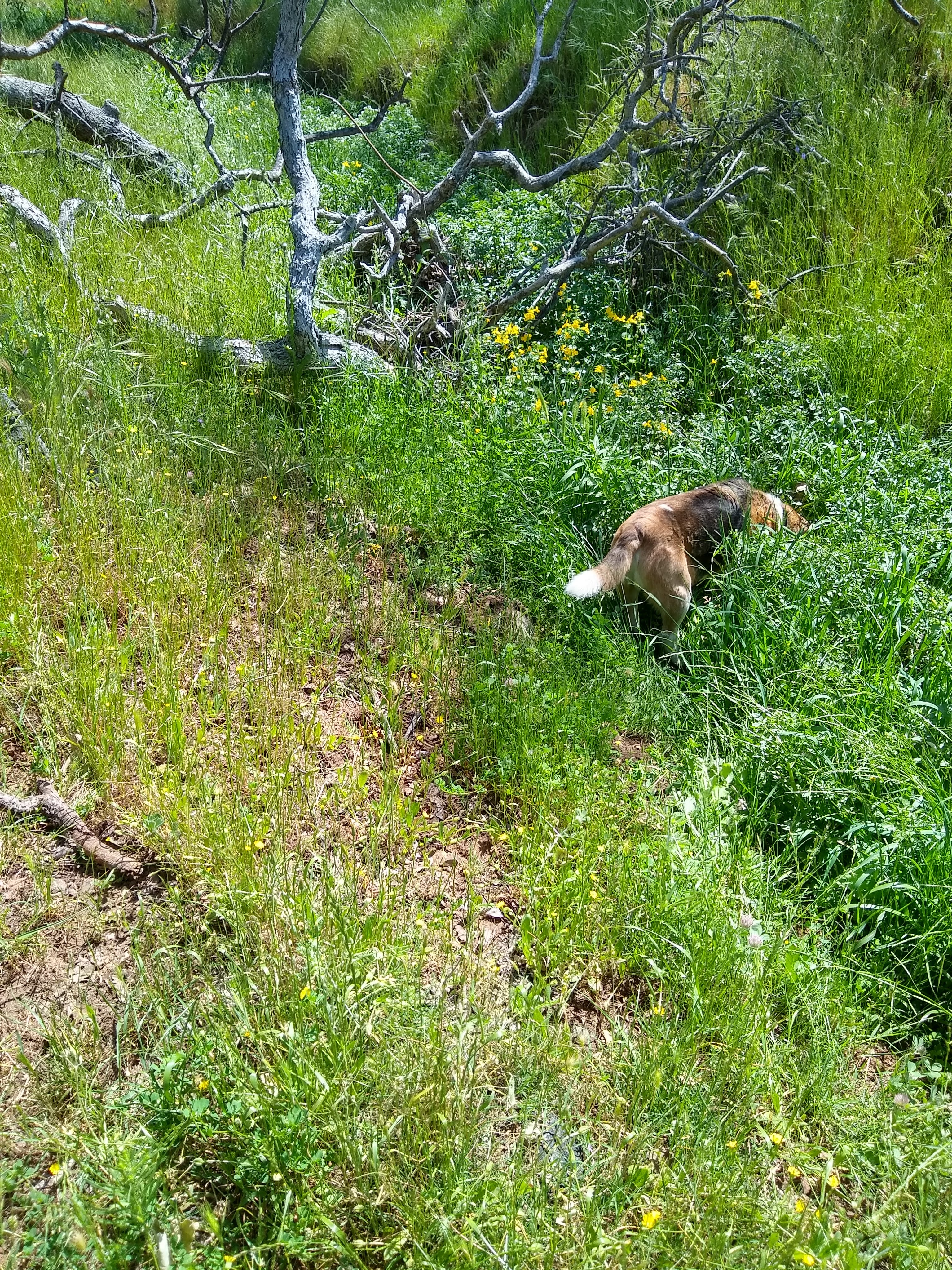
Millie with mud and algae on her face from the Spring Creek

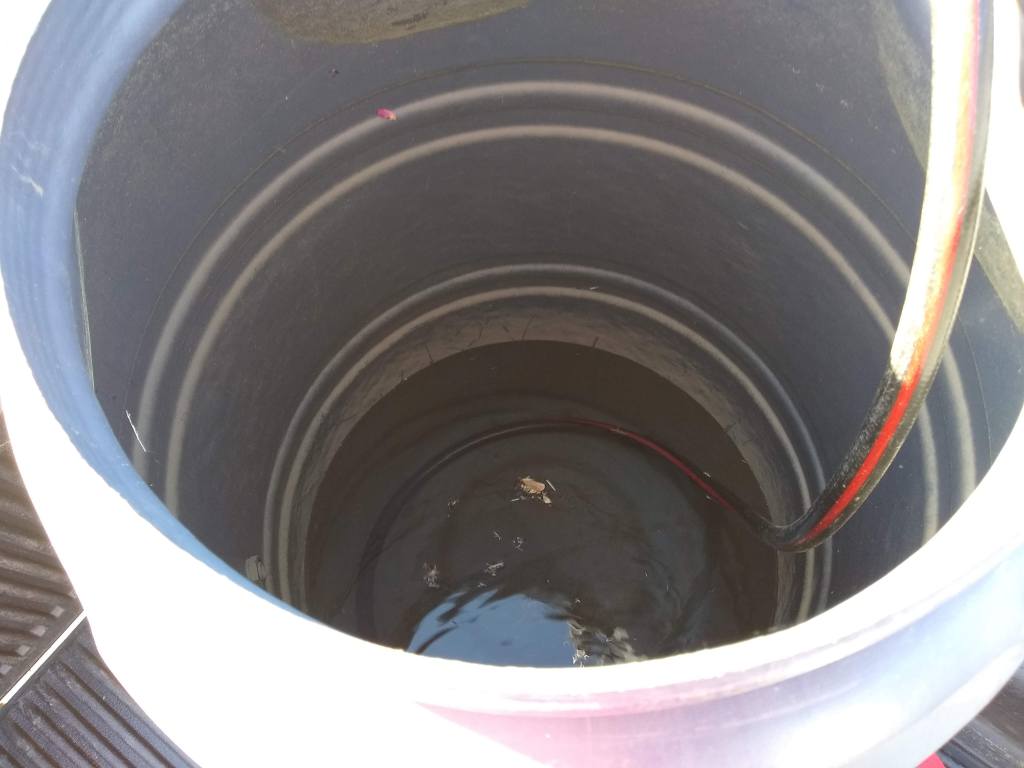
Instead of spending money on a potable water bladder for the truck, I decided to use an old rainwater barrel, for now, strapped into the back of the truck to transport the water.
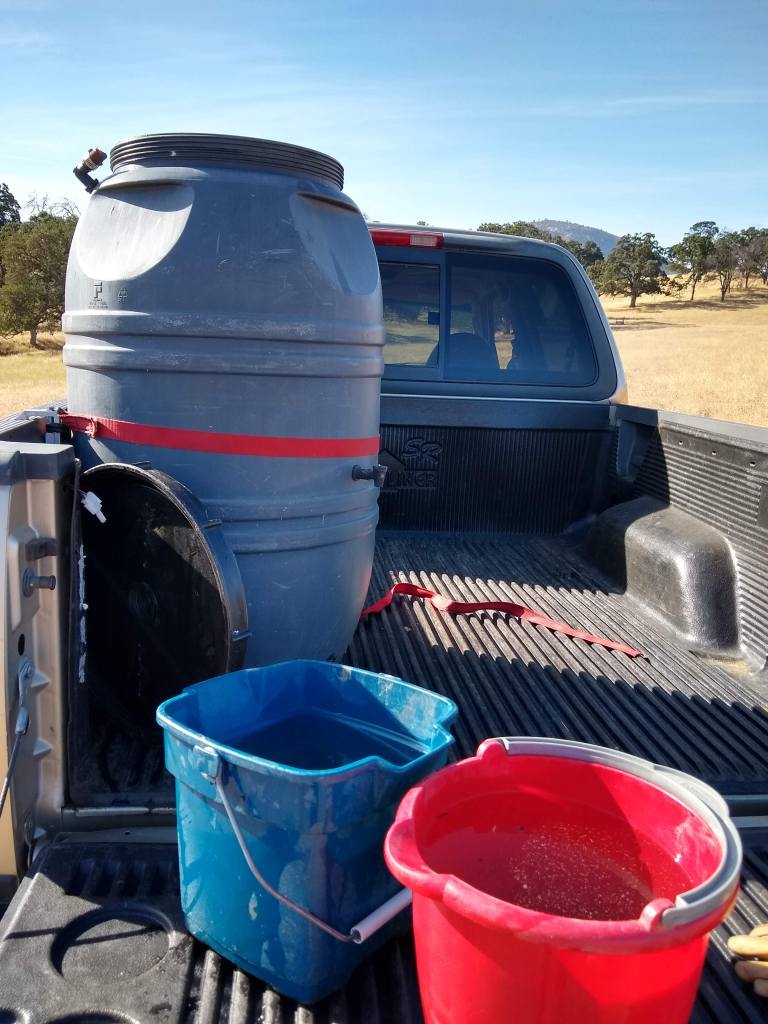
Water barrel in the truck bed with buckets for dipping and hauling

I drove the truck to a position lower than the rainwater tanks. This is important. You need to have head pressure for the hose to convey the water from the tank. It has to go back up from the ground into the truck and barrel. To get the water into the barrel, the water level of the tank needs to be higher than the highest level where the hose will enter the barrel. Since I do not have a pump to force the water with pressure into the barrel, I need to use a gravity fed method of conveyance.
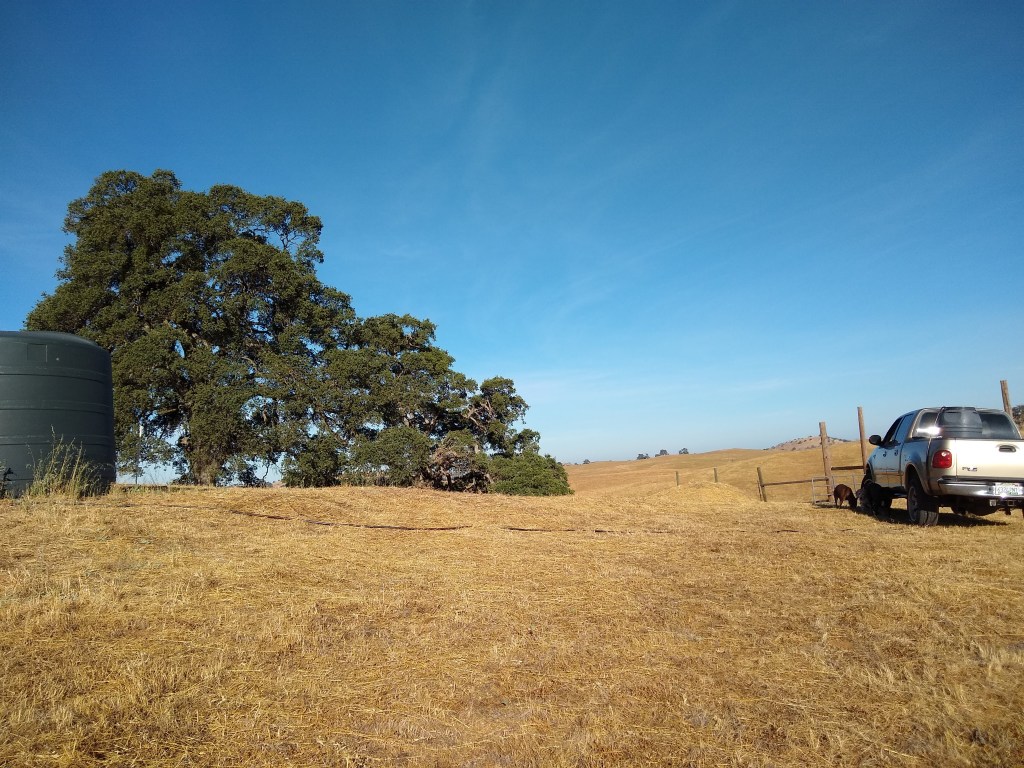
Using the truck to transport the water may not be reliable throughout the summer. Here in the Sierras – really anywhere – we need to be mindful of wildfire danger. Any hot piece of a vehicle can ignite dry grass. Timing, wind, and length of grass all need to be considered when driving the truck off road on the ranch. In this instance, we carefully evaluated the height of the grass, height of rocks in the arroyo where we would need to cross and weather. We’ve had very cool nights recently. I prepped the vehicle the day before, and David (my helper and husband) drove with me early in the morning when the air and soil were still cool, and there was no wind, as close as possible to Site 8. I looked closely for any sign of ignition as David drove. We brought an extra bucket for soaking any potential hot spot. We were also mindful of where existing tracks were. You don’t want to compact the soil and damage the grass. Besides, if there is already a track where the ground is adulterated, use it. It is the same concept as in the National and State Parks when signs and rangers tell you to “stay on the trail”. In doing this, we contain the damage to a limited amount of space, which allows all of us, including our plant and animal relations, to live healthfully.
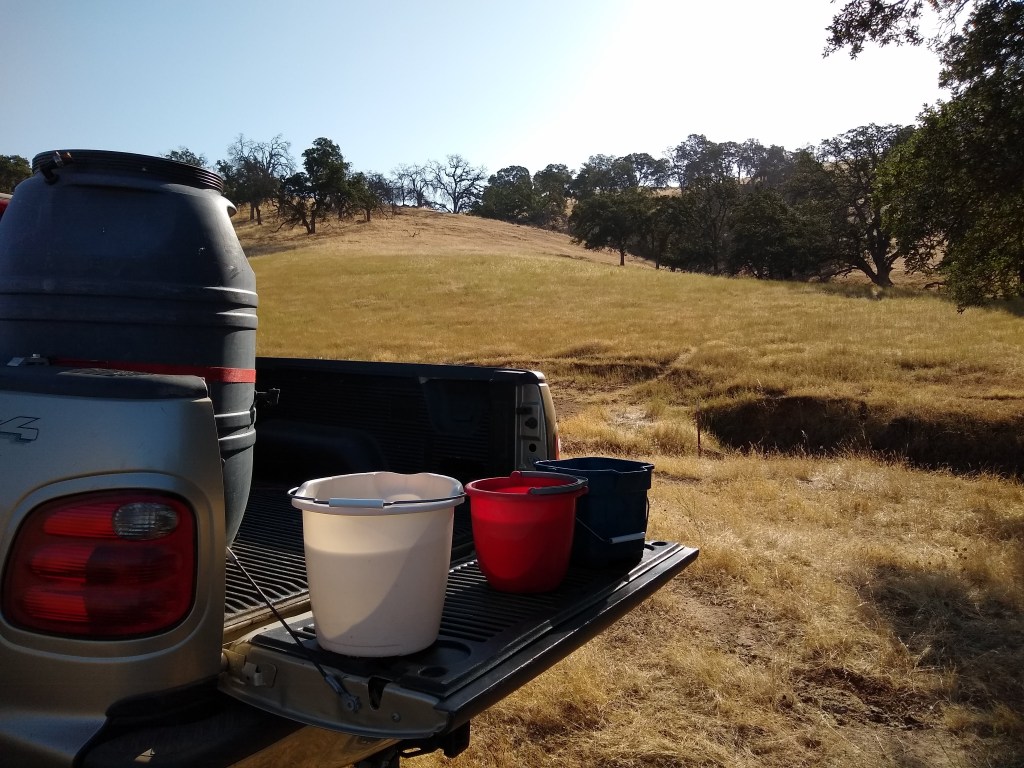
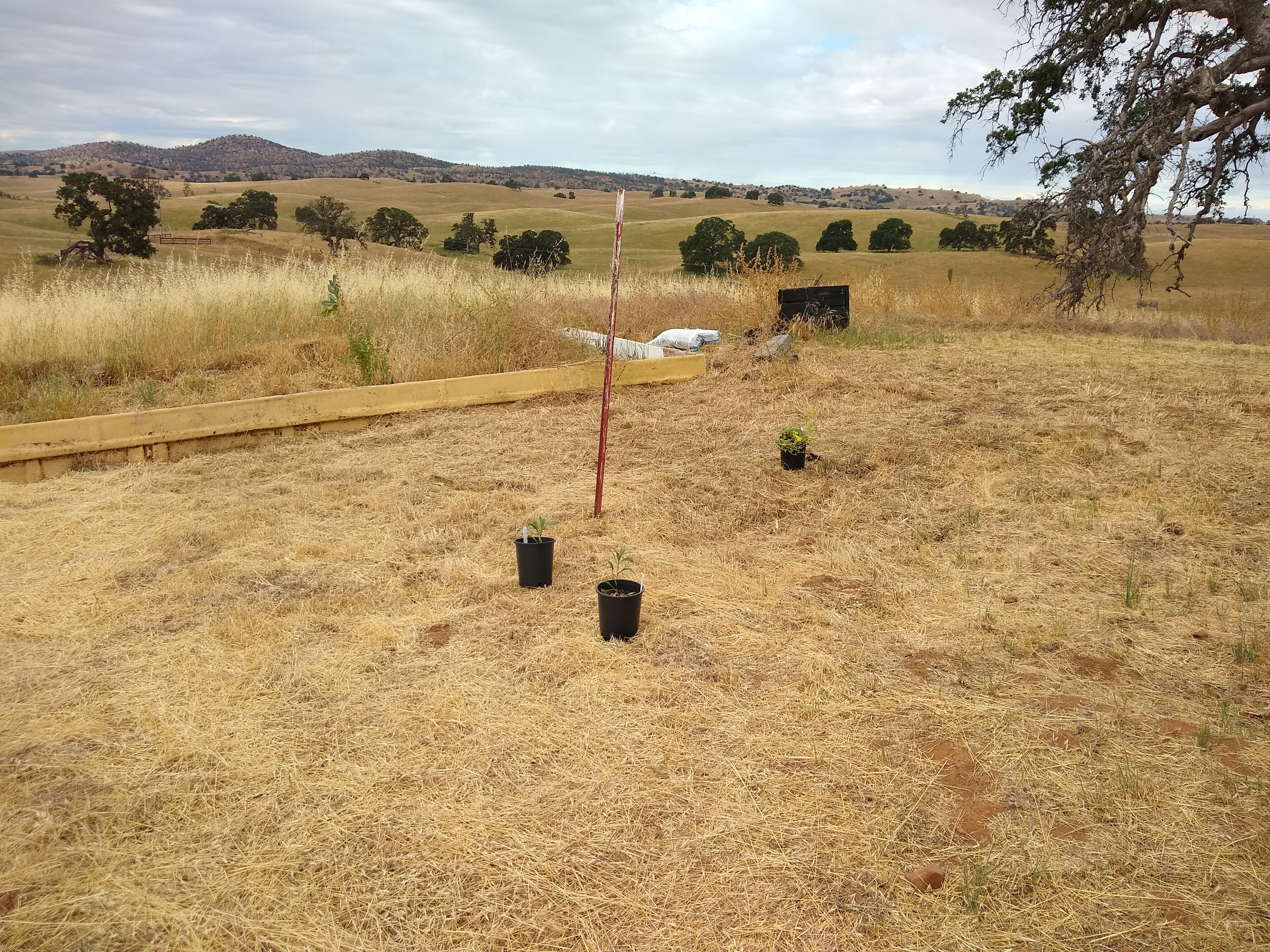
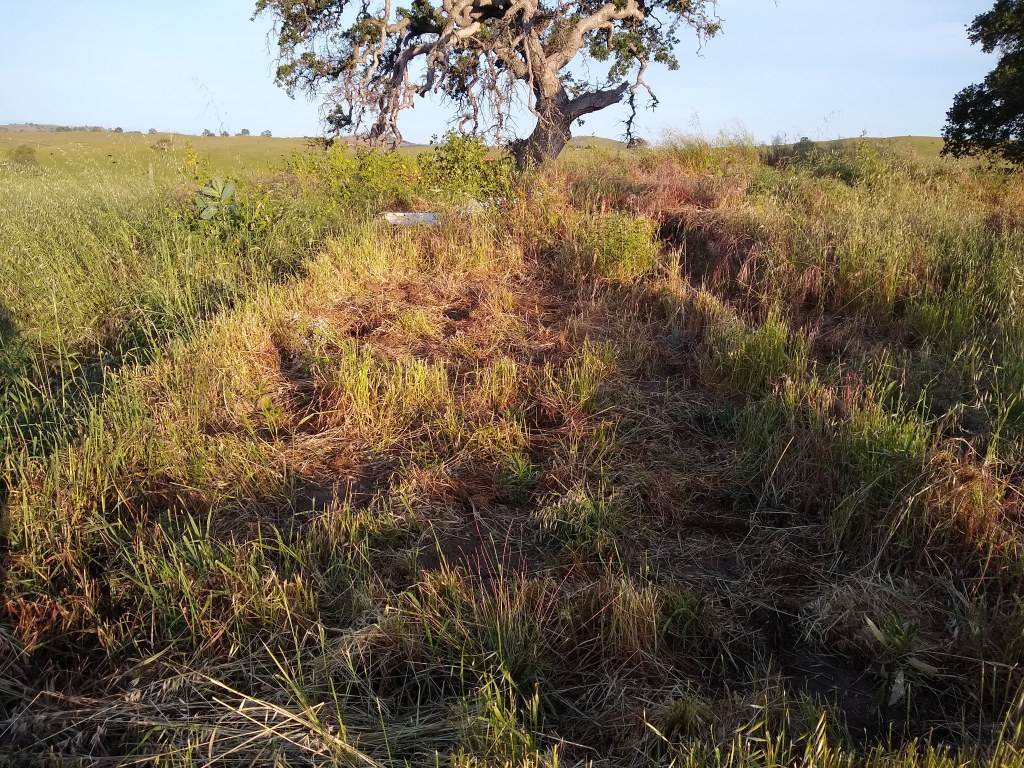
The truck parked along side of the now dry Swale Pond with buckets filled and ready to go.

Once we drove as close as possible, I hopped into the back of the truck, dipped the buckets into the barrel and David and I took the trail to Site 8, then to the deer grass site, with our buckets laden with water. The distance is twice as long than it is from the spring (small pond) to the sites. It took three trips overall to water all the plants. Fun fact: The weight of water is 8.34 pounds (3.785 kilograms). Yes! You guessed it; my upper body strength is increasing! Try crossing the creek with two buckets of water, balancing on the rocks. It is a labor of love, and I am honored to do this work.
Wild Pig Attack!

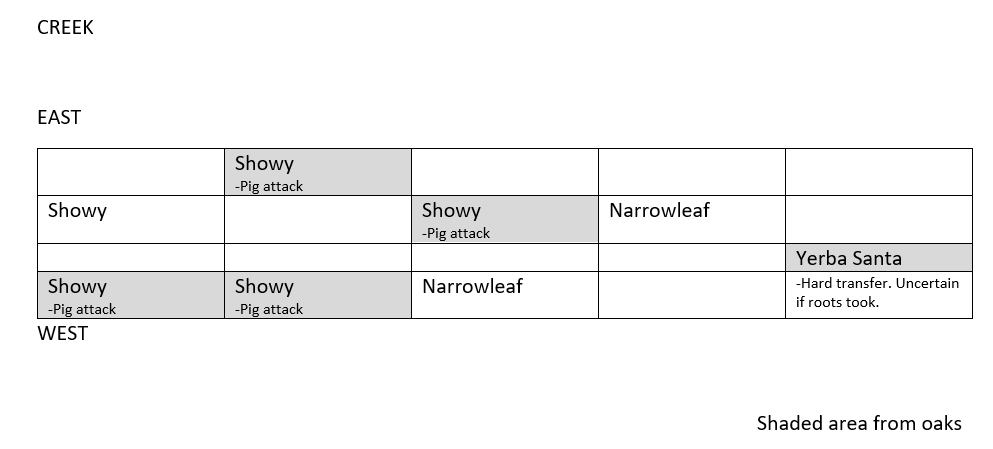
Planting Map for Site 8 – along the Spring Creek

When working with the land, there is never a “normal” day. There is always something new and even exciting to discover. Yesterday, I left the house at 5:30am to water the “babies” at Site 8. We are experiencing a heat wave, and I wanted to get all my watering done before the sun rose. As I approached the small pool along Spring Creek on the way to Site 8, I could smell a strong odor of urine. Then, I saw several wide, grass-trampled areas where large animals would have created a place to rest. My heart did skip a bit. I picked up the pace, and a slight worry set in. I was not concerned about coming face to face with pigs. Although they can be dangerous and weigh in at upwards of 300 lbs, I was more concerned for what they could have done to the plants. I also had my dogs with me, which provided me the latitude to be that courageous.

Upon cresting the edge of the hill where I had left the milkweed peacefully and healthfully growing just 4 days prior, I saw a war zone. Plants dislocated and thrown away from their holes here and there. I could not allow myself to get emotional. I had to evaluate the situation and see what could be done quickly. There is also no photo for me to share with you because I had quickly left the house to get the watering done before the heat began. I did not bring my phone with camera. I do have a planting map (above) that will show you what was disturbed and what was left alone.

Surprisingly, the first thing I noticed was that it was only the Showy milkweed that the pigs disturbed. OK. I made a mental note of that. The narrowleafs suffered no damage, not even evidence of the pigs walking by them. Interesting. Fortunately, of the five Showy milkweeds, at least one was left in the ground – a little shaken and flopped over, but in the ground.

Second, I noted that of the Showy milkweed plants that had been rooted out and tossed away, they ALL were still in tact in their stainless steel baskets. This is another example of their tremendous utility. You could see, however, that their roots had already pushed past the mesh. While this is a great thing, again, showing how effective those baskets are as a tool, it also meant that the roots had been torn out of the ground. As mentioned previously in this blog, milkweeds are very picky plants. They do not seem to transfer well and do not like much disturbance. As quickly as possible, I grabbed each ball of basket, soil and plant, and placed them back into their holes. I clawed at the dirt around each hole to tuck soil around the open areas and then pushed to pack it in tightly. Finally, I gave them a deep watering. I don’t know if they will survive. I will check on them this evening to see how they are doing. Maybe I will allow myself to cry.

Planting plan for the around the house nectar plants

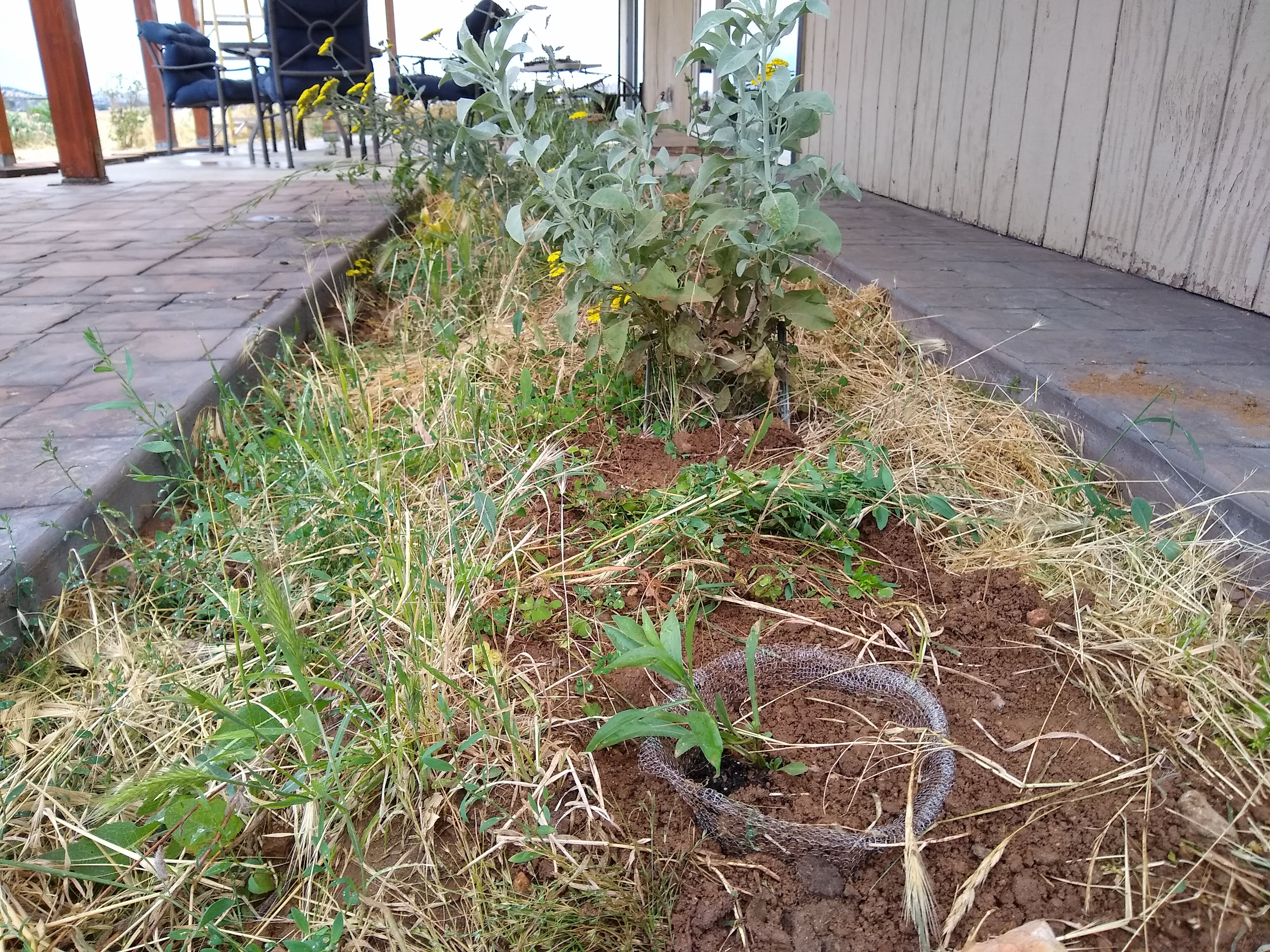
We also lost some nectar plants due to some creature snipping off the tops of the plants. The schematic above (Planting Plan – around the house nectar plants) shows some of the plants disturbed and the reasons. We’ve been fairly lucky close to the house. Only two of the nectar plants have been snipped off. I am desperately hoping that the roots established and plant material will sprout again above soil. Not shown is that I lost four plants in the Site 9 raised bed. One did not transfer well (narrow milkweed). Two were snipped off by some creature (showy milkweed and a woolly pod), and a volunteer sunflower was pulled out completely. I found its body with roots still attached dropped on the east side of the house. I think the culprit is a skunk. There was a faint smell outside the other morning when I discovered another plant missing. I am not sure what to do about this. If it were any other animal, I would leave my dogs out or I would sleep outside for a few nights. But…with a skunk…as much as I love my plant friends…I don’t think so! There are too many plants now to cover them all with mesh, and I am not sure how that would help if the animal could paw or nose its way though it. I will think through some more solutions with Ron and others.

What I am learning is the importance of planting as many plants as possible. There is so much that can happen, so many things that can go wrong. It gives more plants a chance to survive and therefore provide a home and food to the monarchs.

Learning Lessons. Making Progress.

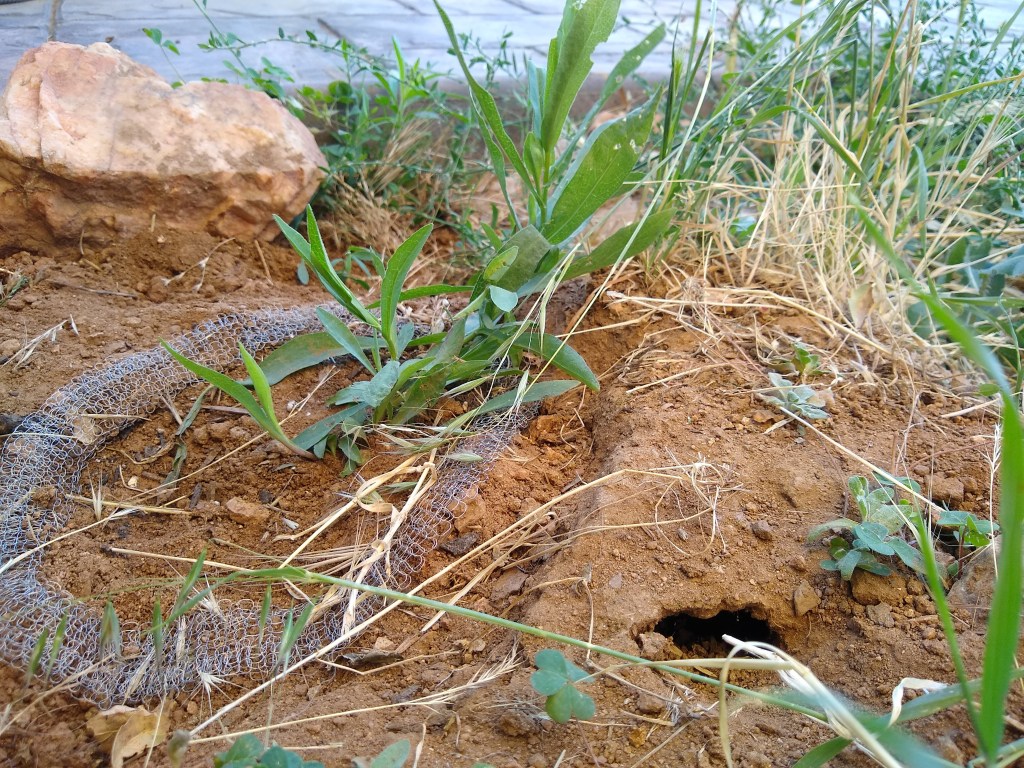
Aster protected by stainless steel mesh

The hot summer months will be a time for maintenance and capturing observational data. I do still have to put in the electric fence before the cattle are back – but I am dragging my feet a bit on that.

Some learnings:

  1. The stainless steel mesh bags work for subterranean creatures. The photo above shows an aster plant being protected from a burrowing creature really well.
  2. Some creature is still snipping off the tops of some plants. We lost a showy milkweed in the planter box and the top of the sulfur buckwheat. There is a chance that the roots established. Maybe it will come back like the milkweed in the test plots.
  3. The cow pots did not work to grow some vegetables and the marigolds. I still need to do more research on this. Perhaps the cow poop is too hot for the roots of the fledgling plants.
Marigold seedlings beginning to look yellowed and sad

I will likely get plugs from a reputable nursery company for next year. I’ve had good luck with those in the past for starting veggies. We will see how it works on native plants.

I spent the morning re-potting the marigolds. I also started the sunflower seed heads I harvested last year. This should be about the time they need to start since those bushes began to flower in September/October.

Marigolds re-potted

The Babies are Doing Fine

Site 8 Milkweeds and Yerba Santa on Spring Creek

Mother Nature has been kind to me. When I’ve had to plant or water, she has kept the temperatures cool. Last week, I planted my first site along the Spring Creek. This makes two of ten sites completed for my CA RCD grant. I am making adjustments in each site to see if one thing works better than another. Site 8 is located near a creek with some shade for a portion of the day. The soils stay moist for longer. Contrast this to Site 10, near the original South Plot, which gets sun nearly all day and is located on the top of a hill. I will be monitoring which species perform the best in those conditions.

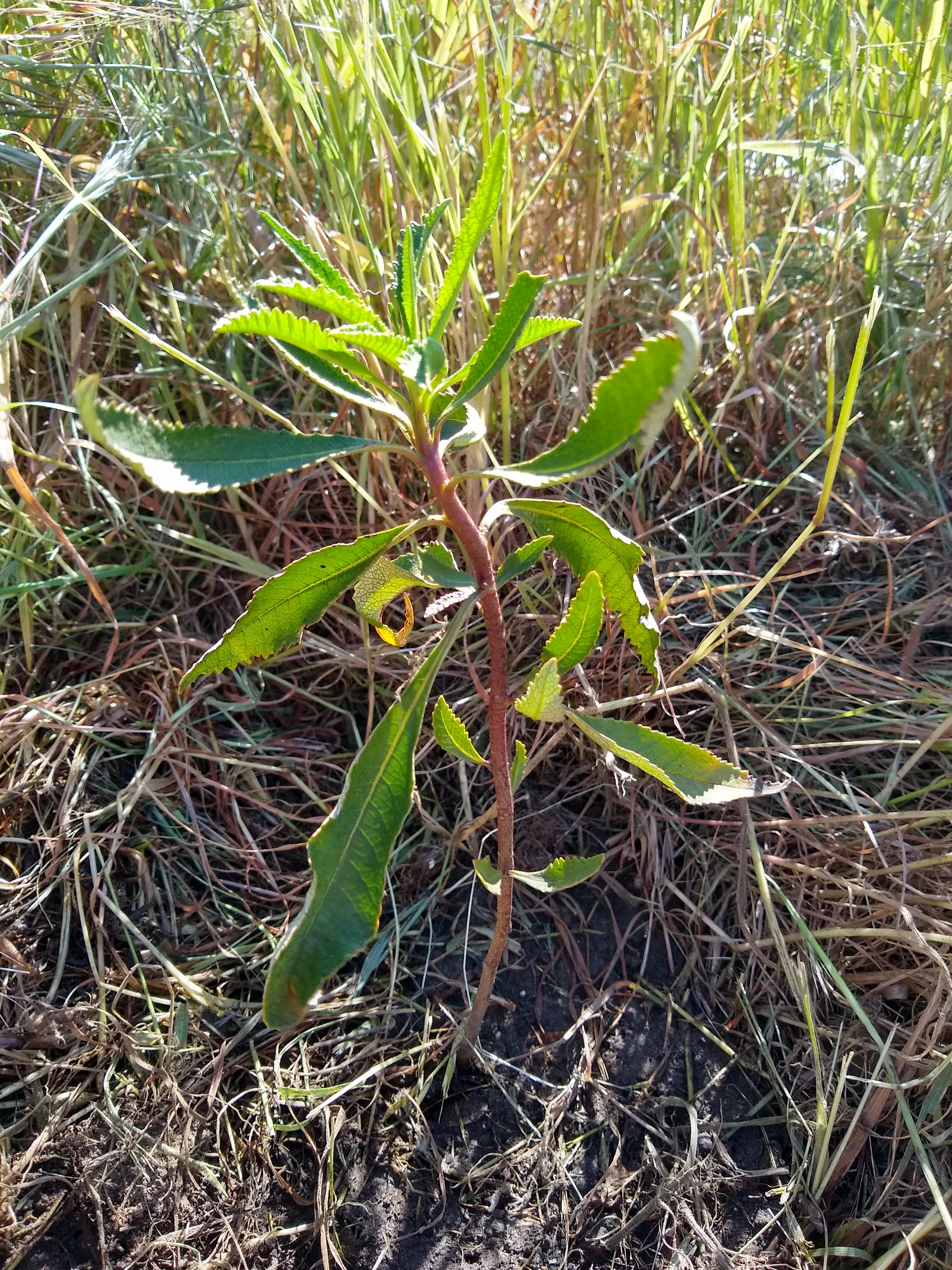
A few days after planting Site 8, I hiked over to check on the plants. All were well except the yerba santa. She was very healthy in the pot, but may have not liked the transfer or dried out too soon in the four day heat wave we had. I found her still firm but leaves limp.

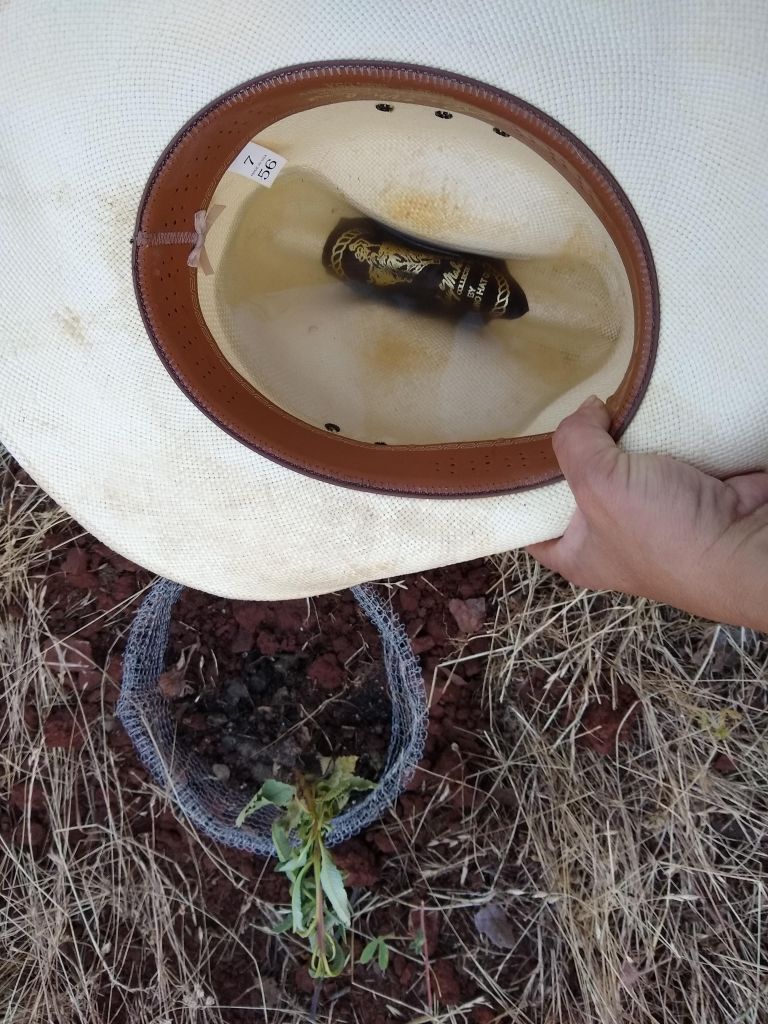
Heather watering the yerba santa in Site 8 with her hat

I did not bring a bucket with me for watering. Fortunately, I had my tightly woven work hat on. It was able to hold water that I pulled from the creek. There is a small trickle of water still flowing, and when placed underneath the waterfall, it can fill a vessel without too much silt or debris.

Yesterday was one week since planting. This meant it was watering day for Site 8. I have staggered the sites so I am not watering too long into the morning on any given day. Site 10, the South and North Plots and the nectar plants are all on Saturdays. Site 8 and the deer grass hillside are on Sundays. The days will become hotter in a very short time, and it is best to get all the watering done in the morning before it gets too hot.

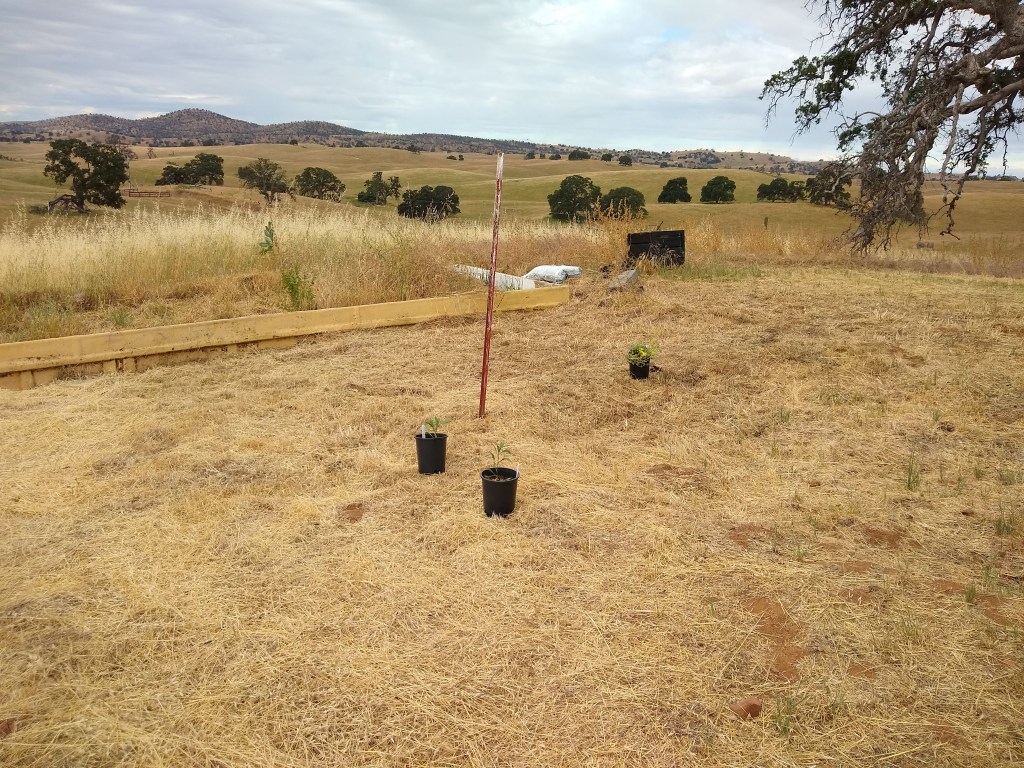
In my plan, I anticipated availability of water from my small pond and the spring flow in the creek. We got a later start on planting, and then had some scheduling challenges with the cattle rotation, so the pond will not be of as much use to us this year. Fortunately, the Spring Creek is still flowing. It is not moving a great deal of water, but it is enough to noticeably see a flow and keep puddles clear (vs algae filled).

I bring two 1 gallon buckets and fill them at least half way. I haul them a little ways to the planting location. It takes some time and effort. The monarchs are worth it, AND I get exercise. For the last three years, the Spring Creek flowed all year. If this continues, we should be able to pull water from the creek for the plantings. I do have a back up plan if the water gets too low. I will fill vessels with rain water from the tanks and drive them as close to the site as possible, then haul them to the site. We will only need to do this through the summer. In Fall, the plants will eventually lose their leaves and go dormant for the rest of the year into winter.

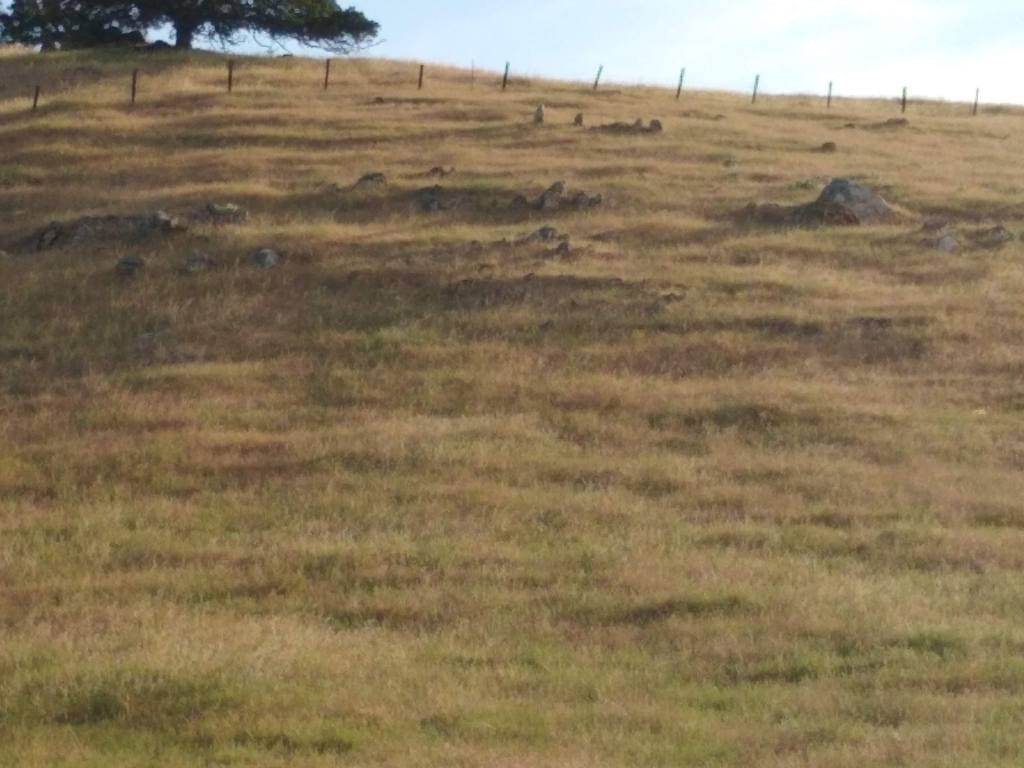
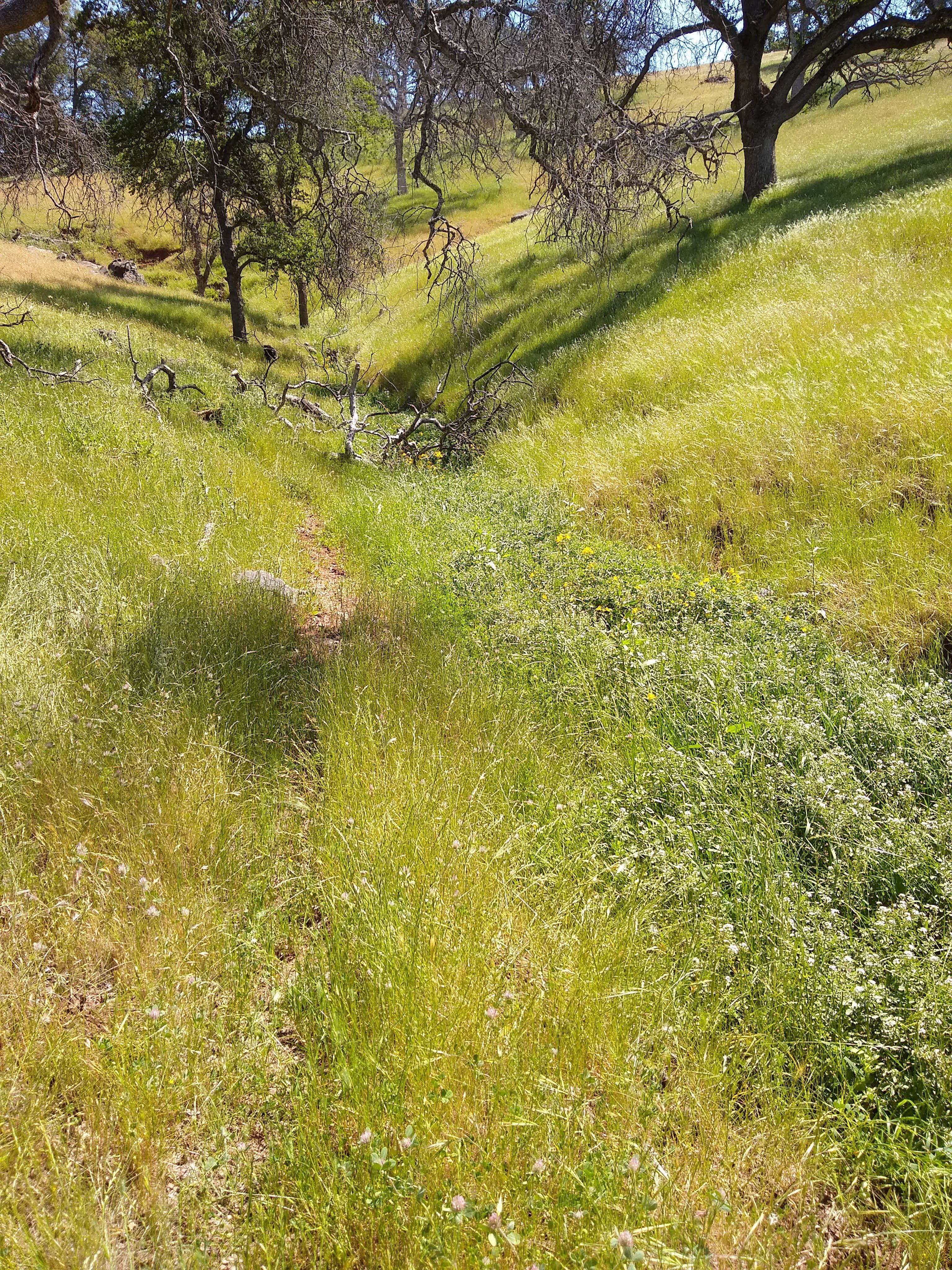
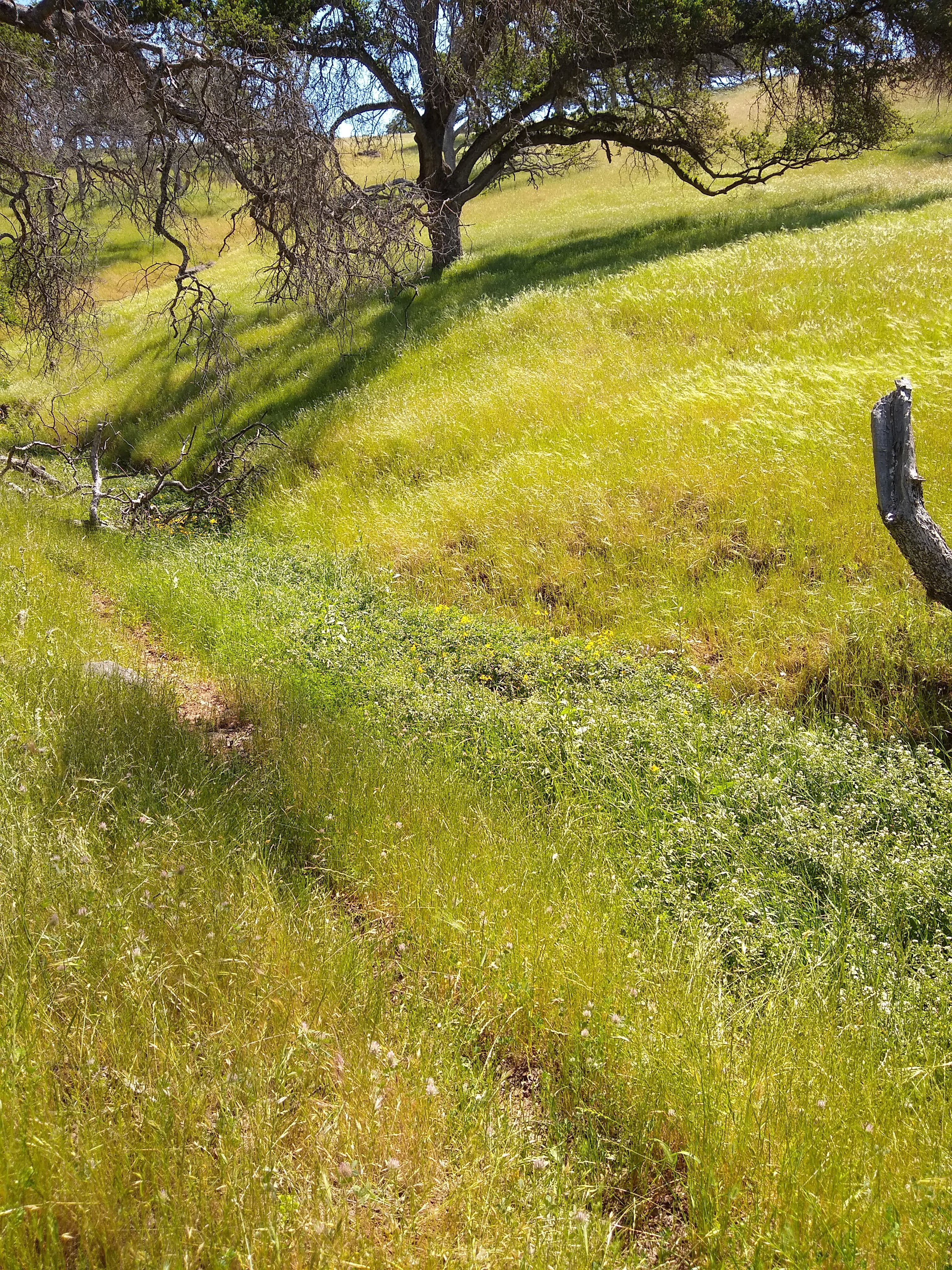
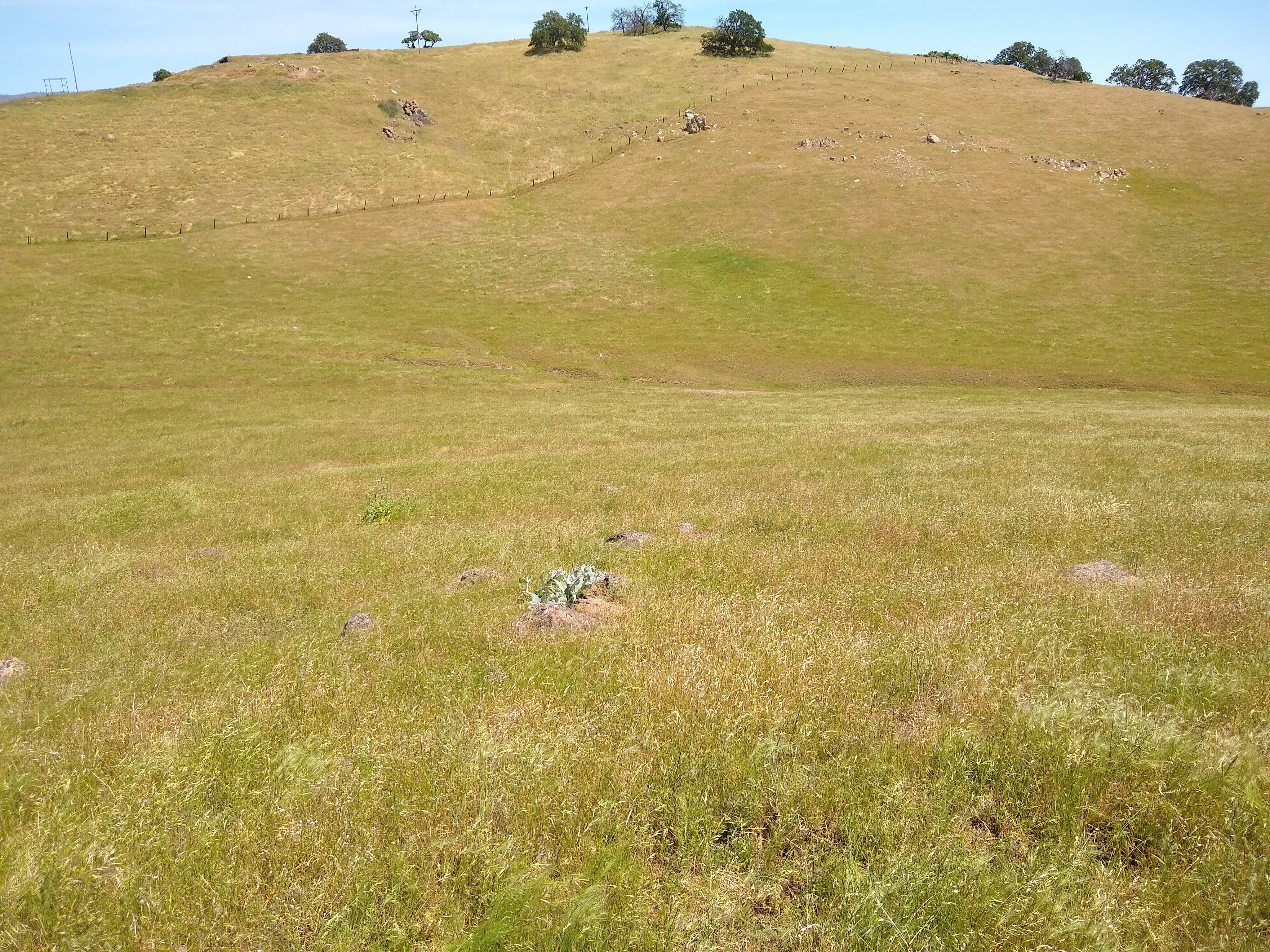
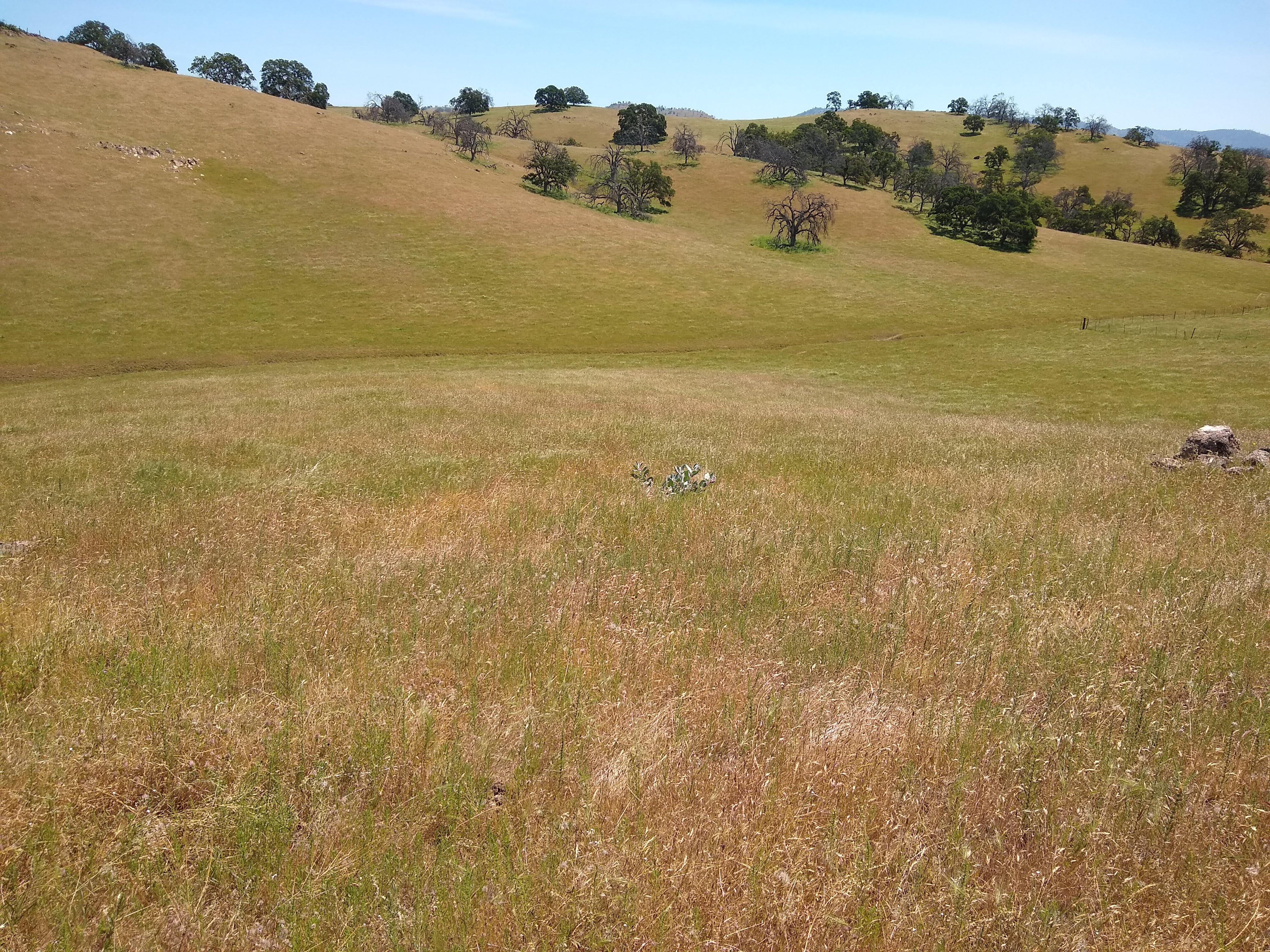
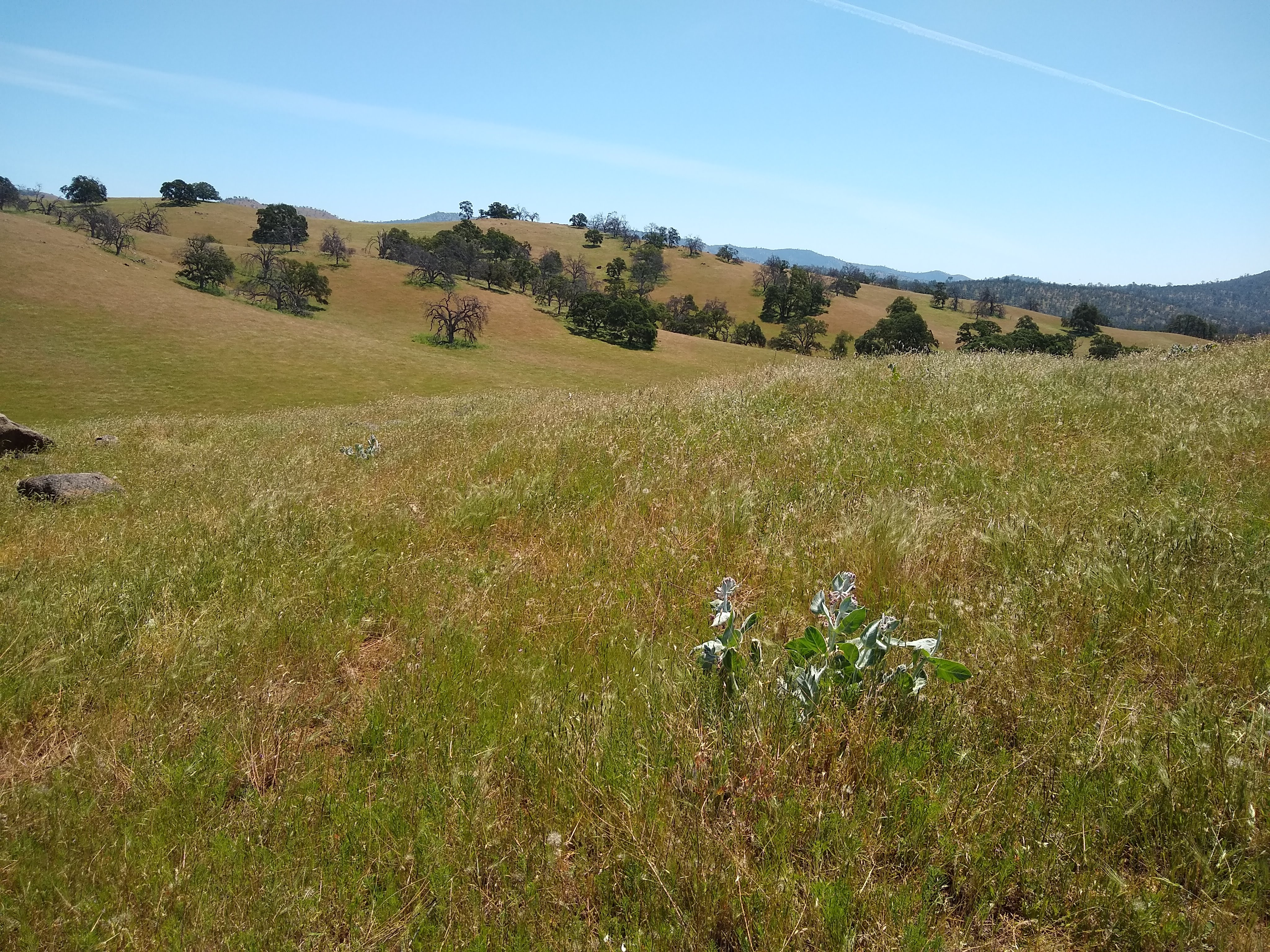
Deer grass on the eroded side of Spring Creek

I was pleasantly surprised to see that the deer grass was still doing well. That hillside has some tough dirt, and I am hoping that we gave the plants enough room for their roots to develop and get a stronghold on the hillside. I watered them as well on Sunday.

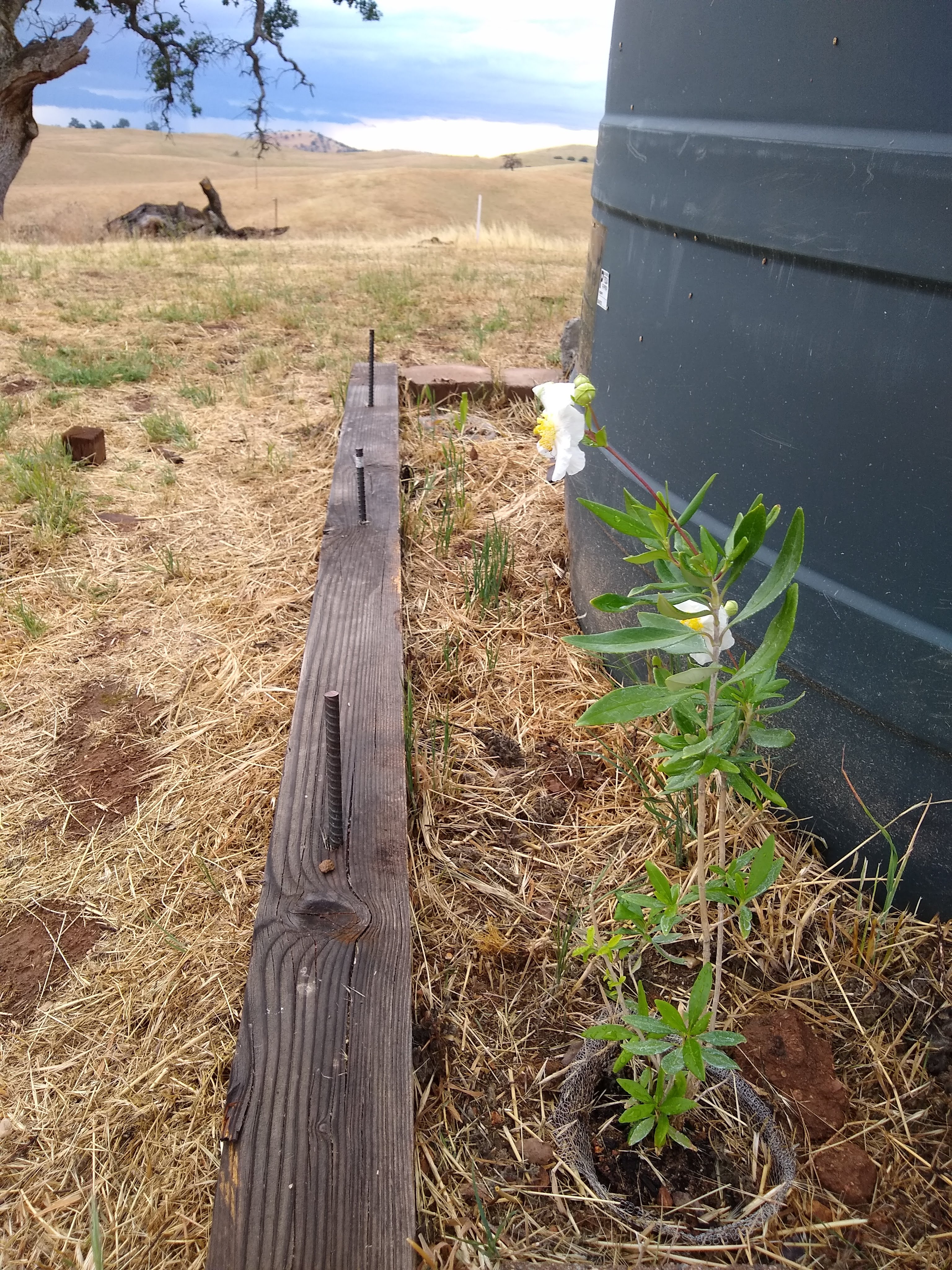
Although I did not document it in this blog two weeks ago, I did plant the second delivery of nectar plants. I planted them near the South Plot and on the east side of my house. In doing so, I am providing the butterflies multiple options near and further away from the milkweed. I will monitor to see if there is a difference in preference. All these plants are doing well two weeks out from planting. There is some creature that snipped a piece of the sulphur buckwheat off, then just left it two feet away. The large branch of the romneya died off after transplanting, but it has significant new growth.

If you are interested, below is the list of nectar plants I planted in the second delivery with numbers and descriptions by Ron Allen (my partnering UC Master Gardener and co-owner of Mariposa Native Plants).

(3) California aster, (2) Coyote mint, (3) White (native) yarrow, (1) Hairy evening primrose (early bloomer, strong plant, big flowers, good for nectar), (1) Carpenteria (beautiful, evergreen, nectar, Fresno foothills), (1) Romneya (beautiful, deciduous, nectar, SoCal), (1) Sulphur buckwheat (native, beautiful yellow flowers, attracts nectaring insects, low-water, does not spread so much)

I feel very fortunate to have my hands in the earth, in a beautiful, quiet place – being able to walk in safety with my fur-babies running around. These are troubled times in the world. Hate is a contagion. It is worse than covid-19. To be able to murder someone simply because they have more melanin in their skin, is a sign of illness and self-hatred. To reduce as non-human people because they don’t think like you, is an illness and self-hatred. What does hate get us? Insecurity. Violence. Disease. When will we realize that we are all one people, that all living things have worth? Instead of building hate, build a garden. Instead of building walls between one another, build a habitat. Allow your energy to be used to facilitate life. I guarantee you, you will feel better.

Moved On To Spring Creek

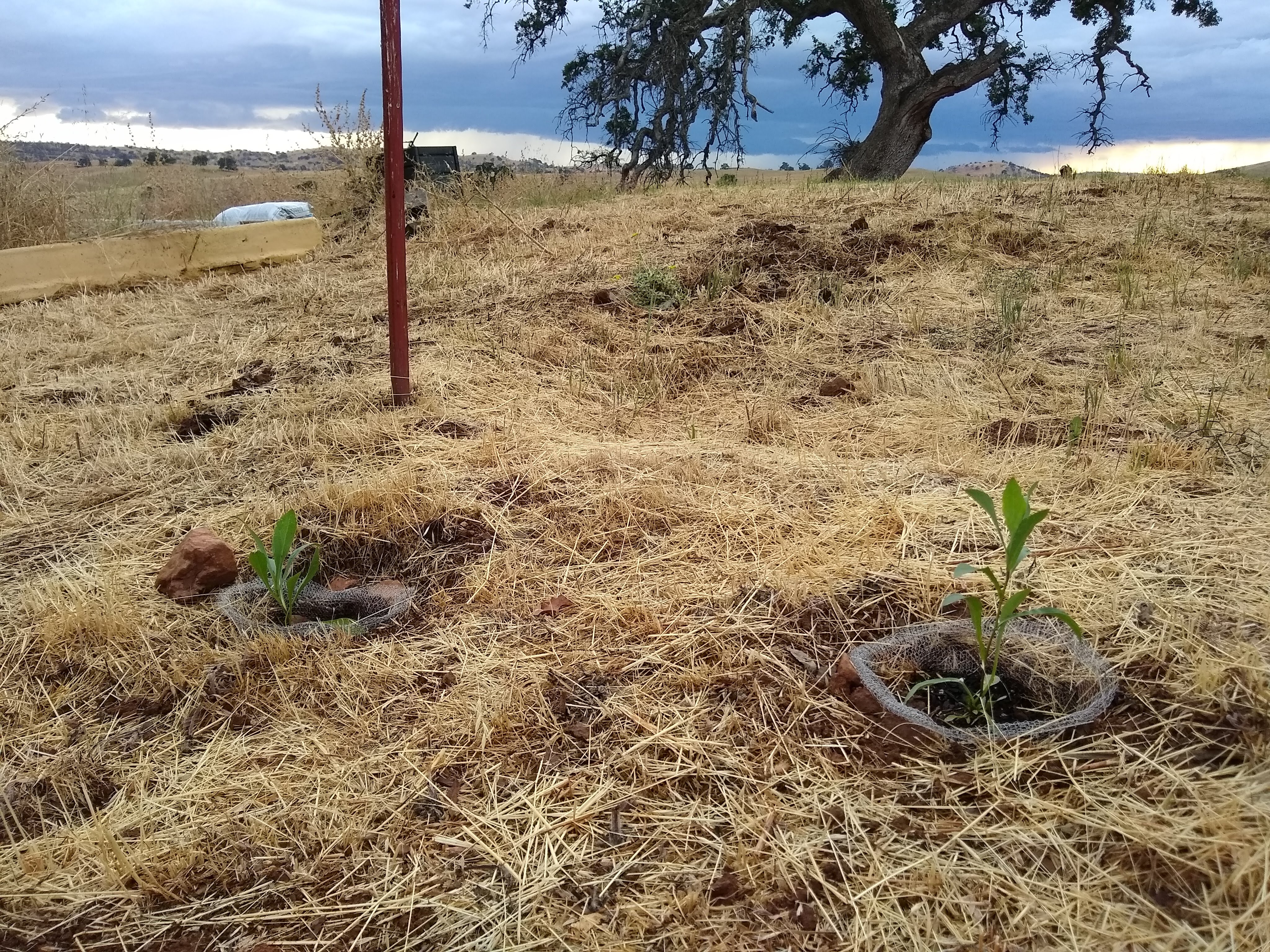
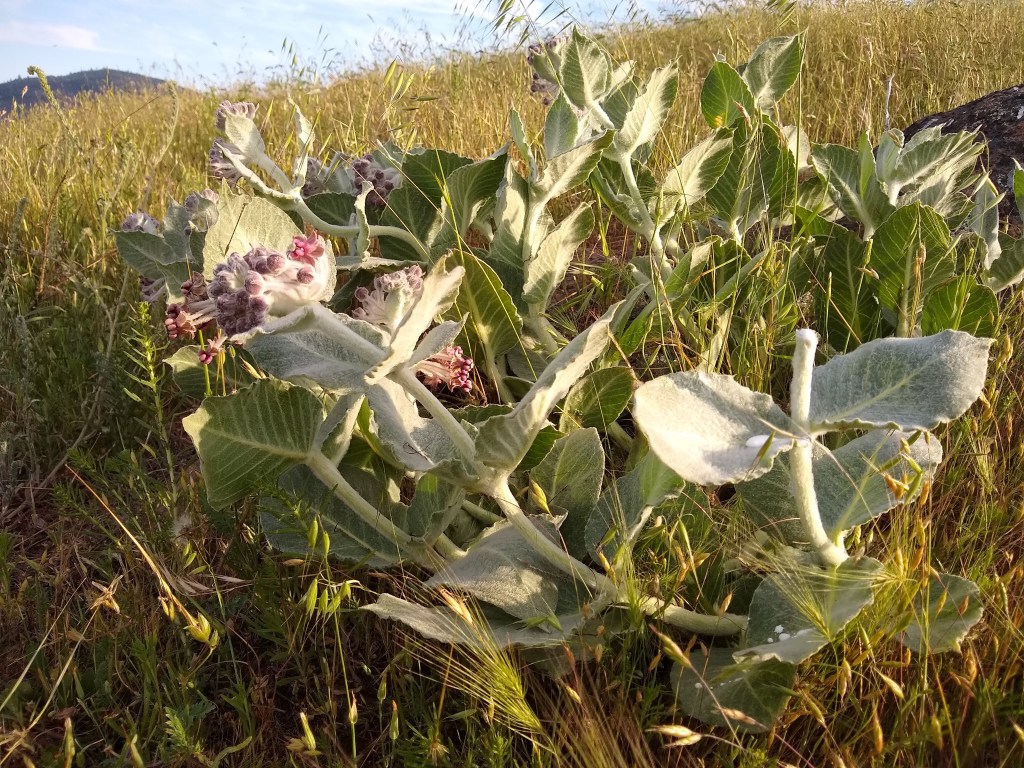
Site #8 is complete with two narrowleafs, five showy milkweeds and one yerba santa

Yesterday, May 24th, was a big day. We finally ventured away from the conveniently located sites near the house to the more distant Spring Creek site #8. We felt comfortable planting this site in May, before the summer, because the site is near water. Anything we plant before the summer, will need to be watered at least once per week throughout the dry months. Without a drip system, this will mean significant labor to haul water to each plant. The small spring on the creek has been running continuously for the last three years. With the death of a number of oaks along the creek and nearby, we anticipate we will have some above surface moisture throughout the year this year as well.

In addition to Site #8, we also planted Site #7 with deer grass for embankment support. We will add milkweed and nectar plants this Fall or next Spring. The digging is already extremely difficult, even near the creeks. The soil drys out quickly here as Spring transitions to Summer.

Site #7 deer grass plantings on the embankment
Site #7 close up of deer grass plantings

We will be working on installing an electric fence to keep the cattle out of this area once they return. The fence will be intermittently on. This will provide the opportunity for the plants to establish, move the cattle trail further away from the creek to prevent erosion and soil intrusion into the waterway, and give any incubating monarch larva the time they need to mature into butterflies. The grazing will be adapted to the breeding timeline. Once breeding is over, the fence will be turned off and opened so cattle can graze the area. Using this practice, we are also hoping to increase the chances for the native milkweeds and nectar plants to compete with the non-native grasses that grow at a much faster rate.

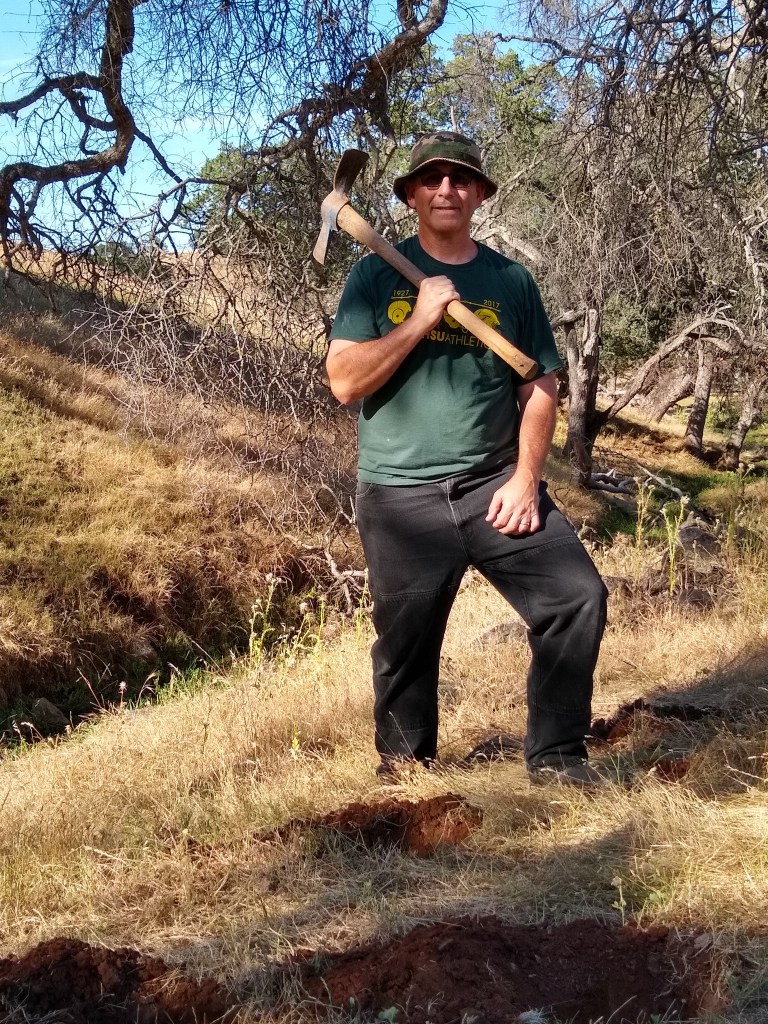
My generous husband, David Raboy, who dug most of the holes for me and assisted me with planting and watering for this site.
David tries a technique to get water from the creek, but it is too slow going. The best practice is to find a deep spot and dip the bucket in. After planting, the plants need at least 1/2 gallon of water to get moisture deep into their root structure.

We made our first Facebook live video to acquaint people with this project and let them know what they can do to help the monarchs. The video is fairly bad technically; we kept losing the internet signal. However, if you stick with it, you will see the steps to successful planting and be treated to gorgeous bird songs. Here is the link to the Facebook video. We will do a better job next time.

We are done with planting milkweeds for the year. Although we will likely plant some additional nectar plants, most of the summer will be monitoring the plantings, watering and planning for the Fall.

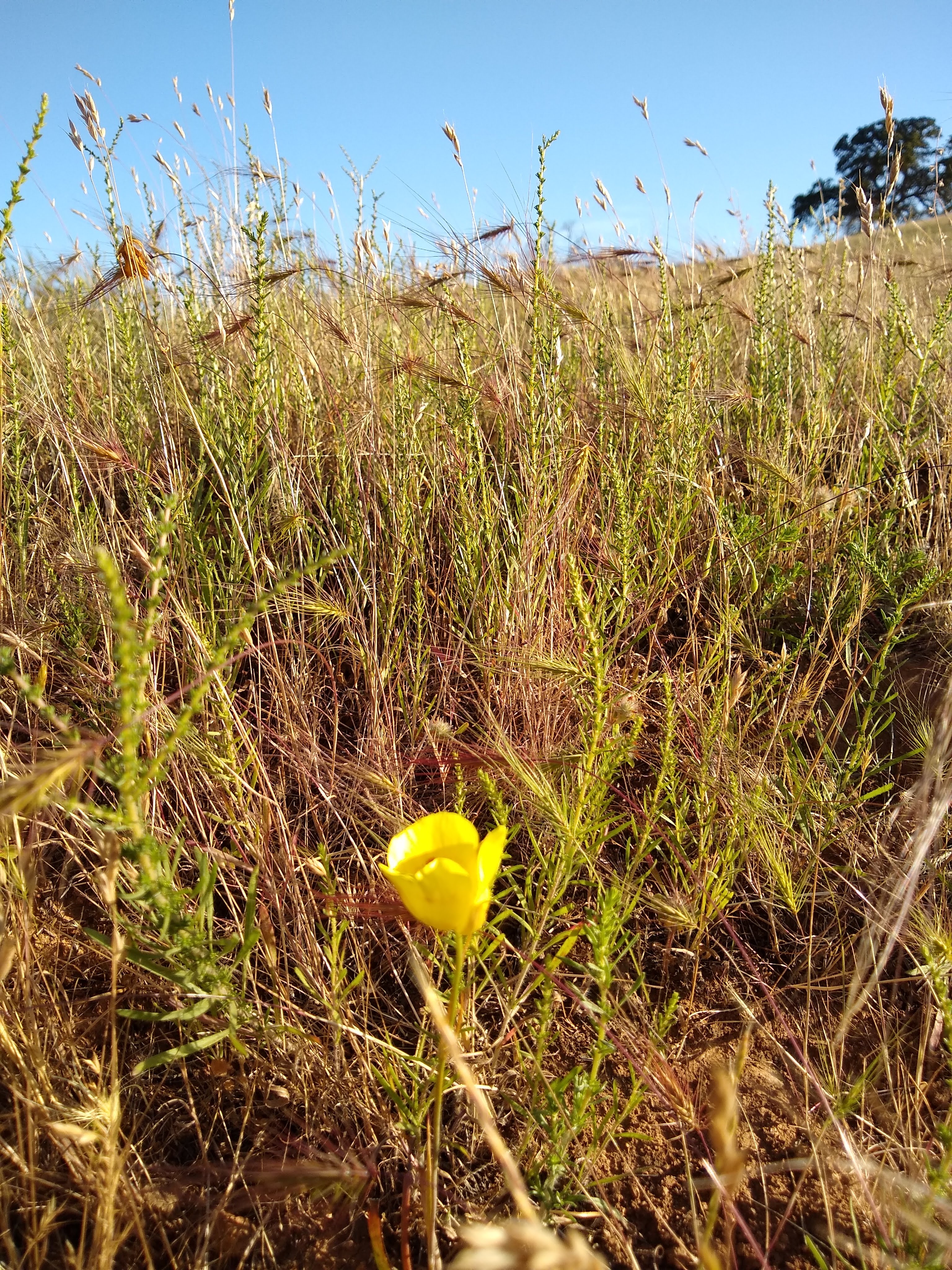
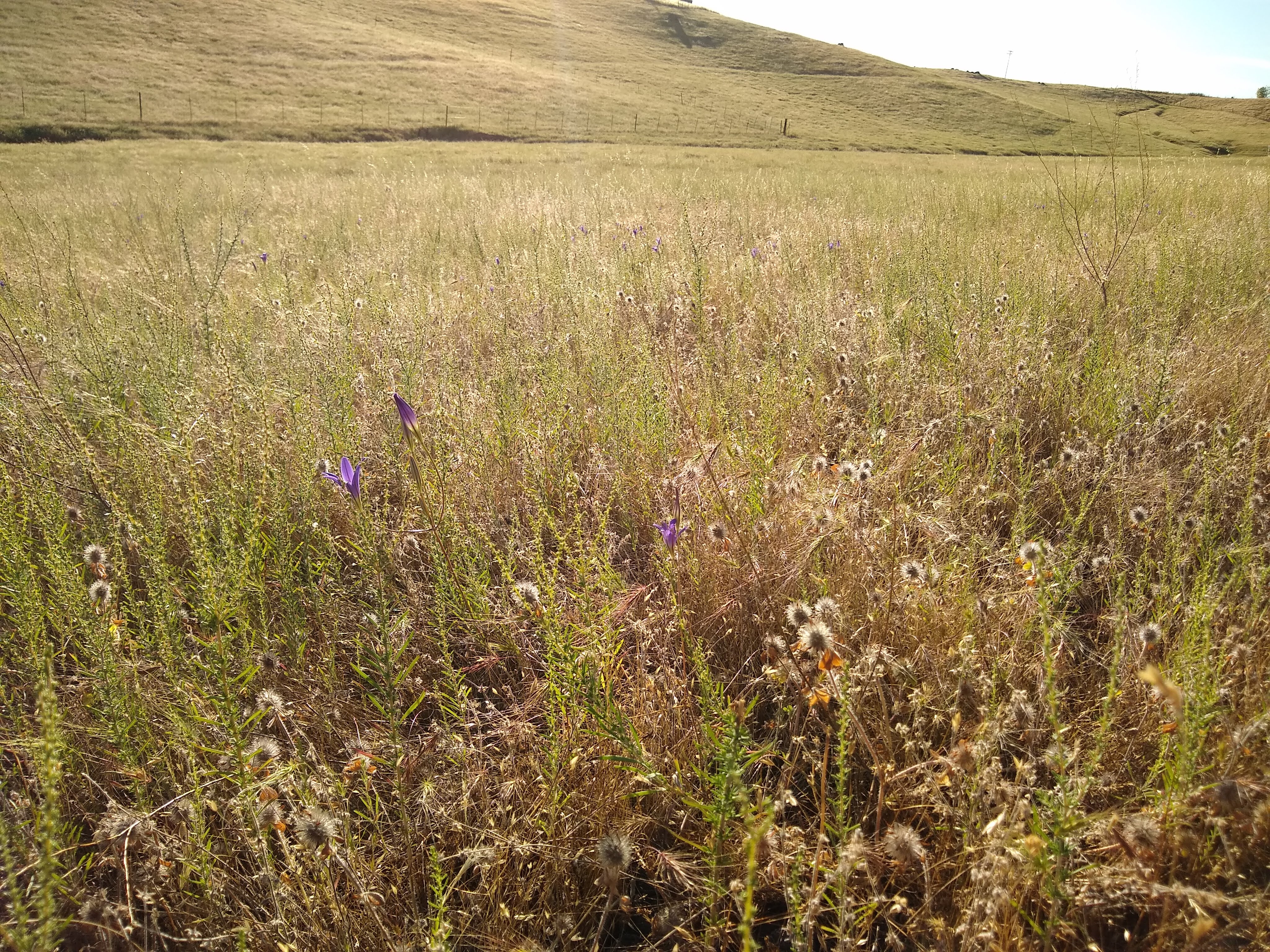
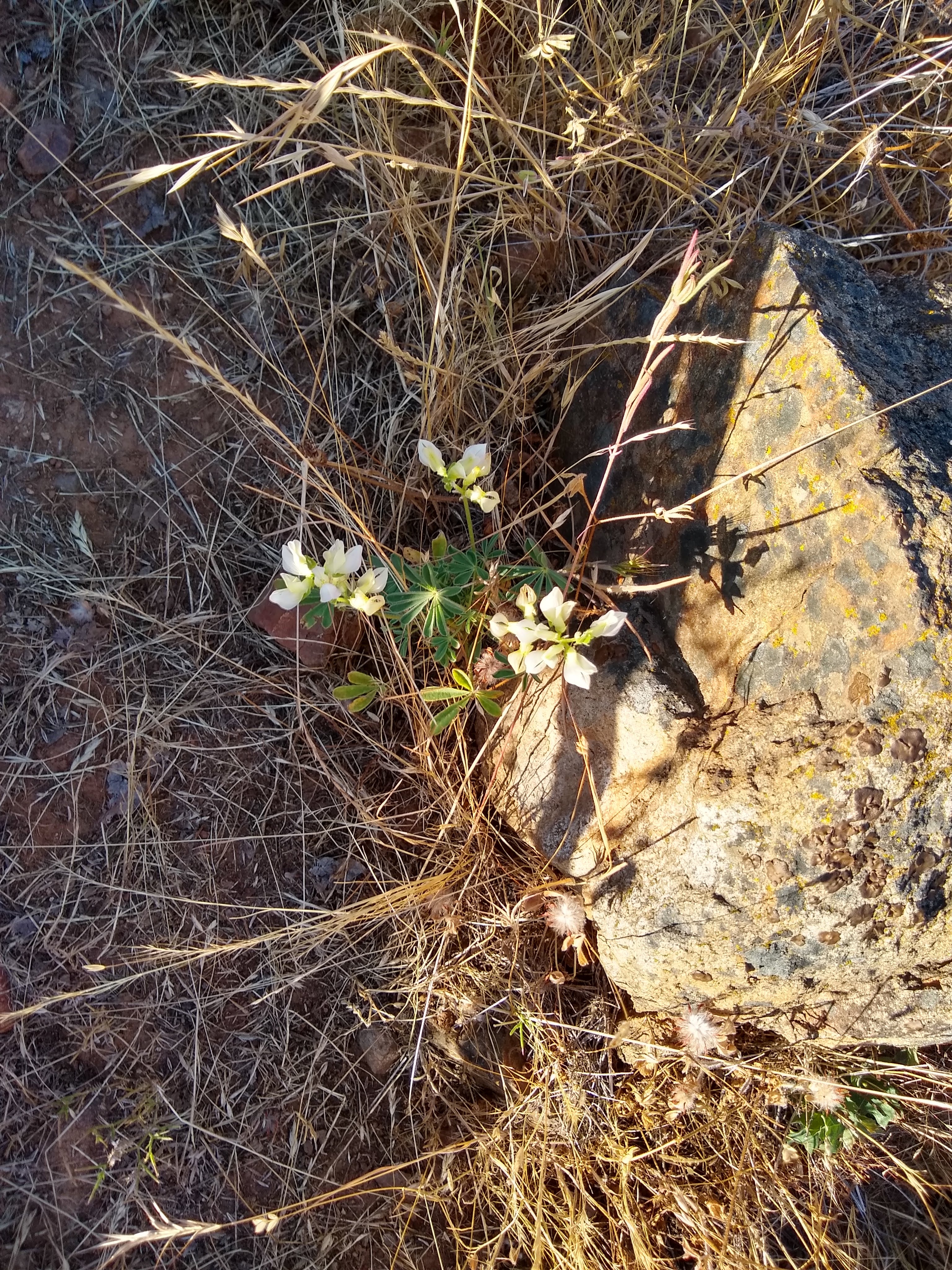
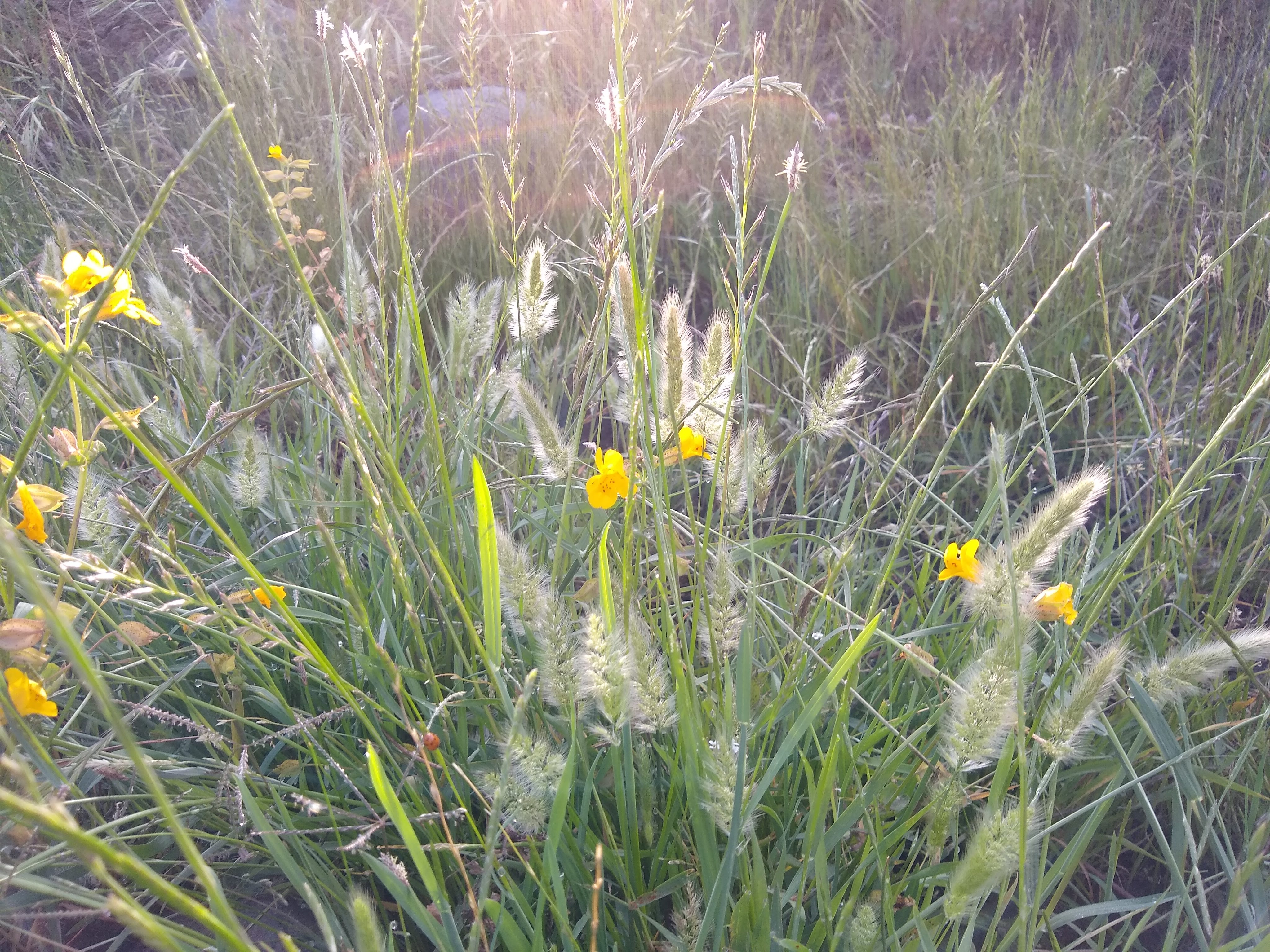
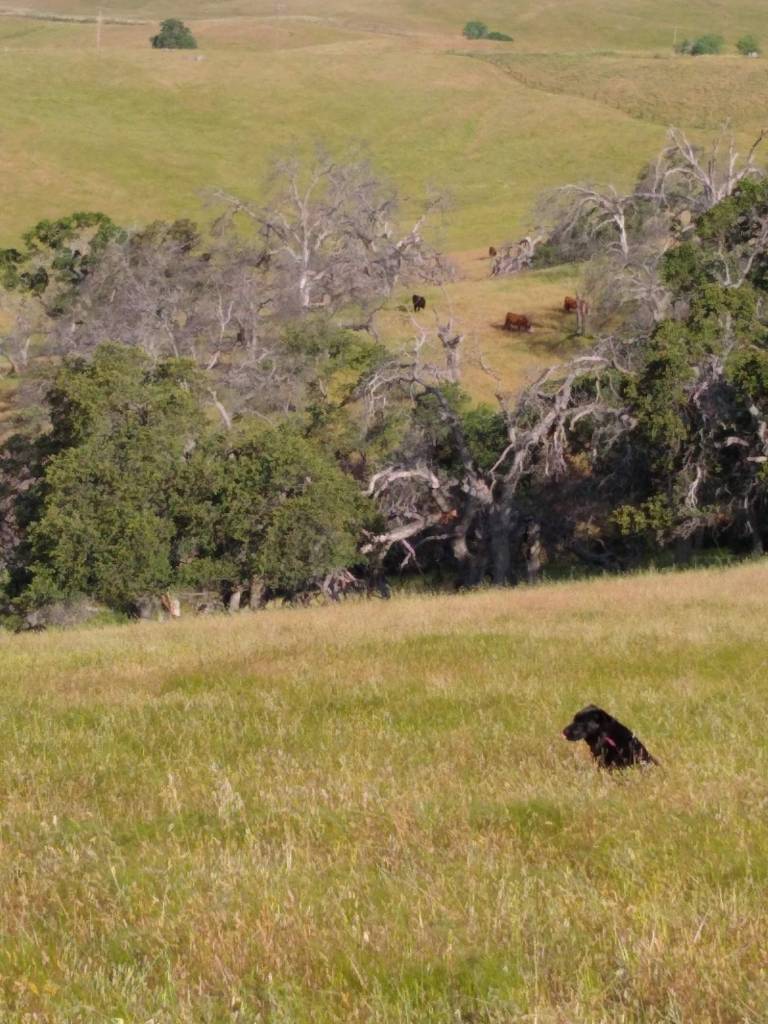
We received .75″ of rain a week ago. That little bit of late rain allowed for some additional wildflowers to bloom. It also helped the milkweed from the test plots to re-emerge. Enjoy the photo gallery below.

Found and Found

a. Californica on the west facing slope

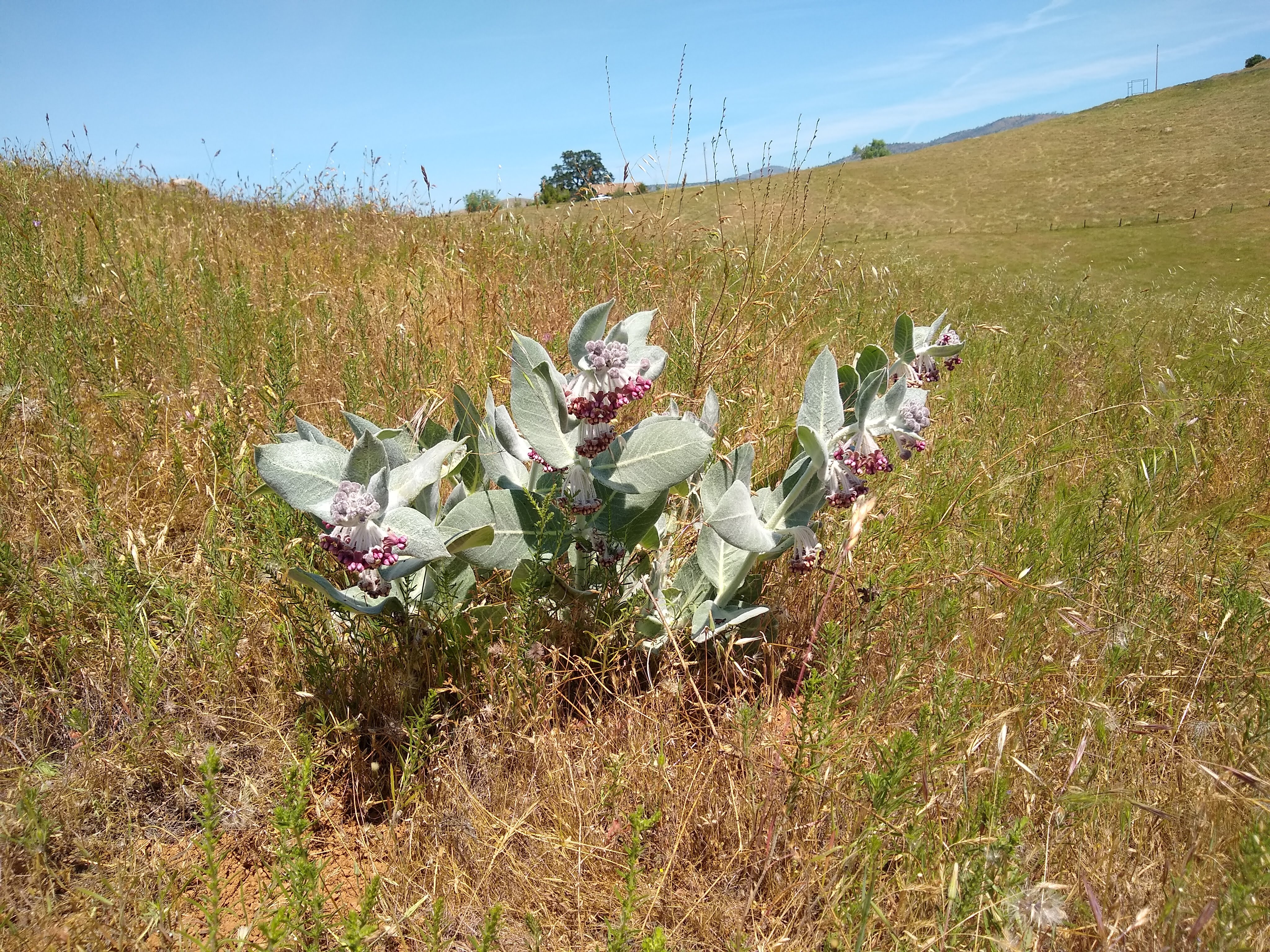
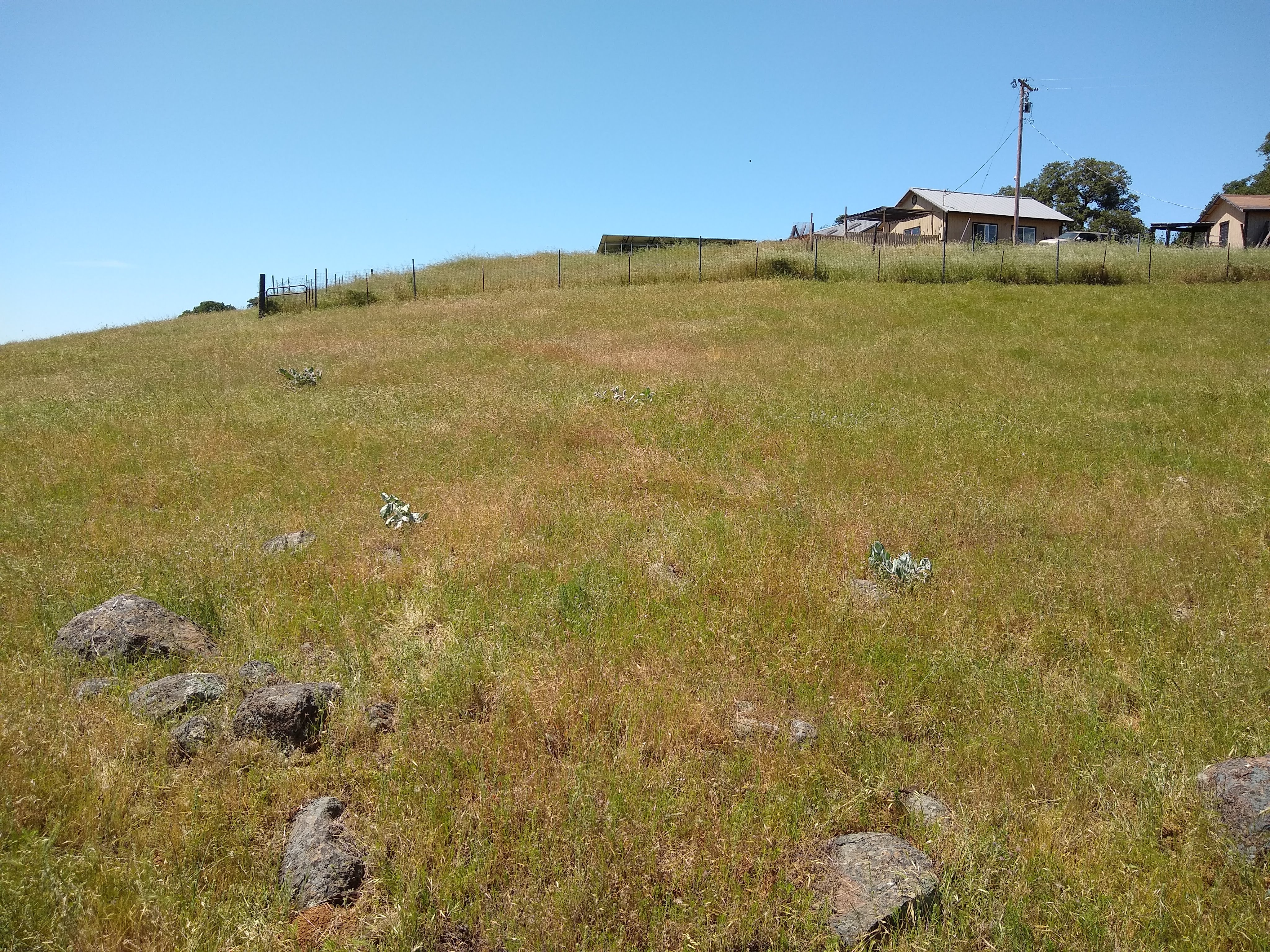
In my last post, I discussed that I would be going on an exploration of other areas of the ranch to look for a. californica (heart leafed milkweed). The first day I went out, I found several communities. On the south-facing slope , across from the plants just down the hill from my home, I found three communities. One grouping had 13 individuals. Ten feet SE of that grouping was a community of between four and six individuals, and about 12 feet due west was one individual plant. If I am going to be completely honest, I whooped for joy. What a find! On another adventure, I found one community of two plants separated by approximately 15 feet. This was located on a west facing slope.

My excursions taught me, as well as reading some articles on a. californica, that this plant likes an elevation of between 1000′ and 1200′ – at least in my area. They seem to like rocky outcroppings and the windy side of the slope. This gave me some ideas of where additionally to look on a third outing further back on the ranch.

Heading back from excursion two with Beatrix
On excursion three with Millie

Millie and I set off for the mid part of the ranch. We got distracted by the south facing section of the hill that had a. californica on the west slope. We hiked up about 1000 feet, and did not see any. This put us on a different path than anticipated. We had intended to visit a hill on the east side of Odom Creek. We continued down the east slope of the hill toward our destination. Although we started our adventure at 6:30am when the sky was filled with moist clouds, by 7:30am, the clouds had broken up and the sun was out. The temperature was beginning to get hot. We made it to the base of the hill and decided not to climb it. I did look at the rocky areas for signs of the silvery large leaves, but did not see any. We will need to return and investigate more fully. We also have another hill on the neighbor’s side of the ranch that might be conducive to a. californica tastes. We will explore there too. Millie and I returned home “empty handed” but better for the extraordinarily beautiful, if not rigorous, walk.

The rocky area on the south facing hillside with copious a. californica

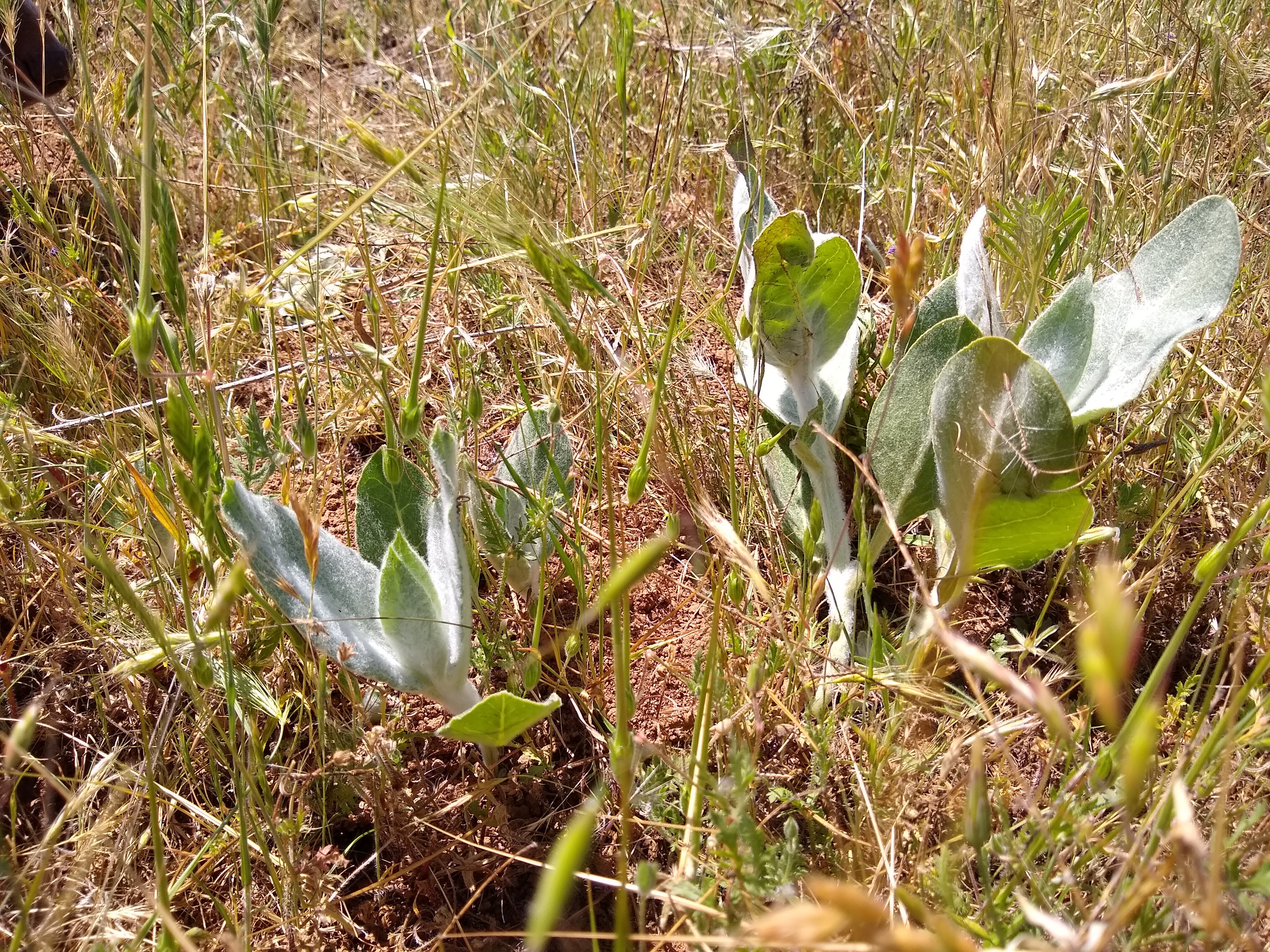
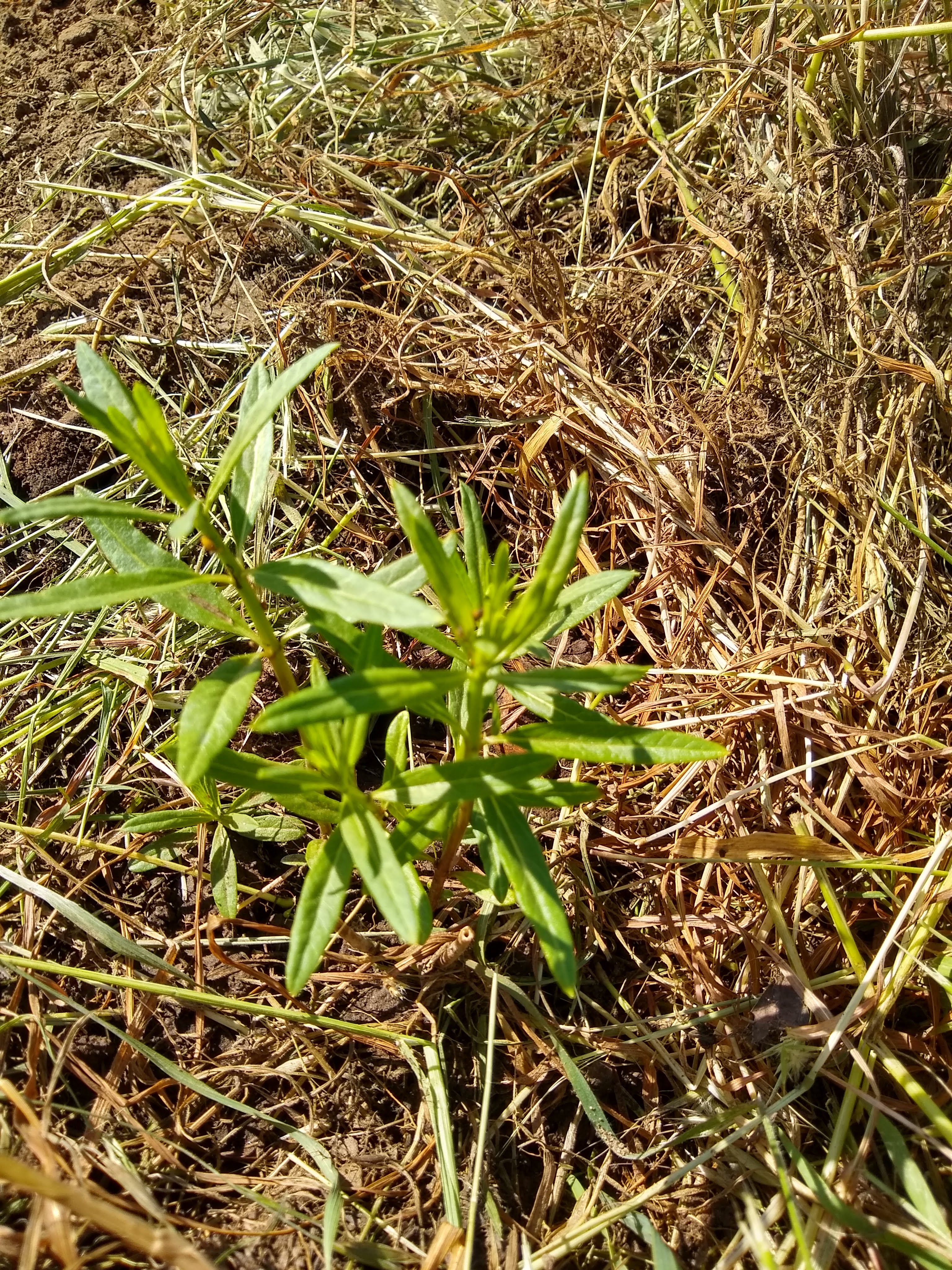
Another happy piece of information to convey is that more milkweed from the test plots last year are regrowing. Over the last several days, I have been looking closely at the plots after my husband has weeded. One by one, the narrow leaf milkweed from last year has reemerged. We now have three, possibly four, new growths on the South Plot, and two in the North Plot. One of the regrowing locations has multiple spouts inside and outside the original basket (large photo in the montage). See the montage below for examples of the various growths.

Today, I spent time planting nectar plants. Ron dropped off 10 nectar plants: Hairy Primrose, Romneya Coulteri (a white poppy bush), Carpenteria, yarrow, sulfur buckwheat, coyote mint and yellow asters. I placed several near Site 10 and the old South Plot. The others will be a short distance away from the milkweeds. I want to provide options for the butterflies.

Carpenteria in the foreground and primrose in the background
Asters and the buckwheat between site 10 and the old South Plot staged and ready to be planted.

Everything was planted with the exception of the coyote mint, yarrow and one aster. They are all located close to the romneya coulteri further away from the plots and are not pictured.

Tonight ended with a late season rain storm. Thunder, lightening, the gorgeous smell of tar weed and formerly dry soil are filling the house through the open windows. It is unbelievable. I have already taken down the rain water catchment system – although it would only make a difference for the vessel on the south side of the house since that is the only unit from which water has been used. It is still nice. The troughs and rain barrel will fill again. This allows for even more water to use in irrigating the pants. What a beautiful day.

The Ups, Downs and Ups Again of Habitat Building

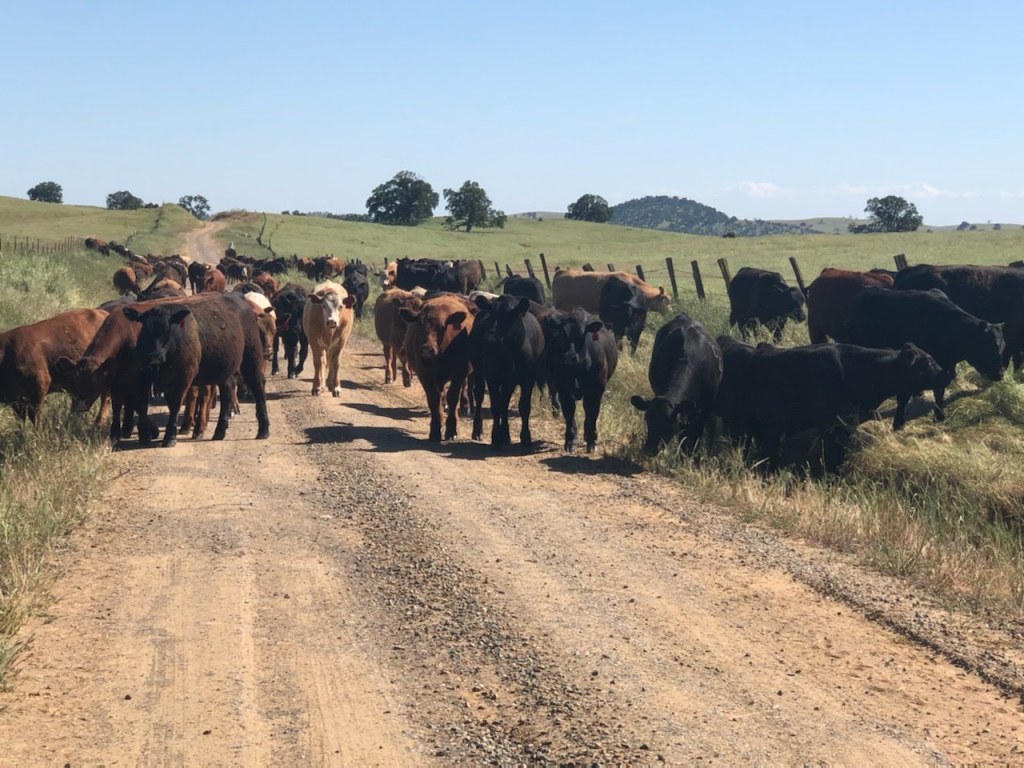
Cattle drive up Slate Gulch. The steer on their way back to my section of the ranch.

I am just slow. Ok, no “over the hill” jokes since I revealed my age in the last post. This is not about age. It is about time and knowledge. I am not wealthy. I work for a living – so does my husband. In fact, his job is incredibly demanding from before he is technically on shift until after the time he is supposed to be off. Covid has slowed some things but accelerated others. Being in healthcare at this moment and a general do-gooder…volunteering to do whatever is needed, I am very busy too. I share this because there is a best time when things need to get done. For example, when weather is cooler, before cattle are around, when plants are starting – these are generally a good time to get things done for habitat protection. Some days, I just don’t have the time to start a large project, especially if I don’t know exactly what I am doing and after a full day of work.
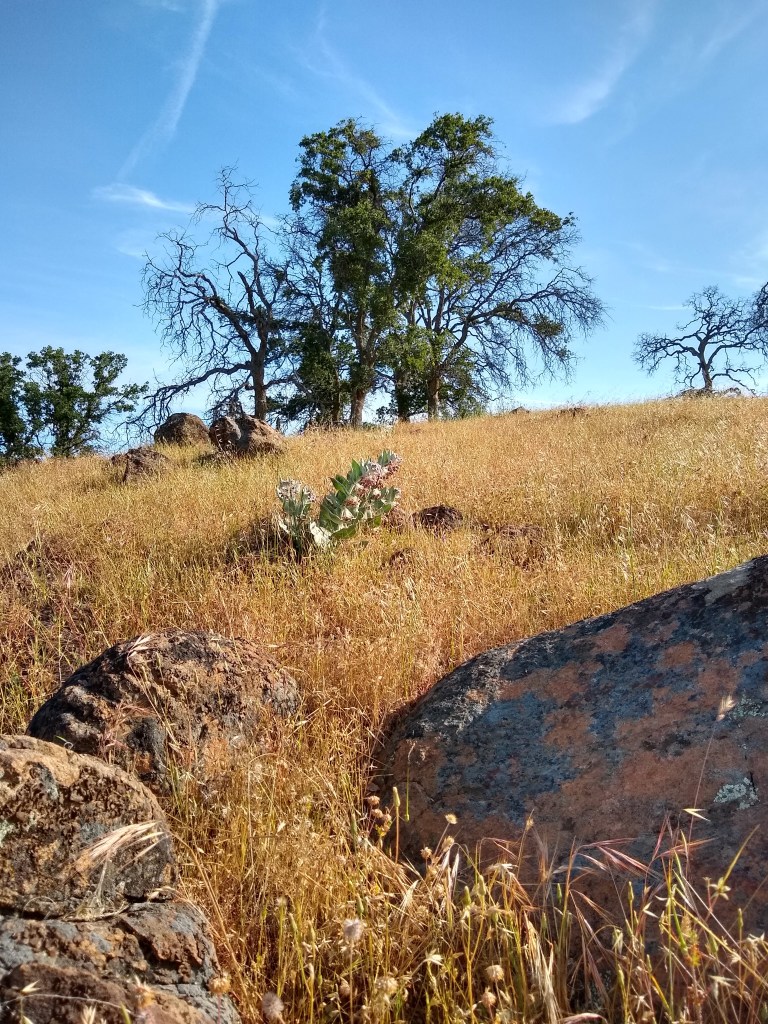
On Saturday morning, the spring creek near my house where I intended to plant sites 6, 7 and 8 was filled with flowers and small butterflies eating from them. I rejoiced seeing that area teeming with life and such fragrance. Saturday evening, the cattle came north. By Sunday morning, the creek had been mostly stripped of all the flowers and lush grasses. I knew this was going to happen, but I just didn’t have the time or ready expertise to move quickly on building an electric fence.

Above is “before”. Below is “after”.

There are tremendous benefits to grazing, and then there are heartbreaks. If you do not have all your supplies or the know-how, it is good to start early. I did attempt to get all the supplies ordered in advance (covid makes popping by the ranch supply store difficult). Sometimes, there are barriers to progress. In my case, I tried to order two weeks ahead. I lost a weekend while waiting for an electric fence rep to get back to my local store. After losing two more days while the one guy who does special orders at my local place was off, I found out they could not supply all the items economically. Because they are not buying that kind of product in large enough quantity, some of the items were really expensive. This meant, I needed to go further away to get all the pieces I needed. That took time too. After I had the materials, we read that the electric unit needed to be charged for three days before use. That put my building timeline after the cattle came back. You see what can happen. Start earlier gathering what you need.
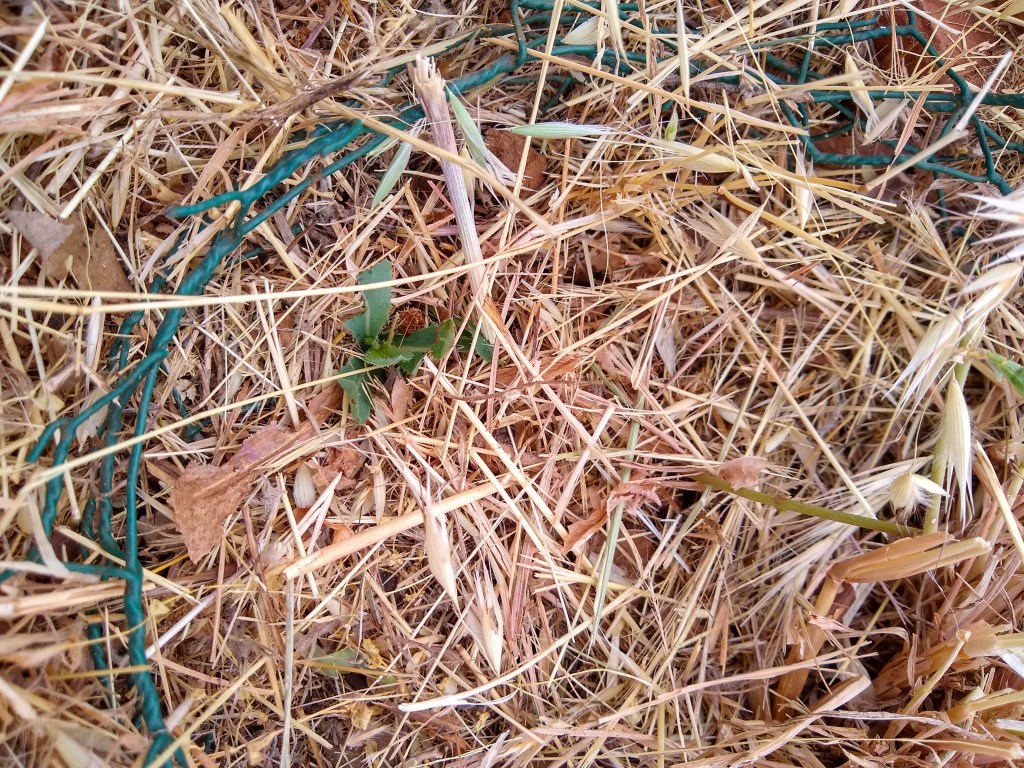
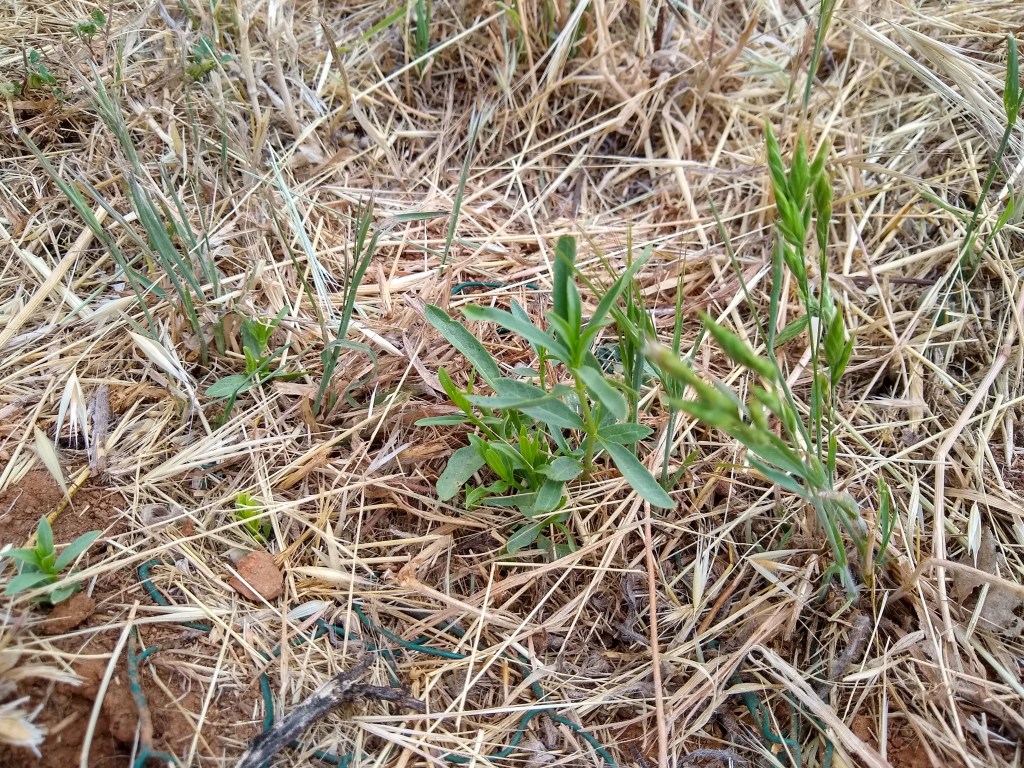
My husband and I can build fence. We have put up miles of regular ranch fencing. However, an electric fence has different requirements, and we had not built one previously. Fortunately, we have a really good cattleman to work with (more on him soon in another blog) who has been a good thought partner on many ranch decisions we’ve had to make. He has provided some good guidance on the fence.

When you care about something so much, it is an emotional ride. I am trying not to get too attached to anything. This is difficult. I came back from the spring creek on Sunday angry at myself for moving too slow. There have been a few “fails” on my part for which I take full responsibility – and they eat at me. My dad happened to call as I came back to the house with the pieces of my heart barely beating in my hands. He said, “One section at a time. It will come together nicely”. He is right. I can only do what I can do.

As I walked back home, I noticed a very unique plant that had previously been obscured by the grass, but was now visible after grazing. I took a picture to identify it. Yesterday, I spoke with Hillary Sardinas, Monarch Conservation Manager at the State Resource Conservation District (RCD) and Melinda Barrett, our local RCD director about the grant we had just secured. Hillary shared an article she had co-written. It happened to be about Asclepias californica – the rare California native milkweed that is the earliest to emerge of the milkweeds. It plays a critical role in providing habitat early in the monarchs’ migration after overwintering. Fortunately, there was a photo. It looked exactly like the unique plant I saw not too far from my home! I ran down the hill to the plant to double check. YES! It was indeed a. californica. A miracle occurred.

a. californica right down the hill from my house!

Not only was it this special plant, but there were eight of them! Seven were in bloom and one was still emerging from the soil. My heart pieced itself back together, and began to beat fully again. I had not planted this variety last year. The seeds must have remained dormant for years waiting for the right time, moisture, temperature, or whatever, to emerge. I had seen this plant before, but only one and in another location on the ranch. The beautiful smell it emits, however, was unmistakable. I have smelled it over the years in a variety of places in California. I know it must be around. Tomorrow, I will be going on an expedition over my neighbor’s and my ranches looking for these plants. They will be entered into the Western Monarch Milkweed Mapper if I find any. We need to generate all the data possible to understand how they are adapting to the way we’ve changed their ecosystem so we can provide adapted solutions. Adapted solutions seems to be all we have. Humans, on a global level, even a regional level in California, don’t seem to be interested in changing their behavior so that the monarchs can be assured survival. We already know the real solution though, what is really needed. Can we change how we consume? How we think of all living things? Can we think of the planet as our relation rather than an inanimate object only valuable through exploitation?

The emotional rollercoaster continues. The Earth is healing herself as she gets this remarkable break from the frenetic behavior of humans. Maybe the monarchs will have more of a chance this year. Seeing a. californica, today ended on a high.

April 28 – Happy Birthday – Plot One of Ten is Done!

Site 10 Complete

Happy Birthday to me – one monarch planting site is done and nine more to go! Today I turned 50. It isn’t old anymore. Fifty is the new 30 – is what they say. Who they is, I don’t think anyone knows. But, they think my body is supposed to feel like it did when I was thirty after prepping, hauling, digging and planting. It wasn’t that bad. The truth is, I did feel great – maybe not my back so much – but my spirit was joyful. This was the absolute best present I could receive – the ability to help my relations come home.

Before beginning this planting, I first smudged myself. This work is as much spiritual as it is physical. I thought of healing for the land, for the butterflies and for all things. It is important to advise the land of your intentions because the act of digging is a disturbing, violent act – even if you are simply returning to the ground the plants that used to be there. Everything I do is interpreted through my indigenous cultural lens. It doesn’t matter what your belief system is; praying, thought, sending light, they are just other words for respect, thoughtfulness. As long as you are doing this work with respect for the plants, soil and ecosystem, the outcome of your efforts will be more positive.

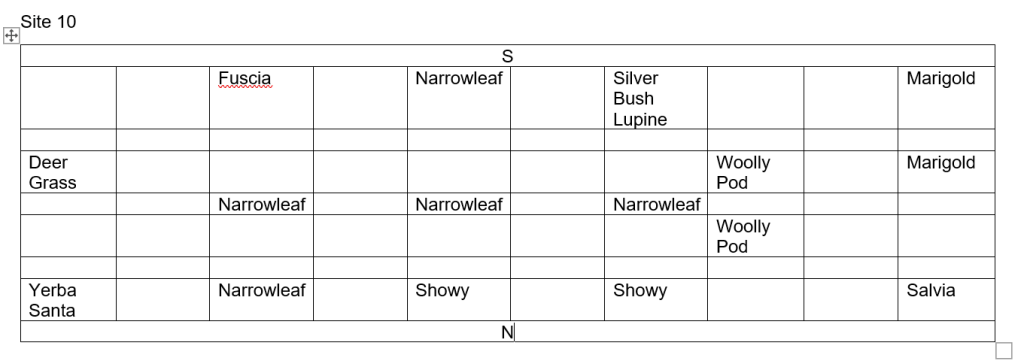
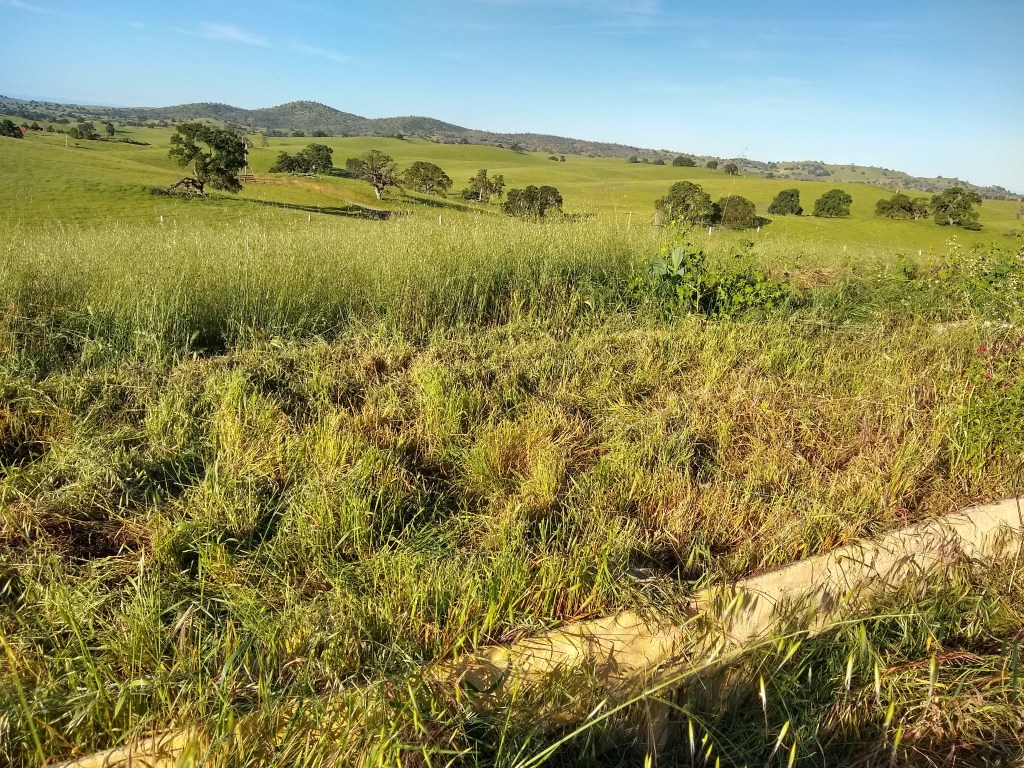
At first glance, the above photo doesn’t look like much, maybe a patch of weeds. Look closer. You will see, in the foreground, the needle like protrusion of deer grass. To the right, in the corner in the foreground, you will see yerba santa. In the center mid-way, you will see narrow leaf milkweed. Eleven o’clock from that milkweed, you will see the silver shine of a silver bush lupine, and in the far background, the bushy salvia with red flowers. How did you do? Try again and you will likely see more milkweeds (See the grid below for close-ups). I planted these native plants among existing grasses because those other grasses are helpers. Their roots hold the soil together and help retain moisture at the site. If you’ve ever traveled in farmland areas, you likely will have seen barren, sterile looking fields with no vegetation. This is not the normal way of the land. Fortunately, there has been a movement among farmers for “no till” farming – where farmers are working with the land, retaining vegetation for healthier soils and maintaining top soil in place as opposed to in the air. Check it out. Try it with your own garden. You don’t need to pull every weed out and rototill to grow food.

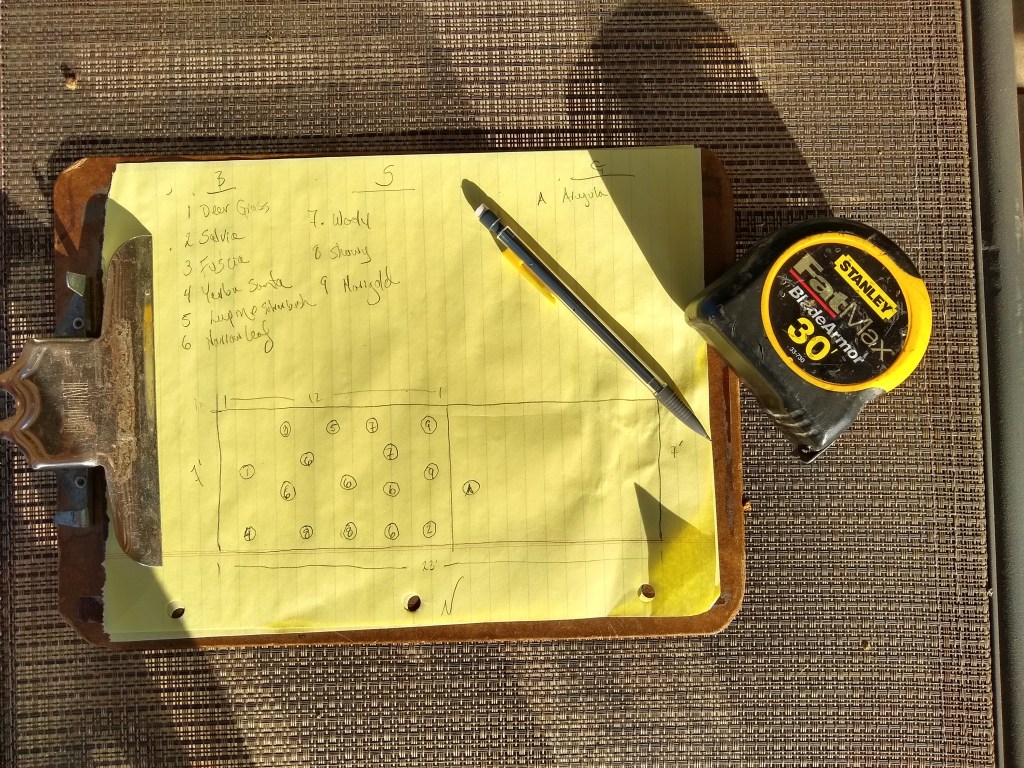
Here is the planting map of the species I planted:

Site 10 species planting map

I placed the showy milkweed on the north side because they tend to like moister soil. This is the location where the water will enter the plot, and it is also on the north, cooler side. The marigolds are still a little too small to plant, but, with the longer sunlight and warmer temperatures, those seedlings are finally growing well.

Marigold seedlings on the southeast portion of the patio

It is a privilege to have the opportunity to do this work, and it promotes sanity with the State in covid lock down.

Monarch Project 2.0 – Ready, Set, Go!

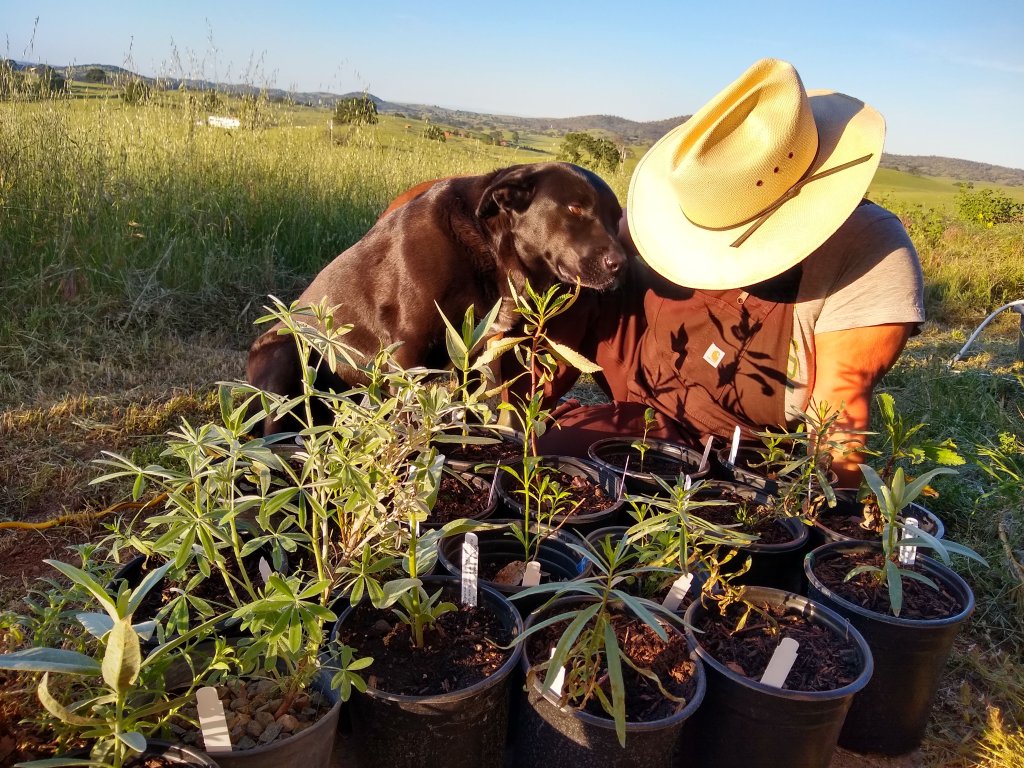
Beatrix tries to help mom with the plants

Lots of good news to report. First, we received the State of CA Resource Conservation Grant (RCD)!!! Thank you to the State RCD for awarding us funds and to our local RCD Director Melinda Barrett for helping me write the grant, design programming and for acting as the program sponsor. We are now able to increase the scale of this work!

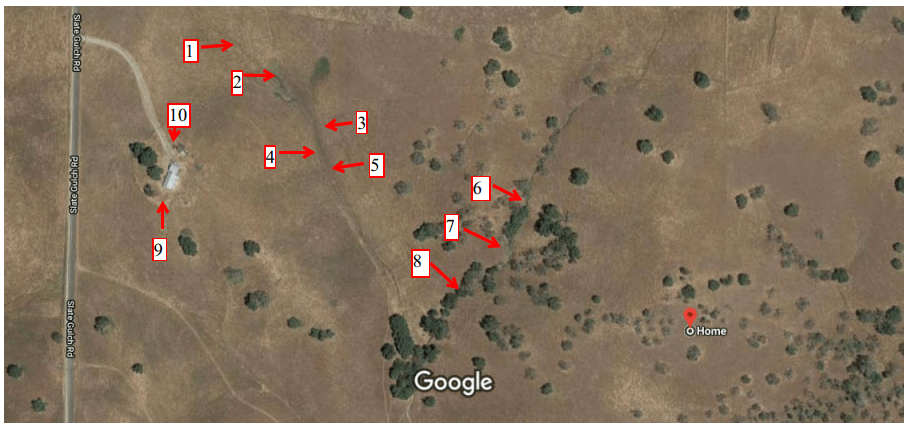
Satellite image of the front portion of the ranch with planting sites marked.

Originally, I planted sites 9 and 10 last year – the North and South plots respectively. Those were the test plots. The Second piece of good news is that I have now found that two milkweed plants returned in the North Plot (10 on the map above). Recall, both plots were decimated by gophers despite being planted in chicken wire baskets. I am hoping others will have survived, but I am not finding any others yet.

Ron and Bev delivered the plants for the firs two sites on Sunday afternoon (4/26). The plants look GREAT.

Milkweeds and nectar plants

This morning, I planned the configuration of plot #9. This is near the original test site of the South Plot. I have moved the location slightly south into the raised bed that I had used for my vegetable garden. I weed whacked it yesterday – but just topped the weeds. I have found that it is better to leave the roots and a portion of the plant intact so that it can hold soil and moisture in the space. I plan to place the plants within the weed patch. Naturally, these plants all grow together. I think they can help one another. Non-native grasses can certainly impact native plants by out competing them for sunlight, space and moisture. All plots will be monitored and any weed topping done to maintain the viability of the plants. Native plants just need a chance to get established.

The raised garden bed pre-planting

There were already existing nectar plants established from last year as well as a habitat plant – deer grass. These will be worked into the overall plot configuration.

What you need: clipboard, paper, pencil and measuring tape
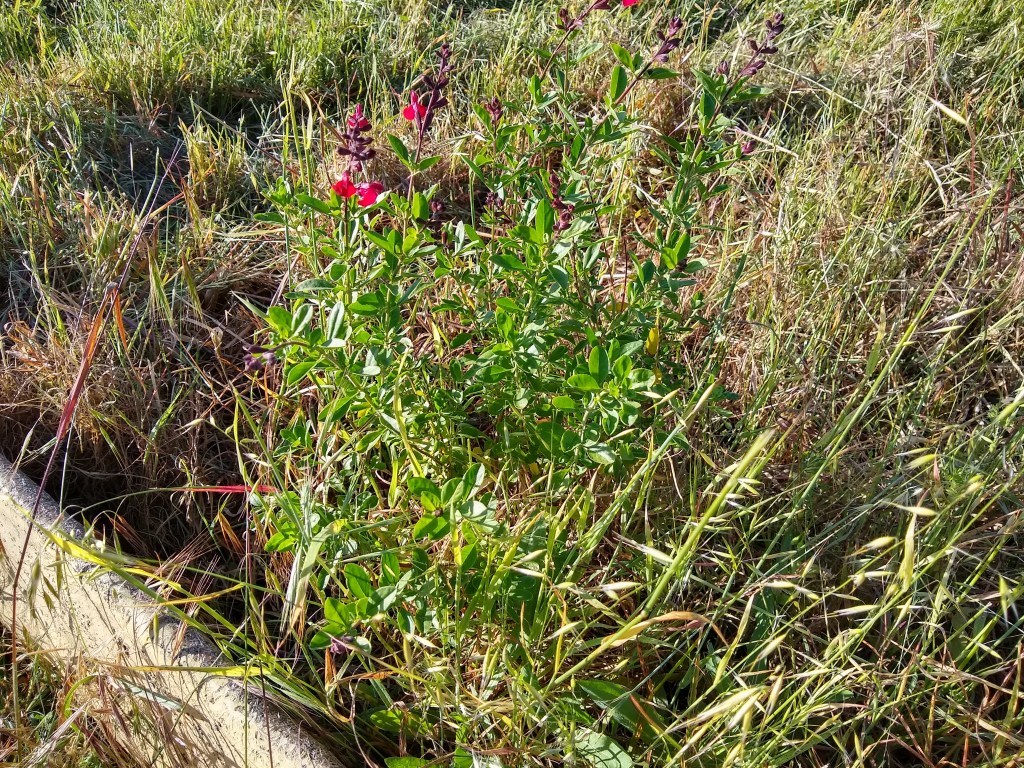
Salvia
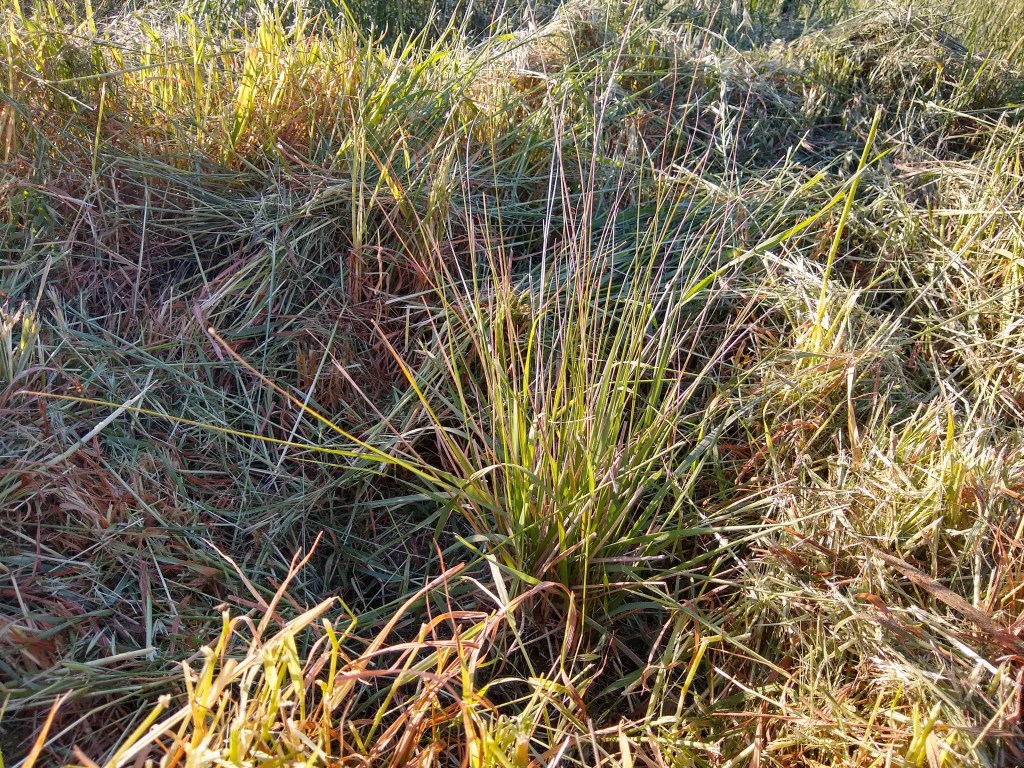
Deer Grass

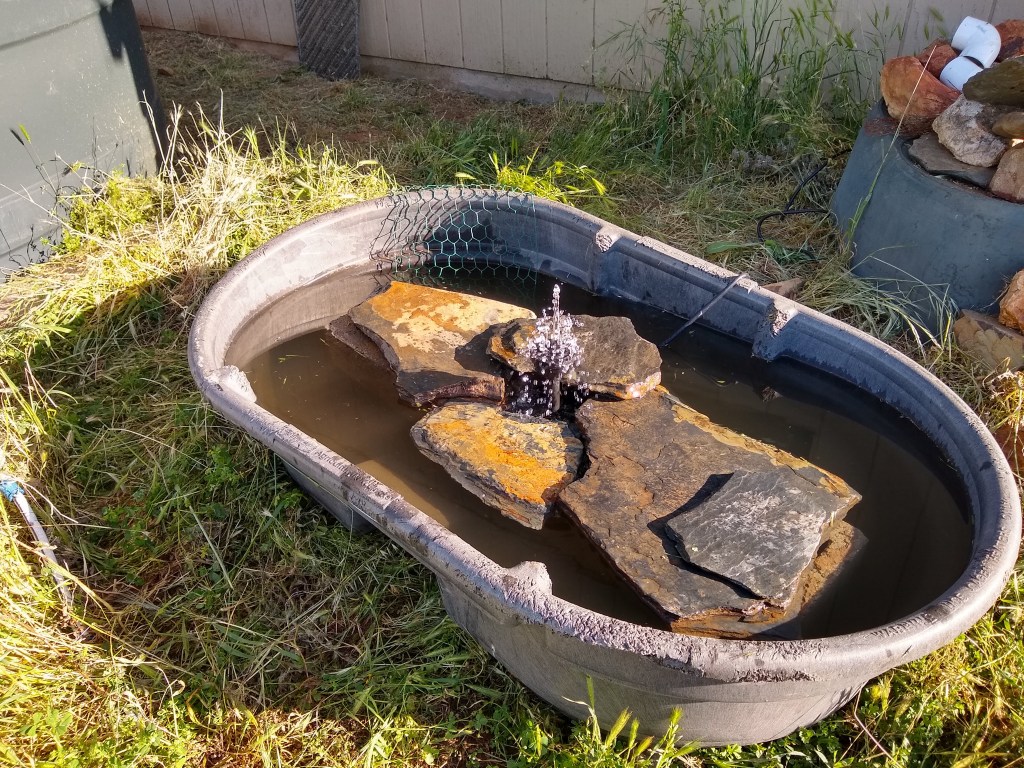
I also made a do it yourself fountain. It isn’t pretty, but I am hoping the pollinators will approve of it. It is supplied by clean, clear rain water and has multiple depths of water including having the spray just moisten the surface of a piece of slate. I have seen butterflies, dragonflies and bees just skirt or land on wet rock or my moist patio after watering potted plants. I used an old stock trough, slate found in the creek, cinder blocks laying around that were from some long forgotten project, and a large fountain kit from Lowe’s. The cinder blocks were used to raise the slate to the surface as well as hold the pump firmly in place. Finally, I included some firm coated chicken wire so that if any bats or other creatures get caught in the deeper water, they can get out.

DIY fountain for pollinator water access

I am extremely fortunate to have this project to work on while sheltering in place due to the covid-19 virus. Around the globe, we have been seeing the return of our animal relations to the places where our frenetic behavior has created a barrier. This is an opportunity to make a better choice – a choice where we can all live together with respect.

Despite Covid, There is Life Through Spring

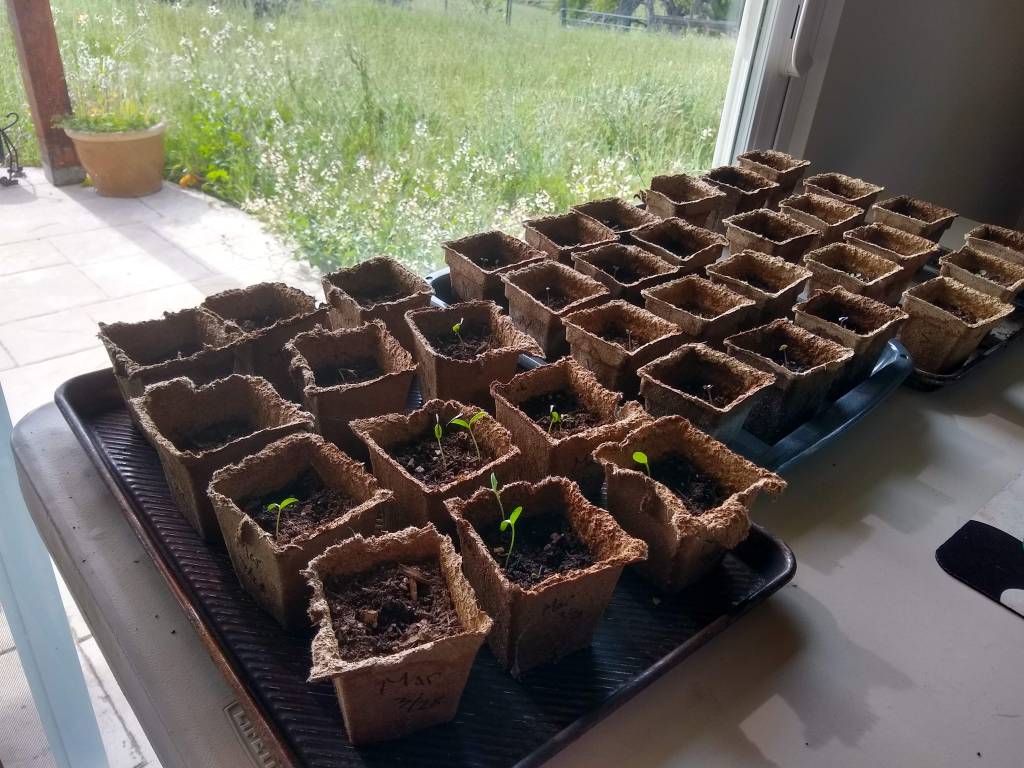
Sprouting seedlings of nectar and pollinator plants.

Efforts are paying off. Marigold, salvia and basil seedlings have emerged and are thriving. I am staggering potting seeds so that there are diverse plants that can provide nectar ongoing. I sewed butterfly plant seeds two weekends ago directly outside per the instructions on the seed envelope. These seedlings have about another two weeks before they are planted into the ground outside. I have been moving them outside directly into the sun for the day (when there has been sun). This has warmed the soil, and the direct sunlight for 8 hours has encouraged faster growth. Earlier, I placed the seedling trays on a heating pad as well.

With the ongoing rain, there has been more and more wildflowers. Two different butterfly species (a whitish blue and orange and black – both small) in larger numbers have been enjoying the flowers. The salvia I planted last year came back and is in bloom. My rain water tanks are at full capacity – 7,500 gallons.

One milkweed plant – North Plot

Finally, one milkweed plant did come back! This one is located in the North Plot. So far, I’ve not see any others in either plot. I will consult with Ron about how best to protect this little one. It may not be best to dig up and replant. Onward…!